EP0449376A2 - Herstellung von Enzymen in Samen und ihre Verwendung - Google Patents
Herstellung von Enzymen in Samen und ihre Verwendung Download PDFInfo
- Publication number
- EP0449376A2 EP0449376A2 EP91200688A EP91200688A EP0449376A2 EP 0449376 A2 EP0449376 A2 EP 0449376A2 EP 91200688 A EP91200688 A EP 91200688A EP 91200688 A EP91200688 A EP 91200688A EP 0449376 A2 EP0449376 A2 EP 0449376A2
- Authority
- EP
- European Patent Office
- Prior art keywords
- enzyme
- seeds
- plant
- further characterized
- interest
- Prior art date
- Legal status (The legal status is an assumption and is not a legal conclusion. Google has not performed a legal analysis and makes no representation as to the accuracy of the status listed.)
- Granted
Links
Images






Classifications
-
- C—CHEMISTRY; METALLURGY
- C12—BIOCHEMISTRY; BEER; SPIRITS; WINE; VINEGAR; MICROBIOLOGY; ENZYMOLOGY; MUTATION OR GENETIC ENGINEERING
- C12Y—ENZYMES
- C12Y301/00—Hydrolases acting on ester bonds (3.1)
- C12Y301/03—Phosphoric monoester hydrolases (3.1.3)
- C12Y301/03026—4-Phytase (3.1.3.26), i.e. 6-phytase
-
- A—HUMAN NECESSITIES
- A23—FOODS OR FOODSTUFFS; TREATMENT THEREOF, NOT COVERED BY OTHER CLASSES
- A23K—FODDER
- A23K20/00—Accessory food factors for animal feeding-stuffs
- A23K20/10—Organic substances
- A23K20/189—Enzymes
-
- A—HUMAN NECESSITIES
- A61—MEDICAL OR VETERINARY SCIENCE; HYGIENE
- A61P—SPECIFIC THERAPEUTIC ACTIVITY OF CHEMICAL COMPOUNDS OR MEDICINAL PREPARATIONS
- A61P1/00—Drugs for disorders of the alimentary tract or the digestive system
- A61P1/14—Prodigestives, e.g. acids, enzymes, appetite stimulants, antidyspeptics, tonics, antiflatulents
-
- C—CHEMISTRY; METALLURGY
- C12—BIOCHEMISTRY; BEER; SPIRITS; WINE; VINEGAR; MICROBIOLOGY; ENZYMOLOGY; MUTATION OR GENETIC ENGINEERING
- C12N—MICROORGANISMS OR ENZYMES; COMPOSITIONS THEREOF; PROPAGATING, PRESERVING, OR MAINTAINING MICROORGANISMS; MUTATION OR GENETIC ENGINEERING; CULTURE MEDIA
- C12N15/00—Mutation or genetic engineering; DNA or RNA concerning genetic engineering, vectors, e.g. plasmids, or their isolation, preparation or purification; Use of hosts therefor
- C12N15/09—Recombinant DNA-technology
- C12N15/63—Introduction of foreign genetic material using vectors; Vectors; Use of hosts therefor; Regulation of expression
- C12N15/79—Vectors or expression systems specially adapted for eukaryotic hosts
- C12N15/82—Vectors or expression systems specially adapted for eukaryotic hosts for plant cells, e.g. plant artificial chromosomes (PACs)
- C12N15/8241—Phenotypically and genetically modified plants via recombinant DNA technology
- C12N15/8242—Phenotypically and genetically modified plants via recombinant DNA technology with non-agronomic quality (output) traits, e.g. for industrial processing; Value added, non-agronomic traits
-
- C—CHEMISTRY; METALLURGY
- C12—BIOCHEMISTRY; BEER; SPIRITS; WINE; VINEGAR; MICROBIOLOGY; ENZYMOLOGY; MUTATION OR GENETIC ENGINEERING
- C12N—MICROORGANISMS OR ENZYMES; COMPOSITIONS THEREOF; PROPAGATING, PRESERVING, OR MAINTAINING MICROORGANISMS; MUTATION OR GENETIC ENGINEERING; CULTURE MEDIA
- C12N15/00—Mutation or genetic engineering; DNA or RNA concerning genetic engineering, vectors, e.g. plasmids, or their isolation, preparation or purification; Use of hosts therefor
- C12N15/09—Recombinant DNA-technology
- C12N15/63—Introduction of foreign genetic material using vectors; Vectors; Use of hosts therefor; Regulation of expression
- C12N15/79—Vectors or expression systems specially adapted for eukaryotic hosts
- C12N15/82—Vectors or expression systems specially adapted for eukaryotic hosts for plant cells, e.g. plant artificial chromosomes (PACs)
- C12N15/8241—Phenotypically and genetically modified plants via recombinant DNA technology
- C12N15/8242—Phenotypically and genetically modified plants via recombinant DNA technology with non-agronomic quality (output) traits, e.g. for industrial processing; Value added, non-agronomic traits
- C12N15/8243—Phenotypically and genetically modified plants via recombinant DNA technology with non-agronomic quality (output) traits, e.g. for industrial processing; Value added, non-agronomic traits involving biosynthetic or metabolic pathways, i.e. metabolic engineering, e.g. nicotine, caffeine
-
- C—CHEMISTRY; METALLURGY
- C12—BIOCHEMISTRY; BEER; SPIRITS; WINE; VINEGAR; MICROBIOLOGY; ENZYMOLOGY; MUTATION OR GENETIC ENGINEERING
- C12N—MICROORGANISMS OR ENZYMES; COMPOSITIONS THEREOF; PROPAGATING, PRESERVING, OR MAINTAINING MICROORGANISMS; MUTATION OR GENETIC ENGINEERING; CULTURE MEDIA
- C12N15/00—Mutation or genetic engineering; DNA or RNA concerning genetic engineering, vectors, e.g. plasmids, or their isolation, preparation or purification; Use of hosts therefor
- C12N15/09—Recombinant DNA-technology
- C12N15/63—Introduction of foreign genetic material using vectors; Vectors; Use of hosts therefor; Regulation of expression
- C12N15/79—Vectors or expression systems specially adapted for eukaryotic hosts
- C12N15/82—Vectors or expression systems specially adapted for eukaryotic hosts for plant cells, e.g. plant artificial chromosomes (PACs)
- C12N15/8241—Phenotypically and genetically modified plants via recombinant DNA technology
- C12N15/8242—Phenotypically and genetically modified plants via recombinant DNA technology with non-agronomic quality (output) traits, e.g. for industrial processing; Value added, non-agronomic traits
- C12N15/8257—Phenotypically and genetically modified plants via recombinant DNA technology with non-agronomic quality (output) traits, e.g. for industrial processing; Value added, non-agronomic traits for the production of primary gene products, e.g. pharmaceutical products, interferon
-
- C—CHEMISTRY; METALLURGY
- C12—BIOCHEMISTRY; BEER; SPIRITS; WINE; VINEGAR; MICROBIOLOGY; ENZYMOLOGY; MUTATION OR GENETIC ENGINEERING
- C12N—MICROORGANISMS OR ENZYMES; COMPOSITIONS THEREOF; PROPAGATING, PRESERVING, OR MAINTAINING MICROORGANISMS; MUTATION OR GENETIC ENGINEERING; CULTURE MEDIA
- C12N9/00—Enzymes; Proenzymes; Compositions thereof; Processes for preparing, activating, inhibiting, separating or purifying enzymes
- C12N9/14—Hydrolases (3)
- C12N9/16—Hydrolases (3) acting on ester bonds (3.1)
-
- C—CHEMISTRY; METALLURGY
- C12—BIOCHEMISTRY; BEER; SPIRITS; WINE; VINEGAR; MICROBIOLOGY; ENZYMOLOGY; MUTATION OR GENETIC ENGINEERING
- C12N—MICROORGANISMS OR ENZYMES; COMPOSITIONS THEREOF; PROPAGATING, PRESERVING, OR MAINTAINING MICROORGANISMS; MUTATION OR GENETIC ENGINEERING; CULTURE MEDIA
- C12N9/00—Enzymes; Proenzymes; Compositions thereof; Processes for preparing, activating, inhibiting, separating or purifying enzymes
- C12N9/14—Hydrolases (3)
- C12N9/24—Hydrolases (3) acting on glycosyl compounds (3.2)
- C12N9/2402—Hydrolases (3) acting on glycosyl compounds (3.2) hydrolysing O- and S- glycosyl compounds (3.2.1)
- C12N9/2405—Glucanases
- C12N9/2408—Glucanases acting on alpha -1,4-glucosidic bonds
- C12N9/2411—Amylases
- C12N9/2414—Alpha-amylase (3.2.1.1.)
- C12N9/2417—Alpha-amylase (3.2.1.1.) from microbiological source
Definitions
- the instant invention pertains to the production of enzymes of interest in the seeds of transgenic plants and the use of the thus-produced seeds in industrial processes, without the need for extraction and/or isolation of the enzyme.
- a number of industries are using enzymes for their processes. These include detergents, textiles, dairy, food and beverage, feed and other industries.
- enzymes are produced on an industrial scale by fermentation processes or are isolated from plant or animal sources.
- Microbially produced enzymes include proteases, amylases, cellulases, pectinases, phytases and others. Enzyme production by a fermentation process is highly efficient and production levels of more than 10 grams per liter culture medium can be reached.
- transgenic plants as a production system for valuable proteins. Examples to date are the production of interferon in tobacco (Goodman et al ., 1987), enkephalins in tobacco, Brassica napus and Arabidopsis thaliana (Vandekerckhove et al ., 1989), antibodies in tobacco (Hiatt et al ., 1990) and human serum albumin in tobacco and potato (Sijmons et al ., 1990).
- Proteins may be produced in plant seeds using a variety of expression systems. For instance, the use of a constitutive promoter such as the 35S promoter of Cauliflower Mosaic Virus (CaMV) (Guilley et al ., 1982) will result in the accumulation of the expressed protein in the seeds, inter alia, of the transgenic plant. Alternatively, use may be made of promoters from genes encoding seed storage proteins. Seed storage proteins are expressed in a highly tissue-specific and stage-specific manner (Higgins, 1984; Shotwell & Larkins, 1989), i.e., the genes are expressed only in seed and only during the stage of seed development.
- a constitutive promoter such as the 35S promoter of Cauliflower Mosaic Virus (CaMV) (Guilley et al ., 1982) will result in the accumulation of the expressed protein in the seeds, inter alia, of the transgenic plant.
- CaMV Cauliflower Mosaic Virus
- a seed storage protein (reviewed in Higgins, 1984; Shotwell & Larkins, 1989) is defined as any protein which accumulates in significant quantities (up to 90% of total seed protein) in the developing seed and which on germination is hydrolyzed to provide a nutritional source for the early stages of seedling growth.
- the proteins are contained in an intracellular compartment called the protein body or storage vacuole. This protein body contains protease inhibitors and creates a protease-free environment. The proteases that degrade the storage proteins become active 3-6 days after germination (Larkins, 1981).
- globulins and albumins are the glycinin and conglycinin genes of soybean (Fischer & Goldberg, 1982; Harada et al ., 1989), the legumin and vicilin genes from pea (Lycett et al ., 1984; Higgins et al ., 1988), the 11S field bean gene (Baumlein et al ., 1986), the 7S phaseolin gene from Phaseolus (Doyle et al ., 1986), the cruciferin and napin genes from Brassica (Ryan et al ., 1989; Scofield & Crough, 1987; Radke et al ., 1988), the helianthin gene from sunflower (Vonder Haar et al ., 1988; Jordano et al ., 1989) and the 25 albumin and cruciferin genes of soybean (Fischer & Goldberg, 1982; Harada et al ., 1989), the legumin and vicilin genes from pea
- Seed storage protein genes have been transferred to tobacco, petunia and rapeseed (Okamura et al ., 1986; Beachy et al ., 1984; Sengupta-Gopalan et al ., 1985; Higgins et al ., 1988; Ellis et al ., 1988; Barker et al ., 1988, Vandekerckhove et al ., 1989; Altenbach et al ., 1989).
- beta-glucuronidase (Bustos et al ., 1989), phytohemaglutinin (Voelker et al ., 1989), luciferase (Riggs et al ., 1989) and zein (Hoffman et al ., 1987) in tobacco.
- the promoter of the Arabidopsis thaliana 2S albumin gene was used to direct the expression of a modified 2S albumin from the same species in tobacco, Brassica napus and Arabidopsis thaliana (Vandekerckhove et al ., 1989).
- the proteins are generally synthesized as precursors.
- the precursor proteins are equipped with hydrophobic signal peptides, usually at the N-terminus, that are cleaved off at specific stages.
- the plant is used as a bioreactor and the protein of interest is then isolated from the transgenic plant material, i.e., from the tissues containing the highest levels of the protein of interest.
- the isolation of the protein of interest from the seeds in which it is produced inherently introduces complications as well as added cost (Krebbers & Vandekerckhove, 1990).
- East German patent DD 275,704 discloses a construct for the expression of a heat stable beta-glucanase in the ungerminated seeds of transformed barley plants and the use of the seeds in brewing processes.
- a persistent problem in the manipulation of small grain cereal crops has been not only the transformation of the protoplasts of cereal plants but the regeneration of the transformed plants as well, which are not enabled in the patent's disclosure. Thus, it would not be possible to obtain enzyme-containing seeds using the process as described in the publication.
- seeds containing at least one enzyme of interest are provided, which can be used in various industrial processes or in food and feedstuffs as catalysts for digestive reactions, without the need for first extracting and/or isolating said enzymes.
- DNA constructs are provided for the transformation of plants which are, in turn, capable of expression of a variety of enzymes of interest in seeds.
- the constructs employ signal sequences operably linked to a DNA sequence encoding the desired enzyme to be expressed.
- Such constructs are under the control of regulatory sequences which are capable of directing the expression of the desired enzymes in seeds.
- the present invention also provides for the use of the seeds of transgenic plants as a stable and manageable storage form of enzymes.
- the enzymes are maintained in a dessicated environment which is low in protease activity and thus are protected against degradation.
- the use of seeds for the storage of enzymes provides a stable vehicle which is easily packaged and transported, and easily handled during actual use.
- the present invention further provides a viable solution to the expensive and problematic process of the extraction of enzymes of interest from the seeds in which they are produced.
- the enzymes remain stable inside the seed and as such may be used as a replacement for the pure enzyme.
- This benefit coupled with the low cost of growing seed-producing plants, provides an economical source of such enzymes.
- the present invention allows for the reduction of costs associated with the production, storage and use of a variety of enzymes.
- Enzymes of interest which may be produced by the present invention include any enzymes which are capable of use in an industrial process.
- the enzymes of interest include enzymes which are heterologous to the plant (i.e. not native to the plant species) in which they are produced. Also intended are enzymes, homologous to the plants (i.e. native to the plant species) in which they are produced, which are overexpressed via recombinant DNA techniques.
- Such enzymes are selected from hydrolases such as proteases, cellulases, hemi-cellulases, phosphatases, lipases, pectinases, amylases, lysozymes, pullulanases and chitinases; lyases such as pectinlyase; and isomerases such as glucose isomerase.
- hydrolases such as proteases, cellulases, hemi-cellulases, phosphatases, lipases, pectinases, amylases, lysozymes, pullulanases and chitinases
- lyases such as pectinlyase
- isomerases such as glucose isomerase.
- Preferred enzymes are phytase, ⁇ -amylase, cellobiohydrolase, endo-glucanase, endo-xylanase, endo-galactanase, ⁇ -galactosidase, arabinanase, serine-proteases, chymosin, papain, gastric lipases, pectin lyase and glucose isomerase.
- Examples of such industrial processes include, but are not limited to, in vitro processes such as the use of phytases in soy processing or in an industrial process such as wet milling or for the production of inositol or inositolphosphates from phytate.
- in vitro processes such as the use of phytases in soy processing or in an industrial process such as wet milling or for the production of inositol or inositolphosphates from phytate.
- Hemi-cellulases and cellulases may also be used as cell wall degrading enzymes, in general.
- ⁇ -amylases may be used in the baking industry to improve the consistency of baked products; ⁇ -amylase, amyloglucosidase, xylanases and/or glucose isomerase may be used in starch liquefaction; ligninases and/or xylanases may be used in the paper industry; glucanases, pectinases and/or cellulases may be used in the food and beverage industry, e.g., in fermentation or brewing processes.
- the enzymes stored in seeds may be used to catalyze digestive reactions in vivo .
- the enzymes facilitate the release of nutrients from foodstuffs which otherwise would not be readily available to the animal which ingests them.
- Enzymes to be used in such in vivo processes include, but are not limited to, phytases, cellulases, hemi-cellulases, pectinases and amylases.
- the enzymes as will lead to improved digestion of the foodstuffs.
- Enzymes as digestive aids can also be used in humans, for instance in illnesses such as cystic fibrosis or other causes of pancreatic insufficiencies.
- Lipases, proteases, and cellulases contained in seeds may be used as therapeutic additives to alleviate digestive problems associated with such illnesses.
- the desired enzyme is produced in the seeds of transgenic plants.
- the thus-produced seeds are in turn used in an industrial process which requires the enzyme contained therein, without the need for first extracting and/or isolating the enzyme.
- seeds containing enzymes for industrial use may be directly used in such processes, or may first be prepared for such use by means of grinding to the desired consistency. In either case, the whole or ground seeds may be fed as such into the desired process without the need for further extraction and/or isolation of the enzyme, and also without loss of activity of the enzyme.
- Transgenic plants as defined in the context of the present invention, include plants and their progeny, which have been genetically modified to cause or enhance production of at least one enzyme of interest in their seeds. The production of the enzymes of interest is thus increased over the level found in the wild-type plant variety.
- seeds containing an enhanced amount of enzyme refers specifically to a statistically significant number of seeds which, on average, contain a statistically significant greater amount of an enzyme as compared with the average amount of enzyme in an equal number of non-modified seeds.
- Plant genera which are capable of producing the enzyme of interest in their seed by practice of the present invention include, but are not limited to, Nicotiana (e.g., tabacum ), Brassica (e.g., napus and oleracea ), Arabidopsis , Glycine (e.g., max ), Zea (e.g., mays ), Amaranthus , Hordeum (e.g., vulgarum ), and Pisum (e.g., sativum ), Juglans (e.g. regia ), Arachis (e.g. hypogeae ), Medicago (e.g. sativa ), Phaseolus (e.g. vulgaris ), Pisum (e.g.
- Triticum e.g. aestivum
- Panicum L. Helianthus (e.g. annus )
- Avena e.g. sativa
- Oryza e.g. sativa
- the species of choice must have a large production of seed per plant per annum and the chemical and physical properties of the seed should be compatible with the industrial process for which the enzyme is produced.
- these seeds after transformation of the parent plant
- the ability of the transgenic seeds to be ground to the desired consistence may be the criterion of choice when the seeds are used as additives, e.g., in flour.
- the seeds containing the enzymes of interest may be directly applied to the desired process (e.g. in feedstuffs), per se, optionally preceded by dehusking and/or drying after harvesting.
- the choice of the most suitable plant species can be based on reconstitution experiments.
- the enzyme of interest can be added together with wild-type seeds to the industrial process for which the transgenic seeds will eventually be produced.
- the genetic modification of the above-described seed-producing plants intends that an expression construct containing a gene encoding an enzyme of interest is introduced into the target plant.
- This expression construct may include a gene, heterologous to the plant, which is under the control of promoter and termination regions capable of regulating the expression of the gene encoding the enzyme of interest in the seeds of the plant.
- a gene, homologous to the plant which is under the control of a regulatory region capable of effecting the overproduction of the enzyme of interest.
- overproduction is intended production of the enzyme of interest at levels above that which is found in the wild-type plant variety.
- Such techniques include but are not limited to transformation of protoplasts using the calcium/polyethylene glycol method, electroporation and microinjection or (coated) particle bombardment (Potrykus, 1990).
- transformation systems involving vectors are widely available, such as viral vectors (e.g. from the Cauliflower Mosaic Virus (CaMV)) and bacterial vectors (e.g. from the genus Agrobacterium ) (Potrykus, 1990).
- viral vectors e.g. from the Cauliflower Mosaic Virus (CaMV)
- bacterial vectors e.g. from the genus Agrobacterium
- the protoplasts, cells or plant parts that have been transformed can be regenerated into whole plants, using methods known in the art (Horsch, R.B. et al ., 1985).
- the choice of the transformation and/or regeneration techniques is not critical for this invention.
- a preferred embodiment of the present invention uses the principle of the binary vector system (Hoekema et al ., 1983; Schilperoort et al ., 1984) in which Agrobacterium strains are used which contain a vir plasmid with the virulence genes and a compatible plasmid containing the gene construct to be transferred.
- This vector can replicate in both E. coli and in Agrobacterium , and is derived from the binary vector Bin19 (Bevan, 1984) which is altered in details that are not relevant for this invention.
- the binary vectors as used in this example contain between the left- and right-border sequences of the T-DNA, an identical NPTII-gene coding for kanamycin resistance (Bevan, 1984) and a multiple cloning site to clone in the required gene constructs.
- Transgenic maize plants have been obtained by introducing the Streptomyces hygrosconicus bar gene, which encodes phosphinothricin acetyltransferase (an enzyme which inactivates the herbicide phosphinothricin), into embryogenic cells of a maize suspension culture by microparticle bombardment (Gordon-Kamm et al ., 1990).
- the introduction of genetic material into aleurone protoplasts of other monocot crops such as wheat and barley has been reported (Lee et al ., 1989).
- Wheat plants have been regenerated from embryogenic suspension culture by selecting only the aged compact and nodular embryogenic callus tissues for the establishment of the embryogenic suspension cultures (Vasil et al ., 1990).
- the combination with transformation systems for these crops enables the application of the present invention to monocots. These methods may also be applied for the transformation and regeneration of dicots.
- regulatory sequences which are known or are found to cause sufficiently high expression (for the purpose of the specific application, as discussed below) of the recombinant DNA in seeds, can be used in the present invention.
- Such regulatory sequences may be obtained from plants or plant viruses, or chemically synthesized.
- Such regulatory sequences are promoters active in directing transcription in seeds. These include, but are not limited to, promoters from seed-specific genes, especially those of storage protein genes, such as the cruA promoter of Brassica napus (Ryan et al ., 1989) or promoters of constitutively expressed genes, such as the 35S promoter of CaMV (Cauliflower Mosaic Virus) (Guilley et al ., 1982).
- CaMV Cauliflower Mosaic Virus
- regulatory sequences are terminator sequences and polyadenylation signals, including every sequence functioning as such in plants; examples are the 3' flanking region of the nopaline synthase gene of Agrobacterium tumefaciens or the 3' flanking region of the cruA gene of Brassica napus .
- the regulatory sequences may also include enhancer sequences, such as found in the 35S promoter of CaMV, and mRNA stabilizing sequences such as the leader sequence of Alfalfa Mosaic Virus (AlMV) RNA4 (Brederode et al ., 1980) or any other sequences functioning as such.
- AlMV Alfalfa Mosaic Virus
- the protein of interest should be in an environment that allows optimal stability of the protein during seed maturation.
- cellular compartments such as cytosol, endoplasmic reticulum, vacuole, protein body or periplasmic space can be used in the present invention to create such a stable environment, depending on the biophysical parameters of the protein of interest.
- biophysical parameters of the protein of interest include, but are not limited to, pH-optimum, sensitivity to proteases or sensitivity to the molarity of the preferred compartment.
- homologous signal sequences are preferred, heterologous signal sequences may be used as well. Especially preferred are signal sequences obtained from seed storage proteins.
- the major storage proteins in seed of dicotyledonous plants are globulins, and those of monocotyledonous plants are prolamins and glutelins.
- All parts of the relevant DNA constructs (promoters; regulatory, stabilizing, signal or termination sequences) of the present invention may be modified, if desired, to affect their control characteristics using methods known to those skilled in the art.
- the amount of recombinant protein (the "expression level") needed in the seed should be sufficiently high to use the transgenic seed as a minor additive (on a volume, weight or cost base) in all preferred embodiments of the present invention.
- a number of methods may be used to obtain transgenic plants of which the seeds contain more than one enzyme of interest. These include, but are not limited to:
- seeds containing enhanced amounts of enzymes could be obtained by processes, known to those skilled in the art, other than those recombinant processes mentioned above provided those processes result in obtaining seeds with enhanced amounts of enzymes as compared with the wild-type seeds.
- somaclonal variation techniques it might be possible to obtain such seeds by the use of somaclonal variation techniques.
- such techniques could be used by themselves or in combination with breeding techniques which employ the concept of cytoplasmic male sterility (Cms) or nuclear male sterility (Nms) (Mariani et al ., 1990).
- a double-stranded cDNA encoding phytase is prepared from mRNA isolated from Aspergillus ficuum (van Gorcom et al ., 1991).
- the DNA construct is placed under the control of regulatory sequences from the 12S storage protein cruciferin from Brassica napus .
- the construct is thereafter subcloned into a binary vector such as pMOG23 (in E. coli K-12 strain DH5 ⁇ , deposited at the Centraal Bureau voor Schimmelcultures, Baarn, the Netherlands on January 29, 1990, under accession number CBS 102.90).
- This vector is introduced into Agrobacterium tumefaciens which contains a disarmed Ti plasmid.
- Bacterial cells containing this construct are cocultivated with tissues from tobacco or Brassica plants, and transformed plant cells are selected by nutrient media containing antibiotics and induced to regenerate into differentiated plants on such media. The resulting plants produce seeds that contain and express the DNA construct.
- the phytase-encoding DNA construct is placed under the control of regulatory sequences from the 355 promoter of Cauliflower Mosaic Virus (CaMV).
- CaMV Cauliflower Mosaic Virus
- the construct is thereafter subcloned into a binary vector.
- This vector is then introduced into Agrobacterium tumefaciens which contains a disarmed Ti plasmid.
- Bacterial cells containing this construct are co-cultivated with tissues from tobacco or Brassica plants, and transformed plant cells are selected by nutrient media containing antibiotics and induced to regenerate into differentiated plants on such media.
- the resulting plants contain and express the DNA construct constitutively.
- the phytase enzyme activity of the transgenic seeds may be determined by a variety of methods, not critical to the present invention, such as an ELISA assay, Western blotting or direct enzyme assays using colorimetric techniques or native gel assays.
- the seeds containing the thus-produced phytase can be used in industrial processes such as in feed additives for nonruminants, in soy processing, or in the production of inositol or inositol phosphates from phytate. If necessary or desired, the seeds may first be ground to the desired consistency before use, depending on the nature of the industrial process, without the need for further extraction and/or isolation of the phytase. One of ordinary skill in the art may determine whether such preparatory steps are necessary.
- Phytase produced in seed can also be used in a process for steeping corn or sorghum kernels. Seeds may be ground before adding to steeping corn. Phytase liberated from the seeds can act on phytin, which is present in many corn preparations. Degradation of phytin in steeping corn is beneficial for the added commercial value of corn steep liquor, which is used as animal feed or as a nutrient in microbial fermentations. Furthermore, the degradation of phytin can prevent problems relating to the accumulation of deposits in filters, pipes, reactor vessels, etc., during concentration, transport and storage of corn steep liquor (Vaara et al ., 1989). The action of phytase can also accelerate the steeping process and the separation processes involved in corn wet milling.
- a genomic DNA fragment encoding ⁇ -amylase from Bacillus licheniformis is placed under the control of the CaMV 35S promoter and enhancer sequences.
- the mRNA stabilizing leader sequence of RNA4 from A1MV is included, as well as the terminator and polyadenylation signal sequences of the nopaline synthase gene of Agrobacterium tumefaciens .
- the entire construct is thereafter subcloned into a binary vector.
- This vector is introduced into Agrobacterium tumefaciens which contains a disarmed Ti plasmid.
- Bacterial cells containing this construct are cocultivated with tissues from tobacco plants, and transformed plant cells are selected by nutrient media containing antibiotics and induced to regenerate into differentiated plants on such media. The resulting plants produce seeds that contain and express the DNA construct.
- the ⁇ -amylase enzyme activity of the transgenic seeds may be determined via methods, not critical to the present invention, such as direct enzyme assays using colorimetric techniques or native gel assays.
- the seeds can be used as a source of ⁇ -amylase, which can be directly used in industrial processes, such as the preparation of starch syrups.
- the seeds are first ground and the entire (ground) mixture may be used in the process, as may be determined by one of ordinary skill in the art.
- A. ficuum strain NRRL 3135 is grown in a medium containing 22.72 g/l maize flour (amylase treated at pH 7 at 85°C during 15 minutes), 9.36 g/l glucose, 2.9 g/l KNO3, 0.142 g/l KCl, 0.142 g/l MgSO4 ⁇ 7H2O and 56.8 mg/l FeSO4 ⁇ 7H2O. After 6 days the mycelium is harvested.
- RNA is obtained after centrifugation at 16,000 x g followed by two successive extractions with phenol:chloroform:isoamyl alcohol (50:48:2). The RNA is precipitated with ethanol and redissolved in 1 ml 10 mM Tris-HCl (pH 7.4), 0.5% SDS.
- the total RNA sample is heated for 5 minutes at 65°C, adjusted to 0.5M NaCl and subsequently applied to an oligo(dT)-cellulose column. After several washes with a solution containing 10 mM Tris pH 7.0, 1 mM EDTA and 0.1 mM NaCl, the poly A+ RNA is collected by elution with 10 mM Tris pH 7.0 and 1 mM EDTA.
- the mixture is incubated for 30 minutes at 37°C and the reaction is stopped by addition of 10 ⁇ l 0.2M EDTA and 50 ⁇ l H2O.
- An extraction is performed using 110 ⁇ l chloroform and after centrifugation for 5 minutes 5M NH4Ac and 440 ⁇ l absolute ethanol (-20°C) are added to the aqueous layer. Precipitation is done in a dry ice/ethanol solution for 30 minutes. After centrifugation (10 minutes at 0°C), the cDNA/mRNA pellet is washed with 70% ice-cold ethanol. The pellet is dried and dissolved in 20 ⁇ l of H2O.
- Isolation of the cDNA encoding phytase is performed with the polymerase chain reaction (PCR) in two fragments. The two fragments are combined, using the Bam HI site within the gene to create a full-length cDNA.
- the strategy for the cloning of the phytase cDNA is shown in Figure 1.
- the polymerase chain reaction is performed according to the supplier of Taq -polymerase (Cetus) using 1.5 ⁇ l of the solution containing the reaction product of the first strand synthesis and 0.5 ⁇ g of each of the oligonucleotides.
- Amplification is performed in a DNA amplifier of Perkin Elmer/Cetus. After 25 cycles of 2 minutes at 94°C, 2 minutes at 55°C, and 3 minutes at 72°C, the reaction mixture is deproteinized by subsequent phenol and chloroform extractions. The DNA is precipitated, redissolved in a buffer containing 10 mM Tris, pH 7 and 0.1 mM EDTA and subsequently digested with suitable restriction enzymes.
- Oligo 1 5' GGGTAGAATTCAAAAATGGGCGTCTCTGCTGTTCTA 3'
- Oligo 2 5' AGTGACGAATTCGTGCTGGTGGAGATGGTGTCG 3'
- the amplified fragment is digested with Eco RI and cloned into the Eco RI site of pTZ18R (purchased from Pharmacia). Restriction site mapping and nucleotide sequencing demonstrate the authenticity of the fragment.
- the resulting plasmid is named pGB925.
- Oligo 3 5' GAGCACCAAGCTGAAGGATCC 3'
- Oligo 4 5' AAACTGCAGGCGTTGAGTGTGATTGTTTAAAGGG 3'
- the amplified fragment is digested with Bam HI and Pst I and subsequently cloned into pTZ18R, which has been digested with Bam HI and Pst I. Restriction site mapping and nucleotide sequencing show that the correct fragment is isolated.
- the resulting plasmid is named pGB926.
- Plasmid pGB927 contains a full-length cDNA encoding phytase, with an approximate size of 1.8 kbp.
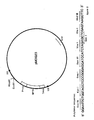
- the binary vector pMOG23 ( Figure 2) is a derivative of vector Bin19 (Bevan, M., 1984). To obtain pMOG23, the vector Bin19 is changed in a way not essential for the present invention, using techniques familiar to those skilled in the art of molecular biology.
- NPTII gene neomycine phosphotransferase gene II
- polylinker of Bin19 is replaced by a polylinker with the following restriction enzyme recognition sites: Eco RI, Kpn I, Sma I, Bam HI, Xba I, Sac I, Xho I, and Hind III.
- the phytase gene from Aspergillus ficuum is tailored and cloned in an expression construct for constitutive expression downstream of the Cauliflower Mosaic Virus 35S promoter.
- the expression construct also contains the coding information for a signal peptide sequence of plant origin.
- the phytase cDNA is cloned into the expression construct as present on plasmid pMOG29 (described under a)). Subsequently the entire construct is introduced into the binary vector pMOG23 and transferred to Agrobacterium tumefaciens strain LBA4404.
- ROK1 The expression construct of ROK1 (Baulcombe et al ., 1986) is cloned as an EcoRI/HindIII fragment into pUC18.
- This construct contains the Cauliflower Mosaic Virus (CaMV) 35S promoter on an Eco RI/ Bam HI fragment and the nopaline synthase (nos) transcription terminator on a Bam HI/ Hind III fragment.
- the promoter fragment consists of the sequence from -800 to +1 of the CaMV 35S promoter. Position +1, which is included, is the transcription initiation site (Guilley et al ., 1982). The sequence upstream of the Nco I site at position -512 is deleted and this site is changed into an Eco RI site.
- the resulting plasmid contains the 35S promoter with a double enhancer sequence, the leader sequence of RNA4 from AlMV and the nos terminator in an expression construct still present on an Eco RI/ Hin dIII fragment.
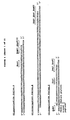
- the Nco I/ Bam HI fragment encoding ⁇ -glucuronidase is replaced with the synthetic DNA fragment B ( Figure 4), derived from the PROB12 cDNA (Cornelissen et al ., 1986).
- This fragment B encodes the PR-protein PR-S signal peptide sequence from tobacco Samsun NN.
- An Sph I site is created in the signal peptide encoding DNA sequence by changing one nucleotide. This change does not alter the amino acid sequence of the encoded PR-S signal peptide.
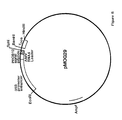
- the resulting plasmid is called pMOG29 ( Figure 8).
- Oligonucleotide duplex C ( Figure 4) is cloned into plasmid pMOG29, digested with Sph I and Bam HI, resulting in plasmid pMOG407.
- the oligonucleotide duplex contains the coding information for the final 2 amino acids of the signal peptide of PR-S, followed by the first 6 amino acids of mature phytase.
- the plasmid pGB927 which contains the full length phytase cDNA, is digested with Xho I (partially) and Pst I.
- the Xho I/ Pst I fragment comprising the DNA sequences encoding mature phytase from amino acid 6 onward is cloned into plasmid pMOG407 linearized with Xho I and Pst I, resulting in plasmid pMOG417.
- the entire construct, containing the chimaeric phytase gene, is inserted as an Eco RI/ Hin dIII fragment into the binary vector pMOG23 linearized with Eco RI and Hin dIII.
- the resulting binary plasmid pMOG413 is mobilized, in a triparental mating with the E. coli K-12 strain RK2013 (containing plasmid pRK2013) (Ditta et al ., 1980), into Agrobacterium tumefaciens strain LBA4404 that contains a plasmid with the virulence genes necessary for T-DNA transfer to the plant.
- Protoplasts of tobacco are transformed with plasmid DNA carrying the chimaeric phytase gene under regulation of the constitutive CaMV 35S promoter. After 72 hours treated protoplasts are assayed for transient expression of the introduced phytase gene using the phytase activity assay.
- Protoplasts are prepared from axenically grown 1-2 months old tobacco plants ( Nicotiana tabacum SR1). The entire procedure is described by Rodenburg et al . (1989). For transformation a number of 5.105 protoplasts is electroporated with 40 ⁇ g DNA of plasmid pMOG417). After electroporation protoplasts are resuspended in 3 ml of K3G medium. For the phytase activity assay protoplasts are pelleted and the 3 ml of supernatant is dialyzed overnight against an excess of water. The dialysate is freeze-dried and resuspended in 300 ⁇ l 25 mM sodium-acetate pH 5.5. The assay is then carried out as described in detail in Example 10, with the only exception that instead of the 250 mM Glycine HCl buffer pH 2.5, a 25 mM sodium acetate buffer pH 5.5. is used.
- one phytase unit is defined as 1 ⁇ M phosphate released from 1.5 mM sodium phytate solution per minute at 37°C at pH 5.5.
- Protoplasts electroporated with plasmid pMOG417 show an activity of 0.26 PTU (Phytase units, see Example 10) per mg protein in the supernatant.
- Tobacco is transformed by cocultivation of plant tissue with Agrobacterium tumefaciens strain LBA4404 containing the binary vector pMOG413 with the chimaeric phytase gene under regulation of the CaMV 35S promoter. Transformation is carried out using cocultivation of tobacco ( Nicotiana tabacum SRI) leaf discs according to Horsch et al . (1985). Transgenic plants are regenerated from shoots that grow on selection medium (100 mg/l) kanamycin), rooted and transferred to soil. Young plants are assayed for NPTII-activity (kanamycin resistance), grown to maturity and allowed to self-pollenate and set seed.
- phytase activity found in the transgenic seeds about 50 mg is taken and homogenized with a pestle in an ice-cold mortar in 1 ml 25 mM sodium-acetate buffer pH 5.5. After centrifugation, the supernatant is assayed as described for the transient assays. In 32 independently transformed tobacco plants, a maximum phytase expression level of 0.4% of the total soluble seed protein was observed. No phytase activity could be detected in untransformed plants.
- An expression construct is constructed in such a way that seed-specific expression is obtained, using sequences of the Brassica napus 12S storage protein gene cruciferin (cruA; Ryan et al ., 1989). These sequences may be replaced by those from similar seed-specific genes to achieve the same goal as is the objective of this invention.
- the phytase cDNA is cloned into the expression construct. Finally, the entire construct is introduced into Agrobacterium tumefaciens , which is used for transformation. In case of any other protein of interest cloning of the gene or cDNA is done in essentially the same way as described here for the phytase cDNA.
- E. coli K-12 strain DH5 ⁇ is used for all E. coli transformations in this example.
- the promoter and terminator sequences from the cruciferin A (cruA) gene of Brassica napus cv. Jet Neuf are synthesized using PCR technology with isolated genomic DNA (Mettler, I.J., 1987) as a template. This gene shows seed-specific expression and its coding and flanking sequences have been determined (Ryan et al ., 1989).
- Two sets of oligonucleotides are synthesized.
- the other for amplification of the 3' flanking sequence as a Bgl II/ Hin dIII fragment 5' CTTAAGATCTTACCCAGTGA 3' and 5' CGGAGAAGCTTGCATCTCGT 3'.
- the oligo's are designed to contain suitable restriction sites at their termini to allow direct assembly of the expression construct after digestion of the fragments with the restriction enzymes.
- the 5' fragment of the cruA gene that includes 54 nucleotides of the sequence encoding the signal peptide is cloned into vector pMOG445 (Oligonucleotide duplex E ( Figure 4) cloned into vector pUC18, linearized with Sst I and Eco RI), cut with Eco RI and Nco I, resulting in vector pMOG424.
- the synthetic oligonucleotide duplex D ( Figure 4), comprising the final 5 coding triplets for the signal sequence of Brassica napus cruciferin, the sequence encoding amino acids 1-6 of mature phytase and a multiple cloning site, is cloned in vector pMOG424 cut with Nco I and Hin dIII.
- the resulting vector is called pMOG425.
- the 3' cruA PCR fragment is cloned as a Bgl II/ Hin dIII fragment into pMOG425 digested with Bgl II and Hin dIII, resulting in pMOG426.
- Plasmid pGB927 which contains the full-length coding sequence for Aspergillus ficuum phytase, is digested with Xho I (partially) and with Pst I.
- the Xho I/ Pst I fragment comprising the DNA sequences encoding mature phytase from amino acid 6 onward is cloned in vector pMOG426, cut with Xho I and Pst I.
- the entire construct, containing the chimeric phytase gene is inserted as an Eco RI/ Hin dIII fragment in the binary vector pMOG23 linearized with Eco RI and Hin dIII.
- the resulting binary vector pMOG429 ( Figure 5) is mobilized, in a triparental mating with the E. coli K-12 strain RK2013 (containing plasmid pRK2013) (Ditta et al ., supra), into Agrobacterium strain LBA4404 (Hoekema et al ., 1983, supra) which contains a plasmid with the virulence genes necessary for T-DNA tranfer to the plant.
- kanamycin 200 mg/L
- transgenic for phytase kanamycin
- Phytase activity found in the transgenic seeds about 50 mg seed is taken and homogenized with a pestle in an ice-cold mortar in 1 ml 25 mM sodiumacetate buffer pH 5.5. After centrifugation, the supernatant is assayed as described for the transient assays. In 55 independently transformed tobacco plants, a maximum phytase expression level of 0.15% of the total soluble seed protein was observed. Phytase activity was not detected in stems, roots and leaves of the transgenic plants. No phytase activity could be detected in untransformed plants.
- Transgenic plants may be selected on antibiotic resistance.
- the transgenic plants may be assayed for phytase activity. High expressors may be analyzed more thoroughly and used in further experiments.
- the same chimeric phytase construct in a binary vector is mobilized into Agrobacterium tumefaciens strain LBA4404, in a like manner as described in Example 7.
- This strain may be used to transform rapeseed ( Brassica napus cv. Westar).
- surface-sterilized stem segments taken from 5 to 6 week-old plants, just before flowering are preconditioned for 24 h on MS medium (Fry et al ., 1987) with 1 mg/l BAP and then co-cultivated for 48 h with Agrobacterium on fresh plates with the same medium.
- Transgenic plantlets may be regenerated from shoots that grow on selection medium (500 mg/l carbenicilline, 40 mg/l paromomycin) and further analyzed as described in example 8 for tobacco.
- PTU Phytase units. One unit of phytase activity is defined as that amount of enzyme which liberates inorganic phosphorus from 1.5 mM sodium phytate at the rate of 1 ⁇ mol/min at 37°C and at pH 2.5).
- the ground seed is incubated in a total volume of 50 ml of a 250 mM glycine/HCl buffer pH 2.5 containing 0.86 g sodium phytate ⁇ 11 H2O.
- Aspergillus phytase expresses a pH optimum at 2.5 as well as at 5.5, the lower pH is chosen to exclude plant phytase activity.
- the resulting mixture is incubated for 15 and 60 minutes at 37°C.
- the reaction is stopped by the addition of 5 ml from the incubate into 5 ml of 10% TCA (trichloroacetic acid).
- 10 ml of indicator reagent (3.66 g FeSO2 ⁇ 7H2O in 50 ml of ammonium molybdate solution (2.5 g (NH4)6Mo7O24 ⁇ 4H2O and 8 ml conc. H2SO4, diluted up to 250 ml with demi water)
- the intensity of the blue color is measured spectrophotometrically at 700 nm.
- the measurements are indicative of the quantity of phosphate released in relation to a calibration curve of phosphate in the range of 0-1 mM.
- the added incubation agent consists of a mixture of 410 ml buffer and 90 ml of demi water.
- the activity of phytase from Aspergillus is determined in a model simulating the conditions found in the digestive tract in poultry.
- a standard poultry feed sample is first incubated at 1 g/15 ml demi water for 60 minutes at 39°C to simulate the conditions in the crop of the animals. Subsequently, 5 ml of a pepsin solution (Merck: 5.28 g/l, pH 3.0 - adjusted with HCl) is added, the pH adjusted with HCl to pH 3.0, and the incubation is continued for a further 90 minutes at the same temperature to simulate the conditions in the stomach.
- a pepsin solution Merck: 5.28 g/l, pH 3.0 - adjusted with HCl
- Phytase-expressing tobacco seeds and control seed are harvested. Seeds were ground in 100 gram portions with a sieve (Retch-mill ZM1) having pores of 500 ⁇ m, taking care to keep the seeds cooled.
- One day old male broiler chicks are housed in two tier battery cages (0.45 m2).
- the ambient temperature is 32°C during the first two days and is decreased by 4°C in the first week. Every following week, the temperature is decreased by 2°C.
- Broilers are reared in a one hour light and three hours dark regime.
- the birds are vaccinated against New Castle Disease at one day of age using Clone 30 vaccine.
- the broilers are fed the experimental diets all mash and ad libitum. Growth and feed/gain ratios are measured during the experimental periods. Apparent availability of total phosphorus is measured in a three day period, during which feed consumption is measured as dry matter intake and excreta are collected quantitatively.
- Apparent availability of phosphorus is defined as the difference between intake of phosphorus and excretion of phosphorus with the excreta.
- Experimental diet 4 contains microbial phytase at a concentration of 400 PTU/kg feed, prepared as described by Van Gorcom et al . (1991).
- Experimental diet 5 is like diet 4 but ground seeds of non-transgenic tobacco are added to the feed mixture to achieve a final ratio of 3 kg/90 kg feed.
- Experimental diet 6 is also like diet 4 but 3 kg ground seeds of transgenic tobacco (line 413.25) are added to a mixture of 90 kg feed to obtain a final concentration of 400 PTU/kg feed.
- the experiment is carried out with 176 broilers in 16 battery cages (11 per battery cage) until the age of 24 days.
- the treatments (diets) are repeated twice and are assigned randomly to the cages within each tier.
- the availability of phosphorus is measured from 21-24 days of age.
- the ⁇ -amylase gene from Bacillus licheniformis is tailored and cloned in an expression cassette for constitutive expression which also contains the coding information for a signal peptide sequence of plant origin.
- the entire construct is cloned in a binary vector, transferred to Agrobacterium tumefaciens strain LBA4404, which is used to transform the plant of interest.
- Any other gene or cDNA may be cloned in a similar way as is described here for the ⁇ -amylase gene.
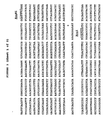
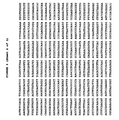
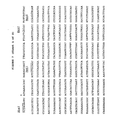
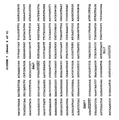
- the ⁇ -amylase gene from Bacillus licheniformis ( Figure 7), present in the Bacillus vector pPROM54 (deposited at the Centraal Bureau voor Schimmelcultures on November 5, 1985, under accession number CBS 696.85), is digested with Xba I and Bcl I.
- the Xba I/ Bcl I fragment is cloned in plasmid pUC18 linearized with Xba I and Bam HI, resulting in plasmid pMOG318.
- a Sal I/ Bam HI fragment is synthesized using PCR technology with pMOG318 as a template creating the Bam HI site by use of a mismatch primer (indicated in Figure 7).
- the Sal I/ Bam HI PCR fragment is cloned in plasmid pIC-19R (Marsh et al ., 1984) digested with Sal I and Bam HI, resulting in plasmid pMOG319.
- the Sal I fragment which contains the 5'end of the ⁇ -amylase gene, from pMOG318 (using the Sal I site present in pUC18) is cloned in pMOG319 linearized with Sal I. This results in plasmid pMOG320 that contains the entire ⁇ -amylase gene.
- Vector pMOG29 was constructed as described in Example 4(a).
- Plasmid pMOG320 is digested with Hga I and Bam HI.
- the Hga I/ Bam HI fragment which encodes mature ⁇ -amylase from amino acid 9 onward, is cloned in a three-way ligation with the synthetic oligonucleotide duplex F ( Figure 4) into pMOG29 linearized with Sph I and Bam HI, resulting in plasmid pMOG321.
- the oligonucleotide duplex has the coding information for the final 2 amino acids of the signal peptide of PR-S and for the first 9 amino acids of mature ⁇ -amylase.
- the entire construct, containing the chimeric ⁇ -amylase gene, is inserted as an Eco RI/ Hin dIII into the binary vector pMOG23 linearized with Eco RI and Hin dIII.
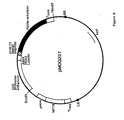
- the resulting binary plasmid pMOG227 ( Figure 9) is mobilized, in a triparental mating with the E. coli K-12 strain RK2013 (containing plasmid pRK2013) (Ditta et al ., 1980), into Agrobacterium strain LBA4404 that contains a plasmid with the virulence genes necessary for T-DNA tranfer to the plant.
- tobacco is transformed by cocultivation of plant tissue with Agrobacterium tumefaciens , containing a binary vector with the chimeric ⁇ -amylase gene.
- Transgenic plants are selected on antibiotic resistance.
- the seeds of the transgenic plants are assayed for ⁇ -amylase activity. High expressors are analyzed more thoroughly and used in further experiments.
- Agrobacterium strain LBA4404 (pMOG227) is used for transformation experiments. Transformation of tobacco ( Nicotiana tabacum SR1) is carried out using cocultivation of leaf discs according to the procedure of Horsch et al ., (1985). Transgenic plants are regenerated from shoots that grow on selection medium (100 mg/l kanamycin). Young plants are assayed for NPTII-activity, grown to maturity and allowed to self-pollenate and set seed. Seeds from individual transformants are pooled and part of the seed sample is assayed for the presence of ⁇ -amylase.
- Bacillus licheniformis ⁇ -amylase expressed in tobacco seed, was applied in the liquefaction of starch as follows: 100 grams of both ⁇ -amylase-expressing and control tobacco seeds are harvested. Seeds were ground with a sieve (Retch-mill ZM1) having pores of 250 ⁇ m, taking care to keep the seeds cooled. To determine their ⁇ -amylase content, the milled seeds were extracted with 10 volumes of 0.5 M glycine buffer pH 9.0 with 10 mM CaCl2 during 30 min at 0°C. The supernatant was used for ⁇ -amylase determination by the Phadebas method (Pharmacia Diagnostics). The units are referred to as TAU (thermostable ⁇ -amylase units).
- the samples were acidified with H2SO4 to obtain pH 3.5 and placed in a boiling water bath for 10 minutes in order to stop enzymatic activity before the DE (dextrose equivalents) and hydrolysis pattern were determined by HPLC.
- a column of BIORAD HPX-42A was used for HPLC analysis with demineralized water as eluent.
- the oligosaccharide pattern obtained from transformed plant seeds and Maxamyl R are identical, yet both differ from that obtained from Dexlo R , confirming that Bacillus licheniformis ⁇ -amylase is produced in plant seeds.
- the DE values obtained with the plant seeds (Table 3) are in the commercially acceptable range (DE ⁇ 12, preferably DE ⁇ 16) (Reilly, 1985).
Landscapes
- Health & Medical Sciences (AREA)
- Life Sciences & Earth Sciences (AREA)
- Genetics & Genomics (AREA)
- Engineering & Computer Science (AREA)
- Chemical & Material Sciences (AREA)
- Organic Chemistry (AREA)
- Zoology (AREA)
- Bioinformatics & Cheminformatics (AREA)
- Wood Science & Technology (AREA)
- Molecular Biology (AREA)
- Biotechnology (AREA)
- Biomedical Technology (AREA)
- General Engineering & Computer Science (AREA)
- General Health & Medical Sciences (AREA)
- Biochemistry (AREA)
- Microbiology (AREA)
- Medicinal Chemistry (AREA)
- Plant Pathology (AREA)
- Biophysics (AREA)
- Cell Biology (AREA)
- Physics & Mathematics (AREA)
- Pharmacology & Pharmacy (AREA)
- Nutrition Science (AREA)
- Polymers & Plastics (AREA)
- General Chemical & Material Sciences (AREA)
- Nuclear Medicine, Radiotherapy & Molecular Imaging (AREA)
- Veterinary Medicine (AREA)
- Chemical Kinetics & Catalysis (AREA)
- Animal Behavior & Ethology (AREA)
- Animal Husbandry (AREA)
- Public Health (AREA)
- Food Science & Technology (AREA)
- Enzymes And Modification Thereof (AREA)
- Breeding Of Plants And Reproduction By Means Of Culturing (AREA)
- Preparation Of Compounds By Using Micro-Organisms (AREA)
- Medicines Containing Plant Substances (AREA)
- Micro-Organisms Or Cultivation Processes Thereof (AREA)
- Medicines That Contain Protein Lipid Enzymes And Other Medicines (AREA)
- Fodder In General (AREA)
- Measuring Or Testing Involving Enzymes Or Micro-Organisms (AREA)
Priority Applications (3)
| Application Number | Priority Date | Filing Date | Title |
|---|---|---|---|
| US08/626,554 US5714474A (en) | 1990-03-23 | 1996-04-02 | Production of enzymes in seeds and their use |
| US09/149,310 US7033627B2 (en) | 1990-03-23 | 1998-02-02 | Production of enzymes in seeds and their use |
| US11/214,413 US20060005286A1 (en) | 1990-03-23 | 2005-08-29 | Production of enzymes in seeds and their use |
Applications Claiming Priority (2)
| Application Number | Priority Date | Filing Date | Title |
|---|---|---|---|
| US49856190A | 1990-03-23 | 1990-03-23 | |
| US498561 | 1990-03-23 |
Publications (3)
| Publication Number | Publication Date |
|---|---|
| EP0449376A2 true EP0449376A2 (de) | 1991-10-02 |
| EP0449376A3 EP0449376A3 (en) | 1991-11-06 |
| EP0449376B1 EP0449376B1 (de) | 2001-05-16 |
Family
ID=23981572
Family Applications (1)
| Application Number | Title | Priority Date | Filing Date |
|---|---|---|---|
| EP91200688A Expired - Lifetime EP0449376B1 (de) | 1990-03-23 | 1991-03-25 | Herstellung von Enzymen in Samen und ihre Verwendung |
Country Status (17)
| Country | Link |
|---|---|
| EP (1) | EP0449376B1 (de) |
| JP (1) | JP3938401B2 (de) |
| KR (1) | KR100211308B1 (de) |
| AT (1) | ATE201232T1 (de) |
| AU (1) | AU649447B2 (de) |
| CA (1) | CA2054762C (de) |
| DE (1) | DE69132605T2 (de) |
| DK (1) | DK0449376T3 (de) |
| ES (1) | ES2160095T3 (de) |
| FI (1) | FI119939B (de) |
| GR (1) | GR3036358T3 (de) |
| HU (1) | HU215260B (de) |
| IL (1) | IL97645A (de) |
| NZ (1) | NZ237549A (de) |
| PT (1) | PT97110B (de) |
| RU (1) | RU2129609C1 (de) |
| WO (1) | WO1991014772A1 (de) |
Cited By (32)
| Publication number | Priority date | Publication date | Assignee | Title |
|---|---|---|---|---|
| EP0479359A1 (de) * | 1990-09-13 | 1992-04-08 | Gist-Brocades N.V. | Transgene Pflanzen mit modifiziertem Kohlenhydratgehalt |
| EP0455316A3 (en) * | 1990-04-20 | 1992-06-03 | Institut Fuer Genbiologische Forschung Berlin Gmbh | Plasmide containing dna sequences that bring about changes in the carbohydrate and protein concentration and the carbohydrate and protein composition in plants, and plant cells and plants containing those plasmids |
| FR2722798A1 (fr) * | 1994-07-25 | 1996-01-26 | Toulouse Inst Nat Polytech | 1procede de production d'acides gras2plantes oleagineuses |
| WO1996021029A1 (en) * | 1994-12-30 | 1996-07-11 | University Technologies International, Inc. | Oil body proteins as carriers of high value proteins |
| FR2733249A1 (fr) * | 1995-04-20 | 1996-10-25 | Biocem | Lipase gastrique de chien recombinante et polypeptides derives produits par les plantes, leurs procedes d'obtention et leurs utilisations |
| WO1997016981A1 (en) * | 1995-11-07 | 1997-05-15 | Gist-Brocades B.V. | Stable compositions comprising transgenic plant material |
| WO1997048810A1 (en) * | 1996-06-19 | 1997-12-24 | Prodigene | Method of treating lactose intolerance |
| WO1998005788A1 (en) * | 1996-08-05 | 1998-02-12 | Mogen International N.V. | Improved process for the production of alcoholic beverages using maltseed |
| WO1998016651A1 (en) * | 1996-10-17 | 1998-04-23 | Wisconsin Alumni Research Foundation | Transgenic plants as an alternative source of lignocellulosic-degrading enzymes |
| FR2754827A1 (fr) * | 1996-10-17 | 1998-04-24 | Biocem | Lipases pancreatiques et/ou colipases recombinantes et polypeptides dervies produits par les plantes, leurs procedes d'obtention et leurs utilisations |
| WO1998011235A3 (en) * | 1996-09-12 | 1998-06-04 | Ciba Geigy Ag | Transgenic plants expressing cellulolytic enzymes |
| US6080560A (en) * | 1994-07-25 | 2000-06-27 | Monsanto Company | Method for producing antibodies in plant cells |
| US6084155A (en) * | 1995-06-06 | 2000-07-04 | Novartis Ag | Herbicide-tolerant protoporphyrinogen oxidase ("protox") genes |
| US6140075A (en) * | 1994-07-25 | 2000-10-31 | Monsanto Company | Method for producing antibodies and protein toxins in plant cells |
| US6177245B1 (en) | 1994-06-16 | 2001-01-23 | Novartis Finance Corporation | Manipulation of protoporphyrinogen oxidase enzyme activity in eukaryotic organisms |
| WO2001059141A3 (en) * | 2000-02-10 | 2001-12-06 | Univ Washington | Methods and compositions that utilize barley as a foodstuff for animals |
| US6451572B1 (en) | 1998-06-25 | 2002-09-17 | Cornell Research Foundation, Inc. | Overexpression of phytase genes in yeast systems |
| US6511699B1 (en) | 1999-03-31 | 2003-01-28 | Cornell Research Foundation, Inc. | Enzymes with improved phytase activity |
| US6818803B1 (en) | 1997-06-26 | 2004-11-16 | Wisconsin Alumni Research Foundation | Transgenic plants as an alternative source of lignocellulosic-degrading enzymes |
| US6841370B1 (en) | 1999-11-18 | 2005-01-11 | Cornell Research Foundation, Inc. | Site-directed mutagenesis of Escherichia coli phytase |
| US7091401B2 (en) | 1991-02-22 | 2006-08-15 | Sembiosys Genetics Inc. | Expression of epidermal growth factor in plant seeds |
| US7309505B2 (en) | 2002-09-13 | 2007-12-18 | Cornell Research Foundation, Inc. | Using mutations to improve Aspergillus phytases |
| US7320876B2 (en) | 2001-10-31 | 2008-01-22 | Phytex, Llc | Phytase-containing animal food and method |
| EP1574580A3 (de) * | 1996-09-12 | 2009-07-01 | Syngenta Participations AG | Cellulolytische enzyme-exprimierende transgene Pflanzen |
| US7557262B2 (en) | 2001-08-27 | 2009-07-07 | Syngenta Participations Ag | Self processing plants and plant parts |
| US7727726B2 (en) | 2007-06-01 | 2010-06-01 | Syngenta Participations Ag | Process for starch liquefaction and fermentation |
| US7915020B2 (en) | 2007-06-01 | 2011-03-29 | Syngenta Participations Ag | Process for starch liquefaction and fermentation |
| US7914993B2 (en) | 2007-06-01 | 2011-03-29 | Syngenta Participations Ag. | Process for starch liquefaction and fermentation |
| US7919297B2 (en) | 2006-02-21 | 2011-04-05 | Cornell Research Foundation, Inc. | Mutants of Aspergillus niger PhyA phytase and Aspergillus fumigatus phytase |
| WO2011051322A1 (de) | 2009-10-28 | 2011-05-05 | Ab Enzymes Gmbh | Klonierung, expression und verwendung saurer phospholipasen |
| US8192734B2 (en) | 2007-07-09 | 2012-06-05 | Cornell University | Compositions and methods for bone strengthening |
| US8540984B2 (en) | 2006-08-03 | 2013-09-24 | Cornell Research Foundation, Inc. | Phytases with improved thermal stability |
Families Citing this family (230)
| Publication number | Priority date | Publication date | Assignee | Title |
|---|---|---|---|---|
| US5705375A (en) * | 1990-09-13 | 1998-01-06 | Mogen International, N.V. | Transgenic plants having a modified carbohydrate content |
| MY134684A (en) | 1995-05-15 | 2007-12-31 | Gist Brocades Bv | Application of phospholipases in animal feed |
| EP0743017B1 (de) * | 1995-05-15 | 2004-09-29 | DSM IP Assets B.V. | Verwendung von Phospholipasen in Tierfutter |
| US6936289B2 (en) | 1995-06-07 | 2005-08-30 | Danisco A/S | Method of improving the properties of a flour dough, a flour dough improving composition and improved food products |
| PL328707A1 (en) * | 1996-03-05 | 1999-02-15 | Weissheimer Friedr Malzfab | Method of obtaining degraded and/or converted products of reserve substances being present in transgenous plant material |
| DE69712912T2 (de) | 1996-12-23 | 2002-11-21 | Dsm N.V., Heerlen | Verfahren zur herstellung eines proteinhydrolysates |
| EP1433852B1 (de) | 1997-04-09 | 2006-06-28 | Danisco A/S | Verwendung von Lipase zur Verbesserung von Teigen und Backwaren |
| AU2003203147B2 (en) | 1998-03-23 | 2008-05-29 | Novozymes A/S | Phytase variants |
| AU1263100A (en) * | 1998-11-12 | 2000-06-05 | Novozymes A/S | Transgenic plant expressing maltogenic alpha-amylase |
| US6940002B1 (en) | 1998-11-12 | 2005-09-06 | Novozymes A/S | Transgenic plant expressing maltogenic alpha-amylase |
| CA2715086A1 (en) | 1998-11-27 | 2000-06-08 | Novozymes A/S | Lipolytic enzyme variants |
| AU6082600A (en) * | 1999-07-12 | 2001-01-30 | E.I. Du Pont De Nemours And Company | Plant inositol polyphosphate phosphatase homologs |
| NZ517409A (en) | 1999-08-31 | 2004-05-28 | Novozymes As | RP-II properties with amino acid substitutions used in detergent compositions and additives |
| RU2188664C2 (ru) * | 2000-10-11 | 2002-09-10 | Пермская государственная медицинская академия | Способ получения средства для диагностики целиакии |
| CA2437819A1 (en) * | 2001-02-14 | 2002-08-22 | Ventria Bioscience | Feed additive compositions and methods |
| NZ528260A (en) | 2001-05-18 | 2005-09-30 | Danisco | Method of improving dough and bread quality with the addition of an enzyme that hydrolyses a glycolipid and a phospholipid and incapable of hydrolysing a triglyceride or monoglyceride |
| DK2277997T3 (da) | 2001-06-26 | 2013-12-02 | Novozymes As | Polypeptider med cellobiohydrolase I-aktivitet og polynukleotider, der koder for samme |
| EP1549745B1 (de) | 2002-10-01 | 2011-01-05 | Novozymes A/S | Polypeptide der gh-61-familie |
| US7348168B2 (en) | 2002-12-20 | 2008-03-25 | Novozymes A/S | Polypeptides having cellobiohydrolase II activity and polynucleotides encoding same |
| MXPA05007654A (es) | 2003-01-17 | 2005-09-30 | Danisco | Metodo. |
| DK2228440T3 (da) | 2003-05-02 | 2013-01-02 | Novozymes Inc | Varianter af beta-glucosidaser |
| CN100506997C (zh) | 2003-05-30 | 2009-07-01 | 诺维信公司 | 酒精产品生产方法 |
| DE602004027376D1 (de) | 2003-06-19 | 2010-07-08 | Novozymes As | Proteasen |
| ES2517245T3 (es) | 2003-06-25 | 2014-11-03 | Novozymes A/S | Enzimas para el tratamiento de almidón |
| EP2377931B1 (de) | 2003-08-25 | 2013-05-08 | Novozymes Inc. | Varianten von Glycosidhydrolasen |
| EP2284259A3 (de) | 2003-10-10 | 2011-06-15 | Novozymes A/S | Proteasen |
| EP1682656B1 (de) | 2003-10-28 | 2013-09-18 | Novozymes Inc. | Polypeptide mit beta-Glucosidase-Aktivität sowie diese kodierende Polynukleotide |
| WO2005066339A2 (en) | 2004-01-06 | 2005-07-21 | Novozymes A/S | Polypeptides of alicyclobacillus sp. |
| EP2287179A3 (de) | 2004-01-09 | 2011-05-18 | Novozymes A/S | Gesteigerte Bacillus YweA-Expression |
| ES2468366T3 (es) | 2004-01-30 | 2014-06-16 | Novozymes Inc. | Polip�ptidos con actividad de mejora celulol�tica y polinucle�tidos que los codifican |
| EP1715736A4 (de) | 2004-02-12 | 2008-09-03 | Novozymes Inc | Polypeptide mit xylanase-aktivität, sowie für diese codierende polynukleotide |
| GB0405637D0 (en) | 2004-03-12 | 2004-04-21 | Danisco | Protein |
| US7148404B2 (en) | 2004-05-04 | 2006-12-12 | Novozymes A/S | Antimicrobial polypeptides |
| US8633006B2 (en) | 2004-06-29 | 2014-01-21 | Novozymes, Inc. | Polypeptides having alpha-glucosidase activity and polynucleotides encoding same |
| CA2591858C (en) | 2004-06-21 | 2015-05-05 | Novozymes A/S | Proteases derived from norcardiopsis |
| CN101006174B (zh) | 2004-06-21 | 2010-05-26 | 诺维信公司 | 以相同取向稳定保持的至少两个orf的多拷贝 |
| EA014985B1 (ru) | 2004-07-16 | 2011-04-29 | Даниско А/С | Способ ферментативного рафинирования пищевых масел гидратацией и применение липидацилтрансферазы для осуществления способа |
| EP2298872A3 (de) | 2004-09-30 | 2011-08-10 | Novozymes A/S | Polypeptide mit Lipase-Aktivität und diese kodierende Polynukleotide |
| AR050895A1 (es) | 2004-10-04 | 2006-11-29 | Novozymes As | Polipeptidos que tienen actividad de fitasa y polinucleotidos que los codifican |
| MX285771B (es) | 2004-10-04 | 2011-04-07 | Novozymes As | Polipeptidos que tienen avtividad de fitasa y polinucleotidos queridos mama y papa: codifican los mismos. |
| WO2006053565A2 (en) | 2004-11-19 | 2006-05-26 | Novozymes A/S | Polypeptides having antimicrobial activity and polynucleotides encoding same |
| ATE489404T1 (de) | 2004-12-22 | 2010-12-15 | Novozymes As | Hybridenzyme, bestehend aus einer ersten endoamylaseaminosäuresequenz und einem kohlenhydratbindenden modul als zweiter aminosäuresequenz |
| ES2543131T3 (es) | 2004-12-22 | 2015-08-14 | Novozymes North America, Inc. | Enzimas para tratamiento de almidón |
| AR053066A1 (es) | 2005-04-26 | 2007-04-18 | Novozymes As | Arabinofuranosidasas |
| EP1877551B2 (de) | 2005-04-27 | 2014-02-26 | Novozymes, Inc. | Polypeptide mit endoglucanase-aktivtät und dafür codierende polynukleotide |
| WO2007019859A2 (en) | 2005-08-16 | 2007-02-22 | Novozymes A/S | Polypeptides of strain bacillus sp. p203 |
| US20080280328A1 (en) | 2005-11-18 | 2008-11-13 | Novozymes A/S | Glucoamylase Variants |
| CN101454444A (zh) | 2006-03-20 | 2009-06-10 | 诺维信股份有限公司 | 具有内切葡聚糖酶活性的多肽和编码该多肽的多核苷酸 |
| CN101460616A (zh) | 2006-03-30 | 2009-06-17 | 诺维信股份有限公司 | 具有内切葡聚糖酶活性的多肽和编码该多肽的多核苷酸 |
| AU2007234177B2 (en) | 2006-04-04 | 2012-11-08 | Novozymes A/S | Phytase variants |
| DE102006046719A1 (de) | 2006-10-02 | 2008-04-03 | Ab Enzymes Gmbh | Klonierung, Expression und Verwendung saurer Phospholipasen |
| EP2099818A2 (de) | 2006-11-29 | 2009-09-16 | Novozymes Inc. | Bacillus licheniformis-chromosom |
| WO2008067840A1 (en) | 2006-12-08 | 2008-06-12 | Swetree Technologies Ab | Plants having improved growth characteristics and method for making the same |
| WO2008116878A1 (en) | 2007-03-26 | 2008-10-02 | Novozymes A/S | Hafnia phytase |
| DE102007016139A1 (de) | 2007-03-30 | 2008-10-02 | Jenabios Gmbh | Verfahren zur regioselektiven Oxygenierung von N-Heterozyklen |
| CN101878299A (zh) | 2007-11-27 | 2010-11-03 | 诺维信公司 | 具有α-葡糖醛酸糖苷酶活性的多肽和编码该多肽的多核苷酸 |
| EP2224822B1 (de) | 2007-12-06 | 2014-05-21 | Novozymes A/S | Polypeptide mit acetylxylan-esterase-aktivität und dafür codierende polynukleotide |
| AU2008343105A1 (en) | 2007-12-19 | 2009-07-09 | Novozymes A/S | Polypeptides having cellulolytic enhancing activity and polynucleotides encoding same |
| JP5701610B2 (ja) | 2007-12-28 | 2015-04-15 | スヴェトリー・テクノロジーズ・アーベー | 改良された生育特徴を有する木本植物および転写因子を用いてそれを作製するための方法 |
| PL2342323T3 (pl) | 2008-09-26 | 2013-11-29 | Novozymes As | Warianty fitazy z hafnia |
| US20120005770A1 (en) | 2008-11-03 | 2012-01-05 | Swetree Technologies Ab | Vegetabile material, plants and a method of producing a plant having altered lignin properties |
| ES2667812T3 (es) | 2008-11-20 | 2018-05-14 | Novozymes Inc. | Polipéptidos que tienen actividad potenciadora amilolítica y polinucleótidos que codifican los mismos |
| WO2010065830A1 (en) | 2008-12-04 | 2010-06-10 | Novozymes, Inc. | Polypeptides having cellulolytic enhancing activity and polynucleotides encoding same |
| US9493759B2 (en) | 2008-12-12 | 2016-11-15 | Novozymes, Inc. | Polypeptides having aspartic endopeptidase activity and polynucleotides encoding same |
| US20110296557A1 (en) | 2008-12-12 | 2011-12-01 | Novozymes, Inc. | Polypeptides Having Lipase Activity And Polynucleotides Encoding Same |
| US20110269206A1 (en) | 2008-12-15 | 2011-11-03 | Novozymes, Inc | Polypeptides Having Catalase Activity And Polynucleotides Encoding Same |
| US8633030B2 (en) | 2008-12-16 | 2014-01-21 | Novozymes, Inc. | Polypeptides having carboxypeptidase activity and polynucleotides encoding same |
| WO2010077775A1 (en) | 2008-12-16 | 2010-07-08 | Novozymes, Inc. | Polypeptides having alpha-mannosidase activity and polynucleotides encoding same |
| AU2010206181B2 (en) | 2009-01-21 | 2015-01-15 | Novozymes A/S | Polypeptides having esterase activity and nucleic acids encoding the same |
| US8604277B2 (en) | 2009-01-28 | 2013-12-10 | Novozymes, Inc. | Polypeptides having beta-glucosidase activity and polynucleotides encoding same |
| US8629324B2 (en) | 2009-01-30 | 2014-01-14 | Novozymes, Inc. | Polypeptides having expansin activity and polynucleotides encoding same |
| WO2010088447A1 (en) | 2009-01-30 | 2010-08-05 | Novozymes A/S | Polypeptides having alpha-amylase activity and polynucleotides encoding same |
| WO2010091221A1 (en) | 2009-02-06 | 2010-08-12 | Novozymes A/S | Polypeptides having alpha-amylase activity and polynucleotides encoding same |
| EP2411511B1 (de) | 2009-03-24 | 2018-08-08 | Novozymes A/S | Polypeptide mit acetylxylan-esterase-akitivität und dafür codierende polynukleotide |
| WO2010141325A1 (en) | 2009-06-02 | 2010-12-09 | Novozymes, Inc. | Polypeptides having cellobiohydrolase activity and polynucleotides encoding same |
| US8143021B2 (en) | 2009-07-07 | 2012-03-27 | Novozymes, Inc. | Polypeptides having cellulolytic enhancing activity and polynucleotides encoding same |
| EP2456865A1 (de) | 2009-07-24 | 2012-05-30 | Novozymes A/S | Kohlenhydratoxidasen |
| WO2011014458A1 (en) | 2009-07-28 | 2011-02-03 | Novozymes, Inc. | Polypeptides having phytase activity and polynucleotides encoding same |
| US8409830B2 (en) | 2009-08-21 | 2013-04-02 | Novozymes A/S | Polypeptides having isoamylase activity and methods of use |
| WO2011035027A2 (en) | 2009-09-17 | 2011-03-24 | Novozymes, Inc. | Polypeptides having cellulolytic enhancing activity and polynucleotides encoding same |
| WO2011035029A1 (en) | 2009-09-18 | 2011-03-24 | Novozymes, Inc. | Polypeptides having beta-glucosidase activity and polynucleotides encoding same |
| DK2483295T3 (en) | 2009-09-29 | 2016-02-22 | Novozymes Inc | Polypeptides having cellulolytic enhancing activity and polynucleotides encoding them |
| US8211665B2 (en) | 2009-09-29 | 2012-07-03 | Novozymes, Inc. | Polypeptides having xylanase activity and polynucleotides encoding same |
| CN108165542A (zh) | 2009-09-30 | 2018-06-15 | 诺维信股份有限公司 | 具有纤维素分解增强活性的多肽和编码该多肽的多核苷酸 |
| CN102666846A (zh) | 2009-09-30 | 2012-09-12 | 诺维信公司 | 具有纤维素分解增强活性的多肽和编码该多肽的多核苷酸 |
| US8541651B2 (en) | 2009-10-23 | 2013-09-24 | Novozymes, Inc. | Cellobiohydrolase variants and polynucleotides encoding same |
| CA2776336A1 (en) | 2009-10-29 | 2011-05-19 | Novozymes, Inc. | Polypeptides having cellobiohydrolase activity and polynucleotides encoding same |
| EP2496692B1 (de) | 2009-11-06 | 2016-03-16 | Novozymes, Inc. | Polypeptide mit xylanaseaktivität und für diese kodierende polynukleotide |
| EP2496693B1 (de) | 2009-11-06 | 2017-10-25 | Novozymes, Inc. | Polypeptide mit cellobiohydrolaseaktivität und dafür kodierende polynukleotide |
| ES2534098T3 (es) | 2009-11-30 | 2015-04-17 | Novozymes A/S | Polipéptidos que tienen actividad de glucoamilasa y polinucleótidos que codifican los mismos |
| EP2507370B1 (de) | 2009-11-30 | 2015-02-11 | Novozymes A/S | Polypeptide mit glucoamylase-aktivität und für diese codierende polynukleotide |
| CN104169417B (zh) | 2009-12-01 | 2020-05-08 | 诺维信公司 | 具有葡糖淀粉酶活性的多肽及其编码多核苷酸 |
| US9040280B2 (en) | 2009-12-11 | 2015-05-26 | Novozymes A/S | Protease variants |
| AU2011203460B2 (en) | 2010-01-04 | 2014-09-18 | Novozymes A/S | Alpha-amylase variants and polynucleotides encoding same |
| WO2011104284A1 (en) | 2010-02-25 | 2011-09-01 | Novozymes A/S | Polypeptides having antimicrobial activity |
| BR112012020309A2 (pt) | 2010-03-03 | 2015-11-03 | Novozymes As | "variante isolado de uma xilanase precursora, polinucleotídeo isolado, célula hospedeira, métodos para produzir e para obter um variante, planta transgênica, parte da planta ou célula da planta, e, métodos para degradar um material contendo xilano, para tratar uma polpa, e para produzir xilose." |
| AU2011231563B2 (en) | 2010-03-26 | 2015-01-29 | Novozymes A/S | Thermostable phytase variants |
| BR112012020503A2 (pt) | 2010-03-31 | 2015-09-15 | Novozymes Inc | variante isolado de celobioidrolase precursor, polipeptídeo isolado, construção de ácido nucleico, vetor de expressão, célula hospedeira, método de produzir um variante de celobioidrolas precursor, métodos para obter o variante, para degradar variante de celobioidrolase precursor, métodos para obter o variante, para degradar ou converter um material celulósico, poara produzir um produto de fermentação e de fermentar um material celulósico, e, composição de enzima. |
| WO2011127802A1 (en) | 2010-04-14 | 2011-10-20 | Novozymes A/S | Polypeptides having glucoamylase activity and polynucleotides encoding same |
| US8835604B2 (en) | 2010-06-12 | 2014-09-16 | Adenium Biotech Aos | Antimicrobial peptide variants and polynucleotides encoding same |
| CA2803343C (en) | 2010-06-21 | 2018-08-07 | Novozymes, Inc. | Aspergillus aculeatus derived polypeptides having c4-dicarboxylic acid transporter activity and polynucleotides encoding same |
| DK2588604T3 (en) | 2010-06-30 | 2016-09-26 | Novozymes Inc | Polypeptides having beta-glucosidase activity and polynucleotides encoding them |
| WO2012018775A1 (en) | 2010-08-02 | 2012-02-09 | Novozymes North America, Inc. | Process of producing a fermentation product |
| WO2012030811A1 (en) | 2010-08-30 | 2012-03-08 | Novozymes A/S | Polypeptides having cellobiohydrolase activity and polynucleotides encoding same |
| WO2012030845A2 (en) | 2010-08-30 | 2012-03-08 | Novozymes A/S | Polypeptides having beta-glucosidase activity, beta-xylosidase activity, or beta-glucosidase and beta-xylosidase activity and polynucleotides encoding same |
| US8624082B2 (en) | 2010-08-30 | 2014-01-07 | Novozymes A/S | Polypeptides having xylanase activity and polynucleotides encoding same |
| DK2735611T3 (en) | 2010-08-30 | 2019-01-28 | Novozymes As | POLYPEPTIDES WITH CELLULOLYSE INCREASING ACTIVITY AND POLYNUCLEOTIDES CODING THEM |
| WO2012030858A2 (en) | 2010-08-30 | 2012-03-08 | Novozymes A/S | Polypeptides having hemicellulolytic activity and polynucleotides encoding same |
| WO2012030844A1 (en) | 2010-08-30 | 2012-03-08 | Novozymes A/S | Polypeptides having endoglucanase activity and polynucleotides encoding same |
| EP2616483A1 (de) | 2010-09-16 | 2013-07-24 | Novozymes A/S | Lysozyme |
| WO2012044835A1 (en) | 2010-09-30 | 2012-04-05 | Novozymes, Inc. | Variants of polypeptides having cellulolytic enhancing activity and polynucleotides encoding same |
| CN103237891B (zh) | 2010-09-30 | 2017-07-14 | 诺维信股份有限公司 | 具有纤维素分解增强活性的多肽变体及其编码多核苷酸 |
| CN103534349B (zh) | 2010-10-01 | 2017-07-21 | 诺维信公司 | 具有内肽酶活性的多肽以及编码其的多核苷酸 |
| ES2563209T3 (es) | 2010-10-01 | 2016-03-11 | Novozymes, Inc. | Variantes de beta-glucosidasa y polinucleótidos que codifican las mismas |
| WO2012058566A1 (en) | 2010-10-29 | 2012-05-03 | Novozymes A/S | Polypeptides having succinyl-coa:aceto acetate transferase activity and polynucleotides encoding same |
| US9212354B2 (en) | 2010-11-04 | 2015-12-15 | Novozymes Inc. | Polypeptides having cellobiohydrolase activitiy and polynucleotides encoding same |
| ES2649555T3 (es) | 2010-11-08 | 2018-01-12 | Novozymes A/S | Polipéptidos con actividad glucoamilasa y polinucleótidos que los codifican |
| WO2012064351A1 (en) | 2010-11-08 | 2012-05-18 | Novozymes A/S | Polypeptides having glucoamylase activity and polynucleotides encoding same |
| US9139823B2 (en) | 2010-11-12 | 2015-09-22 | Novozymes, Inc. | Polypeptides having endoglucanase activity and polynucleotides encoding same |
| RU2013126882A (ru) | 2010-11-12 | 2014-12-20 | Новозимс А/С | Полипептиды, обладающие активностью фосфолипазы с, и полинуклеотиды, кодирующие их |
| BR112013010129A2 (pt) | 2010-11-18 | 2016-07-05 | Novozymes Inc | polipeptídeo gh61 quimérico isolado, polinucleotídeo isolado, célula hospedeira, métodos para produzir um polipeptídeo gh61 quimérico, para degradas ou converter um material celulóstico, para sintetizar um produto de fermentação, para fermentar um material celulósico e para limpar ou lavar uma superfície dura ou roupa para lavar, planta transgênica, parte da planta ou célula de planta, uso do polipeptídeo gh61 quimérico, composição detergente, e, formulação de caldo ou composição de cultura de células completas |
| JP5717433B2 (ja) * | 2010-12-16 | 2015-05-13 | 株式会社日清製粉グループ本社 | 胆汁酸吸着用組成物 |
| CN103534348B (zh) | 2011-01-26 | 2018-04-10 | 诺维信公司 | 具有纤维二糖水解酶活性的多肽和编码该多肽的多核苷酸 |
| MX337913B (es) | 2011-01-26 | 2016-03-28 | Novozymes As | Polipeptidos que tienen actividad celobiohidrolasa y polinucleotidos que codifican los mismos. |
| WO2012103322A1 (en) | 2011-01-26 | 2012-08-02 | Novozymes A/S | Polypeptides having endoglucanase activity and polynucleotides encoding same |
| US9080161B2 (en) | 2011-01-26 | 2015-07-14 | Novozymes, Inc. | Polypeptides having cellobiohydrolase activity and polynucleotides encoding same |
| MX2013007720A (es) | 2011-01-26 | 2013-08-09 | Novozymes As | Polipeptidos que tienen actividad celobiohidrolasa y polinucleotidos que codifican para los mismos. |
| MX2013007997A (es) | 2011-02-23 | 2013-08-21 | Novozymes Inc | Polipeptidos que tienen actividad de incremento celulolitico y polinucleotidos que codifican para los mismos. |
| WO2012122477A1 (en) | 2011-03-10 | 2012-09-13 | Novozymes A/S | Polypeptides having cellulolytic enhancing activity and polynucleotides encoding same |
| WO2012135719A1 (en) | 2011-03-31 | 2012-10-04 | Novozymes, Inc. | Cellulose binding domain variants and polynucleotides encoding same |
| US9926547B2 (en) | 2011-04-28 | 2018-03-27 | Novozymes, Inc. | Polypeptides having endoglucanase activity and polynucleotides encoding same |
| CA2840962C (en) | 2011-07-06 | 2021-04-13 | Novozymes A/S | Alpha amylase variants and polynucleotides encoding same |
| CN103827298A (zh) | 2011-07-15 | 2014-05-28 | 诺维信公司 | 脂肪酶变体及其编码多核苷酸 |
| CN103703125B (zh) | 2011-08-04 | 2016-09-07 | 诺维信公司 | 具有内切葡聚糖酶活性的多肽及其编码多核苷酸 |
| US8859227B2 (en) | 2011-08-04 | 2014-10-14 | Novozymes, Inc. | Polypeptides having xylanase activity and polynucleotides encoding same |
| US9487761B2 (en) | 2011-08-10 | 2016-11-08 | Novozymes A/S | Polypeptides having peroxygenase activity and polynucleotides encoding same |
| WO2013021064A1 (en) | 2011-08-10 | 2013-02-14 | Novozymes A/S | Polypeptides having peroxygenase activity and polynucleotides encoding same |
| EP2742130B1 (de) | 2011-08-10 | 2017-11-01 | Novozymes A/S | Polypeptide mit peroxygenase-aktivität und dafür kodierende polynukleotide |
| WO2013021065A1 (en) | 2011-08-10 | 2013-02-14 | Novozymes A/S | Polypeptides having peroxygenase activity and polynucleotides encoding same |
| WO2013021062A1 (en) | 2011-08-10 | 2013-02-14 | Novozymes A/S | Polypeptides having peroxygenase activity and polynucleotides encoding same |
| CN103827297B (zh) | 2011-08-10 | 2018-06-22 | 诺维信公司 | 具有过氧化酶活性的多肽及编码该多肽的多核苷酸 |
| WO2013021059A1 (en) | 2011-08-10 | 2013-02-14 | Novozymes A/S | Polypeptides having peroxygenase activity and polynucleotides encoding same |
| US9000138B2 (en) | 2011-08-15 | 2015-04-07 | Novozymes A/S | Expression constructs comprising a Terebella lapidaria nucleic acid encoding a cellulase, host cells, and methods of making the cellulase |
| ES2641039T3 (es) | 2011-08-19 | 2017-11-07 | Novozymes A/S | Polipéptidos con actividad de proteasa |
| EP2748188A4 (de) | 2011-08-26 | 2015-03-18 | Novozymes As | Polypeptide mit glucoamylase-aktivität und diese codierende polynukleotide |
| US20140308705A1 (en) | 2011-09-20 | 2014-10-16 | Novozymes A/S | Polypeptides Having Cellulolytic Enhancing Activity And Polynucleotides Encoding Same |
| ES2628190T3 (es) | 2011-09-22 | 2017-08-02 | Novozymes A/S | Polipéptidos con actividad de proteasa y polinucleótidos que codifican los mismos |
| WO2013089889A2 (en) | 2011-09-30 | 2013-06-20 | Novozymes, Inc. | Chimeric polypeptides having beta-glucosidase activity and polynucleotides encoding same |
| BR112014007647A2 (pt) | 2011-09-30 | 2017-04-18 | Novozymes As | “variante de 3-hpdh, polipeptídeo tendo atividade de 3-hpdh, polinucleotídeo isolado, célula hospedeira microbiana transgênica, e, método para produzir 3-hp |
| DK2773656T3 (da) | 2011-10-31 | 2019-09-09 | Novozymes Inc | Polypeptider med cellulolyseforbedrende aktivitet og polynukleotider, som koder for dem |
| US9562222B2 (en) | 2011-11-18 | 2017-02-07 | Novozymes A/S | Polypeptides having beta-glucosidase activity, beta-xylosidase activity, or beta-glucosidase and beta-xylosidase activity and polynucleotides encoding same |
| EP3597736A1 (de) | 2011-11-21 | 2020-01-22 | Novozymes A/S | Gh61-polypepvarianten und dafür codierende polynukleotide |
| EP2782998B1 (de) | 2011-11-22 | 2018-01-10 | Novozymes Inc. | Polypeptide mit beta-xylosidase-aktivität und dafür codierende polynukleotide |
| CN103957929B (zh) | 2011-11-25 | 2017-06-30 | 诺维信公司 | 具有溶菌酶活性的多肽和编码所述多肽的多核苷酸 |
| DK2785732T3 (en) | 2011-12-01 | 2017-06-19 | Novozymes Inc | POLYPEPTIDES WITH BETA-XYLOSIDASE ACTIVITY AND POLYNUCLEOTIDES CODING THEM |
| WO2013079533A1 (en) | 2011-12-02 | 2013-06-06 | Novozymes A/S | Polypeptides having peroxygenase activity and polynucleotides encoding same |
| US9169469B2 (en) | 2011-12-02 | 2015-10-27 | Novozymes A/S | Polypeptides having peroxygenase activity and polynucleotides encoding same |
| WO2013087027A1 (en) | 2011-12-16 | 2013-06-20 | Novozymes, Inc. | Polypeptides having laccase activity and polynucleotides encoding same |
| EP2794870A4 (de) | 2011-12-19 | 2015-06-17 | Novozymes Inc | Polypeptide mit xylanaseaktivität und dafür kodierende polynukleotide |
| US10036050B2 (en) | 2011-12-20 | 2018-07-31 | Novozymes, Inc. | Cellobiohydrolase variants and polynucleotides encoding same |
| AU2012360992B2 (en) | 2011-12-28 | 2018-08-09 | Novozymes A/S | Polypeptides having protease activity |
| MX2014008764A (es) | 2012-01-26 | 2014-08-27 | Novozymes As | Uso de polipeptidos que tienen actividad proteasa en alimentos para animales y detergentes. |
| DK3211074T3 (da) | 2012-02-03 | 2020-06-02 | Novozymes As | Lipasevarianter og polynukleotider, som koder for dem |
| WO2013123871A1 (en) | 2012-02-20 | 2013-08-29 | Novozymes A/S | Polypeptides having endoglucanase activity and polynucleotides encoding same |
| WO2013149858A1 (en) | 2012-04-02 | 2013-10-10 | Novozymes A/S | Lipase variants and polynucleotides encoding same |
| WO2013160248A2 (en) | 2012-04-23 | 2013-10-31 | Novozymes A/S | Polypeptides having alpha-glucuronidase activity and polynucleotides encoding same |
| CN104245930A (zh) | 2012-04-23 | 2014-12-24 | 诺维信公司 | 具有葡萄糖醛酸酯酶活性的多肽以及编码其的多核苷酸 |
| CN119193513A (zh) | 2012-04-27 | 2024-12-27 | 诺维信股份有限公司 | Gh61多肽变体以及编码其的多核苷酸 |
| CN104364371B (zh) | 2012-05-31 | 2018-10-23 | 诺维信公司 | 具有有机磷水解酶活性的多肽 |
| BR112014031882A2 (pt) | 2012-06-20 | 2017-08-01 | Novozymes As | uso de um polipeptídeo isolado, polipeptídeo, composição, polinucleotídeo isolado, construto de ácido nucleico ou vetor de expressão, célula hospedeira de expressão recombinante, métodos para produção de um polipeptídeo, para melhoria do valor nutricional de uma ração animal, e para o tratamento de proteínas, uso de pelo menos um polipeptídeo, aditivo de ração animal, ração animal, e, composição detergente |
| MX2015000312A (es) | 2012-07-12 | 2015-04-10 | Novozymes As | Polipeptidos que tienen actividad lipasa y polinucleotidos que los codifican. |
| BR112015003257A2 (pt) | 2012-08-17 | 2017-11-14 | Novozymes As | variante de asparaginase, métodos para produção de um produto alimentar a partir de um material alimentar, para produção de uma variante de asparaginase e para obtenção de uma variante de asparaginase, polinucleotídeo isolado, constructo de ácido nucleico, vetor de expressão, e, célula hospedeira |
| AU2013311668B2 (en) | 2012-09-05 | 2019-02-28 | Novozymes A/S | Polypeptides having protease activity |
| US10035996B2 (en) | 2012-10-08 | 2018-07-31 | Novozymes, Inc. | Polypeptides having cellulolytic enhancing activity and polynucleotides encoding same |
| US9458435B2 (en) | 2012-10-12 | 2016-10-04 | Novozymes A/S | Polypeptides having peroxygenase activity |
| US9453207B2 (en) | 2012-10-12 | 2016-09-27 | Novozymes A/S | Polypeptides having peroxygenase activity |
| EP2906687B1 (de) | 2012-10-12 | 2018-08-15 | Novozymes A/S | Polypeptide mit peroxygenaseaktivität |
| WO2014056922A2 (en) | 2012-10-12 | 2014-04-17 | Novozymes A/S | Polypeptides having peroxygenase activity |
| US9719072B2 (en) | 2012-10-12 | 2017-08-01 | Novozymes A/S | Polypeptides having peroxygenase activity |
| CN104704115B (zh) | 2012-10-12 | 2018-11-02 | 诺维信公司 | 具有过氧合酶活性的多肽 |
| EP2906689B1 (de) | 2012-10-12 | 2018-12-12 | Novozymes A/S | Polypeptide mit peroxygenaseaktivität |
| US20150275194A1 (en) | 2012-10-24 | 2015-10-01 | Novozymes A/S | Polypeptides Having Cellulolytic Enhancing Activity And Polynucleotides Encoding Same |
| WO2014093835A1 (en) | 2012-12-14 | 2014-06-19 | Novozymes A/S | Polypeptides having cellulolytic enhancing activity and polynucleotides encoding same |
| DK2935574T3 (da) | 2012-12-17 | 2020-02-03 | Novozymes As | Alfaamylaser og polynukleotider, som koder for dem |
| WO2014099798A1 (en) | 2012-12-19 | 2014-06-26 | Novozymes A/S | Polypeptides having cellulolytic enhancinc activity and polynucleotides encoding same |
| US9551042B2 (en) | 2012-12-21 | 2017-01-24 | Novozymes A/S | Polypeptides having protease activity and polynucleotides encoding same |
| WO2014101753A1 (en) | 2012-12-24 | 2014-07-03 | Novozymes A/S | Polypeptides having endoglucanase activity and polynucleotides encoding same |
| US9441215B2 (en) | 2013-02-06 | 2016-09-13 | Novozymes A/S | Polypeptides having protease activity |
| CN110628749A (zh) | 2013-03-08 | 2019-12-31 | 诺维信公司 | 纤维二糖水解酶变体和编码它们的多核苷酸 |
| MX360759B (es) | 2013-03-21 | 2018-11-15 | Novozymes As | Polipeptidos con actividades lipasa y polinucleotidos que los codifican. |
| DK2986701T3 (en) | 2013-04-18 | 2019-01-14 | Novozymes As | Polypeptides with protease activity and polynucleotides encoding them |
| MY192746A (en) | 2013-05-14 | 2022-09-06 | Novozymes As | Detergent compositions |
| CN105339492A (zh) | 2013-07-09 | 2016-02-17 | 诺维信公司 | 具有脂肪酶活性的多肽和编码它们的多核苷酸 |
| US10010094B2 (en) | 2013-08-15 | 2018-07-03 | Novozymes A/S | Polypeptides having beta-1,3-galactanase activity and polynucleotides encoding same |
| EP3074509B1 (de) | 2013-11-29 | 2019-03-06 | Novozymes A/S | Peroxygenasevarianten |
| WO2015183710A1 (en) | 2014-05-30 | 2015-12-03 | Novozymes A/S | Variants of gh family 11 xylanase and polynucleotides encoding same |
| EP3594335B1 (de) | 2014-09-05 | 2024-05-01 | Novozymes A/S | Kohlenhydratbindende modulvarianten und polynukleotide zur codierung davon |
| US10457921B2 (en) | 2014-12-05 | 2019-10-29 | Novozymes A/S | Lipase variants and polynucleotides encoding same |
| DK3262165T3 (da) | 2015-02-24 | 2020-08-24 | Novozymes As | Cellobiohydrolasevarianter og polynukleotider, som koder for dem |
| BR112017021639A2 (pt) | 2015-04-10 | 2018-07-24 | Syngenta Participations Ag | composições de ração animal e métodos de uso |
| EP3303578B1 (de) | 2015-05-27 | 2020-07-08 | Novozymes A/S | Polypeptide mit cellobiohydrolaseaktivität und dafür codierende polynukleotide |
| US10577594B2 (en) | 2015-07-24 | 2020-03-03 | Novozymes, Inc. | Polypeptides having arabinofuranosidase activity and polynucleotides encoding same |
| US20180216089A1 (en) | 2015-07-24 | 2018-08-02 | Novozymes, Inc. | Polypeptides Having Beta-Xylosidase Activity And Polynucleotides Encoding Same |
| WO2017070219A1 (en) | 2015-10-20 | 2017-04-27 | Novozymes A/S | Lytic polysaccharide monooxygenase (lpmo) variants and polynucleotides encoding same |
| CA3007148A1 (en) | 2016-01-29 | 2017-08-03 | Novozymes A/S | Beta-glucanase variants and polynucleotides encoding same |
| US11685911B2 (en) | 2016-02-16 | 2023-06-27 | Monaghan Mushroom S Group | Fungal polypeptides having lysozyme activity |
| EP4410974A3 (de) | 2016-03-02 | 2025-04-02 | Novozymes A/S | Cellobiohydrolasevarianten und polynukleotide zur codierung davon |
| CN109072209A (zh) | 2016-03-24 | 2018-12-21 | 诺维信公司 | 纤维二糖水解酶变体和编码其的多核苷酸 |
| WO2017205535A1 (en) | 2016-05-27 | 2017-11-30 | Novozymes, Inc. | Polypeptides having endoglucanase activity and polynucleotides encoding same |
| WO2018026868A1 (en) | 2016-08-01 | 2018-02-08 | Novozymes, Inc. | Polypeptides having endoglucanase activity and polynucleotides encoding same |
| MX2019003250A (es) * | 2016-09-23 | 2019-08-29 | Dupont Nutrition Biosci Aps | Uso de alfa-1,4/1,6-glucosido hidrolasas activas a ph bajo como aditivo alimentario para rumiantes para mejorar la digestion de almidon. |
| ES3038027T3 (en) | 2017-08-31 | 2025-10-09 | Novozymes As | Polypeptides having d-psicose 3-epimerase activity and polynucleotides encoding same |
| CA3073362A1 (en) | 2017-09-27 | 2019-04-04 | Novozymes A/S | Lipase variants and microcapsule compositions comprising such lipase variants |
| MX2020003483A (es) | 2017-10-12 | 2020-07-20 | Syngenta Participations Ag | Composiciones de pienso para animales mejoradas y metodos de uso. |
| US11725197B2 (en) | 2017-12-04 | 2023-08-15 | Novozymes A/S | Lipase variants and polynucleotides encoding same |
| CN118460512A (zh) | 2018-04-19 | 2024-08-09 | 诺维信公司 | 稳定化的纤维素酶变体 |
| CN118530973A (zh) | 2018-04-19 | 2024-08-23 | 诺维信公司 | 稳定化的纤维素酶变体 |
| US12385027B2 (en) | 2018-12-12 | 2025-08-12 | Novozymes A/S | Polypeptides having xylanase activity and polynucleotides encoding same |
| AU2020205462B2 (en) | 2019-01-11 | 2026-03-05 | River Stone Biotech Aps | Recombinant host cells with improved production of L-DOPA, dopamine, (S)-Norcoclaurine or derivatives thereof. |
| EP3976769A1 (de) | 2019-05-27 | 2022-04-06 | Octarine Bio IVS | Genetisch modifizierte wirtszellen, die glykosylierte cannabinoide produzieren |
| CA3166233A1 (en) | 2020-02-10 | 2021-08-19 | Sarah Schultheis ELLIOTT | Alpha-amylase variants and polynucleotides encoding same |
| US12037613B2 (en) | 2020-08-13 | 2024-07-16 | Novozymes A/S | Phytase variants and polynucleotides encoding same |
| US20240035005A1 (en) | 2020-10-29 | 2024-02-01 | Novozymes A/S | Lipase variants and compositions comprising such lipase variants |
| WO2023288294A1 (en) | 2021-07-16 | 2023-01-19 | Novozymes A/S | Compositions and methods for improving the rainfastness of proteins on plant surfaces |
| WO2022234005A1 (en) | 2021-05-07 | 2022-11-10 | River Stone Biotech Aps | Glycosylated opioids |
| EP4476240A1 (de) | 2022-02-10 | 2024-12-18 | Novozymes A/S | Verbesserte expression rekombinanter proteine |
| US20250311734A1 (en) | 2022-05-14 | 2025-10-09 | Novozymes A/S | Compositions and Methods for Preventing, Treating, Suppressing and/or Eliminatting Phytopathogenic Infestations and Infections |
| WO2024100063A1 (en) | 2022-11-08 | 2024-05-16 | River Stone Biotech Aps | Genetically modified benzylisoquinoline alkaloid-producing host cells with modified efflux transporter gene expression |
| EP4273249A3 (de) | 2023-07-07 | 2024-05-22 | Novozymes A/S | Verbesserte expression rekombinanter proteine |
| WO2025217017A1 (en) | 2024-04-08 | 2025-10-16 | Novozymes A/S | Compositions and methods for increasing phosphorous availability |
Family Cites Families (9)
| Publication number | Priority date | Publication date | Assignee | Title |
|---|---|---|---|---|
| US3297548A (en) * | 1964-07-28 | 1967-01-10 | Int Minerals & Chem Corp | Preparation of acid phytase |
| GB1446965A (en) * | 1974-02-14 | 1976-08-18 | Agricultural Vegetable Prod | Preparation of food products |
| US4116770A (en) * | 1975-02-27 | 1978-09-26 | Research Corporation | Waxy barley starch with unique self-liquefying properties |
| JPS57206389A (en) * | 1981-06-11 | 1982-12-17 | Morita Kagaku Kogyo Kk | Activating and growth promoting method of alpha-amylase |
| US4956282A (en) * | 1985-07-29 | 1990-09-11 | Calgene, Inc. | Mammalian peptide expression in plant cells |
| WO1990001551A1 (en) * | 1988-07-29 | 1990-02-22 | Washington University School Of Medicine | Producing commercially valuable polypeptides with genetically transformed endosperm tissue |
| IL91525A0 (en) * | 1988-09-06 | 1990-04-29 | Univ Washington | Transgenic plants,pharmaceutical compositions containing the same and methods for the preparation thereof |
| DD275704A1 (de) * | 1988-09-23 | 1990-01-31 | Akad Wissenschaften Ddr | Verfahren zur herstellung von gerstenpflanzen |
| ATE143688T1 (de) * | 1989-02-16 | 1996-10-15 | Carlsberg As | Thermostabile (1,3-1,4)-beta-glucanase |
-
1991
- 1991-03-22 IL IL97645A patent/IL97645A/xx not_active IP Right Cessation
- 1991-03-22 PT PT97110A patent/PT97110B/pt not_active IP Right Cessation
- 1991-03-22 NZ NZ237549A patent/NZ237549A/xx unknown
- 1991-03-25 CA CA002054762A patent/CA2054762C/en not_active Expired - Lifetime
- 1991-03-25 DK DK91200688T patent/DK0449376T3/da active
- 1991-03-25 RU SU5010480A patent/RU2129609C1/ru active
- 1991-03-25 HU HU914087A patent/HU215260B/hu unknown
- 1991-03-25 KR KR1019910701648A patent/KR100211308B1/ko not_active Expired - Lifetime
- 1991-03-25 EP EP91200688A patent/EP0449376B1/de not_active Expired - Lifetime
- 1991-03-25 WO PCT/NL1991/000048 patent/WO1991014772A1/en not_active Ceased
- 1991-03-25 ES ES91200688T patent/ES2160095T3/es not_active Expired - Lifetime
- 1991-03-25 JP JP50827691A patent/JP3938401B2/ja not_active Expired - Lifetime
- 1991-03-25 AT AT91200688T patent/ATE201232T1/de not_active IP Right Cessation
- 1991-03-25 AU AU77656/91A patent/AU649447B2/en not_active Expired
- 1991-03-25 DE DE69132605T patent/DE69132605T2/de not_active Expired - Lifetime
- 1991-11-20 FI FI915478A patent/FI119939B/fi active IP Right Grant
-
2001
- 2001-08-09 GR GR20010401209T patent/GR3036358T3/el not_active IP Right Cessation
Cited By (63)
| Publication number | Priority date | Publication date | Assignee | Title |
|---|---|---|---|---|
| EP0455316A3 (en) * | 1990-04-20 | 1992-06-03 | Institut Fuer Genbiologische Forschung Berlin Gmbh | Plasmide containing dna sequences that bring about changes in the carbohydrate and protein concentration and the carbohydrate and protein composition in plants, and plant cells and plants containing those plasmids |
| US6057493A (en) * | 1990-04-20 | 2000-05-02 | Hoechst Schering Agrevo Gmbh | Plasmids, plants and plant cells expressing anti-sense patatin and anti-sense ADP-glucose pyrophosphorylase sequences |
| EP0479359A1 (de) * | 1990-09-13 | 1992-04-08 | Gist-Brocades N.V. | Transgene Pflanzen mit modifiziertem Kohlenhydratgehalt |
| US7091401B2 (en) | 1991-02-22 | 2006-08-15 | Sembiosys Genetics Inc. | Expression of epidermal growth factor in plant seeds |
| US6177245B1 (en) | 1994-06-16 | 2001-01-23 | Novartis Finance Corporation | Manipulation of protoporphyrinogen oxidase enzyme activity in eukaryotic organisms |
| US6282837B1 (en) | 1994-06-16 | 2001-09-04 | Novartis Finance Corporation | Methods of controlling the growth of undesired vegetation with herbicide tolerant plants or plant seeds having altered protoporphyrinogen oxidase activity |
| US6288306B1 (en) | 1994-06-16 | 2001-09-11 | Syngenta Investment Corporation | Methods of selecting plants, plant tissue or plant cells resistant to a protoporphyrinogen oxidase inhibitor |
| US6307129B1 (en) | 1994-06-16 | 2001-10-23 | Syngenta Investment Corporation | Herbicide tolerant plants, plant tissue or plant cells having altered protoporphyrinogen oxidase activity |
| US5942659A (en) * | 1994-07-25 | 1999-08-24 | Institut National Polytechnique De Toulouse (I.N.P.T.) | Process for producing fatty acids or derivatives thereof from oleaginous plants |
| US6140075A (en) * | 1994-07-25 | 2000-10-31 | Monsanto Company | Method for producing antibodies and protein toxins in plant cells |
| US6080560A (en) * | 1994-07-25 | 2000-06-27 | Monsanto Company | Method for producing antibodies in plant cells |
| WO1996003511A3 (fr) * | 1994-07-25 | 1996-04-25 | Toulouse Inst Nat Polytech | Procede de production d'acides gras ou derives a partir de plantes oleagineuses |
| FR2722798A1 (fr) * | 1994-07-25 | 1996-01-26 | Toulouse Inst Nat Polytech | 1procede de production d'acides gras2plantes oleagineuses |
| WO1996021029A1 (en) * | 1994-12-30 | 1996-07-11 | University Technologies International, Inc. | Oil body proteins as carriers of high value proteins |
| FR2733249A1 (fr) * | 1995-04-20 | 1996-10-25 | Biocem | Lipase gastrique de chien recombinante et polypeptides derives produits par les plantes, leurs procedes d'obtention et leurs utilisations |
| US6573431B1 (en) | 1995-04-20 | 2003-06-03 | Biochem S.A. | Recombinant preduodenal lipases and polypeptides derivatives produced by plants, processes for obtaining them and their uses |
| WO1996033277A3 (fr) * | 1995-04-20 | 1996-11-28 | Biocem S A | Lipases preduodenales recombinantes et polypeptides derives produits par les plantes, leurs procedes d'obtention et leurs utilisations |
| US6308458B1 (en) | 1995-06-06 | 2001-10-30 | Novartis Finance Corporation | Herbicide-tolerant plants and methods of controlling the growth of undesired vegetation |
| US6084155A (en) * | 1995-06-06 | 2000-07-04 | Novartis Ag | Herbicide-tolerant protoporphyrinogen oxidase ("protox") genes |
| WO1997016981A1 (en) * | 1995-11-07 | 1997-05-15 | Gist-Brocades B.V. | Stable compositions comprising transgenic plant material |
| AU728203B2 (en) * | 1995-11-07 | 2001-01-04 | Gist-Brocades B.V. | Stable compositions comprising transgenic plant material |
| WO1997048810A1 (en) * | 1996-06-19 | 1997-12-24 | Prodigene | Method of treating lactose intolerance |
| WO1998005788A1 (en) * | 1996-08-05 | 1998-02-12 | Mogen International N.V. | Improved process for the production of alcoholic beverages using maltseed |
| US6699515B2 (en) | 1996-08-05 | 2004-03-02 | Mogen International N.V. | Process for the production of alcoholic beverages using maltseed |
| AU720139B2 (en) * | 1996-08-05 | 2000-05-25 | Syngenta Mogen Bv | Improved process for the production of alcoholic beverages using maltseed |
| US6361808B1 (en) | 1996-08-05 | 2002-03-26 | Mogen International Nv | Process for the production of alcoholic beverages using maltseed |
| WO1998011235A3 (en) * | 1996-09-12 | 1998-06-04 | Ciba Geigy Ag | Transgenic plants expressing cellulolytic enzymes |
| US7361806B2 (en) | 1996-09-12 | 2008-04-22 | Syngenta Participations Ag | Transgenic plants expressing a cellulase |
| US8481810B2 (en) | 1996-09-12 | 2013-07-09 | Syngenta Participations Ag | Transgenic plants expressing a cellulase |
| EP1574580A3 (de) * | 1996-09-12 | 2009-07-01 | Syngenta Participations AG | Cellulolytische enzyme-exprimierende transgene Pflanzen |
| US7838732B2 (en) | 1996-09-12 | 2010-11-23 | Syngenta Participations Ag | Transgenic plants expressing a cellulase |
| WO1998017807A1 (fr) * | 1996-10-17 | 1998-04-30 | Meristem Therapeutics S.A. | Lipases pancreatiques et/ou colipases recombinantes et polypeptides derives produits par les plantes, leurs procedes d'obtention et leurs utilisations |
| WO1998016651A1 (en) * | 1996-10-17 | 1998-04-23 | Wisconsin Alumni Research Foundation | Transgenic plants as an alternative source of lignocellulosic-degrading enzymes |
| FR2754827A1 (fr) * | 1996-10-17 | 1998-04-24 | Biocem | Lipases pancreatiques et/ou colipases recombinantes et polypeptides dervies produits par les plantes, leurs procedes d'obtention et leurs utilisations |
| AU739964B2 (en) * | 1996-10-17 | 2001-10-25 | Wisconsin Alumni Research Foundation | Transgenic plants as an alternative source of lignocellulosic-degrading enzymes |
| US6818803B1 (en) | 1997-06-26 | 2004-11-16 | Wisconsin Alumni Research Foundation | Transgenic plants as an alternative source of lignocellulosic-degrading enzymes |
| US6451572B1 (en) | 1998-06-25 | 2002-09-17 | Cornell Research Foundation, Inc. | Overexpression of phytase genes in yeast systems |
| US7829318B2 (en) | 1998-06-25 | 2010-11-09 | Cornell Research Foundation, Inc. | Overexpression of phytase genes in yeast systems |
| US8993300B2 (en) | 1998-06-25 | 2015-03-31 | Cornell Research Foundation, Inc. | Overexpression of phytase genes in yeast systems |
| US8455232B2 (en) | 1998-06-25 | 2013-06-04 | Cornell Research Foundation, Inc. | Overexpression of phytase genes in yeast systems |
| US7312063B2 (en) | 1998-06-25 | 2007-12-25 | Cornell Research Foundation, Inc. | Overexpression of phytase genes in yeast systems |
| US7026150B2 (en) | 1998-06-25 | 2006-04-11 | Cornell Research Foundation, Inc. | Overexpression of phytase genes in yeast systems |
| US6511699B1 (en) | 1999-03-31 | 2003-01-28 | Cornell Research Foundation, Inc. | Enzymes with improved phytase activity |
| US6974690B2 (en) | 1999-03-31 | 2005-12-13 | Cornell Research Foundation, Inc. | Phosphatases with improved phytase activity |
| US6841370B1 (en) | 1999-11-18 | 2005-01-11 | Cornell Research Foundation, Inc. | Site-directed mutagenesis of Escherichia coli phytase |
| US7300781B2 (en) | 1999-11-18 | 2007-11-27 | Cornell Research Foundation, Inc. | Site-directed mutagenesis of Escherichia coli phytase |
| WO2001059141A3 (en) * | 2000-02-10 | 2001-12-06 | Univ Washington | Methods and compositions that utilize barley as a foodstuff for animals |
| US7855322B2 (en) | 2001-08-27 | 2010-12-21 | Syngenta Participations Ag | Self processing plants and plant parts |
| US7557262B2 (en) | 2001-08-27 | 2009-07-07 | Syngenta Participations Ag | Self processing plants and plant parts |
| US7919681B2 (en) | 2001-08-27 | 2011-04-05 | Syngenta Participations Ag | Self-processing plants and plant parts |
| US7320876B2 (en) | 2001-10-31 | 2008-01-22 | Phytex, Llc | Phytase-containing animal food and method |
| US7833743B2 (en) | 2001-10-31 | 2010-11-16 | Phytex, Llc | Phytase-containing animal food and method |
| US8551724B2 (en) | 2001-10-31 | 2013-10-08 | Huvepharma Ad | Phytase-Containing Animal Food and Method |
| US7309505B2 (en) | 2002-09-13 | 2007-12-18 | Cornell Research Foundation, Inc. | Using mutations to improve Aspergillus phytases |
| US7736680B2 (en) | 2002-09-13 | 2010-06-15 | Cornell Research Foundation, Inc. | Using mutations to improve Aspergillus phytases |
| US7919297B2 (en) | 2006-02-21 | 2011-04-05 | Cornell Research Foundation, Inc. | Mutants of Aspergillus niger PhyA phytase and Aspergillus fumigatus phytase |
| US8540984B2 (en) | 2006-08-03 | 2013-09-24 | Cornell Research Foundation, Inc. | Phytases with improved thermal stability |
| US7915020B2 (en) | 2007-06-01 | 2011-03-29 | Syngenta Participations Ag | Process for starch liquefaction and fermentation |
| US7914993B2 (en) | 2007-06-01 | 2011-03-29 | Syngenta Participations Ag. | Process for starch liquefaction and fermentation |
| US7727726B2 (en) | 2007-06-01 | 2010-06-01 | Syngenta Participations Ag | Process for starch liquefaction and fermentation |
| US8192734B2 (en) | 2007-07-09 | 2012-06-05 | Cornell University | Compositions and methods for bone strengthening |
| WO2011051322A1 (de) | 2009-10-28 | 2011-05-05 | Ab Enzymes Gmbh | Klonierung, expression und verwendung saurer phospholipasen |
| DE102009051013A1 (de) | 2009-10-28 | 2011-06-09 | Ab Enzymes Gmbh | Klonierung, Expression und Verwendung saurer Phospholipasen |
Also Published As
| Publication number | Publication date |
|---|---|
| WO1991014772A1 (en) | 1991-10-03 |
| FI119939B (fi) | 2009-05-15 |
| KR920702413A (ko) | 1992-09-04 |
| FI915478A0 (fi) | 1991-11-20 |
| EP0449376B1 (de) | 2001-05-16 |
| NZ237549A (en) | 1993-06-25 |
| DK0449376T3 (da) | 2001-08-06 |
| IL97645A0 (en) | 1992-06-21 |
| CA2054762C (en) | 2008-01-15 |
| JPH06502296A (ja) | 1994-03-17 |
| DE69132605D1 (de) | 2001-06-21 |
| RU2129609C1 (ru) | 1999-04-27 |
| GR3036358T3 (en) | 2001-11-30 |
| KR100211308B1 (ko) | 1999-08-02 |
| ATE201232T1 (de) | 2001-06-15 |
| JP3938401B2 (ja) | 2007-06-27 |
| ES2160095T3 (es) | 2001-11-01 |
| HU215260B (hu) | 1998-11-30 |
| PT97110A (pt) | 1991-11-29 |
| AU649447B2 (en) | 1994-05-26 |
| AU7765691A (en) | 1991-10-21 |
| CA2054762A1 (en) | 1991-09-24 |
| IL97645A (en) | 1997-03-18 |
| DE69132605T2 (de) | 2001-10-25 |
| PT97110B (pt) | 1998-11-30 |
| HU914087D0 (en) | 1992-07-28 |
| EP0449376A3 (en) | 1991-11-06 |
| HUT60767A (en) | 1992-10-28 |
Similar Documents
| Publication | Publication Date | Title |
|---|---|---|
| EP0449376B1 (de) | Herstellung von Enzymen in Samen und ihre Verwendung | |
| US5543576A (en) | Production of enzymes in seeds and their use | |
| AU632941B2 (en) | The expression of phytase in plants | |
| US5593963A (en) | Expression of phytase in plants | |
| Verwoerd et al. | Stable accumulation of Aspergillus niger phytase in transgenic tobacco leaves | |
| US5693506A (en) | Process for protein production in plants | |
| US6022846A (en) | Expression of phytase in plants | |
| WO1992001042A1 (en) | Transgenic plants expressing industrial enzymes | |
| US7033627B2 (en) | Production of enzymes in seeds and their use | |
| JP2002209462A (ja) | トランスジェニック植物種子におけるタンパク質産生 | |
| Pen et al. | Efficient production of active industrial enzymes in plants | |
| EP1164194A2 (de) | Herstellung von Proteinen in transgenen Pflanzensamen | |
| JP3600614B6 (ja) | 植物におけるフィターゼの発現 | |
| JP3600614B2 (ja) | 植物におけるフィターゼの発現 | |
| CA2309342A1 (en) | Protein production in transgenic plant seeds | |
| VERWOERD et al. | 6-3 Phytase Produced in Transgenic | |
| Beudeker et al. | Transgenic Plants for Production of Enzymes | |
| WO2002054885A1 (en) | Germinated seeds or sprouts in aquafeed compositions |
Legal Events
| Date | Code | Title | Description |
|---|---|---|---|
| PUAI | Public reference made under article 153(3) epc to a published international application that has entered the european phase |
Free format text: ORIGINAL CODE: 0009012 |
|
| PUAL | Search report despatched |
Free format text: ORIGINAL CODE: 0009013 |
|
| AK | Designated contracting states |
Kind code of ref document: A2 Designated state(s): AT BE CH DE DK ES FR GB GR IT LI LU NL SE |
|
| AK | Designated contracting states |
Kind code of ref document: A3 Designated state(s): AT BE CH DE DK ES FR GB GR IT LI LU NL SE |
|
| 17P | Request for examination filed |
Effective date: 19911015 |
|
| D17Q | First examination report despatched (deleted) | ||
| TPAD | Observations filed by third parties |
Free format text: ORIGINAL CODE: EPIDOS TIPA |
|
| GRAG | Despatch of communication of intention to grant |
Free format text: ORIGINAL CODE: EPIDOS AGRA |
|
| RIC1 | Information provided on ipc code assigned before grant |
Free format text: 7C 12N 9/28 A, 7C 12N 9/32 B, 7C 12N 9/16 B, 7C 12N 15/56 B, 7C 12N 15/55 B, 7A 23K 1/165 B, 7A 23L 1/36 B, 7A 01H 5/00 B, 7A 61K 38/46 B |
|
| GRAG | Despatch of communication of intention to grant |
Free format text: ORIGINAL CODE: EPIDOS AGRA |
|
| GRAG | Despatch of communication of intention to grant |
Free format text: ORIGINAL CODE: EPIDOS AGRA |
|
| GRAH | Despatch of communication of intention to grant a patent |
Free format text: ORIGINAL CODE: EPIDOS IGRA |
|
| GRAH | Despatch of communication of intention to grant a patent |
Free format text: ORIGINAL CODE: EPIDOS IGRA |
|
| GRAA | (expected) grant |
Free format text: ORIGINAL CODE: 0009210 |
|
| AK | Designated contracting states |
Kind code of ref document: B1 Designated state(s): AT BE CH DE DK ES FR GB GR IT LI LU NL SE |
|
| REF | Corresponds to: |
Ref document number: 201232 Country of ref document: AT Date of ref document: 20010615 Kind code of ref document: T |
|
| REG | Reference to a national code |
Ref country code: CH Ref legal event code: EP |
|
| REG | Reference to a national code |
Ref country code: CH Ref legal event code: PFA Free format text: GIST-BROCADES N.V.;MOGEN INTERNATIONAL N.V. TRANSFER- GIST-BROCADES N.V.;SYNGENTA MOGEN B.V. * GIST-BROCADES N.V.;MOGEN INTERNATIONAL N.V. TRANSFER- GIST-BROCADES N.V.;SYNGENTA MOGEN B.V. Ref country code: CH Ref legal event code: NV Representative=s name: A. BRAUN, BRAUN, HERITIER, ESCHMANN AG PATENTANWAE |
|
| REF | Corresponds to: |
Ref document number: 69132605 Country of ref document: DE Date of ref document: 20010621 |
|
| REG | Reference to a national code |
Ref country code: DK Ref legal event code: T3 |
|
| ITF | It: translation for a ep patent filed | ||
| RAP2 | Party data changed (patent owner data changed or rights of a patent transferred) |
Owner name: SYNGENTA MOGEN B.V. Owner name: DSM GIST HOLDING B.V. |
|
| ET | Fr: translation filed | ||
| NLT2 | Nl: modifications (of names), taken from the european patent patent bulletin |
Owner name: DSM GIST HOLDING B.V. EN SYNGENTA MOGEN B.V. |
|
| REG | Reference to a national code |
Ref country code: ES Ref legal event code: FG2A Ref document number: 2160095 Country of ref document: ES Kind code of ref document: T3 |
|
| BECN | Be: change of holder's name |
Effective date: 20011108 |
|
| REG | Reference to a national code |
Ref country code: GB Ref legal event code: IF02 |
|
| NLS | Nl: assignments of ep-patents |
Owner name: GIST-BROCADES N.V;ZENECA MOGEN B.V. |
|
| NLT1 | Nl: modifications of names registered in virtue of documents presented to the patent office pursuant to art. 16 a, paragraph 1 |
Owner name: GIST-BROCADES N.V;SYNGENTA MOGEN B.V. |
|
| PLBE | No opposition filed within time limit |
Free format text: ORIGINAL CODE: 0009261 |
|
| STAA | Information on the status of an ep patent application or granted ep patent |
Free format text: STATUS: NO OPPOSITION FILED WITHIN TIME LIMIT |
|
| PG25 | Lapsed in a contracting state [announced via postgrant information from national office to epo] |
Ref country code: LU Free format text: LAPSE BECAUSE OF NON-PAYMENT OF DUE FEES Effective date: 20020325 |
|
| 26N | No opposition filed | ||
| REG | Reference to a national code |
Ref country code: FR Ref legal event code: CD |
|
| REG | Reference to a national code |
Ref country code: FR Ref legal event code: CD |
|
| REG | Reference to a national code |
Ref country code: CH Ref legal event code: PFA Owner name: GIST-BROCADES N.V. Free format text: GIST-BROCADES N.V.#WATERINGSEWEG 1 P.O. BOX 1#NL-2600 MA DELFT (NL) $ SYNGENTA MOGEN B.V.#EINSTEINWEG 97#2333 CB LEIDEN (NL) -TRANSFER TO- GIST-BROCADES N.V.#WATERINGSEWEG 1 P.O. BOX 1#NL-2600 MA DELFT (NL) $ SYNGENTA MOGEN B.V.#EINSTEINWEG 97#2333 CB LEIDEN (NL) |
|
| PGFP | Annual fee paid to national office [announced via postgrant information from national office to epo] |
Ref country code: SE Payment date: 20091218 Year of fee payment: 20 |
|
| PGFP | Annual fee paid to national office [announced via postgrant information from national office to epo] |
Ref country code: DK Payment date: 20100312 Year of fee payment: 20 Ref country code: CH Payment date: 20100323 Year of fee payment: 20 |
|
| PGFP | Annual fee paid to national office [announced via postgrant information from national office to epo] |
Ref country code: IT Payment date: 20100320 Year of fee payment: 20 Ref country code: FR Payment date: 20100324 Year of fee payment: 20 |
|
| PGFP | Annual fee paid to national office [announced via postgrant information from national office to epo] |
Ref country code: GB Payment date: 20100322 Year of fee payment: 20 Ref country code: AT Payment date: 20100312 Year of fee payment: 20 |
|
| PGFP | Annual fee paid to national office [announced via postgrant information from national office to epo] |
Ref country code: ES Payment date: 20100408 Year of fee payment: 20 |
|
| PGFP | Annual fee paid to national office [announced via postgrant information from national office to epo] |
Ref country code: BE Payment date: 20100322 Year of fee payment: 20 Ref country code: DE Payment date: 20100429 Year of fee payment: 20 Ref country code: NL Payment date: 20100304 Year of fee payment: 20 |
|
| PGFP | Annual fee paid to national office [announced via postgrant information from national office to epo] |
Ref country code: GR Payment date: 20100216 Year of fee payment: 20 |
|
| REG | Reference to a national code |
Ref country code: DE Ref legal event code: R071 Ref document number: 69132605 Country of ref document: DE |
|
| BE20 | Be: patent expired |
Owner name: *SYNGENTA MOGEN B.V. Effective date: 20110325 Owner name: *GIST-BROCADES N.V. Effective date: 20110325 |
|
| REG | Reference to a national code |
Ref country code: CH Ref legal event code: PL |
|
| REG | Reference to a national code |
Ref country code: NL Ref legal event code: V4 Effective date: 20110325 |
|
| REG | Reference to a national code |
Ref country code: GB Ref legal event code: PE20 Expiry date: 20110324 |
|
| REG | Reference to a national code |
Ref country code: DK Ref legal event code: EUP |
|
| REG | Reference to a national code |
Ref country code: SE Ref legal event code: EUG |
|
| PG25 | Lapsed in a contracting state [announced via postgrant information from national office to epo] |
Ref country code: NL Free format text: LAPSE BECAUSE OF EXPIRATION OF PROTECTION Effective date: 20110325 |
|
| REG | Reference to a national code |
Ref country code: ES Ref legal event code: FD2A Effective date: 20110610 |
|
| PG25 | Lapsed in a contracting state [announced via postgrant information from national office to epo] |
Ref country code: GB Free format text: LAPSE BECAUSE OF EXPIRATION OF PROTECTION Effective date: 20110324 Ref country code: ES Free format text: LAPSE BECAUSE OF EXPIRATION OF PROTECTION Effective date: 20110326 |
|
| PG25 | Lapsed in a contracting state [announced via postgrant information from national office to epo] |
Ref country code: DE Free format text: LAPSE BECAUSE OF EXPIRATION OF PROTECTION Effective date: 20110325 |