EP0601799B1 - Präparat mit verzörgerter Wirkstoffabgabe - Google Patents
Präparat mit verzörgerter Wirkstoffabgabe Download PDFInfo
- Publication number
- EP0601799B1 EP0601799B1 EP93309681A EP93309681A EP0601799B1 EP 0601799 B1 EP0601799 B1 EP 0601799B1 EP 93309681 A EP93309681 A EP 93309681A EP 93309681 A EP93309681 A EP 93309681A EP 0601799 B1 EP0601799 B1 EP 0601799B1
- Authority
- EP
- European Patent Office
- Prior art keywords
- group
- sustained
- polymer
- release preparation
- molecular weight
- Prior art date
- Legal status (The legal status is an assumption and is not a legal conclusion. Google has not performed a legal analysis and makes no representation as to the accuracy of the status listed.)
- Expired - Lifetime
Links
- 239000003405 delayed action preparation Substances 0.000 title claims abstract description 52
- 108090000765 processed proteins & peptides Proteins 0.000 claims abstract description 121
- 229920002988 biodegradable polymer Polymers 0.000 claims abstract description 46
- 239000004621 biodegradable polymer Substances 0.000 claims abstract description 46
- 125000003178 carboxy group Chemical group [H]OC(*)=O 0.000 claims abstract description 33
- 150000003839 salts Chemical class 0.000 claims abstract description 31
- 125000002252 acyl group Chemical group 0.000 claims abstract description 22
- 125000003118 aryl group Chemical group 0.000 claims abstract description 20
- 125000000217 alkyl group Chemical group 0.000 claims abstract description 17
- 125000004122 cyclic group Chemical group 0.000 claims abstract description 17
- 150000008574 D-amino acids Chemical group 0.000 claims abstract description 12
- 125000003277 amino group Chemical group 0.000 claims abstract description 12
- 125000000623 heterocyclic group Chemical group 0.000 claims abstract description 5
- 229910052739 hydrogen Inorganic materials 0.000 claims abstract description 4
- 239000001257 hydrogen Substances 0.000 claims abstract description 4
- 125000004435 hydrogen atom Chemical group [H]* 0.000 claims abstract description 4
- AEMRFAOFKBGASW-UHFFFAOYSA-N Glycolic acid Chemical compound OCC(O)=O AEMRFAOFKBGASW-UHFFFAOYSA-N 0.000 claims description 67
- 238000000034 method Methods 0.000 claims description 67
- XLYOFNOQVPJJNP-UHFFFAOYSA-N water Substances O XLYOFNOQVPJJNP-UHFFFAOYSA-N 0.000 claims description 56
- 229920000642 polymer Polymers 0.000 claims description 55
- 229920001577 copolymer Polymers 0.000 claims description 51
- JVTAAEKCZFNVCJ-UHFFFAOYSA-N lactic acid Chemical compound CC(O)C(O)=O JVTAAEKCZFNVCJ-UHFFFAOYSA-N 0.000 claims description 46
- 239000002904 solvent Substances 0.000 claims description 40
- QTBSBXVTEAMEQO-UHFFFAOYSA-M Acetate Chemical compound CC([O-])=O QTBSBXVTEAMEQO-UHFFFAOYSA-M 0.000 claims description 27
- 239000004310 lactic acid Substances 0.000 claims description 23
- 235000014655 lactic acid Nutrition 0.000 claims description 23
- 239000000839 emulsion Substances 0.000 claims description 15
- 239000006185 dispersion Substances 0.000 claims description 9
- 125000002373 5 membered heterocyclic group Chemical group 0.000 claims description 8
- 125000004070 6 membered heterocyclic group Chemical group 0.000 claims description 7
- 125000005518 carboxamido group Chemical group 0.000 claims description 6
- 239000012736 aqueous medium Substances 0.000 claims description 5
- 125000001449 isopropyl group Chemical group [H]C([H])([H])C([H])(*)C([H])([H])[H] 0.000 claims description 5
- 239000004475 Arginine Substances 0.000 claims description 4
- 239000002474 gonadorelin antagonist Substances 0.000 claims description 2
- GXHAENUAJYZNOA-UHFFFAOYSA-N oxolane-2-carboxamide Chemical group NC(=O)C1CCCO1 GXHAENUAJYZNOA-UHFFFAOYSA-N 0.000 claims description 2
- 125000000218 acetic acid group Chemical group C(C)(=O)* 0.000 claims 1
- YMWUJEATGCHHMB-UHFFFAOYSA-N Dichloromethane Chemical compound ClCCl YMWUJEATGCHHMB-UHFFFAOYSA-N 0.000 description 102
- 239000000243 solution Substances 0.000 description 48
- 239000003094 microcapsule Substances 0.000 description 47
- -1 D-3-(4-Chlorophenyl)alanyl Chemical group 0.000 description 43
- IJGRMHOSHXDMSA-UHFFFAOYSA-N Atomic nitrogen Chemical compound N#N IJGRMHOSHXDMSA-UHFFFAOYSA-N 0.000 description 37
- 238000005227 gel permeation chromatography Methods 0.000 description 37
- 229920000747 poly(lactic acid) Polymers 0.000 description 24
- 108010091748 peptide A Proteins 0.000 description 23
- JVTAAEKCZFNVCJ-REOHCLBHSA-N L-lactic acid Chemical compound C[C@H](O)C(O)=O JVTAAEKCZFNVCJ-REOHCLBHSA-N 0.000 description 22
- 239000007864 aqueous solution Substances 0.000 description 22
- QTBSBXVTEAMEQO-UHFFFAOYSA-N Acetic acid Chemical compound CC(O)=O QTBSBXVTEAMEQO-UHFFFAOYSA-N 0.000 description 21
- 239000004626 polylactic acid Substances 0.000 description 20
- 102000004196 processed proteins & peptides Human genes 0.000 description 18
- 239000000203 mixture Substances 0.000 description 17
- 229910052757 nitrogen Inorganic materials 0.000 description 14
- 239000003960 organic solvent Substances 0.000 description 14
- 238000003756 stirring Methods 0.000 description 14
- 108700012941 GNRH1 Proteins 0.000 description 13
- 239000000579 Gonadotropin-Releasing Hormone Substances 0.000 description 13
- ZMXDDKWLCZADIW-UHFFFAOYSA-N N,N-Dimethylformamide Chemical compound CN(C)C=O ZMXDDKWLCZADIW-UHFFFAOYSA-N 0.000 description 13
- 239000003814 drug Substances 0.000 description 13
- DTQVDTLACAAQTR-UHFFFAOYSA-N Trifluoroacetic acid Chemical compound OC(=O)C(F)(F)F DTQVDTLACAAQTR-UHFFFAOYSA-N 0.000 description 12
- 229940024606 amino acid Drugs 0.000 description 12
- 235000001014 amino acid Nutrition 0.000 description 12
- 150000001413 amino acids Chemical class 0.000 description 12
- 239000011347 resin Substances 0.000 description 12
- 229920005989 resin Polymers 0.000 description 12
- 125000004432 carbon atom Chemical group C* 0.000 description 11
- 229940079593 drug Drugs 0.000 description 11
- 239000002245 particle Substances 0.000 description 11
- 235000011837 pasties Nutrition 0.000 description 11
- 239000002244 precipitate Substances 0.000 description 11
- 239000011541 reaction mixture Substances 0.000 description 11
- 238000002360 preparation method Methods 0.000 description 10
- 125000001424 substituent group Chemical group 0.000 description 10
- WEVYAHXRMPXWCK-UHFFFAOYSA-N Acetonitrile Chemical compound CC#N WEVYAHXRMPXWCK-UHFFFAOYSA-N 0.000 description 9
- 239000004372 Polyvinyl alcohol Substances 0.000 description 9
- 229910001873 dinitrogen Inorganic materials 0.000 description 9
- 238000004519 manufacturing process Methods 0.000 description 9
- 229920002451 polyvinyl alcohol Polymers 0.000 description 9
- 239000000126 substance Substances 0.000 description 9
- NTYJJOPFIAHURM-UHFFFAOYSA-N Histamine Chemical compound NCCC1=CN=CN1 NTYJJOPFIAHURM-UHFFFAOYSA-N 0.000 description 8
- 239000003921 oil Substances 0.000 description 8
- 235000019198 oils Nutrition 0.000 description 8
- FBPFZTCFMRRESA-KVTDHHQDSA-N D-Mannitol Chemical compound OC[C@@H](O)[C@@H](O)[C@H](O)[C@H](O)CO FBPFZTCFMRRESA-KVTDHHQDSA-N 0.000 description 7
- SHZGCJCMOBCMKK-UHFFFAOYSA-N D-mannomethylose Natural products CC1OC(O)C(O)C(O)C1O SHZGCJCMOBCMKK-UHFFFAOYSA-N 0.000 description 7
- BVKZGUZCCUSVTD-UHFFFAOYSA-N carbonic acid Chemical compound OC(O)=O BVKZGUZCCUSVTD-UHFFFAOYSA-N 0.000 description 7
- 239000003795 chemical substances by application Substances 0.000 description 7
- 238000005354 coacervation Methods 0.000 description 7
- 239000012153 distilled water Substances 0.000 description 7
- 238000009826 distribution Methods 0.000 description 7
- 241000894007 species Species 0.000 description 7
- UHOVQNZJYSORNB-UHFFFAOYSA-N Benzene Chemical compound C1=CC=CC=C1 UHOVQNZJYSORNB-UHFFFAOYSA-N 0.000 description 6
- HEDRZPFGACZZDS-UHFFFAOYSA-N Chloroform Chemical compound ClC(Cl)Cl HEDRZPFGACZZDS-UHFFFAOYSA-N 0.000 description 6
- ZMANZCXQSJIPKH-UHFFFAOYSA-N Triethylamine Chemical compound CCN(CC)CC ZMANZCXQSJIPKH-UHFFFAOYSA-N 0.000 description 6
- 239000004480 active ingredient Substances 0.000 description 6
- 230000015572 biosynthetic process Effects 0.000 description 6
- 230000000052 comparative effect Effects 0.000 description 6
- XBDQKXXYIPTUBI-UHFFFAOYSA-N dimethylselenoniopropionate Natural products CCC(O)=O XBDQKXXYIPTUBI-UHFFFAOYSA-N 0.000 description 6
- 229940088597 hormone Drugs 0.000 description 6
- 239000005556 hormone Substances 0.000 description 6
- PNNNRSAQSRJVSB-UHFFFAOYSA-N L-rhamnose Natural products CC(O)C(O)C(O)C(O)C=O PNNNRSAQSRJVSB-UHFFFAOYSA-N 0.000 description 5
- IMNFDUFMRHMDMM-UHFFFAOYSA-N N-Heptane Chemical compound CCCCCCC IMNFDUFMRHMDMM-UHFFFAOYSA-N 0.000 description 5
- 238000004220 aggregation Methods 0.000 description 5
- 230000002776 aggregation Effects 0.000 description 5
- 230000037396 body weight Effects 0.000 description 5
- 238000006243 chemical reaction Methods 0.000 description 5
- 230000001419 dependent effect Effects 0.000 description 5
- 201000010099 disease Diseases 0.000 description 5
- 208000037265 diseases, disorders, signs and symptoms Diseases 0.000 description 5
- 238000001704 evaporation Methods 0.000 description 5
- 235000010355 mannitol Nutrition 0.000 description 5
- 238000006116 polymerization reaction Methods 0.000 description 5
- 239000000843 powder Substances 0.000 description 5
- 239000012264 purified product Substances 0.000 description 5
- 239000007787 solid Substances 0.000 description 5
- 238000003786 synthesis reaction Methods 0.000 description 5
- AFENDNXGAFYKQO-UHFFFAOYSA-N 2-hydroxybutyric acid Chemical compound CCC(O)C(O)=O AFENDNXGAFYKQO-UHFFFAOYSA-N 0.000 description 4
- 206010006187 Breast cancer Diseases 0.000 description 4
- 208000026310 Breast neoplasm Diseases 0.000 description 4
- 201000009273 Endometriosis Diseases 0.000 description 4
- VEXZGXHMUGYJMC-UHFFFAOYSA-N Hydrochloric acid Chemical compound Cl VEXZGXHMUGYJMC-UHFFFAOYSA-N 0.000 description 4
- 241001465754 Metazoa Species 0.000 description 4
- 206010060862 Prostate cancer Diseases 0.000 description 4
- 208000000236 Prostatic Neoplasms Diseases 0.000 description 4
- FAPWRFPIFSIZLT-UHFFFAOYSA-M Sodium chloride Chemical compound [Na+].[Cl-] FAPWRFPIFSIZLT-UHFFFAOYSA-M 0.000 description 4
- QAOWNCQODCNURD-UHFFFAOYSA-N Sulfuric acid Chemical compound OS(O)(=O)=O QAOWNCQODCNURD-UHFFFAOYSA-N 0.000 description 4
- 125000002777 acetyl group Chemical group [H]C([H])([H])C(*)=O 0.000 description 4
- RDOXTESZEPMUJZ-UHFFFAOYSA-N anisole Chemical compound COC1=CC=CC=C1 RDOXTESZEPMUJZ-UHFFFAOYSA-N 0.000 description 4
- 230000003042 antagnostic effect Effects 0.000 description 4
- 150000001875 compounds Chemical class 0.000 description 4
- 238000000354 decomposition reaction Methods 0.000 description 4
- 239000003995 emulsifying agent Substances 0.000 description 4
- 229960001340 histamine Drugs 0.000 description 4
- 238000002347 injection Methods 0.000 description 4
- 239000007924 injection Substances 0.000 description 4
- 125000003588 lysine group Chemical group [H]N([H])C([H])([H])C([H])([H])C([H])([H])C([H])([H])C([H])(N([H])[H])C(*)=O 0.000 description 4
- 229920001184 polypeptide Polymers 0.000 description 4
- 208000006155 precocious puberty Diseases 0.000 description 4
- 230000003578 releasing effect Effects 0.000 description 4
- VZGDMQKNWNREIO-UHFFFAOYSA-N tetrachloromethane Chemical compound ClC(Cl)(Cl)Cl VZGDMQKNWNREIO-UHFFFAOYSA-N 0.000 description 4
- MTCFGRXMJLQNBG-REOHCLBHSA-N (2S)-2-Amino-3-hydroxypropansäure Chemical compound OC[C@H](N)C(O)=O MTCFGRXMJLQNBG-REOHCLBHSA-N 0.000 description 3
- CSCPPACGZOOCGX-UHFFFAOYSA-N Acetone Chemical compound CC(C)=O CSCPPACGZOOCGX-UHFFFAOYSA-N 0.000 description 3
- 229920002134 Carboxymethyl cellulose Polymers 0.000 description 3
- 125000000030 D-alanine group Chemical group [H]N([H])[C@](C([H])([H])[H])(C(=O)[*])[H] 0.000 description 3
- KDXKERNSBIXSRK-RXMQYKEDSA-N D-lysine group Chemical group N[C@H](CCCCN)C(=O)O KDXKERNSBIXSRK-RXMQYKEDSA-N 0.000 description 3
- WQZGKKKJIJFFOK-GASJEMHNSA-N Glucose Natural products OC[C@H]1OC(O)[C@H](O)[C@@H](O)[C@@H]1O WQZGKKKJIJFFOK-GASJEMHNSA-N 0.000 description 3
- 241000282414 Homo sapiens Species 0.000 description 3
- ROHFNLRQFUQHCH-YFKPBYRVSA-N L-leucine Chemical compound CC(C)C[C@H](N)C(O)=O ROHFNLRQFUQHCH-YFKPBYRVSA-N 0.000 description 3
- 102000009151 Luteinizing Hormone Human genes 0.000 description 3
- 108010073521 Luteinizing Hormone Proteins 0.000 description 3
- 229930195725 Mannitol Natural products 0.000 description 3
- OKKJLVBELUTLKV-UHFFFAOYSA-N Methanol Chemical compound OC OKKJLVBELUTLKV-UHFFFAOYSA-N 0.000 description 3
- 206010051482 Prostatomegaly Diseases 0.000 description 3
- 241000700159 Rattus Species 0.000 description 3
- KDYFGRWQOYBRFD-UHFFFAOYSA-N Succinic acid Natural products OC(=O)CCC(O)=O KDYFGRWQOYBRFD-UHFFFAOYSA-N 0.000 description 3
- YXFVVABEGXRONW-UHFFFAOYSA-N Toluene Chemical compound CC1=CC=CC=C1 YXFVVABEGXRONW-UHFFFAOYSA-N 0.000 description 3
- DTQVDTLACAAQTR-UHFFFAOYSA-M Trifluoroacetate Chemical compound [O-]C(=O)C(F)(F)F DTQVDTLACAAQTR-UHFFFAOYSA-M 0.000 description 3
- 206010046798 Uterine leiomyoma Diseases 0.000 description 3
- 239000000061 acid fraction Substances 0.000 description 3
- 238000007792 addition Methods 0.000 description 3
- 125000003295 alanine group Chemical group N[C@@H](C)C(=O)* 0.000 description 3
- PNNNRSAQSRJVSB-BXKVDMCESA-N aldehydo-L-rhamnose Chemical compound C[C@H](O)[C@H](O)[C@@H](O)[C@@H](O)C=O PNNNRSAQSRJVSB-BXKVDMCESA-N 0.000 description 3
- 125000003545 alkoxy group Chemical group 0.000 description 3
- 239000005557 antagonist Substances 0.000 description 3
- WQZGKKKJIJFFOK-VFUOTHLCSA-N beta-D-glucose Chemical compound OC[C@H]1O[C@@H](O)[C@H](O)[C@@H](O)[C@@H]1O WQZGKKKJIJFFOK-VFUOTHLCSA-N 0.000 description 3
- KDYFGRWQOYBRFD-NUQCWPJISA-N butanedioic acid Chemical compound O[14C](=O)CC[14C](O)=O KDYFGRWQOYBRFD-NUQCWPJISA-N 0.000 description 3
- 125000003917 carbamoyl group Chemical group [H]N([H])C(*)=O 0.000 description 3
- 239000001768 carboxy methyl cellulose Substances 0.000 description 3
- 235000010948 carboxy methyl cellulose Nutrition 0.000 description 3
- 239000008112 carboxymethyl-cellulose Substances 0.000 description 3
- 230000000694 effects Effects 0.000 description 3
- 238000005516 engineering process Methods 0.000 description 3
- 238000010265 fast atom bombardment Methods 0.000 description 3
- 229910052736 halogen Inorganic materials 0.000 description 3
- 150000002367 halogens Chemical class 0.000 description 3
- 125000002887 hydroxy group Chemical group [H]O* 0.000 description 3
- 239000003112 inhibitor Substances 0.000 description 3
- 239000007788 liquid Substances 0.000 description 3
- 239000000594 mannitol Substances 0.000 description 3
- 125000002496 methyl group Chemical group [H]C([H])([H])* 0.000 description 3
- 125000001624 naphthyl group Chemical group 0.000 description 3
- 150000007524 organic acids Chemical class 0.000 description 3
- 230000000144 pharmacologic effect Effects 0.000 description 3
- 125000001997 phenyl group Chemical group [H]C1=C([H])C([H])=C(*)C([H])=C1[H] 0.000 description 3
- 238000006068 polycondensation reaction Methods 0.000 description 3
- 235000010482 polyoxyethylene sorbitan monooleate Nutrition 0.000 description 3
- 229920000053 polysorbate 80 Polymers 0.000 description 3
- 230000002035 prolonged effect Effects 0.000 description 3
- 235000019260 propionic acid Nutrition 0.000 description 3
- 125000004076 pyridyl group Chemical group 0.000 description 3
- IUVKMZGDUIUOCP-BTNSXGMBSA-N quinbolone Chemical compound O([C@H]1CC[C@H]2[C@H]3[C@@H]([C@]4(C=CC(=O)C=C4CC3)C)CC[C@@]21C)C1=CCCC1 IUVKMZGDUIUOCP-BTNSXGMBSA-N 0.000 description 3
- 239000007921 spray Substances 0.000 description 3
- 239000000725 suspension Substances 0.000 description 3
- WQZGKKKJIJFFOK-SVZMEOIVSA-N (+)-Galactose Chemical compound OC[C@H]1OC(O)[C@H](O)[C@@H](O)[C@H]1O WQZGKKKJIJFFOK-SVZMEOIVSA-N 0.000 description 2
- 0 *C(C=C1)=CCC1=C Chemical compound *C(C=C1)=CCC1=C 0.000 description 2
- UOCLXMDMGBRAIB-UHFFFAOYSA-N 1,1,1-trichloroethane Chemical compound CC(Cl)(Cl)Cl UOCLXMDMGBRAIB-UHFFFAOYSA-N 0.000 description 2
- FUOOLUPWFVMBKG-UHFFFAOYSA-N 2-Aminoisobutyric acid Chemical compound CC(C)(N)C(O)=O FUOOLUPWFVMBKG-UHFFFAOYSA-N 0.000 description 2
- 239000000275 Adrenocorticotropic Hormone Substances 0.000 description 2
- OYPRJOBELJOOCE-UHFFFAOYSA-N Calcium Chemical compound [Ca] OYPRJOBELJOOCE-UHFFFAOYSA-N 0.000 description 2
- 101800001982 Cholecystokinin Proteins 0.000 description 2
- 102000011022 Chorionic Gonadotropin Human genes 0.000 description 2
- 108010062540 Chorionic Gonadotropin Proteins 0.000 description 2
- 102000007644 Colony-Stimulating Factors Human genes 0.000 description 2
- 108010071942 Colony-Stimulating Factors Proteins 0.000 description 2
- 102400000739 Corticotropin Human genes 0.000 description 2
- 101800000414 Corticotropin Proteins 0.000 description 2
- SHZGCJCMOBCMKK-SVZMEOIVSA-N D-fucopyranose Chemical compound C[C@H]1OC(O)[C@H](O)[C@@H](O)[C@H]1O SHZGCJCMOBCMKK-SVZMEOIVSA-N 0.000 description 2
- WQZGKKKJIJFFOK-QTVWNMPRSA-N D-mannopyranose Chemical compound OC[C@H]1OC(O)[C@@H](O)[C@@H](O)[C@@H]1O WQZGKKKJIJFFOK-QTVWNMPRSA-N 0.000 description 2
- QIVBCDIJIAJPQS-SECBINFHSA-N D-tryptophane Chemical compound C1=CC=C2C(C[C@@H](N)C(O)=O)=CNC2=C1 QIVBCDIJIAJPQS-SECBINFHSA-N 0.000 description 2
- 125000003625 D-valyl group Chemical group N[C@@H](C(=O)*)C(C)C 0.000 description 2
- RTZKZFJDLAIYFH-UHFFFAOYSA-N Diethyl ether Chemical compound CCOCC RTZKZFJDLAIYFH-UHFFFAOYSA-N 0.000 description 2
- DHMQDGOQFOQNFH-UHFFFAOYSA-N Glycine Chemical compound NCC(O)=O DHMQDGOQFOQNFH-UHFFFAOYSA-N 0.000 description 2
- DGAQECJNVWCQMB-PUAWFVPOSA-M Ilexoside XXIX Chemical compound C[C@@H]1CC[C@@]2(CC[C@@]3(C(=CC[C@H]4[C@]3(CC[C@@H]5[C@@]4(CC[C@@H](C5(C)C)OS(=O)(=O)[O-])C)C)[C@@H]2[C@]1(C)O)C)C(=O)O[C@H]6[C@@H]([C@H]([C@@H]([C@H](O6)CO)O)O)O.[Na+] DGAQECJNVWCQMB-PUAWFVPOSA-M 0.000 description 2
- SIKJAQJRHWYJAI-UHFFFAOYSA-N Indole Chemical compound C1=CC=C2NC=CC2=C1 SIKJAQJRHWYJAI-UHFFFAOYSA-N 0.000 description 2
- FYYHWMGAXLPEAU-UHFFFAOYSA-N Magnesium Chemical compound [Mg] FYYHWMGAXLPEAU-UHFFFAOYSA-N 0.000 description 2
- 239000000637 Melanocyte-Stimulating Hormone Substances 0.000 description 2
- 108010007013 Melanocyte-Stimulating Hormones Proteins 0.000 description 2
- UFWIBTONFRDIAS-UHFFFAOYSA-N Naphthalene Chemical compound C1=CC=CC2=CC=CC=C21 UFWIBTONFRDIAS-UHFFFAOYSA-N 0.000 description 2
- 108010025020 Nerve Growth Factor Proteins 0.000 description 2
- GRYLNZFGIOXLOG-UHFFFAOYSA-N Nitric acid Chemical compound O[N+]([O-])=O GRYLNZFGIOXLOG-UHFFFAOYSA-N 0.000 description 2
- NQRYJNQNLNOLGT-UHFFFAOYSA-N Piperidine Chemical compound C1CCNCC1 NQRYJNQNLNOLGT-UHFFFAOYSA-N 0.000 description 2
- 229920000954 Polyglycolide Polymers 0.000 description 2
- 229920001214 Polysorbate 60 Polymers 0.000 description 2
- 239000004793 Polystyrene Substances 0.000 description 2
- ZLMJMSJWJFRBEC-UHFFFAOYSA-N Potassium Chemical compound [K] ZLMJMSJWJFRBEC-UHFFFAOYSA-N 0.000 description 2
- KWYUFKZDYYNOTN-UHFFFAOYSA-M Potassium hydroxide Chemical compound [OH-].[K+] KWYUFKZDYYNOTN-UHFFFAOYSA-M 0.000 description 2
- JUJWROOIHBZHMG-UHFFFAOYSA-N Pyridine Chemical compound C1=CC=NC=C1 JUJWROOIHBZHMG-UHFFFAOYSA-N 0.000 description 2
- 102000011923 Thyrotropin Human genes 0.000 description 2
- 108010061174 Thyrotropin Proteins 0.000 description 2
- 108060008682 Tumor Necrosis Factor Proteins 0.000 description 2
- HCHKCACWOHOZIP-UHFFFAOYSA-N Zinc Chemical compound [Zn] HCHKCACWOHOZIP-UHFFFAOYSA-N 0.000 description 2
- 230000002378 acidificating effect Effects 0.000 description 2
- 230000001270 agonistic effect Effects 0.000 description 2
- 230000001476 alcoholic effect Effects 0.000 description 2
- 229910052783 alkali metal Inorganic materials 0.000 description 2
- 150000001340 alkali metals Chemical class 0.000 description 2
- 229910052784 alkaline earth metal Inorganic materials 0.000 description 2
- 150000001342 alkaline earth metals Chemical class 0.000 description 2
- 229940061720 alpha hydroxy acid Drugs 0.000 description 2
- 150000001280 alpha hydroxy acids Chemical class 0.000 description 2
- SHZGCJCMOBCMKK-DVKNGEFBSA-N alpha-D-quinovopyranose Chemical compound C[C@H]1O[C@H](O)[C@H](O)[C@@H](O)[C@@H]1O SHZGCJCMOBCMKK-DVKNGEFBSA-N 0.000 description 2
- QWCKQJZIFLGMSD-UHFFFAOYSA-N alpha-aminobutyric acid Chemical compound CCC(N)C(O)=O QWCKQJZIFLGMSD-UHFFFAOYSA-N 0.000 description 2
- 150000001412 amines Chemical class 0.000 description 2
- 238000004458 analytical method Methods 0.000 description 2
- MWPLVEDNUUSJAV-UHFFFAOYSA-N anthracene Chemical compound C1=CC=CC2=CC3=CC=CC=C3C=C21 MWPLVEDNUUSJAV-UHFFFAOYSA-N 0.000 description 2
- ODKSFYDXXFIFQN-UHFFFAOYSA-N arginine Natural products OC(=O)C(N)CCCNC(N)=N ODKSFYDXXFIFQN-UHFFFAOYSA-N 0.000 description 2
- KBZOIRJILGZLEJ-LGYYRGKSSA-N argipressin Chemical compound C([C@H]1C(=O)N[C@@H](CCC(N)=O)C(=O)N[C@@H](CC(N)=O)C(=O)N[C@@H](CSSC[C@@H](C(N[C@@H](CC=2C=CC(O)=CC=2)C(=O)N1)=O)N)C(=O)N1[C@@H](CCC1)C(=O)N[C@@H](CCCN=C(N)N)C(=O)NCC(N)=O)C1=CC=CC=C1 KBZOIRJILGZLEJ-LGYYRGKSSA-N 0.000 description 2
- 239000002585 base Substances 0.000 description 2
- MSWZFWKMSRAUBD-UHFFFAOYSA-N beta-D-galactosamine Natural products NC1C(O)OC(CO)C(O)C1O MSWZFWKMSRAUBD-UHFFFAOYSA-N 0.000 description 2
- 125000004063 butyryl group Chemical group O=C([*])C([H])([H])C([H])([H])C([H])([H])[H] 0.000 description 2
- 239000011575 calcium Substances 0.000 description 2
- 229910052791 calcium Inorganic materials 0.000 description 2
- 239000002775 capsule Substances 0.000 description 2
- 125000003739 carbamimidoyl group Chemical group C(N)(=N)* 0.000 description 2
- HRYZWHHZPQKTII-UHFFFAOYSA-N chloroethane Chemical compound CCCl HRYZWHHZPQKTII-UHFFFAOYSA-N 0.000 description 2
- 238000013270 controlled release Methods 0.000 description 2
- 150000004699 copper complex Chemical class 0.000 description 2
- 235000005687 corn oil Nutrition 0.000 description 2
- 239000002285 corn oil Substances 0.000 description 2
- IDLFZVILOHSSID-OVLDLUHVSA-N corticotropin Chemical compound C([C@@H](C(=O)N[C@@H](CO)C(=O)N[C@@H](CCSC)C(=O)N[C@@H](CCC(O)=O)C(=O)N[C@@H](CC=1NC=NC=1)C(=O)N[C@@H](CC=1C=CC=CC=1)C(=O)N[C@@H](CCCNC(N)=N)C(=O)N[C@@H](CC=1C2=CC=CC=C2NC=1)C(=O)NCC(=O)N[C@@H](CCCCN)C(=O)N1[C@@H](CCC1)C(=O)N[C@@H](C(C)C)C(=O)NCC(=O)N[C@@H](CCCCN)C(=O)N[C@@H](CCCCN)C(=O)N[C@@H](CCCNC(N)=N)C(=O)N[C@@H](CCCNC(N)=N)C(=O)N1[C@@H](CCC1)C(=O)N[C@@H](C(C)C)C(=O)N[C@@H](CCCCN)C(=O)N[C@@H](C(C)C)C(=O)N[C@@H](CC=1C=CC(O)=CC=1)C(=O)N1[C@@H](CCC1)C(=O)N[C@@H](CC(N)=O)C(=O)NCC(=O)N[C@@H](C)C(=O)N[C@@H](CCC(O)=O)C(=O)N[C@@H](CC(O)=O)C(=O)N[C@@H](CCC(O)=O)C(=O)N[C@@H](CO)C(=O)N[C@@H](C)C(=O)N[C@@H](CCC(O)=O)C(=O)N[C@@H](C)C(=O)N[C@@H](CC=1C=CC=CC=1)C(=O)N1[C@@H](CCC1)C(=O)N[C@@H](CC(C)C)C(=O)N[C@@H](CCC(O)=O)C(=O)N[C@@H](CC=1C=CC=CC=1)C(O)=O)NC(=O)[C@@H](N)CO)C1=CC=C(O)C=C1 IDLFZVILOHSSID-OVLDLUHVSA-N 0.000 description 2
- 229960000258 corticotropin Drugs 0.000 description 2
- 238000005859 coupling reaction Methods 0.000 description 2
- 150000008266 deoxy sugars Chemical class 0.000 description 2
- 238000001514 detection method Methods 0.000 description 2
- 235000014113 dietary fatty acids Nutrition 0.000 description 2
- 230000008034 disappearance Effects 0.000 description 2
- 239000002552 dosage form Substances 0.000 description 2
- 229960003750 ethyl chloride Drugs 0.000 description 2
- 125000001495 ethyl group Chemical group [H]C([H])([H])C([H])([H])* 0.000 description 2
- 230000008020 evaporation Effects 0.000 description 2
- 229930195729 fatty acid Natural products 0.000 description 2
- 239000000194 fatty acid Substances 0.000 description 2
- 238000001914 filtration Methods 0.000 description 2
- 238000004108 freeze drying Methods 0.000 description 2
- SKTSVWWOAIAIKI-UHFFFAOYSA-N furan-2-carbohydrazide Chemical compound NNC(=O)C1=CC=CO1 SKTSVWWOAIAIKI-UHFFFAOYSA-N 0.000 description 2
- 238000002523 gelfiltration Methods 0.000 description 2
- 239000008103 glucose Substances 0.000 description 2
- 150000004676 glycans Chemical class 0.000 description 2
- 125000003630 glycyl group Chemical group [H]N([H])C([H])([H])C(*)=O 0.000 description 2
- 210000002149 gonad Anatomy 0.000 description 2
- 239000008187 granular material Substances 0.000 description 2
- 150000008282 halocarbons Chemical class 0.000 description 2
- 125000005059 halophenyl group Chemical group 0.000 description 2
- 238000010438 heat treatment Methods 0.000 description 2
- IPCSVZSSVZVIGE-UHFFFAOYSA-N hexadecanoic acid Chemical compound CCCCCCCCCCCCCCCC(O)=O IPCSVZSSVZVIGE-UHFFFAOYSA-N 0.000 description 2
- 150000002402 hexoses Chemical class 0.000 description 2
- 238000004128 high performance liquid chromatography Methods 0.000 description 2
- 229940084986 human chorionic gonadotropin Drugs 0.000 description 2
- 239000007943 implant Substances 0.000 description 2
- NOESYZHRGYRDHS-UHFFFAOYSA-N insulin Chemical compound N1C(=O)C(NC(=O)C(CCC(N)=O)NC(=O)C(CCC(O)=O)NC(=O)C(C(C)C)NC(=O)C(NC(=O)CN)C(C)CC)CSSCC(C(NC(CO)C(=O)NC(CC(C)C)C(=O)NC(CC=2C=CC(O)=CC=2)C(=O)NC(CCC(N)=O)C(=O)NC(CC(C)C)C(=O)NC(CCC(O)=O)C(=O)NC(CC(N)=O)C(=O)NC(CC=2C=CC(O)=CC=2)C(=O)NC(CSSCC(NC(=O)C(C(C)C)NC(=O)C(CC(C)C)NC(=O)C(CC=2C=CC(O)=CC=2)NC(=O)C(CC(C)C)NC(=O)C(C)NC(=O)C(CCC(O)=O)NC(=O)C(C(C)C)NC(=O)C(CC(C)C)NC(=O)C(CC=2NC=NC=2)NC(=O)C(CO)NC(=O)CNC2=O)C(=O)NCC(=O)NC(CCC(O)=O)C(=O)NC(CCCNC(N)=N)C(=O)NCC(=O)NC(CC=3C=CC=CC=3)C(=O)NC(CC=3C=CC=CC=3)C(=O)NC(CC=3C=CC(O)=CC=3)C(=O)NC(C(C)O)C(=O)N3C(CCC3)C(=O)NC(CCCCN)C(=O)NC(C)C(O)=O)C(=O)NC(CC(N)=O)C(O)=O)=O)NC(=O)C(C(C)CC)NC(=O)C(CO)NC(=O)C(C(C)O)NC(=O)C1CSSCC2NC(=O)C(CC(C)C)NC(=O)C(NC(=O)C(CCC(N)=O)NC(=O)C(CC(N)=O)NC(=O)C(NC(=O)C(N)CC=1C=CC=CC=1)C(C)C)CC1=CN=CN1 NOESYZHRGYRDHS-UHFFFAOYSA-N 0.000 description 2
- 238000007918 intramuscular administration Methods 0.000 description 2
- GFIJNRVAKGFPGQ-LIJARHBVSA-N leuprolide Chemical compound CCNC(=O)[C@@H]1CCCN1C(=O)[C@H](CCCNC(N)=N)NC(=O)[C@H](CC(C)C)NC(=O)[C@@H](CC(C)C)NC(=O)[C@@H](NC(=O)[C@H](CO)NC(=O)[C@H](CC=1C2=CC=CC=C2NC=1)NC(=O)[C@H](CC=1N=CNC=1)NC(=O)[C@H]1NC(=O)CC1)CC1=CC=C(O)C=C1 GFIJNRVAKGFPGQ-LIJARHBVSA-N 0.000 description 2
- 229960004338 leuprorelin Drugs 0.000 description 2
- 238000012417 linear regression Methods 0.000 description 2
- 231100000053 low toxicity Toxicity 0.000 description 2
- 229940040129 luteinizing hormone Drugs 0.000 description 2
- 239000011777 magnesium Substances 0.000 description 2
- 229910052749 magnesium Inorganic materials 0.000 description 2
- 230000014759 maintenance of location Effects 0.000 description 2
- 238000004949 mass spectrometry Methods 0.000 description 2
- UZKWTJUDCOPSNM-UHFFFAOYSA-N methoxybenzene Substances CCCCOC=C UZKWTJUDCOPSNM-UHFFFAOYSA-N 0.000 description 2
- LXCFILQKKLGQFO-UHFFFAOYSA-N methylparaben Chemical compound COC(=O)C1=CC=C(O)C=C1 LXCFILQKKLGQFO-UHFFFAOYSA-N 0.000 description 2
- 239000002480 mineral oil Substances 0.000 description 2
- 235000010446 mineral oil Nutrition 0.000 description 2
- 150000007522 mineralic acids Chemical class 0.000 description 2
- VLKZOEOYAKHREP-UHFFFAOYSA-N n-Hexane Chemical compound CCCCCC VLKZOEOYAKHREP-UHFFFAOYSA-N 0.000 description 2
- 229910017604 nitric acid Inorganic materials 0.000 description 2
- 230000003287 optical effect Effects 0.000 description 2
- 235000005985 organic acids Nutrition 0.000 description 2
- 150000007530 organic bases Chemical class 0.000 description 2
- 238000012856 packing Methods 0.000 description 2
- 239000008194 pharmaceutical composition Substances 0.000 description 2
- 239000000546 pharmaceutical excipient Substances 0.000 description 2
- 238000005191 phase separation Methods 0.000 description 2
- YNPNZTXNASCQKK-UHFFFAOYSA-N phenanthrene Chemical compound C1=CC=C2C3=CC=CC=C3C=CC2=C1 YNPNZTXNASCQKK-UHFFFAOYSA-N 0.000 description 2
- KJFMBFZCATUALV-UHFFFAOYSA-N phenolphthalein Chemical compound C1=CC(O)=CC=C1C1(C=2C=CC(O)=CC=2)C2=CC=CC=C2C(=O)O1 KJFMBFZCATUALV-UHFFFAOYSA-N 0.000 description 2
- 230000000704 physical effect Effects 0.000 description 2
- 229920001282 polysaccharide Polymers 0.000 description 2
- 239000005017 polysaccharide Substances 0.000 description 2
- 229920002223 polystyrene Polymers 0.000 description 2
- 239000011591 potassium Substances 0.000 description 2
- 229910052700 potassium Inorganic materials 0.000 description 2
- 239000003755 preservative agent Substances 0.000 description 2
- 230000002335 preservative effect Effects 0.000 description 2
- 125000002924 primary amino group Chemical group [H]N([H])* 0.000 description 2
- 125000001501 propionyl group Chemical group O=C([*])C([H])([H])C([H])([H])[H] 0.000 description 2
- QELSKZZBTMNZEB-UHFFFAOYSA-N propylparaben Chemical compound CCCOC(=O)C1=CC=C(O)C=C1 QELSKZZBTMNZEB-UHFFFAOYSA-N 0.000 description 2
- 125000006239 protecting group Chemical group 0.000 description 2
- 235000018102 proteins Nutrition 0.000 description 2
- 102000004169 proteins and genes Human genes 0.000 description 2
- 108090000623 proteins and genes Proteins 0.000 description 2
- 102000005962 receptors Human genes 0.000 description 2
- 108020003175 receptors Proteins 0.000 description 2
- 238000007151 ring opening polymerisation reaction Methods 0.000 description 2
- 239000008159 sesame oil Substances 0.000 description 2
- 235000011803 sesame oil Nutrition 0.000 description 2
- IZTQOLKUZKXIRV-YRVFCXMDSA-N sincalide Chemical compound C([C@@H](C(=O)N[C@@H](CCSC)C(=O)NCC(=O)N[C@@H](CC=1C2=CC=CC=C2NC=1)C(=O)N[C@@H](CCSC)C(=O)N[C@@H](CC(O)=O)C(=O)N[C@@H](CC=1C=CC=CC=1)C(N)=O)NC(=O)[C@@H](N)CC(O)=O)C1=CC=C(OS(O)(=O)=O)C=C1 IZTQOLKUZKXIRV-YRVFCXMDSA-N 0.000 description 2
- 239000011734 sodium Substances 0.000 description 2
- 229910052708 sodium Inorganic materials 0.000 description 2
- 239000011780 sodium chloride Substances 0.000 description 2
- NHXLMOGPVYXJNR-ATOGVRKGSA-N somatostatin Chemical compound C([C@H]1C(=O)N[C@H](C(N[C@@H](CO)C(=O)N[C@@H](CSSC[C@@H](C(=O)N[C@@H](CCCCN)C(=O)N[C@@H](CC(N)=O)C(=O)N[C@@H](CC=2C=CC=CC=2)C(=O)N[C@@H](CC=2C=CC=CC=2)C(=O)N[C@@H](CC=2C3=CC=CC=C3NC=2)C(=O)N[C@@H](CCCCN)C(=O)N[C@H](C(=O)N1)[C@@H](C)O)NC(=O)CNC(=O)[C@H](C)N)C(O)=O)=O)[C@H](O)C)C1=CC=CC=C1 NHXLMOGPVYXJNR-ATOGVRKGSA-N 0.000 description 2
- 238000001694 spray drying Methods 0.000 description 2
- 238000007920 subcutaneous administration Methods 0.000 description 2
- 238000013268 sustained release Methods 0.000 description 2
- 239000012730 sustained-release form Substances 0.000 description 2
- 239000006188 syrup Substances 0.000 description 2
- 235000020357 syrup Nutrition 0.000 description 2
- 125000000999 tert-butyl group Chemical group [H]C([H])([H])C(*)(C([H])([H])[H])C([H])([H])[H] 0.000 description 2
- 230000002992 thymic effect Effects 0.000 description 2
- 102000003390 tumor necrosis factor Human genes 0.000 description 2
- 235000015112 vegetable and seed oil Nutrition 0.000 description 2
- 239000008158 vegetable oil Substances 0.000 description 2
- 238000005406 washing Methods 0.000 description 2
- 239000011701 zinc Substances 0.000 description 2
- 229910052725 zinc Inorganic materials 0.000 description 2
- KIUKXJAPPMFGSW-DNGZLQJQSA-N (2S,3S,4S,5R,6R)-6-[(2S,3R,4R,5S,6R)-3-Acetamido-2-[(2S,3S,4R,5R,6R)-6-[(2R,3R,4R,5S,6R)-3-acetamido-2,5-dihydroxy-6-(hydroxymethyl)oxan-4-yl]oxy-2-carboxy-4,5-dihydroxyoxan-3-yl]oxy-5-hydroxy-6-(hydroxymethyl)oxan-4-yl]oxy-3,4,5-trihydroxyoxane-2-carboxylic acid Chemical compound CC(=O)N[C@H]1[C@H](O)O[C@H](CO)[C@@H](O)[C@@H]1O[C@H]1[C@H](O)[C@@H](O)[C@H](O[C@H]2[C@@H]([C@@H](O[C@H]3[C@@H]([C@@H](O)[C@H](O)[C@H](O3)C(O)=O)O)[C@H](O)[C@@H](CO)O2)NC(C)=O)[C@@H](C(O)=O)O1 KIUKXJAPPMFGSW-DNGZLQJQSA-N 0.000 description 1
- FHOAKXBXYSJBGX-YFKPBYRVSA-N (2s)-3-hydroxy-2-[(2-methylpropan-2-yl)oxycarbonylamino]propanoic acid Chemical compound CC(C)(C)OC(=O)N[C@@H](CO)C(O)=O FHOAKXBXYSJBGX-YFKPBYRVSA-N 0.000 description 1
- BABSBRZDEYUBSD-RJPXAACDSA-N (3S)-3-[[(2S)-2-[[(2S)-2-amino-3-(1H-indol-3-yl)propanoyl]amino]-4-methylsulfanylbutanoyl]amino]-4-[[(2S)-1-amino-1-oxo-3-phenylpropan-2-yl]amino]-4-oxobutanoic acid hydrochloride Chemical compound Cl.C([C@H](NC(=O)[C@H](CC(O)=O)NC(=O)[C@@H](NC(=O)[C@@H](N)CC=1C2=CC=CC=C2NC=1)CCSC)C(N)=O)C1=CC=CC=C1 BABSBRZDEYUBSD-RJPXAACDSA-N 0.000 description 1
- 125000004890 (C1-C6) alkylamino group Chemical group 0.000 description 1
- 125000003088 (fluoren-9-ylmethoxy)carbonyl group Chemical group 0.000 description 1
- BDNKZNFMNDZQMI-UHFFFAOYSA-N 1,3-diisopropylcarbodiimide Chemical compound CC(C)N=C=NC(C)C BDNKZNFMNDZQMI-UHFFFAOYSA-N 0.000 description 1
- RYHBNJHYFVUHQT-UHFFFAOYSA-N 1,4-Dioxane Chemical compound C1COCCO1 RYHBNJHYFVUHQT-UHFFFAOYSA-N 0.000 description 1
- TUSDEZXZIZRFGC-UHFFFAOYSA-N 1-O-galloyl-3,6-(R)-HHDP-beta-D-glucose Natural products OC1C(O2)COC(=O)C3=CC(O)=C(O)C(O)=C3C3=C(O)C(O)=C(O)C=C3C(=O)OC1C(O)C2OC(=O)C1=CC(O)=C(O)C(O)=C1 TUSDEZXZIZRFGC-UHFFFAOYSA-N 0.000 description 1
- IXPNQXFRVYWDDI-UHFFFAOYSA-N 1-methyl-2,4-dioxo-1,3-diazinane-5-carboximidamide Chemical compound CN1CC(C(N)=N)C(=O)NC1=O IXPNQXFRVYWDDI-UHFFFAOYSA-N 0.000 description 1
- IIZPXYDJLKNOIY-JXPKJXOSSA-N 1-palmitoyl-2-arachidonoyl-sn-glycero-3-phosphocholine Chemical compound CCCCCCCCCCCCCCCC(=O)OC[C@H](COP([O-])(=O)OCC[N+](C)(C)C)OC(=O)CCC\C=C/C\C=C/C\C=C/C\C=C/CCCCC IIZPXYDJLKNOIY-JXPKJXOSSA-N 0.000 description 1
- 125000005955 1H-indazolyl group Chemical group 0.000 description 1
- MSWZFWKMSRAUBD-GASJEMHNSA-N 2-amino-2-deoxy-D-galactopyranose Chemical compound N[C@H]1C(O)O[C@H](CO)[C@H](O)[C@@H]1O MSWZFWKMSRAUBD-GASJEMHNSA-N 0.000 description 1
- 125000003349 3-pyridyl group Chemical group N1=C([H])C([*])=C([H])C([H])=C1[H] 0.000 description 1
- QXZBMSIDSOZZHK-DOPDSADYSA-N 31362-50-2 Chemical compound C([C@@H](C(=O)N[C@@H](CC(C)C)C(=O)N[C@@H](CCSC)C(N)=O)NC(=O)CNC(=O)[C@@H](NC(=O)[C@H](C)NC(=O)[C@H](CC=1C2=CC=CC=C2NC=1)NC(=O)[C@H](CCC(N)=O)NC(=O)[C@H](CC(N)=O)NC(=O)CNC(=O)[C@H](CC(C)C)NC(=O)[C@H](CCCNC(N)=N)NC(=O)[C@H](CCC(N)=O)NC(=O)[C@H]1NC(=O)CC1)C(C)C)C1=CNC=N1 QXZBMSIDSOZZHK-DOPDSADYSA-N 0.000 description 1
- JLLYLQLDYORLBB-UHFFFAOYSA-N 5-bromo-n-methylthiophene-2-sulfonamide Chemical compound CNS(=O)(=O)C1=CC=C(Br)S1 JLLYLQLDYORLBB-UHFFFAOYSA-N 0.000 description 1
- LVRVABPNVHYXRT-BQWXUCBYSA-N 52906-92-0 Chemical compound C([C@H](N)C(=O)N[C@H](C(=O)N1CCC[C@H]1C(=O)N[C@@H]([C@@H](C)CC)C(=O)N[C@@H](CC=1C=CC=CC=1)C(=O)N[C@@H]([C@@H](C)O)C(=O)N[C@@H](CC=1C=CC(O)=CC=1)C(=O)NCC(=O)N[C@@H](CCC(O)=O)C(=O)N[C@@H](CC(C)C)C(=O)N[C@@H](CCC(N)=O)C(=O)N[C@@H](CCCNC(N)=N)C(=O)N[C@@H](CCSC)C(=O)N[C@@H](CCC(N)=O)C(=O)N[C@@H](CCC(O)=O)C(=O)N[C@@H](CCCCN)C(=O)N[C@@H](CCC(O)=O)C(=O)N[C@@H](CCCNC(N)=N)C(=O)N[C@@H](CC(N)=O)C(=O)N[C@@H](CCCCN)C(=O)NCC(=O)N[C@@H](CCC(N)=O)C(O)=O)C(C)C)C1=CC=CC=C1 LVRVABPNVHYXRT-BQWXUCBYSA-N 0.000 description 1
- ZCYVEMRRCGMTRW-UHFFFAOYSA-N 7553-56-2 Chemical compound [I] ZCYVEMRRCGMTRW-UHFFFAOYSA-N 0.000 description 1
- GUBGYTABKSRVRQ-XLOQQCSPSA-N Alpha-Lactose Chemical compound O[C@@H]1[C@@H](O)[C@@H](O)[C@@H](CO)O[C@H]1O[C@@H]1[C@@H](CO)O[C@H](O)[C@H](O)[C@H]1O GUBGYTABKSRVRQ-XLOQQCSPSA-N 0.000 description 1
- 108010064733 Angiotensins Proteins 0.000 description 1
- 102000015427 Angiotensins Human genes 0.000 description 1
- 206010004446 Benign prostatic hyperplasia Diseases 0.000 description 1
- 108010051479 Bombesin Proteins 0.000 description 1
- 102000013585 Bombesin Human genes 0.000 description 1
- 241000283690 Bos taurus Species 0.000 description 1
- 101800004538 Bradykinin Proteins 0.000 description 1
- 102400000967 Bradykinin Human genes 0.000 description 1
- WKBOTKDWSSQWDR-UHFFFAOYSA-N Bromine atom Chemical compound [Br] WKBOTKDWSSQWDR-UHFFFAOYSA-N 0.000 description 1
- DKPFZGUDAPQIHT-UHFFFAOYSA-N Butyl acetate Natural products CCCCOC(C)=O DKPFZGUDAPQIHT-UHFFFAOYSA-N 0.000 description 1
- 108060001064 Calcitonin Proteins 0.000 description 1
- 102000055006 Calcitonin Human genes 0.000 description 1
- 241000282465 Canis Species 0.000 description 1
- 108010010737 Ceruletide Proteins 0.000 description 1
- ZAMOUSCENKQFHK-UHFFFAOYSA-N Chlorine atom Chemical compound [Cl] ZAMOUSCENKQFHK-UHFFFAOYSA-N 0.000 description 1
- 102100025841 Cholecystokinin Human genes 0.000 description 1
- 102000008186 Collagen Human genes 0.000 description 1
- 108010035532 Collagen Proteins 0.000 description 1
- 229920002261 Corn starch Polymers 0.000 description 1
- RFSUNEUAIZKAJO-VRPWFDPXSA-N D-Fructose Natural products OC[C@H]1OC(O)(CO)[C@@H](O)[C@@H]1O RFSUNEUAIZKAJO-VRPWFDPXSA-N 0.000 description 1
- FBPFZTCFMRRESA-FSIIMWSLSA-N D-Glucitol Natural products OC[C@H](O)[C@H](O)[C@@H](O)[C@H](O)CO FBPFZTCFMRRESA-FSIIMWSLSA-N 0.000 description 1
- QNAYBMKLOCPYGJ-UWTATZPHSA-N D-alanine Chemical compound C[C@@H](N)C(O)=O QNAYBMKLOCPYGJ-UWTATZPHSA-N 0.000 description 1
- FBPFZTCFMRRESA-JGWLITMVSA-N D-glucitol Chemical compound OC[C@H](O)[C@@H](O)[C@H](O)[C@H](O)CO FBPFZTCFMRRESA-JGWLITMVSA-N 0.000 description 1
- 125000000249 D-isoleucyl group Chemical group N[C@@H](C(=O)*)[C@@H](CC)C 0.000 description 1
- 125000003301 D-leucyl group Chemical group N[C@@H](C(=O)*)CC(C)C 0.000 description 1
- 125000001711 D-phenylalanine group Chemical group [H]N([H])[C@@]([H])(C(=O)[*])C([H])([H])C1=C([H])C([H])=C([H])C([H])=C1[H] 0.000 description 1
- ZAFNJMIOTHYJRJ-UHFFFAOYSA-N Diisopropyl ether Chemical compound CC(C)OC(C)C ZAFNJMIOTHYJRJ-UHFFFAOYSA-N 0.000 description 1
- 108010065372 Dynorphins Proteins 0.000 description 1
- 108010049140 Endorphins Proteins 0.000 description 1
- 102000009025 Endorphins Human genes 0.000 description 1
- 102000002045 Endothelin Human genes 0.000 description 1
- 108050009340 Endothelin Proteins 0.000 description 1
- 239000001263 FEMA 3042 Substances 0.000 description 1
- 241000282324 Felis Species 0.000 description 1
- 102000009123 Fibrin Human genes 0.000 description 1
- 108010073385 Fibrin Proteins 0.000 description 1
- BWGVNKXGVNDBDI-UHFFFAOYSA-N Fibrin monomer Chemical compound CNC(=O)CNC(=O)CN BWGVNKXGVNDBDI-UHFFFAOYSA-N 0.000 description 1
- KRHYYFGTRYWZRS-UHFFFAOYSA-N Fluorane Chemical compound F KRHYYFGTRYWZRS-UHFFFAOYSA-N 0.000 description 1
- PXGOKWXKJXAPGV-UHFFFAOYSA-N Fluorine Chemical compound FF PXGOKWXKJXAPGV-UHFFFAOYSA-N 0.000 description 1
- 102000012673 Follicle Stimulating Hormone Human genes 0.000 description 1
- 108010079345 Follicle Stimulating Hormone Proteins 0.000 description 1
- RFSUNEUAIZKAJO-ARQDHWQXSA-N Fructose Chemical compound OC[C@H]1O[C@](O)(CO)[C@@H](O)[C@@H]1O RFSUNEUAIZKAJO-ARQDHWQXSA-N 0.000 description 1
- 241000295146 Gallionellaceae Species 0.000 description 1
- 102400000921 Gastrin Human genes 0.000 description 1
- 108010052343 Gastrins Proteins 0.000 description 1
- 108010010803 Gelatin Proteins 0.000 description 1
- 239000004471 Glycine Substances 0.000 description 1
- NMJREATYWWNIKX-UHFFFAOYSA-N GnRH Chemical compound C1CCC(C(=O)NCC(N)=O)N1C(=O)C(CC(C)C)NC(=O)C(CC=1C2=CC=CC=C2NC=1)NC(=O)CNC(=O)C(NC(=O)C(CO)NC(=O)C(CC=1C2=CC=CC=C2NC=1)NC(=O)C(CC=1NC=NC=1)NC(=O)C1NC(=O)CC1)CC1=CC=C(O)C=C1 NMJREATYWWNIKX-UHFFFAOYSA-N 0.000 description 1
- 108010051696 Growth Hormone Proteins 0.000 description 1
- QXZGBUJJYSLZLT-UHFFFAOYSA-N H-Arg-Pro-Pro-Gly-Phe-Ser-Pro-Phe-Arg-OH Natural products NC(N)=NCCCC(N)C(=O)N1CCCC1C(=O)N1C(C(=O)NCC(=O)NC(CC=2C=CC=CC=2)C(=O)NC(CO)C(=O)N2C(CCC2)C(=O)NC(CC=2C=CC=CC=2)C(=O)NC(CCCN=C(N)N)C(O)=O)CCC1 QXZGBUJJYSLZLT-UHFFFAOYSA-N 0.000 description 1
- 206010062767 Hypophysitis Diseases 0.000 description 1
- 102000004877 Insulin Human genes 0.000 description 1
- 108090001061 Insulin Proteins 0.000 description 1
- SNDPXSYFESPGGJ-BYPYZUCNSA-N L-2-aminopentanoic acid Chemical compound CCC[C@H](N)C(O)=O SNDPXSYFESPGGJ-BYPYZUCNSA-N 0.000 description 1
- QNAYBMKLOCPYGJ-REOHCLBHSA-N L-alanine Chemical compound C[C@H](N)C(O)=O QNAYBMKLOCPYGJ-REOHCLBHSA-N 0.000 description 1
- WQZGKKKJIJFFOK-DHVFOXMCSA-N L-galactose Chemical compound OC[C@@H]1OC(O)[C@@H](O)[C@H](O)[C@@H]1O WQZGKKKJIJFFOK-DHVFOXMCSA-N 0.000 description 1
- AGPKZVBTJJNPAG-WHFBIAKZSA-N L-isoleucine Chemical compound CC[C@H](C)[C@H](N)C(O)=O AGPKZVBTJJNPAG-WHFBIAKZSA-N 0.000 description 1
- FFEARJCKVFRZRR-BYPYZUCNSA-N L-methionine Chemical compound CSCC[C@H](N)C(O)=O FFEARJCKVFRZRR-BYPYZUCNSA-N 0.000 description 1
- SNDPXSYFESPGGJ-UHFFFAOYSA-N L-norVal-OH Natural products CCCC(N)C(O)=O SNDPXSYFESPGGJ-UHFFFAOYSA-N 0.000 description 1
- LRQKBLKVPFOOQJ-YFKPBYRVSA-N L-norleucine Chemical compound CCCC[C@H]([NH3+])C([O-])=O LRQKBLKVPFOOQJ-YFKPBYRVSA-N 0.000 description 1
- COLNVLDHVKWLRT-QMMMGPOBSA-N L-phenylalanine Chemical compound OC(=O)[C@@H](N)CC1=CC=CC=C1 COLNVLDHVKWLRT-QMMMGPOBSA-N 0.000 description 1
- AYFVYJQAPQTCCC-GBXIJSLDSA-N L-threonine Chemical compound C[C@@H](O)[C@H](N)C(O)=O AYFVYJQAPQTCCC-GBXIJSLDSA-N 0.000 description 1
- QIVBCDIJIAJPQS-VIFPVBQESA-N L-tryptophane Chemical compound C1=CC=C2C(C[C@H](N)C(O)=O)=CNC2=C1 QIVBCDIJIAJPQS-VIFPVBQESA-N 0.000 description 1
- KZSNJWFQEVHDMF-BYPYZUCNSA-N L-valine Chemical compound CC(C)[C@H](N)C(O)=O KZSNJWFQEVHDMF-BYPYZUCNSA-N 0.000 description 1
- GUBGYTABKSRVRQ-QKKXKWKRSA-N Lactose Natural products OC[C@H]1O[C@@H](O[C@H]2[C@H](O)[C@@H](O)C(O)O[C@@H]2CO)[C@H](O)[C@@H](O)[C@H]1O GUBGYTABKSRVRQ-QKKXKWKRSA-N 0.000 description 1
- 101710163560 Lamina-associated polypeptide 2, isoform alpha Proteins 0.000 description 1
- 101710189385 Lamina-associated polypeptide 2, isoforms beta/gamma Proteins 0.000 description 1
- URLZCHNOLZSCCA-VABKMULXSA-N Leu-enkephalin Chemical class C([C@@H](C(=O)N[C@@H](CC(C)C)C(O)=O)NC(=O)CNC(=O)CNC(=O)[C@@H](N)CC=1C=CC(O)=CC=1)C1=CC=CC=C1 URLZCHNOLZSCCA-VABKMULXSA-N 0.000 description 1
- ROHFNLRQFUQHCH-UHFFFAOYSA-N Leucine Natural products CC(C)CC(N)C(O)=O ROHFNLRQFUQHCH-UHFFFAOYSA-N 0.000 description 1
- 101800002372 Motilin Proteins 0.000 description 1
- 102000002419 Motilin Human genes 0.000 description 1
- 241001529936 Murinae Species 0.000 description 1
- MDXGYYOJGPFFJL-QMMMGPOBSA-N N(alpha)-t-butoxycarbonyl-L-leucine Chemical compound CC(C)C[C@@H](C(O)=O)NC(=O)OC(C)(C)C MDXGYYOJGPFFJL-QMMMGPOBSA-N 0.000 description 1
- JGFZNNIVVJXRND-UHFFFAOYSA-N N,N-Diisopropylethylamine (DIPEA) Chemical compound CCN(C(C)C)C(C)C JGFZNNIVVJXRND-UHFFFAOYSA-N 0.000 description 1
- 102000015336 Nerve Growth Factor Human genes 0.000 description 1
- 102000007072 Nerve Growth Factors Human genes 0.000 description 1
- 102400001103 Neurotensin Human genes 0.000 description 1
- 101800001814 Neurotensin Proteins 0.000 description 1
- CTQNGGLPUBDAKN-UHFFFAOYSA-N O-Xylene Chemical compound CC1=CC=CC=C1C CTQNGGLPUBDAKN-UHFFFAOYSA-N 0.000 description 1
- 241000283973 Oryctolagus cuniculus Species 0.000 description 1
- 101800000989 Oxytocin Proteins 0.000 description 1
- 102400000050 Oxytocin Human genes 0.000 description 1
- XNOPRXBHLZRZKH-UHFFFAOYSA-N Oxytocin Natural products N1C(=O)C(N)CSSCC(C(=O)N2C(CCC2)C(=O)NC(CC(C)C)C(=O)NCC(N)=O)NC(=O)C(CC(N)=O)NC(=O)C(CCC(N)=O)NC(=O)C(C(C)CC)NC(=O)C1CC1=CC=C(O)C=C1 XNOPRXBHLZRZKH-UHFFFAOYSA-N 0.000 description 1
- 235000021314 Palmitic acid Nutrition 0.000 description 1
- LRBQNJMCXXYXIU-PPKXGCFTSA-N Penta-digallate-beta-D-glucose Natural products OC1=C(O)C(O)=CC(C(=O)OC=2C(=C(O)C=C(C=2)C(=O)OC[C@@H]2[C@H]([C@H](OC(=O)C=3C=C(OC(=O)C=4C=C(O)C(O)=C(O)C=4)C(O)=C(O)C=3)[C@@H](OC(=O)C=3C=C(OC(=O)C=4C=C(O)C(O)=C(O)C=4)C(O)=C(O)C=3)[C@H](OC(=O)C=3C=C(OC(=O)C=4C=C(O)C(O)=C(O)C=4)C(O)=C(O)C=3)O2)OC(=O)C=2C=C(OC(=O)C=3C=C(O)C(O)=C(O)C=3)C(O)=C(O)C=2)O)=C1 LRBQNJMCXXYXIU-PPKXGCFTSA-N 0.000 description 1
- 101800005149 Peptide B Proteins 0.000 description 1
- 229940122985 Peptide agonist Drugs 0.000 description 1
- 229940083963 Peptide antagonist Drugs 0.000 description 1
- 102100029251 Phagocytosis-stimulating peptide Human genes 0.000 description 1
- 102000004576 Placental Lactogen Human genes 0.000 description 1
- 108010003044 Placental Lactogen Proteins 0.000 description 1
- 239000000381 Placental Lactogen Substances 0.000 description 1
- 102100024622 Proenkephalin-B Human genes 0.000 description 1
- 102000003946 Prolactin Human genes 0.000 description 1
- 108010057464 Prolactin Proteins 0.000 description 1
- 208000004403 Prostatic Hyperplasia Diseases 0.000 description 1
- KAESVJOAVNADME-UHFFFAOYSA-N Pyrrole Chemical compound C=1C=CNC=1 KAESVJOAVNADME-UHFFFAOYSA-N 0.000 description 1
- 108010086019 Secretin Proteins 0.000 description 1
- 102100037505 Secretin Human genes 0.000 description 1
- 229920005654 Sephadex Polymers 0.000 description 1
- 239000012507 Sephadex™ Substances 0.000 description 1
- MTCFGRXMJLQNBG-UHFFFAOYSA-N Serine Natural products OCC(N)C(O)=O MTCFGRXMJLQNBG-UHFFFAOYSA-N 0.000 description 1
- DBMJMQXJHONAFJ-UHFFFAOYSA-M Sodium laurylsulphate Chemical compound [Na+].CCCCCCCCCCCCOS([O-])(=O)=O DBMJMQXJHONAFJ-UHFFFAOYSA-M 0.000 description 1
- BCKXLBQYZLBQEK-KVVVOXFISA-M Sodium oleate Chemical compound [Na+].CCCCCCCC\C=C/CCCCCCCC([O-])=O BCKXLBQYZLBQEK-KVVVOXFISA-M 0.000 description 1
- 102000005157 Somatostatin Human genes 0.000 description 1
- 108010056088 Somatostatin Proteins 0.000 description 1
- 102100038803 Somatotropin Human genes 0.000 description 1
- 240000006394 Sorghum bicolor Species 0.000 description 1
- 101000857870 Squalus acanthias Gonadoliberin Proteins 0.000 description 1
- 229920002472 Starch Polymers 0.000 description 1
- 235000021355 Stearic acid Nutrition 0.000 description 1
- NINIDFKCEFEMDL-UHFFFAOYSA-N Sulfur Chemical compound [S] NINIDFKCEFEMDL-UHFFFAOYSA-N 0.000 description 1
- 241000282898 Sus scrofa Species 0.000 description 1
- AYFVYJQAPQTCCC-UHFFFAOYSA-N Threonine Natural products CC(O)C(N)C(O)=O AYFVYJQAPQTCCC-UHFFFAOYSA-N 0.000 description 1
- 239000004473 Threonine Substances 0.000 description 1
- 102400000159 Thymopoietin Human genes 0.000 description 1
- 239000000898 Thymopoietin Substances 0.000 description 1
- 108010046075 Thymosin Proteins 0.000 description 1
- 102000007501 Thymosin Human genes 0.000 description 1
- AUYYCJSJGJYCDS-LBPRGKRZSA-N Thyrolar Chemical class IC1=CC(C[C@H](N)C(O)=O)=CC(I)=C1OC1=CC=C(O)C(I)=C1 AUYYCJSJGJYCDS-LBPRGKRZSA-N 0.000 description 1
- QIVBCDIJIAJPQS-UHFFFAOYSA-N Tryptophan Natural products C1=CC=C2C(CC(N)C(O)=O)=CNC2=C1 QIVBCDIJIAJPQS-UHFFFAOYSA-N 0.000 description 1
- 108010084754 Tuftsin Proteins 0.000 description 1
- KZSNJWFQEVHDMF-UHFFFAOYSA-N Valine Natural products CC(C)C(N)C(O)=O KZSNJWFQEVHDMF-UHFFFAOYSA-N 0.000 description 1
- GXBMIBRIOWHPDT-UHFFFAOYSA-N Vasopressin Natural products N1C(=O)C(CC=2C=C(O)C=CC=2)NC(=O)C(N)CSSCC(C(=O)N2C(CCC2)C(=O)NC(CCCN=C(N)N)C(=O)NCC(N)=O)NC(=O)C(CC(N)=O)NC(=O)C(CCC(N)=O)NC(=O)C1CC1=CC=CC=C1 GXBMIBRIOWHPDT-UHFFFAOYSA-N 0.000 description 1
- 108010004977 Vasopressins Proteins 0.000 description 1
- 102000002852 Vasopressins Human genes 0.000 description 1
- 239000002253 acid Substances 0.000 description 1
- 239000012190 activator Substances 0.000 description 1
- 235000004279 alanine Nutrition 0.000 description 1
- 125000005236 alkanoylamino group Chemical group 0.000 description 1
- 125000005115 alkyl carbamoyl group Chemical group 0.000 description 1
- 150000005215 alkyl ethers Chemical class 0.000 description 1
- 150000001370 alpha-amino acid derivatives Chemical class 0.000 description 1
- 235000008206 alpha-amino acids Nutrition 0.000 description 1
- 239000003945 anionic surfactant Substances 0.000 description 1
- 125000005428 anthryl group Chemical group [H]C1=C([H])C([H])=C2C([H])=C3C(*)=C([H])C([H])=C([H])C3=C([H])C2=C1[H] 0.000 description 1
- 239000007900 aqueous suspension Substances 0.000 description 1
- 150000004945 aromatic hydrocarbons Chemical class 0.000 description 1
- 125000004658 aryl carbonyl amino group Chemical group 0.000 description 1
- 230000001174 ascending effect Effects 0.000 description 1
- 230000001746 atrial effect Effects 0.000 description 1
- 239000003637 basic solution Substances 0.000 description 1
- 125000000043 benzamido group Chemical group [H]N([*])C(=O)C1=C([H])C([H])=C([H])C([H])=C1[H] 0.000 description 1
- 125000001164 benzothiazolyl group Chemical group S1C(=NC2=C1C=CC=C2)* 0.000 description 1
- 125000001584 benzyloxycarbonyl group Chemical group C(=O)(OCC1=CC=CC=C1)* 0.000 description 1
- MSWZFWKMSRAUBD-QZABAPFNSA-N beta-D-glucosamine Chemical compound N[C@H]1[C@H](O)O[C@H](CO)[C@@H](O)[C@@H]1O MSWZFWKMSRAUBD-QZABAPFNSA-N 0.000 description 1
- 238000004166 bioassay Methods 0.000 description 1
- 238000009835 boiling Methods 0.000 description 1
- QXZGBUJJYSLZLT-FDISYFBBSA-N bradykinin Chemical compound NC(=N)NCCC[C@H](N)C(=O)N1CCC[C@H]1C(=O)N1[C@H](C(=O)NCC(=O)N[C@@H](CC=2C=CC=CC=2)C(=O)N[C@@H](CO)C(=O)N2[C@@H](CCC2)C(=O)N[C@@H](CC=2C=CC=CC=2)C(=O)N[C@@H](CCCNC(N)=N)C(O)=O)CCC1 QXZGBUJJYSLZLT-FDISYFBBSA-N 0.000 description 1
- GDTBXPJZTBHREO-UHFFFAOYSA-N bromine Substances BrBr GDTBXPJZTBHREO-UHFFFAOYSA-N 0.000 description 1
- 229910052794 bromium Inorganic materials 0.000 description 1
- 125000000484 butyl group Chemical group [H]C([*])([H])C([H])([H])C([H])([H])C([H])([H])[H] 0.000 description 1
- BBBFJLBPOGFECG-VJVYQDLKSA-N calcitonin Chemical compound N([C@H](C(=O)N[C@@H](CC(C)C)C(=O)NCC(=O)N[C@@H](CCCCN)C(=O)N[C@@H](CC(C)C)C(=O)N[C@@H](CO)C(=O)N[C@@H](CCC(N)=O)C(=O)N[C@@H](CCC(O)=O)C(=O)N[C@@H](CC(C)C)C(=O)N[C@@H](CC=1NC=NC=1)C(=O)N[C@@H](CCCCN)C(=O)N[C@@H](CC(C)C)C(=O)N[C@@H](CCC(N)=O)C(=O)N[C@@H]([C@@H](C)O)C(=O)N[C@@H](CC=1C=CC(O)=CC=1)C(=O)N1[C@@H](CCC1)C(=O)N[C@@H](CCCNC(N)=N)C(=O)N[C@@H]([C@@H](C)O)C(=O)N[C@@H](CC(N)=O)C(=O)N[C@@H]([C@@H](C)O)C(=O)NCC(=O)N[C@@H](CO)C(=O)NCC(=O)N[C@@H]([C@@H](C)O)C(=O)N1[C@@H](CCC1)C(N)=O)C(C)C)C(=O)[C@@H]1CSSC[C@H](N)C(=O)N[C@@H](CO)C(=O)N[C@@H](CC(N)=O)C(=O)N[C@@H](CC(C)C)C(=O)N[C@@H](CO)C(=O)N[C@@H]([C@@H](C)O)C(=O)N1 BBBFJLBPOGFECG-VJVYQDLKSA-N 0.000 description 1
- 229960004015 calcitonin Drugs 0.000 description 1
- 238000004364 calculation method Methods 0.000 description 1
- 229910052799 carbon Inorganic materials 0.000 description 1
- RBNGONPWBVARIG-UHFFFAOYSA-N carbonic acid;2-hydroxyacetic acid Chemical compound OC(O)=O.OCC(O)=O RBNGONPWBVARIG-UHFFFAOYSA-N 0.000 description 1
- PFKFTWBEEFSNDU-UHFFFAOYSA-N carbonyldiimidazole Chemical compound C1=CN=CN1C(=O)N1C=CN=C1 PFKFTWBEEFSNDU-UHFFFAOYSA-N 0.000 description 1
- 150000001732 carboxylic acid derivatives Chemical class 0.000 description 1
- 229940105329 carboxymethylcellulose Drugs 0.000 description 1
- 238000005266 casting Methods 0.000 description 1
- 239000004359 castor oil Substances 0.000 description 1
- 239000003054 catalyst Substances 0.000 description 1
- 230000003197 catalytic effect Effects 0.000 description 1
- 230000010261 cell growth Effects 0.000 description 1
- 238000005119 centrifugation Methods 0.000 description 1
- YRALAIOMGQZKOW-HYAOXDFASA-N ceruletide Chemical compound C([C@@H](C(=O)N[C@H](C(=O)NCC(=O)N[C@@H](CC=1C2=CC=CC=C2NC=1)C(=O)N[C@@H](CCSC)C(=O)N[C@@H](CC(O)=O)C(=O)N[C@@H](CC=1C=CC=CC=1)C(N)=O)[C@@H](C)O)NC(=O)[C@H](CC(O)=O)NC(=O)[C@H](CCC(N)=O)NC(=O)[C@H]1NC(=O)CC1)C1=CC=C(OS(O)(=O)=O)C=C1 YRALAIOMGQZKOW-HYAOXDFASA-N 0.000 description 1
- BJDCWCLMFKKGEE-CMDXXVQNSA-N chembl252518 Chemical compound C([C@@](OO1)(C)O2)C[C@H]3[C@H](C)CC[C@@H]4[C@@]31[C@@H]2O[C@H](O)[C@@H]4C BJDCWCLMFKKGEE-CMDXXVQNSA-N 0.000 description 1
- AOXOCDRNSPFDPE-UKEONUMOSA-N chembl413654 Chemical compound C([C@H](C(=O)NCC(=O)N[C@H](CC=1C2=CC=CC=C2NC=1)C(=O)N[C@H](CCSC)C(=O)N[C@H](CC(O)=O)C(=O)N[C@H](CC=1C=CC=CC=1)C(N)=O)NC(=O)[C@@H](C)NC(=O)[C@@H](CCC(O)=O)NC(=O)[C@@H](CCC(O)=O)NC(=O)[C@@H](CCC(O)=O)NC(=O)[C@H](CCC(O)=O)NC(=O)[C@H](CCC(O)=O)NC(=O)[C@H](CC(C)C)NC(=O)[C@H](CC=1C2=CC=CC=C2NC=1)NC(=O)[C@H]1N(CCC1)C(=O)CNC(=O)[C@@H](N)CCC(O)=O)C1=CC=C(O)C=C1 AOXOCDRNSPFDPE-UKEONUMOSA-N 0.000 description 1
- 239000003153 chemical reaction reagent Substances 0.000 description 1
- 239000000460 chlorine Substances 0.000 description 1
- 229910052801 chlorine Inorganic materials 0.000 description 1
- 229940107137 cholecystokinin Drugs 0.000 description 1
- 239000003240 coconut oil Substances 0.000 description 1
- 235000019864 coconut oil Nutrition 0.000 description 1
- 229920001436 collagen Polymers 0.000 description 1
- 238000004040 coloring Methods 0.000 description 1
- 230000006957 competitive inhibition Effects 0.000 description 1
- 229940124558 contraceptive agent Drugs 0.000 description 1
- 239000003433 contraceptive agent Substances 0.000 description 1
- 239000008120 corn starch Substances 0.000 description 1
- 230000002596 correlated effect Effects 0.000 description 1
- 235000012343 cottonseed oil Nutrition 0.000 description 1
- 239000002385 cottonseed oil Substances 0.000 description 1
- 230000006837 decompression Effects 0.000 description 1
- 238000010511 deprotection reaction Methods 0.000 description 1
- BGRWYRAHAFMIBJ-UHFFFAOYSA-N diisopropylcarbodiimide Natural products CC(C)NC(=O)NC(C)C BGRWYRAHAFMIBJ-UHFFFAOYSA-N 0.000 description 1
- 239000000539 dimer Substances 0.000 description 1
- CZHYKKAKFWLGJO-UHFFFAOYSA-N dimethyl phosphite Chemical compound COP([O-])OC CZHYKKAKFWLGJO-UHFFFAOYSA-N 0.000 description 1
- 230000003292 diminished effect Effects 0.000 description 1
- YWEUIGNSBFLMFL-UHFFFAOYSA-N diphosphonate Chemical compound O=P(=O)OP(=O)=O YWEUIGNSBFLMFL-UHFFFAOYSA-N 0.000 description 1
- BNIILDVGGAEEIG-UHFFFAOYSA-L disodium hydrogen phosphate Chemical compound [Na+].[Na+].OP([O-])([O-])=O BNIILDVGGAEEIG-UHFFFAOYSA-L 0.000 description 1
- 229910000397 disodium phosphate Inorganic materials 0.000 description 1
- 235000019800 disodium phosphate Nutrition 0.000 description 1
- 239000002270 dispersing agent Substances 0.000 description 1
- 239000002612 dispersion medium Substances 0.000 description 1
- 238000012377 drug delivery Methods 0.000 description 1
- 238000001035 drying Methods 0.000 description 1
- ZUBDGKVDJUIMQQ-UBFCDGJISA-N endothelin-1 Chemical compound C([C@@H](C(=O)N[C@@H](CC(C)C)C(=O)N[C@@H](CC(O)=O)C(=O)N[C@@H]([C@@H](C)CC)C(=O)N[C@@H]([C@@H](C)CC)C(=O)N[C@@H](CC=1C2=CC=CC=C2NC=1)C(O)=O)NC(=O)[C@H]1NC(=O)[C@H](CC=2C=CC=CC=2)NC(=O)[C@@H](CC=2C=CC(O)=CC=2)NC(=O)[C@H](C(C)C)NC(=O)[C@H]2CSSC[C@@H](C(N[C@H](CO)C(=O)N[C@@H](CO)C(=O)N[C@H](CC(C)C)C(=O)N[C@@H](CCSC)C(=O)N[C@H](CC(O)=O)C(=O)N[C@@H](CCCCN)C(=O)N[C@@H](CCC(O)=O)C(=O)N2)=O)NC(=O)[C@@H](CO)NC(=O)[C@H](N)CSSC1)C1=CNC=N1 ZUBDGKVDJUIMQQ-UBFCDGJISA-N 0.000 description 1
- 229950003499 fibrin Drugs 0.000 description 1
- 239000000706 filtrate Substances 0.000 description 1
- 239000012530 fluid Substances 0.000 description 1
- 229910052731 fluorine Inorganic materials 0.000 description 1
- 239000011737 fluorine Substances 0.000 description 1
- 229940028334 follicle stimulating hormone Drugs 0.000 description 1
- 125000002485 formyl group Chemical group [H]C(*)=O 0.000 description 1
- 239000012634 fragment Substances 0.000 description 1
- LRBQNJMCXXYXIU-QWKBTXIPSA-N gallotannic acid Chemical compound OC1=C(O)C(O)=CC(C(=O)OC=2C(=C(O)C=C(C=2)C(=O)OC[C@H]2[C@@H]([C@@H](OC(=O)C=3C=C(OC(=O)C=4C=C(O)C(O)=C(O)C=4)C(O)=C(O)C=3)[C@H](OC(=O)C=3C=C(OC(=O)C=4C=C(O)C(O)=C(O)C=4)C(O)=C(O)C=3)[C@@H](OC(=O)C=3C=C(OC(=O)C=4C=C(O)C(O)=C(O)C=4)C(O)=C(O)C=3)O2)OC(=O)C=2C=C(OC(=O)C=3C=C(O)C(O)=C(O)C=3)C(O)=C(O)C=2)O)=C1 LRBQNJMCXXYXIU-QWKBTXIPSA-N 0.000 description 1
- 230000005251 gamma ray Effects 0.000 description 1
- 239000008273 gelatin Substances 0.000 description 1
- 229920000159 gelatin Polymers 0.000 description 1
- 229940014259 gelatin Drugs 0.000 description 1
- 235000019322 gelatine Nutrition 0.000 description 1
- 235000011852 gelatine desserts Nutrition 0.000 description 1
- 230000009477 glass transition Effects 0.000 description 1
- 150000002337 glycosamines Chemical class 0.000 description 1
- 125000003147 glycosyl group Chemical group 0.000 description 1
- 239000003102 growth factor Substances 0.000 description 1
- 239000000122 growth hormone Substances 0.000 description 1
- 239000007902 hard capsule Substances 0.000 description 1
- 125000000268 heptanoyl group Chemical group O=C([*])C([H])([H])C([H])([H])C([H])([H])C([H])([H])C([H])([H])C([H])([H])[H] 0.000 description 1
- 125000005842 heteroatom Chemical group 0.000 description 1
- FUZZWVXGSFPDMH-UHFFFAOYSA-N hexanoic acid Chemical compound CCCCCC(O)=O FUZZWVXGSFPDMH-UHFFFAOYSA-N 0.000 description 1
- 125000003104 hexanoyl group Chemical group O=C([*])C([H])([H])C([H])([H])C([H])([H])C([H])([H])C([H])([H])[H] 0.000 description 1
- 239000012456 homogeneous solution Substances 0.000 description 1
- 229920002674 hyaluronan Polymers 0.000 description 1
- 229960003160 hyaluronic acid Drugs 0.000 description 1
- 229910000040 hydrogen fluoride Inorganic materials 0.000 description 1
- 230000007062 hydrolysis Effects 0.000 description 1
- 238000006460 hydrolysis reaction Methods 0.000 description 1
- 125000004464 hydroxyphenyl group Chemical group 0.000 description 1
- 210000003016 hypothalamus Anatomy 0.000 description 1
- 125000002883 imidazolyl group Chemical group 0.000 description 1
- PZOUSPYUWWUPPK-UHFFFAOYSA-N indole Natural products CC1=CC=CC2=C1C=CN2 PZOUSPYUWWUPPK-UHFFFAOYSA-N 0.000 description 1
- RKJUIXBNRJVNHR-UHFFFAOYSA-N indolenine Natural products C1=CC=C2CC=NC2=C1 RKJUIXBNRJVNHR-UHFFFAOYSA-N 0.000 description 1
- 125000001041 indolyl group Chemical group 0.000 description 1
- 230000036512 infertility Effects 0.000 description 1
- 150000007529 inorganic bases Chemical class 0.000 description 1
- 229940125396 insulin Drugs 0.000 description 1
- 239000011630 iodine Substances 0.000 description 1
- 229910052740 iodine Inorganic materials 0.000 description 1
- 125000000959 isobutyl group Chemical group [H]C([H])([H])C([H])(C([H])([H])[H])C([H])([H])* 0.000 description 1
- 125000000904 isoindolyl group Chemical group C=1(NC=C2C=CC=CC12)* 0.000 description 1
- 229960000310 isoleucine Drugs 0.000 description 1
- AGPKZVBTJJNPAG-UHFFFAOYSA-N isoleucine Natural products CCC(C)C(N)C(O)=O AGPKZVBTJJNPAG-UHFFFAOYSA-N 0.000 description 1
- 125000005956 isoquinolyl group Chemical group 0.000 description 1
- 125000001786 isothiazolyl group Chemical group 0.000 description 1
- JJTUDXZGHPGLLC-UHFFFAOYSA-N lactide Chemical compound CC1OC(=O)C(C)OC1=O JJTUDXZGHPGLLC-UHFFFAOYSA-N 0.000 description 1
- 239000008101 lactose Substances 0.000 description 1
- 230000002045 lasting effect Effects 0.000 description 1
- 235000010445 lecithin Nutrition 0.000 description 1
- 239000000787 lecithin Substances 0.000 description 1
- 229940067606 lecithin Drugs 0.000 description 1
- 239000000944 linseed oil Substances 0.000 description 1
- 235000021388 linseed oil Nutrition 0.000 description 1
- 230000007774 longterm Effects 0.000 description 1
- 229930182817 methionine Natural products 0.000 description 1
- 239000004292 methyl p-hydroxybenzoate Substances 0.000 description 1
- 235000010270 methyl p-hydroxybenzoate Nutrition 0.000 description 1
- 229960002216 methylparaben Drugs 0.000 description 1
- 239000004005 microsphere Substances 0.000 description 1
- 239000003595 mist Substances 0.000 description 1
- 125000004573 morpholin-4-yl group Chemical group N1(CCOCC1)* 0.000 description 1
- 238000000465 moulding Methods 0.000 description 1
- WQEPLUUGTLDZJY-UHFFFAOYSA-N n-Pentadecanoic acid Natural products CCCCCCCCCCCCCCC(O)=O WQEPLUUGTLDZJY-UHFFFAOYSA-N 0.000 description 1
- 210000003928 nasal cavity Anatomy 0.000 description 1
- 229940053128 nerve growth factor Drugs 0.000 description 1
- PCJGZPGTCUMMOT-ISULXFBGSA-N neurotensin Chemical compound C([C@@H](C(=O)N[C@@H]([C@@H](C)CC)C(=O)N[C@@H](CC(C)C)C(O)=O)NC(=O)[C@H]1N(CCC1)C(=O)[C@H](CCCN=C(N)N)NC(=O)[C@H](CCCN=C(N)N)NC(=O)[C@H]1N(CCC1)C(=O)[C@H](CCCCN)NC(=O)[C@H](CC(N)=O)NC(=O)[C@H](CCC(O)=O)NC(=O)[C@H](CC=1C=CC(O)=CC=1)NC(=O)[C@H](CC(C)C)NC(=O)[C@H]1NC(=O)CC1)C1=CC=C(O)C=C1 PCJGZPGTCUMMOT-ISULXFBGSA-N 0.000 description 1
- 239000003900 neurotrophic factor Substances 0.000 description 1
- 239000002736 nonionic surfactant Substances 0.000 description 1
- QIQXTHQIDYTFRH-UHFFFAOYSA-N octadecanoic acid Chemical compound CCCCCCCCCCCCCCCCCC(O)=O QIQXTHQIDYTFRH-UHFFFAOYSA-N 0.000 description 1
- OQCDKBAXFALNLD-UHFFFAOYSA-N octadecanoic acid Natural products CCCCCCCC(C)CCCCCCCCC(O)=O OQCDKBAXFALNLD-UHFFFAOYSA-N 0.000 description 1
- 239000012053 oil suspension Substances 0.000 description 1
- XNOPRXBHLZRZKH-DSZYJQQASA-N oxytocin Chemical compound C([C@H]1C(=O)N[C@H](C(N[C@@H](CCC(N)=O)C(=O)N[C@@H](CC(N)=O)C(=O)N[C@@H](CSSC[C@H](N)C(=O)N1)C(=O)N1[C@@H](CCC1)C(=O)N[C@@H](CC(C)C)C(=O)NCC(N)=O)=O)[C@@H](C)CC)C1=CC=C(O)C=C1 XNOPRXBHLZRZKH-DSZYJQQASA-N 0.000 description 1
- 229960001723 oxytocin Drugs 0.000 description 1
- WLJNZVDCPSBLRP-UHFFFAOYSA-N pamoic acid Chemical compound C1=CC=C2C(CC=3C4=CC=CC=C4C=C(C=3O)C(=O)O)=C(O)C(C(O)=O)=CC2=C1 WLJNZVDCPSBLRP-UHFFFAOYSA-N 0.000 description 1
- 230000002085 persistent effect Effects 0.000 description 1
- 239000000825 pharmaceutical preparation Substances 0.000 description 1
- COLNVLDHVKWLRT-UHFFFAOYSA-N phenylalanine Natural products OC(=O)C(N)CC1=CC=CC=C1 COLNVLDHVKWLRT-UHFFFAOYSA-N 0.000 description 1
- UYWQUFXKFGHYNT-UHFFFAOYSA-N phenylmethyl ester of formic acid Natural products O=COCC1=CC=CC=C1 UYWQUFXKFGHYNT-UHFFFAOYSA-N 0.000 description 1
- DLYUQMMRRRQYAE-UHFFFAOYSA-N phosphorus pentoxide Inorganic materials O1P(O2)(=O)OP3(=O)OP1(=O)OP2(=O)O3 DLYUQMMRRRQYAE-UHFFFAOYSA-N 0.000 description 1
- 210000003635 pituitary gland Anatomy 0.000 description 1
- 238000000710 polymer precipitation Methods 0.000 description 1
- 239000000244 polyoxyethylene sorbitan monooleate Substances 0.000 description 1
- 108010005636 polypeptide C Proteins 0.000 description 1
- 229940068968 polysorbate 80 Drugs 0.000 description 1
- 229940068984 polyvinyl alcohol Drugs 0.000 description 1
- 235000019422 polyvinyl alcohol Nutrition 0.000 description 1
- 229920000036 polyvinylpyrrolidone Polymers 0.000 description 1
- 239000001267 polyvinylpyrrolidone Substances 0.000 description 1
- 235000013855 polyvinylpyrrolidone Nutrition 0.000 description 1
- 230000002265 prevention Effects 0.000 description 1
- 239000000047 product Substances 0.000 description 1
- 229940097325 prolactin Drugs 0.000 description 1
- 125000001436 propyl group Chemical group [H]C([*])([H])C([H])([H])C([H])([H])[H] 0.000 description 1
- 239000004405 propyl p-hydroxybenzoate Substances 0.000 description 1
- 235000010232 propyl p-hydroxybenzoate Nutrition 0.000 description 1
- 229960003415 propylparaben Drugs 0.000 description 1
- 201000004240 prostatic hypertrophy Diseases 0.000 description 1
- 125000003373 pyrazinyl group Chemical group 0.000 description 1
- 125000003226 pyrazolyl group Chemical group 0.000 description 1
- 125000002098 pyridazinyl group Chemical group 0.000 description 1
- UMJSCPRVCHMLSP-UHFFFAOYSA-N pyridine Natural products COC1=CC=CN=C1 UMJSCPRVCHMLSP-UHFFFAOYSA-N 0.000 description 1
- 125000000714 pyrimidinyl group Chemical group 0.000 description 1
- 125000000168 pyrrolyl group Chemical group 0.000 description 1
- 125000005493 quinolyl group Chemical group 0.000 description 1
- 230000035484 reaction time Effects 0.000 description 1
- 210000000664 rectum Anatomy 0.000 description 1
- 239000013558 reference substance Substances 0.000 description 1
- 239000003488 releasing hormone Substances 0.000 description 1
- 125000002914 sec-butyl group Chemical group [H]C([H])([H])C([H])([H])C([H])(*)C([H])([H])[H] 0.000 description 1
- 229960002101 secretin Drugs 0.000 description 1
- OWMZNFCDEHGFEP-NFBCVYDUSA-N secretin human Chemical compound C([C@@H](C(=O)N[C@H](C(=O)N[C@@H](CO)C(=O)N[C@@H](CCC(O)=O)C(=O)N[C@@H](CC(C)C)C(=O)N[C@@H](CO)C(=O)N[C@@H](CCCNC(N)=N)C(=O)N[C@@H](CC(C)C)C(=O)N[C@@H](CCCNC(N)=N)C(=O)N[C@@H](CCC(O)=O)C(=O)NCC(=O)N[C@@H](C)C(=O)N[C@@H](CCCNC(N)=N)C(=O)N[C@@H](CC(C)C)C(=O)N[C@@H](CCC(N)=O)C(=O)N[C@@H](CCCNC(N)=N)C(=O)N[C@@H](CC(C)C)C(=O)N[C@@H](CC(C)C)C(=O)N[C@@H](CCC(N)=O)C(=O)NCC(=O)N[C@@H](CC(C)C)C(=O)N[C@@H](C(C)C)C(N)=O)[C@@H](C)O)NC(=O)[C@@H](NC(=O)CNC(=O)[C@H](CC(O)=O)NC(=O)[C@H](CO)NC(=O)[C@@H](N)CC=1NC=NC=1)[C@@H](C)O)C1=CC=CC=C1 OWMZNFCDEHGFEP-NFBCVYDUSA-N 0.000 description 1
- 229920002545 silicone oil Polymers 0.000 description 1
- 239000000661 sodium alginate Substances 0.000 description 1
- 235000010413 sodium alginate Nutrition 0.000 description 1
- 229940005550 sodium alginate Drugs 0.000 description 1
- 235000019333 sodium laurylsulphate Nutrition 0.000 description 1
- RYYKJJJTJZKILX-UHFFFAOYSA-M sodium octadecanoate Chemical compound [Na+].CCCCCCCCCCCCCCCCCC([O-])=O RYYKJJJTJZKILX-UHFFFAOYSA-M 0.000 description 1
- 239000007901 soft capsule Substances 0.000 description 1
- 229960000553 somatostatin Drugs 0.000 description 1
- 239000000600 sorbitol Substances 0.000 description 1
- 239000003549 soybean oil Substances 0.000 description 1
- 235000012424 soybean oil Nutrition 0.000 description 1
- 239000008107 starch Substances 0.000 description 1
- 235000019698 starch Nutrition 0.000 description 1
- 239000008117 stearic acid Substances 0.000 description 1
- 239000003270 steroid hormone Substances 0.000 description 1
- 230000003637 steroidlike Effects 0.000 description 1
- 230000004936 stimulating effect Effects 0.000 description 1
- YRALAIOMGQZKOW-UHFFFAOYSA-N sulfated caerulein Natural products C=1C=CC=CC=1CC(C(N)=O)NC(=O)C(CC(O)=O)NC(=O)C(CCSC)NC(=O)C(CC=1C2=CC=CC=C2NC=1)NC(=O)CNC(=O)C(C(C)O)NC(=O)C(NC(=O)C(CC(O)=O)NC(=O)C(CCC(N)=O)NC(=O)C1NC(=O)CC1)CC1=CC=C(OS(O)(=O)=O)C=C1 YRALAIOMGQZKOW-UHFFFAOYSA-N 0.000 description 1
- 229910052717 sulfur Inorganic materials 0.000 description 1
- 239000011593 sulfur Substances 0.000 description 1
- 239000004094 surface-active agent Substances 0.000 description 1
- 229920002258 tannic acid Polymers 0.000 description 1
- 235000015523 tannic acid Nutrition 0.000 description 1
- 229940033123 tannic acid Drugs 0.000 description 1
- 125000005931 tert-butyloxycarbonyl group Chemical group [H]C([H])([H])C(OC(*)=O)(C([H])([H])[H])C([H])([H])[H] 0.000 description 1
- 125000003718 tetrahydrofuranyl group Chemical group 0.000 description 1
- 229940124597 therapeutic agent Drugs 0.000 description 1
- 125000000335 thiazolyl group Chemical group 0.000 description 1
- 125000001544 thienyl group Chemical group 0.000 description 1
- LCJVIYPJPCBWKS-NXPQJCNCSA-N thymosin Chemical compound SC[C@@H](N)C(=O)N[C@H](CO)C(=O)N[C@H](CC(O)=O)C(=O)N[C@@H](C)C(=O)N[C@@H](C)C(=O)N[C@H](C(C)C)C(=O)N[C@H](CC(O)=O)C(=O)N[C@H](C(C)C)C(=O)N[C@H](CO)C(=O)N[C@H](CO)C(=O)N[C@H](CCC(O)=O)C(=O)N[C@H]([C@@H](C)CC)C(=O)N[C@H]([C@H](C)O)C(=O)N[C@H](C(C)C)C(=O)N[C@H](CCCCN)C(=O)N[C@H](CC(O)=O)C(=O)N[C@H](CC(C)C)C(=O)N[C@H](CCCCN)C(=O)N[C@H](CCC(O)=O)C(=O)N[C@H](CCCCN)C(=O)N[C@H](CCCCN)C(=O)N[C@H](CCC(O)=O)C(=O)N[C@H](C(C)C)C(=O)N[C@H](C(C)C)C(=O)N[C@H](CCC(O)=O)C(=O)N[C@H](CCC(O)=O)C(=O)N[C@@H](C)C(=O)N[C@H](CCC(O)=O)C(O)=O LCJVIYPJPCBWKS-NXPQJCNCSA-N 0.000 description 1
- 229960003873 thymostimulin Drugs 0.000 description 1
- 230000002916 thymostimulin Effects 0.000 description 1
- 238000004448 titration Methods 0.000 description 1
- IESDGNYHXIOKRW-LEOABGAYSA-N tuftsin Chemical compound C[C@@H](O)[C@H](N)C(=O)N[C@@H](CCCCN)C(=O)N1CCC[C@H]1C(=O)N[C@H](CCCNC(N)=N)C(O)=O IESDGNYHXIOKRW-LEOABGAYSA-N 0.000 description 1
- 229940035670 tuftsin Drugs 0.000 description 1
- 210000004291 uterus Anatomy 0.000 description 1
- 125000003774 valeryl group Chemical group O=C([*])C([H])([H])C([H])([H])C([H])([H])C([H])([H])[H] 0.000 description 1
- 239000004474 valine Substances 0.000 description 1
- 229960003726 vasopressin Drugs 0.000 description 1
- 239000003981 vehicle Substances 0.000 description 1
- 239000008307 w/o/w-emulsion Substances 0.000 description 1
- 239000008096 xylene Substances 0.000 description 1
Classifications
-
- A—HUMAN NECESSITIES
- A61—MEDICAL OR VETERINARY SCIENCE; HYGIENE
- A61K—PREPARATIONS FOR MEDICAL, DENTAL OR TOILETRY PURPOSES
- A61K9/00—Medicinal preparations characterised by special physical form
- A61K9/48—Preparations in capsules, e.g. of gelatin, of chocolate
- A61K9/50—Microcapsules having a gas, liquid or semi-solid filling; Solid microparticles or pellets surrounded by a distinct coating layer, e.g. coated microspheres, coated drug crystals
-
- C—CHEMISTRY; METALLURGY
- C07—ORGANIC CHEMISTRY
- C07K—PEPTIDES
- C07K7/00—Peptides having 5 to 20 amino acids in a fully defined sequence; Derivatives thereof
- C07K7/04—Linear peptides containing only normal peptide links
- C07K7/23—Luteinising hormone-releasing hormone [LHRH]; Related peptides
-
- A—HUMAN NECESSITIES
- A61—MEDICAL OR VETERINARY SCIENCE; HYGIENE
- A61K—PREPARATIONS FOR MEDICAL, DENTAL OR TOILETRY PURPOSES
- A61K38/00—Medicinal preparations containing peptides
- A61K38/04—Peptides having up to 20 amino acids in a fully defined sequence; Derivatives thereof
- A61K38/08—Peptides having 5 to 11 amino acids
- A61K38/09—Luteinising hormone-releasing hormone [LHRH], i.e. Gonadotropin-releasing hormone [GnRH]; Related peptides
-
- A—HUMAN NECESSITIES
- A61—MEDICAL OR VETERINARY SCIENCE; HYGIENE
- A61K—PREPARATIONS FOR MEDICAL, DENTAL OR TOILETRY PURPOSES
- A61K9/00—Medicinal preparations characterised by special physical form
- A61K9/14—Particulate form, e.g. powders, Processes for size reducing of pure drugs or the resulting products, Pure drug nanoparticles
- A61K9/16—Agglomerates; Granulates; Microbeadlets ; Microspheres; Pellets; Solid products obtained by spray drying, spray freeze drying, spray congealing,(multiple) emulsion solvent evaporation or extraction
- A61K9/1605—Excipients; Inactive ingredients
- A61K9/1629—Organic macromolecular compounds
- A61K9/1641—Organic macromolecular compounds obtained otherwise than by reactions only involving carbon-to-carbon unsaturated bonds, e.g. polyethylene glycol, poloxamers
- A61K9/1647—Polyesters, e.g. poly(lactide-co-glycolide)
-
- A—HUMAN NECESSITIES
- A61—MEDICAL OR VETERINARY SCIENCE; HYGIENE
- A61P—SPECIFIC THERAPEUTIC ACTIVITY OF CHEMICAL COMPOUNDS OR MEDICINAL PREPARATIONS
- A61P35/00—Antineoplastic agents
-
- A—HUMAN NECESSITIES
- A61—MEDICAL OR VETERINARY SCIENCE; HYGIENE
- A61P—SPECIFIC THERAPEUTIC ACTIVITY OF CHEMICAL COMPOUNDS OR MEDICINAL PREPARATIONS
- A61P5/00—Drugs for disorders of the endocrine system
- A61P5/24—Drugs for disorders of the endocrine system of the sex hormones
-
- A—HUMAN NECESSITIES
- A61—MEDICAL OR VETERINARY SCIENCE; HYGIENE
- A61K—PREPARATIONS FOR MEDICAL, DENTAL OR TOILETRY PURPOSES
- A61K38/00—Medicinal preparations containing peptides
Definitions
- the present invention relates to a sustained-release preparation containing a physiologically active peptide and to a method of producing the same.
- the prior art includes, as disclosed in EP-A-481,732, a sustained-release preparation comprising a drug, a polylactic acid and a glycolic acid-hydroxycarboxylic acid [HOCH(C 2-8 alkyl)COOH] copolymer.
- the disclosed process comprises preparing a W/O emulsion consisting of an internal water phase comprising an aqueous solution of a physiologically active peptide and an external oil phase comprising a solution of a biodegradable polymer in an organic solvent, adding said W/O emulsion to water or an aqueous medium and processing the resulting W/O/W emulsion into sustained-release microcapsules (drying-in-water method).
- EP-A-52510 describes a microcapsule comprising a hormonally active polypeptide, a biodegradable polymer and a polymer hydrolysis control agent.
- the disclosed process for its production is a coacervation process which comprises adding a coacervation agent to a W/O emulsion consisting of an aqueous solution of the polypeptide as the internal water phase and a halogenated organic solvent as the oil phase to provide microcapsules.
- GB-A-2209937 describes a pharmaceutical composition comprising a polylactide, a polyglycolide, a lactic acid-glycolic acid copolymer or a mixture of these polymers and a water-insoluble peptide. Also disclosed is a production process which comprises dispersing a salt of the water-insoluble peptide in a solution of said polylactide, polyglycolide, a lactic acid-glycolic acid copolymer or a mixture of these polymers, removing the solvent by evaporation and molding the resulting mixture into solid particles.
- EP-A-58481 describes a process for producing a pharmaceutical composition comprising a polylactide and an acid-stable polypeptide which, for instance, comprises dissolving tetragastrin hydrochloride and a polylactide in aqueous dioxane, casting the solution into a film and evaporating the solvent.
- EP-A-0467389 teaches a technology for providing a drug delivery system for proteins and polypeptides by the polymer precipitation technique or the microsphere technique.
- this literature contains no specific disclosure about a system containing an LH-RH derivative.
- LH-RH The luteinizing hormone-releasing hormone, known as LH-RH (or GnRH), is secreted from the hypothalamus and binds to receptors on the pituitary gland.
- LH luteinizing hormone
- FSH folicle stimulating hormone
- LH-RH derivatives are expected to be of value as therapeutic agents for hormone-dependent diseases such as prostate cancer, benign prostatomegaly, endometriosis, hysteromyoma, metrofibroma, precocious puberty, mammary cancer, etc. or as contraceptives.
- hormone-dependent diseases such as prostate cancer, benign prostatomegaly, endometriosis, hysteromyoma, metrofibroma, precocious puberty, mammary cancer, etc. or as contraceptives.
- LH-RH antagonists of the so-called first and second generations The Pharmaceuticals Monthly 32, 1599-1605, 1990
- LH-RH-antagonizing peptides having no appreciable histamine-releasing activity have been developed (cf. USP No. 5110904, for instance).
- EP-A-0,302,582 provides a composition for release of an active ingredient to an animal over a preselected, prolonged period of time which comprises a blend of effective amounts of an active ingredient encapsulated in at least two biodegradable and biocompatible copolymer excipients to form first and second microcapsules. Each excipient is capable of a different rate of release of the active ingredient.
- the composition has a delivery profile so that the release of the active ingredient from the second microcapsule begins as the release of the active ingredient from the first microcapsule declines.
- the invention particularly relates to a microcapsule delivery system for the peptide agonist [D-Trp 6 , des-Gly 10 ]-LHRH ethylamide and the peptide antagonist [D-N-Ac-4-Cl-Phe 2 , D-Trp 6 , D-Ala 10 ]-LHRH.
- the preferred polymer is poly(D,L-lactide-co-glycolide).
- EP-A-0,481,732 teaches a polymer for a prolonged release preparation which comprises a polylactic acid and a copolymer between glycolic acid and a hydroxycarboxylic acid of the formula (I) wherein R is an alkyl group containing 2-8 carbon atoms as blended in a weight ratio of 10/90 through 90/10.
- the peptide [I] shows LH-RH antagonistic activity and is effective for the treatment of hormone-dependent diseases such as prostatic cancer, prostatomegaly, endometriosis, hysteromyoma, metrofibroma, precocious puberty, mammary cancer, etc. or for contraception.
- hormone-dependent diseases such as prostatic cancer, prostatomegaly, endometriosis, hysteromyoma, metrofibroma, precocious puberty, mammary cancer, etc. or for contraception.
- the acyl group X is preferably an acyl group derived from carboxylic acid.
- the acyl group include a C 2-7 alkanoyl, C 7-15 cycloalkenoyl (e.g., cyclohexenoyl), C 1-6 alkylcarbamoyl (e.g., ethyl carbamoyl), 5- or 6-membered heterocyclic carbonyl (e.g. piperidinocarbonyl) and carbamoyl group which may optionally be substituted.
- the acyl group is preferably a C 2-7 alkanoyl group (e.g., acetyl, propionyl, butyryl, isobutyryl, pentanoyl, hexanoyl or heptanoyl) which may optionally be substituted, more preferably C 2-4 alkanoyl group (e.g., acetyl, propionyl, butyryl, isobutyryl) which may optionally be substituted.
- C 2-7 alkanoyl group e.g., acetyl, propionyl, butyryl, isobutyryl, pentanoyl, hexanoyl or heptanoyl
- C 2-4 alkanoyl group e.g., acetyl, propionyl, butyryl, isobutyryl
- the substituents are for example C 1-6 alkylamino group (e.g., methylamino, ethylamino, diethylamino, propylamino), C 1-3 alkanoyl amino group (e.g., formylamino, acetylamino, propionylamino), C 7-15 cycloalkenoyl amino group (e.g., cyclohexenoylamino), C 7-15 arylcarbonyl-amino group (e.g., benzoylamino), 5-or 6-membered heterocyclic carboxamido group (e.g., tetrahydrofurylcarboxamido, pyridylcarboxamido, furylcarboxamido), hydroxyl group, carbamoyl group, formyl group, carboxyl group, 5- or 6-membered heterocyclic group (e.g., pyridyl, morpholino).
- the substituents are preferably 5- or 6-membered heterocyclic carboxamido group (e.g., tetrahydrofurylcarboxamido tetrahydrofurylcarboxamido, pyridylcarboxamido, furylcarboxamido.
- X is preferably a C 2-7 alkanoyl group which may optionally be substituted by a 5- or 6-membered heterocyclic carboxamido group.
- X is more preferably a C 2-4 alkanoyl group which may optionally be substituted by a tetrahydrofuryl carboxamido group.
- X is acetyl, (tetrahydrofurylcarboxamidoacetyl) and so on.
- the aromatic cyclic group R 1 , R 2 or R 4 may for example be an aromatic cyclic group of 6 to 12 carbon atoms.
- the aromatic cyclic group are phenyl, naphthyl, anthryl and so on.
- Preferred are aromatic cyclic groups of 6 to 10 carbon atoms, such as phenyl and naphthyl.
- These aromatic cyclic groups may each have 1 to 5, preferably 1 to 3, suitable substituents in appropriate positions on the ring.
- substituents include hydroxyl, halogen, aminotriazolyl-substituted amino, alkoxy and so on.
- halogens mentioned above include fluorine, chlorine, bromine and iodine.
- the aminotriazolyl moiety of said aminotriazolyl-substituted amino includes, among others, 3-amino-1H-1,2,4-triazol-5-yl, 5-amino-1H-1,3,4-triazol-2-yl, 5-amino-1H-1,2,4-triazol-3-yl, 3-amino-2H-1,2,4-triazol-5-yl, 4-amino-1H-1,2,3-triazol-5-yl, 4-amino-2H-1,2,3-triazol-5-yl and so on.
- the alkoxy group is preferably an alkoxy group of 1 to 6 carbon atoms (e.g. methoxy, ethoxy, propoxy, isopropoxy, butoxy, isobutoxy, etc.).
- R 1 is naphthyl or halophenyl. More preferably, R 2 is halophenyl. More preferably, R 4 is hydroxyphenyl or aminotriazolylamino-substituted phenyl.
- the D-amino acid residue R 3 is preferably an ⁇ -D-amino acid residue of 3 to 12 carbon atoms.
- the amino acid are leucine, isoleucine, norleucine, valine, norvaline, 2-aminobutyric acid, phenylalanine, serine, threonine, methionine, alanine, tryptophan and aminoisobutyric acid.
- These amino acids may have suitable protective groups (the protective groups used conventionally in the art, such as t-butyl, t-butoxy, t-butoxycarbonyl, etc.).
- the heterocyclic group R 3 ' includes 5- or 6-membered heterocyclic groups each containing 1 to 2 nitrogen or sulfur atomsas hetero-atoms, which may optionally be fused to a benzene ring.
- the particularly preferred species of R 3 ' is pyridyl or 3-benzo[b]thienyl.
- the aromatic cyclic group R 5 may be the same as the aromatic cyclic group R 1 , R 2 or R 4 .
- the aromatic cyclic group may have 1 to 5, preferably 1 to 3, suitable substituents in appropriate positions on the ring.
- the substituents may also be similar to the substituents mentioned for R 1 , R 2 or R 4 .
- the particularly preferred substituent is aminotriazolyl-substituted amino.
- the glycosyl group for O-glycosyl R 5 is preferably a hexose or a derivative thereof.
- the hexose includes D-glucose, D-fructose, D-mannose, D-galactose, L-galactose and so on.
- deoxy sugars L- and D-fucose, D-quinovose, L-rhamnose, etc.
- amino sugars D-glucosamine, D-galactosamine, etc.
- More preferred are deoxy sugars (L- and D-fucose, D-quinovose, L-rhamnose, etc.). Still more preferred is L-rhamnose.
- R 5 ' includes, among others, acyl, carbamoyl, carbazoyl which may be substituted by acyl or amidino which may be mono- or di-substituted by alkyl.
- acyl and the acyl for the above-mentioned carbazoyl which may be substituted by acyl include nicotinoyl, furoyl, thenoyl and so on.
- the alkyl moiety of the mono- or di-alkylamidino mentioned above includes straight-chain or branched alkyl groups of 1 to 4 carbon atoms, thus including methyl, ethyl, propyl, isopropyl, butyl, isobutyl, secbutyl and tert-butyl and so on.
- the preferred alkyl moiety is methyl or ethyl.
- R 6 ' includes alkyl and amidino which may be mono- or di-substituted by alkyl.
- alkyl and the alkyl of the mono- or dialkylamidino mentioned above include those alkyl groups mentioned for R 5 '.
- the D-amino acid residue R 7 is preferably a D-amino acid residue of 3 to 9 carbon atoms, such as D-alanyl, D-leucyl, D-valyl, D-isoleucyl, D-phenylalanyl and so on. More preferred are D-amino acid residues of 3 to 6 carbon atoms, such as D-alanyl, D-valyl and so on. The more preferred species of R 7 is D-alanyl.
- the lower alkyl group Q may be the alkyl group defined for R 5 '.
- the most preferred species of Q is methyl.
- R 1 Specific examples of R 1 are and so on.
- R 2 are and so on.
- R 3 are and so on.
- R 4 are and so on.
- R 5 are -(CH 2 ) 3 -NH 2 , -(CH 2 ) 2 -NH-CO-NH 2 , -(CH 2 ) 3 -NH-CO-NH 2 , and so on.
- R 6 are and so on.
- R 7 Specific examples of R 7 are and so on.
- the peptide [I] has one or more asymmetric carbon atom(s), there are two or more stereoisomers. Any of such steroisomers as well as a mixture thereof is within the scope of the present invention.
- the peptide of general formula [I] is produced by the per se known processes. Typical specific processes are described in USP No. 5110904.
- the peptide [I] can be used in the form of a salt, preferably a pharmacologically acceptable salt.
- the salt includes salts with inorganic acids (e.g. hydrochloric acid, sulfuric acid, nitric acid, etc.) or organic acids (e.g. carbonic acid, hydrogen carbonic acid, succinic acid, acetic acid, propionic acid, trifluoroacetic acid, etc.).
- inorganic acids e.g. hydrochloric acid, sulfuric acid, nitric acid, etc.
- organic acids e.g. carbonic acid, hydrogen carbonic acid, succinic acid, acetic acid, propionic acid, trifluoroacetic acid, etc.
- the peptide has acidic groups such as carboxyl
- salts with inorganic bases e.g. alkali metals such as sodium, potassium, etc. and alkaline earth metals such as calcium, magnesium, etc.
- organic bases e.g.
- the peptide [I] may be in the form of a metal complex compound (e.g. copper complex, zinc complex, etc.).
- the preferred salts of peptide [I] are salts with organic acids (e.g. carbonic acid, hydrogen carbonic acid, succinic acid, acetic acid, propionic acid, trifluoroacetic acid, etc.). The most preferred is the acetate.
- Particularly preferred species of peptide [I] or salt are as follows.
- the proportion of the peptide [I] may vary with the type of peptide, the expected pharmacological effect and duration of effect, among other factors, and may range from about 0.01 to about 50% (w/w) based on the biodegradable polymer.
- the preferred range is about 0.1 to about 40% (w/w) and a more preferred range is about 1 to about 30% (w/w).
- biodegradable polymer having a terminal carboxyl group is now described.
- a biodegradable polymer about 1 to 3 g, was dissolved in a mixture of acetone (25 ml) and methanol (5 ml) and using phenolphthalein as the indicator, the carboxyl groups in the solution were quickly titrated with 0.05N alcoholic potassium hydroxide solution under stirring at room temperature (20°C). The number average molecular weight by end-group determination was then calculated by means of the following equation.
- Number average molecular weight by end-group determination 20000 x A/B
- A is the mass of biodegradable polymer (g)
- B is the amount of 0.05N alcoholic potassium hydroxide solution (ml) added to react the titration end-point.
- the result of the above calculation is referred to as the number average molecular weight by end-group determination.
- the number average molecular weight by end-group determination is approximately equal to the number average molecular weight found by GPC.
- the number average molecular weight by end-group determination is by far greater than the number average molecular weight by GPC determination.
- biodegradable polymer having a terminal carboxyl group' is used herein to mean a biodegradable polymer showing a substantial agreement between the number average molecular weight by GPC determination and the number average molecular weight by end-group determination.
- the number average molecular weight by end-group determination is an absolute value
- the number average molecular weight by GPC determination is a relative value which varies according to analytical and procedural conditions (such as types of mobile phase and column, reference substance, selected slice width, selected baseline, etc.). Therefore, the two values cannot be numerically correlated by generalization.
- the term 'substantial agreement' between the number average molecular weight by GPC determination and the number average molecular weight by end-group determination means that the number average molecular weight found by end-group determination is about 0.4 to 2 times, more preferably about 0.5 to 2 times, most preferably about 0.8 to 1.5 times, the number average molecular weight by GPC determination.
- the term 'by far greater' as used above means that the number average molecular weight by end-group determination is about twice or greater than the number average molecular weight by GPC determination.
- the preferred polymer for the purpose of the present invention is a polymer showing a substantial agreement between the number average molecular weight by GPC determination and the number average molecular weight by end-group determination.
- the biodegradable polymer of the invention is a copolymer of lactic acid and glycolic acid.
- the mode of polymerization may be random, block or graft.
- any of the above-mentioned ⁇ -hydroxy acids has an optical activity center within the molecule, any of the D-, L- and DL- forms can be employed.
- the glycolic acid copolymer (A) can be synthesized by the known technology, for example by the process described in Japanese laid-open patent application 28521/1986 specification.
- Polylactic acid for use in the present invention may be whichever of L- and D-compounds and any mixture thereof.
- Preferred is a species with a D-/L-ratio (mole %) in the range of about 75/25 through about 20/80.
- the more preferred D-/L-ratio (mole %) of polylactic acid is about 60/40 through about 25/75.
- the most advantageous D/L-ratio (mole %) of polylactic acid is about 55/45 through about 25/75.
- the weight average molecular weight of polylactic acid is preferably in the range of about 1,500 to about 30,000, more preferably about 2,000 to about 20,000 and still more preferably about 3,000 to about 15,000.
- the dispersion value of polylactic acid is preferably about 1.2 to about 4.0 and more desirably about 1.5 to about 3.5.
- Polylactic acid can be synthesized by two known alternative processes, namely a process involving a ring-opening polymerization of lactide which is a dimer of lactic acid and a process involving a dehydrative polycondensation of lactic acid.
- a process involving a ring-opening polymerization of lactide which is a dimer of lactic acid and a process involving a dehydrative polycondensation of lactic acid.
- the process involving a direct dehydrative polycondensation of lactic acid is preferred. This process is described in, for example, Japanese laid-open patent application 28521/1986.
- the polymerization ratio (lactic acid/glycolic acid) (mole %) of the copolymer of lactic acid and glycolic acid is preferably about 100/0 to about 40/60. The more preferred ratio is about 90/10 to about 50/50.
- the weight average molecular weight of said copolymer is preferably about 5,000 to about 25,000.
- the more preferred range is about 7,000 to about 20,000.
- the degree of dispersion (weight average molecular weight/number average molecular weight) of said copolymer is preferably about 1.2 to about 4.0. The more preferred range is about 1.5 to about 3.5.
- the above-mentioned copolymer of lactic acid and glycolic acid can be synthesized by the known technology, for example by the process described in Japanese laid-open patent application 28521/1986.
- the decomposition and disappearance rate of a copolymer of lactic acid and glycolic acid varies greatly with the composition and molecular weight but generally speaking, the smaller the glycolic acid fraction, the lower is the decomposition and disappearance rate. Therefore, the duration of drug release can be prolonged by reducing the glycolic acid fraction or increasing the molecular weight. Conversely, the duration of release can be diminished by increasing the glycolic acid fraction or reducing the molecular weight.
- a copolymer of lactic acid and glycolic acid with a polymerization ratio within the above-mentioned range and a weight average molecular weight within the above-mentioned range.
- the weight average molecular weight and the degree of dispersion mean the molecular weight in terms of polystyrene as determined by gel permeation chromatography (GPC) using 9 polystyrenes with the weight average molecular weights of 120,000, 52,000, 22,000, 9,200, 5,050, 2950, 1,050, 580 and 162 as references and the dispersion value calculated using the same molecular weight, respectively.
- GPC gel permeation chromatography
- the sustained-release preparation of the present invention is produced by dissolving the peptide [I] and a biodegradable polymer having a terminal carboxyl group in a solvent which is substantially immiscible with water and then removing said solvent.
- the solvent which is substantially immiscible with water is a solvent which is not only substantially immiscible with water and capable of dissolving the biodegradable polymer but one which renders the resultant polymer solution capable of dissolving the peptide [I].
- it is a solvent with a solubility in water of not more than 3% (w/w) at atmospheric temperature (20°C).
- the boiling point of such solvent is preferably not higher than 120°C.
- the solvent thus, includes halogenated hydrocarbons (e.g. dichloromethane, chloroform, chloroethane, trichloroethane, carbon tetrachloride, etc.), alkyl ethers of 3 or more carbon atoms (e.g.
- isopropyl ether etc. fatty acid alkyl (of 4 or more carbon atoms) esters (e.g. butyl acetate etc.), aromatic hydrocarbons (e.g. benzene, toluene, xylene, etc.) and so on.
- aromatic hydrocarbons e.g. benzene, toluene, xylene, etc.
- solvents can be used in a suitable combination of 2 or more species.
- the more preferred solvents are halogenated hydrocarbons (e.g.dichloromethane, chloroform, chloroethane, trichloroethane, carbon tetrachloride, etc.). The most preferred is dichloromethane.
- Removal of the solvent can be effected by the per se known procedures.
- the method comprising evaporating the solvent at atmospheric pressure or under gradual decompression with constant stirring by means of a propeller mixer or a magnetic stirrer or the method comprising evaporating the solvent under controlled vacuum in a rotary evaporator can be employed.
- dissolving the peptide [I] and a biodegradable polymer with a terminal carboxyl group means achieving a condition such that the resultant solution shows no visually observable residue of undissolved peptide at ordinary temperature (20°C).
- the amount of peptide which can be dissolved depends on the number of a terminal carboxyl groups per unit weight of the biodegradable polymer.
- the peptide and the terminal carboxyl group interact in the ratio of 1 to 1, the same molar amount of the peptide as that of the terminal carboxyl group can be dissolved in theory.
- the peptide may be dissolved in the range of about 0.1 to about 100% (w/w), preferably about 1 to about 70% (w/w), most preferably about 2 to about 50% (w/w), with respect to the biodegradable polymer which is dissolved in the solvent.
- the present invention is further related to a method of producing a sustained-release preparation which comprises dissolving a biodegradable polymer which is a copolymer of lactic acid and glycolic acid wherein said polymer has a terminal carboxyl group wherein there is substantial agreement between the number average molecular weight of said polymer by GPC determination and the number average molecular weight of said polymer by end-group determination, and a substantially water-insoluble physiologically active peptide or a salt thereof in a solvent which is substantially immiscible with water and then removing said solvent.
- the substantially water-insoluble physiologically active peptide is not limited and includes naturally-occurring, synthetic and semi-synthetic peptides.
- aromatic groups e.g. groups derived from benzene, naphthalene, phenanthrene, anthracene, pyridine, pyrole, indole, etc.
- More preferred physiologically active peptides are those having 2 or more aromatic groups in side chains thereof.
- Particularly preferred physiologically active peptides are those
- the substantially water-insoluble physiologically active peptide for use in the present invention is preferably a peptide showing a solubility of not more than 1% in water, consisting of two or more amino acids and having a molecular weight of about 200 to 30000.
- the molecular weight range is more preferably about 300 to 20000 and still more preferably about 500 to 10000.
- LH-RH luteinizing hormone releasing hormone
- luteinizing hormone releasing hormone (LH-RH) antagonists cf. US Patent No. 4,086,219, No. 4,124,577, No. 4,253,997 and No. 4,317,815, etc.
- insulin cf. US Patent No. 4,086,219, No. 4,124,577, No. 4,253,997 and No. 4,317,815, etc.
- somatostatin somatostatin derivatives
- growth hormone prolactin
- MSH melanocyte stimulating hormone
- salts and derivatives of thyroid hormone releasing hormone cf.
- TSH thyroid stimulating hormone
- LH luteinizing hormone
- FSH follicle stimulating hormone
- vasopressin vasopressin derivatives
- oxytocin calcitonin
- gastrin secretin
- pancreozymin cholecystokinin
- angiotensin human placental lactogen
- human chorionic gonadotropin HCG
- enkepharin enkephalin derivatives
- endorphin kyotrphin, tuftsin, thymopoietin, thymosin, thymostimulin, thymic humoral factor (THF), facteur thymique sérique (FTS) and its derivatives (cf. US Patent No. 4,229,438), other thymic factors, tumor necrosis factor (TNF), colony stimulating factor (CSF), motilin, dynorphin, bombesin, neurotensin, cerulein, bradykinin, atrial natruretic factor, nerve growth factor, cell growth factor, neurotrophic factor, peptides having endothelin antagonistic activity (cf. EP-A No. 436189, No. 457195 and No. 496452, JP Kokai H-3-94692 and 03-130299) and fragments or derivatives of these physiologically active peptides.
- TNF tumor necrosis factor
- CSF colony stimulating factor
- physiologically active peptide examples include physiologically active peptides and salts which are antagonists of luteinizing hormone releasing hormone (LH-RH) and useful for the treatment of hormone-dependent diseases such as prostatic cancer, prostatic hypertrophy, endometriosis, uterine myoma, precocious puberty, breast cancer, etc. and for contraception.
- hormone-dependent diseases such as prostatic cancer, prostatic hypertrophy, endometriosis, uterine myoma, precocious puberty, breast cancer, etc. and for contraception.
- the physiologically active peptide for use in the present invention can be in the form of a salt, preferably a pharmacologically acceptable salt.
- the salt mentioned above may for example be the salt formed with inorganic acid (e.g. hydrochloric acid, sulfuric acid, nitric acid, etc.) or an organic acid (e.g. carbonic acid, hydrogencarbonic acid, succinic acid, acetic acid, propionic acid, trifluoroacetic acid, etc.).
- the peptide has an acidic group such as carboxyl
- the salt may for example be the salt formed with base (e.g. alkali metals such as sodium, potassium, etc.
- the peptide may further be in the form of a metal complex compound (e.g. copper complex, zinc complex, etc.).
- a metal complex compound e.g. copper complex, zinc complex, etc.
- physiologically active peptide or salt thereof are found in United States Patent No. 5110904, Journal of Medicinal Chemistry 34 , 2395-2402, 1991, Recent Results in Cancer Research 124, 113-136, 1992, and other literature.
- physiologically active peptides of general formula [I] and salts thereof can also be mentioned, among others.
- physiologically active peptide even when it is water-soluble, it can be converted to a derivative compound which is insoluble or converted to an insoluble salt with a water-insoluble acid (e.g. pamoic acid, tannic acid, stearic acid, palmitic acid, etc.) and used in the process of the invention.
- a water-insoluble acid e.g. pamoic acid, tannic acid, stearic acid, palmitic acid, etc.
- the amount of said physiologically active peptide n the preparations of the present invention depends on the species of peptide, expected pharmacologic effect and desired duration of effect and so on. Generally, however, it is used in a proportion of about 0.001 to 50% (w/w), preferably about 0.01 to 40% (w/w), more preferably about 0.1 to 30% (w/w), relative to the biodegradable polymer base.
- the solvent employed in the method is the same as described above.
- Removal of the solvent can be carried out in the same manner as described above.
- the preferred process for the production of the sustained-release preparation of the present invention is a microencapsulating process utilizing the drying-in-water technique or the phase separation technique, which is described below, or any process analogous thereto.
- the peptide [I] is added to a solution of the biodegradable polymer in an organic solvent in the final weight ratio mentioned hereinbefore for such peptide to prepare an organic solvent solution containing the peptide [I] and biodegradable polymer.
- concentration of the biodegradable polymer in the organic solvent varies according to the molecular weight of the biodegradable polymer and the type of organic solvent but is generally selected from the range of about 0.01 to about 80% (w/w). The preferred range is about 0.1 to about 70% (w/w). The still more preferred range is about 1 to about 60% (w/w).
- this organic solvent solution containing the peptide [I] and biodegradable polymer (oil phase) is added to a water phase to prepare an O(oil phase)/W (water phase) emulsion.
- the solvent of the oil phase is then evaporated off to provide microcapsules.
- the volume of the water phase for this procedure is generally selected from the range of about 1 to about 10000 times the volume of the oil phase. The preferred range is about 2 to about 5000 times and the still more preferred range is about 5 to about 2000 times.
- An emulsifier may be added to the above water phase.
- the emulsifier may generally be any substance that contributes to the formation of a stable O/W emulsion.
- anionic surfactants sodium oleate, sodium stearate, sodium lauryl sulfate, etc.
- nonionic surfactants polyoxyethylene-sorbitan fatty acid esters [Tween 80 and Tween 60, Atlas Powder], polyoxyethylene-castor oil derivatives [HCO-60 and HCO-50, Nikko Chemicals], etc.
- polyvinylpyrrolidone polyvinyl alcohol, carboxymethylcellulose, lecithin, gelatin, hyaluronic acid and so on.
- the concentration may be selected from the range of about 0.001 to about 20% (w/w).
- the preferred range is about 0.01 to about 10% (w/w) and the still more preferred range is about 0.05 to about 5% (w/w).
- microcapsules are recovered by centrifugation or filtration and washed with several portions of distilled water to remove the free peptide, vehicle and emulsifier from the surface, then redispersed in distilled water or the like and lyophilized. Then, if necessary, the microcapsules are heated under reduced pressure to further remove the residual water and organic solvent from within the microcapsules.
- this procedure is carried out by heating the microcapsule at a temperature somewhat (5°C or more) above the median glass transition temperature of the biodegradable polymer as determined with a differential scanning calorimeter at temperature increments of 10 to 20°C/min., generally for not more than 1 week or 2 to 3 days, preferably for not more than 24 hours, after the microcapsules have reached the target temperature.
- a coacervation agent is gradually added to a solution of said peptide [I] and biodegradable polymer in an organic solvent with constant stirring so that the biodegradable polymer may separate out and solidify.
- This coacervation agent is added in a volume of about 0.01 to about 1000 times the volume of the organic solvent solution of peptide [I] and biodegradable polymer.
- the preferred range is about 0.05 to about 500 times and the still more preferred range is about 0.1 to about 200 times.
- the coacervation agent should be a compound of polymer, mineral oil or vegetable oil type which is miscible with the solvent for the biodegradable polymer yet which does not dissolve the polymer.
- silicone oil, sesame oil, soybean oil, corn oil, cottonseed oil, coconut oil, linseed oil, mineral oil, n-hexane, n-heptane, etc. can be mentioned. These substances can be used in combination.
- microcapsules are recovered by filtration and washed repeatedly with heptane or the like to remove the coacervation agent. Then, the free peptide and solvent are removed by the same procedure as described for the drying-in-water technique.
- an aggregation inhibitor may be added so as to prevent aggregation of particles.
- the aggregation inhibitor includes watersoluble polysaccharides such as mannitol, lactose, glucose, starch (e.g. corn starch), etc., glycine, proteins such as fibrin, collagen, etc., and inorganic salts such as sodium chloride, sodium hydrogen phosphate and so on.
- said organic solvent solution of peptide [I] and biodegradable polymer is ejected in a mist form through a nozzle into the drying chamber of a spray drier to evaporate the organic solvent from the finely-divided liquid droplets in a brief time to provide fine microcapsules.
- the nozzle may be a two-fluid nozzle, pressure nozzle, rotary disk nozzle and so on. It is advantageous to the process to spray an aqueous solution of said aggregation inhibitor from another nozzle for the prevention of intercapsule aggregation in coordination with said spray of the organic solvent solution of peptide [I] and biodegradable polymer.
- the residual water and organic solvent are removed by heating the resultant microcapsules under reduced pressure in the same manner as described hereinbefore.
- microcapsules can be administered as they are or as processed into various pharmaceutical preparations for administration by routes other than peroral (e.g. intramuscular, subcutaneous and intraorgan injections or implants, nasal, rectal or uterine transmucosal delivery systems, and so on) or for oral administration (e.g. solid preparations such as capsules (e.g. hard capsules, soft capsules, etc.), granules, powders, etc. and liquid preparations such as syrups, emulsions, suspensions and so on).
- routes other than peroral e.g. intramuscular, subcutaneous and intraorgan injections or implants, nasal, rectal or uterine transmucosal delivery systems, and so on
- oral administration e.g. solid preparations such as capsules (e.g. hard capsules, soft capsules, etc.), granules, powders, etc. and liquid preparations such as syrups, emulsions, suspensions and so on).
- the microcapsules can be formulated with a dispersant (e.g. a surfactant such as Tween 80, HCO-60, etc., carboxymethylcellulose, a polysaccharide such as sodium alginate, etc.), a preservative (e.g. methylparaben, propylparaben, etc.), or an isotonizing agent (e.g. sodium chloride, mannitol, sorbitol, glucose, etc.) to prepare an aqueous suspension or they may be dispersed in a vegetable oil such as sesame oil, corn oil or the like to provide an oil suspension for such controlled release injection.
- a dispersant e.g. a surfactant such as Tween 80, HCO-60, etc., carboxymethylcellulose, a polysaccharide such as sodium alginate, etc.
- a preservative e.g. methylparaben, propylparaben, etc.
- an isotonizing agent e
- the particle size of the microcapsules for use as an injectable suspensions need only be in the range satisfying the dispersibility and needle passage requirements and may for example range from about 0.1 to about 500 ⁇ m.
- the preferred particle size range is about 1 to about 300 ⁇ m and the still more preferred range is about 2 to about 200 ⁇ m.
- the whole production process is subjected to sterility control, the microcapsules are sterilized by gamma-ray irradiation or a preservative is added, although these are not exclusive procedures.
- a biodegradable polymer composition containing the active ingredient peptide well dispersed by a suitable technique can be melted and molded into a spherical, bar-shaped, needle-shaped, pelletized or film shape to provide a sustained-release preparation of the present invention.
- the above biodegradable polymer composition can be produced by the method described in JP Publication S-50-17525. To be specific, the peptide drug and the polymer are dissolved in a solvent and the solvent is then removed by a suitable method (e.g. spray drying, flash evaporation, etc.) to provide the desired biodegradable polymer composition.
- the sustained-release preparation of the present invention can be administered as an intramuscular, subcutaneous or intraorgan injection or implant, a transmucosal delivery system for application to the nasal cavity, rectum or uterus, or an oral preparation (e.g. a solid preparation such as a capsule (e.g. hard or soft), granule, powder, etc. or a liquid preparation such as syrup, emulsion, suspension, etc.).
- an oral preparation e.g. a solid preparation such as a capsule (e.g. hard or soft), granule, powder, etc. or a liquid preparation such as syrup, emulsion, suspension, etc.
- the sustained-release preparation of the present invention has low toxicity and can be used safely in mammalian animals (e.g. man, bovine, swine, canine, feline, murine, rat and rabbit).
- mammalian animals e.g. man, bovine, swine, canine, feline, murine, rat and rabbit.
- the dosage of the sustained-release preparation is dependent on the type and content of the active drug peptide, final dosage form, the duration of release of the peptide, the object of treatment (such as hormone-dependent diseases, e.g. prostatic cancer, prostatomegaly, endometriosis, metrofibroma, precocious puberty, mammary cancer, etc., or for contraception) and the subject animal species,but in any case it is necessary that an effective amount of peptide is successfully delivered.
- the unit dosage of the active drug peptide taking a one-month delivery system as an example, can be selected advantageously from the range of about 0.01 to about 100 mg/kg body weight for an adult human. The preferred range is about 0.05 to about 50 mg/kg body weight. The most preferred range is about 0.1 to about 10 mg/kg body weight.
- the unit dosage of the sustained-release preparation per adult human can therefore be selected from the range of about 0.1 to about 500 mg/kg body weight.
- the preferred range is about 0.2 to about 300 mg/kg body weight.
- the frequency of administration may range from once in a few weeks, monthly or once in a few months, for instance, and can be selected according to the type and content of the active drug peptide, final dosage form, designed duration of release of the peptide, the disease to be managed and the subject animal.
- a 1000 ml four-necked flask equipped with a nitrogen inlet pipe and condensor was charged with 300 g of 90% aqueous solution of D,L-lactic acid and 100 g of 90% aqueous solution of L-lactic acid and the charge was heated under reduced pressure in a nitrogen gas stream from 100°C/500 mmHg to 150°C/30 mmHg over a period of 4 hours, with the distillate water being constantly removed.
- the reaction mixture was further heated under reduced pressure at 3-5 mmHg/150-180°C for 7 hours, after which it was cooled to provide an amber-colored polylactic acid.
- This polymer was dissolved in 1000 ml of dichloromethane and the solution was poured in warm water at 60°C with constant stirring. The resulting pasty polymeric precipitates were collected and dried in vacuo at 30°C.
- the weight average molecular weight and number average molecular weight, as determined by GPC, and the number average molecular weight, as found by end-group determination, of the above polylactic acid were 3,000; 1,790; and 1,297, respectively.
- a 1000 ml four-necked flask equipped with a nitrogen inlet pipe and condensor was charged with 500 g of 90% aqueous solution of D,L-lactic acid and the charge was heated under reduced pressure in a nitrogen gas stream from 100°C/500 mmHg to 150°C/30 mmHg for a period of 4 hours, with the distillate water being constantly removed.
- the reaction mixture was further heated under reduced pressure at 3-5 mmHg/150-180°C for 12 hours, after which it was cooled to provide an amber-colored polylactic acid.
- This polymer was dissolved in 1000 ml of dichloromethane and the solution was poured in warm water at 60°C with constant stirring. The resulting pasty polymeric precipitates were collected and dried in vacuo at 30°C.
- the weight average molecular weight and number average molecular weight, as determined by GPC, and the number average molecular weight, as found by end-group determination, of the above polylactic acid was 5,000; 2,561; and 1,830, respectively.
- a 1000 ml four-necked flask equipped with a nitrogen inlet pipe and condensor was charged with 300 g of 90% aqueous solution of D,L-lactic acid and 100 g of 90% aqueous solution of L-lactic acid and the charge was heated under reduced pressure in a nitrogen gas stream from 100°C/500 mmHg to 150°C/30 mmHg for a period of 5 hours, with the distillate water being constantly removed.
- the reaction mixture was further heated under reduced pressure at 5-7 mmHg/150-180°C for 18 hours, after which it was cooled to provide an amber-colored polylactic acid.
- This polymer was dissolved in 1000 ml of dichloromethane and the solution was poured in warm water at 60°C with constant stirring. The resulting pasty polymeric precipitates were collected and dried in vacuo at 30°C.
- the weight average molecular weight and number average molecular weight, as determined by GPC, and the number average molecular weight, as found by end-group determination, of the above polylactic acid was 7,500; 3,563; and 2,301, respectively.
- a 1000 ml four-necked flask equipped with a nitrogen inlet pipe and condensor was charged with 300 g of 90% aqueous solution of D,L-lactic acid and 100 g of 90% aqueous solution of L-lactic acid and the charge was heated under reduced pressure in a nitrogen gas stream from 100°C/500 mmHg to 150°C/30 mmHg for a period of 5 hours, with the distillate water being constantly removed.
- the reaction mixture was further heated under reduced pressure at 5-7 mmHg/150-180°C for 26 hours, after which it was cooled to provide an amber-colored polylactic acid.
- This polymer was dissolved in 1000 ml of dichloromethane and the solution was poured in warm water at 60°C with constant stirring. The resulting pasty polymeric precipitates were collected and dried in vacuo at 30°C.
- the weight average molecular weight and number average molecular weight, as determined by GPC, and the number average molecular weight, as found by end-group determination, of the above polylactic acid was 9,000; 3,803; and 2,800, respectively.
- a 1000 ml four-necked flask equipped with a nitrogen inlet pipe and condensor was charged with 182.5 g of glycolic acid and 166.6 g of D,L-2-hydroxybutyric acid and the charge was heated under reduced pressure in a nitrogen gas stream from 100°C/500 mmHg to 150°C/30 mmHg for a period of 3.5 hours, with the distillate water being constantly removed.
- the reaction mixture was further heated under reduced pressure at 5-7 mmHg/150-180°C for 26 hours, after which it was cooled to provide an amber-colored glycolic acid-2-hydroxybutyric acid copolymer.
- This polymer was dissolved in 1000 ml of dichloromethane and the solution was poured in warm water at 60°C with constant stirring. The resulting pasty polymeric precipitates were collected and dried in vacuo at 25°C.
- the weight average molecular weight, as determined by GPC, of the resulting glycolic acid-2-hydroxybutyric acid copolymer was 13,000.
- a 1000 ml four-necked flask equipped with a nitrogen inlet pipe and condensor was charged with 197.7 g of glycolic acid and 145.8 g of D,L-2-hydroxybutyric acid and the charge was heated under reduced pressure in a nitrogen gas stream from 100°C/500 mmHg to 155°C/30 mmHg for a period of 4 hours, with the distillate water being constantly removed.
- the reaction mixture was further heated under reduced pressure at 3-6 mmHg/150-185°C for 27 hours, after which it was cooled to provide an amber-colored glycolic acid-2-hydroxybutyric acid copolymer.
- This polymer was dissolved in 1000 ml of dichloromethane and the solution was poured in warm water at 60°C with constant stirring. The resulting pasty polymeric precipitates were collected and dried in vacuo at 25°C.
- the weight average molecular weight, as determined by GPC, of the resulting glycolic acid-2-hydroxybutyric acid copolymer was 13,000.
- a 1000 ml four-necked flask equipped with a nitrogen inlet pipe and condensor was charged with 212.9 g of glycolic acid and 124.9 g of D,L-2-hydroxybutyric acid and the charge was heated under reduced pressure in a nitrogen gas stream from 100°C/500 mmHg to 160°C/30 mmHg for a period of 3.5 hours, with the distillate water being constantly removed.
- the reaction mixture was further heated under reduced pressure at 3-6 mmHg/160-180°C for 27 hours, after which it was cooled to provide an amber-colored glycolic acid-2-hydroxybutyric acid copolymer.
- This polymer was dissolved in 1000 ml of dichloromethane and the solution was poured in warm water at 60°C with constant stirring. The resulting pasty polymeric precipitates were collected and dried in vacuo at 25°C.
- the weight average molecular weight, as determined by GPC, of the resulting glycolic acid-2-hydroxybutyric acid copolymer was 11,000.
- a 1000 ml four-necked flask equipped with a nitrogen inlet pipe and condensor was charged with 300 g of 90% aqueous solution of D,L-lactic acid and 100 g of 90% aqueous solution of L-lactic acid and the charge was heated under reduced pressure in a nitrogen gas stream from 100°C/500 mmHg to 150°C/30 mmHg for a period of 4 hour with the distillate water being constantly removed.
- the reaction mixture was further heated under reduced pressure at 3-5 mmHg and 150-180°C for 10 hours, after which it was cooled to provide an amber-colored polylactic acid.
- This polymer was dissolved in 1,000 ml of dichloromethane and the solution was poured in warm water at 60°C with constant stirring. The resulting pasty polymeric precipitates were collected and dried in vacuo at 30°C.
- the weight-average molecular weight and number average molecular weight, as determined by GPC, and the number average molecular weight, as found by end-group determination, of the above polylactic acid was 4,200; 2,192; and 1,572, respectively.
- a 1000 ml four-necked flask equipped with a nitrogen inlet pipe and condensor was charged with 182.5 g of glycolic acid and 166.6 g of D,L-2-hydroxybutyric acid and the charge was heated under reduced pressure in a nitrogen gas stream from 100°C/500 mmHg to 150°C/30 mmHg for a period of 3.5-hour, with the distillate water being constantly removed.
- the reaction mixture was further heated under reduced pressure at 5-7 mmHg and 150-180°C for 32 hours, after which it was cooled to provide an amber-colored glycolic acid ⁇ 2-hydroxybutyric acid copolymer.
- the polymer was dissolved in 1,000 ml of dichloromethane and the solution was poured in warm water at 60°C with constant stirring. The resulting pasty polymeric precipitates were collected and dried in a vacuo at 25°C.
- the weight-average molecular weight and number average molecular weight, as determined by GPC, and the number average molecular weight, as found by end-group determination, of the resulting glycolic acid ⁇ 2-hydroxybutyric acid copolymer was 16,300; 5,620; and 2,904, respectively.
- TFA trifluoroacetic acid
- anisole 2.0% dimethyl phosphite
- dichloromethane 50.5% dichloromethane
- a coupling reaction was carried out, using as activators a 3-fold molar amount of 0.3 M diisopropylcarbodiimide/dichloromethane solution and a 3-fold molar amount of 0.3 M BOC amino acid derivative/DMF (N,N'-dimethylformamide) solution.
- the activated amino acid was coupled to the free alpha amino group of the peptide on the resin. Reaction times are shown below.
- Amino-group-protected amino acids were coupled to the resin in the order, frequency and time shown below.
- Order Amino acid Frequency - time 1 BOC-Pro 2 times - 1 hour 2 BOC-Lys(N-epsilon-Cbz,isopropyl) 2 times - 1 hour 3 BOC-Leu 2 times - 1 hour 4 BOC-D-Lys (N-epsilon-FMOC) 2 times - 1 hour 5 BOC-NMeTyr (O-2,6-diCl-Bzl) 2 times - 1 hour 6 BOC-Ser(OBzl) 2 times - 1 hour 7 BOC-D-3Pal 2 times - 6 hours 8 BOC-D-4ClPhe 2 times - 2 hours 9 BOC-D2Nal 2 times - 2 hours 10 Acetic acid 2 times - 2 hours
- the resin was treated with a 30% piperidine solution in DMF for 4 to 24 hours to remove the protecting FMOC group.
- the resin was washed with dichloromethane several times and then reacted with carbonyldiimidazole (0.9 g) dissolved in DMF (18 ml) for 15 minutes and washed with dichloromethane three times, after which it was reacted overnight with 2-furoic hydrazide (0.53 g) dissolved in DMF (18 ml).
- the resulting peptide-resin was washed with dichloromethane three times and then dried in the presence of phosphorus pentoxide overnight, after which it was treated with dry hydrogen fluoride at 0°C for 1 hour in the presence of anisole to cut the peptide from the resin.
- the excess reaction reagent was removed under vacuum conditions.
- the thus-obtained resin was first washed with ether, then stirred at room temperature for 15 minutes in 50 ml of a water/acetonitrile/acetic acid mixture (1:1:0.1) and filtered. The filtrate was lyophilized to yield an unpurified peptide as a fluffy powder.
- This peptide was purified by high performance liquid chromatography (HPLC) under the following conditions.
- the peptide detected as a single peak at 25.7 minutes retention time was collected and lyophilized to yield a purified product of NAcD2Nal-D4ClPhe-D3Pal-Ser-NMeTyr-DLys(AzaglyFur)-Leu-Lys(Nisp)-Pro-DAlaNH 2 as a trifluoroacetate.
- Physical property data on the purified product are as follows:
- the fraction of the first eluted peak was collected and lyophilized to yield a purified product of NAcD2Nal-D4ClPhe-D3Pal-Ser-NMeTyr-DLys(AzaglyFur)-Leu-Lys(Nisp)-Pro-DAlaNH 2 as an acetate.
- a 1000 ml four-necked flask equipped with a nitrogen inlet pipe and condensor was charged with 322 g of 90% aqueous solution of D,L-lactic acid and 133 g of glycolic acid and using a mantle heater (So-go Rikagaku Glass Co.), the charge was heated under reduced pressure in a nitrogen stream from 100°C/500 mmHg to 150°C/30 mmHg for a period of 4 hours the distillate water being constantly removed.
- the reaction mixture was further heated under reduced pressure at 3 - 30 mmHg/150 - 185°C for 23 hours, after which it was cooled to provide a lactic acid-glycolic acid copolymer.
- This polymer was dissolved in 1000 ml of dichloromethane and the solution was poured in warm water at 60°C with constant stirring. The resulting pasty polymeric precipitates were collected and dried in vacuo at 30°C.
- the weight average molecular weight and number average molecular weight, as determined by GPC, and the number average molecular weight, as found by end-group determination, of the resultant lactic acid-glycolic acid copolymer were 10,000; 4,000; and 4,000, respectively. These data showed that the copolymer was a polymer having terminal carboxyl groups.
- a 1000 ml four-necked flask equipped with a nitrogen inlet pipe and condensor was charged with 347 g of 90% aqueous solution of D,L-lactic acid and 266 g of glycolic acid and using a mantle heater (So-go Rikagaku Glass Co.), the charge was heated under reduced pressure in a nitrogen stream from 100°C/500 mmHg to 150°C/30 mmHg for a period of 5 hours, with the distillate water being constantly removed.
- the reaction mixture was further heated under reduced presure at 3 - 30 mmHg/150 - 185°C for 23 hours, after which it was cooled to provide a lactic acid-glycolic acid copolymer.
- This polymer was dissolved in 1000 ml of dichloromethane and the solution was poured in warm water at 60°C with constant stirring. The resulting pasty polymeric precipitates were collected and dried in vacuo at 30°C.
- the weight average molecular weight and number average molecular weight, as determined by GPC, and the number average molecular weight, as found by end-group determination, of the resultant lactic acid-glycolic acid copolymer were 10,000; 3,700; and 3,900, respectively. These data showed that the copolymer was a polymer having terminal carboxyl groups.
- NAcD2Nal-D4ClPhe-D3Pal-Ser-NMeTyr-DLys(Nic)-Leu-Lys(Nisp)-Pro-DAlaNH 2 (manufactured by TAP; hereinafter referred to briefly as physiologically active peptide A) acetate, 200 mg, was dissolved in a solution of a 50:50 mixture (3.8 g) of the glycolic acid-2-hydroxybutyric acid copolymer obtained in Reference Example 5 and the polylactic acid obtained in Reference Example 1 in 5.3 g (4.0 ml) of dichloromethane.
- the resulting solution was cooled to 17°C and poured into 1000 ml of a 0.1% (w/w) aqueous solution of polyvinyl alcohol (EG-40, Nippon Synthetic Chemical Industry Co., Ltd.) previously adjusted to 10°C and the mixture was emulsified using a turbine homomixer at 7000 rpm to prepare an O/W emulsion.
- This O/W emulsion was stirred at room temperature for 3 hours to evaporate the dichloromethane.
- the oil phase was solidified and collected with a centrifuge (05PR-22, Hitachi, Ltd.) at 2000 rpm. This solid was redispersed in distilled water and further centrifuged to wash off the free drug etc.
- the collected microcapsules were redispersed in a small quantity of distilled water, followed by addition of 0.3 g of D-mannitol and freeze-drying to provide a powder.
- the particle size distribution and physiologically active peptide A content of the microcapsules were 5 to 60 ⁇ m and 4.7% (w/w), respectively.
- the resulting solution was cooled to 17°C and poured into 1000 ml of a 0.1% aqueous solution of polyvinyl alcohol (EG-40, Nippon Synthetic Chemical Industry Co., Ltd.) previously adjusted to 16°C and the mixture was emulsified using a turbine mixer at 7000 rpm to prepare an O/W emulsion.
- This O/W emulsion was stirred at room temperature for 3 hours to evaporate the dichloromethane.
- the oil phase was solidified and collected with a centrifuge (05PR-22, Hitachi) at 2000 rpm. This solid was redispersed in distilled water and further centrifuged to wash off the free drug etc.
- the collected microcapsules were redispersed in a small quantity of distilled water, followed by addition of 0.3 g of D-mannitol and freeze-drying to provide a powder.
- the particle size distribution and physiologically active peptide A content of the microcapsules were 5 to 60 ⁇ m and 4.7% (w/w), respectively.
- Sustained-release preparation of the following peptides (1) and (2) are produced in the same manner as above.
- Example 1 400 mg of physiologically active peptide A acetate was dissolved in a solution of the lactic acid-glycolic acid copolymer obtained in Reference Example 12, 3.6 g, in 8.0 g (6.0 ml) of dichloromethane. The resulting solution was cooled to 15°C and poured into 1000 ml of a 0.1% aqueous solution of polyvinyl alcohol previously adjusted to 14°C. Thereafter, the procedure of Example 1 was repeated to provide microcapsules. The particle size distribution and physiologically active peptide A content of the microcapsules were 5 to 65 ⁇ m and 8.2% (w/w), respectively.
- Example 1 400 mg of physiologically active peptide A acetate was dissolved in a solution of the lactic acid-glycolic acid copolymer obtained in Reference Example 13, 3.6 g, in 8.0 g (6.0 ml) of dichloromethane. The resulting solution was cooled to 15°C and poured into 1000 ml of a 0.1% aqueous solution of polyvinyl alcohol previously adjusted to 15°C. Thereafter, the procedure of Example 1 was repeated to provide microcapsules. The particle size distribution and physiologically active peptide A content of the microcapsules were 5 to 65 ⁇ m and 8.4% (w/w), respectively.
- Leuprorelin acetate (manufacturer: Takeda Chemical Industries), 400 mg, was added to a solution of the same lactic acid-glycolic acid copolymer as used in Example 2, 3.6 g, in 8.0 g (60 ml) of dichloromethane to prepare a clear homogeneous solution. The resulting solution was cooled to 15°C and poured into 1000 ml of a 0.1% aqueous solution of polyvinyl alcohol previously adjusted to 15°C. Thereafter, the procedure of Example 1 was repeated to provide microcapsules.
- Example 1 About 30 mg of the microcapsules obtained in Example 1 were dispersed in 0.5 ml of a dispersion medium (prepared by dissolving carboxymethylcellulose (2.5 mg), polysorbate 80 (0.5 mg) and mannitol (25 mg) in distilled water) and, the dispersion was injected subcutaneously at the back of 10-week-old male SD rats using a 22G needle (the dosage as microcapsules 60 mg/kg). Serially after administration, the rats were sacrificed, the remains of microcapsules were taken out from the administration site and the amount of the physiologically active peptide A in the microcapsules was determined. The results are shown in Table 1.
- Example 2 Using the microcapsules obtained in Example 2, the procedure of Experimental Example 1 was otherwise repeated and the residue of physiologically active peptide A was assayed. The results are shown in Table 1.
- Example 3 Using the microcapsules obtained in Example 3, the procedure of Experimental Example 1 was otherwise repeated and the residue of physiologically active peptide A was assayed. The results are shown in Table 1.
- Example 4 Using the microcapsules obtained in Example 4, the procedure of Experimental Example 1 was otherwise repeated and the residue of physiologically active peptide A was assayed. The results are shown in Table 1. Residue of physiologically active peptide A (%) Day 1 Week 1 Week 2 Week 3 Week 4 Week 6 Week 8 Experimental Example 1 82.8 21.8 - - - - Experimental Example 2 96.7 91.7 79.5 69.2 59.2 - 22.8 Experimental Example 3 100.0 84.3 43.9 31.9 - - - Experimental Example 4 96.3 67.5 38.0 23.5 - - - -
- Table 2 shows the linear regression models, correlation coefficients, and release periods as X-intercept which were determined from the data in Table 1, which were determined by the procedures described in Methods of Bioassay (authored by Akira Sakuma, Tokyo University Press, June 5 1978, p.111). Linear regression model Correlation coefficient. Release periods (weeks)
- microcapsules in the same manner as in Example 11.
- the particle size distribution and physiologically active peptide A content of the microcapsules were 10 to 90 ⁇ m and 2.5% (w/w), respectively.
- microcapsules in the same manner as in Example 11.
- the particle size distribution and physiologically active peptide A content of the microcapsules were 10 to 90 ⁇ m and 3.6% (w/w), respectively.
- Leuprorelin acetate (manufacturer: Takeda Chemical Industries), 400 mg, was added to a solution of the same lactic acid-glycolic acid copolymer as used in Comparative Example 2, 3.6 g, in 8.0 g (6.0 ml) of dichloromethane but the leuprolerin acetate could not be successfully dissolved.
- the sustained-release preparation of the present invention shows a constant release of the drug, especially the peptide [I] over a long time, thus being conducive to a lasting and stable effect. Furthermore, the duration of release of the drug can be easily controlled and excessive release immediately following administration can be inhibited. Specifically the histamine-releasing activity in the peptide [I] following administration of the sustained-release preparation is inhibited.
- the sustained-release preparation has excellent dispersibility. Moreover, the preparation is stable (e.g. to light, heat, humidity, colouring) and of low toxicity and, therefore, can be safely administered.
- sustained-release preparation containing a physiologically active peptide can be easily obtained in good yield.
- the thus obtained sustained-release preparation has a smooth surface and is excellent in mobility.
Landscapes
- Health & Medical Sciences (AREA)
- Chemical & Material Sciences (AREA)
- Life Sciences & Earth Sciences (AREA)
- Medicinal Chemistry (AREA)
- General Health & Medical Sciences (AREA)
- Engineering & Computer Science (AREA)
- Bioinformatics & Cheminformatics (AREA)
- Veterinary Medicine (AREA)
- Public Health (AREA)
- Pharmacology & Pharmacy (AREA)
- Animal Behavior & Ethology (AREA)
- Organic Chemistry (AREA)
- Epidemiology (AREA)
- Endocrinology (AREA)
- Proteomics, Peptides & Aminoacids (AREA)
- Molecular Biology (AREA)
- Immunology (AREA)
- Biochemistry (AREA)
- Biophysics (AREA)
- Genetics & Genomics (AREA)
- General Chemical & Material Sciences (AREA)
- Chemical Kinetics & Catalysis (AREA)
- Reproductive Health (AREA)
- Gastroenterology & Hepatology (AREA)
- Nuclear Medicine, Radiotherapy & Molecular Imaging (AREA)
- Diabetes (AREA)
- Medicinal Preparation (AREA)
- Medicines That Contain Protein Lipid Enzymes And Other Medicines (AREA)
- Peptides Or Proteins (AREA)
- Acyclic And Carbocyclic Compounds In Medicinal Compositions (AREA)
- Pharmaceuticals Containing Other Organic And Inorganic Compounds (AREA)
- Medicines Containing Plant Substances (AREA)
Claims (15)
- Retard-Präparat, das ein physiologisch aktives Peptid der allgemeinen Formelworin:
 oder ein Salz davon sowie ein biologisch abbaubares Polymer umfasst, das ein Copolymer von Milchsäure mit Glykolsäure ist, worin das Polymer Carboxylendgruppen aufweist, wobei im Wesentlichen Übereinstimmung zwischen dem zahlenmittleren Molekulargewicht des Polymers mittels GPC-Bestimmung und dem zahlenmittleren Molekulargewicht des Polymers mittels Endgruppen-Bestimmung herrscht.X für eine Acylgruppe steht;R1, R2 und R4 jeweils für eine aromatische zyklische Gruppe stehen;R3 für einen D-Aminosäurerest oder eine Gruppe der Formelsteht, worin R3' eine heterozyklische Gruppe ist;
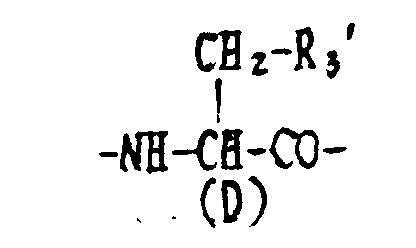 R5 für eine Gruppe der Formel -(CH2)a-R5' steht, worin n = 2 oder 3 ist und R5' eine gegebenenfalls substituierte Aminogruppe, eine aromatische zyklische Gruppe oder eine O-Glykosylgruppe ist;R6 eine Gruppe der Formel -(CH2)n-R6' ist, worin n = 2 oder 3 ist und R6' eine gegebenenfalls substituierte Aminogruppe ist;R7 für einen D-Aminosäurerest oder einen Azoglycylrest steht; undQ für Wasserstoff oder eine Niederalkylgruppe steht;
- Retard-Präparat nach Anspruch 1, worin X eine C2-7-Alkanoylgruppe ist, die gegebenenfalls mit einer 5- oder 6-gliedrigen heterozyklischen Carboxamido-Gruppe substituiert ist.
- Retard-Präparat nach Anspruch 2, worin X eine C2-4-Alkanoylgruppe ist, die gegebenenfalls mit einer Tetrahydrofurylcarboxamido-Gruppe substituiert ist.
- Retard-Präparat nach Anspruch 1, worin X Acetyl ist.
- Retard-Präparat nach Anspruch 1, worin das Copolvmer ein mittels GPC bestimmtes gewichtsmittleres Molekulargewicht von etwa 5.000 bis 25.000 aufweist.
- Retard-Präparat nach Anspruch 1, worin das Copolymer einen Dispersitätswert von etwa 1,2 bis 4,0 aufweist.
- Retard-Präparat nach Anspruch 1, worin der Anteil des physiologisch aktiven Peptids im Bereich von etwa 0,01 bis 50 Gew.-%, bezogen auf das biologisch abbaubare Polymer, liegt.
- Retard-Präparat nach Anspruch 1, worin das phyiologisch aktive Peptid ein LH-RH-Antagonist ist.
- Retard-Präparat nach Anspruch 1, worin das physiologisch aktive Peptidoder dessen Acetat ist.

- Retard-Präparat nach Anspruch 1, worin das physiologisch aktive Peptid N-Acetyl-D-3-(2-naphthyl)alanyl-D-3-(4-Chlorphenyl)alanyl-D-3-(3-Pyridyl)alanyl-Serin-N-Methyltyrosyl-D-(ε-N-Isopropyl)lysyl-Leucin-(ε-N-Isopropyl)lysyl-Prolin-D-Alanin-NH2 oder dessen Acetat ist.
- Retard-Präparat nach Anspruch 1, worin das physiologisch aktive Peptid N-Acetyl-D-3-(2-Naphthyl)alanyl-D-3-(4-Chlorphenyl)alanyl-D-3-(3-Pyridyl)alanyl-Serin-Tyrosin-Dh-Arginin(Et2)-Leucin-h-Arginin(Et2)-Prolin-D-AlaninNH2 oder dessen Acetat ist.
- Verfahren zur Herstellung eines Retard-Präparats, welches das Lösen eines physiologisch aktiven Peptids der allgemeinen Formelworin:
 oder eines Salzes davon sowie eines biologisch abbaubaren Polymers, das ein Copolymer von Milchsäure mit Glykolsäure ist, worin das Polymer Carboxylendgruppen aufweist, wobei im Wesentlichen Übereinstimmung zwischen dem zahlenmittleren Molekulargewicht des Polymers mittels GPC-Bestimmung und dem zahlenmittleren Molekulargewicht des Polymers mittels Endgruppen-Bestimmung herrscht, in einem Lösungsmittel, das im Wesentlichen nicht mit Wasser mischbar ist, und das anschließende Entfernen des Lösungsmittels umfasst.X für eine Acylgruppe steht;R1, R2 und R4 jeweils für eine aromatische zyklische Gruppe stehen;R3 für einen D-Aminosäurerest oder eine Gruppe der Formelsteht, worin R3' eine heterozyklische Gruppe ist;
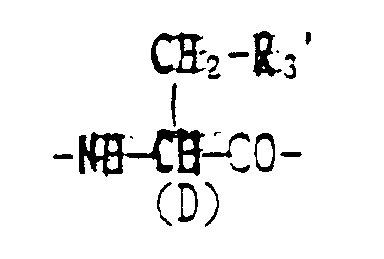 R5 für eine Gruppe der Formel -(CH2)n-R5' steht, worin n = 2 oder 3 ist und R5' eine gegebenenfalls substituierte Aminogruppe, eine aromatische zyklische Gruppe oder eine O-Glykosylgruppe ist;R6 eine Gruppe der Formel -(CH2)n-R6' ist, worin n = 2 oder 3 ist und R6' eine gegebenenfalls substituierte Aminogruppe ist;R7 für einen D-Aminosäurerest oder einen Azoglycylrest steht; undQ für Wasserstoff oder eine Niederalkylgruppe steht;
- Verfahren nach Anspruch 12, welches das Lösen des biologisch abbaubaren Polymers und des physiologisch aktiven Peptids in einem Lösungsmittel, das im Wesentlichen nicht mit Wasser mischbar ist, und die Zugabe der resultierenden Lösung zu einem wässrigen Medium, um eine O/W-Emulsion bereitzustellen, umfasst.
- Verfahren zur Herstellung eines Retard-Präparats, welches das Lösen eines biologisch abbaubaren Polymers, das ein Copolymer von Milchsäure mit Glykolsäure ist, worin das Polymer Carboxylendgruppen aufweist, wobei im Wesentlichen Übereinstimmung zwischen dem zahlenmittleren Molekulargewicht des Polymers mittels GPC-Bestimmung und dem zahlenmittleren Molekulargewicht des Polymers mittels Endgruppenbestimmung herrscht, und eines im Wesentlichen wasserunlöslichen physiologisch aktiven Peptids oder eines Salzes davon in einem Lösungsmittel, das im Wesentlichen nicht mit Wasser mischbar ist, und das anschließende Entfernen des Lösungsmittels umfasst.
- Verfahren nach Anspruch 14, welches weiters nach dem Lösen des biologisch abbaubaren Polymers und des im Wesentlichen wasserunlöslichen Peptids oder Salzes davon im Lösungsmittel die Zugabe der resultierenden Lösung zu einem wässrigen Medium umfasst, um eine O/W-Emulsion bereitzustellen.
Priority Applications (2)
| Application Number | Priority Date | Filing Date | Title |
|---|---|---|---|
| EP00203850A EP1088555B1 (de) | 1992-12-07 | 1993-12-03 | Leuprorelinpräparat mit verzögerter Wirkstoffabgabe |
| DK00203850T DK1088555T3 (da) | 1992-12-07 | 1993-12-03 | Præparat med vedholdende frigivelse |
Applications Claiming Priority (9)
| Application Number | Priority Date | Filing Date | Title |
|---|---|---|---|
| JP32707092 | 1992-12-07 | ||
| JP327070/92 | 1992-12-07 | ||
| JP32707092 | 1992-12-07 | ||
| JP18978/93 | 1993-02-05 | ||
| JP1897893 | 1993-02-05 | ||
| JP1897893 | 1993-02-05 | ||
| JP14513493 | 1993-06-16 | ||
| JP14513493 | 1993-06-16 | ||
| JP145134/93 | 1993-06-16 |
Related Child Applications (1)
| Application Number | Title | Priority Date | Filing Date |
|---|---|---|---|
| EP00203850A Division EP1088555B1 (de) | 1992-12-07 | 1993-12-03 | Leuprorelinpräparat mit verzögerter Wirkstoffabgabe |
Publications (2)
| Publication Number | Publication Date |
|---|---|
| EP0601799A1 EP0601799A1 (de) | 1994-06-15 |
| EP0601799B1 true EP0601799B1 (de) | 2001-08-08 |
Family
ID=27282444
Family Applications (2)
| Application Number | Title | Priority Date | Filing Date |
|---|---|---|---|
| EP93309681A Expired - Lifetime EP0601799B1 (de) | 1992-12-07 | 1993-12-03 | Präparat mit verzörgerter Wirkstoffabgabe |
| EP00203850A Expired - Lifetime EP1088555B1 (de) | 1992-12-07 | 1993-12-03 | Leuprorelinpräparat mit verzögerter Wirkstoffabgabe |
Family Applications After (1)
| Application Number | Title | Priority Date | Filing Date |
|---|---|---|---|
| EP00203850A Expired - Lifetime EP1088555B1 (de) | 1992-12-07 | 1993-12-03 | Leuprorelinpräparat mit verzögerter Wirkstoffabgabe |
Country Status (23)
| Country | Link |
|---|---|
| US (7) | US5480868A (de) |
| EP (2) | EP0601799B1 (de) |
| JP (1) | JP3725906B2 (de) |
| KR (2) | KR100305951B1 (de) |
| CN (2) | CN1099893C (de) |
| AT (2) | ATE295733T1 (de) |
| AU (1) | AU669939B2 (de) |
| CA (1) | CA2110730C (de) |
| DE (2) | DE69333817T2 (de) |
| DK (2) | DK1088555T3 (de) |
| EE (1) | EE03117B1 (de) |
| ES (2) | ES2238247T3 (de) |
| FI (2) | FI935471A7 (de) |
| GE (1) | GEP19991600B (de) |
| GR (1) | GR3037085T3 (de) |
| LV (1) | LV10927B (de) |
| MX (1) | MX9307686A (de) |
| NO (1) | NO310704B1 (de) |
| NZ (1) | NZ250349A (de) |
| PT (2) | PT601799E (de) |
| SG (1) | SG46283A1 (de) |
| TW (1) | TW333456B (de) |
| WO (1) | WO1994013317A1 (de) |
Families Citing this family (348)
| Publication number | Priority date | Publication date | Assignee | Title |
|---|---|---|---|---|
| TW333456B (en) * | 1992-12-07 | 1998-06-11 | Takeda Pharm Ind Co Ltd | A pharmaceutical composition of sustained-release preparation the invention relates to a pharmaceutical composition of sustained-release preparation which comprises a physiologically active peptide. |
| US6087324A (en) * | 1993-06-24 | 2000-07-11 | Takeda Chemical Industries, Ltd. | Sustained-release preparation |
| CA2126619A1 (en) * | 1993-06-24 | 1994-12-25 | Yasutaka Igari | Sustained-release preparation of anti-endothelin substance |
| DE4342091A1 (de) * | 1993-12-09 | 1995-06-14 | Asta Medica Ag | Erzeugnisse zur Anwendung von initial hohen Dosen von Cetrorelix und Herstellung einer Kombinationspackung zur Verwendung bei Therapie von Krankheiten |
| AU4459196A (en) * | 1995-01-23 | 1996-08-14 | Takeda Chemical Industries Ltd. | Sustained-release preparation and use |
| US5869079A (en) * | 1995-06-02 | 1999-02-09 | Oculex Pharmaceuticals, Inc. | Formulation for controlled release of drugs by combining hydrophilic and hydrophobic agents |
| TW448055B (en) * | 1995-09-04 | 2001-08-01 | Takeda Chemical Industries Ltd | Method of production of sustained-release preparation |
| US6143037A (en) * | 1996-06-12 | 2000-11-07 | The Regents Of The University Of Michigan | Compositions and methods for coating medical devices |
| US5916582A (en) * | 1996-07-03 | 1999-06-29 | Alza Corporation | Aqueous formulations of peptides |
| US5932547A (en) * | 1996-07-03 | 1999-08-03 | Alza Corporation | Non-aqueous polar aprotic peptide formulations |
| US5981489A (en) * | 1996-07-18 | 1999-11-09 | Alza Corporation | Non-aqueous protic peptide formulations |
| ES2221019T3 (es) | 1996-10-31 | 2004-12-16 | Takeda Chemical Industries, Ltd. | Preparacion de liberacion mantenida. |
| US5968895A (en) * | 1996-12-11 | 1999-10-19 | Praecis Pharmaceuticals, Inc. | Pharmaceutical formulations for sustained drug delivery |
| US6126919A (en) | 1997-02-07 | 2000-10-03 | 3M Innovative Properties Company | Biocompatible compounds for pharmaceutical drug delivery systems |
| US5945126A (en) * | 1997-02-13 | 1999-08-31 | Oakwood Laboratories L.L.C. | Continuous microsphere process |
| US6030975A (en) * | 1997-03-14 | 2000-02-29 | Basf Aktiengesellschaft | Carboxylic acid derivatives, their preparation and use in treating cancer |
| US6270802B1 (en) | 1998-10-28 | 2001-08-07 | Oakwood Laboratories L.L.C. | Method and apparatus for formulating microspheres and microcapsules |
| US6143314A (en) * | 1998-10-28 | 2000-11-07 | Atrix Laboratories, Inc. | Controlled release liquid delivery compositions with low initial drug burst |
| AU1797800A (en) | 1998-12-15 | 2000-07-03 | Takeda Chemical Industries Ltd. | Process for producing polymer |
| DE10008880A1 (de) * | 1999-02-19 | 2000-08-24 | Bioserv Ag | Bioabbaubare Komposite zur Herstellung von Mikrokapseln |
| US7358330B2 (en) * | 2001-03-29 | 2008-04-15 | Biotempt B.V. | Immunoregulatory compositions |
| US20040023987A1 (en) * | 2000-06-14 | 2004-02-05 | Yoshio Hata | Sustained release compositions |
| WO2002002144A1 (fr) | 2000-07-05 | 2002-01-10 | Takeda Chemical Industries, Ltd. | Preparations medicinales pour le traitement des maladies dependant des hormones sexuelles |
| ES2256276T5 (es) * | 2000-08-07 | 2011-02-22 | Wako Pure Chemical Industries, Ltd. | Polímero de ácido láctico y procedimiento para su producción. |
| WO2002043709A1 (fr) | 2000-12-01 | 2002-06-06 | Takeda Chemical Industries, Ltd. | Procede de production d'une preparation contenant une substance bioactive |
| WO2002058671A1 (en) * | 2001-01-26 | 2002-08-01 | Debio Recherche Pharmaceutique S.A. | Burst free pharmaceutical microparticules |
| WO2002058672A2 (en) * | 2001-01-26 | 2002-08-01 | Debio Recherche Pharmaceutique S.A. | Microparticles of biodegradable polymer encapsulating a biologically active substance |
| CA2451187C (en) * | 2001-06-22 | 2012-08-14 | Southern Biosystems, Inc. | Zero-order prolonged release coaxial implants |
| TWI225416B (en) | 2001-06-29 | 2004-12-21 | Takeda Chemical Industries Ltd | Sustained-release composition and process for producing the same |
| CA2466998A1 (en) | 2001-11-12 | 2003-05-22 | Alkermes Controlled Therapeutics, Inc. | Biocompatible polymer blends and uses thereof |
| EP1444988A4 (de) | 2001-11-13 | 2007-04-25 | Takeda Pharmaceutical | Krebsmittel |
| US20050009739A1 (en) * | 2002-02-14 | 2005-01-13 | Wei Wang | Formulation strategies in stabilizing peptides in organic solvents and in dried states |
| US11246913B2 (en) | 2005-02-03 | 2022-02-15 | Intarcia Therapeutics, Inc. | Suspension formulation comprising an insulinotropic peptide |
| US20090156545A1 (en) * | 2005-04-01 | 2009-06-18 | Hostetler Karl Y | Substituted Phosphate Esters of Nucleoside Phosphonates |
| JP5242375B2 (ja) | 2005-04-01 | 2013-07-24 | ザ レゲントス オブ ザ ユニバーシティ オブ カリフォルニア | ホスホノ−ペント−2−エン−1−イルヌクレオシド及び類似体 |
| US7342048B2 (en) * | 2005-04-28 | 2008-03-11 | Nipro Corporation | Bioabsorbable pharmaceutical formulation |
| US8329207B2 (en) | 2005-05-23 | 2012-12-11 | Natural Alternatives International, Inc. | Compositions and methods for the sustained release of beta-alanine |
| MX2008001468A (es) * | 2005-06-30 | 2008-04-07 | Sod Conseils Rech Applic | Composiciones farmaceuticas del peptido similar al glucagon-1. |
| US20070106271A1 (en) * | 2005-11-09 | 2007-05-10 | Searete Llc, A Limited Liability Corporation | Remote control of substance delivery system |
| CA2841386A1 (en) | 2005-12-30 | 2007-07-12 | Zensun (Shanghai) Science & Technology Limited | Extended release of neuregulin for improved cardiac function |
| WO2007106468A2 (en) * | 2006-03-13 | 2007-09-20 | Encysive Pharmaceuticals, Inc. | Formulations of sitaxsentan sodium |
| AU2007225088B2 (en) | 2006-03-13 | 2012-09-13 | Kyorin Pharmaceutical Co., Ltd | Aminoquinolones as GSK-3 inhibitors |
| BRPI0708879A2 (pt) * | 2006-03-13 | 2011-06-14 | Encysive Pharmaceuticals | peocessos e composiÇÕes para o tratamento de insufiÊncia cardÍaca diastàlica |
| US20090258028A1 (en) * | 2006-06-05 | 2009-10-15 | Abbott Cardiovascular Systems Inc. | Methods Of Forming Coatings For Implantable Medical Devices For Controlled Release Of A Peptide And A Hydrophobic Drug |
| US8323676B2 (en) * | 2008-06-30 | 2012-12-04 | Abbott Cardiovascular Systems Inc. | Poly(ester-amide) and poly(amide) coatings for implantable medical devices for controlled release of a protein or peptide and a hydrophobic drug |
| US20080026061A1 (en) * | 2006-06-22 | 2008-01-31 | Reichwein John F | Crystalline N-(4-chloro-3-methyl-5-isoxazolyl)-2-[2-methyl-4.5-(methylenedioxy)phenylacetyl]-thiophene-3-sulfonamide |
| US8017237B2 (en) | 2006-06-23 | 2011-09-13 | Abbott Cardiovascular Systems, Inc. | Nanoshells on polymers |
| PL2359808T3 (pl) | 2006-08-09 | 2013-10-31 | Intarcia Therapeutics Inc | Osmotyczne systemy dostawcze i zespoły tłokowe |
| MX2009002960A (es) | 2006-09-21 | 2009-06-26 | Activx Biosciences Inc | Inhibidores de serina hidrolasa. |
| WO2008049116A2 (en) | 2006-10-19 | 2008-04-24 | Auspex Pharmaceuticals, Inc. | Substituted indoles |
| US20100137421A1 (en) * | 2006-11-08 | 2010-06-03 | Emmanuel Theodorakis | Small molecule therapeutics, synthesis of analogues and derivatives and methods of use |
| CA2670976C (en) | 2006-11-30 | 2015-01-27 | Atsushi Hasuoka | Cyclic amine compound |
| MY148370A (en) * | 2006-12-18 | 2013-04-15 | Takeda Pharmaceutical | Sustained-release composition and method for producing the same |
| WO2008106166A2 (en) * | 2007-02-28 | 2008-09-04 | Conatus Pharmaceuticals, Inc. | Methods for the treatment of liver diseases using specified matrix metalloproteinase (mmp) inhibitors |
| WO2008106167A1 (en) * | 2007-02-28 | 2008-09-04 | Conatus Pharmaceuticals, Inc. | Combination therapy comprising matrix metalloproteinase inhibitors and caspase inhibitors for the treatment of liver diseases |
| US20080220104A1 (en) * | 2007-03-08 | 2008-09-11 | Cappello John V | Compositions for producing satiety |
| CA2680912C (en) | 2007-03-15 | 2017-11-14 | Auspex Pharmaceuticals, Inc. | Substituted phenethylamines with serotoninergic and/or norepinephrinergic activity |
| EP2139447A2 (de) | 2007-03-20 | 2010-01-06 | Harold Brem | Gm-csf-kosmezeutikazusammensetzungen und verfahren zu ihrer verwendung |
| EP2157967B1 (de) | 2007-04-23 | 2013-01-16 | Intarcia Therapeutics, Inc | Suspensionsformulierungen insulinotroper peptide und ihre verwendung |
| US7892776B2 (en) | 2007-05-04 | 2011-02-22 | The Regents Of The University Of California | Screening assay to identify modulators of protein kinase A |
| JP2010533205A (ja) * | 2007-07-12 | 2010-10-21 | トラガラ ファーマシューティカルズ,インク. | 癌、腫瘍、および腫瘍関連障害を治療するための方法および組成物 |
| ITSA20070024A1 (it) * | 2007-07-27 | 2009-01-28 | Univ Degli Studi Salerno | Processo continuo per la produzione di microsfere mediante liquidi espansi. |
| CA2699151A1 (en) * | 2007-09-11 | 2009-03-19 | Activx Biosciences, Inc. | Cyanoaminoquinolones and tetrazoloaminoquinolones as gsk-3 inhibitors |
| KR101597841B1 (ko) | 2007-09-12 | 2016-02-26 | 교린 세이야꾸 가부시키 가이샤 | Gsk-3 억제제로서의 스피로시클릭 아미노퀴놀론 |
| US8193182B2 (en) | 2008-01-04 | 2012-06-05 | Intellikine, Inc. | Substituted isoquinolin-1(2H)-ones, and methods of use thereof |
| EP2240155B1 (de) | 2008-02-13 | 2012-06-06 | Intarcia Therapeutics, Inc | Vorrichtungen, formulierungen und verfahren zur freisetzung mehrerer wirkstoffe |
| AU2009226136B2 (en) | 2008-03-17 | 2013-08-15 | Ambit Biosciences Corporation | Quinazoline derivatives as RAF kinase modulators and methods of use thereof |
| US20090298882A1 (en) * | 2008-05-13 | 2009-12-03 | Muller George W | Thioxoisoindoline compounds and compositions comprising and methods of using the same |
| RU2010151944A (ru) * | 2008-05-20 | 2012-06-27 | Серенис Терапьютикс С.А. (Fr) | Ниацин и нспвс для комбинированной терапии |
| US8765162B2 (en) * | 2008-06-30 | 2014-07-01 | Abbott Cardiovascular Systems Inc. | Poly(amide) and poly(ester-amide) polymers and drug delivery particles and coatings containing same |
| KR20110065440A (ko) | 2008-07-02 | 2011-06-15 | 아이데닉스 파마슈티칼스, 인코포레이티드 | 바이러스 감염의 치료를 위한 화합물 및 제약 조성물 |
| EP3685837A1 (de) * | 2008-09-04 | 2020-07-29 | Amylin Pharmaceuticals, LLC | Formulierungen mit verzögerter freisetzung unter verwendung nichtwässriger träger |
| US8536114B2 (en) | 2008-12-31 | 2013-09-17 | Scynexis, Inc. | Macrocycles |
| WO2010088450A2 (en) | 2009-01-30 | 2010-08-05 | Celladon Corporation | Methods for treating diseases associated with the modulation of serca |
| US8568793B2 (en) | 2009-02-11 | 2013-10-29 | Hope Medical Enterprises, Inc. | Sodium nitrite-containing pharmaceutical compositions |
| CA2752885A1 (en) | 2009-02-27 | 2010-09-02 | Ambit Biosciences Corporation | Jak kinase modulating quinazoline derivatives and methods of use thereof |
| WO2010101967A2 (en) | 2009-03-04 | 2010-09-10 | Idenix Pharmaceuticals, Inc. | Phosphothiophene and phosphothiazole hcv polymerase inhibitors |
| CA2755120C (en) * | 2009-03-11 | 2017-05-16 | Kyorin Pharmaceutical Co., Ltd. | 7-cycloalkylaminoquinolones as gsk-3 inhibitors |
| JP2012520314A (ja) | 2009-03-11 | 2012-09-06 | アムビト ビオスシエンセス コルポラチオン | 癌治療のためのインダゾリルアミノピロロトリアジンとタキサンの併用 |
| CA2756067A1 (en) | 2009-03-27 | 2010-09-30 | Pathway Therapeutics, Inc. | Pyrimidinyl and 1,3,5-triazinyl benzimidazole sulfonamides and their use in cancer therapy |
| WO2010110686A1 (en) | 2009-03-27 | 2010-09-30 | Pathway Therapeutics Limited | Pyrimidinyl and 1,3,5 triazinyl benzimidazoles and their use in cancer therapy |
| CN102459210B (zh) | 2009-04-22 | 2015-09-02 | 埃克希金医药品有限公司 | 芳基磺酰胺ccr3拮抗剂 |
| KR101687144B1 (ko) | 2009-04-22 | 2016-12-15 | 액시킨 파마수티컬스 인코포레이티드 | 2,5-이치환된 아릴설폰아마이드 ccr3 길항제 |
| EP2727908A3 (de) | 2009-04-22 | 2014-08-20 | Axikin Pharmaceuticals, Inc. | 2,5-disubstituierte Arylsulfonamid-CCR3-Antagonisten |
| US8911766B2 (en) * | 2009-06-26 | 2014-12-16 | Abbott Cardiovascular Systems Inc. | Drug delivery compositions including nanoshells for triggered drug release |
| WO2011003870A2 (en) | 2009-07-06 | 2011-01-13 | Creabilis S.A. | Mini-pegylated corticosteroids, compositions including same, and methods of making and using same |
| CA2767008C (en) | 2009-07-07 | 2018-01-30 | Pathway Therapeutics, Inc. | Pyrimidinyl and 1,3,5-triazinyl benzimidazoles and their use in cancer therapy |
| JP5905387B2 (ja) | 2009-07-08 | 2016-04-20 | ホープ メディカル エンタープライゼズ,インコーポレイテッド ディービーエー ホープ ファーマシュティカルズHope Medical Enterprises,Inc.Dba Hope Pharmaceuticals | チオ硫酸ナトリウムを含有する薬学的組成物 |
| EP2467144A1 (de) | 2009-07-24 | 2012-06-27 | ViroLogik GmbH | Kombination aus proteasehemmern und antihepatitismedikation zur behandlung von hepatitis |
| AR077712A1 (es) | 2009-08-05 | 2011-09-14 | Idenix Pharmaceuticals Inc | Inhibidores de serina proteasa macrociclica |
| KR20120059558A (ko) | 2009-08-19 | 2012-06-08 | 암비트 바이오사이언시즈 코포레이션 | 바이아릴 화합물 및 이의 사용 방법 |
| EP3323423B1 (de) | 2009-09-28 | 2020-06-17 | Intarcia Therapeutics, Inc | Schnelle initiierung und/oder beendigung der verabreichung substantiell stabiler arzneimittel |
| TW201120037A (en) * | 2009-10-26 | 2011-06-16 | Sunesis Pharmaceuticals Inc | Compounds and methods for treatment of cancer |
| WO2011056764A1 (en) | 2009-11-05 | 2011-05-12 | Ambit Biosciences Corp. | Isotopically enriched or fluorinated imidazo[2,1-b][1,3]benzothiazoles |
| WO2011064769A1 (en) | 2009-11-24 | 2011-06-03 | Yissum Research Development Company Of The Hebrew University Of Jerusalem Ltd. | Methods and pharmaceutical compositions for the treatment of hot flashes |
| US20110301235A1 (en) | 2009-12-02 | 2011-12-08 | Alquest Therapeutics, Inc. | Organoselenium compounds and uses thereof |
| MY159958A (en) | 2009-12-18 | 2017-02-15 | Idenix Pharmaceuticals Inc | 5,5-fused arylene or heteroarylene hepatitis c virus inhibitors |
| SG181896A1 (en) * | 2009-12-23 | 2012-07-30 | Map Pharmaceuticals Inc | Novel ergoline analogs |
| CA2785978A1 (en) | 2009-12-30 | 2011-07-07 | Scynexis, Inc. | Cyclosporine analogues |
| WO2011089167A1 (en) | 2010-01-19 | 2011-07-28 | Virologik Gmbh | Kombination of proteasome inhibitors and anti -hepatitis medication for treating retroviral diseases |
| WO2011094890A1 (en) | 2010-02-02 | 2011-08-11 | Argusina Inc. | Phenylalanine derivatives and their use as non-peptide glp-1 receptor modulators |
| US9120815B2 (en) | 2010-02-05 | 2015-09-01 | Tragara Pharmaceuticals, Inc. | Solid state forms of macrocyclic kinase inhibitors |
| SG183257A1 (en) | 2010-02-11 | 2012-09-27 | Celgene Corp | Arylmethoxy isoindoline derivatives and compositions comprising and methods of using the same |
| AU2011223873B2 (en) | 2010-03-02 | 2015-06-25 | Axikin Pharmaceuticals, Inc. | Isotopically enriched arylsulfonamide CCR3 antagonists |
| WO2011112689A2 (en) | 2010-03-11 | 2011-09-15 | Ambit Biosciences Corp. | Saltz of an indazolylpyrrolotriazine |
| MX336559B (es) | 2010-03-17 | 2016-01-25 | Axikin Pharmaceuticals Inc | Antagonistas de ccr3 de arilsulfonamida. |
| WO2011150198A1 (en) | 2010-05-27 | 2011-12-01 | Ambit Biosciences Corporation | Azolyl urea compounds and methods of use thereof |
| WO2011150201A2 (en) | 2010-05-27 | 2011-12-01 | Ambit Biosciences Corporation | Azolyl amide compounds and methods of use thereof |
| AU2011261501B2 (en) | 2010-06-01 | 2016-01-21 | Biotheryx, Inc. | Methods of treating hematologic malignancies using 6-cyclohexyl-1-hydroxy-4-methyl-2(1H)-pyridone |
| WO2011153197A1 (en) | 2010-06-01 | 2011-12-08 | Biotheryx, Inc. | Hydroxypyridone derivatives, pharmaceutical compositions thereof, and their therapeutic use for treating proliferative diseases |
| EP2576532B1 (de) | 2010-06-07 | 2018-07-18 | Novomedix, LLC | Furanylverbindungen und ihre verwendung |
| US9295663B2 (en) | 2010-07-14 | 2016-03-29 | Abbott Cardiovascular Systems Inc. | Drug coated balloon with in-situ formed drug containing microspheres |
| WO2012012370A1 (en) | 2010-07-19 | 2012-01-26 | Summa Health System | Vitamin c and chromium-free vitamin k, and compositions thereof for treating an nfkb-mediated condition or disease |
| US20130225615A1 (en) | 2010-09-01 | 2013-08-29 | Ambit Biosciences Corporation | 2-cycloquinazoline derivatives and methods of use thereof |
| US8703943B2 (en) | 2010-09-01 | 2014-04-22 | Ambit Biosciences Corporation | Optically active pyrazolylaminoquinazoline, and pharmaceutical compositions and methods of use thereof |
| US20130225614A1 (en) | 2010-09-01 | 2013-08-29 | Ambit Biosciences Corporation | 4-azolylaminoquinazoline derivatives and methods of use thereof |
| US20130317045A1 (en) | 2010-09-01 | 2013-11-28 | Ambit Biosciences Corporation | Thienopyridine and thienopyrimidine compounds and methods of use thereof |
| US20130225578A1 (en) | 2010-09-01 | 2013-08-29 | Ambit Biosciences Corporation | 7-cyclylquinazoline derivatives and methods of use thereof |
| MX2013002383A (es) | 2010-09-01 | 2013-07-05 | Ambit Biosciences Corp | Sales bromhidrato de una pirazolilaminoquinazolina. |
| WO2012030918A1 (en) | 2010-09-01 | 2012-03-08 | Ambit Biosciences Corporation | Adenosine a3 receptor modulating compounds and methods of use thereof |
| EP2611809A1 (de) | 2010-09-01 | 2013-07-10 | Ambit Biosciences Corporation | Azolopyridin- und azolopyrimidinverbindungen sowie verfahren zu ihrer verwendung |
| EP2611789A1 (de) | 2010-09-01 | 2013-07-10 | Ambit Biosciences Corporation | Chinazolinverbindungen und anwendungsverfahren dafür |
| WO2012030944A2 (en) | 2010-09-01 | 2012-03-08 | Ambit Biosciences Corporation | Quinoline and isoquinoline compounds and methods of use thereof |
| WO2012044641A1 (en) | 2010-09-29 | 2012-04-05 | Pathway Therapeutics Inc. | 1,3,5-triazinyl benzimidazole sulfonamides and their use in cancer therapy |
| US20120088769A1 (en) | 2010-10-11 | 2012-04-12 | Axikin Pharmaceuticals, Inc. | Salts of arylsulfonamide ccr3 antagonists |
| WO2012064973A2 (en) | 2010-11-10 | 2012-05-18 | Infinity Pharmaceuticals, Inc. | Heterocyclic compounds and uses thereof |
| JP2014500275A (ja) | 2010-12-06 | 2014-01-09 | フォリカ,インコーポレイテッド | 禿頭症を治療するため、および毛髪の成長を促進するための方法 |
| WO2012080050A1 (en) | 2010-12-14 | 2012-06-21 | F. Hoffmann-La Roche Ag | Solid forms of a phenoxybenzenesulfonyl compound |
| KR101411349B1 (ko) | 2010-12-24 | 2014-06-25 | 주식회사 삼양바이오팜 | 생리활성 펩타이드를 포함하는 마이크로입자 및 그의 제조방법, 및 그를 포함하는 약제학적 조성물 |
| EP3238722B1 (de) | 2011-01-10 | 2019-03-13 | Infinity Pharmaceuticals, Inc. | Festen formen von isochinolinonen |
| JP2014503597A (ja) | 2011-01-31 | 2014-02-13 | セルジーン コーポレイション | シチジンアナログの医薬組成物及びその使用方法 |
| TW201309690A (zh) | 2011-02-10 | 2013-03-01 | Idenix Pharmaceuticals Inc | 巨環絲胺酸蛋白酶抑制劑,其醫藥組合物及其於治療hcv感染之用途 |
| US20120208755A1 (en) | 2011-02-16 | 2012-08-16 | Intarcia Therapeutics, Inc. | Compositions, Devices and Methods of Use Thereof for the Treatment of Cancers |
| SI2683384T1 (sl) | 2011-03-11 | 2016-05-31 | Celgene Corporation | Metode zdravljenja raka z uporabo 3-(5-amino-2-metil-4-okso-4H-kinazolin-3-il)-piperidin-2,6-diona |
| CA2831590A1 (en) | 2011-03-28 | 2012-10-04 | Mei Pharma, Inc. | (alpha-substituted cycloalkylamino and heterocyclylamino) pyrimidinyl and 1,3,5-triazinyl benzimidazoles, pharmaceutical compositions thereof, and their use in treating proliferative diseases |
| EP2691388A1 (de) | 2011-03-28 | 2014-02-05 | MEI Pharma, Inc. | (kondensierte arylamino- und heterocyclylamino-)pyrimidynyl und 1,3,5-triazinyl-benzimidazole, pharmazeutische zusammensetzungen daraus und ihre verwendung zur behandlung von proliferativen erkrankungen |
| CN107501241B (zh) | 2011-03-28 | 2020-10-13 | 梅制药公司 | 化合物、含有其的药物组合物以及它们在治疗增生性疾病中的用途 |
| US20120252721A1 (en) | 2011-03-31 | 2012-10-04 | Idenix Pharmaceuticals, Inc. | Methods for treating drug-resistant hepatitis c virus infection with a 5,5-fused arylene or heteroarylene hepatitis c virus inhibitor |
| US9243025B2 (en) | 2011-03-31 | 2016-01-26 | Idenix Pharmaceuticals, Llc | Compounds and pharmaceutical compositions for the treatment of viral infections |
| KR20140042868A (ko) | 2011-06-23 | 2014-04-07 | 맵 파마슈티컬스, 인코포레이티드 | 신규한 플루오로에르골린 유사체 |
| EP2734520B1 (de) | 2011-07-19 | 2016-09-14 | Infinity Pharmaceuticals, Inc. | Heterocyclische verbindungen und ihre verwendung |
| US9056877B2 (en) | 2011-07-19 | 2015-06-16 | Infinity Pharmaceuticals, Inc. | Heterocyclic compounds and uses thereof |
| PE20141371A1 (es) | 2011-08-29 | 2014-10-13 | Infinity Pharmaceuticals Inc | Compuestos heterociclicos y usos de los mismos |
| AU2012308900A1 (en) | 2011-09-12 | 2013-05-09 | Idenix Pharmaceuticals, Inc. | Compounds and pharmaceutical compositions for the treatment of viral infections |
| US9403863B2 (en) | 2011-09-12 | 2016-08-02 | Idenix Pharmaceuticals Llc | Substituted carbonyloxymethylphosphoramidate compounds and pharmaceutical compositions for the treatment of viral infections |
| US9630979B2 (en) | 2011-09-29 | 2017-04-25 | Infinity Pharmaceuticals, Inc. | Inhibitors of monoacylglycerol lipase and methods of their use |
| KR102066297B1 (ko) | 2011-10-14 | 2020-01-14 | 암비트 바이오사이언시즈 코포레이션 | 헤테로사이클릭 화합물 및 이의 유형 3 수용체 티로신 키나아제의 조절인자로서의 용도 |
| AR089650A1 (es) | 2011-10-14 | 2014-09-10 | Idenix Pharmaceuticals Inc | Fosfatos 3,5-ciclicos sustituidos de compuestos de nucleotido de purina y composiciones farmaceuticas para el tratamiento de infecciones virales |
| EP2793580A4 (de) | 2011-12-19 | 2015-05-20 | Map Pharmaceuticals Inc | Neuartige isoergolinderivate |
| AU2012355983A1 (en) | 2011-12-21 | 2015-01-22 | Map Pharmaceuticals, Inc. | Novel neuromodulatory compounds |
| US9611253B2 (en) | 2012-02-29 | 2017-04-04 | Ambit Biosciences Corporation | Solid forms comprising optically active pyrazolylaminoquinazoline, compositions thereof, and uses therewith |
| CN104302640A (zh) | 2012-03-16 | 2015-01-21 | 埃克希金医药品有限公司 | 3,5-二氨基吡唑激酶抑制剂 |
| US8940742B2 (en) | 2012-04-10 | 2015-01-27 | Infinity Pharmaceuticals, Inc. | Heterocyclic compounds and uses thereof |
| WO2013177195A1 (en) | 2012-05-22 | 2013-11-28 | Idenix Pharmaceuticals, Inc. | 3',5'-cyclic phosphate prodrugs for hcv infection |
| MD20140134A2 (ro) | 2012-05-22 | 2015-04-30 | Idenix Pharmaceuticals, Inc. | Compuşi ai D-aminoacizilor pentru tratamentul bolilor hepatice |
| EP2852604B1 (de) | 2012-05-22 | 2017-04-12 | Idenix Pharmaceuticals LLC | 3',5'-cyclische phosphoramidat-prodrugs für hcv-infektion |
| US9012640B2 (en) | 2012-06-22 | 2015-04-21 | Map Pharmaceuticals, Inc. | Cabergoline derivatives |
| EP2873455B1 (de) | 2012-07-12 | 2021-07-07 | Takeda Pharmaceutical Company Limited | Verfahren zur herstellung von mikrokapselpulver |
| LT2882737T (lt) | 2012-08-09 | 2019-04-25 | Celgene Corporation | (s)-3-(4-((4-morfolinometil)benzil)oksi)-1-oksoizoindolin-2-il)piperidin-2,6-diono hidrochlorido kieta forma |
| KR20210073616A (ko) | 2012-08-09 | 2021-06-18 | 셀진 코포레이션 | 면역-관련 및 염증성 질환의 치료 |
| EP2890370B1 (de) | 2012-08-31 | 2019-10-09 | The Regents of the University of California | Mittel zur behandlung von adipositas, diabetes und verwandten erkrankungen |
| BR112015004959A2 (pt) | 2012-09-07 | 2017-07-04 | Axikin Pharmaceuticals Inc | composto isotopicamente enriquecido, composição farmacêutica, método para tratar, prevenir ou amenizar um ou mais sintomas de uma doença, distúrbio ou condição mediada por ccr3, relacionada a eosinófilos, relacionada a basófilos, relacionada a mastócitos ou relacionada a mastócitos em um sujeito, método para tratar, prevenir ou amenizar um ou mais sintomas de uma doença inflamatória em um sujeito e método para modular a atividade de ccr3. |
| WO2014055647A1 (en) | 2012-10-03 | 2014-04-10 | Mei Pharma, Inc. | (sulfinyl and sulfonyl benzimidazolyl) pyrimidines and triazines, pharmaceutical compositions thereof, and their use for treating proliferative diseases |
| ES2674980T3 (es) | 2012-10-08 | 2018-07-05 | Idenix Pharmaceuticals Llc | Análogos de 2'-cloro nucleósidos para infección por VHC |
| EP2909223B1 (de) | 2012-10-19 | 2017-03-22 | Idenix Pharmaceuticals LLC | Dinukleotidverbindungen für hcv-infektion |
| WO2014066239A1 (en) | 2012-10-22 | 2014-05-01 | Idenix Pharmaceuticals, Inc. | 2',4'-bridged nucleosides for hcv infection |
| RU2702908C2 (ru) | 2012-11-01 | 2019-10-14 | Инфинити Фармасьютикалз, Инк. | Лечение злокачественных опухолей с использованием модуляторов изоформ pi3-киназы |
| EP2916830A2 (de) | 2012-11-08 | 2015-09-16 | Summa Health System | Kombinationen aus vitamin c, vitamin k und einem polyphenol zur wundheilung |
| WO2014078427A1 (en) | 2012-11-14 | 2014-05-22 | Idenix Pharmaceuticals, Inc. | D-alanine ester of rp-nucleoside analog |
| WO2014078436A1 (en) | 2012-11-14 | 2014-05-22 | Idenix Pharmaceuticals, Inc. | D-alanine ester of sp-nucleoside analog |
| WO2014085633A1 (en) | 2012-11-30 | 2014-06-05 | Novomedix, Llc | Substituted biaryl sulfonamides and the use thereof |
| US9211300B2 (en) | 2012-12-19 | 2015-12-15 | Idenix Pharmaceuticals Llc | 4′-fluoro nucleosides for the treatment of HCV |
| AU2013361340A1 (en) | 2012-12-21 | 2015-07-09 | Map Pharmaceuticals, Inc. | Novel methysergide derivatives |
| AU2014205324A1 (en) | 2013-01-11 | 2015-07-30 | Mayo Foundation For Medical Education And Research | Vitamins C and K for treating polycystic diseases |
| WO2014137930A1 (en) | 2013-03-04 | 2014-09-12 | Idenix Pharmaceuticals, Inc. | Thiophosphate nucleosides for the treatment of hcv |
| WO2014137926A1 (en) | 2013-03-04 | 2014-09-12 | Idenix Pharmaceuticals, Inc. | 3'-deoxy nucleosides for the treatment of hcv |
| NZ629037A (en) | 2013-03-15 | 2017-04-28 | Infinity Pharmaceuticals Inc | Salts and solid forms of isoquinolinones and composition comprising and methods of using the same |
| EP2981542B1 (de) | 2013-04-01 | 2021-09-15 | Idenix Pharmaceuticals LLC | 2',4'-fluor-nukleoside zur behandlung von hcv |
| KR20160013204A (ko) | 2013-05-30 | 2016-02-03 | 인피니티 파마슈티칼스, 인코포레이티드 | Pi3 키나아제 동형단백질 조절제를 사용하는 암의 치료 |
| EP3004130B1 (de) | 2013-06-05 | 2019-08-07 | Idenix Pharmaceuticals LLC. | 1',4'-thionukleoside zur behandlung von hcv |
| US20150037282A1 (en) | 2013-08-01 | 2015-02-05 | Idenix Pharmaceuticals, Inc. | D-amino acid phosphoramidate pronucleotides of halogeno pyrimidine compounds for liver disease |
| WO2015031613A1 (en) | 2013-08-30 | 2015-03-05 | Ambit Biosciences Corporation | Biaryl acetamide compounds and methods of use thereof |
| NZ631142A (en) | 2013-09-18 | 2016-03-31 | Axikin Pharmaceuticals Inc | Pharmaceutically acceptable salts of 3,5-diaminopyrazole kinase inhibitors |
| EP3046924A1 (de) | 2013-09-20 | 2016-07-27 | IDENIX Pharmaceuticals, Inc. | Inhibitoren des hepatitis-c-virus |
| WO2015051336A1 (en) | 2013-10-03 | 2015-04-09 | David Wise | Compositions and methods for treating pelvic pain and other conditions |
| EP3964507A1 (de) | 2013-10-04 | 2022-03-09 | Infinity Pharmaceuticals, Inc. | Heterocyclische verbindungen und verwendungen davon |
| WO2015051241A1 (en) | 2013-10-04 | 2015-04-09 | Infinity Pharmaceuticals, Inc. | Heterocyclic compounds and uses thereof |
| US20160244452A1 (en) | 2013-10-21 | 2016-08-25 | Infinity Pharmaceuticals, Inc. | Heterocyclic compounds and uses thereof |
| WO2015061683A1 (en) | 2013-10-25 | 2015-04-30 | Idenix Pharmaceuticals, Inc. | D-amino acid phosphoramidate and d-alanine thiophosphoramidate pronucleotides of nucleoside compounds useful for the treatment of hcv |
| CN104587534A (zh) * | 2013-10-31 | 2015-05-06 | 先健科技(深圳)有限公司 | 可吸收铁基合金支架 |
| WO2015066370A1 (en) | 2013-11-01 | 2015-05-07 | Idenix Pharmaceuticals, Inc. | D-alanine phosphoramidate pronucleotides of 2'-methyl 2'-fluoro guanosine nucleoside compounds for the treatment of hcv |
| EP3074399A1 (de) | 2013-11-27 | 2016-10-05 | Idenix Pharmaceuticals LLC | 2'-dichlor- und 2'-fluor-2'-chlor-nukleosidanaloga für hcv-infektion |
| JP2017504572A (ja) | 2013-11-27 | 2017-02-09 | アイデニクス・ファーマシューティカルズ・エルエルシー | 肝臓癌治療のためのヌクレオチド類 |
| WO2015095419A1 (en) | 2013-12-18 | 2015-06-25 | Idenix Pharmaceuticals, Inc. | 4'-or nucleosides for the treatment of hcv |
| WO2015134560A1 (en) | 2014-03-05 | 2015-09-11 | Idenix Pharmaceuticals, Inc. | Solid forms of a flaviviridae virus inhibitor compound and salts thereof |
| CN106456628A (zh) | 2014-03-19 | 2017-02-22 | 无限药品股份有限公司 | 用于治疗PI3K‑γ介导的障碍的杂环化合物 |
| CA2943231C (en) | 2014-03-20 | 2023-10-24 | Capella Therapeutics, Inc. | Benzimidazole derivatives as erbb tyrosine kinase inhibitors for the treatment of cancer |
| IL291000B2 (en) | 2014-03-20 | 2024-04-01 | Capella Therapeutics Inc | Benzimidazole derivatives as erbb tyrosine kinase inhibitors for the treatment of cancer |
| CA2944549A1 (en) | 2014-04-09 | 2015-10-15 | Siteone Therapeutics, Inc. | 10',11'-modified saxitoxin useful for the treatment of pain |
| EP3131914B1 (de) | 2014-04-16 | 2023-05-10 | Idenix Pharmaceuticals LLC | 3'-substituierte methyl- oder alkynylnukleoside zur behandlung von hcv |
| WO2015158823A1 (de) | 2014-04-16 | 2015-10-22 | Veyx-Pharma Gmbh | Veterinärpharmazeutische zusammensetzung und deren verwendung |
| WO2015168079A1 (en) | 2014-04-29 | 2015-11-05 | Infinity Pharmaceuticals, Inc. | Pyrimidine or pyridine derivatives useful as pi3k inhibitors |
| MX2016014731A (es) | 2014-05-12 | 2017-05-04 | Conatus Pharmaceuticals Inc | Tratamiento de las complicaciones de la enfermedad cronica del higado con enfermedades de caspasa. |
| AU2015265607A1 (en) | 2014-05-28 | 2016-11-17 | Idenix Pharmaceuticals Llc | Nucleoside derivatives for the treatment of cancer |
| WO2015195474A1 (en) | 2014-06-18 | 2015-12-23 | Biotheryx, Inc. | Hydroxypyridone derivatives, pharmaceutical compositions thereof, and their therapeutic use for treating inflammatory, neurodegenerative, or immune-mediated diseases |
| CA2949793C (en) | 2014-06-19 | 2024-02-27 | Ariad Pharmaceuticals, Inc. | Heteroaryl compounds for kinase inhibition |
| US9499514B2 (en) | 2014-07-11 | 2016-11-22 | Celgene Corporation | Antiproliferative compounds and methods of use thereof |
| WO2016020901A1 (en) | 2014-08-07 | 2016-02-11 | Acerta Pharma B.V. | Methods of treating cancers, immune and autoimmune diseases, and inflammatory diseases based on btk occupancy and btk resynthesis rate |
| AU2015314830B2 (en) | 2014-09-12 | 2021-01-07 | Tobira Therapeutics, Inc. | Cenicriviroc combination therapy for the treatment of fibrosis |
| US9889085B1 (en) | 2014-09-30 | 2018-02-13 | Intarcia Therapeutics, Inc. | Therapeutic methods for the treatment of diabetes and related conditions for patients with high baseline HbA1c |
| WO2016054491A1 (en) | 2014-10-03 | 2016-04-07 | Infinity Pharmaceuticals, Inc. | Heterocyclic compounds and uses thereof |
| PT3209647T (pt) | 2014-10-21 | 2020-09-10 | Ariad Pharma Inc | Formas cristalinas de 5-cloro-n4-[2-(dimetilfosforil)fenil]-n2-{2-metoxi-4-[4-(4-metilpiperazin-1-il)piperidin-1-il]pirimidino-2,4-diamina |
| US20170354639A1 (en) | 2014-10-24 | 2017-12-14 | Biogen Ma Inc. | Diterpenoid derivatives and methods of use thereof |
| MY191736A (en) | 2014-12-23 | 2022-07-13 | Axikin Pharmaceuticals Inc | 3,5-diaminopyrazole kinase inhibitors |
| JP6856532B2 (ja) | 2015-01-20 | 2021-04-07 | エックスオーシー ファーマシューティカルズ インコーポレイテッドXoc Pharmaceuticals, Inc | エルゴリン化合物およびその使用 |
| MX2017009406A (es) | 2015-01-20 | 2018-01-18 | Xoc Pharmaceuticals Inc | Compuestos de tipo isoergolina y usos de estos. |
| EP3303361A1 (de) | 2015-05-27 | 2018-04-11 | Idenix Pharmaceuticals LLC | Nukleotide zur behandlung von krebs |
| ES2968262T3 (es) | 2015-06-03 | 2024-05-08 | I2O Therapeutics Inc | Sistemas de colocación de implantes |
| US20190015396A1 (en) | 2015-06-23 | 2019-01-17 | Neurocrine Biosciences, Inc. | Vmat2 inhibitors for treating neurological diseases or disorders |
| US10471055B2 (en) | 2015-08-17 | 2019-11-12 | Kura Oncology, Inc. | Methods of treating cancer patients with farnesyltransferase inhibitors |
| CN114230571B (zh) | 2015-09-14 | 2025-07-08 | 无限药品股份有限公司 | 异喹啉酮的固体形式、其制备方法、包含其的组合物及其使用方法 |
| AU2016329201A1 (en) | 2015-09-30 | 2018-04-26 | Siteone Therapeutics, Inc. | 11,13-modified saxitoxins for the treatment of pain |
| DK3368534T3 (da) | 2015-10-30 | 2021-02-15 | Neurocrine Biosciences Inc | Valbenazin-ditosylat og polymorfer deraf |
| WO2017079566A1 (en) | 2015-11-05 | 2017-05-11 | Conatus Pharmaceuticals, Inc. | Caspase inhibitors for use in the treatment of liver cancer |
| US10112924B2 (en) | 2015-12-02 | 2018-10-30 | Astraea Therapeutics, Inc. | Piperdinyl nociceptin receptor compounds |
| CN122562777A (zh) | 2015-12-02 | 2026-08-14 | 阿斯特来亚治疗有限责任公司 | 哌啶基痛敏肽受体化合物 |
| DK3394057T3 (da) | 2015-12-23 | 2022-04-11 | Neurocrine Biosciences Inc | Syntetisk fremgangsmåde til fremstilling af (S)-(2R,3R,11BR)-3-isobutyl-9,10-dimethoxy-2,3,4,6,7,11B-hexahydro-1H-pyrido[2,1,-A]isoquinolin-2-yl 2-amino-3-methylbutanoat-di(4-methylbenzensulfonat) |
| KR20180101418A (ko) | 2015-12-31 | 2018-09-12 | 코나터스 파마슈티칼스, 인크. | 간 질환의 치료에서의 카스파제 억제제의 사용 방법 |
| EP3399980B1 (de) | 2016-01-08 | 2025-07-16 | Celgene Corporation | Verfahren zur behandlung von krebs und verwendung von biomarkern als prädiktor klinischer empfindlichkeit gegenüber therapien |
| TWI782395B (zh) | 2016-01-08 | 2022-11-01 | 美商西建公司 | 抗增生化合物,及其醫藥組合物及用途 |
| CA3010794A1 (en) | 2016-01-08 | 2017-07-13 | Celgene Corporation | Solid forms of 2-(4-chlorophenyl)-n-((2-(2,6-dioxopiperidin-3-yl)-1-oxoisoindolin-5-yl)methyl)-2,2-difluoroacetamide, and their pharmaceutical compositions and uses |
| WO2017161116A1 (en) | 2016-03-17 | 2017-09-21 | Infinity Pharmaceuticals, Inc. | Isotopologues of isoquinolinone and quinazolinone compounds and uses thereof as pi3k kinase inhibitors |
| AU2017250086A1 (en) | 2016-04-11 | 2018-09-20 | Clexio Biosciences Ltd. | Deuterated ketamine derivatives |
| US10047077B2 (en) | 2016-04-13 | 2018-08-14 | Skyline Antiinfectives, Inc. | Deuterated O-sulfated beta-lactam hydroxamic acids and deuterated N-sulfated beta-lactams |
| US20190119758A1 (en) | 2016-04-22 | 2019-04-25 | Kura Oncology, Inc. | Methods of selecting cancer patients for treatment with farnesyltransferase inhibitors |
| US11497738B2 (en) | 2016-04-29 | 2022-11-15 | Fgh Biotech, Inc. | Di-substituted pyrazole compounds for the treatment of diseases |
| KR20240037175A (ko) | 2016-05-16 | 2024-03-21 | 인타르시아 세라퓨틱스 인코포레이티드 | 글루카곤-수용체 선택적 폴리펩티드 및 이들의 이용 방법 |
| TWI753910B (zh) | 2016-05-16 | 2022-02-01 | 美商拜歐斯瑞克斯公司 | 吡啶硫酮、其醫藥組合物及其治療增生性、炎性、神經退化性或免疫介導疾病之治療用途 |
| USD840030S1 (en) | 2016-06-02 | 2019-02-05 | Intarcia Therapeutics, Inc. | Implant placement guide |
| USD860451S1 (en) | 2016-06-02 | 2019-09-17 | Intarcia Therapeutics, Inc. | Implant removal tool |
| US10919914B2 (en) | 2016-06-08 | 2021-02-16 | Infinity Pharmaceuticals, Inc. | Heterocyclic compounds and uses thereof |
| EP3510027B1 (de) | 2016-09-07 | 2022-11-02 | FGH BioTech, Inc. | Di-substituierte pyrazolverbindungen zur behandlung von krankheiten |
| CN109982687A (zh) | 2016-09-19 | 2019-07-05 | 梅制药公司 | 联合疗法 |
| HRP20210544T1 (hr) | 2016-11-03 | 2021-08-20 | Kura Oncology, Inc. | Inhibitori farneziltransferaze za uporabu u liječenju raka |
| CN110167542A (zh) | 2016-11-09 | 2019-08-23 | 诺沃梅迪科斯有限公司 | 1,1-二甲双胍的亚硝酸盐、药物组合物和使用方法 |
| US10106521B2 (en) | 2016-11-09 | 2018-10-23 | Phloronol, Inc. | Eckol derivatives, methods of synthesis and uses thereof |
| WO2018102455A1 (en) | 2016-12-01 | 2018-06-07 | Ignyta, Inc. | Methods for the treatment of cancer |
| TW202515564A (zh) | 2016-12-02 | 2025-04-16 | 美商紐羅克里生物科學有限公司 | 戊苯那嗪(valbenazine)於治療精神分裂症或情感性精神分裂症之用途 |
| AU2018206539A1 (en) | 2017-01-03 | 2019-07-18 | Intarcia Therapeutics, Inc. | Methods comprising continuous administration of a GLP-1 receptor agonist and co-administration of a drug |
| KR20230170136A (ko) | 2017-01-27 | 2023-12-18 | 뉴로크린 바이오사이언시즈 인코퍼레이티드 | 특정 vmat2 억제제의 투여 방법 |
| US10137121B2 (en) | 2017-02-21 | 2018-11-27 | Kura Oncology, Inc. | Methods of treating cancer with farnesyltransferase inhibitors |
| WO2018156609A1 (en) | 2017-02-21 | 2018-08-30 | Kura Oncology, Inc. | Methods of treating cancer with farnesyltransferase inhibitors |
| WO2018164996A1 (en) | 2017-03-06 | 2018-09-13 | Neurocrine Biosciences, Inc. | Dosing regimen for valbenazine |
| EP3601326A4 (de) | 2017-03-20 | 2020-12-16 | The Broad Institute, Inc. | Verbindungen und verfahren zur regulierung der insulinsekretion |
| CN110799192A (zh) | 2017-03-27 | 2020-02-14 | 加利福尼亚大学董事会 | 治疗癌症的组合物和方法 |
| JP2020515611A (ja) | 2017-03-29 | 2020-05-28 | サイトワン セラピューティクス, インコーポレイテッド | 疼痛の処置のための11,13−修飾サキシトキシン |
| CA3058214A1 (en) | 2017-03-29 | 2018-10-04 | The Board Of Trustees Of The Leland Stanford Junior University | 11,13-modified saxitoxins for the treatment of pain |
| WO2018200605A1 (en) | 2017-04-26 | 2018-11-01 | Neurocrine Biosciences, Inc. | Use of valbenazine for treating levodopa-induced dyskinesia |
| JOP20190219A1 (ar) | 2017-05-09 | 2019-09-22 | Cardix Therapeutics LLC | تركيبات صيدلانية وطرق لعلاج أمراض القلب والأوعية الدموية |
| US10085999B1 (en) | 2017-05-10 | 2018-10-02 | Arixa Pharmaceuticals, Inc. | Beta-lactamase inhibitors and uses thereof |
| ES2913213T3 (es) | 2017-05-19 | 2022-06-01 | Nflection Therapeutics Inc | Compuestos heteroaromáticos de anilina condensados para el tratamiento de trastornos dérmicos |
| JP7212956B2 (ja) | 2017-05-19 | 2023-01-26 | エヌフレクション セラピューティクス インコーポレイテッド | 皮膚障害の処置用のピロロピリジン-アニリン化合物 |
| CA3064274A1 (en) | 2017-06-01 | 2018-12-06 | Xoc Pharmaceuticals, Inc. | Ergoline derivatives for use in medicine |
| US10806730B2 (en) | 2017-08-07 | 2020-10-20 | Kura Oncology, Inc. | Methods of treating cancer with farnesyltransferase inhibitors |
| CA3071854A1 (en) | 2017-08-07 | 2019-02-14 | Kura Oncology, Inc. | Methods of treating cancer with farnesyltransferase inhibitors |
| CA3076000A1 (en) | 2017-09-21 | 2019-03-28 | Neurocrine Biosciences, Inc. | High dosage valbenazine formulation and compositions, methods, and kits related thereto |
| KR20260033622A (ko) | 2017-10-04 | 2026-03-10 | 더 리젠츠 오브 더 유니버시티 오브 캘리포니아 | 면역조절성 올리고사카라이드 |
| KR20250070134A (ko) | 2017-10-10 | 2025-05-20 | 뉴로크린 바이오사이언시즈 인코퍼레이티드 | 특정 vmat2 억제제의 투여 방법 |
| US20200230127A1 (en) | 2017-10-10 | 2020-07-23 | Neurocrine Biosciences, Inc. | Methods for the Administration of Certain VMAT2 Inhibitors |
| WO2019113269A1 (en) | 2017-12-08 | 2019-06-13 | Kura Oncology, Inc. | Methods of treating cancer patients with farnesyltransferase inhibitors |
| AU2019207491A1 (en) | 2018-01-10 | 2020-07-30 | Cura Therapeutics, Llc | Pharmaceutical compositions comprising phenylsulfonamides, and their therapeutic applications |
| WO2019139871A1 (en) | 2018-01-10 | 2019-07-18 | Cura Therapeutics Llc | Pharmaceutical compositions comprising dicarboxylic acids and their therapeutic applications |
| JOP20200298A1 (ar) | 2018-06-14 | 2020-11-22 | Neurocrine Biosciences Inc | مركبات مثبطة لـ vmat2 وتركيبات وطرق تتعلق بها |
| US11447497B2 (en) | 2018-06-29 | 2022-09-20 | Histogen, Inc. | (S)-3-(2-(4-(benzyl)-3-oxopiperazin-1-yl)acetamido)-4-oxo-5-(2,3,5,6-tetrafluorophenoxy)pentanoic acid derivatives and related compounds as caspase inhibitors for treating cardiovascular diseases |
| SG11202100303QA (en) | 2018-08-15 | 2021-02-25 | Neurocrine Biosciences Inc | Methods for the administration of certain vmat2 inhibitors |
| EP3860714B1 (de) | 2018-10-03 | 2023-09-06 | Siteone Therapeutics, Inc. | 11,13-modifizierte saxitoxine zur behandlung von schmerzen |
| AU2019372141A1 (en) | 2018-11-01 | 2021-05-27 | Kura Oncology, Inc. | Methods of treating cancer with farnesyltransferase inhibitors |
| CN113473986B (zh) | 2018-11-20 | 2024-10-11 | 恩福莱克逊治疗有限公司 | 用于治疗皮肤疾病萘啶酮苯胺化合物 |
| CN113660931B (zh) | 2018-11-20 | 2024-10-11 | 恩福莱克逊治疗有限公司 | 用于治疗皮肤癌的芳基苯胺和杂芳基苯胺化合物 |
| CN113645964B (zh) | 2018-11-20 | 2024-10-11 | 恩福莱克逊治疗有限公司 | 用于胎记治疗的芳基苯胺和杂芳基苯胺化合物 |
| EP3883552B1 (de) | 2018-11-20 | 2025-04-09 | NFlection Therapeutics, Inc. | Cyanoaryl-anilin-verbindungen zur behandlung von hauterkrankungen |
| JP7407461B2 (ja) | 2018-12-19 | 2024-01-04 | シャイ・セラピューティクス・エルエルシー | がん、炎症性疾患、ras病、及び線維性疾患の処置のためのrasスーパーファミリーと相互作用する化合物 |
| US20220071941A1 (en) | 2018-12-21 | 2022-03-10 | Kura Oncology, Inc. | Therapies for squamous cell carcinomas |
| WO2020132700A1 (en) | 2018-12-21 | 2020-06-25 | Fgh Biotech Inc. | Methods of using inhibitors of srebp in combination with niclosamide and analogs thereof |
| CN113874080B (zh) | 2019-02-06 | 2024-09-27 | 戴斯阿尔法公司 | Il-17a调节剂及其用途 |
| WO2020180663A1 (en) | 2019-03-01 | 2020-09-10 | Kura Oncology, Inc. | Methods of treating cancer with farnesyltransferase inhibitors |
| AU2020231396B2 (en) | 2019-03-07 | 2025-03-20 | Nobo Medicine Inc. | Caspase inhibitors and methods of use thereof |
| US20220143006A1 (en) | 2019-03-15 | 2022-05-12 | Kura Oncology, Inc. | Methods of treating cancer with farnesyltransferase inhibitors |
| WO2020205486A1 (en) | 2019-03-29 | 2020-10-08 | Kura Oncology, Inc. | Methods of treating squamous cell carcinomas with farnesyltransferase inhibitors |
| TW202102218A (zh) | 2019-04-01 | 2021-01-16 | 美商庫拉腫瘤技術股份有限公司 | 以法呢基(farnesyl)轉移酶抑制劑治療癌症的方法 |
| US20220305001A1 (en) | 2019-05-02 | 2022-09-29 | Kura Oncology, Inc. | Methods of treating acute myeloid leukemia with farnesyltransferase inhibitors |
| EP3996813A1 (de) | 2019-07-11 | 2022-05-18 | Cura Therapeutics, LLC | Phenylverbindungen und pharmazeutische zusammensetzungen davon sowie deren therapeutische anwendungen |
| WO2021007478A1 (en) | 2019-07-11 | 2021-01-14 | Cura Therapeutics, Llc | Sulfone compounds and pharmaceutical compositions thereof, and their therapeutic applications for the treatment of neurodegenerative diseases |
| EP4003314B1 (de) | 2019-07-26 | 2024-07-10 | Espervita Therapeutics, Inc. | Funktionalisierte langkettige kohlenwasserstoffmono- und -dicarbonsäuren zur vorbeugung oder behandlung von krankheiten |
| US10940141B1 (en) | 2019-08-23 | 2021-03-09 | Neurocrine Biosciences, Inc. | Methods for the administration of certain VMAT2 inhibitors |
| JP7566889B2 (ja) | 2019-09-16 | 2024-10-15 | ダイス・アルファ・インコーポレイテッド | Il-17aモジュレーターおよびその使用 |
| EP4034236A1 (de) | 2019-09-26 | 2022-08-03 | Abionyx Pharma SA | Verbindungen zur behandlung von lebererkrankungen |
| MX2022003929A (es) | 2019-10-01 | 2022-06-14 | Molecular Skin Therapeutics Inc | Compuestos de benzoxazinona como inhibidores dobles de klk5/7. |
| CA3179635A1 (en) | 2020-05-29 | 2021-12-02 | Boulder Bioscience Llc | Methods for improved endovascular thrombectomy using 3,3'-diindolylmethane |
| US20230227466A1 (en) | 2020-06-18 | 2023-07-20 | Shy Therapeutics, Llc | Substituted thienopyrimidines that interact with the ras superfamily for the treatment of cancers, inflammatory diseases, rasopathies, and fibrotic disease |
| US12024521B2 (en) | 2020-06-30 | 2024-07-02 | Prosetta Biosciences, Inc. | Isoquinoline derivatives, methods of synthesis and uses thereof |
| EP4196482B1 (de) | 2020-08-14 | 2025-10-01 | SiteOne Therapeutics, Inc. | Nicht-hydratierte ketoninhibitoren von nav1.7 zur behandlung von schmerzen |
| US20240124483A1 (en) | 2021-01-27 | 2024-04-18 | Shy Therapeutics, Llc | Methods for the Treatment of Fibrotic Disease |
| WO2022165000A1 (en) | 2021-01-27 | 2022-08-04 | Shy Therapeutics, Llc | Methods for the treatment of fibrotic disease |
| WO2022189856A1 (en) | 2021-03-08 | 2022-09-15 | Abionyx Pharma Sa | Compounds useful for treating liver diseases |
| IL305752A (en) | 2021-03-10 | 2023-11-01 | Dice Molecules Sv Inc | INTEGRIN INHIBITORS OF ALPHA V BETA 6 AND ALPHA V BETA 1 AND THEIR USES |
| WO2022216888A1 (en) * | 2021-04-08 | 2022-10-13 | Enteris Biopharma, Inc. | Methods of treatment of pediatric puberty using oral formulations of leuprolide |
| WO2022226166A1 (en) | 2021-04-22 | 2022-10-27 | Protego Biopharma, Inc. | Spirocyclic imidazolidinones and imidazolidinediones for treatment of light chain amyloidosis |
| WO2022251533A1 (en) | 2021-05-27 | 2022-12-01 | Protego Biopharma, Inc. | Heteroaryl diamide ire1/xbp1s activators |
| CA3236150A1 (en) | 2021-10-22 | 2023-04-27 | Prosetta Biosciences, Inc. | Novel host-targeted pan-respiratory antiviral small molecule therapeutics |
| IL312132A (en) | 2021-11-30 | 2024-06-01 | Kura Oncology Inc | Macrocyclic compounds having farnesyltransferase inhibitory activity |
| WO2023129577A1 (en) | 2022-01-03 | 2023-07-06 | Lilac Therapeutics, Inc. | Cyclic thiol prodrugs |
| EP4433040A4 (de) | 2022-01-03 | 2025-11-12 | Lilac Therapeutics Inc | Acyclische thiol-prodrugs |
| JP2025507621A (ja) | 2022-03-02 | 2025-03-21 | ミトパワー, インク. | ニコチン酸及びリボースから誘導体化した新規プロドラッグ |
| US12187732B2 (en) | 2022-03-28 | 2025-01-07 | Isosterix, Inc. | Inhibitors of the myst family of lysine acetyl transferases |
| AU2023245901A1 (en) | 2022-03-30 | 2024-10-03 | Biomarin Pharmaceutical Inc. | Dystrophin exon skipping oligonucleotides |
| GB2619907A (en) | 2022-04-01 | 2023-12-27 | Kanna Health Ltd | Novel crystalline salt forms of mesembrine |
| EP4508044A1 (de) | 2022-04-14 | 2025-02-19 | Bristol-Myers Squibb Company | Neue gspt1-verbindungen und verfahren zur verwendung der neuen verbindungen |
| WO2023201348A1 (en) | 2022-04-15 | 2023-10-19 | Celgene Corporation | Methods for predicting responsiveness of lymphoma to drug and methods for treating lymphoma |
| CA3256486A1 (en) | 2022-04-25 | 2023-11-02 | Siteone Therapeutics, Inc. | Bicyclic Na V1.8 Heterocyclic Amide Inhibitors for Pain Management |
| EP4519439A1 (de) | 2022-05-05 | 2025-03-12 | BioMarin Pharmaceutical Inc. | Verfahren zur behandlung von duchenne-muskeldystrophie |
| JP2025531869A (ja) | 2022-09-09 | 2025-09-25 | イノヴォ セラピューティクス、インコーポレイテッド | CK1αおよびDUAL CK1α/GSPT1分解化合物 |
| WO2024073473A1 (en) | 2022-09-30 | 2024-04-04 | Boulder Bioscience Llc | Compositions comprising 3,3'-diindolylmethane for treating non-hemorrhagic closed head injury |
| IL320183A (en) | 2022-10-18 | 2025-06-01 | Eluciderm Inc | 2-Substituted 3,4 A, 5, 7, 8, 8 A-HEXAHYDRO-4H-THIOP YRANO [4,3- DJPYRIMIDIN-4-ONES for wound treatment |
| WO2024092037A1 (en) | 2022-10-26 | 2024-05-02 | Protego Biopharma, Inc. | Spirocycle containing pyridone compounds |
| EP4608839A1 (de) | 2022-10-26 | 2025-09-03 | Protego Biopharma, Inc. | Spirocyclen mit bicyclischen heteroarylverbindungen |
| EP4608834A1 (de) | 2022-10-26 | 2025-09-03 | Protego Biopharma, Inc. | Spirocyclen enthaltende pyridinverbindungen |
| EP4626865A1 (de) | 2022-11-30 | 2025-10-08 | Protego Biopharma, Inc. | Cyclische pyrazoldiamid-ire1/xbp1s-aktivatoren |
| US20260193236A1 (en) | 2022-11-30 | 2026-07-09 | Protego Biopharma, Inc. | Linear heteroaryl diamide ire1/xbp1s activators |
| AU2023418987A1 (en) | 2022-12-30 | 2025-07-03 | Altay Therapeutics, Inc. | 2-substituted thiazole and benzothiazole compositions and methods as dux4 inhibitors |
| JP2026516311A (ja) | 2023-04-24 | 2026-05-21 | バイオマリン ファーマシューティカル インコーポレイテッド | Stxbp1障害を治療するための組成物および方法 |
| WO2024233303A1 (en) | 2023-05-05 | 2024-11-14 | Biomarin Pharmaceutical Inc. | Dystrophin exon skipping oligonucleotides |
| EP4687888A2 (de) | 2023-05-16 | 2026-02-11 | Lilac Therapeutics, Inc. | Phenol-prodrugs |
| AU2024344247A1 (en) | 2023-09-19 | 2026-05-07 | Kancure Pte. Ltd. | Survivin-targeted compounds |
| CN122003411A (zh) | 2023-09-27 | 2026-05-08 | 爱索斯特里克斯公司 | Myst抑制剂 |
| WO2025072489A2 (en) | 2023-09-27 | 2025-04-03 | The United States Of America, As Represented By The Secretary, Department Of Health And Human Services | Analogues of n-lactoyl-phenylalanine, methods of synthesis, and methods of use |
| KR20260094777A (ko) | 2023-10-16 | 2026-06-23 | 브리스톨-마이어스 스큅 컴퍼니 | Gspt1 화합물 및 상기 화합물의 사용 방법 |
| KR20260100334A (ko) | 2023-10-20 | 2026-06-29 | 알타이 테라퓨틱스, 인크. | 신경근육 장애 등의 치료를 위한 dux4 억제제로서의 n-페닐-3-(2,5-디옥소피롤리딘-1-일)프로판아미드 유도체 및 유사 화합물 |
| WO2025102082A1 (en) | 2023-11-10 | 2025-05-15 | Altay Therapeutics, Inc. | Carbocyclic and heterocyclic stat3 inhibitor compositions and methods |
| GB2636969A (en) | 2023-11-24 | 2025-07-09 | Ontrack Therapeutics Ltd | Novel crystalline salt forms |
| AU2025206198A1 (en) | 2024-01-04 | 2026-07-23 | Innovo Therapeutics, Inc. | Compositions and methods for degrading aryl hydrocarbon receptor nuclear translocator protein |
| AU2025211735A1 (en) | 2024-01-24 | 2026-07-16 | Siteone Therapeutics, Inc. | 2-aryl cycloalkyl and heterocycloalkyl inhibitors of nav1.8 for the treatment of pain |
| WO2025179161A1 (en) | 2024-02-21 | 2025-08-28 | Innovo Therapeutics, Inc. | Protein degrading compounds |
| WO2025221809A1 (en) | 2024-04-16 | 2025-10-23 | Eluciderm Inc. | 2-aryl-quinazolin-4(3h)-one inhibitors for the treatment of diseases |
| TW202604501A (zh) | 2024-05-17 | 2026-02-01 | 美商賽特溫治療公司 | 用於治療疼痛之NAv1.8之經取代之環烷基及雜環烷基抑制劑 |
| WO2025255341A1 (en) | 2024-06-05 | 2025-12-11 | Protego Biopharma, Inc. | Tetrahydrofuranyl ire1/xbp1s activators |
| LU605402B1 (en) | 2024-07-11 | 2026-07-14 | Sea4Us Biotecnologia E Recursos Marinhos Sa | Oxazolidone-derived compounds and their use in the treatment of chronic and acute pain |
| WO2026120283A1 (en) | 2024-12-06 | 2026-06-11 | Celgene Corporation | Assessing subjects having acute st-elevation myocardial infarctions |
Family Cites Families (89)
| Publication number | Priority date | Publication date | Assignee | Title |
|---|---|---|---|---|
| US110904A (en) * | 1871-01-10 | Improvement in looms | ||
| US1995970A (en) | 1931-04-04 | 1935-03-26 | Du Pont | Polymeric lactide resin |
| US2362511A (en) | 1939-11-21 | 1944-11-14 | Du Pont | Modified glycolide resins |
| US2438208A (en) | 1943-07-10 | 1948-03-23 | Us Agriculture | Continuous process of converting lactic acid to polylactic acid |
| US2703316A (en) | 1951-06-05 | 1955-03-01 | Du Pont | Polymers of high melting lactide |
| US2758987A (en) | 1952-06-05 | 1956-08-14 | Du Pont | Optically active homopolymers containing but one antipodal species of an alpha-monohydroxy monocarboxylic acid |
| GB929402A (en) | 1958-12-22 | 1963-06-19 | Upjohn Co | Encapsulated emulsions and processes for their preparation |
| US3043782A (en) | 1958-12-22 | 1962-07-10 | Upjohn Co | Process for preparing a more impermeable coating by liquid-liquid phase separation |
| US3092553A (en) | 1959-01-30 | 1963-06-04 | Jr Carl E Fisher | Pharmaceutical preparations and method and apparatus for making same |
| GB1298194A (en) | 1968-11-20 | 1972-11-29 | Agfa Gevaert | Improved method for encapsulating aqueous or hydrophilic material, the capsules obtained therewith and their application |
| NL137652C (de) | 1962-07-11 | |||
| US3297033A (en) | 1963-10-31 | 1967-01-10 | American Cyanamid Co | Surgical sutures |
| US3565956A (en) * | 1964-10-16 | 1971-02-23 | Sterling Drug Inc | Amino-lower-alkoxy-5-alkylidene-dibenzo(a,d)cycloheptenes |
| JPS433017Y1 (de) | 1964-12-28 | 1968-02-07 | ||
| US3755553A (en) | 1968-04-18 | 1973-08-28 | S Kutolin | Method of producing salts of alkaline earth metals |
| US3539465A (en) | 1968-10-08 | 1970-11-10 | Ncr Co | Encapsulation of hydrophilic liquid-in-oil emulsions |
| US3565869A (en) | 1968-12-23 | 1971-02-23 | American Cyanamid Co | Extrudable and stretchable polyglycolic acid and process for preparing same |
| BE744162A (fr) | 1969-01-16 | 1970-06-15 | Fuji Photo Film Co Ltd | Procede d'encapsulage |
| US3703576A (en) | 1969-08-08 | 1972-11-21 | Fuji Photo Film Co Ltd | Method of producing micro-capsules enclosing acetylsalicylic acid therein |
| US3773919A (en) * | 1969-10-23 | 1973-11-20 | Du Pont | Polylactide-drug mixtures |
| BE759520A (fr) | 1969-11-28 | 1971-04-30 | Aspro Nicholas Ltd | Compositions d'aspirine |
| DE2010115A1 (de) | 1970-03-04 | 1971-09-16 | Farbenfabriken Bayer Ag, 5090 Leverkusen | Verfahren zur Herstellung von Mikrogranulaten |
| BE758156R (fr) | 1970-05-13 | 1971-04-28 | Ethicon Inc | Element de suture absorbable et sa |
| US3705576A (en) * | 1970-09-25 | 1972-12-12 | Research Corp | Incubators for infants |
| US3755558A (en) | 1971-02-23 | 1973-08-28 | Du Pont | Polylactide drug mixtures for topical application atelet aggregation |
| US3839297A (en) | 1971-11-22 | 1974-10-01 | Ethicon Inc | Use of stannous octoate catalyst in the manufacture of l(-)lactide-glycolide copolymer sutures |
| BE792550A (nl) | 1971-12-23 | 1973-06-12 | Agfa Gevaert Nv | Procede voor het vervaardigen van microcapsules |
| JPS5210427B2 (de) | 1972-07-19 | 1977-03-24 | ||
| US3818250A (en) | 1973-02-07 | 1974-06-18 | Motorola Inc | Bistable multivibrator circuit |
| US3912692A (en) | 1973-05-03 | 1975-10-14 | American Cyanamid Co | Process for polymerizing a substantially pure glycolide composition |
| US3890283A (en) | 1973-06-04 | 1975-06-17 | American Cyanamid Co | Process for post-polymerizing polyglycolic acid |
| GB1413186A (en) | 1973-06-27 | 1975-11-12 | Toyo Jozo Kk | Process for encapsulation of medicaments |
| FR2236483B1 (de) | 1973-07-12 | 1976-11-12 | Choay Sa | |
| US4066568A (en) | 1975-08-07 | 1978-01-03 | Nippon Pulp Industry Company Limited | Method of producing microcapsules |
| US4137921A (en) | 1977-06-24 | 1979-02-06 | Ethicon, Inc. | Addition copolymers of lactide and glycolide and method of preparation |
| US4272398A (en) | 1978-08-17 | 1981-06-09 | The United States Of America As Represented By The Secretary Of Agriculture | Microencapsulation process |
| US4585651A (en) | 1978-10-17 | 1986-04-29 | Stolle Research & Development Corporation | Active/passive immunization of the internal female reproductive organs |
| JPS55114193A (en) | 1979-02-26 | 1980-09-03 | Hitachi Ltd | Current-supplying device for brushless motor |
| US4234571A (en) | 1979-06-11 | 1980-11-18 | Syntex (U.S.A.) Inc. | Nonapeptide and decapeptide derivatives of luteinizing hormone releasing hormone |
| US4249531A (en) | 1979-07-05 | 1981-02-10 | Alza Corporation | Bioerodible system for delivering drug manufactured from poly(carboxylic acid) |
| DE2930248A1 (de) | 1979-07-26 | 1981-02-12 | Bayer Ag | Verfahren zur herstellung von mikrokapseln |
| US4622244A (en) | 1979-09-04 | 1986-11-11 | The Washington University | Process for preparation of microcapsules |
| US4273920A (en) | 1979-09-12 | 1981-06-16 | Eli Lilly And Company | Polymerization process and product |
| US4384975A (en) | 1980-06-13 | 1983-05-24 | Sandoz, Inc. | Process for preparation of microspheres |
| US4933105A (en) | 1980-06-13 | 1990-06-12 | Sandoz Pharm. Corp. | Process for preparation of microspheres |
| US4341767A (en) * | 1980-10-06 | 1982-07-27 | Syntex Inc. | Nonapeptide and decapeptide analogs of LHRH, useful as LHRH antagonists |
| US4389330A (en) | 1980-10-06 | 1983-06-21 | Stolle Research And Development Corporation | Microencapsulation process |
| US4675189A (en) * | 1980-11-18 | 1987-06-23 | Syntex (U.S.A.) Inc. | Microencapsulation of water soluble active polypeptides |
| PH19942A (en) * | 1980-11-18 | 1986-08-14 | Sintex Inc | Microencapsulation of water soluble polypeptides |
| IE52535B1 (en) * | 1981-02-16 | 1987-12-09 | Ici Plc | Continuous release pharmaceutical compositions |
| US4479911A (en) | 1982-01-28 | 1984-10-30 | Sandoz, Inc. | Process for preparation of microspheres and modification of release rate of core material |
| US4637905A (en) | 1982-03-04 | 1987-01-20 | Batelle Development Corporation | Process of preparing microcapsules of lactides or lactide copolymers with glycolides and/or ε-caprolactones |
| US4530840A (en) | 1982-07-29 | 1985-07-23 | The Stolle Research And Development Corporation | Injectable, long-acting microparticle formulation for the delivery of anti-inflammatory agents |
| US4542025A (en) | 1982-07-29 | 1985-09-17 | The Stolle Research And Development Corporation | Injectable, long-acting microparticle formulation for the delivery of anti-inflammatory agents |
| US4605730A (en) | 1982-10-01 | 1986-08-12 | Ethicon, Inc. | Surgical articles of copolymers of glycolide and ε-caprolactone and methods of producing the same |
| US4523591A (en) | 1982-10-22 | 1985-06-18 | Kaplan Donald S | Polymers for injection molding of absorbable surgical devices |
| CH656884A5 (de) | 1983-08-26 | 1986-07-31 | Sandoz Ag | Polyolester, deren herstellung und verwendung. |
| JPS60100516A (ja) | 1983-11-04 | 1985-06-04 | Takeda Chem Ind Ltd | 徐放型マイクロカプセルの製造法 |
| US4555399A (en) | 1983-11-18 | 1985-11-26 | Key Pharmaceuticals, Inc. | Aspirin tablet |
| JPH0678425B2 (ja) * | 1984-07-06 | 1994-10-05 | 和光純薬工業株式会社 | 重合体の新規製造法 |
| CA1256638A (en) | 1984-07-06 | 1989-06-27 | Motoaki Tanaka | Polymer and its production |
| US4612364A (en) | 1984-10-05 | 1986-09-16 | Takeda Chemical Industries | Method for producing formed product of high molecular compounds |
| US4690916A (en) * | 1984-11-13 | 1987-09-01 | Syntex (U.S.A.) Inc. | Nona and decapeptide analogs of LHRH useful as LHRH antagonists |
| US4667191A (en) * | 1984-12-21 | 1987-05-19 | Motorola, Inc. | Serial link communications protocol |
| ATE61935T1 (de) | 1985-02-07 | 1991-04-15 | Takeda Chemical Industries Ltd | Verfahren zur herstellung von mikrokapseln. |
| JP2551756B2 (ja) | 1985-05-07 | 1996-11-06 | 武田薬品工業株式会社 | ポリオキシカルボン酸エステルおよびその製造法 |
| GB8609537D0 (en) * | 1986-04-18 | 1986-05-21 | Ici Plc | Polyesters |
| US4710384A (en) | 1986-07-28 | 1987-12-01 | Avner Rotman | Sustained release tablets made from microcapsules |
| JPH0725689B2 (ja) | 1986-10-07 | 1995-03-22 | 中外製薬株式会社 | 顆粒球コロニ−刺激因子を含有する徐放性製剤 |
| DE3710175A1 (de) * | 1987-02-12 | 1988-08-25 | Hoechst Ag | Mehrteilige implantierbare arzneizubereitung mit langzeitwirkung |
| JPS63218632A (ja) * | 1987-03-06 | 1988-09-12 | Japan Atom Energy Res Inst | ホルモンに徐放性機能を付与した生体分解型コポリ(グルコ−ル酸/l−乳酸)複合体の製造方法 |
| US4897268A (en) * | 1987-08-03 | 1990-01-30 | Southern Research Institute | Drug delivery system and method of making the same |
| GB2209937B (en) * | 1987-09-21 | 1991-07-03 | Depiopharm S A | Water insoluble polypeptides |
| US5187150A (en) * | 1987-10-14 | 1993-02-16 | Debiopharm S.A. | Polyester-based composition for the controlled release of polypeptide medicinal substances |
| CA1334379C (en) | 1987-11-24 | 1995-02-14 | James William Mcginity | Method for preparing a solid sustained release form of a functionally active composition |
| US5140009A (en) * | 1988-02-10 | 1992-08-18 | Tap Pharmaceuticals, Inc. | Octapeptide LHRH antagonists |
| US5110904A (en) * | 1989-08-07 | 1992-05-05 | Abbott Laboratories | Lhrh analogs |
| US5036047A (en) * | 1988-09-29 | 1991-07-30 | Pitman-Moore, Inc. | Method and composition for preventing conception |
| US5171835A (en) * | 1988-10-21 | 1992-12-15 | The Administrators Of The Tulane Educational Fund | LHRH antagonists |
| MY107937A (en) | 1990-02-13 | 1996-06-29 | Takeda Chemical Industries Ltd | Prolonged release microcapsules. |
| JP2653255B2 (ja) * | 1990-02-13 | 1997-09-17 | 武田薬品工業株式会社 | 長期徐放型マイクロカプセル |
| JP3116311B2 (ja) | 1990-06-13 | 2000-12-11 | エーザイ株式会社 | マイクロスフィアの製法 |
| CA2046830C (en) * | 1990-07-19 | 1999-12-14 | Patrick P. Deluca | Drug delivery system involving inter-action between protein or polypeptide and hydrophobic biodegradable polymer |
| GB2246514B (en) | 1990-08-01 | 1993-12-15 | Scras | Sustained release pharmaceutical compositions and the preparation of particles for use therein |
| NZ240214A (en) * | 1990-10-16 | 1993-02-25 | Takeda Chemical Industries Ltd | Polymer compositions comprising a polylactic acid and a copolymer of glycolic acid and a hydroxycarboxylic acid; use as carrier for prolonged release pharmaceutical compositions of water soluble drugs |
| JP3277342B2 (ja) | 1992-09-02 | 2002-04-22 | 武田薬品工業株式会社 | 徐放性マイクロカプセルの製造法 |
| TW333456B (en) * | 1992-12-07 | 1998-06-11 | Takeda Pharm Ind Co Ltd | A pharmaceutical composition of sustained-release preparation the invention relates to a pharmaceutical composition of sustained-release preparation which comprises a physiologically active peptide. |
| ATE178789T1 (de) * | 1994-02-21 | 1999-04-15 | Takeda Chemical Industries Ltd | Polyester matrix für eine pharmazeutische zusammensetzung mit verzögerter freigabe |
| US5945126A (en) | 1997-02-13 | 1999-08-31 | Oakwood Laboratories L.L.C. | Continuous microsphere process |
-
1993
- 1993-11-24 TW TW082109889A patent/TW333456B/zh active
- 1993-12-01 AU AU52113/93A patent/AU669939B2/en not_active Ceased
- 1993-12-01 GE GEAP19931669A patent/GEP19991600B/en unknown
- 1993-12-03 DK DK00203850T patent/DK1088555T3/da active
- 1993-12-03 EP EP93309681A patent/EP0601799B1/de not_active Expired - Lifetime
- 1993-12-03 EP EP00203850A patent/EP1088555B1/de not_active Expired - Lifetime
- 1993-12-03 AT AT00203850T patent/ATE295733T1/de active
- 1993-12-03 SG SG1996002095A patent/SG46283A1/en unknown
- 1993-12-03 NZ NZ250349A patent/NZ250349A/en unknown
- 1993-12-03 ES ES00203850T patent/ES2238247T3/es not_active Expired - Lifetime
- 1993-12-03 ES ES93309681T patent/ES2158856T3/es not_active Expired - Lifetime
- 1993-12-03 PT PT93309681T patent/PT601799E/pt unknown
- 1993-12-03 DE DE69333817T patent/DE69333817T2/de not_active Expired - Lifetime
- 1993-12-03 DE DE69330547T patent/DE69330547T2/de not_active Expired - Lifetime
- 1993-12-03 PT PT00203850T patent/PT1088555E/pt unknown
- 1993-12-03 AT AT93309681T patent/ATE203910T1/de not_active IP Right Cessation
- 1993-12-03 DK DK93309681T patent/DK0601799T3/da active
- 1993-12-06 NO NO19934423A patent/NO310704B1/no unknown
- 1993-12-06 MX MX9307686A patent/MX9307686A/es unknown
- 1993-12-06 CA CA002110730A patent/CA2110730C/en not_active Expired - Lifetime
- 1993-12-07 WO PCT/JP1993/001773 patent/WO1994013317A1/ja not_active Ceased
- 1993-12-07 CN CN93121140A patent/CN1099893C/zh not_active Expired - Fee Related
- 1993-12-07 KR KR1019930026743A patent/KR100305951B1/ko not_active Expired - Fee Related
- 1993-12-07 JP JP30665993A patent/JP3725906B2/ja not_active Expired - Fee Related
- 1993-12-07 US US08/162,698 patent/US5480868A/en not_active Expired - Lifetime
- 1993-12-07 FI FI935471A patent/FI935471A7/fi unknown
-
1994
- 1994-11-17 EE EE9400331A patent/EE03117B1/xx not_active IP Right Cessation
-
1995
- 1995-06-06 US US08/471,382 patent/US5668111A/en not_active Expired - Lifetime
- 1995-06-07 LV LVP-95-160A patent/LV10927B/en unknown
-
1997
- 1997-07-14 US US08/892,315 patent/US5972891A/en not_active Expired - Lifetime
-
1999
- 1999-08-31 US US09/386,232 patent/US6528093B1/en not_active Expired - Fee Related
-
2000
- 2000-09-01 KR KR1020000051490A patent/KR100319425B1/ko not_active Expired - Lifetime
-
2001
- 2001-10-31 GR GR20010401958T patent/GR3037085T3/el not_active IP Right Cessation
- 2001-12-26 US US10/025,967 patent/US20020147150A1/en not_active Abandoned
-
2002
- 2002-03-22 CN CNB021082065A patent/CN100488560C/zh not_active Expired - Lifetime
- 2002-04-23 US US10/127,558 patent/US7048947B2/en not_active Expired - Fee Related
-
2003
- 2003-02-04 FI FI20030166A patent/FI116196B/fi not_active IP Right Cessation
-
2008
- 2008-10-07 US US12/285,494 patent/US20090048180A1/en not_active Abandoned
Also Published As
Similar Documents
| Publication | Publication Date | Title |
|---|---|---|
| US6528093B1 (en) | Sustained-release preparation | |
| US8258252B2 (en) | Sustained-release composition and process for producing the same | |
| RU2301661C2 (ru) | Композиция с регулируемым высвобождением и способ ее получения | |
| KR20020012312A (ko) | 서방성 조성물, 그의 제조 방법 및 용도 | |
| RU2128055C1 (ru) | Фармацевтическая композиция замедленного высвобождения и способ ее получения | |
| CN100463672C (zh) | 制备大量微胶囊的方法 | |
| HK1037519B (en) | Sustained-release leuprorelin preparation | |
| HK1095526A1 (en) | Lactic acid polymer and process for producing the same |
Legal Events
| Date | Code | Title | Description |
|---|---|---|---|
| PUAI | Public reference made under article 153(3) epc to a published international application that has entered the european phase |
Free format text: ORIGINAL CODE: 0009012 |
|
| AK | Designated contracting states |
Kind code of ref document: A1 Designated state(s): AT BE CH DE DK ES FR GB GR IE IT LI LU NL PT SE |
|
| 17P | Request for examination filed |
Effective date: 19941123 |
|
| 17Q | First examination report despatched |
Effective date: 19980330 |
|
| GRAG | Despatch of communication of intention to grant |
Free format text: ORIGINAL CODE: EPIDOS AGRA |
|
| GRAG | Despatch of communication of intention to grant |
Free format text: ORIGINAL CODE: EPIDOS AGRA |
|
| GRAG | Despatch of communication of intention to grant |
Free format text: ORIGINAL CODE: EPIDOS AGRA |
|
| GRAH | Despatch of communication of intention to grant a patent |
Free format text: ORIGINAL CODE: EPIDOS IGRA |
|
| GRAH | Despatch of communication of intention to grant a patent |
Free format text: ORIGINAL CODE: EPIDOS IGRA |
|
| GRAA | (expected) grant |
Free format text: ORIGINAL CODE: 0009210 |
|
| AK | Designated contracting states |
Kind code of ref document: B1 Designated state(s): AT BE CH DE DK ES FR GB GR IE IT LI LU NL PT SE |
|
| PG25 | Lapsed in a contracting state [announced via postgrant information from national office to epo] |
Ref country code: NL Free format text: LAPSE BECAUSE OF FAILURE TO SUBMIT A TRANSLATION OF THE DESCRIPTION OR TO PAY THE FEE WITHIN THE PRESCRIBED TIME-LIMIT Effective date: 20010808 Ref country code: BE Free format text: LAPSE BECAUSE OF FAILURE TO SUBMIT A TRANSLATION OF THE DESCRIPTION OR TO PAY THE FEE WITHIN THE PRESCRIBED TIME-LIMIT Effective date: 20010808 |
|
| REF | Corresponds to: |
Ref document number: 203910 Country of ref document: AT Date of ref document: 20010815 Kind code of ref document: T |
|
| RIC1 | Information provided on ipc code assigned before grant |
Free format text: 7A 61K 38/09 A, 7A 61K 9/22 B |
|
| REG | Reference to a national code |
Ref country code: CH Ref legal event code: EP |
|
| REG | Reference to a national code |
Ref country code: IE Ref legal event code: FG4D |
|
| REF | Corresponds to: |
Ref document number: 69330547 Country of ref document: DE Date of ref document: 20010913 |
|
| REG | Reference to a national code |
Ref country code: ES Ref legal event code: FG2A Ref document number: 2158856 Country of ref document: ES Kind code of ref document: T3 |
|
| REG | Reference to a national code |
Ref country code: CH Ref legal event code: NV Representative=s name: A. BRAUN, BRAUN, HERITIER, ESCHMANN AG PATENTANWAE |
|
| REG | Reference to a national code |
Ref country code: DK Ref legal event code: T3 |
|
| ET | Fr: translation filed | ||
| PG25 | Lapsed in a contracting state [announced via postgrant information from national office to epo] |
Ref country code: LU Free format text: LAPSE BECAUSE OF NON-PAYMENT OF DUE FEES Effective date: 20011203 |
|
| REG | Reference to a national code |
Ref country code: PT Ref legal event code: SC4A Free format text: AVAILABILITY OF NATIONAL TRANSLATION Effective date: 20011009 |
|
| REG | Reference to a national code |
Ref country code: GB Ref legal event code: IF02 |
|
| NLV1 | Nl: lapsed or annulled due to failure to fulfill the requirements of art. 29p and 29m of the patents act | ||
| REG | Reference to a national code |
Ref country code: GR Ref legal event code: EP Ref document number: 20010401958 Country of ref document: GR |
|
| PLBE | No opposition filed within time limit |
Free format text: ORIGINAL CODE: 0009261 |
|
| STAA | Information on the status of an ep patent application or granted ep patent |
Free format text: STATUS: NO OPPOSITION FILED WITHIN TIME LIMIT |
|
| 26N | No opposition filed | ||
| PGFP | Annual fee paid to national office [announced via postgrant information from national office to epo] |
Ref country code: PT Payment date: 20021112 Year of fee payment: 10 |
|
| PGFP | Annual fee paid to national office [announced via postgrant information from national office to epo] |
Ref country code: AT Payment date: 20021211 Year of fee payment: 10 |
|
| PGFP | Annual fee paid to national office [announced via postgrant information from national office to epo] |
Ref country code: DK Payment date: 20021212 Year of fee payment: 10 |
|
| PGFP | Annual fee paid to national office [announced via postgrant information from national office to epo] |
Ref country code: GR Payment date: 20021220 Year of fee payment: 10 |
|
| PGFP | Annual fee paid to national office [announced via postgrant information from national office to epo] |
Ref country code: IE Payment date: 20021223 Year of fee payment: 10 |
|
| PGFP | Annual fee paid to national office [announced via postgrant information from national office to epo] |
Ref country code: ES Payment date: 20030121 Year of fee payment: 10 |
|
| PG25 | Lapsed in a contracting state [announced via postgrant information from national office to epo] |
Ref country code: IE Free format text: LAPSE BECAUSE OF NON-PAYMENT OF DUE FEES Effective date: 20031203 Ref country code: AT Free format text: LAPSE BECAUSE OF NON-PAYMENT OF DUE FEES Effective date: 20031203 |
|
| PG25 | Lapsed in a contracting state [announced via postgrant information from national office to epo] |
Ref country code: ES Free format text: LAPSE BECAUSE OF NON-PAYMENT OF DUE FEES Effective date: 20031204 |
|
| PG25 | Lapsed in a contracting state [announced via postgrant information from national office to epo] |
Ref country code: DK Free format text: LAPSE BECAUSE OF NON-PAYMENT OF DUE FEES Effective date: 20040102 |
|
| PG25 | Lapsed in a contracting state [announced via postgrant information from national office to epo] |
Ref country code: PT Free format text: LAPSE BECAUSE OF NON-PAYMENT OF DUE FEES Effective date: 20040630 |
|
| PG25 | Lapsed in a contracting state [announced via postgrant information from national office to epo] |
Ref country code: GR Free format text: LAPSE BECAUSE OF NON-PAYMENT OF DUE FEES Effective date: 20040705 |
|
| REG | Reference to a national code |
Ref country code: DK Ref legal event code: EBP |
|
| REG | Reference to a national code |
Ref country code: IE Ref legal event code: MM4A |
|
| REG | Reference to a national code |
Ref country code: PT Ref legal event code: MM4A Free format text: LAPSE DUE TO NON-PAYMENT OF FEES Effective date: 20040630 |
|
| REG | Reference to a national code |
Ref country code: ES Ref legal event code: FD2A Effective date: 20031204 |
|
| REG | Reference to a national code |
Ref country code: CH Ref legal event code: PFA Owner name: TAKEDA PHARMACEUTICAL COMPANY LIMITED Free format text: TAKEDA CHEMICAL INDUSTRIES, LTD.#1-1, DOSHOMACHI 4-CHOME#CHUO-KU, OSAKA 541 (JP) -TRANSFER TO- TAKEDA PHARMACEUTICAL COMPANY LIMITED#1-1, DOSHOMACHI 4-CHOME, CHUO-KU#OSAKA 541 (JP) |
|
| REG | Reference to a national code |
Ref country code: FR Ref legal event code: CD |
|
| REG | Reference to a national code |
Ref country code: CH Ref legal event code: PFA Owner name: TAKEDA PHARMACEUTICAL COMPANY LIMITED Free format text: TAKEDA PHARMACEUTICAL COMPANY LIMITED#1-1, DOSHOMACHI 4-CHOME, CHUO-KU#OSAKA 541 (JP) -TRANSFER TO- TAKEDA PHARMACEUTICAL COMPANY LIMITED#1-1, DOSHOMACHI 4-CHOME, CHUO-KU#OSAKA 541 (JP) |
|
| PGFP | Annual fee paid to national office [announced via postgrant information from national office to epo] |
Ref country code: IT Payment date: 20101218 Year of fee payment: 18 Ref country code: GB Payment date: 20101201 Year of fee payment: 18 |
|
| PGFP | Annual fee paid to national office [announced via postgrant information from national office to epo] |
Ref country code: DE Payment date: 20101130 Year of fee payment: 18 |
|
| PGFP | Annual fee paid to national office [announced via postgrant information from national office to epo] |
Ref country code: FR Payment date: 20111219 Year of fee payment: 19 Ref country code: CH Payment date: 20111213 Year of fee payment: 19 Ref country code: SE Payment date: 20111213 Year of fee payment: 19 |
|
| PG25 | Lapsed in a contracting state [announced via postgrant information from national office to epo] |
Ref country code: SE Free format text: LAPSE BECAUSE OF NON-PAYMENT OF DUE FEES Effective date: 20121204 |
|
| REG | Reference to a national code |
Ref country code: CH Ref legal event code: PL |
|
| GBPC | Gb: european patent ceased through non-payment of renewal fee |
Effective date: 20121203 |
|
| REG | Reference to a national code |
Ref country code: FR Ref legal event code: ST Effective date: 20130830 |
|
| PG25 | Lapsed in a contracting state [announced via postgrant information from national office to epo] |
Ref country code: LI Free format text: LAPSE BECAUSE OF NON-PAYMENT OF DUE FEES Effective date: 20121231 Ref country code: CH Free format text: LAPSE BECAUSE OF NON-PAYMENT OF DUE FEES Effective date: 20121231 Ref country code: DE Free format text: LAPSE BECAUSE OF NON-PAYMENT OF DUE FEES Effective date: 20130702 |
|
| REG | Reference to a national code |
Ref country code: DE Ref legal event code: R119 Ref document number: 69330547 Country of ref document: DE Effective date: 20130702 |
|
| PG25 | Lapsed in a contracting state [announced via postgrant information from national office to epo] |
Ref country code: GB Free format text: LAPSE BECAUSE OF NON-PAYMENT OF DUE FEES Effective date: 20121203 Ref country code: FR Free format text: LAPSE BECAUSE OF NON-PAYMENT OF DUE FEES Effective date: 20130102 |
|
| PG25 | Lapsed in a contracting state [announced via postgrant information from national office to epo] |
Ref country code: IT Free format text: LAPSE BECAUSE OF NON-PAYMENT OF DUE FEES Effective date: 20121203 |