EP0642580B1 - Hepatocyte growth factor variants - Google Patents
Hepatocyte growth factor variants Download PDFInfo
- Publication number
- EP0642580B1 EP0642580B1 EP93911339A EP93911339A EP0642580B1 EP 0642580 B1 EP0642580 B1 EP 0642580B1 EP 93911339 A EP93911339 A EP 93911339A EP 93911339 A EP93911339 A EP 93911339A EP 0642580 B1 EP0642580 B1 EP 0642580B1
- Authority
- EP
- European Patent Office
- Prior art keywords
- hgf
- variant
- amino acid
- wild
- huhgf
- Prior art date
- Legal status (The legal status is an assumption and is not a legal conclusion. Google has not performed a legal analysis and makes no representation as to the accuracy of the status listed.)
- Expired - Lifetime
Links
Images




Classifications
-
- C—CHEMISTRY; METALLURGY
- C07—ORGANIC CHEMISTRY
- C07K—PEPTIDES
- C07K14/00—Peptides having more than 20 amino acids; Gastrins; Somatostatins; Melanotropins; Derivatives thereof
- C07K14/435—Peptides having more than 20 amino acids; Gastrins; Somatostatins; Melanotropins; Derivatives thereof from animals; from humans
- C07K14/475—Growth factors; Growth regulators
- C07K14/4753—Hepatocyte growth factor; Scatter factor; Tumor cytotoxic factor II
-
- A—HUMAN NECESSITIES
- A61—MEDICAL OR VETERINARY SCIENCE; HYGIENE
- A61K—PREPARATIONS FOR MEDICAL, DENTAL OR TOILETRY PURPOSES
- A61K47/00—Medicinal preparations characterised by the non-active ingredients used, e.g. carriers or inert additives; Targeting or modifying agents chemically bound to the active ingredient
- A61K47/50—Medicinal preparations characterised by the non-active ingredients used, e.g. carriers or inert additives; Targeting or modifying agents chemically bound to the active ingredient the non-active ingredient being chemically bound to the active ingredient, e.g. polymer-drug conjugates
- A61K47/51—Medicinal preparations characterised by the non-active ingredients used, e.g. carriers or inert additives; Targeting or modifying agents chemically bound to the active ingredient the non-active ingredient being chemically bound to the active ingredient, e.g. polymer-drug conjugates the non-active ingredient being a modifying agent
- A61K47/68—Medicinal preparations characterised by the non-active ingredients used, e.g. carriers or inert additives; Targeting or modifying agents chemically bound to the active ingredient the non-active ingredient being chemically bound to the active ingredient, e.g. polymer-drug conjugates the non-active ingredient being a modifying agent the modifying agent being an antibody, an immunoglobulin or a fragment thereof, e.g. an Fc-fragment
- A61K47/6801—Drug-antibody or immunoglobulin conjugates defined by the pharmacologically or therapeutically active agent
- A61K47/6803—Drugs conjugated to an antibody or immunoglobulin, e.g. cisplatin-antibody conjugates
- A61K47/6811—Drugs conjugated to an antibody or immunoglobulin, e.g. cisplatin-antibody conjugates the drug being a protein or peptide, e.g. transferrin or bleomycin
-
- A—HUMAN NECESSITIES
- A61—MEDICAL OR VETERINARY SCIENCE; HYGIENE
- A61P—SPECIFIC THERAPEUTIC ACTIVITY OF CHEMICAL COMPOUNDS OR MEDICINAL PREPARATIONS
- A61P43/00—Drugs for specific purposes, not provided for in groups A61P1/00-A61P41/00
-
- A—HUMAN NECESSITIES
- A61—MEDICAL OR VETERINARY SCIENCE; HYGIENE
- A61K—PREPARATIONS FOR MEDICAL, DENTAL OR TOILETRY PURPOSES
- A61K38/00—Medicinal preparations containing peptides
-
- C—CHEMISTRY; METALLURGY
- C07—ORGANIC CHEMISTRY
- C07K—PEPTIDES
- C07K2319/00—Fusion polypeptide
- C07K2319/30—Non-immunoglobulin-derived peptide or protein having an immunoglobulin constant or Fc region, or a fragment thereof, attached thereto
-
- C—CHEMISTRY; METALLURGY
- C07—ORGANIC CHEMISTRY
- C07K—PEPTIDES
- C07K2319/00—Fusion polypeptide
- C07K2319/32—Fusion polypeptide fusions with soluble part of a cell surface receptor, "decoy receptors"
-
- C—CHEMISTRY; METALLURGY
- C07—ORGANIC CHEMISTRY
- C07K—PEPTIDES
- C07K2319/00—Fusion polypeptide
- C07K2319/50—Fusion polypeptide containing protease site
Definitions
- the present invention concerns amino acid variants of hepatocyte growth factor (HGF), methods and means for preparing such variants, and pharmaceutical compositions comprising them.
- HGF hepatocyte growth factor
- HGF was identified initially as a mitogen for hepatocytes [Michalopoulos et al. , Cancer Res.44 , 4414-4419 (1984); Russel et al. , J. Cell. Physiol. 119 , 183-192 (1984) and Nakamura et al. , Biochem. Biophys. Res. Comm. 122 :1450-1459 (1984)].
- Nakamura et al. Supra reported the purification of HGF from the serum of partially hepatectomized rats. Subsequently, HGF was purified from rat platelets, and its subunit structure was determined [Nakamura et al. , Proc. Katl. Acad. Sci.
- HGF human HGF
- rat HGF and huHGF have been molecularly cloned, including the cloning and sequencing of a naturally occurring variant lacking 5 amino acids designated "deltas HGF" [Miyazawa et al. , Biochem. Biophys. Res. Comm. 163 , 967-973 (1989); Nakamura et al. , Nature 342 , 440-443 (1989); Seki et al, Biochem. and Biophys. Res. Commun. 172 , 321-327 (1990); Tashiro et al. , Proc. Natl. Acad. Sci. USA 87 , 3200-3204 (1990); Okajima et al. , Eur. J. Biochem. 193 , 375-381 (1990)].
- deltas HGF a naturally occurring variant lacking 5 amino acids
- huHGF The mature form of huHGF, corresponding to the major form purified from human serum, is a disulfide linked heterodimer derived by proteolytic cleavage of the human pro-hormone between amino acids R494 and V495. This cleavage process generates a molecule composed of an ⁇ -subunit of 440 amino acids (M r 69 kDa) and a ⁇ -subunit of 234 amino acids (M r 34 kDa).
- the nucleotide sequence of the hHGF cDNA reveals that both the ⁇ - and the ⁇ -chains are contained in a single open reading frame coding for a pre-pro precursor protein.
- an interchain S-S bridge is formed between Cys 487 of the ⁇ -chain and Cys 604 in the ⁇ -chain (see Nakamura et al. , Nature, supra ).
- the N-terminus of the ⁇ -chain is preceded by 54 amino acids, starting with a methionine group. This segment includes a characteristic hydrophobic leader (signal) sequence of 31 residues and the prosequence.
- the ⁇ -chain starts at amino acid (aa) 55, and contains four Kringle domains.
- the so called "hairpin domain” includes amino acid residues 70-96 of wild-type human HGF.
- the Kringle 1 domain extends from about aa 128 to about aa 206
- the Kringle 2 domain is between about aa 211 and about aa 288
- the Kringle 3 domain is defined as extending from about aa 303 to about aa 383
- the Kringle 4 domain extends from about aa 391 to about aa 464 of the ⁇ -chain.
- HGF The ⁇ -chain of huHGF shows high homology to the catalytic domain of serine proteases (38% homology to the plasminogen serine protease domain). However, two of the three residues which form the catalytic triad of serine proteases are not conserved in huHGF. Therefore, despite its serine protease-like domain, hHGF appears to have no proteolytic activity and the precise role of the ⁇ -chain remains unknown. HGF contains four putative glycosylation sites, which are located at positions 294 and 402 of the ⁇ -chain and at positions 566 and 653 of the ⁇ -chain.
- huHGF variant A naturally occurring huHGF variant has recently been identified which corresponds to an alternative spliced form of the huHGF transcript containing the coding sequences for the N-terminal finger and first two kringle domains of mature huHGF [Chan et al. , Science 254 , 1382-1385 (1991); Miyazawa et al., Eur. J. Biochem. 197, 15-22 (1991)].
- This variant, designated HGF/NK2 has been proposed to be a competitive antagonist of mature huHGF.
- the HGF receptor has been identified is the product of the c-Met proto-oncogene (Bottaro et al. , Science 25 , 802-804 (1991); Naldini et al. , Oncogene 6 , 501-504 (1991)], an 190 -kDa heterodimeric (a disulfide-linked 50-kDa ⁇ -chain and a 145-kDa ⁇ -chain) membrane-spanning tyrosine kinase protein [Park et al. , Proc. Natl. Acad. Sci. USA 84 , 6379-6383 (1987)].
- the c-Met protein becomes phosphorylated on tyrosine residues of the 145-kDa ⁇ -subunit upon HGF binding.
- HGF has been shown to be a mitogen for a variety of cell types including melanocytes, renal tubular cells, keratinocytes, certain endothelial cells and cells of epithelial origin [Matsumoto et al. , Biochem. Biophys. Res. Commun. 176 , 45-51 (1991); Igawa et al. , Biochem. Biophys. Res. Commun. 174 , 831-838 (1991); Han et al. , Biochem. 30 , 9768-9780 (1991); Rubin et al. , Proc. Natl. Acad. Sci. USA 88 , 415-419 (1991)].
- HGF can also act as a "scatter factor", an activity that promotes the dissociation of epithelial and vascular endothelial cells in vitro [Stoker et al. , Nature 327 , 239-242 (1987) ; Weidner et al. , J. Cell Biol. 111 , 2097-2108 (1990); Naldini et al. , EMBO J. 10 , 2867-2878 (1991)]. Moreover, HGF has recently been described as an epithelial morphogen [Montesano et al. , Cell 67 , 901-908 (1991)]. Therefore, HGF has been postulated to be important in tumor invasion and in embryonic development.
- HGF amino acid sequence variants which have retained or enhanced receptor binding affinity as compared to the corresponding wild-type HGF, but are substantially devoid of HGF biological activity. Such molecules could act as competitive antagonists of HGF action.
- HGF amino acid sequence variants that have retained or enhanced receptor binding affinity and increased biological activity as compared to the corresponding wild-type HGP (HGF agonists). Accordingly, it is an object of the present invention to provide HGF variants having retained or improved the receptor binding affinity of the corresponding mature wild-type HGF. It is another object of the invention to provide HGP variants that have retained substantially full receptor binding affinity of the corresponding mature wild-type HGF and are substantially incapable of HGF receptor activation. It is a further object to provide HGF variants that have retained substantially full receptor binding affinity of the corresponding mature wild-type HGF and have improved biological properties.
- the present invention relates to HGF variants having amino acid alterations within various domains of the wild-type HGF amino acid sequence.
- the present invention provides a single chain hepatocyte growth factor (HGF) variant of wild-type human HGF (wt-huHGF), the variant comprising an alpha chain and a beta chain, wherein said alpha and beta chains are connected and the variant is resistant to proteolytic cleavage at the one-chain to two-chain cleavage site by enzymes which are capable of in vivo conversion of a single-chain form of wild-type huHGF into a two-chain form of wild-type huHGF by an amino acid alteration at position 493, 494, 495 and/or 496 of the wild-type huHGF amino acid sequence.
- HGF hepatocyte growth factor
- the variants retain substantially full receptor binding affinity of the corresponding wild-type HGF and are substantially incapable of HGF receptor activation.
- HGF variants with enhanced receptor binding affinity and substantially lacking the ability to activate the HGF receptor are particularly preferred.
- Such compounds are competitive antagonists of the corresponding wild-type HGF and, when present in sufficient concentration, are capable of inhibiting the binding of their wild-type counterparts to their ligands.
- the present invention provides a hepatocyte growth factor (HGF) variant of wild-type human HGF (wt-huHGF), wherein said variant has an amino acid substitution at amino position 692 of the wild-type human HGF (huHGF), the variant retaining substantially full receptor binding activity of the wild-type HGF.
- HGF hepatocyte growth factor
- these variants have substantially retained or improved receptor binding affinity as compared to the corresponding wild-type HGF, and are substantially devoid of HGF biological activity. Such compounds, if present in sufficient concentration, will act as competitive antagonists of HGF action.
- the variants combine substantially retained or improved receptor binding affinity with improved biological activity, as compared to the corresponding wild-type HGF. Such variants are valuable as HGF agonists.
- At least the residues at amino acid position 692 and at amino acid position 534 and/or 673 of the wild-type huHGF sequence are replaced by another amino acid.
- both tyrosine (Y) at position 673 and valine (V) at position 692 of the huHGF sequence are replaced by another amino acid. This alteration potentially yields HGF variants which substantially retain the receptor binding affinity of wild-type huHGF but are substantially devoid of HGF biological activity.
- the mutations around the one-chain to two-chain cleavage site and within the protease domain may be advantageously combined for improved biological properties.
- Variants with increased receptor binding affinity as compared to the corresponding wild-type HGF are particularly preferred.
- the increase in receptor binding affinity may, for example, be accomplished by an alteration in the receptor-binding domain of the wild-type HGF amino acid sequence, and preferably within the Kringle 1 domain.
- Kringle 1 variants with amino acid alterations within the patch defined by amino acid positions 159, 161, 195 and 197, or at amino acid position 173 of the wild-type huHGF amino acid sequence are particularly preferred, but other positions within the Kringle 1 domain have also been identified as having a genuine effect on the receptor binding properties and/or the specific activity of HGF.
- amino acid sequence variants with alterations at amino acid positions preceding the Kringle 1 domain have been found to have significantly different binding properties and biological activity from those of the corresponding wild-type HGF.
- the variants of this invention may be devoid of functional Kringle 2 and/or Kringle 3 and/or Kringle 4 domains.
- huHGF amino acid sequence variants are preferred.
- the invention relates to DNA sequences encoding the variants described above, replicable expression vectors containing and capable of expressing such DNA sequences in a transformed host cell, transformed host cells, and a process comprising culturing the host cells so as to express the DNAs encoding the HGF variants.
- the invention relates to therapeutic compositions comprising the above HGF variants having HGF agonist or antagonist properties, and to their medical use.
- hepatocyte growth factor As used herein, the terms “hepatocyte growth factor”, “HGF” and “huHGF” refer to a (human) growth factor capable of specific binding to a receptor of wild-type (human) HGF, which growth factor typically has a structure with six domains (finger, Kringle 1, Kringle 2, Kringle 3, Kringle 4 and serine protease domains), but nonetheless may have fewer domains or may have some of its domains repeated if it still retains its qualitative HGF receptor binding ability. This definition specifically includes the delta5 huHGF as disclosed by Seki et al., supra.
- the terms “hepatocyte growth factor” and “HGF” also include hepatocyte growth factor from any non-human animal species, and in particular rat HGF.
- wild-type human hepatocyte growth factor refers to native sequence human HGF, i.e., that encoded by the cDNA sequence published by Miyazawa, et al. 1989, supra, or Nakamura et al. , 1989, supra , including its mature, pre, pre-pro, and pro forms, purified from natural source, chemically synthesized or recombinantly produced.
- the sequences reported by Miyazawa et al. and Nakamura et al. differ in 14 amino acids.
- (HGF) biological activity refers to any mitogenic, motogenic or morphogenic activities exhibited by wild-type human HGF.
- the HGF biological activity may, for example, be determined in an in vitro or in vivo assay of hepatocyte growth promotion.
- Adult rat hepatocytes in primary culture have been extensively used to search for factors that regulate hepatocyte proliferation. Accordingly, the mitogenic effect of an HGF variant can be conveniently determined in an assay suitable for testing the ability of an HGF molecule to induce DNA synthesis of rat hepatocytes in primary cultures, such as, for example, described in Example 2.
- Human hepatocytes are also available from whole liver perfusion on organs deemed unacceptable for transplantation, pare-downs of adult livers used for transplantation in children, fetal livers and liver remnants removed at surgery for other indications.
- Human hepatocytes can be cultured similarly to the methods established for preparing primary cultures of normal rat hepatocytes.
- Hepatocyte DNA synthesis can, for example, be assayed by measuring incorporation of [ 3 H]thymidine into DNA, with appropriate hydroxyurea controls for replicative synthesis.
- HGF variants on hepatocyte growth can also be tested in vivo in animal models of liver dysfunction and regeneration, such as in rats following partial hepatectomy, or carbon tetrachloride caused hepatic injury, in D-galactosamine induced acute liver failure models, etc.
- a liver poison e.g. a-naphthylisothiocyanate (ANIT) is administered to rats in a predetermined concentration capable of causing reproducible significant elevation of liver enzyme and bilirubin levels.
- the rats are then treated with the HGF variant to be tested, sacrificed and the liver enzyme and bilirubin levels are determined.
- the livers are additionally observed for hepatic lesions.
- the expression "retaining substantially full receptor binding affinity of wild-type (hu)HGF” and grammatical variant thereof as used herein mean that the receptor binding affinity of the HGF variant is not less then about 70%, preferably not less than about 80%, more preferably not less than about 90%, most preferably not less than about 95% of the affinity with which wild-type (hu)HGF binds its native receptor.
- substantially incapable of HGF receptor activation and “substantially devoid of HGF biological activity” mean that the activity exhibited by an HGF variant is less than about 20%, preferably less than about 15%, more preferably less than about 10%, most preferably less than about 5% of the respective activity of wild-type (human) HGF in an established assay of receptor activation or HGF biological activity, as hereinabove defined.
- amino acid and “amino acids” refer to all naturally occurring L- ⁇ -amino acids. This definition is meant to include norleucine, ornithine, and homocysteine.
- the amino acids are identified by either the single-letter or three-letter designations: Asp D aspartic acid Ile I isoleucine Thr T threonine Leu L leucine Ser S serine Tyr Y tyrosine Glu E glutamic acid Phe F phenylalanine Pro P proline His H histidine Gly G glycine Lys K lysine Ala A alanine Arg R arginine Cys C cysteine Trp W tryptophan Val V valine Gln Q glutamine Met M methionine Asn N asparagine
- amino acids may be classified according to the chemical composition and properties of their side chains. They are broadly classified into two groups, charged and uncharged. Each of these groups is divided into subgroups to classify the amino acids more accurately:
- Acidic Residues aspartic acid, glutamic acid
- Hydrophilic Residues serine, threonine, asparagine, glutamine
- Non-polar Residues cysteine, methionine, proline
- Aromatic Residues phenylalanine, tyrosine, tryptophan
- alteration refers to HGF molecules with some differences in their amino acid sequences as compared to wild-type (human) HGF.
- the variants will possess at least about 80% homology with those domains of wild-type (human) HGF that are retained in their structure, and preferably, they will be at least about 90% homologous with such domains.
- Substitutional HGF variants are those that have at least one amino acid residue in the corresponding wild-type HGF sequence removed and a different amino acid inserted in its place at the same position.
- the substitutions may be single, where only one amino acid in the molecule has been substituted, or they may be multiple, where two or more amino acids have been substituted in the same molecule.
- Substantial changes in the activity of the HGF molecule may be obtained by substituting an amino acid with a side chain that is significantly different in charge and/or structure from that of the native amino acid. This type of substitution would be expected to affect the structure of the polypeptide backbone and/or the charge or hydrophobicity of the molecule in the area of the substitution.
- Moderate changes in the activity of the HGF molecule would be expected by substituting an amino acid with a side chain that is similar in charge and/or structure to that of the native molecule.
- This type of substitution referred to as a conservative substitution, would not be expected to substantially alter either the structure of the polypeptide backbone or the charge or hydrophobicity of the molecule in the area of the substitution.
- Insertional HGF variants are those with one or more amino acids inserted immediately adjacent to an amino acid at a particular position in the wild-type HGF molecule.
- Immediately adjacent to an amino acid means connected to either the ⁇ -carboxy or ⁇ -amino functional group of the amino acid.
- the insertion may be one or more amino acids.
- the insertion will consist of one or two conservative amino acids. Amino acids similar in charge and/or structure to the amino acids adjacent to the site of insertion are defined as conservative.
- this invention includes insertion of an amino acid with a charge and/or structure that is substantially different from the amino acids adjacent to the site of insertion.
- Deletional variants are those with one or more amino acids in the wild-type HGF molecule removed. Ordinarily, deletional variants will have one or two amino acids deleted in a particular region of the HGF molecule.
- huHGF amino acid sequence variants are described below.
- the location of a particular amino acid in the polypeptide chain of huHGF is identified by a number.
- the number refers to the amino acid position in the amino acid sequence of the mature, wild-type human HGF polypeptide as disclosed in Miyazawa et al. , 1989, supra .
- similarly positioned residues in huHGF variants are designated by these numbers even though the actual residue number is not so numbered due to deletions or insertions in the molecule. This will occur, for example, with site-directed deletional or insertional variants.
- the amino acids are identified using the one-letter code. Substituted amino acids are designated by identifying the wild-type amino acid on the left side of the number denoting the position in the polypeptide chain of that amino acid, and identifying the substituted amino acid on the right side of the number.
- huHGF variant obtained by substitution of serine (S) for tyrosine (Y) at amino acid position 673 and serine (S) for valine (V) at amino acid position 692 of the wild-type huHGF molecule is designated Y673S,V692S huHGF.
- Deletional variants are identified by indicating the amino acid residue and position at either end of the deletion, inclusive, and placing the Greek letter delta, " ⁇ ", to the left of the indicated amino acids. Deletion of a single amino acid is indicated by placing ⁇ to the left of the single letter code and number indicating the position of the deleted amino acid.
- Insertional variants are designated by the use of brackets “ [] " around the inserted amino acids, and the location of the insertion is denoted by indicating the position of the amino acid on either side of the insertion.
- DNA sequence encoding refers to the order or sequence of deoxyribonucleotides along a strand of deoxyribonucleic acid. The order of these deoxyribonucleotides determines the order of amino acids along the polypeptide chain. The DNA sequence thus codes for the amino acid sequence.
- replicable expression vector and "expression vector” refer to a piece of DNA, usually double-stranded, which may have inserted into it a piece of foreign DNA.
- Foreign DNA is defined as heterologous DNA, which is DNA not naturally found in the host cell.
- the vector is used to transport the foreign or heterologous DNA into a suitable host cell. Once in the host cell, the vector can replicate independently of the host chromosomal DNA, and several copies of the vector and its inserted (foreign) DNA may be generated.
- the vector contains the necessary elements that permit translating the foreign DNA into a polypeptide. Many molecules of the polypeptide encoded by the foreign DNA can thus be rapidly synthesized.
- transformed (host) cell refers to the introduction of DNA into a cell.
- the cell is termed a "host cell".
- the introduced DNA is usually in the form of a vector containing an inserted piece of DNA.
- the introduced DNA sequence may be from the same species as the host cell or a different species from the host cell, or it may be a hybrid DNA sequence, containing some foreign and some homologous DNA.
- transformants and transformed (host) cells include the primary subject cell and cultures derived therefrom, without regard to the number of transfers. It is also understood that all progeny may not be precisely identical in DNA content, due to deliberate or inadvertent mutations. Mutant progeny that have the same function or biological property as screened for in the originally transformed cell are included.
- PCR polymerase chain reaction
- the term "monoclonal antibody” as used herein refers to an antibody obtained from a population of substantially homogeneous antibodies, i.e., the individual antibodies comprising the population are identical except for possible naturally occurring mutations that may be present in minor amounts. Thus, the modifier “monoclonal” indicates the character of the antibody as not being a mixture of discrete antibodies.
- the monoclonal antibodies include hybrid and recombinant antibodies produced by splicing a variable (including hypervariable) domain of an anti-selectin ligand antibody with a constant domain (e.g.
- “humanized” antibodies only one of which is directed against a selectin, or a light chain with a heavy chain, or a chain from one species with a chain from another species, or fusions with heterologous proteins, regardless of species of origin or immunoglobulin class or subclass designation, as well as antibody fragments (e.g., Fab, F(ab') 2 , and Fv).
- antibody fragments e.g., Fab, F(ab') 2 , and Fv.
- Cabilly et al ., U.S. Pat. No. 4,816,567; Mage & Lamoyi, in Monoclonal Antibody Production Techniques and Applications, pp.79-97 (Marcel Dekker, Inc., New York, 1987).
- the modifier "monoclonal” indicates the character of the antibody as being obtained from such a substantially homogeneous population of antibodies, and is not to be construed as requiring production of the antibody by any particular method.
- immunoglobulin generally refers to polypeptides comprising a light or heavy chain usually both disulfide bonded in the native "Y" configuration, although other linkage between them, including tetramers or aggregates thereof, is within the scope hereof.
- Immunoglobulins and certain variants thereof are known and many have been prepared in recombinant cell culture. For example, see U.S. Patent 4,745,055; EP 256,654; Faulkner et al., Nature 298 :286 (1982); EP 120,694; EP 125,023; Morrison, J. Immun. 123 :793 (1979); Köhler et al., Proc. Nat'l. Acad. Sci. USA 77 :2197 (1980); Raso et al ., Cancer Res. 41 :2073 (1981); Morrison et al ., Ann. Rev. Immunol.
- the immunoglobulin moiety in the chimeras of the present invention may be obtained from IgG 1 , IgG 2 , IgG 3 , or IgG 4 subtypes, IgA, IgE, IgD or IgM, but preferably IgG 1 or IgG 3 .
- the present invention is based upon the study of structure-activity and structure-receptor binding relationship in amino acid sequence variants of HGF.
- Certain HGF variants of the present invention are resistant to proteolytic cleavage by enzymes that are capable of in vivo conversion of the single-chain HGF proenzyme into its two-chain form.
- enzymes are trypsin-like proteases. Absent alterations, the proteolytic cleavage takes place between Arg494 and Val495 of the wild-type huHGF sequence.
- the resistance to proteolytic cleavage is preferably achieved by site-directed mutagenesis within a region recognized by an enzyme capable of converting HGF into its two-chain form, and preferably within the Leu-Arg-Val-Val (LRVV) sequence at amino acid residues 493-496 of the wild-type huHGF sequence.
- the variants herein may, for example, contain single or multiple amino acid substitutions, insertions or deletions at or adjacent to amino acid positions 493, 494, 495 and 496 in the wild-type human HGF amino acid sequence.
- a preferred alteration is the replacement of arginine at amino acid position 494 with any other amino acid, preferably glutamic acid, aspartic acid or alanine.
- any other amino acid preferably glutamic acid, aspartic acid or alanine.
- the substitution of smaller, apolar or acidic amino acids for arginine at this position is believed to yield single-chain HGF variants.
- valine at position 495 by another amino acid is expected to block the one-chain to two-chain cleavage.
- Bulkier amino acids such as tyrosine, phenylalanine, etc. are preferred for substitution at this position.
- HGF variants of the present invention are altered at a site within the protease domain of HGF and retain substantially full receptor binding affinity of the corresponding (preferably human) wild-type HGF.
- the protease domain follows the cleavage site between amino acid positions 494 and 495 in the wild-type huHGF sequence, and shows a high degree of homology with the catalytic domain of known serine proteases. The conservation does not apply to the active site of serine proteases.
- human plasmin which is formed from its proenzyme, plasminogen, residues His-42, Asp-85 and Ser-181 form the catalytic site (catalytic triad). This catalytic triad is highly conserved in serine proteases.
- huHGF amino acid sequence asparagine is retained at amino acid position 594, however, position 534 (corresponding to position 42 of plasmin) is occupied by glutamine instead of histidine, and position 673 (corresponding to position 181 of plasmin) by tyrosine instead of serine.
- a preferred group of the protease domain alterations herein involves one or both of amino acid positions 673 and 534.
- the alteration may be at position 692 of the huHGF amino acid sequence. In all instances, the alteration preferably is the substitution of one or more different amino acids for the residues at these positions of the native huHGF amino acid sequence.
- Tyrosine at amino acid position 673 is preferably replaced by an amino acid which has no bulky aromatic or heterocyclic moieties.
- amino acids include serine, threonine, asparagine, cysteine, glycine, alanine and valine.
- serine is substituted for tyrosine at this position.
- Valine at amino acid position 692 preferably is substituted by a polar amino acid, such as serine, threonine, asparagine or glutamine, preferably serine.
- both position 673 and position 692 are substituted by one of the foregoing amino acids, preferably serine.
- Such variants may additionally contain an alteration (preferably substitution) at amino acid position 534.
- the latter alteration may be the substitution of histidine for glutamine in the wild-type huHGF amino acid sequence.
- the single, double or triple mutations within the protease domain may be combined with additional alterations in the wild-type HGF amino acid sequence.
- Such further alterations may, for example, be at or around the one-chain to two chain cleavage site of the HGF molecule, as hereinabove described, and may result in variants which are substantially in single-chain form.
- HGF variants with alterations within the Kringle 1 domain are of great interest.
- amino acid alterations within these domains are expected to significantly alter the receptor binding'properties (and the biological activity) of the variants of the present invention.
- Alterations at residues that are most exposed to the interior in the Kringle structure (mostly charged residues) are particularly likely to cause profound changes in the receptor binding properties and/or biological activity of the HGF variants.
- Alterations within the Kringle 1 domain preferably are within the patch defined by amino acid positions 159, 161, 195 and 197 of the wild-type huHGF amino acid sequence or at corresponding positions in a non-human HGF amino acid sequence.
- Another preferred site for amino acid alteration is at position 173 of the wild-type huHGF amino acid sequence. The latter position is at the opposite side as compared to the surface defined by amino acid position 159, 161, 195 and 197 and the reasons for its involvement in the binding properties and biological activity of HGF have not yet been fully identified.
- oligonucleotide-directed mutagenesis is the preferred method for preparing the HGF variants of this invention.
- This method which is well known in the art [Adelman et al. DNA , 2 :183 (1983), Sambrook et al. , Supra ], is particularly suitable for making substitution variants, it may also be used to conveniently prepare deletion and insertion variants.
- the site-specific mutagenesis technique typically employs a phage vector that exists in both a single-stranded and double-stranded form.
- Typical vectors useful in site-directed mutagenesis include vectors such as the M13 phage, for example, as disclosed by Messing et al., Third Cleveland Symposium on Macromolecules and Recombinant DNA , Editor A. Walton, Elsevier, Amsterdam (1981). These phage are readily commercially available and their use is generally well known to those skilled in the art.
- plasmid vectors that contain a single-stranded phage origin of replication may be employed to obtain single-stranded DNA.
- oligonucleotides are readily synthesized using techniques well known in the art such as that described by Crea et al. ( Proc. Nat'l. Acad. Sci. USA, 75 :5765 [1978]).
- Mutants with more than one amino acid substituted may be generated in one of several ways. If the amino acids are located close together in the polypeptide chain, they may be mutated simultaneously using one oligonucleotide that codes for all of the desired amino acid substitutions. If however, the amino acids are located some distance from each other (separated by more than ten amino acids, for example) it is more difficult to generate a single oligonucleotide that encodes all of the desired changes. Instead, one of two alternative methods may be employed. In the first method, a separate oligonucleotide is generated for each amino acid to be substituted.
- the oligonucleotides are then annealed to the single-stranded template DNA simultaneously, and the second strand of DNA that is synthesized from the template will encode all of the desired amino acid substitutions.
- the alternative method involves two or more rounds of mutagenesis to produce the desired mutant.
- Another method for making mutations in the DNA sequence encoding wild-type HGF or a variant molecule known in the art involves cleaving the DNA sequence encoding the starting HGF molecule at the appropriate position by digestion with restriction enzymes, recovering the properly cleaved DNA, synthesizing an oligonucleotide encoding the desired amino acid sequence and flanking regions such as polylinkers with blunt ends (or, instead of polylinkers, digesting the synthetic oligonucleotide with the restriction enzymes also used to cleave the HGF encoding DNA, thereby creating cohesive termini), and ligating the synthetic DNA into the remainder of the HGF encoding structural gene.
- PCR mutagenesis is also suitable for making the HGF variants of the present invention, for example, as described in U.S. Patent No. 4,683,195 issued 28 July 1987 and in Current Protocols in Molecular Biology , Ausubel et al. , eds. Greene Publishing Associates and Wiley-Interscience, Volume 2, Chapter 15, 1991. While the following discussion refers to DNA, it is understood that the technique also find application with RNA.
- the PCR technique generally refers to the following procedure. When small amounts of template DNA are used as starting material in a PCR, primers that differ slightly in sequence from the corresponding region in a template DNA can be used to generate relatively large quantities of a specific DNA fragment that differs from the template sequence only at the positions where the primers differ from the template.
- one of the primers is designed to overlap the position of the mutation and to contain the mutation; the sequence of the other primer must be identical to a stretch of sequence of the opposite strand of the plasmid, but this sequence can be located anywhere along the plasmid DNA. It is preferred, however, that the sequence of the second primer is located within 200 nucleotides from that of the first, such that in the end the entire amplified region of DNA bounded by the primers can be easily sequenced.
- PCR amplification using a primer pair like the one just described results in a population of DNA fragments that differ at the position of the mutation specified by the primer, and possibly at other positions, as template copying is somewhat error-prone.
- the cDNA encoding the HGF variants of the present invention is inserted into a replicable vector for further cloning or expression.
- Suitable vectors are prepared using standard recombinant DNA procedures. Isolated plasmids and DNA fragments are cleaved, tailored, and ligated together in a specific order to generate the desired vectors.
- the vector with the foreign gene now inserted is transformed into a suitable host cell.
- the transformed cells are selected by growth on an antibiotic, commonly tetracycline (tet) or ampicillin (amp), to which they are rendered resistant due to the presence of tet and/or amp resistance genes on the vector.
- tet tetracycline
- amp ampicillin
- transformed cells may be selected by the DHFR/MTX system.
- the transformed cells are grown in culture and the plasmid DNA (plasmid refers to the vector ligated to the foreign gene of interest) is then isolated. This plasmid DNA is then analyzed by restriction mapping and/or DNA sequencing.
- DNA sequencing is generally performed by either the method of Messing et al., Nucleic Acids Res. , 9 :309 (1981) or by the method of Maxam et al., Methods of Enzymolog y, 65 :499 (1980).
- Prokaryotes are the preferred host cells for the initial cloning steps of this invention. They are particularly useful for rapid production of large amounts of DNA, for production of single-stranded DNA templates used for site-directed mutagenesis, for screening many mutants simultaneously, and for DNA sequencing of the mutants generated.
- eukaryotic hosts such as eukaryotic microbes (yeast) and multicellular organisms (mammalian cell cultures) may also be used.
- prokaryotes e.g. E. coli , eukaryotic microorganisms and multicellular cell cultures, and expression vectors, suitable for use in producing the HGF variants of the present invention are, for example, those disclosed in WO 90/02798 (published 22 March 1990).
- transfection generally is carried out by the calcium phosphate precipitation method as described by Graham and Van der Eb, Virology , 52 : 546 (1978).
- other methods for introducing DNA into cells such as nuclear injection, electroporation, or protoplast fusion are also suitably used.
- yeast are used as the host, transfection is generally accomplished using polyethylene glycol, as taught by Hinnen, Proc. Natl. Acad. Sci. U.S.A., 75 : 1929-1933 (1978).
- the preferred method of transfection is calcium treatment using calcium as described by Cohen et al., Proc. Natl. Acad. Sci. (USA) 69 : 2110 (1972), or more recently electroporation.
- the HGF variant preferably is recovered from the culture medium as a secreted protein, although it also may be recovered from host cell lysates when directly expressed without a secretory signal.
- the variant When the variant is expressed in a recombinant cell other than one of human origin, the variant is thus completely free of proteins of human origin.
- it is necessary to purify the variant from recombinant cell proteins in order to obtain preparations that are substantially homogeneous as to protein.
- the culture medium or lysate is centrifuged to remove particulate cell debris.
- the variant is then purified from contaminant soluble proteins, for example, by an appropriate combination of conventional chromatography methods, e.g. gel filtration, ion-exchange, hydrophobic interaction, affinity, immunoaffinity chromatography, reverse phase HPLC; precipitation, e.g. ethanol precipitation, ammonium sulfate precipitation, or, preferably, immunoprecipitation with anti-HGF (polyclonal or monoclonal) antibodies covalently linked to Sepharose. Due to its high affinity to heparine, HGF can be conveniently purified on a heparin, such as heparine-Sepharose column.
- purification methods suitable for native HGF may require modification to account for changes in the character of HGF or its variants upon expression in recombinant cell culture.
- huHGF contains four putative glycosylation sites, which are located at positions 294 and 402 of the ⁇ -chain and at positions 566 and 653 of the ⁇ -chain. These positions are conserved in the rat HGF amino acid sequence. Glycosylation variants are within the scope herein.
- N-linked refers to the attachment of the carbohydrate moiety to the side-chain of an asparagine residue.
- the tripeptide sequences, asparagine-X-serine and asparagine-X-threonine, wherein X is any amino acid except proline, are recognition sequences for enzymatic attachment of the carbohydrate moiety to the asparagine side chain.
- O-linked glycosylation refers to the attachment of one of the sugars N-acetylgalactosamine, galactose, or xylose to a hydroxyamino acid, most commonly serine or threonine, although 5-hydroxyproline or 5-hydroxylysine may also be involved in O-linked glycosylation.
- O-linked glycoslation sites may, for example, be modified by the addition of, or substitution by, one or more serine or threonine residue to the amino acid sequence of the HGF molecule. For ease, changes are usually made at the DNA level, essentially using the techniques discussed hereinabove with respect to the amino acid sequence variants.
- Chemical or enzymatic coupling of glycosydes to the HGF variants of the present invention may also be used to modify or increase the number or profile of carbohydrate substituents. These procedures are advantageous in that they do not require production of the polypeptide that is capable of O-linked (or N-linked) glycosylation.
- the sugar(s) may be attached to (a) arginine and histidine, (b) free carboxyl groups, (c) free hydroxyl groups such as those of cysteine, (d) free sulfhydryl groups such as those of serine, threonine, or hydroxyproline, (e) aromatic residues such as those of phenylalanine, tyrosine, or tryptophan or (f) the amide group of glutamine.
- Carbohydrate moieties present on an HGF variant may also be removed chemically or enzymatically. Chemical deglycosylation requires exposure to trifluoromethanesulfonic acid or an equivalent compound. This treatment results in the cleavage of most or all sugars, except the linking sugar, while leaving the polypeptide intact. Chemical deglycosylation is described by Hakimuddin et al. , Arch. Biochem. Biophys. 259 , 52 (1987) and by Edge et al. , Anal. Biochem. 118 , 131 (1981). Carbohydrate moieties can be removed by a variety of endo- and exoglycosidases as described by Thotakura et al., Meth. Enzymol.
- Glycosylation variants of the amino acid sequence variants herein can also be produced by selecting appropriate host cells.
- Yeast for example, introduce glycosylation which varies significantly from that of mammalian systems.
- mammalian cells having a different species e.g. hamster, murine, insect, porcine, bovine or ovine
- tissue e.g. lung, liver, lymphoid, mesenchymal or epidermal
- Covalent modifications of an HGF variant molecule are included within the scope herein.
- Such modifications are traditionally introduced by reacting targeted amino acid residues of the HGF variant with an organic derivatizing agent that is capable of reacting with selected side-chains or terminal residues, or by harnessing mechanisms of post-translational modifications that function in selected recombinant host cells.
- the resultant covalent derivatives are useful in programs directed at identifying residues important for biological activity, for immunoassays of the HGF variants, or for the preparation of anti-HGF antibodies for immunoaffinity purification of the recombinant glycoprotein.
- Derivatization with bifunctional agents is useful for preparing intramolecular aggregates of the HGF variants as well as for cross-linking the HGF variants to a water insoluble support matrix or surface for use in assays or affinity purification.
- cross-linking agents include 1,1-bis(diazoacetyl)-2-phenyletleane, glutaraldehyde, N-hydroxysuccinimide esters, homobifunctional imidoesters, and bifunctional maleimides.
- Derivatizing agents such as methyl-3-[(p-azidophenyl)dithio]propioimidate yield photoactivatable intermediates which are capable of forming cross-links in the presence of light.
- reactive water insoluble matrices such as cyanogen bromide activated carbohydrates and the systems reactive substrates described in U.S. patent Nos. 3,959,642; 3,969,287; 3,691,016; 4,195,128; 4,247,642; 4,229,537; 4,055,635; and 4,330,440 are employed for protein immobilization and cross-linking.
- Nonproteinaceous polymer ordinarily is a hydrophilic synthetic polymer, i.e. a polymer not otherwise found in nature.
- hydrophilic polyvinyl polymers fall within the scope of this invention, e.g. polyvinylalcohol and polyvinylpyrrolidone.
- Particularly useful are polyvinylalkylene ethers such a polyethylene glycol, polypropylene glycol.
- the HGF variants may be linked to various nonproteinaceous polymers, such as polyethylene glycol, polypropylene glycol or polyoxyalkylenes, in the manner set forth in U.S. Patent Nos. 4,640,835; 4,496,689; 4,301,144; 4,670,417; 4,791,192 or 4,179,337.
- nonproteinaceous polymers such as polyethylene glycol, polypropylene glycol or polyoxyalkylenes
- the HGF variants may be entrapped in microcapsules prepared, for example, by coacervation techniques or by interfacial polymerization, in colloidal drug delivery systems (e.g. liposomes, albumin microspheres, microemulsions, nano-particles and nanocapsules), or in macroemulsions. Such techniques are disclosed in Remington's Pharmaceutical Sciences , 16th Edition, Osol, A., Ed. (1980).
- An HGF variant sequence can be linked to a immunoglobulin constant domain sequence as hereinbefore defined.
- the resultant molecules are commonly referred to as HGF variant-immunoglobulin chimeras.
- Such chimeras can be constructed essentially as described in WO 91/08298 (published 13 June 1991).
- the HGF variant is fused C-terminally to the N-terminus of the constant region of an immunoglobulin in place of the variable region(s), however N-terminal fusions of the selectin variants are also desirable.
- the transmembrane regions of the HGF variants are preferably inactivated or deleted prior to fusion.
- such fusions retain at least functionally active hinge, CH2 and CH3 domains of the constant region of an immunoglobulin heavy chain. Fusions are also made to the C-terminus of the Fc portion of a constant domain, or immediately N-terminal to the CH1 of the heavy chain or the corresponding region of the light chain. This ordinarily is accomplished by constructing the appropriate DNA sequence and expressing it in recombinant cell culture. Alternatively, however, the HGF variant-immunoglobulin chimeras of this invention may be synthesized according to known methods.
- the precise site at which the fusion is made is not critical; particular sites are well known and may be selected in order to optimize the biological activity, secretion or binding characteristics of the HGF variant.
- the hybrid immunoglobulins are assembled as monomers, or hetero- or homo-multimers, and particularly as dimers of tetramers, essentially as illustrated in WO 91/08298, Supra.
- the C-terminus of a sequence which contains the binding site(s) for an HGF receptor is fused to the N-terminus of the C-terminal portion of an antibody (in particular the Fc domain), containing the effector functions of an immunoglobulin, e.g. immunoglobulin G 1 . It is possible to fuse the entire heavy chain constant region to the sequence containing the receptor binding site(s). However, more preferably, a sequence beginning in the hinge region just upstream of the papain cleavage site (which defines IgG Fc chemically; residue 216, taking the first residue of heavy chain constant region to be 114 [Kobet et al.
- the amino acid sequence containing the receptor binding site(s) is fused to the hinge region and C H 2 and C H 3 or C H 1, hinge, C H 2 and C H 3 domains of an IgG 1 , IgG 2 or IgG 3 heavy chain.
- the precise site at which the fusion is made is not critical, and the optimal site can be determined by routine experimentation.
- HGF variant-immunoglobulin chimeras may, for example, be used in protein A purification, immunohistochemistry, and immunoprecipitation techniques in place of anti-HGF antibodies, and can facilitate screening of inhibitors of HGF-HGF receptor interactions. Therapeutically, they are expected to confer advantages such as longer half-life as compared to the corresponding HGF variant molecule.
- the HGF variants with enhanced receptor binding affinity can be used to block the binding of wild-type HGF to its receptor. This would permit the treatment of pathologic conditions associated with the activation of an HGF receptor, such as malignancies associated with chronic HGF receptor activation.
- the compounds of the present invention can be formulated according to known methods to prepare pharmaceutically useful compositions, whereby the HGF product is combined in admixture with a pharmaceutically acceptable carrier.
- Suitable carriers and their formulations are described in Remington's Pharmaceutical Sciences, 16th ed., 1980, Mack Publishing Co., edited by Oslo et al.
- These compositions will typically contain an effective amount of the HGF variant, for example, from on the order of about 0.5 to about 10 mg/ml, together with a suitable amount of carrier to prepare pharmaceutically acceptable compositions suitable for effective administration to the patient.
- the variants may be administered parenterally or by other methods that ensure its delivery to the bloodstream in an effective form.
- compositions particularly well suited for the clinical administration of the HGF variants used to practice this invention include sterile aqueous solutions or sterile hydratable powders such as lyophilized protein.
- sterile aqueous solutions or sterile hydratable powders such as lyophilized protein.
- an appropriate amount of a pharmaceutically acceptable salt is also used in the formulation to render the formulation isotonic.
- Dosages and desired drug concentrations of pharmaceutical compositions of this invention may vary depending on the particular use envisioned.
- a typical effective dose in rat experiments is about 250 ⁇ g/kg administered as an intravenous bolus injection.
- Interspecies scaling of dosages can be performed in a manner known in the art, e.g. as disclosed in Mordenti et al. , Pharmaceut. Res. 8 , 1351 (1991) and in the references cited therein.
- rhuHGF recombinant huHGF
- each huHGF derivative was confirmed with two types of sandwich ELISA assays. The differences in expression levels found in ELISA correlated with those observed on Western blots. For most variants, the level of expression was in the range of 1-5 mg/mL. For variants with expression levels below 0.6 mg/mL, the conditioned media was concentrated.
- the mitogenic activity on liver cells in primary culture and ability to bind to the HGF receptor was then determined.
- the extracellular domain of the HGF receptor was fused to the constant region (Fc) of-an human IgG and binding was performed in solution.
- Plasmid DNA isolation, polyacrylamide and agarose gel electrophoresis were performed as disclosed in Sambrook et al. , supra.
- Mammalian expression plasmid pRK 5.1 with a CMV promotor was used for mutagenesis of huHGF allowing secretion of the HGF variants in the culture medium and directly assayed for biological activity and binding.
- This expression vector is a derivative of pRK5, the construction of which is disclosed in EP 307,247 published 15 March 1989.
- the nucleotide sequence encoding this the pRK 5.1 vector is shown in Figure 5 (SEQ. ID. NO: 1).
- the huHGF cDNA used corresponds to the 728 amino acid form as published earlier (Miyazawa et al. , 1989, supra ).
- Mutagenesis was performed according to the method of Kunkel using the commercially available dut- ung- strain of E. coli [Kunkel et al ., Method. Enzymol. 154 , 367-382 (1987)].
- Synthetic oligonucleotides used for in vitro mutagenesis and sequencing primers were prepared using the Applied Biosystem 380A DNA synthesizer as described [Matteucci et al., J. Am. Chem. Soc. 103 , 3185-3191 (1981)].
- oligonucleotides of sequences coding for the desired amino acid substitutions were synthesized and used as primers. The oligonucleotides were annealed to single-stranded pRK51-huHSA that had been prepared by standard procedures [Viera et al. , Method. Enzymol. 142 , 3 (1987)].
- dATP deoxyriboadenosine
- dGTP deoxyriboguanosine
- dTTP deoxyribothymidine
- a strand of DNA identical to pRK 5.1-huHGF except for the mutated bases was generated.
- this new strand of DNA contained dCTP(aS) instead of dCTP, which served to protect from restriction endonuclease digestion.
- the template strand of the double-stranded heteroduplex was nicked with an appropriate restriction enzyme, the template strand was digested with Exo III nuclease past the region that contained the mutagenic oligomer. The reaction was then stopped to leave a molecule hat was only partly single-stranded.
- a complete double-stranded DNA homoduplex molecule was then formed by DNA polymerase in the presence of all four deoxyribonucleotide triphosphates, ATP, and DNA ligase.
- oligonucleotides were prepared to use as primers to generate pRK 5.1-huHGF variant molecules:
- the Y673S, V692S huHGF variant was obtained from wild-type huHGF as a template, using both oligonucleotides used for generating the two mutations.
- mutant huHGF constructs generated using the protocol above were transformed in E. coli host strain MM294tonA using the standard calcium chloride procedure (Sambrook et al. , supra) for preparation and transformation of competent cells.
- MM294tonA (which is resistant to T1 phage) was prepared by the insertion and subsequent imprecise excision of a Tn10 transposon into the ton A gene. This gene was then inserted, using transposon insertion mutagenesis [Kleckner et al. , J. Mol. Biol. 116 , 125-159 (1977)], into E. coli host MM294 (ATCC 31,446).
- the DNA extract from individual colonies of bacterial transformants using the standard miniprep procedure of Sambrook et al. , supra.
- the plasmids were further purified by passage over a Sephacryl CL6B spin column, and then analyzed by sequencing and by restriction endonuclease digestion and agarose gel electrophoresis.
- Plasmids with the correct sequence were used to transfect human fetal kidney 293 cells by the calcium phosphate method. 293 cells were growth to 70% confluence in 6-well plates. 2.5 ⁇ g of huHGF plasmid DNA variant was dissolved in 150 ⁇ l of 1 mM Tris-HCl, 0.1 mM EDTA, 0.227 M.CaCl 2 . Added to this (dropwise while vortexing) was 150 ⁇ l of 50 mM HEPES buffer (pH 7.35), 280 mM NaCl, 1.5 mM NaPO 4 , and the precipitate was allowed to form for ten minutes at 25 °C. The suspended precipitate was then added to the cells in the individual wells in a 6-well plate.
- pCisEBON is a pRK5 derivative; its underlying nucleotide sequence is shown in Figure 6 (SEQ. ID. NO: 15). The populations were directly selected in Neomycin selective medium.
- huHGF variants produced as described in Example 1 were analyzed for their ability to induce DNA synthesis of hepatocytes in primary culture and to compete for binding to a soluble form of the huHGF receptor.
- huHGF sandwich ELISA using two monoclonal antibodies was used to quantify wild-type recombinant huHGF (WT rhuHGF), single chain and protease substitution variants.
- Microtiter plates (Maxisorb, Nunc) were coated with 10 mg/ml of a monoclonal anti-rhuHGF antibody A 3.1.2 (IgG2a phenotype, affinity: 3.2 x 10 -8 mol) in 50 mM Carbonate buffer, pH 9.6, overnight at 4°C.
- the substrate was prepared by adding 0.04 % o-phenylenediamine-dihydrochloride (Sigma) and 0.012 % (v/v) hydrogen-peroxide (Sigma) to PBS and 100 ml were added to the washed plates for 15 minutes at RT. The reaction was stopped by adding 50 mL of 2.25 M sulfuric acid to each well. The absorbance at 490 nm, with the absorbance at 405 nm subtracted as background, was determined on a microtiter plate reader (Vmax, Molecular Devices, Menlo Park, CA). The data was reduced using a four-parameter curve-fitting program developed at Genentech, Inc.
- HGF polyclonal sandwich ELISA was used to quantify all kringle deletion and C-terminal truncation variants. Briefly, microtiter plates (Nunc) were coated with 5 mg/mL guinea pig polyclonal (anti CHO-expressed rhuHGF) IgG antibody preparation (Genentech, Inc.) as described above. This antibody recognizes rhuHGF as well as HGF truncated forms when compared to visual inspection of Western blots, making it ideal for monitoring HGF variants. Plates were blocked and duplicate serial dilutions of 293 cell supernatants (1:103-6.106) were added and incubated over night at 4°C.
- rhuHGF Purified CHO-expressed rhuHGF (100-0.78 ng/mL) was used as a standard and incubated in parallel. Plates were washed and incubated with a 1:500 dilution of the same polyclonal antibody (approx. 400 ng/mL) but in this case horseradish peroxidase conjugated for detection of the variants (see above). Western blotting was performed to determine the size of the expressed HGF variants. For this, SDS-polyacrylamide gel electrophoresis and Western blotting were performed using standard methods with the polyclonal IgG antibody preparation (500 ng/mL). A chemiluminescent detection method (Amersham) and a goat anti-guinea pig IgG-horseradish peroxidase conjugate (1:5000) were used for development of the blot as described by the manufacturer.
- the binding assay was performed in breakable microtiter plates (Nunc) coated o/n at 4°C with 1 mg/mL of rabbit-anti-human IgG Fc specific antibody (Jackson Immunoresearch) and plates were carefully washed with PBS containing 0.05% Tween 20 (Biorad). After blocking with PBS containing 0.1% BSA, in this same buffer, 50pM of 125I-rhuHGF in 25 mL per well were added. To each well 50 mL of serial dilutions (1:25-1:6000) of cell supernatants, purified CHO-expressed rhuHGF (25,000-0.064 pM) or medium were added in duplicates.
- the biological activity of WT huHGF and variants was measured by their abilities to induce DNA synthesis of rat hepatocytes in primary culture. Hepatocytes were isolated according to published perfusion techniques with minor modifications [Garrison and Haynes, J. Biol. Chem. 150 , 2269-277 (1975)]. Briefly, the livers of female Sprague Dawley rats (160-180g) were perfused through the portal vein with 100 mL of Ca ++ free Hepes buffered saline containing 0.02% Collagenase type IV (Sigma). After 20 minutes the liver was removed, placed in buffer, gently stirred to separate hepatocytes from connective tissue and blood vessels, and filtered through nylon mesh.
- SA specific activity
- Human lung carcinoma cells (A549) monolayers were cultured in RPMI 1640 medium containing 10% fetal bovine serum and maintained at 37°C in a humidified atmosphere with 5% CO 2 . Serum-starved cells were incubated without or with 200 ng/mL rhuHGF for 5 minutes at 37°C and extracted with lysis buffer containing 50 mM Hepes, 150 mM NaCl, 1.5 mH MgCl 2 , 1 mM EGTA, 10 % Glycerol, 1 % Triton X-100 and a cocktail of protease inhibitors. The lysates were immunoprecipitated with anti-Met COOH antibodies and blotted with anti-phosphotyrosine antibodies (see Western blotting above).
- the cleavage site of proteases commonly contains a basic residue at position P1 and two hydrophobic amino acid resides in positions P'1 and P'2, which follow the cleaved peptide bond.
- the proposed cleavage site of huHGF (P1 R494, P'1 V495, P'2 V496) fits this consensus.
- We chose to try to block cleavage of huHGF by replacing the P1 R494 with either D, E, or A.
- the major form of WT rhuHGF expressed in these cells is cleaved into two-chain material as judged by the presence of the ⁇ -chain with an apparent molecular mass of 69 kDa (Fig. 2).
- HGF The major form of HGF isolated from placenta [Hernandez et al. , (1992) J. Cell Physiol., in press] or expressed in transfected COS cells [Rubin et al. , Proc. Natl. Acad. Sci. USA 88 , 415-419 (1991)] is in single-chain form. When tested in mitogenic assays, this single-chain form of HGF is found to be biologically active. Taken together with our data, this suggests that this single-chain HGF is activated to the two-chain form during the mitogenic assay.
- HGF residues Q534 with H, Y673 with S, or V692 with S were replaced as either single, double or triple mutations.
- the analysis of their effects on mitogenic activity and receptor binding showed that the single mutation Q534H did not significantly alter either SA (5.2 x 10⁴ Units/mg) or Kd (60 pM) when compared to wt rhuHGF (respectively 3.3 104 Units/mg and 70 pM) whereas Y673S and V692S exhibited SA reduced approximately 5- and 10-fold, respectively. In fact, these two variants never reached the maximum plateau seen with WT rhuHGF (approximately 50 % of wt rhuHGF plateau).
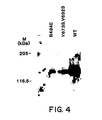
- variants R494E or Y673S, V692S which bind the HGF receptor in vitro but are defective for mitogenic activity, could stimulate tyrosine-phosphorylation of the HGF receptor in A549 cells.
- Serum starved cells were treated with purified WT rhuHGF or variants and immunoprecipitates of the HGF receptor were blotted and probed with phosphotyrosine antibodies. Stimulation with wt rhuHGF led to the phosphorylation on tyrosine of the 145 kDa ⁇ -subunit of the HGF receptor (Fig. 4). Both variants exhibited a reduced ability to induce phosphorylation of the HGF receptor.
- HGF histoneum GF
- An early stage of regulation may be the cleavage step to generate the biologically active two-chain form.
- cleavage may not simply regulate receptor binding but rather control a subsequent event required for activating the HGF receptor.
- Our data also suggest that the ⁇ -chain, while not absolutely required for receptor binding contributes to a receptor activation step. These variants may be useful in dissecting the signalling events at the HGF receptor.
- huHGF variants listed in Tables 2 and 3 were generated, and their specific activities (SA) and Kd ratios were determined essentially as described in the foregoing examples.
Landscapes
- Health & Medical Sciences (AREA)
- Life Sciences & Earth Sciences (AREA)
- Bioinformatics & Cheminformatics (AREA)
- Chemical & Material Sciences (AREA)
- Engineering & Computer Science (AREA)
- Medicinal Chemistry (AREA)
- Organic Chemistry (AREA)
- General Health & Medical Sciences (AREA)
- Molecular Biology (AREA)
- Gastroenterology & Hepatology (AREA)
- Veterinary Medicine (AREA)
- Pharmacology & Pharmacy (AREA)
- Animal Behavior & Ethology (AREA)
- Public Health (AREA)
- Biochemistry (AREA)
- Biophysics (AREA)
- Immunology (AREA)
- Epidemiology (AREA)
- Proteomics, Peptides & Aminoacids (AREA)
- Toxicology (AREA)
- Zoology (AREA)
- Genetics & Genomics (AREA)
- General Chemical & Material Sciences (AREA)
- Chemical Kinetics & Catalysis (AREA)
- Nuclear Medicine, Radiotherapy & Molecular Imaging (AREA)
- Peptides Or Proteins (AREA)
- Micro-Organisms Or Cultivation Processes Thereof (AREA)
- Preparation Of Compounds By Using Micro-Organisms (AREA)
- Medicines That Contain Protein Lipid Enzymes And Other Medicines (AREA)
- Saccharide Compounds (AREA)
Applications Claiming Priority (5)
| Application Number | Priority Date | Filing Date | Title |
|---|---|---|---|
| US885971 | 1986-07-15 | ||
| US884811 | 1992-05-18 | ||
| US07/885,971 US5328837A (en) | 1992-05-18 | 1992-05-18 | Hepatocyte growth factor protease domain variants |
| US07/884,811 US5316921A (en) | 1992-05-18 | 1992-05-18 | Single-chain hepatocyte growth factor variants |
| PCT/US1993/004648 WO1993023541A1 (en) | 1992-05-18 | 1993-05-17 | Hepatocyte growth factor variants |
Publications (2)
| Publication Number | Publication Date |
|---|---|
| EP0642580A1 EP0642580A1 (en) | 1995-03-15 |
| EP0642580B1 true EP0642580B1 (en) | 2002-08-21 |
Family
ID=27128741
Family Applications (1)
| Application Number | Title | Priority Date | Filing Date |
|---|---|---|---|
| EP93911339A Expired - Lifetime EP0642580B1 (en) | 1992-05-18 | 1993-05-17 | Hepatocyte growth factor variants |
Country Status (10)
| Country | Link |
|---|---|
| US (1) | US5547856A (da) |
| EP (1) | EP0642580B1 (da) |
| JP (2) | JPH07508420A (da) |
| AT (1) | ATE222603T1 (da) |
| CA (1) | CA2118012A1 (da) |
| DE (1) | DE69332221T2 (da) |
| DK (1) | DK0642580T3 (da) |
| ES (1) | ES2181689T3 (da) |
| PT (1) | PT642580E (da) |
| WO (1) | WO1993023541A1 (da) |
Families Citing this family (42)
| Publication number | Priority date | Publication date | Assignee | Title |
|---|---|---|---|---|
| US6566098B1 (en) | 1990-09-14 | 2003-05-20 | The United States Of America As Represented By The Department Of Health And Human Services | DNA encoding truncated hepatocyte growth factor variants |
| ATE160585T1 (de) * | 1992-09-18 | 1997-12-15 | Us Gov Health & Human Serv | Eine methode zur herstellung von hepatozytwachstumsfaktor und eine zelllinie |
| ZA9510982B (en) * | 1994-12-27 | 1996-08-22 | Snow Brand Milk Products Co Ltd | TCF mutant |
| US5646036A (en) * | 1995-06-02 | 1997-07-08 | Genentech, Inc. | Nucleic acids encoding hepatocyte growth factor receptor antagonist antibodies |
| US6214344B1 (en) | 1995-06-02 | 2001-04-10 | Genetech, Inc. | Hepatocyte growth factor receptor antagonists and uses thereof |
| US5686292A (en) | 1995-06-02 | 1997-11-11 | Genentech, Inc. | Hepatocyte growth factor receptor antagonist antibodies and uses thereof |
| JP3832674B2 (ja) * | 1995-10-24 | 2006-10-11 | 敏一 中村 | 抗癌剤 |
| US6855685B2 (en) | 1995-10-24 | 2005-02-15 | Toshikazu Nakamura | Anti-cancer agent |
| WO1998019696A1 (en) * | 1996-11-05 | 1998-05-14 | Smithkline Beecham Corporation | Hepatocyte growth factor antagonists |
| JP4006058B2 (ja) * | 1997-03-11 | 2007-11-14 | 第一三共株式会社 | 多臓器不全予防及び/又は治療剤 |
| ES2274567T3 (es) * | 1997-03-14 | 2007-05-16 | Daiichi Pharmaceutical Co., Ltd. | Utilizacion de tcf-ii para el tratamiento de la perdida de peso corporal, la anemia y la elevacion de tnf causadas por el cancer. |
| GB9709453D0 (en) * | 1997-05-10 | 1997-07-02 | Imp Cancer Res Tech | Polypedtides and their use in therapy |
| ITMI980180A1 (it) * | 1998-01-30 | 1999-07-30 | Dompe Spa | Proteine ricombinanti derivate da hgf e msp |
| ITMI980179A1 (it) | 1998-01-30 | 1999-07-30 | Dompe Spa | Proteine ricombinanti derivate da hgf e msp |
| US20020136721A1 (en) * | 1998-02-17 | 2002-09-26 | Schwall Ralph H. | Hepatocyte growth factor receptor antagonists and uses thereof |
| JP2003510090A (ja) * | 1999-09-27 | 2003-03-18 | ヒューマン ジノーム サイエンシーズ, インコーポレイテッド | 41個のヒト分泌タンパク質 |
| US20080241835A1 (en) * | 1999-11-01 | 2008-10-02 | Genentech, Inc. | Differentially expressed genes involved in angiogenesis, the polypeptides encoded thereby, and methods of using the same |
| EP1233777A4 (en) * | 1999-11-24 | 2003-07-16 | Human Genome Sciences Inc | MAJOR INTRINSIC PROTEIN (MIP) -LIKE POLYNUCLEOTIDES, POLYPEPTIDES AND ANTIBODIES |
| AU7459101A (en) * | 2000-06-22 | 2002-01-02 | Nippon Zenyaku Kogyo Ltd | Canine liver cell growth factor |
| EP1234583A1 (en) | 2001-02-23 | 2002-08-28 | F. Hoffmann-La Roche Ag | PEG-conjugates of HGF-NK4 |
| GB0110430D0 (en) | 2001-04-27 | 2001-06-20 | Medical Res Council | Protein variants and uses thereof |
| US7794693B2 (en) | 2002-03-01 | 2010-09-14 | Bracco International B.V. | Targeting vector-phospholipid conjugates |
| US7211240B2 (en) | 2002-03-01 | 2007-05-01 | Bracco International B.V. | Multivalent constructs for therapeutic and diagnostic applications |
| US7261876B2 (en) | 2002-03-01 | 2007-08-28 | Bracco International Bv | Multivalent constructs for therapeutic and diagnostic applications |
| US8623822B2 (en) | 2002-03-01 | 2014-01-07 | Bracco Suisse Sa | KDR and VEGF/KDR binding peptides and their use in diagnosis and therapy |
| AU2003278807A1 (en) | 2002-03-01 | 2004-08-13 | Bracco International B.V. | Kdr and vegf/kdr binding peptides and their use in diagnosis and therapy |
| WO2003104429A2 (en) * | 2002-06-10 | 2003-12-18 | Idec Pharmaceuticals Corporation | Genes overexpressed by ovarian cancer and their use in developing novel therapeutics |
| US20040138120A1 (en) * | 2002-10-07 | 2004-07-15 | Genentech, Inc. | Hepatocyte growth factor variants |
| ES2396368T3 (es) * | 2003-03-03 | 2013-02-21 | Dyax Corporation | Péptidos que se unen específicamente al receptor del HGF (CMET) y usos de los mismos |
| WO2004093892A2 (en) * | 2003-04-16 | 2004-11-04 | Genentech, Inc. | Stanniocalcin-1, variant or antagonists thereof for selective modulation of vascularization |
| JP4716875B2 (ja) | 2003-12-16 | 2011-07-06 | 敏一 中村 | 糖鎖欠損型肝細胞増殖因子 |
| PT1718677E (pt) * | 2003-12-19 | 2012-07-18 | Genentech Inc | Fragmentos de anticorpo monovalentes úteis como agentes terapêuticos |
| US7807177B2 (en) * | 2004-01-27 | 2010-10-05 | Toshikazu Nakamura | Segment of glycosylation-deficient HGFalpha-chain |
| JP2007525981A (ja) | 2004-03-03 | 2007-09-13 | エフ.ホフマン−ラ ロシュ アーゲー | 肝細胞成長因子のn末端フラグメントを組み換え発現するための方法 |
| JP4511589B2 (ja) | 2004-03-03 | 2010-07-28 | エフ.ホフマン−ラ ロシュ アーゲー | 肝細胞成長因子のn末端フラグメントを精製するための方法 |
| CA2575402A1 (en) | 2004-08-05 | 2006-02-09 | Genentech, Inc. | Humanized anti-cmet antagonists |
| CN101193910A (zh) | 2005-04-15 | 2008-06-04 | 健泰科生物技术公司 | HGFβ链变体 |
| CA2716670A1 (en) * | 2008-03-06 | 2009-09-11 | Genentech, Inc. | Combination therapy with c-met and her antagonists |
| AR086823A1 (es) | 2011-06-30 | 2014-01-22 | Genentech Inc | Formulaciones de anticuerpo anti-c-met, metodos |
| RU2016141385A (ru) | 2014-03-24 | 2018-04-28 | Дженентек, Инк. | Лечение рака антагонистами с-мет и их корреляция с экспрессией hgf |
| KR102793810B1 (ko) * | 2017-08-04 | 2025-04-11 | 가톨릭대학교 산학협력단 | 간세포성장인자를 발현하는 중간엽줄기세포를 유효성분으로 포함하는 혈관계 질환 예방 또는 치료용 약학적 조성물 |
| CN109535243B (zh) * | 2019-01-07 | 2019-09-24 | 北京诺思兰德生物技术股份有限公司 | 人肝细胞生长因子突变体及其应用 |
Family Cites Families (33)
| Publication number | Priority date | Publication date | Assignee | Title |
|---|---|---|---|---|
| DE2814981C3 (de) * | 1978-04-07 | 1981-08-06 | Max-Planck-Gesellschaft zur Förderung der Wissenschaften e.V., 3400 Göttingen | Faktor zur Stimulation der Proliferationsrate von Leberzellen |
| DE2914903C2 (de) * | 1979-04-12 | 1981-08-20 | Max-Planck-Gesellschaft zur Förderung der Wissenschaften e.V., 3400 Göttingen | Leberzellwachstumfaktor |
| JPS5862116A (ja) * | 1981-10-09 | 1983-04-13 | Mitsubishi Chem Ind Ltd | 肝細胞の増殖促進物質 |
| JPS6045534A (ja) * | 1983-08-22 | 1985-03-12 | Otsuka Pharmaceut Co Ltd | 肝実質細胞増殖因子 |
| JPS60243019A (ja) * | 1984-05-17 | 1985-12-03 | Mitsubishi Chem Ind Ltd | 肝細胞増殖因子 |
| JPH0635480B2 (ja) * | 1985-08-23 | 1994-05-11 | 大塚製薬株式会社 | 肝実質細胞増殖因子 |
| JPS62161730A (ja) * | 1986-01-10 | 1987-07-17 | Mitsubishi Chem Ind Ltd | 細胞増殖因子の産生誘発剤 |
| JP2564486B2 (ja) * | 1986-07-14 | 1996-12-18 | 修治 橋本 | 肝細胞増殖因子 |
| US4851341A (en) * | 1986-12-19 | 1989-07-25 | Immunex Corporation | Immunoaffinity purification system |
| ES2005159A6 (es) * | 1987-04-14 | 1989-03-01 | Inst Llorente S A | Procedimiento para diagnostico y seguimiento de hepatopatias mediante determinacion de factor de crecimiento hepatico en plasma yno suero sanguineo. |
| JPS643199A (en) * | 1987-06-25 | 1989-01-06 | Yasushi Daikuhara | Monoclonal antibody |
| JPS6427491A (en) * | 1987-07-14 | 1989-01-30 | Yasushi Daikuhara | Monoclonal antibody |
| JPH02213A (ja) * | 1987-10-19 | 1990-01-05 | Taiho Yakuhin Kogyo Kk | 生理活性ペプチド持続製剤 |
| JP3030312B2 (ja) * | 1988-12-12 | 2000-04-10 | 敏一 中村 | 成熟肝実質細胞増殖因子(i) |
| US5179078A (en) * | 1989-05-12 | 1993-01-12 | Dana Farber Cancer Institute | Method of suppressing tumor formation in vivo |
| JP2706704B2 (ja) * | 1989-06-05 | 1998-01-28 | 敏一 中村 | 組換ヒト肝実質細胞増殖因子 |
| JPH03130091A (ja) * | 1989-06-05 | 1991-06-03 | Toyobo Co Ltd | 組換ヒト肝実質細胞増殖因子 |
| CA2022752C (en) * | 1989-08-11 | 1998-07-07 | Naomi Kitamura | Hepatic parenchymal cell growth factor, gene encoding the same, process for producing the factor, and transformants producing the factor |
| JPH03204899A (ja) * | 1989-09-21 | 1991-09-06 | Otsuka Pharmaceut Co Ltd | ヒト肝再生因子、そのdna塩基配列、該配列を含むプラスミド及び形質転換体並びにリコンビナント肝再生因子 |
| JPH03255096A (ja) * | 1990-03-01 | 1991-11-13 | Toyobo Co Ltd | 組換ラット肝実質細胞増殖因子 |
| US5235043A (en) * | 1990-04-06 | 1993-08-10 | Synergen, Inc. | Production of biologically active, recombinant members of the ngf/bdnf family of neurotrophic proteins |
| JPH0413696A (ja) * | 1990-05-08 | 1992-01-17 | Mochida Pharmaceut Co Ltd | 新規生理活性物質 |
| JP2784455B2 (ja) * | 1990-05-09 | 1998-08-06 | 敏一 中村 | 肝硬変治療剤 |
| JPH0436189A (ja) * | 1990-05-30 | 1992-02-06 | Otsuka Pharmaceut Co Ltd | 肝細胞増殖因子の製造方法 |
| DE69133492T2 (de) * | 1990-06-11 | 2006-08-10 | Nakamura, Toshikazu | Rekombinanter menschlicher Hepatozytwachstumsfaktor und Verfahren zu seiner Herstellung |
| JP2750372B2 (ja) * | 1990-06-19 | 1998-05-13 | 敏一 中村 | 賢疾患治療剤 |
| DE69131069T2 (de) * | 1990-07-13 | 1999-07-15 | Snow Brand Milk Products Co., Ltd., Sapporo, Hokkaido | Plasmid das für die aminosäuresequenz von tcf-ii kodierende dns enthalt, transformierte zelle und produktion einer physiologisch aktiven substanz mit ihrer verwendung |
| JPH04120097A (ja) * | 1990-09-07 | 1992-04-21 | Agency Of Ind Science & Technol | 肝細胞増殖因子 |
| EP0571387B1 (en) * | 1990-09-14 | 2003-12-17 | THE UNITED STATES OF AMERICA as represented by the Secretary United States Department of Commerce | A non-mitogenic competitive hgf antagonist |
| JP3072628B2 (ja) * | 1990-11-19 | 2000-07-31 | 敏一 中村 | ヒト肝実質細胞増殖因子をコードする染色体dna |
| JP3200609B2 (ja) * | 1990-12-28 | 2001-08-20 | 敏一 中村 | 上皮細胞増殖促進剤 |
| US5328837A (en) * | 1992-05-18 | 1994-07-12 | Genentech, Inc. | Hepatocyte growth factor protease domain variants |
| US5316921A (en) * | 1992-05-18 | 1994-05-31 | Genentech, Inc. | Single-chain hepatocyte growth factor variants |
-
1993
- 1993-05-17 AT AT93911339T patent/ATE222603T1/de active
- 1993-05-17 PT PT93911339T patent/PT642580E/pt unknown
- 1993-05-17 EP EP93911339A patent/EP0642580B1/en not_active Expired - Lifetime
- 1993-05-17 CA CA002118012A patent/CA2118012A1/en not_active Abandoned
- 1993-05-17 DK DK93911339T patent/DK0642580T3/da active
- 1993-05-17 JP JP6503790A patent/JPH07508420A/ja not_active Withdrawn
- 1993-05-17 ES ES93911339T patent/ES2181689T3/es not_active Expired - Lifetime
- 1993-05-17 WO PCT/US1993/004648 patent/WO1993023541A1/en not_active Ceased
- 1993-05-17 DE DE69332221T patent/DE69332221T2/de not_active Expired - Lifetime
- 1993-07-13 US US08/087,783 patent/US5547856A/en not_active Expired - Lifetime
-
2003
- 2003-06-17 JP JP2003172155A patent/JP2004000236A/ja not_active Withdrawn
Also Published As
| Publication number | Publication date |
|---|---|
| EP0642580A1 (en) | 1995-03-15 |
| DK0642580T3 (da) | 2002-12-23 |
| WO1993023541A1 (en) | 1993-11-25 |
| DE69332221T2 (de) | 2003-04-17 |
| DE69332221D1 (de) | 2002-09-26 |
| US5547856A (en) | 1996-08-20 |
| CA2118012A1 (en) | 1993-11-25 |
| PT642580E (pt) | 2003-01-31 |
| ES2181689T3 (es) | 2003-03-01 |
| ATE222603T1 (de) | 2002-09-15 |
| JPH07508420A (ja) | 1995-09-21 |
| JP2004000236A (ja) | 2004-01-08 |
Similar Documents
| Publication | Publication Date | Title |
|---|---|---|
| EP0642580B1 (en) | Hepatocyte growth factor variants | |
| US5316921A (en) | Single-chain hepatocyte growth factor variants | |
| US5328837A (en) | Hepatocyte growth factor protease domain variants | |
| EP0642585B1 (en) | Activation of oligomerizing receptors by using fused receptor ligands | |
| US5684136A (en) | Chimeric hepatocyte growth factor (HGF) ligand variants | |
| US10392430B2 (en) | Methods of making nucleic acid molecules encoding modified chimeric polypeptides with improved pharmacokinetic properties | |
| Gentry et al. | The pro domain of pre-pro-transforming growth factor. beta. 1 when independently expressed is a functional binding protein for the mature growth factor | |
| EP0848755B2 (en) | Vegf-related protein | |
| EP0920448B1 (en) | Truncated glial cell line-derived neurotrophic factor | |
| WO1996023000A1 (en) | Ligands for eph-like receptors | |
| IE83896B1 (en) | Heregulins (HRGs), binding proteins of P185erb2 | |
| US5359033A (en) | Cleaved dimers of mullerian inhibiting substance-like polypeptides | |
| WO1993000357A1 (en) | Therapeutic polypeptides based on von willebrand factor | |
| JP2706704B2 (ja) | 組換ヒト肝実質細胞増殖因子 | |
| US20040260064A1 (en) | Antibodies to analogs of macrophage stimulating protein and uses thereof | |
| WO1991007982A1 (en) | Treatment of hsv | |
| CA2588221C (en) | Modified chimeric polypeptides with improved pharmacokinetic properties | |
| US20040138120A1 (en) | Hepatocyte growth factor variants | |
| HK1021823B (en) | Truncated glial cell line-derived neurotrophic factor | |
| NZ503984A (en) | Viral encoded semaphorin protein receptor (VESPR) DNA and polypeptides to treat inflammatory conditions | |
| JPH1070990A (ja) | 組換肝実質細胞増殖因子 |
Legal Events
| Date | Code | Title | Description |
|---|---|---|---|
| PUAI | Public reference made under article 153(3) epc to a published international application that has entered the european phase |
Free format text: ORIGINAL CODE: 0009012 |
|
| 17P | Request for examination filed |
Effective date: 19941212 |
|
| AK | Designated contracting states |
Kind code of ref document: A1 Designated state(s): AT BE CH DE DK ES FR GB GR IE IT LI LU MC NL PT SE |
|
| 17Q | First examination report despatched |
Effective date: 19960607 |
|
| GRAG | Despatch of communication of intention to grant |
Free format text: ORIGINAL CODE: EPIDOS AGRA |
|
| GRAG | Despatch of communication of intention to grant |
Free format text: ORIGINAL CODE: EPIDOS AGRA |
|
| GRAH | Despatch of communication of intention to grant a patent |
Free format text: ORIGINAL CODE: EPIDOS IGRA |
|
| GRAH | Despatch of communication of intention to grant a patent |
Free format text: ORIGINAL CODE: EPIDOS IGRA |
|
| GRAA | (expected) grant |
Free format text: ORIGINAL CODE: 0009210 |
|
| AK | Designated contracting states |
Kind code of ref document: B1 Designated state(s): AT BE CH DE DK ES FR GB GR IE IT LI LU MC NL PT SE |
|
| REF | Corresponds to: |
Ref document number: 222603 Country of ref document: AT Date of ref document: 20020915 Kind code of ref document: T |
|
| REG | Reference to a national code |
Ref country code: GB Ref legal event code: FG4D |
|
| RIC1 | Information provided on ipc code assigned before grant |
Free format text: 7C 12N 15/19 A, 7C 07K 14/00 B, 7A 61K 38/00 B |
|
| REG | Reference to a national code |
Ref country code: CH Ref legal event code: EP |
|
| REF | Corresponds to: |
Ref document number: 69332221 Country of ref document: DE Date of ref document: 20020926 |
|
| REG | Reference to a national code |
Ref country code: IE Ref legal event code: FG4D |
|
| REG | Reference to a national code |
Ref country code: GR Ref legal event code: EP Ref document number: 20020403807 Country of ref document: GR |
|
| ET | Fr: translation filed | ||
| REG | Reference to a national code |
Ref country code: DK Ref legal event code: T3 |
|
| REG | Reference to a national code |
Ref country code: PT Ref legal event code: SC4A Free format text: AVAILABILITY OF NATIONAL TRANSLATION Effective date: 20021114 |
|
| REG | Reference to a national code |
Ref country code: ES Ref legal event code: FG2A Ref document number: 2181689 Country of ref document: ES Kind code of ref document: T3 |
|
| PLBE | No opposition filed within time limit |
Free format text: ORIGINAL CODE: 0009261 |
|
| STAA | Information on the status of an ep patent application or granted ep patent |
Free format text: STATUS: NO OPPOSITION FILED WITHIN TIME LIMIT |
|
| 26N | No opposition filed |
Effective date: 20030522 |
|
| PGFP | Annual fee paid to national office [announced via postgrant information from national office to epo] |
Ref country code: LU Payment date: 20110531 Year of fee payment: 19 |
|
| PGFP | Annual fee paid to national office [announced via postgrant information from national office to epo] |
Ref country code: NL Payment date: 20120515 Year of fee payment: 20 Ref country code: CH Payment date: 20120514 Year of fee payment: 20 Ref country code: DK Payment date: 20120510 Year of fee payment: 20 Ref country code: DE Payment date: 20120510 Year of fee payment: 20 Ref country code: IE Payment date: 20120510 Year of fee payment: 20 Ref country code: MC Payment date: 20120426 Year of fee payment: 20 |
|
| PGFP | Annual fee paid to national office [announced via postgrant information from national office to epo] |
Ref country code: SE Payment date: 20120511 Year of fee payment: 20 Ref country code: FR Payment date: 20120608 Year of fee payment: 20 Ref country code: BE Payment date: 20120514 Year of fee payment: 20 Ref country code: GR Payment date: 20120417 Year of fee payment: 20 Ref country code: GB Payment date: 20120516 Year of fee payment: 20 |
|
| PGFP | Annual fee paid to national office [announced via postgrant information from national office to epo] |
Ref country code: IT Payment date: 20120517 Year of fee payment: 20 |
|
| PGFP | Annual fee paid to national office [announced via postgrant information from national office to epo] |
Ref country code: ES Payment date: 20120413 Year of fee payment: 20 |
|
| PGFP | Annual fee paid to national office [announced via postgrant information from national office to epo] |
Ref country code: PT Payment date: 20120515 Year of fee payment: 20 |
|
| PGFP | Annual fee paid to national office [announced via postgrant information from national office to epo] |
Ref country code: AT Payment date: 20120426 Year of fee payment: 20 |
|
| REG | Reference to a national code |
Ref country code: DE Ref legal event code: R071 Ref document number: 69332221 Country of ref document: DE |
|
| REG | Reference to a national code |
Ref country code: DE Ref legal event code: R071 Ref document number: 69332221 Country of ref document: DE |
|
| REG | Reference to a national code |
Ref country code: DK Ref legal event code: EUP |
|
| REG | Reference to a national code |
Ref country code: PT Ref legal event code: MM4A Free format text: MAXIMUM VALIDITY LIMIT REACHED Effective date: 20130517 |
|
| REG | Reference to a national code |
Ref country code: NL Ref legal event code: V4 Effective date: 20130517 |
|
| BE20 | Be: patent expired |
Owner name: *GENENTECH INC. Effective date: 20130517 |
|
| REG | Reference to a national code |
Ref country code: CH Ref legal event code: PL |
|
| REG | Reference to a national code |
Ref country code: GB Ref legal event code: PE20 Expiry date: 20130516 |
|
| REG | Reference to a national code |
Ref country code: AT Ref legal event code: MK07 Ref document number: 222603 Country of ref document: AT Kind code of ref document: T Effective date: 20130517 |
|
| REG | Reference to a national code |
Ref country code: ES Ref legal event code: FD2A Effective date: 20130730 |
|
| PG25 | Lapsed in a contracting state [announced via postgrant information from national office to epo] |
Ref country code: DE Free format text: LAPSE BECAUSE OF EXPIRATION OF PROTECTION Effective date: 20130518 Ref country code: GB Free format text: LAPSE BECAUSE OF EXPIRATION OF PROTECTION Effective date: 20130516 |
|
| PG25 | Lapsed in a contracting state [announced via postgrant information from national office to epo] |
Ref country code: PT Free format text: LAPSE BECAUSE OF EXPIRATION OF PROTECTION Effective date: 20130524 |
|
| REG | Reference to a national code |
Ref country code: GR Ref legal event code: MA Ref document number: 20020403807 Country of ref document: GR Effective date: 20130518 |
|
| PG25 | Lapsed in a contracting state [announced via postgrant information from national office to epo] |
Ref country code: ES Free format text: LAPSE BECAUSE OF EXPIRATION OF PROTECTION Effective date: 20130518 |
|
| REG | Reference to a national code |
Ref country code: IE Ref legal event code: MK9A |
|
| PG25 | Lapsed in a contracting state [announced via postgrant information from national office to epo] |
Ref country code: IE Free format text: LAPSE BECAUSE OF EXPIRATION OF PROTECTION Effective date: 20130517 |