EP0668286B1 - Un composé silacyclohexane, un procédé pour le préparer et une composition liquide cristalline le contenant - Google Patents
Un composé silacyclohexane, un procédé pour le préparer et une composition liquide cristalline le contenant Download PDFInfo
- Publication number
- EP0668286B1 EP0668286B1 EP95101999A EP95101999A EP0668286B1 EP 0668286 B1 EP0668286 B1 EP 0668286B1 EP 95101999 A EP95101999 A EP 95101999A EP 95101999 A EP95101999 A EP 95101999A EP 0668286 B1 EP0668286 B1 EP 0668286B1
- Authority
- EP
- European Patent Office
- Prior art keywords
- denotes
- carbon
- group
- general formula
- trans
- Prior art date
- Legal status (The legal status is an assumption and is not a legal conclusion. Google has not performed a legal analysis and makes no representation as to the accuracy of the status listed.)
- Expired - Lifetime
Links
- 150000001875 compounds Chemical class 0.000 title claims description 54
- 239000004973 liquid crystal related substance Substances 0.000 title claims description 43
- 239000000203 mixture Substances 0.000 title claims description 34
- 238000000034 method Methods 0.000 title claims description 23
- -1 p-toluene-sulfonyl Chemical group 0.000 claims description 179
- 239000003153 chemical reaction reagent Substances 0.000 claims description 24
- 125000005843 halogen group Chemical group 0.000 claims description 22
- 238000006243 chemical reaction Methods 0.000 claims description 20
- 229910052801 chlorine Inorganic materials 0.000 claims description 19
- 125000002524 organometallic group Chemical group 0.000 claims description 16
- 229910052731 fluorine Inorganic materials 0.000 claims description 15
- 238000010485 C−C bond formation reaction Methods 0.000 claims description 13
- 229910052739 hydrogen Inorganic materials 0.000 claims description 13
- 125000002496 methyl group Chemical group [H]C([H])([H])* 0.000 claims description 13
- 125000000217 alkyl group Chemical group 0.000 claims description 11
- 125000003545 alkoxy group Chemical group 0.000 claims description 9
- 238000006664 bond formation reaction Methods 0.000 claims description 8
- 125000004170 methylsulfonyl group Chemical group [H]C([H])([H])S(*)(=O)=O 0.000 claims description 7
- 125000003170 phenylsulfonyl group Chemical group C1(=CC=CC=C1)S(=O)(=O)* 0.000 claims description 7
- 125000001889 triflyl group Chemical group FC(F)(F)S(*)(=O)=O 0.000 claims description 7
- 125000003342 alkenyl group Chemical group 0.000 claims description 5
- 125000004183 alkoxy alkyl group Chemical group 0.000 claims description 5
- 125000004786 difluoromethoxy group Chemical group [H]C(F)(F)O* 0.000 claims description 4
- 125000004435 hydrogen atom Chemical group [H]* 0.000 claims description 4
- 125000000876 trifluoromethoxy group Chemical group FC(F)(F)O* 0.000 claims description 4
- XUIMIQQOPSSXEZ-UHFFFAOYSA-N Silicon Chemical group [Si] XUIMIQQOPSSXEZ-UHFFFAOYSA-N 0.000 claims description 3
- 229910052710 silicon Inorganic materials 0.000 claims description 3
- 125000004432 carbon atom Chemical group C* 0.000 claims 5
- WYURNTSHIVDZCO-UHFFFAOYSA-N Tetrahydrofuran Chemical compound C1CCOC1 WYURNTSHIVDZCO-UHFFFAOYSA-N 0.000 description 32
- OKTJSMMVPCPJKN-UHFFFAOYSA-N Carbon Chemical compound [C] OKTJSMMVPCPJKN-UHFFFAOYSA-N 0.000 description 17
- 229910052799 carbon Inorganic materials 0.000 description 17
- 229910052794 bromium Inorganic materials 0.000 description 10
- 230000003197 catalytic effect Effects 0.000 description 8
- 238000004587 chromatography analysis Methods 0.000 description 8
- 125000001495 ethyl group Chemical group [H]C([H])([H])C([H])([H])* 0.000 description 8
- FYYHWMGAXLPEAU-UHFFFAOYSA-N Magnesium Chemical compound [Mg] FYYHWMGAXLPEAU-UHFFFAOYSA-N 0.000 description 7
- 229910052749 magnesium Inorganic materials 0.000 description 7
- 239000011777 magnesium Substances 0.000 description 7
- 238000002360 preparation method Methods 0.000 description 7
- 239000003054 catalyst Substances 0.000 description 6
- 125000000472 sulfonyl group Chemical group *S(*)(=O)=O 0.000 description 6
- 0 Cc1ccc(-c(cc2)ccc2O*)c(F)c1F Chemical compound Cc1ccc(-c(cc2)ccc2O*)c(F)c1F 0.000 description 5
- 229910052740 iodine Inorganic materials 0.000 description 5
- 239000000126 substance Substances 0.000 description 5
- NFHFRUOZVGFOOS-UHFFFAOYSA-N palladium;triphenylphosphane Chemical compound [Pd].C1=CC=CC=C1P(C=1C=CC=CC=1)C1=CC=CC=C1.C1=CC=CC=C1P(C=1C=CC=CC=1)C1=CC=CC=C1.C1=CC=CC=C1P(C=1C=CC=CC=1)C1=CC=CC=C1.C1=CC=CC=C1P(C=1C=CC=CC=1)C1=CC=CC=C1 NFHFRUOZVGFOOS-UHFFFAOYSA-N 0.000 description 4
- 230000007704 transition Effects 0.000 description 4
- YTEWNAKEMBPODW-DXKIZBQOSA-N C1C[Si@@H](CCCCC)CC[C@@H]1CCC1=CC=C(C=2C=C(F)C(F)=CC=2)C=C1 Chemical group C1C[Si@@H](CCCCC)CC[C@@H]1CCC1=CC=C(C=2C=C(F)C(F)=CC=2)C=C1 YTEWNAKEMBPODW-DXKIZBQOSA-N 0.000 description 3
- 150000001879 copper Chemical class 0.000 description 3
- 125000000956 methoxy group Chemical group [H]C([H])([H])O* 0.000 description 3
- 150000002816 nickel compounds Chemical class 0.000 description 3
- 150000002941 palladium compounds Chemical class 0.000 description 3
- 238000006467 substitution reaction Methods 0.000 description 3
- 229910052723 transition metal Inorganic materials 0.000 description 3
- 150000003624 transition metals Chemical class 0.000 description 3
- 125000002023 trifluoromethyl group Chemical group FC(F)(F)* 0.000 description 3
- 125000001140 1,4-phenylene group Chemical group [H]C1=C([H])C([*:2])=C([H])C([H])=C1[*:1] 0.000 description 2
- RUYZJEIKQYLEGZ-UHFFFAOYSA-N 1-fluoro-4-phenylbenzene Chemical group C1=CC(F)=CC=C1C1=CC=CC=C1 RUYZJEIKQYLEGZ-UHFFFAOYSA-N 0.000 description 2
- 125000006039 1-hexenyl group Chemical group 0.000 description 2
- 125000006023 1-pentenyl group Chemical group 0.000 description 2
- 125000006017 1-propenyl group Chemical group 0.000 description 2
- 125000004778 2,2-difluoroethyl group Chemical group [H]C([H])(*)C([H])(F)F 0.000 description 2
- 125000004777 2-fluoroethyl group Chemical group [H]C([H])(F)C([H])([H])* 0.000 description 2
- 125000004493 2-methylbut-1-yl group Chemical group CC(C*)CC 0.000 description 2
- 125000005916 2-methylpentyl group Chemical group 0.000 description 2
- 125000004975 3-butenyl group Chemical group C(CC=C)* 0.000 description 2
- LIFYVQGUGRZXPB-UHFFFAOYSA-N 4-[4-(bromomethyl)phenyl]-1,2-difluorobenzene Chemical group C1=C(F)C(F)=CC=C1C1=CC=C(CBr)C=C1 LIFYVQGUGRZXPB-UHFFFAOYSA-N 0.000 description 2
- YMQPKONILWWJQG-UHFFFAOYSA-N 4-bromo-1,2-difluorobenzene Chemical compound FC1=CC=C(Br)C=C1F YMQPKONILWWJQG-UHFFFAOYSA-N 0.000 description 2
- 125000006043 5-hexenyl group Chemical group 0.000 description 2
- MDTYURFYTSHHKE-YGFACIEFSA-N C(=CC)[Si@@H]1CC[C@H](CC1)CCC1=CC=C(C=C1)C1=CC(=C(C=C1)F)F Chemical group C(=CC)[Si@@H]1CC[C@H](CC1)CCC1=CC=C(C=C1)C1=CC(=C(C=C1)F)F MDTYURFYTSHHKE-YGFACIEFSA-N 0.000 description 2
- JHTYWIWUXBDTJT-AEEMYVKYSA-N C1C[C@@H](CCCCC)CC[Si@@H]1CCC1=CC=C(C=2C=CC(F)=CC=2)C=C1 Chemical group C1C[C@@H](CCCCC)CC[Si@@H]1CCC1=CC=C(C=2C=CC(F)=CC=2)C=C1 JHTYWIWUXBDTJT-AEEMYVKYSA-N 0.000 description 2
- BPFHZOGFVUHWEB-KQODVJPSSA-N C1C[Si@@H](CC(C)C)CC[C@@H]1CCC1=CC=C(C=2C=C(F)C(Cl)=CC=2)C=C1 Chemical group C1C[Si@@H](CC(C)C)CC[C@@H]1CCC1=CC=C(C=2C=C(F)C(Cl)=CC=2)C=C1 BPFHZOGFVUHWEB-KQODVJPSSA-N 0.000 description 2
- HBXWOYYTAOWZGN-YGFACIEFSA-N C1C[Si@@H](CCC)CC[C@@H]1CCC1=CC=C(C=2C=C(F)C(F)=CC=2)C=C1 Chemical group C1C[Si@@H](CCC)CC[C@@H]1CCC1=CC=C(C=2C=C(F)C(F)=CC=2)C=C1 HBXWOYYTAOWZGN-YGFACIEFSA-N 0.000 description 2
- YYNHNRRJMAWARY-OGAOHHHESA-N C1C[Si@@H](CCC)CC[C@@H]1CCC1=CC=C(C=2C=CC(F)=CC=2)C=C1 Chemical group C1C[Si@@H](CCC)CC[C@@H]1CCC1=CC=C(C=2C=CC(F)=CC=2)C=C1 YYNHNRRJMAWARY-OGAOHHHESA-N 0.000 description 2
- JEIYRGQYLKQJFU-UHFFFAOYSA-N Cc(cc1)cc(F)c1-c(cc1)ccc1Cl Chemical compound Cc(cc1)cc(F)c1-c(cc1)ccc1Cl JEIYRGQYLKQJFU-UHFFFAOYSA-N 0.000 description 2
- 229910021591 Copper(I) chloride Inorganic materials 0.000 description 2
- OXBLHERUFWYNTN-UHFFFAOYSA-M copper(I) chloride Chemical compound [Cu]Cl OXBLHERUFWYNTN-UHFFFAOYSA-M 0.000 description 2
- 229940045803 cuprous chloride Drugs 0.000 description 2
- 125000000113 cyclohexyl group Chemical group [H]C1([H])C([H])([H])C([H])([H])C([H])(*)C([H])([H])C1([H])[H] 0.000 description 2
- 125000005448 ethoxyethyl group Chemical group [H]C([H])([H])C([H])([H])OC([H])([H])C([H])([H])* 0.000 description 2
- 125000005745 ethoxymethyl group Chemical group [H]C([H])([H])C([H])([H])OC([H])([H])* 0.000 description 2
- 125000000959 isobutyl group Chemical group [H]C([H])([H])C([H])(C([H])([H])[H])C([H])([H])* 0.000 description 2
- 125000001972 isopentyl group Chemical group [H]C([H])([H])C([H])(C([H])([H])[H])C([H])([H])C([H])([H])* 0.000 description 2
- 125000001449 isopropyl group Chemical group [H]C([H])([H])C([H])(*)C([H])([H])[H] 0.000 description 2
- 238000004519 manufacturing process Methods 0.000 description 2
- 239000000463 material Substances 0.000 description 2
- 125000004184 methoxymethyl group Chemical group [H]C([H])([H])OC([H])([H])* 0.000 description 2
- 125000004108 n-butyl group Chemical group [H]C([H])([H])C([H])([H])C([H])([H])C([H])([H])* 0.000 description 2
- 125000003136 n-heptyl group Chemical group [H]C([H])([H])C([H])([H])C([H])([H])C([H])([H])C([H])([H])C([H])([H])C([H])([H])* 0.000 description 2
- 125000001280 n-hexyl group Chemical group C(CCCCC)* 0.000 description 2
- 125000000740 n-pentyl group Chemical group [H]C([H])([H])C([H])([H])C([H])([H])C([H])([H])C([H])([H])* 0.000 description 2
- 125000004123 n-propyl group Chemical group [H]C([H])([H])C([H])([H])C([H])([H])* 0.000 description 2
- 230000003287 optical effect Effects 0.000 description 2
- 125000005815 pentoxymethyl group Chemical group [H]C([H])([H])C([H])([H])C([H])([H])C([H])([H])C([H])([H])OC([H])([H])* 0.000 description 2
- 125000005767 propoxymethyl group Chemical group [H]C([H])([H])C([H])([H])C([H])([H])[#8]C([H])([H])* 0.000 description 2
- 125000002914 sec-butyl group Chemical group [H]C([H])([H])C([H])([H])C([H])(*)C([H])([H])[H] 0.000 description 2
- 125000003548 sec-pentyl group Chemical group [H]C([H])([H])C([H])([H])C([H])([H])C([H])(*)C([H])([H])[H] 0.000 description 2
- 239000000758 substrate Substances 0.000 description 2
- 125000000391 vinyl group Chemical group [H]C([*])=C([H])[H] 0.000 description 2
- 229920002554 vinyl polymer Polymers 0.000 description 2
- JIAARYAFYJHUJI-UHFFFAOYSA-L zinc dichloride Chemical compound [Cl-].[Cl-].[Zn+2] JIAARYAFYJHUJI-UHFFFAOYSA-L 0.000 description 2
- 125000006002 1,1-difluoroethyl group Chemical group 0.000 description 1
- YDVUSMRUBCJGAV-UHFFFAOYSA-N 1,2-difluoro-4-[4-(4-pentylcyclohexyl)cyclohexyl]benzene Chemical compound C1CC(CCCCC)CCC1C1CCC(C=2C=C(F)C(F)=CC=2)CC1 YDVUSMRUBCJGAV-UHFFFAOYSA-N 0.000 description 1
- FSWZOZXLWVWJAH-UHFFFAOYSA-N 1,2-difluoro-4-[4-(4-propylcyclohexyl)cyclohexyl]benzene Chemical compound C1CC(CCC)CCC1C1CCC(C=2C=C(F)C(F)=CC=2)CC1 FSWZOZXLWVWJAH-UHFFFAOYSA-N 0.000 description 1
- QOWWTQOHVOANCQ-UHFFFAOYSA-N 1-(2-bromoethyl)-4-(4-fluorophenyl)benzene Chemical group C1=CC(F)=CC=C1C1=CC=C(CCBr)C=C1 QOWWTQOHVOANCQ-UHFFFAOYSA-N 0.000 description 1
- CYNYIHKIEHGYOZ-UHFFFAOYSA-N 1-bromopropane Chemical compound CCCBr CYNYIHKIEHGYOZ-UHFFFAOYSA-N 0.000 description 1
- 125000004973 1-butenyl group Chemical group C(=CCC)* 0.000 description 1
- 125000006219 1-ethylpentyl group Chemical group [H]C([H])([H])C([H])([H])C([H])([H])C([H])([H])C([H])(*)C([H])([H])C([H])([H])[H] 0.000 description 1
- 125000004776 1-fluoroethyl group Chemical group [H]C([H])([H])C([H])(F)* 0.000 description 1
- HNEGJTWNOOWEMH-UHFFFAOYSA-N 1-fluoropropane Chemical group [CH2]CCF HNEGJTWNOOWEMH-UHFFFAOYSA-N 0.000 description 1
- 125000003229 2-methylhexyl group Chemical group [H]C([H])([H])C([H])([H])C([H])([H])C([H])([H])C([H])(C([H])([H])[H])C([H])([H])* 0.000 description 1
- 125000003903 2-propenyl group Chemical group [H]C([*])([H])C([H])=C([H])[H] 0.000 description 1
- 125000006041 3-hexenyl group Chemical group 0.000 description 1
- 125000003469 3-methylhexyl group Chemical group [H]C([H])([H])C([H])([H])C([H])([H])C([H])(C([H])([H])[H])C([H])([H])C([H])([H])* 0.000 description 1
- 125000005917 3-methylpentyl group Chemical group 0.000 description 1
- KJRVHTZNOIBGHY-UHFFFAOYSA-N 4-(4-bromophenyl)-1-chloro-2-fluorobenzene Chemical group C1=C(Cl)C(F)=CC(C=2C=CC(Br)=CC=2)=C1 KJRVHTZNOIBGHY-UHFFFAOYSA-N 0.000 description 1
- WDECTZREPSJUQW-UHFFFAOYSA-N 4-[4-(4-ethylcyclohexyl)cyclohexyl]-1,2-difluorobenzene Chemical compound C1CC(CC)CCC1C1CCC(C=2C=C(F)C(F)=CC=2)CC1 WDECTZREPSJUQW-UHFFFAOYSA-N 0.000 description 1
- WZDLQFDGEYFZPS-GEQDBVPJSA-N C(=CC)[Si@@H]1CC[C@H](CC1)CCC1=CC=C(C=C1)C1=CC=C(C=C1)OC(F)F Chemical group C(=CC)[Si@@H]1CC[C@H](CC1)CCC1=CC=C(C=C1)C1=CC=C(C=C1)OC(F)F WZDLQFDGEYFZPS-GEQDBVPJSA-N 0.000 description 1
- YWGDHDVRXCYNMK-JYRGKNSPSA-N C(CCCC)[C@@H]1CC[Si@H](CC1)CCC1=C(C(=C(C=C1)C1=CC=C(C=C1)F)F)OCCl Chemical group C(CCCC)[C@@H]1CC[Si@H](CC1)CCC1=C(C(=C(C=C1)C1=CC=C(C=C1)F)F)OCCl YWGDHDVRXCYNMK-JYRGKNSPSA-N 0.000 description 1
- DKSQWJDNZRPPAD-AVIBLALUSA-N C(CCCC)[C@@H]1CC[Si@H](CC1)CCC1=CC=C(C=C1)C1=CC(=C(C(=C1)F)OC(F)F)F Chemical group C(CCCC)[C@@H]1CC[Si@H](CC1)CCC1=CC=C(C=C1)C1=CC(=C(C(=C1)F)OC(F)F)F DKSQWJDNZRPPAD-AVIBLALUSA-N 0.000 description 1
- PANHPWNFNYJYHE-UZLIHMAJSA-N C(CCCC)[Si@@H]1CC[C@H](CC1)CCC1=CC(=C(C(=C1)F)C1=CC=C(C=C1)OC(F)(F)F)F Chemical group C(CCCC)[Si@@H]1CC[C@H](CC1)CCC1=CC(=C(C(=C1)F)C1=CC=C(C=C1)OC(F)(F)F)F PANHPWNFNYJYHE-UZLIHMAJSA-N 0.000 description 1
- REIKNROUHWFZKL-FCMXBYMOSA-N C1=CC(CCCCC)=CC=C1C(C=C1)=CC=C1CC[C@@H]1CC[Si@@H](CCC)CC1 Chemical group C1=CC(CCCCC)=CC=C1C(C=C1)=CC=C1CC[C@@H]1CC[Si@@H](CCC)CC1 REIKNROUHWFZKL-FCMXBYMOSA-N 0.000 description 1
- QEBOWKBLQAYQRE-CIEDQVTBSA-N C1=CC(F)=CC=C1C(C=C1)=CC=C1CC[C@@H]1CC[Si@@H](Cl)CC1 Chemical group C1=CC(F)=CC=C1C(C=C1)=CC=C1CC[C@@H]1CC[Si@@H](Cl)CC1 QEBOWKBLQAYQRE-CIEDQVTBSA-N 0.000 description 1
- WYOKFKZHUVFHLF-RYECUYIGSA-N C1C[C@@H](CCCCC)CC[Si@@H]1CCC1=CC=C(C=2C(=CC(CCC)=CC=2)F)C(F)=C1 Chemical group C1C[C@@H](CCCCC)CC[Si@@H]1CCC1=CC=C(C=2C(=CC(CCC)=CC=2)F)C(F)=C1 WYOKFKZHUVFHLF-RYECUYIGSA-N 0.000 description 1
- HQOMIJGDGXCGML-ANXHRGMGSA-N C1C[C@@H](CCCCC)CC[Si@@H]1CCC1=CC=C(C=2C=C(F)C(C#N)=CC=2)C=C1 Chemical group C1C[C@@H](CCCCC)CC[Si@@H]1CCC1=CC=C(C=2C=C(F)C(C#N)=CC=2)C=C1 HQOMIJGDGXCGML-ANXHRGMGSA-N 0.000 description 1
- CROIYCPAQUDAKY-FOXUTNDOSA-N C1C[Si@@H](CCC)CC[C@@H]1CCC1=CC(F)=C(C=2C=C(F)C(Cl)=CC=2)C(F)=C1 Chemical group C1C[Si@@H](CCC)CC[C@@H]1CCC1=CC(F)=C(C=2C=C(F)C(Cl)=CC=2)C(F)=C1 CROIYCPAQUDAKY-FOXUTNDOSA-N 0.000 description 1
- DKSAYUNQDZXTMQ-MMRSVLEYSA-N C1C[Si@@H](CCC)CC[C@@H]1CCC1=CC(F)=C(C=2C=CC(F)=CC=2)C(F)=C1 Chemical group C1C[Si@@H](CCC)CC[C@@H]1CCC1=CC(F)=C(C=2C=CC(F)=CC=2)C(F)=C1 DKSAYUNQDZXTMQ-MMRSVLEYSA-N 0.000 description 1
- SHAAYQHMEVVKEV-RZDIXWSQSA-N C1C[Si@@H](CCC)CC[C@@H]1CCC1=CC=C(Br)C=C1 Chemical compound C1C[Si@@H](CCC)CC[C@@H]1CCC1=CC=C(Br)C=C1 SHAAYQHMEVVKEV-RZDIXWSQSA-N 0.000 description 1
- BBBRAGDRZYEGKZ-FOXUTNDOSA-N C1C[Si@@H](CCC)CC[C@@H]1CCC1=CC=C(C=2C=C(F)C(F)=C(F)C=2)C(F)=C1 Chemical group C1C[Si@@H](CCC)CC[C@@H]1CCC1=CC=C(C=2C=C(F)C(F)=C(F)C=2)C(F)=C1 BBBRAGDRZYEGKZ-FOXUTNDOSA-N 0.000 description 1
- BWBILACWUOOEFO-PJCCXEONSA-N C1C[Si@@H](CCC)CC[C@@H]1CCC1=CC=C(C=2C=C(F)C(F)=C(F)C=2)C=C1 Chemical group C1C[Si@@H](CCC)CC[C@@H]1CCC1=CC=C(C=2C=C(F)C(F)=C(F)C=2)C=C1 BWBILACWUOOEFO-PJCCXEONSA-N 0.000 description 1
- WCQJLJQUFMYKAK-OGAOHHHESA-N C1C[Si@@H](CCC)CC[C@@H]1CCC1=CC=C(C=2C=CC(Cl)=CC=2)C=C1 Chemical group C1C[Si@@H](CCC)CC[C@@H]1CCC1=CC=C(C=2C=CC(Cl)=CC=2)C=C1 WCQJLJQUFMYKAK-OGAOHHHESA-N 0.000 description 1
- VUFMDQKVSYAJQH-ZWAYUWMKSA-N C1C[Si@@H](CCCCC)CC[C@@H]1CCC1=CC(F)=C(C=2C=C(F)C(OC(F)(F)F)=CC=2)C(F)=C1 Chemical group C1C[Si@@H](CCCCC)CC[C@@H]1CCC1=CC(F)=C(C=2C=C(F)C(OC(F)(F)F)=CC=2)C(F)=C1 VUFMDQKVSYAJQH-ZWAYUWMKSA-N 0.000 description 1
- KLSRKAKECYEKJX-JUKHWHIISA-N C1C[Si@@H](CCCCC)CC[C@@H]1CCC1=CC=C(C=2C(=CC(OCCC)=CC=2)F)C(F)=C1 Chemical group C1C[Si@@H](CCCCC)CC[C@@H]1CCC1=CC=C(C=2C(=CC(OCCC)=CC=2)F)C(F)=C1 KLSRKAKECYEKJX-JUKHWHIISA-N 0.000 description 1
- BBPNGRZDNYQTNB-MGFGWZDJSA-N C1C[Si@@H](CCCCC)CC[C@@H]1CCC1=CC=C(C=2C=CC(=CC=2)C#N)C=C1 Chemical group C1C[Si@@H](CCCCC)CC[C@@H]1CCC1=CC=C(C=2C=CC(=CC=2)C#N)C=C1 BBPNGRZDNYQTNB-MGFGWZDJSA-N 0.000 description 1
- AKCAUCYWTRPIJY-CNZDGBQKSA-N C1C[Si@@H](CCCCC)CC[C@@H]1CCC1=CC=C(C=2C=CC(=CC=2)C(F)(F)F)C=C1 Chemical group C1C[Si@@H](CCCCC)CC[C@@H]1CCC1=CC=C(C=2C=CC(=CC=2)C(F)(F)F)C=C1 AKCAUCYWTRPIJY-CNZDGBQKSA-N 0.000 description 1
- QOJYHNPROSJQQE-RYECUYIGSA-N C1C[Si@@H](CCCCC)CC[C@@H]1CCC1=CC=C(C=2C=CC(OC(F)(F)F)=CC=2)C=C1 Chemical group C1C[Si@@H](CCCCC)CC[C@@H]1CCC1=CC=C(C=2C=CC(OC(F)(F)F)=CC=2)C=C1 QOJYHNPROSJQQE-RYECUYIGSA-N 0.000 description 1
- YJAORZMUCQHVFN-AULYBMBSSA-N CC(C)C[Si@H]1CC[C@H](CCBr)CC1 Chemical compound CC(C)C[Si@H]1CC[C@H](CCBr)CC1 YJAORZMUCQHVFN-AULYBMBSSA-N 0.000 description 1
- LOGYAAPMIRIQNG-UHFFFAOYSA-N CC(CCC(C1)S)CC1N Chemical compound CC(CCC(C1)S)CC1N LOGYAAPMIRIQNG-UHFFFAOYSA-N 0.000 description 1
- ZUYXPJAWJHYYJV-HOMQSWHASA-N CC=C[Si@H]1CC[C@H](CBr)CC1 Chemical compound CC=C[Si@H]1CC[C@H](CBr)CC1 ZUYXPJAWJHYYJV-HOMQSWHASA-N 0.000 description 1
- DCNOZJKHQBVXNJ-UMSPYCQHSA-N CCCCC[C@H]1CC[Si@H](Cl)CC1 Chemical compound CCCCC[C@H]1CC[Si@H](Cl)CC1 DCNOZJKHQBVXNJ-UMSPYCQHSA-N 0.000 description 1
- WJVXXYNLRDFHLN-AULYBMBSSA-N CCCCC[Si@H]1CC[C@H](CBr)CC1 Chemical compound CCCCC[Si@H]1CC[C@H](CBr)CC1 WJVXXYNLRDFHLN-AULYBMBSSA-N 0.000 description 1
- OPBCMRDBNQQFNV-UKIBZPOASA-N COCCC[Si@H]1CC[C@H](CCc2ccc(Br)cc2)CC1 Chemical compound COCCC[Si@H]1CC[C@H](CCc2ccc(Br)cc2)CC1 OPBCMRDBNQQFNV-UKIBZPOASA-N 0.000 description 1
- XGRMMJFSTJGHKI-UHFFFAOYSA-N Cc(cc1)cc(F)c1-c(cc1)cc(F)c1Cl Chemical compound Cc(cc1)cc(F)c1-c(cc1)cc(F)c1Cl XGRMMJFSTJGHKI-UHFFFAOYSA-N 0.000 description 1
- OADGETLKMVICBB-UHFFFAOYSA-N Cc(cc1)cc(F)c1-c1cc(F)c(C(F)(F)F)cc1 Chemical compound Cc(cc1)cc(F)c1-c1cc(F)c(C(F)(F)F)cc1 OADGETLKMVICBB-UHFFFAOYSA-N 0.000 description 1
- ZICJYYUONNOPLJ-UHFFFAOYSA-N Cc1cc(F)c(-c(cc2F)cc(F)c2F)c(F)c1 Chemical compound Cc1cc(F)c(-c(cc2F)cc(F)c2F)c(F)c1 ZICJYYUONNOPLJ-UHFFFAOYSA-N 0.000 description 1
- JWQADTIMCDUBRY-UHFFFAOYSA-N Cc1ccc(-c(cc2)ccc2F)c(F)c1 Chemical compound Cc1ccc(-c(cc2)ccc2F)c(F)c1 JWQADTIMCDUBRY-UHFFFAOYSA-N 0.000 description 1
- OYDRDPYGFNIPHE-UHFFFAOYSA-N Cc1ccc(-c(cc2F)cc(F)c2Cl)c(F)c1 Chemical compound Cc1ccc(-c(cc2F)cc(F)c2Cl)c(F)c1 OYDRDPYGFNIPHE-UHFFFAOYSA-N 0.000 description 1
- ZWMSGQSVYRSOHB-UHFFFAOYSA-N Cc1ccc(-c(cc2F)cc(F)c2F)c(F)c1 Chemical compound Cc1ccc(-c(cc2F)cc(F)c2F)c(F)c1 ZWMSGQSVYRSOHB-UHFFFAOYSA-N 0.000 description 1
- XDTMQSROBMDMFD-UHFFFAOYSA-N Cyclohexane Chemical group C1CCCCC1 XDTMQSROBMDMFD-UHFFFAOYSA-N 0.000 description 1
- NMJWHBGCQYFBSQ-RKGSKXCHSA-N FC1=C(F)C(CCC)=CC=C1C(C=C1)=CC=C1CC[C@@H]1CC[Si@@H](CCCC(C)F)CC1 Chemical group FC1=C(F)C(CCC)=CC=C1C(C=C1)=CC=C1CC[C@@H]1CC[Si@@H](CCCC(C)F)CC1 NMJWHBGCQYFBSQ-RKGSKXCHSA-N 0.000 description 1
- MGUVPYQXNVTAOW-MKCTYMOSSA-N FC1=C(F)C(OCC)=CC=C1C(C=C1)=CC=C1CC[C@@H]1CC[Si@@H](CCCCF)CC1 Chemical group FC1=C(F)C(OCC)=CC=C1C(C=C1)=CC=C1CC[C@@H]1CC[Si@@H](CCCCF)CC1 MGUVPYQXNVTAOW-MKCTYMOSSA-N 0.000 description 1
- WKZWNERILLSNPJ-BXJXBJKFSA-N FC1=CC(OCC)=CC=C1C(C=C1)=CC=C1CC[Si@@H]1CC[C@@H](CCCOC)CC1 Chemical group FC1=CC(OCC)=CC=C1C(C=C1)=CC=C1CC[Si@@H]1CC[C@@H](CCCOC)CC1 WKZWNERILLSNPJ-BXJXBJKFSA-N 0.000 description 1
- 239000004983 Polymer Dispersed Liquid Crystal Substances 0.000 description 1
- 239000004990 Smectic liquid crystal Substances 0.000 description 1
- 239000008186 active pharmaceutical agent Substances 0.000 description 1
- 239000000654 additive Substances 0.000 description 1
- 150000001491 aromatic compounds Chemical class 0.000 description 1
- 125000006226 butoxyethyl group Chemical group 0.000 description 1
- 230000008859 change Effects 0.000 description 1
- 238000007796 conventional method Methods 0.000 description 1
- 238000005859 coupling reaction Methods 0.000 description 1
- ZBQUMMFUJLOTQC-UHFFFAOYSA-N dichloronickel;3-diphenylphosphaniumylpropyl(diphenyl)phosphanium Chemical compound Cl[Ni]Cl.C=1C=CC=CC=1[PH+](C=1C=CC=CC=1)CCC[PH+](C=1C=CC=CC=1)C1=CC=CC=C1 ZBQUMMFUJLOTQC-UHFFFAOYSA-N 0.000 description 1
- 125000001028 difluoromethyl group Chemical group [H]C(F)(F)* 0.000 description 1
- 239000004815 dispersion polymer Substances 0.000 description 1
- 230000000694 effects Effects 0.000 description 1
- 230000005684 electric field Effects 0.000 description 1
- 125000006232 ethoxy propyl group Chemical group [H]C([H])([H])C([H])([H])OC([H])([H])C([H])([H])C([H])([H])* 0.000 description 1
- 230000001747 exhibiting effect Effects 0.000 description 1
- 230000005294 ferromagnetic effect Effects 0.000 description 1
- 125000004216 fluoromethyl group Chemical group [H]C([H])(F)* 0.000 description 1
- 239000001257 hydrogen Substances 0.000 description 1
- 230000006872 improvement Effects 0.000 description 1
- 239000007788 liquid Substances 0.000 description 1
- 125000004433 nitrogen atom Chemical group N* 0.000 description 1
- 229910052760 oxygen Inorganic materials 0.000 description 1
- 125000001844 prenyl group Chemical group [H]C([*])([H])C([H])=C(C([H])([H])[H])C([H])([H])[H] 0.000 description 1
- 125000006233 propoxy propyl group Chemical group [H]C([H])([H])C([H])([H])C([H])([H])OC([H])([H])C([H])([H])C([H])([H])* 0.000 description 1
- 125000006225 propoxyethyl group Chemical group [H]C([H])([H])C([H])([H])C([H])([H])OC([H])([H])C([H])([H])* 0.000 description 1
- 238000000746 purification Methods 0.000 description 1
- 238000001953 recrystallisation Methods 0.000 description 1
- 239000004065 semiconductor Substances 0.000 description 1
- 239000010703 silicon Substances 0.000 description 1
- 125000003808 silyl group Chemical group [H][Si]([H])([H])[*] 0.000 description 1
- 229910052717 sulfur Inorganic materials 0.000 description 1
- 230000008685 targeting Effects 0.000 description 1
- YLQBMQCUIZJEEH-UHFFFAOYSA-N tetrahydrofuran Natural products C=1C=COC=1 YLQBMQCUIZJEEH-UHFFFAOYSA-N 0.000 description 1
- 125000005407 trans-1,4-cyclohexylene group Chemical group [H]C1([H])C([H])([H])[C@]([H])([*:2])C([H])([H])C([H])([H])[C@@]1([H])[*:1] 0.000 description 1
- BDZBKCUKTQZUTL-UHFFFAOYSA-N triethyl phosphite Chemical compound CCOP(OCC)OCC BDZBKCUKTQZUTL-UHFFFAOYSA-N 0.000 description 1
- 235000005074 zinc chloride Nutrition 0.000 description 1
- 239000011592 zinc chloride Substances 0.000 description 1
Classifications
-
- C—CHEMISTRY; METALLURGY
- C07—ORGANIC CHEMISTRY
- C07F—ACYCLIC, CARBOCYCLIC OR HETEROCYCLIC COMPOUNDS CONTAINING ELEMENTS OTHER THAN CARBON, HYDROGEN, HALOGEN, OXYGEN, NITROGEN, SULFUR, SELENIUM OR TELLURIUM
- C07F7/00—Compounds containing elements of Groups 4 or 14 of the Periodic Table
- C07F7/02—Silicon compounds
- C07F7/08—Compounds having one or more C—Si linkages
-
- C—CHEMISTRY; METALLURGY
- C09—DYES; PAINTS; POLISHES; NATURAL RESINS; ADHESIVES; COMPOSITIONS NOT OTHERWISE PROVIDED FOR; APPLICATIONS OF MATERIALS NOT OTHERWISE PROVIDED FOR
- C09K—MATERIALS FOR MISCELLANEOUS APPLICATIONS, NOT PROVIDED FOR ELSEWHERE
- C09K19/00—Liquid crystal materials
- C09K19/04—Liquid crystal materials characterised by the chemical structure of the liquid crystal components, e.g. by a specific unit
- C09K19/40—Liquid crystal materials characterised by the chemical structure of the liquid crystal components, e.g. by a specific unit containing elements other than carbon, hydrogen, halogen, oxygen, nitrogen or sulfur, e.g. silicon, metals
- C09K19/406—Liquid crystal materials characterised by the chemical structure of the liquid crystal components, e.g. by a specific unit containing elements other than carbon, hydrogen, halogen, oxygen, nitrogen or sulfur, e.g. silicon, metals containing silicon
-
- C—CHEMISTRY; METALLURGY
- C07—ORGANIC CHEMISTRY
- C07F—ACYCLIC, CARBOCYCLIC OR HETEROCYCLIC COMPOUNDS CONTAINING ELEMENTS OTHER THAN CARBON, HYDROGEN, HALOGEN, OXYGEN, NITROGEN, SULFUR, SELENIUM OR TELLURIUM
- C07F7/00—Compounds containing elements of Groups 4 or 14 of the Periodic Table
- C07F7/02—Silicon compounds
- C07F7/08—Compounds having one or more C—Si linkages
- C07F7/0803—Compounds with Si-C or Si-Si linkages
- C07F7/081—Compounds with Si-C or Si-Si linkages comprising at least one atom selected from the elements N, O, halogen, S, Se or Te
-
- C—CHEMISTRY; METALLURGY
- C07—ORGANIC CHEMISTRY
- C07F—ACYCLIC, CARBOCYCLIC OR HETEROCYCLIC COMPOUNDS CONTAINING ELEMENTS OTHER THAN CARBON, HYDROGEN, HALOGEN, OXYGEN, NITROGEN, SULFUR, SELENIUM OR TELLURIUM
- C07F7/00—Compounds containing elements of Groups 4 or 14 of the Periodic Table
- C07F7/02—Silicon compounds
- C07F7/08—Compounds having one or more C—Si linkages
- C07F7/0896—Compounds with a Si-H linkage
-
- C—CHEMISTRY; METALLURGY
- C07—ORGANIC CHEMISTRY
- C07F—ACYCLIC, CARBOCYCLIC OR HETEROCYCLIC COMPOUNDS CONTAINING ELEMENTS OTHER THAN CARBON, HYDROGEN, HALOGEN, OXYGEN, NITROGEN, SULFUR, SELENIUM OR TELLURIUM
- C07F7/00—Compounds containing elements of Groups 4 or 14 of the Periodic Table
- C07F7/02—Silicon compounds
- C07F7/08—Compounds having one or more C—Si linkages
- C07F7/12—Organo silicon halides
Definitions
- This invention relates to a new silacyclohexane compound, a method of preparing it, and a liquid crystal composition which contains it, as well as a liquid crystal display element which contains said liquid crystal composition.
- a liquid crystal display element utilizes the optical anisotropy and dielectric anisotropy of liquid crystal substances.
- Display methods include the TN mode (twisted nematic mode), the STN mode (super twisted nematic mode), the SBE mode (super birefringence mode), the DS mode (dynamic scattering mode), the guest-host mode, the DAP mode ("deformation of aligned phase” mode) and the OMI mode (optical mode interference mode).
- the most common display device has a twisted nematic structure based on the Schadt-Helfrich mode.
- liquid crystal substance used in these liquid crystal displays are somewhat different depending on the display method. However, a wide liquid crystal temperature range and stability with regard to moisture, air, light, heat, electric fields, etc., are properties commonly required in all display methods. Furthermore, it is desirable for the liquid crystal material to have a low viscosity, and also to have a short address time, low threshold voltage and high contrast in the cell(s).
- liquid crystal mixtures are obtained by mixing several to more than ten liquid crystal compounds and latent liquid crystal compounds. Because of this, it is also important that components of a liquid crystal composition mix easily.
- liquid crystal compounds which can be components for these
- one of the basic components conventionally known which controls the electro-optical performance is a compound which has a so-called cyclohexyl ring-ethylene-phenyl ring-phenyl ring structure (BECH structure) such as those shown below.
- BECH structure cyclohexyl ring-ethylene-phenyl ring-phenyl ring structure
- EP-A-0 355 008 discloses aromatic compounds including silyl groups. Some of said compounds include a silacyclohexane ring having substitutions at positions 1 and 3. Said compounds are ferromagnetic compounds exhibiting smectic phase.
- This invention is a newly developed liquid crystal substance targeting improvement in the characteristics of liquid crystal substances, and its object is to provide a liquid crystal compound containing silacyclohexane rings, which is completely different from the conventional liquid crystal compounds with cyclohexyl ring-ethylene-phenyl ring-phenyl ring structures (BECH structures).
- BECH structures cyclohexyl ring-ethylene-phenyl ring-phenyl ring structures
- This invention provides a silacyclohexane compound represented by the following general formula (I).
- R denotes a linear-chain alkyl group with a carbon number of 1-10, a branched-chain alkyl group with a carbon number of 3-8, an alkoxyalkyl group with a carbon number of 2-7, a mono- or di-fluoroalkyl group with a carbon number of 1-10, or an alkenyl group with a carbon number of 2-8.
- X denotes H, CN, F, Cl, CF 3 , OCF 3 , CF 2 Cl, CHFCl, OCHF 2 , OCF 2 Cl, OCHFCl, R or OR.
- Y 1 and Y 2 independently denote H, F, Cl, CN or CH 3 .
- i denotes 0, 1 or 2.
- This invention also provides a method of preparing the silacyclohexane compound as represented by the general formula (I) characterized by the use of a carbon-carbon bond formation reaction or a carbon-silicon bond formation reaction between an organometallic reagent R-M and (M denotes MgHal, ZnHal (Hal denotes a halogen atom), or Li, and Q denotes a halogen atom, or an alkoxy, methanesulfonyl, benzenesulfonyl, p-toluenesulfonyl or trifluoromethanesulfonyl group).
- This invention also provides a method of preparing the silacyclohexane compound as represented by the general formula (I) characterized by the use of a carbon-carbon bond formation reaction or a carbon-silicon bond formation reaction between an organometallic reagent
- This invention also provides a method of preparing the silacyclohexane compound as represented by the general formula (I) characterized by the use of a carbon-carbon bond formation reaction between an organometallic reagent (M' denotes M or B(OR') 2 (R' denotes a methyl group or a H atom)) and
- This invention also provides a method of preparing the silacyclohexane compound as represented by the general formula (I) characterized by the use of a carbon-carbon bond formation reaction between an organometallic reagent
- This invention also provides a liquid crystal composition characterized by containing the silacyclohexane compound described in Claim 1 and a liquid crystal display element which contains said liquid crystal composition.
- the new compounds represented by said general formula (I) are silacyclohexane compounds represented by the ring structures shown below:
- R denotes the following groups listed in (a) through (e):
- W denotes a H, F, Cl or CH 3 group.
- X denotes H, CN, F, Cl, CF 3 , OCF 3 , CF 2 Cl, CHFCl, OCHF 2 , OCF 2 Cl, OCHFCl, R or OR.
- Y 1 and Y 2 independently denote H, F, Cl, CN or CH 3 .
- i denotes 0, 1 or 2.
- H, F and CH 3 groups are desirable for W in practical use.
- reaction substrates are somewhat different depending on the ring structure, all of them are prepared using the organometallic reagent coupling reactions shown below.
- Q is a halogen atom or a sulfonyl group, for example. It is particularly preferable if Q is Br, I or a p-toluenesulfonyl group because then the target product can be obtained with a high yield.
- Q is a halogen atom or an alkoxy group, for example.
- Q is Cl, Br, or an OCH 3 or OCH 2 CH 3 group, then the carbon-silicon bond formation reaction proceeds easily and gives a high yield of the target product.
- Q is a halogen atom or a sulfonyl group, for example. It is particularly preferable if Q is Br, I or a p-toluenesulfonyl group because then the target product can be obtained with a high yield.
- n 2 in then this reaction is carried out in the presence of a transition metal catalyst.
- Palladium compounds and nickel compounds are particularly preferable for the catalyst.
- Q is a halogen atom or a sulfonyl group, for example. It is particularly preferable if Q is Cl, Br or I because then the target product can be obtained with a high yield.
- the reaction between an organometallic reagent is carried out in the presence of a transition metal catalyst.
- a transition metal catalyst Palladium compounds and nickel compounds are particularly preferable for the catalyst.
- Q is a halogen atom or a sulfonyl group, for example. It is particularly preferable if Q is Cl, Br or I because then the target product can be obtained with a high yield.
- the reaction between an organometallic reagent is carried out in the presence of a transition metal catalyst.
- a transition metal catalyst Palladium compounds and nickel compounds are particularly preferable for the catalyst.
- Q is a halogen atom or a sulfonyl group, for example. It is particularly preferable if Q is Cl, Br or I because then the target product can be obtained with a high yield.
- the compound produced here is a mixture of trans isomers and cis isomers in terms of the configuration of the silacyclohexane ring
- a conventional purification means such as chromatography and recrystallization is employed to separate and purify the trans isomers to obtain the silacyclohexane compound of this invention represented by the general formula (I).
- the silacyclohexane compound of this invention can be mixed with known compounds to obtain a liquid crystal composition.
- the specific compound used for mixing to obtain the liquid crystal compound can be chosen from among the known compounds shown below:
- (M a ) and (M b ) denote one of the following;
- R denotes hydrogen, a linear-chain alkyl group with a carbon number of 1-10, a branched-chain alkyl group with a carbon number of 3-8, an alkoxyalkyl group with a carbon number of 2-7 or an alkenyl group with a carbon number of 2 -8.
- X denotes H, CN, F, Cl, CF 3 , OCF 3 , OCHF 2 , CF 2 Cl, OCF 2 Cl, OCHFCl, R or OR.
- Y denotes F.
- the ratio of one or more types of the silacyclohexane compounds of this invention contained in the liquid crystal composition is 1-50 wt%, more preferably 5-30 wt%.
- the liquid crystal composition can also contain a polygenetic dye(s) to generate a colored guest-host system and additives to change the dielectric anisotropy, viscosity and the orientation of the nematic phase.
- the liquid crystal composition thus obtained can be used to manufacture various liquid crystal displays using conventional methods. That is, the liquid crystal composition containing the silacyclohexane compound of this invention is sealed between transparent base plates which have electrodes of desired shapes and thus used as liquid crystal display elements.
- This element can have various undercoatings, overcoatings for the orientation control, a polarizer plate(s), a filter(s) and a reflector layer(s), as necessary. It can be made into a laminated cell or combined with other display elements. Semiconductor substrates and light sources can also be used to make various types of displays.
- DSM dynamic scattering
- TN twisted nematic
- STN super twisted nematic
- GH guest-host
- PDLC polymer dispersion
- the liquid crystal compound of this invention when used as a component of a liquid crystal composition, can increase the refractive index while minimizing an increase in the viscosity of the whole system, and provides a conventionally unknown and completely new liquid crystal compound silacyclohexane ring with a silicon atom(s) in its molecular structure.
- the liquid crystal compound whose substitutional group X in the general formula (I) is not R or OR provides, in addition to the advantages described above, a compound whose dielectric anisotropy, ⁇ ⁇ , is positive and relatively large.
- silacyclohexane rings of this product were a mixture of trans isomers and cis isomers. After a conventional after treatment, they were separated by means of chromatography to obtain 6.1 g of the trans isomers (yield 90%).
- silacyclohexane rings of this product were a mixture of trans isomers and cis isomers. After a conventional after treatment, they were separated by means of chromatography to obtain 6.1 g of the trans isomers (yield 86%).
- a liquid crystal mixture A comprising 40% of 4-(trans -4-(trans-4-ethylcyclohexyl) cyclohexyl)-1,2-difluorobenzene, 35% of 4-(trans-4-(trans-4-propylcyclohexyl) cyclohexyl)-1, 2-difluorobenzene and 25% of 4-(trans-4-(trans-4-pentylcyclohexyl) cyclohexyl)-1,2-difluorobenzene exhibits the following characteristics:
- a mixture comprising 85% of this mixture A and 15% of the 4-[2-(trans-4-n-pentyl-4-silacyclohexyl) ethyl]-3',4' difluorobiphenyl obtained in Example 9 has an effect of increasing the refraction index ⁇ n while minimizing an increase in the viscosity:
Landscapes
- Chemical & Material Sciences (AREA)
- Organic Chemistry (AREA)
- Crystallography & Structural Chemistry (AREA)
- Engineering & Computer Science (AREA)
- Materials Engineering (AREA)
- Liquid Crystal Substances (AREA)
Claims (8)
- Composé de silacyclohexane représenté par la formule générale (I) :
 dans laquelle R représente un groupe alkyle à chaíne linéaire ayant de 1 à 10 atomes de carbone, un groupe alkyle à chaíne ramifiée ayant de 3 à 8 atomes de carbone, un groupe alcoxyalkyle ayant de 2 à 7 atomes de carbone, un groupe mono- ou di-fluoroalkyle ayant de 1 à 10 atomes de carbone ou un groupe alcényle ayant de 2 à 8 atomes de carbone ;
 représente un groupe trans-1-sila-1,4-cyclohexylène ou un groupe trans-4-sila-1,4-cyclohexylène dont l'atome de silicium en position 1 ou en position 4 possède un groupe de substitution qui est H, F, Cl ou CH3 ;X représente H, CN, F, Cl, CF3, OCF3, CF2Cl, CHFCl, OCHF2, OCF2Cl, OCHFCl, R ou OR ;Y1 et Y2 représentent indépendamment H, F, Cl, CN ou CH3 ; eti vaut 0, 1 ou 2.
 - Procédé de préparation du composé de silacyclohexane décrit dans la revendication 1, caractérisé par l'utilisation d'une réaction de formation d'une liaison carbone-carbone ou d'une réaction de formation d'une liaison carbone-silicium,
entre un réactif organométallique de formule générale :dans laquelle R est tel que défini dans la revendication 1 et M représente MgHal, ZnHal (Hal représente un atome d'halogène) ou Li ;et un composé de formule générale : dans laquellei, Y1, Y2 et X sont tels que définis dans la revendication 1 et Q représente un atome d'halogène ; ou un groupe alcoxy, méthane sulfonyle, benzène sulfonyle, p-toluène sulfonyle ou trifluorométhane sulfonyle.
- Procédé de préparation du composé de silacycloxane selon la revendication 1, caractérisé par l'utilisation d'une réaction de formation d'une liaison carbone-carbone ou d'une réaction de formation d'une liaison carbone-silicium,
entre un réactif organo-métallique de formule générale :Et un composé de formule générale :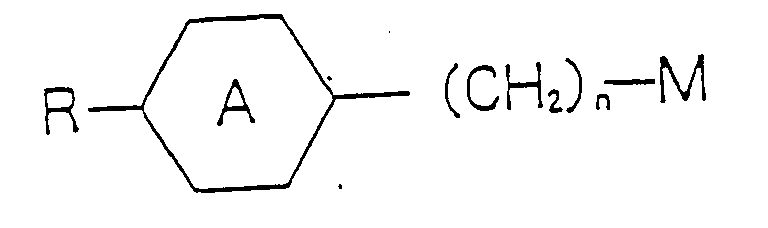
 dans lesquelles R,i, Y1, Y2 et X sont tels que définis dans la revendication 1, M représente MgHal, ZnHal (Hal représente un atome d'halogène) ou Li ; Q représente un atome d'halogène, ou un groupe alcoxy, méthane sulfonyle, benzène sulfonyle, p-toluène sulfonyle ou trifluorométhane sulfonyle, et n et m sont tous deux des nombres entiers 0, 1 ou 2, où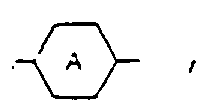
- Procédé de préparation du composé de silacyclohexane décrit dans la revendication 1, caractérisé par l'utilisation d'une réaction de formation d'une liaison carbone-carbone ou d'une réaction de formation d'une liaison carbone-silicium,
entre un réactif organométallique de formule générale :et un composé de formule :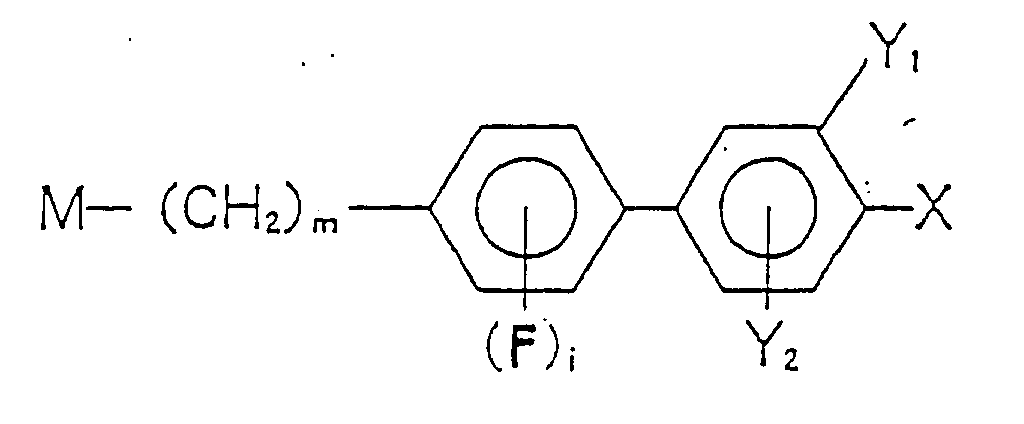
 dans lesquelles R,i, Y1, Y2 et X sont tels que définis dans la revendication 1, M représente MgHal, ZnHal (Hal représente un atome d'halogène) ou Li, Q représente un atome d'halogène, ou un groupe alcoxy ; méthane sulfonyle, benzène sulfonyle, p-toluène sulfonyle ou trifluorométhane sulfonyle, et n et m sont tous les deux des nombres entiers 0, 1 ou 2 , où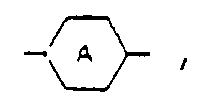
- Procédé de préparation du composé de silacyclohexane selon la revendication 1, caractérisé par l'utilisation d'une réaction de formation d'une liaison carbone-carbone entre un réactif organométallique de formule générale ci-dessous
 dans laquelle Y1, Y2 et X sont tels que définis dans la revendication 1 et M' représente M [M représente MgHal, ZnHal (Hal représente un atome d'halogène) ou Li] ou B(OR')2 (R' représente un groupe méthyle ou un atome d'hydrogène,et un composé de formule générale ci-dessous
 dans lesquelles R,et i sont tels que définis dans la revendication 1 et Q représente un atome d'halogène, ou un groupe alcoxy, méthane sulfonyle, benzène sulfonyle, p-toluène sulfonyle ou trifluorométhane sulfonyle.
- Procédé de préparation du composé silacyclohexane selon la revendication 1, caractérisé par l'utilisation d'une réaction de formation d'une liaison carbone-carbone entre un réactif organométallique de formule généraleet un composé de formule générale ci-dessous

 dans lesquelles R,i, Y1, Y2 et X sont tels que définis dans la revendication 1 et M' représente M [M représente MgHal, ZnHal (Hal représente un atome d'halogène) ou Li] ou B(OR')2 (R' représente un groupe méthyle ou un atome d'hydrogène) et Q représente un atome d'halogène ou un groupe alcoxy, méthane sulfonyle, benzène sulfonyle, p-toluène sulfonyle ou trifluorométhane sulfonyle.
- Composition à cristaux liquides caractérisée en ce qu'elle contient le composé de silacyclohexane selon la revendication 1.
- Elément d'affichage à cristaux liquides caractérisé en ce qu'il contient la composition à cristaux liquides selon la revendication 7.
Applications Claiming Priority (3)
| Application Number | Priority Date | Filing Date | Title |
|---|---|---|---|
| JP4511794 | 1994-02-18 | ||
| JP45117/94 | 1994-02-18 | ||
| JP4511794 | 1994-02-18 |
Publications (2)
| Publication Number | Publication Date |
|---|---|
| EP0668286A1 EP0668286A1 (fr) | 1995-08-23 |
| EP0668286B1 true EP0668286B1 (fr) | 2000-12-20 |
Family
ID=12710333
Family Applications (1)
| Application Number | Title | Priority Date | Filing Date |
|---|---|---|---|
| EP95101999A Expired - Lifetime EP0668286B1 (fr) | 1994-02-18 | 1995-02-14 | Un composé silacyclohexane, un procédé pour le préparer et une composition liquide cristalline le contenant |
Country Status (4)
| Country | Link |
|---|---|
| US (1) | US5523440A (fr) |
| EP (1) | EP0668286B1 (fr) |
| KR (1) | KR100236730B1 (fr) |
| DE (1) | DE69519639T2 (fr) |
Families Citing this family (10)
| Publication number | Priority date | Publication date | Assignee | Title |
|---|---|---|---|---|
| EP0699683A1 (fr) * | 1994-09-02 | 1996-03-06 | Shin-Etsu Chemical Co., Ltd. | Nouveaux composés de silacyclohexane, une composition de cristaux liquides les comprenant et un dispositif à cristaux liquides contenant ladite composition |
| DE69520546D1 (de) * | 1994-11-10 | 2001-05-10 | Shinetsu Chemical Co | Cyclohexanonverbindungen, Verfahren zu deren Herstellung und ein Verfahren zur Herstellung von Silacyclohexanderivaten aus diesen Verbindungen |
| US5679746A (en) * | 1994-12-22 | 1997-10-21 | Shin-Etsu Chemical Co., Ltd. | Silacyclohexane compound, a method of preparing it and a liquid crystal composition containing it |
| US5665271A (en) * | 1995-02-13 | 1997-09-09 | Shin-Etsu Chemical Co., Ltd. | Silacyclohexane compounds, preparation thereof, liquid crystal compositions comprising the same, and liquid crystal devices comprising the compositions |
| US6004478A (en) * | 1995-03-16 | 1999-12-21 | Shin-Etsu Chemical Co., Ltd. | Silacyclohexane compounds, preparation thereof, liquid crystal compositions comprising the same, and liquid crystal devices comprising the composition |
| US5730901A (en) * | 1995-05-11 | 1998-03-24 | Shin-Etsu Chemical Co., Ltd. | Silacyclohexane compounds, preparation thereof liquid crystal compositions comprising the same, and liquid crystal devices comprising the composition |
| KR100234828B1 (ko) * | 1995-10-16 | 1999-12-15 | 카나가와 치히로 | 액정조성물 및 이를 함유하는 액정표시소자 |
| GB2306479B (en) * | 1995-10-31 | 1999-05-26 | Shinetsu Chemical Co | A silacyclohexane compound a process for producing the same and a liquid crystal composition comprising the same |
| JPH09324178A (ja) * | 1996-04-01 | 1997-12-16 | Shin Etsu Chem Co Ltd | 液晶組成物及びそれを含む液晶表示素子 |
| AU5067298A (en) * | 1996-11-28 | 1998-06-22 | Chisso Corporation | Chlorobenzene derivatives, liquid-crystal composition, and liquid-crystal display elements |
Family Cites Families (5)
| Publication number | Priority date | Publication date | Assignee | Title |
|---|---|---|---|---|
| US4826984A (en) * | 1984-04-09 | 1989-05-02 | The Board Of Regents For The Oklahoma Agricultural And Mechanical College Acting For And On Behalf Of Oklahoma State University | Heteroarotinoid compounds as anticancer agents |
| DE3827600A1 (de) * | 1988-08-13 | 1990-02-15 | Hoechst Ag | Organosilylalkyl- oder -alkenyl-verbindungen, verfahren zu ihrer herstellung und ihre verwendung in fluessigkristallinen mischungen |
| US4973723A (en) * | 1990-06-01 | 1990-11-27 | Dow Corning Corporation | Process for preparing silacycloalkanes |
| US5454977A (en) * | 1993-06-23 | 1995-10-03 | Shin-Etsu Chemical Co., Ltd. | Silacyclohexane compound, a method of preparing it and a liquid crystal composition containing it |
| DE69416203T2 (de) * | 1993-06-28 | 1999-09-02 | Shin-Etsu Chemical Co. | Eine Silacyclohexanverbindung, deren Herstellung und diese enthaltende Flüssigkristallzusammensetzungen |
-
1995
- 1995-02-14 DE DE69519639T patent/DE69519639T2/de not_active Expired - Fee Related
- 1995-02-14 US US08/388,307 patent/US5523440A/en not_active Expired - Fee Related
- 1995-02-14 EP EP95101999A patent/EP0668286B1/fr not_active Expired - Lifetime
- 1995-02-18 KR KR1019950003131A patent/KR100236730B1/ko not_active Expired - Fee Related
Also Published As
| Publication number | Publication date |
|---|---|
| KR950032233A (ko) | 1995-12-20 |
| US5523440A (en) | 1996-06-04 |
| DE69519639T2 (de) | 2001-07-05 |
| KR100236730B1 (ko) | 2000-02-01 |
| EP0668286A1 (fr) | 1995-08-23 |
| DE69519639D1 (de) | 2001-01-25 |
Similar Documents
| Publication | Publication Date | Title |
|---|---|---|
| EP0657460B1 (fr) | Composé silacyclohexanique, procédé pour sa préparation et composition liquide cristalline le contenant | |
| EP0670322B1 (fr) | Composés de silacyclohexanes, procédé pour les préparer et mélanges de cristaux liquides les contenant | |
| EP0665232B1 (fr) | Composé silacyclohexanique, procédé pour sa préparation et composition à base de cristaux liquides le contenant | |
| EP0668286B1 (fr) | Un composé silacyclohexane, un procédé pour le préparer et une composition liquide cristalline le contenant | |
| US5547606A (en) | Silacyclohexane compound, a method of preparing it and a liquid crystal composition containing it | |
| EP0650969B1 (fr) | Composé silecyclohexane, procédé de préparation et composition crystalline liquide le contenant | |
| EP0676402B1 (fr) | Un composé silacyclohexane, un procédé pour le préparer et un composition liquide cristalline le contenant | |
| EP0668285B1 (fr) | Un composé silacyclohexane, un procédé pour le préparer et une composition liquide cristalline le contenant | |
| EP0659753B1 (fr) | Composé silacyclohexane, procédé de préparation et composition liquide cristalline le contenant | |
| EP0668284B1 (fr) | Composé silacyclohexane, procédé de préparation et composition liquide cristalline le contenant | |
| EP0718301B1 (fr) | Un composé silacyclohexane, un procédé pour le préparer et une composition de cristaux liquides le contenant | |
| US5868961A (en) | Silacyclohexane compound, a method of preparing it and a liquid crystal composition containing it | |
| JPH1129580A (ja) | シラシクロヘキサン化合物、液晶組成物およびそれを含有する液晶表示素子 | |
| JPH07278158A (ja) | シラシクロヘキサン化合物、その製造方法及びこれを含有する液晶組成物 | |
| JPH07173176A (ja) | シラシクロヘキサン化合物、その製造方法及びこれを含有する液晶組成物 | |
| JPH07278157A (ja) | シラシクロヘキサン化合物、その製造方法及びこれを含有する液晶組成物 | |
| JPH07291978A (ja) | シラシクロヘキサン化合物、その製造方法及びこれを含有する液晶組成物 | |
| JPH08176161A (ja) | シラシクロヘキサン化合物、その製造方法及びこれを含有する液晶組成物 | |
| JPH07215983A (ja) | シラシクロヘキサン化合物、その製造方法及びこれを含有する液晶組成物 | |
| JPH0848689A (ja) | シラシクロヘキサン化合物、その製造方法及びこれを含有する液晶組成物 | |
| JPH08109186A (ja) | シラシクロヘキサン化合物、その製造方法及びこれを含有する液晶組成物 | |
| JPH07252273A (ja) | シラシクロヘキサン化合物、その製造方法及びこれを含有する液晶組成物 | |
| JPH08245651A (ja) | シラシクロヘキサン化合物、その製造方法及びこれを含有する液晶組成物 | |
| JPH0892259A (ja) | シラシクロヘキサン化合物、その製造方法及びこれを含有する液晶組成物 | |
| JPH0820589A (ja) | シラシクロヘキサン化合物、その製造方法及びこれを含有する液晶組成物 |
Legal Events
| Date | Code | Title | Description |
|---|---|---|---|
| PUAI | Public reference made under article 153(3) epc to a published international application that has entered the european phase |
Free format text: ORIGINAL CODE: 0009012 |
|
| AK | Designated contracting states |
Kind code of ref document: A1 Designated state(s): DE FR GB |
|
| 17P | Request for examination filed |
Effective date: 19950915 |
|
| 17Q | First examination report despatched |
Effective date: 19980820 |
|
| GRAG | Despatch of communication of intention to grant |
Free format text: ORIGINAL CODE: EPIDOS AGRA |
|
| GRAG | Despatch of communication of intention to grant |
Free format text: ORIGINAL CODE: EPIDOS AGRA |
|
| GRAH | Despatch of communication of intention to grant a patent |
Free format text: ORIGINAL CODE: EPIDOS IGRA |
|
| GRAH | Despatch of communication of intention to grant a patent |
Free format text: ORIGINAL CODE: EPIDOS IGRA |
|
| GRAA | (expected) grant |
Free format text: ORIGINAL CODE: 0009210 |
|
| AK | Designated contracting states |
Kind code of ref document: B1 Designated state(s): DE FR GB |
|
| REF | Corresponds to: |
Ref document number: 69519639 Country of ref document: DE Date of ref document: 20010125 |
|
| PGFP | Annual fee paid to national office [announced via postgrant information from national office to epo] |
Ref country code: GB Payment date: 20010214 Year of fee payment: 7 |
|
| PGFP | Annual fee paid to national office [announced via postgrant information from national office to epo] |
Ref country code: DE Payment date: 20010223 Year of fee payment: 7 |
|
| PGFP | Annual fee paid to national office [announced via postgrant information from national office to epo] |
Ref country code: FR Payment date: 20010228 Year of fee payment: 7 |
|
| ET | Fr: translation filed | ||
| PLBE | No opposition filed within time limit |
Free format text: ORIGINAL CODE: 0009261 |
|
| STAA | Information on the status of an ep patent application or granted ep patent |
Free format text: STATUS: NO OPPOSITION FILED WITHIN TIME LIMIT |
|
| 26N | No opposition filed | ||
| REG | Reference to a national code |
Ref country code: GB Ref legal event code: IF02 |
|
| PG25 | Lapsed in a contracting state [announced via postgrant information from national office to epo] |
Ref country code: GB Free format text: LAPSE BECAUSE OF NON-PAYMENT OF DUE FEES Effective date: 20020214 |
|
| PG25 | Lapsed in a contracting state [announced via postgrant information from national office to epo] |
Ref country code: DE Free format text: LAPSE BECAUSE OF NON-PAYMENT OF DUE FEES Effective date: 20020903 |
|
| GBPC | Gb: european patent ceased through non-payment of renewal fee |
Effective date: 20020214 |
|
| PG25 | Lapsed in a contracting state [announced via postgrant information from national office to epo] |
Ref country code: FR Free format text: LAPSE BECAUSE OF NON-PAYMENT OF DUE FEES Effective date: 20021031 |
|
| REG | Reference to a national code |
Ref country code: FR Ref legal event code: ST |