EP0696300B1 - Produkte aus ethylenenpolymergemischen - Google Patents
Produkte aus ethylenenpolymergemischen Download PDFInfo
- Publication number
- EP0696300B1 EP0696300B1 EP94914235A EP94914235A EP0696300B1 EP 0696300 B1 EP0696300 B1 EP 0696300B1 EP 94914235 A EP94914235 A EP 94914235A EP 94914235 A EP94914235 A EP 94914235A EP 0696300 B1 EP0696300 B1 EP 0696300B1
- Authority
- EP
- European Patent Office
- Prior art keywords
- ethylene
- composition
- density
- percent
- olefin interpolymer
- Prior art date
- Legal status (The legal status is an assumption and is not a legal conclusion. Google has not performed a legal analysis and makes no representation as to the accuracy of the status listed.)
- Expired - Lifetime
Links
Images

Classifications
-
- C—CHEMISTRY; METALLURGY
- C08—ORGANIC MACROMOLECULAR COMPOUNDS; THEIR PREPARATION OR CHEMICAL WORKING-UP; COMPOSITIONS BASED THEREON
- C08J—WORKING-UP; GENERAL PROCESSES OF COMPOUNDING; AFTER-TREATMENT NOT COVERED BY SUBCLASSES C08B, C08C, C08F, C08G or C08H
- C08J5/00—Manufacture of articles or shaped materials containing macromolecular substances
- C08J5/18—Manufacture of films or sheets
-
- C—CHEMISTRY; METALLURGY
- C08—ORGANIC MACROMOLECULAR COMPOUNDS; THEIR PREPARATION OR CHEMICAL WORKING-UP; COMPOSITIONS BASED THEREON
- C08L—COMPOSITIONS OF MACROMOLECULAR COMPOUNDS
- C08L23/00—Compositions of homopolymers or copolymers of unsaturated aliphatic hydrocarbons having only one carbon-to-carbon double bond; Compositions of derivatives of such polymers
- C08L23/02—Compositions of homopolymers or copolymers of unsaturated aliphatic hydrocarbons having only one carbon-to-carbon double bond; Compositions of derivatives of such polymers not modified by chemical after-treatment
- C08L23/16—Ethylene-propylene or ethylene-propylene-diene copolymers
-
- C—CHEMISTRY; METALLURGY
- C08—ORGANIC MACROMOLECULAR COMPOUNDS; THEIR PREPARATION OR CHEMICAL WORKING-UP; COMPOSITIONS BASED THEREON
- C08L—COMPOSITIONS OF MACROMOLECULAR COMPOUNDS
- C08L23/00—Compositions of homopolymers or copolymers of unsaturated aliphatic hydrocarbons having only one carbon-to-carbon double bond; Compositions of derivatives of such polymers
- C08L23/02—Compositions of homopolymers or copolymers of unsaturated aliphatic hydrocarbons having only one carbon-to-carbon double bond; Compositions of derivatives of such polymers not modified by chemical after-treatment
- C08L23/04—Homopolymers or copolymers of ethene
- C08L23/08—Copolymers of ethene
- C08L23/0807—Copolymers of ethene with unsaturated hydrocarbons only containing four or more carbon atoms
- C08L23/0815—Copolymers of ethene with unsaturated hydrocarbons only containing four or more carbon atoms with aliphatic 1-olefins containing one carbon-to-carbon double bond
-
- C—CHEMISTRY; METALLURGY
- C08—ORGANIC MACROMOLECULAR COMPOUNDS; THEIR PREPARATION OR CHEMICAL WORKING-UP; COMPOSITIONS BASED THEREON
- C08F—MACROMOLECULAR COMPOUNDS OBTAINED BY REACTIONS ONLY INVOLVING CARBON-TO-CARBON UNSATURATED BONDS
- C08F210/00—Copolymers of unsaturated aliphatic hydrocarbons having only one carbon-to-carbon double bond
- C08F210/16—Copolymers of ethene with alpha-alkenes, e.g. EP rubbers
-
- C—CHEMISTRY; METALLURGY
- C08—ORGANIC MACROMOLECULAR COMPOUNDS; THEIR PREPARATION OR CHEMICAL WORKING-UP; COMPOSITIONS BASED THEREON
- C08J—WORKING-UP; GENERAL PROCESSES OF COMPOUNDING; AFTER-TREATMENT NOT COVERED BY SUBCLASSES C08B, C08C, C08F, C08G or C08H
- C08J2323/00—Characterised by the use of homopolymers or copolymers of unsaturated aliphatic hydrocarbons having only one carbon-to-carbon double bond; Derivatives of such polymers
- C08J2323/02—Characterised by the use of homopolymers or copolymers of unsaturated aliphatic hydrocarbons having only one carbon-to-carbon double bond; Derivatives of such polymers not modified by chemical after treatment
- C08J2323/04—Homopolymers or copolymers of ethene
- C08J2323/08—Copolymers of ethene
-
- C—CHEMISTRY; METALLURGY
- C08—ORGANIC MACROMOLECULAR COMPOUNDS; THEIR PREPARATION OR CHEMICAL WORKING-UP; COMPOSITIONS BASED THEREON
- C08L—COMPOSITIONS OF MACROMOLECULAR COMPOUNDS
- C08L2205/00—Polymer mixtures characterised by other features
- C08L2205/02—Polymer mixtures characterised by other features containing two or more polymers of the same C08L -group
Definitions
- Thin film products fabricated from linear low density polyethylene (LLDPE) and/or high density polyethylene (HDPE) are widely used for packaging applications such as merchandise bags, grocery sacks, and industrial liners.
- LLDPE linear low density polyethylene
- HDPE high density polyethylene
- films with high tensile strength, as well as high impact strength, are desired because film producers can down gauge their film products and still retain packaging performance.
- VLDPE very low density polyethylene
- EP-A-0572034 only relevant for novelty, describes a blend for producing films, comprising an ethylene- ⁇ -olefin copolymer (a) in an amount of 40-5 wt. %, having a melt index of 0.1 to 30 g/10 min., a density of 0.88 to 0.94 g/cc, a width of dependence of number of branches on molecular weight of 0 to 5/1000 carbons, a molecular weight distribution of 2 to 6 and a single melting peak as measured with DSC and (b) 60-95 wt. % of an ethylene- ⁇ -olefin copolymer having a density of 0.900 to 0.940 g/cc and number of branches of 10 to 40/1000 carbon.
- compositions useful in films and molded parts having synergistically enhanced physical properties which compositions comprise a blend of at least one homogeneously branched ethylene/ ⁇ -olefin interpolymer and at least one heterogeneously branched ethylene/ ⁇ -olefin interpolymer.
- formulated ethylene/ ⁇ -olefin compositions have now been discovered to have improved physical and mechanical strength and are useful in making fabricated articles.
- Films made from these novel compositions exhibit surprisingly good impact and tensile properties, and an especially good combination of modulus, yield, ultimate tensile, and toughness (e.g, dart impact).
- compositions comprise from 10 percent (by weight of the total composition) to 95 percent (by weight of the total composition) of :
- compositions comprise from 10 percent (by weight of the total composition) to 95 percent (by weight of the total composition) of :
- the invention provides a composition, particularly useful as a sealant layer for barrier bags comprising an ethylene polymer composition comprising from 30 to 40 percent (by weight of the total composition) of at least one homogeneously branched linear or substantially linear ethylene/ ⁇ -olefin interpolymer having a melt index of from 2.5 to 4 g/10 minutes and a density of from 0.89 to 0.91 g/cm 3 , and from 60 to 70 percent (by weight of the total composition) of a heterogeneously branched ethylene/ ⁇ -olefin interpolymer having a melt index of from 2.5 to 4 g/10 minutes and a density of from 0.91 to 0.93 g/cm 3 , wherein said composition is characterized by a melt index of from 2.5 to 4 g/10 minutes and by a density of from 0.89 to 0.92 g/cm 3 , while the homogeneously branched linear ethylene/ ⁇ -olefin interpolymer has a slope of strain hardening coefficient of from 1.3 to
- the invention provides a composition particularly useful as a sealant layer for lamination comprising an ethylene polymer composition comprising from 40 to 50 percent (by weight of the total composition) of at least one homogeneously branched linear or substantially linear ethylene/ ⁇ -olefin interpolymer having a melt index of from 0.7 to 1.3 g/10 minutes and a density of from 0.89 to 0.91 g/cm 3 , and from 50 to 60 percent (by weight of the total composition) of a heterogeneously branched ethylene/ ⁇ -olefin interpolymer having a melt index of from 2.3 to 3.7 g/10 minutes and a density of from 0.91 to 0.935 g/cm 3 , wherein said composition is characterized by a melt index of from 1.5 to 2.5 g/10 minutes and by a density of from 0.90 to 0.93 g/cm 3 , while the homogeneously branched linear ethylene/ ⁇ -olefin interpolymer has a slope of strain hardening coefficient of
- the invention provides a composition particularly useful for liners characterized by good impact and tensile strength and modulus, comprising an ethylene polymer composition comprising from 30 to 40 percent (by weight of the total composition) of at least one homogeneously branched linear or substantially linear ethylene/ ⁇ -olefin interpolymer having a melt index of from 0.3 to 0.7 g/10 minutes and a density of from 0.88 to 0.91 g/cm 3 , and from 60 to 70 percent (by weight of the total composition) of a heterogeneously branched ethylene/ ⁇ -olefin interpolymer having a melt index of from 0.8 to 1.4 g/10 minutes and a density of from 0.92 to 0.94 g/cm 3 , wherein said composition is characterized by a melt index of from 0.7 to 1 g/10 minutes and by a density of from 0.90 to 0.93 g/cm 3 , while the homogeneously branched linear ethylene/ ⁇ -olefin interpolymer has
- both the homogeneously branched substantially linear ethylene/ ⁇ -olefin interpolymer and the homogeneously branched linear ethylene/ ⁇ -olefin interpolymer each have a slope of strain hardening coefficient greater than or equal to 1.3.
- the homogeneously branched ethylene/ ⁇ -olefin interpolymers useful for forming the compositions described herein are those in which the comonomer is randomly distributed within a given interpolymer molecule and wherein substantially all of the interpolymer molecules have the same ethylene/comonomer ratio within that interpolymer.
- the homogeniety of the interpolymers is typically described by the SCBDI (Short Chain Branch Distribution Index) or CDBI (Composition Distribution Branch Index) and is defined as the weight percent of the polymer molecules having a comonomer content within 50 percent of the median total molar comonomer content.
- the CDBI of a polymer is readily calculated from data obtained from techniques known in the art, such as, for example, temperature rising elution fractionation (abbreviated herein as "TREF") as described, for example, in Wild et al, Journal of Polymer Science, Poly. Phys. Ed., Vol. 20, p. 441 (1982), in U.S. Patent 4,798,081 (Hazlitt et al.), or in U.S. Patent 5,089,321 (Chum et al.).
- the SCBDI or CDBI for the linear and for the substantially linear olefin polymers of the present invention is preferably greater than 3U percent, especially greater than 50 percent.
- the homogeneous ethylene/ ⁇ -olefin polymers used in this invention essentially lack a measurable "high density" fraction as measured by the TREF technique (i.e., the homogeneously branched ethylene/ ⁇ -olefin polymers do not contain a polymer fraction with a degree of branching less than or equal to 2 methyls/1000 carbons).
- the homogeneously branched ethylene/ ⁇ -olefin polymers also do not contain any highly short chain branched fraction (i.e., the homogeneously branched ethylene/ ⁇ -olefin polymer do not contain a polymer fraction with a degree of branching equal to or more than 30 methyls/1000 carbons).
- the homogeneously branched ethylene/ ⁇ -olefin interpolymers for use in the present invention typically are interpolymers of ethylene with at least one C 3 -C 20 ⁇ -olefin and/or C 4 -C 18 diolefins. Copolymers of ethylene and 1-octene are especially preferred.
- the term "interpolymer” is used herein to indicate a copolymer, or a terpolymer, or the like. That is, at least one other comonomer is polymerized with ethylene to make the interpolymer.
- Ethylene copolymerized with two or more comonomers can also be used to make the homogeneously branched ethylene/ ⁇ -olefin interpolymers useful in this invention.
- Preferred comonomers include the C 3 -C 20 ⁇ -olefins, especially propene, isobutylene, 1-butene, 1-hexene, 4-methyl-1- pentene, 1-heptene, 1-octene, 1-nonene, and 1-decene, more preferably 1-butene, 1-hexene, 4-methyl-1-pentene and 1-octene.
- the homogeneously branched ethylene/ ⁇ -olefin interpolymer is preferably a homogeneously branched substantially linear ethylene/a ⁇ -olefin interpolymer as described in U. S. Patent No. 5,272,236.
- the homogeneously branched ethylene/ ⁇ -olefin interpolymer can also be a linear ethylene/ ⁇ -olefin interpolymer as described in U. S. Patent No. 3,645,992 (Elston).
- the substantially linear ethylene/ ⁇ -olefin interpolymers are not "linear" polymers in the traditional sense of the term, as used to describe linear low density polyethylene (e.g., Ziegler polymerized linear low density polyethylene (LLDPE)), nor are they highly branched polymers, as used to describe low density polyethylene (LDPE). Rather, the substantially linear ethylene/ ⁇ -olefin interpolymers of the present invention are as described in US Patent No. 5,272,236.
- substantially linear means that the polymer backbone is substituted with from 0.01 long-chain branches/1000 carbons to 3 long-chain branches/1000 carbons, preferably from 0.01 long-chain branche/1000 carbons to 1 long-chain branch/1000 carbons, more preferably from 0.05 long-chain branches/1000 carbons to 1 long-chain branch/1000 carbons, still more preferably from 0.1 long chain branches/1000 carbons to 3 long-chain branches/1000 carbons.
- Long-chain branching is here defines as a chain length of at least 6 carbon atoms, above which the length cannot be distinguished using 13 C-nuclear magnetic resonance spectroscopy, yet the long-chain branch can be about the same length as the length of the polymer backbone.
- Substantially linear ethylene/ ⁇ -olefin interpolymers are prepared using constrained geometry catalyst as described in U. S. Patent No. 5,272,236.
- linear ethylene/ ⁇ -olefin interpolymer means that the interpolymer does not have long chain branching. That is, the linear ethylene/ ⁇ -olefin interpolymer has an absence of long chain branching, as for example the linear low density polyethylene polymers or linear high density polyethylene polymers made using uniform (i.e., homogeneous) branching distribution polymerization processes such as is described in U. S. Patent No. 3,645,992.
- Linear ethylene/ ⁇ -olefin interpolymers are those in which the comonomer is randomly distributed within a given interpolymer molecule and wherein substantially all of the interpolymer molecules have the same ethylene/comonomer ratio within that interpolymer.
- linear ethylene/ ⁇ -olefin interpolymer does not refer to high pressure branched (free-radical polymerized) polyethylene which is known to those skilled in the art to have numerous long chain branches.
- the branching distribution of the homogeneously branched linear ethylene/ ⁇ -olefin interpolymers is the same or substantially the same as that described for the homogeneously branched substantially linear ethylene/ ⁇ -olefin interpolymers, with the exception that the linear ethylene/ ⁇ -olefin interpolymers do not have any long chain branching.
- Both the homogeneously branched substantially linear and linear ethylene/ ⁇ -olefin interpolymers have a single melting point, as opposed to traditional heterogeneously branched Ziegler polymerized ethylene/ ⁇ -olefin copolymers having two or more melting points, as determined using differential scanning calorimetry (DSC).
- DSC differential scanning calorimetry
- the density of the homogeneously branched linear or substantially linear ethylene/ ⁇ -olefin interpolymers (as measured in accordance with ASTM D-792) for use in the present invention is generally from 0.89 g/cm 3 to 0.935 g/cm 3 , preferably from 0.9 g/cm 3 to 0.92 g/cm 3 .
- the amount of the homogeneously branched linear or substantially linear ethylene/ ⁇ -olefin polymer incorporated into the composition varies depending upon the heterogeneously branched ethylene polymer to which it is combined. However, about 50 percent (by weight of the total composition) of the homogeneous linear or substantially linear ethylene/ ⁇ -olefin polymer is especially preferred in the novel compositions disclosed herein.
- the molecular weight of the homogeneously branched linear or substantially linear ethylene/ ⁇ -olefin interpolymers for use in the present invention is conveniently indicated using a melt index measurement according to ASTM D-1238, Condition 190° C/2.16 kg (formerly known as "Condition (E)" and also known as I 2 ). Melt index is inversely proportional to the molecular weight of the polymer. Thus, the higher the molecular weight, the lower the melt index, although the relationship is not linear.
- the lower melt index limit for the homogeneously branched linear or substantially linear ethylene/ ⁇ -olefin interpolymers useful herein is generally 0.001 grams/10 minutes (g/10 min).
- the upper melt index limit for the homogeneously branched linear or substantially linear ethylene/ ⁇ -olefin interpolymers is typically 10 g/10 min, preferably less than 1 g/10 min, and especially less than 0.5 g/10 min.
- Another measurement useful in characterizing the molecular weight of the homogeneously branched linear or substantially linear ethylene/ ⁇ -olefin interpolymers is conveniently indicated using a melt index measurement according to ASTM D-1238, Condition 190°C/10 kg (formerly known as "Condition (N)" and also known as I 10 ).
- the ratio of the I 10 and I 2 melt index terms is the melt flow ratio and is designated as I 10 /I 2 .
- the I 10/ I 2 ratio for the homogeneously branched linear ethylene/ ⁇ -olefin interpolymers is about 5.6.
- the I 10 /I 2 ratio indicates the degree of long chain branchina, i.e.,the higher the I 10 /I 2 ratio, the more long chain branching in the interpolymer.
- the I 10 /I 2 ratio of the homogeneously branched substantially linear ethylene/ ⁇ -olefin interpolymers is at least 6, preferably at least 7, especially at least 8.
- the higher the I 10 /I 2 ratio the better the processability.
- antioxidants e.g., hindered phenolics (e.g., Irganox ® 1010 made by Ciba Geigy Corp.), phosphites (e.g., Irgafos ® 168 also made by Ciba Geigy Corp.), cling additives (e.g., PIB), antiblock additives, pigments, fillers, and the like can also be included in the formulations, to the extent that they do not interfere with the enhanced formulation properties of the composition of the invention.
- antioxidants e.g., hindered phenolics (e.g., Irganox ® 1010 made by Ciba Geigy Corp.), phosphites (e.g., Irgafos ® 168 also made by Ciba Geigy Corp.), cling additives (e.g., PIB), antiblock additives, pigments, fillers, and the like can also be included in the formulations, to the
- the molecular weight distribution of the linear or substantially linear olefin interpolymer product samples is analyzed by gel permeation chromatography (GPC) on a Waters 150°C high temperature chromatographic unit equipped with three mixed porosity columns (Polymer Laboratories 10 3 , 10 4 , 10 5 , and 10 6 ), operating at a system temperature of 140°C.
- the solvent is 1,2,4-trichlorobenzene, from which 0.3 percent by weight solutions of the samples are prepared for injection.
- the flow rate is 1.0 milliliter/minute and the injection size is 200 microliters.
- a differential refractometer is being used as the detector.
- the molecular weight determination is deduced by using narrow molecular weight distribution polystyrene standards (from Polymer Laboratories) in conjunction with their elution volumes.
- the molecular weight distribution (M w /M n ) is preferably from 1.8 to 2.8, more preferably from 1.89 to 2.2 and especially 2.
- the slope of strain hardening is measured by compression molding a plaque from the polymer to be tested.
- the plaque is molded at about 177°C for 4 minutes under almost no pressure and then pressed for 3 minutes under a pressure of about 200 psi (1400 kPa).
- the plaque is then allowed to cool at about 8°C/minute while still under 200 psi (1400 kPa) pressure.
- the molded plaque has a thickness of about 0.005 inches (0.01 cm).
- the plaque is then cut into a dogbone shaped test piece using a steel rule die.
- the test piece is 0.315 inches ( 0.08 cm) wide and 1.063 inches ( 2.7 cm) long.
- the start of the curved portion of the dogbone shape begins at 0.315 (0.8 cm) inches from each end of the sample and gently curves (i.e., tapers) to a width of 0.09 inches (0.2 cm).
- the curve ends at a point 0.118 inches (0.3 cm) from the start of the curve such that the interior portion of the dogbone test piece has a width of 0.09 inches (0.2 cm) and a length of 0.197 inches (0.5 cm).
- the tensile properties of the test sample is tested on an Instron Tensile Tester at a crosshead speed of 1 inch/minute (2.5 cm/minute).
- the slope of strain hardening is calculated from the resulting tensile curve by drawing a line parallel to the strain hardening region of the resulting stress/strain curve.
- the strain hardening region occurs after the sample has pulled its initial load (i.e., stress) usually with little or no elongation during the intial load) and after the sample has gone through a slight drawing stage (usually with little or no increase in load, but with increasing elongation (i.e., strain)). In the strain hardening region, the load and the elongation of the sample both continue to increase.
- Figure 1 shows the various stages of the stress/strain curve used to calculate the slope of strain hardening. The slope of the parallel line in the strain hardening region is then determined.
- the SHC is greater than 1.3, preferably greater than 1.5. Typically, the SHC will be less than 10, more typically less than 4, and most typically less than 2.5.
- the slope of strain hardening coefficient reaches a maximum for the linear or the substantially linear ethylene/ ⁇ -olefin polymers at a density from 0.89 g/cm 3 to 0.935 g/cm 3 .
- Heterogeneous ethylene/ ⁇ -olefin polymers in contrast, do not behave in the same manner.
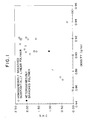
- Figure 1 graphically compares the density of the homogeneously branched substantially linear ethylene polymers and heterogeneously branched ethylene/ ⁇ -olefin polymers (polymer W** in table I) as a function of their slope of strain hardening coefficient.
- Table 1 displays the data of Figure 1 in tabular form: Polymer Melt Index (I 2 ) (g/10 min) Density (g/cm 3 ) I 10 /I 2 SHC A 1 0.8564 7.36 0.004 B 1.03 0.8698 7.46 0.45 C 0.57 0.873 7.22 0.54 D 1.01 0.8817 7.36 0.89 E 1.06 0.9018 7.61 1.84 F 2.01 0.9041 8.07 2.03 G 0.77 0.9047 9.01 1.57 H 9.82 0.9048 7.03 1.67 I 4.78 0.9077 7.18 2.08 J 3.13 0.9113 7.67 2.04 K 2.86 0.9139 7.87 2.27 L 1.08 0.9197 8.07 2.24 M 0.96 0.9198 9.61 1.93 N 0.99 0.9203 9.09 2.23 O 1.11 0.9204 10.15 1.59 P 1.06 0.9205 9.08 2.25 Q 1.12 0.9216 8.94 2.3 R 30.74 0.9217 6.27 2 S 31.58 0.94 6.02 0.24 T 0.97 0.9512 12.11 0 U 0.97 0.9533 1
- the ethylene polymer to be combined with the homogeneous ethylene/ ⁇ -olefin interpolymer is a heterogeneously branched (e.g., Ziegler polymerized) interpolymer of ethylene with at least one C 3 -C 20 ⁇ -olefin (e.g., linear low density polyethylene (LLDPE)).
- a heterogeneously branched interpolymer of ethylene with at least one C 3 -C 20 ⁇ -olefin e.g., linear low density polyethylene (LLDPE)
- Heterogeneously branched ethylene/ ⁇ -olefin interpolymers differ from the homogeneously branched ethylene/ ⁇ -olefin interpolymers primarily in their branching distribution.
- heterogeneously branched LLDPE polymers have a distribution of branching, including a highly branched portion (similar to a very low density polyethylene), a medium branched portion (similar to a medium branched polyethylene) and an essentially linear portion (similar to linear homopolymer polyethylene). The amount of each of these fractions varies depending upon the whole polymer properties desired.
- the heterogeneously branched ethylene polymer is a heterogeneously branched Ziegler polymerized ethylene/ ⁇ -olefin interpolymer having no more than about 10 percent (by weight of the polymer) of a polymer fraction having a SHC ⁇ 1.3.
- the hererogeneously branched ethylene polymer is a copolymer of ethylene with a C 3 -C 20 ⁇ -olefin, wherein the copolymer has :
- the heterogeneously branched ethylene/ ⁇ -olefin interpolymers and/or copolymers also have at least two melting peaks as determined using Differential scanning Calorimetry (DSC).
- Suitable heterogeneously branched ethylene/ ⁇ -olefin interpolymers include DOWLEX* 2030, 2038 and 2090 (all of which are characterized by a density of 0.935 g/cm 3 and an I 2 of 1 g/10 minutes), DOWLEX 2027 (characterized by a density of 0.941 g/cm 3 and an I 2 of 4 g/10 minutes), and DOWLEX 2089 (characterized by a density of 0.93 g/cm 3 and an I 2 of 0.8 g/10 minutes) all of which are available from The Dow Chemical Company. (*DOWLEX is a trademark of The Dow Chemical Company).
- compositions disclosed herein can be formed by any convenient method, including dry blending the individual components and subsequently melt mixing or by pre-melt mixing in a separate extruder (e.g., a Banbury mixer, a Haake mixer, a Brabender internal mixer, or a twin screw extruder.
- a separate extruder e.g., a Banbury mixer, a Haake mixer, a Brabender internal mixer, or a twin screw extruder.
- compositions in-situ is via the interpolymerization of ethylene and C 3 -C 20 alpha-olefins using a homogeneous (eg. constrained geometry) catalyst in at least one reactor and a heterogeneous (eg. Ziegler) catalyst in at least one other reactor.
- a homogeneous (eg. constrained geometry) catalyst in at least one reactor
- a heterogeneous (eg. Ziegler) catalyst in at least one other reactor.
- the reactors can be operated sequentially or in parallel.
- compositions can also be made by fractionating a heterogeneous ethylene/ ⁇ -olefin polymer into specific polymer fractions with each fraction having a narrow composition (i.e., branching) distribution, selecting the fraction having the specified properties (e.g., SHC ⁇ 1.3), and blending the selected fraction in the appropriate amounts wich another ethylene polymer.
- This method is obviously not as economical as the in-situ interpolymerizations described above, but can be used to obtain the compositions of the invention.
- molding operations can be used to form useful fabricated articles or parts from the compositions disclosed herein, including various injection molding processes (e.g., that described in Modern Plastics Encyclopedia/89, Mid October 1988 Issue, Volume 65, Number 11, pp. 264-268, "Introduction to Injection Molding” by H. Randall Parker and on pp. 270-271, "Injection Molding Thermoplastics” by Michael W. Green and blow molding processes (e.g., that described in Modern Plastics Encyclopedia/89 , Mid October 1988 Issue, Volume 65, Number 11, pp.
- Rotomolded articles can also benefit from the novel compositions described herein. Rotomolding techniques are well known to those skilled in the art and include, for example, those described in Modern Plastics Encyclopedia/89, Mid October 1988 Issue, Volume 65, Number 11, pp. 296-301, "Rotational Molding” by R.L. Fair.
- Fibers e.g., staple fibers, melt blown fibers or spunbonded fibers (using, e.g., systems as disclosed in U.S. Patent No. 4,340,563, U. S. Patent No. 4,663,220, U. S. Patent No. 4,668,566, or U. S. Patent No. 4,322,027
- gel spun fibers e.g., the system disclosed in U. S. Patent No. 4,413,110
- both woven and nonwoven fabrics e.g., spunlaced fabrics disclosed in U. S. Patent No. 3,485,706
- structures made from such fibers including, e.g., blends of these fibers with other fibers, e.g., PET or cotton
- novel compositions disclosed herein can also be made from the novel compositions disclosed herein.
- Film and film structures particularly benefit from the novel compositions described herein and can be made using conventional hot blown film fabrication techniques or other biaxial orientation processes such as tenter frames or double bubble processes.
- Conventional hot blown film processes are described, for example, in The Encyclopedia of Chemical Technology, Kirk-Othmer, Third Edition, John Wiley & Sons, New York, 1981, Vol. 16, pp. 416-417 and Vol. 18, pp. 191-192.
- Biaxial orientation film manufacturing process such as described in a "double bubble"process as in U.S. Patent 3,456,044 (Pahlke), and the processes described in U.S. Patent 4,352,849 (Mueller), U.S. Patent 4,597,920 (Golike), U.S.
- Patent 4,820,557 (Warren), U.S. Patent 4,837,084 (Warren), U.S. Patent 4,865,902 (Golike et al.), U.S. Patent 4,927,708 (Herran et al.), U.S. Patent 4,952,451 (Mueller), U.S. Patent 4,963,419 (Lustig et al.), and U.S. Patent 5,059,481 (Lustig et al.), can also be used to make film structures from the novel compositions described herein.
- the film structures can also be made as described in a tenter-frame technique, such as that used for oriented polypropylene.
- the films may be monolayer or multilayer films.
- the film made from the novel compositions can also be coextruded with the other layer(s) or the film can be laminated onto another layer(s) in a secondary operation, such as that described in Packaging Foods With Plastics , by Wilmer A. Jenkins and James P. Harrington (1991) or that described in "Coextrusion For Barrier Packaging” by W.J. Schrenk and C.R. Finch, Society of Plastics Engineers RETEC Proceedings, June 15-17 (1981), pp. 211-229. If a monolayer film is produced via tubular film (i.e., blown film techniques) or flat die (i.e., cast film) as described by K.R. Osborn and W.A.
- the film must go through an additional post-extrusion step of adhesive or extrusion lamination to other packaging material layers to form a multilayer structure. If the film is a coextrusion of two or more layers (also decribed by Osborn and Jenkins), the film may still be laminated to additional layers of packaging materials, depending on the other physical requirements of the final film. "Laminations Vs. Coextrusion” by D. Dumbleton (Converting Magazine (September 1992), also dicusses lamination versus coextrusion. Monolayer and coextruded films can also go through other post extrusion techniques, such as a biaxial orientation process.
- Extrusion coating is yet another technique for producing multilayer film structures using the novel compositions described herein.
- the novel compositions comprise at least one layer of the film structure. Similar to cast film, extrusion coating is a flat die technique. A sealant can be extrusion coated onto a substrate either in the form of a monolayer or a coextruded extrudate.
- the novel compositions described herein comprise at least one layer of the total multilayer film structure.
- Other layers of the multilayer structure include but are not limited to barrier layers, and/or tie layers, and/or structural layers. Various materials can be used for these layers, with some of them being used as more than one layer in the same film structure.
- Some of these materials include: foil, nylon, ethylene/vinyl alcohol (EVOH) copolymers, polyvinylidene chloride (PVDC), polyethylene terepthalate (PET), oriented polypropylene (OPP), ethylene/vinyl acetate (EVA) copolymers, ethylene/acrylic acid (EAA) copolymers, ethylene/methacrylic acid (EMAA) copolymers, LLDPE, HDPE. LDPE, nylon, graft adhesive polymers (e.g., maleic anhydride grafted polyethylene), and paper.
- the multilayer film structures comprises from 2 to 7 layers.
- DOWLEX TM 2038 a heterogeneously branched ethylene/1-octene copolymer having I 2 of 1 g/10 min, density of 0.935 g/cm 3 , I 10 /I 2 of 7.8, and M w /M n of 3.4 (available from The Dow Chemical Company)).
- the heterogeneously branched ethylene/1-octene copolymer has a fraction of about 5 percent (by weight of the heterogeneously branched copolymer) having a SHC ⁇ 1.3.
- the dry blend is tumble blended in a 50 gallon (190 L) drum for about 1 hour.
- the melt blend is produced in a ZSK 30 twin screw extruder (30 mm screw diameter) and is then fabricated into film.
- the final blended composition has a density of 0.919 g/cm 3 .
- the blended composition is then fabricated into blown film having a thickness of about 1 mil (0.03 mm) on an Egan Blown Film Line having a 2 inch (5 cm) diameter screw, a 3 inch (8 cm) die and at a 2.5 inch (6.4 cm) blow up ratio (BUR), as described in Table 2.
- BUR blow up ratio
- Film properties are measured and reported in Table 3 with other examples of the invention and with comparative examples.
- Dart impact (type A) of the films is measured in accordance with ASTM D-1709-85; tensile strength, yield, toughness, and 2% secant modulus of the films is measured in accordance with ASTM D-882;
- Elmendorf tear (type B) is measured in accordance with ASTM D-1922;
- PPT tear is measured in accordance with ASTM D-2582;
- Block is measured in accordance with ASTM D-3354.
- Puncture is measured by using an Instron tensiometer Tensile Tester with an integrator, a specimen holder that holds the film sample taut across a circular opening, and a rod-like puncturing device with a rounded tip (ball) which is attached to the cross-head of the Instron and impinges perpendicularly onto the film sample.
- the Instron is set to obtain a crosshead speed of 10 inches/minute (25 cm/minute) and a chart speed (if used) of 10 inches/minute (25 cm/minute).
- Load range of 50% of the load cell capacity (100 lb. (45 kg) load for these tests) should be used.
- Puncture resistance as expressed in J/cm3 equals puncture resistance as expressed in ft-lbs/in 3 multiplied by 0.082737 J ⁇ in 3 /ft-lb ⁇ cm 3 .
- the heterogeneously branched ethylene/1-octene copolymer has a fraction of 5 percent (by weight of the heterogeneously branched copolymer) having a SHC 3 1.3.
- the final blended composition has a density of 0.92 g/cm 3 .
- Blown film is made as described in Table 2 and film properties are measured and reported in Table 3 with other examples of the invention and with comparative examples.
- the heterogeneously branched ethylene/1-octene copolymer has a fraction of 36 percent (by weight of the heterogeneous copolymer) having a SHC ⁇ 1.3.
- the entire heterogeneous ethylene/1-octene copolymer has a SHC of 1.5.
- Blown film is made as described in Table 2 and film properties are measured and reported in Table 3 with other examples of the invention and with comparative examples.
- Example 4 is an in-situ blend made according to a continuous polymerization process.
- a known weight of the constrained-geometry organometallic complex [ ⁇ (CH 3 ) 4 C 5 ) ⁇ -(CH 3 ) 2 Si-N-(t-C 4 H 9 )]Ti(CH 3 ) 2 is dissolved in Isopar TM E hydrocarbon (available from Exxon) to give a clear solution with a concentration of Ti of 0.001M.
- Isopar TM E hydrocarbon available from Exxon
- a heterogeneous Ziegler-type catalyst was prepared substantially according to U. S. Patent No. 4,612,300 (Ex. P.), by sequentially adding to a volume of Isopar TM E hydrocarbon, a slurry of anhydrous magnesium chloride in Isopar TM E hydrocarbon, a solution of EtAlCl 2 in hexane, and a solution of Ti(O-iPr) 4 in Isopar TM E hydrocarbon, to yield a composition containing a magnesium concentration of 0.17M and a ratio of Mg/Al/Ti of 40/12/3.
- Ethylene is fed into a first reactor at a rate of 3/hr (1.4 kg/hr).
- a diluent mixture comprising ISOPAR TM E hydrocarbon (available from Exxon) and 1-octene.
- the 1-octene:ethylene ratio is 8.3:1 (mole percent)
- the diluent:ethylene ratio is 13:1 (weight)
- the hydrogen:ethylene ratio is 0.032:1 (mol %).
- a homogeneous constrained geometry catalyst and cocatalyst such as are described above are introduced into the first reactor.
- the catalyst and cocatalyst concentrations in the first reactor are 0.0001 and 0.0010 molar, respectively.
- the catalyst and cocatalyst flow rates into the first reactor are 0.37 lbs/hr (0.17 kg/hr) and 0.42 lbs/hr (0.19 kg/hr), respectively.
- the polymerization is conducted at a reaction temperature of 115°C.
- the polymer of the first reactor is an ethylene/1-octene copolymer and is estimated to have a density of 0.905 g/cm 3 , a melt flow ratio (I 10 /I 2 ) of about 8-10 and a molecular weight distribution (M w /M n ) of 2.
- the reaction product of the first reactor is transferred to a second reactor.
- the ethylene concentration in the exit stream from the first reactor is less than four percent, indicating the presence of long chain branching as described in U.S. Patent No. 5,272,236.
- Ethylene is further fed into a second reactor at a rate of 3.0 lbs/hr (1.4 kg/hr).
- a second reactor Prior to introduction into the second reactor, the ethylene and a stream of hydrogen are combined with a diluent mixture comprising ISOPAR TM E hydrocarbon (available from Exxon) and 1-octene.
- ISOPAR TM E hydrocarbon available from Exxon
- 1-octene:ethylene ratio is 2.3:1 (mole percent)
- the diluent:ethylene ratio is 2.3:1 (weight)
- the hydrogen:ethylene ratio is 0.280 (mole percent).
- a heterogeneous Ziegler catalyst and cocatalyst such as are described in Example 1 above are introduced into the second reactor.
- the catalyst and cocatalyst concentrations in the second reactor are 0.0004 and 0.0040 molar, respectively.
- the catalyst and cocatalyst flow rates into the second reactor are 0.56 lbs/hr (0.26 kg/hr) and 0.34 lbs/hr (0.16 kg/hr), respectively.
- the polymerization is conducted at a reaction temperature of 200°C.
- the polymer of the second reactor is an ethylene/1-octene copolymer and estimated to have a density of 0.94 g/cm 3 and a melt index (I 2 ) of 1.6 g/10 minutes.
- the total composition comprises 50 percent by weight of the polymer of the first reactor and 50 percent by weight of the polymer of the second reactor.
- the total composition has a melt index (I 2 ) of 1.05 g/10 minutes, a density of 0.9245 g/cm 3 , a melt low ratio (I 10 /I 2 ) of 7.4, and a molecular weight distribution (M w /M n of 2.6.
- This composition is made into blown film as described in Table 2 and the resultant film properties are reported in Table 3.
- Comparative Example 5 is an ethylene/1-octene copolymer made according to US Patent Number 5,250,612. About 15% (by weight of the total composition) is made in a first reactor, with the remaining portion of the composition polymerized in a second sequentially operated reactor. Both reactors utilize Ziegler type catalysts and make heterogeneously branched polymers.
- the total composition has a melt index (I 2 ) of 0.56 g/10 min., a density of 0.9256 g/cm 3 , a melt flow ratio (I 10 /I 2 ) of 9.5 and a molecular weight distribution (M w /M n ) of 4.35.
- This composition is also made into blown film as described in Table 2 and the resultant film properties are reported in Table 3.
- Example 6 is an in-situ blend made according to a continuous polymerization process.
- ethylene is fed into a first reactor at a rate of 52 1b/hr (24 kg/hr).
- a diluent mixture comprising ISOPAR TM E hydrocarbon (available from Exxon) and 1-octene.
- ISOPAR TM E hydrocarbon available from Exxon
- 1-octene:ethylene ratio is 9.6:1 (mole percent) and the diluent:ethylene ratio is 9.9:1 (weight).
- a homogeneous constrained geometry catalyst and cocatalyst such as are described in Example 4 above and introduced into the first reactor.
- the catalyst and cocatalyst concentrations in the first reactor are 0.0030 and 0.0113 molar, respectively.
- the catalyst and cocatalyst flow rates into the first reactor are 0.537 lbs/hr (0.224 kg/hr) and 0.511 lbs/hr (0.232 kg/hr), respectively.
- the polymerization is conducted at a reaction temperature of 120°C.
- the polymer of the first reactor is an ethylene/1-octene copolymer and is estimated to have a density of 0.906 g/cm 3 , a melt flow ratio (I 10 /I 2 ) of about 8-10 and a molecular weight distribution (M w /M n ) of 2.2.
- the reaction product of the first reactor is transferred to a second reactor.
- the ethylene concentration in the exit stream from the first reactor is less than four percent, indicating the presence of long chain branching as described in U.S. Patent No. 5,272,236.
- Ethylene is further fed into a second reactor at a rate of 58 lbs/hr (26 kg/hr).
- a second reactor Prior to introduction into the second reactor, the ethylene and a stream of hydrogen are combined with a diluent mixture comprising ISOPAR TM E hydrocarbon (available from Exxon) and 1-octene.
- ISOPAR TM E hydrocarbon available from Exxon
- 1-octene:ethylene ratio is 2.9:1 (mole percent)
- the diluent:ethylene ratio is 2.8 (weight)
- the hydrogen:ethylene ratio is 0.106 (mole percent).
- a heterogeneous Ziegler catalyst and cocatalyst such as are described in Example 4 above are introduced into the second reactor.
- the catalyst and cocatalyst concentrations in the second reactor are 0.0023 and 0.0221 molar, respectively.
- the catalyst and cocatalyst flow rates into the second reactor are 1.4 lbs/hr (0.64 kg/hr) and 0.858 lbs/hr (0.39 kg/hr), respectively.
- the polymerization is conducted at a reaction temperature of 190°C.
- the polymer of the second reactor is an ethylene/1-octene copolymer and estimated to have a density of 0.944 g/cm 3 and a melt index (I 2 ) of 1.5 g/10 minutes.
- the total composition comprises 43 percent by weight of the polymer of the first reactor and 57 percent by weight of the polymer of the second reactor.
- the total composition has a melt index (I 2 ) of 0.53 g/10 minutes, a density of 0.9246 g/cm 3 , a melt flow ratio (I 10 /I 2 ) of 7.83, and a molecular weight distribution (M w /M n ) of 2.8.
- Comparative Example 7 is an ethylene/1-octene copolymer made according to U.S. Patent Number 5,250,612. About 25% (by weight of the total composition) is made in a first reactor, with the remaining portion of the composition polymerized in a second sequentially operated reactor. Both reactors utilize Ziegler type catalysts and make heterogeneously branched polymers.
- the total composition has a melt index (I 2 ) of 0.49 g/10 min., a density of 0.9244 g/cm 3 , a melt flow ratio (I 10 /I 2 ) of 10 and a molecular weight distribution (M w /M n ) of 4.78.
- This composition is also made into blown film as described in Table 2 and the resultant film properties are reported in Table 3.
- Comparative example 8 is a heterogeneously branched ethylene/1-octene copolymer having a melt index (I 2 ) of 1 g/10 minutes, a density of 0.9249 g/cm 3 , a melt flow ratio (I 10 /I 2 ) of 8 and a molecular weight distrubution (M w /M n ) of 3.5.
- films made from the novel formulated ethylene/ ⁇ -olefin compositions exhibit good impact and tensile properties, and an especially good combination of tensile, yield and toughness (e.g., toughness and dart impact). Further, films from the example resins exhibited significant improvements over films made from the comparative resins in a number of key properties.
- examples 1 and 2 comparing examples 1 and 2 with comparative example 3, the data show films produced from the melt blends (examples 1 and 2) exhibited significantly higher values for the following film properties: dart impact, MD tensile, CD tensile, MD toughness, CD toughness MD ppt tear, DC ppt tear, CD Elmendorf tear B, puncture and significantly lower block.
Landscapes
- Chemical & Material Sciences (AREA)
- Health & Medical Sciences (AREA)
- Chemical Kinetics & Catalysis (AREA)
- Medicinal Chemistry (AREA)
- Polymers & Plastics (AREA)
- Organic Chemistry (AREA)
- Engineering & Computer Science (AREA)
- Manufacturing & Machinery (AREA)
- Materials Engineering (AREA)
- Compositions Of Macromolecular Compounds (AREA)
- Manufacture Of Macromolecular Shaped Articles (AREA)
- Processes Of Treating Macromolecular Substances (AREA)
- Addition Polymer Or Copolymer, Post-Treatments, Or Chemical Modifications (AREA)
Claims (25)
- Ethylenpolymerzusammensetzung, umfassend von 10 Prozent (bezogen auf das Gewicht der gesamten Zusammensetzung) bis 95 Prozent (bezogen auf das Gewicht der gesamten Zusammensetzung):(A) mindestens eines homogen verzweigten im wesentlichen linearen Ethylen/α-Olefin Interpolymers mit:(i) einer Dichte von 0,88 Gramm/Kubikzentimeter (g/cm3) bis 0,935 g/cm3,(ii) einer Molekulargewichtsverteilung (Mw/Mn) von 1,8 bis 2,8,(iii) einem Schmelzindex (I2) von 0,001 Gramm/10 Minuten (g/10 min) bis 10 g/10 min,(iv) keinem Anteil von linearem Polymer, und(v) einem einzigen Schmelzpeak, wie bei Differentialscanningkalorimetrie bestimmt, und(B) von 5 Prozent (bezogen auf das Gewicht der gesamten Zusammensetzung) bis 90 Prozent (bezogen auf das Gewicht der gesamten Zusammensetzung) mindestens eines heterogen verzweigten Ethylenpolymers mit einer Dichte von 0,91 g/cm3 bis 0,965 g/cm3.
- Ethylenpolymerzusammensetzung nach Anspruch 1, wobei das homogen verzweigte im wesentlichen lineare Ethylen/α-Olefin Interpolymer mit 0,01 Langkettenzweigen/1000 Kohlenstoffe bis 3 Langkettenzweigen/1000 Kohlenstoffe substituiert ist.
- Zusammensetzung nach einem der Ansprüche 1 oder 2, wobei das homogen verzweigte im wesentlichen lineare Ethylenlα-Olefin Interpolymer eine Steigung des Umformverfestigungskoeffizienten von 1,3 bis 10 hat.
- Ethylenpolymerzusammensetzung, umfassend von 10 Prozent (bezogen auf das Gewicht der gesamten Zusammensetzung) bis 95 Prozent (bezogen auf das Gewicht der gesamten Zusammensetzung):(A) mindestens eines homogen verzweigten linearen Ethylen/α-Olefin Interpolymers mit:(i) einer Dichte von 0,88 Gramm/Kubikzentimeter (g/cm3) bis 0,935 g/cm3,(ii) einer Molekulargewichtsverteilung (Mw/Mn) von 1,8 bis 2,8,(iii) einem Schmelzindex (I2) von 0,001 Gramm/10 Minuten (g/10 min) bis 10 g/10 min,(iv) keinem Anteil von linearem Polymer,(v) einem einzigen Schmelzpeak, wie bei Differentialscanningkalorimetrie bestimmt,(vi) einem Verteilungsindex der Kurzkettenverzweigung (SCBDI) von mehr als 50 Prozent,(vii) einer Steigung des Umformverfestigungskoeffizienten von 1,3 bis 10, und(B) von 5 Prozent (bezogen auf das Gewicht der gesamten Zusammensetzung) bis 90 Prozent (bezogen auf das Gewicht der gesamten Zusammensetzung) mindestens eines heterogen verzweigten Ethylenpolymers mit einer Dichte vqn 0,91 g/cm3 bis 0,965 g/cm3.
- Zusammensetzung nach einem der Ansprüche 1 bis 4, wobei das heterogen verzweigte Ethylenpolymer ein Interpolymer von Ethylen mit mindestens einem C3-C20 α-Olefin ist.
- Zusammensetzung nach einem der Ansprüche 1 bis 5, wobei das homogen verzweigte im wesentlichen lineare Ethylen/α-Olefin Interpolymer oder homogen verzweigte lineare Ethylen/α-Olefin Interpolymer ein Interpolymer von Ethylen mit mindestens einem C3-C20 α-Olefin ist.
- Zusammensetzung nach einem der Ansprüche 1 bis 6, wobei das homogen verzweigte im wesentlichen lineare Ethylen/α-Olefin Interpolymer oder homogen verzweigte lineare Ethylen/α-Olefin Interpolymer ein Copolymer von Ethylen und einem C3-C20 α-Olefin ist.
- Zusammensetzung nach einem der Ansprüche 1 bis 7, wobei das homogen verzweigte im wesentlichen lineare Ethylen/α-Olefin Interpolymer oder homogen verzweigte lineare Ethylen/α-Olefin Interpolymer ein Copolymer von Ethylen und 1-Octen ist.
- Zusammensetzung nach einem der Ansprüche 1 bis 8, wobei das heterogen verzweigte Ethylenpolymer ein Copolymer von Ethylen und einem C3-C20 α-Olefin ist.
- Zusammensetzung nach einem der Ansprüche 1 bis 9, wobei das heterogen verzweigte Ethylenpolymer ein Copolymer von Ethylen und 1-Octen ist.
- Zusammensetzung nach einem der Ansprüche 1 bis 10, wobei die Zusammensetzung nach Verarbeitung zu einer Folie mit einer Schichtdicke von 0,022 bis 0,024 mm eine Aufprallschlagfestigkeit von mehr als 410 Gramm hat.
- Ethylenpolymerzusammensetzung, umfassend 30 bis 40 Prozent (bezogen auf das Gewicht der gesamten Zusammensetzung) mindestens eines homogen verzweigten im wesentlichen linearen Ethylen/α-Olefin Interpolymers mit einem Schmelzindex von 2,5 bis 4 g/10 Minuten und einer Dichte von 0,89 bis 0,91 g/cm3 oder mindestens eines homogen verzweigten linearen Ethylen/α-Olefin Interpolymers mit einem Schmelzindex von 2,5 bis 4 g/10 Minuten, einer Dichte von 0,89 bis 0,91 g/cm3 und einer Steigung des Umformverfestigungskoeffizienten von 1,3 bis 10, und von 60 bis 70 Prozent (bezogen auf das Gewicht der gesamten Zusammensetzung) eines heterogen verzweigten Ethylen/α-Olefin Interpolymers mit einem Schmelzindex von 2,5 bis 4 g/10 Minuten und einer Dichte von 0,91 bis 0,93 g/cm3, wobei die Zusammensetzung durch einen Schmelzindex von 2,5 bis 4 g/10 Minuten und eine Dichte von 0,89 bis 0,92 g/cm3 gekennzeichnet ist.
- Ethylenpolymerzusammensetzung, umfassend 40 bis 50 Prozent (bezogen auf das Gewicht der gesamten Zusammensetzung) mindestens eines homogen verzweigten im wesentlichen linearen Ethylen/α-Olefin Interpolymers mit einem Schmelzindex von 0,7 bis 1,3 g/10 Minuten und einer Dichte von 0,89 bis 0,91 g/cm3 oder mindestens eines homogen verzweigten linearen Ethylen/α-Olefin Interpolymers mit einem Schmelzindex von 0,7 bis 1,3 g/10 Minuten, einer Dichte von 0,89 bis 0,91 g/cm3 und einer Steigung des Umformverfestigungskoeffizienten von 1,3 bis 10, und von 50 bis 60 Prozent (bezogen auf das Gewicht der gesamten Zusammensetzung) eines heterogen verzweigten Ethylen/α-Olefin Interpolymers mit einem Schmelzindex von 2,3 bis 3,7 g/10 Minuten und einer Dichte von 0,91 bis 0,935 g/cm3, wobei die Zusammensetzung durch einen Schmelzindex von 1,5 bis 2,5 g/10 Minuten und eine Dichte von 0,90 bis 0,93 g/cm3 gekennzeichnet ist.
- Ethylenpolymerzusammensetzung, umfassend 30 bis 40 Prozent (bezogen auf das Gewicht der gesamten Zusammensetzung) mindestens eines homogen verzweigten im wesentlichen linearen Ethylen/α-Olefin Interpolymers mit einem Schmelzindex von 0,3 bis 0,7 g/10 Minuten und einer Dichte von 0,88 bis 0,91 g/cm3 oder mindestens eines homogen verzweigten linearen Ethylen/α-Olefin Interpolymers mit einem Schmelzindex von 0,3 bis 0,7 g/10 Minuten, einer Dichte von 0,88 bis 0,91 g/cm3 und einer Steigung des Umformverfestigungskoeffizienten von 1,3 bis 10, und von 60 bis 70 Prozent (bezogen auf das Gewicht der gesamten Zusammensetzung) eines heterogen verzweigten Ethylen/α-Olefin Interpolymers mit einem Schmelzindex von 0,8 bis 1,4 g/10 Minuten und einer Dichte von 0,92 bis 0,94 g/cm3, wobei die Zusammensetzung durch einen Schmelzindex von 0,7 bis 1 g/10 Minuten und eine Dichte von 0,90 bis 0,93 g/cm3 gekennzeichnet ist.
- Ethylenpolymerzusammensetzung nach einem der Ansprüche 12, 13 oder 14, wobei das homogen verzweigte Ethylen/α-Olefin Interpolymer im wesentlichen linear ist und mit 0,1 Langkettenzweigen/1000 Kohlenstoffe bis 3 Langkettenzweigen/1000 Kohlenstoffe substituiert ist.
- Folie, umfassend die Zusammensetzung nach einem der vorhergehenden Ansprüche.
- Folie nach Anspruch 16, wobei die Folie eine zweiachsig gereckte Folie ist.
- Zweiachsig gereckte Folie nach Anspruch 17, wobei die Folie mittels einer Warmblasfolienrecktechnik hergestellt ist.
- Zweiachsig gereckte Folie nach Anspruch 18, wobei die Blasfolienrecktechnik ein Double Bubble Folienblasverfahren ist.
- Zweiachsig gereckte Folie nach Anspruch 17, wobei die Folie mittels einer Spannrahmenrecktechnik hergestellt ist.
- Zusammensetzung nach einem der Ansprüche 1 bis 15, wobei die Zusammensetzung mittels in-situ Interpolymerisationen unter Verwendung von mindestens zwei Reaktoren hergestellt ist.
- Zusammensetzung nach Anspruch 21, wobei die mindestens zwei Reaktoren parallel betrieben werden.
- Zweiachsig gereckte Folie, umfassend die Zusammensetzung nach Anspruch 21 oder Anspruch 22.
- Zusammensetzung nach Anspruch 3 oder 4, wobei die Steigung des Umformverfestigungskoeffizienten (SHC) größer als 1,5 und kleiner als 2,5 ist.
- Zusammensetzung nach Anspruch 21, wobei die mindestens zwei Reaktoren in Reihe betrieben werden.
Applications Claiming Priority (3)
| Application Number | Priority Date | Filing Date | Title |
|---|---|---|---|
| US5437993A | 1993-04-28 | 1993-04-28 | |
| PCT/US1994/004406 WO1994025523A1 (en) | 1993-04-28 | 1994-04-19 | Fabricated articles made from ethylene polymer blends |
| US54379 | 1998-04-02 |
Publications (2)
| Publication Number | Publication Date |
|---|---|
| EP0696300A1 EP0696300A1 (de) | 1996-02-14 |
| EP0696300B1 true EP0696300B1 (de) | 1998-12-23 |
Family
ID=21990645
Family Applications (1)
| Application Number | Title | Priority Date | Filing Date |
|---|---|---|---|
| EP94914235A Expired - Lifetime EP0696300B1 (de) | 1993-04-28 | 1994-04-19 | Produkte aus ethylenenpolymergemischen |
Country Status (25)
| Country | Link |
|---|---|
| EP (1) | EP0696300B1 (de) |
| JP (1) | JP2894517B2 (de) |
| KR (1) | KR100326775B1 (de) |
| CN (1) | CN1085227C (de) |
| AT (1) | ATE174945T1 (de) |
| AU (1) | AU676047B2 (de) |
| BR (1) | BR9406668A (de) |
| CA (1) | CA2160705C (de) |
| CO (1) | CO4370770A1 (de) |
| CZ (1) | CZ283095A3 (de) |
| DE (1) | DE69415518T2 (de) |
| DK (1) | DK0696300T3 (de) |
| ES (1) | ES2125452T3 (de) |
| FI (1) | FI114919B (de) |
| HU (1) | HU214694B (de) |
| MY (1) | MY113961A (de) |
| NO (1) | NO312073B1 (de) |
| NZ (1) | NZ265562A (de) |
| PL (1) | PL176767B1 (de) |
| RO (1) | RO116409B1 (de) |
| RU (1) | RU2158280C2 (de) |
| SI (1) | SI9420032A (de) |
| TW (1) | TW343979B (de) |
| WO (1) | WO1994025523A1 (de) |
| ZA (1) | ZA942902B (de) |
Cited By (2)
| Publication number | Priority date | Publication date | Assignee | Title |
|---|---|---|---|---|
| US7217463B2 (en) | 2002-06-26 | 2007-05-15 | Avery Dennison Corporation | Machine direction oriented polymeric films and methods of making the same |
| US9040627B2 (en) | 2010-04-07 | 2015-05-26 | Dow Global Technologies Llc | Artificial turf yarn |
Families Citing this family (53)
| Publication number | Priority date | Publication date | Assignee | Title |
|---|---|---|---|---|
| US5972444A (en) * | 1991-10-15 | 1999-10-26 | The Dow Chemical Company | Polyolefin compositions with balanced shrink properties |
| EP0575123B2 (de) † | 1992-06-17 | 2008-02-13 | Mitsui Chemicals, Inc. | Ethylencopolymerzusammensetzung |
| DE69333773T2 (de) | 1992-11-13 | 2006-04-06 | Cryovac, Inc. | Wärmeschrumpfbare, durch Single-site-Katalyse hergestellte Copolymere enthaltende Folien. |
| US6506866B2 (en) | 1994-11-17 | 2003-01-14 | Dow Global Technologies Inc. | Ethylene copolymer compositions |
| US7153909B2 (en) | 1994-11-17 | 2006-12-26 | Dow Global Technologies Inc. | High density ethylene homopolymers and blend compositions |
| JP3375780B2 (ja) * | 1995-03-29 | 2003-02-10 | 三井化学株式会社 | 重包装袋用ポリエチレン樹脂組成物およびその組成物からなる重包装袋用ポリエチレン樹脂フィルム |
| EP0737713A1 (de) * | 1995-04-10 | 1996-10-16 | Sika AG, vorm. Kaspar Winkler & Co. | Kunststoffdichtungsbahn auf des Basis von single-site Katalysates-Polyolefin |
| EP0756931B2 (de) | 1995-07-31 | 2011-06-22 | Kureha Corporation | Mehrschichtfolie |
| US6723398B1 (en) * | 1999-11-01 | 2004-04-20 | Dow Global Technologies Inc. | Polymer blend and fabricated article made from diverse ethylene interpolymers |
| JPH09309926A (ja) | 1996-05-17 | 1997-12-02 | Dow Chem Co:The | エチレン共重合体の製造方法 |
| WO1998021274A1 (en) * | 1996-11-13 | 1998-05-22 | The Dow Chemical Company | Polyolefin compositions with balanced sealant properties and improved modulus and method for same |
| ES2174312T3 (es) * | 1996-11-13 | 2002-11-01 | Dow Chemical Co | Pelicula encogible que tiene propiedades equilibradas o tenacidad mejorada y metodos para su fabricacion. |
| US6812289B2 (en) | 1996-12-12 | 2004-11-02 | Dow Global Technologies Inc. | Cast stretch film of interpolymer compositions |
| ATE356169T1 (de) * | 1996-12-12 | 2007-03-15 | Dow Global Technologies Inc | Interpolymerzusammensezungen und davon hergestellte gegossene streckfolie |
| DE69809192T2 (de) | 1997-02-07 | 2003-07-24 | Exxonmobil Chemical Patents Inc., Baytown | Propylenpolymere enthaltend polyethylenmakromonomere |
| US5744551A (en) * | 1997-03-28 | 1998-04-28 | Union Carbide Chemicals & Plastics Technology Corporation | High strength polyethylene film |
| DK0991715T3 (da) * | 1997-06-20 | 2003-07-21 | Dow Chemical Co | Ethylenpolymersammensætninger og genstand fremstillet heraf |
| AR012518A1 (es) | 1997-09-19 | 2000-10-18 | Dow Global Technologies Inc | Composicion de polimeros que comprende etileno interpolimerizado con al menos un comonomero insaturado, proceso para prepararla y articulo fabricado que la comprende |
| US6423421B1 (en) | 1999-08-11 | 2002-07-23 | Sealed Air Corporation | Heat shrinkable film with multicomponent interpenetrating network resin |
| ATE461040T1 (de) * | 2000-06-22 | 2010-04-15 | Univation Tech Llc | Mischungen aus mit metallocenkatalysatoren hergestelltem polyethylen sehr niedriger dichte und polyethylen mit geringer dichte |
| CA2449829A1 (en) | 2001-07-31 | 2003-02-13 | Avery Dennison Corporation | Conformable holographic labels |
| CN1982361B (zh) | 2001-08-17 | 2011-11-16 | 陶氏环球技术有限责任公司 | 双峰聚乙烯组合物及其制品 |
| PL203162B1 (pl) | 2001-08-31 | 2009-08-31 | Dow Global Technologies Inc | Żywica polietylenowa o wielomodalnym rozkładzie ciężaru cząsteczkowego, kompozycja polimeryczna zawierająca tę żywicę i zastosowanie wielomodalnej żywicy polietylenowej |
| US6838520B2 (en) * | 2003-05-29 | 2005-01-04 | Equistar Chemicals, Lp | Adhesives for fluoropolymer films and structures containing same |
| KR101125333B1 (ko) * | 2003-06-10 | 2012-03-27 | 다우 글로벌 테크놀로지스 엘엘씨 | 에틸렌 중합체 블렌드로부터 제조된 필름층 |
| US7288596B2 (en) * | 2003-12-22 | 2007-10-30 | Univation Technologies, Llc | Polyethylene compositions having improved tear properties |
| AU2006227663A1 (en) * | 2005-03-17 | 2006-09-28 | Dow Global Technologies Inc. | Polymer blends from interpolymer of ethylene/alpha-olefin with improved compatibility |
| MY148607A (en) * | 2005-03-17 | 2013-05-15 | Dow Global Technologies Inc | Ethylene/?-olefins block interpolymers |
| CN101426876B (zh) * | 2006-01-17 | 2011-04-20 | 伊奎斯塔化学有限公司 | 用于苯乙烯聚合物的粘结层粘合剂组合物和制品 |
| ES2534469T3 (es) * | 2006-05-17 | 2015-04-23 | Dow Global Technologies Llc | Procedimiento de polimerización de polietileno en disolución a alta temperatura |
| ES2398725T3 (es) | 2006-06-14 | 2013-03-21 | Avery Dennison Corporation | Material para etiquetas orientado en la dirección longitudinal que se puede conformar y cortar con troquel y etiquetas y proceso para su preparación |
| BRPI0713492A2 (pt) | 2006-06-20 | 2012-01-24 | Avery Dennison Corp | filme polimérico de multi-camadas para rotulagem de adesivos de derretimento a quente e etiqueta e rótulo dos mesmos |
| WO2008051824A2 (en) * | 2006-10-23 | 2008-05-02 | Dow Global Technologies Inc. | Polyethylene compositions, methods of making the same, and articles prepared therefrom |
| KR100994252B1 (ko) * | 2007-05-09 | 2010-11-12 | 주식회사 엘지화학 | 에틸렌 알파-올레핀 공중합체 |
| WO2008140280A2 (en) | 2007-05-16 | 2008-11-20 | Lg Chem, Ltd. | Long chain-branched ethylene-alpha olefin copolymer |
| EP2158262B1 (de) * | 2007-06-13 | 2011-04-20 | Dow Global Technologies LLC | Polyethylenzusammensetzungen, herstellungsverfahren dafür und gegenstände daraus |
| WO2012004422A1 (es) | 2010-07-06 | 2012-01-12 | Dow Global Technologies Llc | Mezclas de polímeros de etileno y artículos orientados con resistencia mejorada a la contracción |
| US9676532B2 (en) | 2012-08-15 | 2017-06-13 | Avery Dennison Corporation | Packaging reclosure label for high alcohol content products |
| RU2656997C2 (ru) * | 2012-10-26 | 2018-06-08 | Эксонмобил Кемикэл Пейтентс Инк. | Смеси полимеров и изготовленные из них изделия |
| JP2017520642A (ja) | 2014-06-02 | 2017-07-27 | アベリー・デニソン・コーポレイションAvery Dennison Corporation | 耐スカッフ性、透明性、及び順応性が改善されたフィルム |
| US20170129221A1 (en) * | 2014-06-18 | 2017-05-11 | Dow Global Technologies Llc | Polyolefin based film with enhanced twist retention properties |
| CA2868640C (en) * | 2014-10-21 | 2021-10-26 | Nova Chemicals Corporation | Solution polymerization process |
| EP3070134B1 (de) | 2015-03-18 | 2021-03-03 | Dow Global Technologies LLC | Schutzfolien, mischungen und verfahren zur herstellung davon |
| CN108026219B (zh) * | 2015-09-17 | 2021-09-14 | 埃克森美孚化学专利公司 | 聚乙烯聚合物和由其制造的制品 |
| KR102139364B1 (ko) | 2016-12-20 | 2020-07-29 | 주식회사 엘지화학 | 올레핀 중합체 및 이의 제조 방법 |
| US10442920B2 (en) * | 2017-04-19 | 2019-10-15 | Nova Chemicals (International) S.A. | Means for increasing the molecular weight and decreasing the density of ethylene interpolymers employing homogeneous and heterogeneous catalyst formulations |
| EP3642033B1 (de) | 2017-06-22 | 2022-04-13 | SABIC Global Technologies B.V. | Silagefolienlösungen mit pib |
| US10435527B2 (en) * | 2017-09-26 | 2019-10-08 | Chevron Phillips Chemical Company Lp | Dual component LLDPE copolymers with improved impact and tear resistance |
| US11427703B2 (en) | 2019-03-25 | 2022-08-30 | Chevran Phillips Chemical Company LP | Dual component LLDPE copolymers with improved impact and tear resistance, and methods of their preparation |
| CN111825908B (zh) * | 2020-06-04 | 2022-07-29 | 江门普立菲新材料有限公司 | 一种热熔胶包装用改性薄膜及其制备方法 |
| JP7812203B2 (ja) * | 2021-07-09 | 2026-02-09 | 住友化学株式会社 | エチレン系改質材、エチレン系樹脂組成物、フィルム、エチレン系樹脂組成物の製造方法、および、フィルムの製造方法 |
| EP4417629A1 (de) | 2023-02-14 | 2024-08-21 | Borealis AG | Polyethylenmischung für eine folienschicht |
| WO2024170345A1 (en) | 2023-02-14 | 2024-08-22 | Borealis Ag | Polyethylene blend for a film layer |
Family Cites Families (3)
| Publication number | Priority date | Publication date | Assignee | Title |
|---|---|---|---|---|
| CA849081A (en) * | 1967-03-02 | 1970-08-11 | Du Pont Of Canada Limited | PRODUCTION OF ETHYLENE/.alpha.-OLEFIN COPOLYMERS OF IMPROVED PHYSICAL PROPERTIES |
| US5272236A (en) * | 1991-10-15 | 1993-12-21 | The Dow Chemical Company | Elastic substantially linear olefin polymers |
| EP0572034A2 (de) * | 1992-05-29 | 1993-12-01 | Idemitsu Kosan Company Limited | Ethylencopolymere und Ethylencopolymerzusammensetzung |
-
1994
- 1994-04-19 EP EP94914235A patent/EP0696300B1/de not_active Expired - Lifetime
- 1994-04-19 WO PCT/US1994/004406 patent/WO1994025523A1/en not_active Ceased
- 1994-04-19 AU AU66388/94A patent/AU676047B2/en not_active Expired
- 1994-04-19 CZ CZ952830A patent/CZ283095A3/cs unknown
- 1994-04-19 PL PL94311306A patent/PL176767B1/pl unknown
- 1994-04-19 NZ NZ265562A patent/NZ265562A/en not_active IP Right Cessation
- 1994-04-19 CA CA002160705A patent/CA2160705C/en not_active Expired - Lifetime
- 1994-04-19 HU HU9503086A patent/HU214694B/hu not_active IP Right Cessation
- 1994-04-19 RO RO95-01865A patent/RO116409B1/ro unknown
- 1994-04-19 CN CN94191940A patent/CN1085227C/zh not_active Expired - Lifetime
- 1994-04-19 DE DE69415518T patent/DE69415518T2/de not_active Expired - Lifetime
- 1994-04-19 AT AT94914235T patent/ATE174945T1/de not_active IP Right Cessation
- 1994-04-19 ES ES94914235T patent/ES2125452T3/es not_active Expired - Lifetime
- 1994-04-19 JP JP6524392A patent/JP2894517B2/ja not_active Expired - Fee Related
- 1994-04-19 DK DK94914235T patent/DK0696300T3/da active
- 1994-04-19 SI SI9420032A patent/SI9420032A/sl unknown
- 1994-04-19 KR KR1019950704718A patent/KR100326775B1/ko not_active Expired - Lifetime
- 1994-04-19 BR BR9406668A patent/BR9406668A/pt not_active IP Right Cessation
- 1994-04-19 RU RU95120103/04A patent/RU2158280C2/ru active
- 1994-04-26 ZA ZA942902A patent/ZA942902B/xx unknown
- 1994-04-27 MY MYPI94001037A patent/MY113961A/en unknown
- 1994-04-27 TW TW083103802A patent/TW343979B/zh not_active IP Right Cessation
- 1994-04-28 CO CO94017647A patent/CO4370770A1/es unknown
-
1995
- 1995-10-27 FI FI955148A patent/FI114919B/fi not_active IP Right Cessation
- 1995-10-27 NO NO19954327A patent/NO312073B1/no not_active IP Right Cessation
Cited By (2)
| Publication number | Priority date | Publication date | Assignee | Title |
|---|---|---|---|---|
| US7217463B2 (en) | 2002-06-26 | 2007-05-15 | Avery Dennison Corporation | Machine direction oriented polymeric films and methods of making the same |
| US9040627B2 (en) | 2010-04-07 | 2015-05-26 | Dow Global Technologies Llc | Artificial turf yarn |
Also Published As
Similar Documents
| Publication | Publication Date | Title |
|---|---|---|
| EP0696300B1 (de) | Produkte aus ethylenenpolymergemischen | |
| US6316549B1 (en) | Ethylene polymer fiber made from ethylene polymer blends | |
| US5847053A (en) | Ethylene polymer film made from ethylene polymer blends | |
| US5677383A (en) | Fabricated articles made from ethylene polymer blends | |
| US7659343B2 (en) | Film layers made from ethylene polymer blends | |
| US6723398B1 (en) | Polymer blend and fabricated article made from diverse ethylene interpolymers | |
| JP5037332B2 (ja) | ポリマー配合物から製造されるフィルム層 | |
| US20060046048A1 (en) | Film layers made from polymer blends | |
| HK1014724B (en) | Fabricated articles made from ethylene polymer blends |
Legal Events
| Date | Code | Title | Description |
|---|---|---|---|
| PUAI | Public reference made under article 153(3) epc to a published international application that has entered the european phase |
Free format text: ORIGINAL CODE: 0009012 |
|
| 17P | Request for examination filed |
Effective date: 19951018 |
|
| AK | Designated contracting states |
Kind code of ref document: A1 Designated state(s): AT BE CH DE DK ES FR GB IT LI NL PT SE |
|
| 17Q | First examination report despatched |
Effective date: 19960401 |
|
| GRAG | Despatch of communication of intention to grant |
Free format text: ORIGINAL CODE: EPIDOS AGRA |
|
| RAP3 | Party data changed (applicant data changed or rights of an application transferred) |
Owner name: THE DOW CHEMICAL COMPANY |
|
| GRAG | Despatch of communication of intention to grant |
Free format text: ORIGINAL CODE: EPIDOS AGRA |
|
| GRAH | Despatch of communication of intention to grant a patent |
Free format text: ORIGINAL CODE: EPIDOS IGRA |
|
| GRAH | Despatch of communication of intention to grant a patent |
Free format text: ORIGINAL CODE: EPIDOS IGRA |
|
| GRAH | Despatch of communication of intention to grant a patent |
Free format text: ORIGINAL CODE: EPIDOS IGRA |
|
| GRAA | (expected) grant |
Free format text: ORIGINAL CODE: 0009210 |
|
| AK | Designated contracting states |
Kind code of ref document: B1 Designated state(s): AT BE CH DE DK ES FR GB IT LI NL PT SE |
|
| REF | Corresponds to: |
Ref document number: 174945 Country of ref document: AT Date of ref document: 19990115 Kind code of ref document: T |
|
| REG | Reference to a national code |
Ref country code: CH Ref legal event code: NV Representative=s name: FIAMMENGHI-FIAMMENGHI Ref country code: CH Ref legal event code: EP |
|
| ITF | It: translation for a ep patent filed | ||
| REF | Corresponds to: |
Ref document number: 69415518 Country of ref document: DE Date of ref document: 19990204 |
|
| ET | Fr: translation filed | ||
| REG | Reference to a national code |
Ref country code: ES Ref legal event code: FG2A Ref document number: 2125452 Country of ref document: ES Kind code of ref document: T3 |
|
| REG | Reference to a national code |
Ref country code: PT Ref legal event code: SC4A Free format text: AVAILABILITY OF NATIONAL TRANSLATION Effective date: 19990223 |
|
| REG | Reference to a national code |
Ref country code: DK Ref legal event code: T3 |
|
| PLBE | No opposition filed within time limit |
Free format text: ORIGINAL CODE: 0009261 |
|
| STAA | Information on the status of an ep patent application or granted ep patent |
Free format text: STATUS: NO OPPOSITION FILED WITHIN TIME LIMIT |
|
| 26N | No opposition filed | ||
| REG | Reference to a national code |
Ref country code: GB Ref legal event code: IF02 |
|
| PGFP | Annual fee paid to national office [announced via postgrant information from national office to epo] |
Ref country code: DK Payment date: 20020315 Year of fee payment: 9 |
|
| PGFP | Annual fee paid to national office [announced via postgrant information from national office to epo] |
Ref country code: CH Payment date: 20020318 Year of fee payment: 9 |
|
| PGFP | Annual fee paid to national office [announced via postgrant information from national office to epo] |
Ref country code: PT Payment date: 20020322 Year of fee payment: 9 |
|
| PG25 | Lapsed in a contracting state [announced via postgrant information from national office to epo] |
Ref country code: LI Free format text: LAPSE BECAUSE OF NON-PAYMENT OF DUE FEES Effective date: 20030430 Ref country code: DK Free format text: LAPSE BECAUSE OF NON-PAYMENT OF DUE FEES Effective date: 20030430 Ref country code: CH Free format text: LAPSE BECAUSE OF NON-PAYMENT OF DUE FEES Effective date: 20030430 |
|
| PG25 | Lapsed in a contracting state [announced via postgrant information from national office to epo] |
Ref country code: PT Free format text: LAPSE BECAUSE OF NON-PAYMENT OF DUE FEES Effective date: 20031031 |
|
| REG | Reference to a national code |
Ref country code: DK Ref legal event code: EBP |
|
| REG | Reference to a national code |
Ref country code: CH Ref legal event code: PL |
|
| REG | Reference to a national code |
Ref country code: PT Ref legal event code: MM4A Free format text: LAPSE DUE TO NON-PAYMENT OF FEES Effective date: 20031031 |
|
| PGFP | Annual fee paid to national office [announced via postgrant information from national office to epo] |
Ref country code: AT Payment date: 20040405 Year of fee payment: 11 |
|
| PGFP | Annual fee paid to national office [announced via postgrant information from national office to epo] |
Ref country code: BE Payment date: 20040510 Year of fee payment: 11 |
|
| PG25 | Lapsed in a contracting state [announced via postgrant information from national office to epo] |
Ref country code: AT Free format text: LAPSE BECAUSE OF NON-PAYMENT OF DUE FEES Effective date: 20050419 |
|
| PG25 | Lapsed in a contracting state [announced via postgrant information from national office to epo] |
Ref country code: BE Free format text: LAPSE BECAUSE OF NON-PAYMENT OF DUE FEES Effective date: 20050430 |
|
| BERE | Be: lapsed |
Owner name: THE *DOW CHEMICAL CY Effective date: 20050430 |
|
| BERE | Be: lapsed |
Owner name: THE *DOW CHEMICAL CY Effective date: 20050430 |
|
| PGFP | Annual fee paid to national office [announced via postgrant information from national office to epo] |
Ref country code: NL Payment date: 20100402 Year of fee payment: 17 |
|
| PGFP | Annual fee paid to national office [announced via postgrant information from national office to epo] |
Ref country code: SE Payment date: 20100409 Year of fee payment: 17 |
|
| REG | Reference to a national code |
Ref country code: NL Ref legal event code: V1 Effective date: 20111101 |
|
| REG | Reference to a national code |
Ref country code: SE Ref legal event code: EUG |
|
| PG25 | Lapsed in a contracting state [announced via postgrant information from national office to epo] |
Ref country code: NL Free format text: LAPSE BECAUSE OF NON-PAYMENT OF DUE FEES Effective date: 20111101 |
|
| PGFP | Annual fee paid to national office [announced via postgrant information from national office to epo] |
Ref country code: ES Payment date: 20120510 Year of fee payment: 19 |
|
| PG25 | Lapsed in a contracting state [announced via postgrant information from national office to epo] |
Ref country code: SE Free format text: LAPSE BECAUSE OF NON-PAYMENT OF DUE FEES Effective date: 20110420 |
|
| PGFP | Annual fee paid to national office [announced via postgrant information from national office to epo] |
Ref country code: GB Payment date: 20130417 Year of fee payment: 20 Ref country code: DE Payment date: 20130508 Year of fee payment: 20 |
|
| PGFP | Annual fee paid to national office [announced via postgrant information from national office to epo] |
Ref country code: FR Payment date: 20130625 Year of fee payment: 20 Ref country code: IT Payment date: 20130422 Year of fee payment: 20 |
|
| REG | Reference to a national code |
Ref country code: DE Ref legal event code: R071 Ref document number: 69415518 Country of ref document: DE |
|
| REG | Reference to a national code |
Ref country code: GB Ref legal event code: PE20 Expiry date: 20140418 |
|
| PG25 | Lapsed in a contracting state [announced via postgrant information from national office to epo] |
Ref country code: GB Free format text: LAPSE BECAUSE OF EXPIRATION OF PROTECTION Effective date: 20140418 |
|
| PG25 | Lapsed in a contracting state [announced via postgrant information from national office to epo] |
Ref country code: DE Free format text: LAPSE BECAUSE OF EXPIRATION OF PROTECTION Effective date: 20140423 |
|
| REG | Reference to a national code |
Ref country code: ES Ref legal event code: FD2A Effective date: 20140926 |
|
| PG25 | Lapsed in a contracting state [announced via postgrant information from national office to epo] |
Ref country code: ES Free format text: LAPSE BECAUSE OF EXPIRATION OF PROTECTION Effective date: 20140420 |