EP0770628A1 - Anticorps humain reconstitue contre l'interleukine-8 humaine - Google Patents
Anticorps humain reconstitue contre l'interleukine-8 humaine Download PDFInfo
- Publication number
- EP0770628A1 EP0770628A1 EP95925116A EP95925116A EP0770628A1 EP 0770628 A1 EP0770628 A1 EP 0770628A1 EP 95925116 A EP95925116 A EP 95925116A EP 95925116 A EP95925116 A EP 95925116A EP 0770628 A1 EP0770628 A1 EP 0770628A1
- Authority
- EP
- European Patent Office
- Prior art keywords
- chain
- human
- region
- dna
- set forth
- Prior art date
- Legal status (The legal status is an assumption and is not a legal conclusion. Google has not performed a legal analysis and makes no representation as to the accuracy of the status listed.)
- Granted
Links
Images


Classifications
-
- C—CHEMISTRY; METALLURGY
- C07—ORGANIC CHEMISTRY
- C07K—PEPTIDES
- C07K16/00—Immunoglobulins [IG], e.g. monoclonal or polyclonal antibodies
- C07K16/18—Immunoglobulins [IG], e.g. monoclonal or polyclonal antibodies against material from animals or humans
- C07K16/24—Immunoglobulins [IG], e.g. monoclonal or polyclonal antibodies against material from animals or humans against cytokines, lymphokines or interferons
- C07K16/244—Interleukins [IL]
-
- A—HUMAN NECESSITIES
- A61—MEDICAL OR VETERINARY SCIENCE; HYGIENE
- A61K—PREPARATIONS FOR MEDICAL, DENTAL OR TOILETRY PURPOSES
- A61K39/00—Medicinal preparations containing antigens or antibodies
- A61K2039/505—Medicinal preparations containing antigens or antibodies comprising antibodies
-
- C—CHEMISTRY; METALLURGY
- C07—ORGANIC CHEMISTRY
- C07K—PEPTIDES
- C07K2317/00—Immunoglobulins specific features
- C07K2317/20—Immunoglobulins specific features characterized by taxonomic origin
- C07K2317/24—Immunoglobulins specific features characterized by taxonomic origin containing regions, domains or residues from different species, e.g. chimeric, humanized or veneered
-
- C—CHEMISTRY; METALLURGY
- C07—ORGANIC CHEMISTRY
- C07K—PEPTIDES
- C07K2319/00—Fusion polypeptide
Definitions
- the present invention relates to the complementarity determining regions (CDRs) and the variable regions (V regions) of mouse monoclonal antibody against human interleukin-8 (IL-8), to human/mouse chimeric antibody against human IL-8, as well as to a reshaped human antibody wherein the complementarity determining regions of the human light chain (L chain) variable region and the human heavy chain (H chain) variable region are substituted with the CDR of mouse monoclonal antibody against human IL-8.
- the present invention provides DNAs that code for the above-mentioned antibody and its portions.
- the present invention also relates to a vector that contains the above-mentioned DNA, and more particularly, to an expression vector and a host transformed with said vector.
- the present invention provides a process for producing reshaped human antibody against human IL-8 as well as a process for producing a chimeric antibody against human IL-8.
- Interleukin-8 was discovered in the culture supernatant of monocytes stimulated with lipopolysaccharide (LPS), and is a chemokine known also as monocyte-derived neutrophil chemotactic factor (MDNCF) or neutrophil activating protein-1 (NAP-1).
- MDNCF monocyte-derived neutrophil chemotactic factor
- NAP-1 neutrophil activating protein-1
- IL-8 is produced by various cells, acts on polymorphonuclear leukocytes and lymphocytes, and possesses activity that causes chemotxis along its concentration gradient. In addition, not only does it induce chemotaxis in neutrophils, but it also activates neutrophilic functions such as degranulation, the release of superoxide, and the promotion of adhesion to endothelial cells.
- inflammatory diseases and more specifically in respiratory diseases such as pulmonary cystic fibrosis, idiopathic pulmonary fibrosis, adult respiratory distress syndrome, sarcoidosis and empyema, as well as in skin diseases such as psoriasis, and in chronic rheumatoid arthritis, Crohn's disease and ulcerative colitis, leukocyte infiltration is observed pathologically at the inflamed site of these diseases.
- IL-8 is detected in test samples from patients with these diseases, suggesting that IL-8 may play a central role in inflammation.
- mice with human IL-8 as antigen prepared the mouse monoclonal antibody WS-4 that binds to human IL-8 and inhibits the binding of human IL-8 to neutrophils as a result of that binding, namely that neutralizes the biological activity possessed by human IL-8. It has been clearly shown that the isotypes of mouse monoclonal antibody WS-4 consist of a ⁇ -type L chain and a C ⁇ l-type H chain (J. Immunol. Methods, 149; 227-235, 1992).
- Known examples of antibodies against human IL-8 other than WS-4 include A.5.12.14 (Boylan, A.M. et al., J. Clin. Invest., 89, 1257-1267, 1992), the anti-Pep-1 antibody and anti-Pep-3 antibody disclosed in International Patent Application No. WO92-04372, and DM/C7 (Mulligan, M.S. et al., J. Immunol., 150, 5585-5595, 1993).
- rabbit IL-8 A homologue of human IL-8 exists in rabbits, and is referred to as rabbit IL-8. Since it has been clearly shown that the mouse monoclonal antibody WS-4 cross-reacts with rabbit IL-8, and that the antibody inhibits binding of rabbit IL-8 to rabbit neutrophils (Harada, A. et al., Internatl. Immunol., 5, 681-690, 1993), these findings suggest that anti-human IL-8 antibody would be useful as a therapeutic agent for the treatment of inflammatory diseases in humans.
- Mouse antibody can be humanized by two methods. The simpler method involves producing a chimeric antibody in which the variable region (V region) is derived from the original mouse monoclonal antibody, and the constant region (C region) is derived from a suitable human antibody. Since the resulting chimeric antibody contains the variable region of the mouse antibody in its complete form, it has identical specificity to the original mouse antibody, and can be expected to bind to antigen.
- V region variable region
- C region constant region
- the chimeric antibody since the proportion of protein sequences derived from an animal other than human is substantially reduced in comparison to the original mouse antibody, it is predicted to have less immunogenicity in comparison to the original mouse antibody. Although the chimeric antibody binds well to antigen and has low immunogenicity, there is still the possibility of an immune response to the mouse variable region occurring, however (LoBuglio, A.F. et al., Proc. Natl. Acad. Sci. USA, 86, 4220-4224, 1989).
- the second method for humanizing mouse antibody is more complexed, the latent immunogenicity of the mouse antibody is reduced considerably.
- CDR complementarity determining region
- the second method for humanizing mouse antibody is more complexed, the latent immunogenicity of the mouse antibody is reduced considerably.
- CDR complementarity determining region
- FR framework region
- these reshaped human variable regions are linked to the human constant region.
- Those portions derived from non-human protein sequences consist only of the CDR and a very slight portion of the FR in the humanized antibody.
- CDR is composed of hyper-variable protein sequences, and these do not exhibit species specificity. For this reason, the reshaped human antibody that contains the mouse CDRs ought not to have immunogenicity stronger than that of a natural human antibody containing human CDRs.
- reshaped human antibodies are predicted to be useful for the purpose of therapy, there are no known reshaped human antibodies against human IL-8. Moreover, there are no standard processes that can be applied universally to an arbitrary antibody for producing reshaped human antibody. Thus, various contrivances are necessary to create a reshaped human antibody that exhibits sufficient binding activity and/or neutralizing activity with respect to a specific antigen (for example, Sato, K. et al., Cancer Res., 53, 851-856, 1993).
- the present invention provides an antibody against human IL-8 having a low degree of immunogenicity.
- the present invention provides a reshaped human antibody against human IL-8.
- the present invention also provides a human/mouse chimeric antibody that is useful in the production process of said reshaped human antibody.
- the present invention also provides a fragment of reshaped human antibody.
- the present invention provides an expression system for producing chimeric antibody and reshaped human antibody and fragments thereof.
- the present invention also provides a process for producing chimeric antibody against human IL-8 and fragments thereof, as well as a process for producing reshaped human antibody against human IL-8 and fragments thereof.
- the present invention provides:
- the present invention provides:
- the present invention also provides chimeric antibody against human IL-8 comprising:
- the present invention provides:
- the present invention also provides:
- the present invention provides chimeric antibody against human IL-8 comprising:
- the present invention provides:
- the present invention also provides:
- the present invention also provides a reshaped human L chain V region of an antibody against human IL-8 comprising:
- the present invention provides a reshaped human L chain of antibody against human IL-8 comprising:
- the present invention also provides reshaped human antibody against human IL-8 comprising:
- the present invention provides:
- the present invention provides a reshaped human L chain V region of antibody against human IL-8 comprising:
- the present invention provides a reshaped human L chain of antibody against human IL-8 comprising:
- the present invention also provides a reshaped human antibody against human IL-8 comprising:
- FRs of a human L chain include those having the following amino acid sequences or a portion thereof:
- FRs of a human H chain include those having the following amino acid sequences or a portion thereof:
- the present invention also relates to DNA that codes for polypeptide that comprises the abovementioned various antibodies, and their fragments.
- the present invention also relates to a vector that contains the above-mentioned DNA, an example of which is an expression vector.
- the present invention provides a host that is transformed by the above-mentioned vector.
- the present invention also provides a process for producing chimeric antibody against human IL-8, and its fragments, as well as a process for producing reshaped human antibody against human IL-8, and its fragments.
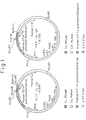
- Fig. 1 indicates the expression vectors HEF-VL-g ⁇ and HEF-VH-g ⁇ 1, containing the human elongation factor-1 ⁇ (HEF-1 ⁇ ) promoter/enhancer, which are useful for expression of the L chain and H chain, respectively, of the antibody of the present invention.
- HEF-1 ⁇ human elongation factor-1 ⁇
- Fig. 2 is a graph indicating the results of ELISA for confirmation of the binding ability to human IL-8 of the chimeric WS-4 antibody (chL/chH) of the present invention secreted into the culture medium of COS cells.
- Fig. 3 is a diagram of the construction of DNA that codes for the amino acid sequences of each of the first version "a"(RVHa) of the H chain V region of reshaped human WS-4 antibody of the present invention (A), and the first version "a"(RVLa) of the L chain V region of reshaped human WS-4 antibody (B).
- Fig. 4 is a graph indicating the results of ELISA for comparing the binding ability to human IL-8 of the L chain V region (RVLa) and the H chain V region (RVHa) of the reshaped human WS-4 antibody of the present invention in combination with, respectively, the H chain V region of chimeric WS-4 antibody (chH) and the L chain V region of chimeric WS-4 antibody (chL) expressed in COS cells, with that of the chimeric WS-4 antibody (chL/chH) of the present invention secreted into the culture medium of COS cells.
- Fig. 5 is a graph indicating the results of ELISA for comparing the binding ability against human IL-8 of 8 types of reshaped human WS-4 antibody containing the RVLa of the present invention (RVLa/RVHa, RVLa/RVHb, RVLa/RVHc, RVLa/RVHd, RVLa/RVHe, RVLa/RVHf, RVLa/RVHg and RVLa/RVHh) secreted into the culture medium of COS cells, with that of the chimeric WS-4 antibody (chL/chH) of the present invention secreted into the culture medium of COS cells.
- RVLa/RVHa, RVLa/RVHb, RVLa/RVHc, RVLa/RVHd, RVLa/RVHe, RVLa/RVHf, RVLa/RVHg and RVLa/RVHh secreted into the culture medium of COS cells
- Fig. 6 is a graph indicating the results of ELISA for comparing the binding ability to human IL-8 of 8 types of reshaped human WS-4 antibody containing the second version RVLb of the present invention (RVLb/RVHa, RVLb/RVHb, RVLb/RVHc, RVLb/RVHd, RVLb/RVHe, RVLb/RVHf, RVLb/RVHg and RVLb/RVHh) produced in the culture supernatant of COS cells, with that of the chimeric WS-4 antibody (chL/chH) of the present invention secreted into the culture medium of COS cells.
- RVLb/RVHa, RVLb/RVHb, RVLb/RVHc, RVLb/RVHd, RVLb/RVHe, RVLb/RVHf, RVLb/RVHg and RVLb/RVHh chimeric WS-4 antibody
- Fig. 7 is a graph indicating the results of ELISA for comparing the binding abilities to human IL-8 of the purified reshaped human WS-4 antibodies RVLa/RVHg and RVLb/RVHg of the present invention and the purified chimeric WS-4 antibody (chL/chH) of the present invention.
- Fig. 8 is a graph indicating the results of ligand receptor binding inhibition assays for comparison of the ability to inhibit binding of IL-8 to the IL-8 receptor, of the purified reshaped human antibodies RVLa/RVHg and RVLb/RVHg of the present invention, with that of the mouse WS-4 antibody and the chimeric WS-4 antibody (chL/chH) of the present invention.
- total RNA can be obtained by disrupting the hybridoma cells by guanidine thiocyanate treatment and performing cesium chloride density gradient centrifugation (Chirgwin, J.M. et al., Biochemistry, 18, 5294-5299, 1979).
- cesium chloride density gradient centrifugation Chirgwin, J.M. et al., Biochemistry, 18, 5294-5299, 1979.
- RNase ribonuclease
- single-stranded cDNA complementary to mRNA can be obtained by treating the total RNA with reverse transcriptase using oligo(dT), an oligonucleotide complementary to the poly (A) tail located at the 3' end of mRNA, as primer, and the mRNA contained in the total RNA obtained in the above manner as template (Larrick, J.W. et al., Bio/Technology, 7, 934-938, 1989).
- a random primer may also be used at the same time.
- this may be done by applying the total RNA to a column of oligo(dT)-cellulose, to which the poly(A) tail of mRNA binds.
- cDNA that codes for the above-mentioned V region is specifically amplified using the polymerase chain reaction (PCR).
- PCR polymerase chain reaction
- the 11 types of oligonucleotide primers shown in SEQ ID Nos: 1 to 11 are used as the 5' terminal primer and the 3' terminal primer, respectively.
- the above-mentioned MKV primers hybridize to the DNA sequence that codes for the mouse kappa-type L chain leader sequence, while the above-mentioned MKC primer hybridizes to the DNA sequence that codes for the mouse kappa-type L chain C region.
- the 12 types of oligonucleotide primers shod in SEQ ID Nos: 13 to 24 (Mouse Heavy Variable; MHV) and the oligonucleotide primer shown in SEQ ID No: 25 (Mouse Heavy Constant; MHC) are used as the 5' terminal primer and the 3' terminal primer, respectively.
- all 5' terminal primers (MKV and MHV) contain the sequence GTCGAC that provides a SalI restriction enzyme cleavage site near the 3' terminus
- both 3'-terminal primers (MKC and MHC) contain the nucleotide sequence CCCGGG that provides an XmaI restriction enzyme cleavage site near the 5' terminus.
- These restriction enzyme cleavage sites are used for the subcloning of target DNA fragments that code for both V regions into the respective cloning vectors.
- other restriction enzyme cleavage sites should be used for subcloning into the respective cloning vectors.
- the PCR amplification products are separated and purified on a low melting-point agarose gel or by a column [PCR Product Purification kit (QIAGEN PCR Purification Spin Kit: QIAGEN); DNA purification kit (GENECLEAN II, BIO101).
- QIAGEN PCR Purification Spin Kit QIAGEN
- DNA purification kit GECLEAN II, BIO101
- a plasmid which contains a DNA fragment that codes for the target V region of mouse monoclonal antibody.
- Determination of the sequence of the cloned DNA can be performed in accordance with any routine method, an example of which is the use of an automated DNA sequencer (Applied Biosystems). Cloning and sequence determination of the target DNA are described in detail in Examples 1 and 2.
- CDRs Complementarity Determining Regions
- the present invention also provides hyper-V region or complementarity determining region (CDR) of the V region of mouse monoclonal antibody against human IL-8.
- CDR complementarity determining region
- V regions of both the L chain and H chain of the antibody form an antigen binding site. These regions on the L chain and the H chain have a similar basic structure.
- the V regions of both chains contain four framework regions for which the sequence is relatively conserved, and these four framework regions are linked by three hyper-V regions or CDR (Kabat, E.A. et al, "Sequences of Proteins of Immunological Interest", US Dept. Health and Human Services, 1991).
- the majority of the portions of the above-mentioned four framework regions (FR) have a ⁇ -sheet structure, and the three CDRs form loops.
- the CDRs may form a portion of the ⁇ sheet structure in some cases.
- the three CDRs are maintained at extremely close positions three-dimensionally by the FRs, and contribute to formation of the antigen binding site together with three paired CDRs.
- the present invention provides CDRs that are useful as components of humanized antibody, as well as the DNA that codes for them. These CDRs can be determined from the experimental rules of Kabat, E.A. et al. "Sequences of Proteins of Immunological Interest", by comparing V region sequences with known amino acid sequences of the V region, a detailed explanation of which is provided in Embodiment 3.
- Chimeric antibody Prior to designing a reshaped human V region of antibody against human IL-8, it is necessary to confirm whether the CDRs used actually form an antigen-binding region. Chimeric antibody was prepared for this purpose. In order to prepare chimeric antibody, it is necessary to construct DNA that codes for the L chain and the H chain of chimeric antibody. The basic method for constructing both DNA involves linking the respective DNA sequences of the mouse leader sequence observed in PCR-cloned DNA and the mouse V region sequence to a DNA sequence that codes for human C region already present in a mammalian cell expression vector.
- human antibody C regions can be any human L chain C region and any human H chain C region, and with respect to the L chain, examples include human L chain C ⁇ or C ⁇ , while with respect to the H chain if IgG, examples include C ⁇ 1, C ⁇ 2, C ⁇ 3 or C ⁇ 4 (Ellison, J. et al., DNA, 1, 11-18 (1981), Takahashi, N. et al., Cell, 29, 671-679 (1982), Krawinkel, U. et al., EMBO J., 1, 403-407 (1982)), or other isotypes.
- Two types of expression vectors are prepared for production of chimeric antibody, namely, an expression vector that contains DNA that codes for mouse L chain V region and human L chain C region under the control of an enhancer/promoter expression control region, and an expression vector that contains DNA that codes for mouse H chain V region and human H chain C region under the control of an enhancer/promoter type of expression control region.
- host cells such as mammalian cells are simultaneously transformed by both of these expression vectors, and the transformed cells are cultured either in vitro or in vivo to produce chimeric antigen (e.g. WO91-16928).
- DNA that codes for mouse L chain V region and human L chain C region and DNA that codes for mouse H chain V region and human H chain C region can be introduced into a single expression vector, host cells are transformed using said vector, and are then cultured either in vitro or in vivo to produce chimeric antibody.
- cDNA that codes for mouse WS-4 ⁇ -type L chain leader sequence and the V region is cloned using PCR, and linked to an expression vector that contains human genome DNA that codes for the human L chain C ⁇ region.
- cDNA that codes for the H chain leader sequence and V region of mouse WS-4 antibody is cloned using PCR and linked to an expression vector that contains human genome DNA that codes for human C ⁇ 1 region.
- nucleotide sequences are introduced at the 5' and 3' termini of cDNAs that code for the V regions of mouse WS-4 antibody using specially designed PCR primers so that (1) they can be easily inserted into the expression vector, and (2) they function suitably in said expression vector (for example, transcription efficiency is improved by introducing a Kozak sequence in the present invention).
- HEF expression vector (see Fig. 1) that already contains the desired human C region.
- the human V regions to serve as the basis for designing the V regions of the reshaped human WS-4 antibody can be selected by comparing the amino acid sequences of the FRs of the mouse monoclonal antibody with the amino acid sequence of the FR of the human antibodies. More specifically, the V regions of the L and H chains of mouse WS-4 antibody were compared with all known human V regions found in the database of the National Biomedical Research Foundation (NBRF) using the genetic analytical software, GENETEX (Software Development Co., Ltd.).
- NBRF National Biomedical Research Foundation
- the L chain V region of mouse WS-4 antibody was found to resemble most closely that of human antibody HAU (Watanabe, S. et al., Hoppe-Seyler's Z. Physiol. Chem., 351, 1291-1295, 1970), having homology of 69.2%.
- the H chain V region of WS-4 antibody was found to resemble most closely that of human antibody VDH26 (Buluwela, L. et al., EMBO J., 7, 2003-2010, 1988), having homology of 71.4%.
- homology of the amino acid sequences of mouse V regions to the amino acid sequences of human V regions is less than the homology to amino acid sequences of mouse V regions. This indicates that the V region of mouse WS-4 antibody does not completely resemble the human V region, and at the same time, indicates that humanization of mouse WS-4 V region is the best way to solve the problem of immunogenicity in human patients.
- V region of mouse WS-4 antibody was further compared with the consensus sequence of human V region subgroup defined by Kabat, E.A. et al., (1991), Sequences of Proteins of Immunological Interest, Fifth Edition, U.S. Department of Health and Human Services, U.S. Government Printing Office, to compare between V region FR. Those results are shown in Table 1. Table 1 Homology (%) Between FR of Mouse WS-4 V Region and FR of the Consensus Sequence of the Human V Regions of Various Subgroups A. FR in L Chain V Region HSGI HSGII HSGIII HSGIV 64.4 51.3 57.3 57.5 B. FR in H Chain V Region HSGI HSGII HSGIII 46.9 40.9 62.3
- the FRs of the L chain V region of mouse WS-4 antibody most closely resembled the consensus sequence of FR of the human L chain V region subgroup I (HSGI), having homology of 64.4%.
- the FRs of the H chain V region of mouse WS-4 antibody most closely resembled the consensus sequence of human H chain V region subgroup III (HSGIII), having homology of 62.3%.
- the L chain V region of mouse antibody WS-4 most closely resembled the L chain V region of human antibody REI, a member of subgroup I of human L chain V region.
- the FR of REI were used in designing the L chain V region of reshaped human WS-4 antibody.
- there are differences in five amino acids at positions 39, 71, 104, 105 and 107; see Table 2) in comparison with the human REI documented in the original literature (Palm, W. et al., Hoppe-Seyler's Z. Physiol. Chem., 356, 167-191, 1975; and, Epp, O. et al., Biochemistry, 14, 4943-4952, 1975).
- the amino acid numbers shown in the table are based on the experience of Kabat, E.A. et al. (1991).
- the changes in the two amino acids at positions 39 and 71 were same changes caused by the amino acids present in the FR of the L chain V region of rat CAMPATH-1H antibody (Riechmann, et al., 1988).
- the changes in the other three amino acids in FR4 are based on the J region from other human ⁇ L chains, and do not deviate from humans.
- RVLa FR was identical to the FR based on REI present in reshaped human CAMPATH-1H antibody (Riechmann, et al., 1988), while the CDR was identical to the CDR in the L chain V region of mouse WS-4 antibody.
- RVLb was based on RVLa, and differed only by one amino acid at position 71 in human FR3. As defined by Chothia, C. et al., J. Mol. Biol., 196, 901-917, 1987, residue 71 is a portion of the canonical structure of the CDR1 of the L chain V region.
- Amino acid at this position is predicted to directly affect the structure of the CDR1 loop of the L chain V region, and for this reason, it considered to have a significant effect on antigen binding.
- RVLb of the L chain V region of reshaped human WS-4 antibody the phenylalanine at position 71 is changed to tyrosine.
- Table 2 shows the respective amino acid sequences of the L chain V region of mouse WS-4 antibody, the FR of the modified REI for use in reshaped human CAMPATH-1H antibody (Riechmann, et al., 1988) and the two versions of the L chain V region of reshaped human WS-4 antibody.
- the FR in the H chain V region of mouse WS-4 antibody most closely resemble the human H chain V region belonging to subgroup III (Table 1).
- the H chain V region of mouse WS-4 antibody most closely resembled the H chain V region of human antibody VDH26, a member of subgroup III of the human H chain V region, from FR1 to FR3 (Buluwela, L. et al., EMBO J., 7, 2003-2010, 1988).
- FR4 sequence of VDH26 was not reported, it was decided to use the amino acid sequence of FR4 of human antibody 4B4 belonging to subgroup III (Sanz, I. et al., J. Immunol., 142, 883-887, 1989).
- These human H chain V regions were used as the basis for designing the H chain V region of reshaped human WS-4 antibody.
- H chain V region of reshaped human WS-4 antibody Eight versions of the H chain V region of reshaped human WS-4 antibody were designed. In all eight versions, human FR1, FR2 and FR3 were based on FR1, FR2 and FR3 of human antibody VDH26, while FR4 was based on FR4 of human antibody 4B4. Mouse CDR was identical to the CDR of the H chain V region of mouse WS-4 antibody.
- Tables 3 and 4 show the respective amino acid sequences of the H chain V region of mouse WS-4 antibody, the template FR1 through FR3 of human antibody VDH26, FR4 of human antibody 4B4, and the 8 versions of the H chain V region of reshaped human WS-4 antibody.
- Amino acids are designated using the single letter code. Amino acid numbers are in accordance with the definition of Kabat et al.
- DNAs that code for the respective first versions of the L chain and H chain V regions of reshaped human WS-4 antibody were synthesized. It was then confirmed that the entire DNA sequence of version "a" of the L chain and H chain V regions of reshaped human WS-4 antibody codes for the correct amino acid sequence by sequence determination.
- the sequence of version "a” of the L chain V region of reshaped human WS-4 antibody is shown in SEQ ID NO: 62, while the sequence of version "a” of the H chain V region of reshaped human WS-4 antibody is shown in SEQ ID NO: 38.
- DNAs that code for other versions of V region of reshaped human WS-4 antibody were prepared using a slight variation of the publicly disclosed PCR-mutation induction method (Kammann, M. et al., Nucleic Acids Res., 17, 5404, 1989) with the first version "a" as the template.
- DNA that codes for one additional version of the L chain V region of reshaped human WS-4 antibody (version "b)
- DNA that code for seven additional versions of the H chain V region of reshaped human WS-4 antibody versions “b", “c”, “d”, “e”, “f”, “g” and “h" were prepared.
- the sequence of version "b” of the L chain V region of reshaped human WS-4 antibody is shown in SEQ ID NO: 65, while the sequences of versions "b", “c”, “d”, “e”, “f”, “g” and “h” of the H chain V region of reshaped human WS-4 antibody are shown in SEQ ID Nos: 41, 44, 45, 48, 51, 54 and 55, respectively.
- DNAs that code for the V region of reshaped human WS-4 antibody were subcloned to mammalian cell expression vectors that already contain DNA that codes for the human C region. Namely, DNA that codes for the V chain L region of reshaped human WS-4 antibody was linked to a DNA sequence that codes for human L chain C region, while DNA that codes for the H chain V region of reshaped human WS-4 antibody was linked to a DNA sequence that codes for the human C ⁇ 1 region.
- any expression system including eukaryotic cells such as animal cells or established mammalian cells, fugus cells, yeast cells and procaryotic cells such as bacterial cells (e.g. Escherichia coli) can be used for producing the chimeric antibody or reshaped human antibody against human IL-8 of the present invention.
- the chimeric antibody or reshaped antibody of the present invention is expressed in mammalian cells, such as COS cells or CHO cells.
- a useful, commonly used promoter can be used to express in mammalian cells.
- HCMV-VH-HC ⁇ 1 examples include HCMV-VL-HC ⁇ , as well as those derived from pSV2neo (International Patent Application Publication No. WO92-19759) are also included.
- examples of other promoters of genetic expression in mammalian cells that can be used in the present invention that should be used include virus promoters such as retrovirus, polioma virus, adenovirus and simian virus 40 (SV40), as well as promoters originating in mammalian cells such as human polypeptide chain elongation factor-1 ⁇ (HEF-1 ⁇ ).
- virus promoters such as retrovirus, polioma virus, adenovirus and simian virus 40 (SV40), as well as promoters originating in mammalian cells such as human polypeptide chain elongation factor-1 ⁇ (HEF-1 ⁇ ).
- SV40 promoter expression can be performed by following the method of Mulligan, R.C. et al. (Nature, 277, 108-114, 1979) or in the case of using HEF-1 ⁇ promoter, expression can be performed by following the method of Mizushima, S. et al. (Nucleic Acids Res., 18, 5322, 1990
- HEF-1 ⁇ promoter HEF-1 ⁇ promoter.
- HEF-VH-g ⁇ 1 and HEF-VL-g ⁇ (Fig. 1) are contained in an expression vector containing this promoter.
- DNA sequences originating in polyoma virus, adenovirus, SV40 or bovine papilloma virus (BPV) and so forth can be used as repricator points.
- aminoglucoside-3'-phosphotransferase, neo-resistant gene, thymidine kinase (TK) gene, E. coli xanthin-guanine phosphoribosyl-transferase (XGPRT) gene or dihydrofolate reductase (dhfr) can be used as selection markers.
- the present invention first provides an L chain V region and H chain V region of mouse monoclonal antibody against human IL-8, as well as DNA that codes for said L chain V region and DNA that codes for said H chain V region. These are useful in the preparation of human/mouse chimeric antibody and reshaped human antibody to human IL-8.
- An example of monoclonal antibody is WS-4.
- the L chain V region has the amino acid sequence shown in, for example, SEQ ID NO: 26, while the H chain V region has the amino acid sequence shown, for example, in SEQ ID NO: 27. These amino acid sequences are coded for by nucleotide sequences shown, for example, in SEQ ID Nos: 26 and 27, respectively.
- the chimeric antibody against human IL-8 of the present invention comprises:
- the mouse L chain V region, mouse H chain V region and DNAs that code for these are as previously described.
- the above-mentioned human L chain C region can be any human L chain C region, examples of which include the human C ⁇ and C ⁇ regions.
- the above-mentioned human H chain C region can be any human H chain C region, examples of which include the human C ⁇ 1, C ⁇ 2, C ⁇ 3 or C ⁇ 4 region (Ellison, J. et al., DNA, 1, 11-18 (1981), Takahashi, N. et al., Cell, 29, 671-679 (1982), and Krawinkel, U. et al., EMBO J., 1, 403-407 (1982)).
- Two types of expression vectors are prepared for producing chimeric antibody. Namely, an expression vector that contains DNA that codes for the mouse L chain V region and human L chain C region under the control of an enhancer/promoter type of expression control region, and an expression vector that contains DNA that codes for the mouse H chain V region and human H chain C region under the control of an enhancer/promoter type of expression control region.
- host cells in the manner of mammalian cells are simultaneously transformed with these expression vectors, and the transformed cells are cultured either in vitro or in vivo to produce chimeric antibody.
- DNA that codes for mouse L chain V region and human L chain C region and DNA that codes for mouse H chain V region and human H chain C region can be introduced into a single expression vector, host cells are transformed using said vector, and those transformed cells are then cultured either in vitro or in vivo to produce chimeric antibody.
- the reshaped human WS-4 antibody of the present invention comprises:
- the above-mentioned L chain CDR is within the amino acid sequence shown in SEQ ID NO: 26, with the extents of said amino acid sequence being defined in Table 5; the above-mentioned H chain CDR is within the amino acid sequence shown in SEQ ID NO: 27, with the extents of said amino acid sequence being defined in Table 5; the above-mentioned human L chain FR is derived from REI; the above-mentioned human H chain FR1, FR2 and FR3 are derived from VDH26, and FR4 is derived from 4B4; the above-mentioned human L chain C region is the human C ⁇ region; and, the above-mentioned human H chain C region is the human C ⁇ 1 region.
- the above-mentioned human H chain C region may be the human C ⁇ 4 region, or a radioisotope may be bound instead of the above-mentioned human L chain C region and/or human H chain C region.
- the L chain V region has the amino acid sequence shown as RVLa or RVLb in Table 2, while the H chain V region has the amino acid sequence shown as RVHa, RVHb, RVHc, RVHd, RVHe, RVHf, RVHg or RVHh in Tables 3 and 4.
- the amino acid at position 41 in the H chain V region FR2 should be proline
- the amino acid at said position 47 should be tryptophan
- the amino acid at position 67 of said FR3 should be phenylalanine
- those having the amino acid sequences shown as RVHb, RVHd, RVHe, RVHf, RVHg or RVHh are more preferable. That in which RVHg is present as the H chain V region is the most preferable.
- Two types of expression vectors are prepared for production of reshaped antibody. Namely, an expression vector that contains DNA that codes for the previously defined reshaped human L chain under control by an enhancer/promoter type of expression control region, as well as another expression vector that contains DNA that codes for the previously defined reshaped human H chain under control by an enhancer/promoter type of expression control region, are prepared. Next, host cells such as mammalian cells are simultaneously transformed by these expression vectors, and the transformed cells are cultured either in vitro or in vivo to produce reshaped human antibody.
- DNA that codes for reshaped human L chain and DNA that codes for reshaped human H chain are introduced into a single expression vector, host cells are transformed using said vector, and those transformed cells are then cultured either in vitro or in vivo to produce the target reshaped human antibody.
- the chimeric antibody or reshaped human antibody produced in this manner can be isolated and purified in accordance with routine methods such as protein A affinity chromatography, ion exchange chromatography or gel filtration.
- the chimeric L chain or reshaped human L chain of the present invention can be used to prepare complete antibody by combining with an H chain.
- the chimeric H chain or reshaped human H chain of the present invention can be used to prepare complete antibody by combining with an L chain.
- mouse L chain V region, reshaped human L chain V region, mouse H chain V region and reshaped human H chain V region are inherently regions that bind to antigen in the form of human IL-8. They are considered to be useful as pharmaceuticals, diagnostic drugs and so forth either alone or in the form of fused protein with other proteins.
- L chain V region CDR and H chain V region CDR of the present invention are also inherently portions that bind to antigen in the form of human IL-8. These are considered to be useful as pharmaceuticals, diagnostic drugs and so forth either alone or in the form of fused protein with other proteins.
- the DNA that codes for mouse L chain V region of the present invention is useful for preparing DNA that codes for chimeric L chain, or DNA that codes for reshaped human L chain.
- the DNA that codes for mouse H chain V region is useful for preparing DNA that codes for chimeric H chain or DNA that codes for reshaped human H chain.
- the DNA that codes for the L chain V region CDR of the present invention is useful for preparing DNA that codes for reshaped human L chain V region, or DNA that codes for reshaped human L chain.
- the DNA that codes for the H chain V region CDR of the present invention is useful for preparing DNA that codes for reshaped human H chain V region, and DNA that codes for reshaped human H chain.
- reshaped human antibody F(ab') 2 , Fab or Fv, or single chain Fv that couples both Fv of the H chain and L chain can be produced in a suitable host and used for the purposes described above (see, for example, Bird, R.E. et al., TIBTECH, 9, 132-137, 1991).
- Single chain Fv is composed by linking the H chain V region and L chain V region of reshaped human antibody to human IL-8.
- the H chain V region and L chain V region are linked by a linker, and preferably a peptide linker (Huston, J.S. et al., Proc. Natl. Acad. Sci. USA, 85, 5879-5883, 1988).
- the H chain V region and L chain V region of this single chain Fv may be either of the above-mentioned H chain and L chain V regions of reshaped human antibody. Specific examples of these include the H chain V regions composed of the amino acid sequences described in SEQ ID NOs: 38, 41, 44, 45, 48, 51 and 54, and single chain Fv containing an L chain V region composed of the amino acid sequences described in SEQ ID NO: 62 or 65 (see WO88-01649).
- V regions are preferably linked by a peptide linker.
- peptide linkers that are used include any arbitrary single chain peptide composed of, for example 12-19 residues (see WO88-09344).
- DNA that codes for single chain Fv is obtained by using DNA that codes for the H chain or H chain V region and DNA that codes for the L chain or L chain V region of the above-mentioned reshaped human antibody as template, amplifying the portion of DNA that codes for those amino acid sequences that are desired using a primer pair that defines both ends by PCR, and amplifying by combining a primer pair that defines DNA that codes for a polypeptide linker along with both its ends so as to respectively link the H and L chains.
- an expression vector that contains them along with a host that is transformed by said expression vector can be obtained in accordance with routine methods.
- single chain Fv can be obtained in accordance with routine methods by using that host.
- single chain Fv exhibit better permeability into tissue, and are expected to be used in imaging by labelling with a radioisotope, and as a therapeutic agent having similar functions to reshaped human antibody.
- ELISA Enzyme-linked immunosorbent assay
- EIA Enzyme immunoassay
- RIA radioimmunoassay
- fluorescent antibody techniques can be used to confirm the binding activity of the chimeric antibody, reshaped human antibody and its F(ab') 2 , Fab, Fv or single chain Fv against IL-8 of the present invention.
- human IL-8 is added to a plate coated with anti-human IL-8 polyclonal antibody, a culture supernatant or purified sample of cells that produce chimeric antibody or reshaped human antibody against human IL-8 is added, and a suitable secondary antibody is added that is labeled with an enzyme such as alkaline phosphatase. After incubating and washing the plate, an enzyme substrate such as p-nitrophenylphosphate is added followed by measurement of absorbance to evaluate the antigen binding activity.
- an enzyme substrate such as p-nitrophenylphosphate is added followed by measurement of absorbance to evaluate the antigen binding activity.
- the IL-8 binding inhibitory activity to IL-8 receptors of the chimeric antibody, reshaped human antibody, and its F(ab') 2 , Fab, Fv or single chain Fv against human IL-8 is evaluated by an ordinary ligand receptor binding inhibition assay.
- an ordinary ligand receptor binding inhibition assay For example, in order to assay the inhibition of binding of IL-8 to IL-8 receptors on neutrophils, after separating neutrophils obtained from heparinized blood by centrifugation or other means, a cell suspension is prepared having a suitable number of cells that can be used in the above-mentioned assay.
- a solution containing IL-8 suitably labeled with 125 I and so forth and non-labeled IL-8 is mixed with a solution containing the antibody of the present invention or its fragments prepared at a suitable concentration, followed by the addition of this mixture to the above-mentioned neutrophil suspension. After a certain period of time, the neutrophils are separated, and the labeled activity on the neutrophils is assayed.
- Routine known methods such as the method described in Grob, P.M. et al., J. Biol. Chem., 265, 8311-8316, 1990, can be used for evaluation of the inhibition of neutrophil chemotaxis by the antibody or its fragments of the present invention.
- IL-8 is added to the chamber followed by the addition of the diluted antibody or fragments.
- the prepared neutrophil suspension is added to the chamber and allowed to stand for a certain period of time. Since migrating neutrophils adhere to the filter installed in the chamber, the number of such neutrophils may be measured by ordinary methods such as staining or fluorescent antibody methods. In addition, measurement may also be performed by microscopic evaluation using a microscope or by automated measurement using a machine.
- the chimeric antibody, reshaped human antibody and its F(ab') 2 , Fab, Fv or single chain Fv fragment against human IL-8 of the present invention can be administered as a pharmaceutical therapeutic agent preferably parenterally, by for example intravenous injection, intramuscular injection, intraperitoneal injection or subcutaneous injection, or transtracheally, by for example using a nebulizer.
- a pharmaceutical therapeutic agent preferably parenterally, by for example intravenous injection, intramuscular injection, intraperitoneal injection or subcutaneous injection, or transtracheally, by for example using a nebulizer.
- the normal dose in humans is 1-1000 mg/body, for which divided doses of 1-10 mg/kg/week can be selected.
- the chimeric antibody, reshaped human antibody and its F(ab') 2 , Fab, Fv or single chain Fv fragment against human IL-8 of the present invention can be prepared into a pharmaceutical therapeutic agent by methods routinely used for making preparations of physiologically active proteins.
- a preparation for injection consists of dissolving refined chimeric antibody, reshaped human antibody or its F(ab') 2 , Fab, Fv or single chain Fv fragment against human IL-8 in a a solvent such as physiological saline or buffer, followed by the addition of an anti-adsorption agent such as Tween 80, gelatin or human serum albumin (HSA).
- this preparation may also be freeze-dried for dissolution and reconstitution prior to use.
- vehicles that can be used for freeze-drying include sugar-alcohols or sugars such as mannitol and glucose.
- Total RNA was prepared from hybridoma WS-4 by modifying the cesium chloride density gradient centrifugation method of Chirgwin, J.M. et al. described in Biochemistry, 18, 5294-5299, 1979.
- RNA precipitate was washed with 80% ethanol and then dissolved in 200 ⁇ l of 20 mM Tris-HCl (pH 7.5) containing 10 mM EDTA and 0.5% sodium N-laurylsarcosinate. After adding Protenase (Boehringer) to a concentration of 0.5 mg/ml, the resulting mixture was incubated in a water bath for 30 minutes at 37°C. The mixture was extracted with phenol and chloroform and the RNA was precipitated with ethanol. Next, the RNA precipitate was dissolved in 200 ⁇ l of 10mM Tris-HCl (pH 7.5) containing 1 mM EDTA.
- poly(A)-positive mRNA was extracted from the total RNA obtained step 1 above using the Fast Track mRNA Isolation Kit Version 3.2 (Invitrogen) and following the procedure described in the manufacturer's instructions.
- Single stranded cDNA was synthesized from approximately 40 ng of the mRNA obtained in step 2 above using the cDNA Cycle Kit (Invitrogen) and following the procedure described in the instructions. The resultant product was then used to amplify cDNA that codes for mouse H chain V region. Furthermore, in order to amplify cDNA that codes for mouse L chain V region, single stranded cDNA was synthesized from approximately 10 ⁇ g of the above-mentioned total RNA.
- Amplification of cDNA was performed from 2.0 ⁇ l of the single stranded cDNA obtained in step 3 above using the same method as that described for amplification of H chain V region gene in step 4 part (1) above with the exception that amplification was performed using 0.25 ⁇ M each of the MKV primer mixtures and 3.0 ⁇ M of MCK primer.
- DNA fragments were digested for 2 hours at 37°C with 40 units of restriction enzyme SalI (Takara Shuzo), and the resulting DNA fragments were separated by agarose gel electrophoresis using 1.5% low melting point agarose (Sigma).
- the agarose pieces containing DNA fragments were cut out and melted for 5 minutes at 65°C followed by the addition of an equal volume of 20 mM Tris-HCl (pH 7.5) containing 2 mM EDTA and 300 mM NaCl. This mixture was then extracted from phenol and chloroform, the DNA fragments were recovered by ethanol precipitation and dissolved in 10 mM Tris-HCl (pH 7.5) containing 1 mM EDTA.
- DNA fragment containing a gene that codes for mouse ⁇ -type L chain V region and a DNA fragment containing a gene that codes for mouse H chain V region were respectively obtained.
- the above-mentioned DNA fragments both have an SalI attachment site at their 5' terminus, and an XmaI attachment site at their 3' terminus.
- SalI-XmaI DNA fragment containing gene that codes for mouse kappa-type L chain V region prepared in the manner described above were mixed with approximately 0.1 ⁇ g of pUC19 vector (Takara Shuzo), prepared by digesting with SalI, XmaI and alkaline phosphatase of Escherichia coli (BAP; Takara Shuzo), for 4 hours at 16°C in a buffered reaction mixture containing 1 unit of T4 DNA ligase (Gibco BRL) and added suplemented buffer to link.
- pUC19 vector Takara Shuzo
- coli was spread onto 2 ⁇ YT agar medium (Molecular Cloning: A Laboratory Manual, Sambrook, et al., Cold Spring Harbor Laboratory Press, 1989) containing 50 ⁇ g/ml of ampicillin (Meiji Seika) followed by incubation overnight at 37°C to obtain the E. coli transformant.
- 2 ⁇ YT agar medium Molecular Cloning: A Laboratory Manual, Sambrook, et al., Cold Spring Harbor Laboratory Press, 1989
- ampicillin Meiji Seika
- This transformant was incubated overnight at 37°C in 10 ml of 2 ⁇ YT medium containing 50 ⁇ g/ml of ampicillin, and plasmid DNA was prepared from this culture using the QIAGEN Plasmid Mini Kit (QIAGEN) and following the procedure described in the instructions.
- QIAGEN QIAGEN Plasmid Mini Kit
- the plasmid containing gene that codes for mouse ⁇ -type L chain V region originating in hybridoma WS-4 obtained in this manner was named pUC-WS4-VL.
- a plasmid containing gene that codes for mouse H chain V region derived from hybridoma WS-4 was prepared from SalI-Xmal DNA fragments by following the same method as described above with the exception of using JM109 for the E. coli competent cells.
- the resulting plasmid was named pUC-WS4-VH.
- the nucleotide sequence of the cDNA coding region in the above-mentioned plasmids was determined using M13 Primer RV and M13 Primer M4 (both Takara Shuzo) as sequence primers, an automated DNA sequencer (Applied Biosystems Inc.) and the Taq Dye Deoxy Terminator Cycle Sequencing Kit (Applied Biosystems Inc.) and following the protocol specified by the manufacturers.
- the nucleotide sequence of the gene that codes for the L chain V region of mouse WS-4 antibody contained in plasmid pUC-WS4-VL is shown in SEQ ID NO: 26.
- the nucleotide sequence of the gene that codes for the H chain V region of mouse WS-4 antibody contained in plasmid pUC-WS4-VH is shown in SEQ ID NO: 27.
- V regions of the L and H chains has mutual similarities, each having four framework regions linked by three hyper variable regions, namely complementarity determining regions (CDR).
- CDR complementarity determining regions
- the amino acid sequence of the framework region is relatively well preserved, the variability of the amino acid sequence of the CDR regions is extremely high (Kabat, E.A. et al., "Sequences of Proteins of Immunological Interest", US Dept. of Health and Human Services, 1991).
- the CDR were determined as shown in Table 5 by investigating their homology by attempting to match the amino acid sequence of the variable region of mouse monoclonal antibody to human IL-8 with the database of amino acid sequences of antibodies prepared by Kabat, et al. Table 5 CDR in the L Chain V Region and H Chain V Region of Mouse WS-4 Antibody Plasmid Sequence Number CDR1 CDR2 CDR3 pUC-WS4-VL 26 24-34 50-56 89-97 pUC-WS4-VH 27 31-35 50-68 101-111
- cDNA clones pUC-WS4-VL and pUC-WS4-VH which code for the L chain and H chain V regions of mouse WS-4, respectively, were modified by PCR. These were then introduced into HEF expression vector (refer to that previously described, WO92-19759 and and Fig. 1).
- the backward primer (SEQ ID NO: 28) for the L chain V region and the backward primer (SEQ ID NO: 29) for the H chain V region were respectively hybridized to DNA that codes for the start of the leader sequence of the V region, and designed to have a Kozak consensus sequence (Kozak, M. et al., J. Mol. Biol., 196, 947-950, 1987) and a HindIII restriction site.
- the forward primer (SEQ ID NO: 30) for the L chain V region and the forward primer (SEQ ID NO: 31) for the H chain V region were hybridized to a DNA sequence that codes for the terminal of the J chain, and designed to add a splice donor sequence and BamHI restriction site.
- the PCR product was purified using 1.5% low melting point agarose gel followed by digestion with HindIII and BamHI.
- the L chain V region was cloned into HEF expression vector HEF-VL-g ⁇ , while the H chain V region was cloned into HEF expression vector HEF-VH-g ⁇ 1.
- plasmids containing the DNA fragment having the correct DNA sequence were named HEF-chWS4L-g ⁇ and HEF-chWS4H-g ⁇ 1 respectively.
- HEF-chWS4L-g ⁇ and HEF-chWS4H-g ⁇ 1 were simultaneously transfected into COS cells by electroporation using the Gene Pulser system (BioRad). Each DNA (10 ⁇ g) was added to 0.8 ml of aliquot containing 1 ⁇ 10 7 cells/ml in PBS, and then pulsed at 1.5 kV with a capacitance of 25 ⁇ F.
- the electroporated cells were suspended in 15 ml of DMEM culture medium (GIBCO) containing 5% ⁇ -globulin-free fetal bovine serum placed in a tissue culture dish. After incubating for 96 hours, the culture medium was collected, cell debris were removed by centrifugation, and the supernatant was then filtered with a disk filter having a pore diameter of 0.45 ⁇ m (Gelman Science).
- ELISA plates for measurement of antigen binding and antibody concentration were prepared as described below.
- the ELISA plates for measurement of antigen binding activity were prepared in the following manner. After forming a solid layer in each well of a 96-well plate (Nunc) with 100 ⁇ l of goat anti-human IL-8 polyclonal antibody (R & D Systems) dissolved in a solid layer of buffer at a concentration of 2 ⁇ g/ml (0.1 M sodium bicarbonate, 0.02% sodium azide), and blocking with 200 ⁇ l of dilution buffer (50 mM Tris-HCl (pH 7.2), 1% bovine serum albumin (BSA), 1 mM MgCl 2 , 0.15 M NaCl, 0.05% Tween 20, and 0.02% sodium azide), 100 ⁇ l of recombinant human IL-8 (Amersham) (5 ng/ml) was added.
- dilution buffer 50 mM Tris-HCl (pH 7.2), 1% bovine serum album
- a purified sample of chimeric antibody or culture supernatant of COS cells that expressed these was serially diluted and added to each well. Next, 100 ⁇ l of alkaline phosphatase-labeled goat anti-human IgG antibody (TAGO) (1 ⁇ g/ml) were added. After incubation and washing, substrate solution (1 mg/ml p-nitrophenyl-phosphate) was added followed by measurement of absorbance at 405 nm.
- TAGO alkaline phosphatase-labeled goat anti-human IgG antibody
- TAGO goat anti-human IgG antibody
- TAGO alkaline phosphatase-labeled goat anti-human IgG antibody
- the Escherichia coli having above-mentioned plasmid HEF-chWS4L-g ⁇ was deposited as Escherichia coli DH5 ⁇ (HEF-chWS4L-g ⁇ ), and the Escherichia coli having the above-mentioned plasmid HEF-chWS4H-g ⁇ 1 was deposited as Escherichia coli JM109 (HEF-chWS4H-g ⁇ 1) at the Bioengineering Industrial Technology Research Institute of the Agency of Industrial Science and Technology (1-1-3 Higashi, Tsukuba, Ibaraki, Japan) on July 12, 1994 under the respective names FERM BP-4739 and FERM BP-4740 in accorrdance the provisions of the Budapest Convention.
- DNA that codes for the H chain V region of reshaped human WS-4 antibody was designed in the manner described below. Complete DNA that codes for the H chain V region of reshaped human WS-4 antibody was designed so that known DNA sequences that respectively code for FR1 through FR3 of human antibody VDH26 and FR4 of human antibody 4B4 are linked to the DNA sequence that codes for the CDR of the H chain V region of mouse WS-4 antibody.
- a HindIII recognition site/Kozak consensus sequence and BamHI recognition site/splice donor sequence were respectively added to the 5' and 3' sides of this DNA sequence, followed by introduction into an HEF expression vector.
- the DNA sequence designed in this manner was then divided into four approximately equal oligonucleotides after which the secondary structure of those oligonucleotides for which there is the possibility of obstructing the assembly of these oligonucleotides were analyzed by computer.
- the four oligonucleotide sequences are shown in SEQ ID NOs: 32 to 35. These oligonucleotides have lengths of 113 to 143 bases, and adjacent oligonucleotides have an overlap region mutually consisting of 20 bases. HF1 (SEQ ID NO: 32) and HF3 (SEQ ID NO: 34) of these four oligonucleotides have a sense DNA sequence, while the other HF2 (SEQ ID NO: 33) and HF4 (SEQ ID NO: 35) have an antisense DNA sequence. These oligonucleotides were synthesized by an automated DNA synthesizer (Applied Biosystems).
- Fig. 3 the method of assembly of these four oligonucleotides by PCR is illustrated in Fig. 3.
- Approximately 100 ng each of HF1 and HF2 as well as HF3 and HF4 were combined and added to a PCR reaction mixture having a final volume of 98 ⁇ l and containing 2.5 U of Pfu DNA polymerase. After initially denaturing for 3 minutes at 94°C, the solutions were incubated for 2 cycles each cycle consisting of incubation for 2 minutes at 94°C, 2 minutes at 55°C and 2 minutes at 72°C.
- HEF-VH-g ⁇ 1 HEF expression vector HEF-VH-g ⁇ 1 (Fig. 1).
- HEF-1 primer SEQ ID NO: 66
- HIP primer SEQ ID NO: 67
- HEF-RVHa-g ⁇ 1 The amino acid sequence and nucleotide sequence of the H chain V region contained in this plasmid HEF-RVHa-g ⁇ 1 are shown in SEQ ID NO: 38.
- Version "b” (RVHb) was amplified by PCR using mutagen primers LTW1 (SEQ ID NO: 39) and LTW2 (SEQ ID NO: 40), designed so that leucine at position 47 was replaced by tryptophan, RVH5' (SEQ ID NO: 36) and RVH3' (SEQ ID NO: 37) for the primers that define both ends, and plasmid HEF-RVHa-g ⁇ 1 as the template DNA to obtain plasmid HEF-RVHb-g ⁇ 1.
- the amino acid sequence and nucleotide sequence of the H chain V region contained in this plasmid HEF-RVHb-g ⁇ 1 are shown in SEQ ID NO: 41.
- Version "c” was amplified by PCR using mutagen primers QTP1 (SEQ ID NO: 42) and QTP2 (SEQ ID NO: 43), designed so that glutamic acid at position 41 was replaced by proline, and plasmid HEF-RVHa-g ⁇ 1 as the template DNA to obtain plasmid HEF-RVHc-g ⁇ 1.
- the amino acid sequence and nucleotide sequence of the H chain V region contained in this plasmid HEF-RVHc-g ⁇ 1 are shown in SEQ ID NO: 44.
- Version "d” was amplified by PCR using mutagen primers QTP1 and QTP2 and plasmid HEF-RVHb-g ⁇ 1 as the template DNA to obtain plasmid HEF-RVHd-g ⁇ 1.
- the amino acid sequence and nucleotide sequence of the H chain V region contained in this plasmid HEF-RVHd-g ⁇ 1 are shown in SEQ ID NO: 45.
- Version "e” was amplified by using mutagen primers ATP1 (SEQ ID NO: 46) and ATP2 (SEQ ID NO: 47), designed so that alanine at position 40 was replaced by proline, and plasmid HEF-RVHd-g ⁇ 1 as the template DNA to obtain plasmid HEF-RVHe-g ⁇ 1.
- the amino acid sequence and nucleotide sequence of the H chain V region contained in this plasmid HEF-RVHe-g ⁇ 1 are shown in SEQ ID NO: 48.
- Version "f” was amplified using mutagen primers GTA1 (SEQ ID NO: 49) and GTA2 (SEQ ID NO: 50), designed so that glycine at position 44 was replaced by alanine, and plasmid HEF-RVHd-g ⁇ 1 for the template DNA to obtain plasmid HEF-RVHf-g ⁇ 1.
- the amino acid sequence and nucleotide sequence of the H chain V region contained in this plasmid HEF-RVHf-g ⁇ 1 are shown in SEQ ID NO: 51.
- Version "g” was amplified using mutagen primers LTF1 (SEQ ID NO: 52) and LTF2 (SEQ ID NO: 53), designed so that leucine at position 67 was replaced by phenylalanine, and plasmid HEF-RVHd-g ⁇ 1 as the template DNA to obtain plasmid HEF-RVHg-g ⁇ 1.
- the amino acid sequence and nucleotide sequence of the H chain V region contained in this plasmid HEF-RVHg-g ⁇ 1 are shown in SEQ ID NO: 54.
- Version "h” was amplified using mutagen primers LTF1 and LTF2, and plasmid HEF-RVHb-g ⁇ 1 as the template DNA to obtain plasmid HEF-RVHh-g ⁇ 1.
- the amino acid sequence and nucleotide sequence of the H chain V region contained in this plasmid HEF-RVHh-g ⁇ 1 are shown in SEQ ID NO: 55.
- DNA that codes for the L chain V region of reshaped human WS-4 antibody was designed in the manner described below. Complete DNA that codes for the L chain V region of reshaped human WS-4 antibody was designed so that a DNA sequence that codes for the FR of human antibody REI is linked to the DNA sequence that codes for the CDR of the L chain V region of mouse WS-4 antibody.
- a HindIII recognition site/Kozak consensus sequence and BamHI recognition site/splice donor sequence were respectively added to the 5' and 3' sides of this DNA sequence so as to enable it to be introduced into an HEF expression vector.
- the DNA sequence designed in this manner was then divided into four approximately equal oligonucleotides after which the secondary structure of those oligonucleotides for which there is the possibility of obstructing the assembly of these oligonucleotides were analyzed by computer.
- the four oligonucleotide sequences are shown in SEQ ID NOs: 56 to 59. These oligonucleotides have lengths of 106 to 124 bases, and adjacent oligonucleotides have an overlap region mutually consisting of 19 to 23 bases.
- LF1 (SEQ ID NO: 56) and LF3 (SEQ ID NO: 58) of these four oligonucleotides have a sense DNA sequence, while the other LF2 (SEQ ID NO: 57) and LF4 (SEQ ID NO: 59) have an antisense DNA sequence.
- These oligonucleotides were synthesized using the same method as that employed for the above-mentioned HF1 through HF4.
- reaction solution was incubated for 30 cycles of 1 minute at 94°C, 1 minute at 55°C and 1 minute at 72°C, followed finally by incubation for 10 minutes at 72°C (see Fig. 3).
- HEF-VL-g ⁇ HEF expression vector HEF-VL-g ⁇ (Fig. 1).
- EF-1 primer SEQ ID NO: 66
- KIP primer SEQ ID NO: 68
- HEF-RVLa-g ⁇ The amino acid sequence and nucleotide sequence of the L chain V region contained in this plasmid HEF-RVLa-g ⁇ are shown in SEQ ID NO: 62.
- Version "b” (RVLb) was amplified by PCR using mutagen primers FTY1 (SEQ ID NO: 63) and FTY2 (SEQ ID NO: 64), designed so that phenylalanine at position 71 was replaced by tyrosine, RVL5' (SEQ ID NO: 60) and RVL3' (SEQ ID NO: 61) for the primers that define both ends, and plasmid HEF-RVLa-g ⁇ as the template DNA to obtain plasmid HEF-RVLb-g ⁇ .
- the amino acid sequence and nucleotide sequence of the L chain V region contained in this plasmid HEF-RVLb-g ⁇ are shown in SEQ ID NO: 65.
- COS cells were first simultaneously transfected in the manner previously described in relation to expression vector HEF-RVLa-g ⁇ for version "a" of the L chain of reshaped human WS-4 antibody, and expression vector HEF-chWS4H-g ⁇ 1 for the H chain of chimeric WS-4 antibody. After collecting the culture medium as previously described, the amount of antibody produced and antigen binding activity were measured for the antibodies produced using the method described in the section on ELISA in the above Example 4. Those results are shown in Fig. 4. As shown in Fig. 4, it was confirmed that there was no difference in antigen binding activity between chimeric antibody (chL/chH), used as the positive control, and antibody consisting of a reshaped L chain and chimeric H chain (RVLa/chH).
- version "a" of the L chain of reshaped human WS-4 antibody exhibited antigen binding activity equal to that of the L chain of chimeric WS-4 antibody
- evaluation of each version of all reshaped H chains was performed by simultaneously transfecting COS cells with each version of the reshaped H chain and version "a" of the L chain of reshaped human WS-4 antibody (RVLa).
- version "b” of the L chain of reshaped human WS-4 antibody was performed by simultaneously transfecting COS cells with each version of the H chain with version "b” of the L chain of reshaped human WS-4 antibody (RVLb).
- the result showed that only antibody having version "g" of the H chain of reshaped human WS-4 antibody (RVLb/RVHg) exhibited antigen binding activity comparable to chimeric WS-4 antibody (chL/chH) used as the positive control, and it was concluded that this combination forms a functional antigen binding site in human antibody.
- all versions were produced in lesser amount than chimeric WS-4 antibody (chL/chH) with the exception of version "g" (RVHg) (see Fig. 6).
- the inhibitory activity on IL-8 binding to IL-8 receptors of reshaped human antibody consisting of version "a” (RVLa) of the H chain and version g" (RVHg) of the H chain of reshaped human WS-4 antibody, or version "b" (RVLb) of said L chain and version "g” (RVHg) of said H chain, was evaluated by ligand receptor binding inhibition assay.
- the above-mentioned neutrophil suspension was centrifuged and resuspended at a concentration of 2 ⁇ 10 7 cells/ml with binding buffer (D-PBS containing 1% BSA and 0.1% sodium azide).
- binding buffer D-PBS containing 1% BSA and 0.1% sodium azide.
- SK2 chimeric antibody having an Fc portion identical to that of the human antibody of the present invention (see International Patent Application No. PCT/JP94/00859) and its antigen, human IL-6, were added to concentrations of approximately 50 ⁇ g/ml and approximately 40 ng/ml, respectively, and incubated for 30 minutes in an ice bath for the purpose of pre-saturating the Fc receptors on the neutrophils.
- IL-8 radioactively labeled with 125 I (74 TBq/mmol, Amersham) and non-labeled IL-8 (Amersham) prepared by mixing in binding buffer at concentrations of 4 ng/ml each.
- Chimeric WS-4 antibody (chL/chH), reshaped human antibody (RVLa/RVHg and RVLb/RVHg), negative control human antibody (PAESEL + LOREI) or positive control mouse WS-4 antibody was respectively diluted with binding buffer at concentrations between 2000 ng/ml and approximately 8 ng/ml in stepwise, 2-fold dilutions. 50 ⁇ l of IL-8 solution and 50 ⁇ l of each of the antibody solutions were incubated for 30 minutes in an ice bath.
- the Escherichia coli having the above-mentioned plasmid HEF-RVLa-g ⁇ was deposited as Escherichia coli DH5 ⁇ (HEF-RVLa-g ⁇ ), and the Escherichia coli containing plasmid HEF-RVHg-g ⁇ 1 was deposited as Escherichia coli JM109 (HEF-RVHg-g ⁇ 1) at the Bioengineering Industrial Technology Research Institute of the Agency of Industrial Science and Technology (1-1-3 Higashi, Tsukuba, Ibaraki, Japan) on July 12, 1994 under the respective names FERM BP-4738 and FERM BP-4741 based on the provisions of the Budapest Convention.
- Hybridoma that produces anti-human IL-8 monoclonal antibody was prepared by fusing spleen cells of BALB/c mice immunized with human IL-8 and mouse myeloma cells P3x63-Ag8.653 according to routine methods using polyethylene glycol. Screening was performed using the activity of binding with human IL-8 as the criterion to establish the hybridoma WS-4 (Ko, Y.C. et al., J. Immunol. Methods, 149, 227-235, 1992).
- the present invention provides reshaped human antibody against human IL-8, and in this antibody, the CDR of the V region of human antibody is substituted with the CDR of mouse monoclonal antibody against human IL-8. Since the majority of this reshaped human antibody is of human origin and CDR inherently having low antigenicity, the reshaped human antibody of the Present invention has low antigenicity to humans, and for this reason can be expected to be useful in medical treatment.
Landscapes
- Chemical & Material Sciences (AREA)
- Organic Chemistry (AREA)
- Health & Medical Sciences (AREA)
- General Health & Medical Sciences (AREA)
- Biochemistry (AREA)
- Biophysics (AREA)
- Life Sciences & Earth Sciences (AREA)
- Genetics & Genomics (AREA)
- Medicinal Chemistry (AREA)
- Molecular Biology (AREA)
- Proteomics, Peptides & Aminoacids (AREA)
- Immunology (AREA)
- Peptides Or Proteins (AREA)
- Medicines Containing Antibodies Or Antigens For Use As Internal Diagnostic Agents (AREA)
- Preparation Of Compounds By Using Micro-Organisms (AREA)
Applications Claiming Priority (7)
| Application Number | Priority Date | Filing Date | Title |
|---|---|---|---|
| JP16148194 | 1994-07-13 | ||
| JP161481/94 | 1994-07-13 | ||
| JP28995194 | 1994-11-24 | ||
| JP289951/94 | 1994-11-24 | ||
| JP310785/94 | 1994-12-14 | ||
| JP31078594 | 1994-12-14 | ||
| PCT/JP1995/001396 WO1996002576A1 (fr) | 1994-07-13 | 1995-07-12 | Anticorps humain reconstitue contre l'interleukine-8 humaine |
Publications (4)
| Publication Number | Publication Date |
|---|---|
| EP0770628A1 true EP0770628A1 (fr) | 1997-05-02 |
| EP0770628A4 EP0770628A4 (fr) | 2004-10-27 |
| EP0770628B1 EP0770628B1 (fr) | 2006-09-27 |
| EP0770628B9 EP0770628B9 (fr) | 2007-02-28 |
Family
ID=27321865
Family Applications (1)
| Application Number | Title | Priority Date | Filing Date |
|---|---|---|---|
| EP95925116A Expired - Lifetime EP0770628B9 (fr) | 1994-07-13 | 1995-07-12 | Anticorps humain reconstitue contre l'interleukine-8 humaine |
Country Status (10)
| Country | Link |
|---|---|
| US (3) | US5994524A (fr) |
| EP (1) | EP0770628B9 (fr) |
| KR (1) | KR100261941B1 (fr) |
| AT (1) | ATE340590T1 (fr) |
| AU (1) | AU701342B2 (fr) |
| CA (1) | CA2194907A1 (fr) |
| DE (1) | DE69535243T2 (fr) |
| HU (1) | HU221385B1 (fr) |
| WO (1) | WO1996002576A1 (fr) |
| ZA (1) | ZA955832B (fr) |
Cited By (27)
| Publication number | Priority date | Publication date | Assignee | Title |
|---|---|---|---|---|
| WO1999037779A1 (fr) * | 1998-01-22 | 1999-07-29 | Genentech, Inc. | Conjugues fragments d'anticorps-polymeres et anticorps monoclonaux humanises anti-il-8, et leurs utilisations |
| US6025158A (en) * | 1997-02-21 | 2000-02-15 | Genentech, Inc. | Nucleic acids encoding humanized anti-IL-8 monoclonal antibodies |
| WO2000009560A3 (fr) * | 1998-08-17 | 2000-05-18 | Abgenix Inc | Production de molecules modifiees avec demi-vie serique prolongee |
| US6133426A (en) * | 1997-02-21 | 2000-10-17 | Genentech, Inc. | Humanized anti-IL-8 monoclonal antibodies |
| US6458355B1 (en) | 1998-01-22 | 2002-10-01 | Genentech, Inc. | Methods of treating inflammatory disease with anti-IL-8 antibody fragment-polymer conjugates |
| US6468532B1 (en) | 1998-01-22 | 2002-10-22 | Genentech, Inc. | Methods of treating inflammatory diseases with anti-IL-8 antibody fragment-polymer conjugates |
| US6870033B1 (en) | 1997-02-21 | 2005-03-22 | Genentech, Inc. | Antibody fragment-polymer conjugates and humanized anti-IL-8 monoclonal antibodies |
| US7005504B2 (en) | 1998-01-22 | 2006-02-28 | Genentech, Inc. | Antibody fragment-peg conjugates |
| US7214776B2 (en) | 1999-01-21 | 2007-05-08 | Genentech, Inc. | Antibody fragment-polymer conjugates and uses of same |
| US7229962B2 (en) | 2001-07-26 | 2007-06-12 | Medexgen Co., Ltd. | Tetravalent etanercept |
| US7931897B2 (en) | 2001-02-07 | 2011-04-26 | Chugai Seiyaku Kabushiki Kaisha | Therapeutic agent for hematopoietic tumors |
| US8287863B2 (en) | 1999-08-23 | 2012-10-16 | Chugai Seiyaku Kabushiki Kaisha | Method for treating myeloma utilizing an expression enhancer for HM1.24 antigen |
| US9828429B2 (en) | 2007-09-26 | 2017-11-28 | Chugai Seiyaku Kabushiki Kaisha | Method of modifying isoelectric point of antibody via amino acid substitution in CDR |
| US9868948B2 (en) | 2008-04-11 | 2018-01-16 | Chugai Seiyaku Kabushiki Kaisha | Antigen-binding molecule capable of binding to two or more antigen molecules repeatedly |
| US9969800B2 (en) | 2015-02-05 | 2018-05-15 | Chugai Seiyaku Kabushiki Kaisha | IL-8 antibodies |
| US10000560B2 (en) | 2014-12-19 | 2018-06-19 | Chugai Seiyaku Kabushiki Kaisha | Anti-myostatin antibodies, polypeptides containing variant Fc regions, and methods of use |
| US10509035B2 (en) | 2015-08-07 | 2019-12-17 | Gamamabs Pharma Sa | Antibodies, antibody drug conjugates and methods of use |
| US10604561B2 (en) | 2016-09-16 | 2020-03-31 | Chugai Seiyaku Kabushiki Kaisha | Anti-dengue virus antibodies, polypeptides containing variant Fc regions, and methods of use |
| CN111615518A (zh) * | 2017-11-01 | 2020-09-01 | 南特生物科学公司 | 阻断emt途径并克服癌干细胞的il8 |
| US10919953B2 (en) | 2012-08-24 | 2021-02-16 | Chugai Seiyaku Kabushiki Kaisha | FcgammaRIIB-specific Fc region variant |
| US11046784B2 (en) | 2006-03-31 | 2021-06-29 | Chugai Seiyaku Kabushiki Kaisha | Methods for controlling blood pharmacokinetics of antibodies |
| US11053308B2 (en) | 2016-08-05 | 2021-07-06 | Chugai Seiyaku Kabushiki Kaisha | Method for treating IL-8-related diseases |
| US11236168B2 (en) | 2012-08-24 | 2022-02-01 | Chugai Seiyaku Kabushiki Kaisha | Mouse FcγammaRII-specific Fc antibody |
| US11267868B2 (en) | 2013-04-02 | 2022-03-08 | Chugai Seiyaku Kabushiki Kaisha | Fc region variant |
| US11359009B2 (en) | 2015-12-25 | 2022-06-14 | Chugai Seiyaku Kabushiki Kaisha | Anti-myostatin antibodies and methods of use |
| US11891432B2 (en) | 2018-03-15 | 2024-02-06 | Chugai Seiyaku Kabushiki Kaisha | Anti-dengue virus antibodies having cross-reactivity to Zika virus and methods of use |
| US11891434B2 (en) | 2010-11-30 | 2024-02-06 | Chugai Seiyaku Kabushiki Kaisha | Antigen-binding molecule capable of binding to plurality of antigen molecules repeatedly |
Families Citing this family (368)
| Publication number | Priority date | Publication date | Assignee | Title |
|---|---|---|---|---|
| US7041871B1 (en) | 1995-10-10 | 2006-05-09 | Genpharm International, Inc. | Transgenic non-human animals capable of producing heterologous antibodies |
| US6300129B1 (en) | 1990-08-29 | 2001-10-09 | Genpharm International | Transgenic non-human animals for producing heterologous antibodies |
| US5702946A (en) * | 1994-03-03 | 1997-12-30 | Genentech, Inc. | Anti-IL-8 monoclonal antibodies for treatment of inflammatory disorders |
| WO1997039772A1 (fr) * | 1996-04-19 | 1997-10-30 | Chugai Seiyaku Kabushiki Kaisha | Remede contre l'arthrite rhumatoide contenant un anticorps anti-il-8 comme principe actif |
| WO1997040215A1 (fr) * | 1996-04-23 | 1997-10-30 | Chugai Seiyaku Kabushiki Kaisha | Medicament contre l'infarctus du myocarde contenant comme principe actif un anticorps anti-il-8 |
| EP1854481B1 (fr) | 1996-04-23 | 2014-07-16 | Chugai Seiyaku Kabushiki Kaisha | Médicament pour le traitement ou la prévention des accidents vasculaires cérébraux/de l'oedème cérébral, contenant comme principe actif un inhibiteur de la fixation de l'IL-8 |
| CA2254782A1 (fr) * | 1996-06-26 | 1997-12-31 | Kenji Yokoi | Medicaments destines aux lesions pulmonaires aigues dues a des causes indirectes, contenant un anticorps anti-il-8 comme principe actif |
| CA2268085A1 (fr) * | 1996-10-22 | 1998-04-30 | Go Wakabayashi | Remede contre les troubles septiques et comprenant un anticorps anti-il-8 en qualite d'ingredient actif |
| AU736282B2 (en) | 1997-03-21 | 2001-07-26 | Chugai Seiyaku Kabushiki Kaisha | A preventive or therapeutic agent for sensitized T cell- mediated diseases comprising IL-6 antagonist as an active ingredient |
| CA2308007C (fr) | 1997-10-14 | 2011-05-17 | Chugai Seiyaku Kabushiki Kaisha | Potentialisateur pour anticorps anti-tumeur lymphoide |
| AU762437B2 (en) * | 1998-08-24 | 2003-06-26 | Medical Therapies Limited | Pharmaceutical compositions for the prevention and treatment of atherosclerosis and restenosis after PTCA |
| IL148980A0 (en) | 1999-10-01 | 2002-11-10 | Chugai Pharmaceutical Co Ltd | An antibody to human tissue factor and experimental animals having inserted cells with the gene encoding human tissue factor |
| US8029793B2 (en) | 2000-04-28 | 2011-10-04 | Chugai Seiyaku Kabushiki Kaisha | Methods for inhibiting cell proliferation |
| EP1312378A4 (fr) | 2000-08-16 | 2004-03-17 | Chugai Pharmaceutical Co Ltd | Agents destines a soulager les symptomes provoques par des maladies articulaires |
| CN1487996B (zh) | 2000-11-30 | 2010-06-16 | 米德列斯公司 | 用于生产人类抗体的转基因转染色体啮齿动物 |
| US20060063152A1 (en) | 2000-12-22 | 2006-03-23 | Osamu Ohara | Novel gene and protein encoded by the gene |
| US7476536B2 (en) | 2001-05-11 | 2009-01-13 | Kirin Pharma Kabushiki Kaisha | Artificial human chromosome containing human antibody a light chain gene |
| AU2003211990A1 (en) | 2002-02-14 | 2003-09-04 | Chugai Seiyaku Kabushiki Kaisha | Antibody-containing solution pharmaceuticals |
| EP2258712A3 (fr) | 2002-03-15 | 2011-05-04 | Multicell Immunotherapeutics, Inc. | Compositions et procédés permettant d'initier ou d'ameliorer les réponses des cellules T limitées par le complexe majeur d 'histocompatibilité de classe I ou II et un anticorps au moyen de motifs d'ARN non codants immunomodulateurs |
| JP2005526778A (ja) * | 2002-03-15 | 2005-09-08 | アストラル,インコーポレイテッド | 免疫調節性非コードrnaモチーフを用いて抗体及び主要組織適合性クラスi拘束性又はクラスii拘束性t細胞の応答を開始或いは増強させるための組成物及び方法 |
| US20070037769A1 (en) * | 2003-03-14 | 2007-02-15 | Multicell Immunotherapeutics, Inc. | Compositions and methods to treat and control tumors by loading antigen presenting cells |
| EP1513879B1 (fr) * | 2002-06-03 | 2018-08-22 | Genentech, Inc. | Bibliotheques de phages et anticorps synthetiques |
| EP1541165A4 (fr) | 2002-08-27 | 2009-06-24 | Chugai Pharmaceutical Co Ltd | Methode de stabilisation de preparations de solution de proteines |
| AU2002328429A1 (en) | 2002-09-04 | 2004-03-29 | Chugai Seiyaku Kabushiki Kaisha | CONSTRUCTION OF ANTIBODY USING MRL/lpr MOUSE |
| ES2558303T3 (es) | 2002-09-11 | 2016-02-03 | Chugai Seiyaku Kabushiki Kaisha | Método de purificación de proteínas |
| US7282568B2 (en) | 2002-12-16 | 2007-10-16 | Medarex, Inc. | Human monoclonal antibodies against interleukin 8 (IL-8) |
| US20060172959A1 (en) * | 2003-03-26 | 2006-08-03 | Dan Smith | Selected rna motifs to include cell death and/or apoptosis |
| DE602004028249D1 (de) | 2003-06-18 | 2010-09-02 | Chugai Pharmaceutical Co Ltd | Fucosetransporter |
| US20070025992A1 (en) * | 2003-07-18 | 2007-02-01 | Mochida Pharmaceutical Co., Ltd | Monoclonal antibody against platelet membrane glycoprotein VI |
| CA2534055A1 (fr) * | 2003-08-01 | 2005-02-10 | Genentech, Inc. | Polypeptides de liaison avec sequences de diversite restreinte |
| EP1652923B1 (fr) | 2003-08-08 | 2011-10-12 | Perseus Proteomics Inc. | Gene surexprime dans le cancer |
| US20050095627A1 (en) * | 2003-09-03 | 2005-05-05 | The Salk Institute For Biological Studies | Multiple antigen detection assays and reagents |
| WO2005035754A1 (fr) | 2003-10-14 | 2005-04-21 | Chugai Seiyaku Kabushiki Kaisha | Anticorps a double specificite de substitution de proteine fonctionnelle |
| AU2003271174A1 (en) | 2003-10-10 | 2005-04-27 | Chugai Seiyaku Kabushiki Kaisha | Double specific antibodies substituting for functional protein |
| FI122368B (fi) * | 2003-11-06 | 2011-12-30 | Valtion Teknillinen | Menetelmä huokoisen muovikalvon valmistamiseksi ja muovikalvo |
| JP4637749B2 (ja) | 2003-11-11 | 2011-02-23 | 中外製薬株式会社 | ヒト化抗cd47抗体 |
| CN1842540B (zh) | 2004-07-09 | 2012-07-04 | 中外制药株式会社 | 抗-磷脂酰肌醇蛋白聚糖3抗体 |
| EP1829961A4 (fr) | 2004-12-22 | 2008-06-04 | Chugai Pharmaceutical Co Ltd | Procede de preparation d'un anticorps a l'aide d'une cellule dont la fonction de transporteur du fucose est inhibee |
| AU2005321017B2 (en) * | 2004-12-28 | 2011-02-24 | Innate Pharma S.A. | Monoclonal antibodies against NKG2A |
| EP3050963B1 (fr) | 2005-03-31 | 2019-09-18 | Chugai Seiyaku Kabushiki Kaisha | Procédé pour la production de polypeptide au moyen de la régulation d'un ensemble |
| CA2603264C (fr) | 2005-04-08 | 2017-03-21 | Chugai Seiyaku Kabushiki Kaisha | Substitution des anticorps de la fonction du facteur viii de coagulation sanguine |
| JP5224580B2 (ja) | 2005-06-10 | 2013-07-03 | 中外製薬株式会社 | sc(Fv)2部位特異的変異体 |
| KR101367544B1 (ko) | 2005-06-10 | 2014-02-26 | 추가이 세이야쿠 가부시키가이샤 | 메글루민을 함유하는 단백질 제제의 안정화제, 및 그의이용 |
| EP1947180B1 (fr) | 2005-10-18 | 2012-12-05 | National Institute Of Agrobiological Sciences | Ver à soie transgénique produisant des anticorps et méthode pour les produire |
| US20090291437A1 (en) * | 2005-11-02 | 2009-11-26 | O'brien Sean | Methods for targeting quadruplex sequences |
| EP1957531B1 (fr) | 2005-11-07 | 2016-04-13 | Genentech, Inc. | Polypeptides de liaison comprenant des sequences diversifiees et des sequences consensus hypervariables vh/vl |
| WO2007064919A2 (fr) * | 2005-12-02 | 2007-06-07 | Genentech, Inc. | Polypeptides de liaison avec des sequences de diversite limitees |
| US9084777B2 (en) | 2005-12-28 | 2015-07-21 | Chugai Seiyaku Kabushiki Kaisha | Stabilized antibody-containing formulations |
| AU2007235496B2 (en) | 2006-03-31 | 2013-11-21 | E. R. Squibb & Sons, L.L.C. | Transgenic animals expressing chimeric antibodies for use in preparing human antibodies |
| US9670269B2 (en) | 2006-03-31 | 2017-06-06 | Chugai Seiyaku Kabushiki Kaisha | Methods of modifying antibodies for purification of bispecific antibodies |
| WO2007129457A1 (fr) | 2006-04-25 | 2007-11-15 | The University Of Tokyo | Agents thérapeutiques employés dans le cadre de la maladie d'alzheimer et du cancer |
| US20100196336A1 (en) | 2006-05-23 | 2010-08-05 | Dongsu Park | Modified dendritic cells having enhanced survival and immunogenicity and related compositions and methods |
| WO2007142325A1 (fr) | 2006-06-08 | 2007-12-13 | Chugai Seiyaku Kabushiki Kaisha | Prévention ou traitement d'une maladie inflammatoire |
| KR20090021217A (ko) | 2006-06-14 | 2009-02-27 | 추가이 세이야쿠 가부시키가이샤 | 조혈 줄기세포 증가 촉진제 |
| CN101573383B (zh) | 2006-06-21 | 2015-05-13 | 肿瘤疗法科学股份有限公司 | 靶向肿瘤的针对卷曲同源物10的单克隆抗体及其用途 |
| CN101484471B (zh) | 2006-06-30 | 2013-11-06 | 诺沃-诺迪斯克有限公司 | 抗-nkg2a抗体及其用途 |
| CN101517075A (zh) | 2006-07-13 | 2009-08-26 | 中外制药株式会社 | 细胞死亡诱导剂 |
| US8025881B2 (en) | 2006-07-21 | 2011-09-27 | Chugai Seiyaku Kabushiki Kaisha | BMP antibodies and methods of treating kidney disease using the same |
| EP1882697B1 (fr) | 2006-07-24 | 2010-04-21 | Institut Pasteur | Anticorps, fragments d'anticorps et scFv se liant aux neurotrophines modifiées post-traductionnellement |
| AU2007285217B2 (en) | 2006-08-14 | 2013-02-07 | Forerunner Pharma Research Co., Ltd | Diagnosis and treatment of cancer using anti-desmoglein-3 antibodies |
| MY162056A (en) | 2006-10-12 | 2017-05-31 | Univ Tokyo | Diagnosis and treatment of cancer using anti -ereg antibody |
| EP3040347A3 (fr) | 2006-10-20 | 2016-09-21 | Chugai Seiyaku Kabushiki Kaisha | Composition pharmaceutique comprenant un anticorps anti-hb-egf comme ingrédient actif |
| WO2008047914A1 (fr) | 2006-10-20 | 2008-04-24 | Forerunner Pharma Research Co., Ltd. | Agent anticancéreux comprenant un anticorps anti-hb-egf en tant qu'ingrédient actif |
| JP5632582B2 (ja) | 2006-12-14 | 2014-11-26 | 中外製薬株式会社 | 抗Claudin3モノクローナル抗体およびそれを用いる癌の治療および診断 |
| WO2008081942A1 (fr) | 2007-01-05 | 2008-07-10 | The University Of Tokyo | Diagnostic et traitement de cancers utilisant un anticorps anti-prg-3 |
| US8946385B2 (en) | 2007-01-30 | 2015-02-03 | Chugai Seiyaku Kabushiki Kaisha | Chimeric Fcγ receptor and method for determination of ADCC activity by using the receptor |
| WO2008105560A1 (fr) | 2007-02-27 | 2008-09-04 | Forerunner Pharma Research Co., Ltd. | Composition pharmaceutique comportant un anticorps anti-grp 78 en tant qu'ingrédient actif |
| CL2008000719A1 (es) | 2007-03-12 | 2008-09-05 | Univ Tokushima Chugai Seiyaku | Agente terapeutico para cancer resistente a agentes quimioterapeuticos que comprende un anticuerpo que reconoce hla de clase i como ingrediente activo; composicion farmaceutica que comprende dicho anticuerpo; y metodo para tratar cancer resistente a |
| JP5117765B2 (ja) * | 2007-05-28 | 2013-01-16 | 国立大学法人 東京大学 | 抗robo1抗体を含むpet用腫瘍診断剤 |
| US8097422B2 (en) | 2007-06-20 | 2012-01-17 | Salk Institute For Biological Studies | Kir channel modulators |
| US8722858B2 (en) | 2007-06-25 | 2014-05-13 | Chugai Seiyaku Kabushiki Kaisha | Anti-Prominin-1 antibody having ADCC activity or CDC activity |
| US8536313B2 (en) | 2007-07-10 | 2013-09-17 | Shionogi & Co., Ltd. | Monoclonal antibody having neutralizing activity against MMP13 |
| KR20150126724A (ko) | 2007-09-28 | 2015-11-12 | 추가이 세이야쿠 가부시키가이샤 | 혈장 중 반응속도가 개선된 항-글리피칸-3 항체 |
| JP4976502B2 (ja) | 2007-10-15 | 2012-07-18 | 中外製薬株式会社 | 抗体の製造方法 |
| WO2009063970A1 (fr) | 2007-11-14 | 2009-05-22 | Forerunner Pharma Research Co., Ltd. | Diagnostic et traitement du cancer à l'aide d'un anticorps anti-gpr49 |
| CA2706549A1 (fr) | 2007-11-15 | 2009-05-22 | Chugai Seiyaku Kabushiki Kaisha | Anticorps monoclonal capable de se lier a un gene non controle (anexelekto) et son utilisation |
| CN104162155A (zh) | 2007-12-05 | 2014-11-26 | 中外制药株式会社 | 搔痒症治疗药 |
| CA2708532C (fr) | 2007-12-05 | 2018-06-05 | Chugai Seiyaku Kabushiki Kaisha | Anticorps anti-nr10 et son utilisation |
| PE20091174A1 (es) | 2007-12-27 | 2009-08-03 | Chugai Pharmaceutical Co Ltd | Formulacion liquida con contenido de alta concentracion de anticuerpo |
| CN101918450A (zh) | 2008-01-11 | 2010-12-15 | 国立大学法人东京大学 | 抗cldn6抗体 |
| EP2628753A1 (fr) | 2008-01-24 | 2013-08-21 | Novo Nordisk A/S | Anticorps monoclonal NKG2A antihumain humanisé |
| DK3153526T3 (da) | 2008-01-31 | 2020-12-14 | Inst Nat Sante Rech Med | Antistoffer mod human cd39 og anvendelse deraf til inhibering af aktivitet af t-regulatoriske celler |
| CL2009000647A1 (es) | 2008-04-04 | 2010-06-04 | Chugai Pharmaceutical Co Ltd | Composicion farmaceutica para tratar o prevenir cancer hepatico que comprende una combinacion de un agente quimioterapeutico y un anticuerpo anti-glipicano 3; agente para atenuar un efecto secundario que comprende dicho anticuerpo; metodo para tratar o prevenir un cancer hepatico de un sujeto. |
| EP2116261A1 (fr) | 2008-05-07 | 2009-11-11 | Institut Pasteur | Sous-région d'une protéine de plasmodium avec potentiel de vaccin amélioré et utilisations médicales correspondantes |
| WO2009147781A1 (fr) | 2008-06-02 | 2009-12-10 | 国立大学法人東京大学 | Agent antitumoral |
| BRPI0910509B8 (pt) | 2008-07-10 | 2021-05-25 | Toray Industries | uso do anticorpo, anticorpo e composição farmacêutica |
| KR101638490B1 (ko) | 2008-08-05 | 2016-07-11 | 도레이 카부시키가이샤 | 암의 치료 및 예방용 의약 조성물 |
| WO2010038610A1 (fr) | 2008-09-30 | 2010-04-08 | オリエンタル酵母工業株式会社 | Nouvel inducteur de la différenciation et de la prolifération de cellules de cartilage |
| US8481033B2 (en) | 2008-10-07 | 2013-07-09 | INSERM (Institute National de la Santé et de la Recherche Médicale) | Neutralizing antibodies and fragments thereof directed against platelet factor-4 variant 1 (PF4V1) |
| US20110287036A1 (en) | 2008-11-17 | 2011-11-24 | Riken | Novel cancer targeting therapy using complex of subtance capable of binding specifically to constituent factor of cancer stroma and anti-tumor compound |
| EP2388320B1 (fr) | 2008-12-22 | 2017-02-15 | Chugai Seiyaku Kabushiki Kaisha | Anticorps anti-hs6st2 et son utilisation |
| EP2385114A4 (fr) | 2008-12-25 | 2012-08-08 | Univ Tokyo | Diagnostic de traitement d'un cancer à l'aide d'un anticorps anti-tm4sf20 |
| CN102395603A (zh) | 2008-12-26 | 2012-03-28 | 国立大学法人东京大学 | 使用抗lgr7抗体的癌症的诊断和治疗 |
| WO2010087994A2 (fr) | 2009-01-30 | 2010-08-05 | Whitehead Institute For Biomedical Research | Procédés de ligature et utilisations associées |
| JP2010210772A (ja) | 2009-03-13 | 2010-09-24 | Dainippon Screen Mfg Co Ltd | 液晶表示装置の製造方法 |
| US20120064096A1 (en) | 2009-03-17 | 2012-03-15 | Universite De La Mediterranee | BTLA Antibodies and Uses Thereof |
| CA2757114C (fr) | 2009-03-30 | 2019-05-21 | Universite De Lausanne | Preparation d'anticorps monoclonaux anti-edar agonistes isoles |
| EP2420515A4 (fr) | 2009-04-16 | 2013-08-28 | Univ Tokyo | Diagnostic et traitement du cancer au moyen d'un anticorps anti-tmprss11e |
| US8455249B2 (en) | 2009-05-01 | 2013-06-04 | The University Of Tokyo | Highly effective anti-cadherin antibody for induction of antibody-dependent cellular cytotoxicity in vivo |
| KR20120024763A (ko) | 2009-05-15 | 2012-03-14 | 추가이 세이야쿠 가부시키가이샤 | 항axl 항체 |
| EP2436397B1 (fr) | 2009-05-29 | 2017-05-10 | Chugai Seiyaku Kabushiki Kaisha | Composition pharmaceutique contenant un antagoniste d'un ligand de la famille de l'egf en tant que composant |
| CN102574917A (zh) | 2009-08-17 | 2012-07-11 | 株式会社未来创药研究所 | 含有抗hb-egf抗体作为有效成分的药物组合物 |
| TW201118166A (en) | 2009-09-24 | 2011-06-01 | Chugai Pharmaceutical Co Ltd | HLA class I-recognizing antibodies |
| WO2011057188A1 (fr) | 2009-11-06 | 2011-05-12 | Idexx Laboratories, Inc. | Anticorps anti-cd20 canins |
| WO2011080796A1 (fr) | 2009-12-28 | 2011-07-07 | Oncotherapy Science, Inc. | Anticorps anti-cdh3 et utilisations de ceux-ci |
| AR080428A1 (es) | 2010-01-20 | 2012-04-11 | Chugai Pharmaceutical Co Ltd | Formulaciones liquidas estabilizadas contentivas de anticuerpos |
| KR101762467B1 (ko) | 2010-01-29 | 2017-07-27 | 도레이 카부시키가이샤 | 폴리락트산계 수지 시트 |
| EP3907242A1 (fr) | 2010-01-29 | 2021-11-10 | Chugai Seiyaku Kabushiki Kaisha | Anticorps anti-dll3 |
| MX340015B (es) | 2010-02-04 | 2016-06-22 | Toray Industries | Composicion farmaceutica para el tratamiento y/o prevencion del cancer. |
| KR101842893B1 (ko) | 2010-02-04 | 2018-03-28 | 도레이 카부시키가이샤 | 암의 치료 및/또는 예방용 의약 조성물 |
| MX342291B (es) | 2010-02-04 | 2016-09-23 | Toray Industries | Composicion farmaceutica para el tratamiento y/o prevencion del cancer. |
| HUE025678T2 (en) | 2010-02-04 | 2016-04-28 | Toray Industries | A pharmaceutical composition for the treatment and / or prevention of cancer |
| RU2598258C2 (ru) | 2010-02-04 | 2016-09-20 | Торэй Индастриз, Инк. | Фармацевтическая композиция для лечения и/или профилактики рака |
| US8815211B2 (en) | 2010-02-10 | 2014-08-26 | Fujifilm Ri Pharma Co., Ltd. | Radioactive metal-labeled anti-cadherin antibody |
| EP2540827A4 (fr) | 2010-02-26 | 2013-09-04 | Chugai Pharmaceutical Co Ltd | Anticorps anti-icam3 et son utilisation |
| JP5889181B2 (ja) | 2010-03-04 | 2016-03-22 | 中外製薬株式会社 | 抗体定常領域改変体 |
| TWI667346B (zh) | 2010-03-30 | 2019-08-01 | 中外製藥股份有限公司 | 促進抗原消失之具有經修飾的FcRn親和力之抗體 |
| EP2796563A1 (fr) | 2010-05-04 | 2014-10-29 | MedImmune, LLC | Diagnostics et traitements optimisés pour les maladies musculaires dégénératives |
| WO2011145085A2 (fr) | 2010-05-21 | 2011-11-24 | Procognia (Israel) Ltd | Nouveaux anticorps et procédés d'utilisation pour le traitement et le diagnostic du cancer |
| JP5619162B2 (ja) | 2010-07-08 | 2014-11-05 | 本田技研工業株式会社 | 高周波加熱用コイル |
| WO2012010696A1 (fr) | 2010-07-23 | 2012-01-26 | INSERM (Institut National de la Santé et de la Recherche Médicale) | Méthodes de gestion du cancer ciblant co-029 |
| US9675693B2 (en) | 2010-09-30 | 2017-06-13 | Riken | Methods and drugs targeting Eva1 or Ceacam1 gene expression for treatment and diagnosing of glioma |
| AU2011323784A1 (en) | 2010-10-25 | 2013-05-30 | Regents Of The University Of Minnesota | Therapeutic composition for treatment of glioblastoma |
| ES2931477T3 (es) | 2010-10-29 | 2022-12-29 | Perseus Proteomics Inc | Anticuerpo anti-CDH3 que tiene alta capacidad de internalización |
| PH12016502073B1 (en) | 2010-11-17 | 2024-04-05 | Chugai Pharmaceutical Co Ltd | Multi-specific antigen-binding molecule having alternative function to function of blood coagulation factor viii |
| RS67768B1 (sr) | 2010-11-30 | 2026-03-31 | Chugai Pharmaceutical Co Ltd | Terapijski agens koji indukuje citotoksičnost |
| WO2012080769A1 (fr) | 2010-12-15 | 2012-06-21 | INSERM (Institut National de la Santé et de la Recherche Médicale) | Anticorps anti-cd277 et leurs utilisations |
| WO2012085132A1 (fr) | 2010-12-22 | 2012-06-28 | Orega Biotech | Anticorps contre cd39 humain et utilisation de ceux-ci |
| WO2012090939A1 (fr) | 2010-12-27 | 2012-07-05 | 国立大学法人名古屋大学 | Méthode d'inhibition du signalement pro-survie faisant intervenir les récepteurs tyrosines kinases dans les cellules cancéreuses |
| US20140080153A1 (en) | 2011-01-07 | 2014-03-20 | Chugai Seiyaku Kabushiki Kaisha | Method for improving physical properties of antibody |
| WO2012101125A1 (fr) | 2011-01-24 | 2012-08-02 | INSERM (Institut National de la Santé et de la Recherche Médicale) | Anticorps spécifiques dirigés contre le cxcl4 humain et leurs utilisations |
| EP2487242A1 (fr) | 2011-02-09 | 2012-08-15 | Ruprecht-Karls-Universität Heidelberg | Antagonistes de la plexine de type B et leurs utilisations |
| CN112812184A (zh) | 2011-02-25 | 2021-05-18 | 中外制药株式会社 | FcγRIIb特异性Fc抗体 |
| EP2698431B1 (fr) | 2011-03-30 | 2020-09-09 | Chugai Seiyaku Kabushiki Kaisha | Rétention de molécules de liaison à l'antigène dans le plasma sanguin et procédé de modification du caractère immunogène |
| JPWO2012133914A1 (ja) | 2011-03-31 | 2014-07-28 | オリエンタル酵母工業株式会社 | Ranklアンタゴニストを含む癌免疫増強剤 |
| ES2612914T3 (es) | 2011-03-31 | 2017-05-19 | Inserm - Institut National De La Santé Et De La Recherche Médicale | Anticuerpos dirigidos contra Icos y usos de los mismos |
| CN103826657A (zh) | 2011-04-04 | 2014-05-28 | 衣阿华大学研究基金会 | 改进疫苗免疫原性的方法 |
| EP2697394A4 (fr) | 2011-04-12 | 2015-01-14 | Electronic Biosciences Inc | Dispositifs à nanopores modifiés chimiquement à un site spécifique |
| JP6104794B2 (ja) | 2011-04-18 | 2017-03-29 | 国立大学法人 東京大学 | 抗itm2a抗体を用いる癌の診断および治療 |
| KR102101806B1 (ko) | 2011-05-19 | 2020-04-20 | 인쎄름 (엥스띠뛰 나씨오날 드 라 쌍떼 에 드 라 흐쉐르슈 메디깔) | 항-인간-her3 항체 및 이의 용도 |
| KR102047248B1 (ko) | 2011-06-17 | 2019-11-21 | 노보 노르디스크 에이/에스 | 침식성 세포의 선택적 제거 |
| AU2012273954A1 (en) | 2011-06-22 | 2014-01-09 | Inserm (Institut National De La Sante Et De La Recherche Medicale) | Anti-Axl antibodies and uses thereof |
| CN103747803B (zh) | 2011-06-22 | 2016-10-12 | 国家医疗保健研究所 | 抗axl抗体及其用途 |
| CN109517059B (zh) | 2011-06-30 | 2023-03-28 | 中外制药株式会社 | 异源二聚化多肽 |
| EP2543678A1 (fr) | 2011-07-08 | 2013-01-09 | INSERM (Institut National de la Santé et de la Recherche Médicale) | Anticorps pour la prévention et le traitement de la thrombose |
| EP2543677A1 (fr) | 2011-07-08 | 2013-01-09 | INSERM (Institut National de la Santé et de la Recherche Médicale) | Anticorps pour la prévention et le traitement de la thrombose |
| EP2543679A1 (fr) | 2011-07-08 | 2013-01-09 | INSERM (Institut National de la Santé et de la Recherche Médicale) | Anticorps pour la prévention et le traitement de la thrombose |
| US9574005B2 (en) | 2011-07-19 | 2017-02-21 | Chugai Seiyaku Kabushiki Kaisha | Stable Protein-containing preparation containing argininamide or analogous compound thereof |
| WO2013017656A1 (fr) | 2011-08-02 | 2013-02-07 | Medizinische Universität Wien | Antagonistes de ribonucléases pour traiter l'obésité |
| US9181348B2 (en) | 2011-08-04 | 2015-11-10 | Toray Industries, Inc. | Pharmaceutical composition for treatment and/or prophylaxis of cancer |
| PT2740794T (pt) | 2011-08-04 | 2018-06-14 | Toray Industries | Composição farmacêutica para o tratamento e/ou profilaxia de cancro |
| EP2739652B1 (fr) | 2011-08-04 | 2017-04-05 | Medizinische Universität Innsbruck | Inhibiteurs cahgt1p à utiliser dans le traitement de la candidose |
| RU2595400C2 (ru) | 2011-08-04 | 2016-08-27 | Торэй Индастриз, Инк. | Фармацевтическая композиция для лечения и/или профилактики злокачественной опухоли |
| EP2743699A4 (fr) | 2011-08-12 | 2015-04-08 | Nat Inst Infectious Diseases | Méthode pour le test, la prévention et le traitement d'une maladie infectieuse par aspergillus fumigatus, et composition |
| WO2013027802A1 (fr) | 2011-08-23 | 2013-02-28 | 中外製薬株式会社 | Nouvel anticorps anti-ddr1 ayant une activité anti-tumorale |
| JP6077997B2 (ja) | 2011-09-07 | 2017-02-08 | 中外製薬株式会社 | 癌幹細胞の分離 |
| TW201817744A (zh) | 2011-09-30 | 2018-05-16 | 日商中外製藥股份有限公司 | 具有促進抗原清除之FcRn結合域的治療性抗原結合分子 |
| EP3680251A1 (fr) | 2011-09-30 | 2020-07-15 | Chugai Seiyaku Kabushiki Kaisha | Molécules de liaison à un antigène pour favoriser l'elimination d'antigènes |
| TW201945034A (zh) | 2011-09-30 | 2019-12-01 | 日商中外製藥股份有限公司 | 包含依離子濃度之條件對抗原之結合活性會改變之抗原結合分域、及於pH中性之條件下對FcRn有結合活性之FcRn結合分域、且誘導對標的抗原的免疫反應之抗原結合分子 |
| RU2732151C2 (ru) | 2011-09-30 | 2020-09-11 | Чугаи Сейяку Кабусики Кайся | Библиотека зависимых от концентрации ионов связывающих молекул |
| JP6322411B2 (ja) | 2011-09-30 | 2018-05-09 | 中外製薬株式会社 | 複数の生理活性を有する抗原の消失を促進する抗原結合分子 |
| EP3617313A1 (fr) | 2011-10-05 | 2020-03-04 | Chugai Seiyaku Kabushiki Kaisha | Molécule se liant à des antigènes pour la promotion de la clairance à partir du plasma de l'antigène comprenant un domaine récepteur-fixateur de la chaîne saccharidique |
| US20140302511A1 (en) | 2011-10-28 | 2014-10-09 | Pharmalogicals Research Pte. Ltd. | Cancer stem cell-specific molecule |
| CN104011207B (zh) | 2011-10-31 | 2018-09-18 | 中外制药株式会社 | 控制了重链与轻链的缔合的抗原结合分子 |
| JP6124800B2 (ja) | 2011-11-30 | 2017-05-10 | 中外製薬株式会社 | 免疫複合体を形成する細胞内への運搬体(キャリア)を含む医薬 |
| TWI593705B (zh) | 2011-12-28 | 2017-08-01 | Chugai Pharmaceutical Co Ltd | Humanized anti-epiregulin antibody and cancer therapeutic agent containing the antibody as an active ingredient |
| WO2013106572A1 (fr) | 2012-01-11 | 2013-07-18 | Arizona Board Of Regents, A Body Corporate Of The State Of Arizona Acting For And On Behalf Of Arizona State University | Fragments d'anticorps bispécifiques pour protéines associées à une maladie neurologique, et procédés d'utilisation |
| JP6226752B2 (ja) | 2012-02-09 | 2017-11-08 | 中外製薬株式会社 | 抗体のFc領域改変体 |
| US9260513B2 (en) | 2012-02-21 | 2016-02-16 | Toray Industries, Inc. | Pharmaceutical composition for treatment and/or prevention of cancer |
| HUE044611T2 (hu) | 2012-02-21 | 2019-11-28 | Toray Industries | Gyógyászati készítmény rák kezelésére |
| PT2818483T (pt) | 2012-02-21 | 2017-10-09 | Toray Industries | Composição medicinal para tratamento e/ou prevenção de cancro |
| BR112014021103A2 (pt) | 2012-02-21 | 2019-10-15 | Toray Industries, Inc | Anticorpo, composição farmacêutica, droga de combinação, dna, método de tratamento e uso de anticorpo |
| SG10201805584YA (en) | 2012-02-24 | 2018-08-30 | Chugai Pharmaceutical Co Ltd | ANTIGEN-BINDING MOLECULE FOR PROMOTING DISAPPEARANCE OF ANTIGEN VIA FcγRIIB |
| JP6280031B2 (ja) | 2012-03-29 | 2018-02-14 | 中外製薬株式会社 | 抗lamp5抗体およびその利用 |
| KR102155531B1 (ko) | 2012-03-30 | 2020-09-15 | 도레이 카부시키가이샤 | 간암의 치료 및/또는 예방용 의약 조성물 |
| PT2832366T (pt) | 2012-03-30 | 2018-01-25 | Toray Industries | Composição farmacêutica para o tratamento e/ou a prevenção de cancro de vesícula biliar |
| EP2848686B1 (fr) | 2012-04-04 | 2024-12-25 | Perseus Proteomics Inc. | Conjugué d'anticorps anti-cdh3 (p-cadhérine) et médicament |
| EP2843051B1 (fr) | 2012-04-23 | 2018-06-06 | GeneFrontier Corporation | Anticorps anti-cd69 humain, et application médicale de celui-ci |
| EP2848633B1 (fr) | 2012-05-11 | 2019-02-06 | Microbial Chemistry Research Foundation | Anticorps anti-cxadr |
| EP2857419B1 (fr) | 2012-05-30 | 2021-01-13 | Chugai Seiyaku Kabushiki Kaisha | Molécule de liaison d'antigène supprimant un antigène associé |
| EP3795215A1 (fr) | 2012-05-30 | 2021-03-24 | Chugai Seiyaku Kabushiki Kaisha | Molécule de liaison d'antigène spécifique à un tissu cible |
| EP4310191A3 (fr) | 2012-06-14 | 2024-05-15 | Chugai Seiyaku Kabushiki Kaisha | Molécule de liaison à l'antigène contenant une région fc modifiée |
| US20150204873A1 (en) | 2012-06-18 | 2015-07-23 | Electonic Biosciences, Inc. | Cell-free assay device and methods of use |
| US9676847B2 (en) | 2012-06-25 | 2017-06-13 | Orega Biotech | IL-17 antagonist antibodies |
| WO2014021339A1 (fr) | 2012-07-30 | 2014-02-06 | 国立大学法人名古屋大学 | Anticorps monoclonal dirigé contre la protéine midkine d'origine humaine |
| EP2892928B1 (fr) | 2012-09-03 | 2018-05-30 | INSERM - Institut National de la Santé et de la Recherche Médicale | Anticorps anti-icos pour traiter la maladie du greffon contre l'hôte |
| WO2014042251A1 (fr) | 2012-09-13 | 2014-03-20 | 中外製薬株式会社 | Animal non humain comportant un gène knock-in |
| CA2886002C (fr) | 2012-09-27 | 2020-06-09 | Chugai Seiyaku Kabushiki Kaisha | Gene de fusion fgfr3 et medicament pharmaceutique ciblant celui-ci |
| CN104937423B (zh) | 2012-09-28 | 2017-05-24 | 中外制药株式会社 | 凝血反应的评价方法 |
| CA3126108A1 (fr) | 2012-11-09 | 2014-05-15 | Genefrontier Corporation | Anticorps anti-adam28 pour traiter le cancer |
| EP2733153A1 (fr) | 2012-11-15 | 2014-05-21 | INSERM (Institut National de la Santé et de la Recherche Médicale) | Procédés pour la préparation d'immunoconjugués et leurs utilisations |
| HUE033369T2 (en) | 2012-11-20 | 2017-11-28 | Sanofi Sa | Anti-ceacam5 antibodies and uses thereof |
| US10766960B2 (en) | 2012-12-27 | 2020-09-08 | Chugai Seiyaku Kabushiki Kaisha | Heterodimerized polypeptide |
| ES2871816T3 (es) | 2012-12-27 | 2021-11-02 | Sanofi Sa | Anticuerpos anti-LAMP1 y conjugados anticuerpo-fármaco, y usos de los mismos |
| JP6357113B2 (ja) | 2013-02-08 | 2018-07-11 | 株式会社医学生物学研究所 | ヒトnrg1タンパク質に対する抗体 |
| WO2014126198A1 (fr) | 2013-02-15 | 2014-08-21 | 株式会社ペルセウスプロテオミクス | Anticorps anti-cdh3 humanisé, médicament conjugué associé et utilisation de ceux-ci |
| US9429584B2 (en) | 2013-02-28 | 2016-08-30 | National Cancer Center | Antibody against insoluble fibrin |
| WO2014174596A1 (fr) | 2013-04-23 | 2014-10-30 | 株式会社医学生物学研究所 | Anticorps monoclonal fonctionnel dirigé contre le facteur de croissance de type facteur de croissance épidermique se liant à l'héparine |
| JP6537143B2 (ja) | 2013-05-16 | 2019-07-03 | 国立大学法人京都大学 | 癌の予後を診断する方法 |
| WO2014183885A1 (fr) | 2013-05-17 | 2014-11-20 | INSERM (Institut National de la Santé et de la Recherche Médicale) | Antagoniste de l'interaction btla/hvem pour une utilisation en thérapie |
| MX2015017852A (es) | 2013-06-24 | 2016-08-11 | Chugai Pharmaceutical Co Ltd | Agente terapeutico que comprende el anticuerpo anti-epirregulina humanizado con ingrediente activo contra el carcinoma de pulmon de celulas no pequeñas excluyendo el adenocarcinoma. |
| ES2704909T3 (es) | 2013-08-09 | 2019-03-20 | Toray Industries | Composición farmacéutica para el tratamiento y/o la prevención del cáncer |
| WO2015041310A1 (fr) | 2013-09-20 | 2015-03-26 | 中外製薬株式会社 | Traitement de maladies hémorragiques par anticorps anti-protéine-c |
| JP6534615B2 (ja) | 2013-09-27 | 2019-06-26 | 中外製薬株式会社 | ポリペプチド異種多量体の製造方法 |
| HUE067047T2 (hu) | 2013-10-15 | 2024-09-28 | Genefrontier Corp | Humán antitest aggrekanáz típusú ADAMTS specieszek ellen aggrekanázzal kapcsolatos betegségek terápiájára |
| EP3070167A4 (fr) | 2013-11-06 | 2017-06-07 | Osaka University | Anticorps présentant une large activité neutralisante contre le virus de la grippe a de groupe 1 |
| CA2929386C (fr) | 2013-11-07 | 2023-01-03 | Inserm (Institut National De La Sante Et De La Recherche Medicale) | Anticorps allosteriques de la neureguline, diriges contre her3 |
| TWI712421B (zh) | 2013-11-11 | 2020-12-11 | 日商中外製藥股份有限公司 | 含改變的抗體可變區之抗原結合分子 |
| TWI853985B (zh) | 2013-12-04 | 2024-09-01 | 日商中外製藥股份有限公司 | 因應化合物濃度使抗原結合能力變化的抗原結合分子及其資料庫 |
| EP3088890B1 (fr) | 2013-12-24 | 2020-09-23 | Chugai Seiyaku Kabushiki Kaisha | Méthode de mesure de protéine gpc3 soluble |
| US10391081B2 (en) | 2013-12-27 | 2019-08-27 | Chugai Seiyaku Kabushiki Kaisha | FGFR gatekeeper mutant gene and drug targeting same |
| BR112016014824A2 (pt) | 2013-12-27 | 2017-09-19 | Chugai Pharmaceutical Co Ltd | Método para purificar anticorpo que tem ponto isoelétrico baixo |
| SG11201607772WA (en) | 2014-03-31 | 2016-10-28 | Debiopharm Int Sa | Fgfr fusions |
| EP3131929B1 (fr) | 2014-04-16 | 2022-06-01 | INSERM (Institut National de la Santé et de la Recherche Médicale) | Anticorps pour la prévention ou le traitement d'épisodes de saignement |
| TWI831106B (zh) | 2014-06-20 | 2024-02-01 | 日商中外製藥股份有限公司 | 用於因第viii凝血因子及/或活化的第viii凝血因子的活性降低或欠缺而發病及/或進展的疾病之預防及/或治療之醫藥組成物 |
| WO2016007919A2 (fr) | 2014-07-11 | 2016-01-14 | Regents Of The University Of Minnesota | Fragments d'anticorps pour détecter un cancer et méthodes d'utilisation |
| JP6858559B2 (ja) | 2014-08-20 | 2021-04-14 | 中外製薬株式会社 | 蛋白質溶液の粘度測定方法 |
| MA40764A (fr) | 2014-09-26 | 2017-08-01 | Chugai Pharmaceutical Co Ltd | Agent thérapeutique induisant une cytotoxicité |
| TWI880146B (zh) | 2014-11-11 | 2025-04-11 | 日商中外製藥股份有限公司 | 包含經改變之抗體可變區之抗原結合分子的資料庫 |
| CR20170383A (es) | 2015-01-23 | 2017-11-22 | Sanofi Sa | Anticuerpos anti-cd3, anticuerpos anti-cd-123 y anticuerpos biespecíficos que se unen específicamente a cd3 y/o cd123 |
| US10266584B2 (en) | 2015-02-09 | 2019-04-23 | Inserm (Institut National De La Sante Et De La Recherche Medicale) | Antibodies specific to glycoprotein (GP) of Ebolavirus and uses for the treatment and diagnosis of ebola virus infection |
| WO2016162368A1 (fr) | 2015-04-07 | 2016-10-13 | INSERM (Institut National de la Santé et de la Recherche Médicale) | Imagerie non invasive de l'expression de pd-l1 d'une tumeur |
| CA2978038A1 (fr) | 2015-04-17 | 2016-10-20 | F. Hoffmann-La Roche Ag | Polytherapie avec des facteurs de coagulation et des anticorps polyspecifiques |
| US20180201687A1 (en) | 2015-07-07 | 2018-07-19 | INSERM (Institut National de la Santé et de la Recherche Médicale) | Antibodies having specificity to myosin 18a and uses thereof |
| KR20230079500A (ko) * | 2015-09-18 | 2023-06-07 | 추가이 세이야쿠 가부시키가이샤 | Il-8에 결합하는 항체 및 그의 사용 |
| ES2941968T3 (es) | 2015-10-01 | 2023-05-29 | The Whitehead Institute For Biomedical Res | Marcaje de anticuerpos |
| AU2016334063B2 (en) | 2015-10-08 | 2023-05-25 | Zymeworks Bc Inc. | Antigen-binding polypeptide constructs comprising kappa and lambda light chains and uses thereof |
| WO2017060397A1 (fr) | 2015-10-09 | 2017-04-13 | INSERM (Institut National de la Santé et de la Recherche Médicale) | Procédés de prédiction du temps de survie de sujets souffrant de métastases d'un mélanome |
| US10888609B2 (en) | 2015-11-03 | 2021-01-12 | Regents Of The University Of Minnesota | CD200 inhibitors and methods of use thereof |
| WO2017086419A1 (fr) | 2015-11-18 | 2017-05-26 | 中外製薬株式会社 | Procédé pour renforcer la réponse immunitaire humorale |
| US11660340B2 (en) | 2015-11-18 | 2023-05-30 | Chugai Seiyaku Kabushiki Kaisha | Combination therapy using T cell redirection antigen binding molecule against cell having immunosuppressing function |
| US20200270363A1 (en) | 2015-12-25 | 2020-08-27 | Chugai Seiyaku Kabushiki Kaisha | Antibody having enhanced activity, and method for modifying same |
| US20230183346A1 (en) | 2016-02-26 | 2023-06-15 | Inserm (Institut National De La Sante Et De La Recherche Medicale) | Antibodies having specificity for btla and uses thereof |
| US11072666B2 (en) | 2016-03-14 | 2021-07-27 | Chugai Seiyaku Kabushiki Kaisha | Cell injury inducing therapeutic drug for use in cancer therapy |
| CN108779180B (zh) | 2016-03-23 | 2020-10-16 | 迈博斯生物医药(苏州)有限公司 | 新型抗-pd-l1抗体 |
| BR112018069318A2 (pt) | 2016-03-28 | 2019-01-22 | Toray Industries | composição farmacêutica para tratamento e/ou prevenção de um câncer, anticorpo ou fragmento do mesmo, combinação farmacêutica para tratamento e/ou prevenção de um câncer e método para tratar e/ou prevenir um câncer |
| BR112019001693A2 (pt) | 2016-07-29 | 2019-07-02 | INSERM (Institut National de la Santé et de la Recherche Médicale) | anticorpos direcionados a macrófagos associados a tumores e seus usos |
| RU2766233C2 (ru) | 2016-09-06 | 2022-02-10 | Чугаи Сейяку Кабусики Кайся | Способы применения биспецифического антитела, которое распознает фактор свертывания ix и/или активированный фактор свертывания ix и фактор свертывания x и/или активированный фактор свертывания x |
| KR20240005247A (ko) | 2016-10-28 | 2024-01-11 | 도레이 카부시키가이샤 | 암의 치료 및/또는 예방용 의약 조성물 |
| US11773163B2 (en) | 2016-11-21 | 2023-10-03 | INSERM (Institut National de la Santé et de la Recherche Médicale) | Methods and pharmaceutical compositions for the prophylactic treatment of metastases |
| WO2018097308A1 (fr) | 2016-11-28 | 2018-05-31 | 中外製薬株式会社 | Molécule de liaison de ligand ayant une activité de liaison de ligand ajustable |
| US10610104B2 (en) | 2016-12-07 | 2020-04-07 | Progenity, Inc. | Gastrointestinal tract detection methods, devices and systems |
| CA3045310A1 (fr) | 2016-12-14 | 2018-06-21 | Progenity, Inc. | Traitement d'une maladie du tractus gastro-intestinal avec une chimoikine/un inhibiteur du recepteur de chimiokine |
| US11274160B2 (en) | 2017-03-02 | 2022-03-15 | INSERM (Institut National de la Santé et de la Recherche Médicale | Antibodies having specificity to Nectin-4 and uses thereof |
| EP4095161A1 (fr) | 2017-03-15 | 2022-11-30 | Tsinghua University | Nouveaux anticorps anti-trkb |
| CN110382544B (zh) | 2017-03-16 | 2023-12-22 | 先天制药公司 | 用于治疗癌症的组合物和方法 |
| US11492399B2 (en) | 2017-03-24 | 2022-11-08 | Zenyaku Kogyo Co., Ltd. | Anti-IgM/B cell surface antigen bispecific antibody |
| CN110461358A (zh) | 2017-03-31 | 2019-11-15 | 公立大学法人奈良县立医科大学 | 可用于预防和/或治疗凝血因子ⅸ异常、包含代替凝血因子ⅷ的功能的多特异性抗原结合分子的药物组合物 |
| JP2020516668A (ja) | 2017-04-14 | 2020-06-11 | ガママブス ファルマ | 癌を予防又は処置する為のamhrii結合性化合物 |
| KR102759138B1 (ko) | 2017-04-14 | 2025-01-23 | 엑셀리시스, 인코포레이티드 | 폐암을 예방 또는 치료하기 위한 amhrii-결합 화합물 |
| US20200109390A1 (en) | 2017-04-27 | 2020-04-09 | Chugai Seiyaku Kabushiki Kaisha | Coagulation factor ix with improved pharmacokinetics |
| WO2019020480A1 (fr) | 2017-07-24 | 2019-01-31 | INSERM (Institut National de la Santé et de la Recherche Médicale) | Anticorps et peptides pour traiter des maladies liées à hcmv |
| US11085929B2 (en) | 2017-08-31 | 2021-08-10 | Arizona Board Of Regents On Behalf Of Arizona State University | Nanoshell-structured material as co-matrix for peptide characterization in mass spectrometry |
| KR102764182B1 (ko) | 2017-09-21 | 2025-02-07 | 임체크 테라퓨틱스 | Btn2에 대해 특이성을 갖는 항체 및 이의 용도 |
| CN111630062A (zh) | 2017-11-28 | 2020-09-04 | 中外制药株式会社 | 具有可调节的配体结合活性的配体结合分子 |
| US11667713B2 (en) | 2017-12-28 | 2023-06-06 | Chugai Seiyaku Kabushiki Kaisha | Cytotoxicity-inducing therapeutic agent |
| WO2019140150A1 (fr) | 2018-01-12 | 2019-07-18 | Bristol-Myers Squibb Company | Polythérapie faisant intervenir des anticorps anti-il-8 et des anticorps anti-pd-1 pour le traitement du cancer |
| CA3094827A1 (fr) | 2018-03-28 | 2019-10-03 | Mitsubishi Tanabe Pharma Corporation | Conjugues de medicament d'agents de liaison monoclonaux cmet, et utilisations associees |
| JP7342701B2 (ja) | 2018-03-30 | 2023-09-12 | 東レ株式会社 | 癌の治療及び/又は予防用医薬組成物 |
| KR20210007959A (ko) | 2018-04-06 | 2021-01-20 | 다나-파버 캔서 인스티튜트 인크. | Hhla2 수용체로서의 kir3dl3, 항-hhla2 항체, 및 이들의 용도 |
| CN112512480B (zh) | 2018-05-21 | 2024-10-01 | 中外制药株式会社 | 被封入玻璃容器的冷冻干燥制剂 |
| BR112020024005A2 (pt) | 2018-05-31 | 2021-02-23 | Shionogi & Co., Ltd. | anticorpo monoclonal contra nav1.7 |
| MX2020012107A (es) | 2018-06-18 | 2021-01-29 | Innate Pharma | Composiciones y procedimientos para el tratamiento del cancer. |
| US20210308170A1 (en) | 2018-07-27 | 2021-10-07 | Osaka University | Composition for suppression of aging, prevention, amelioration, or treatment of an age-related disease or symptom, or extension of lifespan |
| JP7475687B2 (ja) | 2018-09-21 | 2024-04-30 | 国立大学法人 東京医科歯科大学 | ヒトhmgb1に特異的に結合するヒトモノクローナル抗体、及びそれを含有するアルツハイマー病を治療又は予防するための医薬組成物 |
| JP2022512860A (ja) | 2018-11-06 | 2022-02-07 | アンスティチュ ナショナル ドゥ ラ サンテ エ ドゥ ラ ルシェルシュ メディカル | 白血病幹細胞を根絶することによる急性骨髄性白血病の治療のための方法および医薬組成物 |
| US20220249814A1 (en) | 2018-11-19 | 2022-08-11 | Progenity, Inc. | Methods and devices for treating a disease with biotherapeutics |
| EP3894543A1 (fr) | 2018-12-14 | 2021-10-20 | INSERM (Institut National de la Santé et de la Recherche Médicale) | Peptides humains dérivés du cmh isolés et leurs utilisations pour stimuler et activer la fonction suppressive des tregs cd8+cd45rc |
| CN113260381A (zh) | 2018-12-27 | 2021-08-13 | 盐野义制药株式会社 | 新型抗ccr8抗体 |
| US11680105B2 (en) | 2019-01-17 | 2023-06-20 | Regents Of The University Of Minnesota | Antibody fragments for detecting cancer and methods of use |
| WO2020153467A1 (fr) | 2019-01-24 | 2020-07-30 | 中外製薬株式会社 | Nouveaux antigènes du cancer et anticorps desdits antigènes |
| WO2020169472A2 (fr) | 2019-02-18 | 2020-08-27 | INSERM (Institut National de la Santé et de la Recherche Médicale) | Procédés d'induction de changements phénotypiques dans des macrophages |
| SG11202108494YA (en) | 2019-02-28 | 2021-09-29 | Juntendo Educational Found | Antibodies that bind to cleaved form of mutant calreticulin, and diagnostic, preventive, or therapeutic agent for myeloproliferative neoplasm |
| CN113613676A (zh) | 2019-03-19 | 2021-11-05 | 中外制药株式会社 | 包含对抗原的结合活性因mta而变化的抗原结合结构域的抗原结合分子及用于获得该抗原结合结构域的文库 |
| AU2020243076A1 (en) | 2019-03-20 | 2021-10-14 | Centre National De La Recherche Scientifique - Cnrs - | Antibodies having specificity for BTN2 and uses thereof |
| CN113631573B (zh) | 2019-03-25 | 2024-06-04 | 国家医疗保健研究所 | 抗Tau抗体及其在制备用于治疗疾病的药物中的用途 |
| JP7583411B2 (ja) | 2019-04-10 | 2024-11-14 | 中外製薬株式会社 | Fc領域改変抗体の精製方法 |
| KR20210154179A (ko) | 2019-04-18 | 2021-12-20 | 에이씨 이뮨 에스.에이. | 치료 및 진단용 신규한 분자 |
| JPWO2020246563A1 (fr) | 2019-06-05 | 2020-12-10 | ||
| US20220281967A1 (en) | 2019-08-02 | 2022-09-08 | Orega Biotech | Novel il-17b antibodies |
| EP4034560A1 (fr) | 2019-09-27 | 2022-08-03 | INSERM (Institut National de la Santé et de la Recherche Médicale) | Anticorps de de substance inhibitrice müllérienne et leurs utilisations |
| WO2021058729A1 (fr) | 2019-09-27 | 2021-04-01 | INSERM (Institut National de la Santé et de la Recherche Médicale) | Anticorps dirigés contre le récepteur de type i d'une substance inhibitrice anti-mullérienne et leurs utilisations |
| EP3812008A1 (fr) | 2019-10-23 | 2021-04-28 | Gamamabs Pharma | Anticorps antagoniste compétitif amh |
| EP4061944A1 (fr) | 2019-11-22 | 2022-09-28 | INSERM (Institut National de la Santé et de la Recherche Médicale) | Inhibiteurs de l'adrénomédulline pour le traitement de la leucémie aiguë myéloïde par éradication des cellules souches leucémiques |
| CA3159964A1 (fr) | 2019-12-04 | 2021-06-10 | Ac Immune Sa | Nouvelles molecules de therapie et de diagnostic |
| US12577324B2 (en) | 2019-12-09 | 2026-03-17 | Inserm (Institut National De La Sante Et De La Recherche Medicale) | Antibodies having specificity to HER4 and uses thereof |
| CN121197633A (zh) | 2019-12-13 | 2025-12-26 | 比特比德科有限责任公司 | 用于将治疗剂递送至胃肠道的可摄取装置 |
| EP4110404A1 (fr) | 2020-02-28 | 2023-01-04 | Genzyme Corporation | Polypeptides de liaison modifiés pour conjugaison optimisée de médicament |
| WO2021175954A1 (fr) | 2020-03-04 | 2021-09-10 | Imcheck Therapeutics Sas | Anticorps ayant une spécificité pour btnl8 et leurs utilisations |
| KR20220152318A (ko) | 2020-03-12 | 2022-11-15 | 도레이 카부시키가이샤 | 암의 치료 및/또는 예방을 위한 의약품 |
| WO2021182572A1 (fr) | 2020-03-12 | 2021-09-16 | 東レ株式会社 | Médicament pour le traitement et/ou la prévention du cancer |
| CA3175127A1 (fr) | 2020-03-12 | 2021-09-16 | Toray Industries, Inc. | Medicament pour le traitement et/ou la prevention du cancer |
| BR112022018161A2 (pt) | 2020-03-12 | 2022-10-25 | Toray Industries | Medicamento para o tratamento e/ou prevenção do câncer, agentes que aumentam a eficácia de um fármaco e método para o tratamento e/ou prevenção do câncer |
| US20230139178A1 (en) | 2020-03-12 | 2023-05-04 | Toray Industries, Inc. | Medicament for treatment and/or prevention of cancer |
| WO2021193928A1 (fr) | 2020-03-27 | 2021-09-30 | 株式会社PhotoQ3 | Médicament pharmaceutique pour détruire des cellules tumorales |
| WO2021200131A1 (fr) | 2020-03-30 | 2021-10-07 | 国立研究開発法人国立がん研究センター | Conjugué anticorps-médicament |
| US20230149555A1 (en) | 2020-04-06 | 2023-05-18 | PhotoQ3 Inc. | Medicament for killing tumor cells |
| JP2023106635A (ja) | 2020-04-17 | 2023-08-02 | 中外製薬株式会社 | 二重特異性抗原結合分子ならびに、それに関連する組成物、組成物の製造のための使用、キット、および方法 |
| WO2021214222A1 (fr) | 2020-04-24 | 2021-10-28 | Sanofi | Combinaisons antitumorales contenant des conjugués anticorps anti-ceacam5, de la trifluridine et du tipiracil |
| US20230151088A1 (en) | 2020-04-24 | 2023-05-18 | Sanofi | Antitumor combinations containing anti-ceacam5 antibody conjugates and folfox |
| WO2021214227A1 (fr) | 2020-04-24 | 2021-10-28 | Sanofi | Combinaisons antitumorales contenant des conjugués anticorps anti-ceacam5 et du cétuximab |
| AU2021261553A1 (en) | 2020-04-24 | 2023-01-05 | Sanofi | Antitumor combinations containing anti-CEACAM5 antibody conjugates and FOLFIFI |
| JP2023525053A (ja) | 2020-05-12 | 2023-06-14 | インサーム(インスティテュ ナシオナル ドゥ ラ サンテ エ ドゥ ラ ルシェルシェ メディカル) | 皮膚t細胞リンパ腫及びtfh由来リンパ腫を処置する新しい方法 |
| CN115667515A (zh) | 2020-05-22 | 2023-01-31 | 中外制药株式会社 | 中和具有凝血因子viii(f.viii)功能替代活性的物质的抗体 |
| EP4174071A4 (fr) | 2020-06-24 | 2024-09-11 | The University of Tokyo | Colorant photosensibilisant |
| WO2022004760A1 (fr) | 2020-06-30 | 2022-01-06 | 塩野義製薬株式会社 | Utilisation combinée d'un anticorps anti-ccr8 et d'un agent chimiothérapeutique |
| CA3186914A1 (fr) | 2020-07-28 | 2022-02-03 | Masakazu Fukuda | Preparation de seringue pre-remplie dotee d'une aiguille, pourvue d'un protecteur d'aiguille et comprenant un nouvel anticorps modifie |
| CN116194124A (zh) | 2020-07-31 | 2023-05-30 | 中外制药株式会社 | 包含表达嵌合受体的细胞的药物组合物 |
| KR20230062600A (ko) | 2020-09-04 | 2023-05-09 | 메르크 파텐트 게엠베하 | 항-ceacam5 항체 및 접합체 및 이의 용도 |
| EP3981789A1 (fr) | 2020-10-12 | 2022-04-13 | Commissariat À L'Énergie Atomique Et Aux Énergies Alternatives | Anticorps anti-lilrb et leurs utilisations |
| EP4229082A1 (fr) | 2020-10-16 | 2023-08-23 | AC Immune SA | Anticorps se liant à l'alpha-synucléine à usage thérapeutique et diagnostique |
| US12564642B2 (en) | 2020-11-10 | 2026-03-03 | Sanofi | CEACAM5 antibody-drug conjugate formulation |
| WO2022124247A1 (fr) | 2020-12-09 | 2022-06-16 | 国立大学法人 東京医科歯科大学 | Agent de prévention ou de traitement de la dégénérescence lobaire fronto-temporale |
| AR124410A1 (es) | 2020-12-18 | 2023-03-22 | Ac Immune Sa | Administración de anticuerpos |
| JP2024504696A (ja) | 2021-01-20 | 2024-02-01 | バイオアントレ エルエルシー | Ctla4結合性タンパク質およびがんを処置する方法 |
| AU2022298240A1 (en) | 2021-06-23 | 2024-01-18 | Toray Industries, Inc. | Medicament for treatment and/or prevention of cancer |
| WO2022270523A1 (fr) | 2021-06-23 | 2022-12-29 | 東レ株式会社 | Médicament pour le traitement et/ou la prévention du cancer |
| WO2023008459A1 (fr) | 2021-07-27 | 2023-02-02 | 東レ株式会社 | Médicament pour le traitement et/ou la prévention du cancer |
| AU2022316644A1 (en) | 2021-07-27 | 2024-02-29 | Toray Industries, Inc. | Medicament for treatment and/or prevention of cancer |
| CN117677398A (zh) | 2021-07-27 | 2024-03-08 | 东丽株式会社 | 用于癌的治疗和/或预防的药品 |
| IL310437A (en) | 2021-07-29 | 2024-03-01 | Inst Nat Sante Rech Med | Humanized anti-human βig-h3 protein and uses thereof |
| WO2023012343A1 (fr) | 2021-08-06 | 2023-02-09 | Institut Du Cancer De Montpellier | Procédés de traitement du cancer |
| MX2024002571A (es) | 2021-09-03 | 2024-03-20 | Toray Industries | Composicion farmaceutica para tratamiento y/o prevencion de cancer. |
| CN117999098A (zh) | 2021-09-24 | 2024-05-07 | 光爱科技公司 | 用于杀死肿瘤细胞的医药品 |
| CN118043031A (zh) | 2021-10-04 | 2024-05-14 | 诺华股份有限公司 | 表面活性剂稳定剂 |
| TW202333781A (zh) | 2021-10-08 | 2023-09-01 | 日商中外製藥股份有限公司 | 抗hla-dq2﹒5抗體製劑 |
| KR102753603B1 (ko) | 2021-11-01 | 2025-01-13 | 시오노기세이야쿠가부시키가이샤 | 신규한 Nav1.7 모노클로날 항체 |
| CA3237142A1 (fr) | 2021-11-05 | 2023-05-11 | Sanofi | Combinaisons antitumorales contenant des conjugues anticorps-medicament anti-ceacam5 et des anticorps anti-vegfr-2 |
| CN115466331B (zh) | 2021-11-18 | 2023-05-30 | 合源生物科技(天津)有限公司 | 靶向bcma的嵌合抗原受体及其应用 |
| JP7367262B1 (ja) | 2021-12-01 | 2023-10-23 | 中外製薬株式会社 | 抗体含有製剤の調製方法 |
| US20250186602A1 (en) | 2022-03-09 | 2025-06-12 | Cured Inc. | Humanized antibody that bonds to eva1 protein or functional fragment thereof, antibody-drug conjugate and chimeric antigen receptor |
| IL315397A (en) | 2022-03-09 | 2024-11-01 | Merck Patent Gmbh | Anti-gd2 antibodies, immunoconjugates and therapeutic uses thereof |
| AR128745A1 (es) | 2022-03-09 | 2024-06-12 | Merck Patent Gmbh | Anticuerpos y conjugados anti-ceacam5 y usos de los mismos |
| WO2023192478A1 (fr) | 2022-04-01 | 2023-10-05 | Bristol-Myers Squibb Company | Polythérapie avec des anticorps anti-il-8 et des anticorps anti-pd-1 pour le traitement du cancer |
| TW202400262A (zh) | 2022-04-26 | 2024-01-01 | 日商中外製藥股份有限公司 | 含有醫藥製劑的內含過濾器之注射器 |
| JPWO2023234406A1 (fr) | 2022-06-03 | 2023-12-07 | ||
| US20250353904A1 (en) | 2022-06-07 | 2025-11-20 | Institute Of Science Tokyo | Preventative Agent or Therapeutic Agent for Amyotrophic Lateral Sclerosis, Parkinson's Disease, Huntington's Disease, Spinocerebellar Ataxia, Aging-Related Degenerative or Neurological Disease, Brain Aging, or Diseases Associated With Brain Aging |
| US20260053913A1 (en) | 2022-06-10 | 2026-02-26 | Bioentre Llc | Combinations of ctla4 binding proteins and methods of treating cancer |
| KR20250031149A (ko) | 2022-06-30 | 2025-03-06 | 도레이 카부시키가이샤 | 암의 치료 및/또는 예방용 의약 조성물 |
| AU2023329564A1 (en) | 2022-08-24 | 2025-02-27 | Toray Industries, Inc. | Medicament for treatment and/or prevention of cancer |
| KR20250052364A (ko) | 2022-08-24 | 2025-04-18 | 도레이 카부시키가이샤 | 암의 치료 및/또는 예방을 위한 의약품 |
| EP4578457A1 (fr) | 2022-08-24 | 2025-07-02 | Toray Industries, Inc. | Composition pharmaceutique pour le traitement et/ou la prévention du cancer |
| WO2024048542A1 (fr) | 2022-08-30 | 2024-03-07 | 東レ株式会社 | Médicament pour le traitement et/ou la prévention du cancer |
| EP4582100A1 (fr) | 2022-08-30 | 2025-07-09 | Toray Industries, Inc. | Médicament pour le traitement et/ou la prévention du cancer |
| WO2024054678A2 (fr) | 2022-09-09 | 2024-03-14 | Regents Of The University Of Minnesota | Anticorps dirigés contre le fentanyl et ses analogues et leurs procédés d'utilisation |
| US20260035468A1 (en) | 2022-09-12 | 2026-02-05 | Institut National de la Santé et de la Recherche Médicale | New anti-itgb8 antibodies and its uses thereof |
| WO2024111635A1 (fr) | 2022-11-25 | 2024-05-30 | 国立大学法人大阪大学 | Anticorps contre le cancer hématologique |
| CN120302998A (zh) | 2022-12-23 | 2025-07-11 | 东丽株式会社 | 用于癌的治疗和/或预防的药品 |
| JP2026506966A (ja) | 2023-02-21 | 2026-02-27 | ジョイント-ストック カンパニー “ジェネリウム” | Ii型ムコ多糖症を有する対象におけるリソソーム酵素不全の予防および治療のための医薬組成物および方法 |
| KR20250154496A (ko) | 2023-03-01 | 2025-10-28 | 사노피 | Ceacam5를 발현하는 신경내분비암을 치료하기 위한 항-ceacam5 면역접합체의 용도 |
| EP4427763A1 (fr) | 2023-03-06 | 2024-09-11 | Sanofi | Combinaisons antitumorales contenant des conjugués anticorps anti-ceacam5-médicament, anticorps anti-vegfr-2 et anticorps anti-pd1/pd-l1 |
| KR20250169564A (ko) | 2023-03-23 | 2025-12-03 | 사노피 | 암 치료법에서 환자 선택을 위한 CEACAM5 mRNA 검정 |
| AU2024246833A1 (en) | 2023-03-31 | 2025-09-25 | Toray Industries, Inc. | Pharmaceutical composition for treating and/or preventing cancer |
| EP4696321A1 (fr) | 2023-04-14 | 2026-02-18 | Chugai Seiyaku Kabushiki Kaisha | Procédé de stabilisation d'une préparation pharmaceutique contenant des protéines |
| AU2024286132A1 (en) | 2023-06-05 | 2026-01-22 | Sanofi | Antitumor combinations containing anti-ceacam5 antibody-drug conjugates, anti-pd1/pd-l1 antibodies and anti-ctla4 antibodies |
| WO2024261239A1 (fr) | 2023-06-23 | 2024-12-26 | Imcheck Therapeutics | Anticorps bispécifiques ciblant btn3a et l'axe inhibiteur de pd-1/pd-l1 |
| WO2025012417A1 (fr) | 2023-07-13 | 2025-01-16 | Institut National de la Santé et de la Recherche Médicale | Anticorps à fragments longs anti-neurotensine et anti-neuromédine n et leurs utilisations |
| WO2025032158A1 (fr) | 2023-08-08 | 2025-02-13 | Institut National de la Santé et de la Recherche Médicale | Méthode de traitement de tauopathies |
| AU2024339683A1 (en) | 2023-09-13 | 2026-03-26 | Toray Industries, Inc. | Pharmaceutical composition for treating, preventing and/or diagnosing cancer |
| WO2025073890A1 (fr) | 2023-10-06 | 2025-04-10 | Institut National de la Santé et de la Recherche Médicale | Procédé de capture de vésicules extracellulaires tumorales circulantes |
| WO2025093720A1 (fr) | 2023-11-02 | 2025-05-08 | Betasense Gmbh | Procédés de détermination d'alpha-synucléine mal pliée dans un échantillon |
| TW202600175A (zh) | 2024-02-15 | 2026-01-01 | 德商馬克專利公司 | 用於治療gd2陽性癌症之抗gd2抗體及免疫結合物 |
| WO2025210264A1 (fr) | 2024-04-04 | 2025-10-09 | Merck Patent Gmbh | Conjugués anticorps-médicament se liant à napi2b |
| WO2025242732A1 (fr) | 2024-05-21 | 2025-11-27 | Institut National de la Santé et de la Recherche Médicale | Anticorps pan dirigés contre la protéine de spicule du sars-cov-2 et leurs utilisations à des fins thérapeutiques |
| WO2025242845A1 (fr) | 2024-05-22 | 2025-11-27 | Merck Patent Gmbh | Traitement du cancer colorectal |
| WO2025248097A2 (fr) | 2024-05-31 | 2025-12-04 | Gamamabs Pharma | Anticorps anti-her3 humain humanisés et leurs utilisations |
| WO2025257181A1 (fr) | 2024-06-11 | 2025-12-18 | Institut National de la Santé et de la Recherche Médicale | Anticorps ciblant la protéine-43 de liaison à l'adn à réponse trans-active (tdp-43) |
| WO2026033259A1 (fr) | 2024-08-05 | 2026-02-12 | Lys Therapeutics | Anticorps pour le traitement de troubles neurologiques et neurovasculaires |
Family Cites Families (8)
| Publication number | Priority date | Publication date | Assignee | Title |
|---|---|---|---|---|
| JPS62201598A (ja) * | 1986-02-28 | 1987-09-05 | Teijin Ltd | マウス−ヒトキメラ抗体h鎖、それをコ−ドするキメラdna配列、プラスミドおよび細胞 |
| US5530101A (en) * | 1988-12-28 | 1996-06-25 | Protein Design Labs, Inc. | Humanized immunoglobulins |
| GB9014932D0 (en) * | 1990-07-05 | 1990-08-22 | Celltech Ltd | Recombinant dna product and method |
| IE913192A1 (en) * | 1990-09-12 | 1992-02-25 | Scripps Research Inst | Active site of interleukin-8: polypeptide analogs and¹antibodies |
| JPH04141095A (ja) * | 1990-10-02 | 1992-05-14 | Chemo Sero Therapeut Res Inst | 組換え抗hiv改変抗体および改変抗体の調製方法 |
| WO1995001997A1 (fr) * | 1993-07-09 | 1995-01-19 | Smithkline Beecham Corporation | ANTICORPS RECOMBINANTS ET HUMANISES, DIRIGES CONTRE L'IL-1β ET DESTINES AU TRAITEMENT DE TROUBLES INFLAMMATOIRES INDUITS PAR IL-1 CHEZ L'HOMME |
| US5874080A (en) * | 1994-03-03 | 1999-02-23 | Genentech, Inc. | Anti-IL-8 monoclonal antibodies for treatment of asthma |
| US5702946A (en) * | 1994-03-03 | 1997-12-30 | Genentech, Inc. | Anti-IL-8 monoclonal antibodies for treatment of inflammatory disorders |
-
1995
- 1995-07-12 CA CA002194907A patent/CA2194907A1/fr not_active Abandoned
- 1995-07-12 KR KR1019970700191A patent/KR100261941B1/ko not_active Expired - Fee Related
- 1995-07-12 EP EP95925116A patent/EP0770628B9/fr not_active Expired - Lifetime
- 1995-07-12 HU HU9700093A patent/HU221385B1/hu not_active IP Right Cessation
- 1995-07-12 AT AT95925116T patent/ATE340590T1/de not_active IP Right Cessation
- 1995-07-12 DE DE69535243T patent/DE69535243T2/de not_active Expired - Lifetime
- 1995-07-12 AU AU29363/95A patent/AU701342B2/en not_active Ceased
- 1995-07-12 WO PCT/JP1995/001396 patent/WO1996002576A1/fr not_active Ceased
- 1995-07-12 US US08/765,783 patent/US5994524A/en not_active Expired - Lifetime
- 1995-10-11 ZA ZA955832A patent/ZA955832B/xx unknown
-
1999
- 1999-10-12 US US09/416,557 patent/US6245894B1/en not_active Expired - Lifetime
-
2000
- 2000-12-07 US US09/730,857 patent/US20020082396A1/en not_active Abandoned
Cited By (54)
| Publication number | Priority date | Publication date | Assignee | Title |
|---|---|---|---|---|
| US6025158A (en) * | 1997-02-21 | 2000-02-15 | Genentech, Inc. | Nucleic acids encoding humanized anti-IL-8 monoclonal antibodies |
| US6133426A (en) * | 1997-02-21 | 2000-10-17 | Genentech, Inc. | Humanized anti-IL-8 monoclonal antibodies |
| US6870033B1 (en) | 1997-02-21 | 2005-03-22 | Genentech, Inc. | Antibody fragment-polymer conjugates and humanized anti-IL-8 monoclonal antibodies |
| WO1999037779A1 (fr) * | 1998-01-22 | 1999-07-29 | Genentech, Inc. | Conjugues fragments d'anticorps-polymeres et anticorps monoclonaux humanises anti-il-8, et leurs utilisations |
| US6458355B1 (en) | 1998-01-22 | 2002-10-01 | Genentech, Inc. | Methods of treating inflammatory disease with anti-IL-8 antibody fragment-polymer conjugates |
| US6468532B1 (en) | 1998-01-22 | 2002-10-22 | Genentech, Inc. | Methods of treating inflammatory diseases with anti-IL-8 antibody fragment-polymer conjugates |
| US7005504B2 (en) | 1998-01-22 | 2006-02-28 | Genentech, Inc. | Antibody fragment-peg conjugates |
| WO2000009560A3 (fr) * | 1998-08-17 | 2000-05-18 | Abgenix Inc | Production de molecules modifiees avec demi-vie serique prolongee |
| US7842789B2 (en) | 1999-01-21 | 2010-11-30 | Genentech, Inc. | Antibody fragment-polymer conjugates and uses of same |
| US7214776B2 (en) | 1999-01-21 | 2007-05-08 | Genentech, Inc. | Antibody fragment-polymer conjugates and uses of same |
| US7507405B2 (en) | 1999-01-21 | 2009-03-24 | Genentech, Inc. | Antibody fragment-polymer conjugates and uses of same |
| US8147830B2 (en) | 1999-01-21 | 2012-04-03 | Genentech, Inc. | Antibody fragment-polymer conjugates and uses of same |
| US8652468B2 (en) | 1999-01-21 | 2014-02-18 | Genentech, Inc. | Methods of binding TNF-α using anti-TNF-α antibody fragment-polymer conjugates |
| US8287863B2 (en) | 1999-08-23 | 2012-10-16 | Chugai Seiyaku Kabushiki Kaisha | Method for treating myeloma utilizing an expression enhancer for HM1.24 antigen |
| US7931897B2 (en) | 2001-02-07 | 2011-04-26 | Chugai Seiyaku Kabushiki Kaisha | Therapeutic agent for hematopoietic tumors |
| US8834876B2 (en) | 2001-02-07 | 2014-09-16 | Chugai Seiyaku Kabushiki Kaisha | Therapeutic agent for hematopoietic tumors |
| US7670602B2 (en) | 2001-07-26 | 2010-03-02 | Medexgen Co., Ltd | Concatameric immunoadhesion molecule |
| US7229962B2 (en) | 2001-07-26 | 2007-06-12 | Medexgen Co., Ltd. | Tetravalent etanercept |
| US11046784B2 (en) | 2006-03-31 | 2021-06-29 | Chugai Seiyaku Kabushiki Kaisha | Methods for controlling blood pharmacokinetics of antibodies |
| US12473375B2 (en) | 2006-03-31 | 2025-11-18 | Chugai Seiyaku Kabushiki Kaisha | Methods for controlling blood pharmacokinetics of antibodies |
| US12122840B2 (en) | 2007-09-26 | 2024-10-22 | Chugai Seiyaku Kabushiki Kaisha | Method of modifying isoelectric point of antibody via amino acid substitution in CDR |
| US12116414B2 (en) | 2007-09-26 | 2024-10-15 | Chugai Seiyaku Kabushiki Kaisha | Method of modifying isoelectric point of antibody via amino acid substitution in CDR |
| US9828429B2 (en) | 2007-09-26 | 2017-11-28 | Chugai Seiyaku Kabushiki Kaisha | Method of modifying isoelectric point of antibody via amino acid substitution in CDR |
| US11248053B2 (en) | 2007-09-26 | 2022-02-15 | Chugai Seiyaku Kabushiki Kaisha | Method of modifying isoelectric point of antibody via amino acid substitution in CDR |
| US11371039B2 (en) | 2008-04-11 | 2022-06-28 | Chugai Seiyaku Kabushiki Kaisha | Antigen-binding molecule capable of binding to two or more antigen molecules repeatedly |
| US11359194B2 (en) | 2008-04-11 | 2022-06-14 | Chugai Seiyaku Kabushiki Kaisha | Antigen-binding molecule capable of binding two or more antigen molecules repeatedly |
| US9868948B2 (en) | 2008-04-11 | 2018-01-16 | Chugai Seiyaku Kabushiki Kaisha | Antigen-binding molecule capable of binding to two or more antigen molecules repeatedly |
| US9890377B2 (en) | 2008-04-11 | 2018-02-13 | Chugai Seiyaku Kabushiki Kaisha | Antigen-binding molecule capable of binding to two or more antigen molecules repeatedly |
| US10472623B2 (en) | 2008-04-11 | 2019-11-12 | Chugai Seiyaku Kabushiki Kaisha | Antigen-binding molecule capable of binding two or more antigen molecules repeatedly |
| US11891434B2 (en) | 2010-11-30 | 2024-02-06 | Chugai Seiyaku Kabushiki Kaisha | Antigen-binding molecule capable of binding to plurality of antigen molecules repeatedly |
| US10919953B2 (en) | 2012-08-24 | 2021-02-16 | Chugai Seiyaku Kabushiki Kaisha | FcgammaRIIB-specific Fc region variant |
| US11236168B2 (en) | 2012-08-24 | 2022-02-01 | Chugai Seiyaku Kabushiki Kaisha | Mouse FcγammaRII-specific Fc antibody |
| US11267868B2 (en) | 2013-04-02 | 2022-03-08 | Chugai Seiyaku Kabushiki Kaisha | Fc region variant |
| US10738111B2 (en) | 2014-12-19 | 2020-08-11 | Chugai Seiyaku Kabushiki Kaisha | Anti-myostatin antibodies, polypeptides containing variant Fc regions, and methods of use |
| US12169205B2 (en) | 2014-12-19 | 2024-12-17 | Chugai Seiyaku Kabushiki Kaisha | Anti-myostatin antibodies, polypeptides containing variant fc regions, and methods of use |
| US11454633B2 (en) | 2014-12-19 | 2022-09-27 | Chugai Seiyaku Kabushiki Kaisha | Anti-myostatin antibodies, polypeptides containing variant Fc regions, and methods of use |
| US10000560B2 (en) | 2014-12-19 | 2018-06-19 | Chugai Seiyaku Kabushiki Kaisha | Anti-myostatin antibodies, polypeptides containing variant Fc regions, and methods of use |
| US9969800B2 (en) | 2015-02-05 | 2018-05-15 | Chugai Seiyaku Kabushiki Kaisha | IL-8 antibodies |
| US11180548B2 (en) | 2015-02-05 | 2021-11-23 | Chugai Seiyaku Kabushiki Kaisha | Methods of neutralizing IL-8 biological activity |
| US12595299B2 (en) | 2015-02-05 | 2026-04-07 | Chugai Seiyaku Kabushiki Kaisha | FC variants |
| US10519229B2 (en) | 2015-02-05 | 2019-12-31 | Chugai Seiyaku Kabushiki Kaisha | Nucleic acids encoding IL-8 antibodies |
| US10509035B2 (en) | 2015-08-07 | 2019-12-17 | Gamamabs Pharma Sa | Antibodies, antibody drug conjugates and methods of use |
| US12252532B2 (en) | 2015-12-25 | 2025-03-18 | Chugai Seiyaku Kabushiki Kaisha | Anti-myostatin antibodies and methods of use |
| US11359009B2 (en) | 2015-12-25 | 2022-06-14 | Chugai Seiyaku Kabushiki Kaisha | Anti-myostatin antibodies and methods of use |
| US11780912B2 (en) | 2016-08-05 | 2023-10-10 | Chugai Seiyaku Kabushiki Kaisha | Composition for prophylaxis or treatment of IL-8 related diseases |
| US12516115B2 (en) | 2016-08-05 | 2026-01-06 | Chugai Seiyaku Kabushiki Kaisha | Composition for prophylaxis or treatment of IL-8 related diseases |
| US11053308B2 (en) | 2016-08-05 | 2021-07-06 | Chugai Seiyaku Kabushiki Kaisha | Method for treating IL-8-related diseases |
| US11780908B2 (en) | 2016-09-16 | 2023-10-10 | Chugai Seiyaku Kabushiki Kaisha | Anti-dengue virus antibodies, polypeptides containing variant FC regions, and methods of use |
| US10844113B2 (en) | 2016-09-16 | 2020-11-24 | Chugai Seiyaku Kabushiki Kaisha | Anti-dengue virus antibodies, polypeptides containing variant Fc regions, and methods of use |
| US12187786B2 (en) | 2016-09-16 | 2025-01-07 | Chugai Seiyaku Kabushiki Kaisha | Anti-dengue virus antibodies, polypeptides containing variant Fc regions, and methods of use |
| US10604561B2 (en) | 2016-09-16 | 2020-03-31 | Chugai Seiyaku Kabushiki Kaisha | Anti-dengue virus antibodies, polypeptides containing variant Fc regions, and methods of use |
| US11773158B2 (en) | 2017-11-01 | 2023-10-03 | Nantbio, Inc. | Method of treatment of a tumor with an IL-8 antibody |
| CN111615518A (zh) * | 2017-11-01 | 2020-09-01 | 南特生物科学公司 | 阻断emt途径并克服癌干细胞的il8 |
| US11891432B2 (en) | 2018-03-15 | 2024-02-06 | Chugai Seiyaku Kabushiki Kaisha | Anti-dengue virus antibodies having cross-reactivity to Zika virus and methods of use |
Also Published As
| Publication number | Publication date |
|---|---|
| EP0770628A4 (fr) | 2004-10-27 |
| KR100261941B1 (ko) | 2000-07-15 |
| DE69535243D1 (de) | 2006-11-09 |
| DE69535243T2 (de) | 2007-05-10 |
| ATE340590T1 (de) | 2006-10-15 |
| WO1996002576A1 (fr) | 1996-02-01 |
| US5994524A (en) | 1999-11-30 |
| US6245894B1 (en) | 2001-06-12 |
| AU701342B2 (en) | 1999-01-28 |
| EP0770628B1 (fr) | 2006-09-27 |
| CA2194907A1 (fr) | 1996-02-01 |
| US20020082396A1 (en) | 2002-06-27 |
| HU221385B1 (en) | 2002-09-28 |
| EP0770628B9 (fr) | 2007-02-28 |
| HUT77420A (hu) | 1998-04-28 |
| AU2936395A (en) | 1996-02-16 |
| ZA955832B (en) | 1996-04-10 |
Similar Documents
| Publication | Publication Date | Title |
|---|---|---|
| US6245894B1 (en) | Reshaped human antibody to human interleukin-8 | |
| JP3176598B2 (ja) | ヒトインターロイキン−6受容体に対するキメラ抗体 | |
| US6316227B1 (en) | Nucleic acids encoding interleukin-5 specific recombinant antibodies | |
| EP1163271B1 (fr) | Anticorps recombinants anti-il-18 et leur utilisation | |
| US6048972A (en) | Recombinant materials for producing humanized anti-IL-8 antibodies | |
| JP3865418B2 (ja) | ヒトインターロイキン−8に対する再構成ヒト抗体 | |
| US20090017020A1 (en) | Recombinant il-5 antagonists useful in treatment of il-5 mediated disorders | |
| US5693323A (en) | Recombinant IL-5 antagonists useful in treatment of IL-5 mediated disorders | |
| JPH09512705A (ja) | E−セレクチンに対する抗体 | |
| RU2159776C2 (ru) | Реконструированные человеческие антитела к человеческому интерлейкину-8 | |
| EP0365997B1 (fr) | Famille d'anticorps modifiés à haute affinité pour le traitement du cancer | |
| EP0729976A1 (fr) | Anticorps humain reconstitue contre des cellules medulloblastomateuses humaines | |
| JP2001523083A (ja) | Il−5により媒介される疾病の治療に有用な組み換えil−5アンタゴニスト | |
| CA2106719C (fr) | Anticorps monoclonaux modifies contre un isotype d'immunoglobuline | |
| JP3614183B2 (ja) | ヒトインターロイキン−6に対する再構成ヒト抗体 | |
| WO1997039772A1 (fr) | Remede contre l'arthrite rhumatoide contenant un anticorps anti-il-8 comme principe actif | |
| JP3416035B2 (ja) | ヒト副甲状腺ホルモン関連ペプチドに対する抗体 | |
| JP2003174893A (ja) | ヒト副甲状腺ホルモン関連ペプチドに対する抗体 | |
| JP2000169393A (ja) | 抗Fas抗体を含有する医薬 | |
| JPH11171900A (ja) | 抗Fas抗体 | |
| HK1023351A (en) | Antibody against human parathormone related peptides | |
| HK1035376A (en) | Humanized antibody against human tissue factor (tf) and process for constructing humanized antibody | |
| HK1122308A (en) | Recombinant il-18 antibodies useful in treatment of il-18 mediated disorders | |
| HK1096974B (en) | Antibody against human parathormone related peptides | |
| MXPA98002536A (en) | Antibodies anti- |
Legal Events
| Date | Code | Title | Description |
|---|---|---|---|
| PUAI | Public reference made under article 153(3) epc to a published international application that has entered the european phase |
Free format text: ORIGINAL CODE: 0009012 |
|
| 17P | Request for examination filed |
Effective date: 19970116 |
|
| AK | Designated contracting states |
Kind code of ref document: A1 Designated state(s): AT BE CH DE DK ES FR GB GR IE IT LI LU MC NL PT SE |
|
| RIC1 | Information provided on ipc code assigned before grant |
Ipc: 7C 12P 21/08 - Ipc: 7C 07K 16/24 - Ipc: 7A 61K 39/395 A |
|
| A4 | Supplementary search report drawn up and despatched |
Effective date: 20040909 |
|
| 17Q | First examination report despatched |
Effective date: 20050315 |
|
| GRAP | Despatch of communication of intention to grant a patent |
Free format text: ORIGINAL CODE: EPIDOSNIGR1 |
|
| GRAS | Grant fee paid |
Free format text: ORIGINAL CODE: EPIDOSNIGR3 |
|
| GRAA | (expected) grant |
Free format text: ORIGINAL CODE: 0009210 |
|
| AK | Designated contracting states |
Kind code of ref document: B1 Designated state(s): AT BE CH DE DK ES FR GB GR IE IT LI LU MC NL PT SE |
|
| PG25 | Lapsed in a contracting state [announced via postgrant information from national office to epo] |
Ref country code: NL Free format text: LAPSE BECAUSE OF FAILURE TO SUBMIT A TRANSLATION OF THE DESCRIPTION OR TO PAY THE FEE WITHIN THE PRESCRIBED TIME-LIMIT Effective date: 20060927 Ref country code: LI Free format text: LAPSE BECAUSE OF FAILURE TO SUBMIT A TRANSLATION OF THE DESCRIPTION OR TO PAY THE FEE WITHIN THE PRESCRIBED TIME-LIMIT Effective date: 20060927 Ref country code: IT Free format text: LAPSE BECAUSE OF FAILURE TO SUBMIT A TRANSLATION OF THE DESCRIPTION OR TO PAY THE FEE WITHIN THE PRE;WARNING: LAPSES OF ITALIAN PATENTS WITH EFFECTIVE DATE BEFORE 2007 MAY HAVE OCCURRED AT ANY TIME BEFORE 2007. THE CORRECT EFFECTIVE DATE MAY BE DIFFERENT FROM THE ONE RECORDED.SCRIBED TIME-LIMIT Effective date: 20060927 Ref country code: CH Free format text: LAPSE BECAUSE OF FAILURE TO SUBMIT A TRANSLATION OF THE DESCRIPTION OR TO PAY THE FEE WITHIN THE PRESCRIBED TIME-LIMIT Effective date: 20060927 Ref country code: BE Free format text: LAPSE BECAUSE OF FAILURE TO SUBMIT A TRANSLATION OF THE DESCRIPTION OR TO PAY THE FEE WITHIN THE PRESCRIBED TIME-LIMIT Effective date: 20060927 Ref country code: AT Free format text: LAPSE BECAUSE OF FAILURE TO SUBMIT A TRANSLATION OF THE DESCRIPTION OR TO PAY THE FEE WITHIN THE PRESCRIBED TIME-LIMIT Effective date: 20060927 |
|
| REG | Reference to a national code |
Ref country code: GB Ref legal event code: FG4D |
|
| REG | Reference to a national code |
Ref country code: CH Ref legal event code: EP |
|
| REG | Reference to a national code |
Ref country code: IE Ref legal event code: FG4D |
|
| REF | Corresponds to: |
Ref document number: 69535243 Country of ref document: DE Date of ref document: 20061109 Kind code of ref document: P |
|
| PG25 | Lapsed in a contracting state [announced via postgrant information from national office to epo] |
Ref country code: SE Free format text: LAPSE BECAUSE OF FAILURE TO SUBMIT A TRANSLATION OF THE DESCRIPTION OR TO PAY THE FEE WITHIN THE PRESCRIBED TIME-LIMIT Effective date: 20061227 Ref country code: DK Free format text: LAPSE BECAUSE OF FAILURE TO SUBMIT A TRANSLATION OF THE DESCRIPTION OR TO PAY THE FEE WITHIN THE PRESCRIBED TIME-LIMIT Effective date: 20061227 |
|
| PG25 | Lapsed in a contracting state [announced via postgrant information from national office to epo] |
Ref country code: ES Free format text: LAPSE BECAUSE OF FAILURE TO SUBMIT A TRANSLATION OF THE DESCRIPTION OR TO PAY THE FEE WITHIN THE PRESCRIBED TIME-LIMIT Effective date: 20070107 |
|
| NLV1 | Nl: lapsed or annulled due to failure to fulfill the requirements of art. 29p and 29m of the patents act | ||
| PG25 | Lapsed in a contracting state [announced via postgrant information from national office to epo] |
Ref country code: PT Free format text: LAPSE BECAUSE OF FAILURE TO SUBMIT A TRANSLATION OF THE DESCRIPTION OR TO PAY THE FEE WITHIN THE PRESCRIBED TIME-LIMIT Effective date: 20070313 |
|
| REG | Reference to a national code |
Ref country code: CH Ref legal event code: PL |
|
| ET | Fr: translation filed | ||
| PLBE | No opposition filed within time limit |
Free format text: ORIGINAL CODE: 0009261 |
|
| STAA | Information on the status of an ep patent application or granted ep patent |
Free format text: STATUS: NO OPPOSITION FILED WITHIN TIME LIMIT |
|
| 26N | No opposition filed |
Effective date: 20070628 |
|
| PG25 | Lapsed in a contracting state [announced via postgrant information from national office to epo] |
Ref country code: MC Free format text: LAPSE BECAUSE OF NON-PAYMENT OF DUE FEES Effective date: 20070731 Ref country code: GR Free format text: LAPSE BECAUSE OF FAILURE TO SUBMIT A TRANSLATION OF THE DESCRIPTION OR TO PAY THE FEE WITHIN THE PRESCRIBED TIME-LIMIT Effective date: 20061228 |
|
| PG25 | Lapsed in a contracting state [announced via postgrant information from national office to epo] |
Ref country code: IE Free format text: LAPSE BECAUSE OF NON-PAYMENT OF DUE FEES Effective date: 20070712 |
|
| PG25 | Lapsed in a contracting state [announced via postgrant information from national office to epo] |
Ref country code: LU Free format text: LAPSE BECAUSE OF NON-PAYMENT OF DUE FEES Effective date: 20070712 |
|
| PGFP | Annual fee paid to national office [announced via postgrant information from national office to epo] |
Ref country code: DE Payment date: 20140709 Year of fee payment: 20 |
|
| PGFP | Annual fee paid to national office [announced via postgrant information from national office to epo] |
Ref country code: GB Payment date: 20140709 Year of fee payment: 20 Ref country code: FR Payment date: 20140708 Year of fee payment: 20 |
|
| REG | Reference to a national code |
Ref country code: DE Ref legal event code: R071 Ref document number: 69535243 Country of ref document: DE |
|
| REG | Reference to a national code |
Ref country code: GB Ref legal event code: PE20 Expiry date: 20150711 |
|
| PG25 | Lapsed in a contracting state [announced via postgrant information from national office to epo] |
Ref country code: GB Free format text: LAPSE BECAUSE OF EXPIRATION OF PROTECTION Effective date: 20150711 |