EP0797676B1 - Vecteur recombinant d'adenovirus et procedes d'utilisation - Google Patents
Vecteur recombinant d'adenovirus et procedes d'utilisation Download PDFInfo
- Publication number
- EP0797676B1 EP0797676B1 EP95900422A EP95900422A EP0797676B1 EP 0797676 B1 EP0797676 B1 EP 0797676B1 EP 95900422 A EP95900422 A EP 95900422A EP 95900422 A EP95900422 A EP 95900422A EP 0797676 B1 EP0797676 B1 EP 0797676B1
- Authority
- EP
- European Patent Office
- Prior art keywords
- protein
- tumor
- gene
- pharmaceutical composition
- cells
- Prior art date
- Legal status (The legal status is an assumption and is not a legal conclusion. Google has not performed a legal analysis and makes no representation as to the accuracy of the status listed.)
- Expired - Lifetime
Links
Images









Classifications
-
- C—CHEMISTRY; METALLURGY
- C12—BIOCHEMISTRY; BEER; SPIRITS; WINE; VINEGAR; MICROBIOLOGY; ENZYMOLOGY; MUTATION OR GENETIC ENGINEERING
- C12N—MICROORGANISMS OR ENZYMES; COMPOSITIONS THEREOF; PROPAGATING, PRESERVING, OR MAINTAINING MICROORGANISMS; MUTATION OR GENETIC ENGINEERING; CULTURE MEDIA
- C12N15/00—Mutation or genetic engineering; DNA or RNA concerning genetic engineering, vectors, e.g. plasmids, or their isolation, preparation or purification; Use of hosts therefor
- C12N15/09—Recombinant DNA-technology
- C12N15/63—Introduction of foreign genetic material using vectors; Vectors; Use of hosts therefor; Regulation of expression
- C12N15/79—Vectors or expression systems specially adapted for eukaryotic hosts
- C12N15/85—Vectors or expression systems specially adapted for eukaryotic hosts for animal cells
- C12N15/86—Viral vectors
-
- A—HUMAN NECESSITIES
- A61—MEDICAL OR VETERINARY SCIENCE; HYGIENE
- A61P—SPECIFIC THERAPEUTIC ACTIVITY OF CHEMICAL COMPOUNDS OR MEDICINAL PREPARATIONS
- A61P31/00—Antiinfectives, i.e. antibiotics, antiseptics, chemotherapeutics
-
- A—HUMAN NECESSITIES
- A61—MEDICAL OR VETERINARY SCIENCE; HYGIENE
- A61P—SPECIFIC THERAPEUTIC ACTIVITY OF CHEMICAL COMPOUNDS OR MEDICINAL PREPARATIONS
- A61P35/00—Antineoplastic agents
-
- A—HUMAN NECESSITIES
- A61—MEDICAL OR VETERINARY SCIENCE; HYGIENE
- A61P—SPECIFIC THERAPEUTIC ACTIVITY OF CHEMICAL COMPOUNDS OR MEDICINAL PREPARATIONS
- A61P43/00—Drugs for specific purposes, not provided for in groups A61P1/00-A61P41/00
-
- A—HUMAN NECESSITIES
- A61—MEDICAL OR VETERINARY SCIENCE; HYGIENE
- A61K—PREPARATIONS FOR MEDICAL, DENTAL OR TOILETRY PURPOSES
- A61K48/00—Medicinal preparations containing genetic material which is inserted into cells of the living body to treat genetic diseases; Gene therapy
-
- C—CHEMISTRY; METALLURGY
- C12—BIOCHEMISTRY; BEER; SPIRITS; WINE; VINEGAR; MICROBIOLOGY; ENZYMOLOGY; MUTATION OR GENETIC ENGINEERING
- C12N—MICROORGANISMS OR ENZYMES; COMPOSITIONS THEREOF; PROPAGATING, PRESERVING, OR MAINTAINING MICROORGANISMS; MUTATION OR GENETIC ENGINEERING; CULTURE MEDIA
- C12N2710/00—MICROORGANISMS OR ENZYMES; COMPOSITIONS THEREOF; PROPAGATING, PRESERVING, OR MAINTAINING MICROORGANISMS; MUTATION OR GENETIC ENGINEERING; CULTURE MEDIA dsDNA viruses
- C12N2710/00011—Details
- C12N2710/10011—Adenoviridae
- C12N2710/10311—Mastadenovirus, e.g. human or simian adenoviruses
- C12N2710/10332—Use of virus as therapeutic agent, other than vaccine, e.g. as cytolytic agent
-
- C—CHEMISTRY; METALLURGY
- C12—BIOCHEMISTRY; BEER; SPIRITS; WINE; VINEGAR; MICROBIOLOGY; ENZYMOLOGY; MUTATION OR GENETIC ENGINEERING
- C12N—MICROORGANISMS OR ENZYMES; COMPOSITIONS THEREOF; PROPAGATING, PRESERVING, OR MAINTAINING MICROORGANISMS; MUTATION OR GENETIC ENGINEERING; CULTURE MEDIA
- C12N2710/00—MICROORGANISMS OR ENZYMES; COMPOSITIONS THEREOF; PROPAGATING, PRESERVING, OR MAINTAINING MICROORGANISMS; MUTATION OR GENETIC ENGINEERING; CULTURE MEDIA dsDNA viruses
- C12N2710/00011—Details
- C12N2710/10011—Adenoviridae
- C12N2710/10311—Mastadenovirus, e.g. human or simian adenoviruses
- C12N2710/10341—Use of virus, viral particle or viral elements as a vector
- C12N2710/10343—Use of virus, viral particle or viral elements as a vector viral genome or elements thereof as genetic vector
-
- C—CHEMISTRY; METALLURGY
- C12—BIOCHEMISTRY; BEER; SPIRITS; WINE; VINEGAR; MICROBIOLOGY; ENZYMOLOGY; MUTATION OR GENETIC ENGINEERING
- C12N—MICROORGANISMS OR ENZYMES; COMPOSITIONS THEREOF; PROPAGATING, PRESERVING, OR MAINTAINING MICROORGANISMS; MUTATION OR GENETIC ENGINEERING; CULTURE MEDIA
- C12N2830/00—Vector systems having a special element relevant for transcription
- C12N2830/008—Vector systems having a special element relevant for transcription cell type or tissue specific enhancer/promoter combination
-
- C—CHEMISTRY; METALLURGY
- C12—BIOCHEMISTRY; BEER; SPIRITS; WINE; VINEGAR; MICROBIOLOGY; ENZYMOLOGY; MUTATION OR GENETIC ENGINEERING
- C12N—MICROORGANISMS OR ENZYMES; COMPOSITIONS THEREOF; PROPAGATING, PRESERVING, OR MAINTAINING MICROORGANISMS; MUTATION OR GENETIC ENGINEERING; CULTURE MEDIA
- C12N2830/00—Vector systems having a special element relevant for transcription
- C12N2830/80—Vector systems having a special element relevant for transcription from vertebrates
- C12N2830/85—Vector systems having a special element relevant for transcription from vertebrates mammalian
Definitions
- Adenoviral vectors currently being tested for gene therapy applications typically are deleted for Ad2 or Ad5 DNA extending from approximately 400 base pairs from the 5' end of the viral genome to approximately 3.3 kb from the 5' end, for a total E1 deletion of 2.9 kb. Therefore, there exists a limited region of homology of approximately 1 kb between the DNA sequence of the recombinant virus and the Ad5 DNA within the cell line. This homology defines a region of potential recombination between the viral and cellular adenovirus sequences. Such a recombination results in a phenotypically wild-type virus bearing the Ad5 E1 region from the 293 cells.
- This recombination event presumably accounts for the frequent detection of wild-type adenovirus in preparations of recombinant virus and has been directly demonstrated to be the cause of wild-type contamination of the Ad2 based recombinant virus Ad2/CFTR-1 (Rich et al . (1993)).
- p53 mutations are the most common genetic alteration associated with human cancers, occurring in 50-60% of human cancers (Hollstein et al . (1991); Bartek et al . (1991); Levine (1993)).
- the goal of gene therapy in treating p53 deficient tumors is to reinstate a normal, functional copy of the wild-type p53 gene so that control of cellular proliferation is restored.
- p53 plays a central role in cell cycle progression, arresting growth so that repair or apoptisis can occur in response to DNA damage.
- Wild-type p53 has recently been identified as a necessary component for apoptosis induced by irradiation or treatment with some chemotherapeutic agents (Lowe et al . (1993) A and B). Due to the high prevalence of p53 mutations in human tumors, it is possible that tumors which have become refractory to chemotherapy and irradiation treatments may have become so due in part to the lack of wild-type p53. By resupplying functional p53 to these tumors, it is reasonable that they now are susceptible to apoptisis normally associated with the DNA damage induced by radiation and chemotherapy.
- retroviral vectors have been largely explored for this purpose in a variety of tumor models. For example, for the treatment of hepatic malignancies, retroviral vectors have been employed with little success because these vectors are not able to achieve the high level of gene transfer required for in vivo gene therapy (Huber, B.E. et al., 1991; Caruso M. et al., 1993).
- retroviral packaging cell lines into solid tumors
- Ezzidine Z.D. et al.
- Culver K.W. et al.
- Another disadvantage of retroviral vectors is that they require dividing cells to efficiently integrate and express the recombinant gene of interest (Huber, B.E. 1991). Stable integration into an essential host gene can lead to the development or inheritance of pathogenic diseased states.
- Recombinant adenoviruses have distinct advantages over retroviral and other gene delivery methods (for review, see Siegfried (1993)). Adenoviruses have never been shown to induce tumors in humans and have been safely used as live vaccines (Straus (1984)). Replication deficient recombinant adenoviruses can be produced by replacing the E1 region necessary for replication with the target gene. Adenovirus does not integrate into the human genome as a normal consequence of infection, thereby greatly reducing the risk of insertional mutagenesis possible with retrovirus or adeno-associated viral (AAV) vectors.
- AAV adeno-associated viral
- adenovirus vectors are capable of highly efficient in vivo gene transfer into a broad range of tissue and tumor cell types. For example, others have shown that adenovirus mediated gene delivery has a strong potential for gene therapy for diseases such as cystic fibrosis (Rosenfeld et al . (1992); Rich et al .
- gene therapy is equally applicable to other tumor suppressor genes which can be used either alone or in combination with therapeutic agents to control cell cycle progression of tumor cells and/or induce cell death.
- genes which do not encode cell cycle regulatory proteins, but directly induce cell death such as suicide genes or, genes which are directly toxic to the cell can be used in gene therapy protocols to directly eliminate the cell cycle progression of tumor cells.
- This invention provides a recombinant adenovirus expression vector characterized by a total deletion of the adenoviral protein IX DNA and having a gene encoding a foreign protein or a functional fragment or mutant thereof.
- the adenoviral vector of this invention can contain a foreign gene for the expression of a protein effective in regulating the cell cycle, such as p53, Rb, or mitosin, or in inducing cell death, such as the conditional suicide gene thymidine kinase. (The latter must be used in conjunction with a thymidine kinase metabolite in order to be effective).
- an adenovirus from a group with low homology to the group C viruses could be used to engineer recombinant viruses with little propensity for recombination with the Ad5 sequences in 293 cells.
- an alternative, easier means of reducing the recombination between viral and cellular sequences is to increase the size of the deletion in the recombinant virus and thereby reduce the extent of shared sequence between it and the Ad5 genes in the 293 cells.
- the protein IX gene of the adenoviruses encodes a minor component of the outer adenoviral capsid which stabilizes the group-of-nine hexons which compose the majority of the viral capsid (Stewart (1993)). Based upon study of adenovirus deletion mutants, protein IX initially was thought to be a non-essential component of the adenovirus, although its absence was associated with greater heat lability than observed with wild-type virus (Colby and Shenk (1981)).
- protein IX is essential for packaging full length viral DNA into capsids and that in the absence of protein IX, only genomes at least 1 kb smaller than wild-type could be propagated as recombinant viruses (Ghosh-Choudhury et al . (1987)).
- protein IX deletions deliberately have not been considered in the design of adenoviral vectors.
- the adenoviral vector disclosed in Venkatesh L.K. et al. contains a deletion in the E1a/E1b region that extends from a PvuII restriction site to a BglII restriction site, so that the protein IX encoding gene remains intact.
- this invention claims the use of recombinant adenoviruses bearing deletions of the protein IX gene as a means of reducing the risk of wild-type adenovirus contamination in virus preparations for use in diagnostic and therapeutic applications such as gene therapy.
- the term "recombinant” is intended to mean a progeny formed as the result of genetic engineering. These deletions can remove an additional 500 to 700 base pairs of DNA sequence that is present in conventional E1 deleted viruses and is available for recombination with the Ad5 sequences integrated in 293 cells.
- Recombinant adenoviruses based on any group C virus, serotype 1, 2, 5 and 6, are included in this invention.
- a hybrid Ad2/Ad5 based recombinant virus expressing the human p53 cDNA from the adenovirus type 2 major late promoter.
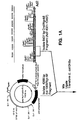
- This construct was assembled as shown in Figure 1.
- the resultant virus bears a 5' deletion of adenoviral sequences extending from about nucleotide 357 to 4020 and eliminates the E1a and E1b genes as well as the entire protein IX coding sequence, leaving the polyadenylation site shared by the E1b and protein IX genes intact for use in terminating transcription of any desired gene.
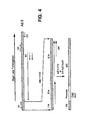
- a separate embodiment is shown in Figure 4.
- the deletion can be extended an additional 30 to 40 base pairs without affecting the adjacent gene for protein IVa2, although in that case an exogenous polyadenylation signal is provided to terminate transcription of genes inserted into the recombinant virus.
- the initial virus constructed with this deletion is easily propagated in 293 cells with no evidence of wild-type viral contamination and directs robust p53 expression from the transcriptional unit inserted at the site of the deletion.
- Insert capacity of recombinant viruses bearing the protein IX deletion described above is approximately 2.6 kb. This is sufficient for many genes including the p53 cDNA. Insert capacity can be increased by introducing other deletions into the adenoviral backbone, for example, deletions within early regions 3 or 4 (for review see: Graham and Prevec (1991)). For example, the use of an adenoviral backbone containing a 1.9 kb deletion of non-essential sequence within early region 3. With this additional deletion, the insert capacity of the vector is increased to approximately 4.5 kb, large enough for many larger cDNAs, including that of the retinoblastoma tumor suppressor gene.
- a recombinant adenovirus expression vector characterized by a total deletion of the adenoviral protein IX DNA and having a gene encoding a foreign protein, or a functional fragment or mutant thereof is provided by this invention.
- These vectors are useful for the safe recombinant production of diagnostic and therapeutic polypeptides and proteins, and more importantly, for the introduction of genes in gene therapy.
- the adenoviral vector of this invention can contain a foreign gene for the expression of a protein effective in regulating the cell cycle, such as p53, Rb, or mitosin, or in inducing cell death, such as the conditional suicide gene thymidine kinase.
- An expression cassette means a DNA molecule having a transcription promoter/enhancer such as the CMV promotor enhancer, etc., a foreign gene, and in some embodiments defined below, a polyadentlyation signal.
- the term "foreign gene” is intended to mean a DNA molecule not present in the exact orientation and position as the counterpart DNA molecule found in wild-type adenovirus.
- the foreign gene is a DNA molecule up to 4.5 kilobases.
- “Expression vector” means a vector that results in the expression of inserted DNA sequences when propagated in a suitable host cell, i.e., the protein or polypeptide coded for by the DNA is synthesized by the host's system.
- Inducible promoters also can be used in the adenoviral vector of this invention. These promoters will initiate transcription only in the presence of an additional molecule. Examples of inducible promoters include those obtainable from a ⁇ -interferon gene, a heat shock gene, a metallothionine gene or those obtainable from steroid hormone-responsive genes. Tissue specific expression has been well characterized in the field of gene expression and tissue specific and inducible promoters such as these are very well known in the art. These genes are used to regulate the expression of the foreign gene after it has been introduced into the target cell.
- a recombinant adenovirus expression vector as described above, having less extensive deletions of the protein IX gene sequence extending from 3500 bp from the 5' viral termini to approximately 4000 bp, in one embodiment.
- the recombinant adenovirus expression vector can have a further deletion of a non-essential DNA sequence in adenovirus early region 3 and/or 4 and/or deletion of the DNA sequences designated adenovirus E1a and E1b.
- foreign gene is a DNA molecule of a size up to 4.5 kilobases.
- a further embodiment has a deletion of up to forty nucleotides positioned 3' to the E1a and E1b deletion and pIX and a foreign DNA molecule encoding a polyadenylation signal inserted into the recombinant vector in a position relative to the foreign gene to regulate the expression of the foreign gene.
- the recombinant adenovirus expression vector can be derived from wild-type group adenovirus, serotype 1, 2, 5 or 6.
- the recombinant adenovirus expression vector has a foreign gene coding for a functional tumor suppressor protein, or a biologically active fragment thereof.
- a functional tumor suppressor gene refers to tumor suppressor genes that encode tumor suppressor proteins that effectively inhibit a cell from behaving as a tumor cell.
- Functional genes can include, for instance, wild type of normal genes and modifications of normal genes that retains its ability to encode effective tumor suppressor proteins and other anti-tumor genes such as a conditional suicide protein or a toxin.
- non-functional as used herein is synonymous with “inactivated.”
- Non-functional or defective genes can be caused by a variety of events, including for example point mutations, deletions, methylation and others known to those skilled in the art.
- an "active fragment" of a gene includes smaller portions of the gene that retain the ability to encode proteins having tumor suppressing activity.
- p56 RB described more fully below, is but one example of an active fragment of a functional tumor suppressor gene. Modifications of tumor suppressor genes are also contemplated within the meaning of an active fragment, such as additions, deletions or substitutions, as long as the functional activity of the unmodified gene is retained.
- a tumor suppressor gene is retinoblastoma (RB).
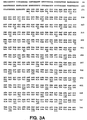
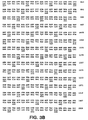
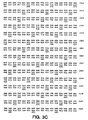
- the complete RB cDNA nucleotide sequences and predicted amino acid sequences of the resulting RB protein (designated p110 RB ) are shown in Lee et al . (1987) and in Figure 3.
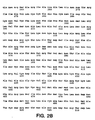
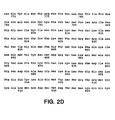
- Also useful to express retinoblastoma tumor suppressor protein is a DNA molecule encoding the amino acid sequence shown in Figure 2 or having the DNA sequence shown in Figure 3.
- a truncated version of p110 RB called p56 RB also is useful. For the sequence of p56 RB , see Huang et al . (1991). Additional tumor suppressor genes can be used in the vectors of this invention.
- these can be p16 protein (Kamb et al . (1994)), p21 protein, Wilm's tumor WT1 protein, mitosin, h-NUC, or colon carcinoma DCC protein.
- Mitosin is described in X. Zhu and W-H Lee, U.S. Application Serial No. 08/141,239, filed October 22, 1993, and a subsequent continuation-in-part by the same inventors, attorney docket number P-CJ 1191, filed October 24, 1994.
- h-NUC is described by W-H Lee and P-L Chen, U.S. Application Serial No. 08/170,586, filed December 20, 1993.
- protein means a linear polymer of amino acids joined in a specific sequence by peptide bonds.
- amino acid refers to either the D or L stereoisomer form of the amino acid, unless otherwise specifically designated.
- equivalent proteins or equivalent peptides e.g., having the biological activity of purified wild type tumor suppressor protein.
- Equivalent proteins and “equivalent polypeptides” refer to compounds that depart from the linear sequence of the naturally occurring proteins or polypeptides, but which have amino acid substitutions that do not change its biologically activity. These equivalents can differ from the native sequences by the replacement of one or more amino acids with related amino acids, for example, similarly charged amino acids, or the substitution or modification of side chains or functional groups.
- tumor suppressor protein any protein whose presence reduces the tumorigenicity, malignancy or hyperproliferative phenotype of the host cell.
- tumor suppressor proteins within this definition include, but are not limited to p110 RB , p56 RB , mitosin, h-NUC and p53.
- Tuorigenicity is intended to mean having the ability to form tumors or capable of causing tumor formation and is synonymous with neoplastic growth.
- “Malignancy” is intended to describe a tumorigenic cell having the ability to metastasize and endanger the life of the host organism.
- Hyperproliferative phenotype is intended to describe a cell growing and dividing at a rate beyond the normal limitations of growth for that cell type.
- Neoplastic also is intended to include cells lacking endogenous functional tumor suppressor protein or the inability of the cell to express endogenous nucleic acid encoding a functional tumor suppressor protein.
- An example of a vector of this invention is a recombinant adenovirus expression vector having a foreign gene coding for p53 protein or an active fragment thereof is provided by this invention.
- the coding sequence of the p53 gene is set forth below in Table I.
- any of the expression vectors described herein are useful as compositions for diagnosis or therapy.
- the vectors can be used for screening which of many tumor suppressor genes would be useful in gene therapy. For example, a sample of cells suspected of being neoplastic can be removed from a subject and mammal. The cells can then be contacted, under suitable conditions and with an effective amount of a recombinant vector of this invention having inserted therein a foreign gene encoding one of several functional tumor suppressor genes. Whether the introduction of this gene will reverse the malignant phenotype can be measured by colony formation in soft agar or tumor formation in nude mice. If the malignant phenotype is reversed, then that foreign gene is determined to be a positive candidate for successful gene therapy for the subject or mammal.
- compositions When used pharmaceutically, they can be combined with one or more pharmaceutically acceptable carriers.
- Pharmaceutically acceptable carriers are well known in the art and include aqueous solutions such as physiologically buffered saline or other solvents or vehicles such as glycols, glycerol, vegetable oils (eg., olive oil) or injectable organic esters.
- a pharmaceutically acceptable carrier can be used to administer the instant compositions to a cell in vitro or to a subject in vivo .
- a pharmaceutically acceptable carrier can contain a physiologically acceptable compound that acts, for example, to stabilize the composition or to increase or decrease the absorption of the agent.
- a physiologically acceptable compound can include, for example, carbohydrates, such as glucose, sucrose or dextrans, antioxidants, such as ascorbic acid or glutathione, chelating agents, low molecular weight proteins or other stabilizers or excipients.
- Other physiologically acceptable compounds include wetting agents, emulsifying agents, dispersing agents or preservatives, which are particularly useful for preventing the growth or action of microorganisms.
- Various preservatives are well known and include, for example, phenol and ascorbic acid.
- a pharmaceutically acceptable carrier including a physiologically acceptable compound
- a physiologically acceptable compound such as aluminum monosterate or gelatin is particularly useful as a delaying agent, which prolongs the rate of absorption of a pharmaceutical composition administered to a subject.
- carriers, stabilizers or adjutants can be found in Martin, Remington's Pharm. Sci. , 15th Ed. (Mack Publ. Co., Easton, 1975).
- the pharmaceutical composition also can be incorporated, if desired, into liposomes, microspheres or other polymer matrices (Gregoriadis, Liposome Technology , Vol. 1 (CRC Press, Boca Raton, Florida 1984)).
- Liposomes for example, which consist of phospholipids or other lipids, are nontoxic, physiologically acceptable and metabolizable carriers that are relatively simple to make and administer.
- compositions refers to any of the compositions of matte described herein in combination with one or more of the above pharmaceutically acceptable carriers.
- the compositions can then be administered therapeutically or prophylactically. They can be contacted with the host cell in vivo, ex vivo, or in vitro, in an effective amount. In vitro and ex vivo means of contacting host cells are provided below.
- methods of administering a pharmaceutical containing the vector of this invention are well known in the art and include but are not limited to, administration orally, intra-tumorally, intravenously, intramuscularly or intraperitoneal.
- Administration can be effected continuously or intermittently and will vary with the subject and the condition to be treated, e.g., as is the case with other therapeutic compositions (Landmann et al . (1992); Aulitzky et al . (1991); Lantz et al . (1990); Supersaxo et al . (1988); Demetri et al . (1989); and LeMaistre et al . (1991)).
- a transformed procaryotic or eucaryotic host cell for example an animal cell or mammalian cell, having inserted a recombinant adenovirus expression vector described above.
- Suitable procaryotic cells include but are not limited to bacterial cells such as E. coli cells.
- Methods of transforming host cells with retroviral vectors are known in the art, see Sambrook et al. (1989) and include, but are not limited to transfection, electroporation, and microinjection.
- animal is intended to be synonymous with mammal and is to include, but not be limited to bovine, porcine, feline, simian, canine, equine, murine, rat or human.
- Additional host cells include but are not limited to any neoplastic or tumor cell, such as osteosarcoma, ovarian carcinoma, breast carcinoma, melanoma, hepatocarcinoma, lung cancer, brain cancer, colorectal cancer, hematopoietic cell, prostate cancer, cervical carcinoma, retinoblastoma, esophageal carcinoma, bladder cancer, neuroblastoma, or renal cancer.
- any eucaryotic cell line capable of expressing E1a and E1b or E1a, E1b and pIX is a suitable host for this vector.
- a suitable eucaryotic host cell is the 293 cell line available from the American Type Culture Collection, 12301 Parklawn Drive, Rockville, Maryland, U.S.A. 20231.
- compositions for diagnosis or therapy are useful as compositions for diagnosis or therapy.
- they can be combined with various pharmaceutically acceptable carriers. Suitable pharmaceutically acceptable carriers are well known to those of skill in the art and, for example, are described above.
- the compositions can then be administered therapeutically or prophylactically, in effective amounts, described in more detail below.
- a method of transforming a host cell also is provided.
- This method provides contacting a host cell, i.e., a procaryotic or eucaryotic host cell, with any of the expression vectors described herein and under suitable conditions.
- the contacting can be effected in vitro, in vivo, or ex vivo, using methods well known in the art (Sambrook et al. (1989)) and using effective amounts of the expression vectors.
- Also provided in this invention is a method of producing a recombinant protein or polypeptide by growing the transformed host cell under suitable conditions favoring the transcription and translation of the inserted foreign gene.
- non-human animals having inserted therein the expression vectors or transformed host cells of this invention.
- These "transgenic" animals are made using methods well known to those of skill in the art, for example as described in U.S. Patent No. 5,175,384 or by conventional ex vivo therapy techniques, as described in Culver et al. (1991).
- the recombinant adenoviruses expressing a tumor suppressor wild-type p53 can efficiently inhibit DNA synthesis and suppress the growth of a broad range of human tumor cell types, including clinical targets.
- recombinant adenoviruses can express tumor suppression genes such as p53 in an in vivo established tumor without relying on direct injection into the tumor or prior ex vivo treatment of the cancer cells.
- the p53 expressed is functional and effectively suppresses tumor growth in vivo and significantly increases survival time in a nude mouse model of human lung cancer.
- the vectors of this invention are particularly suited for gene therapy. Accordingly, methods of gene therapy utilizing these vectors are within the scope of this invention.
- the vector is purified and then an effective amount is administered in vivo or ex vivo into the subject.
- Methods of gene therapy are well known in the art, see, for example, Larrick, J.W. and Burck, K.L. (1991) and Kreigler, M. (1990).
- Subject means any animal, mammal, rat, murine, bovine, porcine, equine, canine, feline or human patient.
- the vector is useful to treat or reduce hyperproliferative cells in a subject, to inhibit tumor proliferation in a subject or to ameliorate a particular related pathology.
- Pathologic hyperproliferative cells are characteristic of the following disease states, thyroid hyperplasia - Grave's Disease, psoriasis, benign prostatic hypertrophy, Li-Fraumeni syndrome including breast cancer, sarcomas and other neoplasms, bladder cancer, colon cancer, lung cancer, various leukemias and lymphomas.
- non-pathologic hyperproliferative cells are found, for instance, in mammary ductal epithelial cells during development of lactation and also in cells associated with wound repair.
- Pathologic hyperproliferative cells characteristically exhibit loss of contact inhibition and a decline in their ability to selectively adhere which implies a change in the surface properties of the cell and a further breakdown in intercellular communication. These changes include stimulation to divide and the ability to secrete proteolytic enzymes.
- the present invention relates to a method for depleting a suitable sample of pathologic mammalian hyperproliferative cells contaminating hematopoietic precursors during bone marrow reconstitution via the introduction of a wild type tumor suppressor gene into the cell preparation using the vector of this invention (whether derived from autologous peripheral blood or bone marrow).
- a "suitable sample” is defined as a heterogeneous cell preparation obtained from a patient, e.g., a mixed population of cells containing both phenotypically normal and pathogenic cells.
- administering includes, but is not limited to introducing into the cell or subject intravenously, by direct injection into the tumor, by intra-tumoral injection, by intraperitoneal administration, by aerosol administration to the lung or topically. Such administration can be combined with a pharmaceutically-accepted carrier, described above.
- reduced tumorigenicity is intended to mean tumor cells that have been converted into less tumorigenic or non-tumorigenic cells. Cells with reduced tumorigenicity either form no tumors in vivo or have an extended lag time of weeks to months before the appearance of in vivo tumor growth and/or slower growing three dimensional tumor mass compared to tumors having fully inactivated or non-functional tumor suppressor gene.
- the term "effective amount" is intended to mean the amount of vector or anti-cancer protein which achieves a positive outcome on controlling cell proliferation.
- one dose contains from about 10 8 to about 10 13 infectious units.
- a typical course of treatment would be one such dose a day over a period of five days.
- An effective amount will vary on the pathology or condition to be treated, by the patient and his status, and other factors well known to those of skill in the art. Effective amounts are easily determined by those of skill in the art.
- Also within the scope of this invention is a method of ameliorating a pathology characterized by hyperproliferative cells or genetic defect in a subject by administering to the subject an effective amount of a vector described above containing a foreign gene encoding a gene product having the ability to ameliorate the pathology, under suitable conditions.
- a vector described above containing a foreign gene encoding a gene product having the ability to ameliorate the pathology, under suitable conditions.
- genetic defect means any disease or abnormality that results from inherited factors, such as sickle cell anemia or Tay-Sachs disease.
- This invention also provides a method for reducing the proliferation of tumor cells in a subject by introducing into the tumor mass an effective amount of an adenoviral expression vector containing an anti-tumor gene other than a tumor suppressor gene.
- the anti-tumor gene can encode, for example, thymidine kinase (TK).
- TK thymidine kinase
- the subject is then administered an effective amount of a therapeutic agent, which in the presence of the anti-tumor gene is toxic to the cell.
- the therapeutic agent is a thymidine kinase metabolite such as ganciclovir (GCV), 6-methoxypurine arabinonucleoside (araM), or a functional equivalent thereof.
- thymidine kinase gene and the thymidine kinase metabolite must be used concurrently to be toxic to the host cell.
- GCV is phosphorylated and becomes a potent inhibitor of DNA synthesis whereas araM gets converted to the cytotoxic anabolite araATP.
- Other anti-tumor genes can be used as well in combination with the corresponding therapeutic agent to reduce the proliferation of tumor cells.
- Such other gene and therapeutic agent combinations are known by one skilled in the art.
- Another example would be the vector of this invention expressing the enzyme cytosine deaminase. Such vector would be used in conjunction with administration of the drug 5-fluorouracil (Austin and Huber, 1993), or the recently described E. Coli Deo ⁇ gene in combination with 6-methyl-purine-2'-deosribonucleoside (Sorscher et al 1994).
- this invention provides a therapy to stop the uncontrolled cellular growth in the patient thereby alleviating the symptoms of the disease or cachexia present in the patient.
- the effect of this treatment includes, but is not limited to, prolonged survival time of the patient, reduction in tumor mass or burden, apoptosis of tumor cells or the reduction of the number of circulating tumor cells. Means of quantifying the beneficial effects of this therapy are well known to those of skill in the art.
- the invention provides a recombinant adenovirus expression vector characterized by the total deletion of the adenoviral protein IX DNA and having a foreign gene encoding a foreign protein, wherein the foreign protein is a suicide gene or functional equivalent thereof.
- the anti-cancer gene TK described above, is an example of a suicide gene because when expressed, the gene product is, or can be made to be lethal to the cell. For TK, lethality is induced in the presence of GCV.
- the TK gene is derived from herpes simplex virus by methods well known to those of skill in the art.
- the plasmid pMLBKTK in E. coli HB101 (from ATCC #39369) is a source of the herpes simplex virus (HSV-1) thymidine kinase (TK) gene for use in this invention. However, many other sources exist as well.
- the TK gene can be introduced into the tumor mass by combining the adenoviral expression vector with a suitable pharmaceutically acceptable carrier.
- Introduction can be accomplished by, for example, direct injection of the recombinant adenovirus into the tumor mass.
- a cancer such as hepatocellular carcinoma (HCC)
- direct injection into the hepatic artery can be used for delivery because most HCCs derive their circulation from this artery.
- cell death is induced by treating the patients with a TK metabolite such as ganciclovir to achieve reduction of tumor mass.
- the TK metabolite can be administered, for example, systemically, by local innoculation into the tumor or in the specific case of HCC, by injection into the hepatic artery.
- the TK metabolite is preferably administered at least once daily but can be increased or decreased according to the need.
- the TK metabolite can be administered simultaneous or subsequent to the administration of the TK containing vector. Those skilled in the art know or can determine the dose and duration which is therapeutically effective.
- a method of tumor-specific delivery of a tumor suppressor gene is accomplished by contacting target tissue in an animal with an effective amount of the recombinant adenoviral expression vector of this invention.
- the gene is intended to code for an anti-tumor agent, such as a functional tumor suppressor gene or suicide gene.
- Contacting is intended to encompass any delivery method for the efficient transfer of the vector, such as intra-tumoral injection.
- adenoviral vector of this invention to prepare medicaments for the treatment of a disease or for therapy is further provided by this invention.
- Plasmid pAd/MLP/p53/E1b- was used as the starting material for these manipulations.
- This plasmid is based on the pBR322 derivative pML2 (pBR322 deleted for base pairs 1140 to 2490) and contains adenovirus type 5 sequences extending from base pair 1 to base pair 5788 except that it is deleted for adenovirus type 5 base pairs 357 to 3327.
- a transcriptional unit is inserted which is comprised of the adenovirus type 2 major late promoter, the adenovirus type 2 tripartite leader cDNA and the human p53 cDNA.
- Ad5 E1a and E1b genes It is a typical E1 replacement vector deleted for the Ad5 E1a and E1b genes but containing the Ad5 protein IX gene (for review of Adenovirus vectors see: Graham and Prevec (1992)).
- Ad2 DNA was obtained from Gibco BRL. Restriction endonucleases and T4 DNA ligase were obtained from New England Biolabs.
- E. coli DH5 ⁇ competent cells were purchased from Gibco BRL and 293 cells were obtained from the American Type Culture Collection (ATCC).
- Prep-A-Gene DNA purification resin was obtained from BioRad.
- LB broth bacterial growth medium was obtained from Difco.
- Qiagen DNA purification columns were obtained from Qiagen, Inc.
- Ad5 dl327 was obtained from R.J. Schneider, NYU.
- the MBS DNA transfection kit was purchased from Stratagene.
- restriction fragments were mixed and treated with T4 DNA ligase in a total volume of 50 ⁇ l at 16°C for 16 hours according to the manufacturer's recommendations. Following ligation 5 ⁇ l of the reaction was used to transform E. coli DH5 ⁇ cells to ampicillin resistance following the manufacturer's procedure. Six bacterial colonies resulting from this procedure were used to inoculate separate 2 ml cultures of LB growth medium and incubated overnight at 37°C with shaking. DNA was prepared from each bacterial culture using standard procedures (Sambrook et al . (1989)).
- plasmid DNA from each isolate was digested with 20 units of restriction endonuclease XhoI to screen for the correct recombinant containing XhoI restriction fragments of 3627, 3167, 2466 and 1445 base pairs. Five of six screened isolates contained the correct plasmid. One of these was then used to inoculate a 1 liter culture of LB medium for isolation of large quantities of plasmid DNA. Following overnight incubation plasmid DNA was isolated from the 1 liter culture using Qiagen DNA purification columns according to the manufacturer's recommendations. The resulting plasmid was designated Pad/MLP/p53/PIX-.
- adenovirus type 5 dl327 DNA (Thimmappaya (1982)) was digested with restriction endonuclease ClaI and the large fragment (approximately 33 kilobase pairs) was purified by sucrose gradient centrifugation.
- Ten (10) ⁇ g of EcoRI treated p53 (Table I) was isolated from pGEM1-p53-B-T (kindly supplied by Dr.
- Robert Schneider which contain the Ad5 5' inverted terminal repeat and viral packaging signals and the E1a enhancer upstream of either the Ad2 major late promoter (MLP) or the human cytomegalovirus immediate early gene promoter (CMV), followed by the tripartite leader CDNA and Ad 5 sequence 3325-5525 bp in a PML2 background.
- MLP Ad2 major late promoter
- CMV human cytomegalovirus immediate early gene promoter
- Ad 5 sequence 3325-5525 bp in a PML2 background Ad2 major late promoter
- CMV cytomegalovirus immediate early gene promoter
- Additional MLP and CMV driven p53 recombinants were generated which had a further 705 nucleotide deletion of Ad 5 sequence to remove the protein IX (PIX) coding region.
- a recombinant adenovirus was generated from the parental PNL3C plasmid without a p53 insert (A/M).
- a second control consisted of a recombinant adenovirus encoding the beta-galactosidase gene under the control of the CMV promoter (A/C/ ⁇ -gal).
- the plasmids were linearized with either Nru I or Eco RI and co-transfected with the large fragment of a Cla I digested Ad 5 d1309 or d1327 mutants (Jones and Shenk (1979)) using a Ca/PO 4 transfection kit (Stratagene).
- Viral plaques were isolated and recombinants identified by both restriction digest analysis and PCR using recombinant specific primers against the tripartite leader CDNA sequence with downstream p53 CDNA sequence. Recombinant virus was further purified by limiting dilution, and virus particles were purified and titered by standard methods (Graham and van der Erb (1973); Graham and Prevec (1991)).
- Saos-2 or Hep 3B cells (5 x 10 5 ) were infected with the indicated recombinant adenoviruses for a period of 24 hours at increasing multiplicities of infection (MOI) of plaque forming units of virus/cell.
- MOI multiplicities of infection
- Cells were then washed once with PBS and harvested in lysis buffer (50mM Tris-Hcl Ph 7.5, 250 Mm NaCl, 0.1% NP40, 50mM NaF, 5mM EDTA, 10ug/ml aprotinin, 10 ug/ml leupeptin, and 1mM PMSF).
- lysis buffer 50mM Tris-Hcl Ph 7.5, 250 Mm NaCl, 0.1% NP40, 50mM NaF, 5mM EDTA, 10ug/ml aprotinin, 10 ug/ml leupeptin, and 1mM PMSF.
- Cellular proteins (approximately 30 ⁇
- Membranes were incubated with ⁇ -p53 antibody PAb 1801 (Novocastro) followed by sheep anti-mouse IgG conjugated with horseradish peroxidase. p53 protein was visualized by chemiluminescence (ECL kit, Amersham) on Kodak XAR-5 film.
- Cells (5 x 10 3 /well) were plated in 96-well titer plates (Costar) and allowed to attach overnight (37°C, 7% CO 2 ). Cells were then infected for 24 hours with purified recombinant virus particles at MOIs ranging from 0.3 to 100 as indicated. Media were changed 24 hours after infection, and incubation was continued for a total of 72 hours. 3 H-thymidine (Amersham, 1 ⁇ Ci/well) was added 18 hours prior to harvest. Cells were harvested on glass fiber filters and levels of incorporated radioactivity were measured in a beta scintillation counter. 3 H-thymidine incorporation was expressed as the mean % (+/- SD) of media control and plotted versus the MOI.
- mice BALB/c athymic nude mice (approximately 5 weeks of age) were injected subcutaneously with 1 x 10 7 H69 small cell lung carcinoma (SCLC) cells in their right flanks. Tumors were allowed to progress for 32 days until they were approximately 25-50 mm 3 . Mice received peritumoral injections of either A/C/53 or A/C/ ⁇ -gal recombinant adenovirus (2 x 10 9 plaque forming units (pfu)) into the subcutaneous space beneath the tumor mass. Tumors were excised from the animals 2 and 7 days post adenovirus treatment and rinsed with PBS. Tumor samples were homogenized, and total RNA was isolated using a TriReagent kit (Molecular Research Center, Inc.).
- PolyA RNA was isolated using the PolyATract mRNA Isolation System (Promega), and approximately 10 ng of sample was used for RT-PCR determination of recombinant p53 MRNA expression (Wang et al. (1989)). Primers were designed to amplify sequence between the adenovirus tripartite leader CDNA and the downstream p53 CDNA, ensuring that only recombinant, and not endogenous p53 would be amplified.
- p53 adenoviruses were constructed by replacing a portion of the E1a and E1b region of adenovirus Type 5 with p53 CDNA under the control of either the Ad2 MLP (A/M/53) or CMV (A/C/53) promoter (schematized in Figure 4).
- This E1 substitution severely impairs the ability of the recombinant adenoviruses to replicate, restricting their propagation to 293 cells which supply Ad 5 E1 gene products in trans (Graham et al . (1977)).
- the entire p53 CDNA sequence from one of the recombinant adenoviruses was sequenced to verify that it was free of mutations.
- purified preparations of the p53 recombinants were used to infect HeLa cells to assay for the presence of phenotypically wild type adenovirus.
- HeLa cells which are non-permissive for replication of E1-deleted adenovirus, were infected with 1-4 x 10 9 infectious units of recombinant adenovirus, cultured for 3 weeks, and observed for the appearance of cytopathic effect (CPE).
- CPE cytopathic effect
- tumor cell lines which do not express endogenous p53 protein were infected.
- the human tumor cell lines Saos-2 (osteosarcoma) and Hep 3B (hepatocellular carcinoma) were infected for 24 hours with the p53 recombinant adenoviruses A/M/53 or A/C/53 at MOIs ranging 0.1 to 200 pfu/cell.
- Western analysis of lysates prepared from infected cells demonstrated a dose-dependent p53 protein expression in both cell types ( Figure 5). Both cell lines expressed higher levels of p53 protein following infection with A/C/53 than with A/M/53 ( Figure 3).
- a variety of p53-deficient tumor cell lines were infected with either A/M/N/53, A/C/N/53 or a non-p53 expressing control recombinant adenovirus (A/M).
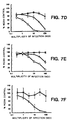
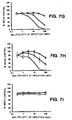
- a strong, dose-dependent inhibition of DNA synthesis by both the A/M/N/53 and A/C/N/53 recombinants in 7 out of the 9 different tumor cell lines tested ( Figure 7) was observed. Both constructs were able to inhibit DNA synthesis in these human tumor cells, regardless of whether they expressed mutant p53 or failed to express p53 protein. It also was found that in this assay, the A/C/N/53 construct was consistently more potent than the A/M/N/53.
- tumor cells were infected ex vivo and then injected the cells into nude mice to assess the ability of the recombinants to suppress tumor growth in vivo.
- the A/M/N/53 recombinant adenovirus is able to mediate p53-specific tumor suppression in an in vivo environment.
- RT-PCR using recombinant-p53 specific primers, was then used to detect p53 MRNA in the p53 treated tumors ( Figure 9, lanes 1,2,4,5). No p53 signal was evident from the tumors excised from the ⁇ -gal treated animals ( Figure 9, lanes 3 and 6).
- Amplification with actin primers served as a control for the RT-PCR reaction ( Figure 9, lanes 7-9), while a plasmid containing the recombinant-p53 sequence served as a positive control for the recombinant-p53 specific band ( Figure 9, lane 10).
- This experiment demonstrates that a p53 recombinant adenovirus can specifically direct expression of p53 mRNA within established tumors following a single injection into the peritumoral space. It also shows in vivo viral persistence for at least one week following infection with a p53 recombinant adenovirus.
- mice To address the feasibility of gene therapy of established tumors, a tumor-bearing nude mouse model was used. H69 cells were injected into the subcutaneous space on the right flank of mice, and tumors were allowed to grow for 2 weeks. Mice then received peritumoral injections of buffer or recombinant virus twice weekly for a total of 8 doses. In the mice treated with buffer or control A/M virus, tumors continued to grow rapidly throughout the treatment, whereas those treated with the A/M/N/53 virus grew at a greatly reduced rate (Figure 10A). After cessation of injections, the control treated tumors continued to grow while the p53 treated tumors showed little or no growth for at least one week in the absence of any additional supply of exogenous p53 (Figure 10A).
- Recombinant human adenovirus vectors which are capable of expressing high levels of wild-type p53 protein in a dose dependent manner were constructed.
- Each vector contains deletions in the E1a and E1b regions which render the virus replication deficient (Challberg and Kelly (1979); Horowitz, (1991)).
- these deletions include those sequences encoding the E1b 19 and 55 kd protein.
- the 19 kd protein is reported to be involved in inhibiting apoptosis (White et al . (1992); Rao et al . (1992)), whereas the 55 kd protein is able to bind wild-type p53 protein (Sarnow et al . (1982); Heuvel et al .
- adenoviral sequences homologous to those contained in 293 cells are reduced to approximately 300 base pairs, decreasing the chances of regenerating replication-competent, wild-type adenovirus through recombination. Constructs lacking pIX coding sequence appear to have equal efficacy to those with pIX.
- p53 expressed by the recombinants was functional and strongly suppressed tumor growth as compared to that of control, non-p53 expressing adenovirus treated tumors.
- both p53 and control virus treated tumor groups showed tumor suppression as compared to buffer treated controls. It has been demonstrated that local expression of tumor necrosis factor (TNF), interferon- ⁇ ), interleukin (IL)-2, IL-4 or IL-7 can lead to T-cell independent transient tumor suppression in nude mice (Hoch et al . (1992)). Exposure of monocytes to adenovirus virions are also weak inducers of IFN- ⁇ / ⁇ (reviewed in Gooding and Wold (1990)).
- mutations in the recently described WAF1 gene a gene induced by wild-type p53 which subsequently inhibits progression of the cell cycle into S phase, (El-Deiry et al . (1993); Hunter (1993)) could result in a p53-resistant tumor.
- Hepatocellular carcinoma was chosen as the target because it is one of the most common human malignancies affecting man, causing an estimated 1,250,000 deaths per year world-wide.
- the incidence of this cancer is very high in Southeast Asia and Africa where it is associated with Hepatitis B and C infection and exposure to aflatoxin.
- Surgery is currently the only treatment which offers the potential for curing HCC, although less than 20% of patients are considered candidates for resection (Ravoet C. et al., 1993).
- tumors other than hepatocellular carcinoma are equally applicable to the methods of reducing their proliferation described herein.
- HLF cell line All cell lines but for the HLF cell line were obtained from the American Type Tissue Culture Collection (ATCC) 12301 Parklawn Drive, Rockville Maryland. ATCC accession numbers are noted in parenthesis.
- the human embryonal kidney cell line 293 (CRL 1573) was used to generate and propagate the recombinant adenoviruses described herein. They were maintained in DME medium containing 10% defined, supplemented calf serum (Hyclone).
- the hepatocellular carcinoma cell lines Hep 3B (HB 8064), Hep G2 (HB 8065), and HLF were maintained in DME/F12 medium supplemented with 10% fetal bovine serum, as were the breast carcinoma cell lines MDA-MB468 (HTB 132) and BT-549 (HTB 122).
- Chang liver cells (CCL 13) were grown in MEM medium supplemented with 10% fetal bovine serum.
- the HLF cell line was obtained from Drs. T. Morsaki and H. Kitsuki at
- adenoviral expression vectors designated herein as ACNTK and AANTK and devoid of protein IX function are capable of directing expression of the TK suicide gene within tumor cells.
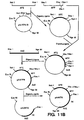
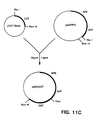
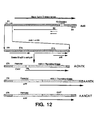
- a third adenovirus expression vector designated AANCAT was constructed to further demonstrate the feasibility of specifically targeting gene expression to specific cell types using adenoviral vectors. These adenoviral constructs were assembled as depicted in Figures 11 and 12 and are derivatives of those previously described for the expression of tumor suppresor genes.
- CMV human cytomegalovirus immediate early promoter/enhancer
- AFP human alpha-fetoprotein enhancer/promoter
- the CMV enhancer promoter is capable of directing robust gene expression in a wide variety of cell types while the AFP enhancer/promoter construct restricts expression to hepatocellular carcinoma cells (HCC) which express AFP in about 70-80% of the HCC pateint population.
- HCC hepatocellular carcinoma cells
- the adenovirus type 2 tripartite leader sequence also was inserted to enhance translation of the TK transcript (Berkner, K.L. and Sharp, 1985).
- both adenovirus vectors are additionally deleted for 1.9 kilobases (kb) of DNA in the viral E3 region.
- the DNA deleted in the E3 region is non-essential for virus propagation and its deletion increases the insert capacity of the recombinant virus for foreign DNA by an equivalent amount (1.9kb) (Graham and Prevec, 1991).
- the virus AANCAT also was constructed where the marker gene chloramphenicol aceytitransferase (CAT) is under the control of the AFP enhancer/promoter.
- CAT chloramphenicol aceytitransferase
- the Ad2 tripartite leader sequence was placed between the CMV promoter/enhancer and the TK gene. The tripartite leader has been reported to enhance translation of linked genes. The E1 substitution impairs the ability of the recombinant viruses to replicate, restricting their propagation to 293 cells which supply the Ad5 E1 gene products in trans (Graham et al., 1977).
- Adenoviral Vector ACNTK The plasmid pMLBKTK in E. coli HB101 (from ATCC #39369) was used as the source of the herpes simplex virus (HSV-1) thymidine kinase (TK) gene. TK was excised from this plasmid as a 1.7 kb gene fragment by digestion with the restriction enzymes Bgl II and Pvu II and subcloned into the compatible Bam HI, EcoR V restriction sites of plasmid pSP72 (Promega) using standard cloning techniques (Sambrook et al., 1989).
- HSV-1 herpes simplex virus
- TK thymidine kinase
- the TK insert was then isolated as a 1.7 kb fragment from this vector by digestion with Xba I and Bgl II and cloned into Xba I, BamHI digested plasmid pACN (Wills et al. 1994). Twenty (20) ⁇ g of this plasmid designated pACNTK were linearized with Eco RI and cotransfected into 293 cells (ATCC CRL 1573) with 5 ⁇ g of Cla I digested ACBGL (Wills et al., 1994 supra) using a CaPO 4 transfection kit (Stratagene, San Diego, California).
- Viral plaques were isolated and recombinants, designated ACNTK, were identified by restriction digest analysis of isolated DNA with Xho I and BsiWI. Positive recombinants were further purified by limiting dilution and expanded and titered by standard methods (Graham and Prevec, 1991).
- Adenoviral Vector AANTK The ⁇ -fetoprotein promoter (AFP-P) and enhancer (AFP-E) were cloned from a human genomic DNA (Clontech) using PCR amplification with primers containing restriction sites at their ends.
- the 5' primer sequence was 5'-CGC GCT AGC TCT GCC CCA AAG AGC T-3.
- the 5' primer sequence was 5'-CGC GGT ACC CTC GAG TCT AGA TAT TGC CAG TGG TGG AAG-3'.
- the primers used to isolate the 1763 bp AFE fragment contained a Not I restriction site on the 5' primer and a Xba I site on the 3' primer.
- the 5' primer sequence was 5'-CGT GCG GCC GCT GGA GGA CTT TGA GGA TGT CTG TC-3'.
- the 3' primer sequence was 5'-CGC TCT AGA GAG ACC AGT TAG GAA GTT TTC GCA-3'.
- the DNA was denatured at 97° for 7 minutes, followed by 5 cycles of amplification at 97°, 1 minute, 53°, 1 minute, 72°, 2 minutes, and a final 72°, 10 minute extension.
- the amplified AFE was digested with Not I and Xba I and inserted into the Not I, Xba I sites of a plasmid vector (pA/ITR/B) containing adenovirus type 5 sequences 1-350 and 3330 - 5790 separated by a polylinker containing Not I, Xho I, Xba I, Hind III, Kpn I, Bam HI, Nco I, Sma I, and Bgl II sites.
- the amplified AFP-E was digested with Nhe I and Kpn I and inserted into the AFP-E containing construct described above which had been digested with Xba I and Kpn I.
- This new construct was then further digested with Xba I and NgoMI to remove adenoviral sequences 3330 - 5780, which were subsequently replaced with an Xba I, NgoMI restriction fragment of plasmid pACN containing nucleotides 4021 - 10457 of adenovirus type 2 to construct the plasmid pAAN containing both the ⁇ -fetoprotein enhancer and promoter.
- This construct was then digested with Eco RI and Xba I to isolate a 2.3 kb fragment containing the Ad5 inverted terminal repeat, the AFP-E and the AFP-P which was subsequently ligated with the 8.55 kb fragment of Eco RI, Xba I digested pACNTK described above to generate pAANTK where the TK gene is driven by the ⁇ -fetoprotein enhancer and promoter in an adenovirus background.
- This plasmid was then linearized with Eco RI and cotransfected with the large fragment of Cla I digested ALBGL as above and recombinants, designated AANTK, were isolated and purified as described above.
- Adenoviral Vector AANCAT The chloramphenicol acetyltransferase (CAT) gene was isolated from the pCAT-Basic Vector (Promega Corporation) by an Xba I, Bam HI digest. This 1.64 kb fragment was ligated into Xba I, Bam HI digested pAAN (described above) to create pAANCAT. This plasmid was then linearized with Eco RI and cotransfected with the large fragment of Cla I digested rA/C/ ⁇ -gal to create AANCAT.
- CAT chloramphenicol acetyltransferase
- reaction products are then redissolved in 25 ⁇ l of ethyl acetate and spotted onto a thin layer chromatography (TLC) plate and the plate is then placed in a pre-equilibrated TLC chamber (95% chloroform, 5% methanol). The solvent is then allowed to migrate to the top of the plate, the plate is then dried and exposed to X-ray film.
- TLC thin layer chromatography
- HVF human HCC
- Hep 3B Human hepatocellular carcinoma cells
- mice Female (10) athymic nu/nu mice (Simonsen Laboratories, Gilroy, CA). Each animal received approximately 1 x 10 7 cells in the left flank. Tumors were allowed to grow for 27 days before randomizing mice by tumor size. Mice were treated with intratumoral and peritumoral injections of ACNTK or the control virus ACN (1 x 10 9 iu in 100 ⁇ l) every other day for a total of three doses. Starting 24 hours after the initial dose of adenovirus, the mice were dosed intraperitoneally with ganciclovir (Cytovene 100 mg/kg) daily for a total of 10 days. Mice were monitored for tumor size and body weight twice weekly. Measurements on tumors were made in three dimensions using vernier calipers and volumes were calculated using the formula 4/3 ⁇ r 3 , where r is one-half the average tumor dimension.
- the recombinant adenoviruses were used to infect three HCC cell lines (HLF, Hep3B and Hep-G2).
- HCF human liver cell line
- MDAMB468 and BT549 Two breast cancer cell lines were used as controls.
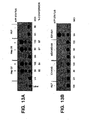
- AANCAT was constructed. This virus was used to infect cells that either do (Hep 3B, HepG2) or do not (HLE, Chang, MDAMB468) express the HCC tumor marker alpha-fetoprotein (AFP).
- AANCAT directs expression of the CAT marker gene only in those HCC cells which are capable of expressing AFP ( Figure 13).
- the efficacy of ACNTK and AANTK for the treatment of HCC was assessed using a 3 H-thymidine incorporation assay to measure the effect of the combination of HSV-TK expression and ganciclovir treatment upon cellular proliferation.
- the cell lines were infected with either ACNTK or AANTK or the control virus ACN (Wills et al., 1994 supra ), which does not direct expression of HSV-TK, and then treated with increasing concentrations of ganciclovir.
- the effect of this treatment was assessed as a function of increasing concentrations of ganciclovir, and the concentration of ganciclovir required to inhibit 3 H-thymidine incorporated by 50% was determined (ED 50 ).
- a relative measure of adenovirus - mediated gene transfer and expression of each cell line was determined using a control virus which directs expression of the marker gene beta-galactosidase.
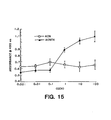
- the data presented in Figure 14 and Table 1 below show that the ACNTK virus/ganciclovir combination treatment was capable of inhibiting cellular proliferation in all cell lines examined as compared with the control adenovirus ACN in combination with ganciclovir.
- the AANTK viral vector was only effective in those HCC cell lines which have been demonstrated to express ⁇ -fetoprotein.
- the AANTK/GCV combination was more effective when the cells were plated at high densities.
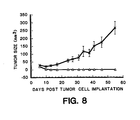
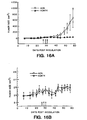
- Nude mice bearing Hep3B tumors were treated intratumorally and peritumorally with equivalent doses of ACNTK or ACN control. Twenty-four hours after the first administration of recombinant adenovirus, daily treatment of ganciclovir was initiated in all mice. Tumor dimensions from each animal were measured twice weekly via calipers, and average tumor sizes are plotted in Figure 16. Average tumor size at day 58 was smaller in the ACNTK-treated animals but the difference did not reach statistical significance (p ⁇ 0.09, unpaired t-test). These data support a specific effect of ACNTK on tumor growth in vivo . No significant differences in average body weight were detected between the groups.
Landscapes
- Health & Medical Sciences (AREA)
- Life Sciences & Earth Sciences (AREA)
- Genetics & Genomics (AREA)
- Engineering & Computer Science (AREA)
- Organic Chemistry (AREA)
- Chemical & Material Sciences (AREA)
- Bioinformatics & Cheminformatics (AREA)
- General Health & Medical Sciences (AREA)
- Zoology (AREA)
- Wood Science & Technology (AREA)
- General Engineering & Computer Science (AREA)
- Biotechnology (AREA)
- Biomedical Technology (AREA)
- Pharmacology & Pharmacy (AREA)
- Medicinal Chemistry (AREA)
- Chemical Kinetics & Catalysis (AREA)
- Public Health (AREA)
- General Chemical & Material Sciences (AREA)
- Animal Behavior & Ethology (AREA)
- Veterinary Medicine (AREA)
- Nuclear Medicine, Radiotherapy & Molecular Imaging (AREA)
- Microbiology (AREA)
- Molecular Biology (AREA)
- Plant Pathology (AREA)
- Biophysics (AREA)
- Physics & Mathematics (AREA)
- Virology (AREA)
- Biochemistry (AREA)
- Communicable Diseases (AREA)
- Oncology (AREA)
- Medicines Containing Material From Animals Or Micro-Organisms (AREA)
- Medicines That Contain Protein Lipid Enzymes And Other Medicines (AREA)
- Pharmaceuticals Containing Other Organic And Inorganic Compounds (AREA)
- Micro-Organisms Or Cultivation Processes Thereof (AREA)
- Medicines Containing Antibodies Or Antigens For Use As Internal Diagnostic Agents (AREA)
- Saccharide Compounds (AREA)
- Peptides Or Proteins (AREA)
Claims (27)
- Composition pharmaceutique comprenant un vecteur d'expression adénoviral recombinant, le vecteur comprenant un gène codant une protéine étrangère et une délétion totale de la séquence codante de la protéine IX.
- Composition pharmaceutique selon la revendication 1, comprenant en outre la délétion d'une séquence d'ADN d'adénovirus désignée E1a et E1b.
- Composition pharmaceutique selon la revendication 1 ou 2, comprenant en outre la délétion d'une séquence d'ADN dans la région précoce 3 et/ou la région précoce 4.
- Composition pharmaceutique selon l'une quelconque des revendications 1 à 3, comprenant en outre une délétion concernant jusqu'à quarante nucléotides positionnés en 3' de la délétion de la protéine IX et une molécule d'ADN étranger codant un signal de polyadénylation.
- Composition pharmaceutique selon l'une quelconque des revendications 1 à 4, dans laquelle l'adénovirus est un adénovirus du groupe C choisi parmi un sérotype 1, 2, 5 ou 6.
- Composition pharmaceutique selon l'une quelconque des revendications 1 à 5, dans laquelle le gène est une molécule d'ADN contenant jusqu'à 2,6 kilobases.
- Composition pharmaceutique selon l'une quelconque des revendications 1 à 5, dans laquelle le gène est une molécule d'ADN contenant jusqu'à 4,5 kilobases.
- Composition pharmaceutique selon l'une quelconque des revendications 1 à 7, dans laquelle le gène code une protéine fonctionnelle, une protéine non fonctionnelle ou un fragment protéique de celle-ci.
- Composition pharmaceutique selon la revendication 8, dans laquelle la protéine fonctionnelle est une protéine suppresseur de tumeur.
- Composition pharmaceutique selon la revendication 8, dans laquelle la protéine fonctionnelle est une protéine suicide.
- Kit pour réduire la prolifération des cellules tumorales, ledit kit comprenant une composition pharmaceutique selon l'une quelconque des revendications 1 à 10, un agent thérapeutique choisi dans le groupe constitué par le ganciclovir, le 6-méthoxypurine arabinonucléoside, le 5-fluorouracile, le 6-méthyl-purine-2'-désoxyribonucléoside et leurs combinaisons, et un ou plusieurs véhicules pharmaceutiquement acceptables.
- Vecteur d'expression adénoviral recombinant comprenant un gène codant une protéine étrangère et une délétion totale de la séquence codante de la protéine IX.
- Vecteur d'expression adénoviral recombinant selon la revendication 12, comprenant en outre la délétion d'une séquence d'ADN d'adénovirus désignée E1a et E1b.
- Vecteur d'expression adénoviral recombinant selon la revendication 12 ou 13, comprenant en outre la délétion d'une séquence d'ADN dans la région précoce 3 et/ou la région précoce 4.
- Vecteur d'expression adénoviral recombinant selon l'une quelconque des revendications 12 à 14, comprenant en outre une délétion concernant jusqu'à quarante nucléotides positionnés en 3' de la délétion de la protéine IX et une molécule d'ADN étranger codant un signal de polyadénylation.
- Vecteur d'expression adénoviral recombinant selon l'une quelconque des revendications 12 à 15, dans lequel l'adénovirus est un adénovirus du groupe C choisi parmi un sérotype 1, 2, 5 ou 6.
- Vecteur d'expression adénoviral recombinant selon l'une quelconque des revendications 12 à 16, dans lequel le gène est une molécule d'ADN contenant jusqu'à 2,6 kilobases.
- Vecteur d'expression adénoviral recombinant selon l'une quelconque des revendications 12 à 16, dans lequel le gène est une molécule d'ADN contenant jusqu'à 4,5 kilobases.
- Vecteur d'expression adénoviral recombinant selon l'une quelconque des revendications 12 à 18, dans lequel le gène code une protéine fonctionnelle, une protéine fonctionnelle, ou un fragment protéique de celle-ci.
- Vecteur d'expression adénoviral recombinant selon la revendication 19, dans lequel la protéine fonctionnelle est une protéine suppresseur de tumeur.
- Vecteur d'expression adénoviral recombinant selon la revendication 19, dans lequel la protéine fonctionnelle est une protéine suicide.
- Utilisation de l'adénovirus recombinant selon l'une quelconque des revendications 20 à 21 pour la préparation d'une composition pharmaceutique pour traiter le cancer, laquelle composition pharmaceutique comprend en outre un ou plusieurs véhicules pharmaceutiquement acceptables.
- Utilisation selon la revendication 22, dans laquelle le cancer est associé à un manque de protéine suppresseur de tumeur endogène.
- Utilisation selon la revendication 23, dans laquelle le cancer est un cancer pulmonaire non à petites cellules, un cancer pulmonaire à petites cellules, un hépatocarcinome, un mélanome, un rétinoblastome, une tumeur du sein, un carcinome colorectal, une leucémie, un lymphome, une tumeur du cerveau, un carcinome cervical, un sarcome, une tumeur de la prostate, une tumeur de la vessie, une tumeur des tissus réticulo-endothéliaux, une tumeur de Wilms, un astrocytome, un glioblastome, un neuroblastome, un carcinome ovarien, un ostéosarcome et un cancer rénal.
- Utilisation de l'adénovirus recombinant selon l'une quelconque des revendications 20 à 21 pour la préparation d'une composition pharmaceutique pour inhiber la prolifération d'une tumeur dans un animal, laquelle composition pharmaceutique comprend en outre un ou plusieurs véhicules pharmaceutiquement acceptables.
- Utilisation de l'adénovirus recombinant selon l'une quelconque des revendications 20 à 21 pour la préparation d'une composition pharmaceutique pour réduire la prolifération de cellules tumorales chez un sujet, dans laquelle la composition pharmaceutique comprend en outre une quantité efficace d'un agent thérapeutique choisi dans le groupe constitué par le ganciclovir, le 6-méthoxypurine arabinonucléoside, le 5-fluorouracile, le 6-méthyl-purine-2'-désoxyribonucléoside et leurs combinaisons, et un ou plusieurs véhicules pharmaceutiquement acceptables.
- Utilisation selon la revendication 26, dans laquelle les cellules tumorales sont un carcinome hépatocellulaire.
Priority Applications (2)
| Application Number | Priority Date | Filing Date | Title |
|---|---|---|---|
| EP05020924A EP1637608B1 (fr) | 1993-10-25 | 1994-10-25 | Vecteur recombinant d'adenovirus et procédés d'utilisation |
| EP09009448A EP2113569A1 (fr) | 1993-10-25 | 1994-10-25 | Vecteur adénoviral recombinant et procédés d'utilisation |
Applications Claiming Priority (5)
| Application Number | Priority Date | Filing Date | Title |
|---|---|---|---|
| US14266993A | 1993-10-25 | 1993-10-25 | |
| US142669 | 1993-10-25 | ||
| US24600694A | 1994-05-19 | 1994-05-19 | |
| US246006 | 1994-05-19 | ||
| PCT/US1994/012235 WO1995011984A2 (fr) | 1993-10-25 | 1994-10-25 | Vecteur recombinant d'adenovirus et procedes d'utilisation |
Related Child Applications (1)
| Application Number | Title | Priority Date | Filing Date |
|---|---|---|---|
| EP05020924A Division EP1637608B1 (fr) | 1993-10-25 | 1994-10-25 | Vecteur recombinant d'adenovirus et procédés d'utilisation |
Publications (3)
| Publication Number | Publication Date |
|---|---|
| EP0797676A2 EP0797676A2 (fr) | 1997-10-01 |
| EP0797676B1 true EP0797676B1 (fr) | 2005-12-28 |
| EP0797676B9 EP0797676B9 (fr) | 2006-06-28 |
Family
ID=26840311
Family Applications (3)
| Application Number | Title | Priority Date | Filing Date |
|---|---|---|---|
| EP05020924A Expired - Lifetime EP1637608B1 (fr) | 1993-10-25 | 1994-10-25 | Vecteur recombinant d'adenovirus et procédés d'utilisation |
| EP09009448A Withdrawn EP2113569A1 (fr) | 1993-10-25 | 1994-10-25 | Vecteur adénoviral recombinant et procédés d'utilisation |
| EP95900422A Expired - Lifetime EP0797676B9 (fr) | 1993-10-25 | 1994-10-25 | Vecteur recombinant d'adenovirus et procedes d'utilisation |
Family Applications Before (2)
| Application Number | Title | Priority Date | Filing Date |
|---|---|---|---|
| EP05020924A Expired - Lifetime EP1637608B1 (fr) | 1993-10-25 | 1994-10-25 | Vecteur recombinant d'adenovirus et procédés d'utilisation |
| EP09009448A Withdrawn EP2113569A1 (fr) | 1993-10-25 | 1994-10-25 | Vecteur adénoviral recombinant et procédés d'utilisation |
Country Status (21)
| Country | Link |
|---|---|
| US (5) | US20080182807A1 (fr) |
| EP (3) | EP1637608B1 (fr) |
| JP (1) | JP3875990B2 (fr) |
| CN (1) | CN1263864C (fr) |
| AT (2) | ATE437232T1 (fr) |
| AU (1) | AU687117B2 (fr) |
| BR (1) | BR9407956A (fr) |
| CA (1) | CA2173975C (fr) |
| CZ (1) | CZ291372B6 (fr) |
| DE (2) | DE69435223D1 (fr) |
| DK (1) | DK0797676T3 (fr) |
| ES (2) | ES2328585T3 (fr) |
| FI (1) | FI961755A7 (fr) |
| HU (1) | HU223733B1 (fr) |
| NO (1) | NO961639L (fr) |
| NZ (1) | NZ275956A (fr) |
| PL (1) | PL186073B1 (fr) |
| PT (1) | PT797676E (fr) |
| RU (1) | RU2162342C2 (fr) |
| SK (1) | SK283703B6 (fr) |
| WO (1) | WO1995011984A2 (fr) |
Families Citing this family (409)
| Publication number | Priority date | Publication date | Assignee | Title |
|---|---|---|---|---|
| US6410010B1 (en) | 1992-10-13 | 2002-06-25 | Board Of Regents, The University Of Texas System | Recombinant P53 adenovirus compositions |
| US5747469A (en) | 1991-03-06 | 1998-05-05 | Board Of Regents, The University Of Texas System | Methods and compositions comprising DNA damaging agents and p53 |
| WO1992015680A1 (fr) | 1991-03-06 | 1992-09-17 | Board Of Regents, The University Of Texas System | Procedes et compositions d'inhibition selective de l'expression de genes |
| EP1637608B1 (fr) * | 1993-10-25 | 2009-07-22 | CANJI, Inc. | Vecteur recombinant d'adenovirus et procédés d'utilisation |
| US5698443A (en) * | 1995-06-27 | 1997-12-16 | Calydon, Inc. | Tissue specific viral vectors |
| US6638762B1 (en) | 1994-11-28 | 2003-10-28 | Genetic Therapy, Inc. | Tissue-vectors specific replication and gene expression |
| CA2206205A1 (fr) * | 1994-11-28 | 1996-06-06 | Genetic Therapy, Inc. | Traitement a specificite tissulaire, procedes de diagnostic et compositions faisant appel a des vecteurs a replication deficiente |
| US5998205A (en) | 1994-11-28 | 1999-12-07 | Genetic Therapy, Inc. | Vectors for tissue-specific replication |
| AU718772B2 (en) * | 1995-03-24 | 2000-04-20 | Genzyme Corporation | Adenovirus vectors for gene therapy |
| US5707618A (en) * | 1995-03-24 | 1998-01-13 | Genzyme Corporation | Adenovirus vectors for gene therapy |
| US20030026789A1 (en) * | 1995-05-03 | 2003-02-06 | Richard J. Gregory | Gene therapy using replication competent targeted adenoviral vectors |
| US6254862B1 (en) | 1997-03-03 | 2001-07-03 | Calydon, Inc. | Adenovirus vectors specific for cells expressing alpha-fetoprotein and methods of use thereof |
| US6676935B2 (en) | 1995-06-27 | 2004-01-13 | Cell Genesys, Inc. | Tissue specific adenoviral vectors |
| US6197293B1 (en) | 1997-03-03 | 2001-03-06 | Calydon, Inc. | Adenovirus vectors specific for cells expressing androgen receptor and methods of use thereof |
| US7011976B1 (en) | 1997-03-03 | 2006-03-14 | Calydon, Inc. | Adenovirus vectors specific for cells expressing alpha-fetoprotein and methods of use thereof |
| US5801030A (en) * | 1995-09-01 | 1998-09-01 | Genvec, Inc. | Methods and vectors for site-specific recombination |
| US6392069B2 (en) | 1996-01-08 | 2002-05-21 | Canji, Inc. | Compositions for enhancing delivery of nucleic acids to cells |
| US5789244A (en) * | 1996-01-08 | 1998-08-04 | Canji, Inc. | Compositions and methods for the treatment of cancer using recombinant viral vector delivery systems |
| US7002027B1 (en) | 1996-01-08 | 2006-02-21 | Canji, Inc. | Compositions and methods for therapeutic use |
| US6132989A (en) * | 1996-06-03 | 2000-10-17 | University Of Washington | Methods and compositions for enhanced stability of non-adenoviral DNA |
| US5869037A (en) * | 1996-06-26 | 1999-02-09 | Cornell Research Foundation, Inc. | Adenoviral-mediated gene transfer to adipocytes |
| NZ334827A (en) * | 1996-09-25 | 2001-02-23 | Scripps Research Inst | High-capacity adenoviral vectors suitable for adenoviral-based gene therapy |
| US7232899B2 (en) | 1996-09-25 | 2007-06-19 | The Scripps Research Institute | Adenovirus vectors, packaging cell lines, compositions, and methods for preparation and use |
| ES2136583T1 (es) * | 1996-10-18 | 1999-12-01 | Canji Inc | Procedimientos y composiciones para el suministro y expresion de acidos nucleicos de interferon alfa. |
| US6544523B1 (en) | 1996-11-13 | 2003-04-08 | Chiron Corporation | Mutant forms of Fas ligand and uses thereof |
| AU742696B2 (en) * | 1996-11-18 | 2002-01-10 | Mcgill University | Post-mitotic neurons containing adenovirus vectors that modulate apoptosis and growth |
| US6544769B1 (en) | 1996-12-13 | 2003-04-08 | Schering Corporation | Compostions comprising viruses and methods for concentrating virus preparations |
| US6261823B1 (en) | 1996-12-13 | 2001-07-17 | Schering Corporation | Methods for purifying viruses |
| ATE477320T1 (de) * | 1996-12-13 | 2010-08-15 | Schering Corp | Methoden zur virus-reinigung |
| WO1998032860A1 (fr) * | 1997-01-28 | 1998-07-30 | Baxter International Inc. | Procede de production a haut rendement de vecteurs adenoviraux |
| US6146891A (en) | 1997-01-31 | 2000-11-14 | Schering Corporation | Methods for cultivating cells and propagating viruses |
| US6168944B1 (en) | 1997-01-31 | 2001-01-02 | Schering Corporation | Methods for cultivating cells and propagating viruses |
| US6403370B1 (en) | 1997-02-10 | 2002-06-11 | Genstar Therapeutics Corporation | Oncolytic/immunogenic complementary-adenoviral vector system |
| US20030060434A1 (en) | 1997-02-18 | 2003-03-27 | Loretta Nielsen | Combined tumor suppressor gene therapy and chemotherapy in the treatment of neoplasms |
| US6200799B1 (en) * | 1997-06-03 | 2001-03-13 | University Of Lausanne | Somatic gene therapy to suppress secondary cataract formation following eye surgery |
| CN1263854C (zh) | 1997-11-06 | 2006-07-12 | 启龙股份公司 | 奈瑟球菌抗原 |
| AU1979599A (en) | 1998-01-14 | 1999-08-02 | Chiron S.P.A. | (neisseria meningitidis) antigens |
| KR100912362B1 (ko) | 1998-02-17 | 2009-08-19 | 쉐링 코포레이션 | 바이러스 제제의 정제방법 |
| EP2261352A3 (fr) | 1998-05-01 | 2012-01-04 | Novartis Vaccines and Diagnostics, Inc. | Antigènes de Neisseria meningitidis et compositions |
| AU3883299A (en) * | 1998-05-12 | 1999-11-29 | Baylor College Of Medicine | Cancer prevention by selective delivery methods |
| US6900049B2 (en) | 1998-09-10 | 2005-05-31 | Cell Genesys, Inc. | Adenovirus vectors containing cell status-specific response elements and methods of use thereof |
| WO2000022124A2 (fr) * | 1998-10-15 | 2000-04-20 | Canji, Inc. | Procedes et compositions permettant d'induire une reponse antitumorale |
| US6649158B1 (en) | 1998-10-15 | 2003-11-18 | Canji, Inc. | Methods and compositions to induce antitumor response |
| WO2000029573A2 (fr) * | 1998-11-18 | 2000-05-25 | Canji, Inc. | Vecteurs adenoviraux |
| US6495130B1 (en) | 1998-12-30 | 2002-12-17 | Calydon, Inc. | Target cell-specific adenoviral vectors containing E3 and methods of use thereof |
| US7625859B1 (en) | 2000-02-16 | 2009-12-01 | Oregon Health & Science University | HER-2 binding antagonists |
| JP2003518363A (ja) | 1999-04-30 | 2003-06-10 | カイロン エセ.ピー.アー. | 保存されたナイセリア抗原 |
| GB9911683D0 (en) | 1999-05-19 | 1999-07-21 | Chiron Spa | Antigenic peptides |
| GB9916529D0 (en) | 1999-07-14 | 1999-09-15 | Chiron Spa | Antigenic peptides |
| RU2281956C2 (ru) | 1999-10-29 | 2006-08-20 | Чирон С.Р.Л. | Антигенные пептиды neisseria |
| WO2001036640A2 (fr) | 1999-11-18 | 2001-05-25 | Chiron Corporation | Gene humain fgf-21 et produits d'expression genique |
| PT2289545T (pt) | 2000-01-17 | 2016-09-06 | Glaxosmithkline Biologicals Sa | Vacina de omv suplementada contra meningococos |
| EP1854476A3 (fr) | 2000-02-09 | 2008-05-07 | Bas Medical, Inc. | Utilisation de la relaxine pour traiter des maladies associées à la vasoconstriction |
| AU2001249125A1 (en) | 2000-03-08 | 2001-09-17 | Chiron Corporation | Human fgf-23 gene and gene expression products |
| WO2001090392A1 (fr) | 2000-05-26 | 2001-11-29 | Sumitomo Pharmaceuticals Company, Limited | Nouveau vecteur d'adenovirus recombinant a effets secondaires reduits |
| US20060141455A1 (en) | 2002-01-08 | 2006-06-29 | Rhonda Hansen | Gene products differentially expressed in cancerous breast cells and their methods of use |
| US7700359B2 (en) | 2000-06-02 | 2010-04-20 | Novartis Vaccines And Diagnostics, Inc. | Gene products differentially expressed in cancerous cells |
| ATE397094T1 (de) | 2000-06-15 | 2008-06-15 | Novartis Vaccines & Diagnostic | Polynukleotide zur bestimmung von kolonkrebs |
| DE10045687B4 (de) * | 2000-09-15 | 2006-07-06 | MICROMUN Privates Institut für Mikrobiologische Forschung GmbH Biotechnikum Greifswald | Expressionskassetten und Adenovirusvektoren |
| DK1328543T3 (da) | 2000-10-27 | 2009-11-23 | Novartis Vaccines & Diagnostic | Nukleinsyrer og proteiner fra streptococcus-gruppe A & B |
| AU2002227365A1 (en) | 2000-12-07 | 2002-06-18 | Chiron Corporation | Endogenous retroviruses up-regulated in prostate cancer |
| GB0107658D0 (en) | 2001-03-27 | 2001-05-16 | Chiron Spa | Streptococcus pneumoniae |
| GB0107661D0 (en) | 2001-03-27 | 2001-05-16 | Chiron Spa | Staphylococcus aureus |
| AU2002258728A1 (en) | 2001-04-06 | 2002-10-21 | Georgetown University | Gene brcc-3 and diagnostic and therapeutic uses thereof |
| AU2002303261A1 (en) | 2001-04-06 | 2002-10-21 | Georgetown University | Gene brcc2 and diagnostic and therapeutic uses thereof |
| AU2002305151A1 (en) | 2001-04-06 | 2002-10-21 | Georgetown University | Gene scc-112 and diagnostic and therapeutic uses thereof |
| CA2465953A1 (fr) | 2001-11-09 | 2003-05-15 | Georgetown University | Nouveaux isoformes de l'inhibiteur de la croissance de cellules endotheliales vasculaires |
| CN100515494C (zh) | 2001-12-12 | 2009-07-22 | 启龙有限公司 | 抗沙眼衣原体的免疫 |
| NZ535754A (en) | 2002-03-15 | 2007-01-26 | Wyeth Corp | Mutants of the P4 protein of nontypable haemophilus influenzae with reduced enzymatic activity |
| EP1501855A4 (fr) | 2002-03-21 | 2006-02-22 | Sagres Discovery Inc | Nouvelles compositions et nouveaux procedes pour le cancer |
| US7138512B2 (en) | 2002-04-10 | 2006-11-21 | Georgetown University | Gene SHINC-2 and diagnostic and therapeutic uses thereof |
| US7244565B2 (en) | 2002-04-10 | 2007-07-17 | Georgetown University | Gene shinc-3 and diagnostic and therapeutic uses thereof |
| JP2005535308A (ja) | 2002-06-13 | 2005-11-24 | カイロン コーポレイション | Hml−2ポリペプチド発現用ベクター |
| NZ537255A (en) * | 2002-06-21 | 2009-04-30 | Wellstat Biologics Corp | Administration of therapeutic viruses |
| US7255860B2 (en) | 2002-10-08 | 2007-08-14 | Rinat Neuroscience Corp. | Methods for treating post-surgical pain by administering an anti-nerve growth factor antagonist antibody |
| ZA200502612B (en) | 2002-10-08 | 2007-07-25 | Rinat Neuroscience Corp | Methods for treating post-surgical pain by administering a nerve crowth factor antagonist and compositions containing the same |
| UA80447C2 (en) | 2002-10-08 | 2007-09-25 | Methods for treating pain by administering nerve growth factor antagonist and opioid analgesic | |
| US7569364B2 (en) | 2002-12-24 | 2009-08-04 | Pfizer Inc. | Anti-NGF antibodies and methods using same |
| CN101014364B (zh) | 2002-12-24 | 2012-01-18 | 里纳特神经系统学公司 | 抗ngf抗体及其使用方法 |
| US9498530B2 (en) | 2002-12-24 | 2016-11-22 | Rinat Neuroscience Corp. | Methods for treating osteoarthritis pain by administering a nerve growth factor antagonist and compositions containing the same |
| EP1592708A2 (fr) | 2003-02-14 | 2005-11-09 | Sagres Discovery, Inc. | Cibles therapeutiques du recepteur de couplage a la proteine g dans le cancer |
| US7767387B2 (en) | 2003-06-13 | 2010-08-03 | Sagres Discovery, Inc. | Therapeutic targets in cancer |
| EP2191846A1 (fr) | 2003-02-19 | 2010-06-02 | Rinat Neuroscience Corp. | Methode de traitement de la douleur consistant a administrer un antagoniste du facteur de croissance neuronale ainsi que des medicaments anti-inflammatoires non steroidiens (nsaid) et composition les contenant |
| GB0308198D0 (en) | 2003-04-09 | 2003-05-14 | Chiron Srl | ADP-ribosylating bacterial toxin |
| US8052966B2 (en) | 2003-04-21 | 2011-11-08 | University Of Southern California | Methods and compositions for treating metastatic cancer |
| US7355056B2 (en) | 2003-06-04 | 2008-04-08 | Canji, Inc. | Transfection agents |
| SG148197A1 (en) * | 2003-11-21 | 2008-12-31 | Asubio Pharma Co Ltd | Method for proliferating cardiomyocytes |
| SG166768A1 (en) | 2003-12-23 | 2010-12-29 | Rinat Neuroscience Corp | Agonist anti-trkc antibodies and methods using same |
| US8268324B2 (en) | 2004-03-29 | 2012-09-18 | Galpharma Co., Ltd. | Modified galectin 9 proteins and use thereof |
| JP5301152B2 (ja) | 2004-04-07 | 2013-09-25 | ライナット ニューロサイエンス コーポレイション | 神経成長因子アンタゴニストを投与することによって骨癌の疼痛を処置するための方法 |
| TR201808440T4 (tr) | 2004-07-09 | 2018-07-23 | Henry M Jackson Found Advancement Military Medicine Inc | Hendra ve nipah virüsü G glikoproteininin çözünebilen formları. |
| US20060024677A1 (en) | 2004-07-20 | 2006-02-02 | Morris David W | Novel therapeutic targets in cancer |
| BRPI0513959A (pt) | 2004-07-30 | 2008-05-20 | Rinat Neuroscience Corp | anticorpos dirigidos contra o peptìdeo beta-amilóide, suas composições farmacêuticas, kit e métodos de fabricação dos mesmos |
| ATE489455T1 (de) | 2004-10-07 | 2010-12-15 | Argos Therapeutics Inc | Zusammensetzungen reifer dendritischer zellen und verfahren zu deren kultivierung |
| NZ599345A (en) | 2005-02-18 | 2013-07-26 | Novartis Vaccines & Diagnostic | Immunogens from uropathogenic Escherichia Coli |
| AU2006235276A1 (en) | 2005-04-07 | 2006-10-19 | Novartis Vaccines And Diagnostics Inc. | CACNA1E in cancer diagnosis, detection and treatment |
| EP1871911A2 (fr) | 2005-04-07 | 2008-01-02 | Chiron Corporation | Génes liés au cancer (prlr) |
| PL1879623T3 (pl) | 2005-05-02 | 2013-03-29 | Genzyme Corp | Terapia genowa zaburzeń rdzenia kręgowego |
| EP1879624B1 (fr) | 2005-05-02 | 2011-09-21 | Genzyme Corporation | Therapie genique pour des troubles neurometaboliques |
| EP1907425B1 (fr) | 2005-07-22 | 2014-01-08 | Y's Therapeutics Co., Ltd. | Anticorps anti-cd26 et methodes d'utilisation de ces derniers |
| MY153249A (en) | 2005-11-14 | 2015-01-29 | Rinat Neuroscience Corp | Antagonist antibodies directed against calcitonin gene-related peptide and methods using same |
| EP1988920A1 (fr) | 2006-02-02 | 2008-11-12 | Rinat Neuroscience Corp. | Procédés de traitement de l'obésité par administration d'un antagoniste trkb |
| JP5706602B2 (ja) | 2006-02-08 | 2015-04-22 | ジェンザイム・コーポレーション | ニーマンピック病a型に対する遺伝子治療 |
| KR101496433B1 (ko) | 2006-06-07 | 2015-02-26 | 바이오얼라이언스 씨.브이. | 암세포 상에서 발현되는 cd-43 및 cea 상의 에피토프를 함유하는 탄수화물을 인식하는 항체 및 이를 이용하는 방법 |
| WO2007146046A2 (fr) | 2006-06-07 | 2007-12-21 | Genzyme Corporation | Thérapie génique destinée à traiter la sclérose latérale amyotrophique et d'autres troubles de la moelle épinière |
| DK2054431T3 (da) | 2006-06-09 | 2012-01-02 | Novartis Ag | Konformere af bakterielle adhæsiner |
| WO2008020330A2 (fr) | 2006-08-16 | 2008-02-21 | Novartis Ag | Immunogènes pour escherichia coli uropathogène |
| PL2066791T3 (pl) | 2006-10-03 | 2013-02-28 | Genzyme Corp | Terapia Genowa do leczenia stwardnienia zanikowego bocznego i innych zaburzeń rdzenia kręgowego |
| WO2008124176A2 (fr) | 2007-04-10 | 2008-10-16 | The Administrators Of The Tulane Educational Fund | Formes solubles et ancrées sur membrane de protéines de sous-unité du virus lassa |
| PT2662448T (pt) | 2007-05-11 | 2017-03-29 | Alexion Pharma Inc | Fosfatase alcalina dirigida ao osso, kits e métodos para a utilização da mesma |
| EP2154969B1 (fr) | 2007-05-16 | 2015-11-18 | The Brigham and Women's Hospital, Inc. | Traitement des synucléinopathies |
| PL3252161T3 (pl) | 2007-06-06 | 2022-03-07 | Genzyme Corporation | Terapia genowa dla lizosomalnych chorób spichrzeniowych |
| GB0714963D0 (en) | 2007-08-01 | 2007-09-12 | Novartis Ag | Compositions comprising antigens |
| CN102335424B (zh) * | 2007-08-22 | 2013-12-04 | 中国人民解放军军事医学科学院军事兽医研究所 | 利用ix蛋白展示狂犬病病毒保护性抗原的犬ii型腺病毒活载体重组疫苗 |
| KR102069498B1 (ko) | 2007-09-28 | 2020-01-23 | 포톨라 파마슈티컬스, 인코포레이티드 | 인자 Xa 저해제에 대한 안티도트 및 그것을 사용하는 방법 |
| EP3375868A1 (fr) | 2007-11-08 | 2018-09-19 | Dana Farber Cancer Institute, Inc. | Stimulation de l'immunité anticancéreuse à l'aide de fusions de cellules dendritiques/cellules tumorales et anti-cd3/cd28 |
| RU2570559C2 (ru) | 2007-12-17 | 2015-12-10 | Пфайзер Лимитед | Лечение интерстициального цистита |
| KR101672271B1 (ko) | 2007-12-18 | 2016-11-03 | 바이오얼라이언스 씨.브이. | 암세포에서 발현된 cd-43 및 cea 상의 탄수화물 함유 에피토프를 인식하는 항체 및 그것의 사용 방법 |
| EP2274437B1 (fr) | 2008-04-10 | 2015-12-23 | Cell Signaling Technology, Inc. | Compositions et procédés pour la détection des mutations d'egfr en cas de cancer |
| WO2009150623A1 (fr) | 2008-06-13 | 2009-12-17 | Pfizer Inc | Traitement de la prostatite chronique |
| TWI516501B (zh) | 2008-09-12 | 2016-01-11 | 禮納特神經系統科學公司 | Pcsk9拮抗劑類 |
| US20100180082A1 (en) * | 2009-01-12 | 2010-07-15 | Viasat, Inc. | Methods and systems for implementing url masking |
| WO2010086828A2 (fr) | 2009-02-02 | 2010-08-05 | Rinat Neuroscience Corporation | Anticorps monoclonaux agonistes anti-trkb |
| CA2754618A1 (fr) | 2009-03-06 | 2010-09-10 | Novartis Ag | Antigenes de chlamydia |
| CN102439136A (zh) | 2009-03-26 | 2012-05-02 | 加州大学校董 | 产生用于疾病修饰的抑制性rna的间充质干细胞 |
| PL3604510T3 (pl) | 2009-03-30 | 2025-07-28 | Alexion Pharmaceuticals, Inc. | Antidota na inhibitory czynnika xa i sposoby ich stosowania |
| US20100297127A1 (en) | 2009-04-08 | 2010-11-25 | Ghilardi Nico P | Use of il-27 antagonists to treat lupus |
| MX2011010735A (es) | 2009-04-14 | 2012-01-25 | Novartis Ag | Composiciones para inmunizacion contra staphylococcus aureus. |
| CN101560521B (zh) * | 2009-06-01 | 2011-05-04 | 陕西师范大学 | 表达小干扰rna的va1缺失的腺病毒载体的构建方法 |
| WO2010146511A1 (fr) | 2009-06-17 | 2010-12-23 | Pfizer Limited | Traitement d'une vessie hyperactive |
| WO2011005598A1 (fr) | 2009-06-24 | 2011-01-13 | University Of Southern California | Compositions et procédés pour la biosynthèse rapide et le criblage in vivo de peptides biologiquement pertinents |
| PT2453910T (pt) | 2009-07-15 | 2016-12-07 | Portola Pharm Inc | Formulação de dose unitária de antídoto contra inibidores de fator xa para uso na prevenção de sangramento |
| PL2464658T3 (pl) | 2009-07-16 | 2015-03-31 | Novartis Ag | Immunogeny z Escherichia coli o zniesionej toksyczności |
| RU2443779C2 (ru) * | 2009-10-09 | 2012-02-27 | Учреждение Российской академии наук Институт молекулярной генетики РАН (ИМГ РАН) | Способ получения препарата рекомбинантного аденовируса, характеризующегося сниженным коэффициентом соотношения физических и инфекционных вирусных частиц, и генно-терапевтический лекарственный препарат, полученный таким способом |
| GB0919690D0 (en) | 2009-11-10 | 2009-12-23 | Guy S And St Thomas S Nhs Foun | compositions for immunising against staphylococcus aureus |
| AR080291A1 (es) | 2010-02-24 | 2012-03-28 | Rinat Neuroscience Corp | Anticuerpos antagonistas anti receptor de il-7 y procedimientos |
| GB201003333D0 (en) | 2010-02-26 | 2010-04-14 | Novartis Ag | Immunogenic proteins and compositions |
| SG183867A1 (en) | 2010-03-11 | 2012-10-30 | Rinat Neuroscience Corp | ANTIBODIES WITH pH DEPENDENT ANTIGEN BINDING |
| GB201005625D0 (en) | 2010-04-01 | 2010-05-19 | Novartis Ag | Immunogenic proteins and compositions |
| WO2011133931A1 (fr) | 2010-04-22 | 2011-10-27 | Genentech, Inc. | Utilisation d'antagonistes d'il-27 pour traiter une maladie intestinale inflammatoire |
| JP5988961B2 (ja) | 2010-04-28 | 2016-09-07 | ザ ジェイ. デヴィッド グラッドストーン インスティテューツ | 心筋細胞を発生させるための方法 |
| SG185481A1 (en) | 2010-05-10 | 2012-12-28 | Univ California | Endoribonuclease compositions and methods of use thereof |
| US20130150256A1 (en) | 2010-06-11 | 2013-06-13 | Jane Synnergren | Novel micrornas for the detection and isolation of human embryonic stem cell-derived cardiac cell types |
| EP2598126A2 (fr) | 2010-07-30 | 2013-06-05 | Saint Louis University | Méthodes de traitement de la douleur |
| EP2663868A2 (fr) | 2010-12-01 | 2013-11-20 | The University of North Carolina at Chapel Hill | Procédés et compositions destinés à cibler des sites de croissance néovasculaire |
| WO2012072769A1 (fr) | 2010-12-01 | 2012-06-07 | Novartis Ag | Epitopes rrgb de pneumocoque et combinaisons de variantes |
| US20130071375A1 (en) | 2011-08-22 | 2013-03-21 | Saint Louis University | Compositions and methods for treating inflammation |
| WO2013028527A1 (fr) | 2011-08-23 | 2013-02-28 | Indiana University Research And Technology Corporation | Compositions et procédés pour traiter le cancer |
| EP2751291B1 (fr) | 2011-09-01 | 2018-08-15 | University of Southern California | Procédés de préparation de peptidomimétiques à haut débit, médicaments biodisponibles oralement et compositions les contenant |
| AU2012335205A1 (en) | 2011-11-11 | 2014-05-29 | Rinat Neuroscience Corp. | Antibodies specific for Trop-2 and their uses |
| CA2859364C (fr) | 2011-12-16 | 2019-05-07 | The Board Of Trustees Of The Leland Stanford Junior University | Polypeptides opsines et leurs procedes d'utilisation |
| WO2013093693A1 (fr) | 2011-12-22 | 2013-06-27 | Rinat Neuroscience Corp. | Anticorps spécifiques de staphylococcus aureus et leurs utilisations |
| HK1204328A1 (en) | 2011-12-22 | 2015-11-13 | 瑞纳神经科学公司 | Human growth hormone receptor antagonist antibodies and methods of use thereof |
| EP3241902B1 (fr) | 2012-05-25 | 2018-02-28 | The Regents of The University of California | Procédés et compositions permettant la modification de l'adn cible dirigée par l'arn et la modulation de la transcription dirigée par l'arn |
| WO2013184209A1 (fr) | 2012-06-04 | 2013-12-12 | Ludwig Institute For Cancer Research Ltd. | Mif destiné à être utilisé dans des méthodes de traitement de sujets atteints d'une maladie neurodégénérative |
| KR102165464B1 (ko) | 2012-07-19 | 2020-10-14 | 레드우드 바이오사이언스 인코포레이티드 | Cd22에 대해 특이적인 항체 및 이들의 사용 방법 |
| US8603470B1 (en) | 2012-08-07 | 2013-12-10 | National Cheng Kung University | Use of IL-20 antagonists for treating liver diseases |
| PE20150646A1 (es) | 2012-08-16 | 2015-05-21 | Ipierian Inc | Metodos de tratamiento de una tauopatia |
| BR112015008612A2 (pt) | 2012-10-17 | 2017-09-26 | Vascular Biogenics Ltd | métodos de tratamento utilizando adenovirus |
| CN104870475B (zh) | 2012-10-25 | 2019-11-08 | 美国比奥维拉迪维股份有限公司 | 抗补体C1s抗体和其用途 |
| DK2914291T3 (da) | 2012-11-02 | 2022-05-16 | Bioverativ Usa Inc | Anti-komplement-c1s-antistoffer og anvendelser deraf |
| JP2016503405A (ja) | 2012-11-05 | 2016-02-04 | ジェンザイム・コーポレーション | タンパク質症を処置するための組成物および方法 |
| HK1216428A1 (zh) | 2012-11-09 | 2016-11-11 | 辉瑞公司 | 血小板衍生生长因子b之特异性抗体及其组合物和用途 |
| WO2014127148A1 (fr) | 2013-02-14 | 2014-08-21 | The J. David Gladstone Institutes | Compositions et procédés d'utilisation de celles-ci pour identifier des agents antiviraux |
| EP4303232A3 (fr) | 2013-02-15 | 2024-04-17 | The Regents of The University of California | Récepteur d'antigène chimère et procédés d'utilisation de celui-ci |
| ES2703341T3 (es) | 2013-03-14 | 2019-03-08 | Genvivo Inc | Ensayo diagnóstico de timidina quinasa para aplicaciones de terapia génica |
| WO2014152232A2 (fr) | 2013-03-15 | 2014-09-25 | Dyax Corp. | Anticorps anti-kallicréine plasmatique |
| WO2014139182A1 (fr) | 2013-03-15 | 2014-09-18 | Shenzhen Hightide Biopharmaceutical, Ltd. | Compositions et méthodes d'utilisation de peptides de néogenèse d'îlots et d'analogues de ceux-ci |
| MX2015015339A (es) | 2013-05-07 | 2016-07-15 | Rinat Neuroscience Corp | Anticuerpos de receptor anti-glucagon y metodos de uso de los mismos. |
| ES2800827T3 (es) | 2013-06-10 | 2021-01-04 | Ipierian Inc | Procedimientos de tratamiento de una tauopatía |
| CA2916533C (fr) | 2013-06-25 | 2022-12-20 | University Of Canberra | Procedes et compositions de modulation des cellules souches cancereuses |
| US10711275B2 (en) | 2013-07-12 | 2020-07-14 | Zhen Huang | Methods and compositions for interference with DNA polymerase and DNA synthesis |
| US10208125B2 (en) | 2013-07-15 | 2019-02-19 | University of Pittsburgh—of the Commonwealth System of Higher Education | Anti-mucin 1 binding agents and uses thereof |
| LT3021873T (lt) | 2013-07-18 | 2018-11-26 | Xalud Therapeutics, Inc. | Kompozicija, skirta uždegiminių sąnarių ligų gydymui |
| PE20160671A1 (es) | 2013-08-02 | 2016-07-09 | Pfizer | Anticuerpos anti-cxcr4 y conjugados de anticuerpo y farmaco |
| EP3046560B1 (fr) | 2013-09-18 | 2021-01-06 | EpiAxis Therapeutics Pty Ltd | Modulation de cellules souches |
| MX388027B (es) | 2013-11-13 | 2025-03-19 | Pfizer | Anticuerpos específicos para el ligando 1a tipo factor de necrosis tumoral y composiciones y usos de los mismos. |
| EP3760719A1 (fr) | 2013-11-18 | 2021-01-06 | CRISPR Therapeutics AG | Système crips-cas, matériels et procédés |
| WO2015087187A1 (fr) | 2013-12-10 | 2015-06-18 | Rinat Neuroscience Corp. | Anticorps anti-sclérostine |
| US9994831B2 (en) | 2013-12-12 | 2018-06-12 | The Regents Of The University Of California | Methods and compositions for modifying a single stranded target nucleic acid |
| WO2015109212A1 (fr) | 2014-01-17 | 2015-07-23 | Pfizer Inc. | Anticorps anti-il-2 et compositions et utilisations de ceux-ci |
| PE20161439A1 (es) | 2014-03-21 | 2017-01-26 | Teva Pharmaceuticals Int Gmbh | Anticuerpos antagonistas dirigidos contra el peptido relacionado con el gen de calcitonina y metodos que usan los mismos |
| IL295414B2 (en) | 2014-03-27 | 2026-02-01 | Takeda Pharmaceuticals Co | Compositions and methods for treating macular edema due to diabetes |
| US10308697B2 (en) | 2014-04-30 | 2019-06-04 | President And Fellows Of Harvard College | Fusion proteins for treating cancer and related methods |
| CA2947605A1 (fr) | 2014-05-13 | 2015-11-19 | Bioatla, Llc | Proteines biologiques conditionnellement actives |
| PL3157552T3 (pl) | 2014-06-18 | 2020-05-18 | Albert Einstein College Of Medicine | Polipeptydy syntac i ich zastosowania |
| US9840553B2 (en) | 2014-06-28 | 2017-12-12 | Kodiak Sciences Inc. | Dual PDGF/VEGF antagonists |
| US9546206B2 (en) | 2014-08-08 | 2017-01-17 | The Board Of Trustees Of The Leland Stanford Junior University | High affinity PD-1 agents and methods of use |
| CA2958704A1 (fr) | 2014-08-25 | 2016-03-03 | University Of Canberra | Compositions pour moduler les cellules souches cancereuses et leurs utilisations |
| WO2016033331A1 (fr) | 2014-08-28 | 2016-03-03 | Bioatla, Llc | Récepteurs d'antigènes chimères conditionnellement actifs pour cellules t modifiées |
| US11111288B2 (en) | 2014-08-28 | 2021-09-07 | Bioatla, Inc. | Conditionally active chimeric antigen receptors for modified t-cells |
| WO2016036916A1 (fr) | 2014-09-03 | 2016-03-10 | Bioatla, Llc | Découverte et production de protéines biologiques conditionnellement actives dans les mêmes cellules hôtes eucaryotes de production |
| AU2015311704B2 (en) | 2014-09-07 | 2021-12-09 | Selecta Biosciences, Inc. | Methods and compositions for attenuating gene editing anti-viral transfer vector immune responses |
| US20180133252A9 (en) | 2014-09-09 | 2018-05-17 | Unum Therapeutics Inc. | Chimeric receptors and uses thereof in immune therapy |
| GB201417042D0 (en) * | 2014-09-29 | 2014-11-12 | Fkd Therapies Oy | Method |
| JP6787894B2 (ja) | 2014-12-05 | 2020-11-18 | アレクシオン ファーマシューティカルズ, インコーポレイテッド | 組換えアルカリホスファターゼを用いた発作の処置 |
| TWI595006B (zh) | 2014-12-09 | 2017-08-11 | 禮納特神經系統科學公司 | 抗pd-1抗體類和使用彼等之方法 |
| JP6744313B2 (ja) | 2015-01-02 | 2020-08-26 | ダイアックス コーポレーション | 血漿カリクレインおよび第xii因子に対する二重特異性抗体 |
| JP6588995B2 (ja) | 2015-03-13 | 2019-10-09 | ザ ジャクソン ラボラトリーThe Jackson Laboratory | 三構成要素CRISPR/Cas複合体系およびその使用 |
| WO2016160973A1 (fr) | 2015-03-30 | 2016-10-06 | Dana-Farber Cancer Institute, Inc. | Compositions et méthodes de traitement du cancer |
| CA2977753A1 (fr) | 2015-03-30 | 2016-10-06 | Beth Israel Deaconess Medical Center | Compositions et procedes de traitement de la leucemie aigue myeloide |
| US20180085398A1 (en) | 2015-03-30 | 2018-03-29 | Dana-Farber Cancer Institute, Inc. | Compositions and methods of treating cancer |
| AU2016243192A1 (en) | 2015-03-30 | 2017-09-07 | Beth Israel Deaconess Medical Center | Compositions and methods of treating renal cell cancer |
| US20180071340A1 (en) | 2015-03-30 | 2018-03-15 | Dana-Farber Cancer Institute, Inc. | Compositions and methods of treating multiple myeloma |
| US9758575B2 (en) | 2015-04-06 | 2017-09-12 | Yung Shin Pharmaceutical Industrial Co. Ltd. | Antibodies which specifically bind to canine vascular endothelial growth factor and uses thereof |
| WO2016164358A1 (fr) | 2015-04-06 | 2016-10-13 | True North Therapeutics, Inc. | Anticorps anti-c1s humanisés et leurs procédés d'utilisation |
| JP6960396B2 (ja) | 2015-04-07 | 2021-11-05 | ザ ジェイ. デビッド グラッドストーン インスティテューツ、 ア テスタメンタリー トラスト エスタブリッシュド アンダー ザ ウィル オブ ジェイ. デビッド グラッドストーン | 分裂終了細胞の細胞分裂を誘発するための方法 |
| PL3988117T3 (pl) | 2015-04-13 | 2025-03-10 | Pfizer Inc. | Przeciwciała terapeutyczne i ich zastosowania |
| EP3292206B8 (fr) | 2015-05-07 | 2022-02-09 | Takeda Pharmaceutical Company Limited | Glucocérébrosidase therapie genique pour la maladie de parkinson |
| EP3303634B1 (fr) | 2015-06-03 | 2023-08-30 | The Regents of The University of California | Variants de cas9 et procédés d'utilisation associés |
| WO2017004579A1 (fr) | 2015-07-01 | 2017-01-05 | O'connor Colleen M | Cellules présentatrices d'antigènes artificielles pour thérapie cellulaire adoptive contre le cancer |
| WO2017011275A1 (fr) | 2015-07-10 | 2017-01-19 | Nersissian Aram M | Compositions de protéine de facteur viii et méthodes de traitement de l'hémophilie a |
| CN116333144A (zh) | 2015-07-21 | 2023-06-27 | 武田药品工业株式会社 | 一种因子xiia的单克隆抗体抑制剂 |
| US10877045B2 (en) | 2015-07-21 | 2020-12-29 | Saint Louis University | Compositions and methods for diagnosing and treating endometriosis-related infertility |
| WO2017015619A1 (fr) | 2015-07-23 | 2017-01-26 | The Regents Of The University Of California | Anticorps anti-facteur de coagulation xia et leurs utilisations |
| AU2016303688B2 (en) | 2015-07-31 | 2023-06-15 | Research Institute At Nationwide Children's Hospital | Peptides and antibodies for the removal of biofilms |
| EP3331536A4 (fr) | 2015-08-03 | 2019-03-27 | The Regents of The University of California | Compositions et procédés pour moduler l'activité d'abhd2 |
| JP6664467B2 (ja) | 2015-08-19 | 2020-03-13 | ファイザー・インク | 組織因子経路インヒビター抗体およびその使用 |
| KR20250073532A (ko) | 2015-09-02 | 2025-05-27 | 이뮤텝 에스.에이.에스. | 항-lag-3 항체 |
| LT3350220T (lt) | 2015-09-15 | 2021-09-27 | Scholar Rock, Inc. | Anti pro/latentinio miostatino antikūnai ir jų panaudojimas |
| US20190048340A1 (en) | 2015-09-24 | 2019-02-14 | Crispr Therapeutics Ag | Novel family of rna-programmable endonucleases and their uses in genome editing and other applications |
| WO2017066719A2 (fr) | 2015-10-14 | 2017-04-20 | Research Institute At Nationwide Children's Hospital | Agents spécifiques interférant avec hu |
| CN108290939B (zh) | 2015-10-16 | 2023-01-13 | 纽约市哥伦比亚大学理事会 | 用于抑制谱系特异性抗原的组合物和方法 |
| KR102876923B1 (ko) | 2015-10-23 | 2025-10-28 | 화이자 인코포레이티드 | 항-il-2 항체 및 조성물 및 이의 용도 |
| WO2017075037A1 (fr) | 2015-10-27 | 2017-05-04 | Scholar Rock, Inc. | Facteurs de croissance amorcés et leurs utilisations |
| CN106699889A (zh) | 2015-11-18 | 2017-05-24 | 礼进生物医药科技(上海)有限公司 | 抗pd-1抗体及其治疗用途 |
| CA3004597A1 (fr) | 2015-11-20 | 2017-05-26 | Dana-Farber Cancer Institute, Inc. | Compositions et methodes de traitement du cancer |
| KR102799807B1 (ko) | 2015-12-30 | 2025-04-24 | 코디악 사이언시스 인코포레이티드 | 항체 및 이의 접합체 |
| JP7068169B2 (ja) | 2016-01-08 | 2022-05-16 | ザ リージェンツ オブ ザ ユニバーシティ オブ カリフォルニア | 条件付活性ヘテロ二量体ポリペプチド及びその使用方法 |
| US10221242B2 (en) | 2016-01-21 | 2019-03-05 | Pfizer Inc. | Antibodies specific for epidermal growth factor receptor variant III and their uses |
| AU2017225787B2 (en) | 2016-03-03 | 2021-09-23 | Cue Biopharma, Inc. | T-cell modulatory multimeric polypeptides and methods of use thereof |
| US12128102B2 (en) | 2016-03-08 | 2024-10-29 | Takeda Pharmaceutical Company Limited | Constrained conditionally activated binding proteins |
| US12590321B2 (en) | 2016-03-19 | 2026-03-31 | Exuma Biotech Corp. | Methods and compositions for genetically modifying and expanding lymphocytes and regulating the activity thereof |
| WO2020047527A2 (fr) | 2018-09-02 | 2020-03-05 | F1 Bioventures, Llc | Procédés et compositions pour modifier génétiquement des lymphocytes dans le sang ou dans des pbmc enrichies |
| IL261713B2 (en) | 2016-03-19 | 2023-09-01 | F1 Oncology Inc | Methods and preparations for the transfer of lymphocytes and their regulated expansion |
| US11325948B2 (en) | 2016-03-19 | 2022-05-10 | Exuma Biotech Corp. | Methods and compositions for genetically modifying lymphocytes to express polypeptides comprising the intracellular domain of MPL |
| US11111505B2 (en) | 2016-03-19 | 2021-09-07 | Exuma Biotech, Corp. | Methods and compositions for transducing lymphocytes and regulating the activity thereof |
| US20190125848A1 (en) | 2016-03-30 | 2019-05-02 | Dana-Farber Cancer Institute, Inc. | Dendritic cell-extracellular vesicle fusions and methods of using same |
| JP6967528B2 (ja) | 2016-04-04 | 2021-11-17 | バイオベラティブ ユーエスエー インコーポレイテッド | 抗補体Bb因子抗体及びその使用 |
| CA3021572A1 (fr) | 2016-04-20 | 2017-10-26 | Centro De Investigaciones Energeticas, Medioambientales Y Tecnologicas | Compositions et methodes permettant d'obtenir une expression amelioree du gene de pklr |
| CN116751298A (zh) | 2016-05-13 | 2023-09-15 | 生物蛋白有限公司 | 抗ror2抗体、抗体片段和它们的免疫缀合物以及其用途 |
| KR20190044029A (ko) | 2016-05-18 | 2019-04-29 | 알버트 아인슈타인 컬리지 오브 메디슨, 인크. | 변이체 pd-l1 폴리펩타이드, t-세포 조절 다량체 폴리펩타이드 및 이들의 사용 방법 |
| CA3019005A1 (fr) | 2016-05-18 | 2017-11-23 | Cue Biopharma, Inc. | Polypeptides multimeres modulateurs des lymphocytes t et leurs procede d'utilisation |
| EP3472318B1 (fr) | 2016-07-08 | 2023-09-06 | Exuma Biotech Corp. | Procédés et compositions pour la transduction de lymphocytes et la régulation de l'activité correspondante |
| AU2017327384B2 (en) | 2016-09-13 | 2021-05-20 | The Jackson Laboratory | Targeted enhanced DNA demethylation |
| US10578610B2 (en) | 2016-09-20 | 2020-03-03 | Washington University | Peptide regulators of mitochondrial fusion and methods of use |
| HUE073475T2 (hu) | 2016-10-12 | 2026-01-28 | Bioverativ Usa Inc | C1s elleni antitestek és alkalmazási eljárásaik |
| US11230572B2 (en) | 2016-10-17 | 2022-01-25 | Beth Israel Deaconess Medical Center, Inc. | Signature-based human immunodeficiency virus (HIV) envelope (Env) trimer vaccines and methods of using the same |
| US20180119141A1 (en) | 2016-10-28 | 2018-05-03 | Massachusetts Institute Of Technology | Crispr/cas global regulator screening platform |
| AU2017356295A1 (en) | 2016-11-14 | 2019-05-23 | Beth Israel Deaconess Medical Center | Compositions and methods of treating cancer |
| CA3042945A1 (fr) | 2016-11-14 | 2018-05-17 | Dana-Farber Cancer Institute, Inc. | Compositions et methodes de traitement du cancer |
| US11261428B2 (en) | 2018-03-15 | 2022-03-01 | KSQ Therapeutics, Inc. | Gene-regulating compositions and methods for improved immunotherapy |
| US11332713B2 (en) | 2016-11-16 | 2022-05-17 | KSQ Therapeutics, Inc. | Gene-regulating compositions and methods for improved immunotherapy |
| CN116970059A (zh) | 2016-12-22 | 2023-10-31 | 库尔生物制药有限公司 | T细胞调节性多聚体多肽及其使用方法 |
| AU2018206560B9 (en) | 2017-01-04 | 2025-04-03 | Research Institute At Nationwide Children's Hospital | Antibody fragments for the treatment of biofilm-related disorders |
| US20180193482A1 (en) | 2017-01-07 | 2018-07-12 | Selecta Biosciences, Inc. | Patterned dosing of immunosuppressants coupled to synthetic nanocarriers |
| US11851471B2 (en) | 2017-01-09 | 2023-12-26 | Cue Biopharma, Inc. | T-cell modulatory multimeric polypeptides and methods of use thereof |
| SG10202107808SA (en) | 2017-01-18 | 2021-08-30 | F1 Oncology Inc | Chimeric antigen receptors against axl or ror2 and methods of use thereof |
| WO2018136566A1 (fr) | 2017-01-18 | 2018-07-26 | F1 Oncology, Inc. | Procédés de transduction et de développement de cellules immunitaires et leurs utilisations |
| US20190345501A1 (en) | 2017-02-07 | 2019-11-14 | Massachusetts Institute Of Technology | Methods and compositions for rna-guided genetic circuits |
| US20190359678A1 (en) | 2017-02-09 | 2019-11-28 | The Regents Of The University Of California | Chimeric t cell antigen receptors and methods of use thereof |
| RU2019127550A (ru) | 2017-03-03 | 2021-04-05 | Ринат Ньюросайенс Корп. | Анти-gitr антитела и способы их использования |
| AU2018226884B2 (en) | 2017-03-03 | 2024-11-07 | Exuma Biotech, Corp. | Methods and compositions for transducing and expanding lymphocytes and regulating the activity thereof |
| EP3596206A1 (fr) | 2017-03-16 | 2020-01-22 | Pfizer Inc | Prototrophie à la tyrosine |
| JP7618192B2 (ja) | 2017-03-28 | 2025-01-21 | ザ トラスティーズ オブ ザ ユニバーシティ オブ ペンシルバニア | 移植された組織を拒絶反応から保護するための方法 |
| MX2019011599A (es) | 2017-03-30 | 2019-12-19 | Univ Queensland | Moleculas quimericas y usos de las mismas. |
| CA3059938A1 (fr) | 2017-04-14 | 2018-10-18 | Kodiak Sciences Inc. | Anticorps antagonistes du facteur d du complement et leurs conjugues |
| WO2018200620A1 (fr) | 2017-04-25 | 2018-11-01 | National Cheng Kung University | Utilisation d'antagonistes de l'il-20 pour le traitement de maladies oculaires |
| CN118772278A (zh) | 2017-06-02 | 2024-10-15 | 辉瑞公司 | Flt3的特异性抗体及其用途 |
| EP3879535B1 (fr) | 2017-06-13 | 2024-12-11 | BostonGene Corporation | Systèmes et procédés d'identification de traitements du cancer à partir de scores de biomarqueur normalisés |
| EP3638300A4 (fr) | 2017-06-16 | 2021-06-23 | Protelica, Inc. | Récepteurs d'antigène chimériques à domaine de liaison de la fibronectine et leurs méthodes d'utilisation |
| WO2019016784A1 (fr) | 2017-07-21 | 2019-01-24 | Universidade De Coimbra | Anticorps anti-nucléoline |
| CN110892064A (zh) * | 2017-07-25 | 2020-03-17 | 牛津遗传学有限公司 | 腺病毒载体 |
| WO2019040994A1 (fr) | 2017-09-01 | 2019-03-07 | The Australian National University | Molécules immunorégulatrices et leurs utilisations |
| TW201920249A (zh) | 2017-09-07 | 2019-06-01 | 美商信號生物製藥公司 | 具有結合位點之t細胞調節多聚體多肽及其使用方法 |
| WO2019051122A2 (fr) | 2017-09-08 | 2019-03-14 | Maverick Therapeutics, Inc. | Fractions de liaison à activation conditionnelle contenant des régions fc |
| IL302613B2 (en) | 2017-09-08 | 2025-04-01 | Maverick Therapeutics Inc | Binding proteins are activated under limited conditions |
| EP3684421A4 (fr) | 2017-09-18 | 2021-08-04 | Children's Hospital Medical Center | Isolateur fort et ses utilisations dans l'administration de gène |
| CA3078460A1 (fr) | 2017-10-04 | 2019-04-11 | Opko Pharmaceuticals, Llc | Articles et procedes destines a la therapie personnalisee du cancer |
| CN111527105B (zh) | 2017-10-11 | 2024-10-25 | 美国比奥维拉迪维股份有限公司 | 诱导补体活性的方法 |
| AU2018347583A1 (en) | 2017-10-13 | 2020-05-21 | Selecta Biosciences, Inc. | Methods and compositions for attenuating anti-viral transfer vector IgM responses |
| EP3697452A4 (fr) | 2017-10-16 | 2021-11-24 | Centro de Investigaciones Energéticas, Medioambientales y Tecnológicas, O.A., M.P. | Vecteurs lentiviraux pour l'administration de pklr pour traiter une déficience en pyruvate kinase |
| EP3688011A4 (fr) | 2017-10-25 | 2021-11-24 | The Administrators Of The Tulane Educational Fund | Compositions peptidiques et procédés d'utilisation de ces compositions |
| IL312910B1 (en) | 2017-10-27 | 2026-02-01 | Univ New York | Anti-galectin-9 antibodies and their uses |
| JP2021506251A (ja) | 2017-12-14 | 2021-02-22 | クリスパー セラピューティクス アーゲー | 新規rnaプログラム可能エンドヌクレアーゼ系、ならびにゲノム編集および他の適用におけるその使用 |
| WO2019139896A1 (fr) | 2018-01-09 | 2019-07-18 | Cue Biopharma, Inc. | Polypeptides multimères modulateurs de lymphocytes t et leurs procédés d'utilisation |
| KR102780406B1 (ko) | 2018-02-01 | 2025-03-17 | 화이자 인코포레이티드 | Cd70을 표적으로 하는 키메라 항원 수용체 |
| PE20210708A1 (es) | 2018-02-01 | 2021-04-16 | Pfizer | Anticuerpos especificos para cd70 y sus usos |
| US11667949B2 (en) | 2018-02-15 | 2023-06-06 | The Trustees Of Princeton University | Reporter construct and biosensor for interferon second messenger 2-5A |
| JP2021515037A (ja) | 2018-02-26 | 2021-06-17 | アントルクス,インコーポレーテッド | 寛容原性リポソーム及びその使用方法 |
| JP2021516045A (ja) | 2018-02-28 | 2021-07-01 | ファイザー・インク | Il−15バリアントおよびその使用 |
| MX2020009152A (es) | 2018-03-02 | 2020-11-09 | Kodiak Sciences Inc | Anticuerpos de il-6 y constructos de fusion y conjugados de los mismos. |
| US20190284553A1 (en) | 2018-03-15 | 2019-09-19 | KSQ Therapeutics, Inc. | Gene-regulating compositions and methods for improved immunotherapy |
| JP7550648B2 (ja) | 2018-03-19 | 2024-09-13 | クリスパー セラピューティクス アーゲー | 新規rnaプログラム可能エンドヌクレアーゼ系およびその使用 |
| US11447769B2 (en) | 2018-03-27 | 2022-09-20 | The Trustees Of The University Of Pennsylvania | Modified immune cells having enhanced function and methods for screening for same |
| CA3096202A1 (fr) | 2018-04-06 | 2019-10-10 | The Regents Of The University Of California | Methodes de traitement de glioblastomes exprimant l'egfrviii |
| CA3095757A1 (fr) | 2018-04-06 | 2019-10-10 | The Regents Of The University Of California | Methodes de traitement de glioblastomes |
| BR112020020841A2 (pt) | 2018-04-11 | 2021-01-19 | Fundacion Para La Investigacion Biomedica Del Hospital Infantil Universitario Nino Jesus | Composições e métodos para transplante de célulastronco |
| AU2019269601A1 (en) | 2018-05-17 | 2020-11-26 | Regents Of The University Of Minnesota | Drug-resistant immune cells and methods of use thereof |
| EP3796980A4 (fr) | 2018-05-22 | 2022-03-23 | The Brigham & Women's Hospital, Inc. | Thérapie génique pour la maladie d'alzheimer |
| SI3797121T1 (sl) | 2018-05-23 | 2024-09-30 | Pfizer Inc. | Protitelesa, specifična za CD3, in njihova uporaba |
| MX2020012607A (es) | 2018-05-23 | 2021-01-29 | Pfizer | Anticuerpos especificos para gucy2c y sus usos. |
| CA3104862A1 (fr) | 2018-07-03 | 2020-01-09 | Sotio, LLC | Recepteurs chimeriques en association avec des molecules de metabolisme trans ameliorant l'importation de glucose et leurs utilisations therapeutiques |
| WO2020018166A1 (fr) | 2018-07-16 | 2020-01-23 | The Regents Of The University Of Michigan | Modification d'acides nucléiques médiée par des nucléases |
| WO2020033837A1 (fr) | 2018-08-09 | 2020-02-13 | Maverick Therapeutics, Inc. | Procédé de coexpression et de purification de protéines de liaison activées de manière conditionnelle |
| KR20210045418A (ko) | 2018-08-14 | 2021-04-26 | 소티오, 엘엘씨 | 크렙스 사이클을 조정하는 트랜스 대사 분자와 조합된 키메라 항원 수용체 폴리펩타이드 및 이의 치료적 용도 |
| JP2021533831A (ja) * | 2018-08-16 | 2021-12-09 | スペースクラフト セブン リミテッド ライアビリティ カンパニー | ウイルスベクターのための生成方法 |
| US12275964B2 (en) | 2018-08-22 | 2025-04-15 | The Regents Of The University Of California | Variant type V CRISPR/Cas effector polypeptides and methods of use thereof |
| CA3110837A1 (fr) | 2018-08-28 | 2020-03-05 | Vor Biopharma Inc. | Cellules souches hematopoietiques genetiquement modifiees et utilisations associees |
| CA3111076A1 (fr) | 2018-08-30 | 2020-03-05 | Tenaya Therapeutics, Inc. | Reprogrammation de cellules cardiaques avec la myocardine et ascl1 |
| JP7541513B2 (ja) | 2018-10-05 | 2024-08-28 | リサーチ インスティチュート アット ネイションワイド チルドレンズ ホスピタル | 細菌バイオフィルムの酵素的破壊のための組成物および方法 |
| CN112805301B (zh) | 2018-10-15 | 2023-07-21 | 安立玺荣生医(香港)有限公司 | 粒细胞-巨噬细胞集落刺激因子的抗体及其用途 |
| CA3117730A1 (fr) | 2018-11-09 | 2020-05-14 | Inari Agriculture, Inc. | Nucleases guidees par arn et proteines de liaison a l'adn |
| CA3121191A1 (fr) | 2018-11-28 | 2020-06-04 | Crispr Therapeutics Ag | Cas9 de codage d'arnm optimise destine a etre utilise dans des lnp |
| TWI856047B (zh) | 2018-12-19 | 2024-09-21 | 美商信號生物製藥公司 | 多聚體t細胞調節多肽及其使用方法 |
| WO2020132190A1 (fr) | 2018-12-21 | 2020-06-25 | Multitude Inc. | Anticorps spécifiques à muc18 |
| US12084500B2 (en) | 2019-01-23 | 2024-09-10 | New York University | Antibodies specific to delta 1 chain of T cell receptor |
| WO2020181140A1 (fr) | 2019-03-05 | 2020-09-10 | Maverick Therapeutics, Inc. | Protéines de liaison à activation conditionnelle limitée |
| US20220144949A1 (en) | 2019-03-05 | 2022-05-12 | Takeda Pharmaceutical Limited Company | CONDITIONALLY ACTIVATED BINDING PROTEINS CONTAINING Fc REGIONS AND MOIETIES TARGETING TUMOR ANTIGENS |
| JP7691927B2 (ja) | 2019-03-06 | 2025-06-12 | キュー バイオファーマ, インコーポレイテッド | T細胞調節抗原提示ポリペプチド及びその使用方法 |
| EP3935080A4 (fr) | 2019-03-06 | 2023-04-05 | Cue Biopharma, Inc. | Polypeptides multimères modulateurs des lymphocytes t et leurs méthodes d'utilisation |
| CA3130789A1 (fr) | 2019-03-07 | 2020-09-10 | The Regents Of The University Of California | Polypeptides effecteurs crispr-cas et procedes d'utilisation associes |
| WO2020186059A2 (fr) | 2019-03-12 | 2020-09-17 | Crispr Therapeutics Ag | Nouveaux systèmes d'endonucléase à arn programmable haute fidélité et leurs utilisations |
| CN114450411A (zh) | 2019-04-01 | 2022-05-06 | 特纳亚治疗股份有限公司 | 具有工程化衣壳的腺相关病毒 |
| BR112021019701A2 (pt) | 2019-04-02 | 2021-12-14 | Kenjockety Biotechnology Inc | Anticorpos multiespecíficos para antígeno de câncer de bomba de efluxo e composições, reagentes, kits e métodos relacionados aos mesmos |
| CN114126666A (zh) | 2019-04-28 | 2022-03-01 | 西莱克塔生物科技公司 | 用于治疗针对病毒转移载体具有预先存在的免疫力的对象的方法 |
| WO2020242892A1 (fr) | 2019-05-24 | 2020-12-03 | The Brigham And Women's Hospital, Inc. | Thérapie génique pour la maladie d'alzheimer |
| CA3141863A1 (fr) | 2019-05-28 | 2020-12-03 | Selecta Biosciences, Inc. | Procedes et compositions permettant d'attenuer les reponses immunitaires anti-virales aux vecteurs de transfert |
| EP3994696B1 (fr) | 2019-07-03 | 2025-05-14 | BostonGene Corporation | Systèmes et procédés pour la préparation d'échantillons, le séquençage d'échantillons, la correction de biais de données de séquençage et le contrôle de qualité |
| WO2021007260A2 (fr) | 2019-07-08 | 2021-01-14 | Research Institute At Nationwide Children's Hospital | Compositions d'anticorps pour détruire des biofilms |
| WO2021007515A1 (fr) | 2019-07-11 | 2021-01-14 | Tenaya Therapeutics, Inc. | Reprogrammation de cellules cardiaques avec des microarn et d'autres facteurs |
| EP4003508A1 (fr) | 2019-07-31 | 2022-06-01 | Memorial Sloan Kettering Cancer Center | Sculpture de dose de tumeur modulée par perfusion avec radiothérapie à dose unique |
| WO2021062063A1 (fr) | 2019-09-26 | 2021-04-01 | Chan Zuckerberg Biohub, Inc. | Variants améliorés de protéase de tev pour des applications biotechnologiques |
| EP4041308A1 (fr) | 2019-10-07 | 2022-08-17 | University of Virginia Patent Foundation | Modulation de vaisseaux lymphatiques dans une maladie neurologique |
| CA3157509A1 (fr) | 2019-10-10 | 2021-04-15 | Kodiak Sciences Inc. | Procedes de traitement d'un trouble oculaire |
| WO2021072244A1 (fr) | 2019-10-11 | 2021-04-15 | Beth Israel Deaconess Medical Center, Inc. | Anticorps anti-tn et leurs utilisations |
| CN114728072A (zh) | 2019-10-23 | 2022-07-08 | 库尔生物制药有限公司 | TGF-β多肽 |
| IL293285A (en) | 2019-11-29 | 2022-07-01 | Paros Bio Inc | Gene therapy for neurodegenerative disorders |
| WO2021113736A1 (fr) | 2019-12-05 | 2021-06-10 | Massachusetts Institute Of Technology | Anticorps à domaine unique se liant au chloramphénicol |
| EP4093426A1 (fr) | 2020-01-24 | 2022-11-30 | University of Virginia Patent Foundation | Modulation de vaisseaux lymphatiques dans une maladie neurologique |
| US20230103731A1 (en) | 2020-03-02 | 2023-04-06 | Tenaya Therapeutics, Inc. | Gene vector control by cardiomyocyte-expressed micrornas |
| BR112022018682A2 (pt) | 2020-03-18 | 2023-02-14 | Memorial Sloan Kettering Cancer Center | Anticorpos anti-ceramida |
| WO2021205325A1 (fr) | 2020-04-08 | 2021-10-14 | Pfizer Inc. | Anticorps anti-gucy2c et leurs utilisations |
| US20230181750A1 (en) | 2020-05-06 | 2023-06-15 | Crispr Therapeutics Ag | Mask peptides and masked anti-ptk7 antibodies comprising such |
| AU2021283080A1 (en) | 2020-06-04 | 2022-12-15 | William Robert ARATHOON | ABCG2 efflux pump-cancer antigen multi-specific antibodies and compositions, reagents, kits and methods related thereto |
| US20230235007A1 (en) | 2020-06-15 | 2023-07-27 | Ming-Che Shih | Humanized ace2-fc fusion protein for treatment and prevention of sars-cov-2 infection |
| TW202216779A (zh) | 2020-07-17 | 2022-05-01 | 美商輝瑞股份有限公司 | 治療性抗體類和彼等之用途 |
| CN115803347A (zh) | 2020-07-17 | 2023-03-14 | 詹森生物科技公司 | 抗klk2抗体的抗独特型抗体 |
| JP2023535604A (ja) | 2020-07-30 | 2023-08-18 | ファイザー・インク | 遺伝子複製を有する細胞およびその使用 |
| EP4176058A1 (fr) | 2020-08-07 | 2023-05-10 | The Jackson Laboratory | Compositions et procédés d'insertion de séquence ciblée |
| US12145965B2 (en) | 2020-09-03 | 2024-11-19 | Dalan Animal Health, Inc. | Use of vitellogenin for defining and testing novel immunogens in insects |
| US11781156B2 (en) | 2020-10-09 | 2023-10-10 | Tenaya Therapeutics, Inc. | Plakophillin-2 gene therapy methods and compositions |
| IL301675A (en) | 2020-10-09 | 2023-05-01 | Tenaya Therapeutics Inc | Methods and preparations for placophilin-2 gene therapy |
| WO2022120256A2 (fr) | 2020-12-04 | 2022-06-09 | Bostongene Corporation | Techniques d'apprentissage machine hiérarchique permettant d'identifier des catégories moléculaires à partir de données d'expression |
| WO2022155500A1 (fr) | 2021-01-14 | 2022-07-21 | Senti Biosciences, Inc. | Régulation de charge utile sécrétable |
| WO2022187289A1 (fr) | 2021-03-01 | 2022-09-09 | Exuma Biotech Corp. | Procédés et compositions pour l'administration de particules rétrovirales |
| WO2022232615A1 (fr) | 2021-04-29 | 2022-11-03 | Bostongene Corporation | Techniques d'apprentissage machine pour estimer une expression de cellules tumorales dans un tissu tumoral complexe |
| IL309179A (en) | 2021-06-10 | 2024-02-01 | Janssen Biotech Inc | Nucleic acid coding for KLK2-GPI fusion protein, recombinant cells and their uses |
| US20240141312A1 (en) | 2021-06-11 | 2024-05-02 | Bayer Aktiengesellschaft | Type v rna programmable endonuclease systems |
| EP4101928A1 (fr) | 2021-06-11 | 2022-12-14 | Bayer AG | Systèmes d'endonucléase programmables à arn de type v |
| JP2024528139A (ja) | 2021-08-02 | 2024-07-26 | ファイザー・インク | 改良された発現ベクターおよびその使用 |
| WO2023021494A1 (fr) | 2021-08-20 | 2023-02-23 | Rudd Christopher E | Compositions et procédés pour récepteur antigénique chimérique anti-viral |
| EP4144841A1 (fr) | 2021-09-07 | 2023-03-08 | Bayer AG | Nouveaux systèmes d'endonucléase programmables à petit arn à spécificité pam améliorée et leurs utilisations |
| WO2023049933A1 (fr) | 2021-09-27 | 2023-03-30 | Sotio Biotech Inc. | Polypeptides récepteurs chimériques en combinaison avec des molécules de métabolisme trans qui réorientent des métabolites de glucose hors de la voie de glycolyse et leurs utilisations thérapeutiques |
| WO2023064367A1 (fr) | 2021-10-12 | 2023-04-20 | Selecta Biosciences, Inc. | Méthodes et compositions permettant d'atténuer les réponses anti-igm de vecteur de transfert viral |
| US20250000906A1 (en) | 2021-11-16 | 2025-01-02 | Sotio Biotech Inc. | Treatment of myxoid/round cell liposarcoma patients |
| US20250041339A1 (en) | 2021-11-19 | 2025-02-06 | The Trustees Of The University Of Pennsylvania | Engineered Pan-Leukocyte Antigen CD45 to Facilityate CAR T Cell Therapy |
| MX2024006506A (es) | 2021-11-30 | 2024-08-14 | Sanofi Pasteur Inc | Vacunas basadas en vectores virales de metapneumovirus humano. |
| AU2022413942A1 (en) | 2021-12-13 | 2024-05-30 | William Robert Arathoon Living Trust Dated August 29, 2016 | Anti-abcb1 antibodies |
| WO2023118068A1 (fr) | 2021-12-23 | 2023-06-29 | Bayer Aktiengesellschaft | Nouveaux petits systèmes programmables d'endonucléases à arn de type v |
| EP4473288B1 (fr) | 2022-01-31 | 2025-10-29 | BostonGene Corporation | Techniques d'apprentissage automatique pour cytométrie |
| US20250304911A1 (en) | 2022-02-02 | 2025-10-02 | Pfizer Inc. | Cysteine prototrophy |
| WO2023159220A1 (fr) | 2022-02-18 | 2023-08-24 | Kenjockety Biotechnology, Inc. | Anticorps anti-cd47 |
| US20250099612A1 (en) | 2022-03-01 | 2025-03-27 | Exuma Biotech Corp. | Viral particles with membrane-bound hyaluronidase |
| WO2023172624A1 (fr) | 2022-03-09 | 2023-09-14 | Selecta Biosciences, Inc. | Immunosuppresseurs en association avec des agents anti-igm et dosage associé |
| AU2023284048A1 (en) | 2022-06-10 | 2024-11-14 | Bayer Aktiengesellschaft | Novel small type v rna programmable endonuclease systems |
| EP4299733A1 (fr) | 2022-06-30 | 2024-01-03 | Inari Agriculture Technology, Inc. | Compositions, systèmes et procédés pour l'édition de génomes |
| EP4299739A1 (fr) | 2022-06-30 | 2024-01-03 | Inari Agriculture Technology, Inc. | Compositions, systèmes et procédés d'édition de génomes |
| WO2024005864A1 (fr) | 2022-06-30 | 2024-01-04 | Inari Agriculture Technology, Inc. | Compositions, systèmes et procédés d'édition génomique |
| WO2024005863A1 (fr) | 2022-06-30 | 2024-01-04 | Inari Agriculture Technology, Inc. | Compositions, systèmes et procédés d'édition génomique |
| EP4555107B1 (fr) | 2022-07-15 | 2026-03-11 | BostonGene Corporation | Techniques de détection d'une déficience de recombinaison homologue (hrd) |
| US20260053924A1 (en) | 2022-08-19 | 2026-02-26 | Sotio Biotech Inc. | Genetically engineered immune cells with chimeric receptor polypeptides in combination with multiple trans metabolism molecules and therapeutic uses thereof |
| WO2024040207A1 (fr) | 2022-08-19 | 2024-02-22 | Sotio Biotech Inc. | Cellules tueuses naturelles (nk) génétiquement modifiées avec des polypeptides récepteurs chimériques en combinaison avec des molécules de trans-métabolisme et leurs utilisations thérapeutiques |
| WO2024044659A1 (fr) | 2022-08-24 | 2024-02-29 | Tectonic Therapeutic, Inc. | Compositions de récepteur couplé à une protéine g constitutivement active et leurs procédés d'utilisation |
| WO2024068996A1 (fr) | 2022-09-30 | 2024-04-04 | Centre Hospitalier Universitaire Vaudois (C.H.U.V.) | Anticorps anti-sars-cov-2 et utilisation associée dans le traitement d'une infection par sars-cov-2 |
| US20260109972A1 (en) | 2022-11-09 | 2026-04-23 | The Regents Of The University Of California | High-Throughput Discovery of Multi-Partite CRISPR-Based Editors |
| JP2025537861A (ja) | 2022-11-18 | 2025-11-20 | 京都府公立大学法人 | マイトファジー誘導のための組成物およびその使用 |
| IL321270A (en) | 2022-12-13 | 2025-08-01 | Bayer Ag | Engineered RNA-type programmable endonucleases and their uses |
| EP4662320A1 (fr) | 2023-02-06 | 2025-12-17 | Bluerock Therapeutics LP | Protéines de fusion à dégron et leurs procédés de production et d'utilisation |
| WO2024178397A2 (fr) | 2023-02-24 | 2024-08-29 | Elevatebio Technologies, Inc. | Cellules effectrices immunitaires modifiées et méthodes d'utilisation |
| EP4680749A1 (fr) | 2023-03-15 | 2026-01-21 | Kyoto Prefectural Public University Corporation | Constructions d'expression de peptides et leurs utilisations |
| EP4694916A1 (fr) | 2023-04-14 | 2026-02-18 | SOTIO Biotech Inc. | Cellules immunitaires modifiées pour le traitement d'un cancer en combinaison avec des agonistes ?? du récepteur il-2/il-15 |
| WO2024215987A1 (fr) | 2023-04-14 | 2024-10-17 | Sotio Biotech Inc. | CELLULES IMMUNITAIRES POUR LE TRAITEMENT DU CANCER EN COMBINAISON AVEC DES CONJUGUÉS IL-15/IL-15Rα |
| GB202307563D0 (en) | 2023-05-19 | 2023-07-05 | Univ King Abdullah Sci & Tech | Methods and compositions |
| AU2024277678A1 (en) | 2023-05-25 | 2025-11-27 | Dispatch Biotherapeutics, Inc. | Synthetic cancer antigens as targets for treating cancers |
| CN121712794A (zh) | 2023-06-29 | 2026-03-20 | 迪斯派奇生物治疗公司 | 合成细胞因子受体 |
| WO2025030010A1 (fr) | 2023-08-01 | 2025-02-06 | Vor Biopharma Inc. | Compositions comprenant des cellules souches hématopoïétiques génétiquement modifiées et leurs méthodes d'utilisation |
| WO2025038492A1 (fr) | 2023-08-11 | 2025-02-20 | Abalytics Oncology, Inc. | Anticorps anti-ctla-4 et molécules de liaison associées et méthodes et utilisations associés |
| TW202521691A (zh) | 2023-10-06 | 2025-06-01 | 美商藍岩醫療公司 | 經工程化之v型rna可程式核酸內切酶及其用途 |
| WO2025096811A1 (fr) | 2023-10-31 | 2025-05-08 | Bostongene Corporation | Technique d'apprentissage automatique pour identifier des sujets répondant à un inhibiteur de point de contrôle immunitaire (ici) et des sujets n'y répondant pas |
| WO2025111402A1 (fr) | 2023-11-21 | 2025-05-30 | Board Of Regents Of The University Of Nebraska | Anticorps anti-amyloïde bêta et compositions associées et méthodes associées |
| TW202535949A (zh) | 2023-12-20 | 2025-09-16 | 美商必治妥美雅史谷比公司 | 靶向IL-18受體β(IL-18RB)之抗體及相關方法 |
| WO2025165590A1 (fr) | 2024-02-02 | 2025-08-07 | Seven Bridges Genomics Inc. | Techniques de détermination améliorée de charge mutationnelle tumorale (tmb) à l'aide d'une référence génomique spécifique à une population |
| WO2025171383A2 (fr) | 2024-02-09 | 2025-08-14 | Dispatch Biotherapeutics, Inc. | Antigènes du cancer modifiés et procédés et utilisations associés |
| WO2025171388A1 (fr) | 2024-02-09 | 2025-08-14 | Dispatch Biotherapeutics, Inc. | Antigènes du cancer modifiés avec des domaines modifiés et procédés et utilisations associés |
| WO2025199352A2 (fr) | 2024-03-20 | 2025-09-25 | Juno Therapeutics, Inc. | Anticorps spécifiques du membre 2 de la famille des transporteurs de solutés 34 (slc34a2) |
| WO2025240670A2 (fr) | 2024-05-15 | 2025-11-20 | Abalytics Oncology, Inc. | Anticorps anti-pd-1 et molécules de liaison associées et procédés et utilisations associés |
| WO2026006767A1 (fr) | 2024-06-28 | 2026-01-02 | Dispatch Biotherapeutics, Inc. | Il-9/il-9r attachées et cellules modifiées et procédés associés |
| WO2026069312A1 (fr) | 2024-09-24 | 2026-04-02 | Yeda Research And Development Co. Ltd. | Cellules immunitaires exprimant un agent thérapeutique inductible et leurs utilisations |
Family Cites Families (17)
| Publication number | Priority date | Publication date | Assignee | Title |
|---|---|---|---|---|
| US4567253A (en) * | 1984-02-03 | 1986-01-28 | Tony Durst | 2-Substituted derivatives of podophyllotoxin and etoposide |
| US5175384A (en) | 1988-12-05 | 1992-12-29 | Genpharm International | Transgenic mice depleted in mature t-cells and methods for making transgenic mice |
| US6410010B1 (en) * | 1992-10-13 | 2002-06-25 | Board Of Regents, The University Of Texas System | Recombinant P53 adenovirus compositions |
| US5747469A (en) * | 1991-03-06 | 1998-05-05 | Board Of Regents, The University Of Texas System | Methods and compositions comprising DNA damaging agents and p53 |
| WO1992015680A1 (fr) * | 1991-03-06 | 1992-09-17 | Board Of Regents, The University Of Texas System | Procedes et compositions d'inhibition selective de l'expression de genes |
| FR2688514A1 (fr) * | 1992-03-16 | 1993-09-17 | Centre Nat Rech Scient | Adenovirus recombinants defectifs exprimant des cytokines et medicaments antitumoraux les contenant. |
| EP0746625B1 (fr) * | 1992-11-09 | 2004-03-31 | THE UNITED STATES GOVERNMENT as represented by THE SECRETARY OF THE DEPARTMENT OF HEALTH AND HUMAN SERVICES | Particules vectorielles pouvant etre ciblees |
| FR2704234B1 (fr) * | 1993-04-22 | 1995-07-21 | Centre Nat Rech Scient | Virus recombinants, preparation et utilisation en therapie genique. |
| AU7019494A (en) * | 1993-05-20 | 1994-12-20 | Baylor College Of Medicine | Genetic therapy for cardiovascular disease |
| US20050031590A9 (en) * | 1993-10-25 | 2005-02-10 | Richard Gregory | Adenoviral vectors having a protein IX deletion |
| TW442569B (en) * | 1993-10-25 | 2001-06-23 | Canji Inc | Recombinant adenoviral vector |
| EP1637608B1 (fr) * | 1993-10-25 | 2009-07-22 | CANJI, Inc. | Vecteur recombinant d'adenovirus et procédés d'utilisation |
| US20010006629A1 (en) * | 1993-10-25 | 2001-07-05 | Richard J. Gregory | Recombinant adenoviral vector and methods of use |
| US6210939B1 (en) * | 1993-10-25 | 2001-04-03 | Canji, Inc. | Recombinant adenoviral vector and methods of use |
| ATE292983T1 (de) * | 1996-11-19 | 2005-04-15 | Univ Alabama Birmingham Res Fo | Chimäres retrovirus/adenovirus system |
| US20030064949A1 (en) * | 1998-02-17 | 2003-04-03 | Loretta Nielsen | Combined tumor suppressor gene therapy and chemotherapy in the treatment of neoplasms |
| AU742365B2 (en) * | 1997-03-14 | 2002-01-03 | Selective Genetics, Inc. | Adenoviral vectors with modified tropism |
-
1994
- 1994-10-25 EP EP05020924A patent/EP1637608B1/fr not_active Expired - Lifetime
- 1994-10-25 CA CA002173975A patent/CA2173975C/fr not_active Expired - Fee Related
- 1994-10-25 WO PCT/US1994/012235 patent/WO1995011984A2/fr not_active Ceased
- 1994-10-25 EP EP09009448A patent/EP2113569A1/fr not_active Withdrawn
- 1994-10-25 NZ NZ275956A patent/NZ275956A/en not_active IP Right Cessation
- 1994-10-25 DK DK95900422T patent/DK0797676T3/da active
- 1994-10-25 BR BR9407956A patent/BR9407956A/pt not_active IP Right Cessation
- 1994-10-25 PL PL94314239A patent/PL186073B1/pl not_active IP Right Cessation
- 1994-10-25 AU AU81250/94A patent/AU687117B2/en not_active Ceased
- 1994-10-25 DE DE69435223T patent/DE69435223D1/de not_active Expired - Lifetime
- 1994-10-25 PT PT95900422T patent/PT797676E/pt unknown
- 1994-10-25 CZ CZ19961143A patent/CZ291372B6/cs not_active IP Right Cessation
- 1994-10-25 JP JP51278395A patent/JP3875990B2/ja not_active Expired - Fee Related
- 1994-10-25 RU RU96112150/14A patent/RU2162342C2/ru not_active IP Right Cessation
- 1994-10-25 ES ES05020924T patent/ES2328585T3/es not_active Expired - Lifetime
- 1994-10-25 AT AT05020924T patent/ATE437232T1/de not_active IP Right Cessation
- 1994-10-25 CN CNB941939197A patent/CN1263864C/zh not_active Expired - Fee Related
- 1994-10-25 HU HU9601073A patent/HU223733B1/hu not_active IP Right Cessation
- 1994-10-25 AT AT95900422T patent/ATE314482T1/de not_active IP Right Cessation
- 1994-10-25 SK SK510-96A patent/SK283703B6/sk not_active IP Right Cessation
- 1994-10-25 FI FI961755A patent/FI961755A7/fi not_active Application Discontinuation
- 1994-10-25 EP EP95900422A patent/EP0797676B9/fr not_active Expired - Lifetime
- 1994-10-25 DE DE69434594T patent/DE69434594T2/de not_active Expired - Lifetime
- 1994-10-25 ES ES95900422T patent/ES2256842T4/es not_active Expired - Lifetime
-
1996
- 1996-04-24 NO NO961639A patent/NO961639L/no not_active Application Discontinuation
-
2006
- 2006-11-20 US US11/603,279 patent/US20080182807A1/en not_active Abandoned
-
2007
- 2007-04-25 US US11/739,963 patent/US20080175818A1/en not_active Abandoned
- 2007-05-02 US US11/800,036 patent/US20090082289A1/en not_active Abandoned
- 2007-06-14 US US11/818,907 patent/US20080299083A1/en not_active Abandoned
-
2008
- 2008-05-27 US US12/127,756 patent/US20090088398A1/en not_active Abandoned
Also Published As
Similar Documents
| Publication | Publication Date | Title |
|---|---|---|
| EP0797676B1 (fr) | Vecteur recombinant d'adenovirus et procedes d'utilisation | |
| US6989268B2 (en) | Recombinant adenoviral vector and methods of use | |
| US5932210A (en) | Recombinant adenoviral vector and methods of use | |
| US20070253932A1 (en) | Recombinant adenoviral vectors and methods of use | |
| US20030091534A1 (en) | Adenoviral vectors having a protein IX deletion | |
| US20070259429A9 (en) | Adenoviral vectors having a protein IX deletion | |
| US20060233759A1 (en) | Adenoviral vectors having a protein IX deletion | |
| JP2005336199A (ja) | 組換えアデノウイルスベクターおよび使用方法 |
Legal Events
| Date | Code | Title | Description |
|---|---|---|---|
| PUAI | Public reference made under article 153(3) epc to a published international application that has entered the european phase |
Free format text: ORIGINAL CODE: 0009012 |
|
| 17P | Request for examination filed |
Effective date: 19960517 |
|
| AK | Designated contracting states |
Kind code of ref document: A2 Designated state(s): AT BE CH DE DK ES FR GB GR IE IT LI LU MC NL PT SE |
|
| AX | Request for extension of the european patent |
Free format text: LT PAYMENT 960517;SI PAYMENT 960517 |
|
| 17Q | First examination report despatched |
Effective date: 20021001 |
|
| GRAP | Despatch of communication of intention to grant a patent |
Free format text: ORIGINAL CODE: EPIDOSNIGR1 |
|
| GRAS | Grant fee paid |
Free format text: ORIGINAL CODE: EPIDOSNIGR3 |
|
| GRAA | (expected) grant |
Free format text: ORIGINAL CODE: 0009210 |
|
| AK | Designated contracting states |
Kind code of ref document: B1 Designated state(s): AT BE CH DE DK ES FR GB GR IE IT LI LU MC NL PT SE |
|
| AX | Request for extension of the european patent |
Extension state: LT SI |
|
| PG25 | Lapsed in a contracting state [announced via postgrant information from national office to epo] |
Ref country code: IT Free format text: LAPSE BECAUSE OF FAILURE TO SUBMIT A TRANSLATION OF THE DESCRIPTION OR TO PAY THE FEE WITHIN THE PRE;WARNING: LAPSES OF ITALIAN PATENTS WITH EFFECTIVE DATE BEFORE 2007 MAY HAVE OCCURRED AT ANY TIME BEFORE 2007. THE CORRECT EFFECTIVE DATE MAY BE DIFFERENT FROM THE ONE RECORDED.SCRIBED TIME-LIMIT Effective date: 20051228 |
|
| REG | Reference to a national code |
Ref country code: GB Ref legal event code: FG4D |
|
| REG | Reference to a national code |
Ref country code: CH Ref legal event code: EP |
|
| REG | Reference to a national code |
Ref country code: IE Ref legal event code: FG4D |
|
| REF | Corresponds to: |
Ref document number: 69434594 Country of ref document: DE Date of ref document: 20060202 Kind code of ref document: P |
|
| REG | Reference to a national code |
Ref country code: SE Ref legal event code: TRGR Ref country code: DK Ref legal event code: T3 |
|
| REG | Reference to a national code |
Ref country code: CH Ref legal event code: NV Representative=s name: E. BLUM & CO. PATENTANWAELTE |
|
| REG | Reference to a national code |
Ref country code: GR Ref legal event code: EP Ref document number: 20060401107 Country of ref document: GR |
|
| REG | Reference to a national code |
Ref country code: PT Ref legal event code: SC4A Effective date: 20060327 |
|
| LTIE | Lt: invalidation of european patent or patent extension |
Effective date: 20051228 |
|
| REG | Reference to a national code |
Ref country code: ES Ref legal event code: FG2A Ref document number: 2256842 Country of ref document: ES Kind code of ref document: T3 |
|
| ET | Fr: translation filed | ||
| PLBE | No opposition filed within time limit |
Free format text: ORIGINAL CODE: 0009261 |
|
| STAA | Information on the status of an ep patent application or granted ep patent |
Free format text: STATUS: NO OPPOSITION FILED WITHIN TIME LIMIT |
|
| 26N | No opposition filed |
Effective date: 20060929 |
|
| NLR4 | Nl: receipt of corrected translation in the netherlands language at the initiative of the proprietor of the patent | ||
| REG | Reference to a national code |
Ref country code: CH Ref legal event code: PFA Owner name: CANJI, INC. Free format text: CANJI, INC.#9030 SCIENCE PARK ROAD SUITE 302#SAN DIEGO CA 92121 (US) -TRANSFER TO- CANJI, INC.#9030 SCIENCE PARK ROAD SUITE 302#SAN DIEGO CA 92121 (US) |
|
| PGFP | Annual fee paid to national office [announced via postgrant information from national office to epo] |
Ref country code: DK Payment date: 20080916 Year of fee payment: 15 |
|
| PGFP | Annual fee paid to national office [announced via postgrant information from national office to epo] |
Ref country code: LU Payment date: 20081021 Year of fee payment: 15 |
|
| PGFP | Annual fee paid to national office [announced via postgrant information from national office to epo] |
Ref country code: PT Payment date: 20081006 Year of fee payment: 15 Ref country code: AT Payment date: 20080915 Year of fee payment: 15 |
|
| PGFP | Annual fee paid to national office [announced via postgrant information from national office to epo] |
Ref country code: BE Payment date: 20081031 Year of fee payment: 15 |
|
| PGFP | Annual fee paid to national office [announced via postgrant information from national office to epo] |
Ref country code: GR Payment date: 20081014 Year of fee payment: 15 |
|
| BERE | Be: lapsed |
Owner name: *CANJI INC. Effective date: 20091031 |
|
| REG | Reference to a national code |
Ref country code: PT Ref legal event code: MM4A Free format text: LAPSE DUE TO NON-PAYMENT OF FEES Effective date: 20100426 |
|
| REG | Reference to a national code |
Ref country code: DK Ref legal event code: EBP |
|
| PG25 | Lapsed in a contracting state [announced via postgrant information from national office to epo] |
Ref country code: PT Free format text: LAPSE BECAUSE OF NON-PAYMENT OF DUE FEES Effective date: 20100426 |
|
| PG25 | Lapsed in a contracting state [announced via postgrant information from national office to epo] |
Ref country code: AT Free format text: LAPSE BECAUSE OF NON-PAYMENT OF DUE FEES Effective date: 20091025 |
|
| PG25 | Lapsed in a contracting state [announced via postgrant information from national office to epo] |
Ref country code: GR Free format text: LAPSE BECAUSE OF NON-PAYMENT OF DUE FEES Effective date: 20100504 Ref country code: BE Free format text: LAPSE BECAUSE OF NON-PAYMENT OF DUE FEES Effective date: 20091031 |
|
| PG25 | Lapsed in a contracting state [announced via postgrant information from national office to epo] |
Ref country code: DK Free format text: LAPSE BECAUSE OF NON-PAYMENT OF DUE FEES Effective date: 20091031 |
|
| PGFP | Annual fee paid to national office [announced via postgrant information from national office to epo] |
Ref country code: DE Payment date: 20101029 Year of fee payment: 17 |
|
| PGFP | Annual fee paid to national office [announced via postgrant information from national office to epo] |
Ref country code: IT Payment date: 20101016 Year of fee payment: 17 |
|
| PG25 | Lapsed in a contracting state [announced via postgrant information from national office to epo] |
Ref country code: LU Free format text: LAPSE BECAUSE OF NON-PAYMENT OF DUE FEES Effective date: 20091025 |
|
| PGFP | Annual fee paid to national office [announced via postgrant information from national office to epo] |
Ref country code: MC Payment date: 20110929 Year of fee payment: 18 |
|
| PGFP | Annual fee paid to national office [announced via postgrant information from national office to epo] |
Ref country code: GB Payment date: 20110930 Year of fee payment: 18 Ref country code: FR Payment date: 20111005 Year of fee payment: 18 |
|
| PGFP | Annual fee paid to national office [announced via postgrant information from national office to epo] |
Ref country code: NL Payment date: 20111020 Year of fee payment: 18 Ref country code: ES Payment date: 20111020 Year of fee payment: 18 Ref country code: IE Payment date: 20111005 Year of fee payment: 18 Ref country code: SE Payment date: 20111006 Year of fee payment: 18 Ref country code: CH Payment date: 20111026 Year of fee payment: 18 |
|
| REG | Reference to a national code |
Ref country code: NL Ref legal event code: V1 Effective date: 20130501 |
|
| PG25 | Lapsed in a contracting state [announced via postgrant information from national office to epo] |
Ref country code: MC Free format text: LAPSE BECAUSE OF NON-PAYMENT OF DUE FEES Effective date: 20121031 |
|
| REG | Reference to a national code |
Ref country code: CH Ref legal event code: PL |
|
| GBPC | Gb: european patent ceased through non-payment of renewal fee |
Effective date: 20121025 |
|
| REG | Reference to a national code |
Ref country code: IE Ref legal event code: MM4A |
|
| REG | Reference to a national code |
Ref country code: FR Ref legal event code: ST Effective date: 20130628 |
|
| PG25 | Lapsed in a contracting state [announced via postgrant information from national office to epo] |
Ref country code: DE Free format text: LAPSE BECAUSE OF NON-PAYMENT OF DUE FEES Effective date: 20130501 Ref country code: SE Free format text: LAPSE BECAUSE OF NON-PAYMENT OF DUE FEES Effective date: 20121026 Ref country code: IE Free format text: LAPSE BECAUSE OF NON-PAYMENT OF DUE FEES Effective date: 20121025 Ref country code: GB Free format text: LAPSE BECAUSE OF NON-PAYMENT OF DUE FEES Effective date: 20121025 Ref country code: CH Free format text: LAPSE BECAUSE OF NON-PAYMENT OF DUE FEES Effective date: 20121031 Ref country code: LI Free format text: LAPSE BECAUSE OF NON-PAYMENT OF DUE FEES Effective date: 20121031 |
|
| REG | Reference to a national code |
Ref country code: DE Ref legal event code: R119 Ref document number: 69434594 Country of ref document: DE Effective date: 20130501 |
|
| PG25 | Lapsed in a contracting state [announced via postgrant information from national office to epo] |
Ref country code: FR Free format text: LAPSE BECAUSE OF NON-PAYMENT OF DUE FEES Effective date: 20121031 Ref country code: NL Free format text: LAPSE BECAUSE OF NON-PAYMENT OF DUE FEES Effective date: 20130501 Ref country code: IT Free format text: LAPSE BECAUSE OF NON-PAYMENT OF DUE FEES Effective date: 20121025 |
|
| REG | Reference to a national code |
Ref country code: ES Ref legal event code: FD2A Effective date: 20140116 |
|
| PG25 | Lapsed in a contracting state [announced via postgrant information from national office to epo] |
Ref country code: ES Free format text: LAPSE BECAUSE OF NON-PAYMENT OF DUE FEES Effective date: 20121026 |