EP0839879A2 - Verwendung von Pigmentpreparationen für den Ink-Jet Druck - Google Patents
Verwendung von Pigmentpreparationen für den Ink-Jet Druck Download PDFInfo
- Publication number
- EP0839879A2 EP0839879A2 EP97118192A EP97118192A EP0839879A2 EP 0839879 A2 EP0839879 A2 EP 0839879A2 EP 97118192 A EP97118192 A EP 97118192A EP 97118192 A EP97118192 A EP 97118192A EP 0839879 A2 EP0839879 A2 EP 0839879A2
- Authority
- EP
- European Patent Office
- Prior art keywords
- formula
- pigment
- alkyl
- hydrogen
- compound
- Prior art date
- Legal status (The legal status is an assumption and is not a legal conclusion. Google has not performed a legal analysis and makes no representation as to the accuracy of the status listed.)
- Granted
Links
- 239000000049 pigment Substances 0.000 title claims abstract description 138
- 238000002360 preparation method Methods 0.000 title claims abstract description 59
- 238000007641 inkjet printing Methods 0.000 title claims abstract description 18
- 150000001875 compounds Chemical class 0.000 claims abstract description 51
- XLYOFNOQVPJJNP-UHFFFAOYSA-N water Substances O XLYOFNOQVPJJNP-UHFFFAOYSA-N 0.000 claims abstract description 48
- 239000000976 ink Substances 0.000 claims abstract description 46
- 239000002270 dispersing agent Substances 0.000 claims abstract description 34
- 238000009830 intercalation Methods 0.000 claims abstract description 12
- 230000002687 intercalation Effects 0.000 claims abstract description 12
- 150000003839 salts Chemical class 0.000 claims abstract description 11
- 239000006104 solid solution Substances 0.000 claims abstract description 8
- 125000000751 azo group Chemical group [*]N=N[*] 0.000 claims abstract description 6
- HNYOPLTXPVRDBG-UHFFFAOYSA-N barbituric acid Chemical compound O=C1CC(=O)NC(=O)N1 HNYOPLTXPVRDBG-UHFFFAOYSA-N 0.000 claims abstract description 5
- 125000001434 methanylylidene group Chemical group [H]C#[*] 0.000 claims abstract description 5
- 229910052739 hydrogen Inorganic materials 0.000 claims description 35
- 239000001257 hydrogen Substances 0.000 claims description 35
- 239000000203 mixture Substances 0.000 claims description 35
- 238000007639 printing Methods 0.000 claims description 32
- 125000001997 phenyl group Chemical group [H]C1=C([H])C([H])=C(*)C([H])=C1[H] 0.000 claims description 30
- UFHFLCQGNIYNRP-UHFFFAOYSA-N Hydrogen Chemical compound [H][H] UFHFLCQGNIYNRP-UHFFFAOYSA-N 0.000 claims description 26
- 150000002431 hydrogen Chemical class 0.000 claims description 21
- LYCAIKOWRPUZTN-UHFFFAOYSA-N Ethylene glycol Chemical compound OCCO LYCAIKOWRPUZTN-UHFFFAOYSA-N 0.000 claims description 20
- -1 cyanomethylene Chemical group 0.000 claims description 16
- LFQSCWFLJHTTHZ-UHFFFAOYSA-N Ethanol Chemical compound CCO LFQSCWFLJHTTHZ-UHFFFAOYSA-N 0.000 claims description 12
- OKKJLVBELUTLKV-UHFFFAOYSA-N Methanol Chemical compound OC OKKJLVBELUTLKV-UHFFFAOYSA-N 0.000 claims description 12
- PEDCQBHIVMGVHV-UHFFFAOYSA-N Glycerine Chemical compound OCC(O)CO PEDCQBHIVMGVHV-UHFFFAOYSA-N 0.000 claims description 11
- JDSHMPZPIAZGSV-UHFFFAOYSA-N melamine powder Natural products NC1=NC(N)=NC(N)=N1 JDSHMPZPIAZGSV-UHFFFAOYSA-N 0.000 claims description 11
- ZWEHNKRNPOVVGH-UHFFFAOYSA-N 2-Butanone Chemical compound CCC(C)=O ZWEHNKRNPOVVGH-UHFFFAOYSA-N 0.000 claims description 10
- CSCPPACGZOOCGX-UHFFFAOYSA-N Acetone Chemical compound CC(C)=O CSCPPACGZOOCGX-UHFFFAOYSA-N 0.000 claims description 10
- KFZMGEQAYNKOFK-UHFFFAOYSA-N Isopropanol Chemical compound CC(C)O KFZMGEQAYNKOFK-UHFFFAOYSA-N 0.000 claims description 10
- MTHSVFCYNBDYFN-UHFFFAOYSA-N diethylene glycol Chemical compound OCCOCCO MTHSVFCYNBDYFN-UHFFFAOYSA-N 0.000 claims description 10
- 125000002496 methyl group Chemical group [H]C([H])([H])* 0.000 claims description 10
- 239000003960 organic solvent Substances 0.000 claims description 10
- RTZKZFJDLAIYFH-UHFFFAOYSA-N Diethyl ether Chemical compound CCOCC RTZKZFJDLAIYFH-UHFFFAOYSA-N 0.000 claims description 9
- DNIAPMSPPWPWGF-UHFFFAOYSA-N Propylene glycol Chemical compound CC(O)CO DNIAPMSPPWPWGF-UHFFFAOYSA-N 0.000 claims description 9
- 125000000753 cycloalkyl group Chemical group 0.000 claims description 9
- LRHPLDYGYMQRHN-UHFFFAOYSA-N N-Butanol Chemical compound CCCCO LRHPLDYGYMQRHN-UHFFFAOYSA-N 0.000 claims description 8
- SWXVUIWOUIDPGS-UHFFFAOYSA-N diacetone alcohol Chemical compound CC(=O)CC(C)(C)O SWXVUIWOUIDPGS-UHFFFAOYSA-N 0.000 claims description 8
- ZXEKIIBDNHEJCQ-UHFFFAOYSA-N isobutanol Chemical compound CC(C)CO ZXEKIIBDNHEJCQ-UHFFFAOYSA-N 0.000 claims description 8
- GWVMLCQWXVFZCN-UHFFFAOYSA-N isoindoline Chemical compound C1=CC=C2CNCC2=C1 GWVMLCQWXVFZCN-UHFFFAOYSA-N 0.000 claims description 8
- BDERNNFJNOPAEC-UHFFFAOYSA-N propan-1-ol Chemical compound CCCO BDERNNFJNOPAEC-UHFFFAOYSA-N 0.000 claims description 8
- ZMXDDKWLCZADIW-UHFFFAOYSA-N N,N-Dimethylformamide Chemical compound CN(C)C=O ZMXDDKWLCZADIW-UHFFFAOYSA-N 0.000 claims description 7
- SECXISVLQFMRJM-UHFFFAOYSA-N N-Methylpyrrolidone Chemical compound CN1CCCC1=O SECXISVLQFMRJM-UHFFFAOYSA-N 0.000 claims description 7
- DKGAVHZHDRPRBM-UHFFFAOYSA-N Tert-Butanol Chemical compound CC(C)(C)O DKGAVHZHDRPRBM-UHFFFAOYSA-N 0.000 claims description 7
- 125000003710 aryl alkyl group Chemical group 0.000 claims description 7
- 229910052801 chlorine Inorganic materials 0.000 claims description 7
- 229910052736 halogen Inorganic materials 0.000 claims description 7
- 150000002367 halogens Chemical class 0.000 claims description 7
- 125000001072 heteroaryl group Chemical group 0.000 claims description 7
- 125000004454 (C1-C6) alkoxycarbonyl group Chemical group 0.000 claims description 6
- XEEYBQQBJWHFJM-UHFFFAOYSA-N Iron Chemical compound [Fe] XEEYBQQBJWHFJM-UHFFFAOYSA-N 0.000 claims description 6
- 229910052794 bromium Inorganic materials 0.000 claims description 6
- 235000013877 carbamide Nutrition 0.000 claims description 6
- 229910052731 fluorine Inorganic materials 0.000 claims description 6
- HNJBEVLQSNELDL-UHFFFAOYSA-N pyrrolidin-2-one Chemical compound O=C1CCCN1 HNJBEVLQSNELDL-UHFFFAOYSA-N 0.000 claims description 6
- 239000002202 Polyethylene glycol Substances 0.000 claims description 5
- 125000001931 aliphatic group Chemical group 0.000 claims description 5
- 125000003118 aryl group Chemical group 0.000 claims description 5
- 229910052799 carbon Inorganic materials 0.000 claims description 5
- 229920001223 polyethylene glycol Polymers 0.000 claims description 5
- GZVHEAJQGPRDLQ-UHFFFAOYSA-N 6-phenyl-1,3,5-triazine-2,4-diamine Chemical compound NC1=NC(N)=NC(C=2C=CC=CC=2)=N1 GZVHEAJQGPRDLQ-UHFFFAOYSA-N 0.000 claims description 4
- LSNNMFCWUKXFEE-UHFFFAOYSA-M Bisulfite Chemical compound OS([O-])=O LSNNMFCWUKXFEE-UHFFFAOYSA-M 0.000 claims description 4
- NTIZESTWPVYFNL-UHFFFAOYSA-N Methyl isobutyl ketone Chemical compound CC(C)CC(C)=O NTIZESTWPVYFNL-UHFFFAOYSA-N 0.000 claims description 4
- ZJCCRDAZUWHFQH-UHFFFAOYSA-N Trimethylolpropane Chemical compound CCC(CO)(CO)CO ZJCCRDAZUWHFQH-UHFFFAOYSA-N 0.000 claims description 4
- XSQUKJJJFZCRTK-UHFFFAOYSA-N Urea Chemical compound NC(N)=O XSQUKJJJFZCRTK-UHFFFAOYSA-N 0.000 claims description 4
- NJYZCEFQAIUHSD-UHFFFAOYSA-N acetoguanamine Chemical compound CC1=NC(N)=NC(N)=N1 NJYZCEFQAIUHSD-UHFFFAOYSA-N 0.000 claims description 4
- 125000000217 alkyl group Chemical group 0.000 claims description 4
- 150000001768 cations Chemical group 0.000 claims description 4
- 229910052757 nitrogen Inorganic materials 0.000 claims description 4
- ZIBGPFATKBEMQZ-UHFFFAOYSA-N triethylene glycol Chemical compound OCCOCCOCCO ZIBGPFATKBEMQZ-UHFFFAOYSA-N 0.000 claims description 4
- JSPLKZUTYZBBKA-UHFFFAOYSA-N trioxidane Chemical compound OOO JSPLKZUTYZBBKA-UHFFFAOYSA-N 0.000 claims description 4
- PUPZLCDOIYMWBV-UHFFFAOYSA-N (+/-)-1,3-Butanediol Chemical compound CC(O)CCO PUPZLCDOIYMWBV-UHFFFAOYSA-N 0.000 claims description 3
- ZFPGARUNNKGOBB-UHFFFAOYSA-N 1-Ethyl-2-pyrrolidinone Chemical compound CCN1CCCC1=O ZFPGARUNNKGOBB-UHFFFAOYSA-N 0.000 claims description 3
- UIHCLUNTQKBZGK-UHFFFAOYSA-N Methyl isobutyl ketone Natural products CCC(C)C(C)=O UIHCLUNTQKBZGK-UHFFFAOYSA-N 0.000 claims description 3
- FXHOOIRPVKKKFG-UHFFFAOYSA-N N,N-Dimethylacetamide Chemical compound CN(C)C(C)=O FXHOOIRPVKKKFG-UHFFFAOYSA-N 0.000 claims description 3
- WHNWPMSKXPGLAX-UHFFFAOYSA-N N-Vinyl-2-pyrrolidone Chemical compound C=CN1CCCC1=O WHNWPMSKXPGLAX-UHFFFAOYSA-N 0.000 claims description 3
- 125000004104 aryloxy group Chemical group 0.000 claims description 3
- 239000004202 carbamide Substances 0.000 claims description 3
- 150000001732 carboxylic acid derivatives Chemical class 0.000 claims description 3
- 229940028356 diethylene glycol monobutyl ether Drugs 0.000 claims description 3
- XXJWXESWEXIICW-UHFFFAOYSA-N diethylene glycol monoethyl ether Chemical compound CCOCCOCCO XXJWXESWEXIICW-UHFFFAOYSA-N 0.000 claims description 3
- 229940075557 diethylene glycol monoethyl ether Drugs 0.000 claims description 3
- 125000000623 heterocyclic group Chemical class 0.000 claims description 3
- JCGNDDUYTRNOFT-UHFFFAOYSA-N oxolane-2,4-dione Chemical compound O=C1COC(=O)C1 JCGNDDUYTRNOFT-UHFFFAOYSA-N 0.000 claims description 3
- 229910052760 oxygen Inorganic materials 0.000 claims description 3
- 229920005862 polyol Polymers 0.000 claims description 3
- 150000003077 polyols Chemical class 0.000 claims description 3
- 229910052717 sulfur Inorganic materials 0.000 claims description 3
- 150000003672 ureas Chemical class 0.000 claims description 3
- CYSGHNMQYZDMIA-UHFFFAOYSA-N 1,3-Dimethyl-2-imidazolidinon Chemical compound CN1CCN(C)C1=O CYSGHNMQYZDMIA-UHFFFAOYSA-N 0.000 claims description 2
- SBASXUCJHJRPEV-UHFFFAOYSA-N 2-(2-methoxyethoxy)ethanol Chemical compound COCCOCCO SBASXUCJHJRPEV-UHFFFAOYSA-N 0.000 claims description 2
- 150000001260 acyclic compounds Chemical class 0.000 claims 2
- 150000001923 cyclic compounds Chemical class 0.000 claims 2
- 125000005100 aryl amino carbonyl group Chemical group 0.000 claims 1
- LMJKLTNTDHKUGO-UHFFFAOYSA-N ethane-1,2-diol;2-(2-hydroxypropoxy)propan-1-ol Chemical compound OCCO.CC(O)COC(C)CO LMJKLTNTDHKUGO-UHFFFAOYSA-N 0.000 claims 1
- WGCNASOHLSPBMP-UHFFFAOYSA-N hydroxyacetaldehyde Natural products OCC=O WGCNASOHLSPBMP-UHFFFAOYSA-N 0.000 claims 1
- HEMHJVSKTPXQMS-UHFFFAOYSA-M Sodium hydroxide Chemical compound [OH-].[Na+] HEMHJVSKTPXQMS-UHFFFAOYSA-M 0.000 description 18
- 239000000725 suspension Substances 0.000 description 17
- 239000008367 deionised water Substances 0.000 description 14
- 229910021641 deionized water Inorganic materials 0.000 description 14
- 238000000227 grinding Methods 0.000 description 14
- 239000000243 solution Substances 0.000 description 13
- 238000000034 method Methods 0.000 description 11
- 239000000654 additive Substances 0.000 description 10
- 239000000123 paper Substances 0.000 description 10
- 239000003755 preservative agent Substances 0.000 description 9
- 239000000758 substrate Substances 0.000 description 9
- 239000000975 dye Substances 0.000 description 8
- 239000002245 particle Substances 0.000 description 8
- 230000002335 preservative effect Effects 0.000 description 7
- 239000004094 surface-active agent Substances 0.000 description 7
- 125000004169 (C1-C6) alkyl group Chemical group 0.000 description 6
- WSFSSNUMVMOOMR-UHFFFAOYSA-N Formaldehyde Chemical compound O=C WSFSSNUMVMOOMR-UHFFFAOYSA-N 0.000 description 6
- 239000012141 concentrate Substances 0.000 description 6
- 239000007859 condensation product Substances 0.000 description 5
- 239000000047 product Substances 0.000 description 5
- 125000004178 (C1-C4) alkyl group Chemical group 0.000 description 4
- QGZKDVFQNNGYKY-UHFFFAOYSA-N Ammonia Chemical compound N QGZKDVFQNNGYKY-UHFFFAOYSA-N 0.000 description 4
- IJGRMHOSHXDMSA-UHFFFAOYSA-N Atomic nitrogen Chemical compound N#N IJGRMHOSHXDMSA-UHFFFAOYSA-N 0.000 description 4
- IAYPIBMASNFSPL-UHFFFAOYSA-N Ethylene oxide Chemical class C1CO1 IAYPIBMASNFSPL-UHFFFAOYSA-N 0.000 description 4
- VEXZGXHMUGYJMC-UHFFFAOYSA-N Hydrochloric acid Chemical compound Cl VEXZGXHMUGYJMC-UHFFFAOYSA-N 0.000 description 4
- 229920001732 Lignosulfonate Polymers 0.000 description 4
- DMSMPAJRVJJAGA-UHFFFAOYSA-N benzo[d]isothiazol-3-one Chemical compound C1=CC=C2C(=O)NSC2=C1 DMSMPAJRVJJAGA-UHFFFAOYSA-N 0.000 description 4
- 238000009835 boiling Methods 0.000 description 4
- 125000004432 carbon atom Chemical group C* 0.000 description 4
- 239000006229 carbon black Substances 0.000 description 4
- 235000019241 carbon black Nutrition 0.000 description 4
- 238000010790 dilution Methods 0.000 description 4
- 239000012895 dilution Substances 0.000 description 4
- 238000009826 distribution Methods 0.000 description 4
- 239000011521 glass Substances 0.000 description 4
- 229910052751 metal Inorganic materials 0.000 description 4
- 239000002184 metal Substances 0.000 description 4
- LPXPTNMVRIOKMN-UHFFFAOYSA-M sodium nitrite Chemical compound [Na+].[O-]N=O LPXPTNMVRIOKMN-UHFFFAOYSA-M 0.000 description 4
- LCGWXMONLSJYQR-UHFFFAOYSA-N 5-[(2,4,6-trioxo-1,3-diazinan-5-yl)diazenyl]-1,3-diazinane-2,4,6-trione Chemical compound O=C1NC(=O)NC(=O)C1N=NC1C(=O)NC(=O)NC1=O LCGWXMONLSJYQR-UHFFFAOYSA-N 0.000 description 3
- QTBSBXVTEAMEQO-UHFFFAOYSA-N Acetic acid Chemical compound CC(O)=O QTBSBXVTEAMEQO-UHFFFAOYSA-N 0.000 description 3
- 239000002253 acid Substances 0.000 description 3
- 150000007513 acids Chemical class 0.000 description 3
- 229910052782 aluminium Inorganic materials 0.000 description 3
- 229920001400 block copolymer Polymers 0.000 description 3
- 239000003795 chemical substances by application Substances 0.000 description 3
- 229920001577 copolymer Polymers 0.000 description 3
- 239000010437 gem Substances 0.000 description 3
- 235000011187 glycerol Nutrition 0.000 description 3
- 229920001519 homopolymer Polymers 0.000 description 3
- 238000004519 manufacturing process Methods 0.000 description 3
- 229920006395 saturated elastomer Polymers 0.000 description 3
- 239000011734 sodium Substances 0.000 description 3
- 239000002904 solvent Substances 0.000 description 3
- 125000001424 substituent group Chemical group 0.000 description 3
- 125000000229 (C1-C4)alkoxy group Chemical group 0.000 description 2
- 125000004191 (C1-C6) alkoxy group Chemical group 0.000 description 2
- 0 *C(C#N)=C1NS(C2C(N(*)C(N3*)=O)=O)(C2C3=O)C2=CC=CC[C@]12 Chemical compound *C(C#N)=C1NS(C2C(N(*)C(N3*)=O)=O)(C2C3=O)C2=CC=CC[C@]12 0.000 description 2
- QWOZZTWBWQMEPD-UHFFFAOYSA-N 1-(2-ethoxypropoxy)propan-2-ol Chemical compound CCOC(C)COCC(C)O QWOZZTWBWQMEPD-UHFFFAOYSA-N 0.000 description 2
- FALRKNHUBBKYCC-UHFFFAOYSA-N 2-(chloromethyl)pyridine-3-carbonitrile Chemical compound ClCC1=NC=CC=C1C#N FALRKNHUBBKYCC-UHFFFAOYSA-N 0.000 description 2
- HSFWRNGVRCDJHI-UHFFFAOYSA-N Acetylene Chemical compound C#C HSFWRNGVRCDJHI-UHFFFAOYSA-N 0.000 description 2
- VGGSQFUCUMXWEO-UHFFFAOYSA-N Ethene Chemical compound C=C VGGSQFUCUMXWEO-UHFFFAOYSA-N 0.000 description 2
- IOVCWXUNBOPUCH-UHFFFAOYSA-M Nitrite anion Chemical compound [O-]N=O IOVCWXUNBOPUCH-UHFFFAOYSA-M 0.000 description 2
- VYPSYNLAJGMNEJ-UHFFFAOYSA-N Silicium dioxide Chemical compound O=[Si]=O VYPSYNLAJGMNEJ-UHFFFAOYSA-N 0.000 description 2
- QAOWNCQODCNURD-UHFFFAOYSA-N Sulfuric acid Chemical compound OS(O)(=O)=O QAOWNCQODCNURD-UHFFFAOYSA-N 0.000 description 2
- LSNNMFCWUKXFEE-UHFFFAOYSA-N Sulfurous acid Chemical compound OS(O)=O LSNNMFCWUKXFEE-UHFFFAOYSA-N 0.000 description 2
- GWEVSGVZZGPLCZ-UHFFFAOYSA-N Titan oxide Chemical compound O=[Ti]=O GWEVSGVZZGPLCZ-UHFFFAOYSA-N 0.000 description 2
- 150000001412 amines Chemical class 0.000 description 2
- 125000000129 anionic group Chemical group 0.000 description 2
- 239000012736 aqueous medium Substances 0.000 description 2
- 125000001797 benzyl group Chemical group [H]C1=C([H])C([H])=C(C([H])=C1[H])C([H])([H])* 0.000 description 2
- 230000015572 biosynthetic process Effects 0.000 description 2
- 238000006243 chemical reaction Methods 0.000 description 2
- 239000007795 chemical reaction product Substances 0.000 description 2
- 229910052802 copper Inorganic materials 0.000 description 2
- 239000010949 copper Substances 0.000 description 2
- 239000006185 dispersion Substances 0.000 description 2
- 238000001035 drying Methods 0.000 description 2
- 239000000839 emulsion Substances 0.000 description 2
- 150000002191 fatty alcohols Chemical class 0.000 description 2
- 229910052742 iron Inorganic materials 0.000 description 2
- 239000004611 light stabiliser Substances 0.000 description 2
- 229910052749 magnesium Inorganic materials 0.000 description 2
- 150000002739 metals Chemical class 0.000 description 2
- 229910052759 nickel Inorganic materials 0.000 description 2
- PXHVJJICTQNCMI-UHFFFAOYSA-N nickel Substances [Ni] PXHVJJICTQNCMI-UHFFFAOYSA-N 0.000 description 2
- UZRCGISJYYLJMA-UHFFFAOYSA-N phenol;styrene Chemical compound OC1=CC=CC=C1.C=CC1=CC=CC=C1 UZRCGISJYYLJMA-UHFFFAOYSA-N 0.000 description 2
- 150000002989 phenols Chemical class 0.000 description 2
- 230000033458 reproduction Effects 0.000 description 2
- 229920005989 resin Chemical class 0.000 description 2
- 239000011347 resin Chemical class 0.000 description 2
- 235000010288 sodium nitrite Nutrition 0.000 description 2
- 159000000000 sodium salts Chemical class 0.000 description 2
- 239000000126 substance Substances 0.000 description 2
- 238000006277 sulfonation reaction Methods 0.000 description 2
- XOAAWQZATWQOTB-UHFFFAOYSA-N taurine Chemical compound NCCS(O)(=O)=O XOAAWQZATWQOTB-UHFFFAOYSA-N 0.000 description 2
- 238000012360 testing method Methods 0.000 description 2
- 239000004753 textile Substances 0.000 description 2
- YODZTKMDCQEPHD-UHFFFAOYSA-N thiodiglycol Chemical compound OCCSCCO YODZTKMDCQEPHD-UHFFFAOYSA-N 0.000 description 2
- 229950006389 thiodiglycol Drugs 0.000 description 2
- JLGLQAWTXXGVEM-UHFFFAOYSA-N triethylene glycol monomethyl ether Chemical compound COCCOCCOCCO JLGLQAWTXXGVEM-UHFFFAOYSA-N 0.000 description 2
- ICSILXBSWLFQAE-UHFFFAOYSA-N 1-ethylpyrrolidine-2,3-dione Chemical compound CCN1CCC(=O)C1=O ICSILXBSWLFQAE-UHFFFAOYSA-N 0.000 description 1
- MTVLEKBQSDTQGO-UHFFFAOYSA-N 2-(2-ethoxypropoxy)propan-1-ol Chemical compound CCOC(C)COC(C)CO MTVLEKBQSDTQGO-UHFFFAOYSA-N 0.000 description 1
- APLNAFMUEHKRLM-UHFFFAOYSA-N 2-[5-[2-(2,3-dihydro-1H-inden-2-ylamino)pyrimidin-5-yl]-1,3,4-oxadiazol-2-yl]-1-(3,4,6,7-tetrahydroimidazo[4,5-c]pyridin-5-yl)ethanone Chemical compound C1C(CC2=CC=CC=C12)NC1=NC=C(C=N1)C1=NN=C(O1)CC(=O)N1CC2=C(CC1)N=CN2 APLNAFMUEHKRLM-UHFFFAOYSA-N 0.000 description 1
- CRBTVNNAESVHSD-UHFFFAOYSA-N 4-(chloromethyl)-1,2-thiazolidin-3-one Chemical compound ClCC1CSNC1=O CRBTVNNAESVHSD-UHFFFAOYSA-N 0.000 description 1
- LLQHSBBZNDXTIV-UHFFFAOYSA-N 6-[5-[[4-[2-(2,3-dihydro-1H-inden-2-ylamino)pyrimidin-5-yl]piperazin-1-yl]methyl]-4,5-dihydro-1,2-oxazol-3-yl]-3H-1,3-benzoxazol-2-one Chemical compound C1C(CC2=CC=CC=C12)NC1=NC=C(C=N1)N1CCN(CC1)CC1CC(=NO1)C1=CC2=C(NC(O2)=O)C=C1 LLQHSBBZNDXTIV-UHFFFAOYSA-N 0.000 description 1
- 241001479434 Agfa Species 0.000 description 1
- KHBQMWCZKVMBLN-UHFFFAOYSA-N Benzenesulfonamide Chemical compound NS(=O)(=O)C1=CC=CC=C1 KHBQMWCZKVMBLN-UHFFFAOYSA-N 0.000 description 1
- 125000000041 C6-C10 aryl group Chemical group 0.000 description 1
- 241000694440 Colpidium aqueous Species 0.000 description 1
- RYGMFSIKBFXOCR-UHFFFAOYSA-N Copper Chemical compound [Cu] RYGMFSIKBFXOCR-UHFFFAOYSA-N 0.000 description 1
- 239000005977 Ethylene Substances 0.000 description 1
- OFOBLEOULBTSOW-UHFFFAOYSA-N Malonic acid Chemical compound OC(=O)CC(O)=O OFOBLEOULBTSOW-UHFFFAOYSA-N 0.000 description 1
- 229920000877 Melamine resin Polymers 0.000 description 1
- NEAPKZHDYMQZCB-UHFFFAOYSA-N N-[2-[4-[2-(2,3-dihydro-1H-inden-2-ylamino)pyrimidin-5-yl]piperazin-1-yl]ethyl]-2-oxo-3H-1,3-benzoxazole-6-carboxamide Chemical compound C1CN(CCN1CCNC(=O)C2=CC3=C(C=C2)NC(=O)O3)C4=CN=C(N=C4)NC5CC6=CC=CC=C6C5 NEAPKZHDYMQZCB-UHFFFAOYSA-N 0.000 description 1
- UEEJHVSXFDXPFK-UHFFFAOYSA-N N-dimethylaminoethanol Chemical compound CN(C)CCO UEEJHVSXFDXPFK-UHFFFAOYSA-N 0.000 description 1
- LGRFSURHDFAFJT-UHFFFAOYSA-N Phthalic anhydride Natural products C1=CC=C2C(=O)OC(=O)C2=C1 LGRFSURHDFAFJT-UHFFFAOYSA-N 0.000 description 1
- 239000004372 Polyvinyl alcohol Substances 0.000 description 1
- NRCMAYZCPIVABH-UHFFFAOYSA-N Quinacridone Chemical compound N1C2=CC=CC=C2C(=O)C2=C1C=C1C(=O)C3=CC=CC=C3NC1=C2 NRCMAYZCPIVABH-UHFFFAOYSA-N 0.000 description 1
- VMHLLURERBWHNL-UHFFFAOYSA-M Sodium acetate Chemical compound [Na+].CC([O-])=O VMHLLURERBWHNL-UHFFFAOYSA-M 0.000 description 1
- DWAQJAXMDSEUJJ-UHFFFAOYSA-M Sodium bisulfite Chemical compound [Na+].OS([O-])=O DWAQJAXMDSEUJJ-UHFFFAOYSA-M 0.000 description 1
- 235000021355 Stearic acid Nutrition 0.000 description 1
- 229910000831 Steel Inorganic materials 0.000 description 1
- ULUAUXLGCMPNKK-UHFFFAOYSA-N Sulfobutanedioic acid Chemical class OC(=O)CC(C(O)=O)S(O)(=O)=O ULUAUXLGCMPNKK-UHFFFAOYSA-N 0.000 description 1
- WGLPBDUCMAPZCE-UHFFFAOYSA-N Trioxochromium Chemical compound O=[Cr](=O)=O WGLPBDUCMAPZCE-UHFFFAOYSA-N 0.000 description 1
- 238000005299 abrasion Methods 0.000 description 1
- 239000006096 absorbing agent Substances 0.000 description 1
- 230000002378 acidificating effect Effects 0.000 description 1
- 230000002411 adverse Effects 0.000 description 1
- 125000002947 alkylene group Chemical group 0.000 description 1
- XAGFODPZIPBFFR-UHFFFAOYSA-N aluminium Chemical compound [Al] XAGFODPZIPBFFR-UHFFFAOYSA-N 0.000 description 1
- CBTVGIZVANVGBH-UHFFFAOYSA-N aminomethyl propanol Chemical compound CC(C)(N)CO CBTVGIZVANVGBH-UHFFFAOYSA-N 0.000 description 1
- 229910021529 ammonia Inorganic materials 0.000 description 1
- 150000008064 anhydrides Chemical class 0.000 description 1
- 229940040526 anhydrous sodium acetate Drugs 0.000 description 1
- PYKYMHQGRFAEBM-UHFFFAOYSA-N anthraquinone Natural products CCC(=O)c1c(O)c2C(=O)C3C(C=CC=C3O)C(=O)c2cc1CC(=O)OC PYKYMHQGRFAEBM-UHFFFAOYSA-N 0.000 description 1
- 150000004056 anthraquinones Chemical class 0.000 description 1
- 239000002518 antifoaming agent Substances 0.000 description 1
- WIOYIMUVGWDGQA-UHFFFAOYSA-N antimony(3+) chromium(3+) oxygen(2-) titanium(4+) Chemical class [O-2].[O-2].[Ti+4].[Sb+3].[Cr+3] WIOYIMUVGWDGQA-UHFFFAOYSA-N 0.000 description 1
- IRERQBUNZFJFGC-UHFFFAOYSA-L azure blue Chemical compound [Na+].[Na+].[Na+].[Na+].[Na+].[Na+].[Na+].[Na+].[Al+3].[Al+3].[Al+3].[Al+3].[Al+3].[Al+3].[S-]S[S-].[O-][Si]([O-])([O-])[O-].[O-][Si]([O-])([O-])[O-].[O-][Si]([O-])([O-])[O-].[O-][Si]([O-])([O-])[O-].[O-][Si]([O-])([O-])[O-].[O-][Si]([O-])([O-])[O-] IRERQBUNZFJFGC-UHFFFAOYSA-L 0.000 description 1
- 229910052788 barium Inorganic materials 0.000 description 1
- 239000011324 bead Substances 0.000 description 1
- 150000008107 benzenesulfonic acids Chemical class 0.000 description 1
- VJRITMATACIYAF-UHFFFAOYSA-N benzenesulfonohydrazide Chemical compound NNS(=O)(=O)C1=CC=CC=C1 VJRITMATACIYAF-UHFFFAOYSA-N 0.000 description 1
- 230000000740 bleeding effect Effects 0.000 description 1
- JHIWVOJDXOSYLW-UHFFFAOYSA-N butyl 2,2-difluorocyclopropane-1-carboxylate Chemical compound CCCCOC(=O)C1CC1(F)F JHIWVOJDXOSYLW-UHFFFAOYSA-N 0.000 description 1
- 239000006227 byproduct Substances 0.000 description 1
- 229910052793 cadmium Inorganic materials 0.000 description 1
- 229910052791 calcium Inorganic materials 0.000 description 1
- 125000003917 carbamoyl group Chemical group [H]N([H])C(*)=O 0.000 description 1
- 150000003857 carboxamides Chemical class 0.000 description 1
- 125000003178 carboxy group Chemical group [H]OC(*)=O 0.000 description 1
- 125000002843 carboxylic acid group Chemical group 0.000 description 1
- 239000003054 catalyst Substances 0.000 description 1
- 125000002091 cationic group Chemical group 0.000 description 1
- 239000000919 ceramic Substances 0.000 description 1
- 229910052804 chromium Inorganic materials 0.000 description 1
- 239000011651 chromium Substances 0.000 description 1
- 229910000423 chromium oxide Inorganic materials 0.000 description 1
- 239000011362 coarse particle Substances 0.000 description 1
- 229910017052 cobalt Inorganic materials 0.000 description 1
- 239000010941 cobalt Substances 0.000 description 1
- GUTLYIVDDKVIGB-UHFFFAOYSA-N cobalt atom Chemical compound [Co] GUTLYIVDDKVIGB-UHFFFAOYSA-N 0.000 description 1
- 238000001816 cooling Methods 0.000 description 1
- 150000004696 coordination complex Chemical class 0.000 description 1
- 239000010431 corundum Substances 0.000 description 1
- 229910052593 corundum Inorganic materials 0.000 description 1
- 239000013078 crystal Substances 0.000 description 1
- 125000004122 cyclic group Chemical group 0.000 description 1
- 125000000664 diazo group Chemical group [N-]=[N+]=[*] 0.000 description 1
- 150000001991 dicarboxylic acids Chemical class 0.000 description 1
- 235000014113 dietary fatty acids Nutrition 0.000 description 1
- UZUODNWWWUQRIR-UHFFFAOYSA-L disodium;3-aminonaphthalene-1,5-disulfonate Chemical compound [Na+].[Na+].C1=CC=C(S([O-])(=O)=O)C2=CC(N)=CC(S([O-])(=O)=O)=C21 UZUODNWWWUQRIR-UHFFFAOYSA-L 0.000 description 1
- 239000003995 emulsifying agent Substances 0.000 description 1
- 150000002148 esters Chemical class 0.000 description 1
- 125000005677 ethinylene group Chemical group [*:2]C#C[*:1] 0.000 description 1
- 238000001704 evaporation Methods 0.000 description 1
- 230000008020 evaporation Effects 0.000 description 1
- 239000000194 fatty acid Substances 0.000 description 1
- 229930195729 fatty acid Natural products 0.000 description 1
- 150000004665 fatty acids Chemical class 0.000 description 1
- 239000012530 fluid Substances 0.000 description 1
- 239000006260 foam Substances 0.000 description 1
- 238000007710 freezing Methods 0.000 description 1
- 230000008014 freezing Effects 0.000 description 1
- 239000007789 gas Substances 0.000 description 1
- 230000002209 hydrophobic effect Effects 0.000 description 1
- 239000001023 inorganic pigment Substances 0.000 description 1
- 125000003010 ionic group Chemical group 0.000 description 1
- 150000002500 ions Chemical class 0.000 description 1
- UQSXHKLRYXJYBZ-UHFFFAOYSA-N iron oxide Inorganic materials [Fe]=O UQSXHKLRYXJYBZ-UHFFFAOYSA-N 0.000 description 1
- 235000013980 iron oxide Nutrition 0.000 description 1
- VBMVTYDPPZVILR-UHFFFAOYSA-N iron(2+);oxygen(2-) Chemical class [O-2].[Fe+2] VBMVTYDPPZVILR-UHFFFAOYSA-N 0.000 description 1
- PXZQEOJJUGGUIB-UHFFFAOYSA-N isoindolin-1-one Chemical compound C1=CC=C2C(=O)NCC2=C1 PXZQEOJJUGGUIB-UHFFFAOYSA-N 0.000 description 1
- 150000002576 ketones Chemical class 0.000 description 1
- 238000004898 kneading Methods 0.000 description 1
- 229920005611 kraft lignin Polymers 0.000 description 1
- 239000002655 kraft paper Substances 0.000 description 1
- 239000004922 lacquer Substances 0.000 description 1
- 229910052745 lead Inorganic materials 0.000 description 1
- 239000007788 liquid Substances 0.000 description 1
- FPYJFEHAWHCUMM-UHFFFAOYSA-N maleic anhydride Chemical compound O=C1OC(=O)C=C1 FPYJFEHAWHCUMM-UHFFFAOYSA-N 0.000 description 1
- 229910052748 manganese Inorganic materials 0.000 description 1
- 239000011572 manganese Substances 0.000 description 1
- 239000000463 material Substances 0.000 description 1
- 238000005259 measurement Methods 0.000 description 1
- 230000007246 mechanism Effects 0.000 description 1
- 239000002609 medium Substances 0.000 description 1
- 239000012528 membrane Substances 0.000 description 1
- WSFSSNUMVMOOMR-NJFSPNSNSA-N methanone Chemical compound O=[14CH2] WSFSSNUMVMOOMR-NJFSPNSNSA-N 0.000 description 1
- 229920000609 methyl cellulose Polymers 0.000 description 1
- 239000001923 methylcellulose Substances 0.000 description 1
- 235000010981 methylcellulose Nutrition 0.000 description 1
- 238000013508 migration Methods 0.000 description 1
- 230000005012 migration Effects 0.000 description 1
- 238000003801 milling Methods 0.000 description 1
- 238000002156 mixing Methods 0.000 description 1
- XMRSVLCCIJUKDQ-UHFFFAOYSA-N n-diazobenzenesulfonamide Chemical compound [N-]=[N+]=NS(=O)(=O)C1=CC=CC=C1 XMRSVLCCIJUKDQ-UHFFFAOYSA-N 0.000 description 1
- MZYHMUONCNKCHE-UHFFFAOYSA-N naphthalene-1,2,3,4-tetracarboxylic acid Chemical compound C1=CC=CC2=C(C(O)=O)C(C(=O)O)=C(C(O)=O)C(C(O)=O)=C21 MZYHMUONCNKCHE-UHFFFAOYSA-N 0.000 description 1
- PSZYNBSKGUBXEH-UHFFFAOYSA-N naphthalene-1-sulfonic acid Chemical compound C1=CC=C2C(S(=O)(=O)O)=CC=CC2=C1 PSZYNBSKGUBXEH-UHFFFAOYSA-N 0.000 description 1
- 150000002815 nickel Chemical class 0.000 description 1
- 229910000480 nickel oxide Inorganic materials 0.000 description 1
- 229910000069 nitrogen hydride Inorganic materials 0.000 description 1
- QIQXTHQIDYTFRH-UHFFFAOYSA-N octadecanoic acid Chemical compound CCCCCCCCCCCCCCCCCC(O)=O QIQXTHQIDYTFRH-UHFFFAOYSA-N 0.000 description 1
- OQCDKBAXFALNLD-UHFFFAOYSA-N octadecanoic acid Natural products CCCCCCCC(C)CCCCCCCCC(O)=O OQCDKBAXFALNLD-UHFFFAOYSA-N 0.000 description 1
- 239000012860 organic pigment Substances 0.000 description 1
- TWNQGVIAIRXVLR-UHFFFAOYSA-N oxo(oxoalumanyloxy)alumane Chemical compound O=[Al]O[Al]=O TWNQGVIAIRXVLR-UHFFFAOYSA-N 0.000 description 1
- GNRSAWUEBMWBQH-UHFFFAOYSA-N oxonickel Chemical class [Ni]=O GNRSAWUEBMWBQH-UHFFFAOYSA-N 0.000 description 1
- RVTZCBVAJQQJTK-UHFFFAOYSA-N oxygen(2-);zirconium(4+) Chemical compound [O-2].[O-2].[Zr+4] RVTZCBVAJQQJTK-UHFFFAOYSA-N 0.000 description 1
- 238000010979 pH adjustment Methods 0.000 description 1
- WSRHMJYUEZHUCM-UHFFFAOYSA-N perylene-1,2,3,4-tetracarboxylic acid Chemical class C=12C3=CC=CC2=CC=CC=1C1=C(C(O)=O)C(C(O)=O)=C(C(O)=O)C2=C1C3=CC=C2C(=O)O WSRHMJYUEZHUCM-UHFFFAOYSA-N 0.000 description 1
- 125000002080 perylenyl group Chemical group C1(=CC=C2C=CC=C3C4=CC=CC5=CC=CC(C1=C23)=C45)* 0.000 description 1
- CSHWQDPOILHKBI-UHFFFAOYSA-N peryrene Natural products C1=CC(C2=CC=CC=3C2=C2C=CC=3)=C3C2=CC=CC3=C1 CSHWQDPOILHKBI-UHFFFAOYSA-N 0.000 description 1
- NFBAXHOPROOJAW-UHFFFAOYSA-N phenindione Chemical class O=C1C2=CC=CC=C2C(=O)C1C1=CC=CC=C1 NFBAXHOPROOJAW-UHFFFAOYSA-N 0.000 description 1
- 125000000843 phenylene group Chemical group C1(=C(C=CC=C1)*)* 0.000 description 1
- IEQIEDJGQAUEQZ-UHFFFAOYSA-N phthalocyanine Chemical compound N1C(N=C2C3=CC=CC=C3C(N=C3C4=CC=CC=C4C(=N4)N3)=N2)=C(C=CC=C2)C2=C1N=C1C2=CC=CC=C2C4=N1 IEQIEDJGQAUEQZ-UHFFFAOYSA-N 0.000 description 1
- 239000004033 plastic Substances 0.000 description 1
- 229920003023 plastic Polymers 0.000 description 1
- 229920000058 polyacrylate Polymers 0.000 description 1
- 125000003367 polycyclic group Chemical group 0.000 description 1
- 229920006254 polymer film Polymers 0.000 description 1
- 229920002635 polyurethane Polymers 0.000 description 1
- 239000004814 polyurethane Substances 0.000 description 1
- 229920002451 polyvinyl alcohol Polymers 0.000 description 1
- 235000019422 polyvinyl alcohol Nutrition 0.000 description 1
- 229920000036 polyvinylpyrrolidone Polymers 0.000 description 1
- 239000001267 polyvinylpyrrolidone Substances 0.000 description 1
- 235000013855 polyvinylpyrrolidone Nutrition 0.000 description 1
- 229910052700 potassium Inorganic materials 0.000 description 1
- 239000000843 powder Substances 0.000 description 1
- 238000012545 processing Methods 0.000 description 1
- 235000003441 saturated fatty acids Nutrition 0.000 description 1
- 150000004671 saturated fatty acids Chemical class 0.000 description 1
- 239000000377 silicon dioxide Substances 0.000 description 1
- 235000012239 silicon dioxide Nutrition 0.000 description 1
- 229910052708 sodium Inorganic materials 0.000 description 1
- 235000010267 sodium hydrogen sulphite Nutrition 0.000 description 1
- 239000007787 solid Substances 0.000 description 1
- 230000006641 stabilisation Effects 0.000 description 1
- 238000011105 stabilization Methods 0.000 description 1
- 230000000087 stabilizing effect Effects 0.000 description 1
- 229920006301 statistical copolymer Polymers 0.000 description 1
- 239000008117 stearic acid Substances 0.000 description 1
- 239000010959 steel Substances 0.000 description 1
- 238000003756 stirring Methods 0.000 description 1
- 238000003860 storage Methods 0.000 description 1
- 229910052712 strontium Inorganic materials 0.000 description 1
- 229940014800 succinic anhydride Drugs 0.000 description 1
- IIACRCGMVDHOTQ-UHFFFAOYSA-N sulfamic acid Chemical compound NS(O)(=O)=O IIACRCGMVDHOTQ-UHFFFAOYSA-N 0.000 description 1
- 150000003871 sulfonates Chemical class 0.000 description 1
- 125000001273 sulfonato group Chemical group [O-]S(*)(=O)=O 0.000 description 1
- 239000006228 supernatant Substances 0.000 description 1
- 238000003786 synthesis reaction Methods 0.000 description 1
- 229960003080 taurine Drugs 0.000 description 1
- 238000009210 therapy by ultrasound Methods 0.000 description 1
- JOUDBUYBGJYFFP-FOCLMDBBSA-N thioindigo Chemical class S\1C2=CC=CC=C2C(=O)C/1=C1/C(=O)C2=CC=CC=C2S1 JOUDBUYBGJYFFP-FOCLMDBBSA-N 0.000 description 1
- 229910052718 tin Inorganic materials 0.000 description 1
- 239000004408 titanium dioxide Substances 0.000 description 1
- 235000010215 titanium dioxide Nutrition 0.000 description 1
- 150000004670 unsaturated fatty acids Chemical class 0.000 description 1
- 235000021122 unsaturated fatty acids Nutrition 0.000 description 1
- 210000004127 vitreous body Anatomy 0.000 description 1
- 238000009736 wetting Methods 0.000 description 1
- 239000000080 wetting agent Substances 0.000 description 1
- 239000002023 wood Substances 0.000 description 1
- 229910052724 xenon Inorganic materials 0.000 description 1
- FHNFHKCVQCLJFQ-UHFFFAOYSA-N xenon atom Chemical compound [Xe] FHNFHKCVQCLJFQ-UHFFFAOYSA-N 0.000 description 1
- 239000001052 yellow pigment Substances 0.000 description 1
- 229910052725 zinc Inorganic materials 0.000 description 1
- 239000011701 zinc Substances 0.000 description 1
- DRDVZXDWVBGGMH-UHFFFAOYSA-N zinc;sulfide Chemical class [S-2].[Zn+2] DRDVZXDWVBGGMH-UHFFFAOYSA-N 0.000 description 1
- 229910001928 zirconium oxide Inorganic materials 0.000 description 1
Classifications
-
- C—CHEMISTRY; METALLURGY
- C09—DYES; PAINTS; POLISHES; NATURAL RESINS; ADHESIVES; COMPOSITIONS NOT OTHERWISE PROVIDED FOR; APPLICATIONS OF MATERIALS NOT OTHERWISE PROVIDED FOR
- C09D—COATING COMPOSITIONS, e.g. PAINTS, VARNISHES OR LACQUERS; FILLING PASTES; CHEMICAL PAINT OR INK REMOVERS; INKS; CORRECTING FLUIDS; WOODSTAINS; PASTES OR SOLIDS FOR COLOURING OR PRINTING; USE OF MATERIALS THEREFOR
- C09D11/00—Inks
- C09D11/30—Inkjet printing inks
- C09D11/32—Inkjet printing inks characterised by colouring agents
-
- C—CHEMISTRY; METALLURGY
- C09—DYES; PAINTS; POLISHES; NATURAL RESINS; ADHESIVES; COMPOSITIONS NOT OTHERWISE PROVIDED FOR; APPLICATIONS OF MATERIALS NOT OTHERWISE PROVIDED FOR
- C09B—ORGANIC DYES OR CLOSELY-RELATED COMPOUNDS FOR PRODUCING DYES, e.g. PIGMENTS; MORDANTS; LAKES
- C09B57/00—Other synthetic dyes of known constitution
- C09B57/04—Isoindoline dyes
-
- C—CHEMISTRY; METALLURGY
- C09—DYES; PAINTS; POLISHES; NATURAL RESINS; ADHESIVES; COMPOSITIONS NOT OTHERWISE PROVIDED FOR; APPLICATIONS OF MATERIALS NOT OTHERWISE PROVIDED FOR
- C09B—ORGANIC DYES OR CLOSELY-RELATED COMPOUNDS FOR PRODUCING DYES, e.g. PIGMENTS; MORDANTS; LAKES
- C09B67/00—Influencing the physical, e.g. the dyeing or printing properties of dyestuffs without chemical reactions, e.g. by treating with solvents grinding or grinding assistants, coating of pigments or dyes; Process features in the making of dyestuff preparations; Dyestuff preparations of a special physical nature, e.g. tablets, films
- C09B67/006—Preparation of organic pigments
- C09B67/0066—Aqueous dispersions of pigments containing only dispersing agents
-
- C—CHEMISTRY; METALLURGY
- C09—DYES; PAINTS; POLISHES; NATURAL RESINS; ADHESIVES; COMPOSITIONS NOT OTHERWISE PROVIDED FOR; APPLICATIONS OF MATERIALS NOT OTHERWISE PROVIDED FOR
- C09B—ORGANIC DYES OR CLOSELY-RELATED COMPOUNDS FOR PRODUCING DYES, e.g. PIGMENTS; MORDANTS; LAKES
- C09B67/00—Influencing the physical, e.g. the dyeing or printing properties of dyestuffs without chemical reactions, e.g. by treating with solvents grinding or grinding assistants, coating of pigments or dyes; Process features in the making of dyestuff preparations; Dyestuff preparations of a special physical nature, e.g. tablets, films
- C09B67/0071—Process features in the making of dyestuff preparations; Dehydrating agents; Dispersing agents; Dustfree compositions
- C09B67/0084—Dispersions of dyes
- C09B67/0091—Process features in the making of dispersions, e.g. ultrasonics
-
- C—CHEMISTRY; METALLURGY
- C09—DYES; PAINTS; POLISHES; NATURAL RESINS; ADHESIVES; COMPOSITIONS NOT OTHERWISE PROVIDED FOR; APPLICATIONS OF MATERIALS NOT OTHERWISE PROVIDED FOR
- C09D—COATING COMPOSITIONS, e.g. PAINTS, VARNISHES OR LACQUERS; FILLING PASTES; CHEMICAL PAINT OR INK REMOVERS; INKS; CORRECTING FLUIDS; WOODSTAINS; PASTES OR SOLIDS FOR COLOURING OR PRINTING; USE OF MATERIALS THEREFOR
- C09D11/00—Inks
- C09D11/30—Inkjet printing inks
- C09D11/32—Inkjet printing inks characterised by colouring agents
- C09D11/322—Pigment inks
-
- C—CHEMISTRY; METALLURGY
- C09—DYES; PAINTS; POLISHES; NATURAL RESINS; ADHESIVES; COMPOSITIONS NOT OTHERWISE PROVIDED FOR; APPLICATIONS OF MATERIALS NOT OTHERWISE PROVIDED FOR
- C09D—COATING COMPOSITIONS, e.g. PAINTS, VARNISHES OR LACQUERS; FILLING PASTES; CHEMICAL PAINT OR INK REMOVERS; INKS; CORRECTING FLUIDS; WOODSTAINS; PASTES OR SOLIDS FOR COLOURING OR PRINTING; USE OF MATERIALS THEREFOR
- C09D11/00—Inks
- C09D11/30—Inkjet printing inks
- C09D11/32—Inkjet printing inks characterised by colouring agents
- C09D11/324—Inkjet printing inks characterised by colouring agents containing carbon black
- C09D11/326—Inkjet printing inks characterised by colouring agents containing carbon black characterised by the pigment dispersant
-
- C—CHEMISTRY; METALLURGY
- C09—DYES; PAINTS; POLISHES; NATURAL RESINS; ADHESIVES; COMPOSITIONS NOT OTHERWISE PROVIDED FOR; APPLICATIONS OF MATERIALS NOT OTHERWISE PROVIDED FOR
- C09K—MATERIALS FOR MISCELLANEOUS APPLICATIONS, NOT PROVIDED FOR ELSEWHERE
- C09K23/00—Use of substances as emulsifying, wetting, dispersing, or foam-producing agents
-
- C—CHEMISTRY; METALLURGY
- C09—DYES; PAINTS; POLISHES; NATURAL RESINS; ADHESIVES; COMPOSITIONS NOT OTHERWISE PROVIDED FOR; APPLICATIONS OF MATERIALS NOT OTHERWISE PROVIDED FOR
- C09K—MATERIALS FOR MISCELLANEOUS APPLICATIONS, NOT PROVIDED FOR ELSEWHERE
- C09K23/00—Use of substances as emulsifying, wetting, dispersing, or foam-producing agents
- C09K23/017—Mixtures of compounds
-
- C—CHEMISTRY; METALLURGY
- C09—DYES; PAINTS; POLISHES; NATURAL RESINS; ADHESIVES; COMPOSITIONS NOT OTHERWISE PROVIDED FOR; APPLICATIONS OF MATERIALS NOT OTHERWISE PROVIDED FOR
- C09K—MATERIALS FOR MISCELLANEOUS APPLICATIONS, NOT PROVIDED FOR ELSEWHERE
- C09K23/00—Use of substances as emulsifying, wetting, dispersing, or foam-producing agents
- C09K23/017—Mixtures of compounds
- C09K23/018—Mixtures of two or more different organic oxygen-containing compounds
-
- C—CHEMISTRY; METALLURGY
- C09—DYES; PAINTS; POLISHES; NATURAL RESINS; ADHESIVES; COMPOSITIONS NOT OTHERWISE PROVIDED FOR; APPLICATIONS OF MATERIALS NOT OTHERWISE PROVIDED FOR
- C09K—MATERIALS FOR MISCELLANEOUS APPLICATIONS, NOT PROVIDED FOR ELSEWHERE
- C09K23/00—Use of substances as emulsifying, wetting, dispersing, or foam-producing agents
- C09K23/16—Amines or polyamines
Definitions
- the invention relates to the use of pigment preparations of special organic pigments as printing inks for ink-jet printing, and to new pigment preparations and dispersants.
- Aqueous printing inks for ink jet printing are known per se both on the basis of water-soluble organic dyes and on the basis of organic color pigments and have been described in many publications.
- pigments Compared to the soluble dyes, pigments generally provide improved lightfastness for the prints obtained; however, it is also known that the ink-jet prints of most pigments do not achieve the same brilliance as dyes.
- the brilliance of the prints can be improved by a particularly high fine distribution of the pigment particles, this is usually accompanied by a loss of lightfastness properties (cf. Herbst, Hunger: Industrielle Organische Pigmente, VCM, Verlagsgesellschaft, Weinheim (1987), p. 135 -136).
- the brilliance can be improved, for example, by selecting suitable additives for the inks or by selecting suitable printing substrates, such as, for example, appropriately coated papers.
- suitable additives for the inks or by selecting suitable printing substrates, such as, for example, appropriately coated papers.
- suitable printing substrates such as, for example, appropriately coated papers.
- the pigments of the formula (I) are known for example from DE-A-39 35 858, those of the formula (II) for example from US-A-5.177.209 and those of the formula (III) for example from EP-A-74 515 .
- Very particularly preferred pigments of the formula (I) correspond to the formula (IV) in which R 11 is hydrogen.
- R 9 preferably represents a radical whose Hammett's substituent constant ⁇ (para)> 0.
- ⁇ para
- a corresponding list of Hammett's substituent constants can be found, for example, in Sykes, Reaction Mechanisms in Organic Chemistry, 9th Edition, Weinheim, VCM Verlagsgesellschaft, 1988, or can be determined by known methods.
- Very particularly preferred pigments of the formula (V) are those in which R 9 is CONHCH 3 and R 12 has the abovementioned meaning, in particular those in which R 9 is CONHCH 3 and R 12 is hydrogen.
- Preferred pigments are salts, complexes, inclusion compounds, solid solutions and intercalation compounds of the formula (III). Such are known for example from EP-A 74 515.
- Preferred salts and complexes of the compounds of the formula (III) are the salts and complexes of the mono-, di-, tri- and tetra-anions with the metals Li, Cs, Mg, Cd, Co, Al, Cr, Sn, Pb, in particular preferably Na, K, Ca, Sr, Ba, Zn, Fe, Ni, Cu, Mn.
- the nickel salts or complexes and their solid form are of particular importance Solutions, intercalation and inclusion links to.
- Particularly preferred is an inclusion compound, intercalation compound, solid solution of a salt or a complex of azobarbituric acid, particularly preferably of the azobarbituric acid-nickel 1: 1 complex.
- the included compound is preferably a cyclic or acyclic organic compound, preferably carboxylic acid or sulfonic acid amides, urea or substituted ureas and heterocycles, in particular 2,4,6-triamino-1,3,5-triazine, acetoguanamine and benzoguanamine .
- Particularly preferred pigments of the formula (III) correspond to the formulas (VIII) and (IX) in particular in the form of their inclusion compounds or intercalation compounds, 2,4,6-triamino-1,3,5-triazine, acetoguanamine or benzoguanamine being preferred as the included compound.
- Particularly preferred pigments of the formulas (I) to (III) or mixtures containing them are those whose prints cover the color range, the hue value range H * from 80 to 100, which is preferably determined in the coloristic sense using the parameters of the CIELAB system (1976) °, preferably from 85 to 100 ° can be described.
- CIELAB system (1976) colorimetric classification system e.g. Brockes, A. et al., Color measurement in the textile industry, JSSN 0722-0391, 1986 Announcements for the dye processing industry, 24th year
- Dispersant in the context of this application is understood to mean a substance which stabilizes the pigment particles in their finely particulate form in aqueous media.
- Fine particulate is preferably understood to mean a fine distribution of 0.001 to 5 ⁇ m, preferably 0.005 to 1 ⁇ m, in particular 0.005 to 0.5 ⁇ m.
- Suitable dispersants are, for example, anionic, cationic, amphoteric or nonionic.
- Suitable anionic dispersants are, in particular, condensation products of aromatic sulfonic acids with formaldehyde, such as condensation products of formaldehyde and alkylnaphthalenesulfonic acids or of formaldehyde, naphthalenesulfonic acids and / or benzenesulfonic acids, condensation products from optionally substituted phenol with formaldehyde and sodium bisulfite.
- Dispersants from the group of sulfosuccinic acid esters and alkylbenzenesulfonates are also suitable.
- lignin sulfonates are particularly suitable, e.g. those obtained by the sulfite or Kraft process.
- They are preferably products which are partially hydrolyzed, oxidized, propoxylated, sulfonated, sulfomethylated or desulfonated and fractionated by known methods, e.g. by molecular weight or by degree of sulfonation. Mixtures of sulfite and kraft lignin sulfonates are also effective. Lignin sulfonates with an average molecular weight between 1,000 and 100,000, an active lignin sulfonate content of at least 80% and preferably with a low content of polyvalent cations are particularly suitable. The degree of sulfonation can vary within wide limits.
- Suitable ethylene oxide adducts are in particular the alkylatable compounds mentioned under a) to e) with 5 to 120, in particular 5 to 100, preferably 5 to 100, in particular 5 to 60, particularly preferably 5 to 30, mol of ethylene oxide.
- the particularly preferred compounds of formula (XI) can be obtained by reacting compounds of the corresponding formula (X) with succinic, maleic or phthalic anhydride.
- the invention further relates to mixtures comprising at least one compound of the formula (XI), in which X is a radical of the formula -CO- (R 19 ) -COO ⁇ and R 19 has the meaning given above, and at least one compound of the formula (X) .
- mixtures according to the invention preferably contain 5 to 99% by weight of the compound (XI) and 1 to 95% by weight of the compound (X).
- the invention further relates to the surfactant mixtures which are still new compared to DE-A 19 535 246, comprising a compound of the formula (X) and a compound of the formula (XI), in which R 15 , R 16 , R 17 , R 18 , 15 ' , R 16 ' , R 17' and R 18 ' , n, m, n' and m 'have the meaning given above, X is -SO 3 ⁇ N, -SO 2 ⁇ or -PO 3 2- , with the exception of such mixtures are where n or n 'is a number less than or equal to 3 or m or m' is a number from 6 to 100.
- the compounds of the formula (XI) in their broadest meaning and their mixtures with the compounds of the formula (X) on which they are based are outstandingly suitable as dispersants for stabilizing pigments other than those mentioned here in ink-jet printing inks.
- suitable pigments include:
- Carbon blacks in particular acidic to alkaline carbon blacks from the group of furnace or gas carbon blacks, and chemically or physically modified or aftertreated carbon blacks, inorganic pigments such as zinc sulfides, ultramarine, iron oxides, cobalt blue and chromium oxide pigments and pigments in the form of finely particulate oxides such as silicon dioxide, Titanium dioxide, nickel oxides, chromium antimony titanium dioxides, aluminum oxide and finely particulate metals such as copper, iron or aluminum and organic color pigments such as those of the azo, disazo, polyazo, anthraquinone, thioindigo series, as well as other polycyclic pigments such as those from phthalocyanine, quinacridone -, Dioxazin, isoindolinone, naphthalenetetracarboxylic acid and perylene and perylene tetracarboxylic acid series, furthermore those from the Perinon, Indigoid, Thioindigoid and Dike
- suitable polymeric dispersants are water-soluble and water-emulsifiable types, e.g. Homopolymers and copolymers, such as statistical or block copolymers.
- Particularly preferred dispersants are polymeric dispersants such as AB, BAB and ABC block copolymers.
- the A segment is a hydrophobic homopolymer or copolymer which ensures a connection to the pigment and the B block is a hydrophilic homopolymer or copolymer or a salt thereof and ensures the dispersion of the pigment in the aqueous medium.
- Such polymeric dispersants and their synthesis are known for example from EP-A 518 225 and EP-A 556 649.
- the dispersant used is preferably used in an amount of 0.1 to 100% by weight, in particular 0.5 to 60% by weight, based on the pigment used, in the pigment preparation.
- the pigment preparations used according to the invention can of course also contain other additives in addition to components a), b) and c).
- Additives customary for printing inks for ink-jet printing can be considered as additional additives.
- organic solvent can be present as further component d).
- Water-soluble organic solvents are particularly suitable. Preferred are those which have a solubility of greater than 0.5 g / 100 g of water.
- Suitable organic solvents are: aliphatic C 1 -C 4 alcohols, such as methanol, ethanol, isopropanol, n-propanol, n-butanol, isobutanol or tert-butanol, aliphatic ketones, such as acetone, methyl ethyl ketone, methyl isobutyl ketone or diacetone alcohol, polyols, such as ethylene glycol, propylene glycol, Butylene glycol, diethylene glycol, triethylene glycol, trimethylolpropane, polyethylene glycol with an average molecular weight of 100 to 4000, preferably 400 to 1500 g / mol or glycerol, monohydroxyether, preferably monohydroxyalkyl ether, particularly preferably mono-C 1 -C 4 -alkyl glycol ether such as ethylene glycol monoalkyl, monomethyl -, -Diethylene glycol monomethyl ether or diethylene glycol monoeth
- the amount of the organic solvent is preferably 1 to 40, in particular 2 to 20,% by weight, based on the pigment preparations.
- the amount of water and organic solvent is preferably 20 to 99% by weight, preferably 30 to 97% by weight, based on the pigment preparations.
- the pigment preparation may further contain agents for adjusting the viscosity of the ink, such as, for example, polyvinyl alcohol, polyvinyl pyrrolidone, methyl cellulose and the like. Means known to those skilled in the art insofar as they do not adversely affect the stability of the printing ink, the printing behavior and the drying behavior on paper.
- the pigment preparations used according to the invention as printing inks can also contain a proportion of 0 to 15% by weight, preferably 0.5 to 10% by weight, based on ink, of surface-active agent. Basically, these can be used, for example, to regulate the surface tension of the ink, to prevent droplets from forming or run out at the nozzle exit surface of the print head and to adjust the wetting and drying behavior of the ink on different types of substrates (papers).
- Such surface-active agents are known to the person skilled in the art in the form of products available on the market. In selecting of the surface-active agents must not impair the stability of the pigment preparation or the printhead materials used.
- the pigment preparation used according to the invention can contain further ionogenic as well as non-ionogenic auxiliaries. If the dispersant contains ionic groups, these auxiliaries should preferably be non-ionic or of the same ionogenicity.
- the pigment preparations can also contain preservatives, light stabilizers, other surfactants and possibly also pH regulators.
- pH regulators are NaOH, ammonia or aminomethylpropanol, N, N-dimethylaminoethanol.
- preservatives are methyl and chloromethyl isothiazolin-3-one, benzisothiazolin-3-one or mixtures thereof.
- UV absorbers examples are UV absorbers.
- the preferred information on components c ') and, if appropriate, an organic solvent of component d') correspond to the information on components c) and d) of the pigment preparations described above.
- the use also corresponds as indicated above, preferably as a printing ink for ink-jet printing as described above.
- the invention further relates to the production of the pigment preparations used according to the invention as printing inks for ink-jet printing, which is characterized in that at least one pigment of the formulas (I) to (III) is homogenized and wet-comminuted with the dispersant and, if appropriate, other additives
- the pigment in powder form or in the form of the water-moist press cake together with a portion of the dispersant and water, preferably deionized water, is beaten (e.g. introduced and homogenized) into a homogeneous grinding suspension, for example by means of an agitator chest, dissolver and similar units, if appropriate after pre-comminution.
- the grinding suspension can also contain fractions of low-boiling solvents (boiling point ⁇ 150 ° C), which can be removed by evaporation in the course of the subsequent fine grinding. However, it can also contain proportions of higher-boiling solvents or other additives as described above, e.g. Grinding aids, defoaming agents or wetting agents.
- Wet comminution includes both pre-comminution and fine grinding.
- the pigment concentration of the suspension is preferably above the desired concentration of the finished pigment preparation or printing ink.
- the desired final pigment concentration is preferably set only after the wet comminution.
- grinding is carried out to the desired particle fine distribution of 0.001 to 5 ⁇ m, preferably 0.005 to 1 ⁇ m. Units such as e.g. Kneaders, roller mills, kneading screws, ball mills, rotor-stator mills, dissolvers, corundum disc mills, vibrating mills and in particular high-speed, continuously or discontinuously charged agitator ball mills with grinding media with a diameter of 0.1 to 2 mm in question.
- the grinding media can be made of glass, ceramic or metal, e.g. Be steel.
- the milling temperature is preferably in the range from 0 to 250.degree. C., but generally at room temperature, in particular below the cloud point of the dispersant of component b) and of the surface-active agent which may be used.
- the grinding can be carried out partially or completely in a high-pressure homogenizer or in a so-called jet disperser (Known from the unpublished application DE-A 19 536 845), whereby the content of grinding media abrasion in the suspension or the release of soluble substances from the grinding media (eg ions from vitreous bodies) can be reduced to a minimum or completely avoided .
- a so-called jet disperser known from the unpublished application DE-A 19 536 845
- the pigment preparation obtained is mixed and homogenized in water in a manner known per se, if appropriate with the remaining amounts of dispersant and, if appropriate, further additives, and adjusted to the desired final pigment concentration or color strength of the preparation or printing ink. If necessary, some of the dispersant can also be added here, for example in order to avoid reagglomeration of fine pigment particles in the dilution.
- One method for removing dispersant in solution is, for example, centrifuging the suspension and then decanting off the supernatant.
- additives such as e.g. Polyurethane or acrylic polymers can be added to further improve water fastness if necessary. These can be both water-soluble and water-emulsifiable, or they can be soluble in one of the components contained in d).
- the pigment preparations are mixed and homogenized using a jet disperser or high-pressure homogenizer in order to prevent the formation of foam and to avoid possible reagglomeration.
- the setting for the desired viscosity, color strength, hue, density and surface tension of the ink takes place.
- the inks are optionally finely filtered, for example using 1 to 5 ⁇ m membrane or glass filters.
- the surface tension should be between 20 and 70 mN / m and the viscosity should be less than 20 mPa ⁇ s, preferably 0.5 to 10 mPa ⁇ s.
- the printing inks used according to the invention and the printing inks according to the invention deliver prints with excellent light fastness and brilliance and also have the following advantages: excellent dispersion and storage stability in a wide temperature range, no so-called kogation or clogging or clogging in the print head, high water and migration fastness of the prints on different substrates, e.g. on wood-free paper, medium. Paper quality, sized and coated paper, polymer films, transparencies for overhead projection, no bleeding in multi-color printing, even when used together with dye inks or other pigmented inks.
- the pigment preparations described above are used as printing inks for ink-jet printing.
- Ink-jet printing is known per se and is generally carried out in such a way that the printing ink is filled into a receptacle of an ink jet print head and sprayed onto the substrate in small droplets.
- the droplet-shaped ink ejection is preferably carried out via a piezoelectric crystal, a heated cannula (bubble or thermo-jet process) or mechanical pressure increase, pressure being exerted on the ink system and thus dropping ink drops.
- the droplets are shot from one or more small nozzles onto the substrate such as paper, wood, textiles, plastic or metal. Through electronic control the individual droplets on the substrate are combined into characters or graphic patterns.
- a method is also possible in which the smallest volumes in the form of drops are brought onto a substrate by means of electrostatic deflection from an ink jet.
- a suspension prepared in this way was heated to 95.degree. C. to 100.degree. C., suction filtered and washed in several portions with about 1 liter of boiling hot water. A press cake of the sodium salt of azobarbituric acid was obtained.
- the press cake thus prepared was stirred with 500 ml of water.
- a solution of 34.5 g of NiCl 2 -6H 2 O and 13 g of anhydrous sodium acetate in 100 ml of water was added dropwise at 80 ° C. in about 5 minutes.
- the mixture was stirred at 80 ° C. for 1 hour, then 42 g of melamine were added and the mixture was stirred again at 80 ° C. for 1 hour and at 95 ° C. for 2 hours, then suction filtered while hot and washed with hot water.
- a water-moist pigment press cake with a dry matter content of 42.6% by weight was obtained.
- the pigment preparations according to Examples 2 to 4 were adjusted for use as printing inks for ink-jet printing to a pigment concentration of 4% by weight using deionized water and with organic solvents.
- the compositions of the pigment preparations to be used as printing inks were each chosen so that the viscosity of the printing inks was in a range from 3 to 5 mPas.
- the preparation was based on the pigment preparations of Examples 2 to 4 by mixing and stirring with the required amount of water and other additives such as organic solvents in a glass container. This was followed by an ultrasound treatment for 1 minute and the addition of preservative and, if necessary, pH adjustment using dilute NaOH.
- the composition of the pigment preparations used as printing inks is shown in Table 2.
- Prints were made on a commercially available Hewlett Packard inkjet printer (HP Deskjet® 1600 C) using a cleaned cartridge.
- the printing inks could be printed perfectly and produced brilliant print images with high color strength and good contrast.
- the prints also showed good water and highlighter fairness.
- Example 8 4.3 parts of the dispersant mixture described in Example 8 were melted at 80 ° C. and added 7.9 parts of deionized water are added and completely dissolved.
- the solution was in 87.8 parts of the water-moist press cake from Color Index Pigment Red 122 with a dry content of 31.9% were added, and the mixture was then comminuted and homogenized using a dissolver.
- the pH of the suspension was adjusted to 8.0 using dilute sodium hydroxide solution. This was followed by grinding as described in Example 2.
- the aqueous pigment preparation obtained was mixed with 0.1 parts of a preservative (benzisothiazolin-3-one) and deionized water are adjusted to a pigment concentration of 25%.
- This preparation has a very good flowability and perfect suspension stability when stored for 3 months both at room temperature and at 50 ° C.
- the preparation thus obtained was diluted to a pigment concentration of 4% for use as a printing ink for ink jet printing.
- the composition and properties of the printing ink were chosen as follows: Deionized water: 69% Polyethylene glycol (MW: 800 g / mol): 10% o. 25% pigment preparation: 16% 2-pyrrolidone: 5% PH value: 7.2 Surface tension: > 30 mN / m Max.
- Particle size (disc centrifuge): ⁇ 0.2 ⁇ m
- the printing ink could be printed on a commercially available inkjet printer (analogously to Examples 5 to 7) without any problems and gave printed images with high color strength and high brilliance, as well as good water and text mark accuracy.
Landscapes
- Chemical & Material Sciences (AREA)
- Organic Chemistry (AREA)
- Engineering & Computer Science (AREA)
- Materials Engineering (AREA)
- Dispersion Chemistry (AREA)
- Life Sciences & Earth Sciences (AREA)
- Wood Science & Technology (AREA)
- Chemical Kinetics & Catalysis (AREA)
- Inks, Pencil-Leads, Or Crayons (AREA)
- Organic Low-Molecular-Weight Compounds And Preparation Thereof (AREA)
- Ink Jet (AREA)
- Ink Jet Recording Methods And Recording Media Thereof (AREA)
Abstract
- a) Wasser
- b) Dispergiermittel und
- c) mindestens ein Pigment aus der Gruppe der durch Methin- oder Azogruppen-haltigen Reste substituierten Barbitursäure oder deren Derivate, wobei das Pigment gegebenenfalls in Form eines Salzes, Komplexes, als feste Lösung, als Einschlußverbindung oder als Interkalationsverbindung vorliegt.
Description
- Die Erfindung betrifft die Verwendung von Pigmentpräparationen spezieller organischer Pigmente als Drucktinten für den Ink-Jet Druck sowie neue Pigmentpräparationen und Dispergiermittel.
- Wäßrige Drucktinten für den Tintenstrahldruck sind sowohl auf Basis wasserlöslicher organischer Farbstoffe als auch auf Basis organischer Farbpigmente an sich bekannt und in vielen Veröffentlichungen beschrieben. Gegenüber den löslichen Farbstoffen liefern Pigmente generell eine verbesserte Lichtechtheit der erhaltenen Ausdrucke; allerdings ist auch bekannt, daß die Ink-Jet Drucke der meisten Pigmente nicht die gleiche Brillanz erreichen wie Farbstoffe. Zwar kann die Brillanz der Drucke durch eine besonders hohe Feinverteilung der Pigmentpartikel verbessert werden, damit einher geht jedoch in der Regel ein Verlust an Lichtechtheitseigenschaften (vgl. Herbst, Hunger: Industrielle Organische Pigmente, VCM, Verlagsgesellschaft, Weinheim (1987), S. 135-136).
- Gemäß EP-A-633 142 kann die Brillanz beispielsweise durch Wahl geeigneter Additive für die Tinten oder durch Wahl geeigneter Drucksubstrate wie beispielsweise entsprechend beschichteter Papiere verbessert werden. Das Problem sowohl brillante als auch lichtechte Pigmente für den Ink-jet Druck bereitzustellen, ist jedoch vom Stand der Technik noch nicht befriedigend gelöst worden. Dies gilt insbesondere für den Farbtonbereich gelb.
- Trotz der Vielzahl der Veröffentlichungen ist die obengenannte Aufgabe noch nicht befriedigend gelöst worden. Im übrigen werden nur in einigen wenigen Dokumenten Beispiele von Gelbpigmenten aufgeführt, die in ihrer Lichtechtheitseigenschaft für den konventionellen Ink-Jet Druck zwar grundsätzlich geeignet sind, die jedoch für hochwertigere Einsatzgebiete des Ink-Jet Drucks, beispielsweise fotografische Bildreproduktionen (Fotoreproduktion, z.B. Anwendung Außenbereich, oder Display), den dort geforderten Lichtechtheitseigenschaften nicht genügen (EP 518 225).
- Die Erfindung betrifft daher die Verwendung von Pigmentpräparationen als Drucktinten für den Ink-Jet Druck, enthaltend
- a) Wasser
- b) Dispergiermittel und
- c) mindestens ein Pigment aus der Gruppe der durch Methin- oder Azogruppen-haltigen Reste substituierten Barbitursäure oder deren Derivate, wobei das Pigment gegebenenfalls in Form eines Salzes, Komplexes, als feste Lösung, als Einschlußverbindung oder als Interkalationsverbindung vorliegt.
- In einer besonders bevorzugten Ausführungsform wird als Komponente
- c) mindestens ein Pigment der Formeln (I) bis (III) oder deren tautomeren Formen eingesetzt.

- R1, R2, R3 und R4
- unabhängig voneinander für Wasserstoff, Alkyl, insbesondere C1-C6-Alkyl, Cycloalkyl, insbesondere C5-C8-Cycloalkyl, Aryl, insbesondere gegebenenfalls substituiertes Phenyl, Aralkyl, insbesondere C6-C10-Aryl-C1-C4-Alkyl, wie Benzyl oder Ethyl-Phenyl, oder Hetaryl stehen,
- B
- den Rest eines Isoindolins der Formel
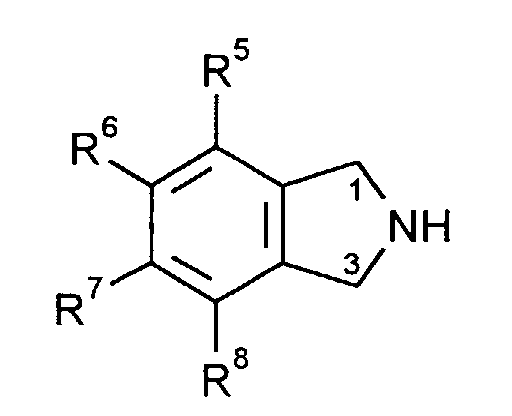
- R5, R6, R7 und R8
- unabhängig voneinander für Wasserstoff, Halogen, insbesondere F, Cl und Br, C1-C6-Alkyl, C1-C6-Alkoxy oder C6-C10-Aryloxy stehen,
- A
- den Rest eines Cyanmethylens der Formel

- R9
- für einen elektronenanziehenden Rest steht und
- Z1 bis Z10
- unabhängig voneinander für O oder NR10 stehen,
worin - R10
- für Wasserstoff oder Cyan steht.
- Die Pigmente der Formel (I) sind beispielsweise aus DE-A-39 35 858 bekannt, die der Formel (II) beispielsweise aus US-A-5.177.209 und die der Formel (III) beispielsweise aus EP-A-74 515 bekannt.
- Bevorzugte Pigmente der Formel (I) sind symmetrische Isoindolin-Pigmente, die der Formel (IV) entsprechen

- R11
- Wasserstoff, C1-C6-Alkyl oder Phenyl bedeutet.
- Ganz besonders bevorzugte Pigmente der Formel (I) entsprechen der Formel (IV), worin R11 für Wasserstoff steht.
- Vorzugsweise steht R9 für einen Rest, dessen Hammett'sche Substituentenkonstante σ (para) >0 ist. Eine entsprechende Auflistung von Hammett'schen Substituentenkonstanten findet sich z.B. in Sykes, Reaktionsmechanismen der organischen Chemie, 9. Auflage, Weinheim, VCM Verlagsgesellschaft, 1988, oder kann nach bekannten Verfahren bestimmt werden.
- Bevorzugte Pigmente der Formel (II) sind unsymmetrische Isoindolin-Pigmente der Formel (V)
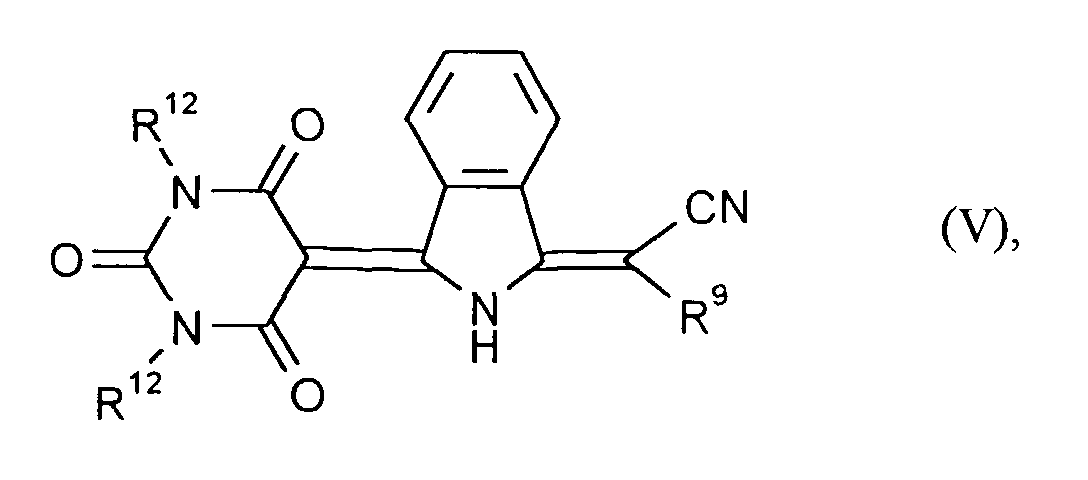
- R9
- CN, gegebenenfalls durch C1-C6-Alkyl, C5-C7-Cycloalkyl, Aralkyl, insbesondere C6-C10-Aryl-C1-C4-alkyl, oder C6-C10-Aryl substituiertes Aminocarbonyl, insbesondere CONHCH3, C1-C6-Alkoxycarbonyl, C6-C10-Aryloxycarbonyl oder Hetaryl, insbesondere einen Rest der Formel (VI) oder (VII) bedeutet

- R13 und R14
- unabhängig voneinander Wasserstoff, Halogen, insbesondere Cl, Br und F, C1-C6-Alkyl, C1-C6-Alkoxy oder C1-C6-Alkoxycarbonyl bedeuten oder
- R13 und R14
- zusammen den Rest eines ankondensierten Benzolringes bedeuten
- G
- für O, S, NH oder N(C1-C4-Alkyl) steht,
und - R12
- Wasserstoff, C1-C6-Alkyl oder Phenyl bedeutet.
- Ganz besonders bevorzugte Pigmente der Formel (V) sind solche, worin R9 für CONHCH3 steht und R12 die obengenannte Bedeutung hat, insbesondere solche, worin R9 für CONHCH3 und R12 für Wasserstoff steht.
- Bevorzugte Pigmente sind Salze, Komplexe, Einschlußverbindungen, feste Lösungen sowie Interkalationsverbindungen der Formel (III). Solche sind beispielsweise aus EP-A 74 515 bekannt. Als Salze und Komplexe der Verbindungen der Formel (III) kommen vorzugsweise die Salze und Komplexe der Mono-, Di-, Tri- und Tetraanionen mit den Metallen Li, Cs, Mg, Cd, Co, Al, Cr, Sn, Pb, besonders bevorzugt Na, K, Ca, Sr, Ba, Zn, Fe, Ni, Cu, Mn, in Betracht. Besondere Bedeutungen kommen den Nickelsalzen, bzw. -komplexen und deren festen Lösungen, Interkalations- und Einschlußverbindungen zu. Besonders bevorzugt ist eine Einschlußverbindung, Interkalationsverbindung, feste Lösung eines Salzes oder eines Komplexes der Azobarbitursäure, besonders bevorzugt des Azobarbitursäure-Nickel-1:1-Komplexes.
- Bei der eingeschlossenen Verbindung handelt es sich vorzugsweise um eine cyclische oder acyclische organische Verbindung, vorzugsweise um Carbonsäure- oder Sulfonsäureamide, Harnstoff oder substituierte Harnstoffe sowie Heterocyclen, insbesondere 2,4,6-Triamino- 1,3,5-triazin, Acetoguanamin und Benzoguanamin.
- Besonders bevorzugte Pigmente der Formel (III) entsprechen den Formeln (VIII) und (IX)

- Besonders bevorzugte Pigmente der Formeln (I) bis (III) oder diese enthaltende Mischungen sind solche, deren Drucke den Farbtonbereich abdecken, der im coloristischen Sinne vorzugsweise mit den Parametern des CIELAB-Systems (1976) bestimmten Buntton-Wertebereich H* von 80 bis 100°, vorzugsweise von 85 bis 100° beschrieben werden kann. (CIELAB-System (1976) farbmetrisches Ordnungssystem, z.B. Brockes, A. et al., Farbmessung in der Textilindustrie, JSSN 0722-0391, 1986 Mitteilungen für die Farbstoffe verarbeitende Industrie, 24. Jahrgang)
- Unter Dispergiermittel im Rahmen dieser Anmeldung wird eine die Pigmentteilchen in ihrer fein partikulären Form in wassrigen Medien stabilisierende Substanz verstanden. Unter fein partikulär wird vorzugsweise eine Feinverteilung von 0,001 bis 5 µm verstanden, vorzugsweise von 0,005 bis 1 µm, insbesondere von 0,005 bis 0,5 µm.
- Geeignete Dispergiermittel sind beispielsweise anionisch, kationisch, amphoter oder nichtionogen.
- Geeignete anionische Dispergiermittel sind insbesondere Kondensationsprodukte von aromatischen Sulfonsäuren mit Formaldehyd, wie Kondensationsprodukte aus Formaldehyd und Alkylnaphthalinsulfonsäuren oder aus Formaldehyd, Naphthalinsulfonsäuren und/oder Benzolsulfonsäuren, Kondensationsprodukte aus gegebenenfalls substituiertem Phenol mit Formaldehyd und Natriumbisulfit. Geeignet sind außerdem Dispergiermittel aus der Gruppe der Sulfobernsteinsäureester sowie Alkylbenzolsulfonate. Weiterhin kommen vor allem Ligninsulfonate in Betracht, z.B. solche, die nach dem Sulfit- oder Kraft-Verfahren gewonnen werden. Vorzugsweise handelt es sich um Produkte, die zum Teil hydrolysiert, oxidiert, propoxyliert, sulfoniert, sulfomethyliert oder desulfoniert und nach bekannten Verfahren fraktioniert werden, z.B. nach dem Molekulargewicht oder nach dem Sulfonierungsgrad. Auch Mischungen aus Sulfit- und Kraftligninsulfonaten sind gut wirksam. Besonders geeignet sind Ligninsulfonate mit einem durchschnittlichen Molekulargewicht zwischen 1 000 und 100 000, einem Gehalt an aktivem Ligninsulfonat von mindestens 80 % und vorzugsweise mit niedrigem Gehalt an mehrwertigen Kationen. Der Sulfonierungsgrad kann in weiten Grenzen variieren.
- Als nichtionische Dispergiermittel kommen beispielsweise in Frage: Umsetzungsprodukte von Alkylenoxiden mit alkylierbaren Verbindungen, wie z.B. Fettalkoholen, Fettaminen, Fettsäuren, Phenolen, Alkylphenolen, Arylalkylphenolen, wie Styrol-Phenol-Kondensate, Carbonsäureamiden und Harzsäuren. Hierbei handelt es sich z.B. um Ethylenoxidaddukte aus der Klasse der Umsetzungsprodukte von Ethylenoxid mit:
- a) gesättigten und/oder ungesättigten Fettalkoholen mit 6 bis 20 C-Atomen oder
- b) Alkylphenolen mit 4 bis 12 C-Atomen im Alkylrest oder
- c) gesättigten und/oder ungesättigten Fettaminen mit 14 bis 20 C-Atomen oder
- d) gesättigten und/oder ungesättigten Fettsäuren mit 14 bis 20 C-Atomen oder
- e) hydrierte und/oder unhydrierte Harzsäuren.
- Als Ethylenoxid-Addukte kommen insbesondere die unter a) bis e) genannten alkylierbaren Verbindungen mit 5 bis 120, insbesondere 5 bis 100, vorzugsweise 5 bis 100, insbesondere 5 bis 60, besonders bevorzugt 5 bis 30 Mol Ethylenoxid in Frage.
- Als Dispergiermittel eignen sich ebenfalls die aus der prioritätsälteren, aber nicht vorveröffentlichten DE-A 19 535 246 teilweise bekannten Mischungen aus Alkoxylierungsprodukten von mindestens einem Styrol-Phenol-Kondensat der Formel (X)

- R15
- Wasserstoff oder C1-C4-Alkyl bedeutet,
- R16
- für Wasserstoff oder CH3 steht,
- R17
- Wasserstoff, C1-C4-Alkyl, C1-C4-Alkoxy, C1-C4-Alkoxycarbonyl oder Phenyl bedeutet,
- m
- eine Zahl von 1 bis 4 bedeutet,
- n
- eine Zahl von 6 bis 120 bedeutet,
- R18
- für jede durch n indizierte Einheit gleich oder verschieden ist und für Wasserstoff, CH3 oder Phenyl steht, wobei im Falle der Mitanwesenheit von CH3 in den verschiedenen -(-CH2-CH(R18)-O-)Gruppen in 0 bis 60 % des Gesamtwertes von n R18 für CH3 und in 100 bis 40 % des Gesamtwertes von n R18 für Wasserstoff steht und wobei im Falle der Mitanwesenheit von Phenyl in den verschiedenen -(-CH2-CH(R18)-O-)-Gruppen in 0 bis 40 % des Gesamtwertes von n R18 für Phenyl und in 100 bis 60 % des Gesamtwertes von n R18 für Wasserstoff steht,
und Estern der Alkoxylierungsprodukte (X) der Formel (XI)
- R15', R16', R17', R18', m' und n'
- den Bedeutungsumfang von R15, R16, R17, R18, m bzw. n, jedoch unabhängig hiervon, annnehmen,
- X
- die Gruppe -SO3 ⊖, -SO2 ⊖, -PO3 ⊖⊖ oder -CO-(R19)-COO⊖ bedeutet,
- Kat
- ein Kation aus der Gruppe von H⊕, Li⊕, Na⊕, K⊕ , NH4 ⊕ oder HO-CH2CH2-NH3 ⊕ ist, wobei im Falle von X = -PO3 ⊖⊖ zwei Kat vorliegen und
- R19
- für einen zweiwertigen aliphatischen oder aromatischen Rest steht, vorzugsweise für C1-C4-Alkylen, insbesondere Ethylen, C2-C4- einfach ungesättigte Reste, insbesondere Acetylen oder gegebenenfalls substituiertes Phenylen, insbesondere ortho-Phenylen steht, wobei als mögliche Substituenten vorzugsweise C1-C4-Alkyl, C1-C4-Alkoxy, C1-C4-Alkoxycarbonyl oder Phenyl in Frage kommen.
- Gemische der Formeln (X) und (XI) sind beispielsweise aus der nicht vorveröffentlichten DE-A-19 535 256 bekannt, die Bestandteil dieser Anmeldung sind.
- Die Erfindung betrifft weiterhin die noch neuen Verbindungen der Formel (XI), worin
- X
- für einen Rest der Formel -CO-(R19)-COO⊖ steht und
- R15', R16', R17', R18', R19, Kat, m' und n'
- die oben angegebenen Bedeutungen besitzen.
- Die Erfindung betrifft weiterhin ein Verfahren zur Herstellung der erfindungsgemäßen Verbindungen der Formel (XI), das dadurch gekennzeichnet ist, daß man die entsprechende Verbindung der Formel (X), worin R15, R16, R17, R18, n und m die gleiche Bedeutung haben wie die entsprechenden Reste R15', R16', R17', R18', m' und n', mit Dicarbonsäuren der Formel (XII)
HOOC-(R19)-COOH (XII)
oder deren Derivaten, insbesondere deren Anhydriden, worin - R19
- die oben genannte Bedeutung besitzt,
- Entsprechende Umsetzungen können beispielsweise analog dem in DE-A 19 535 256 offenbarten Verfahren, dessen Offenbarung hiermit ebenfalls als Gegenstand dieser Anmeldung anzusehen ist, hergestellt werden.
- Die besonders bevorzugten Verbindungen der Formel (XI) können durch Umsetzung von Verbindungen der entsprechenden Formel (X) mit Bernsteinsäure-, Maleinsäure- oder Phthalsäureanhydrid erhalten werden.
- Die Erfindung betrifft weiterhin Mischungen enthaltend mindestens eine Verbindung der Formel (XI), worin X einen Rest der Formel -CO-(R19)-COO⊖ bedeutet und R19 die oben angegebene Bedeutung besitzt, und mindestens eine Verbindung der Formel (X).
- Vorzugsweise enthalten diese erfindungsgemäßen Mischungen 5 bis 99 Gew.-% der Verbindung (XI) und 1 bis 95 Gew.-% der Verbindung (X).
- Die Erfindung betrifft weiterhin die gegenüber DE-A 19 535 246 noch neuen Tensidgemische, enthaltend eine Verbindung der Formel (X) und eine Verbindung der Formel (XI), worin R15, R16, R17, R18, 15', R16', R17' und R18', n, m, n' und m' die oben angegebene Bedeutung besitzen, X für -SO3 ⊖N, -SO2 ⊖ oder -PO3 2- steht, wobei solche Mischungen ausgenommen sind, worin n oder n' eine Zahl kleiner gleich 3 oder m oder m' eine Zahl von 6 bis 100 bedeutet.
- Im übrigen sind die Verbindungen der Formel (XI) in der breitesten Bedeutung sowie ihre Mischungen mit den ihnen zugrundeliegenden Verbindungen der Formel (X) hervorragend als Dispergiermittel geeignet, auch andere als die hier genannten Pigmente in Ink-Jet-Drucktinten zu stabilisieren. Als geeignete Pigmente sind in diesem Zusammenhang beispielsweise die folgenden zu nennen:
- Ruße, insbesondere saure bis alkalische Ruße aus der Gruppe der Furnace- oder Gas-Ruße sowie chemisch oder physikalisch modifizierte oder nachbehandelte Ruße, anorganische Pigmente, wie beispielsweise Zinksulfide, Ultramarin, Eisenoxide, Kobaltblau sowie Chromoxidpigmente sowie Pigmente in Form fein partikulärer Oxide wie Siliziumdioxid, Titandioxid, Nickeloxide, Chromantimontitandioxide, Aluminiumoxid sowie fein partikuläre Metalle wie Kupfer, Eisen oder Aluminium und organische Farbpigmente wie beispielsweise solche der Azo-, Disazo-, Polyazo-, Anthrachinon-, Thioindigoreihe, ferner andere polycyclische Pigmente wie beispielsweise aus der Phthalocyanin-, Chinacridon-, Dioxazin-, Isoindolinon-, Naphthalintetracarbonsäure- und Perylen- und Perylentetracarbonsäurereihe, ferner solche aus der Perinon-, Indigoid-, Thioindigoid- und Diketopyrrolopyrrol-Reihe, sowie Metallkomplex-Pigmente von Azo-, Azomethin- oder Methinfarbstoffen oder verlackte Farbstoffe wie Ca-, Mg-, Al-Lacke von sulfonsäure- und/oder carbonsäuregruppenhaltigen Farbstoffen.
- Als polymere Dispergiermittel kommen beispielsweise wasserlösliche sowie wasser-emulgierbare Typen in Frage, z.B. Homo- sowie Co-Polymerisate, wie statistische- oder Block-Copolymerisate.
- Besonders bevorzugte Dispergiermittel sind polymere Dispergiermittel wie beispielsweise AB-, BAB- und ABC-Blockcopolymere. In den AB- oder BAB-Blockcopolymeren ist das A-Segment ein hydrophobes Homopolymer oder Copolymer, das eine Verbindung zum Pigment sicherstellt und der B-Block ein hydrophiles Homopolymer oder Copolymer oder ein Salz davon und stellt das Dispergieren des Pigmentes im wäßrigen Medium sicher. Derartige polymere Dispergiermittel und deren Synthese sind beispielsweise aus EP-A 518 225 sowie EP-A 556 649 bekannt.
- Das eingesetzte Dispergiermittel wird vorzugsweise in einer Menge von 0,1 bis 100 Gew.-%, insbesondere 0,5 bis 60 Gew.-%, bezogen auf das eingesetzte Pigment, in der Pigmentpräparation verwendet.
- In einer bevorzugten Ausführungsform enthält die erfindungsgemäß verwendete Pigmentpräparation
- a) 10 bis 98 Gew.-%, insbesondere 30 bis 98 Gew.-% Wasser
- b) 0,1 bis 100. Gew.-%, insbesondere 0,5 bis 60 Gew.-% Dispergiermittel, bezogen auf eingesetztes Pigment, und
- c) 0,2 bis 60 Gew.-%, vorzugsweise 0,2 bis 20 Gew.-%, insbesondere 0,2 bis 20 Gew.-%, besonders bevorzugt 0,2 bis 10 Gew.-% mindestens eines Pigments der Formeln (I) bis (III).
- Die erfindungsgemäß verwendeten Pigmentpräparationen können selbstverständlich neben den Komponenten a), b) und c) auch weitere Zusätze enthalten.
- Als gegebenenfalls weitere Zusätze kommen für Drucktinten für den Ink-Jet Druck übliche Zusatzstoffe in Frage.
- So können beispielsweise als weitere Komponente d) organische Lösungsmittel zugegen sein. Besonders geeignet sind in Wasser lösliche organische Lösungsmittel. Bevorzugt sind solche, die eine Löslichkeit von größer als 0,5 g/100 g Wasser aufweisen.
- Als geeignete organische Lösungsmittel kommen beispielsweise in Frage: aliphatische C1-C4-Alkohole, wie Methanol, Ethanol, Isopropanol, n-Propanol, n-Butanol, Isobutanol oder tert.-Butanol, aliphatische Ketone, wie Aceton, Methylethylketon, Methylisobutylketon oder Diacetonalkohol, Polyole, wie Ethylenglykol, Propylenglykol, Butylenglykol, Diethylenglykol, Triethylenglykol, Trimethylolpropan, Polyethylenglykol mit einem mittleren Molgewicht von 100 bis 4000, vorzugsweise 400 bis 1500 g/mol oder Glycerin, Monohydroxyether, vorzugsweise Monohydroxyalkylether, besonders bevorzugt Mono-C1-C4-alkylglykolether wie Ethylenglykolmonoalkyl-, -monomethyl-, -diethylenglykolmonomethylether oder Diethylenglykolmonoethylether, Diethylenglykolmonobutylether, Dipropylenglykolmonoethylether, Thiodiglykol, Triethylenglykolmonomethylether oder -monoethylether, ferner 2-Pyrrolidon, N-Methyl-2-pyrrolidon, N-Ethyl-pyrrolidon, N-Vinyl-pyrrolidon, 1,3-Dimethyl-imidazolidon, Dimethylacetamid sowie Dimethylformamid.
- Es kommen auch Gemische der erwähnten Lösungsmittel in Betracht.
- Die Menge des organischen Lösungsmittels beträgt vorzugsweise 1 bis 40, insbesondere 2 bis 20 Gew.-%, bezogen auf die Pigmentpräparationen.
- Bevorzugt beträgt die Menge an Wasser und organischem Lösungsmittel 20 bis 99 Gew.-%, vorzugsweise 30 bis 97 Gew.-%, bezogen auf die Pigmentpräparationen.
- Weiterhin kann die Pigmentpräparation Mittel zur Einstellung der Viskosität der Tinte enthalten wie beispielsweise Polyvinylalkohol, Polyvinylpyrrolidon, Methylcellulose u.a. dem Fachmann bekannte Mittel, soweit sie die Stabilität der Drucktinte, das Druckverhalten und das Trocknungsverhalten auf Papier nicht negativ beeinflussen.
- Zusätzlich zu den genannten Komponenten können die erfindungsgemäß als Drucktinten verwendeten Pigmentpräparationen noch einen Anteil von 0 bis 15 Gew.-%, vorzugsweise 0,5 bis 10 Gew.-%, bezogen auf Tinte, oberflächenaktives Mittel enthalten. Diese können grundsätzlich eingesetzt werden z.B. zur Regulierung der Oberflächenspannung der Tinte, ferner zur Verhinderung der Tropfenbildung oder des Auslaufens an der Düsenaustrittsfläche des Druckkopfes und zur Einstellung des Benetzungs- und Trocknungsverhaltens der Tinte auf unterschiedliche Substratarten (Papiere). Derartige oberflächenaktive Mittel sind dem Fachmann in Form von am Markt zugänglichen Produkten bekannt. Bei der Auswahl der oberflächenaktiven Mittel dürfen diese nicht die Stabilität der Pigmentpräparation oder die verwendeten Druckkopfmaterialien beeinträchtigen.
- Außerdem können die erfindungsgemäß verwendeten Pigmentpräparation weitere ionogene als auch nicht-ionogene Hilfsmittel enthalten. Sofern das Dispergiermittel ionische Gruppen enthält, sollten diese Hilfsmittel vorzugsweise nicht-ionogen oder von gleicher Ionogenität sein.
- Grundsätzlich können die Pigmentpräparationen noch Konservierungsmittel, Lichtschutzmittel, weitere Tenside und gegebenenfalls auch pH-Regler enthalten.
- Beispiele für pH-Regler sind NaOH, Ammoniak oder Aminomethylpropanol, N,N-Dimethylaminoethanol.
- Beispiele für Konservierungsmittel sind Methyl- und Chlormethyl-isothiazolin-3-on, Benzisothiazolin-3-on oder Mischungen davon.
- Beispiele für Lichtschutzmittel sind UV-Absorber.
- Die Erfindung betrifft weiterhin Pigmentpräparationen enthaltend
- a) Wasser
- b) Dispergiermittel
- c) mindestens ein Pigment aus der Gruppe der durch Methin- oder Azogruppen-haltigen Reste substituierten Barbitursäure oder deren Derivate, wobei das Pigment gegebenenfalls in Form eines Salzes, Komplexes, als feste Lösung, als Einschlußverbindungen oder als Interkalationsverbindung vorliegt, vorzugsweise ein Pigment der Formeln (I) bis (III) und
- d) mindestens ein organisches Lösungsmittel aus der Gruppe:
aliphatische C1-C4-Alkohole, wie Methanol, Ethanol, Isopropanol, n-Propanol, n-Butanol, Isobutanol oder tert.-Butanol, aliphatische Ketone, wie Aceton, Methylethylketon, Methylisobutylketon oder Diacetonalkohol, Polyole, wie Ethylenglykol, Propylenglykol, Butylenglykol, Diethylenglykol, Triethylenglykol, Trimethylolpropan, Polyethylenglykol mit einem mittleren Molgewicht von 100 bis 4000, vorzugsweise 400 bis 1500 g/mol oder Glycerin, Monohydroxyether, vorzugsweise Monohydroxyalkylether, besonders bevorzugt Mono-C1-C4-alkylglykolether wie Ethylenglykolmonoalkyl-, -monomethyl-, -diethylenglykolmonomethylether oder Diethylenglykolmonoethylether, Diethylenglykolmonobutylether, Dipropylenglykolmonoethylether, Thiodiglykol, Triethylenglykolmonomethylether oder -monoethylether, ferner 2-Pyrrolidon, N-Methyl-2-pyrrolidon, N-Ethylpyrrolidon, N-Vinyl-pyrrolidon, 1,3-Dimethyl-imidazolidon, Dimethylacetamid sowie Dimethylformamid. - Die bevorzugten Ausführungsformen der einzelnen Komponenten entsprechen den oben angegebenen.
- Die Erfindung betrifft weiterhin Pigmentpräparationen, enthaltend
- a') Wasser,
- b') eine Verbindung der Formel (XI), worin X für einen Rest der Formel -CO-(R19)-COO⊖ steht und die übrigen Reste die angegebenen Bedeutungen besitzen und
- c') ein Pigment.
- Bevorzugt sind dabei solche Präparationen, die gegebenenfalls die Verbindung der Formel (XI) in Mischung mit einer entsprechenden Verbindung der Formel (X) enthalten, wobei die bevorzugten Mengen denen der Komponente b) der obigen Pigmentpräparation entsprechen.
- Die bevorzugten Angaben zu den Komponenten c') sowie gegebenenfalls ein organisches Lösungsmittel der Komponente d') entsprechen den Angaben zu den Komponenten c) und d) der oben beschriebenen Pigmentpräparaten.
- Auch die Verwendung entspricht wie oben angegeben, vorzugsweise als Drucktinte für den Ink-Jet-Druck wie oben beschrieben.
- Die Erfindung betrifft weiterhin die Herstellung der erfindungsgemäß verwendeten Pigmentpräparationen als Drucktinten für den Ink-Jet Druck, die dadurch gekennzeichnet ist, daß man mindestens ein Pigment der Formeln (I) bis (III) mit dem Dispergiermittel und gegebenenfalls weiteren Zusätzen homogenisiert und naßzerkleinert
- Im allgemeinen wird das Pigment in Pulverform oder in Form des wasserfeuchten Preßkuchens zusammen mit einem Teil des Dispergiermittels und Wasser, vorzugsweise deionisiertem Wasser, zu einer homogenen Mahlsuspension beispielsweise mittels Rührwerksbütte, Dissolver und ähnlichen Aggregaten gegebenenfalls nach einer Vorzerkleinerung angeschlagen (d.h. eingebracht und homogenisiert).
- Die Mahlsuspension kann außerdem Anteile niedrigsiedender Lösungsmittel (Siedepunkt <150°C) enthalten, die im Verlauf der anschließenden Feinmahlung durch Verdampfung ausgetragen werden können. Sie kann aber auch Anteile höhersiedender Lösungsmittel oder weiterer Zusätze, wie sie oben beschrieben sind z.B. Mahlhilfs-, Entschäumungs- oder Benetzungsmittel, enthalten.
- Die Naßzerkleinerung umfaßt sowohl die Vorzerkleinerung als auch die Feinmahlung. Vorzugsweise liegt die Pigmentkonzentration der Suspension dabei oberhalb der gewünschten Konzentration der fertigen Pigmentpräparation bzw. Drucktinte. Die gewünschte Pigmentendkonzentration wird vorzugsweise erst im Anschluß an die Naßzerkleinerung eingestellt. Im Anschluß an die Vorzerkleinerung erfolgt eine Mahlung auf die gewünschte Partikelfeinverteilung von 0,001 bis 5 µm, vorzugsweise 0,005 bis 1 µm. Für diese Mahlung kommen Aggregate wie z.B. Kneter, Walzenstühle, Knetschnecken, Kugelmühlen, Rotor-Stator-Mühlen, Dissolver, Korundscheibenmühlen, Schwingmühlen und insbesondere schnelllaufende, kontinuierlich oder diskontinuierlich beschickte Rührwerkskugelmühlen mit Mahlkörpern mit einem Durchmesser von 0,1 bis 2 mm in Frage. Die Mahlkörper können dabei aus Glas, Keramik oder Metall, z.B. Stahl sein. Die Mahltemperatur liegt vorzugsweise im Bereich von 0 bis 250°C, in der Regel jedoch bei Raumtemperatur, insbesondere unterhalb des Trübungspunktes des eingesetzten Dispergiermittels der Komponente b) und des gegebenenfalls eingesetzten oberflächenaktiven Mittels.
- In einer ebenfalls bevorzugten Verfahrensweise kann die Mahlung teilweise oder vollständig in einem Hochdruckhomogenisator oder in einem sogenannten Strahldispergator (bekannt aus der nicht vorveröffentlichten Anmeldung DE-A 19 536 845) erfolgen, wodurch der Gehalt an Mahlkörperabrieb in der Suspension bzw. die Abgabe von löslichen Stoffen aus den Mahlkörpern (z.B. Ionen aus Glaskörpern) auf ein Minimum reduziert bzw. vollständig vermieden werden kann.
- In einem Verdünnungs-Schritt wird die erhaltene Pigmentpräparation in an sich bekannter Weise in Wasser gegebenenfalls mit den restlichen Dispergiermittelmengen und gegebenenfalls weiteren Zusätzen eingemischt und homogenisiert, sowie auf die gewünschte Pigmentendkonzentration bzw. Farbstärke der Präparation bzw. Drucktinte eingestellt. Hierbei kann gegebenenfalls noch ein Teil des Dispergiermittels zugesetzt werden, um beispielsweise eine Reagglomeration feiner Pigmentpartikel in der Verdünnung zu vermeiden.
- Von besonderem Vorteil ist ein Verfahren zur Herstellung der Pigmentpräparationen, in dem im Mahlschritt zur Herstellung des Pigmentkonzentrates für die Stabilisierung ausreichend Dispergiermittel zur Verfügung gestellt wird. Im Anschluß daran oder nach Verdünnung mit Wasser wird in Lösung befindliches, nicht am Pigment adsorbiertes Dispergiermittel und/oder überschüssige oberflächenaktive Mittel vorzugsweise entfernt und anschließend die gewünschte Pigmentpräparation durch Zugabe der restlichen Anteile der Pigmentpräparation eingestellt.
- Ein Verfahren zur Entfernung von in Lösung befindlichem Dispergiermittel ist beispielsweise die Zentrifugation der Suspension und anschließendes Abdekantieren des Überstandes.
- Ferner können andere Additive wie z.B. Polyurethan- oder Acrylpolymere zugesetzt werden, um gegebenenfalls die Wasserechtheit weiter zu verbessern. Diese können sowohl wasser-löslicher als auch wasser-emulgierbarer Art sein, oder in einer der in d) enthaltenen Komponenten löslich sein.
- In einer bevorzugten Verfahrensweise erfolgt die Mischung und Homogenisierung der Pigmentpräparationen unter Verwendung eines Strahldispergators oder Hochdruckhomogenisators, um die Entstehung von Schaum zu unterbinden und mögliche Reagglomeration zu vermeiden.
- Mit der Einstellung der gewünschten Pigmentpräparationen erfolgt auch die Einstellung auf die gewünschte Viskosität, Farbstärke, Farbton, Dichte und Oberflächenspannung der Tinte.
- Vor Gebrauch der Pigmentpräparationen als Drucktinten werden die Tinten gegebenenfalls fein-filtriert beispielsweise mittels 1 bis 5 µm Membran- oder Glasfiltern.
- Im allgemeinen werden die physikalischen Tinteneigenschaften auf die Verwendung in üblichen Tintenstrahl-Druckern eingestellt, wobei die Oberflächenspannung zwischen 20 und 70 mN/m und die Viskosität kleiner als 20 mPa·s, vorzugsweise 0,5 bis 10 mPa·s betragen sollte.
- Die erfindungsgemäß verwendeten sowie die erfindungsgemäßen Drucktinten liefern als Drucktinte im Ink-Jet-Druck verwendet Drucke mit ausgezeichneter Lichtechtheit und Brillanz und besitzen darüber hinaus folgende Vorteile: hervorragende Dispersions- und Lagerstabilität in einem weiten Temperaturbereich, keine sogenannte Kogation oder Clogging oder Verstopfung im Druckkopf, hohe Wasser- und Migrationsechtheit der Drucke auf unterschiedlichen Substraten, z.B. auf holzfreiem Papier, mittl. Papierqualität, geleimtem und beschichtetem Papier, polymeren Filmen, Transparentfolien für Overhead-Projektion, kein Ausbluten im Mehrfarbendruck, auch bei Verwendung zusammen mit Farbstoff-Tinten oder anderen pigmentierten Tinten.
- Die oben beschriebenen Pigmentpräparationen werden als Drucktinten für den Ink-Jet-Druck verwendet.
- Der Ink-Jet-Druck ist an sich bekannt und erfolgt im allgemeinen so, daß die Drucktinte in ein Aufnahmegefäß eines Tintenstrahl-Druckkopfes gefüllt wird und in kleinen Tröpfchen auf das Substrat gesprüht wird. Der Tintenausstoß in Tröpfchenform erfolgt dabei vorzugsweise über einen piezoelektrischen Kristall, eine beheizte Kanüle (Bubble- oder Thermo-Jet-Verfahren) oder mechanische Druckerhöhung, wobei Druck auf das Tintensystem ausgeübt wird und so Tintentropfen herausgeschleudert werden. Dabei werden die Tröpfchen aus einer oder mehreren kleinen Düsen gezielt auf das Substrat wie z.B. Papier, Holz, Textilien, Kunststoff oder Metall geschossen. Durch elektronische Aussteuerung werden die einzelnen Tröpfchen auf dem Substrat zu Schriftzeichen oder graphischen Mustern zusammengefaßt.
- Möglich ist auch ein Verfahren, bei dem mittels elektrostatischer Ablenkung aus einem Tintenstrahl Kleinste Volumina in Form von Tropfen auf ein Substrat gebracht werden.
- 25 g Benzolsulfonsäurehydrazid, 200 ml Wasser, 20 ml 10 N Salzsäure und 1,25 g eines Kondensationsproduktes von Stearinsäure mit Taurin wurden 30 Minuten verrührt. Man fügte 60 g Eis hinzu und tropfte anschließend in ca. 30 Minuten 34 ml einer wäßrigen Natriumnitritlösung mit einem Gehalt von 30 g Natriumnitrit in 100 ml Lösung hinzu. Der Ansatz wurde 30 Minuten gerührt, wobei man einen Nitrituberschuß aufrechterhielt. Anschließend zerstörte man den Nitrituberschuß mit wenig Amidosulfonsäure und neutralisierte mit ca. 5 ml 10 N Natronlauge. Man erhielt eine Emulsion von Benzolsulfonsäureazid.
- Zu der so hergestellten Emulsion gab man 38,2 g Barbitursäure, verrührte 10 Minuten und stellte dann mit ca. 33 ml 10 N Natronlauge auf pH 8. Der Ansatz wurde 2 Stunden bei 50°C gerührt, danach mit 3 ml Essigsäure und ca. 14 ml 10 N Salzsäure auf pH 4,8 gestellt und noch 1 Stunde auf 70°C und 3 Stunden auf 80°C erhitzt. Man erhielt eine Suspension des Natriumsalzes der Azobarbitursäure; zusätzlich waren noch ca. 22 g des als Nebenprodukt entstandenen Benzolsulfonamids gelöst vorhanden.
- Eine so hergestellte Suspension wurde auf 95°C bis 100°C aufgeheizt, abgesaugt und mit ca. 1 l siedend heißem Wasser in mehreren Portionen gewaschen. Man erhielt einen Preßkuchen des Natriumsalzes der Azobarbitursäure.
- Der so hergestellte Preßkuchen wurde mit 500 ml Wasser angerührt. Bei 80°C tropfte man in ca. 5 Minuten eine Lösung von 34,5 g NiCl2-6H2O und 13 g wasserfreiem Natriumacetat in 100 ml Wasser hinzu. Die Mischung wurde 1 Stunde gerührt bei 80°C, danach 42 g Melamin zugefügt und nochmals 1 Stunde bei 80°C und 2 Stunden bei 95°C gerührt, anschließend heiß abgesaugt und mit heißem Wasser gewaschen.
- Man erhielt einen wasserfeuchten Pigment-Preßkuchen mit einem Trockengehalt von 42,6 Gew.-%.
- Zu
- 89,9 Teilen
- des feuchten Preßkuchen des Pigmentes gemäß Formel (IX) hergestellt nach Beispiel 1 mit einem Trockengehalt von 42,6 % wurden
- 6,9 Teile
- eines Naphthalinsulfonsäurekondensationsproduktes (Tamol® NN 9401, BASF AG) sowie
- 3,2 Teile
- deionisiertes Wasser zugesetzt und mittels eines Dissolvers homogenisiert. Der pH-Wert der Suspension betrug 5,5. Im Anschluß wurde die Suspension in eine offene diskontinuierlich betriebene 1 l-Rührwerkskugelmühle (Fabrikat Sussmeyer, Brüssel) eingebracht und mit Zirkoniumoxid-Perlen (Durchmesser 0,4 bis 0,6 mm) unter Kühlung über eine Dauer von 3 Stunden gemahlen. Das erhaltene wässrige Pigmentkonzentrat wurde mit
- 0,1 Teilen
- eines Konservierungsmittels (Benzisothiazolin-3-on) sowie deionisiertem Wasser auf eine Pigmentkonzentration von 35 % eingestellt.
Die Pigmentpräparation besitzt eine ausgezeichnete Fließfähigkeit und eine einwandfreie Suspensionsstabilität bei Lagerung über 3 Monate bei Raumtemperatur und 50°C. Wässrige Verdünnungen dieser Präparation bis zu einer Pigmentkonzentration von 2 % sind ebenso stabil. Die Zusammensetzung kann Tabelle 1 entnommen werden. -
- 22 Teile
- des getrockneten Pigmentes gemäß Formel (V) (R9 = CONHCH3, R12 = H), hergestellt gemäß Beispiel 10, von US 5 177 209, und
- 8,8 Teile
- eines Ligninsulfonats (Ultrazine® NA, Fa. Lignotech, Düsseldorf) wurden in
- 69,2 Teilen
- deionisiertem Wasser mittels eines Dissolvers angeschlagen und homogenisiert. Im Anschluß erfolgte eine Mahlung wie in Beispiel 2 beschrieben. Das so erhaltene Pigmentkonzentrat wurde mit
- 0,1 Teilen
- des gleichen Konservierungsmittels wie in Beispiel 2 und deionisiertem Wasser auf eine Pigmentkonzentration von 20 %, und der pH-Wert mittels verdünnter Schwefelsäure auf 8 eingestellt. Die Präparation besitzt ebenfalls ausgezeichnete Stabilitäts- und Fließeigenschaften. Die Zusammensetzung kann Tabelle 1 entnommen werden.
- Zu
- 90,9 Teilen
- des feuchten Preßkuchens des Pigmentes gemäß Formel (IV) (R11 = H), hergestellt nach Beispiel 8, DE 3 935 858 A1, mit einem Trockengehalt von 40,4 % wurden
- 1,8 Teile
- eines Dispergiermittelgemisches aus Alkoxylierungsprodukten gemäß Formel (X) und (XI) mit einer Zusammensetzung von
51 % gemäß Formel X und- R15 = CH3, R16,17,18 = H
- m = 2,8
- n = 50
49 % gemäß Formel (XI) und- R15' = CH3, R16',17',18' = H
- m' = 2,8
- n' = 50
- X = SO3 -
- Kat = NH4 +
- 7,3 Teilen
- deionisiertem Wasser zugesetzt und mittels eines Dissolvers homogenisiert. Der pH-Wert wurde mittels verdünnter Natronlauge auf 7,0 gestellt. Im Anschluß wurde die Suspension wie in Beispiel 2 beschrieben gemahlen und das so erhaltene Pigmentkonzentrat mit
- 0,1 Teilen
- des gleichen Konservierungsmittels wie in Beispiel 2 und deionisiertem Wasser auf eine Pigmentkonzentration von 30 % eingestellt. Die Zusammensetzung kann Tabelle 1 entnommen werden.
- Die Pigmentpräparationen gemäß den Beispielen 2 bis 4 wurden zur Verwendung als Drucktinten für den Ink-Jet-Druck auf eine Pigmentkonzentration von jeweils 4 Gew.-% unter Einsatz von deionisiertem Wasser sowie mit organischen Lösungsmitteln eingestellt. Die Zusammensetzungen der als Drucktinten zu verwendenden Pigmentpräparationen wurden jeweils so gewählt, daß die Viskosität der Drucktinten in einem Bereich von 3 bis 5 mPas lag.
- Die Herstellung erfolgte ausgehend von den Pigmentpräparationen der Beispiele 2 bis 4 durch Mischen und Rühren mit der erforderlichen Menge an Wasser sowie sonstigen Zusätzen wie organischen Lösungsmittel in einem Glasbehälter. Im Anschluß erfolgte eine Ultraschallbehandlung über 1 Minute und die Zugabe von Konservierungsmittel und gegebenenfalls pH-Einstellung mittels verdünnter NaOH. Die Zusammensetzung der als Drucktinten verwendeten Pigmentpräparationen geht aus Tabelle 2 hervor.
- Diese Pigmentpräparationen wurden vor dem Drucken durch ein 1,2 µm Filter filtriert, um gegebenenfalls vorhandenen Mahlgutabrieb und Grobanteil aus der Suspension zu entfernen.
Tabelle 2 Zusammensetzung und Eigenschaften der als Drucktinten verwendeten Präparationen (Angaben in Gew.-%, bezogen auf Präparation) Beispiel 5 6 7 Deionisiertes Wasser % 79,0 70,4 77,1 Polyethylenglykol (Mol.Gew. 400 g/mol) % 4,0 4,0 4,0 2-Pyrrolidon % 3,9 3,9 3,9 Isopropanol % 1,5 1,5 1,5 Pigmentkonzentrat gemäß Bsp. 2 % 11,4 gemäß Bsp. 3 % 20 gemäß Bsp. 4 % 13,3 Konservierungsmittel % 0,2 0,2 0,2 pH-Wert - 6,7 8,0 7,5 Oberflächenspannung mN/m >30 >30 >30 max. Teilchengröße (Scheibenzentrifuge) µm <0,2 <0,2 <0,2 - Es wurden Drucke auf einem handelsüblichen Tintenstrahldrucker der Fa. Hewlett Packard (HP Deskjet® 1600 C) unter Verwendung einer gereinigten Kartusche erstellt.
- Die Drucktinten ließen sich einwandfrei drucken und ergaben brillante Druckbilder mit hoher Farbstärke und gutem Kontrast.
- Die Lichtechtheitsprüfung der Drucke auf unterschiedlichen Substraten wurde mit dem Xenon Test 450® (Gerät der Fa. Heraeus) durchgeführt und ergab - bewertet mit dem gleichermaßen belichteten Blaumaßstab (DIN 54004) die in Tabelle 3 dargestellten Ergebnisse:
Tabelle 3 Lichtechtheitsnote auf Substrat Drucktinte gemäß Normalpapier AGFA® 701 Glossy Paper (HP-C 3831A®) Beschichtete Folie HP-C 3828A/32-A®) HP Spezialpapier (HP-516342®) Beispiel 5 7 - 8 6 - 7 7 7 - 8 Beispiel 6 6 - 7 6 nicht geprüft nicht geprüft Beispiel 7 7 - 8 7 - 8 6 - 7 7 Anm:
8kein Farbverlust
1vollständiger Farbverlust - Die Drucke zeigten darüberhinaus eine gute Wasser- und Textmarkerechtheit.
- In einer mit Stickstoff gespülten 2 l Rührwerksapparatur wurden
(0,9 mol) 1500 g Tristyrylphenyloxyethylat-Emulgator der Formel (X)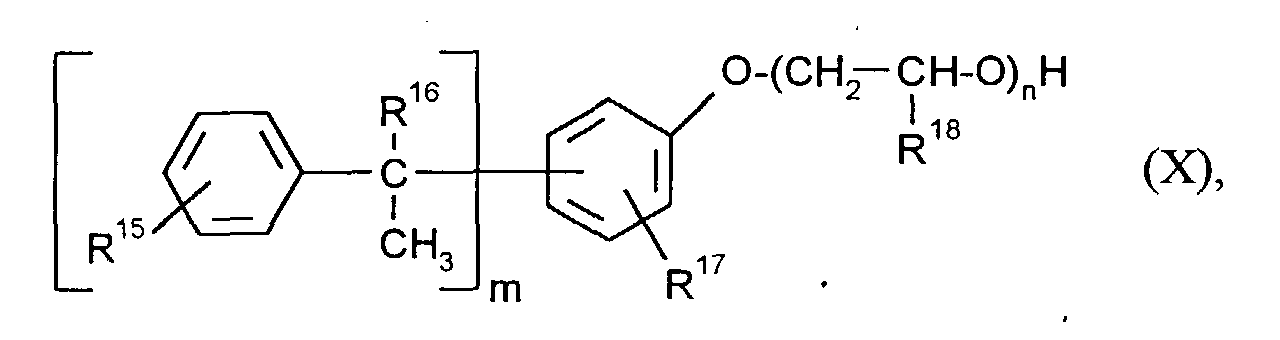
m: 2,7
n: 29
R2: H
R15: H und
R17: H bedeutet,
R18: H
mit einer statistischen Kettenlänge von ca. 29 EO-Einheiten (aufgeschmolzen bei 90°C) vorgelegt und bei 90 bis 100°C mit
(0,9 mol) 90,1 g Bernsteinsäureanhydrid versetzt.
Man rührte unter schwachem Stickstoffstrom 2 Stunden bei 100°C, anschließend 3 Stunden bei 150°C nach, wobei die anfangs cremige weiße Masse dünnflüssiger und schwach bräunlich wurde.
Man kühlte auf 100°C ab und filtrierte über eine G-2 Glasfritte. Es wurden 1.480 g einer viskosen, leicht trüben bräunlichen Flüssigkeit mit folgenden Eigenschaften gewonnen:pH-Wert 1%ig in vollentsalztem Wasser = 4,6 Trübungspunkt 1%ig in vollents. Wasser = 94-96°C Erstarrungspunkt = ca. 25°C Säurezahl = 29,5mg KOH/g -
4,3 Teile des in Beispiel 8 beschriebenen Dispergiermittelgemisches wurden bei 80°C aufgeschmolzen und zu
7,9 Teilen deionisiertem Wasser hinzugegeben und vollständig gelöst. Die Lösung wurde in
87,8 Teilen des wasserfeuchten Preßkuchens von Color Index Pigment Rot 122 mit einem Trockengehalt von 31,9 % eingetragen und anschließend die Mischung mittels eines Dissolvers vorzerkleinert und homogenisiert. Hierbei wurde der pH-Wert der Suspension mittels verdünnter Natronlauge auf 8,0 eingestellt. Im Anschluß erfolgte eine Mahlung wie in Beispiel 2 beschrieben. Die erhaltene wäßrige Pigmentpräparation wurde mit
0,1 Teilen eines Konservierungsmittels (Benzisothiazolin-3-on) sowie deionisiertem Wasser auf eine Pigmentkonzentration von 25 % eingestellt.
Diese Präparation besitzt eine sehr gute Fließfähigkeit und einwandfreie Suspensionsstabilität bei Lagerung über 3 Monate sowohl bei Raumtemperatur als auch bei 50°C.
Die so erhaltene Präparation wurde zur Verwendung als Drucktinte für den Ink-Jet-Druck auf eine Pigmentkonzentration von 4 % verdünnt. Die Zusammensetzung und Eigenschaften der Drucktinte wurde dabei wie folgt gewählt:Deionisiertes Wasser: 69 % Polyethylenglykol (MW: 800 g/mol): 10 % o. beschr. 25%ige Pigmentpräparation: 16 % 2-Pyrrolidon: 5 % pH-Wert: 7,2 Oberflächenspannung: > 30 mN/m max. Teilchengröße (Scheibenzentrifuge): < 0,2 µm
| (Angaben in Gew.-%, bezogen auf das Pigmentkonzentrat) | ||||
| Beispiel | 2 | 3 | 4 | |
| Deionisiertes Wasser | 58,6 | 71,9 | 68,43 | |
| Dispergiermittel | Ultrazine® NA | - | 8,0 | - |
| Tamol® NN 9401 | 6,3 | - | - | |
| Dispergiermittelgemisch | - | - | 1,47 | |
| Pigmente | Pigment gem. Formel (IX) (trocken) | 35 | - | - |
| Pigment gem. Formel (V) (trocken) | - | 20 | - | |
| Pigment gem. Formel (IV) (trocken) | - | - | 30 | |
| weitere Zusätze | Konservierungsmittel | 0,1 | 0,1 | 0,1 |
| Eigenschaften | pH-Wert | 6,5 | 8,0 | 6,9 |
| max. Teilchengröße* (µm) | <0,2 | <0,2 | <0,2 | |
| *) Bestimmt aus der Partikelgrößenverteilung (Gewichtsmittel) Meßapparatur: Scheibenzentrifuge Typ DCP® 1000 der Fa. Brookhaven |
Claims (17)
- Verwendung von Pigmentpräparationen als Drucktinten für den Ink-Jet Druck, enthaltenda) Wasserb) Dispergiermittel undc) mindestens ein Pigment aus der Gruppe der durch Methin- oder Azogruppen-haltigen Reste substituierten Barbitursäure oder deren Derivate, wobei das Pigment gegebenenfalls in Form eines Salzes, Komplexes, als feste Lösung, als Einschlußverbindung oder als Interkalationsverbindung vorliegt.
- Verwendung gemäß Anspruch 1, dadurch gekennzeichnet, daß als Komponentec) mindestens ein Pigment der Formeln (I) bis (III) oder deren tautomeren Formen

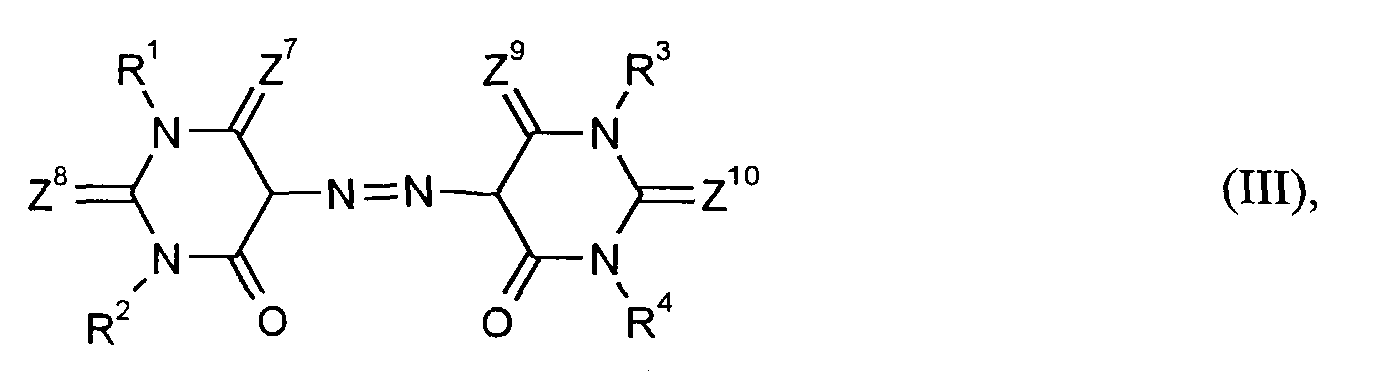 R1, R2, R3 und R4 unabhängig voneinander für Wasserstoff, Alkyl, insbesondere C1-C6-Alkyl, Cycloalkyl, insbesondere C5-C8-Cycloalkyl, Aryl, insbesondere gegebenenfalls substituiertes Phenyl, Aralkyl oder Hetaryl, stehen,B den Rest eines Isoindolins der Formel
 R5, R6, R7 und R8 unabhängig voneinander für Wasserstoff, Halogen, insbesondere F, Cl und Br, C1-C6-Alkyl, C1-C6-Alkoxy oder C6-C10-Aryloxy stehen,A den Rest eines Cyanmethylens der Formel
 R9 für einen elektronenanziehenden Rest steht undZ1 bis Z10 unabhängig voneinander für O oder NR10 stehen, worinR10 für Wasserstoff oder Cyan steht.
 - Verwendung gemäß Anspruch 1, dadurch gekennzeichnet, daß Pigmente der Formel (I) der Formel (IV) entsprechen
 R11 Wasserstoff, C1-C6-Alkyl oder Phenyl bedeutet.
 - Verwendung gemäß Anspruch 1, dadurch gekennzeichnet, daß die Pigmentpräparation ein Pigment der Formel

- Verwendung gemäß Anspruch 1, dadurch gekennzeichnet, daß Pigmente der Formel (II) der Formel (V) entsprechen
 R9 CN, gegebenenfalls durch C1-C6-Alkyl, C5-C7-Cycloalkyl, Aralkyl, insbesondere C6-C10-Aryl-C1-C4-alkyl, oder C6-C10-Aryl substituiertes Aminocarbonyl, insbesondere CONHCH3, C1-C6-Alkoxycarbonyl, C6-C10-Aryloxycarbonyl oder Hetaryl, insbesondere einen Rest der Formel (VI) oder (VII) bedeutet
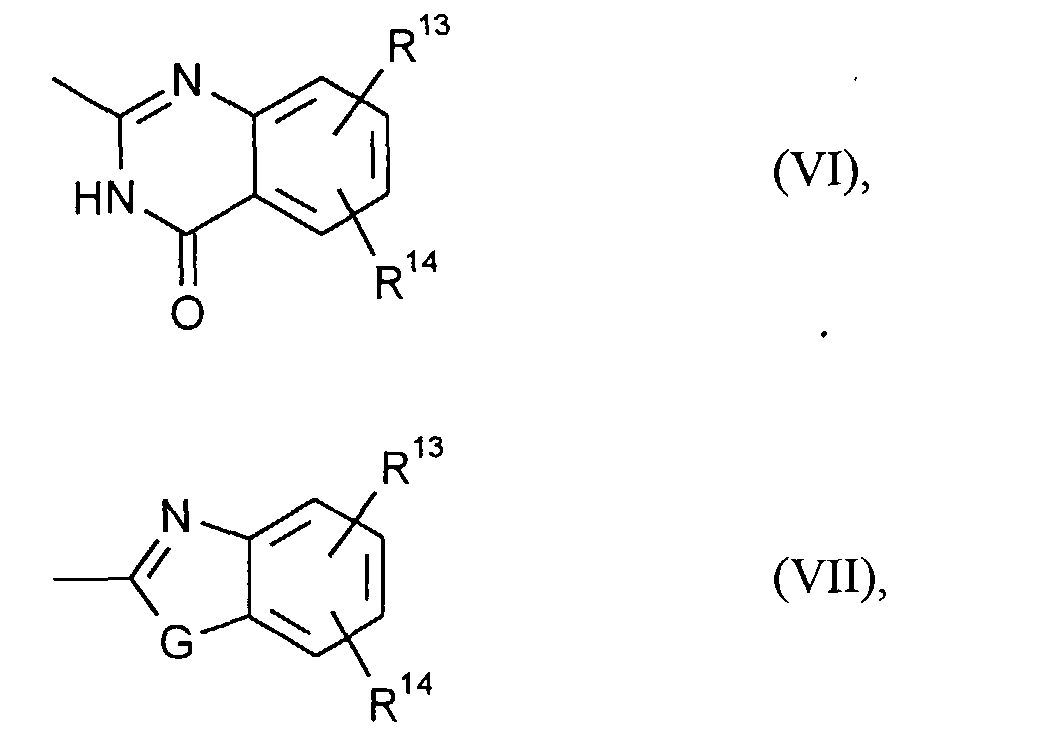 R13 und R14 unabhängig voneinander Wasserstoff, Halogen, insbesondere Cl, Br und F, C1-C6-Alkyl, C1-C6-Alkoxy oder C1-C6-Alkoxycarbonyl bedeuten oderR13 und R14 zusammen den Rest eines ankondensierten Benzolringes bedeutenG für O, S, NH oder N(C1-C4-Alkyl) steht,
undR12 Wasserstoff, C1-C6-Alkyl oder Phenyl bedeutet. - Verwendung gemäß Anspruch 1, dadurch gekennzeichnet, daß das Pigment der Formel (I) der Formel

- Verwendung gemäß Anspruch 1, dadurch gekennzeichnet, daß Pigmente der Formel (III) der Formel (VIII) oder (IX) entsprechen
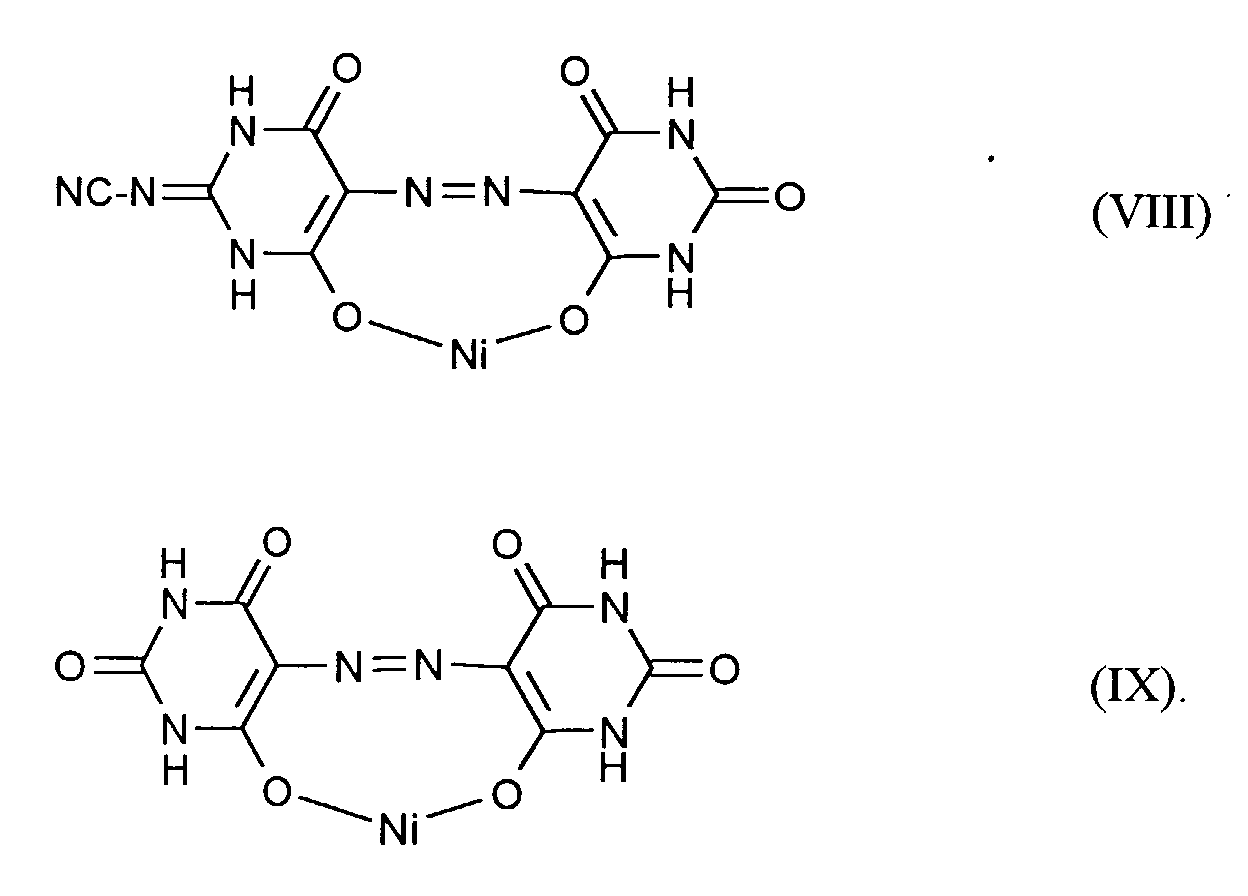
- Verwendung gemäß Anspruch 1, dadurch gekennzeichnet, daß das Pigment der Formel (III) in Form eines Salzes, Komplexes, als feste Lösung, als Einschlußverbindung oder als Interkalationsverbindung vorliegt.
- Verwendung gemäß Anspruch 8, dadurch gekennzeichnet, daß das Pigment der Formel (III) in Form einer Einschlußverbindung oder Interkalationsverbindung vorliegt, wobei die eingeschlossene Verbindung eine cyclische oder acyclische Verbindung, vorzugsweise Carbonsäure- oder Sulfonsäureamide, Harnstoff oder substituierte Harnstoffe sowie Heterocyclen, insbesondere 2,4,6-Triamino-1,3,5-triazin, Acetoguanamin und Benzoguanamin ist.
- Pigmentpräparationen enthaltenda) Wasserb) Dispergiermittelc) mindestens ein Pigment der Formeln (I) bis (III) oder deren tautomeren Formen
 R1, R2, R3 und R4 unabhängig voneinander für Wasserstoff, Alkyl, insbesondere C1-C6-Alkyl, Cycloalkyl, insbesondere C5-C8-Cycloalkyl, Aryl, insbesondere gegebenenfalls substituiertes Phenyl, Aralkyl oder Hetaryl,
stehen,B den Rest eines Isoindolins der Formel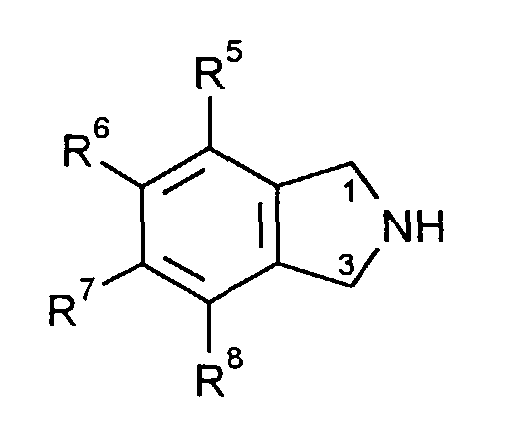 R5, R6, R7 und R8 unabhängig voneinander für Wasserstoff, Halogen, insbesondere F, Cl und Br, C1-C6-Alkyl, C1-C6-Alkoxy oder C6-C10-Aryloxy stehen,A den Rest eines Cyanmethylens der Formel
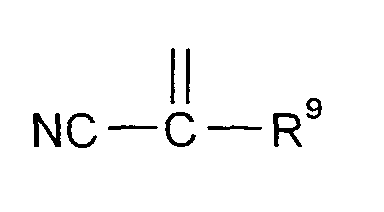 R9 für eine elektronenanziehenden Rest steht undZ1 bis Z10 unabhängig voneinander für O oder NR10 stehen, worinR10 für Wasserstoff oder Cyan steht,undd) mindestens ein organisches Lösungsmittel aus der Gruppe:
aliphatische C1-C4-Alkohole, wie Methanol, Ethanol, Isopropanol, n-Propanol, n-Butanol, Isobutanol oder tert.-Butanol, aliphatische Ketone, wie Aceton, Methylethylketon, Methylisobutylketon oder Diacetonalkohol, Polyole, wie Ethylenglykol, Propylenglykol, Butylenglykol, Diethylenglykol, Triethylenglykol, Trimethylolpropan, Polyethylenglykol mit einem mittleren Molgewicht von 100 bis 4000, vorzugsweise 400 bis 1500 g/mol oder Glycerin, Monohydroxyether, vorzugsweise Monohydroxyalkylether, besonders bevorzugt Mono-C1-C4-alkylglykolether wie Ethylenglykolmonoalkyl-, -monomethyl-, -diethylenglykolmonomethylether oder Diethylenglykolmonoethylether, Diethylenglykolmonobutylether, Dipropylenglykolmonoethylether, Thiodiglykol, Triethylenglykolmonomethylether oder -monoethylether, ferner 2-Pyrrolidon, N-Methyl-2-pyrrolidon, N-Ethyl-pyrrolidon, N-Vinyl-pyrrolidon, 1,3-Dimethylimidazolidon, Dimethylacetamid sowie Dimethylformamid. - Pigmentpräparationen gemäß Anspruch 10, dadurch gekennzeichnet, daß das Pigment der Formel (III) in Form eines Salzes, Komplexes, als feste Lösung, als Einschlußverbindung oder als Interkalationsverbindung vorliegt.
- Pigmentpräparationen gemäß Anspruch 10, dadurch gekennzeichnet, daß das Pigment der Formel (III) in Form einer Einschlußverbindung oder Interkalationsverebindung vorliegt, wobei die eingeschlossene Verbindung eine cyclische oder acyclische Verbindung, vorzugsweise Carbonsäure- oder Sulfonsäureamide, Harnstoff oder substituierte Harnstoffe sowie Heterocyclen, insbesondere 2,4,6-Triamino-1,3,5-triazin, Acetoguanamin und Benzoguanamin ist.
- Verbindungen der Formel (XI)
 R15' Wasserstoff oder C1-C4-Alkyl bedeutet,R16' für Wasserstoff oder CH3 steht,R17' Wasserstoff, C1-C4-Alkyl, C1-C4-Alkoxy, C1-C4-Alkoxycarbonyl oder Phenyl bedeutet,m' eine Zahl von 1 bis 4 bedeutet,n' eine Zahl von 6 bis 120 bedeutet,R18' für jede durch n indizierte Einheit gleich oder verschieden ist und für Wasserstoff, CH3 oder Phenyl steht, wobei im Falle der Mitanwesenheit von CH3 in den verschiedenen -(-CH2-CH(R18')-O-)-Gruppen in 0 bis 60 % des Gesamtwertes von n R18' für CH3 und in 100 bis 40 % des Gesamtwertes von n R18' für Wasserstoff steht und wobei im Falle der Mitanwesenheit von Phenyl in den verschiedenen -(-CH2-CH(R18')-O-)-Gruppen in 0 bis 40 % des Gesamtwertes von n R18' für Phenyl und in 100 bis 60 % des Gesamtwertes von n R18' für Wasserstoff steht,X für einen Rest der Formel -CO-(R19)-COO⊖ steht,R19 für einen zweiwertigen aliphatischen oder aromatischen Rest steht, undKat ein Kation aus der Gruppe von H⊕, Li⊕, Na⊕, K⊕, NH4 ⊕ oder HO-CH2CH2-NH3 ⊕ ist.
 - Mischungen, enthaltend eine Verbindung der Formel (X) und eine Verbindung der Formel (XI)
 R15 Wasserstoff oder C1-C4-Alkyl bedeutet,R16 für Wasserstoff oder CH3 steht,R17 Wasserstoff, C1-C4-Alkyl, C1-C4-Alkoxy, C1-C4-Alkoxycarbonyl oder Phenyl bedeutet,m eine Zahl von 1 bis 4 bedeutet,n eine Zahl von 6 bis 120 bedeutet,R18 für jede durch n indizierte Einheit gleich oder verschieden ist und für Wasserstoff, CH3 oder Phenyl steht, wobei im Falle der Mitanwesenheit von CH3 in den verschiedenen -(-CH2-CH(R18)-O-)-Gruppen in 0 bis 60 % des Gesamtwertes von n R18 für CH3 und in 100 bis 40 % des Gesamtwertes von n R18 für Wasserstoff steht und wobei im Falle der Mitanwesenheit von Phenyl in den verschiedenen -(-CH2CH(R18)-O-)-Gruppen in 0 bis 40 % des Gesamtwertes von n R18 für Phenyl und in 100 bis 60 % des Gesamtwertes von n R18 für Wasserstoff steht,
 R15', R16', R17', R18', m' und n' den Bedeutungsumfang von R15, R16, R17, R18, m bzw. n, jedoch unabhängig hiervon, annnehmen,X die Gruppe -SO3 ⊖, -SO2 ⊖, -PO3 ⊖⊖ oder -CO-(R19)-COO⊖ bedeutet,Kat ein Kation aus der Gruppe von H⊕, Li⊕, Na⊕, K⊕ , NH4 ⊕ oder HO-CH2CH2-NH3 ⊕ ist, wobei im Falle von X = -PO3 ⊖⊖ zwei Kat vorliegen,wobei Mischungen ausgenommen sind, worin n oder n' eine Zahl kleiner oder gleich 3 oder m oder m' eine Zahl von 6 bis 100 bedeutet.
 - Pigmentpräparationen enthaltenda') Wasser,b') eine Verbindung gemäß Anspruch 13 und/oder eine Mischung gemäß Anspruch 14 undc') ein Pigment.
- Verwendung der Pigmentpräparationen gemäß Anspruch 15 als Drucktinte für den Ink-Jet-Druck.
- Verwendung der Verbindungen gemäß Anspruch 13 oder der Mischungen gemäß Anspruch 14 als Dispergiermittel.
Priority Applications (1)
| Application Number | Priority Date | Filing Date | Title |
|---|---|---|---|
| EP02008143A EP1234813B1 (de) | 1996-10-31 | 1997-10-20 | Verwendung von Pigmentpräparationen für den Ink-Jet Druck |
Applications Claiming Priority (4)
| Application Number | Priority Date | Filing Date | Title |
|---|---|---|---|
| DE19644077 | 1996-10-31 | ||
| DE19644077A DE19644077A1 (de) | 1996-10-31 | 1996-10-31 | Verwendung von Pigmentpräparationen für den Ink-Jet Druck |
| DE19712486A DE19712486A1 (de) | 1997-03-25 | 1997-03-25 | Verwendung von Pigmentpräparationen für den Ink-Jet Druck |
| DE19712486 | 1997-03-25 |
Related Child Applications (1)
| Application Number | Title | Priority Date | Filing Date |
|---|---|---|---|
| EP02008143A Division EP1234813B1 (de) | 1996-10-31 | 1997-10-20 | Verwendung von Pigmentpräparationen für den Ink-Jet Druck |
Publications (3)
| Publication Number | Publication Date |
|---|---|
| EP0839879A2 true EP0839879A2 (de) | 1998-05-06 |
| EP0839879A3 EP0839879A3 (de) | 1999-03-24 |
| EP0839879B1 EP0839879B1 (de) | 2003-06-18 |
Family
ID=26030693
Family Applications (2)
| Application Number | Title | Priority Date | Filing Date |
|---|---|---|---|
| EP97118192A Expired - Lifetime EP0839879B1 (de) | 1996-10-31 | 1997-10-20 | Verwendung von Pigmentpreparationen für den Ink-Jet Druck |
| EP02008143A Expired - Lifetime EP1234813B1 (de) | 1996-10-31 | 1997-10-20 | Verwendung von Pigmentpräparationen für den Ink-Jet Druck |
Family Applications After (1)
| Application Number | Title | Priority Date | Filing Date |
|---|---|---|---|
| EP02008143A Expired - Lifetime EP1234813B1 (de) | 1996-10-31 | 1997-10-20 | Verwendung von Pigmentpräparationen für den Ink-Jet Druck |
Country Status (7)
| Country | Link |
|---|---|
| US (1) | US6077339A (de) |
| EP (2) | EP0839879B1 (de) |
| JP (2) | JPH10140066A (de) |
| KR (1) | KR19980033379A (de) |
| DE (2) | DE59712538D1 (de) |
| ES (1) | ES2202532T3 (de) |
| TW (1) | TW459022B (de) |
Cited By (9)
| Publication number | Priority date | Publication date | Assignee | Title |
|---|---|---|---|---|
| EP0994163A1 (de) * | 1998-10-15 | 2000-04-19 | Bayer Ag | Neue Metallkomplexpigmente |
| EP1054045A1 (de) * | 1999-05-20 | 2000-11-22 | Bayer Ag | Pigmentpräparationen für den Ink-Jet-Druck |
| US6261358B1 (en) * | 1998-10-15 | 2001-07-17 | Bayer Aktiengesellschaft | Pigment preparations |
| EP1146087A1 (de) * | 2000-04-04 | 2001-10-17 | Bayer Ag | Organische Pigmente für Farbfilter in LCD |
| EP1174473A3 (de) * | 2000-07-21 | 2003-12-03 | Bayer Ag | Pigmentpräparationen |
| EP1348738A3 (de) * | 2002-03-28 | 2004-02-18 | Bayer Chemicals AG | Metallkomplexpigmente |
| EP1612246A1 (de) * | 2004-07-02 | 2006-01-04 | Toyo Ink Mfg. Co., Ltd. | Azobarbitursäuremetallkomplex sowie Verfahren zu dessen Herstellung |
| US7264183B2 (en) | 2004-06-08 | 2007-09-04 | Lanxess Deutschland Gmbh | Process for the production of finely divided milled material |
| EP3960824A4 (de) * | 2019-04-22 | 2022-07-27 | Toyo Ink SC Holdings Co., Ltd. | Färbezusammensetzung mit isoindolinverbindung und verwendung davon |
Families Citing this family (24)
| Publication number | Priority date | Publication date | Assignee | Title |
|---|---|---|---|---|
| US6245138B1 (en) * | 1997-10-20 | 2001-06-12 | Bayer Aktiengesellschaft | Pigment preparations useful for ink-jet printing |
| DE59908291D1 (de) * | 1998-10-15 | 2004-02-19 | Bayer Chemicals Ag | Metallkomplexpigmente |
| DE19905269A1 (de) | 1999-02-09 | 2000-08-10 | Bayer Ag | Feste Pigmentpräparationen |
| DE10022371A1 (de) * | 1999-05-20 | 2000-11-23 | Bayer Ag | Pfropfcopolymere enthaltende Feststoffpräparationen |
| DE19954401C2 (de) | 1999-11-12 | 2002-08-29 | Bayer Ag | Feste Pigmentpräparationen zur Saatgut-/beizeneinfärbung |
| US6478862B1 (en) * | 2000-03-14 | 2002-11-12 | Macdermid Acumen, Inc. | Pigmented inks and a method of making pigmented inks |
| CN1473114A (zh) * | 2000-09-01 | 2004-02-04 | 数字玻璃股份有限公司 | 带图象的层压材料 |
| EP1205108A3 (de) | 2000-10-02 | 2002-06-12 | Bayer Ag | Wirkstoffhaltige Emulsionen |
| US6610133B2 (en) * | 2000-12-20 | 2003-08-26 | Basf Corporation | Dispersions for use in ink jet inks |
| WO2002066565A1 (en) | 2001-02-16 | 2002-08-29 | Macdermid Colorspan, Inc. | Direct dye inks and a method of making direct dye inks |
| GB0106343D0 (en) * | 2001-03-14 | 2001-05-02 | Avecia Ltd | Compounds compositions and processes |
| DE10124902A1 (de) | 2001-05-22 | 2002-11-28 | Bayer Ag | Partikuläre Feststoffe oberflächenaktiver Verbindungen |
| DE10133643A1 (de) * | 2001-07-11 | 2003-01-30 | Clariant Gmbh | Wasserbasierende Farbmittelpräparationen |
| DE10318233A1 (de) * | 2003-04-22 | 2004-11-11 | Clariant Gmbh | Wasserbasierende Farbmittelpräparationen für den Ink-Jet-Druck |
| DE10326211A1 (de) * | 2003-06-11 | 2004-12-30 | Clariant Gmbh | Heterocyclische Farbmittel auf Basis von Diazabenzoisoindolen |
| DE10350556A1 (de) * | 2003-10-29 | 2005-06-02 | Clariant Gmbh | Wasserbasierende Pigmentpräparationen |
| DE102004019020A1 (de) * | 2004-04-20 | 2005-11-10 | Bayer Chemicals Ag | Organische Pigmentpräparationen |
| US7789955B1 (en) * | 2006-04-20 | 2010-09-07 | Collins Ink Corporation | Inkjet ink composition |
| US7897203B2 (en) * | 2007-04-23 | 2011-03-01 | Hewlett-Packard Development Company, L.P. | Intercalated compound |
| US7641728B2 (en) * | 2007-04-23 | 2010-01-05 | Hewlett-Packard Development Company, L.P. | Ink composition and method for forming the same |
| US20080265211A1 (en) * | 2007-04-30 | 2008-10-30 | Rehman Zia Ur | Shipping, handling, and testing fluids for ink dispensing systems |
| JP7192639B2 (ja) * | 2019-04-23 | 2022-12-20 | 東洋インキScホールディングス株式会社 | イソインドリン化合物及びその利用 |
| US12606707B2 (en) | 2020-07-15 | 2026-04-21 | Artience Co., Ltd. | Pigment composition, coloring composition, paint, ink, ink set, printed article, and packaging material |
| JP7105024B1 (ja) | 2021-08-03 | 2022-07-22 | 東洋インキScホールディングス株式会社 | 顔料組成物、着色組成物、塗料、インキ、インキセット、印刷物、及び包装材料 |
Family Cites Families (21)
| Publication number | Priority date | Publication date | Assignee | Title |
|---|---|---|---|---|
| JPS5149982A (en) * | 1974-10-24 | 1976-04-30 | Sumitomo Chemical Co | Senryono kochakuho |
| JPS5828394B2 (ja) * | 1976-03-25 | 1983-06-15 | 住友化学工業株式会社 | 反応性染料の固着方法 |
| DE2745449C2 (de) * | 1977-10-08 | 1979-10-25 | Basf Ag, 6700 Ludwigshafen | Stabile feindisperse wäßrige Zubereitungen von Dispersionsfarbstoffen und optischen Aufhellern und deren Verwendung |
| DE3215875A1 (de) * | 1981-09-02 | 1983-03-17 | Bayer Ag, 5090 Leverkusen | Azobarbitursaeure-derivate, ihre festen loesungen, einschlussverbindungen und interkalationsverbindungen |
| DE3215876A1 (de) * | 1981-09-02 | 1983-03-17 | Bayer Ag, 5090 Leverkusen | Einschlussverbindungen, interkalationsverbindungen und feste loesungen farbiger organischer metallverbindungen |
| US4655786A (en) * | 1983-11-15 | 1987-04-07 | Ciba-Geigy Corporation | Process for dyeing hydrophobic fibre material with disperse dye and surfactant |
| JPS61231285A (ja) * | 1985-04-03 | 1986-10-15 | 東レ株式会社 | インクジエツトまたはスプレ−染色法 |
| JPS6211780A (ja) * | 1985-07-09 | 1987-01-20 | Mitsubishi Chem Ind Ltd | インクジエツト捺染用インク |
| DE3641677A1 (de) * | 1986-12-05 | 1988-06-09 | Bayer Ag | Waessrige pigmentpraeparationen und ihre verwendung |
| EP0382138B1 (de) * | 1989-02-08 | 1994-08-24 | Ciba-Geigy Ag | Hilfsmittelgemisch und seine Verwendung beim Färben von synthetischen Fasermaterialien |
| DE3935858A1 (de) * | 1989-10-27 | 1991-05-02 | Bayer Ag | Verfahren zur herstellung von pigmenten auf isoindolbasis |
| US5221334A (en) * | 1990-04-11 | 1993-06-22 | E. I. Du Pont De Nemours And Company | Aqueous pigmented inks for ink jet printers |
| US5326872A (en) * | 1991-04-22 | 1994-07-05 | Miles Inc. | Process for preparation of asymmetric isoindoline pigments |
| US5177209A (en) * | 1991-04-22 | 1993-01-05 | Miles Inc. | Process for preparation of asymmetric isoindoline pigments |
| US5555008A (en) * | 1993-07-06 | 1996-09-10 | E. I. Du Pont De Nemours And Company | Process for alleviating bleed in printed elements |
| DE59508671D1 (de) * | 1994-03-25 | 2000-10-05 | Ciba Sc Holding Ag | Cyaniminogruppen enthaltende Fluoreszenzfarbstoffe |
| DE19511624A1 (de) * | 1995-03-30 | 1996-10-02 | Bayer Ag | Wäßrige Pigmentpräparationen |
| DE19535246A1 (de) * | 1995-09-22 | 1997-03-27 | Bayer Ag | Tensidgemische |
| DE19536845A1 (de) * | 1995-10-02 | 1997-04-03 | Bayer Ag | Verfahren und Vorrichtung zur Herstellung von feinteiligen Feststoffdispersionen |
| AU5861596A (en) * | 1996-05-16 | 1997-12-05 | Minnesota Mining And Manufacturing Company | Water-based pigmented inks |
| US5885662A (en) * | 1997-01-31 | 1999-03-23 | Atoma International, Inc. | Decorative automotive interior trim articles with integral light stable polyurethane elastomer covering and process for making the same |
-
1997
- 1997-10-15 TW TW086115095A patent/TW459022B/zh not_active IP Right Cessation
- 1997-10-20 US US08/954,603 patent/US6077339A/en not_active Expired - Lifetime
- 1997-10-20 EP EP97118192A patent/EP0839879B1/de not_active Expired - Lifetime
- 1997-10-20 DE DE59712538T patent/DE59712538D1/de not_active Expired - Lifetime
- 1997-10-20 EP EP02008143A patent/EP1234813B1/de not_active Expired - Lifetime
- 1997-10-20 ES ES97118192T patent/ES2202532T3/es not_active Expired - Lifetime
- 1997-10-20 DE DE59710301T patent/DE59710301D1/de not_active Expired - Lifetime
- 1997-10-24 JP JP9309846A patent/JPH10140066A/ja active Pending
- 1997-10-31 KR KR1019970057012A patent/KR19980033379A/ko not_active Withdrawn
-
2006
- 2006-10-26 JP JP2006291570A patent/JP4667341B2/ja not_active Expired - Lifetime
Cited By (13)
| Publication number | Priority date | Publication date | Assignee | Title |
|---|---|---|---|---|
| US6261358B1 (en) * | 1998-10-15 | 2001-07-17 | Bayer Aktiengesellschaft | Pigment preparations |
| EP0994163A1 (de) * | 1998-10-15 | 2000-04-19 | Bayer Ag | Neue Metallkomplexpigmente |
| US6465567B1 (en) | 1999-05-20 | 2002-10-15 | Bayer Akgiengesellschaft | Pigment preparations for inkjet printing |
| EP1054045A1 (de) * | 1999-05-20 | 2000-11-22 | Bayer Ag | Pigmentpräparationen für den Ink-Jet-Druck |
| CN1330710C (zh) * | 2000-04-04 | 2007-08-08 | 兰爱克谢斯德国有限责任公司 | 液晶显示器的滤色器中的有机颜料 |
| EP1146087A1 (de) * | 2000-04-04 | 2001-10-17 | Bayer Ag | Organische Pigmente für Farbfilter in LCD |
| KR100786964B1 (ko) * | 2000-04-04 | 2007-12-17 | 란세스 도이치란트 게엠베하 | 액정 디스플레이의 색 필터에서의 유기 안료 |
| EP1174473A3 (de) * | 2000-07-21 | 2003-12-03 | Bayer Ag | Pigmentpräparationen |
| EP1348738A3 (de) * | 2002-03-28 | 2004-02-18 | Bayer Chemicals AG | Metallkomplexpigmente |
| US7264183B2 (en) | 2004-06-08 | 2007-09-04 | Lanxess Deutschland Gmbh | Process for the production of finely divided milled material |
| EP1612246A1 (de) * | 2004-07-02 | 2006-01-04 | Toyo Ink Mfg. Co., Ltd. | Azobarbitursäuremetallkomplex sowie Verfahren zu dessen Herstellung |
| US7081160B2 (en) | 2004-07-02 | 2006-07-25 | Toyo Ink Mfg. Co., Ltd. | Azobarbituric acid metal complex pigment and process for the production thereof |
| EP3960824A4 (de) * | 2019-04-22 | 2022-07-27 | Toyo Ink SC Holdings Co., Ltd. | Färbezusammensetzung mit isoindolinverbindung und verwendung davon |
Also Published As
| Publication number | Publication date |
|---|---|
| ES2202532T3 (es) | 2004-04-01 |
| JP2007051156A (ja) | 2007-03-01 |
| JPH10140066A (ja) | 1998-05-26 |
| US6077339A (en) | 2000-06-20 |
| EP1234813A3 (de) | 2003-07-30 |
| DE59710301D1 (de) | 2003-07-24 |
| DE59712538D1 (de) | 2006-02-02 |
| KR19980033379A (ko) | 1998-07-25 |
| EP1234813B1 (de) | 2005-12-28 |
| EP0839879B1 (de) | 2003-06-18 |
| TW459022B (en) | 2001-10-11 |
| JP4667341B2 (ja) | 2011-04-13 |
| EP0839879A3 (de) | 1999-03-24 |
| EP1234813A2 (de) | 2002-08-28 |
Similar Documents
| Publication | Publication Date | Title |
|---|---|---|
| EP0839879B1 (de) | Verwendung von Pigmentpreparationen für den Ink-Jet Druck | |
| EP0827973B1 (de) | Pigmentpräparationen für den Ink-Jet-Druck | |
| EP1409592B1 (de) | Wasserbasierende farbmittelpräparationen | |
| DE69232625T2 (de) | Strahldrucktintenzusammensetzung und Druckverfahren | |
| DE69901944T3 (de) | Modifizierte pigmente mit verbesserten dispergierenden eigenschaften | |
| EP0425439B1 (de) | Wässerige Drucktinten für den Tintenstrahldruck | |
| DE69321450T2 (de) | Tinten für Tintenstrahlverfahren | |
| EP1618159B1 (de) | Wasserbasierende farbmittelpräparationen für den ink-jet-druck | |
| DE19808672C2 (de) | Tinte des pigmenthaltigen Typs auf Wasserbasis | |
| DE60101229T2 (de) | Pigmentdispersion und Tintenstrahltintenzusammensetzung unter Verwendung derselben | |
| EP1049745B1 (de) | Wässrige pigmentpräparationen | |
| EP1406974B1 (de) | Wasserbasierende farbmittelpräparationen für den ink-jet-druck | |
| EP0915137A1 (de) | Nanoskalige anorganische Pigmente enthaltende Ink-Jet Tinten | |
| US6245138B1 (en) | Pigment preparations useful for ink-jet printing | |
| DE19712486A1 (de) | Verwendung von Pigmentpräparationen für den Ink-Jet Druck | |
| US6465567B1 (en) | Pigment preparations for inkjet printing | |
| WO1999027024A1 (de) | Anorganische pigmente enthaltende pigmentpräparationen | |
| DE69823614T2 (de) | Hochleistungstintenzusammensetzungen mit nicht auf Benzidin basierenden Farbmitteln | |
| DE60200610T2 (de) | Pigmentdispersion, Tintenstrahltintenzusammensetzung unter Verwendung der Pigmentdispersion, Methode zur Herstellung der Tintenstrahltintenzusammen setzung und bildgebende Methode unter Verwendung der Tintenstrahltintenzusammensetzung | |
| EP1723204B1 (de) | Verwendung einer pigmentzusammensetzung mit mischkristallen auf basis von c.i. pigment yellow 74 | |
| DE69913015T2 (de) | Wasserbeständige Tintenzusammensetzungen | |
| DE4334735A1 (de) | Alkylenbismelamin-Derivate, Verfahren zu deren Herstellung und diese enthaltende Weißpigment-Zusammensetzung | |
| JP4597540B2 (ja) | 顔料分散系、顔料分散系収容体、画像形成体、及び画像形成方法 | |
| DE19731572A1 (de) | Pigmentpräparationen | |
| DE19644077A1 (de) | Verwendung von Pigmentpräparationen für den Ink-Jet Druck |
Legal Events
| Date | Code | Title | Description |
|---|---|---|---|
| PUAI | Public reference made under article 153(3) epc to a published international application that has entered the european phase |
Free format text: ORIGINAL CODE: 0009012 |
|
| AK | Designated contracting states |
Kind code of ref document: A2 Designated state(s): CH DE ES FR GB IT LI NL SE |
|
| PUAL | Search report despatched |
Free format text: ORIGINAL CODE: 0009013 |
|
| AK | Designated contracting states |
Kind code of ref document: A3 Designated state(s): AT BE CH DE DK ES FI FR GB GR IE IT LI LU MC NL PT SE |
|
| 17P | Request for examination filed |
Effective date: 19990924 |
|
| AKX | Designation fees paid |
Free format text: CH DE ES FR GB IT LI NL SE |
|
| 17Q | First examination report despatched |
Effective date: 20020220 |
|
| GRAH | Despatch of communication of intention to grant a patent |
Free format text: ORIGINAL CODE: EPIDOS IGRA |
|
| GRAH | Despatch of communication of intention to grant a patent |
Free format text: ORIGINAL CODE: EPIDOS IGRA |
|
| GRAA | (expected) grant |
Free format text: ORIGINAL CODE: 0009210 |
|
| AK | Designated contracting states |
Designated state(s): CH DE ES FR GB IT LI NL SE |
|
| REG | Reference to a national code |
Ref country code: GB Ref legal event code: FG4D Free format text: NOT ENGLISH |
|
| REG | Reference to a national code |
Ref country code: CH Ref legal event code: EP |
|
| REG | Reference to a national code |
Ref country code: CH Ref legal event code: NV Representative=s name: DR. R.C. SALGO EUROPEAN PATENT ATTORNEY |
|
| REF | Corresponds to: |
Ref document number: 59710301 Country of ref document: DE Date of ref document: 20030724 Kind code of ref document: P |
|
| GBT | Gb: translation of ep patent filed (gb section 77(6)(a)/1977) | ||
| REG | Reference to a national code |
Ref country code: SE Ref legal event code: TRGR |
|
| REG | Reference to a national code |
Ref country code: ES Ref legal event code: FG2A Ref document number: 2202532 Country of ref document: ES Kind code of ref document: T3 |
|
| ET | Fr: translation filed | ||
| PLBE | No opposition filed within time limit |
Free format text: ORIGINAL CODE: 0009261 |
|
| STAA | Information on the status of an ep patent application or granted ep patent |
Free format text: STATUS: NO OPPOSITION FILED WITHIN TIME LIMIT |
|
| 26N | No opposition filed |
Effective date: 20040319 |
|
| REG | Reference to a national code |
Ref country code: GB Ref legal event code: 732E |
|
| NLS | Nl: assignments of ep-patents |
Owner name: LANXESS DEUTSCHLAND GMBH Effective date: 20070305 |
|
| REG | Reference to a national code |
Ref country code: CH Ref legal event code: PFA Owner name: BAYER AG Free format text: BAYER AG# #51368 LEVERKUSEN (DE) -TRANSFER TO- BAYER AG# #51368 LEVERKUSEN (DE) |
|
| REG | Reference to a national code |
Ref country code: CH Ref legal event code: PUE Owner name: LANXESS DEUTSCHLAND GMBH Free format text: BAYER AG# #51368 LEVERKUSEN (DE) -TRANSFER TO- LANXESS DEUTSCHLAND GMBH# #51369 LEVERKUSEN (DE) |
|
| REG | Reference to a national code |
Ref country code: FR Ref legal event code: TP |
|
| REG | Reference to a national code |
Ref country code: DE Ref legal event code: R081 Ref document number: 59710301 Country of ref document: DE Owner name: LANXESS DEUTSCHLAND GMBH, DE Free format text: FORMER OWNER: LANXESS DEUTSCHLAND GMBH, 51373 LEVERKUSEN, DE Effective date: 20131113 |
|
| PGFP | Annual fee paid to national office [announced via postgrant information from national office to epo] |
Ref country code: SE Payment date: 20141013 Year of fee payment: 18 Ref country code: CH Payment date: 20141014 Year of fee payment: 18 |
|
| PGFP | Annual fee paid to national office [announced via postgrant information from national office to epo] |
Ref country code: NL Payment date: 20141010 Year of fee payment: 18 |
|
| REG | Reference to a national code |
Ref country code: CH Ref legal event code: PL Ref country code: SE Ref legal event code: EUG |
|
| REG | Reference to a national code |
Ref country code: NL Ref legal event code: MM Effective date: 20151101 |
|
| PG25 | Lapsed in a contracting state [announced via postgrant information from national office to epo] |
Ref country code: LI Free format text: LAPSE BECAUSE OF NON-PAYMENT OF DUE FEES Effective date: 20151031 Ref country code: CH Free format text: LAPSE BECAUSE OF NON-PAYMENT OF DUE FEES Effective date: 20151031 |
|
| PG25 | Lapsed in a contracting state [announced via postgrant information from national office to epo] |
Ref country code: SE Free format text: LAPSE BECAUSE OF NON-PAYMENT OF DUE FEES Effective date: 20151021 Ref country code: NL Free format text: LAPSE BECAUSE OF NON-PAYMENT OF DUE FEES Effective date: 20151101 |
|
| REG | Reference to a national code |
Ref country code: FR Ref legal event code: PLFP Year of fee payment: 20 |
|
| PGFP | Annual fee paid to national office [announced via postgrant information from national office to epo] |
Ref country code: FR Payment date: 20160919 Year of fee payment: 20 |
|
| PGFP | Annual fee paid to national office [announced via postgrant information from national office to epo] |
Ref country code: ES Payment date: 20160915 Year of fee payment: 20 |
|
| PGFP | Annual fee paid to national office [announced via postgrant information from national office to epo] |
Ref country code: DE Payment date: 20161011 Year of fee payment: 20 Ref country code: GB Payment date: 20161019 Year of fee payment: 20 |
|
| PGFP | Annual fee paid to national office [announced via postgrant information from national office to epo] |
Ref country code: IT Payment date: 20161024 Year of fee payment: 20 |
|
| REG | Reference to a national code |
Ref country code: DE Ref legal event code: R071 Ref document number: 59710301 Country of ref document: DE |
|
| REG | Reference to a national code |
Ref country code: GB Ref legal event code: PE20 Expiry date: 20171019 |
|
| PG25 | Lapsed in a contracting state [announced via postgrant information from national office to epo] |
Ref country code: GB Free format text: LAPSE BECAUSE OF EXPIRATION OF PROTECTION Effective date: 20171019 |
|
| REG | Reference to a national code |
Ref country code: ES Ref legal event code: FD2A Effective date: 20180508 |
|
| PG25 | Lapsed in a contracting state [announced via postgrant information from national office to epo] |
Ref country code: ES Free format text: LAPSE BECAUSE OF EXPIRATION OF PROTECTION Effective date: 20171021 |