EP0965591A1 - (S)-3-Methyl-1-(2-piperidino-phenyl)-1-butylamin, dessen Salze, Herstellung und Verwendung bei der Langzeittherapie des Diabetes mellitus - Google Patents
(S)-3-Methyl-1-(2-piperidino-phenyl)-1-butylamin, dessen Salze, Herstellung und Verwendung bei der Langzeittherapie des Diabetes mellitus Download PDFInfo
- Publication number
- EP0965591A1 EP0965591A1 EP99101810A EP99101810A EP0965591A1 EP 0965591 A1 EP0965591 A1 EP 0965591A1 EP 99101810 A EP99101810 A EP 99101810A EP 99101810 A EP99101810 A EP 99101810A EP 0965591 A1 EP0965591 A1 EP 0965591A1
- Authority
- EP
- European Patent Office
- Prior art keywords
- phenyl
- piperidino
- methyl
- acid
- butyl
- Prior art date
- Legal status (The legal status is an assumption and is not a legal conclusion. Google has not performed a legal analysis and makes no representation as to the accuracy of the status listed.)
- Granted
Links
- 150000003839 salts Chemical class 0.000 title claims abstract description 23
- CARYLRSDNWJCJV-HNNXBMFYSA-N (1s)-3-methyl-1-(2-piperidin-1-ylphenyl)butan-1-amine Chemical compound CC(C)C[C@H](N)C1=CC=CC=C1N1CCCCC1 CARYLRSDNWJCJV-HNNXBMFYSA-N 0.000 title claims description 11
- 206010012601 diabetes mellitus Diseases 0.000 title claims description 4
- 238000012153 long-term therapy Methods 0.000 title claims description 3
- 230000015572 biosynthetic process Effects 0.000 title description 3
- 238000003786 synthesis reaction Methods 0.000 title 1
- FAEKWTJYAYMJKF-QHCPKHFHSA-N GlucoNorm Chemical compound C1=C(C(O)=O)C(OCC)=CC(CC(=O)N[C@@H](CC(C)C)C=2C(=CC=CC=2)N2CCCCC2)=C1 FAEKWTJYAYMJKF-QHCPKHFHSA-N 0.000 claims description 48
- 238000000034 method Methods 0.000 claims description 16
- RFMMMVDNIPUKGG-YFKPBYRVSA-N N-acetyl-L-glutamic acid Chemical class CC(=O)N[C@H](C(O)=O)CCC(O)=O RFMMMVDNIPUKGG-YFKPBYRVSA-N 0.000 claims description 15
- 239000002253 acid Substances 0.000 claims description 15
- 239000004480 active ingredient Substances 0.000 claims description 10
- 238000004519 manufacturing process Methods 0.000 claims description 10
- 239000000126 substance Substances 0.000 claims description 7
- 239000003795 chemical substances by application Substances 0.000 claims description 5
- 238000002360 preparation method Methods 0.000 claims description 4
- CARYLRSDNWJCJV-UHFFFAOYSA-N 3-methyl-1-(2-piperidin-1-ylphenyl)butan-1-amine Chemical compound CC(C)CC(N)C1=CC=CC=C1N1CCCCC1 CARYLRSDNWJCJV-UHFFFAOYSA-N 0.000 claims description 3
- 230000008569 process Effects 0.000 claims description 2
- 239000000969 carrier Substances 0.000 claims 1
- 230000005923 long-lasting effect Effects 0.000 claims 1
- 125000003178 carboxy group Chemical group [H]OC(*)=O 0.000 abstract description 13
- 125000000217 alkyl group Chemical group 0.000 abstract description 4
- 239000000543 intermediate Substances 0.000 abstract description 4
- 125000001997 phenyl group Chemical group [H]C1=C([H])C([H])=C(*)C([H])=C1[H] 0.000 abstract description 4
- 150000001408 amides Chemical class 0.000 abstract description 2
- WPYMKLBDIGXBTP-UHFFFAOYSA-N Benzoic acid Natural products OC(=O)C1=CC=CC=C1 WPYMKLBDIGXBTP-UHFFFAOYSA-N 0.000 abstract 1
- 239000005711 Benzoic acid Substances 0.000 abstract 1
- 235000010233 benzoic acid Nutrition 0.000 abstract 1
- OKKJLVBELUTLKV-UHFFFAOYSA-N Methanol Chemical compound OC OKKJLVBELUTLKV-UHFFFAOYSA-N 0.000 description 132
- LFQSCWFLJHTTHZ-UHFFFAOYSA-N Ethanol Chemical compound CCO LFQSCWFLJHTTHZ-UHFFFAOYSA-N 0.000 description 96
- YXFVVABEGXRONW-UHFFFAOYSA-N Toluene Chemical compound CC1=CC=CC=C1 YXFVVABEGXRONW-UHFFFAOYSA-N 0.000 description 74
- XEKOWRVHYACXOJ-UHFFFAOYSA-N Ethyl acetate Chemical compound CCOC(C)=O XEKOWRVHYACXOJ-UHFFFAOYSA-N 0.000 description 63
- 238000002844 melting Methods 0.000 description 61
- XLYOFNOQVPJJNP-UHFFFAOYSA-N water Substances O XLYOFNOQVPJJNP-UHFFFAOYSA-N 0.000 description 60
- 230000008018 melting Effects 0.000 description 55
- YMWUJEATGCHHMB-UHFFFAOYSA-N Dichloromethane Chemical compound ClCCl YMWUJEATGCHHMB-UHFFFAOYSA-N 0.000 description 51
- HEMHJVSKTPXQMS-UHFFFAOYSA-M Sodium hydroxide Chemical compound [OH-].[Na+] HEMHJVSKTPXQMS-UHFFFAOYSA-M 0.000 description 44
- 239000000243 solution Substances 0.000 description 39
- RTZKZFJDLAIYFH-UHFFFAOYSA-N Diethyl ether Chemical compound CCOCC RTZKZFJDLAIYFH-UHFFFAOYSA-N 0.000 description 35
- CSCPPACGZOOCGX-UHFFFAOYSA-N Acetone Chemical compound CC(C)=O CSCPPACGZOOCGX-UHFFFAOYSA-N 0.000 description 31
- WYURNTSHIVDZCO-UHFFFAOYSA-N Tetrahydrofuran Chemical compound C1CCOC1 WYURNTSHIVDZCO-UHFFFAOYSA-N 0.000 description 26
- ZMXDDKWLCZADIW-UHFFFAOYSA-N N,N-Dimethylformamide Chemical compound CN(C)C=O ZMXDDKWLCZADIW-UHFFFAOYSA-N 0.000 description 24
- 150000001875 compounds Chemical class 0.000 description 24
- 239000000203 mixture Substances 0.000 description 24
- QTBSBXVTEAMEQO-UHFFFAOYSA-N Acetic acid Chemical compound CC(O)=O QTBSBXVTEAMEQO-UHFFFAOYSA-N 0.000 description 23
- VEXZGXHMUGYJMC-UHFFFAOYSA-N Hydrochloric acid Chemical compound Cl VEXZGXHMUGYJMC-UHFFFAOYSA-N 0.000 description 23
- -1 ethyl thioesters Chemical class 0.000 description 23
- ZMANZCXQSJIPKH-UHFFFAOYSA-N Triethylamine Chemical compound CCN(CC)CC ZMANZCXQSJIPKH-UHFFFAOYSA-N 0.000 description 21
- 238000004128 high performance liquid chromatography Methods 0.000 description 21
- 229920000168 Microcrystalline cellulose Polymers 0.000 description 20
- 235000019813 microcrystalline cellulose Nutrition 0.000 description 20
- 239000008108 microcrystalline cellulose Substances 0.000 description 20
- 229940016286 microcrystalline cellulose Drugs 0.000 description 20
- KWYUFKZDYYNOTN-UHFFFAOYSA-M Potassium hydroxide Chemical compound [OH-].[K+] KWYUFKZDYYNOTN-UHFFFAOYSA-M 0.000 description 19
- VLKZOEOYAKHREP-UHFFFAOYSA-N n-Hexane Chemical compound CCCCCC VLKZOEOYAKHREP-UHFFFAOYSA-N 0.000 description 19
- 239000002904 solvent Substances 0.000 description 19
- NBIIXXVUZAFLBC-UHFFFAOYSA-N Phosphoric acid Chemical compound OP(O)(O)=O NBIIXXVUZAFLBC-UHFFFAOYSA-N 0.000 description 18
- QAOWNCQODCNURD-UHFFFAOYSA-N Sulfuric acid Chemical compound OS(O)(=O)=O QAOWNCQODCNURD-UHFFFAOYSA-N 0.000 description 18
- 238000001704 evaporation Methods 0.000 description 18
- 230000008020 evaporation Effects 0.000 description 17
- RYHBNJHYFVUHQT-UHFFFAOYSA-N 1,4-Dioxane Chemical compound C1COCCO1 RYHBNJHYFVUHQT-UHFFFAOYSA-N 0.000 description 16
- UFHFLCQGNIYNRP-UHFFFAOYSA-N Hydrogen Chemical compound [H][H] UFHFLCQGNIYNRP-UHFFFAOYSA-N 0.000 description 16
- KFZMGEQAYNKOFK-UHFFFAOYSA-N Isopropanol Chemical compound CC(C)O KFZMGEQAYNKOFK-UHFFFAOYSA-N 0.000 description 16
- DTQVDTLACAAQTR-UHFFFAOYSA-N Trifluoroacetic acid Chemical compound OC(=O)C(F)(F)F DTQVDTLACAAQTR-UHFFFAOYSA-N 0.000 description 16
- 239000001257 hydrogen Substances 0.000 description 16
- 229910052739 hydrogen Inorganic materials 0.000 description 16
- 150000001412 amines Chemical class 0.000 description 14
- 239000003054 catalyst Substances 0.000 description 13
- YLQBMQCUIZJEEH-UHFFFAOYSA-N tetrahydrofuran Natural products C=1C=COC=1 YLQBMQCUIZJEEH-UHFFFAOYSA-N 0.000 description 13
- WEVYAHXRMPXWCK-UHFFFAOYSA-N Acetonitrile Chemical compound CC#N WEVYAHXRMPXWCK-UHFFFAOYSA-N 0.000 description 12
- UHOVQNZJYSORNB-UHFFFAOYSA-N Benzene Chemical compound C1=CC=CC=C1 UHOVQNZJYSORNB-UHFFFAOYSA-N 0.000 description 12
- HQKMJHAJHXVSDF-UHFFFAOYSA-L magnesium stearate Chemical compound [Mg+2].CCCCCCCCCCCCCCCCCC([O-])=O.CCCCCCCCCCCCCCCCCC([O-])=O HQKMJHAJHXVSDF-UHFFFAOYSA-L 0.000 description 12
- VYPSYNLAJGMNEJ-UHFFFAOYSA-N Silicium dioxide Chemical compound O=[Si]=O VYPSYNLAJGMNEJ-UHFFFAOYSA-N 0.000 description 11
- 229960000583 acetic acid Drugs 0.000 description 11
- 238000009835 boiling Methods 0.000 description 10
- 239000012362 glacial acetic acid Substances 0.000 description 10
- 239000004615 ingredient Substances 0.000 description 10
- 239000000741 silica gel Substances 0.000 description 10
- 229910002027 silica gel Inorganic materials 0.000 description 10
- 229910052717 sulfur Inorganic materials 0.000 description 10
- WFDIJRYMOXRFFG-UHFFFAOYSA-N Acetic anhydride Chemical compound CC(=O)OC(C)=O WFDIJRYMOXRFFG-UHFFFAOYSA-N 0.000 description 9
- KDXKERNSBIXSRK-YFKPBYRVSA-N L-lysine Chemical compound NCCCC[C@H](N)C(O)=O KDXKERNSBIXSRK-YFKPBYRVSA-N 0.000 description 9
- 239000013543 active substance Substances 0.000 description 9
- 229910000147 aluminium phosphate Inorganic materials 0.000 description 9
- 239000002585 base Substances 0.000 description 9
- 230000007062 hydrolysis Effects 0.000 description 9
- 238000006460 hydrolysis reaction Methods 0.000 description 9
- 239000003208 petroleum Substances 0.000 description 9
- QGZKDVFQNNGYKY-UHFFFAOYSA-N Ammonia Chemical compound N QGZKDVFQNNGYKY-UHFFFAOYSA-N 0.000 description 8
- HEDRZPFGACZZDS-UHFFFAOYSA-N Chloroform Chemical compound ClC(Cl)Cl HEDRZPFGACZZDS-UHFFFAOYSA-N 0.000 description 8
- QOSSAOTZNIDXMA-UHFFFAOYSA-N Dicylcohexylcarbodiimide Chemical compound C1CCCCC1N=C=NC1CCCCC1 QOSSAOTZNIDXMA-UHFFFAOYSA-N 0.000 description 8
- 229920002472 Starch Polymers 0.000 description 8
- 238000005984 hydrogenation reaction Methods 0.000 description 8
- 229920000642 polymer Polymers 0.000 description 8
- 229920002503 polyoxyethylene-polyoxypropylene Polymers 0.000 description 8
- 239000001267 polyvinylpyrrolidone Substances 0.000 description 8
- 229920000036 polyvinylpyrrolidone Polymers 0.000 description 8
- 235000013855 polyvinylpyrrolidone Nutrition 0.000 description 8
- 239000011541 reaction mixture Substances 0.000 description 8
- 239000011734 sodium Substances 0.000 description 8
- 229910052708 sodium Inorganic materials 0.000 description 8
- 239000008107 starch Substances 0.000 description 8
- 235000019698 starch Nutrition 0.000 description 8
- VZGDMQKNWNREIO-UHFFFAOYSA-N tetrachloromethane Chemical compound ClC(Cl)(Cl)Cl VZGDMQKNWNREIO-UHFFFAOYSA-N 0.000 description 8
- VXUYXOFXAQZZMF-UHFFFAOYSA-N titanium(IV) isopropoxide Chemical compound CC(C)O[Ti](OC(C)C)(OC(C)C)OC(C)C VXUYXOFXAQZZMF-UHFFFAOYSA-N 0.000 description 8
- KDLHZDBZIXYQEI-UHFFFAOYSA-N Palladium Chemical compound [Pd] KDLHZDBZIXYQEI-UHFFFAOYSA-N 0.000 description 7
- 238000004440 column chromatography Methods 0.000 description 7
- 239000000706 filtrate Substances 0.000 description 7
- 238000007327 hydrogenolysis reaction Methods 0.000 description 7
- 239000012071 phase Substances 0.000 description 7
- 239000000523 sample Substances 0.000 description 7
- JUJWROOIHBZHMG-UHFFFAOYSA-N Pyridine Chemical compound C1=CC=NC=C1 JUJWROOIHBZHMG-UHFFFAOYSA-N 0.000 description 6
- UIIMBOGNXHQVGW-UHFFFAOYSA-M Sodium bicarbonate Chemical compound [Na+].OC([O-])=O UIIMBOGNXHQVGW-UHFFFAOYSA-M 0.000 description 6
- 238000003776 cleavage reaction Methods 0.000 description 6
- 239000013078 crystal Substances 0.000 description 6
- 239000006185 dispersion Substances 0.000 description 6
- FTCMVLQJMIXDSI-VWLOTQADSA-N ethyl 2-ethoxy-4-[2-[[(1s)-3-methyl-1-(2-piperidin-1-ylphenyl)butyl]amino]-2-oxoethyl]benzoate Chemical compound C1=C(OCC)C(C(=O)OCC)=CC=C1CC(=O)N[C@@H](CC(C)C)C1=CC=CC=C1N1CCCCC1 FTCMVLQJMIXDSI-VWLOTQADSA-N 0.000 description 6
- 235000019359 magnesium stearate Nutrition 0.000 description 6
- 230000001681 protective effect Effects 0.000 description 6
- 230000007017 scission Effects 0.000 description 6
- 238000003756 stirring Methods 0.000 description 6
- RIOQSEWOXXDEQQ-UHFFFAOYSA-N triphenylphosphine Chemical compound C1=CC=CC=C1P(C=1C=CC=CC=1)C1=CC=CC=C1 RIOQSEWOXXDEQQ-UHFFFAOYSA-N 0.000 description 6
- 238000000825 ultraviolet detection Methods 0.000 description 6
- 239000004472 Lysine Substances 0.000 description 5
- 239000008280 blood Substances 0.000 description 5
- 210000004369 blood Anatomy 0.000 description 5
- 239000000460 chlorine Substances 0.000 description 5
- 230000004927 fusion Effects 0.000 description 5
- 238000010438 heat treatment Methods 0.000 description 5
- 230000009467 reduction Effects 0.000 description 5
- 238000006722 reduction reaction Methods 0.000 description 5
- 238000010992 reflux Methods 0.000 description 5
- 238000000926 separation method Methods 0.000 description 5
- YNJBWRMUSHSURL-UHFFFAOYSA-N trichloroacetic acid Chemical compound OC(=O)C(Cl)(Cl)Cl YNJBWRMUSHSURL-UHFFFAOYSA-N 0.000 description 5
- OTGSESBEJUHCES-UHFFFAOYSA-N 2-(3-ethoxy-4-ethoxycarbonylphenyl)acetic acid Chemical compound CCOC(=O)C1=CC=C(CC(O)=O)C=C1OCC OTGSESBEJUHCES-UHFFFAOYSA-N 0.000 description 4
- HBAQYPYDRFILMT-UHFFFAOYSA-N 8-[3-(1-cyclopropylpyrazol-4-yl)-1H-pyrazolo[4,3-d]pyrimidin-5-yl]-3-methyl-3,8-diazabicyclo[3.2.1]octan-2-one Chemical class C1(CC1)N1N=CC(=C1)C1=NNC2=C1N=C(N=C2)N1C2C(N(CC1CC2)C)=O HBAQYPYDRFILMT-UHFFFAOYSA-N 0.000 description 4
- 241000282414 Homo sapiens Species 0.000 description 4
- CPELXLSAUQHCOX-UHFFFAOYSA-N Hydrogen bromide Chemical compound Br CPELXLSAUQHCOX-UHFFFAOYSA-N 0.000 description 4
- 235000019766 L-Lysine Nutrition 0.000 description 4
- HSHXDCVZWHOWCS-UHFFFAOYSA-N N'-hexadecylthiophene-2-carbohydrazide Chemical compound CCCCCCCCCCCCCCCCNNC(=O)c1cccs1 HSHXDCVZWHOWCS-UHFFFAOYSA-N 0.000 description 4
- MBBZMMPHUWSWHV-BDVNFPICSA-N N-methylglucamine Chemical compound CNC[C@H](O)[C@@H](O)[C@H](O)[C@H](O)CO MBBZMMPHUWSWHV-BDVNFPICSA-N 0.000 description 4
- 241000700159 Rattus Species 0.000 description 4
- 230000021736 acetylation Effects 0.000 description 4
- 238000006640 acetylation reaction Methods 0.000 description 4
- 230000009471 action Effects 0.000 description 4
- 229910021529 ammonia Inorganic materials 0.000 description 4
- 230000008901 benefit Effects 0.000 description 4
- 238000006243 chemical reaction Methods 0.000 description 4
- 239000003480 eluent Substances 0.000 description 4
- 150000002148 esters Chemical class 0.000 description 4
- 238000001914 filtration Methods 0.000 description 4
- 239000008187 granular material Substances 0.000 description 4
- 229940093915 gynecological organic acid Drugs 0.000 description 4
- 239000001866 hydroxypropyl methyl cellulose Substances 0.000 description 4
- 235000010979 hydroxypropyl methyl cellulose Nutrition 0.000 description 4
- 229920003088 hydroxypropyl methyl cellulose Polymers 0.000 description 4
- DQDWATOXYCARFV-UHFFFAOYSA-M magnesium;2-methanidylpropane;bromide Chemical compound [Mg+2].[Br-].CC(C)[CH2-] DQDWATOXYCARFV-UHFFFAOYSA-M 0.000 description 4
- 229910052757 nitrogen Inorganic materials 0.000 description 4
- 150000007524 organic acids Chemical class 0.000 description 4
- 235000005985 organic acids Nutrition 0.000 description 4
- 239000002245 particle Substances 0.000 description 4
- 239000000047 product Substances 0.000 description 4
- 150000003254 radicals Chemical class 0.000 description 4
- 239000011877 solvent mixture Substances 0.000 description 4
- 239000007921 spray Substances 0.000 description 4
- JOXIMZWYDAKGHI-UHFFFAOYSA-N toluene-4-sulfonic acid Chemical compound CC1=CC=C(S(O)(=O)=O)C=C1 JOXIMZWYDAKGHI-UHFFFAOYSA-N 0.000 description 4
- FAEKWTJYAYMJKF-HSZRJFAPSA-N 2-ethoxy-4-[2-[[(1r)-3-methyl-1-(2-piperidin-1-ylphenyl)butyl]amino]-2-oxoethyl]benzoic acid Chemical compound C1=C(C(O)=O)C(OCC)=CC(CC(=O)N[C@H](CC(C)C)C=2C(=CC=CC=2)N2CCCCC2)=C1 FAEKWTJYAYMJKF-HSZRJFAPSA-N 0.000 description 3
- IYXGSMUGOJNHAZ-UHFFFAOYSA-N Ethyl malonate Chemical compound CCOC(=O)CC(=O)OCC IYXGSMUGOJNHAZ-UHFFFAOYSA-N 0.000 description 3
- OFOBLEOULBTSOW-UHFFFAOYSA-N Malonic acid Chemical compound OC(=O)CC(O)=O OFOBLEOULBTSOW-UHFFFAOYSA-N 0.000 description 3
- KEAYESYHFKHZAL-UHFFFAOYSA-N Sodium Chemical compound [Na] KEAYESYHFKHZAL-UHFFFAOYSA-N 0.000 description 3
- VMHLLURERBWHNL-UHFFFAOYSA-M Sodium acetate Chemical compound [Na+].CC([O-])=O VMHLLURERBWHNL-UHFFFAOYSA-M 0.000 description 3
- 150000007513 acids Chemical class 0.000 description 3
- 125000003545 alkoxy group Chemical group 0.000 description 3
- 125000004453 alkoxycarbonyl group Chemical group 0.000 description 3
- 125000001797 benzyl group Chemical group [H]C1=C([H])C([H])=C(C([H])=C1[H])C([H])([H])* 0.000 description 3
- 125000004432 carbon atom Chemical group C* 0.000 description 3
- 150000001732 carboxylic acid derivatives Chemical class 0.000 description 3
- PMOWTIHVNWZYFI-WAYWQWQTSA-N cis-2-coumaric acid Chemical compound OC(=O)\C=C/C1=CC=CC=C1O PMOWTIHVNWZYFI-WAYWQWQTSA-N 0.000 description 3
- KRKNYBCHXYNGOX-UHFFFAOYSA-N citric acid Chemical compound OC(=O)CC(O)(C(O)=O)CC(O)=O KRKNYBCHXYNGOX-UHFFFAOYSA-N 0.000 description 3
- 238000002425 crystallisation Methods 0.000 description 3
- 230000008025 crystallization Effects 0.000 description 3
- 238000001035 drying Methods 0.000 description 3
- 230000000694 effects Effects 0.000 description 3
- 230000008030 elimination Effects 0.000 description 3
- 238000003379 elimination reaction Methods 0.000 description 3
- HVTICUPFWKNHNG-UHFFFAOYSA-N iodoethane Chemical compound CCI HVTICUPFWKNHNG-UHFFFAOYSA-N 0.000 description 3
- 150000007522 mineralic acids Chemical class 0.000 description 3
- RIXRRTBUZCYDFW-KRWDZBQOSA-N n-[(1s)-3-methyl-1-(2-piperidin-1-ylphenyl)butyl]acetamide Chemical compound CC(C)C[C@H](NC(C)=O)C1=CC=CC=C1N1CCCCC1 RIXRRTBUZCYDFW-KRWDZBQOSA-N 0.000 description 3
- 230000003287 optical effect Effects 0.000 description 3
- UMJSCPRVCHMLSP-UHFFFAOYSA-N pyridine Natural products COC1=CC=CN=C1 UMJSCPRVCHMLSP-UHFFFAOYSA-N 0.000 description 3
- 239000001632 sodium acetate Substances 0.000 description 3
- 235000017281 sodium acetate Nutrition 0.000 description 3
- 229910000030 sodium bicarbonate Inorganic materials 0.000 description 3
- 235000017557 sodium bicarbonate Nutrition 0.000 description 3
- 239000012312 sodium hydride Substances 0.000 description 3
- 229910000104 sodium hydride Inorganic materials 0.000 description 3
- 239000007858 starting material Substances 0.000 description 3
- 125000000999 tert-butyl group Chemical group [H]C([H])([H])C(*)(C([H])([H])[H])C([H])([H])[H] 0.000 description 3
- HZAXFHJVJLSVMW-UHFFFAOYSA-N 2-Aminoethan-1-ol Chemical compound NCCO HZAXFHJVJLSVMW-UHFFFAOYSA-N 0.000 description 2
- OKTJSMMVPCPJKN-UHFFFAOYSA-N Carbon Chemical compound [C] OKTJSMMVPCPJKN-UHFFFAOYSA-N 0.000 description 2
- VZCYOOQTPOCHFL-OWOJBTEDSA-N Fumaric acid Chemical compound OC(=O)\C=C\C(O)=O VZCYOOQTPOCHFL-OWOJBTEDSA-N 0.000 description 2
- 241000282412 Homo Species 0.000 description 2
- OAKJQQAXSVQMHS-UHFFFAOYSA-N Hydrazine Chemical compound NN OAKJQQAXSVQMHS-UHFFFAOYSA-N 0.000 description 2
- MHAJPDPJQMAIIY-UHFFFAOYSA-N Hydrogen peroxide Chemical compound OO MHAJPDPJQMAIIY-UHFFFAOYSA-N 0.000 description 2
- CSNNHWWHGAXBCP-UHFFFAOYSA-L Magnesium sulfate Chemical compound [Mg+2].[O-][S+2]([O-])([O-])[O-] CSNNHWWHGAXBCP-UHFFFAOYSA-L 0.000 description 2
- 239000007868 Raney catalyst Substances 0.000 description 2
- NPXOKRUENSOPAO-UHFFFAOYSA-N Raney nickel Chemical compound [Al].[Ni] NPXOKRUENSOPAO-UHFFFAOYSA-N 0.000 description 2
- 229910000564 Raney nickel Inorganic materials 0.000 description 2
- CDBYLPFSWZWCQE-UHFFFAOYSA-L Sodium Carbonate Chemical compound [Na+].[Na+].[O-]C([O-])=O CDBYLPFSWZWCQE-UHFFFAOYSA-L 0.000 description 2
- PMZURENOXWZQFD-UHFFFAOYSA-L Sodium Sulfate Chemical compound [Na+].[Na+].[O-]S([O-])(=O)=O PMZURENOXWZQFD-UHFFFAOYSA-L 0.000 description 2
- LCKIEQZJEYYRIY-UHFFFAOYSA-N Titanium ion Chemical compound [Ti+4] LCKIEQZJEYYRIY-UHFFFAOYSA-N 0.000 description 2
- 230000003213 activating effect Effects 0.000 description 2
- 125000002252 acyl group Chemical group 0.000 description 2
- 150000008064 anhydrides Chemical class 0.000 description 2
- 239000012300 argon atmosphere Substances 0.000 description 2
- 125000001584 benzyloxycarbonyl group Chemical group C(=O)(OCC1=CC=CC=C1)* 0.000 description 2
- MUALRAIOVNYAIW-UHFFFAOYSA-N binap Chemical group C1=CC=CC=C1P(C=1C(=C2C=CC=CC2=CC=1)C=1C2=CC=CC=C2C=CC=1P(C=1C=CC=CC=1)C=1C=CC=CC=1)C1=CC=CC=C1 MUALRAIOVNYAIW-UHFFFAOYSA-N 0.000 description 2
- PFKFTWBEEFSNDU-UHFFFAOYSA-N carbonyldiimidazole Chemical compound C1=CN=CN1C(=O)N1C=CN=C1 PFKFTWBEEFSNDU-UHFFFAOYSA-N 0.000 description 2
- 230000003197 catalytic effect Effects 0.000 description 2
- 238000004587 chromatography analysis Methods 0.000 description 2
- 239000000470 constituent Substances 0.000 description 2
- 238000001816 cooling Methods 0.000 description 2
- PAFZNILMFXTMIY-UHFFFAOYSA-N cyclohexylamine Chemical compound NC1CCCCC1 PAFZNILMFXTMIY-UHFFFAOYSA-N 0.000 description 2
- 238000000354 decomposition reaction Methods 0.000 description 2
- 238000000113 differential scanning calorimetry Methods 0.000 description 2
- YWEUIGNSBFLMFL-UHFFFAOYSA-N diphosphonate Chemical compound O=P(=O)OP(=O)=O YWEUIGNSBFLMFL-UHFFFAOYSA-N 0.000 description 2
- 125000002485 formyl group Chemical group [H]C(*)=O 0.000 description 2
- 150000004820 halides Chemical class 0.000 description 2
- 229910000042 hydrogen bromide Inorganic materials 0.000 description 2
- 239000012442 inert solvent Substances 0.000 description 2
- JVTAAEKCZFNVCJ-UHFFFAOYSA-N lactic acid Chemical compound CC(O)C(O)=O JVTAAEKCZFNVCJ-UHFFFAOYSA-N 0.000 description 2
- 230000014759 maintenance of location Effects 0.000 description 2
- NUJOXMJBOLGQSY-UHFFFAOYSA-N manganese dioxide Chemical compound O=[Mn]=O NUJOXMJBOLGQSY-UHFFFAOYSA-N 0.000 description 2
- 125000004433 nitrogen atom Chemical group N* 0.000 description 2
- 150000007530 organic bases Chemical group 0.000 description 2
- 239000012074 organic phase Substances 0.000 description 2
- 230000003647 oxidation Effects 0.000 description 2
- 238000007254 oxidation reaction Methods 0.000 description 2
- 230000000144 pharmacologic effect Effects 0.000 description 2
- DLYUQMMRRRQYAE-UHFFFAOYSA-N phosphorus pentoxide Inorganic materials O1P(O2)(=O)OP3(=O)OP1(=O)OP2(=O)O3 DLYUQMMRRRQYAE-UHFFFAOYSA-N 0.000 description 2
- FAIAAWCVCHQXDN-UHFFFAOYSA-N phosphorus trichloride Chemical compound ClP(Cl)Cl FAIAAWCVCHQXDN-UHFFFAOYSA-N 0.000 description 2
- 230000036470 plasma concentration Effects 0.000 description 2
- 229920000137 polyphosphoric acid Polymers 0.000 description 2
- 239000011148 porous material Substances 0.000 description 2
- BWHMMNNQKKPAPP-UHFFFAOYSA-L potassium carbonate Chemical compound [K+].[K+].[O-]C([O-])=O BWHMMNNQKKPAPP-UHFFFAOYSA-L 0.000 description 2
- 238000001953 recrystallisation Methods 0.000 description 2
- 238000007127 saponification reaction Methods 0.000 description 2
- NDVLTYZPCACLMA-UHFFFAOYSA-N silver oxide Chemical compound [O-2].[Ag+].[Ag+] NDVLTYZPCACLMA-UHFFFAOYSA-N 0.000 description 2
- LPXPTNMVRIOKMN-UHFFFAOYSA-M sodium nitrite Chemical compound [Na+].[O-]N=O LPXPTNMVRIOKMN-UHFFFAOYSA-M 0.000 description 2
- 229910052938 sodium sulfate Inorganic materials 0.000 description 2
- 235000011152 sodium sulphate Nutrition 0.000 description 2
- 238000001228 spectrum Methods 0.000 description 2
- 239000000725 suspension Substances 0.000 description 2
- 150000007970 thio esters Chemical class 0.000 description 2
- FYSNRJHAOHDILO-UHFFFAOYSA-N thionyl chloride Chemical compound ClS(Cl)=O FYSNRJHAOHDILO-UHFFFAOYSA-N 0.000 description 2
- VZCYOOQTPOCHFL-UHFFFAOYSA-N trans-butenedioic acid Natural products OC(=O)C=CC(O)=O VZCYOOQTPOCHFL-UHFFFAOYSA-N 0.000 description 2
- 150000003672 ureas Chemical class 0.000 description 2
- MIVUDAUOXJDARR-ZDUSSCGKSA-N (2s)-2-[(3,5-dinitrobenzoyl)amino]-2-phenylacetic acid Chemical compound N([C@H](C(=O)O)C=1C=CC=CC=1)C(=O)C1=CC([N+]([O-])=O)=CC([N+]([O-])=O)=C1 MIVUDAUOXJDARR-ZDUSSCGKSA-N 0.000 description 1
- 0 *Cc1ccc(*)c(*)c1 Chemical compound *Cc1ccc(*)c(*)c1 0.000 description 1
- NGNBDVOYPDDBFK-UHFFFAOYSA-N 2-[2,4-di(pentan-2-yl)phenoxy]acetyl chloride Chemical compound CCCC(C)C1=CC=C(OCC(Cl)=O)C(C(C)CCC)=C1 NGNBDVOYPDDBFK-UHFFFAOYSA-N 0.000 description 1
- FAEKWTJYAYMJKF-UHFFFAOYSA-N 2-ethoxy-4-[2-[[3-methyl-1-(2-piperidin-1-ylphenyl)butyl]amino]-2-oxoethyl]benzoic acid Chemical compound C1=C(C(O)=O)C(OCC)=CC(CC(=O)NC(CC(C)C)C=2C(=CC=CC=2)N2CCCCC2)=C1 FAEKWTJYAYMJKF-UHFFFAOYSA-N 0.000 description 1
- FTKOIWGNBGHHGC-NRFANRHFSA-N 2-hydroxy-4-[2-[[(1s)-3-methyl-1-(2-piperidin-1-ylphenyl)butyl]amino]-2-oxoethyl]benzoic acid Chemical compound N([C@@H](CC(C)C)C=1C(=CC=CC=1)N1CCCCC1)C(=O)CC1=CC=C(C(O)=O)C(O)=C1 FTKOIWGNBGHHGC-NRFANRHFSA-N 0.000 description 1
- YOETUEMZNOLGDB-UHFFFAOYSA-N 2-methylpropyl carbonochloridate Chemical compound CC(C)COC(Cl)=O YOETUEMZNOLGDB-UHFFFAOYSA-N 0.000 description 1
- SMABIQIPGVQEEX-UHFFFAOYSA-N 2-piperidin-1-ylbenzaldehyde Chemical compound O=CC1=CC=CC=C1N1CCCCC1 SMABIQIPGVQEEX-UHFFFAOYSA-N 0.000 description 1
- SLRMQYXOBQWXCR-UHFFFAOYSA-N 2154-56-5 Chemical compound [CH2]C1=CC=CC=C1 SLRMQYXOBQWXCR-UHFFFAOYSA-N 0.000 description 1
- BMYNFMYTOJXKLE-UHFFFAOYSA-N 3-azaniumyl-2-hydroxypropanoate Chemical compound NCC(O)C(O)=O BMYNFMYTOJXKLE-UHFFFAOYSA-N 0.000 description 1
- OIKBZKBTRRRBMK-UHFFFAOYSA-N 3-methyl-1-(2-piperidin-1-ylphenyl)butan-1-one Chemical compound CC(C)CC(=O)C1=CC=CC=C1N1CCCCC1 OIKBZKBTRRRBMK-UHFFFAOYSA-N 0.000 description 1
- DLFVBJFMPXGRIB-UHFFFAOYSA-N Acetamide Chemical compound CC(N)=O DLFVBJFMPXGRIB-UHFFFAOYSA-N 0.000 description 1
- NLXLAEXVIDQMFP-UHFFFAOYSA-N Ammonium chloride Substances [NH4+].[Cl-] NLXLAEXVIDQMFP-UHFFFAOYSA-N 0.000 description 1
- VHUUQVKOLVNVRT-UHFFFAOYSA-N Ammonium hydroxide Chemical compound [NH4+].[OH-] VHUUQVKOLVNVRT-UHFFFAOYSA-N 0.000 description 1
- WKBOTKDWSSQWDR-UHFFFAOYSA-N Bromine atom Chemical compound [Br] WKBOTKDWSSQWDR-UHFFFAOYSA-N 0.000 description 1
- NLZUEZXRPGMBCV-UHFFFAOYSA-N Butylhydroxytoluene Chemical compound CC1=CC(C(C)(C)C)=C(O)C(C(C)(C)C)=C1 NLZUEZXRPGMBCV-UHFFFAOYSA-N 0.000 description 1
- MFGXUVGWQWWFBR-INIZCTEOSA-N CCCCCCNc1c([C@H](CC(C)C)N)cccc1 Chemical compound CCCCCCNc1c([C@H](CC(C)C)N)cccc1 MFGXUVGWQWWFBR-INIZCTEOSA-N 0.000 description 1
- ZAMOUSCENKQFHK-UHFFFAOYSA-N Chlorine atom Chemical compound [Cl] ZAMOUSCENKQFHK-UHFFFAOYSA-N 0.000 description 1
- 229910020366 ClO 4 Inorganic materials 0.000 description 1
- FEWJPZIEWOKRBE-JCYAYHJZSA-N Dextrotartaric acid Chemical compound OC(=O)[C@H](O)[C@@H](O)C(O)=O FEWJPZIEWOKRBE-JCYAYHJZSA-N 0.000 description 1
- XTHFKEDIFFGKHM-UHFFFAOYSA-N Dimethoxyethane Chemical compound COCCOC XTHFKEDIFFGKHM-UHFFFAOYSA-N 0.000 description 1
- PIICEJLVQHRZGT-UHFFFAOYSA-N Ethylenediamine Chemical compound NCCN PIICEJLVQHRZGT-UHFFFAOYSA-N 0.000 description 1
- 241001295925 Gegenes Species 0.000 description 1
- 102000003886 Glycoproteins Human genes 0.000 description 1
- 108090000288 Glycoproteins Proteins 0.000 description 1
- DGAQECJNVWCQMB-PUAWFVPOSA-M Ilexoside XXIX Chemical compound C[C@@H]1CC[C@@]2(CC[C@@]3(C(=CC[C@H]4[C@]3(CC[C@@H]5[C@@]4(CC[C@@H](C5(C)C)OS(=O)(=O)[O-])C)C)[C@@H]2[C@]1(C)O)C)C(=O)O[C@H]6[C@@H]([C@H]([C@@H]([C@H](O6)CO)O)O)O.[Na+] DGAQECJNVWCQMB-PUAWFVPOSA-M 0.000 description 1
- KDXKERNSBIXSRK-UHFFFAOYSA-N Lysine Natural products NCCCCC(N)C(O)=O KDXKERNSBIXSRK-UHFFFAOYSA-N 0.000 description 1
- 241001465754 Metazoa Species 0.000 description 1
- NQTADLQHYWFPDB-UHFFFAOYSA-N N-Hydroxysuccinimide Chemical compound ON1C(=O)CCC1=O NQTADLQHYWFPDB-UHFFFAOYSA-N 0.000 description 1
- 125000003047 N-acetyl group Chemical group 0.000 description 1
- IOVCWXUNBOPUCH-UHFFFAOYSA-M Nitrite anion Chemical compound [O-]N=O IOVCWXUNBOPUCH-UHFFFAOYSA-M 0.000 description 1
- 239000002262 Schiff base Substances 0.000 description 1
- 150000004753 Schiff bases Chemical class 0.000 description 1
- KDYFGRWQOYBRFD-UHFFFAOYSA-N Succinic acid Natural products OC(=O)CCC(O)=O KDYFGRWQOYBRFD-UHFFFAOYSA-N 0.000 description 1
- FEWJPZIEWOKRBE-UHFFFAOYSA-N Tartaric acid Natural products [H+].[H+].[O-]C(=O)C(O)C(O)C([O-])=O FEWJPZIEWOKRBE-UHFFFAOYSA-N 0.000 description 1
- GSEJCLTVZPLZKY-UHFFFAOYSA-N Triethanolamine Chemical compound OCCN(CCO)CCO GSEJCLTVZPLZKY-UHFFFAOYSA-N 0.000 description 1
- 150000001241 acetals Chemical class 0.000 description 1
- TUCNEACPLKLKNU-UHFFFAOYSA-N acetyl Chemical compound C[C]=O TUCNEACPLKLKNU-UHFFFAOYSA-N 0.000 description 1
- 125000002777 acetyl group Chemical group [H]C([H])([H])C(*)=O 0.000 description 1
- 230000010933 acylation Effects 0.000 description 1
- 238000005917 acylation reaction Methods 0.000 description 1
- 150000004705 aldimines Chemical class 0.000 description 1
- 150000001409 amidines Chemical class 0.000 description 1
- 125000003277 amino group Chemical group 0.000 description 1
- 235000011114 ammonium hydroxide Nutrition 0.000 description 1
- 230000003276 anti-hypertensive effect Effects 0.000 description 1
- 125000003710 aryl alkyl group Chemical group 0.000 description 1
- QVGXLLKOCUKJST-UHFFFAOYSA-N atomic oxygen Chemical compound [O] QVGXLLKOCUKJST-UHFFFAOYSA-N 0.000 description 1
- 238000010533 azeotropic distillation Methods 0.000 description 1
- GDTBXPJZTBHREO-UHFFFAOYSA-N bromine Substances BrBr GDTBXPJZTBHREO-UHFFFAOYSA-N 0.000 description 1
- 229910052794 bromium Inorganic materials 0.000 description 1
- RDHPKYGYEGBMSE-UHFFFAOYSA-N bromoethane Chemical compound CCBr RDHPKYGYEGBMSE-UHFFFAOYSA-N 0.000 description 1
- KDYFGRWQOYBRFD-NUQCWPJISA-N butanedioic acid Chemical compound O[14C](=O)CC[14C](O)=O KDYFGRWQOYBRFD-NUQCWPJISA-N 0.000 description 1
- 235000010354 butylated hydroxytoluene Nutrition 0.000 description 1
- AXCZMVOFGPJBDE-UHFFFAOYSA-L calcium dihydroxide Chemical compound [OH-].[OH-].[Ca+2] AXCZMVOFGPJBDE-UHFFFAOYSA-L 0.000 description 1
- 239000000920 calcium hydroxide Substances 0.000 description 1
- 229910001861 calcium hydroxide Inorganic materials 0.000 description 1
- 239000002775 capsule Substances 0.000 description 1
- 125000003917 carbamoyl group Chemical group [H]N([H])C(*)=O 0.000 description 1
- 238000009903 catalytic hydrogenation reaction Methods 0.000 description 1
- 230000008859 change Effects 0.000 description 1
- 229910052801 chlorine Inorganic materials 0.000 description 1
- 125000002668 chloroacetyl group Chemical group ClCC(=O)* 0.000 description 1
- 229940117975 chromium trioxide Drugs 0.000 description 1
- WGLPBDUCMAPZCE-UHFFFAOYSA-N chromium trioxide Inorganic materials O=[Cr](=O)=O WGLPBDUCMAPZCE-UHFFFAOYSA-N 0.000 description 1
- GAMDZJFZMJECOS-UHFFFAOYSA-N chromium(6+);oxygen(2-) Chemical compound [O-2].[O-2].[O-2].[Cr+6] GAMDZJFZMJECOS-UHFFFAOYSA-N 0.000 description 1
- 235000015165 citric acid Nutrition 0.000 description 1
- 238000010411 cooking Methods 0.000 description 1
- 239000012024 dehydrating agents Substances 0.000 description 1
- 239000002274 desiccant Substances 0.000 description 1
- 238000010918 diastereoselective addition Methods 0.000 description 1
- 238000011917 diastereoselective reduction Methods 0.000 description 1
- 125000000664 diazo group Chemical group [N-]=[N+]=[*] 0.000 description 1
- WLXALCKAKGDNAT-UHFFFAOYSA-N diazoethane Chemical compound CC=[N+]=[N-] WLXALCKAKGDNAT-UHFFFAOYSA-N 0.000 description 1
- ZBCBWPMODOFKDW-UHFFFAOYSA-N diethanolamine Chemical compound OCCNCCO ZBCBWPMODOFKDW-UHFFFAOYSA-N 0.000 description 1
- DENRZWYUOJLTMF-UHFFFAOYSA-N diethyl sulfate Chemical compound CCOS(=O)(=O)OCC DENRZWYUOJLTMF-UHFFFAOYSA-N 0.000 description 1
- 229940008406 diethyl sulfate Drugs 0.000 description 1
- HPNMFZURTQLUMO-UHFFFAOYSA-N diethylamine Chemical compound CCNCC HPNMFZURTQLUMO-UHFFFAOYSA-N 0.000 description 1
- 201000010099 disease Diseases 0.000 description 1
- 208000037265 diseases, disorders, signs and symptoms Diseases 0.000 description 1
- 238000009826 distribution Methods 0.000 description 1
- 125000005610 enamide group Chemical group 0.000 description 1
- 125000004185 ester group Chemical group 0.000 description 1
- FTCMVLQJMIXDSI-RUZDIDTESA-N ethyl 2-ethoxy-4-[2-[[(1r)-3-methyl-1-(2-piperidin-1-ylphenyl)butyl]amino]-2-oxoethyl]benzoate Chemical compound C1=C(OCC)C(C(=O)OCC)=CC=C1CC(=O)N[C@H](CC(C)C)C1=CC=CC=C1N1CCCCC1 FTCMVLQJMIXDSI-RUZDIDTESA-N 0.000 description 1
- FVAWUMZKHUNZAU-UHFFFAOYSA-N ethyl 2-ethoxy-4-[2-[[3-methyl-1-(2-piperidin-1-ylphenyl)but-1-enyl]amino]-2-oxoethyl]benzoate Chemical compound C1=C(OCC)C(C(=O)OCC)=CC=C1CC(=O)NC(=CC(C)C)C1=CC=CC=C1N1CCCCC1 FVAWUMZKHUNZAU-UHFFFAOYSA-N 0.000 description 1
- FTCMVLQJMIXDSI-UHFFFAOYSA-N ethyl 2-ethoxy-4-[2-[[3-methyl-1-(2-piperidin-1-ylphenyl)butyl]amino]-2-oxoethyl]benzoate Chemical compound C1=C(OCC)C(C(=O)OCC)=CC=C1CC(=O)NC(CC(C)C)C1=CC=CC=C1N1CCCCC1 FTCMVLQJMIXDSI-UHFFFAOYSA-N 0.000 description 1
- CXRWFDGYSPPNRC-QHCPKHFHSA-N ethyl 2-hydroxy-4-[2-[[(1s)-3-methyl-1-(2-piperidin-1-ylphenyl)butyl]amino]-2-oxoethyl]benzoate Chemical compound C1=C(O)C(C(=O)OCC)=CC=C1CC(=O)N[C@@H](CC(C)C)C1=CC=CC=C1N1CCCCC1 CXRWFDGYSPPNRC-QHCPKHFHSA-N 0.000 description 1
- VRZVPALEJCLXPR-UHFFFAOYSA-N ethyl 4-methylbenzenesulfonate Chemical compound CCOS(=O)(=O)C1=CC=C(C)C=C1 VRZVPALEJCLXPR-UHFFFAOYSA-N 0.000 description 1
- RIFGWPKJUGCATF-UHFFFAOYSA-N ethyl chloroformate Chemical compound CCOC(Cl)=O RIFGWPKJUGCATF-UHFFFAOYSA-N 0.000 description 1
- 125000001495 ethyl group Chemical group [H]C([H])([H])C([H])([H])* 0.000 description 1
- 230000003203 everyday effect Effects 0.000 description 1
- 230000007717 exclusion Effects 0.000 description 1
- 238000000605 extraction Methods 0.000 description 1
- 238000001640 fractional crystallisation Methods 0.000 description 1
- 239000001530 fumaric acid Substances 0.000 description 1
- 230000023266 generation of precursor metabolites and energy Effects 0.000 description 1
- 239000011521 glass Substances 0.000 description 1
- 125000005843 halogen group Chemical group 0.000 description 1
- QMEZUZOCLYUADC-UHFFFAOYSA-N hydrate;dihydrochloride Chemical compound O.Cl.Cl QMEZUZOCLYUADC-UHFFFAOYSA-N 0.000 description 1
- 125000004435 hydrogen atom Chemical group [H]* 0.000 description 1
- IXCSERBJSXMMFS-UHFFFAOYSA-N hydrogen chloride Substances Cl.Cl IXCSERBJSXMMFS-UHFFFAOYSA-N 0.000 description 1
- 229910000041 hydrogen chloride Inorganic materials 0.000 description 1
- 125000004029 hydroxymethyl group Chemical group [H]OC([H])([H])* 0.000 description 1
- 230000002218 hypoglycaemic effect Effects 0.000 description 1
- 150000002463 imidates Chemical class 0.000 description 1
- 150000007928 imidazolide derivatives Chemical class 0.000 description 1
- 239000012535 impurity Substances 0.000 description 1
- 238000002347 injection Methods 0.000 description 1
- 239000007924 injection Substances 0.000 description 1
- 238000011081 inoculation Methods 0.000 description 1
- 150000007529 inorganic bases Chemical class 0.000 description 1
- 150000004658 ketimines Chemical class 0.000 description 1
- 239000004310 lactic acid Substances 0.000 description 1
- 235000014655 lactic acid Nutrition 0.000 description 1
- 239000003446 ligand Substances 0.000 description 1
- 150000002642 lithium compounds Chemical class 0.000 description 1
- 230000007774 longterm Effects 0.000 description 1
- 235000018977 lysine Nutrition 0.000 description 1
- 229910052943 magnesium sulfate Inorganic materials 0.000 description 1
- 235000019341 magnesium sulphate Nutrition 0.000 description 1
- VZCYOOQTPOCHFL-UPHRSURJSA-N maleic acid Chemical compound OC(=O)\C=C/C(O)=O VZCYOOQTPOCHFL-UPHRSURJSA-N 0.000 description 1
- 239000011976 maleic acid Substances 0.000 description 1
- 238000001819 mass spectrum Methods 0.000 description 1
- 229940126601 medicinal product Drugs 0.000 description 1
- 229910052751 metal Inorganic materials 0.000 description 1
- 239000002184 metal Substances 0.000 description 1
- 229920000609 methyl cellulose Polymers 0.000 description 1
- 125000002496 methyl group Chemical group [H]C([H])([H])* 0.000 description 1
- 239000001923 methylcellulose Substances 0.000 description 1
- 235000010981 methylcellulose Nutrition 0.000 description 1
- 125000002816 methylsulfanyl group Chemical group [H]C([H])([H])S[*] 0.000 description 1
- 239000002808 molecular sieve Substances 0.000 description 1
- 125000002560 nitrile group Chemical group 0.000 description 1
- 150000002825 nitriles Chemical class 0.000 description 1
- 231100000252 nontoxic Toxicity 0.000 description 1
- 230000003000 nontoxic effect Effects 0.000 description 1
- 150000002902 organometallic compounds Chemical class 0.000 description 1
- 125000002524 organometallic group Chemical group 0.000 description 1
- 150000002905 orthoesters Chemical class 0.000 description 1
- KJIFKLIQANRMOU-UHFFFAOYSA-N oxidanium;4-methylbenzenesulfonate Chemical compound O.CC1=CC=C(S(O)(=O)=O)C=C1 KJIFKLIQANRMOU-UHFFFAOYSA-N 0.000 description 1
- 239000007800 oxidant agent Substances 0.000 description 1
- 239000001301 oxygen Substances 0.000 description 1
- 229910052760 oxygen Inorganic materials 0.000 description 1
- 235000011007 phosphoric acid Nutrition 0.000 description 1
- 229910000027 potassium carbonate Inorganic materials 0.000 description 1
- LPNYRYFBWFDTMA-UHFFFAOYSA-N potassium tert-butoxide Chemical compound [K+].CC(C)(C)[O-] LPNYRYFBWFDTMA-UHFFFAOYSA-N 0.000 description 1
- 239000000843 powder Substances 0.000 description 1
- 239000002244 precipitate Substances 0.000 description 1
- KCXFHTAICRTXLI-UHFFFAOYSA-N propane-1-sulfonic acid Chemical compound CCCS(O)(=O)=O KCXFHTAICRTXLI-UHFFFAOYSA-N 0.000 description 1
- 125000001501 propionyl group Chemical group O=C([*])C([H])([H])C([H])([H])[H] 0.000 description 1
- 238000000746 purification Methods 0.000 description 1
- 229920006395 saturated elastomer Polymers 0.000 description 1
- DCKVNWZUADLDEH-UHFFFAOYSA-N sec-butyl acetate Chemical compound CCC(C)OC(C)=O DCKVNWZUADLDEH-UHFFFAOYSA-N 0.000 description 1
- 229910001923 silver oxide Inorganic materials 0.000 description 1
- 238000005245 sintering Methods 0.000 description 1
- URGAHOPLAPQHLN-UHFFFAOYSA-N sodium aluminosilicate Chemical compound [Na+].[Al+3].[O-][Si]([O-])=O.[O-][Si]([O-])=O URGAHOPLAPQHLN-UHFFFAOYSA-N 0.000 description 1
- 229910000029 sodium carbonate Inorganic materials 0.000 description 1
- 235000010288 sodium nitrite Nutrition 0.000 description 1
- 239000003381 stabilizer Substances 0.000 description 1
- 150000003459 sulfonic acid esters Chemical class 0.000 description 1
- 150000003469 sulfuric acid diesters Chemical class 0.000 description 1
- 239000008030 superplasticizer Substances 0.000 description 1
- 239000000829 suppository Substances 0.000 description 1
- 239000003826 tablet Substances 0.000 description 1
- 239000011975 tartaric acid Substances 0.000 description 1
- 235000002906 tartaric acid Nutrition 0.000 description 1
- GNKSCSOCUXTUOS-SANMLTNESA-N tert-butyl 2-ethoxy-4-[2-[[(1s)-3-methyl-1-(2-piperidin-1-ylphenyl)butyl]amino]-2-oxoethyl]benzoate Chemical compound C1=C(C(=O)OC(C)(C)C)C(OCC)=CC(CC(=O)N[C@@H](CC(C)C)C=2C(=CC=CC=2)N2CCCCC2)=C1 GNKSCSOCUXTUOS-SANMLTNESA-N 0.000 description 1
- 125000005931 tert-butyloxycarbonyl group Chemical group [H]C([H])([H])C(OC(*)=O)(C([H])([H])[H])C([H])([H])[H] 0.000 description 1
- 150000003509 tertiary alcohols Chemical class 0.000 description 1
- 125000003831 tetrazolyl group Chemical group 0.000 description 1
- 230000001225 therapeutic effect Effects 0.000 description 1
- 238000001149 thermolysis Methods 0.000 description 1
- XJDNKRIXUMDJCW-UHFFFAOYSA-J titanium tetrachloride Chemical compound Cl[Ti](Cl)(Cl)Cl XJDNKRIXUMDJCW-UHFFFAOYSA-J 0.000 description 1
- 238000001291 vacuum drying Methods 0.000 description 1
- 238000012982 x-ray structure analysis Methods 0.000 description 1
Images
Classifications
-
- C—CHEMISTRY; METALLURGY
- C07—ORGANIC CHEMISTRY
- C07D—HETEROCYCLIC COMPOUNDS
- C07D295/00—Heterocyclic compounds containing polymethylene-imine rings with at least five ring members, 3-azabicyclo [3.2.2] nonane, piperazine, morpholine or thiomorpholine rings, having only hydrogen atoms directly attached to the ring carbon atoms
- C07D295/04—Heterocyclic compounds containing polymethylene-imine rings with at least five ring members, 3-azabicyclo [3.2.2] nonane, piperazine, morpholine or thiomorpholine rings, having only hydrogen atoms directly attached to the ring carbon atoms with substituted hydrocarbon radicals attached to ring nitrogen atoms
- C07D295/12—Heterocyclic compounds containing polymethylene-imine rings with at least five ring members, 3-azabicyclo [3.2.2] nonane, piperazine, morpholine or thiomorpholine rings, having only hydrogen atoms directly attached to the ring carbon atoms with substituted hydrocarbon radicals attached to ring nitrogen atoms substituted by singly or doubly bound nitrogen atoms
- C07D295/135—Heterocyclic compounds containing polymethylene-imine rings with at least five ring members, 3-azabicyclo [3.2.2] nonane, piperazine, morpholine or thiomorpholine rings, having only hydrogen atoms directly attached to the ring carbon atoms with substituted hydrocarbon radicals attached to ring nitrogen atoms substituted by singly or doubly bound nitrogen atoms with the ring nitrogen atoms and the substituent nitrogen atoms separated by carbocyclic rings or by carbon chains interrupted by carbocyclic rings
-
- A—HUMAN NECESSITIES
- A61—MEDICAL OR VETERINARY SCIENCE; HYGIENE
- A61K—PREPARATIONS FOR MEDICAL, DENTAL OR TOILETRY PURPOSES
- A61K31/00—Medicinal preparations containing organic active ingredients
- A61K31/33—Heterocyclic compounds
- A61K31/395—Heterocyclic compounds having nitrogen as a ring hetero atom, e.g. guanethidine or rifamycins
- A61K31/435—Heterocyclic compounds having nitrogen as a ring hetero atom, e.g. guanethidine or rifamycins having six-membered rings with one nitrogen as the only ring hetero atom
- A61K31/44—Non condensed pyridines; Hydrogenated derivatives thereof
- A61K31/445—Non condensed piperidines, e.g. piperocaine
- A61K31/451—Non condensed piperidines, e.g. piperocaine having a carbocyclic group directly attached to the heterocyclic ring, e.g. glutethimide, meperidine, loperamide, phencyclidine, piminodine
Definitions
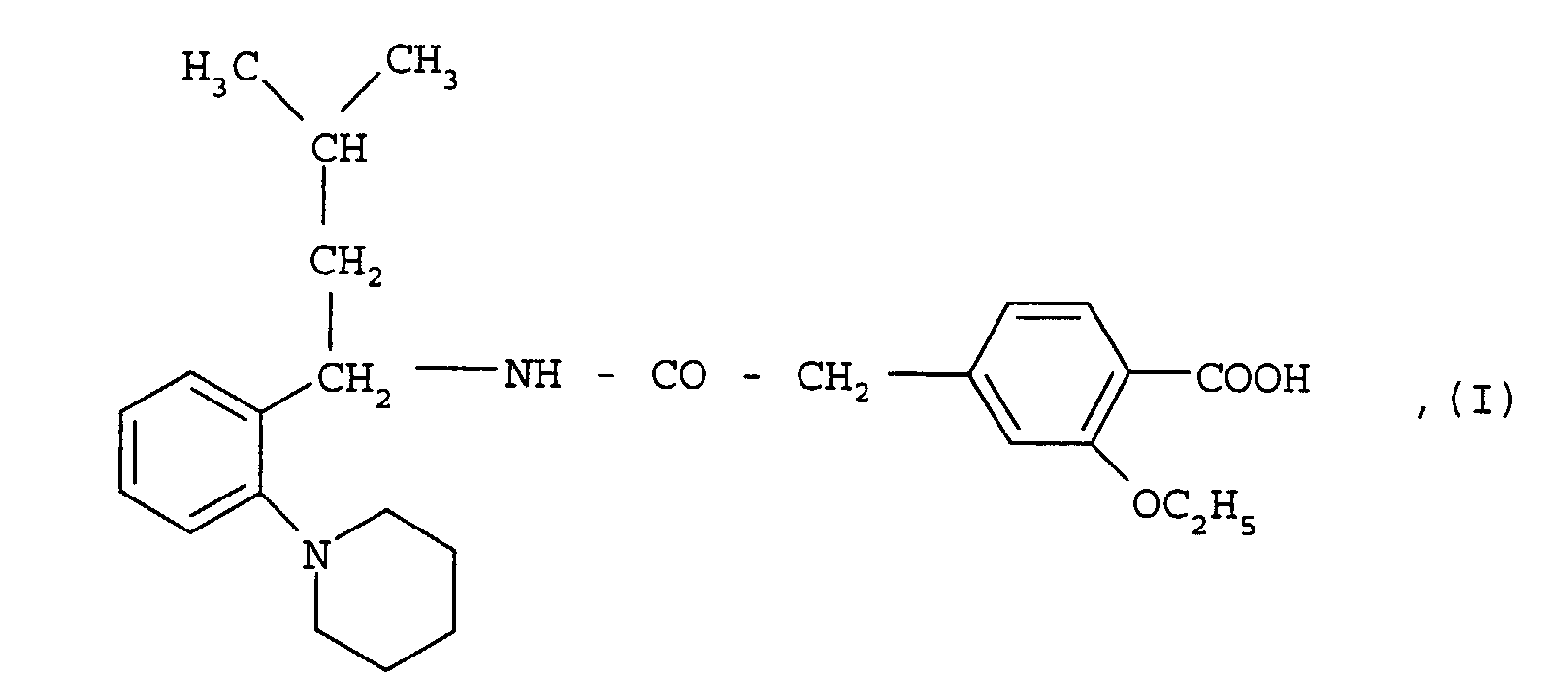
- EP-B-0,147,850 describes, inter alia, the racemate of 2-ethoxy-4- [N- [1- (2-piperidino-phenyl) -3-methyl-1-butyl] amino-carbonylmethyl] benzoic acid (code no .: AG-EE 388 ZD) of the formula and EP-B-0,207,331 describes two other polymorphic forms of this compound.
- This compound and its physiologically compatible salts have valuable pharmacological properties, namely an effect on the intermediary metabolism, but in particular an antihypertensive effect.
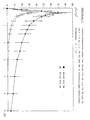
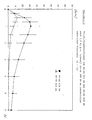
- the blatant difference between the two enantiomers consists in the fact that the active enantiomer, AG-EE 623 ZW, Surprisingly, essential despite the relatively long duration of action eliminated faster than the ineffective enantiomer, AG-EE 624 ZW will demonstrate how Figures 1 and 2 demonstrate.
- Racemat administration is the ineffective enantiomer, AG-EE 624 ZW, not just as unnecessary ballast in the same high plasma concentrations like the effective enantiomer, AG-EE 623 ZW, but in unexpectedly higher maximum and duration levels present. This affects e.g.
- reaction is advantageously carried out in a solvent such as methylene chloride, chloroform, carbon tetrachloride, Ether, tetrahydrofuran, dioxane, benzene, toluene, acetonitrile or dimethylformamide, optionally in the presence of a die Acid activating agent or a dehydrating agent
- a solvent such as methylene chloride, chloroform, carbon tetrachloride, Ether, tetrahydrofuran, dioxane, benzene, toluene, acetonitrile or dimethylformamide
- Phosphorus trichloride and optionally in the presence of an inorganic base such as sodium carbonate or a tertiary organic base such as triethylamine or pyridine, which simultaneously serves as a solvent can serve, at temperatures between -25 and 250 ° C, preferably however at temperatures between -10 ° C and Boiling temperature of the solvent used.
- the reaction can also be carried out without a solvent, furthermore, something that arises during the implementation Water by azeotropic distillation, e.g. by heating with Toluene on the water separator, or by adding a desiccant such as magnesium sulfate or molecular sieve become.
- a Protective residue preferably carried out hydrolytically, advantageously either in the presence of an acid such as hydrochloric acid, Sulfuric acid, phosphoric acid, trifluoroacetic acid or trichloroacetic acid or in the presence of a base such as sodium hydroxide or potassium hydroxide in a suitable solvent such as water, methanol, methanol / water, ethanol, ethanol / water, Water / isopropanol or water / dioxane at temperatures between -10 and 120 ° C, e.g. at temperatures between room temperature and the boiling temperature of the reaction mixture.
- an acid such as hydrochloric acid, Sulfuric acid, phosphoric acid, trifluoroacetic acid or trichloroacetic acid
- a base such as sodium hydroxide or potassium hydroxide
- a suitable solvent such as water, methanol, methanol / water, ethanol, ethanol / water, Water / isopropanol or water / diox
- a tert-butyl residue used as a protective residue can also be thermal optionally in an inert solvent such as methylene chloride, Chloroform, benzene, toluene, tetrahydrofuran, Dioxane or glacial acetic acid and preferably in the presence of a strong acid such as trifluoroacetic acid, hydrogen bromide, p-toluenesulfonic acid, Sulfuric acid, phosphoric acid or polyphosphoric acid be split off.
- an inert solvent such as methylene chloride, Chloroform, benzene, toluene, tetrahydrofuran, Dioxane or glacial acetic acid and preferably in the presence of a strong acid such as trifluoroacetic acid, hydrogen bromide, p-toluenesulfonic acid, Sulfuric acid, phosphoric acid or polyphosphoric acid be split off.
- a benzyl radical used as a protective radical also hydrogenolytically in the presence of a hydrogenation catalyst such as palladium / carbon in a suitable solvent such as methanol, ethanol, ethanol / water, glacial acetic acid, ethyl acetate, Dioxane or dimethylformamide can be split off.
- a hydrogenation catalyst such as palladium / carbon in a suitable solvent such as methanol, ethanol, ethanol / water, glacial acetic acid, ethyl acetate, Dioxane or dimethylformamide
- hydrolyzable groups include functional derivatives of the carboxy group, such as their unsubstituted or substituted amides, esters, thioesters, orthoesters, imino ethers, amidines or anhydrides, the nitrile group, the tetrazolyl group, an optionally substituted 1,3-oxazol-2-yl or 1, 3-oxazolin-2-yl group and as thermolytically removable groups, for example esters with tertiary alcohols, for example the tert-butyl ester, and as hydrogenolytically removable groups, for example aralkyl groups, for example the benzyl group.
- functional derivatives of the carboxy group such as their unsubstituted or substituted amides, esters, thioesters, orthoesters, imino ethers, amidines or anhydrides, the nitrile group, the tetrazolyl group, an optionally substituted 1,3-oxazol-2-yl or 1, 3-
- the hydrolysis is advantageously carried out either in the presence an acid such as hydrochloric acid, sulfuric acid, phosphoric acid, trifluoroacetic acid or trichloroacetic acid or in the presence a base such as sodium hydroxide or potassium hydroxide in one suitable solvents such as water, water / methanol, ethanol, Water / ethanol, water / isopropanol or water / dioxane at temperatures between -10 and 120 ° C, e.g. at temperatures between room temperature and the boiling temperature of the reaction mixture, carried out.
- an acid such as hydrochloric acid, sulfuric acid, phosphoric acid, trifluoroacetic acid or trichloroacetic acid
- a base such as sodium hydroxide or potassium hydroxide
- suitable solvents such as water, water / methanol, ethanol, Water / ethanol, water / isopropanol or water / dioxane at temperatures between -10 and 120 ° C, e.g. at
- a in a compound of the general formula III a nitrile or aminocarbonyl group can using 100% phosphoric acid at temperatures between 100 and 180 ° C, preferably at temperatures between 120 and 160 ° C, or also with a nitrite, e.g. Sodium nitrite, in Presence of an acid such as sulfuric acid, which is expedient is used simultaneously as a solvent, at temperatures between 0 and 50 ° C in the carboxy group be transferred.
- a nitrite e.g. Sodium nitrite
- an inert Solvents such as methylene chloride, chloroform, benzene, Toluene, tetrahydrofuran, dioxane or glacial acetic acid and preferably in the presence of a strong acid such as trifluoroacetic acid, Hydro
- a hydrogenation catalyst like palladium / carbon
- Solvents such as methanol, ethanol, methanol / water, ethanol / water, Glacial acetic acid, ethyl acetate, dioxane or dimethylformamide preferably at temperatures between 0 and 50 ° C, e.g. at room temperature and a hydrogen pressure of 1 to 5 bar can be split off.
- an (S) compound of the general formula in the W 'de notes a carboxy group or an alkoxycarbonyl group with a total of 2 to 5 carbon atoms, it being possible for the alkyl part of the alkoxy group to be substituted by a phenyl group, with a compound of the general formula Z - CH 2 - CH 3 in the Z represents a nucleophilically exchangeable group such as a halogen atom, a sulfonyloxy group or together with the adjacent hydrogen atom a diazo group and, if necessary, subsequent hydrolysis or hydrogenolysis.
- the implementation is conveniently carried out with an appropriate Halide, sulfonic acid ester or sulfuric acid diester, e.g. with ethyl bromide, ethyl iodide, diethyl sulfate, p-toluenesulfonic acid ethyl ester or ethyl methanesulfonic acid, or with Diazoethane, optionally in the presence of a base such as sodium hydride, Potassium carbonate, sodium hydroxide, potassium tert-butoxide or triethylamine, preferably in a suitable solvent such as acetone, diethyl ether, tetrahydrofuran, dioxane, Pyridine or dimethylformamide at temperatures between 0 and 100 ° C, preferably at temperatures between 20 and 50 ° C.
- a base such as sodium hydride, Potassium carbonate, sodium hydroxide, potassium tert-butoxide or triethylamine,
- the subsequent hydrolysis is either in the presence of an acid such as hydrochloric acid, sulfuric acid, phosphoric acid, Trifluoroacetic acid or trichloroacetic acid or in Presence of a base such as sodium hydroxide or potassium hydroxide in a suitable solvent such as water, methanol, methanol / water, Ethanol, ethanol / water, water / isopropanol or water / dioxane at temperatures between -10 and 120 ° C, e.g. at temperatures between room temperature and the boiling temperature of the reaction mixture, or
- the reduction is preferably carried out with hydrogen in the presence a suitable chiral hydrogenation catalyst in one suitable solvents such as methanol, ethanol, isopropanol, Ethyl acetate, dioxane, tetrahydrofuran, methanol / tetrahydrofuran, Methanol / methylene chloride, ethanol / methylene chloride or Isopropanol / methylene chloride at temperatures between 0 and 100 ° C, but preferably at temperatures between 20 and 50 ° C, and a hydrogen pressure between 1 and 1,000 bar, preferably between 5 and 100 bar, and expediently with the addition of 0.1 to 5%, preferably 0.3 to 1%, titanium (IV) tetraisopropylate, and preferably to the exclusion of Executed atmospheric oxygen.
- a suitable chiral hydrogenation catalyst such as methanol, ethanol, isopropanol, Ethyl acetate, dioxane, tetrahydrofur
- Suitable chiral hydrogenation catalysts are corresponding metal ligand complexes such as Ru (OCO-CH 3 ) 2 [(S) -BINAP], Ru 2 Cl 4 [(S) -BINAP] 2 x N (C 2 H 5 ) 3 , Rh [(S) -BINAP-NBD] ClO 4 or Rh [(-) - NORPHOS-COD] BF 4 .
- the subsequent hydrolysis is either in the presence of an acid such as hydrochloric acid, sulfuric acid, phosphoric acid, Trifluoroacetic acid or trichloroacetic acid or in Presence of a base such as sodium hydroxide or potassium hydroxide in a suitable solvent such as water, methanol, methanol / water, Ethanol, ethanol / water, water / isopropanol or water / dioxane at temperatures between -10 and 120 ° C, e.g. at temperatures between room temperature and the boiling temperature of the reaction mixture.
- an acid such as hydrochloric acid, sulfuric acid, phosphoric acid, Trifluoroacetic acid or trichloroacetic acid
- a base such as sodium hydroxide or potassium hydroxide
- a suitable solvent such as water, methanol, methanol / water, Ethanol, ethanol / water, water / isopropanol or water / dioxane at temperatures between -10 and 120
- One such example is an oxidizable group the formyl group and its acetals, the hydroxymethyl group and their ether, an unsubstituted or substituted one Acyl group such as the acetyl, chloroacetyl, propionyl, the Malonic acid (l) -yl group or a malonic ester (l) -yl group into consideration.
- the reaction is carried out with an oxidizing agent in a suitable Solvents such as water, glacial acetic acid, methylene chloride, Dioxane or glycol dimethyl ether at temperatures between 0 and 100 ° C, but expediently at temperatures between 20 ° C and 50 ° C, carried out.
- a suitable Solvents such as water, glacial acetic acid, methylene chloride, Dioxane or glycol dimethyl ether at temperatures between 0 and 100 ° C, but expediently at temperatures between 20 ° C and 50 ° C, carried out.
- a suitable Solvents such as water, glacial acetic acid, methylene chloride, Dioxane or glycol dimethyl ether at temperatures between 0 and 100 ° C, but expediently at temperatures between 20 ° C and 50 ° C, carried out.
- the implementation is preferred with silver oxide / sodium hydroxide solution, manganese dioxide / acetone or methylene chloride, hydrogen peroxide / sodium
- the separation is preferably by means of columns or HPL chromatography by formation of the diastereomeric adducts or complexes carried out on a chiral phase.
- the subsequent hydrolysis is carried out either in the presence of an acid such as hydrochloric acid, sulfuric acid, phosphoric acid, trifluoroacetic acid or trichloroacetic acid or in the presence of a base such as sodium hydroxide or potassium hydroxide in a suitable solvent such as water, methanol, methanol / water, ethanol, ethanol / water, water / Isopropanol or water / dioxane at temperatures between -10 and 120 ° C, for example at temperatures between room temperature and the boiling point of the reaction mixture, or the subsequent hydrogenolysis is carried out in the presence of a hydrogenation catalyst such as palladium / carbon in a suitable solvent such as methanol, ethanol, ethanol / water, glacial acetic acid, ethyl acetate, dioxane or dimethylformamide at a hydrogen pressure of 1 to 10 bar.
- an acid such as hydrochloric acid, sulfuric acid, phosphoric acid, trifluoroacetic acid or
- the (S) -enantiomer thus obtained according to the invention with a optical purity of at least 90% can be fractionated into a (5) -enantiomer of at least 95%, preferably 98 to 100% more optical Purity, convict.
- the (S) -enantiomer thus obtained according to the invention can be in its salts, especially for pharmaceutical use in its physiologically compatible salts with inorganic or convert organic acids or bases.
- acids come here, for example, hydrochloric acid, hydrobromic acid, Sulfuric acid, phosphoric acid, lactic acid, citric acid, Tartaric acid, succinic acid, maleic acid or fumaric acid and as bases sodium hydroxide, potassium hydroxide, calcium hydroxide, Cyclohexylamine, ethanolamine, diethanolamine, triethanolamine, Ethylenediamine or lysine.
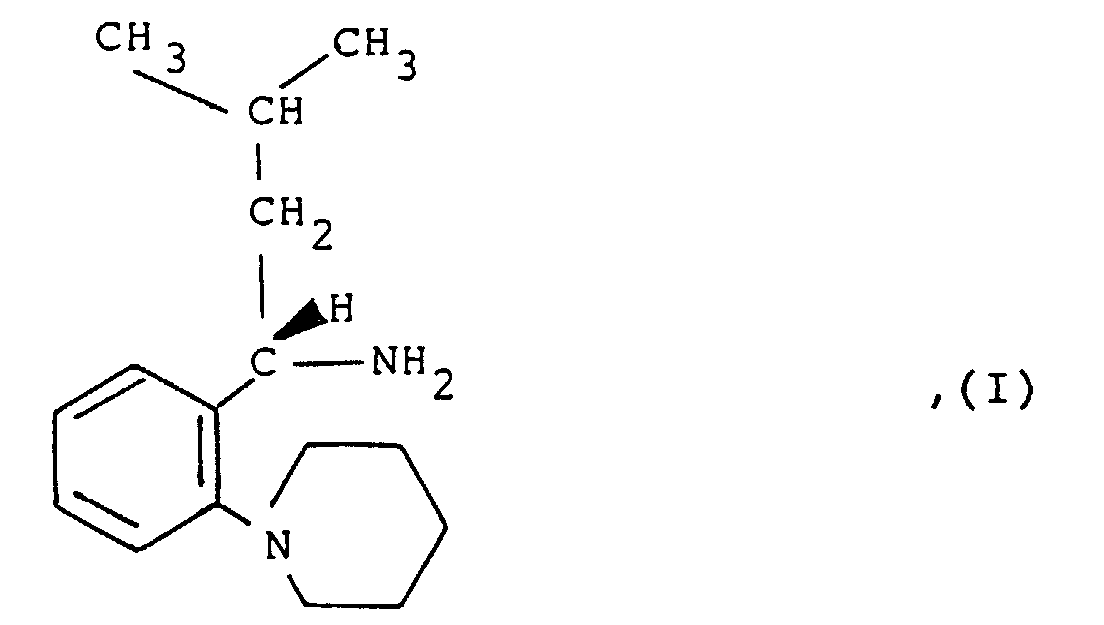
- the (S) amine of the formula I can be obtained from the corresponding racemic amine by resolution, for example by means of fractional crystallization of the diastereomeric salts with suitable optically active acids, preferably with N-acetyl-L-glutamic acid, and if necessary recrystallization and subsequent decomposition of the salts, by column or HPL chromatography on chiral phases, optionally in the form of an acyl derivative, or by forming diastereomeric compounds, their separation and subsequent cleavage are obtained.
- a suitable chiral hydrogenation catalyst starting from a corresponding N-acyl-ketimine or enamide, advantageously with addition of 0.1 to 5% titanium tetraisopropylate, and, if appropriate, subsequent cleavage of the acyl radical such as the formyl or acetyl radical, by diastereoselective reduction of a corresponding ketimine or hydrazine which is chirally substituted on the nitrogen atom by means of hydrogen in the presence of a suitable hydrogenation catalyst, expediently with addition of 0.1 to 5% titanium tetraisopropylate, and optionally subsequent elimination of the chiral auxiliary radical, for example the (S) -1-phenethyl Rest by catalytic hydrogenolysis, or by diastereoselective addition of a corresponding organometallic compound, preferably a Grignard or a lithium compound, to a corresponding aldimine
- the compound of the general used as starting material Formula VI is obtained by acylation of the corresponding Imino compound or its organometallic complexes with the corresponding carboxylic acid or with its reactive Derivatives with subsequent cleavage if necessary Ester group.
- the new (S) -enantiomer is practically non-toxic; for example died after a single application of 1000 mg / kg p.o. (Suspension in 1% methyl cellulose) 5 male and 5 female rats each no animal within the observation period of 14 days.
- AG-EE 623 ZW is the (5) -enantiomer produced according to the invention (AG-EE 623 ZW) and are its physiologically compatible Salts suitable for the treatment of diabetes mellitus.
- AG-EE 623 ZW or its physiological compatible salts optionally in combination with others Active substances, in the usual galenical forms of preparation such as tablets, coated tablets, capsules, powders, suppositories, suspensions or incorporate injection solutions.
- the single dose on adults is 0.1 to 20 mg, preferably 0.25 to 5 mg, but especially 0.25, 0.5, 1.0, 1.5, 2.0, 2.5, 3.0 or 5.0 mg, one, two or three times Every day.
- Another object of the present invention is that new (S) -amine of formula I, which is a valuable intermediate for the preparation of the new (S) -enantiomer, as well as its addition salts with inorganic or organic Acids.
- Another object of the present invention are new compounds of the general formulas III, IV and VII, what valuable intermediates for making the new Represent (S) enantiomers, as well as their addition salts with inorganic or organic acids.
- the free amine is obtained as an oil by release, for example with a sodium hydroxide or ammonia solution, extraction for example with toluene, ether, ethyl acetate or Methylene chloride as well as drying, filtering and evaporation of the extract in a vacuum.
- the reaction mixture is drawn into an autoclave evacuated at 10 -2 mbar. It is purged several times with hydrogen at 4 bar and then hydrogenated at 30 ° C. and 100 bar until the end of the hydrogen uptake (170 hours).
- the low-melting form and the high-melting form differ in their infrared KBr spectra, but not in their infrared solution spectra (methylene chloride).
- the high-melting form and the low-melting form were determined by means of "Differential Scanning Calorimetry (DSC)" [Apparat Mettler, TA-300 system; Measuring cell: DSC 20; Mettler, CH-8306 Gsammlungsee, Switzerland] with the following result: Compound from example 3 Heating rate 10 ° K / min. Heating rate 3 ° K / min. Melting shape Uniform melting peak with melting temperature of 133 ° C; Enthalpy of fusion: 100 J / g Uniform melting peak with melting temperature of 132 ° C; Enthalpy of fusion: 99.1 J / g Low melting form 1st peak at 57 ° C (very weak) 2nd peak at 78 ° C (weak) 3.
- DSC Different Scanning Calorimetry
- the reaction mixture is drawn into an autoclave evacuated at 10 -2 mbar. It is flushed five times with hydrogen at 5 bar and then hydrogenated at 30 ° C. and 100 bar until the end of the hydrogen uptake (154 hours).
- the brown-red solution is evaporated in vacuo, the evaporation residue is dissolved in 80 ml of ether, the undissolved brown flakes are filtered off using activated carbon and the clear, pale yellow filtrate thus obtained is evaporated in vacuo.
- a Chiralcel OD column is also used to separate the enantiomers from the Daicel company.
- One tablet contains: 0.250 mg Active substance 0.125 mg N-methylglucamine 0.038 mg Polyvinyl pyrrolidone 0.075 mg Polyoxyethylene polyoxypropylene polymer 0.150 mg microcrystalline cellulose
- Active ingredients and auxiliary substances are dissolved in water at 90 ° C or the microcrystalline cellulose suspended and the dispersion evaporated in vacuo.
- the dry mass is 1 mm sieved.
- This mixture turns into round, biplane tablets of 50 mg and 5 mm diameter pressed.
- One tablet contains: 0.500 mg Active substance 0.250 mg N-methylglucamine 0.075 mg Polyvinyl pyrrolidone 0.150 mg Polyoxyethylene polyoxypropylene polymer 0.300 mg microcrystalline cellulose
- Active ingredients and auxiliary substances are dissolved in water at 90 ° C or the microcrystalline cellulose suspended and the dispersion evaporated in vacuo.
- the dry mass is 1 mm sieved.
- This mixture turns into round, biplane tablets of 50 mg and 5 mm diameter pressed.
- One tablet contains:
- Active ingredients and auxiliary substances are dissolved in water at 90 ° C or the microcrystalline cellulose suspended and the dispersion evaporated in vacuo. The dry mass becomes 1 mm Sieve mesh size.
- This mixture turns into round, biplane tablets of 50 mg and 5 mm diameter pressed.
- One tablet contains:
- the constituents are dissolved in water at 90 ° C. or the microcrystalline cellulose is suspended and the dispersion is processed in a spray dryer. The following ingredients are then added to each tablet: 20.35 mg microcrystalline cellulose 20.00 mg Sodium carboxymethyl starch 0.65 mg Magnesium stearate 50.00 mg
- This mixture turns round, biconvex tablets from 50 mg and 5 mm diameter pressed and with hydroxypropylmethyl cellulose covered to taste.
- One tablet contains:
- the constituents are dissolved in water at 90 ° C. or the microcrystalline cellulose is suspended and the dispersion is processed in a spray dryer. The following ingredients are then added to each tablet: 19.50 mg microcrystalline cellulose 19.50 mg Sodium carboxymethyl starch 0.65 mg Magnesium stearate 50.00 mg
- This mixture turns round, biconvex tablets from 50 mg and 5 mm diameter pressed and with hydroxypropylmethyl cellulose covered to taste.
- One tablet contains:
- This mixture turns round, biconvex tablets from 50 mg and 5 mm diameter pressed and with hydroxypropylmethyl cellulose covered to taste.
- One tablet contains: 5.0 mg Active substance 2.5 mg L-lysine 2.5 mg Polyvinyl pyrrolidone 2.5 mg Polyoxyethylene polyoxypropylene polymer
- This mixture turns round, biconvex tablets from 50 mg and 5 mm diameter pressed and with hydroxypropylmethyl cellulose covered to taste.
Landscapes
- Chemical & Material Sciences (AREA)
- Organic Chemistry (AREA)
- Health & Medical Sciences (AREA)
- Medicinal Chemistry (AREA)
- Pharmacology & Pharmacy (AREA)
- Epidemiology (AREA)
- Life Sciences & Earth Sciences (AREA)
- Animal Behavior & Ethology (AREA)
- General Health & Medical Sciences (AREA)
- Public Health (AREA)
- Veterinary Medicine (AREA)
- Pharmaceuticals Containing Other Organic And Inorganic Compounds (AREA)
- Hydrogenated Pyridines (AREA)
Abstract
Description
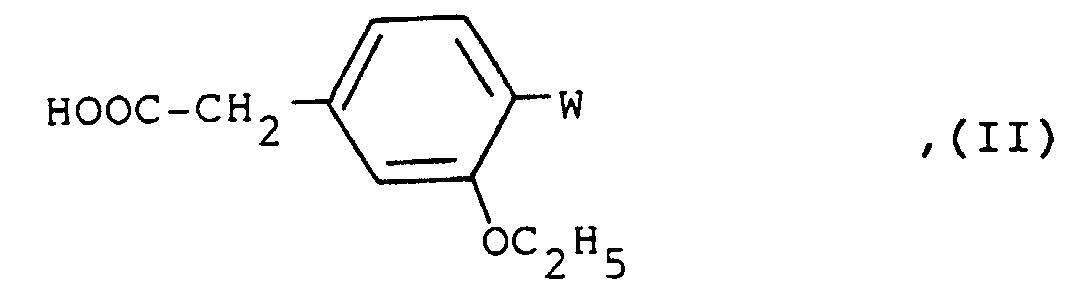
W eine Carboxygruppe oder eine durch einen Schutz rest geschützte Carboxygruppe darstellt,
oder mit deren gegebenenfalls im Reaktionsgemisch hergestellten reaktionsfähigen Derivaten und erforderlichenfalls anschließende Abspaltung eines Schutzrestes.
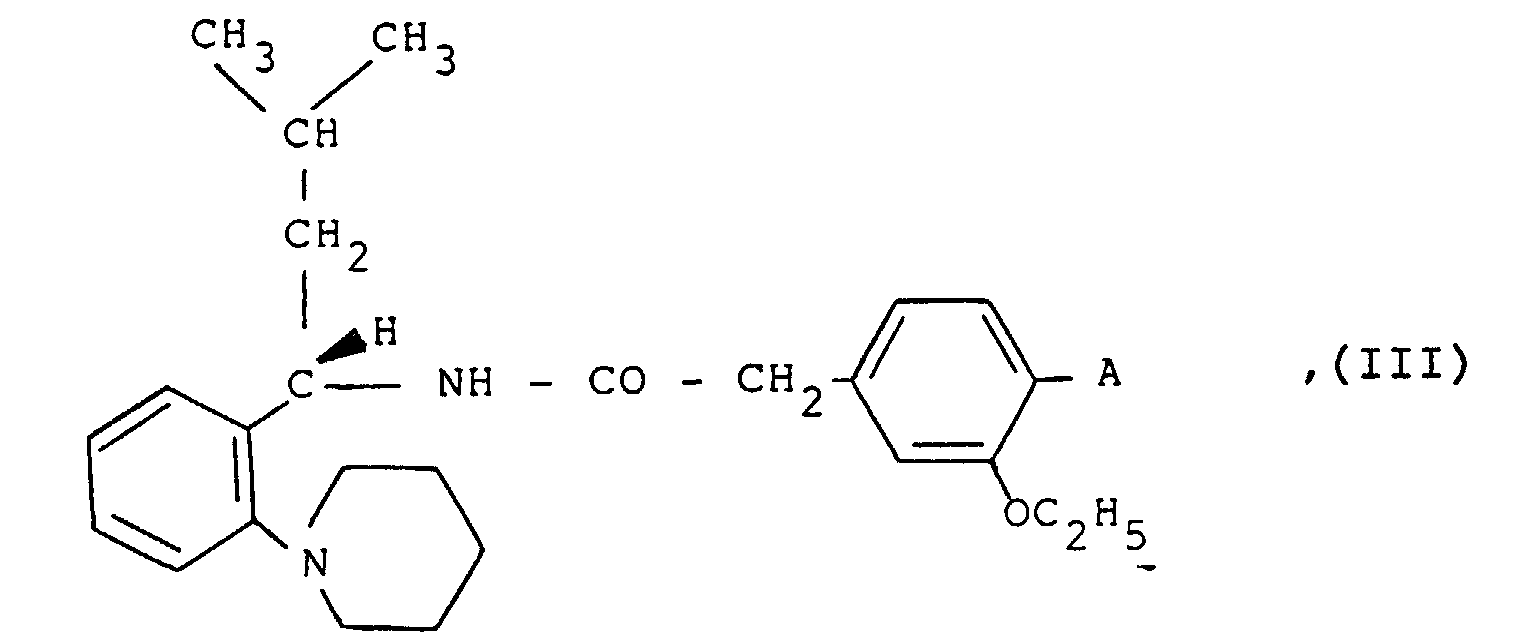
A eine durch Hydrolyse, Thermolyse oder Hydrogenolyse in eine Carboxygruppe überführbare Gruppe darstellt.
als thermolytisch abspaltbare Gruppen beispielsweise Ester mit tertiären Alkoholen, z.B. der tert.Butylester, und
als hydrogenolytisch abspaltbare Gruppen beispielsweise Aralkylgruppen, z.B. die Benzylgruppe, in Betracht.

W' eine Carboxygruppe oder eine Alkoxycarbonylgruppe mit insgesamt 2 bis 5 Kohlenstoffatomen, wobei der Alkylteil der Alkoxygruppe durch eine Phenylgruppe substituiert sein kann, bedeutet,
mit einer Verbindung der allgemeinen Formel
Z eine nukleophil austauschbare Gruppe wie ein Halogenatom, eine Sulfonyloxygruppe oder auch zusammen mit dem benachbarten Wasserstoffatom eine Diazogruppe darstellt und erforderlichenfalls anschließende Hydrolyse oder Hydrogenolyse.
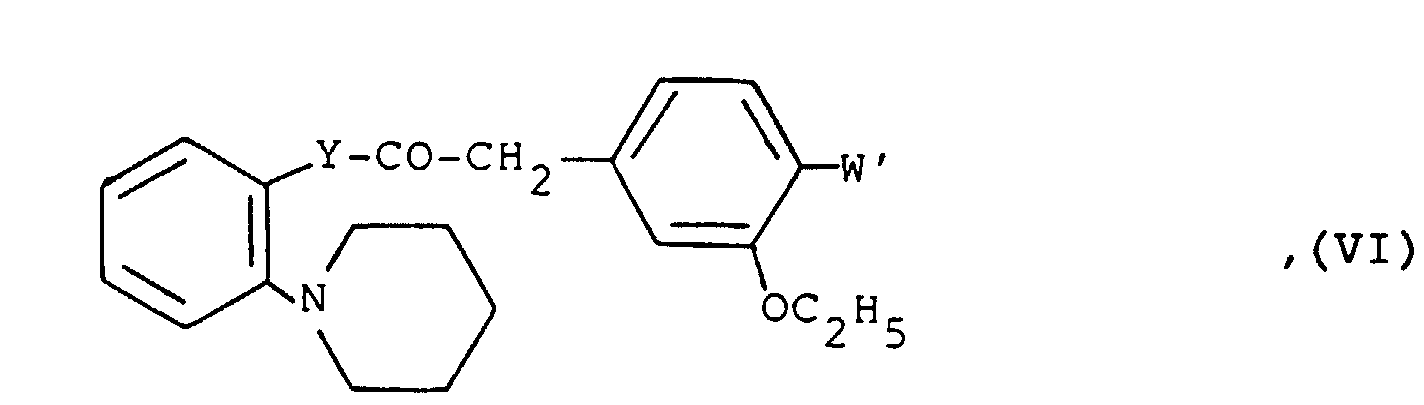
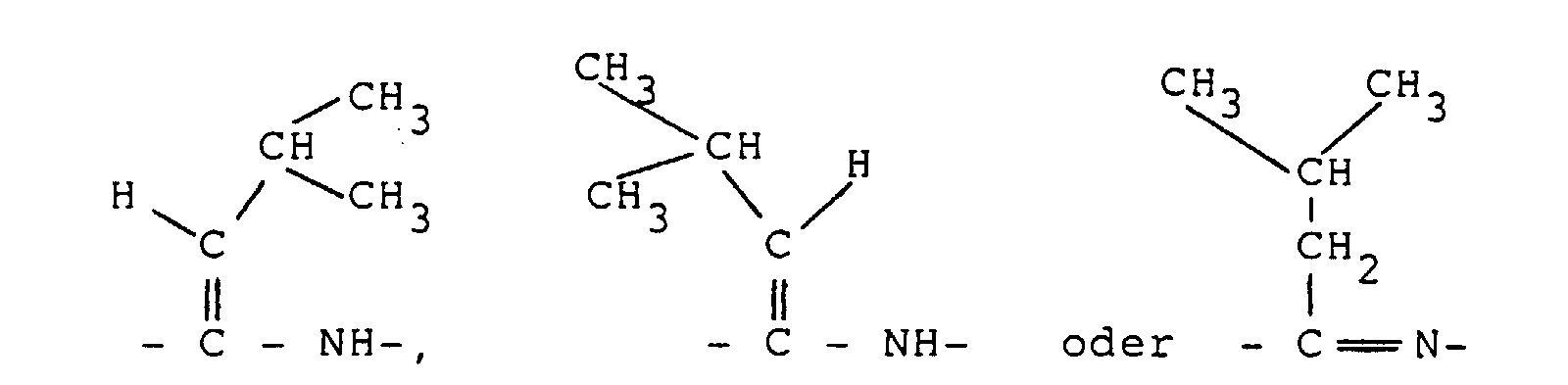
W' eine Carboxygruppe oder eine Alkoxycarbonylgruppe mit insgesamt 2 bis 5 Kohlenstoffatomen, wobei der Alkylteil der Alkoxygruppe durch eine Phenylgruppe substituiert sein kann, und
Y eine Gruppe der Formel

W" eine durch Oxidation in eine Carboxygruppe überführbare Gruppe darstellt.


W' eine Carboxygruppe oder eine Alkoxycarbonylgruppe mit insgesamt 2 bis 5 Kohlenstoffatomen, wobei der Alkylteil der Alkoxygruppe durch eine Phenylgruppe substituiert sein kann, bedeutet, vorzugsweise eines 50/50-Gemisches, über deren diastereomeren Addukte, Komplexe oder Salze und erforderlichenfalls anschließende Hydrolyse oder Hydrogenolyse.
die anschließende Hydrogenolyse in Gegenwart eines Hydrierungskatalysators wie Palladium/Kohle in einem geeigneten Lösungsmittel wie Methanol, Äthanol, Äthanol/Wasser, Eisessig, Essigsäureäthylester, Dioxan oder Dimethylformamid bei einem Wasserstoffdruck von 1 bis 10 bar durchgeführt.
durch Racematspaltung, z.B. mittels fraktionierter Kristallisation der diastereomeren Salze mit geeigneten optisch aktiven Säuren, vorzugsweise mit N-Acetyl-L-glutaminsäure, und erforderlichenfalls Umkristallisation sowie anschließender Zerlegung der Salze,
durch Säulen- oder HPL-Chromatographie an chiralen Phasen, gegebenenfalls in Form eines Acylderivates,
oder durch Bildung von diastereomeren Verbindungen, deren Trennung und anschließende Spaltung erhalten werden.
durch diastereoselektive Reduktion eines entsprechenden am Stickstoffatom chiral substituierten Ketimins oder Hydrazins mittels Wasserstoff in Gegenwart eines geeigneten Hydrierungskatalysators, zweckmäßigerweise unter Zusatz von 0,1 bis 5 % Titantetraisopropylat, und gegebenenfalls anschließende Abspaltung des chiralen Hilfsrestes, z.B. des (S)-1-Phenäthyl-Restes durch katalytische Hydrogenolyse, oder
durch diastereoselektive Addition einer entsprechenden metallorganischen Verbindung, vorzugsweise einer Grignard- oder einer Lithiumverbindung, an ein entsprechendes am Stickstoffatom chiral substituiertes Aldimin, gegebenenfalls unter Zusatz von 0,1 bis 10 % Titantetraisopropylat, anschließende Hydrolyse und gegebenenfalls Trennung der erhaltenen Diastereomeren und anschließende Abspaltung des chiralen Hilfsrestes, z.B. des (R)-1-Phenäthyl-Restes durch katalytische Hydrogenolyse,
hergestellt und erforderlichenfalls durch Salzbildung mit geeigneten optisch aktiven Säuren, vorzugsweise mit N-Acetyl-L-glutaminsäure, und erforderlichenfalls ein- oder mehrfache Umkristallisation sowie anschließende Zerlegung des Salzes in hoher Enantiomeren-Reinheit erhalten werden.
Ausbeute: 65,1 g (60,4 % der Theorie),
Schmelzpunkt: 168-171°C
| Ber. | C | 63,42 | H | 8,56 | N | 9,65 |
| Gef. | 63,64 | 8,86 | 9,60 |
- Gefunden:
- Peak 1(R): Peak 2(S) = 0,75 %: 99,25 %,
ee (enantiomeric excess) = 98,5 % (S).
Schmelzpunkt: 135-145°C (Zers.)
| Ber. (x H20) | C | 56,99 | H | 8,97 | N | 8,31 | Cl | 21,02 |
| Gef. | 56,85 | 8,93 | 8,38 | 21,25 |
Schmelzpunkt: 135-137°C (Äthylacetat/Petroläther)
| Ber. | C | 75,48 | H | 9,15 | N | 9,78 |
| Gef. | 75,47 | 9,35 | 9,70 |
Schmelzpunkt: 140-143°C (Äthylacetat)
| Ber. | C | 75,48 | H | 9,15 | N | 9,78 |
| Gef. | 75,56 | 9,30 | 9,79 |
Schmelzpunkt: 139-141°C (Äthylacetat)
| Ber. | C | 75,48 | H | 9,15 | N | 9,78 |
| Gef. | 75,68 | 8,99 | 9,86 |
Ausbeute: 0,31 g (54 % der Theorie),
Schmelzpunkt: 127-131°C Enantiomeren-Reinheit: ee = 82 % (S) [HPLC-Methode: siehe Beispiel A].
Ausbeute: 0,84 g (98,8 % der Theorie) öliges Amin.
Schmelzpunkt: 101-103°C
| Ber. | C | 72,77 | H | 8,00 | N | 5,85 |
| Gef. | 72,74 | 7,78 | 5,86 |
Schmelzpunkt: 124-127°C (Petroläther/Toluol = 5/1)
| Ber. | C | 72,77 | H | 8,00 | N | 5,85 |
| Gef. | 72,90 | 7,86 | 5,83 |
Ausbeute: 13,1 g (76,6 % der Theorie),
Siedepunkt: 152°C/0,2 Torr
| Ber. | C | 82,23 | H | 9,78 | N | 7,99 |
| Gef. | 82,00 | 10,03 | 7,74 |
- Gefunden:
- Peak 1(S,S'): Peak 2(R,S') = 98,4 %: 1,4 %,
de (diastereomeric excess) = 97,0 % (S,S').
Ausbeute: 6,4 g (72,1 % der Theorie),
Siedepunkt: 115-117°C/0,4 Torr
Enantiomeren-Reinheit: ee = 93,5 % (S) [HPLC-Methode (nach vorangegangener Acetylierung): siehe Beispiel A].
Ausbeute: 0,20 g (8,3 % der Theorie),
Schmelzpunkt: < 20°C
Die Diastereomeren-Reinheit wird wie im Beispiel G mittels HPLC bestimmt.
- Gefunden:
- Peak 1(R,R'): Peak 2(S,R') = 4,4 %:95,6 %,
de (diastereomeric excess) = 91,2 % (S,R').
Ausbeute: 0,066 g (62,8 % der Theorie),
Schmelzpunkt: < 20°C
Enantiomeren-Reinheit: ee = 87,6 % (S) [HPLC-Methode (nach vorangegangener Acetylierung): siehe Beispiel A].
Ausbeute: 0,71 g (77,3 % der Theorie),
Schmelzpunkt: 110-112°C
| Ber. | C | 72,47 | H | 8,39 | N | 5,83 |
| Gef. | 72,29 | 8,42 | 5,80 |
- Gefunden:
- Peak 1(R): Peak 2(S) = 0,75 %: 99,25 %,
ee = 98,5 % (S).
Ausbeute: 3,93 g (74,3 % der Theorie),
Schmelzpunkt: 117-118°C
| Ber. | C | 72,47 | H | 8,39 | N | 5,83 |
| Gef. | 72,44 | 8,43 | 5,93 |
Enantiomeren-Reinheit: ee = 99,9 % [HPLC-Methode: siehe Beispiel 1]
Ausbeute: 3,13 g (87,7 % der Theorie),
Schmelzpunkt: 130-131°C (hochschmelzende Form)
| Ber. | C | 71,64 | H | 8,02 | N | 6,19 |
| Gef. | 71,48 | 7,87 | 6,39 |
- Gefunden:
- (S):(R) = 99,85 %: 0,15 %,
ee = 99,7 % (S).
Bei Erhitzen einer Probe in Petroläther/Toluol (5/3), Abfiltrieren des ungelösten Anteils (Schmelzpunkt: 130-131°C) und raschem Abkühlen des Filtrats erhält man die niedrigschmelzende Form der Titelverbindung vom Schmelzpunkt 99-101°C.
| Ber. | C | 71,64 | H | 8,02 | N | 6,19 |
| Gef. | 71,66 | 7,97 | 6,44 |
| Verbindung aus Beispiel 3 | Aufheizrate 10°K/Min. | Aufheizrate 3°K/Min. |
| Hochschmelzende Form | Einheitlicher Schmelzpeak mit Schmelztemperatur von 133°C; Schmelzenthalpie: 100 J/g | Einheitlicher Schmelzpeak mit Schmelztemperatur von 132°C; Schmelzenthalpie: 99,1 J/g |
| Niedrigschmelzende Form | 1. Peak bei 57°C (sehr schwach) 2. Peak bei 78°C (schwach) 3. endothermer Peak bei 107°C; Schmelzenthalpie: 55 J/g 4. endothermer Peak bei 132°C Schmelzenthalpie: 25 J/g | 1. Peak bei 54°C (sehr schwach; endotherm) 2. endothermer Peak bei 104°C, Schmelztemperatur 102°C, Schmelzenthalpie 52 J/g 3. exothermer Verlauf der Basislinie durch Auskristallisieren der bei 104°C geschmolzenen Substanz 4. endothermer Peak bei 131°C, Schmelztemperatur: 130°C Schmelztemperatur 52 J/g |
Ausbeute: 0,45 g (56,7 % der Theorie),
Schmelzpunkt: 131-133°C (nach Sintern ab 120°C)
Enantiomeren-Reinheit: ee = 39 % (S) [HPLC-Methode: siehe Beispiel 1].
Schmelzpunkt: 110-112°C
| Ber. | C | 72,47 | H | 8,39 | N | 5,83 |
| Gef. | 72,61 | 8,54 | 5,97 |
Ausbeute: 42 % der Theorie,
Schmelzpunkt: 110-112°C
| Ber. | C | 72,47 | H | 8,39 | N | 5,83 |
| Gef. | 72,61 | 8,54 | 5,99 |
Aus dem entsprechend geschnittenen und gesammelten Fraktionen werden nach Eindampfen im Vakuum erhalten:
Ausbeute: 234,5 mg (51 % der Theorie),
Schmelzpunkt: 122-124°C (Petroläther + Aceton)
| Ber. | C | 72,47 | H | 8,39 | N | 5,83 |
| Gef. | 72,40 | 8,18 | 5,71 |
| Ber. | C | 72,47 | H | 8,39 | N | 5,83 |
| Gef. | 72,28 | 8,44 | 5,70 |
[α] 20 / D = - 8,3° (c = 1 in Methanol)] durch Verseifung mit lN-Natronlauge in Äthanol analog Beispiel 3.
Ausbeute: 95,8 mg (66,7 % der Theorie),
Schmelzpunkt: 103-105°C (Toluol/Petroläther)
| Ber. (x 0,4 H2O) | C | 70,51 | H | 8,01 | N | 6,09 |
| Gef. | 70,88 | 7,79 | 5,81 |
- Molpeak M+:
- Ber.: 452
Gef.: 452
Enantiomeren-Reinheit: ee = 99,7 % (R) [HPLC-Methode: siehe Beispiel 3].
[α] 20 / D = + 8,3° (c = 1 in Methanol)] durch Verseifung mit lN-Natronlauge in Äthanol analog Beispiel 3.
Ausbeute: 44,5 mg (48,8 % der Theorie),
Schmelzpunkt: 102-103°C (Toluol/Petroläther)
| Ber.: (x 0,4 H2O) | C | 70,51 | H | 8,01 |
| Gef.: | 70,80 | 8,06 |
Enantiomeren-Reinheit: ee = 99,6 % (S) [HPLC-Methode: siehe Beispiel 3].
[α] 20 / D = + 9,5° ; c = 1,05 in Methanol) in 10 ml Äthanol an 0,12 g Palladium/Kohle (10%ig) bei 50°C und 5 bar Wasserstoff. Nach 5 Stunden filtriert man den Katalysator über Kieselgur ab und dampft im Vakuum ein. Den Eindampfrückstand kristallisiert man aus Äthanol/Wasser (2/1).
Ausbeute: 0,15 g (70 % der Theorie),
Schmelzpunkt: 130-131°C
| Ber. | C | 71,64 | H | 8,02 | N | 6,19 |
| Gef. | 71,76 | 8,12 | 6,05 |
[α] 20 / D = + 8,7° ; c = 1 in Methanol) in 5 ml Benzol zusammen auf einigen Kristallen p-Toluolsulfonsäure-hydrat einen halben Tag auf Rückfluß. Dann ist laut Dünnschichtchromatogramm nach RF-Wert und Massenspektrum das gewünschte Produkt entstanden.
Schmelzpunkt: 129-131°C
- Molpeak M+:
- Ber.: 452
Gef.: 452
[α] 20 / D = + 8,7° ; c = 1 in Methanol) in 2 ml Methylenchlorid zusammen mit 0,45 g (3,95 mMol) Trifluoressigsäure über Nacht bei Raumtemperatur. Man dampft im Vakuum ein und verteilt den Eindampfrückstand zwischen wässriger Natriumhydrogencarbonat-Lösung und Äthylacetat. Man trocknet den organischen Extrakt, filtriert ihn und dampft im Vakuum ein. Den Eindampfrückstand kristallisiert man aus Äthanol/Wasser (2/1). Ausbeute: 115 mg (64,7 % der Theorie),
Schmelzpunkt: 126-128°C
| Ber. | C | 71,64 | H | 8,02 | N | 6,19 |
| Gef. | 71,39 | 7,91 | 6,06 |
Enantiomeren-Reinheit: ee = 99,8 % [HPLC-Methode: siehe Beispiel 3].
| 0,250 mg | Wirksubstanz |
| 0,125 mg | N-Methylglucamin |
| 0,038 mg | Polyvinylpyrrolidon |
| 0,075 mg | Polyoxyäthylenpolyoxypropylenpolymer |
| 0,150 mg | mikrokristalline Cellulose |
| 24,862 mg | Natrium-carboxymethylstärke |
| 24,000 mg | mikrokristalline Cellulose |
| 0,500 mg | Magnesiumstearat |
| |
| 0,500 mg | Wirksubstanz |
| 0,250 mg | N-Methylglucamin |
| 0,075 mg | Polyvinylpyrrolidon |
| 0,150 mg | Polyoxyäthylenpolyoxypropylenpolymer |
| 0,300 mg | mikrokristalline Cellulose |
| 24,225 mg | Natrium-carboxymethylstärke |
| 24,000 mg | mikrokristalline Cellulose |
| 0,500 mg | Magnesiumstearat |
| |
| 1,00 mg | Wirksubstanz |
| 0,50 mg | N-Methylglucamin |
| 0,15 mg | Polyvinylpyrrolidon |
| 0,03 mg | Polyoxyäthylenpolyoxypropylenpolymer |
| 0,60 mg | mikrokristalline Cellulose |
| 23,22 mg | Natrium-carboxymethylstärke |
| 24,00 mg | mikrokristalline Cellulose |
| 0,50 mg | Magnesiumstearat |
| |
| 1,500 mg | Wirksubstanz |
| 0,750 mg | N-Methylglucamin |
| 0,225 mg | Polyvinylpyrrolidon |
| 0,045 mg | Polyoxyäthylenpolyoxypropylenpolymer |
| 0,900 mg | mikrokristalline Cellulose |
| 23,080 mg | Natrium-carboxymethylstärke |
| 23,000 mg | mikrokristalline Cellulose |
| 0,500 mg | Magnesiumstearat |
| |
| 2,00 mg | Wirksubstanz |
| 1,00 mg | L-Lysin |
| 1,00 mg | Polyvinylpyrrolidon |
| 1,00 mg | Polyoxyäthylenpolyoxypropylenpolymer |
| 4,00 mg | mikrokristalline Cellulose |
| 20,35 mg | mikrokristalline Cellulose |
| 20,00 mg | Natrium-carboxymethylstärke |
| 0,65 mg | Magnesiumstearat |
| |
| 2,50 mg | Wirksubstanz |
| 1,25 mg | L-Lysin |
| 1,25 mg | Polyvinylpyrrolidon |
| 1,25 mg | Polyoxyäthylenpolyoxypropylenpolymer |
| 4,10 mg | mikrokristalline Cellulose |
| 19,50 mg | mikrokristalline Cellulose |
| 19,50 mg | Natrium-carboxymethylstärke |
| 0,65 mg | Magnesiumstearat |
| |
| 3,0 mg | Wirksubstanz |
| 1,5 mg | L-Lysin |
| 1,5 mg | Polyvinylpyrrolidon |
| 1,5 mg | Polyoxyäthylenpolyoxypropylenpolymer |
| 21,5 mg | mikrokristalline Cellulose |
| 21,0 mg | Natrium-carboxymethylstärke |
| |
| 5,0 mg | Wirksubstanz |
| 2,5 mg | L-Lysin |
| 2,5 mg | Polyvinylpyrrolidon |
| 2,5 mg | Polyoxyäthylenpolyoxypropylenpolymer |
| 19,0 mg | mikrokristalline Cellulose |
| 18,5 mg | Natrium-carboxymethylstärke |
| |
Claims (9)
- Mittel zur Vermeidung unnötig hoher und langandauernder Substanzbelastungen bei der Langzeittherapie des Diabetes mellitus, dadurch gekennzeichnet, daß dieses als Wirkstoff (S) (+)-2-Ethoxy-4-[N-[1-(2-piperidino-phenyl)-3-methyl-l-butyl]aminocarbonylmethyl]-benzoesäure oder ein physiologisch verträgliches Salz hiervon an Stelle des entsprechenden Racemats enthält.
- Mittel gemäß Anspruch 1, dadurch gekennzeichnet, daß die Wirkstoffeinzeldosis in einem Bereich von 0,25 bis 5,0 mg liegt.
- Verwendung von (S)(+)-2-Ethoxy-4-[N-[1-(2-piperidino-phenyl)-3-methyl-1-butyl]aminocarbonylmethyl]-benzoesäure oder ein physiologisch verträgliches Salz hiervon zur Herstellung eines Mittels gemäß Anspruch 1 oder 2.
- Verfahren zur Herstellung eines Mittels gemäß Ansperuch 1 oder 2, dadurch gekennzeichnet, daß auf nichtchemischem Weg (S)(+)-2-Ethoxy-4-[N-[1-(2-piperidino-phenyl)-3-methyl-1-butyl]aminocarbonylmethyl]-benzoesäure oder ein physiologisch verträgliches Salz hiervon an Stelle des entsprechenden Racemats in einen oder mehrere inerte Trägerstoffe eingearbeitet wird.
- (S)-3-Methyl-1-(2-piperidino-phenyl)-1-butylamin der Formelund dessen Säureadditionssalze.

- Das N-Acetyl-L-glutaminsäure-Salz gemäß Anspruch 5.
- Verfahren zur Herstellung des Salzes gemäß Anspruch 5, dadurch gekennzeichnet, daß racemisches 1-(2-Piperidino-phenyl)-3-methyl-1-butylamin und N-Acetyl-L-glutaminsäure gelöst werden, das ausgefallene Salz von (S)-1-(2-Piperidino-phenyl)-3-methyl-1-butylamin mit N-Acetyl-L-glutaminsäure abgetrennt und erforderlichenfalls erneut kristallisiert wird.
- Verwendung der N-Acetyl-L-glutaminsäure als chirale Hilfssäure bei der Racemattrennug von 3-Methyl-1-(2-piperidino-phenyl)-1-butylamin.
- Verwendung von (S)-3-Methyl-1-(2-piperidino-phenyl)-1-butylamin bei der Herstellung von (S)(+)-2-Ethoxy-4-[N-[1-(2-piperidino-phenyl)-3-methyl-1-butyl]amino-carbonylmethyl]benzoesäure.
Priority Applications (1)
| Application Number | Priority Date | Filing Date | Title |
|---|---|---|---|
| EP99101810A EP0965591B1 (de) | 1991-06-21 | 1991-06-21 | Verfahren zur Herstellung von (S)-3-Methyl-1-(2-piperidino-phenyl)-1-butylamin |
Applications Claiming Priority (2)
| Application Number | Priority Date | Filing Date | Title |
|---|---|---|---|
| EP91911959A EP0589874B1 (de) | 1991-06-21 | 1991-06-21 | Verwendung von (s)(+)-2-äthoxy-4-[n-[1-(2-piperidino-phenyl)-3-methyl-1-butyl]aminocarbonylmethyl]-benzoesäure zur herstellung eines langzeitantidiabetikums |
| EP99101810A EP0965591B1 (de) | 1991-06-21 | 1991-06-21 | Verfahren zur Herstellung von (S)-3-Methyl-1-(2-piperidino-phenyl)-1-butylamin |
Related Parent Applications (1)
| Application Number | Title | Priority Date | Filing Date |
|---|---|---|---|
| EP91911959A Division EP0589874B1 (de) | 1991-06-21 | 1991-06-21 | Verwendung von (s)(+)-2-äthoxy-4-[n-[1-(2-piperidino-phenyl)-3-methyl-1-butyl]aminocarbonylmethyl]-benzoesäure zur herstellung eines langzeitantidiabetikums |
Publications (2)
| Publication Number | Publication Date |
|---|---|
| EP0965591A1 true EP0965591A1 (de) | 1999-12-22 |
| EP0965591B1 EP0965591B1 (de) | 2002-09-04 |
Family
ID=8209133
Family Applications (1)
| Application Number | Title | Priority Date | Filing Date |
|---|---|---|---|
| EP99101810A Expired - Lifetime EP0965591B1 (de) | 1991-06-21 | 1991-06-21 | Verfahren zur Herstellung von (S)-3-Methyl-1-(2-piperidino-phenyl)-1-butylamin |
Country Status (4)
| Country | Link |
|---|---|
| EP (1) | EP0965591B1 (de) |
| AT (2) | ATE223391T1 (de) |
| DE (1) | DE59109240D1 (de) |
| ES (2) | ES2179558T3 (de) |
Cited By (3)
| Publication number | Priority date | Publication date | Assignee | Title |
|---|---|---|---|---|
| WO2004101540A3 (de) * | 2003-05-14 | 2005-03-03 | Cilag Ag | Verfahren zur herstellung von phenylessigsäurederivaten |
| EP2177221A1 (de) | 2008-10-20 | 2010-04-21 | Krka Tovarna Zdravil, D.D., Novo Mesto | Verfahren zur Erzeugung von weitgehend optisch reinem Repaglinid und seinen Vorläufern |
| EP2364977A1 (de) | 2010-01-26 | 2011-09-14 | Reuter Chemische Apparatebau KG | Verfahren zur Enantiomerenanreicherung von 3-Methyl-1-(2-Piperidinphenyl)-1-Butylamin |
Citations (3)
| Publication number | Priority date | Publication date | Assignee | Title |
|---|---|---|---|---|
| EP0128482A2 (de) * | 1983-06-08 | 1984-12-19 | Dr. Karl Thomae GmbH | Neue galenische Zubereitungsformen von oralen Antidiabetika und Verfahren zu ihrer Herstellung |
| EP0147850A2 (de) * | 1983-12-30 | 1985-07-10 | Dr. Karl Thomae GmbH | Neue Phenylessigsäurederivate, diese Verbindungen enthaltende Arzneimittel und Verfahren zu ihrer Herstellung |
| JPH01131143A (ja) * | 1987-11-16 | 1989-05-24 | Earth Chem Corp Ltd | d,l−カルニチンニトリルクロライドの光学分割法 |
-
1991
- 1991-06-21 ES ES99101810T patent/ES2179558T3/es not_active Expired - Lifetime
- 1991-06-21 EP EP99101810A patent/EP0965591B1/de not_active Expired - Lifetime
- 1991-06-21 DE DE59109240T patent/DE59109240D1/de not_active Expired - Lifetime
- 1991-06-21 AT AT99101810T patent/ATE223391T1/de not_active IP Right Cessation
- 1991-06-21 ES ES91911959T patent/ES2136600T3/es not_active Expired - Lifetime
- 1991-06-21 AT AT91911959T patent/ATE184279T1/de active
Patent Citations (4)
| Publication number | Priority date | Publication date | Assignee | Title |
|---|---|---|---|---|
| EP0128482A2 (de) * | 1983-06-08 | 1984-12-19 | Dr. Karl Thomae GmbH | Neue galenische Zubereitungsformen von oralen Antidiabetika und Verfahren zu ihrer Herstellung |
| EP0147850A2 (de) * | 1983-12-30 | 1985-07-10 | Dr. Karl Thomae GmbH | Neue Phenylessigsäurederivate, diese Verbindungen enthaltende Arzneimittel und Verfahren zu ihrer Herstellung |
| EP0207331A1 (de) * | 1983-12-30 | 1987-01-07 | Dr. Karl Thomae GmbH | Neue feste Formen von 2-Äthoxy-4-[N-(1-(2-piperidino-phenyl)-3-methyl-1-butyl)-aminocarbonylmethyl]-benzoesäure, diese Formen enthaltende Arzneimittel und Verfahren zu ihrer Herstellung |
| JPH01131143A (ja) * | 1987-11-16 | 1989-05-24 | Earth Chem Corp Ltd | d,l−カルニチンニトリルクロライドの光学分割法 |
Non-Patent Citations (2)
| Title |
|---|
| DATABASE WPI Derwent World Patents Index; AN 1989-195144, XP002117139, "Optical resolution of D,L carnitine nitrile chloride - using N-acetyl- D or L- glutamic acid as resolving agent" * |
| GREISCHEL, ANDREAS ET AL: "Quantitation of the new hypoglycemic agent AG-EE 388 ZW in human plasma by automated high-performance liquid chromatography with electrochemical detection", J. CHROMATOGR. (1991), 568(1), 246-52, 1991, XP002117138 * |
Cited By (4)
| Publication number | Priority date | Publication date | Assignee | Title |
|---|---|---|---|---|
| WO2004101540A3 (de) * | 2003-05-14 | 2005-03-03 | Cilag Ag | Verfahren zur herstellung von phenylessigsäurederivaten |
| US7915421B2 (en) | 2003-05-14 | 2011-03-29 | Cilag Ltd. | Method for preparing phenyl acetic acid derivatives |
| EP2177221A1 (de) | 2008-10-20 | 2010-04-21 | Krka Tovarna Zdravil, D.D., Novo Mesto | Verfahren zur Erzeugung von weitgehend optisch reinem Repaglinid und seinen Vorläufern |
| EP2364977A1 (de) | 2010-01-26 | 2011-09-14 | Reuter Chemische Apparatebau KG | Verfahren zur Enantiomerenanreicherung von 3-Methyl-1-(2-Piperidinphenyl)-1-Butylamin |
Also Published As
| Publication number | Publication date |
|---|---|
| ES2136600T3 (es) | 1999-12-01 |
| ATE184279T1 (de) | 1999-09-15 |
| ATE223391T1 (de) | 2002-09-15 |
| ES2179558T3 (es) | 2003-01-16 |
| DE59109240D1 (de) | 2002-10-10 |
| EP0965591B1 (de) | 2002-09-04 |
Similar Documents
| Publication | Publication Date | Title |
|---|---|---|
| EP0589874B1 (de) | Verwendung von (s)(+)-2-äthoxy-4-[n-[1-(2-piperidino-phenyl)-3-methyl-1-butyl]aminocarbonylmethyl]-benzoesäure zur herstellung eines langzeitantidiabetikums | |
| DE60102473T2 (de) | Indolochinazolinone | |
| EP0574808A1 (de) | Amidin-Biphenylderivate, diese Verbindungen enthaltende Arzneimittel und Verfahren zu ihrer Herstellung | |
| EP0483580A2 (de) | 1-(2-Arylethyl)-Pyrrolidine | |
| CH637130A5 (de) | Chinazolin-derivate, verfahren zu ihrer herstellung und verwendung dieser derivate in arzneimitteln. | |
| EP0082364B1 (de) | (+)-2-(1-(2,6-Dichlorphenoxy)-ethy1)-1,3-diazacyclopent-2-en, dessen Herstellung und seine Verwendung in pharmazeutischen Präparaten | |
| DD149071A5 (de) | Herstellung 2-substituierter trans-5-aryl-2,3,4,4a,5,9b-hexahydro-1h-pyrido eckige klammer auf 4,3-b eckige klammer zu indole | |
| DE3856501T2 (de) | Schlafverbesserungsmittel | |
| DE69002338T2 (de) | Pyrrolidin-Derivate und ihre pharmazeutische Verwendung. | |
| DE3631013A1 (de) | Neue naphthylderivate, diese verbindungen enthaltende arzneimittel und verfahren zu ihrer herstellung | |
| DE3630903A1 (de) | Neue tetrahydronaphthalin- und indanderivate, verfahren zu deren herstellung sowie diese enthaltende arzneimittel | |
| DE3305495A1 (de) | Piperazin- und homopiperazinderivate, verfahren zu ihrer herstellung und sie enthaltende pharmazeutische zubereitungen | |
| DE2822465A1 (de) | Trans-2-substituierte-5-aryl- 2,3,4,4a,5,9b-hexahydro-1h-pyrido eckige klammer auf 4,3-b eckige klammer zu -indolderivate und diese enthaltende arzneimittel | |
| EP0081748A2 (de) | Verfahren zur Herstellung von (-)-2-(1-(2,6-Dichlorphenoxy)-ethyl)-1,3-diazacyclopent-2-en | |
| CH641162A5 (de) | Verfahren zur herstellung neuer phenylazacycloalkane. | |
| EP0965591B1 (de) | Verfahren zur Herstellung von (S)-3-Methyl-1-(2-piperidino-phenyl)-1-butylamin | |
| AT375079B (de) | Verfahren zur herstellung von neuen trans-2,3,4,4a ,5,9b-hexahydro-1h-pyrido(4,3-b)indolen und ihren pharmazeutisch annehmbaren salzen | |
| DE2710807C2 (de) | Benzylamino-alkancarboxamide, Verfahren zu ihrer Herstellung und diese Verbindungen enthaltende Arzneimittel | |
| AT377518B (de) | Verfahren zur herstellung von neuen derivaten des (alkyl-(chinolyl))-piperidin und ihren salzen | |
| AT387964B (de) | Verfahren zur herstellung von neuen piperazinderivaten und von enantiomeren oder diastereomeren davon | |
| AT336618B (de) | Verfahren zur herstellung von neuen heterocyclischen verbindungen | |
| DE102008046995B4 (de) | 2-Ethoxy-benzoesäurederivat | |
| DE2822326A1 (de) | Antimykotische mittel | |
| AT350059B (de) | Verfahren zur herstellung von neuen ringsubstituierten pyrazino-isochinolin- derivaten und ihren salzen und optisch aktiven formen | |
| AT377519B (de) | Verfahren zur herstellung von neuen derivaten von (alkyl-(4-chinolyl))-piperidin oder -pyrroldin und ihren salzen |
Legal Events
| Date | Code | Title | Description |
|---|---|---|---|
| PUAI | Public reference made under article 153(3) epc to a published international application that has entered the european phase |
Free format text: ORIGINAL CODE: 0009012 |
|
| AC | Divisional application: reference to earlier application |
Ref document number: 589874 Country of ref document: EP |
|
| AK | Designated contracting states |
Kind code of ref document: A1 Designated state(s): AT BE CH DE DK ES FR GB GR IT LI LU NL SE |
|
| 17P | Request for examination filed |
Effective date: 20000623 |
|
| RAP1 | Party data changed (applicant data changed or rights of an application transferred) |
Owner name: BOEHRINGER INGELHEIM PHARMA KG |
|
| 17Q | First examination report despatched |
Effective date: 20010607 |
|
| RTI1 | Title (correction) |
Free format text: PROCESS FOR THE PREPARATION OF (S)-3-METHYL-1-(2-PIPERIDINO-PHENYL)-1-BUTYLAMINE |
|
| GRAG | Despatch of communication of intention to grant |
Free format text: ORIGINAL CODE: EPIDOS AGRA |
|
| GRAG | Despatch of communication of intention to grant |
Free format text: ORIGINAL CODE: EPIDOS AGRA |
|
| GRAH | Despatch of communication of intention to grant a patent |
Free format text: ORIGINAL CODE: EPIDOS IGRA |
|
| GRAH | Despatch of communication of intention to grant a patent |
Free format text: ORIGINAL CODE: EPIDOS IGRA |
|
| GRAA | (expected) grant |
Free format text: ORIGINAL CODE: 0009210 |
|
| AC | Divisional application: reference to earlier application |
Ref document number: 589874 Country of ref document: EP |
|
| AK | Designated contracting states |
Kind code of ref document: B1 Designated state(s): AT BE CH DE DK ES FR GB GR IT LI LU NL SE |
|
| REF | Corresponds to: |
Ref document number: 223391 Country of ref document: AT Date of ref document: 20020915 Kind code of ref document: T |
|
| REG | Reference to a national code |
Ref country code: GB Ref legal event code: FG4D Free format text: NOT ENGLISH |
|
| REG | Reference to a national code |
Ref country code: CH Ref legal event code: EP |
|
| GBT | Gb: translation of ep patent filed (gb section 77(6)(a)/1977) |
Effective date: 20020904 |
|
| REF | Corresponds to: |
Ref document number: 59109240 Country of ref document: DE Date of ref document: 20021010 |
|
| REG | Reference to a national code |
Ref country code: DK Ref legal event code: T3 |
|
| REG | Reference to a national code |
Ref country code: GR Ref legal event code: EP Ref document number: 20020403983 Country of ref document: GR |
|
| REG | Reference to a national code |
Ref country code: ES Ref legal event code: FG2A Ref document number: 2179558 Country of ref document: ES Kind code of ref document: T3 |
|
| ET | Fr: translation filed | ||
| RAP2 | Party data changed (patent owner data changed or rights of a patent transferred) |
Owner name: BOEHRINGER INGELHEIM PHARMA GMBH & CO.KG |
|
| REG | Reference to a national code |
Ref country code: CH Ref legal event code: PFA Owner name: BOEHRINGER INGELHEIM PHARMA GMBH & CO. KG Free format text: BOEHRINGER INGELHEIM PHARMA KG#BINGER STRASSE 173#55218 INGELHEIM AM RHEIN (DE) -TRANSFER TO- BOEHRINGER INGELHEIM PHARMA GMBH & CO. KG#BINGER STRASSE 173#55216 INGELHEIM AM RHEIN (DE) Ref country code: CH Ref legal event code: NV Representative=s name: SCHMAUDER & PARTNER AG PATENTANWALTSBUERO |
|
| NLT1 | Nl: modifications of names registered in virtue of documents presented to the patent office pursuant to art. 16 a, paragraph 1 |
Owner name: BOEHRINGER INGELHEIM PHARMA GMBH & CO.KG |
|
| PLBE | No opposition filed within time limit |
Free format text: ORIGINAL CODE: 0009261 |
|
| STAA | Information on the status of an ep patent application or granted ep patent |
Free format text: STATUS: NO OPPOSITION FILED WITHIN TIME LIMIT |
|
| NLT2 | Nl: modifications (of names), taken from the european patent patent bulletin |
Owner name: BOEHRINGER INGELHEIM PHARMA GMBH & CO.KG |
|
| 26N | No opposition filed |
Effective date: 20030605 |
|
| REG | Reference to a national code |
Ref country code: CH Ref legal event code: PCAR Free format text: SCHMAUDER & PARTNER AG PATENT- UND MARKENANWAELTE VSP;ZWAENGIWEG 7;8038 ZUERICH (CH) |
|
| PGFP | Annual fee paid to national office [announced via postgrant information from national office to epo] |
Ref country code: LU Payment date: 20100621 Year of fee payment: 20 Ref country code: FR Payment date: 20100706 Year of fee payment: 20 Ref country code: ES Payment date: 20100625 Year of fee payment: 20 Ref country code: DK Payment date: 20100610 Year of fee payment: 20 |
|
| PGFP | Annual fee paid to national office [announced via postgrant information from national office to epo] |
Ref country code: IT Payment date: 20100621 Year of fee payment: 20 Ref country code: AT Payment date: 20100614 Year of fee payment: 20 |
|
| PGFP | Annual fee paid to national office [announced via postgrant information from national office to epo] |
Ref country code: NL Payment date: 20100614 Year of fee payment: 20 Ref country code: CH Payment date: 20100623 Year of fee payment: 20 Ref country code: BE Payment date: 20100611 Year of fee payment: 20 |
|
| PGFP | Annual fee paid to national office [announced via postgrant information from national office to epo] |
Ref country code: SE Payment date: 20100614 Year of fee payment: 20 Ref country code: GB Payment date: 20100618 Year of fee payment: 20 Ref country code: DE Payment date: 20100625 Year of fee payment: 20 |
|
| PGFP | Annual fee paid to national office [announced via postgrant information from national office to epo] |
Ref country code: GR Payment date: 20100621 Year of fee payment: 20 |
|
| REG | Reference to a national code |
Ref country code: DE Ref legal event code: R071 Ref document number: 59109240 Country of ref document: DE |
|
| REG | Reference to a national code |
Ref country code: DE Ref legal event code: R071 Ref document number: 59109240 Country of ref document: DE |
|
| REG | Reference to a national code |
Ref country code: NL Ref legal event code: V4 Effective date: 20110621 |
|
| BE20 | Be: patent expired |
Owner name: *BOEHRINGER INGELHEIM PHARMA G.M.B.H. & CO. K.G. Effective date: 20110621 |
|
| REG | Reference to a national code |
Ref country code: CH Ref legal event code: PL |
|
| REG | Reference to a national code |
Ref country code: DK Ref legal event code: EUP |
|
| REG | Reference to a national code |
Ref country code: GB Ref legal event code: PE20 Expiry date: 20110620 |
|
| PG25 | Lapsed in a contracting state [announced via postgrant information from national office to epo] |
Ref country code: GB Free format text: LAPSE BECAUSE OF EXPIRATION OF PROTECTION Effective date: 20110620 Ref country code: NL Free format text: LAPSE BECAUSE OF EXPIRATION OF PROTECTION Effective date: 20110621 |
|
| REG | Reference to a national code |
Ref country code: SE Ref legal event code: EUG |
|
| PG25 | Lapsed in a contracting state [announced via postgrant information from national office to epo] |
Ref country code: DE Free format text: LAPSE BECAUSE OF EXPIRATION OF PROTECTION Effective date: 20110622 |
|
| REG | Reference to a national code |
Ref country code: ES Ref legal event code: FD2A Effective date: 20130802 |
|
| PG25 | Lapsed in a contracting state [announced via postgrant information from national office to epo] |
Ref country code: ES Free format text: LAPSE BECAUSE OF EXPIRATION OF PROTECTION Effective date: 20110622 |