EP1002108B1 - Verwendung von mhc klasse ii liganden als adjuvantien zur impfung und von lag-3 zur krebstherapie - Google Patents
Verwendung von mhc klasse ii liganden als adjuvantien zur impfung und von lag-3 zur krebstherapie Download PDFInfo
- Publication number
- EP1002108B1 EP1002108B1 EP98945090A EP98945090A EP1002108B1 EP 1002108 B1 EP1002108 B1 EP 1002108B1 EP 98945090 A EP98945090 A EP 98945090A EP 98945090 A EP98945090 A EP 98945090A EP 1002108 B1 EP1002108 B1 EP 1002108B1
- Authority
- EP
- European Patent Office
- Prior art keywords
- lag
- cells
- tumor
- mhc class
- antigen
- Prior art date
- Legal status (The legal status is an assumption and is not a legal conclusion. Google has not performed a legal analysis and makes no representation as to the accuracy of the status listed.)
- Expired - Lifetime
Links
Images



Classifications
-
- A—HUMAN NECESSITIES
- A61—MEDICAL OR VETERINARY SCIENCE; HYGIENE
- A61K—PREPARATIONS FOR MEDICAL, DENTAL OR TOILETRY PURPOSES
- A61K38/00—Medicinal preparations containing peptides
- A61K38/16—Peptides having more than 20 amino acids; Gastrins; Somatostatins; Melanotropins; Derivatives thereof
- A61K38/17—Peptides having more than 20 amino acids; Gastrins; Somatostatins; Melanotropins; Derivatives thereof from animals; from humans
- A61K38/177—Receptors; Cell surface antigens; Cell surface determinants
- A61K38/1774—Immunoglobulin superfamily (e.g. CD2, CD4, CD8, ICAM molecules, B7 molecules, Fc-receptors, MHC-molecules)
-
- A—HUMAN NECESSITIES
- A61—MEDICAL OR VETERINARY SCIENCE; HYGIENE
- A61K—PREPARATIONS FOR MEDICAL, DENTAL OR TOILETRY PURPOSES
- A61K39/00—Medicinal preparations containing antigens or antibodies
-
- A—HUMAN NECESSITIES
- A61—MEDICAL OR VETERINARY SCIENCE; HYGIENE
- A61K—PREPARATIONS FOR MEDICAL, DENTAL OR TOILETRY PURPOSES
- A61K39/00—Medicinal preparations containing antigens or antibodies
- A61K39/0005—Vertebrate antigens
- A61K39/0011—Cancer antigens
-
- A—HUMAN NECESSITIES
- A61—MEDICAL OR VETERINARY SCIENCE; HYGIENE
- A61K—PREPARATIONS FOR MEDICAL, DENTAL OR TOILETRY PURPOSES
- A61K39/00—Medicinal preparations containing antigens or antibodies
- A61K39/39—Medicinal preparations containing antigens or antibodies characterised by the immunostimulating additives, e.g. chemical adjuvants
-
- A—HUMAN NECESSITIES
- A61—MEDICAL OR VETERINARY SCIENCE; HYGIENE
- A61P—SPECIFIC THERAPEUTIC ACTIVITY OF CHEMICAL COMPOUNDS OR MEDICINAL PREPARATIONS
- A61P31/00—Antiinfectives, i.e. antibiotics, antiseptics, chemotherapeutics
-
- A—HUMAN NECESSITIES
- A61—MEDICAL OR VETERINARY SCIENCE; HYGIENE
- A61P—SPECIFIC THERAPEUTIC ACTIVITY OF CHEMICAL COMPOUNDS OR MEDICINAL PREPARATIONS
- A61P31/00—Antiinfectives, i.e. antibiotics, antiseptics, chemotherapeutics
- A61P31/04—Antibacterial agents
-
- A—HUMAN NECESSITIES
- A61—MEDICAL OR VETERINARY SCIENCE; HYGIENE
- A61P—SPECIFIC THERAPEUTIC ACTIVITY OF CHEMICAL COMPOUNDS OR MEDICINAL PREPARATIONS
- A61P31/00—Antiinfectives, i.e. antibiotics, antiseptics, chemotherapeutics
- A61P31/12—Antivirals
-
- A—HUMAN NECESSITIES
- A61—MEDICAL OR VETERINARY SCIENCE; HYGIENE
- A61P—SPECIFIC THERAPEUTIC ACTIVITY OF CHEMICAL COMPOUNDS OR MEDICINAL PREPARATIONS
- A61P33/00—Antiparasitic agents
-
- A—HUMAN NECESSITIES
- A61—MEDICAL OR VETERINARY SCIENCE; HYGIENE
- A61P—SPECIFIC THERAPEUTIC ACTIVITY OF CHEMICAL COMPOUNDS OR MEDICINAL PREPARATIONS
- A61P33/00—Antiparasitic agents
- A61P33/10—Anthelmintics
-
- A—HUMAN NECESSITIES
- A61—MEDICAL OR VETERINARY SCIENCE; HYGIENE
- A61P—SPECIFIC THERAPEUTIC ACTIVITY OF CHEMICAL COMPOUNDS OR MEDICINAL PREPARATIONS
- A61P35/00—Antineoplastic agents
-
- A—HUMAN NECESSITIES
- A61—MEDICAL OR VETERINARY SCIENCE; HYGIENE
- A61P—SPECIFIC THERAPEUTIC ACTIVITY OF CHEMICAL COMPOUNDS OR MEDICINAL PREPARATIONS
- A61P37/00—Drugs for immunological or allergic disorders
- A61P37/02—Immunomodulators
-
- A—HUMAN NECESSITIES
- A61—MEDICAL OR VETERINARY SCIENCE; HYGIENE
- A61P—SPECIFIC THERAPEUTIC ACTIVITY OF CHEMICAL COMPOUNDS OR MEDICINAL PREPARATIONS
- A61P37/00—Drugs for immunological or allergic disorders
- A61P37/02—Immunomodulators
- A61P37/04—Immunostimulants
-
- A—HUMAN NECESSITIES
- A61—MEDICAL OR VETERINARY SCIENCE; HYGIENE
- A61P—SPECIFIC THERAPEUTIC ACTIVITY OF CHEMICAL COMPOUNDS OR MEDICINAL PREPARATIONS
- A61P43/00—Drugs for specific purposes, not provided for in groups A61P1/00-A61P41/00
-
- A—HUMAN NECESSITIES
- A61—MEDICAL OR VETERINARY SCIENCE; HYGIENE
- A61K—PREPARATIONS FOR MEDICAL, DENTAL OR TOILETRY PURPOSES
- A61K39/00—Medicinal preparations containing antigens or antibodies
- A61K2039/555—Medicinal preparations containing antigens or antibodies characterised by a specific combination antigen/adjuvant
- A61K2039/55511—Organic adjuvants
- A61K2039/55516—Proteins; Peptides
-
- A—HUMAN NECESSITIES
- A61—MEDICAL OR VETERINARY SCIENCE; HYGIENE
- A61K—PREPARATIONS FOR MEDICAL, DENTAL OR TOILETRY PURPOSES
- A61K48/00—Medicinal preparations containing genetic material which is inserted into cells of the living body to treat genetic diseases; Gene therapy
-
- Y—GENERAL TAGGING OF NEW TECHNOLOGICAL DEVELOPMENTS; GENERAL TAGGING OF CROSS-SECTIONAL TECHNOLOGIES SPANNING OVER SEVERAL SECTIONS OF THE IPC; TECHNICAL SUBJECTS COVERED BY FORMER USPC CROSS-REFERENCE ART COLLECTIONS [XRACs] AND DIGESTS
- Y02—TECHNOLOGIES OR APPLICATIONS FOR MITIGATION OR ADAPTATION AGAINST CLIMATE CHANGE
- Y02A—TECHNOLOGIES FOR ADAPTATION TO CLIMATE CHANGE
- Y02A50/00—TECHNOLOGIES FOR ADAPTATION TO CLIMATE CHANGE in human health protection, e.g. against extreme weather
- Y02A50/30—Against vector-borne diseases, e.g. mosquito-borne, fly-borne, tick-borne or waterborne diseases whose impact is exacerbated by climate change
Definitions
- the present invention relates to the use of LAG-3 and CD4, and in a more general way, the use of MHC class II ligands or MHC class II-like ligands as adjuvants for vaccines, in order to boost an antigen specific immune response, as well as the use of LAG-3 as a therapeutical agent in cancer immunotherapy.
- MHC Class II region proteins encoded by MHC Class II region are involved in many aspects of immune recognition, including the interaction between different lymphoid cells such as lymphocytes and antigen presenting cells. Different observations have also shown that other mechanisms which do not take place via CD4 participate in the effector function of T helper lymphocytes.
- the lymphocyte activation gene 3 expressed in human CD4 + and CD8 + activated T-cells as well as in activated NK cells encodes a 503 amino-acids (aa) type I membrane protein with four extracellular immunoglobulin superfamily (IgSF) domains (1) and is a ligand for MHC class II molecules (2). Analysis of this sequence revealed notable patches of identity with stretches of aminoacids sequences found at the corresponding positions in CD4, although the overall aminoacids sequence homology with human CD4 is barely above background level (approximately 20 % sequence identity).
- aa amino-acids
- IgSF immunoglobulin superfamily
- LAG-3 has evolved like CD4 by gene duplication from a preexisting 2 IgSF structure (1).
- LAG-3 and CD4 genes are located in a very close proximity on the distal part of the short arm of chromosome 12 (3). LAG-3 and CD4 can therefore be regarded as evolutionary "first cousins" within the IgSF (2).
- hLAG-3 is composed of Ig like ectodomains with a WxC signature motif in domains 2 and 4 ; however a difference with CD4 is the presence of an extraloop sequence in domain 1 (recognized by the 17B4mAb) and an intracytoplasmic proline rich motif (EP repeats) in human LAG-3 (hLAG-3). Recently, murine lymphocyte activation gene 3 (mLAG-3) was cloned and approximately 70 % of homology was found with hLAG-3, with the same proline rich motif in the intracytoplasmic tail.
- mLAG-3 murine lymphocyte activation gene 3
- Antigen specific stimulation of CD4 + T-cell clones in the presence of anti-LAG-3 mAb leads to extended proliferation and cytokines production (5). It has been suggested a regulatory role of hLAG-3 on CD4 + T lymphocyte activated, by cross-linking MHC class II molecules expressed on T-cells with LAG-3 Ig fusion proteins (6). LAG-3 MHC class II interaction inhibits signals through MHC class II molecules expressed on CD4 + T-cells (decrease of proliferation and cytokines production), suggesting that both LAG-3 and MHC class II are effector molecules for the down-regulation of T helper cell mediated immune responses.
- the hLAG-3 lg fusion protein was found to bind xenogenic MHC class II molecules (murine and monkey).
- the mLAG-3 has been proposed to transduce a positive signal in effector cells, since transgenic mice with a LAG-3 null mutation have a defect in the NK cell compartment (7).
- Mouse tumor cell lines engineered to express membrane (B7.1, B7.2, CD95L, ...) or secreted molecules (IL-2, IL-12, .9) are often used to investigate immune responses or antitumor effects. This approach implies that many tumor cells are potentially antigenic (9), and become immunogenic when they express molecules.
- Experimental mouse tumors are classified as intrinsically immunogenic when, after a single injection into syngenic mice as nonreplicating cell vaccines, they elicit a protective immune response against a subsequent lethal challenge. Tumors that do not retain this residual immunogenicity are defined as poorly immunogenic or nonimmunogenic.
- T-cells Antitumor immune responses are mediated primarily by T-cells (12). Recent studies have implicated a deficit in efficient antigen presentation and T-cell priming as being problematic for the practical implementation of an ideal tumor vaccine. Indeed, it has been demonstrated that transfecting tumor cells with genes coding for various cytokines, such as IL-2, IL-4, IL-12 or GM-CSF or genes coding for co-stimulatory molecules such as B7 not only led to primary rejection of the modified cells but often elicited protective immunity against subsequent challenge with unmodified tumor cells (13).
- cytokines such as IL-2, IL-4, IL-12 or GM-CSF
- co-stimulatory molecules such as B7
- Professionnal antigen presenting cells are capable of taking up, processing and presenting antigen to T-cells in the context of co-stimulatory signals required for T-cell activation, leading to optimal antigen presentation.
- MHC class II + dendritic cells DCs
- cross-linking of MHC class II molecules specifically expressed by such cells using mAb or superantigens, transduces signals resulting in TNF ⁇ and IL-12 production (14, 15).
- Lymphocyte Activation Gene-3 (LAG-3), which is embedded in the CD4 locus (1, 16), encodes a protein that binds human and murine MHC class II molecules with higher affinities than CD4 (17, 6).
- CD4 has been elsewhere described as decreasing HIV-load when administered together with an HIV-antigen (EP 0 385 909) or as interfering with gp120 mediated HIV binding to T cell CD4 receptors (WO 81/02 922).
- the inventors of the instant application have investigated whether hLAG-3, human CD4 (hCD4) and mLAG-3 expression on three MHC class II-mouse tumors (the poorly immunogenic sarcoma MCA 205 and the nonimmunogenic TS/A + RENCA adenocarcinoma) can mediate an immune response so as to reject mouse tumor and can induce systemic immunity.
- hCD4 human CD4
- mLAG-3 expression on three MHC class II-mouse tumors the poorly immunogenic sarcoma MCA 205 and the nonimmunogenic TS/A + RENCA adenocarcinoma
- human or murine LAG-3 whether expressed as membrane proteins in solid tumor cell lines or inoculated into mice as a soluble protein induced a potent immunity against highly malignant murine tumors.
- the immunity was T-cell dependent and antigen-specific.
- CD4 human CD4
- hCD4 human CD4
- the induced immunity has been found to be T-cell mediated, since the same antitumor response was obtained with Nude mice lacking T-lymphocytes.
- the antitumor effect was still found when using different tumor cell lines exhibiting different intrinsic immunogenicity as well as different strains of mice expressing different MHC genes.
- hLAG-3 and hCD4 induced effects were observed when tumor cell lines expressing hLAG-3 or hCD4 were injected at a distant site from the initial inoculation site of the wild-type tumor cell lines.
- LAG-3 and CD4 are able to elicit an antigen specific T-cell mediated immune response and may be useful as a tool in immunotherapy, in order to prevent the occurrence of a cancer among populations at risk or more generally in any immunotherapy involving an antigen-specific T-cell mediated immune response, and that LAG-3 is further useful as a tool for inhibiting in vivo tumor growth.
- soluble LAG-3 when administered together with an antigen against which an immune response is sought, was able to work as an adjuvant for a vaccine.
- LAG-3 since induction of a CD8 + T-cell immunity is involved in viral (e.g. AIDS, hepatitis and herpes) and intra-cellular parasitic and bacterial (e.g. leprosy tuberculosis) infections and cancer, LAG-3 will be particularly useful for therapeutic vaccination against the pathogen agents involved in these diseases as well as in cancer treatment.
- viral e.g. AIDS, hepatitis and herpes
- parasitic and bacterial e.g. leprosy tuberculosis
- the present invention relates to the use of a MHC class II ligand or a MHC class II-like ligand for the manufacture of a medicament for preventing or treating pathological conditions involving an antigen specific immune response, preferably an antigen-specific T-cell mediated immune response.
- the MHC class II binding molecule is LAG-3 as well as derivatives thereof, able to bind the MHC class ligand of LAG-3.
- mutants, variants and fragments of LAG-3 in the sense of the present invention, there are meant mutants, variants and fragments of LAG-3 namely soluble fragments of LAG-3 provided that they maintain the ability of LAG-3 to bind MHC class II molecules.
- LAG-3 may be used :
- the MHC class II binding protein is CD4 or a derivative thereof able to bind the MHC class II ligand of CD4.
- the derivatives of CD4 are such as defined for the derivatives of LAG-3. They are namely mutants, variants and fragments of CD4 namely soluble fragments of CD4 provided that they maintain the ability of CD4 to bind MHC class II molecules.
- LAG-3 and CD4, namely hLAG-3 and hCD4 or the derivatives thereof such as defined above may be administered as recombinant moieties expressing said molecules, for example transfected cells or recombinant viruses.
- the MHC class II binding protein namely CD4 or LAG-3 or the derivative thereof, is administered in a free form, namely in a soluble form by inoculating them systemically, for example as an s.c, i.m or i.v injection.
- the medicament according to the invention may be used as a vaccine to prevent disorders associated with an antigen specific immune response, preferably a T-cell mediated immune response.
- the antigen may be an inactivated or attenuated infectious agent or a purified antigen, eventually obtained by protein recombinant procedures, such as an antigen of an infectious agent or a tumor antigen, which preferably are able to elicit a T-cell mediated immune response.
- the vaccine may be used to prevent a subject against an infectious disease, such as a viral, bacterial or parasitic disease wherein the infectious agent elicits an antigen specific immune response, preferably a T-cell mediated immune response.
- infectious disease such as a viral, bacterial or parasitic disease
- an antigen specific immune response preferably a T-cell mediated immune response.
- the vaccine may also be used for treating patient against an infectious disease such as mentioned hereabove, involving a T-cell mediated immune response, namely a CD8 + T-cell mediated immune response.
- the antigen is chopped in the cells and the corresponding peptides loaded into MHC class I molecules and presented at the surface of the cells where there are recognized by CD8 + cells.
- LAG-31g molecules induce efficient T-cell response in animals and stimulate immature dendritic and monocytes in vitro strongly suggest that LAG-3 is a natural T-cell adjuvant in situations where it can cross-link MHC class II molecules in professional APCs.
- the vaccine may also be used to prevent a subject against cancer, either solid tumor cancer or leukemia.
- the vaccine may further be used for treating a patient against cancer.
- the MHC class II binding protein namely LAG-3 or CD4 is administered to a subject either subcutaneously, intradermically or as a nasal spray together with one or several antigens able to elicit an immune response, preferably a T-cell mediated immune response.
- the antigen may be a peptide, a lipopeptide, a recombinant protein or DNA coding for these antigens.
- the anti-cancer vaccine may be inoculated to populations at risks identified by their genotype (preventive vaccine) or to patients (therapeutic vaccine) bearing a tumor or at high risk of relapse following surgery.
- the vaccine may be administered as a "naked" plasmid (19) incorporating a DNA sequence encoding LAG-3 or CD4, preferably under the control of a strong promoter.
- the plasmid preferably also contains DNA encoding the antigen against which an immune response is sought.
- a further object of the instant invention is thus a pharmaceutical composition
- a pharmaceutical composition comprising an effective amount of a MHC class II ligand in combination with an effective amount of an antigen able to stimulate the immune system, preferably via a T-cell response.
- the present invention relates to the use of LAG-3 as a medicament for anti-cancer immunotherapy in patients bearing a cancerous tumor.
- LAG-3 is administered preferably as a free LAG-3 protein or a derivative thereof in a pharmaceutically acceptable vehicle, preferably a soluble derivative such as defined previously.
- LAG-3 may be administered as an intratumoral injection or systemic injection, for example s.c, i.v or i.m.
- the following examples demonstrate the activity of LAG-3 and CD4 in the prevention or treatment of pathological conditions involving a T-cell mediated immune response.
- the MHC Class I + and Class II - tumor cell lines used were : the poorly immunogenic methylcholanthrene-induced sarcoma MCA 205 cell line, (syngenic from C57BL/6 H-2 b mice), the immunogenic renal carcinoma cell-line RENCA and the non-immunogenic undifferentiated spontaneous mammary adenocarcinoma TS/A cell line (both syngencic from BALB/C H-2 d mice).
- the MC38 colon carcinoma cell line was used in rechallenge experiment as control tumor.
- Cells were maintained at 37°C in a humidified 10 % CO 2 atmosphere in air, in complete medium (RPMI 1640 culture medium supplemented with glutamine, sodium pyruvate, penicillin/streptomycin, 10 % of endotoxin free fetal calf serum and 0.05 mM 2-p mercapto-ethanol).
- complete medium RPMI 1640 culture medium supplemented with glutamine, sodium pyruvate, penicillin/streptomycin, 10 % of endotoxin free fetal calf serum and 0.05 mM 2-p mercapto-ethanol.
- RPMI 1640 culture medium supplemented with glutamine, sodium pyruvate, penicillin/streptomycin, 10 % of endotoxin free fetal calf serum and 0.05 mM 2-p mercapto-ethanol.
- mice Female C57BU6 mice, 6 or 8 weeks old, were purchased from IFFRA-CREDO Laboratories (Lyon, France). Female BALB/c mice, 4 to 8 weeks old were purchased from JANVIER Laboratoires, (France). All this mice strains were raised in specific pathogen free conditions. Female Nude were purchased from the animal facility of Institut Gustave Roussy and kept under protected microenvironments.
- the cDNAs of hLAG-3, mLAG-3 and hCD4 were cloned into NT hygromycin plasmid vector (cloning sites are Xbal for hLAG-3 and HCD4 and Xhol for mLAG-3, under SR ⁇ promoter (18).
- the LAG-3 hcDNA cloned in a reverse orientation was used as a negative control.
- All tumor cell lines (2.5 x 10 6 cells) were transfected by electroporating using an Eurogentec apparatus (Belgium) : MCA 205 cells at 200V, TS/A and RENCA cells at 300V, 1500 ⁇ F and infinite shunt resistance.
- Transfectants were selected in hygromycin B (Sigma) : MCA 205 in 100 ⁇ g/ml RENCA and TS/A transfectants in 200 ⁇ g/ml. Resistant cells expressing the transfected molecules were identified using a Elite cytofluorimeter (Coulter, Hialeah, FL) and cloned by limiting dilution. The best clone for each construction in each tumor cell lines was used in this study.
- Resistant cells expressing the transfected molecules were stained by indirect immunofluorescence, with saturating amounts of purified or ascites fluids mAbs.
- Cells were first incubated with mAbs : 17B4 (anti-hLAG-3.1) (2), OKT4 (anti-hCD4), a rabbit preimmunserum (termed PIS) used as negative control and a rabbit immunserum anti-mLAG-3 (termed IS).
- murine MHC class I and II molecules on tumors were detected with the following mAbs : 34-1-2S for H-2 K d and D d , 28-8-6S for H-2 K b and D b , 14-4-4S (for E d ), M50114 (for IA and IE).
- hLAG-3 and mLAG-3 were fused to the hlgG1 and mlgG2a Fc portions respectively, as described (6).
- the resulting recombinant proteins, hLAG-3lg and mLAG-3lg were produced in CHO cells and purified on protein-A columns.
- tumor cell lines were performed s.c using the minimal tumorigenic dose (MTD) at 2.10 5 cells/mouse for MCA 205, 5.10 4 cells for TS/A and 10 5 cells for RENCA or fivefold the MTD. Mice which were tumor free 30 days after injection were rechallenged with parental tumor cell line (5 x MTD). MC38 colon carcinoma cell line was used at 10 5 cells as a control tumor in C57BL/6 mice that rejected TS/A tumor. Age-matched naive C57BU6 or BALB/c mice were injected with tumor cell lines.
- MTD minimal tumorigenic dose
- Tumor growth was monitored two to three times a week by measuring two perpendicular tumor diameters using calipers. At day in vivo tumor experiments, cells were analysed by cytofluorimeter and in vitro proliferation assay made.
- tumor cell lines were inoculated s.c. in the left flank (MTD).
- MTD left flank
- LAG-3 + tumor cells were injected into the right flank (MTD or fivefold MTD) to determine the antitumor effects on the nontransfected cells at a distant site. Tumor growth was monitored as described before.
- mice were inoculated s.c. with 5 x MTD tumor cells as described above. Day 8 tumors were dissociated and analyzed with CD3-PE, CD4-PE, CD8-PE, CD80-FITC, CD86-FITC, 2B4-PE (NK-cell), CD22-PE (B-cell) or hLAG-3-FITC mAbs with an Elite cytofluorimeter (Coulter).
- mice received i.p. 200 ⁇ g of purified (18) anti-CD4 (YTS 191.1.2) or anti-CD8 (YTS 169.4.2.1) mAb at day - 3, -2, -1, +4 and +8. Wild type or hLAG-3 TS/A tumor cells were inoculated s.c. at day 0 (MTD). Cytofluorimetric analysis of control mice receiving these doses of mAb showed more than 95 % reduction of the target population in spleen (data not shown).
- tumor specific short term CTL were generated using mixed lymphocyte tumor cell culture. Briefly, 3 x 10 7 spleen cells were collected at day 30 from mice that had rejected established tumors. These cells were stimulated with 3 x 10 6 irradiated parental tumor cells in complete medium for 4 days and then supplemented with 50 IU/ml of recombinant hIL-2 (Cetus) for 2 days. The effector functions of splenocytes were tested at day 6 in a standard 4h 51 Cr release assay (effector-to-target ratios from 25/1 to 200/1) against labelled target cells : autologous tumor cells, an H-2 d irrelevant sarcoma WEHI 164 and a NK sensitive YAC cell line.
- the lysis percentage of triplicates was calculated as [(average experimental cpm - average spontaneous cpm) / (average maximum cpm - average spontaneous cpm)] x 100.
- We user-defined specific lysis as lysis of mouse splenocytes that rejected tumor cells minus the lysis of naive mouse splenocytes.
- Transfected tumor clones were stained as detailed in section 2.2, and analyzed to compare level expression of hCD4, hLAG-3 and mLAG-3. The best clone for each construct was used in this study.
- the following tumor cell lines TS/A express high levels of MHC class I molecules and MCA 205 express low levels of MHC class I. No significant difference was observed between MHC class I expression on parental tumor cell lines compared to transfected clones.
- Wild type MCA 205, TS/A and RENCA cells grew progressively when subcutaneously implanted into either syngeneic C57 BL/6 or BALB/C mice or nu/nu mice. Tumor cells stably transfected following hydromycin selection with the hLAG-3 cDNA cloned in a reverse orientation had a similar growth rate.
- mice previously inoculated with wt MCA, MCA hLAG-3 and MCA hCD4 and tumor free after 30 days injection with MTD were rechallenged (1 fold) with fivefold the MTD parental tumor cell line or with an unrelated syngeneic MC 38 colon carcinoma cell line.
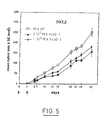
- Each group was inoculated in one flank with wt MCA and three days later, with either MCA wt (group 1), MCA-hLAG-3 at 2.10 5 cells (group 2) and MCA-hLAG-3 at 1.10 6 cells (group 3).
- the size of the original tumor was measured in each group over 30 days. The results are represented in figure 5.
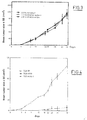
- mice Three groups of five mice each were simultaneously inoculated with either wt MCA suspended in either PBS (group 1) or PBS containing soluble human LAG-3 (shLAG-3 D1D4) in amounts of 25 ⁇ g (group 2) or 250 ⁇ g (group 3).
- the size of the tumors were measured for each group over a period of 30 days.
- TILs tumor lymphocytes infiltrating
- RCC renal cell carcinoma
- LAG-3 is expressed in tissues (i.e., inflammed secondary lymphoid organs) but not on the surface of PBMCs (3), even on in vivo- activated CD25 + , CD69 + PBMCs.
- LAG-3 is expressed at higher levels on activated MHC class I-restricted CD8 + cells than on MHC-class II-restricted CD4 + cells (3) and LAG-3 expression induction by IL-12 or by the more potent combination IL-2 + IL-12 is stronger on CD8 + than CD4 + cells.
- LAG-3 is a weakly expressed activation antigen in vitro as well as in vivo and it is sometimes difficult to assess the percentage and/or the specificity of fluorescence labelling in freshly dissociated tumors.
- LAG-3 may interfere with MHC class II + APCs in human tumors, we assessed its expression in a series of tumors known to be infiltrated by T-cells, using immunohistochemistry (the APAAP procedure). LAG-3 expression on TILs was detected in all samples tested, including 5 melanomas, 10 renal cell adenocarcinomas and 7 B-cell lymphomas.
- Dissociated tumors were used for experiments by cytofluorometric assays.
- the expression of LAG-3 was studied among the lymphocyte population, determined by its size and granulosity. Dead cells were excluded from the study by staining with propidium iodide.
- TILs were positively stained with 17B4, a monoclonal antibody specific of the epitope of the extraloop of LAG-3.
- TILs actually expressed LAG-3 with a significant percentage (30 %) of RCC-TIL in unrelated patients.
- CD3 + T-cells were found to express LAG-3 (range 11 % - 48 %) with higher expression on CD8 + T-cells.
- peripheral blood mononuclear cells were LAG-3 - in these patients, showing that LAG-3 expression on lymphocytes is a phenomenon related to T-cell activation in tumors.
- LAG-3 is a molecule involved in the naturally occurring antitumoral response in human and support the use of LAG-3 to boost the immunosurveillance of tumor cells in human.
- CD8 + T-cells mediate the primary rejection.
- hLAG-3 MCA 205 and TS/A transfectants were dependent on T-lymphocytes, as no rejection was observed in T-cell-deficient nu / nu mice.
- 10 mm diameter tumors were excised at day 8 and both dissociated tumor cells and tumor infiltrating lymphocytes were analyzed by FACS.
- the wt tumors as well as the LAG-3 transfectants, initially CD80 - and CD86 - had remained negative for these markers following inoculation while LAG-3 was constantly detected on hLAG-3 tumors using the anti-LAG-3 17B4 mAb (data not shown).
- CTL cytotoxic T lymphocyte
- the inventors have shown that the control of tumor growth could be achieved by using a soluble LAG- molecule as a vaccine adjuvant.
Landscapes
- Health & Medical Sciences (AREA)
- Life Sciences & Earth Sciences (AREA)
- Veterinary Medicine (AREA)
- Chemical & Material Sciences (AREA)
- Animal Behavior & Ethology (AREA)
- Public Health (AREA)
- Medicinal Chemistry (AREA)
- Pharmacology & Pharmacy (AREA)
- General Health & Medical Sciences (AREA)
- Immunology (AREA)
- General Chemical & Material Sciences (AREA)
- Chemical Kinetics & Catalysis (AREA)
- Epidemiology (AREA)
- Nuclear Medicine, Radiotherapy & Molecular Imaging (AREA)
- Organic Chemistry (AREA)
- Microbiology (AREA)
- Mycology (AREA)
- Oncology (AREA)
- Bioinformatics & Cheminformatics (AREA)
- Engineering & Computer Science (AREA)
- Communicable Diseases (AREA)
- Zoology (AREA)
- Cell Biology (AREA)
- Proteomics, Peptides & Aminoacids (AREA)
- Gastroenterology & Hepatology (AREA)
- Tropical Medicine & Parasitology (AREA)
- Virology (AREA)
- Medicines Containing Antibodies Or Antigens For Use As Internal Diagnostic Agents (AREA)
- Medicines That Contain Protein Lipid Enzymes And Other Medicines (AREA)
- Medicines Containing Material From Animals Or Micro-Organisms (AREA)
- Pharmaceuticals Containing Other Organic And Inorganic Compounds (AREA)
Claims (11)
- Verwendung eines MHC Klasse II-Liganden, der eine antigenspezifische Immunantwort auslöst und der aus einer Gruppe ausgewählt wird, die aus CD4, LAG-3 und einem Derivat von CD4 oder LAG-3 besteht, das die Fähigkeit beibehält, das MHC Klasse II-Molekül zu binden, an das sich jeweils CD4 oder LAG-3 binden, zur Herstellung eines Medikaments zur Behandlung einer Infektionskrankheit oder von Krebs.
- Die Verwendung nach Anspruch 1, wobei dieser MHC Klasse II-Ligand eine antigenspezifische T-Zellen-vermittelte Immunantwort auslöst.
- Die Verwendung nach Anspruch 2, wobei dieser MHC Klasse II-Ligand die vorhandene T-Zellen-vermittelte Immunität verstärkt.
- Die Verwendung nach einem der Ansprüche 1 bis 3, wobei dieser MHC Klasse II-Ligand in Kombination mit einem Antigen verabreicht wird, gegen das eine Immunantwort gesucht wird.
- Die Verwendung nach Anspruch 4, wobei dieses Antigen aus einer Gruppe ausgewählt wird, die aus viralen, bakteriellen und parasitären Antigenen besteht.
- Die Verwendung nach Anspruch 4, wobei dieses Antigen ein Tumor-Antigen ist.
- Die Verwendung nach Anspruch 1 bis 6, wobei dieses LAG-3-Derivat, das die Fähigkeit zur Bindung des MHC Klasse II-Moleküls beibehält, an das sich LAG-3 bindet, ein Mutant oder ein lösliches Fragment von LAG-3 ist.
- Die Verwendung nach Anspruch 7, wobei dieses lösliche Fragment von LAG-3 aus der Gruppe ausgewählt wird, die aus D1-D2- und D1-D4-Fragmenten von LAG-3 besteht.
- Die Verwendung nach Anspruch 7 oder 8, wobei diese Behandlung einer Infektionskrankheit oder von Krebs eine Immunantwort umfasst, die von CD8+ T-Zellen abhängt.
- Die Verwendung nach einem der Ansprüche 1 bis 9, wobei diese Infektionskrankheit aus der Gruppe ausgewählt ist, die aus einer viralen Krankheit, einer bakteriellen Krankheit und einer parasitären Krankheit besteht.
- Die Verwendung von löslichem LAG-3 nach Anspruch 7 oder 8 zur Herstellung eines Medikaments für eine Immuntherapie zur Bekämpfung von Krebs und eine Immuntherapie zur Bekämpfung von Infektionskrankheiten.
Priority Applications (2)
| Application Number | Priority Date | Filing Date | Title |
|---|---|---|---|
| EP98945090A EP1002108B1 (de) | 1997-07-25 | 1998-07-23 | Verwendung von mhc klasse ii liganden als adjuvantien zur impfung und von lag-3 zur krebstherapie |
| EP06008545A EP1698701B1 (de) | 1997-07-25 | 1998-07-23 | Verwendung von MHC Klasse II Liganden (CD4 und LAG-3) als Adjuvans für Impfungen und von LAG-3 bei Behandlung von Krebs |
Applications Claiming Priority (4)
| Application Number | Priority Date | Filing Date | Title |
|---|---|---|---|
| EP97401800 | 1997-07-25 | ||
| EP97401800A EP0893507A1 (de) | 1997-07-25 | 1997-07-25 | Verwendung von MHC Klass II Liganden (CD4 und LAG-3) als Adjuvanz für Impfungen und von LAG-3 in der Behandlung von Krebs |
| EP98945090A EP1002108B1 (de) | 1997-07-25 | 1998-07-23 | Verwendung von mhc klasse ii liganden als adjuvantien zur impfung und von lag-3 zur krebstherapie |
| PCT/EP1998/004621 WO1999004810A2 (en) | 1997-07-25 | 1998-07-23 | Use of mhc class ii ligands as adjuvant for vaccination and of lag-3 in cancer treatment |
Related Child Applications (1)
| Application Number | Title | Priority Date | Filing Date |
|---|---|---|---|
| EP06008545A Division EP1698701B1 (de) | 1997-07-25 | 1998-07-23 | Verwendung von MHC Klasse II Liganden (CD4 und LAG-3) als Adjuvans für Impfungen und von LAG-3 bei Behandlung von Krebs |
Publications (2)
| Publication Number | Publication Date |
|---|---|
| EP1002108A2 EP1002108A2 (de) | 2000-05-24 |
| EP1002108B1 true EP1002108B1 (de) | 2006-04-26 |
Family
ID=8229825
Family Applications (3)
| Application Number | Title | Priority Date | Filing Date |
|---|---|---|---|
| EP97401800A Withdrawn EP0893507A1 (de) | 1997-07-25 | 1997-07-25 | Verwendung von MHC Klass II Liganden (CD4 und LAG-3) als Adjuvanz für Impfungen und von LAG-3 in der Behandlung von Krebs |
| EP98945090A Expired - Lifetime EP1002108B1 (de) | 1997-07-25 | 1998-07-23 | Verwendung von mhc klasse ii liganden als adjuvantien zur impfung und von lag-3 zur krebstherapie |
| EP06008545A Expired - Lifetime EP1698701B1 (de) | 1997-07-25 | 1998-07-23 | Verwendung von MHC Klasse II Liganden (CD4 und LAG-3) als Adjuvans für Impfungen und von LAG-3 bei Behandlung von Krebs |
Family Applications Before (1)
| Application Number | Title | Priority Date | Filing Date |
|---|---|---|---|
| EP97401800A Withdrawn EP0893507A1 (de) | 1997-07-25 | 1997-07-25 | Verwendung von MHC Klass II Liganden (CD4 und LAG-3) als Adjuvanz für Impfungen und von LAG-3 in der Behandlung von Krebs |
Family Applications After (1)
| Application Number | Title | Priority Date | Filing Date |
|---|---|---|---|
| EP06008545A Expired - Lifetime EP1698701B1 (de) | 1997-07-25 | 1998-07-23 | Verwendung von MHC Klasse II Liganden (CD4 und LAG-3) als Adjuvans für Impfungen und von LAG-3 bei Behandlung von Krebs |
Country Status (19)
| Country | Link |
|---|---|
| US (2) | US6410509B1 (de) |
| EP (3) | EP0893507A1 (de) |
| JP (1) | JP4723722B2 (de) |
| KR (1) | KR100603075B1 (de) |
| CN (1) | CN1184320C (de) |
| AT (2) | ATE324455T1 (de) |
| AU (1) | AU753738B2 (de) |
| BR (1) | BR9811037A (de) |
| CA (2) | CA2293805C (de) |
| DE (2) | DE69841866D1 (de) |
| DK (1) | DK1002108T3 (de) |
| EA (3) | EA200300092A1 (de) |
| EE (1) | EE200000039A (de) |
| ES (1) | ES2262242T3 (de) |
| IL (2) | IL134212A0 (de) |
| NO (1) | NO20000378D0 (de) |
| PT (1) | PT1002108E (de) |
| UA (1) | UA75322C2 (de) |
| WO (1) | WO1999004810A2 (de) |
Cited By (2)
| Publication number | Priority date | Publication date | Assignee | Title |
|---|---|---|---|---|
| AU2016244570B2 (en) * | 2015-04-07 | 2020-08-27 | Nec Corporation | Medicine |
| US11291718B2 (en) | 2016-10-11 | 2022-04-05 | Cytlimic Inc. | Method for treating cancer by administering a toll-like receptor agonist and LAG-3 IgG fusion protein |
Families Citing this family (27)
| Publication number | Priority date | Publication date | Assignee | Title |
|---|---|---|---|---|
| ATE519779T1 (de) * | 2001-09-19 | 2011-08-15 | Roussy Inst Gustave | An das glu-pro motiv-bindende proteine und peptide, diese enthaltende therapeutische zusammensetzungen und deren anwendungen |
| US20060240024A1 (en) | 2003-02-28 | 2006-10-26 | The Johns Hopkins University | T cell regulation |
| KR20050082389A (ko) * | 2004-02-18 | 2005-08-23 | 메덱스젠 주식회사 | 직렬 연쇄체를 갖는 면역접합체를 포함하는 장기이식합병증 치료용 약제학적 조성물 |
| FR2868781B1 (fr) * | 2004-04-13 | 2008-02-22 | Immutep | Composition de vaccin comprenant un ligand cmh de classe ii couple a un antigene, procede de preparation et utilisations |
| EP1777523A1 (de) * | 2005-10-19 | 2007-04-25 | INSERM (Institut National de la Santé et de la Recherche Médicale) | In-vitro-Verfahren zur Prognose einer Tumorprogression und des Ergebnisses bei einem Patienten sowie Mittel zur Durchführung dieses Verfahrens |
| EP2044949A1 (de) * | 2007-10-05 | 2009-04-08 | Immutep | Verwendung von rekombinantem LAG-3 oder Derivaten daraus zur Auslösung einer Monozyten-Immunreaktion |
| WO2011031139A1 (en) | 2009-09-09 | 2011-03-17 | Universiteit Utrecht Holding B.V. | An ataq protein or a part thereof as a vaccine |
| SA110310855B1 (ar) | 2009-11-13 | 2014-09-16 | Laboratories Leti S L Unipersonal | استخدام مصدر l3 و/ أو l5 كلقاح أو كوسيلة تشخيصية لمرض طفيلي |
| US9187751B2 (en) | 2010-11-10 | 2015-11-17 | Laboratorios Leti, S.L. | Adjuvant |
| GB201322626D0 (en) | 2013-12-19 | 2014-02-05 | Immutep S A | Combined preparations for the treatment of cancer |
| UA122479C2 (uk) | 2014-01-24 | 2020-11-25 | Дана-Фарбер Кенсер Інстітьют, Інк. | Виділена молекула антитіла, яка зв’язується з людським білком програмованої смерті-1 (pd-1) |
| CN103751778B (zh) * | 2014-01-28 | 2016-09-28 | 复旦大学 | 3′-脱氧腺苷在制备广谱疫苗增效的免疫佐剂中的应用 |
| EA201691765A1 (ru) | 2014-03-14 | 2016-12-30 | Новартис Аг | Молекулы антител против lag-3 и их применения |
| WO2016056596A1 (ja) | 2014-10-07 | 2016-04-14 | 日本電気株式会社 | Hsp70由来のペプチド、これを用いた癌の治療又は予防のための医薬組成物、免疫誘導剤、及び抗原提示細胞の製造方法 |
| WO2016094639A1 (en) * | 2014-12-10 | 2016-06-16 | Wisconsin Alumni Research Foundation | Mini-intronic plasmid dna vaccines in combination with lag3 blockade |
| GB201500374D0 (en) | 2015-01-09 | 2015-02-25 | Immutep S A | Combined preparations for the treatment of cancer |
| US10526388B2 (en) | 2015-03-09 | 2020-01-07 | Cytlimic Inc. | Peptide derived from GPC3, pharmaceutical composition for treatment or prevention of cancer using the same, immunity inducer, and method for producing antigen-presenting cells |
| EP3294324A1 (de) | 2015-05-13 | 2018-03-21 | Agenus Inc. | Impfstoffe zur behandlung und prävention von krebs |
| MX2017016844A (es) | 2015-07-16 | 2018-08-15 | Biokine Therapeutics Ltd | Composiciones y procedimientos para tratar cancer. |
| US20180340025A1 (en) | 2015-07-29 | 2018-11-29 | Novartis Ag | Combination therapies comprising antibody molecules to lag-3 |
| US10265379B2 (en) | 2015-09-16 | 2019-04-23 | Annabelle Rodriguez Oquendo | Use of recombinant lymphocyte activation gene-3 as a companion therapeutic for patients at risk for cardiovascular disease and other chronic inflammatory diseases |
| WO2017046409A1 (en) | 2015-09-18 | 2017-03-23 | Rijksuniversiteit Groningen | Long chain inulin for stimulating an immune response |
| CN108495651A (zh) | 2015-12-17 | 2018-09-04 | 诺华股份有限公司 | 抗pd-1的抗体分子及其用途 |
| CN108204958A (zh) * | 2016-12-19 | 2018-06-26 | 伊缪泰普有限公司 | 结合测定 |
| EP3784688A2 (de) | 2018-04-26 | 2021-03-03 | Agenus Inc. | Hitzeschockproteinbindende peptidzusammensetzungen und verfahren zu deren verwendung |
| CN113271970A (zh) * | 2018-09-27 | 2021-08-17 | 健诺西生物科学公司 | 治疗方法 |
| JP2020138940A (ja) | 2019-02-28 | 2020-09-03 | テルモ株式会社 | 治療方法 |
Family Cites Families (14)
| Publication number | Priority date | Publication date | Assignee | Title |
|---|---|---|---|---|
| NZ226414A (en) * | 1987-10-02 | 1992-07-28 | Genentech Inc | Cd4 peptide adhesion variants and their preparation and use |
| WO1990001870A1 (en) * | 1988-08-22 | 1990-03-08 | The United States Of America, As Represented By The Secretary, U.S. Department Of Commerce | Retroviral vectors expressing soluble cd4; a gene therapy for aids |
| JPH02231083A (ja) * | 1988-08-31 | 1990-09-13 | Eisai Co Ltd | 組換ナチュラルキラー細胞活性化因子 |
| EP0385909B1 (de) * | 1989-03-03 | 1994-07-13 | MicroGeneSys, Inc. | Kit oder Zusammensetzung zur Vorbeugung oder Behandlung von HIV-1 Infektionen |
| EP0394827A1 (de) * | 1989-04-26 | 1990-10-31 | F. Hoffmann-La Roche Ag | Chimärische CD4-Immunoglobulin-Polypeptide |
| FR2656800B1 (fr) * | 1990-01-08 | 1992-05-15 | Roussy Inst Gustave | Nouvelles proteines produits par les lymphocytes humains, sequence d'adn codant pour ces proteines et applications pharmaceutiques et biologiques. |
| US5851828A (en) * | 1991-03-07 | 1998-12-22 | The General Hospital Corporation | Targeted cytolysis of HIV-infected cells by chimeric CD4 receptor-bearing cells |
| ES2249760T3 (es) * | 1993-01-26 | 2006-04-01 | The Trustees Of The University Of Pennsylvania (A Corporation Of Pennsylvania) | Composiciones y procedimientos de administracion de materias geneticas. |
| SE510135C2 (sv) * | 1994-05-05 | 1999-04-19 | Berol Nobel Ab | Vattenhaltig suspension av en cellulosaeter, sätt för dess framställning samt komposition |
| JP3700859B2 (ja) * | 1994-05-06 | 2005-09-28 | アンスティテュ ギュスタブ ルシ | Lag−3タンパク質の可溶性ポリペプチドフラクション;製造方法、治療用製剤、抗イディオタイプ抗体 |
| MX9700560A (es) * | 1994-08-05 | 1997-05-31 | Warner Lambert Co | Metodo de uso de integrasa retroviral negativa transdominante en el tratamiento de infecciones retrovirales. |
| CZ172497A3 (en) * | 1994-12-07 | 1997-10-15 | Hoffmann La Roche | Fragments of monoclonal substance exhibiting immunosuppressor activity |
| CN1171117A (zh) * | 1994-12-23 | 1998-01-21 | 实验室奥姆公司 | Mhc-ⅱ结合和/或mhc-ⅱ模拟分子用于预防和/或治疗炎性疾病的用途 |
| ES2191784T3 (es) * | 1995-12-28 | 2003-09-16 | Univ Johns Hopkins Med | Vacunas de tumores de citocinas paracrinas alogenicas. |
-
1997
- 1997-07-25 EP EP97401800A patent/EP0893507A1/de not_active Withdrawn
-
1998
- 1998-07-23 CA CA2293805A patent/CA2293805C/en not_active Expired - Lifetime
- 1998-07-23 KR KR1020007000265A patent/KR100603075B1/ko not_active Expired - Fee Related
- 1998-07-23 EE EEP200000039A patent/EE200000039A/xx unknown
- 1998-07-23 EA EA200300092A patent/EA200300092A1/ru unknown
- 1998-07-23 ES ES98945090T patent/ES2262242T3/es not_active Expired - Lifetime
- 1998-07-23 CN CNB988075474A patent/CN1184320C/zh not_active Expired - Lifetime
- 1998-07-23 BR BR9811037-3A patent/BR9811037A/pt not_active IP Right Cessation
- 1998-07-23 DE DE69841866T patent/DE69841866D1/de not_active Expired - Lifetime
- 1998-07-23 JP JP2000503862A patent/JP4723722B2/ja not_active Expired - Lifetime
- 1998-07-23 PT PT98945090T patent/PT1002108E/pt unknown
- 1998-07-23 WO PCT/EP1998/004621 patent/WO1999004810A2/en not_active Ceased
- 1998-07-23 EA EA200000161A patent/EA003740B1/ru not_active IP Right Cessation
- 1998-07-23 AT AT98945090T patent/ATE324455T1/de active
- 1998-07-23 CA CA2732570A patent/CA2732570C/en not_active Expired - Lifetime
- 1998-07-23 EP EP98945090A patent/EP1002108B1/de not_active Expired - Lifetime
- 1998-07-23 IL IL13421298A patent/IL134212A0/xx unknown
- 1998-07-23 AU AU92547/98A patent/AU753738B2/en not_active Expired
- 1998-07-23 UA UA2000020976A patent/UA75322C2/uk unknown
- 1998-07-23 EP EP06008545A patent/EP1698701B1/de not_active Expired - Lifetime
- 1998-07-23 DE DE69834330T patent/DE69834330T2/de not_active Expired - Lifetime
- 1998-07-23 EA EA200200565A patent/EA005405B1/ru not_active IP Right Cessation
- 1998-07-23 AT AT06008545T patent/ATE478956T1/de not_active IP Right Cessation
- 1998-07-23 DK DK98945090T patent/DK1002108T3/da active
-
2000
- 2000-01-24 IL IL134212A patent/IL134212A/en not_active IP Right Cessation
- 2000-01-25 NO NO20000378A patent/NO20000378D0/no not_active Application Discontinuation
- 2000-01-27 US US09/492,113 patent/US6410509B1/en not_active Expired - Lifetime
-
2002
- 2002-01-10 US US10/041,600 patent/US7109026B2/en not_active Expired - Fee Related
Non-Patent Citations (3)
| Title |
|---|
| FRANCES GOTCH ET AL.: "Cytotoxic T cells - protection from disease progression - protection from infection", IMMUNOLOGY LETTERS, vol. 51, 1996, pages 125 - 128 * |
| OLAF RÖTZSCHKE ET AL.: "Isolation and analysis of naturally processed viral peptides as recognized by cytotoxic T cells", NATURE, vol. 348, 15 November 1990 (1990-11-15), pages 252 - 254 * |
| SAMIR EL MIR ET AL.: "A soluble lymphovyte activation gene-3 molecule used as a vaccine adjuvant elicits greater humoral and cellular immune responses to both particulate and soluble antigens", THE JOURNAL OF IMMUNOLOGY, vol. 164, 2000, pages 5583 - 5589 * |
Cited By (6)
| Publication number | Priority date | Publication date | Assignee | Title |
|---|---|---|---|---|
| AU2016244570B2 (en) * | 2015-04-07 | 2020-08-27 | Nec Corporation | Medicine |
| US10842848B2 (en) | 2015-04-07 | 2020-11-24 | Cytlimic Inc. | Method for treating cancer by adminstering poly I:C and LAG-3-IgG fusion protein |
| TWI738646B (zh) * | 2015-04-07 | 2021-09-11 | 日商賽多利克公司 | 醫藥組成物 |
| US11491204B2 (en) | 2015-04-07 | 2022-11-08 | Cytlimic Inc. | Composition comprising poly I:C and LAG-3-IGG fusion protein |
| US11291718B2 (en) | 2016-10-11 | 2022-04-05 | Cytlimic Inc. | Method for treating cancer by administering a toll-like receptor agonist and LAG-3 IgG fusion protein |
| US11759518B2 (en) | 2016-10-11 | 2023-09-19 | Nec Corporation | Medicine for treating cancer by administering a toll-like receptor agonist and LAG-3 IgG fusion protein |
Also Published As
Similar Documents
| Publication | Publication Date | Title |
|---|---|---|
| CA2293805C (en) | Use of mhc class ii ligands as adjuvant for vaccination and of lag-3 in cancer treatment | |
| Prigent et al. | Lymphocyte activation gene‐3 induces tumor regression and antitumor immune responses | |
| CA2321161C (en) | Compositions containing an ox-40 receptor binding agent or a nucleic acid encoding the same and methods for enhancing antigen-specific immune response | |
| US6312700B1 (en) | Method for enhancing an antigen specific immune response with OX-40L | |
| US20040091995A1 (en) | Recombinant non-replicating virus expressing gm-csf and uses thereof to enhance immune responses | |
| JP2975117B2 (ja) | 腫瘍疾患の治療のための生ワクチン | |
| Bonnekoh et al. | Immunological gene therapy approaches for malignant melanoma: 2. Preclinical Studies and Clinical Strategies | |
| US20020022017A1 (en) | Regulation of systemic immune responses utilizing soluble CD40 | |
| MXPA99012024A (en) | Use of mhc class ii ligands as adjuvant for vaccination and of lag-3 in cancer treatment | |
| US20050214311A1 (en) | Novel complexes for inducing an immune response | |
| WO2002036750A2 (en) | T-cells specifically recognizing minor histocompatibility antigen(s) and uses thereof for eliminating target cells | |
| HK1030014B (en) | Use of mhc class ii ligands as adjuvant for vaccination and of lag-3 in cancer treatment | |
| MXPA00008176A (en) | Compositions containing an ox-40 receptor binding agent or a nucleic acid encoding the same and methods for enhancing antigen-specific immune response |
Legal Events
| Date | Code | Title | Description |
|---|---|---|---|
| PUAI | Public reference made under article 153(3) epc to a published international application that has entered the european phase |
Free format text: ORIGINAL CODE: 0009012 |
|
| 17P | Request for examination filed |
Effective date: 20000126 |
|
| AK | Designated contracting states |
Kind code of ref document: A2 Designated state(s): AT BE CH CY DE DK ES FI FR GB GR IE IT LI LU MC NL PT SE |
|
| AX | Request for extension of the european patent |
Free format text: AL PAYMENT 20000126;LT PAYMENT 20000126;LV PAYMENT 20000126;MK PAYMENT 20000126;RO PAYMENT 20000126;SI PAYMENT 20000126 |
|
| 17Q | First examination report despatched |
Effective date: 20010925 |
|
| GRAP | Despatch of communication of intention to grant a patent |
Free format text: ORIGINAL CODE: EPIDOSNIGR1 |
|
| GRAS | Grant fee paid |
Free format text: ORIGINAL CODE: EPIDOSNIGR3 |
|
| GRAA | (expected) grant |
Free format text: ORIGINAL CODE: 0009210 |
|
| AK | Designated contracting states |
Kind code of ref document: B1 Designated state(s): AT BE CH CY DE DK ES FI FR GB GR IE IT LI LU MC NL PT SE |
|
| AX | Request for extension of the european patent |
Extension state: AL LT LV MK RO SI |
|
| REG | Reference to a national code |
Ref country code: GB Ref legal event code: FG4D |
|
| REG | Reference to a national code |
Ref country code: IE Ref legal event code: FG4D |
|
| REF | Corresponds to: |
Ref document number: 69834330 Country of ref document: DE Date of ref document: 20060601 Kind code of ref document: P |
|
| REG | Reference to a national code |
Ref country code: SE Ref legal event code: TRGR Ref country code: CH Ref legal event code: NV Representative=s name: ABREMA AGENCE BREVETS ET MARQUES GANGUILLET & HUMP |
|
| REG | Reference to a national code |
Ref country code: DK Ref legal event code: T3 |
|
| REG | Reference to a national code |
Ref country code: GR Ref legal event code: EP Ref document number: 20060402545 Country of ref document: GR |
|
| REG | Reference to a national code |
Ref country code: PT Ref legal event code: SC4A Effective date: 20060713 |
|
| LTIE | Lt: invalidation of european patent or patent extension |
Effective date: 20060426 |
|
| REG | Reference to a national code |
Ref country code: ES Ref legal event code: FG2A Ref document number: 2262242 Country of ref document: ES Kind code of ref document: T3 |
|
| ET | Fr: translation filed | ||
| PLBE | No opposition filed within time limit |
Free format text: ORIGINAL CODE: 0009261 |
|
| STAA | Information on the status of an ep patent application or granted ep patent |
Free format text: STATUS: NO OPPOSITION FILED WITHIN TIME LIMIT |
|
| 26N | No opposition filed |
Effective date: 20070129 |
|
| REG | Reference to a national code |
Ref country code: ES Ref legal event code: PC2A |
|
| REG | Reference to a national code |
Ref country code: FR Ref legal event code: TQ |
|
| PG25 | Lapsed in a contracting state [announced via postgrant information from national office to epo] |
Ref country code: CY Free format text: LAPSE BECAUSE OF NON-PAYMENT OF DUE FEES Effective date: 20100723 |
|
| REG | Reference to a national code |
Ref country code: NL Ref legal event code: SD Effective date: 20110616 |
|
| REG | Reference to a national code |
Ref country code: GB Ref legal event code: 732E Free format text: REGISTERED BETWEEN 20110704 AND 20110706 |
|
| REG | Reference to a national code |
Ref country code: ES Ref legal event code: PC2A Owner name: MERCK SERONO SA Effective date: 20110830 |
|
| REG | Reference to a national code |
Ref country code: PT Ref legal event code: PC4A Owner name: MERCK SERONO SA, CH Effective date: 20110906 |
|
| REG | Reference to a national code |
Ref country code: DE Ref legal event code: R082 Ref document number: 69834330 Country of ref document: DE Representative=s name: DR. SCHOEN & PARTNER, DE |
|
| REG | Reference to a national code |
Ref country code: DE Ref legal event code: R082 Ref document number: 69834330 Country of ref document: DE Representative=s name: DR. SCHOEN, NEYMEYR & PARTNER MBB, DE Effective date: 20111108 Ref country code: DE Ref legal event code: R081 Ref document number: 69834330 Country of ref document: DE Owner name: INSTITUT GUSTAVE ROUSSY, FR Free format text: FORMER OWNERS: INSTITUT GUSTAVE ROUSSY, VILLEJUIF, FR; APPLIED RESEARCH SYSTEMS ARS HOLDING N.V., CURACAO, AN Effective date: 20111108 Ref country code: DE Ref legal event code: R081 Ref document number: 69834330 Country of ref document: DE Owner name: MERCK SERONO SA, COINSINS, CH Free format text: FORMER OWNERS: INSTITUT GUSTAVE ROUSSY, VILLEJUIF, FR; APPLIED RESEARCH SYSTEMS ARS HOLDING N.V., CURACAO, AN Effective date: 20111108 Ref country code: DE Ref legal event code: R081 Ref document number: 69834330 Country of ref document: DE Owner name: MERCK SERONO SA, COINSINS, CH Free format text: FORMER OWNER: INSTITUT GUSTAVE ROUSSY, APPLIED RESEARCH SYSTEMS ARS HO, , AN Effective date: 20111108 Ref country code: DE Ref legal event code: R081 Ref document number: 69834330 Country of ref document: DE Owner name: INSTITUT GUSTAVE ROUSSY, FR Free format text: FORMER OWNER: INSTITUT GUSTAVE ROUSSY, APPLIED RESEARCH SYSTEMS ARS HO, , AN Effective date: 20111108 |
|
| REG | Reference to a national code |
Ref country code: CH Ref legal event code: PUEA Owner name: INSTITUT GUSTAVE ROUSSY Free format text: INSTITUT GUSTAVE ROUSSY#39, RUE CAMILLE DESMOULINS#94805 VILLEJUIF CEDEX (FR) $ APPLIED RESEARCH SYSTEMS ARS HOLDING N.V.#PIETERMAAI 15, P.O. BOX 4905#CURACAO (AN) -TRANSFER TO- INSTITUT GUSTAVE ROUSSY#39, RUE CAMILLE DESMOULINS#94805 VILLEJUIF CEDEX (FR) $ MERCK SERONO SA#CENTRE INDUSTRIEL#1267 COINSINS (CH) |
|
| REG | Reference to a national code |
Ref country code: FR Ref legal event code: PLFP Year of fee payment: 19 |
|
| REG | Reference to a national code |
Ref country code: FR Ref legal event code: PLFP Year of fee payment: 20 |
|
| PGFP | Annual fee paid to national office [announced via postgrant information from national office to epo] |
Ref country code: GR Payment date: 20170613 Year of fee payment: 20 Ref country code: FR Payment date: 20170613 Year of fee payment: 20 Ref country code: MC Payment date: 20170609 Year of fee payment: 20 |
|
| PGFP | Annual fee paid to national office [announced via postgrant information from national office to epo] |
Ref country code: BE Payment date: 20170613 Year of fee payment: 20 Ref country code: LU Payment date: 20170710 Year of fee payment: 20 |
|
| PGFP | Annual fee paid to national office [announced via postgrant information from national office to epo] |
Ref country code: NL Payment date: 20170712 Year of fee payment: 20 |
|
| PGFP | Annual fee paid to national office [announced via postgrant information from national office to epo] |
Ref country code: GB Payment date: 20170719 Year of fee payment: 20 Ref country code: FI Payment date: 20170710 Year of fee payment: 20 Ref country code: DE Payment date: 20170719 Year of fee payment: 20 Ref country code: ES Payment date: 20170801 Year of fee payment: 20 Ref country code: CY Payment date: 20170612 Year of fee payment: 20 Ref country code: CH Payment date: 20170712 Year of fee payment: 20 Ref country code: IT Payment date: 20170720 Year of fee payment: 20 |
|
| PGFP | Annual fee paid to national office [announced via postgrant information from national office to epo] |
Ref country code: PT Payment date: 20170719 Year of fee payment: 20 Ref country code: IE Payment date: 20170710 Year of fee payment: 20 Ref country code: SE Payment date: 20170711 Year of fee payment: 20 Ref country code: AT Payment date: 20170626 Year of fee payment: 20 Ref country code: DK Payment date: 20170711 Year of fee payment: 20 |
|
| REG | Reference to a national code |
Ref country code: CH Ref legal event code: PCOW Free format text: NEW ADDRESS: 39, RUE CAMILLE DESMOULINS, 94805 VILLEJUIF CEDEX (FR) $ MERCK SERONO S.A. PATENTS & SCIENTIFIC INFORMATION, TERRE BONNE BUSINESS PARK A2 ROUTE DE CRASSIER 15, 1262 EYSINS (CH) |
|
| REG | Reference to a national code |
Ref country code: DE Ref legal event code: R071 Ref document number: 69834330 Country of ref document: DE |
|
| REG | Reference to a national code |
Ref country code: NL Ref legal event code: MK Effective date: 20180722 |
|
| REG | Reference to a national code |
Ref country code: DK Ref legal event code: EUP Effective date: 20180723 |
|
| REG | Reference to a national code |
Ref country code: CH Ref legal event code: PL |
|
| REG | Reference to a national code |
Ref country code: GB Ref legal event code: PE20 Expiry date: 20180722 |
|
| REG | Reference to a national code |
Ref country code: IE Ref legal event code: MK9A |
|
| REG | Reference to a national code |
Ref country code: SE Ref legal event code: EUG |
|
| REG | Reference to a national code |
Ref country code: AT Ref legal event code: MK07 Ref document number: 324455 Country of ref document: AT Kind code of ref document: T Effective date: 20180723 |
|
| REG | Reference to a national code |
Ref country code: BE Ref legal event code: MK Effective date: 20180723 |
|
| PG25 | Lapsed in a contracting state [announced via postgrant information from national office to epo] |
Ref country code: IE Free format text: LAPSE BECAUSE OF EXPIRATION OF PROTECTION Effective date: 20180723 Ref country code: PT Free format text: LAPSE BECAUSE OF EXPIRATION OF PROTECTION Effective date: 20180731 |
|
| PG25 | Lapsed in a contracting state [announced via postgrant information from national office to epo] |
Ref country code: GB Free format text: LAPSE BECAUSE OF EXPIRATION OF PROTECTION Effective date: 20180722 |
|
| REG | Reference to a national code |
Ref country code: ES Ref legal event code: FD2A Effective date: 20200724 |
|
| PG25 | Lapsed in a contracting state [announced via postgrant information from national office to epo] |
Ref country code: ES Free format text: LAPSE BECAUSE OF EXPIRATION OF PROTECTION Effective date: 20180724 |