EP1059915B1 - Quervernetzte stärke mit hohem amyloseanteil und funktionellen gruppen als matrix für langsame freisetzung pharmazeutischer wirkstoffe - Google Patents
Quervernetzte stärke mit hohem amyloseanteil und funktionellen gruppen als matrix für langsame freisetzung pharmazeutischer wirkstoffe Download PDFInfo
- Publication number
- EP1059915B1 EP1059915B1 EP99936029A EP99936029A EP1059915B1 EP 1059915 B1 EP1059915 B1 EP 1059915B1 EP 99936029 A EP99936029 A EP 99936029A EP 99936029 A EP99936029 A EP 99936029A EP 1059915 B1 EP1059915 B1 EP 1059915B1
- Authority
- EP
- European Patent Office
- Prior art keywords
- cross
- high amylose
- amylose starch
- linking agent
- linked
- Prior art date
- Legal status (The legal status is an assumption and is not a legal conclusion. Google has not performed a legal analysis and makes no representation as to the accuracy of the status listed.)
- Expired - Lifetime
Links
- 229920001685 Amylomaize Polymers 0.000 title claims abstract description 83
- 125000000524 functional group Chemical group 0.000 title claims description 15
- 239000008177 pharmaceutical agent Substances 0.000 title description 25
- 239000011159 matrix material Substances 0.000 title description 9
- 239000003431 cross linking reagent Substances 0.000 claims abstract description 44
- 239000007787 solid Substances 0.000 claims abstract description 25
- 238000004132 cross linking Methods 0.000 claims abstract description 20
- 229920001282 polysaccharide Polymers 0.000 claims abstract description 16
- 239000005017 polysaccharide Substances 0.000 claims abstract description 16
- 102000013142 Amylases Human genes 0.000 claims abstract description 15
- 108010065511 Amylases Proteins 0.000 claims abstract description 15
- 239000004382 Amylase Substances 0.000 claims abstract description 13
- 229920005862 polyol Polymers 0.000 claims abstract description 13
- 150000003077 polyols Chemical class 0.000 claims abstract description 13
- 235000019418 amylase Nutrition 0.000 claims abstract description 12
- 239000000825 pharmaceutical preparation Substances 0.000 claims abstract 19
- 229940127557 pharmaceutical product Drugs 0.000 claims abstract 19
- 150000004676 glycans Chemical class 0.000 claims abstract 15
- 229920000856 Amylose Polymers 0.000 claims description 61
- RZVAJINKPMORJF-UHFFFAOYSA-N Acetaminophen Chemical group CC(=O)NC1=CC=C(O)C=C1 RZVAJINKPMORJF-UHFFFAOYSA-N 0.000 claims description 31
- 238000000034 method Methods 0.000 claims description 31
- 239000000843 powder Substances 0.000 claims description 28
- 238000013270 controlled release Methods 0.000 claims description 27
- 239000004372 Polyvinyl alcohol Substances 0.000 claims description 25
- 229920002451 polyvinyl alcohol Polymers 0.000 claims description 25
- 239000000203 mixture Substances 0.000 claims description 20
- 235000019422 polyvinyl alcohol Nutrition 0.000 claims description 20
- BRLQWZUYTZBJKN-UHFFFAOYSA-N Epichlorohydrin Chemical compound ClCC1CO1 BRLQWZUYTZBJKN-UHFFFAOYSA-N 0.000 claims description 19
- UGTZMIPZNRIWHX-UHFFFAOYSA-K sodium trimetaphosphate Chemical compound [Na+].[Na+].[Na+].[O-]P1(=O)OP([O-])(=O)OP([O-])(=O)O1 UGTZMIPZNRIWHX-UHFFFAOYSA-K 0.000 claims description 19
- 229960005489 paracetamol Drugs 0.000 claims description 16
- 239000003153 chemical reaction reagent Substances 0.000 claims description 14
- 150000001735 carboxylic acids Chemical class 0.000 claims description 12
- 238000013268 sustained release Methods 0.000 claims description 12
- 239000012730 sustained-release form Substances 0.000 claims description 12
- 229920000945 Amylopectin Polymers 0.000 claims description 9
- 230000015556 catabolic process Effects 0.000 claims description 9
- 238000006731 degradation reaction Methods 0.000 claims description 9
- 238000002156 mixing Methods 0.000 claims description 9
- ONRREFWJTRBDRA-UHFFFAOYSA-N 2-chloroethanamine;hydron;chloride Chemical compound [Cl-].[NH3+]CCCl ONRREFWJTRBDRA-UHFFFAOYSA-N 0.000 claims description 7
- FOCAUTSVDIKZOP-UHFFFAOYSA-N chloroacetic acid Chemical compound OC(=O)CCl FOCAUTSVDIKZOP-UHFFFAOYSA-N 0.000 claims description 7
- 239000002253 acid Substances 0.000 claims description 6
- QWVCIORZLNBIIC-UHFFFAOYSA-N 2,3-dibromopropan-1-ol Chemical group OCC(Br)CBr QWVCIORZLNBIIC-UHFFFAOYSA-N 0.000 claims description 5
- 229920002907 Guar gum Polymers 0.000 claims description 5
- KWGRBVOPPLSCSI-UHFFFAOYSA-N d-ephedrine Natural products CNC(C)C(O)C1=CC=CC=C1 KWGRBVOPPLSCSI-UHFFFAOYSA-N 0.000 claims description 5
- 239000000665 guar gum Substances 0.000 claims description 5
- 235000010417 guar gum Nutrition 0.000 claims description 5
- 229960002154 guar gum Drugs 0.000 claims description 5
- 229920001285 xanthan gum Polymers 0.000 claims description 5
- 239000000230 xanthan gum Substances 0.000 claims description 5
- 235000010493 xanthan gum Nutrition 0.000 claims description 5
- 229940082509 xanthan gum Drugs 0.000 claims description 5
- FYBFGAFWCBMEDG-UHFFFAOYSA-N 1-[3,5-di(prop-2-enoyl)-1,3,5-triazinan-1-yl]prop-2-en-1-one Chemical compound C=CC(=O)N1CN(C(=O)C=C)CN(C(=O)C=C)C1 FYBFGAFWCBMEDG-UHFFFAOYSA-N 0.000 claims description 4
- 239000004135 Bone phosphate Substances 0.000 claims description 4
- 239000005057 Hexamethylene diisocyanate Substances 0.000 claims description 4
- 229920000161 Locust bean gum Polymers 0.000 claims description 4
- 239000011837 N,N-methylenebisacrylamide Substances 0.000 claims description 4
- YGYAWVDWMABLBF-UHFFFAOYSA-N Phosgene Chemical compound ClC(Cl)=O YGYAWVDWMABLBF-UHFFFAOYSA-N 0.000 claims description 4
- 150000007513 acids Chemical class 0.000 claims description 4
- 150000008064 anhydrides Chemical class 0.000 claims description 4
- MGNCLNQXLYJVJD-UHFFFAOYSA-N cyanuric chloride Chemical compound ClC1=NC(Cl)=NC(Cl)=N1 MGNCLNQXLYJVJD-UHFFFAOYSA-N 0.000 claims description 4
- WVJOGYWFVNTSAU-UHFFFAOYSA-N dimethylol ethylene urea Chemical compound OCN1CCN(CO)C1=O WVJOGYWFVNTSAU-UHFFFAOYSA-N 0.000 claims description 4
- XBDQKXXYIPTUBI-UHFFFAOYSA-N dimethylselenoniopropionate Natural products CCC(O)=O XBDQKXXYIPTUBI-UHFFFAOYSA-N 0.000 claims description 4
- AFOSIXZFDONLBT-UHFFFAOYSA-N divinyl sulfone Chemical compound C=CS(=O)(=O)C=C AFOSIXZFDONLBT-UHFFFAOYSA-N 0.000 claims description 4
- 150000002148 esters Chemical class 0.000 claims description 4
- 150000002357 guanidines Chemical class 0.000 claims description 4
- 229940083094 guanine derivative acting on arteriolar smooth muscle Drugs 0.000 claims description 4
- RRAMGCGOFNQTLD-UHFFFAOYSA-N hexamethylene diisocyanate Chemical compound O=C=NCCCCCCN=C=O RRAMGCGOFNQTLD-UHFFFAOYSA-N 0.000 claims description 4
- 150000007928 imidazolide derivatives Chemical class 0.000 claims description 4
- 150000004693 imidazolium salts Chemical class 0.000 claims description 4
- 239000000711 locust bean gum Substances 0.000 claims description 4
- 235000010420 locust bean gum Nutrition 0.000 claims description 4
- ZIUHHBKFKCYYJD-UHFFFAOYSA-N n,n'-methylenebisacrylamide Chemical compound C=CC(=O)NCNC(=O)C=C ZIUHHBKFKCYYJD-UHFFFAOYSA-N 0.000 claims description 4
- DUWWHGPELOTTOE-UHFFFAOYSA-N n-(5-chloro-2,4-dimethoxyphenyl)-3-oxobutanamide Chemical compound COC1=CC(OC)=C(NC(=O)CC(C)=O)C=C1Cl DUWWHGPELOTTOE-UHFFFAOYSA-N 0.000 claims description 4
- 235000019260 propionic acid Nutrition 0.000 claims description 4
- BALXUFOVQVENIU-KXNXZCPBSA-N pseudoephedrine hydrochloride Chemical group [H+].[Cl-].CN[C@@H](C)[C@@H](O)C1=CC=CC=C1 BALXUFOVQVENIU-KXNXZCPBSA-N 0.000 claims description 4
- 235000019832 sodium triphosphate Nutrition 0.000 claims description 4
- DVKJHBMWWAPEIU-UHFFFAOYSA-N toluene 2,4-diisocyanate Chemical compound CC1=CC=C(N=C=O)C=C1N=C=O DVKJHBMWWAPEIU-UHFFFAOYSA-N 0.000 claims description 4
- UNXRWKVEANCORM-UHFFFAOYSA-I triphosphate(5-) Chemical compound [O-]P([O-])(=O)OP([O-])(=O)OP([O-])([O-])=O UNXRWKVEANCORM-UHFFFAOYSA-I 0.000 claims description 4
- 230000008569 process Effects 0.000 claims description 3
- 229960003447 pseudoephedrine hydrochloride Drugs 0.000 claims description 3
- DGAQECJNVWCQMB-PUAWFVPOSA-M Ilexoside XXIX Chemical group C[C@@H]1CC[C@@]2(CC[C@@]3(C(=CC[C@H]4[C@]3(CC[C@@H]5[C@@]4(CC[C@@H](C5(C)C)OS(=O)(=O)[O-])C)C)[C@@H]2[C@]1(C)O)C)C(=O)O[C@H]6[C@@H]([C@H]([C@@H]([C@H](O6)CO)O)O)O.[Na+] DGAQECJNVWCQMB-PUAWFVPOSA-M 0.000 claims 1
- 229910052708 sodium Inorganic materials 0.000 claims 1
- 239000011734 sodium Substances 0.000 claims 1
- 230000001225 therapeutic effect Effects 0.000 abstract description 3
- XLYOFNOQVPJJNP-UHFFFAOYSA-N water Substances O XLYOFNOQVPJJNP-UHFFFAOYSA-N 0.000 description 68
- CSCPPACGZOOCGX-UHFFFAOYSA-N Acetone Chemical compound CC(C)=O CSCPPACGZOOCGX-UHFFFAOYSA-N 0.000 description 48
- 239000003826 tablet Substances 0.000 description 41
- HEMHJVSKTPXQMS-UHFFFAOYSA-M Sodium hydroxide Chemical compound [OH-].[Na+] HEMHJVSKTPXQMS-UHFFFAOYSA-M 0.000 description 39
- 238000003756 stirring Methods 0.000 description 30
- 239000000725 suspension Substances 0.000 description 25
- QTBSBXVTEAMEQO-UHFFFAOYSA-N Acetic acid Chemical group CC(O)=O QTBSBXVTEAMEQO-UHFFFAOYSA-N 0.000 description 24
- 239000012153 distilled water Substances 0.000 description 21
- 229920000642 polymer Polymers 0.000 description 21
- 230000015572 biosynthetic process Effects 0.000 description 20
- 229940079593 drug Drugs 0.000 description 18
- 239000003814 drug Substances 0.000 description 18
- 239000000243 solution Substances 0.000 description 17
- 238000003786 synthesis reaction Methods 0.000 description 17
- 238000006243 chemical reaction Methods 0.000 description 13
- 229920002472 Starch Polymers 0.000 description 12
- 239000008107 starch Substances 0.000 description 12
- 235000019698 starch Nutrition 0.000 description 12
- 238000004090 dissolution Methods 0.000 description 11
- 108090000637 alpha-Amylases Proteins 0.000 description 9
- 230000008961 swelling Effects 0.000 description 9
- 238000005406 washing Methods 0.000 description 9
- 229960000583 acetic acid Drugs 0.000 description 8
- 102000004139 alpha-Amylases Human genes 0.000 description 8
- 229940024171 alpha-amylase Drugs 0.000 description 8
- 239000008363 phosphate buffer Substances 0.000 description 8
- 239000012429 reaction media Substances 0.000 description 8
- 229960001193 diclofenac sodium Drugs 0.000 description 7
- 125000002887 hydroxy group Chemical group [H]O* 0.000 description 7
- -1 polyethylene Polymers 0.000 description 7
- JGMJQSFLQWGYMQ-UHFFFAOYSA-M sodium;2,6-dichloro-n-phenylaniline;acetate Chemical compound [Na+].CC([O-])=O.ClC1=CC=CC(Cl)=C1NC1=CC=CC=C1 JGMJQSFLQWGYMQ-UHFFFAOYSA-M 0.000 description 7
- FAPWRFPIFSIZLT-UHFFFAOYSA-M Sodium chloride Chemical compound [Na+].[Cl-] FAPWRFPIFSIZLT-UHFFFAOYSA-M 0.000 description 6
- OWEGMIWEEQEYGQ-UHFFFAOYSA-N 100676-05-9 Natural products OC1C(O)C(O)C(CO)OC1OCC1C(O)C(O)C(O)C(OC2C(OC(O)C(O)C2O)CO)O1 OWEGMIWEEQEYGQ-UHFFFAOYSA-N 0.000 description 5
- GUBGYTABKSRVRQ-PICCSMPSSA-N Maltose Natural products O[C@@H]1[C@@H](O)[C@H](O)[C@@H](CO)O[C@@H]1O[C@@H]1[C@@H](CO)OC(O)[C@H](O)[C@H]1O GUBGYTABKSRVRQ-PICCSMPSSA-N 0.000 description 5
- 125000002057 carboxymethyl group Chemical group [H]OC(=O)C([H])([H])[*] 0.000 description 5
- 238000001704 evaporation Methods 0.000 description 5
- 230000008020 evaporation Effects 0.000 description 5
- 230000007062 hydrolysis Effects 0.000 description 5
- 238000006460 hydrolysis reaction Methods 0.000 description 5
- 150000004804 polysaccharides Chemical class 0.000 description 5
- 239000000758 substrate Substances 0.000 description 5
- 125000000022 2-aminoethyl group Chemical group [H]C([*])([H])C([H])([H])N([H])[H] 0.000 description 4
- 241000030538 Thecla Species 0.000 description 4
- 125000003178 carboxy group Chemical group [H]OC(*)=O 0.000 description 4
- 229920006037 cross link polymer Polymers 0.000 description 4
- 238000012377 drug delivery Methods 0.000 description 4
- 230000000694 effects Effects 0.000 description 4
- 239000000706 filtrate Substances 0.000 description 4
- 238000001914 filtration Methods 0.000 description 4
- 239000008187 granular material Substances 0.000 description 4
- 238000000265 homogenisation Methods 0.000 description 4
- 230000036571 hydration Effects 0.000 description 4
- 238000006703 hydration reaction Methods 0.000 description 4
- 239000000463 material Substances 0.000 description 4
- 150000003839 salts Chemical class 0.000 description 4
- 125000000217 alkyl group Chemical group 0.000 description 3
- 239000003795 chemical substances by application Substances 0.000 description 3
- 238000001035 drying Methods 0.000 description 3
- 210000001198 duodenum Anatomy 0.000 description 3
- 238000004108 freeze drying Methods 0.000 description 3
- 238000010438 heat treatment Methods 0.000 description 3
- 238000000338 in vitro Methods 0.000 description 3
- 238000006386 neutralization reaction Methods 0.000 description 3
- 238000002360 preparation method Methods 0.000 description 3
- 239000011780 sodium chloride Substances 0.000 description 3
- 238000001694 spray drying Methods 0.000 description 3
- 238000006467 substitution reaction Methods 0.000 description 3
- WDMUXYQIMRDWRC-UHFFFAOYSA-N 2-hydroxy-3,4-dinitrobenzoic acid Chemical compound OC(=O)C1=CC=C([N+]([O-])=O)C([N+]([O-])=O)=C1O WDMUXYQIMRDWRC-UHFFFAOYSA-N 0.000 description 2
- 102000004190 Enzymes Human genes 0.000 description 2
- 108090000790 Enzymes Proteins 0.000 description 2
- LFQSCWFLJHTTHZ-UHFFFAOYSA-N Ethanol Chemical compound CCO LFQSCWFLJHTTHZ-UHFFFAOYSA-N 0.000 description 2
- VEXZGXHMUGYJMC-UHFFFAOYSA-N Hydrochloric acid Chemical compound Cl VEXZGXHMUGYJMC-UHFFFAOYSA-N 0.000 description 2
- 102100026367 Pancreatic alpha-amylase Human genes 0.000 description 2
- 239000000654 additive Substances 0.000 description 2
- 150000007942 carboxylates Chemical group 0.000 description 2
- 239000000969 carrier Substances 0.000 description 2
- 238000007906 compression Methods 0.000 description 2
- 230000006835 compression Effects 0.000 description 2
- 229940124447 delivery agent Drugs 0.000 description 2
- 238000009792 diffusion process Methods 0.000 description 2
- 238000007907 direct compression Methods 0.000 description 2
- 229940088598 enzyme Drugs 0.000 description 2
- 239000012530 fluid Substances 0.000 description 2
- 239000012362 glacial acetic acid Substances 0.000 description 2
- 229910052739 hydrogen Inorganic materials 0.000 description 2
- 239000001257 hydrogen Substances 0.000 description 2
- 230000002209 hydrophobic effect Effects 0.000 description 2
- 239000012729 immediate-release (IR) formulation Substances 0.000 description 2
- CGIGDMFJXJATDK-UHFFFAOYSA-N indomethacin Chemical compound CC1=C(CC(O)=O)C2=CC(OC)=CC=C2N1C(=O)C1=CC=C(Cl)C=C1 CGIGDMFJXJATDK-UHFFFAOYSA-N 0.000 description 2
- HQKMJHAJHXVSDF-UHFFFAOYSA-L magnesium stearate Chemical compound [Mg+2].CCCCCCCCCCCCCCCCCC([O-])=O.CCCCCCCCCCCCCCCCCC([O-])=O HQKMJHAJHXVSDF-UHFFFAOYSA-L 0.000 description 2
- 238000012986 modification Methods 0.000 description 2
- 230000004048 modification Effects 0.000 description 2
- 230000000877 morphologic effect Effects 0.000 description 2
- CPJSUEIXXCENMM-UHFFFAOYSA-N phenacetin Chemical compound CCOC1=CC=C(NC(C)=O)C=C1 CPJSUEIXXCENMM-UHFFFAOYSA-N 0.000 description 2
- 229920002689 polyvinyl acetate Polymers 0.000 description 2
- 229940075065 polyvinyl acetate Drugs 0.000 description 2
- 239000011118 polyvinyl acetate Substances 0.000 description 2
- 238000003918 potentiometric titration Methods 0.000 description 2
- KWGRBVOPPLSCSI-WCBMZHEXSA-N pseudoephedrine Chemical compound CN[C@@H](C)[C@@H](O)C1=CC=CC=C1 KWGRBVOPPLSCSI-WCBMZHEXSA-N 0.000 description 2
- 229960003908 pseudoephedrine Drugs 0.000 description 2
- 239000000700 radioactive tracer Substances 0.000 description 2
- 230000002829 reductive effect Effects 0.000 description 2
- 230000000717 retained effect Effects 0.000 description 2
- 238000010998 test method Methods 0.000 description 2
- XMAYWYJOQHXEEK-OZXSUGGESA-N (2R,4S)-ketoconazole Chemical compound C1CN(C(=O)C)CCN1C(C=C1)=CC=C1OC[C@@H]1O[C@@](CN2C=NC=C2)(C=2C(=CC(Cl)=CC=2)Cl)OC1 XMAYWYJOQHXEEK-OZXSUGGESA-N 0.000 description 1
- NDAUXUAQIAJITI-LBPRGKRZSA-N (R)-salbutamol Chemical compound CC(C)(C)NC[C@H](O)C1=CC=C(O)C(CO)=C1 NDAUXUAQIAJITI-LBPRGKRZSA-N 0.000 description 1
- TVYLLZQTGLZFBW-ZBFHGGJFSA-N (R,R)-tramadol Chemical compound COC1=CC=CC([C@]2(O)[C@H](CCCC2)CN(C)C)=C1 TVYLLZQTGLZFBW-ZBFHGGJFSA-N 0.000 description 1
- SGTNSNPWRIOYBX-UHFFFAOYSA-N 2-(3,4-dimethoxyphenyl)-5-{[2-(3,4-dimethoxyphenyl)ethyl](methyl)amino}-2-(propan-2-yl)pentanenitrile Chemical compound C1=C(OC)C(OC)=CC=C1CCN(C)CCCC(C#N)(C(C)C)C1=CC=C(OC)C(OC)=C1 SGTNSNPWRIOYBX-UHFFFAOYSA-N 0.000 description 1
- SUBDBMMJDZJVOS-UHFFFAOYSA-N 5-methoxy-2-{[(4-methoxy-3,5-dimethylpyridin-2-yl)methyl]sulfinyl}-1H-benzimidazole Chemical compound N=1C2=CC(OC)=CC=C2NC=1S(=O)CC1=NC=C(C)C(OC)=C1C SUBDBMMJDZJVOS-UHFFFAOYSA-N 0.000 description 1
- RZTAMFZIAATZDJ-HNNXBMFYSA-N 5-o-ethyl 3-o-methyl (4s)-4-(2,3-dichlorophenyl)-2,6-dimethyl-1,4-dihydropyridine-3,5-dicarboxylate Chemical compound CCOC(=O)C1=C(C)NC(C)=C(C(=O)OC)[C@@H]1C1=CC=CC(Cl)=C1Cl RZTAMFZIAATZDJ-HNNXBMFYSA-N 0.000 description 1
- BSYNRYMUTXBXSQ-FOQJRBATSA-N 59096-14-9 Chemical compound CC(=O)OC1=CC=CC=C1[14C](O)=O BSYNRYMUTXBXSQ-FOQJRBATSA-N 0.000 description 1
- ZCYVEMRRCGMTRW-UHFFFAOYSA-N 7553-56-2 Chemical compound [I] ZCYVEMRRCGMTRW-UHFFFAOYSA-N 0.000 description 1
- 241000193830 Bacillus <bacterium> Species 0.000 description 1
- 229920002134 Carboxymethyl cellulose Polymers 0.000 description 1
- XIQVNETUBQGFHX-UHFFFAOYSA-N Ditropan Chemical compound C=1C=CC=CC=1C(O)(C(=O)OCC#CCN(CC)CC)C1CCCCC1 XIQVNETUBQGFHX-UHFFFAOYSA-N 0.000 description 1
- 239000001856 Ethyl cellulose Substances 0.000 description 1
- ZZSNKZQZMQGXPY-UHFFFAOYSA-N Ethyl cellulose Chemical compound CCOCC1OC(OC)C(OCC)C(OCC)C1OC1C(O)C(O)C(OC)C(CO)O1 ZZSNKZQZMQGXPY-UHFFFAOYSA-N 0.000 description 1
- WQZGKKKJIJFFOK-GASJEMHNSA-N Glucose Chemical group OC[C@H]1OC(O)[C@H](O)[C@@H](O)[C@@H]1O WQZGKKKJIJFFOK-GASJEMHNSA-N 0.000 description 1
- UFHFLCQGNIYNRP-UHFFFAOYSA-N Hydrogen Chemical group [H][H] UFHFLCQGNIYNRP-UHFFFAOYSA-N 0.000 description 1
- HEFNNWSXXWATRW-UHFFFAOYSA-N Ibuprofen Chemical compound CC(C)CC1=CC=C(C(C)C(O)=O)C=C1 HEFNNWSXXWATRW-UHFFFAOYSA-N 0.000 description 1
- 238000012404 In vitro experiment Methods 0.000 description 1
- MKXZASYAUGDDCJ-SZMVWBNQSA-N LSM-2525 Chemical compound C1CCC[C@H]2[C@@]3([H])N(C)CC[C@]21C1=CC(OC)=CC=C1C3 MKXZASYAUGDDCJ-SZMVWBNQSA-N 0.000 description 1
- CMWTZPSULFXXJA-UHFFFAOYSA-N Naproxen Natural products C1=C(C(C)C(O)=O)C=CC2=CC(OC)=CC=C21 CMWTZPSULFXXJA-UHFFFAOYSA-N 0.000 description 1
- 108010029785 Pancreatic alpha-Amylases Proteins 0.000 description 1
- 239000004952 Polyamide Substances 0.000 description 1
- 239000004698 Polyethylene Substances 0.000 description 1
- 229910006069 SO3H Inorganic materials 0.000 description 1
- 238000002441 X-ray diffraction Methods 0.000 description 1
- 238000002835 absorbance Methods 0.000 description 1
- VJHCJDRQFCCTHL-UHFFFAOYSA-N acetic acid 2,3,4,5,6-pentahydroxyhexanal Chemical compound CC(O)=O.OCC(O)C(O)C(O)C(O)C=O VJHCJDRQFCCTHL-UHFFFAOYSA-N 0.000 description 1
- PWACSDKDOHSSQD-IUTFFREVSA-N acrivastine Chemical compound C1=CC(C)=CC=C1C(\C=1N=C(\C=C\C(O)=O)C=CC=1)=C/CN1CCCC1 PWACSDKDOHSSQD-IUTFFREVSA-N 0.000 description 1
- 229960003792 acrivastine Drugs 0.000 description 1
- 229920006243 acrylic copolymer Polymers 0.000 description 1
- XAGFODPZIPBFFR-UHFFFAOYSA-N aluminium Chemical compound [Al] XAGFODPZIPBFFR-UHFFFAOYSA-N 0.000 description 1
- 229910052782 aluminium Inorganic materials 0.000 description 1
- 230000003625 amylolytic effect Effects 0.000 description 1
- 239000000730 antalgic agent Substances 0.000 description 1
- 229940121375 antifungal agent Drugs 0.000 description 1
- 239000003429 antifungal agent Substances 0.000 description 1
- 238000013459 approach Methods 0.000 description 1
- 125000003118 aryl group Chemical group 0.000 description 1
- 230000008901 benefit Effects 0.000 description 1
- 230000000975 bioactive effect Effects 0.000 description 1
- 229960000074 biopharmaceutical Drugs 0.000 description 1
- 229920001222 biopolymer Polymers 0.000 description 1
- 238000009835 boiling Methods 0.000 description 1
- 239000008366 buffered solution Substances 0.000 description 1
- 239000002775 capsule Substances 0.000 description 1
- 238000000576 coating method Methods 0.000 description 1
- 230000000112 colonic effect Effects 0.000 description 1
- 239000008139 complexing agent Substances 0.000 description 1
- 229920001577 copolymer Polymers 0.000 description 1
- 239000011243 crosslinked material Substances 0.000 description 1
- 230000003247 decreasing effect Effects 0.000 description 1
- 229960001985 dextromethorphan Drugs 0.000 description 1
- 229940061607 dibasic sodium phosphate Drugs 0.000 description 1
- 229960001259 diclofenac Drugs 0.000 description 1
- DCOPUUMXTXDBNB-UHFFFAOYSA-N diclofenac Chemical compound OC(=O)CC1=CC=CC=C1NC1=C(Cl)C=CC=C1Cl DCOPUUMXTXDBNB-UHFFFAOYSA-N 0.000 description 1
- 238000007598 dipping method Methods 0.000 description 1
- BNIILDVGGAEEIG-UHFFFAOYSA-L disodium hydrogen phosphate Chemical compound [Na+].[Na+].OP([O-])([O-])=O BNIILDVGGAEEIG-UHFFFAOYSA-L 0.000 description 1
- 239000002552 dosage form Substances 0.000 description 1
- 239000003937 drug carrier Substances 0.000 description 1
- 229920001971 elastomer Polymers 0.000 description 1
- 238000005516 engineering process Methods 0.000 description 1
- 230000007515 enzymatic degradation Effects 0.000 description 1
- 238000006911 enzymatic reaction Methods 0.000 description 1
- GKIPXFAANLTWBM-UHFFFAOYSA-N epibromohydrin Chemical compound BrCC1CO1 GKIPXFAANLTWBM-UHFFFAOYSA-N 0.000 description 1
- 230000003628 erosive effect Effects 0.000 description 1
- 229920001249 ethyl cellulose Polymers 0.000 description 1
- 235000019325 ethyl cellulose Nutrition 0.000 description 1
- 230000001747 exhibiting effect Effects 0.000 description 1
- 238000002474 experimental method Methods 0.000 description 1
- 229960003580 felodipine Drugs 0.000 description 1
- 210000001035 gastrointestinal tract Anatomy 0.000 description 1
- ZJJXGWJIGJFDTL-UHFFFAOYSA-N glipizide Chemical compound C1=NC(C)=CN=C1C(=O)NCCC1=CC=C(S(=O)(=O)NC(=O)NC2CCCCC2)C=C1 ZJJXGWJIGJFDTL-UHFFFAOYSA-N 0.000 description 1
- 229960001381 glipizide Drugs 0.000 description 1
- 229960001680 ibuprofen Drugs 0.000 description 1
- 238000001727 in vivo Methods 0.000 description 1
- 229960000905 indomethacin Drugs 0.000 description 1
- 230000003993 interaction Effects 0.000 description 1
- 230000000968 intestinal effect Effects 0.000 description 1
- 239000011630 iodine Substances 0.000 description 1
- 229910052740 iodine Inorganic materials 0.000 description 1
- 229960004125 ketoconazole Drugs 0.000 description 1
- DKYWVDODHFEZIM-UHFFFAOYSA-N ketoprofen Chemical compound OC(=O)C(C)C1=CC=CC(C(=O)C=2C=CC=CC=2)=C1 DKYWVDODHFEZIM-UHFFFAOYSA-N 0.000 description 1
- 229960000991 ketoprofen Drugs 0.000 description 1
- 229960004752 ketorolac Drugs 0.000 description 1
- OZWKMVRBQXNZKK-UHFFFAOYSA-N ketorolac Chemical compound OC(=O)C1CCN2C1=CC=C2C(=O)C1=CC=CC=C1 OZWKMVRBQXNZKK-UHFFFAOYSA-N 0.000 description 1
- 230000000670 limiting effect Effects 0.000 description 1
- 239000007937 lozenge Substances 0.000 description 1
- 239000000314 lubricant Substances 0.000 description 1
- 235000019359 magnesium stearate Nutrition 0.000 description 1
- 230000014759 maintenance of location Effects 0.000 description 1
- OJLOPKGSLYJEMD-URPKTTJQSA-N methyl 7-[(1r,2r,3r)-3-hydroxy-2-[(1e)-4-hydroxy-4-methyloct-1-en-1-yl]-5-oxocyclopentyl]heptanoate Chemical compound CCCCC(C)(O)C\C=C\[C@H]1[C@H](O)CC(=O)[C@@H]1CCCCCCC(=O)OC OJLOPKGSLYJEMD-URPKTTJQSA-N 0.000 description 1
- 230000003278 mimic effect Effects 0.000 description 1
- 229960005249 misoprostol Drugs 0.000 description 1
- 229940045641 monobasic sodium phosphate Drugs 0.000 description 1
- 229960002009 naproxen Drugs 0.000 description 1
- CMWTZPSULFXXJA-VIFPVBQESA-N naproxen Chemical compound C1=C([C@H](C)C(O)=O)C=CC2=CC(OC)=CC=C21 CMWTZPSULFXXJA-VIFPVBQESA-N 0.000 description 1
- 239000005445 natural material Substances 0.000 description 1
- 229920005615 natural polymer Polymers 0.000 description 1
- HYIMSNHJOBLJNT-UHFFFAOYSA-N nifedipine Chemical compound COC(=O)C1=C(C)NC(C)=C(C(=O)OC)C1C1=CC=CC=C1[N+]([O-])=O HYIMSNHJOBLJNT-UHFFFAOYSA-N 0.000 description 1
- 229960001597 nifedipine Drugs 0.000 description 1
- 229940021182 non-steroidal anti-inflammatory drug Drugs 0.000 description 1
- 229960000381 omeprazole Drugs 0.000 description 1
- 230000008520 organization Effects 0.000 description 1
- 239000000546 pharmaceutical excipient Substances 0.000 description 1
- 229960003893 phenacetin Drugs 0.000 description 1
- 230000004962 physiological condition Effects 0.000 description 1
- 229960002702 piroxicam Drugs 0.000 description 1
- QYSPLQLAKJAUJT-UHFFFAOYSA-N piroxicam Chemical compound OC=1C2=CC=CC=C2S(=O)(=O)N(C)C=1C(=O)NC1=CC=CC=N1 QYSPLQLAKJAUJT-UHFFFAOYSA-N 0.000 description 1
- 229920002647 polyamide Polymers 0.000 description 1
- 229920000573 polyethylene Polymers 0.000 description 1
- 229920002338 polyhydroxyethylmethacrylate Polymers 0.000 description 1
- 229920001296 polysiloxane Polymers 0.000 description 1
- 229920000915 polyvinyl chloride Polymers 0.000 description 1
- 239000004800 polyvinyl chloride Substances 0.000 description 1
- 230000002028 premature Effects 0.000 description 1
- 239000000047 product Substances 0.000 description 1
- 230000000750 progressive effect Effects 0.000 description 1
- OVARTBFNCCXQKS-UHFFFAOYSA-N propan-2-one;hydrate Chemical compound O.CC(C)=O OVARTBFNCCXQKS-UHFFFAOYSA-N 0.000 description 1
- 239000011541 reaction mixture Substances 0.000 description 1
- 230000009467 reduction Effects 0.000 description 1
- 238000011160 research Methods 0.000 description 1
- 150000003873 salicylate salts Chemical class 0.000 description 1
- 238000005070 sampling Methods 0.000 description 1
- 239000002002 slurry Substances 0.000 description 1
- AJPJDKMHJJGVTQ-UHFFFAOYSA-M sodium dihydrogen phosphate Chemical compound [Na+].OP(O)([O-])=O AJPJDKMHJJGVTQ-UHFFFAOYSA-M 0.000 description 1
- 238000007614 solvation Methods 0.000 description 1
- 238000001179 sorption measurement Methods 0.000 description 1
- 239000000126 substance Substances 0.000 description 1
- 235000000346 sugar Nutrition 0.000 description 1
- 150000008163 sugars Chemical class 0.000 description 1
- 229960000894 sulindac Drugs 0.000 description 1
- MLKXDPUZXIRXEP-MFOYZWKCSA-N sulindac Chemical compound CC1=C(CC(O)=O)C2=CC(F)=CC=C2\C1=C/C1=CC=C(S(C)=O)C=C1 MLKXDPUZXIRXEP-MFOYZWKCSA-N 0.000 description 1
- 229940126585 therapeutic drug Drugs 0.000 description 1
- 229960001017 tolmetin Drugs 0.000 description 1
- UPSPUYADGBWSHF-UHFFFAOYSA-N tolmetin Chemical compound C1=CC(C)=CC=C1C(=O)C1=CC=C(CC(O)=O)N1C UPSPUYADGBWSHF-UHFFFAOYSA-N 0.000 description 1
- 229960004380 tramadol Drugs 0.000 description 1
- TVYLLZQTGLZFBW-GOEBONIOSA-N tramadol Natural products COC1=CC=CC([C@@]2(O)[C@@H](CCCC2)CN(C)C)=C1 TVYLLZQTGLZFBW-GOEBONIOSA-N 0.000 description 1
- 238000000825 ultraviolet detection Methods 0.000 description 1
- 229960001722 verapamil Drugs 0.000 description 1
- 229920001221 xylan Polymers 0.000 description 1
- 150000004823 xylans Chemical class 0.000 description 1
Images




Classifications
-
- A—HUMAN NECESSITIES
- A61—MEDICAL OR VETERINARY SCIENCE; HYGIENE
- A61K—PREPARATIONS FOR MEDICAL, DENTAL OR TOILETRY PURPOSES
- A61K9/00—Medicinal preparations characterised by special physical form
- A61K9/20—Pills, tablets, discs, rods
-
- A—HUMAN NECESSITIES
- A61—MEDICAL OR VETERINARY SCIENCE; HYGIENE
- A61K—PREPARATIONS FOR MEDICAL, DENTAL OR TOILETRY PURPOSES
- A61K9/00—Medicinal preparations characterised by special physical form
- A61K9/20—Pills, tablets, discs, rods
- A61K9/2004—Excipients; Inactive ingredients
- A61K9/2022—Organic macromolecular compounds
- A61K9/205—Polysaccharides, e.g. alginate, gums; Cyclodextrin
- A61K9/2059—Starch, including chemically or physically modified derivatives; Amylose; Amylopectin; Dextrin
Definitions
- the present invention relates to cross-linked high amylose starch and in particular, cross-linked high amylose starch having functional groups.
- Such cross-linked high amylose starch imparts sustained release to a pharmaceutical agent when compressed in a tablet form.
- bioactive molecules e.g. , pharmaceutical agents
- the controlled release of pharmaceutical agents is of high importance for biopharmaceutical applications. Long acting doses of a variety of drugs are now available, allowing once or twice-a-day dosage regimens where immediate release forms called for multiple and sometimes impractical administrations. Effective slow-release dosage regimens have demonstrated superior patient compliance and hence improved efficacy over multiple immediate release forms.
- polymers that have been used as a matrix for the slow-release of drugs.
- polymeric materials such as polyvinyl chloride, polyethylene polyamides, ethylcellulose, silicone, poly (hydroxyethyl methacrylate), other acrylic co-polymers, polyvinylacetatepolyvinyl chloride copolymers and other polymers have been described as an adequate matrix for tablet preparation (see for example U.S. Patent No. 3,087,860; U.S. Patent No. 2,987,445; and Pharm. Acta Helv., (1980), 55 :174-182, Salomon et al.).
- Polysaccharides have been used widely in pharmaceutical, chemical, and biochemical drug delivery. This family of natural polymers has been applied to the area of controlled release coatings, matrices, macromolecular carriers and biodegradable carriers.
- One of most frequent problems associated with the use of polysaccharides, such as starch, as drug delivery agents is its susceptibility to degradation by intestinal polysaccharidases such as ⁇ -amylase.
- the use of polysaccharides in colonic drug delivery has been reviewed (Critical ReviewsTM in Therapeutic Drug Carrier Systems, 13 (3 & 4) :185-223 (1996).
- Starch is, however, one of the most attractive biopolymers for use as a drug delivery agent since it can be mass produced with a high purity at a very economical price.
- a chemically modified amylose was prepared by cross-linking amylose in the gelatinized state as described in U.S. Patent No. 5,456,921.
- Amylose is a natural substance obtained from starch. It is essentially a linear, non-branched, polymer of glucopyranose units with ⁇ -D-(1-4) linkages. In starch, amylose is usually accompanied by amylopectin, which is a branched polyglucose polymer with a significant frequency of branching points based on ⁇ -(1-6)-glucosidic bonds.
- Cross-linked amylose is an excipient for the controlled release of drugs in solid drug dosage forms.
- CLAm is produced by the reaction of amylose with a suitable cross-linking agent in an alkaline medium.
- CLAm tablets are prepared by direct compression, and are highly resistant to mechanical stress in the dry state. When placed in contact with aqueous fluids, water diffuses into the CLAm matrix, with subsequent formation of a gel layer. Progressive water sorption leads to significant swelling of the matrix. With degrees of cross-linking below 11, the swollen polymeric matrix does not undergo any erosion during in vitro experiments performed in the absence of amylase. Amylase found in the human duodenum catalyzes the hydrolysis of amylose, drastically reducing its sustained-release properties.
- Another feature of cross-linked amylose is its ability to release drugs at a constant rate, following zero-order kinetics, such as described in S.T.P. Pharma (1986), 2 :38-46 (Peppas et al.).
- the approach called "swelling-controlled" systems consists of glassy polymers into which a water front penetrates at a constant rate. Behind this front, the polymer is in a rubbery state. Provided the drug diffusion coefficient in the rubbery polymer is much higher than in the glassy polymer, a zero order release can be achieved to a certain degree.
- the delivery rate is constant only for a limited fraction of the release, usually around 60% of the total amount of contained drug, and requires a low initial drug concentration.
- Amylose A contains 8 molecules of H 2 O and Amylose B (hydrated) contains 36 molecules of H 2 O per elementary cell unit.
- V-Amylose is made from single helix chains and exists as complexes with small organic molecules, water or iodine. Even though the inside of the helix channel of V-amyloses is primarily hydrophobic, intrahelical water has been found in anhydrous (Va), as well as in the hydrated (Vh) forms. Some intermolecular hydrogen bonds are formed through interstitial water molecules.
- a solid slow release oral pharmaceutical dosage unit which comprises a solid dosage unit made up of an admixture of a therapeutic dosage of an orally effective pharmaceutical agent and covalent cross-linked polymer of high amylose starch made by reacting high amylose starch with a suitable cross-linking agent, wherein the covalent cross-linking of the polymer has been carried out with from about 0.1 to about 40 g of cross-linking agent per 100 g of amylose.
- the cross-linked polymer is modified with a functional group.
- a solid slow release oral pharmaceutical dosage unit made up of an admixture of a therapeutic dosage of an orally effective pharmaceutical agent, an optional polysaccharide or polyol and a cross-linked polymer of high amylose starch made by reacting high amylose starch with a suitable cross-linking agent.
- the pharmaceutical agent is present in the tablet in an amount of from .01 to 80% w/w.
- a method is described to obtain a matrix resistant to all types of amylase, obviating the concern over premature degradation of the tablet and accelerated release of the orally effective pharmaceutical agent.
- the invention provides cross-linked amylose having functional groups, prepared by a process comprising the steps of:
- the invention provides a solid controlled-release oral pharmaceutical dosage unit in the form of a tablet comprising a blend of about 0.01% to about 80% by weight of a pharmaceutical agent and about 20% to about 99.99% by weight of the cross-linked amylose having functional groups.
- the invention provides a method for imparting sustained release to a pharmaceutical agent, comprising the steps of:
- amylose can be carried out in the manner described in BIOCHEMIE 1978, 60, 535-537 (Mateescu) by reacting amylose with epichlorohydrin in an alkaline medium.
- amylose can also be cross-linked with other cross-linking agents including, but not limited to, 2,3-dibromopropanol, epichlorohydrin, sodium trimetaphosphate, linear mixed anhydrides of acetic and di- or tribasic carboxylic acids, vinyl sulfone, diepoxides, cyanuric chloride, hexahydro-1, 3, 5-trisacryloyl-s-triazine, hexamethylene diisocyanate, toluene 2, 4-diisocyanate, N, N-methylenebisacrylamide, N, N'-bis (hydroxymethyl) ethyleneurea, phosgene, tripolyphosphate, mixed carbonic-carboxylic acid anhydrides, imidazolides
- amylose starch can be admixed with additives prior to reaction with the cross-linking agents.
- the resulting product is useful as a matrix for sustained release of pharmaceutical agents.
- Suitable agents that could be used as additives to high amylose starch for sustained release prior to cross-linking of the high amylose starch include, but are not limited to, polyvinyl alcohol, ⁇ -(1-3) xylan, xanthan gum, locust bean gum and guar gum.
- the high amylose starch is swollen in water by generally known gelatinization techniques such as alkaline or heat treatment and, after homogenization, an appropriate amount of cross-linking agent is added.
- the reaction medium is transferred onto a water bath and heated for one hour at a temperature of from 40° to 45° C and the temperature is then raised from 60° to 75° C for a further period of from 1 to 2 hours after which time the reaction is complete.
- the duration of heating can be varied as well as the amount of cross-linking agent used in the reaction.
- the resulting cross-linked material is then sieved, and the granules ranging from about 25 to about 700 um are collected for the preparation of the slow-release tablet of the present invention.
- the granules of 25 to about 300 um representing at least 50% of the granules are selected for use in accordance with the presented invention.
- cross-linked polymers of high amylose starch with cross-linking agents suitable for the purposes of the present invention are those where from about 0.1 to about 40 g of cross-linking agent have been used to cross-link 100 g of high amylose starch.
- the cross-linked high amylose starch which was initially arranged mainly in the amorphous state and in V type single helices, progressively adopts the B-type double helices conformation, forming a three-dimensional physical network.
- Both amylose and PVA can adopt helical conformations.
- PVA is an interesting polymer with alternating hydrophilic (CHOH) and hydrophobic (CH 2 ) groups, and consequently, undergoes lower swelling in water than amylose.
- PVA can be mixed with high amylose starch. The mixture is then cross-linked and compressed into tablets exhibiting sustained release properties and resistance to degradation by alpha-amylase.
- cross-linked high amylose starch can be modified with functional groups by reacting the cross-linked high amylose starch with a functional group-attaching reagent.
- the functional group-attaching reagent reacts with hydroxyl groups of the starch molecule forming covalent bonds therewith.
- the functional group-attaching reagent has the formula Y-A-COOH, Y-A-NH 2 , Y-A-NR 3 + X - , Y-A-SH, Y-A-SO 3 H and Y-A-OH, wherein A is a moiety capable of forming a covalent bond with a starch hydroxyl group, Y is a leaving group that departs upon A's formation of a covalent bond with a starch hydroxyl group, and R is alkyl or hydrogen.
- Suitable A groups include, but are not limited to -alkyl-, -C(O)alkyl-, -C(O)N(H)alkyl-, -C(O)Oalkyl- and the like.
- A is an aromatic group.
- the functional group-attaching reagent is monochloroacetic acid or 2-chloroethylamine hydrochloride.
- the reaction between the cross-linked high amylose starch and the functional group-attaching reagent is carried out at a concentration of about 75 g to about 250 g of functional group-attaching reagent per 100 g of cross-linked high amylose starch, in the presence of aqueous base, e.g ., 2-12N NaOH.
- the reaction is preferably performed at elevated temperature, e.g ., at about 50 °C to about 100 °C.
- the functional group-attaching reagent is monochloroacetic acid, preferably a concentration of about 75 g to about 250 g of monochloroacetic acid per 100 g of cross-linked high amylose starch is used.
- the functional group-attaching reagent is 2-chloroethylamine hydrochloride, preferably a concentration of about 100 g to about 150 g of 2-chloroethylamine hydrochloride per 100 g of cross-linked high amylose starch is used.
- the functional group-attaching reagent will attach about 0.4 to about 1 mequiv. of functional group/g of cross-linked high amylose starch.
- modified cross-linked high amylose starch of the present invention is useful as a carrier polymer for pharmaceutical agents that are administered orally, in view of its high resistance to amylase degradation and enhanced dissolution properties.
- modified cross-linked high amylose starch confers desirable slow-release properties to orally administered tablets containing pharmaceutical agents.
- the invention provides a solid controlled-release oral pharmaceutical dosage unit.
- Such dosage unit is preferably in the form of a tablet, although capsules, lozenges and troches are also contemplated.
- the solid controlled-release oral pharmaceutical dosage unit of the present invention comprises a blend of about 0.01% to about 80% by weight of a pharmaceutical agent, and of about 20% to about 99.99% by weight of the modified cross-linked high amylose starch described above.
- Preferably the dosage unit comprises about 5% to about 20% by weight of a pharmaceutical agent.
- the pharmaceutical agent is preferably in the form of a dry powder.
- Such pharmaceutical agent is any drug that can be orally administered.
- the pharmaceutical agent is pseudoephedrine hydrochloride, acetaminophen or diclofenac sodium, verapamil, glipizide, nifedipine, felodipine, batahistine, (R)-albuterol, acrivastine, omeprazole, misoprostol, tramadol, oxybutinin, and salts thereof.
- the pharmaceutical agent can be an antifungal agent, such as ketoconazole, or an analgesic agent such as acetylsalicylic acid, acetaminophen, paracetamol, ibuprofen, ketoprofen, indomethacin, diflunisol, naproxen, ketorolac, diclofenac, tolmetin, sulindac, phenacetin, piroxicam, mefamanic acid, dextromethorphan, other non-steroidal antiinflammatory drugs including salicylates, pharmaceutically acceptable salts thereof or mixtures thereof.
- an analgesic agent such as acetylsalicylic acid, acetaminophen, paracetamol, ibuprofen, ketoprofen, indomethacin, diflunisol, naproxen, ketorolac, diclofenac, tolmetin, sulindac, phenacetin, piroxicam, mefamanic acid,
- the resulting blend is compressed to form a tablet.
- the pressure used to compress the blend is equal to or exceeds 0.16 T/cm 2 .
- reaction mixture was again homogenized for 20 minutes. The reaction was continued for a period up to 1 h, under moderate heating (40 - 70° C). The mixture was neutralized with acetic acid, and then thoroughly washed on a Büchner funnel with a solution of water/acetone (15:85 v/v) in a first step and then with water/acetone (60:40). The CLA was finally dried with acetone and then exposed to the air during 24 hours. Other drying procedures (spray-drying, lyophilization) can also be used. The dry polymer was sieved (mesh openings of 75-300 um) and stored at room temperature.
- CLA polymers with different cross-linking degrees (x) can be obtained in similar conditions, with the mention that the added quantities should be of "x" g cross-linking reagent/100 g of amylose.
- the required amount of PVA powder (MW 9,000 - 146,000, 87-89% hydrolysis degree) was suspended in 1L of 1.5 N sodium hydroxide and heated at 95° C with strong stirring. After the system became macroscopically homogeneous, the temperature was decreased at 50° C.
- the corresponding amount of high amylose starch (Hylon VII) was suspended in 750 mL cold distilled water in the HOBART® mixer and heated, under stirring, at 50° C. Subsequently, the PVA/NaOH solution was slowly added to the corresponding high amylose starch suspension, under continuous stirring and the system kept for 20 min at controlled temperature (50 - 55° C) for high amylose starch gelatinization.
- the gelatinized batch was treated with an amount of 18 g STMP. After 1 h at 50° C, the mixture was neutralized with 0.75 M acetic acid solution, and then washed and dried with acetone. Other drying procedures (spray-drying, lyophilization) can also be used. The powders were sieved and kept in dark bottles at room temperature.
- Neutralization was accomplished by adding 2.5 L of distilled water to the reaction medium. Then, a solution of acetic acid (88 mL of glacial acetic acid in 600 mL distilled water, completed with another volume of 1050 mL distilled water pre-heated at 50 °C) was slowly introduced to the CLA-20 suspension with stirring, up to a final pH of 6.8-7.0. The suspension was then slowly cooled to 20 °C.
- acetic acid 88 mL of glacial acetic acid in 600 mL distilled water, completed with another volume of 1050 mL distilled water pre-heated at 50 °C
- a solution of acetone-water (85/15 v/v) was prepared, and 1 L of this solution was added slowly, under stirring, to a 1 L suspension of CLA-20. This medium was left, under stirring, at 4 °C for 20 min, and filtered. The gel remaining on the filter was resuspended in 1 L of acetone/water solution (60/40 v/v), maintained for 20 min under stirring at 4 °C, and filtered. This washing with acetone/water (60/40) was repeated two more times.
- the gel obtained from last filtration was recovered and resuspended in 400 mL of acetone.
- the medium was maintained for 20 min under stirring at 4 °C, and filtered. This operation was repeated two more times (but without keeping the suspension for 20 min under stirring at 4 °C), and filtered.
- the resulting powder was dried by evaporation of acetone and then sieved, retaining fractions of 300-500 ⁇ m for the subsequent steps.
- the suspension was filtered, resuspended in distilled water and filtered again on Büchner funnel, measuring the pH in the filtrate.
- the gel was washed on the filter, until a pH 6.5-7.0 was reached. Then, the gel was resuspended in 1 L of distilled water, and a 1 L solution of acetone/water (85/15 v/v) was added to the suspension of CM-CLA-20 slowly and under stirring. The medium was kept, under stirring, at 4 °C for 20 min, and filtered.
- the gel remaining on the filter was resuspended in 0.5 L of acetone/water solution (60/40 v/v), maintained for 20 min under stirring at 4 °C, and filtered. This washing with acetone/water (60/40) was repeated two more times.
- the gel obtained from the last filtration was recovered, resuspended in 400 mL of acetone, maintained for 20 min under stirring at 4 °C, and filtered. This operation was repeated two more times (but without keeping the suspension for 20 min under stirring at 4 °C) and filtered. The resulting CM-CLA-20 powder was finally dried by evaporation.
- the degree of substitution of hydroxyl groups was evaluated by potentiometric titration of carboxymethyl groups (device: Corning-ion analyzers 250) with 0.1 N NaOH.
- CM-CLA-20 The substitution degree of the hydroxyl groups in CM-CLA-20 was evaluated on the basis of the ionic exchange capacity of the CM- derivative.
- the obtained capacity was of 0.4 - 1 mequiv/g - a value comparable to the capacities of other ionic exchangers, i.e ., CM-Cellulose).
- One of the final steps in the CM-CLA-20 synthesis is the neutralization of the polymeric suspension. This can be performed using acid (i.e ., acetic acid or HCl), leading to the CM-CLA having carboxyl groups in protonated form (-COOH), or by thoroughly washing with water, yielding the CM-CLA-20 having carboxylic functions as carboxylate salt forms (-COO - Na + ).
- the carboxylate salt form is highly hydrophilic, generating an expanded network.
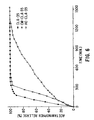
- Amylolysis was quantified from the amounts of maltose liberated by amylolysis of the three substrates (CLA-6, CLA-20 and CM-CLA-20) by the method of Noelting and Bernfeld (1948) using dinitrosalicylic acid (DNS) as a reductimetric agent. 20 mg of each substrate in powder form were swollen and incubated for 3 min at 25 °C in 2 mL of phosphate buffer (0.02 M) containing 18 EU pancreatic ⁇ -amylase.
- DMS dinitrosalicylic acid
- CM-CLA-20 exhibited higher stability to amylolysis than did CLA-20 ( Figure IV).
- the substrate showing the highest susceptibility to amylase was CLA-6. Without being bound by any particular theory, it appears that a higher degree of cross-linking confers higher stability to amylolysis. Furthermore, the presence of carboxylic (CM) groups seems to limit amylolysis even more. Without being bound by theory, CM groups might block the access of the ⁇ -amylase (despite the fact that it is an endo-amylase) to the CM-CLA support by steric hindrance or ionic interactions.
- Neutralization was achieved first by adding 570 mL of distilled water to the reaction medium. Then, a solution of acetic acid (85 mL of glacial acetic acid/17.4 M/ in 600 mL distilled water, completed with another volume of 1050 mL distilled water pre-heated at 50 °C) was introduced to the CLA-35 suspension, under stirring, up to a final pH of 6.8-7.0. The suspension was then slowly cooled to 20 °C.
- acetic acid 85 mL of glacial acetic acid/17.4 M/ in 600 mL distilled water, completed with another volume of 1050 mL distilled water pre-heated at 50 °C
- a 4 L volume of an acetone/water solution (85/15 v/v) was prepared, and 1 L of this solution was added slowly, under stirring, to a 1 L suspension of CLA-35. This medium was left, under stirring, at 4 °C for 20 min and filtered. The gel remaining on the filter was resuspended in 1 L of acetone/water (60/40 v/v), maintained for 20 min under stirring at 4 °C, and filtered. This washing in acetone/water (60/40) was repeated twice.
- the gel obtained from the last filtration was recovered and resuspended in 400 mL of acetone.
- the medium was maintained for 20 min under stirring at 4 °C, and filtered. This operation was repeated two more times (but without 20 min at 4 °C) and filtered.
- the resulting powder was dried by evaporation of acetone.
- CM-CLA-35 The washing of CM-CLA-35. After the reaction was complete, the suspension was filtered, resuspended in distilled water and filtered again on a Büchner funnel, measuring the pH of filtrate. The gel was thoroughly washed on the filter until the filtrate had a pH of 6.5-7.0. The gel was then resuspended in 1 L of distilled water, and a 1 L solution of acetone/water (85/15 v/v) was added slowly, under stirring, to the suspension. The medium was kept, under stirring, at 4 °C for 20 min, and filtered.
- the gel remaining on the filter was resuspended in 0.5 L of acetone/water solution (80/20 v/v), maintained for 20 min under stirring at 4 °C, and filtered. This washing was repeated once more with acetone/water (90/10).
- the gel obtained from the last filtration was recovered, resuspended in 400 mL of acetone, maintained for 20 min under stirring at 4 °C, and filtered. This operation was repeated two more times (but without keeping the suspension for 20 min at 4 °C) and filtered. The resulting CM-CLA-35 powder was finally dried by evaporation.
- the degree of substitution of hydroxyl groups was evaluated by potentiometric titration of carboxymethyl groups (device: Corning-ion analyser 250) with 0.1 N NaOH calibrated solution. It was of 3.8 meq/g.
- Aminoethylation was achieved by treatment of CLA-35 with 2-chloroethylamine hydrochloride.
- the suspension was filtered, resuspended in distilled water and filtered again on a Büchner funnel, measuring the pH of filtrate, as for CM-CLA-35 synthesis.
- the gel was washed on the filter until pH 6.5-7.0, then resuspended in 1 L distilled water.
- a 1 L solution of acetone/water (85/15 v/v) was added slowly, under stirring, to the suspension.
- the AE-CLA-35 gel was dried by the same procedures as for CM-CLA-35.
- the resulting AE-CLA-35 powder obtained was finally dried by evaporation on aluminum sheets.
- AE-CLA-6 was prepared according to the procedure used to prepare AE-CLA-35, except that CLA-6 was used instead of CLA-35.
- Amylolysis was quantified from the amounts of maltose liberated during ⁇ -amylase attack on the above-mentioned substrates, determined by the method of Noelting and Bernfed (Noelting G. and Bernfed P., Helv. Chim. Acta, 31, 286-293, 1948) with dinitrosalicylic acid (DNS) used as the reductimetric agent.
- DMS dinitrosalicylic acid
- the CLA used in this example was with sodium trimetaphosphate.
- the drug was mixed with CLA in a bag for 2-3 minutes and the blend was compressed using a tablet press with round 5/16 inch toolings.
- the weight of the tablets was 200 mg.
- the CLA used in this example was with sodium trimetaphosphate.
- the drug was mixed with CLA in a bag for 2-3 minutes and the blend was compressed using a tablet press with round 15/32 inch toolings.
- the weight of the tablets was 500 mg.
- the dissolution release profile of the tablets was determined using a USP type III dissolution apparatus.
- the dissolution system was set up with different dissolution fluids that mimic the GI tract environment with or without ⁇ -amylase(4500 I.U./L).
- One international unit (I.U.) will liberate 1 mg of maltose from starch in three minutes at pH 6.9 at 20°C.
- the drug release was recorded spectrophotometrically with an automated sampling system.
- 500 mg tablets having a 13 mm diameter and a 2.4-2.7 mm thickness were prepared by direct compression in a hydraulic Carver press at 3 T/cm 2 , and contained 100 mg acetaminophen as tracer.
- the acetaminophen tracer and the CLA (or derivatives) powders were mixed for three minutes prior to compression.
- Carboxymethylation of amylose results in an increase of about 2-3 hrs in the dissolution time; from 2-3 h for CLA-35 (90% release), to 4-6 h for CM-CLA-35 (90% release). A substantial increase in dissolution time (up to 16-17 h for 90% release), was found for AE-CLA-35 (22-24 h for the total release).
Landscapes
- Health & Medical Sciences (AREA)
- Chemical & Material Sciences (AREA)
- Medicinal Chemistry (AREA)
- Pharmacology & Pharmacy (AREA)
- Epidemiology (AREA)
- Life Sciences & Earth Sciences (AREA)
- Animal Behavior & Ethology (AREA)
- General Health & Medical Sciences (AREA)
- Public Health (AREA)
- Veterinary Medicine (AREA)
- Medicinal Preparation (AREA)
- Polysaccharides And Polysaccharide Derivatives (AREA)
- Acyclic And Carbocyclic Compounds In Medicinal Compositions (AREA)
- Pharmaceuticals Containing Other Organic And Inorganic Compounds (AREA)
Claims (40)
- Feste orale pharmazeutische Dosierungseinheit mit kontrollierter Freisetzung in Form einer Tablette, die eine Mischung aus 0,01 bis 80 Gew.-% der Tablette eines trockenen Pulvers eines pharmazeutischen Produkts und 20 bis 99,99 Gew.-% der Tablette eines trockenen Pulvers einer amylosereichen Stärke umfaßt, wobei die amylosereiche Stärke eine Mischung aus von etwa 10 bis 60 Gew.-% Amylopektin und von etwa 40 bis 90 % Amylose umfaßt, wobei die amylosereiche Stärke mittels eines kovalenten Vernetzungsmittels kovalent vernetzt wurde, wobei die Vernetzung mit von etwa 0,1 g bis etwa 30 g Vernetzungsmittel pro 100 g der amylosereichen Stärke durchgeführt wurde, wobei die Dosierungseinheiten gegen einen Abbau durch Amylase beständig ist.
- Feste pharmazeutische Dosierungseinheit mit kontrollierter Freisetzung nach Anspruch 1, wobei das kovalente Vernetzungsmittel 2,3-Dibrompropanol, Epichlorhydrin, Natriumtrimetaphosphat, lineare gemischte Anhydride von Essigsäure und di- oder tribasigen Carbonsäuren, Vinylsulfon, Diepoxide, Cyanurchlorid, Hexahydro-1,3,5-trisacryloyl-striazin, Hexamethylendiisocyanat, Toluol-2,4-diisocyanat, N,N-Methylenbisacrylamid, N,N'-Bis(hydroxymethyl)ethylenharnstoff, Phosgen, Tripolyphosphat, gemischte Kohlensäure-Carbonsäure-Anhydride, Imidazolide von Kohlen- und mehrbasigen Carbonsäuren, Imidazoliumsalze von mehrbasigen Carbonsäuren, Guanidinderivate von Polycarbonsäuren, oder Ester von Propionsäure ist.
- Feste pharmazeutische Dosierungseinheit mit kontrollierter Freisetzung nach Anspruch 1, wobei das pharmazeutische Produkt Pseudoephedrinhydrochlorid ist.
- Feste pharmazeutische Dosierungseinheit mit kontrollierter Freisetzung nach Anspruch 1, wobei das pharmazeutische Produkt Acetaminophen ist.
- Feste pharmazeutische Dosierungseinheit mit kontrollierter Freisetzung nach Anspruch 1, wobei das kovalente Vernetzungsmittel Epichlorhydrin ist.
- Feste pharmazeutische Dosierungseinheit mit kontrollierter Freisetzung nach Anspruch 1, wobei das kovalente Vernetzungsmittel Natriumtrimetaphosphat ist.
- Feste pharmazeutische Dosierungseinheit mit kontrollierter Freisetzung nach Anspruch 1, die außerdem ein Polysaccharid oder ein Polyol umfaßt.
- Feste pharmazeutische Dosierungseinheit mit kontrollierter Freisetzung nach Anspruch 7, wobei das Polysaccharid ein β-(1-3)Glycan, Xanthangummi, Johannisbrotkernmehl oder Guargummi ist.
- Feste pharmazeutische Dosierungseinheit mit kontrollierter Freisetzung nach Anspruch 7, wobei das Polyol Polyvinylalkohol ist.
- Verfahren, um bei einem pharmazeutischen Produkt eine verzögerte Freisetzung zu bewirken, das die Schritte umfaßt:(a) Bereitstellen des pharmazeutischen Produkts in trockener Pulverform; und(b) Mischen des pharmazeutischen Produkts mit einem Pulver, das eine amylosereiche Stärke umfaßt, wobei die amylosereiche Stärke eine Mischung aus von etwa 10 bis 60 % Amylopektin und 40 bis 90 % Amylose umfaßt, wobei die amylosereiche Stärke mit einem Vernetzungsmittel kovalent vernetzt wurde, wobei die Vernetzung mit von etwa 0,1 g bis etwa 30 g Vernetzungsmittel pro 100 g der amylosereichen Stärke durchgeführt wurde; und(c) Verpressen der Mischung unter Bildung einer Tablette.
- Verfahren nach Anspruch 10, wobei die Stufe (b) das Vermischen des pharmazeutischen Produkts in einer Menge von 0,01 bis 80 Gew.-% der Tablette mit einem Pulver, das vernetzte amylosereiche Stärke umfaßt, in einer Menge von 20 bis 99,99 Gew.-% der Tablette umfaßt.
- Verfahren nach Anspruch 10, wobei das Vernetzungsmittel Natriumtrimetaphosphat ist.
- Verfahren nach Anspruch 10, wobei Stufe (b) mit von etwa 0,1 g bis etwa 30,0 g Natriumtrimetaphosphat pro 100 g amylosereiche Stärke durchgeführt wird.
- Feste pharmazeutische Dosierungseinheit mit kontrollierter Freisetzung in Form einer Tablette, die umfaßt:wobei die amylosereiche Stärke und das Polysaccharid oder Polyol kovalent mit einem kovalenten Vernetzungsmittel kovernetzt wurden, wobei das Vernetzen mit von etwa 0,1 g bis etwa 30 g Vernetzungsmittel pro 100 g amylosereiche Stärke durchgeführt wurde.(a) ein pharmazeutisches Produkt;(b) amylosereiche Stärke, wobei die amylosereiche Stärke 10 bis 60 Gew.-% Amylopektin und 40 bis 90 Gew.-% Amylose umfaßt; und(c) ein Polysaccharid oder ein Polyol;
- Feste pharmazeutische Dosierungseinheit mit kontrollierter Freisetzung nach Anspruch 14, wobei das Polysaccharid ein β-(1-3)Glycan, Xanthangummi, Johannisbrotkernmehl oder Guargummi ist.
- Feste pharmazeutische Dosierungseinheit mit kontrollierter Freisetzung nach Anspruch 14, wobei das Polyol Polyvinylalkohol ist.
- Feste pharmazeutische Dosierungseinheit mit kontrollierter Freisetzung nach Anspruch 14, wobei das kovalente Vernetzungsmittel 2,3-Dibrompropanol, Epichlorhydrin, Natriumtrimetaphosphat, lineare gemischte Anhydride von Essigsäure und di- oder tribasigen Carbonsäuren, Vinylsulfon, Diepoxide, Cyanurchlorid, Hexahydro-1,3,5-trisacryloyls-triazin, Hexamethylendiisocyanat, Toluol-2,4-diisocyanat, N,N-Methylenbisacrylamid, N,N'-Bis(hydroxymethyl)ethylenharnstoff, Phosgen, Tripolyphosphat, gemischte Kohlensäure-Carbonsäure-Anhydride, Imidazolide von Carbon- und mehrbasigen Carbonsäuren, Imidazoliumsalze von mehrbasigen Carbonsäuren, Guanidinderivate von Polycarbonsäuren oder Ester von Propionsäure ist.
- Feste pharmazeutische Dosierungseinheit mit kontrollierter Freisetzung nach Anspruch 14, wobei das pharmazeutische Produkt Pseudoephedrinhydrochlorid ist.
- Feste pharmazeutische Dosierungseinheit mit kontrollierter Freisetzung nach Anspruch 14, wobei das pharmazeutische Produkt Acetaminophen ist.
- Feste pharmazeutische Dosierungseinheit mit kontrollierter Freisetzung nach Anspruch 14, wobei das kovalente Vernetzungsmittel Epichlorhydrin ist.
- Feste pharmazeutische Dosierungseinheit mit kontrollierter Freisetzung nach Anspruch 14, wobei das kovalente Vernetzungsmittel Natriumtrimetaphosphat ist.
- Verfahren, um bei einem pharmazeutischen Produkt eine verzögerte Freisetzung zu bewirken, das die Stufen umfaßt:(a) Bereitstellen des pharmazeutischen Produkts in trockener Pulverform;(b) Vermischen des pharmazeutischen Produkts mit einem Pulver, das eine amylosereiche Stärke umfaßt, wobei die amylosereiche Stärke 10 bis 60 Gew.-% Amylopektin und 40 bis 90 Gew.-% Amylose umfaßt, wobei die amylosereiche Stärke kovalent mit einem Polysaccharid oder einem Polyol und einem Vernetzungsmittel kovernetzt wurde, wobei die Vernetzung mit von etwa 0,1 g bis etwa 30 g Vernetzungsmittel pro 100 g der amylosereichen Stärke durchgeführt wurde; und(c) Verpressen der Mischung unter Bildung einer Tablette.
- Verfahren nach Anspruch 22, wobei Stufe (b) das Vermischen des Polysaccharids oder Polyols mit amylosereicher Stärke vor der Vernetzung der amylosereichen Stärke umfaßt.
- Verfahren nach Anspruch 22, wobei das Polyol Polyvinylalkohol ist.
- Verfahren nach Anspruch 22, wobei das Polysaccharid ein β-(1-3)Glycan, Xanthangummi, Johannisbrotkernmehl oder Guargummi ist.
- Verfahren nach Anspruch 22, wobei Stufe (b) das Vermischen des pharmazeutischen Produkts in einer Menge von 0,01 bis 80 Gew.-% der Tablette mit einem Pulver, das vernetzte amylosereiche Stärke umfaßt, in einer Menge von 20 bis 99,99 Gew.-% der Tablette umfaßt.
- Verfahren nach Anspruch 22, wobei das Vernetzungsmittel Natriumtrimetaphosphat ist.
- Verfahren nach Anspruch 22, wobei Stufe (b) mit von etwa 0,1 g bis etwa 30,0 g Natriumtrimetaphosphat pro 100 g amylosereiche Stärke durchgeführt wird.
- Verfahren, um bei einem pharmazeutischen Produkt eine verzögerte Freisetzung zu bewirken, das die Stufen umfaßt:(a) Bereitstellen des pharmazeutischen Produkts in trockener Pulverform;(b) Mischen des pharmazeutischen Produkts mit einem Pulver, das eine amylosereiche Stärke umfaßt, wobei die amylosereiche Stärke 10 bis 60 Gew.-% Amylopektin und 40 bis 90 Gew.-% Amylose umfaßt, wobei die amylosereiche Stärke kovalent unter Verwendung eines kovalenten Vernetzungsmittels vernetzt ist, wobei die Vernetzung mit von etwa 0,1 g bis etwa 30 g Vernetzungsmittel pro 100 g der amylosereichen Stärke durchgeführt wurde;(c) Vermischen des Pulvers aus Stufe (b) mit einem Polysaccharid oder Polyol; und(d) Verpressen der Mischung unter Bildung einer Tablette.
- Verfahren nach Anspruch 29, wobei das Polyol Polyvinylalkohol ist.
- Verfahren nach Anspruch 29, wobei das Polysaccharid ein β-(1-3)Glycan, Xanthangummi, Johannisbrotkernmehl oder Guargummi ist.
- Verfahren nach Anspruch 29, wobei das Vernetzungsmittel Natriumtrimetaphosphat ist.
- Verfahren nach Anspruch 29, wobei Stufe (b) mit von etwa 0,1 g bis etwa 30,0 g Natriumtrimetaphosphat pro 100 g amylosereiche Stärke durchgeführt wird.
- Verfahren nach Anspruch 33, wobei Stufe (b) das Vermischen des pharmazeutischen Produkts in einer Menge von 0,01 bis 80 Gew.-% der Tablette mit einem Pulver, das vernetzte amylosereiche Stärke umfaßt, in einer Menge von 20 bis 99,99 Gew.-% der Tablette umfaßt.
- Vernetzte amylosereiche Stärke mit funktionellen Gruppen, hergestellt nach einem Verfahren, das die Schritte umfaßt:(a) Umsetzung einer amylosereichen Stärke mit einem Vernetzungsmittel, das in einer Konzentration von etwa 0,1 g bis etwa 40 g Vernetzungsmittel pro 100 g amylosereiche Stärke vernetzt wird, um eine vernetzte Amylose zu erhalten; und(b) Umsetzen der vernetzten amylosereichen Stärke mit einem Mittel zur Einführung funktioneller Gruppen in einer Konzentration von etwa 75 g bis etwa 250 g des funktionelle Gruppen einführenden Reagens pro 100 g vernetzte amylosereiche Stärke, um die vernetzte Amylose mit funktionellen Gruppen zu erhalten, wobei das die funktionellen Gruppen einführende Reagens aus der Gruppe ausgewählt ist, die besteht aus Monochloressigsäure und Chlorethylaminhydrochlorid.
- Vernetzte Amylose nach Anspruch 35, wobei das Vernetzungsmittel aus der Gruppe ausgewählt ist, die aus 2,3-Dibrompropanol, Epichlorhydrin, Natriumtrimetaphosphat, linearen gemischten Anhydriden aus Essigsäure und di- oder tribasigen Carbonsäuren, Vinylsulfon, Diepoxiden, Cyanurchlorid, Hexahydro-1,3,5-trisacryloyl-s-triazin, Hexamethylendiisocyanat, Toluol-2,4-diisocyanat, N,N-Methylenbisacrylamid, N,N'-Bis(hydroxymethyl)ethylenharnstoff, Phosgen, Tripolyphosphat, gemischten Kohlensäure-Carbonsäure-Anhydriden, Imidazoliden von Kohlen- und mehrbasigen Carbonsäuren, Imidazoliumsalzen von mehrbasigen Carbonsäuren, Guanidinderivaten von Polycarbonsäuren oder Estern von Propionsäure besteht.
- Vernetzte amylosereiche Stärke nach Anspruch 36, wobei das Vernetzungsmittel Epichlorhydrin ist.
- Vernetzte amylosereiche Stärke nach Anspruch 35, wobei die Umsetzung von Stufe (a) bei einer Konzentration von etwa 35 g Epichlorhydrin pro 100 g amylosereiche Stärke durchgeführt wird.
- Vernetzte amylosereiche Stärke nach Anspruch 35, wobei die Umsetzung von Stufe (b) bei einer Konzentration von etwa 100 g Monochloressigsäure pro 100 g amylosereiche Stärke durchgeführt wird.
- Vernetzte amylosereiche Stärke nach Anspruch 35, wobei die Umsetzung von Stufe (b) bei einer Konzentration von etwa 122,5 g 2-Chlorethylaminhydrochlorid pro 100 g amylosereiche Stärke durchgeführt wird.
Applications Claiming Priority (3)
| Application Number | Priority Date | Filing Date | Title |
|---|---|---|---|
| US09/028,385 US6284273B1 (en) | 1998-02-24 | 1998-02-24 | Cross-linked high amylose starch resistant to amylase as a matrix for the slow release of biologically active compounds |
| PCT/CA1999/000169 WO1999043305A1 (en) | 1998-02-24 | 1999-02-24 | Cross-linked high amylose starch having functional groups as a matrix for the slow release of pharmaceutical agents |
| US28385 | 2001-12-21 |
Publications (2)
| Publication Number | Publication Date |
|---|---|
| EP1059915A1 EP1059915A1 (de) | 2000-12-20 |
| EP1059915B1 true EP1059915B1 (de) | 2004-09-29 |
Family
ID=21843160
Family Applications (1)
| Application Number | Title | Priority Date | Filing Date |
|---|---|---|---|
| EP99936029A Expired - Lifetime EP1059915B1 (de) | 1998-02-24 | 1999-02-24 | Quervernetzte stärke mit hohem amyloseanteil und funktionellen gruppen als matrix für langsame freisetzung pharmazeutischer wirkstoffe |
Country Status (19)
| Country | Link |
|---|---|
| US (2) | US6284273B1 (de) |
| EP (1) | EP1059915B1 (de) |
| JP (1) | JP2002504508A (de) |
| KR (1) | KR100713702B1 (de) |
| CN (1) | CN1298297A (de) |
| AT (1) | ATE277604T1 (de) |
| AU (1) | AU755069B2 (de) |
| BR (1) | BR9908187A (de) |
| CA (1) | CA2321461C (de) |
| CZ (1) | CZ301010B6 (de) |
| DE (1) | DE69920669T2 (de) |
| HU (1) | HU225045B1 (de) |
| IL (1) | IL137955A (de) |
| NO (1) | NO329257B1 (de) |
| NZ (1) | NZ506437A (de) |
| PL (1) | PL192468B1 (de) |
| PT (1) | PT1059915E (de) |
| TR (1) | TR200003014T2 (de) |
| WO (1) | WO1999043305A1 (de) |
Families Citing this family (41)
| Publication number | Priority date | Publication date | Assignee | Title |
|---|---|---|---|---|
| CN100389752C (zh) * | 1978-04-21 | 2008-05-28 | 莱博法姆公司 | 控释组合物 |
| NZ260408A (en) | 1993-05-10 | 1996-05-28 | Euro Celtique Sa | Controlled release preparation comprising tramadol |
| US7022683B1 (en) | 1998-05-13 | 2006-04-04 | Carrington Laboratories, Inc. | Pharmacological compositions comprising pectins having high molecular weights and low degrees of methoxylation |
| DE19927688A1 (de) * | 1999-06-17 | 2000-12-21 | Gruenenthal Gmbh | Mehrschichttablette zur Verabreichung einer fixen Kombination von Tramadol und Diclofenac |
| US6607748B1 (en) * | 2000-06-29 | 2003-08-19 | Vincent Lenaerts | Cross-linked high amylose starch for use in controlled-release pharmaceutical formulations and processes for its manufacture |
| US7494669B2 (en) | 2001-02-28 | 2009-02-24 | Carrington Laboratories, Inc. | Delivery of physiological agents with in-situ gels comprising anionic polysaccharides |
| US6777000B2 (en) | 2001-02-28 | 2004-08-17 | Carrington Laboratories, Inc. | In-situ gel formation of pectin |
| EP1387885A1 (de) * | 2001-05-01 | 2004-02-11 | Universite Du Quebec A Montreal | Dreidimensionale biokompatible stützstruktur für bioartifizielle organe und deren verwendung |
| US8487002B2 (en) * | 2002-10-25 | 2013-07-16 | Paladin Labs Inc. | Controlled-release compositions |
| MXPA05004410A (es) * | 2002-10-25 | 2005-11-23 | Labopharm Inc | Composiciones de liberacion controlada. |
| TWI319713B (en) * | 2002-10-25 | 2010-01-21 | Sustained-release tramadol formulations with 24-hour efficacy | |
| US20060172006A1 (en) * | 2003-10-10 | 2006-08-03 | Vincent Lenaerts | Sustained-release tramadol formulations with 24-hour clinical efficacy |
| EP1713498A4 (de) * | 2004-02-09 | 2009-07-15 | Transfert Plus Sec | Polymeres material enthaltende zusammensetzung und deren verwendungen |
| CA2491665A1 (fr) * | 2004-12-24 | 2006-06-24 | Louis Cartilier | Formulation de comprime pour liberation soutenue de principe actif |
| DK1940467T3 (da) | 2005-09-09 | 2017-02-13 | Paladin Labs Inc | Lægemiddelsammensætning med langvarig frigivelse |
| CN101252932B (zh) | 2005-09-09 | 2012-10-03 | 安吉利尼莱博法姆有限责任公司 | 用于一天给药一次的曲唑酮组合物 |
| CA2621595A1 (en) * | 2005-09-21 | 2007-04-12 | Surmodics, Inc. | Coatings and articles including natural biodegradable polysaccharides |
| ATE454908T1 (de) * | 2005-09-21 | 2010-01-15 | Surmodics Inc | In situ okklusionszusammensetzungen mit natürlichen biologisch abbaubaren polysacchariden |
| JP5122436B2 (ja) * | 2006-03-14 | 2013-01-16 | 国立大学法人 奈良先端科学技術大学院大学 | 新規なヘパリン代替材料およびその製造方法 |
| CA2590821A1 (en) * | 2007-06-07 | 2008-12-07 | Universite De Montreal | High-amylose sodium carboxymethyl starch sustained release excipient and process for preparing the same |
| KR20100069685A (ko) * | 2007-10-16 | 2010-06-24 | 라보팜 인코포레이트 | 아세트아미노펜과 트라마돌의 지속 방출을 위한 이중층 조성물 |
| CN101161684B (zh) * | 2007-11-23 | 2010-05-19 | 华南理工大学 | 交联羧甲基淀粉的红外线合成方法 |
| US8486448B2 (en) | 2007-12-17 | 2013-07-16 | Paladin Labs Inc. | Misuse preventative, controlled release formulation |
| JP2011506732A (ja) * | 2007-12-21 | 2011-03-03 | アクゾ ノーベル ナムローゼ フェンノートシャップ | 熱硬化性ポリマー |
| JP5763525B2 (ja) | 2008-05-07 | 2015-08-12 | サーモディクス,インコーポレイティド | 粒子からの核酸複合体の送達 |
| ES2592808T3 (es) * | 2008-09-15 | 2016-12-01 | Paladin Labs Inc. | Micropartículas a base de almidón para la liberación de agentes dispuestos en su interior |
| AU2009327312A1 (en) | 2008-12-16 | 2011-08-04 | Labopharm Europe Limited | Misuse preventative, controlled release formulation |
| AR082189A1 (es) | 2010-07-06 | 2012-11-21 | Gruenenthal Gmbh | Formas de dosificacion gastrorretentivas, procedimiento |
| US8901092B2 (en) | 2010-12-29 | 2014-12-02 | Surmodics, Inc. | Functionalized polysaccharides for active agent delivery |
| WO2012116434A1 (en) * | 2011-03-01 | 2012-09-07 | 4413261 Canada Inc. (Spencer Canada) | Two speed monolithic system for controlled release of drugs |
| JP6605508B2 (ja) * | 2014-02-27 | 2019-11-13 | ビー‐オーガニック フィルムス コーポレイション | 一重らせんv構造を有する官能化デンプン中に含まれる生物活性剤 |
| BR112017012946A2 (pt) | 2014-12-19 | 2018-03-13 | Baxter Healthcare Sa | ?composição hemostática, métodos para tratar uma lesão e para diminuir ou interromper sangramento, e, kit para o tratamento de uma lesão? |
| CN104784738B (zh) * | 2015-04-03 | 2016-12-07 | 四川大学 | 一种天然缓释多效医用海绵 |
| CN106279453B (zh) * | 2015-05-28 | 2019-12-10 | 易媛 | 交联的高分子化合物及其制备方法、水凝胶、水基压裂液和用途 |
| CN105536058A (zh) * | 2016-01-22 | 2016-05-04 | 青岛中腾生物技术有限公司 | 一种医用淀粉海绵及其制备方法和用途 |
| GB2567493B (en) | 2017-10-13 | 2019-12-18 | Altus Formulation Inc | Starch-based release modifying excipients and pharmaceutical compositions derived therefrom |
| CN111072791A (zh) * | 2019-12-27 | 2020-04-28 | 河南新孚望新材料科技有限公司 | 一种包膜剂用高直链淀粉的制备方法 |
| JP7125216B1 (ja) | 2021-03-31 | 2022-08-24 | 長瀬産業株式会社 | 水溶性ポリマーの製造方法、および吸水性樹脂の製造方法 |
| JP7348412B2 (ja) * | 2021-03-31 | 2023-09-20 | 長瀬産業株式会社 | 水溶性ポリマーの製造方法、および吸水性樹脂の製造方法 |
| WO2025194276A1 (en) * | 2024-03-21 | 2025-09-25 | Eric Therasse | Pharmaceutical composition comprising microparticles for high drug loading |
| CN119264282A (zh) * | 2024-10-18 | 2025-01-07 | 华南理工大学 | 一种高空腔纳米淀粉及基于其的高耐老化橡胶材料与制备 |
Family Cites Families (13)
| Publication number | Priority date | Publication date | Assignee | Title |
|---|---|---|---|---|
| US4072535A (en) * | 1970-12-28 | 1978-02-07 | A. E. Staley Manufacturing Company | Precompacted-starch binder-disintegrant-filler material for direct compression tablets and dry dosage capsules |
| US4369308A (en) * | 1981-07-24 | 1983-01-18 | National Starch And Chemical Corporation | Low swelling starches as tablet disintegrants |
| JPH0791240B2 (ja) * | 1987-04-01 | 1995-10-04 | 株式会社日本触媒 | 2−ハロエチルアミンハロゲン化水素酸塩の製造方法 |
| CA2041774C (en) * | 1990-11-27 | 1994-04-19 | Mircea A. Mateescu | Use of cross-linked amylose as a matrix for the slow release of biologically active compounds |
| JPH06271704A (ja) * | 1993-03-22 | 1994-09-27 | Asahi Chem Ind Co Ltd | 水性易燃性組成物 |
| US5616343A (en) * | 1993-03-25 | 1997-04-01 | Labopharm, Inc. | Cross-linked amylose as a binder/disintegrant in tablets |
| CA2187633A1 (en) * | 1994-04-11 | 1995-10-19 | Douglas R. Chambers | Superabsorbent polymers and products therefrom |
| US5830884A (en) * | 1995-01-18 | 1998-11-03 | National Starch And Chemical Investment Holding Corporation | Pharmaceutical products containing thermally-inhibited starches |
| US5593503A (en) * | 1995-06-07 | 1997-01-14 | National Starch And Chemical Investment Holding Corporation | Process for producing amylase resistant granular starch |
| US5667637A (en) * | 1995-11-03 | 1997-09-16 | Weyerhaeuser Company | Paper and paper-like products including water insoluble fibrous carboxyalkyl cellulose |
| CA2173818A1 (fr) * | 1996-04-10 | 1997-10-11 | Francois Chouinard | Comprime pharmaceutique a liberation controlee contenant un support a base d'amylose reticule et d'hydroxypropylmethylcellulose |
| US5879707A (en) * | 1996-10-30 | 1999-03-09 | Universite De Montreal | Substituted amylose as a matrix for sustained drug release |
| US5807575A (en) * | 1997-02-14 | 1998-09-15 | Rougier Inc. | Manufacture of cross-linked amylose useful as a excipient for control release of active compounds |
-
1998
- 1998-02-24 US US09/028,385 patent/US6284273B1/en not_active Expired - Lifetime
-
1999
- 1999-02-24 HU HU0100818A patent/HU225045B1/hu not_active IP Right Cessation
- 1999-02-24 EP EP99936029A patent/EP1059915B1/de not_active Expired - Lifetime
- 1999-02-24 AU AU32420/99A patent/AU755069B2/en not_active Ceased
- 1999-02-24 NZ NZ506437A patent/NZ506437A/xx unknown
- 1999-02-24 PL PL342596A patent/PL192468B1/pl not_active IP Right Cessation
- 1999-02-24 WO PCT/CA1999/000169 patent/WO1999043305A1/en not_active Ceased
- 1999-02-24 TR TR2000/03014T patent/TR200003014T2/xx unknown
- 1999-02-24 IL IL13795599A patent/IL137955A/en not_active IP Right Cessation
- 1999-02-24 JP JP2000533104A patent/JP2002504508A/ja active Pending
- 1999-02-24 AT AT99936029T patent/ATE277604T1/de not_active IP Right Cessation
- 1999-02-24 BR BR9908187-3A patent/BR9908187A/pt not_active Application Discontinuation
- 1999-02-24 CN CN99805447A patent/CN1298297A/zh active Pending
- 1999-02-24 CA CA002321461A patent/CA2321461C/en not_active Expired - Fee Related
- 1999-02-24 CZ CZ20003097A patent/CZ301010B6/cs not_active IP Right Cessation
- 1999-02-24 KR KR1020007009278A patent/KR100713702B1/ko not_active Expired - Fee Related
- 1999-02-24 PT PT99936029T patent/PT1059915E/pt unknown
- 1999-02-24 US US09/257,090 patent/US6419957B1/en not_active Expired - Fee Related
- 1999-02-24 DE DE69920669T patent/DE69920669T2/de not_active Expired - Lifetime
-
2000
- 2000-08-23 NO NO20004208A patent/NO329257B1/no not_active IP Right Cessation
Also Published As
| Publication number | Publication date |
|---|---|
| HUP0100818A3 (en) | 2001-12-28 |
| US6419957B1 (en) | 2002-07-16 |
| HU225045B1 (en) | 2006-05-29 |
| EP1059915A1 (de) | 2000-12-20 |
| PT1059915E (pt) | 2005-02-28 |
| PL342596A1 (en) | 2001-06-18 |
| KR20010034531A (ko) | 2001-04-25 |
| AU3242099A (en) | 1999-09-15 |
| AU755069B2 (en) | 2002-12-05 |
| BR9908187A (pt) | 2000-10-31 |
| IL137955A0 (en) | 2001-10-31 |
| NZ506437A (en) | 2003-03-28 |
| DE69920669T2 (de) | 2005-11-03 |
| CA2321461A1 (en) | 1999-09-02 |
| NO20004208D0 (no) | 2000-08-23 |
| IL137955A (en) | 2005-12-18 |
| WO1999043305A1 (en) | 1999-09-02 |
| CZ20003097A3 (en) | 2001-06-13 |
| HUP0100818A2 (hu) | 2001-08-28 |
| DE69920669D1 (de) | 2004-11-04 |
| CA2321461C (en) | 2008-04-29 |
| CN1298297A (zh) | 2001-06-06 |
| CZ301010B6 (cs) | 2009-10-14 |
| ATE277604T1 (de) | 2004-10-15 |
| KR100713702B1 (ko) | 2007-05-02 |
| TR200003014T2 (tr) | 2001-02-21 |
| NO20004208L (no) | 2000-08-23 |
| JP2002504508A (ja) | 2002-02-12 |
| PL192468B1 (pl) | 2006-10-31 |
| US6284273B1 (en) | 2001-09-04 |
| NO329257B1 (no) | 2010-09-20 |
Similar Documents
| Publication | Publication Date | Title |
|---|---|---|
| EP1059915B1 (de) | Quervernetzte stärke mit hohem amyloseanteil und funktionellen gruppen als matrix für langsame freisetzung pharmazeutischer wirkstoffe | |
| CN100352509C (zh) | 用于控释药物制剂的交联高直链淀粉的淀粉及其制备方法 | |
| Kamel et al. | Pharmaceutical significance of cellulose: A review | |
| AU2001271481A1 (en) | Cross-linked high amylose starch for use in controlled-release pharmaceutical formulations and processes for its manufacture | |
| JP4477144B2 (ja) | 薬物持効用薬剤としての置換アミロース | |
| Aguilar‐de‐Leyva et al. | Critical points and phase transitions in polymeric matrices for controlled drug release | |
| MXPA00008227A (en) | Cross-linked high amylose starch having functional groups as a matrix for the slow release of pharmaceutical agents | |
| WO1997034932A2 (en) | Compositions containing starch excipients | |
| SK1795A3 (en) | Drug delivery device and method of this production | |
| HK1037912A (en) | Cross-linked high amylose starch having functional groups as a matrix for the slow release of pharmaceutical agents | |
| Nandi | Plant polysaccharides in pharmaceutical tablets | |
| HK1059574B (en) | Cross-linked high amylose starch for use in controlled-release pharmaceutical formulations and processes for its manufacture |
Legal Events
| Date | Code | Title | Description |
|---|---|---|---|
| PUAI | Public reference made under article 153(3) epc to a published international application that has entered the european phase |
Free format text: ORIGINAL CODE: 0009012 |
|
| 17P | Request for examination filed |
Effective date: 20000914 |
|
| AK | Designated contracting states |
Kind code of ref document: A1 Designated state(s): AT BE CH CY DE DK ES FI FR GB GR IE IT LI LU MC NL PT SE |
|
| 17Q | First examination report despatched |
Effective date: 20020822 |
|
| GRAP | Despatch of communication of intention to grant a patent |
Free format text: ORIGINAL CODE: EPIDOSNIGR1 |
|
| GRAS | Grant fee paid |
Free format text: ORIGINAL CODE: EPIDOSNIGR3 |
|
| GRAA | (expected) grant |
Free format text: ORIGINAL CODE: 0009210 |
|
| AK | Designated contracting states |
Kind code of ref document: B1 Designated state(s): AT BE CH CY DE DK ES FI FR GB GR IE IT LI LU MC NL PT SE |
|
| PG25 | Lapsed in a contracting state [announced via postgrant information from national office to epo] |
Ref country code: FI Free format text: LAPSE BECAUSE OF FAILURE TO SUBMIT A TRANSLATION OF THE DESCRIPTION OR TO PAY THE FEE WITHIN THE PRESCRIBED TIME-LIMIT Effective date: 20040929 Ref country code: AT Free format text: LAPSE BECAUSE OF FAILURE TO SUBMIT A TRANSLATION OF THE DESCRIPTION OR TO PAY THE FEE WITHIN THE PRESCRIBED TIME-LIMIT Effective date: 20040929 |
|
| REG | Reference to a national code |
Ref country code: GB Ref legal event code: FG4D |
|
| REG | Reference to a national code |
Ref country code: CH Ref legal event code: EP |
|
| REG | Reference to a national code |
Ref country code: IE Ref legal event code: FG4D |
|
| REF | Corresponds to: |
Ref document number: 69920669 Country of ref document: DE Date of ref document: 20041104 Kind code of ref document: P |
|
| REG | Reference to a national code |
Ref country code: DK Ref legal event code: T3 |
|
| PGFP | Annual fee paid to national office [announced via postgrant information from national office to epo] |
Ref country code: GR Payment date: 20050222 Year of fee payment: 7 |
|
| PG25 | Lapsed in a contracting state [announced via postgrant information from national office to epo] |
Ref country code: LU Free format text: LAPSE BECAUSE OF NON-PAYMENT OF DUE FEES Effective date: 20050224 Ref country code: CY Free format text: LAPSE BECAUSE OF FAILURE TO SUBMIT A TRANSLATION OF THE DESCRIPTION OR TO PAY THE FEE WITHIN THE PRESCRIBED TIME-LIMIT Effective date: 20050224 |
|
| PG25 | Lapsed in a contracting state [announced via postgrant information from national office to epo] |
Ref country code: MC Free format text: LAPSE BECAUSE OF NON-PAYMENT OF DUE FEES Effective date: 20050228 |
|
| REG | Reference to a national code |
Ref country code: PT Ref legal event code: SC4A Free format text: AVAILABILITY OF NATIONAL TRANSLATION Effective date: 20041229 |
|
| PG25 | Lapsed in a contracting state [announced via postgrant information from national office to epo] |
Ref country code: GR Free format text: LAPSE BECAUSE OF FAILURE TO SUBMIT A TRANSLATION OF THE DESCRIPTION OR TO PAY THE FEE WITHIN THE PRESCRIBED TIME-LIMIT Effective date: 20050601 |
|
| REG | Reference to a national code |
Ref country code: CH Ref legal event code: NV Representative=s name: A. BRAUN, BRAUN, HERITIER, ESCHMANN AG PATENTANWAE |
|
| PLBE | No opposition filed within time limit |
Free format text: ORIGINAL CODE: 0009261 |
|
| STAA | Information on the status of an ep patent application or granted ep patent |
Free format text: STATUS: NO OPPOSITION FILED WITHIN TIME LIMIT |
|
| ET | Fr: translation filed | ||
| 26N | No opposition filed |
Effective date: 20050630 |
|
| REG | Reference to a national code |
Ref country code: CH Ref legal event code: PFA Owner name: LENAERTS, VINCENT Free format text: LENAERTS, VINCENT#77 HOLTON AVENUE#WESTMOUNT, QUEBEC H3Y 2G1 (CA) $ CHOUINARD, FRANCOIS#14 CHEMIN D'AIGREMONT#LORRAINE, QUEBEC J6Z 4E4 (CA) $ MATEESCU, MIRCEA A.#377 SHERBROOKE STREET WEST#MONTREAL, QUEBEC H3A 1B5 (CA) $ ISPAS-SZABO, POMPILIA#3250 FOREST HILL#MONTREAL, QUEBEC H3V 1C8 (CA) -TRANSFER TO- LENAERTS, VINCENT#77 HOLTON AVENUE#WESTMOUNT, QUEBEC H3Y 2G1 (CA) $ CHOUINARD, FRANCOIS#14 CHEMIN D'AIGREMONT#LORRAINE, QUEBEC J6Z 4E4 (CA) $ MATEESCU, MIRCEA A.#377 SHERBROOKE STREET WEST#MONTREAL, QUEBEC H3A 1B5 (CA) $ ISPAS-SZABO, POMPILIA#3250 FOREST HILL#MONTREAL, QUEBEC H3V 1C8 (CA) |
|
| PGFP | Annual fee paid to national office [announced via postgrant information from national office to epo] |
Ref country code: ES Payment date: 20070228 Year of fee payment: 9 |
|
| PGFP | Annual fee paid to national office [announced via postgrant information from national office to epo] |
Ref country code: DK Payment date: 20110121 Year of fee payment: 13 Ref country code: IE Payment date: 20110125 Year of fee payment: 13 |
|
| PGFP | Annual fee paid to national office [announced via postgrant information from national office to epo] |
Ref country code: IT Payment date: 20110122 Year of fee payment: 13 Ref country code: NL Payment date: 20110128 Year of fee payment: 13 Ref country code: SE Payment date: 20110125 Year of fee payment: 13 Ref country code: CH Payment date: 20110125 Year of fee payment: 13 Ref country code: DE Payment date: 20110207 Year of fee payment: 13 |
|
| PGFP | Annual fee paid to national office [announced via postgrant information from national office to epo] |
Ref country code: BE Payment date: 20110127 Year of fee payment: 13 |
|
| PGFP | Annual fee paid to national office [announced via postgrant information from national office to epo] |
Ref country code: GB Payment date: 20110128 Year of fee payment: 13 |
|
| PG25 | Lapsed in a contracting state [announced via postgrant information from national office to epo] |
Ref country code: ES Free format text: THE PATENT HAS BEEN ANNULLED BY A DECISION OF A NATIONAL AUTHORITY Effective date: 20050109 |
|
| BERE | Be: lapsed |
Owner name: *CHOUINARD FRANCOIS Effective date: 20120228 Owner name: *ISPAS-SZABO POMPILIA Effective date: 20120228 Owner name: *LENAERTS VINCENT Effective date: 20120228 Owner name: *MATEESCU MIRCEA A. Effective date: 20120228 |
|
| REG | Reference to a national code |
Ref country code: NL Ref legal event code: V1 Effective date: 20120901 |
|
| REG | Reference to a national code |
Ref country code: CH Ref legal event code: PL |
|
| GBPC | Gb: european patent ceased through non-payment of renewal fee |
Effective date: 20120224 |
|
| PG25 | Lapsed in a contracting state [announced via postgrant information from national office to epo] |
Ref country code: LI Free format text: LAPSE BECAUSE OF NON-PAYMENT OF DUE FEES Effective date: 20120229 Ref country code: SE Free format text: LAPSE BECAUSE OF NON-PAYMENT OF DUE FEES Effective date: 20120225 Ref country code: CH Free format text: LAPSE BECAUSE OF NON-PAYMENT OF DUE FEES Effective date: 20120229 |
|
| REG | Reference to a national code |
Ref country code: DK Ref legal event code: EBP |
|
| REG | Reference to a national code |
Ref country code: IE Ref legal event code: MM4A |
|
| PG25 | Lapsed in a contracting state [announced via postgrant information from national office to epo] |
Ref country code: IT Free format text: LAPSE BECAUSE OF NON-PAYMENT OF DUE FEES Effective date: 20120224 |
|
| REG | Reference to a national code |
Ref country code: DE Ref legal event code: R119 Ref document number: 69920669 Country of ref document: DE Effective date: 20120901 |
|
| PG25 | Lapsed in a contracting state [announced via postgrant information from national office to epo] |
Ref country code: BE Free format text: LAPSE BECAUSE OF NON-PAYMENT OF DUE FEES Effective date: 20120228 |
|
| PG25 | Lapsed in a contracting state [announced via postgrant information from national office to epo] |
Ref country code: IE Free format text: LAPSE BECAUSE OF NON-PAYMENT OF DUE FEES Effective date: 20120224 Ref country code: NL Free format text: LAPSE BECAUSE OF NON-PAYMENT OF DUE FEES Effective date: 20120901 Ref country code: GB Free format text: LAPSE BECAUSE OF NON-PAYMENT OF DUE FEES Effective date: 20120224 |
|
| PG25 | Lapsed in a contracting state [announced via postgrant information from national office to epo] |
Ref country code: DE Free format text: LAPSE BECAUSE OF NON-PAYMENT OF DUE FEES Effective date: 20120901 |
|
| PG25 | Lapsed in a contracting state [announced via postgrant information from national office to epo] |
Ref country code: DK Free format text: LAPSE BECAUSE OF NON-PAYMENT OF DUE FEES Effective date: 20120229 |
|
| REG | Reference to a national code |
Ref country code: FR Ref legal event code: PLFP Year of fee payment: 18 |
|
| REG | Reference to a national code |
Ref country code: PT Ref legal event code: PC4A Owner name: , CA Effective date: 20160421 |
|
| REG | Reference to a national code |
Ref country code: PT Ref legal event code: PC4A Owner name: , CA Effective date: 20160502 |
|
| REG | Reference to a national code |
Ref country code: PT Ref legal event code: PC4A Owner name: , CA Effective date: 20160504 |
|
| REG | Reference to a national code |
Ref country code: FR Ref legal event code: TQ Owner name: PALADIN LABS BARBADOS INC., BB Effective date: 20160524 Ref country code: FR Ref legal event code: TQ Owner name: PALADIN LABS INC., CA Effective date: 20160524 Ref country code: FR Ref legal event code: TQ Owner name: PALADIN LABS EUROPE LIMITED, IE Effective date: 20160524 Ref country code: FR Ref legal event code: TP Owner name: PALADIN LABS BARBADOS INC., BB Effective date: 20160524 Ref country code: FR Ref legal event code: TP Owner name: PALADIN LABS EUROPE LIMITED, IE Effective date: 20160524 Ref country code: FR Ref legal event code: TP Owner name: PALADIN LABS INC., CA Effective date: 20160524 Ref country code: FR Ref legal event code: CD Owner name: PALADIN LABS INC., CA Effective date: 20160525 Ref country code: FR Ref legal event code: CD Owner name: PALADIN LABS EUROPE LIMITED, IE Effective date: 20160525 Ref country code: FR Ref legal event code: CD Owner name: PALADIN LABS BARBADOS INC., BB Effective date: 20160525 Ref country code: FR Ref legal event code: CD Owner name: PALADIN LABS INC., CA Effective date: 20160524 Ref country code: FR Ref legal event code: CD Owner name: PALADIN LABS EUROPE LIMITED, IE Effective date: 20160524 Ref country code: FR Ref legal event code: CD Owner name: PALADIN LABS BARBADOS INC., BB Effective date: 20160524 Ref country code: FR Ref legal event code: CA Effective date: 20160525 |
|
| REG | Reference to a national code |
Ref country code: FR Ref legal event code: PLFP Year of fee payment: 19 |
|
| REG | Reference to a national code |
Ref country code: FR Ref legal event code: PLFP Year of fee payment: 20 |
|
| PGFP | Annual fee paid to national office [announced via postgrant information from national office to epo] |
Ref country code: FR Payment date: 20180118 Year of fee payment: 20 Ref country code: PT Payment date: 20180130 Year of fee payment: 20 |
|
| PG25 | Lapsed in a contracting state [announced via postgrant information from national office to epo] |
Ref country code: PT Free format text: LAPSE BECAUSE OF EXPIRATION OF PROTECTION Effective date: 20190304 |