EP1073754B9 - Verfahren zur herstellung von protein mutanten mit reduzierter allergener wirkung in menschen. - Google Patents
Verfahren zur herstellung von protein mutanten mit reduzierter allergener wirkung in menschen. Download PDFInfo
- Publication number
- EP1073754B9 EP1073754B9 EP99918575A EP99918575A EP1073754B9 EP 1073754 B9 EP1073754 B9 EP 1073754B9 EP 99918575 A EP99918575 A EP 99918575A EP 99918575 A EP99918575 A EP 99918575A EP 1073754 B9 EP1073754 B9 EP 1073754B9
- Authority
- EP
- European Patent Office
- Prior art keywords
- protein
- protease
- cells
- epitope
- sequence
- Prior art date
- Legal status (The legal status is an assumption and is not a legal conclusion. Google has not performed a legal analysis and makes no representation as to the accuracy of the status listed.)
- Revoked
Links
- 108090000623 proteins and genes Proteins 0.000 title claims abstract description 98
- 102000004169 proteins and genes Human genes 0.000 title claims abstract description 79
- 230000004044 response Effects 0.000 title claims abstract description 36
- 230000002009 allergenic effect Effects 0.000 title claims abstract description 21
- 238000000034 method Methods 0.000 title claims description 37
- 238000002360 preparation method Methods 0.000 title description 6
- 230000008569 process Effects 0.000 title description 5
- 210000001744 T-lymphocyte Anatomy 0.000 claims abstract description 56
- 108091005804 Peptidases Proteins 0.000 claims description 135
- 239000004365 Protease Substances 0.000 claims description 124
- 108090000787 Subtilisin Proteins 0.000 claims description 63
- 108090000765 processed proteins & peptides Proteins 0.000 claims description 59
- 125000003275 alpha amino acid group Chemical group 0.000 claims description 38
- 210000004443 dendritic cell Anatomy 0.000 claims description 17
- 230000035755 proliferation Effects 0.000 claims description 11
- 210000004369 blood Anatomy 0.000 claims description 10
- 239000008280 blood Substances 0.000 claims description 10
- 210000004366 CD4-positive T-lymphocyte Anatomy 0.000 claims description 7
- 210000001151 cytotoxic T lymphocyte Anatomy 0.000 claims description 7
- 230000001737 promoting effect Effects 0.000 claims description 3
- 108090001126 Furin Proteins 0.000 claims description 2
- 102000004961 Furin Human genes 0.000 claims description 2
- 101710172072 Kexin Proteins 0.000 claims description 2
- 230000001419 dependent effect Effects 0.000 claims description 2
- 102100037486 Reverse transcriptase/ribonuclease H Human genes 0.000 claims 2
- 206010070834 Sensitisation Diseases 0.000 abstract description 10
- 230000008313 sensitization Effects 0.000 abstract description 10
- 230000003472 neutralizing effect Effects 0.000 abstract description 2
- 102000035195 Peptidases Human genes 0.000 description 125
- 235000019419 proteases Nutrition 0.000 description 95
- 235000018102 proteins Nutrition 0.000 description 66
- 241000193422 Bacillus lentus Species 0.000 description 34
- 241000193744 Bacillus amyloliquefaciens Species 0.000 description 32
- 239000002243 precursor Substances 0.000 description 29
- 206010020751 Hypersensitivity Diseases 0.000 description 27
- 210000004027 cell Anatomy 0.000 description 26
- 235000001014 amino acid Nutrition 0.000 description 24
- 102000004196 processed proteins & peptides Human genes 0.000 description 24
- 229940024606 amino acid Drugs 0.000 description 23
- 108091007433 antigens Proteins 0.000 description 23
- 102000036639 antigens Human genes 0.000 description 23
- 150000001413 amino acids Chemical class 0.000 description 22
- 239000000427 antigen Substances 0.000 description 22
- 239000000203 mixture Substances 0.000 description 21
- 239000000523 sample Substances 0.000 description 17
- 239000000243 solution Substances 0.000 description 17
- 239000003599 detergent Substances 0.000 description 16
- 108010056079 Subtilisins Proteins 0.000 description 14
- 102000005158 Subtilisins Human genes 0.000 description 14
- 108020004414 DNA Proteins 0.000 description 13
- 102000004190 Enzymes Human genes 0.000 description 13
- 108090000790 Enzymes Proteins 0.000 description 13
- 230000006052 T cell proliferation Effects 0.000 description 13
- 229940088598 enzyme Drugs 0.000 description 13
- 238000006467 substitution reaction Methods 0.000 description 13
- 125000000539 amino acid group Chemical group 0.000 description 10
- 238000003556 assay Methods 0.000 description 10
- 238000012217 deletion Methods 0.000 description 9
- 230000037430 deletion Effects 0.000 description 9
- 230000005867 T cell response Effects 0.000 description 8
- 238000004140 cleaning Methods 0.000 description 8
- 239000013612 plasmid Substances 0.000 description 8
- 230000002829 reductive effect Effects 0.000 description 8
- 108010076504 Protein Sorting Signals Proteins 0.000 description 7
- 210000000612 antigen-presenting cell Anatomy 0.000 description 7
- 230000001900 immune effect Effects 0.000 description 7
- 238000003780 insertion Methods 0.000 description 7
- 230000037431 insertion Effects 0.000 description 7
- 238000012986 modification Methods 0.000 description 7
- 230000004048 modification Effects 0.000 description 7
- 239000013598 vector Substances 0.000 description 7
- IAZDPXIOMUYVGZ-UHFFFAOYSA-N Dimethylsulphoxide Chemical compound CS(C)=O IAZDPXIOMUYVGZ-UHFFFAOYSA-N 0.000 description 6
- 241000282412 Homo Species 0.000 description 6
- 230000000890 antigenic effect Effects 0.000 description 6
- 230000003197 catalytic effect Effects 0.000 description 6
- 239000000047 product Substances 0.000 description 6
- 239000004753 textile Substances 0.000 description 6
- 241000194108 Bacillus licheniformis Species 0.000 description 5
- 108091028043 Nucleic acid sequence Proteins 0.000 description 5
- 108010022999 Serine Proteases Proteins 0.000 description 5
- 238000006243 chemical reaction Methods 0.000 description 5
- 238000010276 construction Methods 0.000 description 5
- 230000000694 effects Effects 0.000 description 5
- 238000009472 formulation Methods 0.000 description 5
- 230000006870 function Effects 0.000 description 5
- 238000004519 manufacturing process Methods 0.000 description 5
- 230000035772 mutation Effects 0.000 description 5
- 229920001184 polypeptide Polymers 0.000 description 5
- 230000028327 secretion Effects 0.000 description 5
- 102000013142 Amylases Human genes 0.000 description 4
- 108010065511 Amylases Proteins 0.000 description 4
- 244000063299 Bacillus subtilis Species 0.000 description 4
- 235000014469 Bacillus subtilis Nutrition 0.000 description 4
- 241001465754 Metazoa Species 0.000 description 4
- 102000012479 Serine Proteases Human genes 0.000 description 4
- 230000001464 adherent effect Effects 0.000 description 4
- 235000004279 alanine Nutrition 0.000 description 4
- 208000026935 allergic disease Diseases 0.000 description 4
- 235000019418 amylase Nutrition 0.000 description 4
- 210000003719 b-lymphocyte Anatomy 0.000 description 4
- 230000008859 change Effects 0.000 description 4
- 239000002537 cosmetic Substances 0.000 description 4
- 230000009610 hypersensitivity Effects 0.000 description 4
- 230000000977 initiatory effect Effects 0.000 description 4
- 238000013518 transcription Methods 0.000 description 4
- 230000035897 transcription Effects 0.000 description 4
- 230000014616 translation Effects 0.000 description 4
- 239000004382 Amylase Substances 0.000 description 3
- 241000193830 Bacillus <bacterium> Species 0.000 description 3
- 108090000317 Chymotrypsin Proteins 0.000 description 3
- 102000004157 Hydrolases Human genes 0.000 description 3
- 108090000604 Hydrolases Proteins 0.000 description 3
- 108010021466 Mutant Proteins Proteins 0.000 description 3
- 102000008300 Mutant Proteins Human genes 0.000 description 3
- 108091034117 Oligonucleotide Proteins 0.000 description 3
- 108010067902 Peptide Library Proteins 0.000 description 3
- 241000700159 Rattus Species 0.000 description 3
- 239000000654 additive Substances 0.000 description 3
- 230000000996 additive effect Effects 0.000 description 3
- 125000003295 alanine group Chemical group N[C@@H](C)C(=O)* 0.000 description 3
- 208000030961 allergic reaction Diseases 0.000 description 3
- 229960002376 chymotrypsin Drugs 0.000 description 3
- 238000003776 cleavage reaction Methods 0.000 description 3
- 230000003247 decreasing effect Effects 0.000 description 3
- 230000004069 differentiation Effects 0.000 description 3
- 239000012634 fragment Substances 0.000 description 3
- 230000009851 immunogenic response Effects 0.000 description 3
- 230000001965 increasing effect Effects 0.000 description 3
- 230000003993 interaction Effects 0.000 description 3
- 239000007788 liquid Substances 0.000 description 3
- 108010020132 microbial serine proteinases Proteins 0.000 description 3
- 210000001616 monocyte Anatomy 0.000 description 3
- 230000002093 peripheral effect Effects 0.000 description 3
- 125000002924 primary amino group Chemical group [H]N([H])* 0.000 description 3
- 108091008146 restriction endonucleases Proteins 0.000 description 3
- 238000002864 sequence alignment Methods 0.000 description 3
- 238000012360 testing method Methods 0.000 description 3
- 210000002268 wool Anatomy 0.000 description 3
- 108091026890 Coding region Proteins 0.000 description 2
- 101100005713 Homo sapiens CD4 gene Proteins 0.000 description 2
- 206010061218 Inflammation Diseases 0.000 description 2
- CKLJMWTZIZZHCS-REOHCLBHSA-N L-aspartic acid Chemical compound OC(=O)[C@@H](N)CC(O)=O CKLJMWTZIZZHCS-REOHCLBHSA-N 0.000 description 2
- 108010006035 Metalloproteases Proteins 0.000 description 2
- NWIBSHFKIJFRCO-WUDYKRTCSA-N Mytomycin Chemical compound C1N2C(C(C(C)=C(N)C3=O)=O)=C3[C@@H](COC(N)=O)[C@@]2(OC)[C@@H]2[C@H]1N2 NWIBSHFKIJFRCO-WUDYKRTCSA-N 0.000 description 2
- 108010033276 Peptide Fragments Proteins 0.000 description 2
- 102000007079 Peptide Fragments Human genes 0.000 description 2
- 101710118538 Protease Proteins 0.000 description 2
- 240000004808 Saccharomyces cerevisiae Species 0.000 description 2
- 235000014680 Saccharomyces cerevisiae Nutrition 0.000 description 2
- MTCFGRXMJLQNBG-UHFFFAOYSA-N Serine Natural products OCC(N)C(O)=O MTCFGRXMJLQNBG-UHFFFAOYSA-N 0.000 description 2
- 108700005078 Synthetic Genes Proteins 0.000 description 2
- 108091008874 T cell receptors Proteins 0.000 description 2
- 102000016266 T-Cell Antigen Receptors Human genes 0.000 description 2
- 239000000443 aerosol Substances 0.000 description 2
- 125000000129 anionic group Chemical group 0.000 description 2
- 230000001580 bacterial effect Effects 0.000 description 2
- 230000008901 benefit Effects 0.000 description 2
- 230000003115 biocidal effect Effects 0.000 description 2
- 238000004113 cell culture Methods 0.000 description 2
- 239000000882 contact lens solution Substances 0.000 description 2
- 239000006071 cream Substances 0.000 description 2
- 238000010790 dilution Methods 0.000 description 2
- 239000012895 dilution Substances 0.000 description 2
- 239000000428 dust Substances 0.000 description 2
- 239000013604 expression vector Substances 0.000 description 2
- 238000009950 felting Methods 0.000 description 2
- 230000014509 gene expression Effects 0.000 description 2
- 230000012010 growth Effects 0.000 description 2
- 238000009396 hybridization Methods 0.000 description 2
- 230000007062 hydrolysis Effects 0.000 description 2
- 238000006460 hydrolysis reaction Methods 0.000 description 2
- 230000028993 immune response Effects 0.000 description 2
- 230000002163 immunogen Effects 0.000 description 2
- 230000004054 inflammatory process Effects 0.000 description 2
- 230000007246 mechanism Effects 0.000 description 2
- 108020004999 messenger RNA Proteins 0.000 description 2
- 210000005087 mononuclear cell Anatomy 0.000 description 2
- 238000006386 neutralization reaction Methods 0.000 description 2
- 239000002773 nucleotide Substances 0.000 description 2
- 125000003729 nucleotide group Chemical group 0.000 description 2
- 230000036961 partial effect Effects 0.000 description 2
- 239000002245 particle Substances 0.000 description 2
- 210000004976 peripheral blood cell Anatomy 0.000 description 2
- 239000013641 positive control Substances 0.000 description 2
- 230000002797 proteolythic effect Effects 0.000 description 2
- 108020003175 receptors Proteins 0.000 description 2
- 230000010076 replication Effects 0.000 description 2
- 230000001235 sensitizing effect Effects 0.000 description 2
- 150000003355 serines Chemical class 0.000 description 2
- 210000002966 serum Anatomy 0.000 description 2
- 239000000344 soap Substances 0.000 description 2
- 239000003381 stabilizer Substances 0.000 description 2
- 239000011550 stock solution Substances 0.000 description 2
- 239000000758 substrate Substances 0.000 description 2
- 229960000814 tetanus toxoid Drugs 0.000 description 2
- 150000003573 thiols Chemical class 0.000 description 2
- 238000013519 translation Methods 0.000 description 2
- 239000002699 waste material Substances 0.000 description 2
- 238000002424 x-ray crystallography Methods 0.000 description 2
- MTCFGRXMJLQNBG-REOHCLBHSA-N (2S)-2-Amino-3-hydroxypropansäure Chemical compound OC[C@H](N)C(O)=O MTCFGRXMJLQNBG-REOHCLBHSA-N 0.000 description 1
- INMYHLJNCIBJSD-KOKHDOHPSA-N (2s)-2-aminobutanedioic acid;(2s)-2-amino-3-hydroxypropanoic acid;(2s)-2-amino-3-(1h-imidazol-5-yl)propanoic acid Chemical compound OC[C@H](N)C(O)=O.OC(=O)[C@@H](N)CC(O)=O.OC(=O)[C@@H](N)CC1=CNC=N1 INMYHLJNCIBJSD-KOKHDOHPSA-N 0.000 description 1
- 108091005508 Acid proteases Proteins 0.000 description 1
- 101710099461 Aminopeptidase N Proteins 0.000 description 1
- 239000004475 Arginine Substances 0.000 description 1
- 241000228257 Aspergillus sp. Species 0.000 description 1
- 108090000145 Bacillolysin Proteins 0.000 description 1
- 108010077805 Bacterial Proteins Proteins 0.000 description 1
- 108091005658 Basic proteases Proteins 0.000 description 1
- 244000025254 Cannabis sativa Species 0.000 description 1
- 101710140962 Capsid scaffolding protein Proteins 0.000 description 1
- 102000005575 Cellulases Human genes 0.000 description 1
- 108010084185 Cellulases Proteins 0.000 description 1
- 108090000695 Cytokines Proteins 0.000 description 1
- 102000004127 Cytokines Human genes 0.000 description 1
- 102000053602 DNA Human genes 0.000 description 1
- 102000010911 Enzyme Precursors Human genes 0.000 description 1
- 108010062466 Enzyme Precursors Proteins 0.000 description 1
- 241000588724 Escherichia coli Species 0.000 description 1
- 108010091443 Exopeptidases Proteins 0.000 description 1
- 102000018389 Exopeptidases Human genes 0.000 description 1
- 241000192125 Firmicutes Species 0.000 description 1
- 241000233866 Fungi Species 0.000 description 1
- 108700007698 Genetic Terminator Regions Proteins 0.000 description 1
- 102000005744 Glycoside Hydrolases Human genes 0.000 description 1
- 108010031186 Glycoside Hydrolases Proteins 0.000 description 1
- 102000004457 Granulocyte-Macrophage Colony-Stimulating Factor Human genes 0.000 description 1
- 108010017213 Granulocyte-Macrophage Colony-Stimulating Factor Proteins 0.000 description 1
- UFHFLCQGNIYNRP-UHFFFAOYSA-N Hydrogen Chemical compound [H][H] UFHFLCQGNIYNRP-UHFFFAOYSA-N 0.000 description 1
- 108060003951 Immunoglobulin Proteins 0.000 description 1
- 108090000978 Interleukin-4 Proteins 0.000 description 1
- QNAYBMKLOCPYGJ-REOHCLBHSA-N L-alanine Chemical compound C[C@H](N)C(O)=O QNAYBMKLOCPYGJ-REOHCLBHSA-N 0.000 description 1
- HNDVDQJCIGZPNO-YFKPBYRVSA-N L-histidine Chemical compound OC(=O)[C@@H](N)CC1=CN=CN1 HNDVDQJCIGZPNO-YFKPBYRVSA-N 0.000 description 1
- AGPKZVBTJJNPAG-WHFBIAKZSA-N L-isoleucine Chemical compound CC[C@H](C)[C@H](N)C(O)=O AGPKZVBTJJNPAG-WHFBIAKZSA-N 0.000 description 1
- 102000004882 Lipase Human genes 0.000 description 1
- 108090001060 Lipase Proteins 0.000 description 1
- 239000004367 Lipase Substances 0.000 description 1
- KDXKERNSBIXSRK-UHFFFAOYSA-N Lysine Natural products NCCCCC(N)C(O)=O KDXKERNSBIXSRK-UHFFFAOYSA-N 0.000 description 1
- 239000004472 Lysine Substances 0.000 description 1
- 108030000089 Metallocarboxypeptidases Proteins 0.000 description 1
- 102000006166 Metallocarboxypeptidases Human genes 0.000 description 1
- 102000005741 Metalloproteases Human genes 0.000 description 1
- 241000192041 Micrococcus Species 0.000 description 1
- 206010028980 Neoplasm Diseases 0.000 description 1
- 108091005507 Neutral proteases Proteins 0.000 description 1
- 102000035092 Neutral proteases Human genes 0.000 description 1
- 241000283973 Oryctolagus cuniculus Species 0.000 description 1
- 229910019142 PO4 Inorganic materials 0.000 description 1
- 241000589516 Pseudomonas Species 0.000 description 1
- 108020004511 Recombinant DNA Proteins 0.000 description 1
- 108020004682 Single-Stranded DNA Proteins 0.000 description 1
- 229920002472 Starch Polymers 0.000 description 1
- 101710097834 Thiol protease Proteins 0.000 description 1
- YZCKVEUIGOORGS-NJFSPNSNSA-N Tritium Chemical compound [3H] YZCKVEUIGOORGS-NJFSPNSNSA-N 0.000 description 1
- GLNADSQYFUSGOU-GPTZEZBUSA-J Trypan blue Chemical compound [Na+].[Na+].[Na+].[Na+].C1=C(S([O-])(=O)=O)C=C2C=C(S([O-])(=O)=O)C(/N=N/C3=CC=C(C=C3C)C=3C=C(C(=CC=3)\N=N\C=3C(=CC4=CC(=CC(N)=C4C=3O)S([O-])(=O)=O)S([O-])(=O)=O)C)=C(O)C2=C1N GLNADSQYFUSGOU-GPTZEZBUSA-J 0.000 description 1
- 108060008682 Tumor Necrosis Factor Proteins 0.000 description 1
- 102000000852 Tumor Necrosis Factor-alpha Human genes 0.000 description 1
- 101000621261 Xanthomonas sp. (strain T-22) Xanthomonalisin Proteins 0.000 description 1
- JLCPHMBAVCMARE-UHFFFAOYSA-N [3-[[3-[[3-[[3-[[3-[[3-[[3-[[3-[[3-[[3-[[3-[[5-(2-amino-6-oxo-1H-purin-9-yl)-3-[[3-[[3-[[3-[[3-[[3-[[5-(2-amino-6-oxo-1H-purin-9-yl)-3-[[5-(2-amino-6-oxo-1H-purin-9-yl)-3-hydroxyoxolan-2-yl]methoxy-hydroxyphosphoryl]oxyoxolan-2-yl]methoxy-hydroxyphosphoryl]oxy-5-(5-methyl-2,4-dioxopyrimidin-1-yl)oxolan-2-yl]methoxy-hydroxyphosphoryl]oxy-5-(6-aminopurin-9-yl)oxolan-2-yl]methoxy-hydroxyphosphoryl]oxy-5-(6-aminopurin-9-yl)oxolan-2-yl]methoxy-hydroxyphosphoryl]oxy-5-(6-aminopurin-9-yl)oxolan-2-yl]methoxy-hydroxyphosphoryl]oxy-5-(6-aminopurin-9-yl)oxolan-2-yl]methoxy-hydroxyphosphoryl]oxyoxolan-2-yl]methoxy-hydroxyphosphoryl]oxy-5-(5-methyl-2,4-dioxopyrimidin-1-yl)oxolan-2-yl]methoxy-hydroxyphosphoryl]oxy-5-(4-amino-2-oxopyrimidin-1-yl)oxolan-2-yl]methoxy-hydroxyphosphoryl]oxy-5-(5-methyl-2,4-dioxopyrimidin-1-yl)oxolan-2-yl]methoxy-hydroxyphosphoryl]oxy-5-(5-methyl-2,4-dioxopyrimidin-1-yl)oxolan-2-yl]methoxy-hydroxyphosphoryl]oxy-5-(6-aminopurin-9-yl)oxolan-2-yl]methoxy-hydroxyphosphoryl]oxy-5-(6-aminopurin-9-yl)oxolan-2-yl]methoxy-hydroxyphosphoryl]oxy-5-(4-amino-2-oxopyrimidin-1-yl)oxolan-2-yl]methoxy-hydroxyphosphoryl]oxy-5-(4-amino-2-oxopyrimidin-1-yl)oxolan-2-yl]methoxy-hydroxyphosphoryl]oxy-5-(4-amino-2-oxopyrimidin-1-yl)oxolan-2-yl]methoxy-hydroxyphosphoryl]oxy-5-(6-aminopurin-9-yl)oxolan-2-yl]methoxy-hydroxyphosphoryl]oxy-5-(4-amino-2-oxopyrimidin-1-yl)oxolan-2-yl]methyl [5-(6-aminopurin-9-yl)-2-(hydroxymethyl)oxolan-3-yl] hydrogen phosphate Polymers Cc1cn(C2CC(OP(O)(=O)OCC3OC(CC3OP(O)(=O)OCC3OC(CC3O)n3cnc4c3nc(N)[nH]c4=O)n3cnc4c3nc(N)[nH]c4=O)C(COP(O)(=O)OC3CC(OC3COP(O)(=O)OC3CC(OC3COP(O)(=O)OC3CC(OC3COP(O)(=O)OC3CC(OC3COP(O)(=O)OC3CC(OC3COP(O)(=O)OC3CC(OC3COP(O)(=O)OC3CC(OC3COP(O)(=O)OC3CC(OC3COP(O)(=O)OC3CC(OC3COP(O)(=O)OC3CC(OC3COP(O)(=O)OC3CC(OC3COP(O)(=O)OC3CC(OC3COP(O)(=O)OC3CC(OC3COP(O)(=O)OC3CC(OC3COP(O)(=O)OC3CC(OC3COP(O)(=O)OC3CC(OC3COP(O)(=O)OC3CC(OC3CO)n3cnc4c(N)ncnc34)n3ccc(N)nc3=O)n3cnc4c(N)ncnc34)n3ccc(N)nc3=O)n3ccc(N)nc3=O)n3ccc(N)nc3=O)n3cnc4c(N)ncnc34)n3cnc4c(N)ncnc34)n3cc(C)c(=O)[nH]c3=O)n3cc(C)c(=O)[nH]c3=O)n3ccc(N)nc3=O)n3cc(C)c(=O)[nH]c3=O)n3cnc4c3nc(N)[nH]c4=O)n3cnc4c(N)ncnc34)n3cnc4c(N)ncnc34)n3cnc4c(N)ncnc34)n3cnc4c(N)ncnc34)O2)c(=O)[nH]c1=O JLCPHMBAVCMARE-UHFFFAOYSA-N 0.000 description 1
- 239000002253 acid Substances 0.000 description 1
- 230000009471 action Effects 0.000 description 1
- 230000004913 activation Effects 0.000 description 1
- 230000001154 acute effect Effects 0.000 description 1
- 125000004442 acylamino group Chemical group 0.000 description 1
- 230000033289 adaptive immune response Effects 0.000 description 1
- 230000016571 aggressive behavior Effects 0.000 description 1
- 229940025131 amylases Drugs 0.000 description 1
- 238000004458 analytical method Methods 0.000 description 1
- 235000019730 animal feed additive Nutrition 0.000 description 1
- 239000003242 anti bacterial agent Substances 0.000 description 1
- 238000010006 anti-felting Methods 0.000 description 1
- 238000013459 approach Methods 0.000 description 1
- ODKSFYDXXFIFQN-UHFFFAOYSA-N arginine Natural products OC(=O)C(N)CCCNC(N)=N ODKSFYDXXFIFQN-UHFFFAOYSA-N 0.000 description 1
- 229940009098 aspartate Drugs 0.000 description 1
- 235000003704 aspartic acid Nutrition 0.000 description 1
- 208000006673 asthma Diseases 0.000 description 1
- 230000009286 beneficial effect Effects 0.000 description 1
- OQFSQFPPLPISGP-UHFFFAOYSA-N beta-carboxyaspartic acid Natural products OC(=O)C(N)C(C(O)=O)C(O)=O OQFSQFPPLPISGP-UHFFFAOYSA-N 0.000 description 1
- 230000015572 biosynthetic process Effects 0.000 description 1
- 210000000601 blood cell Anatomy 0.000 description 1
- 239000008366 buffered solution Substances 0.000 description 1
- 239000006227 byproduct Substances 0.000 description 1
- 210000004899 c-terminal region Anatomy 0.000 description 1
- 125000002915 carbonyl group Chemical group [*:2]C([*:1])=O 0.000 description 1
- 238000012219 cassette mutagenesis Methods 0.000 description 1
- 238000006555 catalytic reaction Methods 0.000 description 1
- 125000002091 cationic group Chemical group 0.000 description 1
- 239000006285 cell suspension Substances 0.000 description 1
- 239000003153 chemical reaction reagent Substances 0.000 description 1
- 230000002759 chromosomal effect Effects 0.000 description 1
- 150000001875 compounds Chemical class 0.000 description 1
- 230000001268 conjugating effect Effects 0.000 description 1
- 239000000356 contaminant Substances 0.000 description 1
- 238000002447 crystallographic data Methods 0.000 description 1
- 210000000805 cytoplasm Anatomy 0.000 description 1
- 230000006378 damage Effects 0.000 description 1
- 230000002950 deficient Effects 0.000 description 1
- 238000009990 desizing Methods 0.000 description 1
- 238000011161 development Methods 0.000 description 1
- 230000029087 digestion Effects 0.000 description 1
- 238000004851 dishwashing Methods 0.000 description 1
- 239000012636 effector Substances 0.000 description 1
- 230000008030 elimination Effects 0.000 description 1
- 238000003379 elimination reaction Methods 0.000 description 1
- 230000007613 environmental effect Effects 0.000 description 1
- 238000011156 evaluation Methods 0.000 description 1
- 230000000763 evoking effect Effects 0.000 description 1
- 230000007717 exclusion Effects 0.000 description 1
- 238000002474 experimental method Methods 0.000 description 1
- 239000012467 final product Substances 0.000 description 1
- 230000002538 fungal effect Effects 0.000 description 1
- 238000007429 general method Methods 0.000 description 1
- 230000002068 genetic effect Effects 0.000 description 1
- 238000005469 granulation Methods 0.000 description 1
- 230000003179 granulation Effects 0.000 description 1
- 230000035876 healing Effects 0.000 description 1
- 230000036541 health Effects 0.000 description 1
- 210000003630 histaminocyte Anatomy 0.000 description 1
- HNDVDQJCIGZPNO-UHFFFAOYSA-N histidine Natural products OC(=O)C(N)CC1=CN=CN1 HNDVDQJCIGZPNO-UHFFFAOYSA-N 0.000 description 1
- 230000006801 homologous recombination Effects 0.000 description 1
- 238000002744 homologous recombination Methods 0.000 description 1
- 229910052739 hydrogen Inorganic materials 0.000 description 1
- 239000001257 hydrogen Substances 0.000 description 1
- 210000000987 immune system Anatomy 0.000 description 1
- 230000036039 immunity Effects 0.000 description 1
- 102000018358 immunoglobulin Human genes 0.000 description 1
- 238000011534 incubation Methods 0.000 description 1
- 230000006698 induction Effects 0.000 description 1
- 239000012678 infectious agent Substances 0.000 description 1
- 230000000266 injurious effect Effects 0.000 description 1
- 210000005133 interdigitating dendritic cell Anatomy 0.000 description 1
- 229960000310 isoleucine Drugs 0.000 description 1
- AGPKZVBTJJNPAG-UHFFFAOYSA-N isoleucine Natural products CCC(C)C(N)C(O)=O AGPKZVBTJJNPAG-UHFFFAOYSA-N 0.000 description 1
- 239000010985 leather Substances 0.000 description 1
- 235000019421 lipase Nutrition 0.000 description 1
- 210000002540 macrophage Anatomy 0.000 description 1
- 238000012423 maintenance Methods 0.000 description 1
- 230000035800 maturation Effects 0.000 description 1
- 238000005259 measurement Methods 0.000 description 1
- 244000005700 microbiome Species 0.000 description 1
- 229960004857 mitomycin Drugs 0.000 description 1
- 238000002703 mutagenesis Methods 0.000 description 1
- 231100000350 mutagenesis Toxicity 0.000 description 1
- 235000016709 nutrition Nutrition 0.000 description 1
- 239000008188 pellet Substances 0.000 description 1
- 210000003819 peripheral blood mononuclear cell Anatomy 0.000 description 1
- 230000000144 pharmacologic effect Effects 0.000 description 1
- NBIIXXVUZAFLBC-UHFFFAOYSA-K phosphate Chemical compound [O-]P([O-])([O-])=O NBIIXXVUZAFLBC-UHFFFAOYSA-K 0.000 description 1
- 239000010452 phosphate Substances 0.000 description 1
- 229920000233 poly(alkylene oxides) Polymers 0.000 description 1
- 230000008488 polyadenylation Effects 0.000 description 1
- 229920001281 polyalkylene Polymers 0.000 description 1
- 229920000642 polymer Polymers 0.000 description 1
- 230000001323 posttranslational effect Effects 0.000 description 1
- 238000012545 processing Methods 0.000 description 1
- 235000019833 protease Nutrition 0.000 description 1
- 229940024999 proteolytic enzymes for treatment of wounds and ulcers Drugs 0.000 description 1
- 230000009257 reactivity Effects 0.000 description 1
- 238000011084 recovery Methods 0.000 description 1
- 230000012121 regulation of immune response Effects 0.000 description 1
- 230000003362 replicative effect Effects 0.000 description 1
- 238000011160 research Methods 0.000 description 1
- 230000000717 retained effect Effects 0.000 description 1
- 238000012552 review Methods 0.000 description 1
- 206010039083 rhinitis Diseases 0.000 description 1
- 238000005070 sampling Methods 0.000 description 1
- 230000007017 scission Effects 0.000 description 1
- 238000007790 scraping Methods 0.000 description 1
- 238000012216 screening Methods 0.000 description 1
- 230000003248 secreting effect Effects 0.000 description 1
- 238000000926 separation method Methods 0.000 description 1
- 108010059841 serine carboxypeptidase Proteins 0.000 description 1
- 210000003491 skin Anatomy 0.000 description 1
- YEENEYXBHNNNGV-XEHWZWQGSA-M sodium;3-acetamido-5-[acetyl(methyl)amino]-2,4,6-triiodobenzoate;(2r,3r,4s,5s,6r)-2-[(2r,3s,4s,5r)-3,4-dihydroxy-2,5-bis(hydroxymethyl)oxolan-2-yl]oxy-6-(hydroxymethyl)oxane-3,4,5-triol Chemical compound [Na+].CC(=O)N(C)C1=C(I)C(NC(C)=O)=C(I)C(C([O-])=O)=C1I.O[C@H]1[C@H](O)[C@@H](CO)O[C@]1(CO)O[C@@H]1[C@H](O)[C@@H](O)[C@H](O)[C@@H](CO)O1 YEENEYXBHNNNGV-XEHWZWQGSA-M 0.000 description 1
- 235000019698 starch Nutrition 0.000 description 1
- 239000008107 starch Substances 0.000 description 1
- 239000007858 starting material Substances 0.000 description 1
- 239000004094 surface-active agent Substances 0.000 description 1
- 208000024891 symptom Diseases 0.000 description 1
- 238000003786 synthesis reaction Methods 0.000 description 1
- 230000002194 synthesizing effect Effects 0.000 description 1
- 230000000451 tissue damage Effects 0.000 description 1
- 231100000827 tissue damage Toxicity 0.000 description 1
- 230000005030 transcription termination Effects 0.000 description 1
- 229910052722 tritium Inorganic materials 0.000 description 1
- 230000035899 viability Effects 0.000 description 1
- DGVVWUTYPXICAM-UHFFFAOYSA-N β‐Mercaptoethanol Chemical compound OCCS DGVVWUTYPXICAM-UHFFFAOYSA-N 0.000 description 1
Images




Classifications
-
- G—PHYSICS
- G01—MEASURING; TESTING
- G01N—INVESTIGATING OR ANALYSING MATERIALS BY DETERMINING THEIR CHEMICAL OR PHYSICAL PROPERTIES
- G01N33/00—Investigating or analysing materials by specific methods not covered by groups G01N1/00 - G01N31/00
- G01N33/48—Biological material, e.g. blood, urine; Haemocytometers
- G01N33/50—Chemical analysis of biological material, e.g. blood, urine; Testing involving biospecific ligand binding methods; Immunological testing
- G01N33/68—Chemical analysis of biological material, e.g. blood, urine; Testing involving biospecific ligand binding methods; Immunological testing involving proteins, peptides or amino acids
- G01N33/6878—Chemical analysis of biological material, e.g. blood, urine; Testing involving biospecific ligand binding methods; Immunological testing involving proteins, peptides or amino acids in epitope analysis
-
- A—HUMAN NECESSITIES
- A61—MEDICAL OR VETERINARY SCIENCE; HYGIENE
- A61P—SPECIFIC THERAPEUTIC ACTIVITY OF CHEMICAL COMPOUNDS OR MEDICINAL PREPARATIONS
- A61P37/00—Drugs for immunological or allergic disorders
- A61P37/08—Antiallergic agents
-
- C—CHEMISTRY; METALLURGY
- C12—BIOCHEMISTRY; BEER; SPIRITS; WINE; VINEGAR; MICROBIOLOGY; ENZYMOLOGY; MUTATION OR GENETIC ENGINEERING
- C12N—MICROORGANISMS OR ENZYMES; COMPOSITIONS THEREOF; PROPAGATING, PRESERVING, OR MAINTAINING MICROORGANISMS; MUTATION OR GENETIC ENGINEERING; CULTURE MEDIA
- C12N9/00—Enzymes; Proenzymes; Compositions thereof; Processes for preparing, activating, inhibiting, separating or purifying enzymes
- C12N9/14—Hydrolases (3)
- C12N9/48—Hydrolases (3) acting on peptide bonds (3.4)
- C12N9/50—Proteinases, e.g. Endopeptidases (3.4.21-3.4.25)
- C12N9/52—Proteinases, e.g. Endopeptidases (3.4.21-3.4.25) derived from bacteria or Archaea
- C12N9/54—Proteinases, e.g. Endopeptidases (3.4.21-3.4.25) derived from bacteria or Archaea bacteria being Bacillus
-
- G—PHYSICS
- G01—MEASURING; TESTING
- G01N—INVESTIGATING OR ANALYSING MATERIALS BY DETERMINING THEIR CHEMICAL OR PHYSICAL PROPERTIES
- G01N33/00—Investigating or analysing materials by specific methods not covered by groups G01N1/00 - G01N31/00
- G01N33/48—Biological material, e.g. blood, urine; Haemocytometers
- G01N33/50—Chemical analysis of biological material, e.g. blood, urine; Testing involving biospecific ligand binding methods; Immunological testing
- G01N33/5005—Chemical analysis of biological material, e.g. blood, urine; Testing involving biospecific ligand binding methods; Immunological testing involving human or animal cells
- G01N33/5008—Chemical analysis of biological material, e.g. blood, urine; Testing involving biospecific ligand binding methods; Immunological testing involving human or animal cells for testing or evaluating the effect of chemical or biological compounds, e.g. drugs, cosmetics
- G01N33/5044—Chemical analysis of biological material, e.g. blood, urine; Testing involving biospecific ligand binding methods; Immunological testing involving human or animal cells for testing or evaluating the effect of chemical or biological compounds, e.g. drugs, cosmetics involving specific cell types
- G01N33/5047—Cells of the immune system
- G01N33/505—Cells of the immune system involving T-cells
Definitions
- the present invention relates to a method to provide proteins which produce lower allergenic response in humans exposed to such proteins, and an assay predictive of such response. More specifically, the present invention relates to the preparation of a novel improved protein mutant which produces very low allergenic response in humans sensitized to that protein through exposure compared to the precursor of such protein mutant.
- Proteins used in industrial, pharmaceutical and commercial applications are of increasing prevalence. As a result, the increased exposure due to this prevalence has been responsible for some safety hazards caused by the sensitization of certain persons to those peptides, whereupon subsequent exposure causes extreme allergic reactions which can be injurious and even fatal.
- proteases are known to cause dangerous hypersensitivity in some individuals.
- the use of proteases in industry has been problematic due to their ability to produce a hypersensitive allergenic response in some humans.
- Hypersensitivity reactions are the result of normally beneficial immune responses acting inappropriately and sometimes cause inflammatory reactions and tissue damage. They can be provoked by many antigens; and the cause of a hypersensitivity reaction will vary from one individual to the next. Hypersensitivity does not normally manifest itself upon first contact with the antigen, but usually appears upon subsequent contact.
- One form of hypersensitivity occurs when an IgE response is directed against innocuous environmental antigens, such as pollen, dust-mites or animal dander. The resulting release of pharmacological mediators by IgE-sensitized mast cells produces an acute inflammatory reaction with symptoms such as asthma or rhinitis.
- a strategy comprising modifying the IgE sites will not generally be successful in preventing the cause of the initial sensitization reaction. Accordingly, such strategies, while perhaps neutralizing or reducing the severity of the subsequent hypersensitivity reaction, will not reduce the number or persons actually sensitized. For example, when a person is known to be hypersensitive to a certain antigen, the general, and only safe, manner of dealing with such a situation is to isolate the hypersensitive person from the antigen as completely as possible. Indeed, any other course of action would be dangerous to the health of the hypersensitive individual. Thus, while reducing the danger of a specific protein for a hypersensitive individual is important, for industrial purposes it would be far more valuable to render a protein incapable of initiating the hypersensitivity reaction in the first place.
- T-lymphocytes are key players in the induction and regulation of immune responses and in the execution of immunological effector functions. Specific immunity against infectious agents and tumors is known to be dependent on these cells and they are believed to contribute to the healing of injuries. On the other hand, failure to control these responses can lead to auto aggression.
- antigen is presented to T-cells in the form of antigen presenting cells which, through a variety of cell surface mechanisms, capture and display antigen or partial antigen in a manner suitable for antigen recognition by the T-cell.
- T-cell receptors Upon recognition of a specific epitope by the receptors on the surface of the T-cells (T-cell receptors), the T-cells begin a series of complex interactions, including proliferation, which result in the production of antibody by B-cells. While T-cells and B-cells are both activated by antigenic epitopes which exist on a given protein or peptide, the actual epitopes recognized by these mononuclear cells are generally not identical. In fact, the epitope which activates a T-cell to initiate the creation of immunologic diversity is quite often not the same epitope which is later recognized by B-cells in the course of the immunologic response.
- the specific antigenic interaction between the T-cell and the antigen is a critical element in the initiation of the immune response to antigenic exposure, the specifics of that interaction, i.e., the epitope recognized, is often not relevant to subsequent development of a full blown allergic reaction.
- PCT Publication No. WO 96/40791 discloses a process for producing polyalkylene oxide-polypeptide conjugates with reduced allergenicity using polyalkylene oxide as a starting material.
- PCT Publication No. WO 97/30148 discloses a polypeptide conjugate with reduced allergenicity which comprises one polymeric carrier molecule having two or more polypeptide molecules coupled covalently thereto.
- PCT Publication No. WO 96/17929 discloses a process for producing polypeptides with reduced allergenicity comprising the step of conjugating from 1 to 30 polymolecules to a parent polypeptide.
- PCT Publication No. WO 92/10755 discloses a method of producing protein variants evoking a reduced immunogenic response in animals.
- the proteins of interest a series of proteases and variants thereof, were used to immunized rats.
- the sera from the rats was then used to measure the reactivity of the polyclonal antibodies already produced and present in the immunized sera to the protein of interest and variants thereof. From these results, it was possible to determine whether the antibodies in the preparation were comparatively more or less reactive with the protein and its variants, thus permitting an analysis of which changes in the protein are likely to neutralize or reduce the ability of the Ig to bind.
- subtilisin 309 residues corresponding to 127, 128, 129, 130, 131, 151, 136, 151, 152, 153, 154, 161, 162, 163, 167, 168, 169, 170, 171, 172, 173, 174, 175, 176, 186, 193, 194, 195, 196, 197, 247, 251, 261 will result in a change in the immunological potential.
- PCT Publication No. WO 94/10191 discloses low allergenic proteins comprising oligomeric forms of the parent monomeric protein, wherein the oligomer has substantially retained its activity.
- the prior art has provided methods of reducing the allergenicity of certain proteins and identification of epitopes which cause allergic reactions in some individuals, the assays used to identify these epitopes generally involving measurement of IgE and IgG antibody in blood sera previously exposed to the antigen. Nonetheless, once an Ig reaction has been initiated, sensitization has already occurred. Accordingly, there is a need for a method of determining epitopes which cause sensitization in the first place, as neutralization of these epitopes will result in significantly less possibility for sensitization to occur, thus reducing the possibility of initial sensitization.
- common protease applications such as detergents and or the treatment of wool to prevent felting, in bar or liquid soap applications, dish-care formulations, contact lens cleaning solutions or products, peptide hydrolysis, waste treatment, textile applications such as anti-felting, in cosmetic formulations and for skin care, or as fusion-cleavage enzymes in protein production, which protease variant can be more safely used due to its lowered allergenic potential.
- a method for identifying T-cell epitopes within a protein comprising the steps of: (a) obtaining from a single human blood sample a solution of dendritic cells and a solution of na ⁇ ve CD4+ and/or CD8+ T-cells; (b) promoting differentiation in said solution of dendritic cells; (c) combining said solution of differentiated dendritic cells and said na ⁇ ve CD4+ and/or CD8+ T-cells with a peptide of interest; (d) measuring the proliferation of T-cells in said step (c).
- a protein in which a T-cell epitope has been identified is modified so as to reduce or preferably neutralize (eliminate) the ability of the T-cell to identify that epitope.
- the protein has reduced allergenicity, and preferably comprises a modification comprising the substitution or deletion of amino acid residues which are identified as within a T-cell epitope.
- an epitope is determined in a protein or peptide which, when recognized by a T-cell, results in the proliferation of T-cells which is greater than the baseline.
- That T-cell epitope is then modified so that, when the peptide comprising the epitope is analyzed in the assay of the invention, it results in lesser proliferation than the protein comprising the unmodified epitope. More preferably, the epitope to be modified produces greater than three times the baseline T-cell proliferation in a sample. When modified, the epitope produces less than three times the baseline T-cell proliferation, preferably less than two times the baseline T-cell proliferation and most preferably less than or substantially equal to the baseline T-cell proliferation in a sample.
- the epitope is modified in one of the following ways: (a) the amino acid sequence of the epitope is substituted with an analogous sequence from a human homolog to the protein of interest, i.e., human subtilisin or another human protease derived subtilisin like molecule such as furin or the kexins (see e.g., Methods in Enzymology, Vol. 244., (1994) pp. 175 et seq; Roebroek et al., EMBO J., Vol. 5, No. 9, pp. 2197-2202 (1986); Tomkinson et al., Biochem., Vol. 30, pp.
- the amino acid sequence of the epitope is substituted with an analogous sequence from a non-human homolog to the protein of interest, which analogous sequence produces a lesser allergenic response due to T-cell recognition than that of the protein of interest; (c) the amino acid sequence of the epitope is substituted with a sequence which substantially mimics the major tertiary structure attributes of the epitope, but which produces a lesser allergenic response due to T-cell recognition than that of the protein of interest; or (d) with any sequence which produces lesser allergenic response due to T-cell recognition than that of the protein of interest.
- a mutant protein having a modified epitope may be prepared by modifying a DNA encoding a precursor protein so that the modified DNA encodes the mutant protein of the invention.
- the mutant protein is useful in any composition or process in which the precursor protein is generally known to be useful.
- the protein is a protease
- the reduced allergenicity protease can be used as a component in cleaning products such as laundry detergents and hard surface cleansers, as an aid in the preparation of leather, in the treatment of textiles such as wool and/or silk to reduce felting, as a component in a personal care, cosmetic or face cream product, and as a component in animal or pet feed to improve the nutritional value of the feed.
- the reduce allergenicity amylase can be used for the liquefaction of starch, as a component in a dishwashing detergent, for desizing of textiles, in a laundry detergent or any other use for which amylase is useful.
- One advantage of the present invention is that by measuring the proliferation of T-cells due to T-cell epitope recognition, it is possible to identify peptides which contain epitopes responsible for initially sensitizing an individual. That is, T-cell proliferation due to T-cell epitope recognition results in sensitization of an individual to that peptide or a protein which contains it. Neutralization of such "sensitizing" T-cell epitopes will inevitably result in a greater degree of safety for those who handle or are otherwise exposed to the antigen containing the epitope because they will not be initially sensitized, thus preventing the production of Ig antibodies typical of an allergic reaction upon subsequent exposure to the antigen.
- An advantage of the present invention is the preparation of proteins, including enzymes, which may be used with significantly less danger of sensitization for the individuals exposed.
- the proteins of the invention may be more safely used in cosmetics such as face creams, detergents such as laundry detergents, hard surface cleaning compositions and pre-wash compositions or any other use of protein, including enzymes, wherein human exposure is a necessary by-product.
- a method for identifying T-cell epitopes is provided.
- the present invention provides an assay which identifies epitopes as follows: differentiated dendritic cells are combined with na ⁇ ve human CD4+ and/or CD8+ T-cells and with a peptide of interest.
- a method wherein a T-cell epitope is recognized comprising the steps of: (a) obtaining from a single human blood sample a solution of dendritic cells and a solution of na ⁇ ve CD4+ and/or CD8+ T-cells; (b) promoting differentiation in said solution of dendritic cells; (c) combining said solution of differentiated dendritic cells and said na ⁇ ve CD4+ and/or CD8+ T-cells with a peptide of interest; (d) measuring the proliferation of T-cells in said step (c).
- the peptide of interest to be analyzed according to the assay of the invention is derived from a protein or enzyme for which reduced allergenicity is desirable or required.
- a series of peptide oligomers which correspond to all or part of the protein or enzyme are prepared.
- a peptide library is produced covering the relevant portion or all of the protein.
- One particularly useful manner of producing the peptides is to introduce overlap into the peptide library, for example, producing a first peptide corresponds to amino acid sequence 1-10 of the subject protein, a second peptide corresponds to amino acid sequence 4-14 of the subject protein, a third peptide corresponds to amino acid sequence 7-17 of the subject protein, a fourth peptide corresponds to amino acid sequence 10-20 of the subject protein etc....until representative peptides corresponding to the entire molecule are created.
- the reaction of one specific peptide to a greater extent than it's neighbors will facilitate identification of the epitope anchor region to within three amino acids. After determining the location of these epitopes, it is possible to alter the amino acids within each epitope until the peptide produces a less significant T-cell response.
- Antigen presenting cell means a cell of the immune system which present antigen on their surface which is recognizable by receptors on the surface of T-cells.
- antigen presenting cells are dendritic cells, interdigitating cells, activated B-cells and macrophages.
- T-cell proliferation means the number of T-cells produced during the incubation of T-cells with the antigen presenting cells, with or without antigen.
- Baseline T-cell proliferation means T-cell proliferation which is normally seen in an individual in response to exposure to antigen presenting cells in the absence of peptide or protein antigen.
- the baseline T-cell proliferation level was determined on a per sample basis for each individual as the proliferation of T-cells in response to antigen presenting cells in the absence of antigen.
- T-cell epitope means a feature of a peptide or protein which is recognized by a T-cell receptor in the initiation of an immunologic response to the peptide comprising that antigen. Recognition of a T-cell epitope by a T-cell is generally believed to be via a mechanism wherein T-cells recognize peptide fragments of antigens which are bound to class I or class II major histocompatability (MHC) molecules expressed on antigen-presenting cells (see e.g., Moeller, G. ed., Antigenic Requirements for Activation of MHC-Restricted Responses. Immunological Review . Vol. 98, p. 187 (Copenhagen; Munksgaard) (1987).
- MHC major histocompatability
- the epitopes determined according to the assay provided herein are then modified to reduce the allergenic potential of the protein of interest.
- the epitope to be modified produces a level of T-cell proliferation of greater than three times the baseline T-cell proliferation in a sample.
- the epitope produces less than three times the baseline proliferation, preferably less than two times the baseline proliferation and most preferably less than or substantially equal to the baseline proliferation in a sample.
- the epitope is modified in one of the following ways: (a) the amino acid sequence of the epitope is substituted with an analogous sequence from a human homolog to the protein of interest; (b) the amino acid sequence of the epitope is substituted with an analogous sequence from a non-human homolog to the protein of interest, which analogous sequence produces a lesser allergenic response due to T-cell epitope recognition than that of the protein of interest; (c) the amino acid sequence of the epitope is substituted with a sequence which substantially mimics the major tertiary structure attributes of the epitope, but which produces a lesser allergenic response due to T-cell epitope recognition than that of the protein of interest; or (d) with any sequence which produces lesser allergenic response due to T-cell epitope recognition than that of the protein of interest.
- Sample as used herein comprises mononuclear cells which are na ⁇ ve, i.e., not sensitized, to the antigen in question.
- Homolog as used herein means a protein or enzyme which has similar catalytic action, structure and/or use as the protein of interest. It is desirable to find a homolog that has a tertiary and/or primary structure similar to the protein of interest as replacement of the epitope in the protein of interest with an analogous segment from the homolog will reduce the disruptiveness of the change. Thus, closely homologous enzymes will provide the most desirable source of epitope substitutions. Alternatively, if possible, it is advantageous to look to human analogs for a given protein. For example, substituting a specific epitope in a bacterial subtilisin with a sequence from a human analog to subtilisin (i.e., human subtilisin) should result in less allergenicity in the bacterial protein.
- an “analogous" sequence may be determined by ensuring that the replacement amino acids show a similar function, the tertiary structure and/or conserved residues to the amino acids in the protein of interest at or near the epitope.
- the replacement amino acids should maintain that specific structure.
- protease are carbonyl hydrolases which generally act to cleave peptide bonds of proteins or peptides.
- protease means a naturally-occurring protease or a recombinant protease.
- Naturally-occurring proteases include ⁇ -aminoacylpeptide hydrolase, peptidylamino acid hydrolase, acylamino hydrolase, serine carboxypeptidase, metallocarboxypeptidase, thiol proteinase, carboxylproteinase and metalloproteinase. Serine, metallo, thiol and acid proteases are included, as well as endo and exo-proteases.
- Subtilisins are bacterial or fungal proteases which generally act to cleave peptide bonds of proteins or peptides.
- subtilisin means a naturally-occurring subtilisin or a recombinant subtilisin.
- a series of naturally-occurring subtilisins is known to be produced and often secreted by various microbial species. Amino acid sequences of the members of this series are not entirely homologous. However, the subtilisins in this series exhibit the same or similar type of proteolytic activity.
- This class of serine proteases shares a common amino acid sequence defining a catalytic triad which distinguishes them from the chymotrypsin related class of serine proteases.
- subtilisins and chymotrypsin related serine proteases both have a catalytic triad comprising aspartate, histidine and serine.
- subtilisin related proteases the relative order of these amino acids, reading from the amino to carboxy terminus, is aspartate-histidine-serine.
- the relative order In the chymotrypsin related proteases, the relative order, however, is histidine-aspartate-serine.
- subtilisin herein refers to a serine protease having the catalytic triad of subtilisin related proteases. Examples include but are not limited to the subtilisins identified in Fig. 3 herein.
- numbering of the amino acids in proteases corresponds to the numbers assigned to the mature Bacillus amyloliquefaciens subtilisin sequence presented in Fig. 1.
- Recombinant subtilisin or “recombinant protease” refer to a subtilisin or protease in which the DNA sequence encoding the subtilisin or protease is modified to produce a variant (or mutant) DNA sequence which encodes the substitution, deletion or insertion of one or more amino acids in the naturally-occurring amino acid sequence.
- Suitable methods to produce such modification include those disclosed in US Patent 4,760,025 (RE 34,606), US Patent 5,204,015 and US Patent 5,185,258.
- Non-human subtilisins and the DNA encoding them may be obtained from many procaryotic and eucaryotic organisms. Suitable examples of procaryotic organisms include gram negative organisms such as E . coli or Pseudomonas and gram positive bacteria such as Micrococcus or Bacillus. Examples of eucaryotic organisms from which subtilisin and their genes may be obtained include yeast such as Saccharomyces cerevisiae , fungi such as Aspergillus sp.
- Human subtilisin means proteins of human origin which have subtilisin type catalytic activity, e.g., the kexin family of human derived proteases.
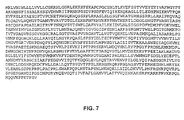
- An example of such a protein is represented by the sequence in Fig. 7.
- derivatives or homologs of human subtilisin, including those from non-human sources such as mouse or rabbit, which retain the essential ability to hydrolyze peptide bonds and have at least 50%, preferably at least 65% and most preferably at least 80% homology to the protein of Fig. 7 are considered human subtilisins for the purpose of the invention.
- a “protease variant” has an amino acid sequence which is derived from the amino acid sequence of a "precursor protease".
- the precursor proteases include naturally-occurring proteases and recombinant proteases.
- the amino acid sequence of the protease variant is "derived” from the precursor protease amino acid sequence by the substitution, deletion or insertion of one or more amino acids of the precursor amino acid sequence.
- Such modification is of the "precursor DNA sequence” which encodes the amino acid sequence of the precursor protease rather than manipulation of the precursor protease enzyme per se. Suitable methods for such manipulation of the precursor DNA sequence include methods disclosed herein, as well as methods known to those skilled in the art (see, for example, EP 0 328299, WO89/06279 and the US patents and applications already referenced herein).
- amino acid position numbers used herein refer to those assigned to the mature Bacillus amyloliquefaciens subtilisin sequence presented in Fig. 1.
- the invention is not limited to the mutation of this particular subtilisin but extends to precursor proteases containing amino acid residues at positions which are "equivalent" to the particular identified residues in Bacillus amyloliquefaciens subtilisin.
- the precursor protease is Bacillus lentus subtilisin and the substitutions, deletions or insertions are made at the equivalent amino acid residue in B. lentus corresponding to those listed above.
- a residue (amino acid) of a precursor protease is equivalent to a residue of Bacillus amyloliquefaciens subtilisin if it is either homologous (i.e., corresponding in position in either primary or tertiary structure) or analogous to a specific residue or portion of that residue in Bacillus amyloliquefaciens subtilisin (i.e., having the same or similar functional capacity to combine, react, or interact chemically).
- the amino acid sequence of a precursor protease is directly compared to the Bacillus amyloliquefaciens subtilisin primary sequence and particularly to a set of residues known to be invariant in subtilisins for which the sequence is known.
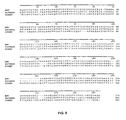
- Fig. 2 herein shows the conserved residues as between B. amyloliquefaciens subtilisin and B. lentus subtilisin.
- Alignment of conserved residues preferably should conserve 100% of such residues. However, alignment of greater than 75% or as little as 50% of conserved residues is also adequate to define equivalent residues. Conservation of the catalytic triad, Asp32/His64/Ser221 should be maintained.
- subtilisin from Bacillus amyloliquefaciens, Bacillus subtilis, Bacillus licheniformis ( carlsbergensis ) and Bacillus lentus can be aligned to provide the maximum amount of homology between amino acid sequences.
- a comparison of these sequences shows that there are a number of conserved residues contained in each sequence.
- the conserved residues as between BPN' and B. lentus are identified in Fig. 2.
- subtilisin from Bacillus lentus PCT Publication No. WO89/06279 published July 13, 1989
- the preferred protease precursor enzyme herein or the subtilisin referred to as PB92 (EP 0 328 299), which is highly homologous to the preferred Bacillus lentus subtilisin.
- the amino acid sequences of certain of these subtilisins are aligned in Figs. 3A and 3B with the sequence of Bacillus amyloliquefaciens subtilisin to produce the maximum homology of conserved residues.
- the amino acid at position +170 is lysine (K) in both B. amyloliquefaciens and B. licheniformis subtilisins and arginine (R) in Savinase.
- the amino acid equivalent to +170 in Bacillus amyloliquefaciens subtilisin is substituted with aspartic acid (D).
- D aspartic acid
- Equivalent residues may also be defined by determining homology at the level of tertiary structure for a precursor protease whose tertiary structure has been determined by x-ray crystallography. Equivalent residues are defined as those for which the atomic coordinates of two or more of the main chain atoms of a particular amino acid residue of the precursor protease and Bacillus amyloliquefaciens subtilisin (N on N, CA on CA, C on C and O on O) are within 0.13nm and preferably 0.1 nm after alignment.
- Equivalent residues which are functionally analogous to a specific residue of Bacillus amyloliquefaciens subtilisin are defined as those amino acids of the precursor protease which may adopt a conformation such that they either alter, modify or contribute to protein structure, substrate binding or catalysis in a manner defined and attributed to a specific residue of the Bacillus amyloliquefaciens subtilisin.
- residues of the precursor protease for which a tertiary structure has been obtained by x-ray crystallography
- the atomic coordinates of at least two of the side chain atoms of the residue lie with 0.13nm of the corresponding side chain atoms of Bacillus amyloliquefaciens subtilisin.
- the coordinates of the three dimensional structure of Bacillus amyloliquefaciens subtilisin are set forth in EPO Publication No. 0 251 446 (equivalent to US Patent 5,182,204) and can be used as outlined above to determine equivalent residues on the level of tertiary structure.
- protease variants of the present invention include the mature forms of protease variants, as well as the pro- and prepro- forms of such protease variants.
- the prepro- forms are the preferred construction since this facilitates the expression, secretion and maturation of the protease variants.
- Prosequence refers to a sequence of amino acids bound to the N-terminal portion of the mature form of a protease which when removed results in the appearance of the "mature" form of the protease. Many proteolytic enzymes are found in nature as translational proenzyme products and, in the absence of post-translational processing, are expressed in this fashion.
- a preferred prosequence for producing protease variants is the putative prosequence of Bacillus amyloliquefaciens subtilisin, although other protease prosequences may be used.
- a “signal sequence” or “presequence” refers to any sequence of amino acids bound to the N-terminal portion of a protease or to the N-terminal portion of a proprotease which may participate in the secretion of the mature or pro forms of the protease.
- This definition of signal sequence is a functional one, meant to include all those amino acid sequences encoded by the N-terminal portion of the protease gene which participate in the effectuation of the secretion of protease under native conditions.
- the present invention utilizes such sequences to effect the secretion of the protease variants as defined herein.
- One possible signal sequence comprises the first seven amino acid residues of the signal sequence from Bacillus subtilis subtilisin fused to the remainder of the signal sequence of the subtilisin from Bacillus lentus (ATCC 21536).
- a "prepro" form of a protease variant consists of the mature form of the protease having a prosequence operably linked to the amino terminus of the protease and a "pre” or “signal” sequence operably linked to the amino terminus of the prosequence.
- “Expression vector” refers to a DNA construct containing a DNA sequence which is operably linked to a suitable control sequence capable of effecting the expression of said DNA in a suitable host.
- control sequences include a promoter to effect transcription, an optional operator sequence to control such transcription, a sequence encoding suitable mRNA ribosome binding sites and sequences which control termination of transcription and translation.
- the vector may be a plasmid, a phage particle, or simply a potential genomic insert. Once transformed into a suitable host, the vector may replicate and function independently of the host genome, or may, in some instances, integrate into the genome itself.
- "plasmid” and “vector” are sometimes used interchangeably as the plasmid is the most commonly used form of vector at present. However, other forms of expression vectors which serve equivalent functions and which are, or become, known in the art, may also be used.
- the "host cells” used in the present invention generally are procaryotic or eucaryotic hosts which preferably have been manipulated by the methods disclosed in US Patent 4,760,025 (RE 34,606) to render them incapable of secreting enzymatically active endoprotease.
- a preferred host cell for expressing protease is the Bacillus strain BG2036 which is deficient in enzymatically active neutral protease and alkaline protease (subtilisin). The construction of strain BG2036 is described in detail in US Patent 5,264,366.
- Bacillus subtilis 1168 also described in US Patent 4,760,025 (RE 34,606) and US Patent 5,264,366), as well as any suitable Bacillus strain such as B . licheniformis, B. lentus, etc.
- Host cells are transformed or transfected with vectors constructed using recombinant DNA techniques. Such transformed host cells are capable of either replicating vectors encoding the protease variants or expressing the desired protease variant. In the case of vectors which encode the pre- or prepro-form of the protease variant, such variants, when expressed, are typically secreted from the host cell into the host cell medium.
- operably linked when describing the relationship between two DNA regions, simply means that they are functionally related to each other.
- a presequence is operably linked to a peptide if it functions as a signal sequence, participating in the secretion of the mature form of the protein most probably involving cleavage of the signal sequence.
- a promoter is operably linked to a coding sequence if it controls the transcription of the sequence;
- a ribosome binding site is operably linked to a coding sequence if it is positioned so as to permit translation.
- the genes encoding the naturally-occurring precursor protease may be obtained in accord with the general methods known to those skilled in the art.
- the methods generally comprise synthesizing labeled probes having putative sequences encoding regions of the protease of interest, preparing genomic libraries from organisms expressing the protease, and screening the libraries for the gene of interest by hybridization to the probes. Positively hybridizing clones are then mapped and sequenced.
- the cloned protease is then used to transform a host cell in order to express the protease.
- the protease gene is then ligated into a high copy number plasmid.
- This plasmid replicates in hosts in the sense that it contains the well-known elements necessary for plasmid replication: a promoter operably linked to the gene in question (which may be supplied as the gene's own homologous promoter if it is recognized, i.e., transcribed, by the host), a transcription termination and polyadenylation region (necessary for stability of the mRNA transcribed by the host from the protease gene in certain eucaryotic host cells) which is exogenous or is supplied by the endogenous terminator region of the protease gene and, desirably, a selection gene such as an antibiotic resistance gene that enables continuous cultural maintenance of plasmid-infected host cells by growth in antibiotic-containing media.
- High copy number plasmids also contain an origin of replication for the host, thereby enabling large numbers of plasmids to be generated in the cytoplasm without chromosomal limitations.
- the gene can be a natural gene such as that from B lentus or B. amyloliquefaciens .
- a synthetic gene encoding a naturally-occurring or mutant precursor protease may be produced.
- the DNA and/or amino acid sequence of the precursor protease is determined.
- Multiple, overlapping synthetic single-stranded DNA fragments are thereafter synthesized, which upon hybridization and ligation produce a synthetic DNA encoding the precursor protease.
- An example of synthetic gene construction is set forth in Example 3 of US Patent 5,204,015.
- the following cassette mutagenesis method may be used to facilitate the construction of the protease variants of the present invention, although other methods may be used.
- the naturally-occurring gene encoding the protease is obtained and sequenced in whole or in part. Then the sequence is scanned for a point at which it is desired to make a mutation (deletion, insertion or substitution) of one or more amino acids in the encoded enzyme. The sequences flanking this point are evaluated for the presence of restriction sites for replacing a short segment of the gene with an oligonucleotide pool which when expressed will encode various mutants.
- restriction sites are preferably unique sites within the protease gene so as to facilitate the replacement of the gene segment.
- any convenient restriction site which is not overly redundant in the protease gene may be used, provided the gene fragments generated by restriction digestion can be reassembled in proper sequence. If restriction sites are not present at locations within a convenient distance from the selected point (from 10 to 15 nucleotides), such sites are generated by substituting nucleotides in the gene in such a fashion that neither the reading frame nor the amino acids encoded are changed in the final construction. Mutation of the gene in order to change its sequence to conform to the desired sequence is accomplished by M13 primer extension in accord with generally known methods.
- flanking region sequences The task of locating suitable flanking regions and evaluating the needed changes to arrive at two convenient restriction site sequences is made routine by the redundancy of the genetic code, a restriction enzyme map of the gene and the large number of different restriction enzymes. Note that if a convenient flanking restriction site is available, the above method need be used only in connection with the flanking region which does not contain a site.
- the restriction sites flanking the positions to be mutated are digested with the cognate restriction enzymes and a plurality of end termini-complementary oligonucleotide cassettes are ligated into the gene.
- the mutagenesis is simplified by this method because all of the oligonucleotides can be synthesized so as to have the same restriction sites, and no synthetic linkers are necessary to create the restriction sites.
- the objective is to secure a variant protease having altered allergenic potential as compared to the precursor protease, since decreasing such potential enables safer use of the enzyme.
- the mutations specified herein may be utilized in combination with mutations known in the art to result altered thermal stability and/or altered substrate specificity, modified activity or altered alkaline stability as compared to the precursor.
- protease variants of the invention are useful in formulating various detergent compositions.
- a number of known compounds are suitable surfactants useful in compositions comprising the protease mutants of the invention. These include nonionic, anionic, cationic, anionic or zwitterionic detergents, as disclosed in US 4,404,128 to Barry J. Anderson and US 4,261,868 to Jiri Flora, et al.
- a suitable detergent formulation is that described in Example 7 of US Patent 5,204.015. The art is familiar with the different formulations which can be used as cleaning compositions. In addition to typical cleaning compositions, it is readily understood that the protease variants of the present invention may be used for any purpose that native or wild-type proteases are used.
- variants of the present invention can be used, for example, in bar or liquid soap applications, dishcare formulations, contact lens cleaning solutions or products, peptide hydrolysis, waste treatment, textile applications, as fusion-cleavage enzymes in protein production, etc.
- the variants of the present invention may comprise, in addition to decreased allergenicity, enhanced performance in a detergent composition (as compared to the precursor).
- enhanced performance in a detergent is defined as increasing cleaning of certain enzyme sensitive stains such as grass or blood, as determined by usual evaluation after a standard wash cycle.
- Modified proteases can be formulated into known powdered and liquid detergents having pH between 6.5 and 12.0 at levels of about .01 to about 5% (preferably .1% to .5%) by weight. These detergent cleaning compositions can also include other enzymes such as known proteases, amylases, cellulases, lipases or endoglycosidases, as well as builders and stabilizers.
- proteases of the invention to conventional cleaning compositions does not create any special use limitation.
- any temperature and pH suitable for the detergent is also suitable for the present compositions as long as the pH is within the above range, and the temperature is below the described protease's denaturing temperature.
- proteases of the invention can be used in a cleaning composition without detergents, again either alone or in combination with builders and stabilizers.
- the variant proteases of the present invention can be included in animal feed such as part of animal feed additives as described in, for example, US 5,612,055; US 5,314,692; and US 5,147,642.
- a composition for the treatment of a textile may include variant proteases of the present invention.
- the composition can be used to treat for example silk or wool as described in publications such as RD 216,034; EP 134,267; US 4,533,359; and EP 344,259.
- the variants can be screened for proteolytic activity according to methods well known in the art.
- Fresh human peripheral blood cells were collected from "na ⁇ ve" humans, i.e., persons not known to be exposed to or sensitized to Bacillus lentus protease, for determination of antigenic epitopes in protease from Bacillus lentus and human subtilisin. Na ⁇ ve humans is intended to mean that the individual is not known to have been exposed to or developed a reaction to protease in the past.
- Peripheral mononuclear blood cells (stored at room temperature, no older than 24 hours) were prepared for use as follows: Approximately 30 mls of a solution of buffy coat preparation from one unit of whole blood was brought to 50 ml with Dulbecco's phosphate buffered solution (DPBS) and split into two tubes.
- DPBS Dulbecco's phosphate buffered solution
- the samples were underlaid with 12.5 ml of room temperature lymphoprep density separation media (Nycomed density 1.077 g/ml).
- the tubes were centrifuged for thirty minutes at 600G. The interface of the two phases was collected, pooled and washed in DPBS. The cell density of the resultant solution was measured by hemocytometer. Viability was measured by trypan blue exclusion.
- a differentiated dendritic cell culture was prepared from the peripheral blood mononuclear cell sample having a density of 10 8 cells per 75 ml culture flask in a solution as follows:
- CD4+ T cells were prepared from frozen aliquots of the peripheral blood cell samples used to prepare the dendritic cells using the human CD4+ Cellect Kit (Biotex) as per the manufacturers instructions with the following modifications: the aliquots were thawed and washed such that approximately 10 8 cells will be applied per Cellect column; the cells were resuspended in 4 ml DPBS and 1 ml of the Cell reagent from the Cellect Kit, the solution maintained at room temperature for 20 minutes. The resultant solution was centrifuged for five minutes at 600G at room temperature and the pellet resuspended in 2 ml of DPBS and applied to the Cellect columns. The effluent from the columns was collected in 2% human serum in DPBS. The resultant CD4+ cell solution was centrifuged, resuspended in AIMV media and the density counted.
- the CD4+ T-cell suspension was resuspended to a count of 2x10 6 /ml in AIM V media to facilitate efficient manipulation of the 96 well plate.
- Peptide antigen is prepared from a 1 M stock solution in DMSO by dilution in AIM V media at a 1:10 ratio. 10 microliters of the stock solution is placed in each well of the 96 well plate containing the differentiated dendritic cells. 100 microliter of the diluted CD4+ T-cell solution as prepared above is further added to each well.
- Useful controls include diluted DMSO blanks, and tetanus toxoid positive controls. The final concentrations in each well, at 210 microliter total volume are as follows:
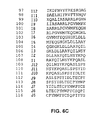
- Peptides for use in the assay described in Example 1 were prepared based on the Bacillus lentus and human subtilisin amino acid sequence. Peptide antigens were designed as follows. From the full length amino acid sequence of either human subtilisin or Bacillus lentus protease provided in Figure 1, 15mers were synthetically prepared, each 15mer overlapping with the previous and the subsequent 15mer except for three residues.
- Peptides used correspond to amino acid residue strings in Bacillus lentus as provided in Figure 8, and peptides correspond to amino acid residues in human subtilisin as provided in Figure 7.
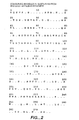
- the peptides used corresponding to the proteases is provided in Fig. 6. All tests were performed at least in duplicate. All tests reported displayed robust positive control responses to the antigen tetanus toxoid. Responses were averaged within each experiment, then normalized to the baseline response. A positive event was recorded if the response was at least 3 times the baseline response.
- the immunogenic response i.e., T-cell proliferation
- T-cell proliferation was measured by the incorporated tritium method.
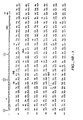
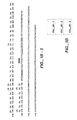
- the results shown in Figures 4 and 5 as a comparison of the immunogenic additive response in 10 individuals ( Figure 4) and 16 individuals ( Figure 5) to the various peptides. Response is indicated as the added response wherein 1.0 equals a baseline response for each sample. Thus, in Figure 4, a reading of 10.0 or less is the baseline response and in Figure 5 a reading of 16.0 or less the baseline response.
- the immunogenic response of the na ⁇ ve blood samples from unsensitized individuals showed a marked allergenic response at the peptide fragment from Bacillus lentus corresponding to residues 170-173 of Bacillus amyloliquefaciens protease.
- the corresponding fragment in human subtilisin evokes merely baseline response.
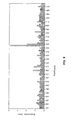
- Fig. 9 shows the T-cell response to peptides derived from Bacillus lentus protease in a sample taken from an individual known to be hypersensitive to Bacillus lentus protease.
- Peptide E05 represents the region corresponding to 170-173 in protease from Bacillus amyloliquefaciens .
- the hypersensitive individual was highly responsive to the T-cell epitope represented by the peptide E05. This result confirms that, by practicing the assay according to the invention, it is possible to predict the major epitopes identified by the T-cells of a hypersensitive individual.
- Fig. 10 shows the T-cell response to various alanine substitutions in the E05 peptide derived from Bacillus lentus protease in a sample taken from an individual known to be hypersensitive to Bacillus lentus protease. Alanine substitutions were used as substitutions for the purpose of determining the role of any specific residue within the epitope.
- residues 170, 171 and 173 are critical for T-cell response within this peptide. Accordingly, it is further apparent that these residues are largely responsible for the initiation of allergic reaction within the protease from Bacillus lentus.
Landscapes
- Health & Medical Sciences (AREA)
- Life Sciences & Earth Sciences (AREA)
- Engineering & Computer Science (AREA)
- Chemical & Material Sciences (AREA)
- Immunology (AREA)
- Biomedical Technology (AREA)
- Molecular Biology (AREA)
- Bioinformatics & Cheminformatics (AREA)
- Cell Biology (AREA)
- Hematology (AREA)
- Urology & Nephrology (AREA)
- Medicinal Chemistry (AREA)
- General Health & Medical Sciences (AREA)
- Biotechnology (AREA)
- Biochemistry (AREA)
- Microbiology (AREA)
- Organic Chemistry (AREA)
- Genetics & Genomics (AREA)
- Wood Science & Technology (AREA)
- Zoology (AREA)
- Analytical Chemistry (AREA)
- General Physics & Mathematics (AREA)
- Pathology (AREA)
- Physics & Mathematics (AREA)
- Food Science & Technology (AREA)
- General Engineering & Computer Science (AREA)
- Toxicology (AREA)
- Tropical Medicine & Parasitology (AREA)
- Proteomics, Peptides & Aminoacids (AREA)
- Nuclear Medicine, Radiotherapy & Molecular Imaging (AREA)
- Chemical Kinetics & Catalysis (AREA)
- General Chemical & Material Sciences (AREA)
- Pulmonology (AREA)
- Pharmacology & Pharmacy (AREA)
- Animal Behavior & Ethology (AREA)
- Public Health (AREA)
- Veterinary Medicine (AREA)
- Enzymes And Modification Thereof (AREA)
- Micro-Organisms Or Cultivation Processes Thereof (AREA)
- Detergent Compositions (AREA)
Claims (6)
- Verfahren zum Bestimmen von T-Zell-Epitopen innerhalb eines Proteins umfassend die Schritte:(a) Erhalten einer Lösung von dendritischen Zellen und einer Lösung von naiven CD4+- und/oder CD8+-T-Zellen aus einer einzelnen Humanblutprobe;(b) Fördern der Differenzierung in der Lösung von dendritischen Zellen;(c) Vereinigen der Lösung von differenzierten dendritischen Zellen und der naiven CD4+- und/oder CD8+-T-Zellen mit einem Peptid von Interesse;(d) Messen der Proliferation von T-Zellen im Schritt (c).
- Verfahren zum Reduzieren der Allergenität eines Proteins umfassend, nach Identifizierung eines T-Zell-Epitops in dem Protein nach dem Verfahren gemäß Anspruch 1, das Modifizieren des Proteins, um das T-Zell-Epitop zu neutralisieren.
- Verfahren gemäß Anspruch 2, worin das Epitop modifiziert wird durch:(a) Ersetzen der Aminosäuresequenz des Epitops durch eine analoge Sequenz aus einem humanen Homolog zum Protein von Interesse;(b) Ersetzen der Aminosäuresequenz des Epitops durch eine analoge Sequenz aus einem nicht-humanen Homolog zum Protein von Interesse, wobei die analoge Sequenz eine geringere allergene Antwort von T-Zellen als jene des Proteins von Interesse auslöst; oder(c) Ersetzen der Aminosäuresequenz des Epitops durch eine Sequenz, die die wesentlichen Tertiärstruktur-Attribute des Epitops im wesentlichen nachahmt, jedoch eine geringere allergene Antwort von T-Zellen als jene des Proteins von Interesse auslöst.
- Verfahren gemäß Anspruch 2 oder 3, worin das Protein eine Protease ist.
- Verfahren gemäß Anspruch 4, worin die Protease ein Subtilisin ist.
- Verfahren gemäß Anspruch 5, abhängig von Anspruch 3 (a), worin das Epitop durch Ersetzen der Aminosäuresequenz des Epitops durch eine Sequenz aus humanem Subtilisin, Furin oder einem Kexin modifiziert wird.
Priority Applications (4)
| Application Number | Priority Date | Filing Date | Title |
|---|---|---|---|
| DK04016880.9T DK1586649T3 (da) | 1998-04-15 | 1999-04-14 | Mutantproteiner med lav allergen reaktion hos mennesker og fremgangsmåder til konstruktion, identificering og fremstilling af sådanne proteiner |
| EP08009499A EP1997897B1 (de) | 1998-04-15 | 1999-04-14 | Mutierte Proteine mit geringer allergischer Reaktion bei Menschen und Verfahren zur Konstruktion, Identifizierung und Herstellung derartiger Proteine |
| DK99918575T DK1073754T3 (da) | 1998-04-15 | 1999-04-14 | Fremgangsmåde til fremstilling af proteinmutanter med lille allergen reaktion hos mennesker |
| EP04016880A EP1586649B1 (de) | 1998-04-15 | 1999-04-14 | Protease Mutanten mit reduzierter allergener Wirkung in Menschen und Methoden zur konstruktion, Identifizierung und Herstellung dieser Proteasen |
Applications Claiming Priority (3)
| Application Number | Priority Date | Filing Date | Title |
|---|---|---|---|
| US60872 | 1998-04-15 | ||
| US09/060,872 US6835550B1 (en) | 1998-04-15 | 1998-04-15 | Mutant proteins having lower allergenic response in humans and methods for constructing, identifying and producing such proteins |
| PCT/US1999/008253 WO1999053038A2 (en) | 1998-04-15 | 1999-04-14 | Mutant proteins having lower allergenic response in humans and methods for constructing, identifying and producing such proteins |
Related Child Applications (1)
| Application Number | Title | Priority Date | Filing Date |
|---|---|---|---|
| EP04016880A Division EP1586649B1 (de) | 1998-04-15 | 1999-04-14 | Protease Mutanten mit reduzierter allergener Wirkung in Menschen und Methoden zur konstruktion, Identifizierung und Herstellung dieser Proteasen |
Publications (3)
| Publication Number | Publication Date |
|---|---|
| EP1073754A2 EP1073754A2 (de) | 2001-02-07 |
| EP1073754B1 EP1073754B1 (de) | 2004-09-22 |
| EP1073754B9 true EP1073754B9 (de) | 2005-01-19 |
Family
ID=22032273
Family Applications (3)
| Application Number | Title | Priority Date | Filing Date |
|---|---|---|---|
| EP08009499A Revoked EP1997897B1 (de) | 1998-04-15 | 1999-04-14 | Mutierte Proteine mit geringer allergischer Reaktion bei Menschen und Verfahren zur Konstruktion, Identifizierung und Herstellung derartiger Proteine |
| EP99918575A Revoked EP1073754B9 (de) | 1998-04-15 | 1999-04-14 | Verfahren zur herstellung von protein mutanten mit reduzierter allergener wirkung in menschen. |
| EP04016880A Expired - Lifetime EP1586649B1 (de) | 1998-04-15 | 1999-04-14 | Protease Mutanten mit reduzierter allergener Wirkung in Menschen und Methoden zur konstruktion, Identifizierung und Herstellung dieser Proteasen |
Family Applications Before (1)
| Application Number | Title | Priority Date | Filing Date |
|---|---|---|---|
| EP08009499A Revoked EP1997897B1 (de) | 1998-04-15 | 1999-04-14 | Mutierte Proteine mit geringer allergischer Reaktion bei Menschen und Verfahren zur Konstruktion, Identifizierung und Herstellung derartiger Proteine |
Family Applications After (1)
| Application Number | Title | Priority Date | Filing Date |
|---|---|---|---|
| EP04016880A Expired - Lifetime EP1586649B1 (de) | 1998-04-15 | 1999-04-14 | Protease Mutanten mit reduzierter allergener Wirkung in Menschen und Methoden zur konstruktion, Identifizierung und Herstellung dieser Proteasen |
Country Status (20)
| Country | Link |
|---|---|
| US (4) | US6835550B1 (de) |
| EP (3) | EP1997897B1 (de) |
| JP (1) | JP4447774B2 (de) |
| KR (1) | KR20010034776A (de) |
| CN (1) | CN1302113C (de) |
| AT (2) | ATE277189T1 (de) |
| AU (1) | AU752934B2 (de) |
| BR (1) | BR9909640A (de) |
| CA (1) | CA2327311C (de) |
| CZ (1) | CZ20003789A3 (de) |
| DE (3) | DE69920434D1 (de) |
| DK (3) | DK1073754T3 (de) |
| ES (2) | ES2229703T4 (de) |
| ID (1) | ID26645A (de) |
| IL (2) | IL138445A0 (de) |
| MX (2) | MXPA05003288A (de) |
| NO (1) | NO20005153L (de) |
| NZ (2) | NZ506926A (de) |
| PL (1) | PL343509A1 (de) |
| WO (1) | WO1999053038A2 (de) |
Families Citing this family (108)
| Publication number | Priority date | Publication date | Assignee | Title |
|---|---|---|---|---|
| US6750329B1 (en) * | 1989-05-05 | 2004-06-15 | Research Development Foundation | Antibody delivery system for biological response modifiers |
| US20050209121A1 (en) * | 1990-12-05 | 2005-09-22 | Novozymes A/S | Proteins with changed epitopes and methods for the production thereof |
| US6967080B1 (en) * | 1990-12-05 | 2005-11-22 | Novozymes A/S | Proteins with changed epitopes and methods for the production thereof |
| MA23346A1 (fr) * | 1993-10-14 | 1995-04-01 | Genencor Int | Variantes de la subtilisine |
| US6936249B1 (en) * | 1998-04-15 | 2005-08-30 | Genencor International, Inc. | Proteins producing an altered immunogenic response and methods of making and using the same |
| US6642011B2 (en) | 1998-04-15 | 2003-11-04 | Genencor International, Inc. | Human protease and use of such protease for pharmaceutical applications and for reducing the allergenicity of non-human proteins |
| US6835550B1 (en) | 1998-04-15 | 2004-12-28 | Genencor International, Inc. | Mutant proteins having lower allergenic response in humans and methods for constructing, identifying and producing such proteins |
| US6838269B1 (en) | 1998-04-15 | 2005-01-04 | Genencor International, Inc. | Proteins producing an altered immunogenic response and methods of making and using the same |
| CA2249648A1 (en) * | 1998-11-04 | 2000-05-04 | Nabil G. Seidah | Mammalian subtilisin/kexin isozyme ski-1: a proprotein convertase with a unique cleavage specificity |
| JP2003505067A (ja) * | 1999-07-22 | 2003-02-12 | ザ、プロクター、エンド、ギャンブル、カンパニー | 特定のエピトープ領域にアミノ酸欠失及び置換を有するサブチリシンプロテアーゼの変異体 |
| US6946128B1 (en) * | 1999-07-22 | 2005-09-20 | The Procter & Gamble Company | Protease conjugates having sterically protected epitope regions |
| WO2001007578A2 (en) * | 1999-07-22 | 2001-02-01 | The Procter & Gamble Company | Subtilisin protease variants having amino acid substitutions in defined epitope regions |
| EP1252183B1 (de) * | 1999-12-02 | 2006-05-24 | Thromb-X N.V. | Methode zur reduzierung der immunogenizität von staphylokinase durch entfernen von t-zell epitopen |
| US6903073B2 (en) | 1999-12-10 | 2005-06-07 | The General Hospital Corporation | Methods to stimulate insulin production by pancreatic beta-cells |
| US6960462B2 (en) | 2000-02-08 | 2005-11-01 | Dsm Ip Assets B.V | Use of acid-stable subtilisin proteases in animal feed |
| CA2395343C (en) * | 2000-02-08 | 2009-06-30 | F. Hoffmann-La Roche Ag | Use of acid-stable proteases in animal feed |
| US6855548B2 (en) | 2000-02-08 | 2005-02-15 | F. Hoffman-La Roche Ag | Use of acid-stable proteases in animal feed |
| US7226770B2 (en) * | 2000-04-28 | 2007-06-05 | Novozymes A/S | Lipolytic enzyme variant |
| US6673580B2 (en) * | 2000-10-27 | 2004-01-06 | Genentech, Inc. | Identification and modification of immunodominant epitopes in polypeptides |
| CN1491232A (zh) * | 2001-02-06 | 2004-04-21 | Ĭ��ר������˾ | 免疫原性减弱的经修饰肥胖蛋白 |
| ZA200305980B (en) * | 2001-02-12 | 2007-01-31 | Res Dev Foundation | Modified proteins, designer toxins, and methods of making thereof |
| EP1239032A1 (de) * | 2001-03-02 | 2002-09-11 | Société des Produits Nestlé S.A. | Milchsäurebakterien als Mitteln zur Behandlung und Vorbeugung von Allergie |
| ATE527276T1 (de) * | 2001-03-23 | 2011-10-15 | Genencor Int | Proteine, die veränderte immunogene reaktionen bewirken, und verfahren zu deren herstellung und anwendung |
| AU2002312660A1 (en) * | 2001-05-31 | 2002-12-16 | D. Collen Research Foundation Vzw Onderwijsen Navorsing Campus Gasthuisberg K.U. Leuven | Recombinant molecules with reduced immunogenicity, methods and intermediates for obtaining them and their use in pharmaceutical compositions and diagnostic tools |
| WO2002096454A1 (en) * | 2001-05-31 | 2002-12-05 | D. Collen Research Foundation Vzw | Recombinant molecules with reduced immunogenicity, methods and intermediates for obtaining them and their use in pharmaceutical compositions and diagnostic tools |
| CA2454048C (en) | 2001-07-17 | 2011-05-03 | Research Development Foundation | Therapeutic agents comprising pro-apoptotic proteins |
| US7157416B2 (en) * | 2001-07-20 | 2007-01-02 | Genencor International, Inc. | Stabilization of enzymes |
| AU2002351957B2 (en) * | 2001-11-12 | 2009-09-03 | Merck Patent Gmbh | Modified anti-TNF alpha antibody |
| ATE557034T1 (de) * | 2001-11-13 | 2012-05-15 | Danisco Us Inc | Identifikation von epitopen und erniedrigung der allergenität von nahrungsmittelproteinen |
| JP2005514026A (ja) * | 2001-12-31 | 2005-05-19 | ジェネンコー・インターナショナル・インク | 免疫反応の変化を生じるプロテアーゼ、ならびにその製造および利用方法 |
| NZ534198A (en) * | 2002-02-26 | 2005-11-25 | Genencor Int | Population based assessments and means to rank the relative immunogenicity of proteins |
| JP4597528B2 (ja) * | 2002-02-26 | 2010-12-15 | ジェネンコー・インターナショナル・インク | 免疫原性が減少したズブチリシン・カールスバーグタンパク質 |
| DK2339016T3 (da) | 2002-03-29 | 2017-01-23 | Danisco Us Inc | Øget produktion af subtilisiner |
| MXPA04010061A (es) * | 2002-04-18 | 2004-12-13 | Merck Patent Gmbh | Factor viii modificado. |
| DK1578772T3 (da) * | 2002-05-01 | 2010-08-16 | Danisco Us Inc | Cytokiner og cytokinreceptorer med reduceret immunogenicitet |
| JP2006506964A (ja) * | 2002-06-12 | 2006-03-02 | リサーチ ディベロップメント ファンデーション | 治療剤としての免疫毒素及びその利用 |
| CN101597601B (zh) * | 2002-06-26 | 2013-06-05 | 诺维信公司 | 具有改变的免疫原性的枯草杆菌酶和枯草杆菌酶变体 |
| US20040007251A1 (en) * | 2002-07-10 | 2004-01-15 | Kimberly-Clark Worldwide, Inc. | Cleaners for the control and removal of allergens |
| US7566448B2 (en) * | 2002-07-30 | 2009-07-28 | Genencor International, Inc. | Reduced aerosol generating formulations |
| US20040121953A1 (en) * | 2002-08-09 | 2004-06-24 | Chirino Arthur J. | Thrombopoiesis-stimulating proteins having reduced immunogenicity |
| EP1594963B1 (de) | 2003-02-07 | 2007-07-25 | Novozymes A/S | Proteasen |
| EP2500423B1 (de) | 2003-02-26 | 2015-06-17 | Danisco US Inc. | Amylasen, die eine veränderte immunogene Reaktion bewirken, und Verfahren zu ihrer Herstellung und Verwendung |
| WO2004078960A1 (en) | 2003-02-26 | 2004-09-16 | Genencor International, Inc. | Amylases producing an altered immunogenic response and methods of making and using the same |
| ATE532793T1 (de) * | 2003-07-03 | 2011-11-15 | Avatar Biotechnologies Inc | Verfahren zur herstellung von molekülen mit verminderter immunogenität |
| BRPI0414959A (pt) | 2003-10-10 | 2006-11-07 | Novozymes As | variante de uma protease precursora, sequência de ácido nucleico isolado, construção de ácido nucleico, vetor de expressão e célula hospedeira recombinantes, métodos para produzir a variante de protease, para melhorar o valor nutricional de uma ração animal, e para tratar proteìnas, planta transgênica, ou parte da planta, animal transgênico, não humano, ou produtos, ou elementos deste, aditivo e composição de ração animal, uso da variante de protease e/ou da composição, protease, e, estrutura 3d |
| EP1694706B1 (de) * | 2003-11-01 | 2012-04-04 | Merck Patent GmbH | Modifizierter anti-cd52-antikörper |
| US7824896B2 (en) * | 2004-04-02 | 2010-11-02 | Novozymes A/S | Subtilase variants having altered lmmunogenicity |
| EP1735339A2 (de) * | 2004-04-09 | 2006-12-27 | Genencor International, Inc. | Pcka modifikationen und erhöhte proteinexpression in bacillus |
| US8088609B2 (en) * | 2004-04-15 | 2012-01-03 | Danisco Us Inc. | CAB molecules |
| US20080220450A1 (en) * | 2004-04-26 | 2008-09-11 | Danisco Us, Inc., Genencor Division | Population Based Prediction Methods for Immune Response Determinations and Methods for Verifying Immunological Response Data |
| US8071373B2 (en) | 2004-04-28 | 2011-12-06 | Sanofi Pasteur Vaxdesign Corp. | Co-culture lymphoid tissue equivalent (LTE) for an artificial immune system (AIS) |
| US20060275270A1 (en) * | 2004-04-28 | 2006-12-07 | Warren William L | In vitro mucosal tissue equivalent |
| US8298824B2 (en) | 2004-04-28 | 2012-10-30 | Sanofi Pasteur Vaxdesign Corporation | Methods of evaluating a test agent in a diseased cell model |
| US8030070B2 (en) * | 2004-04-28 | 2011-10-04 | Sanofi Pasteur Vaxdesign Corp. | Artificial lymphoid tissue equivalent |
| US7771999B2 (en) * | 2004-04-28 | 2010-08-10 | Vaxdesign Corp. | Disease model incorporation into an artificial immune system (AIS) |
| US7785806B2 (en) * | 2004-04-28 | 2010-08-31 | Vaxdesign Corporation | Method for determining the immunogenicity of an antigen |
| US7855074B2 (en) | 2004-04-28 | 2010-12-21 | Vaxdesign Corp. | Artificial immune system: methods for making and use |
| JP5795699B2 (ja) | 2004-04-28 | 2015-10-14 | サノフィ パスツール ヴァックスデザイン コーポレーション | 人工免疫システム:作製および使用方法 |
| US7709256B2 (en) * | 2004-04-28 | 2010-05-04 | Vaxdesign Corp. | Disease model incorporation into an artificial immune system (AIS) |
| US7785883B2 (en) * | 2004-04-28 | 2010-08-31 | Vax Design Corp. | Automatable artificial immune system (AIS) |
| US20070141552A1 (en) * | 2004-04-28 | 2007-06-21 | Warren William L | Automatable artificial immune system (AIS) |
| US20090060933A1 (en) * | 2004-06-14 | 2009-03-05 | Estell David A | Proteases producing an altered immunogenic response and methods of making and using the same |
| CN101014704A (zh) | 2004-06-21 | 2007-08-08 | 诺维信公司 | 蛋白酶 |
| CA2596833C (en) * | 2005-02-03 | 2016-04-12 | Antitope Limited | Human antibodies and proteins |
| EP1869192B1 (de) * | 2005-03-18 | 2016-01-20 | MedImmune, LLC | Rahmenmischung von antikörpern |
| WO2006113209A1 (en) * | 2005-04-15 | 2006-10-26 | The Government Of The United States Of America, As Represented By The Secretary, Department Of Health And Human Services | Methods and compositions for producing an enhanced immune response to a human papillomavirus immunogen |
| PE20070374A1 (es) * | 2005-07-08 | 2007-05-12 | Pfizer Ltd | ANTICUERPOS ANTI-MAdCAM |
| JP2009502195A (ja) * | 2005-08-04 | 2009-01-29 | セントカー・インコーポレーテツド | 抗TNFα抗体および使用方法 |
| WO2007031741A1 (en) * | 2005-09-14 | 2007-03-22 | Cambridge Antibody Technology Limited | Pseudomonas exotoxin a cd4+ t-cell epitopes |
| JP2009521228A (ja) * | 2005-12-21 | 2009-06-04 | ヴァックスデザイン コーポレーション | 単球の樹状細胞への分化を促進する多孔質膜デバイス |
| CA2634123C (en) | 2005-12-21 | 2015-11-24 | Vaxdesign Corporation | In vitro germinal centers |
| EP2004803A2 (de) | 2006-03-23 | 2008-12-24 | Ajinomoto Co., Inc. | Verfahren zur herstellung einer l-aminosäure unter verwendung eines bakteriums der familie enterobacteriaceae mit abgeschwächter expression eines für kleine rna codierenden gens |
| US7709257B2 (en) * | 2006-06-27 | 2010-05-04 | Vax Design Corp. | Models for vaccine assessment |
| CN101627055A (zh) | 2006-09-05 | 2010-01-13 | 梅达雷克斯公司 | 骨形成蛋白及其受体的抗体以及它们的使用方法 |
| US20080090745A1 (en) * | 2006-10-13 | 2008-04-17 | Fox Bryan P | Expression of Streptomyces subtilism inhibitor (SSI) proteins in Bacillus and Streptomyces sp. |
| JP2010507001A (ja) * | 2006-10-16 | 2010-03-04 | ダニスコ・ユーエス・インク、ジェネンコー・ディビジョン | 非リン酸系食器洗浄剤 |
| US20100150950A1 (en) | 2006-12-14 | 2010-06-17 | Medarex, Inc. | Human antibodies that bind cd70 and uses thereof |
| KR20090129425A (ko) * | 2007-03-12 | 2009-12-16 | 다니스코 유에스 인크. | 개질된 프로테아제 |
| EP2460823B1 (de) | 2007-05-10 | 2014-02-26 | Danisco US Inc. | Modifiziertes Ausscheidungssystem zur Erhöhung der Expression von Polypeptiden in Bakterien |
| US20090010966A1 (en) | 2007-06-21 | 2009-01-08 | Angelica Therapeutics, Inc. | Modified diphtheria toxins |
| WO2009048661A1 (en) | 2007-07-16 | 2009-04-16 | Vaxdesign Corporation | Artificial tissue constructs comprising alveolar cells and methods for using the same |
| US8512982B2 (en) | 2007-12-21 | 2013-08-20 | Danisco Us Inc. | Enhanced protein production in Bacillus |
| EP2260097B1 (de) * | 2008-03-12 | 2017-04-26 | Sanofi Pasteur VaxDesign Corporation | Einbeziehung eines krankheitsmodells in ein artifizielles immunsystem (ais) |
| NZ587540A (en) * | 2008-03-28 | 2012-06-29 | Danisco Us Inc | Method for amplifying locus in bacterial cell |
| CA2740197A1 (en) | 2008-10-15 | 2010-04-22 | Danisco Us Inc. | Modified variant bowman birk protease inhibitors |
| US7803902B2 (en) | 2008-10-15 | 2010-09-28 | Danisco Us Inc. | Modified variant bowman birk protease inhibitors |
| US7772181B2 (en) | 2008-10-15 | 2010-08-10 | Danisco Us Inc. | Personal care compositions comprising modified variant Bowman Birk Protease Inhibitors |
| BRPI0922083A2 (pt) | 2008-11-11 | 2017-05-30 | Danisco Us Inc | proteases compreendendo uma ou mais mutações combináveis |
| CN103396904B (zh) * | 2008-11-11 | 2015-12-23 | 宝洁公司 | 包含丝氨酸蛋白酶变体的组合物和方法 |
| FR2940451B1 (fr) | 2008-12-18 | 2014-09-12 | Proteus | Procede d'evaluation de l'immunogenicite des proteines |
| AR076941A1 (es) | 2009-06-11 | 2011-07-20 | Danisco Us Inc | Cepa de bacillus para una mayor produccion de proteina |
| CN102648277B (zh) * | 2009-09-25 | 2015-05-20 | 诺维信公司 | 蛋白酶变体的用途 |
| EP3434764B1 (de) | 2009-12-09 | 2026-04-08 | The Procter & Gamble Company | Stoff- und heimpflegeprodukte |
| EP2968450A4 (de) | 2013-03-15 | 2016-10-26 | Angelica Therapeutics Inc | Modifizierte toxine |
| DK3089991T3 (da) | 2013-12-31 | 2019-12-02 | Danisco Us Inc | Forbedret proteinekspression |
| US10627411B2 (en) | 2014-03-27 | 2020-04-21 | British Columbia Cancer Agency Branch | T-cell epitope identification |
| EP3233893B1 (de) | 2014-12-16 | 2021-01-20 | Danisco US Inc. | Erhöhte protein expression |
| WO2016100128A1 (en) | 2014-12-19 | 2016-06-23 | Danisco Us Inc | Enhanced protein expression |
| GB201501565D0 (en) * | 2015-01-30 | 2015-03-18 | Dupont Nutrition Biosci Aps | Method |
| FI3585910T3 (fi) | 2017-02-24 | 2024-06-19 | Danisco Us Inc | Koostumukset ja menetelmät proteiinin tuotannon lisäämiseksi bacillus licheniformiksessa |
| WO2019040412A1 (en) | 2017-08-23 | 2019-02-28 | Danisco Us Inc | METHODS AND COMPOSITIONS FOR EFFICIENT GENETIC MODIFICATION OF BACILLUS LICHENIFORMIS STRAINS |
| JP7218985B2 (ja) | 2017-09-13 | 2023-02-07 | ダニスコ・ユーエス・インク | バチルス属(Bacillus)におけるタンパク質産生の増加のための改変5’-非翻訳領域(UTR)配列 |
| MX2020003779A (es) | 2017-09-27 | 2020-08-03 | Procter & Gamble | Composiciones detergentes que comprenden lipasas. |
| DE102017125560A1 (de) | 2017-11-01 | 2019-05-02 | Henkel Ag & Co. Kgaa | Reinigungszusammensetzungen, die dispersine iii enthalten |
| WO2019089898A1 (en) | 2017-11-02 | 2019-05-09 | Danisco Us Inc | Freezing point depressed solid matrix compositions for melt granulation of enzymes |
| EP3735478B1 (de) | 2018-01-03 | 2023-08-16 | Danisco US Inc. | Mutant und genetisch modifizierte bacillus-zellen und verfahren dafür für gesteigerte proteinproduktion |
| EP4090738A1 (de) | 2020-01-15 | 2022-11-23 | Danisco US Inc. | Zusammensetzungen und verfahren zur verbesserten proteinproduktion in bacillus licheniformis |
| EP4388077A1 (de) | 2021-08-20 | 2024-06-26 | Danisco US Inc. | Polynukleotide zur codierung neuartiger nukleasen, zusammensetzungen davon und verfahren zur entfernung von dna aus proteinpräparaten |
Family Cites Families (42)
| Publication number | Priority date | Publication date | Assignee | Title |
|---|---|---|---|---|
| ES482133A1 (es) | 1978-07-04 | 1980-04-01 | Novo Industri As | Un procedimiento para preparar un concentrado de proteasa. |
| US4261868A (en) | 1979-08-08 | 1981-04-14 | Lever Brothers Company | Stabilized enzymatic liquid detergent composition containing a polyalkanolamine and a boron compound |
| US4404128A (en) | 1981-05-29 | 1983-09-13 | The Procter & Gamble Company | Enzyme detergent composition |
| JPS58144105A (ja) | 1982-02-12 | 1983-08-27 | Kurabo Ind Ltd | スケ−ル除去獣毛繊維の製法 |
| US4760025A (en) | 1984-05-29 | 1988-07-26 | Genencor, Inc. | Modified enzymes and methods for making same |
| US5204015A (en) | 1984-05-29 | 1993-04-20 | Genencor International, Inc. | Subtilisin mutants |
| US5185258A (en) | 1984-05-29 | 1993-02-09 | Genencor International, Inc. | Subtilisin mutants |
| US5264366A (en) | 1984-05-29 | 1993-11-23 | Genencor, Inc. | Protease deficient bacillus |
| US5763257A (en) * | 1984-05-29 | 1998-06-09 | Genencor International, Inc. | Modified subtilisins having amino acid alterations |
| US5182204A (en) | 1984-05-29 | 1993-01-26 | Genencor International, Inc. | Non-human carbonyl hydrolase mutants, vectors encoding same and hosts transformed with said vectors |
| IE65767B1 (en) * | 1986-04-30 | 1995-11-15 | Genencor Int | Non-human carbonyl hydrolase mutants DNA sequences and vectors encoding same and hosts transformed with said vectors |
| US5314692A (en) | 1987-08-24 | 1994-05-24 | Cultor Ltd. | Enzyme premix for feed and method |
| EP0344259A4 (en) | 1987-10-30 | 1991-04-24 | Lsi Logic Corporation | Method and means of fabricating a semiconductor device package |
| DK6488D0 (da) | 1988-01-07 | 1988-01-07 | Novo Industri As | Enzymer |
| US4874070A (en) | 1988-02-10 | 1989-10-17 | Eaton Corporation | Control for AMT system start from stop operation |
| DE3841152A1 (de) | 1988-12-07 | 1990-06-13 | Hoechst Ag | Verwendung von bakterienlysierendem enzymprodukt als zusatzstoff zur verbesserung der futterverwertung in der tierproduktion |
| US5766898A (en) * | 1990-12-05 | 1998-06-16 | Novo Nordisk A/S | Proteins with changed epitopes and methods for the production thereof |
| DK0561907T3 (da) | 1990-12-05 | 1999-05-31 | Novo Nordisk As | Proteiner med ændrede epitoper og fremgangsmåder til fremstilling deraf |
| PT633929E (pt) * | 1992-04-01 | 2004-07-30 | Merix Bioscience Inc | Metodo para proliferacao (in vitro) de precursores de celulas dentifricas e sua utilizacao para produzir imunogenios |
| WO1994002156A1 (en) * | 1992-07-16 | 1994-02-03 | The Board Of Trustees Of Leland Stanford Junior University | Methods for using dendritic cells to activate t cells |
| DK132892D0 (da) | 1992-10-30 | 1992-10-30 | Novo Nordisk As | Proteiner |
| US5593877A (en) * | 1993-03-11 | 1997-01-14 | The Rockefeller University | Nucleic acid and recombinant production of vespid venom hyaluronidase |
| US5585250A (en) * | 1993-08-20 | 1996-12-17 | The United States Of America As Represented By The Department Of Health & Human Services | Dampening of an immunodominant epitope of an antigen for use in plant, animal and human compositions and immunotherapies |
| US5968526A (en) * | 1994-04-14 | 1999-10-19 | Immulogic Pharamaceutical Corporation | T cell epitopes of the major allergens from Dermatophagoides (house dust mite) |
| CU22615A1 (es) | 1994-06-30 | 2000-02-10 | Centro Inmunologia Molecular | Procedimiento de obtención de anticuerpos monoclonales murinos menos inmunogénicos. anticuerpos monoclonales obtenidos |
| GB9416841D0 (en) | 1994-08-19 | 1994-10-12 | Finnfeeds Int Ltd | An enzyme feed additive and animal feed including it |
| US5648219A (en) * | 1995-06-07 | 1997-07-15 | Zymogenetics, Inc. | Immortalized dendritic cells |
| AU3924095A (en) | 1994-11-24 | 1996-06-17 | Novo Nordisk A/S | A process for producing polypeptides with reduced allergenicity |
| JPH10510516A (ja) | 1994-12-07 | 1998-10-13 | ノボ ノルディスク アクティーゼルスカブ | アレルゲン性を減らしたポリペプチド |
| US5951980A (en) * | 1995-01-06 | 1999-09-14 | Leuven Research & Development Vzw | Identification, production and use of new staphylokinase derivatives with reduced immunogenicity |
| BR9608149B1 (pt) | 1995-05-05 | 2012-01-24 | processos para efetuar mutação no dna que codifica uma enzima de subtilase ou sua pré- ou pré-pró-enzima e para a manufatura de uma enzima de subtilase mutante. | |
| US5837517A (en) * | 1995-05-05 | 1998-11-17 | Novo Nordisk A/S | Protease variants and compositions |
| AU5893696A (en) | 1995-06-07 | 1996-12-30 | Novo Nordisk A/S | Modification of polypeptides |
| EP0894128A1 (de) | 1996-02-15 | 1999-02-03 | Novo Nordisk A/S | Konjugation von polypeptiden |
| US5849589A (en) * | 1996-03-11 | 1998-12-15 | Duke University | Culturing monocytes with IL-4, TNF-α and GM-CSF TO induce differentiation to dendric cells |
| KR100591553B1 (ko) | 1996-11-04 | 2006-06-19 | 노보자임스 에이/에스 | 섭틸라제 변종과 조성물 |
| EP0983303B1 (de) | 1997-05-21 | 2006-03-08 | Biovation Limited | Verfahren zur herstellung von nicht-immunogenen proteinen |
| US6495136B1 (en) * | 1998-03-26 | 2002-12-17 | The Procter & Gamble Company | Proteases having modified amino acid sequences conjugated to addition moieties |
| US6835550B1 (en) | 1998-04-15 | 2004-12-28 | Genencor International, Inc. | Mutant proteins having lower allergenic response in humans and methods for constructing, identifying and producing such proteins |
| CA2238660A1 (en) | 1998-05-22 | 1999-11-22 | Janet Chantler | Gene sequences of rubella virus associated with attenuation |
| ATE263778T1 (de) * | 1998-10-30 | 2004-04-15 | Novozymes As | Niedrigallergene proteinvarianten |
| GB9913425D0 (en) * | 1999-06-09 | 1999-08-11 | Universitu Libre De Bruxelles | Identification and molecular characterisation of proteins expressed in the tick salivary glands |
-
1998
- 1998-04-15 US US09/060,872 patent/US6835550B1/en not_active Expired - Lifetime
-
1999
- 1999-02-23 US US09/255,502 patent/US6218165B1/en not_active Expired - Lifetime
- 1999-02-23 US US09/255,501 patent/US6596525B1/en not_active Expired - Lifetime
- 1999-04-14 NZ NZ506926A patent/NZ506926A/en not_active IP Right Cessation
- 1999-04-14 DE DE69920434A patent/DE69920434D1/de not_active Expired - Lifetime
- 1999-04-14 ID IDW20002059A patent/ID26645A/id unknown
- 1999-04-14 AT AT99918575T patent/ATE277189T1/de not_active IP Right Cessation
- 1999-04-14 DK DK99918575T patent/DK1073754T3/da active
- 1999-04-14 BR BR9909640-4A patent/BR9909640A/pt not_active Application Discontinuation
- 1999-04-14 IL IL13844599A patent/IL138445A0/xx unknown
- 1999-04-14 EP EP08009499A patent/EP1997897B1/de not_active Revoked
- 1999-04-14 WO PCT/US1999/008253 patent/WO1999053038A2/en not_active Ceased
- 1999-04-14 CZ CZ20003789A patent/CZ20003789A3/cs unknown
- 1999-04-14 ES ES99918575T patent/ES2229703T4/es not_active Expired - Lifetime
- 1999-04-14 MX MXPA05003288A patent/MXPA05003288A/es active IP Right Grant
- 1999-04-14 CA CA2327311A patent/CA2327311C/en not_active Expired - Fee Related
- 1999-04-14 EP EP99918575A patent/EP1073754B9/de not_active Revoked
- 1999-04-14 CN CNB998050547A patent/CN1302113C/zh not_active Expired - Fee Related
- 1999-04-14 AU AU36454/99A patent/AU752934B2/en not_active Ceased
- 1999-04-14 JP JP2000543586A patent/JP4447774B2/ja not_active Expired - Fee Related
- 1999-04-14 EP EP04016880A patent/EP1586649B1/de not_active Expired - Lifetime
- 1999-04-14 DK DK04016880.9T patent/DK1586649T3/da active
- 1999-04-14 NZ NZ524596A patent/NZ524596A/en not_active IP Right Cessation
- 1999-04-14 ES ES04016880T patent/ES2338319T3/es not_active Expired - Lifetime
- 1999-04-14 KR KR1020007011376A patent/KR20010034776A/ko not_active Withdrawn
- 1999-04-14 PL PL99343509A patent/PL343509A1/xx unknown
- 1999-04-14 DE DE69920434T patent/DE69920434T4/de not_active Expired - Lifetime
- 1999-04-14 MX MXPA05003289A patent/MXPA05003289A/es active IP Right Grant
- 1999-04-14 DE DE69941827T patent/DE69941827D1/de not_active Expired - Lifetime
- 1999-04-14 DK DK08009499.8T patent/DK1997897T3/da active
- 1999-04-14 AT AT04016880T patent/ATE452195T1/de not_active IP Right Cessation
-
2000
- 2000-09-13 IL IL138445A patent/IL138445A/en not_active IP Right Cessation
- 2000-10-13 NO NO20005153A patent/NO20005153L/no not_active Application Discontinuation
-
2004
- 2004-08-23 US US10/924,092 patent/US20050137112A1/en not_active Abandoned
Also Published As
Similar Documents
| Publication | Publication Date | Title |
|---|---|---|
| EP1073754B1 (de) | Verfahren zur herstellung von protein mutanten mit reduzierter allergener wirkung in menschen. | |
| US6838269B1 (en) | Proteins producing an altered immunogenic response and methods of making and using the same | |
| US6642011B2 (en) | Human protease and use of such protease for pharmaceutical applications and for reducing the allergenicity of non-human proteins | |
| US6936249B1 (en) | Proteins producing an altered immunogenic response and methods of making and using the same | |
| EP1469721B1 (de) | Methode zur bestimmung der immunogenität von proteinen, die eine veränderte immunantwort hervorrufen | |
| MXPA00009916A (en) | Human protease and use of such protease for pharmaceutical applications and for reducing the allergenicity of non-human proteins | |
| MXPA00009923A (en) | Mutant proteins having lower allergenic response in humans and methods for constructing, identifying and producing such proteins | |
| HK1070247A1 (en) | Method of determining the immunogenicity of proteins producing an altered immunogenic response | |
| HK1070247B (en) | Method of determining the immunogenicity of proteins producing an altered immunogenic response |
Legal Events
| Date | Code | Title | Description |
|---|---|---|---|
| PUAI | Public reference made under article 153(3) epc to a published international application that has entered the european phase |
Free format text: ORIGINAL CODE: 0009012 |
|
| 17P | Request for examination filed |
Effective date: 20001026 |
|
| AK | Designated contracting states |
Kind code of ref document: A2 Designated state(s): AT BE CH DE DK ES FI FR GB GR IE IT LI NL PT SE |
|
| 17Q | First examination report despatched |
Effective date: 20040130 |
|
| GRAP | Despatch of communication of intention to grant a patent |
Free format text: ORIGINAL CODE: EPIDOSNIGR1 |
|
| RTI1 | Title (correction) |
Free format text: PROCESS FOR THE PREPARATION OF PROTEIN MUTANTS HAVING LOWER ALLERGENIC RESPONSE IN HUMANS. |
|
| GRAS | Grant fee paid |
Free format text: ORIGINAL CODE: EPIDOSNIGR3 |
|
| GRAA | (expected) grant |
Free format text: ORIGINAL CODE: 0009210 |
|
| GRAL | Information related to payment of fee for publishing/printing deleted |
Free format text: ORIGINAL CODE: EPIDOSDIGR3 |
|
| GRAS | Grant fee paid |
Free format text: ORIGINAL CODE: EPIDOSNIGR3 |
|
| AK | Designated contracting states |
Kind code of ref document: B1 Designated state(s): AT BE CH DE DK ES FI FR GB GR IE IT LI NL PT SE |
|
| PG25 | Lapsed in a contracting state [announced via postgrant information from national office to epo] |
Ref country code: FI Free format text: LAPSE BECAUSE OF FAILURE TO SUBMIT A TRANSLATION OF THE DESCRIPTION OR TO PAY THE FEE WITHIN THE PRESCRIBED TIME-LIMIT Effective date: 20040922 Ref country code: AT Free format text: LAPSE BECAUSE OF FAILURE TO SUBMIT A TRANSLATION OF THE DESCRIPTION OR TO PAY THE FEE WITHIN THE PRESCRIBED TIME-LIMIT Effective date: 20040922 |
|
| REG | Reference to a national code |
Ref country code: GB Ref legal event code: FG4D |
|
| REG | Reference to a national code |
Ref country code: CH Ref legal event code: EP |
|
| REG | Reference to a national code |
Ref country code: IE Ref legal event code: FG4D |
|
| REF | Corresponds to: |
Ref document number: 69920434 Country of ref document: DE Date of ref document: 20041028 Kind code of ref document: P |
|
| PG25 | Lapsed in a contracting state [announced via postgrant information from national office to epo] |
Ref country code: GR Free format text: LAPSE BECAUSE OF FAILURE TO SUBMIT A TRANSLATION OF THE DESCRIPTION OR TO PAY THE FEE WITHIN THE PRESCRIBED TIME-LIMIT Effective date: 20041222 |
|
| REG | Reference to a national code |
Ref country code: SE Ref legal event code: TRGR |
|
| REG | Reference to a national code |
Ref country code: CH Ref legal event code: NV Representative=s name: E. BLUM & CO. PATENTANWAELTE |
|
| REG | Reference to a national code |
Ref country code: ES Ref legal event code: FG2A Ref document number: 2229703 Country of ref document: ES Kind code of ref document: T3 |
|
| REG | Reference to a national code |
Ref country code: DK Ref legal event code: T3 |
|
| PLAQ | Examination of admissibility of opposition: information related to despatch of communication + time limit deleted |
Free format text: ORIGINAL CODE: EPIDOSDOPE2 |
|
| PLBQ | Unpublished change to opponent data |
Free format text: ORIGINAL CODE: EPIDOS OPPO |
|
| PLBI | Opposition filed |
Free format text: ORIGINAL CODE: 0009260 |
|
| PLAB | Opposition data, opponent's data or that of the opponent's representative modified |
Free format text: ORIGINAL CODE: 0009299OPPO |
|
| PLAX | Notice of opposition and request to file observation + time limit sent |
Free format text: ORIGINAL CODE: EPIDOSNOBS2 |
|
| 26 | Opposition filed |
Opponent name: MERCK PATENT GMBH Effective date: 20050622 |
|
| ET | Fr: translation filed | ||
| NLR1 | Nl: opposition has been filed with the epo |
Opponent name: MERCK PATENT GMBH |
|
| PLAF | Information modified related to communication of a notice of opposition and request to file observations + time limit |
Free format text: ORIGINAL CODE: EPIDOSCOBS2 |
|
| REG | Reference to a national code |
Ref country code: SE Ref legal event code: RPOT |
|
| PLAF | Information modified related to communication of a notice of opposition and request to file observations + time limit |
Free format text: ORIGINAL CODE: EPIDOSCOBS2 |
|
| PLBB | Reply of patent proprietor to notice(s) of opposition received |
Free format text: ORIGINAL CODE: EPIDOSNOBS3 |
|
| REG | Reference to a national code |
Ref country code: CH Ref legal event code: PFA Owner name: GENENCOR INTERNATIONAL, INC. Free format text: GENENCOR INTERNATIONAL, INC.#925 PAGE MILL ROAD#PALO ALTO, CALIFORNIA 94304 (US) -TRANSFER TO- GENENCOR INTERNATIONAL, INC.#925 PAGE MILL ROAD#PALO ALTO, CALIFORNIA 94304 (US) |
|
| PG25 | Lapsed in a contracting state [announced via postgrant information from national office to epo] |
Ref country code: PT Free format text: LAPSE BECAUSE OF NON-PAYMENT OF DUE FEES Effective date: 20050222 |
|
| APBP | Date of receipt of notice of appeal recorded |
Free format text: ORIGINAL CODE: EPIDOSNNOA2O |
|
| APAH | Appeal reference modified |
Free format text: ORIGINAL CODE: EPIDOSCREFNO |
|
| APBM | Appeal reference recorded |
Free format text: ORIGINAL CODE: EPIDOSNREFNO |
|
| APBP | Date of receipt of notice of appeal recorded |
Free format text: ORIGINAL CODE: EPIDOSNNOA2O |
|
| APBQ | Date of receipt of statement of grounds of appeal recorded |
Free format text: ORIGINAL CODE: EPIDOSNNOA3O |
|
| PGFP | Annual fee paid to national office [announced via postgrant information from national office to epo] |
Ref country code: FR Payment date: 20110504 Year of fee payment: 13 Ref country code: ES Payment date: 20110426 Year of fee payment: 13 Ref country code: IE Payment date: 20110426 Year of fee payment: 13 Ref country code: DE Payment date: 20110427 Year of fee payment: 13 Ref country code: CH Payment date: 20110425 Year of fee payment: 13 |
|
| PGFP | Annual fee paid to national office [announced via postgrant information from national office to epo] |
Ref country code: DK Payment date: 20110429 Year of fee payment: 13 Ref country code: BE Payment date: 20110426 Year of fee payment: 13 Ref country code: GB Payment date: 20110426 Year of fee payment: 13 |
|
| REG | Reference to a national code |
Ref country code: DE Ref legal event code: R103 Ref document number: 69920434 Country of ref document: DE Ref country code: DE Ref legal event code: R064 Ref document number: 69920434 Country of ref document: DE |
|
| APBU | Appeal procedure closed |
Free format text: ORIGINAL CODE: EPIDOSNNOA9O |
|
| RDAF | Communication despatched that patent is revoked |
Free format text: ORIGINAL CODE: EPIDOSNREV1 |
|
| RDAG | Patent revoked |
Free format text: ORIGINAL CODE: 0009271 |
|
| STAA | Information on the status of an ep patent application or granted ep patent |
Free format text: STATUS: PATENT REVOKED |
|
| REG | Reference to a national code |
Ref country code: CH Ref legal event code: PL |
|
| 27W | Patent revoked |
Effective date: 20111007 |
|
| GBPR | Gb: patent revoked under art. 102 of the ep convention designating the uk as contracting state |
Effective date: 20111007 |
|
| PG25 | Lapsed in a contracting state [announced via postgrant information from national office to epo] |
Ref country code: LI Free format text: LAPSE BECAUSE OF THE APPLICANT RENOUNCES Effective date: 20040922 Ref country code: CH Free format text: LAPSE BECAUSE OF THE APPLICANT RENOUNCES Effective date: 20040922 |
|
| REG | Reference to a national code |
Ref country code: DE Ref legal event code: R107 Ref document number: 69920434 Country of ref document: DE Effective date: 20120308 |
|
| REG | Reference to a national code |
Ref country code: SE Ref legal event code: ECNC |
|
| REG | Reference to a national code |
Ref country code: SE Ref legal event code: ECNC |
|
| PGFP | Annual fee paid to national office [announced via postgrant information from national office to epo] |
Ref country code: NL Payment date: 20120426 Year of fee payment: 14 |
|
| PGFP | Annual fee paid to national office [announced via postgrant information from national office to epo] |
Ref country code: SE Payment date: 20120427 Year of fee payment: 14 |
|
| PGFP | Annual fee paid to national office [announced via postgrant information from national office to epo] |
Ref country code: IT Payment date: 20120424 Year of fee payment: 14 |