EP1329532A2 - Ferritischer,wärmebeständiger Stahl und Verfahren zur Herstellung - Google Patents
Ferritischer,wärmebeständiger Stahl und Verfahren zur Herstellung Download PDFInfo
- Publication number
- EP1329532A2 EP1329532A2 EP03007333A EP03007333A EP1329532A2 EP 1329532 A2 EP1329532 A2 EP 1329532A2 EP 03007333 A EP03007333 A EP 03007333A EP 03007333 A EP03007333 A EP 03007333A EP 1329532 A2 EP1329532 A2 EP 1329532A2
- Authority
- EP
- European Patent Office
- Prior art keywords
- steel
- added
- amount
- larger
- ferritic heat
- Prior art date
- Legal status (The legal status is an assumption and is not a legal conclusion. Google has not performed a legal analysis and makes no representation as to the accuracy of the status listed.)
- Granted
Links
Images

Classifications
-
- C—CHEMISTRY; METALLURGY
- C21—METALLURGY OF IRON
- C21D—MODIFYING THE PHYSICAL STRUCTURE OF FERROUS METALS; GENERAL DEVICES FOR HEAT TREATMENT OF FERROUS OR NON-FERROUS METALS OR ALLOYS; MAKING METAL MALLEABLE, e.g. BY DECARBURISATION OR TEMPERING
- C21D6/00—Heat treatment of ferrous alloys
- C21D6/002—Heat treatment of ferrous alloys containing Cr
-
- C—CHEMISTRY; METALLURGY
- C21—METALLURGY OF IRON
- C21D—MODIFYING THE PHYSICAL STRUCTURE OF FERROUS METALS; GENERAL DEVICES FOR HEAT TREATMENT OF FERROUS OR NON-FERROUS METALS OR ALLOYS; MAKING METAL MALLEABLE, e.g. BY DECARBURISATION OR TEMPERING
- C21D1/00—General methods or devices for heat treatment, e.g. annealing, hardening, quenching or tempering
- C21D1/18—Hardening; Quenching with or without subsequent tempering
-
- C—CHEMISTRY; METALLURGY
- C21—METALLURGY OF IRON
- C21D—MODIFYING THE PHYSICAL STRUCTURE OF FERROUS METALS; GENERAL DEVICES FOR HEAT TREATMENT OF FERROUS OR NON-FERROUS METALS OR ALLOYS; MAKING METAL MALLEABLE, e.g. BY DECARBURISATION OR TEMPERING
- C21D8/00—Modifying the physical properties of ferrous metals or ferrous alloys by deformation combined with, or followed by, heat treatment
-
- C—CHEMISTRY; METALLURGY
- C22—METALLURGY; FERROUS OR NON-FERROUS ALLOYS; TREATMENT OF ALLOYS OR NON-FERROUS METALS
- C22C—ALLOYS
- C22C38/00—Ferrous alloys, e.g. steel alloys
- C22C38/002—Ferrous alloys, e.g. steel alloys containing In, Mg, or other elements not provided for in one single group C22C38/001 - C22C38/60
-
- C—CHEMISTRY; METALLURGY
- C22—METALLURGY; FERROUS OR NON-FERROUS ALLOYS; TREATMENT OF ALLOYS OR NON-FERROUS METALS
- C22C—ALLOYS
- C22C38/00—Ferrous alloys, e.g. steel alloys
- C22C38/005—Ferrous alloys, e.g. steel alloys containing rare earths, i.e. Sc, Y, Lanthanides
-
- C—CHEMISTRY; METALLURGY
- C22—METALLURGY; FERROUS OR NON-FERROUS ALLOYS; TREATMENT OF ALLOYS OR NON-FERROUS METALS
- C22C—ALLOYS
- C22C38/00—Ferrous alloys, e.g. steel alloys
- C22C38/04—Ferrous alloys, e.g. steel alloys containing manganese
-
- C—CHEMISTRY; METALLURGY
- C22—METALLURGY; FERROUS OR NON-FERROUS ALLOYS; TREATMENT OF ALLOYS OR NON-FERROUS METALS
- C22C—ALLOYS
- C22C38/00—Ferrous alloys, e.g. steel alloys
- C22C38/18—Ferrous alloys, e.g. steel alloys containing chromium
- C22C38/22—Ferrous alloys, e.g. steel alloys containing chromium with molybdenum or tungsten
-
- C—CHEMISTRY; METALLURGY
- C22—METALLURGY; FERROUS OR NON-FERROUS ALLOYS; TREATMENT OF ALLOYS OR NON-FERROUS METALS
- C22C—ALLOYS
- C22C38/00—Ferrous alloys, e.g. steel alloys
- C22C38/18—Ferrous alloys, e.g. steel alloys containing chromium
- C22C38/24—Ferrous alloys, e.g. steel alloys containing chromium with vanadium
-
- C—CHEMISTRY; METALLURGY
- C22—METALLURGY; FERROUS OR NON-FERROUS ALLOYS; TREATMENT OF ALLOYS OR NON-FERROUS METALS
- C22C—ALLOYS
- C22C38/00—Ferrous alloys, e.g. steel alloys
- C22C38/18—Ferrous alloys, e.g. steel alloys containing chromium
- C22C38/26—Ferrous alloys, e.g. steel alloys containing chromium with niobium or tantalum
-
- C—CHEMISTRY; METALLURGY
- C22—METALLURGY; FERROUS OR NON-FERROUS ALLOYS; TREATMENT OF ALLOYS OR NON-FERROUS METALS
- C22C—ALLOYS
- C22C38/00—Ferrous alloys, e.g. steel alloys
- C22C38/18—Ferrous alloys, e.g. steel alloys containing chromium
- C22C38/28—Ferrous alloys, e.g. steel alloys containing chromium with titanium or zirconium
-
- F—MECHANICAL ENGINEERING; LIGHTING; HEATING; WEAPONS; BLASTING
- F28—HEAT EXCHANGE IN GENERAL
- F28F—DETAILS OF HEAT-EXCHANGE AND HEAT-TRANSFER APPARATUS, OF GENERAL APPLICATION
- F28F19/00—Preventing the formation of deposits or corrosion, e.g. by using filters or scrapers
- F28F19/02—Preventing the formation of deposits or corrosion, e.g. by using filters or scrapers by using coatings, e.g. vitreous or enamel coatings
- F28F19/06—Preventing the formation of deposits or corrosion, e.g. by using filters or scrapers by using coatings, e.g. vitreous or enamel coatings of metal
-
- C—CHEMISTRY; METALLURGY
- C21—METALLURGY OF IRON
- C21D—MODIFYING THE PHYSICAL STRUCTURE OF FERROUS METALS; GENERAL DEVICES FOR HEAT TREATMENT OF FERROUS OR NON-FERROUS METALS OR ALLOYS; MAKING METAL MALLEABLE, e.g. BY DECARBURISATION OR TEMPERING
- C21D1/00—General methods or devices for heat treatment, e.g. annealing, hardening, quenching or tempering
- C21D1/26—Methods of annealing
- C21D1/28—Normalising
-
- C—CHEMISTRY; METALLURGY
- C21—METALLURGY OF IRON
- C21D—MODIFYING THE PHYSICAL STRUCTURE OF FERROUS METALS; GENERAL DEVICES FOR HEAT TREATMENT OF FERROUS OR NON-FERROUS METALS OR ALLOYS; MAKING METAL MALLEABLE, e.g. BY DECARBURISATION OR TEMPERING
- C21D2211/00—Microstructure comprising significant phases
- C21D2211/005—Ferrite
-
- C—CHEMISTRY; METALLURGY
- C21—METALLURGY OF IRON
- C21D—MODIFYING THE PHYSICAL STRUCTURE OF FERROUS METALS; GENERAL DEVICES FOR HEAT TREATMENT OF FERROUS OR NON-FERROUS METALS OR ALLOYS; MAKING METAL MALLEABLE, e.g. BY DECARBURISATION OR TEMPERING
- C21D8/00—Modifying the physical properties of ferrous metals or ferrous alloys by deformation combined with, or followed by, heat treatment
- C21D8/02—Modifying the physical properties of ferrous metals or ferrous alloys by deformation combined with, or followed by, heat treatment during manufacturing of plates or strips
Definitions
- the present invention relates to ferritic heat-resistant steel and to a method for producing it. More precisely, it relates to ferritic heat-resistant steel suitable for materials for apparatus that are used under high-temperature and high-pressure conditions, such as boilers, apparatus in chemical industry, etc., and to a method for producing it. Specifically, it relates to ferritic heat-resistant steel having excellent oxidation-resistance at high temperatures, especially steam oxidation-resistance which are not worsened even at high temperatures higher than 630°C, and having high creep strength which is comparable to that of ordinary steel, and relates to a method for producing it.
- heat-resistant steel for use for high-temperature heat-resistant and pressure-resistant parts of boilers, atomic powered apparatus and other apparatus in chemical industry is required to have high-temperature strength, toughness, high-temperature erosion resistance, oxidation resistance, etc.
- austenitic stainless steel such as JIS-SUS321H, JIS-SUS347H, etc.
- low-alloy steel such as JIS-STBA24 (2 ⁇ 1/4Cr-1Mo steel), etc.
- 9 to 12 Cr-type, high-ferrite steel such as JIS-STBA26 (9Cr-1Mo steel) have heretofore been used.
- high-Cr ferritic steel is widely used in the art, as having various advantages. Specifically, it has higher strength and higher erosion resistance at temperatures falling between 500 and 650°C than low-alloy steel, and is more inexpensive than austenitic stainless steel. Further, as its thermal conductivity is high and its thermal expansion is small, high-Cr ferrite steel has good thermal fatigue-resistance while hardly causing scale peeling and stress erosion cracking.
- boilers are being driven under higher temperature and higher pressure conditions for the purpose of improving the thermal efficiency therein.
- boilers in those plants are driven under a supercritical pressure condition at 538°C and 246 atmospheres, but will be driven under an ultra-supercritical pressure condition at 650°C and 350 atmospheres in future.
- steel for boilers is being required to have extremely high performance, and conventional high-Cr ferrite steel could no more satisfy the requirements of high oxidation resistance and long-term creep strength, especially steam oxidation-resistance. If the steam oxidation-resistance of boilers are poor, oxide films will be formed on the inner surfaces of steel pipes of boilers through which high-temperature steam passes.
- the oxide films peel off due to thermal stress that may be caused by the temperature change in boilers, for example, when boilers being driven are stopped, by which pipes will be clogged. Therefore, the prevention of steam oxidation of steel pipes, especially the prevention of peeling of oxide films is an important theme.
- austenitic stainless steel As one material capable of satisfying the requirements noted above, known is austenitic stainless steel.
- austenitic stainless steel is expensive, and its use in commercial plants is limited because of the economic reasons.
- austenitic stainless steel has a large thermal expansion coefficient, its thermal stress to be caused by the temperature change in drive stopping or the like is large.
- the use of austenitic stainless steel in plants is problematic because of the difficulties in designing and driving the plants using it. In view of these, it is desired to improve the performance of ferritic steel which has a smaller thermal expansion coefficient and is more inexpensive.
- JP-A Hei-3-097832 Cu-containing, high-Cr heat-resistant steel has been proposed, of which the W content is higher than that of conventional steel. Cu is added to this for improving its high-temperature oxidation resistance.
- JP-A Hei-4-371551 and Hei-4-371552 high-Cr heat-resistant steel has been proposed. In this, the ratio of Mo/W is optimized, and Co and B are both added (thereto to) thereby increase the high-temperature strength and toughness of the steel.
- JP-A Hei-5-263195 reducing the amount of Cr to be added to steel has been proposed in JP-A Hei-5-263195, etc.; and adding a large amount of austenite-forming elements such as Ni, Cu, Co and the like to steel has been proposed in JP-A Hei-5-311342, Hei-5-311343, Hei-5-311344, Hei-5-3111345, Hei-5-311-346, etc. These are to improve the toughness of steel by the proposed techniques.
- JP-A Hei-5-263196 could not have a sound scale structure since Mo enters the scale consisting essentially of Cr. Therefore, this has poor steam oxidation resistance.
- JP-A Hei-8-85847 in which no Mo or only a small amount of Mo is added to W-containing steel.
- W is an essential element added thereto for reinforcing it.
- this steel is still defective, like the steel disclosed in JP-AHei-5-311342, in that it changes the structure of oxides consisting essentially of Cr 2 O 3 and that its steam oxidation resistance is poor.
- the high-Cr ferrite steel disclosed in JP-A-5-311342 and others has a low A 1 transformation point and a low A 3 transformation point, as containing a large amount of Ni, Cu, etc.
- the temper softening resistance of the steel is poor, and, in addition, carbides and nitrides in the steel rapidly aggregate to give large coarse grains therein. Therefore, the long-term creep strength of the steel is low.
- Ni, Cu and other elements added to the steel change the scale layer formed to make it have a brittle structure, like in the heat-resistant steel disclosed in JP-A Hei-5-263196, whereby the steam oxidation resistance of the steel is worsened.
- ferritic heat-resistant steel having sufficient oxidation resistance and steam oxidation resistance for use in ultra-supercritical pressure conditions at high temperatures and high pressures.
- the present invention has been made in consideration of the current situation noted above, and its subject matter is to provide ferritic steel which is free from the drawbacks of conventional ferritic steel.
- the object of the invention is to provide ferritic steel, of which the steam oxidation resistance is not lowered even at high temperatures higher than 630°C, and which has excellent long-term creep strength.
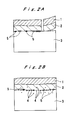
- the invention provides, as in claim 1, ferritic heat-resistant steel capable of forming an oxide film on its surface during use and having good steam oxidation-resistance, which is characterized in that ultra-fine oxide particles having a diameter of not larger than 1 micron are formed in and/or around the interface between the steel base and the oxide film formed thereon, to thereby increase the adhesiveness between the oxide film and the steel base.
- the invention further provides the following:
- 1 is an outer scale layer
- 2 is an inner scale layer
- 3 is a steel base
- 4 is an oxide particle
- 5 is a void.
- the present invention is characterized by the features mentioned hereinabove.
- the problems with steel having poor oxidation resistance are that the oxide film formed on the inner surfaces of steel pipes peels off and deposits in the pipes to clog them, and that the peeled oxide film scatters in steel pipes and erodes the apparatus disposed in the later zone.
- the present invention has been made, and its subject matter is, as so mentioned hereinabove, to homogeneously form ultra-fine oxide particles having a size of not larger than 1 ⁇ m in and/or around the interface between the oxide film formed on the surface of a steel base and the steel base just below the oxide film, thereby improving the adhesiveness between the oxide film and the steel base.
- the invention provides ferritic heat-resistant steel having both good oxidation resistance and high creep strength even at high temperatures of 600°C or higher.
- the essential reason for oxide film peeling is thermal stress to be caused by the temperature change in steel.
- the thermal stress shall be greater with the growth of the oxide film on steel (that is, with the increase in the thickness of the film).
- the thermal stress exceeds the adhesiveness (adhesion strength) between the film and the underlying steel base, the film peels from the steel base. Therefore, increasing the adhesiveness of the film to the steel base is effective for preventing the film peeling.
- the film adhesiveness is generally increased by densifying the oxide film itself to produce the condition in which pores or voids are difficult to form in the interface between the film and the steel base.
- fine particles are formed in the interface between the oxide film and the steel base, so that they act as a barrier to the film peeling propagation in the film/base interface while preventing the film from swelling up.
- Ti or Y oxides are formed through internal oxidation in steel, while the steel is to have a scale structure composed of an outer scale layer (of Fe oxides) (1) and an inner scale layer (of Fe-Cr oxides) (2) as formed on the surface of the steel base (3), as in Fig. 1, in which fine oxide particles (4) exist around the scale/base interface.
- Existing oxide particles having a size of not larger than 1 micron, but preferably not larger than 0.5 microns in and/or around the interface between the oxide film and the steel base prevents the film from peeling, and is effective to attain the intended purpose.
- large particles having a size of 3 microns or larger, if existing in the interface are not effective for the intended purpose, but rather promote the film peeling.
- the subject matter of the present invention is to form fine oxide particles having a size of not larger than 1 micron just below the film formed on steel, whereby the film is prevented from peeling off owing to the bridging effect of the oxide particles.
- the components constituting the steel of the invention are not whatsoever limited to those specifically referred to hereinabove, so far as the steel attains the object of the invention.
- ferritic heat-resistant steel of the invention which is characterized by the matters specifically mentioned hereinabove, has been completed on the basis of the following findings that have resulted from the data of the detailed studies, which the present inventors have made relative to the relationship between the property of the steel including its high, long-term creep strength and steam oxidation resistance, and the chemical components constituting the steel and the metallic structure (microstructure) of the steel.
- Rh and Ir and also Co are all in the same Group of the Periodic Table, and they are austenite-forming elements. It has heretofore been believed that, when existing in steel, they greatly lower the A 1 transformation point of steel thereby lowering the temper softening resistance of steel.
- Rh and Ir are added to high-Cr ferritic steel containing Mo and W, the A 1 transformation point of the steel is not so much lowered.
- Rh and Ir added to the steel do not promote the aggregation and growth of carbides, nitrides and carbonitrides into coarse and large particles.
- Adding Rh and Ir to the steel makes the martensitic lath structure of the steel fine, while strengthening the martensite phase in the steel. This phenomenon is confirmed in ordinary heat treatment of the steel. There is found no significant difference in the degree of hardness between the high-Cr ferritic steel and conventional steel after they are quenched, but the temper softening resistance of the high-Cr ferritic steel is much higher than that of conventional steel.
- the high-Cr ferritic steel After having been normalized and tempered, the high-Cr ferritic steel shall have a martensitic texture that contains carbides, nitrides and carbonitrides precipitated therein.
- the martensitic structure in the steel tends to recover and soften with the lapse of time at high temperatures higher than 630°C, which could be prevented by Rh and Ir added to the steel.
- the long-term creep strength of the steel at high temperatures higher than 630°C is greatly increased, and the steel shall have excellent long-term creep strength.
- Rh and Ir are added to high-Cr ferritic steel containing much Mo and W, they do not convert the sound, corundum-type scale layer consisting essentially of Cr 2 O 3 and formed on the steel into a spinel-type structure. Therefore, the scale layer formed on the steel is not broken, and the steam oxidation resistance of the steel is not lowered even at high temperatures higher than 630°C.
- Rh and Ir is noticeable when at least any one of the two is added to the steel in an amount of from 0.3 to 5 % by weight, but preferably when Rh is added thereto in an amount not smaller than 0.3 % by weight and/or Ir is added in an amount not smaller than 0.6 % by weight.
- Rh and Ir larger than 5 % by weight each, even if added to the steel, will saturate their effect without augmenting it any more.
- the amount of Rh and Ir to be added is from 0.3 to 5.0 % by weight and that of Ir is from 0.6 to 5.0 % by weight.
- Rh and Ir are both added to the steel.
- the amount of the two shall be 0.3 % ⁇ Rh + (1/2) Ir ⁇ 5.0 %, in which % being by weight, in view of their ability to exhibit and saturate the effect.
- the ferritic heat-resistant steel of the invention can be produced in any ordinary equipment and process generally employed in the prior art.
- steel is melted in a furnace such as an electric furnace, a converter or the like, and deoxidizers and alloying elements are added thereto to control the steel composition.
- a furnace such as an electric furnace, a converter or the like
- deoxidizers and alloying elements are added thereto to control the steel composition.
- the steel melt may be subjected to vacuum treatment prior to adding alloying elements thereto.
- the steel melt having been specifically modulated to have a predetermined chemical composition is then cast into slabs, billets or ingots in a continuous casting method or a slab-making method, and which are thereafter shaped into pipes, sheets, etc.
- seamless steel pipes are produced, for example, billets are extruded or forged into them.
- slabs are hot-rolled into hot-rolled sheets.
- the resulting hot-rolled sheets may be cold-rolled into cold-rolled sheets.
- the hot-working is followed by the cold-working such as cold-rolling, it is desirable that the hot-worked sheets are annealed and washed with acids prior to being subjected to ordinary cold-working.
- the thus-produced steel pipes and sheets may be optionally subjected to heat treatment such as annealing or the like, to thereby make them have predetermined characteristics.
- Comparative Samples 1, 2 and 3 are samples of standard steel of ASTM T91, T92 and T122, respectively.
- test pieces Prior to being subjected to steam oxidation tests for evaluating their steam oxidation resistance, all test pieces were pre-treated for AC normalization at 1050°C for hours followed by AC tempering at 780°C for 1 hour. In one steam oxidation test, each test piece was kept heated in a steam atmosphere at 700°C for 1000 hours, and the thickness of the scale layer formed was measured. In another heat-cycle test, each test piece was heated at the same temperature of 700°C for 96 hours, and then cooled to room temperature, and the heat cycle was repeated for a total of 10 times. After the heat-cycle test, the amount of scale peeled off was measured.
- Sample 2 of the invention in Table 1 was forged at different temperatures falling between 1100 and 1400°C, then immediately inserted into a furnace at 1050°C and kept therein for 1 hour, and thereafter cooled with water. After this, the thus-processed samples were post-treated for AC tempering at 780°C for 1 hour. Then, these were subjected to a creep rupture test at 650°C and under 100 MPa. The data obtained are shown in Table 3.
- Each steel melt was cast into ingots having a diameter of 70 mm, which were then hot-forged at a temperature varying from 1250°C to 1000°C into sheets having a square of 45 mm x 45 mm and a length of 400 mm. Then, these were cold-rolled at a temperature varying from 1100°C to 900°C into sheets having a square of 15 mm x 15 mm.
- Samples Nos. 1 to 6 of the invention in Table 4 were thereafter kept at 1100°C for 1 hour and then normalized by air cooling, or were kept at 800°C for 1 hour and then tempered by air cooling.
- Comparative Samples 1 and 2 in Table 4 were subjected ordinary post-heat-treatment. Briefly, these were kept at 950°C for 1 hour and then normalized by air cooling, or were kept at 750°C and then tempered by air cooling. Comparative Samples 1 and 2 had a chemical composition of ASTM-A213-T91 and DIN-X20CrMoWV121, respectively.
- Test pieces were sampled out of those eight samples, and tested for the high-temperature creep strength and the steam oxidation resistance.
- test pieces were subjected to a creep rupture test, for which the test condition is mentioned below.
- test pieces were subjected to a steam oxidation test, for which the test condition is mentioned below.
- the time for creep rupture of all Samples 1 to 6 of the invention at 650°C and under 140 MPa was longer than 3000 hours, and that at 700°C and under 120 MPa was longer than 100 hours.
- the mean thickness of the scale layer formed in the steam oxidation test at 700°C for 1000 hours was not larger than 77 ⁇ m.
- Comparative Samples 1 and 2 were much inferior to that of Samples 1 to 6 of the invention, as in Table 5.
- the thickness of the scale layer formed in Comparative Sample 1 was about 2 times that in Samples 1 to 6 of the invention. This means that the steam oxidation resistance of Comparative Sample 1 is poor.
- Each steel melt was cast into ingots having a diameter of 70 mm, which were then hot-forged at a temperature varying from 1250°C to 1000°C into sheets having a square of 45 mm x 45 mm and a length of 400 mm. Then, these were cold-rolled at a temperature varying from 1100°C to 900°C into sheets having a square of 15 mm x 15 mm.
- Samples Nos. 1 to 6 of the invention in Table 6 were thereafter kept at 1100°C for 1 hour and then normalized by air cooling, or were kept at 800°C for 1 hour and then tempered by air cooling.
- Comparative Samples 1 and 2 in Table 6 were subjected ordinary post-heat-treatment. Briefly, these were kept at 950°C for 1 hour and then normalized by air cooling, or were kept at 750°C and then tempered by air cooling. Comparative Samples 1 and 2 had a chemical composition of ASTM-A213-T91 and DIN-X20CrMoWV121, respectively.
- Test pieces were sampled out of those eight samples, and tested for the high-temperature creep strength and the steam oxidation resistance.
- the test condition is mentioned below.
- thickness of the scale layer formed is less than 36 ⁇ m (625 °C X 1000h), less than 48 ⁇ m (650 °C X 1000h) and less than 57 ⁇ m (700 °C X 1000h). It was found that each steel of the samples 1 ⁇ 6 has superior steam oxidation-resistance at the high temperature of over 630°C and is extremely stable.
- the present invention provides ferritic heat-resistant steel having excellent steam oxidation resistance and creep strength characteristics.
- the creep strength of the steel of the invention is at least comparable to or higher than that of conventional steel.
- the steel of the invention is useful for high-temperature heat-resistant and pressure resistant parts capable of being widely used in various industrial fields, for example, for those of boilers, atomic powered apparatus and other apparatus in chemical industry.
- the steel may be used for pipes, sheets for pressure containers, turbines, etc.
Landscapes
- Chemical & Material Sciences (AREA)
- Engineering & Computer Science (AREA)
- Mechanical Engineering (AREA)
- Materials Engineering (AREA)
- Metallurgy (AREA)
- Organic Chemistry (AREA)
- Thermal Sciences (AREA)
- Physics & Mathematics (AREA)
- Crystallography & Structural Chemistry (AREA)
- General Engineering & Computer Science (AREA)
- Heat Treatment Of Steel (AREA)
- Other Surface Treatments For Metallic Materials (AREA)
- Heat Treatment Of Sheet Steel (AREA)
Applications Claiming Priority (7)
| Application Number | Priority Date | Filing Date | Title |
|---|---|---|---|
| JP25648097 | 1997-09-22 | ||
| JP25647997A JP3752523B2 (ja) | 1997-09-22 | 1997-09-22 | フェライト系耐熱鋼 |
| JP25647997 | 1997-09-22 | ||
| JP25648197 | 1997-09-22 | ||
| JP25648197A JPH1192880A (ja) | 1997-09-22 | 1997-09-22 | 耐酸化性・耐水蒸気酸化特性に優れた 高Crフェライト系耐熱鋼とその製造方法 |
| JP25648097A JP3752524B2 (ja) | 1997-09-22 | 1997-09-22 | フェライト系耐熱鋼 |
| EP98307629A EP0903421B1 (de) | 1997-09-22 | 1998-09-21 | Ferritischer,wärmebeständiger Stahl und Verfahren zur Herstellung |
Related Parent Applications (1)
| Application Number | Title | Priority Date | Filing Date |
|---|---|---|---|
| EP98307629A Division EP0903421B1 (de) | 1997-09-22 | 1998-09-21 | Ferritischer,wärmebeständiger Stahl und Verfahren zur Herstellung |
Publications (4)
| Publication Number | Publication Date |
|---|---|
| EP1329532A2 true EP1329532A2 (de) | 2003-07-23 |
| EP1329532A3 EP1329532A3 (de) | 2003-07-30 |
| EP1329532B1 EP1329532B1 (de) | 2005-02-09 |
| EP1329532B8 EP1329532B8 (de) | 2007-09-19 |
Family
ID=27334536
Family Applications (3)
| Application Number | Title | Priority Date | Filing Date |
|---|---|---|---|
| EP98307629A Expired - Lifetime EP0903421B1 (de) | 1997-09-22 | 1998-09-21 | Ferritischer,wärmebeständiger Stahl und Verfahren zur Herstellung |
| EP03007333A Expired - Lifetime EP1329532B8 (de) | 1997-09-22 | 1998-09-21 | Ferritischer,wärmebeständiger Stahl und Verfahren zur Herstellung |
| EP03007332A Expired - Lifetime EP1329531B8 (de) | 1997-09-22 | 1998-09-21 | Ferritischer,wärmebeständiger Stahl und Verfahren zur Herstellung |
Family Applications Before (1)
| Application Number | Title | Priority Date | Filing Date |
|---|---|---|---|
| EP98307629A Expired - Lifetime EP0903421B1 (de) | 1997-09-22 | 1998-09-21 | Ferritischer,wärmebeständiger Stahl und Verfahren zur Herstellung |
Family Applications After (1)
| Application Number | Title | Priority Date | Filing Date |
|---|---|---|---|
| EP03007332A Expired - Lifetime EP1329531B8 (de) | 1997-09-22 | 1998-09-21 | Ferritischer,wärmebeständiger Stahl und Verfahren zur Herstellung |
Country Status (3)
| Country | Link |
|---|---|
| US (4) | US20020011285A1 (de) |
| EP (3) | EP0903421B1 (de) |
| DE (3) | DE69837055T2 (de) |
Cited By (3)
| Publication number | Priority date | Publication date | Assignee | Title |
|---|---|---|---|---|
| DE102009039552A1 (de) * | 2009-09-01 | 2011-03-24 | Thyssenkrupp Vdm Gmbh | Verfahren zur Herstellung einer Eisen-Chrom-Legierung |
| CN104630652A (zh) * | 2015-02-12 | 2015-05-20 | 上海闵轩钢结构工程有限公司 | 一种低合金耐热高强钢、钢构件及其制备方法 |
| DE102016206371A1 (de) * | 2016-04-15 | 2017-10-19 | Siemens Aktiengesellschaft | Martensitischer Stahl mit Z-Phase, Pulver und Bauteil |
Families Citing this family (13)
| Publication number | Priority date | Publication date | Assignee | Title |
|---|---|---|---|---|
| JP4221518B2 (ja) * | 1998-08-31 | 2009-02-12 | 独立行政法人物質・材料研究機構 | フェライト系耐熱鋼 |
| US6696016B1 (en) * | 1999-09-24 | 2004-02-24 | Japan As Represented By Director General Of National Research Institute For Metals | High-chromium containing ferrite based heat resistant steel |
| JP3672903B2 (ja) * | 2002-10-11 | 2005-07-20 | 核燃料サイクル開発機構 | 酸化物分散強化型フェライト鋼管の製造方法 |
| JP4253719B2 (ja) * | 2002-11-01 | 2009-04-15 | 独立行政法人物質・材料研究機構 | 耐酸化性高Crフェライト系耐熱鋼の製造方法 |
| US8246767B1 (en) | 2005-09-15 | 2012-08-21 | The United States Of America, As Represented By The United States Department Of Energy | Heat treated 9 Cr-1 Mo steel material for high temperature application |
| JP5578893B2 (ja) * | 2010-03-12 | 2014-08-27 | 株式会社日立製作所 | 蒸気タービンの摺動部を有する部材 |
| EP2580357A1 (de) * | 2010-06-10 | 2013-04-17 | Tata Steel Nederland Technology B.V. | Verfahren zur herstellung eines vorgespannten martensitischen hitzebeständigen stahls für hochtemperaturanwendungen |
| CN102021490B (zh) * | 2010-10-13 | 2013-01-02 | 浙江大隆合金钢有限公司 | X12CrMoWVNbN10-1-1高温结构钢及其生产方法 |
| FR3014906B1 (fr) * | 2013-12-13 | 2016-06-24 | Commissariat Energie Atomique | Procede de realisation d'un element absorbeur de rayonnements solaires pour centrale solaire thermique a concentration, element absorbeur de rayonnements solaires |
| JP6334384B2 (ja) * | 2014-12-17 | 2018-05-30 | 三菱日立パワーシステムズ株式会社 | 蒸気タービンロータ、該蒸気タービンロータを用いた蒸気タービン、および該蒸気タービンを用いた火力発電プラント |
| WO2016136401A1 (ja) * | 2015-02-25 | 2016-09-01 | 日立金属株式会社 | 熱間工具およびその製造方法 |
| CN112458369B (zh) * | 2020-11-24 | 2022-05-24 | 华能国际电力股份有限公司 | 一种析出强化型铁素体耐热钢及其制备方法 |
| CN114540602B (zh) * | 2022-02-24 | 2022-12-09 | 西安交通大学 | 一种p92钢的脉冲时效强化方法及强化处理的p92钢 |
Family Cites Families (29)
| Publication number | Priority date | Publication date | Assignee | Title |
|---|---|---|---|---|
| JPS498765B1 (de) * | 1969-08-27 | 1974-02-28 | ||
| US3932174A (en) * | 1971-03-09 | 1976-01-13 | E. I. Du Pont De Nemours And Company | Chromium, molybdenum ferritic stainless steels |
| US4018569A (en) * | 1975-02-13 | 1977-04-19 | General Electric Company | Metal of improved environmental resistance |
| JPS5910424B2 (ja) * | 1979-03-30 | 1984-03-08 | セイコーエプソン株式会社 | 時計用外装部品 |
| US4383891A (en) * | 1979-08-28 | 1983-05-17 | Spie-Batignolles | Device for desalting brackish water, and a conditioning method and device relating to said desalting device |
| JPS5696052A (en) * | 1979-12-29 | 1981-08-03 | Nippon Steel Corp | Low sulfur steel with hydrogen sulfide crack resistance |
| US4384891A (en) * | 1980-07-07 | 1983-05-24 | Regie Nationale Des Usines Renault | Metal alloy with high catalytic activity |
| GB2079787B (en) * | 1980-07-10 | 1984-06-13 | Renault | Alloy with good catalytic activity and method of production thereof |
| JPS5914097B2 (ja) * | 1980-07-30 | 1984-04-03 | 新日本製鐵株式会社 | 靭性を改良せるフェライト系耐熱鋼 |
| JPS61231139A (ja) * | 1985-04-06 | 1986-10-15 | Nippon Steel Corp | 高強度フエライト系耐熱鋼 |
| US4761187A (en) * | 1986-08-25 | 1988-08-02 | Rockwell International Corporation | Method of improving stress corrosion resistance of alloys |
| JPH0625378B2 (ja) * | 1987-07-20 | 1994-04-06 | 動力炉・核燃料開発事業団 | 高速炉炉心用フェライト系構造部材の製造法 |
| IL88837A (en) * | 1988-12-30 | 1993-08-18 | Technion Res & Dev Foundation | Method for the preparation of mask for x-ray lithography |
| JPH0830251B2 (ja) * | 1989-02-23 | 1996-03-27 | 日立金属株式会社 | 高温強度の優れたフェライト系耐熱鋼 |
| JP2834196B2 (ja) * | 1989-07-18 | 1998-12-09 | 新日本製鐵株式会社 | 高強度、高靭性フェライト系耐熱鋼 |
| JPH0396336A (ja) * | 1989-09-08 | 1991-04-22 | Ishikawajima Harima Heavy Ind Co Ltd | クラッド材及びクラッド層を有する原子炉圧力容器 |
| JPH04354855A (ja) * | 1991-05-29 | 1992-12-09 | Mitsubishi Motors Corp | 排気系用フェライト系ステンレス鋼 |
| JP3290751B2 (ja) * | 1992-05-21 | 2002-06-10 | 川崎製鉄株式会社 | 高加工性高温高強度フェライト系ステンレス鋼 |
| US5320513A (en) * | 1992-12-10 | 1994-06-14 | Husky Injection Molding Systems Ltd. | Printed circuit board for an injection molding apparatus |
| CN1139670C (zh) * | 1994-07-06 | 2004-02-25 | 关西电力株式会社 | 铁素体系耐热钢 |
| JPH0874001A (ja) * | 1994-08-31 | 1996-03-19 | Nkk Corp | 耐選択腐食性及び冷間加工性に優れた高温高濃度硫酸用ステンレス鋼溶接材料 |
| JP3480061B2 (ja) * | 1994-09-20 | 2003-12-15 | 住友金属工業株式会社 | 高Crフェライト系耐熱鋼 |
| JPH08176754A (ja) * | 1994-12-22 | 1996-07-09 | Res Inst Electric Magnetic Alloys | ストレインゲージ用合金およびその製造法ならびにストレインゲージ |
| JP3235390B2 (ja) * | 1995-02-03 | 2001-12-04 | 株式会社日立製作所 | 析出強化型オーステナイト鋼単結晶及びその用途 |
| JPH0941100A (ja) * | 1995-08-03 | 1997-02-10 | Res Inst Electric Magnetic Alloys | Fe−Cr−Si基合金およびその製造法ならびにストレインゲージ |
| DE19615012A1 (de) * | 1995-08-16 | 1997-02-20 | Siemens Ag | Erzeugnis zur Führung eines heißen, oxidierenden Gases |
| JPH0971847A (ja) * | 1995-09-05 | 1997-03-18 | Furukawa Electric Co Ltd:The | 高透磁率合金 |
| JPH10110347A (ja) * | 1996-08-12 | 1998-04-28 | Toshiba Corp | 織機用部品およびそれを用いた織機 |
| US5906791A (en) * | 1997-07-28 | 1999-05-25 | General Electric Company | Steel alloys |
-
1998
- 1998-09-21 EP EP98307629A patent/EP0903421B1/de not_active Expired - Lifetime
- 1998-09-21 US US09/157,392 patent/US20020011285A1/en not_active Abandoned
- 1998-09-21 DE DE69837055T patent/DE69837055T2/de not_active Expired - Lifetime
- 1998-09-21 EP EP03007333A patent/EP1329532B8/de not_active Expired - Lifetime
- 1998-09-21 EP EP03007332A patent/EP1329531B8/de not_active Expired - Lifetime
- 1998-09-21 DE DE69829012T patent/DE69829012T2/de not_active Expired - Lifetime
- 1998-09-21 DE DE69827729T patent/DE69827729T2/de not_active Expired - Lifetime
-
2002
- 2002-07-22 US US10/199,031 patent/US20030127163A1/en not_active Abandoned
-
2003
- 2003-09-30 US US10/673,879 patent/US20040060621A1/en not_active Abandoned
-
2005
- 2005-10-17 US US11/250,492 patent/US20060054253A1/en not_active Abandoned
Cited By (4)
| Publication number | Priority date | Publication date | Assignee | Title |
|---|---|---|---|---|
| DE102009039552A1 (de) * | 2009-09-01 | 2011-03-24 | Thyssenkrupp Vdm Gmbh | Verfahren zur Herstellung einer Eisen-Chrom-Legierung |
| DE102009039552B4 (de) * | 2009-09-01 | 2011-05-26 | Thyssenkrupp Vdm Gmbh | Verfahren zur Herstellung einer Eisen-Chrom-Legierung |
| CN104630652A (zh) * | 2015-02-12 | 2015-05-20 | 上海闵轩钢结构工程有限公司 | 一种低合金耐热高强钢、钢构件及其制备方法 |
| DE102016206371A1 (de) * | 2016-04-15 | 2017-10-19 | Siemens Aktiengesellschaft | Martensitischer Stahl mit Z-Phase, Pulver und Bauteil |
Also Published As
| Publication number | Publication date |
|---|---|
| DE69837055D1 (de) | 2007-03-22 |
| EP1329531A3 (de) | 2003-07-30 |
| DE69827729T2 (de) | 2005-04-28 |
| US20060054253A1 (en) | 2006-03-16 |
| EP1329531A2 (de) | 2003-07-23 |
| EP1329531B1 (de) | 2007-02-07 |
| US20030127163A1 (en) | 2003-07-10 |
| EP1329532B1 (de) | 2005-02-09 |
| US20020011285A1 (en) | 2002-01-31 |
| EP0903421A1 (de) | 1999-03-24 |
| DE69829012T2 (de) | 2005-07-07 |
| DE69837055T2 (de) | 2007-11-08 |
| EP0903421B1 (de) | 2004-11-24 |
| US20040060621A1 (en) | 2004-04-01 |
| EP1329531B8 (de) | 2007-09-19 |
| EP1329532A3 (de) | 2003-07-30 |
| DE69827729D1 (de) | 2004-12-30 |
| DE69829012D1 (de) | 2005-03-17 |
| EP1329532B8 (de) | 2007-09-19 |
Similar Documents
| Publication | Publication Date | Title |
|---|---|---|
| EP0903421B1 (de) | Ferritischer,wärmebeständiger Stahl und Verfahren zur Herstellung | |
| EP0703301B1 (de) | Temperaturbeständiger ferritischer Stahl mit hohem Chromgehalt | |
| KR100933114B1 (ko) | 페라이트계 내열강 | |
| JP2000080448A (ja) | フェライト系耐熱鋼 | |
| JP2004359973A (ja) | 耐遅れ破壊特性に優れた高強度鋼板及びその製造方法 | |
| JPH08225833A (ja) | 高温クリープ強度の優れたマルテンサイト系耐熱鋼の製造方法 | |
| JP2579094B2 (ja) | 耐硫化物応力割れ性に優れた油井用鋼管の製造法 | |
| JP2680350B2 (ja) | 靭性の優れたCr−Mo鋼板の製造方法 | |
| JP4212132B2 (ja) | マルテンサイト組織を有するフェライト系耐熱鋼とその製造方法 | |
| JP3301284B2 (ja) | 高Crフェライト系耐熱鋼 | |
| JP3196587B2 (ja) | 高Crフェライト系耐熱鋼 | |
| JP2689198B2 (ja) | クリープ強度に優れたマルテンサイト系耐熱鋼 | |
| JP3705391B2 (ja) | 熱延板の低温靱性に優れたNb含有フェライト系ステンレス鋼 | |
| CN115612918A (zh) | 一种具有高温性能的铁素体不锈钢及其制备方法 | |
| JP3969279B2 (ja) | マルテンサイト系鉄基耐熱合金およびその製造方法 | |
| JPH05311344A (ja) | 高温強度ならびに靱性に優れたフェライト系耐熱鋼 | |
| JP3752523B2 (ja) | フェライト系耐熱鋼 | |
| JPH10237600A (ja) | 耐高温溶接割れ性および溶接熱影響部の靭性に優れるフェライト系耐熱鋼 | |
| JP3752524B2 (ja) | フェライト系耐熱鋼 | |
| KR100363192B1 (ko) | 고강도 볼트의 제조방법 | |
| JPH101737A (ja) | 高温強度と靭性に優れた低合金耐熱鋼及びその製造方法 | |
| JPH05311343A (ja) | 高クリープ強度を有するフェライト系耐熱鋼 | |
| CN119571189A (zh) | 抗拉强度1200MPa级海洋平台系泊链用钢及其制造方法 | |
| Terao et al. | High-manganese dual-phase steels, strengthened by additional elements (Cr, Ti, V, W) | |
| JPH1192880A (ja) | 耐酸化性・耐水蒸気酸化特性に優れた 高Crフェライト系耐熱鋼とその製造方法 |
Legal Events
| Date | Code | Title | Description |
|---|---|---|---|
| PUAI | Public reference made under article 153(3) epc to a published international application that has entered the european phase |
Free format text: ORIGINAL CODE: 0009012 |
|
| PUAL | Search report despatched |
Free format text: ORIGINAL CODE: 0009013 |
|
| AC | Divisional application: reference to earlier application |
Ref document number: 0903421 Country of ref document: EP Kind code of ref document: P |
|
| AK | Designated contracting states |
Designated state(s): BE DE |
|
| AK | Designated contracting states |
Designated state(s): BE DE |
|
| RIC1 | Information provided on ipc code assigned before grant |
Ipc: 7C 22C 38/26 B Ipc: 7C 22C 38/24 A Ipc: 7C 22C 38/22 B |
|
| 17P | Request for examination filed |
Effective date: 20030710 |
|
| RIN1 | Information on inventor provided before grant (corrected) |
Inventor name: ITAGAKI, TAKEHIKO Inventor name: IGARASHI, MASAAKI Inventor name: ABE, FUJIO Inventor name: FUJITSUNA, NOBOYUKI |
|
| 17Q | First examination report despatched |
Effective date: 20031114 |
|
| AKX | Designation fees paid |
Designated state(s): BE DE |
|
| GRAP | Despatch of communication of intention to grant a patent |
Free format text: ORIGINAL CODE: EPIDOSNIGR1 |
|
| GRAS | Grant fee paid |
Free format text: ORIGINAL CODE: EPIDOSNIGR3 |
|
| GRAA | (expected) grant |
Free format text: ORIGINAL CODE: 0009210 |
|
| AC | Divisional application: reference to earlier application |
Ref document number: 0903421 Country of ref document: EP Kind code of ref document: P |
|
| AK | Designated contracting states |
Kind code of ref document: B1 Designated state(s): BE DE |
|
| REF | Corresponds to: |
Ref document number: 69829012 Country of ref document: DE Date of ref document: 20050317 Kind code of ref document: P |
|
| PLBE | No opposition filed within time limit |
Free format text: ORIGINAL CODE: 0009261 |
|
| 26N | No opposition filed |
Effective date: 20051110 |
|
| PGFP | Annual fee paid to national office [announced via postgrant information from national office to epo] |
Ref country code: BE Payment date: 20061012 Year of fee payment: 9 |
|
| PLAA | Information modified related to event that no opposition was filed |
Free format text: ORIGINAL CODE: 0009299DELT |
|
| PLBE | No opposition filed within time limit |
Free format text: ORIGINAL CODE: 0009261 |
|
| STAA | Information on the status of an ep patent application or granted ep patent |
Free format text: STATUS: NO OPPOSITION FILED WITHIN TIME LIMIT |
|
| 26N | No opposition filed |
Effective date: 20051110 |
|
| RIN2 | Information on inventor provided after grant (corrected) |
Inventor name: ABE, FUJIO Inventor name: IGARASHI, MASAAKI Inventor name: FUJITSUNA, NOBOYUKI Inventor name: MUNEKI, MASAKAZU Inventor name: KIMURA, KAZUHIRO Inventor name: ITAGAKI, TAKEHIKO Inventor name: KUSHIMA, HIDEAKI |
|
| BERE | Be: lapsed |
Owner name: *NATIONAL RESEARCH INSTITUTE FOR METALS Effective date: 20070930 |
|
| PG25 | Lapsed in a contracting state [announced via postgrant information from national office to epo] |
Ref country code: BE Free format text: LAPSE BECAUSE OF NON-PAYMENT OF DUE FEES Effective date: 20070930 |
|
| PGFP | Annual fee paid to national office [announced via postgrant information from national office to epo] |
Ref country code: DE Payment date: 20100922 Year of fee payment: 13 |
|
| REG | Reference to a national code |
Ref country code: DE Ref legal event code: R119 Ref document number: 69829012 Country of ref document: DE Effective date: 20120403 |
|
| PG25 | Lapsed in a contracting state [announced via postgrant information from national office to epo] |
Ref country code: DE Free format text: LAPSE BECAUSE OF NON-PAYMENT OF DUE FEES Effective date: 20120403 |