EP1408976B1 - Behandlung von hyperaktivitätsstörungen und aufmerksamkeitsdefiziten - Google Patents
Behandlung von hyperaktivitätsstörungen und aufmerksamkeitsdefiziten Download PDFInfo
- Publication number
- EP1408976B1 EP1408976B1 EP02756536A EP02756536A EP1408976B1 EP 1408976 B1 EP1408976 B1 EP 1408976B1 EP 02756536 A EP02756536 A EP 02756536A EP 02756536 A EP02756536 A EP 02756536A EP 1408976 B1 EP1408976 B1 EP 1408976B1
- Authority
- EP
- European Patent Office
- Prior art keywords
- compound
- adhd
- mice
- alkyl
- eltoprazine
- Prior art date
- Legal status (The legal status is an assumption and is not a legal conclusion. Google has not performed a legal analysis and makes no representation as to the accuracy of the status listed.)
- Expired - Lifetime
Links
- 0 C1*c(cccc2N3CCNCC3)c2OC1 Chemical compound C1*c(cccc2N3CCNCC3)c2OC1 0.000 description 3
Images






Classifications
-
- A—HUMAN NECESSITIES
- A61—MEDICAL OR VETERINARY SCIENCE; HYGIENE
- A61K—PREPARATIONS FOR MEDICAL, DENTAL OR TOILETRY PURPOSES
- A61K31/00—Medicinal preparations containing organic active ingredients
- A61K31/33—Heterocyclic compounds
- A61K31/395—Heterocyclic compounds having nitrogen as a ring hetero atom, e.g. guanethidine or rifamycins
- A61K31/495—Heterocyclic compounds having nitrogen as a ring hetero atom, e.g. guanethidine or rifamycins having six-membered rings with two or more nitrogen atoms as the only ring heteroatoms, e.g. piperazine or tetrazines
- A61K31/496—Non-condensed piperazines containing further heterocyclic rings, e.g. rifampin, thiothixene or sparfloxacin
-
- A—HUMAN NECESSITIES
- A61—MEDICAL OR VETERINARY SCIENCE; HYGIENE
- A61P—SPECIFIC THERAPEUTIC ACTIVITY OF CHEMICAL COMPOUNDS OR MEDICINAL PREPARATIONS
- A61P25/00—Drugs for disorders of the nervous system
-
- A—HUMAN NECESSITIES
- A61—MEDICAL OR VETERINARY SCIENCE; HYGIENE
- A61P—SPECIFIC THERAPEUTIC ACTIVITY OF CHEMICAL COMPOUNDS OR MEDICINAL PREPARATIONS
- A61P25/00—Drugs for disorders of the nervous system
- A61P25/14—Drugs for disorders of the nervous system for treating abnormal movements, e.g. chorea, dyskinesia
-
- A—HUMAN NECESSITIES
- A61—MEDICAL OR VETERINARY SCIENCE; HYGIENE
- A61P—SPECIFIC THERAPEUTIC ACTIVITY OF CHEMICAL COMPOUNDS OR MEDICINAL PREPARATIONS
- A61P25/00—Drugs for disorders of the nervous system
- A61P25/18—Antipsychotics, i.e. neuroleptics; Drugs for mania or schizophrenia
-
- A—HUMAN NECESSITIES
- A61—MEDICAL OR VETERINARY SCIENCE; HYGIENE
- A61P—SPECIFIC THERAPEUTIC ACTIVITY OF CHEMICAL COMPOUNDS OR MEDICINAL PREPARATIONS
- A61P25/00—Drugs for disorders of the nervous system
- A61P25/20—Hypnotics; Sedatives
-
- A—HUMAN NECESSITIES
- A61—MEDICAL OR VETERINARY SCIENCE; HYGIENE
- A61P—SPECIFIC THERAPEUTIC ACTIVITY OF CHEMICAL COMPOUNDS OR MEDICINAL PREPARATIONS
- A61P25/00—Drugs for disorders of the nervous system
- A61P25/26—Psychostimulants, e.g. nicotine, cocaine
-
- A—HUMAN NECESSITIES
- A61—MEDICAL OR VETERINARY SCIENCE; HYGIENE
- A61P—SPECIFIC THERAPEUTIC ACTIVITY OF CHEMICAL COMPOUNDS OR MEDICINAL PREPARATIONS
- A61P25/00—Drugs for disorders of the nervous system
- A61P25/28—Drugs for disorders of the nervous system for treating neurodegenerative disorders of the central nervous system, e.g. nootropic agents, cognition enhancers, drugs for treating Alzheimer's disease or other forms of dementia
-
- A—HUMAN NECESSITIES
- A61—MEDICAL OR VETERINARY SCIENCE; HYGIENE
- A61P—SPECIFIC THERAPEUTIC ACTIVITY OF CHEMICAL COMPOUNDS OR MEDICINAL PREPARATIONS
- A61P43/00—Drugs for specific purposes, not provided for in groups A61P1/00-A61P41/00
Definitions
- the present invention is directed to compositions for use in treating Attention-Deficit/Hyperactivity Disorder ("ADHD"). This invention also relates to improving cognitive functioning.
- ADHD Attention-Deficit/Hyperactivity Disorder
- ADHD Attention-Deficit/Hyperactivity Disorder
- DSM-IV-TR Attention-Deficit/Hyperactivity Disorder
- the child With respect to the attention component, the child is easily distracted by outside stimuli, neglects finishing tasks, and has difficulty maintaining attention.
- the activity component the child is often fidgety, impulsive, and overactive.
- the symptoms of ADHD may be apparent as young as preschoolers and are virtually always present prior to the age of 7 ( Halperin et al., J. Am. Acad. Child Adolescent Psychiatry, 32:1038-1043, 1993 ).
- diagnostic criteria for Attention-Deficit/Hyperactivity Disorder relate to symptoms associated with inattention and/or hyperactivity-impulsivity. Three subtypes of ADHD are diagnosed based on the predominant symptoms presented.
- ADHD affects 2-6% of grade school children.
- Pediatricians report that approximately 4% of their patients have ADHD; however, in practice the diagnosis is made in children who meet several, but not all of the diagnostic criteria that is recommended in DMS-IV-TR ( Wolraich et al., Pediatrics, 86(1):95-101, 1990 ). Boys are four times more likely to have the disorder than girls and the disorder is found in all cultures ( Ross & Ross, Hyperactivity, New York, 1982 ).
- Psychomotor stimulants are the most common treatment for ADHD. Safer & Krager (1988) reported that 99% of the children with ADHD were treated with stimulants, of which 93% were given methylphenidate hydrochloride (Ritalin), and the remainder were given dextroamphetamine sulfate (d-amphetamine) or pemoline ( Safer & Krager, J.A.M.A.; 260:2256-2258, 1988 ).
- Four separate psychostimulant medications consistently reduce the central features of ADHD, particularly the symptoms of inattention and ADHD associated hyperactivity-impulsivity: methylphenidate, d-amphetamine, pemoline, and a mixture of amphetamine salts ( Spender et al., Arch. Gen.
- Psychiatry, 52:434-443, 1995 These drugs block uptake sites for catecholamines on presynaptic neurons or stimulate the release of granular stores of catecholamines. They are metabolized and leave the body fairly rapidly, and have a therapeutic duration of action of 1 to 4 hours.
- the psychostimulants do not appear, however, to make long-term changes in social or academic skills ( Pelham et al., J. Clin. Child Psychology, 27:190-205, 1998 ). Stimulants are generally started at a low dose and adjusted weekly. Common stimulant side effects include insomnia, decreased appetite, stomachaches, headaches, and jitteriness. Psychostimulants also have the potential for abuse, because they are addictive. Thus, current methods of treating ADHD provide inadequate treatment for some patients and/or have side effects that limit their usefulness.
- bupropion is not as effective as stimulants, it may be used as an adjunct to augment stimulant treatment.
- Time perception is a particularly effective measure for testing cognitive deficits in ADHD individuals.
- Conners & Levin (1996) showed that ADHD adults improve in measures of attention and timing with the administration of nicotine. Nicotine, like the psychostimulants methylphenidate and d-amphetamine, acts as an indirect dopamine agonist and improves attention and arousal. Studies indicate that adults and adolescents with ADHD smoke much more frequently than normal individuals or those with other psychiatric conditions, perhaps as a form of self-medication for ADHD symptoms. The results indicated that there was a significant clinician-rated global improvement, self-rated vigor and concentration, and improved performance on chronometric measures of attention and timing accuracy, and side effects were minimal (Conners & Levin, supra).
- Eltoprazine hydrochloride [1-(2,3-dihyro-1,4-benzodioxin-5-yl) piperazine hydrochloride], a phenylpiperazine derivative, was originally developed as a "serenic.”
- "Serenics” are drugs developed for the selective treatment of aggressive behavior, without negatively affecting general functioning or motor abilities, and which demonstrate minimal side effects.
- eltoprazine was developed to treat and manage inappropriate aggression with high specificity. While unsuccessful in clinical trials, eltoprazine did prove to be clinically safe ( de Koning et al., Int. Clin. Psychopharmacol., 9:187-194, 1994 ).
- 5-HT 1 5-HT 2
- 5-HT 3 5-HT 4
- 5-HT 5 5-HT 6
- 5-HT 7 5-HT 7
- Radioligand binding studies have revealed at least five subtypes of the 5-HT, receptor (1A, 1B, 1D, 1E and IF). Because the 5-HT 1B receptors are present in the hippocampal formation, it has been suggested that a potential role for these receptors is the modulation of memory processes ( Malleret, J. Neurosci., 19:6157-68, 1999 ). Serotonin inhibits acetylcholine release through 5-HT 1B receptors located on septal terminals in the hippocampus ( Maura and Raiteri, Eur. J.
- 5-HT 1B receptors located on CA1 pyramidal neuron terminals
- Stimulation of the hippocampal receptors in rats resulted in impaired spatial learning tasks and neophobic reactions in an object exploration task ( Buhot and Naili, Hippocampus, 5:198-208, 1995 ).
- the blockade of 5-HT 1B receptors potentially affects attention and emotion and positively affects learning and memory processes (Buhot et al., supra). Therefore, 5-HT 1B agonists would be predicted not to enhance attention or cognitive function.
- the binding profile of eltoprazine shows the compound to be a selective 5-HT 1 ligand (selective with respect to all receptors other than 5-HT 1 ).
- Eltoprazine's binding affinity for the various 5-HT receptor subtypes closely resembles serotonin except for the relatively low Bounty for the 5-HT 1D receptor with roughly equipotent affinity for the 5-HT 1A , 5-HT 1B , and 5-HT 2C receptors (Schipper, J. et al., supra).
- Eltoprazine acts as a mixed 5-HT 1A/1B receptor agonist.
- Eltoprazine has no relevant affinity for dopamine receptors (i.e., K i > 1 ⁇ M, Schipper et al., supra).
- the 5-HT 1B is located as an autoreceptor on axon terminal and is responsible for inhibiting neurotransmitter release, whereas it is also located postsynaptically as a heteroreceptor on axons and terminals of non-serotonergic neurons inhibiting their activity.
- eltoprazine HCl is very well absorbed, with an absolute bioavailability of about 95%.
- the maximum plasma concentration of eltoprazine is attained within 1-4 hours after administration, followed by a decrease in plasma concentration with a terminal half-life of 7-9 hours.
- the cumulative renal excretion of unchanged eltoprazine is about 40%.
- the plasma elimination half-life ranges between 5-12 hours.
- Eltoprazine plasma concentrations increase in a linear dose-dependent manner (De Vries et al., Clinical Pharmacology, 41:485-48 8, 1991).
- This invention relates to compositions useful for treating ADHD in humans and the behaviors associated therewith.
- the compounds for use in the invention are believed to be effective in the treatment of ADHD. and exhibit reduced side effects and are not expected to have abuse potential, as compared to other available therapeutics.
- Treatment of ADHD may be used to reduce one or more of any of the diagnostic criteria associated with ADHD.
- eltoprazine is administered to individuals to provide treatment of symptoms associated with ADHD.
- One object of the invention is the use of a compound in the preparation of a medicament for the treatment of ADHD, the compound having the formula I: wherein R 1 is hydrogen, alkyl, cycloalkyl, optionally esterified hydroxyalkyl, alkoxyalkyl, optionally substituted phenyl or heteroaryl, alkoxy, aryloxy, alkylthio, arylthio, alkoxycarbonyl, aminocarbonyl, alkyl- or dialkyl-aminocarbonyl, nitro, amino, alkyl- or dialkyl-amino, alkylsulfonylamino, arylamino, cyano, halogen, trifluoromethyl, trifluoromethoxy, optionally esterified hydroxyl, alkyl- or amino
- the present invention relates to the use of a compound of formula I for the treatment of cognitive function associated with ADHD.
- Another object of the invention is to provide pharmaceutical compositions for the treatment of inattention and/or hyperactivity-impulsivity associated with ADHD that have reduced side effects as compared to other available treatments.
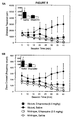
- FIGS. 1A-C - Graphs depict the relative response rate of C57BL/6J mice in the Peak Procedure (30 second reinforcement interval) after administration of 1, 2, or 4 mg/kg of d-amphetamine. * p ⁇ 0.05; ** p ⁇ 0.01; *** p ⁇ 0.001.
- FIGS. 2A-C - Graphs depict the relative response rate of C3H mice in the Peak Procedure (30 second reinforcement interval) after administration of 1, 2, or 4 mg/kg of eltoprazine. ** p ⁇ 0.01; *** p ⁇ 0.001.
- FIG. 3 - Graphs depict the relative response rate of C3H mice in the Peak Procedure (30 second reinforcement interval) after administration of low doses, 0.1 and 0.9 mg/kg, of eltoprazine. * p ⁇ 0.05; ** p ⁇ 0.01; *** p ⁇ 0.001.
- FIG. 4 - Graph depicts the effect of 4 mg/kg amphetamine on locomotor activity in coloboma mutant and wild-type mice, as measured by total distance traveled in a fixed time period. * p ⁇ 0.05; ** p ⁇ 0.01.
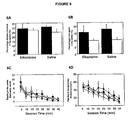
- FIGS. 5A-B - Graphs depict the effect of 0.5 mg/kg eltoprazine on locomotor activity in coloboma mutant and wild-type mice; 5A: distance traveled per 5 minute block of the behavioral session; insert shows total distance traveled in the session; 5B: depicts the frequency of zone crossings per 5 minute block of the behavioral session; insert shows total number of crossings in the session. * p ⁇ 0.05 compared to eltoprazine.
- FIGS. 6A-D - Graphs depict the effect of eltoprazine on exploratory preference in coloboma mutant and wild-type mice; 6A: percent (%) time spent in the center of open field arena; 6B: distance traveled in the center of open field arena as a percent (%) of total distance traveled in entire arena; 6C: frequency of rearing in the center of the arena per 5 minute block of the behavioral session; 6D: frequency of rearing in the periphery of the arena per 5 minute block of the behavioral session.
- FIG. 7 - Graph depicts the effect of 5-HT 1B receptor agonist CP 94253, 0.5 mg/kg, on locomotor activity in coloboma mutant and wild-type mice.
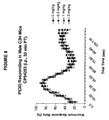
- FIG. 8 - Graph depicts the effect of 5-HT 1B receptor agonist CP 94253, 0.3, 1 or 3 mg/kg, i.p. , on response rate of C3H mice in Peak Procedure (30 second reinforcement interval).
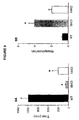
- FIGS. 9A-B - Graphs depict acquisition of operant responding in the autoshaping paradigm by wild-type, 5-HT 1B knockout mice (1BKO), and 5-HT 1A knockout (1AKO) mice.
- Data are depicted as means ⁇ SEM. * p ⁇ 0.05 compared to wild-type.
- FIGS. 10A-C - Graphs depict acquisition of a differential reinforcement of low rates-36 second (DRL-36s) schedule by 5-HT 1B receptor knockout mice compared to wild-type mice; 10A: comparison of the number of responses made over the course of training session; 10B: comparison of the number of reinforcements received over course of training session; 10C: comparison of peak wait time to respond over course of training session.
- DRL-36s differential reinforcement of low rates-36 second
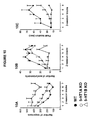
- FIGS. 11A-C - Graphs depict the inter-response time (IRT) histograms of performance under stable DRL-36 sec responding in WT (11A), 1AKO (11B) and 1BKO mice (11C). Frequency, as decimal fraction of whole, is plotted against IRT, in 3 second bins, with 36 seconds marked as the target for reinforcement.
- the bimodal IRT distribution of the DRL-36 sec is depicted, with one mode at short IRT durations (IRT ⁇ 3 sec, grey bar on left) indicating bursting and a second mode at longer IRT durations indicating pausing (IRT> 3 sec, white bars).
- the connected dots indicate the corresponding negative exponential which depicts random performance. Peak location (PkL or the "median" of the curve) was 35.2, 22.4, and 34 sec. for wild-type, 1BKO, and 1AKO mice, respectively.
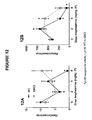
- FIGS. 12A-B - Graphs depict the effect of d-amphetamine (2, 4 or 8 mg/kg, i.p.) on 12A: the number of reinforcements and 12B: the response rate of wild-type (WT) and 5-HT 1B knockout (1BKO) mice trained on a fixed-rate 5 (FR5) DRL-36s schedule.
- WT wild-type
- FR5 fixed-rate 5
- FIG. 14 - Graph depicts the effect of eltoprazine (0.1 mg/kg, i.p.) on percent change in basal DA and 5-HT outflow in dorsal striatum of awake, freely moving wild-type mice.
- DA and 5-HT release was measured by in vivo microdialysis coupled to HPLC-ECD.
- DA or 5-HT levels are expressed as percentages of basal levels ⁇ SEM. Dialysate was sampled every 20 minutes; time of drug administration is indicated by the arrow.
- FIG. 15 - Graph depicts the effect of local administration of the 5-HT 1B receptor agonist CP 93129 (0.5 ⁇ M) on percent change in basal 5-HT outflow in dorsal striatum of awake, freely moving wild-type and 5-HT 1B knockout (1BKO) mice.
- 5-HT release was measured by in vivo microdialysis coupled to HPLC-ECD. Dialysate was sampled every 20 minutes; time of drug introduction through microdialysis probe is indicated by the solid black bar.
- FIG. 16 - Graph depicts the effect of local administration of the 5-HT 1B receptor agonist CP 93129 (0.5 or 50 ⁇ M) on percent change in basal DA outflow in dorsal striatum of awake, freely moving wild-type and 5-HT 1B knockout (1BKO) mice.
- DA release was measured by in vivo microdialysis coupled to HPLC-ECD. Dialysate was sampled every 20 minutes; time of drug introduction through microdialysis probe is indicated by the solid black bar.
- the present invention relates to the use of a compound in the preparation of a medicament for the treatment of ADHD in humans.
- ADHD is intended to comprise the distinct sets of symptoms associated with the three subtypes defined in DSM-IV-TR, inattention, hyperactivity/impulsivity, or combined, which present in an individual as ADHD.
- Impulsivity associated with ADHD is present with other symptoms, i.e., hyperactivity or hyperactivity and inattention.
- ADHD of the predominantly inattentive type is diagnosed if six (or more) of the following symptoms of inattention (and fewer than six of the hyperactivity-impulsivity symptoms below) have persisted for at least 6 months to a degree that is maladaptive and inconsistent with developmental level.
- the inattention component of ADHD may include one or more of the following symptoms: (a) often fails to give close attention to details or makes careless mistakes in schoolwork, work, or other activities, (b) often has difficulty sustaining attention in tasks or play activities, (c) often does not seem to listen when spoken to directly, (d) often does not follow through on instructions and fails to finish school work, chores, or duties in the workplace (not due to oppositional behavior or failure to understand instructions), (e) often has difficulty organizing tasks and activities, (f) often avoids, dislikes, or is reluctant to engage in tasks that require sustained mental effort (such as schoolwork or homework), (g) often loses things necessary for tasks or activities (e.g., toys, school assignments, pencils, books, or tools), (b) is often easily distracted by extraneous stimuli, and (i) is often forgetful in daily activities (DSM-IV-TR, supra).
- ADHD of the predominantly hyperactive/impulsive type is diagnosed if six (or more) of the following symptoms of hyperactivity-impulsivity (and fewer than six of the inattention symptoms above) have persisted for at least 6 months to a degree that is maladaptive and inconsistent with developmental level.
- the hyperactivity component of ADHD may include one or more of the following symptoms: (a) often fidgets with hands or feet or squirms in seat, (b) often leaves seat in classroom or in other situations in which remaining seated is expected, (c) often runs about or climbs excessively in situations in which it is inappropriate (in adolescents or adults, may be limited to subjective feelings of restlessness), (d) often has difficulty playing or engaging in leisure activities quietly, (e) is often "on the go” or often acts as if "driven by a motor,” and (f) often talks excessively.
- the impulsivity component of ADHD may include one or more of the following symptoms: (g) often blurts out answers before questions have been completed, (h) often has difficulty awaiting turn, and (i) often interrupts or intrudes on others (e.g. butts into conversations or games) (DSM-IV-TR, supra).
- the most common subtype of ADHD is the combined type, which comprises all three sets of symptoms, inattention, hyperactivity and impulsivity.
- Combined-type ADHD is diagnosed if six (or more) symptoms of inattention and six (or more) symptoms of hyperactivity/impulsivity have persisted for at least 6 months (DSM-IV-TR, supra).
- ADHD of the combined type, as well as the inattentive and hyperactive/impulsive subtypes, may be treated according to this invention.
- the present invention is not expected to have the abuse potential of psychostimulants, the most widely prescribed current pharmacological treatment, and may have a side effect profuse distinct from other types of pharmacologic therapeutics. Therefore, an advantage of the use of this compound for the treatment of ADHD provided by this invention is that certain of the undesirable side effects may be reduced or avoided.
- ADHD is diagnosed based on an individual possessing symptoms in the symptom clusters inattentiveness, hyperactivity and impulsiveness, as defined according to the DSM-IV-TR and recognized in the art
- the compounds for use with this invention may be used to treat ADHD and/or the specific symptoms or various combinations of the constellation of symptoms associated with ADHD.
- symptoms associated with ADHD are treated according to this invention, preferably at least two symptoms associated with ADHD are present, and when a symptom in the impulsivity cluster is present, then another symptom of ADHD in the hyperactivity or inattentiveness cluster is also present.
- Treatment of ADHD is provided by administering to an individual in need of treatment a therapeutically effective amount of a compound of formula 1: wherein
- an alkyl is 1-10 carbons
- aryl is 6-10 carbons
- cycloalkyl is 3-10 carbons.
- R 1 is preferably fluoro, chloro or bromo, and when an alkyl group, R 1 is preferably a straight or branched, saturated or unsaturated group having 1-5 carbon atoms.
- R 2 is preferably a methyl or ethyl group.
- R 3 preferably comprises 1-3 carbon atoms.
- R 1 or R 3 is an esterified hydroxyl group or hydroxylalkyl group
- the ester group preferably has the formula O-CO-R 4 or -O-CS-R 4 in which R 4 is alkyl, aralkyl, aryl, heteroaryl, hetero aralkyl, wherein the alkyl group may be branched or unbranched, and the (hetero) aryl part may optionally be substituted, or R 4 may be an alkoxy, heteroalkoxy or dialkylamino group, in which the two alkyl groups can form a hetero-cyclic ring with the nitrogen atom.
- R 1 or R 3 is an etherified hydroxyl group or hydroxyalkyl group
- the ether group preferably has the formula -O-R 5 , wherein R 5 is a straight, branched or cyclic alkyl group having 1-5 C-atoms, or an alkoxyalkyl group having 1 or 2 C-atoms in both the alkoxy part and in the alkyl part thereof.
- Eltoprazine (1-(2,3-dihydro-1, 4-benzodioxanyl-5-yl) piperazine) is particularly preferred for use with this invention:
- R 1 , R 2 , R' 2 and R 3 are hydrogen and A, together with the phenyl ring to which it is attached, forms a 2,3-dihydro-1, 4-benzodioxin, C 12 H 16 N 2 O 2 ; or pharmaceutically acceptable salts thereof, preferably HCl.
- Another preferred compound that may be useful for this invention is batoprazine, (8-(1-piperazine)-2H-1-benzopyran-2-one).
- ADHD and/or symptoms associated with ADHD are treated according to this invention by administering therapeutic dosages of compounds according to formula 1.
- Eltoprazine's utility for treating ADHD and symptoms associated with ADHD is based on the surprising discovery disclosed herein that eltoprazine shares certain activity profiles with other compounds known to be useful for treating such conditions.
- Amphetamines enhance monoaminergic transmission; however, their mechanism or action in ADHD is still the subject of much speculation. Without being bound by theory, one possible mechanism is the enhancement of dopamine release in those areas of the brain that are involved in attentional mechanisms, such as the frontal cortex, however, such a model seems to be overly simplistic and incomplete. ( Nestler, Hyman, & Malenka, Molecular Neuropharmacology: A Foundation for Clinical Neuroscience, McGraw Hill, 2001 ).
- Psychoactive substances such as amphetamines typically show a U-shape curve, with low doses being cognitive enhancers, and high doses being disruptive of cognitive performance.
- a drug which acts as a cognitive enhancer at low doses, and disrupts performance at high doses may be a drug that mimics amphetamine-like effects, and therefore may be of value in the treatment of ADHD.
- the dose of the compound used in treating ADHD in accordance with this invention will vary in the usual way with the seriousness of the disorder, the weight, and metabolic health of the individual in need of treatment.
- the preferred initial dose for the general patient population will be determined by routine dose-ranging studies, as are conducted, for example, during clinical trials.
- Therapeutically effective doses for individual patients may be determined, by titrating the amount of drug given to the individual to arrive at the desired therapeutic or prophylactic effect, while minimizing side effects.
- a preferred initial dose for this compound may be estimated to be between about 0.1 mg/day and 100 mg/day. More preferably, the initial dose is estimated to be between 0.1 mg/day and 30 mg/day. Even more preferred, the initial dose is estimated to be between 0.1 mg/day and 10 mg/day.
- the preferred plasma concentration of the compounds for use with this invention is between about 0.06 ng/ml and about 200 ng/ml in a human.
- the preferred plasma concentration of eltoprazine for use with this invention is between about 0.2 ng/ml and about 65 ng/ml in a human.
- Administration of the compounds of this invention may be by any method used for administering therapeutics, such as for example oral, parenteral, intravenous, intramuscular, subcutaneous, or rectal administration.
- the pharmaceutical compositions for use with this invention may also comprise a pharmaceutically acceptable carrier.
- Such carriers may comprise additives, such as preservatives, excipients, fillers, wetting agents, binders, disintegrants, buffers may also be present in the compositions of the invention.
- Suitable additives may be, for example magnesium and calcium carbonates, carboxymethylcellulose, starches, sugars, gums, magnesium or calcium stearate, coloring or flavoring agents,.
- compositions may be in the form of tablets, capsules, powders, granules, lozenges, suppositories, reconstitutable powders, or liquid preparations such as oral or sterile parenteral solutions or suspensions.
- Unit dose forms for oral administration may be tablets, capsules, and may contain conventional excipients such as binding agents, for example syrup, acacia, gelatin, sorbitol, tragacanth, or polyvinylpyrrolidone; and carriers or fillers, for example lactose, sugar, maize-starch, calcium phosphate, sorbitol or glycine.
- Additives may include disintegrants, for example starch, polyvinylpyrrolidone, sodium starch glycolate or microcrystalline cellulose; preservatives, and pharmaceutically acceptable wetting agents such as sodium lauryl sulphate.
- Delayed-release compositions for example those prepared by employing slow-release coatings, micro-encapsulation, and/or slowly-dissolving polymer carriers, will also be apparent to those skilled in the art, and are contemplated to be within the scope of the invention.
- the solid oral compositions may be prepared by conventional methods of blending, filling, tabletting or the like. Repeated blending operations may be used to distribute the active agent throughout those compositions employing large quantities of fillers. Such operations are conventional in the art.
- the tablets may be coated according to methods well known in normal pharmaceutical practice, for example with an enteric coating.
- Oral liquid preparations may be in the form of, for example, emulsions, syrups, or elixirs, or may be presented as a dry product for reconstitution with water or other suitable vehicle before use.
- Such liquid preparations may contain conventional additives such as suspending agents, for example sorbitol syrup, methyl cellulose, gelatin, hydroxyethylcellulose, carboxymethylcellulose, aluminum stearate gel, and hydrogenated edible fats; emulsifying agents, for example lecithin, sorbitan monooleate, or acacia; non-aqueous vehicles (which may include edible oils), for example almond oil or fractionated coconut oil, oily esters such as esters of glycerine, propylene glycol, or ethyl alcohol; preservatives, for example methyl or propyl p-hydroxybenzoate or sorbic acid; and if desired conventional flavoring or coloring agents.
- suspending agents for example sorbitol syrup, methyl cellulose, gelatin,
- fluid unit dosage forms are prepared utilizing the compound and a sterile vehicle, and, depending on the concentration used, can be either suspended or dissolved in the vehicle.
- the compound can be dissolved in water or saline for injection and filter sterilized before filling into a suitable vial or ampoule and sealing.
- additives such as a local anaesthetic, preservative and buffering agent can be dissolved in the vehicle.
- Suitable buffering agents are, for example, phosphate and citrate salts.
- the composition can be frozen after filling into the vial and the water removed under vacuum.
- Parenteral suspensions are prepared in substantially the same manner, except that the compound is suspended in the vehicle instead of being dissolved, and sterilization cannot be accomplished by filtration.
- the compound can be sterilized by conventional means, for example by exposure to radiation or ethylene oxide, before being suspended in the sterile vehicle.
- a surfactant or wetting agent is included in the composition to facilitate uniform distribution of the compound.
- the peak procedure is a behavioral model designed to assess an animal's ability to learn an appropriate time period in which to perform a task and a time period in which the animal will be rewarded if the task is performed.
- the model provides information concerning excitatory and inhibitory components of behavior, as subjects must respond to perform a task when appropriate and stop responding in an "empty trial" when time for reward has elapsed and the reward has not been delivered.
- the task is sensitive to conditions where there is a failure in inhibitory mechanisms, such as seems to be the case for ADHD ( Pliszka et al., Biol. Psychiatry, 48:238-46, 2000 ).
- mice are trained to work for food that is delivered at the same time in each trial, but withdrawn in some unreinforced trials.
- the response rate increases up to a maximum around the reinforcement time, and then decreases to a low toward the end of the trial.
- the shape of the response rate indicates whether the animal is sensitive to the time of reinforcement.
- the animals need to be able to learn several tasks. First, the animal must make an association between a response (lever pressing, nose poking or key pecking) and the delivery of reward. Second, the animal must be able to perceive and remember time. Third, the animal must act on its remembered time by starting and then stopping or inhibiting the response.
- the animal must be able to compare the elapsed time in the trials with its remembered time to reinforcement.
- the time clock is reset, and the animal must reset its internal "counter," i.e., at the beginning of each trial animals should start "timing" the trial time from zero.
- the ability to perform this task depends on the animal's working memory.
- Starting the internal clock at the beginning of the trial requires that the animal pays attention to the trial start time, which could be in the form of a visual signal, or as reported herein, the introduction of a lever into the experimental chamber. Failure to attend resulted in higher variability and a loss of accuracy during trial performance. Accuracy is measured by looking at the shape of the response function; therefore, if the response function is sharper and centered on the reinforcement time it supports a conclusion that attentional processes have been heightened.
- mice were food deprived to 85-90% of their free-feeding body weight by supplementing food earned during experimental sessions with a measured amount after the session had ended.
- animals were trained to lever-press in an operant box (Med Associates) using ultrasensive levers. During the training, food was delivered after any one press of the lever. Once lever-pressing was robust (about 1 week), a fixed interval of 10 seconds was introduced between the beginning of a trial (when the lever is introduced into the chamber) and the reinforced response. All premature responses had no programmed consequences. After one week the fixed interval was increased to 30 seconds and animals were trained on this new fixed interval until response curves were stable. The last phase of training included empty or "peak" trials in which reinforcement was withdrawn and the trial continued for 3 times the fixed interval.
- Amphetamine was tested in low to moderately high doses. Amphetamine, a drug of abuse, is used by humans as a cognitive enhancer at low doses, and as a recreational drug (that results in a "high" state) at much higher doses (more than five times the cognitive enhancing dose).
- Figure 1 shows the response pattern obtained with d-amphetamine.
- the amphetamine curve demonstrates a higher peak in the curve followed by a rapid decrease, relative to saline ( Figures 1A, 1B ).
- Figures 1A, 1B the amphetamine curve does not peak as high as the lower dose and the curve is flatter ( Figure 1C ).
- Times at which pairwise comparisons between saline and amphetamine reached significance are indicated on the graphs. ANOVA revealed a significant dose x trial time interaction, p ⁇ 0.001.
- Cognitive enhancement refers to heightened attentional processes.
- Cm mutant mice The coloboma (Cm) mutant mouse has been proposed as a rodent model for ADHD (for review, see Wilson, Neurosci. Biobehav. Rev., 24:51-57, 2000 ).
- the rationale for this proposal is three fold: first, Cm mutants (heterozygote) exhibit elevated spontaneous locomotor hyperactivity which averages three to four times the activity of wild-type littermates ( Hess et al., J. Neurosci., 12:2865-2874, 1992 ; Hess et al., J.
- the genetic defects associated with Cm mutant mice include a deletion of the gene Snap (Hess et al., 1992, supra; Hess et al., Genomics, 21:257-261, 1994 ). Snap encodes SNAP-25, which is a key component of the synaptic vesicle docking and fusion complex required for regulated synaptic transmission. As a result, Cm mutant animals show marked deficits in Ca 2+ -dependent dopamine release (Raber et al., supra).
- Amphetamine but not methylphenidate, normalizes the hyperactivity in Cm mutant mice; in both control and Cm mutants, methylphenidate increases locomotor activity in a dose-dependent manner (Hess et al., 1996, supra).
- the differential effect of these two ADHD medicaments, which both act at the presynaptic terminal, has been attributed to the differing mechanisms of action of increasing synaptic DA concentrations (Hess et al., 1996, supra).
- Open-field testing was performed under normal lighting conditions. Mice were brought into the experimental room and allowed at least 1 hr of acclimatization. Thirty minutes prior to testing, animals received an i.p. injection of either d-amphetamine (4 mg/kg), eltoprazine (0.5 mg/kg) or saline. The mice were then placed in the activity monitor arenas (27 x 27 x 20 cm, Med Associates). Four animals of matching genotype and treatment were tested at one time. Each testing session lasted 40 minutes, after which animals were returned to their home cages. An automated infrared beam array system measured locomotor activity (total distance traveled) and number of center entries (zone crossings).
- Coloboma mutant mice are hyperactive relative to wild-type mice, as measured by increased locomotor activity.
- a genotypic effect on total ambulatory distance is depicted in Figures 4 and 5A (inset) and a genotypic effect on total crossed zones is depicted in Figure 5B (inset).
- Figure 4 and inset of Figure 5A illustrate that saline-treated mutant Cm mice traveled roughly three-six times further in distance than did their saline-treated wild-type littermates (18,386 ⁇ 6387 vs. 3116 ⁇ 338 cm, Fig. 4 ; 17725 ⁇ 6636 vs.
- genotype-related difference in locomotion was, however, largely and significantly diminished in eltoprazine-treated animals and reversed in amphetamine-treated animals.
- Amphetamine effectively normalized the hyperactive locomotor behavior of the coloboma mutant mice, significantly decreasing locomotion in the Cm mutant mice.
- Eltoprazine did not influence the locomotor activity of wild-type mice, however, the effects of eltoprazine on Cm mutant mice were surprisingly similar to amphetamine. Indeed, administration of eltoprazine (0.5 mg/kg, i.p .) reduced the total ambulatory distance of the Cm mutants to 8641 ⁇ 1811, more than 50% reduction from that of saline-treated Cm mutants, as illustrated in Figure 5A . Likewise, as depicted in Figure 5B , eltoprazine decreased the number of zone crossings in Cm mutants to within the range of saline-treated wild-type mice.
- eltoprazine only marginally affected locomotion in wild-type animals, as measured by distance traveled or zones crossed. This differential drug effect made the locomotor activity of eltoprazine-treated mutant and wild-type animals indistinguishable from that of saline-treated wild-type animals. In other words, eltoprazine effectively normalized the hyperactivity associated with the Cm mutation.
- Eltoprazine has been tested in a variety of species, including human, over a broad range of doses, and the overall safety and tolerance of the compound are good (de Koning et al., supra). Importantly, no sedative effect of eltoprazine was observed at the dose used. Indeed, the activity of eltoprazine-treated animals is comparable to that of normal animals in this study, which rules out the possibility that the calming (i.e., anti-hyperactive) effect of eltoprazine is due to a general reduction in mobility.
- Examples 3 and 4 indicate that eltoprazine selectively dampens locomotor activity in the Cm mutant mouse without affecting other behaviors of the animal.
- the regulatory effect of eltoprazine over Cm-induced hyperactivity is highly specific.
- 5-HT 1A and 5-HT 1B receptors The primary targets for eltoprazine are reported to be 5-HT 1A and 5-HT 1B receptors (see Schipper et al., supra). It surprisingly has been discovered, however, that the effects of eltoprazine in alleviating or normalizing symptoms associated with ADHD, such as hyperactivity, may be mediated by mechanisms other than agonist action at 5-HT 1B receptors. If 5-HT 1B receptors are important in mediating the anti-ADHD effects of eltoprazine, a specific 5-HT 1B receptor agonist should mimic the effects of eltoprazine in models of ADHD. 5-HT 1B receptor agonists were found not to produce the same effects as eltoprazine on locomotor activity.
- the 5-HT 1B receptor agonist CP 94253 was tested in coloboma mutant mice in the open field test for locomotor activity using the methods described in Example 3.
- Figure 7 demonstrates that, unlike eltoprazine, CP 94253 fails to normalize the hyperactive behavior of coloboma mice.
- CP 94253 also had no effect on the locomotor activity of wild-type mice.
- mice in which the 5-HT 1B receptor was deleted by genetic knock out were tested on a delay of reinforcement behavioral paradigm, a differential reinforcement of low rate-36 second schedule (DRL-36s).
- DRL-36s differential reinforcement of low rate-36 second schedule
- the hyperactivity-impulsivity of 1BKO mice was evaluated by comparing their behavior on a DRL-36s schedule with that of wild-type litter mates and homozygous 5-HT 1A knockout (1AKO) mice.
- 1AKO mice are hypoactive in the open field ( Ramboz et al., Proc. Nat'l Acad. Sci., USA, 95:14476-81, 1998 ).
- 1AKO mice have been shown to display opposite behavioral phenotypes compared to 1BKO mice ( Zhuang et al., Neuropsychopharmacology 21:52-60,1999 ).
- DRL schedules were originally developed and are used to screen putative antidepressant drugs ( O'Donnell and Seiden, J. Pharmacol. Exp. Ther., 224:80-88, 1983 ; Seiden et al., Psychopharmacology (Berl), 86:55-60, 1985 ). Based on the ability to assess an animal's time perception capacity and ability to obtain an award for learning to wait for a specific time interval, measurements of DRL performance may be used to measure hyperactivity-impulsivity associated with ADHD ( Monterosso and Ainslie, Psychopharmacology, 146:339-47, 1999 ).
- mice Male homozygote 5-HT 1A and 5-HT 1B receptor knockout and wild type mice were bred within the laboratory animal facilities of the Utrecht University (GDL, Utrecht, The Netherlands). The breeding founders were originally obtained from Dr. R. Hen (Columbia University, New York) and were derived from established colonies from the 129/Sv strain (Saudou et al., supra; Ramboz et al., supra). Mice were generated by breeding homozygote knockout and wild type mice with the same 129/Sv genetic background. Food consumption was restricted to keep the animals on approximately 85% of their free-feeding weight.
- the operant conditioning procedures used were a modification of those described by De Bruin et al. for rats ( De Bruin et al., Prog. Brain Res. 126:103-113, 2000 ), which is incorporated herein by reference. Three phases of conditioning were conducted: autoshaping, acquisition and reversal learning, and extinction.
- FR1 fixed-ratio 1
- DRL-36s task was adapted from procedures used in rats (O'Donnell and Seiden, supra). Briefly, mice first learned to respond for food under a DRL 6 sec schedule, which means that mice had to wait at least 6 seconds between successive lever presses in order to obtain a food reward. Subsequently the schedule requirement was increased every session in steps of 6 sec to 36 sec (DRL 36 sec). Each session started with the illumination of the house light, the stimulus light above the food cup and the presentation of the left lever for the duration of the session. Pressing the lever resulted in delivery of a food pellet when the inter-response time was longer than the required DRL time.
- the DRL-36s schedule task primarily measures waiting strategies which reflect hyperactivity-impulsivity behaviors associated with ADHD. Animals were trained until performances on the DRL 36 sec schedule had stabilized (approximately 25 sessions). All training sessions lasted 60 min and were conducted 5 days per week from Monday - Friday. The total number of lever presses (responses), the total number of reinforcements, and the inter-response times (IRT) are recorded.
- the inter-response time (IRT) analysis included three measures for the characterization of DRL 36 sec IRT distributions: peak area, peak location and burst ratio. Only peak area (PkA) and peak location (PkL) are presented.
- PkA measure is the area of the obtained IRT distribution of a mouse above the corresponding negative exponential, a computation based on mean of obtained IRT durations excluding the burst component of IRT ⁇ 3 sec (see Richards et al., supra, for details).
- PkA The largest possible PkA value (1.0) only occurs if all the obtained IRT distributions had exactly the same value, whereas the smallest PkA value (0) indicates that the obtained IRT distributions and corresponding negative exponential are identical. Thus, decreases in PkA indicate that the mouse's IRT distribution becomes more similar to random performance indicating loss of schedule control.
- PkL is calculated as the median of the area of the obtained IRT distribution above the corresponding negative exponential.
- FIG. 9 The autoshaping behavior of the operant conditioning procedure for wild type, 1BKO and 1AKO mice is depicted in Figure 9 .
- the increased nose poke responding in 1BKO mice reflects an autoshaped conditioned response and may be a form of impulsive responding ( Tomie et al., Psychopharmacology, 139:376-382, 1998 ). Nose poke activity was not significantly increased in 1AKO mice during autoshaping phase.
- Figure 10 shows the difficulty the 1BKO mice have, in contrast to wild-type or 1AKO, learning the DL-36s schedule.
- the 1BKO mice exhibited severe time discrimination problems.
- the 1BKO mice consistently had a higher response rate, as depicted in Figure 10A , and a lower reinforcement rate, as depicted in Figure 10B , over the course of the first fourteen session compared to wild-type or 1AKO mice, indicating poor acquisition of the task.
- wild-type and 1AKO mice progressively responded less frequently, as they learned the DRL 36s, waiting the appropriate interval in order to receive reinforcement.
- the wild-type and 1 AKO mice received more reinforcements over the course of training.
- the DRL-36s schedule can be used to measure anti-impulsive effects of psychotropic agents on 1BKO mice.
- the behavior of 1BKO mice in the DRL-36s paradigm is in general agreement with the type of behaviors observed in ADHD children, indicating 1BKO mice are a useful animal model of ADHD.
- 1 BKO mice were further tested on a DRL-36s schedule to evaluate the potential therapeutic effect of eltoprazine.
- the effects of eltoprazine and d-amphetamine on the performance of 1BKO and wild-type mice on DRL-36s schedule were compared to determine whether these drugs influenced the behavior of 1BKO and wild-type mice in the same manner.
- mice were conditioned and challenged on a DRL-36s schedule according to the methods of Example 7, with the following modifications. Because 1BKO mice had difficulty learning the DRL-36s schedule following conditioning on an FR1, wild-type and 1BKO mice were conditioned on a fixed rate 5 (FR5) schedule. In FR5, instead of pressing the lever once for a reward, animals have to press 5 times.
- FR5 fixed rate 5
- the rationale for changing the operant conditioning was that by increasing the number of responses necessary for reinforcement, the wild-type mice should have greater difficulty and the 1BKO (which have higher response rates anyway) should have less difficulty getting reinforcements. In fact, we found that following FR5 conditioning, wild-type and 1BKO mice did not differ dramatically in their DRL-36s performance.
- d-Amphetamine at 2 and 8 mg/kg, significantly decreased the number of reinforcements in wild-type mice but had no significant effect on number of reinforcements in 1BKO mice, as depicted in Figure 12 .
- amphetamine significantly decreased response rate in wild-types compared to 1BKO mice.
- the increased response rate and decreased reinforcement rate at the lowest dose of amphetamine is indicative of disruption of the behavior.
- eltoprazine had comparable effects on the behavior of wild-type and 1BKO mice in the DRL-36s task, as depicted in Figure 13 .
- Eltoprazine significantly decreased reinforcements equivalently in wild-type and 1BKO mice at 0.5 mg/kg and 1 mg/kg, and significantly decreased response rates equivalently in wild-type and 1BKO mice at 0.5 mg/kg in the DRL-36s schedule.
- a comparison of Figures 12 and 13 demonstrate that eltoprazine exhibits amphetamine-like properties in both genotypes.
- the wild-type and 1AKO mice learn to wait at least 36 seconds before responding and receive a greater number of reinforcements.
- the 1BKO knockout mice respond too early and their behavior does not improve very much over successive trials, indicative of their hyperactive-impulsive tendency and the lack of involvement of 5-HT 1B receptors.
- Eltoprazine shares some of the properties of d-amphetamine in its effects on DRL-36s behavior. Similarities are particularly notable in the number of reinforcements, where genotype-independent decreases are present.
- the eltoprazine profile is different from d-Amphetamine, however, perhaps reflecting an anti-ADHD profile distinct from psychostimulants.
- Wild-type and 5-HT 1B knock out mice were implanted with microdialysis probes according to the methods of DeGroote et al., incorporated herein by reference, with the following modifications.
- the dialysis probe was placed in the dorsal striatum, at coordinates AP +0.80, ML -1.7 mm from bregma, DV -4.0 mm from the dura, according to the stereotaxic atlas of the mouse brain (Franklin and Paxinos, 1997), and with the toothbar set at 0 mm.
- Microdialysis experiments were begun 16-20 hours after surgery, using previously described methods, which are incorporated herein by reference (DeGroote et al., 2002). After the start of the dialysis probe perfusion, mice were left undisturbed for three hours. Mice were tested in their home cage during the light period. Samples were collected every 20 minutes in vials containing 7.5 ⁇ l acetic acid and stored at -80°C until HPLC analysis.
- DA and 5-HT were measured after peripheral administration of eltoprazine or intrastriatal administration of the selective 5-HT 1B receptor agonist CP 93129 dihydrochloride (1,4-Dihydro-3-(1,2,3,6-tetrahydro-4-pyridinyl)-5H-pyrrolo[3,2-b]pyridin-5-one, obtained from Tocris, UK). Drugs were dissolved in distilled water and further diluted in Ringer solution to the final concentration on the day of the experiment. 5-HT and DA were analyzed by HPLC with electrochemical detection.
- the mobile phase consisted of 5 g/l (NH 4 ) 2 SO 4 , 150 mg/l heptane sulphonic acid sodium salt, 0.5 g/l EDTA, 5% methanol, 30 ⁇ l/l triethylamine, 30 ⁇ l/l acetic acid, pH 4.6. Flow rate was 0.3 ml/min. The detection limit for 5-HT was 0.5 fmol/25 ⁇ l sample (signal to noise ratio 2).
- Basal levels of extracellular 5-HT and DA levels in the dorsal striatum were not different between wild-type and 1 BKO mutants.
- Basal 5-HT levels were 4.0 ⁇ 0.3 fmol/sample in wild-type and 5.0 ⁇ 0.6 fmol/sample in 1BKO mice.
- Basal DA levels were 181.3 ⁇ 14.6 fmol/sample in wild-type and 183.1 ⁇ 15.9 fmol/sample in 1BKO mice.
- Eltoprazine effects on DA and 5-HT release were similar and independent of genotype.
- Eltoprazine (0.1mg/kg, i.p.) decreased basal release of both DA and 5-HT release in dorsal striatum of awake wild-type mice within 20 minutes after administration, as depicted in Figure 13 .
- striatal release of DA and 5-HT remained below basal levels for at least 100 minutes after drug administration.
- CP 93129 had differing effects on 5-HT and DA release that were genotype specific at low dose.
- Local administration of CP 93129 0.5 ⁇ m
- F(1,17) 6.2, p ⁇ 0.05
- CP93129 0.5 ⁇ M
- reduced 5-HT to 51 ⁇ 9 % as compared to vehicle (F(1,10) 11.2, p ⁇ 0.01).
- 5-HT release returned toward basal levels within 40 minutes after cessation of CP 93129.
- DA release was unaffected by 0.5 ⁇ M CP 93129 ( Figure 15 ).
- the CP 93129 attenuation of basal 5-HT release was mediated through the 5-HT 1B receptor.
- Figure 14 illustrates CP 93129 did not decrease 5-HT release in mice lacking the 5-HT 1B receptor (i.e., 1BKO).
- eltoprazine affects both 5-HT and DA release, it is presumed that its mechanism of action in alleviating behaviors associated with ADHD is different &om its 5-HT 1B agonist properties. Moreover, while both eltoprazine and the psychostimulant anti-ADHD agent amphetamine attenuate ADHD-associated behaviors, inattentiveness, and hyperactivity with impulsivity, the mechanism of action of eltoprazine may be differentiated from that of amphetamine. Eltoprazine was observe to decrease striatal DA release, whereas amphetamine is well known to increase extracellular striatal DA levels (see Hess et al., 1996, supra).
Landscapes
- Health & Medical Sciences (AREA)
- Animal Behavior & Ethology (AREA)
- Bioinformatics & Cheminformatics (AREA)
- Chemical & Material Sciences (AREA)
- Veterinary Medicine (AREA)
- Public Health (AREA)
- Medicinal Chemistry (AREA)
- Engineering & Computer Science (AREA)
- General Health & Medical Sciences (AREA)
- Pharmacology & Pharmacy (AREA)
- Life Sciences & Earth Sciences (AREA)
- Nuclear Medicine, Radiotherapy & Molecular Imaging (AREA)
- Organic Chemistry (AREA)
- General Chemical & Material Sciences (AREA)
- Chemical Kinetics & Catalysis (AREA)
- Biomedical Technology (AREA)
- Neurology (AREA)
- Neurosurgery (AREA)
- Psychiatry (AREA)
- Epidemiology (AREA)
- Psychology (AREA)
- Anesthesiology (AREA)
- Hospice & Palliative Care (AREA)
- Pharmaceuticals Containing Other Organic And Inorganic Compounds (AREA)
- Medicines Containing Plant Substances (AREA)
- Heterocyclic Compounds That Contain Two Or More Ring Oxygen Atoms (AREA)
- Pyrane Compounds (AREA)
- Acyclic And Carbocyclic Compounds In Medicinal Compositions (AREA)
Claims (14)
- Verwendung einer Verbindung bei der Herstellung eines Medikaments für die Behandlung von ADHS bei Menschen, wobei die Verbindung die Formel

R1 Wasserstoff, Alkyl, Cycloalkyl, gegebenenfalls verestertes Hydroxyalkyl, Alkoxyalkyl, gegebenenfalls substituiertes Phenyl oder Heteroaryl, Alkoxy, Aryloxy, Alkylthio, Arylthio, Alkoxycarbonyl, Aminocarbonyl, Alkyl- oder Dialkylaminocarbonyl, Nitro, Amino, Alkyl- oder Dialkylamino, Alkylsulfonylamino, Arylamino, Cyano, Halogen, Trifluormethyl, Trifluormethoxy, gegebenenfalls verestertes Hydroxyl, Alkyl- oder Aminosulfonyl oder -sulfinyl, Alkyl- oder Dialkylaminosulfonyl oder -sulfinyl ist, und p den Wert 0-3 hat;
R2 und R'2 unabhängig Wasserstoff oder eine Alkylgruppe sind und n und q den Wert 0 oder 1 haben;
R3 die gleiche Bedeutung wie R1 haben kann oder Alkyliden, eine Oxo- oder Thiooxogruppe ist und m den Wert 0-2 hat;
A, mit den zwei Kohlenstoffatomen der Phenylgruppe, eine gegebenenfalls vollständig oder teilweise ungesättigte cyclische Gruppe mit 6 Atomen in dem Ring bildet, welche 1-3 Heteroatome, ausgewählt aus der Gruppe, bestehend aus O, S und N, umfaßt, mit der Maßgabe, daß die Summe der Anzahl von Sauerstoff- und Schwefelatomen höchstens 2 ist;
wobei
die Verbindung ein Racemat oder ein einzelnes Diastereomer oder Enantiomer;
oder eine pharmazeutisch verträgliche Säure oder ein Salz davon sein kann. - Verbindung zur Verwendung bei der Behandlung von ADHS bei Menschen, wobei die Verbindung die Formel

R1 Wasserstoff, Alkyl, Cycloalkyl, gegebenenfalls verestertes Hydroxyalkyl, Alkoxyalkyl, gegebenenfalls substituiertes Phenyl oder Heteroaryl, Alkoxy, Aryloxy, Alkylthio, Arylthio, Alkoxycarbonyl, Aminocarbonyl, Alkyl- oder Dialkylaminocarbonyl, Nitro, Amino, Alkyl- oder Dialkylamino, Alkylsulfonylamino, Arylamino, Cyano, Halogen, Trifluormethyl, Trifluormethoxy, gegebenenfalls verestertes Hydroxyl, Alkyl- oder Aminosulfonyl oder -sulfinyl, Alkyl- oder Dialkylaminosulfonyl oder -sulfinyl ist, und p den Wert 0-3 hat;
R2 und R'2 unabhängig Wasserstoff oder eine Alkylgruppe sind und n und q den Wert 0 oder 1 haben;
R3 die gleiche Bedeutung wie R1 haben kann oder Alkyliden, eine Oxo- oder Thiooxogruppe ist und m den Wert 0-2 hat;
A, mit den zwei Kohlenstoffatomen der Phenylgruppe, eine gegebenenfalls vollständig oder teilweise ungesättigte cyclische Gruppe mit 6 Atomen in dem Ring bildet, welche 1-3 Heteroatome, ausgewählt aus der Gruppe, bestehend aus O, S und N, umfaßt, mit der Maßgabe, daß die Summe der Anzahl von Sauerstoff- und Schwefelatomen höchstens 2 ist;
wobei
die Verbindung ein Racemat oder ein einzelnes Diastereomer oder Enantiomer;
oder eine pharmazeutisch verträgliche Säure oder ein Salz davon sein kann. - Verwendung einer Verbindung nach Anspruch 1 oder 2 bei der Herstellung eines Medikaments für die Behandlung von ADHS bei Menschen, wobei die Verbindung die Formel

- Verbindung nach Anspruch 2 zur Verwendung bei der Behandlung von ADHS bei Menschen, wobei die Verbindung die Formel

- Verwendung einer Verbindung nach Anspruch 1 oder 2 bei der Herstellung eines Medikaments für die Behandlung von ADHS des hyperaktiven/impulsiven Typs bei Menschen, wobei die Verbindung die Formel

- Verbindung nach Anspruch 2 zur Verwendung bei der Behandlung von ADHS des hyperaktiven/impulsiven Typs bei Menschen, wobei die Verbindung die Formel

die Verbindung ein pharmazeutisch verträgliches Salz oder Racemat, einzelnes Diastereomer oder Enantiomer des Salzes davon sein kann. - Verwendung einer Verbindung nach Anspruch 1 oder 2 bei der Herstellung eines Medikaments für die Behandlung von ADHS des unaufmerksamen Typs bei Menschen, wobei die Verbindung die Formel

- Verbindung nach Anspruch 2 zur Verwendung bei der Behandlung von ADHS des unaufmerksamen Typs bei Menschen, wobei die Verbindung die Formel

- Verwendung nach Anspruch 1-8, wobei die Verbindung mit einer Dosis von ungefähr 0,1 mg/Tag bis 100 mg/Tag verabreicht wird.
- Verwendung nach Anspruch 1-8, wobei die Verbindung mit einer Dosis von ungefähr 0,1 mg/Tag bis 30 mg/Tag verabreicht wird.
- Verwendung nach Anspruch 1-8, wobei die Verbindung mit einer Dosis von ungefähr 0,1 mg/Tag bis 10 mg/Tag verabreicht wird.
- Verwendung nach Anspruch 1-8, wobei die Verbindung mit einer Dosis von ungefähr 10 mg/Tag verabreicht wird.
- Verwendung nach Anspruch 1-8, wobei die Verbindung verabreicht wird, um eine Plasmakonzentration bei einem Menschen von zwischen 0,06 ng/ml und 200 ng/ml zu erreichen.
- Verwendung nach Anspruch 13, wobei die Verbindung verabreicht wird, um eine Plasmakonzentration bei einem Menschen von zwischen 0,2 ng/ml und 65 ng/ml zu erreichen.
Priority Applications (1)
| Application Number | Priority Date | Filing Date | Title |
|---|---|---|---|
| EP08173141A EP2036547A3 (de) | 2001-07-20 | 2002-07-19 | Behandlung von Hyperaktivitätsstörungen mit Aufmerksamkeitsdefiziten |
Applications Claiming Priority (5)
| Application Number | Priority Date | Filing Date | Title |
|---|---|---|---|
| US30682501P | 2001-07-20 | 2001-07-20 | |
| US306825P | 2001-07-20 | ||
| US38293102P | 2002-05-23 | 2002-05-23 | |
| US382931P | 2002-05-23 | ||
| PCT/US2002/023081 WO2003007956A1 (en) | 2001-07-20 | 2002-07-19 | Treatment for attention-deficit hyperactivity disorder |
Related Child Applications (2)
| Application Number | Title | Priority Date | Filing Date |
|---|---|---|---|
| EP08173141A Division-Into EP2036547A3 (de) | 2001-07-20 | 2002-07-19 | Behandlung von Hyperaktivitätsstörungen mit Aufmerksamkeitsdefiziten |
| EP08173141A Division EP2036547A3 (de) | 2001-07-20 | 2002-07-19 | Behandlung von Hyperaktivitätsstörungen mit Aufmerksamkeitsdefiziten |
Publications (4)
| Publication Number | Publication Date |
|---|---|
| EP1408976A1 EP1408976A1 (de) | 2004-04-21 |
| EP1408976A4 EP1408976A4 (de) | 2007-05-16 |
| EP1408976B1 true EP1408976B1 (de) | 2009-03-11 |
| EP1408976B3 EP1408976B3 (de) | 2010-08-25 |
Family
ID=26975388
Family Applications (2)
| Application Number | Title | Priority Date | Filing Date |
|---|---|---|---|
| EP02756536A Expired - Lifetime EP1408976B3 (de) | 2001-07-20 | 2002-07-19 | Behandlung von hyperaktivitätsstörungen und aufmerksamkeitsdefiziten |
| EP08173141A Withdrawn EP2036547A3 (de) | 2001-07-20 | 2002-07-19 | Behandlung von Hyperaktivitätsstörungen mit Aufmerksamkeitsdefiziten |
Family Applications After (1)
| Application Number | Title | Priority Date | Filing Date |
|---|---|---|---|
| EP08173141A Withdrawn EP2036547A3 (de) | 2001-07-20 | 2002-07-19 | Behandlung von Hyperaktivitätsstörungen mit Aufmerksamkeitsdefiziten |
Country Status (10)
| Country | Link |
|---|---|
| US (5) | US7504395B2 (de) |
| EP (2) | EP1408976B3 (de) |
| JP (1) | JP5080716B2 (de) |
| AT (1) | ATE424825T1 (de) |
| AU (2) | AU2002322539B2 (de) |
| CA (1) | CA2453837C (de) |
| DE (1) | DE60231507D1 (de) |
| DK (1) | DK1408976T5 (de) |
| ES (1) | ES2323451T7 (de) |
| WO (1) | WO2003007956A1 (de) |
Families Citing this family (17)
| Publication number | Priority date | Publication date | Assignee | Title |
|---|---|---|---|---|
| US7048906B2 (en) * | 1995-05-17 | 2006-05-23 | Cedars-Sinai Medical Center | Methods of diagnosing and treating small intestinal bacterial overgrowth (SIBO) and SIBO-related conditions |
| US6861053B1 (en) | 1999-08-11 | 2005-03-01 | Cedars-Sinai Medical Center | Methods of diagnosing or treating irritable bowel syndrome and other disorders caused by small intestinal bacterial overgrowth |
| US7504395B2 (en) * | 2001-07-20 | 2009-03-17 | Psychogenics, Inc. | Treatment for attention-deficit hyperactivity disorder |
| US8134029B2 (en) | 2002-09-16 | 2012-03-13 | Sunovion Pharmaceuticals Inc. | Treatment of CNS disorders with trans 4-(3,4-dichlorophenyl)-1,2,3,4-tetrahydro-1-napthalenamine |
| US8751031B2 (en) * | 2004-02-06 | 2014-06-10 | Zircore, Llc | System and method for mass custom manufacturing of dental crowns and crown components |
| CA2614282A1 (en) | 2005-07-06 | 2007-01-11 | Sepracor Inc. | Combinations of eszopiclone and trans 4-(3,4-dichlorophenyl)-1,2,3,4-tetrahydro-n-methyl-1-napthalenamine or trans 4-(3,4-dichlorophenyl)-1,2,3,4-tetrahydro-1-napthalenamine, and methods of treatment of menopause and mood, anxiety, and cognitive disorders |
| US9066903B2 (en) | 2006-02-28 | 2015-06-30 | The United States Of America As Represented By The Department Of Veterans Affairs | Pharmacological treatment of Parkinson's disease |
| TWI553006B (zh) * | 2008-05-30 | 2016-10-11 | 賽柯傑尼可有限公司 | 依託拉嗪(eltoprazine)於治療與神經或心理疾病有關之認知失能之症狀的用途 |
| US20120077818A1 (en) * | 2009-05-13 | 2012-03-29 | Sunovion Pharmaceuticals Inc. | Compositions comprising transnorsertraline and serotonin receptor 1a agonists/antagonists and uses thereof |
| EA023758B1 (ru) * | 2009-06-25 | 2016-07-29 | Алкобра Лтд. | Применение метадоксина для лечения синдрома дефицита внимания/гиперактивности (adhd/add) |
| US20120136005A1 (en) | 2009-06-30 | 2012-05-31 | Merz Pharma Gmbh & Co. Kgaa | Eltoprazine for the treatment of anxiety |
| WO2011000562A1 (en) | 2009-06-30 | 2011-01-06 | Merz Pharma Gmbh & Co. Kgaa | Eltoprazine for the treatment of certain movement disorders |
| US20120190690A1 (en) | 2009-06-30 | 2012-07-26 | Merz Pharma Gmbh & Co. Kgaa | Eltoprazine for the treatment of weight disorders |
| WO2011000564A1 (en) | 2009-06-30 | 2011-01-06 | Merz Pharma Gmbh & Co. Kgaa | Eltoprazine for the treatment of drug addiction |
| US8469711B2 (en) * | 2009-09-29 | 2013-06-25 | Advanced Training System Llc | System, method and apparatus for driver training of shifting |
| WO2014180556A1 (en) * | 2013-05-06 | 2014-11-13 | Merz Pharma Gmbh & Co. Kgaa | Arylpiperazines |
| JP7406285B1 (ja) * | 2023-03-09 | 2023-12-27 | 国立大学法人島根大学 | ビリルビン誘発性神経機能障害、黄疸を伴う精神疾患、又はビリルビンudp-グルクロン酸転移酵素遺伝子変異に起因する精神疾患を治療、予防又は管理するための医薬組成物 |
Family Cites Families (113)
| Publication number | Priority date | Publication date | Assignee | Title |
|---|---|---|---|---|
| US4039653A (en) * | 1974-01-23 | 1977-08-02 | Defoney, Brenman, Mayes & Baron | Long-acting articles for oral delivery and process |
| CH653021A5 (fr) | 1981-04-24 | 1985-12-13 | Delalande Sa | Derives piperidino, piperazino et homopiperazino, n-substitues par un groupe heterocyclique aromatique, leur procede de preparation et composition therapeutique les contenant. |
| FR2524312B1 (fr) * | 1982-04-01 | 1985-10-04 | Tech Cuir Centre | Nouvelles formes de micro-encapsulation de substances medicamenteuses par des couches homogenes de collagene natif |
| NZ209876A (en) | 1983-10-17 | 1988-03-30 | Duphar Int Res | Piperazines and pharmaceutical compositions |
| EP0190472B1 (de) | 1984-12-21 | 1989-07-12 | Duphar International Research B.V | Arzneimittel mit antipsychotischer Wirkung |
| DE3586794T2 (de) | 1984-12-21 | 1993-05-27 | Duphar Int Res | Arzneimittel mit psychotroper wirkung. |
| GB8521494D0 (en) * | 1985-08-29 | 1985-10-02 | Zyma Sa | Controlled release tablet |
| US4797286A (en) * | 1985-11-12 | 1989-01-10 | Eli Lilly And Company | Orally administerable sustained release pharmaceutical formulations |
| DK93087A (da) | 1986-02-27 | 1987-08-28 | Duphar Int Res | Hidtil ukendte aryl substituerede (n-piperidinyl)methyl- og (n-piperazinyl)methylazoler med antipsykotiske egenskaber |
| GB8613689D0 (en) * | 1986-06-05 | 1986-07-09 | Euro Celtique Sa | Pharmaceutical composition |
| MX173362B (es) | 1987-03-02 | 1994-02-23 | Pfizer | Compuestos de piperazinil heterociclicos y procedimiento para su preparacion |
| IE74200B1 (en) | 1987-09-11 | 1997-07-16 | Duphar Int Res | Anxiolytically active piperazine derivatives |
| US4831031A (en) | 1988-01-22 | 1989-05-16 | Pfizer Inc. | Aryl piperazinyl-(C2 or C4) alkylene heterocyclic compounds having neuroleptic activity |
| CA2004670A1 (en) | 1988-12-08 | 1990-06-08 | Jan Hartog | Anxiolytically active piperazine derivatives |
| GB8830312D0 (en) | 1988-12-28 | 1989-02-22 | Lundbeck & Co As H | Heterocyclic compounds |
| SE8904361D0 (sv) | 1989-12-22 | 1989-12-22 | Astra Ab | New chroman and thiochroman derivatives |
| FR2670491B1 (fr) | 1990-12-14 | 1993-02-05 | Adir | Nouvelles piperazines 1,4-disubstituees, leur procede de preparation et les compositions pharmaceutiques les renfermant. |
| IL101722A (en) | 1991-05-02 | 1996-05-14 | Wyeth John & Brother Ltd | Piperazine derivatives their preparation and pharmaceutical compositions containing them |
| IT1251144B (it) | 1991-07-30 | 1995-05-04 | Boehringer Ingelheim Italia | Derivati del benzimidazolone |
| GB9125900D0 (en) | 1991-12-05 | 1992-02-05 | Wyeth John & Brother Ltd | Piperazine derivatives |
| EP0556889A1 (de) | 1992-02-18 | 1993-08-25 | Duphar International Research B.V | Verfahren zur Herstellung von Aryl(Homo)Piperazine |
| FR2692264B1 (fr) | 1992-06-12 | 1994-08-05 | Adir | Nouvelles piperazines 1,4-disubstituees, leur procede de preparation et les compositions pharmaceutiques les contenant. |
| DK148392D0 (da) | 1992-12-09 | 1992-12-09 | Lundbeck & Co As H | Heterocykliske forbindelser |
| EP0605033B1 (de) | 1992-12-21 | 1999-07-21 | Duphar International Research B.V | Enzymatisches Verfahren zur stereoselektiven Herstellung einem Enantiomer aus einem hetero bicyclischen Alkohols |
| RU2118322C1 (ru) | 1993-07-05 | 1998-08-27 | Дюфар Интернэшнл Рисерч Б.В. | 2,3-дигидро-1,4-бензодиокси-5-ил-пиперазиновые производные или их соли |
| WO1995003801A1 (en) * | 1993-07-28 | 1995-02-09 | Nippon Shinyaku Co., Ltd. | Antidepressant |
| WO1995011243A1 (en) | 1993-10-19 | 1995-04-27 | Smithkline Beecham Plc | Benzanilide derivatives as 5ht-1d receptor antagonists |
| EP0650964A1 (de) | 1993-11-02 | 1995-05-03 | Duphar International Research B.V | 1- 2H-1-Benzopyran-2-on-8-yl -Piperazin Derivate |
| IL112764A0 (en) | 1994-03-18 | 1995-05-26 | Ferrer Int | New chromene derivatives |
| DK0767782T3 (da) | 1994-06-29 | 2002-02-18 | Pfizer | Aryl- og heteroarylalkoxynaphthalenderivater |
| FR2725623A1 (fr) * | 1994-10-18 | 1996-04-19 | Flamel Tech Sa | Microcapsules medicamenteuses et/ou nutritionnelles pour administration per os |
| EP0710481A1 (de) | 1994-11-02 | 1996-05-08 | Duphar International Research B.V | Verwendung von Flesinoxan zur Wahrnehmungssteigerung |
| ATE207063T1 (de) | 1994-12-07 | 2001-11-15 | Byk Gulden Lomberg Chem Fab | Uracilderivate |
| US5741789A (en) * | 1995-01-17 | 1998-04-21 | Eli Lilly And Company | Compounds having effects on serotonin-related systems |
| DE69615376T2 (de) | 1995-07-13 | 2002-09-05 | Knoll Gmbh | Piperazin-derivate als heilmittel |
| GB9514901D0 (en) | 1995-07-20 | 1995-09-20 | American Home Prod | Piperazine derivatives |
| JPH11511156A (ja) | 1995-08-11 | 1999-09-28 | スミスクライン・ビーチャム・パブリック・リミテッド・カンパニー | ビフェニル(チオ)アミドおよびビフェニルエタン(チオ)オン誘導体、その製造方法ならびに5−ht▲下1d▼ 受容体拮抗薬としてのその使用 |
| SE9601110D0 (sv) * | 1996-03-22 | 1996-03-22 | Astra Ab | Substituted 1,2,3,4-tetrahydronaphthalene derivatives |
| AU708053B2 (en) | 1996-03-29 | 1999-07-29 | Duphar International Research B.V. | Piperazine and piperidine compounds |
| US5846982A (en) * | 1996-06-14 | 1998-12-08 | Eli Lilly And Company | Inhibition of serotonin reuptake |
| DE69722020T2 (de) | 1996-10-15 | 2004-01-22 | Wyeth | Azaheterocyclylmethyl-derivate von 2,3,8,9-tetrahydro-7h-1,4-dioxino[2,3-e]indol-8-on |
| JPH10269708A (ja) | 1997-03-25 | 1998-10-09 | Hiroshi Fukuda | 多信号用メモリーシステム |
| FR2760014B1 (fr) | 1997-02-27 | 1999-04-09 | Adir | Nouveaux composes de 2-amino indane, leur procede de preparation et les compositions pharmaceutiques qui les contiennent |
| GB9706089D0 (en) | 1997-03-24 | 1997-05-14 | Scherer Ltd R P | Pharmaceutical composition |
| DE19730989A1 (de) * | 1997-07-18 | 1999-01-21 | Merck Patent Gmbh | Piperazin-Derivate |
| AU736596B2 (en) | 1997-07-25 | 2001-08-02 | H. Lundbeck A/S | Indole and 2,3-dihydroindole derivatives, their preparation and use |
| US5942244A (en) * | 1997-07-31 | 1999-08-24 | Farmo-Nat Ltd. | Local oral herbal slow release tablets |
| ATE253058T1 (de) | 1997-09-02 | 2003-11-15 | Duphar Int Res | Piperidin- und piperazin derivate als 5-ht1- rezeptor-agonisten |
| SE9703374D0 (sv) * | 1997-09-18 | 1997-09-18 | Astra Ab | A new combination |
| SE9703378D0 (sv) * | 1997-09-18 | 1997-09-18 | Astra Ab | New compounds |
| SE9703375D0 (sv) * | 1997-09-18 | 1997-09-18 | Astra Ab | A new combination |
| SE9703376D0 (sv) * | 1997-09-18 | 1997-09-18 | Astra Ab | A new combination |
| TW530054B (en) | 1997-09-24 | 2003-05-01 | Duphar Int Res | New piperazine and piperidine compounds |
| FR2769312B1 (fr) | 1997-10-03 | 1999-12-03 | Adir | Nouveaux composes de l'indanol, leur procede de preparation et les compositions pharmaceutiques qui les contiennent |
| IL127497A (en) | 1997-12-18 | 2002-07-25 | Pfizer Prod Inc | Medicinal products containing piperazinyl-heterocyclic compounds for the treatment of psychiatric disorders |
| US6310066B1 (en) | 1998-04-29 | 2001-10-30 | American Home Products Corp. | Antipsychotic indolyl derivatives |
| US6387904B2 (en) | 1998-05-18 | 2002-05-14 | Pfizer Inc | Method of treating glaucoma and ischemic retinopathy |
| ES2204067T3 (es) | 1998-05-26 | 2004-04-16 | Pfizer Products Inc. | Medicamento para el tratamiento del glaucoma y de la retinopatia isquemica. |
| GB9812523D0 (en) * | 1998-06-10 | 1998-08-05 | Angeletti P Ist Richerche Bio | Peptide inhibitors of hepatitis c virus ns3 protease |
| CN1312802A (zh) | 1998-06-15 | 2001-09-12 | 美国家用产品公司 | 作为5-羟色胺能药物的环烷基取代的芳基哌嗪、哌啶和四氢吡啶 |
| US6376494B1 (en) | 1998-06-15 | 2002-04-23 | American Home Products Corporation | Cycloalkyl-substituted aryl-piperazines, piperidines and tetrahydropyridines as serotonergic agents |
| UA71590C2 (en) | 1998-11-13 | 2004-12-15 | Duphar Int Res | Piperazine and piperidine derivatives |
| US6242448B1 (en) | 1998-12-17 | 2001-06-05 | American Home Products Corporation | Trisubstituted-oxazole derivatives as serotonin ligands |
| US6313126B1 (en) | 1999-01-07 | 2001-11-06 | American Home Products Corp | Arylpiperazinyl-cyclohexyl indole derivatives for the treatment of depression |
| DE60011570T2 (de) | 1999-01-07 | 2004-11-25 | Wyeth | Arylpiperazinyl-cyclohexyl indolderivate zur behandlung von depressionen |
| AR022303A1 (es) | 1999-01-22 | 2002-09-04 | Lundbeck & Co As H | Derivados de piperidina, tetrahidropiridina y piperazina, su preparacion y utilizacion |
| US6306859B1 (en) | 1999-03-02 | 2001-10-23 | American Home Products Corporation | N-substituted imide derivatives with serotonergic activity |
| ES2162731B1 (es) | 1999-06-04 | 2003-02-16 | Faes Fabrica Espanola De Produ | Nuevas arilpiperacilnilalquil-3(2h)-piridacinonas. |
| WO2001009123A1 (en) | 1999-07-29 | 2001-02-08 | Eli Lilly And Company | Benzofurylpiperazine serotonin agonists |
| DK1204654T3 (da) * | 1999-07-29 | 2003-11-17 | Lilly Co Eli | Benzofurylpiperaziner og benzofurylhomopiperaziner: Serotonin agonister |
| IL148218A0 (en) | 1999-08-23 | 2002-09-12 | Solvay Pharm Bv | New phenylpiperazines |
| AR027133A1 (es) | 1999-12-30 | 2003-03-12 | Lundbeck & Co As H | Derivados de heteroarilo, su preparacion y uso. |
| US6911448B2 (en) | 2000-05-12 | 2005-06-28 | Solvay Pharmaceuticals B.V. | Piperazine and piperidine compounds |
| WO2001085168A1 (en) | 2000-05-12 | 2001-11-15 | Solvay Pharmaceuticals B.V. | Use of compounds having combined dopamine d2, 5-ht1a and alpha adrenoreceptor agonistic action for treating cns disorders |
| US20020016334A1 (en) | 2000-07-31 | 2002-02-07 | Coe Jotham Wadsworth | Pharmaceutical composition for the treatment of attention deficit hyperactivity disorder (ADHD) |
| DE10041574A1 (de) | 2000-08-24 | 2002-03-07 | Merck Patent Gmbh | Chromenonderivate |
| DE10043659A1 (de) | 2000-09-05 | 2002-03-14 | Merck Patent Gmbh | Arylpiperazinderivate |
| US7034029B2 (en) * | 2000-11-02 | 2006-04-25 | Wyeth | 1-aryl- or 1-alkylsulfonyl-heterocyclylbenzazoles as 5-hydroxytryptamine-6 ligands |
| BR0115102B1 (pt) * | 2000-11-02 | 2013-11-26 | Compostos 1-aril- ou 1-alquilsulfonil-heterociclilbenzazóis e composição compreendendo os mesmos | |
| US6469007B2 (en) | 2000-11-28 | 2002-10-22 | Wyeth | Serotonergic agents |
| ES2188344B1 (es) | 2000-11-29 | 2004-09-16 | Laboratorios Vita, S.A. | Compuestos derivados de benzotiofeno, su procedimiento de obtencion y utilizacion de los mismos. |
| AR032711A1 (es) | 2001-02-21 | 2003-11-19 | Solvay Pharm Bv | Derivados de fenilpiperazina, un metodo para la preparacion de los mismos y una composicion farmaceutica que los contiene |
| CA2451228A1 (en) | 2001-06-29 | 2003-01-09 | H. Lundbeck A/S | Novel heteroaryl derivatives, their preparation and use |
| US7504395B2 (en) * | 2001-07-20 | 2009-03-17 | Psychogenics, Inc. | Treatment for attention-deficit hyperactivity disorder |
| HU227237B1 (en) | 2001-09-27 | 2010-12-28 | Egis Gyogyszergyar Nyilvanosan Muekoedoe Reszvenytarsasag | Substituted alkylpyridazinone derivatives, process for their preparation, pharmaceutical compositions containing them |
| ITMI20012060A1 (it) | 2001-10-05 | 2003-04-05 | Recordati Chem Pharm | Nuovi eterocilcli n-acilati |
| EP1336406A1 (de) | 2002-02-14 | 2003-08-20 | Solvay Pharmaceuticals B.V. | Partieller Dopamin-D2 Rezeptoragonist plus Substanzen mit Serotonin- und/oder Noradrenalin inhibitorischer Aktivität |
| WO2003074518A1 (en) | 2002-03-06 | 2003-09-12 | Merck Patent Gmbh | Thiazole derivatives and their use d2- and 5-ht1a-receptor ligands |
| ATE439356T1 (de) | 2002-03-12 | 2009-08-15 | Wyeth Corp | Verfahren zur herstellung von chiralen n-aryl piperazinen |
| MXPA04008730A (es) | 2002-03-12 | 2004-12-06 | Wyeth Corp | Proceso para preparacion de piperazinas quirales 1,4-disustituidas. |
| ATE360002T1 (de) | 2002-03-12 | 2007-05-15 | Wyeth Corp | Verfahren zur herstellung von n1-(2'-pyridyl)-1,2-propandiaminsulfamidsäure und ihre verwendung zur herstellung von biologisch aktiven piperazinen |
| DE60303376T2 (de) | 2002-05-13 | 2006-11-16 | F. Hoffmann-La Roche Ag | Benzoxazinderivate als 5-ht6-modulatoren und deren verwendungen |
| US20040072839A1 (en) | 2002-06-14 | 2004-04-15 | Amedeo Leonardi | 1-Phenylalkylpiperazines |
| US20040002500A1 (en) | 2002-06-28 | 2004-01-01 | Fabre Kramer Pharmaceutical, Inc. | Methods for treating attention deficit disorder |
| US7067518B2 (en) | 2002-09-05 | 2006-06-27 | Wyeth | Pyridinyl-methyl-ethyl cyclohexanecarboxamides as serotonergic agents |
| US7153849B2 (en) | 2002-09-12 | 2006-12-26 | Wyeth | Antidepressant arylpiperazine derivatives of hetrocycle-fused benzodioxans |
| EP1562918B1 (de) | 2002-11-08 | 2008-01-16 | F. Hoffmann-La Roche Ag | Substituierte benzoxazinones und ihre verwendung |
| HU227592B1 (en) | 2002-11-13 | 2011-09-28 | Egis Gyogyszergyar Nyilvanosan Muekoedoe Reszvenytarsasag | Use of substituted alkyl-piridazinone derivatives for the treatment of memory decline and learning malfunctions |
| US20040147581A1 (en) | 2002-11-18 | 2004-07-29 | Pharmacia Corporation | Method of using a Cox-2 inhibitor and a 5-HT1A receptor modulator as a combination therapy |
| GB0227240D0 (en) | 2002-11-21 | 2002-12-31 | Glaxo Group Ltd | Compounds |
| DE10259244A1 (de) | 2002-12-17 | 2004-07-01 | Merck Patent Gmbh | N-(Indolethyl-)cycloamin-Verbindungen |
| US20050004105A1 (en) | 2003-01-29 | 2005-01-06 | Emer Leahy | Treatment for a attention-deficit hyperactivity disorder |
| RU2327689C2 (ru) | 2003-03-03 | 2008-06-27 | Ф.Хоффманн-Ля Рош Аг | 2,5- замещенные тетрагидроизохинолины и фармацевтическая композиция для модуляции 5-нт6 |
| JP2007502856A (ja) | 2003-05-16 | 2007-02-15 | ファイザー・プロダクツ・インク | 精神病性障害および抑うつ性障害の治療 |
| CN1780626A (zh) | 2003-05-16 | 2006-05-31 | 辉瑞产品公司 | 双相性精神障碍和相关症状的治疗 |
| MXPA05012325A (es) | 2003-05-16 | 2006-01-30 | Pfizer Prod Inc | Procedimiento para potenciar la cognicion usando zipirasidona. |
| CA2525868A1 (en) | 2003-05-16 | 2004-11-25 | Pfizer Products Inc. | Anxiety treatments with ziprasidone |
| US20050065158A1 (en) | 2003-07-16 | 2005-03-24 | Pfizer Inc. | Treatment of sexual dysfunction |
| GB0316915D0 (en) | 2003-07-18 | 2003-08-20 | Glaxo Group Ltd | Compounds |
| US7435738B2 (en) | 2003-08-18 | 2008-10-14 | Solvay Pharmaceuticals, Inc. | Stable crystalline form of bifeprunox mesylate (7-[4-([1,1′-biphenyl]-3-ylmethyl)-1-piperazinyl]-2(3H)-benzoxazolone monomethanesulfonate) |
| US7160888B2 (en) | 2003-08-22 | 2007-01-09 | Warner Lambert Company Llc | [1,8]naphthyridin-2-ones and related compounds for the treatment of schizophrenia |
| JP4527730B2 (ja) | 2003-12-09 | 2010-08-18 | エフ.ホフマン−ラ ロシュ アーゲー | ベンゾオキサジン誘導体及びその使用 |
| CA2549638A1 (en) | 2003-12-23 | 2005-07-14 | Pfizer Products Inc. | Therapeutic combination for cognition enhancement and psychotic disorders |
-
2002
- 2002-07-19 US US10/199,634 patent/US7504395B2/en not_active Expired - Fee Related
- 2002-07-19 EP EP02756536A patent/EP1408976B3/de not_active Expired - Lifetime
- 2002-07-19 AT AT02756536T patent/ATE424825T1/de not_active IP Right Cessation
- 2002-07-19 EP EP08173141A patent/EP2036547A3/de not_active Withdrawn
- 2002-07-19 ES ES02756536T patent/ES2323451T7/es active Active
- 2002-07-19 DE DE60231507T patent/DE60231507D1/de not_active Expired - Lifetime
- 2002-07-19 CA CA2453837A patent/CA2453837C/en not_active Expired - Fee Related
- 2002-07-19 JP JP2003513563A patent/JP5080716B2/ja not_active Expired - Fee Related
- 2002-07-19 DK DK02756536.5T patent/DK1408976T5/da active
- 2002-07-19 WO PCT/US2002/023081 patent/WO2003007956A1/en not_active Ceased
- 2002-07-19 AU AU2002322539A patent/AU2002322539B2/en not_active Ceased
-
2005
- 2005-09-02 US US11/219,416 patent/US7557109B2/en not_active Expired - Fee Related
-
2007
- 2007-12-24 AU AU2007254677A patent/AU2007254677B2/en not_active Ceased
-
2008
- 2008-12-24 US US12/344,051 patent/US20090104261A1/en not_active Abandoned
-
2010
- 2010-09-20 US US12/885,822 patent/US20110008425A1/en not_active Abandoned
-
2011
- 2011-08-16 US US13/210,474 patent/US20120070494A1/en not_active Abandoned
Also Published As
| Publication number | Publication date |
|---|---|
| HK1065478A1 (en) | 2005-02-25 |
| US20060004023A1 (en) | 2006-01-05 |
| JP2004538282A (ja) | 2004-12-24 |
| ES2323451T7 (es) | 2011-08-01 |
| DK1408976T3 (da) | 2009-06-29 |
| DK1408976T5 (da) | 2011-01-10 |
| EP1408976B3 (de) | 2010-08-25 |
| CA2453837C (en) | 2011-10-04 |
| US20090104261A1 (en) | 2009-04-23 |
| US20030050308A1 (en) | 2003-03-13 |
| EP1408976A4 (de) | 2007-05-16 |
| DE60231507D1 (de) | 2010-07-01 |
| WO2003007956A1 (en) | 2003-01-30 |
| ES2323451T3 (es) | 2009-07-16 |
| ATE424825T1 (de) | 2009-03-15 |
| US20120070494A1 (en) | 2012-03-22 |
| JP5080716B2 (ja) | 2012-11-21 |
| US7504395B2 (en) | 2009-03-17 |
| AU2007254677B2 (en) | 2009-11-12 |
| AU2002322539B2 (en) | 2007-09-27 |
| EP1408976A1 (de) | 2004-04-21 |
| US20110008425A1 (en) | 2011-01-13 |
| EP2036547A3 (de) | 2009-12-23 |
| AU2007254677A1 (en) | 2008-01-24 |
| US7557109B2 (en) | 2009-07-07 |
| EP2036547A2 (de) | 2009-03-18 |
| CA2453837A1 (en) | 2003-01-30 |
Similar Documents
| Publication | Publication Date | Title |
|---|---|---|
| AU2007254677B2 (en) | Treatment for attention-deficit hyperactivity disorder | |
| US20050004105A1 (en) | Treatment for a attention-deficit hyperactivity disorder | |
| AU2002322539A1 (en) | Treatment for attention-deficit hyperactivity disorder | |
| AU2017251604B2 (en) | Use of cannabidivarin in the treatment of autism spectrum disorder, associated disorders and schizophrenia | |
| JP2010510314A (ja) | 精神遅滞、ダウン症候群、脆弱x症候群および自閉症の治療方法 | |
| AU2013311735B2 (en) | Nootropic compositions for improving memory performance | |
| WO2017108441A1 (en) | Treatment of cognitive impairment with cgc stimulator | |
| WO2025218751A1 (zh) | 一种组合物在制备药物中的应用 | |
| HK1065478B (en) | Treatment for attention-deficit hyperactivity disorder | |
| HK1126660A (en) | Treatment for attention-deficit hyperactivity disorder | |
| JP2003501387A (ja) | 注意欠損活動亢進障害の治療のためのd−トレオ−メチルフェニデートの治療的使用 | |
| US11666599B2 (en) | Bromide source for use in treating autism spectral disorder | |
| WO2005032485A2 (en) | Compounds and methods for the treatment of attention-deficit hyperactivity disorder | |
| Richter et al. | MK-801 potentiates antidystonic effects of clozapine but not of haloperidol in mutant dystonic hamsters | |
| CA3020500C (en) | Use of cannabidivarin in the treatment of autism spectrum disorder, associated disorders and schizophrenia | |
| HK40070966A (en) | Use of cannabidivarin in the treatment of schizophrenia | |
| McFadden | The long-term effects of dopaminergic manipulations in the preadolescent rodent | |
| US20160331723A1 (en) | Pharmacological treatment of attention deficit and/or hyperactivity | |
| Hufgard | PDE1B KO confers resilience to acute stress-induced depression-like behavior | |
| JP2001523643A (ja) | 注意力欠如障害の治療方法 |
Legal Events
| Date | Code | Title | Description |
|---|---|---|---|
| PUAI | Public reference made under article 153(3) epc to a published international application that has entered the european phase |
Free format text: ORIGINAL CODE: 0009012 |
|
| 17P | Request for examination filed |
Effective date: 20040130 |
|
| AK | Designated contracting states |
Kind code of ref document: A1 Designated state(s): AT BE BG CH CY CZ DE DK EE ES FI FR GB GR IE IT LI LU MC NL PT SE SK TR |
|
| AX | Request for extension of the european patent |
Extension state: AL LT LV MK RO SI |
|
| REG | Reference to a national code |
Ref country code: HK Ref legal event code: DE Ref document number: 1065478 Country of ref document: HK |
|
| A4 | Supplementary search report drawn up and despatched |
Effective date: 20070417 |
|
| 17Q | First examination report despatched |
Effective date: 20071228 |
|
| GRAP | Despatch of communication of intention to grant a patent |
Free format text: ORIGINAL CODE: EPIDOSNIGR1 |
|
| RIC1 | Information provided on ipc code assigned before grant |
Ipc: A61K 31/496 20060101AFI20080826BHEP Ipc: A61P 25/26 20060101ALI20080826BHEP |
|
| GRAS | Grant fee paid |
Free format text: ORIGINAL CODE: EPIDOSNIGR3 |
|
| GRAA | (expected) grant |
Free format text: ORIGINAL CODE: 0009210 |
|
| AK | Designated contracting states |
Kind code of ref document: B1 Designated state(s): AT BE BG CH CY CZ DE DK EE ES FI FR GB GR IE IT LI LU MC NL PT SE SK TR |
|
| REG | Reference to a national code |
Ref country code: GB Ref legal event code: FG4D |
|
| REG | Reference to a national code |
Ref country code: CH Ref legal event code: EP |
|
| REG | Reference to a national code |
Ref country code: IE Ref legal event code: FG4D |
|
| REF | Corresponds to: |
Ref document number: 60231507 Country of ref document: DE Date of ref document: 20090423 Kind code of ref document: P |
|
| REG | Reference to a national code |
Ref country code: SE Ref legal event code: TRGR |
|
| REG | Reference to a national code |
Ref country code: CH Ref legal event code: NV Representative=s name: SERVOPATENT GMBH |
|
| PLCP | Request for limitation filed |
Free format text: ORIGINAL CODE: EPIDOSNLIM1 |
|
| REG | Reference to a national code |
Ref country code: DK Ref legal event code: T3 |
|
| RAP2 | Party data changed (patent owner data changed or rights of a patent transferred) |
Owner name: PSYCHOGENICS INC. |
|
| REG | Reference to a national code |
Ref country code: CH Ref legal event code: PFA Owner name: PSYCHOGENICS INC. Free format text: PSYCHOGENICS INC.#4 SKYLINE DRIVE#HAWTHORNE, NY 10532 (US) -TRANSFER TO- PSYCHOGENICS INC.#765 OLD SAW MILL RIVER ROAD#TARRYTOWN, NEW YORK 10591 (US) |
|
| REG | Reference to a national code |
Ref country code: ES Ref legal event code: FG2A Ref document number: 2323451 Country of ref document: ES Kind code of ref document: T3 |
|
| PLCQ | Request for limitation of patent found admissible |
Free format text: ORIGINAL CODE: 0009231 |
|
| PG25 | Lapsed in a contracting state [announced via postgrant information from national office to epo] |
Ref country code: FI Free format text: LAPSE BECAUSE OF FAILURE TO SUBMIT A TRANSLATION OF THE DESCRIPTION OR TO PAY THE FEE WITHIN THE PRESCRIBED TIME-LIMIT Effective date: 20090311 |
|
| REG | Reference to a national code |
Ref country code: HK Ref legal event code: GR Ref document number: 1065478 Country of ref document: HK |
|
| LIM1 | Request for limitation found admissible |
Free format text: SEQUENCE NO: 1; FILED DURING OPPOSITION PERIOD Filing date: 20090519 |
|
| PG25 | Lapsed in a contracting state [announced via postgrant information from national office to epo] |
Ref country code: AT Free format text: LAPSE BECAUSE OF FAILURE TO SUBMIT A TRANSLATION OF THE DESCRIPTION OR TO PAY THE FEE WITHIN THE PRESCRIBED TIME-LIMIT Effective date: 20090311 |
|
| NLT2 | Nl: modifications (of names), taken from the european patent patent bulletin |
Owner name: PSYCHOGENICS INC. Effective date: 20090715 |
|
| PG25 | Lapsed in a contracting state [announced via postgrant information from national office to epo] |
Ref country code: BE Free format text: LAPSE BECAUSE OF FAILURE TO SUBMIT A TRANSLATION OF THE DESCRIPTION OR TO PAY THE FEE WITHIN THE PRESCRIBED TIME-LIMIT Effective date: 20090311 |
|
| PLCO | Limitation procedure: reply received to communication from examining division + time limit |
Free format text: ORIGINAL CODE: EPIDOSNLIR3 |
|
| PG25 | Lapsed in a contracting state [announced via postgrant information from national office to epo] |
Ref country code: PT Free format text: LAPSE BECAUSE OF FAILURE TO SUBMIT A TRANSLATION OF THE DESCRIPTION OR TO PAY THE FEE WITHIN THE PRESCRIBED TIME-LIMIT Effective date: 20090824 Ref country code: EE Free format text: LAPSE BECAUSE OF FAILURE TO SUBMIT A TRANSLATION OF THE DESCRIPTION OR TO PAY THE FEE WITHIN THE PRESCRIBED TIME-LIMIT Effective date: 20090311 Ref country code: CZ Free format text: LAPSE BECAUSE OF FAILURE TO SUBMIT A TRANSLATION OF THE DESCRIPTION OR TO PAY THE FEE WITHIN THE PRESCRIBED TIME-LIMIT Effective date: 20090311 |
|
| PG25 | Lapsed in a contracting state [announced via postgrant information from national office to epo] |
Ref country code: SK Free format text: LAPSE BECAUSE OF FAILURE TO SUBMIT A TRANSLATION OF THE DESCRIPTION OR TO PAY THE FEE WITHIN THE PRESCRIBED TIME-LIMIT Effective date: 20090311 |
|
| PLBE | No opposition filed within time limit |
Free format text: ORIGINAL CODE: 0009261 |
|
| PG25 | Lapsed in a contracting state [announced via postgrant information from national office to epo] |
Ref country code: BG Free format text: LAPSE BECAUSE OF FAILURE TO SUBMIT A TRANSLATION OF THE DESCRIPTION OR TO PAY THE FEE WITHIN THE PRESCRIBED TIME-LIMIT Effective date: 20090611 |
|
| 26N | No opposition filed |
Effective date: 20091214 |
|
| PG25 | Lapsed in a contracting state [announced via postgrant information from national office to epo] |
Ref country code: MC Free format text: LAPSE BECAUSE OF NON-PAYMENT OF DUE FEES Effective date: 20090731 |
|
| REG | Reference to a national code |
Ref country code: FR Ref legal event code: CA |
|
| PLCR | Communication despatched that request for limitation of patent was allowed |
Free format text: ORIGINAL CODE: 0009245 |
|
| PLCN | Payment of fee for limitation of patent |
Free format text: ORIGINAL CODE: EPIDOSNRAL3 |
|
| REG | Reference to a national code |
Ref country code: DE Ref legal event code: 8505 |
|
| PUAM | (expected) publication of b3 document |
Free format text: ORIGINAL CODE: 0009410 |
|
| STAA | Information on the status of an ep patent application or granted ep patent |
Free format text: STATUS: THE PATENT HAS BEEN LIMITED |
|
| REG | Reference to a national code |
Ref country code: CH Ref legal event code: AEN Free format text: BESCHRAENKUNGANTRAG GUTGEHEISSEN |
|
| PG25 | Lapsed in a contracting state [announced via postgrant information from national office to epo] |
Ref country code: GR Free format text: LAPSE BECAUSE OF FAILURE TO SUBMIT A TRANSLATION OF THE DESCRIPTION OR TO PAY THE FEE WITHIN THE PRESCRIBED TIME-LIMIT Effective date: 20090612 |
|
| REG | Reference to a national code |
Ref country code: NL Ref legal event code: T3 |
|
| REG | Reference to a national code |
Ref country code: DK Ref legal event code: T5 |
|
| PG25 | Lapsed in a contracting state [announced via postgrant information from national office to epo] |
Ref country code: LU Free format text: LAPSE BECAUSE OF NON-PAYMENT OF DUE FEES Effective date: 20090719 |
|
| PG25 | Lapsed in a contracting state [announced via postgrant information from national office to epo] |
Ref country code: TR Free format text: LAPSE BECAUSE OF FAILURE TO SUBMIT A TRANSLATION OF THE DESCRIPTION OR TO PAY THE FEE WITHIN THE PRESCRIBED TIME-LIMIT Effective date: 20090311 |
|
| PG25 | Lapsed in a contracting state [announced via postgrant information from national office to epo] |
Ref country code: CY Free format text: LAPSE BECAUSE OF FAILURE TO SUBMIT A TRANSLATION OF THE DESCRIPTION OR TO PAY THE FEE WITHIN THE PRESCRIBED TIME-LIMIT Effective date: 20090311 |
|
| REG | Reference to a national code |
Ref country code: FR Ref legal event code: PLFP Year of fee payment: 15 |
|
| REG | Reference to a national code |
Ref country code: FR Ref legal event code: PLFP Year of fee payment: 16 |
|
| REG | Reference to a national code |
Ref country code: FR Ref legal event code: PLFP Year of fee payment: 17 |
|
| PGFP | Annual fee paid to national office [announced via postgrant information from national office to epo] |
Ref country code: IE Payment date: 20180724 Year of fee payment: 17 Ref country code: DE Payment date: 20180717 Year of fee payment: 17 Ref country code: IT Payment date: 20180720 Year of fee payment: 17 Ref country code: FR Payment date: 20180726 Year of fee payment: 17 Ref country code: NL Payment date: 20180726 Year of fee payment: 17 Ref country code: ES Payment date: 20180801 Year of fee payment: 17 |
|
| PGFP | Annual fee paid to national office [announced via postgrant information from national office to epo] |
Ref country code: CH Payment date: 20180726 Year of fee payment: 17 Ref country code: SE Payment date: 20180727 Year of fee payment: 17 Ref country code: GB Payment date: 20180718 Year of fee payment: 17 Ref country code: DK Payment date: 20180726 Year of fee payment: 17 |
|
| REG | Reference to a national code |
Ref country code: DE Ref legal event code: R119 Ref document number: 60231507 Country of ref document: DE |
|
| REG | Reference to a national code |
Ref country code: DK Ref legal event code: EBP Effective date: 20190731 |
|
| REG | Reference to a national code |
Ref country code: CH Ref legal event code: PL |
|
| REG | Reference to a national code |
Ref country code: SE Ref legal event code: EUG |
|
| GBPC | Gb: european patent ceased through non-payment of renewal fee |
Effective date: 20190719 |
|
| PG25 | Lapsed in a contracting state [announced via postgrant information from national office to epo] |
Ref country code: GB Free format text: LAPSE BECAUSE OF NON-PAYMENT OF DUE FEES Effective date: 20190719 Ref country code: DE Free format text: LAPSE BECAUSE OF NON-PAYMENT OF DUE FEES Effective date: 20200201 Ref country code: NL Free format text: LAPSE BECAUSE OF NON-PAYMENT OF DUE FEES Effective date: 20190801 Ref country code: SE Free format text: LAPSE BECAUSE OF NON-PAYMENT OF DUE FEES Effective date: 20190720 |
|
| REG | Reference to a national code |
Ref country code: NL Ref legal event code: MM Effective date: 20190801 |
|
| PG25 | Lapsed in a contracting state [announced via postgrant information from national office to epo] |
Ref country code: CH Free format text: LAPSE BECAUSE OF NON-PAYMENT OF DUE FEES Effective date: 20190731 Ref country code: LI Free format text: LAPSE BECAUSE OF NON-PAYMENT OF DUE FEES Effective date: 20190731 |
|
| PG25 | Lapsed in a contracting state [announced via postgrant information from national office to epo] |
Ref country code: FR Free format text: LAPSE BECAUSE OF NON-PAYMENT OF DUE FEES Effective date: 20190731 |
|
| PG25 | Lapsed in a contracting state [announced via postgrant information from national office to epo] |
Ref country code: IE Free format text: LAPSE BECAUSE OF NON-PAYMENT OF DUE FEES Effective date: 20190719 Ref country code: DK Free format text: LAPSE BECAUSE OF NON-PAYMENT OF DUE FEES Effective date: 20190731 |
|
| PG25 | Lapsed in a contracting state [announced via postgrant information from national office to epo] |
Ref country code: IT Free format text: LAPSE BECAUSE OF NON-PAYMENT OF DUE FEES Effective date: 20190719 |
|
| REG | Reference to a national code |
Ref country code: ES Ref legal event code: FD2A Effective date: 20201130 |
|
| PG25 | Lapsed in a contracting state [announced via postgrant information from national office to epo] |
Ref country code: ES Free format text: LAPSE BECAUSE OF NON-PAYMENT OF DUE FEES Effective date: 20190720 |