EP1414979B1 - Vektoren zur zielgerichteten integration heterologer dna sequenzen in die rdna loci von methylotrophen hefen - Google Patents
Vektoren zur zielgerichteten integration heterologer dna sequenzen in die rdna loci von methylotrophen hefen Download PDFInfo
- Publication number
- EP1414979B1 EP1414979B1 EP02749251A EP02749251A EP1414979B1 EP 1414979 B1 EP1414979 B1 EP 1414979B1 EP 02749251 A EP02749251 A EP 02749251A EP 02749251 A EP02749251 A EP 02749251A EP 1414979 B1 EP1414979 B1 EP 1414979B1
- Authority
- EP
- European Patent Office
- Prior art keywords
- integration
- yeast
- sequence
- vector
- metilotrophic
- Prior art date
- Legal status (The legal status is an assumption and is not a legal conclusion. Google has not performed a legal analysis and makes no representation as to the accuracy of the status listed.)
- Expired - Lifetime
Links
- 230000010354 integration Effects 0.000 title claims abstract description 157
- 240000004808 Saccharomyces cerevisiae Species 0.000 title claims abstract description 129
- 239000013598 vector Substances 0.000 title claims abstract description 98
- 108091028043 Nucleic acid sequence Proteins 0.000 title claims abstract description 41
- 238000000034 method Methods 0.000 claims abstract description 40
- 230000008569 process Effects 0.000 claims abstract description 18
- 230000009466 transformation Effects 0.000 claims abstract description 17
- 244000005700 microbiome Species 0.000 claims abstract description 14
- 239000013600 plasmid vector Substances 0.000 claims abstract description 13
- 102000007056 Recombinant Fusion Proteins Human genes 0.000 claims abstract description 10
- 108010008281 Recombinant Fusion Proteins Proteins 0.000 claims abstract description 10
- 108090000623 proteins and genes Proteins 0.000 claims description 76
- 241000320412 Ogataea angusta Species 0.000 claims description 66
- 241000235648 Pichia Species 0.000 claims description 39
- 239000013612 plasmid Substances 0.000 claims description 31
- 239000012634 fragment Substances 0.000 claims description 28
- 102000004169 proteins and genes Human genes 0.000 claims description 28
- 108020004414 DNA Proteins 0.000 claims description 24
- 230000012010 growth Effects 0.000 claims description 23
- 239000003550 marker Substances 0.000 claims description 23
- 238000000855 fermentation Methods 0.000 claims description 18
- 230000004151 fermentation Effects 0.000 claims description 18
- 210000003705 ribosome Anatomy 0.000 claims description 18
- 108010076504 Protein Sorting Signals Proteins 0.000 claims description 17
- 238000013518 transcription Methods 0.000 claims description 15
- 230000035897 transcription Effects 0.000 claims description 15
- 239000006152 selective media Substances 0.000 claims description 14
- OKTJSMMVPCPJKN-UHFFFAOYSA-N Carbon Chemical compound [C] OKTJSMMVPCPJKN-UHFFFAOYSA-N 0.000 claims description 13
- 229910052799 carbon Inorganic materials 0.000 claims description 13
- 210000004027 cell Anatomy 0.000 claims description 13
- 238000011144 upstream manufacturing Methods 0.000 claims description 13
- 241001138401 Kluyveromyces lactis Species 0.000 claims description 12
- 108090000765 processed proteins & peptides Proteins 0.000 claims description 12
- 230000006801 homologous recombination Effects 0.000 claims description 11
- 238000002744 homologous recombination Methods 0.000 claims description 11
- 230000001105 regulatory effect Effects 0.000 claims description 11
- 108091032973 (ribonucleotides)n+m Proteins 0.000 claims description 10
- 101710096444 Killer toxin Proteins 0.000 claims description 8
- 238000004458 analytical method Methods 0.000 claims description 8
- 101150009006 HIS3 gene Proteins 0.000 claims description 7
- 101100394989 Rhodopseudomonas palustris (strain ATCC BAA-98 / CGA009) hisI gene Proteins 0.000 claims description 7
- 238000004519 manufacturing process Methods 0.000 claims description 7
- 102000004196 processed proteins & peptides Human genes 0.000 claims description 6
- 229920001184 polypeptide Polymers 0.000 claims description 5
- 108020004418 ribosomal RNA Proteins 0.000 claims description 5
- 108091008146 restriction endonucleases Proteins 0.000 claims description 4
- 230000005030 transcription termination Effects 0.000 claims description 4
- 101000757144 Aspergillus niger Glucoamylase Proteins 0.000 claims description 2
- 230000006862 enzymatic digestion Effects 0.000 claims description 2
- 238000011534 incubation Methods 0.000 claims description 2
- 238000007747 plating Methods 0.000 claims description 2
- 238000002360 preparation method Methods 0.000 claims description 2
- GGKNTGJPGZQNID-UHFFFAOYSA-N (1-$l^{1}-oxidanyl-2,2,6,6-tetramethylpiperidin-4-yl)-trimethylazanium Chemical compound CC1(C)CC([N+](C)(C)C)CC(C)(C)N1[O] GGKNTGJPGZQNID-UHFFFAOYSA-N 0.000 claims 2
- 101710194905 ARF GTPase-activating protein GIT1 Proteins 0.000 claims 2
- 101100499400 Arabidopsis thaliana DMS3 gene Proteins 0.000 claims 2
- 101100018408 Arabidopsis thaliana IDN2 gene Proteins 0.000 claims 2
- 101710093617 Dihydroxyacetone synthase Proteins 0.000 claims 2
- 102100029217 High affinity cationic amino acid transporter 1 Human genes 0.000 claims 2
- 101710081758 High affinity cationic amino acid transporter 1 Proteins 0.000 claims 2
- PVFDPMYXCZLHKY-MLLWLMKGSA-M sodium [(1R,2R,4aR,8aS)-2-hydroxy-5-[(2E)-2-[(4S)-4-hydroxy-2-oxooxolan-3-ylidene]ethyl]-1,4a,6-trimethyl-2,3,4,7,8,8a-hexahydronaphthalen-1-yl]methyl sulfate Chemical compound [Na+].C([C@@H]1[C@](C)(COS([O-])(=O)=O)[C@H](O)CC[C@]11C)CC(C)=C1C\C=C1/[C@H](O)COC1=O PVFDPMYXCZLHKY-MLLWLMKGSA-M 0.000 claims 2
- 108010073178 Glucan 1,4-alpha-Glucosidase Proteins 0.000 claims 1
- 102100022624 Glucoamylase Human genes 0.000 claims 1
- 230000028327 secretion Effects 0.000 claims 1
- 235000014680 Saccharomyces cerevisiae Nutrition 0.000 description 108
- OKKJLVBELUTLKV-UHFFFAOYSA-N Methanol Chemical compound OC OKKJLVBELUTLKV-UHFFFAOYSA-N 0.000 description 105
- PEDCQBHIVMGVHV-UHFFFAOYSA-N Glycerine Chemical compound OCC(O)CO PEDCQBHIVMGVHV-UHFFFAOYSA-N 0.000 description 45
- 108010025188 Alcohol oxidase Proteins 0.000 description 20
- 241000235058 Komagataella pastoris Species 0.000 description 17
- 101150050575 URA3 gene Proteins 0.000 description 15
- 108010014251 Muramidase Proteins 0.000 description 12
- 108010062010 N-Acetylmuramoyl-L-alanine Amidase Proteins 0.000 description 12
- 210000000349 chromosome Anatomy 0.000 description 12
- 239000002609 medium Substances 0.000 description 12
- 101001018100 Homo sapiens Lysozyme C Proteins 0.000 description 11
- 102000016943 Muramidase Human genes 0.000 description 11
- 229960000274 lysozyme Drugs 0.000 description 11
- 239000004325 lysozyme Substances 0.000 description 11
- 235000010335 lysozyme Nutrition 0.000 description 11
- 102000004190 Enzymes Human genes 0.000 description 10
- 108090000790 Enzymes Proteins 0.000 description 10
- 229940088598 enzyme Drugs 0.000 description 10
- 239000001963 growth medium Substances 0.000 description 10
- 239000000047 product Substances 0.000 description 10
- 239000000523 sample Substances 0.000 description 10
- WQZGKKKJIJFFOK-GASJEMHNSA-N Glucose Natural products OC[C@H]1OC(O)[C@H](O)[C@@H](O)[C@@H]1O WQZGKKKJIJFFOK-GASJEMHNSA-N 0.000 description 9
- 239000002299 complementary DNA Substances 0.000 description 9
- 239000008103 glucose Substances 0.000 description 9
- 241000222120 Candida <Saccharomycetales> Species 0.000 description 8
- 101100246753 Halobacterium salinarum (strain ATCC 700922 / JCM 11081 / NRC-1) pyrF gene Proteins 0.000 description 8
- ISAKRJDGNUQOIC-UHFFFAOYSA-N Uracil Natural products O=C1C=CNC(=O)N1 ISAKRJDGNUQOIC-UHFFFAOYSA-N 0.000 description 8
- 230000003321 amplification Effects 0.000 description 8
- 238000003556 assay Methods 0.000 description 8
- 238000009396 hybridization Methods 0.000 description 8
- 238000003199 nucleic acid amplification method Methods 0.000 description 8
- 101710154825 Aminoglycoside 3'-phosphotransferase Proteins 0.000 description 7
- 241000894006 Bacteria Species 0.000 description 7
- 108090000698 Formate Dehydrogenases Proteins 0.000 description 6
- 230000002759 chromosomal effect Effects 0.000 description 6
- 239000000203 mixture Substances 0.000 description 6
- 102000040650 (ribonucleotides)n+m Human genes 0.000 description 5
- ROHFNLRQFUQHCH-YFKPBYRVSA-N L-leucine Chemical compound CC(C)C[C@H](N)C(O)=O ROHFNLRQFUQHCH-YFKPBYRVSA-N 0.000 description 5
- ROHFNLRQFUQHCH-UHFFFAOYSA-N Leucine Natural products CC(C)CC(N)C(O)=O ROHFNLRQFUQHCH-UHFFFAOYSA-N 0.000 description 5
- 230000001580 bacterial effect Effects 0.000 description 5
- 230000001420 bacteriolytic effect Effects 0.000 description 5
- 230000000694 effects Effects 0.000 description 5
- 230000006698 induction Effects 0.000 description 5
- 239000000243 solution Substances 0.000 description 5
- 108091029865 Exogenous DNA Proteins 0.000 description 4
- 102100031004 Histidine-tRNA ligase, cytoplasmic Human genes 0.000 description 4
- 101000843187 Homo sapiens Histidine-tRNA ligase, cytoplasmic Proteins 0.000 description 4
- 108020005091 Replication Origin Proteins 0.000 description 4
- 108020001027 Ribosomal DNA Proteins 0.000 description 4
- 230000003115 biocidal effect Effects 0.000 description 4
- 230000001413 cellular effect Effects 0.000 description 4
- 238000010367 cloning Methods 0.000 description 4
- 238000009826 distribution Methods 0.000 description 4
- 238000002474 experimental method Methods 0.000 description 4
- 238000012252 genetic analysis Methods 0.000 description 4
- 230000006798 recombination Effects 0.000 description 4
- 238000005215 recombination Methods 0.000 description 4
- 230000003362 replicative effect Effects 0.000 description 4
- 241000894007 species Species 0.000 description 4
- 102000016938 Catalase Human genes 0.000 description 3
- 108010053835 Catalase Proteins 0.000 description 3
- 241000588724 Escherichia coli Species 0.000 description 3
- LYCAIKOWRPUZTN-UHFFFAOYSA-N Ethylene glycol Chemical compound OCCO LYCAIKOWRPUZTN-UHFFFAOYSA-N 0.000 description 3
- WSFSSNUMVMOOMR-UHFFFAOYSA-N Formaldehyde Chemical compound O=C WSFSSNUMVMOOMR-UHFFFAOYSA-N 0.000 description 3
- FSVCELGFZIQNCK-UHFFFAOYSA-N N,N-bis(2-hydroxyethyl)glycine Chemical compound OCCN(CCO)CC(O)=O FSVCELGFZIQNCK-UHFFFAOYSA-N 0.000 description 3
- 239000000020 Nitrocellulose Substances 0.000 description 3
- 239000007998 bicine buffer Substances 0.000 description 3
- 238000010276 construction Methods 0.000 description 3
- 230000029087 digestion Effects 0.000 description 3
- HNDVDQJCIGZPNO-UHFFFAOYSA-N histidine Natural products OC(=O)C(N)CC1=CN=CN1 HNDVDQJCIGZPNO-UHFFFAOYSA-N 0.000 description 3
- 239000006151 minimal media Substances 0.000 description 3
- 229920001220 nitrocellulos Polymers 0.000 description 3
- 238000011084 recovery Methods 0.000 description 3
- 239000000758 substrate Substances 0.000 description 3
- 102100036826 Aldehyde oxidase Human genes 0.000 description 2
- IJGRMHOSHXDMSA-UHFFFAOYSA-N Atomic nitrogen Chemical compound N#N IJGRMHOSHXDMSA-UHFFFAOYSA-N 0.000 description 2
- 239000002028 Biomass Substances 0.000 description 2
- RXKJFZQQPQGTFL-UHFFFAOYSA-N Dihydroxyacetone Natural products OCC(=O)CO RXKJFZQQPQGTFL-UHFFFAOYSA-N 0.000 description 2
- 101000928314 Homo sapiens Aldehyde oxidase Proteins 0.000 description 2
- MHAJPDPJQMAIIY-UHFFFAOYSA-N Hydrogen peroxide Chemical compound OO MHAJPDPJQMAIIY-UHFFFAOYSA-N 0.000 description 2
- HNDVDQJCIGZPNO-YFKPBYRVSA-N L-histidine Chemical compound OC(=O)[C@@H](N)CC1=CN=CN1 HNDVDQJCIGZPNO-YFKPBYRVSA-N 0.000 description 2
- 101150007280 LEU2 gene Proteins 0.000 description 2
- 102000003960 Ligases Human genes 0.000 description 2
- 108090000364 Ligases Proteins 0.000 description 2
- 241000191938 Micrococcus luteus Species 0.000 description 2
- 108700008625 Reporter Genes Proteins 0.000 description 2
- FAPWRFPIFSIZLT-UHFFFAOYSA-M Sodium chloride Chemical compound [Na+].[Cl-] FAPWRFPIFSIZLT-UHFFFAOYSA-M 0.000 description 2
- 239000011543 agarose gel Substances 0.000 description 2
- 238000000246 agarose gel electrophoresis Methods 0.000 description 2
- 238000013019 agitation Methods 0.000 description 2
- 238000000137 annealing Methods 0.000 description 2
- 238000010835 comparative analysis Methods 0.000 description 2
- 230000009089 cytolysis Effects 0.000 description 2
- 230000002950 deficient Effects 0.000 description 2
- 229940120503 dihydroxyacetone Drugs 0.000 description 2
- 230000002255 enzymatic effect Effects 0.000 description 2
- 238000000605 extraction Methods 0.000 description 2
- 230000002068 genetic effect Effects 0.000 description 2
- 230000001965 increasing effect Effects 0.000 description 2
- 238000011031 large-scale manufacturing process Methods 0.000 description 2
- 101150063944 leu3 gene Proteins 0.000 description 2
- 230000002101 lytic effect Effects 0.000 description 2
- 230000007246 mechanism Effects 0.000 description 2
- 230000002503 metabolic effect Effects 0.000 description 2
- 210000002824 peroxisome Anatomy 0.000 description 2
- 238000011002 quantification Methods 0.000 description 2
- 230000010076 replication Effects 0.000 description 2
- 230000002103 transcriptional effect Effects 0.000 description 2
- 239000007222 ypd medium Substances 0.000 description 2
- 101150090724 3 gene Proteins 0.000 description 1
- RNQHMTFBUSSBJQ-WHFBIAKZSA-N 3-isopropylmalic acid Chemical compound CC(C)[C@H](C(O)=O)[C@H](O)C(O)=O RNQHMTFBUSSBJQ-WHFBIAKZSA-N 0.000 description 1
- 108020005075 5S Ribosomal RNA Proteins 0.000 description 1
- 108010011619 6-Phytase Proteins 0.000 description 1
- 229920001817 Agar Polymers 0.000 description 1
- 229920000936 Agarose Polymers 0.000 description 1
- 108700028369 Alleles Proteins 0.000 description 1
- 241000972773 Aulopiformes Species 0.000 description 1
- 108010077805 Bacterial Proteins Proteins 0.000 description 1
- 0 C=*=C1C*CC1 Chemical compound C=*=C1C*CC1 0.000 description 1
- 101710188964 Catalase-1 Proteins 0.000 description 1
- 208000037051 Chromosomal Instability Diseases 0.000 description 1
- 108020004638 Circular DNA Proteins 0.000 description 1
- FBPFZTCFMRRESA-FSIIMWSLSA-N D-Glucitol Natural products OC[C@H](O)[C@H](O)[C@@H](O)[C@H](O)CO FBPFZTCFMRRESA-FSIIMWSLSA-N 0.000 description 1
- 102000053602 DNA Human genes 0.000 description 1
- 241000620209 Escherichia coli DH5[alpha] Species 0.000 description 1
- 241000206602 Eukaryota Species 0.000 description 1
- 108050001049 Extracellular proteins Proteins 0.000 description 1
- 101000893906 Fowl adenovirus A serotype 1 (strain CELO / Phelps) Protein GAM-1 Proteins 0.000 description 1
- 108700039691 Genetic Promoter Regions Proteins 0.000 description 1
- 108010015776 Glucose oxidase Proteins 0.000 description 1
- 239000004366 Glucose oxidase Substances 0.000 description 1
- 101150069554 HIS4 gene Proteins 0.000 description 1
- 101001024120 Homo sapiens Nipped-B-like protein Proteins 0.000 description 1
- 102000008100 Human Serum Albumin Human genes 0.000 description 1
- 108091006905 Human Serum Albumin Proteins 0.000 description 1
- 101150023946 MOX gene Proteins 0.000 description 1
- 241001465754 Metazoa Species 0.000 description 1
- 102100035377 Nipped-B-like protein Human genes 0.000 description 1
- 108010038807 Oligopeptides Proteins 0.000 description 1
- 102000015636 Oligopeptides Human genes 0.000 description 1
- 108090000854 Oxidoreductases Proteins 0.000 description 1
- 229910019142 PO4 Inorganic materials 0.000 description 1
- 239000001888 Peptone Substances 0.000 description 1
- 108010080698 Peptones Proteins 0.000 description 1
- 229920001030 Polyethylene Glycol 4000 Polymers 0.000 description 1
- 108020004511 Recombinant DNA Proteins 0.000 description 1
- 101000757175 Schwanniomyces occidentalis Glucoamylase 1 Proteins 0.000 description 1
- 101710137302 Surface antigen S Proteins 0.000 description 1
- 239000013543 active substance Substances 0.000 description 1
- 239000008272 agar Substances 0.000 description 1
- 150000001413 amino acids Chemical class 0.000 description 1
- AVKUERGKIZMTKX-NJBDSQKTSA-N ampicillin Chemical compound C1([C@@H](N)C(=O)N[C@H]2[C@H]3SC([C@@H](N3C2=O)C(O)=O)(C)C)=CC=CC=C1 AVKUERGKIZMTKX-NJBDSQKTSA-N 0.000 description 1
- 229960000723 ampicillin Drugs 0.000 description 1
- 239000000427 antigen Substances 0.000 description 1
- 108091007433 antigens Proteins 0.000 description 1
- 102000036639 antigens Human genes 0.000 description 1
- 101150031623 aox gene Proteins 0.000 description 1
- 238000013459 approach Methods 0.000 description 1
- WQZGKKKJIJFFOK-VFUOTHLCSA-N beta-D-glucose Chemical compound OC[C@H]1O[C@@H](O)[C@H](O)[C@@H](O)[C@@H]1O WQZGKKKJIJFFOK-VFUOTHLCSA-N 0.000 description 1
- 230000008436 biogenesis Effects 0.000 description 1
- 230000015572 biosynthetic process Effects 0.000 description 1
- 229940041514 candida albicans extract Drugs 0.000 description 1
- 230000000295 complement effect Effects 0.000 description 1
- 239000012228 culture supernatant Substances 0.000 description 1
- 238000005520 cutting process Methods 0.000 description 1
- 230000001086 cytosolic effect Effects 0.000 description 1
- 238000012217 deletion Methods 0.000 description 1
- 230000037430 deletion Effects 0.000 description 1
- 238000010217 densitometric analysis Methods 0.000 description 1
- 238000001514 detection method Methods 0.000 description 1
- MTHSVFCYNBDYFN-UHFFFAOYSA-N diethylene glycol Chemical compound OCCOCCO MTHSVFCYNBDYFN-UHFFFAOYSA-N 0.000 description 1
- 238000010790 dilution Methods 0.000 description 1
- 239000012895 dilution Substances 0.000 description 1
- 229940079593 drug Drugs 0.000 description 1
- 239000003814 drug Substances 0.000 description 1
- 238000005516 engineering process Methods 0.000 description 1
- 239000013604 expression vector Substances 0.000 description 1
- 210000001723 extracellular space Anatomy 0.000 description 1
- 230000002349 favourable effect Effects 0.000 description 1
- 239000012467 final product Substances 0.000 description 1
- 101150042777 flp gene Proteins 0.000 description 1
- 239000000499 gel Substances 0.000 description 1
- 238000010353 genetic engineering Methods 0.000 description 1
- 229940116332 glucose oxidase Drugs 0.000 description 1
- 235000019420 glucose oxidase Nutrition 0.000 description 1
- 102000006602 glyceraldehyde-3-phosphate dehydrogenase Human genes 0.000 description 1
- 108020004445 glyceraldehyde-3-phosphate dehydrogenase Proteins 0.000 description 1
- 108700017737 hepatitis B virus L Proteins 0.000 description 1
- SPSXSWRZQFPVTJ-ZQQKUFEYSA-N hepatitis b vaccine Chemical compound C([C@H](NC(=O)[C@H]([C@@H](C)O)NC(=O)[C@H]([C@@H](C)O)NC(=O)[C@H](CO)NC(=O)[C@H](CC(N)=O)NC(=O)[C@H](CC=1C2=CC=CC=C2NC=1)NC(=O)[C@H](CCC(N)=O)NC(=O)[C@@H](N)CCSC)C(=O)N[C@@H](CC1N=CN=C1)C(=O)N[C@@H](CCC(N)=O)C(=O)N[C@@H]([C@@H](C)O)C(=O)N[C@@H](CC(C)C)C(=O)N[C@@H](CCC(N)=O)C(=O)N[C@@H](CC(O)=O)C(=O)N1[C@@H](CCC1)C(=O)N[C@@H](CCCNC(N)=N)C(=O)N[C@@H](C(C)C)C(=O)OC(=O)CNC(=O)CNC(=O)[C@H](C)NC(=O)[C@H]1N(CCC1)C(=O)[C@H](CC=1C=CC=CC=1)NC(=O)[C@H](CC=1C=CC(O)=CC=1)NC(=O)[C@H](CC(C)C)NC(=O)CNC(=O)[C@@H](N)CCCNC(N)=N)C1=CC=CC=C1 SPSXSWRZQFPVTJ-ZQQKUFEYSA-N 0.000 description 1
- 229940124736 hepatitis-B vaccine Drugs 0.000 description 1
- 229940088597 hormone Drugs 0.000 description 1
- 239000005556 hormone Substances 0.000 description 1
- 238000010348 incorporation Methods 0.000 description 1
- 230000001939 inductive effect Effects 0.000 description 1
- 238000003780 insertion Methods 0.000 description 1
- 230000037431 insertion Effects 0.000 description 1
- 230000002452 interceptive effect Effects 0.000 description 1
- 230000003834 intracellular effect Effects 0.000 description 1
- 230000004807 localization Effects 0.000 description 1
- 230000013011 mating Effects 0.000 description 1
- 238000005259 measurement Methods 0.000 description 1
- 230000001404 mediated effect Effects 0.000 description 1
- 230000037353 metabolic pathway Effects 0.000 description 1
- 230000004060 metabolic process Effects 0.000 description 1
- 238000010369 molecular cloning Methods 0.000 description 1
- 230000035772 mutation Effects 0.000 description 1
- 229910052757 nitrogen Inorganic materials 0.000 description 1
- 108020004707 nucleic acids Proteins 0.000 description 1
- 102000039446 nucleic acids Human genes 0.000 description 1
- 150000007523 nucleic acids Chemical class 0.000 description 1
- 210000003463 organelle Anatomy 0.000 description 1
- 235000019319 peptone Nutrition 0.000 description 1
- 239000010452 phosphate Substances 0.000 description 1
- 239000008363 phosphate buffer Substances 0.000 description 1
- 230000035479 physiological effects, processes and functions Effects 0.000 description 1
- 229940085127 phytase Drugs 0.000 description 1
- 125000002924 primary amino group Chemical group [H]N([H])* 0.000 description 1
- 238000004451 qualitative analysis Methods 0.000 description 1
- 238000011160 research Methods 0.000 description 1
- 235000019515 salmon Nutrition 0.000 description 1
- 238000010187 selection method Methods 0.000 description 1
- 238000000926 separation method Methods 0.000 description 1
- 239000011780 sodium chloride Substances 0.000 description 1
- 239000000600 sorbitol Substances 0.000 description 1
- 239000007858 starting material Substances 0.000 description 1
- 239000011550 stock solution Substances 0.000 description 1
- 238000006467 substitution reaction Methods 0.000 description 1
- 239000006228 supernatant Substances 0.000 description 1
- 239000000725 suspension Substances 0.000 description 1
- 230000008685 targeting Effects 0.000 description 1
- 238000012360 testing method Methods 0.000 description 1
- 239000003053 toxin Substances 0.000 description 1
- 231100000765 toxin Toxicity 0.000 description 1
- 230000001131 transforming effect Effects 0.000 description 1
- 229960005486 vaccine Drugs 0.000 description 1
- 210000005253 yeast cell Anatomy 0.000 description 1
- 239000012138 yeast extract Substances 0.000 description 1
- 239000007206 ypm medium Substances 0.000 description 1
Images


Classifications
-
- C—CHEMISTRY; METALLURGY
- C12—BIOCHEMISTRY; BEER; SPIRITS; WINE; VINEGAR; MICROBIOLOGY; ENZYMOLOGY; MUTATION OR GENETIC ENGINEERING
- C12N—MICROORGANISMS OR ENZYMES; COMPOSITIONS THEREOF; PROPAGATING, PRESERVING, OR MAINTAINING MICROORGANISMS; MUTATION OR GENETIC ENGINEERING; CULTURE MEDIA
- C12N15/00—Mutation or genetic engineering; DNA or RNA concerning genetic engineering, vectors, e.g. plasmids, or their isolation, preparation or purification; Use of hosts therefor
- C12N15/09—Recombinant DNA-technology
- C12N15/63—Introduction of foreign genetic material using vectors; Vectors; Use of hosts therefor; Regulation of expression
- C12N15/79—Vectors or expression systems specially adapted for eukaryotic hosts
- C12N15/80—Vectors or expression systems specially adapted for eukaryotic hosts for fungi
- C12N15/81—Vectors or expression systems specially adapted for eukaryotic hosts for fungi for yeasts
-
- C—CHEMISTRY; METALLURGY
- C12—BIOCHEMISTRY; BEER; SPIRITS; WINE; VINEGAR; MICROBIOLOGY; ENZYMOLOGY; MUTATION OR GENETIC ENGINEERING
- C12Y—ENZYMES
- C12Y302/00—Hydrolases acting on glycosyl compounds, i.e. glycosylases (3.2)
- C12Y302/01—Glycosidases, i.e. enzymes hydrolysing O- and S-glycosyl compounds (3.2.1)
- C12Y302/01017—Lysozyme (3.2.1.17)
Definitions
- the technical field of the present invention concerns the vectors used for yeast transformation and production of recombinant heterologous proteins.
- Hansenula polymporpha is a facultative metilotrophic yeast, i. e. which can also grow in media where methanol is the sole carbon and energy source.
- Metilotrophic yeasts a limited number of species belonging to the four Hansenula, Pichia, Candida and Torulopsis genera, were isolated in the early 70 following the great interest existing in that period to obtain biomass from methanol for use in animal feeding.
- isolated species especially two taxonomically highly related, H. polymorpha and P. pastoris, were intensively studied for both the fermentation techniques and methanol metabolic biochemistry and physiology of methanol metabolism.
- methanol metabolic key enzymes methanol- or alcohol-oxidase which converts methanol to formaldehyde and hydrogen peroxide (called MOX or AOX depending on whether one referres, respectively, to H. polymorpha or P. pastoris), dihydroxyacetone synthetase (DHAS) and catalase (CAT1), are located in peroxisomes.
- MOX methanol- or alcohol-oxidase which converts methanol to formaldehyde and hydrogen peroxide
- DHAS dihydroxyacetone synthetase
- CAT1 catalase
- H. polymorpha and P. pastoris utilize the FMD promoter and, more frequently, the MOX promoter (called AOX in Pichia). In both these organisms, these promoters are subjected to a strong induction by methanol and the repression by glucose.
- P. pastoris promoter activity is induced only by the presence of methanol and therefore the fermentation process requires two steps: growth on glucose and subsequent induction with methanol: growth on glucose indeed represses promoter activity so that the product to be expressed, synthesised at very high levels in the presence of methanol, does not interfere with the growth of the producer micoorganism, i. e. with the achievement of a good biomass level, but is expressed only after growth has occurred (when glucose in the culture medium is depleted and methanol is introduced) .
- H. polymorpha it is possible to obtain a one-step fermentation in the presence of glycerol or even a glycerol/methanol mixture, so as high yields are more rapidly attained: in Hansenula, indeed, growth on glycerol provokes a derepression of methanol-inducible promoters until obtaining not more than 20% of the maximum induction level, without therefore interfering with the producer microorganism growth ( Hollenberg CP and Gellissen G, 1997, Current Opinion in Biotechnology 8: 554-560 ).
- thermotolerant i. e. it is able to growth properly in a temperature range between 30 and 42°C, with an optimum at 37°C, while both P. pastoris and S. cerevisiae have a growth optimum at 30°C (Sudbery PE, 1994).
- H. polymorpha has been used mainly for industrial uses due to its favourable fermentation features, that is, in particular, thermotolerance and the one-step high yield fermentations, which do not require the unavoidable use of methanol.
- Many products made in H. polymorpha obtained the Food and Drug Administration's clearance and a hepatitis B vaccine produced in this yeast has already been introduced in the market (Hollenberg CP and Gellissen G., 1997). Hansenula and Pichia expression vectors
- ARS sequences autonomous replication sequences
- S. cerevisiae genomic sequences S. cerevisiae LEU2 and URA3 genes for example have at different extents ARS activity in Hansenula and Pichia
- Hansenula and Pichia genomes S. cerevisiae LEU2 and URA3 genes for example have at different extents ARS activity in Hansenula and Pichia
- H. polymorpha leucine and uracile
- histidine auxotrophic mutants both H. polymorpha and P. pastoris
- vectors used for transformation bear genes which complement respective mutations (ura, orithidine 5'-phosphate dehydogenase; leu, ⁇ -isopropyl malate dehydogenase; his, histidinole dehydogenase.
- plasmids constructed to transform H. polymorpha contain S. cerevisiae LEU2 or URA3 genes: to this aim, Bogdanova and coll.
- HLEU2 H . polymorpha LEU2 gene
- Dominant selection systems were also prepared in P. pastoris and H. polymorpha, by inserting the amino glycoside 3'-phosphotransferase bacterial gene in the vector and selecting the transformants for resistance to G418 antibiotic (Hollenberg CP and Gellissen G, 1997).
- the transformants containing plasmids able to replicate autonomously require a constant selective pressure and have been proved to be mitotically unstable for large scale production of heterologous proteins.
- the strains containing integrated copies of an expression cassettes resulted, on the other hand, generally more stable even in the absence of a selection for the plasmid marker. Furthermore, multiple copy integration of the expression cassette increases the heterologous product yield.
- the copy numbers of replicative-type plasmids integrated into the genome may depend on the plasmid marker used to select the transformants, and therefore the strength of the selective pressure.
- An example of the outcome variability of the integrative events into H. polymorpha is the integration of the S. cerevisiae derived URA3 gene, described in Gatzke R et al., 1995. URA3 gene is expressed at low levels into H. polymorpha so that, when transforming Ura - strains with a replicative vector which contains this marker, the selection process of Ura + transformants favours cells with multiple copies (integrated into random sites) of the plasmid.
- transformants able to grow slowly on a selective medium containing a high number of copies integrated into the plasmid (100 to 120), yet inadequate, as the same authors observe, to restore the complete prototrophy in a strain bearing a disrupted HLEU gene; or, 2) transformants able to grow rapidly on a selective medium, but which are unstable and which shortly originate populations with a slow growth rate.
- exogenous DNA is flanked only at one end by yeast rDNA sequences (whose length is up to several kilobases), which direct Integration of the whole plasmid into the chromosome in a position adjacent to the target (with an insertional-type, and not substitutive, integration which is added to the target and does not replace it).
- yeast rDNA sequences whose length is up to several kilobases
- Rossolini G.M. et al. (Gene, 1992, 119 : 75-81 ) also disclose the use of the ribosomal locus , namely in Kluyveromyces lactis, a non-methylotrophic yeast, to attain site-specific integration.
- Rossolini et al. have analyzed targeting of the 25S rDNA gene to the chromosomal rDNA cluster of K. lactis by using a replacement vector, and obtained K. lactis transformants carrying multiple copies of the replacement cassette inserted into the rDNA chromosomal locus.
- W00138510 discloses an integration vector for the targeted and stable integration of heterologous DNA in the genome of an host organism, for example a methylotrophic yeast such as Hansenula polymorpha, so as to enable the latter to produce recombinant proteins.
- the provided integration vector comprises a rDNA sequence from a yeast or a mycete, a non-deficient selection marker gene and an expression cassette.
- the latter comprises a promoter element, an area of heterologous or genuine gene coding for a desired protein and a terminator element, all of which are functional in the host organism.
- Cox H. et al. disclose the use, in Hansenula polymorpha, of the constitutive promoter PMA1 for programming the expression of two heterologous proteins, glucose oxidase and recombinant human serum albumin (rHA).
- the constitutive promoter provides an useful additional facility to the H.polymorpha expression system because it allows a simplified fermentation regime and enables use of methanol to be avoided.
- telomers represent regions that are essential for chromosome stability and replication, so that a multicopy plasmid integration into these regions could easily determine instability both of the chromosome and of the introduced gene.
- the present invention refers to a vector for site-specific integration of heterologous DNA sequences into metilotrophic yeast strains.
- a heterologous DNA sequence Is Integrated at a high frequency into multiple sites as far as the integration target is constituted by repeated and multiple copy units throughout the target genome.
- the vector is a plasmid vector for multicopy site-specific integration of an integration unit comprising an expression cassette into metilotrophic yeasts.
- the expression cassette comprises a promoter active in metilotrophic yeasts, a heterologous DNA sequence, which codes for a protein, polypeptide or peptide of interest and the transcription of which is regulated by the aforesaid promoter, transcription terminating sequences and a selection marker that is preferably chosen among LEU2, URA3, HIS3 and G418R genes.
- the expression cassette is flanked upstream (5') and downstream (3') by at least 50 bp of the sequence coding for the yeast S.cerevisiae 25S ribosomal DNA (Genbank access No.J01355).
- the invention also refers to an integration unit for metilotrophic yeasts comprising an expression cassette comprising a promoter active in metilotrophic yeasts, a heterologous DNA sequence, which codes for a protein, polypeptide or peptide of interest and the transcription of which is regulated by the aforesaid promoter, transcription terminating sequences and a selection marker that is preferably chosen among LEU3, URA3, HIS3 and G418R genes.
- the expression cassette is flanked upstream (5') and downstream (3') by DNA sequence coding for the yeast S. cerevisiae 25S ribosomal DNA (Genbank access No.J01355), or by fragments of such sequence that are at least 50 bp long.
- the invention further refers to the microorganisms transformed with the vectors or the integration units as they are defined, and the pRIMY-1 vector deposited at the CNMC collection (Collection Nationale de Cultures de Microorganismes, Institut Pasteur) on 18 th July 2001, number I-2705.
- a process for recombinant protein expression and a process for integration of heterologous DNA sequences into metilotrophic yeasts, those of the Hansenula genus being particularly preferred, are further aspect of the invention.
- a vector for site-specific integration of heterologous. DNA sequences into metilotrophic yeast strains is the object of the present invention.
- Metilotrophic yeasts are particularly advantageous for fermentative applications because they can grow using methanol or other simple carbon sources as a sole carbon source.
- the yeast Pichia, Hansenula, Candida, and Torulopsis genera belong to metilotrophic yeasts.
- the Hansenula genus is particularly preferred to the embodiment of the present invention, in particular H. polymorpha.
- the activity of the promoters generally used to produce heterologous proteins for example the MOX, FMD, DHAS promoters ( Faber KN et al., 1995, Yeasts ) is repressed by glucose strongly induced by the presence of methanol, and partially induced (derepressed) by the presence of glycerol or a glycerol/methahol mixture, or also glucose limiting concentrations.
- polymorpha in the presence of simple and inexpensive carbon sources for example glycerol (or methanol), obtaining high product yields more rapidly than what required for the same induction level in other yeasts, such as P. pastoris, which on the contrary requires a two-step fermentation.
- H. polymorpha grows well in a temperature range between 30 and 42°C, with an optimum at 37°C, while both P. pastoris and S. cerevisiae grow well mainly around 30°C.
- the integration vector for metilotrophic yeasts represents the main object of the present invention, and which contains ribosomal sequences flanking upstream and downstream a heterologous DNA sequence (a "integration unit"), is used to transform yeast, such heterologous sequence is integrated at a high frequency and into multiple sites in the chromosome, as the ribosomal locus and consequently the integration target site is formed by repeated units.
- the multiple integration event is followed by duplication events of the integrated sequence following growth cycles in selective and non selective medium which further increase the Integrated copy number. Consequently, such integration is further defined as a multicopy integration.
- heterologous DNA sequence any DNA sequence which is intended to be integrated in multiple copies and at a high frequency into the yeast genome, and which is preferably derived from organisms different from yeast (heterologous sequence), but which also derives from the yeast itself (homologous).
- the heterologous sequence when flanked upstream (5') and downstream (3') by sequences (also called integration boxes) coding for ribosomal RNA or its fragments thereof and, moreover comprising an opportunely regulated selection marker for the expression in yeast In such a way to permit the selection of the transformed clones, represents an integration unit.
- the integration unit comprises an expression cassette for a heterologous gene from which the corresponding recombinant protein is intended to be obtained and the selection marker.
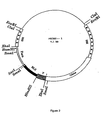
- FIG. 1 A scheme of one embodiment of the Integration unit and integration vector disclosed in the present invention is presented in figure 1.
- the integration unit according to the invention included the heterologous DNA sequence, is stably integrated In multiple sites and in multiple copies into the yeast genome, together with the ribosomal flanking sequences which replace the target sequences in the ribosomal locus, when it is used according to techniques known to transform the yeast host. '
- this kind of integration is defined as substitutive, alternatively to insertional integration wherein the heterologous sequence consisting of the entire vector, is added alongside the target site.
- Substitutive integration is advantageous as compared to insertional because the heterologous DNA which is integrated into yeast genome is only the one comprised within the ribosomal DNA sequences, so that plasmid sequences of bacterial origin, which are useless and harmful as well for the yeast and which may be present when the integration unit is cloned into a plasmid vector (replication origin and resistance genes) are excluded from integration.
- the integration unit which is a linear DNA molecule, is cloned into a plasmid vector containing all the genetic elements useful to allow its amplification in bacteria, such a replication origin.
- a vector is circular DNA.
- the vector allows a targeted site-specific integration into the ribosomal locus , composed of the multicistronic rDNA of metilotroph yeasts, preferably of H. polymorpha.
- H. polymorpha carries about 25 repeated units of rDNA genes, which as in Saccharomyces cerevisiae are organised in groups or "clusters" on the same chromosome.
- the integration frequency of the integration cassette into the target site is notably increased with regard to a target present only in single or double copy in the yeast genome, such as for example MOX or AOX loci, and the integration unit, integrating into different of the ribosomal locus , undergoes a first "amplification".
- the transformants containing the integrative unit in stable form are grown alternating minimal media and complete media, according to procedures and growth media (selective or not selective) known to the person skilled in the art, and the integrative unit is further amplified by subsequent tandem duplications in every integration site, giving rise to stable multicopies.
- each of the 25 units is 8.1 kb long and codes for 18S, 5.8S, 25S e 5S RNAs.
- 25S RNA coding sequences are particularly preferred as integration target sites and therefore as sequences (integration boxes) flanking the heterologous DNA sequence or the expression cassette on the vector.
- the ribosomal locus is highly conserved in yeast: for example, about 90% homology exists between the ribosomal sequences coding for Saccharomyces cerevisiae and Hansenula polymorpha 25S RNAs, which are yet taxonomically rather distant.
- the high degree of homology among these yeasts sequences provides integration by homologous recombination of the vectors or the integration cassettes according to the present invention to occur into all yeasts studied so far.
- the vector or the integration unit of the invention are used in all the yeasts, also if not metilotrophic, provided that the specific regulatory sequences, such as for example promoters, are replaced with sequences suitable for the expression in the particular transformed yeast host.
- the high frequency of the integrative events into the target sites and the subsequent duplication (amplification) of the cassettes there integrating are particulary advantageous in particular in the Hansenula genus yeasts making this host particularly preferred for the application of the invention.
- the high integration frequency due to the high number of target sites present in the ribosomal locus, in addition to the duplication event (tandem amplification) of heterologous DNA copies obtained by growing the transformant clones alternating rich and minimal medium increases the number of integrated copies and on the other reduces the procedures downstream the transformation, which are instead necessary in the known art vectors, to select multicopies clones.
- the integration event into different target sites of the ribosomal locus increases the stability of the transformant clones and thus represents a further particularly advantageous aspect of the present invention.
- a high integration frequency such as that obtained with the vectors of the present invention, moreover represents an at all unexpected event for Hansenula: actually, as widely documented in literature, the integrative events into this yeast are generally rare and occur at a low frequency. Indeed, it is known that multicopy integration into Hansenula is usually associated to random integrative events (non site-specific), opposite to what happens in other non-metilotrophic yeasts.
- the integration event mediated by the ribosomal sequences utilised in the vector according to the present invention is used for any heterologous and not heterologous DNA sequence type. Therefore, are comprised in the present definition of heterologous DNA sequence both expression cassettes defined as DNA sequences comprising a gene or heterologous cDNA from which the production of the corresponding recombinant protein is intended to be obtained and which are therefore opportunely regulated by sequences specific for the metilotrophic yeast (such as for example promoters), as well as any heterologous yeast DNA sequence that is usefully integrated in multiple copies into the yeast genome even if not necessarily coding for a protein.
- expression cassettes defined as DNA sequences comprising a gene or heterologous cDNA from which the production of the corresponding recombinant protein is intended to be obtained and which are therefore opportunely regulated by sequences specific for the metilotrophic yeast (such as for example promoters), as well as any heterologous yeast DNA sequence that is usefully integrated in multiple
- the selection marker present in the heterologous DNA sequence is chosen preferably among LEU2, URA3 and HIS3 genes, which allow to recover the prototrophy phenotype in auxotrophic yeast strains for leucine, uracile or histidine, respectively.
- Other genes or selection markers can be used in the vector or integrative unit according to the invention, such as dominant selection markers, for example that conferring resistance to G-418 antibiotic (also indicated with G-418 R or bacterial amino glycoside 3'-phosphotransferase, APH) or encoding for pleomycine resistance (Hollenberg CP and Gellissen G, 1997).
- the selection procedure of transformants depends on the chosen selection marker, according to the methods known to the person skilled in the art.
- the selective medium is composed of the medium containing the antibiotic against which resistance has been conferred, for example G-418 containing medium or another, according to known methods.
- the marker is selected among LEU2 or URA3 or HIS3 genes
- selection is performed on minimal medium which does not contain the component against which, by means of transformation, prototrophy is intended to be restored (uracile or leucine or histidine) according to the methods known in the art.
- the minimal medium represents the "selective medium”.
- URA 3 and LEU 2 selection markers are particularly preferred.
- the selection marker is regulated by appropriate transcription promoter and terminator, which are able to regulate its transcription in the selected yeast genus.
- the integration unit comprises an expression cassette, which comprises the following functional regions: a) a promoter active in metilotrophic yeasts which regulates the transcription of the heterologous sequence in an inducible or in a constitutive fashion; b) a heterologous DNA sequence coding for the protein, polypeptide or peptide of interest; c) appropriate transcription termination sequences, such as for example the transcription terminator derived from S. cerevisiae 2 ⁇ m plasmid FLP gene; d) a selection marker, preferably chosen among LEU3, URA3, HIS3, G418R .
- MOX and FMD promoters are, in a particularly preferred embodiment of the invention, the promoters which regulate the heterologous gene or DNA sequences expression, because they are induced to transcription by methanol in a particularly efficient way.
- promoters specific for metilotrophic yeast are useful, such as for example CAT1 (catalase-1) and DHAS (dihydroxyacetone synthetase) (Gleeson MA and Sudbery PE, 1988), whose induction levels by methanol are comparable to MOX and FMD.
- the promoter is the H . polymorpha methanol oxidase promoter, corresponding to Seq IDN 3.
- the heterologous protein or peptide or oligopeptide is preferably expressed in secreted form, by cloning a signal sequence which is preferably of yeast, at the 5' of the DNA sequence coding for the protein of interest.
- signal sequences are preferably selected among: that, of K . Lactis and S. cerevisiae killer toxin, that of the S.
- Lactis killer toxin signal sequence (access number: X00762) is particularly preferred.
- Integration of the integration unit into the target site preferably occurs by transformation with the expression cassette alone, cut from the whole vector by using appropriate restriction enzymes, selected in such a way not to disrupt the integrative unit.
- the integrative unit is extracted by restriction with Clal enzyme, that cuts each side of the integration boxes.
- the integration cassette can optionally be purified after the enzymatic restriction according to the methods known in the art, for example by electrophoretic separation on agarose gel.
- the vector can also be used as such without enzymatic digestion or after a digestion which linearizes in one position, provided it is external to the integration unit.
- rDNA fragments at the ends of the integration unit are composed of sequences derived from the locus coding for Saccharomyces cerevisiae rDNA.
- locus contains the DNA coding for 25S, 18S, 5.8S and 5S RNAs, which can all be equally used as "integration boxes".
- Non-contiguous segments of these genes with a minimal length of 50 bp, inserted downstream and upstream of a heterologous DNA sequence are sufficient to assure homologous recombination to such heterologous sequence in the target ribosomal locus.
- sequences derived from the gene coding for 25S RNA are particularly preferred, even more preferred are those comprising the 1-548 EcoRl-Bc/l fragment (0,55 kb) corresponding to Seq IDN 1 and the 1545-2651 Bgl II -Eco RI fragment corresponding to Seq IDN 2 (1.1 kb), which belong to the sequence identified with GenBank access number J01355 and, which are located at 5' and 3', respectively, of the heterologous DNA sequence (see Fig. 2).
- Adjacent fragments or fragments comprising the sequences identified by them or different from them, but anyway derived from the genes coding for S. cerevisiae 25S, 18S, 5.8S and 5S RNAs or of other yeasts can in any case be used in the present invention.
- sequences having analogous functions transcription terminators, promoters, sequences coding for signal peptides, selection genes
- sequences having analogous functions transcription terminators, promoters, sequences coding for signal peptides, selection genes
- yeasts and other organisms can be used in the expression cassette to ensure the expression of the gene of interest or selection marker, according to what is known in the state of the art.
- integration units can be used that comprise one or more expression cassettes generally consisting of: a sequence coding for a yeast ribosomal RNA or its fragments, inserted according to the methods known in the art, upstream and downstream of an expression cassette for the gene, cDNA, or DNA fragment which is intended to be expressed in recombinant form, and carrying all the regulatory sequences necessary for expression, such as: promoter, ribosome-binding-site, optionally a signal sequence fused in the same reading frame of the gene of interest, transcription terminator and others known to the man skilled' in the art,
- Plasmid vectors which can be amplified in bacteria, and comprising the integration unit according to the description, independently from the gene of interest cloned therein and the sequences apart from the integration unit useful for example for amplification in bacteria, are comprised within the scope of the present invention.
- the gene of interest is the sequence coding for human lysozyme (data-bank accession number: M19045, 68-464 fragment), fused in frame with the K. Lactis toxin signal peptide sequence.
- the recombinant lysozyme is secreted outside the cells, where it can be easily detected and measured with a bacteriolytic activity assay on plates or "lysoplate assay" ( Casta ⁇ ón MJ, et al., 1988, Gene 66: 223-234 ).
- the human recombinant lysozyme, cloned in this vector and secreted in H. polymorpha, is therefore only a reporter gene utilised just for the easiness of detection of the final product. It is clear however that the human lysozyme produced represents only an example of particular embodiment among the many existing. Hormones, enzymes, peptides, pharmacologically active substances, vaccines, or generally all the proteins efficiently expressed in yeast are examples of recombinant proteins produced by the use of the vector according to the present invention and which are therefore comprised In the scope of the invention.
- the invention comprises vectors which can be amplified in bacteria comprising the amplification unit for metilotrophic yeasts as defined, independently from the cloned gene of interest and the sequences external to the integration cassette which are necessary to amplify the vector in bacteria, generically comprising at least: an E.coli replication origin, an E.coli resistance gene and a series of unique cloning sites, polylinker or multicloning sites.
- this further includes the microorganisms transformed with the previously described vectors, in particular bacteria such E. coli, a preferred embodiment of which is the strain transformed with the pRIMY-1 vector deposited at the CNMC collection (Collection Nationale de Cultures de Microorganismes, Institut Pasteur) on July 18th 2001, number I-2705, where the vector is maintained in order to carry out the cloning procedures of the sequences of interest, and the yeasts, preferably metilotrophic yeasts such as the Pichia, Hansenula, Candida and Torulopsis genera, transformed with the vectors or the integration unit of the present invention according to the methods known to the man skilled in the art.
- bacteria such as E. coli
- a preferred embodiment of which is the strain transformed with the pRIMY-1 vector deposited at the CNMC collection (Collection Nationale de Cultures de Microorganismes, Institut Pasteur) on July 18th 2001, number I-2705, where the vector is maintained in order to carry out the cloning procedures of the sequences of interest
- Metilotrophic yeasts of Hansenula genus are particularly preferred, among yeasts when transformed with the vectors or the integration unit of the present invention or with the pRIMY-1 vector, deposited at the CNMC collection (Collection Nationale de Cultures de Microorganismes, Institut Pasteur) on July 18th 2001, number 1-2705.
- yeast transformation occurs by the method described in
- a further object of the present invention is a method for homologous (site-specific), substitutive and multicopy integration of such sequences into the ribosomal locus of: Pichia, Hansenula, Candida, and Torulopsis metilotroph yeasts. Such integration is stable for more than 50-70 generations, and takes place with a high frequency.
- the process according to the invention permits to integrate the integrative unit at the level of the DNA sequences coding for 25S or 18S or 5.8S or 5S RNAs, preferably 25S and is characterised by the use of the vectors according to the invention, containing downstream and upstream the integration unit the DNA sequences coding for such rRNAs.
- the transformant strains can be fermented by one-step fermentation, utilising simple and inexpensive carbon sources, such as for example glycerol and methanol, obtaining the product at high yields more rapidly than required for the same expression level in another yeast such as P. pastoris, which instead requires a two-step fermentation.
- the integration unit includes at least an expression cassette, defined as above and containing the gene of interest
- the invention further relates to a process for the expression of recombinant proteins in metilotrophic yeasts, preferably of the Hansenula genus, more preferably H. polymorpha, characterised in that it uses the vectors or integration unit or yeast strains transformed with such DNA sequences according to the different embodiments described in the invention.
- Such process essentially comprises the following steps: transformation of the yeast strains with the vectors or the integrative unit of the invention, selection of the transformants on selective medium, amplification of the integrative unit by alternating the growth on selective and non-selective media, selection of the best strains for productivity, one-step fermentation in culture media known in the art and comprising a simple carbon source such as glycerol or a glycerol/methanol mixture, or methanol and recovery of the exhausted culture broth or of the yeasts depending on whether the protein is secreted or not to purify the recombinant product.
- the selection step of the overproducing clones can be performed either by little scale fermentations or by genetic analysis to verify the copy numbers of the units which have been integrated into the genome.
- the fermentation step is conveniently carried out at temperatures between 30°C and 42°C, preferably between 34°C and 39°C, or more preferably between 36.5°C and 37,5°C.
- the process for the expression of heterologous recombinant proteins includes, besides the yeast transformation process described by Faber et al. and briefly mentioned, the following steps:
- the recovery step of the recombinant product can alternatively contemplate the recovery of the yeasts, in case the protein is produced intracellularly by the yeast, or the supernatant in case the protein is secreted.
- the invention consists of a kit for the expression of heterologous proteins
- a kit for the expression of heterologous proteins comprising the vector DNA containing the integration unit, preferably the pRIMY-1 DNA, which may be pre-digested with restriction enzymes allowing the cloning of the expression cassette of interest by replacing the one containing the lysozyme gene, and in case a yeast strain, preferably H . polymorpha optionally in a lyophilised form.
- the kit includes appropriate restriction enzymes.
- Example. 1 Construction of the pRIMY-1 vector.
- the vector or integrative unit integration target according to the invention is the H . polymorpha multicistronic rDNA: in this yeast 25 repeated units of the rDNA genes have been identified which, as in Saccharomyces cerevisiae, are organised in cluster on the same chromosome.
- the integration pRIMY-1 vector deposited at the CNMC collection (Collection Nationale de Cultures de Microorganismes, Institut Pasteur) on July 18th 2001, number I-2705, is a substitutive-type vector (replacement vector) and contains an expression cassette and a selection marker cloned within DNA segments capable of recombinating with Hansenula chromosome in the rDNA locus: the homologous annealing on both ends of the target chromosome (double crossing over) causes the integrated exogenous DNA to replace the chromosomal segment which serves as an integration mark or target.
- every rDNA unit is 8.1 kb long and comprises the sequences coding for 18S, 5.8S, 25S and 5S ribosomal RNAs, whose sequence is published in Blandin G, et al., FEBS Letters (2000) 487: 76-81 .
- the integration boxes are two non-contiguous 0.55 and 1.1 kb respectively long fragments of the S.
- the integration unit i. e. the part of the vector which integrates
- the integration unit contains an expression cassette and a selection gene.
- the expression cassette contains: the DL1 strain H. polymorpha MOX promoter, (PMOX in Figure 2; ref. Ledeboer AM, Edens L, Maat J, Visser BJW, Verrips CT, Eckart M, Roggenkamp R and Hollenberg CP: Nucleic Acids Research (1985) 13: 3063-3082 ), the cDNA sequence coding for the mature form of human lysozyme fused in frame with the K. lactis killer toxin signal sequence (HLZ ) and the S.
- PMOX in Figure 2 ref. Ledeboer AM, Edens L, Maat J, Visser BJW, Verrips CT, Eckart M, Roggenkamp R and Hollenberg CP: Nucleic Acids Research (1985) 13: 3063-3082
- HLZ K. lactis killer toxin signal sequence
- the expression cassette and the genetic marker to select the transformants are flanked by the two sequences of the S. cerevisiae 25S rDNA gene which, as mentioned before, represent the regions able to recombine, by a double crossing over, with the homologous sequences in the Hansenula genome.
- the human lysozyme cDNA was included as a reporter gene to verify the multicopy integration of the expression cassette into the Hansenula genome: actually, the lysozyme enzymatic (bacteriolytic) activity can be easily measured by quick methods on plates which make it easy to carry out the selection of the transformants.
- the vector was prepared, in subsequent steps, in Escherichia coli DH5 ⁇ strain, utilising the methods described for recombinant DNA in Sambrook J, Fritsch EF and Maniatis T: Molecular Cloning. A Laboratory Manual. 2nd Ed. Cold Spring Harbor Laboratory Press , Cold Spring Harbor, N.Y. 1989; therefore the vector contains outside the integration unit, a replication origin and an ampicillin resistance gene (not shown in Fig. 2).
- the pRIMY-1 vector was prepared through a series of steps synthetically described hereinafter according to genetic engineering techniques reported for example in the manual cited above.
- the URA 3 gene (nt. 3-1166) was amplified from Saccharomyces cerevisiae (Accession number: K02207; Rose et al. 1984) by PCR, with the following primers:
- Hansenula polymorpha MOX promoter was amplified by PCR from DL1 strain known in literature, utilising MOXP-for ( 5' GGGAAGAACCGCGACATCTC 3' ) and MOXP-rev primers, the latter introducing an additional Sac I site ( 5' GGGAGCTCTTTGTTTTTGTACTTTAG 3' ); the amplified product was cloned in the Smal site of the pBluescript SK vector polylinker (Stratagene, La Jolla, CA) to obtain the SK-PMOX plasmid. Its sequence was determined and is alleged in the sequence listing as Seq IDN3.
- Sac I fragment of this construct was removed and inserted in the Sac I site of YIprD1-LYS plasmid (Rossolini et al ., 1992), upstream the Kluyveromyces lactis killer toxin signal sequence, obtaining the YlprD1-MOX-LYS plasmid.
- pRIMY-1 vector was finally obtained subcloning the 1.9 kb Xba I fragment of YIprD1-MOX-LYS plasmid (containing the MOX promoter plus the expression cassette composed of: K. lactis killer toxin signal sequence fused in frame with the cDNA coding for human lysozyme and transcriptional terminator derived from S. cerevisiae 2 ⁇ m plasmid (Rossolini et al. , 1992) in the Xba I site of pSP70-25S-URA3 plasmid (Fig.1).
- Example 2 Transformation of H. polymorpha LR9 strain with pRIMY-1 vector and expression of the recombinant protein liysozyme.
- SD minimal medium 0.67% (p/v) Yeast Nitrogen Base w/o amino acids (Difco) with 2% glucose (p/v) (SDD) or 1% methanol (SDM), and supplemented with uracile (50 ⁇ g/ml) when necessary.
- YP medium 1% (p/v) yeast extract (Difco), 2% (p/v) peptone (Difco), with 2% glucose (YPD) or 1% methanol (YPM).
- the carbon source was 2% glycerol or 1% methanol + 1% glycerol.
- Extraction of the integration unit from the vector was accomplished by digestion with Cla I enzyme. Cla I cuts at the ends of the integration boxes and generates a 4.7 kb fragment (see Fig. 2) which represents the integration unit, containing the rDNA integration boxes at the ends and, inside them, the expression cassette and URA3 gene. Extraction of the vector integration unit was carried out to facilitate the recombination at the level of the homologous regions on yeast genome. The integration unit permits the targeted integration of such unit into the chromosomal locus containing the H. polymorpha 25S rDNA genes.
- polymorpha yeast LR9 (Ura-) strain, was prepared inoculating a single colony in 10 ml of YPD medium and incubating overnight at 37°C under agitation at 300 r.p.m.
- Yeast cells were made competent by subsequent-dilution of the culture in 100 ml of fresh YPD medium until reaching an OD 600 of 0.1 and cultured in the same conditions until reaching, an OD 600 of 0.8. Cells were then collected, washed with 50 ml of solution A [1.0 M sorbitol, 10 mM bicine, pH 8.35, and 3% (v/v) ethylene glycol] and finally resuspended in 4 ml of solution A.
- H. polymorpha competent cells in 0,2 ml aliquots, were directly used for the transformation, carried out with 5 ⁇ g of the linearized vector together with 40 ⁇ g of carrier DNA (fragmented and denatured DNA salmon sperm), in a total volume of 20 ⁇ l.
- the mixture was placed at 37°C for 5 min., diluted with 1.5 ml of solution B [40% PEG4000, 200 mM bicine pH 8.35] and incubated at 30°C for 60 min. under mild agitation.
- the cells were then centrifuged for 5 min. at 3000 g, washed with 1.5 ml of solution C [150 mM NaCl, 10 mM bicine pH 8.35], again centrifuged and resuspended in 0.2 ml of solution C.
- the transformation mixture opportunely diluted, was then plated on SDD minimal medium and incubated for 3-4 days at 30°C.
- the transformants i.e. the clones which became Ura + because they had received the integration unit containing the URA3 gene, were stable, i.e. capable of maintaining the Ura + phenotype even after a 50 to 70 generations growth period in complete medium.
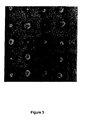
- the obtained clones were initially analysed for the production of the heterologous protein (lysozyme), through growth on complete and minimal media, containing methanol or glucose as a carbon source and Micrococcus luteus cells as a substrate to detect the bacteriolytic activity (according to the assay called lysoplate assay, Casta ⁇ ón MJ, et al., 1988). All the transformants were able to secrete active lysozyme, as demonstrated by the formation of a lysis ring around the colonies (see Figure 3).
- the integration vector according to the invention is a substitutive-type vector (replacement vector) and contains an expression cassette and a selection marker cloned inside DNA segments capable of recombinating with the Hansenula chromosome, in the rDNA locus: the homologous annealing on both ends of the target chromosome (double crossing over) causes the integrated exogenous DNA to replace the chromosomal fragment, which serves as an integration target.
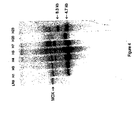
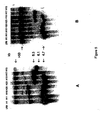
- clones H13 and H17 In all cases, except for clones H13 and H17, a more intense 4.7 kb band is present, indicating a multiple tandem integration, in a head-to-tail orientation. Moreover in clones H17, H18 and H23 a 8.3 kb band is present, which can be presumably attributed to the multiple insertion of copies in a head-to-head orientation.
- clone H13 shows a single 6.1 kb hybridization signal when hybridized with h-LYS probe, and no discrete bands when hybridized with the 1.1 kb 25S rDNA fragment this suggests the presence of multiple tandem copies of the integration unit, and in a head-to-head orientation, which however misses the 1.1 kb integration box (see the scheme of the integrative events in Fig. 6). Furthermore in all the clones bands of minor intensity are present, whose heights correspond to more than 10 kb, which can be presumably interpreted by integrative (contiguous or alternate) events in different rDNA units.
- the integrative unit of the vector according to the invention is able to direct the stable and muticopy integration of an expression cassette containing a heterologous gene in different units of H. polymorpha rDNA.
- the all transformants obtained produce, at different extents, high active lysozyme concentrations in the culture medium and this productivity is related to the number of the integrated copies in each clone, indicating that it is not necessary to analyse a high number of clones to obtain a producer strain and thus the integrative events, in multiple copies, directed by the vector according to the present invention take place with high probability.
Landscapes
- Life Sciences & Earth Sciences (AREA)
- Health & Medical Sciences (AREA)
- Genetics & Genomics (AREA)
- Organic Chemistry (AREA)
- Chemical & Material Sciences (AREA)
- Engineering & Computer Science (AREA)
- Zoology (AREA)
- General Engineering & Computer Science (AREA)
- Bioinformatics & Cheminformatics (AREA)
- Wood Science & Technology (AREA)
- Biomedical Technology (AREA)
- Biotechnology (AREA)
- Mycology (AREA)
- General Health & Medical Sciences (AREA)
- Biochemistry (AREA)
- Microbiology (AREA)
- Physics & Mathematics (AREA)
- Biophysics (AREA)
- Plant Pathology (AREA)
- Molecular Biology (AREA)
- Micro-Organisms Or Cultivation Processes Thereof (AREA)
- Preparation Of Compounds By Using Micro-Organisms (AREA)
Claims (22)
- Plasmidvektor zur ortsspezifischen Multikopie-Integration einer Integrationseinheit mit einer Expressionskassette in eine methylotrophe Hefe, wobei die Expressionskassette die folgenden funktionellen Bereiche aufweist, nämlich:a) einen in methylotropher Hefe aktiven Promotor,b) eine heterologe DNA-Sequenz, die für das interessierende Protein, Polypeptid oder Peptid codiert, wobei die Transkription der heterologen DNA-Sequenz über den Promotor reguliert wird,c) Sequenzen zur Termination der Transkription,d) einen Selektionsmarker, der ausgewählt ist aus der Gruppe bestehend aus URA3, LEU2, HIS3, G418R,wobei die Expressionskassette stromaufwärts (5') und stromabwärts (3') von zumindest 50 bp der Sequenz flankiert ist, die für die ribosomale 25S-RNA von S. cerevisiae (GenBank-Zugriffsnummer J01355) codiert, dadurch gekennzeichnet, dass der in methylotropher Hefe aktive Promotor ausgewählt ist aus der Gruppe bestehend aus: MOX-, FMD-, CAT-1- und DHAS-Promotor.
- Plasmidvektor gemäß Anspruch 1, wobei der MOX-Promotor der SEQ ID Nr. 3 oder Fragmenten hiervon mit zumindest 500 Nucleotiden entspricht.
- Plasmidvektor gemäß Anspruch 1, wobei die Codierungssequenz für die ribosomale 25S-RNA die SEQ ID Nr. 1 und SEQ ID Nr. 2 aufweist.
- Plasmidvektor gemäß Anspruch 1, der ferner eine Signalsequenz für die Sekretion von heterologem Protein aufweist.
- Plasmidvektor gemäß Anspruch 4, wobei die Signalsequenz ausgewählt ist aus der Gruppe bestehend aus: Signalsequenz des Killertoxins von K. Lactis, Signalsequenz des Killertoxins von S. cerevisiae, Signalsequenz des MFα1-Faktors, Signalsequenz der Glucoamylase von Aspergillus niger und Pre-Pro-Sequenz der Glucoamylase von Schwannlomyces occidentalis.
- Plasmidvektor gemäß Anspruch 1, wobei die Sequenz zur Termination der Transkription dem FLP-Fragment des 2 µm-Plasmides entspricht.
- Plasmidvektor pRIMY-1 zur ortsspezifischen Multikopie-Integration von heterologen DNA-Sequenzen in eine methylotrophe Hefe, der am 18. Juli 2001 unter der Nummer 1-2705 bei der CNMC-Sammlung (Collection Nationale de Cultures de Microorganismes, Institut Pasteur) hinterlegt wurde.
- Integrationseinheit für methylotrophe Hefen, die eine Expressionskassette aufweist, die stromaufwärts (5') und stromabwärts (3') von DNA-Sequenzen flankiert ist, die für die 25S-RNA der Hefe S. cerevisiae (Genbank-Zugriffsnummer J01355) codieren, oder von Fragmenten einer solchen Sequenz, wobei die Fragmente eine Länge von zumindest 50 Basenpaaren haben, wobei die Expressionskassette die folgenden funktionellen Bereiche aufweist, nämlich:a) einen in methylotropher Hefe aktiven Promotor, der ausgewählt ist aus der Gruppe bestehend aus: MOX-, FMD-, CAT-1- und DHAS-Promotor,b) eine heterologe DNA-Sequenz, die für das interessierende Protein, Polypeptid oder Peptid codiert, wobei die Transkription der heterologen DNA-Sequenz über den Promotor reguliert wird,c) Sequenzen zur Termination der Transkription,d) einen Selektionsmarker, der ausgewählt ist aus der Gruppe bestehend aus: URA3, LEU2, HIS3, G418R.
- Integrationseinheit gemäß Anspruch 8, dadurch gekennzeichnet, dass die stromaufwärts (5') und stromabwärts (3') gelegenen Sequenzen den SEQ ID Nr. 1 und SEQ ID Nr. 2 des Sequenzprotokolls entsprechen.
- Integrationseinheit gemäß Anspruch 9, wobei die Expressionskassette einen Selektionsmarker aufweist.
- Mikroorganismus, der mit den Vektoren der Ansprüche 1 bis 7 oder mit der Integrationseinheit gemäß der Ansprüche 8 bis 10 transformiert ist, dadurch gekennzeichnet, dass es sich um methylotrophe Hefen handelt.
- Mikroorganismus gemäß Anspruch 11, wobei die methylotrophe Hefe zu der Gattung Hansenula gehört.
- Mikroorganismus gemäß Anspruch 12, wobei die methylotrophe Hefe Hansenula polymorpha entspricht.
- Verfahren zur Integration von heterologen DNA-Sequenzen in den ribosomalen Locus, der für die 25S-RNA von methylotrophen Hefen codiert, dadurch gekennzeichnet, dass die Vektoren der Ansprüche 1 bis 7 oder die Integrationseinheiten gemäß der Ansprüche 8 bis 10 verwendet werden.
- Verfahren gemäß Anspruch 14, wobei die Integration durch homologe Rekombination erfolgt.
- Verfahren gemäß Anspruch 15, wobei die methylotrophe Hefe zu der Gattung Pichia und/oder Hansenula gehört.
- Verfahren gemäß Anspruch 16, wobei die Hefe Hansenula polymorpha entspricht.
- Verfahren zur Herstellung von rekombinanten heterologen Proteinen in einer methylotrophen Hefe, dadurch gekennzeichnet, dass die Vektoren gemäß der Ansprüche 1 bis 7 oder die Integrationseinheit gemäß der Ansprüche 8 bis 10 verwendet werden.
- Verfahren gemäß Anspruch 18, dadurch gekennzeichnet, dass die methylotrophe Hefe Hansenula polymorpha entspricht.
- Verfahren gemäß Anspruch 19, dadurch gekennzeichnet, dass dieser die folgenden Schritte aufweist, nämlich:- Herstellung der transformationskompetenten Hefezellen,- Transformation des Stammes Hansenula polymorpha mit den Vektoren der Ansprüche 1 bis 7, ggf. in Gegenwart einer Träger-DNA,- Ausplattieren auf Selektionsmedium und Inkubation der transformierten Hefen bei einer Temperatur, die bei 28°C bis 32°C liegt, für eine Zeit, die bei 60 bis 80 Stunden liegt,- abwechselndes Wachstum auf Selektions- und Nicht-Selektionsmedium bei einer Temperatur, die bei 28°C bis 42°C liegt,- phänotypische Analyse der Transformanten mit den besten Produktivitätseigenschaften,- Ein-Schritt-Fermentierung der selektierten Transformante auf einfachen Kohlenstoffquellen.
- Verfahren gemäß Anspruch 20, dadurch gekennzeichnet, dass die Vektoren der Ansprüche 1 bis 7 durch enzymatischen Verdau verdaut werden.
- Kit zur Expression von rekombinanten Proteinen in Hefe, das die Integrationsvektor-DNA gemäß der Ansprüche 1 bis 8 und einen Hefestamm, vorzugsweise H. Polymorpha, ggf. in lyophilisierter Form aufweist, und ggf. geeignete Restriktionsenzyme aufweist.
Applications Claiming Priority (3)
| Application Number | Priority Date | Filing Date | Title |
|---|---|---|---|
| IT2001MI001728A ITMI20011728A1 (it) | 2001-08-06 | 2001-08-06 | Vettore per l'integrazione sito-specifica di sequenze di dna eterologhe in lieviti metilotrofi |
| ITMI20011728 | 2001-08-06 | ||
| PCT/IB2002/003086 WO2003014363A1 (en) | 2001-08-06 | 2002-08-05 | Vector for site-specific integration of heterologous dna sequences into the rdn a sites of methylotrophic yeasts |
Publications (2)
| Publication Number | Publication Date |
|---|---|
| EP1414979A1 EP1414979A1 (de) | 2004-05-06 |
| EP1414979B1 true EP1414979B1 (de) | 2007-09-05 |
Family
ID=11448247
Family Applications (1)
| Application Number | Title | Priority Date | Filing Date |
|---|---|---|---|
| EP02749251A Expired - Lifetime EP1414979B1 (de) | 2001-08-06 | 2002-08-05 | Vektoren zur zielgerichteten integration heterologer dna sequenzen in die rdna loci von methylotrophen hefen |
Country Status (8)
| Country | Link |
|---|---|
| US (1) | US20040241829A1 (de) |
| EP (1) | EP1414979B1 (de) |
| JP (1) | JP2004538004A (de) |
| AT (1) | ATE372385T1 (de) |
| AU (1) | AU2002320773A1 (de) |
| DE (1) | DE60222272D1 (de) |
| IT (1) | ITMI20011728A1 (de) |
| WO (1) | WO2003014363A1 (de) |
Cited By (1)
| Publication number | Priority date | Publication date | Assignee | Title |
|---|---|---|---|---|
| US20100186117A1 (en) * | 2008-10-03 | 2010-07-22 | Agrisoma Biosciences Inc. | Production of modified fatty acids in plants |
Families Citing this family (6)
| Publication number | Priority date | Publication date | Assignee | Title |
|---|---|---|---|---|
| EP1968591A4 (de) * | 2005-12-23 | 2010-02-17 | Link Medicine Corp | Behandlung von synucleinopathien |
| DK2106447T3 (da) | 2007-01-26 | 2013-06-24 | Novozymes As | Fremgangsmåde til methanoluafhængig induktion fra methanolinducerbare promotorer i Pichia |
| CN103911371B (zh) * | 2013-01-05 | 2016-05-04 | 中国科学院微生物研究所 | 一种酿酒酵母整合型表达载体 |
| CN110903991A (zh) * | 2019-11-13 | 2020-03-24 | 浙江新银象生物工程有限公司 | 一种含高拷贝数人源溶菌酶基因的重组毕赤酵母工程菌及其应用 |
| WO2022197183A1 (en) * | 2021-03-19 | 2022-09-22 | Wageningen Universiteit | Methods for recombinant protein expression in eukaryotic cells |
| WO2024238964A1 (en) * | 2023-05-17 | 2024-11-21 | Yali Biosciences Inc. | Engineered yeast and use for production of triacylglycerol |
Family Cites Families (3)
| Publication number | Priority date | Publication date | Assignee | Title |
|---|---|---|---|---|
| ATE160176T1 (de) * | 1989-07-07 | 1997-11-15 | Unilever Nv | Verfahren zur herstellung eines proteins mittels eines durch mehrfachkopieintegrierung eines expressionsvektors transformierten pilzes |
| EP1076707A1 (de) * | 1998-05-07 | 2001-02-21 | Doosan Corporation | PLASMID ZUR GENEXPRESSION IN $i(PICHIA CIFERRII) UND TRANSFORMATIONSVERFAHREN |
| ES2221865T3 (es) * | 1999-11-23 | 2005-01-16 | Rhein Biotech Gesellschaft Fur Neue Biotechnologische Prozesse Und Produkte Mbh | Vectores y procedimiento de produccion de proteinas recombinantes en hongos. |
-
2001
- 2001-08-06 IT IT2001MI001728A patent/ITMI20011728A1/it unknown
-
2002
- 2002-08-05 JP JP2003519492A patent/JP2004538004A/ja active Pending
- 2002-08-05 AT AT02749251T patent/ATE372385T1/de not_active IP Right Cessation
- 2002-08-05 WO PCT/IB2002/003086 patent/WO2003014363A1/en not_active Ceased
- 2002-08-05 AU AU2002320773A patent/AU2002320773A1/en not_active Abandoned
- 2002-08-05 US US10/486,166 patent/US20040241829A1/en not_active Abandoned
- 2002-08-05 EP EP02749251A patent/EP1414979B1/de not_active Expired - Lifetime
- 2002-08-05 DE DE60222272T patent/DE60222272D1/de not_active Expired - Lifetime
Cited By (3)
| Publication number | Priority date | Publication date | Assignee | Title |
|---|---|---|---|---|
| US20100186117A1 (en) * | 2008-10-03 | 2010-07-22 | Agrisoma Biosciences Inc. | Production of modified fatty acids in plants |
| US8546645B2 (en) * | 2008-10-03 | 2013-10-01 | Agrisoma Biosciences Inc. | Production of modified fatty acids in plants through rDNA targeted integration of heterologous genes |
| US10081815B2 (en) | 2008-10-03 | 2018-09-25 | Agrisoma Biosciences Inc. | Production of modified fatty acids in plants through rDNA targeted integration of heterologous genes |
Also Published As
| Publication number | Publication date |
|---|---|
| AU2002320773A1 (en) | 2003-02-24 |
| ITMI20011728A1 (it) | 2003-02-06 |
| ITMI20011728A0 (it) | 2001-08-06 |
| WO2003014363A1 (en) | 2003-02-20 |
| JP2004538004A (ja) | 2004-12-24 |
| EP1414979A1 (de) | 2004-05-06 |
| ATE372385T1 (de) | 2007-09-15 |
| US20040241829A1 (en) | 2004-12-02 |
| WO2003014363A8 (en) | 2003-05-01 |
| DE60222272D1 (de) | 2007-10-18 |
Similar Documents
| Publication | Publication Date | Title |
|---|---|---|
| Dohmen et al. | Cloning of the Schwanniomyces occidentalis glucoamylase gene (GAM1) and its expression in Saccharomyces cerevisiae | |
| JP4307563B2 (ja) | 糸状菌、特にアスペルギルス属に属する糸状菌のアグロバクテリウム媒介性形質転換 | |
| EP0394538B1 (de) | Hefezellen der Gattung-Schwanniomyces | |
| WO1990014423A1 (en) | Microorganism transformation | |
| FI95285C (fi) | 2 m-plasmidivektori, menetelmä sen valmistamiseksi sekä sen käyttö | |
| JP4623925B2 (ja) | キャンディダ・ユティリス酵母の形質転換方法および形質転換体並びにその形質転換体による異種遺伝子の発現 | |
| CA2063592C (en) | Process for preparing a protein by a fungus transformed by multicopy integration of an expression vector | |
| Lang et al. | Efficient expression and secretion of Aspergillus niger RH5344 polygalacturonase in Saccharomyces cerevisiae | |
| HU204097B (en) | Process for producing cloning system relating to kluyveromyces species | |
| HU208552B (en) | Process for producing polypeptides and for place-specific modification of genom ofpichia yeasts | |
| Kang et al. | Development of expression systems for the production of recombinant human serum albumin using the MOX promoter in Hansenula polymorpha DL‐1 | |
| Pretorius et al. | Molecular cloning and characterization of the STA2 glucoamylase gene of Saccharomyces diastaticus | |
| Bergès et al. | Cloning of an Aspergillus niger invertase gene by expression in Trichoderma reesei | |
| US20040241829A1 (en) | Vector for site-specific integration of heterologous dna sequences into metilotrophic yeasts | |
| Laing et al. | Synthesis and secretion of an Erwinia chrysanthemi pectate lyase in Saccharomyces cerevisiae regulated by different combinations of bacterial and yeast promoter and signal sequences | |
| JP2001501475A (ja) | カンジダ・ウチリスにおけるトランスフォーメーション系 | |
| US5631143A (en) | K. lactis pyruvate-decarboxylase promoter and use thereof | |
| JPH08500014A (ja) | K.ラクチス(K.lactis)トランスアルドラーゼ遺伝子のプロモーターおよびその使用 | |
| EP1666601B2 (de) | Transformant mit erhöhter Frequenz homologer Rekombination | |
| EP0665890B1 (de) | Erhöhte produktion von sekretierten proteinen durch rekombinante eukaryotische zellen | |
| EP0191221A1 (de) | Vektoren zur Transformation von Ascomyceten | |
| US5627049A (en) | K. lactis RP28 ribosomal protein gene promoter and use thereof | |
| US8703444B2 (en) | Pichia pastoris deficient in endogenous secreted protease | |
| Janse et al. | Expression of the Klebsiella pneumoniae pullulanase-encoding gene in Saccharomyces cerevisiae | |
| US6344341B1 (en) | Increased production of secreted proteins by recombinant yeast cells |
Legal Events
| Date | Code | Title | Description |
|---|---|---|---|
| PUAI | Public reference made under article 153(3) epc to a published international application that has entered the european phase |
Free format text: ORIGINAL CODE: 0009012 |
|
| 17P | Request for examination filed |
Effective date: 20040227 |
|
| AK | Designated contracting states |
Kind code of ref document: A1 Designated state(s): AT BE BG CH CY CZ DE DK EE ES FI FR GB GR IE IT LI LU MC NL PT SE SK TR |
|
| AX | Request for extension of the european patent |
Extension state: AL LT LV MK RO SI |
|
| 17Q | First examination report despatched |
Effective date: 20040719 |
|
| REG | Reference to a national code |
Ref country code: HK Ref legal event code: DE Ref document number: 1064411 Country of ref document: HK |
|
| GRAP | Despatch of communication of intention to grant a patent |
Free format text: ORIGINAL CODE: EPIDOSNIGR1 |
|
| GRAS | Grant fee paid |
Free format text: ORIGINAL CODE: EPIDOSNIGR3 |
|
| RAP1 | Party data changed (applicant data changed or rights of an application transferred) |
Owner name: BCS BIOTECH S.P.A. |
|
| GRAA | (expected) grant |
Free format text: ORIGINAL CODE: 0009210 |
|
| AK | Designated contracting states |
Kind code of ref document: B1 Designated state(s): AT BE BG CH CY CZ DE DK EE ES FI FR GB GR IE IT LI LU MC NL PT SE SK TR |
|
| REG | Reference to a national code |
Ref country code: GB Ref legal event code: FG4D |
|
| REG | Reference to a national code |
Ref country code: CH Ref legal event code: EP |
|
| REF | Corresponds to: |
Ref document number: 60222272 Country of ref document: DE Date of ref document: 20071018 Kind code of ref document: P |
|
| REG | Reference to a national code |
Ref country code: IE Ref legal event code: FG4D |
|
| PG25 | Lapsed in a contracting state [announced via postgrant information from national office to epo] |
Ref country code: FI Free format text: LAPSE BECAUSE OF FAILURE TO SUBMIT A TRANSLATION OF THE DESCRIPTION OR TO PAY THE FEE WITHIN THE PRESCRIBED TIME-LIMIT Effective date: 20070905 Ref country code: ES Free format text: LAPSE BECAUSE OF FAILURE TO SUBMIT A TRANSLATION OF THE DESCRIPTION OR TO PAY THE FEE WITHIN THE PRESCRIBED TIME-LIMIT Effective date: 20071216 |
|
| PG25 | Lapsed in a contracting state [announced via postgrant information from national office to epo] |
Ref country code: CH Free format text: LAPSE BECAUSE OF FAILURE TO SUBMIT A TRANSLATION OF THE DESCRIPTION OR TO PAY THE FEE WITHIN THE PRESCRIBED TIME-LIMIT Effective date: 20070905 Ref country code: LI Free format text: LAPSE BECAUSE OF FAILURE TO SUBMIT A TRANSLATION OF THE DESCRIPTION OR TO PAY THE FEE WITHIN THE PRESCRIBED TIME-LIMIT Effective date: 20070905 Ref country code: AT Free format text: LAPSE BECAUSE OF FAILURE TO SUBMIT A TRANSLATION OF THE DESCRIPTION OR TO PAY THE FEE WITHIN THE PRESCRIBED TIME-LIMIT Effective date: 20070905 |
|
| NLV1 | Nl: lapsed or annulled due to failure to fulfill the requirements of art. 29p and 29m of the patents act | ||
| PG25 | Lapsed in a contracting state [announced via postgrant information from national office to epo] |
Ref country code: BE Free format text: LAPSE BECAUSE OF FAILURE TO SUBMIT A TRANSLATION OF THE DESCRIPTION OR TO PAY THE FEE WITHIN THE PRESCRIBED TIME-LIMIT Effective date: 20070905 |
|
| REG | Reference to a national code |
Ref country code: CH Ref legal event code: PL |
|
| PG25 | Lapsed in a contracting state [announced via postgrant information from national office to epo] |
Ref country code: GR Free format text: LAPSE BECAUSE OF FAILURE TO SUBMIT A TRANSLATION OF THE DESCRIPTION OR TO PAY THE FEE WITHIN THE PRESCRIBED TIME-LIMIT Effective date: 20071206 Ref country code: NL Free format text: LAPSE BECAUSE OF FAILURE TO SUBMIT A TRANSLATION OF THE DESCRIPTION OR TO PAY THE FEE WITHIN THE PRESCRIBED TIME-LIMIT Effective date: 20070905 |
|
| EN | Fr: translation not filed | ||
| PG25 | Lapsed in a contracting state [announced via postgrant information from national office to epo] |
Ref country code: SK Free format text: LAPSE BECAUSE OF FAILURE TO SUBMIT A TRANSLATION OF THE DESCRIPTION OR TO PAY THE FEE WITHIN THE PRESCRIBED TIME-LIMIT Effective date: 20070905 Ref country code: PT Free format text: LAPSE BECAUSE OF FAILURE TO SUBMIT A TRANSLATION OF THE DESCRIPTION OR TO PAY THE FEE WITHIN THE PRESCRIBED TIME-LIMIT Effective date: 20080206 Ref country code: CZ Free format text: LAPSE BECAUSE OF FAILURE TO SUBMIT A TRANSLATION OF THE DESCRIPTION OR TO PAY THE FEE WITHIN THE PRESCRIBED TIME-LIMIT Effective date: 20070905 |
|
| PG25 | Lapsed in a contracting state [announced via postgrant information from national office to epo] |
Ref country code: SE Free format text: LAPSE BECAUSE OF FAILURE TO SUBMIT A TRANSLATION OF THE DESCRIPTION OR TO PAY THE FEE WITHIN THE PRESCRIBED TIME-LIMIT Effective date: 20071205 |
|
| PLBE | No opposition filed within time limit |
Free format text: ORIGINAL CODE: 0009261 |
|
| STAA | Information on the status of an ep patent application or granted ep patent |
Free format text: STATUS: NO OPPOSITION FILED WITHIN TIME LIMIT |
|
| PG25 | Lapsed in a contracting state [announced via postgrant information from national office to epo] |
Ref country code: DE Free format text: LAPSE BECAUSE OF FAILURE TO SUBMIT A TRANSLATION OF THE DESCRIPTION OR TO PAY THE FEE WITHIN THE PRESCRIBED TIME-LIMIT Effective date: 20071206 Ref country code: DK Free format text: LAPSE BECAUSE OF FAILURE TO SUBMIT A TRANSLATION OF THE DESCRIPTION OR TO PAY THE FEE WITHIN THE PRESCRIBED TIME-LIMIT Effective date: 20070905 |
|
| 26N | No opposition filed |
Effective date: 20080606 |
|
| PG25 | Lapsed in a contracting state [announced via postgrant information from national office to epo] |
Ref country code: FR Free format text: LAPSE BECAUSE OF FAILURE TO SUBMIT A TRANSLATION OF THE DESCRIPTION OR TO PAY THE FEE WITHIN THE PRESCRIBED TIME-LIMIT Effective date: 20080502 |
|
| PG25 | Lapsed in a contracting state [announced via postgrant information from national office to epo] |
Ref country code: MC Free format text: LAPSE BECAUSE OF NON-PAYMENT OF DUE FEES Effective date: 20080831 |
|
| GBPC | Gb: european patent ceased through non-payment of renewal fee |
Effective date: 20080805 |
|
| PG25 | Lapsed in a contracting state [announced via postgrant information from national office to epo] |
Ref country code: EE Free format text: LAPSE BECAUSE OF FAILURE TO SUBMIT A TRANSLATION OF THE DESCRIPTION OR TO PAY THE FEE WITHIN THE PRESCRIBED TIME-LIMIT Effective date: 20070905 |
|
| PG25 | Lapsed in a contracting state [announced via postgrant information from national office to epo] |
Ref country code: IE Free format text: LAPSE BECAUSE OF NON-PAYMENT OF DUE FEES Effective date: 20080805 Ref country code: CY Free format text: LAPSE BECAUSE OF FAILURE TO SUBMIT A TRANSLATION OF THE DESCRIPTION OR TO PAY THE FEE WITHIN THE PRESCRIBED TIME-LIMIT Effective date: 20070905 |
|
| PG25 | Lapsed in a contracting state [announced via postgrant information from national office to epo] |
Ref country code: BG Free format text: LAPSE BECAUSE OF FAILURE TO SUBMIT A TRANSLATION OF THE DESCRIPTION OR TO PAY THE FEE WITHIN THE PRESCRIBED TIME-LIMIT Effective date: 20071205 |
|
| PG25 | Lapsed in a contracting state [announced via postgrant information from national office to epo] |
Ref country code: GB Free format text: LAPSE BECAUSE OF NON-PAYMENT OF DUE FEES Effective date: 20080805 |
|
| PG25 | Lapsed in a contracting state [announced via postgrant information from national office to epo] |
Ref country code: LU Free format text: LAPSE BECAUSE OF NON-PAYMENT OF DUE FEES Effective date: 20080805 |
|
| PG25 | Lapsed in a contracting state [announced via postgrant information from national office to epo] |
Ref country code: TR Free format text: LAPSE BECAUSE OF FAILURE TO SUBMIT A TRANSLATION OF THE DESCRIPTION OR TO PAY THE FEE WITHIN THE PRESCRIBED TIME-LIMIT Effective date: 20070905 |
|
| PG25 | Lapsed in a contracting state [announced via postgrant information from national office to epo] |
Ref country code: IT Free format text: LAPSE BECAUSE OF NON-PAYMENT OF DUE FEES Effective date: 20080831 |
|
| REG | Reference to a national code |
Ref country code: HK Ref legal event code: WD Ref document number: 1064411 Country of ref document: HK |