EP2090607B1 - Dérivé polymère d'un antagoniste métabolique d'acide nucléique - Google Patents
Dérivé polymère d'un antagoniste métabolique d'acide nucléique Download PDFInfo
- Publication number
- EP2090607B1 EP2090607B1 EP20070831264 EP07831264A EP2090607B1 EP 2090607 B1 EP2090607 B1 EP 2090607B1 EP 20070831264 EP20070831264 EP 20070831264 EP 07831264 A EP07831264 A EP 07831264A EP 2090607 B1 EP2090607 B1 EP 2090607B1
- Authority
- EP
- European Patent Office
- Prior art keywords
- group
- molecular weight
- nucleic acid
- high molecular
- residue
- Prior art date
- Legal status (The legal status is an assumption and is not a legal conclusion. Google has not performed a legal analysis and makes no representation as to the accuracy of the status listed.)
- Not-in-force
Links
- 102000039446 nucleic acids Human genes 0.000 title claims description 140
- 108020004707 nucleic acids Proteins 0.000 title claims description 140
- 150000007523 nucleic acids Chemical class 0.000 title claims description 139
- 239000005557 antagonist Substances 0.000 title 1
- 230000002503 metabolic effect Effects 0.000 title 1
- 230000000340 anti-metabolite Effects 0.000 claims description 141
- 229940100197 antimetabolite Drugs 0.000 claims description 141
- 239000002256 antimetabolite Substances 0.000 claims description 141
- SDUQYLNIPVEERB-QPPQHZFASA-N gemcitabine Chemical compound O=C1N=C(N)C=CN1[C@H]1C(F)(F)[C@H](O)[C@@H](CO)O1 SDUQYLNIPVEERB-QPPQHZFASA-N 0.000 claims description 84
- 125000003178 carboxy group Chemical group [H]OC(*)=O 0.000 claims description 83
- 229960005277 gemcitabine Drugs 0.000 claims description 63
- 230000002209 hydrophobic effect Effects 0.000 claims description 53
- 238000000034 method Methods 0.000 claims description 50
- 125000002496 methyl group Chemical group [H]C([H])([H])* 0.000 claims description 49
- -1 isopropylaminocarbonylisopropylamino group Chemical group 0.000 claims description 47
- 239000002202 Polyethylene glycol Substances 0.000 claims description 39
- 229920001223 polyethylene glycol Polymers 0.000 claims description 39
- 229920000642 polymer Polymers 0.000 claims description 38
- 229920002643 polyglutamic acid Polymers 0.000 claims description 36
- 125000002887 hydroxy group Chemical group [H]O* 0.000 claims description 33
- 125000005647 linker group Chemical group 0.000 claims description 32
- 108010020346 Polyglutamic Acid Proteins 0.000 claims description 30
- 150000002605 large molecules Chemical class 0.000 claims description 30
- 125000006297 carbonyl amino group Chemical group [H]N([*:2])C([*:1])=O 0.000 claims description 28
- COLNVLDHVKWLRT-QMMMGPOBSA-N phenylalanine group Chemical group N[C@@H](CC1=CC=CC=C1)C(=O)O COLNVLDHVKWLRT-QMMMGPOBSA-N 0.000 claims description 26
- 125000002777 acetyl group Chemical group [H]C([H])([H])C(*)=O 0.000 claims description 22
- 125000004169 (C1-C6) alkyl group Chemical group 0.000 claims description 21
- ZWAOHEXOSAUJHY-ZIYNGMLESA-N doxifluridine Chemical compound O[C@@H]1[C@H](O)[C@@H](C)O[C@H]1N1C(=O)NC(=O)C(F)=C1 ZWAOHEXOSAUJHY-ZIYNGMLESA-N 0.000 claims description 21
- 229950005454 doxifluridine Drugs 0.000 claims description 20
- 125000003827 glycol group Chemical group 0.000 claims description 18
- 150000003862 amino acid derivatives Chemical group 0.000 claims description 17
- 229920000805 Polyaspartic acid Polymers 0.000 claims description 16
- 125000000539 amino acid group Chemical group 0.000 claims description 13
- 238000004519 manufacturing process Methods 0.000 claims description 11
- 125000001302 tertiary amino group Chemical group 0.000 claims description 11
- 239000002246 antineoplastic agent Substances 0.000 claims description 10
- 108010064470 polyaspartate Proteins 0.000 claims description 10
- 239000000470 constituent Substances 0.000 claims description 9
- 150000001413 amino acids Chemical class 0.000 claims description 8
- 239000003443 antiviral agent Substances 0.000 claims description 8
- 125000001797 benzyl group Chemical group [H]C1=C([H])C([H])=C(C([H])=C1[H])C([H])([H])* 0.000 claims description 8
- 125000001449 isopropyl group Chemical group [H]C([H])([H])C([H])(*)C([H])([H])[H] 0.000 claims description 8
- 239000004480 active ingredient Substances 0.000 claims description 7
- 125000004435 hydrogen atom Chemical group [H]* 0.000 claims description 7
- 125000004178 (C1-C4) alkyl group Chemical group 0.000 claims description 6
- 125000000204 (C2-C4) acyl group Chemical group 0.000 claims description 5
- 125000006823 (C1-C6) acyl group Chemical group 0.000 claims description 4
- 125000004454 (C1-C6) alkoxycarbonyl group Chemical group 0.000 claims description 4
- 230000007935 neutral effect Effects 0.000 claims description 4
- 150000001875 compounds Chemical class 0.000 description 142
- WEVYAHXRMPXWCK-UHFFFAOYSA-N Acetonitrile Chemical compound CC#N WEVYAHXRMPXWCK-UHFFFAOYSA-N 0.000 description 105
- 239000000203 mixture Substances 0.000 description 68
- ZMXDDKWLCZADIW-UHFFFAOYSA-N N,N-Dimethylformamide Chemical compound CN(C)C=O ZMXDDKWLCZADIW-UHFFFAOYSA-N 0.000 description 63
- WVDDGKGOMKODPV-UHFFFAOYSA-N Benzyl alcohol Chemical compound OCC1=CC=CC=C1 WVDDGKGOMKODPV-UHFFFAOYSA-N 0.000 description 48
- 239000007864 aqueous solution Substances 0.000 description 41
- 239000012046 mixed solvent Substances 0.000 description 40
- 238000001914 filtration Methods 0.000 description 39
- 239000000047 product Substances 0.000 description 38
- 239000003814 drug Substances 0.000 description 35
- LYCAIKOWRPUZTN-UHFFFAOYSA-N Ethylene glycol Chemical compound OCCO LYCAIKOWRPUZTN-UHFFFAOYSA-N 0.000 description 34
- 229940079593 drug Drugs 0.000 description 34
- 238000004128 high performance liquid chromatography Methods 0.000 description 31
- 229920001400 block copolymer Polymers 0.000 description 28
- 229920005989 resin Polymers 0.000 description 27
- 239000011347 resin Substances 0.000 description 27
- TUCNEACPLKLKNU-UHFFFAOYSA-N acetyl Chemical compound C[C]=O TUCNEACPLKLKNU-UHFFFAOYSA-N 0.000 description 26
- OYJXTOVLKZDGFK-UHFFFAOYSA-N ethanol;2-propan-2-yloxypropane Chemical compound CCO.CC(C)OC(C)C OYJXTOVLKZDGFK-UHFFFAOYSA-N 0.000 description 26
- 206010028980 Neoplasm Diseases 0.000 description 25
- HEMHJVSKTPXQMS-UHFFFAOYSA-M Sodium hydroxide Chemical compound [OH-].[Na+] HEMHJVSKTPXQMS-UHFFFAOYSA-M 0.000 description 24
- 238000006116 polymerization reaction Methods 0.000 description 23
- JGFZNNIVVJXRND-UHFFFAOYSA-N N,N-Diisopropylethylamine (DIPEA) Chemical compound CCN(C(C)C)C(C)C JGFZNNIVVJXRND-UHFFFAOYSA-N 0.000 description 22
- 229960005144 gemcitabine hydrochloride Drugs 0.000 description 21
- 239000000243 solution Substances 0.000 description 21
- 150000001408 amides Chemical class 0.000 description 20
- 239000002244 precipitate Substances 0.000 description 20
- 238000003756 stirring Methods 0.000 description 20
- 238000006640 acetylation reaction Methods 0.000 description 19
- 239000003795 chemical substances by application Substances 0.000 description 17
- 239000000706 filtrate Substances 0.000 description 17
- WGCNASOHLSPBMP-UHFFFAOYSA-N hydroxyacetaldehyde Natural products OCC=O WGCNASOHLSPBMP-UHFFFAOYSA-N 0.000 description 17
- VHYFNPMBLIVWCW-UHFFFAOYSA-N 4-Dimethylaminopyridine Chemical compound CN(C)C1=CC=NC=C1 VHYFNPMBLIVWCW-UHFFFAOYSA-N 0.000 description 16
- 235000019445 benzyl alcohol Nutrition 0.000 description 16
- XLYOFNOQVPJJNP-UHFFFAOYSA-N water Substances O XLYOFNOQVPJJNP-UHFFFAOYSA-N 0.000 description 16
- 230000015572 biosynthetic process Effects 0.000 description 15
- WDCDAAMJNUHOIY-UHFFFAOYSA-N ethyl acetate;2-propan-2-yloxypropane Chemical compound CCOC(C)=O.CC(C)OC(C)C WDCDAAMJNUHOIY-UHFFFAOYSA-N 0.000 description 14
- 230000000977 initiatory effect Effects 0.000 description 14
- 238000003786 synthesis reaction Methods 0.000 description 14
- 238000005160 1H NMR spectroscopy Methods 0.000 description 13
- 102000004190 Enzymes Human genes 0.000 description 13
- 108090000790 Enzymes Proteins 0.000 description 13
- 238000006243 chemical reaction Methods 0.000 description 13
- 239000012295 chemical reaction liquid Substances 0.000 description 13
- OKKJLVBELUTLKV-UHFFFAOYSA-N Methanol Chemical compound OC OKKJLVBELUTLKV-UHFFFAOYSA-N 0.000 description 12
- 239000002253 acid Substances 0.000 description 12
- 239000007788 liquid Substances 0.000 description 12
- UKVIEHSSVKSQBA-UHFFFAOYSA-N methane;palladium Chemical compound C.[Pd] UKVIEHSSVKSQBA-UHFFFAOYSA-N 0.000 description 12
- 230000002829 reductive effect Effects 0.000 description 12
- NWUYHJFMYQTDRP-UHFFFAOYSA-N 1,2-bis(ethenyl)benzene;1-ethenyl-2-ethylbenzene;styrene Chemical compound C=CC1=CC=CC=C1.CCC1=CC=CC=C1C=C.C=CC1=CC=CC=C1C=C NWUYHJFMYQTDRP-UHFFFAOYSA-N 0.000 description 11
- 241000699666 Mus <mouse, genus> Species 0.000 description 11
- 239000003729 cation exchange resin Substances 0.000 description 11
- 238000012360 testing method Methods 0.000 description 10
- QTBSBXVTEAMEQO-UHFFFAOYSA-N Acetic acid Chemical compound CC(O)=O QTBSBXVTEAMEQO-UHFFFAOYSA-N 0.000 description 9
- GKQLYSROISKDLL-UHFFFAOYSA-N EEDQ Chemical compound C1=CC=C2N(C(=O)OCC)C(OCC)C=CC2=C1 GKQLYSROISKDLL-UHFFFAOYSA-N 0.000 description 9
- 238000006482 condensation reaction Methods 0.000 description 9
- 230000018044 dehydration Effects 0.000 description 9
- 238000006297 dehydration reaction Methods 0.000 description 9
- 238000006460 hydrolysis reaction Methods 0.000 description 9
- 238000001727 in vivo Methods 0.000 description 9
- 229960005190 phenylalanine Drugs 0.000 description 9
- 210000002381 plasma Anatomy 0.000 description 9
- BDNKZNFMNDZQMI-UHFFFAOYSA-N 1,3-diisopropylcarbodiimide Chemical compound CC(C)N=C=NC(C)C BDNKZNFMNDZQMI-UHFFFAOYSA-N 0.000 description 8
- UHDGCWIWMRVCDJ-CCXZUQQUSA-N Cytarabine Chemical compound O=C1N=C(N)C=CN1[C@H]1[C@@H](O)[C@H](O)[C@@H](CO)O1 UHDGCWIWMRVCDJ-CCXZUQQUSA-N 0.000 description 8
- 229960000684 cytarabine Drugs 0.000 description 8
- BGRWYRAHAFMIBJ-UHFFFAOYSA-N diisopropylcarbodiimide Natural products CC(C)NC(=O)NC(C)C BGRWYRAHAFMIBJ-UHFFFAOYSA-N 0.000 description 8
- 239000012153 distilled water Substances 0.000 description 8
- 239000002904 solvent Substances 0.000 description 8
- BMTZEAOGFDXDAD-UHFFFAOYSA-M 4-(4,6-dimethoxy-1,3,5-triazin-2-yl)-4-methylmorpholin-4-ium;chloride Chemical compound [Cl-].COC1=NC(OC)=NC([N+]2(C)CCOCC2)=N1 BMTZEAOGFDXDAD-UHFFFAOYSA-M 0.000 description 7
- YSNABXSEHNLERR-ZIYNGMLESA-N 5'-Deoxy-5-fluorocytidine Chemical compound O[C@@H]1[C@H](O)[C@@H](C)O[C@H]1N1C(=O)N=C(N)C(F)=C1 YSNABXSEHNLERR-ZIYNGMLESA-N 0.000 description 7
- 229940024606 amino acid Drugs 0.000 description 7
- 235000001014 amino acid Nutrition 0.000 description 7
- XAUDJQYHKZQPEU-KVQBGUIXSA-N 5-aza-2'-deoxycytidine Chemical compound O=C1N=C(N)N=CN1[C@@H]1O[C@H](CO)[C@@H](O)C1 XAUDJQYHKZQPEU-KVQBGUIXSA-N 0.000 description 6
- NMUSYJAQQFHJEW-KVTDHHQDSA-N 5-azacytidine Chemical compound O=C1N=C(N)N=CN1[C@H]1[C@H](O)[C@H](O)[C@@H](CO)O1 NMUSYJAQQFHJEW-KVTDHHQDSA-N 0.000 description 6
- XLYOFNOQVPJJNP-ZSJDYOACSA-N Heavy water Chemical compound [2H]O[2H] XLYOFNOQVPJJNP-ZSJDYOACSA-N 0.000 description 6
- UFHFLCQGNIYNRP-UHFFFAOYSA-N Hydrogen Chemical compound [H][H] UFHFLCQGNIYNRP-UHFFFAOYSA-N 0.000 description 6
- WHUUTDBJXJRKMK-VKHMYHEASA-N L-glutamic acid Chemical compound OC(=O)[C@@H](N)CCC(O)=O WHUUTDBJXJRKMK-VKHMYHEASA-N 0.000 description 6
- NBIIXXVUZAFLBC-UHFFFAOYSA-N Phosphoric acid Chemical compound OP(O)(O)=O NBIIXXVUZAFLBC-UHFFFAOYSA-N 0.000 description 6
- HEMHJVSKTPXQMS-DYCDLGHISA-M Sodium hydroxide-d Chemical compound [Na+].[2H][O-] HEMHJVSKTPXQMS-DYCDLGHISA-M 0.000 description 6
- 238000004458 analytical method Methods 0.000 description 6
- 239000012298 atmosphere Substances 0.000 description 6
- 229960002756 azacitidine Drugs 0.000 description 6
- 229960003603 decitabine Drugs 0.000 description 6
- 229910052739 hydrogen Inorganic materials 0.000 description 6
- 239000001257 hydrogen Substances 0.000 description 6
- 230000007062 hydrolysis Effects 0.000 description 6
- 229960000801 nelarabine Drugs 0.000 description 6
- IXOXBSCIXZEQEQ-UHTZMRCNSA-N nelarabine Chemical compound C1=NC=2C(OC)=NC(N)=NC=2N1[C@@H]1O[C@H](CO)[C@@H](O)[C@@H]1O IXOXBSCIXZEQEQ-UHTZMRCNSA-N 0.000 description 6
- 239000002504 physiological saline solution Substances 0.000 description 6
- 150000003839 salts Chemical class 0.000 description 6
- 238000001228 spectrum Methods 0.000 description 6
- JFIWEPHGRUDAJN-DYUFWOLASA-N 4-amino-1-[(2r,3r,4s,5r)-4-ethynyl-3,4-dihydroxy-5-(hydroxymethyl)oxolan-2-yl]pyrimidin-2-one Chemical compound O=C1N=C(N)C=CN1[C@H]1[C@H](O)[C@@](O)(C#C)[C@@H](CO)O1 JFIWEPHGRUDAJN-DYUFWOLASA-N 0.000 description 5
- PULHLIOPJXPGJN-BWVDBABLSA-N 4-amino-1-[(2r,4s,5r)-4-hydroxy-5-(hydroxymethyl)-3-methylideneoxolan-2-yl]pyrimidin-2-one Chemical compound O=C1N=C(N)C=CN1[C@H]1C(=C)[C@H](O)[C@@H](CO)O1 PULHLIOPJXPGJN-BWVDBABLSA-N 0.000 description 5
- 150000001370 alpha-amino acid derivatives Chemical class 0.000 description 5
- 230000000259 anti-tumor effect Effects 0.000 description 5
- FPRSPUHXEPWUBZ-HNNXBMFYSA-N benzyl (2s)-2-amino-3-phenylpropanoate Chemical compound C([C@H](N)C(=O)OCC=1C=CC=CC=1)C1=CC=CC=C1 FPRSPUHXEPWUBZ-HNNXBMFYSA-N 0.000 description 5
- CEXFHIYDTRNBJD-RSAXXLAASA-N benzyl (2s)-2-amino-3-phenylpropanoate;hydrochloride Chemical compound Cl.C([C@H](N)C(=O)OCC=1C=CC=CC=1)C1=CC=CC=C1 CEXFHIYDTRNBJD-RSAXXLAASA-N 0.000 description 5
- 150000001735 carboxylic acids Chemical class 0.000 description 5
- 230000000694 effects Effects 0.000 description 5
- 229960002989 glutamic acid Drugs 0.000 description 5
- 229920001467 poly(styrenesulfonates) Polymers 0.000 description 5
- 229950006410 tezacitabine Drugs 0.000 description 5
- GFFXZLZWLOBBLO-ASKVSEFXSA-N tezacitabine Chemical compound O=C1N=C(N)C=CN1[C@H]1C(=C/F)/[C@H](O)[C@@H](CO)O1 GFFXZLZWLOBBLO-ASKVSEFXSA-N 0.000 description 5
- RXRGZNYSEHTMHC-BQBZGAKWSA-N troxacitabine Chemical compound O=C1N=C(N)C=CN1[C@H]1O[C@@H](CO)OC1 RXRGZNYSEHTMHC-BQBZGAKWSA-N 0.000 description 5
- 229950010147 troxacitabine Drugs 0.000 description 5
- WHUUTDBJXJRKMK-UHFFFAOYSA-N Glutamic acid Natural products OC(=O)C(N)CCC(O)=O WHUUTDBJXJRKMK-UHFFFAOYSA-N 0.000 description 4
- 229910019142 PO4 Inorganic materials 0.000 description 4
- FAPWRFPIFSIZLT-UHFFFAOYSA-M Sodium chloride Chemical compound [Na+].[Cl-] FAPWRFPIFSIZLT-UHFFFAOYSA-M 0.000 description 4
- 201000011510 cancer Diseases 0.000 description 4
- 150000002148 esters Chemical class 0.000 description 4
- 235000013922 glutamic acid Nutrition 0.000 description 4
- 239000004220 glutamic acid Substances 0.000 description 4
- COLNVLDHVKWLRT-UHFFFAOYSA-N phenylalanine Natural products OC(=O)C(N)CC1=CC=CC=C1 COLNVLDHVKWLRT-UHFFFAOYSA-N 0.000 description 4
- NBIIXXVUZAFLBC-UHFFFAOYSA-K phosphate Chemical compound [O-]P([O-])([O-])=O NBIIXXVUZAFLBC-UHFFFAOYSA-K 0.000 description 4
- 239000010452 phosphate Substances 0.000 description 4
- 238000002360 preparation method Methods 0.000 description 4
- 125000006239 protecting group Chemical group 0.000 description 4
- 239000000126 substance Substances 0.000 description 4
- 230000001225 therapeutic effect Effects 0.000 description 4
- 238000004448 titration Methods 0.000 description 4
- 208000030507 AIDS Diseases 0.000 description 3
- WFDIJRYMOXRFFG-UHFFFAOYSA-N Acetic anhydride Chemical compound CC(=O)OC(C)=O WFDIJRYMOXRFFG-UHFFFAOYSA-N 0.000 description 3
- DCYBPMFXJCWXNB-JWIUVKOKSA-N CNDAC Chemical compound O=C1N=C(N)C=CN1[C@H]1[C@@H](C#N)[C@H](O)[C@@H](CO)O1 DCYBPMFXJCWXNB-JWIUVKOKSA-N 0.000 description 3
- 206010009944 Colon cancer Diseases 0.000 description 3
- YMWUJEATGCHHMB-UHFFFAOYSA-N Dichloromethane Chemical compound ClCCl YMWUJEATGCHHMB-UHFFFAOYSA-N 0.000 description 3
- 241000699670 Mus sp. Species 0.000 description 3
- YXFVVABEGXRONW-UHFFFAOYSA-N Toluene Chemical compound CC1=CC=CC=C1 YXFVVABEGXRONW-UHFFFAOYSA-N 0.000 description 3
- WREGKURFCTUGRC-POYBYMJQSA-N Zalcitabine Chemical compound O=C1N=C(N)C=CN1[C@@H]1O[C@H](CO)CC1 WREGKURFCTUGRC-POYBYMJQSA-N 0.000 description 3
- 235000008206 alpha-amino acids Nutrition 0.000 description 3
- 229910000147 aluminium phosphate Inorganic materials 0.000 description 3
- 125000003277 amino group Chemical group 0.000 description 3
- 239000003957 anion exchange resin Substances 0.000 description 3
- 235000003704 aspartic acid Nutrition 0.000 description 3
- 150000001718 carbodiimides Chemical class 0.000 description 3
- 208000029742 colonic neoplasm Diseases 0.000 description 3
- 238000009833 condensation Methods 0.000 description 3
- 230000005494 condensation Effects 0.000 description 3
- 238000010511 deprotection reaction Methods 0.000 description 3
- 238000001514 detection method Methods 0.000 description 3
- 238000000502 dialysis Methods 0.000 description 3
- 238000001647 drug administration Methods 0.000 description 3
- 239000003480 eluent Substances 0.000 description 3
- 125000003754 ethoxycarbonyl group Chemical group C(=O)(OCC)* 0.000 description 3
- 125000001495 ethyl group Chemical group [H]C([H])([H])C([H])([H])* 0.000 description 3
- 125000000524 functional group Chemical group 0.000 description 3
- 150000002334 glycols Chemical class 0.000 description 3
- 238000002347 injection Methods 0.000 description 3
- 239000007924 injection Substances 0.000 description 3
- 125000000959 isobutyl group Chemical group [H]C([H])([H])C([H])(C([H])([H])[H])C([H])([H])* 0.000 description 3
- JTEGQNOMFQHVDC-NKWVEPMBSA-N lamivudine Chemical compound O=C1N=C(N)C=CN1[C@H]1O[C@@H](CO)SC1 JTEGQNOMFQHVDC-NKWVEPMBSA-N 0.000 description 3
- 229960001627 lamivudine Drugs 0.000 description 3
- 239000012528 membrane Substances 0.000 description 3
- 239000000693 micelle Substances 0.000 description 3
- 150000003833 nucleoside derivatives Chemical class 0.000 description 3
- 210000000056 organ Anatomy 0.000 description 3
- 238000011160 research Methods 0.000 description 3
- 125000002914 sec-butyl group Chemical group [H]C([H])([H])C([H])([H])C([H])(*)C([H])([H])[H] 0.000 description 3
- 125000005931 tert-butyloxycarbonyl group Chemical group [H]C([H])([H])C(OC(*)=O)(C([H])([H])[H])C([H])([H])[H] 0.000 description 3
- 229960000523 zalcitabine Drugs 0.000 description 3
- CYSGHNMQYZDMIA-UHFFFAOYSA-N 1,3-Dimethyl-2-imidazolidinon Chemical compound CN1CCN(C)C1=O CYSGHNMQYZDMIA-UHFFFAOYSA-N 0.000 description 2
- UGYPXRGQGNLWOF-UHFFFAOYSA-N 1-(ethyliminomethylideneamino)-n,n-dimethylpropan-1-amine Chemical compound CCN=C=NC(CC)N(C)C UGYPXRGQGNLWOF-UHFFFAOYSA-N 0.000 description 2
- ASOKPJOREAFHNY-UHFFFAOYSA-N 1-Hydroxybenzotriazole Chemical compound C1=CC=C2N(O)N=NC2=C1 ASOKPJOREAFHNY-UHFFFAOYSA-N 0.000 description 2
- HEDRZPFGACZZDS-UHFFFAOYSA-N Chloroform Chemical compound ClC(Cl)Cl HEDRZPFGACZZDS-UHFFFAOYSA-N 0.000 description 2
- WHUUTDBJXJRKMK-GSVOUGTGSA-N D-glutamic acid Chemical compound OC(=O)[C@H](N)CCC(O)=O WHUUTDBJXJRKMK-GSVOUGTGSA-N 0.000 description 2
- QOSSAOTZNIDXMA-UHFFFAOYSA-N Dicylcohexylcarbodiimide Chemical group C1CCCCC1N=C=NC1CCCCC1 QOSSAOTZNIDXMA-UHFFFAOYSA-N 0.000 description 2
- IAZDPXIOMUYVGZ-UHFFFAOYSA-N Dimethylsulphoxide Chemical compound CS(C)=O IAZDPXIOMUYVGZ-UHFFFAOYSA-N 0.000 description 2
- AOJJSUZBOXZQNB-TZSSRYMLSA-N Doxorubicin Chemical compound O([C@H]1C[C@@](O)(CC=2C(O)=C3C(=O)C=4C=CC=C(C=4C(=O)C3=C(O)C=21)OC)C(=O)CO)[C@H]1C[C@H](N)[C@H](O)[C@H](C)O1 AOJJSUZBOXZQNB-TZSSRYMLSA-N 0.000 description 2
- WQZGKKKJIJFFOK-GASJEMHNSA-N Glucose Chemical compound OC[C@H]1OC(O)[C@H](O)[C@@H](O)[C@@H]1O WQZGKKKJIJFFOK-GASJEMHNSA-N 0.000 description 2
- NQTADLQHYWFPDB-UHFFFAOYSA-N N-Hydroxysuccinimide Chemical compound ON1C(=O)CCC1=O NQTADLQHYWFPDB-UHFFFAOYSA-N 0.000 description 2
- WYURNTSHIVDZCO-UHFFFAOYSA-N Tetrahydrofuran Chemical compound C1CCOC1 WYURNTSHIVDZCO-UHFFFAOYSA-N 0.000 description 2
- 239000003513 alkali Substances 0.000 description 2
- 125000000217 alkyl group Chemical group 0.000 description 2
- 150000001412 amines Chemical class 0.000 description 2
- CKLJMWTZIZZHCS-REOHCLBHSA-N aspartic acid group Chemical group N[C@@H](CC(=O)O)C(=O)O CKLJMWTZIZZHCS-REOHCLBHSA-N 0.000 description 2
- 150000001576 beta-amino acids Chemical class 0.000 description 2
- OQFSQFPPLPISGP-UHFFFAOYSA-N beta-carboxyaspartic acid Natural products OC(=O)C(N)C(C(O)=O)C(O)=O OQFSQFPPLPISGP-UHFFFAOYSA-N 0.000 description 2
- 235000013877 carbamide Nutrition 0.000 description 2
- 125000002915 carbonyl group Chemical group [*:2]C([*:1])=O 0.000 description 2
- UHDGCWIWMRVCDJ-ZAKLUEHWSA-N cytidine Chemical group O=C1N=C(N)C=CN1[C@H]1[C@H](O)[C@@H](O)[C@H](CO)O1 UHDGCWIWMRVCDJ-ZAKLUEHWSA-N 0.000 description 2
- 201000010099 disease Diseases 0.000 description 2
- 208000037265 diseases, disorders, signs and symptoms Diseases 0.000 description 2
- 238000004108 freeze drying Methods 0.000 description 2
- 238000005227 gel permeation chromatography Methods 0.000 description 2
- 229940093181 glucose injection Drugs 0.000 description 2
- 238000000338 in vitro Methods 0.000 description 2
- 229940090044 injection Drugs 0.000 description 2
- 125000005928 isopropyloxycarbonyl group Chemical group [H]C([H])([H])C([H])(OC(*)=O)C([H])([H])[H] 0.000 description 2
- 125000001160 methoxycarbonyl group Chemical group [H]C([H])([H])OC(*)=O 0.000 description 2
- 125000004123 n-propyl group Chemical group [H]C([H])([H])C([H])([H])C([H])([H])* 0.000 description 2
- 230000003287 optical effect Effects 0.000 description 2
- 239000008194 pharmaceutical composition Substances 0.000 description 2
- ISWSIDIOOBJBQZ-UHFFFAOYSA-N phenol group Chemical group C1(=CC=CC=C1)O ISWSIDIOOBJBQZ-UHFFFAOYSA-N 0.000 description 2
- 239000000651 prodrug Substances 0.000 description 2
- 229940002612 prodrug Drugs 0.000 description 2
- 125000001501 propionyl group Chemical group O=C([*])C([H])([H])C([H])([H])[H] 0.000 description 2
- 125000004742 propyloxycarbonyl group Chemical group 0.000 description 2
- 230000035484 reaction time Effects 0.000 description 2
- 239000011780 sodium chloride Substances 0.000 description 2
- 125000000999 tert-butyl group Chemical group [H]C([H])([H])C(*)(C([H])([H])[H])C([H])([H])[H] 0.000 description 2
- 238000011200 topical administration Methods 0.000 description 2
- 238000002054 transplantation Methods 0.000 description 2
- 150000003672 ureas Chemical class 0.000 description 2
- BGGHCRNCRWQABU-JTQLQIEISA-N (2s)-2-amino-5-oxo-5-phenylmethoxypentanoic acid Chemical compound OC(=O)[C@@H](N)CCC(=O)OCC1=CC=CC=C1 BGGHCRNCRWQABU-JTQLQIEISA-N 0.000 description 1
- WSLDOOZREJYCGB-UHFFFAOYSA-N 1,2-Dichloroethane Chemical compound ClCCCl WSLDOOZREJYCGB-UHFFFAOYSA-N 0.000 description 1
- 125000005918 1,2-dimethylbutyl group Chemical group 0.000 description 1
- RYHBNJHYFVUHQT-UHFFFAOYSA-N 1,4-Dioxane Chemical compound C1COCCO1 RYHBNJHYFVUHQT-UHFFFAOYSA-N 0.000 description 1
- UHDGCWIWMRVCDJ-UHFFFAOYSA-N 1-beta-D-Xylofuranosyl-NH-Cytosine Natural products O=C1N=C(N)C=CN1C1C(O)C(O)C(CO)O1 UHDGCWIWMRVCDJ-UHFFFAOYSA-N 0.000 description 1
- 125000004066 1-hydroxyethyl group Chemical group [H]OC([H])([*])C([H])([H])[H] 0.000 description 1
- CKTSBUTUHBMZGZ-SHYZEUOFSA-N 2'‐deoxycytidine Chemical compound O=C1N=C(N)C=CN1[C@@H]1O[C@H](CO)[C@@H](O)C1 CKTSBUTUHBMZGZ-SHYZEUOFSA-N 0.000 description 1
- YQTCQNIPQMJNTI-UHFFFAOYSA-N 2,2-dimethylpropan-1-one Chemical group CC(C)(C)[C]=O YQTCQNIPQMJNTI-UHFFFAOYSA-N 0.000 description 1
- JVSFQJZRHXAUGT-UHFFFAOYSA-N 2,2-dimethylpropanoyl chloride Chemical compound CC(C)(C)C(Cl)=O JVSFQJZRHXAUGT-UHFFFAOYSA-N 0.000 description 1
- HVHZEKKZMFRULH-UHFFFAOYSA-N 2,6-ditert-butyl-4-methylpyridine Chemical compound CC1=CC(C(C)(C)C)=NC(C(C)(C)C)=C1 HVHZEKKZMFRULH-UHFFFAOYSA-N 0.000 description 1
- 125000000143 2-carboxyethyl group Chemical group [H]OC(=O)C([H])([H])C([H])([H])* 0.000 description 1
- 125000006176 2-ethylbutyl group Chemical group [H]C([H])([H])C([H])([H])C([H])(C([H])([H])*)C([H])([H])C([H])([H])[H] 0.000 description 1
- 125000004493 2-methylbut-1-yl group Chemical group CC(C*)CC 0.000 description 1
- 125000005916 2-methylpentyl group Chemical group 0.000 description 1
- YOETUEMZNOLGDB-UHFFFAOYSA-N 2-methylpropyl carbonochloridate Chemical compound CC(C)COC(Cl)=O YOETUEMZNOLGDB-UHFFFAOYSA-N 0.000 description 1
- 125000005917 3-methylpentyl group Chemical group 0.000 description 1
- 206010005003 Bladder cancer Diseases 0.000 description 1
- 206010006187 Breast cancer Diseases 0.000 description 1
- 208000026310 Breast neoplasm Diseases 0.000 description 1
- KLWPJMFMVPTNCC-UHFFFAOYSA-N Camptothecin Natural products CCC1(O)C(=O)OCC2=C1C=C3C4Nc5ccccc5C=C4CN3C2=O KLWPJMFMVPTNCC-UHFFFAOYSA-N 0.000 description 1
- UHDGCWIWMRVCDJ-PSQAKQOGSA-N Cytidine Natural products O=C1N=C(N)C=CN1[C@@H]1[C@@H](O)[C@@H](O)[C@H](CO)O1 UHDGCWIWMRVCDJ-PSQAKQOGSA-N 0.000 description 1
- 102100026846 Cytidine deaminase Human genes 0.000 description 1
- 108010031325 Cytidine deaminase Proteins 0.000 description 1
- 229930182847 D-glutamic acid Natural products 0.000 description 1
- CKTSBUTUHBMZGZ-UHFFFAOYSA-N Deoxycytidine Natural products O=C1N=C(N)C=CN1C1OC(CO)C(O)C1 CKTSBUTUHBMZGZ-UHFFFAOYSA-N 0.000 description 1
- XTHFKEDIFFGKHM-UHFFFAOYSA-N Dimethoxyethane Chemical compound COCCOC XTHFKEDIFFGKHM-UHFFFAOYSA-N 0.000 description 1
- 208000009889 Herpes Simplex Diseases 0.000 description 1
- 208000007514 Herpes zoster Diseases 0.000 description 1
- VEXZGXHMUGYJMC-UHFFFAOYSA-N Hydrochloric acid Chemical compound Cl VEXZGXHMUGYJMC-UHFFFAOYSA-N 0.000 description 1
- 206010020751 Hypersensitivity Diseases 0.000 description 1
- 208000007766 Kaposi sarcoma Diseases 0.000 description 1
- FXHOOIRPVKKKFG-UHFFFAOYSA-N N,N-Dimethylacetamide Chemical compound CN(C)C(C)=O FXHOOIRPVKKKFG-UHFFFAOYSA-N 0.000 description 1
- SECXISVLQFMRJM-UHFFFAOYSA-N N-Methylpyrrolidone Chemical compound CN1CCCC1=O SECXISVLQFMRJM-UHFFFAOYSA-N 0.000 description 1
- HVDKKZCXNCBAHY-UHFFFAOYSA-O NC([NH2+]CN(C12)C(CC3O)OC3=CN=O)=NC1C2=O Chemical compound NC([NH2+]CN(C12)C(CC3O)OC3=CN=O)=NC1C2=O HVDKKZCXNCBAHY-UHFFFAOYSA-O 0.000 description 1
- CTQNGGLPUBDAKN-UHFFFAOYSA-N O-Xylene Chemical compound CC1=CC=CC=C1C CTQNGGLPUBDAKN-UHFFFAOYSA-N 0.000 description 1
- 206010033128 Ovarian cancer Diseases 0.000 description 1
- 206010061535 Ovarian neoplasm Diseases 0.000 description 1
- 229930012538 Paclitaxel Natural products 0.000 description 1
- 206010061902 Pancreatic neoplasm Diseases 0.000 description 1
- 241001662443 Phemeranthus parviflorus Species 0.000 description 1
- 208000015634 Rectal Neoplasms Diseases 0.000 description 1
- 208000005718 Stomach Neoplasms Diseases 0.000 description 1
- ZMANZCXQSJIPKH-UHFFFAOYSA-N Triethylamine Chemical class CCN(CC)CC ZMANZCXQSJIPKH-UHFFFAOYSA-N 0.000 description 1
- 208000007097 Urinary Bladder Neoplasms Diseases 0.000 description 1
- 238000000862 absorption spectrum Methods 0.000 description 1
- 230000002378 acidificating effect Effects 0.000 description 1
- 239000000654 additive Substances 0.000 description 1
- 239000003463 adsorbent Substances 0.000 description 1
- 230000002411 adverse Effects 0.000 description 1
- 208000026935 allergic disease Diseases 0.000 description 1
- 230000009435 amidation Effects 0.000 description 1
- 238000007112 amidation reaction Methods 0.000 description 1
- 150000003863 ammonium salts Chemical class 0.000 description 1
- 230000001093 anti-cancer Effects 0.000 description 1
- 230000000840 anti-viral effect Effects 0.000 description 1
- 150000004945 aromatic hydrocarbons Chemical class 0.000 description 1
- 150000001510 aspartic acids Chemical class 0.000 description 1
- 239000012752 auxiliary agent Substances 0.000 description 1
- 239000002585 base Substances 0.000 description 1
- RROBIDXNTUAHFW-UHFFFAOYSA-N benzotriazol-1-yloxy-tris(dimethylamino)phosphanium Chemical compound C1=CC=C2N(O[P+](N(C)C)(N(C)C)N(C)C)N=NC2=C1 RROBIDXNTUAHFW-UHFFFAOYSA-N 0.000 description 1
- 125000000484 butyl group Chemical group [H]C([*])([H])C([H])([H])C([H])([H])C([H])([H])[H] 0.000 description 1
- 125000004744 butyloxycarbonyl group Chemical group 0.000 description 1
- 125000004063 butyryl group Chemical group O=C([*])C([H])([H])C([H])([H])C([H])([H])[H] 0.000 description 1
- VSJKWCGYPAHWDS-FQEVSTJZSA-N camptothecin Chemical compound C1=CC=C2C=C(CN3C4=CC5=C(C3=O)COC(=O)[C@]5(O)CC)C4=NC2=C1 VSJKWCGYPAHWDS-FQEVSTJZSA-N 0.000 description 1
- 229940127093 camptothecin Drugs 0.000 description 1
- PFKFTWBEEFSNDU-UHFFFAOYSA-N carbonyldiimidazole Chemical compound C1=CN=CN1C(=O)N1C=CN=C1 PFKFTWBEEFSNDU-UHFFFAOYSA-N 0.000 description 1
- 239000000969 carrier Substances 0.000 description 1
- 238000010531 catalytic reduction reaction Methods 0.000 description 1
- 230000010261 cell growth Effects 0.000 description 1
- 238000002512 chemotherapy Methods 0.000 description 1
- 238000004587 chromatography analysis Methods 0.000 description 1
- 229940125904 compound 1 Drugs 0.000 description 1
- 238000013270 controlled release Methods 0.000 description 1
- 238000002425 crystallisation Methods 0.000 description 1
- 230000008025 crystallization Effects 0.000 description 1
- 125000004122 cyclic group Chemical group 0.000 description 1
- 125000000113 cyclohexyl group Chemical group [H]C1([H])C([H])([H])C([H])([H])C([H])(*)C([H])([H])C1([H])[H] 0.000 description 1
- 125000001511 cyclopentyl group Chemical group [H]C1([H])C([H])([H])C([H])([H])C([H])(*)C1([H])[H] 0.000 description 1
- 125000001559 cyclopropyl group Chemical group [H]C1([H])C([H])([H])C1([H])* 0.000 description 1
- 230000009849 deactivation Effects 0.000 description 1
- 238000000354 decomposition reaction Methods 0.000 description 1
- 230000003247 decreasing effect Effects 0.000 description 1
- 230000003544 deproteinization Effects 0.000 description 1
- SBZXBUIDTXKZTM-UHFFFAOYSA-N diglyme Chemical compound COCCOCCOC SBZXBUIDTXKZTM-UHFFFAOYSA-N 0.000 description 1
- 238000010790 dilution Methods 0.000 description 1
- 239000012895 dilution Substances 0.000 description 1
- VSJKWCGYPAHWDS-UHFFFAOYSA-N dl-camptothecin Natural products C1=CC=C2C=C(CN3C4=CC5=C(C3=O)COC(=O)C5(O)CC)C4=NC2=C1 VSJKWCGYPAHWDS-UHFFFAOYSA-N 0.000 description 1
- 239000002552 dosage form Substances 0.000 description 1
- 229960004679 doxorubicin Drugs 0.000 description 1
- 238000002296 dynamic light scattering Methods 0.000 description 1
- 238000003379 elimination reaction Methods 0.000 description 1
- 239000003995 emulsifying agent Substances 0.000 description 1
- 150000002170 ethers Chemical class 0.000 description 1
- 230000029142 excretion Effects 0.000 description 1
- 230000001747 exhibiting effect Effects 0.000 description 1
- 238000002474 experimental method Methods 0.000 description 1
- 125000002485 formyl group Chemical group [H]C(*)=O 0.000 description 1
- 238000005194 fractionation Methods 0.000 description 1
- 206010017758 gastric cancer Diseases 0.000 description 1
- 239000008187 granular material Substances 0.000 description 1
- 150000008282 halocarbons Chemical class 0.000 description 1
- 125000003104 hexanoyl group Chemical group O=C([*])C([H])([H])C([H])([H])C([H])([H])C([H])([H])C([H])([H])[H] 0.000 description 1
- 125000004051 hexyl group Chemical group [H]C([H])([H])C([H])([H])C([H])([H])C([H])([H])C([H])([H])C([H])([H])* 0.000 description 1
- 125000005935 hexyloxycarbonyl group Chemical group 0.000 description 1
- 238000007327 hydrogenolysis reaction Methods 0.000 description 1
- 125000004029 hydroxymethyl group Chemical group [H]OC([H])([H])* 0.000 description 1
- 230000009610 hypersensitivity Effects 0.000 description 1
- 230000028993 immune response Effects 0.000 description 1
- 230000006872 improvement Effects 0.000 description 1
- 208000015181 infectious disease Diseases 0.000 description 1
- 230000002401 inhibitory effect Effects 0.000 description 1
- 238000001361 intraarterial administration Methods 0.000 description 1
- 238000001990 intravenous administration Methods 0.000 description 1
- 125000004491 isohexyl group Chemical group C(CCC(C)C)* 0.000 description 1
- 125000001972 isopentyl group Chemical group [H]C([H])([H])C([H])(C([H])([H])[H])C([H])([H])C([H])([H])* 0.000 description 1
- 229910003002 lithium salt Inorganic materials 0.000 description 1
- 159000000002 lithium salts Chemical class 0.000 description 1
- 159000000003 magnesium salts Chemical class 0.000 description 1
- 208000015486 malignant pancreatic neoplasm Diseases 0.000 description 1
- 239000000463 material Substances 0.000 description 1
- 238000005259 measurement Methods 0.000 description 1
- 230000007246 mechanism Effects 0.000 description 1
- 230000004060 metabolic process Effects 0.000 description 1
- 239000002207 metabolite Substances 0.000 description 1
- 125000000956 methoxy group Chemical group [H]C([H])([H])O* 0.000 description 1
- 238000002156 mixing Methods 0.000 description 1
- 125000004108 n-butyl group Chemical group [H]C([H])([H])C([H])([H])C([H])([H])C([H])([H])* 0.000 description 1
- 125000001971 neopentyl group Chemical group [H]C([*])([H])C(C([H])([H])[H])(C([H])([H])[H])C([H])([H])[H] 0.000 description 1
- 150000002825 nitriles Chemical class 0.000 description 1
- 208000002154 non-small cell lung carcinoma Diseases 0.000 description 1
- 239000002777 nucleoside Substances 0.000 description 1
- 229960001592 paclitaxel Drugs 0.000 description 1
- 201000002528 pancreatic cancer Diseases 0.000 description 1
- 208000008443 pancreatic carcinoma Diseases 0.000 description 1
- 238000007911 parenteral administration Methods 0.000 description 1
- 125000003538 pentan-3-yl group Chemical group [H]C([H])([H])C([H])([H])C([H])(*)C([H])([H])C([H])([H])[H] 0.000 description 1
- 125000001147 pentyl group Chemical group C(CCCC)* 0.000 description 1
- 125000001148 pentyloxycarbonyl group Chemical group 0.000 description 1
- 239000011148 porous material Substances 0.000 description 1
- 159000000001 potassium salts Chemical class 0.000 description 1
- 239000000843 powder Substances 0.000 description 1
- 239000003755 preservative agent Substances 0.000 description 1
- 230000008569 process Effects 0.000 description 1
- FVSKHRXBFJPNKK-UHFFFAOYSA-N propionitrile Chemical compound CCC#N FVSKHRXBFJPNKK-UHFFFAOYSA-N 0.000 description 1
- 125000001436 propyl group Chemical group [H]C([*])([H])C([H])([H])C([H])([H])[H] 0.000 description 1
- 230000009257 reactivity Effects 0.000 description 1
- 206010038038 rectal cancer Diseases 0.000 description 1
- 201000001275 rectum cancer Diseases 0.000 description 1
- 230000035945 sensitivity Effects 0.000 description 1
- 238000000926 separation method Methods 0.000 description 1
- 159000000000 sodium salts Chemical class 0.000 description 1
- 238000000638 solvent extraction Methods 0.000 description 1
- 239000011877 solvent mixture Substances 0.000 description 1
- 239000003381 stabilizer Substances 0.000 description 1
- 201000011549 stomach cancer Diseases 0.000 description 1
- 238000007920 subcutaneous administration Methods 0.000 description 1
- 239000000829 suppository Substances 0.000 description 1
- 238000013269 sustained drug release Methods 0.000 description 1
- 239000003826 tablet Substances 0.000 description 1
- RCINICONZNJXQF-MZXODVADSA-N taxol Chemical compound O([C@@H]1[C@@]2(C[C@@H](C(C)=C(C2(C)C)[C@H](C([C@]2(C)[C@@H](O)C[C@H]3OC[C@]3([C@H]21)OC(C)=O)=O)OC(=O)C)OC(=O)[C@H](O)[C@@H](NC(=O)C=1C=CC=CC=1)C=1C=CC=CC=1)O)C(=O)C1=CC=CC=C1 RCINICONZNJXQF-MZXODVADSA-N 0.000 description 1
- YLQBMQCUIZJEEH-UHFFFAOYSA-N tetrahydrofuran Natural products C=1C=COC=1 YLQBMQCUIZJEEH-UHFFFAOYSA-N 0.000 description 1
- 208000029729 tumor suppressor gene on chromosome 11 Diseases 0.000 description 1
- 201000005112 urinary bladder cancer Diseases 0.000 description 1
- 125000003774 valeryl group Chemical group O=C([*])C([H])([H])C([H])([H])C([H])([H])C([H])([H])[H] 0.000 description 1
- 230000003612 virological effect Effects 0.000 description 1
- 239000008096 xylene Substances 0.000 description 1
Images

Classifications
-
- A—HUMAN NECESSITIES
- A61—MEDICAL OR VETERINARY SCIENCE; HYGIENE
- A61K—PREPARATIONS FOR MEDICAL, DENTAL OR TOILETRY PURPOSES
- A61K31/00—Medicinal preparations containing organic active ingredients
- A61K31/74—Synthetic polymeric materials
- A61K31/785—Polymers containing nitrogen
- A61K31/787—Polymers containing nitrogen containing heterocyclic rings having nitrogen as a ring hetero atom
-
- A—HUMAN NECESSITIES
- A61—MEDICAL OR VETERINARY SCIENCE; HYGIENE
- A61K—PREPARATIONS FOR MEDICAL, DENTAL OR TOILETRY PURPOSES
- A61K47/00—Medicinal preparations characterised by the non-active ingredients used, e.g. carriers or inert additives; Targeting or modifying agents chemically bound to the active ingredient
- A61K47/50—Medicinal preparations characterised by the non-active ingredients used, e.g. carriers or inert additives; Targeting or modifying agents chemically bound to the active ingredient the non-active ingredient being chemically bound to the active ingredient, e.g. polymer-drug conjugates
- A61K47/51—Medicinal preparations characterised by the non-active ingredients used, e.g. carriers or inert additives; Targeting or modifying agents chemically bound to the active ingredient the non-active ingredient being chemically bound to the active ingredient, e.g. polymer-drug conjugates the non-active ingredient being a modifying agent
- A61K47/56—Medicinal preparations characterised by the non-active ingredients used, e.g. carriers or inert additives; Targeting or modifying agents chemically bound to the active ingredient the non-active ingredient being chemically bound to the active ingredient, e.g. polymer-drug conjugates the non-active ingredient being a modifying agent the modifying agent being an organic macromolecular compound, e.g. an oligomeric, polymeric or dendrimeric molecule
- A61K47/59—Medicinal preparations characterised by the non-active ingredients used, e.g. carriers or inert additives; Targeting or modifying agents chemically bound to the active ingredient the non-active ingredient being chemically bound to the active ingredient, e.g. polymer-drug conjugates the non-active ingredient being a modifying agent the modifying agent being an organic macromolecular compound, e.g. an oligomeric, polymeric or dendrimeric molecule obtained otherwise than by reactions only involving carbon-to-carbon unsaturated bonds, e.g. polyureas or polyurethanes
- A61K47/60—Medicinal preparations characterised by the non-active ingredients used, e.g. carriers or inert additives; Targeting or modifying agents chemically bound to the active ingredient the non-active ingredient being chemically bound to the active ingredient, e.g. polymer-drug conjugates the non-active ingredient being a modifying agent the modifying agent being an organic macromolecular compound, e.g. an oligomeric, polymeric or dendrimeric molecule obtained otherwise than by reactions only involving carbon-to-carbon unsaturated bonds, e.g. polyureas or polyurethanes the organic macromolecular compound being a polyoxyalkylene oligomer, polymer or dendrimer, e.g. PEG, PPG, PEO or polyglycerol
-
- A—HUMAN NECESSITIES
- A61—MEDICAL OR VETERINARY SCIENCE; HYGIENE
- A61K—PREPARATIONS FOR MEDICAL, DENTAL OR TOILETRY PURPOSES
- A61K47/00—Medicinal preparations characterised by the non-active ingredients used, e.g. carriers or inert additives; Targeting or modifying agents chemically bound to the active ingredient
- A61K47/50—Medicinal preparations characterised by the non-active ingredients used, e.g. carriers or inert additives; Targeting or modifying agents chemically bound to the active ingredient the non-active ingredient being chemically bound to the active ingredient, e.g. polymer-drug conjugates
- A61K47/51—Medicinal preparations characterised by the non-active ingredients used, e.g. carriers or inert additives; Targeting or modifying agents chemically bound to the active ingredient the non-active ingredient being chemically bound to the active ingredient, e.g. polymer-drug conjugates the non-active ingredient being a modifying agent
- A61K47/62—Medicinal preparations characterised by the non-active ingredients used, e.g. carriers or inert additives; Targeting or modifying agents chemically bound to the active ingredient the non-active ingredient being chemically bound to the active ingredient, e.g. polymer-drug conjugates the non-active ingredient being a modifying agent the modifying agent being a protein, peptide or polyamino acid
- A61K47/64—Drug-peptide, drug-protein or drug-polyamino acid conjugates, i.e. the modifying agent being a peptide, protein or polyamino acid which is covalently bonded or complexed to a therapeutically active agent
- A61K47/645—Polycationic or polyanionic oligopeptides, polypeptides or polyamino acids, e.g. polylysine, polyarginine, polyglutamic acid or peptide TAT
-
- A—HUMAN NECESSITIES
- A61—MEDICAL OR VETERINARY SCIENCE; HYGIENE
- A61P—SPECIFIC THERAPEUTIC ACTIVITY OF CHEMICAL COMPOUNDS OR MEDICINAL PREPARATIONS
- A61P31/00—Antiinfectives, i.e. antibiotics, antiseptics, chemotherapeutics
- A61P31/12—Antivirals
-
- A—HUMAN NECESSITIES
- A61—MEDICAL OR VETERINARY SCIENCE; HYGIENE
- A61P—SPECIFIC THERAPEUTIC ACTIVITY OF CHEMICAL COMPOUNDS OR MEDICINAL PREPARATIONS
- A61P35/00—Antineoplastic agents
-
- C—CHEMISTRY; METALLURGY
- C08—ORGANIC MACROMOLECULAR COMPOUNDS; THEIR PREPARATION OR CHEMICAL WORKING-UP; COMPOSITIONS BASED THEREON
- C08G—MACROMOLECULAR COMPOUNDS OBTAINED OTHERWISE THAN BY REACTIONS ONLY INVOLVING UNSATURATED CARBON-TO-CARBON BONDS
- C08G69/00—Macromolecular compounds obtained by reactions forming a carboxylic amide link in the main chain of the macromolecule
- C08G69/42—Polyamides containing atoms other than carbon, hydrogen, oxygen, and nitrogen
-
- C—CHEMISTRY; METALLURGY
- C08—ORGANIC MACROMOLECULAR COMPOUNDS; THEIR PREPARATION OR CHEMICAL WORKING-UP; COMPOSITIONS BASED THEREON
- C08G—MACROMOLECULAR COMPOUNDS OBTAINED OTHERWISE THAN BY REACTIONS ONLY INVOLVING UNSATURATED CARBON-TO-CARBON BONDS
- C08G69/00—Macromolecular compounds obtained by reactions forming a carboxylic amide link in the main chain of the macromolecule
- C08G69/48—Polymers modified by chemical after-treatment
-
- C—CHEMISTRY; METALLURGY
- C08—ORGANIC MACROMOLECULAR COMPOUNDS; THEIR PREPARATION OR CHEMICAL WORKING-UP; COMPOSITIONS BASED THEREON
- C08G—MACROMOLECULAR COMPOUNDS OBTAINED OTHERWISE THAN BY REACTIONS ONLY INVOLVING UNSATURATED CARBON-TO-CARBON BONDS
- C08G73/00—Macromolecular compounds obtained by reactions forming a linkage containing nitrogen with or without oxygen or carbon in the main chain of the macromolecule, not provided for in groups C08G12/00 - C08G71/00
- C08G73/02—Polyamines
- C08G73/028—Polyamidoamines
Definitions
- the present invention relates to a high molecular weight derivative of a nucleic acid antimetabolite, the uses of the same, and a method for manufacturing the same.
- nucleic acid antimetabolites For the purpose of treating malignant tumors or viral diseases, various nucleic acid antimetabolites have been developed, and, cytarabine, gemcitabine, doxifluridine, azacitidine, decitabine, nelarabine and the like as antitumor agents (anticancer agents), and, zalcitabine, lamivudine as antiviral agents are clinically used.
- gemcitabine has a strong in vitro cell growth inhibitory activity which is comparable to that of anticancer agents such as paclitaxel or doxorubicin, while in clinical practice, gemcitabine needs to be administered at a high dose of 1000 mg/m 2 of the body surface area per administration.
- Non-Patent Document 1 This is considered to be due to a decreased in vivo bioavailability owing to the metabolism/deactivation of the amino group at the 4-position of the base by a cytidine deaminase, which is a 2'-deoxycytidine metabolizing enzyme (see Non-Patent Document 1) .
- Non-Patent Document 2 describes a high molecular weight derivative in which a polyglutamic acid having an average molecular weight of about 30,000 is conjugated with cytarabine.
- high molecular weight derivatives of drugs sometimes induce hypersensitivity due to immune responses, and in such cases, the high molecular weight derivatives as a drug cannot be administered repeatedly.
- Patent Document 1 describes a high molecular weight derivative in which a cytidine derivative is bound to a polyethylene glycol
- Non-Patent Document 3 describes a high molecular weight derivative in which both ends of the chain of a polyethylene glycol are substituted with aspartic acid in a branched form, and cytarabine is bound thereto.
- Patent Document 6 describes a high molecular weight derivative having a structure in which the ends of a polyethylene glycol chain are branched by making use of amino acids, and each of the branches releases drug after being subjected to a benzyl elimination reaction.
- Patent Document 2 describes that molecules in which a drug is bound to a block type polymer having a polyethylene glycol condensed with polyaspartic acid, form micelles and serve as a medicine.
- Patent Document 3 describes a polymer carrier which serves as a polymer vehicle, in which a hydrophobic substance is bound to a carboxyl group in the side chain of a block copolymer of a polyethylene glycol and a poly acidic amino acid.
- Patent Document 4 states a polymer in which an anticancerous substance is bound to a carboxyl group in the glutamic acid side chain of a block type polymer having a polyethylene glycol condensed with polyglutamic acid.
- these high molecular weight derivatives using a nucleic acid antimetabolite as the drug binding thereto.
- Patent Document 5 states that water-soluble high molecular weight derivatives in which a carboxyl group of a polymer of polyethylene glycol and polycarboxylic acid is linked to a phenolic hydroxyl group of a phenolic camptothecin by ester condensation, are suitable for cancer chemotherapy.
- these polymers have a drug bound directly to a carboxyl group of a polymer of polyethylene glycol and polycarboxylic acid, and thus the drug is not linked via any linker.
- a nucleic acid antimetabolite as the drug binding thereto.
- Patent Document 7 refers to conjugates, wherein polymeric units are conjugated to a broad variety of amine-containing compounds including also nucleic acid antimetabolites, via - inter alia- a hydrophobic amino acid derivative.
- a high molecular weight derivative of a nucleic acid antimetabolite in which the nucleic acid antimetabolite is linked to the carboxyl group in the side chain of the high molecular weight compound comprising a polyethylene glycol moiety and a polymer moiety having a carboxyl group in the side chain via a hydrophobic linker represented by the following formula (1) : wherein R represents a hydrogen atom or a C1-C6 alkyl group; A represents a hydrogen atom, a C1-C6 acyl group or a C1-C6 alkoxycarbonyl group; a+b represents from 3 to 200 as an average value, wherein a represents 75 to 100% of a+b, and b represents 0 to 25% of a+b; n represents from 5 to 2000 as an average value ; X represents a hydrophobic amino acid residue or a hydrophobic amino acid derivative
- the high molecular weight derivative of a nucleic acid antimetabolite of the present invention is characterized by having a structure in which a carboxyl group in side chain of the high molecular weight compound comprising a polyethylene glycol moiety and a polymer moiety having a carboxyl group in the side chain is linked to a nucleic acid antimetabolite, which is selected from the group of cytarabine, gemcitabine, doxifluridine, azacitidine, decitabine, nelarabine, 2'-methylidene-2'-deoxycytidine (DMDC), tezacitabine, zalcitabine, lamivudine, 5'-deoxy-5-fluorocytidine (5'-DFCR), troxacitabine, 3'-ethynylcytidine and 2'-C-Cyano-2'-deoxy-1- ⁇ -D-arabinofuranosylcytosine (CNDAC), via a hydrophobic
- This high molecular weight derivative is considered, owing to its structure, to form an aggregate having an outer shell formed of the polyethylene glycol moiety having high affinity with water and an inner shell formed of side chains having a hydrophobic linker, in water.
- This high molecular weight derivative is capable of slowly releasing a nucleic acid antimetabolite in vivo without depending on enzymes, and is useful as an antitumor agent or antiviral agent having an excellent therapeutic effect at lower doses. Since the high molecular weight derivative exhibits sustained drug release properties without depending on the enzymes in vivo, the high molecular weight derivative can become a derivative of which the therapeutic effect is less affected by the individual differences in patients.
- the high molecular weight derivative becomes a drug which selectively accumulates at the diseased sites and has superior effects while having fewer adverse effects.
- the high molecular weight derivative can also have a high content of drug, regardless of the degree of hydrophilicity of the drug. This is attributable to the ability to introduce drugs via a hydrophobic linker.
- the high molecular weight derivative of a nucleic acid antimetabolite of the present invention is characterized in that a nucleic acid antimetabolite is bound to a carboxyl group in the side chain of a high molecular weight compound comprising a polyethylene glycol moiety and a polymer moiety having a carboxyl group in the side chain via a hydrophobic linker as shown in formula (1) or formula (4).
- the hydrophobic linker is a hydrophobic amino acid residue or a hydrophobic amino acid derivative.
- nucleic acid antimetabolite is a compound having antitumor activity or antiviral activity, and having the structure of a nucleoside derivativeselected from cytarabine, gemcitabine, doxi-fluridine, azacitidine, decitabine, nelarabine, 2'-methylidene-2'-deoxycytidine (DMDC), tezacitabine, zalcitabine, lamivudine, 5'-deoxy-5-fluorocytidine (5'-DFCR), troxacitabine, 3'-ethynylcytidine and 2'-C-Cyano-2'-deoxy-1- ⁇ -D-arabinofuranosylcytosine (CNDAC) as shown below:
- the polymer moiety having a carboxyl group in the side chain in the "high molecular weight compound comprising a polyethylene glycol moiety and a polymer moiety having a carboxyl group in the side chain" is a block type polymer resulting from condensation of a polycarboxylic acid polymer.
- the polyethylene glycol having terminal functional groups is linked to polyaspartic acid or polyglutamic acid.
- polyethylene glycol is a polyethylene glycol derivative modified at both ends of chain, and the modifying groups at the both ends of the chain are different.
- a C1-C6 alkyl group may be mentioned, and a C1-C4 alkyl group is preferred.
- the C1-C6 alkyl group of the C1-C6 alkyl group may include a straight-chained, branched or cyclic C1-C6 alkyl group, and examples thereof include a methyl group, an ethyl group, a propyl group, an isopropyl group, a butyl group, an isobutyl group, a tert-butyl group, a pentyl group, an isopentyl group, a 2-methylbutyl group, a neopentyl group, a 1-ethylpropyl group, a hexyl group, a 4-methylpentyl group, a 3-methylpentyl group, a 2-methylpentyl group, a 1-methylpentyl group, a 3,3-dimethylbutyl group, a 2,2-dimethylbutyl group, a 1,1-dimethylbutyl group, a 1,2-dimethyl
- a C1-C4 alkyl group is preferred, and examples thereof include a methyl group, an ethyl group, an n-propyl group, an isopropyl group, an n-butyl group, an s-butyl group, a t-butyl group, and particularly preferred is a methyl group, an ethyl group, an n-propyl group or an isopropyl group.
- the polyethylene glycol derivative is modified at both ends of the chainand is a polyethylene glycol derivative having a C1-C6 alkyl group at one end and an aminopropyl group at the other.
- the weight average molecular weight of the "polyethylene glycol" according to the present invention is about 200 to 500,000, preferably about 500 to 100, 000, and more preferably about 2,000 to 50,000.
- the "high molecular weight compound comprising a polyethylene glycol moiety and a polymer moiety having a carboxyl group in the side chain” is a block copolymer of a polyethylene glycol and a polymer having a carboxyl group in the side chain.
- the block copolymer of a polyethylene glycol and a polymer having a carboxyl group in the side chain according to the present invention is alkoxypolyethylene glycol-polyaspartic acid or alkoxypolyethylene glycol-polyglutamic acid, while preferred is methoxypolyethylene glycol-polyaspartic acid or methoxypolyethylene glycol-polyglutamic acid.
- the average number of carboxyl groups per molecule of the "high molecular weight compound comprising a polyethylene glycol moiety and a polymer moiety having a carboxyl group in the side chain" according to the present invention is about 3 to 200, preferably about 5 to 100, and more preferably about 10 to 60.
- the weight average molecular weight of the "high molecular weight compound comprising a polyethylene glycol moiety and a polymer moiety having a carboxyl group in the side chain" is about 500 to 500,000, preferably about 2,000 to 100,000, and more preferably about 3,000 to 50,000.
- the amount of the nucleic acid antimetabolite linked via a hydrophobic linker to a carboxyl group in the side chain of the high molecular weight compound comprising a polyethylene glycol moiety and a polymer moiety having a carboxyl group in the side chain is not particularly limited as long as the amount is in the range of 1 to the total number of carboxyl groups, and is preferably an amount exhibiting efficacy when administered in vivo.
- the amount is 5 to 80%, and more preferably 5 to 70%, of the total number of carboxylic acids in the polymer moiety.
- the aforementioned linking amount can be determined from the intensity of the ultraviolet absorption spectrum of the compound of the present invention. Furthermore, the amount of binding can also be determined by quantifying the nucleic acid antimetabolite which is liberated by alkali-hydrolyzing the high molecular weight derivative of a nucleic acid antimetabolite of the present invention, for example, by high performance liquid chromatography or the like.
- the high molecular weight derivative of a nucleic acid antimetabolite of the present invention is characterized in that a nucleoside derivative which is a nucleic acid antimetabolite is linked to a carboxyl group in the side chain of a high molecular weight compound comprising a polyethylene glycol moiety and a polymer moiety having a carboxyl group in the side chain via a hydrophobic linker, wherein the polymer moiety having a carboxyl group in the side chain is a derivative of polyaspartic acid or polyglutamic acid.
- the high molecular weight derivative is a compound represented by the above-described formula (1), wherein R represents a hydrogen atom or a C1-C6 alkyl group; A represents a hydrogen atom, a C1-C6 acyl group or a C1-C6 alkoxycarbonyl group; a+b represents 3 to 200 as an average value, wherein a represents 75 to 100% of a+b, and b represents 0 to 25% of a+b; n represents 5 to 2000 as an average value; X represents a hydrophobic amino acid residue or a hydrophobic amino acid derivative residue; Y represents two or more groups selected from the group consisting of a residue of a nucleic acid antimetabolite as shown in detail above, a hydroxyl group, and -N(R1)CONH(R2), wherein R1 and R2 may be identical or different, and are each a C1-C6 alkyl group which may be substituted with a tertiary amino group, wherein
- the high molecular weight derivative having a hydrophobic linker bound to a carboxyl group in the side chain of the high molecular weight compound of the present invention is a compound synthesized starting from the above-described formula (6), wherein R, A, n, a, b and X have the same meanings as defined in formula (1), or synthesized starting from the above-described formula (7), wherein R, A, n and X have the same meanings as defined in formula (1) ; and c, d, e, f and g have the same meanings as defined in formula (4) .
- the high molecular weight derivative of a nucleic acid antimetabolite of the present invention can be obtained.
- the C1-C6 alkyl group for R has the same meaning as the above-mentioned alkyl group, and preferred groups are also similar.
- the C1-C6 acyl group for A may be exemplified by, for example, a formyl group, an acetyl group, a propionyl group, a butyryl group, an isobutyryl group, a valeryl group, an isovaleryl group, a pivaloyl group or a hexanoyl group, and preferred is a C2-C4 acyl group, for example, an acetyl group or a propionyl group, and an acetyl group is more preferred.
- the C1-C6 alkoxycarbonyl group for A may be exemplified by, for example, a methoxycarbonyl group, an ethoxycarbonyl group, a propoxycarbonyl group, an isopropoxycarbonyl group, an n-butoxycarbonyl group, a tert-butoxycarbonyl group, a pentoxycarbonyl group, a hexyloxycarbonyl group, a cyclopropoxycarbonyl group, a cyclopentyloxycarbonyl group or a cyclohexyloxycarbonyl group, and preferred are a methoxycarbonyl group, an ethoxycarbonyl group, a propoxycarbonyl group, an isopropoxycarbonyl group, a butoxycarbonyl group and a tert-butoxycarbonyl group, and an ethoxycarbonyl group or a tert-butoxycarbon
- n is from 5 to 2000 as an average value, preferably about 50 to 1000, and more preferably about 100 to 300.
- a+b is from 3 to 200 as an average value, preferably about 5 to 100, and more preferably about 10 to 60.
- a is 75 to 100%, and preferably 80 to 100%, of a+b
- b is 0 to 25%, and preferably 0 to 20%, of a+b.
- c+d+e+f+g is from 3 to 200 as an average value, preferably about 5 to 100, and more preferably about 10 to 60.
- c+d is 85 to 100%, and preferably 90 to 100%, of c+d+e+f+g, and e+f+g is 0 to 15%, and preferably 0 to 10%, of c+d+e+f+g.
- the parenthesized constituent units of a or b may be linked randomly, or may also be linked so as to formblocks.
- Y may also be such that the nucleic acid antimetabolite, the hydroxyl group and -N (R1) CONH (R2) are linked randomly, or linked so as to form blocks (provided that, assuming a+b to be 100%, the number of nucleic acid antimetabolite residue is 5 to 80%, the number of -N(R1)CONH(R2) is 0 to 70%, and the number of hydroxyl group is 0 to 70%).
- a particularly preferred nucleic acid antimetabolite for Y may be exemplified by gemcitabine.
- the parenthesized constituent units of c, d, e, f and g may be linked randomly, or may also be linked so as to form blocks.
- Y may also be such that the nucleic acid antimetabolite, the hydroxyl group and -N(R1)CONH(R2) are linked randomly, or linked so as to form blocks (provided that, assuming c+d+e+f+g to be 100%, the number of nucleic acid antimetabolite residue is 5 to 80%, the number of -N(R1)CONH(R2) is 0 to 70%, and the number of hydroxyl group is 0 to 70%).
- a particularly preferred nucleic acid antimetabolite for Y may be exemplified by gemcitabine.
- the hydrophobic linker for X is a hydrophobic amino acid residue or a hydrophobic amino acid derivative residue, and more preferably a group represented by an ⁇ -amino acid or ⁇ -amino acid derivative represented by the above-described formula (5), wherein Q represents the side chain of a neutral amino acid.
- the side chain of neutral amino acid for Q in the formula (5) may include, for example, side chains for natural amino acid residues, such as a hydrogen atom, a methyl group, an isopropyl group, an isobutyl group, an s-butyl group, a benzyl group, a hydroxymethyl group, a 1-hydroxyethyl group, a carbamoylmethyl group and 2-carbamoylethyl group; side chains for amino acid residue derivatives, such as a tert-butoxymethyl group, a benzyloxymethyl group, a benzyloxycarbonylmethyl group, and a 2-benzyloxycarbonylethyl group.
- side chains for natural amino acid residues such as a hydrogen atom, a methyl group, an isopropyl group, an isobutyl group, an s-butyl group, a benzyl group, a hydroxymethyl group, a 1-hydroxyethyl group, a carbam
- An isopropyl group, an isobutyl group, an s-butyl group, a benzyl group, a benzyloxymethyl group, a benzyloxycarbonylmethyl group, a 2-benzyloxycarbonylethyl group are preferred, and an isopropyl group, a benzyl group, a benzyloxymethyl group and a 2-benzyloxycarbonylethyl group are more preferred, and a benzyl group is particularly preferred.
- -N (R1) CONH (R2) for Y is a group in which R1 and R2 of -N (R1) CONH (R2) may be identical or different, and are each represented by a C1-C6 alkyl group which may be substituted by a tertiary amino group. More preferably, the group is a cyclohexylaminocarbonylcyclo-hexylamino group, or an isopropylaminocarbonylisopropylamino group.
- the C1-C6 alkyl group of the C1-C6 alkyl group which may be substituted with a tertiary amino group for R1 and R2 in -N(R1)CONH(R2), has the same meaning as the above-mentioned alkyl group, and preferred groups are also similar.
- the proportion of Y being a nucleic acid antimetabolite residue is 5 to 80%, and preferably 5 to 70%; the proportion of Y being a hydroxyl group is 0 to 70%, and preferably 5 to 60%; and the proportion of Y being -N(R1)CONH(R2) is 0 to 70%, and preferably 0 to 60%.
- these carboxyl groups when there are side chain carboxyl groups not bound by a nucleic acid antimetabolite, these carboxyl groups may be in a free form, or in the form of a salt of an alkali.
- the carboxyl group In the case where the carboxyl group has been obtained in a free form, the carboxyl group can be converted to a desired salt according to a known method or a method equivalent thereto.
- the salt in the case where the carboxyl group has been obtained as a salt, the salt can be converted to a free form or another desired salt according to a known method or a method equivalent thereto.
- Examples of the salt of an alkali include lithium salts, sodium salts, potassium salts, magnesium salts, ammonium salts, triethylammonium salts.
- the structural unit constituting the polymer moiety having a carboxyl group in the side chain in the high molecular weight derivative of a nucleic acid antimetabolite of the present invention may be an optically active form in the case where optical isomers exist, or a racemic form, or a mixture at an arbitrary ratio.
- the polymer moiety having a carboxyl group in the side chain is a polyglutamic acid derivative
- a polymer in which poly-L-glutamic acid, poly-D-glutamic acid, L-glutamic acid having a substituted side chain, and D-glutamic acid having a substituted side chain are linked at any proportions in any order of binding is acceptable.
- the polymer moiety having a carboxyl group in the side chain is a polyaspartic acid derivative
- the order of binding for these ⁇ - and ⁇ -amino acid type or cyclized type constituent units is not particularly limited, and may be of block type as well as random type.
- the proportion of the ⁇ -amino acid type (c+e) with respect to the total number of aspartic acids (c+d+e+f+g) is 10 to 100%, and preferably 20 to 100%. This proportion can be appropriately changed by, for example, selecting the deprotection conditions for the protective group of polyaspartic acid.
- Phe represents phenylalanine.
- nucleic acid antimetabolite residue of Y there may be mentioned the respective residues of cytarabine, gemcitabine, doxifluridine, azacitidine, decitabine, nelarabine, tezacitabine, 5'-deoxy-5-fluorocytidine, 2'-deoxy-2'-methylidenecytidine (DMDC), 3'-ethynylcytidine, 2'-C-cyano-2'-deoxy-1-beta-D-arabinofuranosylcytosine (CNDAC), troxacitabine, and (-)-beta-L-dioxolanecytidine.
- the high molecular weight derivative of a nucleic acid antimetabolite of the present invention can be manufactured, for example, by condensing a methoxypolyethylene glycol-polyaspartic acid block copolymer or a methoxypolyethylene glycol-polyglutamic acid block copolymer that has been produced according to the methods described in Patent Documents, 3, 4 and 5, with an amino acid derivative having a protected carboxyl group using a dehydrating condensing agent in a solvent, and then condensing a new carboxyl group of a high molecular weight derivative of formula (6) or formula (7) having a carboxyl group newly produced after deprotection, with a nucleic acid antimetabolite using a dehydrating condensing agent in a solvent, but the manufacturing method is not limited to this particular method.
- the high molecular weight derivative of a nucleic acid antimetabolite of the present invention there are a case where the nucleic acid antimetabolite is bound to a carboxyl group of the high molecular weight derivative represented by formula (6) or formula (7) via an ester linkage; a case where the nucleic acid antimetabolite is bound to a carboxyl group of the high molecular weight derivative represented by formula (6) or formula (7) via an ester linkage and an amide linkage; and a case where the nucleic acid antimetabolite is bound to a carboxyl group of the high molecular weight derivative represented by formula (6) or formula (7) via an amide linkage.
- the mode of binding by which the antimetabolite is introduced is determined depending on the dehydrating condensing agent used, but any mode of binding may be used in the present invention.
- the solvent for the dehydration condensation reaction (amidation) of the amino acid and amino acid derivative having a protected carboxyl group, which serves as the linker is not particularly limited as long as the reaction proceeds, but there may be mentioned, for example, aromatic hydrocarbons such as toluene and xylene; halogenated hydrocarbons such as methylene chloride, chloroform and 1,2-dichloroethane; ethers such as tetrahydrofuran, dioxane, dimethoxyethane, and diethylene glycol dimethyl ether; nitriles such as acetonitrile and propionitrile; amides such as dimethylformamide, dimethylacetamide, and N-methylpyrrolidone; ureas such as 1,3-dimethylimidazolidinone; or solvent mixtures of the above-mentioned solvents. Amides and ureas are preferred, and dimethylformamide or 1,3-dimethylimid
- the dehydrating condensing agent is not particularly limited as long as the condensation reaction between an amine and a carboxyl group proceeds, but preferably, the dehydrating condensing agent is dicyclohexylcarbodiimide, diisopropylcarbodiimide, 1-dimethylaminopropyl-3-ethylcarbodiimide, carbonyldiimidazole, isobutyl chloroformate, pivalic acid chloride, DMT-MM (4-(4,6-dimethoxy-1,3,5-triazin-2-yl)-4-methylmorpholinium chloride), TFFH (tetra-methylfluoroformamidinium hexafluorophosphate), 1-ethoxy-carbonyl-2-ethoxy-1,2-dihydroxyquinolinone (EEDQ), or BOP (benzotriazol-1-yloxytris(dimethylamino)phosphonium hexafluorophosphate).
- reaction aid examples include N-hydroxysuccinimide, 1-hydroxybenzotriazole, 4-dimethylaminopyridine, 2,6-di-t-butyl-4-methylpyrridine.
- the reaction temperature of the dehydration condensation reaction is usually from 4 to 60°C, and preferably from room temperature to 50°C.
- the reaction time is from 2 hours to several days, and preferably from 4 to 48 hours.
- the method of removing the protective group which is carried out after the introduction of the amino acid and amino acid derivative having a protected carbonyl group, may be carried out using appropriate methods for the respective protective groups used, and are carried out according to known methods.
- a benzyl group can be removed by hydrogenolysis by means of catalytic reduction.
- the high molecular weight derivatives of the present invention represented by formula (6) and (7) can be obtained.
- the solvent for the dehydration condensation reaction for introducing the nucleic acid antimetabolite to a carbonyl group which is newly generated by deprotection is not particularly limited as long as the reaction proceeds, but the same solvents as the solvents that can be used upon performing the dehydration condensation of the methoxypolyethylene glycol-polyaspartic acid block copolymer or methoxypolyethylene glycol-polyglutamic acid block copolymer with the amino acid derivative, can be used. Preferred solvents are also similar.
- the dehydrating condensing agent is not particularly limited as long as the condensation reaction between the nucleic acid metabolite and the carboxyl group proceed, but the same dehydrating condensing agents as the dehydrating condensing agents that can be used upon condensing by dehydration the aforementioned methoxypolyethylene glycol-polyaspartic acid block copolymer or methoxypolyethylene glycol-polyglutamic acid block copolymer with the amino acid derivative, can be used.
- Preferred dehydrating condensing agents are also similar.
- carbodiimide-based condensing agents such as dicyclohexylcarbodiimide, diisopropylcarbodiimide and 1-dimethylaminopropyl-3-ethylcarbodiimide, 2-ethoxy-1-ethoxycarbonyl-1,2-dihydroquinoline (EEDQ).
- reaction aid examples include N-hydroxysuccinimide, 1-hydroxybenzotriazole, 4-dimethylaminopyridine, 2,6-di-t-butyl-4-methylpyridine.
- the reaction temperature of the dehydration condensation reaction is usually from 4 to 60°C, and preferably from 15 to 50°C.
- the reaction time is from one hour to several days, and preferably from 4 to 48 hours.
- the target compound can be isolated and purified, if necessary, by appropriately applying separation techniques that are known per se, for example, concentration under reduced pressure, solvent extraction, crystallization, dialysis, chromatography.
- the above-described dehydration condensation reaction gives a high molecular weight derivative of a nucleic acid antimetabolite of the present invention in which Y is two or more groups selected from the group consisting of a nucleic acid antimetabolite residue, a hydroxyl group and -N(R1)CONH(R2), wherein R1 and R2 may be identical or different, and are each a C1-C6 alkyl group which may be substituted with a tertiary amino group.
- the mode of binding between the high molecular weight derivative of formula (6) or formula (7) and the nucleic acid antimetabolite can be changed as follows by means of the dehydrating condensing agent used.
- a high molecular weight derivative of a nucleic acid antimetabolite of the present invention in which Y is two or more groups selected from the group consisting of a nucleic acid antimetabolite residue, a hydroxyl group and -N(R1)CONH(R2), wherein R1 and R2 may be identical or different and are each a C1-C6 alkyl group which may be substituted with a tertiary amino group, is obtained.
- the mode of binding between the high molecular weight derivative of formula (6) or formula (7) and the nucleic acid antimetabolite is thought to be mainly an ester linkage formed by a reaction with a hydroxyl group of the nucleic acid antimetabolite under the influence of the reactivity of a functional group, such as a hydroxyl group or an amino group, of the nucleic acid antimetabolite.
- the mode of binding may be mixed or may be the same.
- a high molecular weight derivative of a nucleic acid antimetabolite of the present invention in which Y is a nucleic acid antimetabolite residue and a hydroxyl group is obtained.
- the mode of binding between the high molecular weight derivative of formula (6) or formula (7) and the nucleic acid antimetabolite in the aforementioned high molecular weight derivative of a nucleic acid antimetabolite is thought to be mainly an amide linkage formed by an amino group of a cytidine-based antimetabolite of the nucleic acid antimetabolite, based on the reaction mechanism of EEDQ.
- the group can be introduced by using the above-mentioned carbodiimide-based dehydrating condensing agent, without a nucleic acid antimetabolite.
- a compound having a linker bound to a nucleic acid antimetabolite may be separately synthesized and introduced to the high molecular weight compound comprising a polyethylene glycol moiety and a polymer moiety having a carboxyl group in the side chain, but in order to avoid the reaction and decomposition of the nucleic acid antimetabolite which is an active body having a polyfunctional group, it is preferable to link the nucleic acid antimetabolite at the final process.
- the high molecular weight derivative of a nucleic acid antimetabolite of the present invention may form, in an aqueous solution, a micelle having the polyethylene glycol moiety as an outer shell.
- the formation of micelles can be verified by a gel permeation chromatography (GPC) method, a dynamic light scattering method.
- the present invention also includes an antitumor agent or antiviral agent, which comprises the high molecular weight derivative of a nucleic acid antimetabolite described above as an active ingredient.
- the high molecular weight derivative of a nucleic acid antimetabolite can be administered directly, or can also be administered as a pharmaceutical composition in which the high molecular weight derivative is mixed with pharmaceutically acceptable materials.
- the dosage form of the pharmaceutical composition may be any one of injections, a powder preparation, granules, tablets, suppository. These preparations may also contain various auxiliary agents that are used for pharmaceutical purposes, namely, carriers or other aids, for example, additives such as stabilizers, preservatives, soothing agents and emulsifiers.
- the content of the high molecular weight derivative of a nucleic acid antimetabolite in the preparation may vary with the preparation, but the content is usually 0.1 to 100% by weight, and preferably 1 to 98% by weight.
- the antitumor agent of the present invention which comprises the high molecular weight derivative of a nucleic acid antimetabolite as an active ingredient
- the antitumor agent can be used for, for example, non-small cell lung cancer, pancreatic cancer, gastric cancer, colon cancer, rectal cancer, breast cancer, ovarian cancer, bladder cancer, AIDS-associated Kaposi's sarcoma.
- the antiviral agent of the present invention which comprises the high molecular weight derivative of a nucleic acid antimetabolite as an active ingredient, is not particularly limited, but for example, the antiviral agent can be used for acquired immunodeficiency syndrome (AIDS), herpes zoster, herpes simplex virus infection and can also be used for the purpose of preventing infection.
- AIDS acquired immunodeficiency syndrome
- herpes zoster herpes simplex virus infection
- herpes simplex virus infection can also be used for the purpose of preventing infection.
- any method of administration such as oral, injection, rectal administration, intraportal administration, mixing with the perfusate of an organ, or topical administration to the organ of diseased site, can be used.
- parenteral administration is preferred, while more preferred is intravenous administration by injection, intraarterial administration, or topical administration to the organ of diseased site.
- the dosage of the high molecular weight derivative of a nucleic acid antimetabolite of the present invention varies with the disease condition, method of administration, condition, age and weight of the patient, and the like, but the dosage is usually 1 mg to 5000 mg, and preferably 10 mg to 2000 mg, in terms of the nucleic acid antimetabolite, per m 2 of the body surface area, and this may be administered once a day or in several divided portions a day. Furthermore, while this administration can be carried out for several consecutive days, the administration can also be repeated at an interval of several days or several months. If necessary, methods of administration, dosage and administration schedule other than those described above can also be used.
- the high molecular weight derivative of the present invention acts as a prodrug
- the prodrug is a chemical derivative of a biologically active parent compound, which liberates the parent compound in vivo when administered.
- a polyethylene glycol having a methoxy group at one end and a 3-aminopropyl group at the other end (SUNBRIGHT META-12T, manufactured by Nippon Fat & Oil Co., Ltd., average molecular weight 12000, 9.60 g) was dissolved in dimethylsulfoxide (200 mL), and ⁇ -benzyl-L-glutamate N-carboxylic acid anhydride (BLG-NCA, 6.15 g; 30 equivalents relative to the polyethylene glycol) was added thereto. The mixture was stirred overnight at 30°C. The reaction liquid was added dropwise to a mixed solvent of isopropyl ether-ethanol (4:1, 3.0 L) under stirring, and the resulting mixture was stirred for another one hour.
- SUNBRIGHT META-12T manufactured by Nippon Fat & Oil Co., Ltd., average molecular weight 12000, 9.60 g
- BLG-NCA ⁇ -benzyl-L-glutamate N-carboxylic acid an
- a precipitate separated out therefrom was collected by filtration, and was washed with a mixed solvent of isopropyl ether-ethanol (4:1, 500 mL).
- the obtained product 14.25 g was dissolved in N,N-dimethylformamide (220 mL), acetic anhydride (4.28 mL) was added thereto, and the mixture was stirred overnight at 30°C.
- the mixture was added dropwise to a mixed solvent of isopropyl ether-ethyl acetate (4:1, 2.2 L) under stirring, and the resulting mixture was stirred for another one hour.
- a precipitate separated out therefrom was collected by filtration, and was washed with a mixed solvent of isopropyl ether-ethyl acetate (4:1, 400 mL) .
- the obtained product (12.0 g out of 13.5 g) was dissolved in N,N-dimethylformamide (195 mL), 5% palladium-carbon (water content 55%, 1.20 g) was added thereto, and the mixture was stirred overnight at room temperature in a hydrogen atmosphere.
- the palladium-carbon was separated by filtration, and then the filtrate was added dropwise to a mixed solvent of isopropyl ether-ethyl acetate (4:1, 2.0 L) under stirring. The resulting mixture was stirred for another one hour.
- a precipitate separated out therefrom was collected by filtration, and was washed with a mixed solvent of isopropyl ether-ethyl acetate (4:1, 300 mL).
- the obtained product was dissolved in distilled water (500 mL), and the liquid was adjusted to pH 11 by adding a 1 M aqueous solution of sodium hydroxide. Distilled water was added to the solution to adjust the final liquid volume to 1000 mL, and sodium chloride (50 g) was added.
- This solution was passed through a column of adsorbent resin HP-20ss (manufactured by Mitsubishi Chemical Corp., 250 mL), washed with a 5% aqueous solution of sodium chloride (1000 mL) and distilled water (1000 mL), and eluted with a 50% aqueous solution of acetonitrile (1250 mL).
- the eluted fraction including the target product was eluted by passing through a column of a cation exchange resin Dowex 50W (proton type, 150 mL), and was further eluted with a 50% aqueous solution of acetonitrile (150 mL).
- the eluted fraction including the target product was concentrated under reduced pressure until the liquid volume reached about 150 mL, and then freeze-dried, to obtain the title compound (8.30 g).
- the average polymerization number of glutamic acid (the number of carboxylic acids) per molecule of the subject compound, based on the titration value obtained by using an aqueous solution of sodium hydroxide, was 26.72.
- the title compound was obtained according to the method described in Reference Example 1, by using 21 equivalents of BLG-NCA relative to the polyethylene glycol.
- the average degree of polymerization of glutamic acid (number of carboxylic acids) per molecule of the subject compound, based on the titration value obtained by using an aqueous solution of sodium hydroxide, was 17.47.
- the title compound was obtained according to the method described in Reference Example 1, by using 25 equivalents of BLG-NCA relative to the polyethylene glycol.
- the average polymerization number of glutamic acid (the number of carboxylic acids) per molecule of the subject compound, based on the titration value obtained by using an aqueous solution of sodium hydroxide, was 22.14.
- the title compound was obtained according to the method described in Reference Example 1, by using 30 equivalents of BLG-NCA relative to the polyethylene glycol.
- the average polymerization number of glutamic acid (the number of carboxylic acids) per molecule of the subject compound, based on the titration value obtained by using an aqueous solution of sodium hydroxide, was 25.85.
- Example 1 Synthesis of amide conjugate of N-acetylation product of block copolymer of monomethoxypolyethylene glycol having molecular weight of about 12000 and polyglutamic acid having a polymerization number of about 26, with L-phenylalanine benzyl ester (about 85% with respect to carboxyl groups of polycarboxylic acid)
- the reaction liquid was cooled to room temperature, and then was added dropwise to a mixed solvent of diisopropyl ether-ethanol (4:1, 300 mL). After stirring the mixture for 30 minutes, a precipitate separated out therefrom was collected by filtration, and was washed with a mixed solvent of diisopropyl ether-ethanol (4:1), to obtain the title compound (1.60 g).
- the subject compound was hydrolyzed, and then the benzyl alcohol liberated therefrom was quantified by high performance liquid chromatography (HPLC), to thereby determine the binding ratio of the Phe-OBzl group bound to the subject compound via an amide linkage.
- HPLC high performance liquid chromatography
- the title compound (10.58 mg) was dissolved in methanol (1.0 mL), a 0.5 M aqueous solution of sodium hydroxide (1.0 mL) was added thereto, and the mixture was stirred for 1 hour at 40°C. The mixture was neutralized with acetic acid, and was diluted with distilled water, to obtain precisely 10 mL of the solution.
- Example 2 Synthesis of amide conjugate of N-acetylation product of block copolymer of monomethoxypolyethylene glycol having average molecular weight of about 12000 and polyglutamic acid having a polymerization number of 26.72, with L-phenylalanine (about 85% with respect to carboxyl groups of polyglutamic acid)
- Example 2 The compound synthesized in Example 1 (1.60 g) was dissolved in N,N-dimethylformamide (30 mL), 5% palladium-carbon (water content 55%, 150 mg) was added thereto, and the mixture was stirred overnight at room temperature in a hydrogen atmosphere. The palladium-carbon was separated by filtration, subsequently the filtrate was added dropwise to a mixed solvent of isopropyl ether-ethyl acetate (4:1, 300 mL) under stirring, and the mixture was stirred for another one hour. A precipitate separated out therefrom was collected by filtration, and was washed with a mixed solvent of diisopropyl ether-ethyl acetate (4:1).
- the obtained product was dissolved in a 50% aqueous solution of acetonitrile, a cation exchange resin Dowex 50W (proton type, 2 mL) was added thereto, and the mixture was shaken at room temperature for 2 hours. The resin was removed by filtration, and the resin was washed with a 50% aqueous solution of acetonitrile. The resulting filtrate was concentrated under reduced pressure to a half the volume, and then was freeze-dried, to obtain the title compound (1.42 g).
- a cation exchange resin Dowex 50W proton type, 2 mL
- the subject compound was hydrolyzed by the same method as in Example 1, and then the benzyl alcohol liberated therefrom was quantified by high performance liquid chromatography (HPLC) under the same conditions as in Example 1. Thereby, it was confirmed that benzyl alcohol was not detected.
- HPLC high performance liquid chromatography
- Example 3 High molecular weight derivative of nucleic acid antimetabolite of formula (1) in which R is methyl group, A is acetyl group, average value of n is 272, average value of a+b is 26.72, average value of a is 22.6, average value of b is 4.1, X is phenylalanine residue, Y is hydroxyl group, isopropylaminocarbonylisopropylamino group and gemcitabine residue
- Example 2 To the compound synthesized in Example 2 (704 mg) and gemcitabine hydrochloride (300 mg), N,N-dimethylformamide (15 mL) and N,N-diisopropylethylamine (174 ⁇ L) were added, and the mixture was stirred at 40°C. After dissolving the compounds, 4-dimethylaminopyridine (24.4 mg) and diisopropylcarbodiimide (313 ⁇ L) were added thereto, and the resulting mixture was stirred overnight at 40°C. The reaction liquid was cooled to room temperature, and then was added dropwise to a mixed solvent of diisopropyl ether-ethanol (4:1, 150 mL).
- the subject compound was hydrolyzed, and then the gemcitabine liberated therefrom was quantified by high performance liquid chromatography (HPLC) to determine the gemcitabine content in the subject compound, which was 10.9% (w/w) in terms of gemcitabine hydrochloride.
- HPLC high performance liquid chromatography
- the compound of the present invention was also analyzed by HPLC, and the content of free gemcitabine was 0.2% or less.
- the title compound (11.71 mg) was dissolved in methanol (1.0 mL), a 0.5 M aqueous solution of sodium hydroxide (1.0 mL) was added thereto, and the mixture was stirred for 1 hour at 40°C. The mixture was neutralized with acetic acid, and then was diluted with distilled water, to obtain precisely 10 mL of the solution.
- the molar ratio of the isopropylaminocarbonylisopropylamino group with respect to gemcitabine in the subject compound was determined from the 1 H-NMR (proton nuclear magnetic resonance spectroscopy) spectrum of a solution of the compound in deuterated sodium hydroxide/deuterated water/deuterated acetonitrile, and the value was 0.24.
- Example 4 High molecular weight derivative of nucleic acid antimetabolite of formula (1) in which R is methyl group, A is acetyl group, average value of n is 272, average value of a+b is 26.72, average value of a is 22.6, average value of b is 4.1, X is phenylalanine residue, Y is hydroxyl group, isopropylaminocarbonylisopropylamino group and doxifluridine residue
- Example 2 The compound synthesized in Example 2 (704 mg) and doxifluridine (246 mg) were added to N,N-dimethylformamide (15 mL), and the mixture was stirred at 40°C. After dissolving the compounds, 4-dimethylaminopyridine (24.4 mg) and diisopropylcarbodiimide (313 ⁇ L) were added thereto, and the resulting mixture was stirred overnight at 40°C. The reaction liquid was cooled to room temperature, and then was added dropwise to a mixed solvent of diisopropyl ether-ethanol (4:1, 150 mL).
- the subject compound was hydrolyzed, and then the doxifluridine liberated therefrom was quantified by high performance liquid chromatography (HPLC) to determine the doxifluridine content in the subject compound, which was 7.95% (w/w) in terms of doxifluridine hydrochloride.
- HPLC high performance liquid chromatography
- the compound of the present invention was also analyzed by HPLC, and the content of free doxifluridine was 0.2% or less.
- the title compound (11.57 mg) was dissolved in methanol (1.0 mL), a 0.5 M aqueous solution of sodium hydroxide (1.0 mL) was added thereto, and the mixture was stirred for 1 hour at 40°C. The mixture was neutralized with acetic acid, and then was diluted with distilled water, to obtain precisely 10 mL of the solution.
- the molar ratio of the isopropylaminocarbonylisopropylamino group with respect to doxifluridine in the subject compound was determined from the 1 H-NMR (proton nuclear magnetic resonance spectroscopy) spectrum of a solution of the compound in deuterated sodium hydroxide/deuterated water/deuterated acetonitrile, and the value was 0.37.
- Example 5 Synthesis of amide conjugate of N-acetylation product of block copolymer of monomethoxypolyethylene glycol having molecular weight of about 12000 and polyaspartic acid having a polymerization number of about 36, with L-phenylalanine benzyl ester (about 96% with respect to carboxyl groups of polycarboxylic acid)
- N-acetylation product of a block copolymer of monomethoxypolyethylene glycol-polyaspartic acid produced according to the method described in Patent Document 3 (a polymerization number of aspartic acid, 35.7; 1.0 g), L-phenylalanine benzyl ester hydrochloride (968 mg), and N,N-diisopropylethylamine (578 ⁇ L) were dissolved in N,N-dimethylformamide (15 mL), DMT-MM (1.22 g) was added thereto, and the mixture was stirred overnight at room temperature. The reaction liquid was cooled to room temperature, and then was added dropwise to a mixed solvent of diisopropyl ether-ethanol (4:1, 200 mL). After stirring the mixture for 30 minutes, a precipitate separated out therefrom was collected by filtration, and was washed with a mixed solvent of diisopropyl ether-ethanol (4:1), to obtain the title compound (1.39 g).
- the subject compound was hydrolyzed by the same method as in Example 1, and then the benzyl alcohol liberated therefrom was quantified by high performance liquid chromatography (HPLC) under the same conditions as in Example 1, to thereby determine the binding ratio of the Phe-OBzl group bound to the subject compound via an amide linkage.
- the binding ratio was 95.8% with respect to the carboxyl groups of the polyglutamic acid.
- Example 6 Synthesis of amide conjugate of N-acetylation product of block copolymer of monomethoxypolyethylene glycol having molecular weight of about 12000 and polyaspartic acid having a polymerization number of about 36, with L-phenylalanine (about 96% with respect to carboxyl groups of polycarboxylic acid)
- Example 5 The compound synthesized in Example 5 (1.39 g) was dissolved in N, N-dimethylformamide (25 mL), 5% palladium-carbon (water content 55%, 140 mg) was added thereto, and the mixture was stirred overnight at room temperature in a hydrogen atmosphere. The palladium-carbon was separated by filtration, and then the filtrate was added dropwise to a mixed solvent of isopropyl ether-ethyl acetate (4:1, 250 mL) under stirring. The resulting mixture was stirred for another one hour. A precipitate separated out therefrom was collected by filtration, and was washed with a mixed solvent of isopropyl ether-ethyl acetate (4:1).
- the obtained product was dissolved in a 50% aqueous solution of acetonitrile, a cation exchange resin Dowex 50W (proton type, 5 mL) was added thereto, and the mixture was shaken at room temperature for 2 hours. The resin was removed by filtration, and the resin was washed with a 50% aqueous solution of acetonitrile. The obtained filtrate was concentrated under reduced pressure to a half the volume, and then was freeze-dried, to obtain the title compound (0.99 g).
- the subject compound was hydrolyzed by the same method as in Example 1, and then the benzyl alcohol liberated therefrom was quantified by high performance liquid chromatography (HPLC) under the same conditions as in Example 1. Thereby, it was confirmed that benzyl alcohol was not detected.
- HPLC high performance liquid chromatography
- Example 7 High molecular weight derivative of nucleic acid antimetabolite of formula (4) in which R is methyl group, A is acetyl group, average value of n is 272, average value of c+d+e+f+g is 35.7, average value of c+d is 34.2, average value of e+f+g is 1.5, X is phenylalanine residue, Y is hydroxyl group, isopropylaminocarbonylisopropylamino group and gemcitabine residue
- Example 6 To the compound synthesized in Example 6 (531 mg) and gemcitabine hydrochloride (269 mg), N,N-dimethylformamide (10 mL) and N,N-diisopropylethylamine (156 ⁇ L) were added, and the mixture was stirred at 40°C. After 30 minutes, 4-dimethylaminopyridine (21.9 mg) and diisopropylcarbodiimide (281 ⁇ L) were added thereto, and the resulting mixture was stirred overnight at 40°C. The reaction liquid was cooled to room temperature, and then was added dropwise to a mixed solvent of diisopropyl ether-ethanol (4:1, 100 mL) .
- the subject compound (18.46 mg) was hydrolyzed by the same method as in Example 3, and then the gemcitabine liberated therefrom was quantified by high performance liquid chromatography (HPLC) under the same conditions as in Example 3, to determine the gemcitabine content in the subject compound, which was 19.2% (w/w) in terms of gemcitabine hydrochloride.
- HPLC high performance liquid chromatography
- the compound of the present invention was also analyzed by HPLC, and the content of free gemcitabine was 0.2% or less.
- the molar ratio of the isopropyla-minocarbonylisopropylamino group with respect to gemcitabine in the subject compound was determined from the 1 H-NMR (proton nuclear magnetic resonance spectroscopy) spectrum of a solution of the compound in deuterated sodium hydroxide/deuterated water/deuterated acetonitrile, and the value was 0.23.
- Example 8 High molecular weight derivative of nucleic acid antimetabolite of formula (4) in which R is methyl group, A is acetyl group, average value of n is 272, average value of c+d+e+f+g is 35.7, average value of c+d is 34.2, average value of e+f+g is 1.5, X is phenylalanine residue, Y is hydroxyl group and gemcitabine residue
- Example 6 To the compound synthesized in Example 6 (500 mg) and gemcitabine hydrochloride (253 mg), N,N-dimethylformamide (10 mL) and N,N-diisopropylethylamine (147 ⁇ L) were added, and the mixture was stirred at 40°C. After 30 minutes, 2-ethoxy-1-ethoxycarbonyl-1,2-dihydroquinoline (EEDQ,261 mg) was added thereto, and the resulting mixture was stirred overnight at 40°C. The reaction liquid was cooled to room temperature, and then was added dropwise to a mixed solvent of diisopropyl ether-ethanol (4:1, 100 mL).
- EEDQ 2-ethoxy-1-ethoxycarbonyl-1,2-dihydroquinoline
- the subject compound (14.93 mg) was hydrolyzed by the same method as in Example 3, and then the gemcitabine liberated therefrom was quantified by high performance liquid chromatography (HPLC) under the same conditions as in Example 3, to determine the gemcitabine content in the subject compound, which was 13.2% (w/w) in terms of gemcitabine hydrochloride.
- HPLC high performance liquid chromatography
- the compound of the present invention was also analyzed by HPLC, and the content of free gemcitabine was 0.2% or less.
- Example 9 Synthesis of amide conjugate of N-acetylation product of block copolymer of monomethoxypolyethylene glycol having molecular weight of about 12000 and polyglutamic acid having a polymerization number of about 17.5, with L-phenylalanine benzyl ester (about 100% with respect to carboxyl groups of polycarboxylic acid)
- reaction liquid was cooled to room temperature, and then was added dropwise to a mixed solvent of diisopropyl ether-ethanol (4:1, 400 mL). After stirring the mixture for 30 minutes, a precipitate separated out therefrom was collected by filtration, and was washed with a mixed solvent of diisopropyl ether-ethanol (4:1), to obtain the title compound (2.42 g).
- the subject compound was hydrolyzed by the same method as in Example 1, and then the benzyl alcohol liberated therefrom was quantified by high performance liquid chromatography (HPLC) under the same conditions as in Example 1, to thereby determine the binding ratio of the Phe-OBzl group bound to the subject compound via an amide linkage.
- the binding ratio was 100.2% with respect to the carboxyl groups of the polyglutamic acid.
- Example 10 Synthesis of amide conjugate of N-acetylation product of block copolymer of monomethoxypolyethylene glycol having molecular weight of about 12000 and polyglutamic acid having a polymerization number of about 17.5, with L-phenylalanine (about 100% with respect to carboxyl groups of polycarboxylic acid)
- Example 9 The compound synthesized in Example 9 (2.40 g) was dissolved in N,N-dimethylformamide (48 mL), 5% palladium-carbon (water content 55%, 240 mg) was added thereto, and the mixture was stirred overnight at room temperature in a hydrogen atmosphere. The palladium-carbon was separated by filtration, subsequently the filtrate was added dropwise to a mixed solvent of isopropyl ether-ethyl acetate (4:1, 500 mL) under stirring, and the mixture was stirred for another one hour. A precipitate separated out therefrom was collected by filtration, and was washed with a mixed solvent of diisopropyl ether-ethyl acetate (4:1).
- the obtained product was dissolved in a 50% aqueous solution of acetonitrile, a cation exchange resin Muromac C1002 (proton type, Muromachi Technos Co., Ltd., 6 mL) was added thereto, and the mixture was shaken for 2 hours at room temperature. Subsequently, the resin was removed by filtration, and the resin was washed with a 50% aqueous solution of acetonitrile. The obtained filtrate was concentrated under reduced pressure to a half of the volume, and then was freeze-dried, to obtain the title compound (1.96 g).
- a cation exchange resin Muromac C1002 proton type, Muromachi Technos Co., Ltd., 6 mL
- the subject compound was hydrolyzed by the same method as in Example 1, and then the benzyl alcohol liberated therefrom was quantified by high performance liquid chromatography (HPLC) under the same conditions as in Example 1. Thereby, it was confirmed that benzyl alcohol was not detected.
- HPLC high performance liquid chromatography
- Example 11 High molecular weight derivative of nucleic acid antimetabolite of formula (1) in which R is methyl group, A is acetyl group, average value of n is 272, average value of a+b is 17.5, average value of a is 17.5, average value of b is 0, X is phenylalanine residue, Y is hydroxyl group, isopropylaminocarbonylisopropylamino group and gemcitabine residue
- an anion exchange resin Muromac A203T (OH type, Muromachi Technos Co., Ltd., 3 mL) was further added, and the mixture was shaken for 2 hours at room temperature. Subsequently, the resin was removed by filtration, and the resin was washed with a 50% aqueous solution of acetonitrile. The product was concentrated under reduced pressure to a half the volume, and then was freeze-dried, to obtain the title compound (0.93 g).
- the subject compound (11.48 mg) was hydrolyzed by the same method as in Example 3, and then the gemcitabine liberated therefrom was quantified by high performance liquid chromatography (HPLC) under the same conditions as in Example 3, to determine the gemcitabine content in the subject compound, which was 9.26% (w/w) in terms of gemcitabine hydrochloride.
- HPLC high performance liquid chromatography
- the compound of the present invention was also analyzed by HPLC, and the content of free gemcitabine was 0.2% or less.
- the molar ratio of the isopropylaminocarbonylisopropylamino group with respect to one molecule of gemcitabine in the subject compound was determined from the 1 H-NMR (proton nuclear magnetic resonance spectroscopy) spectrum of a solution of the compound in deuterated sodium hydroxide/deuterated water/deuterated acetonitrile, and the value was 0.45.
- Example 12 Synthesis of amide conjugate of N-acetylation product of block copolymer of monomethoxypolyethylene glycol having molecular weight of about 12000 and polyglutamic acid having a polymerization number of about 22, with L-phenylalanine benzyl ester (about 100% with respect to carboxyl groups of polycarboxylic acid)
- reaction liquid was cooled to room temperature, and then was added dropwise to a mixed solvent of diisopropyl ether-ethanol (4:1, 300 mL). After stirring the mixture for 30 minutes, a precipitate separated out therefrom was collected by filtration, and was washed with a mixed solvent of diisopropyl ether-ethanol (4:1), to obtain the title compound (1.75 g).
- the subject compound was hydrolyzed by the same method as in Example 1, and then the benzyl alcohol liberated therefrom was quantified by high performance liquid chromatography (HPLC) under the same conditions as in Example 1, to thereby determine the binding ratio of the Phe-OBzl group bound to the subject compound via an amide linkage.
- the binding ratio was 99.9% with respect to the carboxyl groups of the polyglutamic acid.
- Example 13 Synthesis of amide conjugate of N-acetylation product of block copolymer of monomethoxypolyethylene glycol having molecular weight of about 12000 and polyglutamic acid having a polymerization number of about 22, with L-phenylalanine (about 100% with respect to carboxyl groups of polycarboxylic acid)
- Example 12 The compound synthesized in Example 12 (1.70 g) was dissolved in N,N-dimethylformamide (34 mL), 5% palladium-carbon (water content 55%, 170 mg) was added thereto, and the mixture was stirred overnight at room temperature in a hydrogen atmosphere. The palladium-carbon was separated by filtration, and then the filtrate was added dropwise to a mixed solvent of isopropyl ether-ethyl acetate (4:1, 400 mL) under stirring. The mixture was stirred for another one hour. A precipitate separated out therefrom was collected by filtration, and was washed with a mixed solvent of isopropyl ether-ethyl acetate (4:1).
- the obtained product was dissolved in a 50% aqueous solution of acetonitrile, a cation exchange resin Muromac C1002 (proton type, Muromachi Technos Co., Ltd., 6 mL) was added thereto, and the mixture was shaken for 2 hours at room temperature. Subsequently, the resin was removed by filtration, and the resin was washed with a 50% aqueous solution of acetonitrile. The obtained filtrate was concentrated under reduced pressure to a half of the volume, and then was freeze-dried, to obtain the title compound (1.42 g).
- a cation exchange resin Muromac C1002 proton type, Muromachi Technos Co., Ltd., 6 mL
- the subject compound was hydrolyzed by the same method as in Example 1, and then the benzyl alcohol liberated therefrom was quantified by high performance liquid chromatography (HPLC) under the same conditions as in Example 1. Thereby, it was confirmed that benzyl alcohol was not detected.
- HPLC high performance liquid chromatography
- Example 14 High molecular weight derivative of nucleic acid antimetabolite of formula (1) in which R is methyl group, A is acetyl group, average value of n is 272, average value of a+b is 22.1, average value of a is 22.1, average value of b is 0, X is phenylalanine residue, Y is hydroxyl group, isopropylaminocarbonylisopropylamino group and gemcitabine residue
- Example 13 To the compound synthesized in Example 13 (1.40 g), gemcitabine hydrochloride (512 mg) and 4-dimethylaminopyridine (41.8 mg), N,N-dimethylformamide (28 mL) and N,N-diisopropylethylamine (298 ⁇ L) were added, and the mixture was stirred at 40°C. After 30 minutes, diisopropylcarbodiimide (535 ⁇ L) was added thereto, and the resulting mixture was stirred overnight at 40°C. The reaction liquid was cooled to room temperature, and then was added dropwise to a mixed solvent of diisopropyl ether-ethanol (4:1, 500 mL).
- an anion exchange resin Muromac A203T (OH type, Muromachi Technos Co., Ltd., 3 mL) was further added, and the mixture was shaken for 2 hours at room temperature. Subsequently, the resin was removed by filtration, and the resin was washed with a 50% aqueous solution of acetonitrile. The obtained filtrate was concentrated under reduced pressure to a half the volume, and then was freeze-dried, to obtain the title compound (0.77 g).
- the subject compound (11.02 mg) was hydrolyzed by the same method as in Example 3, and then the gemcitabine liberated therefrom was quantified by high performance liquid chromatography (HPLC) under the same conditions as in Example 3, to determine the gemcitabine content in the subject compound, which was 11.09% (w/w) in terms of gemcitabine hydrochloride.
- HPLC high performance liquid chromatography
- the compound of the present invention was also analyzed by HPLC, and the content of free gemcitabine was 0.2% or less.
- the molar ratio of the isopropylaminocarbonylisopropylamino group with respect to one molecule of gemcitabine in the subject compound was determined from the 1 H-NMR (proton nuclear magnetic resonance spectroscopy) spectrum of a solution of the compound in deuterated sodium hydroxide/deuterated water/deuterated acetonitrile, and the value was 0.36.
- Example 15 Synthesis of amide conjugate of N-acetylation product of block copolymer of monomethoxypolyethylene glycol having molecular weight of about 12000 and polyglutamic acid having a polymerization number of about 26, with L-phenylalanine benzyl ester (about 97% with respect to carboxyl groups of polycarboxylic acid)
- the subject compound was hydrolyzed by the same method as in Example 1, and then the benzyl alcohol liberated therefrom was quantified by high performance liquid chromatography (HPLC) under the same conditions as in Example 1, to thereby determine the binding ratio of the Phe-OBzl group bound to the subject compound via an amide linkage.
- the binding ratio was 97.2% with respect to the carboxyl groups of the polyglutamic acid.
- Example 16 Synthesis of amide conjugate of N-acetylation product of block copolymer of monomethoxy-polyethylene glycol having molecular weight of about 12000 and polyglutamic acid having a polymerization number of about 26, with L-phenylalanine (about 97% with respect to carboxyl groups of polycarboxylic acid)
- Example 15 The compound synthesized in Example 15 (1.30 g) was dissolved in N,N-dimethylformamide (25 mL), 5% palladium-carbon (water content 55%, 130 mg) was added thereto, and the mixture was stirred overnight at room temperature in a hydrogen atmosphere. The palladium-carbon was separated by filtration, subsequently the filtrate was added dropwise to a mixed solvent of isopropyl ether-ethyl acetate (4:1, 200 mL) under stirring, and the resulting mixture was stirred for another one hour. A precipitate separated out therefrom was collected by filtration, and was washed with a mixed solvent of isopropyl ether-ethyl acetate (4:1).
- the obtained product was dissolved in a 50% aqueous solution of acetonitrile, a cation exchange resin Muromac C1002 (proton type, Muromachi Technos Co., Ltd., 5 mL) was added thereto, and the mixture was shaken for 2 hours at room temperature. Subsequently, the resin was removed by filtration, and the resin was washed with a 50% aqueous solution of acetonitrile. The obtained filtrate was concentrated under reduced pressure to a half the volume, and then was freeze-dried, to obtain the title compound (1.10 g).
- a cation exchange resin Muromac C1002 proton type, Muromachi Technos Co., Ltd., 5 mL
- the subject compound was hydrolyzed by the same method as in Example 1, and then the free benzyl alcohol liberated therefrom was quantified by high performance liquid chromatography (HPLC) under the same conditions as in Example 1. Thereby, it was confirmed that benzyl alcohol was not detected.
- HPLC high performance liquid chromatography
- Example 17 High molecular weight derivative of nucleic acid antimetabolite of formula (1) in which R is methyl group, A is acetyl group, average value of n is 272, average value of a+b is 25.85, average value of a is 25.13, average value of b is 0.72, X is phenylalanine residue, Y is hydroxyl group, isopropylaminocarbonylisopropylamino group and gemcitabine residue
- an anion exchange resin Muromac A203T (OH type, Muromachi Technos Co., Ltd., 4 mL) was further added, and the mixture was shaken for 2 hours at room temperature. Subsequently, the resin was removed by filtration, and the resin was washed with a 50% aqueous solution of acetonitrile. The product was concentrated under reduced pressure to a half of the volume, and then was freeze-dried, to obtain the title compound (950 mg).
- the subject compound (11.28 mg) was hydrolyzed by the same method as in Example 3, and then the gemcitabine liberated therefrom was quantified by high performance liquid chromatography (HPLC) under the same conditions as in Example 3, to determine the gemcitabine content in the subject compound, which was 12.76% (w/w) in terms of gemcitabine hydrochloride.
- HPLC high performance liquid chromatography
- the compound of the present invention was also analyzed by HPLC, and the content of free gemcitabine was 0.2% or less.
- the molar ratio of the isopropylaminocarbonylisopropylamino group with respect to gemcitabine in the subject compound was determined from the 1 H-NMR (proton nuclear magnetic resonance spectroscopy) spectrum of a solution of the compound in deuterated sodium hydroxide/deuterated water/deuterated acetonitrile, and the value was 0.35.
- the compound of Example 3, the compound of Example 4, the compound of Example 7, or the compound of Example 8 was dissolved in phosphate buffered physiological saline (pH 7.4) to a concentration of 1.0 mg/mL, and the solution was left to stand at a constant temperature of 37°C.
- the amount of released gemcitabine or doxifluridine was measured over time by HPLC, and the ratio of the amount of released gemcitabine or doxifluridine with respect to the total amount of gemcitabine or doxifluridine in the respective compounds used was determined.
- the results are presented in Fig. 1 .
- the compounds of the present invention were found to release drugs slowly in the absence of enzymes.
- the compound of Example 11, the compound of Example 14, or the compound of Example 17 was dissolved in phosphate buffered physiological saline (pH 7.4) to a concentration of 1.0 mg/mL, and the solution was left to stand at a constant temperature of 37°C.
- the amount of released gemcitabine was measured over time by HPLC, and the ratio of the amount of released gemcitabine with respect to the total amount of gemcitabine in the respective compounds used was determined. The results are presented in Fig. 2 .
- the compounds of the present invention were found to release drugs slowly in the absence of enzymes.
- Example 11 The compound of Example 11 or the compound of Example 17 was dissolved in phosphate buffered physiological saline (pH 7.4), and subsequently blood plasma collected and prepared from mice was added thereto in a four-fold amount (v/v), and the solution was left to stand at a constant temperature of 37°C. 50 ⁇ L each of the solution was sampled over time, and was diluted with a 50% aqueous solution of methanol (450 ⁇ L).
- the dilution was subjected to deproteinization with a membrane filter (pore size 0.45 ⁇ m), and then the amount of gemcitabine released from the compound of the present invention was measured over time by HPLC, to determine the ratio of the amount of released gemcitabine with respect to the total amount of gemcitabine in the respective compounds of the present invention.
- the results are presented in Fig. 3 . Since the compounds of the present invention slowly released drugs even in the blood plasma, it was found that the compounds of the invention are compounds which do not depend on the hydrolysis reaction by the enzymes in the blood plasma.
- the compounds of the present invention have higher drug release rates in the mouse blood plasma, as compared to the case where enzymes are absent, but the difference is small.
- the compounds of the present invention have lower sensitivity to the hydrolysis reaction by enzymes, the compounds remain for a long time as high molecular weight derivatives in the mouse blood plasma, and release drugs for a long time.
- the compound of Example 5 dissolved in a 5% glucose injection solution and gemcitabine hydrochloride as a control drug dissolved in physiological saline were respectively administered once intravenously at the doses indicated in Table 2.
- the tumor volumes on the day of initiation of administration and on the 8 th day after the initiation of administration were calculated by the following equation, and the relative tumor volumes on the day of initiation of administration and on the 8 th day after the initiation of administration were determined. The results are presented in Table 2.
- Tumor volume mm 3 Major axis of tumor mm ⁇ Minor axis of tumor mm ⁇ Minor axis of tumor mm 2
- Drug Dose in terms of gemcitabine hydrochloride (mg/kg) Relative tumor volumes* Untreated 0 10.3 ⁇ 2.9
- Compound 1 80 0.6 ⁇ 0.7 40 3.7 ⁇ 1.3
- Control drug 200 4.8 ⁇ 1.7 40 5.3 ⁇ 1.1 * Average relative tumor volume (average ⁇ SD) on the 8 th day after the initiation of administration, assuming that the tumor volume on the day of initiation of drug administration is 1.0
- a tumor mass of mouse colon cancer, Colon26, which had been subcutaneously subcultured in a mouse was cut into a block having an edge of about 2 mm at each side, and was transplanted under the skin of a mouse using a trocar.
- the compound of Example 11, the compound of Example 14 and the compound of Example 17, dissolved in a 5% glucose injection solution and gemcitabine hydrochloride as a control drug dissolved in physiological saline were respectively administered once intravenously at the doses indicated in Table 3.
- the tumor volumes on the day of initiation of administration, and on the 7 th day and 26 th day after the initiation of administration were calculated by the above-described equation, and the relative tumor volumes on the day of initiation of administration and on the 7 th day and 26 th day after the initiation of administration were determined.
- the results are presented in Table 3.
- the untreated group has no measurement values because the mice died during the experiment
Landscapes
- Health & Medical Sciences (AREA)
- Chemical & Material Sciences (AREA)
- Medicinal Chemistry (AREA)
- Life Sciences & Earth Sciences (AREA)
- Public Health (AREA)
- General Health & Medical Sciences (AREA)
- Organic Chemistry (AREA)
- Chemical Kinetics & Catalysis (AREA)
- Pharmacology & Pharmacy (AREA)
- Veterinary Medicine (AREA)
- Animal Behavior & Ethology (AREA)
- Polymers & Plastics (AREA)
- Epidemiology (AREA)
- Bioinformatics & Cheminformatics (AREA)
- Engineering & Computer Science (AREA)
- General Chemical & Material Sciences (AREA)
- Proteomics, Peptides & Aminoacids (AREA)
- Nuclear Medicine, Radiotherapy & Molecular Imaging (AREA)
- Molecular Biology (AREA)
- Virology (AREA)
- Communicable Diseases (AREA)
- Oncology (AREA)
- Pharmaceuticals Containing Other Organic And Inorganic Compounds (AREA)
- Medicinal Preparation (AREA)
- Polyamides (AREA)
- Other Resins Obtained By Reactions Not Involving Carbon-To-Carbon Unsaturated Bonds (AREA)
Claims (19)
- Antimétabolite dérivé d'un acide nucléique de haut poids moléculaire, dans lequel l'antimétabolite d'acide nucléique est lié au groupe carboxyle dans la chaine latérale du composé de haut poids moléculaire comprenant un fragment polyéthylène glycol et un fragment polymérique possédant un groupe carboxyle dans la chaine latérale par l'intermédiaire d'un liant hydrophobe
représenté par la formule (1) suivante :


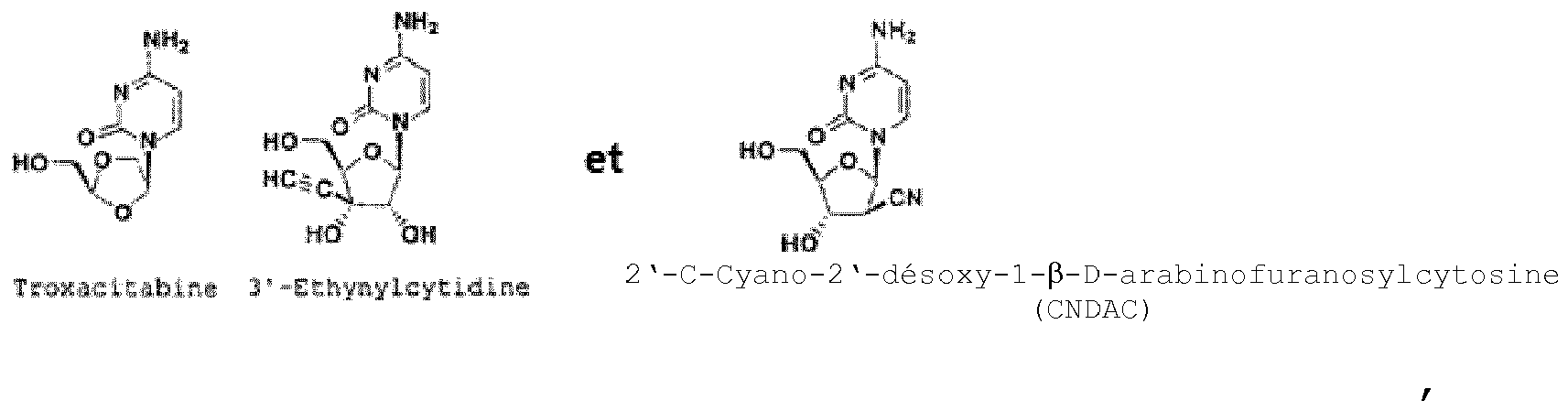
- Dérivé d'un antimétabolite d'acide nucléique de haut poids moléculaire selon la revendication 1, dans lequel R représente un groupe C1-C4 alkyle ; A représente un groupe C2-C4 acyle ; a+b vaut de 5 à 100 sous forme d'une valeur moyenne, dans laquelle a représente de 80 à 100 % de la somme a+b, et b représente de 0 à 20 % de la somme a+b ; n vaut de 50 à 1000 sous forme d'une valeur moyenne.
- Dérivé d'un antimétabolite d'acide nucléique de haut poids moléculaire selon la revendication 2, dans lequel R représente un groupe méthyle ; A représente un groupe acétyle ; a+b vaut de 10 à 60 sous forme d'une valeur moyenne ; n vaut de 100 à 300 sous forme d'une valeur moyenne ; et le résidu d'antimétabolite d'acide nucléique est un résidu de gemcitabine ou de doxifluridine.
- Dérivé d'un antimétabolite d'acide nucléique de haut poids moléculaire, dans lequel l'antimétabolite d'acide nucléique est lié à un groupe carboxyle dans la chaine latérale du composé de haut poids moléculaire comprenant un fragment polyéthylène glycol et un fragment polymérique possédant un groupe carboxyle dans la chaine latérale par l'intermédiaire d'un liant hydrophobe représenté par la formule (4) suivante :


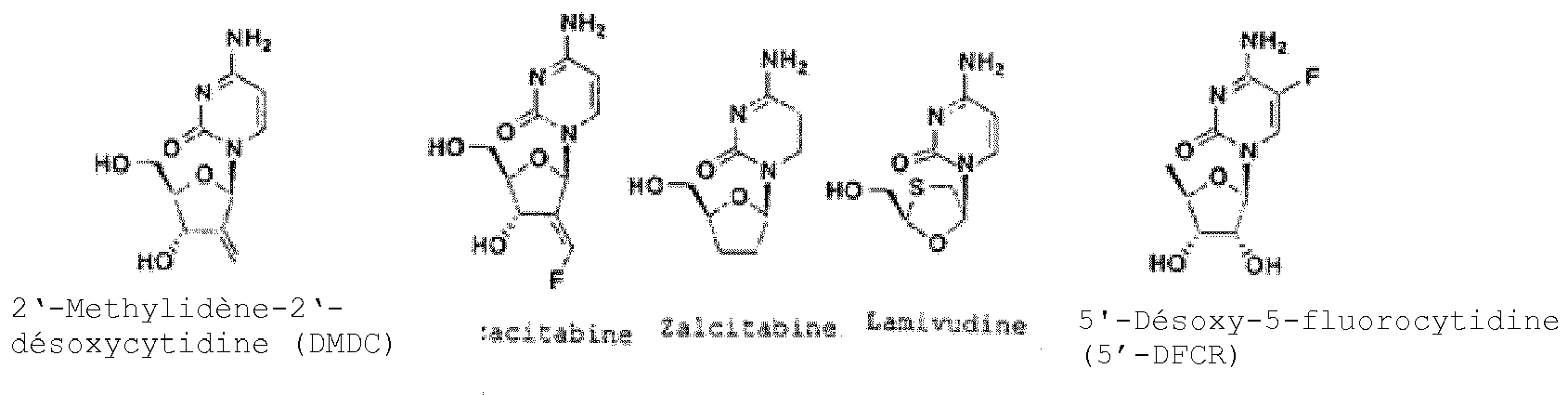

- Dérivé d'un antimétabolite d'acide nucléique de haut poids moléculaire selon la revendication 4, dans lequel R représente un groupe C1-C4 alkyle ; A représente un groupe C2-C4 acyle ; c+d+e+f+g vaut de 5 à 100 sous forme d'une valeur moyenne, dans laquelle c+d représente de 90 à 100 % de la somme c+d+e+f+g, et e+f+g représente de 0 à 10 % de la somme c+d+e+f+g ; n vaut de 50 à 1000 sous forme d'une valeur moyenne.
- Dérivé d'un antimétabolite d'acide nucléique de haut poids moléculaire selon la revendication 5, dans lequel R représente un groupe méthyle ; A représente un groupe acétyle ; c+d+e+f+g vaut de 10 à 60 sous forme d'une valeur moyenne ; n vaut de 100 à 300 sous forme d'une valeur moyenne ; et le résidu antimétabolite d'acide nucléique est un résidu de gemcitabine ou de doxifluridine.
- Dérivé d'un antimétabolite d'acide nucléique de haut poids moléculaire selon l'une quelconque des revendications 1 à 6, dans lequel le résidu d'acide aminé hydrophobe ou le résidu d'un dérivé d'acide aminé hydrophobe est représenté par la formule (5) :

- Dérivé d'un antimétabolite d'acide nucléique de haut poids moléculaire selon la revendication 7, dans lequel Q représente un groupe isopropyle ou un groupe benzyle.
- Dérivé d'un antimétabolite d'acide nucléique de haut poids moléculaire selon la revendication 1, dans lequel R représente un groupe méthyle ; A représente un groupe acétyle ; a+b vaut de 10 à 60 sous forme d'une valeur moyenne ; n vaut de 100 à 300 sous forme d'une valeur moyenne ; le résidu d'acide aminé hydrophobe ou le résidu d'un dérivé d'acide aminé hydrophobe est un résidu de phénylalanine ; le résidu d'antimétabolite d'acide nucléique est un résidu de gemcitabine ; et -N(R1)CONH(R2) est un groupe isopropylaminocarbonylisopropylamino.
- Dérivé d'un antimétabolite d'acide nucléique de haut poids moléculaire selon la revendication 4, dans lequel R représente un groupe méthyle ; A représente un groupe acétyle ; c+d+e+f+g vaut de 10 à 60 sous forme d'une valeur moyenne ; n vaut de 100 à 300 sous forme d'une valeur moyenne ; le résidu d'acide aminé hydrophobe ou le résidu d'un dérivé d'acide aminé hydrophobe est un résidu de phénylalanine ; l'antimétabolite d'acide nucléique est une gemcitabine ; et -N(R1)CONH(R2) est un groupe isopropylaminocarbonylisopropylamino.
- Agent antitumoral comprenant le dérivé d'un antimétabolite d'acide nucléique de haut poids moléculaire selon l'une quelconque des revendications 1 à 10 en tant que principe actif.
- Agent antiviral comprenant le dérivé d'un antimétabolite d'acide nucléique de haut poids moléculaire selon l'une quelconque des revendications 1 à 10 en tant que principe actif.
- Procédé de fabrication du dérivé d'un antimétabolite d'acide nucléique de haut poids moléculaire selon l'une quelconque des revendications 1 à 10, le procédé comprenant l'introduction de l'antimétabolite d'acide nucléique à un groupe carboxyle dans la chaine latérale d'un composé de haut poids moléculaire comprenant un fragment polyéthylène glycol et un fragment polymérique possédant un groupe carboxyle dans la chaine latérale par l'intermédiaire d'un liant hydrophobe.
- Procédé de fabrication du dérivé d'un antimétabolite d'acide nucléique de haut poids moléculaire selon la revendication 13, le procédé comprenant l'introduction de l'antimétabolite d'acide nucléique à un dérivé de haut poids moléculaire dans lequel un liant hydrophobe est lié à un groupe carboxyle d'un composé de haut poids moléculaire et qui est représenté par la formule (6) :

- Procédé de fabrication du dérivé d'un antimétabolite d'acide nucléique de haut poids moléculaire selon la revendication 13, le procédé comprenant l'introduction de l'antimétabolite d'acide nucléique à un dérivé de haut poids moléculaire dans lequel un liant hydrophobe est lié à un groupe carboxyle d'un composé de haut poids moléculaire et qui est représenté par la formule (7) :

- Dérivé de haut poids moléculaire représenté par la formule (6) tel que décrit dans la revendication 14, dans lequel un liant hydrophobe est lié à un groupe carboxyle dans la chaine latérale du composé de haut poids moléculaire.
- Dérivé de haut poids moléculaire représenté par la formule (7) tel que décrit dans la revendication 15, dans lequel un liant hydrophobe est lié à un groupe carboxyle dans la chaine latérale du composé de haut poids moléculaire.
- Dérivé de haut poids moléculaire possédant un liant hydrophobe lié à un groupe carboxyle dans la chaine latérale du composé de haut poids moléculaire selon la revendication 16, dans lequel R est un groupe méthyle ; A est un groupe acétyle ; a+b vaut de 10 à 60 sous forme d'une valeur moyenne ; et n vaut de 100 à 300 sous forme d'une valeur moyenne.
- Dérivé de haut poids moléculaire possédant un liant hydrophobe lié à un groupe carboxyle dans la chaine latérale du composé de haut poids moléculaire selon la revendication 17, dans lequel R est un groupe méthyle ; A est un groupe acétyle ; c+d+e+f+g vaut de 10 à 60 sous forme d'une valeur moyenne ; et n vaut de 100 à 300 sous forme d'une valeur moyenne.
Applications Claiming Priority (2)
| Application Number | Priority Date | Filing Date | Title |
|---|---|---|---|
| JP2006302686 | 2006-11-08 | ||
| PCT/JP2007/071532 WO2008056654A1 (fr) | 2006-11-08 | 2007-11-06 | Dérivé polymère d'un antagoniste métabolique d'acide nucléique |
Publications (3)
| Publication Number | Publication Date |
|---|---|
| EP2090607A1 EP2090607A1 (fr) | 2009-08-19 |
| EP2090607A4 EP2090607A4 (fr) | 2012-10-24 |
| EP2090607B1 true EP2090607B1 (fr) | 2015-05-20 |
Family
ID=39364469
Family Applications (1)
| Application Number | Title | Priority Date | Filing Date |
|---|---|---|---|
| EP20070831264 Not-in-force EP2090607B1 (fr) | 2006-11-08 | 2007-11-06 | Dérivé polymère d'un antagoniste métabolique d'acide nucléique |
Country Status (5)
| Country | Link |
|---|---|
| US (1) | US8188222B2 (fr) |
| EP (1) | EP2090607B1 (fr) |
| JP (1) | JP5548365B2 (fr) |
| TW (1) | TW200836750A (fr) |
| WO (1) | WO2008056654A1 (fr) |
Families Citing this family (14)
| Publication number | Priority date | Publication date | Assignee | Title |
|---|---|---|---|---|
| CA2518964C (fr) * | 2003-03-20 | 2011-09-13 | Nippon Kayaku Kabushiki Kaisha | Preparation micellaire contenant un agent anticancereux faiblement soluble dans l'eau, et nouveau copolymere sequence |
| BRPI0515573A (pt) * | 2004-09-22 | 2008-07-29 | Nippon Kayaku Kk | copolìmero por blocos, preparação de micela e agente anticáncer contendo a mesma como o ingrediente ativo |
| JP5249016B2 (ja) * | 2006-03-28 | 2013-07-31 | 日本化薬株式会社 | タキサン類の高分子結合体 |
| CA2652656A1 (fr) | 2006-05-18 | 2007-11-29 | Nippon Kayaku Kabushiki Kaisha | Conjugue de podophyllotoxines a poids moleculaire eleve |
| WO2008041610A1 (fr) * | 2006-10-03 | 2008-04-10 | Nippon Kayaku Kabushiki Kaisha | Mélange d'un dérivé de résorcinol avec un polymère |
| EP2080779B1 (fr) | 2006-11-06 | 2016-05-18 | Nippon Kayaku Kabushiki Kaisha | Dérivé polymère d'un antagoniste métabolique d'acide nucléique |
| CN101209350B (zh) * | 2006-12-30 | 2011-09-07 | 中国人民解放军军事医学科学院毒物药物研究所 | 以氨基酸为连接子的多聚谷氨酸-药物偶合物 |
| USRE46190E1 (en) | 2007-09-28 | 2016-11-01 | Nippon Kayaku Kabushiki Kaisha | High-molecular weight conjugate of steroids |
| JP5687899B2 (ja) | 2008-03-18 | 2015-03-25 | 日本化薬株式会社 | 生理活性物質の高分子結合体 |
| WO2009136572A1 (fr) | 2008-05-08 | 2009-11-12 | 日本化薬株式会社 | Conjugué de polymère avec l'acide folique ou un dérivé de l'acide folique |
| EP2431403B1 (fr) * | 2009-05-15 | 2016-09-28 | Nipponkayaku Kabushikikaisha | Conjugue polymere de substance bioactive comprenant un groupe hydroxy |
| WO2012067138A1 (fr) | 2010-11-17 | 2012-05-24 | 日本化薬株式会社 | Nouveau dérivé polymère d'antagoniste de métabolisme de cytidine |
| ES2635117T3 (es) | 2011-09-11 | 2017-10-02 | Nippon Kayaku Kabushiki Kaisha | Método para la fabricación de un copolímero de bloques |
| CU20140003A7 (es) * | 2014-01-08 | 2015-08-27 | Ct De Inmunología Molecular Biofarmacuba | Conjugado que comprende eritropoyetina y una estructura polimérica ramificada |
Family Cites Families (93)
| Publication number | Priority date | Publication date | Assignee | Title |
|---|---|---|---|---|
| GB1467587A (en) | 1974-07-11 | 1977-03-16 | Nestle Sa | Preparation of an asparagine or a glutamine |
| GB8500209D0 (en) | 1985-01-04 | 1985-02-13 | Ceskoslovenska Akademie Ved | Synthetic polymeric drugs |
| JPS6296088A (ja) | 1985-10-22 | 1987-05-02 | Kanebo Ltd | 抗腫瘍性物質の製法 |
| US4734512A (en) | 1985-12-05 | 1988-03-29 | Bristol-Myers Company | Intermediates for the production of podophyllotoxin and related compounds and processes for the preparation and use thereof |
| JPS6310789A (ja) | 1986-07-01 | 1988-01-18 | Nippon Kayaku Co Ltd | 新規ポドフイロトキシン誘導体 |
| JPS6323884A (ja) | 1986-07-17 | 1988-02-01 | Nippon Kayaku Co Ltd | 新規ポドフイロトキシン誘導体 |
| JPS6461422A (en) | 1987-09-02 | 1989-03-08 | Nippon Kayaku Kk | Water-soluble polymeric carcinostatic agent |
| JPS6461423A (en) | 1987-09-02 | 1989-03-08 | Nippon Kayaku Kk | Water-soluble polymeric carcinostatic agent |
| JP2517760B2 (ja) | 1989-05-11 | 1996-07-24 | 新技術事業団 | 水溶性高分子化医薬製剤 |
| JPH0780196B2 (ja) | 1990-03-19 | 1995-08-30 | 矢崎化工株式会社 | 中空物の射出成形方法及びその装置 |
| JP3310000B2 (ja) | 1990-11-07 | 2002-07-29 | 靖久 桜井 | 水溶性高分子抗癌剤及び薬物担持用担体 |
| JPH05117385A (ja) | 1991-10-31 | 1993-05-14 | Res Dev Corp Of Japan | ブロツク共重合体の製造法、ブロツク共重合体及び水溶性高分子抗癌剤 |
| KR940003548U (ko) | 1992-08-14 | 1994-02-21 | 김형술 | 세탁물 건조기 |
| US5614549A (en) | 1992-08-21 | 1997-03-25 | Enzon, Inc. | High molecular weight polymer-based prodrugs |
| JP3270592B2 (ja) | 1992-10-26 | 2002-04-02 | 日本化薬株式会社 | ブロック共重合体−抗癌剤複合体医薬製剤 |
| JPH06206830A (ja) | 1992-10-27 | 1994-07-26 | Nippon Kayaku Co Ltd | ブロック共重合体−薬剤複合体及び高分子ブロック共重合体 |
| JP3268913B2 (ja) | 1992-10-27 | 2002-03-25 | 日本化薬株式会社 | 高分子担体 |
| FR2698543B1 (fr) | 1992-12-02 | 1994-12-30 | Rhone Poulenc Rorer Sa | Nouvelles compositions à base de taxoides. |
| JPH06296088A (ja) | 1993-04-08 | 1994-10-21 | Canon Inc | 電子機器 |
| JPH06310789A (ja) | 1993-04-21 | 1994-11-04 | Sumitomo Heavy Ind Ltd | エキシマーレーザー用予備電離ピンの位置調整装置 |
| JP3220283B2 (ja) | 1993-05-14 | 2001-10-22 | アドバンス電気工業株式会社 | 流量センサー |
| US5880131A (en) | 1993-10-20 | 1999-03-09 | Enzon, Inc. | High molecular weight polymer-based prodrugs |
| US5840900A (en) | 1993-10-20 | 1998-11-24 | Enzon, Inc. | High molecular weight polymer-based prodrugs |
| JPH0848766A (ja) * | 1994-05-30 | 1996-02-20 | Mitsui Toatsu Chem Inc | 重合体及びその製造方法 |
| US5571889A (en) | 1994-05-30 | 1996-11-05 | Mitsui Toatsu Chemicals, Inc. | Polymer containing monomer units of chemically modified polyaspartic acids or their salts and process for preparing the same |
| SG50747A1 (en) | 1995-08-02 | 1998-07-20 | Tanabe Seiyaku Co | Comptothecin derivatives |
| JP2694923B2 (ja) | 1995-08-21 | 1997-12-24 | 科学技術振興事業団 | 水溶性高分子化医薬製剤 |
| US5977163A (en) | 1996-03-12 | 1999-11-02 | Pg-Txl Company, L. P. | Water soluble paclitaxel prodrugs |
| WO1997038727A1 (fr) | 1996-04-15 | 1997-10-23 | Asahi Kasei Kogyo Kabushiki Kaisha | Composite medicamenteux |
| US5877205A (en) | 1996-06-28 | 1999-03-02 | Board Of Regents, The University Of Texas System | Parenteral paclitaxel in a stable non-toxic formulation |
| EP0930309A4 (fr) | 1996-07-15 | 2001-09-26 | Yakult Honsha Kk | Derives de taxane et medicaments les contenant |
| PT941066E (pt) | 1996-08-26 | 2004-03-31 | Transgene Sa | Complexos de lipido cationico - acido nucleico |
| JP4465109B2 (ja) | 1997-12-17 | 2010-05-19 | エンゾン ファーマシューティカルズ,インコーポレーテッド | アミノ及びヒドロキシル含有生物活性剤のポリマープロドラッグ |
| JPH11279083A (ja) | 1998-03-30 | 1999-10-12 | Nippon Kayaku Co Ltd | 可溶化剤 |
| US6153655A (en) | 1998-04-17 | 2000-11-28 | Enzon, Inc. | Terminally-branched polymeric linkers and polymeric conjugates containing the same |
| JPH11335267A (ja) | 1998-05-27 | 1999-12-07 | Nano Career Kk | 水難溶性薬物を含有するポリマーミセル系 |
| IN191203B (fr) | 1999-02-17 | 2003-10-04 | Amarnath Prof Maitra | |
| US6207832B1 (en) | 1999-04-09 | 2001-03-27 | University Of Pittsburgh | Camptothecin analogs and methods of preparation thereof |
| US20010041189A1 (en) | 1999-04-13 | 2001-11-15 | Jingya Xu | Poly(dipeptide) as a drug carrier |
| US6380405B1 (en) | 1999-09-13 | 2002-04-30 | Nobex Corporation | Taxane prodrugs |
| US6713454B1 (en) | 1999-09-13 | 2004-03-30 | Nobex Corporation | Prodrugs of etoposide and etoposide analogs |
| US6623730B1 (en) | 1999-09-14 | 2003-09-23 | Tepha, Inc. | Therapeutic uses of polymers and oligomers comprising gamma-hydroxybutyrate |
| US6376470B1 (en) | 1999-09-23 | 2002-04-23 | Enzon, Inc. | Polymer conjugates of ara-C and ara-C derivatives |
| US20030054977A1 (en) * | 1999-10-12 | 2003-03-20 | Cell Therapeutics, Inc. | Manufacture of polyglutamate-therapeutic agent conjugates |
| NZ529789A (en) | 1999-10-12 | 2005-04-29 | Cell Therapeutics Inc | Manufacture of polyglutamate-20(S)-camptothecin conjugates |
| JP3523821B2 (ja) | 2000-02-09 | 2004-04-26 | ナノキャリア株式会社 | 薬物が封入されたポリマーミセルの製造方法および該ポリマーミセル組成物 |
| AU2001239275A1 (en) | 2000-02-29 | 2001-09-12 | Janssen Pharmaceutica N.V. | Farnesyl protein transferase inhibitor combinations with anti-tumor podophyllotoxin derivatives |
| CA2402643A1 (fr) | 2000-03-17 | 2001-09-27 | Cell Therapeutics, Inc. | Conjugues de la camptothecine-acide polyglutamique et leurs procedes de preparation |
| US20020161062A1 (en) | 2001-11-06 | 2002-10-31 | Biermann Paul J. | Structure including a plurality of cells of cured resinous material, method of forming the structure and apparatus for forming the structure |
| AU7522601A (en) | 2000-06-02 | 2001-12-11 | Eidgenoess Tech Hochschule | Conjugate addition reactions for the controlled delivery of pharmaceutically active compounds |
| WO2002006279A1 (fr) | 2000-07-17 | 2002-01-24 | Oxigene Inc | Procede efficace de synthese de promedicaments de combretastatine a-4 |
| US20020099013A1 (en) * | 2000-11-14 | 2002-07-25 | Thomas Piccariello | Active agent delivery systems and methods for protecting and administering active agents |
| MXPA03007358A (es) | 2001-02-16 | 2004-12-13 | Cellgate Inc | Transportadores que contienen porciones de arginina separadas. |
| MXPA03007392A (es) | 2001-02-20 | 2003-12-04 | Enzon Inc | Enlazantes polimericos ramificados terminalmente y conjugados polimericos que contienen los mismos. |
| MXPA03007391A (es) | 2001-02-20 | 2003-12-04 | Enzon Inc | Enlazantes polimericos ramificados terminalmente y conjugados polimericos que contienen los mismos. |
| ES2343679T3 (es) | 2001-06-20 | 2010-08-06 | Nippon Kayaku Kabushiki Kaisha | Copolimeros de bloques con bajo contenido de impurezas; vehiculo polimerico; preparaciones farmaceuticas en forma polimerica y procedimiento para la preparacion del mismo. |
| US6919324B2 (en) | 2001-10-26 | 2005-07-19 | Oxigene, Inc. | Functionalized stilbene derivatives as improved vascular targeting agents |
| EP1456180B1 (fr) | 2001-12-21 | 2007-10-03 | Vernalis (Cambridge) Limited | 3-(2,4)dihydroxyphenyl-4-phenylpyrazoles et leur utilisation medicale |
| CN100475269C (zh) | 2002-03-05 | 2009-04-08 | 北京键凯科技有限公司 | 亲水性聚合物-谷氨酸寡肽与药物分子的结合物、包含该结合物的组合物及用途 |
| US6596757B1 (en) | 2002-05-14 | 2003-07-22 | Immunogen Inc. | Cytotoxic agents comprising polyethylene glycol-containing taxanes and their therapeutic use |
| JP2003342167A (ja) | 2002-05-24 | 2003-12-03 | Nano Career Kk | カンプトテシン誘導体の製剤およびその調製方法 |
| JP2003342168A (ja) | 2002-05-24 | 2003-12-03 | Nano Career Kk | 注射用薬物含有ポリマーミセル製剤の製造方法 |
| JP4270485B2 (ja) | 2002-05-28 | 2009-06-03 | 第一三共株式会社 | タキサン類の還元方法 |
| JP2004010479A (ja) | 2002-06-03 | 2004-01-15 | Japan Science & Technology Corp | ブロック共重合体とアンスラサイクリン系抗癌剤を含む新規固型製剤及びその製造法 |
| DK1580216T3 (da) | 2002-10-31 | 2014-08-18 | Nippon Kayaku Kk | Derivater med høj molekylvægt af camptotheciner |
| GB0228417D0 (en) | 2002-12-05 | 2003-01-08 | Cancer Rec Tech Ltd | Pyrazole compounds |
| GB0229618D0 (en) | 2002-12-19 | 2003-01-22 | Cancer Rec Tech Ltd | Pyrazole compounds |
| SI1611112T1 (sl) | 2003-02-11 | 2012-12-31 | Vernalis (R&D) Limited | Izoksazolne spojine kot inhibitorji vroäśinskih ĺ ok proteinov |
| CA2518964C (fr) | 2003-03-20 | 2011-09-13 | Nippon Kayaku Kabushiki Kaisha | Preparation micellaire contenant un agent anticancereux faiblement soluble dans l'eau, et nouveau copolymere sequence |
| KR20050115315A (ko) | 2003-03-26 | 2005-12-07 | 가부시키가이샤 엘티티 바이오파마 | 약물 전달 및 서방성 약물 방출을 표적으로 하는 정맥 내 나노입자 |
| GB0309637D0 (en) | 2003-04-28 | 2003-06-04 | Cancer Rec Tech Ltd | Pyrazole compounds |
| GB0315111D0 (en) | 2003-06-27 | 2003-07-30 | Cancer Rec Tech Ltd | Substituted 5-membered ring compounds and their use |
| WO2005018674A1 (fr) | 2003-08-22 | 2005-03-03 | Kyowa Hakko Kogyo Co., Ltd. | Medicament destine a traiter des maladies associees a une translocation d'un gene d'immunoglobuline |
| CN101921347B (zh) | 2004-01-07 | 2014-07-30 | 生化学工业株式会社 | 透明质酸衍生物及含有其的药剂 |
| BRPI0515573A (pt) | 2004-09-22 | 2008-07-29 | Nippon Kayaku Kk | copolìmero por blocos, preparação de micela e agente anticáncer contendo a mesma como o ingrediente ativo |
| JP2006120914A (ja) | 2004-10-22 | 2006-05-11 | Matsushita Electric Ind Co Ltd | 部品吸着ノズル、並びに部品実装装置及び部品実装方法 |
| EP2298748B1 (fr) | 2004-11-18 | 2016-07-20 | Synta Pharmaceuticals Corp. | Composés triazole modulant l'activité de HSP90 |
| JP5044730B2 (ja) | 2005-03-09 | 2012-10-10 | 日本化薬株式会社 | 新規なhsp90阻害剤 |
| CN101137700B (zh) | 2005-03-09 | 2012-07-18 | 东丽株式会社 | 微粒及医药组合物 |
| WO2006115293A1 (fr) | 2005-04-22 | 2006-11-02 | The University Of Tokyo | NOUVEAU COPOLYMERE SEQUENCE UTILISE DANS LA PREPARATION D'UNE MICELLE DE POLYMERE REAGISSANT AU pH, ET SON PROCEDE DE FABRICATION |
| BRPI0609095A2 (pt) * | 2005-05-11 | 2010-02-17 | Nippon Kayaku Kk | derivado polimérico de antagonista metabólico de citidina, agente antitumor e antiviral e método para produzir o referido derivado |
| KR20080005544A (ko) | 2005-05-12 | 2008-01-14 | 니프로 가부시키가이샤 | 순환 장해 개선제 |
| JP2009504783A (ja) | 2005-08-19 | 2009-02-05 | エンドサイト,インコーポレイテッド | ビンカアルカロイド、類似体および誘導体のリガンド結合体 |
| JP4975297B2 (ja) | 2005-10-20 | 2012-07-11 | 山佐株式会社 | スロットマシン |
| JP2007182407A (ja) | 2006-01-10 | 2007-07-19 | Medgel Corp | 徐放性ハイドロゲル製剤 |
| JP5249016B2 (ja) | 2006-03-28 | 2013-07-31 | 日本化薬株式会社 | タキサン類の高分子結合体 |
| CA2652656A1 (fr) | 2006-05-18 | 2007-11-29 | Nippon Kayaku Kabushiki Kaisha | Conjugue de podophyllotoxines a poids moleculaire eleve |
| WO2008010463A1 (fr) | 2006-07-19 | 2008-01-24 | Nippon Kayaku Kabushiki Kaisha | Conjugué polymère d'une combrétastatine |
| WO2008041610A1 (fr) | 2006-10-03 | 2008-04-10 | Nippon Kayaku Kabushiki Kaisha | Mélange d'un dérivé de résorcinol avec un polymère |
| EP2080779B1 (fr) | 2006-11-06 | 2016-05-18 | Nippon Kayaku Kabushiki Kaisha | Dérivé polymère d'un antagoniste métabolique d'acide nucléique |
| USRE46190E1 (en) | 2007-09-28 | 2016-11-01 | Nippon Kayaku Kabushiki Kaisha | High-molecular weight conjugate of steroids |
| JP5687899B2 (ja) | 2008-03-18 | 2015-03-25 | 日本化薬株式会社 | 生理活性物質の高分子結合体 |
| WO2009136572A1 (fr) | 2008-05-08 | 2009-11-12 | 日本化薬株式会社 | Conjugué de polymère avec l'acide folique ou un dérivé de l'acide folique |
-
2007
- 2007-11-06 EP EP20070831264 patent/EP2090607B1/fr not_active Not-in-force
- 2007-11-06 JP JP2008543080A patent/JP5548365B2/ja not_active Expired - Fee Related
- 2007-11-06 WO PCT/JP2007/071532 patent/WO2008056654A1/fr not_active Ceased
- 2007-11-06 US US12/312,157 patent/US8188222B2/en not_active Expired - Fee Related
- 2007-11-07 TW TW096142106A patent/TW200836750A/zh unknown
Also Published As
| Publication number | Publication date |
|---|---|
| US20100029849A1 (en) | 2010-02-04 |
| EP2090607A4 (fr) | 2012-10-24 |
| US8188222B2 (en) | 2012-05-29 |
| JPWO2008056654A1 (ja) | 2010-02-25 |
| TW200836750A (en) | 2008-09-16 |
| JP5548365B2 (ja) | 2014-07-16 |
| EP2090607A1 (fr) | 2009-08-19 |
| WO2008056654A1 (fr) | 2008-05-15 |
Similar Documents
| Publication | Publication Date | Title |
|---|---|---|
| US8188222B2 (en) | High molecular weight derivative of nucleic acid antimetabolite | |
| EP2080779B1 (fr) | Dérivé polymère d'un antagoniste métabolique d'acide nucléique | |
| EP1881020B1 (fr) | Derive polymere d'un antagoniste metabolique de la cytidine | |
| JP4745664B2 (ja) | カンプトテシン類の高分子誘導体 | |
| US8920788B2 (en) | High-molecular weight conjugate of physiologically active substances | |
| US8323669B2 (en) | Polymer conjugate of taxane | |
| US20100004403A1 (en) | High-Molecular Weight Conjugate of Combretastatins | |
| JP5856069B2 (ja) | 新規なシチジン系代謝拮抗剤の高分子誘導体 | |
| US8940332B2 (en) | High-molecular weight conjugate of podophyllotoxins | |
| US20090239782A1 (en) | High-molecular weight conjugate of resorcinol derivatives |
Legal Events
| Date | Code | Title | Description |
|---|---|---|---|
| PUAI | Public reference made under article 153(3) epc to a published international application that has entered the european phase |
Free format text: ORIGINAL CODE: 0009012 |
|
| 17P | Request for examination filed |
Effective date: 20090427 |
|
| AK | Designated contracting states |
Kind code of ref document: A1 Designated state(s): AT BE BG CH CY CZ DE DK EE ES FI FR GB GR HU IE IS IT LI LT LU LV MC MT NL PL PT RO SE SI SK TR |
|
| DAX | Request for extension of the european patent (deleted) | ||
| A4 | Supplementary search report drawn up and despatched |
Effective date: 20120926 |
|
| RIC1 | Information provided on ipc code assigned before grant |
Ipc: C08G 69/48 20060101AFI20120920BHEP Ipc: A61K 47/34 20060101ALI20120920BHEP Ipc: C08G 69/10 20060101ALI20120920BHEP Ipc: A61K 31/787 20060101ALI20120920BHEP Ipc: C08G 69/42 20060101ALI20120920BHEP Ipc: A61K 47/48 20060101ALI20120920BHEP |
|
| 17Q | First examination report despatched |
Effective date: 20140507 |
|
| GRAP | Despatch of communication of intention to grant a patent |
Free format text: ORIGINAL CODE: EPIDOSNIGR1 |
|
| INTG | Intention to grant announced |
Effective date: 20140903 |
|
| RAP1 | Party data changed (applicant data changed or rights of an application transferred) |
Owner name: NIPPON KAYAKU KABUSHIKI KAISHA |
|
| RIN1 | Information on inventor provided before grant (corrected) |
Inventor name: TAKASHIO, KAZUTOSHI Inventor name: YAMAMOTO, KEIICHIRO |
|
| GRAS | Grant fee paid |
Free format text: ORIGINAL CODE: EPIDOSNIGR3 |
|
| GRAP | Despatch of communication of intention to grant a patent |
Free format text: ORIGINAL CODE: EPIDOSNIGR1 |
|
| INTG | Intention to grant announced |
Effective date: 20150312 |
|
| GRAA | (expected) grant |
Free format text: ORIGINAL CODE: 0009210 |
|
| AK | Designated contracting states |
Kind code of ref document: B1 Designated state(s): AT BE BG CH CY CZ DE DK EE ES FI FR GB GR HU IE IS IT LI LT LU LV MC MT NL PL PT RO SE SI SK TR |
|
| REG | Reference to a national code |
Ref country code: GB Ref legal event code: FG4D |
|
| REG | Reference to a national code |
Ref country code: CH Ref legal event code: EP |
|
| REG | Reference to a national code |
Ref country code: AT Ref legal event code: REF Ref document number: 727735 Country of ref document: AT Kind code of ref document: T Effective date: 20150615 |
|
| REG | Reference to a national code |
Ref country code: IE Ref legal event code: FG4D |
|
| REG | Reference to a national code |
Ref country code: DE Ref legal event code: R096 Ref document number: 602007041523 Country of ref document: DE Ref country code: DE Ref legal event code: R096 Ref document number: 602007041523 Country of ref document: DE Effective date: 20150702 |
|
| REG | Reference to a national code |
Ref country code: CH Ref legal event code: NV Representative=s name: MAIWALD PATENTANWALTSGESELLSCHAFT (SCHWEIZ) MB, CH |
|
| REG | Reference to a national code |
Ref country code: FR Ref legal event code: PLFP Year of fee payment: 9 |
|
| REG | Reference to a national code |
Ref country code: AT Ref legal event code: MK05 Ref document number: 727735 Country of ref document: AT Kind code of ref document: T Effective date: 20150520 |
|
| REG | Reference to a national code |
Ref country code: LT Ref legal event code: MG4D |
|
| REG | Reference to a national code |
Ref country code: NL Ref legal event code: MP Effective date: 20150520 |
|
| PG25 | Lapsed in a contracting state [announced via postgrant information from national office to epo] |
Ref country code: ES Free format text: LAPSE BECAUSE OF FAILURE TO SUBMIT A TRANSLATION OF THE DESCRIPTION OR TO PAY THE FEE WITHIN THE PRESCRIBED TIME-LIMIT Effective date: 20150520 Ref country code: PT Free format text: LAPSE BECAUSE OF FAILURE TO SUBMIT A TRANSLATION OF THE DESCRIPTION OR TO PAY THE FEE WITHIN THE PRESCRIBED TIME-LIMIT Effective date: 20150921 Ref country code: FI Free format text: LAPSE BECAUSE OF FAILURE TO SUBMIT A TRANSLATION OF THE DESCRIPTION OR TO PAY THE FEE WITHIN THE PRESCRIBED TIME-LIMIT Effective date: 20150520 Ref country code: LT Free format text: LAPSE BECAUSE OF FAILURE TO SUBMIT A TRANSLATION OF THE DESCRIPTION OR TO PAY THE FEE WITHIN THE PRESCRIBED TIME-LIMIT Effective date: 20150520 |
|
| PG25 | Lapsed in a contracting state [announced via postgrant information from national office to epo] |
Ref country code: BG Free format text: LAPSE BECAUSE OF FAILURE TO SUBMIT A TRANSLATION OF THE DESCRIPTION OR TO PAY THE FEE WITHIN THE PRESCRIBED TIME-LIMIT Effective date: 20150820 Ref country code: LV Free format text: LAPSE BECAUSE OF FAILURE TO SUBMIT A TRANSLATION OF THE DESCRIPTION OR TO PAY THE FEE WITHIN THE PRESCRIBED TIME-LIMIT Effective date: 20150520 Ref country code: AT Free format text: LAPSE BECAUSE OF FAILURE TO SUBMIT A TRANSLATION OF THE DESCRIPTION OR TO PAY THE FEE WITHIN THE PRESCRIBED TIME-LIMIT Effective date: 20150520 Ref country code: GR Free format text: LAPSE BECAUSE OF FAILURE TO SUBMIT A TRANSLATION OF THE DESCRIPTION OR TO PAY THE FEE WITHIN THE PRESCRIBED TIME-LIMIT Effective date: 20150821 Ref country code: IS Free format text: LAPSE BECAUSE OF FAILURE TO SUBMIT A TRANSLATION OF THE DESCRIPTION OR TO PAY THE FEE WITHIN THE PRESCRIBED TIME-LIMIT Effective date: 20150920 |
|
| PG25 | Lapsed in a contracting state [announced via postgrant information from national office to epo] |
Ref country code: DK Free format text: LAPSE BECAUSE OF FAILURE TO SUBMIT A TRANSLATION OF THE DESCRIPTION OR TO PAY THE FEE WITHIN THE PRESCRIBED TIME-LIMIT Effective date: 20150520 Ref country code: EE Free format text: LAPSE BECAUSE OF FAILURE TO SUBMIT A TRANSLATION OF THE DESCRIPTION OR TO PAY THE FEE WITHIN THE PRESCRIBED TIME-LIMIT Effective date: 20150520 |
|
| REG | Reference to a national code |
Ref country code: DE Ref legal event code: R097 Ref document number: 602007041523 Country of ref document: DE |
|
| PG25 | Lapsed in a contracting state [announced via postgrant information from national office to epo] |
Ref country code: RO Free format text: LAPSE BECAUSE OF NON-PAYMENT OF DUE FEES Effective date: 20150520 Ref country code: PL Free format text: LAPSE BECAUSE OF FAILURE TO SUBMIT A TRANSLATION OF THE DESCRIPTION OR TO PAY THE FEE WITHIN THE PRESCRIBED TIME-LIMIT Effective date: 20150520 Ref country code: CZ Free format text: LAPSE BECAUSE OF FAILURE TO SUBMIT A TRANSLATION OF THE DESCRIPTION OR TO PAY THE FEE WITHIN THE PRESCRIBED TIME-LIMIT Effective date: 20150520 Ref country code: SK Free format text: LAPSE BECAUSE OF FAILURE TO SUBMIT A TRANSLATION OF THE DESCRIPTION OR TO PAY THE FEE WITHIN THE PRESCRIBED TIME-LIMIT Effective date: 20150520 |
|
| PLBE | No opposition filed within time limit |
Free format text: ORIGINAL CODE: 0009261 |
|
| STAA | Information on the status of an ep patent application or granted ep patent |
Free format text: STATUS: NO OPPOSITION FILED WITHIN TIME LIMIT |
|
| 26N | No opposition filed |
Effective date: 20160223 |
|
| PG25 | Lapsed in a contracting state [announced via postgrant information from national office to epo] |
Ref country code: IT Free format text: LAPSE BECAUSE OF FAILURE TO SUBMIT A TRANSLATION OF THE DESCRIPTION OR TO PAY THE FEE WITHIN THE PRESCRIBED TIME-LIMIT Effective date: 20150520 |
|
| PG25 | Lapsed in a contracting state [announced via postgrant information from national office to epo] |
Ref country code: SI Free format text: LAPSE BECAUSE OF FAILURE TO SUBMIT A TRANSLATION OF THE DESCRIPTION OR TO PAY THE FEE WITHIN THE PRESCRIBED TIME-LIMIT Effective date: 20150520 |
|
| PG25 | Lapsed in a contracting state [announced via postgrant information from national office to epo] |
Ref country code: MC Free format text: LAPSE BECAUSE OF FAILURE TO SUBMIT A TRANSLATION OF THE DESCRIPTION OR TO PAY THE FEE WITHIN THE PRESCRIBED TIME-LIMIT Effective date: 20150520 Ref country code: LU Free format text: LAPSE BECAUSE OF FAILURE TO SUBMIT A TRANSLATION OF THE DESCRIPTION OR TO PAY THE FEE WITHIN THE PRESCRIBED TIME-LIMIT Effective date: 20151106 |
|
| REG | Reference to a national code |
Ref country code: IE Ref legal event code: MM4A |
|
| PG25 | Lapsed in a contracting state [announced via postgrant information from national office to epo] |
Ref country code: BE Free format text: LAPSE BECAUSE OF FAILURE TO SUBMIT A TRANSLATION OF THE DESCRIPTION OR TO PAY THE FEE WITHIN THE PRESCRIBED TIME-LIMIT Effective date: 20150520 |
|
| REG | Reference to a national code |
Ref country code: CH Ref legal event code: PFA Owner name: NIPPON KAYAKU KABUSHIKI KAISHA, JP Free format text: FORMER OWNER: NIPPON KAYAKU KABUSHIKI KAISHA, JP |
|
| REG | Reference to a national code |
Ref country code: FR Ref legal event code: PLFP Year of fee payment: 10 |
|
| PG25 | Lapsed in a contracting state [announced via postgrant information from national office to epo] |
Ref country code: IE Free format text: LAPSE BECAUSE OF NON-PAYMENT OF DUE FEES Effective date: 20151106 |
|
| PG25 | Lapsed in a contracting state [announced via postgrant information from national office to epo] |
Ref country code: HU Free format text: LAPSE BECAUSE OF FAILURE TO SUBMIT A TRANSLATION OF THE DESCRIPTION OR TO PAY THE FEE WITHIN THE PRESCRIBED TIME-LIMIT; INVALID AB INITIO Effective date: 20071106 |
|
| PG25 | Lapsed in a contracting state [announced via postgrant information from national office to epo] |
Ref country code: SE Free format text: LAPSE BECAUSE OF FAILURE TO SUBMIT A TRANSLATION OF THE DESCRIPTION OR TO PAY THE FEE WITHIN THE PRESCRIBED TIME-LIMIT Effective date: 20150520 Ref country code: CY Free format text: LAPSE BECAUSE OF FAILURE TO SUBMIT A TRANSLATION OF THE DESCRIPTION OR TO PAY THE FEE WITHIN THE PRESCRIBED TIME-LIMIT Effective date: 20150520 Ref country code: NL Free format text: LAPSE BECAUSE OF FAILURE TO SUBMIT A TRANSLATION OF THE DESCRIPTION OR TO PAY THE FEE WITHIN THE PRESCRIBED TIME-LIMIT Effective date: 20150520 |
|
| PG25 | Lapsed in a contracting state [announced via postgrant information from national office to epo] |
Ref country code: TR Free format text: LAPSE BECAUSE OF FAILURE TO SUBMIT A TRANSLATION OF THE DESCRIPTION OR TO PAY THE FEE WITHIN THE PRESCRIBED TIME-LIMIT Effective date: 20150520 Ref country code: MT Free format text: LAPSE BECAUSE OF FAILURE TO SUBMIT A TRANSLATION OF THE DESCRIPTION OR TO PAY THE FEE WITHIN THE PRESCRIBED TIME-LIMIT Effective date: 20150520 |
|
| REG | Reference to a national code |
Ref country code: FR Ref legal event code: PLFP Year of fee payment: 11 |
|
| REG | Reference to a national code |
Ref country code: FR Ref legal event code: PLFP Year of fee payment: 12 |
|
| REG | Reference to a national code |
Ref country code: DE Ref legal event code: R082 Ref document number: 602007041523 Country of ref document: DE Representative=s name: ETL IP PATENT- UND RECHTSANWALTSGESELLSCHAFT M, DE Ref country code: DE Ref legal event code: R082 Ref document number: 602007041523 Country of ref document: DE Representative=s name: ETL WABLAT & KOLLEGEN PATENT- UND RECHTSANWALT, DE |
|
| PGFP | Annual fee paid to national office [announced via postgrant information from national office to epo] |
Ref country code: CH Payment date: 20191116 Year of fee payment: 13 |
|
| REG | Reference to a national code |
Ref country code: DE Ref legal event code: R082 Ref document number: 602007041523 Country of ref document: DE Representative=s name: ETL IP PATENT- UND RECHTSANWALTSGESELLSCHAFT M, DE |
|
| PGFP | Annual fee paid to national office [announced via postgrant information from national office to epo] |
Ref country code: DE Payment date: 20201028 Year of fee payment: 14 Ref country code: FR Payment date: 20201013 Year of fee payment: 14 Ref country code: GB Payment date: 20201028 Year of fee payment: 14 |
|
| REG | Reference to a national code |
Ref country code: CH Ref legal event code: PL |
|
| PG25 | Lapsed in a contracting state [announced via postgrant information from national office to epo] |
Ref country code: LI Free format text: LAPSE BECAUSE OF NON-PAYMENT OF DUE FEES Effective date: 20201130 Ref country code: CH Free format text: LAPSE BECAUSE OF NON-PAYMENT OF DUE FEES Effective date: 20201130 |
|
| REG | Reference to a national code |
Ref country code: DE Ref legal event code: R119 Ref document number: 602007041523 Country of ref document: DE |
|
| GBPC | Gb: european patent ceased through non-payment of renewal fee |
Effective date: 20211106 |
|
| PG25 | Lapsed in a contracting state [announced via postgrant information from national office to epo] |
Ref country code: GB Free format text: LAPSE BECAUSE OF NON-PAYMENT OF DUE FEES Effective date: 20211106 Ref country code: DE Free format text: LAPSE BECAUSE OF NON-PAYMENT OF DUE FEES Effective date: 20220601 |
|
| PG25 | Lapsed in a contracting state [announced via postgrant information from national office to epo] |
Ref country code: FR Free format text: LAPSE BECAUSE OF NON-PAYMENT OF DUE FEES Effective date: 20211130 |