EP2172188B1 - Solution de stockage de cellule sanguine pour un stockage prolongé - Google Patents
Solution de stockage de cellule sanguine pour un stockage prolongé Download PDFInfo
- Publication number
- EP2172188B1 EP2172188B1 EP09004074A EP09004074A EP2172188B1 EP 2172188 B1 EP2172188 B1 EP 2172188B1 EP 09004074 A EP09004074 A EP 09004074A EP 09004074 A EP09004074 A EP 09004074A EP 2172188 B1 EP2172188 B1 EP 2172188B1
- Authority
- EP
- European Patent Office
- Prior art keywords
- red blood
- blood cells
- storage
- hours
- storage solution
- Prior art date
- Legal status (The legal status is an assumption and is not a legal conclusion. Google has not performed a legal analysis and makes no representation as to the accuracy of the status listed.)
- Active
Links
- 210000003743 erythrocyte Anatomy 0.000 title claims description 154
- 238000003860 storage Methods 0.000 title claims description 139
- 210000004369 blood Anatomy 0.000 claims description 122
- 239000008280 blood Substances 0.000 claims description 122
- WQZGKKKJIJFFOK-GASJEMHNSA-N Glucose Natural products OC[C@H]1OC(O)[C@H](O)[C@@H](O)[C@@H]1O WQZGKKKJIJFFOK-GASJEMHNSA-N 0.000 claims description 35
- 238000000034 method Methods 0.000 claims description 25
- 206010018910 Haemolysis Diseases 0.000 claims description 21
- 230000008588 hemolysis Effects 0.000 claims description 21
- 239000008103 glucose Substances 0.000 claims description 20
- 229930024421 Adenine Natural products 0.000 claims description 15
- GFFGJBXGBJISGV-UHFFFAOYSA-N Adenine Chemical compound NC1=NC=NC2=C1N=CN2 GFFGJBXGBJISGV-UHFFFAOYSA-N 0.000 claims description 15
- FBPFZTCFMRRESA-KVTDHHQDSA-N D-Mannitol Chemical compound OC[C@@H](O)[C@@H](O)[C@H](O)[C@H](O)CO FBPFZTCFMRRESA-KVTDHHQDSA-N 0.000 claims description 15
- 229930195725 Mannitol Natural products 0.000 claims description 15
- 229960000643 adenine Drugs 0.000 claims description 15
- BNIILDVGGAEEIG-UHFFFAOYSA-L disodium hydrogen phosphate Chemical compound [Na+].[Na+].OP([O-])([O-])=O BNIILDVGGAEEIG-UHFFFAOYSA-L 0.000 claims description 15
- 239000000594 mannitol Substances 0.000 claims description 15
- 235000010355 mannitol Nutrition 0.000 claims description 15
- 229910000397 disodium phosphate Inorganic materials 0.000 claims description 13
- 235000019800 disodium phosphate Nutrition 0.000 claims description 12
- 239000001509 sodium citrate Substances 0.000 claims description 12
- NLJMYIDDQXHKNR-UHFFFAOYSA-K sodium citrate Chemical compound O.O.[Na+].[Na+].[Na+].[O-]C(=O)CC(O)(CC([O-])=O)C([O-])=O NLJMYIDDQXHKNR-UHFFFAOYSA-K 0.000 claims description 11
- KRKNYBCHXYNGOX-UHFFFAOYSA-K Citrate Chemical compound [O-]C(=O)CC(O)(CC([O-])=O)C([O-])=O KRKNYBCHXYNGOX-UHFFFAOYSA-K 0.000 claims description 8
- 239000003146 anticoagulant agent Substances 0.000 claims description 8
- 229940127219 anticoagulant drug Drugs 0.000 claims description 8
- 102000001554 Hemoglobins Human genes 0.000 claims description 7
- 108010054147 Hemoglobins Proteins 0.000 claims description 7
- 239000000203 mixture Substances 0.000 claims description 7
- NYHBQMYGNKIUIF-UUOKFMHZSA-N Guanosine Chemical compound C1=NC=2C(=O)NC(N)=NC=2N1[C@@H]1O[C@H](CO)[C@@H](O)[C@H]1O NYHBQMYGNKIUIF-UUOKFMHZSA-N 0.000 claims description 4
- QTBSBXVTEAMEQO-UHFFFAOYSA-M Acetate Chemical compound CC([O-])=O QTBSBXVTEAMEQO-UHFFFAOYSA-M 0.000 claims description 3
- MIKUYHXYGGJMLM-GIMIYPNGSA-N Crotonoside Natural products C1=NC2=C(N)NC(=O)N=C2N1[C@H]1O[C@@H](CO)[C@H](O)[C@@H]1O MIKUYHXYGGJMLM-GIMIYPNGSA-N 0.000 claims description 2
- NYHBQMYGNKIUIF-UHFFFAOYSA-N D-guanosine Natural products C1=2NC(N)=NC(=O)C=2N=CN1C1OC(CO)C(O)C1O NYHBQMYGNKIUIF-UHFFFAOYSA-N 0.000 claims description 2
- 229940029575 guanosine Drugs 0.000 claims description 2
- 239000004615 ingredient Substances 0.000 claims 1
- 239000000243 solution Substances 0.000 description 102
- 239000008279 sol Substances 0.000 description 65
- 238000002360 preparation method Methods 0.000 description 29
- 238000012545 processing Methods 0.000 description 28
- ZKHQWZAMYRWXGA-KQYNXXCUSA-J ATP(4-) Chemical compound C1=NC=2C(N)=NC=NC=2N1[C@@H]1O[C@H](COP([O-])(=O)OP([O-])(=O)OP([O-])([O-])=O)[C@@H](O)[C@H]1O ZKHQWZAMYRWXGA-KQYNXXCUSA-J 0.000 description 27
- ZKHQWZAMYRWXGA-UHFFFAOYSA-N Adenosine triphosphate Natural products C1=NC=2C(N)=NC=NC=2N1C1OC(COP(O)(=O)OP(O)(=O)OP(O)(O)=O)C(O)C1O ZKHQWZAMYRWXGA-UHFFFAOYSA-N 0.000 description 27
- 229960001031 glucose Drugs 0.000 description 27
- WQZGKKKJIJFFOK-VFUOTHLCSA-N beta-D-glucose Chemical compound OC[C@H]1O[C@@H](O)[C@H](O)[C@@H](O)[C@@H]1O WQZGKKKJIJFFOK-VFUOTHLCSA-N 0.000 description 26
- XOHUEYCVLUUEJJ-UHFFFAOYSA-N 2,3-Bisphosphoglyceric acid Chemical compound OP(=O)(O)OC(C(=O)O)COP(O)(O)=O XOHUEYCVLUUEJJ-UHFFFAOYSA-N 0.000 description 19
- 210000004027 cell Anatomy 0.000 description 19
- 239000000306 component Substances 0.000 description 16
- 239000008121 dextrose Substances 0.000 description 12
- 239000012503 blood component Substances 0.000 description 10
- 210000001772 blood platelet Anatomy 0.000 description 9
- 210000000265 leukocyte Anatomy 0.000 description 9
- RSGFPIWWSCWCFJ-VAXZQHAWSA-N 2-hydroxypropane-1,2,3-tricarboxylic acid;(2r,3s,4r,5r)-2,3,4,5,6-pentahydroxyhexanal;phosphoric acid Chemical compound OP(O)(O)=O.OC[C@@H](O)[C@@H](O)[C@H](O)[C@@H](O)C=O.OC(=O)CC(O)(C(O)=O)CC(O)=O RSGFPIWWSCWCFJ-VAXZQHAWSA-N 0.000 description 8
- JVTAAEKCZFNVCJ-UHFFFAOYSA-M Lactate Chemical compound CC(O)C([O-])=O JVTAAEKCZFNVCJ-UHFFFAOYSA-M 0.000 description 8
- 239000001488 sodium phosphate Substances 0.000 description 8
- RYFMWSXOAZQYPI-UHFFFAOYSA-K trisodium phosphate Chemical compound [Na+].[Na+].[Na+].[O-]P([O-])([O-])=O RYFMWSXOAZQYPI-UHFFFAOYSA-K 0.000 description 8
- ZLMJMSJWJFRBEC-UHFFFAOYSA-N Potassium Chemical compound [K] ZLMJMSJWJFRBEC-UHFFFAOYSA-N 0.000 description 7
- 239000007864 aqueous solution Substances 0.000 description 7
- 229910052700 potassium Inorganic materials 0.000 description 7
- 239000011591 potassium Substances 0.000 description 7
- 229910000162 sodium phosphate Inorganic materials 0.000 description 6
- 235000011008 sodium phosphates Nutrition 0.000 description 6
- 210000002381 plasma Anatomy 0.000 description 5
- FAPWRFPIFSIZLT-UHFFFAOYSA-M Sodium chloride Chemical compound [Na+].[Cl-] FAPWRFPIFSIZLT-UHFFFAOYSA-M 0.000 description 4
- 238000000338 in vitro Methods 0.000 description 4
- 230000009467 reduction Effects 0.000 description 4
- 238000000926 separation method Methods 0.000 description 4
- 229910019142 PO4 Inorganic materials 0.000 description 3
- 238000004458 analytical method Methods 0.000 description 3
- QVGXLLKOCUKJST-UHFFFAOYSA-N atomic oxygen Chemical compound [O] QVGXLLKOCUKJST-UHFFFAOYSA-N 0.000 description 3
- 230000001413 cellular effect Effects 0.000 description 3
- 238000005119 centrifugation Methods 0.000 description 3
- 238000001816 cooling Methods 0.000 description 3
- 239000001301 oxygen Substances 0.000 description 3
- 229910052760 oxygen Inorganic materials 0.000 description 3
- NBIIXXVUZAFLBC-UHFFFAOYSA-K phosphate Chemical compound [O-]P([O-])([O-])=O NBIIXXVUZAFLBC-UHFFFAOYSA-K 0.000 description 3
- 239000010452 phosphate Substances 0.000 description 3
- 230000001954 sterilising effect Effects 0.000 description 3
- 238000004659 sterilization and disinfection Methods 0.000 description 3
- HRXKRNGNAMMEHJ-UHFFFAOYSA-K trisodium citrate Chemical compound [Na+].[Na+].[Na+].[O-]C(=O)CC(O)(CC([O-])=O)C([O-])=O HRXKRNGNAMMEHJ-UHFFFAOYSA-K 0.000 description 3
- XOHUEYCVLUUEJJ-UHFFFAOYSA-I 2,3-Diphosphoglycerate Chemical compound [O-]P(=O)([O-])OC(C(=O)[O-])COP([O-])([O-])=O XOHUEYCVLUUEJJ-UHFFFAOYSA-I 0.000 description 2
- RGHNJXZEOKUKBD-SQOUGZDYSA-M D-gluconate Chemical compound OC[C@@H](O)[C@@H](O)[C@H](O)[C@@H](O)C([O-])=O RGHNJXZEOKUKBD-SQOUGZDYSA-M 0.000 description 2
- 239000002253 acid Substances 0.000 description 2
- 230000002378 acidificating effect Effects 0.000 description 2
- 239000000654 additive Substances 0.000 description 2
- 230000000996 additive effect Effects 0.000 description 2
- 230000003915 cell function Effects 0.000 description 2
- 238000001514 detection method Methods 0.000 description 2
- 230000000694 effects Effects 0.000 description 2
- 229940050410 gluconate Drugs 0.000 description 2
- 238000005534 hematocrit Methods 0.000 description 2
- 230000003834 intracellular effect Effects 0.000 description 2
- JVTAAEKCZFNVCJ-UHFFFAOYSA-N lactic acid Chemical compound CC(O)C(O)=O JVTAAEKCZFNVCJ-UHFFFAOYSA-N 0.000 description 2
- 239000007788 liquid Substances 0.000 description 2
- 230000007774 longterm Effects 0.000 description 2
- 238000005259 measurement Methods 0.000 description 2
- 150000003839 salts Chemical class 0.000 description 2
- 239000011780 sodium chloride Substances 0.000 description 2
- 229960000999 sodium citrate dihydrate Drugs 0.000 description 2
- AJPJDKMHJJGVTQ-UHFFFAOYSA-M sodium dihydrogen phosphate Chemical compound [Na+].OP(O)([O-])=O AJPJDKMHJJGVTQ-UHFFFAOYSA-M 0.000 description 2
- 238000010561 standard procedure Methods 0.000 description 2
- 229910000406 trisodium phosphate Inorganic materials 0.000 description 2
- 235000019801 trisodium phosphate Nutrition 0.000 description 2
- 229930091371 Fructose Natural products 0.000 description 1
- RFSUNEUAIZKAJO-ARQDHWQXSA-N Fructose Chemical compound OC[C@H]1O[C@](O)(CO)[C@@H](O)[C@@H]1O RFSUNEUAIZKAJO-ARQDHWQXSA-N 0.000 description 1
- 239000005715 Fructose Substances 0.000 description 1
- DGAQECJNVWCQMB-PUAWFVPOSA-M Ilexoside XXIX Chemical compound C[C@@H]1CC[C@@]2(CC[C@@]3(C(=CC[C@H]4[C@]3(CC[C@@H]5[C@@]4(CC[C@@H](C5(C)C)OS(=O)(=O)[O-])C)C)[C@@H]2[C@]1(C)O)C)C(=O)O[C@H]6[C@@H]([C@H]([C@@H]([C@H](O6)CO)O)O)O.[Na+] DGAQECJNVWCQMB-PUAWFVPOSA-M 0.000 description 1
- 238000012313 Kruskal-Wallis test Methods 0.000 description 1
- 238000000585 Mann–Whitney U test Methods 0.000 description 1
- 230000002411 adverse Effects 0.000 description 1
- 230000006538 anaerobic glycolysis Effects 0.000 description 1
- 238000003556 assay Methods 0.000 description 1
- 230000015572 biosynthetic process Effects 0.000 description 1
- 210000000601 blood cell Anatomy 0.000 description 1
- 230000036760 body temperature Effects 0.000 description 1
- 239000000872 buffer Substances 0.000 description 1
- -1 but not limited to Chemical compound 0.000 description 1
- 230000015556 catabolic process Effects 0.000 description 1
- 230000003833 cell viability Effects 0.000 description 1
- 230000019522 cellular metabolic process Effects 0.000 description 1
- 239000012141 concentrate Substances 0.000 description 1
- 239000000470 constituent Substances 0.000 description 1
- 238000011109 contamination Methods 0.000 description 1
- 230000007423 decrease Effects 0.000 description 1
- 230000003247 decreasing effect Effects 0.000 description 1
- 229940061607 dibasic sodium phosphate Drugs 0.000 description 1
- 150000004683 dihydrates Chemical class 0.000 description 1
- 238000010494 dissociation reaction Methods 0.000 description 1
- 230000005593 dissociations Effects 0.000 description 1
- 229940079593 drug Drugs 0.000 description 1
- 239000003814 drug Substances 0.000 description 1
- 238000011156 evaluation Methods 0.000 description 1
- 238000009472 formulation Methods 0.000 description 1
- 230000006870 function Effects 0.000 description 1
- 239000007789 gas Substances 0.000 description 1
- 230000006872 improvement Effects 0.000 description 1
- 239000004310 lactic acid Substances 0.000 description 1
- 235000014655 lactic acid Nutrition 0.000 description 1
- 229960001855 mannitol Drugs 0.000 description 1
- 238000004519 manufacturing process Methods 0.000 description 1
- 230000004060 metabolic process Effects 0.000 description 1
- 230000037323 metabolic rate Effects 0.000 description 1
- 229940045641 monobasic sodium phosphate Drugs 0.000 description 1
- 150000004682 monohydrates Chemical class 0.000 description 1
- 229910000403 monosodium phosphate Inorganic materials 0.000 description 1
- 235000019799 monosodium phosphate Nutrition 0.000 description 1
- 235000015097 nutrients Nutrition 0.000 description 1
- 230000037361 pathway Effects 0.000 description 1
- 239000004014 plasticizer Substances 0.000 description 1
- 230000008569 process Effects 0.000 description 1
- 238000011084 recovery Methods 0.000 description 1
- 239000011734 sodium Substances 0.000 description 1
- 229910052708 sodium Inorganic materials 0.000 description 1
- 230000004083 survival effect Effects 0.000 description 1
- 238000003786 synthesis reaction Methods 0.000 description 1
- 238000012360 testing method Methods 0.000 description 1
- 210000001519 tissue Anatomy 0.000 description 1
- 229940038773 trisodium citrate Drugs 0.000 description 1
- 238000005303 weighing Methods 0.000 description 1
Images










Classifications
-
- A—HUMAN NECESSITIES
- A01—AGRICULTURE; FORESTRY; ANIMAL HUSBANDRY; HUNTING; TRAPPING; FISHING
- A01N—PRESERVATION OF BODIES OF HUMANS OR ANIMALS OR PLANTS OR PARTS THEREOF; BIOCIDES, e.g. AS DISINFECTANTS, AS PESTICIDES OR AS HERBICIDES; PEST REPELLANTS OR ATTRACTANTS; PLANT GROWTH REGULATORS
- A01N1/00—Preservation of bodies of humans or animals, or parts thereof
- A01N1/10—Preservation of living parts
-
- A—HUMAN NECESSITIES
- A01—AGRICULTURE; FORESTRY; ANIMAL HUSBANDRY; HUNTING; TRAPPING; FISHING
- A01N—PRESERVATION OF BODIES OF HUMANS OR ANIMALS OR PLANTS OR PARTS THEREOF; BIOCIDES, e.g. AS DISINFECTANTS, AS PESTICIDES OR AS HERBICIDES; PEST REPELLANTS OR ATTRACTANTS; PLANT GROWTH REGULATORS
- A01N1/00—Preservation of bodies of humans or animals, or parts thereof
- A01N1/10—Preservation of living parts
- A01N1/12—Chemical aspects of preservation
- A01N1/122—Preservation or perfusion media
- A01N1/126—Physiologically active agents, e.g. antioxidants or nutrients
-
- A—HUMAN NECESSITIES
- A61—MEDICAL OR VETERINARY SCIENCE; HYGIENE
- A61K—PREPARATIONS FOR MEDICAL, DENTAL OR TOILETRY PURPOSES
- A61K35/00—Medicinal preparations containing materials or reaction products thereof with undetermined constitution
- A61K35/12—Materials from mammals; Compositions comprising non-specified tissues or cells; Compositions comprising non-embryonic stem cells; Genetically modified cells
- A61K35/14—Blood; Artificial blood
- A61K35/18—Erythrocytes
Definitions
- the present disclosure relates to storage solutions for blood components such as red blood cells. More particularly, the present disclosure relates to storage solutions that allow red blood cells to preserve functionality for an extended period of time such as, but not limited to, at least 35 days in storage even when the red blood cells are prepared from whole blood that is held for at least several hours prior to processing.
- red blood cells Methods of preparing red blood cells from whole blood as well as methods of storing red blood cells for later transfusion to a patient are well known.
- Various synthetic solutions useful for the storage of red blood cells are disclosed, for example, in U.S. Patent Nos. 5,250,303 (Meryman ), 5,906,915 (Payrat et al. ) and 6,150,085 (Hess et al. ).
- Other storage solutions for red blood cells include Adsol, SAG and SAG-M which are respectively disclosed in U.S. Patent No. 4,267,269, Högman et al. , New England Journal of Medicine, Dec. 21, 1978; 229 (25); 1377-82 and European Published Patent No. 0044 864 .
- SAG storage solution
- a storage solution containing (in 100 mls), 877 mg of sodium chloride, 16.9 mg of adenine, and 900 mg of glucose which may be added to packed red blood cells prepared from one unit of blood to increase the storage life of the red blood cells.
- European Published Patent No. 0 044 864 discloses SAG-M in which the concentration of glucose (or fructose) is increased and mannitol is added to a conventional SAG solution.
- U.S. Patent No. 5,769,839 discloses a hypotonic red blood cell storage solution comprising glucose, disodium hydrogenphosphate, adenine, trisodium citrate and mannitol. This solution can be used in combination with a plastic storage bag free of blood extractable plasticisers to achieve long-term storage of blood components without contamination.
- Whole blood is made up of various cellular components such as red cells, white cells and platelets suspended in its liquid component, plasma.
- Whole blood can be separated into its constituent components (cellular or liquid), and the separated component can be administered to a patient in need of that particular component.
- red blood cells may be separated from the whole blood of a healthy donor, collected, and later administered to a patient.
- more than one component of blood is prepared from a unit of whole blood.
- red blood cells, plasma and platelets may all be prepared from the same unit of whole blood.
- Protocols used to prepare blood components often involve the addition of an anticoagulant containing citrate such as, but not limited to, citrate phosphate dextrose (CPD) to the collected whole blood.
- CPD citrate phosphate dextrose
- the optimal protocol for the preparation and storage of one component may often differ from the protocol for the preparation and storage of another component.
- units of whole blood used to prepare platelets are typically stored at room temperature, approximately 20-24 °C, often approximately 22 °C, before processing, while storage at approximately 4 °C is optimal for the preparation of red blood cells.
- While holding blood overnight provides logistical and staffing benefits to the blood center, the holding of blood for 8 or more hours is not without its drawbacks when it comes to preserving or maintaining the functionality of certain components, such as red blood cells.
- certain components such as red blood cells.
- holding whole blood at room temperature overnight which is at least 8 hours and may be up to 26 hours, generally is associated with the reduction of 2,3-DPG (2,3-diphosphoglycerate) to very low levels, an initial increase in ATP levels followed by a steady decline during storage at 4°C, and reduced levels of extracellular potassium when the cells are stored in a red cell storage solution.
- red blood cells stored at room temperature results in increased production of lactic acid (and also at temperatures above room temperature) resulting in a rapid fall to lower pH levels. While storage of whole blood at 4 °C and the consequent reduction of red blood cell metabolic rate may delay this effect, platelets, on the other hand, cannot be prepared from blood stored at 4 °C.
- red blood cells and platelets from the same unit of whole blood that has been held at room temperature until processing may impair the functionality of the red blood cells and reduce the time that the red blood cells may be stored. Therefore, it would be desirable to provide a storage solution that allows the long term storage of red blood cells prepared from whole blood that has been held at room temperature (20-24 °C) for extended periods of time before processing.
- the present disclosure is directed to an aqueous storage solution for red blood cells that includes 1 mM to 2.2 mM adenine, 20 mM to 110 mM mannitol, 2.2 mM to 90 mM sodium citrate, 16 mM to 30 mM sodium phosphate dibasic, and 20 mM to 70 mM glucose where the pH of the aqueous storage solution is above 8.0.
- the present disclosure is directed to a red blood cell composition that includes an amount of red blood cells; and an aqueous storage solution, where the aqueous storage solution includes 1 mM to 2.2 mM adenine, 20 mM to 110 mM mannitol, 2.2 mM to 90 mM sodium citrate, 16 mM to 30 mM sodium phosphate dibasic, and 20 mM to 70 mM glucose, where the pH of the aqueous storage solution is above 8.0
- the present disclosure is directed to methods for storing red blood cells including adding a citrate anticoagulant to collected whole blood, holding the whole blood from about four hours to about twenty-six hours; separating the red blood cells from the whole blood; and adding to the separated red blood cells an aqueous storage solution wherein the aqueous storage solution includes 1 mM to 2.2 mM adenine, 20 mM to 110 mM mannitol, 2.2 mM to 90 mM sodium citrate, 16 mM to 30 mM sodium phosphate dibasic; and 20 mM to 70 mM glucose where the pH of the aqueous storage solution is above 8.0.
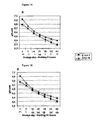
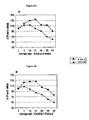
- Figs. 1(A)-(D) illustrate graphically the extracellular pH of red blood cell preparations (compositions) stored in an aqueous storage solution described herein and a known storage solution versus time (days) storage where the whole blood was first held for (A) 8 hours, (B) 12 hours, (C) 16 hours, and (D) 19 hours.
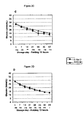
- Figs. 2(A)-(D) illustrate graphically the glucose levels (mmol/L) of red blood cell preparations stored in an aqueous storage solution described herein and a known storage solution versus time (days) of storage where the whole blood was held for (A) 8 hours, (B) 12 hours, (C) 16 hours, and (D) 19 hours.
- Figs. 2(E)-(H) illustrate graphically the lactate levels (mmol/L) of red blood cell preparations stored in an aqueous storage solution described herein and a known storage solution versus (days) of storage for samples where the whole blood was held for (E) 8 hours, (F) 12 hours, (G) 16 hours, and (H) 19 hours.
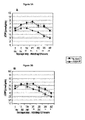
- Figs. 3(A)-(D) illustrates graphically the ATP concentrations ( ⁇ mol/ g Hb) of red blood cell preparations stored in an aqueous storage solution and a known storage solution described herein versus time (days) of storage for samples where the whole blood was held for (A) 8 hours, (B) 12 hours, (C) 16 hours, and (D) 19 hours.
- Figs. 3(E)-(H) illustrates graphically the 2-3DPG concentrations (mol/mol Hb) of red blood cell preparations stored in an aqueous storage solution as described herein and a known storage solution versus time (days) of storage for samples where the whole blood was held for (E) 8 hours, (F) 12 hours, (G) 16 hours, and (H) 19 hours.
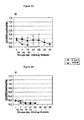
- Figs. 4(A)-(D) illustrates graphically the extracellular potassium concentration (mmol/L) of red blood cell preparations stored in an aqueous storage solution described herein and a known storage solution versus time (days) of storage for samples where the whole blood was held for (A) 8 hours, (B) 12 hours, (C) 16 hours, and (D) 19 hours.
- Figs. 5(A)-(D) illustrates graphically ATP levels expressed as a mean percentage of initial values of red blood cell preparations stored in an aqueous storage solution described and a known storage solution herein versus time (days) of storage for samples where the whole blood was held for (A) 8 hours, (B) 12 hours, (C) 16 hours, and (D) 19 hours.
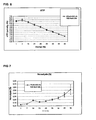
- Fig. 6 illustrates graphically ATP levels ( ⁇ mol/g Hb) versus time (days) for red blood cell preparations stored in an aqueous solution described herein.
- Fig 7 illustrates graphically percent hemolysis versus time (days) for red blood cell preparations stored in an aqueous solution described herein.
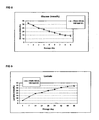
- Fig. 8 illustrates graphically glucose levels (mmol/L) versus time (days) for red blood cell preparation stored in an aqueous solution described herein.
- Fig. 9 illustrates graphically lactate levels (mmol/L) versus time (days) for red blood cell preparation stored in an aqueous solution described herein.
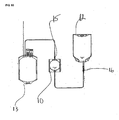
- Fig. 10 is a plan view of a disposable tubing and container set useful in the processing of red blood cells.
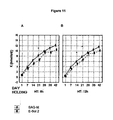
- Fig. 11(A)-(D) illustrates graphically levels of extracellular potassium expressed per unit of blood for red blood cell preparations stored in an aqueous solution described herein.
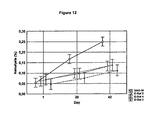
- Fig. 12 illustrates graphically levels of hemolysis for red blood cell preparations stored in an aqueous solution described herein.
- aqueous storage solution and its method of use described herein are useful for the extended storage of red blood cells (e.g. approximately 35 days or greater) that have been separated from whole blood.
- the solution disclosed herein is particularly useful for the extended storage of red blood cells that have been separated from whole blood that has been held for periods, such as 4 hours, 8 hours or more than 8 hours, including up to 26 hours.
- aqueous storage solution and its method of use are generally applicable to the storage of red blood cells that have been manually separated from whole blood or have been separated using automated collection devices such as the Alyx Separator manufactured and sold by Fenwal Inc. of Lake Zurich Illinois and generally described in U.S. Patent Nos. 6,348,156 ; 6,857,191 ; 7,011,761 ; 7,087,177 and 7,297,272 and U.S. Patent Application Publication No. 2005/0137516 .
- an aqueous red blood cell storage medium that includes nutrients, buffers and salts.
- the synthetic red blood cell storage solution may be an aqueous solution which may include 3 mM to 90 mM sodium citrate; 15 mM to 40 mM sodium phosphate; 20mM to 140 mM dextrose; 20 mM to 110 mM mannitol; and 1 mM to 2.5 mM adenine; the storage solution may have a pH of from 8.0 to 9.0.
- the osmolarity of the solution may be from 200 mOsm/l to 320 mOsm/l.
- the storage solution may optionally contain from 10 mM to 100 mM acetate.
- guanosine may also be present in the storage solution from 0.1 mM to 2 mM.
- gluconate may be present from mM to 40 mM.
- a combination of acetate and gluconate may be used.
- sodium citrate may be present from 3 mM to 90 mM. More particularly, the sodium citrate may be present from 15 mM to 70 mM, or from 18 mM to 35 mM.
- Sodium phosphate may be present from 15mM to 40 mM. More particularly, the sodium phosphate may be present from 13 mM to 30 mM, and more typically from 20 mM to 28 mM.
- Examples of sodium phosphate include (but are not limited to) trisodium phosphate, sodium phosphate dibasic and sodium phosphate monobasic.
- 100 ml of a storage solution having 25 mM sodium phosphate with a pH of approximately 8.4 may contain 355 mg of sodium phosphate dibasic anhydrous (Na 2 HPO 4 ).
- the pH of the storage solution disclosed herein may be adjusted by the amount of the various forms of sodium phosphate (for example, monobasic sodium phosphate, dibasic sodium phosphate, and/or trisodium phosphate) included in the solution.
- sodium phosphate for example, monobasic sodium phosphate, dibasic sodium phosphate, and/or trisodium phosphate
- the pH of the storage solution may be from 8.0 to 9.0. More particularly, the pH may be from 8.1 to 8.8, or from 8.3 to 8.5.
- the storage solution may also include an amount of dextrose (glucose).
- the dextrose may be present from 20 mM to 90 mM. More particularly, the dextrose may be present from 25 mM to 75 mM, and more typically from 35 mM to 60 mM.
- the storage solution described herein may also include from 20 mM to 110 mM mannitol.
- the mannitol may be present from 25 mM to 90 mM, and more typically from 30 mM to 60 mM.
- the storage solution may also include from 1 mM to 2.5 mM adenine. More particularly, the adenine may be present from 1.2 mM to 2.3 mM, and more typically from 1.3 mM to 2.1 mM.
- Dextrose is known to degrade (caramelize) under autoclaving (heat) sterilization conditions unless it is maintained in an acidic medium.
- the dextrose solution is preferably acidic e.g., a 7.5 % solution with a pH between about 4 to about 6.
- dextrose may be stored in a concentrated solution separately from some or all of the buffered physiological salts of the storage solution. As shown in ( Fig. 10 ), dextrose may be provided in container 10 while the remaining components may be stored as a solution in container 12.
- dextrose solution from container 10 may be introduced into container 13.
- cannula 16 By breaking cannula 16, the remaining components in container 12 are likewise introduced into container 13 by passing the components through now empty container 10.
- the now reconstituted aqueous storage solution in container 13 may then be combined with the packed red blood cells to provide a red blood cell composition.
- An anticoagulant including citrate is typically added to the whole blood prior to processing of the whole blood and its separation into blood components.
- Citrate-Phosphate-Dextrose or CPD is a commonly used anticoagulant.
- a unit of whole blood, (450 ⁇ 50 ml per unit) can be collected by methods known to those of skill in the art and 60 ml to 70 ml of CPD then being added to each unit of whole blood.
- the aqueous red blood cell storage solution disclosed herein includes dextrose and phosphate in some embodiments, the citrate anticoagulant added to whole blood before processing may consist of citrate without phosphate and dextrose, or citrate with phosphate but without dextrose.
- cooling plates may be used after blood collection to reduce the temperature of the whole blood from body temperature, about 37 °C, to room temperature, about 20 °C to about 24 °C.
- the required units of blood are typically accumulated and then processed. Consequently units of whole blood are often held for periods of time until the desired number of units have been accumulated and sufficient resources are available to begin processing.
- more than one blood component is prepared from whole blood, e.g., both red blood cells and platelets. Platelets may only be prepared from blood held at room temperature and, in practice, units of whole blood are often held at room temperature until both red blood cells and platelets will be prepared, although this may not be optimal for the red blood cells.
- Whole blood may be held for greater than 4 hours, typically 8 or more hours and even 20-26 hours at room temperature (from about 20 °C to about 24 °C) before processing.
- leukocyte reduction filters may be used for leukocyte-reduction of whole blood units and/or various fractions prepared from units of whole blood.
- Red blood cells may be concentrated by standard methods known to one of skill in the art. For example, centrifugation may be used to prepare both a concentrated red blood cell fraction and plasma.
- the disclosed red blood cell storage solution may be added to concentrated red blood cells prepared from whole blood.
- from 50 ml to 200 ml of storage solution may be added to concentrated red blood cells prepared from one unit of whole blood. More particularly, from 75 ml to 180 ml may be added, or from about 90 ml to about 120 ml may be added.
- 100 to 110 ml of the red cell storage solution disclosed herein are added to red blood cells derived from one unit of whole blood, generally 280 to 350 ml of packed red blood cells.
- Table 1 sets forth three exemplary formulations storage solution suitable for addition to the concentrated (packed) red blood cells prepared from one unit of blood.
- E-Sol 3 is provided in a volume of 100 ml
- E-Sol 4" is provided in a volume of 110 ml
- E-Sol 2 is provided in a volume of 150 ml.
- Table 2 sets forth the amounts of components (in milligrams) with the preferred volumes described above for E-Sol 2, E-Sol 3, and E-Soi 4.
- Table 2 also provides the amounts and volumes of known red cell storage solution known as SAG-M.
- Red blood cells in storage solutions described herein may be stored for extended periods at temperatures ranging from about 2 °C to about 6 °C.
- red blood cells may be stored from about 1 to about 60 days. More particularly, the red blood cells may be stored from about 10 to about 58 days, or from about 15 to about 50 days. Typically, the preparations may be stored from about 35 to about 50 days.
- Units of whole blood (450 ⁇ 50 ml per unit) were collected by methods known to those of skill in the art and about 63 ml of CPD was added for each unit of whole blood.
- the units of whole blood were cooled to room temperature after collection using cooling plates (ThermaSure TM , Sebra, Arlington, AZ, USA), and the whole blood units were then held at room temperature (about 20 °C to about 24 °C) for 8, 12, 16, or 19 hours.
- red blood cells were leukocyte-reduced using inline whole blood leukocyte reduction filters. Red blood cells were concentrated using centrifugation to prepare concentrated red blood cell fractions and plasma using a hardspin centrifugation program followed by separation with T-ACE equipment (Terumo, Leuven, Belgium).
- Example 1 two different red blood cell additive solutions were added to the units of red blood cell concentrate: either 150 ml of E-Sol 2 (test) or 100 ml SAG-M (reference) (see Tables 1 and 2).
- the red blood cell units with additive solutions were then stored from 1 to about 42 or about 49 days at about 2 °C to about 6 °C.
- Extracellular pH is one parameter that may be used to assess the functionality of stored red blood cells.
- red blood cell preparations which had been prepared from whole blood that was held for 8 hours before processing and subsequently stored in the E-Sol solution (e.g., E-Sol 2) displayed lower extracellular pH throughout storage, as compared to the red blood cells in the reference group (SAG-M) which were also prepared from whole blood held for 8 hours but stored in SAG-M.
- Figs. 1(B)-(D) illustrate that red blood cells which had been prepared from whole blood that was held for 12 hours ( Fig. 1(B) ), 16 hours ( Fig. 1(C) ) or 19 hours ( Fig.
- Lactate levels are measured as a further indication of the properties of stored cells, with higher lactate levels possibly indicating that the cells are using the less efficient anaerobic glycolysis pathway.
- red blood cells which had been prepared from whole blood that was held for 8 hours before processing and subsequently stored in a solution as disclosed herein displayed reduced levels of lactate at days 1 and 7 of storage, as compared to the red biood cells in the reference group (SAG-M) which were also prepared from whole blood held for 8 hours but subsequently stored in SAG-M.
- Figs. 2(F)-(H) illustrate that red blood cells which had been prepared from whole blood held for 12 hours ( Fig.
- ATP levels were also measured, with higher ATP levels generally predicting better cell functionality.
- storage of red blood cells in an E-Sol solution of the type described herein generally results in increased levels of ATP as compared to red blood cells stored in SAG-M.
- subsequent storage in the E-Sol solution as compared to storage in SAG-M results in statistically significant increased ATP concentrations from day 14 through day 42.
- red blood cells prepared from whole blood held for 12 hours Fig.
- FIGs. 4(A)-(D) blood cells which had been prepared from whole blood that was held for 8 ( Fig. 4(A) ), 12 ( Fig. 4(B) ), 16 ( Fig. 4(C) ), or 19 hours ( Fig. 4(D) ) before processing and subsequently stored in an E-Sol solution displayed statistically significant reduced levels of extracellular potassium throughout storage, as compared to the red blood cells in the reference group (SAG-M) which were also prepared from whole blood held for the same period but subsequently stored in SAG-M. This result is also statistically significant if potassium concentration is determined as function of the number of units of blood (mmol/unit of blood). ( Figure 11 ). As increased extracellular potassium levels are believed to be predictive of decreased cell viability and increased hemolysis, these results are a further indication that the solutions described herein are preferable to certain storage solutions such as SAG-M.
- Figs. 5(A)-(D) the ATP levels in red blood cells during storage are shown as the mean percentage of the initial (day 1 of storage) mean ATP concentration of each set of samples.
- red blood cells prepared from whole blood held for 8 ( Fig. 5(A) ), 12 ( Fig. 5(B) ), 16 ( Fig. 5(C) ), or 19 ( Fig. 5(D) ) hours and subsequently stored in a solution as described herein (e.g., E-Sol 2) the mean levels of ATP remained well above 50% of mean initial (day 1) levels, even after 42 days of storage.
- red blood cell preparations held for 12 ( Fig. 5(B) ) 16 ( Fig.
- 2,3-diphosphoglycerate (2,3-DPG) is a further parameter used to measure the properties of stored cells.
- Red blood cells depleted of 2,3-DPG will have a left-shifted oxygen dissociation curve that is associated with increased oxygen affinity and probably a less effective supply of oxygen to cells and tissues. After transfusion, red blood cells with low 2,3-DPG levels are thought to normalize within 2-3 days. ( Högman et al.; Transfus Med Rev 1999:13:275-296 .) As illustrated in Fig.
- 3(F)-(G) indicate that red blood cells prepared from whole blood held for 12 and 16 hours respectively also displayed statistically significant higher concentrations of 2,3-DPG when stored in an E-Sol solution than when stored in SAG-M. For instance, statistically significant higher levels of 2,3-DPG were observed in red blood cells-prepared from whole blood held for 12 hours and stored in an E-Sol solution, than that observed in red blood cells prepared from whole blood held for either 8 or 12 hours and subsequently stored in SAG-M ( Figs. 3 (E) and (F) ). Results from this study appear to indicate that as compared to SAG-M, the solutions described herein are more effective red blood cell storage solutions after the whole blood has been first held for a period of time.
- red blood cells prepared from whole blood held for 8 hours and then stored in an E-Sol solution displayed improvement in ATP and 2,3-DPG levels as compared to storage in SAG-M under the same conditions (see for example, Fig. 3 ).
- Red blood cells prepared from whole blood held for 8 hours at room temperature and stored in an E-Sol solution have in vitro characteristics which are similar to or better than those for blood that has not been held. These in vitro characteristics, such as the concentrations of ATP and 2,3-DPG, appear to be maintained for several weeks.
- red blood cells prepared from whole blood held for 12 hours before processing and subsequently stored in an E-Sol solution have higher concentrations of ATP and 2,3-DPG than red blood cells prepared from whole blood held for either 8 or 12 hours and then stored in SAG-M over the entire storage period.
- reduced levels of hemolysis were observed at day 42 of storage for red blood cells stored in E-Sol 2 as compared to red blood cells stored in SAG-M.
- red blood cells prepared after holding whole blood for 12 hours at room temperature and then stored in an E-Sol solution of the type disclosed herein (e.g., E-Sol 2) displayed lower levels of hemolysis at day 42 of storage than red blood cells prepared from whole blood held for only 8 hours and subsequently stored in SAG-M.
- red blood cell storage solution of the disclosure were also assessed using red blood cells separated from whole blood with an automated red blood cell collection system (Alyx, Fenwal, Inc.). In this case, the whole blood was not held before separation into blood components. Also, the ACD-A (acid, citrate, dextrose) anticoagulant was used instead of CPD. Separated red blood cells were stored with either E-Sol 2, E-Sol 3, E-Sol 4 or SAG-M for up to 42 days and various cellular parameters assessed using methods described previously.
- red blood cells separated with an automatic collection system and then stored in either E-Sol 2, E-Sol 3 or E-Sol 4 showed statistically significant lower hemolysis throughout from about day 5 of the storage period compared to cells stored in SAG-M.
- degree of hemolysis is generally considered as the single best indicator of cell function, these results indicate that the E-Sol solutions discussed herein (e.g., E-Sol 2, E-Sol 3 and E-Sol 4) are blood storage solutions capable of providing improved red cell functionality when compared to other known storage solutions.
Landscapes
- Health & Medical Sciences (AREA)
- Life Sciences & Earth Sciences (AREA)
- Zoology (AREA)
- Engineering & Computer Science (AREA)
- General Health & Medical Sciences (AREA)
- Environmental Sciences (AREA)
- Wood Science & Technology (AREA)
- Dentistry (AREA)
- Biotechnology (AREA)
- Animal Behavior & Ethology (AREA)
- Immunology (AREA)
- Chemical & Material Sciences (AREA)
- Medicinal Chemistry (AREA)
- Pharmacology & Pharmacy (AREA)
- Epidemiology (AREA)
- Virology (AREA)
- Developmental Biology & Embryology (AREA)
- Public Health (AREA)
- Veterinary Medicine (AREA)
- Cell Biology (AREA)
- Biomedical Technology (AREA)
- Hematology (AREA)
- Medicines Containing Material From Animals Or Micro-Organisms (AREA)
Claims (14)
- Solution aqueuse de stockage pour des globules rouges, dans laquelle ladite solution aqueuse de stockage comprend :1 mM à 2,2 mM d'adénine ;20 mM à 110 mM de mannitol ;2,2 mM à 90 mM de citrate de sodium ;16 mM à 30 mM de phosphate de sodium dibasique ; et20 mM à 70 mM de glucose,dans laquelle le pH de la solution aqueuse de stockage est supérieur à 8,0.
- Solution aqueuse de stockage selon la revendication 1, ayant un volume de 100 à 110 mL.
- Composition de globules rouges, comprenant :des globules rouges ;et une solution aqueuse de stockage, dans laquelle ladite solution aqueuse de stockage comprend :1 mM à 2,2 mM d'adénine ;20 mM à 110 mM de mannitol ;2,2 mM à 90 mM de citrate de sodium ;16 mM à 30 mM de phosphate de sodium dibasique ; et20 mM à 70 mM de glucose,dans laquelle le pH de la solution aqueuse de stockage est supérieur à 8,0.
- Composition de globules rouges selon la revendication 3, dans laquelle lesdits globules rouges sont dérivés de sang entier anticoagulé qui a été conservé pendant au moins quatre heures.
- Composition de globules rouges selon la revendication 3 ou la revendication 4, comprenant 280 à 350 mL de globules rouges et 90 à 120 mL de ladite solution de stockage.
- Procédé de stockage de globules rouges comprenant les étapes consistant à :ajouter un anticoagulant citrate à du sang entier collecté,conserver le sang entier d'environ quatre heures à environ trente-six heures ;séparer les globules rouges du sang entier ; etajouter aux globules rouges séparés une solution aqueuse de stockage comprenant :1 mM à 2,2 mM d'adénine ;20 mM à 110 mM de mannitol ;2,2 mM à 90 mM de citrate de sodium ;16 mM à 30 mM de phosphate de sodium dibasique ; et20 mM à 70 mM de glucose,dans laquelle le pH de la solution aqueuse de stockage est supérieur à 8,0.
- Procédé selon la revendication 6, dans lequel de 90 mL à 120 mL de ladite solution aqueuse de stockage sont ajoutés aux globules rouges.
- Procédé selon la revendication 6 ou la revendication 7, dans lequel la concentration dudit phosphate de sodium dibasique dans la solution aqueuse de stockage est de 22 mM à 28 mM.
- Procédé selon l'une quelconque des revendications 6 à 8, dans lequel ladite solution de stockage comprend :2,0 mM d'adénine ;50 mM de mannitol ;31,2 mM de citrate de sodium ;25,0 mM de phosphate de sodium dibasique ; et56,8 mM de glucose.
- Procédé selon l'une quelconque des revendications 6 à 8, dans lequel ladite solution de stockage comprend :1,9 mM d'adénine ;45,4 mM de mannitol ;28,4 mM de citrate de sodium ;22,7 mM de phosphate de sodium dibasique ; et51,6 mM de glucose.
- Procédé selon l'une quelconque des revendications 6 à 10, dans lequel le pH de la solution aqueuse de stockage est de 8,3 à 8,5.
- Procédé selon l'une quelconque des revendications 6 à 10, dans lequel lesdits globules rouges stockés conservent des propriétés acceptables pendant jusqu'à 56 jours, lesdites propriétés étant choisies dans le groupe constitué par les taux d'hémoglobine, d'hémolyse et de glucose, et le pH extracellulaire.
- Procédé selon l'une quelconque des revendications 6 à 12, dans lequel ladite solution de stockage comprend en outre un ingrédient facultatif choisi dans le groupe constitué par 10 mM à 100 mM d'ion acétate et 0,1 mM à 2,0 mM de guanosine.
- Procédé selon l'une quelconque des revendications 6 à 13, dans lequel lesdits globules rouges conservent au moins 50 % des taux d'ATP initiaux après jusqu'à 35 jours de stockage.
Priority Applications (1)
| Application Number | Priority Date | Filing Date | Title |
|---|---|---|---|
| EP12000538.4A EP2468252B1 (fr) | 2008-03-21 | 2009-03-23 | Support de stockage de cellule sanguine pour un stockage prolongé |
Applications Claiming Priority (2)
| Application Number | Priority Date | Filing Date | Title |
|---|---|---|---|
| US3853608P | 2008-03-21 | 2008-03-21 | |
| US9653408P | 2008-09-12 | 2008-09-12 |
Related Child Applications (2)
| Application Number | Title | Priority Date | Filing Date |
|---|---|---|---|
| EP12000538.4A Division EP2468252B1 (fr) | 2008-03-21 | 2009-03-23 | Support de stockage de cellule sanguine pour un stockage prolongé |
| EP12000538.4A Previously-Filed-Application EP2468252B1 (fr) | 2008-03-21 | 2009-03-23 | Support de stockage de cellule sanguine pour un stockage prolongé |
Publications (2)
| Publication Number | Publication Date |
|---|---|
| EP2172188A1 EP2172188A1 (fr) | 2010-04-07 |
| EP2172188B1 true EP2172188B1 (fr) | 2012-02-01 |
Family
ID=41089275
Family Applications (2)
| Application Number | Title | Priority Date | Filing Date |
|---|---|---|---|
| EP09004074A Active EP2172188B1 (fr) | 2008-03-21 | 2009-03-23 | Solution de stockage de cellule sanguine pour un stockage prolongé |
| EP12000538.4A Active EP2468252B1 (fr) | 2008-03-21 | 2009-03-23 | Support de stockage de cellule sanguine pour un stockage prolongé |
Family Applications After (1)
| Application Number | Title | Priority Date | Filing Date |
|---|---|---|---|
| EP12000538.4A Active EP2468252B1 (fr) | 2008-03-21 | 2009-03-23 | Support de stockage de cellule sanguine pour un stockage prolongé |
Country Status (2)
| Country | Link |
|---|---|
| US (1) | US8871434B2 (fr) |
| EP (2) | EP2172188B1 (fr) |
Families Citing this family (19)
| Publication number | Priority date | Publication date | Assignee | Title |
|---|---|---|---|---|
| US8968992B2 (en) * | 2008-03-21 | 2015-03-03 | Fenwal, Inc. | Red blood cell storage medium for extended storage |
| US11864553B2 (en) * | 2009-10-23 | 2024-01-09 | Fenwal, Inc. | Methods and systems for providing red blood cell products with reduced plasma |
| WO2011103177A1 (fr) | 2010-02-16 | 2011-08-25 | Viacell, Llc | Compositions contenant un nucleoside et methode de traitement des erythrocytes |
| CN106135195A (zh) | 2010-02-16 | 2016-11-23 | 维亚塞尔有限责任公司 | 含有精氨酸的组合物和用于处理红细胞的方法 |
| EP2598660B1 (fr) | 2010-07-26 | 2017-03-15 | Biomatrica, INC. | Compositions de stabilisation d'adn, d'arn, de protéines dans le sang et d'autres échantillons biologiques lors du transport et du stockage à températures ambiantes |
| WO2012018639A2 (fr) | 2010-07-26 | 2012-02-09 | Biomatrica, Inc. | Compositions de stabilisation d'adn, d'arn, de protéines salivaires et d'autres échantillons biologiques lors du transport et du stockage à températures ambiantes |
| US9033948B2 (en) * | 2011-04-19 | 2015-05-19 | Fenwel, Inc. | Single collection bag blood collection system, method and apparatus |
| US20140086892A1 (en) | 2011-09-19 | 2014-03-27 | FENWAL, INC. a Delaware Corporation | Red blood cell products and the storage of red blood cells in non-pvc containers |
| WO2013043711A1 (fr) | 2011-09-19 | 2013-03-28 | Fenwal, Inc. | Produits de globules rouges et stockage de globules rouges dans des récipients sans plastifiant à base de phtalate |
| US9725703B2 (en) | 2012-12-20 | 2017-08-08 | Biomatrica, Inc. | Formulations and methods for stabilizing PCR reagents |
| US10398625B2 (en) | 2013-03-13 | 2019-09-03 | Fenwal, Inc. | Medical containers with terephthalate plasticizer for storing red blood cell products |
| JP6040307B2 (ja) * | 2013-04-01 | 2016-12-07 | テルモ株式会社 | 赤血球保存液、保存液収納容器、赤血球保存液の製造方法および血液バッグシステム |
| KR102554521B1 (ko) | 2014-02-20 | 2023-07-11 | 프레제니우스 카비 도이치란트 게엠베하 | 적혈구 제품, 혈장 및 혈소판의 보관을 위한 비-dehp 가소제를 갖는 의료용 컨테이너 및 시스템 구성요소 |
| CN106687580A (zh) * | 2014-06-10 | 2017-05-17 | 生物马特里卡公司 | 在环境温度下稳定血液样品中的代谢活性细胞 |
| ES2786373T3 (es) | 2014-06-10 | 2020-10-09 | Biomatrica Inc | Estabilización de trombocitos a temperaturas ambiente |
| US11566225B2 (en) | 2014-10-03 | 2023-01-31 | Fenwal, Inc. | Automated system for processing a biological fluid |
| EP3115039B1 (fr) * | 2015-07-09 | 2021-12-15 | beniag GmbH | Procede de fabrication d'un melange en fusion destine au transfert d'une molecule chargee dans et/ou a travers une membrane de lipide |
| KR20250047404A (ko) | 2015-12-08 | 2025-04-03 | 바이오매트리카 인코포레이티드 | 적혈구 침강 속도의 감소 |
| EP3979797A4 (fr) * | 2019-06-07 | 2023-06-21 | University of Cincinnati | Solutions de stockage de globules rouges, additifs, et procédés pour améliorer le stockage de globules rouges à l'aide de pyrophosphates inorganiques |
Family Cites Families (107)
| Publication number | Priority date | Publication date | Assignee | Title |
|---|---|---|---|---|
| US6447987B1 (en) | 1978-09-09 | 2002-09-10 | The United States Of America As Represented By The Secretary Of The Army | Prolonged storage of red blood cells |
| US6150085A (en) | 1998-09-16 | 2000-11-21 | The United States Of America As Represented By The Secretary Of The Army | Prolonged storage of red blood cells and composition |
| US4267269A (en) | 1980-02-05 | 1981-05-12 | Baxter Travenol Laboratories, Inc. | Red cell storage solution |
| JPS56139419A (en) | 1980-03-31 | 1981-10-30 | Kuraray Co Ltd | Erythrocytic preservative and erythrocytic pharmaceutical for preservation |
| DE3225408A1 (de) | 1982-07-07 | 1984-01-12 | Biotest-Serum-Institut Gmbh, 6000 Frankfurt | Waessrige loesung zum suspendieren und lagern von zellen, insbesondere erythrozyten |
| US4585735A (en) * | 1984-07-19 | 1986-04-29 | American National Red Cross | Prolonged storage of red blood cells |
| US5248506A (en) | 1986-03-19 | 1993-09-28 | American National Red Cross | Synthetic, plasma-free, transfusible storage medium for red blood cells and platelets |
| US4961928A (en) | 1986-03-19 | 1990-10-09 | American Red Cross | Synthetic, plasma-free, transfusible storage medium for red blood cells and platelets |
| JPS63104916A (ja) | 1986-10-22 | 1988-05-10 | Terumo Corp | 血液保存用溶血防止剤 |
| US4880786A (en) | 1987-01-14 | 1989-11-14 | Ube Industries, Ltd. | Additive solution for blood preservation and activation |
| DE3722984A1 (de) | 1987-07-11 | 1989-01-19 | Biotest Pharma Gmbh | Waessrige loesung zum suspendieren und lagern von zellen, insbesondere erythrozyten |
| US4980277A (en) | 1987-10-16 | 1990-12-25 | Cultor Ltd. | Cryoprotectant solution and method |
| JPH02129127A (ja) | 1988-11-04 | 1990-05-17 | Sumitomo Seika Chem Co Ltd | 改良された赤血球保存液 |
| CA2067134C (fr) | 1989-10-06 | 2001-02-13 | Harold T. Meryman | Methode d'emmagasinage de globules rouges et maintien prolonge de concentrations cellulaires d'adenosine biphosphate et du 2,3-diphosphoglycrate |
| DD288316A5 (de) | 1989-10-11 | 1991-03-28 | Beziksinstitut F. Blutspende- U. Transfusionswesen,De | Verfahren zur regenerierung von gelagerten erythrozytenkonzentraten |
| DE3938907C2 (de) | 1989-11-24 | 1999-11-04 | Dade Behring Marburg Gmbh | Mittel zum Lagern und Suspendieren von Zellen, insbesondere Erythrozyten |
| US5439882A (en) | 1989-12-29 | 1995-08-08 | Texas Tech University Health Sciences Center | Blood substitute |
| US5147776A (en) | 1990-02-26 | 1992-09-15 | University Of Iowa Research Foundation | Use of 2,5-anhydromannitol for control of pH during blood storage |
| CA2051092C (fr) | 1990-09-12 | 2002-07-23 | Stephen A. Livesey | Methode et appareillage pour la cryopreservation, la stabilisation a sec et la rehydratation de suspensions biologiques |
| JP3185108B2 (ja) * | 1990-11-07 | 2001-07-09 | バクスター、インターナショナル、インコーポレイテッド | 赤血球貯蔵溶液 |
| CA2078004A1 (fr) | 1991-02-15 | 1992-08-16 | Christine M. Williams | Methode de lyophilisation et de reconstitution de combinaisons de cellules nucleees non mammaliennes et de constituants sanguins |
| US5446030A (en) | 1991-09-19 | 1995-08-29 | Weisz; Paul B. | Prevention of hemolysis |
| WO1996014740A1 (fr) | 1992-03-02 | 1996-05-23 | Cerus Corporation | Produits synthetiques pour preparations sanguines |
| US5459030A (en) | 1992-03-02 | 1995-10-17 | Steritech, Inc. | Synthetic media compositions for inactivating bacteria and viruses in blood preparations with 8-methoxypsoralen |
| US5288605A (en) | 1992-03-02 | 1994-02-22 | Steritech, Inc. | Methods for inactivating bacteria in blood preparations with 8-methoxypsoralen |
| SE9201413L (sv) | 1992-04-30 | 1993-10-31 | Stiftelsen Foer Medicinsk Tekn | Beredning och sätt för aferesframställning av trombocytkoncentrat med väsentligt förlängd hållbarhet |
| US5494590A (en) | 1992-06-11 | 1996-02-27 | Becton Dickinson | Method of using anticoagulant solution in blood separation |
| TW262386B (fr) | 1992-09-30 | 1995-11-11 | Senju Pharma Co | |
| WO1994012223A1 (fr) | 1992-12-01 | 1994-06-09 | Haemonetics Corporation | Appareil et procede de pherese des globules rouges |
| WO1994016099A1 (fr) | 1993-01-15 | 1994-07-21 | Baxter International Inc. | Milieux pour l'isolation et la stabilisation de cellules |
| IT1261695B (it) | 1993-06-02 | 1996-05-29 | Sigma Tau Ind Farmaceuti | Impiego di l-carnitina e alcanoil l-carnitine nella conservazione del sangue per trasfusioni e soluzioni stabilizzatrici che le contengono. |
| EP0639384B1 (fr) | 1993-06-07 | 2002-02-13 | Terumo Kabushiki Kaisha | Méthode et appareil pour la fabrication de produits sanguins |
| US5405742A (en) | 1993-07-16 | 1995-04-11 | Cyromedical Sciences, Inc. | Solutions for tissue preservation and bloodless surgery and methods using same |
| JPH0780041A (ja) | 1993-09-20 | 1995-03-28 | Terumo Corp | 細胞保存バッグシステム |
| US5445629A (en) * | 1993-12-21 | 1995-08-29 | Baxter International Inc. | Blood storage container and methods of using same |
| AU698090B2 (en) | 1994-09-19 | 1998-10-22 | Sekisui Kagaku Kogyo Kabushiki Kaisha | A blood component deposition-preventing agent, a blood coagulation accelerator, methods using them, and blood test ware and matrixes |
| US5733253A (en) | 1994-10-13 | 1998-03-31 | Transfusion Technologies Corporation | Fluid separation system |
| US7332125B2 (en) | 1994-10-13 | 2008-02-19 | Haemonetics Corporation | System and method for processing blood |
| DE4439480C1 (de) | 1994-11-08 | 1996-06-05 | Asta Medica Ag | Verwendung von D,L- alpha-Liponsäure und/oder ihren Enantiomeren, und/oder ihren Derivaten als Zusatz bei Erythrozyten-Flüssigkonserven für homologe und autologe Erythrozyten-Konzentrate und als Zusatz bei Erythrozyten-Kryokonserven für homologe und autologe Erythrozytenkonzentrate |
| WO1996014741A2 (fr) | 1994-11-14 | 1996-05-23 | Pall Corporation | Procede et systeme de conservation longue duree de composants sanguins |
| JPH09509681A (ja) | 1994-12-16 | 1997-09-30 | バクスター、インターナショナル、インコーポレイテッド | 供血者血液特性の制御 |
| US5601972A (en) | 1995-03-24 | 1997-02-11 | Organ, Inc. | Long term storage of red cells in unfrozen solution |
| US5605934A (en) | 1995-03-23 | 1997-02-25 | Baxter International Inc. | Method of manufacturing and storing solutions |
| US5629145A (en) | 1995-03-24 | 1997-05-13 | Organ, Inc. | Cryopreservation of cell suspensions |
| WO1996029864A1 (fr) | 1995-03-24 | 1996-10-03 | Organ, Inc. | Methode de rajeunissement de globules rouges perimes |
| US5624794A (en) | 1995-06-05 | 1997-04-29 | The Regents Of The University Of California | Method for extending the useful shelf-life of refrigerated red blood cells by flushing with inert gas |
| US6527957B1 (en) | 1995-08-09 | 2003-03-04 | Baxter International Inc. | Methods for separating, collecting and storing red blood cells |
| WO1997016967A1 (fr) | 1995-11-09 | 1997-05-15 | Beth Israel Deaconess Medical Center, Inc. | Compositions et procedes de stimulation de la survie d'un composant du sang |
| GB2313288B (en) | 1996-05-24 | 2000-07-12 | North Gen Hospital Nhs Trust | Specimen collection fluid |
| US6743575B2 (en) | 1996-06-14 | 2004-06-01 | Biostore New Zealand Ltd. | Compositions and methods for the preservation of living tissues |
| US5783093A (en) | 1997-01-02 | 1998-07-21 | Haemonetics Corporation | Blood cell concentrates using a single solution for anticoagulation and preservation |
| US6482585B2 (en) | 1997-04-16 | 2002-11-19 | Sigma-Tau Industrie Farmaceutiche Riunite S.P.A. | Storage and maintenance of blood products including red blood cells and platelets |
| US5789151A (en) | 1997-05-15 | 1998-08-04 | The Regents Of The University Of California | Prolonged cold storage of red blood cells by oxygen removal and additive usage |
| ES2257050T3 (es) | 1998-05-26 | 2006-07-16 | Lifecell Corporation | Conservacion por el frio de hematies humanos. |
| US6267925B1 (en) | 1998-12-07 | 2001-07-31 | Haemonetics Corporation | Method for cryopreservation and recovery of red blood cells |
| JP5230042B2 (ja) | 1999-06-02 | 2013-07-10 | 株式会社ビーエムジー | 動物の細胞または臓器の保存剤およびその保存方法。 |
| US6652475B1 (en) | 1999-07-07 | 2003-11-25 | Mission Medical, Inc. | Automated blood component separation system |
| US7011761B2 (en) | 1999-09-03 | 2006-03-14 | Baxter International Inc. | Red blood cell processing systems and methods which control red blood cell hematocrit |
| US6348156B1 (en) | 1999-09-03 | 2002-02-19 | Baxter International Inc. | Blood processing systems and methods with sensors to detect contamination due to presence of cellular components or dilution due to presence of plasma |
| WO2001051088A1 (fr) | 2000-01-07 | 2001-07-19 | Anthony Cincotta | Composition permettant la reduction des triglycerides plasmatiques, l'agregation plaquettaire, et la capacite oxydative |
| US20070048726A1 (en) | 2000-01-14 | 2007-03-01 | Biolife Solutions, Inc. | Methods and Compositions for the Control of Molecular-Based Cell Death During Preservation of Cells, Tissues or Organs in a Gel-Like State |
| US6653062B1 (en) | 2000-07-26 | 2003-11-25 | Wisconsin Alumni Research Foundation | Preservation and storage medium for biological materials |
| AU2002238218A1 (en) | 2000-09-19 | 2002-04-02 | U.S. Army Medical Research And Materiel Command | Prolonged storage of red blood cells |
| CA2427765C (fr) | 2000-11-03 | 2012-01-24 | Vitrolife Ab | Solution d'evaluation et de conservation |
| US6548241B1 (en) | 2000-11-28 | 2003-04-15 | Gambro, Inc. | Storage solution containing photosensitizer for inactivation of biological contaminants |
| EP1365750A2 (fr) | 2000-12-21 | 2003-12-03 | Cerus Corporation | Procedes d'inactivation de pathogenes dans des matieres biologiques |
| US20020131958A1 (en) | 2001-01-22 | 2002-09-19 | John Chapman | Method for purifying a biological composition |
| DE60238819D1 (de) | 2001-01-29 | 2011-02-17 | Asahi Kasei Medical Co Ltd | Filter zur behandlung von blut und verfahren zur herstellung desselben |
| US6811778B2 (en) | 2001-09-10 | 2004-11-02 | Biopure Corporation | Method for improving oxygen transport by stored red blood cells |
| CA2467087A1 (fr) | 2001-11-16 | 2003-05-30 | Hemanext, Llc | Solution d'additif pour la conservation de sang |
| CA2467223A1 (fr) | 2001-11-16 | 2003-05-30 | Hollinger Digital, Inc. | Procede pour allonger la duree de conservation utile de globules rouges refrigeres par un supplement nutritif |
| DE60219061D1 (de) | 2001-11-21 | 2007-05-03 | Altachem Pharma Ltd | Antipathogenische zusammensetzung verwendbar in der konservierung von blut |
| US6936413B1 (en) | 2001-12-05 | 2005-08-30 | Baxter International Inc. | Methods and systems for preparing blood products |
| US7264608B2 (en) | 2001-12-05 | 2007-09-04 | Fenwal, Inc. | Manual processing systems and methods for providing blood components conditioned for pathogen inactivation |
| US20050031596A1 (en) | 2003-08-06 | 2005-02-10 | Crowe John H. | Cells and method for preserving cells |
| US8062837B2 (en) | 2002-02-14 | 2011-11-22 | Stemcyte, Inc. | Plasma-depleted, not erythrocyte-depleted, cord blood compositions and method of making |
| US7037428B1 (en) | 2002-04-19 | 2006-05-02 | Mission Medical, Inc. | Integrated automatic blood processing unit |
| CA2445204C (fr) | 2002-10-16 | 2014-08-12 | Streck Laboratories, Inc. | Methode et dispositif de prelevement et de conservation de cellules aux fins d'analyse |
| US7297272B2 (en) | 2002-10-24 | 2007-11-20 | Fenwal, Inc. | Separation apparatus and method |
| US6857191B2 (en) | 2002-11-07 | 2005-02-22 | Bettcher Industries, Inc. | Rotary knife having vacuum attachment |
| EP1435241A1 (fr) | 2002-12-30 | 2004-07-07 | Kyokuto Pharmaceutical Industrial Co. Ltd | Methode pour la stabilisation du sang, serum ou plasma et recipient contenant untampon |
| WO2004105483A1 (fr) | 2003-05-14 | 2004-12-09 | Bioenergy, Inc. | Stockage de sang |
| JP2007501255A (ja) | 2003-08-04 | 2007-01-25 | ヒューマン バイオシステムズ | 血液細胞の保存 |
| WO2005026319A2 (fr) | 2003-08-06 | 2005-03-24 | The Regents Of Teh University Of California | Cellules erythrocytaires et procede de chargement de solutes |
| US20050074743A1 (en) | 2003-10-06 | 2005-04-07 | Purmal Andrei A. | Method and composition for treating a biological sample |
| US20050137517A1 (en) | 2003-12-19 | 2005-06-23 | Baxter International Inc. | Processing systems and methods for providing leukocyte-reduced blood components conditioned for pathogen inactivation |
| US7708710B2 (en) | 2003-12-23 | 2010-05-04 | Fenwal, Inc. | Method and apparatus for collecting and processing blood |
| EP1711053A2 (fr) | 2004-02-02 | 2006-10-18 | I.M.T. Interface Multigrad Technology Ltd. | Materiau biologique et procedes et solutions de conservation de celui-ci |
| US9314014B2 (en) | 2004-02-18 | 2016-04-19 | University Of Maryland, Baltimore | Compositions and methods for the storage of red blood cells |
| US20080176209A1 (en) | 2004-04-08 | 2008-07-24 | Biomatrica, Inc. | Integration of sample storage and sample management for life science |
| US7322125B2 (en) * | 2004-04-12 | 2008-01-29 | Lg Electronics Inc. | Dry heater fixing unit of drum-type washing machine combined with drier |
| US7087177B2 (en) | 2004-04-16 | 2006-08-08 | Baxter International Inc. | Methods for determining flow rates of biological fluids |
| CN103931605B (zh) | 2004-10-07 | 2015-11-18 | 特兰斯迈迪茨公司 | 用于活体外器官护理的系统和方法 |
| WO2006076401A2 (fr) | 2005-01-12 | 2006-07-20 | Biovec, Llc | Composition destinee a preserver des plaquettes et procede d'utilisation correspondant |
| CN101166420B (zh) | 2005-02-17 | 2015-08-19 | 辛辛那提大学 | 贮存红细胞的组合物和方法 |
| US20060226086A1 (en) | 2005-04-08 | 2006-10-12 | Robinson Thomas C | Centrifuge for blood processing systems |
| US9078428B2 (en) | 2005-06-28 | 2015-07-14 | Transmedics, Inc. | Systems, methods, compositions and solutions for perfusing an organ |
| US20070020607A1 (en) * | 2005-07-22 | 2007-01-25 | Mission Medical, Inc. | Methods for the storage and deglycerolization of red blood cells |
| EP1787512A1 (fr) | 2005-11-09 | 2007-05-23 | Paul-Ehrlich-Institut Bundesamt für Sera und Impfstoffe | Méthode de cryopréservation de sang humain entier |
| EP1815741B1 (fr) | 2006-01-19 | 2011-07-06 | Medestea Research & Production S.p.A. | L'utilisation de compositions contenants des dérivés des pipéridine pour protéger des systèmes biologiques |
| US7560283B2 (en) | 2006-01-27 | 2009-07-14 | Bio-Rad Laboratories, Inc. | Storage-stable cellular whole blood composition containing elevated amounts of D-dimer |
| ES2264403B1 (es) | 2006-06-22 | 2007-11-01 | Grifols S.A. | Medio de suspension de hematies. |
| EP1908346A1 (fr) | 2006-09-27 | 2008-04-09 | Paul-Ehrlich-Institut Bundesamt für Sera und Impfstoffe | Procédé de préparation de sang ou de cellules sanguines congelés pour d'analyses biologiques |
| WO2008089337A1 (fr) | 2007-01-19 | 2008-07-24 | The Regents Of The University Of Michigan | Compositions et méthodes destinées à la conservation d'érythrocytes |
| GB0704488D0 (en) | 2007-03-08 | 2007-04-18 | Univ Nottingham | Platelet viability kit |
| KR20100015578A (ko) | 2007-03-14 | 2010-02-12 | 시에라 몰레큘러 코포레이션 | 세포 및/또는 거대분자의 보존 및/또는 안정화를 위한 조성물, 시스템 및 방법 |
| US8968992B2 (en) | 2008-03-21 | 2015-03-03 | Fenwal, Inc. | Red blood cell storage medium for extended storage |
-
2009
- 2009-03-20 US US12/408,483 patent/US8871434B2/en active Active
- 2009-03-23 EP EP09004074A patent/EP2172188B1/fr active Active
- 2009-03-23 EP EP12000538.4A patent/EP2468252B1/fr active Active
Also Published As
| Publication number | Publication date |
|---|---|
| EP2468252B1 (fr) | 2016-09-07 |
| EP2468252A1 (fr) | 2012-06-27 |
| US8871434B2 (en) | 2014-10-28 |
| US20090239208A1 (en) | 2009-09-24 |
| EP2172188A1 (fr) | 2010-04-07 |
Similar Documents
| Publication | Publication Date | Title |
|---|---|---|
| EP2172188B1 (fr) | Solution de stockage de cellule sanguine pour un stockage prolongé | |
| US8968992B2 (en) | Red blood cell storage medium for extended storage | |
| US20220355001A1 (en) | System for Extended Storage of Red Blood Cells and Methods of Use | |
| JP6857291B2 (ja) | 赤血球の長期保存システムおよび使用方法 | |
| Kor et al. | Red blood cell storage lesion | |
| US6447987B1 (en) | Prolonged storage of red blood cells | |
| US6150085A (en) | Prolonged storage of red blood cells and composition | |
| US12178779B2 (en) | Blood storage container containing aqueous composition for the storage of red blood cells | |
| AU764287B2 (en) | Prolonged storage of red blood cells | |
| JP2008529550A (ja) | 赤血球の保存のための組成物及び方法 | |
| Högman et al. | Storage of red blood cells with improved maintenance of 2, 3‐bisphosphoglycerate | |
| CA3015457A1 (fr) | Procedes pour reduire la formation de caillots dans des concentres de plaquettes conserves en chambre frigorifique | |
| US11589575B2 (en) | Injectable preserving medium for preserving cells from placental blood, from bone marrow and from peripheral blood | |
| WO2002023988A1 (fr) | Stockage prolonge de globules rouges | |
| Dorneles et al. | Biochemical and hematologic changes in whole blood from Brazilian horses stored in citrate–phosphate–dextrose–adenine pouches for up to 28 days | |
| Wahyu et al. | Analysis of Lactic and Hematocrit Levels of Blood Storage in Dr. Wahidin Sudirohusodo General Hospital Blood Bank | |
| Moore | Long-term storage and preservation of red blood cells | |
| AbuRass | Effect of Environmental Storage on Red Blood Cells Parameters at Elmak Nimer University Hospital Blood Bank | |
| JP5568103B2 (ja) | 赤血球の保存のための組成物及び方法 | |
| Simon | not contain added inorganic phosphate and has a pH slightly lower than CPD. When |
Legal Events
| Date | Code | Title | Description |
|---|---|---|---|
| PUAI | Public reference made under article 153(3) epc to a published international application that has entered the european phase |
Free format text: ORIGINAL CODE: 0009012 |
|
| 17P | Request for examination filed |
Effective date: 20090320 |
|
| AK | Designated contracting states |
Kind code of ref document: A1 Designated state(s): AT BE BG CH CY CZ DE DK EE ES FI FR GB GR HR HU IE IS IT LI LT LU LV MC MK MT NL NO PL PT RO SE SI SK TR |
|
| AX | Request for extension of the european patent |
Extension state: AL BA RS |
|
| 17Q | First examination report despatched |
Effective date: 20101102 |
|
| AKX | Designation fees paid |
Designated state(s): DE FR |
|
| RIC1 | Information provided on ipc code assigned before grant |
Ipc: A01N 1/02 20060101ALI20110609BHEP Ipc: A61K 35/18 20060101ALI20110609BHEP Ipc: A61K 8/98 20060101AFI20110609BHEP |
|
| GRAP | Despatch of communication of intention to grant a patent |
Free format text: ORIGINAL CODE: EPIDOSNIGR1 |
|
| GRAS | Grant fee paid |
Free format text: ORIGINAL CODE: EPIDOSNIGR3 |
|
| GRAA | (expected) grant |
Free format text: ORIGINAL CODE: 0009210 |
|
| AK | Designated contracting states |
Kind code of ref document: B1 Designated state(s): DE FR |
|
| REG | Reference to a national code |
Ref country code: DE Ref legal event code: R096 Ref document number: 602009004969 Country of ref document: DE Effective date: 20120329 |
|
| PLBE | No opposition filed within time limit |
Free format text: ORIGINAL CODE: 0009261 |
|
| STAA | Information on the status of an ep patent application or granted ep patent |
Free format text: STATUS: NO OPPOSITION FILED WITHIN TIME LIMIT |
|
| 26N | No opposition filed |
Effective date: 20121105 |
|
| REG | Reference to a national code |
Ref country code: DE Ref legal event code: R097 Ref document number: 602009004969 Country of ref document: DE Effective date: 20121105 |
|
| REG | Reference to a national code |
Ref country code: FR Ref legal event code: PLFP Year of fee payment: 8 |
|
| REG | Reference to a national code |
Ref country code: FR Ref legal event code: PLFP Year of fee payment: 9 |
|
| REG | Reference to a national code |
Ref country code: FR Ref legal event code: PLFP Year of fee payment: 10 |
|
| P01 | Opt-out of the competence of the unified patent court (upc) registered |
Effective date: 20230515 |
|
| PGFP | Annual fee paid to national office [announced via postgrant information from national office to epo] |
Ref country code: DE Payment date: 20250327 Year of fee payment: 17 |
|
| PGFP | Annual fee paid to national office [announced via postgrant information from national office to epo] |
Ref country code: FR Payment date: 20250325 Year of fee payment: 17 |