EP2281837B1 - Antigenbindende domäne aus fisch - Google Patents
Antigenbindende domäne aus fisch Download PDFInfo
- Publication number
- EP2281837B1 EP2281837B1 EP10185416.4A EP10185416A EP2281837B1 EP 2281837 B1 EP2281837 B1 EP 2281837B1 EP 10185416 A EP10185416 A EP 10185416A EP 2281837 B1 EP2281837 B1 EP 2281837B1
- Authority
- EP
- European Patent Office
- Prior art keywords
- nar
- antigen binding
- antigen
- library
- phage
- Prior art date
- Legal status (The legal status is an assumption and is not a legal conclusion. Google has not performed a legal analysis and makes no representation as to the accuracy of the status listed.)
- Expired - Lifetime
Links
Images








Classifications
-
- C—CHEMISTRY; METALLURGY
- C07—ORGANIC CHEMISTRY
- C07K—PEPTIDES
- C07K16/00—Immunoglobulins [IG], e.g. monoclonal or polyclonal antibodies
- C07K16/005—Immunoglobulins [IG], e.g. monoclonal or polyclonal antibodies constructed by phage libraries
-
- A—HUMAN NECESSITIES
- A61—MEDICAL OR VETERINARY SCIENCE; HYGIENE
- A61P—SPECIFIC THERAPEUTIC ACTIVITY OF CHEMICAL COMPOUNDS OR MEDICINAL PREPARATIONS
- A61P37/00—Drugs for immunological or allergic disorders
- A61P37/02—Immunomodulators
-
- A—HUMAN NECESSITIES
- A61—MEDICAL OR VETERINARY SCIENCE; HYGIENE
- A61P—SPECIFIC THERAPEUTIC ACTIVITY OF CHEMICAL COMPOUNDS OR MEDICINAL PREPARATIONS
- A61P43/00—Drugs for specific purposes, not provided for in groups A61P1/00-A61P41/00
-
- C—CHEMISTRY; METALLURGY
- C07—ORGANIC CHEMISTRY
- C07K—PEPTIDES
- C07K16/00—Immunoglobulins [IG], e.g. monoclonal or polyclonal antibodies
- C07K16/40—Immunoglobulins [IG], e.g. monoclonal or polyclonal antibodies against enzymes
-
- C—CHEMISTRY; METALLURGY
- C07—ORGANIC CHEMISTRY
- C07K—PEPTIDES
- C07K2317/00—Immunoglobulins specific features
- C07K2317/20—Immunoglobulins specific features characterized by taxonomic origin
-
- C—CHEMISTRY; METALLURGY
- C07—ORGANIC CHEMISTRY
- C07K—PEPTIDES
- C07K2317/00—Immunoglobulins specific features
- C07K2317/50—Immunoglobulins specific features characterized by immunoglobulin fragments
- C07K2317/56—Immunoglobulins specific features characterized by immunoglobulin fragments variable (Fv) region, i.e. VH and/or VL
-
- C—CHEMISTRY; METALLURGY
- C07—ORGANIC CHEMISTRY
- C07K—PEPTIDES
- C07K2317/00—Immunoglobulins specific features
- C07K2317/50—Immunoglobulins specific features characterized by immunoglobulin fragments
- C07K2317/56—Immunoglobulins specific features characterized by immunoglobulin fragments variable (Fv) region, i.e. VH and/or VL
- C07K2317/565—Complementarity determining region [CDR]
-
- C—CHEMISTRY; METALLURGY
- C07—ORGANIC CHEMISTRY
- C07K—PEPTIDES
- C07K2317/00—Immunoglobulins specific features
- C07K2317/50—Immunoglobulins specific features characterized by immunoglobulin fragments
- C07K2317/56—Immunoglobulins specific features characterized by immunoglobulin fragments variable (Fv) region, i.e. VH and/or VL
- C07K2317/569—Single domain, e.g. dAb, sdAb, VHH, VNAR or nanobody®
Definitions
- the present invention relates to the production of antigen specific antigen binding domains (single domain antibodies) from cartilaginous fish of the subclass Elasmobranchii.
- antigen specific antigen binding domains we mean the variable region of a Novel Antigen Receptor (NAR).
- Antibodies are useful in, among other things, molecular diagnostics and therapeutics because of their high affinity binding and specificity.
- monoclonal antibodies are produced using animal models the production of human monoclonal antibodies remains difficult.
- the body mounts an immune response because the monoclonal antibody is foreign to the human system.
- Single domain antibodies are also important as they can penetrate tissues taking with them any linked compounds. In addition, they can bind within cavities on the surface of proteins, for example within enzyme binding sites thus disrupting function.
- Single domain antibodies produced from Camelidae have been shown to recognize protein cavities and as such have the ability to inhibit enzymes ( Lauwereys et al., EMBO 17 pp3512-3520 1998 ).
- An object of the present invention is to provide a process for the production of antigen specific antigen binding domains which seeks to alleviate the above problems. According to a first aspect of the present invention there is provided a process for the production of antigen specific antigen binding domain RNA derived from a variable region NAR comprising the steps of:
- the present invention also provides in a second aspect a process for the production of an antigen specific antigen binding domain library comprising the steps of:
- antigen specific antigen binding domains produced from the variable region of NAR found in said fish are as stable as single domain antibodies produced from members of the Camelidae family.
- the immunoglobulin isotype now known as NAR Novel Antigen Receptor
- NAR Novel Antigen Receptor
- teleost fish which are much more advanced evolutionary than sharks, appear to rely solely upon the production of a low affinity, non-specific IgM type response ( Watts et al., Aust Vet J 79 pp570-574 2001 ).
- a defining characteristic of teleost IgM is their low affinity and ability to non-specifically bind multiple antigens.
- IgM neutralisation is through non-specific multiple binding, resulting mainly in agglutination, etc..
- Neutralisation without complement is usually associated with specific, high affinity binding and had not until this invention been seen in fish species.
- the antigen specific antigen binding domains produced by the present invention have been shown to neutralise activity of an enzyme immunogen directly without calling upon other components of the immune system.
- the NAR variable (V) region conforms to the model of typical Ig superfamily domains with the predicted canonical, intradomain disulphide bond. However, whilst camelid VHH regions have up to 75% sequence identity with other mammalian VH regions, the identity between NAR V and conventional VH domains is as low as 25% ( Roux et al., Proceedings of the National Academy of Sciences. USA 95 pp11804-11809 1998 ).
- NAR V region sequences Due to this low identity and lack of NAR sequences in the Kabat database, the amino acids of NAR V regions have previously been numbered sequentially ( Roux et al., Proceedings of the National Academy of Sciences. USA 95 pp11804-11809 1998 ). To enable easy comparison of residues in different NAR V molecules, or NAR V region sequences with those of other species during this work, a numbering system was derived for NAR V region based upon that of Kabat et al., (1991) (Sequences of Proteins of immunological Interest, 5th Edition. National Institutes of Health, Betheseda, USA ). (Note: this numbering system is used in the Figures attached hereto).
- NAR V domains were classified into two closely related classes (type I or II), both being constructed from one V, three D and one J segment.
- Type I regions have non-canonical cys residues in Fr2 (C35) and Fr4 (C103), which likely form a domain-stabilising disulphide bond.
- C35 Fr2
- Fr4 C103
- additional cysteine residue pairs have been observed and almost certainly form disulphide bridges within the CDR, as is found in some cattle VH domains with an unusually long CDR3.
- Type II regions are very similar in overall structure to type I but instead have non-canonical cysteine residues located in Fr1 (C29) and CDR3, which are proposed to form a constraining disulphide bond like that observed in camelid VHH domains.
- the presence of cysteines within each NAR type is shown in schematic form in Figure 1 .
- NAR type has been identified as the predominant expressed form in nurse shark pups (Type III) but due to its germline joined state displays no junctional diversity.
- type I and II NAR the DNA encoding the V region is generated by the physical joining of DNA segments which are spatially separate in the genome. This joining process occurs in B-cells and helps generate the diversity of sequence seen for these NAR types. For type III these DNA segments are already physically joined in the DNA of all cells, hence the term germline joined.
- NAR possesses the cluster type genomic organisation usually observed for Ig receptors in cartilaginous fish, but less than five NAR loci are thought to exist, with only two or three being capable of functional rearrangement and expression.
- the diversity observed in the primary repertoire is generated through recombination mechanisms and, although extensive (due to the presence of three D segments), is localised to CDR3. On encounter with antigen this repertoire is rapidly expanded by extensive mutation.
- the pattern of mutation in NAR is unlike that observed in shark IgM, which shows low levels of mutation and poor clustering to CDRs, but rather bears the hallmarks of mammalian-like somatic mutation.
- NAR V is similar to VH, VL and TCR V but distinct from all three, hence its "unique domain architecture".
- the VH name has been used in the past because the constant portion of NAR is a heavy chain but the V region is actually more like VL/TCR V than VH (i.e. groups closer on a phylogenetic tree).
- NAR V is not like the camel VHH domains which are derived from bona fide heavy chain V regions.
- the antigen binding domain of the NAR is closer to a VL domain naturally lacking VH rather than the other way round.
- NAR V and camel VHH clearly shows the huge difference in sequence. If NAR V and camel VHH have the same physical structure (which has been implied but not proven) they achieve this using completely different amino acid sequences, and one would not be able to amplify a NAR V region library using camel VHH library primers. In addition, the ways in which the NAR V and camel VHH gene repertoires are created during VDJ joining are different due to the organisation of the immunoglobulin genes ( Schluter et al Immunol Today 18 pp543-549 1997 ).
- the transformed host is a prokaryote or a lower eukaryote.
- the prokaryote host is Escherichia coli.
- the display vector is a phagemid vector.
- Phagemid expression has advantages over phage genome expression in that it results in greater genetic stability and the bacterial transformation efficiency is higher thus enabling the construction of potentially larger and more diverse libraries.
- the gene encoding the variable region of the antibody can be fused to that of a phage surface protein, usually gene III or VIII.
- Gene III fusion is favoured due to its limited copy number (3-5 copies) on the tip of each phage, minimising possible avidity effects which are undesirable when trying to isolate binders of high affinity.
- the antibody fragment genes can be cloned directly into the phage genome or fused to gene segments present within phagemid plasmids.
- the member of the Elasmobranchii subclass may be, for example, a shark or a dogfish.
- a greater number of smaller members of the Elasmobranchii subclass can be kept in tanks which are smaller in unit area than the grazing area required for the same number of members of the Camelidae family. As the members of the Elasmobranchii subclass are kept in tanks they can easily be caught for extraction of their blood.
- the shark is a nurse shark, Ginglymostoma cirratum.
- the antigen specific antigen binding domain can be targeted to a specific antigen(s).
- the antigen specific antigen binding domain is monoclonal.
- the antigen specific antigen binding domain is raised to a single antigen.
- the specificity of the antigen specific antigen binding domain is determined by the antigen which is introduced into the fish.
- Screening of displayed libraries for specific binding sites involves repeated cycles of selection with the desired antigen in the process of biopanning.
- the library of phage displayed antigen binding domains is incubated with immobilised antigen, unbound phage are washed out and bound phage eluted.
- This selected population is expanded by bacterial infection and put through further rounds of selection.
- Such cyclic panning has thus proven able to enrich for clones of high affinity, much like in vivo antibody selection.
- restriction enzymes are used to digest the amplified DNA sequences encoding the antigen specific antigen binding domain.
- the restrictions enzymes can be chosen depending upon, for example, the handle of the primers used in the above process.
- restriction enzymes are NcoI and NotI.
- the display vector is any phagemid vector, for example, pHEN2.
- the expression vector is a soluble expression vector such as pIMS100.
- vectors are merely examples of the vectors which can be used. It is common general knowledge to those skilled in the art which vectors can be used.
- an immunised phage display library comprising antigen specific Elasmobranchii NAR V antigen binding domains.
- NAR V region is 12 kDa which is 20% smaller than any 15 kDa single domain antibody derived from Camelidae, it was still possible to alter protein activity therewith. Size is a significant factor in the therapeutic applications of antigen specific antigen binding domains and other single domain antibodies, with therapeutic benefits of increased tissue penetration, better access to protein clefts for neutralisation via steric hindrance and reduced immunogenicity, resulting from the use of antigen specific antigen binding domains.
- Antigen specific antigen binding domains derived from NAR therefore have a wider target population than single domain antibodies derived from Camelidae by virtue of their smaller size.
- the potential for immunogenicity is also reduced since in general the smaller the size of a protein the less the immunogenicity.
- NAR sequences have, in work previous to that of the inventors, been identified at the DNA level, there has been no clue from the DNA evidence that a somatically maturable repertoire, capable of selecting high affinity, specific binders could be a characteristic of the NAR response.
- a somatically maturable repertoire capable of selecting high affinity, specific binders could be a characteristic of the NAR response.
- Sequencing of these genes confirms that an atypical (for fish and organisms of this evolutionary lineage) somatically-maturable (showing mutation from the germ line repertoire) response occurs within the NAR repertoire, driven by the immunisation process. This has resulted in the selection of highly specific, high affinity antigen binding domains capable of antigen neutralisation in isolation and not the expected non-specific, low affinity IgM like response typically found in fish and sharks.
- the inventors have been able to isolate NAR antigen specific antigen binding domains and demonstrate for the first time that the NAR V is able to fold and function in isolation from the rest of the molecule (and in a non-shark environment), that the antigen specific antigen binding domain matures from the germ line genes to become specific for antigen (only possible with a library derived from mRNA and not DNA) and that the antigen specific antigen binding domain is able to bind specifically to the immunising antigen.
- the inventors have been able to immunize a shark and derive from this immunization a specific, somatically matured antigen specific antigen binding domain that is of high affinity and specific for the immunogen.
- the antigen specific antigen binding domain is able to neutralise the activity of the immunogen directly, without calling upon other components of the immune system. According to previous understandings, this should not have been possible for a primitive species such as sharks.
- the antigen specific antigen binding domain may be used in a composition.
- inhibition of protein activity is in a concentration dependent manner.
- composition may further comprise a pharmaceutical carrier or diluent therefor.
- Such pharmaceutical carriers are well known in the art.
- RNA from bleeds 4 and 5 for each of the three sharks was pooled and stored at -80 °C until required for cDNA synthesis.
- ready-to-go RT-PCR beads 200 ⁇ M each dNTP, 10 mM Tris-HCl buffer, 60 mM KCl, 1.5 mM MgCl 2 , M-MuLV reverse transcriptase, RNAguard7, RNase/DNase free BSA and 2 U Taq DNA polymerase (APB Ltd.) were reconstituted in 45 ⁇ l of DEPC treated H 2 O by incubating on ice for 5 min or until the beads were completely dissolved.
- To each tube 2 ⁇ l of nurse shark tRNA at 2 ⁇ g/ ⁇ l and 2 ⁇ l of NAR F4 For primer or F4 For2 primer at 25 pM/ ⁇ l were added.
- Both of these primers are specific for NAR framework region 4 and have a Not I site incorporated in the handle to allow subsequent cloning into the phagemid vector. Tubes were flicked gently to mix contents and incubated on a PCR block pre-warmed to 46 °C for 30 min. Following cDNA synthesis, tubes were incubated at 95 °C for 7 min to inactivate the reverse transcriptase and denature the template.
- tubes were pre-heated to 95°C and 1 ⁇ l of Taq DNA polymerase at 1 U/ ⁇ l added to each prior to cycling 32 times at 95 °C for 2 min, 55 °C for 1 min and 72 °C for 1 min 30 s.
- Cloning of NAR V region into the phagemid vector pHEN2 PAGE-purified PCR product was digested with Nco I and NotI restriction enzymes, at the sites incorporated by the handled primers used for amplification, to allow cloning into the phagemid vector pHEN2. Restricted DNA was purified on a 1.5% agarose gel and the DNA excised and cleaned.
- Plasmid DNA harvested from an overnight culture of E. coli XL1-Blue and phenol: chloroform treated, was similarly cut with Nco I and Not I restriction enzymes. Double-cut vector was purified on a 0.7% agarose gel and DNA extracted. For library construction digested vector was not treated with calf alkaline phosphatase.
- Ligated DNA was aliquotted into chilled electroporation cuvettes and to each 40 ⁇ l of freshly thawed electroporation-competent XL1-Blue cells was added. Cells were electroporated and resuspended in 100 ⁇ l ice-cold 2xTY media with 1% glucose (w/v) added. Dilutions at 10 -2 , 10 -4 and 10 -6 were performed for each transformation and plated on TYE agar containing 100 ⁇ g/ml ampicillin and 1-2% glucose (w/v). The remaining bacterial suspension was plated straight onto 140 mm petri-dishes containing TYE with ampicillin and glucose (as above). All plates were grown overnight at 37 °C.
- PCR was undertaken as follows; 1 cycle at 95 °C for 3 minutes (to lyse bacteria) and 20 cycles of 95 °C for 1 min, 55 °C for 1 min and 72 °C for 1 min.
- PCR product was run on a 1.5% agarose gel containing EtBr against molecular weight marker VI (Boehringer Ltd.) to evaluate the percentage of the library carrying NAR V region insert. Using this method, 75% of the library was observed to be carrying an insert approximating that expected for the NAR V region, giving a functional library size of 3.75 x 10 6 members. Fifty clones, established in this way to be carrying correctly sized inserts, were then sequenced to evaluate library diversity.
- a further 15 clones carried frameshift mutations leading to the production of non-sense or truncated proteins.
- the frameshift occurred within CDR3, possibly as a consequence of nucleotide addition or deletion during the recombination process.
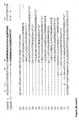
- the frameshift mutation arose within Fr2 (position 41 according to Figure 3 ) and Fr3 (position 67) respectively and are more likely due to polymerase errors during library construction (the frameshift in clone 14 occurs immediately after a long poly-A tract in the DNA sequence).
- NAR types were represented, with approximately 80% being type I and 20% type II, however a number of clones proved difficult to assign to an NAR type.
- clone 33 has a type II Fr1 but type I CDR3 and Fr4, whilst clones 06, 40 and 46 have a type I Fr1 and CDR3 but a type II Fr2 and Fr4. This finding suggests the possibility that gene conversion may be occurring between the NAR genes.
- Clones 24 and 36 are both assigned as type I on the basis of other sequence characteristics but do not carry the pair of cysteine residues normally observed in the type I CDR3.
- the clones 06, 40, 46 and 48 all encode an uneven number of cysteine residues. As mentioned previously in the case of 06, this may be due to gene conversion. Very few clones bearing an uneven number of cysteines have been observed previously and so it is thought that the V region must be under considerable pressure to maintain an even number of cysteine residues, enabling formation of disulphide bonds. The consequence of unpaired cysteines within the NAR V region is, as yet, unknown but may be detrimental to domain folding. If this is indeed the case then such clones will probably be eliminated from the library during early pans due to their toxicity to the expressing bacteria.
- Clone 02 encodes 4 cysteine residues in its CDR3, giving this V region a total of 8 cysteine residues and the potential to form 4 disulphide bonds.
- Such type I domains carrying 4, or occasionally 6 or more, cysteine residues have been previously encountered.
- the ability to form these additional disulphide bonds, combined with the small size of the NAR V region, may provide an additional source for highly stable antibody fragments.
- Colonies which were not sequenced, were scraped from the library plates with a sterile spreader into a final volume of 10 ml 2xTY medium containing 100 ⁇ g/ml ampicillin and 2% glucose. Cells were combined with sterile glycerol to 20% (v/v), and following thorough mixing aliquotted as 500 ⁇ l shots and flash-frozen prior to storage at -80 °C.
- a single aliquot of library stock was added to 200 ml of pre-warmed 2xTY medium containing ampicillin at 100 ⁇ g/ml and 1-2% glucose (w/v) and grown at 37 °C/ 250 rpm until log phase (OD 600 of 0.4 - 0.8) was reached.
- log phase OD 600 of 0.4 - 0.8
- the culture was spun at 3.5K rpm/ 4 °C for 10 min and the cell pellet re-suspended in 100 ml of 2xTY containing 100 ⁇ g/ml ampicillin, 50 ⁇ g/ml kanamycin and 0.1-0.25% glucose and incubated overnight at 30 °C/ 250 rpm to allow library expression and rescue.
- the overnight culture was spun at 12K rpm/ 4 °C for 20 min, 80 ml of supernatant was removed and added to 20 ml of PEG/NaCl, mixed well and incubated on ice for at least 1 h.
- the precipitated phage was pelleted at 12K rpm/ 4 °C and re-suspended in 2 ml PBS.
- the phage suspension was spun at 13K rpm for 10 min to remove any remaining bacterial debris and the phage supernatant stored at 4 °C.
- the phage stock was titrated by performing serial dilutions in PBS and the addition of 900 ⁇ l of a log phase culture to 100 ⁇ l of each dilution.
- Nunc Maxisorp Immuno test tubes (Gibco BRL, Life technologies Ltd.) were coated with either HEL or Ova in 4 ml of PBS overnight at 4 °C. The tube was then washed 3 times with PBS before being blocked with 2% Marvel in PBS (MPBS) for 2 h at room temperature, following which it was washed a further 3 times with PBS. Selection was conducted by incubating the coated immunotube for 1 h at room temperature with 1 ml of phage stock in 3 ml of 2% MPBS on an over-and-under tumbler. A further hour of stationary incubation was allowed before the supernatant containing unbound phage was discarded and bound phage eluted as described below.
- MPBS 2% Marvel in PBS
- the immunotube was washed 20 times with PBST, excess liquid drained off and 1 ml of 100 mM triethylamine added. The tube was then rotated for a maximum of 10 min at room temperature to elute bound phage. Following incubation the phage solution was neutralized by mixing with 500 ⁇ l of 1 M Tris-HCl. In this state the phage solution was stored at 4 °C for further use (or long-term at -20 °C if glycerol added at 15% v/v).
- the culture was spun at 3.5 K rpm for 10 min and the resultant cell pellet re-suspended in 2xTY containing 100 ⁇ g/ml ampicillin, 50 ⁇ g/ml kanamycin and 0.1-0.25% glucose and incubated overnight at 30 °C/250 rpm.
- the overnight culture was spun at 12K rpm for 10 min and 40 ml of supernatant added to 10 ml of PEG/NaCl, and mixed well prior to incubation on ice for at least 1 h.
- the phage.pellet was again re-suspended in 2 ml of PBS and spun for 10 min at 13K rpm to remove any remaining bacterial debris and the phage stored at 4 °C for the short term.
- the immune library was subject to five rounds of panning against the protein antigens Hen egg white lysozyme (HEL) and Chicken ovalbumin (Ova), independently, using M13K07 helper phage and triethylamine elution.
- HEL Hen egg white lysozyme
- Ova Chicken ovalbumin
- the antigen coating density was kept constant at 100 ⁇ g/ml for pans 1 and 2. Following the first round of panning approximately 10 6 phage were eluted from both the HEL and Ova coated immunotubes, increasing 10-fold following pan 2. For pans 3 and 4 the antigen coating density was reduced for each pan in an attempt to select higher affinity binders. Whilst the number of phage eluted following HEL selection remained constant at ⁇ 10 6 for both pans that for Ova selection dropped to 10 3 in pan 3, rising back to 10 6 following pan 4. For pan 5 the antigen coating concentration was further reduced and selection was accompanied by a significant drop in the number of phage eluted. Due to this reduction in the number of phage eluted polyclonal and monoclonal phage ELISAs were conducted to determine if enrichment of HEL or Ova binders was occurring ( Figure 5 ).
- Monoclonal phage ELISAs show an increase in the number of positive phage for both sets of selection over pans 1 to 4. In the case of HEL selection this increase was from less than 1% to approximately 80% following pan 4. For Ova selected clones the numbers of positives was slightly lower but regardless increased from less than 1% to approximately 66% after the fourth pan. Following pan 5 the number of HEL-positive clones remained constant at 80% but the number of Ova-positive monoclonals dropped back to the levels observed in earlier pans (-10%).
- a 96-well Immulon-4 ELISA plate (Dynatech Laboratories Ltd.) was coated with 100 ⁇ l of antigen at 10 ⁇ g/ml for 1 h at 37°C. Following three washes with PBST the wells were blocked with 300 ⁇ l of 2% MPBS (PBS with 2% w/v marvel added) for a further hour at room temperature of overnight at 4°C. Wells were washed 3 times with PBST and to individual wells 10 ⁇ l of PEG precipitated phage from each pan, in 100 ⁇ l of 2% MPBS, was added and the plate incubated for 1 h at room temperature. The phage solution was discarded and the plate washed with PBST 3 times.
- the overnight plate was spun at 2K rpm for 10 min to give a supernatant containing monoclonal phage supernatant.
- 50 ⁇ l of this phage supernatant in 50 ⁇ l of MPBS was added per well and the plate incubated at room temperature for 1 h. Following incubation the plate was incubated with anti-M13 HRP conjugated antibody and developed as normal.
- V region fragments were then ligated into similarly cut, alkaline phosphatase treated and cleaned pIMS100 expression vector. Following overnight incubation at 15°C the resultant vector, harbouring the NAR V insert fused upstream of the HuCk domain and 6His tail, was transformed into electroporation-competent E. coli XL1-Blue cells. Colonies were picked, grown as overnight cultures in 5 ml TB (containing 2% glucose (v/v), 100 ⁇ g/ml ampicillin, 25 ⁇ g/ml tetracycline) and glycerol stocks and plasmid prepared.
- Inserts were sequenced from plasmid using the M13 reverse (5' TTCACACAGGAAACAG 3')(SEQ ID. 67) and HuCk forward (5' GAAGATGAAGACAGATGGTGC 3')(SEQ ID. 68) primer. Once sequence data had been generated the clone was given a unique name to enable identification.
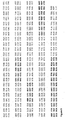
- the clones 5A7 and 4F11 were chosen to represent the two different amino acid sequences found within the HEL-selected positive clones ( Figures 6 and 7 ).
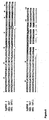
- the two clones are both conventional NAR type I, and so are illustrated aligned against a typical type I clone in Figure 8 .
- the two clones differ from one another at only two positions (43 & 44), both lying within Fr2 and carry identical CDR3 regions.
- the clones 4H11 and 3E4 were chosen to represent the two different amino acid sequences found within the Ova-selected positive clones ( Figures 9 and 10 ). Again these clones were both conventional NAR type I and as such are shown aligned against a typical type I clone in Figure 11 . These clones differ at 6 amino acids; three within Fr1 (positions 13, 14 & 30), two within Fr2 (positions 46 & 47) and one within CDR3 (position 101).
- a single colony of transformed E. coli was used to inoculate 5 ml LB containing_1% glucose (v/v), 12.5 ⁇ g/ml tetracycline and 50 ⁇ g/ml ampicillin and grown up at 37°C /250 rpm overnight.
- This culture was used to seed 50 ml TB medium containing 1% glucose (v/v), 12.5 ⁇ /ml tetracycline and 50 ⁇ g/ml ampicillin in 250 ml baffled flasks, at 1% v/v.
- the 50 ml cultures were grown over a period of 24 hours at 25°C /250 rpm, with one change of media after approximately 10 hours growth. Growth of all the cultures was good with the overnight OD 600 being in the order of 10-20 OD units.
- the cell pellet resulting from centrifugation was resuspended in 10% of the original culture volume of fractionation buffer (100 ml 200 mM Tris-HCl, 20% sucrose, pH 7.5, 1 ml 100 mM EDTA/L of culture).
- the suspension was incubated on ice with gentle shaking for 15 min following which an equal volume of ice-cold sterile H 2 O was added and incubation continued for a further 15 min (method modified from French et al., Enzyme & Microbial Technology 19 pp332-338 1996 ).
- the suspension was spun at 13K rpm / 4°C for 20 min, the supernatant containing the periplasmic fraction harvested and passed through a 0.22 ⁇ m filter (Sartorius Instruments Ltd.).
- An Immulon 4 96-well flat bottomed ELISA plate was coated with a suitable concentration of the desired antigen at 100 ⁇ l per well and the plate incubated at 37°C for 1 h. The plate was washed 3 times with PBST prior to blocking with 200 ⁇ l per well of PBS containing 2% Marvel (w/v) for 1 h at 37°C. Wells were washed a further three times with PBST before addition of samples.
- a 1 in 5 dilution of crude periplasmic release solution was prepared, added to the top wells of the plate at 200/ ⁇ l per well and doubling dilutions in PBS performed. Plates were then incubated at 4°C for 1 h. Each plate was washed a further 5 times with PBST. Goat anti-HuCk peroxidase conjugate antibody was diluted 1:1000 in PBS and 100 ⁇ l added to wells containing antigen binding domains. Plates were incubated for 1 h at 4 °C and following 6 washes with PBST the ELISA was developed as described previously and the plate read at 450 nm.
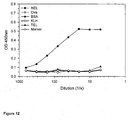
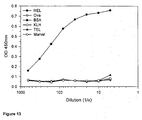
- the HEL-selected clone 5A7 shows good binding to HEL at the top dilution applied and as the sample is serially diluted binding reduces accordingly. Limited binding to the highly related protein turkey egg-white lysozyme (TEL) is observed at the highest dilution but no binding is observed to the proteins Chicken ovalbumin (Ova), Bovine serum albumin (BSA), Keyhole limpet haemocyanin (KLH) or the blocking agent Marvel. An identical pattern of protein binding is also observed for the HEL-selected clone 4F11 ( Figure 13 ), which is not surprising considering the high degree of amino acid sequence similarity between these two clones (111/113 aa identical). The OD 450 signals obtained for 3F11 are slightly higher than those for 5A7, but this may simply be due to small differences in the amount of protein present in the samples.
- the Ova-selected clone 4H11 ( Figure 14 ) showed no binding to any of the proteins tested, including Ova, the antigen it was selected against. To ensure that this was not simply a consequence of there being too little protein present in the assay, a binding assay was performed with undiluted periplasmic release solution. In this instance some binding to all of the proteins was observed for the wells containing the top dilutions of 4H11 protein. This binding was immediately lost once the sample was diluted and so is likely to be non-specific, no doubt resulting from very high concentrations of protein being present. This data supported the initial finding that the 4H11 clone does not bind significantly to Ova.
- the 3E4 clone like 4H11, does not show binding to the proteins HEL, BSA, KLH, TEL or the blocking agent Marvel, however low level binding is observed for this clone to the selection antigen Ova.
- the pattern of binding by this clone to Ova is unusual in that binding at the highest protein concentration is low and shows no significant drop on dilution of the sample. When the protein concentration was increased by repeating the assay with undiluted periplasmic solution a similar pattern of binding was observed, thus negating the possibility that the protein concentration was initially too low. The reason for this unusual binding is as yet unknown, but may be due to 3E4 binding only with low affinity to Ova.
- NAR clones capable of binding antigen in a library previously constructed from material from a naive animal and the isolation of HEL-binding, but not Ova-binding clones, from the library constructed from the HEL immunised animals illustrates the highly specific nature of the NAR response following antigen challenge. In other words, antigen specific antigen binding domains with a specific specificity are produced.
- Both clone 5A7 and clone 4F11 show considerable resistance to irreversible denaturation losing 50% functionality at approximately 85°C and retaining approximately 30% functionality after 3 h at 95°C. This high stability is probably a consequence of the additional, non-canonical cysteine residues found within the NAR V domain. Both clones encode 6 cysteine residues and therefore are capable of forming 3 intradomain disulphide bonds, which (if formed) would contribute greatly to the high stability of these domains. The shape of the stability curves for both of the clones is almost identical and the minor difference in stability between the clones may be simply due to assay variability.
- HEL-5A7 The ability of HEL-5A7 to inhibit the enzymatic activity of HEL was tested by mixing 12.5 ⁇ l of HEL with 12.5 ⁇ l of purified HEL-5A7 protein in a sterile 96 well tissue culture plate, to give a final HEL concentration of 10 ⁇ g/ml and HEL-5A7 concentrations of 2500 nM, 250 nM and 25 nM.
- the control well was set up with buffer replacing HEL-5A7.
- a sample of freeze dried Micrococcus lysodeikticus was reconstituted in 0.1 M phosphate/citrate buffer (pH 5.8) containing 0.09% NaCl, mixed thoroughly and 175 ⁇ l added to the prepared wells. The plate was read over a period of 30 min (at 1 min intervals) at 450 nm. Enzymatic activity was plotted as percentage initial absorbance against time for each sample.
- HEL-5A7 protein reduced the rate of cell lysis in a concentration dependent manner with respect to the control ( Figure 16 ).
- HEL-5A7 protein at a final concentration of 2500 nM the rate of cell lysis (9.3x10 -3 OD units/min) is almost halved when compared to the control (17x10 -3 OD units/min) indicating that the HEL-5A7 region binds within or adjacent to the lysozyme active site cavity.
- a similarly prepared antigen specific antigen binding domain raised against an unrelated antigen showed no effect upon the rate of cell lysis when introduced to the assay at the same concentrations.
Landscapes
- Chemical & Material Sciences (AREA)
- Health & Medical Sciences (AREA)
- Organic Chemistry (AREA)
- Life Sciences & Earth Sciences (AREA)
- General Health & Medical Sciences (AREA)
- Immunology (AREA)
- Medicinal Chemistry (AREA)
- Proteomics, Peptides & Aminoacids (AREA)
- Biochemistry (AREA)
- Molecular Biology (AREA)
- Genetics & Genomics (AREA)
- Biophysics (AREA)
- Virology (AREA)
- Engineering & Computer Science (AREA)
- General Chemical & Material Sciences (AREA)
- Nuclear Medicine, Radiotherapy & Molecular Imaging (AREA)
- Public Health (AREA)
- Chemical Kinetics & Catalysis (AREA)
- Animal Behavior & Ethology (AREA)
- Bioinformatics & Cheminformatics (AREA)
- Veterinary Medicine (AREA)
- Pharmacology & Pharmacy (AREA)
- Peptides Or Proteins (AREA)
- Micro-Organisms Or Cultivation Processes Thereof (AREA)
- Preparation Of Compounds By Using Micro-Organisms (AREA)
- Medicines Containing Antibodies Or Antigens For Use As Internal Diagnostic Agents (AREA)
- Transition And Organic Metals Composition Catalysts For Addition Polymerization (AREA)
Claims (12)
- Ein Prozess für die Produktion einer antigenspezifischen antigenbindenden Domäne RNA, abgeleitet von einer variablen Region NAR, der die folgenden Schritte aufweist:a) die Immunisierung eines Teils der Elasmobranchii-Unterklasse mit einem Antigen;b) die Isolation von Lymphozyten aus dem Teil;c) die Isolation von RNA aus den Lymphozyten.
- Ein Prozess für die Produktion einer antigenspezifischen antigenbindenden Domäne cDNA, der Prozess weist die Synthetisierung von cDNA aus RNA auf, das gemäß Anspruch 1 hergestellt wurde.
- Ein Prozess für die Produktion einer antigenspezifischen antigenbindenden Domäne Bibliothek, der die folgenden Schritte aufweist:a) die Verstärkung, durch PCR, von DNA-Sequenzen aus der RNA, hergestellt gemäß Anspruch 1, oder der cDNA, hergestellt gemäß Anspruch 2;b) das Klonen der erweiterten DNA in einen Display-Vektor;c) die Übertragung eines Wirts, um eine Bibliothek zu erstellen.
- Ein Prozess gemäß Anspruch 3, wobei die Restriktionsenzyme verwendet werden, um die erweiterten DNA-Sequenzen, die die antigenspezifische antigenbindende Domäne codieren, aufzuschließen.
- Ein Prozess gemäß Anspruch 4, wobei die Restriktionsenzyme Ncol und Notl sind.
- Ein Prozess gemäß eines der Ansprüche 3 bis 5, wobei der Display-Vektor ein Phagemid-Vektor ist.
- Ein Prozess gemäß Anspruch 6, wobei der Display-Vektor pHEN2 ist.
- Ein Prozess gemäß eines der vorhergehenden Ansprüche, wobei die Gattung der Elasmobranchii-Unterklasse ein Hai oder ein Katzenhai ist.
- Ein Prozess gemäß Anspruch 8, wobei der Hai ein Ammenhai ist.
- Ein Prozess gemäß eines der Ansprüche 3 bis 9, wobei die Bibliotheks-Variabilität über CDR3 fokussiert wird.
- Ein Prozess gemäß eines der Ansprüche 3 bis 10, wobei die verwendeten PCR-Primer, das Primer-Paar NAR F1 Rev und NAR F4 For 1, oder das Paar NAR F1 Rev und NAR F4 For2, aufweisen.
- Eine immunisierte Phagen-Display-Bibliothek, die antigenspezifische Elasmobranchii NAR V antigenbindende Domänen aufweisen.
Applications Claiming Priority (4)
| Application Number | Priority Date | Filing Date | Title |
|---|---|---|---|
| GB0119553A GB0119553D0 (en) | 2001-08-10 | 2001-08-10 | Antibodies |
| GB0210508A GB0210508D0 (en) | 2002-05-08 | 2002-05-08 | Antibodies |
| EP10155260A EP2202243A3 (de) | 2001-08-10 | 2002-08-12 | Antigenbindende Domäne aus Fisch |
| EP02749132A EP1419179B1 (de) | 2001-08-10 | 2002-08-12 | Antigenbindende domäne aus fisch |
Related Parent Applications (6)
| Application Number | Title | Priority Date | Filing Date |
|---|---|---|---|
| EP10155260A Division EP2202243A3 (de) | 2001-08-10 | 2002-08-12 | Antigenbindende Domäne aus Fisch |
| EP10155260A Previously-Filed-Application EP2202243A3 (de) | 2001-08-10 | 2002-08-12 | Antigenbindende Domäne aus Fisch |
| EP02749132.3 Division | 2002-08-12 | ||
| EP10155260 Previously-Filed-Application | 2002-08-12 | ||
| EP02749132A Division EP1419179B1 (de) | 2001-08-10 | 2002-08-12 | Antigenbindende domäne aus fisch |
| EP10155260.2 Division | 2010-03-02 |
Publications (3)
| Publication Number | Publication Date |
|---|---|
| EP2281837A2 EP2281837A2 (de) | 2011-02-09 |
| EP2281837A3 EP2281837A3 (de) | 2012-08-08 |
| EP2281837B1 true EP2281837B1 (de) | 2016-10-05 |
Family
ID=26246430
Family Applications (5)
| Application Number | Title | Priority Date | Filing Date |
|---|---|---|---|
| EP10185416.4A Expired - Lifetime EP2281837B1 (de) | 2001-08-10 | 2002-08-12 | Antigenbindende domäne aus fisch |
| EP10185470A Withdrawn EP2277914A3 (de) | 2001-08-10 | 2002-08-12 | Antigenbindende Domäne aus Fisch |
| EP10185409A Withdrawn EP2277913A3 (de) | 2001-08-10 | 2002-08-12 | Antigenbindende Domäne aus Fisch |
| EP02749132A Expired - Lifetime EP1419179B1 (de) | 2001-08-10 | 2002-08-12 | Antigenbindende domäne aus fisch |
| EP10155260A Withdrawn EP2202243A3 (de) | 2001-08-10 | 2002-08-12 | Antigenbindende Domäne aus Fisch |
Family Applications After (4)
| Application Number | Title | Priority Date | Filing Date |
|---|---|---|---|
| EP10185470A Withdrawn EP2277914A3 (de) | 2001-08-10 | 2002-08-12 | Antigenbindende Domäne aus Fisch |
| EP10185409A Withdrawn EP2277913A3 (de) | 2001-08-10 | 2002-08-12 | Antigenbindende Domäne aus Fisch |
| EP02749132A Expired - Lifetime EP1419179B1 (de) | 2001-08-10 | 2002-08-12 | Antigenbindende domäne aus fisch |
| EP10155260A Withdrawn EP2202243A3 (de) | 2001-08-10 | 2002-08-12 | Antigenbindende Domäne aus Fisch |
Country Status (11)
| Country | Link |
|---|---|
| US (2) | US20050043519A1 (de) |
| EP (5) | EP2281837B1 (de) |
| JP (1) | JP5133494B2 (de) |
| AT (1) | ATE459651T1 (de) |
| AU (2) | AU2002319544B2 (de) |
| CA (2) | CA2763913C (de) |
| DE (1) | DE60235553D1 (de) |
| DK (1) | DK1419179T3 (de) |
| ES (1) | ES2337986T3 (de) |
| PT (1) | PT1419179E (de) |
| WO (1) | WO2003014161A2 (de) |
Families Citing this family (153)
| Publication number | Priority date | Publication date | Assignee | Title |
|---|---|---|---|---|
| ES2263984T3 (es) * | 2002-06-28 | 2006-12-16 | Domantis Limited | Ligandos doble-especificos con una vida media serica aumentada. |
| AU2005250055B2 (en) * | 2004-06-02 | 2008-09-11 | Adalta Pty Ltd | Binding moieties based on shark IgNAR domains |
| US7563443B2 (en) * | 2004-09-17 | 2009-07-21 | Domantis Limited | Monovalent anti-CD40L antibody polypeptides and compositions thereof |
| US20090017050A1 (en) | 2007-07-13 | 2009-01-15 | Ventana Medical Systems, Inc. | Egfr antigen-binding molecules and uses thereof |
| PE20091163A1 (es) | 2007-11-01 | 2009-08-09 | Wyeth Corp | Anticuerpos para gdf8 |
| EP2217716A4 (de) | 2007-11-09 | 2011-02-09 | Salk Inst For Biological Studi | Verwendung von tam-rezeptor-inhibitoren als antimikrobielle mittel |
| AU2008328726B2 (en) | 2007-11-30 | 2014-06-12 | Glaxo Group Limited | Antigen-binding constructs |
| DK2982695T3 (da) | 2008-07-09 | 2019-05-13 | Biogen Ma Inc | Sammensætninger, der omfatter antistoffer mod lingo eller fragmenter deraf |
| AR072571A1 (es) | 2008-07-18 | 2010-09-08 | Bristol Myers Squibb Co | Composiciones monovalentes para union a cd28 y procedimientos de uso |
| JP2012504939A (ja) | 2008-09-23 | 2012-03-01 | ワイス・エルエルシー | 架橋結合タンパク質による活性化シグナルの産生を予測するための方法 |
| BRPI0919879A2 (pt) | 2008-10-29 | 2016-02-16 | Wyeth Llc | métodos para purificação de moléculas de ligação a antígeno de domínio único |
| EP2362767B1 (de) | 2008-10-29 | 2017-12-06 | Ablynx N.V. | Formulierungen von einzeldomänen-antigen-bindungsmolekülen |
| WO2010091182A2 (en) | 2009-02-04 | 2010-08-12 | Molecular Innovations | Methods for screening candidate agents for modulating prorenin and renin, assays for detecting prorenin, and antibodies used therein |
| US20110305694A1 (en) | 2009-02-24 | 2011-12-15 | Paul Andrew Hamblin | Multivalent and/or multispecific rankl-binding constructs |
| JP2012518398A (ja) | 2009-02-24 | 2012-08-16 | グラクソ グループ リミテッド | 抗原結合性構築物 |
| WO2010097386A1 (en) | 2009-02-24 | 2010-09-02 | Glaxo Group Limited | Antigen-binding constructs |
| MY173390A (en) | 2009-10-23 | 2020-01-22 | Takeda Pharmaceuticals Co | Anti-gcc antibody molecules and related compositions and methods |
| US8496933B2 (en) | 2009-11-04 | 2013-07-30 | Laboratorios Silanes, S.A. De C.V. | VHNAR anti-cytokine domains |
| BR112012024565B1 (pt) | 2010-03-26 | 2022-02-08 | Trustees Of Dartmouth College | Proteína de fusão vista imunossupressora multimérica isolada ou recombinante e composição |
| US20150231215A1 (en) | 2012-06-22 | 2015-08-20 | Randolph J. Noelle | VISTA Antagonist and Methods of Use |
| US10745467B2 (en) | 2010-03-26 | 2020-08-18 | The Trustees Of Dartmouth College | VISTA-Ig for treatment of autoimmune, allergic and inflammatory disorders |
| CN108314733A (zh) | 2010-07-16 | 2018-07-24 | 埃博灵克斯股份有限公司 | 修饰的单结构域抗原结合分子及其应用 |
| AR083937A1 (es) | 2010-11-23 | 2013-04-10 | Glaxo Group Ltd | Proteinas de union a antigenos |
| US20130236467A1 (en) | 2010-11-24 | 2013-09-12 | Jeremy Griggs | Multispecific antigen binding proteins targeting hgf |
| WO2012103240A2 (en) | 2011-01-25 | 2012-08-02 | Eleven Biotherapeutics, Inc. | Receptor binding agents |
| KR102058254B1 (ko) | 2011-03-29 | 2019-12-20 | 글락소스미스클라인 엘엘씨 | 단백질 정제용 완충제 시스템 |
| US20140023655A1 (en) | 2011-04-07 | 2014-01-23 | Glaxosmithkline Llc | Formulations with reduced viscosity |
| BR112013026199A2 (pt) | 2011-04-15 | 2017-11-07 | Compugen Ltd | polipeptídeo isolado, proteína de fusão, sequência de ácidos nucleicos, vetor de expressão ou um vírus, célula recombinante, método de produção de um polipeptídeo com ectodomínio solúvel lsr, ou seu fragmento ou proteína de fusão, composição farmacêutica, uso de um anticorpo monoclonal ou policlonal ou um seu fragmento de ligação ao antígeno, uso do anticorpo ou do fragmento de ligação ao antígeno, uso de qualquer um de um polipeptídeo isolado, método de regulação por cima de citocinas, indução da expansão de células t, promoção da imunidade de células t específica antigênica e promoção da ativação das células t cd4+ e/ou cd8+ em um sujeito, método para potenciação de uma resposta imune secundária a um antígeno em um paciente, método de uso de pelo menos um de: um polipeptídeo isolado, método para tratamento ou prevenção de uma condição relacionada com o sistema imune, método para tratamento ou prevenção de uma doença infecciosa, método para diagnóstico de uma doença em um sujeito, método de produção de um polipeptídeo com ectodomínio solúvel tmem25, vsig10, ly6g6f, ou seu fragmento ou proteína de fusão, anticorpo monoclonal ou policlonal ou um seu fragmento de ligação ao antígeno, método de imunoterapia em um paciente e método para combinação de vacinação terapêutica com um antígeno em conjunto com a administração de qualquer um de um polipeptídeo |
| CA2833820C (en) | 2011-05-27 | 2019-10-29 | Glaxo Group Limited | Bcma (cd269/tnfrsf17) -binding proteins |
| US9435812B2 (en) | 2011-08-31 | 2016-09-06 | Ventana Medical Systems, Inc. | Expression of ETS related gene (ERG) and phosphatase and tensin homolog (PTEN) correlates with prostate cancer capsular penetration |
| GB2502127A (en) | 2012-05-17 | 2013-11-20 | Kymab Ltd | Multivalent antibodies and in vivo methods for their production |
| US9156915B2 (en) | 2012-04-26 | 2015-10-13 | Thomas Jefferson University | Anti-GCC antibody molecules |
| US20130302250A1 (en) | 2012-05-07 | 2013-11-14 | The University Court Of The University Of Aberdeen | Single domain binding molecule |
| CN104470541A (zh) | 2012-05-14 | 2015-03-25 | 比奥根艾迪克Ma公司 | 用于治疗涉及运动神经元的疾患的lingo-2拮抗剂 |
| DK3421486T5 (da) | 2012-06-22 | 2024-09-16 | The Trustees Of Darthmouth College | Nye Vista-IG-konstruktioner og anvendelse af Vista-IG til behandling af autoimmune, allergiske og inflammatoriske lidelser |
| US9890215B2 (en) | 2012-06-22 | 2018-02-13 | King's College London | Vista modulators for diagnosis and treatment of cancer |
| CA2879542A1 (en) | 2012-07-25 | 2014-01-30 | Salk Institute For Biological Studies | Regulating the interaction between tam ligands and lipid membranes with exposed phosphatidylserine |
| JP6368308B2 (ja) | 2012-09-07 | 2018-08-01 | トラスティーズ・オブ・ダートマス・カレッジ | 癌の診断および治療のためのvista調節剤 |
| JP2015534564A (ja) | 2012-10-09 | 2015-12-03 | バイオジェン・エムエイ・インコーポレイテッドBiogen MA Inc. | 脱髄障害の治療のための併用療法および使用 |
| WO2014120916A1 (en) | 2013-02-01 | 2014-08-07 | Bristol-Myers Squibb Company | Pegylated domain antibodies monovalent for cd28 binding and methods of use |
| JP6636803B2 (ja) | 2013-02-05 | 2020-01-29 | エンクマフ エスアーエールエル | Bcmaに対する抗体の選択のための方法 |
| EP2762496A1 (de) | 2013-02-05 | 2014-08-06 | EngMab AG | Verfahren zur Auswahl von Antikörpern gegen BCMA |
| CN105143270B (zh) | 2013-02-26 | 2019-11-12 | 罗切格利卡特公司 | 双特异性t细胞活化抗原结合分子 |
| RS60280B1 (sr) | 2013-03-12 | 2020-06-30 | Molecular Templates Inc | Citotoksični proteini koji sadrže ciljane vezujuće regione za ćelije i regioni shiga toksina a podjedinice za selektivno ubijanje određenih vrsta ćelija |
| RU2015136856A (ru) | 2013-03-15 | 2017-04-21 | ГлаксоСмитКлайн Интеллекчуал Проперти (N2) Лимитед | Применение промежуточных соединений цикла трикарбоновых кислот (ТСА) для контроля образования аммиака в культуре клеток |
| EP2970426B1 (de) | 2013-03-15 | 2019-08-28 | Michael C. Milone | Anzielung zytotoxischer zellen mit chimären rezeptoren für eine adoptive immuntherapie |
| JP6541581B2 (ja) | 2013-03-15 | 2019-07-10 | グラクソスミスクライン、インテレクチュアル、プロパティー、(ナンバー2)、リミテッドGlaxosmithkline Intellectual Property (No.2) Limited | 低濃度抗体製剤 |
| WO2014141149A1 (en) | 2013-03-15 | 2014-09-18 | Glaxosmithkline Intellectual Property (No.2) Limited | Formulations with reduced viscosity |
| JP6599773B2 (ja) | 2013-03-15 | 2019-10-30 | グラクソスミスクライン、インテレクチュアル、プロパティー、(ナンバー2)、リミテッド | 抗体を精製するための方法 |
| EP2789630A1 (de) | 2013-04-09 | 2014-10-15 | EngMab AG | Bispezifische Antikörper gegen CD3e und ROR1 |
| CA2909923A1 (en) | 2013-04-23 | 2014-10-30 | The University Court Of The University Of Aberdeen | Isolation of therapeutic target specific vnar domains to icosl |
| NL1040254C2 (en) | 2013-05-17 | 2014-11-24 | Ablynx Nv | Stable formulations of immunoglobulin single variable domains and uses thereof. |
| ES2918501T3 (es) | 2013-12-19 | 2022-07-18 | Novartis Ag | Receptores de antígenos quiméricos de mesotelina humana y usos de los mismos |
| US10287354B2 (en) | 2013-12-20 | 2019-05-14 | Novartis Ag | Regulatable chimeric antigen receptor |
| US11014987B2 (en) | 2013-12-24 | 2021-05-25 | Janssen Pharmaceutics Nv | Anti-vista antibodies and fragments, uses thereof, and methods of identifying same |
| RS63295B1 (sr) | 2013-12-24 | 2022-06-30 | Janssen Pharmaceutica Nv | Anti-vista antitela i fragmenti |
| WO2015100246A1 (en) | 2013-12-24 | 2015-07-02 | Ossianix, Inc. | Baff selective binding compounds and related methods |
| US20170081411A1 (en) | 2014-03-15 | 2017-03-23 | Novartis Ag | Regulatable chimeric antigen receptor |
| EP3593812A3 (de) | 2014-03-15 | 2020-05-27 | Novartis AG | Behandlung von krebs mithilfe eines chimären antigenrezeptors |
| TWI694836B (zh) | 2014-05-16 | 2020-06-01 | 英商葛蘭素史克智慧財產管理有限公司 | 抗體調配物 |
| MX389695B (es) | 2014-06-11 | 2025-03-20 | Kathy A Green | Uso de agonistas y antagonistas vista para suprimir o aumentar la inmunidad humoral. |
| US10479990B2 (en) | 2014-06-26 | 2019-11-19 | Ossianix, Inc. | Semi-synthetic nurse shark VNAR libraries for making and using selective binding compounds |
| WO2016014530A1 (en) | 2014-07-21 | 2016-01-28 | Novartis Ag | Combinations of low, immune enhancing. doses of mtor inhibitors and cars |
| SG10201913765YA (en) | 2014-07-21 | 2020-03-30 | Novartis Ag | Treatment of cancer using a cd33 chimeric antigen receptor |
| US11542488B2 (en) | 2014-07-21 | 2023-01-03 | Novartis Ag | Sortase synthesized chimeric antigen receptors |
| TWI750110B (zh) | 2014-07-21 | 2021-12-21 | 瑞士商諾華公司 | 使用人類化抗-bcma嵌合抗原受體治療癌症 |
| ES2781175T3 (es) | 2014-07-31 | 2020-08-31 | Novartis Ag | Subconjunto optimizado de células T que contienen un receptor de antígeno quimérico |
| ES2791248T3 (es) | 2014-08-19 | 2020-11-03 | Novartis Ag | Receptor antigénico quimérico (CAR) anti-CD123 para su uso en el tratamiento del cáncer |
| KR20250067191A (ko) | 2014-09-17 | 2025-05-14 | 노파르티스 아게 | 입양 면역요법을 위한 키메라 수용체에 의한 세포독성 세포의 표적화 |
| EP3204415B1 (de) | 2014-10-09 | 2020-06-17 | EngMab Sàrl | Bispezifische antikörper gegen cd3epsilon und ror1 |
| WO2016059602A2 (en) | 2014-10-16 | 2016-04-21 | Glaxo Group Limited | Methods of treating cancer and related compositions |
| WO2016077840A2 (en) | 2014-11-14 | 2016-05-19 | Ossianix, Inc. | TfR SELECTIVE BINDING COMPOUNDS AND RELATED METHODS |
| US20180334490A1 (en) | 2014-12-03 | 2018-11-22 | Qilong H. Wu | Methods for b cell preconditioning in car therapy |
| JP2018505911A (ja) | 2014-12-05 | 2018-03-01 | イミュネクスト,インコーポレーテッド | 推定上のvista受容体としてのvsig8の同定と、vista/vsig8調節剤を産生するためのその使用 |
| CA3197849A1 (en) | 2014-12-29 | 2016-07-07 | Novartis Ag | Methods of making chimeric antigen receptor-expressing cells |
| JP2018504400A (ja) | 2015-01-08 | 2018-02-15 | バイオジェン・エムエイ・インコーポレイテッドBiogen MA Inc. | Lingo‐1拮抗薬及び脱髄障害の治療のための使用 |
| US11161907B2 (en) | 2015-02-02 | 2021-11-02 | Novartis Ag | Car-expressing cells against multiple tumor antigens and uses thereof |
| US20180140602A1 (en) | 2015-04-07 | 2018-05-24 | Novartis Ag | Combination of chimeric antigen receptor therapy and amino pyrimidine derivatives |
| SG11201708516YA (en) | 2015-04-17 | 2017-11-29 | David Maxwell Barrett | Methods for improving the efficacy and expansion of chimeric antigen receptor-expressing cells |
| EP3286211A1 (de) | 2015-04-23 | 2018-02-28 | Novartis AG | Behandlung von krebs mit chimärem antigenrezeptor- und proteinkinase-a-blocker |
| WO2016207717A1 (en) | 2015-06-24 | 2016-12-29 | Janssen Pharmaceutica Nv | Anti-vista antibodies and fragments |
| AU2016297014B2 (en) | 2015-07-21 | 2021-06-17 | Novartis Ag | Methods for improving the efficacy and expansion of immune cells |
| US10683369B2 (en) | 2015-08-03 | 2020-06-16 | Engmab Sàrl | Monoclonal antibodies against BCMA |
| CN105384825B (zh) | 2015-08-11 | 2018-06-01 | 南京传奇生物科技有限公司 | 一种基于单域抗体的双特异性嵌合抗原受体及其应用 |
| JP6905163B2 (ja) | 2015-09-03 | 2021-07-21 | ザ トラスティーズ オブ ザ ユニバーシティ オブ ペンシルバニア | サイトカイン放出症候群を予測するバイオマーカー |
| RU2018119706A (ru) | 2015-10-30 | 2019-12-02 | Глэксосмитклайн Интеллекчуал Проперти Дивелопмент Лимитед | Способ прогноза |
| EP3393504B1 (de) | 2015-12-22 | 2025-09-24 | Novartis AG | Mesothelin-spezifischer chimärischer antigenrezeptor (car) und antikörper gegen pd-l1zur kombinierten verwendung bei therapie gegen krebs |
| SG11201805449PA (en) | 2015-12-28 | 2018-07-30 | Novartis Ag | Methods of making chimeric antigen receptor -expressing cells |
| US10899836B2 (en) | 2016-02-12 | 2021-01-26 | Janssen Pharmaceutica Nv | Method of identifying anti-VISTA antibodies |
| AU2017225733A1 (en) | 2016-03-04 | 2018-09-27 | Novartis Ag | Cells expressing multiple chimeric antigen receptor (CAR) molecules and uses therefore |
| MY209117A (en) | 2016-04-15 | 2025-06-23 | Novartis Ag | Compositions and methods for selective protein expression |
| CN109789201B (zh) | 2016-04-15 | 2023-06-16 | 伊穆奈克斯特股份有限公司 | 抗人vista抗体及其用途 |
| US11197902B2 (en) | 2016-06-24 | 2021-12-14 | Ig Biosciences Corporation | Prebiotic neutraceutical compositions and methods of treatment using the same |
| JP7149257B2 (ja) | 2016-07-13 | 2022-10-06 | バイオジェン・エムエイ・インコーポレイテッド | Lingo-1アンタゴニストの投与計画及び脱髄障害の処置のための使用 |
| US20190336504A1 (en) | 2016-07-15 | 2019-11-07 | Novartis Ag | Treatment and prevention of cytokine release syndrome using a chimeric antigen receptor in combination with a kinase inhibitor |
| WO2018014260A1 (en) | 2016-07-20 | 2018-01-25 | Nanjing Legend Biotech Co., Ltd. | Multispecific antigen binding proteins and methods of use thereof |
| BR112019001570A2 (pt) | 2016-07-28 | 2019-07-09 | Novartis Ag | terapias de combinação de receptores de antígeno quiméricos e inibidores de pd-1 |
| US20190161542A1 (en) | 2016-08-01 | 2019-05-30 | Novartis Ag | Treatment of cancer using a chimeric antigen receptor in combination with an inhibitor of a pro-m2 macrophage molecule |
| EP4282877A3 (de) | 2016-08-10 | 2024-02-21 | Legend Biotech Ireland Limited | Gegen bcma gerichtete chimäre antigenrezeptoren und verfahren zur verwendung davon |
| EP3510042B1 (de) | 2016-09-07 | 2024-05-22 | GlaxoSmithKline Intellectual Property Development Limited | Verfahren zur aufreinigung von antikörpern |
| US11453726B2 (en) | 2016-09-15 | 2022-09-27 | Quadrucept Bio Limited | Multimers, tetramers and octamers |
| EP3523331A1 (de) | 2016-10-07 | 2019-08-14 | Novartis AG | Chimäre antigenrezeptoren zur behandlung von krebs |
| WO2018068201A1 (en) | 2016-10-11 | 2018-04-19 | Nanjing Legend Biotech Co., Ltd. | Single-domain antibodies and variants thereof against ctla-4 |
| EP4295918A3 (de) | 2016-11-02 | 2024-03-20 | Bristol-Myers Squibb Company | Bispezifische antikörper gegen bcma und cd3 und verwendung bei der behandlung von multiplem myelom |
| CN110325547B (zh) * | 2016-11-07 | 2023-12-26 | 德格克斯有限公司 | 新淀粉样蛋白β寡聚体特异性结合分子 |
| EP4043485A1 (de) | 2017-01-26 | 2022-08-17 | Novartis AG | Cd28-zusammensetzungen und verfahren für chimäre antigenrezeptortherapie |
| EP3589647A1 (de) | 2017-02-28 | 2020-01-08 | Novartis AG | Shp-inhibitor-zusammensetzungen und verwendungen zur chimären antigenrezeptortherapie |
| WO2018194441A1 (es) | 2017-04-21 | 2018-10-25 | Centro De Investigación Científica Y De Educación Superior De Ensenada, Baja California | Vnar con actividad anti-angiogénica en tumores sólidos de animales de compañía |
| WO2018201056A1 (en) | 2017-04-28 | 2018-11-01 | Novartis Ag | Cells expressing a bcma-targeting chimeric antigen receptor, and combination therapy with a gamma secretase inhibitor |
| WO2019000223A1 (en) | 2017-06-27 | 2019-01-03 | Nanjing Legend Biotech Co., Ltd. | ENABLERS OF IMMUNE EFFECTOR CELLS OF CHIMERIC ANTIBODIES AND METHODS OF USE THEREOF |
| WO2019063726A1 (en) | 2017-09-27 | 2019-04-04 | Elasmogen Ltd | SPECIFIC BINDING MOLECULES |
| MX2020004229A (es) | 2017-10-25 | 2020-07-22 | Novartis Ag | Metodos de produccion de celulas que expresan receptores antigenicos quimericos. |
| US20210179709A1 (en) | 2017-10-31 | 2021-06-17 | Novartis Ag | Anti-car compositions and methods |
| GB201721802D0 (en) | 2017-12-22 | 2018-02-07 | Almac Discovery Ltd | Ror1-specific antigen binding molecules |
| TW201930358A (zh) | 2017-12-28 | 2019-08-01 | 大陸商南京傳奇生物科技有限公司 | 針對tigit之單域抗體及其變異體 |
| EP3737692A4 (de) | 2018-01-09 | 2021-09-29 | Elstar Therapeutics, Inc. | Calreticulin-bindende konstrukte und gentechnisch veränderte t-zellen zur behandlung von krankheiten |
| EP3740507A4 (de) | 2018-01-15 | 2022-08-24 | Nanjing Legend Biotech Co., Ltd. | Einzeldomänenantikörper und varianten davon gegen pd-1 |
| EP3746116A1 (de) | 2018-01-31 | 2020-12-09 | Novartis AG | Kombinationstherapie unter verwendung eines chimären antigenrezeptors |
| TW202003555A (zh) | 2018-03-07 | 2020-01-16 | 英商葛蘭素史克智慧財產發展有限公司 | 用於純化重組多肽之方法 |
| TW202000891A (zh) | 2018-03-07 | 2020-01-01 | 英商葛蘭素史克智慧財產發展有限公司 | 純化抗體之方法 |
| US12152073B2 (en) | 2018-03-14 | 2024-11-26 | Marengo Therapeutics, Inc. | Multifunctional molecules that bind to calreticulin and uses thereof |
| AU2019241350B2 (en) | 2018-03-30 | 2025-10-02 | Nanjing Legend Biotech Co., Ltd. | Single-domain antibodies against LAG-3 and uses thereof |
| EP3784351A1 (de) | 2018-04-27 | 2021-03-03 | Novartis AG | Car-t-zelltherapien mit erhöhter wirksamkeit |
| CA3100724A1 (en) | 2018-06-13 | 2019-12-19 | Novartis Ag | B-cell maturation antigen protein (bcma) chimeric antigen receptors and uses thereof |
| WO2019246288A1 (en) * | 2018-06-22 | 2019-12-26 | Ossianix, Inc. | Anti-cd98hc vnars for crossing the blood brain barrier and type iv vnar libraries |
| EP3818083A2 (de) | 2018-07-03 | 2021-05-12 | Elstar Therapeutics, Inc. | Anti-tcr-antikörpermoleküle und ihre verwendungen |
| WO2020047449A2 (en) | 2018-08-31 | 2020-03-05 | Novartis Ag | Methods of making chimeric antigen receptor-expressing cells |
| CA3109959A1 (en) | 2018-08-31 | 2020-03-05 | Novartis Ag | Methods of making chimeric antigen receptor-expressing cells |
| US12351642B2 (en) | 2018-09-14 | 2025-07-08 | Ossianix, Inc. | TFR-specific binding moieties and transcytosis method to select VNARs that cross cellular barriers |
| CA3118692A1 (en) | 2018-11-06 | 2020-05-14 | Alsatech, Inc. | Cell-based gene therapy for neurodegenerative diseases |
| AU2020224681A1 (en) | 2019-02-21 | 2021-09-16 | Marengo Therapeutics, Inc. | Antibody molecules that bind to NKp30 and uses thereof |
| JP7710373B2 (ja) | 2019-02-21 | 2025-07-18 | マレンゴ・セラピューティクス,インコーポレーテッド | T細胞関連のがん細胞に結合する多機能性分子およびその使用 |
| WO2020172553A1 (en) | 2019-02-22 | 2020-08-27 | Novartis Ag | Combination therapies of egfrviii chimeric antigen receptors and pd-1 inhibitors |
| GB201903767D0 (en) | 2019-03-19 | 2019-05-01 | Quadrucept Bio Ltd | Multimers, tetramers & octamers |
| WO2020210678A1 (en) | 2019-04-12 | 2020-10-15 | Novartis Ag | Methods of making chimeric antigen receptor-expressing cells |
| PH12022551291A1 (en) | 2019-11-26 | 2023-11-20 | Novartis Ag | Chimeric antigen receptors binding bcma and cd19 and uses thereof |
| CN116234829A (zh) | 2020-01-03 | 2023-06-06 | 马伦戈治疗公司 | 抗tcr抗体分子及其用途 |
| EP4104187A1 (de) | 2020-02-14 | 2022-12-21 | Novartis AG | Verfahren zur vorhersage des ansprechens auf eine chimäre antigen-rezeptor-therapie |
| KR20220146530A (ko) | 2020-02-27 | 2022-11-01 | 노파르티스 아게 | 키메라 항원 수용체-발현 세포의 제조 방법 |
| KR20220147109A (ko) | 2020-02-27 | 2022-11-02 | 노파르티스 아게 | 키메라 항원 수용체 발현 세포의 제조 방법 |
| WO2021190980A1 (en) | 2020-03-22 | 2021-09-30 | Quadrucept Bio Limited | Multimers for viral strain evolution |
| US11981932B2 (en) | 2020-06-17 | 2024-05-14 | Janssen Biotech, Inc. | Materials and methods for the manufacture of pluripotent stem cells |
| JP7846667B2 (ja) | 2020-07-16 | 2026-04-15 | レジェンド バイオテック アイルランド リミテッド | Cd20結合分子及びその使用 |
| CN112301431B (zh) * | 2020-08-12 | 2023-01-31 | 华东理工大学 | 基于鲨鱼抗体可变区v-nar的噬菌体文库及其构建方法 |
| GB202020152D0 (en) | 2020-12-18 | 2021-02-03 | Elasmogen Ltd | Fast-track humanisation of specific binding molecules |
| WO2022184659A1 (en) | 2021-03-01 | 2022-09-09 | Quadrucept Bio Limited | Antibody domains & multimers |
| US20230174651A1 (en) | 2021-06-23 | 2023-06-08 | Janssen Biotech, Inc. | Materials and methods for hinge regions in functional exogenous receptors |
| CA3262611A1 (en) | 2022-07-22 | 2024-01-25 | Janssen Biotech, Inc. | IMPROVED TRANSFER OF GENETIC INSTRUCTIONS TO EFFECTOR IMMUNE CELLS |
| EP4587047A1 (de) | 2022-09-15 | 2025-07-23 | Novartis AG | Behandlung von autoimmunerkrankungen mit chimärer antigenrezeptortherapie |
| GB202216503D0 (en) | 2022-11-05 | 2022-12-21 | Quadrucept Bio Ltd | Non-human vertebrates & cells |
| CN121194989A (zh) | 2023-03-30 | 2025-12-23 | 272生物有限公司 | GnRH结合多肽及其用途 |
| WO2025034806A1 (en) | 2023-08-08 | 2025-02-13 | Wisconsin Alumni Research Foundation | Single-domain antibodies and variants thereof against fibroblast activation protein |
| WO2025178959A1 (en) | 2024-02-20 | 2025-08-28 | University Of Georgia Research Foundation, Inc. | Single-domain antibodies and variants thereof against tab1 |
Family Cites Families (3)
| Publication number | Priority date | Publication date | Assignee | Title |
|---|---|---|---|---|
| EP0368684B2 (de) | 1988-11-11 | 2004-09-29 | Medical Research Council | Klonierung von Immunglobulin sequenzen aus den variabelen Domänen. |
| WO1994025591A1 (en) | 1993-04-29 | 1994-11-10 | Unilever N.V. | PRODUCTION OF ANTIBODIES OR (FUNCTIONALIZED) FRAGMENTS THEREOF DERIVED FROM HEAVY CHAIN IMMUNOGLOBULINS OF $i(CAMELIDAE) |
| EP0954978B1 (de) | 1998-03-12 | 2011-11-30 | VHsquared Limited | Produkten die inaktivierte Hefen oder Schimmel enthalten, die auf ihrer Aussenoberfläche aktive Antikörper haben |
-
2002
- 2002-08-12 CA CA2763913A patent/CA2763913C/en not_active Expired - Fee Related
- 2002-08-12 AU AU2002319544A patent/AU2002319544B2/en not_active Ceased
- 2002-08-12 PT PT02749132T patent/PT1419179E/pt unknown
- 2002-08-12 ES ES02749132T patent/ES2337986T3/es not_active Expired - Lifetime
- 2002-08-12 DK DK02749132.3T patent/DK1419179T3/da active
- 2002-08-12 AT AT02749132T patent/ATE459651T1/de active
- 2002-08-12 EP EP10185416.4A patent/EP2281837B1/de not_active Expired - Lifetime
- 2002-08-12 EP EP10185470A patent/EP2277914A3/de not_active Withdrawn
- 2002-08-12 CA CA2457636A patent/CA2457636C/en not_active Expired - Lifetime
- 2002-08-12 WO PCT/GB2002/003714 patent/WO2003014161A2/en not_active Ceased
- 2002-08-12 JP JP2003519110A patent/JP5133494B2/ja not_active Expired - Fee Related
- 2002-08-12 US US10/486,608 patent/US20050043519A1/en not_active Abandoned
- 2002-08-12 EP EP10185409A patent/EP2277913A3/de not_active Withdrawn
- 2002-08-12 EP EP02749132A patent/EP1419179B1/de not_active Expired - Lifetime
- 2002-08-12 EP EP10155260A patent/EP2202243A3/de not_active Withdrawn
- 2002-08-12 DE DE60235553T patent/DE60235553D1/de not_active Expired - Lifetime
-
2008
- 2008-10-10 AU AU2008229871A patent/AU2008229871B2/en not_active Ceased
-
2011
- 2011-10-25 US US13/280,837 patent/US8865431B2/en not_active Expired - Lifetime
Also Published As
| Publication number | Publication date |
|---|---|
| EP2277913A3 (de) | 2012-08-08 |
| US20120064074A1 (en) | 2012-03-15 |
| EP2281837A3 (de) | 2012-08-08 |
| CA2457636A1 (en) | 2003-02-20 |
| EP2277913A2 (de) | 2011-01-26 |
| PT1419179E (pt) | 2010-03-16 |
| AU2008229871A1 (en) | 2008-11-06 |
| DK1419179T3 (da) | 2010-06-21 |
| CA2457636C (en) | 2012-01-03 |
| WO2003014161A2 (en) | 2003-02-20 |
| EP2202243A2 (de) | 2010-06-30 |
| JP2005515165A (ja) | 2005-05-26 |
| AU2008229871B2 (en) | 2011-10-06 |
| EP2277914A3 (de) | 2012-08-08 |
| DE60235553D1 (de) | 2010-04-15 |
| CA2763913C (en) | 2014-10-28 |
| CA2763913A1 (en) | 2003-02-20 |
| EP2277914A2 (de) | 2011-01-26 |
| US8865431B2 (en) | 2014-10-21 |
| EP2202243A3 (de) | 2012-08-08 |
| ES2337986T3 (es) | 2010-05-03 |
| ATE459651T1 (de) | 2010-03-15 |
| EP1419179B1 (de) | 2010-03-03 |
| JP5133494B2 (ja) | 2013-01-30 |
| AU2002319544B2 (en) | 2008-07-10 |
| EP1419179A2 (de) | 2004-05-19 |
| WO2003014161A3 (en) | 2003-08-28 |
| US20050043519A1 (en) | 2005-02-24 |
| WO2003014161A9 (en) | 2004-04-01 |
| EP2281837A2 (de) | 2011-02-09 |
Similar Documents
| Publication | Publication Date | Title |
|---|---|---|
| EP2281837B1 (de) | Antigenbindende domäne aus fisch | |
| AU2002319544A1 (en) | Antigen binding domains from fish | |
| JP4323317B2 (ja) | 可変領域配列のクローニング方法 | |
| JP4213586B2 (ja) | ラクダ抗体ライブラリーの作製方法 | |
| EP0937140B1 (de) | Antikörpermoleküle, die spezifisch mit dem aktiven Zentrum oder dem aktiven Spalt eines Zielmoleküls interagieren | |
| US11685773B2 (en) | Method for mass humanization of rabbit antibodies | |
| JPH06510671A (ja) | キメラ抗体の製造−組合せアプローチ | |
| Romão et al. | Construction of high-quality camel immune antibody libraries | |
| JP2012500634A (ja) | 鳥類から得られた抗体のクローニング方法 | |
| Foti et al. | Rabbit monoclonal Fab derived from a phage display library | |
| US20040248201A1 (en) | Recognition molecules interacting specifically with the active site or cleft of a target molecule | |
| HK1154026A (en) | Antigen binding domains from fish | |
| Wang et al. | Construction and characterization of phage display library: recognition of mouse serologically detected male (SDM) antigen | |
| Hulin | Characterisation of Protein and DNA Binding Specificity of Human VH Homodimers (homo-VHDs) | |
| Dooley | Characterisation of single domain antibody fragments from the nurse shark Ginglymostoma cirratum, using phage display |
Legal Events
| Date | Code | Title | Description |
|---|---|---|---|
| PUAI | Public reference made under article 153(3) epc to a published international application that has entered the european phase |
Free format text: ORIGINAL CODE: 0009012 |
|
| AC | Divisional application: reference to earlier application |
Ref document number: 2202243 Country of ref document: EP Kind code of ref document: P Ref document number: 1419179 Country of ref document: EP Kind code of ref document: P |
|
| AK | Designated contracting states |
Kind code of ref document: A2 Designated state(s): AT BE BG CH CY CZ DE DK EE ES FI FR GB GR IE IT LI LU MC NL PT SE SK TR |
|
| REG | Reference to a national code |
Ref country code: HK Ref legal event code: DE Ref document number: 1154026 Country of ref document: HK |
|
| PUAL | Search report despatched |
Free format text: ORIGINAL CODE: 0009013 |
|
| AK | Designated contracting states |
Kind code of ref document: A3 Designated state(s): AT BE BG CH CY CZ DE DK EE ES FI FR GB GR IE IT LI LU MC NL PT SE SK TR |
|
| RIC1 | Information provided on ipc code assigned before grant |
Ipc: C07K 16/00 20060101AFI20120702BHEP Ipc: A61K 39/395 20060101ALI20120702BHEP |
|
| 17P | Request for examination filed |
Effective date: 20130208 |
|
| 17Q | First examination report despatched |
Effective date: 20140313 |
|
| GRAP | Despatch of communication of intention to grant a patent |
Free format text: ORIGINAL CODE: EPIDOSNIGR1 |
|
| INTG | Intention to grant announced |
Effective date: 20160223 |
|
| GRAS | Grant fee paid |
Free format text: ORIGINAL CODE: EPIDOSNIGR3 |
|
| GRAA | (expected) grant |
Free format text: ORIGINAL CODE: 0009210 |
|
| AC | Divisional application: reference to earlier application |
Ref document number: 1419179 Country of ref document: EP Kind code of ref document: P Ref document number: 2202243 Country of ref document: EP Kind code of ref document: P |
|
| AK | Designated contracting states |
Kind code of ref document: B1 Designated state(s): AT BE BG CH CY CZ DE DK EE ES FI FR GB GR IE IT LI LU MC NL PT SE SK TR |
|
| REG | Reference to a national code |
Ref country code: GB Ref legal event code: FG4D |
|
| REG | Reference to a national code |
Ref country code: CH Ref legal event code: EP Ref country code: CH Ref legal event code: NV Representative=s name: DR. LUSUARDI AG, CH |
|
| REG | Reference to a national code |
Ref country code: AT Ref legal event code: REF Ref document number: 834575 Country of ref document: AT Kind code of ref document: T Effective date: 20161015 |
|
| REG | Reference to a national code |
Ref country code: IE Ref legal event code: FG4D |
|
| REG | Reference to a national code |
Ref country code: DE Ref legal event code: R096 Ref document number: 60248400 Country of ref document: DE |
|
| REG | Reference to a national code |
Ref country code: NL Ref legal event code: MP Effective date: 20161005 |
|
| REG | Reference to a national code |
Ref country code: AT Ref legal event code: MK05 Ref document number: 834575 Country of ref document: AT Kind code of ref document: T Effective date: 20161005 |
|
| PG25 | Lapsed in a contracting state [announced via postgrant information from national office to epo] |
Ref country code: GR Free format text: LAPSE BECAUSE OF FAILURE TO SUBMIT A TRANSLATION OF THE DESCRIPTION OR TO PAY THE FEE WITHIN THE PRESCRIBED TIME-LIMIT Effective date: 20170106 Ref country code: SE Free format text: LAPSE BECAUSE OF FAILURE TO SUBMIT A TRANSLATION OF THE DESCRIPTION OR TO PAY THE FEE WITHIN THE PRESCRIBED TIME-LIMIT Effective date: 20161005 |
|
| PG25 | Lapsed in a contracting state [announced via postgrant information from national office to epo] |
Ref country code: BE Free format text: LAPSE BECAUSE OF FAILURE TO SUBMIT A TRANSLATION OF THE DESCRIPTION OR TO PAY THE FEE WITHIN THE PRESCRIBED TIME-LIMIT Effective date: 20161005 Ref country code: ES Free format text: LAPSE BECAUSE OF FAILURE TO SUBMIT A TRANSLATION OF THE DESCRIPTION OR TO PAY THE FEE WITHIN THE PRESCRIBED TIME-LIMIT Effective date: 20161005 Ref country code: PT Free format text: LAPSE BECAUSE OF FAILURE TO SUBMIT A TRANSLATION OF THE DESCRIPTION OR TO PAY THE FEE WITHIN THE PRESCRIBED TIME-LIMIT Effective date: 20170206 Ref country code: AT Free format text: LAPSE BECAUSE OF FAILURE TO SUBMIT A TRANSLATION OF THE DESCRIPTION OR TO PAY THE FEE WITHIN THE PRESCRIBED TIME-LIMIT Effective date: 20161005 Ref country code: FI Free format text: LAPSE BECAUSE OF FAILURE TO SUBMIT A TRANSLATION OF THE DESCRIPTION OR TO PAY THE FEE WITHIN THE PRESCRIBED TIME-LIMIT Effective date: 20161005 Ref country code: NL Free format text: LAPSE BECAUSE OF FAILURE TO SUBMIT A TRANSLATION OF THE DESCRIPTION OR TO PAY THE FEE WITHIN THE PRESCRIBED TIME-LIMIT Effective date: 20161005 |
|
| REG | Reference to a national code |
Ref country code: DE Ref legal event code: R097 Ref document number: 60248400 Country of ref document: DE |
|
| PG25 | Lapsed in a contracting state [announced via postgrant information from national office to epo] |
Ref country code: SK Free format text: LAPSE BECAUSE OF FAILURE TO SUBMIT A TRANSLATION OF THE DESCRIPTION OR TO PAY THE FEE WITHIN THE PRESCRIBED TIME-LIMIT Effective date: 20161005 Ref country code: CZ Free format text: LAPSE BECAUSE OF FAILURE TO SUBMIT A TRANSLATION OF THE DESCRIPTION OR TO PAY THE FEE WITHIN THE PRESCRIBED TIME-LIMIT Effective date: 20161005 Ref country code: EE Free format text: LAPSE BECAUSE OF FAILURE TO SUBMIT A TRANSLATION OF THE DESCRIPTION OR TO PAY THE FEE WITHIN THE PRESCRIBED TIME-LIMIT Effective date: 20161005 Ref country code: DK Free format text: LAPSE BECAUSE OF FAILURE TO SUBMIT A TRANSLATION OF THE DESCRIPTION OR TO PAY THE FEE WITHIN THE PRESCRIBED TIME-LIMIT Effective date: 20161005 |
|
| PLBE | No opposition filed within time limit |
Free format text: ORIGINAL CODE: 0009261 |
|
| STAA | Information on the status of an ep patent application or granted ep patent |
Free format text: STATUS: NO OPPOSITION FILED WITHIN TIME LIMIT |
|
| PG25 | Lapsed in a contracting state [announced via postgrant information from national office to epo] |
Ref country code: BG Free format text: LAPSE BECAUSE OF FAILURE TO SUBMIT A TRANSLATION OF THE DESCRIPTION OR TO PAY THE FEE WITHIN THE PRESCRIBED TIME-LIMIT Effective date: 20170105 Ref country code: IT Free format text: LAPSE BECAUSE OF FAILURE TO SUBMIT A TRANSLATION OF THE DESCRIPTION OR TO PAY THE FEE WITHIN THE PRESCRIBED TIME-LIMIT Effective date: 20161005 |
|
| 26N | No opposition filed |
Effective date: 20170706 |
|
| PGFP | Annual fee paid to national office [announced via postgrant information from national office to epo] |
Ref country code: CH Payment date: 20170828 Year of fee payment: 16 |
|
| PGFP | Annual fee paid to national office [announced via postgrant information from national office to epo] |
Ref country code: IE Payment date: 20170829 Year of fee payment: 16 |
|
| REG | Reference to a national code |
Ref country code: HK Ref legal event code: WD Ref document number: 1154026 Country of ref document: HK |
|
| PG25 | Lapsed in a contracting state [announced via postgrant information from national office to epo] |
Ref country code: MC Free format text: LAPSE BECAUSE OF FAILURE TO SUBMIT A TRANSLATION OF THE DESCRIPTION OR TO PAY THE FEE WITHIN THE PRESCRIBED TIME-LIMIT Effective date: 20161005 |
|
| REG | Reference to a national code |
Ref country code: FR Ref legal event code: ST Effective date: 20180430 |
|
| PG25 | Lapsed in a contracting state [announced via postgrant information from national office to epo] |
Ref country code: LU Free format text: LAPSE BECAUSE OF NON-PAYMENT OF DUE FEES Effective date: 20170812 |
|
| PG25 | Lapsed in a contracting state [announced via postgrant information from national office to epo] |
Ref country code: FR Free format text: LAPSE BECAUSE OF NON-PAYMENT OF DUE FEES Effective date: 20170831 |
|
| REG | Reference to a national code |
Ref country code: CH Ref legal event code: PL |
|
| PG25 | Lapsed in a contracting state [announced via postgrant information from national office to epo] |
Ref country code: CH Free format text: LAPSE BECAUSE OF NON-PAYMENT OF DUE FEES Effective date: 20180831 Ref country code: LI Free format text: LAPSE BECAUSE OF NON-PAYMENT OF DUE FEES Effective date: 20180831 |
|
| REG | Reference to a national code |
Ref country code: IE Ref legal event code: MM4A |
|
| PG25 | Lapsed in a contracting state [announced via postgrant information from national office to epo] |
Ref country code: IE Free format text: LAPSE BECAUSE OF NON-PAYMENT OF DUE FEES Effective date: 20180812 |
|
| PG25 | Lapsed in a contracting state [announced via postgrant information from national office to epo] |
Ref country code: CY Free format text: LAPSE BECAUSE OF NON-PAYMENT OF DUE FEES Effective date: 20161005 |
|
| PGFP | Annual fee paid to national office [announced via postgrant information from national office to epo] |
Ref country code: DE Payment date: 20191031 Year of fee payment: 18 |
|
| PG25 | Lapsed in a contracting state [announced via postgrant information from national office to epo] |
Ref country code: TR Free format text: LAPSE BECAUSE OF FAILURE TO SUBMIT A TRANSLATION OF THE DESCRIPTION OR TO PAY THE FEE WITHIN THE PRESCRIBED TIME-LIMIT Effective date: 20161005 |
|
| REG | Reference to a national code |
Ref country code: DE Ref legal event code: R119 Ref document number: 60248400 Country of ref document: DE |
|
| PG25 | Lapsed in a contracting state [announced via postgrant information from national office to epo] |
Ref country code: DE Free format text: LAPSE BECAUSE OF NON-PAYMENT OF DUE FEES Effective date: 20210302 |
|
| PGFP | Annual fee paid to national office [announced via postgrant information from national office to epo] |
Ref country code: GB Payment date: 20210831 Year of fee payment: 20 |
|
| REG | Reference to a national code |
Ref country code: GB Ref legal event code: PE20 Expiry date: 20220811 |
|
| PG25 | Lapsed in a contracting state [announced via postgrant information from national office to epo] |
Ref country code: GB Free format text: LAPSE BECAUSE OF EXPIRATION OF PROTECTION Effective date: 20220811 |