EP2929779A2 - Plant de mais mon88017, compositions et procedes de detection associes - Google Patents
Plant de mais mon88017, compositions et procedes de detection associes Download PDFInfo
- Publication number
- EP2929779A2 EP2929779A2 EP15164412.7A EP15164412A EP2929779A2 EP 2929779 A2 EP2929779 A2 EP 2929779A2 EP 15164412 A EP15164412 A EP 15164412A EP 2929779 A2 EP2929779 A2 EP 2929779A2
- Authority
- EP
- European Patent Office
- Prior art keywords
- dna
- corn
- seq
- plant
- mon88017
- Prior art date
- Legal status (The legal status is an assumption and is not a legal conclusion. Google has not performed a legal analysis and makes no representation as to the accuracy of the status listed.)
- Withdrawn
Links
Images



Classifications
-
- C—CHEMISTRY; METALLURGY
- C12—BIOCHEMISTRY; BEER; SPIRITS; WINE; VINEGAR; MICROBIOLOGY; ENZYMOLOGY; MUTATION OR GENETIC ENGINEERING
- C12Q—MEASURING OR TESTING PROCESSES INVOLVING ENZYMES, NUCLEIC ACIDS OR MICROORGANISMS; COMPOSITIONS OR TEST PAPERS THEREFOR; PROCESSES OF PREPARING SUCH COMPOSITIONS; CONDITION-RESPONSIVE CONTROL IN MICROBIOLOGICAL OR ENZYMOLOGICAL PROCESSES
- C12Q1/00—Measuring or testing processes involving enzymes, nucleic acids or microorganisms; Compositions therefor; Processes of preparing such compositions
- C12Q1/68—Measuring or testing processes involving enzymes, nucleic acids or microorganisms; Compositions therefor; Processes of preparing such compositions involving nucleic acids
- C12Q1/6876—Nucleic acid products used in the analysis of nucleic acids, e.g. primers or probes
- C12Q1/6888—Nucleic acid products used in the analysis of nucleic acids, e.g. primers or probes for detection or identification of organisms
- C12Q1/6895—Nucleic acid products used in the analysis of nucleic acids, e.g. primers or probes for detection or identification of organisms for plants, fungi or algae
-
- C—CHEMISTRY; METALLURGY
- C12—BIOCHEMISTRY; BEER; SPIRITS; WINE; VINEGAR; MICROBIOLOGY; ENZYMOLOGY; MUTATION OR GENETIC ENGINEERING
- C12N—MICROORGANISMS OR ENZYMES; COMPOSITIONS THEREOF; PROPAGATING, PRESERVING, OR MAINTAINING MICROORGANISMS; MUTATION OR GENETIC ENGINEERING; CULTURE MEDIA
- C12N15/00—Mutation or genetic engineering; DNA or RNA concerning genetic engineering, vectors, e.g. plasmids, or their isolation, preparation or purification; Use of hosts therefor
- C12N15/09—Recombinant DNA-technology
- C12N15/63—Introduction of foreign genetic material using vectors; Vectors; Use of hosts therefor; Regulation of expression
- C12N15/79—Vectors or expression systems specially adapted for eukaryotic hosts
- C12N15/82—Vectors or expression systems specially adapted for eukaryotic hosts for plant cells, e.g. plant artificial chromosomes (PACs)
- C12N15/8241—Phenotypically and genetically modified plants via recombinant DNA technology
- C12N15/8261—Phenotypically and genetically modified plants via recombinant DNA technology with agronomic (input) traits, e.g. crop yield
- C12N15/8271—Phenotypically and genetically modified plants via recombinant DNA technology with agronomic (input) traits, e.g. crop yield for stress resistance, e.g. heavy metal resistance
- C12N15/8274—Phenotypically and genetically modified plants via recombinant DNA technology with agronomic (input) traits, e.g. crop yield for stress resistance, e.g. heavy metal resistance for herbicide resistance
- C12N15/8275—Glyphosate
-
- C—CHEMISTRY; METALLURGY
- C12—BIOCHEMISTRY; BEER; SPIRITS; WINE; VINEGAR; MICROBIOLOGY; ENZYMOLOGY; MUTATION OR GENETIC ENGINEERING
- C12N—MICROORGANISMS OR ENZYMES; COMPOSITIONS THEREOF; PROPAGATING, PRESERVING, OR MAINTAINING MICROORGANISMS; MUTATION OR GENETIC ENGINEERING; CULTURE MEDIA
- C12N15/00—Mutation or genetic engineering; DNA or RNA concerning genetic engineering, vectors, e.g. plasmids, or their isolation, preparation or purification; Use of hosts therefor
- C12N15/09—Recombinant DNA-technology
- C12N15/63—Introduction of foreign genetic material using vectors; Vectors; Use of hosts therefor; Regulation of expression
- C12N15/79—Vectors or expression systems specially adapted for eukaryotic hosts
- C12N15/82—Vectors or expression systems specially adapted for eukaryotic hosts for plant cells, e.g. plant artificial chromosomes (PACs)
- C12N15/8241—Phenotypically and genetically modified plants via recombinant DNA technology
- C12N15/8261—Phenotypically and genetically modified plants via recombinant DNA technology with agronomic (input) traits, e.g. crop yield
- C12N15/8271—Phenotypically and genetically modified plants via recombinant DNA technology with agronomic (input) traits, e.g. crop yield for stress resistance, e.g. heavy metal resistance
- C12N15/8279—Phenotypically and genetically modified plants via recombinant DNA technology with agronomic (input) traits, e.g. crop yield for stress resistance, e.g. heavy metal resistance for biotic stress resistance, pathogen resistance, disease resistance
- C12N15/8286—Phenotypically and genetically modified plants via recombinant DNA technology with agronomic (input) traits, e.g. crop yield for stress resistance, e.g. heavy metal resistance for biotic stress resistance, pathogen resistance, disease resistance for insect resistance
-
- C—CHEMISTRY; METALLURGY
- C12—BIOCHEMISTRY; BEER; SPIRITS; WINE; VINEGAR; MICROBIOLOGY; ENZYMOLOGY; MUTATION OR GENETIC ENGINEERING
- C12Q—MEASURING OR TESTING PROCESSES INVOLVING ENZYMES, NUCLEIC ACIDS OR MICROORGANISMS; COMPOSITIONS OR TEST PAPERS THEREFOR; PROCESSES OF PREPARING SUCH COMPOSITIONS; CONDITION-RESPONSIVE CONTROL IN MICROBIOLOGICAL OR ENZYMOLOGICAL PROCESSES
- C12Q2600/00—Oligonucleotides characterized by their use
- C12Q2600/13—Plant traits
-
- Y—GENERAL TAGGING OF NEW TECHNOLOGICAL DEVELOPMENTS; GENERAL TAGGING OF CROSS-SECTIONAL TECHNOLOGIES SPANNING OVER SEVERAL SECTIONS OF THE IPC; TECHNICAL SUBJECTS COVERED BY FORMER USPC CROSS-REFERENCE ART COLLECTIONS [XRACs] AND DIGESTS
- Y02—TECHNOLOGIES OR APPLICATIONS FOR MITIGATION OR ADAPTATION AGAINST CLIMATE CHANGE
- Y02A—TECHNOLOGIES FOR ADAPTATION TO CLIMATE CHANGE
- Y02A40/00—Adaptation technologies in agriculture, forestry, livestock or agroalimentary production
- Y02A40/10—Adaptation technologies in agriculture, forestry, livestock or agroalimentary production in agriculture
- Y02A40/146—Genetically Modified [GMO] plants, e.g. transgenic plants
Definitions
- the present invention relates to the field of plant molecular biology. More specifically, the invention relates to a glyphosate tolerant and insect resistant corn plant MON8801 7 and to assays and methods for detecting the presence of corn plant MON8801 7 DNA in a plant sample and compositions thereof.
- Corn is an important crop and is a primary food source in many areas of the world. The methods of biotechnology have been applied to corn for improvement of the agronomic traits and the quality of the product.
- One such agronomic trait is herbicide tolerance, in particular, tolerance to glyphosate herbicide. This trait in corn has been conferred by the expression of a transgene in the corn plant that expresses a glyphosate resistant 5-enolpyruvyl-3-phosphoshikimate synthase (CP4 EPSPS, US Patent 5,633,435 ).
- Another agronomic trait is insect resistance, for example genetically engineered corn plant resistance to the corn borer and the corn rootworm ( US Patent 6,489,542 and US Patent 6,620,988 ).
- transgene/genomic DNA of a particular plant It would be advantageous to be able to detect the presence of transgene/genomic DNA of a particular plant in order to determine whether progeny of a sexual cross contain the transgene/genomic DNA of interest.
- a method for detecting a particular plant would be helpful when complying with regulations requiring the pre-market approval and labeling of foods derived from the recombinant crop plants.
- transgene expression there may also be differences in spatial or temporal patterns of expression, for example, differences in the relative expression of a transgene in various plant tissues, that may not correspond to the patterns expected from transcriptional regulatory elements present in the introduced gene construct. For this reason, it is common to produce hundreds to thousands of different transgenic plants and screen those plants for a single plant that has desired transgene expression levels and phenotype for commercial purposes.
- a plant that has desired levels or patterns of transgene expression is useful for introgressing the transgene into other genetic backgrounds by sexual crossing using conventional breeding methods. Progeny of such crosses maintain the transgene expression characteristics of the original transformant. This strategy is used to ensure reliable gene expression in a number of varieties that are well adapted to local growing conditions and market demands.
- telomeres DNA sequences that are specific to the genetic elements, such as promoters, leaders, introns, coding regions, 3' transcription terminators, marker genes, etc, that are the components of the transgenes of a DNA construct.
- PCR polymerase chain reaction
- DNA primer or probe molecules that are specific to the genetic elements, such as promoters, leaders, introns, coding regions, 3' transcription terminators, marker genes, etc, that are the components of the transgenes of a DNA construct.
- Event-specific DNA detection methods have been developed for many transgenic crop plant introductions, for example sugar beet ( US patent 6,531,649 ), wheat ( US patent pub 20020062503 ), insect resistant corn ( US patent pub 20020102582 ), and a glyphosate tolerant corn event nk603 ( US patent pub 20020013960 ).
- the present invention relates to a glyphosate tolerant and corn rootworm resistant corn plant MON88017, and compositions contained therein, and to the method for the detection of the transgene/genomic insertion region in corn plant MON88017 and progeny thereof containing these compositions.
- the present invention is related to the transgenic corn plant designated MON88017 having seed deposited with American Type Culture Collection (ATCC) with Accession No. PTA-5582.
- Another aspect of the invention comprises the progeny plants, or seeds, or regenerable parts of the plants and seeds of the plant MON88017.
- the invention also includes plant parts of corn plant MON88017 that include, but are not limited to pollen, ovule, seed, roots, and leaves.
- the invention relates to a corn plant MON88017 having a glyphosate tolerant phenotype and a corn rootworm resistant phenotype and the novel genetic compositions contained in the genome of MON88017.
- One aspect of the invention provides DNA compositions and methods for detecting the presence of a transgene/genomic junction region from corn plant MON88017.
- Isolated DNA molecules are provided that comprise at least one transgene/genomic junction DNA molecule selected from the group consisting of SEQ ID NO: 1 and SEQ ID NO:2, and complements thereof, wherein the junction molecule spans the transgene insertion site, which comprises a heterologous DNA inserted into the corn genome and corn genomic DNA flanking the insertion site in corn plant MON88017.
- a corn seed and plant material thereof comprising anyone of these DNA molecules is an aspect of this invention.
- An isolated DNA molecule is provided that is a transgene/genomic region SEQ ID NO:3 or the complement thereof, wherein this DNA molecule is novel in the genome of corn plant MON88017.
- a corn plant and seed comprising SEQ ID NO:3 in its genome is an aspect of this invention.
- an isolated DNA molecule is provided that is a transgene/genomic region SEQ ID NO:4, or the complement thereof, wherein this DNA molecule is novel in the genome of corn plant MON88017.
- a corn plant and seed comprising SEQ ID NO:4 in its genome is an aspect of this invention.
- An isolated DNA molecule is provided that is a transgene/genomic region, SEQ ID NO:5 of MON88017 or the complement thereof, wherein this DNA molecule is novel in the genome of corn plant MON88017.
- a corn plant and seed comprising SEQ ID NO:5 in its genome is an aspect of this invention.
- two DNA molecules comprising a primer pair are provided for use in a DNA detection method, wherein the first DNA molecule comprises at least 11 or more contiguous polynucleotides of any portion of the transgene DNA region of the DNA molecule of SEQ ID NO:3 or the complement thereof, and a second DNA molecule comprising at least 11 or more contiguous polynucleotides of any portion of a corn genomic DNA region of SEQ ID NO:3 or complement thereof, wherein these DNA molecules when used together comprise a DNA primer set in a DNA amplification method that produces an amplicon.
- the amplicon produced using the DNA primer pair in the DNA amplification method is diagnostic for corn plant MON88017 when the amplicon contains SEQ ID NO:1.
- any length amplicon produced from MON88017 DNA wherein the amplicon comprises SEQ ID NO: 1 is an aspect of the invention.
- the first and second DNA molecules are not required to consist only of DNA but may also be comprised exclusively of RNA, a mixture of DNA and RNA, or a combination of DNA, RNA, or other nucleotides or analogues thereof that do not act as templates for one or more polymerases.
- a probe or a primer as set forth herein shall be at least from about 11, 12, 13, 14, 15, 16, 17, 18, 19, and 20 consecutive nucleotides in length and selected from the group of nucleotides as set forth in SEQ ID NO:1 (arbitrarily designated 5' junction), SEQ ID NO:2 (arbitrarily designated 3'junction), SEQ ID NO:3 (portion of the arbitrarily designated 5' flanking sequence), SEQ ID NO:4 (portion of the arbitrarily designated 3' flanking sequence), and SEQ ID NO:5 (all or a portion of the inserted nucleotide sequence). Probes and primers at least from about 21 to about 50 or more consecutive nucleotides in length are possible when selected from the group of nucleotides as set forth in SEQ ID NO:3, SEQ ID NO:4, and SEQ ID NO:5.
- two DNA molecules comprising a primer pair are provided for use in a DNA detection method, wherein the first DNA molecule comprises at least 11 or more contiguous polynucleotides of any portion of the transgene DNA region of the DNA molecule of SEQ ID NO:4 or the complement thereof, and a second DNA molecule comprising at least 11 or more contiguous polynucleotides of any portion of a corn genomic DNA region of SEQ ID NO:4 or complement thereof, wherein these DNA molecules when used together comprise a DNA primer set in a DNA amplification method that produces an amplicon.
- the amplicon produced using the DNA primer pair in the DNA amplification method is diagnostic for corn plant MON88017 when it comprises SEQ ID NO:2. Any length amplicon produced from MON88017 DNA, wherein the amplicon comprises SEQ ID NO:2 is an aspect of the invention.
- methods of detecting the presence of DNA corresponding specifically to the corn plant MON8801 7 DNA in a sample comprise: (a) contacting the sample comprising MON88017 genomic DNA with a DNA primer pair; and (b) performing a nucleic acid amplification reaction, thereby producing an amplicon; and (c) detecting the amplicon, wherein the amplicon comprises SEQ ID NO:1 or SEQ ID NO:2.
- methods of detecting the presence of DNA corresponding specifically to the corn plant MON88017 DNA in a sample comprising: (a) contacting the sample comprising MON88017 DNA with a DNA probe comprising SEQ ID NO:1 or SEQ ID NO:2, or DNA molecules substantially homologous to SEQ ID NO:1 or SEQ ID NO:2 that hybridize under stringent hybridization conditions with genomic DNA from corn plant MON88017 and does not hybridize under the stringent hybridization conditions with non-MON8801 7 corn plant DNA; (b) subjecting the sample and probe to stringent hybridization conditions; and (c) detecting hybridization of the probe to the corn plant MON88017 DNA.
- methods of producing a corn plant that tolerates application of glyphosate and are resistant to corn rootworm comprise the step of: sexually crossing a first parental corn' plant MON88017 with a second parental corn plant that lacks the glyphosate tolerance and corn rootworm resistance, thereby producing hybrid progeny plants that are glyphosate tolerant and corn rootworm resistant.
- a method of determining the zygosity of the progeny of corn event MON8801 7 comprising: (a) contacting the sample comprising corn DNA with a primer set comprising SEQ ID NO:32, SEQ ID NO:33 and SEQ ID NO:34, that when used in a nucleic-acid amplification reaction with genomic DNA from corn event MON8801 7, produces a first amplicon that is diagnostic for corn event MON88017; and (b) performing a nucleic acid amplification reaction, thereby producing the first amplicon; and (c) detecting the first amplicon; and (d) contacting the sample comprising corn DNA with said primer set, that when used in a nucleic-acid amplification reaction with genomic DNA from corn plants produces a second amplicon comprising the native corn genomic DNA homologous to the corn genomic region of a transgene insertion identified as corn event MON8801 7; and (e) performing a nucleic acid amplification reaction, thereby producing
- a method for controlling weeds in a field of corn plant MON88017 comprising the step of applying an effective amount of glyphosate containing herbicide to the field of MON88017 corn plants.
- a hybrid corn seed comprising wherein at least one parent is MON88017.
- a transgenic corn plant herein referred to as “plant MON88017” or “MON8801 7" is resistant to feeding damage by the Coleopteran pest corn rootworm ( Diabrotica spp.), and is tolerant to the phytotoxic action of glyphosate containing agricultural herbicides.
- This dual-trait corn plant expresses a modified variant of the CRY3Bb1 protein ( US Patent 6,501,009 ) from Bacillus thuringiensis (subsp.
- CP4 EPSPS 5-enolpyruvylshikimate-3-phosphate synthase
- transgenes encoding the corn rootworm and glyphosate tolerant traits are linked on the same DNA segment and occur at a single locus in the genome of MON88017, this provides for enhanced breeding efficiency and enables the use of molecular markers to track the transgene insert in the breeding populations and progeny thereof.
- the corn plant MON88017 was produced by an Agrobacterium mediated transformation process of an inbred corn line with the plasmid construct pMON53616 ( Figure 1 ).
- This plasmid construct contains the linked plant expression cassettes with the regulatory genetic elements necessary for expression of the CRY3Bb1 protein and the CP4 EPSPS protein in corn plant cells.
- Corn cells were regenerated into intact corn plants and individual plants were selected from the population of plants that showed integrity of the plant expression cassettes and resistance to glyphosate and corn rootworm larvae feeding damage.
- a corn plant that contains in its genome the linked plant expression cassettes of pMON53616 is an aspect of the present invention.
- the plasmid DNA inserted into the genome of corn plant MON8801 7 was characterized by detailed molecular analyses. These analyses included: the insert number (number of integration sites within the corn genome), the copy number (the number of copies of the T-DNA within one locus), and the integrity of the inserted gene cassettes. DNA molecular probes were used that included the intact CP4 EPSPS and CRY3Bb1 coding regions and their respective regulatory elements, the promoters, introns, and polyadenylation sequences of the plant expression cassettes, and the plasmid pMON53616 backbone DNA region. The data show that MON8801 7 contains a single T-DNA insertion with one copy of both the CRY3Bb1 and the CP4 EPSPS cassettes.
- a glyphosate tolerant, corn rootworm resistant corn plant can be bred by first sexually crossing a first parental corn plant, consisting of a corn plant grown from MON88017, with a second parental corn plant that lacks the tolerance to glyphosate herbicide, thereby producing a plurality of hybrid progeny plants.
- Inbred corn lines can be generated by a process that includes, backcrossing with the recurrent parent, and selection with glyphosate treatment. Descriptions of other breeding methods that are commonly used for different traits and crops can be found in references known in the art, e.g., Fehr, in Breeding Methods for Cultivar Development, Wilcox J. ed., American Society of Agronomy, Madison WI (1987 ).
- corn means Zea mays and includes all plant varieties that can be bred with corn plant MON88017.
- Glyphosate refers to N-phosphonomethylglycine and its salts. N-phosphonomethylglycine is a well-known herbicide that has activity on a broad spectrum of plant species. Glyphosate is the active ingredient of Roundup® (Monsanto Co.), a safe herbicide having a desirably short half-life in the environment. Glyphosate is the active ingredient of Roundup® herbicide (Monsanto Co.). Treatments with "glyphosate herbicide” refer to treatments with the Roundup®, Roundup Ultra®, Roundup Pro® herbicide or any other herbicide formulation containing glyphosate.
- Examples of commercial formulations of glyphosate include, without restriction, those sold by Monsanto Company as ROUNDUP ® , ROUNDUP ® ULTRA, ROUNDUP ® ULTRAMAX, ROUNDUP ® WEATHERMAX, ROUNDUP ® CT, ROUNDUP ® EXTRA, ROUNDUP ® BIACTIVE, ROUNDUP ® BIOFORCE, RODEO ® , POLARIS ® , SPARK ® and ACCORD ® herbicides, all of which contain glyphosate as its isopropylammonium salt; those sold by Monsanto Company as ROUNDUP ® DRY and RIVAL ® herbicides, which contain glyphosate as its ammonium salt; that sold by Monsanto Company as ROUNDUP ® GEOFORCE, which contains glyphosate as its sodium salt; and that sold by Syngenta Crop Protection as TOUCHDOWN ® herbicide, which contains glyphosate as its trimethylsulfon
- Glyphosate When applied to a plant surface, glyphosate moves systemically through the plant. Glyphosate is phytotoxic due to its inhibition of the shikimic acid pathway, which provides a precursor for the synthesis of aromatic amino acids. Glyphosate inhibits the enzyme 5-enolpyruvyl-3-phosphoshikimate synthase (EPSPS) found in plants. Glyphosate tolerance can be achieved by the expression of bacterial EPSPS variants and plant EPSPS variants that have lower affinity for glyphosate and therefore retain their catalytic activity in the presence of glyphosate ( U.S. Patent Nos. 5,633,435 , 5,094,945 , 4,535,060 , and 6,040,497 ).
- EPSPS 5-enolpyruvyl-3-phosphoshikimate synthase
- the present invention provides for transgenic plants which have been transformed with a DNA construct that contains at least one expression cassette that expresses high levels of CRY3Bb1 delta-endotoxin and at least one expression cassette that expresses a glyphosate tolerance enzyme.
- Corn plants transformed according to the methods and with the DNA construct disclosed herein are resistant to CRW.
- the same corn plants are also resistant to glyphosate herbicide.
- the linked agronomic traits provide ease in maintaining these traits together in a breeding population.
- a transgenic "plant” is produced by transformation of a plant cell with heterologous DNA, i.e., a polynucleic acid construct that includes a transgene of interest; regeneration of a population of plants resulting from the insertion of the transgene into the genome of the plant cell, and selection of a particular plant characterized by insertion into a particular genome location.
- heterologous DNA i.e., a polynucleic acid construct that includes a transgene of interest
- the term “event” refers to the original transformant plant and progeny of the transformant that include the heterologous DNA.
- the term “event” also includes progeny produced by a sexual outcross between the event and another plant wherein the progeny includes the heterologous DNA.
- the inserted DNA and flanking genomic DNA from the transformed parent event is present in the progeny of the cross at the same chromosomal location.
- the term "event” also refers to DNA from the original transformant comprising the inserted DNA, and flanking genomic sequence immediately adjacent to the inserted DNA, that would be expected to be transferred to a progeny that receives the inserted DNA including the transgene of interest as the result of a sexual cross of one parental line that includes the inserted DNA (e.g., the original transformant and progeny resulting from selfing) and a parental line that does not contain the inserted DNA.
- the present invention is related to the transgenic event, corn plant MON8801 7, progeny thereof, and DNA compositions contained therein.
- a “probe” is an isolated nucleic acid to which is attached a conventional detectable label or reporter molecule, e.g., a radioactive isotope, ligand, chemiluminescent agent, or enzyme. Such a probe is complementary to a strand of a target nucleic acid, in the case of the present invention, to a strand of genomic DNA from MON88017 whether from a MON88017 plant or from a sample that includes MON8801 7 DNA. Probes according to the present invention include not only deoxyribonucleic or ribonucleic acids, but also polyamides and other probe materials that bind specifically to a target DNA sequence and can be used to detect the presence of that target DNA sequence.
- DNA primers are isolated polynucleic acids that are annealed to a complementary target DNA strand by nucleic acid hybridization to form a hybrid between the primer and the target DNA strand, then extended along the target DNA strand by a polymerase, e . g ., a DNA polymerase.
- a DNA primer pair or a DNA primer set of the present invention refer to two DNA primers useful for amplification of a target nucleic acid sequence, e . g ., by the polymerase chain reaction (PCR) or other conventional polynucleic acid amplification methods.
- DNA probes and DNA primers are generally 11 polynucleotides or more in length, often 18 polynucleotides or more, 24 polynucleotides or more, or 30 polynucleotides or more. Such probes and primers are selected to be of sufficient length to hybridize specifically to a target sequence under high stringency hybridization conditions.
- probes and primers according to the present invention have complete sequence similarity with the target sequence, although probes differing from the target sequence that retain the ability to hybridize to target sequences may be designed by conventional methods.
- PCR DNA primer pairs can be derived from a known sequence, for example, by using computer programs intended for that purpose such as Primer (Version 0.5, ⁇ 1991, Whitehead Institute for Biomedical Research, Cambridge, MA).
- Primers and probes based on the flanking genomic DNA and insert sequences disclosed herein can be used to confirm (and, if necessary, to correct) the disclosed DNA sequences by conventional methods, e . g ., by re-cloning and sequencing such DNA molecules.
- nucleic acid probes and primers of the present invention hybridize under stringent conditions to a target DNA molecule. Any conventional nucleic acid hybridization or amplification method can be used to identify the presence of DNA from a transgenic plant in a sample.
- Polynucleic acid molecules also referred to as nucleic acid segments, or fragments thereof are capable of specifically hybridizing to other nucleic acid molecules under certain circumstances.
- two polynucleic acid molecules are said to be capable of specifically hybridizing to one another if the two molecules are capable of forming an anti-parallel, double-stranded nucleic acid structure.
- a nucleic acid molecule is said to be the "complement" of another nucleic acid molecule if they exhibit complete complementarity.
- molecules are said to exhibit "complete complementarity" when every nucleotide of one of the molecules is complementary to a nucleotide of the other.
- Two molecules are said to be “minimally complementary” if they can hybridize to one another with sufficient stability to permit them to remain annealed to one another under at least conventional "low-stringency” conditions.
- the molecules are said to be “complementary” if they can hybridize to one another with sufficient stability to permit them to remain annealed to one another under conventional "high-stringency” conditions.
- a substantially homologous sequence is a nucleic acid sequence that will specifically hybridize to the complement of the nucleic acid sequence to which it is being compared under high stringency conditions.
- Appropriate stringency conditions that promote DNA hybridization for example, 6.0 x sodium chloride/sodium citrate (SSC) at about 45°C, followed by a wash of 2.0 x SSC at 50°C, are known to those skilled in the art or can be found in Current Protocols in Molecular Biology, John Wiley & Sons, N.Y. (1989), 6.3.1-6.3.6 .
- the salt concentration in the wash step can be selected from a low stringency of about 2.0 x SSC at 50°C to a high stringency of about 0.2 x SSC at 50°C.
- the temperature in the wash step can be increased from low stringency conditions at room temperature, about 22°C, to high stringency conditions at about 65°C. Both temperature and salt may be varied, or either the temperature or the salt concentration may be held constant while the other variable is changed.
- a polynucleic acid of the present invention will specifically hybridize to one or more of the nucleic acid molecules set forth in SEQ ID NOs: 1, 2, 3, 4, or 5, or complements thereof or fragments of either under moderately stringent conditions, for example at about 2.0 x SSC and about 65°C.
- a nucleic acid of the present invention will specifically hybridize to one or more of the nucleic acid molecules set forth in SEQ ID NOs: 1, 2, 3, 4, or 5 or complements or fragments of either under high stringency conditions.
- a preferred marker nucleic acid molecule of the present invention has the nucleic acid sequence set forth in SEQ ID NO:1 or SEQ ID NO:2 or complements thereof or fragments of either.
- a preferred marker nucleic acid molecule of the present invention shares between 80% and 100% or 90% and 100% sequence identity with the nucleic acid sequence set forth in SEQ ID NO:1 or SEQ ID NO:2 or complement thereof or fragments of either.
- a preferred marker nucleic acid molecule of the present invention shares between 95% and 100% sequence identity with the sequence set forth in SEQ ID NO:1 or SEQ ID NO:2 or complement thereof or fragments of either.
- SEQ ID NO:1 or SEQ ID NO:2 may be used as markers in plant breeding methods to identify the progeny of genetic crosses similar to the methods described for simple sequence repeat DNA marker analysis, in " DNA markers: Protocols, applications, and overviews: (1997) 1 73-185, Cregan, et al., eds., Wiley-Liss NY .
- the hybridization of the probe to the target DNA molecule can be detected by any number of methods known to those skilled in the art, these can include, but are not limited to, fluorescent tags, radioactive tags, antibody based tags, and chemiluminescent tags.
- stringent conditions are conditions that permit the primer pair to hybridize only to the target nucleic acid sequence to which a primer having the corresponding wild-type sequence (or its complement) would bind and preferably to produce a unique amplification product, the amplicon, in a DNA thermal amplification reaction.
- the term "specific for (a target sequence)" indicates that a probe or primer hybridizes under stringent hybridization conditions only to the target sequence in a sample comprising the target sequence.
- amplified DNA refers to the product of polynucleic acid amplification method directed to a target polynucleic acid molecule that is part of a polynucleic acid template.
- DNA that is extracted from a corn plant tissue sample may be subjected to a polynucleic acid amplification method using a primer pair that includes a primer derived from DNA sequence in the genome of the MON8801 7 plant adjacent to the insertion site of the inserted heterologous DNA (transgene DNA), and a second primer derived from the inserted heterologous DNA to produce an amplicon that is diagnostic for the presence of the MON88017 plant DNA.
- the diagnostic amplicon is of a length and has a DNA sequence that is also diagnostic for the plant genomic DNA, the DNA sequence of the amplicon comprising SEQ ID NO:1 or SEQ ID NO:2.
- the amplicon may range in length from the combined length of the primer pair plus one nucleotide base pair, preferably plus about fifty nucleotide base pairs, more preferably plus about two hundred-fifty nucleotide base pairs, and even more preferably plus about four hundred-fifty nucleotide base pairs or more.
- a primer pair can be derived from genomic sequence on both sides of the inserted heterologous DNA so as to produce an amplicon that includes the entire insert polynucleotide sequence ( e .
- a member of a primer pair derived from the plant genomic sequence adjacent to the transgene insert DNA is located a distance from the inserted DNA sequence, this distance can range from one nucleotide base pair up to about twenty thousand nucleotide base pairs.
- the use of the term "amplicon" specifically excludes primer dimers that may be formed in the DNA thermal amplification reaction.
- Polynucleic acid amplification can be accomplished by any of the various polynucleic acid amplification methods known in the art, including the polymerase chain reaction (PCR). Amplification methods are known in the art and are described, inter alia, in U.S. Patent Nos. 4,683,195 and 4,683,202 and in PCR Protocols: A Guide to Methods and Applications, ed. Innis et al., Academic Press, San Diego, 1990 . PCR amplification methods have been developed to amplify up to 22 kb (kilobase) of genomic DNA and up to 42 kb of bacteriophage DNA ( Cheng et al., Proc. Natl. Acad. Sci. USA 91:5695-5699, 1994 ).
- PCR polymerase chain reaction
- the sequence of the heterologous DNA insert or flanking genomic DNA sequence from MON88017 can be verified (and corrected if necessary) by amplifying such DNA molecules from the MON8801 7 seed or plants grown from the seed deposited with the ATCC having accession no. PTA-5582, using primers derived from the sequences provided herein, followed by standard DNA sequencing of the PCR amplicon or cloned DNA fragments thereof.
- DNA detection kits that are based on DNA amplification methods contain DNA primer molecules that hybridize specifically to a target DNA and amplify a diagnostic amplicon under the appropriate reaction conditions.
- the kit may provide an agarose gel based detection method or any number of methods of detecting the diagnostic amplicon that are known in the art.
- a kit that contains DNA primers that are homologous or complementary to any portion of the corn genomic region of SEQ ID NO:3 or SEQ ID NO:4 and to any portion of the transgene insert region of SEQ ID NO:5 is an object of the invention.
- SEQ ID NO:6 Specifically identified as a useful primer pair in a DNA amplification method is SEQ ID NO:6 and SEQ ID NO:7 that amplify a diagnostic amplicon homologous to a portion of the 5' transgene/genome region of MON88017, wherein the amplicon comprises SEQ ID NO:1.
- Other DNA molecules useful as DNA primers can be selected from the disclosed transgene/genomic DNA sequence of MON88017 (SEQ ID NO:5) by those skilled in the art of DNA amplification.
- the diagnostic amplicon produced by these methods may be detected by a plurality of techniques.
- One such method is Genetic Bit Analysis ( Nikiforov, et al. Nucleic Acid Res. 22:4167-4175, 1994 ) where a DNA oligonucleotide is designed that overlaps both the adjacent flanking genomic DNA sequence and the inserted DNA sequence.
- the oligonucleotide is immobilized in wells of a microtiter plate.
- a single-stranded PCR product can be hybridized to the immobilized oligonucleotide and serve as a template for a single base extension reaction using a DNA polymerase and labelled dideoxynucleotide triphosphates (ddNTPs) specific for the expected next base.
- ddNTPs dideoxynucleotide triphosphates
- Readout may be fluorescent or ELISA-based. A signal indicates presence of the transgene/genomic sequence due to successful amplification, hybridization, and single base extension.
- Another method is the Pyrosequencing technique as described by Winge (Innov. Pharma. Tech. 00:18-24, 2000 ).
- an oligonucleotide is designed that overlaps the adjacent genomic DNA and insert DNA junction.
- the oligonucleotide is hybridized to single-stranded PCR product from the region of interest (one primer in the inserted sequence and one in the flanking genomic sequence) and incubated in the presence of a DNA polymerase, ATP, sulfurylase, luciferase, apyrase, adenosine 5' phosphosulfate and luciferin.
- DNTPs are added individually and the incorporation results in a light signal that is measured.
- a light signal indicates the presence of the transgene/genomic sequence due to successful amplification, hybridization, and single or multi-base extension.
- Fluorescence Polarization as described by Chen, et a/., (Genome Res. 9:492-498, 1999 ) is a method that can be used to detect the amplicon of the present invention.
- an oligonucleotide is designed that overlaps the genomic flanking and inserted DNAjunction.
- the oligonucleotide is hybridized to single-stranded PCR product from the region of interest (one primer in the inserted DNA and one in the flanking genomic DNA sequence) and incubated in the presence of a DNA polymerase and a fluorescent-labeled ddNTP. Single base extension results in incorporation of the ddNTP.
- Incorporation can be measured as a change in polarization using a fluorometer. A change in polarization indicates the presence of the transgene/genomic sequence due to successful amplification, hybridization, and single base extension.
- Taqman® PE Applied Biosystems, Foster City, CA
- a FRET oligonucleotide probe is designed that overlaps the genomic flanking and insert DNAjunction.
- the FRET probe and PCR primers are cycled in the presence of a thermostable polymerase and dNTPs.
- Hybridization of the FRET probe results in cleavage and release of the fluorescent moiety away from the quenching moiety on the FRET probe.
- a fluorescent signal indicates the presence of the transgene/genomic sequence due to successful amplification and hybridization.
- a FRET oligonucleotide probe is designed that overlaps the flanking genomic and insert DNA junction.
- the unique structure of the FRET probe results in it containing secondary structure that keeps the fluorescent and quenching moieties in close proximity.
- the FRET probe and PCR primers are cycled in the presence of a thermostable polymerase and dNTPs.
- hybridization of the FRET probe to the target sequence results in the removal of the probe secondary structure and spatial separation of the fluorescent and quenching moieties.
- a fluorescent signal results.
- a fluorescent signal indicates the presence of the flanking/transgene insert sequence due to successful amplification and hybridization.
- DNA detection kits can be developed using the compositions disclosed herein and the methods well known in the art of DNA detection.
- the kits are useful for identification of corn plant MON88017 DNA in a sample and can be applied to methods for breeding corn plants containing MON8801 7 DNA.
- a kit contains DNA molecules that are useful as primers or probes and that are homologous or complementary to at least a portion of SEQ ID NO:1, 2, 3, 4, or 5.
- the DNA molecules can be used in DNA amplification methods (PCR) or as probes in polynucleic acid hybridization methods, i.e ., Southern analysis, northern analysis.
- the plasmid vector pMON53616 used to produce corn event MON88017 contains two expression cassettes: expression cassette one comprises the CaMV 35S promoter with duplicated enhancer linked to the wheat CAB 5' leader linked to the rice actin 1 intron linked to the CRY3Bb1 coding region linked to the wheat Hsp17 3' polyadenylation sequence; and linked to expression cassette two that comprises the rice actin 1 promoter linked to the rice actin 1 intron driving transcription of a chloroplast transit peptide fused to the CP4 EPSPS coding region and linked to the NOS 3' polyadenylation region, the sequence of the linked expression cassettes is contained in SEQ ID NO:5.
- the transgenic corn plant MON8801 7 was generated by an Agrobacterium -mediated transformation of corn cells with a DNA fragment derived from pMON53616 ( Figure 1 ).
- the plant transformation construct, pMON53616 was mated into Agrobacterium using a triparental mating procedure ( Ditta et al., Proc. Natl. Acad. Sci. 77:7347-7351, 1980 ).
- the DNA fragment of pMON53616 that contains two transgene plant expression cassettes was inserted into the genome of a corn plant cell, the corn plant cell was regenerated into corn plant MON88017.
- the configuration of the insert into the genome of MON8801 7 is shown in ( Figure 2 ).
- MON88017 and it progeny have tolerance to glyphosate and are resistant to corn rootworm larvae feeding damage. Corn transformation was performed essentially as described herein.
- Liquid cultures of Agrobacterium containing pMON53616 are initiated from glycerol stocks or from a freshly streaked plate and grown overnight at 26°C-28°C with shaking (approximately 150 revolutions per minute, rpm) to mid-log growth phase in liquid LB medium, pH 7.0, containing 50 mg/l (milligram per liter) kanamycin, and either 50 mg/l streptomycin or 50 mg/l spectinomycin, and 25 mg/l chloramphenicol with 200 ⁇ M acetosyringone (AS).
- the Agrobacterium cells are resuspended in the inoculation medium (liquid CM4C , as described in Table 8 of U.S.
- Patent 6,573,361 the cell density is adjusted such that the resuspended cells have an optical density of 1 when measured in a spectrophotometer at a wavelength of 660 nm ( i.e ., OD 660 ).
- Freshly isolated Type II immature HiIIxLH198 and Hill corn embryos are inoculated with Agrobacterium and co-cultured 2-3 days in the dark at 23°C. The embryos are then transferred to delay media (N6 1-100-12; as described in Table 1 of U.S.
- Patent 5,424,412 supplemented with 500 mg/l Carbenicillin (Sigma-Aldrich, St Louis, MO) and 20 ⁇ M AgNO 3 ) and incubated at 28 °C for 4 to 5 days. All subsequent cultures are kept at this temperature.
- the corn coleoptiles are removed one week after inoculation.
- the embryos are transferred to the first selection medium (N61-0-1 2, as described in Table 1 of U.S. Patent 5,424,412 ), supplemented with 500 mg/l Carbenicillin and 0.5 mM glyphosate.
- the second selection medium N61-0-12
- Surviving callus is subcultured every 2 weeks for about 3 subcultures on 1.0 mM glyphosate. When glyphosate tolerant tissues are identified, the tissue is bulked up for regeneration.
- callus tissues are transferred to the regeneration medium (MSOD, as described in Table 1 of U.S. Patent 5,424,412 ) supplemented with 0.1 ⁇ M abscisic acid (ABA; Sigma-Aldrich, St Louis, MO) and incubated for two weeks.
- the regenerating calli are transferred to a high sucrose medium and incubated for two weeks.
- the plantlets are transferred to MSOD media (without ABA) in a culture vessel and incubated for two weeks. Then the plants with roots are transferred into soil.
- ABA abscisic acid
- the MON88017 plant and seed has regenerable parts.
- the regenerable parts of the seed include, but are not limited to the embryo, the cotyledon, and the shoot or root meristem.
- the invention also includes plant parts of corn plant MON88017 that include, but are not limited to pollen, ovule, shoots, roots, and leaves.
- the invention also includes extractable components of MON88017 seed that include, but are not limited to protein, meal, flour, and oil.
- the corn plant MON88017 was selected from many transgenic corn plants for tolerance to glyphosate vegetative and reproductive injury. The successful production of a commercial quality transgenic plant currently requires producing a large number of transgenic plants.
- MON8801 7 was one plant among approximately 472 R 0 events that had been transformed with different DNA constructs that included pMON53616.
- the MON88017 event was selected from the many events by a series of molecular analysis, glyphosate tolerance screens, insect resistance screens, and expression analysis screens.
- Transgenic corn plants were assayed for corn rootworm resistance to feeding damage by greenhouse and field screens. Root damage was rated using the Node-Injury Scale (NIS) developed by Oleson and Tollefson of Iowa State University, this scale rates damage done to corn roots using 0-3 values.
- NIS Node-Injury Scale
- the 0.00 value describes no feeding damage and is the lowest rating, 1.00 describes one node or the equivalent of an entire node eaten back to within approximately two inches of the stalk, 2.00 describes two complete nodes eaten, and 3.00 describes three or more nodes eaten and is the highest rating. Damage in between complete nodes eaten is noted as the percentage of the node missing, i.e., 1.50 describes 1 1 ⁇ 2 nodes eaten, 0.25 describes 1 ⁇ 4 of one node eaten.
- Field plots were artificially infested with corn rootworm larvae by applying 1 500-2000 eggs per linear foot of row at the V3-V4 growth stage.
- Insecticide treated rows were treated with Tefluthrin insecticide (Force ® 3G, Zeneca Ag Products) at a rate of 5 ounces per 1000 feet of row.
- MON88017 demonstrated a root damage rating (RDR) of between 0.08 and 0.11 in multiple tests.
- the non-insecticide treated isoline showed an average RDR of 1.28.
- Insecticide treated non-insecticidal protein containing corn plants showed an average RDR of 0.44.
- the transgenic corn plants were treated with glyphosate herbicide to determine the level of tolerance to the herbicide.
- Test plots were sprayed with glyphosate (Roundup ® WeatherMax, Monsanto Co, St Louis, MO) that was applied twice during the growing season once at the V4 and once at the V8 growth stage at a rate of 1.125 and 2.25 pounds active ingredient per acre.
- the yield in corn seed was measured at harvest as percent yield relative to unsprayed (WeatherMax 0) MON88017 plots.
- Table 1 demonstrate that MON88017 is highly tolerant to glyphosate and were not reduced in yield, surprisingly the treated plots averaged higher in yield that the treated plots. Table 1.
- Genomic DNA from MON8801 7 and control substances was extracted from corn grain by first processing the grain to a fine powder. Approximately 6 grams of the processed grain were transferred to a 50 ml (milliliter) conical tube, then ⁇ 16 ml of CTAB extraction buffer [1.5% (w/v) CTAB, 75 mM Tris-HCl pH 8.0, 100 mM EDTA pH 8.0, 1.05 M NaCl, and 0.75% (w/v) PVP (MW 40,000)] and 8 microliter of RNase (10 mg/ml, Roche) were added to the processed grain. The samples were incubated at 65°C for 30-60 minutes with intermittent mixing and then allowed to cool to room temperature.
- the aqueous (upper) layer was removed, mixed with an equal volume ( ⁇ 15 ml) of CTAB precipitation buffer [1% (w/v) CTAB, 50 mM Tris pH 8.0, and 10 mM EDTA pH 8.0] and allowed to stand at room temperature for 1-2 hours.
- the samples were centrifuged at ⁇ 10,000 x g for 10 minutes at room temperature to pellet the DNA.
- the supernatant was discarded, and the pellet was dissolved in approximately 2 ml of high salt TE buffer (10mM Tris-HCl pH 8.0, 10 mM EDTA pH 8.0, and 1 M NaCl).
- gentle swirling at 37°C was performed to aid in dissolution of the pellet.
- samples were centrifuged at ⁇ 23,000 x g at room temperature for 2 minutes to pellet and remove debris.
- the precipitated DNA was spooled into a microcentrifuge tube containing 70% ethanol.
- the DNA was pelleted in a microcentrifuge at maximum speed ( ⁇ 14,000 rpm) for ⁇ 5 minutes, vacuum-dried, and re-dissolved in TE buffer (pH 8.0). The DNA was then stored in a 4°C refrigerator.
- genomic DNA was digested with a selected restriction enzyme, e.g., Sspl, EcoRV, Scal, and Smal, in 200 ⁇ l enzyme restriction buffer at 37°C for more than 4 hours, and then inactivate enzyme at 70-80°C for 15 minutes.
- DNA was extracted with Phenol and chloroform, and precipitated with EtOH, and dissolved in 200 ⁇ l.
- the DNA was then self-ligated in 1 ml ligation buffer and T4 DNA ligase at 4°C for overnight. The ligation reaction was inactivated at 70-80°C for 1 5 minutes, and precipitated with EtOH, and dissolved in 200 ⁇ l.
- the DNA was then used as template for PCR with specific primers within the CP4 EPSPS or CRY3Bb coding regions using High Fidelity Expand System (Roche), following the protocol provided by the Manufacture.
- a secondary PCR with nested primers were used for specific amplification.
- the PCR product was then cloned for sequencing analysis.
- a Universal GenomeWalker kit (cat# K1 807-1, Clonetech, Palo Alto, CA) was used for isolation of the 5' and 3' transgene/genomic region DNA using adapter primers AP1 and AP2 included therein and the protocol provided by the manufacture.
- the 5' (SEQ ID NO:3, Figure 3 ) and 3' (SEQ ID NO:4, Figure 4 ) transgene/genomic region DNA are isolated from the MON88017 genomic DNA utilizing PCR. Total genomic DNA ( ⁇ 10 ⁇ g) is digested with the restriction enzymes. The QIAquick PCR Purification columns are used to purify the DNA after digesting overnight at 37°C. The DNA is eluted from the columns with 50 ⁇ l of water and then diluted to 1 ml. The diluted eluate (85 ⁇ l) is combined with 10 ⁇ l of buffer (10X) and 5 ⁇ l of T4 Ligase to circularize the fragments.
- the samples are amplified by PCR with a series of nested primers.
- the primer combinations for isolation of the 3' transgene/genome region included SEQ ID NO:8, SEQ ID NO:9, and API as primary primers, SEQ ID NO:10 and AP2 as the secondary primers, and SEQ ID NO:11 for use as a sequencing primer; the isolation of the 5' transgene/genome region included SEQ ID NO:12, SEQ ID NO:14 and AP1 as primary primers, SEQ ID NO:13, SEQ ID NO:1 5 and AP2 as secondary primers.
- DNA amplification by PCR of the 5' and 3' transgene/genome insert regions of the MON88017 event can be performed with conditions that include: 7 cycles of 94°C for 25 seconds, 72°C for 3 minutes; 37 cycles of 94°C for 25 seconds, 67°C for 3 minutes; 1 cycle of 67°C for 7 minutes. All subsequent amplifications conducted with the following conditions: 7 cycles of 94°C for 2 seconds, 72°C for 4 minutes; 37 cycles of 94°C for 2 seconds, 67°C for 4 minutes; 1 cycle of 67°C for 7 minutes. All amplicons are visualized on 0.8% agarose gels stained with ethidium bromide.
- the DNA is prepared for sequencing either by purifying the PCR samples directly with the QIAquick PCR Purification kit (cat# 28104, Qiagen Inc., Valencia, CA) or by extracting the appropriate fragment from the gel and using the QIAquick Gel Extraction kit (cat #28704, Qiagen Inc.).
- the DNA fragments from the flanking regions of MON8801 7 transgene/genomic insert were subcloned using a TOPO TA Cloning ® kit (Invitrogen, Carlsbad, CA).
- the DNA sequence of the 5' transgene/genomic region is shown in Figure 3
- the DNA sequence of the 3' transgene/genomic region is shown in Figure 4
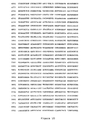
- the complete transgene insert and linked flanking genomic DNA is shown in Figure 5 .
- the full-length transgene/genomic insert sequence (SEQ ID NO:5, Figure 5 ) was isolated from MON88017 genomic DNA by overlapping PCR products. A series of DNA primers were designed to produce amplicons that contain DNA fragments of the transgene insert and a portion of the adjacent flanking genomic regions from the MON88017 genome. The DNA fragments were sequenced, the sequences were combined to create a contig of the fragment sequences that is SEQ ID NO:5 of the present invention.
- the DNA primer pair combinations were: SEQ ID NO:16 and SEQ ID NO:17, SEQ ID NO:18 and SEQ ID NO:17, SEQ ID NO:19 and SEQ ID NO:20, SEQ ID NO:21 and SEQ ID NO:22, SEQ ID NO:23 and SEQ ID NO:24, SEQ ID NO:25 and SEQ ID NO:26, SEQ ID NO:25 and SEQ ID NO:27.
- Total genomic DNA was used for all PCR reactions. All amplicons were visualized on 0.8% agarose gels stained with ethidium bromide.
- the DNA was prepared for sequencing either by purifying the PCR samples directly with the QIAquick PCR Purification kit or by extracting the appropriate fragment from the gel and using the QIAquick Gel Extraction kit. The DNA sequence was produced using DNA sequence analysis equipment (ABI PrismTM 377, PE Biosystems, Foster City, CA) and DNASTAR sequence analysis software (DNASTAR Inc., Madison, WI).
- DNA event primer pairs are used to produce an amplicon diagnostic for corn event MON88017.
- An amplicon diagnostic for MON88017 comprise at least one junction sequence, SEQ ID NO:1 or SEQ ID NO:2.
- the location of primer SEQ ID NO:6 is in the corn genome as shown in Figure 3 beginning at nucleotide position 952.
- the location of primer SEQ ID NO:7 is in the transgene insert as shown in Figure 5 beginning at nucleotide position 450.
- the expected amplicon size using SEQ ID NO:6.and SEQ ID NO:7 in a DNA amplification method with MON88017 DNA is approximately 550 bps.
- any primer pair derived from SEQ ID NO:3 or SEQ ID NO:4 that in a DNA amplification reaction produces an amplicon diagnostic for MON8801 7 or progeny thereof is an aspect of the present invention.
- Any single isolated DNA polynucleotide primer molecule comprising at least 11 contiguous nucleotides of SEQ ID NO:3, or its complement that is useful in a DNA amplification method to produce an amplicon diagnostic for MON88017 is an aspect of the invention.
- Any single isolated DNA polynucleotide primer molecule comprising at least 11 contiguous nucleotides of SEQ ID NO:4, or its complement that is useful in a DNA amplification method to produce an amplicon diagnostic for MON8801 7 is an aspect of the invention.
- An example of the amplification conditions for this analysis is illustrated in Table 2 and Table 3, however, any modification of these methods or the use DNA primers homologous or complementary to SEQ ID NO:3 or SEQ ID NO:4 or DNA sequences of the genetic elements contained in the transgene insert (SEQ ID NO:5) of MON8801 7 that produce an amplicon diagnostic for MON8801 7, is within the art.
- a diagnostic amplicon comprises a DNA molecule homologous or complementary to at least one transgene/genomic junction DNA (SEQ ID NO:1 or SEQ ID NO:2) or a substantial portion thereof.
- An analysis for event MON8801 7 plant tissue sample should include a positive tissue control from event MON88017, a negative control from a corn plant that is not event MON88017, and a negative control that contains no corn genomic DNA.
- a primer pair that will amplify an endogenous corn DNA molecule will serve as an internal control for the DNA amplification conditions, an example of these are SEQ ID NO:28 and SEQ ID NO:29 that amplifies an approximately 239 bp DNA fragment.
- Additional primer sequences can be selected from SEQ ID NO:3, SEQ ID NO:4, or SEQ ID NO:5 by those skilled in the art of DNA amplification methods, and conditions selected for the production of an amplicon by the methods shown in Table 2 and Table 3 may differ, but result in an amplicon diagnostic for event MON88017 DNA.
- the use of these DNA primer sequences with modifications to the methods of Table 2 and 3 are within the scope of the invention.
- the amplicon produced by at least one DNA primer sequence derived from SEQ ID NO:3, SEQ ID NO:4, or SEQ ID NO:5 that is diagnostic for MON88017 is an aspect of the invention.
- DNA detection kits that contain at least one DNA primer derived from SEQ ID NO:3 or SEQ ID NO:4, or SEQ ID NO:5 that when used in a DNA amplification method produces a diagnostic amplicon for MON8801 7 is an aspect of the invention.
- a corn plant or seed, wherein its genome will produce an amplicon diagnostic for MON8801 7 when tested in a DNA amplification method is an aspect of the invention.
- the assay for the MON88017 amplicon can be performed by using a Stratagene Robocycler, MJ Engine, Perkin-Elmer 9700, or Eppendorf Mastercycler Gradient thermocycler as shown in Table 3, or by methods and apparatus known to those skilled in the art. Table 2.
- Step Reagent Amount Comments 1 Nuclease-free water add to final volume of 20 ⁇ l - 2 10X reaction buffer (with MgCl 2 ) 2.0 ⁇ l 1X final concentration of buffer, 1.5 mM final concentration of MgCl 2 3 10 mM solution of dATP, dCTP, dGTP, and dTTP 0.4 ⁇ l 200 ⁇ M final concentration of each dNTP 4 event primer 1 (SEQ ID NO:6) (resuspended in 1X TE buffer or nuclease-free water to a concentration of 10 ⁇ M) 0.4 ⁇ l 0.2 ⁇ M final concentration 5 event primer 2 (SEQ ID NO:7) (resuspended in 1X TE buffer or nuclease-free water to a concentration of 10 ⁇ M) 0.4 ⁇ l 0.2 ⁇ M final concentration 6 RNase, DNase free (500 ng
- Southern blot analysis was performed on genomic DNA was isolated from the MON88017 and control corn tissue as described in Example 3. Quantitation of DNA samples was performed using a Hoefer DyNA Quant 200 Fluorometer (Pharmacia, Uppsala, Sweden) with Roche molecular size marker IX as a DNA calibration standard.
- genomic DNA from the test substance was used for restriction enzyme digestions.
- 10 ⁇ g of genomic DNA from the control substance were used for restriction enzyme digestions.
- For the insert stability analysis approximately 10 ⁇ g of genomic DNA from the test substance were used.
- Overnight digests were performed at 37°C in a total volume of ⁇ 500 ⁇ l using 100 units of the appropriate restriction enzyme. After digestion, the samples were precipitated by adding 1/10 volume (50 ⁇ l) of 3 M NaOAc (pH 5.2) and 2 volumes (1 ml relative to the original digest volume) of 100% ethanol, followed by incubation in a -20°C freezer for at least 30 minutes.
- the digested DNA was pelleted at maximum speed in a microcentrifuge, washed with 70% ethanol, dried, and re-dissolved in TE buffer.
- DNA probes were prepared by PCR amplification of plant expression cassette portion of pMON53616 template DNA. Approximately 25 ng of each probe (except the NOS 3' and TaHsp17 3' polyadenylation sequences) were labeled with 32 P-dCTP (6000 Ci/mmol) by a random priming method (RadPrime DNA Labeling System, Life Technologies).
- the NOS 3' and tahsp17 3' polyadenylation sequences were labeled by PCR using 25 ng of DNA probe template in the following manner: sense and antisense primers specific to the template (0.25 mM each); 1.5 mM MgCl2; 3 mM each of dATP, dGTP and dTTP; ⁇ 100 mCi of 32P-dCTP (6000 Ci/mmol); and 2.5 Units of Taq DNA polymerase in a final volume of 20 ml.
- the cycling conditions were as follows: 1 cycle at 94°C for 3 minutes; 2 cycles at 94°C for 45 seconds, 52°C for 30 seconds, 72°C for 2 minutes; and 1 cycle at 72°C for 10 minutes. All radiolabeled probes were purified using a Sephadex G-50 column (Roche, Indianapolis, IN).
- Synthetic DNA molecules for use as probes for marker assisted breeding methods or for the detection of the MON8801 7 DNA in a sample can be made comprising the DNA sequence of the transgene/genome junction DNA molecule described in SEQ ID NO:1 and SEQ ID NO:2 or a substantial portion thereof.
- the methods used to identify heterozygous from homozygous progeny containing event MON88017 are described in a zygosity assay for which examples of conditions are described in Table 4 and Table 5.
- the DNA primers used in the zygosity assay are primers (SEQ ID NO:30), (SEQ ID NO:31), (SEQ ID NO:32), 6FAMTM labeled primer (SEQ ID NO:33) and VICTM labeled primer (SEQ ID NO:34), 6FAM and VIC are florescent dye products of Applied Biosystems (Foster City, CA) attached to the DNA primer.
- SEQ ID NO:30, SEQ ID NO:31 and SEQ ID NO:32 when used in these reaction methods produce a DNA amplicon for non-transgenic corn, two DNA amplicons for heterozygous corn containing event MON88017 DNA, and a DNA amplicon for homozygous MON88017 corn that is distinct from any other non-MON88017 corn plant.
- the controls for this analysis should include a positive control from homozygous and heterozygous corn containing event MON8801 7 DNA, a negative control from non-transgenic corn, and a negative control that contains no template DNA.
- This assay is optimized for use with a Stratagene Robocycler, MJ Engine, Perkin-Elmer 9700, or Eppendorf Mastercycler Gradient thermocycler.
- thermocycler should be run in the calculated mode.
- thermocycler run the thermocycler with the ramp speed set at maximum.
- the ATCC accession number is PTA-5582.
- the deposit will be maintained in the depository for a period of 30 years, or 5 years after the last request, or for the effective life of the patent, whichever is longer, and will be replaced as necessary during that period.
- Products such as foodstuffs and commodities can be produced from corn event MON88017, and such foodstuffs and commodities are expected to contain nucleotide sequences that, if detected in sufficient levels in such foodstuffs and commodities, can be diagnostic for the presence of corn event MON88017 materials within such commodities and foodstuffs.
- Examples of such foodstuffs and commodities include but are not limited to corn oil, corn meal, corn flour, corn gluten, corn cakes, corn starch, and any other foodstuff intended for consumption as a food source by an animal or otherwise, intended as a bulking agent, or intended as a component in a makeup composition for cosmetic use, etc.
- a nucleic acid detection method and/or kit based on a probe or a primer pair wherein the probe sequence or the sequence of the primers are selected from the group of sequences as set forth in SEQ ID NO:1, SEQ ID NO:2, SEQ ID NO:3, SEQ ID NO:4, and SEQ ID NO:5 may be developed that allows the detection of a MON8801 7 nucleotide sequence such as SEQ ID NO:1 or SEQ ID NO:2 in a biological sample, and such detection would be diagnostic for the corn event MON88017 in such sample.
- DNA molecule or fragments thereof useful as a DNA probe molecule or DNA primer molecule, wherein said DNA molecule or fragment thereof is homologous or complementary to a DNA molecule selected from the group consisting of SEQ ID NO:1, SEQ ID NO:2, SEQ ID NO:3, SEQ ID NO:4 and SEQ ID NO:5.
- An isolated DNA primer molecule of paragraph 105 comprising at least 11 contiguous nucleotides of SEQ ID NO:3, or its complement that is useful in a DNA amplification method to produce an amplicon comprising SEQ ID NO:1, wherein said amplicon is diagnostic for corn event MON88017 DNA.
- An isolated DNA primer molecule of paragraph 105 comprising at least 11 contiguous nucleotides of SEQ ID NO:4, or its complement that is useful in a DNA amplification method to produce an amplicon comprising SEQ ID NO:2, wherein said amplicon is diagnostic for corn event MON88017 DNA.
- a method of detecting the presence of DNA corresponding to the corn event MON88017 in a sample comprising:
- a stably transformed maize plant whose DNA when analyzed by the method of paragraph 108, produces a DNA amplicon comprising SEQ ID NO:1 or SEQ ID NO:2.
- a method of detecting the presence of a DNA corresponding to the corn event MON88017 in a sample comprising:
- a glyphosate tolerant and a corn rootworm resistant corn plant wherein the glyphosate tolerant trait and corn rootworm resistant trait occur at the same locus and are genetically linked to a complement of a marker polynucleic acid, wherein said marker polynucleic acid molecule is homologous or complementary to a DNA molecule selected from the group consisting of SEQ ID NO:1 and SEQ ID NO:2.
- a method of determining the zygosity of the progeny of corn event MON88017 comprising:
- a method of producing a corn plant that is resistant to root feeding damage by corn rootworm larvae and tolerates application of glyphosate herbicide comprising:
- a method for controlling weeds in a field of corn event MON88017 comprising the step of applying an effective dose of a glyphosate containing herbicide to said field of corn event MON88017.
- the corn plant MON88017 or parts thereof of paragraph 106 comprising pollen, ovule, seed, roots, or leaves.
- the corn plant MON88017 of paragraph 106 further comprising progeny thereof.
- the corn plant MON8801 7 of paragraph 108 wherein the genome of said corn plant or progeny thereof comprises a DNA molecule selected from the group consisting of SEQ ID NO:1, SEQ ID NO:2, SEQ ID NO:3 and SEQ ID NO:4.
- corn plant MON88017 of paragraph 107 wherein said corn plant is tolerant to corn rootworm and glyphosate.
- corn plant MON88017 of paragraph comprising in its genome the linked plant expression cassettes of pMON5361 6.
- An isolated nucleic acid segment comprising at least from about 11 to about 20 consecutive nucleotides selected from the group consisting of SEQ ID NO:1, and SEQ ID NO:2.
- the isolated nucleic acid segment as set forth in Paragraph 125 for use in a nucleic acid amplification method for detecting the presence of corn event MON88017 nucleic acids in a biological sample.
- a method of detecting the presence of a nucleotide corresponding to corn event MON88017 in a biological sample comprising:
- a method of detecting the presence of one or more corn event MON88017 polynucleotides in a biological sample comprising:
- a composition comprising a nucleotide sequence selected from the group consisting of SEQ ID NO:1, SEQ ID NO:2, and SEQ ID NO:5, wherein said composition is a commodity product selected from the group consisting of corn meal, corn flour, corn oil, corn silk, corn starch, and processed foodstuffs.
- a probe or primer at least from about 11 to about 20 consecutive nucleotides for use in detecting the presence of corn event MON88017 in a biological sample, wherein said consecutive nucleotides are selected from the group consisting of SEQ ID NO:1, SEQ ID NO:2, SEQ ID NO:3, SEQ ID NO:4, and SEQ ID NO:5.
- probe or primer as set forth in Paragraph 132 wherein said probe or primer is labeled with at least one fluorophores.
- a probe or primer at least from about 21 to about 50 or more consecutive nucleotides in length for use in detecting the presence of corn event MON88017 nucleotides in a biological sample selected from the group of consecutive nucleotides as set forth in SEQ ID NO:3, SEQ ID NO:4, and SEQ ID NO:5.
- a commodity or foodstuff comprising corn event MON88017 nucleotide sequences, wherein said sequences are selected from the group consisting of SEQ ID NO:1 and SEQ ID NO:2.
- the commodity or foodstuff of paragraph 135 selected from the group consisting of corn oil, corn starch, corn meal, corn flour, a cosmetic, and a bulking agent.
Landscapes
- Life Sciences & Earth Sciences (AREA)
- Health & Medical Sciences (AREA)
- Genetics & Genomics (AREA)
- Engineering & Computer Science (AREA)
- Chemical & Material Sciences (AREA)
- Organic Chemistry (AREA)
- Wood Science & Technology (AREA)
- Zoology (AREA)
- Biotechnology (AREA)
- Bioinformatics & Cheminformatics (AREA)
- Molecular Biology (AREA)
- General Engineering & Computer Science (AREA)
- Biomedical Technology (AREA)
- Biophysics (AREA)
- Microbiology (AREA)
- Biochemistry (AREA)
- General Health & Medical Sciences (AREA)
- Physics & Mathematics (AREA)
- Plant Pathology (AREA)
- Cell Biology (AREA)
- Analytical Chemistry (AREA)
- Proteomics, Peptides & Aminoacids (AREA)
- Insects & Arthropods (AREA)
- Pest Control & Pesticides (AREA)
- Botany (AREA)
- Mycology (AREA)
- Immunology (AREA)
- Measuring Or Testing Involving Enzymes Or Micro-Organisms (AREA)
- Breeding Of Plants And Reproduction By Means Of Culturing (AREA)
- Physiology (AREA)
- Developmental Biology & Embryology (AREA)
- Environmental Sciences (AREA)
- Cereal-Derived Products (AREA)
- Cosmetics (AREA)
- Investigating Or Analysing Biological Materials (AREA)
Applications Claiming Priority (2)
| Application Number | Priority Date | Filing Date | Title |
|---|---|---|---|
| US52947703P | 2003-12-15 | 2003-12-15 | |
| EP04813968.7A EP1708560B1 (fr) | 2003-12-15 | 2004-12-14 | Plant de mais mon88017, compositions et procedes de detection associes |
Related Parent Applications (1)
| Application Number | Title | Priority Date | Filing Date |
|---|---|---|---|
| EP04813968.7A Division EP1708560B1 (fr) | 2003-12-15 | 2004-12-14 | Plant de mais mon88017, compositions et procedes de detection associes |
Publications (2)
| Publication Number | Publication Date |
|---|---|
| EP2929779A2 true EP2929779A2 (fr) | 2015-10-14 |
| EP2929779A3 EP2929779A3 (fr) | 2016-06-01 |
Family
ID=34699991
Family Applications (2)
| Application Number | Title | Priority Date | Filing Date |
|---|---|---|---|
| EP15164412.7A Withdrawn EP2929779A3 (fr) | 2003-12-15 | 2004-12-14 | Plant de mais mon88017, compositions et procedes de detection associes |
| EP04813968.7A Expired - Lifetime EP1708560B1 (fr) | 2003-12-15 | 2004-12-14 | Plant de mais mon88017, compositions et procedes de detection associes |
Family Applications After (1)
| Application Number | Title | Priority Date | Filing Date |
|---|---|---|---|
| EP04813968.7A Expired - Lifetime EP1708560B1 (fr) | 2003-12-15 | 2004-12-14 | Plant de mais mon88017, compositions et procedes de detection associes |
Country Status (19)
| Country | Link |
|---|---|
| US (6) | US8212113B2 (fr) |
| EP (2) | EP2929779A3 (fr) |
| JP (2) | JP4903051B2 (fr) |
| CN (1) | CN1933723B (fr) |
| AR (6) | AR047052A1 (fr) |
| AU (1) | AU2004299829B2 (fr) |
| BR (1) | BRPI0417592B1 (fr) |
| CA (1) | CA2547563C (fr) |
| ES (1) | ES2542688T3 (fr) |
| GT (1) | GT200400269A (fr) |
| HR (1) | HRP20150814T1 (fr) |
| HU (1) | HUE025703T2 (fr) |
| MX (1) | MXPA06006729A (fr) |
| PL (1) | PL1708560T3 (fr) |
| PT (1) | PT1708560E (fr) |
| RS (1) | RS54170B1 (fr) |
| UY (2) | UY28673A1 (fr) |
| WO (1) | WO2005059103A2 (fr) |
| ZA (1) | ZA200604830B (fr) |
Families Citing this family (422)
| Publication number | Priority date | Publication date | Assignee | Title |
|---|---|---|---|---|
| PL1708560T3 (pl) | 2003-12-15 | 2015-10-30 | Monsanto Technology Llc | Roślina kukurydzy MON88017 oraz kompozycje i sposoby ich wykrywania |
| ES2459369T3 (es) | 2004-12-21 | 2014-05-09 | Monsanto Technology Llc | Plantas transgénicas con rasgos agronómicos potenciados |
| WO2007047016A2 (fr) | 2005-10-13 | 2007-04-26 | Monsanto Technology, Llc | Procedes pour produire une graine hybride |
| EP2247736B1 (fr) | 2008-02-29 | 2013-05-15 | Monsanto Technology, LLC | Plant de maïs correspondant au produit transgénique mon87460 et compositions et procédés de détection associés |
| CN101343664B (zh) * | 2008-08-26 | 2011-07-20 | 天津市农业科学院中心实验室 | 一种快速检测转基因玉米bt11的方法 |
| EP2361015A2 (fr) * | 2008-10-21 | 2011-08-31 | Basf Se | Utilisation de carboxamides sur des plantes cultivées |
| WO2010117737A1 (fr) | 2009-03-30 | 2010-10-14 | Monsanto Technology Llc | Evénement de riz transgénique 17053 et ses procédés d'utilisation |
| US8618360B2 (en) * | 2009-03-30 | 2013-12-31 | Monsanto Technology Llc | Rice transgenic event 17314 and methods of use thereof |
| IN2012DN01800A (fr) * | 2009-08-19 | 2015-06-05 | Dow Agrosciences Llc | |
| ES2586380T3 (es) * | 2009-08-19 | 2016-10-14 | Dow Agrosciences, Llc | Detección del evento de AAD-1 DAS 40278-9 |
| US8598413B2 (en) * | 2009-08-19 | 2013-12-03 | Dow AgroSciecnes, LLC. | AAD-1 event DAS-40278-9, related transgenic corn lines, event-specific identification thereof, and methods of weed control involving AAD-1 |
| CA2771538C (fr) * | 2009-08-19 | 2019-06-04 | Dow Agrosciences Llc | Evenement das-40278-9 d'aad-1, lignees transgeniques de mais connexes et identification specifique d'evenement de celui-ci |
| US9204599B2 (en) | 2009-08-19 | 2015-12-08 | Dow Agrosciences Llc | Detection of AAD1 event DAS-40278-9 |
| CN102573464B (zh) | 2009-09-30 | 2014-07-02 | 巴斯夫欧洲公司 | 阴离子农药的低挥发性胺盐 |
| US8618358B2 (en) | 2009-11-23 | 2013-12-31 | Monsanto Technology Llc | Transgenic maize event MON 87427 and the relative development scale |
| NZ601341A (en) | 2010-01-22 | 2014-02-28 | Bayer Ip Gmbh | Acaricide and/or insecticide active substance combinations |
| EP2460404A1 (fr) | 2010-12-01 | 2012-06-06 | Basf Se | Compositions contenant des sels de polyamine identiques de pesticides anioniques mélangés |
| SG190295A1 (en) | 2010-11-29 | 2013-06-28 | Bayer Ip Gmbh | Alpha,beta-unsaturated imines |
| JP6412311B2 (ja) | 2010-12-01 | 2018-10-24 | バイエル・インテレクチュアル・プロパティ・ゲゼルシャフト・ミット・ベシュレンクテル・ハフツングBayer Intellectual Property GmbH | 作物において線虫類を防除するための、及び、収量を増加させるための、フルオピラムの使用 |
| EP2460407A1 (fr) | 2010-12-01 | 2012-06-06 | Bayer CropScience AG | Combinaisons de substance actives comprenant du pyridyléthylbenzamide et d'autres substances actives |
| RU2605324C2 (ru) * | 2010-12-29 | 2016-12-20 | ДАУ АГРОСАЙЕНСИЗ ЭлЭлСи | Способы определения зиготности в объемной пробе |
| JP2014513061A (ja) | 2011-03-10 | 2014-05-29 | バイエル・インテレクチユアル・プロパテイー・ゲー・エム・ベー・ハー | 処理された種子の種子安全性を保護するためのリポキト−オリゴ糖化合物の使用 |
| EP2688413B1 (fr) | 2011-03-23 | 2018-03-07 | Bayer Intellectual Property GmbH | Combinaisons de composés actifs |
| WO2012136581A1 (fr) | 2011-04-08 | 2012-10-11 | Bayer Cropscience Ag | Dérivés fongicides d'hydroximoyl-tétrazole |
| UY34014A (es) * | 2011-04-15 | 2012-11-30 | Dow Agrosciences Llc | Genes sintéticos para expresar proteínas en células de maíz, construcciones, plantas transgénicas, métodos para controlar pestes y composiciones |
| ES2561296T3 (es) | 2011-04-22 | 2016-02-25 | Bayer Intellectual Property Gmbh | Combinaciones de un compuesto activo que comprenden un derivado de carboximida y un compuesto fungicida |
| WO2012150162A1 (fr) | 2011-05-02 | 2012-11-08 | Basf Se | Procédé de renforcement des performances d'un pesticide faisant appel à des guanidines |
| US20140080706A1 (en) | 2011-06-01 | 2014-03-20 | Basf Se | Method of preparing an aqueous tank mix comprising a base |
| WO2012171914A1 (fr) | 2011-06-14 | 2012-12-20 | Bayer Intellectual Property Gmbh | Utilisation d'un composé de type énaminocarbonyle en association avec un agent de lutte biologique |
| PE20141518A1 (es) | 2011-07-01 | 2014-11-17 | Monsanto Technology Llc | Metodos y composiciones para la regulacion selectiva de la expresion de proteinas |
| AU2012292315B2 (en) | 2011-08-02 | 2015-11-26 | Basf Se | Aqueous composition comprising a pesticide and a base selected from an alkali salt of hy-drogencarbonate |
| BR112014002605A2 (pt) * | 2011-08-02 | 2017-09-26 | Du Pont | método para a seleção de plantas trnsgênicas em alto-rendimento |
| CN103717076B (zh) | 2011-08-10 | 2016-04-13 | 拜耳知识产权股份有限公司 | 含有特定特特拉姆酸衍生物的活性化合物组合物 |
| BR112014003919A2 (pt) | 2011-08-22 | 2017-03-14 | Bayer Cropscience Ag | métodos e meios para modificar um genoma de planta |
| EP2561759A1 (fr) | 2011-08-26 | 2013-02-27 | Bayer Cropscience AG | 2-amidobenzimidazoles fluoroalkyl substitués et leur effet sur la croissance des plantes |
| US9090600B2 (en) | 2011-09-12 | 2015-07-28 | Bayer Intellectual Property Gmbh | Fungicidal 4-substituted-3-{phenyl[(heterocyclylmethoxy)imino]methyl}-1,2,4-oxadizol-5(4H)-one derivatives |
| CN107897194A (zh) | 2011-09-16 | 2018-04-13 | 拜耳知识产权有限责任公司 | 5‑苯基‑或5‑苄基‑2‑异噁唑啉‑3‑甲酸酯用于改善植物产量的用途 |
| CN103781352A (zh) | 2011-09-16 | 2014-05-07 | 拜耳知识产权有限责任公司 | 苯基吡唑啉-3-甲酸酯类用于提高植物产量的用途 |
| BR112014006217B1 (pt) | 2011-09-16 | 2019-01-15 | Bayer Intellectual Property Gmbh | utilização de acilsulfonamidas para melhorar o rendimento de plantas,método para induzir respostas de regulação de crescimento em plantas úteis ou plantas de cultura e composição. |
| UA115132C2 (uk) | 2011-10-04 | 2017-09-25 | Байєр Інтелекчуал Проперті Гмбх | Спосіб боротьби з грибами та ооміцетами шляхом інгібування гена сахаропіндегідрогенази |
| RU2014125077A (ru) | 2011-11-21 | 2015-12-27 | Байер Интеллекчуал Проперти Гмбх | Фунгицидные n-[(тризамещенный силил)этил]-карбоксамидные производные |
| AR089656A1 (es) | 2011-11-30 | 2014-09-10 | Bayer Ip Gmbh | Derivados de n-bicicloalquil- y n-tricicloalquil-(tio)-carboxamida fungicidas |
| CN104270946B (zh) | 2011-12-19 | 2017-05-10 | 拜耳农作物科学股份公司 | 邻氨基苯甲酸二酰胺衍生物用于防治转基因作物中的害虫的用途 |
| WO2013098146A1 (fr) | 2011-12-29 | 2013-07-04 | Bayer Intellectual Property Gmbh | Dérivés fongicides de 3-[(1,3-thiazol-4-ylméthoxyimino)(phényl)méthyl]-2-substitué-1,2,4-oxadiazol-5(2h)-one |
| MX343871B (es) | 2011-12-29 | 2016-11-25 | Bayer Ip Gmbh | Derivados de 3-[(piridin-2-ilmetoxiimino)(fenil)metil]-2-sustituid o-1,2,4-oxadiazol-5(2h)-ona fungicidas. |
| EP2806739A1 (fr) | 2012-01-25 | 2014-12-03 | Bayer Intellectual Property GmbH | Associations de composés actifs contenant du fluopyrame et un agent de lutte biologique |
| CN104507314B (zh) | 2012-01-25 | 2018-01-09 | 拜耳知识产权有限责任公司 | 含有氟吡菌酰胺芽孢杆菌和生物防治剂的活性化合物结合物 |
| AP2014007876A0 (en) | 2012-02-27 | 2014-08-31 | Bayer Ip Gmbh | Active compound combinations containing a thiazoylisoxazoline and a fungicide |
| US9012741B2 (en) * | 2012-03-09 | 2015-04-21 | Limagrain Europe S.A. | Inbred corn line BC115 |
| US8847042B2 (en) * | 2012-03-09 | 2014-09-30 | Limagrain Europe S.A. | Inbred corn line ML12 |
| JP2015512378A (ja) | 2012-03-21 | 2015-04-27 | ビーエーエスエフ ソシエタス・ヨーロピアBasf Se | 炭酸塩及び炭酸水素塩の混合物から選択される塩基を含む液体又は粒子タンクミックス用アジュバント |
| CA2865359A1 (fr) | 2012-03-21 | 2013-09-26 | Basf Se | Adjuvant de melange en cuve au glyphosate comprenant une base choisie parmi un carbonate et/ou un phosphate |
| UY34690A (es) | 2012-03-21 | 2013-09-30 | Basf Se | Adyuvante de mezcla de tanque que comprende un poliglucosido de alquilo y una base |
| JP2015510912A (ja) | 2012-03-21 | 2015-04-13 | ビーエーエスエフ ソシエタス・ヨーロピアBasf Se | 炭酸塩及び/又はリン酸塩から選択される塩基を含む固体粒子状タンクミックス用アジュバント |
| WO2013139949A1 (fr) | 2012-03-23 | 2013-09-26 | Bayer Intellectual Property Gmbh | Compositions comprenant un composé de strigolactame pour la croissance et le rendement accrus de plantes |
| CN104245687B (zh) | 2012-04-12 | 2016-12-14 | 拜尔农科股份公司 | 作为杀真菌剂的n-酰基-2-(环)烷基吡咯烷和哌啶 |
| KR102062517B1 (ko) | 2012-04-20 | 2020-01-06 | 바이엘 크롭사이언스 악티엔게젤샤프트 | N-시클로알킬-n-[(헤테로시클릴페닐)메틸렌]-(티오)카르복사미드 유도체 |
| JP2015516396A (ja) | 2012-04-20 | 2015-06-11 | バイエル・クロップサイエンス・アーゲーBayer Cropscience Ag | N−シクロアルキル−n−[(三置換シリルフェニル)メチレン]−(チオ)カルボキサミド誘導体 |
| UA126903C2 (uk) | 2012-05-08 | 2023-02-22 | Монсанто Текнолоджи Ллс | Об'єкт кукурудзи mon 87411 |
| EP2662362A1 (fr) | 2012-05-09 | 2013-11-13 | Bayer CropScience AG | Carboxamides indanyles de pyrazole |
| EP2662364A1 (fr) | 2012-05-09 | 2013-11-13 | Bayer CropScience AG | Carboxamides tétrahydronaphtyles de pyrazole |
| EP2662370A1 (fr) | 2012-05-09 | 2013-11-13 | Bayer CropScience AG | Carboxamides de benzofuranyle 5-halogenopyrazole |
| EP2662361A1 (fr) | 2012-05-09 | 2013-11-13 | Bayer CropScience AG | Carboxamides indanyles de pyrazole |
| US9249104B2 (en) | 2012-05-09 | 2016-02-02 | Bayer Cropscience Ag | Pyrazole indanyl carboxamides |
| BR112014027644A2 (pt) | 2012-05-09 | 2017-06-27 | Bayer Cropscience Ag | 5-halogenopirazol-indanil-carboxamidas |
| EP2662363A1 (fr) | 2012-05-09 | 2013-11-13 | Bayer CropScience AG | Biphénylcarboxamides 5-halogenopyrazoles |
| EP2662360A1 (fr) | 2012-05-09 | 2013-11-13 | Bayer CropScience AG | Carboxamides indanyles 5-halogenopyrazoles |
| AR091104A1 (es) | 2012-05-22 | 2015-01-14 | Bayer Cropscience Ag | Combinaciones de compuestos activos que comprenden un derivado lipo-quitooligosacarido y un compuesto nematicida, insecticida o fungicida |
| KR20150021503A (ko) | 2012-05-30 | 2015-03-02 | 바이엘 크롭사이언스 아게 | 생물학적 방제제 및 살진균제를 포함하는 조성물 |
| TR201816257T4 (tr) | 2012-05-30 | 2018-11-21 | Bayer Cropscience Ag | Bir biyolojik kontrol ajanı ve trifloksistrobin içeren bileşim. |
| BR112014029903A2 (pt) | 2012-05-30 | 2017-06-27 | Bayer Cropscience Ag | composições que compreendem um agente de controle biológico e um fungicida |
| WO2013178655A1 (fr) | 2012-05-30 | 2013-12-05 | Bayer Cropscience Ag | Compositions contenant un agent de lutte biologique et un fongicide choisi parmi les inhibiteurs de la synthèse de la membrane lipidique, de la biosynthèse de la mélanine, de la synthèse des acides nucléiques ou de la transduction des signaux |
| BR112014029906A2 (pt) | 2012-05-30 | 2018-04-17 | Bayer Cropscience Ag | composições compreendendo um agente de controle biológico e um inseticida. |
| NZ742941A (en) | 2012-05-30 | 2019-09-27 | Bayer Cropscience Ag | Composition comprising a biological control agent and a fungicide selected from inhibitors of the mitosis and cell division or compounds having a multi-site action |
| JP2015519353A (ja) | 2012-05-30 | 2015-07-09 | バイエル・クロップサイエンス・アーゲーBayer Cropscience Ag | 生物的防除剤及び殺虫剤を含んでいる組成物 |
| US9380787B2 (en) | 2012-05-30 | 2016-07-05 | Bayer Cropscience Ag | Composition comprising a biological control agent and a fungicide selected from inhibitors of amino acid or protein biosynthesis, inhibitors of ATP production and inhibitors of the cell wall synthesis |
| JP2015521609A (ja) | 2012-06-21 | 2015-07-30 | ビーエーエスエフ ソシエタス・ヨーロピアBasf Se | ジカンバとドリフト抑制剤とを含む水性組成物 |
| CN104427867A (zh) | 2012-07-03 | 2015-03-18 | 巴斯夫欧洲公司 | 包含阴离子农药和碱的高度浓缩的含水配制剂 |
| US20150150249A1 (en) | 2012-07-09 | 2015-06-04 | Basf Se | Drift control agent comprising polypropylene glycol and a triblock polymer |
| EP3424322A1 (fr) | 2012-07-31 | 2019-01-09 | Bayer CropScience Aktiengesellschaft | Compositions comprenant un mélange de pesticides contenant du terpène et un insecticide |
| UY35035A (es) | 2012-09-14 | 2014-04-30 | Bayer Cropscience Ag | ?molécula de ácido nucleico recombinante que codifica una enzima hppd, vector, célula huésped, semilla, planta, polipéptido, producto primario, métodos y usos?. |
| EP2719280A1 (fr) | 2012-10-11 | 2014-04-16 | Bayer CropScience AG | Utilisation de dérivés de carboxamide N-phenylethylpyrazole ou des sels de ceux-ci pour le management de la résistance des fungi phytopathogènes |
| MX380476B (es) | 2012-10-19 | 2025-03-12 | Bayer Cropscience Ag | Método de promoción de crecimiento de planta usando derivados de carboxamida. |
| CA2888600C (fr) | 2012-10-19 | 2021-08-10 | Bayer Cropscience Ag | Combinaisons de composes actifs comprenant des derives carboxamide |
| CA2888559C (fr) | 2012-10-19 | 2021-03-02 | Bayer Cropscience Ag | Procede d'amelioration de la tolerance des plantes aux stress abiotiques a l'aide de derives carboxamide ou thiocarboxamide |
| AU2013333847B2 (en) | 2012-10-19 | 2017-04-20 | Bayer Cropscience Ag | Method for treating plants against fungi resistant to fungicides using carboxamide or thiocarboxamide derivatives |
| EP2735231A1 (fr) | 2012-11-23 | 2014-05-28 | Bayer CropScience AG | Combinaisons de composés actifs |
| BR112015012054A2 (pt) | 2012-11-30 | 2017-07-11 | Bayer Cropscience Ag | mistura fungicida ou pesticida binária |
| UA116223C2 (uk) | 2012-11-30 | 2018-02-26 | Байєр Кропсайєнс Акцієнгезелльшафт | Подвійна фунгіцидна суміш |
| BR122020019349B1 (pt) | 2012-11-30 | 2021-05-11 | Bayer Cropscience Ag | composição, seu processo de preparação, método para controlar um ou mais microrganismos nocivos, semente resistente a microorganismos nocivos e seu método de tratamento |
| WO2014083089A1 (fr) | 2012-11-30 | 2014-06-05 | Bayer Cropscience Ag | Mélanges fongicides et pesticides ternaires |
| UA117819C2 (uk) | 2012-11-30 | 2018-10-10 | Байєр Кропсайєнс Акцієнгезелльшафт | Подвійні пестицидні і фунгіцидні суміші |
| MX2015006631A (es) | 2012-12-03 | 2015-08-05 | Bayer Cropscience Ag | Composicion que comprende un agente de control biologico y un insecticida. |
| WO2014086747A2 (fr) | 2012-12-03 | 2014-06-12 | Bayer Cropscience Ag | Composition comprenant un agent de lutte biologique et un fongicide |
| CN105025722A (zh) | 2012-12-03 | 2015-11-04 | 拜耳作物科学股份公司 | 包含生物防治剂和杀虫剂的组合物 |
| PT3318129T (pt) | 2012-12-03 | 2020-02-18 | Bayer Cropscience Ag | Composição compreendendo uma combinação de paecilomyces lilacinus e fluopiram |
| MX2015006946A (es) | 2012-12-03 | 2015-09-08 | Bayer Cropscience Ag | Composicion que comprende agentes de control biologico. |
| WO2014086753A2 (fr) | 2012-12-03 | 2014-06-12 | Bayer Cropscience Ag | Composition comprenant des agents de lutte biologique |
| WO2014086748A2 (fr) | 2012-12-03 | 2014-06-12 | Bayer Cropscience Ag | Composition comprenant un agent de lutte biologique et un fongicide |
| WO2014086758A2 (fr) | 2012-12-03 | 2014-06-12 | Bayer Cropscience Ag | Composition comprenant un agent de lutte biologique et un insecticide |
| WO2014090765A1 (fr) | 2012-12-12 | 2014-06-19 | Bayer Cropscience Ag | Utilisation de 1-[2-fluoro-4-méthyle-5-(2,2,2- trifluoroéthylsulfinyl)phényl]-5-amino-3-trifluorométhyl)-1 h-1,2,4 tfia zole à des fins de régulation des nématodes dans les cultures résistantes aux nématodes |
| AR093996A1 (es) | 2012-12-18 | 2015-07-01 | Bayer Cropscience Ag | Combinaciones bactericidas y fungicidas binarias |
| US9428459B2 (en) | 2012-12-19 | 2016-08-30 | Bayer Cropscience Ag | Difluoromethyl-nicotinic- tetrahydronaphtyl carboxamides |
| CA2899490A1 (fr) | 2013-02-11 | 2014-08-14 | Bayer Cropscience Lp | Compositions comprenant de la gougerotine et un fongicide |
| EP2953466A1 (fr) | 2013-02-11 | 2015-12-16 | Bayer Cropscience LP | Compositions comprenant de la gougérotine et un insecticide |
| CA2898792A1 (fr) | 2013-02-11 | 2014-08-14 | Bayer Cropscience Lp | Compositions comportant un agent de lutte biologique a base de streptomyces et un autre agent de lutte biologique |
| CN105247054B (zh) | 2013-03-07 | 2019-06-18 | 阿则耐克斯公司 | 毒素基因及其使用方法 |
| WO2014170345A2 (fr) | 2013-04-19 | 2014-10-23 | Bayer Cropscience Ag | Procédé pour l'utilisation améliorée du potentiel de production de plantes transgéniques |
| CN105307492B (zh) | 2013-04-19 | 2018-03-30 | 拜耳作物科学股份公司 | 二元杀虫或除虫混合物 |
| TW201507722A (zh) | 2013-04-30 | 2015-03-01 | Bayer Cropscience Ag | 做為殺線蟲劑及殺體內寄生蟲劑的n-(2-鹵素-2-苯乙基)-羧醯胺類 |
| WO2014177514A1 (fr) | 2013-04-30 | 2014-11-06 | Bayer Cropscience Ag | Phénéthylcarboxamides n-substitués nématicides |
| US9365863B2 (en) | 2013-05-08 | 2016-06-14 | Monsanto Technology Llc | Compositions and methods for deploying a transgenic refuge seed blend |
| US9770022B2 (en) | 2013-06-26 | 2017-09-26 | Bayer Cropscience Ag | N-cycloalkyl-N-[(bicyclylphenyl)methylene]-(thio)carboxamide derivatives |
| US10392626B1 (en) | 2013-10-09 | 2019-08-27 | Monsanto Technology Llc | Plant regulatory elements and uses thereof |
| US10829773B2 (en) | 2013-10-09 | 2020-11-10 | Monsanto Technology Llc | Interfering with HD-Zip transcription factor repression of gene expression to produce plants with enhanced traits |
| WO2015053998A1 (fr) | 2013-10-09 | 2015-04-16 | Monsanto Technology Llc | Événement de maïs transgénique mon87403 et procédés pour la détection de celui-ci |
| AR097995A1 (es) | 2013-10-14 | 2016-04-27 | Syngenta Participations Ag | Método para sembrar filas de cultivos |
| TW201609661A (zh) | 2013-12-05 | 2016-03-16 | 拜耳作物科學公司 | N-環烷基-n-{[2-(1-經取代環烷基)苯基]亞甲基}-(硫代)甲醯胺衍生物 |
| EP3077377B1 (fr) | 2013-12-05 | 2020-01-22 | Bayer CropScience Aktiengesellschaft | Dérivés de n-cycloalkyl-n-{[2-(1-cycloalkyl substitué)phényl]méthylène}-(thio)carboxamide |
| EP2885970A1 (fr) | 2013-12-21 | 2015-06-24 | Bayer CropScience AG | Compositions fongicides comportant un composé I, au moins un inhibiteur de déshydrogénase de la succinate (SDH) et au moins un fongicide de triazole |
| CN106459986B (zh) | 2014-03-11 | 2020-06-30 | 拜耳作物科学有限合伙公司 | Hppd变体和使用方法 |
| WO2015160620A1 (fr) | 2014-04-16 | 2015-10-22 | Bayer Cropscience Lp | Compositions comprenant de la ningnanmycine et un insecticide |
| WO2015160618A1 (fr) | 2014-04-16 | 2015-10-22 | Bayer Cropscience Lp | Compositions comprenant de la ningnanmycine et un agent de lutte biologique |
| WO2015160619A1 (fr) | 2014-04-16 | 2015-10-22 | Bayer Cropscience Lp | Compositions comprenant de la ningnanmycine et un fongicide |
| EA201790048A1 (ru) | 2014-06-26 | 2017-05-31 | Басф Агрокемикэл Продактс Б.В. | Обработка семян ингибиторами ацетолактатсинтазы (als) |
| US10905127B2 (en) | 2014-10-27 | 2021-02-02 | Newleaf Symbiotics, Inc. | Methods and compositions for controlling corn rootworm |
| WO2016071331A1 (fr) | 2014-11-07 | 2016-05-12 | Basf Se | Adjuvant agrochimique contenant des 2-oxo-1,3-dioxolan-4 carboxylates |
| US9510533B2 (en) | 2014-11-13 | 2016-12-06 | Seminis Vegetable Seeds, Inc. | Sweet corn hybrid SV1446SD and parents thereof |
| US9374962B2 (en) | 2014-11-13 | 2016-06-28 | Seminis Vegetable Seeds, Inc. | Sweet corn hybrid SV9014SB and parents thereof |
| WO2016166077A1 (fr) | 2015-04-13 | 2016-10-20 | Bayer Cropscience Aktiengesellschaft | Dérivés de n-cycloalkyle-n-(bihétérocyclyléthylène)-(thio)carboxamide |
| CN104878091B (zh) * | 2015-04-30 | 2019-05-17 | 北京大北农科技集团股份有限公司 | 用于检测玉米植物dbn9978的核酸序列及其检测方法 |
| CN104878097B (zh) * | 2015-04-30 | 2018-10-26 | 北京大北农科技集团股份有限公司 | 用于检测玉米植物dbn9981的核酸序列及其检测方法 |
| CN104830857B (zh) * | 2015-05-27 | 2018-07-24 | 四川省农业科学院分析测试中心 | 转基因玉米mon88017品系特异定量pcr精准检测的引物和探针及方法 |
| EP3097782A1 (fr) | 2015-05-29 | 2016-11-30 | Bayer CropScience Aktiengesellschaft | Procédés de régulation de nématodes phytopathogènes par combinaison du fluopyram et de biopesticides |
| WO2017042259A1 (fr) | 2015-09-11 | 2017-03-16 | Bayer Cropscience Aktiengesellschaft | Variants de la hppd et procédé d'utilisation |
| EP3922100A1 (fr) | 2015-10-12 | 2021-12-15 | Pioneer Hi-Bred International, Inc. | Produits biologiques et leur utilisation dans des plantes |
| JP6113310B2 (ja) * | 2016-01-15 | 2017-04-12 | ダウ アグロサイエンシィズ エルエルシー | Aad−1イベントdas−40278−9、関連するトランスジェニックトウモロコシ系統およびそのイベント特異的同定 |
| US9888649B2 (en) | 2016-06-09 | 2018-02-13 | Seminis Vegetable Seeds, Inc. | Sweet corn hybrid SVSK0391 and parents thereof |
| US9980451B2 (en) | 2016-06-09 | 2018-05-29 | Seminis Vegetable Seeds, Inc. | Sweet corn line SHY-6RLAL196 |
| US9980452B2 (en) | 2016-06-09 | 2018-05-29 | Seminis Vegetable Seeds, Inc. | Sweet corn line SHY-6RLAN014 |
| US9877451B2 (en) | 2016-06-09 | 2018-01-30 | Seminis Vegetable Seeds, Inc. | Sweet corn hybrid SV7538SK and parents thereof |
| US10028463B2 (en) | 2016-07-11 | 2018-07-24 | Seminis Vegetable Seeds, Inc. | Sweet corn line SYW-6SSLM804 |
| EP3490379A1 (fr) | 2016-07-29 | 2019-06-05 | Bayer CropScience Aktiengesellschaft | Combinaisons de composés actifs et procédés pour protéger le matériau de propagation des plantes |
| BR112019010476A2 (pt) | 2016-11-23 | 2019-09-10 | BASF Agricultural Solutions Seed US LLC | molécula de ácido nucleico recombinante, vetor, célula hospedeira, planta transgênica, semente transgênica, polipeptídeo recombinante, composição, método para controlar uma população de pragas, para matar pragas, para produzir um polipeptídeo, planta ou célula vegetal, método para proteger uma planta contra uma praga, para aumentar o rendimento em uma planta, uso e produto primário |
| EP3555056A1 (fr) | 2016-12-19 | 2019-10-23 | Basf Se | Oxadiazoles substitués pour lutter contre des champignons phytopathogènes |
| CN110431234B (zh) | 2017-01-18 | 2024-04-16 | 巴斯夫农业种子解决方案美国有限责任公司 | Bp005毒素基因及其使用方法 |
| AR110756A1 (es) | 2017-01-18 | 2019-05-02 | Bayer Cropscience Lp | Uso de bp005 para el control de patógenos de planta |
| WO2018153730A1 (fr) | 2017-02-21 | 2018-08-30 | Basf Se | Oxadiazoles substitués utilisés pour lutter contre des champignons phytopathogènes |
| US11708565B2 (en) | 2017-03-07 | 2023-07-25 | BASF Agricultural Solutions Seesi US LLC | HPPD variants and methods of use |
| JP6472474B2 (ja) * | 2017-03-14 | 2019-02-20 | ダウ アグロサイエンシィズ エルエルシー | Aad−1イベントdas−40278−9、関連するトランスジェニックトウモロコシ系統およびそのイベント特異的同定 |
| WO2018184970A1 (fr) | 2017-04-07 | 2018-10-11 | Basf Se | Oxadiazoles substitués utilisés pour lutter contre des champignons phytopathogènes |
| WO2018188962A1 (fr) | 2017-04-11 | 2018-10-18 | Basf Se | Oxadiazoles substitués utilisés pour lutter contre des champignons phytopathogènes |
| MX2019012543A (es) | 2017-04-21 | 2019-12-02 | Bayer Cropscience Lp | Metodo para mejorar la seguridad de los cultivos. |
| US11109591B2 (en) | 2017-04-24 | 2021-09-07 | Taminco Bvba | Single phase liquids of alkanolamine salts of dicamba |
| WO2018202491A1 (fr) | 2017-05-04 | 2018-11-08 | Basf Se | Trifluorométhyloxadiazoles substitués utilisés pour lutter contre des champignons phytopathogènes |
| CN110621669A (zh) | 2017-05-04 | 2019-12-27 | 巴斯夫欧洲公司 | 防除植物病原性真菌的取代5-卤代烷基-5-羟基异噁唑类 |
| WO2018219797A1 (fr) | 2017-06-02 | 2018-12-06 | Basf Se | Oxadiazoles substitués utilisés pour lutter contre des champignons phytopathogènes |
| US10188058B2 (en) | 2017-06-08 | 2019-01-29 | Seminis Vegetable Seeds, Inc. | Sweet corn hybrid SVSK6143 and parents thereof |
| US10244701B2 (en) | 2017-06-08 | 2019-04-02 | Seminis Vegetable Seeds, Inc. | Sweet corn hybrid SVSD7749 and parents thereof |
| US10212900B2 (en) | 2017-06-08 | 2019-02-26 | Seminis Vegetable Seeds, Inc. | Sweet corn hybrid SVSC0111 and parents thereof |
| US10194611B2 (en) | 2017-06-08 | 2019-02-05 | Seminis Vegetable Seeds, Inc. | Sweet corn hybrid SVSB3847 and parents thereof |
| EP3642187A1 (fr) | 2017-06-19 | 2020-04-29 | Basf Se | 2-[[5-(trifluorométhyl)-1,2,4-oxadiazol-3-yl]aryloxy](thio)acétamides pour lutter contre des champignons phytopathogènes |
| WO2019025250A1 (fr) | 2017-08-04 | 2019-02-07 | Basf Se | Trifluorométhyloxadiazoles substitués permettant de lutter contre des champignons phytopathogènes |
| WO2019038042A1 (fr) | 2017-08-21 | 2019-02-28 | Basf Se | Trifluorométhyloxadiazoles substitués utilisés pour lutter contre des champignons phytopathogènes |
| EP3684761A1 (fr) | 2017-09-18 | 2020-07-29 | Basf Se | Trifluorométhyloxadiazoles substitués permettant de lutter contre des champignons phytopathogènes |
| WO2019068811A1 (fr) | 2017-10-06 | 2019-04-11 | Bayer Aktiengesellschaft | Compositions comprenant du fluopyrame et du tioxazafène |
| BR112020008096A2 (pt) | 2017-10-24 | 2020-11-03 | Basf Se | método para conferir tolerância a um herbicida e planta de soja transgênica |
| BR112020008092A2 (pt) | 2017-10-24 | 2020-09-15 | BASF Agricultural Solutions Seed US LLC | método para conferir tolerância a um herbicida e planta de soja transgênica |
| WO2019101511A1 (fr) | 2017-11-23 | 2019-05-31 | Basf Se | Trifluorométhyloxadiazoles substitués permettant de lutter contre des champignons phytopathogènes |
| MX2020005464A (es) | 2017-11-30 | 2020-12-03 | Boragen Inc | Compuestos de benzoxaborol y formulaciones de los mismos. |
| WO2019121143A1 (fr) | 2017-12-20 | 2019-06-27 | Basf Se | Dérivés de cyclopropyle substitués |
| WO2019137995A1 (fr) | 2018-01-11 | 2019-07-18 | Basf Se | Nouveaux composés pyridazine destinés à la lutte contre les nuisibles invertébrés |
| US20200359619A1 (en) | 2018-01-18 | 2020-11-19 | Pioneer Hi-Bred International, Inc. | Alginate encapsulation of fungal microsclerotia |
| CN111669972A (zh) | 2018-01-29 | 2020-09-15 | 巴斯夫农业公司 | 新农业化学制剂 |
| WO2019154665A1 (fr) | 2018-02-07 | 2019-08-15 | Basf Se | Nouveaux pyridine carboxamides |
| MX2020008357A (es) | 2018-02-07 | 2020-09-25 | Basf Se | Piridincarboxamidas novedosas. |
| CN110144363B (zh) * | 2018-02-11 | 2022-11-18 | 中国种子集团有限公司 | 抗虫耐除草剂玉米转化事件 |
| CN111801014B (zh) | 2018-03-01 | 2022-05-27 | 巴斯夫农业公司 | 氯氟醚菌唑的杀真菌组合物 |
| CA3093007A1 (fr) | 2018-04-27 | 2019-10-31 | Heather Marie CHRISTENSEN | Evenement de mais dp-032218-9 et procedes de detection de celui-ci |
| WO2019219464A1 (fr) | 2018-05-15 | 2019-11-21 | Basf Se | Trifluorométhyloxadiazoles substitués utilisés dans la lutte contre des champignons phytopathogènes |
| WO2019224092A1 (fr) | 2018-05-22 | 2019-11-28 | Basf Se | Dérivés c15 à action pesticide de ginkgolides |
| CN112513033A (zh) | 2018-06-04 | 2021-03-16 | 拜耳公司 | 除草活性的双环苯甲酰基吡唑 |
| EP3836938A4 (fr) | 2018-08-18 | 2022-05-11 | Boragen, Inc. | Formes solides de benzoxaborole substitué et compositions associées |
| EP3613736A1 (fr) | 2018-08-22 | 2020-02-26 | Basf Se | Dérivés de glutarimide substitués |
| JP7181522B2 (ja) * | 2018-09-18 | 2022-12-01 | 国立研究開発法人農業・食品産業技術総合研究機構 | プライマーセット、及びそれを用いた標的ヌクレオチド配列の増幅方法 |
| EP3628158A1 (fr) | 2018-09-28 | 2020-04-01 | Basf Se | Composé pesticide contenant des substances mésoioniques et des biopesticides |
| US12134616B2 (en) | 2018-10-23 | 2024-11-05 | Basf Se | Tricyclic pesticidal compounds |
| EP3643705A1 (fr) | 2018-10-24 | 2020-04-29 | Basf Se | Composés pesticides |
| BR112021011370A2 (pt) | 2018-12-14 | 2021-08-31 | Pioneer Hi-Bred International, Inc. | Produtos biológicos e seu uso em plantas |
| EP3670501A1 (fr) | 2018-12-17 | 2020-06-24 | Basf Se | Composés de [1,2,4] triazole substitué utiles comme fongicides |
| HUE062726T2 (hu) | 2019-01-11 | 2023-12-28 | Basf Se | 1-(1,2-dimetilpropil)-N-etil-5-metil-N-piridazin-4-il-pirazol-4-karboxamid kristályos formái |
| EP3696177A1 (fr) | 2019-02-12 | 2020-08-19 | Basf Se | Composés hétérocycliques destinés à la lutte contre les organismes nuisibles invertébrés |
| EP3965575A1 (fr) | 2019-05-10 | 2022-03-16 | Bayer CropScience LP | Combinaisons de composés actifs |
| EP3975718A1 (fr) | 2019-05-29 | 2022-04-06 | Basf Se | Composés imidazolium mésoioniques et leurs dérivés pour lutter contre les animaux nuisibles |
| EP3769623A1 (fr) | 2019-07-22 | 2021-01-27 | Basf Se | Composés et dérivés mésoioniques d'imidazolium pour lutter contre les animaux nuisibles |
| WO2020244970A1 (fr) | 2019-06-06 | 2020-12-10 | Basf Se | Nouveaux carboxamides de pyridine carbocycliques |
| WO2020244968A1 (fr) | 2019-06-06 | 2020-12-10 | Basf Se | N-(pyrid-3-yl)carboxamides fongicides |
| WO2020244969A1 (fr) | 2019-06-06 | 2020-12-10 | Basf Se | Dérivés de pyridine et leur utilisation comme fongicides |
| EP3766879A1 (fr) | 2019-07-19 | 2021-01-20 | Basf Se | Dérivés de pytazole pesticides |
| KR20220035939A (ko) | 2019-07-22 | 2022-03-22 | 바이엘 악티엔게젤샤프트 | 살충제로서의 5-아미노-치환된 피라졸 및 트리아졸 |
| JP7691973B2 (ja) | 2019-07-23 | 2025-06-12 | バイエル・アクチエンゲゼルシヤフト | 殺有害生物剤としての新規なヘテロアリール-トリアゾール化合物 |
| CA3148216A1 (fr) | 2019-07-23 | 2021-01-28 | Bayer Aktiengesellschaft | Nouveaux composes heteroaryle-triazole utilises comme pesticides |
| EP4007494B1 (fr) | 2019-08-01 | 2026-03-18 | Bayer CropScience LLC | Procédé d'amélioration de la tolérance au stress dû au froid et de l'innocuité des cultures |
| EP3701796A1 (fr) | 2019-08-08 | 2020-09-02 | Bayer AG | Combinaisons de composés actifs |
| CA3145101A1 (fr) | 2019-09-03 | 2021-03-11 | Timothy H Anderson | Polymeres pour reguler l'entrainement par le vent de pesticide pulverise |
| EP4034656A1 (fr) | 2019-09-26 | 2022-08-03 | Bayer Aktiengesellschaft | Lutte contre les nuisibles induite par arni |
| WO2021063736A1 (fr) | 2019-10-02 | 2021-04-08 | Basf Se | Dérivés de pyridine bicycliques |
| WO2021063735A1 (fr) | 2019-10-02 | 2021-04-08 | Basf Se | Nouveaux dérivés pyridines bicycliques |
| US20220361492A1 (en) | 2019-10-02 | 2022-11-17 | Bayer Aktiengesellschaft | Active compound combinations comprising fatty acids |
| PH12022550862A1 (en) | 2019-10-09 | 2023-04-24 | Bayer Ag | Novel heteroaryl-triazole compounds as pesticides |
| CN117567338A (zh) | 2019-10-09 | 2024-02-20 | 拜耳公司 | 作为农药的新的杂芳基三唑化合物 |
| MX2022004552A (es) | 2019-10-14 | 2022-10-10 | BASF Agricultural Solutions Seed US LLC | Nuevos genes de resistencia a insectos y métodos de uso. |
| BR112022007119A2 (pt) | 2019-10-14 | 2022-07-05 | BASF Agricultural Solutions Seed US LLC | Molécula de ácido nucleico, ácido nucleico, polipeptídeos, vetor, célula hospedeira, planta transgênica, semente transgênica, composição, métodos para controlar uma população de pragas, para matar uma praga, para produzir um polipeptídeo, para proteger uma planta e para aumentar o rendimento em uma planta, planta, uso do ácido nucleico e produto básico |
| WO2021076346A1 (fr) | 2019-10-18 | 2021-04-22 | Pioneer Hi-Bred International, Inc. | Événement de maïs dp-202216-6 et empilement dp-023211-2 |
| EP4055010A1 (fr) | 2019-11-07 | 2022-09-14 | Bayer Aktiengesellschaft | Sulfonyl amides substitués pour lutter contre des animaux nuisibles |
| WO2021097162A1 (fr) | 2019-11-13 | 2021-05-20 | Bayer Cropscience Lp | Combinaisons bénéfiques contenant paenibacillus |
| WO2021094132A1 (fr) | 2019-11-15 | 2021-05-20 | Basf Corporation | Procédés d'utilisation d'une composition comprenant un pesticide anionique et un tampon |
| TW202134226A (zh) | 2019-11-18 | 2021-09-16 | 德商拜耳廠股份有限公司 | 作為殺蟲劑之新穎雜芳基-三唑化合物 |
| WO2021099271A1 (fr) | 2019-11-18 | 2021-05-27 | Bayer Aktiengesellschaft | Combinaisons de composés actifs comprenant des acides gras |
| TW202136248A (zh) | 2019-11-25 | 2021-10-01 | 德商拜耳廠股份有限公司 | 作為殺蟲劑之新穎雜芳基-三唑化合物 |
| BR112022012417A2 (pt) | 2020-01-31 | 2022-08-30 | Pairwise Plants Services Inc | Supressão da resposta de evitação da sombra nas plantas |
| MX2022010059A (es) | 2020-02-18 | 2022-08-25 | Bayer Ag | Nuevos compuestos de heteroaril-triazol como pesticidas. |
| EP3708565A1 (fr) | 2020-03-04 | 2020-09-16 | Bayer AG | Pyrimidinyloxyphénylamidines et leur utilisation comme fongicides |
| EP4135512A1 (fr) | 2020-04-16 | 2023-02-22 | Pairwise Plants Services, Inc. | Procédés permettant de contrôler la taille du méristème pour améliorer les cultures |
| WO2021209490A1 (fr) | 2020-04-16 | 2021-10-21 | Bayer Aktiengesellschaft | Cyclaminephénylaminoquinoléines utiles en tant que fongicides |
| KR20230007398A (ko) | 2020-04-21 | 2023-01-12 | 바이엘 악티엔게젤샤프트 | 해충 방제제로서 2-(헤트)아릴-치환된 축합 헤테로시클릭 유도체 |
| WO2021216571A1 (fr) | 2020-04-24 | 2021-10-28 | Monsanto Technology Llc | Événement de maïs transgénique mon87403 et procédés pour la détection de celui-ci |
| EP3903582A1 (fr) | 2020-04-28 | 2021-11-03 | Basf Se | Utilisation de composés de type strobilurine pour lutter contre les champignons phytopathogènes contenant une substitution d'acide aminé f129l dans la protéine mitochondriale du cytochrome b conférant une résistance aux inhibiteurs qo ii |
| EP3903581A1 (fr) | 2020-04-28 | 2021-11-03 | Basf Se | Utilisation de composés de type strobilurine pour lutter contre les champignons phytopathogènes contenant une substitution d'acide aminé f129l dans la protéine mitochondriale du cytochrome b conférant une résistance aux inhibiteurs i de qo |
| EP4143167B1 (fr) | 2020-04-28 | 2024-05-15 | Basf Se | Composés pesticides |
| EP3903583A1 (fr) | 2020-04-28 | 2021-11-03 | Basf Se | Utilisation de composés de type strobilurine pour lutter contre les champignons phytopathogènes contenant une substitution d'acide aminé f129l dans la protéine mitochondriale du cytochrome b conférant une résistance aux inhibiteurs qo iii |
| EP3903584A1 (fr) | 2020-04-28 | 2021-11-03 | Basf Se | Utilisation de composés de type strobilurine pour lutter contre les champignons phytopathogènes contenant une substitution d'acide aminé f129l dans la protéine mitochondriale du cytochrome b conférant une résistance aux inhibiteurs qo iv |
| JP7822960B2 (ja) | 2020-05-06 | 2026-03-03 | バイエル、アクチエンゲゼルシャフト | 殺真菌性化合物としてのピリジン(チオ)アミド |
| TWI891782B (zh) | 2020-05-06 | 2025-08-01 | 德商拜耳廠股份有限公司 | 作為殺蟲劑之新穎雜芳基三唑化合物 |
| CN115605462B (zh) | 2020-05-12 | 2026-04-14 | 拜耳公司 | 作为杀真菌化合物的三嗪和嘧啶(硫代)酰胺 |
| EP3909950A1 (fr) | 2020-05-13 | 2021-11-17 | Basf Se | Composés hétérocycliques destinés à la lutte contre les organismes nuisibles invertébrés |
| WO2021233861A1 (fr) | 2020-05-19 | 2021-11-25 | Bayer Aktiengesellschaft | (thio)amides azabicycliques en tant que composés fongicides |
| BR112022024489A2 (pt) | 2020-06-02 | 2023-01-31 | Pairwise Plants Services Inc | Métodos para o controle do tamanho do meristema para melhora da cultura agrícola |
| JP7840879B2 (ja) | 2020-06-04 | 2026-04-06 | バイエル、アクチエンゲゼルシャフト | 新規殺真菌剤としてのヘテロシクリルピリミジンおよびトリアジン |
| WO2021249800A1 (fr) | 2020-06-10 | 2021-12-16 | Basf Se | Composés de [1,2,4]triazole substitués utilisés en tant que fongicides |
| EP3945089A1 (fr) | 2020-07-31 | 2022-02-02 | Basf Se | Utilisation de composés de type strobilurine pour lutter contre les champignons phytopathogènes contenant une substitution d'acide aminé f129l dans la protéine mitochondriale du cytochrome b conférant une résistance aux inhibiteurs qo v |
| BR112022024413A2 (pt) | 2020-06-10 | 2023-02-07 | Bayer Ag | Heterociclos substituídos com azabiciclila como fungicidas inovadores |
| US20230232821A1 (en) | 2020-06-15 | 2023-07-27 | Basf Se | A stable, solvent-free, self-emulsifiable concentrate |
| MX2022015896A (es) | 2020-06-17 | 2023-02-22 | Pairwise Plants Services Inc | Métodos para el control del tamaño del meristemo para la mejora de cultivos. |
| BR112022025344A2 (pt) | 2020-06-18 | 2023-01-03 | Bayer Ag | Composição para uso na agricultura |
| CN116157017A (zh) | 2020-06-18 | 2023-05-23 | 拜耳公司 | 作为杀菌剂用于作物保护的3-(哒嗪-4-基)-5,6-二氢-4h-1,2,4-噁二嗪衍生物 |
| BR112022025710A2 (pt) | 2020-06-19 | 2023-03-07 | Bayer Ag | 1,3,4-oxadiazol pirimidinas e 1,3,4-oxadiazol piridinas como fungicidas |
| BR112022025692A2 (pt) | 2020-06-19 | 2023-02-28 | Bayer Ag | 1,3,4-oxadiazóis e seus derivados como fungicidas |
| UY39276A (es) | 2020-06-19 | 2022-01-31 | Bayer Ag | Uso de compuestos de 1,3,4–oxadiazol–2–ilpirimidina para controlar microorganismos fitopatógenos, métodos de uso y composiciones. |
| UY39275A (es) | 2020-06-19 | 2022-01-31 | Bayer Ag | 1,3,4-oxadiazol pirimidinas como fungicidas, procesos e intermediarios para su preparación, métodos de uso y usos de los mismos |
| EP3929189A1 (fr) | 2020-06-25 | 2021-12-29 | Bayer Animal Health GmbH | Nouveaux dérivés de pyrazine hétéroaryle substitués utilisés en tant que pesticides |
| BR112022026904A2 (pt) | 2020-07-02 | 2023-01-24 | Bayer Ag | Derivados de heterocicleno como agentes de controle de pragas |
| EP3960727A1 (fr) | 2020-08-28 | 2022-03-02 | Basf Se | Utilisation de composés de type strobilurine pour lutter contre les champignons phytopathogènes contenant une substitution d'acide aminé f129l dans la protéine mitochondriale du cytochrome b conférant une résistance aux inhibiteurs qo vi |
| CN111690643A (zh) * | 2020-07-14 | 2020-09-22 | 吉林省农业科学院 | Dna提取试剂、检测玉米籽粒转基因的试剂盒及方法 |
| EP3939961A1 (fr) | 2020-07-16 | 2022-01-19 | Basf Se | Composés de type strobilurine et leur utilisation pour lutter contre les champignons phytopathogènes |
| WO2022017836A1 (fr) | 2020-07-20 | 2022-01-27 | BASF Agro B.V. | Compositions fongicides comprenant du (r)-2-[4-(4-chlorophénoxy)-2-(trifluorométhyl)phényl]-1-(1,2,4-triazol-1-yl)propan-2-ol |
| EP3970494A1 (fr) | 2020-09-21 | 2022-03-23 | Basf Se | Utilisation de composés de type strobilurine pour lutter contre les champignons phytopathogènes contenant une substitution d'acide aminé f129l dans la protéine mitochondriale du cytochrome b conférant une résistance aux inhibiteurs qo viii |
| WO2022033991A1 (fr) | 2020-08-13 | 2022-02-17 | Bayer Aktiengesellschaft | Triazoles à substitution 5-amino utilisés en tant qu'agents de lutte contre les nuisibles |
| WO2022053453A1 (fr) | 2020-09-09 | 2022-03-17 | Bayer Aktiengesellschaft | Azole carboxamide servant d'agents de lutte contre les nuisibles |
| WO2022058327A1 (fr) | 2020-09-15 | 2022-03-24 | Bayer Aktiengesellschaft | Urées et dérivés substitués en tant que nouveaux agents antifongiques |
| EP3974414A1 (fr) | 2020-09-25 | 2022-03-30 | Bayer AG | Pyrazoles et triazoles substitués par un 5-amino en tant que pesticides |
| WO2022089969A1 (fr) | 2020-10-27 | 2022-05-05 | BASF Agro B.V. | Compositions comprenant du méfentrifluconazole |
| WO2022090071A1 (fr) | 2020-11-02 | 2022-05-05 | Basf Se | Utilisation de méfenpyrdiéthyl pour lutter contre des champignons phytopathogènes |
| WO2022090069A1 (fr) | 2020-11-02 | 2022-05-05 | Basf Se | Compositions comprenant du méfenpyr-diéthyl |
| WO2022106304A1 (fr) | 2020-11-23 | 2022-05-27 | BASF Agro B.V. | Compositions comprenant du méfentrifluconazole |
| EP4259627B1 (fr) | 2020-12-14 | 2025-08-20 | Basf Se | Pesticides de sulfoximine |
| EP3915971A1 (fr) | 2020-12-16 | 2021-12-01 | Bayer Aktiengesellschaft | Phényl-s(o)n-phénylamidines et leur utilisation comme fongicides |
| WO2022129190A1 (fr) | 2020-12-18 | 2022-06-23 | Bayer Aktiengesellschaft | 1,2,4-oxadiazoles substitués par (hétéro)aryle utilisés comme fongicides |
| WO2022129196A1 (fr) | 2020-12-18 | 2022-06-23 | Bayer Aktiengesellschaft | 1,2,4-oxadiazoles substitués par hétérobicycle utilisés en tant que fongicides |
| MX2023007290A (es) | 2020-12-18 | 2023-07-04 | Bayer Ag | Uso del inhibidor de dhodh para el control de hongos fitopatogenicos resistentes en cultivos. |
| WO2022129188A1 (fr) | 2020-12-18 | 2022-06-23 | Bayer Aktiengesellschaft | 1,2,4-oxadiazol-3-yl pyrimidines en tant que fongicides |
| CN112852991B (zh) * | 2021-01-27 | 2023-08-04 | 隆平生物技术(海南)有限公司 | 转基因玉米事件lp007-7及其检测方法 |
| EP4036083A1 (fr) | 2021-02-02 | 2022-08-03 | Bayer Aktiengesellschaft | Hétéréocycles substitués de 5-oxy en tant que pesticides |
| EP4043444A1 (fr) | 2021-02-11 | 2022-08-17 | Basf Se | Dérivés substitués d'isoxazoline |
| US20220259612A1 (en) | 2021-02-11 | 2022-08-18 | Pairwise Plants Services, Inc. | Methods and compositions for modifying cytokinin oxidase levels in plants |
| CA3211121A1 (fr) | 2021-02-25 | 2022-09-01 | Pairwise Plants Services, Inc. | Procedes et compositions pour modifier l'architecture racinaire chez des plantes |
| BR112023019788A2 (pt) | 2021-03-30 | 2023-11-07 | Bayer Ag | 3-(hetero)aril-5-clorodifluorometil-1,2,4-oxadiazol como fungicida |
| WO2022207494A1 (fr) | 2021-03-30 | 2022-10-06 | Bayer Aktiengesellschaft | 3-(hétéro)aryl-5-chlorodifluorométhyl-1,2,4-oxadiazole en tant que fongicide |
| IL308130A (en) | 2021-05-03 | 2023-12-01 | Basf Se | Additives to improve the effectiveness of pesticides of exterminating microorganisms |
| WO2022233777A1 (fr) | 2021-05-06 | 2022-11-10 | Bayer Aktiengesellschaft | Imidazoles annelés substitués par alkylamide et leur utilisation comme insecticides |
| WO2022238391A1 (fr) | 2021-05-12 | 2022-11-17 | Bayer Aktiengesellschaft | Dérivés hétérocycliques condensés à substitution 2-(het)aryle utilisés comme agents de lutte antiparasitaire |
| EP4091451A1 (fr) | 2021-05-17 | 2022-11-23 | BASF Agro B.V. | Compositions comprenant du méfentrifluconazole |
| CN117355520A (zh) | 2021-05-18 | 2024-01-05 | 巴斯夫欧洲公司 | 用作杀真菌剂的新型取代喹啉类 |
| JP2024519813A (ja) | 2021-05-18 | 2024-05-21 | ビーエーエスエフ ソシエタス・ヨーロピア | 殺菌剤としての新規な置換ピリジン |
| EP4341258B1 (fr) | 2021-05-18 | 2025-12-03 | Basf Se | Nouvelles pyridines subtituées en tant que fongicides |
| CN117897050A (zh) | 2021-06-17 | 2024-04-16 | 成对植物服务股份有限公司 | 大豆中生长调节因子家族转录因子的修饰 |
| UY39827A (es) | 2021-06-24 | 2023-01-31 | Pairwise Plants Services Inc | Modificación de genes de ubiquitina ligasa e3 hect para mejorar los rasgos de rendimiento |
| MX2023014883A (es) | 2021-07-01 | 2024-02-12 | Pairwise Plants Services Inc | Metodos y composiciones para mejorar el desarrollo del sistema radicular. |
| EP4119547A1 (fr) | 2021-07-12 | 2023-01-18 | Basf Se | Composés de triazole destinés à la lutte contre les organismes nuisibles invertébrés |
| KR20240042636A (ko) | 2021-08-02 | 2024-04-02 | 바스프 에스이 | (3-피리딜)-퀴나졸린 |
| CN117794908A (zh) | 2021-08-02 | 2024-03-29 | 巴斯夫欧洲公司 | (3-喹啉基)-喹唑啉 |
| CA3229056A1 (fr) | 2021-08-12 | 2023-02-16 | Pairwise Plants Services, Inc. | Modification de genes du recepteur des brassinosteroides pour ameliorer des caracteristiques de rendement |
| LT4384016T (lt) | 2021-08-13 | 2025-11-25 | Veikliųjų junginių deriniai ir juos apimančios fungicidinės kompozicijos | |
| PY2270221A (es) | 2021-08-17 | 2023-03-20 | Pairwise Plants Services Inc | Métodos y composiciones para modificar genes de histidina quinasa receptores de citoquinina en plantas |
| EP4140986A1 (fr) | 2021-08-23 | 2023-03-01 | Basf Se | Composés de pyrazine destinés à la lutte contre les organismes nuisibles invertébrés |
| MX2024002386A (es) | 2021-08-25 | 2024-03-14 | Bayer Ag | Nuevos compuestos de pirazinil-triazol como pesticidas. |
| EP4140995A1 (fr) | 2021-08-27 | 2023-03-01 | Basf Se | Composés de pyrazine destinés à la lutte contre les organismes nuisibles invertébrés |
| CN118265446A (zh) | 2021-08-30 | 2024-06-28 | 成对植物服务股份有限公司 | 修饰植物中的泛素结合肽酶基因以改善产量性状 |
| AR126938A1 (es) | 2021-09-02 | 2023-11-29 | Pairwise Plants Services Inc | Métodos y composiciones para mejorar la arquitectura de las plantas y los rasgos de rendimiento |
| EP4144739A1 (fr) | 2021-09-02 | 2023-03-08 | Bayer Aktiengesellschaft | Pyrazoles annelés en tant que produit pesticide |
| EP4151631A1 (fr) | 2021-09-20 | 2023-03-22 | Basf Se | Composés hétérocycliques destinés à la lutte contre les organismes nuisibles invertébrés |
| AU2022352997A1 (en) | 2021-09-21 | 2024-04-04 | Pairwise Plants Services, Inc. | Methods and compositions for reducing pod shatter in canola |
| CN118434850A (zh) | 2021-10-04 | 2024-08-02 | 成对植物服务股份有限公司 | 用于改善小花能育性和种子产量的方法 |
| US20230116819A1 (en) | 2021-10-07 | 2023-04-13 | Pairwise Plants Services, Inc. | Methods for improving floret fertility and seed yield |
| WO2023072671A1 (fr) | 2021-10-28 | 2023-05-04 | Basf Se | Utilisation de composés de type strobilurine pour lutter contre des champignons phytopathogènes, contenant une substitution d'acide aminé f129l dans la protéine cytochrome b mitochondriale conférant une résistance à des inhibiteurs qo ix |
| WO2023072670A1 (fr) | 2021-10-28 | 2023-05-04 | Basf Se | Utilisation de composés de type strobilurine pour lutter contre des champignons phytopathogènes, contenant une substitution d'acide aminé f129l dans la protéine cytochrome b mitochondriale conférant une résistance à des inhibiteurs qo x |
| US20250064060A1 (en) | 2021-11-03 | 2025-02-27 | Bayer Aktiengesellschaft | Bis(hetero)aryl thioether (thio)amides as fungicidal compounds |
| EP4441049A1 (fr) | 2021-11-30 | 2024-10-09 | Bayer Aktiengesellschaft | Bis(hétéro)aryl thioéther oxadiazines utilisées en tant que composés fongicides |
| EP4194453A1 (fr) | 2021-12-08 | 2023-06-14 | Basf Se | Composés de pyrazine destinés à la lutte contre les organismes nuisibles invertébrés |
| UY40060A (es) | 2021-12-09 | 2023-07-14 | Pairwise Plants Services Inc | Métodos para mejorar la fertilidad de floretes y el rendimiento de semillas |
| EP4198033A1 (fr) | 2021-12-14 | 2023-06-21 | Basf Se | Composés hétérocycliques destinés à la lutte contre les organismes nuisibles invertébrés |
| EP4198023A1 (fr) | 2021-12-16 | 2023-06-21 | Basf Se | Composés de thiosemicarbazone actifs sur le plan pesticide |
| UY40132A (es) | 2022-01-31 | 2023-08-31 | Pairwise Plants Services Inc | Supresión de la respuesta de evitación de la sombra en las plantas |
| WO2023148028A1 (fr) | 2022-02-01 | 2023-08-10 | Globachem Nv | Procédés et compositions pour lutter contre les animaux nuisibles |
| WO2023148030A1 (fr) | 2022-02-01 | 2023-08-10 | Globachem Nv | Procédés et compositions pour lutter contre les nuisibles dans le maïs |
| CN118715211A (zh) | 2022-02-17 | 2024-09-27 | 巴斯夫欧洲公司 | 杀有害生物活性氨硫脲化合物 |
| PY2314419A (es) | 2022-03-02 | 2023-09-25 | Pairwise Plants Services Inc | Modificación de genes del receptor de brasinoesteroides para mejorar rasgos de rendimiento |
| EP4238971A1 (fr) | 2022-03-02 | 2023-09-06 | Basf Se | Dérivés substitués d'isoxazoline |
| PE20250266A1 (es) | 2022-03-31 | 2025-01-29 | Pairwise Plants Services Inc | Plantas rosaceae de floracion temprana con caracteristicas mejoradas |
| AU2023251095A1 (en) | 2022-04-07 | 2024-10-17 | Monsanto Technology Llc | Methods and compositions for improving resistance to fusarium head blight |
| CN119278208A (zh) | 2022-04-21 | 2025-01-07 | 成对植物服务股份有限公司 | 用于改善产量性状的方法和组合物 |
| UY40250A (es) | 2022-05-02 | 2023-11-15 | Pairwise Plants Services Inc | Métodos y composiciones para mejorar el rendimiento y la resistencia a enfermedades |
| IL316272A (en) | 2022-05-03 | 2024-12-01 | Bayer Ag | Crystalline forms of (5S)-3-[3-(3-chloro-2-fluorophenoxy)-6-methylpyridazin-4-yl]-5-(2-chloro-4-methylbenzyl)-6,5-dihydro-4H-4,2,1-oxadiazine |
| IL316251A (en) | 2022-05-03 | 2024-12-01 | Bayer Ag | Use of (5S)-3-[3-(3-chloro-2-fluorophenoxy)-6-methylpyridazin-4-yl]-5-(2-chloro-4-methylbenzyl)-6,5-dihydro-4H-4,2,1-oxadiazine for the control of undesirable microorganisms |
| UY40255A (es) | 2022-05-05 | 2023-11-15 | Pairwise Plants Services Inc | Métodos y composiciones para modificar la arquitectur radicular y/o mejorar los rangos de rendimient |
| UY40326A (es) | 2022-06-27 | 2023-12-29 | Pairwise Plants Services Inc | Métodos y composiciones para modificar el escape a la sombra en plantas |
| US20240002873A1 (en) | 2022-06-29 | 2024-01-04 | Pairwise Plants Services, Inc. | Methods and compositions for controlling meristem size for crop improvement |
| EP4547692A1 (fr) | 2022-06-29 | 2025-05-07 | Pairwise Plants Services, Inc. | Procédés et compositions permettant de réguler la taille du méristème pour améliorer les cultures |
| AU2023317620A1 (en) | 2022-08-02 | 2025-02-13 | Basf Se | Pyrazolo pesticidal compounds |
| WO2024030984A1 (fr) | 2022-08-04 | 2024-02-08 | Pairwise Plants Services, Inc. | Procédés et compositions pour améliorer des caractères de rendement |
| UY40388A (es) | 2022-08-11 | 2024-03-15 | Pairwise Plants Services Inc | Métodos y composiciones para controlar el tamaño del meristema para la mejora de los cultivos |
| EP4584282A1 (fr) | 2022-09-08 | 2025-07-16 | Pairwise Plants Services, Inc. | Procédés et compositions pour améliorer des caractéristiques de rendement dans des végétaux |
| EP4342885A1 (fr) | 2022-09-20 | 2024-03-27 | Basf Se | Dérivés de n-(3-(aminométhyl)-phényl)-5-(4-phényl)-5-(trifluorométhyl)-4,5-dihydroisoxazol-3-amine et composés similaires en tant que pesticides |
| WO2024068519A1 (fr) | 2022-09-28 | 2024-04-04 | Bayer Aktiengesellschaft | 3-(hétéro)aryl-5-chlorodifluorométhyl-1,2,4-oxadiazole utilisé comme fongicide |
| WO2024068520A1 (fr) | 2022-09-28 | 2024-04-04 | Bayer Aktiengesellschaft | 3-(hétéro)aryl-5-chlorodifluorométhyl-1,2,4-oxadiazole utilisé comme fongicide |
| WO2024068517A1 (fr) | 2022-09-28 | 2024-04-04 | Bayer Aktiengesellschaft | 3-(hétéro)aryl-5-chlorodifluorométhyl-1,2,4-oxadiazole utilisé comme fongicide |
| EP4295688A1 (fr) | 2022-09-28 | 2023-12-27 | Bayer Aktiengesellschaft | Combinaison de composés actifs |
| WO2024068518A1 (fr) | 2022-09-28 | 2024-04-04 | Bayer Aktiengesellschaft | 3-hétéroaryl-5-chlorodifluorométhyl-1,2,4-oxadiazole utilisé comme fongicide |
| EP4361126A1 (fr) | 2022-10-24 | 2024-05-01 | Basf Se | Utilisation de composés de type strobilurine pour lutter contre des champignons phytopathogènes contenant un f29l de substitution d'acide aminé |
| EP4619399A1 (fr) | 2022-11-16 | 2025-09-24 | Basf Se | Nouvelle tétrahydrobenzoxazépine substituée |
| WO2024104818A1 (fr) | 2022-11-16 | 2024-05-23 | Basf Se | Benzodiazépines substituées utilisées comme fongicides |
| EP4619392A1 (fr) | 2022-11-16 | 2025-09-24 | Basf Se | Benzodiazépines substituées utilisées comme fongicides |
| CN120202194A (zh) | 2022-11-16 | 2025-06-24 | 巴斯夫欧洲公司 | 作为杀真菌剂的取代的四氢苯并二氮杂䓬 |
| EP4385326A1 (fr) | 2022-12-15 | 2024-06-19 | Kimitec Biogorup | Composition de biopesticide et technique pour le contrôle et le traitement d'une large gamme de pesticides et de maladies chez les plantes |
| AU2023408197A1 (en) | 2022-12-19 | 2025-06-26 | Basf Agricultural Solutions Us Llc | Insect toxin genes and methods for their use |
| EP4389210A1 (fr) | 2022-12-21 | 2024-06-26 | Basf Se | Composés hétéroaryles pour la lutte contre les nuisibles invertébrés |
| WO2024165343A1 (fr) | 2023-02-08 | 2024-08-15 | Basf Se | Nouveaux composés de quinoléine substitués pour lutter contre des champignons phytopathogènes |
| US20240279673A1 (en) | 2023-02-16 | 2024-08-22 | Pairwise Plants Services, Inc. | Methods and compositions for modifying shade avoidance in plants |
| AR132019A1 (es) | 2023-03-02 | 2025-05-21 | Pairwise Plants Services Inc | Métodos y composiciones para modificar la evitación de la sombra en plantas |
| UY40664A (es) | 2023-03-09 | 2024-10-15 | Pairwise Plants Services Inc | Modificación de genes de la vía de señalización de brasinoesteroide para mejorar rasgos de rendimien |
| JP2026509904A (ja) | 2023-03-17 | 2026-03-25 | ビーエーエスエフ ソシエタス・ヨーロピア | 植物病原真菌を駆除するための置換ピリジル/ピラジジルジヒドロベンゾチアゼピン化合物 |
| EP4455137A1 (fr) | 2023-04-24 | 2024-10-30 | Basf Se | Composés de pyrimidine pour la lutte contre les nuisibles invertébrés |
| JP2026514960A (ja) | 2023-04-26 | 2026-05-13 | ビーエーエスエフ ソシエタス・ヨーロピア | Qo阻害剤XVIに対する耐性を付与するミトコンドリアシトクロムbタンパク質におけるアミノ酸置換F129Lを含有する植物病原性真菌を駆除するためのストロビルリン型化合物の使用 |
| PY2439028A (es) | 2023-05-18 | 2025-06-18 | Monsanto Technology Llc | Métodos y composiciones para mejorar las características de rendimiento de las plantas |
| EP4467535A1 (fr) | 2023-05-25 | 2024-11-27 | Basf Se | Composés pesticides à base de lactame |
| CN121464139A (zh) | 2023-07-05 | 2026-02-03 | 巴斯夫欧洲公司 | 用于对抗植物病原性真菌的取代的喹啉基/喹喔啉基二氢吡咯并三嗪化合物 |
| CN121399131A (zh) | 2023-07-05 | 2026-01-23 | 巴斯夫欧洲公司 | 用于对抗植物病原性真菌的取代的吡啶基/吡嗪基二氢吡咯并三嗪化合物 |
| WO2025008446A1 (fr) | 2023-07-05 | 2025-01-09 | Bayer Aktiengesellschaft | Composition destinée à être utilisée en agriculture |
| WO2025008447A1 (fr) | 2023-07-05 | 2025-01-09 | Bayer Aktiengesellschaft | Composition destinée à être utilisée en agriculture |
| EP4488273A1 (fr) | 2023-07-06 | 2025-01-08 | Basf Se | Composés triazoles pour la lutte contre les invertébrés nuisibles |
| EP4488270A1 (fr) | 2023-07-06 | 2025-01-08 | Basf Se | Composés triazoles pour la lutte contre les invertébrés nuisibles |
| EP4488269A1 (fr) | 2023-07-06 | 2025-01-08 | Basf Se | Composés triazoles pour la lutte contre les invertébrés nuisibles |
| UY40807A (es) | 2023-07-18 | 2025-02-28 | Pairwise Plants Services Inc | Métodos y composiciones para modificar la arquitectura radicular en plantas |
| UY40830A (es) | 2023-07-27 | 2025-02-28 | Pairwise Plants Services Inc | Métodos y composiciones para modificar rasgos de rendimiento de las plantas |
| WO2025026738A1 (fr) | 2023-07-31 | 2025-02-06 | Bayer Aktiengesellschaft | Dérivés de 6-[5-(éthylsulfonyl)-1-méthyl-1h-imidazol-4-yl]-7-méthyl-3-(pentafluoroéthyl)-7h-imidazo [4,5-c]pyridazine en tant que pesticides |
| EP4501112A1 (fr) | 2023-08-01 | 2025-02-05 | Globachem NV | Éliciteurs de défense végétale |
| WO2025026815A1 (fr) | 2023-08-01 | 2025-02-06 | Globachem Nv | Mélanges insecticides |
| EP4758140A1 (fr) | 2023-08-09 | 2026-06-17 | Basf Se | Nouveaux composés de benzoxazine picolinonitrile substitués pour lutter contre des champignons phytopathogènes |
| EP4758143A1 (fr) | 2023-08-09 | 2026-06-17 | Bayer Aktiengesellschaft | 4,5-dihydro-1h-2,4,5-oxadiazines à substitution azahétérobiaryle utilisés comme nouveaux fongicides |
| WO2025031842A1 (fr) | 2023-08-09 | 2025-02-13 | Basf Se | Nouveaux composés de benzoxazépine picolinonitrile substitués pour lutter contre des champignons phytopathogènes |
| CN121693501A (zh) | 2023-08-09 | 2026-03-17 | 拜耳公司 | 作为新的杀菌剂的哒嗪-4-基噁二嗪 |
| PE20261029A1 (es) | 2023-09-21 | 2026-05-20 | Pairwise Plants Services Inc | Plantas de frambuesa negra de floracion temprana con caracteristicas mejoradas |
| PE20261030A1 (es) | 2023-09-29 | 2026-05-20 | Basf Se | Metodos para proteger plantas mediante el uso de mezclas que comprenden azufre y terpenos seleccionados |
| WO2025078183A1 (fr) | 2023-10-09 | 2025-04-17 | Basf Se | Mélange fongicide contenant des quinoléines quinazolyle substituées |
| CN121985880A (zh) | 2023-10-09 | 2026-05-05 | 巴斯夫欧洲公司 | 包含取代的吡啶的杀真菌混合物 |
| EP4791721A1 (fr) | 2023-10-11 | 2026-08-19 | Bayer Aktiengesellschaft | Pyridazin-3-one-4-yloxadiazines comme nouveaux fongicides |
| US20250122522A1 (en) | 2023-10-11 | 2025-04-17 | Pairwise Plants Services, Inc. | Methods and compositions for improving crop yield traits |
| WO2025098874A1 (fr) | 2023-11-10 | 2025-05-15 | Bayer Aktiengesellschaft | Combinaisons de composés actifs ayant des propriétés fongicides/insecticides/acaricides |
| WO2025098876A1 (fr) | 2023-11-10 | 2025-05-15 | Bayer Aktiengesellschaft | Combinaisons de composés actifs ayant des propriétés insecticides/acaricides |
| WO2025098875A1 (fr) | 2023-11-10 | 2025-05-15 | Bayer Aktiengesellschaft | Combinaisons de composés actifs ayant des propriétés insecticides/acaricides |
| WO2025131902A1 (fr) | 2023-12-21 | 2025-06-26 | Basf Se | Procédés de protection de plantes à l'aide de mélanges comprenant du soufre, des terpènes et des phosphites sélectionnés |
| EP4574819A1 (fr) | 2023-12-22 | 2025-06-25 | Basf Se | Composés de diazinone pour la lutte contre les invertébrés nuisibles |
| WO2025168620A1 (fr) | 2024-02-07 | 2025-08-14 | Bayer Aktiengesellschaft | 4,5-dihydro-1h-2,4,5-oxadiazines substituées par hétéroaryle utilisées en tant que nouveaux fongicides |
| US20250270578A1 (en) | 2024-02-22 | 2025-08-28 | Pairwise Plants Services, Inc. | Methods and compositions for improving yield characteristics in plants |
| WO2025180964A1 (fr) | 2024-03-01 | 2025-09-04 | Basf Se | Nouveaux composés de benzoxazépine substitués pour lutter contre des champignons phytopathogènes |
| WO2025186065A1 (fr) | 2024-03-05 | 2025-09-12 | Bayer Aktiengesellschaft | Dérivés de (aza)quinoxaline substitués par hétéroaryle utilisés en tant que pesticides |
| WO2025190927A1 (fr) | 2024-03-14 | 2025-09-18 | Bayer Aktiengesellschaft | Combinaisons de composés actifs ayant des propriétés insecticides/acaricides |
| WO2025211272A1 (fr) | 2024-04-04 | 2025-10-09 | Nihon Nohyaku Co., Ltd. | Mélanges pesticides comprenant un composé éthylsulfone |
| EP4640052A1 (fr) | 2024-04-24 | 2025-10-29 | Basf Se | Melanges de composes du type strobilurine pour lutter contre des fongues phytopathogènes contenant une substitution d'acide aminé f129l dans la proteine cytochrome b mitochondriale |
| WO2025223904A1 (fr) | 2024-04-24 | 2025-10-30 | Basf Se | Mélanges de composés de type strobilurine pour lutter contre des champignons phytopathogènes contenant une substitution d'acide aminé f129l dans la protéine cytochrome b mitochondriale conférant une résistance à des inhibiteurs de qo avec au moins un autre pesticide i |
| EP4652842A1 (fr) | 2024-05-21 | 2025-11-26 | Kimitec Biogroup S.L | Composition de biopesticide, procédé d'obtention de celle-ci, et procédé de lutte et de traitement d'un large spectre de nuisibles, de maladies et de mauvaises herbes dans les plantes |
| EP4652843A1 (fr) | 2024-05-21 | 2025-11-26 | Kimitec Biogroup S.L | Composition de biopesticide, procédé d'obtention de celle-ci, et procédé pour contrôle et traitement d'un large spectre de nuisibles dans les plantes |
| WO2025257122A1 (fr) | 2024-06-12 | 2025-12-18 | Bayer Aktiengesellschaft | Combinaisons de composés actifs ayant des propriétés insecticides/acaricides |
| WO2025257121A1 (fr) | 2024-06-12 | 2025-12-18 | Bayer Aktiengesellschaft | Combinaisons de composés actifs ayant des propriétés insecticides/acaricides |
| WO2026002763A1 (fr) | 2024-06-26 | 2026-01-02 | Basf Se | Mélanges pesticides et applications de beauveria bassiana et de dimpropyridaz |
| WO2026012814A1 (fr) | 2024-07-10 | 2026-01-15 | Basf Se | Compositions et procédés pour améliorer le rendement des cultures et la santé des plantes |
| WO2026021911A1 (fr) | 2024-07-23 | 2026-01-29 | Basf Se | Nouveaux composés de benzothiazine pyridine substitués pour lutter contre des champignons phytopathogènes |
| WO2026021910A1 (fr) | 2024-07-23 | 2026-01-29 | Basf Se | Nouveaux composés de benzothiazine pyridine substitués pour lutter contre des champignons phytopathogènes |
| WO2026021909A1 (fr) | 2024-07-23 | 2026-01-29 | Basf Se | Nouveaux composés de benzothiazine pyridine substitués pour lutter contre des champignons phytopathogènes |
| WO2026021912A1 (fr) | 2024-07-23 | 2026-01-29 | Basf Se | Nouveaux composés de benzothiazine pyridine substitués pour lutter contre des champignons phytopathogènes |
| WO2026027375A1 (fr) | 2024-07-29 | 2026-02-05 | Bayer Aktiengesellschaft | Hydroxy-dihydropyridinone carboxamides en tant que pesticides |
| WO2026027723A1 (fr) | 2024-08-01 | 2026-02-05 | Syngenta Crop Protection Ag | Plantes résistantes aux herbicides |
| WO2026037853A1 (fr) | 2024-08-14 | 2026-02-19 | Basf Se | Dérivés de benzoxazole utilisés en tant que composés pesticides |
| WO2026041702A1 (fr) | 2024-08-21 | 2026-02-26 | Basf Se | Dérivés de benzoxazole utilisés comme composés pesticides |
| WO2026057375A1 (fr) | 2024-09-11 | 2026-03-19 | Basf Se | Mélanges d'ambruticine avec au moins un autre pesticide |
| EP4710766A1 (fr) | 2024-09-11 | 2026-03-18 | Basf Se | Mélanges d'ambruicine avec au moins un autre pesticide |
| EP4721566A1 (fr) | 2024-10-07 | 2026-04-08 | Kimitec Biogroup S.L | Composition microbienne à base de souche de bacillus infantis à usage agricole |
| WO2026082481A1 (fr) | 2024-10-17 | 2026-04-23 | Bayer Aktiengesellschaft | Combinaisons de composés actifs ayant des propriétés insecticides/acaricides |
| WO2026082514A1 (fr) | 2024-10-18 | 2026-04-23 | Basf Se | Mélanges pesticide et applications de dimpropyridaz |
| WO2026093251A1 (fr) | 2024-10-28 | 2026-05-07 | Basf Se | Composés pesticides et leurs utilisations |
| WO2026109530A1 (fr) | 2024-11-21 | 2026-05-28 | Basf Se | Composés hétérobicycliques pour la lutte contre les ravageurs invertébrés |
| WO2026119600A1 (fr) | 2024-12-04 | 2026-06-11 | Basf Se | Mélanges pesticides |
| WO2026131327A1 (fr) | 2024-12-19 | 2026-06-25 | Basf Se | Mélanges comprenant du limonène et des fongicides pour protéger des plantes |
| WO2026131328A1 (fr) | 2024-12-19 | 2026-06-25 | Basf Se | Mélanges comprenant du limonène et des fongicides pour protéger des plantes |
| WO2026132258A1 (fr) | 2024-12-20 | 2026-06-25 | Basf Se | Composés hétérocycliques pour lutter contre les ravageurs invertébrés |
| LU509708B1 (en) | 2025-01-10 | 2026-07-10 | Inbiose Nv | Method to improve a plant's resistance to biotic stress |
| WO2026150087A1 (fr) | 2025-01-10 | 2026-07-16 | Globachem N.V. | Procédé pour améliorer la résistance d'une plante à un stress biotique |
| LU509709B1 (en) | 2025-01-10 | 2026-07-13 | Inbiose Nv | Method to improve a plant's growth, development and resistance to abiotic stress |
| WO2026150086A1 (fr) | 2025-01-10 | 2026-07-16 | Globachem N.V. | Procédé pour améliorer la croissance, le développement et la résistance d'une plante à un stress abiotique |
| WO2026162559A1 (fr) | 2025-01-30 | 2026-08-06 | Basf Agricultural Solutions Deutschland Gmbh | Dérivés de diazinone pour la lutte contre les ravageurs invertébrés |
| WO2026162563A1 (fr) | 2025-01-30 | 2026-08-06 | Basf Agricultural Solutions Deutschland Gmbh | Dérivés de diazinone pour la lutte contre les ravageurs invertébrés |
| WO2026162627A1 (fr) | 2025-01-30 | 2026-08-06 | Basf Agricultural Solutions Deutschland Gmbh | Composés hétérocycliques pour lutter contre les ravageurs invertébrés |
Citations (15)
| Publication number | Priority date | Publication date | Assignee | Title |
|---|---|---|---|---|
| US2002001A (en) | 1934-03-14 | 1935-05-21 | Anna M Beard | Clothes hanger |
| US4535060A (en) | 1983-01-05 | 1985-08-13 | Calgene, Inc. | Inhibition resistant 5-enolpyruvyl-3-phosphoshikimate synthetase, production and use |
| US4683202A (en) | 1985-03-28 | 1987-07-28 | Cetus Corporation | Process for amplifying nucleic acid sequences |
| US4683195A (en) | 1986-01-30 | 1987-07-28 | Cetus Corporation | Process for amplifying, detecting, and/or-cloning nucleic acid sequences |
| US5094945A (en) | 1983-01-05 | 1992-03-10 | Calgene, Inc. | Inhibition resistant 5-enolpyruvyl-3-phosphoshikimate synthase, production and use |
| US5424412A (en) | 1992-03-19 | 1995-06-13 | Monsanto Company | Enhanced expression in plants |
| US5633435A (en) | 1990-08-31 | 1997-05-27 | Monsanto Company | Glyphosate-tolerant 5-enolpyruvylshikimate-3-phosphate synthases |
| US6040497A (en) | 1997-04-03 | 2000-03-21 | Dekalb Genetics Corporation | Glyphosate resistant maize lines |
| US20020062503A1 (en) | 2000-09-29 | 2002-05-23 | Guilan Chen | Glyphosate tolerant wheat plant 33391 and compositions and methods for detection thereof |
| US20020102582A1 (en) | 2000-09-13 | 2002-08-01 | Levine Elaine B. | Corn event MON810 and compositions and methods for detection thereof |
| US6489542B1 (en) | 1998-11-04 | 2002-12-03 | Monsanto Technology Llc | Methods for transforming plants to express Cry2Ab δ-endotoxins targeted to the plastids |
| US6501009B1 (en) | 1999-08-19 | 2002-12-31 | Monsanto Technology Llc | Expression of Cry3B insecticidal protein in plants |
| US6531649B1 (en) | 1997-10-31 | 2003-03-11 | Syngenta Participations Ag | Transgenic sugar beet plant expressing cp4/epsps enzyme activity |
| US6573361B1 (en) | 1999-12-06 | 2003-06-03 | Monsanto Technology Llc | Antifungal proteins and methods for their use |
| US6620988B1 (en) | 1997-12-18 | 2003-09-16 | Monsanto Technology, Llc | Coleopteran-resistant transgenic plants and methods of their production using modified Bacillus thuringiensis Cry3Bb nucleic acids |
Family Cites Families (14)
| Publication number | Priority date | Publication date | Assignee | Title |
|---|---|---|---|---|
| US5428147A (en) * | 1983-04-15 | 1995-06-27 | Mycogen Plant Science, Inc. | Octopine T-DNA promoters |
| US4808426A (en) * | 1986-04-23 | 1989-02-28 | Epe Incorporated | Vegetable oil extraction process |
| UA32548C2 (uk) | 1990-08-31 | 2001-02-15 | Монсанто Компані | Ізольована послідовність днк, що кодує epsps фермент, ізольована послідовність днк, що кодує білок, який виявляє epsps активність, рекомбінантна двониткова молекула днк, спосіб одержання генетично трансформованих рослин |
| US5968784A (en) | 1997-01-15 | 1999-10-19 | Chugai Pharmaceutical Co., Ltd. | Method for analyzing quantitative expression of genes |
| US6023013A (en) | 1997-12-18 | 2000-02-08 | Monsanto Company | Insect-resistant transgenic plants |
| US6063597A (en) * | 1997-12-18 | 2000-05-16 | Monsanto Company | Polypeptide compositions toxic to coleopteran insects |
| PT1040192E (pt) * | 1997-12-18 | 2006-12-29 | Monsanto Technology Llc | Plantas transgénicas resistentes a insectos e métodos para melhoramento da actividade 8-endotoxina contra insectos |
| US6077824A (en) | 1997-12-18 | 2000-06-20 | Ecogen, Inc. | Methods for improving the activity of δ-endotoxins against insect pests |
| CA2340286C (fr) * | 1998-08-19 | 2015-07-14 | Monsanto Company | Vecteurs d'expression pour plantes |
| BRPI0100752B1 (pt) | 2000-06-22 | 2015-10-13 | Monsanto Co | moléculas e pares de moléculas de dna, processos para detectar molécula de dna e para criar um traço tolerante a glifosato em plantas de milho, bem como kit de detecção de dna |
| US6551962B1 (en) * | 2000-10-06 | 2003-04-22 | Monsanto Technology Llc | Method for deploying a transgenic refuge |
| AU2002211798A1 (en) * | 2000-10-20 | 2002-05-06 | Michigan State University | Transgenic plants containing ligninase and cellulase which degrade lignin and cellulose to fermentable sugars |
| WO2004011601A2 (fr) * | 2002-07-29 | 2004-02-05 | Monsanto Technology, Llc | Mais pv-zmir13 designe mon863, composition et procedes de detection |
| PL1708560T3 (pl) | 2003-12-15 | 2015-10-30 | Monsanto Technology Llc | Roślina kukurydzy MON88017 oraz kompozycje i sposoby ich wykrywania |
-
2004
- 2004-12-14 PL PL04813968T patent/PL1708560T3/pl unknown
- 2004-12-14 EP EP15164412.7A patent/EP2929779A3/fr not_active Withdrawn
- 2004-12-14 MX MXPA06006729A patent/MXPA06006729A/es active IP Right Grant
- 2004-12-14 CN CN2004800416990A patent/CN1933723B/zh not_active Expired - Lifetime
- 2004-12-14 BR BRPI0417592-1A patent/BRPI0417592B1/pt not_active IP Right Cessation
- 2004-12-14 CA CA2547563A patent/CA2547563C/fr not_active Expired - Lifetime
- 2004-12-14 AU AU2004299829A patent/AU2004299829B2/en not_active Expired
- 2004-12-14 ES ES04813968.7T patent/ES2542688T3/es not_active Expired - Lifetime
- 2004-12-14 EP EP04813968.7A patent/EP1708560B1/fr not_active Expired - Lifetime
- 2004-12-14 PT PT48139687T patent/PT1708560E/pt unknown
- 2004-12-14 WO PCT/US2004/041723 patent/WO2005059103A2/fr not_active Ceased
- 2004-12-14 RS RS20150521A patent/RS54170B1/sr unknown
- 2004-12-14 JP JP2006545781A patent/JP4903051B2/ja not_active Expired - Lifetime
- 2004-12-14 US US10/582,007 patent/US8212113B2/en active Active
- 2004-12-14 HR HRP20150814TT patent/HRP20150814T1/hr unknown
- 2004-12-14 HU HUE04813968A patent/HUE025703T2/en unknown
- 2004-12-15 GT GT200400269A patent/GT200400269A/es unknown
- 2004-12-15 UY UY28673A patent/UY28673A1/es not_active IP Right Cessation
- 2004-12-15 AR ARP040104674A patent/AR047052A1/es active IP Right Grant
-
2006
- 2006-06-12 ZA ZA2006/04830A patent/ZA200604830B/en unknown
-
2011
- 2011-09-26 JP JP2011209535A patent/JP2012070734A/ja active Pending
-
2012
- 2012-06-21 US US13/529,933 patent/US8686230B2/en not_active Expired - Fee Related
-
2014
- 2014-02-26 US US14/191,117 patent/US9556492B2/en not_active Expired - Fee Related
- 2014-05-15 AR ARP140101961A patent/AR096320A2/es unknown
- 2014-05-15 AR ARP140101959A patent/AR096318A2/es unknown
- 2014-05-15 AR ARP140101958A patent/AR096317A2/es unknown
- 2014-05-15 AR ARP140101960A patent/AR096319A2/es unknown
- 2014-05-16 AR ARP140101964A patent/AR096323A2/es unknown
-
2016
- 2016-12-28 US US15/392,953 patent/US10308988B2/en not_active Expired - Lifetime
-
2018
- 2018-12-04 UY UY0001037994A patent/UY37994A/es unknown
-
2019
- 2019-04-17 US US16/387,404 patent/US11421286B2/en not_active Expired - Lifetime
-
2022
- 2022-07-15 US US17/812,955 patent/US20230068804A1/en not_active Abandoned
Patent Citations (17)
| Publication number | Priority date | Publication date | Assignee | Title |
|---|---|---|---|---|
| US2002001A (en) | 1934-03-14 | 1935-05-21 | Anna M Beard | Clothes hanger |
| US4535060A (en) | 1983-01-05 | 1985-08-13 | Calgene, Inc. | Inhibition resistant 5-enolpyruvyl-3-phosphoshikimate synthetase, production and use |
| US5094945A (en) | 1983-01-05 | 1992-03-10 | Calgene, Inc. | Inhibition resistant 5-enolpyruvyl-3-phosphoshikimate synthase, production and use |
| US4683202A (en) | 1985-03-28 | 1987-07-28 | Cetus Corporation | Process for amplifying nucleic acid sequences |
| US4683202B1 (fr) | 1985-03-28 | 1990-11-27 | Cetus Corp | |
| US4683195A (en) | 1986-01-30 | 1987-07-28 | Cetus Corporation | Process for amplifying, detecting, and/or-cloning nucleic acid sequences |
| US4683195B1 (fr) | 1986-01-30 | 1990-11-27 | Cetus Corp | |
| US5633435A (en) | 1990-08-31 | 1997-05-27 | Monsanto Company | Glyphosate-tolerant 5-enolpyruvylshikimate-3-phosphate synthases |
| US5424412A (en) | 1992-03-19 | 1995-06-13 | Monsanto Company | Enhanced expression in plants |
| US6040497A (en) | 1997-04-03 | 2000-03-21 | Dekalb Genetics Corporation | Glyphosate resistant maize lines |
| US6531649B1 (en) | 1997-10-31 | 2003-03-11 | Syngenta Participations Ag | Transgenic sugar beet plant expressing cp4/epsps enzyme activity |
| US6620988B1 (en) | 1997-12-18 | 2003-09-16 | Monsanto Technology, Llc | Coleopteran-resistant transgenic plants and methods of their production using modified Bacillus thuringiensis Cry3Bb nucleic acids |
| US6489542B1 (en) | 1998-11-04 | 2002-12-03 | Monsanto Technology Llc | Methods for transforming plants to express Cry2Ab δ-endotoxins targeted to the plastids |
| US6501009B1 (en) | 1999-08-19 | 2002-12-31 | Monsanto Technology Llc | Expression of Cry3B insecticidal protein in plants |
| US6573361B1 (en) | 1999-12-06 | 2003-06-03 | Monsanto Technology Llc | Antifungal proteins and methods for their use |
| US20020102582A1 (en) | 2000-09-13 | 2002-08-01 | Levine Elaine B. | Corn event MON810 and compositions and methods for detection thereof |
| US20020062503A1 (en) | 2000-09-29 | 2002-05-23 | Guilan Chen | Glyphosate tolerant wheat plant 33391 and compositions and methods for detection thereof |
Non-Patent Citations (17)
| Title |
|---|
| "Current Protocols in Molecular Biology", 1989, JOHN WILEY & SONS, pages: 6.3.1 - 6.3.6 |
| "Current Protocols in Molecular Biology", 1992, GREENE PUBLISHING AND WILEY-INTERSCIENCE |
| "DNA markers: Protocols, applications, and overviews", vol. 1, 1997, WILEY-LISS, pages: 73 - 185 |
| "Molecular Cloning: A Laboratory Manual", vol. 1-3, 1989, COLD SPRING HARBOR LABORATORY PRESS |
| "PCR Protocols: A Guide to Methods and Applications", 1990, ACADEMIC PRESS |
| CHEN, GENOME RES., vol. 9, 1999, pages 492 - 498 |
| CHENG ET AL., PROC. NATL. ACAD. SCI. USA, vol. 91, 1994, pages 5695 - 5699 |
| DITTA ET AL., PROC. NATL. ACAD. SCI., vol. 77, 1980, pages 7347 - 7351 |
| FEHR: "Breeding Methods for Cultivar Development", 1987, AMERICAN SOCIETY OF AGRONOMY |
| HAYMES ET AL.: "Nucleic Acid Hybridization, A Practical Approach", 1985, IRL PRESS |
| INNIS: "PCR Protocols: A Guide to Methods and Applications", 1990, ACADEMIC PRESS |
| LEWIN: "Genes V", 1994, OXFORD UNIVERSITY PRESS |
| NIKIFOROV, NUCLEIC ACID RES., vol. 22, 1994, pages 4167 - 41 75 |
| RIEGER: "Glossary of Genetics: Classical and Molecular", 1991, SPRINGER-VERLAG |
| TYANGI ET AL., NATURE 1BIOTECH, vol. 14, 1996, pages 303 - 308 |
| WEISING ET AL., ANN. REV. GENET, vol. 22, 1988, pages 421 - 477 |
| WINGE, INNOV. PHARMA. TECH., vol. 00, 2000, pages 1 8 - 24 |
Also Published As
Similar Documents
| Publication | Publication Date | Title |
|---|---|---|
| US20230068804A1 (en) | Corn plant mon88017 and compositions and methods for detection thereof | |
| CA2514450C (fr) | Evenements transgeniques de la luzerne tolerant aux glycophosphates et methodes de detection | |
| US7381861B2 (en) | Cotton event MON 88913 and compositions and methods for detection thereof | |
| EP1885176B1 (fr) | Evénement de soja mon89788 et procédés de détection de celui-ci | |
| HK1151558A (en) | Cotton event mon 88913 and compositions and methods for detection thereof |
Legal Events
| Date | Code | Title | Description |
|---|---|---|---|
| PUAI | Public reference made under article 153(3) epc to a published international application that has entered the european phase |
Free format text: ORIGINAL CODE: 0009012 |
|
| AC | Divisional application: reference to earlier application |
Ref document number: 1708560 Country of ref document: EP Kind code of ref document: P |
|
| AK | Designated contracting states |
Kind code of ref document: A2 Designated state(s): AT BE BG CH CY CZ DE DK EE ES FI FR GB GR HU IE IS IT LI LT LU MC NL PL PT RO SE SI SK TR |
|
| AX | Request for extension of the european patent |
Extension state: AL BA HR LV MK YU |
|
| PUAL | Search report despatched |
Free format text: ORIGINAL CODE: 0009013 |
|
| AK | Designated contracting states |
Kind code of ref document: A3 Designated state(s): AT BE BG CH CY CZ DE DK EE ES FI FR GB GR HU IE IS IT LI LT LU MC NL PL PT RO SE SI SK TR |
|
| AX | Request for extension of the european patent |
Extension state: AL BA HR LV MK YU |
|
| RIC1 | Information provided on ipc code assigned before grant |
Ipc: C12N 15/82 20060101ALI20160425BHEP Ipc: C07H 21/04 20060101ALI20160425BHEP Ipc: A01H 5/00 20060101ALI20160425BHEP Ipc: A01H 5/10 20060101ALI20160425BHEP Ipc: C12Q 1/68 20060101ALI20160425BHEP Ipc: A01H 1/00 20060101AFI20160425BHEP |
|
| 17P | Request for examination filed |
Effective date: 20161201 |
|
| RBV | Designated contracting states (corrected) |
Designated state(s): AT BE BG CH CY CZ DE DK EE ES FI FR GB GR HU IE IS IT LI LT LU MC NL PL PT RO SE SI SK TR |
|
| 17Q | First examination report despatched |
Effective date: 20170323 |
|
| STAA | Information on the status of an ep patent application or granted ep patent |
Free format text: STATUS: THE APPLICATION IS DEEMED TO BE WITHDRAWN |
|
| 18D | Application deemed to be withdrawn |
Effective date: 20190207 |