EP3465221B1 - Procédé bioanalytique pour la caractérisation de conjugués anticorps-médicament spécifiques d'un site - Google Patents
Procédé bioanalytique pour la caractérisation de conjugués anticorps-médicament spécifiques d'un site Download PDFInfo
- Publication number
- EP3465221B1 EP3465221B1 EP17733651.8A EP17733651A EP3465221B1 EP 3465221 B1 EP3465221 B1 EP 3465221B1 EP 17733651 A EP17733651 A EP 17733651A EP 3465221 B1 EP3465221 B1 EP 3465221B1
- Authority
- EP
- European Patent Office
- Prior art keywords
- antibody
- adc
- drug
- protein
- antibodies
- Prior art date
- Legal status (The legal status is an assumption and is not a legal conclusion. Google has not performed a legal analysis and makes no representation as to the accuracy of the status listed.)
- Active
Links
Images






Classifications
-
- G—PHYSICS
- G01—MEASURING; TESTING
- G01N—INVESTIGATING OR ANALYSING MATERIALS BY DETERMINING THEIR CHEMICAL OR PHYSICAL PROPERTIES
- G01N33/00—Investigating or analysing materials by specific methods not covered by groups G01N1/00 - G01N31/00
- G01N33/48—Biological material, e.g. blood, urine; Haemocytometers
- G01N33/50—Chemical analysis of biological material, e.g. blood, urine; Testing involving biospecific ligand binding methods; Immunological testing
- G01N33/5005—Chemical analysis of biological material, e.g. blood, urine; Testing involving biospecific ligand binding methods; Immunological testing involving human or animal cells
-
- C—CHEMISTRY; METALLURGY
- C12—BIOCHEMISTRY; BEER; SPIRITS; WINE; VINEGAR; MICROBIOLOGY; ENZYMOLOGY; MUTATION OR GENETIC ENGINEERING
- C12Q—MEASURING OR TESTING PROCESSES INVOLVING ENZYMES, NUCLEIC ACIDS OR MICROORGANISMS; COMPOSITIONS OR TEST PAPERS THEREFOR; PROCESSES OF PREPARING SUCH COMPOSITIONS; CONDITION-RESPONSIVE CONTROL IN MICROBIOLOGICAL OR ENZYMOLOGICAL PROCESSES
- C12Q1/00—Measuring or testing processes involving enzymes, nucleic acids or microorganisms; Compositions therefor; Processes of preparing such compositions
- C12Q1/34—Measuring or testing processes involving enzymes, nucleic acids or microorganisms; Compositions therefor; Processes of preparing such compositions involving hydrolase
- C12Q1/37—Measuring or testing processes involving enzymes, nucleic acids or microorganisms; Compositions therefor; Processes of preparing such compositions involving hydrolase involving peptidase or proteinase
-
- A—HUMAN NECESSITIES
- A61—MEDICAL OR VETERINARY SCIENCE; HYGIENE
- A61K—PREPARATIONS FOR MEDICAL, DENTAL OR TOILETRY PURPOSES
- A61K38/00—Medicinal preparations containing peptides
- A61K38/02—Peptides of undefined number of amino acids; Derivatives thereof
-
- A—HUMAN NECESSITIES
- A61—MEDICAL OR VETERINARY SCIENCE; HYGIENE
- A61K—PREPARATIONS FOR MEDICAL, DENTAL OR TOILETRY PURPOSES
- A61K39/00—Medicinal preparations containing antigens or antibodies
- A61K39/395—Antibodies; Immunoglobulins; Immune serum, e.g. antilymphocytic serum
-
- G—PHYSICS
- G01—MEASURING; TESTING
- G01N—INVESTIGATING OR ANALYSING MATERIALS BY DETERMINING THEIR CHEMICAL OR PHYSICAL PROPERTIES
- G01N33/00—Investigating or analysing materials by specific methods not covered by groups G01N1/00 - G01N31/00
- G01N33/48—Biological material, e.g. blood, urine; Haemocytometers
- G01N33/50—Chemical analysis of biological material, e.g. blood, urine; Testing involving biospecific ligand binding methods; Immunological testing
- G01N33/53—Immunoassay; Biospecific binding assay; Materials therefor
-
- G—PHYSICS
- G01—MEASURING; TESTING
- G01N—INVESTIGATING OR ANALYSING MATERIALS BY DETERMINING THEIR CHEMICAL OR PHYSICAL PROPERTIES
- G01N33/00—Investigating or analysing materials by specific methods not covered by groups G01N1/00 - G01N31/00
- G01N33/48—Biological material, e.g. blood, urine; Haemocytometers
- G01N33/50—Chemical analysis of biological material, e.g. blood, urine; Testing involving biospecific ligand binding methods; Immunological testing
- G01N33/68—Chemical analysis of biological material, e.g. blood, urine; Testing involving biospecific ligand binding methods; Immunological testing involving proteins, peptides or amino acids
- G01N33/6803—General methods of protein analysis not limited to specific proteins or families of proteins
- G01N33/6848—Methods of protein analysis involving mass spectrometry
-
- G—PHYSICS
- G01—MEASURING; TESTING
- G01N—INVESTIGATING OR ANALYSING MATERIALS BY DETERMINING THEIR CHEMICAL OR PHYSICAL PROPERTIES
- G01N33/00—Investigating or analysing materials by specific methods not covered by groups G01N1/00 - G01N31/00
- G01N33/48—Biological material, e.g. blood, urine; Haemocytometers
- G01N33/50—Chemical analysis of biological material, e.g. blood, urine; Testing involving biospecific ligand binding methods; Immunological testing
- G01N33/68—Chemical analysis of biological material, e.g. blood, urine; Testing involving biospecific ligand binding methods; Immunological testing involving proteins, peptides or amino acids
- G01N33/6854—Immunoglobulins
- G01N33/6857—Antibody fragments
-
- C—CHEMISTRY; METALLURGY
- C07—ORGANIC CHEMISTRY
- C07K—PEPTIDES
- C07K14/00—Peptides having more than 20 amino acids; Gastrins; Somatostatins; Melanotropins; Derivatives thereof
Definitions
- This disclosure relates to methods of capturing, detecting, analyzing, characterizing, and quantifying antibody-drug conjugates, and their fragments and metabolites, in non-biological or biological matrices by chromatography and/or mass spectrometry.
- ADCs antibody drug conjugates
- ADCs are generally composed of an antibody, a pharmaceutically active small molecule drug or toxin (often referred to as the "drug moiety" or "payload"), and an optional linker to connect the two.
- This protein construct thus joins the small-molecule, highly potent drug to the large-molecule antibody, which is selected or engineered to target antigens on a specific cell type, typically a cancer cell.
- ADCs thus employ the powerful targeting ability of monoclonal antibodies to specifically deliver highly potent, conjugated small molecule therapeutics to a cancer cell.
- the small molecule therapeutic payload is often a highly-potent, cytotoxic molecule that would be too toxic for use in conventional chemotherapy.
- Liquid chromatography-tandem mass spectrometry is a powerful tool for protein analysis and quantitation in very complex matrices like plasma/serum/tissue samples. Since peptides resulting from the digestion of the protein of interest and other endogenous proteins may have the same or similar nominal mass, the second dimension of MS fragmentation often provides a unique fragment of a peptide of interest. The combination of the specific parent peptide and the unique fragment ion may be used to selectively monitor for the molecule to be quantified. Such approach is termed “Multiple reaction monitoring” (MRM), also referred to as Selected Reaction Monitoring (SRM), which is a commonly used mode for protein quantification. But this powerful tool may be compromised by the analysis of a complex mixture of intact ADCs, antibody fragments, and peptide-linked drug(s) as well as free drug molecules.
- MRM Multiple reaction monitoring
- SRM Selected Reaction Monitoring
- next generation ADCs have been focused on exploring technologies to produce homogenous ADCs with improved stability, pharmacokinetics (PK) and therapeutic index. New types of linkers and toxins with a variety of cytotoxic mechanisms are also being explored. These next generation ADCs may pose additional bioanalytical challenges due to the structural complexity of new payloads and associated complex biotransformations in vivo.
- affinity capture LC-MS has been used for drug-to-antibody ratio (DAR) and catabolite characterization of intact ADCs.
- DAR drug-to-antibody ratio
- the intact ADC affinity capture LC-MS assay employs PNGase F to remove N-glycans in the Fc region and thus reduce the complexity and heterogeneity of ADC mass spectra.
- the intact mass spectra of new ADCs are more complex and the sensitivity and resolution of the method may not be sufficient to elucidate some structural modifications and accurately characterize DAR distribution.
- LC-MS Affinity capture liquid chromatography-mass spectrometry
- DAR direct drug-to-antibody ratio
- ADCs antibody-drug conjugates
- WO 2012/155019 discloses a method for characterizing antibody-drug candidates in biological samples which involves affinity capture enrichment followed by digestion with a protease and analysis of the drug moiety by LC-MS/MS.
- WO 2015/040125 discloses a method for analyzing a sample of immunoglobulin molecules involving enzymatic digestion with two different cysteine proteases followed by analysis of the fragments by LC-MS.
- An aspect of the invention is an analytical approach for antibody drug conjugates (ADCs), such as THIOMAB antibody-drug conjugates (TDCs), where the linker drugs are site-specifically conjugated in the Fab region.
- ADCs antibody drug conjugates
- TDCs THIOMAB antibody-drug conjugates
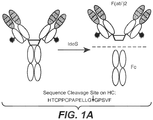
- the affinity capture LC-MS F(ab')2 assay incorporates affinity capture of ADCs via binding to the Fab region, followed by on-bead IdeS digestion to remove the Fc domain specifically and uniformly.
- the resulting F(ab')2 ( ⁇ 100 kDa) fragments contain the key ADC structural information, such as drug-to-antibody ratio and drug metabolism and are more readily analyzed by electrospray ionization LCMS than the intact ADC ( ⁇ 150 kDa).
- the reduced size of analytes results in improved mass spectral sensitivity and resolution.
- the reduced and optimized sample preparation time for example, rapid removal of the Fc fragment by IdeS digestion, minimizes possible assay artifacts of drug metabolism and skewed DAR profiles that may result from the prolonged incubation times (e.g., overnight enzymatic treatment for Fc deglycosylation).
- the affinity capture LC-MS F(ab')2 assay provides more detailed and accurate information on ADC biotransformations in vivo, enabling analysis of low-dose, labile, and complex site-specific ADCs with linker-drug conjugated in the Fab region.
- Robust methods are provided to detect and quantify antibody protein concentration and antibody-conjugated drug quantity and structure characterization by digestion of the antibody and separation of the drug component of an ADC, followed by chromatographic and/or mass spectrophotometric analysis of the resulting composition of the combined released drug and peptides from the digested antibody.
- the methods utilize ADC fragments containing the drug moiety as surrogates for intact ADCs and therefore provide increased assay sensitivity and resolution.
- the new methods also minimize artifacts of drug metabolism and reduce potential biased response to certain drug-to-antibody ratio (DAR) species.
- DAR drug-to-antibody ratio
- Antibody and ADC analysis was previously conducted using limited proteolytic digestion by attempting to control the activity of endoproteinase Lys-C, or proteinase PNGase, followed by reverse-phase HPLC and mass spectrometry. These methods were found to be insufficient in the analysis of some next generation ADCs containing recombinantly-engineered, specific drug conjugation sites, due to limitations in sensitivity, resolution, and biased response to certain DAR species.
- ADCs that are labile, demanding much higher MS resolution and that have site specific conjugations to highly potent DNA damaging agents, which are typically administered in low doses, and are therefore in samples at low concentrations, demanding much higher sensitivity in the analytical techniques used to characterize the ADC composition and characterize the structure of metabolites that may be present in biological samples collected after administration of the ADC to a human or other test subject.
- the invention provides consistent, reliable, efficient, high-resolution and highly sensitive methods of assessing stability, post-translational and chemical modifications during production, formulation, storage, and administration during the development of site-specific ADCs by combining site specific and controlled proteolytic digestion matched with the analysis of homogenous and site specific ADC to reduce the size of the ADC analytes.
- the reduced size of analytes results in improved mass spectral sensitivity, and resolution, and the response difference observed with some intact DARs are reduced.
- the specific proteolytic digestion eliminates the need for overnight deglycosylation of the Fc carbohydrates. Additionally, rapid proteolytic digestion minimizes assay artifacts that may result from overnight enzymatic treatments.
- the affinity capture LC-MS F(ab')2 assays of this disclosure provide more detailed and accurate information on ADC biotransformations in vivo, for the analysis of low-dose, labile, and complex site-specific ADCs with linker-drug conjugated in the Fab region, which may not be feasible using previous methods
- the invention provides methods of evaluating an ADC by digesting an ADC containing at least one drug moiety linked to an antibody at a recombinantly-engineered site with a protease that cleaves the ADC to form a digested ADC composition that includes at least one peptide fragment that is not linked to the drug moiety, and at least one peptide fragment that is linked to the drug moiety.
- the digested ADC composition is then analyzed by high performance liquid chromatography (HPLC) and/or mass spectrometry (MS) to detect at least one peptide fragment that is linked to the at least one drug moiety.
- HPLC high performance liquid chromatography
- MS mass spectrometry
- the recombinantly-engineered specific site of attachment of the drug moiety to the ADC may be a site selected from a cysteine amino acid residue, a selenocysteine amino acid residue, a glutamine amino acid residue, a non-naturally occurring amino acid residue, and a sugar-modified glycan residue.
- the ADC may be an IgG antibody.
- the antibody portion of the ADC may be an antibody fragment.
- the antibody portion of the ADC may be a human or humanized antibody.
- the ADC may be glycosylated or phosphorylated.
- the antibody portion of the ADC may specifically bind to one or more tumor-associated antigens or cell-surface receptors.
- the drug moiety may comprise at least one aromatic ring.
- exemplary drug moieties include peptides, polyamides, maytansinoids, dolastatins, auristatins, calicheamicins, pyrrolobenzodiazepine (PBD), PNU-159682, anthracyclines, duocarmycins, vinca alkaloids, taxanes, trichothecene, CC1065, duocarmycin, camptothecin, elinafide, antibiotics, fluorophores, radioisotopes, as well as stereoisomers, isosteres, metabolites, analogs or derivatives of these compounds.
- the drug moiety may also be linked to the antibody portion of the ADC through a linker.
- the protease utilized in these methods is an IdeS protease.
- the digestion procedure may comprise incubating the ADC with the protease at a temperature between about 20°C and about 45°C, and typically includes incubating the ADC with the protease at a temperature of about 37 °C.
- the digestion may also comprise incubating the ADC with the protease at a pH between about pH 5 and about pH 9, and typically includes incubating the ADC with the protease at a pH of about pH 7.
- the digestion may also comprise incubating the ADC with the protease for a time period between about 0.1 hour and about 48 hours, and typically includes incubating the ADC with the protease for a time period of about 1 hour.
- the analyzing may include at least one of RP-LC, RP-LC/MS, and LC-MS/MS analyses.
- the ADC prior to the digesting step, may be suspended in a matrix selected from a buffer, whole blood, serum, plasma, cerebrospinal fluid, saliva, urine, lymph, bile, feces, sweat, vitreous, tears, and tissue.
- the ADC is suspended in whole blood, serum, plasma, or tissue of a mammal selected from a human, a cynomolgus monkey, a rat, and a mouse.
- the ADC may therefore be enriched prior to the digesting step, by a technique selected from size exclusion chromatography, dialysis, selective precipitation, differential centrifugation, filtration, gel electrophoresis, liquid chromatography, reversed-phase chromatography, immunoprecipitation, SpinTrap columns including protein A and protein G, NHS and streptavidin iron or phosphorus or immobilized antibodies or lectin, paramagnetic beads, immuno-depletion, fractionation, solid phase extraction, phosphopeptide enrichment, polyacrylamide gel electrophoresis, and desalting.
- the ADC may be bound to an affinity capture media.
- the affinity capture media may include at least one of bead- or resin-supported Protein A/G, target antigen-paramagnetic bead capture media, anti-idiotypic antibodies, anti-Hu antibodies, and anti-drug antibodies.
- These analytical methods may include washing the ADC bound to the affinity capture media to reduce non-antibody proteins in contact with the ADC. These methods may also include dephosphorylating or deglycosylating the ADC bound to the affinity capture media.
- the step of digesting may also be carried out while ADC is bound to the affinity capture media. Alternatively, or additionally, the ADC may be eluted from the affinity capture media prior to the step of digesting the ADC.
- an antibody-conjugated drug concentration of the ADC is calculated from the analysis of the digested ADC composition.
- the average DAR of the ADC is calculated from the analysis of the digested ADC composition.
- a metabolite or catabolite structure may be determined from the analysis of the digested ADC composition.
- the protein concentration of the ADC may be calculated from the analysis of the digested ADC composition.
- the protein concentration is correlated with a peak area from an RP-LC and/or MS analysis of at least one Fc fragment from the digested ADC.
- the extinction coefficient of the ADC is calculated from the analysis of the digested ADC composition.
- the average DAR of the ADC, metabolite or catabolite structure(s), and the protein concentration of the ADC are obtained from an RP-LC and/or MS analysis of at least one Fc fragment from the digested ADC.
- This disclosure is drawn to single measurement methods to detect and quantify antibody and drug components of antibody drug conjugates (ADCs) that robustly measure total antibody and antibody-conjugated drug quantity from a single sample preparation thereby providing drug to antibody ratio (DAR) calculation and significant time and resource savings.
- ADCs antibody drug conjugates
- biological sample is any component derived or separated from an animal and includes blood, plasma, serum, cells, urine, cerebrospinal fluid (CSF), milk, bronchial lavage, bone marrow, amniotic fluid, saliva, bile, vitreous, tears, or tissue.
- CSF cerebrospinal fluid
- bronchial lavage bone marrow, amniotic fluid, saliva, bile, vitreous, tears, or tissue.
- Digestive enzyme is an enzyme capable of cleaving or hydrolyzing peptides or proteins into fragments in either a specific or generic, random manner.
- a digestive enzyme can form a digested antibody sample from an antibody where the antibody is a component of a biological sample.
- Digestive enzymes include proteases such as trypsin, papain, pepsin, endoproteinase LysC, endoproteinase ArgC, staph aureus V8, chymotrypsin, Asp-N, Asn-C, PNGaseF, endoproteinase GluC, and LysN.
- antibody is used in the broadest sense and encompasses various antibody structures, including monoclonal antibodies, polyclonal antibodies, multispecific antibodies (e.g., bispecific antibodies), and antibody fragments so long as they exhibit the desired antigen-binding activity.
- antibody fragment refers to a molecule other than an intact antibody that comprises a portion of an intact antibody that binds the antigen to which the intact antibody binds.
- antibody fragments include Fv, Fc, Fab, Fab', Fab'-SH, F(ab')2; diabodies; linear antibodies; single-chain antibody molecules (e.g. scFv); and multispecific antibodies formed from antibody fragments.
- an antibody provided herein is an antibody fragment.
- Antibody fragments include Fab, Fab', Fab'-SH, F(ab')2, Fv, and scFv fragments, and other fragments described below.
- Fab fragment antigen binding fragment
- Fab' fragment antigen binding fragment
- Fab'-SH fragment antigen binding fragment
- F(ab')2 fragment antigen binding fragment
- scFv fragments fragment antigen binding epitope residues and having increased in vivo half-life ( US 5869046 ).
- Diabodies are antibody fragments with two antigen-binding sites that may be bivalent or bispecific ( EP 404097 ; WO 1993/01161 ; Hudson et al. (2003) Nat. Med. 9:129-134 ; Hollinger et al. (1993) Proc. Natl. Acad. Sci. USA 90: 6444-6448 ). Triabodies and tetrabodies are also described in Hudson et al. (2003) Nat. Med. 9:129-134 .
- Single-domain antibodies are antibody fragments comprising all or a portion of the heavy chain variable domain or all or a portion of the light chain variable domain of an antibody.
- a single-domain antibody is a human single-domain antibody ( US 6248516 ).
- Antibody fragments can be made by various techniques, including proteolytic digestion of an intact antibody as well as production by recombinant host cells (e.g. E. coli or phage), as described herein.
- recombinant host cells e.g. E. coli or phage
- Fc region herein is used to define a C-terminal region of an immunoglobulin heavy chain that contains at least a portion of the constant region.
- the term includes native sequence Fc regions and variant Fc regions.
- a human IgG heavy chain Fc region extends from Cys226, or from Pro230, to the carboxyl-terminus of the heavy chain.
- the C-terminal lysine (Lys447) of the Fc region may or may not be present.
- numbering of amino acid residues in the Fc region or constant region is according to the EU numbering system, also called the EU index, as described in Kabat et al. Sequences of Proteins of Immunological Interest, Fifth Edition, NIH Publication 91-3242, Bethesda Md. (1991), vols. 1-3 .
- FR Framework or "FR” refers to constant domain residues other than hypervariable region (HVR) residues.
- the FR of a constant domain generally consists of four FR domains: FR1, FR2, FR3, and FR4. Accordingly, the HVR and FR sequences generally appear in the following sequence in VH (or VL): FR1-H1(L1)-FR2-H2(L2)-FR3-H3(L3)-FR4.
- full length antibody “intact antibody,” and “whole antibody” are used herein interchangeably to refer to an antibody having a structure substantially similar to a native antibody structure or having heavy chains that contain an Fc region as defined herein.
- a "human antibody” is one which possesses an amino acid sequence which corresponds to that of an antibody produced by a human or a human cell or derived from a non-human source that utilizes human antibody repertoires or other human antibody-encoding sequences. This definition of a human antibody specifically excludes a humanized antibody comprising non-human antigen-binding residues.
- Human framework regions that may be used for humanization include : framework regions selected using the "best-fit" method (see, e.g., Sims et al. J. Immunol. 151:2296 (1993 )); framework regions derived from the consensus sequence of human antibodies of a particular subgroup of light or heavy chain variable regions ( Carter et al. (1992) Proc. Natl. Acad. Sci. USA, 89:4285 ; Presta et al. (1993) J. Immunol., 151:2623 ); human mature (somatically mutated) framework regions or human germline framework regions ( Almagro and Fransson, (2008) Front. Biosci.
- Human antibodies are described generally in van Dijk and van de Winkel, (2001) Curr. Opin. Pharmacol. 5: 368-74 ; Lonberg, Curr. Opin. Immunol. 20:450-459 (2008 ).
- Human antibodies may be prepared by administering an immunogen to a transgenic animal that has been modified to produce intact human antibodies or intact antibodies with human variable regions in response to antigenic challenge.
- Such animals typically contain all or a portion of the human immunoglobulin loci, which replace the endogenous immunoglobulin loci, or which are present extrachromosomally or integrated randomly into the animal's chromosomes. In such transgenic mice, the endogenous immunoglobulin loci have generally been inactivated.
- Human antibodies can also be made by hybridoma-based methods. Human myeloma and mouse-human heteromyeloma cell lines for the production of human monoclonal antibodies have been described. (See, e.g., Kozbor J. Immunol., 133: 3001 (1984 ); Brodeur et al., Monoclonal Antibody Production Techniques and Applications, pp. 51-63 (Marcel Dekker, Inc., New York, 1987 ); and Boerner et al., (1991) J. Immunol., 147: 86 ). Human antibodies generated via human B-cell hybridoma technology are also described in Li et al. (2006) Proc. Natl. Acad. Sci.
- Human antibodies may also be generated by isolating Fv clone variable domain sequences selected from human-derived phage display libraries. Such variable domain sequences may then be combined with a desired human constant domain. Techniques for selecting human antibodies from antibody libraries are described below.
- a "human consensus framework” is a framework region of an antibody which represents the most commonly occurring amino acid residues in a selection of human immunoglobulin VL or VH framework sequences.
- the selection of human immunoglobulin VL or VH sequences is from a subgroup of variable domain sequences.
- the subgroup of sequences is a subgroup, as in Kabat et al. supra.
- the subgroup is subgroup kappa I.
- the subgroup III is subgroup III.
- a “humanized” antibody refers to a chimeric antibody comprising amino acid residues from non-human HVRs and amino acid residues from human FRs.
- a humanized antibody will comprise substantially all of at least one, and typically two, variable domains, in which all or substantially all of the HVRs (e.g., CDRs) correspond to those of a non-human antibody, and all or substantially all of the FRs correspond to those of a human antibody.
- a humanized antibody optionally may comprise at least a portion of an antibody constant region derived from a human antibody.
- a "humanized form" of an antibody, e.g., a non-human antibody refers to an antibody that has undergone humanization.
- chimeric antibody refers to an antibody in which a portion of the heavy and/or light chain is derived from a particular source or species, while the remainder of the heavy and/or light chain is derived from a different source or species.
- An exemplary “chimeric” antibody comprises a non-human variable region (e.g., a variable region derived from a mouse, rat, hamster, rabbit, or non-human primate, such as a monkey) and a human constant region ( U.S. Pat. No. 4,816,567 ; Morrison et al. (1984) Proc. Natl. Acad. Sci. USA, 81:6851-6855 ).
- Another exemplary chimeric antibody is a "class switched" antibody in which the class or subclass has been changed from that of the parent antibody. Chimeric antibodies include antigen-binding fragments thereof.
- a chimeric antibody is a humanized antibody.
- a non-human antibody is humanized to reduce immunogenicity to humans, while retaining the specificity and affinity of the parental non-human antibody.
- a humanized antibody comprises one or more variable domains in which HVRs, e.g., CDRs, (or portions thereof) are derived from a non-human antibody, and FRs (or portions thereof) are derived from human antibody sequences.
- HVRs e.g., CDRs, (or portions thereof) are derived from a non-human antibody
- FRs or portions thereof
- a humanized antibody optionally will also comprise at least a portion of a human constant region.
- some FR residues in a humanized antibody are substituted with corresponding residues from a non-human antibody (e.g., the antibody from which the HVR residues are derived), e.g., to restore or improve antibody specificity or affinity.
- a non-human antibody e.g., the antibody from which the HVR residues are derived
- Antibodies of this disclosure may be isolated by screening combinatorial libraries for antibodies with the desired activity or activities. For example, a variety of methods are known in the art for generating phage display libraries and screening such libraries for antibodies possessing the desired binding characteristics. Such methods are reviewed, e.g., in Hoogenboom et al. in Methods in Molecular Biology 178:1-37 (O'Brien et al., ed., Human Press, Totowa, N.J., 2001 ) and further described, e.g., in McCafferty et al. (1990) Nature 348:552-554 ; Clackson et al., Nature 352: 624-628 (1991 ); Marks et al. (1992) J. Mol.
- repertoires of VH and VL genes are separately cloned by polymerase chain reaction (PCR) and recombined randomly in phage libraries, which can then be screened for antigen-binding phage as described in Winter et al. (1994) Ann. Rev. Immunol., 12: 433-55 .
- Phage typically display antibody fragments, either as single-chain Fv (scFv) fragments or as Fab fragments.
- naive repertoire can be cloned (e.g., from human) to provide a single source of antibodies to a wide range of non-self and also self-antigens without any immunization as described by Griffiths et al., (1993) EMBO J, 12: 725-734 .
- naive libraries can also be made synthetically by cloning un-rearranged V-gene segments from stem cells, and using PCR primers containing random sequence to encode the highly variable CDR3 regions and to accomplish rearrangement in vitro, as described by Hoogenboom and Winter (1992) J. Mol. Biol., 227: 381-388 .
- Human antibody phage libraries are described in US 5,750,373 ; US 7,985,840 ; US 7,785,903 ; US 8,679,490 ; US 8,054,268 ; and US 2005/0079574 ; US 2007/0117126 ; US 2007/0237764 ; US 2007/0292936 .
- Antibodies or antibody fragments isolated from human antibody libraries are considered human antibodies or human antibody fragments for the purposes of this disclosure.
- An antibody may be a multispecific antibody, e.g. a bispecific antibody.
- Multispecific antibodies are monoclonal antibodies that have binding specificities for at least two different sites. One of the binding specificities may be for one antigen while the other is for a second antigen.
- bispecific antibodies may bind to two different epitopes of the same antigen.
- Bispecific antibodies may also be used to localize cytotoxic agents to cells which express an antigen.
- Bispecific antibodies can be prepared as full length antibodies or antibody fragments (see, e.g., Ortiz-Sanchez et al., Expert Opin. Biol. Ther. (2008) 8(5):609-32 ).
- Techniques for making multispecific antibodies include recombinant co-expression of two immunoglobulin heavy chain-light chain pairs having different specificities (see Milstein and Cuello, Nature 305: 537 (1983 )), WO 1993/08829 , and Traunecker et al., EMBO J. 10: 3655 (1991 )), and "knob-in-hole” engineering ( US 5,731,168 ).
- Multi-specific antibodies may also be made by engineering electrostatic steering effects for making antibody Fc-heterodimeric molecules ( WO 2009/089004A1 ); cross-linking two or more antibodies or fragments (see, e.g., US 4,676,980 , and Brennan et al., Science, 229: 81 (1985 )); using leucine zippers to produce bi-specific antibodies (e.g., Kostelny et al. (1992) J. Immunol. 148(5):1547-1553 ); using "diabody” technology for making bispecific antibody fragments (e.g., Hollinger et al., (1993) Proc. Natl. Acad. Sci.
- Engineered antibodies with three or more functional antigen binding sites are also included herein (e.g. US 2006/0025576 ).
- the antibody or fragment herein also includes a "Dual Acting FAb” or “DAF” comprising an antigen binding site that binds to an antigen as well as another, different antigen (e.g., US 2008/0069820 ).
- a “Dual Acting FAb” or “DAF” comprising an antigen binding site that binds to an antigen as well as another, different antigen (e.g., US 2008/0069820 ).
- Amino acid sequence variants of the antibodies provided herein are also contemplated. For example, it may be desirable to improve the binding affinity and/or other biological properties of the antibody.
- Amino acid sequence variants of an antibody may be prepared by introducing appropriate modifications into the nucleotide sequence encoding the antibody, or by peptide synthesis. Such modifications include, for example, deletions from, and/or insertions into and/or substitutions of residues within the amino acid sequences of the antibody. Any combination of deletion, insertion, and substitution can be made to arrive at the final construct, provided that the final construct possesses the desired characteristics, e.g., antigen-binding.
- Antibodies include fusion proteins comprising an antibody and a protein, drug moiety, label, or some other group. Fusion proteins may be made by recombinant techniques, conjugation, or peptide synthesis, to optimize properties such as pharmacokinetics.
- the human or humanized antibodies may also be a fusion protein comprising an albumin-binding peptide (ABP) sequence (see, Dennis et al (2002) J Biol. Chem. 277:35035-35043 at Tables III and IV, page 35038; US Pat. Pub. No. 2004/0001827 at [0076]; and WO 01/45746 at pages 12-13, all of which are incorporated herein by reference).
- ABSP albumin-binding peptide
- Antibody variants having one or more amino acid substitutions are provided for use and analysis in the methods of this disclosure.
- Sites of interest for substitutional mutagenesis include the HVRs and FRs.
- Substantial changes are provided in the following table under the heading of "exemplary substitutions," and are further described below in reference to amino acid side chain classes.
- Amino acid substitutions may be introduced into an antibody of interest and the products screened for a desired activity, e.g., retained/improved antigen binding, decreased immunogenicity, or improved antibody-dependent cell-mediated cytotoxicity (ADCC) or CDC.
- ADCC antibody-dependent cell-mediated cytotoxicity
- Non-conservative substitutions will entail exchanging a member of one of these classes for another class.
- substitutional variant involves substituting one or more hypervariable region residues of a parent antibody (e.g. a humanized or human antibody).
- a parent antibody e.g. a humanized or human antibody
- the resulting variant(s) selected for further study will have modifications (e.g., improvements) in certain biological properties (e.g., increased affinity, reduced immunogenicity) relative to the parent antibody and/or will have substantially retained certain biological properties of the parent antibody.
- An exemplary substitutional variant is an affinity matured antibody, which may be conveniently generated, e.g., using phage display-based affinity maturation techniques such as those described herein. Briefly, one or more HVR residues are mutated and the variant antibodies displayed on phage and screened for a particular biological activity (e.g. binding affinity).
- Alterations may be made in HVRs, e.g., to improve antibody affinity. Such alterations may be made in HVR "hotspots," i.e., residues encoded by codons that undergo mutation at high frequency during the somatic maturation process (see, e.g., Chowdhury, (2008) Methods Mol. Biol. 207:179-196 ), and/or SDRs (a-CDRs), with the resulting variant VH or VL being tested for binding affinity.
- HVR "hotspots” i.e., residues encoded by codons that undergo mutation at high frequency during the somatic maturation process (see, e.g., Chowdhury, (2008) Methods Mol. Biol. 207:179-196 ), and/or SDRs (a-CDRs), with the resulting variant VH or VL being tested for binding affinity.
- Affinity maturation by constructing and reselecting from secondary libraries has been described, e.g., in Hoogenboo
- affinity maturation diversity is introduced into the variable genes chosen for maturation by any of a variety of methods (e.g., error-prone PCR, chain shuffling, or oligonucleotide-directed mutagenesis).
- a secondary library is then created. The library is then screened to identify any antibody variants with the desired affinity.
- Another method to introduce diversity involves HVR-directed approaches, in which several HVR residues (e.g., 4-6 residues at a time) are randomized. HVR residues involved in antigen binding may be specifically identified, e.g., using alanine scanning mutagenesis or modeling. CDR-H3 and CDR-L3 in particular are often targeted.
- substitutions, insertions, or deletions may occur within one or more HVRs so long as such alterations do not substantially reduce the ability of the antibody to bind antigen.
- conservative alterations e.g., conservative substitutions as provided herein
- Such alterations may be outside of HVR "hotspots" or SDRs.
- each HVR either is unaltered, or contains no more than one, two or three amino acid substitutions.
- a useful method for identification of residues or regions of an antibody that may be targeted for mutagenesis is called "alanine scanning mutagenesis" as described by Cunningham and Wells (1989) Science, 244:1081-85 .
- a residue or group of target residues e.g., charged residues such as arg, asp, his, lys, and glu
- a neutral or negatively charged amino acid e.g., alanine or polyalanine
- a crystal structure of an antigen-antibody complex is used to identify contact points between the antibody and antigen. Such contact residues and neighboring residues may be targeted or eliminated as candidates for substitution. Variants may be screened to determine whether they contain the desired properties.
- Amino acid sequence insertions include amino- and/or carboxyl-terminal fusions ranging in length from one residue to polypeptides containing a hundred or more residues, as well as intrasequence insertions of single or multiple amino acid residues.
- terminal insertions include an antibody with an N-terminal methionyl residue.
- Other insertional variants of the antibody molecule include the fusion to the N- or C-terminus of the antibody to an enzyme (e.g. for ADEPT) or a polypeptide which increases the serum half-life of the antibody.
- an antibody provided herein is altered to increase or decrease the extent to which the antibody is glycosylated.
- Addition or deletion of glycosylation sites to an antibody may be conveniently accomplished by altering the amino acid sequence such that one or more glycosylation sites is created or removed.
- the carbohydrate attached thereto may be altered.
- Native antibodies produced by mammalian cells typically comprise a branched, biantennary oligosaccharide that is generally attached by an N-linkage to Asn297 of the CH2 domain of the Fc region ( Wright et al. (1997) TIBTECH 15:26-32 ).
- the oligosaccharide may include various carbohydrates, e.g., mannose, N-acetyl glucosamine (GlcNAc), galactose, and sialic acid, as well as a fucose attached to a GlcNAc in the "stem" of the biantennary oligosaccharide structure.
- modifications of the oligosaccharide in an antibody of the invention may be made in order to create antibody variants with certain improved properties.
- antibody variants having a carbohydrate structure that lacks fucose attached (directly or indirectly) to an Fc region.
- the amount of fucose in such antibody may be from 1% to 80%, from 1% to 65%, from 5% to 65%, or from 20% to 40%.
- the amount of fucose is determined by calculating the average amount of fucose within the sugar chain at Asn297, relative to the sum of all glycostructures attached to Asn 297 (e.g. complex, hybrid and high mannose structures) as measured by MALDI-TOF mass spectrometry (see, e.g., WO 2008/077546 ).
- Asn297 refers to the asparagine residue located at about position 297 in the Fc region (Eu numbering of Fc region residues); however, Asn297 may also be located about ⁇ 3 amino acids upstream or downstream of position 297, i.e., between positions 294 and 300, due to minor sequence variations in antibodies. Such fucosylation variants may have improved ADCC function ( U.S. Pat. Pub. Nos. 2003/0157108 ; US 2004/0093621 ).
- Patent publications describing "defucosylated” or "fucose-deficient” antibody variants include: US 2003/0157108 ; WO 2000/61739 ; WO 2001/29246 ; US 2003/0115614 ; US 2002/0164328 ; US 2004/0093621 ; US 2004/0132140 ; US 2004/0110704 ; US 2004/0110282 ; US 2004/0109865 ; WO 2003/085119 ; WO 2003/084570 ; WO 2005/035586 ; WO 2005/035778 ; WO2005/053742 ; WO2002/031140 ; Okazaki et al. J. Mol. Biol.
- Cell lines capable of producing defucosylated antibodies include Lec13 CHO cells deficient in protein fucosylation ( Ripka et al. Arch. Biochem. Biophys. 249:533-545 (1986 ); US 2003/0157108 ; and WO 2004/056312 , especially at Example 11), and knockout cell lines, such as alpha-1,6-fucosyltransferase gene, FUT8, knockout CHO cells ( Yamane-Ohnuki, et al. (2004) Biotech. Bioeng. 87:614 ; Kanda, et al. (2006) Biotechnol. Bioeng., 94(4):680-688 ; WO2003/085107 ).
- Antibody variants are further provided with bisected oligosaccharides, e.g., in which a biantennary oligosaccharide attached to the Fc region of the antibody is bisected by GlcNAc. Such antibody variants may have reduced fucosylation and/or improved ADCC function. Publications describing such antibody variants having bisected oligosaccharides include WO 2003/011878 ; U.S. Pat. No. 6,602,684 ; and US Pat. Pub. 2005/0123546 . Antibody variants with at least one galactose residue in the oligosaccharide attached to the Fc region are also provided and may have improved CDC function. Publications describing such galactose residue antibody variants include WO 1997/30087 ; WO 1998/58964 ; WO 1999/22764 .
- ADC design one of the main challenges in ADC design is the homogeneity of currently available ADCs that may have zero to eight drug molecules linked to each antibody or antibody fragment.
- This heterogeneity in ADC species adversely influences analytical methods of evaluating and monitoring stability, consistency, pharmacokinetics, and in vivo performance of ADC compositions.
- conjugation strategies have been identified that permit chemical installation of the drug onto an antibody at pre-determined site(s), to ensure stability of the conjugate following production and, while in circulation, in vivo.
- site-specific ADCs also referred to as immunoconjugates
- THIOMAB-drug conjugates can be controlled to produce a homogeneous DAR2.
- Cysteine-engineered antibodies comprise one or more residues of an antibody substituted with cysteine residue(s).
- the substituted residues may occur at accessible sites of the antibody, such that reactive thiol groups are positioned at accessible sites of the antibody and may be used to conjugate the antibody to other moieties, such as drug moieties or linker-drug moieties, to create a site-specific ADC.
- THIOMABs examples include cysteine engineered antibodies in which any one or more of the following residues may be substituted with cysteine: V205 (Kabat numbering) of the light chain; A118 (EU numbering) of the heavy chain; and 5400 (EU numbering) of the heavy chain Fc region, and S121, and K149 of the light chain.
- Methods of making cysteine engineered antibodies include the methods described in US 7,521,541 ; US 9,000,130 .
- the methods of this disclosure may be applied to antibody-drug conjugates comprising cysteine engineered antibodies wherein one or more amino acids of a wild-type or parent antibody are replaced with a cysteine amino acid (THIOMABTM).
- THIOMABTM cysteine amino acid
- Any form of antibody may be so engineered.
- a parent Fab antibody fragment may be engineered to form a cysteine engineered Fab
- a parent monoclonal antibody may be engineered to form a cysteine engineered monoclonal antibody.
- a single site mutation yields a single engineered cysteine residue in a Fab antibody fragment, while a single site mutation yields two engineered cysteine residues in a full length antibody, due to the dimeric nature of the IgG antibody.
- thiol reactivity value is a relative, numerical term in the range of 0 to 1.0 and can be measured for any cysteine engineered antibody.
- Thiol reactivity values of cysteine engineered antibodies of the invention are in the ranges of 0.6 to 1.0; 0.7 to 1.0; or 0.8 to 1.0.
- Cysteine amino acids may be engineered at reactive sites in the heavy chain (HC) or light chain (LC) of an antibody and which do not form intrachain or intermolecular disulfide linkages ( Junutula, et al. (2008) Nature Biotech., 26(8):925-932 ; Dornan et al (2009) Blood 114(13):2721-2729 ; US 7521541 ; US 7723485 ; WO2009/052249 , Shen et al (2012) Nature Biotech., 30(2):184-191 ; Junutula et al (2008) J. Immuno. Methods 332:41-52 ).
- the engineered cysteine thiols may react with linker reagents or the linker-drug intermediates of the present invention which have thiol-reactive, electrophilic pyridyl disulfide groups to form ADC with cysteine engineered antibodies and the drug moiety.
- the specific location (i.e., site) of the drug moiety in these engineered ADCs can thus be designed, controlled, and known.
- the drug loading can therefore be controlled since the engineered cysteine thiol groups typically react with thiol-reactive linker reagents or linker-drug intermediates in high yield.
- Engineering an antibody to introduce a cysteine amino acid by substitution at a single site on the heavy or light chain gives two new cysteines on the symmetrical antibody.
- a drug loading (DAR) near 2 can be achieved, with nearly complete homogeneity in these site specific conjugated ADCs.
- UAAs unnatural amino acids
- a mutant protein encoded by a gene with the amber stop codon (TAG) at the site of the desired UAA may be expressed in cells, along with a corresponding orthogonal tRNA/aminoacyl-tRNA synthetase (aaRS) pair capable of installing the UAA at the amber stop codon site (see, e.g., Liu and Schultz (2010) Annu. Rev. Biochem. 79:413-44 ).
- TAG amber stop codon
- aaRS orthogonal tRNA/aminoacyl-tRNA synthetase
- coli UAA expression systems was p-acetylphenylalanine, chosen for the bioorthogonal reactivity of its ketone ( Wang, et al., (2003) Proc. Natl. Acad. Sci. U.S.A. 100:56-61 .).
- This unnatural amino acid was conjugated to an aminooxy-auristatin F, and the resulting trastuzumab antibody displayed superior pharmacokinetic properties in mice ( Tian, et al., (2014) Proc. Natl. Acad. Sci. U.S.A. 111: 1766-1771 ).
- This site-specific engineering methodology can be expanded to include more than one biorthogonal functional group into the protein.
- This approach may provide antibody-drug conjugates with a specific number of known unnatural amino acid substitutions that are easily and consistently conjugated to a therapeutic moiety, such as an anti-cancer drug, producing a very homogenous ADC composition with drug conjugation(s) limited to precisely designed and identified sites in the protein.
- Selenocysteine is a natural, but rare, amino acid that exists in all kingdoms of life as a component of selenoproteins, of which only 25 are currently known in mammals. Selenocysteine contains selenium in the place of sulfur, which makes it more reactive towards electrophiles in acidic conditions than cysteine. This chemical property was used to selectively couple maleimide- and iodoacetamide-containing agents to antibodies containing genetically engineered selenocysteine residues ( Hofer, et al. (2009) Biochemistry 48:12047-57 ; Li, et al., (2014) Methods 65:133-38 ).
- Selenocysteine was used to conjugate fluorescent probes, biotin and biotin polyethylene glycol (biotin-PEG) to antibodies, resulting in the fully functional conjugates having specifically defined sites and stoichiometries of agent attachment, demonstrating the production of homogenous ADCs based on selenocysteine residue engineering.
- biotin-PEG biotin polyethylene glycol
- Human IgG molecules have a conserved glycosylation site at each N297 residue in the CH2 domain, making these pendant N-glycans a convenient target for site-specific conjugation. This glycosylation site is sufficiently far from the variable region that conjugation of drug moieties to attached glycans should not impact antigen binding.
- One method of linking therapeutic moieties to these glycans includes oxidative cleavage of the vicinal diol moieties contained in these glycans with periodate to generate aldehydes that can be reductively aminated and conjugated to hydrazide and aminooxy compounds ( O'Shannessy, et al. (1984) Immunol. Lett. 8:273-77 ).
- Another method includes increasing the fucosylation of the N-acetylglucosamine residues in these glycans. Oxidation of these fucose residues produces carboxylic acid and aldehyde moieties that can be used to link drugs and fluorophores to these specific sites on the antibody ( Zuberbuhler, et al. (2012) Chem. Commun. 48:7100-02 ).
- Another method includes modifying sialic acid in these glycans (as well as increasing the sialic acid content in these glycans) followed by oxidation of the sialic acid and conjugation with aminooxy-drugs to form oxime-linked conjugates ( Zhou, et al. (2014) Bioconjugate Chem. 25:510-20 ).
- a sialyltransferase may be used to incorporate a modified sialic acid residue containing a bioorthogonal functional group into these glycans.
- the bioorthogonal functional group may then be modified to attach therapeutic moieties to the site of the glycan ( Li, et al. (2014) Angew. Chem. Int. 53:7179-82 ).
- Another approach to modifying these glycan sites is the use of glycosyltransferases to link galactose, or galactose analogues containing ketones or azides, to the N-acetylglucosamine in these glycans, and linking drugs or radionucleotides to the galactose molecules ( Khidekel, et al., (2003) J. Am. Chem. Soc. 125:16162-63 ; Clark, et al., (2008) J. Am. Chem. Soc. 130:11576-77 ; Boeggeman, et al. (2007) Bioconjugate Chem. 18:806-14 ).
- Probodies are recombinant, proteolytically-activated antibody prodrugs, comprised of a monoclonal antibody in which the amino terminus of the antibody light chain is extended with a protease-cleavable linker and a masking peptide designed to block antibody binding to an antigen ( US Pat. No. 8,563,269 ; Desnoyers, et al., Sci Transl Med. 2013 16;5(207):207ra144 ; Polu and Lowman, Expert Opin Biol Ther. 2014, 14(8):1049-53 ; Wong, et al., Biochimie. 2016 122:62-7 ).
- Cleavage of the linker by specific tumor-associated proteases leads to dissociation of the mask and release of an antibody competent to bind to antigen in the tumor.
- Probodies are designed to exploit the fundamental dysregulation of extracellular protease activity that exists within the tumor microenvironment, relative to healthy tissue, thereby binding only minimally to antigen in healthy tissue where there are insufficient active proteases present to remove the mask.
- the mask is removed by cleavage of the linker, and antigen binding proceeds.
- PDCs Probody Drug Conjugates
- Antibody drug conjugates are also formed using antibodies, or antibody fragments, linked to hydrophilic polymers or peptides that are comprised of natural amino acids, which can themselves be attached to therapeutic peptides, proteins or small therapeutic molecules.
- the polymer or peptide essentially serves as a linker between the antibody and the therapeutic moiety (drug), but this linker provides a means to attach multiple therapeutic moieties, thereby significantly increasing DAR for each ADC molecule.
- DAR of 14-18, or even higher are possible while maintaining the site-specific conjugation attributes of a site-specific ADC.
- Exemplary ADCs that include such peptide/polymer conjugates include ADCs linked to the XTENTM peptides conjugate (Amunix, Mountain View, CA) at specific, engineered amino acid residues in the light chain of the antibody, such as the cysteine-engineered antibodies described above. These peptides are substantially homogeneous polypeptides that are useful as conjugation partners to link to one or more payloads via a cross- linker reactant resulting in an XTEN-payload ADC conjugate.
- peptide linkers are polypeptides composed of non-naturally occurring, substantially non-repetitive sequences having a low degree, or no secondary or tertiary structure under physiologic conditions, and typically have from about 36 to about 3000 amino acids, of which the majority or the entirety are small hydrophilic amino acids with defined numbers of orthogonal pendant reactive groups conjugated to one or more molecules of a targeting moiety that serves as a ligand to a cell-surface receptor and one or more molecules of an effector drug ( U.S. Pat. Pub. 2015/0037359 ).
- cytokine fusion proteins There are a broad variety of antibody-cytokine fusion proteins that have been developed as biopharmaceutical products and approved by the FDA for use as drugs in the United States. Most of these fusion proteins target tumor antigens with a protein construct in which different cytokines have been fused to full-length antibodies or their derivatives (see, e.g., Ortiz-Sanchez et al. (2008) Expert Opin. Biol. Ther. 8(5):609-32 ; Sochaj, et al. (2015) Biotechnology Advances 33:775-84 ). Each cytokine can be fused at the amino- or carboxy-terminus of the antibody depending on the structure of the cytokine and antibody, in order to conserve the biological activity of both components.
- Fc-fusion constructs are being developed for non-cancer clinical indications such as autoimmune conditions. These proteins may directly compete with antibodies that target self proteins.
- Fc-fusion protein constructs have been categorized into four groups based on ligand specificity (binding to one or multiple epitopes on a ligand molecule) and valency (stoichiometry of binding to ligand molecules): bivalent with single-ligand specificity; monovalent with multi-ligand specificity; multivalent with single-ligand specificity; and monovalent with single-ligand specificity.
- these site-specific, engineered immunoconjugates may retain the antigen binding capability of their wild type, parent antibody counterparts.
- the site-specific antibody conjugates are capable of binding, preferably specifically, to antigens.
- antigens include, for example, tumor-associated antigens (TAA), cell surface receptor proteins, and other cell surface molecules, transmembrane proteins, signaling proteins, cell survival regulatory factors, cell proliferation regulatory factors, molecules known or suspected to contribute functionally to tissue development or differentiation, lymphokines, cytokines, molecules involved in cell cycle regulation, molecules involved in vasculogenesis, and molecules known or suspected to contribute functionally to angiogenesis.
- TAA tumor-associated antigens
- the tumor-associated antigen may be a cluster differentiation factor (i.e., a CD protein).
- An antigen to which a cysteine engineered antibody is capable of binding may be a member of a subset of one of the above-mentioned categories, wherein the other subset(s) of said category comprise other molecules/antigens that have a distinct characteristic (with respect to the antigen of interest).
- the site specific antibody conjugates used in the methods of this disclosure include immunoconjugates useful in the treatment of cancer including antibodies against cell surface receptors and tumor-associated antigens (TAA).
- TAA tumor-associated antigens
- Tumor-associated antigens are known in the art, and can be prepared for use in generating antibodies using methods and information which are well known in the art.
- TAA tumor-associated antigens
- researchers have sought to identify transmembrane or otherwise tumor-associated polypeptides that are specifically expressed on the surface of one or more particular type(s) of cancer cell as compared to on one or more normal, non-cancerous cell(s).
- tumor-associated polypeptides are more abundantly expressed on the surface of the cancer cells as compared to on the surface of the non-cancerous cells.
- the identification of such tumor-associated cell surface antigen polypeptides has given rise to the ability to specifically target cancer cells for destruction via antibody-based therapies.
- TAA tumor-associated antigens
- TAA (1)-(53) listed below Information relating to these antigens, which are known in the art, is listed below and includes names, alternative names, Genbank accession numbers, and primary reference(s), following nucleic acid and protein sequence identification conventions of the National Center for Biotechnology Information (NCBI). Nucleic acid and protein sequences corresponding to TAA (1)-(53) are available in public databases such as GenBank.
- Tumor-associated antigens targeted by antibodies include all amino acid sequence variants and isoforms possessing at least about 70%, 80%, 85%, 90%, or 95% sequence identity relative to the sequences identified in the cited references, or which exhibit substantially the same biological properties or characteristics as a TAA having a sequence found in the cited references.
- a TAA having a variant sequence generally is able to bind specifically to an antibody that binds specifically to the TAA with the corresponding sequence listed.
- An antibody provided herein may be further modified to contain additional nonproteinaceous moieties that are known in the art and readily available.
- the moieties suitable for derivatization of the antibody include water soluble polymers.
- water soluble polymers include polyethylene glycol (PEG), copolymers of ethylene glycol/propylene glycol, carboxymethylcellulose, dextran, polyvinyl alcohol, polyvinyl pyrrolidone, poly-1,3-dioxolane, poly-1,3,6-trioxane, ethylene/maleic anhydride copolymer, polyaminoacids (either homopolymers or random copolymers), and dextran or poly(n-vinyl pyrrolidone)polyethylene glycol, propylene glycol homopolymers, polypropylene oxide/ethylene oxide co-polymers, polyoxyethylated polyols (e.g., glycerol), polyvinyl alcohol, and mixtures thereof.
- PEG
- Polyethylene glycol propionaldehyde may have advantages in manufacturing due to its stability in water.
- the polymer may be of any molecular weight, and may be branched or unbranched.
- the number of polymers attached to the antibody may vary, and if more than one polymer is attached, they can be the same or different molecules. In general, the number and/or type of polymers used for derivatization can be determined based on considerations including the particular properties or functions of the antibody to be improved, whether the antibody derivative will be used in a therapy under defined conditions, etc.
- Conjugates of an antibody and a non-proteinaceous moiety may be formed by selectively heating by exposure to radiation.
- the non-proteinaceous moiety of such conjugate may be a carbon nanotube ( Kam et al. (2005) Proc. Natl. Acad. Sci. USA 102:11600-605 ).
- the radiation may be of any wavelength, and includes wavelengths that do not harm ordinary cells, but which heat the non-proteinaceous moiety to a temperature at which cells proximal to the antibody-non-proteinaceous moiety are killed.
- hypervariable region refers to each of the regions of an antibody variable domain which are hypervariable in sequence and/or form structurally defined loops ("hypervariable loops").
- native four-chain antibodies comprise six HVRs; three in the VH (H1, H2, H3), and three in the VL (L1, L2, L3).
- HVRs generally comprise amino acid residues from the hypervariable loops and/or from the "complementarity determining regions" (CDRs), the latter being of highest sequence variability and/or involved in antigen recognition.
- CDRs complementarity determining regions
- Exemplary hypervariable loops occur at amino acid residues 26-32 (L1), 50-52 (L2), 91-96 (L3), 26-32 (HI), 53-55 (H2), and 96-101 (H3) ( Chothia and Lesk, (1987) J. Mol. Biol. 196:901-917 ).
- Exemplary CDRs (CDR-L1, CDR-L2, CDR-L3, CDR-H1, CDR-H2, and CDR-H3) occur at amino acid residues 24-34 of L1, 50-56 of L2, 89-97 of L3, 31-35B of H1, 50-65 of H2, and 95-102 of H3 (Kabat numbering).
- CDRs generally comprise the amino acid residues that form the hypervariable loops.
- CDRs also comprise "specificity determining residues,” or "SDRs,” which are residues that contact antigen. SDRs are contained within regions of the CDRs called abbreviated-CDRs, or a-CDRs.
- Exemplary a-CDRs (a-CDR-Ll, a-CDR-L2, a-CDR-L3, a-CDR-H1, a-CDR-H2, and a-CDR-H3) occur at amino acid residues 31-34 of L1, 50-55 of L2, 89-96 of L3, 31-35B of H1, 50-58 of H2, and 95-102 of H3 ( Almagro and Fransson, (2008) Front. Biosci. 13:1619-1633 ). Unless otherwise indicated, HVR residues and other residues in the variable domain (e.g., FR residues) are numbered herein according to Kabat et al., supra.
- an “isolated” antibody is one which has been separated from a component of its natural environment.
- an antibody is purified to greater than 95% or 99% purity as determined by, for example, electrophoretic (e.g., SDS-PAGE, isoelectric focusing (IEF), capillary electrophoresis) or chromatographic (e.g., ion exchange or reverse phase HPLC) methods.
- electrophoretic e.g., SDS-PAGE, isoelectric focusing (IEF), capillary electrophoresis
- chromatographic e.g., ion exchange or reverse phase HPLC
- monoclonal antibody refers to an antibody obtained from a population of substantially homogeneous antibodies, i.e., the individual antibodies comprising the population are identical and/or bind the same epitope, except for possible variant antibodies, e.g., containing naturally occurring mutations or arising during production of a monoclonal antibody preparation, such variants generally being present in minor amounts.
- polyclonal antibody preparations typically include different antibodies directed against different determinants (epitopes)
- each monoclonal antibody within a monoclonal antibody preparation is directed against a single determinant on an antigen.
- the modifier "monoclonal” indicates the character of the antibody as being obtained from a substantially homogeneous population of antibodies, and is not to be construed as requiring production of the antibody by any particular method.
- the monoclonal antibodies to be used in accordance with the present invention may be made by a variety of techniques, including the hybridoma method, recombinant DNA methods, phage-display methods, and methods utilizing transgenic animals containing all or part of the human immunoglobulin loci.
- naked antibody refers to an antibody that is not conjugated to a heterologous moiety (e.g., a cytotoxic moiety) or radiolabel or fluorophore.
- the naked antibody may be present in a pharmaceutical formulation.
- Native antibodies refer to naturally occurring immunoglobulin molecules with varying structures.
- native IgG antibodies are heterotetrameric glycoproteins of about 150,000 daltons, composed of two identical light chains and two identical heavy chains that are disulfide-bonded. From N- to C-terminus, each heavy chain has a variable region (VH), also called a variable heavy domain or a heavy chain variable domain, followed by three constant domains (CH1, CH2, and CH3).
- VH variable region
- VL variable region
- the light chain of an antibody may be assigned to one of two types, called kappa ( ⁇ ) and lambda ( ⁇ ), based on the amino acid sequence of its constant domain.
- An antibody provided herein may be a multispecific antibody, e.g. a bispecific antibody.
- the term "multispecific antibody” as used herein refers to an antibody comprising an antigen-binding domain that has polyepitopic specificity (i.e., is capable of binding to two, or more, different epitopes on one molecule or is capable of binding to epitopes on two, or more, different molecules).
- multispecific antibodies are monoclonal antibodies that have binding specificities for at least two different antigen binding sites (such as a bispecific antibody).
- the first antigen-binding domain and the second antigen-binding domain of the multispecific antibody may bind the two epitopes within one and the same molecule (intramolecular binding).
- the first antigen-binding domain and the second antigen-binding domain of the multispecific antibody may bind to two different epitopes on the same molecule.
- the two different epitopes that a multispecific antibody binds are epitopes that are not normally bound at the same time by one monospecific antibody, such as e.g. a conventional antibody or one immunoglobulin single variable domain.
- the first antigen-binding domain and the second antigen-binding domain of the multispecific antibody may bind epitopes located within two distinct molecules (intermolecular binding).
- the first antigen-binding domain of the multispecific antibody may bind to one epitope on one molecule
- the second antigen-binding domain of the multispecific antibody may bind to another epitope on a different molecule, thereby cross-linking the two molecules.
- the antigen-binding domain of a multispecific antibody may comprise two VH/VL units, wherein a first VH/VL unit binds to a first epitope and a second VH/VL unit binds to a second epitope, wherein each VH/VL unit comprises a heavy chain variable domain (VH) and a light chain variable domain (VL).
- a multispecific antibody include full length antibodies, antibodies having two or more VL and VH domains, and antibody fragments (such as Fab, Fv, dsFv, scFv, diabodies, bispecific diabodies and triabodies, antibody fragments that have been linked covalently or non-covalently).
- a VH/VL unit that further comprises at least a portion of a heavy chain variable region and/or at least a portion of a light chain variable region may also be referred to as an "arm" or "hemimer” or "half antibody.”
- a hemimer may comprise a sufficient portion of a heavy chain variable region to allow intramolecular disulfide bonds to be formed with a second hemimer.
- a hemimer comprises a knob mutation or a hole mutation, for example, to allow heterodimerization with a second hemimer or half antibody that comprises a complementary hole mutation or knob mutation. Knob mutations and hole mutations are discussed below.
- a multispecific antibody provided herein may be a bispecific antibody.
- the term "bispecific antibody” as used herein refers to a multispecific antibody comprising an antigen-binding domain that is capable of binding to two different epitopes on one molecule or is capable of binding to epitopes on two different molecules.
- a bispecific antibody may also be referred to herein as having "dual specificity" or as being “dual specific.”
- Exemplary bispecific antibodies may bind both and any other antigen.
- One of the binding specificities may be for HER2 and the other is for CD3. See, e.g., U.S. Pat. No. 5,821,337 .
- Bispecific antibodies may bind to two different epitopes of the same molecule.
- Bispecific antibodies may bind to two different epitopes on two different molecules.
- Bispecific antibodies may also be used to localize cytotoxic agents to cells which express cancer-associated antigens.
- Bispecific antibodies can be prepared as full length antibodies or antibody fragments.
- Techniques for making multispecific antibodies include recombinant co-expression of two immunoglobulin heavy chain-light chain pairs having different specificities (see Milstein and Cuello, Nature 305: 537 (1983 ), WO 93/08829 , and Traunecker et al., EMBO J. 10: 3655 (1991 )), and "knob-in-hole” engineering (see, e.g ., U.S. Patent No. 5,731,168 , WO2009/089004 , US2009/0182127 , US2011/0287009 , Marvin and Zhu, Acta Pharmacol. Sin. (2005) 26(6):649-658 , and Kontermann (2005) Acta Pharmacol. Sin., 26:1-9 ).
- KnH knock-into-hole
- Fc:Fc binding interfaces CL:CH1 interfaces
- VH/VL interfaces of antibodies
- KnHs drive the pairing of two different heavy chains together during the manufacture of multispecific antibodies.
- multispecific antibodies having KnH in their Fc regions can further comprise single variable domains linked to each Fc region, or further comprise different heavy chain variable domains that pair with similar or different light chain variable domains.
- KnH technology can also be used to pair two different receptor extracellular domains together or any other polypeptide sequences that comprises different target recognition sequences (e.g., including affibodies, peptibodies and other Fc fusions).
- knock mutation refers to a mutation that introduces a protuberance (knob) into a polypeptide at an interface in which the polypeptide interacts with another polypeptide.
- the other polypeptide has a hole mutation.
- hole mutation refers to a mutation that introduces a cavity (hole) into a polypeptide at an interface in which the polypeptide interacts with another polypeptide.
- the other polypeptide has a knob mutation.
- a “protuberance” refers to at least one amino acid side chain which projects from the interface of a first polypeptide and is therefore positionable in a compensatory cavity in the adjacent interface (i.e. the interface of a second polypeptide) so as to stabilize the heteromultimer, and thereby favor heteromultimer formation over homomultimer formation, for example.
- the protuberance may exist in the original interface or may be introduced synthetically (e.g., by altering nucleic acid encoding the interface). In some aspects, a nucleic acid encoding the interface of the first polypeptide is altered to encode the protuberance.
- nucleic acid encoding at least one "original” amino acid residue in the interface of the first polypeptide is replaced with nucleic acid encoding at least one "import” amino acid residue which has a larger side chain volume than the original amino acid residue.
- the side chain volumes of the various amino residues are shown, for example, in Table 1 of US2011/0287009 .
- a mutation to introduce a "protuberance" may be referred to as a "knob mutation.”
- Import residues for the formation of a protuberance may be naturally occurring amino acid residues selected from arginine (R), phenylalanine (F), tyrosine (Y) and tryptophan (W).
- Exemplary import residues are tryptophan or tyrosine.
- the original residue for the formation of the protuberance may have a small side chain volume, such as alanine, asparagine, aspartic acid, glycine, serine, threonine or valine.
- a “cavity” refers to at least one amino acid side chain which is recessed from the interface of a second polypeptide and therefore accommodates a corresponding protuberance on the adjacent interface of a first polypeptide.
- the cavity may exist in the original interface or may be introduced synthetically (e.g. by altering nucleic acid encoding the interface).
- nucleic acid encoding the interface of the second polypeptide is altered to encode the cavity.
- the nucleic acid encoding at least one "original” amino acid residue in the interface of the second polypeptide is replaced with DNA encoding at least one "import” amino acid residue which has a smaller side chain volume than the original amino acid residue. It will be appreciated that there can be more than one original and corresponding import residue.
- Import residues for the formation of a cavity may be naturally occurring amino acid residues selected from alanine (A), serine (S), threonine (T) and valine (V).
- An import residue may be serine, alanine or threonine.
- the original residue for the formation of the cavity has a large side chain volume, such as tyrosine, arginine, phenylalanine or tryptophan.
- a mutation to introduce a "cavity" may be referred to as a "hole mutation.”
- the protuberance is "positionable" in the cavity which means that the spatial location of the protuberance and cavity on the interface of a first polypeptide and second polypeptide respectively and the sizes of the protuberance and cavity are such that the protuberance can be located in the cavity without significantly perturbing the normal association of the first and second polypeptides at the interface.
- protuberances such as Tyr, Phe and Trp do not typically extend perpendicularly from the axis of the interface and have preferred conformations
- the alignment of a protuberance with a corresponding cavity may, in some instances, rely on modeling the protuberance/cavity pair based upon a three-dimensional structure such as that obtained by X-ray crystallography or nuclear magnetic resonance (NMR). This can be achieved using widely accepted techniques in the art.
- An exemplary knob mutation in an IgG1 constant region is T366W (EU numbering).
- Exemplary hole mutations in an IgG1 constant region may comprise one or more mutations selected from T366S, L368A and Y407V (EU numbering).
- An exemplary hole mutation in an IgG1 constant region may comprise T366S, L368A and Y407V (EU numbering).
- An exemplary knob mutation in an IgG4 constant region is T366W (EU numbering).
- An exemplary hole mutation in an IgG4 constant region may comprise one or more mutations selected from T366S, L368A, and Y407V (EU numbering).
- An exemplary hole mutation in an IgG4 constant region comprises T366S, L368A, and Y407V (EU numbering).
- Percent (%) amino acid sequence identity with respect to a reference polypeptide sequence is defined as the percentage of amino acid residues in a candidate sequence that are identical with the amino acid residues in the reference polypeptide sequence, after aligning the sequences and introducing gaps, if necessary, to achieve the maximum percent sequence identity, and not considering any conservative substitutions as part of the sequence identity. Alignment for purposes of determining percent amino acid sequence identity can be achieved in various ways that are within the skill in the art, for instance, using publicly available computer software such as BLAST, BLAST-2, ALIGN or Megalign (DNASTAR) software. Those skilled in the art can determine appropriate parameters for aligning sequences, including any algorithms needed to achieve maximal alignment over the full length of the sequences being compared.
- % amino acid sequence identity values are generated using the sequence comparison computer program ALIGN-2.
- the ALIGN-2 sequence comparison computer program was authored by Genentech, Inc., and the source code has been filed with user documentation in the U.S. Copyright Office, Washington D.C., 20559, where it is registered under U.S. Copyright Registration No. TXU510087.
- the ALIGN-2 program is publicly available from Genentech, Inc., South San Francisco, Calif., or may be compiled from the source code. All sequence comparison parameters are set by the ALIGN-2 program and do not vary.
- the % amino acid sequence identity of a given amino acid sequence A to, with, or against a given amino acid sequence B is calculated as follows: 100 times the fraction X/Y, where X is the number of amino acid residues scored as identical matches by the sequence alignment program ALIGN-2 in that program's alignment of A and B, and where Y is the total number of amino acid residues in B.
- variable region refers to the domain of an antibody heavy or light chain that is involved in binding the antibody to antigen.
- the variable domains of the heavy chain and light chain (VH and VL, respectively) of a native antibody generally have similar structures, with each domain comprising four conserved framework regions (FRs) and three hypervariable regions (HVRs). See for example, Kindt et al. Kuby Immunology, 6th ed., W.H. Freeman and Co., page 91 (2007 ). A single VH or VL domain may be sufficient to confer antigen-binding specificity.
- antibodies that bind a particular antigen may be isolated using a VH or VL domain from an antibody that binds the antigen to screen a library of complementary VL or VH domains, respectively ( Portolano et al. (1993) J. Immunol. 150:880-887 ; Clarkson et al. (1991) Nature 352:624-628 ).
- TAA Tumor-associated antigens
- TAA Tumor-associated antigens
- the antibody components of the ADCs useful in the methods of this disclosure may be produced using recombinant methods and compositions, e.g., as described in US 4,816,567 .
- Isolated nucleic acids encoding such antibodies described herein are provided. Such nucleic acids may encode an amino acid sequence comprising the VL and/or an amino acid sequence comprising the VH of the antibody (e.g., the light and/or heavy chains of the antibody).
- One or more vectors e.g., expression vectors
- a host cell comprising such nucleic acid is also provided.
- a host cell may comprise (e.g., has been transformed with): (1) a vector comprising a nucleic acid that encodes an amino acid sequence comprising the VL of the antibody and an amino acid sequence comprising the VH of the antibody, or (2) a first vector comprising a nucleic acid that encodes an amino acid sequence comprising the VL of the antibody and a second vector comprising a nucleic acid that encodes an amino acid sequence comprising the VH of the antibody.
- the host cell may be eukaryotic, e.g. a Chinese Hamster Ovary (CHO) cell or lymphoid cell (e.g., Y0, NS0, Sp20 cell).
- methods of making an antibody comprising culturing a host cell comprising a nucleic acid encoding the antibody, as provided above, under conditions suitable for expression of the antibody, and optionally recovering the antibody from the host cell (or host cell culture medium).
- nucleic acid encoding an antibody may be isolated and inserted into one or more vectors for further cloning and/or expression in a host cell.
- Such nucleic acid may be readily isolated and sequenced using conventional procedures (e.g., by using oligonucleotide probes that are capable of binding specifically to genes encoding the heavy and light chains of the antibody).
- Suitable host cells for cloning or expression of antibody-encoding vectors include prokaryotic or eukaryotic cells.
- antibodies may be produced in bacteria, in particular when glycosylation and Fc effector function are not needed.
- For expression of antibody fragments and polypeptides in bacteria see, e.g., US 5648237 ; US 5789199 ; US 5840523 ; Charlton, Methods in Molecular Biology, Vol. 248 (B. K. C. Lo, ed., Humana Press, Totowa, N.J., (2003), pp. 245-254 , describing expression of antibody fragments in E. coli. )
- the antibody may be isolated from the bacterial cell paste in a soluble fraction and can be further purified.
- eukaryotic microbes such as filamentous fungi or yeast are suitable cloning or expression hosts for antibody-encoding vectors, including fungi and yeast strains whose glycosylation pathways have been "humanized,” resulting in the production of an antibody with a partially or fully human glycosylation pattern ( Gerngross, (2004) Nat. Biotech. 22:1409-1414 ; Li et al. (2006) Nat. Biotech. 24:210-215 ).
- Suitable host cells for the expression of glycosylated antibodies are also derived from multicellular organisms (invertebrates and vertebrates). Examples of invertebrate cells include plant and insect cells. Numerous baculoviral strains have been identified which may be used in conjunction with insect cells, particularly for transfection of Spodoptera frugiperda cells.
- Plant cell cultures can also be utilized as hosts ( U.S. Pat. No. 5,959,177 ; U.S. Pat. No. 6,040,498 ; U.S. Pat. No. 6,420,548 ; U.S. Pat. No. 7,125,978 ; U.S. Pat. No. 6,417,429 , describing PLANTIBODIESTM technology for producing antibodies in transgenic plants).
- Vertebrate cells may also be used as hosts.
- mammalian cell lines that are adapted to grow in suspension may be useful.
- Other examples of useful mammalian host cell lines are monkey kidney CV1 line transformed by SV40 (COS-7); human embryonic kidney line (293 or 293 cells as described, e.g., in Graham et al. (1977, J. Gen Virol. 36:59 ); baby hamster kidney cells (BHK); mouse sertoli cells (TM4 cells as described, e.g., in Mather, (1980) Biol. Reprod.
- monkey kidney cells (CV1); African green monkey kidney cells (VERO-76); human cervical carcinoma cells (HELA); canine kidney cells (MDCK; buffalo rat liver cells (BRL 3A); human lung cells (W138); human liver cells (Hep G2); mouse mammary tumor (MMT 060562); TR1 cells, as described, e.g., in Mather et al. (1982) Annals N.Y. Acad. Sci. 383:44-68 ; MRC 5 cells; and FS4 cells.
- Other useful mammalian host cell lines include Chinese hamster ovary (CHO) cells, including DHFR-CHO cells ( Urlaub et al. (1980) Proc. Natl. Acad. Sci.
- myeloma cell lines such as Y0, NS0 and Sp2/0.
- a review of certain mammalian host cell lines suitable for antibody production is provided in, e.g., Yazaki and Wu, Methods in Molecular Biology, Vol. 248 (B. K. C. Lo, ed., Humana Press, Totowa, N.J.), pp. 255-268 (2003 ).
- the antibody components of an ADC may be identified, screened for, or characterized for their physical/chemical properties and/or biological activities by various assays known in the art.
- An antibody may be tested for its antigen binding activity, e.g., by known methods such as ELISA, Western blot, etc.
- Competition assays may also be used to identify an antibody that competes with another known antibody for binding to antigen.
- a competing antibody may bind to the same epitope (e.g., a linear or a conformational epitope) that is bound by the known antibody.
- epitope e.g., a linear or a conformational epitope
- Detailed exemplary methods for mapping an epitope to which an antibody binds are provided in Morris (1996) "Epitope Mapping Protocols," in Methods in Molecular Biology, Vol. 66 (Humana Press, Totowa, N.J .).
- Exemplary antibodies forming the site-specific ADC may include trastuzumab, ocrelizumab, pertuzumab, anti-PDl, anti-PD-Ll, anti-neuropilin-1, anti-MUC16, rituximab, anti-mesothelin, anti-LY6E, anti-STEAPl, anti-FcRH5, anti-CD22, anti-B7H4, anti-LGR5, anti-CD79b, and anti-Napi2b.
- Drug moieties which form the drug component of the ADC may be covalently attached to antibodies through a linker unit to form antibody-drug conjugates for targeted therapeutic effects.
- An exemplary embodiment of an ADC compound comprises an antibody (Ab) which targets, e.g., a tumor cell, cytotoxic or cytostatic drug moiety (D), and a linker moiety (L) that attaches Ab to D.
- the antibody is attached through the one or more amino acid residues, such as lysine and cysteine, by the linker moiety (L) to D; the composition having the Formula: Ab-(L-D) p , where p is 1 to about 20, or from about 2 to about 5.
- the number of drug moieties which may be conjugated via a reactive linker moiety to an antibody molecule may be limited by the number of cysteine residues, including free cysteine residues present in the antibody or which may be introduced by methods described herein, or native cysteines that form the interchain disulfide bonds of the antibody.
- the drug moiety (D) of an ADC may include any therapeutic compound, moiety or group, especially a group that has a cytotoxic or cytostatic effect.
- exemplary drug moieties may impart such cytotoxic and cytostatic effects by mechanisms including tubulin binding, DNA binding or intercalation, and inhibition of RNA polymerase, protein synthesis, and topoisomerase.
- Some cytotoxic drugs tend to be inactive or less active when conjugated to large antibodies or protein receptor ligands.
- Exemplary drug moieties include a peptide (including therapeutic peptides comprising one or more non-natural amino acids, such as cyclic peptides, beta peptides, stables peptides, and cysteine knot peptides), a polyamide, a maytansinoid, dolastatin, auristatin, calicheamicin, pyrrolobenzodiazepine (PBD), PNU-159682, anthracycline, duocarmycin, vinca alkaloid, taxane, trichothecene, CC1065, duocarmycin, camptothecin, elinafide, an antibiotic including a rifamycin or rifamycin-analog, a fluorophore, a radioisotope, and stereoisomers, isosteres, analogs or derivatives thereof, including derivatives of these drugs that have cytotoxic activity.
- a peptide including therapeutic peptides comprising one or more non-natural amino
- the Fc region variant may comprise a human Fc region sequence (e.g. , a human IgG1, IgG2, IgG3 or IgG4 Fc region) comprising an amino acid modification (e.g. a substitution) at one or more amino acid positions.
- a human Fc region sequence e.g. , a human IgG1, IgG2, IgG3 or IgG4 Fc region
- an amino acid modification e.g. a substitution
- the disclosure contemplates an antibody variant that possesses some but not all effector functions, which make it a desirable candidate for applications in which the half life of the antibody in vivo is important yet certain effector functions (such as complement and ADCC) are unnecessary or deleterious.
- In vitro and/or in vivo cytotoxicity assays can be conducted to confirm the reduction/depletion of CDC and/or ADCC activities.
- Fc receptor (FcR) binding assays can be conducted to ensure that the antibody lacks FcyR binding (hence likely lacking ADCC activity), but retains FcRn binding ability.
- the primary cells for mediating ADCC, NK cells express Fc(RIII only, whereas monocytes express Fc(RI, Fc(RII and Fc(RIII.
- non-radioactive assay methods may be employed (see , for example, ACTITM non-radioactive cytotoxicity assay for flow cytometry (CellTechnology, Inc. Mountain View, CA; and CytoTox 96® non-radioactive cytotoxicity assay (Promega, Madison, WI).
- Useful effector cells for such assays include peripheral blood mononuclear cells (PBMC) and Natural Killer (NK) cells.
- PBMC peripheral blood mononuclear cells
- NK Natural Killer
- ADCC activity of the molecule of interest may be assessed in vivo , e.g. , in an animal model such as that disclosed in Clynes et al. Proc. Nat'l Acad. Sci.
- C1q binding assays may also be carried out to confirm that the antibody is unable to bind C1q and hence lacks CDC activity. See , e.g ., C1q and C3c binding ELISA in WO 2006/029879 and WO 2005/100402 .
- a CDC assay may be performed (see, for example, Gazzano-Santoro et al., J. Immunol. Methods 202:163 (1996 ); Cragg, M.S. et al., Blood 101:1045-1052 (2003 ); and Cragg, M.S. and M.J.
- FcRn binding and in vivo clearance/half-life determinations can also be performed using methods known in the art (see , e.g. , Petkova, S.B. et al., Int'l. Immunol. 18(12):1759-1769 (2006 )).
- the antibody may comprise the following three mutations according to EU numbering: M252Y, S254T, and T256E (the "YTE mutation") ( US Pat. No. 8,697,650 ; see also Dall'Acqua et al., Journal of Biological Chemistry 281(33):23514-23524 (2006 ).
- the YTE mutation does not affect the ability of the antibody to bind to its cognate antigen.
- the YTE mutation may increase the antibody's serum half-life compared to the native (i.e., non-YTE mutant) antibody.
- the YTE mutation may increase the serum half-life of the antibody by 2- to 10-fold compared to the native (i.e., non-YTE mutant) antibody. See , e.g. , US Pat. No. 8,697,650 ; see also Dall'Acqua et al., Journal of Biological Chemistry 281(33):23514-23524 (2006 ).
- the YTE mutant may provide a means to modulate ADCC activity of the antibody.
- the YTEO mutant may provide a means to modulate ADCC activity of a humanized IgG antibody directed against a human antigen. See , e.g. , US Pat. No. 8,697,650 ; see also Dall'Acqua et al., Journal of Biological Chemistry 281(33):23514-23524 (2006 ).
- the YTE mutant may allow the simultaneous modulation of serum half-life, tissue distribution, and antibody activity (e.g., ADCC of an IgG antibody). See, e.g., US Pat. No. 8,697,650 ; see also Dall'Acqua et al., Journal of Biological Chemistry (2006) 281(33):23514-24 .
- Antibodies with reduced effector function include those with substitution of one or more of Fc region residues 238, 265, 269, 270, 297, 327 and 329 according to EU numbering ( U.S. Patent No. 6,737,056 ).
- Such Fc mutants include Fc mutants with substitutions at two or more of amino acid positions 265, 269, 270, 297 and 327 according to EU numbering, including the so-called "DANA" Fc mutant with substitution of residues 265 and 297 to alanine according to EU numbering (i.e., D265A and N297A according to EU numbering) ( US Pat. No. 7,332,581 ).
- the Fc mutant comprises the following two amino acid substitutions: D265A and N297A.
- the Fc mutant consists of the following two amino acid substitutions: D265A and N297A.
- the proline at position329 (EU numbering) (P329) of a wild-type human Fc region may be substituted with glycine or arginine or an amino acid residue large enough to destroy the proline sandwich within the Fc/Fcy receptor interface, that is formed between the P329 of the Fc and tryptophane residues W87 and W110 of FcgRIII ( Sondermann et al.: Nature 406, 267-273 (20 July 2000 )).
- At least one further amino acid substitution in the Fc variant is S228P, E233P, L234A, L235A, L235E, N297A, N297D, or P33 IS and still in another embodiment said at least one further amino acid substitution is L234A and L235A of the human IgG1 Fc region or S228P and L235E of the human IgG4 Fc region, all according to EU numbering ( US 8969526 ).
- a polypeptide may include the Fc variant of a wild-type human IgG Fc region wherein the polypeptide has P329 of the human IgG Fc region substituted with glycine and wherein the Fc variant comprises at least two further amino acid substitutions at L234A and L235A of the human IgG1 Fc region or S228P and L235E of the human IgG4 Fc region, and wherein the residues are numbered according to the EU numbering ( US 8969526 ).
- the polypeptide comprising the P329G, L234A and L235A (EU numbering) substitutions may exhibit a reduced affinity to the human Fc ⁇ RIIIA and Fc ⁇ RIIA, for down-modulation of ADCC to at least 20% of the ADCC induced by the polypeptide comprising the wildtype human IgG Fc region, and/or for down-modulation of ADCP ( U.S. Pat. No. 8,969,526 ).
- the polypeptide comprising an Fc variant of a wildtype human Fc polypeptide may include a triple mutation: an amino acid substitution at position Pro329, a L234A and a L235A mutation according to EU numbering (P329 / LALA) ( US 8969526 ).
- the polypeptide comprises the following amino acid substitutions: P329G, L234A, and L235A according to EU numbering.
- An antibody variant may include an Fc region with one or more amino acid substitutions which improve ADCC, e.g. , substitutions at positions 298, 333, and/or 334 of the Fc region (EU numbering).
- Alterations may be made in the Fc region that result in altered ( i.e ., either improved or diminished) C1q binding and/or Complement Dependent Cytotoxicity (CDC), e.g ., as described in US 6194551 , WO 99/51642 , and Idusogie et al. (2000) J. Immunol. 164: 4178-4184 .
- CDC Complement Dependent Cytotoxicity
- Antibodies with increased half lives and improved binding to the neonatal Fc receptor (FcRn), which is responsible for the transfer of maternal IgGs to the fetus are described in US2005/0014934 .
- Those antibodies comprise an Fc region with one or more substitutions therein which improve binding of the Fc region to FcRn.
- Such Fc variants include those with substitutions at one or more of Fc region residues: 238, 256, 265, 272, 286, 303, 305, 307, 311, 312, 317, 340, 356, 360, 362, 376, 378, 380, 382, 413, 424 or 434, e.g., substitution of Fc region residue 434 ( US 7371826 ) according to EU numbering. See also Duncan & Winter, Nature 322:738-40 (1988 ); US 5648260 ; US 5624821 ; and WO 94/29351 concerning other examples of Fc region variants.
- cysteine engineered antibodies e.g ., "THIOMABTM antibody”
- one or more residues of an antibody are substituted with cysteine residues.
- the substituted residues occur at accessible sites of the antibody.
- reactive thiol groups are thereby positioned at accessible sites of the antibody and may be used to conjugate the antibody to other moieties, such as drug moieties or linker-drug intermediates, to create an immunoconjugate, as described further herein.
- any one or more of the following residues may be substituted with cysteine: V205 (Kabat numbering) of the light chain; A140 (EU numbering) of the heavy chain; L174 (EU numbering) of the heavy chain; Y373 (EU numbering) of the heavy chain; K149 (Kabat numbering) of the light chain; A118 (EU numbering) of the heavy chain; and S400 (EU numbering) of the heavy chain Fc region.
- the antibodies described herein comprise the HC-A140C (EU numbering) cysteine substitution.
- the antibodies described herein comprise the LC-K149C (Kabat numbering) cysteine substitution.
- the antibodies described herein comprise the HC-A118C (EU numbering) cysteine substitution.
- Cysteine engineered antibodies may be generated as described, e.g., in U.S. Patent Nos. 7,521,541 ; 9,000,130 .
- the antibody may comprise one of the following heavy chain cysteine substitutions: Chain (HC/LC) Residue EU Mutation Site # Kabat Mutation Site # HC A 118 114 HC T 114 110 HC A 140 136 HC L 174 170 HC L 179 175 HC T 187 183 HC T 209 205 HC V 262 258 HC G 371 367 HC Y 373 369 HC E 382 378 HC S 424 420 HC N 434 430 HC Q 438 434
- the antibody may comprise one of the following light chain cysteine substitutions: Chain (HC/LC) Residue EU Mutation Site # Kabat Mutation Site # LC I 106 106 LC R 108 108 LC R 142 142 LC K 149 149 LC C 205 205
- a “Linker” (L) is a bifunctional or multifunctional moiety that can be used to link one or more drug moieties (D) to an antibody (Ab) to form an ADC of Formula I.
- ADC can be prepared using a Linker having reactive functionalities for covalently attaching to the drug and to the antibody.
- the cysteine thiol of a cysteine-engineered antibody (Ab) can form a bond with a reactive functional group of a linker or a drug-linker intermediate to make an ADC.
- a linker may have functionality that is capable of reacting with a free cysteine present on an antibody to form a covalent disulfide bond ( See, e.g ., the conjugation method at page 766 of Klussman, et al (2004), Bioconjugate Chemistry 15(4):765-773 , and the Examples herein).
- Exemplary spacer components include valine-citrulline (“val-cit” or “vc”), alanine-phenylalanine (“ala-phe”), and p-aminobenzyloxycarbonyl (a "PAB”).
- val-cit valine-citrulline
- ala-phe alanine-phenylalanine
- PAB p-aminobenzyloxycarbonyl
- a linker may have a functionality that is capable of reacting with a free cysteine present on an antibody to form a covalent bond.
- reactive functionalities include maleimide, haloacetamides, ⁇ -haloacetyl, activated esters such as succinimide esters, 4-nitrophenyl esters, pentafluorophenyl esters, tetrafluorophenyl esters, anhydrides, acid chlorides, sulfonyl chlorides, isocyanates, and isothiocyanates.
- a linker may have a functionality that is capable of reacting with an electrophilic group present on an antibody.
- electrophilic groups includealdehyde and ketone carbonyl groups.
- a heteroatom of the reactive functionality of the linker can react with an electrophilic group on an antibody and form a covalent bond to an antibody unit. Examples of such reactive functionalities include, hydrazide, oxime, amino, hydrazine, thiosemicarbazone, hydrazine carboxylate, and arylhydrazide.
- a linker may comprise one or more linker components.
- exemplary linker components include 6-maleimidocaproyl ("MC"), maleimidopropanoyl ("MP”), valine-citrulline (“val-cit” or “vc”), alanine-phenylalanine (“ala-phe”), p-aminobenzyloxycarbonyl (a "PAB”), N-Succinimidyl 4-(2-pyridylthio) pentanoate (“SPP”), and 4-(N-maleimidomethyl) cyclohexane-1 carboxylate (“MCC”).
- MC 6-maleimidocaproyl
- MP maleimidopropanoyl
- val-cit valine-citrulline
- alanine-phenylalanine ala-phe
- PAB p-aminobenzyloxycarbonyl
- SPP N-Succinimidyl 4-(2-pyridylthio
- a linker may be a "cleavable linker," facilitating release of a drug.
- cleavable linkers include acid-labile linkers (e.g., comprising hydrazone), protease-sensitive (e.g ., peptidase-sensitive) linkers, photolabile linkers, or disulfide-containing linkers ( Chari et al., Cancer Research 52:127-131 (1992 ); US 5208020 ).
- a linker may comprise one or more spacer units between the disulfide group and the drug moiety.
- An example includes a linker having the following formula -A a -W w -V-Y y - wherein A is a "stretcher unit", and a is an integer from 0 to 1; W is an "amino acid unit”, and w is an integer from 0 to 12; Y is a "spacer unit", and y is 0, 1, or 2; and Ab, D, and p are defined as above for Formula I. Exemplary embodiments of such linkers are described in U.S. Patent No. 7,498,298 .
- a linker component may include a "stretcher unit” that links an antibody to another linker component or to a drug moiety.
- stretcher units are shown below (wherein the wavy line indicates sites of covalent attachment to an antibody, drug, or additional linker components):
- the linker may be a peptidomimetic linker such as those described in WO2015/095227 , WO2015/095124 or WO2015/095223 .
- the site specific ADC compounds of the invention comprise an antibody conjugated to one or more drug moieties, including the following:
- an ADC comprises an antibody conjugated to one or more maytansinoid molecules.
- Maytansinoids are derivatives of maytansine, and are mitotic inhibitors which act by inhibiting tubulin polymerization. Maytansine was first isolated from the east African shrub Maytenus serrata ( US 3896111 ). Subsequently, it was discovered that certain microbes also produce maytansinoids, such as maytansinol and C-3 maytansinol esters ( US 4151042 ).
- Synthetic maytansinoids are disclosed, for example, in US 4137230 ; US 4248870 ; US 4256746 ; US 4260608 ; US 4265814 ; US 4294757 ; US 4307016 ; US 4308268 ; US 4308269 ; US 4309428 ; US 4313946 ; US 4315929 ; US 4317821 ; US 4322348 ; US 4331598 ; US 4361650 ; US 4364866 ; US 4424219 ; US 4450254 ; US 4362663 ; and US 4371533 .
- Maytansinoid drug moieties are attractive drug moieties in antibody-drug conjugates because they are: (i) relatively accessible to prepare by fermentation or chemical modification or derivatization of fermentation products, (ii) amenable to derivatization with functional groups suitable for conjugation through non-disulfide linkers to antibodies, (iii) stable in plasma, and (iv) effective against a variety of tumor cell lines.
- Certain maytansinoids suitable for use as maytansinoid drug moieties are known in the art and can be isolated from natural sources according to known methods or produced using genetic engineering techniques (see, e.g ., Yu et al (2002) Proc. Natl. Acad. Sci. U.S.A. 99:7968-7973 ). Maytansinoids may also be prepared synthetically according to known methods.
- Exemplary maytansinoid drug moieties include those having a modified aromatic ring, such as: C-19-dechloro ( US Pat. No. 4256746 ) (prepared, for example, by lithium aluminum hydride reduction of ansamytocin P2); C-20-hydroxy (or C-20-demethyl) +/-C-19-dechloro ( US Pat. Nos. 4361650 and 4307016 ) (prepared, for example, by demethylation using Streptomyces or Actinomyces or dechlorination using LAH); and C-20-demethoxy, C-20-acyloxy (-OCOR), +/-dechloro ( U.S. Pat. No. 4,294,757 ) (prepared, for example, by acylation using acyl chlorides), and those having modifications at other positions of the aromatic ring.
- C-19-dechloro US Pat. No. 4256746
- C-20-hydroxy (or C-20-demethyl) +/-C-19-dechloro
- Exemplary maytansinoid drug moieties also include those having modifications such as: C-9-SH ( US Pat. No. 4424219 ) (prepared, for example, by the reaction of maytansinol with H 2 S or P 2 S S ); C-14-alkoxymethyl(demethoxy/CH 2 OR)( US 4331598 ); C-14-hydroxymethyl or acyloxymethyl (CH 2 OH or CH 2 OAc) ( US 4450254 ) (prepared, for example, from Nocardia); C-15-hydroxy/acyloxy ( US 4364866 ) (prepared, for example, by the conversion of maytansinol by Streptomyces); C-15-methoxy ( US 4313946 and US 4315929 ) (for example, isolated from Trewia nudlflora); C-18-N-demethyl ( US 4362663 and US 4322348 ) (prepared, for example, by the demethylation of maytansinol by Streptomyces); and 4,5-de
- an ester linkage may be formed by reaction with a hydroxyl group using conventional coupling techniques. The reaction may occur at the C-3 position having a hydroxyl group, the C-14 position modified with hydroxymethyl, the C-15 position modified with a hydroxyl group, and the C-20 position having a hydroxyl group.
- the linkage is formed at the C-3 position of maytansinol or a maytansinol analogue.
- Maytansinoid drug moieties include those having the structure: where the wavy line indicates the covalent attachment of the sulfur atom of the maytansinoid drug moiety to a linker of an ADC.
- Each R may independently be H or a C 1 -C 6 alkyl.
- the alkylene chain attaching the amide group to the sulfur atom may be methanyl, ethanyl, or propyl, i.e ., m is 1, 2, or 3 ( US 633410 ; US 5208020 ; Chari et al (1992) Cancer Res. 52:127-131 ; Liu et al (1996) Proc. Natl. Acad. Sci USA 93:8618-8623 ).
- the maytansinoid drug moiety has the following stereochemistry:
- Exemplary embodiments of maytansinoid drug moieties include DM1; DM3; and DM4, having the structures: wherein the wavy line indicates the covalent attachment of the sulfur atom of the drug to a linker (L) of an antibody-drug conjugate.
- Immunoconjugates containing maytansinoids, methods of making the same, and their therapeutic use are disclosed, for example, in US 5208020 and US 5416064 ; US 2005/0276812 A1 ; and European Patent EP 0 425 235 B1 . See also Liu et al. Proc. Natl. Acad. Sci. USA 93:8618-8623 (1996 ); and Chari et al. Cancer Research 52:127-131 (1992 ).
- Antibody-maytansinoid conjugates may be prepared by chemically linking an antibody to a maytansinoid molecule without significantly diminishing the biological activity of either the antibody or the maytansinoid molecule. See, e.g., U.S. Patent No. 5,208,020 .
- ADCs with an average of 3-4 maytansinoid molecules conjugated per antibody molecule have shown efficacy in enhancing cytotoxicity of target cells without negatively affecting the function or solubility of the antibody. In some instances, even one molecule of toxin/antibody is expected to enhance cytotoxicity over the use of naked antibody.
- Exemplary linking groups for making antibody-maytansinoid conjugates include, for example, those described herein and those disclosed in U.S. Patent No. 5208020 ; EP Patent 0425235 ; Chari et al. Cancer Research 52:127-131 (1992 ); US 2005/0276812 ; and US 2005/016993 .
- Drug moieties may include dolastatins, auristatins, and analogs and derivatives thereof ( US 5635483 ; US 5780588 ; US 5767237 ; US 6124431 ).
- Auristatins are derivatives of the marine mollusk compound dolastatin-10. While not intending to be bound by theory, dolastatins and auristatins have been shown to interfere with microtubule dynamics, GTP hydrolysis, and nuclear and cellular division ( Woyke et al (2001) Antimicrob. Agents and Chemother. 45(12):3580-3584 ) and have anticancer ( US 5663149 ) and antifungal activity ( Pettit et al (1998) Antimicrob. Agents Chemother.
- the dolastatin/auristatin drug moiety may be attached to the antibody through the N (amino) terminus or the C (carboxyl) terminus of the peptidic drug moiety ( WO 02/088172 ; Doronina et al (2003) Nature Biotechnology 21(7):778-784 ; Francisco et al (2003) Blood 102(4): 1458-1465 ).
- Exemplary auristatin embodiments include the N-terminus linked monomethylauristatin drug moieties disclosed in US 7498298 and US 7659241 :
- An exemplary auristatin embodiment of formula D E is MMAE, wherein the wavy line indicates the covalent attachment to a linker (L) of an antibody-drug conjugate:
- An exemplary auristatin embodiment of formula D F is MMAF, wherein the wavy line indicates the covalent attachment to a linker (L) of an antibody-drug conjugate:
- exemplary embodiments include monomethylvaline compounds having phenylalanine carboxy modifications at the C-terminus of the pentapeptide auristatin drug moiety ( WO 2007/008848 ) and monomethylvaline compounds having phenylalanine sidechain modifications at the C-terminus of the pentapeptide auristatin drug moiety ( WO 2007/008603 ).
- peptide-based drug moieties can be prepared by forming a peptide bond between two or more amino acids and/or peptide fragments.
- Such peptide bonds can be prepared, for example, according to a liquid phase synthesis method (see, e.g., E. Schroder and K. Lübke, "The Peptides", volume 1, pp 76-136, 1965, Academic Press ).
- Auristatin/dolastatin drug moieties may be prepared according to the methods of: US 7498298 ; US 5635483 ; US 5780588 ; Pettit et al (1989) J. Am. Chem. Soc.
- Auristatin/dolastatin drug moieties of formulas D E such as MMAE, and D F , such as MMAF, and drug-linker intermediates and derivatives thereof, such as MC-MMAF, MC-MMAE, MC-vc-PAB-MMAF, and MC-vc-PAB-MMAE, may be prepared using methods described in US 7498298 ; Doronina et al. (2006) Bioconjugate Chem. 17:114-124 ; and Doronina et al. (2003) Nat. Biotech. 21:778-784 and then conjugated to an antibody of interest.
- the calicheamicin family of antibiotics, and analogues thereof, are capable of producing double-stranded DNA breaks at sub-picomolar concentrations ( Hinman et al., (1993) Cancer Research 53:3336-3342 ; Lode et al., (1998) Cancer Research 58:2925-2928 ).
- Calicheamicin has intracellular sites of action but, in certain instances, does not readily cross the plasma membrane. Therefore, cellular uptake of these agents through antibody-mediated internalization may, in some embodiments, greatly enhances their cytotoxic effects.
- Exemplary methods of preparing antibody-drug conjugates with a calicheamicin drug moiety are described, for example, in US 5712374 ; US 5714586 ; US 5739116 ; US 5767285 ; and WO 2017/068511 .
- An ADC may comprise a pyrrolobenzodiazepine (PBD) drug moiety.
- PDB dimers may recognize and bind to specific DNA sequences.
- the natural product anthramycin, a PBD was first reported in 1965 ( Leimgruber, et al., (1965) J. Am. Chem. Soc., 87:5793-5795 ; Leimgruber, et al., (1965) J. Am. Chem. Soc., 87:5791-5793 ). Since then, a number of PBDs, both naturally-occurring and analogues, have been reported ( Thurston, et al., (1994) Chem. Rev.
- dimer structure imparts the appropriate three-dimensional shape for isohelicity with the minor groove of B-form DNA, leading to a snug fit at the binding site ( Kohn, In Antibiotics III. Springer-Verlag, New York, pp. 3-11 (1975 ); Hurley and Needham-VanDevanter, (1986) Acc. Chem. Res., 19:230-237 ).
- PBD compounds can be employed as prodrugs by protecting them at the N10 position with a nitrogen protecting group which is removable in vivo ( WO 00/12507 ; WO 2005/023814 ).
- PBD dimers have been conjugated to antibodies and the resulting ADC shown to have anti-cancer properties ( US 2010/0203007 ).
- Exemplary linkage sites on the PBD dimer include the five-membered pyrrolo ring, the tether between the PBD units, and the N10-C11 imine group ( WO 2009/016516 ; US 2009/304710 ; US 2010/047257 ; US 2009/036431 ; US 2011/0256157 ; WO 2011/130598 ).
- a linker may be attached at one of various sites of the PBD dimer drug moiety, including the N10 imine of the B ring, the C-2 endo/exo position of the C ring, or the tether unit linking the A rings (see structures C(I) and C(II) below).
- an exemplary PBD dimer component of an ADC has the structure of Formula A-1: wherein n is 0 or 1.
- an exemplary PBD dimer component of an ADC has the structure of Formula A-2: wherein n is 0 or 1.
- an exemplary PBD dimer component of an ADC has the structure of Formula A-3:
- n is 0. In some embodiments, n is 1. In some embodiments, R E and/or R E" is H. In some embodiments, R E and R E" are H. In some embodiments, R E and/or R E" is R D , wherein R D is optionally substituted C 1-12 alkyl. In some embodiments, R E and/or R E" is R D , wherein R D is methyl.
- an exemplary PBD dimer component of an ADC has the structure of Formula A-4:
- An exemplary PBD dimer component of an ADC has the structure of Formula A-5:
- Ar 1 and Ar 2 may each, independently, be selected from optionally substituted phenyl, furanyl, thiophenyl and pyridyl. In some embodiments, Ar 1 and Ar 2 are each independently optionally substituted phenyl. In some embodiments, Ar 1 and Ar 2 are each independently optionally substituted thien-2-yl or thien-3-yl. In some embodiments, Ar 1 and Ar 2 are each independently optionally substituted quinolinyl or isoquinolinyl. The quinolinyl or isoquinolinyl group may be bound to the PBD core through any available ring position.
- the quinolinyl may be quinolin-2-yl, quinolin-3-yl, quinolin-4yl, quinolin-5-yl, quinolin-6-yl, quinolin-7-yl and quinolin-8-yl.
- the quinolinyl is selected from quinolin-3-yl and quinolin-6-yl.
- the isoquinolinyl may be isoquinolin-1-yl, isoquinolin-3-yl, isoquinolin-4yl, isoquinolin-5-yl, isoquinolin-6-yl, isoquinolin-7-yl and isoquinolin-8-yl.
- the isoquinolinyl is selected from isoquinolin-3-yl and isoquinolin-6-yl.
- An exemplary PBD dimer component of an ADC has the structure of Formula A-6:
- PBD dimer components of ADC have Formula B: and salts and solvates thereof, wherein:
- Nonlimiting exemplary PBD dimer components of ADC include tether-linked Formulas C(I) and C(II):
- Formulas C(I) and C(II) are shown in their N10-C11 imine form.
- Exemplary PBD drug moieties also include the carbinolamine and protected carbinolamine forms as well, as shown in the table below: wherein:
- An ADC comprising a PBD dimer described herein may be made by conjugating a linker-drug intermediate including a pyridine leaving group via a sulfur atom with a cysteine thiol of an antibody to form a disulfide linkage. Further, in some embodiments, an ADC comprising a PBD dimer described herein may be made by conjugating a linker-drug intermediate including a thiopyridyl leaving group, wherein the pyridine ring is substituted with one or more nitro groups. In some embodiments, the pyridyl ring is monosubstituted with -NO 2 . In some embodiments, the -NO 2 monosubstitution is para relative to the disulfide.
- the PBD dimer is connected through the N10 position.
- non-limiting exemplary ADC comprising a PBD dimer may be made by conjugating a monomethylethyl pyridyl disulfide, N10-linked PBD linker intermediate (shown below) to an antibody:
- PBD dimers and ADCs comprising PBD dimers may be prepared according to methods known in the art. See, e.g., WO 2009/016516 ; US 2009/304710 ; US 2010/047257 ; US 2009/036431 ; US 2011/0256157 ; WO 2011/130598 ; WO 2013/055987 .
- a site specific ADC of this disclosure may comprise an anthracycline.
- Anthracyclines are antibiotic compounds that exhibit cytotoxic activity. While not intending to be bound by theory, anthracyclines may operate to kill cells by a number of different mechanisms, including: 1) intercalation of the drug molecules into the DNA of the cell thereby inhibiting DNA-dependent nucleic acid synthesis; 2) production by the drug of free radicals which then react with cellular macromolecules to cause damage to the cells, and/or 3) interactions of the drug molecules with the cell membrane ( see, e.g ., C. Peterson et al., "Transport And Storage Of Anthracycline In Experimental Systems And Human Leukemia" in Anthracycline Antibiotics In Cancer Therapy ; N.R.
- anthracyclines have been used in the treatment of numerous cancers such as leukemia, breast carcinoma, lung carcinoma, ovarian adenocarcinoma and sarcomas (see e.g., P.H- Wiernik, in Anthracycline: Current Status and New Developments p 11 ).
- anthracyclines include doxorubicin, epirubicin, idarubicin, daunomycin, nemorubicin, and derivatives thereof. Immunoconjugates and prodrugs of daunorubicin and doxorubicin have been prepared and studied ( Kratz et al (2006) Current Med. Chem. 13:477-523 ; Jeffrey et al (2006) Bioorganic & Med. Chem. Letters 16:358-362 ; Torgov et al (2005) Bioconj. Chem. 16:717-721 ; Nagy et al (2000) Proc. Natl. Acad. Sci. USA 97:829-834 ; Dubowchik et al (2002) Bioorg.
- PNU-159682 is a potent metabolite (or derivative) of nemorubicin ( Quintieri, et al. (2005) Clinical Cancer Research 11(4): 1608-1617 ).
- Nemorubicin is a semisynthetic analog of doxorubicin with a 2-methoxymorpholino group on the glycoside amino of doxorubicin and has been under clinical evaluation ( Grandi et al (1990) Cancer Treat. Rev. 17:133 ; Ripamonti et al (1992) Brit. J.
- the nemorubicin component of a nemorubicin-containing ADC is PNU-159682. wherein the wavy line indicates the attachment to the linker (L).
- Anthracyclines including PNU-159682, may be conjugated to antibodies through several linkage sites and a variety of linkers ( US 2011/0076287 ; WO2009/099741 ; US 2010/0034837 ; WO 2010/009124 ).
- Exemplary ADCs may be made by conjugating a pyridyl disulfide PNU amide (shown below) to an antibody: to produce a disulfide-linked PNU-159682 antibody-drug conjugate:
- linker of PNU-159682, maleimide acetal-Ab is acid-labile
- linkers of PNU-159682-val-cit-PAB-Ab, PNU-159682-val-cit-PAB-spacer-Ab, and PNU-159682-val-cit-PAB-spacer(R 1 R 2 )-Ab are protease-cleavable.
- an ADC comprises 1-(chloromethyl)-2,3-dihydro-1H-benzo[e]indole (CBI).
- CBI The 5-amino-1-(chloromethyl)-1,2-dihydro-3H-benz[e]indole
- amino CBI The 5-amino-1-(chloromethyl)-1,2-dihydro-3H-benz[e]indole
- DNA minor groove alkylators are potent cytotoxins ( Atwell, et al (1999) J. Med. Chem., 42:3400 ), and have been utilized as effector units in a number of classes of prodrugs designed for cancer therapy. These have included antibody conjugates, ( Jeffrey, et al. (2005) J. Med.
- a site-specific ADC may comprise a 1-(chloromethyl)-2,3-dihydro-1H-benzo[e]indole (CBI) dimer ( WO 2015/023355 ).
- the dimer may be a heterodimer wherein one half of the dimer is a CBI moiety and the other half of the dimer is a PBD moiety.
- An exemplary CBI dimer comprises the formula:
- the site specific ADCs may comprise one or more amatoxin molecules.
- Amatoxins are cyclic peptides composed of 8 amino acids. They can be isolated from Amanita phalloides mushrooms or prepared synthetically. Amatoxins specifically inhibit the DNA-dependent RNA polymerase II of mammalian cells, and thereby also the transcription and protein biosynthesis of the affected cells. Inhibition of transcription in a cell causes stop of growth and proliferation. See e.g., Moldenhauer et al. JNCI 104:1-13 (2012 ), WO2010115629 , WO2012041504 , WO2012119787 , WO2014043403 , WO2014135282 , and WO2012119787 .
- the one or more amatoxin molecules may be ⁇ -amanitin molecules.
- Drug moieties may also include geldanamycin ( Mandler et al (2000) J. Nat. Cancer Inst. 92(19): 1573-1581 ; Mandler et al (2000) Bioorganic & Med. Chem. Letters 10:1025-1028 ; Mandler et al (2002) Bioconjugate Chem.
- Drug moieties may also include compounds with nucleolytic activity (e.g., a ribonuclease or a DNA endonuclease).
- the resulting product is a mixture of ADC compounds with a distribution of one or more drug moieties attached to an antibody.
- Linker-drug intermediates may be prepared by coupling a drug moiety with a linker reagent, and according to the procedures of WO 2013/055987 ; WO 2015/023355 ; WO 2010/009124 ; WO 2015/095227 , and conjugated with a protein, including cysteine engineered antibodies, described herein.
- ADCs are targeted anti-cancer therapeutics designed to reduce nonspecific toxicities and increase efficacy relative to conventional small molecule and antibody cancer chemotherapy. They employ the powerful targeting ability of monoclonal antibodies to specifically deliver highly potent, conjugated small molecule therapeutics to a cancer cell. To evaluate properties such as efficacy, stability, homology, pharmacokinetics and toxicity of these ADCs, it is useful to accurately characterize and quantify the antibody component and drug moiety from solution, plasma, urine, and other biological samples, via sample analytical analyses.
- Figure 1b shows a cartoon of the work flow in an ADC sample assay of this disclosure, including the optional affinity capture of an ADC from a sample, site specific enzymatic digestion, which may include drug cleavage and release from the ADC, and subsequent analysis of the drug and peptide fragments by chromatography and/or spectrometry methods.
- the site specific ADC construct is digested with one or more specific enzymes to form a digested ADC composition containing at least one peptide fragment that is not linked to the drug moiety, and at least one peptide fragment that is linked to the drug moiety.
- Either one or both of the drug and digested antibody component(s)/fragment are then analyzed by chromatography/spectrometry to determine characteristics of the ADC, which may include the protein concentration of the ADC composition, the total antibody concentration of the ADC, the drug concentration and/or the average DAR of the ADC, ADC metabolite or catabolite structures, and the extinction coefficient of the ADC.
- the protein component of the ADC sample may be digested with a proteolytic enzyme such as an IdeS protease, an IdeZ protease, an IgdE protease, a SpeB protease, a gingipain protease, an endoglycosidase, and combinations of these enzymes.
- a proteolytic enzyme such as an IdeS protease, an IdeZ protease, an IgdE protease, a SpeB protease, a gingipain protease, an endoglycosidase, and combinations of these enzymes.
- IdeS is an extracellular cysteine proteinase produced by S. pyogenes and available commercially from Promega (Madison, WI) and Genovis AB (Cambridge, MA).
- This enzyme designated IdeS for Immunoglobulin G-degrading enzyme of S. pyogenes, cleaves human IgG below the hinge region with a high degree of specificity yielding a homogenous pool of F(ab')2 and Fc fragments.
- other human proteins including immunoglobulins M, A, D and E, are not digested by IdeS.
- the enzyme efficiently cleaves IgG antibodies bound to streptococcal surface structures, thereby inhibiting the killing of S.
- the proteolytic cleavage site of the IdeS enzyme is shown in the following table: IgG Species and Subclasses IdeS cleavage site SEQ ID No. Human IgG1 ..CPAPELLG / GPSVF.. 1 Human IgG2 ..CPAPPVA / GPSVF.. 2 Human IgG3 ..CPAPPVA / GPSVF.. 2 Human IgG4 ..CPAPPVA / GPSVF..
- IdeZ Protease (IgG-specific) is an antibody-specific protease cloned from Streptococcus equi subspecies zooepidemicus that recognizes all human, sheep, monkey, and rabbit IgG subclasses, specifically cleaving at a single recognition site below the hinge region, yielding a homogenous pool of F(ab')2 and Fc fragments, and is commercially available from New England Biolabs (Ipswich, MA), Promega (Madison, WI), and Genovis AB (Cambridge, MA). IdeZ Protease has significantly improved activity against mouse IgG2a and IgG3 subclasses compared to the IdeS Protease.
- IgdE is a protease of Streptococcus suis that exclusively targets porcine IgG.
- This enzyme designated IgdE for immunoglobulin G-degrading enzyme of S. suis, is a cysteine protease distinct from streptococcal immunoglobulin degrading proteases of the IdeS family and cleaves the hinge region of porcine IgG with a high degree of specificity ( Spoerry, et al., J Biol Chem. (2016) 291(15):7915-25 ).
- SpeB is a cysteine protease isolated from Streptococcus pyogenes, which degrades IgA, IgM, IgE, and IgD, and cleaves IgG antibodies in the hinge region after reduction, i.e., cleaves IgG molecules in a reduced state, e.g., in the presence of dithiothreitol (DTT), ⁇ -mercaptoethanol, or L-cysteine ( Persson, et al., Infect. Immun. (2013) 81(6):2236-41 ).
- DTT dithiothreitol
- ⁇ -mercaptoethanol ⁇ -mercaptoethanol
- L-cysteine Persson, et al., Infect. Immun. (2013) 81(6):2236-41 .
- Gingipain Kgp (also referred to as Lys-gingipain) is a cysteine protease secreted by Porphyromonas gingivalis, which cleaves human IgG1 in the upper hinge region (between K223 and T224) fragments under mild reducing conditions, producing a homogenous pool of Fab and Fc.
- a recombinant form of Gingipain Kgp is commercially available from Genovis AB (Cambridge, MA).
- Endoglycosidases represent a family of enzymes expressed by Streptococcus pyogenes capable of releasing the terminal sialic acid residues from glycoproteins such as immunoglobulins, and Asp279 of IgG in particular.
- EndoS is a specific endoglycosidase used to deglycosylate antibodies.
- Additional endoglycosidases that may be useful in the methods of this disclosure include one or more of Endo S2, EndoH, EndoA, EndoM, EndoF, EndoF1, EndoF2, and EndoF3.
- Endoglycosidases may be used in the assays of this disclosure in combination with one or more of the proteases described above in preparation of the digested site specific ADC for chromatographic/spectrometric analysis.
- the proteolytic enzyme(s) used to digest the site specific ADC construct may be chosen to produce a unique peptide fragment for detection and quantitation.
- One or more of the peptide fragments unique to the antibody of the ADC is detected and quantified, thereby eliminating background or non-specific proteins or other contaminants that may be present in the analysis sample applied to the chromatography or spectrometry, that do not form part of the ADC.
- the ADC sample is not digested with trypsin, papain, pepsin, endoproteinase LysC, endoproteinase ArgC, staph aureus V8, chymotrypsin, Asp-N, Asn-C, PNGaseF, endoproteinase GluC, LysN, or any combinations of these enzymes.
- the ADC sample in the digestion or analysis procedures, contains no detectable amounts of trypsin, papain, pepsin, endoproteinase LysC, endoproteinase ArgC, staph aureus V8, chymotrypsin, Asp-N, Asn-C, PNGaseF, endoproteinase GluC, or LysN.
- the drug moiety of the ADC may be cleaved from the antibody/peptide component of the ADC and may therefore be detected and quantified as an unconjugated drug component in the LC-MS/MS analysis.
- the drug moiety component of the ADC may remain linked to the antibody/peptide component of the ADC following reduction and denaturation of the ADC, and may therefore be detected and quantified as a peptide-bound drug moiety in the analysis.
- the sample containing the ADC for analysis/quantification may be subjected to digestion (and optionally reduction and/or denaturation) without any preliminary sample clean up or enrichment (i.e., "direct digestion” of the sample).
- the sample containing the ADC may be enriched or concentrated for further analysis, prior to digestion.
- Such concentration of low-abundance peptides or drugs may include enrichment techniques such as size exclusion chromatography, dialysis, selective precipitation, differential centrifugation, filtration, gel electrophoresis, liquid chromatography, reversed-phase chromatography, immunoprecipitation, SpinTrap columns including protein A and protein G, NHS and streptavidin iron or phosphorus or immobilized antibodies or lectin, paramagnetic beads, immuno-depletion, fractionation, solid phase extraction, phosphopeptide enrichment, polyacrylamide gel electrophoresis, desalting, and the like.
- enrichment techniques such as size exclusion chromatography, dialysis, selective precipitation, differential centrifugation, filtration, gel electrophoresis, liquid chromatography, reversed-phase chromatography, immunoprecipitation, SpinTrap columns including protein A and protein G, NHS and streptavidin iron or phosphorus or immobilized antibodies or lectin, paramagnetic beads, immuno-depletion, fractionation, solid phase
- the ADC may be reduced by contact with a composition that includes at least one reductant, for example dithiothreitol (DTT), 2-mercaptoethanol, or tris(2-carboxyethyl)phosphine (TCEP).
- the ADC may also be denatured by contact with a composition that includes at least one denaturant, for example formamide, dimethylformamide, acetonitrile, SDS, urea, guanidine, sodium 3-((1-(furan-2-yl)undecyloxy)carbonylamino)propane-l-sulfonate (ProteaseMaxTM), and/or an acid labile surfactant(s) such as those containing a dioxolane or dioxane functional group, such as RapiGestTM-SF-surfactant (as described in US 7,229,539 and US 8,580,533 ).
- DTT dithiothreitol
- TCEP tris(2-carbox
- the ADC may be simultaneously reduced and denatured by contact with a composition that includes at least one reductant and at least one denaturant.
- a composition that includes at least one reductant and at least one denaturant.
- Such compositions may include additional solvents, buffers and/or pH modifying agents, such as acetonitrile, methanol, ethanol, HCl, ammonium bicarbonate, ammonium acetate, and/or formic acid, dephosphorylating agents including phosphatases such as calf intestinal alkaline phosphatase, bovine intestinal alkaline phosphatase, or lambda protein phosphatase.
- the ADC presented for analysis may also be present in a solution or suspension, such as a pharmaceutical composition formulated for administration to an animal or human, or in cell culture or supernatant that may be present in a production step of the ADC, or in a biological sample obtained from an animal or a human.
- the ADC may be present in a matrix selected from a buffer, whole blood, serum, plasma, cerebrospinal fluid, saliva, urine, lymph, bile, feces, sweat, vitreous, tears, and tissue.
- Biological samples that are frequently presented for analysis of various safety, efficacy and pharmacokinetic/biodistribution parameters of ADCs include human, cynomolgus monkey, rat, and mouse plasma and tissue samples, as well as biological samples from other non-human species.
- the ADC When presented as part of such biological samples, the ADC may be contacted with an affinity capture media.
- Affinity capture is a widely used method to enrich/isolate intact proteins, to identify binding partners and protein complexes, or to investigate post-translational modifications.
- the protein or protein complexes may be separated by non-specific means (e.g., gel electrophoresis, Protein A or G media, type 1 antineuronal nuclear autoantibody (ANNA-1, also known as "anti-Hu"), or specific means (e.g., extracellular domain (ECD) antibodies, or anti-idotypic antibodies).
- the ADC may then be eluted from the affinity capture media as a means of sample cleanup prior to digestion (optionally including reduction and/or denaturation), and subsequent chromatography/spectrometry analysis of the digest.
- the ADC sample is analyzed with an affinity capture by bead- or resin-supported Protein A/G, followed by on-bead digestion (which may include proteolysis, deglycosylation, dephosphorylation, reduction, and/or denaturation) prior to elution of an enriched, digested antibody sample from the affinity capture media, and subsequent chromatography/spectrometry analysis.
- on-bead digestion which may include proteolysis, deglycosylation, dephosphorylation, reduction, and/or denaturation
- IAM Immunoaffinity membrane
- the analysis sample(s) (or at least a portion thereof) comprising one or both of the drug (or peptide-linker-drug) and the digested antibody components of the site specific ADC is then applied to a detection methodology that may include high performance liquid chromatography (HPLC), reverse-phase liquid chromatography (RP-LC), mass spectrometry (MS) or tandem mass spectrometry (MS/MS), RP-LC/MS and LC-MS/MS, to detect and quantify both the drug and antibody component of the ADC.
- HPLC high performance liquid chromatography
- RP-LC reverse-phase liquid chromatography
- MS mass spectrometry
- MS/MS tandem mass spectrometry
- RP-LC/MS tandem mass spectrometry
- Mass spectrometry may be used to establish the mass to charge ratio of at least one peptide fragment of the digested antibody, and/or the mass to charge ratio of the drug (or peptide-linker-drug) moiety of the ADC.
- the molar extinction coefficient (or mass attenuation coefficient) is equal to the molar attenuation coefficient times the molar mass.
- the molar extinction coefficient of a protein at 280 nm depends almost exclusively on the number of aromatic residues, particularly tryptophan, and can be predicted from the sequence of amino acids. Thus, if the molar extinction coefficient is known, it can be used to determine the concentration of the protein in solution.
- Human lithium heparin plasma was purchased from BioreclamationIVT (New York, U.S.A.). Streptavidin-coated Dynabeads M-280 were purchased from Invitrogen (CA, U.S.A.). IdeS, i.e. FabRICATOR, was purchased from Genovis, Inc. (Cambridge, MA). Other reagents included HBS-EP buffer containing 0.01 M HEPES, pH 7.4, 0.15 M NaCl, 3 mM EDTA, 0.005% Polysorbate 20 (GE Healthcare; Little Chalfont, U.K.) and the peptide N-glycosidase F (PNGase F; ProZyme; CA, U.S.A.).
- ECD ECD capture reagents
- the affinity capture LC-MS assay was conducted for site-specific ADCs, including TDCs with conjugation sites in the Fab region ( Su' D. et al (2016) Anal. Chem., 88(23): 11340-11346 ; Xu, K.; et al. (2013) Bioanalysis, 5, 1057-1071 ; US 8541178 ; Xu, K.; et al Anal. Biochem. (2011) 412:56-66 ).
- IdeS protease Figure 1A ) removed the glycan-containing Fc region at specific sites, thereby reducing the size of analytes and heterogeneity of ADC catabolites.
- Figure 1B provides a cartoon illustration of the 2nd-generation LC-MS assay tested in this Example
- Figure 1C shows a cartoon illustration comparing embodiments of the 1 st generation and 2 nd generation assays that were tested and compared in this Example.
- ECD and anti-human (Fab region) antibody were biotinylated with 10 molar equivalent of Sulfo-NHS-LC-biotin (Pierce/Thermo Fisher Scientific, Rockford, IL, USA) to ECD or anti-human (Fab region) antibody for 60 min at room temperature in 10 mM sodium phosphate/150 mM NaCl, pH 7.8. Excess unbound biotin was removed using ZEBATM spin desalting column (Pierce/Thermo Fisher Scientific), per manufacturer's protocol. Biotinylated ECD or anti-human (Fab region) antibody concentration was determined spectrophotometrically by measuring absorbance at 280 nm using GENEQUANTTM 1300 (GE Healthcare).
- TDC-containing plasma samples were then added (a maximum amount of 2 ⁇ g or 250 ⁇ L, whichever is less) to the ECD-immobilized beads to a total volume of 300-500 ⁇ L, and incubated with agitation at RT for 1.5 h.
- biotinylated anti-human IgG F(ab')2 antibody is useful for capture for all different humanized therapeutic antibody ADC and is appropriate in a study with different therapeutic arms, or where no specific ECD is available.
- Results from the 2nd-generation LC-MS assay show that generic anti-human IgG F(ab')2 is similar to specific ECD capture of ADC analytes.
- Affinity capture was carried out on a KingFisher 96 magnetic particle processor (Thermo Electron) using 2-mL square-top 96-deep-well plates (Analytical Sales and Service, Pompton Plains, NJ, USA). Elute was transferred to a VWR Dynablock 96 well 0.5 ml plate (VWR Scientific Products).
- Capillary RPLC-MS was carried out on a Waters nanoACQUITY UPLC (Cambridge, MA, USA) coupled with AB Sciex 5600 triple time-of-flight (TOF) mass spectrometer (Redwood City, USA).
- Affinity captured TDCs were digested with IdeS protease (FABRICATORTM, Genovis AB) (40 units) in HBS-EP buffer (300 ⁇ L) at 37 °C for 1 h, in contrast to PNGase F (PROZYMETM; CA) digestion for overnight as described in the 1st-generation method. All agitation was carried out carefully, ensuring that beads were well suspended in solution throughout the digestion procedure. Newly-generated F(ab')2 fragments were washed sequentially with HBS-EP buffer, water and 10% ACN on beads, and then eluted by incubation in 50 ⁇ L of 30% acetonitrile with 1% formic acid at RT for 10 min.
- the subsequent F(ab')2 elution was spun in a Bruker centrifuge at 4000 rpm for 10 min at RT and then transferred to a 96-well plate to remove residual beads with a magnet. Final elution was spun at 4000 rpm for 10 min at RT prior to LC-MS to avoid injection of any residual beads. An aliquot of 5 ⁇ L of F(ab')2 elution was submitted for LC-MS analysis.
- Capillary LC-MS was performed on a TripleTOF 5600 mass spectrometer coupled with a Waters NanoAcquity. On-line desalting and pre-concentration were conducted on a PS-DVB monolithic column (500- ⁇ m i.d. ⁇ 5 cm, Thermo Fisher Scientific, Waltham, MA) at 65°C using a gradient condition at a flow rate of 15 ⁇ L/min with mobile phases A, 0.1% formic acid (FA) and B, acetonitrile (ACN) with 0.1% FA.
- A formic acid
- ACN acetonitrile
- LC flow was diverted to waste for the first 6 min.
- TripleTOF 5600 was operated with a DuoSpray Ion Source with the following key settings: ion source temperature, 425.0°C; Ion source gas (GS)1, 40; GS2, 35; Curtain gas, 30; IonSpray Voltage Floating, 5000V; declustering potential, 250; collision energy, 20. Mass spectra were acquired in the intact protein mode, using ANALYSTTM TF 1.6.
- DAR profiling by direct LC-MS of TDC mixtures at known ratios allowed determination of whether all individual DARs have similar LC-MS response. For example, if the relative DAR ratios by direct LC-MS are consistent with the theoretical values, there is no significant bias against any individual DAR species in LC recovery and ionization efficiency. Consistency in DAR profiling by affinity capture LC-MS and direct LC-MS would suggest unbiased recovery of individual DAR species during the affinity enrichment process.
- FIG. ID shows a comparison among direct LC-MS (1D-1), 1st-generation (1D-3) and 2nd-generation (1D-2) affinity capture LC-MS by injecting the same amount of starting TDC standard mixture.
- the example TDC contains a pyrrolobenzodiazepine dimer (PBD) as the cytotoxic drug payload.
- PBD pyrrolobenzodiazepine dimer
- Similar retention time and charge envelopes suggested no significant differences in ionization efficiency of different TDC DAR species allowing for semi-quantification using relative ratios of individual DAR species based on their peak areas in the deconvoluted mass spectra.
- ADC catabolites contained glycations and/or other modifications.
- the PNGaseF digestion, 1st-generation, affinity capture LC-MS assay method uses a TDC (THIOMAB® antibody drug conjugate) standard mixture that included a cysteine-engineered, anti-MUC16 antibody conjugated to the cytotoxic drug monomethyl auristatin E (MMAE) via a maleimido-caproyl-valine-citrulline-para-amino-benzyloxycarbonyl (MC-vc-PAB) linker.
- MMAE cytotoxic drug monomethyl auristatin E
- MC-vc-PAB maleimido-caproyl-valine-citrulline-para-amino-benzyloxycarbonyl
- Affinity capture LC-MS was specifically designed to identify ADC catabolites, characterize DAR profiles, and thereby understand the fate and PK behaviors of circulating ADCs. It is therefore important to retain ADC integrity throughout the sample preparation process, in order to accurately reflect in vivo biotransformations.
- PNGaseF digestion 1st-generation affinity capture LC-MS assay, ADCs containing labile cytoxic drugs were observed to undergo unintended changes, such as ex vivo payload metabolism after incubation for long hours ( Figure 1F-1 ).
- TDC-L2 Analysis of a labile TDC, TDC-L2 in rat plasma in vivo by affinity capture LC-MS intact antibody assay (left) and F(ab')2 assay ( Figure 1F-2 ).
- Artificial partial drug loss (-PD) resulting from ex vivo payload metabolism was minimized by IdeS digestion at 37 °C for one hour and affinity capture LC-MS F(ab')2 assay.
- TDC-L2 has a CBI dimer drug moiety and maleimide linker.
- the production of such artificial ADC catabolites was minimized in the 2nd-generation affinity capture LC-MS ( Figure 1F-2 ), in which IdeS digestion was complete within 1 h.
- the reduced digestion time enables minimal unintended changes in ADC integrity, and thus provides more accurate information on ADC biotransformation and PK behaviors in vivo.
- Human plasma (100 ⁇ L) containing spiked TDC standard mixture was used for the affinity capture and 5 ⁇ L eluent was injected for LC-MS analysis.
- Human plasma 100 ⁇ L
- TDC standard mixture was used for the affinity capture and 5 ⁇ L elute was injected for LC-MS analysis.
- FIG. IE shows linker-drug deconjugation (-LD) by cleavage of the thiol-maleimide bond.
- -LD linker-drug deconjugation
- Multiple TDC catabolites were generated in mouse plasma in vivo, due to loss of 42 Da from the drug molecule.
- Their MS peaks were not resolved by PNGaseF digestion, 1st-generation affinity capture LC-MS ( Figure 1E-1 ), but were near baseline-resolved by the IdeS digestion, 2nd-generation affinity capture LC-MS ( Figure 1E-2 ), which enabled confident catabolite identification and more accurate DAR calculation.
- FIG. IE shows characterization of complicated TDC catabolites in mouse plasma in vivo by affinity capture LC-MS intact antibody assay (1E-1) vs. affinity capture LC-MS F(ab')2 assay (1E-2). Partial drug loss by linker-drug deconjugation (-PD) significantly affected the potency of TDC-L1, leading to the reduction of DAR accordingly
- the 2nd-generation affinity capture method employed in this comparative example utilized the IdeS protease for deglycosylation by removing the Fc fragments where the majority of glycans are located.
- the resulting F(ab')2 fragments (about 100 kDa) which retain the linker-drugs, are analyzed by LC-MS, instead of the traditional intact ADCs (about 150 kDa).
- DAR profile, drug modification or decomposition, and therefore kept the ADC integrity Decreased the analyte size from 150 kDa for intact ADC to 100 kDa for F(ab')2 and m/z from 2000-3200 to 1600-2800 Increased LC-MS sensitivity Decreased the analyte size from 150kDa (intact ADCs) to 100 kDa [F(ab')2 fragments] Increased LC-MS resolution for identification of complex ADC catabolites
- the affinity capture LC-MS F(ab')2 assay was extended to analysis of conventional ADCs, where drug is bound via inter-chain disulfides. Without IdeS protease digestion, after overnight deglycosylation by PNGase F, LC separation was needed to elute the Light Chain (25kD) and Heavy Chain (50kD) fragments since Light Chain fragments (smaller-size) suppress the ionization/MS signal of Heavy Chain fragments (larger-size). With IdeS protease digestion, the Light Chain and Heavy Chain are of similar size (about 23-29 kDa) and can be eluted and analyzed at the same time with minimal MS bias against the Heavy Chain.
- the affinity capture LC-MS F(ab')2 assay allowed for parallel comparison in ADC biotransformations across ADCs with same drugs conjugated to different antibodies.
- This comparative example demonstrates the potential of the IdeS protease digestion, 2nd-generation assay to accommodate low-dose, labile, and complex site-specific ADCs, e.g., TDCs, for more accurate and detailed biotransformation and PK information.
- site-specific ADCs e.g., TDCs
- the method is applicable to a variety of site-specific ADCs with conjugation sites in the Fab region, and to analysis of conventional ADCs via inter-chain disulfide conjugation.
- ADCs ADCs comprising, for example, small molecule payloads that contribute to the protein's absorbance at 280 nm due to the presence of aromatic rings, and particularly when the extinction coefficient of the small molecule at 280 nm and/or its absorbance maximum are unknown.
- the protein concentration was determined independently of the conjugated payload by proteolytic digestion with Immunoglobulin-degrading enzyme of Streptococcus pyrogenes (IdeS), and subsequent LC-MS analysis.
- IdeS Immunoglobulin-degrading enzyme of Streptococcus pyrogenes
- IdeS cleaves human IgGl's with high specificity at a site below the hinge region generating F(ab')2 and Fc fragments ( Figure 1A ). These species can be chromatographically separated on reversed-phase ( Figure 2A-1 ). Non-covalent interactions between the two arms of the Fc are disrupted by the acidity and organic solvent concentration of the mobile phases, resulting in an Fc/2 peak of approximately 25 kD in size.
- the resultant antibody fragment that is free of drug either the Fc/2 or F(ab')2 fragment peak, can be used to quantitate the protein concentration of the sample.
- TDC antibody drug conjugates
- Antibody-drug conjugates are digested with IdeS and then injected on reversed-phase LC-MS with detection at an absorbance of 280 nm.
- the antibody fragments that contain drug are chromatographically separated from the Fc/2 fragment allowing for the Fc/2 fragment peak area to be used for protein concentration quantitation.
- This value is interpolated using the linear regression of a standard curve of antibody standards digested with IdeS where starting concentration is plotted against Fc/2 peak area ( Figure 2A ).
- the drug containing Fc/2 fragment is chromatographically separated from the F(ab')2 fragment allowing for the F(ab')2 fragment peak area to be used for protein concentration quantitation.
- This value is interpolated using the linear regression of a standard curve of antibody standards digested with IdeS where starting concentration is plotted against F(ab')2 peak area ( Figure 2A ).
- Standard curves (Fc/2 peak areas vs. concentration; Figure 2B , Top) (F(ab')2 peak areas vs. concentration; Figure 2B Bottom) over a range of 0.5-20 mg/ml were generated using trastuzumab digested with IdeS protease.
- Protein concentration of TDCs site-specifically conjugated on the F(ab) can be determined using peak area of the Fc/2 of the TDC (Top curve) and the linear regression.
- Traditional ADCs conjugated on inter-chain disulfides can also be characterized using this method as the Fc/2 fragment is also without drug in these conjugates.
- Protein concentration of TDCs site-specifically conjugated on the Fc can be determined using peak area of the F(ab')2 of the TDC (Bottom curve) and the linear regression.
- THIOMABsTM with 2 engineered cysteine residues per antibody were incubated with a 3-fold molar excess of a thiol reactive linker-drug at pH 7.5 for 2 hours. Excess linker-drug was purified away by cation exchange and conjugates were formulated into a pH 5.5 buffer.
- the drug to antibody ratio (DAR) of the TDC was determined by LC-MS analysis using the abundance of the deconvoluted masses of drugged and un-drugged species ( Figure 2A-2 ). All conjugates examined had a DAR of ⁇ 1.7.
- Linker-drug payloads ranged from 700-1500 Da in size.
- IdeS Thirty units (30 unit/ ⁇ l) of IdeS (FABRICATORTM, Genovis AB) were added to 10 ⁇ l of antibody or antibody-drug conjugate that ranged in concentration from 0.52-20 mg/ml. The reaction mixtures were brought to a final volume of 50 ⁇ l with PBS with a final reaction pH of about pH 6.5. Samples where incubated at 37°C for 1 hr before LC-MS analysis. Samples were analyzed on reversed phase high performance liquid chromatography (HPLC) using an HPLC system (Agilent 1260 infinity) coupled to an electrospray ionization time-of-flight mass spectrometer (Agilent 6224 TOF-LC).
- HPLC reversed phase high performance liquid chromatography
- a volume of 10 ⁇ l of sample was injected on a PLRP-S 1000A°, 8 ⁇ m 50 x 2.1mm column (Agilent) heated to 80° C.
- the gradient was generated using 0.05% trifluoroacetic acid (mobile phase A) and 0.05% trifluoroacetic acid in acetonitrile (mobile phase B) at a flow rate of 0.5 ml/min.
- the column was held at 5% B for 0.7 min, followed by a 4.3 min gradient from 30% B to 40% B. At 5 min, the concentration increased to 90% B where it was held for 1 min.
- the column was then re-equilibrated in 5% B for 2 min. Data was acquired and analyzed using Agilent MassHunter software.
- Trastuzumab was serially diluted by a factor of 1.5 from 20 mg/ml to 0.52 mg/ml in 20mM histidine acetate pH 5.5, 240 mM sucrose. This buffer was chosen for dilutions as it is the buffer used for final formulation of many ADCs and mimics the conditions of an experimental sample in the assay. Samples were diluted in triplicate to a total of ten concentrations.
- a volume of 10 ⁇ l of each dilution was added to 39 ⁇ l of phosphate buffered saline pH 7.2, and 1 ⁇ l of IdeS (30 units/ ⁇ l) to a total volume of 50 ⁇ l. The final pH of these samples was in the optimal activity range for IdeS activity. Samples where incubated at 37° C for 1 hour. Samples were then run on LC-MS in order or increasing concentration. A volume of 10 ⁇ l of the antibody digests where injected onto a reversed phase column and gradient eluted to separate Fc/2 and F(ab')2 peaks. Samples that resulted in an injection of >5 ⁇ g of antibody where followed by blank runs of the same LC-MS method with no injection to ensure there was no sample carry-over to the next run.
- Protein concentrations of antibody-drug conjugates were determined by proteolytic digestion with IdeS, and subsequent LC-MS analysis.
- a standard curve was developed using trastuzumab, digested with IdeS at known concentrations ranging from 0.52 mg/ml to 20mg/ml ( Figures 2C , 2D , 2E ).
- the protein concentration of 81 TDCs was determined using this method as well as by the BCA, which is a widely accepted colorimetric assay for protein concentration determination.
- the concentration values determined by each method were plotted against each other showing a strong correlation, validating the accuracy and reproducibility of the IdeS digestion method ( Figure 2F ).
- the concentration values determined by this method can then be used to calculate the extinction coefficient of the TDC or ADC at an absorbance of A280 using the Beer-Lambert law.
- Human plasma (100 ⁇ L) containing spiked TDC standard mixture was used for the affinity capture and 5 ⁇ L eluent was injected for LC-MS analysis.
- TDC2 anthracycline
- TDC5 CBI dimer
- the assays of the invention include a relatively fast digestion step and continues to completion, without over-digestion.
- this methodology has significant advantages over the use of conventional proteases such as pepsin, papain, and endopeptidase Lysine C.
- pepsin digestion of IgG1s is slow and occurs best below pH 5.
- Papain digestions are performed at neutral pH and the site of protein cleavage is not specific, and often leads to multiple protein cleavage events. Limited LysC digestion may over-digest the Fc region.
- IdeS has no risk of over-digestion as it cleaves IgG1 antibodies at one specific site on the heavy chain below the hinge region. In solution, IdeS is stable at 4°C for up to one month. These characteristics contribute to the robust protein concentration assay demonstrated here.
- the method can be conducted on HPLC without a mass spectrometer in-line.
- a trastuzumab standard is digested and analyzed alongside test samples for quality control. Complete digestion can be confirmed in this assay as intact antibody has a known retention time and can be detected without mass spectral analysis. The peak area of the absorbance at 280 nm is then correlated directly with protein concentration, without the need for MS analysis.
Landscapes
- Health & Medical Sciences (AREA)
- Life Sciences & Earth Sciences (AREA)
- Engineering & Computer Science (AREA)
- Chemical & Material Sciences (AREA)
- Immunology (AREA)
- Molecular Biology (AREA)
- Urology & Nephrology (AREA)
- Hematology (AREA)
- Biomedical Technology (AREA)
- Physics & Mathematics (AREA)
- General Health & Medical Sciences (AREA)
- Medicinal Chemistry (AREA)
- Proteomics, Peptides & Aminoacids (AREA)
- Microbiology (AREA)
- Bioinformatics & Cheminformatics (AREA)
- Analytical Chemistry (AREA)
- Biochemistry (AREA)
- Biotechnology (AREA)
- Pathology (AREA)
- Food Science & Technology (AREA)
- General Physics & Mathematics (AREA)
- Cell Biology (AREA)
- Organic Chemistry (AREA)
- Bioinformatics & Computational Biology (AREA)
- Biophysics (AREA)
- Zoology (AREA)
- Wood Science & Technology (AREA)
- Public Health (AREA)
- Veterinary Medicine (AREA)
- Animal Behavior & Ethology (AREA)
- Epidemiology (AREA)
- Pharmacology & Pharmacy (AREA)
- Genetics & Genomics (AREA)
- General Engineering & Computer Science (AREA)
- Spectroscopy & Molecular Physics (AREA)
- Mycology (AREA)
- Tropical Medicine & Parasitology (AREA)
- Peptides Or Proteins (AREA)
- Other Investigation Or Analysis Of Materials By Electrical Means (AREA)
- Investigating Or Analysing Biological Materials (AREA)
Claims (20)
- Procédé d'évaluation d'un conjugué anticorps-médicament (CAM), dans lequel le CAM est suspendu dans du sang total, du sérum, du plasma ou un tissu d'un mammifère choisi parmi un humain, un singe macaque, un rat et une souris, comprenant :a. la digestion d'un CAM comprenant au moins une fraction médicamenteuse liée à un anticorps au niveau d'un site modifié de manière recombinante choisi parmi :un résidu d'acide aminé cystéine,un résidu d'acide aminé sélénocystéine,un résidu d'acide aminé glutamine,un résidu d'acide aminé d'origine non naturelle, etun résidu glycane modifié par un sucre,avec une protéase IdeS qui clive le CAM, pour former une composition de CAM digéré comprenant au moins un fragment peptidique qui n'est pas lié à l'au moins une fraction médicamenteuse et au moins un fragment peptidique qui est lié à l'au moins une fraction médicamenteuse ; etb. l'analyse de la composition de CAM digéré par au moins un de CL-PI, CL-PI/SM et CL-SM/SM pour détecter au moins un fragment peptidique qui n'est pas lié à l'au moins une fraction médicamenteuse.
- Procédé selon la revendication 1, dans lequel l'anticorps est choisi parmi un anticorps IgG, un fragment d'anticorps, un anticorps humain ou humanisé, un anticorps glycosylé ou phosphorylé et un anticorps modifié par une cystéine.
- Procédé selon les revendications 1 ou 2, dans lequel la partie anticorps du CAM est un anticorps qui se lie à un ou plusieurs antigènes associés à des tumeurs ou à des récepteurs de surface cellulaire choisis parmi (1) à (53) :(1) BMPR1B (récepteur de la protéine morphogénique osseuse de type IB) ;(2) E16 (LAT1, SLC7A5) ;(3) STEAP1 (antigène épithélial à six domaines transmembranaires de la prostate) ;(4) MUC16 (0772P, CA125) ;(5) MPF (MPF, MSLN, SMR, facteur de potentialisation de mégacaryocytes, mésothéline) ;(6) Napi2b (NAPI-3B, NPTIIb, SLC34A2, famille 34 des transporteurs de solutés (phosphate de sodium), membre 2, transporteur de phosphate dépendant du sodium 3b de type II) ;(7) Sema 5b (FLJ10372, KIAA1445, Mm.42015, SEMA5B, SEMAG, sémaphorine 5b Hlog, domaine sema, sept répétitions de thrombospondine (type 1 et semblable au type 1), domaine transmembranaire (TM) et domaine cytoplasmique court, (sémaphorine) 5B) ;(8) PSCA hlg (2700050C12Rik, C530008O16Rik, ADNc RIKEN 2700050C12, gène d'ADNc RIKEN 2700050C12) ;(9) ETBR (récepteur d'endothéline de type B) ;(10) MSG783 (RNF124, protéine hypothétique FLJ20315) ;(11) STEAP2 (HGNC_8639, IPCA-1, PCANAP1, STAMP1, STEAP2, STMP, gène associé au cancer de la prostate 1, protéine associée au cancer de la prostate 1, antigène épithélial à six domaines transmembranaires de la prostate 2, protéine à six domaines transmembranaires de la prostate) ;(12) TrpM4 (BR22450, FLJ20041, TRPM4, TRPM4B, canal cationique potentiel de récepteurs transitoires, sous-famille M, membre 4) ;(13) CRIPTO (CR, CR1, CRGF, CRIPTO, TDGF1, facteur de croissance dérivé d'un tératocarcinome) ;(14) CD21 (CR2 (récepteur du complément 2) ou C3DR (récepteur du virus d'Epstein-Barr/C3d) ou Hs 73792) ;(15) CD79b (CD79B, CD79β, IGb (chaîne bêta associée à l'immunoglobuline), B29) ;(16) FcRH2 (IFGP4, IRTA4, SPAP1A (protéine d'ancrage phosphatase la contenant le domaine SH2), SPAP1B, SPAP1C) ;(17) HER2 ;(18) NCA ;(19) MDP ;(20) IL20Ra ;(21) le brévican ;(22) EphB2R ;(23) ASLG659 ;(24) PSCA ;(25) GEDA ;(26) BAFF-R (récepteur du facteur d'activation des lymphocytes B, récepteur BLyS 3, BR3) ;(27) CD22 (isoforme CD22-B du récepteur des lymphocytes B) ;(28) CD79a (CD79A, CD79a, chaîne alpha associée à l'immunoglobuline) ;(29) CXCR5 (récepteur du lymphome de Burkitt 1) ;(30) HLA-DOB (sous-motif bêta d'une molécule de classe II du CMH (antigène la)) ;(31) P2X5 (canal ionique 5 à porte-ligand du récepteur purinergique P2X) ;(32) CD72 (antigène CD72 de différenciation des lymphocytes B, Lyb-2) ;(33) LY64 (antigène 64 des lymphocytes (RP105), protéine membranaire de type I de la famille des répétitions riches en leucine (LRR)) ;(34) FcRH1 (protéine 1 de type récepteur Fc) ;(35) FcRH5 (IRTA2, récepteur 2 de la superfamille des immunoglobulines associé à la translocation) ;(36) TENB2 (protéoglycane transmembranaire putatif) ;(37) PMEL17 (homologue d'argent ; SILV ; D12S53E ; PMEL17 ; SI ; SIL) ;(38) TMEFF1 (protéine transmembranaire avec un domaine de type EGF et deux domaines de type follistatine 1 ; Tomoréguline-1) ;(39) GDNF-Ra1 (récepteur alpha 1 de la famille du GDNF ; GFRA1 ; GDNFR ; GDNFRA ; RETL1 ; TRNR1 ; RET1L ; GDNFR-alphal ; GFR-ALPHA-1) ;(40) Ly6E (complexe de l'antigène des lymphocytes 6, locus E ; Ly67, RIG-E, SCA-2, TSA-1) ;(41) TMEM46 (homologue de shisa 2 (Xenopus laevis) ; SHISA2) ;(42) Ly6G6D (complexe de l'antigène des lymphocytes 6, locus G6D ; Ly6-D, MEGT1) ;(43) LGR5 (récepteur couplé à la protéine G contenant des répétitions riches en leucine 5 ; GPR49, GPR67) ;(44) RET (proto-oncogène ret ; MEN2A ; HSCR1 ; MEN2B ; MTC1 ; PTC ; CDHF12 ; Hs.168114 ; RET51 ; RET-ELE1) ;(45) LY6K (complexe de l'antigène des lymphocytes 6, locus K ; LY6K ; HSJ001348 ; FLJ35226) ;(46) GPR19 (récepteur couplé à la protéine G 19 ; Mm.4787) ;(47) GPR54 (récepteur KISS1 ; KISS1R ; GPR54 ; HOT7T175 ; AXOR12) ;(48) ASPHD1 (domaine aspartate bêta-hydroxylase contenant 1 ; LOC253982) ;(49) Tyrosinase (TYR ; OCAIA ; OCA1A ; tyrosinase ; SHEP3) ;(50) TMEM118 (protéine annulaire, transmembranaire 2 ; RNFT2 ; FLJ14627) ;(51) GPR172A (récepteur couplé à la protéine G172A ; GPCR41 ; FLJ11856 ; D15Ertd747e) ;(52) CD33 ; et(53) CLL-1.
- Procédé selon l'une quelconque des revendications 1 à 3, dans lequel la fraction médicamenteuse est liée à la partie anticorps du CAM par l'intermédiaire d'un lieur et est choisie parmi un peptide, un polyamide, un maytansinoïde, une dolastatine, une auristatine, une calichéamicine, une pyrrolobenzodiazépine (PBD), PNU-159682, les anthracyclines, les duocarmycines, les vinca-alcaloïdes, les taxanes, un trichothécène, CC1065, une duocarmycine, une camptothécine, un élinafide, un antibiotique, un fluorophore, un radioisotope et des stéréoisomères, des isostères, des métabolites, des analogues ou des dérivés de ceux-ci.
- Procédé selon l'une quelconque des revendications 1 à 4, dans lequel la digestion comprend l'incubation du CAM avec la protéase à une température entre environ 20 °C et environ 45 °C ; à un pH entre environ pH 5 et environ pH 9 ; et pendant une période de temps entre environ 0,1 heure et environ 48 heures.
- Procédé selon la revendication 5, dans lequel la digestion comprend l'incubation du CAM avec la protéase pendant une période de temps d'environ 1 heure, à un pH d'environ 7, à une température d'environ 37 °C.
- Procédé selon l'une quelconque des revendications 1 à 6, dans lequel le CAM est enrichi par une technique choisie parmi une chromatographie d'exclusion stérique, une dialyse, une précipitation sélective, une centrifugation différentielle, une filtration, une électrophorèse sur gel, une chromatographie liquide, une chromatographie en phase inverse, une immunoprécipitation, des colonnes SpinTrap comprenant la protéine A et la protéine G, du NHS et du fer-streptavidine ou du phosphore ou des anticorps immobilisés ou de la lectine, des billes paramagnétiques, une immuno-déplétion, un fractionnement, une extraction en phase solide, un enrichissement en phosphopeptides, une électrophorèse sur gel de polyacrylamide et un dessalement, avant l'étape de digestion.
- Procédé selon l'une quelconque des revendications 1 à 7, dans lequel le CAM est lié à un milieu de capture par affinité comprenant au moins un parmi une protéine A/G supportée sur billes ou résine, un milieu de capture à billes paramagnétiques-antigène cible, des anticorps anti-idiotypiques, des anticorps anti-Hu et des anticorps anti-médicaments.
- Procédé selon la revendication 8, comprenant en outre le lavage du CAM lié au milieu de capture par affinité pour réduire les protéines non anticorps en contact avec le CAM.
- Procédé selon la revendication 8, comprenant en outre la déphosphorylation du CAM lié au milieu de capture par affinité.
- Procédé selon la revendication 8, dans lequel l'étape de digestion a lieu tandis que le CAM est lié au milieu de capture par affinité.
- Procédé selon la revendication 8, comprenant en outre l'élution du CAM du milieu de capture par affinité avant l'étape de digestion du CAM.
- Procédé selon l'une quelconque des revendications 1 à 12, dans lequel la concentration totale en anticorps du CAM est calculée à partir de l'analyse de la composition de CAM digéré.
- Procédé selon l'une quelconque des revendications 1 à 13, dans lequel une concentration en médicament conjugué à l'anticorps du CAM est calculée à partir de l'analyse de la composition de CAM digéré.
- Procédé selon l'une quelconque des revendications 1 à 14, dans lequel le rapport médicament/anticorps (DAR) moyen du CAM est calculé à partir de l'analyse de la composition de CAM digéré.
- Procédé selon l'une quelconque des revendications 1 à 15, dans lequel une structure de métabolite ou de catabolite est déterminée à partir de l'analyse de la composition de CAM digéré.
- Procédé selon l'une quelconque des revendications 1 à 16, dans lequel la concentration en protéines du CAM est calculée à partir de l'analyse de la composition de CAM digéré.
- Procédé selon la revendication 27, dans lequel la concentration en protéines est corrélée à une surface de pic à partir d'une analyse par CL-PI et/ou SM d'au moins un fragment Fc du CAM digéré.
- Procédé selon l'une quelconque des revendications 1 à 18, dans lequel le coefficient d'extinction du CAM est calculé à partir de l'analyse de la composition de CAM digéré.
- Procédé selon l'une quelconque des revendications 1 à 19, dans lequel le rapport médicament/anticorps (DAR) moyen du CAM, une structure de métabolite ou de catabolite est déterminée à partir de l'analyse du CAM digéré et la concentration en protéines est corrélée à une surface de pic à partir d'une analyse par CL-PI et/ou SM d'au moins un fragment Fc du CAM digéré.
Applications Claiming Priority (2)
| Application Number | Priority Date | Filing Date | Title |
|---|---|---|---|
| US201662342825P | 2016-05-27 | 2016-05-27 | |
| PCT/US2017/034680 WO2017205741A1 (fr) | 2016-05-27 | 2017-05-26 | Procédé bioanalytique pour la caractérisation de conjugués anticorps-médicament spécifiques d'un site |
Publications (2)
| Publication Number | Publication Date |
|---|---|
| EP3465221A1 EP3465221A1 (fr) | 2019-04-10 |
| EP3465221B1 true EP3465221B1 (fr) | 2020-07-22 |
Family
ID=59227890
Family Applications (1)
| Application Number | Title | Priority Date | Filing Date |
|---|---|---|---|
| EP17733651.8A Active EP3465221B1 (fr) | 2016-05-27 | 2017-05-26 | Procédé bioanalytique pour la caractérisation de conjugués anticorps-médicament spécifiques d'un site |
Country Status (5)
| Country | Link |
|---|---|
| US (3) | US20170370906A1 (fr) |
| EP (1) | EP3465221B1 (fr) |
| JP (1) | JP7022080B2 (fr) |
| CN (1) | CN109313200B (fr) |
| WO (1) | WO2017205741A1 (fr) |
Cited By (1)
| Publication number | Priority date | Publication date | Assignee | Title |
|---|---|---|---|---|
| US11779649B2 (en) | 2018-12-21 | 2023-10-10 | Novartis Ag | Antibodies to PMEL17 and conjugates thereof |
Families Citing this family (19)
| Publication number | Priority date | Publication date | Assignee | Title |
|---|---|---|---|---|
| US20170315132A1 (en) * | 2016-03-25 | 2017-11-02 | Genentech, Inc. | Multiplexed total antibody and antibody-conjugated drug quantification assay |
| JP7022080B2 (ja) | 2016-05-27 | 2022-02-17 | ジェネンテック, インコーポレイテッド | 部位特異的抗体-薬物複合体の特徴付けのための生化学分析的方法 |
| WO2019229058A1 (fr) * | 2018-05-29 | 2019-12-05 | Capsenze Biosystems Ab | Procédé et système pour fournir des fragments d'anticorps convenant à un contrôle de qualité en ligne |
| WO2020237230A1 (fr) * | 2019-05-23 | 2020-11-26 | Regeneron Pharmaceuticals, Inc. | Caractérisation de variants de charge spécifiques au domaine d'anticorps |
| US20230022980A1 (en) * | 2019-09-04 | 2023-01-26 | Seagen Inc. | Double-digestion assay for analyzing ligand-drug conjugates |
| US20240377413A1 (en) * | 2019-09-16 | 2024-11-14 | Bristol-Myers Squibb Company | Dual capture method for analysis of antibody-drug conjugates |
| JP2022553932A (ja) * | 2019-10-18 | 2022-12-27 | リジェネロン・ファーマシューティカルズ・インコーポレイテッド | 薬物複合体形成の部位特異的な定量化の方法 |
| CN110726784A (zh) * | 2019-10-24 | 2020-01-24 | 乐山师范学院 | 一种提高回收率的鸡粪抗生素提取和净化方法 |
| EP4090686A4 (fr) * | 2020-01-17 | 2024-03-27 | Immune Targeting Inc. | Pro-anticorps réduisant la toxicité hors cible |
| CN115836198A (zh) * | 2020-06-12 | 2023-03-21 | 沃特世科技公司 | 脱盐装置和耐压定径介质 |
| CN114088852A (zh) * | 2020-08-24 | 2022-02-25 | 上海复旦张江生物医药股份有限公司 | 非变性质谱的分析方法及其装置 |
| WO2022152289A1 (fr) * | 2021-01-18 | 2022-07-21 | Wuxi Biologics (Shanghai) Co., Ltd. | Anticorps modifié et conjugués anticorps-médicament le comprenant |
| CA3172530A1 (fr) | 2021-02-25 | 2022-09-01 | Spencer PARK | Recepteur antigenique chimerique ciblant ror1 |
| EP4063866A1 (fr) * | 2021-03-26 | 2022-09-28 | Ares Trading S.A. | Procédé de profilage de glycosylation permettant de décrire les caractéristiques fonctionnelles d'une molécule biologique |
| EP4608446A1 (fr) * | 2022-10-26 | 2025-09-03 | Abbratech Inc. | Anticorps chimériques, leurs méthodes de fabrication et d'utilisation |
| CN116794145A (zh) * | 2023-06-07 | 2023-09-22 | 江南大学 | 一种高灵敏度检测α-鹅膏毒肽的电化学适配体传感器及其制备方法和应用 |
| CN117420229A (zh) * | 2023-10-19 | 2024-01-19 | 美迪西普亚医药科技(上海)有限公司 | 一种评估抗体偶联药物血浆稳定性的方法 |
| CN117169317B (zh) * | 2023-10-30 | 2024-01-19 | 内蒙古蒙牛乳业(集团)股份有限公司 | 一种α-s1酪蛋白磷酸化程度检测方法、样品缓冲液及其应用 |
| CN117491517A (zh) * | 2023-10-31 | 2024-02-02 | 上海凯莱英生物技术有限公司 | 基于同位素标记的半胱氨酸偶联adc的位点分布及占有率的检测方法及dar的计算方法 |
Family Cites Families (401)
| Publication number | Priority date | Publication date | Assignee | Title |
|---|---|---|---|---|
| US633410A (en) | 1898-09-22 | 1899-09-19 | George A Ames | Ice-cutter. |
| US798959A (en) | 1904-12-19 | 1905-09-05 | George W Goss | Corn-husker. |
| US3896111A (en) | 1973-02-20 | 1975-07-22 | Research Corp | Ansa macrolides |
| US4151042A (en) | 1977-03-31 | 1979-04-24 | Takeda Chemical Industries, Ltd. | Method for producing maytansinol and its derivatives |
| US4137230A (en) | 1977-11-14 | 1979-01-30 | Takeda Chemical Industries, Ltd. | Method for the production of maytansinoids |
| US4307016A (en) | 1978-03-24 | 1981-12-22 | Takeda Chemical Industries, Ltd. | Demethyl maytansinoids |
| US4265814A (en) | 1978-03-24 | 1981-05-05 | Takeda Chemical Industries | Matansinol 3-n-hexadecanoate |
| JPS5562090A (en) | 1978-10-27 | 1980-05-10 | Takeda Chem Ind Ltd | Novel maytansinoid compound and its preparation |
| JPS5566585A (en) | 1978-11-14 | 1980-05-20 | Takeda Chem Ind Ltd | Novel maytansinoid compound and its preparation |
| US4256746A (en) | 1978-11-14 | 1981-03-17 | Takeda Chemical Industries | Dechloromaytansinoids, their pharmaceutical compositions and method of use |
| JPS55164687A (en) | 1979-06-11 | 1980-12-22 | Takeda Chem Ind Ltd | Novel maytansinoid compound and its preparation |
| JPS55102583A (en) | 1979-01-31 | 1980-08-05 | Takeda Chem Ind Ltd | 20-acyloxy-20-demethylmaytansinoid compound |
| JPS55162791A (en) | 1979-06-05 | 1980-12-18 | Takeda Chem Ind Ltd | Antibiotic c-15003pnd and its preparation |
| JPS55164685A (en) | 1979-06-08 | 1980-12-22 | Takeda Chem Ind Ltd | Novel maytansinoid compound and its preparation |
| JPS55164686A (en) | 1979-06-11 | 1980-12-22 | Takeda Chem Ind Ltd | Novel maytansinoid compound and its preparation |
| US4309428A (en) | 1979-07-30 | 1982-01-05 | Takeda Chemical Industries, Ltd. | Maytansinoids |
| JPS5645483A (en) | 1979-09-19 | 1981-04-25 | Takeda Chem Ind Ltd | C-15003phm and its preparation |
| EP0028683A1 (fr) | 1979-09-21 | 1981-05-20 | Takeda Chemical Industries, Ltd. | Antibiotique C-15003 PHO et sa préparation |
| JPS5645485A (en) | 1979-09-21 | 1981-04-25 | Takeda Chem Ind Ltd | Production of c-15003pnd |
| WO1982001188A1 (fr) | 1980-10-08 | 1982-04-15 | Takeda Chemical Industries Ltd | Composes 4,5-deoxymaytansinoide et leur procede de preparation |
| US4450254A (en) | 1980-11-03 | 1984-05-22 | Standard Oil Company | Impact improvement of high nitrile resins |
| US4315929A (en) | 1981-01-27 | 1982-02-16 | The United States Of America As Represented By The Secretary Of Agriculture | Method of controlling the European corn borer with trewiasine |
| US4313946A (en) | 1981-01-27 | 1982-02-02 | The United States Of America As Represented By The Secretary Of Agriculture | Chemotherapeutically active maytansinoids from Trewia nudiflora |
| JPS57192389A (en) | 1981-05-20 | 1982-11-26 | Takeda Chem Ind Ltd | Novel maytansinoid |
| US4816567A (en) | 1983-04-08 | 1989-03-28 | Genentech, Inc. | Recombinant immunoglobin preparations |
| US4676980A (en) | 1985-09-23 | 1987-06-30 | The United States Of America As Represented By The Secretary Of The Department Of Health And Human Services | Target specific cross-linked heteroantibodies |
| US6548640B1 (en) | 1986-03-27 | 2003-04-15 | Btg International Limited | Altered antibodies |
| IL85035A0 (en) | 1987-01-08 | 1988-06-30 | Int Genetic Eng | Polynucleotide molecule,a chimeric antibody with specificity for human b cell surface antigen,a process for the preparation and methods utilizing the same |
| EP0307434B2 (fr) | 1987-03-18 | 1998-07-29 | Scotgen Biopharmaceuticals, Inc. | Anticorps alteres |
| FI102355B1 (fi) | 1988-02-11 | 1998-11-30 | Bristol Myers Squibb Co | Menetelmä yhdistävän välikappaleen omaavien antrasykliini-immunokonjugaattien valmistamiseksi |
| ES2052027T5 (es) | 1988-11-11 | 2005-04-16 | Medical Research Council | Clonacion de secuencias de dominio variable de inmunoglobulina. |
| DE3920358A1 (de) | 1989-06-22 | 1991-01-17 | Behringwerke Ag | Bispezifische und oligospezifische, mono- und oligovalente antikoerperkonstrukte, ihre herstellung und verwendung |
| AU6355090A (en) | 1989-08-23 | 1991-04-03 | Scripps Clinic And Research Foundation | Compositions and methods for detection and treatment of epstein-barr virus infection and immune disorders |
| US5208020A (en) | 1989-10-25 | 1993-05-04 | Immunogen Inc. | Cytotoxic agents comprising maytansinoids and their therapeutic use |
| CA2026147C (fr) | 1989-10-25 | 2006-02-07 | Ravi J. Chari | Agents cytotoxiques comprenant des maytansinoides et leur usage therapeutique |
| US5959177A (en) | 1989-10-27 | 1999-09-28 | The Scripps Research Institute | Transgenic plants expressing assembled secretory antibodies |
| US6075181A (en) | 1990-01-12 | 2000-06-13 | Abgenix, Inc. | Human antibodies derived from immunized xenomice |
| US6150584A (en) | 1990-01-12 | 2000-11-21 | Abgenix, Inc. | Human antibodies derived from immunized xenomice |
| JPH053790A (ja) | 1990-04-19 | 1993-01-14 | Fujisawa Pharmaceut Co Ltd | デヒドロペプチダーゼ−i |
| US5256643A (en) | 1990-05-29 | 1993-10-26 | The Government Of The United States | Human cripto protein |
| US5770429A (en) | 1990-08-29 | 1998-06-23 | Genpharm International, Inc. | Transgenic non-human animals capable of producing heterologous antibodies |
| WO1992007574A1 (fr) | 1990-10-25 | 1992-05-14 | Tanox Biosystems, Inc. | Glycoproteines associees a des immunoglobulines a liaison membranaire et utilisees comme cibles anticorpales sur des cellules b |
| ES2113940T3 (es) | 1990-12-03 | 1998-05-16 | Genentech Inc | Metodo de enriquecimiento para variantes de proteinas con propiedades de union alteradas. |
| US5571894A (en) | 1991-02-05 | 1996-11-05 | Ciba-Geigy Corporation | Recombinant antibodies specific for a growth factor receptor |
| US5440021A (en) | 1991-03-29 | 1995-08-08 | Chuntharapai; Anan | Antibodies to human IL-8 type B receptor |
| US5543503A (en) | 1991-03-29 | 1996-08-06 | Genentech Inc. | Antibodies to human IL-8 type A receptor |
| ES2149772T5 (es) | 1991-03-29 | 2008-02-16 | Genentech, Inc. | Receptores humanos pf4a y su utilizacion. |
| ATE255131T1 (de) | 1991-06-14 | 2003-12-15 | Genentech Inc | Humanisierter heregulin antikörper |
| GB9114948D0 (en) | 1991-07-11 | 1991-08-28 | Pfizer Ltd | Process for preparing sertraline intermediates |
| JP3050424B2 (ja) | 1991-07-12 | 2000-06-12 | 塩野義製薬株式会社 | ヒトエンドセリンリセプター |
| US5264557A (en) | 1991-08-23 | 1993-11-23 | The United States Of America As Represented By The Department Of Health And Human Services | Polypeptide of a human cripto-related gene, CR-3 |
| CA2116774C (fr) | 1991-09-19 | 2003-11-11 | Paul J. Carter | Expression dans e. coli de fragments d'anticorps ayant au moins une cysteine presente sous forme de thiol libre. utilisation pour la production d'anticorps f(ab') bifonctionnels |
| FI941572L (fi) | 1991-10-07 | 1994-05-27 | Oncologix Inc | Anti-erbB-2-monoklonaalisten vasta-aineiden yhdistelmä ja käyttömenetelmä |
| WO1993008829A1 (fr) | 1991-11-04 | 1993-05-13 | The Regents Of The University Of California | Compositions induisant la destruction de cellules infectees par l'hiv |
| US6153408A (en) | 1991-11-15 | 2000-11-28 | Institut Pasteur And Institut National De La Sante Et De La Recherche Medicale | Altered major histocompatibility complex (MHC) determinant and methods of using the determinant |
| US6011146A (en) | 1991-11-15 | 2000-01-04 | Institut Pasteur | Altered major histocompatibility complex (MHC) determinant and methods of using the determinant |
| WO1993016185A2 (fr) | 1992-02-06 | 1993-08-19 | Creative Biomolecules, Inc. | Proteine de liaison biosynthetique pour marqueur de cancer |
| ZA932522B (en) | 1992-04-10 | 1993-12-20 | Res Dev Foundation | Immunotoxins directed against c-erbB-2(HER/neu) related surface antigens |
| IL107366A (en) | 1992-10-23 | 2003-03-12 | Chugai Pharmaceutical Co Ltd | Genes coding for megakaryocyte potentiator |
| US5635483A (en) | 1992-12-03 | 1997-06-03 | Arizona Board Of Regents Acting On Behalf Of Arizona State University | Tumor inhibiting tetrapeptide bearing modified phenethyl amides |
| US5644033A (en) | 1992-12-22 | 1997-07-01 | Health Research, Inc. | Monoclonal antibodies that define a unique antigen of human B cell antigen receptor complex and methods of using same for diagnosis and treatment |
| US5780588A (en) | 1993-01-26 | 1998-07-14 | Arizona Board Of Regents | Elucidation and synthesis of selected pentapeptides |
| US5801005A (en) | 1993-03-17 | 1998-09-01 | University Of Washington | Immune reactivity to HER-2/neu protein for diagnosis of malignancies in which the HER-2/neu oncogene is associated |
| US5869445A (en) | 1993-03-17 | 1999-02-09 | University Of Washington | Methods for eliciting or enhancing reactivity to HER-2/neu protein |
| JPH08511420A (ja) | 1993-06-16 | 1996-12-03 | セルテック・セラピューテイクス・リミテッド | 抗 体 |
| US5773223A (en) | 1993-09-02 | 1998-06-30 | Chiron Corporation | Endothelin B1, (ETB1) receptor polypeptide and its encoding nucleic acid methods, and uses thereof |
| JP3469580B2 (ja) | 1993-10-01 | 2003-11-25 | 帝国臓器製薬株式会社 | 新規なペプチド誘導体 |
| US5773001A (en) | 1994-06-03 | 1998-06-30 | American Cyanamid Company | Conjugates of methyltrithio antitumor agents and intermediates for their synthesis |
| US5750370A (en) | 1995-06-06 | 1998-05-12 | Human Genome Sciences, Inc. | Nucleic acid encoding human endothlein-bombesin receptor and method of producing the receptor |
| US5789199A (en) | 1994-11-03 | 1998-08-04 | Genentech, Inc. | Process for bacterial production of polypeptides |
| US5663149A (en) | 1994-12-13 | 1997-09-02 | Arizona Board Of Regents Acting On Behalf Of Arizona State University | Human cancer inhibitory pentapeptide heterocyclic and halophenyl amides |
| US5731168A (en) | 1995-03-01 | 1998-03-24 | Genentech, Inc. | Method for making heteromultimeric polypeptides |
| US5840523A (en) | 1995-03-01 | 1998-11-24 | Genetech, Inc. | Methods and compositions for secretion of heterologous polypeptides |
| US5869046A (en) | 1995-04-14 | 1999-02-09 | Genentech, Inc. | Altered polypeptides with increased half-life |
| US5712374A (en) | 1995-06-07 | 1998-01-27 | American Cyanamid Company | Method for the preparation of substantiallly monomeric calicheamicin derivative/carrier conjugates |
| US5714586A (en) | 1995-06-07 | 1998-02-03 | American Cyanamid Company | Methods for the preparation of monomeric calicheamicin derivative/carrier conjugates |
| US5707829A (en) | 1995-08-11 | 1998-01-13 | Genetics Institute, Inc. | DNA sequences and secreted proteins encoded thereby |
| US20020193567A1 (en) | 1995-08-11 | 2002-12-19 | Genetics Institute, Inc. | Secreted proteins and polynucleotides encoding them |
| GB9603256D0 (en) | 1996-02-16 | 1996-04-17 | Wellcome Found | Antibodies |
| JP3646191B2 (ja) | 1996-03-19 | 2005-05-11 | 大塚製薬株式会社 | ヒト遺伝子 |
| SK157498A3 (en) | 1996-05-17 | 1999-10-08 | Schering Corp | Isolated and recombinant nucleic acid, bas-1 protein or peptide thereof, and agent, antibody, expression vector, host cell and method of their use |
| US5945511A (en) | 1997-02-20 | 1999-08-31 | Zymogenetics, Inc. | Class II cytokine receptor |
| US7033827B2 (en) | 1997-02-25 | 2006-04-25 | Corixa Corporation | Prostate-specific polynucleotide compositions |
| US20030185830A1 (en) | 1997-02-25 | 2003-10-02 | Corixa Corporation | Compositions and methods for the therapy and diagnosis of prostate cancer |
| US6541212B2 (en) | 1997-03-10 | 2003-04-01 | The Regents Of The University Of California | Methods for detecting prostate stem cell antigen protein |
| US6261791B1 (en) | 1997-03-10 | 2001-07-17 | The Regents Of The University Of California | Method for diagnosing cancer using specific PSCA antibodies |
| EP2343085B1 (fr) | 1997-03-10 | 2014-12-10 | The Regents of The University of California | Anticorps contre l'antigène de cellule souche prostatique |
| US6555339B1 (en) | 1997-04-14 | 2003-04-29 | Arena Pharmaceuticals, Inc. | Non-endogenous, constitutively activated human protein-coupled receptors |
| US6319688B1 (en) | 1997-04-28 | 2001-11-20 | Smithkline Beecham Corporation | Polynucleotide encoding human sodium dependent phosphate transporter (IPT-1) |
| DK0979281T3 (da) | 1997-05-02 | 2005-11-21 | Genentech Inc | Fremgangsmåde til fremstilling af multispecifikke antistoffer med heteromultimere og fælles bestanddele |
| WO1998051824A1 (fr) | 1997-05-15 | 1998-11-19 | Abbott Laboratories | Reactifs et procedes utiles au depistage de maladies du tractus urinaire |
| US6890749B2 (en) | 1997-05-15 | 2005-05-10 | Abbott Laboratories | Reagents and methods useful for detecting diseases of the prostate |
| CA2293829C (fr) | 1997-06-24 | 2011-06-14 | Genentech, Inc. | Procedes et compositions concernant des glycoproteines galactosylees |
| US6040498A (en) | 1998-08-11 | 2000-03-21 | North Caroline State University | Genetically engineered duckweed |
| US20030060612A1 (en) | 1997-10-28 | 2003-03-27 | Genentech, Inc. | Compositions and methods for the diagnosis and treatment of tumor |
| DE69840412D1 (de) | 1997-10-31 | 2009-02-12 | Genentech Inc | Methoden und zusammensetzungen bestehend aus glykoprotein-glykoformen |
| US20020034749A1 (en) | 1997-11-18 | 2002-03-21 | Billing-Medel Patricia A. | Reagents and methods useful for detecting diseases of the breast |
| US6610833B1 (en) | 1997-11-24 | 2003-08-26 | The Institute For Human Genetics And Biochemistry | Monoclonal human natural antibodies |
| US6110695A (en) | 1997-12-02 | 2000-08-29 | The Regents Of The University Of California | Modulating the interaction of the chemokine, B Lymphocyte Hemoattractant, and its Receptor, BLR1 |
| ES2375931T3 (es) | 1997-12-05 | 2012-03-07 | The Scripps Research Institute | Humanización de anticuerpo murino. |
| CA2323071C (fr) | 1998-03-13 | 2011-06-21 | The Burnham Institute | Molecules se logeant dans divers organes ou tissus |
| US6194551B1 (en) | 1998-04-02 | 2001-02-27 | Genentech, Inc. | Polypeptide variants |
| IL138608A0 (en) | 1998-04-02 | 2001-10-31 | Genentech Inc | Antibody variants and fragments thereof |
| AU3657899A (en) | 1998-04-20 | 1999-11-08 | James E. Bailey | Glycosylation engineering of antibodies for improving antibody-dependent cellular cytotoxicity |
| US6534482B1 (en) | 1998-05-13 | 2003-03-18 | Epimmune, Inc. | Expression vectors for stimulating an immune response and methods of using the same |
| US20030064397A1 (en) | 1998-05-22 | 2003-04-03 | Incyte Genomics, Inc. | Transmembrane protein differentially expressed in prostate and lung tumors |
| US20020187472A1 (en) | 2001-03-09 | 2002-12-12 | Preeti Lal | Steap-related protein |
| GB9818731D0 (en) | 1998-08-27 | 1998-10-21 | Univ Portsmouth | Compounds |
| WO2000012130A1 (fr) | 1998-08-27 | 2000-03-09 | Smithkline Beecham Corporation | Agonistes et antagonistes de rp105 |
| PT1109812E (pt) | 1998-08-27 | 2005-09-30 | Spirogen Ltd | Pirrolobenzodiazepinas |
| JP4689781B2 (ja) | 1998-09-03 | 2011-05-25 | 独立行政法人科学技術振興機構 | アミノ酸輸送蛋白及びその遺伝子 |
| WO2000020579A1 (fr) | 1998-10-02 | 2000-04-13 | Mcmaster University | Forme epissee de l'oncogene erbb-2/neu |
| US6962980B2 (en) | 1999-09-24 | 2005-11-08 | Corixa Corporation | Compositions and methods for the therapy and diagnosis of ovarian cancer |
| US20030091580A1 (en) | 2001-06-18 | 2003-05-15 | Mitcham Jennifer L. | Compositions and methods for the therapy and diagnosis of ovarian cancer |
| US6468546B1 (en) | 1998-12-17 | 2002-10-22 | Corixa Corporation | Compositions and methods for therapy and diagnosis of ovarian cancer |
| US20020119158A1 (en) | 1998-12-17 | 2002-08-29 | Corixa Corporation | Compositions and methods for the therapy and diagnosis of ovarian cancer |
| US6858710B2 (en) | 1998-12-17 | 2005-02-22 | Corixa Corporation | Compositions and methods for the therapy and diagnosis of ovarian cancer |
| US20030190669A1 (en) | 1998-12-30 | 2003-10-09 | Genentech, Inc. | Secreted and transmembrane polypeptides and nucleic acids encoding the same |
| HK1041009B (en) | 1998-12-30 | 2009-05-08 | Beth Israel Deaconess Medical Center, Inc. | Characterization of the soc/crac calcium channel protein family |
| US6737056B1 (en) | 1999-01-15 | 2004-05-18 | Genentech, Inc. | Polypeptide variants with altered effector function |
| KR100940380B1 (ko) | 1999-01-15 | 2010-02-02 | 제넨테크, 인크. | 효과기 기능이 변화된 폴리펩티드 변이체 |
| AU780109B2 (en) | 1999-01-29 | 2005-03-03 | Corixa Corporation | HER-2/neu fusion proteins |
| GB9905124D0 (en) | 1999-03-05 | 1999-04-28 | Smithkline Beecham Biolog | Novel compounds |
| AU3395900A (en) | 1999-03-12 | 2000-10-04 | Human Genome Sciences, Inc. | Human lung cancer associated gene sequences and polypeptides |
| PT1176195E (pt) | 1999-04-09 | 2013-07-18 | Kyowa Hakko Kirin Co Ltd | Processo para controlar a actividade de uma molécula funcional sob o ponto de vista imunológico |
| US7304126B2 (en) | 1999-05-11 | 2007-12-04 | Genentech, Inc. | Secreted and transmembrane polypeptides and nucleic acids encoding the same |
| US7229539B1 (en) | 1999-05-14 | 2007-06-12 | Waters Investments Limited | Destructible surfactants and uses thereof |
| WO2000075655A1 (fr) | 1999-06-03 | 2000-12-14 | Takeda Chemical Industries, Ltd. | Procede de criblage avec cd100 |
| BRPI0012196B8 (pt) | 1999-06-25 | 2021-05-25 | Genentech Inc | artigo industrializado |
| US20030119113A1 (en) | 1999-07-20 | 2003-06-26 | Genentech, Inc. | Secreted and transmembrane polypeptides and nucleic acids encoding the same |
| US7297770B2 (en) | 1999-08-10 | 2007-11-20 | Genentech, Inc. | PRO6496 polypeptides |
| US7294696B2 (en) | 1999-08-17 | 2007-11-13 | Genentech Inc. | PRO7168 polypeptides |
| CA2380355A1 (fr) | 1999-09-01 | 2001-03-08 | Genentech, Inc. | Polypeptides secretes et transmembranaires et acides nucleiques codant pour ceux-ci |
| US20030206918A1 (en) | 1999-09-10 | 2003-11-06 | Corixa Corporation | Compositions and methods for the therapy and diagnosis of ovarian cancer |
| US20030232056A1 (en) | 1999-09-10 | 2003-12-18 | Corixa Corporation | Compositions and methods for the therapy and diagnosis of ovarian cancer |
| US20030129192A1 (en) | 1999-09-10 | 2003-07-10 | Corixa Corporation | Compositions and methods for the therapy and diagnosis of ovarian cancer |
| US7125978B1 (en) | 1999-10-04 | 2006-10-24 | Medicago Inc. | Promoter for regulating expression of foreign genes |
| PT1222292E (pt) | 1999-10-04 | 2005-11-30 | Medicago Inc | Metodo para regulacao da transcricao de genes exogenos na presenca de azoto |
| US6750054B2 (en) | 2000-05-18 | 2004-06-15 | Lexicon Genetics Incorporated | Human semaphorin homologs and polynucleotides encoding the same |
| CA2388245C (fr) | 1999-10-19 | 2012-01-10 | Kyowa Kirin Co., Ltd. | L'utilisation de cellules de rat adaptess exemptes de serum pour produire de polypeptides heterologues |
| BR0015224A (pt) | 1999-10-29 | 2002-07-09 | Genentech Inc | Anticorpo anti-antìgeno de célula estaminal prostática (psca) isolado, anticorpo monoclonal anti-psca, ácido nucleico isolado, vetor de expressão, célula, célula hospedeira, método de produção de anticorpo, composição método in vitro para matar uma célula cancerosa que expresse psca, uso de uma anticorpo monoclonal anti-psca e artigo industrializado |
| CA2393126C (fr) | 1999-11-29 | 2016-05-24 | The Trustees Of Columbia University In The City Of New York | Isolement de cinq nouveaux genes codant pour des nouveaux recepteurs fc de type melanome intervenant dans la pathogenese du lymphome malin et du melanome |
| AU1807401A (en) | 1999-11-30 | 2001-06-12 | Corixa Corporation | Compositions and methods for therapy and diagnosis of breast cancer |
| AU2087401A (en) | 1999-12-10 | 2001-06-18 | Epimmune, Inc. | Inducing cellular immune responses to her2/neu using peptide and nucleic acid compositions |
| EP1240319A1 (fr) | 1999-12-15 | 2002-09-18 | Genentech, Inc. | Balayage aveugle, procede combinatoire permettant la representation d'epitopes de proteines fonctionnelles |
| NZ502058A (en) | 1999-12-23 | 2003-11-28 | Ovita Ltd | Isolated mutated nucleic acid molecule for regulation of ovulation rate |
| EP2295079A3 (fr) | 1999-12-23 | 2011-03-23 | ZymoGenetics, L.L.C. | Methode destinée à traiter l'inflammation |
| DE60045139D1 (de) | 1999-12-23 | 2010-12-02 | Zymogenetics Inc | Löslicher Interleukin-20-Rezeptor |
| US6610286B2 (en) | 1999-12-23 | 2003-08-26 | Zymogenetics, Inc. | Method for treating inflammation using soluble receptors to interleukin-20 |
| US7608681B2 (en) | 1999-12-24 | 2009-10-27 | Genentech, Inc. | Methods and compositions for prolonging elimination half-times of bioactive compounds |
| US20040001827A1 (en) | 2002-06-28 | 2004-01-01 | Dennis Mark S. | Serum albumin binding peptides for tumor targeting |
| ES2274823T3 (es) | 1999-12-29 | 2007-06-01 | Immunogen, Inc. | Agentes cototoxicos que comprenden doxorrubicinas y daunorrubicinas y su utilizacion terapeutica. |
| US7297333B2 (en) | 2000-01-20 | 2007-11-20 | Genentech, Inc. | Anti-PRO10268 antibodies |
| AU2001234493A1 (en) | 2000-01-21 | 2001-07-31 | Corixa Corporation | Compounds and methods for prevention and treatment of her-2/neu associated malignancies |
| US20030224379A1 (en) | 2000-01-21 | 2003-12-04 | Tang Y. Tom | Novel nucleic acids and polypeptides |
| AU2001243142A1 (en) | 2000-02-03 | 2001-08-14 | Hyseq, Inc. | Novel nucleic acids and polypeptides |
| US20030104562A1 (en) | 2000-02-11 | 2003-06-05 | Genentech, Inc. | Secreted and transmembrane polypeptides and nucleic acids encoding the same |
| AU2001238596A1 (en) | 2000-02-22 | 2001-09-03 | Millennium Pharmaceuticals, Inc. | 18607, a novel human calcium channel |
| US20030219806A1 (en) | 2000-02-22 | 2003-11-27 | Millennium Pharmaceuticals, Inc. | Novel 18607, 15603, 69318, 12303, 48000, 52920, 5433, 38554, 57301, 58324, 55063, 52991, 59914, 59921 and 33751 molecules and uses therefor |
| US20040005561A1 (en) | 2000-03-01 | 2004-01-08 | Corixa Corporation | Compositions and methods for the detection, diagnosis and therapy of hematological malignancies |
| US20040002068A1 (en) | 2000-03-01 | 2004-01-01 | Corixa Corporation | Compositions and methods for the detection, diagnosis and therapy of hematological malignancies |
| AU2001245280A1 (en) | 2000-03-07 | 2001-09-17 | Hyseq, Inc. | Novel nucleic acids and polypeptides |
| EP1268526A4 (fr) | 2000-03-24 | 2004-09-08 | Fahri Saatcioglu | Molecules d'acide nucleique specifiques de la prostate ou des testicules, polypeptides, techniques de diagnostic, et traitement therapeutique |
| JP2003530325A (ja) | 2000-03-31 | 2003-10-14 | イーペーエフ ファルマシューティカルス ゲゼルシャフト ミット ベシュレンクテル ハフツング | 好ましくは特異的ケモカインレセプター分析、及びケモカインレセプター/リガンド相互作用の助けによる、腫瘍及び炎症細胞の細胞表面プロテオームの調査、並びに腫瘍疾患及び炎症性疾患の治療のための診断薬及び薬剤 |
| AU2001253140A1 (en) | 2000-04-03 | 2001-10-15 | The Government Of The United States Of America, As Represented By The Secretary Of The Department Of Health And Human Services | Tumor markers in ovarian cancer |
| AU2001249885A1 (en) | 2000-04-07 | 2001-10-23 | Arena Pharmaceuticals, Inc. | Non-endogenous, constitutively activated known g protein-coupled receptors |
| AU2001247616B2 (en) | 2000-04-11 | 2007-06-14 | Genentech, Inc. | Multivalent antibodies and uses therefor |
| AU2001274888A1 (en) | 2000-05-19 | 2001-12-03 | Human Genome Sciences, Inc. | Nucleic acids, proteins, and antibodies |
| WO2001094641A2 (fr) | 2000-06-09 | 2001-12-13 | Idec Pharmaceuticals Corporation | Nouvelles cibles geniques et ligands se fixant a celles-ci pour le traitement et le diagnostic de carcinomes ovariens |
| AU2001268471A1 (en) | 2000-06-16 | 2002-01-02 | Incyte Genomics, Inc. | G-protein coupled receptors |
| WO2002002587A1 (fr) | 2000-06-30 | 2002-01-10 | Human Genome Sciences, Inc. | Polynucléotides du type b7, polypeptides et anticorps en rapport |
| EP1383892A2 (fr) | 2000-06-30 | 2004-01-28 | Incyte Genomics, Inc. | Proteines de matricielles extracellulaires et d'adhesions cellulaires humaines |
| MXPA02012749A (es) | 2000-06-30 | 2003-10-06 | Amgen Inc | Moleculas semejantes a b7 y sus usos. |
| AU2002214531A1 (en) | 2000-07-03 | 2002-01-30 | Curagen Corporation | Proteins and nucleic acids encoding same |
| US20040044179A1 (en) | 2000-07-25 | 2004-03-04 | Genentech, Inc. | Secreted and transmembrane polypeptides and nucleic acids encoding the same |
| AU2001283507A1 (en) | 2000-07-27 | 2002-02-13 | Mayo Foundation For Medical Education And Research | B7-h3 and b7-h4, novel immunoregulatory molecules |
| CA2417671A1 (fr) | 2000-07-28 | 2002-02-07 | Ulrich Wissenbach | Marqueurs trp8, trp9 et trp10 associes au cancer |
| US7229623B1 (en) | 2000-08-03 | 2007-06-12 | Corixa Corporation | Her-2/neu fusion proteins |
| PL365789A1 (pl) | 2000-08-14 | 2005-01-10 | Corixa Corporation | Kompozycje oraz sposoby leczenia i diagnozowania nowotworów związanych z Her-2/neu |
| WO2002013847A2 (fr) | 2000-08-14 | 2002-02-21 | Corixa Corporation | Methodes diagnostiques et therapeutiques des tumeurs malignes d'origine hematologiques et virales |
| US6333410B1 (en) | 2000-08-18 | 2001-12-25 | Immunogen, Inc. | Process for the preparation and purification of thiol-containing maytansinoids |
| MXPA03001645A (es) | 2000-08-24 | 2004-05-14 | Genentech Inc | Composiciones y metodos para el diagnostico y tratamiento de tumores. |
| GB0020953D0 (en) | 2000-08-24 | 2000-10-11 | Smithkline Beecham Biolog | Vaccine |
| EP1346040A2 (fr) | 2000-09-11 | 2003-09-24 | Nuvelo, Inc. | Noveaux acides nucleiques et polypeptides |
| US20030119121A1 (en) | 2000-09-15 | 2003-06-26 | Genentech, Inc. | Secreted and transmembrane polypeptides and nucleic acids encoding the same |
| EP1803733B1 (fr) | 2000-09-15 | 2010-03-10 | ZymoGenetics, Inc. | Polypeptides comprenant le domaine extracellulaire de IL-20RA et / ou IL-20RB |
| US6613567B1 (en) | 2000-09-15 | 2003-09-02 | Isis Pharmaceuticals, Inc. | Antisense inhibition of Her-2 expression |
| CA2422814A1 (fr) | 2000-09-18 | 2002-03-21 | Biogen, Inc. | Mutant cripto et utilisations de ce dernier |
| UA83458C2 (uk) | 2000-09-18 | 2008-07-25 | Байоджен Айдек Ма Інк. | Виділений поліпептид baff-r (рецептор фактора активації в-клітин сімейства tnf) |
| US6946292B2 (en) | 2000-10-06 | 2005-09-20 | Kyowa Hakko Kogyo Co., Ltd. | Cells producing antibody compositions with increased antibody dependent cytotoxic activity |
| DK2314686T4 (da) | 2000-10-06 | 2023-08-21 | Kyowa Kirin Co Ltd | Celler, der danner antistofsammensætninger |
| US7064191B2 (en) | 2000-10-06 | 2006-06-20 | Kyowa Hakko Kogyo Co., Ltd. | Process for purifying antibody |
| CA2425569A1 (fr) | 2000-10-13 | 2002-04-18 | Eos Biotechnology, Inc. | Procedes de diagnostic du cancer de la prostate, compositions et procedes de criblage de modulateurs du cancer de la prostate |
| US6596541B2 (en) | 2000-10-31 | 2003-07-22 | Regeneron Pharmaceuticals, Inc. | Methods of modifying eukaryotic cells |
| JP2004516826A (ja) | 2000-11-07 | 2004-06-10 | ザイモジェネティクス,インコーポレイティド | ヒト腫瘍壊死因子受容体 |
| US20020150573A1 (en) | 2000-11-10 | 2002-10-17 | The Rockefeller University | Anti-Igalpha-Igbeta antibody for lymphoma therapy |
| IL155977A0 (en) | 2000-11-30 | 2003-12-23 | Medarex Inc | Transgenic transchromosomal rodents for making human antibodies |
| WO2002061087A2 (fr) | 2000-12-19 | 2002-08-08 | Lifespan Biosciences, Inc. | Peptides antigeniques destines a des recepteurs couples a la proteine g (gpcr), anticorps s'y rapportant, et systeme d'identification desdits peptides antigeniques |
| EP1357828A2 (fr) | 2001-01-12 | 2003-11-05 | University of Medicine and Dentistry of New Jersey | Proteine morphogenetique osseuse 2 (bmp-2) utilisee dans le traitement et le diagnostic du cancer |
| US20030119126A1 (en) | 2001-01-16 | 2003-06-26 | Genentech, Inc. | Secreted and transmembrane polypeptides and nucleic acids encoding the same |
| US20030119119A1 (en) | 2001-01-16 | 2003-06-26 | Genentech, Inc. | Secreted and transmembrane polypeptides and nucleic acids encoding the same |
| US7754208B2 (en) | 2001-01-17 | 2010-07-13 | Trubion Pharmaceuticals, Inc. | Binding domain-immunoglobulin fusion proteins |
| EP1425302A2 (fr) | 2001-01-24 | 2004-06-09 | Protein Design Labs | Procedes de diagnostic du cancer du sein, compositions et procedes de criblage de modulateurs du cancer du sein |
| AU2002251841A1 (en) | 2001-01-30 | 2002-08-12 | Corixa Corporation | Compositions and methods for the therapy and diagnosis of pancreatic cancer |
| US20040170994A1 (en) | 2001-02-12 | 2004-09-02 | Callen David Frederick | DNA sequences for human tumour suppressor genes |
| AU2002258518A1 (en) | 2001-03-14 | 2002-09-24 | Millennium Pharmaceuticals, Inc. | Nucleic acid molecules and proteins for the identification, assessment, prevention, and therapy of ovarian cancer |
| US20040236091A1 (en) | 2001-03-28 | 2004-11-25 | Chicz Roman M. | Translational profiling |
| WO2003008537A2 (fr) | 2001-04-06 | 2003-01-30 | Mannkind Corporation | Sequences d'epitope |
| US6820011B2 (en) | 2001-04-11 | 2004-11-16 | The Regents Of The University Of Colorado | Three-dimensional structure of complement receptor type 2 and uses thereof |
| AU2002254615A1 (en) | 2001-04-17 | 2002-10-28 | The Board Of Trustees Of The University Of Arkansas | Repeat sequences of the ca125 gene and their use for diagnostic and therapeutic interventions |
| JP2005527180A (ja) | 2001-04-18 | 2005-09-15 | プロテイン デザイン ラブス, インコーポレイテッド | 肺がんの診断方法、肺がんの修飾因子の組成及びスクリーニングの方法 |
| AU2002334799B2 (en) | 2001-04-26 | 2009-05-07 | Biogen Ma Inc. | Cripto-specific antibodies |
| ES2321065T3 (es) | 2001-04-26 | 2009-06-02 | Biogen Idec Ma Inc. | Anticuerpos bloqueantes de cripto y usos de los mismos. |
| US6884869B2 (en) | 2001-04-30 | 2005-04-26 | Seattle Genetics, Inc. | Pentapeptide compounds and uses related thereto |
| CA2446788A1 (fr) | 2001-05-09 | 2002-11-14 | Corixa Corporation | Compositions et procedes pour la therapie et le diagnostic du cancer de la prostate |
| US20030078399A1 (en) | 2001-05-11 | 2003-04-24 | Sloan-Kettering Institute For Cancer Research | Nucleic acid sequence encoding ovarian antigen, CA125, and uses thereof |
| EA010594B1 (ru) | 2001-05-24 | 2008-10-30 | Займодженетикс, Инк. | Слитые белки taci-иммуноглобулина |
| US6441163B1 (en) | 2001-05-31 | 2002-08-27 | Immunogen, Inc. | Methods for preparation of cytotoxic conjugates of maytansinoids and cell binding agents |
| US7157558B2 (en) | 2001-06-01 | 2007-01-02 | Genentech, Inc. | Polypeptide encoded by a polynucleotide overexpresses in tumors |
| AU2002314901A1 (en) | 2001-06-04 | 2002-12-16 | Eos Biotechnology, Inc. | Methods of diagnosis and treatment of androgen-dependent prostate cancer, prostate cancer undergoing androgen-withdrawal, and androgen-independent prostate cancer |
| WO2003000842A2 (fr) | 2001-06-04 | 2003-01-03 | Curagen Corporation | Nouvelles proteines et acides nucleiques codant pour de telles proteines |
| ATE483976T1 (de) | 2001-06-05 | 2010-10-15 | Exelixis Inc | Gfats als modifikatoren des p53-wegs und verwendungsverfahren |
| EP1402053A4 (fr) | 2001-06-05 | 2005-05-11 | Exelixis Inc | Chds en tant que modulateurs du mecanisme d'action de p53 et utilisations |
| US7235358B2 (en) | 2001-06-08 | 2007-06-26 | Expression Diagnostics, Inc. | Methods and compositions for diagnosing and monitoring transplant rejection |
| US7125663B2 (en) | 2001-06-13 | 2006-10-24 | Millenium Pharmaceuticals, Inc. | Genes, compositions, kits and methods for identification, assessment, prevention, and therapy of cervical cancer |
| US7189507B2 (en) | 2001-06-18 | 2007-03-13 | Pdl Biopharma, Inc. | Methods of diagnosis of ovarian cancer, compositions and methods of screening for modulators of ovarian cancer |
| WO2002102235A2 (fr) | 2001-06-18 | 2002-12-27 | Eos Biotechnology Inc. | Procedes de diagnostic du cancer ovarien, compositions et procedes de criblage de modulateurs du cancer ovarien |
| AU2002322280A1 (en) | 2001-06-21 | 2003-01-21 | Millennium Pharmaceuticals, Inc. | Compositions, kits, and methods for identification, assessment, prevention, and therapy of breast cancer |
| WO2003002717A2 (fr) | 2001-06-28 | 2003-01-09 | Schering Corporation | Activite biologique de ak155 |
| WO2003004529A2 (fr) | 2001-07-02 | 2003-01-16 | Licentia Ltd. | Materiaux de recepteur ephrine-tie et leurs procedes |
| US20040076955A1 (en) | 2001-07-03 | 2004-04-22 | Eos Biotechnology, Inc. | Methods of diagnosis of bladder cancer, compositions and methods of screening for modulators of bladder cancer |
| WO2003003984A2 (fr) | 2001-07-05 | 2003-01-16 | Curagen Corporation | Nouvelles proteines et nouveaux acides nucleiques codant ces proteines |
| WO2003055439A2 (fr) | 2001-07-18 | 2003-07-10 | The Regents Of The University Of California | Antigene cible her2/neu et son utilisation pour stimuler une reponse immunitaire |
| US20030108963A1 (en) | 2001-07-25 | 2003-06-12 | Millennium Pharmaceuticals, Inc. | Novel genes, compositions, kit, and methods for identification, assessment, prevention and therapy of prostate cancer |
| CA2453995A1 (fr) | 2001-08-03 | 2003-02-20 | Genentech, Inc. | Polypeptides taci et br3 et leurs utilisations |
| NZ581474A (en) | 2001-08-03 | 2011-04-29 | Glycart Biotechnology Ag | Antibody glycosylation variants having increased antibody-dependent cellular cytotoxicity |
| EP1478772A2 (fr) | 2001-08-14 | 2004-11-24 | The General Hospital Corporation | Sequences d'acides nucleiques et d'acides amines intervenant dans la douleur |
| US20030092013A1 (en) | 2001-08-16 | 2003-05-15 | Vitivity, Inc. | Diagnosis and treatment of vascular disease |
| WO2003018621A2 (fr) | 2001-08-23 | 2003-03-06 | Oxford Biomedica (Uk) Limited | Genes |
| US6902930B2 (en) | 2001-08-29 | 2005-06-07 | Vanderbilt University | Human Mob-5 (IL-24) receptors and uses thereof |
| US20030124579A1 (en) | 2001-09-05 | 2003-07-03 | Eos Biotechnology, Inc. | Methods of diagnosis of ovarian cancer, compositions and methods of screening for modulators of ovarian cancer |
| AU2002336446B2 (en) | 2001-09-06 | 2008-03-06 | Agensys, Inc. | Nucleic acid and corresponding protein entitled STEAP-1 useful in treatment and detection of cancer |
| WO2003025138A2 (fr) | 2001-09-17 | 2003-03-27 | Protein Design Labs, Inc. | Procedes de diagnostic du cancer, compositions et procedes de criblage de modulateurs du cancer |
| IL160933A0 (en) | 2001-09-18 | 2004-08-31 | Proteologics Inc | Methods and compositions for treating ?cap associated diseases |
| ES2431929T3 (es) | 2001-09-18 | 2013-11-28 | Genentech, Inc. | Composiciones y procedimientos para el diagnóstico y el tratamiento de tumores |
| WO2003025148A2 (fr) | 2001-09-19 | 2003-03-27 | Nuvelo, Inc. | Nouveaux acides nucleiques et polypeptides |
| AU2002327792A1 (en) | 2001-09-28 | 2003-04-07 | Bing Yang | Diagnosis and treatment of diseases caused by mutations in cd72 |
| AU2002362454A1 (en) | 2001-10-03 | 2003-04-14 | Origene Technologies, Inc. | Regulated breast cancer genes |
| AU2002362436A1 (en) | 2001-10-03 | 2003-04-14 | Rigel Pharmaceuticals, Inc. | Modulators of lymphocyte activation and migration |
| WO2003034984A2 (fr) | 2001-10-19 | 2003-05-01 | Genentech, Inc. | Compositions et procedes pour le diagnostic et le traitement d'affections intestinales inflammatoires |
| US20050123925A1 (en) | 2002-11-15 | 2005-06-09 | Genentech, Inc. | Compositions and methods for the diagnosis and treatment of tumor |
| CA2465268A1 (fr) | 2001-10-24 | 2003-05-01 | National Jewish Medical And Research Center | Structures tridimensionnelles de tall-1 et de ses recepteurs parents, proteines modifiees et procedes associes |
| KR100988949B1 (ko) | 2001-10-25 | 2010-10-20 | 제넨테크, 인크. | 당단백질 조성물 |
| CA2463143A1 (fr) | 2001-10-31 | 2003-07-10 | Alcon, Inc. | Proteines morphogeniques osseuses (bmp), recepteurs desdites proteines et proteines de liaison de ces proteines, et leur utilisation pour le diagnostic et le traitement du glaucome |
| WO2003042661A2 (fr) | 2001-11-13 | 2003-05-22 | Protein Design Labs, Inc. | Methodes de diagnostic du cancer, compositions et methodes de criblage des modulateurs du cancer |
| US20030232350A1 (en) | 2001-11-13 | 2003-12-18 | Eos Biotechnology, Inc. | Methods of diagnosis of cancer, compositions and methods of screening for modulators of cancer |
| AU2002339691A1 (en) | 2001-11-29 | 2003-06-10 | Genset | Agonists and antagonists of prolixin for the treatment of metabolic disorders |
| WO2003048202A2 (fr) | 2001-12-03 | 2003-06-12 | Asahi Kasei Pharma Corporation | Gène activant le facteur nucléaire kappa b |
| EP1504099A4 (fr) | 2001-12-10 | 2006-05-10 | Nuvelo Inc | Nouveaux acides nucleiques et polypeptides |
| GB0130228D0 (en) | 2001-12-18 | 2002-02-06 | Hansa Medica Ab | Protein |
| US20040093621A1 (en) | 2001-12-25 | 2004-05-13 | Kyowa Hakko Kogyo Co., Ltd | Antibody composition which specifically binds to CD20 |
| US20030134790A1 (en) | 2002-01-11 | 2003-07-17 | University Of Medicine And Dentistry Of New Jersey | Bone Morphogenetic Protein-2 And Bone Morphogenetic Protein-4 In The Treatment And Diagnosis Of Cancer |
| US7452675B2 (en) | 2002-01-25 | 2008-11-18 | The Queen's Medical Center | Methods of screening for TRPM4b modulators |
| DE60334364D1 (de) | 2002-02-21 | 2010-11-11 | Univ California | Behandlungsverfahren unter verwendung von anti-cd22-antikörpern |
| US20040258678A1 (en) | 2002-02-22 | 2004-12-23 | Genentech, Inc. | Compositions and methods for the treatment of immune related diseases |
| WO2003074662A2 (fr) | 2002-03-01 | 2003-09-12 | Exelixis, Inc. | Enzymes scd utilisees comme modificateurs de la voie p53 et procedes d'utilisation correspondants |
| WO2003097803A2 (fr) | 2002-05-15 | 2003-11-27 | Avalon Pharmaceuticals | Gene lie au cancer utilise comme cible pour la chimiotherapie |
| US20050220798A1 (en) | 2002-06-04 | 2005-10-06 | Reinhard Ebner | Cancer-linked gene as target for chemotherapy |
| EP2258712A3 (fr) | 2002-03-15 | 2011-05-04 | Multicell Immunotherapeutics, Inc. | Compositions et procédés permettant d'initier ou d'ameliorer les réponses des cellules T limitées par le complexe majeur d 'histocompatibilité de classe I ou II et un anticorps au moyen de motifs d'ARN non codants immunomodulateurs |
| WO2004000997A2 (fr) | 2002-03-19 | 2003-12-31 | Curagen Corporation | Polypeptides therapeutiques, acides nucleiques les codant et principes d'utilisation |
| JP2005534286A (ja) | 2002-03-21 | 2005-11-17 | サネシス ファーマシューティカルズ, インコーポレイテッド | キナーゼインヒビターの同定 |
| US7193069B2 (en) | 2002-03-22 | 2007-03-20 | Research Association For Biotechnology | Full-length cDNA |
| WO2003089624A2 (fr) | 2002-03-25 | 2003-10-30 | Uab Research Foundation | Elements de la famille des genes homologues des recepteurs de fc (fcrh1-3, 6), reactifs associes et utilisations de ces derniers |
| AU2003222103A1 (en) | 2002-03-28 | 2003-10-13 | Idec Pharmaceuticals Corporation | Novel gene targets and ligands that bind thereto for treatment and diagnosis of colon carcinomas |
| US20030194704A1 (en) | 2002-04-03 | 2003-10-16 | Penn Sharron Gaynor | Human genome-derived single exon nucleic acid probes useful for gene expression analysis two |
| CA2481503A1 (fr) | 2002-04-05 | 2003-10-23 | Agensys, Inc. | Acide nucleique et proteine correspondante 98p4b6 utilises dans le traitement et la detection du cancer |
| US20040259150A1 (en) | 2002-04-09 | 2004-12-23 | Kyowa Hakko Kogyo Co., Ltd. | Method of enhancing of binding activity of antibody composition to Fcgamma receptor IIIa |
| EP1502603A4 (fr) | 2002-04-09 | 2006-12-13 | Kyowa Hakko Kogyo Kk | MEDICAMENT CONTENANT UNE COMPOSITION D'ANTICORPS APPROPRIEE AU PATIENT SOUFFRANT DE POLYMORPHISME FC gammma RIIIA |
| US20040110704A1 (en) | 2002-04-09 | 2004-06-10 | Kyowa Hakko Kogyo Co., Ltd. | Cells of which genome is modified |
| CA2481837A1 (fr) | 2002-04-09 | 2003-10-16 | Kyowa Hakko Kogyo Co., Ltd. | Procede de production de composition anticorps |
| AU2003236017B2 (en) | 2002-04-09 | 2009-03-26 | Kyowa Kirin Co., Ltd. | Drug containing antibody composition |
| AU2003236020B2 (en) | 2002-04-09 | 2009-03-19 | Kyowa Hakko Kirin Co., Ltd. | Cell with depression or deletion of the activity of protein participating in GDP-fucose transport |
| US20040101874A1 (en) | 2002-04-12 | 2004-05-27 | Mitokor Inc. | Targets for therapeutic intervention identified in the mitochondrial proteome |
| CA2481507A1 (fr) | 2002-04-16 | 2003-10-30 | Genentech, Inc. | Compositions et methodes permettant de diagnostiquer et de traiter une tumeur |
| US20030224467A1 (en) | 2002-04-17 | 2003-12-04 | Osborne C. Kent | AIB1 as a prognostic marker and predictor of resistance to endocrine therapy |
| AU2003228869A1 (en) | 2002-05-03 | 2003-11-17 | Incyte Corporation | Transporters and ion channels |
| AU2003232453A1 (en) | 2002-05-30 | 2003-12-19 | David K. Bol | Human solute carrier family 7 member 11 (hslc7a11) |
| US8580533B2 (en) | 2002-05-31 | 2013-11-12 | Waters Technologies Corporation | Destructible surfactants and uses thereof |
| CA2488441C (fr) | 2002-06-03 | 2015-01-27 | Genentech, Inc. | Bibliotheques de phages et anticorps synthetiques |
| AU2003240495A1 (en) | 2002-06-04 | 2003-12-19 | Incyte Corporation | Diagnostics markers for lung cancer |
| SG145559A1 (en) | 2002-06-06 | 2008-09-29 | Oncotherapy Science Inc | Genes and polypeptides relating to human colon cancers |
| WO2003104270A2 (fr) | 2002-06-06 | 2003-12-18 | Ingenium Pharmaceuticals Ag | Genes de la duduline 2, produits d'expression, modele animal non humain : utilisations dans les maladies hematologiques humaines |
| AU2003249691A1 (en) | 2002-06-07 | 2003-12-22 | Avalon Pharmaceuticals, Inc | Cancer-linked gene as target for chemotherapy |
| AU2003245441A1 (en) | 2002-06-12 | 2003-12-31 | Avalon Pharmaceuticals, Inc. | Cancer-linked gene as target for chemotherapy |
| US20040022727A1 (en) | 2002-06-18 | 2004-02-05 | Martin Stanton | Aptamer-toxin molecules and methods for using same |
| US20040249130A1 (en) | 2002-06-18 | 2004-12-09 | Martin Stanton | Aptamer-toxin molecules and methods for using same |
| AU2003245615A1 (en) | 2002-06-20 | 2004-01-06 | The Regents Of The University Of California | Compositions and methods for modulating lymphocyte activity |
| EP2365004B1 (fr) | 2002-06-21 | 2016-01-06 | Johns Hopkins University School of Medicine | Marqueurs associés à la membrane d'endothélium tumoral |
| WO2004009622A2 (fr) | 2002-07-19 | 2004-01-29 | Cellzome Ag | Complexes de proteiniques de reseaux cellulaires fondant le developpement du cancer et d'autres maladies |
| US20050043516A1 (en) | 2002-07-25 | 2005-02-24 | Genentech, Inc. | TACI antibodies and uses thereof |
| ES2544527T3 (es) | 2002-07-31 | 2015-09-01 | Seattle Genetics, Inc. | Conjugados de fármacos y su uso para tratar el cáncer, una enfermedad autoinmune o una enfermedad infecciosa |
| WO2004015426A1 (fr) | 2002-08-06 | 2004-02-19 | Bayer Healthcare Ag | Agents diagnostiques et therapeutiques contre des maladies associees au recepteur 5 de la chemokine cxc humain (cxcr5) |
| JP2004121218A (ja) | 2002-08-06 | 2004-04-22 | Jenokkusu Soyaku Kenkyusho:Kk | 気管支喘息または慢性閉塞性肺疾患の検査方法 |
| ES2361739T3 (es) | 2002-08-16 | 2011-06-21 | Immunogen, Inc. | Reticulantes con elevada reactividad y solubilidad y su uso en la preparación de conjugados para el suministro dirigido de fármacos de molécula pequeña. |
| AU2003259913A1 (en) | 2002-08-19 | 2004-03-03 | Genentech, Inc. | Compositions and methods for the diagnosis and treatment of tumor |
| US7504211B2 (en) | 2002-08-27 | 2009-03-17 | Bristol-Myers Squibb Company | Methods of using EPHA2 for predicting activity of compounds that interact with and/or modulate protein tyrosine kinases and/or protein tyrosine kinase pathways in breast cells |
| WO2004020595A2 (fr) | 2002-08-29 | 2004-03-11 | Five Prime Therapeutics, Inc. | Nouveaux polypeptides humains codes par des polynucleotides |
| AU2002951346A0 (en) | 2002-09-05 | 2002-09-26 | Garvan Institute Of Medical Research | Diagnosis of ovarian cancer |
| US20040180354A1 (en) | 2002-09-06 | 2004-09-16 | Simard John J.L. | Epitope sequences |
| AU2003300776A1 (en) | 2002-09-09 | 2004-05-25 | Omeros Corporation | G protein coupled receptors and uses thereof |
| JP2004113151A (ja) | 2002-09-27 | 2004-04-15 | Sankyo Co Ltd | 癌遺伝子及びその用途 |
| CA2500978A1 (fr) | 2002-10-03 | 2004-04-15 | Mcgill University | Agents de liaison d'antigenes carcinoembryonnaires (cea) permettant d'inverser les effets tumorigenes a mediation cea sur des cellules cancereuses humaines et leurs utilisations |
| US20060183120A1 (en) | 2002-10-04 | 2006-08-17 | Teh Bin T | Molecular sub-classification of kidney tumors and the discovery of new diagnostic markers |
| US7361740B2 (en) | 2002-10-15 | 2008-04-22 | Pdl Biopharma, Inc. | Alteration of FcRn binding affinities or serum half-lives of antibodies by mutagenesis |
| AU2003295401B2 (en) | 2002-11-08 | 2010-04-29 | Genentech, Inc. | Compositions and methods for the treatment of natural killer cell related diseases |
| EP1578940A4 (fr) | 2002-11-13 | 2007-12-12 | Genentech Inc | Procedes et compositions pour diagnostiquer une dysplasie |
| WO2004045553A2 (fr) | 2002-11-15 | 2004-06-03 | The Board Of Trustees Of The University Of Arkansas | Gene ca125 et utilisation de celui-ci aux fins d'interventions diagnostiques et therapeutiques |
| CN100594037C (zh) | 2002-11-15 | 2010-03-17 | Musc研究发展基金会 | 通过补体受体2定向的补体调节剂 |
| WO2004046342A2 (fr) | 2002-11-20 | 2004-06-03 | Biogen Idec Inc. | Nouvelles cibles geniques et ligands se liant a ces cibles dans le traitement et le diagnostic de carcinomes |
| AU2003294462C1 (en) | 2002-11-21 | 2011-06-30 | University Of Utah Research Foundation | Purinergic modulation of smell |
| US20040253606A1 (en) | 2002-11-26 | 2004-12-16 | Protein Design Labs, Inc. | Methods of detecting soft tissue sarcoma, compositions and methods of screening for soft tissue sarcoma modulators |
| US20070154886A1 (en) | 2002-12-06 | 2007-07-05 | Macina Roberto A | Composition, splice variants and methods relating to ovarian specific genes and proteins |
| US20040157278A1 (en) | 2002-12-13 | 2004-08-12 | Bayer Corporation | Detection methods using TIMP 1 |
| EP1944320A1 (fr) | 2002-12-16 | 2008-07-16 | Genentech, Inc. | Variantes de l'immunoglobuline et leurs utilisations |
| ES2388280T3 (es) | 2002-12-20 | 2012-10-11 | Abbott Biotherapeutics Corp. | Anticuerpos que reaccionan frente a GPR64 y utilización de los mismos |
| WO2004058309A1 (fr) | 2002-12-23 | 2004-07-15 | Human Genome Sciences, Inc. | Conjugue neutrokine-alpha, complexe neutrokine-alpha, et leurs utilisations |
| JP2007520995A (ja) | 2003-01-08 | 2007-08-02 | ブリストル−マイヤーズ スクイブ カンパニー | 上皮増殖因子受容体モデュレーターに対する感受性を決定するためのバイオマーカーおよび方法 |
| US20050227301A1 (en) | 2003-01-10 | 2005-10-13 | Polgen | Cell cycle progression proteins |
| US20050181375A1 (en) | 2003-01-10 | 2005-08-18 | Natasha Aziz | Novel methods of diagnosis of metastatic cancer, compositions and methods of screening for modulators of metastatic cancer |
| WO2004065577A2 (fr) | 2003-01-14 | 2004-08-05 | Bristol-Myers Squibb Company | Polynucleotides et polypeptides associes a la voie nf-$g(k)b |
| JP2007520996A (ja) | 2003-01-15 | 2007-08-02 | ミレニアム・ファーマシューティカルズ・インコーポレイテッド | 44390、54181、211、5687、884、1405、636、4421、5410、30905、2045、16405、18560、2047、33751、52872、14063、20739、32544、43239、44373、51164、53010、16852、1587、2207、22245、2387、52908、69112、14990、18547、115、579、15985、15625、760、18603、2395、2554、8675、32720、4809、14303、16816、17827、32620、577、619、1423、2158、8263、15402、16209、16386、21165、30911、41897、1643、2543、9626、13231、32409、84260、2882、8203、32678または55053を用いて泌尿器科障害を処置するための方法および組成物 |
| US20050079574A1 (en) | 2003-01-16 | 2005-04-14 | Genentech, Inc. | Synthetic antibody phage libraries |
| CA2516128A1 (fr) | 2003-02-14 | 2004-09-02 | Sagres Discovery, Inc. | Nouvelles cibles therapeutiques pour le cancer |
| US20030224411A1 (en) | 2003-03-13 | 2003-12-04 | Stanton Lawrence W. | Genes that are up- or down-regulated during differentiation of human embryonic stem cells |
| EP1608664B1 (fr) | 2003-03-31 | 2009-01-28 | Council of Scientific and Industrial Research | Pyrrolo[2,1-c][1,4]benzodiazepines non-reticulees comme agents anticancereux potentiels et leur procede de preparation |
| US7755007B2 (en) | 2003-04-17 | 2010-07-13 | K&H Manufacturing, Inc | Heated pet mat |
| US7276497B2 (en) | 2003-05-20 | 2007-10-02 | Immunogen Inc. | Cytotoxic agents comprising new maytansinoids |
| GB0321295D0 (en) | 2003-09-11 | 2003-10-15 | Spirogen Ltd | Synthesis of protected pyrrolobenzodiazepines |
| AU2004279742A1 (en) | 2003-10-08 | 2005-04-21 | Kyowa Hakko Kirin Co., Ltd. | Fused protein composition |
| JPWO2005035778A1 (ja) | 2003-10-09 | 2006-12-21 | 協和醗酵工業株式会社 | α1,6−フコシルトランスフェラーゼの機能を抑制するRNAを用いた抗体組成物の製造法 |
| ATE516288T1 (de) | 2003-10-22 | 2011-07-15 | Us Gov Health & Human Serv | Pyrrolobenzodiazepinderivate, zusammensetzungen, die diese enthalten, und damit in zusammenhang stehende verfahren |
| PT1692182E (pt) | 2003-11-05 | 2010-05-13 | Roche Glycart Ag | Anticorpos de cd20 com uma afinidade de ligação acrescida ao receptor fc e uma função efectora acrescida |
| EP3434275A1 (fr) | 2003-11-06 | 2019-01-30 | Seattle Genetics, Inc. | Méthode de dépistage de cellules cancéreuses basé sur l'utilisation de conjugués d'auristatin avec anticorps |
| JPWO2005053742A1 (ja) | 2003-12-04 | 2007-06-28 | 協和醗酵工業株式会社 | 抗体組成物を含有する医薬 |
| GB0404577D0 (en) | 2004-03-01 | 2004-04-07 | Spirogen Ltd | Pyrrolobenzodiazepines |
| EP1723152B1 (fr) | 2004-03-09 | 2015-02-11 | Spirogen Sàrl | Pyrrolobenzodiazépines |
| CA2561686C (fr) | 2004-03-31 | 2014-12-02 | Genentech, Inc. | Anticorps anti-tgf-beta humanises |
| WO2005101017A1 (fr) | 2004-04-07 | 2005-10-27 | Genentech, Inc. | Spectrometrie de masse de conjugues d'anticorps |
| US7785903B2 (en) | 2004-04-09 | 2010-08-31 | Genentech, Inc. | Variable domain library and uses |
| PT1737891E (pt) | 2004-04-13 | 2013-04-16 | Hoffmann La Roche | Anticorpos anti p-selectina |
| MXPA06014065A (es) | 2004-06-01 | 2007-01-31 | Genentech Inc | Conjugados de droga-anticuerpo y metodos. |
| TWI309240B (en) | 2004-09-17 | 2009-05-01 | Hoffmann La Roche | Anti-ox40l antibodies |
| ES2579805T3 (es) | 2004-09-23 | 2016-08-16 | Genentech, Inc. | Anticuerpos y conjugados modificados por ingeniería genética con cisteína |
| JP5171621B2 (ja) | 2005-07-07 | 2013-03-27 | シアトル ジェネティックス, インコーポレイテッド | フェニルアラニン側鎖修飾をc末端に有するモノメチルバリン化合物 |
| WO2007008848A2 (fr) | 2005-07-07 | 2007-01-18 | Seattle Genetics, Inc. | Composes de monomethylvaline presentant des modifications carboxy phenylalanine a la terminaison c |
| EP1957531B1 (fr) | 2005-11-07 | 2016-04-13 | Genentech, Inc. | Polypeptides de liaison comprenant des sequences diversifiees et des sequences consensus hypervariables vh/vl |
| WO2007064919A2 (fr) | 2005-12-02 | 2007-06-07 | Genentech, Inc. | Polypeptides de liaison avec des sequences de diversite limitees |
| ATE527262T1 (de) | 2006-01-25 | 2011-10-15 | Sanofi Sa | Neue tomaymycin derivate enhaltende zytotoxische mittel |
| CA2651567A1 (fr) | 2006-05-09 | 2007-11-22 | Genentech, Inc. | Polypeptides de liaison a squelettes optimises |
| WO2007147901A1 (fr) | 2006-06-22 | 2007-12-27 | Novo Nordisk A/S | Production d'anticorps bispécifiques |
| EA020324B1 (ru) | 2006-07-18 | 2014-10-30 | Санофи-Авентис | АНТИТЕЛА К РЕЦЕПТОРУ ЭФРИНА EphA2 И ИХ ПРИМЕНЕНИЕ |
| DK2059533T3 (da) | 2006-08-30 | 2013-02-25 | Genentech Inc | Multispecifikke antistoffer |
| EP1914242A1 (fr) | 2006-10-19 | 2008-04-23 | Sanofi-Aventis | Nouveau anticorps Anti-CD38 pour le traitement du cancer |
| WO2008079914A1 (fr) | 2006-12-21 | 2008-07-03 | Novartis Ag | Analyse quantitative d'anticorps |
| US20080226635A1 (en) | 2006-12-22 | 2008-09-18 | Hans Koll | Antibodies against insulin-like growth factor I receptor and uses thereof |
| TW200902554A (en) | 2007-05-08 | 2009-01-16 | Genentech Inc | Cysteine engineered anti-MUC16 antibodies and antibody drug conjugates |
| CN100592373C (zh) | 2007-05-25 | 2010-02-24 | 群康科技(深圳)有限公司 | 液晶显示面板驱动装置及其驱动方法 |
| SI2019104T1 (sl) | 2007-07-19 | 2013-12-31 | Sanofi | Citotoksična sredstva, ki obsegajo nove tomaimicinske derivate, in njihova terapevtska uporaba |
| AU2008312457B2 (en) | 2007-10-19 | 2014-04-17 | Genentech, Inc. | Cysteine engineered anti-TENB2 antibodies and antibody drug conjugates |
| CA2709029A1 (fr) * | 2007-12-21 | 2009-07-02 | Bianca Eser | Essai de stabilite d'anticorps |
| EP3663318A1 (fr) | 2008-01-07 | 2020-06-10 | Amgen Inc. | Procédé de fabrication de molécules hétérodimères fc d'anticorps utilisant les effets de conduite électrostatique |
| US8742076B2 (en) | 2008-02-01 | 2014-06-03 | Genentech, Inc. | Nemorubicin metabolite and analog reagents, antibody-drug conjugates and methods |
| EP2277044B1 (fr) | 2008-05-13 | 2015-06-17 | Genentech, Inc. | Analyse de conjugués anticorps-médicaments utilisant capture par affinite à base de billes et spectrométrie de masse |
| WO2010002911A2 (fr) | 2008-06-30 | 2010-01-07 | H. Lee Moffitt Cancer Center And Research Institute, Inc. | Procédés et matériaux pour la surveillance du myélome utilisant la spectrométrie de masse quantitative |
| WO2010009124A2 (fr) | 2008-07-15 | 2010-01-21 | Genentech, Inc. | Conjugués de dérivés d’anthracycline, procédé de préparation associé et utilisation comme composés antitumoraux |
| WO2010081173A2 (fr) | 2009-01-12 | 2010-07-15 | Cytomx Therapeutics, Llc | Compositions d’anticorps modifiées et leurs procédés de production et d’utilisation |
| CN102365021B (zh) | 2009-02-05 | 2015-07-15 | 伊缪诺金公司 | 新型苯并二氮杂*衍生物 |
| US9233173B2 (en) | 2009-04-08 | 2016-01-12 | Deutsches Krebsforschungszentrum | Amatoxin-armed therapeutic cell surface binding components designed for tumour therapy |
| EP2486411A2 (fr) | 2009-10-09 | 2012-08-15 | Symphogen A/S | Quantification multiplexe de protéines recombinantes individuelles dans un mélange par des peptides de signature et spectrométrie de masse |
| JP2013519392A (ja) | 2010-02-16 | 2013-05-30 | メディミューン,エルエルシー | Hsa関連組成物および使用方法 |
| WO2011130598A1 (fr) | 2010-04-15 | 2011-10-20 | Spirogen Limited | Pyrrolobenzodiazépines et conjugués de celles-ci |
| CA2796633C (fr) | 2010-04-23 | 2020-10-27 | Genentech, Inc. | Production de proteines heteromultimeres |
| SG185428A1 (en) | 2010-06-08 | 2012-12-28 | Genentech Inc | Cysteine engineered antibodies and conjugates |
| EP2436398B1 (fr) | 2010-09-30 | 2013-01-23 | Heidelberg Pharma GmbH | Conjugués d'amatoxine avec liens améliorés |
| WO2012106587A1 (fr) | 2011-02-04 | 2012-08-09 | Genentech, Inc. | Variantes génétiques de fc et leurs procédés de production |
| EP2497499A1 (fr) | 2011-03-10 | 2012-09-12 | Heidelberg Pharma GmbH | Conjugués d'amatoxine avec liens améliorés |
| ES2692268T5 (en) | 2011-03-29 | 2025-02-26 | Roche Glycart Ag | Antibody fc variants |
| US8679767B2 (en) | 2011-05-12 | 2014-03-25 | Genentech, Inc. | Multiple reaction monitoring LC-MS/MS method to detect therapeutic antibodies in animal samples using framework signature peptides |
| PT2750713E (pt) | 2011-10-14 | 2016-01-20 | Genentech Inc | Pirrolobenzodiazepinas e conjugados das mesmas |
| CA2865578C (fr) | 2012-02-27 | 2023-01-17 | Amunix Operating Inc. | Compositions de conjugues xten et leurs procedes de preparation |
| US20150218220A1 (en) | 2012-09-12 | 2015-08-06 | Brian Alan MENDELSOHN | Amatoxin derivatives and cell-permeable conjugates thereof as inhibitors of rna polymerase |
| EP2774624A1 (fr) | 2013-03-04 | 2014-09-10 | Heidelberg Pharma GmbH | Dérivés d'amatoxine |
| JP6993084B2 (ja) | 2013-08-12 | 2022-02-03 | ジェネンテック, インコーポレイテッド | 1-(クロロメチル)-2,3-ジヒドロ-1h-ベンゾ[e]インドール二量体抗体 - 薬物コンジュゲート化合物、並びに使用及び処置の方法 |
| GB201316744D0 (en) * | 2013-09-20 | 2013-11-06 | Genovis Ab | Method |
| CA2928952A1 (fr) | 2013-12-16 | 2015-06-25 | Genentech, Inc. | Composes peptidomimetiques et conjugues anticorps-medicament de ceux-ci |
| UA118113C2 (uk) | 2013-12-16 | 2018-11-26 | Дженентек, Інк. | Пептидоміметичні сполуки та їх кон'югати антитіла з лікарським засобом |
| KR102337414B1 (ko) | 2013-12-16 | 2021-12-10 | 제넨테크, 인크. | 펩타이드 모방체 화합물 및 이의 항체-약물 컨쥬게이트 |
| US11092574B2 (en) | 2013-12-24 | 2021-08-17 | Waters Technologies Corporation | Materials for hydrophilic interaction chromatography and processes for preparation and use thereof for analysis of glycoproteins and glycopeptides |
| EP3365025B1 (fr) | 2015-10-20 | 2020-07-15 | Genentech, Inc. | Conjugués calichéamicine-anticorps-médicament et procédés d'utilisation |
| US20170315132A1 (en) | 2016-03-25 | 2017-11-02 | Genentech, Inc. | Multiplexed total antibody and antibody-conjugated drug quantification assay |
| JP7022080B2 (ja) | 2016-05-27 | 2022-02-17 | ジェネンテック, インコーポレイテッド | 部位特異的抗体-薬物複合体の特徴付けのための生化学分析的方法 |
-
2017
- 2017-05-26 JP JP2018562100A patent/JP7022080B2/ja active Active
- 2017-05-26 WO PCT/US2017/034680 patent/WO2017205741A1/fr not_active Ceased
- 2017-05-26 EP EP17733651.8A patent/EP3465221B1/fr active Active
- 2017-05-26 CN CN201780026939.7A patent/CN109313200B/zh active Active
- 2017-05-26 US US15/606,304 patent/US20170370906A1/en not_active Abandoned
-
2020
- 2020-05-26 US US16/883,152 patent/US11860156B2/en active Active
-
2023
- 2023-11-20 US US18/514,615 patent/US20240110909A1/en not_active Abandoned
Non-Patent Citations (1)
| Title |
|---|
| None * |
Cited By (1)
| Publication number | Priority date | Publication date | Assignee | Title |
|---|---|---|---|---|
| US11779649B2 (en) | 2018-12-21 | 2023-10-10 | Novartis Ag | Antibodies to PMEL17 and conjugates thereof |
Also Published As
| Publication number | Publication date |
|---|---|
| CN109313200B (zh) | 2022-10-04 |
| EP3465221A1 (fr) | 2019-04-10 |
| US20170370906A1 (en) | 2017-12-28 |
| US20210011000A1 (en) | 2021-01-14 |
| JP2019519769A (ja) | 2019-07-11 |
| US20240110909A1 (en) | 2024-04-04 |
| CN109313200A (zh) | 2019-02-05 |
| JP7022080B2 (ja) | 2022-02-17 |
| US11860156B2 (en) | 2024-01-02 |
| WO2017205741A1 (fr) | 2017-11-30 |
Similar Documents
| Publication | Publication Date | Title |
|---|---|---|
| US20240110909A1 (en) | Bioanalytical analysis of site-specific antibody drug conjugates | |
| US20240012003A1 (en) | Multiplexed total antibody and antibody-conjugated drug quantification assay | |
| JP5987053B2 (ja) | フレームワークシグネチャーペプチドを用いて動物サンプルにおける治療抗体を検出するための多重反応モニタリングlc−ms/ms法 | |
| EP3362100B1 (fr) | Conjugués médicamenteux à pont disulfure encombré | |
| US10730900B2 (en) | Calicheamicin-antibody-drug conjugates and methods of use | |
| US20220047711A1 (en) | Photocrosslinking peptides for site specific conjugation to fc-containing proteins | |
| CN110139674A (zh) | 制备抗体药物缀合物的方法 | |
| HK40003990B (en) | Bioanalytical method for the characterization of site-specific antibody-drug conjugates | |
| HK40003990A (en) | Bioanalytical method for the characterization of site-specific antibody-drug conjugates | |
| HK1262578A1 (en) | Multiplexed total antibody and antibody-conjugated drug quantification assay | |
| HK40058423A (en) | Photocrosslinking peptides for site specific conjugation to fc-containing proteins | |
| HK1260079A1 (en) | Hindered disulfide drug conjugates | |
| HK1256368B (en) | Calicheamicin-antibody-drug conjugates and methods of use |
Legal Events
| Date | Code | Title | Description |
|---|---|---|---|
| STAA | Information on the status of an ep patent application or granted ep patent |
Free format text: STATUS: UNKNOWN |
|
| STAA | Information on the status of an ep patent application or granted ep patent |
Free format text: STATUS: THE INTERNATIONAL PUBLICATION HAS BEEN MADE |
|
| PUAI | Public reference made under article 153(3) epc to a published international application that has entered the european phase |
Free format text: ORIGINAL CODE: 0009012 |
|
| STAA | Information on the status of an ep patent application or granted ep patent |
Free format text: STATUS: REQUEST FOR EXAMINATION WAS MADE |
|
| 17P | Request for examination filed |
Effective date: 20190102 |
|
| AK | Designated contracting states |
Kind code of ref document: A1 Designated state(s): AL AT BE BG CH CY CZ DE DK EE ES FI FR GB GR HR HU IE IS IT LI LT LU LV MC MK MT NL NO PL PT RO RS SE SI SK SM TR |
|
| AX | Request for extension of the european patent |
Extension state: BA ME |
|
| DAV | Request for validation of the european patent (deleted) | ||
| DAX | Request for extension of the european patent (deleted) | ||
| STAA | Information on the status of an ep patent application or granted ep patent |
Free format text: STATUS: EXAMINATION IS IN PROGRESS |
|
| 17Q | First examination report despatched |
Effective date: 20191213 |
|
| REG | Reference to a national code |
Ref country code: DE Ref legal event code: R079 Ref document number: 602017020200 Country of ref document: DE Free format text: PREVIOUS MAIN CLASS: G01N0033680000 Ipc: A61K0038020000 |
|
| GRAP | Despatch of communication of intention to grant a patent |
Free format text: ORIGINAL CODE: EPIDOSNIGR1 |
|
| STAA | Information on the status of an ep patent application or granted ep patent |
Free format text: STATUS: GRANT OF PATENT IS INTENDED |
|
| RIC1 | Information provided on ipc code assigned before grant |
Ipc: G01N 33/68 20060101ALI20200226BHEP Ipc: C12Q 1/37 20060101ALI20200226BHEP Ipc: A61K 38/02 20060101AFI20200226BHEP |
|
| INTG | Intention to grant announced |
Effective date: 20200320 |
|
| GRAS | Grant fee paid |
Free format text: ORIGINAL CODE: EPIDOSNIGR3 |
|
| GRAA | (expected) grant |
Free format text: ORIGINAL CODE: 0009210 |
|
| STAA | Information on the status of an ep patent application or granted ep patent |
Free format text: STATUS: THE PATENT HAS BEEN GRANTED |
|
| AK | Designated contracting states |
Kind code of ref document: B1 Designated state(s): AL AT BE BG CH CY CZ DE DK EE ES FI FR GB GR HR HU IE IS IT LI LT LU LV MC MK MT NL NO PL PT RO RS SE SI SK SM TR |
|
| REG | Reference to a national code |
Ref country code: GB Ref legal event code: FG4D |
|
| REG | Reference to a national code |
Ref country code: CH Ref legal event code: EP |
|
| REG | Reference to a national code |
Ref country code: DE Ref legal event code: R096 Ref document number: 602017020200 Country of ref document: DE |
|
| REG | Reference to a national code |
Ref country code: AT Ref legal event code: REF Ref document number: 1292771 Country of ref document: AT Kind code of ref document: T Effective date: 20200815 |
|
| REG | Reference to a national code |
Ref country code: IE Ref legal event code: FG4D |
|
| REG | Reference to a national code |
Ref country code: LT Ref legal event code: MG4D |
|
| REG | Reference to a national code |
Ref country code: AT Ref legal event code: MK05 Ref document number: 1292771 Country of ref document: AT Kind code of ref document: T Effective date: 20200722 |
|
| PG25 | Lapsed in a contracting state [announced via postgrant information from national office to epo] |
Ref country code: FI Free format text: LAPSE BECAUSE OF FAILURE TO SUBMIT A TRANSLATION OF THE DESCRIPTION OR TO PAY THE FEE WITHIN THE PRESCRIBED TIME-LIMIT Effective date: 20200722 Ref country code: LT Free format text: LAPSE BECAUSE OF FAILURE TO SUBMIT A TRANSLATION OF THE DESCRIPTION OR TO PAY THE FEE WITHIN THE PRESCRIBED TIME-LIMIT Effective date: 20200722 Ref country code: PT Free format text: LAPSE BECAUSE OF FAILURE TO SUBMIT A TRANSLATION OF THE DESCRIPTION OR TO PAY THE FEE WITHIN THE PRESCRIBED TIME-LIMIT Effective date: 20201123 Ref country code: HR Free format text: LAPSE BECAUSE OF FAILURE TO SUBMIT A TRANSLATION OF THE DESCRIPTION OR TO PAY THE FEE WITHIN THE PRESCRIBED TIME-LIMIT Effective date: 20200722 Ref country code: ES Free format text: LAPSE BECAUSE OF FAILURE TO SUBMIT A TRANSLATION OF THE DESCRIPTION OR TO PAY THE FEE WITHIN THE PRESCRIBED TIME-LIMIT Effective date: 20200722 Ref country code: SE Free format text: LAPSE BECAUSE OF FAILURE TO SUBMIT A TRANSLATION OF THE DESCRIPTION OR TO PAY THE FEE WITHIN THE PRESCRIBED TIME-LIMIT Effective date: 20200722 Ref country code: BG Free format text: LAPSE BECAUSE OF FAILURE TO SUBMIT A TRANSLATION OF THE DESCRIPTION OR TO PAY THE FEE WITHIN THE PRESCRIBED TIME-LIMIT Effective date: 20201022 Ref country code: AT Free format text: LAPSE BECAUSE OF FAILURE TO SUBMIT A TRANSLATION OF THE DESCRIPTION OR TO PAY THE FEE WITHIN THE PRESCRIBED TIME-LIMIT Effective date: 20200722 Ref country code: GR Free format text: LAPSE BECAUSE OF FAILURE TO SUBMIT A TRANSLATION OF THE DESCRIPTION OR TO PAY THE FEE WITHIN THE PRESCRIBED TIME-LIMIT Effective date: 20201023 Ref country code: NO Free format text: LAPSE BECAUSE OF FAILURE TO SUBMIT A TRANSLATION OF THE DESCRIPTION OR TO PAY THE FEE WITHIN THE PRESCRIBED TIME-LIMIT Effective date: 20201022 |
|
| PG25 | Lapsed in a contracting state [announced via postgrant information from national office to epo] |
Ref country code: PL Free format text: LAPSE BECAUSE OF FAILURE TO SUBMIT A TRANSLATION OF THE DESCRIPTION OR TO PAY THE FEE WITHIN THE PRESCRIBED TIME-LIMIT Effective date: 20200722 Ref country code: RS Free format text: LAPSE BECAUSE OF FAILURE TO SUBMIT A TRANSLATION OF THE DESCRIPTION OR TO PAY THE FEE WITHIN THE PRESCRIBED TIME-LIMIT Effective date: 20200722 Ref country code: LV Free format text: LAPSE BECAUSE OF FAILURE TO SUBMIT A TRANSLATION OF THE DESCRIPTION OR TO PAY THE FEE WITHIN THE PRESCRIBED TIME-LIMIT Effective date: 20200722 Ref country code: IS Free format text: LAPSE BECAUSE OF FAILURE TO SUBMIT A TRANSLATION OF THE DESCRIPTION OR TO PAY THE FEE WITHIN THE PRESCRIBED TIME-LIMIT Effective date: 20201122 |
|
| PG25 | Lapsed in a contracting state [announced via postgrant information from national office to epo] |
Ref country code: NL Free format text: LAPSE BECAUSE OF FAILURE TO SUBMIT A TRANSLATION OF THE DESCRIPTION OR TO PAY THE FEE WITHIN THE PRESCRIBED TIME-LIMIT Effective date: 20200722 |
|
| REG | Reference to a national code |
Ref country code: DE Ref legal event code: R097 Ref document number: 602017020200 Country of ref document: DE |
|
| PG25 | Lapsed in a contracting state [announced via postgrant information from national office to epo] |
Ref country code: RO Free format text: LAPSE BECAUSE OF FAILURE TO SUBMIT A TRANSLATION OF THE DESCRIPTION OR TO PAY THE FEE WITHIN THE PRESCRIBED TIME-LIMIT Effective date: 20200722 Ref country code: DK Free format text: LAPSE BECAUSE OF FAILURE TO SUBMIT A TRANSLATION OF THE DESCRIPTION OR TO PAY THE FEE WITHIN THE PRESCRIBED TIME-LIMIT Effective date: 20200722 Ref country code: CZ Free format text: LAPSE BECAUSE OF FAILURE TO SUBMIT A TRANSLATION OF THE DESCRIPTION OR TO PAY THE FEE WITHIN THE PRESCRIBED TIME-LIMIT Effective date: 20200722 Ref country code: EE Free format text: LAPSE BECAUSE OF FAILURE TO SUBMIT A TRANSLATION OF THE DESCRIPTION OR TO PAY THE FEE WITHIN THE PRESCRIBED TIME-LIMIT Effective date: 20200722 Ref country code: SM Free format text: LAPSE BECAUSE OF FAILURE TO SUBMIT A TRANSLATION OF THE DESCRIPTION OR TO PAY THE FEE WITHIN THE PRESCRIBED TIME-LIMIT Effective date: 20200722 Ref country code: IT Free format text: LAPSE BECAUSE OF FAILURE TO SUBMIT A TRANSLATION OF THE DESCRIPTION OR TO PAY THE FEE WITHIN THE PRESCRIBED TIME-LIMIT Effective date: 20200722 |
|
| PLBE | No opposition filed within time limit |
Free format text: ORIGINAL CODE: 0009261 |
|
| STAA | Information on the status of an ep patent application or granted ep patent |
Free format text: STATUS: NO OPPOSITION FILED WITHIN TIME LIMIT |
|
| PG25 | Lapsed in a contracting state [announced via postgrant information from national office to epo] |
Ref country code: AL Free format text: LAPSE BECAUSE OF FAILURE TO SUBMIT A TRANSLATION OF THE DESCRIPTION OR TO PAY THE FEE WITHIN THE PRESCRIBED TIME-LIMIT Effective date: 20200722 |
|
| 26N | No opposition filed |
Effective date: 20210423 |
|
| PG25 | Lapsed in a contracting state [announced via postgrant information from national office to epo] |
Ref country code: SK Free format text: LAPSE BECAUSE OF FAILURE TO SUBMIT A TRANSLATION OF THE DESCRIPTION OR TO PAY THE FEE WITHIN THE PRESCRIBED TIME-LIMIT Effective date: 20200722 |
|
| PG25 | Lapsed in a contracting state [announced via postgrant information from national office to epo] |
Ref country code: SI Free format text: LAPSE BECAUSE OF FAILURE TO SUBMIT A TRANSLATION OF THE DESCRIPTION OR TO PAY THE FEE WITHIN THE PRESCRIBED TIME-LIMIT Effective date: 20200722 |
|
| REG | Reference to a national code |
Ref country code: NL Ref legal event code: MP Effective date: 20200722 |
|
| PG25 | Lapsed in a contracting state [announced via postgrant information from national office to epo] |
Ref country code: MC Free format text: LAPSE BECAUSE OF FAILURE TO SUBMIT A TRANSLATION OF THE DESCRIPTION OR TO PAY THE FEE WITHIN THE PRESCRIBED TIME-LIMIT Effective date: 20200722 Ref country code: LU Free format text: LAPSE BECAUSE OF NON-PAYMENT OF DUE FEES Effective date: 20210526 |
|
| REG | Reference to a national code |
Ref country code: BE Ref legal event code: MM Effective date: 20210531 |
|
| PG25 | Lapsed in a contracting state [announced via postgrant information from national office to epo] |
Ref country code: IE Free format text: LAPSE BECAUSE OF NON-PAYMENT OF DUE FEES Effective date: 20210526 |
|
| PG25 | Lapsed in a contracting state [announced via postgrant information from national office to epo] |
Ref country code: BE Free format text: LAPSE BECAUSE OF NON-PAYMENT OF DUE FEES Effective date: 20210531 |
|
| PG25 | Lapsed in a contracting state [announced via postgrant information from national office to epo] |
Ref country code: CY Free format text: LAPSE BECAUSE OF FAILURE TO SUBMIT A TRANSLATION OF THE DESCRIPTION OR TO PAY THE FEE WITHIN THE PRESCRIBED TIME-LIMIT Effective date: 20200722 |
|
| PG25 | Lapsed in a contracting state [announced via postgrant information from national office to epo] |
Ref country code: HU Free format text: LAPSE BECAUSE OF FAILURE TO SUBMIT A TRANSLATION OF THE DESCRIPTION OR TO PAY THE FEE WITHIN THE PRESCRIBED TIME-LIMIT; INVALID AB INITIO Effective date: 20170526 |
|
| REG | Reference to a national code |
Ref country code: DE Ref legal event code: R082 Ref document number: 602017020200 Country of ref document: DE Representative=s name: KRAUS & LEDERER PARTGMBB, DE |
|
| PG25 | Lapsed in a contracting state [announced via postgrant information from national office to epo] |
Ref country code: MK Free format text: LAPSE BECAUSE OF FAILURE TO SUBMIT A TRANSLATION OF THE DESCRIPTION OR TO PAY THE FEE WITHIN THE PRESCRIBED TIME-LIMIT Effective date: 20200722 |
|
| PG25 | Lapsed in a contracting state [announced via postgrant information from national office to epo] |
Ref country code: MT Free format text: LAPSE BECAUSE OF FAILURE TO SUBMIT A TRANSLATION OF THE DESCRIPTION OR TO PAY THE FEE WITHIN THE PRESCRIBED TIME-LIMIT Effective date: 20200722 |
|
| PGFP | Annual fee paid to national office [announced via postgrant information from national office to epo] |
Ref country code: DE Payment date: 20250423 Year of fee payment: 9 |
|
| PGFP | Annual fee paid to national office [announced via postgrant information from national office to epo] |
Ref country code: FR Payment date: 20250423 Year of fee payment: 9 |
|
| PGFP | Annual fee paid to national office [announced via postgrant information from national office to epo] |
Ref country code: CH Payment date: 20250601 Year of fee payment: 9 |
|
| PG25 | Lapsed in a contracting state [announced via postgrant information from national office to epo] |
Ref country code: TR Free format text: LAPSE BECAUSE OF FAILURE TO SUBMIT A TRANSLATION OF THE DESCRIPTION OR TO PAY THE FEE WITHIN THE PRESCRIBED TIME-LIMIT Effective date: 20200722 |
|
| PGFP | Annual fee paid to national office [announced via postgrant information from national office to epo] |
Ref country code: GB Payment date: 20260317 Year of fee payment: 10 |