EP3470533B1 - Systèmes et procédés pour détecter la variation du nombre de copies - Google Patents
Systèmes et procédés pour détecter la variation du nombre de copies Download PDFInfo
- Publication number
- EP3470533B1 EP3470533B1 EP18207391.6A EP18207391A EP3470533B1 EP 3470533 B1 EP3470533 B1 EP 3470533B1 EP 18207391 A EP18207391 A EP 18207391A EP 3470533 B1 EP3470533 B1 EP 3470533B1
- Authority
- EP
- European Patent Office
- Prior art keywords
- polynucleotides
- sequencing
- sequence
- reads
- cell
- Prior art date
- Legal status (The legal status is an assumption and is not a legal conclusion. Google has not performed a legal analysis and makes no representation as to the accuracy of the status listed.)
- Active
Links
Images









Classifications
-
- C—CHEMISTRY; METALLURGY
- C12—BIOCHEMISTRY; BEER; SPIRITS; WINE; VINEGAR; MICROBIOLOGY; ENZYMOLOGY; MUTATION OR GENETIC ENGINEERING
- C12Q—MEASURING OR TESTING PROCESSES INVOLVING ENZYMES, NUCLEIC ACIDS OR MICROORGANISMS; COMPOSITIONS OR TEST PAPERS THEREFOR; PROCESSES OF PREPARING SUCH COMPOSITIONS; CONDITION-RESPONSIVE CONTROL IN MICROBIOLOGICAL OR ENZYMOLOGICAL PROCESSES
- C12Q1/00—Measuring or testing processes involving enzymes, nucleic acids or microorganisms; Compositions therefor; Processes of preparing such compositions
- C12Q1/68—Measuring or testing processes involving enzymes, nucleic acids or microorganisms; Compositions therefor; Processes of preparing such compositions involving nucleic acids
- C12Q1/6869—Methods for sequencing
-
- C—CHEMISTRY; METALLURGY
- C12—BIOCHEMISTRY; BEER; SPIRITS; WINE; VINEGAR; MICROBIOLOGY; ENZYMOLOGY; MUTATION OR GENETIC ENGINEERING
- C12Q—MEASURING OR TESTING PROCESSES INVOLVING ENZYMES, NUCLEIC ACIDS OR MICROORGANISMS; COMPOSITIONS OR TEST PAPERS THEREFOR; PROCESSES OF PREPARING SUCH COMPOSITIONS; CONDITION-RESPONSIVE CONTROL IN MICROBIOLOGICAL OR ENZYMOLOGICAL PROCESSES
- C12Q1/00—Measuring or testing processes involving enzymes, nucleic acids or microorganisms; Compositions therefor; Processes of preparing such compositions
- C12Q1/68—Measuring or testing processes involving enzymes, nucleic acids or microorganisms; Compositions therefor; Processes of preparing such compositions involving nucleic acids
- C12Q1/6813—Hybridisation assays
- C12Q1/6827—Hybridisation assays for detection of mutation or polymorphism
-
- C—CHEMISTRY; METALLURGY
- C12—BIOCHEMISTRY; BEER; SPIRITS; WINE; VINEGAR; MICROBIOLOGY; ENZYMOLOGY; MUTATION OR GENETIC ENGINEERING
- C12N—MICROORGANISMS OR ENZYMES; COMPOSITIONS THEREOF; PROPAGATING, PRESERVING, OR MAINTAINING MICROORGANISMS; MUTATION OR GENETIC ENGINEERING; CULTURE MEDIA
- C12N15/00—Mutation or genetic engineering; DNA or RNA concerning genetic engineering, vectors, e.g. plasmids, or their isolation, preparation or purification; Use of hosts therefor
- C12N15/09—Recombinant DNA-technology
- C12N15/10—Processes for the isolation, preparation or purification of DNA or RNA
- C12N15/1034—Isolating an individual clone by screening libraries
- C12N15/1065—Preparation or screening of tagged libraries, e.g. tagged microorganisms by STM-mutagenesis, tagged polynucleotides, gene tags
-
- C—CHEMISTRY; METALLURGY
- C12—BIOCHEMISTRY; BEER; SPIRITS; WINE; VINEGAR; MICROBIOLOGY; ENZYMOLOGY; MUTATION OR GENETIC ENGINEERING
- C12Q—MEASURING OR TESTING PROCESSES INVOLVING ENZYMES, NUCLEIC ACIDS OR MICROORGANISMS; COMPOSITIONS OR TEST PAPERS THEREFOR; PROCESSES OF PREPARING SUCH COMPOSITIONS; CONDITION-RESPONSIVE CONTROL IN MICROBIOLOGICAL OR ENZYMOLOGICAL PROCESSES
- C12Q1/00—Measuring or testing processes involving enzymes, nucleic acids or microorganisms; Compositions therefor; Processes of preparing such compositions
- C12Q1/68—Measuring or testing processes involving enzymes, nucleic acids or microorganisms; Compositions therefor; Processes of preparing such compositions involving nucleic acids
- C12Q1/6806—Preparing nucleic acids for analysis, e.g. for polymerase chain reaction [PCR] assay
-
- C—CHEMISTRY; METALLURGY
- C12—BIOCHEMISTRY; BEER; SPIRITS; WINE; VINEGAR; MICROBIOLOGY; ENZYMOLOGY; MUTATION OR GENETIC ENGINEERING
- C12Q—MEASURING OR TESTING PROCESSES INVOLVING ENZYMES, NUCLEIC ACIDS OR MICROORGANISMS; COMPOSITIONS OR TEST PAPERS THEREFOR; PROCESSES OF PREPARING SUCH COMPOSITIONS; CONDITION-RESPONSIVE CONTROL IN MICROBIOLOGICAL OR ENZYMOLOGICAL PROCESSES
- C12Q1/00—Measuring or testing processes involving enzymes, nucleic acids or microorganisms; Compositions therefor; Processes of preparing such compositions
- C12Q1/68—Measuring or testing processes involving enzymes, nucleic acids or microorganisms; Compositions therefor; Processes of preparing such compositions involving nucleic acids
- C12Q1/6869—Methods for sequencing
- C12Q1/6874—Methods for sequencing involving nucleic acid arrays, e.g. sequencing by hybridisation
-
- C—CHEMISTRY; METALLURGY
- C12—BIOCHEMISTRY; BEER; SPIRITS; WINE; VINEGAR; MICROBIOLOGY; ENZYMOLOGY; MUTATION OR GENETIC ENGINEERING
- C12Q—MEASURING OR TESTING PROCESSES INVOLVING ENZYMES, NUCLEIC ACIDS OR MICROORGANISMS; COMPOSITIONS OR TEST PAPERS THEREFOR; PROCESSES OF PREPARING SUCH COMPOSITIONS; CONDITION-RESPONSIVE CONTROL IN MICROBIOLOGICAL OR ENZYMOLOGICAL PROCESSES
- C12Q1/00—Measuring or testing processes involving enzymes, nucleic acids or microorganisms; Compositions therefor; Processes of preparing such compositions
- C12Q1/68—Measuring or testing processes involving enzymes, nucleic acids or microorganisms; Compositions therefor; Processes of preparing such compositions involving nucleic acids
- C12Q1/6876—Nucleic acid products used in the analysis of nucleic acids, e.g. primers or probes
- C12Q1/6883—Nucleic acid products used in the analysis of nucleic acids, e.g. primers or probes for diseases caused by alterations of genetic material
-
- C—CHEMISTRY; METALLURGY
- C12—BIOCHEMISTRY; BEER; SPIRITS; WINE; VINEGAR; MICROBIOLOGY; ENZYMOLOGY; MUTATION OR GENETIC ENGINEERING
- C12Q—MEASURING OR TESTING PROCESSES INVOLVING ENZYMES, NUCLEIC ACIDS OR MICROORGANISMS; COMPOSITIONS OR TEST PAPERS THEREFOR; PROCESSES OF PREPARING SUCH COMPOSITIONS; CONDITION-RESPONSIVE CONTROL IN MICROBIOLOGICAL OR ENZYMOLOGICAL PROCESSES
- C12Q1/00—Measuring or testing processes involving enzymes, nucleic acids or microorganisms; Compositions therefor; Processes of preparing such compositions
- C12Q1/68—Measuring or testing processes involving enzymes, nucleic acids or microorganisms; Compositions therefor; Processes of preparing such compositions involving nucleic acids
- C12Q1/6876—Nucleic acid products used in the analysis of nucleic acids, e.g. primers or probes
- C12Q1/6883—Nucleic acid products used in the analysis of nucleic acids, e.g. primers or probes for diseases caused by alterations of genetic material
- C12Q1/6886—Nucleic acid products used in the analysis of nucleic acids, e.g. primers or probes for diseases caused by alterations of genetic material for cancer
-
- G—PHYSICS
- G16—INFORMATION AND COMMUNICATION TECHNOLOGY [ICT] SPECIALLY ADAPTED FOR SPECIFIC APPLICATION FIELDS
- G16B—BIOINFORMATICS, i.e. INFORMATION AND COMMUNICATION TECHNOLOGY [ICT] SPECIALLY ADAPTED FOR GENETIC OR PROTEIN-RELATED DATA PROCESSING IN COMPUTATIONAL MOLECULAR BIOLOGY
- G16B20/00—ICT specially adapted for functional genomics or proteomics, e.g. genotype-phenotype associations
-
- G—PHYSICS
- G16—INFORMATION AND COMMUNICATION TECHNOLOGY [ICT] SPECIALLY ADAPTED FOR SPECIFIC APPLICATION FIELDS
- G16B—BIOINFORMATICS, i.e. INFORMATION AND COMMUNICATION TECHNOLOGY [ICT] SPECIALLY ADAPTED FOR GENETIC OR PROTEIN-RELATED DATA PROCESSING IN COMPUTATIONAL MOLECULAR BIOLOGY
- G16B30/00—ICT specially adapted for sequence analysis involving nucleotides or amino acids
-
- G—PHYSICS
- G16—INFORMATION AND COMMUNICATION TECHNOLOGY [ICT] SPECIALLY ADAPTED FOR SPECIFIC APPLICATION FIELDS
- G16B—BIOINFORMATICS, i.e. INFORMATION AND COMMUNICATION TECHNOLOGY [ICT] SPECIALLY ADAPTED FOR GENETIC OR PROTEIN-RELATED DATA PROCESSING IN COMPUTATIONAL MOLECULAR BIOLOGY
- G16B30/00—ICT specially adapted for sequence analysis involving nucleotides or amino acids
- G16B30/10—Sequence alignment; Homology search
-
- C—CHEMISTRY; METALLURGY
- C12—BIOCHEMISTRY; BEER; SPIRITS; WINE; VINEGAR; MICROBIOLOGY; ENZYMOLOGY; MUTATION OR GENETIC ENGINEERING
- C12Q—MEASURING OR TESTING PROCESSES INVOLVING ENZYMES, NUCLEIC ACIDS OR MICROORGANISMS; COMPOSITIONS OR TEST PAPERS THEREFOR; PROCESSES OF PREPARING SUCH COMPOSITIONS; CONDITION-RESPONSIVE CONTROL IN MICROBIOLOGICAL OR ENZYMOLOGICAL PROCESSES
- C12Q2537/00—Reactions characterised by the reaction format or use of a specific feature
- C12Q2537/10—Reactions characterised by the reaction format or use of a specific feature the purpose or use of
- C12Q2537/165—Mathematical modelling, e.g. logarithm, ratio
-
- C—CHEMISTRY; METALLURGY
- C12—BIOCHEMISTRY; BEER; SPIRITS; WINE; VINEGAR; MICROBIOLOGY; ENZYMOLOGY; MUTATION OR GENETIC ENGINEERING
- C12Q—MEASURING OR TESTING PROCESSES INVOLVING ENZYMES, NUCLEIC ACIDS OR MICROORGANISMS; COMPOSITIONS OR TEST PAPERS THEREFOR; PROCESSES OF PREPARING SUCH COMPOSITIONS; CONDITION-RESPONSIVE CONTROL IN MICROBIOLOGICAL OR ENZYMOLOGICAL PROCESSES
- C12Q2545/00—Reactions characterised by their quantitative nature
- C12Q2545/10—Reactions characterised by their quantitative nature the purpose being quantitative analysis
- C12Q2545/114—Reactions characterised by their quantitative nature the purpose being quantitative analysis involving a quantitation step
-
- C—CHEMISTRY; METALLURGY
- C12—BIOCHEMISTRY; BEER; SPIRITS; WINE; VINEGAR; MICROBIOLOGY; ENZYMOLOGY; MUTATION OR GENETIC ENGINEERING
- C12Q—MEASURING OR TESTING PROCESSES INVOLVING ENZYMES, NUCLEIC ACIDS OR MICROORGANISMS; COMPOSITIONS OR TEST PAPERS THEREFOR; PROCESSES OF PREPARING SUCH COMPOSITIONS; CONDITION-RESPONSIVE CONTROL IN MICROBIOLOGICAL OR ENZYMOLOGICAL PROCESSES
- C12Q2600/00—Oligonucleotides characterized by their use
- C12Q2600/118—Prognosis of disease development
-
- C—CHEMISTRY; METALLURGY
- C12—BIOCHEMISTRY; BEER; SPIRITS; WINE; VINEGAR; MICROBIOLOGY; ENZYMOLOGY; MUTATION OR GENETIC ENGINEERING
- C12Q—MEASURING OR TESTING PROCESSES INVOLVING ENZYMES, NUCLEIC ACIDS OR MICROORGANISMS; COMPOSITIONS OR TEST PAPERS THEREFOR; PROCESSES OF PREPARING SUCH COMPOSITIONS; CONDITION-RESPONSIVE CONTROL IN MICROBIOLOGICAL OR ENZYMOLOGICAL PROCESSES
- C12Q2600/00—Oligonucleotides characterized by their use
- C12Q2600/156—Polymorphic or mutational markers
-
- C—CHEMISTRY; METALLURGY
- C12—BIOCHEMISTRY; BEER; SPIRITS; WINE; VINEGAR; MICROBIOLOGY; ENZYMOLOGY; MUTATION OR GENETIC ENGINEERING
- C12Q—MEASURING OR TESTING PROCESSES INVOLVING ENZYMES, NUCLEIC ACIDS OR MICROORGANISMS; COMPOSITIONS OR TEST PAPERS THEREFOR; PROCESSES OF PREPARING SUCH COMPOSITIONS; CONDITION-RESPONSIVE CONTROL IN MICROBIOLOGICAL OR ENZYMOLOGICAL PROCESSES
- C12Q2600/00—Oligonucleotides characterized by their use
- C12Q2600/158—Expression markers
-
- C—CHEMISTRY; METALLURGY
- C12—BIOCHEMISTRY; BEER; SPIRITS; WINE; VINEGAR; MICROBIOLOGY; ENZYMOLOGY; MUTATION OR GENETIC ENGINEERING
- C12Q—MEASURING OR TESTING PROCESSES INVOLVING ENZYMES, NUCLEIC ACIDS OR MICROORGANISMS; COMPOSITIONS OR TEST PAPERS THEREFOR; PROCESSES OF PREPARING SUCH COMPOSITIONS; CONDITION-RESPONSIVE CONTROL IN MICROBIOLOGICAL OR ENZYMOLOGICAL PROCESSES
- C12Q2600/00—Oligonucleotides characterized by their use
- C12Q2600/16—Primer sets for multiplex assays
Definitions
- the detection and quantification of polynucleotides is important for molecular biology and medical applications such as diagnostics. Genetic testing is particularly useful for a number of diagnostic methods. For example, disorders that are caused by rare genetic alterations (e.g., sequence variants) or changes in epigenetic markers, such as cancer and partial or complete aneuploidy, may be detected or more accurately characterized with DNA sequence information.
- genetic testing is particularly useful for a number of diagnostic methods. For example, disorders that are caused by rare genetic alterations (e.g., sequence variants) or changes in epigenetic markers, such as cancer and partial or complete aneuploidy, may be detected or more accurately characterized with DNA sequence information.
- cfDNA Cell free DNA
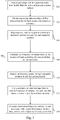
- the invention provides a method of determining copy number variation in a sample that includes cell-free polynucleotides, the method comprising:
- the invention further provides a computer readable medium comprising non-transitory machine-executable code that, upon execution by a computer processor, implements a method, the method comprising:
- the disclosure provides for a method for detecting copy number variation comprising: a) sequencing extracellular polynucleotides from a bodily sample from a subject, wherein each of the extracellular polynucleotide are optionally attached to unique barcodes; b) filtering out reads that fail to meet a set threshold; c) mapping sequence reads obtained from step (a) to a reference sequence; d) quantifying/counting mapped reads in two or more predefined regions of the reference sequence; e) determining a copy number variation in one or more of the predefined regions by (i) normalizing the number of reads in the predefined regions to each other and/or the number of unique barcodes in the predefined regions to each other; and (ii) comparing the normalized numbers obtained in step (i) to normalized numbers obtained from a control sample.
- the disclosure also provides for a method for detecting a rare mutation in a cell-free or substantially cell free sample obtained from a subject comprising: a) sequencing extracellular polynucleotides from a bodily sample from a subject, wherein each of the extracellular polynucleotide generate a plurality of sequencing reads; b) sequencing extracellular polynucleotides from a bodily sample from a subject, wherein each of the extracellular polynucleotide generate a plurality of sequencing reads; sequencing extracellular polynucleotides from a bodily sample from a subject, wherein each of the extracellular polynucleotide generate a plurality of sequencing reads; c) filtering out reads that fail to meet a set threshold; d) mapping sequence reads derived from the sequencing onto a reference sequence; e) identifying a subset of mapped sequence reads that align with a variant of the reference sequence at each mappable base position; f) for each mappable base position,
- the disclosure also provides for a method of characterizing the heterogeneity of an abnormal condition in a subject, the method comprising generating a genetic profile of extracellular polynucleotides in the subject, wherein the genetic profile comprises a plurality of data resulting from copy number variation and/or other rare mutation (e.g., genetic alteration) analyses.
- the prevalence/concentration of each rare variant identified in the subject is reported and quantified simultaneously. In other embodiments, a confidence score, regarding the prevalence/concentrations of rare variants in the subject, is reported.
- extracellular polynucleotides comprise DNA. In other embodiments, extracellular polynucleotides comprise RNA. Polynucleotides may be fragments or fragmented after isolation. Additionally, the disclosure provides for a method for circulating nucleic acid isolation and extraction.
- extracellular polynucleotides are isolated from a bodily sample that may be selected from a group consisting of blood, plasma, serum, urine, saliva, mucosal excretions, sputum, stool and tears.
- the methods of the disclosure also comprise a step of determining the percent of sequences having copy number variation or other rare genetic alteration (e.g., sequence variants) in said bodily sample.
- the percent of sequences having copy number variation in said bodily sample is determined by calculating the percentage of predefined regions with an amount of polynucleotides above or below a predetermined threshold.
- bodily fluids are drawn from a subject suspected of having an abnormal condition which may be selected from the group consisting of, mutations, rare mutations, single nucleotide variants, indels, copy number variations, transversions, translocations, inversion, deletions, aneuploidy, partial aneuploidy, polyploidy, chromosomal instability, chromosomal structure alterations, gene fusions, chromosome fusions, gene truncations, gene amplification, gene duplications, chromosomal lesions, DNA lesions, abnormal changes in nucleic acid chemical modifications, abnormal changes in epigenetic patterns, abnormal changes in nucleic acid methylation infection and cancer.
- an abnormal condition which may be selected from the group consisting of, mutations, rare mutations, single nucleotide variants, indels, copy number variations, transversions, translocations, inversion, deletions, aneuploidy, partial aneuploidy, polyploidy, chromosomal instability, chro
- the subject may be a pregnant female in which the abnormal condition may be a fetal abnormality selected from the group consisting of, single nucleotide variants, indels, copy number variations, transversions, translocations, inversion, deletions, aneuploidy, partial aneuploidy, polyploidy, chromosomal instability, chromosomal structure alterations, gene fusions, chromosome fusions, gene truncations, gene amplification, gene duplications, chromosomal lesions, DNA lesions, abnormal changes in nucleic acid chemical modifications, abnormal changes in epigenetic patterns, abnormal changes in nucleic acid methylation infection and cancer
- the method may comprise attaching one or more barcodes to the extracellular polynucleotides or fragments thereof prior to sequencing, in which the barcodes are unique.
- barcodes attached to extracellular polynucleotides or fragments thereof prior to sequencing are not unique.
- the methods of the disclosure may comprise selectively enriching regions from the subject's genome or transcriptome prior to sequencing. In other embodiments the methods of the disclosure comprise selectively enriching regions from the subject's genome or transcriptome prior to sequencing. In other embodiments the methods of the disclosure comprise non-selectively enriching regions from the subject's genome or transcriptome prior to sequencing.
- the methods of the disclosure comprise attaching one or more barcodes to the extracellular polynucleotides or fragments thereof prior to any amplification or enrichment step.
- the barcode is a polynucleotide, which may further comprise random sequence or a fixed or semi-random set of oligonucleotides that in combination with the diversity of molecules sequenced from a select region enables identification of unique molecules and be at least a 3, 5, 10, 15, 20 25, 30, 35, 40, 45, or 50mer base pairs in length.
- extracellular polynucleotides or fragments thereof may be amplified.
- amplification comprises global amplification or whole genome amplification.
- sequence reads of unique identity may be detected based on sequence information at the beginning (start) and end (stop) regions of the sequence read and the length of the sequence read.
- sequence molecules of unique identity are detected based on sequence information at the beginning (start) and end (stop) regions of the sequence read, the length of the sequence read and attachment of a barcode.
- amplification comprises selective amplification, non-selective amplification, suppression amplification or subtractive enrichment.
- the methods of the disclosure comprise removing a subset of the reads from further analysis prior to quantifying or enumerating reads.
- the method may comprise filtering out reads with an accuracy or quality score of less than a threshold, e.g., 90%, 99%, 99.9%, or 99.99% and/or mapping score less than a threshold, e.g., 90%, 99%, 99.9% or 99.99%.
- methods of the disclosure comprise filtering reads with a quality score lower than a set threshold.
- predefined regions are uniform or substantially uniform in size, about 10kb, 20kb, 30kb 40kb, 50kb, 60kb, 70kb, 80kb, 90kb, or 100kb in size. In some embodiments, at least 50, 100, 200, 500, 1000, 2000, 5000, 10,000, 20,000, or 50,000 regions are analyzed.
- a genetic variant, rare mutation or copy number variation occurs in a region of the genome selected from the group consisting of gene fusions, gene duplications, gene deletions, gene translocations, microsatellite regions, gene fragments or combination thereof. In other embodiments a genetic variant, rare mutation, or copy number variation occurs in a region of the genome selected from the group consisting of genes, oncogenes, tumor suppressor genes, promoters, regulatory sequence elements, or combination thereof. In some embodiments the variant is a nucleotide variant, single base substitution, or small indel, transversion, translocation, inversion, deletion, truncation or gene truncation about 1, 2, 3, 4, 5, 6, 7, 8, 9, 10, 15 or 20 nucleotides in length.
- the method comprises correcting/normalizing/adjusting the quantity of mapped reads using the barcodes or unique properties of individual reads.
- enumerating the reads is performed through enumeration of unique barcodes in each of the predefined regions and normalizing those numbers across at least a subset of predefined regions that were sequenced.
- samples at succeeding time intervals from the same subject are analyzed and compared to previous sample results.
- the method of the disclosure may further comprise determining partial copy number variation frequency, loss of heterozygosity, gene expression analysis, epigenetic analysis and hypermethylation analysis after amplifying the barcode-attached extracellular polynucleotides.
- copy number variation and rare mutation analysis is determined in a cell-free or substantially cell free sample obtained from a subject using multiplex sequencing, comprising performing over 10,000 sequencing reactions; simultaneously sequencing at least 10,000 different reads; or performing data analysis on at least 10,000 different reads across the genome.
- the method may comprise multiplex sequencing comprising performing data analysis on at least 10,000 different reads across the genome.
- the method may further comprise enumerating sequenced reads that are uniquely identifiable.
- the methods of the disclosure comprise normalizing and detection is performed using one or more of hidden markov, dynamic programming, support vector machine, Bayesian network, trellis decoding, Viterbi decoding, expectation maximization, Kalman filtering, or neural network methodologies.
- the methods of the disclosure comprise monitoring disease progression, monitoring residual disease, monitoring therapy, diagnosing a condition, prognosing a condition, or selecting a therapy based on discovered variants.
- a therapy is modified based on the most recent sample analysis.
- the methods of the disclosure comprise inferring the genetic profile of a tumor, infection or other tissue abnormality.
- growth, remission or evolution of a tumor, infection or other tissue abnormality is monitored.
- the subject's immune system are analyzed and monitored at single instances or over time.
- the methods of the disclosure comprise identification of a variant that is followed up through an imaging test (e.g., CT, PET-CT, MRI, X-ray, ultrasound) for localization of the tissue abnormality suspected of causing the identified variant.
- an imaging test e.g., CT, PET-CT, MRI, X-ray, ultrasound
- the methods of the disclosure comprise use of genetic data obtained from a tissue or tumor biopsy from the same patient. In some embodiments, whereby the phylogenetics of a tumor, infection or other tissue abnormality is inferred.
- the methods of the disclosure comprise performing population-based no-calling and identification of low-confidence regions.
- obtaining the measurement data for the sequence coverage comprises measuring sequence coverage depth at every position of the genome.
- correcting the measurement data for the sequence coverage bias comprises calculating window-averaged coverage.
- correcting the measurement data for the sequence coverage bias comprises performing adjustments to account for GC bias in the library construction and sequencing process.
- correcting the measurement data for the sequence coverage bias comprises performing adjustments based on additional weighting factor associated with individual mappings to compensate for bias.
- the methods of the disclosure comprise extracellular polynucleotide derived from a diseased cell origin. In some embodiments, the extracellular polynucleotide is derived from a healthy cell origin.
- the disclosure also provides for a system comprising a computer readable medium for performing the following steps: selecting predefined regions in a genome; enumerating number of sequence reads in the predefined regions; normalizing the number of sequence reads across the predefined regions; and determining percent of copy number variation in the predefined regions.
- the entirety of the genome or at least 10%, 20%, 30%, 40%, 50%, 60%, 70%, 80%, or 90% of the genome is analyzed.
- computer readable medium provides data on percent cancer DNA or RNA in plasma or serum to the end user.
- the amount of genetic variation such as polymorphisms or causal variants is analyzed. In some embodiments, the presence or absence of genetic alterations is detected.
- the disclosure also provides for a method for detecting a rare mutation in a cell-free or a substantially cell free sample obtained from a subject comprising: a) sequencing extracellular polynucleotides from a bodily sample from a subject, wherein each of the extracellular polynucleotides generate a plurality of sequencing reads; b) filtering out reads that fail to meet a set threshold; c) mapping sequence reads derived from the sequencing onto a reference sequence; d) identifying a subset of mapped sequence reads that align with a variant of the reference sequence at each mappable base position; e) for each mappable base position, calculating a ratio of (a) a number of mapped sequence reads that include a variant as compared to the reference sequence, to (b) a number of total sequence reads for each mappable base position; f) normalizing the ratios or frequency of variance for each mappable base position and determining potential rare variant(s) or other genetic alteration(s); and g)
- This disclosure also provides for a method comprising: a. providing at least one set of tagged parent polynucleotides, and for each set of tagged parent polynucleotides; b. amplifying the tagged parent polynucleotides in the set to produce a corresponding set of amplified progeny polynucleotides; c. sequencing a subset (including a proper subset) of the set of amplified progeny polynucleotides, to produce a set of sequencing reads; and d. collapsing the set of sequencing reads to generate a set of consensus sequences, each consensus sequence corresponding to a unique polynucleotide among the set of tagged parent polynucleotides.
- the method further comprises: e. analyzing the set of consensus sequences for each set of tagged parent molecules.
- each polynucleotide in a set is mappable to a reference sequence.
- the method comprises providing a plurality of sets of tagged parent polynucleotides, wherein each set is mappable to a different reference sequence.
- the method further comprises converting initial starting genetic material into the tagged parent polynucleotides.
- the initial starting genetic material comprises no more than 100 ng of polynucleotides.
- the method comprises bottlenecking the initial starting genetic material prior to converting.
- the method comprises converting the initial starting genetic material into tagged parent polynucleotides with a conversion efficiency of at least 10%, at least 20%, at least 30%, at least 40%, at least 50%, at least 60%, at least 80% or at least 90%.
- converting comprises any of blunt-end ligation, sticky end ligation, molecular inversion probes, PCR, ligation-based PCR, single strand ligation and single strand circularization.
- the initial starting genetic material is cell-free nucleic acid.
- a plurality of the reference sequences are from the same genome.
- each tagged parent polynucleotide in the set is uniquely tagged.
- the tags are non-unique.
- the generation of consensus sequences is based on information from the tag and/or at least one of sequence information at the beginning (start) region of the sequence read, the end (stop) regions of the sequence read and the length of the sequence read.
- the method comprises sequencing a subset of the set of amplified progeny polynucleotides sufficient to produce sequence reads for at least one progeny from of each of at least 20%, at least 30%, at least 40%, at least 50%, at least 60%, at least 70%, at least 80%, at least 90% at least 95%, at least 98%, at least 99%, at least 99.9% or at least 99.99% of unique polynucleotides in the set of tagged parent polynucleotides.
- the at least one progeny is a plurality of progeny, e.g., at least 2, at least 5 or at least 10 progeny.
- the number of sequence reads in the set of sequence reads is greater than the number of unique tagged parent polynucleotides in the set of tagged parent polynucleotides.
- the subset of the set of amplified progeny polynucleotides sequenced is of sufficient size so that any nucleotide sequence represented in the set of tagged parent polynucleotides at a percentage that is the same as the percentage per-base sequencing error rate of the sequencing platform used, has at least a 50%, at least a 60%, at least a 70%, at least a 80%, at least a 90% at least a 95%, at least a 98%, at least a 99%, at least a 99.9% or at least a 99.99% chance of being represented among the set of consensus sequences.
- the method comprises enriching the set of amplified progeny polynucleotides for polynucleotides mapping to one or more selected reference sequences by: (i) selective amplification of sequences from initial starting genetic material converted to tagged parent polynucleotides; (ii) selective amplification of tagged parent polynucleotides; (iii) selective sequence capture of amplified progeny polynucleotides; or (iv) selective sequence capture of initial starting genetic material.
- analyzing comprises normalizing a measure (e.g., number) taken from a set of consensus sequences against a measure taken from a set of consensus sequences from a control sample.
- a measure e.g., number
- analyzing comprises detecting mutations, rare mutations, single nucleotide variants, indels, copy number variations, transversions, translocations, inversion, deletions, aneuploidy, partial aneuploidy, polyploidy, chromosomal instability, chromosomal structure alterations, gene fusions, chromosome fusions, gene truncations, gene amplification, gene duplications, chromosomal lesions, DNA lesions, abnormal changes in nucleic acid chemical modifications, abnormal changes in epigenetic patterns, abnormal changes in nucleic acid methylation infection or cancer.
- the polynucleotides comprise DNA, RNA, a combination of the two or DNA plus RNA-derived cDNA.
- a certain subset of polynucleotides is selected for or is enriched based on polynucleotide length in base-pairs from the initial set of polynucleotides or from the amplified polynucleotides.
- analysis further comprises detection and monitoring of an abnormality or disease within an individual, such as, infection and/or cancer.
- the method is performed in combination with immune repertoire profiling.
- the polynucleotides are extract from the group consisting of blood, plasma, serum, urine, saliva, mucosal excretions, sputum, stool, and tears.
- collapsing comprising detecting and/or correcting errors, nicks or lesions present in the sense or anti-sense strand of the tagged parent polynucleotides or amplified progeny polynucleotides.
- This disclosure also provides for a method comprising detecting genetic variation in initial starting genetic material with a sensitivity of at least 5%, at least 1%, at least 0.5%, at least 0.1% or at least 0.05%.
- the initial starting genetic material is provided in an amount less than 100 ng of nucleic acid
- the genetic variation is copy number/heterozygosity variation and detecting is performed with sub-chromosomal resolution; e.g., at least 100 megabase resolution, at least 10 megabase resolution, at least 1 megabase resolution, at least 100 kilobase resolution, at least 10 kilobase resolution or at least 1 kilobase resolution.
- the method comprises providing a plurality of sets of tagged parent polynucleotides, wherein each set is mappable to a different reference sequence.
- the reference sequence is the locus of a tumor marker
- analyzing comprises detecting the tumor marker in the set of consensus sequences.
- the tumor marker is present in the set of consensus sequences at a frequency less than the error rate introduced at the amplifying step.
- the at least one set is a plurality of sets, and the reference sequences comprise a plurality of reference sequences, each of which is the locus of a tumor marker.
- analyzing comprises detecting copy number variation of consensus sequences between at least two sets of parent polynucleotides.
- analyzing comprises detecting the presence of sequence variations compared with the reference sequences. In another embodiment analyzing comprises detecting the presence of sequence variations compared with the reference sequences and detecting copy number variation of consensus sequences between at least two sets of parent polynucleotides. In another embodiment collapsing comprises: i. grouping sequences reads sequenced from amplified progeny polynucleotides into families, each family amplified from the same tagged parent polynucleotide; and ii. determining a consensus sequence based on sequence reads in a family.
- This disclosure also provides for a system comprising a computer readable medium for performing the following steps: a. providing at least one set of tagged parent polynucleotides, and for each set of tagged parent polynucleotides; b. amplifying the tagged parent polynucleotides in the set to produce a corresponding set of amplified progeny polynucleotides; c. sequencing a subset (including a proper subset) of the set of amplified progeny polynucleotides, to produce a set of sequencing reads; and d.
- each consensus sequence corresponding to a unique polynucleotide among the set of tagged parent polynucleotides and, optionally, e. analyzing the set of consensus sequences for each set of tagged parent molecules.
- This disclosure also provides a method comprising: a. providing at least one set of tagged parent polynucleotides, and for each set of tagged parent polynucleotides; b. amplifying the tagged parent polynucleotides in the set to produce a corresponding set of amplified progeny polynucleotides; c. sequencing a subset (including a proper subset) of the set of amplified progeny polynucleotides, to produce a set of sequencing reads; d. collapsing the set of sequencing reads to generate a set of consensus sequences, each consensus sequence corresponding to a unique polynucleotide among the set of tagged parent polynucleotides; and e.
- the quality threshold considers a number of sequence reads from amplified progeny polynucleotides collapsed into a consensus sequence. In another embodiment the quality threshold considers a number of sequence reads from amplified progeny polynucleotides collapsed into a consensus sequence.
- This disclosure also provides a system comprising a computer readable medium for performing the aforesaid method.
- This disclosure also provides a method comprising: a. providing at least one set of tagged parent polynucleotides, wherein each set maps to a different reference sequence in one or more genomes, and, for each set of tagged parent polynucleotides; i. amplifying the first polynucleotides to produce a set of amplified polynucleotides; ii. sequencing a subset of the set of amplified polynucleotides, to produce a set of sequencing reads; and iii. collapsing the sequence reads by: 1.
- collapsing further comprises: 2. determining a quantitative measure of sequence reads in each family.
- the method further comprises (including a): b. determining a quantitative measure of unique families; and c. based on (1) the quantitative measure of unique families and (2) the quantitative measure of sequence reads in each group, inferring a measure of unique tagged parent polynucleotides in the set.
- inferring is performed using statistical or probabilistic models.
- the at least one set is a plurality of sets.
- the method further comprises correcting for amplification or representational bias between the two sets. In another embodiment the method further comprises using a control or set of control samples to correct for amplification or representational biases between the two sets. In another embodiment the method further comprises determining copy number variation between the sets. In another embodiment the method further comprises (including a, b, c): d. determining a quantitative measure of polymorphic forms among the families; and e. based on the determined quantitative measure of polymorphic forms, inferring a quantitative measure of polymorphic forms in the number of inferred unique tagged parent polynucleotides.
- polymorphic forms include but are not limited to: substitutions, insertions, deletions, inversions, microsatellite changes, transversions, translocations, fusions, methylation, hypermethylation, hydroxymethylation, acetylation, epigenetic variants, regulatory-associated variants or protein binding sites.
- the method further comprising: a. inferring copy number variation for the plurality of sets based on a comparison of the inferred number of tagged parent polynucleotides in each set mapping to each of a plurality of reference sequences.
- the original number of polynucleotides in each set is further inferred.
- This disclosure also provides a method of determining copy number variation in a sample that includes polynucleotides, the method comprising: a. providing at least two sets of first polynucleotides, wherein each set maps to a different reference sequence in a genome, and, for each set of first polynucleotides; i. amplifying the polynucleotides to produce a set of amplified polynucleotides; ii. sequencing a subset of the set of amplified polynucleotides, to produce a set of sequencing reads; iii.
- This disclosure also provides a system comprising a computer readable medium for performing the aforesaid methods.
- This disclosure also provides a method of inferring frequency of sequence calls in a sample of polynucleotides comprising: a. providing at least one set of first polynucleotides, wherein each set maps to a different reference sequence in one or more genomes, and, for each set of first polynucleotides; i. amplifying the first polynucleotides to produce a set of amplified polynucleotides; ii. sequencing a subset of the set of amplified polynucleotides, to produce a set of sequencing reads; iii.
- each family comprising sequence reads of amplified polynucleotides amplified from the same first polynucleotide; b. inferring, for each set of first polynucleotides, a call frequency for one or more bases in the set of first polynucleotides, wherein inferring comprises: i. assigning, for each family, confidence score for each of a plurality of calls, the confidence score taking into consideration a frequency of the call among members of the family; and ii. estimating a frequency of the one or more calls taking into consideration the confidence scores of the one or more calls assigned to each family.
- This disclosure also provides a system comprising a computer readable medium for performing the aforesaid methods.
- This disclosure also provides a method of communicating sequence information about at least one individual polynucleotide molecule comprising: a. providing at least one individual polynucleotide molecule; b. encoding sequence information in the at least one individual polynucleotide molecule to produce a signal; c. passing at least part of the signal through a channel to produce a received signal comprising nucleotide sequence information about the at least one individual polynucleotide molecule, wherein the received signal comprises noise and/or distortion; d. decoding the received signal to produce a message comprising sequence information about the at least one individual polynucleotide molecule, wherein decoding reduces noise and/or distortion in the message; and e. providing the message to a recipient.
- the noise comprises incorrect nucleotide calls.
- distortion comprises uneven amplification of the individual polynucleotide molecule compared with other individual polynucleotide molecules.
- distortion results from amplification or sequencing bias.
- the at least one individual polynucleotide molecule is a plurality of individual polynucleotide molecules, and decoding produces a message about each molecule in the plurality.
- encoding comprises amplifying the at least individual polynucleotide molecule which has optionally been tagged, wherein the signal comprises a collection of amplified molecules.
- the channel comprises a polynucleotide sequencer and the received signal comprises sequence reads of a plurality of polynucleotides amplified from the at least one individual polynucleotide molecule.
- decoding comprises grouping sequence reads of amplified molecules amplified from each of the at least one individual polynucleotide molecules.
- decoding consists of a probabilistic or statistical method of filtering the generated sequence signal.
- polynucleotides are derived from tumor genomic DNA or RNA. In another embodiment the polynucleotides are derived from cell-free polynucleotides, exosomal polynucleotides, bacterial polynucleotides or viral polynucleotides. In another embodiment further comprising the detection and/or association of affected molecular pathways. In another embodiment further comprising serial monitoring of the health or disease state of an individual. In another embodiment whereby the phylogeny of a genome associated with a disease within an individual is inferred. In another embodiment further comprising diagnosis, monitoring or treatment of a disease. In another embodiment the treatment regimen is selected or modified based on detected polymorphic forms or CNVs or associated pathways. In another embodiment the treatment comprises of a combination therapy.
- This disclosure also provides a computer readable medium in non-transitory, tangible form comprising executable code configured to perform the following steps: selecting predefined regions in a genome; accessing sequence reads and enumerating number of sequence reads in the predefined regions; normalizing the number of sequence reads across the predefined regions; and determining percent of copy number variation in the predefined regions.
- This disclosure also provides a computer readable medium in non-transitory, tangible form comprising executable code configured to perform the following steps: a. accessing a data file comprising a plurality of sequencing reads; b. filtering out reads that fail to meet a set threshold; c. mapping sequence reads derived from the sequencing onto a reference sequence; d. identifying a subset of mapped sequence reads that align with a variant of the reference sequence at each mappable base position; e. for each mappable base position, calculating a ratio of (a) a number of mapped sequence reads that include a variant as compared to the reference sequence, to (b) a number of total sequence reads for each mappable base position; f.
- This disclosure also provides a computer readable medium in non-transitory, tangible form comprising executable code configured to perform the following steps: a. accessing a data file comprising a plurality of sequencing reads, wherein the sequence reads derive from a set of progeny polynucleotides amplified from at least one set of tagged parent polynucleotides; b. collapsing the set of sequencing reads to generate a set of consensus sequences, each consensus sequence corresponding to a unique polynucleotide among the set of tagged parent polynucleotides.
- This disclosure also provides a computer readable medium in non-transitory, tangible form comprising executable code configured to perform the following steps: a. accessing a data file comprising a plurality of sequencing reads, wherein the sequence reads derive from a set of progeny polynucleotides amplified from at least one set of tagged parent polynucleotides; b. collapsing the set of sequencing reads to generate a set of consensus sequences, each consensus sequence corresponding to a unique polynucleotide among the set of tagged parent polynucleotides; c. filtering out from among the consensus sequences those that fail to meet a quality threshold.
- This disclosure also provides a computer readable medium in non-transitory, tangible form comprising executable code configured to perform the following steps: a. accessing a data file comprising a plurality of sequencing reads, wherein the sequence reads derive from a set of progeny polynucleotides amplified from at least one set of tagged parent polynucleotides; and i. collapsing the sequence reads by: 1. grouping sequences reads sequenced from amplified progeny polynucleotides into families, each family amplified from the same tagged parent polynucleotide and, optionally, 2. determining a quantitative measure of sequence reads in each family.
- the executable code further performs the steps of: b.
- the executable code further performs the steps of: d. determining a quantitative measure of polymorphic forms among the families; and e. based on the determined quantitative measure of polymorphic forms, inferring a quantitative measure of polymorphic forms in the number of inferred unique tagged parent polynucleotides.
- This disclosure also provides a computer readable medium in non-transitory, tangible form comprising executable code configured to perform the following steps: a. accessing a data file comprising a plurality of sequencing reads, wherein the sequence reads derive from a set of progeny polynucleotides amplified from at least one set of tagged parent polynucleotides grouping sequences reads sequenced from amplified polynucleotides into families, each family amplified from the same first polynucleotide in the set; b. inferring a quantitative measure of families in the set; c. determining copy number variation by comparing the quantitative measure of families in each set.
- This disclosure also provides a computer readable medium in non-transitory, tangible form comprising executable code configured to perform the following steps: a. accessing a data file comprising a plurality of sequencing reads, wherein the sequence reads derive from a set of progeny polynucleotides amplified from at least one set of tagged parent polynucleotides grouping the sequence reads into families, each family comprising sequence reads of amplified polynucleotides amplified from the same first polynucleotide; b. inferring, for each set of first polynucleotides, a call frequency for one or more bases in the set of first polynucleotides, wherein inferring comprises: c.
- This disclosure also provides a computer readable medium in non-transitory, tangible form comprising executable code configured to perform the following steps: a. accessing a data accessing a data file comprising a received signal that comprises encoded sequence information from at least one individual polynucleotide molecule wherein the received signal comprises noise and/or distortion; b. decoding the received signal to produce a message comprising sequence information about the at least one individual polynucleotide molecule, wherein decoding reduces noise and/or distortion about each individual polynucleotide in the message; and c. writing the message comprising sequence information about the at least one individual polynucleotide molecule to a computer file.
- This disclosure also provides a computer readable medium in non-transitory, tangible form comprising executable code configured to perform the following steps: a. accessing a data file comprising a plurality of sequencing reads, wherein the sequence reads derive from a set of progeny polynucleotides amplified from at least one set of tagged parent polynucleotides; b. collapsing the set of sequencing reads to generate a set of consensus sequences, each consensus sequence corresponding to a unique polynucleotide among the set of tagged parent polynucleotides; c. filtering out from among the consensus sequences those that fail to meet a quality threshold.
- This disclosure also provides a computer readable medium in non-transitory, tangible form comprising executable code configured to perform the following steps: a. accessing a data file comprising a plurality of sequencing reads, wherein the sequence reads derive from a set of progeny polynucleotides amplified from at least one set of tagged parent polynucleotides; and b. collapsing the sequence reads by: i. grouping sequences reads sequenced from amplified progeny polynucleotides into families, each family amplified from the same tagged parent polynucleotide; and ii. optionally, determining a quantitative measure of sequence reads in each family.
- the executable code further performs the steps of: c. determining a quantitative measure of unique families; d. based on (1) the quantitative measure of unique families and (2) the quantitative measure of sequence reads in each group, inferring a measure of unique tagged parent polynucleotides in the set.
- the executable code further performs the steps of: e. determining a quantitative measure of polymorphic forms among the families; and f. based on the determined quantitative measure of polymorphic forms, inferring a quantitative measure of polymorphic forms in the number of inferred unique tagged parent polynucleotides.
- the executable code further performs the steps of: e. inferring copy number variation for the plurality of sets based on a comparison of the inferred number of tagged parent polynucleotides in each set mapping to each of a plurality of reference sequences.
- This disclosure also provides a computer readable medium in non-transitory, tangible form comprising executable code configured to perform the following steps: a. accessing a data file comprising a plurality of sequencing reads, wherein the sequence reads derive from a set of progeny polynucleotides amplified from at least one set of tagged parent polynucleotides; b. grouping sequences reads sequenced from amplified polynucleotides into families, each family amplified from the same first polynucleotide in the set; c. inferring a quantitative measure of families in the set; d. determining copy number variation by comparing the quantitative measure of families in each set.
- This disclosure also provides a computer readable medium in non-transitory, tangible form comprising executable code configured to perform the following steps: a. accessing a data file comprising a plurality of sequencing reads, wherein the sequence reads derive from a set of progeny polynucleotides amplified from at least one set of tagged parent polynucleotides grouping the sequence reads into families, each family comprising sequence reads of amplified polynucleotides amplified from the same first polynucleotide; and b. inferring, for each set of first polynucleotides, a call frequency for one or more bases in the set of first polynucleotides, wherein inferring comprises: i.
- This disclosure also provides a method comprising: a. providing a sample comprising between 100 and 100,000 haploid human genome equivalents of cell free DNA (cfDNA) polynucleotides; and b. tagging the polynucleotides with between 2 and 1,000,000 unique identifiers.
- the number of unique identifiers is at least 3, at least 5, at least 10, at least 15 or at least 25 and at most 100, at most 1000 or at most 10,000.
- the number of unique identifiers is at most 100, at most 1000, at most 10,000, at most 100,000.
- This disclosure also provides a method comprising: a. providing a sample comprising a plurality of human haploid genome equivalents of fragmented polynucleotides; b. determining z, wherein z is a measure of central tendency (e.g., mean, median or mode) of expected number of duplicate polynucleotides starting at any position in the genome, wherein duplicate polynucleotides have the same start and stop positions; and c. tagging polynucleotides in sample with n unique identifiers, wherein n is between 2 and 100,000 ⁇ z, 2 and 10,000 ⁇ z, 2 and 1,000 ⁇ z or 2 and 100 ⁇ z.
- n is between 2 and 100,000 ⁇ z, 2 and 10,000 ⁇ z, 2 and 1,000 ⁇ z or 2 and 100 ⁇ z.
- This disclosure also provides a method comprising: a. providing at least one set of tagged parent polynucleotides, and for each set of tagged parent polynucleotides; b. producing a plurality of sequence reads for each tagged parent polynucleotide in the set to produce a set of sequencing reads; and c. collapsing the set of sequencing reads to generate a set of consensus sequences, each consensus sequence corresponding to a unique polynucleotide among the set of tagged parent polynucleotides.
- the copy number variants identified are fractional (i.e., non-integer levels) due to heterogeneity in the sample.
- enrichment of selected regions is performed.
- copy number variation information is simultaneously extracted based on the methods described herein.
- the methods comprise an initial step of polynucleotide bottlenecking to limit the number of starting initial copies or diversity of polynucleotides in the sample.
- the disclosure also provides for a method comprising detecting the presence or absence of genetic alteration or amount of genetic variation in an individual, wherein the detecting is performed with the aid of sequencing of cell-free nucleic acid, wherein at least 10% of the individual's genome is sequenced.
- the disclosure also provides for a method comprising detecting the presence or absence of genetic alteration or amount of genetic variation in an individual, wherein the detecting is performed with the aid of sequencing of cell-free nucleic acid, wherein at least 20% of the individual's genome is sequenced.
- the disclosure also provides for a method comprising detecting the presence or absence of genetic alteration or amount of genetic variation in an individual, wherein the detecting is performed with the aid of sequencing of cell-free nucleic acid, wherein at least 30% of the individual's genome is sequenced.
- the disclosure also provides for a method comprising detecting the presence or absence of genetic alteration or amount of genetic variation in an individual, wherein the detecting is performed with the aid of sequencing of cell-free nucleic acid, wherein at least 40% of the individual's genome is sequenced.
- the disclosure also provides for a method comprising detecting the presence or absence of genetic alteration or amount of genetic variation in an individual, wherein the detecting is performed with the aid of sequencing of cell-free nucleic acid, wherein at least 50% of the individual's genome is sequenced.
- the disclosure also provides for a method comprising detecting the presence or absence of genetic alteration or amount of genetic variation in an individual, wherein the detecting is performed with the aid of sequencing of cell-free nucleic acid, wherein at least 60% of the individual's genome is sequenced.
- the disclosure also provides for a method comprising detecting the presence or absence of genetic alteration or amount of genetic variation in an individual, wherein the detecting is performed with the aid of sequencing of cell-free nucleic acid, wherein at least 70% of the individual's genome is sequenced.
- the disclosure also provides for a method comprising detecting the presence or absence of genetic alteration or amount of genetic variation in an individual, wherein the detecting is performed with the aid of sequencing of cell-free nucleic acid, wherein at least 80% of the individual's genome is sequenced.
- the disclosure also provides for a method comprising detecting the presence or absence of genetic alteration or amount of genetic variation in an individual, wherein the detecting is performed with the aid of sequencing of cell-free nucleic acid, wherein at least 90% of the individual's genome is sequenced.
- the disclosure also provides for a method comprising detecting the presence or absence of genetic alteration and amount of genetic variation in an individual, wherein the detecting is performed with the aid of sequencing of cell-free nucleic acid, wherein at least 10% of the individual's genome is sequenced.
- the disclosure also provides for a method comprising detecting the presence or absence of genetic alteration and amount of genetic variation in an individual, wherein the detecting is performed with the aid of sequencing of cell-free nucleic acid, wherein at least 20% of the individual's genome is sequenced.
- the disclosure also provides for a method comprising detecting the presence or absence of genetic alteration and amount of genetic variation in an individual, wherein the detecting is performed with the aid of sequencing of cell-free nucleic acid, wherein at least 30% of the individual's genome is sequenced.
- the disclosure also provides for a method comprising detecting the presence or absence of genetic alteration and amount of genetic variation in an individual, wherein the detecting is performed with the aid of sequencing of cell-free nucleic acid, wherein at least 40% of the individual's genome is sequenced.
- the disclosure also provides for a method comprising detecting the presence or absence of genetic alteration and amount of genetic variation in an individual, wherein the detecting is performed with the aid of sequencing of cell-free nucleic acid, wherein at least 50% of the individual's genome is sequenced.
- the disclosure also provides for a method comprising detecting the presence or absence of genetic alteration and amount of genetic variation in an individual, wherein the detecting is performed with the aid of sequencing of cell-free nucleic acid, wherein at least 60% of the individual's genome is sequenced.
- the disclosure also provides for a method comprising detecting the presence or absence of genetic alteration and amount of genetic variation in an individual, wherein the detecting is performed with the aid of sequencing of cell-free nucleic acid, wherein at least 70% of the individual's genome is sequenced.
- the disclosure also provides for a method comprising detecting the presence or absence of genetic alteration and amount of genetic variation in an individual, wherein the detecting is performed with the aid of sequencing of cell-free nucleic acid, wherein at least 80% of the individual's genome is sequenced.
- the disclosure also provides for a method comprising detecting the presence or absence of genetic alteration and amount of genetic variation in an individual, wherein the detecting is performed with the aid of sequencing of cell-free nucleic acid, wherein at least 90% of the individual's genome is sequenced.
- the genetic alteration is copy number variation or one or more rare mutations.
- the genetic variation comprises one or more causal variants and one or more polymorphisms.
- the genetic alteration and/or amount of genetic variation in the individual may be compared to a genetic alteration and/or amount of genetic variation in one or more individuals with a known disease.
- the genetic alteration and/or amount of genetic variation in the individual may be compared to a genetic alteration and/or amount of genetic variation in one or more individuals, without a disease.
- the cell-free nucleic acid is DNA.
- the cell-free nucleic acid is RNA.
- the cell-free nucleic acid is DNA and RNA.
- the disease is cancer or pre-cancer.
- the method further comprising diagnosis or treatment of a disease.
- composition comprising between 100 and 100,000 human haploid genome equivalents of cfDNA polynucleotides, wherein the polynucleotides are tagged with between 2 and 1,000,000 unique identifiers.
- the composition comprises between 1000 and 50,000 haploid human genome equivalents of cfDNA polynucleotides, wherein the polynucleotides are tagged with between 2 and 1,000 unique identifiers.
- the unique identifiers comprise nucleotide barcodes.
- the disclosure also provides for a method comprising: a) providing a sample comprising between 100 and 100,000 haploid human genome equivalents of cfDNA polynucleotides; and b) tagging the polynucleotides with between 2 and 1,000,000 unique identifiers.
- the disclosure also provides for a system comprising a computer readable medium comprising machine-executable code as described herein.
- the disclosure also provides for a system comprising a computer readable medium comprising machine-executable code that, upon execution by a computer processor, implements a method as described herein.
- the present disclosure provides a system and method for the detection of rare mutations (e.g., single or multiple nucleotide variations) and copy number variations in cell free polynucleotides.
- the systems and methods comprise sample preparation, or the extraction and isolation of cell free polynucleotide sequences from a bodily fluid; subsequent sequencing of cell free polynucleotides by techniques known in the art; and application of bioinformatics tools to detect rare mutations and copy number variations as compared to a reference.
- the systems and methods also may contain a database or collection of different rare mutations or copy number variation profiles of different diseases, to be used as additional references in aiding detection of rare mutations (e.g., single nucleotide variation profiling), copy number variation profiling or general genetic profiling of a disease.
- rare mutations e.g., single nucleotide variation profiling
- copy number variation profiling e.g., single nucleotide variation profiling
- general genetic profiling of a disease e.g., single nucleotide variation profiling
- cell free DNA are extracted and isolated from a readily accessible bodily fluid such as blood.
- cell free DNA can be extracted using a variety of methods known in the art, including but not limited to isopropanol precipitation and/or silica based purification.
- Cell free DNA may be extracted from any number of subjects, such as subjects without cancer, subjects at risk for cancer, or subjects known to have cancer (e.g. through other means).
- any of a number of different sequencing operations may be performed on the cell free polynucleotide sample.
- Samples may be processed before sequencing with one or more reagents (e.g., enzymes, unique identifiers (e.g., barcodes), probes, etc.).
- reagents e.g., enzymes, unique identifiers (e.g., barcodes), probes, etc.
- the samples or fragments of samples may be tagged individually or in subgroups with the unique identifier. The tagged sample may then be used in a downstream application such as a sequencing reaction by which individual molecules may be tracked to parent molecules.
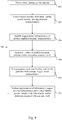
- sequence data may be: 1) aligned with a reference genome; 2) filtered and mapped; 3) partitioned into windows or bins of sequence; 4) coverage reads counted for each window; 5) coverage reads can then be normalized using a stochastic or statistical modeling algorithm; 6) and an output file can be generated reflecting discrete copy number states at various positions in the genome.
- sequence data may be 1) aligned with a reference genome; 2) filtered and mapped; 3) frequency of variant bases calculated based on coverage reads for that specific base; 4) variant base frequency normalized using a stochastic, statistical or probabilistic modeling algorithm; 5) and an output file can be generated reflecting mutation states at various positions in the genome.
- nucleic acid sequencing nucleic acid quantification
- sequencing optimization detecting gene expression
- quantifying gene expression genomic profiling
- cancer profiling cancer profiling
- analysis of expressed markers genomic profiling
- the systems and methods have numerous medical applications. For example, it may be used for the identification, detection, diagnosis, treatment, staging of, or risk prediction of various genetic and non-genetic diseases and disorders including cancer. It may be used to assess subject response to different treatments of said genetic and non-genetic diseases, or provide information regarding disease progression and prognosis.
- Polynucleotide sequencing can be compared with a problem in communication theory.
- An initial individual polynucleotide or ensemble of polynucleotides is thought of as an original message. Tagging and/or amplifying can be thought of as encoding the original message into a signal. Sequencing can be thought of as communication channel.
- the output of a sequencer e.g., sequence reads, can be thought of as a received signal.
- Bioinformatic processing can be thought of as a receiver that decodes the received signal to produce a transmitted message, e.g., a nucleotide sequence or sequences.
- the received signal can include artifacts, such as noise and distortion. Noise can be thought of as an unwanted random addition to a signal. Distortion can be thought of as an alteration in the amplitude of a signal or portion of a signal.
- Noise can be introduced through errors in copying and/or reading a polynucleotide.
- a single polynucleotide can first be subject to amplification.
- Amplification can introduce errors, so that a subset of the amplified polynucleotides may contain, at a particular locus, a base that is not the same as the original base at that locus.
- a base at any particular locus may be read incorrectly.
- the collection of sequence reads can include a certain percentage of base calls at a locus that are not the same as the original base.
- this error rate can be in the single digits, e.g., 2%-3%.
- noise can be a significant problem. This can be the case, for example, when cell free DNA includes not only germline DNA, but DNA from another source, such as fetal DNA or DNA from a cancer cell. In this case, if the frequency of molecules with sequence variants is in the same range as the frequency of errors introduced by the sequencing process, then true sequence variants may not be distinguishable from noise. This could interfere, for example, with detecting sequence variants in a sample.
- Distortion can be manifested in the sequencing process as a difference in signal strength, e.g., total number of sequence reads, produced by molecules in a parent population at the same frequency. Distortion can be introduced, for example, through amplification bias, GC bias, or sequencing bias. This could interfere with detecting copy number variation in a sample. GC bias results in the uneven representation of areas rich or poor in GC content in the sequence reading.
- This invention provides methods of reducing sequencing artifacts, such as noise and/or distortion, in a polynucleotide sequencing process.
- Grouping sequence reads into families derived from original individual molecules can reduce noise and/or distortion from a single individual molecule or from an ensemble of molecules. With respect to a single molecule, grouping reads into a family reduces distortion by, for example, indicating that many sequence reads actually represent a single molecule rather than many different molecules.
- Collapsing sequence reads into a consensus sequence is one way to reduce noise in the received message from one molecule. Using probabilistic functions that convert received frequencies is another way.
- grouping reads into families and determining a quantitative measure of the families reduces distortion, for example, in the quantity of molecules at each of a plurality of different loci.
- collapsing sequence reads of different families into consensus sequences eliminate errors introduced by amplification and/or sequencing error.
- determining frequencies of base calls based on probabilities derived from family information also reduces noise in the received message from an ensemble of molecules.
- Methods of reducing noise and/or distortion from a sequencing process are known. These include, for example, filtering sequences, e.g., requiring them to meet a quality threshold, or reducing GC bias. Such methods typically are performed on the collection of sequence reads that are the output of a sequencer, and can be performed sequence read-by-sequence read, without regard for family structure (sub-collections of sequences derived from a single original parent molecule). Certain methods of this invention reduce noise and distortion by reducing noise and/or distortion within families of sequence reads, that is, operating on sequence reads grouped into families derived from a single parent polynucleotide molecule. Signal artifact reduction at the family level can produce significantly less noise and distortion in the ultimate message that is provided than artifact reduction performed at a sequence read-by-sequence read level or on sequencer output as a whole.
- the present disclosure further provides methods and systems for detecting with high sensitivity genetic variation in a sample of initial genetic material.
- the methods involve using one or both of the following tools: First, the efficient conversion of individual polynucleotides in a sample of initial genetic material into sequence-ready tagged parent polynucleotides, so as to increase the probability that individual polynucleotides in a sample of initial genetic material will be represented in a sequence-ready sample. This can produce sequence information about more polynucleotides in the initial sample.
- Second, high yield generation of consensus sequences for tagged parent polynucleotides by high rate sampling of progeny polynucleotides amplified from the tagged parent polynucleotides, and collapsing of generated sequence reads into consensus sequences representing sequences of parent tagged polynucleotides. This can reduce noise introduced by amplification bias and/or sequencing errors, and can increase sensitivity of detection. Collapsing is performed on a plurality of sequence reads, generated either from reads of amplified molecules, or multiple reads of a single molecule.
- Sequencing methods typically involve sample preparation, sequencing of polynucleotides in the prepared sample to produce sequence reads and bioinformatic manipulation of the sequence reads to produce quantitative and/or qualitative genetic information about the sample.
- Sample preparation typically involves converting polynucleotides in a sample into a form compatible with the sequencing platform used. This conversion can involve tagging polynucleotides.
- the tags comprise polynucleotide sequence tags. Conversion methodologies used in sequencing may not be 100% efficient. For example, it is not uncommon to convert polynucleotides in a sample with a conversion efficiency of about 1-5%, that is, about 1-5% of the polynucleotides in a sample are converted into tagged polynucleotides.
- Polynucleotides that are not converted into tagged molecules are not represented in a tagged library for sequencing. Accordingly, polynucleotides having genetic variants represented at low frequency in the initial genetic material may not be represented in the tagged library and, therefore may not be sequenced or detected. By increasing conversion efficiency, the probability that a rare polynucleotide in the initial genetic material will be represented in the tagged library and, consequently, detected by sequencing is increased. Furthermore, rather than directly address the low conversion efficiency issue of library preparation, most protocols to date call for greater than 1 microgram of DNA as input material. However, when input sample material is limited or detection of polynucleotides with low representation is desired, high conversion efficiency can efficiently sequence the sample and/or to adequately detect such polynucleotides.
- This disclosure provides methods of converting initial polynucleotides into tagged polynucleotides with a conversion efficiency of at least 10%, at least 20%, at least 30%, at least 40%, at least 50%, at least 60%, at least 80% or at least 90%.
- the methods involve, for example, using any of blunt-end ligation, sticky end ligation, molecular inversion probes, PCR, ligation-based PCR, multiplex PCR, single strand ligation and single strand circularization.
- the methods can also involve limiting the amount of initial genetic material. For example, the amount of initial genetic material can be less than 1 ug, less than 100 ng or less than 10 ng. These methods are described in more detail herein.
- polynucleotides in a tagged library are amplified and the resulting amplified molecules are sequenced.
- the number of amplified molecules sampled for sequencing may be about only 50% of the unique polynucleotides in the tagged library.
- amplification may be biased in favor of or against certain sequences or certain members of the tagged library. This may distort quantitative measurement of sequences in the tagged library.
- sequencing platforms can introduce errors in sequencing.
- sequences can have a per-base error rate of 0.5-1%.
- Amplification bias and sequencing errors introduce noise into the final sequencing product. This noise can diminish sensitivity of detection. For example, sequence variants whose frequency in the tagged population is less than the sequencing error rate can be mistaken for noise.
- amplification bias can distort measurements of copy number variation.
- a plurality of sequence reads from a single polynucleotide can be produced without amplification. This can be done, for example, with nanopore methods.
- This disclosure provides methods of accurately detecting and reading unique polynucleotides in a tagged pool.
- this disclosure provides sequence-tagged polynucleotides that, when amplified and sequenced, or when sequenced a plurality of times to produce a plurality of sequence reads, provide information that allowed the tracing back, or collapsing, of progeny polynucleotides to the unique tag parent polynucleotide molecule. Collapsing families of amplified progeny polynucleotides reduces amplification bias by providing information about original unique parent molecules. Collapsing also reduces sequencing errors by eliminating from sequencing data mutant sequences of progeny molecules.
- Detecting and reading unique polynucleotides in the tagged library can involve two strategies.
- a sufficiently large subset of the amplified progeny polynucleotide pool is a sequenced such that, for a large percentage of unique tagged parent polynucleotides in the set of tagged parent polynucleotides, there is a sequence read that is produced for at least one amplified progeny polynucleotide in a family produced from a unique tagged parent polynucleotide.
- the amplified progeny polynucleotide set is sampled for sequencing at a level to produce sequence reads from multiple progeny members of a family derived from a unique parent polynucleotide.
- Generation of sequence reads from multiple progeny members of a family allows collapsing of sequences into consensus parent sequences.
- sampling a number of amplified progeny polynucleotides from the set of amplified progeny polynucleotides that is equal to the number of unique tagged parent polynucleotides in the set of tagged parent polynucleotides (particularly when the number is at least 10,000) will produce, statistically, a sequence read for at least one of progeny of about 68% of the tagged parent polynucleotides in the set, and about 40% of the unique tagged parent polynucleotides in the original set will be represented by at least two progeny sequence reads.
- the amplified progeny polynucleotide set is sampled sufficiently so as to produce an average of five to ten sequence reads for each family. Sampling from the amplified progeny set of 10-times as many molecules as the number of unique tagged parent polynucleotides will produce, statistically, sequence information about 99.995% of the families, of which 99.95% of the total families will be covered by a plurality of sequence reads. A consensus sequence can be built from the progeny polynucleotides in each family so as to dramatically reduce the error rate from the nominal per-base sequencing error rate to a rate possibly many orders of magnitude lower.
- the sampling size of the amplified progeny to be sequenced can be chosen so as to ensure a sequence having a frequency in the sample that is no greater than the nominal per-base sequencing error rate to a rate of the sequencing platform used, has at least 99% chance being represented by at least one read.
- the set of amplified progeny polynucleotides is sampled to a level to produce a high probability e.g., at least 90%, that a sequence represented in the set of tagged parent polynucleotides at a frequency that is about the same as the per base sequencing error rate of the sequencing platform used is covered by at least one sequence read and preferably a plurality of sequence reads.
- the sequencing platform has a per base error rate of 0.2% in a sequence or set of sequences is represented in the set of tagged parent polynucleotides at a frequency of about 0.2%
- the number of polynucleotides in the amplified progeny pool that are sequenced can be about X times the number of unique molecules in the set of tagged parent polynucleotides.
- a measure e.g., a count
- This measure can be compared with a measure of tagged parent molecules mapping to a different genomic region. That is, the amount of tagged parent molecules mapping to a first location or mappable position in a reference sequence, such as the human genome, can be compared with a measure of tagged parent molecules mapping to a second location or mappable position in a reference sequence. This comparison can reveal, for example, the relative amounts of parent molecules mapping to each region. This, in turn, provides an indication of copy number variation for molecules mapping to a particular region.
- the measure of polynucleotides mapping to a first reference sequence is greater than the measure of polynucleotides mapping to a second reference sequence, this may indicate that the parent population, and by extension the original sample, included polynucleotides from cells exhibiting aneuploidy.
- the measures can be normalized against a control sample to eliminate various biases.
- Quantitative measures can include, for example, number, count, frequency (whether relative, inferred or absolute).
- a reference genome can include the genome of any species of interest.
- Human genome sequences useful as references can include the hg19 assembly or any previous or available hg assembly. Such sequences can be interrogated using the genome browser available at genome.ucsc.edu/index.html.
- Other species genomes include, for example PanTro2 (chimp) and mm9 (mouse).
- sequences from a set of tagged polynucleotides mapping to a reference sequence can be analyzed for variant sequences and their frequency in the population of tagged parent polynucleotides can be measured.
- polynucleotides include but are not limited to: DNA, RNA, amplicons, cDNA, dsDNA, ssDNA, plasmid DNA, cosmid DNA, high Molecular Weight (MW) DNA, chromosomal DNA, genomic DNA, viral DNA, bacterial DNA, mtDNA (mitochondrial DNA), mRNA, rRNA, tRNA, nRNA, siRNA, snRNA, snoRNA, scaRNA, microRNA, dsRNA, ribozyme, riboswitch and viral RNA (e.g., retroviral RNA).
- DNA DNA
- RNA amplicons
- cDNA cDNA
- dsDNA dsDNA
- ssDNA plasmid DNA
- cosmid DNA cosmid DNA
- MW Molecular Weight
- Cell free polynucleotides may be derived from a variety of sources including human, mammal, non-human mammal, ape, monkey, chimpanzee, reptilian, amphibian, or avian, sources. Further, samples may be extracted from variety of animal fluids containing cell free sequences, including but not limited to blood, serum, plasma, vitreous, sputum, urine, tears, perspiration, saliva, semen, mucosal excretions, mucus, spinal fluid, amniotic fluid, lymph fluid and the like. Cell free polynucleotides may be fetal in origin (via fluid taken from a pregnant subject), or may be derived from tissue of the subject itself.
- Isolation and extraction of cell free polynucleotides may be performed through collection of bodily fluids using a variety of techniques.
- collection may comprise aspiration of a bodily fluid from a subject using a syringe.
- collection may comprise pipetting or direct collection of fluid into a collecting vessel.
- cell free polynucleotides may be isolated and extracted using a variety of techniques known in the art.
- cell free DNA may be isolated, extracted and prepared using commercially available kits such as the Qiagen Qiamp® Circulating Nucleic Acid Kit protocol.
- Qiagen QubitTM dsDNA HS Assay kit protocol AgilentTM DNA 1000 kit, or TruSeqTM Sequencing Library Preparation; Low-Throughput (LT) protocol may be used.
- cell free polynucleotides are extracted and isolated by from bodily fluids through a partitioning step in which cell free DNAs, as found in solution, are separated from cells and other non-soluble components of the bodily fluid. Partitioning may include, but is not limited to, techniques such as centrifugation or filtration. In other cases, cells are not partitioned from cell free DNA first, but rather lysed. In this example, the genomic DNA of intact cells is partitioned through selective precipitation. Cell free polynucleotides, including DNA, may remain soluble and may be separated from insoluble genomic DNA and extracted. Generally, after addition of buffers and other wash steps specific to different kits, DNA may be precipitated using isopropanol precipitation.
- Non-specific bulk carrier polynucleotides may be added throughout the reaction to optimize certain aspects of the procedure such as yield.
- Isolation and purification of cell free DNA may be accomplished using any means, including, but not limited to, the use of commercial kits and protocols provided by companies such as Sigma Aldrich, Life Technologies, Promega, Affymetrix, IBI or the like. Kits and protocols may also be non-commercially available.
- the cell free polynucleotides are pre-mixed with one or more additional materials, such as one or more reagents (e.g., ligase, protease, polymerase) prior to sequencing.
- additional materials such as one or more reagents (e.g., ligase, protease, polymerase) prior to sequencing.
- One method of increasing conversion efficiency involves using a ligase engineered for optimal reactivity on single-stranded DNA, such as a ThermoPhage ssDNA ligase derivative.
- a ligase engineered for optimal reactivity on single-stranded DNA such as a ThermoPhage ssDNA ligase derivative.
- Such ligases bypass traditional steps in library preparation of end-repair and A-tailing that can have poor efficiencies and/or accumulated losses due to intermediate cleanup steps, and allows for twice the probability that either the sense or anti-sense starting polynucleotide will be converted into an appropriately tagged polynucleotide. It also converts double-stranded polynucleotides that may possess overhangs that may not be sufficiently blunt-ended by the typical end-repair reaction.
- Optimal reactions conditions for this ssDNA reaction are: 1 x reaction buffer (50 mM MOPS (pH 7.5), 1 mM DTT, 5 mM MgCl2, 10 mM KCl). With 50 mM ATP, 25 mg/ml BSA, 2.5 mM MnCl2, 200 pmol 85 nt ssDNA oligomer and 5 U ssDNA ligase incubated at 65°C for 1 hour. Subsequent amplification using PCR can further convert the tagged single-stranded library to a double-stranded library and yield an overall conversion efficiency of well above 20%.
- Other methods of increasing conversion rate include, for example, any of the following, alone or in combination: annealing-optimized molecular-inversion probes, blunt-end ligation with a well-controlled polynucleotide size range, sticky-end ligation or an upfront multiplex amplification step with or without the use of fusion primers.
- the systems and methods of this disclosure may also enable the cell free polynucleotides to be tagged or tracked in order to permit subsequent identification and origin of the particular polynucleotide. This feature is in contrast with other methods that use pooled or multiplex reactions and that only provide measurements or analyses as an average of multiple samples.
- the assignment of an identifier to individual or subgroups of polynucleotides may allow for a unique identity to be assigned to individual sequences or fragments of sequences. This may allow acquisition of data from individual samples and is not limited to averages of samples.
- nucleic acids or other molecules derived from a single strand may share a common tag or identifier and therefore may be later identified as being derived from that strand.
- all of the fragments from a single strand of nucleic acid may be tagged with the same identifier or tag, thereby permitting subsequent identification of fragments from the parent strand.
- gene expression products e.g., mRNA
- the systems and methods can be used as a PCR amplification control. In such cases, multiple amplification products from a PCR reaction can be tagged with the same tag or identifier. If the products are later sequenced and demonstrate sequence differences, differences among products with the same identifier can then be attributed to PCR error.
- individual sequences may be identified based upon characteristics of sequence data for the read themselves. For example, the detection of unique sequence data at the beginning (start) and end (stop) portions of individual sequencing reads may be used, alone or in combination, with the length, or number of base pairs of each sequence read to assign unique identities to individual molecules. Fragments from a single strand of nucleic acid, having been assigned a unique identity, may thereby permit subsequent identification of fragments from the parent strand. This can be used in conjunction with bottlenecking the initial starting genetic material to limit diversity.
- unique sequence data at the beginning (start) and end (stop) portions of individual sequencing reads and sequencing read length may be used, alone or combination, with the use of barcodes.
- the barcodes may be unique as described herein. In other cases, the barcodes themselves may not be unique. In this case, the use of non unique barcodes, in combination with sequence data at the beginning (start) and end (stop) portions of individual sequencing reads and sequencing read length may allow for the assignment of a unique identity to individual sequences. Similarly, fragments from a single strand of nucleic acid having been assigned a unique identity, may thereby permit subsequent identification of fragments from the parent strand.
- Sequencing methods may include, but are not limited to: high-throughput sequencing, pyrosequencing, sequencing-by-synthesis, single-molecule sequencing, nanopore sequencing, semiconductor sequencing, sequencing-by-ligation, sequencing-by-hybridization, RNA-Seq (Illumina), Digital Gene Expression (Helicos), Next generation sequencing, Single Molecule Sequencing by Synthesis (SMSS)(Helicos), massively-parallel sequencing, Clonal Single Molecule Array (Solexa), shotgun sequencing, Maxim-Gilbert sequencing, primer walking, and any other sequencing methods known in the art.
- SMSS Single Molecule Sequencing by Synthesis
- Solexa Single Molecule Array
- the systems and methods disclosed herein may be used in applications that involve the assignment of unique or non-unique identifiers, or molecular barcodes, to cell free polynucleotides.
- the identifier is a bar-code oligonucleotide that is used to tag the polynucleotide; but, in some cases, different unique identifiers are used.
- the unique identifier is a hybridization probe.
- the unique identifier is a dye, in which case the attachment may comprise intercalation of the dye into the analyte molecule (such as intercalation into DNA or RNA) or binding to a probe labeled with the dye.
- the unique identifier may be a nucleic acid oligonucleotide, in which case the attachment to the polynucleotide sequences may comprise a ligation reaction between the oligonucleotide and the sequences or incorporation through PCR.
- the reaction may comprise addition of a metal isotope, either directly to the analyte or by a probe labeled with the isotope.
- assignment of unique or non-unique identifiers, or molecular barcodes in reactions of this disclosure may follow methods and systems described by, for example, US patent applications 20010053519 , 20030152490 , 20110160078 and US patent US 6,582,908 .
- the method comprises attaching oligonucleotide barcodes to nucleic acid analytes through an enzymatic reaction including but not limited to a ligation reaction.
- the ligase enzyme may covalently attach a DNA barcode to fragmented DNA (e.g., high molecular-weight DNA).
- the molecules may be subjected to a sequencing reaction.
- oligonucleotide primers containing barcode sequences may be used in amplification reactions (e.g., PCR, qPCR, reverse-transcriptase PCR, digital PCR, etc.) of the DNA template analytes, thereby producing tagged analytes.
- amplification reactions e.g., PCR, qPCR, reverse-transcriptase PCR, digital PCR, etc.
- the pool of molecules may be sequenced.
- PCR may be used for global amplification of cell free polynucleotide sequences. This may comprise using adapter sequences that may be first ligated to different molecules followed by PCR amplification using universal primers. PCR for sequencing may be performed using any means, including but not limited to use of commercial kits provided by Nugen (WGA kit), Life Technologies, Affymetrix, Promega, Qiagen and the like. In other cases, only certain target molecules within a population of cell free polynucleotide molecules may be amplified. Specific primers, may in conjunction with adapter ligation, may be used to selectively amplify certain targets for downstream sequencing.
- the unique identifiers may be introduced to cell free polynucleotide sequences randomly or non-randomly. In some cases, they are introduced at an expected ratio of unique identifiers to microwells. For example, the unique identifiers may be loaded so that more than about 1, 2, 3, 4, 5, 6, 7, 8, 9, 10, 20, 50, 100, 500, 1000, 5000, 10000, 50,000, 100,000, 500,000, 1,000,000, 10,000,000, 50,000,000 or 1,000,000,000 unique identifiers are loaded per genome sample.
- the unique identifiers may be loaded so that less than about 2, 3, 4, 5, 6, 7, 8, 9, 10, 20, 50, 100, 500, 1000, 5000, 10000, 50,000, 100,000, 500,000, 1,000,000, 10,000,000, 50,000,000 or 1,000,000,000 unique identifiers are loaded per genome sample.
- the average number of unique identifiers loaded per sample genome is less than, or greater than, about 1, 2, 3, 4, 5, 6, 7, 8, 9, 10, 20, 50, 100, 500, 1000, 5000, 10000, 50,000, 100,000, 500,000, 1,000,000, 10,000,000, 50,000,000 or 1,000,000,000 unique identifiers per genome sample.
- the unique identifiers may be a variety of lengths such that each barcode is at least about 1, 2, 3, 4, 5, 6, 7, 8, 9, 10, 20, 50, 100, 500, 1000 base pairs. In other cases, the barcodes may comprise less than 1, 2, 3, 4, 5, 6, 7, 8, 9, 10, 20, 50, 100, 500, 1000 base pairs.
- unique identifiers may be predetermined or random or semi-random sequence oligonucleotides.
- a plurality of barcodes may be used such that barcodes are not necessarily unique to one another in the plurality.
- barcodes may be ligated to individual molecules such that the combination of the bar code and the sequence it may be ligated to creates a unique sequence that may be individually tracked.
- detection of non unique barcodes in combination with sequence data of beginning (start) and end (stop) portions of sequence reads may allow assignment of a unique identity to a particular molecule.
- the length, or number of base pairs, of an individual sequence read may also be used to assign a unique identity to such a molecule.
- fragments from a single strand of nucleic acid having been assigned a unique identity may thereby permit subsequent identification of fragments from the parent strand.
- the polynucleotides in the sample can be uniquely or substantially uniquely tagged.
- the unique identifiers may be used to tag a wide range of analytes, including but not limited to RNA or DNA molecules.
- unique identifiers e.g., barcode oligonucleotides
- the unique identifiers e.g., oligonucleotides
- a reference sequences may be included with the population of cell free polynucleotide sequences to be analyzed.
- the reference sequence may be, for example, a nucleic acid with a known sequence and a known quantity.
- the tagged analytes may subsequently be sequenced and quantified. These methods may indicate if one or more fragments and/or analytes may have been assigned an identical barcode.
- a method disclosed herein may comprise utilizing reagents necessary for the assignment of barcodes to the analytes.
- reagents including, but not limited to, ligase enzyme, buffer, adapter oligonucleotides, a plurality of unique identifier DNA barcodes and the like may be loaded into the systems and methods.
- reagents including but not limited to a plurality of PCR primers, oligonucleotides containing unique identifying sequence, or barcode sequence, DNA polymerase, DNTPs, and buffer and the like may be used in preparation for sequencing.
- the method and system of this disclosure may utilize the methods of US patent US 7,537,897 in using molecular barcodes to count molecules or analytes.
- cfDNA cell-free DNA
- cfDNA from a genome of about 3 billion bases may be comprised of almost 20 million (2x10 7 ) polynucleotide fragments.
- a sample of about 30 ng DNA can contain about 10,000 haploid human genome equivalents.
- a sample of about 100 ng of DNA can contain about 30,000 haploid human genome equivalents.
- a sample containing about 10,000 (10 4 ) haploid genome equivalents of such DNA can have about 200 billion (2x10 11 ) individual polynucleotide molecules. It has been empirically determined that in a sample of about 10,000 haploid genome equivalents of human DNA, there are about 3 duplicate polynucleotides beginning at any given position.
- such a collection can contain a diversity of about 6x10 10 -8x10 10 (about 60 billion-80 billion e.g., about 70 billion (7x10 10 )) differently sequenced polynucleotide molecules.
- This method can be cumbersome and expensive.
- This invention provides methods in which a population of polynucleotides in a sample of fragmented genomic DNA is tagged with n different unique identifiers, wherein n is at least 2 and no more than 100,000 ⁇ z, wherein z is a measure of central tendency (e.g., mean, median, mode) of an expected number of duplicate molecules having the same start and stop positions.
- n is at least any of 2 ⁇ z, 3 ⁇ z, 4 ⁇ z, 5 ⁇ z, 6 ⁇ z, 7 ⁇ z, 8 ⁇ z, 9 ⁇ z, 10 ⁇ z, 11 ⁇ z, 12 ⁇ z, 13 ⁇ z, 14 ⁇ z, 15 ⁇ z, 16 ⁇ z, 17 ⁇ z, 18 ⁇ z, 19 ⁇ z, or 20 ⁇ z (e.g., lower limit).
- n is no greater than 100,000 ⁇ z, 10,000 ⁇ z, 1000 ⁇ z or 100 ⁇ z (e.g., upper limit).
- n can range between any combination of these lower and upper limits.
- n is between 5 ⁇ z and 15 ⁇ z, between 8 ⁇ z and 12 ⁇ z, or about 10 ⁇ z.
- a haploid human genome equivalent has about 3 picograms of DNA.
- a sample of about 1 microgram of DNA contains about 300,000 haploid human genome equivalents.
- the number n can be between 15 and 45, between 24 and 36 or about 30. Improvements in sequencing can be achieved as long as at least some of the duplicate or cognate polynucleotides bear unique identifiers, that is, bear different tags.
- the number of tags used is selected so that there is at least a 95% chance that all duplicate molecules starting at any one position bear unique identifiers.
- a sample comprising about 10,000 haploid human genome equivalents of cfDNA can be tagged with about 36 unique identifiers.
- the unique identifiers can comprise six unique DNA barcodes. Attached to both ends of a polynucleotide, 36 possible unique identifiers are produced. Samples tagged in such a way can be those with a range of about 10 ng to any of about 100 ng, about 1 ⁇ g, about 10 ⁇ g of fragmented polynucleotides, e.g., genomic DNA, e.g. cfDNA.
- compositions of tagged polynucleotides can comprise fragmented DNA, e.g. cfDNA.
- a set of polynucleotides in the composition that map to a mappable base position in a genome can be non-uniquely tagged, that is, the number of different identifiers can be at least at least 2 and fewer than the number of polynucleotides that map to the mappable base position.
- a composition of between about 10 ng to about 10 ⁇ g (e.g., any of about 10 ng-1 ⁇ g, about 10 ng-100 ng, about 100 ng-10 ⁇ g, about 100 ng-1 ⁇ g, about 1 ⁇ g-10 ⁇ g) can bear between any of 2, 5, 10, 50 or 100 to any of 100, 1000, 10,000 or 100,000 different identifiers. For example, between 5 and 100 different identifiers can be used to tag the polynucleotides in such a composition.
- cell free sequences may be sequenced.
- a sequencing method is classic Sanger sequencing.
- Sequencing methods may include, but are not limited to: high-throughput sequencing, pyrosequencing, sequencing-by-synthesis, single-molecule sequencing, nanopore sequencing, semiconductor sequencing, sequencing-by-ligation, sequencing-by-hybridization, RNA-Seq (Illumina), Digital Gene Expression (Helicos), Next generation sequencing, Single Molecule Sequencing by Synthesis (SMSS)(Helicos), massively-parallel sequencing, Clonal Single Molecule Array (Solexa), shotgun sequencing, Maxim-Gilbert sequencing, primer walking, sequencing using PacBio, SOLiD, Ion Torrent, or Nanopore platforms and any other sequencing methods known in the art.
- sequencing reactions of various types may comprise a variety of sample processing units.
- Sample processing units may include but are not limited to multiple lanes, multiple channels, multiple wells, or other mean of processing multiple sample sets substantially simultaneously. Additionally, the sample processing unit may include multiple sample chambers to enable processing of multiple runs simultaneously.
- simultaneous sequencing reactions may be performed using multiplex sequencing.
- cell free polynucleotides may be sequenced with at least 1000, 2000, 3000, 4000, 5000, 6000, 7000, 8000, 9000, 10000, 50000, 100,000 sequencing reactions.
- cell free poly nucleotides may be sequenced with less than 1000, 2000, 3000, 4000, 5000, 6000, 7000, 8000, 9000, 10000, 50000, 100,000 sequencing reactions. Sequencing reactions may be performed sequentially or simultaneously. Subsequent data analysis may be performed on all or part of the sequencing reactions.
- data analysis may be performed on at least 1000, 2000, 3000, 4000, 5000, 6000, 7000, 8000, 9000, 10000, 50000, 100,000 sequencing reactions. In other cases data analysis may be performed on less than 1000, 2000, 3000, 4000, 5000, 6000, 7000, 8000, 9000, 10000, 50000, 100,000 sequencing reactions.
- sequence coverage of the genome may be at least 5%, 10%, 15%, 20%, 25%, 30%, 40%, 50%, 60%, 70%, 80%, 90%, 95%, 99%, 99.9% or 100%. In other cases, sequence coverage of the genome may be less than 5%, 10%, 15%, 20%, 25%, 30%, 40%, 50%, 60%, 70%, 80%, 90%, 95%, 99%, 99.9% or 100%.
- sequencing can be performed on cell free polynucleotides that may comprise a variety of different types of nucleic acids.
- Nucleic acids may be polynucleotides or oligonucleotides. Nucleic acids included, but are not limited to DNA or RNA, single stranded or double stranded or a RNA/cDNA pair.
- Fig 8 is a diagram, 800 , showing a strategy for analyzing polynucleotides in a sample of initial genetic material.
- a sample containing initial genetic material is provided.
- the sample can include target nucleic acid in low abundance.
- nucleic acid from a normal or wild-type genome e.g., a germline genome
- the sample can include, for example, cell free nucleic acid or cells comprising nucleic acid.
- the initial genetic material can constitute no more than 100 ng nucleic acid. This can contribute to proper oversampling of the original polynucleotides by the sequencing or genetic analysis process.
- the sample can be artificially capped or bottlenecked to reduce the amount of nucleic acid to no more than 100 ng or selectively enriched to analyze only sequences of interest.
- the sample can be modified to selectively produce sequence reads of molecules mapping to each of one or more selected locations in a reference sequence.
- a sample of 100 ng of nucleic acid can contain about 30,000 human haploid genome equivalents, that is, molecules that, together, provide 30,000-fold coverage of a human genome.
- step 804 the initial genetic material is converted into a set of tagged parent polynucleotides.
- Tagging can include attaching sequenced tags to molecules in the initial genetic material. Sequenced tags can be selected so that all unique polynucleotides mapping to the same location in a reference sequence had a unique identifying tag. Conversion can be performed at high efficiency, for example at least 50%.
- step 806 the set of tagged parent polynucleotides is amplified to produce a set of amplified progeny polynucleotides.
- Amplification may be, for example, 1,000-fold.
- step 808 the set of amplified progeny polynucleotides are sampled for sequencing.
- the sampling rate is chosen so that the sequence reads produced both (1) cover a target number of unique molecules in the set of tagged parent polynucleotides and (2) cover unique molecules in the set of tagged parent polynucleotides at a target coverage fold (e.g., 5- to 10-fold coverage of parent polynucleotides.
- step 810 the set of sequence reads is collapsed to produce a set of consensus sequences corresponding to unique tagged parent polynucleotides.
- Sequence reads can be qualified for inclusion in the analysis. For example, sequence reads that fail to meet a quality control scores can be removed from the pool.
- Sequence reads can be sorted into families representing reads of progeny molecules derived from a particular unique parent molecule. For example, a family of amplified progeny polynucleotides can constitute those amplified molecules derived from a single parent polynucleotide. By comparing sequences of progeny in a family, a consensus sequence of the original parent polynucleotide can be deduced. This produces a set of consensus sequences representing unique parent polynucleotides in the tagged pool.
- the set of consensus sequences is analyzed using any of the analytical methods described herein. For example, consensus sequences mapping to a particular reference sequence location can be analyzed to detect instances of genetic variation. Consensus sequences mapping to particular reference sequences can be measured and normalized against control samples. Measures of molecules mapping to reference sequences can be compared across a genome to identify areas in the genome in which copy number varies, or heterozygosity is lost.
- Fig. 9 is a diagram presenting a more generic method of extracting information from a signal represented by a collection of sequence reads.
- the sequence reads are grouped into families of molecules amplified from a molecule of unique identity (910). This grouping can be a jumping off point for methods of interpreting the information in the sequence to determine the contents of the tagged parent polynucleotides with higher fidelity, e.g., less noise and/or distortion.
- One such inference is the number of unique parent polynucleotides in the original pool. Such an inference can be made based on the number of unique families into which the sequence reads can be grouped and the number of sequence reads in each family. In this case, a family refers to a collection of sequence reads traceable back to an original parent polynucleotide. The inference can be made using well-known statistical methods. For example, if grouping produces many families, each represented by one or a few progeny, then one can infer that the original population included more unique parent polynucleotides that were not sequenced. On the other hand, if grouping produces only a few families, each family represented by many progeny, then one can infer that most of the unique polynucleotides in the parent population are represented by at least one sequence read group into that family.
- Another such inference is the frequency of a base or sequence of bases at a particular locus in an original pool of polynucleotides. Such an inference can be made based on the number of unique families into which the sequence reads can be grouped and the number of sequence reads in each family. Analyzing the base calls at a locus in a family of sequence reads, a confidence score is assigned to each particular base call or sequence. Then, taking into consideration the confidence score for each base call in a plurality of the families, the frequency of each base or sequence at the locus is determined.
- Fig 1 is a diagram, 100 , showing a strategy for detection of copy number variation in a single subject.
- copy number variation detection methods can be implemented as follows. After extraction and isolation of cell free polynucleotides in step 102 , a single unique sample can be sequenced by a nucleic acid sequencing platform known in the art in step 104. This step generates a plurality of genomic fragment sequence reads. In some cases, these sequences reads may contain barcode information. In other examples, barcodes are not utilized. After sequencing, reads are assigned a quality score. A quality score may be a representation of reads that indicates whether those reads may be useful in subsequent analysis based on a threshold.
- some reads are not of sufficient quality or length to perform the subsequent mapping step. Sequencing reads with a quality score at least 90%, 95%, 99%, 99.9%, 99.99% or 99.999% may be filtered out of the data. In other cases, sequencing reads assigned a quality scored less than 90%, 95%, 99%, 99.9%, 99.99% or 99.999% may be filtered out of the data set.
- the genomic fragment reads that meet a specified quality score threshold are mapped to a reference genome, or a template sequence that is known not to contain copy number variations. After mapping alignment, sequence reads are assigned a mapping score.
- a mapping score may be a representation or reads mapped back to the reference sequence indicating whether each position is or is not uniquely mappable.
- reads may be sequences unrelated to copy number variation analysis. For example, some sequence reads may originate from contaminant polynucleotides. Sequencing reads with a mapping score at least 90%, 95%, 99%, 99.9%, 99.99% or 99.999% may be filtered out of the data set. In other cases, sequencing reads assigned a mapping score less than 90%, 95%, 99%, 99.9%, 99.99% or 99.999% may be filtered out of the data set.
- the plurality of sequence reads After data filtering and mapping, the plurality of sequence reads generates a chromosomal region of coverage.
- these chromosomal regions may be divided into variable length windows or bins.
- a window or bin may be at least 5 kb, 10, kb, 25 kb, 30 kb, 35, kb, 40 kb, 50 kb, 60 kb, 75 kb, 100 kb, 150 kb, 200 kb, 500 kb, or 1000 kb.
- a window or bin may also have bases up to 5 kb, 10, kb, 25 kb, 30 kb, 35, kb, 40 kb, 50 kb, 60 kb, 75 kb, 100 kb, 150 kb, 200 kb, 500 kb, or 1000 kb.
- a window or bin may also be about 5 kb, 10, kb, 25 kb, 30 kb, 35, kb, 40 kb, 50 kb, 60 kb, 75 kb, 100 kb, 150 kb, 200 kb, 500 kb, or 1000 kb.
- each window or bin is selected to contain about the same number of mappable bases.
- each window or bin in a chromosomal region may contain the exact number of mappable bases.
- each window or bin may contain a different number of mappable bases.
- each window or bin may be non-overlapping with an adjacent window or bin. In other cases, a window or bin may overlap with another adjacent window or bin.
- a window or bin may overlap by at least 1 bp, 2, bp, 3 bp, 4 bp, 5, bp, 10 bp, 20 bp, 25 bp, 50 bp, 100 bp, 200 bp, 250 bp, 500 bp, or 1000 bp.
- a window or bin may overlap by up to 1 bp, 2, bp, 3 bp, 4 bp, 5, bp, 10 bp, 20 bp, 25 bp, 50 bp, 100 bp, 200 bp, 250 bp, 500 bp, or 1000 bp.
- a window or bin may overlap by about 1 bp, 2, bp, 3 bp, 4 bp, 5, bp, 10 bp, 20 bp, 25 bp, 50 bp, 100 bp, 200 bp, 250 bp, 500 bp, or 1000 bp.
- each of the window regions may be sized so they contain about the same number of uniquely mappable bases.
- the mappability of each base that comprise a window region is determined and used to generate a mappability file which contains a representation of reads from the references that are mapped back to the reference for each file.
- the mappability file contains one row per every position, indicating whether each position is or is not uniquely mappable.
- predefined windows known throughout the genome to be hard to sequence, or contain a substantially high GC bias, may be filtered from the data set. For example, regions known to fall near the centromere of chromosomes (i.e., centromeric DNA) are known to contain highly repetitive sequences that may produce false positive results. These regions may be filtered out. Other regions of the genome, such as regions that contain an unusually high concentration of other highly repetitive sequences such as microsatellite DNA, may be filtered from the data set.
- the number of windows analyzed may also vary. In some cases, at least 10, 20, 30, 40, 50, 100, 200, 500, 1000, 2000, 5,000, 10,000, 20,000, 50,000 or 100,000 windows are analyzed. In other cases, the number of widows analyzed is up to 10, 20, 30, 40, 50, 100, 200, 500, 1000, 2000, 5,000, 10,000, 20,000, 50,000 or 100,000 windows are analyzed.
- the next step comprises determining read coverage for each window region. This may be performed using either reads with barcodes, or without barcodes. In cases without barcodes, the previous mapping steps will provide coverage of different base positions. Sequence reads that have sufficient mapping and quality scores and fall within chromosome windows that are not filtered, may be counted. The number of coverage reads may be assigned a score per each mappable position. In cases involving barcodes, all sequences with the same barcode, physical properties or combination of the two may be collapsed into one read, as they are all derived from the sample parent molecule.
- This step reduces biases which may have been introduced during any of the preceding steps, such as steps involving amplification. For example, if one molecule is amplified 10 times but another is amplified 1000 times, each molecule is only represented once after collapse thereby negating the effect of uneven amplification. Only reads with unique barcodes may be counted for each mappable position and influence the assigned score.
- Consensus sequences can be generated from families of sequence reads by any method known in the art. Such methods include, for example, linear or non-linear methods of building consensus sequences (such as voting, averaging, statistical, maximum a posteriori or maximum likelihood detection, dynamic programming, Bayesian, hidden Markov or support vector machine methods, etc.) derived from digital communication theory, information theory, or bioinformatics.
- linear or non-linear methods of building consensus sequences such as voting, averaging, statistical, maximum a posteriori or maximum likelihood detection, dynamic programming, Bayesian, hidden Markov or support vector machine methods, etc.
- a stochastic modeling algorithm is applied to convert the normalized nucleic acid sequence read coverage for each window region to the discrete copy number states.
- this algorithm may comprise one or more of the following: Hidden Markov Model, dynamic programming, support vector machine, Bayesian network, trellis decoding, Viterbi decoding, expectation maximization, Kalman filtering methodologies and neural networks.
- the discrete copy number states of each window region can be utilized to identify copy number variation in the chromosomal regions.
- all adjacent window regions with the same copy number can be merged into a segment to report the presence or absence of copy number variation state.
- various windows can be filtered before they are merged with other segments.
- the copy number variation may be reported as a graph, indicating various positions in the genome and a corresponding increase or decrease or maintenance of copy number variation at each respective position. Additionally, copy number variation may be used to report a percentage score indicating how much disease material (or nucleic acids having a copy number variation) exists in the cell free polynucleotide sample.
- Fig. 10 One method of determining copy number variation is shown in Fig. 10 .
- the families are quantified, for example, by determining the number of families mapping to each of a plurality of different reference sequence locations.
- CNVs can be determined directly by comparing a quantitative measure of families at each of a plurality of different loci (1016b).
- one can infer a quantitative measure of families in the population of tagged parent polynucleotides using both a quantitative measure of families and a quantitative measure of family members in each family, e.g., as discussed above.
- CNV can be determined by comparing the inferred measure of quantity at the plurality of loci.
- a hybrid approach can be taken whereby a similar inference of original quantity can be made following normalization for representational bias during the sequencing process, such as GC bias, etc.
- Paired sample copy number variation detection shares many of the steps and parameters as the single sample approach described herein. However, as depicted in 200 of Fig. 2 of copy number variation detection using paired samples requires comparison of sequence coverage to a control sample rather than comparing it the predicted mappability of the genome. This approach may aid in normalization across windows.
- Fig 2 is a diagram, 200 showing a strategy for detection of copy number variation in paired subject.
- copy number variation detection methods can be implemented as follows.
- step 204 a single unique sample can be sequenced by a nucleic acid sequencing platform known in the art after extraction and isolation of the sample in step 202. This step generates a plurality of genomic fragment sequence reads.
- a sample or control sample is taken from another subject.
- the control subject may be a subject not known to have disease, whereas the other subject may have or be at risk for a particular disease.
- these sequence reads may contain barcode information. In other examples, barcodes are not utilized.
- reads are assigned a quality score.
- some reads are not of sufficient quality or length to perform the subsequent mapping step. Sequencing reads with a quality score at least 90%, 95%, 99%, 99.9%, 99.99% or 99.999% may be filtered out of the data set. In other cases, sequencing reads assigned a quality scored less than 90%, 95%, 99%, 99.9%, 99.99% or 99.999% may be filtered out of the data set.
- the genomic fragment reads that meet a specified quality score threshold are mapped to a reference genome, or a template sequence that is known not to contain copy number variations. After mapping alignment, sequence reads are assigned a mapping score. In instances, reads may be sequences unrelated to copy number variation analysis.
- sequence reads may originate from contaminant polynucleotides. Sequencing reads with a mapping score at least 90%, 95%, 99%, 99.9%, 99.99% or 99.999% may be filtered out of the data set. In other cases, sequencing reads assigned a mapping scored less than 90%, 95%, 99%, 99.9%, 99.99% or 99.999% may be filtered out of the data set.
- the plurality of sequence reads After data filtering and mapping, the plurality of sequence reads generates a chromosomal region of coverage for each of the test and control subjects.
- these chromosomal regions may be divided into variable length windows or bins.
- a window or bin may be at least 5 kb, 10, kb, 25 kb, 30 kb, 35, kb, 40 kb, 50 kb, 60 kb, 75 kb, 100 kb, 150 kb, 200 kb, 500 kb, or 1000 kb.
- a window or bin may also be less than 5 kb, 10, kb, 25 kb, 30 kb, 35, kb, 40 kb, 50 kb, 60 kb, 75 kb, 100 kb, 150 kb, 200 kb, 500 kb, or 1000 kb.
- each window or bin is selected to contain about the same number of mappable bases for each of the test and control subjects.
- each window or bin in a chromosomal region may contain the exact number of mappable bases.
- each window or bin may contain a different number of mappable bases.
- each window or bin may be non-overlapping with an adjacent window or bin. In other cases, a window or bin may overlap with another adjacent window or bin.
- a window or bin may overlap by at least 1 bp, 2, bp, 3 bp, 4 bp, 5, bp, 10 bp, 20 bp, 25 bp, 50 bp, 100 bp, 200 bp, 250 bp, 500 bp, or 1000 bp. In other cases, a window or bin may overlap by less than 1 bp, 2, bp, 3 bp, 4 bp, 5, bp, 10 bp, 20 bp, 25 bp, 50 bp, 100 bp, 200 bp, 250 bp, 500 bp, or 1000 bp.
- each of the window regions is sized so they contain about the same number of uniquely mappable bases for each of the test and control subjects.
- the mappability of each base that comprise a window region is determined and used to generate a mappability file which contains a representation of reads from the references that are mapped back to the reference for each file.
- the mappability file contains one row per every position, indicating whether each position is or is not uniquely mappable.
- predefined windows known throughout the genome to be hard to sequence, or contain a substantially high GC bias, are filtered from the data set. For example, regions known to fall near the centromere of chromosomes (i.e., centromeric DNA) are known to contain highly repetitive sequences that may produce false positive results. These regions may be filtered. Other regions of the genome, such as regions that contain an unusually high concentration of other highly repetitive sequences such as microsatellite DNA, may be filtered from the data set.
- the number of windows analyzed may also vary. In some cases, at least 10, 20, 30, 40, 50, 100, 200, 500, 1000, 2000, 5,000, 10,000, 20,000, 50,000 or 100,000 windows are analyzed. In other cases, less than 10, 20, 30, 40, 50, 100, 200, 500, 1000, 2000, 5,000, 10,000, 20,000, 50,000 or 100,000 windows are analyzed.
- the next step comprises determining read coverage for each window region for each of the test and control subjects. This may be performed using either reads with barcodes, or without barcodes. In cases without barcodes, the pervious mapping steps will provide coverage of different base positions. Sequence reads that have sufficient mapping and quality scores and fall within chromosome windows that are not filtered, may be counted. The number of coverage reads may be assigned a score per each mappable position. In cases involving barcodes, all sequences with the same barcode may be collapsed into one read, as they are all derived from the sample parent molecule.
- This step reduces biases which may have been introduced during any of the preceding steps, such as steps involving amplification. Only reads with unique barcodes may be counted for each mappable position and influence the assigned score. For this reason, it is important that the barcode ligation step be performed in a manner optimized for producing the lowest amount of bias.
- the coverage of each window can be normalized by the mean coverage of that sample. Using such an approach, it may be desirable to sequence both the test subject and the control under similar conditions. The read coverage for each window may be then expressed as a ratio across similar windows
- Nucleic acid read coverage ratios for each window of the test subject can be determined by dividing the read coverage of each window region of the test sample with read coverage of a corresponding window region of the control ample.
- a stochastic modeling algorithm is applied to convert the normalized ratios for each window region into discrete copy number states.
- this algorithm may comprise a Hidden Markov Model.
- the stochastic model may comprise dynamic programming, support vector machine, Bayesian modeling, probabilistic modeling, trellis decoding, Viterbi decoding, expectation maximization, Kalman filtering methodologies, or neural networks.
- the discrete copy number states of each window region can be utilized to identify copy number variation in the chromosomal regions.
- all adjacent window regions with the same copy number can be merged into a segment to report the presence or absence of copy number variation state.
- various windows can be filtered before they are merged with other segments.
- the copy number variation may be reported as a graph, indicating various positions in the genome and a corresponding increase or decrease or maintenance of copy number variation at each respective position. Additionally, copy number variation may be used to report a percentage score indicating how much disease material exists in the cell free poly nucleotide sample.
- rare mutation detection shares similar features as both copy number variation approaches. However, as depicted in Fig. 3 , 300 , rare mutation detection uses comparison of sequence coverage to a control sample or reference sequence rather than comparing it the relative mappability of the genome. This approach may aid in normalization across windows.
- rare mutation detection may be performed on selectively enriched regions of the genome or transcriptome purified and isolated in step 302.
- specific regions which may include but are not limited to genes, oncogenes, tumor suppressor genes, promoters, regulatory sequence elements, non-coding regions, miRNAs, snRNAs and the like may be selectively amplified from a total population of cell free polynucleotides. This may be performed as herein described.
- multiplex sequencing may be used, with or without barcode labels for individual polynucleotide sequences.
- sequencing may be performed using any nucleic acid sequencing platforms known in the art. This step generates a plurality of genomic fragment sequence reads as in step 304.
- a reference sequence is obtained from a control sample, taken from another subject.
- the control subject may be a subject known to not have known genetic aberrations or disease.
- these sequence reads may contain barcode information. In other examples, barcodes are not utilized.
- reads are assigned a quality score.
- a quality score may be a representation of reads that indicates whether those reads may be useful in subsequent analysis based on a threshold. In some cases, some reads are not of sufficient quality or length to perform the subsequent mapping step. Sequencing reads with a quality score at least 90%, 95%, 99%, 99.9%, 99.99% or 99.999% may be filtered out of the data set.
- sequencing reads assigned a quality scored at least 90%, 95%, 99%, 99.9%, 99.99% or 99.999% may be filtered out of the data set.
- the genomic fragment reads that meet a specified quality score threshold are mapped to a reference genome, or a reference sequence that is known not to contain rare mutations.
- sequence reads are assigned a mapping score.
- a mapping score may be a representation or reads mapped back to the reference sequence indicating whether each position is or is not uniquely mappable.
- reads may be sequences unrelated to rare mutation analysis. For example, some sequence reads may originate from contaminant polynucleotides.
- Sequencing reads with a mapping score at least 90%, 95%, 99%, 99.9%, 99.99% or 99.999% may be filtered out of the data set. In other cases, sequencing reads assigned a mapping scored less than 90%, 95%, 99%, 99.9%, 99.99% or 99.999% may be filtered out of the data set.
- bases that do not meet the minimum threshold for mappability, or low quality bases may be replaced by the corresponding bases as found in the reference sequence.
- the next step comprises determining read coverage for each mappable base position. This may be performed using either reads with barcodes, or without barcodes. In cases without barcodes, the previous mapping steps will provide coverage of different base positions. Sequence reads that have sufficient mapping and quality scores may be counted. The number of coverage reads may be assigned a score per each mappable position. In cases involving barcodes, all sequences with the same barcode may be collapsed into one consensus read, as they are all derived from the sample parent molecule. The sequence for each base is aligned as the most dominant nucleotide read for that specific location.
- the number of unique molecules can be counted at each position to derive simultaneous quantification at each position. This step reduces biases which may have been introduced during any of the preceding steps, such as steps involving amplification. Only reads with unique barcodes may be counted for each mappable position and influence the assigned score.
- the frequency of variant bases may be calculated as the number of reads containing the variant divided by the total number of reads. This may be expressed as a ratio for each mappable position in the genome.
- the frequencies of all four nucleotides, cytosine, guanine, thymine, adenine are analyzed in comparison to the reference sequence.
- a stochastic or statistical modeling algorithm is applied to convert the normalized ratios for each mappable position to reflect frequency states for each base variant.
- this algorithm may comprise one or more of the following: Hidden Markov Model, dynamic programming, support vector machine, Bayesian or probabilistic modeling, trellis decoding, Viterbi decoding, expectation maximization, Kalman filtering methodologies, and neural networks.
- the discrete rare mutation states of each base position can be utilized to identify a base variant with high frequency of variance as compared to the baseline of the reference sequence.
- the baseline might represent a frequency of at least 0.0001%, 0.001%, 0.01%), 0.1%, 1.0%, 2.0%, 3.0%, 4.0% 5.0%, 10%, or 25%.
- the baseline might represent a frequency of at least 0.0001%, 0.001%, 0.01%, 0.1%, 1.0%, 2.0%, 3.0%, 4.0% 5.0%. 10%, or 25%.
- all adjacent base positions with the base variant or mutation can be merged into a segment to report the presence or absence of a rare mutation.
- various positions can be filtered before they are merged with other segments.
- the variant with largest deviation for a specific position in the sequence derived from the subject as compared to the reference sequence is identified as a rare mutation.
- a rare mutation may be a cancer mutation.
- a rare mutation might be correlated with a disease state.
- a rare mutation or variant may comprise a genetic aberration that includes, but is not limited to a single base substitution, or small indels, transversions, translocations, inversion, deletions, truncations or gene truncations.
- a rare mutation may be at most 1, 2, 3, 4, 5, 6, 7, 8, 9, 10, 15 or 20 nucleotides in length.
- a rare mutation may be at least 1, 2, 3, 4, 5, 6, 7, 8, 9, 10, 15 or 20 nucleotides in length.
- the presence or absence of a mutation may be reflected in graphical form, indicating various positions in the genome and a corresponding increase or decrease or maintenance of a frequency of mutation at each respective position. Additionally, rare mutations may be used to report a percentage score indicating how much disease material exists in the cell free polynucleotide sample. A confidence score may accompany each detected mutation, given known statistics of typical variances at reported positions in non-disease reference sequences. Mutations may also be ranked in order of abundance in the subject or ranked by clinically actionable importance.
- Fig. 11 shows a method of inferring the frequency of a base or sequence of bases at a particular locus in a population polynucleotides.
- Sequence reads are grouped into families generated from an original tagged polynucleotide (1110).
- one or more bases at the locus is each assigned a confidence score.
- the confidence score can be assigned by any of a number of known statistical methods is assigned and can be based, at least in part, on the frequency at which a base appears among the sequence reads belonging to the family (1112).
- the confidence score can be the frequency at which the base appears among the sequence reads.
- a hidden Markov model can be built, such that a maximum likelihood or maximum a posteriori decision can be made based on the frequency of occurrence of a particular base in a single family.
- the probability of error and resultant confidence score for a particular decision can be output as well.
- a frequency of the base in the original population can then be assigned based on the confidence scores among the families (1114).
- Cancers cells as most cells, can be characterized by a rate of turnover, in which old cells die and replaced by newer cells. Generally dead cells, in contact with vasculature in a given subject, may release DNA or fragments of DNA into the blood stream. This is also true of cancer cells during various stages of the disease. Cancer cells may also be characterized, dependent on the stage of the disease, by various genetic aberrations such as copy number variation as well as rare mutations. This phenomenon may be used to detect the presence or absence of cancers individuals using the methods and systems described herein.
- blood from subjects at risk for cancer may be drawn and prepared as described herein to generate a population of cell free polynucleotides.
- this might be cell free DNA.
- the systems and methods of the disclosure may be employed to detect rare mutations or copy number variations that may exist in certain cancers present. The method may help detect the presence of cancerous cells in the body, despite the absence of symptoms or other hallmarks of disease.
- the types and number of cancers that may be detected may include but are not limited to blood cancers, brain cancers, lung cancers, skin cancers, nose cancers, throat cancers, liver cancers, bone cancers, lymphomas, pancreatic cancers, skin cancers, bowel cancers, rectal cancers, thyroid cancers, bladder cancers, kidney cancers, mouth cancers, stomach cancers, solid state tumors, heterogeneous tumors, homogenous tumors and the like.
- any of the systems or methods herein described including rare mutation detection or copy number variation detection may be utilized to detect cancers.
- These system and methods may be used to detect any number of genetic aberrations that may cause or result from cancers. These may include but are not limited to mutations, rare mutations, indels, copy number variations, transversions, translocations, inversion, deletions, aneuploidy, partial aneuploidy, polyploidy, chromosomal instability, chromosomal structure alterations, gene fusions, chromosome fusions, gene truncations, gene amplification, gene duplications, chromosomal lesions, DNA lesions, abnormal changes in nucleic acid chemical modifications, abnormal changes in epigenetic patterns, abnormal changes in nucleic acid methylation infection and cancer.
- the systems and methods described herein may also be used to help characterize certain cancers.
- Genetic data produced from the system and methods of this disclosure may allow practitioners to help better characterize a specific form of cancer. Often times, cancers are heterogeneous in both composition and staging. Genetic profile data may allow characterization of specific sub-types of cancer that may be important in the diagnosis or treatment of that specific sub-type. This information may also provide a subject or practitioner clues regarding the prognosis of a specific type of cancer.
- the systems and methods provided herein may be used to monitor already known cancers, or other diseases in a particular subject. This may allow either a subject or practitioner to adapt treatment options in accord with the progress of the disease.
- the systems and methods described herein may be used to construct genetic profiles of a particular subject of the course of the disease.
- cancers can progress, becoming more aggressive and genetically unstable.
- cancers may remain benign, inactive, dormant or in remission.
- the system and methods of this disclosure may be useful in determining disease progression, remission or recurrence.
- the systems and methods described herein may be useful in determining the efficacy of a particular treatment option.
- successful treatment options may actually increase the amount of copy number variation or rare mutations detected in subject's blood if the treatment is successful as more cancers may die and shed DNA. In other examples, this may not occur.
- certain treatment options may be correlated with genetic profiles of cancers over time. This correlation may be useful in selecting a therapy.
- the systems and methods described herein may be useful in monitoring residual disease or recurrence of disease.
- mutations occurring within a range of frequency beginning at threshold level can be determined from DNA in a sample from a subject, e.g., a patient.
- the mutations can be, e.g., cancer related mutations.
- the frequency can range from, for example, at least 0.1%, at least 1%, or at least 5% to 100%.
- the sample can be, e.g., cell free DNA or a tumor sample.
- a course of treatment can be prescribed based on any or all of mutations occurring within the frequency range including, e.g., their frequencies.
- a sample can be taken from the subject at any subsequent time. Mutations occurring within the original range of frequency or a different range of frequency can be determined. The course of treatment can be adjusted based on the subsequent measurements.
- the methods and systems described herein may not be limited to detection of rare mutations and copy number variations associated with only cancers.
- Various other diseases and infections may result in other types of conditions that may be suitable for early detection and monitoring.
- genetic disorders or infectious diseases may cause a certain genetic mosaicism within a subject. This genetic mosaicism may cause copy number variation and rare mutations that could be observed.
- the system and methods of the disclosure may also be used to monitor the genomes of immune cells within the body. Immune cells, such as B cells, may undergo rapid clonal expansion upon the presence certain diseases. Clonal expansions may be monitored using copy number variation detection and certain immune states may be monitored. In this example, copy number variation analysis may be performed over time to produce a profile of how a particular disease may be progressing.
- systems and methods of this disclosure may also be used to monitor systemic infections themselves, as may be caused by a pathogen such as a bacteria or virus.
- Copy number variation or even rare mutation detection may be used to determine how a population of pathogens are changing during the course of infection. This may be particularly important during chronic infections, such as HIV/AIDs or Hepatitis infections, whereby viruses may change life cycle state and/or mutate into more virulent forms during the course of infection.
- transplanted tissue undergoes a certain degree of rejection by the body upon transplantation.
- the methods of this disclosure may be used to determine or profile rejection activities of the host body, as immune cells attempt to destroy transplanted tissue. This may be useful in monitoring the status of transplanted tissue as well as altering the course of treatment or prevention of rejection.
- a disease may be heterogeneous. Disease cells may not be identical.
- some tumors are known to comprise different types of tumor cells, some cells in different stages of the cancer.
- heterogeneity may comprise multiple foci of disease. Again, in the example of cancer, there may be multiple tumor foci, perhaps where one or more foci are the result of metastases that have spread from a primary site.
- the methods of this disclosure may be used to generate or profile, fingerprint or set of data that is a summation of genetic information derived from different cells in a heterogeneous disease.
- This set of data may comprise copy number variation and rare mutation analyses alone or in combination.
- systems and methods of the disclosure may be used to diagnose, prognose, monitor or observe cancers or other diseases of fetal origin. That is, these methodologies may be employed in a pregnant subject to diagnose, prognose, monitor or observe cancers or other diseases in a unborn subject whose DNA and other polynucleotides may co-circulate with maternal molecules.
- Ranges can be expressed herein as from “about” one particular value, and/or to "about” another particular value. When such a range is expressed, another embodiment includes from the one particular value and/or to the other particular value. Similarly, when values are expressed as approximations, by use of the antecedent "about,” it will be understood that the particular value forms another embodiment. It will be further understood that the endpoints of each of the ranges are significant both in relation to the other endpoint, and independently of the other endpoint. The term "about” as used herein refers to a range that is 15% plus or minus from a stated numerical value within the context of the particular usage. For example, about 10 would include a range from 8.5 to 11.5.
- FIG. 15 shows a computer system 1501 that is programmed or otherwise configured to implement the methods of the present disclosure.
- the computer system 1501 can regulate various aspects sample preparation, sequencing and/or analysis.
- the computer system 1501 is configured to perform sample preparation and sample analysis, including nucleic acid sequencing.
- the computer system 1501 includes a central processing unit (CPU, also "processor” and “computer processor” herein) 1505, which can be a single core or multi core processor, or a plurality of processors for parallel processing.
- the computer system 1501 also includes memory or memory location 1510 (e.g., random-access memory, read-only memory, flash memory), electronic storage unit 1515 (e.g., hard disk), communication interface 1520 (e.g., network adapter) for communicating with one or more other systems, and peripheral devices 1525, such as cache, other memory, data storage and/or electronic display adapters.
- the memory 1510, storage unit 1515, interface 1520 and peripheral devices 1525 are in communication with the CPU 1505 through a communication bus (solid lines), such as a motherboard.
- the storage unit 1515 can be a data storage unit (or data repository) for storing data.
- the computer system 1501 can be operatively coupled to a computer network ("network") 1530 with the aid of the communication interface 1520.
- the network 1530 can be the Internet, an internet and/or extranet, or an intranet and/or extranet that is in communication with the Internet.
- the network 1530 in some cases is a telecommunication and/or data network.
- the network 1530 can include one or more computer servers, which can enable distributed computing, such as cloud computing.
- the network 1530, in some cases with the aid of the computer system 1501, can implement a peer-to-peer network, which may enable devices coupled to the computer system 1501 to behave as a client or a server.
- the CPU 1505 can execute a sequence of machine-readable instructions, which can be embodied in a program or software.
- the instructions may be stored in a memory location, such as the memory 1510. Examples of operations performed by the CPU 1505 can include fetch, decode, execute, and writeback.
- the storage unit 1515 can store files, such as drivers, libraries and saved programs.
- the storage unit 1515 can store programs generated by users and recorded sessions, as well as output(s) associated with the programs.
- the storage unit 1515 can store user data, e.g., user preferences and user programs.
- the computer system 1501 in some cases can include one or more additional data storage units that are external to the computer system 1501, such as located on a remote server that is in communication with the computer system 1501 through an intranet or the Internet.
- the computer system 1501 can communicate with one or more remote computer systems through the network 1530.
- the computer system 1501 can communicate with a remote computer system of a user (e.g., operator).
- remote computer systems include personal computers (e.g., portable PC), slate or tablet PC's (e.g., Apple® iPad, Samsung® Galaxy Tab), telephones, Smart phones (e.g., Apple® iPhone, Android-enabled device, Blackberry®), or personal digital assistants.
- the user can access the computer system 1501 via the network 1530.
- Methods as described herein can be implemented by way of machine (e.g., computer processor) executable code stored on an electronic storage location of the computer system 1501, such as, for example, on the memory 1510 or electronic storage unit 1515.
- the machine executable or machine readable code can be provided in the form of software.
- the code can be executed by the processor 1505.
- the code can be retrieved from the storage unit 1515 and stored on the memory 1510 for ready access by the processor 1505.
- the electronic storage unit 1515 can be precluded, and machine-executable instructions are stored on memory 1510.
- the code can be pre-compiled and configured for use with a machine have a processer adapted to execute the code, or can be compiled during runtime.
- the code can be supplied in a programming language that can be selected to enable the code to execute in a pre-compiled or as-compiled fashion.
- aspects of the systems and methods provided herein can be embodied in programming.
- Various aspects of the technology may be thought of as “products” or “articles of manufacture” typically in the form of machine (or processor) executable code and/or associated data that is carried on or embodied in a type of machine readable medium.
- Machine-executable code can be stored on an electronic storage unit, such memory (e.g., read-only memory, random-access memory, flash memory) or a hard disk.
- “Storage” type media can include any or all of the tangible memory of the computers, processors or the like, or associated modules thereof, such as various semiconductor memories, tape drives, disk drives and the like, which may provide non-transitory storage at any time for the software programming.
- All or portions of the software may at times be communicated through the Internet or various other telecommunication networks. Such communications, for example, may enable loading of the software from one computer or processor into another, for example, from a management server or host computer into the computer platform of an application server.
- another type of media that may bear the software elements includes optical, electrical and electromagnetic waves, such as used across physical interfaces between local devices, through wired and optical landline networks and over various air-links.
- the physical elements that carry such waves, such as wired or wireless links, optical links or the like, also may be considered as media bearing the software.
- terms such as computer or machine "readable medium” refer to any medium that participates in providing instructions to a processor for execution.
- a machine readable medium such as computer-executable code
- a tangible storage medium such as computer-executable code
- Non-volatile storage media include, for example, optical or magnetic disks, such as any of the storage devices in any computer(s) or the like, such as may be used to implement the databases, etc. shown in the drawings.
- Volatile storage media include dynamic memory, such as main memory of such a computer platform.
- Tangible transmission media include coaxial cables; copper wire and fiber optics, including the wires that comprise a bus within a computer system.
- Carrier-wave transmission media may take the form of electric or electromagnetic signals, or acoustic or light waves such as those generated during radio frequency (RF) and infrared (IR) data communications.
- RF radio frequency
- IR infrared
- Common forms of computer-readable media therefore include for example: a floppy disk, a flexible disk, hard disk, magnetic tape, any other magnetic medium, a CD-ROM, DVD or DVD-ROM, any other optical medium, punch cards paper tape, any other physical storage medium with patterns of holes, a RAM, a ROM, a PROM and EPROM, a FLASH-EPROM, any other memory chip or cartridge, a carrier wave transporting data or instructions, cables or links transporting such a carrier wave, or any other medium from which a computer may read programming code and/or data.
- Many of these forms of computer readable media may be involved in carrying one or more sequences of one or more instructions to a processor for execution.
- the computer system 1501 can include or be in communication with an electronic display that comprises a user interface (UI) for providing, for example, one or more results of sample analysis.
- UI user interface
- Examples of UI's include, without limitation, a graphical user interface (GUI) and web-based user interface.
- a blood sample is taken from a prostate cancer subject. Previously, an oncologist determines that the subject has stage II prostate cancer and recommends a treatment. Cell free DNA is extracted, isolated, sequenced and analyzed every 6 months after the initial diagnosis.
- Cell free DNA is extracted and isolated from blood using the Qiagen Qubit kit protocol. A carrier DNA is added to increase yields. DNA is amplified using PCR and universal primers. 10 ng of DNA is sequenced using a massively parallel sequencing approach with an Illumina MiSeq personal sequencer. 90% of the subject's genome is covered through sequencing of cell free DNA.
- Sequence data is assembled and analyzed for copy number variation. Sequence reads are mapped and compared to a healthy individual (control). Based on the number of sequence reads, chromosomal regions are divided into 50 kb non overlapping regions. Sequence reads are compared to one another and a ratio is determined for each mappable position.
- a Hidden Markov Model is applied to convert copy numbers into discrete states for each window.
- Fig. 4A for a healthy individual
- Fig. 4B for the subject with cancer.
- these reports are submitted and accessed electronically via the internet. Analysis of sequence data occurs at a site other than the location of the subject. The report is generated and transmitted to the subject's location. Via an internet enabled computer, the subject accesses the reports reflecting his tumor burden ( Fig. 4C ).
- a blood sample is taken from a prostate cancer survivor.
- the subject had previously undergone numerous rounds of chemotherapy and radiation.
- the subject at the time of testing did not present symptoms or health issues related to the cancer. Standard scans and assays reveal the subject to be cancer free.
- Cell free DNA is extracted and isolated from blood using the Qiagen TruSeq kit protocol. A carrier DNA is added to increase yields. DNA is amplified using PCR and universal primers. 10 ng of DNA is sequenced using a massively parallel sequencing approach with an Illumina MiSeq personal sequencer. 12mer barcodes are added to individual molecules using a ligation method.
- Sequence data is assembled and analyzed for copy number variation. Sequence reads are mapped and compared to a healthy individual (control). Based on the number of sequence reads, chromosomal regions are divided into 40 kb non overlapping regions. Sequence reads are compared to one another and a ratio is determined for each mappable position.
- Non unique barcoded sequences are collapsed into a single read to help normalize bias from amplification.
- a Hidden Markov Model is applied to convert copy numbers into discrete states for each window.
- Reports are generated, mapping genome positions and copy number variation shown in Fig. 5A , for a subject with cancer in remission and Fig. 5B for a subject with cancer in recurrence.
- a subject is known to have Stage IV thyroid cancer and undergoes standard treatment, including radiation therapy with 1-131.
- CT scans are inconclusive as to whether the radiation therapy is destroying cancerous masses.
- Blood is drawn before and after the latest radiation session.
- Cell free DNA is extracted and isolated from blood using the Qiagen Qubit kit protocol. A sample of non-specific bulk DNA is added to the sample preparation reactions increase yields.
- BRAF gene may be mutated at amino acid position 600 in this thyroid cancer. From population of cell free DNA, BRAF DNA is selectively amplified using primers specific to the gene. 20mer barcodes are added to the parent molecule as a control for counting reads.
- 10 ng of DNA is sequenced using massively parallel sequencing approach with an Illumina MiSeq personal sequencer.
- Sequence data is assembled and analyzed for copy number variation detection. Sequence reads are mapped and compared to a healthy individual (control). Based on the number of sequence reads, as determined by counting the barcode sequences, chromosomal regions are divided into 50 kb non overlapping regions. Sequence reads are compared to one another and a ratio is determined for each mappable position.
- a Hidden Markov Model is applied to convert copy numbers into discrete states for each window.
- a report is generated, mapping genome positions and copy number variation.
- the reports generated before and after treatment are compared.
- the tumor cell burden percentage jumps from 30% to 60% after the radiation session.
- the jump in tumor burden is determined to be an increase in necrosis of cancer tissue versus normal tissue as a result of treatment.
- Oncologists recommend the subject continue the prescribed treatment.
- Sequence data is assembled and analyzed for rare mutation detection. Sequence reads are mapped and compared to a reference sequence (control). Based on the number of sequence reads, the frequency of variance for each mappable position is determined.
- a Hidden Markov Model is applied to convert frequency of variance for each mappable position into discrete states for base position.
- a report is generated, mapping genome base positions and percentage detection of the rare mutation over baseline as determined by the reference sequence ( Fig. 6A ).
- a subject is thought to have early stage prostate cancer. Other clinical tests provide inconclusive results. Blood is drawn from the subject and cell free DNA is extracted, isolated, prepared and sequenced.
- a panel of various oncogenes and tumor suppressor genes are selected for selective amplification using a TaqMan ⁇ PCR kit (Invitrogen) using gene specific primers.
- DNA regions amplified include DNA containing PIK3CA and TP53 genes.
- 10 ng of DNA is sequenced using a massively parallel sequencing approach with an Illumina MiSeq personal sequencer.
- Sequence data is assembled and analyzed for rare mutation detection. Sequence reads are mapped and compared to a reference sequence (control). Based on the number of sequence reads, the frequency of variance for each mappable position was determined.
- a Hidden Markov Model is applied to convert frequency of variance for each mappable position into discrete states for each base position.
- a report is generated, mapping genomic base positions and percentage detection of the rare mutation over baseline as determined by the reference sequence ( Fig. 7A ). Rare mutations are found at an incidence of 5% in two genes, PIK3CA and TP53, respectively, indicating that the subject has an early stage cancer. Treatment is initiated.
- these reports are submitted and accessed electronically via the internet. Analysis of sequence data occurs at a site other than the location of the subject. The report is generated and transmitted to the subject's location. Via an internet enabled computer, the subject accesses the reports reflecting his tumor burden ( Fig. 7B ).
- a subject is thought to have mid-stage colorectal cancer. Other clinical tests provide inconclusive results. Blood is drawn from the subject and cell free DNA is extracted.
- 10 ng of the cell-free genetic material that is extracted from a single tube of plasma is used.
- the initial genetic material is converted into a set of tagged parent polynucleotides.
- the tagging included attaching tags required for sequencing as well as non-unique identifiers for tracking progeny molecules to the parent nucleic acids.
- the conversion is performed through an optimized ligation reaction as described above and conversion yield is confirmed by looking at the size profile of molecules post-ligation. Conversion yield is measured as the percentage of starting initial molecules that have both ends ligated with tags. Conversion using this approach is performed at high efficiency, for example, at least 50%.
- the tagged library is PCR-amplified and enriched for genes most associated with colorectal cancer, (e.g., KRAS, APC, TP53, etc) and the resulting DNA is sequenced using a massively parallel sequencing approach with an Illumina MiSeq personal sequencer.
- genes most associated with colorectal cancer e.g., KRAS, APC, TP53, etc.
- Sequence data is assembled and analyzed for rare mutation detection. Sequence reads are collapsed into familial groups belonging to a parent molecule (as well as error-corrected upon collapse) and mapped using a reference sequence (control). Based on the number of sequence reads, the frequency of rare variations (substitutions, insertions, deletions, etc) and variations in copy number and heterozygosity (when appropriate) for each mappable position is determined.
- a report is generated, mapping genomic base positions and percentage detection of the rare mutation over baseline as determined by the reference sequence. Rare mutations are found at an incidence of 0.3-0.4% in two genes, KRAS and FBXW7, respectively, indicating that the subject has residual cancer. Treatment is initiated.
- these reports are submitted and accessed electronically via the internet. Analysis of sequence data occurs at a site other than the location of the subject. The report is generated and transmitted to the subject's location. Via an internet enabled computer, the subject accesses the reports reflecting his tumor burden.
- DST Digital Sequencing Technology
- DST architecture is inspired by state-of-the-art digital communication systems that combat the high noise and distortion caused by modern communication channels and are able to transmit digital information flawlessly at exceedingly high data rates.
- current next-gen workflows are plagued by extremely high noise and distortion (due to sample-prep, PCR-based amplification and sequencing).
- Digital sequencing is able to eliminate the error and distortion created by these processes and produce near-perfect representation of all rare variants (including CNVs).
- the workflow engineered around the DST platform is flexible and highly tunable as targeted regions can be as small as single exons or as broad as whole exomes (or even whole genomes).
- a standard panel consists of all exonic bases of 15 actionable cancer-related genes and coverage of the "hot" exons of an additional 36 onco-/tumor-suppressor genes (e.g., exons containing at least one or more reported somatic mutations in COSMIC).
- mice The concordance of circulating DNA with tumor gDNA in human xenograft models in mice was investigated. In seven CTC-negative mice, each with one of two different human breast cancer tumors, all somatic mutations detected in tumor gDNA were also detected in mouse blood cfDNA using DST further validating the utility of cfDNA for non-invasive tumor genetic profiling.
Landscapes
- Life Sciences & Earth Sciences (AREA)
- Chemical & Material Sciences (AREA)
- Health & Medical Sciences (AREA)
- Proteomics, Peptides & Aminoacids (AREA)
- Organic Chemistry (AREA)
- Engineering & Computer Science (AREA)
- Zoology (AREA)
- Wood Science & Technology (AREA)
- Physics & Mathematics (AREA)
- Genetics & Genomics (AREA)
- Analytical Chemistry (AREA)
- Bioinformatics & Cheminformatics (AREA)
- Biotechnology (AREA)
- Biophysics (AREA)
- General Health & Medical Sciences (AREA)
- General Engineering & Computer Science (AREA)
- Immunology (AREA)
- Molecular Biology (AREA)
- Microbiology (AREA)
- Biochemistry (AREA)
- Bioinformatics & Computational Biology (AREA)
- Pathology (AREA)
- Medical Informatics (AREA)
- Spectroscopy & Molecular Physics (AREA)
- Theoretical Computer Science (AREA)
- Evolutionary Biology (AREA)
- Biomedical Technology (AREA)
- Hospice & Palliative Care (AREA)
- Oncology (AREA)
- Chemical Kinetics & Catalysis (AREA)
- Crystallography & Structural Chemistry (AREA)
- Plant Pathology (AREA)
- Measuring Or Testing Involving Enzymes Or Micro-Organisms (AREA)
- Apparatus Associated With Microorganisms And Enzymes (AREA)
- Medicines That Contain Protein Lipid Enzymes And Other Medicines (AREA)
- Pharmaceuticals Containing Other Organic And Inorganic Compounds (AREA)
- Preparation Of Compounds By Using Micro-Organisms (AREA)
- Indexing, Searching, Synchronizing, And The Amount Of Synchronization Travel Of Record Carriers (AREA)
- Silver Salt Photography Or Processing Solution Therefor (AREA)
- Investigating Or Analysing Materials By The Use Of Chemical Reactions (AREA)
Claims (13)
- Méthode de détermination de la variation du nombre de copies dans un échantillon qui comporte des polynucléotides exempts de cellules, la méthode comprenant :a. la mise à disposition d'au moins deux sets de polynucléotides exempts de cellules, dont la cartographie correspond à différentes positions cartographiables dans une séquence de référence dans un génome, et, pour les sets de polynucléotides exempts de cellules,i. le marquage de manière non unique des polynucléotides exempts de cellules par un set de codes-barres moléculaires ;ii. l'amplification des polynucléotides exempts de cellules afin de produire des polynucléotides amplifiés ;iii. le séquençage d'un sous-set du set de polynucléotides amplifiés, afin de produire un set de lectures de séquençage ;iv. le regroupement du set de lectures de séquençage séquencées à partir de polynucléotides amplifiés en familles qui correspondent aux lectures de séquençage de polynucléotides amplifiés à partir du même polynucléotide exempt de cellules ;v. la déduction d'une mesure quantitative de familles dans les sets ; etb. la détermination d'une variation du nombre de copies sur la base de la mesure quantitative de familles dans les sets.
- Méthode selon la revendication 1, dans laquelle l'échantillon est extrait d'un fluide choisi dans le groupe constitué par le sang, le plasma, le sérum, l'humeur vitrée, les crachats, l'urine, les larmes, la sueur, la salive, le sperme, les excrétions mucosales, le mucus, le liquide céphalo-rachidien, le liquide amniotique et le liquide lymphatique.
- Méthode selon la revendication 1 ou la revendication 2, dans laquelle les polynucléotides exempts de cellules comprennent des polynucléotides dérivés d'ADN génomique tumoral.
- Méthode selon l'une quelconque des revendications 1-3, dans laquelle les codes-barres moléculaires sont fixés aux polynucléotides exempts de cellules via une réaction enzymatique telle qu'une réaction de ligature.
- Méthode selon la revendication 4, dans laquelle on trouve de 2 à 1 000 000 codes-barres moléculaires différents dans le set de codes-barres moléculaires, et où l'échantillon comprend entre 100 et 100 000 équivalents, en génome haploïde, de polynucléotides d'ADN exempt de cellules (cfADN).
- Méthode selon l'une quelconque des revendications 1-5, comprenant en outre l'enrichissement sélectif de régions à partir d'un génome ou d'un transcriptome du sujet avant le séquençage.
- Méthode selon l'une quelconque des revendications 1-6, comprenant en outre le filtrage des lectures de séquençage ayant une précision ou un score de qualité inférieur à un seuil et/ou un score de cartographie inférieur à un seuil.
- Méthode selon l'une quelconque des revendications 1-7, dans laquelle les lectures de séquençage sont regroupées en familles sur la base de la séquence de code-barre non unique en combinaison avec les données de séquence au niveau des portions de début (start) et de fin (stop) des lectures de séquençage, éventuellement combinant en outre la longueur des lectures de séquençage.
- Méthode selon l'une quelconque des revendications 1-8, dans laquelle la déduction d'une mesure quantitative de familles dans le set comprend la détermination du nombre de familles dont la cartographie correspond à différents loci de référence.
- Méthode selon la revendication 1, comprenant en outre la déduction d'une mesure quantitative du nombre de lectures de séquence au sein des familles.
- Méthode selon l'une quelconque des revendications 1-9, dans laquelle la mesure quantitative est normalisée en fonction d'un biais représentationnel lors du processus de séquençage.
- Méthode selon l'une quelconque des revendications 1-11, dans laquelle la mesure quantitative est un comptage.
- Moyen lisible par un ordinateur comprenant un code exécutable par une machine et non transitoire, qui, lors de l'exécution par un processeur d'ordinateur, met en œuvre une méthode, la méthode comprenant :a. l'accès à un fichier de données comprenant une pluralité de lectures de séquençage, où les lectures de séquence sont dérivées de polynucléotides de descendance amplifiés à partir de polynucléotides exempts de cellules parentes et marqués de manière non unique ;b. le regroupement des lectures de séquençage séquencées à partir des polynucléotides de descendance en familles comprenant des lectures de séquençage de polynucléotides de descendance amplifiés à partir du même polynucléotide exempt de cellules parentes et marqué ;c. la déduction d'une mesure quantitative de familles dans les polynucléotides exempts de cellules parentes et marqués de manière non unique ; etd. la détermination d'une variation du nombre de copies par la comparaison de la mesure quantitative de familles dans les polynucléotides exempts de cellules parentes et marqués de manière non unique.
Priority Applications (5)
| Application Number | Priority Date | Filing Date | Title |
|---|---|---|---|
| EP24168994.2A EP4424826A3 (fr) | 2012-09-04 | 2013-09-04 | Systèmes et procédés de détection de mutations rares et de variation du nombre de copies |
| EP19192885.2A EP3591073B1 (fr) | 2012-09-04 | 2013-09-04 | Procédés pour détecter des mutations rares et la variation du nombre de copies |
| EP21155582.6A EP3842551B1 (fr) | 2012-09-04 | 2013-09-04 | Procédés pour analyser des polynucleotides acellulaires |
| EP22162429.9A EP4036247B1 (fr) | 2012-09-04 | 2013-09-04 | Procédés pour détecter des mutations rares et la variation du nombre de copies |
| PL19192885T PL3591073T3 (pl) | 2012-09-04 | 2013-09-04 | Sposoby wykrywania rzadkich mutacji i zmienności liczby kopii |
Applications Claiming Priority (6)
| Application Number | Priority Date | Filing Date | Title |
|---|---|---|---|
| US201261696734P | 2012-09-04 | 2012-09-04 | |
| US201261704400P | 2012-09-21 | 2012-09-21 | |
| US201361793997P | 2013-03-15 | 2013-03-15 | |
| US201361845987P | 2013-07-13 | 2013-07-13 | |
| PCT/US2013/058061 WO2014039556A1 (fr) | 2012-09-04 | 2013-09-04 | Systèmes et procédés pour détecter des mutations rares et une variation de nombre de copies |
| EP13834427.0A EP2893040B1 (fr) | 2012-09-04 | 2013-09-04 | Procédés pour détecter des mutations rares et une variation de nombre de copies |
Related Parent Applications (2)
| Application Number | Title | Priority Date | Filing Date |
|---|---|---|---|
| EP13834427.0A Division-Into EP2893040B1 (fr) | 2012-09-04 | 2013-09-04 | Procédés pour détecter des mutations rares et une variation de nombre de copies |
| EP13834427.0A Division EP2893040B1 (fr) | 2012-09-04 | 2013-09-04 | Procédés pour détecter des mutations rares et une variation de nombre de copies |
Related Child Applications (7)
| Application Number | Title | Priority Date | Filing Date |
|---|---|---|---|
| EP22162429.9A Division EP4036247B1 (fr) | 2012-09-04 | 2013-09-04 | Procédés pour détecter des mutations rares et la variation du nombre de copies |
| EP22162429.9A Division-Into EP4036247B1 (fr) | 2012-09-04 | 2013-09-04 | Procédés pour détecter des mutations rares et la variation du nombre de copies |
| EP19192885.2A Division EP3591073B1 (fr) | 2012-09-04 | 2013-09-04 | Procédés pour détecter des mutations rares et la variation du nombre de copies |
| EP19192885.2A Division-Into EP3591073B1 (fr) | 2012-09-04 | 2013-09-04 | Procédés pour détecter des mutations rares et la variation du nombre de copies |
| EP21155582.6A Division EP3842551B1 (fr) | 2012-09-04 | 2013-09-04 | Procédés pour analyser des polynucleotides acellulaires |
| EP21155582.6A Division-Into EP3842551B1 (fr) | 2012-09-04 | 2013-09-04 | Procédés pour analyser des polynucleotides acellulaires |
| EP24168994.2A Division EP4424826A3 (fr) | 2012-09-04 | 2013-09-04 | Systèmes et procédés de détection de mutations rares et de variation du nombre de copies |
Publications (3)
| Publication Number | Publication Date |
|---|---|
| EP3470533A1 EP3470533A1 (fr) | 2019-04-17 |
| EP3470533B1 true EP3470533B1 (fr) | 2019-11-06 |
| EP3470533B2 EP3470533B2 (fr) | 2023-01-18 |
Family
ID=50237580
Family Applications (6)
| Application Number | Title | Priority Date | Filing Date |
|---|---|---|---|
| EP19192885.2A Active EP3591073B1 (fr) | 2012-09-04 | 2013-09-04 | Procédés pour détecter des mutations rares et la variation du nombre de copies |
| EP24168994.2A Pending EP4424826A3 (fr) | 2012-09-04 | 2013-09-04 | Systèmes et procédés de détection de mutations rares et de variation du nombre de copies |
| EP22162429.9A Active EP4036247B1 (fr) | 2012-09-04 | 2013-09-04 | Procédés pour détecter des mutations rares et la variation du nombre de copies |
| EP21155582.6A Active EP3842551B1 (fr) | 2012-09-04 | 2013-09-04 | Procédés pour analyser des polynucleotides acellulaires |
| EP18207391.6A Active EP3470533B2 (fr) | 2012-09-04 | 2013-09-04 | Systèmes et procédés pour détecter la variation du nombre de copies |
| EP13834427.0A Revoked EP2893040B1 (fr) | 2012-09-04 | 2013-09-04 | Procédés pour détecter des mutations rares et une variation de nombre de copies |
Family Applications Before (4)
| Application Number | Title | Priority Date | Filing Date |
|---|---|---|---|
| EP19192885.2A Active EP3591073B1 (fr) | 2012-09-04 | 2013-09-04 | Procédés pour détecter des mutations rares et la variation du nombre de copies |
| EP24168994.2A Pending EP4424826A3 (fr) | 2012-09-04 | 2013-09-04 | Systèmes et procédés de détection de mutations rares et de variation du nombre de copies |
| EP22162429.9A Active EP4036247B1 (fr) | 2012-09-04 | 2013-09-04 | Procédés pour détecter des mutations rares et la variation du nombre de copies |
| EP21155582.6A Active EP3842551B1 (fr) | 2012-09-04 | 2013-09-04 | Procédés pour analyser des polynucleotides acellulaires |
Family Applications After (1)
| Application Number | Title | Priority Date | Filing Date |
|---|---|---|---|
| EP13834427.0A Revoked EP2893040B1 (fr) | 2012-09-04 | 2013-09-04 | Procédés pour détecter des mutations rares et une variation de nombre de copies |
Country Status (16)
| Country | Link |
|---|---|
| US (31) | US10041127B2 (fr) |
| EP (6) | EP3591073B1 (fr) |
| JP (6) | JP6275145B2 (fr) |
| KR (6) | KR102028375B1 (fr) |
| CN (2) | CN104781421B (fr) |
| CA (2) | CA3190199A1 (fr) |
| DE (1) | DE202013012824U1 (fr) |
| DK (1) | DK2893040T5 (fr) |
| ES (5) | ES2968333T3 (fr) |
| GB (1) | GB2533006B (fr) |
| IL (3) | IL305303A (fr) |
| MX (1) | MX367963B (fr) |
| PL (2) | PL2893040T3 (fr) |
| PT (1) | PT2893040T (fr) |
| SG (2) | SG10202000486VA (fr) |
| WO (1) | WO2014039556A1 (fr) |
Families Citing this family (382)
| Publication number | Priority date | Publication date | Assignee | Title |
|---|---|---|---|---|
| US11111544B2 (en) * | 2005-07-29 | 2021-09-07 | Natera, Inc. | System and method for cleaning noisy genetic data and determining chromosome copy number |
| US11111543B2 (en) | 2005-07-29 | 2021-09-07 | Natera, Inc. | System and method for cleaning noisy genetic data and determining chromosome copy number |
| US9424392B2 (en) | 2005-11-26 | 2016-08-23 | Natera, Inc. | System and method for cleaning noisy genetic data from target individuals using genetic data from genetically related individuals |
| US10083273B2 (en) | 2005-07-29 | 2018-09-25 | Natera, Inc. | System and method for cleaning noisy genetic data and determining chromosome copy number |
| US10081839B2 (en) | 2005-07-29 | 2018-09-25 | Natera, Inc | System and method for cleaning noisy genetic data and determining chromosome copy number |
| EP2473638B1 (fr) | 2009-09-30 | 2017-08-09 | Natera, Inc. | Méthode non invasive de détermination d'une ploïdie prénatale |
| US11322224B2 (en) | 2010-05-18 | 2022-05-03 | Natera, Inc. | Methods for non-invasive prenatal ploidy calling |
| US11339429B2 (en) | 2010-05-18 | 2022-05-24 | Natera, Inc. | Methods for non-invasive prenatal ploidy calling |
| US12221653B2 (en) | 2010-05-18 | 2025-02-11 | Natera, Inc. | Methods for simultaneous amplification of target loci |
| US11332785B2 (en) | 2010-05-18 | 2022-05-17 | Natera, Inc. | Methods for non-invasive prenatal ploidy calling |
| US9677118B2 (en) | 2014-04-21 | 2017-06-13 | Natera, Inc. | Methods for simultaneous amplification of target loci |
| US20190010543A1 (en) | 2010-05-18 | 2019-01-10 | Natera, Inc. | Methods for simultaneous amplification of target loci |
| US11332793B2 (en) | 2010-05-18 | 2022-05-17 | Natera, Inc. | Methods for simultaneous amplification of target loci |
| US12152275B2 (en) | 2010-05-18 | 2024-11-26 | Natera, Inc. | Methods for non-invasive prenatal ploidy calling |
| US8825412B2 (en) | 2010-05-18 | 2014-09-02 | Natera, Inc. | Methods for non-invasive prenatal ploidy calling |
| US11408031B2 (en) | 2010-05-18 | 2022-08-09 | Natera, Inc. | Methods for non-invasive prenatal paternity testing |
| US11326208B2 (en) | 2010-05-18 | 2022-05-10 | Natera, Inc. | Methods for nested PCR amplification of cell-free DNA |
| US11939634B2 (en) | 2010-05-18 | 2024-03-26 | Natera, Inc. | Methods for simultaneous amplification of target loci |
| US10316362B2 (en) | 2010-05-18 | 2019-06-11 | Natera, Inc. | Methods for simultaneous amplification of target loci |
| US8916344B2 (en) | 2010-11-15 | 2014-12-23 | Exact Sciences Corporation | Methylation assay |
| US8361720B2 (en) | 2010-11-15 | 2013-01-29 | Exact Sciences Corporation | Real time cleavage assay |
| EP2656263B1 (fr) | 2010-12-22 | 2019-11-06 | Natera, Inc. | Procédés de recherche de paternité prénatale, non invasive |
| KR20140024270A (ko) | 2010-12-30 | 2014-02-28 | 파운데이션 메디신 인코포레이티드 | 종양 샘플의 다유전자 분석의 최적화 |
| JP6153874B2 (ja) | 2011-02-09 | 2017-06-28 | ナテラ, インコーポレイテッド | 非侵襲的出生前倍数性呼び出しのための方法 |
| WO2012129363A2 (fr) | 2011-03-24 | 2012-09-27 | President And Fellows Of Harvard College | Détection et analyse d'acide nucléique d'une cellule isolée |
| AU2012242847B2 (en) | 2011-04-15 | 2017-01-19 | The Johns Hopkins University | Safe sequencing system |
| US20140235474A1 (en) | 2011-06-24 | 2014-08-21 | Sequenom, Inc. | Methods and processes for non invasive assessment of a genetic variation |
| US20130079241A1 (en) | 2011-09-15 | 2013-03-28 | Jianhua Luo | Methods for Diagnosing Prostate Cancer and Predicting Prostate Cancer Relapse |
| US10424394B2 (en) | 2011-10-06 | 2019-09-24 | Sequenom, Inc. | Methods and processes for non-invasive assessment of genetic variations |
| US10196681B2 (en) | 2011-10-06 | 2019-02-05 | Sequenom, Inc. | Methods and processes for non-invasive assessment of genetic variations |
| US9367663B2 (en) | 2011-10-06 | 2016-06-14 | Sequenom, Inc. | Methods and processes for non-invasive assessment of genetic variations |
| US20140242588A1 (en) | 2011-10-06 | 2014-08-28 | Sequenom, Inc | Methods and processes for non-invasive assessment of genetic variations |
| US9984198B2 (en) | 2011-10-06 | 2018-05-29 | Sequenom, Inc. | Reducing sequence read count error in assessment of complex genetic variations |
| EP2805280B1 (fr) | 2012-01-20 | 2022-10-05 | Sequenom, Inc. | Processus de diagnostic qui tiennent compte des conditions d'expérimentation |
| HUE053360T2 (hu) | 2012-02-17 | 2021-06-28 | Hutchinson Fred Cancer Res | Kompozíciók és eljárások mutációk pontos azonosítására |
| US9892230B2 (en) | 2012-03-08 | 2018-02-13 | The Chinese University Of Hong Kong | Size-based analysis of fetal or tumor DNA fraction in plasma |
| ES2828661T3 (es) | 2012-03-20 | 2021-05-27 | Univ Washington Through Its Center For Commercialization | Métodos para reducir la tasa de error de la secuenciación de ADN masiva en paralelo mediante el uso de la secuenciación de secuencia consenso bicatenaria |
| HK1203220A1 (en) * | 2012-05-04 | 2015-10-23 | 考利达基因组股份有限公司 | Methods for determining absolute genome-wide copy number variations of complex tumors |
| US9920361B2 (en) | 2012-05-21 | 2018-03-20 | Sequenom, Inc. | Methods and compositions for analyzing nucleic acid |
| US10504613B2 (en) | 2012-12-20 | 2019-12-10 | Sequenom, Inc. | Methods and processes for non-invasive assessment of genetic variations |
| US11261494B2 (en) | 2012-06-21 | 2022-03-01 | The Chinese University Of Hong Kong | Method of measuring a fractional concentration of tumor DNA |
| US10497461B2 (en) | 2012-06-22 | 2019-12-03 | Sequenom, Inc. | Methods and processes for non-invasive assessment of genetic variations |
| US20150011396A1 (en) | 2012-07-09 | 2015-01-08 | Benjamin G. Schroeder | Methods for creating directional bisulfite-converted nucleic acid libraries for next generation sequencing |
| US20140100126A1 (en) | 2012-08-17 | 2014-04-10 | Natera, Inc. | Method for Non-Invasive Prenatal Testing Using Parental Mosaicism Data |
| US20160040229A1 (en) | 2013-08-16 | 2016-02-11 | Guardant Health, Inc. | Systems and methods to detect rare mutations and copy number variation |
| US10876152B2 (en) | 2012-09-04 | 2020-12-29 | Guardant Health, Inc. | Systems and methods to detect rare mutations and copy number variation |
| DE202013012824U1 (de) | 2012-09-04 | 2020-03-10 | Guardant Health, Inc. | Systeme zum Erfassen von seltenen Mutationen und einer Kopienzahlvariation |
| US11913065B2 (en) | 2012-09-04 | 2024-02-27 | Guardent Health, Inc. | Systems and methods to detect rare mutations and copy number variation |
| US10482994B2 (en) | 2012-10-04 | 2019-11-19 | Sequenom, Inc. | Methods and processes for non-invasive assessment of genetic variations |
| ES2701742T3 (es) | 2012-10-29 | 2019-02-25 | Univ Johns Hopkins | Prueba de Papanicolaou para cánceres de ovario y de endometrio |
| US9218450B2 (en) * | 2012-11-29 | 2015-12-22 | Roche Molecular Systems, Inc. | Accurate and fast mapping of reads to genome |
| EP3561072A1 (fr) | 2012-12-10 | 2019-10-30 | Resolution Bioscience, Inc. | Procédés d'analyse génomique ciblée |
| US20130309666A1 (en) | 2013-01-25 | 2013-11-21 | Sequenom, Inc. | Methods and processes for non-invasive assessment of genetic variations |
| ES2859645T3 (es) | 2013-03-14 | 2021-10-04 | Mayo Found Medical Education & Res | Detección de neoplasia |
| CN114574581A (zh) | 2013-03-15 | 2022-06-03 | 夸登特健康公司 | 检测稀有突变和拷贝数变异的系统和方法 |
| WO2014144092A1 (fr) | 2013-03-15 | 2014-09-18 | Nugen Technologies, Inc. | Séquençage séquentiel |
| EP4187543A1 (fr) | 2013-04-03 | 2023-05-31 | Sequenom, Inc. | Procédés et procédés d'évaluation non invasive de variations génétiques |
| US10699800B2 (en) | 2013-05-24 | 2020-06-30 | Sequenom, Inc. | Methods and processes for non-invasive assessment of genetic variations |
| KR102299305B1 (ko) | 2013-06-21 | 2021-09-06 | 시쿼넘, 인코포레이티드 | 유전적 변이의 비침습 평가를 위한 방법 및 프로세스 |
| US10577655B2 (en) | 2013-09-27 | 2020-03-03 | Natera, Inc. | Cell free DNA diagnostic testing standards |
| US10262755B2 (en) | 2014-04-21 | 2019-04-16 | Natera, Inc. | Detecting cancer mutations and aneuploidy in chromosomal segments |
| DK3053071T3 (da) | 2013-10-04 | 2024-01-22 | Sequenom Inc | Fremgangsmåder og processer til ikke-invasiv bedømmelse af genetiske variationer |
| EP3495496B1 (fr) | 2013-10-07 | 2020-11-25 | Sequenom, Inc. | Méthodes et procédés d'évaluation non invasive d'altérations chromosomiques |
| JP6534191B2 (ja) | 2013-10-21 | 2019-06-26 | ベリナタ ヘルス インコーポレイテッド | コピー数変動を決定することにおける検出の感度を向上させるための方法 |
| CA2929557C (fr) | 2013-11-07 | 2023-09-26 | The Board Of Trustees Of The Leland Stanford Junior University | Utilisation d'acides nucleiques acellulaires pour l'analyse du microbiome chez l'homme et de ses composants |
| CA2929596C (fr) | 2013-11-13 | 2022-07-05 | Nugen Technologies, Inc. | Compositions et procedes pour l'identification d'une lecture de sequencage en double |
| ES2660989T3 (es) | 2013-12-28 | 2018-03-27 | Guardant Health, Inc. | Métodos y sistemas para detectar variantes genéticas |
| EP3090062B1 (fr) | 2013-12-30 | 2020-08-26 | University of Pittsburgh - of the Commonwealth System of Higher Education | Gènes de fusion associés à un cancer de la prostate évolutif |
| US12492429B2 (en) | 2014-04-21 | 2025-12-09 | Natera, Inc. | Detecting mutations and ploidy in chromosomal segments |
| CN113774132A (zh) * | 2014-04-21 | 2021-12-10 | 纳特拉公司 | 检测染色体片段中的突变和倍性 |
| ES2844229T3 (es) | 2014-05-13 | 2021-07-21 | Univ Texas | Mutaciones génicas y alteraciones en el número de copias de EGFR, KRAS y MET |
| EP3149202A1 (fr) * | 2014-05-26 | 2017-04-05 | Ebios Futura S.r.l. | Procédé de diagnostic prénatal |
| AU2015267190B2 (en) * | 2014-05-30 | 2020-10-01 | Sequenom, Inc. | Chromosome representation determinations |
| JP6659672B2 (ja) * | 2014-05-30 | 2020-03-04 | ベリナタ ヘルス インコーポレイテッド | 胎児染色体部分異数性およびコピー数変動の検出 |
| US20180173846A1 (en) | 2014-06-05 | 2018-06-21 | Natera, Inc. | Systems and Methods for Detection of Aneuploidy |
| EP3193944B1 (fr) | 2014-07-17 | 2021-04-07 | University of Pittsburgh - Of the Commonwealth System of Higher Education | Méthodes de traitement de cellules contenant des gènes de fusion |
| TWI895765B (zh) | 2014-07-18 | 2025-09-01 | 香港中文大學 | Dna混合物中之組織甲基化模式分析 |
| GB201412834D0 (en) * | 2014-07-18 | 2014-09-03 | Cancer Rec Tech Ltd | A method for detecting a genetic variant |
| CA2956208C (fr) | 2014-07-25 | 2025-07-08 | University Of Washington | Méthodes de détermination de tissus et/ou de types de cellules donnant lieu à un adn sans cellule et méthodes connexes de détermination d’une maladie ou d’un trouble |
| EP3175000B1 (fr) | 2014-07-30 | 2020-07-29 | Sequenom, Inc. | Méthodes et procédés d'évaluation non invasive de variations génétiques |
| CN107075581B (zh) * | 2014-08-06 | 2022-03-18 | 纽亘技术公司 | 由靶向测序进行数字测量 |
| US20160053301A1 (en) | 2014-08-22 | 2016-02-25 | Clearfork Bioscience, Inc. | Methods for quantitative genetic analysis of cell free dna |
| US10184154B2 (en) | 2014-09-26 | 2019-01-22 | Mayo Foundation For Medical Education And Research | Detecting cholangiocarcinoma |
| CA2967447C (fr) | 2014-12-05 | 2025-07-08 | Foundation Medicine, Inc. | Analyse multigénique de prélèvements tumoraux |
| WO2016090584A1 (fr) * | 2014-12-10 | 2016-06-16 | 深圳华大基因研究院 | Procédé et dispositif de détermination de la concentration d'acide nucléique tumoral |
| AU2015360298B2 (en) | 2014-12-12 | 2018-06-07 | Verinata Health, Inc. | Using cell-free DNA fragment size to determine copy number variations |
| WO2016095093A1 (fr) * | 2014-12-15 | 2016-06-23 | 天津华大基因科技有限公司 | Méthode de dépistage d'une tumeur, procédé et dispositif de détection d'une variation de la région cible |
| US10020300B2 (en) | 2014-12-18 | 2018-07-10 | Agilome, Inc. | Graphene FET devices, systems, and methods of using the same for sequencing nucleic acids |
| US10429342B2 (en) | 2014-12-18 | 2019-10-01 | Edico Genome Corporation | Chemically-sensitive field effect transistor |
| US9859394B2 (en) | 2014-12-18 | 2018-01-02 | Agilome, Inc. | Graphene FET devices, systems, and methods of using the same for sequencing nucleic acids |
| US10006910B2 (en) | 2014-12-18 | 2018-06-26 | Agilome, Inc. | Chemically-sensitive field effect transistors, systems, and methods for manufacturing and using the same |
| US9618474B2 (en) | 2014-12-18 | 2017-04-11 | Edico Genome, Inc. | Graphene FET devices, systems, and methods of using the same for sequencing nucleic acids |
| US9857328B2 (en) | 2014-12-18 | 2018-01-02 | Agilome, Inc. | Chemically-sensitive field effect transistors, systems and methods for manufacturing and using the same |
| CN107111693A (zh) * | 2014-12-29 | 2017-08-29 | 考希尔股份有限公司 | 用于确定高同源性区域中的基因型的方法 |
| PL4574996T3 (pl) * | 2014-12-31 | 2026-03-02 | Guardant Health, Inc. | Wykrywanie i leczenie chorób wykazujących heterogeniczność komórek chorobowych oraz systemy i sposoby przekazywania wyników testów |
| US10364467B2 (en) * | 2015-01-13 | 2019-07-30 | The Chinese University Of Hong Kong | Using size and number aberrations in plasma DNA for detecting cancer |
| SG11201706529TA (en) * | 2015-02-10 | 2017-09-28 | Univ Hong Kong Chinese | Detecting mutations for cancer screening and fetal analysis |
| WO2016160454A1 (fr) | 2015-03-27 | 2016-10-06 | Exact Sciences Corporation | Détection de troubles de l'œsophage |
| CN107708556B (zh) | 2015-05-01 | 2022-01-04 | 夸登特健康公司 | 诊断方法 |
| DK3294906T3 (en) | 2015-05-11 | 2024-08-05 | Natera Inc | Methods for determining ploidy |
| CA2986036C (fr) | 2015-05-18 | 2022-07-26 | Karius, Inc. | Compositions et procedes pour l'enrichissement de populations d'acides nucleiques |
| US10395759B2 (en) * | 2015-05-18 | 2019-08-27 | Regeneron Pharmaceuticals, Inc. | Methods and systems for copy number variant detection |
| JP6698708B2 (ja) * | 2015-06-09 | 2020-05-27 | ライフ テクノロジーズ コーポレーション | 分子タグ付けのための方法、システム、組成物、キット、装置、及びコンピュータ可読媒体 |
| CN107408163B (zh) * | 2015-06-24 | 2021-03-05 | 吉尼努斯公司 | 用于分析基因的方法及装置 |
| GB201819855D0 (en) * | 2015-07-07 | 2019-01-23 | Farsight Genome Systems Inc | Methods and systems for sequencing-based variant detection |
| AU2016293025A1 (en) * | 2015-07-13 | 2017-11-02 | Agilent Technologies Belgium Nv | System and methodology for the analysis of genomic data obtained from a subject |
| CN108138230B (zh) * | 2015-07-21 | 2023-03-10 | 夸登特健康公司 | 用于捕获融合基因的锁核酸 |
| US10453556B2 (en) * | 2015-07-23 | 2019-10-22 | The Chinese University Of Hong Kong | Analysis of fragmentation patterns of cell-free DNA |
| CN108138220A (zh) * | 2015-07-29 | 2018-06-08 | 普罗格尼迪公司 | 遗传分析的系统和方法 |
| ES2745556T3 (es) | 2015-07-29 | 2020-03-02 | Progenity Inc | Acidos nucleicos y métodos para detectar anomalías cromosómicas |
| WO2017027473A1 (fr) * | 2015-08-07 | 2017-02-16 | University Of Pittsburgh-Of The Commonwealth System Of Higher Education | Procédés pour prédiction de la rechute du cancer de la prostate |
| WO2017027653A1 (fr) | 2015-08-11 | 2017-02-16 | The Johns Hopkins University | Analyse du fluide d'un kyste ovarien |
| KR20250172724A (ko) | 2015-08-31 | 2025-12-09 | 메이오 파운데이션 포 메디칼 에쥬케이션 앤드 리써치 | 위 신생물 검출 방법 |
| US11302416B2 (en) * | 2015-09-02 | 2022-04-12 | Guardant Health | Machine learning for somatic single nucleotide variant detection in cell-free tumor nucleic acid sequencing applications |
| EP3347466B9 (fr) * | 2015-09-08 | 2024-06-26 | Cold Spring Harbor Laboratory | Détermination du nombre de copies génétiques au moyen d'un séquençage multiplex à haut débit de nucléotides smash |
| CN108474040B (zh) | 2015-10-09 | 2023-05-16 | 夸登特健康公司 | 使用无细胞dna的基于群体的治疗推荐 |
| KR101848438B1 (ko) | 2015-10-29 | 2018-04-13 | 바이오코아 주식회사 | 디지털 pcr을 이용한 산전진단 방법 |
| KR20250073555A (ko) | 2015-10-30 | 2025-05-27 | 이그잭트 사이언시즈 코포레이션 | 복합 증폭 검출 분석 및 혈장으로부터 dna의 분리 및 검출 방법 |
| CA3004435A1 (fr) | 2015-11-11 | 2017-05-18 | Resolution Bioscience, Inc. | Construction haute efficacite de banques d'adn |
| US20180330050A1 (en) * | 2015-11-16 | 2018-11-15 | Mayo Foundation For Medical Education And Research | Detecting copy number variations |
| PL3387152T3 (pl) | 2015-12-08 | 2022-05-09 | Twinstrand Biosciences, Inc. | Ulepszone adaptory, sposoby i kompozycje do sekwencjonowania dupleksowego |
| CN117174167A (zh) * | 2015-12-17 | 2023-12-05 | 夸登特健康公司 | 通过分析无细胞dna确定肿瘤基因拷贝数的方法 |
| CN108603229A (zh) * | 2016-01-22 | 2018-09-28 | 格瑞尔公司 | 用于高保真测序的方法和系统 |
| WO2017136603A1 (fr) | 2016-02-02 | 2017-08-10 | Guardant Health, Inc. | Détection et diagnostic d'évolution d'un cancer |
| US10095831B2 (en) | 2016-02-03 | 2018-10-09 | Verinata Health, Inc. | Using cell-free DNA fragment size to determine copy number variations |
| US11479878B2 (en) | 2016-03-16 | 2022-10-25 | Dana-Farber Cancer Institute, Inc. | Methods for genome characterization |
| EP3433382B1 (fr) | 2016-03-25 | 2021-09-01 | Karius, Inc. | Spike-ins d'acides nucléiques synthétiques |
| WO2017181146A1 (fr) | 2016-04-14 | 2017-10-19 | Guardant Health, Inc. | Méthodes de détection précoce du cancer |
| US11384382B2 (en) | 2016-04-14 | 2022-07-12 | Guardant Health, Inc. | Methods of attaching adapters to sample nucleic acids |
| ITUA20162640A1 (it) * | 2016-04-15 | 2017-10-15 | Menarini Silicon Biosystems Spa | Metodo e kit per la generazione di librerie di dna per sequenziamento massivo parallelo |
| DK3443119T3 (da) | 2016-04-15 | 2022-05-23 | Natera Inc | Fremgangsmåde til bestemmelse af lunge cancer |
| US20170298422A1 (en) | 2016-04-18 | 2017-10-19 | The Board Of Trustees Of The Leland Stanford Junior University | Simultaneous single-molecule epigenetic imaging of dna methylation and hydroxymethylation |
| CN116064796A (zh) | 2016-05-05 | 2023-05-05 | 精密科学公司 | 通过分析甲基化dna来检测肺肿瘤 |
| CN109511265B (zh) | 2016-05-16 | 2023-07-14 | 安可济控股有限公司 | 通过链鉴定改进测序的方法 |
| EP3459115A4 (fr) | 2016-05-16 | 2020-04-08 | Agilome, Inc. | Dispositifs à fet au graphène, systèmes et leurs méthodes d'utilisation pour le séquençage d'acides nucléiques |
| CN110168099B (zh) * | 2016-06-07 | 2024-06-07 | 加利福尼亚大学董事会 | 用于疾病和病症分析的无细胞dna甲基化模式 |
| EP4257701A3 (fr) | 2016-06-30 | 2023-12-20 | Grail, LLC | Marquage différentiel d'arn pour la préparation d'une bibliothèque de séquençage d'adn/arn acellulaire |
| CN107577917A (zh) * | 2016-07-05 | 2018-01-12 | 魏霖静 | 一种生物信息学高性能信息化管理系统及数据处理方法 |
| CA3030038A1 (fr) | 2016-07-06 | 2018-01-11 | Guardant Health, Inc. | Procedes de profilage d'un fragmentome d'acides nucleiques sans cellule |
| CA3030430A1 (fr) | 2016-07-15 | 2018-01-18 | The Regents Of The University Of California | Procedes de production de bibliotheques d'acides nucleiques |
| US11200963B2 (en) | 2016-07-27 | 2021-12-14 | Sequenom, Inc. | Genetic copy number alteration classifications |
| JP7217224B2 (ja) | 2016-08-25 | 2023-02-02 | レゾリューション バイオサイエンス, インコーポレイテッド | Dna試料中のゲノムコピー変化の検出方法 |
| KR102711907B1 (ko) * | 2016-09-22 | 2024-09-27 | 일루미나, 인코포레이티드 | 체세포 복제수 변이 검출 |
| US9850523B1 (en) | 2016-09-30 | 2017-12-26 | Guardant Health, Inc. | Methods for multi-resolution analysis of cell-free nucleic acids |
| KR20240155386A (ko) | 2016-09-30 | 2024-10-28 | 가던트 헬쓰, 인크. | 무세포 핵산의 다중-해상도 분석 방법 |
| WO2018067517A1 (fr) | 2016-10-04 | 2018-04-12 | Natera, Inc. | Procédés pour caractériser une variation de nombre de copies à l'aide d'un séquençage de ligature de proximité |
| EP4656736A3 (fr) | 2016-10-12 | 2026-02-18 | Bellwether Bio, Inc. | Détermination de l'origine de type cellulaire d'adn acellulaire circulant avec comptage moléculaire |
| CA3041647A1 (fr) | 2016-10-24 | 2018-05-03 | The Chinese University Of Hong Kong | Methodes et systemes de detection d'une tumeur |
| WO2018081465A1 (fr) * | 2016-10-26 | 2018-05-03 | Pathway Genomics Corporation | Systèmes et méthodes de caractérisation d'acide nucléique dans un échantillon biologique |
| CN106566877A (zh) * | 2016-10-31 | 2017-04-19 | 天津诺禾致源生物信息科技有限公司 | 检测基因突变的方法和装置 |
| GB201618485D0 (en) | 2016-11-02 | 2016-12-14 | Ucl Business Plc | Method of detecting tumour recurrence |
| JP2019534051A (ja) | 2016-11-15 | 2019-11-28 | パーソナル ゲノム ダイアグノスティクス インコーポレイテッド | 遺伝子型決定アッセイにおける一意でないバーコード |
| CA3039685A1 (fr) | 2016-11-30 | 2018-06-07 | The Chinese University Of Hong Kong | Analyse d'adn acellulaire dans l'urine et d'autres echantillons |
| US10011870B2 (en) | 2016-12-07 | 2018-07-03 | Natera, Inc. | Compositions and methods for identifying nucleic acid molecules |
| EP3552128B1 (fr) * | 2016-12-08 | 2025-07-23 | Life Technologies Corporation | Procédés de détection de charge de mutation dans un échantillon tumoral |
| US20180166170A1 (en) * | 2016-12-12 | 2018-06-14 | Konstantinos Theofilatos | Generalized computational framework and system for integrative prediction of biomarkers |
| WO2018119452A2 (fr) | 2016-12-22 | 2018-06-28 | Guardant Health, Inc. | Procédés et systèmes pour analyser des molécules d'acide nucléique |
| CN106701956A (zh) * | 2017-01-11 | 2017-05-24 | 上海思路迪生物医学科技有限公司 | ctDNA的数字化深度测序技术 |
| US11929145B2 (en) | 2017-01-20 | 2024-03-12 | Sequenom, Inc | Methods for non-invasive assessment of genetic alterations |
| WO2018140521A1 (fr) | 2017-01-24 | 2018-08-02 | Sequenom, Inc. | Méthodes et procédés d'évaluation de variations génétiques |
| ES2990117T3 (es) * | 2017-01-25 | 2024-11-28 | Univ Hong Kong Chinese | Aplicaciones de diagnóstico que utilizan fragmentos de ácido nucleico |
| JP7289264B2 (ja) | 2017-01-27 | 2023-06-09 | エグザクト サイエンシーズ コーポレーション | メチル化dnaの分析による結腸腫瘍の検出 |
| WO2018156418A1 (fr) | 2017-02-21 | 2018-08-30 | Natera, Inc. | Compositions, procédés, et kits d'isolement d'acides nucléiques |
| CN106755547A (zh) * | 2017-03-15 | 2017-05-31 | 上海亿康医学检验所有限公司 | 一种膀胱癌的无创检测及其复发监测方法 |
| PT3596233T (pt) | 2017-03-17 | 2022-08-22 | Sequenom Inc | Métodos e processos para avaliação de mosaicismo genético |
| US11584958B2 (en) | 2017-03-31 | 2023-02-21 | Grail, Llc | Library preparation and use thereof for sequencing based error correction and/or variant identification |
| US12492430B2 (en) | 2017-04-11 | 2025-12-09 | Tecan Genomics, Inc. | Library quantitation and qualification |
| CA3059370C (fr) | 2017-04-12 | 2022-05-10 | Karius, Inc. | Methodes d'analyse simultanee de l'adn et de l'arn dans des echantillonsmelanges |
| US11342047B2 (en) | 2017-04-21 | 2022-05-24 | Illumina, Inc. | Using cell-free DNA fragment size to detect tumor-associated variant |
| EP3635138B1 (fr) * | 2017-05-15 | 2024-07-03 | Katholieke Universiteit Leuven | Procédé d'analyse d'acides nucléiques acellulaires |
| WO2018213235A1 (fr) | 2017-05-16 | 2018-11-22 | Life Technologies Corporation | Procédés de compression de données de séquence d'acides nucléiques à étiquetage moléculaire |
| EP3625341B1 (fr) * | 2017-05-16 | 2024-09-25 | Guardant Health, Inc. | Identification de l'origine somatique ou de lignée germinale d'adn sans cellule |
| KR102145417B1 (ko) * | 2017-05-24 | 2020-08-19 | 지니너스 주식회사 | 무세포 핵산으로부터 수득된 서열 분석 데이터에 대한 배경 대립인자의 빈도 분포를 생성하는 방법 및 이를 이용하여 무세포 핵산으로부터 변이를 검출하는 방법 |
| WO2018227202A1 (fr) * | 2017-06-09 | 2018-12-13 | Bellwether Bio, Inc. | Détermination du type de cancer chez un sujet par modélisation probabiliste de points d'extrémité de fragment d'acide nucléique circulant |
| SG11201911538YA (en) * | 2017-06-20 | 2020-01-30 | Illumina Inc | Methods and systems for decomposition and quantification of dna mixtures from multiple contributors of known or unknown genotypes |
| US12054711B2 (en) | 2017-07-14 | 2024-08-06 | City Of Hope | Meta-stable oligonucleotides junctions for delivery of therapeutics |
| EP3431611A1 (fr) * | 2017-07-21 | 2019-01-23 | Menarini Silicon Biosystems S.p.A. | Procédé amélioré et kit pour la génération de bibliothèques d'adn pour un séquençage massivement parallèle |
| ES2959360T3 (es) | 2017-07-26 | 2024-02-23 | Univ Hong Kong Chinese | Mejora del cribado del cáncer mediante ácidos nucleicos víricos acelulares |
| WO2019028462A1 (fr) | 2017-08-04 | 2019-02-07 | Billiontoone, Inc. | Molécules associées à une cible pour une caractérisation associée à des cibles biologiques |
| IL272399B2 (en) | 2017-08-04 | 2025-03-01 | Billiontoone Inc | Sequencing output determination and analysis with target-associated molecules in quantification associated with biological targets |
| US11519024B2 (en) | 2017-08-04 | 2022-12-06 | Billiontoone, Inc. | Homologous genomic regions for characterization associated with biological targets |
| CN120400338A (zh) | 2017-08-07 | 2025-08-01 | 约翰斯霍普金斯大学 | 用于评估和治疗癌症的方法和材料 |
| WO2019033079A1 (fr) | 2017-08-10 | 2019-02-14 | City Of Hope | Arnsi conditionnels et leurs utilisations dans le traitement de l'hypertrophie cardiaque |
| WO2019060640A1 (fr) | 2017-09-20 | 2019-03-28 | Guardant Health, Inc. | Procédés et systèmes de différenciation de variants somatiques et de variants de lignée germinale |
| CN107688726B (zh) * | 2017-09-21 | 2021-09-07 | 深圳市易基因科技有限公司 | 基于液相捕获技术判定单基因病相关拷贝数缺失的方法 |
| US11099202B2 (en) | 2017-10-20 | 2021-08-24 | Tecan Genomics, Inc. | Reagent delivery system |
| WO2019090147A1 (fr) | 2017-11-03 | 2019-05-09 | Guardant Health, Inc. | Correction d'erreurs de séquence induites par désamination |
| WO2019090156A1 (fr) | 2017-11-03 | 2019-05-09 | Guardant Health, Inc. | Normalisation de la charge de mutation tumorale |
| ES2977793T3 (es) | 2017-11-08 | 2024-08-30 | Twinstrand Biosciences Inc | Reactivos y adaptadores para la secuenciación de ácidos nucleicos y métodos para fabricar dichos reactivos y adaptadores |
| JP7054133B2 (ja) * | 2017-11-09 | 2022-04-13 | 国立研究開発法人国立がん研究センター | 配列解析方法、配列解析装置、参照配列の生成方法、参照配列生成装置、プログラム、および記録媒体 |
| AU2018367488B2 (en) | 2017-11-16 | 2021-09-16 | Illumina, Inc. | Systems and methods for determining microsatellite instability |
| JP2021503922A (ja) * | 2017-11-28 | 2021-02-15 | グレイル, インコーポレイテッドGrail, Inc. | ターゲットシーケンシングのためのモデル |
| EP3622522A1 (fr) | 2017-12-01 | 2020-03-18 | Illumina, Inc. | Procédés et systèmes de détermination de clonalité par mutation somatique |
| US10648025B2 (en) | 2017-12-13 | 2020-05-12 | Exact Sciences Development Company, Llc | Multiplex amplification detection assay II |
| WO2019118926A1 (fr) | 2017-12-14 | 2019-06-20 | Tai Diagnostics, Inc. | Évaluation de la compatibilité d'une greffe pour la transplantation |
| CN108197428B (zh) * | 2017-12-25 | 2020-06-19 | 西安交通大学 | 一种并行动态规划的下一代测序技术拷贝数变异检测方法 |
| CN112365927B (zh) * | 2017-12-28 | 2023-08-25 | 安诺优达基因科技(北京)有限公司 | Cnv检测装置 |
| SG11202006110UA (en) | 2018-01-05 | 2020-07-29 | Billiontoone Inc | Quality control templates for ensuring validity of sequencing-based assays |
| US12590326B2 (en) | 2018-01-10 | 2026-03-31 | Guardant Health, Inc. | Methods for fragmentome profiling of cell-free nucleic acids |
| EP3737774B1 (fr) | 2018-01-12 | 2024-12-25 | Claret Bioscience, LLC | Procédée d'analyse d'acide nucléique |
| EP3619653B1 (fr) * | 2018-01-15 | 2021-05-19 | Illumina Inc. | Classificateur de variants basé sur un apprentissage profond |
| CN108268752B (zh) * | 2018-01-18 | 2019-02-01 | 东莞博奥木华基因科技有限公司 | 一种染色体异常检测装置 |
| KR102036609B1 (ko) * | 2018-02-12 | 2019-10-28 | 바이오코아 주식회사 | 디지털 pcr을 이용한 산전진단 방법 |
| WO2019161244A1 (fr) | 2018-02-15 | 2019-08-22 | Natera, Inc. | Procédés pour isoler des acides nucléiques avec sélection de taille |
| WO2019178289A1 (fr) | 2018-03-13 | 2019-09-19 | Grail, Inc. | Procédé et système de sélection, de gestion et d'analyse de données de dimensionnalité élevée |
| GB201804642D0 (en) * | 2018-03-22 | 2018-05-09 | Inivata Ltd | Methods of labelling nucleic acids |
| US11203782B2 (en) | 2018-03-29 | 2021-12-21 | Accuragen Holdings Limited | Compositions and methods comprising asymmetric barcoding |
| AU2019249422B2 (en) | 2018-04-02 | 2025-09-25 | Grail, Inc. | Methylation markers and targeted methylation probe panels |
| JP7546486B2 (ja) | 2018-04-13 | 2024-09-06 | ガーダント ヘルス, インコーポレイテッド | 融合事象によって引き起こされるアライメントエラーを検出および抑制する方法 |
| DK3781714T3 (da) | 2018-04-14 | 2026-03-30 | Natera Inc | Fremgangsmåder til cancerpåvisning og -overvågning ved personlig påvisning af cirkulerende tumor-dna |
| WO2019204208A1 (fr) * | 2018-04-16 | 2019-10-24 | Memorial Sloan Kettering Cancer Center | Systèmes et procédés de détection d'un cancer par l'intermédiaire d'un criblage d'adncf |
| JP7590954B2 (ja) * | 2018-04-20 | 2024-11-27 | バイオファイア・ダイアグノスティクス,リミテッド・ライアビリティ・カンパニー | シーケンシングデータの正規化および定量化のための方法 |
| EP3784806A4 (fr) * | 2018-04-24 | 2022-01-19 | Grail, LLC | Systèmes et procédés d'utilisation d'une charge d'acide nucléique pathogène pour déterminer si un sujet présente un état cancéreux |
| CN112888459B (zh) | 2018-06-01 | 2023-05-23 | 格里尔公司 | 卷积神经网络系统及数据分类方法 |
| JP2021526791A (ja) | 2018-06-04 | 2021-10-11 | ガーダント ヘルス, インコーポレイテッド | セルフリー核酸の細胞起源を決定するための方法およびシステム |
| AU2019280712B2 (en) | 2018-06-06 | 2025-11-20 | The Regents Of The University Of California | Methods of producing nucleic acid libraries and compositions and kits for practicing same |
| US12584163B2 (en) | 2018-06-11 | 2026-03-24 | Foundation Medicine, Inc. | Compositions and methods for evaluating genomic alterations |
| CN109192246B (zh) * | 2018-06-22 | 2020-10-16 | 深圳市达仁基因科技有限公司 | 检测染色体拷贝数异常的方法、装置和存储介质 |
| US12234509B2 (en) | 2018-07-03 | 2025-02-25 | Natera, Inc. | Methods for detection of donor-derived cell-free DNA |
| US12073922B2 (en) | 2018-07-11 | 2024-08-27 | Illumina, Inc. | Deep learning-based framework for identifying sequence patterns that cause sequence-specific errors (SSEs) |
| MX393603B (es) * | 2018-07-11 | 2025-03-24 | Illumina Inc | Entorno basado en el aprendizaje profundo para la identificacion de patrones de secuencia que provocan errores especificos de secuencia (ees) |
| WO2020014693A1 (fr) | 2018-07-12 | 2020-01-16 | Twinstrand Biosciences, Inc. | Procédés et réactifs pour caractériser une édition génomique et une expansion clonale, et applications associées |
| AU2019310041B2 (en) | 2018-07-23 | 2025-11-20 | Guardant Health, Inc. | Methods and systems for adjusting tumor mutational burden by tumor fraction and coverage |
| WO2020021119A1 (fr) * | 2018-07-27 | 2020-01-30 | F. Hoffmann-La Roche Ag | Procédé de surveillance de l'efficacité d'immunothérapie de patients atteints d'un cancer |
| WO2020033425A1 (fr) | 2018-08-06 | 2020-02-13 | Billiontoone, Inc. | Marquage par dilution pour la quantification de cibles biologiques |
| CN113166750B (zh) | 2018-08-10 | 2025-02-18 | 希望之城 | 可编程的条件性sirna及其用途 |
| EP3841583A4 (fr) * | 2018-08-22 | 2022-05-18 | The Regents of the University of California | Détection sensible de variations de nombre de copies (cnvs) à partir d'acide nucléique acellulaire circulant |
| CA3109646A1 (fr) | 2018-08-30 | 2020-03-05 | Guardant Health, Inc. | Procedes et systemes de detection de contamination entre echantillons |
| WO2020047553A1 (fr) | 2018-08-31 | 2020-03-05 | Guardant Health, Inc. | Détection de variants génétiques basée sur des lectures fusionnées et non fusionnées |
| SG11202101400UA (en) | 2018-08-31 | 2021-03-30 | Guardant Health Inc | Microsatellite instability detection in cell-free dna |
| JP7637615B2 (ja) | 2018-09-04 | 2025-02-28 | ガーダント ヘルス, インコーポレイテッド | 無細胞核酸試料におけるアレル不均衡を検出するための方法およびシステム |
| EP3850631A1 (fr) * | 2018-09-14 | 2021-07-21 | The Jackson Laboratory | Procédé et appareil de détection de variations du nombre de copies dans un génome |
| IL281741B2 (en) | 2018-09-27 | 2026-04-01 | Grail Inc | Methylation markers and a targeted methylation detection panel |
| EP3815005A4 (fr) * | 2018-10-08 | 2022-03-30 | Freenome Holdings, Inc. | Profilage du facteur de transcription |
| CN109523520B (zh) * | 2018-10-25 | 2020-12-18 | 北京大学第三医院 | 一种基于深度学习的染色体自动计数方法 |
| EP3874060B1 (fr) | 2018-10-31 | 2024-10-16 | Guardant Health, Inc. | Procédée et système pour étalonner des essais de partitionnement épigénétique |
| EP4428234B1 (fr) | 2018-11-21 | 2025-12-24 | Karius, Inc. | Procédés, systèmes et compositions de bibliothèque directe |
| CN109584961A (zh) * | 2018-12-03 | 2019-04-05 | 元码基因科技(北京)股份有限公司 | 基于二代测序技术检测血液微卫星不稳定的方法 |
| US11581062B2 (en) | 2018-12-10 | 2023-02-14 | Grail, Llc | Systems and methods for classifying patients with respect to multiple cancer classes |
| US20200202975A1 (en) * | 2018-12-19 | 2020-06-25 | AiOnco, Inc. | Genetic information processing system with mutation analysis mechanism and method of operation thereof |
| JP2022514010A (ja) | 2018-12-20 | 2022-02-09 | ガーダント ヘルス, インコーポレイテッド | 核酸分子の回収率を改善するための方法、組成物、およびシステム |
| CN109712671B (zh) * | 2018-12-20 | 2020-06-26 | 北京优迅医学检验实验室有限公司 | 基于ctDNA的基因检测装置、存储介质及计算机系统 |
| CN111383714B (zh) * | 2018-12-29 | 2023-07-28 | 安诺优达基因科技(北京)有限公司 | 模拟目标疾病仿真测序文库的方法及其应用 |
| CA3126428A1 (fr) | 2019-01-31 | 2020-08-06 | Guardant Health, Inc. | Compositions et methodes pour isoler de l'adn acellulaire |
| CN109841265B (zh) * | 2019-02-22 | 2021-09-21 | 清华大学 | 使用片段化模式确定血浆游离核酸分子组织来源的方法和系统及应用 |
| KR20210132139A (ko) | 2019-02-27 | 2021-11-03 | 가던트 헬쓰, 인크. | 대립유전자 빈도에 기초한 기능 손실의 컴퓨터 모델링 |
| WO2020176659A1 (fr) | 2019-02-27 | 2020-09-03 | Guardant Health, Inc. | Procédés et systèmes pour déterminer l'origine cellulaire d'acides nucléiques acellulaires |
| CN111755075B (zh) * | 2019-03-28 | 2023-09-29 | 深圳华大生命科学研究院 | 对免疫组库高通量测序样本间序列污染进行过滤的方法 |
| EP3947718A4 (fr) | 2019-04-02 | 2022-12-21 | Enumera Molecular, Inc. | Procédés, systèmes et compositions de comptage de molécules d'acide nucléique |
| EP3723096A1 (fr) * | 2019-04-12 | 2020-10-14 | European Molecular Biology Laboratory | Détection globale de variations structurelles génétiques de cellule unique |
| US12497662B2 (en) | 2019-04-16 | 2025-12-16 | Grail, Inc. | Systems and methods for tumor fraction estimation from small variants |
| CN110299185B (zh) * | 2019-05-08 | 2023-07-04 | 西安电子科技大学 | 一种基于新一代测序数据的插入变异检测方法及系统 |
| US11939636B2 (en) | 2019-05-31 | 2024-03-26 | Guardant Health, Inc. | Methods and systems for improving patient monitoring after surgery |
| EP3980559A1 (fr) | 2019-06-06 | 2022-04-13 | Natera, Inc. | Procédés de détection d'adn de cellules immunitaires et de surveillance du système immunitaire |
| CN114585751A (zh) * | 2019-06-12 | 2022-06-03 | 阿尔缇玛基因组学公司 | 使用分子条形码进行准确碱基判定的方法 |
| US12437840B2 (en) | 2019-07-02 | 2025-10-07 | International Business Machines Corporation | Determining cell, tissue, or lesion representations in cell-free DNA |
| CA3151538A1 (fr) | 2019-09-30 | 2021-04-08 | Stefanie Ann Ward Mortimer | Compositions et procedes d'analyse d'adn acellulaire dans des dosages de partitionnement de methylation |
| CN110578002A (zh) * | 2019-10-10 | 2019-12-17 | 广州燃石医学检验所有限公司 | 用于检测循环肿瘤dna突变的质控品及其制备方法 |
| MX2022004361A (es) * | 2019-10-10 | 2022-05-03 | Carlsberg As | Metodos para preparar plantas mutantes. |
| EP4715839A2 (fr) | 2019-10-11 | 2026-03-25 | Guardant Health, Inc. | Utilisation d'acides nucléiques bactériens sans cellules pour la détection du cancer |
| US11447819B2 (en) | 2019-10-25 | 2022-09-20 | Guardant Health, Inc. | Methods for 3′ overhang repair |
| WO2021077411A1 (fr) * | 2019-10-25 | 2021-04-29 | 苏州宏元生物科技有限公司 | Procédé de détection d'instabilité chromosomique, système et kit de test |
| JP7411079B2 (ja) * | 2019-10-25 | 2024-01-11 | ソウル ナショナル ユニバーシティ アールアンドディービー ファウンデーション | シーケンシングプラットフォームの特異的エラーを減らした体細胞突然変異検出装置及び方法 |
| GB2623904B (en) | 2019-11-06 | 2024-07-24 | Univ Leland Stanford Junior | Methods and systems for analyzing nucleic acid molecules |
| CN114746560A (zh) | 2019-11-26 | 2022-07-12 | 夸登特健康公司 | 改进甲基化多核苷酸结合的方法、组合物和系统 |
| KR102184277B1 (ko) * | 2020-01-16 | 2020-11-30 | 성균관대학교산학협력단 | 초음파 진단 및 dna 검사 일체형 ai 자가 건강 관리 장치 및 이를 이용한 원격 의료 진단 방법 |
| EP3851542A1 (fr) | 2020-01-20 | 2021-07-21 | Tecan Genomics, Inc. | Épuisement de séquences non informatives abondantes |
| JP7763764B2 (ja) | 2020-01-31 | 2025-11-04 | ガーダント ヘルス, インコーポレイテッド | 標的バリアントがクローンレベルで存在しないことの有意性モデリング |
| CN113275053A (zh) | 2020-02-03 | 2021-08-20 | 帝肯基因组学公司 | 试剂存储系统 |
| IL295297A (en) | 2020-02-14 | 2022-10-01 | Univ Johns Hopkins | Methods and materials for assessing nucleic acids |
| US11211144B2 (en) | 2020-02-18 | 2021-12-28 | Tempus Labs, Inc. | Methods and systems for refining copy number variation in a liquid biopsy assay |
| US11211147B2 (en) | 2020-02-18 | 2021-12-28 | Tempus Labs, Inc. | Estimation of circulating tumor fraction using off-target reads of targeted-panel sequencing |
| US11475981B2 (en) | 2020-02-18 | 2022-10-18 | Tempus Labs, Inc. | Methods and systems for dynamic variant thresholding in a liquid biopsy assay |
| JP7813712B2 (ja) | 2020-03-11 | 2026-02-13 | ガーダント ヘルス, インコーポレイテッド | 無細胞核酸において検出された遺伝的突然変異を、腫瘍起源または非腫瘍起源として分類するための方法 |
| CN111445950B (zh) * | 2020-03-19 | 2022-10-25 | 西安交通大学 | 一种基于滤波策略的高容错基因组复杂结构变异检测方法 |
| CN113436679B (zh) * | 2020-03-23 | 2024-05-10 | 北京合生基因科技有限公司 | 确定待测核酸样本变异率的方法和系统 |
| CA3177127A1 (fr) | 2020-04-30 | 2021-11-04 | Guardant Health, Inc. | Procedes de determination de sequence a l'aide d'acides nucleiques partitionnes |
| US12241126B2 (en) | 2020-05-14 | 2025-03-04 | Guardant Health, Inc. | Homologous recombination repair deficiency detection |
| US20230183811A1 (en) * | 2020-05-14 | 2023-06-15 | Georgia Tech Research Corporation | Methods of detecting the efficacy of anticancer agents |
| US12467096B2 (en) | 2020-05-15 | 2025-11-11 | Universal Diagnostics, S.A. | Methods and systems for identifying methylation biomarkers |
| US12592321B2 (en) * | 2020-06-19 | 2026-03-31 | University Health Network | Cancer detection and classification using methylome analysis |
| WO2023282916A1 (fr) | 2021-07-09 | 2023-01-12 | Guardant Health, Inc. | Procédés de détection de réarrangements génomiques à l'aide d'acides nucléiques acellulaires |
| EP4179111B1 (fr) | 2020-07-10 | 2024-04-03 | Guardant Health, Inc. | Procédés de détection de réarrangements génomiques à l'aide d'acides nucléiques acellulaires |
| WO2022026761A1 (fr) | 2020-07-30 | 2022-02-03 | Guardant Health, Inc. | Compositions et méthodes pour isoler de l'adn acellulaire |
| WO2022046947A1 (fr) | 2020-08-25 | 2022-03-03 | Guardant Health, Inc. | Méthodes et systèmes pour prédire l'origine d'un variant |
| JP2023540904A (ja) | 2020-08-25 | 2023-09-27 | シアー, インコーポレイテッド | タンパク質および核酸をアッセイするための組成物および方法 |
| EP4205122A2 (fr) | 2020-08-27 | 2023-07-05 | Guardant Health, Inc. | Détection informatique de la variation du nombre de copies au niveau d'un locus en l'absence de mesure directe du locus |
| WO2022073012A1 (fr) | 2020-09-30 | 2022-04-07 | Guardant Health, Inc. | Compositions et procédés d'analyse d'adn par partitionnement et nucléase dépendante de la méthylation |
| WO2022087309A1 (fr) | 2020-10-23 | 2022-04-28 | Guardant Health, Inc. | Compositions et procédés d'analyse d'adn par division et conversion de base |
| CA3199829A1 (fr) | 2020-11-30 | 2022-06-02 | Guardant Health, Inc. | Compositions et methodes d'enrichissement de polynucleotides methyles |
| WO2022140629A1 (fr) | 2020-12-23 | 2022-06-30 | Guardant Health, Inc. | Procédés et systèmes d'analyse des polynucléotides méthylés |
| CN116583906A (zh) * | 2020-12-28 | 2023-08-11 | 松下电器(美国)知识产权公司 | 信息处理方法、信息处理装置以及信息处理程序 |
| CN112735516A (zh) * | 2020-12-29 | 2021-04-30 | 上海派森诺生物科技股份有限公司 | 一种无参考基因组的群体变异检测分析方法 |
| CN112908411B (zh) * | 2021-01-12 | 2024-05-14 | 广州市金域转化医学研究院有限公司 | 一种线粒体变异位点数据库及其建立方法和应用 |
| EP4729633A2 (fr) | 2021-02-12 | 2026-04-22 | Guardant Health, Inc. | Procédés de détection de variants d'acide nucléique |
| JP2024513668A (ja) | 2021-03-05 | 2024-03-27 | ガーダント ヘルス, インコーポレイテッド | 分子応答を分析するための方法および関連する態様 |
| WO2022192889A1 (fr) | 2021-03-09 | 2022-09-15 | Guardant Health, Inc. | Détection de la présence d'une tumeur sur la base de données de séquençage de polynucléotide hors cible |
| EP4314329A1 (fr) | 2021-03-25 | 2024-02-07 | Guardant Health, Inc. | Procédés et compositions pour quantifier l'adn de cellules immunitaires |
| CN113130005B (zh) * | 2021-04-12 | 2022-11-22 | 中国科学院东北地理与农业生态研究所 | 一种基于m2群体的候选因果突变位点基因定位的方法 |
| US11783912B2 (en) | 2021-05-05 | 2023-10-10 | The Board Of Trustees Of The Leland Stanford Junior University | Methods and systems for analyzing nucleic acid molecules |
| WO2022251655A1 (fr) | 2021-05-28 | 2022-12-01 | Guardant Health, Inc. | Compositions et procédés de dosage de molécules circulantes |
| CN113284555B (zh) * | 2021-06-11 | 2023-08-22 | 中山大学 | 一种基因突变网络的构建方法、装置、设备及存储介质 |
| EP4359562A1 (fr) | 2021-06-21 | 2024-05-01 | Guardant Health, Inc. | Procédés et compositions pour l'analyse tissulaire d'origine informée par le numéro de copie |
| WO2023283551A1 (fr) * | 2021-07-06 | 2023-01-12 | Switch Therapeutics Inc. | Procédés de conception de capteurs de petits arn interférents activables sous condition |
| WO2023018791A1 (fr) * | 2021-08-10 | 2023-02-16 | Cornell University | Biopsie liquide ultrasensible par séquençage du génome entier du plasma grâce à l'apprentissage profond |
| WO2023056065A1 (fr) | 2021-09-30 | 2023-04-06 | Guardant Health, Inc. | Compositions et procédés de synthèse et d'utilisation de sondes ciblant des réarrangements d'acides nucléiques |
| AU2022359420A1 (en) * | 2021-10-04 | 2024-05-02 | Grail, Llc | Sequencing of viral dna for predicting disease relapse |
| JP2024540168A (ja) | 2021-11-02 | 2024-10-31 | ガーダント ヘルス, インコーポレイテッド | 品質管理方法 |
| WO2023097325A2 (fr) * | 2021-11-29 | 2023-06-01 | Mammoth Biosciences, Inc. | Systèmes et procédés d'identification de phénotypes génétiques à l'aide de nucléases programmables |
| CN114703263B (zh) * | 2021-12-20 | 2023-09-22 | 北京科迅生物技术有限公司 | 一种群组染色体拷贝数变异检测方法及装置 |
| EP4453241A1 (fr) | 2021-12-21 | 2024-10-30 | Guardant Health, Inc. | Procédés et systèmes de séquençage combinatoire de chromatine-ip |
| WO2023122740A1 (fr) | 2021-12-23 | 2023-06-29 | Guardant Health, Inc. | Compositions et procédés de détection de métastase |
| AU2023240345A1 (en) | 2022-03-21 | 2024-10-10 | Billion Toone, Inc. | Molecule counting of methylated cell-free dna for treatment monitoring |
| EP4504971A1 (fr) | 2022-04-07 | 2025-02-12 | Guardant Health, Inc. | Détection de la présence d'une tumeur fondée sur l'état de méthylation des molécules d'acide nucléique acellulaire |
| CN114724628B (zh) * | 2022-04-24 | 2022-11-08 | 华中农业大学 | 一种对多物种进行多核苷酸变异鉴定和注释的方法 |
| EP4523213A1 (fr) | 2022-05-09 | 2025-03-19 | Guardant Health, Inc. | Détection de dégradation sur la base de biais de brin |
| EP4547857A1 (fr) | 2022-06-30 | 2025-05-07 | Guardant Health, Inc. | Enrichissement d'adn méthylé de manière aberrante |
| CN119923475A (zh) | 2022-07-21 | 2025-05-02 | 夸登特健康公司 | 用于检测和减少样品制备诱导的甲基化人为假象的方法 |
| JP2025532567A (ja) | 2022-09-16 | 2025-10-01 | ガーダント ヘルス, インコーポレイテッド | 可溶性タンパク質を解析するための組成物および方法 |
| WO2024073508A2 (fr) | 2022-09-27 | 2024-04-04 | Guardant Health, Inc. | Procédés et compositions de quantification d'adn de cellules immunitaires |
| KR20250110272A (ko) | 2022-11-15 | 2025-07-18 | 가던트 헬쓰, 인크. | 순환 종양 dna (ctdna)로부터 기준선 ctdna 수준 및 시간 경과에 따른 ctdna 수준의 종단적 변화 둘 다로부터의 신호를 이용하여 비소세포 폐암 (nsclc) 환자 약물 반응 또는 사망 또는 암 진행까지의 시간을 예측하는 방법 |
| US12606872B2 (en) | 2022-11-16 | 2026-04-21 | Universal Diagnostics, S.A. | Methods for stratification and early detection of advanced adenoma and/or colorectal cancer using DNA methylation markers |
| CN120226085A (zh) | 2022-11-17 | 2025-06-27 | 夸登特健康公司 | 用于在无细胞dna液体活检测定中对非肿瘤变异进行分类的生物信息学模型的验证 |
| KR20250138733A (ko) | 2022-12-21 | 2025-09-22 | 가던트 헬쓰, 인크. | 세포-유리 핵산 분자의 메틸화 상태에 기초한 상동 재조합 결핍의 검출 |
| WO2024138180A2 (fr) | 2022-12-22 | 2024-06-27 | Guardant Health, Inc. | Flux de travail ciblés et intégrés de séquençage de génome somatique entier et de méthylation d'adn |
| EP4638781A2 (fr) | 2022-12-22 | 2025-10-29 | Guardant Health, Inc. | Procédés recourant à une amplification préservant la méthylation avec correction des erreurs |
| JP2026505886A (ja) | 2023-01-11 | 2026-02-19 | ガーダント ヘルス, インコーポレイテッド | 患者生存を予測するための縦断データおよびイベント発生までの時間データのジョイントモデリング |
| EP4655416A1 (fr) | 2023-01-25 | 2025-12-03 | Guardant Health, Inc. | Procédé pour établir le profil de méthylation d'acides nucléiques |
| CN115798580B (zh) * | 2023-02-10 | 2023-11-07 | 北京中仪康卫医疗器械有限公司 | 基于基因型填补和低深度测序的一体化基因组分析方法 |
| US20250078955A1 (en) | 2023-04-07 | 2025-03-06 | Guardant Health, Inc. | Detecting the presence of a tumor based on methylation status of cell-free nucleic acid molecules |
| CN121079437A (zh) | 2023-04-12 | 2025-12-05 | 夸登特健康公司 | 启动子甲基化检测 |
| WO2024229143A1 (fr) | 2023-05-01 | 2024-11-07 | Guardant Health, Inc. | Procédé de contrôle qualité pour les procédures de conversion enzymatique |
| EP4705508A1 (fr) | 2023-05-03 | 2026-03-11 | Guardant Health, Inc. | Procédés d'analyse de la méthylation de l'adn |
| EP4705522A1 (fr) | 2023-05-05 | 2026-03-11 | Guardant Health, Inc. | Test à base de sang d'adn acellulaire pour le criblage du cancer |
| WO2024259251A1 (fr) | 2023-06-15 | 2024-12-19 | Guardant Health, Inc. | Procédé de détection de hrd dans des échantillons d'adncf ciblés au moyen de signatures mutationnelles de novo |
| WO2024264065A1 (fr) | 2023-06-23 | 2024-12-26 | Guardant Health, Inc. | Procédés et compositions pour quantifier des acides nucléiques de cellules immunitaires |
| EP4735890A1 (fr) | 2023-06-29 | 2026-05-06 | Guardant Health, Inc. | Méthodes de détermination de surveillance et de thérapie pour des maladies |
| WO2025029475A1 (fr) | 2023-07-28 | 2025-02-06 | Guardant Health, Inc. | Procédés d'enrichissement de variants nucléotidiques par sélection négative |
| WO2025038399A1 (fr) | 2023-08-11 | 2025-02-20 | Guardant Health, Inc. | Procédés d'enrichissement méthylé pour séquençage génétique et épigénétique à molécule unique |
| US20250084469A1 (en) | 2023-09-12 | 2025-03-13 | Guardant Health, Inc. | Methods for analyzing nucleic acids using sequence read family size distribution |
| WO2025064706A1 (fr) | 2023-09-19 | 2025-03-27 | Guardant Health, Inc. | Détection de la présence d'une tumeur en fonction de l'état de méthylation des molécules d'acide nucléique acellulaire |
| US20250246266A1 (en) | 2023-09-29 | 2025-07-31 | Guardant Health, Inc. | Genotyping cyp2d6 |
| US20250250638A1 (en) | 2023-10-06 | 2025-08-07 | Guardant Health, Inc. | Genomic and methylation biomarkers for prediction of copy number loss / gene deletion |
| WO2025076452A1 (fr) | 2023-10-06 | 2025-04-10 | Guardant Health, Inc. | Détection d'informations liées à une tumeur sur la base de l'état de méthylation de molécules d'acide nucléique acellulaire |
| WO2025079958A1 (fr) * | 2023-10-11 | 2025-04-17 | 고려대학교 산학협력단 | Procédé de ligature d'adaptateur spécifique d'un mutant à haut rendement |
| WO2025085784A1 (fr) | 2023-10-18 | 2025-04-24 | Guardant Health, Inc. | Biomarqueurs génomiques et de méthylation permettant de déterminer le risque de maladie cardiaque d'un patient et de nouvelles cibles de médicament génomique et épigénomique pour diminuer le risque de maladie cardiaque et/ou améliorer le résultat pour un patient après un infarctus du myocarde ou une lésion cardiaque |
| WO2025090956A1 (fr) | 2023-10-26 | 2025-05-01 | Guardant Health, Inc. | Procédés de détection de variants d'acide nucléique à l'aide de sondes de capture |
| WO2025090954A1 (fr) | 2023-10-26 | 2025-05-01 | Guardant Health, Inc. | Procédé de détection de variants d'acide nucléique |
| WO2025090646A1 (fr) | 2023-10-27 | 2025-05-01 | Guardant Health, Inc. | Surveillance de réponse moléculaire par déséquilibre allélique |
| WO2025106275A1 (fr) | 2023-11-15 | 2025-05-22 | Guardant Health, Inc. | Détection de maladie résiduelle minimale (mrd) dans un cancer en phase précoce à l'aide d'urine |
| WO2025106263A1 (fr) | 2023-11-15 | 2025-05-22 | Guardant Health, Inc. | Modélisation conjointe de données longitudinales et de délai jusqu'à l'événement pour prédire la survie d'un patient |
| WO2025137620A1 (fr) | 2023-12-21 | 2025-06-26 | Guardant Health, Inc. | Procédés de séquençage de méthylation de haute qualité et de haute précision |
| WO2025137389A2 (fr) | 2023-12-22 | 2025-06-26 | Guardant Health, Inc. | Procédés de séquençage génétique et épigénétique ciblé à molécule unique |
| WO2025160433A1 (fr) * | 2024-01-24 | 2025-07-31 | Guardant Health, Inc. | Procédés d'analyse de lectures de séquençage |
| WO2025207817A1 (fr) | 2024-03-26 | 2025-10-02 | Guardant Health, Inc. | Procédé de détermination de la probabilité d'une maladie par combinaison de biomarqueurs et d'imagerie |
| US20250308636A1 (en) | 2024-03-27 | 2025-10-02 | Guardant Health, Inc. | Inferring cnvs from the distribution of molecules in hyper partition |
| WO2025208044A1 (fr) | 2024-03-28 | 2025-10-02 | Guardant Health, Inc. | Procédés de détection de cancer à l'aide de motifs moléculaires |
| WO2025207941A1 (fr) | 2024-03-28 | 2025-10-02 | Guardant Health, Inc. | Procédés de séparation d'adn riche en cpg par liaison de protéines se liant au cpg et désamination sensible au méthyle |
| US20250308629A1 (en) | 2024-04-01 | 2025-10-02 | Guardant Health, Inc. | Small variant calling with error-rate based model |
| WO2025235602A1 (fr) | 2024-05-07 | 2025-11-13 | Guardant Health, Inc. | Signatures pronostiques prédictives pour immuno-oncologie faisant appel à une biopsie liquide |
| WO2025235889A1 (fr) | 2024-05-10 | 2025-11-13 | Guardant Health, Inc. | Procédés impliquant une pcr groupée multiplexée |
| WO2025245131A1 (fr) * | 2024-05-21 | 2025-11-27 | SAGA Dx, Inc. | Sélection et détection de marqueur tumoral |
| WO2025250544A1 (fr) | 2024-05-31 | 2025-12-04 | Guardant Health, Inc. | Procédés d'analyse d'architecture de chromatine dans un tissu pour amplifier la détection de signaux associés au cancer dans un adn acellulaire |
| US12467087B1 (en) | 2024-06-25 | 2025-11-11 | Guardant Health, Inc. | Sequencing methods with partitioning |
| WO2026015607A1 (fr) | 2024-07-09 | 2026-01-15 | Guardant Health, Inc. | Procédés de partitionnement d'adn hyperméthylé, hypométhylé et non méthylé |
| WO2026015794A1 (fr) | 2024-07-12 | 2026-01-15 | Guardant Health, Inc. | Procédés de modification de l'adn à l'aide de la désamination spécifique des cpg et de l'excision de la base uracile |
| WO2026024817A1 (fr) | 2024-07-24 | 2026-01-29 | Guardant Health, Inc. | Procédés et compositions pour flux de travail ngs multiplex ancrés |
| WO2026024956A1 (fr) | 2024-07-24 | 2026-01-29 | Guardant Health, Inc. | Sélection de biomarqueurs à faible bruit technique pour des diagnostics moléculaires sensibles |
| WO2026024692A1 (fr) | 2024-07-24 | 2026-01-29 | Guardant Health, Inc. | Séquençage de résolution à base unique de méthylation directe d'adn non méthylé enrichi |
| WO2026043702A1 (fr) | 2024-08-21 | 2026-02-26 | Guardant Health, Inc. | Procédés et approches d'identification et de surveillance personnalisées d'adn circulaire extrachromosomique |
| WO2026043718A1 (fr) | 2024-08-21 | 2026-02-26 | Guardant Health, Inc. | Procédés de surveillance de patients traités par un vaccin contre le cancer |
| WO2026050179A1 (fr) | 2024-08-26 | 2026-03-05 | Guardant Health, Inc. | Fraction tumorale (tf) associée à la survie sans progression du monde réel (rwpfs) chez les patients atteints d'un cancer du poumon non à petites cellules (nsclc) traités par chimiothérapie à base de platine (chemo) |
| WO2026050287A1 (fr) | 2024-08-27 | 2026-03-05 | Guardant Health, Inc. | Biomarqueurs de méthylation pour une prise en charge de traitement par osimertinib |
| WO2026060266A1 (fr) | 2024-09-13 | 2026-03-19 | Guardant Health, Inc. | Utilisation de variants du nombre de copies pour l'identification de cellules tumorales faux positives |
| WO2026064529A2 (fr) | 2024-09-18 | 2026-03-26 | Guardant Health, Inc. | Procédés de détection de variants d'acide nucléique à l'aide d'amorces et de substrats de ligature |
| WO2026073140A1 (fr) | 2024-09-27 | 2026-04-02 | Guardant Health, Inc. | Cadre permettant d'identifier des régions génomiques indiquant une ou plusieurs conditions biologiques |
| WO2026076332A1 (fr) | 2024-10-03 | 2026-04-09 | Guardant Health, Inc. | Procédés faisant intervenir l'identification multimodale des variants tumoraux et le suivi des molécules tumorales |
| WO2026080838A2 (fr) | 2024-10-11 | 2026-04-16 | Guardant Health, Inc. | Procédé de détection de variants d'acide nucléique |
| WO2026090570A1 (fr) | 2024-10-24 | 2026-04-30 | Guardant Health, Inc. | Détection de la présence d'un état biologique sur la base d'une analyse de données d'échantillon d'acide nucléique |
| WO2026096358A1 (fr) | 2024-10-28 | 2026-05-07 | Guardant Health, Inc. | Approches de dépistage d'individus ayant un risque élevé de développer un cancer |
| WO2026096657A1 (fr) | 2024-10-29 | 2026-05-07 | Guardant Health, Inc. | Procédés de quantification et de détection fortement multiplexées de protéines de surface de membrane co-localisées |
| WO2026096627A1 (fr) | 2024-10-29 | 2026-05-07 | Guardant Health, Inc. | Procédés de caractérisation de protéine de vésicule extracellulaire haute complexité par immuno-pcr/séquençage à haut débit |
Citations (10)
| Publication number | Priority date | Publication date | Assignee | Title |
|---|---|---|---|---|
| US20120071331A1 (en) | 2010-09-21 | 2012-03-22 | James Casbon | Increasing confidence of allele calls with molecular counting |
| WO2012042374A2 (fr) | 2010-10-01 | 2012-04-05 | Anssi Jussi Nikolai Taipale | Procédé de détermination du nombre ou de la concentration de molécules |
| US20120165202A1 (en) | 2009-04-30 | 2012-06-28 | Good Start Genetics, Inc. | Methods and compositions for evaluating genetic markers |
| WO2012129363A2 (fr) | 2011-03-24 | 2012-09-27 | President And Fellows Of Harvard College | Détection et analyse d'acide nucléique d'une cellule isolée |
| WO2012142213A2 (fr) | 2011-04-15 | 2012-10-18 | The Johns Hopkins University | Système de séquençage sûr |
| WO2012148477A1 (fr) | 2010-12-15 | 2012-11-01 | Cellular Research, Inc. | Comptage numérique de molécules individuelles par fixation stochastique d'étiquettes de marqueur |
| WO2013123442A1 (fr) | 2012-02-17 | 2013-08-22 | Fred Hutchinson Cancer Research Center | Compositions et procédés permettant d'identifier de manière précise des mutations |
| WO2013138510A1 (fr) | 2012-03-13 | 2013-09-19 | Patel Abhijit Ajit | Mesure des variants d'acide nucléique au moyen du séquençage hautement multiplexé, à très haut débit et à suppression d'erreur |
| WO2013142389A1 (fr) | 2012-03-20 | 2013-09-26 | University Of Washington Through Its Center For Commercialization | Méthodes permettant de faire baisser le taux d'erreur observé lors d'un séquençage adn massivement parallèle en faisant appel à un séquençage consensus duplex |
| EP2893040B1 (fr) | 2012-09-04 | 2019-01-02 | Guardant Health, Inc. | Procédés pour détecter des mutations rares et une variation de nombre de copies |
Family Cites Families (269)
| Publication number | Priority date | Publication date | Assignee | Title |
|---|---|---|---|---|
| US604804A (en) * | 1898-05-31 | Shuttle for looms | ||
| US4725536A (en) | 1985-09-19 | 1988-02-16 | Genetics Institute, Inc. | Reagent polynucleotide complex with multiple target binding regions, and kit and methods |
| US6150517A (en) | 1986-11-24 | 2000-11-21 | Gen-Probe | Methods for making oligonucleotide probes for the detection and/or quantitation of non-viral organisms |
| US5149625A (en) | 1987-08-11 | 1992-09-22 | President And Fellows Of Harvard College | Multiplex analysis of DNA |
| US4942124A (en) | 1987-08-11 | 1990-07-17 | President And Fellows Of Harvard College | Multiplex sequencing |
| US5124246A (en) | 1987-10-15 | 1992-06-23 | Chiron Corporation | Nucleic acid multimers and amplified nucleic acid hybridization assays using same |
| US5656731A (en) | 1987-10-15 | 1997-08-12 | Chiron Corporation | Nucleic acid-amplified immunoassay probes |
| US6551784B2 (en) | 1989-06-07 | 2003-04-22 | Affymetrix Inc | Method of comparing nucleic acid sequences |
| US6040138A (en) | 1995-09-15 | 2000-03-21 | Affymetrix, Inc. | Expression monitoring by hybridization to high density oligonucleotide arrays |
| US5143854A (en) | 1989-06-07 | 1992-09-01 | Affymax Technologies N.V. | Large scale photolithographic solid phase synthesis of polypeptides and receptor binding screening thereof |
| US6309822B1 (en) | 1989-06-07 | 2001-10-30 | Affymetrix, Inc. | Method for comparing copy number of nucleic acid sequences |
| US5424186A (en) | 1989-06-07 | 1995-06-13 | Affymax Technologies N.V. | Very large scale immobilized polymer synthesis |
| US5925525A (en) | 1989-06-07 | 1999-07-20 | Affymetrix, Inc. | Method of identifying nucleotide differences |
| US5744101A (en) | 1989-06-07 | 1998-04-28 | Affymax Technologies N.V. | Photolabile nucleoside protecting groups |
| US5871928A (en) | 1989-06-07 | 1999-02-16 | Fodor; Stephen P. A. | Methods for nucleic acid analysis |
| US5800992A (en) | 1989-06-07 | 1998-09-01 | Fodor; Stephen P.A. | Method of detecting nucleic acids |
| US5200314A (en) | 1990-03-23 | 1993-04-06 | Chiron Corporation | Polynucleotide capture assay employing in vitro amplification |
| US6582908B2 (en) | 1990-12-06 | 2003-06-24 | Affymetrix, Inc. | Oligonucleotides |
| WO1992010588A1 (fr) | 1990-12-06 | 1992-06-25 | Affymax Technologies N.V. | Mise en sequence par hybridation d'un acide nucleique cible en une matrice d'oligonucleotides determines |
| US5981179A (en) | 1991-11-14 | 1999-11-09 | Digene Diagnostics, Inc. | Continuous amplification reaction |
| US5424413A (en) | 1992-01-22 | 1995-06-13 | Gen-Probe Incorporated | Branched nucleic acid probes |
| US5573905A (en) | 1992-03-30 | 1996-11-12 | The Scripps Research Institute | Encoded combinatorial chemical libraries |
| US6020124A (en) | 1992-04-27 | 2000-02-01 | Trustees Of Dartmouth College | Detection of soluble gene sequences in biological fluids |
| US5981176A (en) | 1992-06-17 | 1999-11-09 | City Of Hope | Method of detecting and discriminating between nucleic acid sequences |
| DE69431719T2 (de) | 1993-06-25 | 2003-09-18 | Affymetrix, Inc. (N.D.Ges.D.Staates Delaware) | Hybridisierung und sequenzierung von nukleinsäuren |
| US5500356A (en) | 1993-08-10 | 1996-03-19 | Life Technologies, Inc. | Method of nucleic acid sequence selection |
| US6309823B1 (en) | 1993-10-26 | 2001-10-30 | Affymetrix, Inc. | Arrays of nucleic acid probes for analyzing biotransformation genes and methods of using the same |
| US5681697A (en) | 1993-12-08 | 1997-10-28 | Chiron Corporation | Solution phase nucleic acid sandwich assays having reduced background noise and kits therefor |
| CH686982A5 (fr) | 1993-12-16 | 1996-08-15 | Maurice Stroun | Méthode pour le diagnostic de cancers. |
| US20030017081A1 (en) | 1994-02-10 | 2003-01-23 | Affymetrix, Inc. | Method and apparatus for imaging a sample on a device |
| US5714330A (en) | 1994-04-04 | 1998-02-03 | Lynx Therapeutics, Inc. | DNA sequencing by stepwise ligation and cleavage |
| US6013445A (en) | 1996-06-06 | 2000-01-11 | Lynx Therapeutics, Inc. | Massively parallel signature sequencing by ligation of encoded adaptors |
| US5695934A (en) | 1994-10-13 | 1997-12-09 | Lynx Therapeutics, Inc. | Massively parallel sequencing of sorted polynucleotides |
| US5846719A (en) | 1994-10-13 | 1998-12-08 | Lynx Therapeutics, Inc. | Oligonucleotide tags for sorting and identification |
| US5604097A (en) | 1994-10-13 | 1997-02-18 | Spectragen, Inc. | Methods for sorting polynucleotides using oligonucleotide tags |
| US6600996B2 (en) | 1994-10-21 | 2003-07-29 | Affymetrix, Inc. | Computer-aided techniques for analyzing biological sequences |
| DE69535240T2 (de) | 1994-10-28 | 2007-06-06 | Gen-Probe Inc., San Diego | Zusammensetzungen und Verfahren für die gleichzeitige Detektion und Quantifizierung von einer Mehrheit spezifischer Nuklein Säure Sequenzen |
| US5648245A (en) | 1995-05-09 | 1997-07-15 | Carnegie Institution Of Washington | Method for constructing an oligonucleotide concatamer library by rolling circle replication |
| US5968740A (en) | 1995-07-24 | 1999-10-19 | Affymetrix, Inc. | Method of Identifying a Base in a Nucleic Acid |
| GB9516636D0 (en) | 1995-08-14 | 1995-10-18 | Univ London | In-situ nucleic acid amplification and detection |
| US5763175A (en) | 1995-11-17 | 1998-06-09 | Lynx Therapeutics, Inc. | Simultaneous sequencing of tagged polynucleotides |
| US5854033A (en) | 1995-11-21 | 1998-12-29 | Yale University | Rolling circle replication reporter systems |
| US6156504A (en) | 1996-03-15 | 2000-12-05 | The Penn State Research Foundation | Detection of extracellular tumor-associated nucleic acid in blood plasma or serum using nucleic acid amplification assays |
| ES2347854T5 (es) | 1996-03-26 | 2014-07-24 | Michael S. Kopreski | Método que permite el uso de RNA extracelular extraído de plasma o suero para detectar, monitorizar o evaluar un cáncer |
| US6458530B1 (en) | 1996-04-04 | 2002-10-01 | Affymetrix Inc. | Selecting tag nucleic acids |
| US6300077B1 (en) | 1996-08-14 | 2001-10-09 | Exact Sciences Corporation | Methods for the detection of nucleic acids |
| WO1998015644A2 (fr) | 1996-09-27 | 1998-04-16 | The Chinese University Of Hong Kong | Procede de sequencage en parallele de polynucleotides |
| US6124092A (en) | 1996-10-04 | 2000-09-26 | The Perkin-Elmer Corporation | Multiplex polynucleotide capture methods and compositions |
| US6117631A (en) | 1996-10-29 | 2000-09-12 | Polyprobe, Inc. | Detection of antigens via oligonucleotide antibody conjugates |
| US6046005A (en) | 1997-01-15 | 2000-04-04 | Incyte Pharmaceuticals, Inc. | Nucleic acid sequencing with solid phase capturable terminators comprising a cleavable linking group |
| EP0985142A4 (fr) | 1997-05-23 | 2006-09-13 | Lynx Therapeutics Inc | Systeme et appareil destines au traitement sequentiel des analytes |
| WO1999028505A1 (fr) | 1997-12-03 | 1999-06-10 | Curagen Corporation | Procede et dispositifs de mesure de l'expression genique differentielle |
| EP1114148A4 (fr) | 1998-08-28 | 2004-12-22 | Invitrogen Corp | Systeme servant a manipuler rapidement des sequences d'acides nucleiques |
| US6653077B1 (en) | 1998-09-04 | 2003-11-25 | Lynx Therapeutics, Inc. | Method of screening for genetic polymorphism |
| US6503718B2 (en) | 1999-01-10 | 2003-01-07 | Exact Sciences Corporation | Methods for detecting mutations using primer extension for detecting disease |
| CA2360929A1 (fr) | 1999-02-05 | 2000-08-10 | Amersham Pharmacia Biotech Uk Limited | Technique d'analyse genomique |
| US6629040B1 (en) | 1999-03-19 | 2003-09-30 | University Of Washington | Isotope distribution encoded tags for protein identification |
| EP1165839A2 (fr) | 1999-03-26 | 2002-01-02 | Whitehead Institute For Biomedical Research | Reseaux universels |
| DE60029092T2 (de) | 1999-04-09 | 2007-02-01 | Exact Sciences Corp., Marlborough | Verfahren zur detektion von nukleinsäuren, welche auf krebs hinweisen |
| US6355431B1 (en) | 1999-04-20 | 2002-03-12 | Illumina, Inc. | Detection of nucleic acid amplification reactions using bead arrays |
| DE60045059D1 (de) | 1999-04-20 | 2010-11-18 | Nat Inst Of Advanced Ind Scien | Verfahren und Sonden zur Bestimmung der Konzentration von Nukleinsäure-Molekülen und Verfahren zur Analyse der gewonnenen Daten |
| US6242186B1 (en) | 1999-06-01 | 2001-06-05 | Oy Jurilab Ltd. | Method for detecting a risk of cancer and coronary heart disease and kit therefor |
| US6326148B1 (en) | 1999-07-12 | 2001-12-04 | The Regents Of The University Of California | Detection of copy number changes in colon cancer |
| US6440706B1 (en) | 1999-08-02 | 2002-08-27 | Johns Hopkins University | Digital amplification |
| US6586177B1 (en) | 1999-09-08 | 2003-07-01 | Exact Sciences Corporation | Methods for disease detection |
| US6849403B1 (en) | 1999-09-08 | 2005-02-01 | Exact Sciences Corporation | Apparatus and method for drug screening |
| DE60043896D1 (de) | 1999-12-07 | 2010-04-08 | Exact Sciences Corp | Verfahren zum nachweis von lungenneoplasmen in fäkalen proben |
| US6489114B2 (en) | 1999-12-17 | 2002-12-03 | Bio Merieux | Process for labeling a ribonucleic acid, and labeled RNA fragments which are obtained thereby |
| AU2001238068A1 (en) | 2000-02-07 | 2001-08-14 | Illumina, Inc. | Nucleic acid detection methods using universal priming |
| GB2364054B (en) | 2000-03-24 | 2002-05-29 | Smithkline Beecham Corp | Method of amplifying quinolone-resistance-determining-regions and identifying polymorphic variants thereof |
| US20030207300A1 (en) | 2000-04-28 | 2003-11-06 | Matray Tracy J. | Multiplex analytical platform using molecular tags |
| EP1158055A1 (fr) | 2000-05-26 | 2001-11-28 | Xu Qi University of Teaxs Laboratoire de Leucémie Chen | Méthode pour le diagnostic de cancers |
| EP1366192B8 (fr) | 2000-10-24 | 2008-10-29 | The Board of Trustees of the Leland Stanford Junior University | Caracterisation multiplex directe d'adn genomique |
| US20020142345A1 (en) | 2000-12-22 | 2002-10-03 | Nelsen Anita J. | Methods for encoding and decoding complex mixtures in arrayed assays |
| US20030049616A1 (en) | 2001-01-08 | 2003-03-13 | Sydney Brenner | Enzymatic synthesis of oligonucleotide tags |
| US6428964B1 (en) | 2001-03-15 | 2002-08-06 | Exact Sciences Corporation | Method for alteration detection |
| US6849404B2 (en) | 2001-05-07 | 2005-02-01 | Bioneer Corporation | Polymerase chain reaction of DNA of which base sequence is completely unidentified |
| US7406385B2 (en) | 2001-10-25 | 2008-07-29 | Applera Corporation | System and method for consensus-calling with per-base quality values for sample assemblies |
| ES2253461T3 (es) | 2002-03-05 | 2006-06-01 | Epigenomics Ag | Procedimiento y dispositivo para la determinacion de la especificidad del tejido y del adn que flota libre en tejidos corporales. |
| US20030186251A1 (en) | 2002-04-01 | 2003-10-02 | Brookhaven Science Associates, Llc | Genome sequence tags |
| US7727720B2 (en) | 2002-05-08 | 2010-06-01 | Ravgen, Inc. | Methods for detection of genetic disorders |
| AU2003291481A1 (en) | 2002-11-11 | 2004-06-03 | Affymetrix, Inc. | Methods for identifying dna copy number changes |
| US10229244B2 (en) | 2002-11-11 | 2019-03-12 | Affymetrix, Inc. | Methods for identifying DNA copy number changes using hidden markov model based estimations |
| US7822555B2 (en) | 2002-11-11 | 2010-10-26 | Affymetrix, Inc. | Methods for identifying DNA copy number changes |
| US7704687B2 (en) | 2002-11-15 | 2010-04-27 | The Johns Hopkins University | Digital karyotyping |
| EP1606417A2 (fr) | 2003-03-07 | 2005-12-21 | Rubicon Genomics Inc. | Immortalisation d'adn in vitro et amplification genomique complete a l'aide de bibliotheques generees a partir d'adn fragmente de maniere aleatoire |
| WO2006102264A1 (fr) | 2005-03-18 | 2006-09-28 | Fluidigm Corporation | Dispositif de reaction thermique et son procede d'utilisation |
| US20040259118A1 (en) | 2003-06-23 | 2004-12-23 | Macevicz Stephen C. | Methods and compositions for nucleic acid sequence analysis |
| CA2531105C (fr) | 2003-07-05 | 2015-03-17 | The Johns Hopkins University | Procede et compositions de detection et d'enumeration de variations genetiques |
| DE60328193D1 (de) | 2003-10-16 | 2009-08-13 | Sequenom Inc | Nicht invasiver Nachweis fötaler genetischer Merkmale |
| DE10348407A1 (de) | 2003-10-17 | 2005-05-19 | Widschwendter, Martin, Prof. | Prognostische und diagnostische Marker für Zell-proliferative Erkrankungen von Brustgeweben |
| US20070111233A1 (en) | 2003-10-30 | 2007-05-17 | Bianchi Diana W | Prenatal diagnosis using cell-free fetal DNA in amniotic fluid |
| CA2552858A1 (fr) | 2004-01-23 | 2005-08-04 | Lingvitae As | Amelioration des reactions de ligature de polynucleotides |
| AU2005214329A1 (en) | 2004-02-12 | 2005-09-01 | Population Genetics Technologies Ltd | Genetic analysis by sequence-specific sorting |
| US20100216153A1 (en) | 2004-02-27 | 2010-08-26 | Helicos Biosciences Corporation | Methods for detecting fetal nucleic acids and diagnosing fetal abnormalities |
| US20060046258A1 (en) | 2004-02-27 | 2006-03-02 | Lapidus Stanley N | Applications of single molecule sequencing |
| WO2005111242A2 (fr) | 2004-05-10 | 2005-11-24 | Parallele Bioscience, Inc. | Etablissement numerique de profils pour des populations de polynucleotides |
| US7276720B2 (en) | 2004-07-19 | 2007-10-02 | Helicos Biosciences Corporation | Apparatus and methods for analyzing samples |
| US20060035258A1 (en) | 2004-08-06 | 2006-02-16 | Affymetrix, Inc. | Methods for identifying DNA copy number changes |
| US7937225B2 (en) | 2004-09-03 | 2011-05-03 | New York University | Systems, methods and software arrangements for detection of genome copy number variation |
| US20060073506A1 (en) | 2004-09-17 | 2006-04-06 | Affymetrix, Inc. | Methods for identifying biological samples |
| US9109256B2 (en) | 2004-10-27 | 2015-08-18 | Esoterix Genetic Laboratories, Llc | Method for monitoring disease progression or recurrence |
| US7424371B2 (en) | 2004-12-21 | 2008-09-09 | Helicos Biosciences Corporation | Nucleic acid analysis |
| US7393665B2 (en) | 2005-02-10 | 2008-07-01 | Population Genetics Technologies Ltd | Methods and compositions for tagging and identifying polynucleotides |
| ITRM20050068A1 (it) | 2005-02-17 | 2006-08-18 | Istituto Naz Per Le Malattie I | Metodo per la rivelazione di acidi nucleici di agenti patogeni batterici o di parassiti nelle urine. |
| WO2006099604A2 (fr) | 2005-03-16 | 2006-09-21 | Compass Genetics, Llc | Procedes et compositions pour releves de mesures sur de multiples plate-formes analytiques |
| ES2313143T3 (es) | 2005-04-06 | 2009-03-01 | Maurice Stroun | Metodo para el diagnostico de cancer mediante la deteccion de adn y arn circulantes. |
| US20070020640A1 (en) | 2005-07-21 | 2007-01-25 | Mccloskey Megan L | Molecular encoding of nucleic acid templates for PCR and other forms of sequence analysis |
| US7666593B2 (en) | 2005-08-26 | 2010-02-23 | Helicos Biosciences Corporation | Single molecule sequencing of captured nucleic acids |
| CA2910861C (fr) | 2005-09-29 | 2018-08-07 | Michael Josephus Theresia Van Eijk | Criblage a haut debit de populations mutagenisees |
| WO2007087312A2 (fr) * | 2006-01-23 | 2007-08-02 | Population Genetics Technologies Ltd. | Décompte moléculaire |
| US20070172839A1 (en) | 2006-01-24 | 2007-07-26 | Smith Douglas R | Asymmetrical adapters and methods of use thereof |
| US8383338B2 (en) | 2006-04-24 | 2013-02-26 | Roche Nimblegen, Inc. | Methods and systems for uniform enrichment of genomic regions |
| US7702468B2 (en) | 2006-05-03 | 2010-04-20 | Population Diagnostics, Inc. | Evaluating genetic disorders |
| WO2007137187A2 (fr) | 2006-05-18 | 2007-11-29 | Molecular Profiling Institute, Inc. | Système et procédé destinés à déterminer une intervention médicale individualisée pour une pathologie |
| US20080124721A1 (en) | 2006-06-14 | 2008-05-29 | Martin Fuchs | Analysis of rare cell-enriched samples |
| FR2904833A1 (fr) | 2006-08-11 | 2008-02-15 | Bioquanta Sarl | Procede de dosage d'acide nuclieque par fluorescence |
| EP2518162B1 (fr) | 2006-11-15 | 2018-03-07 | Biospherex LLC | Séquençage multiétiquette et analyse écogénomique |
| WO2008070144A2 (fr) | 2006-12-06 | 2008-06-12 | Duke University | Gènes soumis à empreinte et maladies |
| EP2126127B1 (fr) | 2007-01-25 | 2016-09-28 | Dana-Farber Cancer Institute, Inc. | Utilisation d'anticorps anti-egfr dans le traitement de maladie mediee par des mutants de recepteur du facteur de croissance epidermique (egfr) |
| DK2465950T3 (en) | 2007-03-13 | 2017-10-09 | Amgen Inc | K-RAS MUTATIONS AND ANTI-EGFR ANTIBODY TREATMENT |
| WO2008148072A2 (fr) | 2007-05-24 | 2008-12-04 | The Brigham And Women's Hospital, Inc. | Variations genetiques liees a une maladies et methodes de detection et d'utilisation de ces variations |
| WO2008150432A1 (fr) | 2007-06-01 | 2008-12-11 | 454 Life Sciences Corporation | Système et procédé d'identification d'échantillons individuels à partir d'un mélange multiplex |
| US8182993B2 (en) * | 2007-06-06 | 2012-05-22 | Pacific Biosciences Of California, Inc. | Methods and processes for calling bases in sequence by incorporation methods |
| HUE061020T2 (hu) | 2007-07-23 | 2023-05-28 | Univ Hong Kong Chinese | Nukleinsav-szekvencia kiegyensúlyozatlanságának meghatározására |
| US12180549B2 (en) | 2007-07-23 | 2024-12-31 | The Chinese University Of Hong Kong | Diagnosing fetal chromosomal aneuploidy using genomic sequencing |
| US20090053719A1 (en) | 2007-08-03 | 2009-02-26 | The Chinese University Of Hong Kong | Analysis of nucleic acids by digital pcr |
| JP5707132B2 (ja) | 2007-09-07 | 2015-04-22 | フルイダイム コーポレイション | コピー数変動の決定、方法およびシステム |
| US20100173294A1 (en) | 2007-09-11 | 2010-07-08 | Roche Molecular Systems, Inc. | Diagnostic test for susceptibility to b-raf kinase inhibitors |
| JP5643650B2 (ja) | 2007-11-21 | 2014-12-17 | コスモシド・インコーポレーテッド | ゲノム同定システム |
| BRPI0908128A2 (pt) | 2008-02-12 | 2015-08-04 | Novartis Ag | Método para isolamento de ácido nucleicos apoptóticos ou fetais livres de células |
| US8216789B2 (en) | 2008-02-27 | 2012-07-10 | University Of Washington | Diagnostic panel of cancer antibodies and methods for use |
| US20110003701A1 (en) | 2008-02-27 | 2011-01-06 | 454 Life Sciences Corporation | System and method for improved processing of nucleic acids for production of sequencable libraries |
| US8206926B2 (en) | 2008-03-26 | 2012-06-26 | Sequenom, Inc. | Restriction endonuclease enhanced polymorphic sequence detection |
| EP3269824A1 (fr) | 2008-03-28 | 2018-01-17 | Pacific Biosciences Of California, Inc. | Compositions et procédés deséquençage d'acide nucléique |
| WO2009143379A2 (fr) | 2008-05-21 | 2009-11-26 | Fred Hutchinson Cancer Research Center | Utilisation d’arn extracellulaire pour mesurer une maladie |
| US20090298709A1 (en) | 2008-05-28 | 2009-12-03 | Affymetrix, Inc. | Assays for determining telomere length and repeated sequence copy number |
| DE102008025656B4 (de) | 2008-05-28 | 2016-07-28 | Genxpro Gmbh | Verfahren zur quantitativen Analyse von Nukleinsäuren, Marker dafür und deren Verwendung |
| CN102165073A (zh) | 2008-07-10 | 2011-08-24 | 骆树恩 | 用于核酸作图和鉴定核酸中的精细结构变化的方法 |
| US20100041048A1 (en) | 2008-07-31 | 2010-02-18 | The Johns Hopkins University | Circulating Mutant DNA to Assess Tumor Dynamics |
| US20100062494A1 (en) | 2008-08-08 | 2010-03-11 | President And Fellows Of Harvard College | Enzymatic oligonucleotide pre-adenylation |
| WO2010021936A1 (fr) | 2008-08-16 | 2010-02-25 | The Board Of Trustees Of The Leland Stanford Junior University | Étalonnage par pcr numérique pour un séquençage à rendement élevé |
| US8583380B2 (en) | 2008-09-05 | 2013-11-12 | Aueon, Inc. | Methods for stratifying and annotating cancer drug treatment options |
| US8383345B2 (en) | 2008-09-12 | 2013-02-26 | University Of Washington | Sequence tag directed subassembly of short sequencing reads into long sequencing reads |
| ES2620012T3 (es) | 2008-09-20 | 2017-06-27 | The Board Of Trustees Of The Leland Stanford Junior University | Diagnóstico no invasivo de la aneuploidia fetal por secuenciación |
| EP2607496B1 (fr) | 2008-12-23 | 2014-07-16 | Illumina, Inc. | Procédés utiles dans des protocoles de séquençage d'acide nucléique |
| ES2403312T3 (es) | 2009-01-13 | 2013-05-17 | Keygene N.V. | Nuevas estrategias para la secuenciación del genoma |
| US20100323348A1 (en) | 2009-01-31 | 2010-12-23 | The Regents Of The University Of Colorado, A Body Corporate | Methods and Compositions for Using Error-Detecting and/or Error-Correcting Barcodes in Nucleic Acid Amplification Process |
| WO2010127186A1 (fr) | 2009-04-30 | 2010-11-04 | Prognosys Biosciences, Inc. | Produits de construction d'acide nucléique et leurs procédés d'utilisation |
| US20130143747A1 (en) | 2011-12-05 | 2013-06-06 | Myriad Genetics, Incorporated | Methods of detecting cancer |
| US9524369B2 (en) | 2009-06-15 | 2016-12-20 | Complete Genomics, Inc. | Processing and analysis of complex nucleic acid sequence data |
| RU2014144463A (ru) | 2009-06-25 | 2015-06-20 | Фред Хатчинсон Кансэр Рисёч Сентер | Способ измерения адаптивного иммунитета |
| EP2456885A2 (fr) | 2009-07-20 | 2012-05-30 | Bar Harbor Biotechnology, Inc. | Procédés d'évaluation d'un risque de maladie |
| AU2010311535B2 (en) | 2009-10-26 | 2015-05-21 | Lifecodexx Ag | Means and methods for non-invasive diagnosis of chromosomal aneuploidy |
| US9361426B2 (en) | 2009-11-12 | 2016-06-07 | Esoterix Genetic Laboratories, Llc | Copy number analysis of genetic locus |
| US20110237444A1 (en) | 2009-11-20 | 2011-09-29 | Life Technologies Corporation | Methods of mapping genomic methylation patterns |
| US9023769B2 (en) | 2009-11-30 | 2015-05-05 | Complete Genomics, Inc. | cDNA library for nucleic acid sequencing |
| US9752187B2 (en) | 2009-12-11 | 2017-09-05 | Nucleix | Categorization of DNA samples |
| US9315857B2 (en) | 2009-12-15 | 2016-04-19 | Cellular Research, Inc. | Digital counting of individual molecules by stochastic attachment of diverse label-tags |
| DK2516680T3 (en) | 2009-12-22 | 2016-05-02 | Sequenom Inc | Method and kits to identify aneuploidy |
| US8965076B2 (en) | 2010-01-13 | 2015-02-24 | Illumina, Inc. | Data processing system and methods |
| US20120100548A1 (en) * | 2010-10-26 | 2012-04-26 | Verinata Health, Inc. | Method for determining copy number variations |
| US20110177512A1 (en) | 2010-01-19 | 2011-07-21 | Predictive Biosciences, Inc. | Method for assuring amplification of an abnormal nucleic acid in a sample |
| US9260745B2 (en) | 2010-01-19 | 2016-02-16 | Verinata Health, Inc. | Detecting and classifying copy number variation |
| US10388403B2 (en) | 2010-01-19 | 2019-08-20 | Verinata Health, Inc. | Analyzing copy number variation in the detection of cancer |
| US20120010085A1 (en) * | 2010-01-19 | 2012-01-12 | Rava Richard P | Methods for determining fraction of fetal nucleic acids in maternal samples |
| AU2010343277B2 (en) | 2010-01-19 | 2015-05-28 | Verinata Health, Inc. | Method for determining copy number variations |
| WO2012135730A2 (fr) | 2011-03-30 | 2012-10-04 | Verinata Health, Inc. | Procédé de vérification d'échantillons de bioanalyse |
| WO2011091046A1 (fr) | 2010-01-19 | 2011-07-28 | Verinata Health, Inc. | Identification de cellules polymorphes dans des mélanges d'adn génomique par séquençage du génome entier |
| US20130210645A1 (en) | 2010-02-18 | 2013-08-15 | The Johns Hopkins University | Personalized tumor biomarkers |
| EP2547698B1 (fr) | 2010-03-14 | 2015-07-29 | The Translational Genomics Research Institute | Procédés de détermination de la sensibilité de tumeurs à des inhibiteurs de la tyrosine kinase |
| CN101967517B (zh) | 2010-03-19 | 2012-11-07 | 黄乐群 | 一种无需借助pcr的基因检测方法 |
| PL2558854T3 (pl) | 2010-04-16 | 2019-04-30 | Chronix Biomedical | Biomarkery będące krążącymi kwasami nukleinowymi związanymi z rakiem piersi |
| US9255291B2 (en) | 2010-05-06 | 2016-02-09 | Bioo Scientific Corporation | Oligonucleotide ligation methods for improving data quality and throughput using massively parallel sequencing |
| US20140186827A1 (en) * | 2010-05-14 | 2014-07-03 | Fluidigm, Inc. | Assays for the detection of genotype, mutations, and/or aneuploidy |
| US10316362B2 (en) | 2010-05-18 | 2019-06-11 | Natera, Inc. | Methods for simultaneous amplification of target loci |
| US20190010543A1 (en) | 2010-05-18 | 2019-01-10 | Natera, Inc. | Methods for simultaneous amplification of target loci |
| CA2801468C (fr) | 2010-06-04 | 2018-09-04 | Chronix Biomedical | Biomarqueurs d'acides nucleiques circulants associes au cancer de la prostate |
| ES2960184T3 (es) | 2010-06-09 | 2024-03-01 | Keygene Nv | Códigos de barras de secuencias combinatorias para el cribado de alto rendimiento |
| EP2400035A1 (fr) | 2010-06-28 | 2011-12-28 | Technische Universität München | Procédés et compositions pour le diagnostic de tumeurs stromales gastro-intestinales |
| WO2012006291A2 (fr) * | 2010-07-06 | 2012-01-12 | Life Technologies Corporation | Systèmes et procédés pour détecter une variation de nombre de copies |
| MX382244B (es) | 2010-07-23 | 2025-03-13 | Harvard College | Metodos para detectar firmas de enfermedad o condiciones en fluidos corporales |
| EP2599545B1 (fr) | 2010-07-29 | 2019-09-04 | Toto Ltd. | Corps revêtu de photocatalyseur et liquide de revêtement de photocatalyseur |
| CN103392182B (zh) | 2010-08-02 | 2017-07-04 | 众有生物有限公司 | 用于发现遗传疾病中致病突变的系统和方法 |
| US11031095B2 (en) * | 2010-08-06 | 2021-06-08 | Ariosa Diagnostics, Inc. | Assay systems for determination of fetal copy number variation |
| US20120034603A1 (en) | 2010-08-06 | 2012-02-09 | Tandem Diagnostics, Inc. | Ligation-based detection of genetic variants |
| EP2426217A1 (fr) | 2010-09-03 | 2012-03-07 | Centre National de la Recherche Scientifique (CNRS) | Procédés analytiques pour acides nucléiques libres dans les cellules et applications |
| CA2811000A1 (fr) | 2010-09-09 | 2012-03-15 | Traxxsson, Llc | Procedes combines de diagnostic d'un cancer chez un patient |
| RU2565550C2 (ru) | 2010-09-24 | 2015-10-20 | Те Борд Оф Трастиз Оф Те Лилэнд Стэнфорд Джуниор Юниверсити | Прямой захват, амплификация и секвенирование днк-мишени с использованием иммобилизированных праймеров |
| EP2625320B1 (fr) | 2010-10-08 | 2019-03-27 | President and Fellows of Harvard College | Établissement à haut débit d'un code-barres de cellules simples |
| US8725422B2 (en) | 2010-10-13 | 2014-05-13 | Complete Genomics, Inc. | Methods for estimating genome-wide copy number variations |
| WO2012054873A2 (fr) | 2010-10-22 | 2012-04-26 | Cold Spring Harbor Laboratory | Comptage variétal d'acides nucléiques pour obtenir des informations sur le nombre de copies génomiques |
| WO2012066451A1 (fr) | 2010-11-15 | 2012-05-24 | Pfizer Inc. | Signature génique de pronostic et prédictive pour le cancer du côlon |
| SG10202008532PA (en) | 2010-11-30 | 2020-10-29 | Univ Hong Kong Chinese | Detection of genetic or molecular aberrations associated with cancer |
| EP2656263B1 (fr) | 2010-12-22 | 2019-11-06 | Natera, Inc. | Procédés de recherche de paternité prénatale, non invasive |
| US20120184449A1 (en) * | 2010-12-23 | 2012-07-19 | Sequenom, Inc. | Fetal genetic variation detection |
| US9163281B2 (en) | 2010-12-23 | 2015-10-20 | Good Start Genetics, Inc. | Methods for maintaining the integrity and identification of a nucleic acid template in a multiplex sequencing reaction |
| KR20140024270A (ko) | 2010-12-30 | 2014-02-28 | 파운데이션 메디신 인코포레이티드 | 종양 샘플의 다유전자 분석의 최적화 |
| WO2012097053A1 (fr) | 2011-01-11 | 2012-07-19 | Via Genomes, Inc. | Procédés, systèmes, bases de données, kits et tableaux pour dépister des tumeurs et des cancers, pour en prédire le risque et pour identifier leur présence |
| US20120190020A1 (en) | 2011-01-25 | 2012-07-26 | Aria Diagnostics, Inc. | Detection of genetic abnormalities |
| US20140024539A1 (en) * | 2011-02-02 | 2014-01-23 | Translational Genomics Research Institute | Biomarkers and methods of use thereof |
| JP6153874B2 (ja) | 2011-02-09 | 2017-06-28 | ナテラ, インコーポレイテッド | 非侵襲的出生前倍数性呼び出しのための方法 |
| US20120238464A1 (en) | 2011-03-18 | 2012-09-20 | Baylor Research Institute | Biomarkers for Predicting the Recurrence of Colorectal Cancer Metastasis |
| US9411937B2 (en) | 2011-04-15 | 2016-08-09 | Verinata Health, Inc. | Detecting and classifying copy number variation |
| WO2012149042A2 (fr) | 2011-04-25 | 2012-11-01 | Bio-Rad Laboratories, Inc. | Procédés et compositions pour l'analyse d'acide nucléique |
| US8697408B2 (en) | 2011-05-06 | 2014-04-15 | New England Biolabs, Inc. | Ligation enhancement |
| US9074204B2 (en) | 2011-05-20 | 2015-07-07 | Fluidigm Corporation | Nucleic acid encoding reactions |
| US9752176B2 (en) | 2011-06-15 | 2017-09-05 | Ginkgo Bioworks, Inc. | Methods for preparative in vitro cloning |
| WO2013019075A2 (fr) | 2011-08-01 | 2013-02-07 | 연세대학교산학협력단 | Procédé de préparation de molécules d'acide nucléique |
| US10704164B2 (en) | 2011-08-31 | 2020-07-07 | Life Technologies Corporation | Methods, systems, computer readable media, and kits for sample identification |
| WO2013033721A1 (fr) | 2011-09-02 | 2013-03-07 | Atreca, Inc. | Code-barres adn pour le séquençage multiplex |
| US8712697B2 (en) | 2011-09-07 | 2014-04-29 | Ariosa Diagnostics, Inc. | Determination of copy number variations using binomial probability calculations |
| US20130079241A1 (en) | 2011-09-15 | 2013-03-28 | Jianhua Luo | Methods for Diagnosing Prostate Cancer and Predicting Prostate Cancer Relapse |
| US9367663B2 (en) | 2011-10-06 | 2016-06-14 | Sequenom, Inc. | Methods and processes for non-invasive assessment of genetic variations |
| US10196681B2 (en) | 2011-10-06 | 2019-02-05 | Sequenom, Inc. | Methods and processes for non-invasive assessment of genetic variations |
| US10424394B2 (en) | 2011-10-06 | 2019-09-24 | Sequenom, Inc. | Methods and processes for non-invasive assessment of genetic variations |
| US20140242588A1 (en) | 2011-10-06 | 2014-08-28 | Sequenom, Inc | Methods and processes for non-invasive assessment of genetic variations |
| US20130102485A1 (en) | 2011-10-19 | 2013-04-25 | Inhan Lee | Method of Determining a Diseased State in a Subject |
| NO3051026T3 (fr) | 2011-10-21 | 2018-07-28 | ||
| EP2768985B1 (fr) | 2011-10-21 | 2019-03-20 | Chronix Biomedical | Biomarqueurs des acides nucléiques circulants associés au cancer colorectal |
| US20130122499A1 (en) | 2011-11-14 | 2013-05-16 | Viomics, Inc. | System and method of detecting local copy number variation in dna samples |
| US10214775B2 (en) | 2011-12-07 | 2019-02-26 | Chronix Biomedical | Prostate cancer associated circulating nucleic acid biomarkers |
| EP2788770B1 (fr) | 2011-12-08 | 2021-02-10 | Five3 Genomics, LLC | Chromosomes minuscules doubles contenant mdm2 et procédés associés |
| CN108611398A (zh) | 2012-01-13 | 2018-10-02 | Data生物有限公司 | 通过新一代测序进行基因分型 |
| CA2865575C (fr) | 2012-02-27 | 2024-01-16 | Cellular Research, Inc. | Compositions et trousses pour le comptage moleculaire |
| US11177020B2 (en) | 2012-02-27 | 2021-11-16 | The University Of North Carolina At Chapel Hill | Methods and uses for molecular tags |
| EP2820155B1 (fr) | 2012-02-28 | 2017-07-26 | Population Genetics Technologies Ltd. | Procédé de fixation d'une contre-séquence à un échantillon d'acides nucléiques |
| US9890429B2 (en) | 2012-02-29 | 2018-02-13 | Dana-Farber Cancer Institute, Inc. | Compositions, kits, and methods for the identification, assessment, prevention, and therapy of cancer |
| US9892230B2 (en) | 2012-03-08 | 2018-02-13 | The Chinese University Of Hong Kong | Size-based analysis of fetal or tumor DNA fraction in plasma |
| WO2013142213A1 (fr) | 2012-03-20 | 2013-09-26 | Wake Forest University Health Sciences | Procédés, systèmes et supports lisibles par ordinateur pour suivre et vérifier la réception de contenus d'une livraison au sein d'une organisation |
| US10053729B2 (en) | 2012-03-26 | 2018-08-21 | The Johns Hopkins University | Rapid aneuploidy detection |
| US8209130B1 (en) * | 2012-04-04 | 2012-06-26 | Good Start Genetics, Inc. | Sequence assembly |
| AU2013249012B2 (en) | 2012-04-19 | 2019-03-28 | The Medical College Of Wisconsin, Inc. | Highly sensitive surveillance using detection of cell free DNA |
| EP2850211B1 (fr) | 2012-05-14 | 2021-09-08 | iRepertoire, Inc. | Procédé pour augmenter la précision de détection quantitative de polynucléotides |
| CA2872141C (fr) | 2012-05-31 | 2016-01-19 | Board Of Regents, The University Of Texas System | Procede de sequencage precis d'adn |
| EP2859123A4 (fr) | 2012-06-11 | 2015-12-16 | Sequenta Inc | Procédé de détermination de séquence à l'aide d'étiquettes de séquence |
| US11261494B2 (en) | 2012-06-21 | 2022-03-01 | The Chinese University Of Hong Kong | Method of measuring a fractional concentration of tumor DNA |
| WO2014004726A1 (fr) | 2012-06-26 | 2014-01-03 | Caifu Chen | Procédés, compositions et kits pour le diagnostic, le pronostic et la surveillance d'un cancer |
| WO2014014497A1 (fr) | 2012-07-20 | 2014-01-23 | Verinata Health, Inc. | Détection et classification de variation du nombre de copies dans un génome de cancer |
| US10876152B2 (en) | 2012-09-04 | 2020-12-29 | Guardant Health, Inc. | Systems and methods to detect rare mutations and copy number variation |
| US20160040229A1 (en) | 2013-08-16 | 2016-02-11 | Guardant Health, Inc. | Systems and methods to detect rare mutations and copy number variation |
| US20140066317A1 (en) | 2012-09-04 | 2014-03-06 | Guardant Health, Inc. | Systems and methods to detect rare mutations and copy number variation |
| EP3561072A1 (fr) | 2012-12-10 | 2019-10-30 | Resolution Bioscience, Inc. | Procédés d'analyse génomique ciblée |
| CA2897190C (fr) | 2013-01-05 | 2023-06-13 | Foundation Medicine, Inc. | Systeme et procede pour le suivi et l'analyse de resultats |
| WO2014113729A2 (fr) | 2013-01-18 | 2014-07-24 | Foundation Mecicine, Inc. | Méthodes de traitement du cholangiocarcinome |
| US20160034638A1 (en) | 2013-03-14 | 2016-02-04 | University Of Rochester | System and Method for Detecting Population Variation from Nucleic Acid Sequencing Data |
| CN114574581A (zh) * | 2013-03-15 | 2022-06-03 | 夸登特健康公司 | 检测稀有突变和拷贝数变异的系统和方法 |
| WO2014144495A1 (fr) * | 2013-03-15 | 2014-09-18 | Abvitro, Inc. | Attribution d'un code-barres à des cellules isolées pour la découverte d'anticorps |
| CN105358709B (zh) | 2013-03-15 | 2018-12-07 | 雅培分子公司 | 用于检测基因组拷贝数变化的系统和方法 |
| US10017807B2 (en) | 2013-03-15 | 2018-07-10 | Verinata Health, Inc. | Generating cell-free DNA libraries directly from blood |
| CN113337604A (zh) | 2013-03-15 | 2021-09-03 | 莱兰斯坦福初级大学评议会 | 循环核酸肿瘤标志物的鉴别和用途 |
| WO2014148557A1 (fr) | 2013-03-19 | 2014-09-25 | 凸版印刷株式会社 | Procédé pour prédire la sensibilité à un inhibiteur de egfr |
| EP4617376A3 (fr) | 2013-05-23 | 2025-12-10 | The Board of Trustees of the Leland Stanford Junior University | Transposition en chromatine native pour l'épigénomique personnelle |
| CA2929596C (fr) | 2013-11-13 | 2022-07-05 | Nugen Technologies, Inc. | Compositions et procedes pour l'identification d'une lecture de sequencage en double |
| JP2015096049A (ja) | 2013-11-15 | 2015-05-21 | 凸版印刷株式会社 | Vegf阻害剤長期奏功性予測方法 |
| ES2660989T3 (es) | 2013-12-28 | 2018-03-27 | Guardant Health, Inc. | Métodos y sistemas para detectar variantes genéticas |
| WO2015159293A2 (fr) | 2014-04-14 | 2015-10-22 | Yissum Research Development Company Of The Hebrew University Of Jerusalem Ltd. | Procédé et kit permettant de déterminer l'origine tissulaire ou cellulaire de l'adn |
| CN113774132A (zh) | 2014-04-21 | 2021-12-10 | 纳特拉公司 | 检测染色体片段中的突变和倍性 |
| ES2844229T3 (es) | 2014-05-13 | 2021-07-21 | Univ Texas | Mutaciones génicas y alteraciones en el número de copias de EGFR, KRAS y MET |
| CA2956208C (fr) | 2014-07-25 | 2025-07-08 | University Of Washington | Méthodes de détermination de tissus et/ou de types de cellules donnant lieu à un adn sans cellule et méthodes connexes de détermination d’une maladie ou d’un trouble |
| RS62803B1 (sr) | 2014-07-25 | 2022-02-28 | Bgi Genomics Co Limited | Postupak za određivanje frakcije slobodnih fetalnih nukleinskih kiselina u uzorku periferne krvi trudnice i njihova upotreba |
| US20160053301A1 (en) | 2014-08-22 | 2016-02-25 | Clearfork Bioscience, Inc. | Methods for quantitative genetic analysis of cell free dna |
| WO2016039950A1 (fr) | 2014-09-10 | 2016-03-17 | Pathway Genomics Corporation | Procédés de gestion de santé et de bien-être et systèmes utiles pour la mise en pratique desdits procédés |
| ES2925014T3 (es) | 2014-09-12 | 2022-10-13 | Univ Leland Stanford Junior | Identificación y uso de ácidos nucleicos circulantes |
| SG11201706529TA (en) | 2015-02-10 | 2017-09-28 | Univ Hong Kong Chinese | Detecting mutations for cancer screening and fetal analysis |
| US10844428B2 (en) | 2015-04-28 | 2020-11-24 | Illumina, Inc. | Error suppression in sequenced DNA fragments using redundant reads with unique molecular indices (UMIS) |
| PL3387152T3 (pl) | 2015-12-08 | 2022-05-09 | Twinstrand Biosciences, Inc. | Ulepszone adaptory, sposoby i kompozycje do sekwencjonowania dupleksowego |
| EP3433373B1 (fr) | 2016-03-22 | 2022-01-12 | Myriad Women's Health, Inc. | Criblage combinatoire d'adn |
| WO2017181146A1 (fr) | 2016-04-14 | 2017-10-19 | Guardant Health, Inc. | Méthodes de détection précoce du cancer |
-
2013
- 2013-09-04 DE DE202013012824.0U patent/DE202013012824U1/de not_active Expired - Lifetime
- 2013-09-04 EP EP19192885.2A patent/EP3591073B1/fr active Active
- 2013-09-04 PT PT13834427T patent/PT2893040T/pt unknown
- 2013-09-04 ES ES21155582T patent/ES2968333T3/es active Active
- 2013-09-04 EP EP24168994.2A patent/EP4424826A3/fr active Pending
- 2013-09-04 KR KR1020157008319A patent/KR102028375B1/ko active Active
- 2013-09-04 KR KR1020227014245A patent/KR20220061271A/ko not_active Ceased
- 2013-09-04 EP EP22162429.9A patent/EP4036247B1/fr active Active
- 2013-09-04 DK DK13834427.0T patent/DK2893040T5/en active
- 2013-09-04 IL IL305303A patent/IL305303A/en unknown
- 2013-09-04 KR KR1020197028255A patent/KR102210852B1/ko active Active
- 2013-09-04 SG SG10202000486VA patent/SG10202000486VA/en unknown
- 2013-09-04 MX MX2015002769A patent/MX367963B/es active IP Right Grant
- 2013-09-04 JP JP2015530152A patent/JP6275145B2/ja active Active
- 2013-09-04 EP EP21155582.6A patent/EP3842551B1/fr active Active
- 2013-09-04 US US14/425,189 patent/US10041127B2/en active Active
- 2013-09-04 SG SG11201501662TA patent/SG11201501662TA/en unknown
- 2013-09-04 ES ES13834427T patent/ES2711635T3/es active Active
- 2013-09-04 KR KR1020217002539A patent/KR102393608B1/ko active Active
- 2013-09-04 ES ES19192885T patent/ES2906714T3/es active Active
- 2013-09-04 PL PL13834427T patent/PL2893040T3/pl unknown
- 2013-09-04 EP EP18207391.6A patent/EP3470533B2/fr active Active
- 2013-09-04 EP EP13834427.0A patent/EP2893040B1/fr not_active Revoked
- 2013-09-04 IL IL269097A patent/IL269097B2/en unknown
- 2013-09-04 WO PCT/US2013/058061 patent/WO2014039556A1/fr not_active Ceased
- 2013-09-04 KR KR1020247000052A patent/KR20240007774A/ko not_active Ceased
- 2013-09-04 PL PL19192885T patent/PL3591073T3/pl unknown
- 2013-09-04 ES ES18207391T patent/ES2769241T5/es active Active
- 2013-09-04 GB GB1509071.5A patent/GB2533006B/en active Active
- 2013-09-04 CN CN201380057641.4A patent/CN104781421B/zh active Active
- 2013-09-04 ES ES22162429T patent/ES2984550T3/es active Active
- 2013-09-04 CN CN201910977280.4A patent/CN110872617A/zh active Pending
- 2013-09-04 CA CA3190199A patent/CA3190199A1/fr active Pending
- 2013-09-04 CA CA2883901A patent/CA2883901C/fr active Active
- 2013-09-04 KR KR1020267003578A patent/KR20260025883A/ko active Pending
-
2015
- 2015-03-01 IL IL23748015A patent/IL237480B/en active IP Right Grant
- 2015-05-14 US US14/712,754 patent/US9598731B2/en active Active
-
2017
- 2017-03-23 US US15/467,570 patent/US9840743B2/en active Active
- 2017-04-20 US US15/492,659 patent/US9834822B2/en active Active
- 2017-10-26 JP JP2017207043A patent/JP2018027096A/ja not_active Ceased
- 2017-11-30 US US15/828,099 patent/US10837063B2/en active Active
-
2018
- 2018-01-16 US US15/872,831 patent/US10457995B2/en active Active
- 2018-05-14 US US15/978,848 patent/US10501808B2/en active Active
-
2019
- 2019-02-15 US US16/277,724 patent/US10738364B2/en active Active
- 2019-02-15 US US16/277,712 patent/US10683556B2/en active Active
- 2019-02-22 US US16/283,635 patent/US10494678B2/en active Active
- 2019-02-22 US US16/283,629 patent/US10501810B2/en active Active
- 2019-07-30 JP JP2019139538A patent/JP6664025B2/ja active Active
- 2019-09-18 US US16/575,128 patent/US10793916B2/en active Active
- 2019-10-04 US US16/593,633 patent/US10822663B2/en active Active
- 2019-12-10 US US16/709,437 patent/US10961592B2/en active Active
-
2020
- 2020-02-17 JP JP2020024495A patent/JP7119014B2/ja active Active
- 2020-05-27 US US16/885,079 patent/US10876171B2/en active Active
- 2020-06-09 US US16/897,038 patent/US10876172B2/en active Active
- 2020-10-12 US US17/068,710 patent/US10947600B2/en active Active
-
2021
- 2021-01-11 US US17/146,359 patent/US10995376B1/en active Active
- 2021-01-19 US US17/152,529 patent/US11001899B1/en active Active
- 2021-03-23 US US17/210,191 patent/US12054783B2/en active Active
- 2021-07-08 US US17/370,941 patent/US11319597B2/en active Active
- 2021-07-27 US US17/386,338 patent/US11319598B2/en active Active
-
2022
- 2022-03-16 US US17/696,524 patent/US11879158B2/en active Active
- 2022-08-03 JP JP2022123876A patent/JP2022169566A/ja active Pending
-
2023
- 2023-01-20 US US18/157,249 patent/US11773453B2/en active Active
- 2023-06-12 US US18/333,436 patent/US12049673B2/en active Active
-
2024
- 2024-01-30 US US18/426,665 patent/US12252749B2/en active Active
- 2024-03-04 US US18/594,336 patent/US12110560B2/en active Active
- 2024-10-28 JP JP2024188985A patent/JP2025016591A/ja active Pending
- 2024-10-29 US US18/930,072 patent/US12319972B2/en active Active
-
2025
- 2025-03-24 US US19/088,591 patent/US12606874B2/en active Active
- 2025-08-27 US US19/311,988 patent/US12624400B2/en active Active
- 2025-10-17 US US19/362,169 patent/US20260043090A1/en active Pending
Patent Citations (10)
| Publication number | Priority date | Publication date | Assignee | Title |
|---|---|---|---|---|
| US20120165202A1 (en) | 2009-04-30 | 2012-06-28 | Good Start Genetics, Inc. | Methods and compositions for evaluating genetic markers |
| US20120071331A1 (en) | 2010-09-21 | 2012-03-22 | James Casbon | Increasing confidence of allele calls with molecular counting |
| WO2012042374A2 (fr) | 2010-10-01 | 2012-04-05 | Anssi Jussi Nikolai Taipale | Procédé de détermination du nombre ou de la concentration de molécules |
| WO2012148477A1 (fr) | 2010-12-15 | 2012-11-01 | Cellular Research, Inc. | Comptage numérique de molécules individuelles par fixation stochastique d'étiquettes de marqueur |
| WO2012129363A2 (fr) | 2011-03-24 | 2012-09-27 | President And Fellows Of Harvard College | Détection et analyse d'acide nucléique d'une cellule isolée |
| WO2012142213A2 (fr) | 2011-04-15 | 2012-10-18 | The Johns Hopkins University | Système de séquençage sûr |
| WO2013123442A1 (fr) | 2012-02-17 | 2013-08-22 | Fred Hutchinson Cancer Research Center | Compositions et procédés permettant d'identifier de manière précise des mutations |
| WO2013138510A1 (fr) | 2012-03-13 | 2013-09-19 | Patel Abhijit Ajit | Mesure des variants d'acide nucléique au moyen du séquençage hautement multiplexé, à très haut débit et à suppression d'erreur |
| WO2013142389A1 (fr) | 2012-03-20 | 2013-09-26 | University Of Washington Through Its Center For Commercialization | Méthodes permettant de faire baisser le taux d'erreur observé lors d'un séquençage adn massivement parallèle en faisant appel à un séquençage consensus duplex |
| EP2893040B1 (fr) | 2012-09-04 | 2019-01-02 | Guardant Health, Inc. | Procédés pour détecter des mutations rares et une variation de nombre de copies |
Non-Patent Citations (15)
| Title |
|---|
| A. J. SEHNERT, B. RHEES, D. COMSTOCK, E. DE FEO, G. HEILEK, J. BURKE, R. P. RAVA: "Optimal Detection of Fetal Chromosomal Abnormalities by Massively Parallel DNA Sequencing of Cell-Free Fetal DNA from Maternal Blood", CLINICAL CHEMISTRY, P.B. HOEBER, vol. 57, no. 7, 1 July 2011 (2011-07-01), pages 1042 - 1049, XP055035087, ISSN: 00099147, DOI: 10.1373/clinchem.2011.165910 |
| ANONYMOUS: "Interview with Professor Dennis Lo", QIAGEN NEWS, no. 5, 1 January 2002 (2002-01-01), pages 2 - 3, XP055646625 |
| CHIU ET AL.: "Noninvasive prenatal diagnosis of fetal chromosomal aneuploidy by massively parallel genomic sequencing of DNA in maternal plasma", PNAS, vol. 105, 2008, pages 20458 - 20463, XP002620454, DOI: 10.1073/pnas.0810641105 |
| DIEHL ET AL.: "Detection and quantification of mutations in the plasma of patients with colorectal tumors", PNAS, vol. 102, no. 45, 2005, pages 16368 - 16373, XP002518285, DOI: 10.1073/pnas.0507904102 |
| DIEHL, F. ET AL: "Analysis of Mutations in DNA Isolated From Plasma and Stool of Colorectal Cancer Patients", GASTROENTEROLOGY, ELSEVIER INC., US, vol. 135, no. 2, 1 August 2008 (2008-08-01), US, pages 489 - 498.e7, XP023901355, ISSN: 0016-5085, DOI: 10.1053/j.gastro.2008.05.039 |
| EHRICH ET AL.: "Noninvasive detection of fetal trisomy 21 by sequencing of DNA in maternal blood: a study in a clinical setting", AM J OBSBET GYNECOL., vol. 204, no. 3, 2011, pages 205.e1 - 11, XP028184664, DOI: 10.1016/j.ajog.2010.12.060 |
| FAN ET AL.: "Noninvasive diagnosis of fetal aneuploidy by shotgun sequencing DNA from maternal blood", PNAS, vol. 105, no. 42, 21 October 2008 (2008-10-21), pages 16266 - 16271, XP055523982, DOI: 10.1073/pnas.0808319105 |
| FLEISCHHACKER ET AL.: "Circulating nucleic acids (CNAs) and cancer-A survey", BIOCHIMICA ET BIOPHYSICA ACTA, vol. 1775, 2007, pages 181 - 232, XP002490780, DOI: 10.1016/j.bbcan.2006.10.001 |
| FORSHEW T, ET AL: "Noninvasive identification and monitoring of cancer mutations by targeted deep sequencing of plasma DNA.", SCIENCE TRANSLATIONAL MEDICINE, AMERICAN ASSOCIATION FOR THE ADVANCEMENT OF SCIENCE (A A A S), US, vol. 4, no. 136, 30 May 2012 (2012-05-30), US, pages 1 - 12, XP003030868, ISSN: 1946-6234, DOI: 10.1126/SCITRANSLMED.3003726 |
| HEIDI SCHWARZENBACH, DAVE S. B. HOON, KLAUS PANTEL: "Cell-free nucleic acids as biomarkers in cancer patients", NATURE REVIEWS CANCER, NATURE PUB. GROUP, LONDON, vol. 11, no. 6, 1 June 2011 (2011-06-01), London, pages 426 - 437, XP055247315, ISSN: 1474-175X, DOI: 10.1038/nrc3066 |
| J. M. RIZZO, M. J. BUCK: "Key Principles and Clinical Applications of "Next-Generation" DNA Sequencing", CANCER PREVENTION RESEARCH, AMERICAN ASSOCIATION FOR CANCER RESEARCH, UNITED STATES, vol. 5, no. 7, 1 July 2012 (2012-07-01), United States, pages 887 - 900, XP055486092, ISSN: 1940-6207, DOI: 10.1158/1940-6207.CAPR-11-0432 |
| LEARY ET AL.: "Detection of Chromosomal Alterations in the Circulation of Cancer Patients with Whole-Genome Sequencing", SCIENCE TRANSLATIONAL MEDICINE, vol. 4, no. 162, November 2012 (2012-11-01), pages 162ra154, XP055565752, DOI: 10.1126/scitranslmed.3004742 |
| NARAYAN ET AL.: "Ultrasensitive Measurement of Hotspot Mutations in Tumor DNA in Blood Using Error-Suppressed Multiplexed Deep Sequencing", CANCER RES, vol. 72, no. 14, 10 May 2012 (2012-05-10), pages 3492 - 3498, XP055407873, DOI: 10.1158/0008-5472.CAN-11-4037 |
| SCHMITT ET AL.: "Detection of ultra-rare mutations by next-generation sequencing", PNAS, vol. 109, no. 36, 4 September 2012 (2012-09-04), pages 14508 - 14513, XP055161683, DOI: 10.1073/pnas.1208715109 |
| TEEMU KIVIOJA, ANNA VÄHÄRAUTIO, KASPER KARLSSON, MARTIN BONKE, MARTIN ENGE, STEN LINNARSSON, JUSSI TAIPALE: "Counting absolute numbers of molecules using unique molecular identifiers.", NATURE METHODS, NATURE PUBLISHING GROUP, GB, vol. 9, no. 1, 1 January 2012 (2012-01-01), GB, pages 72 - 74, XP002729237, ISSN: 1548-7105, DOI: 10.1038/nmeth.1778 |
Also Published As
Similar Documents
| Publication | Publication Date | Title |
|---|---|---|
| US12606874B2 (en) | Systems and methods to detect rare mutations and copy number variation | |
| US11434523B2 (en) | Systems and methods to detect rare mutations and copy number variation | |
| EP2971168B1 (fr) | Méthodes pour détecter cancer | |
| US20180023125A1 (en) | Systems and methods to detect rare mutations and copy number variation | |
| HK40007018A (en) | Systems and methods to detect copy number variation | |
| HK40007018B (en) | Systems and methods to detect copy number variation |
Legal Events
| Date | Code | Title | Description |
|---|---|---|---|
| PUAI | Public reference made under article 153(3) epc to a published international application that has entered the european phase |
Free format text: ORIGINAL CODE: 0009012 |
|
| STAA | Information on the status of an ep patent application or granted ep patent |
Free format text: STATUS: THE APPLICATION HAS BEEN PUBLISHED |
|
| STAA | Information on the status of an ep patent application or granted ep patent |
Free format text: STATUS: REQUEST FOR EXAMINATION WAS MADE |
|
| AC | Divisional application: reference to earlier application |
Ref document number: 2893040 Country of ref document: EP Kind code of ref document: P |
|
| AK | Designated contracting states |
Kind code of ref document: A1 Designated state(s): AL AT BE BG CH CY CZ DE DK EE ES FI FR GB GR HR HU IE IS IT LI LT LU LV MC MK MT NL NO PL PT RO RS SE SI SK SM TR |
|
| REG | Reference to a national code |
Ref country code: DE Ref legal event code: R079 Ref document number: 602013062774 Country of ref document: DE Free format text: PREVIOUS MAIN CLASS: C12Q0001680000 Ipc: C12Q0001682700 |
|
| 17P | Request for examination filed |
Effective date: 20190315 |
|
| RBV | Designated contracting states (corrected) |
Designated state(s): AL AT BE BG CH CY CZ DE DK EE ES FI FR GB GR HR HU IE IS IT LI LT LU LV MC MK MT NL NO PL PT RO RS SE SI SK SM TR |
|
| GRAP | Despatch of communication of intention to grant a patent |
Free format text: ORIGINAL CODE: EPIDOSNIGR1 |
|
| STAA | Information on the status of an ep patent application or granted ep patent |
Free format text: STATUS: GRANT OF PATENT IS INTENDED |
|
| RIC1 | Information provided on ipc code assigned before grant |
Ipc: C12Q 1/6827 20180101AFI20190418BHEP Ipc: G16B 20/10 20190101ALI20190418BHEP |
|
| INTG | Intention to grant announced |
Effective date: 20190514 |
|
| GRAS | Grant fee paid |
Free format text: ORIGINAL CODE: EPIDOSNIGR3 |
|
| GRAA | (expected) grant |
Free format text: ORIGINAL CODE: 0009210 |
|
| STAA | Information on the status of an ep patent application or granted ep patent |
Free format text: STATUS: THE PATENT HAS BEEN GRANTED |
|
| AC | Divisional application: reference to earlier application |
Ref document number: 2893040 Country of ref document: EP Kind code of ref document: P |
|
| AK | Designated contracting states |
Kind code of ref document: B1 Designated state(s): AL AT BE BG CH CY CZ DE DK EE ES FI FR GB GR HR HU IE IS IT LI LT LU LV MC MK MT NL NO PL PT RO RS SE SI SK SM TR |
|
| REG | Reference to a national code |
Ref country code: GB Ref legal event code: FG4D |
|
| REG | Reference to a national code |
Ref country code: CH Ref legal event code: EP Ref country code: CH Ref legal event code: NV Representative=s name: E. BLUM AND CO. AG PATENT- UND MARKENANWAELTE , CH Ref country code: AT Ref legal event code: REF Ref document number: 1198780 Country of ref document: AT Kind code of ref document: T Effective date: 20191115 |
|
| REG | Reference to a national code |
Ref country code: IE Ref legal event code: FG4D |
|
| REG | Reference to a national code |
Ref country code: DE Ref legal event code: R096 Ref document number: 602013062774 Country of ref document: DE |
|
| REG | Reference to a national code |
Ref country code: NL Ref legal event code: FP |
|
| REG | Reference to a national code |
Ref country code: SE Ref legal event code: TRGR |
|
| REG | Reference to a national code |
Ref country code: LT Ref legal event code: MG4D |
|
| PG25 | Lapsed in a contracting state [announced via postgrant information from national office to epo] |
Ref country code: BG Free format text: LAPSE BECAUSE OF FAILURE TO SUBMIT A TRANSLATION OF THE DESCRIPTION OR TO PAY THE FEE WITHIN THE PRESCRIBED TIME-LIMIT Effective date: 20200206 Ref country code: FI Free format text: LAPSE BECAUSE OF FAILURE TO SUBMIT A TRANSLATION OF THE DESCRIPTION OR TO PAY THE FEE WITHIN THE PRESCRIBED TIME-LIMIT Effective date: 20191106 Ref country code: LV Free format text: LAPSE BECAUSE OF FAILURE TO SUBMIT A TRANSLATION OF THE DESCRIPTION OR TO PAY THE FEE WITHIN THE PRESCRIBED TIME-LIMIT Effective date: 20191106 Ref country code: PT Free format text: LAPSE BECAUSE OF FAILURE TO SUBMIT A TRANSLATION OF THE DESCRIPTION OR TO PAY THE FEE WITHIN THE PRESCRIBED TIME-LIMIT Effective date: 20200306 Ref country code: NO Free format text: LAPSE BECAUSE OF FAILURE TO SUBMIT A TRANSLATION OF THE DESCRIPTION OR TO PAY THE FEE WITHIN THE PRESCRIBED TIME-LIMIT Effective date: 20200206 Ref country code: PL Free format text: LAPSE BECAUSE OF FAILURE TO SUBMIT A TRANSLATION OF THE DESCRIPTION OR TO PAY THE FEE WITHIN THE PRESCRIBED TIME-LIMIT Effective date: 20191106 Ref country code: GR Free format text: LAPSE BECAUSE OF FAILURE TO SUBMIT A TRANSLATION OF THE DESCRIPTION OR TO PAY THE FEE WITHIN THE PRESCRIBED TIME-LIMIT Effective date: 20200207 Ref country code: LT Free format text: LAPSE BECAUSE OF FAILURE TO SUBMIT A TRANSLATION OF THE DESCRIPTION OR TO PAY THE FEE WITHIN THE PRESCRIBED TIME-LIMIT Effective date: 20191106 |
|
| PG25 | Lapsed in a contracting state [announced via postgrant information from national office to epo] |
Ref country code: HR Free format text: LAPSE BECAUSE OF FAILURE TO SUBMIT A TRANSLATION OF THE DESCRIPTION OR TO PAY THE FEE WITHIN THE PRESCRIBED TIME-LIMIT Effective date: 20191106 Ref country code: RS Free format text: LAPSE BECAUSE OF FAILURE TO SUBMIT A TRANSLATION OF THE DESCRIPTION OR TO PAY THE FEE WITHIN THE PRESCRIBED TIME-LIMIT Effective date: 20191106 Ref country code: IS Free format text: LAPSE BECAUSE OF FAILURE TO SUBMIT A TRANSLATION OF THE DESCRIPTION OR TO PAY THE FEE WITHIN THE PRESCRIBED TIME-LIMIT Effective date: 20200306 |
|
| REG | Reference to a national code |
Ref country code: HK Ref legal event code: DE Ref document number: 40007018 Country of ref document: HK |
|
| REG | Reference to a national code |
Ref country code: ES Ref legal event code: FG2A Ref document number: 2769241 Country of ref document: ES Kind code of ref document: T3 Effective date: 20200625 |
|
| PG25 | Lapsed in a contracting state [announced via postgrant information from national office to epo] |
Ref country code: AL Free format text: LAPSE BECAUSE OF FAILURE TO SUBMIT A TRANSLATION OF THE DESCRIPTION OR TO PAY THE FEE WITHIN THE PRESCRIBED TIME-LIMIT Effective date: 20191106 |
|
| PG25 | Lapsed in a contracting state [announced via postgrant information from national office to epo] |
Ref country code: DK Free format text: LAPSE BECAUSE OF FAILURE TO SUBMIT A TRANSLATION OF THE DESCRIPTION OR TO PAY THE FEE WITHIN THE PRESCRIBED TIME-LIMIT Effective date: 20191106 Ref country code: EE Free format text: LAPSE BECAUSE OF FAILURE TO SUBMIT A TRANSLATION OF THE DESCRIPTION OR TO PAY THE FEE WITHIN THE PRESCRIBED TIME-LIMIT Effective date: 20191106 Ref country code: RO Free format text: LAPSE BECAUSE OF FAILURE TO SUBMIT A TRANSLATION OF THE DESCRIPTION OR TO PAY THE FEE WITHIN THE PRESCRIBED TIME-LIMIT Effective date: 20191106 Ref country code: CZ Free format text: LAPSE BECAUSE OF FAILURE TO SUBMIT A TRANSLATION OF THE DESCRIPTION OR TO PAY THE FEE WITHIN THE PRESCRIBED TIME-LIMIT Effective date: 20191106 |
|
| REG | Reference to a national code |
Ref country code: DE Ref legal event code: R026 Ref document number: 602013062774 Country of ref document: DE |
|
| PLBI | Opposition filed |
Free format text: ORIGINAL CODE: 0009260 |
|
| REG | Reference to a national code |
Ref country code: AT Ref legal event code: MK05 Ref document number: 1198780 Country of ref document: AT Kind code of ref document: T Effective date: 20191106 |
|
| PLAX | Notice of opposition and request to file observation + time limit sent |
Free format text: ORIGINAL CODE: EPIDOSNOBS2 |
|
| PG25 | Lapsed in a contracting state [announced via postgrant information from national office to epo] |
Ref country code: SK Free format text: LAPSE BECAUSE OF FAILURE TO SUBMIT A TRANSLATION OF THE DESCRIPTION OR TO PAY THE FEE WITHIN THE PRESCRIBED TIME-LIMIT Effective date: 20191106 Ref country code: SM Free format text: LAPSE BECAUSE OF FAILURE TO SUBMIT A TRANSLATION OF THE DESCRIPTION OR TO PAY THE FEE WITHIN THE PRESCRIBED TIME-LIMIT Effective date: 20191106 |
|
| 26 | Opposition filed |
Opponent name: FOUNDATION MEDICINE INC. Effective date: 20200806 |
|
| PG25 | Lapsed in a contracting state [announced via postgrant information from national office to epo] |
Ref country code: AT Free format text: LAPSE BECAUSE OF FAILURE TO SUBMIT A TRANSLATION OF THE DESCRIPTION OR TO PAY THE FEE WITHIN THE PRESCRIBED TIME-LIMIT Effective date: 20191106 |
|
| PLBB | Reply of patent proprietor to notice(s) of opposition received |
Free format text: ORIGINAL CODE: EPIDOSNOBS3 |
|
| PG25 | Lapsed in a contracting state [announced via postgrant information from national office to epo] |
Ref country code: SI Free format text: LAPSE BECAUSE OF FAILURE TO SUBMIT A TRANSLATION OF THE DESCRIPTION OR TO PAY THE FEE WITHIN THE PRESCRIBED TIME-LIMIT Effective date: 20191106 |
|
| PG25 | Lapsed in a contracting state [announced via postgrant information from national office to epo] |
Ref country code: LU Free format text: LAPSE BECAUSE OF NON-PAYMENT OF DUE FEES Effective date: 20200904 |
|
| PG25 | Lapsed in a contracting state [announced via postgrant information from national office to epo] |
Ref country code: IE Free format text: LAPSE BECAUSE OF NON-PAYMENT OF DUE FEES Effective date: 20200904 |
|
| PLBP | Opposition withdrawn |
Free format text: ORIGINAL CODE: 0009264 |
|
| TPAC | Observations filed by third parties |
Free format text: ORIGINAL CODE: EPIDOSNTIPA |
|
| PG25 | Lapsed in a contracting state [announced via postgrant information from national office to epo] |
Ref country code: TR Free format text: LAPSE BECAUSE OF FAILURE TO SUBMIT A TRANSLATION OF THE DESCRIPTION OR TO PAY THE FEE WITHIN THE PRESCRIBED TIME-LIMIT Effective date: 20191106 Ref country code: MT Free format text: LAPSE BECAUSE OF FAILURE TO SUBMIT A TRANSLATION OF THE DESCRIPTION OR TO PAY THE FEE WITHIN THE PRESCRIBED TIME-LIMIT Effective date: 20191106 Ref country code: CY Free format text: LAPSE BECAUSE OF FAILURE TO SUBMIT A TRANSLATION OF THE DESCRIPTION OR TO PAY THE FEE WITHIN THE PRESCRIBED TIME-LIMIT Effective date: 20191106 |
|
| PG25 | Lapsed in a contracting state [announced via postgrant information from national office to epo] |
Ref country code: MK Free format text: LAPSE BECAUSE OF FAILURE TO SUBMIT A TRANSLATION OF THE DESCRIPTION OR TO PAY THE FEE WITHIN THE PRESCRIBED TIME-LIMIT Effective date: 20191106 Ref country code: MC Free format text: LAPSE BECAUSE OF FAILURE TO SUBMIT A TRANSLATION OF THE DESCRIPTION OR TO PAY THE FEE WITHIN THE PRESCRIBED TIME-LIMIT Effective date: 20191106 |
|
| PUAH | Patent maintained in amended form |
Free format text: ORIGINAL CODE: 0009272 |
|
| STAA | Information on the status of an ep patent application or granted ep patent |
Free format text: STATUS: PATENT MAINTAINED AS AMENDED |
|
| 27A | Patent maintained in amended form |
Effective date: 20230118 |
|
| AK | Designated contracting states |
Kind code of ref document: B2 Designated state(s): AL AT BE BG CH CY CZ DE DK EE ES FI FR GB GR HR HU IE IS IT LI LT LU LV MC MK MT NL NO PL PT RO RS SE SI SK SM TR |
|
| REG | Reference to a national code |
Ref country code: DE Ref legal event code: R102 Ref document number: 602013062774 Country of ref document: DE |
|
| REG | Reference to a national code |
Ref country code: NL Ref legal event code: FP |
|
| REG | Reference to a national code |
Ref country code: HK Ref legal event code: AM43 Ref document number: 4000701 Country of ref document: HK |
|
| REG | Reference to a national code |
Ref country code: SE Ref legal event code: RPEO |
|
| REG | Reference to a national code |
Ref country code: ES Ref legal event code: DC2A Ref document number: 2769241 Country of ref document: ES Kind code of ref document: T5 Effective date: 20230530 |
|
| REG | Reference to a national code |
Ref country code: CH Ref legal event code: U11 Free format text: ST27 STATUS EVENT CODE: U-0-0-U10-U11 (AS PROVIDED BY THE NATIONAL OFFICE) Effective date: 20251001 |
|
| PGFP | Annual fee paid to national office [announced via postgrant information from national office to epo] |
Ref country code: DE Payment date: 20250929 Year of fee payment: 13 |
|
| PGFP | Annual fee paid to national office [announced via postgrant information from national office to epo] |
Ref country code: NL Payment date: 20250926 Year of fee payment: 13 Ref country code: IT Payment date: 20250919 Year of fee payment: 13 |
|
| PGFP | Annual fee paid to national office [announced via postgrant information from national office to epo] |
Ref country code: BE Payment date: 20250929 Year of fee payment: 13 Ref country code: GB Payment date: 20250929 Year of fee payment: 13 |
|
| PGFP | Annual fee paid to national office [announced via postgrant information from national office to epo] |
Ref country code: FR Payment date: 20250925 Year of fee payment: 13 |
|
| PGFP | Annual fee paid to national office [announced via postgrant information from national office to epo] |
Ref country code: SE Payment date: 20250927 Year of fee payment: 13 |
|
| PGFP | Annual fee paid to national office [announced via postgrant information from national office to epo] |
Ref country code: CH Payment date: 20251001 Year of fee payment: 13 |
|
| PGFP | Annual fee paid to national office [announced via postgrant information from national office to epo] |
Ref country code: ES Payment date: 20251001 Year of fee payment: 13 |