EP3520800A1 - Compositions comprenant des souches bactériennes - Google Patents
Compositions comprenant des souches bactériennes Download PDFInfo
- Publication number
- EP3520800A1 EP3520800A1 EP19161691.1A EP19161691A EP3520800A1 EP 3520800 A1 EP3520800 A1 EP 3520800A1 EP 19161691 A EP19161691 A EP 19161691A EP 3520800 A1 EP3520800 A1 EP 3520800A1
- Authority
- EP
- European Patent Office
- Prior art keywords
- microbiota
- composition
- subject
- species
- blautia
- Prior art date
- Legal status (The legal status is an assumption and is not a legal conclusion. Google has not performed a legal analysis and makes no representation as to the accuracy of the status listed.)
- Withdrawn
Links
Images















Classifications
-
- A—HUMAN NECESSITIES
- A61—MEDICAL OR VETERINARY SCIENCE; HYGIENE
- A61P—SPECIFIC THERAPEUTIC ACTIVITY OF CHEMICAL COMPOUNDS OR MEDICINAL PREPARATIONS
- A61P1/00—Drugs for disorders of the alimentary tract or the digestive system
-
- A—HUMAN NECESSITIES
- A23—FOODS OR FOODSTUFFS; TREATMENT THEREOF, NOT COVERED BY OTHER CLASSES
- A23L—FOODS, FOODSTUFFS OR NON-ALCOHOLIC BEVERAGES, NOT OTHERWISE PROVIDED FOR; PREPARATION OR TREATMENT THEREOF
- A23L33/00—Modifying nutritive qualities of foods; Dietetic products; Preparation or treatment thereof
- A23L33/10—Modifying nutritive qualities of foods; Dietetic products; Preparation or treatment thereof using additives
- A23L33/135—Bacteria or derivatives thereof, e.g. probiotics
-
- A—HUMAN NECESSITIES
- A61—MEDICAL OR VETERINARY SCIENCE; HYGIENE
- A61K—PREPARATIONS FOR MEDICAL, DENTAL OR TOILETRY PURPOSES
- A61K35/00—Medicinal preparations containing materials or reaction products thereof with undetermined constitution
- A61K35/66—Microorganisms or materials therefrom
- A61K35/74—Bacteria
-
- A—HUMAN NECESSITIES
- A61—MEDICAL OR VETERINARY SCIENCE; HYGIENE
- A61K—PREPARATIONS FOR MEDICAL, DENTAL OR TOILETRY PURPOSES
- A61K39/00—Medicinal preparations containing antigens or antibodies
- A61K39/02—Bacterial antigens
- A61K39/0208—Specific bacteria not otherwise provided for
-
- A—HUMAN NECESSITIES
- A61—MEDICAL OR VETERINARY SCIENCE; HYGIENE
- A61K—PREPARATIONS FOR MEDICAL, DENTAL OR TOILETRY PURPOSES
- A61K9/00—Medicinal preparations characterised by special physical form
- A61K9/14—Particulate form, e.g. powders, Processes for size reducing of pure drugs or the resulting products, Pure drug nanoparticles
- A61K9/19—Particulate form, e.g. powders, Processes for size reducing of pure drugs or the resulting products, Pure drug nanoparticles lyophilised, i.e. freeze-dried, solutions or dispersions
-
- A—HUMAN NECESSITIES
- A61—MEDICAL OR VETERINARY SCIENCE; HYGIENE
- A61K—PREPARATIONS FOR MEDICAL, DENTAL OR TOILETRY PURPOSES
- A61K9/00—Medicinal preparations characterised by special physical form
- A61K9/48—Preparations in capsules, e.g. of gelatin, of chocolate
-
- A—HUMAN NECESSITIES
- A61—MEDICAL OR VETERINARY SCIENCE; HYGIENE
- A61P—SPECIFIC THERAPEUTIC ACTIVITY OF CHEMICAL COMPOUNDS OR MEDICINAL PREPARATIONS
- A61P1/00—Drugs for disorders of the alimentary tract or the digestive system
- A61P1/14—Prodigestives, e.g. acids, enzymes, appetite stimulants, antidyspeptics, tonics, antiflatulents
-
- A—HUMAN NECESSITIES
- A61—MEDICAL OR VETERINARY SCIENCE; HYGIENE
- A61P—SPECIFIC THERAPEUTIC ACTIVITY OF CHEMICAL COMPOUNDS OR MEDICINAL PREPARATIONS
- A61P11/00—Drugs for disorders of the respiratory system
- A61P11/06—Antiasthmatics
-
- A—HUMAN NECESSITIES
- A61—MEDICAL OR VETERINARY SCIENCE; HYGIENE
- A61P—SPECIFIC THERAPEUTIC ACTIVITY OF CHEMICAL COMPOUNDS OR MEDICINAL PREPARATIONS
- A61P19/00—Drugs for skeletal disorders
- A61P19/02—Drugs for skeletal disorders for joint disorders, e.g. arthritis, arthrosis
-
- A—HUMAN NECESSITIES
- A61—MEDICAL OR VETERINARY SCIENCE; HYGIENE
- A61P—SPECIFIC THERAPEUTIC ACTIVITY OF CHEMICAL COMPOUNDS OR MEDICINAL PREPARATIONS
- A61P29/00—Non-central analgesic, antipyretic or antiinflammatory agents, e.g. antirheumatic agents; Non-steroidal antiinflammatory drugs [NSAID]
-
- A—HUMAN NECESSITIES
- A61—MEDICAL OR VETERINARY SCIENCE; HYGIENE
- A61P—SPECIFIC THERAPEUTIC ACTIVITY OF CHEMICAL COMPOUNDS OR MEDICINAL PREPARATIONS
- A61P3/00—Drugs for disorders of the metabolism
- A61P3/04—Anorexiants; Antiobesity agents
-
- A—HUMAN NECESSITIES
- A61—MEDICAL OR VETERINARY SCIENCE; HYGIENE
- A61P—SPECIFIC THERAPEUTIC ACTIVITY OF CHEMICAL COMPOUNDS OR MEDICINAL PREPARATIONS
- A61P3/00—Drugs for disorders of the metabolism
- A61P3/08—Drugs for disorders of the metabolism for glucose homeostasis
- A61P3/10—Drugs for disorders of the metabolism for glucose homeostasis for hyperglycaemia, e.g. antidiabetics
-
- A—HUMAN NECESSITIES
- A23—FOODS OR FOODSTUFFS; TREATMENT THEREOF, NOT COVERED BY OTHER CLASSES
- A23V—INDEXING SCHEME RELATING TO FOODS, FOODSTUFFS OR NON-ALCOHOLIC BEVERAGES AND LACTIC OR PROPIONIC ACID BACTERIA USED IN FOODSTUFFS OR FOOD PREPARATION
- A23V2002/00—Food compositions, function of food ingredients or processes for food or foodstuffs
-
- A—HUMAN NECESSITIES
- A23—FOODS OR FOODSTUFFS; TREATMENT THEREOF, NOT COVERED BY OTHER CLASSES
- A23V—INDEXING SCHEME RELATING TO FOODS, FOODSTUFFS OR NON-ALCOHOLIC BEVERAGES AND LACTIC OR PROPIONIC ACID BACTERIA USED IN FOODSTUFFS OR FOOD PREPARATION
- A23V2200/00—Function of food ingredients
- A23V2200/30—Foods, ingredients or supplements having a functional effect on health
- A23V2200/306—Foods, ingredients or supplements having a functional effect on health having an effect on bone mass, e.g. osteoporosis prevention
-
- A—HUMAN NECESSITIES
- A23—FOODS OR FOODSTUFFS; TREATMENT THEREOF, NOT COVERED BY OTHER CLASSES
- A23V—INDEXING SCHEME RELATING TO FOODS, FOODSTUFFS OR NON-ALCOHOLIC BEVERAGES AND LACTIC OR PROPIONIC ACID BACTERIA USED IN FOODSTUFFS OR FOOD PREPARATION
- A23V2200/00—Function of food ingredients
- A23V2200/30—Foods, ingredients or supplements having a functional effect on health
- A23V2200/328—Foods, ingredients or supplements having a functional effect on health having effect on glycaemic control and diabetes
-
- A—HUMAN NECESSITIES
- A23—FOODS OR FOODSTUFFS; TREATMENT THEREOF, NOT COVERED BY OTHER CLASSES
- A23V—INDEXING SCHEME RELATING TO FOODS, FOODSTUFFS OR NON-ALCOHOLIC BEVERAGES AND LACTIC OR PROPIONIC ACID BACTERIA USED IN FOODSTUFFS OR FOOD PREPARATION
- A23V2200/00—Function of food ingredients
- A23V2200/30—Foods, ingredients or supplements having a functional effect on health
- A23V2200/332—Promoters of weight control and weight loss
-
- A—HUMAN NECESSITIES
- A61—MEDICAL OR VETERINARY SCIENCE; HYGIENE
- A61K—PREPARATIONS FOR MEDICAL, DENTAL OR TOILETRY PURPOSES
- A61K35/00—Medicinal preparations containing materials or reaction products thereof with undetermined constitution
- A61K2035/11—Medicinal preparations comprising living procariotic cells
Definitions
- This invention is in the field of compositions comprising bacterial strains isolated from the mammalian digestive tract and the use of such compositions in the treatment of disease.
- the human intestine is thought to be sterile in utero , but it is exposed to a large variety of maternal and environmental microbes immediately after birth. Thereafter, a dynamic period of microbial colonization and succession occurs, which is influenced by factors such as delivery mode, environment, diet and host genotype, all of which impact upon the composition of the gut microbiota, particularly during early life. Subsequently, the microbiota stabilizes and becomes adult-like [1].
- the human gut microbiota contains more than 1500 different phylotypes dominated in abundance levels by two major bacterial divisions (phyla ), the Bacteroidetes and the Firmicutes [2].
- the successful symbiotic relationships arising from bacterial colonization of the human gut have yielded a wide variety of metabolic, structural, protective and other beneficial functions.
- the enhanced metabolic activities of the colonized gut ensure that otherwise indigestible dietary components are degraded with release of by-products providing an important nutrient source for the host and additional health benefits.
- the immunological importance of the gut microbiota is well-recognized and is exemplified in germfree animals which have an impaired immune system that is functionally reconstituted following the introduction of commensal bacteria [3-5].
- IBD inflammatory bowel disease
- loss of microbiota diversity is loss of microbiota diversity.
- loss of microbiota diversity may be quantified by a measurable reduction in number of the sequence-based bacterial classifications or Operational Taxonomic Units (OTUs) in a sample, typically determined by 16S rRNA amplicon sequencing methods.
- Loss of diversity is also measured by reductions in the Shannon Diversity Index, or the Chao index. Reduced microbiota diversity is reported in recent studies of obesity, inflammatory bowel disease (IBD), irritable bowel syndrome (IBS), type 2 diabetes and frailer older people [20].
- the inventors have developed new therapies for treating and preventing diseases and disorders by increasing or maintaining the intestinal microbiota diversity in a subject.
- the inventors have identified that bacterial strains from the genus Blautia can be effective in increasing or maintaining the number and/or evenness of different types of bacteria in the distal gut of a subject.
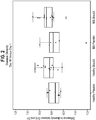
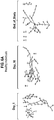
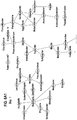
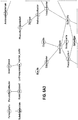
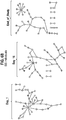
- oral administration of compositions comprising Blautia hydrogenotrophica increases the microbiota diversity in stool. This increase in diversity was seen in healthy and IBS subj ects. However, IBS subjects receiving placebo had a statistically significant reduction in microbiome diversity during the course of the study.
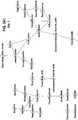
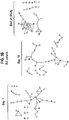
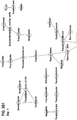
- the examples show that treatment with compositions comprising Blautia hydrogenotrophica, but not placebo, increased the stability of the microbiota in IBS subjects throughout the course of the study.
- the stability of the microbiota in subjects receiving the composition comprising Blautia hydrogenotrophica was comparable to that of healthy control subjects.
- the invention provides a composition comprising a bacterial strain of the genus Blautia , for use in a method of increasing or maintaining the microbiota diversity.
- a method of increasing or maintaining the microbiota diversity in a subject comprising use of a bacterial strain of the genus Blautia.
- the term "increasing or maintaining the microbiota diversity” is used herein to mean increasing or maintaining the number of different types of bacteria and/or the evenness of the different types of bacteria in the microbiota of a subject.
- the microbiota diversity is increased.
- the number of different genera of bacteria in the microbiota is increased.
- the number of different species of bacteria in the microbiota is increased.
- the number of different strains of bacteria in the microbiota is increased.
- the microbiota diversity is maintained.
- the number of different genera of bacteria in the microbiota is maintained.
- the number of different species of bacteria in the microbiota is maintained.
- the number of different strains of bacteria in the microbiota is maintained.
- the number of genera, species and strains in the microbiota is increased or maintained.
- the increase in microbiotia diversity may be for non-acetogenic bacteria. It may also be for both acetogenic and non-acetogenic bacteria. Such bacteria are well known in the art. Briefly, acetogenic bacteria produce acetate as an end product of anaerobic respiration or fermentation.
- loss, increase or maintenance of microbiota diversity may be quantified by a measurable reduction, increase or maintenance, respectively, in the number of the sequence-based bacterial classifications or Operational Taxonomic Units (OTUs) in a sample, typically determined by 16S rRNA amplicon sequencing methods.
- loss of diversity may be measured by reductions in the Shannon Diversity Index, or the Chao index.
- an increase of diversity may be measured by an increase in the Shannon Diversity Index, or the Chao index.
- maintenance of diversity may be measured by the same result in the Shannon Diversity Index, or the Chao index.
- the evenness of the different types of bacteria is increased. In some embodiments, the relative abundance of the different types of bacteria in the microbiota becomes more even following treatment or prevention with a composition of the invention.
- the inventors have also developed new therapies for treating and preventing diseases and disorders by inducing stability of the intestinal microbiota.
- the inventors have identified that bacterial strains from the genus Blautia induce stability of the intestinal microbiota.
- induce stability is meant that the microbiota diversity remains stable and also the relative numbers of the different Genus in the microbiota remains stable. This is important as a number of diseases and disorders, including IBS and IBD, are characterised by reduced stability of the microbiota.
- oral administration of compositions comprising Blautia hydrogenotrophica induces stability of the microbiota in stool.
- the invention provides a composition comprising a bacterial strain of the genus Blautia , for use in a method of inducing stability of the microbiota in a subject.
- a method of inducing stability of the microbiota in a subject comprising use of a bacterial strain of the genus Blautia .
- the relative numbers of the different bacterial species in the microbiota of a subject becomes more stable following treatment or prevention with a composition of the invention, for example in a subject diagnosed with a disease or disorder characterised by a reduction in the diversity of microbiota.
- the relative numbers of the different bacterial Genus in the microbiota of a subject becomes more stable following treatment or prevention with a composition of the invention, for example in a subject diagnosed with a disease or disorder characterised by a reduction in the diversity of microbiota.
- the stability of a subject's microbiota can be assessed by comparing the microbiome from the subject at two different time points. If there is a difference in the microbiome, this can be indicative of disease or of a disorder being present.
- the two different time points are at least three days apart (e.g. at least 1 week, 2 weeks, 1 month, 3 months, 6 months, 1 year, 2 years apart). In some embodiments, the two different time points are 3-7 days apart, 1-2 weeks apart, 2-4 weeks apart, 4-8 weeks apart, 8-24 weeks apart, 24-40 weeks apart, 40-52 weeks apart or more than 52 weeks apart. In some embodiments, more than two different time points are used, e.g. three, four, five or more than five time points. Suitable intervals are chosen between the various time points, for example, as set out above.
- the bacterial strain is of Blautia hydrogenotrophica and is preferably the bacterium deposited under accession number DSM 10507/14294.
- the microbiota diversity and/or the stability of the microbiota refers to the microbiota diversity and/or the stability in stool in the subject. In some embodiments, the microbiota diversity and/or the stability of the microbiota refers to the microbiota diversity and/or the stability in a stool sample from the subject. In some embodiments, the microbiota diversity and/or the stability of the microbiota refers to the microbiota diversity and/or the stability in the distal gut of the subject. In some embodiments, the microbiota diversity and/or the stability of the microbiota refers to the microbiota diversity and/or the stability in the gastrointestinal tract of the subject.
- the microbiota diversity and/or the stability of the microbiota refers to the microbiota diversity and/or the stability in the caecum. In some embodiments, the microbiota diversity and/or the stability of the microbiota refers to the microbiota diversity and/or the stability in the colon.
- the invention provides a composition comprising a bacterial strain of the genus Blautia , for use in a method of treating or preventing a disease or disorder associated with a level of microbiota diversity that is reduced relative to the microbiota diversity of a healthy subject.
- the treatment or prevention using a composition of the invention results in the microbiota diversity increasing to the levels present in a healthy individual.
- treatment or prevention using a composition of the invention results in the microbiota diversity increasing to levels greater than those present in some healthy individuals.
- the healthy individual is of a similar/same age to the subject and/or is of a similar/same race to the subject.
- the invention also provides a method of treatment or prevention of a disease or disorder associated with a level of microbiota diversity that is reduced relative to the microbiota diversity of a healthy subject wherein the method comprises administering a composition comprising a bacterial strain of the genus Blautia.
- diseases or disorders associated with a reduced level of microbiota diversity include but are not limited to: IBS, IBD [21], obesity [22], type 2 diabetes, infectious diseases, allergic diseases, autoimmune diseases and metabolic diseases/disorders. Treatment or prevention of these diseases and disorders is encompassed by the invention.
- the disease or disorder is IBS.
- the subject is an infant or child with a reduced microbiota diversity compared to a healthy infant or child, respectively. It has been observed that some children who develop an allergic disease later in life have a reduced diversity of faecal microbiota as 1 week old infants [23]. Thus, in some embodiments, the infant is less than 1 week old, is less than 2 weeks old, is less than one month old, is less than two months old or is less than four months old. In some embodiments, the subject is an infant who has not been delivered via a vaginal birth. For example, in some embodiments, the subject is an infant who has been delivered by Caesarean section. Reduced microbiota diversity has also been reported in frail elderly subjects.
- the subject is an elderly subject, for example, a frail elderly subject.
- the subject is 65 or more years in age (e.g. 70 or more, 75 or more, 80 or more, 85 or more or 90 or more years in age) [20].
- the composition is for use in treating a subject having less than 101 different bacterial species (e.g. less than 100, 99, 98, 97, 96, 95, 94, 93, 92, 91, 90, 85, 80, 75 or 70 bacterial species) and/or less than 195 different strains (e.g. less than 194, 193, 192, 191, 190, 189, 188, 187, 186, 185, 183, 180, 175, 170, 165, 160, 150, 140 bacterial strains) in its microbiota.
- 101 different bacterial species e.g. less than 100, 99, 98, 97, 96, 95, 94, 93, 92, 91, 90, 85, 80, 75 or 70 bacterial species
- 195 different strains e.g. less than 194, 193, 192, 191, 190, 189, 188, 187, 186, 185, 183, 180, 175, 170, 165, 160, 150, 140 bacterial strain
- the treatment or prevention results in the microbiota diversity increasing to more than 80 bacterial species (e.g. more than 85, 90, 91, 92, 93, 94, 95, 96, 97, 98, 99 or 100 bacterial species) or to 101 bacterial species.
- the treatment or prevention results in the microbiota diversity increasing to more than 90 bacterial species.
- the treatment or prevention results in the microbiota diversity increasing to more than 95 bacterial species.
- the treatment or prevention results in the microbiota diversity increasing to more than 97 bacterial species.
- the treatment or prevention results in the microbiota diversity increasing to more than 99 bacterial species.
- the treatment or prevention results in the microbiota diversity increasing to more than 160 bacterial strains (e.g. more than 165, 170, 185, 186, 187, 188, 189, 190, 191, 192, 193 or 194 bacterial species) or to 195 bacterial strains.
- the treatment or prevention results in the microbiota diversity increasing to more than 175 bacterial strains.
- the treatment or prevention results in the microbiota diversity increasing to more than 185 bacterial strains.
- the treatment or prevention results in the microbiota diversity increasing to more than 190 bacterial strains.
- the treatment or prevention results in the microbiota diversity increasing by at least one bacterial genus (e.g. by at least two, three, four, five, six, seven, eight, nine or ten bacterial genera). In some embodiments, the treatment or prevention results in the microbiota diversity increasing by at least one bacterial species (e.g. by at least two, three, four, five, six, seven, eight, nine, ten, 12, 15, 17 or 20 bacterial species). In some embodiments, the treatment or prevention results in the microbiota diversity increasing by at least one bacterial strain (e.g. by at least two, three, four, five, six, seven, eight, nine, ten, 12, 15, 17, 20 or 25 bacterial strains).
- the invention provides a composition comprising a bacterial strain of the genus Blautia , for use in a method of treating or preventing a disease or disorder associated with reduced stability of the microbiota compared to the stability of the microbiota in a healthy subject (or compared to a population of healthy subjects).
- reduced stability of the microbiota is meant that the microbiota diversity does not remain as stable and also the relative numbers of the different Genus in the microbiota do not remain as stable as the stability observed in a healthy subject or in a population of healthy subjects.
- inducing stability of the microbiota results in the stability being induced to a similar level as is present in a healthy subject, or in a population of healthy subjects. In some embodiments, inducing stability of the microbiota results in the stability being induced to the same level as is present in a healthy subject, or in a population of healthy subjects.
- the invention provides a method of treating or preventing a disease or disorder associated with reduced stability of the microbiota wherein the method comprises administering a composition comprising a bacteria strain of the genus Blautia.
- the pathogenesis of some diseases or disorders is characterised by reduced stability of the microbiota. Examples of such diseases and disorders are IBS, IBD, diabetes (e.g.
- the invention provides a composition comprising a bacterial strain of the genus Blautia , for use in a method of treating or preventing a disease or disorder associated with reduced stability of the microbiota, wherein the treatment or prevention comprises inducing stability of the microbiota.
- the disease or disorder is selected from IBS, IBD, diabetes (e.g. type 2 diabetes), allergic diseases, autoimmune diseases and metabolic diseases/disorders.
- the disease or disorder is IBS or IBD.
- the disease or disorder is IBS.
- the invention provides a composition comprising a bacterial strain of the genus Blautia , for use in a method of treating or preventing IBS or IBD, wherein the treatment or prevention comprises inducing stability of the microbiota.
- the invention provides a method of treatment or prevention of a disease or disorder associated with a level of microbiota diversity that is reduced relative to the microbiota diversity of a healthy subject wherein the method comprises diagnosing a subject as having a reduced level of microbiota diversity and then if a reduced level of diversity is found to be present, administering a composition comprising a bacterial strain of the genus Blautia to the subject.
- the invention provides a method of treatment or prevention of a disease or disorder associated with reduced stability of microbiota relative to the stability of microbiota in a healthy subject wherein the method comprises diagnosing a subject as having reduced stability of microbiota and then if reduced stability is found to be present, administering a composition comprising a bacterial strain of the genus Blautia to the subject.
- the bacterial strain in the composition is of Blautia hydrogenotrophica. Closely related strains may also be used, such as bacterial strains that have a 16s rRNA sequence that is at least 97%, 98%, 99%, 99.5% or 99.9% identical to the 16s rRNA sequence of a bacterial strain of Blautia hydrogenotrophica.
- the bacterial strain has a 16s rRNA sequence that is at least 97%, 98%, 99%, 99.5% or 99.9% identical to SEQ ID NO:5.
- the bacterial strain has the 16s rRNA sequence of SEQ ID NO:5.
- the bacterial strain in the composition is the Blautia hydrogenotrophica strain deposited under accession number DSM 10507/14294.
- the bacterial strain in the composition is of Blautia stercoris. Closely related strains may also be used, such as bacterial strains that have a 16s rRNA sequence that is at least 97%, 98%, 99%, 99.5% or 99.9% identical to the 16s rRNA sequence of a bacterial strain of Blautia stercoris.
- the bacterial strain has a 16s rRNA sequence that is at least 97%, 98%, 99%, 99.5% or 99.9% identical to SEQ ID NO: 1 or 3.
- the sequence identity is to SEQ ID NO:3.
- the bacterial strain for use in the invention has the 16s rRNA sequence represented by SEQ ID NO:3.
- the bacterial strain in the composition is of Blautia wexlerae. Closely related strains may also be used, such as bacterial strains that have a 16s rRNA sequence that is at least 97%, 98%, 99%, 99.5% or 99.9% identical to the 16s rRNA sequence of a bacterial strain of Blautia wexlerae.
- the bacterial strain has a 16s rRNA sequence that is at least 97%, 98%, 99%, 99.5% or 99.9% identical to SEQ ID NO:2 or 4.
- the sequence identity is to SEQ ID NO:4.
- the bacterial strain for use in the invention has the 16s rRNA sequence represented by SEQ ID NO:4.
- the composition of the invention is for oral administration.
- Oral administration of the strains of the invention can be effective for increasing the microbiota diversity and/or inducing the stability of the microbiota. Also, oral administration is convenient for subjects and practitioners and allows delivery to and / or partial or total colonisation of the intestine.
- composition of the invention comprises one or more pharmaceutically acceptable excipients or carriers.
- the composition of the invention comprises a bacterial strain that has been lyophilised. Lyophilisation is an effective and convenient technique for preparing stable compositions that allow delivery of bacteria, and is shown to provide effective compositions in the examples.
- the invention provides a food product comprising the composition as described above.
- the invention provides a vaccine composition comprising the composition as described above.
- the invention provides a method of increasing the microbiota diversity and/or inducing the stability of the microbiota and thereby treating or preventing diseases or disorders associated with a reduced microbiota diversity and/or with reduced stability of the microbiota, comprising administering a composition comprising a bacterial strain of the genus Blautia.
- compositions of the invention comprise a bacterial strain of the genus Blautia.
- the examples demonstrate that bacteria of this genus are useful for increasing the microbiota diversity and/or inducing the stability of the microbiota.
- the preferred bacterial strains are of the species Blautia hydrogenotrophica , Blautia stercoris and Blautia wexlerae. Most preferred is Blautia hydrogenotrophica , particularly the bacterium deposited under accession number DSM 10507/14294.
- Blautia strains for use in the invention include Blautia hydrogenotrophica , B . stercoris , B. faecis , B. coccoides , B. glucerasea , B. hansenii , B. luti , B. producta , B. schinkii and B. wexlerae.
- the Blautia species are Gram-reaction-positive, non-motile bacteria that may be either coccoid or oval and all are obligate anaerobes that produce acetic acid as the major end product of glucose fermentation [25].
- Blautia may be isolated from the human gut, although B. producta was isolated from a septicaemia sample.
- Blautia hydrogenotrophica (previously known as Ruminococcus hydrogenotrophicus ) has been isolated from the guts of mammals, is strictly anaerobic, and metabolises H 2 /CO 2 to acetate, which may be important for human nutrition and health.
- the GenBank accession number for the 16S rRNA gene sequence of Blautia hydrogenotrophica strain S5a36 is X95624.1 (disclosed herein as SEQ ID NO:5). This exemplary Blautia hydrogenotrophica strain is described in [25] and [26].
- the S5a33 strain and the S5a36 strain correspond to two subclones of an acetogenic strain isolated from a faecal sample of a healthy subject. They show identical morphology, physiology and metabolism and have identical 16S rRNA sequences.
- the Blautia hydrogenotrophica for use in the invention has the 16S rRNA sequence of SEQ ID NO:5.
- strain BH The Blautia hydrogenotrophica bacterium deposited under accession number DSM 10507 and also under accession number DSM 14294 was tested in the examples and is also referred to herein as strain BH.
- Strain BH was deposited with the Deutsche Sammlung von Mikroorganismen [German Microorganism Collection] (Mascheroder Weg 1b, 38124 Braunschweig, Germany) on 10th May 2001 as " Ruminococcus hydrogenotrophicus " under accession number DSM 10507 and also under accession number DSM 14294.
- the depositor was INRA Laboratoire de Microbiologie CR de Clermont-Ferrand/Theix 63122 Saint Genes Champanelle, France. Ownership of the bacterium deposited as DSM 10507 and DSM 14294 has passed via assignment to 4D Pharma Plc.
- GenBank accession number for the 16S rRNA gene sequence of Blautia stercoris strain GAM6-1 T is HM626177 (disclosed herein as SEQ ID NO:1).
- An exemplary Blautia stercoris strain is described in [27].
- the GenBank accession number for the 16S rRNA gene sequence of Blautia wexlerae strain WAL 14507 T is EF036467 (disclosed herein as SEQ ID NO:2). This exemplary Blautia wexlerae strain is described in [25].
- a preferred Blautia stercoris strain is the strain deposited under accession number NCIMB 42381, which is also referred to herein as strain 830.
- a 16S rRNA sequence for the 830 strain is provided in SEQ ID NO:3.
- Strain 830 was deposited with the international depositary authority NCIMB, Ltd. (Ferguson Building, Aberdeen, AB21 9YA, Scotland) by GT Biologics Ltd. (Life Sciences Innovation Building, Aberdeen, AB25 2ZS, Scotland) on 12th March 2015 as " Blautia stercoris 830" and was assigned accession number NCIMB 42381. GT Biologics Ltd. subsequently changed its name to 4D Pharma Research Limited.
- a preferred Blautia wexlerae strain is the strain deposited under accession number NCIMB 42486, which is also referred to herein as strain MRX008.
- a 16S rRNA sequence for the MRX008 strain is provided in SEQ ID NO:4. Strain MRX008 was deposited with the international depositary authority NCIMB, Ltd. (Ferguson Building, Aberdeen, AB21 9YA, Scotland) by 4D Pharma Research Ltd. (Life Sciences Innovation Building, Aberdeen, AB25 2ZS, Scotland) on 16th November 2015 as " Blautia / Ruminococcus " and was assigned accession number NCIMB 42486.
- the bacterial strain for use in the invention has a 16s rRNA sequence that is at least 97%, 98%, 99%, 99.5% or 99.9% identical to the 16s rRNA sequence of a bacterial strain of Blautia hydrogenotrophica.
- the bacterial strain for use in the invention has a 16s rRNA sequence that is at least 97%, 98%, 99%, 99.5% or 99.9% identical to SEQ ID NO:5.
- the bacterial strain for use in the invention has a 16s rRNA sequence that has the sequence of SEQ ID NO:5.
- the bacterial strain for use in the invention has a 16s rRNA sequence that is at least 97%, 98%, 99%, 99.5% or 99.9% identical to the 16s rRNA sequence of a bacterial strain of Blautia stercoris.
- the bacterial strain for use in the invention has a 16s rRNA sequence that is at least 97%, 98%, 99%, 99.5% or 99.9% identical to SEQ ID NO:1 or SEQ ID NO:3.
- the sequence identity is to SEQ ID NO:3.
- the bacterial strain for use in the invention has the 16s rRNA sequence represented by SEQ ID NO:3.
- the bacterial strain for use in the invention has a 16s rRNA sequence that is at least 97%, 98%, 99%, 99.5% or 99.9% identical to the 16s rRNA sequence of a bacterial strain of Blautia wexlerae.
- the bacterial strain for use in the invention has a 16s rRNA sequence that is at least 97%, 98%, 99%, 99.5% or 99.9% identical to SEQ ID NO:2 or SEQ ID NO:4.
- the sequence identity is to SEQ ID NO:4.
- the bacterial strain for use in the invention has the 16s rRNA sequence represented by SEQ ID NO:4.
- Bacterial strains that are biotypes of the bacterium deposited under accession number DSM 10507/14294 or biotypes of the bacteria deposited under accession numbers NCIMB 42381 and NCIMB 42486 are also expected to be effective for increasing the microbiota diversity and/or inducing the stability of the microbiota.
- a biotype is a closely related strain that has the same or very similar physiological and biochemical characteristics.
- Strains that are biotypes of a bacterium deposited under accession number DSM 10507/14294, NCIMB 42381 or NCIMB 42486 and that are suitable for use in the invention may be identified by sequencing other nucleotide sequences for a bacterium deposited under accession number DSM 10507/14294, NCIMB 42381 or NCIMB 42486.
- substantially the whole genome may be sequenced and a biotype strain for use in the invention may have at least 97%, 98%, 99%, 99.5% or 99.9% sequence identity across at least 80% of its whole genome (e.g. across at least 85%, 90%, 95% or 99%, or across its whole genome).
- a biotype strain has at least 98% sequence identity across at least 98% of its genome or at least 99% sequence identity across 99% of its genome.
- Other suitable sequences for use in identifying biotype strains may include hsp60 or repetitive sequences such as BOX, ERIC, (GTG) 5 , or REP or [28].
- Biotype strains may have sequences with at least 97%, 98%, 99%, 99.5% or 99.9% sequence identity to the corresponding sequence of a bacterium deposited under accession number DSM 10507/14294, NCIMB 42381 or NCIMB 42486.
- a biotype strain has a sequence with at least 97%, 98%, 99%, 99.5% or 99.9% sequence identity to the corresponding sequence of the Blautia hydrogenotrophica strain deposited under accession number DSM 10507/14294 and comprises a 16S rRNA sequence that is at least 99% identical (e.g. at least 99.5% or at least 99.9% identical) to SEQ ID NO:5.
- a biotype strain has a sequence with at least 97%, 98%, 99%, 99.5% or 99.9% sequence identity to the corresponding sequence of the Blautia hydrogenotrophica strain deposited under accession number DSM 10507/14294 and has the 16S rRNA sequence of SEQ ID NO:5.
- strains that are biotypes of a bacterium deposited under accession number DSM 10507/14294, NCIMB 42381 or NCIMB 42486 and that are suitable for use in the invention may be identified by using the accession number DSM 10507/14294 deposit, the accession number NCIMB 42381 deposit, or the accession number NCIMB 42486 deposit, and restriction fragment analysis and/or PCR analysis, for example by using fluorescent amplified fragment length polymorphism (FAFLP) and repetitive DNA element (rep)-PCR fingerprinting, or protein profiling, or partial 16S or 23s rDNA sequencing.
- FAFLP fluorescent amplified fragment length polymorphism
- rep repetitive DNA element
- such techniques may be used to identify other Blautia hydrogenotrophica , Blautia stercoris or Blautia wexlerae strains.
- strains that are biotypes of a bacterium deposited under accession number DSM 10507/14294, NCIMB 42381 or NCIMB 42486 and that are suitable for use in the invention are strains that provide the same pattern as a bacterium deposited under accession number DSM 10507/14294, NCIMB 42381 or NCIMB 42486 when analysed by amplified ribosomal DNA restriction analysis (ARDRA), for example when using Sau3AI restriction enzyme (for exemplary methods and guidance see, for example,[29]).
- ARDRA amplified ribosomal DNA restriction analysis
- biotype strains are identified as strains that have the same carbohydrate fermentation patterns as a bacterium deposited under accession number DSM 10507/14294, NCIMB 42381 or NCIMB 42486.
- Blautia strains that are useful in the compositions and methods of the invention, such as biotypes of a bacterium deposited under accession number DSM 10507/14294, NCIMB 42381 or NCIMB 42486, may be identified using any appropriate method or strategy, including the assays described in the examples.
- strains for use in the invention may be identified by culturing bacteria and administering to rats to test in the distension assay.
- bacterial strains that have similar growth patterns, metabolic type and/or surface antigens to a bacterium deposited under accession number DSM 10507/14294, NCIMB 42381 or NCIMB 42486 may be useful in the invention.
- a useful strain will have comparable microbiota modulatory activity to the DSM 10507/14294, NCIMB 42381 or NCIMB 42486 strain.
- a biotype strain will elicit comparable effects on the microbiota to the effects shown in the Examples, which may be identified by using the culturing and administration protocols described in the Examples.
- a particularly preferred strain of the invention is the Blautia hydrogenotrophica strain deposited under accession number DSM 10507/14294.
- This is the exemplary BH strain tested in the examples and shown to be effective for increasing the microbiota diversity and/or inducing the stability of the microbiota. Therefore, the invention provides a cell, such as an isolated cell, of the Blautia hydrogenotrophica strain deposited under accession number DSM 10507/14294, or a derivative thereof, for use in therapy, in particular for the diseases and disorders described herein.
- a derivative of the strain deposited under accession number DSM 10507/14294, NCIMB 42381 or NCIMB 42486 may be a daughter strain (progeny) or a strain cultured (subcloned) from the original.
- a derivative of a strain of the invention may be modified, for example at the genetic level, without ablating the biological activity.
- a derivative strain of the invention is therapeutically active.
- a derivative strain will have comparable microbiota modulatory activity to the original DSM 10507/14294, NCIMB 42381 or NCIMB 42486 strain.
- a derivative strain will elicit comparable effects on the microbiota to the effects shown in the Examples, which may be identified by using the culturing and administration protocols described in the Examples.
- a derivative of the DSM 10507/14294 strain will generally be a biotype of the DSM 10507/14294 strain.
- a derivative of the NCIMB 42381 strain will generally be a biotype of the NCIMB 42381 strain.
- a derivative of the NCIMB 42486 strain will generally be a biotype of the NCIMB 42486 strain.
- references to cells of the Blautia hydrogenotrophica strain deposited under accession number DSM 10507/14294 encompass any cells that have the same safety and therapeutic efficacy characteristics as the strains deposited under accession number DSM 10507/14294, and such cells are encompassed by the invention.
- References to cells of the Blautia stercoris strain deposited under accession number NCIMB 42381 encompass any cells that have the same safety and therapeutic efficacy characteristics as the strains deposited under accession number NCIMB 42381, and such cells are encompassed by the invention.
- references to cells of the Blautia wexlerae strain deposited under accession number NCIMB 42486 encompass any cells that have the same safety and therapeutic efficacy characteristics as the strains deposited under accession number NCIMB 42486, and such cells are encompassed by the invention.
- the bacterial strains in the compositions of the invention are viable and capable of partially or totally colonising the intestine.
- the compositions of the invention are for use in increasing the microbiota diversity and/or inducing the stability of the microbiota.
- Reduced diversity of the microbiota and/or reduced stability of the microbiota are associated with numerous pathological diseases and disorders, and the examples demonstrate that the compositions of the invention may be effective for increasing the microbiota diversity and/or inducing the stability of the microbiota.
- the disease or disorder to be treated or prevented using a composition of the invention is preferably a disease or disorder associated with a level of microbiota diversity that is reduced relative to the microbiota diversity of a healthy subject and/or a disease or disorder that is associated with reduced stability of the microbiota.
- the disease or disorder may be associated with a level of microbiota diversity that is reduced relative to the microbiota diversity of a healthy subject and also be associated with reduced stability of the microbiota.
- the compositions of the invention are for use in treating or preventing a disease or disorder selected from IBS, IBD, obesity, type 2 diabetes, one or more infectious diseases, one or more allergic diseases, one or more autoimmune diseases and one or more metabolic diseases/disorders. Treatment or prevention of other diseases and disorders is also envisaged.
- the compositions of the invention are for use in treating or preventing IBS or IBD.
- the compositions of the invention are for use in treating or preventing IBS.
- the compositions of the invention are for use in treating or preventing IBD.
- the compositions of the invention are for use in treating or preventing one or more allergic diseases.
- the compositions of the invention are for use in treating or preventing obesity. In certain embodiments, the compositions of the invention are for use in treating or preventing one or more infectious diseases. In certain embodiments, the compositions of the invention are for use in treating or preventing one or more autoimmune diseases. In certain embodiments, the compositions of the invention are for use in treating or preventing one or more metabolic diseases/disorders. Preferably, the treatment or prevention comprises increasing the microbiota diversity and/or inducing the stability of the microbiota in the subject.
- the one or more infectious diseases is selected from a viral, bacterial or fungal disease.
- the one or more allergic diseases is asthma.
- the one or more metabolic diseases/disorders is selected from diabetes, e.g. type 2 diabetes, and obesity.
- the one or more autoimmune diseases is selected from multiple sclerosis and rheumatoid arthritis.
- the compositions of the invention are for use in treating or preventing IBS, IBD, obesity, type 2 diabetes, one of more infectious diseases, one or more allergic diseases, one or more autoimmune diseases or one or more metabolic diseases/disorders by increasing the microbiota diversity in the microbiota.
- the compositions of the invention are for use in treating or preventing IBS or IBD by inducing the stability of the microbiota.
- the compositions of the invention are for use in treating or preventing IBS by inducing the stability of the microbiota
- the invention provides a composition comprising a bacterial strain of the genus Blautia , for use in the treatment or prevention of IBD, IBS, obesity, type 2 diabetes, one or more infectious diseases, one or more allergic diseases, one or more autoimmune diseases or one or more metabolic diseases/disorders, wherein the treatment or prevention comprises increasing the microbiota diversity and/or inducing the stability of the microbiota in the subject.
- the invention provides a composition comprising a bacterial strain of the genus Blautia for use in treating or preventing a disease or disorder selected from IBS, IBD, obesity, type 2 diabetes, one or more infectious diseases, one or more allergic diseases, one or more autoimmune diseases and one or more metabolic diseases/disorders.
- the invention provides a method of treating or preventing a disease or disorder selected from IBS, IBD, obesity, type 2 diabetes, one or more infectious diseases, one or more allergic diseases, one or more autoimmune diseases and one or more metabolic diseases/disorders, comprising administering a composition comprising a bacterial strain of the genus Blautia.
- compositions of the invention comprise the bacterium deposited under accession number DSM 10507/14294 and are for use in increasing the microbiota diversity and/or inducing the stability of the microbiota in the subject in the treatment of IBD, IBS, obesity, type 2 diabetes, one or more infectious diseases, one or more allergic diseases, one or more autoimmune diseases or one or more metabolic diseases/disorders.
- compositions of the invention comprise the bacterium deposited under accession number DSM 10507/14294 and are for use in treating or preventing IBD, IBS, obesity, type 2 diabetes, one or more infectious diseases, one or more allergic diseases, one or more autoimmune diseases or one or more metabolic diseases/disorders by increasing the microbiota diversity and/or inducing the stability of the microbiota.
- the pathogenesis of the disease or disorder affects the intestine. In some embodiments, the pathogenesis of the disease or disorder does not affect the intestine. In some embodiments, the pathogenesis of the disease or disorder is not localised at the intestine. In some embodiments, the treating or preventing occurs at a site other than at the intestine. In some embodiments, the treating or preventing occurs at the intestine and also at a site other than at the intestine. In certain embodiments, the disease or disorder is systemic.
- the compositions are for use in subjects that exhibit, or are expected to exhibit, reduced levels of microbiota diversity, for example, when compared to a healthy subject, or a population of healthy subjects.
- the composition is for use in treating a subject having less than 101 different bacterial species (e.g. less than 100, 99, 98, 97, 96, 95, 93, 90, 85, 80, 75 or 70 bacterial species) and/or less than 195 different strains (e.g. less than 193, 190, 187, 185, 183, 180, 175, 170, 165, 160, 150, 140 bacterial strains) in its microbiota.
- 101 different bacterial species e.g. less than 100, 99, 98, 97, 96, 95, 93, 90, 85, 80, 75 or 70 bacterial species
- 195 different strains e.g. less than 193, 190, 187, 185, 183, 180, 175, 170, 165, 160, 150, 140 bacterial strains
- the composition is for use in treating a subject that has at least one bacterial genus (e.g. at least 2, 3, 4, 5, 6, 7, 8, 9 or 10 bacterial genera) fewer in its intestinal microbiota compared to a healthy subject or compared to a population of healthy subjects.
- the treatment or prevention comprises a step of diagnosing a subject as having a reduced level of microbiota diversity and then if a reduced level of diversity is found to be present, the subject is then treated with a composition according to the invention.
- the compositions are for use in subjects that exhibit, or are expected to exhibit, reduced stability of the microbiota. In some embodiments, the compositions are for use in subjects that exhibit, or are expected to exhibit, reduced stability in its microbiota, for example, when compared to a healthy subject, or a population of healthy subjects. In some embodiments, the treatment or prevention comprises a step of diagnosing a subject as having a reduced stability in its microbiota and then if reduced stability is found to be present, the subject is then treated with a composition according to the invention.
- the subject is an infant. In certain embodiments, the subject is a child. In certain embodiments, the subject is an adult.
- the subject is a healthy subject.
- the subject is a healthy subject, optionally one identified as being at risk of developing a disease or disorder characterised by a reduction in microbiota diversity.
- the subject has previously received, is receiving, or will be receiving antibiotic treatment. Accordingly, in some embodiments, the treatment or prevention comprises administering the composition of the invention after, together with, or before antibiotic treatment.
- the composition of the invention and the one or more antibiotics may be for separate, simultaneous or sequential administration.
- the composition of the invention is for use in a method of increasing the microbiota diversity and/or inducing the stability of the microbiota in a subject having an increased level of hydrogen in their breath relative to a healthy subject.
- the composition of the invention is for use in reducing the hydrogen level in the breath of a subject exhibiting or who is expected to exhibit a reduced level of diversity of its microbiota and/or reduced stability of the microbiota.
- the subject is preferably a subject diagnosed as having IBS, IBD, obesity, type 2 diabetes, one or more infectious diseases, one or more allergic diseases, one or more autoimmune diseases and/or one or more metabolic diseases/disorders.
- Treatment with a composition of the invention reduces the level of hydrogen detected in hydrogen breath tests. Accordingly, the hydrogen levels are preferably assessed using a hydrogen breath test.
- the hydrogen breath test is well known in the art and so the skilled person will know how to conduct such a test.
- the subject is administered lactulose as the substrate for the test.
- the hydrogen breath test is also a useful tool for monitoring the effectiveness or likely effectiveness of increasing the microbiota diversity and/or inducing the stability of the microbiota and of treatment or prevention using a composition of the invention.
- a reduction in the level of hydrogen detected in a subject's breath following treatment with a composition of the invention may indicate that the treatment is having an increasing, stabilising, therapeutic or preventative effect.
- the methods and uses of the invention further comprise monitoring the hydrogen level in a subject's breath during and/or following treatment with a composition of the invention and thereby assessing the effectiveness or likely effectiveness of increasing, stabilising, treatment or prevention.
- hydrogen levels may be monitored at one or more (e.g.
- the level of hydrogen in the subject's breath at the end and/or following the dosing period is compared to the level at the start and/or before the dosing period and a reduction in the level indicates the effectiveness or likely effectiveness of the increasing, stabilising, treatment or prevention.
- the dosing period is 16 days, it may be desirable to take measurements at day 1 and day 16, or for example at day 1, day 2, day 15 and day 16.
- multiple measurements are taken and the mean of those measurements obtained (for example, the mean of day 1 and day 2 and the mean of day 15 and day 16).
- a reduction in at least 40 ppm in the hydrogen level Cmax indicates that the increasing, stabilising, treatment or prevention is effective or likely to be effective.
- the hydrogen level in the subject's breath is measured only once, for example, at the end of or following treatment, and the finding that the level is at or close to a predetermined level is indicative that the increasing stabilising, treatment or prevention is likely to have been effective.
- the hydrogen breath test is a standard assay and so predetermined levels are known in the art.
- Treatment or prevention may refer to, for example, an alleviation of the severity of symptoms or a reduction in the frequency of exacerbations or the range of triggers that are a problem for the subject.
- Bacteria in the microbiota may be detected in faeces from a subject, using standard techniques, such as the qPCR techniques used in the examples.
- compositions of the invention are to be administered to the gastrointestinal tract in order to enable delivery to and / or partial or total colonisation of the intestine with the bacterial strain of the invention.
- compositions of the invention are administered orally, but they may be administered rectally, intranasally, or via buccal or sublingual routes.
- compositions of the invention may be administered as a foam, as a spray or a gel.
- compositions of the invention may be administered as a suppository, such as a rectal suppository, for example in the form of a theobroma oil (cocoa butter), synthetic hard fat (e.g. suppocire, witepsol), glycero-gelatin, polyethylene glycol, or soap glycerin composition.
- a rectal suppository for example in the form of a theobroma oil (coa butter), synthetic hard fat (e.g. suppocire, witepsol), glycero-gelatin, polyethylene glycol, or soap glycerin composition.
- the composition of the invention is administered to the gastrointestinal tract via a tube, such as a nasogastric tube, orogastric tube, gastric tube, jejunostomy tube (J tube), percutaneous endoscopic gastrostomy (PEG), or a port, such as a chest wall port that provides access to the stomach, jejunum and other suitable access ports.
- a tube such as a nasogastric tube, orogastric tube, gastric tube, jejunostomy tube (J tube), percutaneous endoscopic gastrostomy (PEG), or a port, such as a chest wall port that provides access to the stomach, jejunum and other suitable access ports.
- compositions of the invention may be administered once, or they may be administered sequentially as part of a treatment regimen.
- the compositions of the invention are to be administered daily.
- the examples demonstrate that daily administration provides successful delivery and clinical benefits.
- compositions of the invention are administered regularly, such as daily, every two days, or weekly, for an extended period of time, such as for at least one week, two weeks, one month, two months, six months, or one year.
- an extended period of time such as for at least one week, two weeks, one month, two months, six months, or one year.
- treatment according to the invention is accompanied by assessment of the subject's gut microbiota. Treatment may be repeated if delivery of and / or partial or total colonisation with the strain of the invention is not achieved such that efficacy is not observed, or treatment may be ceased if delivery and / or partial or total colonisation is successful and efficacy is observed.
- the composition of the invention may be administered to a pregnant animal, for example a mammal such as a human in order to prevent reduced levels of diversity in the microbiota and/or reduced stability of the microbiota developing in her child in utero and / or after it is born.
- compositions of the invention may be administered to a subject that has been diagnosed with reduced microbiota diversity relative to a healthy subject and/or reduced stability of the microbiota or a disease or disorder associated with reduced microbiota diversity relative to a healthy subject and/or reduced stability of the microbiota, or that has been identified as being at risk of reduced microbiota diversity relative to a healthy subject and/or reduced stability of the microbiota.
- the compositions may also be administered as a prophylactic measure to prevent the development of reduced microbiota diversity relative to a healthy subject and/or reduced stability of the microbiota in a healthy subject.
- compositions of the invention may be administered to a subject that has been identified as having an abnormal gut microbiota.
- the subject may have reduced or absent colonisation by Blautia , and in particular Blautia hydrogenotrophica , Blautia stercoris or Blautia wexlerae.
- compositions of the invention may be administered as a food product, such as a nutritional supplement.
- compositions of the invention are for the treatment of humans, although they may be used to treat animals including monogastric mammals such as poultry, pigs, cats, dogs, horses or rabbits.
- the compositions of the invention may be useful for enhancing the growth and performance of animals. If administered to animals, oral gavage may be used.
- the composition of the invention comprises bacteria.
- the composition is formulated in freeze-dried form.
- the composition of the invention may comprise granules or gelatin capsules, for example hard gelatin capsules, comprising a bacterial strain of the invention.
- the composition of the invention comprises lyophilised bacteria.
- Lyophilisation of bacteria is a well-established procedure and relevant guidance is available in, for example, references [30-32]. The examples demonstrate that lyophilisate compositions are particularly effective.
- composition of the invention may comprise a live, active bacterial culture.
- the bacterial strain in the composition of the invention has not been inactivated, for example, has not been heat-inactivated. In some embodiments, the bacterial strain in the composition of the invention has not been killed, for example, has not been heat-killed. In some embodiments, the bacterial strain in the composition of the invention has not been attenuated, for example, has not been heat-attenuated. For example, in some embodiments, the bacterial strain in the composition of the invention has not been killed, inactivated and/or attenuated. For example, in some embodiments, the bacterial strain in the composition of the invention is live. For example, in some embodiments, the bacterial strain in the composition of the invention is viable.
- the bacterial strain in the composition of the invention is capable of partially or totally colonising the intestine.
- the bacterial strain in the composition of the invention is viable and capable of partially or totally colonising the intestine.
- the composition comprises a mixture of live bacterial strains and bacterial strains that have been killed.
- the composition of the invention is encapsulated to enable delivery of the bacterial strain to the intestine.
- Encapsulation protects the composition from degradation until delivery at the target location through, for example, rupturing with chemical or physical stimuli such as pressure, enzymatic activity, or physical disintegration, which may be triggered by changes in pH. Any appropriate encapsulation method may be used. Exemplary encapsulation techniques include entrapment within a porous matrix, attachment or adsorption on solid carrier surfaces, self-aggregation by flocculation or with cross-linking agents, and mechanical containment behind a microporous membrane or a microcapsule. Guidance on encapsulation that may be useful for preparing compositions of the invention is available in, for example, references [33] and [34].
- the composition may be administered orally and may be in the form of a tablet, capsule or powder. Encapsulated products are preferred because Blautia are anaerobes. Other ingredients (such as vitamin C, for example), may be included as oxygen scavengers and prebiotic substrates to improve the delivery and / or partial or total colonisation and survival in vivo.
- the probiotic composition of the invention may be administered orally as a food or nutritional product, such as milk or whey based fermented dairy product, or as a pharmaceutical product.
- composition may be formulated as a probiotic.
- a composition of the invention includes a therapeutically effective amount of a bacterial strain of the invention.
- a therapeutically effective amount of a bacterial strain is sufficient to exert a beneficial effect upon a subject.
- a therapeutically effective amount of a bacterial strain may be sufficient to result in delivery to and / or partial or total colonisation of the subject's intestine.
- a suitable daily dose of the bacteria may be from about 1 x 10 3 to about 1 x 10 11 colony forming units (CFU); for example, from about 1 x 10 7 to about 1 x 10 10 CFU; in another example from about 1 x 10 7 to about 1 x 10 11 CFU; in another example from about 1 x 10 8 to about 1 x 10 10 CFU; in another example from about 1 x 10 8 to about 1 x 10 11 CFU; in another example from about 1 x 10 6 to about 1 x 10 10 CFU.
- CFU colony forming units
- the dose of the bacteria is at least 10 9 cells per day, such as at least 10 10 , at least 10 11 , or at least 10 12 cells per day.
- the composition contains the bacterial strain in an amount of from about 1 x 10 6 to about 1 x 10 11 CFU/g, respect to the weight of the composition; for example, from about 1 x 10 8 to about 1 x 10 10 CFU/g.
- the dose may be, for example, 1 g, 3g, 5g, and 10g.
- a probiotic such as the composition of the invention, is optionally combined with at least one suitable prebiotic compound.
- a prebiotic compound is usually a non-digestible carbohydrate such as an oligo- or polysaccharide, or a sugar alcohol, which is not degraded or absorbed in the upper digestive tract.
- Known prebiotics include commercial products such as inulin and transgalacto-oligosaccharides.
- the probiotic composition of the present invention includes a prebiotic compound in an amount of from about 1 to about 30% by weight, respect to the total weight composition, (e.g. from 5 to 20% by weight).
- Carbohydrates may be selected from the group consisting of: fructo- oligosaccharides (or FOS), short-chain fructo-oligosaccharides, inulin, isomalt-oligosaccharides, pectins, xylo-oligosaccharides (or XOS), chitosan-oligosaccharides (or COS), beta-glucans, arable gum modified and resistant starches, polydextrose, D-tagatose, acacia fibers, carob, oats, and citrus fibers.
- the prebiotics are the short-chain fructo-oligosaccharides (for simplicity shown herein below as FOSs-c.c); said FOSs-c.c. are not digestible carbohydrates, generally obtained by the conversion of the beet sugar and including a saccharose molecule to which three glucose molecules are bonded.
- compositions of the invention may comprise pharmaceutically acceptable excipients or carriers.
- suitable excipients may be found in the reference [35].
- Acceptable carriers or diluents for therapeutic use are well known in the pharmaceutical art and are described, for example, in reference [36].
- suitable carriers include lactose, starch, glucose, methyl cellulose, magnesium stearate, mannitol, sorbitol and the like.
- suitable diluents include ethanol, glycerol and water.
- the choice of pharmaceutical carrier, excipient or diluent can be selected with regard to the intended route of administration and standard pharmaceutical practice.
- the pharmaceutical compositions may comprise as, or in addition to, the carrier, excipient or diluent any suitable binder(s), lubricant(s), suspending agent(s), coating agent(s), solubilising agent(s).
- suitable binders include starch, gelatin, natural sugars such as glucose, anhydrous lactose, free-flow lactose, beta-lactose, corn sweeteners, natural and synthetic gums, such as acacia, tragacanth or sodium alginate, carboxymethyl cellulose and polyethylene glycol.
- suitable lubricants include sodium oleate, sodium stearate, magnesium stearate, sodium benzoate, sodium acetate, sodium chloride and the like.
- Preservatives, stabilizers, dyes and even flavouring agents may be provided in the pharmaceutical composition.
- preservatives include sodium benzoate, sorbic acid, cysteine and esters of p-hydroxybenzoic acid. Antioxidants and suspending agents may be also used.
- a further example of a suitable carrier is saccharose.
- a further example of a preservative is cysteine.
- compositions of the invention may be formulated as a food product.
- a food product may provide nutritional benefit in addition to the therapeutic effect of the invention, such as in a nutritional supplement.
- a food product may be formulated to enhance the taste of the composition of the invention or to make the composition more attractive to consume by being more similar to a common food item, rather than to a pharmaceutical composition.
- the composition of the invention is formulated as a milk-based product.
- milk-based product means any liquid or semi-solid milk- or whey- based product having a varying fat content.
- the milk-based product can be, e.g., cow's milk, goat's milk, sheep's milk, skimmed milk, whole milk, milk recombined from powdered milk and whey without any processing, or a processed product, such as yoghurt, curdled milk, curd, sour milk, sour whole milk, butter milk and other sour milk products.
- milk beverages such as whey beverages, fermented milks, condensed milks, infant or baby milks; flavoured milks, ice cream; milk-containing food such as sweets.
- compositions of the invention contain a single bacterial strain or species and do not contain any other bacterial strains or species. Such compositions may comprise only de minimis or biologically irrelevant amounts of other bacterial strains or species. Such compositions may be a culture or lyophilisate that is substantially free from other species of organism.
- compositions of the invention comprise one or more bacterial strains of the genus Blautia , for example, a Blautia hydrogenotrophica, and do not contain any other bacterial genus, or which comprise only de minimis or biologically irrelevant amounts of bacteria from another genus.
- compositions of the invention comprise a single species of Blautia , for example, a Blautia hydrogenotrophica, and do not contain any other bacterial species, or which comprise only de minimis or biologically irrelevant amounts of bacteria from another species.
- compositions of the invention comprise a single strain of Blautia , for example, of Blautia hydrogenotrophica, and do not contain any other bacterial strains or species, or which comprise only de minimis or biologically irrelevant amounts of bacteria from another strain or species.
- the compositions of the invention comprise more than one bacterial strain or species.
- the compositions of the invention comprise more than one strain from within the same species (e.g. more than 1, 2, 3, 4, 5, 6, 7, 8, 9, 10, 15, 20, 25, 30, 35, 40 or 45 strains), and, optionally, do not contain bacteria from any other species.
- the compositions of the invention comprise less than 50 strains from within the same species (e.g. less than 45, 40, 35, 30, 25, 20, 15, 12, 10, 9, 8, 7, 6, 5, 4 or 3 strains), and, optionally, do not contain bacteria from any other species.
- compositions of the invention comprise 1-40, 1-30, 1-20, 1-19, 1-18, 1-15, 1-10, 1-9, 1-8, 1-7, 1-6, 1-5, 1-4, 1-3, 1-2, 2-50, 2-40, 2-30, 2-20, 2-15, 2-10, 2-5, 6-30, 6-15, 16-25, or 31-50 strains from within the same species and, optionally, do not contain bacteria from any other species.
- the compositions of the invention comprise more than one species from within the same genus (e.g. more than 1, 2, 3, 4, 5, 6, 7, 8, 9, 10, 12, 15, 17, 20, 23, 25, 30, 35 or 40 species), and, optionally, do not contain bacteria from any other genus.
- the compositions of the invention comprise less than 50 species from within the same genus (e.g. less than 50, 45, 40, 35, 30, 25, 20, 15, 12, 10, 8, 7, 6, 5, 4 or 3 species), and, optionally, do not contain bacteria from any other genus.
- the compositions of the invention comprise 1-50, 1-40, 1-30, 1-20, 1-15, 1-10, 1-9, 1-8, 1-7, 1-6, 1-5, 1-4, 1-3, 1-2, 2-50, 2-40, 2-30, 2-20, 2-15, 2-10, 2-5, 6-30, 6-15, 16-25, or 31-50 species from within the same genus and, optionally, do not contain bacteria from any other genus.
- the invention comprises any combination of the foregoing.
- the composition comprises a microbial consortium.
- the composition comprises the Blautia bacterial strain, for example, a Blautia hydrogenotrophica bacterial strain as part of a microbial consortium.
- the Blautia bacterial strain is present in combination with one or more (e.g. at least 2, 3, 4, 5, 10, 15 or 20) other bacterial strains from other genera with which it can live symbiotically in vivo in the intestine.
- the composition comprises a bacterial strain of Blautia hydrogenotrophica in combination with a bacterial strain from a different genus.
- the microbial consortium comprises two or more bacterial strains obtained from a faeces sample of a single organism, e.g. a human. In some embodiments, the microbial consortium is not found together in nature.
- the microbial consortium comprises bacterial strains obtained from faeces samples of at least two different organisms. In some embodiments, the two different organisms are from the same species, e.g. two different humans. In some embodiments, the two different organisms are an infant human and an adult human. In some embodiments, the two different organisms are a human and a non-human mammal.
- the composition of the invention additionally comprises a bacterial strain that has the same safety and therapeutic efficacy characteristics as the Blautia hydrogenotrophica strain deposited under accession number DSM 10507/14294, but which is not the Blautia hydrogenotrophica strain deposited under accession number DSM 10507/14294, or which is not a Blautia hydrogenotrophica or which is not a Blautia.
- the composition of the invention comprises more than one bacterial strain, species or genus
- the individual bacterial strains, species or genera may be for separate, simultaneous or sequential administration.
- the composition may comprise all of the more than one bacterial strain, species or genera, or the bacterial strains, species or genera may be stored separately and be administered separately, simultaneously or sequentially.
- the more than one bacterial strains, species or genera are stored separately but are mixed together prior to use.
- the bacterial strain for use in the invention is obtained from human adult faeces. In some embodiments in which the composition of the invention comprises more than one bacterial strain, all of the bacterial strains are obtained from human adult faeces or if other bacterial strains are present they are present only in de minimis amounts. In some embodiments, the bacteria may have been cultured subsequent to being obtained from the human adult faeces and being used in a composition of the invention.
- the one or more Blautia bacterial strains is/are the only therapeutically active agent(s) in a composition of the invention. In some embodiments, the bacterial strain(s) in the composition is/are the only therapeutically active agent(s) in a composition of the invention.
- compositions for use in accordance with the invention may or may not require marketing approval.
- the invention provides the above pharmaceutical composition, wherein said bacterial strain is lyophilised. In certain embodiments, the invention provides the above pharmaceutical composition, wherein said bacterial strain is spray dried. In certain embodiments, the invention provides the above pharmaceutical composition, wherein the bacterial strain is lyophilised or spray dried and wherein it is live. In certain embodiments, the invention provides the above pharmaceutical composition, wherein the bacterial strain is lyophilised or spray dried and wherein it is viable. In certain embodiments, the invention provides the above pharmaceutical composition, wherein the bacterial strain is lyophilised or spray dried and wherein it is capable of partially or totally colonising the intestine. In certain embodiments, the invention provides the above pharmaceutical composition, wherein the bacterial strain is lyophilised or spray dried and wherein it is viable and capable of partially or totally colonising the intestine.
- the lyophilised or spray dried bacterial strain is reconstituted prior to administration.
- the reconstitution is by use of a diluent described herein.
- compositions of the invention can comprise pharmaceutically acceptable excipients, diluents or carriers.
- the invention provides a pharmaceutical composition
- a pharmaceutical composition comprising: a bacterial strain as used in the invention; and a pharmaceutically acceptable excipient, carrier or diluent; wherein the bacterial strain is in an amount sufficient to increase the microbiota diversity in a subject and/or induce stability of the microbiota and/or treat a disorder associated with reduced microbiota diversity and/or reduced stability of the microbiota when administered to a subject in need thereof, microbiota diversity, for example, a disease or disorder such as IBS, IBD, obesity, type 2 diabetes, one or more infectious diseases, one or more allergic diseases, one or more autoimmune diseases or one or more metabolic diseases/disorders.
- a disease or disorder such as IBS, IBD, obesity, type 2 diabetes, one or more infectious diseases, one or more allergic diseases, one or more autoimmune diseases or one or more metabolic diseases/disorders.
- the invention provides the above pharmaceutical composition, wherein the amount of the bacterial strain is from about 1 ⁇ 10 3 to about 1 ⁇ 10 11 colony forming units per gram with respect to a weight of the composition.
- the invention provides the above pharmaceutical composition, wherein the composition is administered at a dose of 1 g, 3 g, 5 g or 10 g.
- the invention provides the above pharmaceutical composition, wherein the composition is administered by a method selected from the group consisting of oral, rectal, subcutaneous, nasal, buccal, and sublingual.
- the invention provides the above pharmaceutical composition, comprising a carrier selected from the group consisting of lactose, starch, glucose, methyl cellulose, magnesium stearate, mannitol and sorbitol.
- the invention provides the above pharmaceutical composition, comprising a diluent selected from the group consisting of ethanol, glycerol and water.
- the invention provides the above pharmaceutical composition, comprising an excipient selected from the group consisting of starch, gelatin, glucose, anhydrous lactose, free-flow lactose, beta-lactose, corn sweetener, acacia, tragacanth, sodium alginate, carboxymethyl cellulose, polyethylene glycol, sodium oleate, sodium stearate, magnesium stearate, sodium benzoate, sodium acetate and sodium chloride.
- an excipient selected from the group consisting of starch, gelatin, glucose, anhydrous lactose, free-flow lactose, beta-lactose, corn sweetener, acacia, tragacanth, sodium alginate, carboxymethyl cellulose, polyethylene glycol, sodium oleate, sodium stearate, magnesium stearate, sodium benzoate, sodium acetate and sodium chloride.
- the invention provides the above pharmaceutical composition, further comprising at least one of a preservative, an antioxidant and a stabilizer.
- the invention provides the above pharmaceutical composition, comprising a preservative selected from the group consisting of sodium benzoate, sorbic acid and esters of p-hydroxybenzoic acid.
- the invention provides the above pharmaceutical composition, wherein said bacterial strain is lyophilised.
- the invention provides the above pharmaceutical composition, wherein when the composition is stored in a sealed container at about 4°C or about 25°C and the container is placed in an atmosphere having 50% relative humidity, at least 80% of the bacterial strain as measured in colony forming units, remains after a period of at least about: 1 month, 3 months, 6 months, 1 year, 1.5 years, 2 years, 2.5 years or 3 years.
- the composition of the invention is provided in a sealed container comprising a composition as described herein.
- the sealed container is a sachet or bottle.
- the composition of the invention is provided in a syringe comprising a composition as described herein.
- composition of the present invention may, in some embodiments, be provided as a pharmaceutical formulation.
- the composition may be provided as a tablet or capsule.
- the capsule is a gelatine capsule ("gel-cap").
- compositions of the invention are administered orally.
- Oral administration may involve swallowing, so that the compound enters the gastrointestinal tract, and/or buccal, lingual, or sublingual administration by which the compound enters the blood stream directly from the mouth.
- compositions suitable for oral administration include solid plugs, solid microparticulates, semi-solid and liquid (including multiple phases or dispersed systems) such as tablets; soft or hard capsules containing multi- or nano-particulates, liquids (e.g. aqueous solutions), emulsions or powders; lozenges (including liquid-filled); chews; gels; fast dispersing dosage forms; films; ovules; sprays; and buccal/mucoadhesive patches.
- solid plugs solid microparticulates, semi-solid and liquid (including multiple phases or dispersed systems) such as tablets; soft or hard capsules containing multi- or nano-particulates, liquids (e.g. aqueous solutions), emulsions or powders; lozenges (including liquid-filled); chews; gels; fast dispersing dosage forms; films; ovules; sprays; and buccal/mucoadhesive patches.
- the pharmaceutical formulation is an enteric formulation, i.e. a gastro-resistant formulation (for example, resistant to gastric pH) that is suitable for delivery of the composition of the invention to the intestine by oral administration.
- Enteric formulations may be particularly useful when the bacteria or another component of the composition is acid-sensitive, e.g. prone to degradation under gastric conditions.
- the enteric formulation comprises an enteric coating.
- the formulation is an enteric-coated dosage form.
- the formulation may be an enteric-coated tablet or an enteric-coated capsule, or the like.
- the enteric coating may be a conventional enteric coating, for example, a conventional coating for a tablet, capsule, or the like for oral delivery.
- the formulation may comprise a film coating, for example, a thin film layer of an enteric polymer, e.g. an acid-insoluble polymer.
- the enteric formulation is intrinsically enteric, for example, gastro-resistant without the need for an enteric coating.
- the formulation is an enteric formulation that does not comprise an enteric coating.
- the formulation is a capsule made from a thermogelling material.
- the thermogelling material is a cellulosic material, such as methylcellulose, hydroxymethylcellulose or hydroxypropylmethylcellulose (HPMC).
- the capsule comprises a shell that does not contain any film forming polymer.
- the capsule comprises a shell and the shell comprises hydroxypropylmethylcellulose and does not comprise any film forming polymer (e.g. see [37]).
- the formulation is an intrinsically enteric capsule (for example, Vcaps® from Capsugel).
- the formulation is a soft capsule.
- Soft capsules are capsules which may, owing to additions of softeners, such as, for example, glycerol, sorbitol, maltitol and polyethylene glycols, present in the capsule shell, have a certain elasticity and softness.
- Soft capsules can be produced, for example, on the basis of gelatine or starch. Gelatine-based soft capsules are commercially available from various suppliers.
- soft capsules can have various shapes, they can be, for example, round, oval, oblong or torpedo-shaped.
- Soft capsules can be produced by conventional processes, such as, for example, by the Scherer process, the Accogel process or the droplet or blowing process.
- the bacterial strains for use in the present invention can be cultured using standard microbiology techniques as detailed in, for example, references [38-40].
- the solid or liquid medium used for culture may be YCFA agar or YCFA medium.
- YCFA medium may include (per 100ml, approximate values): Casitone (1.0 g), yeast extract (0.25 g), NaHCO 3 (0.4 g), cysteine (0.1 g), K 2 HPO 4 (0.045 g), KH 2 PO 4 (0.045 g), NaCl (0.09 g), (NH 4 ) 2 SO 4 (0.09 g), MgSO 4 ⁇ 7H 2 O (0.009 g), CaCl 2 (0.009 g), resazurin (0.1 mg), hemin (1 mg), biotin (1 ⁇ g), cobalamin (1 ⁇ g), p -aminobenzoic acid (3 ⁇ g), folic acid (5 ⁇ g), and pyridoxamine (15 ⁇ g).
- the bacterial strains of the invention are useful for treating or preventing diseases or disorders associated with a level of microbiota diversity that is reduced relative to the microbiota diversity of a healthy subject (or relative to the microbiota diversity of a population of healthy subjects) and/or diseases or disorders that are associated with reduced stability of the microbiota compared to a healthy subject (or compared to a population of healthy subjects).
- the compositions of the invention may also be useful for preventing such diseases or disorders when administered as vaccine compositions.
- the bacterial strains of the invention are viable.
- the bacterial strains of the invention are capable of partially or totally colonising the intestine. In certain such embodiments, the bacterial strains of the invention are viable and capable of partially or totally colonising the intestine. In other certain such embodiments, the bacterial strains of the invention may be killed, inactivated or attenuated. In certain such embodiments, the compositions may comprise a vaccine adjuvant. In certain embodiments, the compositions are for administration via injection, such as via subcutaneous injection.
- composition “comprising” encompasses “including” as well as “consisting” e . g . a composition “comprising" X may consist exclusively of X or may include something additional e . g . X + Y.
- references to a percentage sequence identity between two nucleotide sequences means that, when aligned, that percentage of nucleotides are the same in comparing the two sequences.
- This alignment and the percent homology or sequence identity can be determined using software programs known in the art, for example those described in section 7.7.18 of ref. [49].
- a preferred alignment is determined by the Smith-Waterman homology search algorithm using an affine gap search with a gap open penalty of 12 and a gap extension penalty of 2, BLOSUM matrix of 62.
- the Smith-Waterman homology search algorithm is disclosed in ref. [50].
- a process or method comprising numerous steps may comprise additional steps at the beginning or end of the method, or may comprise additional intervening steps. Also, steps may be combined, omitted or performed in an alternative order, if appropriate.
- Example 1 Changes in patient microbiota after Blautia hydrogenotrophica treatment
- Blautia hydrogenotrophica (Blautix", strain deposited under accession number DSM 10507 and also under accession number DSM 14294) was administered to human patients having IBS or healthy human patients. Patients were administered Blautix during a dosing period (days 1-16) with the washout period being day 19-23. Faecal samples were collected from IBS & healthy subjects, placebo or Blautix treated, at: baseline, day 1 (D1) prior to treatment; end of treatment day 16 (D-16); and at end of study (EOS), which was 2-4 weeks (wash-out) posttreatment.
- D1 day 1
- EOS end of study
- a Qiagen DNeasy Blood & Tissue Kit was used following the manufacturer's instructions, to extract microbial DNA from 0.2g of frozen faecal samples from IBS & Healthy subjects, placebo or Blautix treated, at: baseline, day 1 (D1) prior to treatment; end of treatment day 16 (D-16); and at end of study (EOS), which was 2-4 weeks (wash-out) post -treatment.
- Preparation and sequencing of the 16S rRNA gene amplicons was carried out using the 16S Sequencing Library Preparation Nextera protocol developed by Illumina (San Diego, California, USA). 50 ng of each of the DNA faecal extracts was amplified using PCR and primers targeting the V3/V4 variable region of the 16S rRNA gene. The products were purified and forward and reverse barcodes were attached by a second round of adapter PCR. The resulting PCR products were purified, quantified and equimolar amounts of each amplicon were then pooled before being sent for sequencing to the commercial Supplier GATC Gmbh., on either the MiSeq (2 ⁇ 250 bp chemistry) or HiSeq (2 x 300 bp chemistry) platforms.
- the raw sequence data was merge trimmed using flash methodology. This filters out low quality reads.
- the USEARCH pipeline methodology (version 8.1.1861_i86_linux64) was used to identify singletons and hide them from the OTU (Operational Taxonomic Unit) generating step.
- the UPARSE algorithm was used to cluster the sequences into OTUs. Chimeric sequences generated in the amplification step were removed using the UCHIME chimera removal algorithm with the Chimeraslayer reference database (downloaded: 9th September 2016).
- the USEARCH global alignment algorithm was then used to map all reads, including singletons onto the remaining OTU sequences. In-house scripts were used to then group the sequences into OTUs as classified by the USEARCH global alignment algorithm. Individual sequences were grouped into OTUs to give microbiome compositional information (abundance and diversity).
- the Bray-Curtis dissimilarity matrix was generated for each sample pairing using the vegan library in R 3.3.1. Dataset was visualised using Principal Coordinate analysis with the Bray-Curtis dissimilarity matrix.
- An in-house heatplot R function was used to generate a heatmap visualisation with hierarchical clustering based on the Bray-Curtis dissimilarity and ward linkage.
- Permutational MANOVA was performed on the dissimilarity matrix using the Adonis function in R.
- FIG 3 reports that Blautix treatment increased the microbiota network connectivity of certain health-associated taxa.
- Blautix treatment increased the microbiota network connectivity of certain health-associated taxa.
- a substantial increase in inter-microbe connections was observed from Day 1 to Day 16 (after Blautix treatment), which suggests an increase in cooperation and microbiota structure ( Figure 3A ).
- Connectivity is correlated with diversity and stability.
- the network structure reverted to a network similar to that observed on Day 1.
- Blautix treatment was, therefore, able to increase interconnectivity in healthy patients but the effect was lost post wash out.
- IBS patients the network remained similar in terms of connectivity between Day 1 and Day 16, but an increase in connectivity was observed by the end of the study suggesting an increased microbiota structure post washout period in Blautix-treated IBS patients ( Figure 3B ).
- the effect of Blautix on microbiome connectivity was, therefore, delayed in IBS patients compared to healthy patients.
- Figure 5 reports that there was a significant increase in microbiota diversity at the genus level for IBS patients treated with Blautix at Day 16 compared to Day 1.
- the diversity analysis was carried out using the Shannon diversity index applied to the Genus level (Raw p -value:0.04, Day 1 versus Day 16).
- Figure 6A and Figure 6B show the changes in the mutual exclusion networks in healthy and IBS patients after Blautix treatment.
- the mutual exclusion network becomes more dense and interconnected at Day 16, which is suggestive of increased competition and inhibition. This effect was lost, however, by the end of the study as the network structure reverted back to the initial time point during the washout period ( Figure 6A ).
- the effect of Blautix on mutual exclusion connectivity was to increase the network diameter over the treatment period and the washout period. This was opposite to the effect seen in the healthy individuals where the network become denser.
- multiple independent interactions were observed that were not seen previously. Multiple independent interactions represent pairs of taxa that are interacting in a manner that is independent of the rest of the network, i.e. they do not have any interactions to the rest of the network.
- the health associated taxa include Clostridium cluster IV, Bifidobacterium and Prevotella. Oscillibacter is also potentially a health associated genera. These health-associated taxa are implicated in the response to treatment.
- the BTBR mouse model uses inbred, genetically modified mice that display a robust autistic-like phenotype. Deficits in social behaviours, increased repetitive behaviours and increased anxiety-related behaviours have been reported in this strain [51]. Due to this robust behavioural phenotype, the BTBR mouse is an ideal animal model to assess the efficacy of novel therapeutic agents for the treatment of autistic-related behaviours. Alleviation of such symptoms by a live biotherapeutic can also be indicative of efficacy of the biotherapeutic in the treatment of other psychiatric or neurological diseases.
- mice Male BTBR mice were bred in house. The animals were housed in a temperature- and humidity-controlled room on a 12hr dark cycle (lights on from 7:00-19:00 hr). All experiments were conducted in accordance with the European Directive 2010/63/EEC, the requirements of S.I. No 543 of 2012, and approved by the Animal Experimentation Ethics Committee of University College Cork.
- Biotherapeutic was provided in glycerol stock. Live biotherapeutics were grown in the facility in anaerobic conditions.
- the vehicle for oral administration is PBS. Daily oral administration occurs via oral gavage.
- Fresh fecal samples were collected from individual mice before and after administration of Blautia hydrogenotrophica. At least 20 mg of fresh faeces were placed in a microcentrifuge tube, placed immediately on ice and then stored at -80°C.
- the protective effect of Blautia hydrogenotrophica was tested in mouse models of cerebral ischemia. To this end three groups of 5-17 mice were tested. Only normally behaving animals were included in the study. The first dosing day was Day -14. One group received freeze dried bacteria daily from the first dosing day until termination. The control groups received either vehicle or lyobuffer.
- mice On Day 1, all mice were anesthetized. A midline incision was created in the ventral side of the neck to expose the right and left common carotid-arteries. A cerebral ischemia-reperfusion I/R model was then induced by bilateral common carotid artery occlusion (BCCAO) using vascular clips for 15 minutes. At the end of each occlusion, the clips were removed.
- BCCAO bilateral common carotid artery occlusion
- Days -14 to 14 Daily dose of PBS control (lyobuffer), freeze dried powder control (vehicle) or freeze dried bacteria (Blautix).
- a positive fold change is interpreted as increased at D14 when compared to D-14.
- OTU_ID Lowest Level Classification log2 fold change st error adjusted p-value 321825 Family Ruminococcaceae 1.647 0.470 0.027 74771 Species Alistipes massiliensis 1.530 0.442 0.027 567799 Genus Alistipes -1.215 0.308 0.008 77091 Genus Clostridium -1.634 0.489 0.036 472737 Family Lachnospiraceae -2.585 0.667 0.008 615246 Family Lachnospiraceae -3.003 0.711 0.007 166882 Family Lachnospiraceae -5.547 1.406 0.008 Table 4.
- Blautix effects a significant increase in microbiota diversity throughout the period of the study in a mouse model of stroke, when compared to lyobuffer or vehicle control.
- EAE Experimental Autoimmune Encephalomyelitis
- MS human disease
- EAE is the most commonly used experimental model for human MS.
- EAE is also used more generally as a model for CNS-specific autoimmune disorders [52] and for other specific conditions, including acute disseminated encephalomyelitis.
- EAE is induced using immunisation with myelin peptides and adjuvants to elicit an immune and inflammatory response that closely corresponds to the mechanisms underlying many autoimmune and inflammatory disorders of the CNS, and in particular MS.
- Many therapies showing efficacy in EAE have also shown efficacy in treatment of MS in human patients [52].
- EAE reproduces key features of MS, including inflammation, demyelination, axonal loss and gliosis.
- the effects of demyelination are mainly restricted to the spinal cord in EAE, with little alteration of the brain stem and the cerebellum.
- the CD4+ T cells are the dominant cell population found in the CNS.
- Blautia hydrogenotrophica (“Blautix", strain deposited under accession number DSM 10507 and also under accession number DSM 14294) was used as a freeze-dried powder and reconstituted as required. 12 adult female C57BL/6J mice were used.
- mice were administered with an emulsion containing MOG35-55 and complete Freund's adjuvant (CFA) supplemented with Mycobacterium Tuberculosis H37Ra by subcutaneous injections under gas (isoflurane) anaesthesia.
- CFA complete Freund's adjuvant
- Mycobacterium Tuberculosis H37Ra Mycobacterium Tuberculosis H37Ra
- PTx pertussis toxin
- PBS phosphate buffered saline
- mice were scored daily for clinical signs of EAE, including paresis and paralysis of the tail and/or limbs.
- Blautix effects a significant increase in microbiota diversity and results in significant temporal variation during treatment in an animal model for multiple sclerosis.
Landscapes
- Health & Medical Sciences (AREA)
- Life Sciences & Earth Sciences (AREA)
- Chemical & Material Sciences (AREA)
- Public Health (AREA)
- Veterinary Medicine (AREA)
- Pharmacology & Pharmacy (AREA)
- Medicinal Chemistry (AREA)
- Animal Behavior & Ethology (AREA)
- General Health & Medical Sciences (AREA)
- Engineering & Computer Science (AREA)
- Organic Chemistry (AREA)
- Chemical Kinetics & Catalysis (AREA)
- General Chemical & Material Sciences (AREA)
- Nuclear Medicine, Radiotherapy & Molecular Imaging (AREA)
- Bioinformatics & Cheminformatics (AREA)
- Epidemiology (AREA)
- Mycology (AREA)
- Diabetes (AREA)
- Microbiology (AREA)
- Rheumatology (AREA)
- Nutrition Science (AREA)
- Molecular Biology (AREA)
- Pain & Pain Management (AREA)
- Immunology (AREA)
- Pulmonology (AREA)
- Obesity (AREA)
- Hematology (AREA)
- Food Science & Technology (AREA)
- Orthopedic Medicine & Surgery (AREA)
- Emergency Medicine (AREA)
- Endocrinology (AREA)
- Physical Education & Sports Medicine (AREA)
- Polymers & Plastics (AREA)
- Child & Adolescent Psychology (AREA)
- Medicines Containing Material From Animals Or Micro-Organisms (AREA)
- Micro-Organisms Or Cultivation Processes Thereof (AREA)
- Coloring Foods And Improving Nutritive Qualities (AREA)
- Medicines Containing Antibodies Or Antigens For Use As Internal Diagnostic Agents (AREA)
- Medicinal Preparation (AREA)
- Confectionery (AREA)
Applications Claiming Priority (3)
| Application Number | Priority Date | Filing Date | Title |
|---|---|---|---|
| GBGB1621123.7A GB201621123D0 (en) | 2016-12-12 | 2016-12-12 | Compositions comprising bacterial strains |
| EP17818220.0A EP3359172B1 (fr) | 2016-12-12 | 2017-12-12 | Compositions comprenant des souches bactériennes |
| PCT/GB2017/053722 WO2018109461A1 (fr) | 2016-12-12 | 2017-12-12 | Compositions comprenant des souches bactériennes |
Related Parent Applications (2)
| Application Number | Title | Priority Date | Filing Date |
|---|---|---|---|
| EP17818220.0A Division-Into EP3359172B1 (fr) | 2016-12-12 | 2017-12-12 | Compositions comprenant des souches bactériennes |
| EP17818220.0A Division EP3359172B1 (fr) | 2016-12-12 | 2017-12-12 | Compositions comprenant des souches bactériennes |
Publications (1)
| Publication Number | Publication Date |
|---|---|
| EP3520800A1 true EP3520800A1 (fr) | 2019-08-07 |
Family
ID=58222069
Family Applications (2)
| Application Number | Title | Priority Date | Filing Date |
|---|---|---|---|
| EP17818220.0A Active EP3359172B1 (fr) | 2016-12-12 | 2017-12-12 | Compositions comprenant des souches bactériennes |
| EP19161691.1A Withdrawn EP3520800A1 (fr) | 2016-12-12 | 2017-12-12 | Compositions comprenant des souches bactériennes |
Family Applications Before (1)
| Application Number | Title | Priority Date | Filing Date |
|---|---|---|---|
| EP17818220.0A Active EP3359172B1 (fr) | 2016-12-12 | 2017-12-12 | Compositions comprenant des souches bactériennes |
Country Status (35)
| Country | Link |
|---|---|
| US (5) | US10086021B2 (fr) |
| EP (2) | EP3359172B1 (fr) |
| JP (2) | JP6517431B2 (fr) |
| KR (1) | KR102080040B1 (fr) |
| CN (1) | CN109715178A (fr) |
| AR (1) | AR110684A1 (fr) |
| AU (2) | AU2017374767C1 (fr) |
| BR (1) | BR112018077266A2 (fr) |
| CA (1) | CA3034202C (fr) |
| CO (1) | CO2019000099A2 (fr) |
| CY (1) | CY1122162T1 (fr) |
| DK (1) | DK3359172T3 (fr) |
| EA (1) | EA037687B1 (fr) |
| ES (1) | ES2745135T3 (fr) |
| GB (1) | GB201621123D0 (fr) |
| HK (1) | HK1258574B (fr) |
| HR (1) | HRP20191440T1 (fr) |
| HU (1) | HUE044677T2 (fr) |
| IL (2) | IL263556B (fr) |
| LT (1) | LT3359172T (fr) |
| MA (2) | MA48647A (fr) |
| MD (1) | MD3359172T2 (fr) |
| ME (1) | ME03463B (fr) |
| MX (2) | MX378854B (fr) |
| NZ (1) | NZ749872A (fr) |
| PL (1) | PL3359172T3 (fr) |
| PT (1) | PT3359172T (fr) |
| RS (1) | RS59129B1 (fr) |
| SG (2) | SG10201913590PA (fr) |
| SI (1) | SI3359172T1 (fr) |
| SM (1) | SMT201900459T1 (fr) |
| TN (1) | TN2019000209A1 (fr) |
| TR (1) | TR201911377T4 (fr) |
| TW (2) | TWI749120B (fr) |
| WO (1) | WO2018109461A1 (fr) |
Families Citing this family (37)
| Publication number | Priority date | Publication date | Assignee | Title |
|---|---|---|---|---|
| GB201112091D0 (en) | 2011-07-14 | 2011-08-31 | Gt Biolog Ltd | Bacterial strains isolated from pigs |
| GB201117313D0 (en) | 2011-10-07 | 2011-11-16 | Gt Biolog Ltd | Bacterium for use in medicine |
| GB201306536D0 (en) | 2013-04-10 | 2013-05-22 | Gt Biolog Ltd | Polypeptide and immune modulation |
| MA41020A (fr) | 2014-11-25 | 2017-10-03 | Evelo Biosciences Inc | Compositions probiotiques et prébiotiques, et leurs procédés d'utilisation pour la modulation du microbiome |
| WO2016093599A1 (fr) * | 2014-12-08 | 2016-06-16 | 재단법인 아산사회복지재단 | Composition pharmaceutique pour la prévention ou le traitement d'une maladie métabolique, comprenant des bactéries bacteroides acidifaciens utilisées comme principe actif efficace |
| KR20170091157A (ko) | 2014-12-23 | 2017-08-08 | 4디 파마 리서치 리미티드 | 피린 폴리펩티드 및 면역 조정 |
| PL3065748T3 (pl) | 2014-12-23 | 2018-07-31 | 4D Pharma Research Limited | Szczep Bacteroides thetaiotaomicron i jego zastosowanie w zmniejszaniu zapalenia |
| MA41010B1 (fr) | 2015-06-15 | 2020-01-31 | 4D Pharma Res Ltd | Compositions comprenant des souches bactériennes |
| MA41060B1 (fr) | 2015-06-15 | 2019-11-29 | 4D Pharma Res Ltd | Compositions comprenant des souches bactériennes |
| MD3650033T2 (ro) | 2015-06-15 | 2022-08-31 | 4D Pharma Res Ltd | Compoziții conţinând tulpini bacteriene |
| SI3240554T1 (sl) | 2015-06-15 | 2019-12-31 | 4D Pharma Research Limited, | Blautia stercosis in wexlerae za uporabo v zdravljenju vnetnih in avtoimunskih bolezni |
| EA201890050A1 (ru) | 2015-06-15 | 2018-06-29 | 4Д Фарма Рисёрч Лимитед | Композиции, содержащие бактериальные штаммы |
| GB201520497D0 (en) | 2015-11-20 | 2016-01-06 | 4D Pharma Res Ltd | Compositions comprising bacterial strains |
| AU2016357554B2 (en) | 2015-11-20 | 2019-04-04 | Cj Bioscience, Inc. | Compositions comprising bacterial strains |
| GB201520631D0 (en) | 2015-11-23 | 2016-01-06 | 4D Pharma Res Ltd | Compositions comprising bacterial strains |
| GB201520638D0 (en) | 2015-11-23 | 2016-01-06 | 4D Pharma Res Ltd | Compositions comprising bacterial strains |
| GB201612191D0 (en) | 2016-07-13 | 2016-08-24 | 4D Pharma Plc | Compositions comprising bacterial strains |
| EP3520801A1 (fr) | 2016-03-04 | 2019-08-07 | 4D Pharma Plc | Compositions comprenant des souches bactériennes de blautia pour le traitement de l'hypersensibilité viscérale |
| TW201821093A (zh) | 2016-07-13 | 2018-06-16 | 英商4D製藥有限公司 | 包含細菌菌株之組合物 |
| GB201621123D0 (en) * | 2016-12-12 | 2017-01-25 | 4D Pharma Plc | Compositions comprising bacterial strains |
| JP7212945B2 (ja) * | 2017-05-22 | 2023-01-26 | フォーディー ファーマ リサーチ リミテッド | 細菌株を含む組成物 |
| TW201907931A (zh) | 2017-05-24 | 2019-03-01 | 英商4D製藥研究有限公司 | 包含細菌菌株之組合物 |
| CN115813955A (zh) | 2017-06-14 | 2023-03-21 | 4D制药研究有限公司 | 包含细菌菌株的组合物 |
| MD3804737T2 (ro) | 2017-06-14 | 2022-10-31 | 4D Pharma Res Limited | Compoziții care conțin tulpini bacteriene |
| WO2018229188A1 (fr) | 2017-06-14 | 2018-12-20 | 4D Pharma Research Limited | Compositions comprenant des souches bactériennes |
| CA3106139A1 (fr) * | 2018-07-16 | 2020-01-23 | 4D Pharma Research Limited | Compositions comprenant des souches bacteriennes |
| WO2020079282A1 (fr) * | 2018-10-19 | 2020-04-23 | 4D Pharma Research Ltd | Compositions comprenant des souches bactériennes |
| EP3947744A1 (fr) | 2019-04-03 | 2022-02-09 | 4D Pharma Cork Limited | Procédés de diagnostic d'une maladie |
| AU2020315869A1 (en) * | 2019-07-19 | 2022-01-20 | Finch Therapeutics Holdings Llc | Methods and products for treatment of gastrointestinal disorders |
| WO2021141828A1 (fr) * | 2020-01-10 | 2021-07-15 | Assembly Biosciences, Inc. | Compositions comprenant des espèces bactériennes et procédés associés |
| CN111304120B (zh) * | 2020-02-24 | 2021-07-23 | 浙江大学 | Blautia sp B2132菌在预防和/或治疗炎症性肠病中的应用 |
| CA3175041A1 (fr) * | 2020-03-10 | 2021-09-16 | Federation Bio Inc. | Consortiums microbiens pour le traitement de maladie |
| WO2021234650A1 (fr) * | 2020-05-21 | 2021-11-25 | Superbrewed Food, Inc. | Procédé de traitement ou de prévention d'une infection |
| JP7016182B1 (ja) * | 2020-07-30 | 2022-02-04 | Noster株式会社 | 細菌提供システム |
| WO2022251309A2 (fr) * | 2021-05-26 | 2022-12-01 | Siolta Therapeutics, Inc. | Compositions pharmaceutiques et leurs utilisations |
| US20230020958A1 (en) * | 2021-07-19 | 2023-01-19 | Washington University | Method of selecting a treatment for an ms patient |
| JPWO2023068279A1 (fr) * | 2021-10-18 | 2023-04-27 |
Citations (6)
| Publication number | Priority date | Publication date | Assignee | Title |
|---|---|---|---|---|
| US20100316617A1 (en) * | 2000-05-11 | 2010-12-16 | Institut National De La Recherche Agronomique (Inra) | Use of hydrogenotrophic acetogenic strains for preventing or treating digestive disorders |
| WO2012024638A2 (fr) * | 2010-08-20 | 2012-02-23 | New York University | Compositions et méthodes de traitement de l'obésité et de troubles associés par la caractérisation et la restauration du microbiote bactérien de mammifère |
| WO2016086161A1 (fr) * | 2014-11-25 | 2016-06-02 | Memorial Sloan-Kettering Cancer Center | Microbiote intestinal et gvh (réaction du greffon contre l'hôte) |
| WO2016203218A1 (fr) * | 2015-06-15 | 2016-12-22 | 4D Pharma Research Limited | Compositions comprenant des souches bactériennes |
| WO2017148596A1 (fr) * | 2016-03-04 | 2017-09-08 | 4D Pharma Plc | Compositions comprenant des souches bactériennes de blautia pour le traitement de l'hypersensibilité viscérale |
| WO2018011594A1 (fr) * | 2016-07-13 | 2018-01-18 | 4D Pharma Plc | Compositions comprenant des souches bactériennes |
Family Cites Families (352)
| Publication number | Priority date | Publication date | Assignee | Title |
|---|---|---|---|---|
| NL154598B (nl) | 1970-11-10 | 1977-09-15 | Organon Nv | Werkwijze voor het aantonen en bepalen van laagmoleculire verbindingen en van eiwitten die deze verbindingen specifiek kunnen binden, alsmede testverpakking. |
| US3817837A (en) | 1971-05-14 | 1974-06-18 | Syva Corp | Enzyme amplification assay |
| US3939350A (en) | 1974-04-29 | 1976-02-17 | Board Of Trustees Of The Leland Stanford Junior University | Fluorescent immunoassay employing total reflection for activation |
| US3996345A (en) | 1974-08-12 | 1976-12-07 | Syva Company | Fluorescence quenching with immunological pairs in immunoassays |
| US4277437A (en) | 1978-04-05 | 1981-07-07 | Syva Company | Kit for carrying out chemically induced fluorescence immunoassay |
| US4275149A (en) | 1978-11-24 | 1981-06-23 | Syva Company | Macromolecular environment control in specific receptor assays |
| US4366241A (en) | 1980-08-07 | 1982-12-28 | Syva Company | Concentrating zone method in heterogeneous immunoassays |
| NL8300698A (nl) | 1983-02-24 | 1984-09-17 | Univ Leiden | Werkwijze voor het inbouwen van vreemd dna in het genoom van tweezaadlobbige planten; agrobacterium tumefaciens bacterien en werkwijze voor het produceren daarvan; planten en plantecellen met gewijzigde genetische eigenschappen; werkwijze voor het bereiden van chemische en/of farmaceutische produkten. |
| US4816567A (en) | 1983-04-08 | 1989-03-28 | Genentech, Inc. | Recombinant immunoglobin preparations |
| US4683202A (en) | 1985-03-28 | 1987-07-28 | Cetus Corporation | Process for amplifying nucleic acid sequences |
| DK122686D0 (da) | 1986-03-17 | 1986-03-17 | Novo Industri As | Fremstilling af proteiner |
| FR2613624B1 (fr) | 1987-04-10 | 1990-11-23 | Roussy Inst Gustave | Composition pharmaceutique, administrable par voie orale, destinee a reduire les effets des b-lactamines |
| US5443826A (en) | 1988-08-02 | 1995-08-22 | Borody; Thomas J. | Treatment of gastro-intestinal disorders with a fecal composition or a composition of bacteroides and E. Coli |
| DE68928665T2 (de) | 1988-08-02 | 1998-11-12 | Gastro Services Pty Ltd | Behandlung von gastro-intestinalen krankheiten |
| KR100225087B1 (ko) | 1990-03-23 | 1999-10-15 | 한스 발터라벤 | 피타아제의 식물내 발현 |
| CA2082279C (fr) | 1990-05-09 | 2007-09-04 | Grethe Rasmussen | Preparation de cellulase renfermant une endoglucanase |
| GB9107305D0 (en) | 1991-04-08 | 1991-05-22 | Unilever Plc | Probiotic |
| US5443951A (en) | 1992-07-20 | 1995-08-22 | Kabushiki Kaisha Yakult Honsha | Species-specific oligonucleotides for bifidobacteria and a method of detection using the same |
| ATE219143T1 (de) | 1992-12-10 | 2002-06-15 | Dsm Nv | Herstellung von heterologen proteinen in filamentösen fungi |
| US5741665A (en) | 1994-05-10 | 1998-04-21 | University Of Hawaii | Light-regulated promoters for production of heterologous proteins in filamentous fungi |
| US5599795A (en) | 1994-08-19 | 1997-02-04 | Mccann; Michael | Method for treatment of idiopathic inflammatory bowel disease (IIBD) |
| AUPM823094A0 (en) | 1994-09-16 | 1994-10-13 | Goodman Fielder Limited | Probiotic compositions |
| AUPM864894A0 (en) | 1994-10-07 | 1994-11-03 | Borody, Thomas Julius | Treatment of bowel-dependent neurological disorders |
| RU2078815C1 (ru) | 1995-01-17 | 1997-05-10 | Московский научно-исследовательский институт эпидемиологии и микробиологии им.Г.Н.Габричевского | Штамм бактерий bifidobacterium breve, используемый для получения бактерийных лечебно-профилактических бифидосодержащих препаратов |
| JPH08259450A (ja) | 1995-03-17 | 1996-10-08 | Nichinichi Seiyaku Kk | インターフェロン産生増強剤 |
| US6861053B1 (en) | 1999-08-11 | 2005-03-01 | Cedars-Sinai Medical Center | Methods of diagnosing or treating irritable bowel syndrome and other disorders caused by small intestinal bacterial overgrowth |
| AUPN698495A0 (en) | 1995-12-06 | 1996-01-04 | Pharma Pacific Pty Ltd | Improved therapeutic formulation and method |
| SE508045C2 (sv) | 1996-02-26 | 1998-08-17 | Arla Ekonomisk Foerening | Adhesionsinhibitorer, preparat innehållande desamma och förfarande för framställning därav |
| AUPN881396A0 (en) | 1996-03-20 | 1996-04-18 | Arnott's Biscuits Limited | Enhancement of microbial colonization of the gastrointestinal tract |
| KR20000064729A (ko) | 1996-03-20 | 2000-11-06 | 번스 필프 앤드 컴파니 리미티드 | 위장관에서의미생물개체군의변경 |
| CN1120235C (zh) | 1996-03-27 | 2003-09-03 | 诺沃奇梅兹有限公司 | 碱性蛋白酶缺陷型丝状真菌 |
| US6033864A (en) | 1996-04-12 | 2000-03-07 | The Regents Of The University Of California | Diagnosis, prevention and treatment of ulcerative colitis, and clinical subtypes thereof, using microbial UC pANCA antigens |
| AU6773598A (en) | 1997-03-26 | 1998-10-20 | Institut Pasteur | Treatment of gastrointestinal disease with ppar modulators |
| SE511524C2 (sv) | 1997-06-02 | 1999-10-11 | Essum Ab | Lactobacillus casei rhamnosus-stam samt farmaceutisk beredning för bekämpning av patogena tarmbakterier |
| US5925657A (en) | 1997-06-18 | 1999-07-20 | The General Hospital Corporation | Use of PPARγ agonists for inhibition of inflammatory cytokine production |
| AUPO758297A0 (en) | 1997-06-27 | 1997-07-24 | Rowe, James Baber | Control of acidic gut syndrome |
| US5951977A (en) | 1997-10-14 | 1999-09-14 | The United States Of America, As Represented By The Secretary Of Agriculture | Competitive exclusion culture for swine |
| IT1298918B1 (it) | 1998-02-20 | 2000-02-07 | Mendes Srl | Uso di batteri dotati di arginina deiminasi per indurre apoptosi e/o ridurre una reazione infiammatoria e composizioni farmaceutiche |
| DE19826928A1 (de) | 1998-06-17 | 1999-12-23 | Novartis Consumer Health Gmbh | Arzneimittel, lebensfähige anaerobe Bakterien enthaltend, die die Sulfatreduktion sulfatreduzierender Bakterien hemmen |
| ID29150A (id) | 1999-01-15 | 2001-08-02 | Entpr Ireland Cs | Penggunaan lactobacillus salivarius |
| US7090973B1 (en) | 1999-04-09 | 2006-08-15 | Oscient Pharmaceuticals Corporation | Nucleic acid sequences relating to Bacteroides fragilis for diagnostics and therapeutics |
| DK1206457T3 (da) | 1999-08-27 | 2004-02-16 | Lilly Co Eli | Biaryl-oxa(thia)zolderivater og deres anvendelse som modulatorer PPAP'ER |
| KR20020077421A (ko) | 2000-02-08 | 2002-10-11 | 에프. 호프만-라 로슈 아게 | 동물 사료에서 산-안정성 서브틸리신 프로테아제의 사용 |
| US20020013270A1 (en) | 2000-06-05 | 2002-01-31 | Bolte Ellen R. | Method for treating a mental disorder |
| AUPQ899700A0 (en) | 2000-07-25 | 2000-08-17 | Borody, Thomas Julius | Probiotic recolonisation therapy |
| EP1414853A2 (fr) | 2000-11-27 | 2004-05-06 | Washington University | Methode pour etudier l'effet d'une flore microbienne commensale sur l'intestin d'un mammifere, et traitement d'une maladie gastro-intestinale fonde sur cette methode |
| DE10101793A1 (de) | 2001-01-17 | 2002-08-01 | Manfred Nilius | Verwendung von SLPI zur Behandlung chronisch-entzündlicher Darmerkrankungen |
| EP1227152A1 (fr) | 2001-01-30 | 2002-07-31 | Société des Produits Nestlé S.A. | Souche bactérienne et genome de bifidobacterium |
| KR100437497B1 (ko) | 2001-03-07 | 2004-06-25 | 주식회사 프로바이오닉 | 로타바이러스 및 유해 미생물 억제 활성을 가지는 신규내산성 락토바실러스 루테리 프로바이오-16 및 이를함유하는 생균활성제 |
| EP1243273A1 (fr) | 2001-03-22 | 2002-09-25 | Societe Des Produits Nestle S.A. | Composition contenant un agent prebiotique pour le traitement d'inflammation et d'activation anormal des agents immunitaires non-spécifiques |
| ATE463505T1 (de) | 2001-04-20 | 2010-04-15 | Inst Systems Biology | Toll-ähnlichen-rezeptor-5-liganden und verwendungsverfahren |
| EP1260227A1 (fr) | 2001-05-23 | 2002-11-27 | Societe Des Produits Nestle S.A. | L'acide lipoteichoique des bacteries lactiques et son utilisation pour moduler des responses immunitaites induites par des bacteries a gram negatif, gram positif |
| US20030092163A1 (en) | 2001-07-26 | 2003-05-15 | Collins John Kevin | Probiotic bifidobacterium strains |
| MXPA04001999A (es) | 2001-09-05 | 2004-07-16 | Vsl Pharmaceuticals Inc | Bacterias de acido lactico que comprende dinucleotidos de citosina-guanina no metilados para usarse en terapia. |
| GB0127916D0 (en) | 2001-11-21 | 2002-01-16 | Rowett Res Inst | Method |
| EP1529054A4 (fr) | 2001-11-27 | 2005-12-28 | Univ Washington | Proteine therapeutique et traitements |
| EP1581119B1 (fr) | 2001-12-17 | 2013-01-30 | Corixa Corporation | Compositions et procedes applicables a la therapie et au diagnostic pour la maladie intestinale inflammatoire |
| US7101565B2 (en) | 2002-02-05 | 2006-09-05 | Corpak Medsystems, Inc. | Probiotic/prebiotic composition and delivery method |
| DE10206995B4 (de) | 2002-02-19 | 2014-01-02 | Orthomol Pharmazeutische Vertriebs Gmbh | Mikronährstoffkombinationsprodukt mit Pro- und Prebiotika |
| JP2003261453A (ja) | 2002-03-11 | 2003-09-16 | Nippon Berumu Kk | E.フェカリスからなる抗腫瘍剤及び放射線防護剤 |
| DE60322570D1 (de) | 2002-06-28 | 2008-09-11 | Puleva Biotech Sa | Probiotische stämme, verfahren zur ihren selektion, diese enthaltende zusammensetzungen und ihre verwendung |
| US20040005304A1 (en) | 2002-07-08 | 2004-01-08 | Mak Wood, Inc. | Novel compositions and methods for treating neurological disorders and associated gastrointestinal conditions |
| GB0307026D0 (en) | 2003-03-27 | 2003-04-30 | Rowett Res Inst | Bacterial supplement |
| EP1481681A1 (fr) | 2003-05-30 | 2004-12-01 | Claudio De Simone | Combinaisons de bactéries lactiques et leur compositions |
| GB0316915D0 (en) | 2003-07-18 | 2003-08-20 | Glaxo Group Ltd | Compounds |
| AU2003247193A1 (en) | 2003-07-23 | 2005-02-04 | M.D.Lab Corp. | Acid tolerant probiotic lactobacillus plantarum probio-38 that can suppress the growth of pathogenic microorganism and tge coronavirus |
| US7485325B2 (en) | 2003-08-06 | 2009-02-03 | Gayle Dorothy Swain | Animal food supplement compositions and methods of use |
| JP4683881B2 (ja) | 2003-08-27 | 2011-05-18 | 有限会社アーク技研 | 抗腫瘍活性剤 |
| US8192733B2 (en) | 2003-08-29 | 2012-06-05 | Cobb & Associates | Probiotic composition useful for dietary augmentation and/or combating disease states and adverse physiological conditions |
| US20050163764A1 (en) | 2003-09-22 | 2005-07-28 | Yale University | Treatment with agonists of toll-like receptors |
| GB0323039D0 (en) | 2003-10-01 | 2003-11-05 | Danisco | Method |
| JP4740866B2 (ja) | 2003-10-24 | 2011-08-03 | ナムローゼ フェンノートシャップ ニュートリシア | 乳児向けシンバイオティック組成物 |
| US20050239706A1 (en) | 2003-10-31 | 2005-10-27 | Washington University In St. Louis | Modulation of fiaf and the gastrointestinal microbiota as a means to control energy storage in a subject |
| CA2550106A1 (fr) | 2003-12-17 | 2005-06-30 | N.V. Nutricia | Bacteries de production d'acide lactique et fonction pulmonaire |
| ES2235642B2 (es) | 2003-12-18 | 2006-03-01 | Gat Formulation Gmbh | Proceso de multi-microencapsulacion continuo para la mejora de la estabilidad y almacenamiento de ingredientes biologicamente activos. |
| CA2557800A1 (fr) | 2004-03-22 | 2005-10-06 | Yossef Raviv | Inactivation cellulaire et virale |
| WO2005107381A2 (fr) | 2004-05-07 | 2005-11-17 | Hans-Gustaf Ljunggren | Adjuvants |
| PE20060426A1 (es) | 2004-06-02 | 2006-06-28 | Schering Corp | DERIVADOS DE ACIDO TARTARICO COMO INHIBIDORES DE MMPs, ADAMs, TACE Y TNF-alfa |
| US7638513B2 (en) | 2004-06-02 | 2009-12-29 | Schering Corporation | Compounds for the treatment of inflammatory disorders |
| NZ586338A (en) | 2004-06-07 | 2012-02-24 | Qu Biolog Inc | Bacterial compositions for the treatment of cancer |
| PT1629850E (pt) | 2004-08-24 | 2007-08-14 | Nutricia Nv | Composição nutricional que compreende a administração de oligossacarídeos indigeríveis |
| US20060062773A1 (en) | 2004-09-21 | 2006-03-23 | The Procter & Gamble Company | Compositions for maintaining and restoring normal gastrointestinal flora |
| KR100468522B1 (ko) | 2004-10-12 | 2005-01-31 | 주식회사 프로바이오닉 | 코로나바이러스와 돼지 써코바이러스 2형의 생육을 억제하는 신규한 내산성 프로바이오틱 엔테로코커스훼시움 프로바이오-63 |
| US20060115465A1 (en) | 2004-10-29 | 2006-06-01 | Macfarlane George | Treatment of gastrointestinal disorders |
| ITMI20042189A1 (it) | 2004-11-16 | 2005-02-16 | Anidral Srl | Composizione a base di batteri probiotici e suo uso nella prevenzione e-o nel trattamento di patologie e-o infezioni respiratorie e nel miglioramento della funzionalita' intestinale |
| PL1855550T3 (pl) | 2005-02-28 | 2012-03-30 | Nutricia Nv | Kompozycje żywieniowe z probiotykami |
| WO2006102536A2 (fr) | 2005-03-23 | 2006-09-28 | University Of Southern California | Traitement d'etats pathologiques par modulation du sulfure d'hydrogene produit par la proliferation bacterienne de l'intestin grele |
| EP1861490A4 (fr) | 2005-03-23 | 2010-11-17 | Univ St Louis | Utilisation d'archées pour moduler les fonctions de capture des nutriments par la microbiote gastro-intestinale |
| JP2006265212A (ja) | 2005-03-25 | 2006-10-05 | Institute Of Physical & Chemical Research | Il−21産生誘導剤 |
| US20100233312A9 (en) | 2005-04-11 | 2010-09-16 | The Procter & Gamble Company | Compositions comprising probiotic and sweetener components |
| EP1714660A1 (fr) | 2005-04-21 | 2006-10-25 | N.V. Nutricia | D'acide uronique et des probiotiques |
| WO2006114778A1 (fr) | 2005-04-26 | 2006-11-02 | Teagasc- The Agriculture And Food Development Authority | Composition probiotique convenant aux animaux |
| US7572474B2 (en) | 2005-06-01 | 2009-08-11 | Mead Johnson Nutrition Company | Method for simulating the functional attributes of human milk oligosaccharides in formula-fed infants |
| US8075934B2 (en) | 2008-10-24 | 2011-12-13 | Mead Johnson Nutrition Company | Nutritional composition with improved digestibility |
| JP2007084533A (ja) | 2005-08-24 | 2007-04-05 | Prima Meat Packers Ltd | 免疫応答調節組成物及び該組成物を有効成分とする食品 |
| US7625704B2 (en) | 2005-08-31 | 2009-12-01 | Fred Hutchinson Cancer Research Center | Methods and compositions for identifying bacteria associated with bacteria vaginosis |
| SI1933869T1 (sl) | 2005-09-01 | 2010-02-26 | Schering Corp | Uporaba IL-23 in IL-17 antagonistov za zdravljenje avtoimunske očesne vnetne bolezni |
| US20090028840A1 (en) | 2005-09-23 | 2009-01-29 | Gwangju Institute Of Sciecne And Technology | Compositions For Preventing Or Treating Arthritis Comprising Lactic Acid Bacteria and Collangen As Active Ingredients |
| EP1776877A1 (fr) | 2005-10-21 | 2007-04-25 | N.V. Nutricia | Méthode de stimulation de la flore intestinale |
| EP1940243B1 (fr) | 2005-10-24 | 2011-08-03 | Nestec S.A. | Preparation de fibres alimentaires et leur methode d'administration |
| JP2007116991A (ja) | 2005-10-28 | 2007-05-17 | Eternal Light General Institute Inc | 機能性食品 |
| US7767420B2 (en) | 2005-11-03 | 2010-08-03 | Momenta Pharmaceuticals, Inc. | Heparan sulfate glycosaminoglycan lyase and uses thereof |
| US7553864B2 (en) | 2005-12-01 | 2009-06-30 | Schering Corporation | Compounds for the treatment of inflammatory disorders and microbial diseases |
| WO2007098371A2 (fr) | 2006-02-16 | 2007-08-30 | Wayne State University | Utilisation de la flagelline dans la prévention et le traitement de l'infection par des bactéries à gram négatif |
| US20080260906A1 (en) | 2006-03-17 | 2008-10-23 | Marko Stojanovic | Compositions comprising probiotic and sweetener components |
| JP5031249B2 (ja) | 2006-03-22 | 2012-09-19 | 学校法人北里研究所 | 炎症抑制作用のある菌体含有組成物 |
| WO2007136719A2 (fr) | 2006-05-18 | 2007-11-29 | Biobalance Llc | Compositions thérapeutiques et leurs utilisations |
| WO2007140230A2 (fr) | 2006-05-26 | 2007-12-06 | Nestec S.A. | Procédés d'utilisation d'extrait de touchi et compositions nutritionnelles d'extrait de touchi associées |
| TW200819540A (en) | 2006-07-11 | 2008-05-01 | Genelux Corp | Methods and compositions for detection of microorganisms and cells and treatment of diseases and disorders |
| US8691213B2 (en) | 2006-08-04 | 2014-04-08 | SHS International | Protein free formula |
| WO2008031438A2 (fr) | 2006-09-13 | 2008-03-20 | Region Hovedstaden V/Gentofte Hospital | Traitement de l'asthme, de l'eczéma et / ou d'allergies à l'aide d'organismes non pathogènes |
| US20080069861A1 (en) | 2006-09-19 | 2008-03-20 | National Starch And Chemical Investment Holding Corporation | Probiotic/Non-Probiotic Combinations |
| RU2420538C2 (ru) | 2006-10-27 | 2011-06-10 | Пфайзер Продактс Инк. | Жесткие капсулы из гидроксипропилметилцеллюлозы и способ их получения |
| WO2008053444A2 (fr) | 2006-11-01 | 2008-05-08 | The Procter & Gamble Company | Méthodes visant à traiter un trouble respiratoire au moyen d'un traitement probiotique |
| EP1920782A1 (fr) | 2006-11-10 | 2008-05-14 | Glycotope Gmbh | Microorganismes, ou fractions desdits microorganismes, capables d'induir de l' immunité cellulaire specifique contre des hydrates de carbone |
| WO2008064489A1 (fr) | 2006-12-01 | 2008-06-05 | Mcmaster University | Probiotiques destinés à inhiber les inflammations |
| WO2008076696A2 (fr) | 2006-12-18 | 2008-06-26 | Washington University In St. Louis | Microbiome intestinal en tant que biomarqueur et cible thérapeutique pour traiter l'obésité ou un trouble lié à l'obésité |
| DE102006062250A1 (de) | 2006-12-22 | 2008-06-26 | Roland Saur-Brosch | Verwendung einer Zusammensetzung aus Mineralstoffen und/oder Vitaminen und gegebenenfalls acetogenen und/oder butyrogenen Bakterien zur oralen oder rektalen Verabreichung für die Behandlung und Vorbeugung von abdominalen Beschwerden |
| WO2008083157A2 (fr) | 2006-12-29 | 2008-07-10 | Washington University In St. Louis | Altération du pgc-1alpha, de l'ampk, du fiaf, ou du microbiote gastro-intestinal comme moyen pour moduler les réserves lipidiques de l'organisme et/ou la perte de poids chez un sujet |
| JP2008195635A (ja) | 2007-02-09 | 2008-08-28 | Crossfield Bio Inc | 馬用乳酸菌製剤 |
| MX2009008875A (es) | 2007-02-28 | 2009-08-28 | Mead Johnson Nutrition Co | Producto que contiene probiotico inactivado para niños o infantes. |
| RU2473681C2 (ru) | 2007-03-28 | 2013-01-27 | Элиментари Хелт Лимитед | ПРОБИОТИЧЕСКИЙ ШТАММ Bifidobacterium longum, КОМПОЗИЦИЯ, СОДЕРЖАЩАЯ ТАКОЙ ШТАММ, И ЕГО ПРИМЕНЕНИЕ |
| RU2466185C2 (ru) | 2007-03-28 | 2012-11-10 | Элиментари Хелт Лимитед | ПРОБИОТИЧЕСКИЙ ШТАММ Bifidobacterium longum, ПРОБИОТИЧЕСКАЯ КОМПОЗИЦИЯ И ПРИМЕНЕНИЯ ШТАММА Bifidobacterium longum |
| US20080299098A1 (en) | 2007-04-24 | 2008-12-04 | Chea-Yun Se | Broad-Spectrum Antibacterial and Antifungal Activity of Lactobacillus Johnsonii D115 |
| EP1997499A1 (fr) | 2007-05-31 | 2008-12-03 | Puleva Biotech, S.A. | Microorganismes de lait maternel, compositions les contenant et leur utilisation pour le traitement de métastase |
| EP1997905A1 (fr) | 2007-06-01 | 2008-12-03 | Friesland Brands B.V. | Amplification d'acide nucléique |
| EP1997907A1 (fr) | 2007-06-01 | 2008-12-03 | Friesland Brands B.V. | Bifidobactéries |
| EP1997906A1 (fr) | 2007-06-01 | 2008-12-03 | Friesland Brands B.V. | Lactobacillus |
| WO2008153377A1 (fr) | 2007-06-15 | 2008-12-18 | N.V. Nutricia | Nutrition avec une bifidobactérie non viable et un oligosaccharide non digestible |
| EP2522358B1 (fr) | 2007-06-27 | 2016-11-09 | Laboratorios Ordesa, S.l. | Peptides contres les infections par le rotavirus |
| HUP0700552A2 (en) | 2007-08-27 | 2009-03-30 | Janos Dr Feher | Method and composition inhibiting inflammation |
| WO2009030254A1 (fr) | 2007-09-04 | 2009-03-12 | Curevac Gmbh | Complexes d'arn et de peptides cationiques pour transfection et immunostimulation |
| WO2009043856A2 (fr) | 2007-10-01 | 2009-04-09 | University College Cork, National University Of Ireland, Cork | Modulation de la composition en acides gras tissulaires d'un hôte par des bactéries de l'intestin humain |
| ES2431572T3 (es) | 2007-10-20 | 2013-11-27 | Université de Liège | Especies bifidobacterianas |
| CA2740434C (fr) | 2007-10-26 | 2017-11-07 | Brenda E. Moore | Compositions probiotiques et procedes pour induire et maintenir une perte de poids |
| ES2567079T3 (es) | 2007-11-02 | 2016-04-19 | Momenta Pharmaceuticals, Inc. | Composiciones de polisacáridos que no son anticoagulantes |
| EP2065048A1 (fr) | 2007-11-30 | 2009-06-03 | Institut Pasteur | Utilisation d'une souche de L. casei pour la préparation d'une composition pour l'inhibition de l'activation de mastocytes |
| BRPI0821165B8 (pt) | 2007-12-07 | 2021-05-25 | Nutricia Nv | uso de uma composição |
| WO2009079564A2 (fr) | 2007-12-17 | 2009-06-25 | Emory University | Compositions immunogènes et leurs procédés d'utilisation |
| ES2343499B1 (es) | 2007-12-24 | 2011-06-10 | Consejo Superior De Investigaciones Cientificas | Microorganismos para mejorar el estado de salud de individuos con desordenes relacionados con la ingesta de gluten. |
| WO2009100331A2 (fr) | 2008-02-06 | 2009-08-13 | The Procter & Gamble Company | Compositions, méthodes et kits de stimulation de la réponse immunitaire à une maladie respiratoire |
| EP2103226A1 (fr) | 2008-03-18 | 2009-09-23 | Friesland Brands B.V. | Produit alimentaire probiotique de longue durée |
| AU2009236585B2 (en) | 2008-04-18 | 2013-03-07 | Vaxinnate Corporation | Deletion mutants of flagellin and methods of use |
| CA2722738C (fr) | 2008-05-13 | 2017-04-25 | Glycotope Gmbh | Procede de fermentation |
| MX2008006546A (es) | 2008-05-21 | 2009-11-23 | Sigma Alimentos Sa De Cv | Bifidobacteria productora de ácido fólico, composición alimenticia y uso de la bifidobacteria. |
| CN101590081A (zh) | 2008-05-28 | 2009-12-02 | 青岛东海药业有限公司 | 凸腹真杆菌和两形真杆菌制剂及其应用 |
| CN102940652B (zh) | 2008-05-28 | 2015-03-25 | 青岛东海药业有限公司 | 两形真杆菌制剂及其应用 |
| WO2009149149A1 (fr) | 2008-06-04 | 2009-12-10 | Trustees Of Dartmouth College | Prévention ou traitement d'une maladie immunitaire par modification de populations microflorales |
| EP2133088A3 (fr) | 2008-06-09 | 2010-01-27 | Nestec S.A. | Rooibos et inflammation |
| WO2009151315A1 (fr) | 2008-06-13 | 2009-12-17 | N.V. Nutricia | Composition nutritionnelle pour nourrissons nés par césarienne |
| WO2009154463A2 (fr) | 2008-06-20 | 2009-12-23 | Stichting Top Institute Food And Nutrition | Le butyrate comme médicament permettant d'améliorer la perception viscérale chez l'homme |
| EP2138186A1 (fr) | 2008-06-24 | 2009-12-30 | Nestec S.A. | Probiotiques, IgA de sécrétion et inflammation |
| WO2010002241A1 (fr) | 2008-06-30 | 2010-01-07 | N.V. Nutricia | Composition nutritive pour bébés nés par césarienne |
| JP2010034283A (ja) | 2008-07-29 | 2010-02-12 | Hitachi Kokusai Electric Inc | 基板処理装置 |
| KR101017448B1 (ko) | 2008-09-18 | 2011-02-23 | 주식회사한국야쿠르트 | 대장의 건강 증진 효능을 갖는 비피도박테리움 롱검 에이취와이8004 및 이를 유효성분으로 함유하는 제품 |
| US8137718B2 (en) | 2008-09-19 | 2012-03-20 | Mead Johnson Nutrition Company | Probiotic infant products |
| US20100074870A1 (en) | 2008-09-19 | 2010-03-25 | Bristol-Myers Squibb Company | Probiotic infant products |
| KR101057357B1 (ko) | 2008-09-22 | 2011-08-17 | 광주과학기술원 | 유산균 및 콜라겐을 유효성분으로 포함하는 관절염 예방 또는 치료용 약제학적 조성물 및 식품 조성물 |
| US9603876B2 (en) | 2008-09-25 | 2017-03-28 | New York University | Compositions and methods for restoring gastrointestinal microbiota following antibiotic treatment |
| WO2010037408A1 (fr) | 2008-09-30 | 2010-04-08 | Curevac Gmbh | Composition comprenant un arnm complexé et un arnm nu pour déclencher ou augmenter une réponse immunostimulante chez un mammifère et utilisations de ladite composition |
| WO2010037402A1 (fr) | 2008-10-02 | 2010-04-08 | Dako Denmark A/S | Vaccins moléculaires contre les maladies infectieuses |
| BRPI0922296A2 (pt) | 2008-12-05 | 2015-08-11 | Nestec Sa | Composições para o uso em recém-nascidos com baixo peso no nascimento. |
| CA2746805A1 (fr) | 2008-12-19 | 2010-06-24 | Nestec S.A. | Prevention et traitement de la diarrhee a rotavirus |
| IT1392672B1 (it) | 2009-01-12 | 2012-03-16 | Wyeth Consumer Healthcare S P A | Composizioni comprendenti componenti probiotici e prebiotici e sali minerali, con lactoferrina |
| TW201613969A (en) | 2009-03-05 | 2016-04-16 | Abbvie Inc | IL-17 binding proteins |
| JP5710876B2 (ja) | 2009-03-26 | 2015-04-30 | クロスフィールドバイオ株式会社 | 新規ビフィドバクテリウム属微生物およびその利用 |
| MX2011011659A (es) | 2009-05-07 | 2012-02-28 | Tate & Lyle Ingredients France SAS | Composiciones y metodos para elaborar alfa-(1,6) oligodextranos ramificados en alfa-(1,2). |
| JP5860396B2 (ja) | 2009-05-11 | 2016-02-16 | ネステク ソシエテ アノニム | ラクトバチルス・ジョンソニーLa1NCC533(CNCMI−1225)及び免疫障害 |
| EP2251022A1 (fr) | 2009-05-11 | 2010-11-17 | Nestec S.A. | Micro-organismes sans réplication, et leur effet d'augmentation immunitaire |
| EP2251020A1 (fr) | 2009-05-11 | 2010-11-17 | Nestec S.A. | Traitement haute température de courte durée qui génère des préparations microbiennes avec des profils anti-inflammatoires |
| KR20100128168A (ko) | 2009-05-27 | 2010-12-07 | 중앙대학교 산학협력단 | 공액 리놀레산 생산능이 우수한 신규한 균주 |
| US20100311686A1 (en) | 2009-06-03 | 2010-12-09 | Kasper Lloyd H | Nutraceutical composition and methods for preventing or treating multiple sclerosis |
| WO2010143940A1 (fr) | 2009-06-12 | 2010-12-16 | N.V. Nutricia | Mélange synergique de bêta-galacto-oligosaccharides avec des liaisons bêta-1,3 et bêta-1,4/1,6 |
| WO2010147714A1 (fr) | 2009-06-16 | 2010-12-23 | The Trustees Of Columbia University In The City Of New York | Biomarqueurs associés à l'autisme et utilisations de ces derniers |
| WO2011005756A1 (fr) | 2009-07-06 | 2011-01-13 | Puretech Ventures, Llc | Administration d'agents ciblés contre des niches de microbiote |
| WO2011011094A1 (fr) | 2009-07-24 | 2011-01-27 | Dowd Scot E | Diagnostic, détection, quantification microbiens universels, et thérapie ciblée sur un échantillon |
| PT2467032T (pt) | 2009-08-18 | 2018-04-04 | Nestec Sa | Composição nutricional compreendendo estirpes de bifidobacterium longum e que reduz os sintomas de alergia alimentar, especialmente em lactentes e crianças |
| US20110053829A1 (en) | 2009-09-03 | 2011-03-03 | Curevac Gmbh | Disulfide-linked polyethyleneglycol/peptide conjugates for the transfection of nucleic acids |
| JP2013505289A (ja) | 2009-09-23 | 2013-02-14 | トーマス・ジュリアス・ボロディ | 腸管感染症の治療法 |
| EP2308498A1 (fr) | 2009-09-30 | 2011-04-13 | Nestec S.A. | Administration de bifidobacterium rapide au cours de l'enfance pour empêcher une inflammation postérieure au cours de la vie |
| EP2486143A1 (fr) | 2009-10-05 | 2012-08-15 | AAK Patent B.V. | Procédé de diagnostic du syndrome du côlon irritable |
| EP3144004A1 (fr) | 2009-10-06 | 2017-03-22 | Scott Dorfner | Formulations antibiotiques présentant une réduction des effets secondaires gastro-intestinaux et des rechutes d'infections difficiles par clostridium et procédés associés |
| RU2546251C2 (ru) | 2009-11-11 | 2015-04-10 | Алиментари Хелс Лимитед | Пробиотический штамм бифидобактерий |
| CN102651973A (zh) | 2009-12-18 | 2012-08-29 | 希尔氏宠物营养品公司 | 包含益生菌的宠物食物组合物及其制造和使用方法 |
| US20150104418A1 (en) | 2014-12-18 | 2015-04-16 | Microbios, Inc. | Bacterial composition |
| FR2955774A1 (fr) | 2010-02-02 | 2011-08-05 | Aragan | Preparation destinee a traiter l'exces ponderal et les desordres associes et applications de ladite preparation |
| NL2004201C2 (en) | 2010-02-05 | 2011-08-08 | Friesland Brands Bv | Use of sialyl oligosaccharides to modulate the immune system. |
| NL2004200C2 (en) | 2010-02-05 | 2011-08-08 | Friesland Brands Bv | Use of sialyl oligosaccharides in weight management. |
| IT1398553B1 (it) | 2010-03-08 | 2013-03-01 | Probiotical Spa | Composizione comprendente batteri probiotici per il trattamento di patologie associate con le alterazioni del sistema immunitario. |
| JP5737646B2 (ja) | 2010-03-24 | 2015-06-17 | 森下仁丹株式会社 | 抗アレルギー剤 |
| WO2011121379A1 (fr) | 2010-03-30 | 2011-10-06 | Assistance Publique - Hopitaux De Paris | Utilisation de bifidobactéries pour prévenir les allergies chez les enfants nourris au sein |
| US8951512B2 (en) | 2010-05-04 | 2015-02-10 | New York University | Methods for treating bone disorders by characterizing and restoring mammalian bacterial microbiota |
| WO2011149335A1 (fr) | 2010-05-25 | 2011-12-01 | N.V. Nutricia | Composition nutritionnelle d'empreinte immunitaire |
| WO2011153226A2 (fr) | 2010-06-01 | 2011-12-08 | Moore Research Enterprises Llc | Constituants cellulaires issus de bactéries du genre bacteroides, compositions en contenant et méthodes thérapeutiques utilisant des bactéries du genre bacteroides ou des constituants cellulaires de celles-ci |
| WO2011151941A1 (fr) | 2010-06-04 | 2011-12-08 | 国立大学法人東京大学 | Composition présentant une activité d'induction de la prolifération ou de l'accumulation de cellule t régulatrice |
| TWI417054B (zh) | 2010-06-15 | 2013-12-01 | Jen Shine Biotechnology Co Ltd | 新穎糞腸球菌ljs-01及其益生用途 |
| EP2397145A1 (fr) | 2010-06-18 | 2011-12-21 | Nestec S.A. | L. johnsonii La1, B. longum NCC2705 et troubles immunitaires |
| FR2962045B1 (fr) | 2010-07-05 | 2012-08-17 | Bifinove | Complexe macromoleculaire d'origine bacterienne et utilisation dudit complexe moleculaire pour prevenir et traiter les rhumatismes inflammatoires |
| TWI401086B (zh) | 2010-07-20 | 2013-07-11 | Univ China Medical | 胚芽乳酸桿菌及其用途 |
| RU2581922C2 (ru) | 2010-07-26 | 2016-04-20 | Кью Байолоджикс Инк. | Иммуногенные противовоспалительные композиции |
| KR102435108B1 (ko) | 2010-08-04 | 2022-08-22 | 핀치 테라퓨틱스 홀딩스 엘엘씨 | 분변 세균총 이식을 위한 조성물, 그의 제조 방법과 사용 방법, 및 그를 전달하기 위한 장치 |
| KR101250463B1 (ko) | 2010-10-12 | 2013-04-15 | 대한민국 | 신생아 분변에서 분리한 내산소성 비피도박테리움 롱검 비피더스 유산균 및 이를 이용한 프로바이오틱 조성물 |
| KR20130113476A (ko) | 2010-10-27 | 2013-10-15 | ?티백트 에이/에스 | 인터칼레이터 (intercalator) 분자를 포함하는 프로브에 의한 표적 DNA 및 RNA의 캡쳐 |
| CN102031235B (zh) | 2010-11-09 | 2012-07-25 | 中国农业大学 | 一种粪肠球菌anse228及其应用 |
| EP2455092A1 (fr) | 2010-11-11 | 2012-05-23 | Nestec S.A. | Protection de micro-organismes probiotiques sans réplication contre les infections des voies respiratoires supérieures |
| WO2012071380A1 (fr) | 2010-11-24 | 2012-05-31 | Oragenics, Inc. | Utilisation de bactéries pour traiter ou prévenir des infections respiratoires |
| CN102093967B (zh) | 2010-12-02 | 2013-01-30 | 中国农业科学院特产研究所 | 一株水貂源屎肠球菌及其应用 |
| ES2389547B1 (es) | 2010-12-07 | 2013-08-08 | Consejo Superior De Investigaciones Científicas (Csic) | Bifidobacterium cect 7765 y su uso en la prevención y/o tratamiento del sobrepeso, la obesidad y patologías asociadas. |
| KR20140030132A (ko) | 2011-01-10 | 2014-03-11 | 클리브랜드 바이오랩스, 아이엔씨. | 암을 치료하기 위한 톨-유사 수용체 효능제의 용도 |
| HUE033189T2 (en) | 2011-01-31 | 2017-11-28 | Synformulas Gmbh | Bifidobacterium bifidum strains for use in gastrointestinal disorders |
| JP5840368B2 (ja) | 2011-02-02 | 2016-01-06 | カルピス株式会社 | 関節炎予防改善用物質 |
| PL2672980T3 (pl) | 2011-02-09 | 2018-05-30 | Lavivo Ab | Synbiotyczne kompozycje dla odnowienia i odtworzenia flory bakteryjnej jelita |
| CN103561752B (zh) | 2011-03-09 | 2016-04-20 | 明尼苏达大学评议会 | 用于移植结肠微生物群的组合物和方法 |
| BRPI1100857A2 (pt) | 2011-03-18 | 2013-05-21 | Eduardo Nowill Alexandre | agente imunomodulador e suas combinaÇÕes, seu uso e mÉtodo imunoterÁpico para a recontextualizaÇço, reprogramaÇço e reconduÇço do sistema imune em tempo real |
| WO2012140636A1 (fr) | 2011-04-11 | 2012-10-18 | Alimentary Health Limited | Formulation probiotique |
| WO2012142605A1 (fr) * | 2011-04-15 | 2012-10-18 | Samaritan Health Services | Agent de déploiement de recolonisation rapide |
| KR20140053887A (ko) | 2011-04-20 | 2014-05-08 | 미코 바이오, 인크. | 면역 반응을 증진시키는 조성물 및 방법 |
| EP2707379A4 (fr) | 2011-05-13 | 2014-10-08 | Glycosyn LLC | Utilisation de 2'-fucosyllactose, 3-fucosyllactose et lactodifucotétraose purifiés en tant que prébiotiques |
| KR20120133133A (ko) | 2011-05-30 | 2012-12-10 | 한국 한의학 연구원 | 생약 추출물 또는 이의 유산균 발효물을 포함하는 호흡기 질환의 예방 또는 치료용 조성물 |
| US20140171339A1 (en) | 2011-06-06 | 2014-06-19 | The University Of North Carolina At Chapel Hill | Methods and kits for detecting adenomas, colorectal cancer, and uses thereof |
| GB201110095D0 (en) | 2011-06-15 | 2011-07-27 | Danisco | Method of treatment |
| JP2013005759A (ja) | 2011-06-24 | 2013-01-10 | Kyodo Milk Industry Co Ltd | マウス腸内菌叢の推測方法 |
| JP6222626B2 (ja) | 2011-07-07 | 2017-11-01 | 長岡香料株式会社 | フルクトース吸収阻害剤 |
| GB201112091D0 (en) | 2011-07-14 | 2011-08-31 | Gt Biolog Ltd | Bacterial strains isolated from pigs |
| US20130017999A1 (en) | 2011-07-14 | 2013-01-17 | Marc Fremont | Methods and Compositions for Evaluating and/or Treating Chronic Immune Diseases |
| US20130022575A1 (en) | 2011-07-19 | 2013-01-24 | Microbial Rx | Systems and methods of replacing intestinal flora |
| CN102304483A (zh) | 2011-08-12 | 2012-01-04 | 北京金泰得生物科技股份有限公司 | 一株饲用屎肠球菌及其应用 |
| KR101261872B1 (ko) | 2011-08-23 | 2013-05-14 | 대한민국 (식품의약품안전처장) | 장내 미생물 효소복합체 및 이의 제조방법 |
| US20140363397A1 (en) | 2011-09-14 | 2014-12-11 | Queen's University At Kingston | Method for treatment of disorders of the gastrointestinal system |
| GB201117313D0 (en) | 2011-10-07 | 2011-11-16 | Gt Biolog Ltd | Bacterium for use in medicine |
| EA201490512A1 (ru) | 2011-10-11 | 2014-09-30 | Ачим Байотерапьютикс Аб | Композиции, содержащие культивируемую в анаэробных условиях микробиоту кишечника человека |
| CN103082292B (zh) | 2011-11-02 | 2015-03-04 | 深圳华大基因研究院 | 罗斯氏菌(Roseburia)在治疗和预防肥胖相关疾病中的应用 |
| CN102373172B (zh) | 2011-11-03 | 2013-03-20 | 北京龙科方舟生物工程技术有限公司 | 一株屎肠球菌及其应用 |
| EP2785828B1 (fr) | 2011-12-01 | 2020-04-08 | The University of Tokyo | Bactéries d'origine humaine qui induisent la prolifération ou l'accumulation de lymphocytes t régulateurs |
| ES2408279B1 (es) | 2011-12-15 | 2014-09-09 | Universidad De Las Palmas De Gran Canaria | Bacteria acido láctica probiótica |
| ITBG20120010A1 (it) | 2012-02-24 | 2013-08-25 | Milano Politecnico | Dispositivo per l'addestramento chirurgico |
| ITMI20120471A1 (it) | 2012-03-26 | 2013-09-27 | Giovanni Mogna | Composizione a base di ceppi di batteri bifidobacterium longum in grado di aiutare il prolungamento della vita |
| JP5792105B2 (ja) | 2012-03-27 | 2015-10-07 | 森永乳業株式会社 | ラクト−n−ビオースiの製造方法 |
| WO2013146319A1 (fr) | 2012-03-30 | 2013-10-03 | 味の素株式会社 | Bactérie induisant le diabète |
| WO2013154826A2 (fr) | 2012-04-11 | 2013-10-17 | Nestec Sa | Procédés de diagnostic de diarrhée imminente |
| GB201206599D0 (en) | 2012-04-13 | 2012-05-30 | Univ Manchester | Probiotic bacteria |
| EP2836218A4 (fr) | 2012-04-13 | 2015-10-21 | Trustees Boston College | Compositions prébiotiques et leurs procédés d'utilisation |
| EP2850202B1 (fr) | 2012-05-18 | 2020-03-11 | Genome Research Limited | Procédés et groupes |
| ES2436251B1 (es) | 2012-05-25 | 2014-10-08 | Consejo Superior De Investigaciones Científicas (Csic) | Bacteroides cect 7771 y su uso en la prevención y tratamiento de sobrepeso, obesidad y alteraciones metabólicas e inmunológicas. |
| EP3659598A1 (fr) | 2012-06-04 | 2020-06-03 | Gaurav Agrawal | Compositions et procédés de traitement de la maladie de crohn et des pathologies et infections associées |
| CN106620189B (zh) | 2012-06-06 | 2021-11-19 | 上海交通大学 | 改善肠道菌群结构的方法及应用 |
| EP2864355B1 (fr) | 2012-06-25 | 2016-10-12 | Orega Biotech | Anticorps antagonistes de l'il-17 |
| ES2609654T3 (es) | 2012-07-31 | 2017-04-21 | Nestec S.A. | Composición nutritiva para promover la salud del aparato locomotor de pacientes que sufren la enfermedad del intestino inflamatorio (IBD) |
| WO2014019271A1 (fr) | 2012-08-01 | 2014-02-06 | Bgi Shenzhen | Biomarqueurs pour le diabète et utilisations correspondantes |
| EP2890808A4 (fr) | 2012-08-29 | 2016-09-28 | California Inst Of Techn | Diagnostic et traitement du trouble du spectre autistique |
| KR20150046310A (ko) | 2012-08-29 | 2015-04-29 | 샐릭스 파마슈티컬스 인코포레이티드 | 완화제 조성물 및 변비 및 관련 위장관 질병 및 증상 치료를 위한 방법 |
| CA2884816A1 (fr) | 2012-09-13 | 2014-03-20 | Massachusetts Institute Of Technology | Profils d'administration de medicaments programmables de bacteries ciblees par une tumeur |
| KR101473058B1 (ko) | 2012-09-19 | 2014-12-16 | 주식회사 쎌바이오텍 | 과민성 대장 증후군 예방 또는 치료용 조성물 |
| CN103652322B (zh) | 2012-09-21 | 2016-02-10 | 临沂思科生物科技有限公司 | 一种含乳酸菌的复合益生菌饲料添加剂的制备方法 |
| US20150299776A1 (en) | 2012-10-03 | 2015-10-22 | Metabogen Ab | Identification of a Person having Risk for Atherosclerosis and Associated Disease by the Person's Gut Microbiome and the Prevention of such Diseases |
| FR2997091B1 (fr) | 2012-10-22 | 2016-05-06 | Fond Mediterranee Infection | Utilisation d'un compose antioxydant pour la culture de bacteries sensibles a la tension en oxygene |
| WO2014070225A1 (fr) | 2012-10-30 | 2014-05-08 | Deerland Enzymes, Inc. | Compositions prébiotiques comprenant un ou plusieurs types de bactériophage |
| EP2914275A1 (fr) | 2012-10-30 | 2015-09-09 | Nestec S.A. | Compositions comprenant des microparticules et des probiotiques permettant d'apporter un effet immunitaire synergique |
| JP2015535280A (ja) | 2012-11-01 | 2015-12-10 | レイクスユニフェルシテイト フローニンゲン | 胃腸管において有益な細菌を刺激する方法及び組成物 |
| WO2014075745A1 (fr) | 2012-11-19 | 2014-05-22 | Université Catholique de Louvain | Utilisation d'akkermansia pour le traitement de troubles métaboliques |
| NZ709392A (en) | 2012-11-23 | 2016-10-28 | Seres Therapeutics Inc | Synergistic bacterial compositions and methods of production and use thereof |
| US8906668B2 (en) | 2012-11-23 | 2014-12-09 | Seres Health, Inc. | Synergistic bacterial compositions and methods of production and use thereof |
| JP2016501852A (ja) | 2012-11-26 | 2016-01-21 | トーマス・ジュリアス・ボロディ | 糞便微生物叢の回復のための組成物、ならびにそれらを作製および使用する方法 |
| ES2576126T3 (es) | 2012-12-12 | 2016-07-05 | The Broad Institute, Inc. | Modificación por tecnología genética y optimización de sistemas, métodos y composiciones enzimáticas mejorados para la manipulación de secuencias |
| IL239317B (en) | 2012-12-12 | 2022-07-01 | Broad Inst Inc | Providing, engineering and optimizing systems, methods and compositions for sequence manipulation and therapeutic applications |
| EP2931898B1 (fr) | 2012-12-12 | 2016-03-09 | The Broad Institute, Inc. | Fabrication et optimisation de systèmes, de procédés et de compositions pour la manipulation de séquence avec des domaines fonctionnels |
| US20140193464A1 (en) | 2013-01-08 | 2014-07-10 | Imagilin Technology, Llc | Effects of probiotics on humans and animals under environmental or biological changes |
| US11185562B2 (en) | 2013-02-04 | 2021-11-30 | Seres Therapeutics, Inc. | Compositions and methods for inhibition of pathogenic bacterial growth |
| EP3904502A3 (fr) | 2013-02-04 | 2022-02-23 | Seres Therapeutics, Inc. | Compositions et procédés |
| CA2940226A1 (fr) | 2013-02-22 | 2014-08-28 | The Regents Of The University Of California | Compositions et procedes de promotion de la croissance de microbes benefiques pour traiter ou prevenir une maladie ou prolonger la vie |
| MX2015011700A (es) | 2013-03-05 | 2016-07-20 | Univ Groningen | Uso de la bacteria faecalibacterium prausnitzii htf-f (dsm 26943) para suprimir la inflamacion. |
| EP2971148A4 (fr) | 2013-03-14 | 2016-08-17 | Seres Therapeutics Inc | Procédés de détection de pathogènes et d'enrichissement à partir de matériaux et de compositions |
| AU2014239883B2 (en) | 2013-03-14 | 2019-01-17 | Therabiome, Llc | Targeted gastrointestinal tract delivery of probiotic organisms and/or therapeutic agents |
| US9669059B2 (en) | 2013-03-15 | 2017-06-06 | University Of Florida Research Foundation, Incorporated | Butyrogenic bacteria as probiotics to treat clostridium difficile |
| HK1220326A1 (zh) | 2013-03-15 | 2017-05-05 | Seres Therapeutics, Inc. | 基於网络微生物组成和方法 |
| CN103156888A (zh) | 2013-03-18 | 2013-06-19 | 广州知光生物科技有限公司 | 脆弱拟杆菌在制备治疗炎症性肠病组合物中的应用 |
| CN103142656A (zh) | 2013-03-18 | 2013-06-12 | 广州知光生物科技有限公司 | 脆弱拟杆菌在制备防治结肠癌组合物中的应用 |
| CN103146620A (zh) | 2013-03-25 | 2013-06-12 | 广州知光生物科技有限公司 | 具有益生菌特性的脆弱拟杆菌 |
| JP2014196260A (ja) | 2013-03-29 | 2014-10-16 | 公立大学法人奈良県立医科大学 | 慢性閉塞性肺疾患の予防又は治療用組成物 |
| GB201306536D0 (en) | 2013-04-10 | 2013-05-22 | Gt Biolog Ltd | Polypeptide and immune modulation |
| WO2014182966A1 (fr) | 2013-05-10 | 2014-11-13 | California Institute Of Technology | Prévention et traitement probiotiques du cancer du côlon |
| US9511099B2 (en) | 2013-06-05 | 2016-12-06 | Rebiotix, Inc. | Microbiota restoration therapy (MRT), compositions and methods of manufacture |
| EP4234011A3 (fr) | 2013-06-05 | 2023-09-20 | Rebiotix, Inc. | Thérapie de restauration du microbiote (mrt), compositions et procédés de fabrication |
| WO2014201037A2 (fr) | 2013-06-10 | 2014-12-18 | New York University | Procédés permettant de manipuler des réponses immunitaires par altération du microbiote |
| WO2014200334A1 (fr) | 2013-06-14 | 2014-12-18 | N.V. Nutricia | Composition synbiotique pour le traitement d'infections chez des patients allergiques |
| WO2015003001A1 (fr) | 2013-07-01 | 2015-01-08 | The Washington University | Procédés pour identifier des compléments qui augmentent la colonisation intestinale par une espèce bactérienne isolée, et compositions dérivées |
| WO2015003305A1 (fr) | 2013-07-08 | 2015-01-15 | 吉瑞高新科技股份有限公司 | Étui de cigarette électronique |
| JP2016530239A (ja) | 2013-07-09 | 2016-09-29 | ピュアテック ベンチャーズ、エルエルシー | 微生物叢由来生物活性分子の組み合わせを含む疾患治療用組成物 |
| WO2015013214A2 (fr) | 2013-07-21 | 2015-01-29 | Whole Biome, Inc. | Procédés et systèmes de caractérisation, de surveillance et de traitement du microbiome |
| US20160192689A1 (en) | 2013-07-31 | 2016-07-07 | Wikifoods, Inc. | Encapsulated functional food compositions |
| EP3033091B1 (fr) | 2013-08-16 | 2022-09-07 | Versitech Limited | Composition probiotique et utilisation de celle-ci dans la prevention et le traitement du carcinome hepatocellulaire |
| CN103509741B (zh) | 2013-08-22 | 2015-02-18 | 河北农业大学 | 布劳特菌auh-jld56及其在牛蒡苷元转化中的应用 |
| ITMI20131467A1 (it) | 2013-09-06 | 2015-03-07 | Sofar Spa | Uso di una composizione comprendente microrganismi per aumentare la produzione intestinale di acido butirrico, di acido folico o di niacina e/o per diminuire la produzione intestinale di acido succinico |
| WO2015038731A1 (fr) | 2013-09-12 | 2015-03-19 | The Johns Hopkins University | Formation d'un biofilm pour déterminer le risque de cancer du côlon |
| EP3071052B1 (fr) | 2013-10-18 | 2020-02-26 | InnovaChildfood AB | Repas composite équilibré au plan nutritionnel pour nourrissons et petits enfants et procédé de production dudit repas |
| PL229020B1 (pl) | 2013-11-13 | 2018-05-30 | Inst Biotechnologii Surowic I Szczepionek Biomed Spolka Akcyjna | Nowy szczep Bifidobacterium breve |
| MX367109B (es) | 2013-11-25 | 2019-08-05 | Seres Therapeutics Inc | Composiciones bacterianas sinergicas y sus metodos de produccion y usos. |
| WO2015095241A2 (fr) | 2013-12-16 | 2015-06-25 | Seres Health, Inc. | Compositions bactériennes et leurs méthodes d'utilisation pour traiter des troubles du système immunitaire |
| CN103981115B (zh) | 2013-12-24 | 2018-10-26 | 北京大伟嘉生物技术股份有限公司 | 一株高抗逆性屎肠球菌及其应用 |
| CN103981117B (zh) | 2013-12-24 | 2018-10-26 | 北京大伟嘉生物技术股份有限公司 | 一株高抗逆性屎肠球菌及其培养方法和应用 |
| CN103820363B (zh) | 2014-01-27 | 2016-02-24 | 福建省农业科学院生物技术研究所 | 一种屎肠球菌菌粉的制备与应用 |
| CN103865846B (zh) | 2014-02-27 | 2016-03-30 | 扬州绿保生物科技有限公司 | 一种屎肠球菌及其制备方法 |
| CN103849590B (zh) | 2014-03-25 | 2016-07-06 | 上海交通大学 | 一株耐酸短双歧杆菌BB8dpH及其应用 |
| KR101683474B1 (ko) | 2014-03-26 | 2016-12-08 | 주식회사 쎌바이오텍 | 과민성 대장 증후군 예방 또는 치료용 조성물 |
| US9783858B2 (en) | 2014-04-02 | 2017-10-10 | Northwestern University | Altered microbiome of chronic pelvic pain |
| KR101583546B1 (ko) | 2014-04-09 | 2016-01-11 | 국립암센터 | 유전자 다형성을 이용한 소라페닙 치료에 대한 반응성 예측방법 |
| CN106659746A (zh) | 2014-04-10 | 2017-05-10 | 国立研究开发法人理化学研究所 | 用于诱导th17细胞的组合物及方法 |
| CN104195075B (zh) | 2014-08-14 | 2017-04-19 | 生合生物科技股份有限公司 | 一种屎肠球菌ef08及包含它的饲料添加物和饲料 |
| WO2015168534A1 (fr) | 2014-05-02 | 2015-11-05 | Novogy, Inc. | Traitement thérapeutique de déséquilibres microbiens gastro-intestinaux par déplacement de microbes compétitif |
| JP6629840B2 (ja) | 2014-05-08 | 2020-01-15 | パノプテス・ファーマ・ゲーエムベーハー | 眼の疾患および障害を処置するための化合物 |
| CN106687130B (zh) | 2014-08-05 | 2020-01-21 | 深圳华大基因科技有限公司 | 真杆菌属在预防和治疗结直肠癌相关疾病中的用途 |
| WO2016033439A2 (fr) | 2014-08-28 | 2016-03-03 | Yale University | Compositions et méthodes pour le traitement d'une maladie ou d'un trouble inflammatoire |
| WO2016036615A1 (fr) | 2014-09-03 | 2016-03-10 | California Institute Of Technology | Modulation à base microbienne de la biosynthèse de la sérotonine |
| CN104546940A (zh) | 2014-09-30 | 2015-04-29 | 深圳华大基因科技有限公司 | 平常拟杆菌在治疗或预防类风湿性关节炎或其相关疾病中的应用 |
| CN104546934B (zh) | 2014-09-30 | 2019-04-09 | 深圳华大基因科技有限公司 | 粪副拟杆菌在治疗或预防类风湿性关节炎或其相关疾病中的应用 |
| CN104546932A (zh) | 2014-09-30 | 2015-04-29 | 深圳华大基因科技有限公司 | 卵形拟杆菌在治疗或预防类风湿性关节炎或其相关疾病中的应用 |
| CN104546933A (zh) | 2014-09-30 | 2015-04-29 | 深圳华大基因科技有限公司 | 粪拟杆菌在治疗或预防类风湿性关节炎或其相关疾病中的应用 |
| CN104546935A (zh) | 2014-09-30 | 2015-04-29 | 深圳华大基因科技有限公司 | 多形拟杆菌在治疗或预防类风湿性关节炎或其相关疾病中的应用 |
| CN104546942A (zh) | 2014-09-30 | 2015-04-29 | 深圳华大基因科技有限公司 | 多氏拟杆菌在治疗或预防类风湿性关节炎或其相关疾病中的应用 |
| US10046030B2 (en) | 2014-10-07 | 2018-08-14 | University Of Virginia Patent Foundation | Compositions and methods for preventing and treating infection |
| US10716816B2 (en) | 2014-10-24 | 2020-07-21 | Evolve Biosystems Inc. | Activated bifidobacteria and methods of use thereof |
| CN107106616A (zh) | 2014-10-30 | 2017-08-29 | 加利福尼亚技术学院 | 包括改善神经发育障碍行为的细菌的组合物和方法 |
| CA2966363A1 (fr) | 2014-10-30 | 2016-05-06 | California Institute Of Technology | Compositions et procedes comprenant des bacteries pour ameliorer le comportement dans les troubles neurodeveloppementaux |
| CA2964480A1 (fr) | 2014-10-31 | 2016-05-06 | Whole Biome Inc. | Procedes et compositions se rapportant a un traitement microbien et au diagnostic de troubles |
| CN104435000A (zh) | 2014-11-12 | 2015-03-25 | 江南大学 | 乳酸菌对支气管哮喘治疗中的应用 |
| MA41020A (fr) | 2014-11-25 | 2017-10-03 | Evelo Biosciences Inc | Compositions probiotiques et prébiotiques, et leurs procédés d'utilisation pour la modulation du microbiome |
| KR20170091157A (ko) | 2014-12-23 | 2017-08-08 | 4디 파마 리서치 리미티드 | 피린 폴리펩티드 및 면역 조정 |
| PL3065748T3 (pl) | 2014-12-23 | 2018-07-31 | 4D Pharma Research Limited | Szczep Bacteroides thetaiotaomicron i jego zastosowanie w zmniejszaniu zapalenia |
| CN104560820B (zh) | 2014-12-30 | 2017-10-20 | 杭州师范大学 | 屎肠球菌kq2.6及应用 |
| KR102735818B1 (ko) | 2015-01-23 | 2024-11-28 | 템플 유니버시티-오브 더 커먼웰쓰 시스템 오브 하이어 에듀케이션 | 암 예방에서 단쇄 지방산의 용도 |
| US9878177B2 (en) * | 2015-01-28 | 2018-01-30 | Elekta Ab (Publ) | Three dimensional localization and tracking for adaptive radiation therapy |
| WO2016130679A2 (fr) * | 2015-02-10 | 2016-08-18 | Unitract Syringe Pty Ltd | Mécanisme d'insertion sollicité en rotation pour une pompe d'administration de médicaments |
| CN105982919A (zh) | 2015-02-26 | 2016-10-05 | 王汉成 | 生物减速剂抗癌技术 |
| WO2016139217A1 (fr) | 2015-03-04 | 2016-09-09 | Ab-Biotics, S.A. | Composition comprenant un microbiote intestinal humain cultivé en conditions anaérobies |
| US20180078587A1 (en) | 2015-03-18 | 2018-03-22 | Trustees Of Tufts College | Compositions and methods for preventing colorectal cancer |
| GB2553701A (en) | 2015-03-18 | 2018-03-14 | Whole Biome Inc | Methods and compositions relating to microbial treatment and diagnosis of skin disorders |
| WO2016196605A1 (fr) | 2015-06-01 | 2016-12-08 | The University Of Chicago | Traitement du cancer par manipulation de la flore microbienne commensale |
| MA41010B1 (fr) | 2015-06-15 | 2020-01-31 | 4D Pharma Res Ltd | Compositions comprenant des souches bactériennes |
| EA201890050A1 (ru) | 2015-06-15 | 2018-06-29 | 4Д Фарма Рисёрч Лимитед | Композиции, содержащие бактериальные штаммы |
| MD3650033T2 (ro) | 2015-06-15 | 2022-08-31 | 4D Pharma Res Ltd | Compoziții conţinând tulpini bacteriene |
| MA41060B1 (fr) | 2015-06-15 | 2019-11-29 | 4D Pharma Res Ltd | Compositions comprenant des souches bactériennes |
| CN105112333A (zh) | 2015-08-31 | 2015-12-02 | 江南大学 | 一种具有良好肠道定殖能力的长双歧杆菌及筛选方法和应用 |
| GB201520497D0 (en) | 2015-11-20 | 2016-01-06 | 4D Pharma Res Ltd | Compositions comprising bacterial strains |
| AU2016357554B2 (en) | 2015-11-20 | 2019-04-04 | Cj Bioscience, Inc. | Compositions comprising bacterial strains |
| GB201520631D0 (en) | 2015-11-23 | 2016-01-06 | 4D Pharma Res Ltd | Compositions comprising bacterial strains |
| GB201520638D0 (en) | 2015-11-23 | 2016-01-06 | 4D Pharma Res Ltd | Compositions comprising bacterial strains |
| EP3379935A4 (fr) | 2015-11-25 | 2019-08-28 | Memorial Sloan-Kettering Cancer Center | Procédés et compositions pour réduire une infection ou colonisation d'enterococci |
| DE102016003417B4 (de) | 2016-02-29 | 2024-01-18 | Oke Group Gmbh | Unterfederung für eine Polsterung und Möbel mit einer Unterfederung |
| GB201621123D0 (en) * | 2016-12-12 | 2017-01-25 | 4D Pharma Plc | Compositions comprising bacterial strains |
| WO2018112365A2 (fr) | 2016-12-16 | 2018-06-21 | Evelo Biosciences, Inc. | Procédés de traitement du cancer colorectal et d'un mélanome en utilisant parabacteroides goldsteinii |
| WO2018112363A1 (fr) | 2016-12-16 | 2018-06-21 | Evelo Biosciences, Inc. | Méthodes de traitement du cancer à l'aide de parabacteroides |
| TW201907931A (zh) | 2017-05-24 | 2019-03-01 | 英商4D製藥研究有限公司 | 包含細菌菌株之組合物 |
-
2016
- 2016-12-12 GB GBGB1621123.7A patent/GB201621123D0/en not_active Ceased
-
2017
- 2017-12-12 EP EP17818220.0A patent/EP3359172B1/fr active Active
- 2017-12-12 CN CN201780050774.7A patent/CN109715178A/zh active Pending
- 2017-12-12 EA EA201990566A patent/EA037687B1/ru unknown
- 2017-12-12 DK DK17818220.0T patent/DK3359172T3/da active
- 2017-12-12 SI SI201730063T patent/SI3359172T1/sl unknown
- 2017-12-12 TN TNP/2019/000209A patent/TN2019000209A1/en unknown
- 2017-12-12 TW TW106143628A patent/TWI749120B/zh not_active IP Right Cessation
- 2017-12-12 NZ NZ749872A patent/NZ749872A/en not_active IP Right Cessation
- 2017-12-12 PL PL17818220T patent/PL3359172T3/pl unknown
- 2017-12-12 TR TR2019/11377T patent/TR201911377T4/tr unknown
- 2017-12-12 MA MA048647A patent/MA48647A/fr unknown
- 2017-12-12 MX MX2018016078A patent/MX378854B/es unknown
- 2017-12-12 SM SM20190459T patent/SMT201900459T1/it unknown
- 2017-12-12 SG SG10201913590PA patent/SG10201913590PA/en unknown
- 2017-12-12 MA MA42351A patent/MA42351B1/fr unknown
- 2017-12-12 PT PT17818220T patent/PT3359172T/pt unknown
- 2017-12-12 BR BR112018077266-6A patent/BR112018077266A2/pt not_active Application Discontinuation
- 2017-12-12 RS RS20191001A patent/RS59129B1/sr unknown
- 2017-12-12 JP JP2018508717A patent/JP6517431B2/ja not_active Expired - Fee Related
- 2017-12-12 TW TW110142211A patent/TW202233215A/zh unknown
- 2017-12-12 LT LTEP17818220.0T patent/LT3359172T/lt unknown
- 2017-12-12 ES ES17818220T patent/ES2745135T3/es active Active
- 2017-12-12 KR KR1020197006584A patent/KR102080040B1/ko not_active Expired - Fee Related
- 2017-12-12 EP EP19161691.1A patent/EP3520800A1/fr not_active Withdrawn
- 2017-12-12 HK HK19100929.5A patent/HK1258574B/en not_active IP Right Cessation
- 2017-12-12 HR HRP20191440 patent/HRP20191440T1/hr unknown
- 2017-12-12 MD MDE20180808 patent/MD3359172T2/ro not_active IP Right Cessation
- 2017-12-12 AR ARP170103470A patent/AR110684A1/es unknown
- 2017-12-12 ME MEP-2019-224A patent/ME03463B/fr unknown
- 2017-12-12 WO PCT/GB2017/053722 patent/WO2018109461A1/fr not_active Ceased
- 2017-12-12 AU AU2017374767A patent/AU2017374767C1/en not_active Ceased
- 2017-12-12 SG SG11201811046QA patent/SG11201811046QA/en unknown
- 2017-12-12 HU HUE17818220 patent/HUE044677T2/hu unknown
- 2017-12-12 CA CA3034202A patent/CA3034202C/fr active Active
-
2018
- 2018-03-08 US US15/915,889 patent/US10086021B2/en active Active
- 2018-06-28 US US16/022,256 patent/US10485830B2/en not_active Expired - Fee Related
- 2018-09-28 US US16/147,551 patent/US10543238B2/en not_active Expired - Fee Related
- 2018-12-06 IL IL263556A patent/IL263556B/en active IP Right Grant
- 2018-12-18 MX MX2021000285A patent/MX2021000285A/es unknown
-
2019
- 2019-01-09 CO CONC2019/0000099A patent/CO2019000099A2/es unknown
- 2019-04-17 JP JP2019078846A patent/JP2019135254A/ja active Pending
- 2019-08-02 AU AU2019210661A patent/AU2019210661B2/en not_active Ceased
- 2019-08-28 CY CY20191100913T patent/CY1122162T1/el unknown
- 2019-09-04 US US16/560,371 patent/US10898526B2/en not_active Expired - Fee Related
-
2020
- 2020-09-30 US US17/039,255 patent/US20210196765A1/en not_active Abandoned
-
2021
- 2021-01-06 IL IL279978A patent/IL279978B/en unknown
Patent Citations (6)
| Publication number | Priority date | Publication date | Assignee | Title |
|---|---|---|---|---|
| US20100316617A1 (en) * | 2000-05-11 | 2010-12-16 | Institut National De La Recherche Agronomique (Inra) | Use of hydrogenotrophic acetogenic strains for preventing or treating digestive disorders |
| WO2012024638A2 (fr) * | 2010-08-20 | 2012-02-23 | New York University | Compositions et méthodes de traitement de l'obésité et de troubles associés par la caractérisation et la restauration du microbiote bactérien de mammifère |
| WO2016086161A1 (fr) * | 2014-11-25 | 2016-06-02 | Memorial Sloan-Kettering Cancer Center | Microbiote intestinal et gvh (réaction du greffon contre l'hôte) |
| WO2016203218A1 (fr) * | 2015-06-15 | 2016-12-22 | 4D Pharma Research Limited | Compositions comprenant des souches bactériennes |
| WO2017148596A1 (fr) * | 2016-03-04 | 2017-09-08 | 4D Pharma Plc | Compositions comprenant des souches bactériennes de blautia pour le traitement de l'hypersensibilité viscérale |
| WO2018011594A1 (fr) * | 2016-07-13 | 2018-01-18 | 4D Pharma Plc | Compositions comprenant des souches bactériennes |
Non-Patent Citations (5)
| Title |
|---|
| 4D PHARMA PLC: "Clinical Update - RNS - London Stock Exchange", 19 July 2016 (2016-07-19), XP055446737, Retrieved from the Internet <URL:http://www.londonstockexchange.com/exchange/news/market-news/market-news-detail/DDDD/12896979.html> [retrieved on 20180201] * |
| ANONYMOUS: "4D pharma's Blautix for Irritable Bowel Syndrome shows positive impact - pharmaceutical daily news", 13 December 2016 (2016-12-13), XP055446748, Retrieved from the Internet <URL:http://www.pharmaceuticaldaily.com/4d-pharmas-blautix-for-irritable-bowel-syndrome-shows-positive-impact/> [retrieved on 20180201] * |
| BERNALIER A ET AL: "RUMINOCOCCUS HYDROGENOTROPHICUS SP. NOV., A NEW H2/CO2-UTILIZING ACETOGENIC BACTERIUM ISOLATED FROM HUMAN FECES", ARCHIVES OF MICROBIOLOGY, SPRINGER BERLIN HEIDELBERG, BERLIN/HEIDELBERG, vol. 166, no. 3, 1 January 1996 (1996-01-01), pages 176 - 183, XP000979148, ISSN: 0302-8933, DOI: 10.1007/S002030050373 * |
| CATHERINE A. LOZUPONE ET AL: "Diversity, stability and resilience of the human gut microbiota", NATURE, vol. 489, no. 7415, 1 September 2012 (2012-09-01), London, pages 220 - 230, XP055499616, ISSN: 0028-0836, DOI: 10.1038/nature11550 * |
| JOHNSON JETHRO S. ET AL: "Evaluation of 16S rRNA gene sequencing for species and strain-level microbiome analysis.", NATURE COMMUNICATIONS, vol. 10, no. 1, 6 November 2019 (2019-11-06), XP055775387, Retrieved from the Internet <URL:http://www.nature.com/articles/s41467-019-13036-1> DOI: 10.1038/s41467-019-13036-1 * |
Also Published As
Similar Documents
| Publication | Publication Date | Title |
|---|---|---|
| US10898526B2 (en) | Compositions comprising bacterial strains | |
| US10080772B2 (en) | Compositions comprising bacterial strains | |
| RS58869B1 (sr) | Kompozicije koje sadrže blautia bakterijske sojeve za lečenje visceralne hipersenzitivnosti | |
| US20230302062A1 (en) | Compositions comprising bacterial strains | |
| HK40011506A (en) | Compositions comprising bacterial strains | |
| OA19329A (en) | Compositions comprising bacterial strains | |
| OA20538A (en) | Compositions comprising bacterial strains. | |
| HK40009861A (en) | Compositions comprising a bacterial strain of blautia for use in the treatment or prevention of diarrhea or constipation | |
| HK40009862A (en) | Compositions comprising a bacterial strain of blautia for use in the treatment of bacterial infections of the gastrointestinal tract |
Legal Events
| Date | Code | Title | Description |
|---|---|---|---|
| PUAI | Public reference made under article 153(3) epc to a published international application that has entered the european phase |
Free format text: ORIGINAL CODE: 0009012 |
|
| STAA | Information on the status of an ep patent application or granted ep patent |
Free format text: STATUS: THE APPLICATION HAS BEEN PUBLISHED |
|
| AC | Divisional application: reference to earlier application |
Ref document number: 3359172 Country of ref document: EP Kind code of ref document: P |
|
| AK | Designated contracting states |
Kind code of ref document: A1 Designated state(s): AL AT BE BG CH CY CZ DE DK EE ES FI FR GB GR HR HU IE IS IT LI LT LU LV MC MK MT NL NO PL PT RO RS SE SI SK SM TR |
|
| AX | Request for extension of the european patent |
Extension state: BA ME |
|
| STAA | Information on the status of an ep patent application or granted ep patent |
Free format text: STATUS: REQUEST FOR EXAMINATION WAS MADE |
|
| 17P | Request for examination filed |
Effective date: 20200207 |
|
| RAV | Requested validation state of the european patent: fee paid |
Extension state: MA Effective date: 20200207 Extension state: MD Effective date: 20200207 |
|
| RAX | Requested extension states of the european patent have changed |
Extension state: ME Payment date: 20200207 Extension state: BA Payment date: 20200207 |
|
| RBV | Designated contracting states (corrected) |
Designated state(s): AL AT BE BG CH CY CZ DE DK EE ES FI FR GB GR HR HU IE IS IT LI LT LU LV MC MK MT NL NO PL PT RO RS SE SI SK SM TR |
|
| REG | Reference to a national code |
Ref country code: HK Ref legal event code: DE Ref document number: 40011506 Country of ref document: HK |
|
| STAA | Information on the status of an ep patent application or granted ep patent |
Free format text: STATUS: EXAMINATION IS IN PROGRESS |
|
| 17Q | First examination report despatched |
Effective date: 20200918 |
|
| GRAP | Despatch of communication of intention to grant a patent |
Free format text: ORIGINAL CODE: EPIDOSNIGR1 |
|
| STAA | Information on the status of an ep patent application or granted ep patent |
Free format text: STATUS: GRANT OF PATENT IS INTENDED |
|
| RIC1 | Information provided on ipc code assigned before grant |
Ipc: A61P 29/00 20060101ALI20220503BHEP Ipc: A61P 1/00 20060101ALI20220503BHEP Ipc: A61P 1/14 20060101ALI20220503BHEP Ipc: A61K 35/74 20150101AFI20220503BHEP |
|
| INTG | Intention to grant announced |
Effective date: 20220517 |
|
| GRAS | Grant fee paid |
Free format text: ORIGINAL CODE: EPIDOSNIGR3 |
|
| STAA | Information on the status of an ep patent application or granted ep patent |
Free format text: STATUS: THE APPLICATION IS DEEMED TO BE WITHDRAWN |
|
| 18D | Application deemed to be withdrawn |
Effective date: 20230701 |