EP4136972A1 - Zusammensetzungen und verfahren zur stabilisierung zirkulierender tumorzellen - Google Patents
Zusammensetzungen und verfahren zur stabilisierung zirkulierender tumorzellen Download PDFInfo
- Publication number
- EP4136972A1 EP4136972A1 EP22199049.2A EP22199049A EP4136972A1 EP 4136972 A1 EP4136972 A1 EP 4136972A1 EP 22199049 A EP22199049 A EP 22199049A EP 4136972 A1 EP4136972 A1 EP 4136972A1
- Authority
- EP
- European Patent Office
- Prior art keywords
- protective agent
- sample
- blood
- circulating tumor
- agent composition
- Prior art date
- Legal status (The legal status is an assumption and is not a legal conclusion. Google has not performed a legal analysis and makes no representation as to the accuracy of the status listed.)
- Pending
Links
Images


Classifications
-
- A—HUMAN NECESSITIES
- A01—AGRICULTURE; FORESTRY; ANIMAL HUSBANDRY; HUNTING; TRAPPING; FISHING
- A01N—PRESERVATION OF BODIES OF HUMANS OR ANIMALS OR PLANTS OR PARTS THEREOF; BIOCIDES, e.g. AS DISINFECTANTS, AS PESTICIDES OR AS HERBICIDES; PEST REPELLANTS OR ATTRACTANTS; PLANT GROWTH REGULATORS
- A01N1/00—Preservation of bodies of humans or animals, or parts thereof
- A01N1/10—Preservation of living parts
- A01N1/12—Chemical aspects of preservation
- A01N1/122—Preservation or perfusion media
- A01N1/126—Physiologically active agents, e.g. antioxidants or nutrients
-
- G—PHYSICS
- G01—MEASURING; TESTING
- G01N—INVESTIGATING OR ANALYSING MATERIALS BY DETERMINING THEIR CHEMICAL OR PHYSICAL PROPERTIES
- G01N33/00—Investigating or analysing materials by specific methods not covered by groups G01N1/00 - G01N31/00
- G01N33/48—Biological material, e.g. blood, urine; Haemocytometers
- G01N33/50—Chemical analysis of biological material, e.g. blood, urine; Testing involving biospecific ligand binding methods; Immunological testing
- G01N33/53—Immunoassay; Biospecific binding assay; Materials therefor
- G01N33/575—Immunoassay; Biospecific binding assay; Materials therefor for cancer
Definitions
- the teachings herein relate to devices and methods for stabilizing and preserving circulating tumor cells without damaging the tumor cell integrity for improved protection and regulation of circulating tumor cells during collection, storage, and shipment.
- CTC circulating tumor cell
- CTCs are detectable in the blood of patients with metastatic cancer using a number of different technologies. Since CTCs are rare they need to be enriched from patient blood for accurate enumeration and characterization. Most of the CTC enrichment and identification assays available today are based on enrichment with anti-EpCAM antibodies and subsequent identification using anti-cytokeratin antibodies. An example is the CellSearch ® instrument system available from Janssen Diagnostics, Raritan, NJ.
- CTCs Factors that limit the utility of CTCs in cancer diagnosis and prognosis are the low abundance and the fragility of the CTCs that may introduce variability in the evaluation of CTCs using different assay platforms.
- Transportation of blood samples from the site of phlebotomy to another facility is commonly required for CTC enumeration and characterization.
- fragile CTCs may degrade and compromise the accuracy of CTC enumeration and characterization.
- CTCs non-invasive diagnosis, prognosis and monitoring of treatment regimens.
- the low abundance of the CTCs and their fragile nature may introduce variability in the evaluation of CTCs using different assay platforms.
- This fragile nature of CTCs arises due to the apoptosis of CTCs which begins after separation from the tumor of origin and after removal of blood from a patient. Therefore, it is necessary to address several pre-analytical issues that arise during the time between blood draw and CTC enrichment and characterization in order to effectively preserve the CTCs for analysis. These include delays in blood processing, blood storage temperature, and agitation of the sample during transport and shipment of blood. Such conditions may affect the integrity of already fragile CTCs causing accurate enumeration and characterization of CTCs difficult. As a result, it is important to consider the type of blood collection device and post-phlebotomy conditions while working with CTC samples.
- the teachings herein employ a protocol using a unique protective agent composition that successfully preserves samples while stabilizing CTC integrity for a prolonged period (e.g., which may be at least 14 days, and which may be at room temperature).
- the present teachings provide a consistent and efficient method for preserving CTCs in biological samples.
- Data demonstrated herein describes a method that reduces cell lysis and nuclease activity, and also permits accurate and precise analytical analysis by virtue of the preservation of the final concentration of recoverable CTCs over time. In so doing, the teachings provide a novel approach that improves the downstream clinical analysis of CTCs.
- the present teachings describe protecting the CTCs by inhibiting all cellular metabolic activity in CTCs in blood.
- the present teachings contemplate a method for blood sample treatment comprising locating a protective agent into the blood collection devices described herein.
- the protective agent may include a preservative.
- a blood sample may be drawn into the blood collection device, the blood sample having a first CTC concentration.
- the blood collection device containing a blood sample may be transported from a first location to a second location, wherein at least a portion of the transporting occurs at a temperature of greater than about 0°C.
- the CTCs from the sample may be isolated at least 24 hours after blood draw, the sample having a second CTC concentration, wherein the second CTC concentration is not lower or higher than the first CTC concentration by any statistically significant value.
- the preservative may be selected from the group consisting of diazolidinyl urea and imidazolidinyl urea.
- the concentration of the preservative prior to the contacting step may be between about 0.1 g/ml and about 3 g/ml.
- the circulating tumor cells may be isolated from the sample at least 3 days after blood draw.
- the circulating tumor cells may be isolated from the sample at least 7 days after blood draw.
- the circulating tumor cells may be isolated from the sample at least 14 days after blood draw.
- the transporting step may occur without freezing the blood sample to a temperature colder than about -30°C.
- the protective agent may contact the circulating tumor cells so that after a period of at least 7 days from the time the blood sample is drawn, the amount of circulating tumor cells is at Least about 90% of the amount of circulating tumor cells at the time the blood sample is drawn.
- the protective agent may contact the circulating tumor cells so that after a period of at least 7 days from the time the blood sample is drawn, the amount of circulating tumor cells present in the sample is about 100% of the amount of circulating tumor cells present in the sample at the time the blood sample is drawn.
- the protective agent compositions will generally include a preservative agent as described herein, and a quenching agent for substantially abating any free aldehyde (e.g., formaldehyde) from reacting with DNA within a sample.
- the protective agent composition may also include one or more nuclease inhibitors.
- the protective agent composition may also include one or more metabolic inhibitors.
- the methods described herein may comprise a step of obtaining in blood collection device a biological sample from a subject.
- the biological sample may include at least one circulating tumor cell from the subject.
- the methods may include a step of contacting the biological sample while within the blood collection device with a protective agent composition that includes a preservative agent, an optional anticoagulant, and a quenching agent to form a mixture that includes the protective agent composition and the sample.
- the methods may include a step of quenching any free formaldehyde that may be present with the quenching agent from the protective agent composition so that the free formaldehyde reacts to form a reaction product that is inert to the CTCs within the biological sample.
- the resulting mixture may be devoid of any aldehyde, and CTCs within the sample may be suitable for downstream applications.
- a blood draw step of drawing blood from a patient into a blood collection device that has the protective agent composition loaded therein prior to the blood draw step.
- the method may include a step of transporting the sample while it is contacted with the protective agent composition from a blood draw site to a clinical laboratory (e.g., one located at least 100 meters, 1000 meters, 10,000 meters from the blood draw site) at which a sample analysis will occur. The quenching occurs prior to and/or substantially simultaneously with the contacting step.
- the methods may include a step of isolating circulating tumor cells from the sample. The methods may be free of any step of centrifugation of the sample.
- the methods may be free of any step of isolating cell-free fetal DNA, cell-free DNA, cell-free RNA or cellular RNA from a blood sample.
- the methods may be free of any step of refrigerating the sample (e.g., to a temperature below room temperature, such as about 10°C or cooler) after it has been contacted with the protective agent composition.
- the teachings herein provide for advantageous treatment of CTC-containing samples and provide stabilized samples that are essentially free of detectable covalent modifications that inhibit downstream testing of the characteristics of CTCs.
- the present teachings contemplate a non-invasive screening method for the identification of circulating tumor cells that are potentially indicative of cancer diagnosis and progression.
- the teachings herein envision not only preserving the state of any cells in a sample but also envisions protecting the circulating tumor cells from any adverse effects during any delay between sample collection and processing and/or testing.
- the methods of the teachings herein generally involve steps of contacting a biological sample (which may include multiple blood cells and cell-free biomolecules), with an aldehyde-free (e.g., formaldehyde-free) protective agent composition in an amount and time that is sufficient to prevent degradation of the circulating tumor cells.
- a biological sample which may include multiple blood cells and cell-free biomolecules
- the treatment is such that it substantially prevents any free aldehyde from adversely reacting with the CTCs of the sample such as by employing a quenching agent.
- substantial quantities of CTCs can be maintained within and isolated from the sample.
- the CTC integrity is substantially preserved in its as provided state (e.g., the state at the time of blood draw) by avoiding the damaging effects of any aldehyde (e.g., formaldehyde).
- the method may further include steps of analyzing the CTCs from a sample that has been treated in accordance with the above, or that have otherwise been contacted with the protective agent composition and the quenching agent therein.
- the teachings herein permit identification of CTC characteristics for prognostic and diagnostic use of various pathological conditions in the clinic.
- Protective Agent Compositions A & B as described in the examples below and shown in the drawings include a formaldehyde free stabilization reagent that stabilizes CTCs in a blood sample for up to 14 days at room temperature. They do so by inhibiting cell metabolism in CTCs in blood and preventing cellular apoptosis and necrosis that degrade the CTCs in blood. These examples were designed to investigate the effectiveness of this blood collection devices for the stabilization of CTCs in a blood sample for an extended period of time at room temperature.
- MCF-7 cells was obtained from American Type Culture Collection (Rockville, MD, USA) and routinely passaged in Eagle's MEM medium containing 10% fetal bovine serum at 37°C in humidified atmosphere of 5% CO2.
- MCF-7 cells 2000 cells 10 mL blood
- All samples were shipped at ambient temperature to Geneuity Clinical Research Services (Maryville, TN, USA) and analyzed on the CellSearch system on days 1 and 4 post phlebotomy to determine the stability of spiked MCF-7 cells. Blood samples were maintained at room temperature during the entire process.
- MCF-7 cells in K 3 EDTA blood showed a significant drop in recovered MCF-7 cells at day 1 and 4 compared to values obtained for Protective Agent Compositions A & B.
- MCF-7 cell count was stable up to 4 days at room temperature.
- EpCAM Epithelial cell adhesion molecule
- CK cytokeratin
- the CK protein expression showed no significant change over 4 days in tubes containing Protective Agent Compositions A & B.
- Protective Agent Composition A showed improved stabilizing of c-fos mRNA as compared to K 3 EDTA tubes. No significant change in cyclin D1 mRNA expression was observed in all tubes.
- Protective Agent Compositions A & B provide preservation and stabilization of CTCs in blood samples for at least 4 days at room temperature. In doing so, it facilitates the development of new non-invasive diagnostic and prognostic methodologies for CTC enumeration as well as characterization.
- Plasma samples were drawn from each donor into ono 10 ml K 3 EDTA tube, one 10 mL tube containing Protective Agent Composition A, and one 10 mL tube containing Protective Agent Composition B.
- Plasma was separated from blood within 2 h post collection. To separate plasma, blood samples were centrifuged at 300 x g for 20 min at room temperature. The upper plasma layer was carefully removed without disturbing the buffy coat and transferred to a new tube that was then centrifuged at 5000 x g for 10 min. The cell-free plasma was then spiked with MCF-7 cells ( ⁇ 2,000 cells / 4 - 5 mL of plasma) and stored at room temperature.
- MCF-7 cells were washed with phosphate buffered saline solution and centrifuged at 500 rpm for 7 minutes on glass slides using Shandon Cytospin ® 3 cytocentrifuge. Slides were then dried and immunostaining for EpCAM and Cytokeratin were carried out with a primary antibody cocktail containing a mouse anti-EpCAM antibody (VU-1D9, #sc-51681, 1:1:100) and a mouse anti-CK antibody (T-13, #sc-241376, 1:100).
- a primary antibody cocktail containing a mouse anti-EpCAM antibody (VU-1D9, #sc-51681, 1:1:100) and a mouse anti-CK antibody (T-13, #sc-241376, 1:100).
- coverslips were mounted onto slides with UltraCruz TM mounting medium (#sc- 24941 ) containing 4',6-diamidino-2-phenylindole (DAPI) to counterstain cell nuclei. All antibodies and mounting medium were purchased from Santa Cruz Biotechnology, Inc. (Dallas, TX, USA) and manufacturer's protocol was followed. Fluorescent images were obtained using Zeiss LS 510 META NLO laser scanning confocal microscope (Oberkochen, Germany).
- Cytospin slides of spiked MCF-7 cells were prepared as described above. Cells on the slides were treated with ice cold methanol (-10 °C) for 5 to 10 min. After air drying, the slides were stained with a mixture of 200 nmol/L of fluorescent-tagged molecular beacons targeting c-fos or cyclin D1 mRNAs in Opti-MEM (Invitrogen) at 37 °C for 1 h. Stained cells on the slides were then washed, counterstained with DAPI and examined using a confocal microscope. The molecular beacons were purchased from Eurofins MWG Operon (Huntsville, AL).
- K 3 EDTA tubes failed to preserve CTCs resulting in a much lower recovery rates for both day 1 and 4 as compared to Protective Agent Compositions A & B.
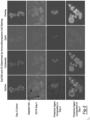
- FIG. 2 illustrates the effects of room temperature storage on the stability of tumor-associated transmembrane protein EpCAM and cytoskeleton protein cytokeratin of MCF-7 tumor cells spiked into blood plasma.
- EpCAM protein which is expressed on the cell membrane of MCF-7 cells are stable up to 4 days at room temperature in tubes containing Protective Agent Compositions A & B whereas in K 3 EDTA tubes this membrane protein was partially degraded by day 4.
- fluorescence signal for EpCAM cell membrane protein is very- weak and diffused in MCF-7 cells spiked into K 3 EDTA blood at day 4, CK protein is stabilized in tubes containing Protective Agent Compositions A & B at day 4, however this protein was less stable in K 3 EDTA tubes at day 4 as evidenced from reduced fluorescence intensity for this protein in spiked MCF-7 cells recovered from - K 3 EDTA tubes.
- Staining of cells with DAPI shows that nucleus and nuclear content is stable in cells recovered from tubes containing Protective Agent Compositions A & B but not from cells recovered from K 3 EDTA tubes after 4 days of storage at room temperature ( Figure 2 ).
- the molecular beacon example shows that both c-fos and cycling D1 mRNA are stable in Protective Agent Composition A at room for up to 4 days ( Figure 3 ).
- CTCs recovered from K 3 EDTA tubes showed CTCs with degrading c-fos and cyclin D1 mRNAs as shown in Figure 3 .
- Protective Agent Compositions A & B provide preservation and stabilization of CTCs in blood samples for up to 4 days at room temperature. In doing so, the protective agent compositions support the development of new non-invasive diagnostic and prognostic methodologies for CTC enumeration as well as characterization.
- a single protective agent composition may be employed that includes a preservative composition and a quenching agent.
- Such protective agent composition may be preloaded into a sample collection device, such as a blood collection tube (which may be evacuated to a pressure below atmospheric pressure after loading).
- a sample may be taken from a subject directly into the sample collection device (e.g., a blood collection tube), at which time it will be contacted with the protective agent composition.
- a sample can be taken from a subject into a first container and the sample subsequently transferred to one or more second containers in which the protective agent composition is present.
- the aldehyde-free (e.g., formaldehyde-free) protective agent composition may include a preservative composition such as one selected from the group consisting of: diazolidinyl urea, imidazolidinyl urea, dimethoylol-5,5-dimethylhydantoin, diethyl urea, 2-bromo-2-nitropropane-1,3-diol, oxazolidines, sodium hydroxymethyl glycinate, 5-hydroxymethoxymethyl-1-1aza-3,7-dioxabicyclo [3.3.0] octane, 5-hydroxymethyl-1-1aza-3,7-dioxabicyclo [3.3.0] octane, 5-hydroxypoly[methyleneoxy]methyl-1-1aza-3,7-dioxabicyclo [3.3.0] octane, quaternary adamantine and any combination thereof.
- a preservative composition such as one selected
- aldehyde-free (e.g., formaldehyde-free) protective agent composition may release an aldehyde (e.g., formaldehyde)
- the teachings herein envision a specific step of quenching the aldehyde to render it inert to the CTCs
- the preservative composition is desirably used in combination with a quenching agent for helping to assure that nucleic acid (e.g., DNA) in the sample avoids being subjected to free aldehyde (e.g., free formaldehyde) which may cause one or more deleterious effects upon the nucleic acid.
- a quenching agent for helping to assure that nucleic acid (e.g., DNA) in the sample avoids being subjected to free aldehyde (e.g., free formaldehyde) which may cause one or more deleterious effects upon the nucleic acid.
- free aldehyde e.g., free formaldehyde
- the resulting mixture is preferably devoid of any aldehyde, and nucleic acids within the sample are suitable for polymerase chain reaction and DNA sequencing, and will exhibit structural integrity comparable to native nucleic acids (e.g., DNA will exhibit ellipticity that is substantially similar that of untreated native DNA, as measured by circular dichroism spectroscopy or will exhibit DNA-dye fluorescence that is substantially similar to that of untreated native DNA, as measured by fluorescence spectroscopy).
- native nucleic acids e.g., DNA will exhibit ellipticity that is substantially similar that of untreated native DNA, as measured by circular dichroism spectroscopy or will exhibit DNA-dye fluorescence that is substantially similar to that of untreated native DNA, as measured by fluorescence spectroscopy).
- the concentration of the preservative composition after sample contact may be greater than about 20 mg/ml, 10 mg/ml, 5 mg/ml, 2 mg/ml, less than about 0.8 g/ml of the mixture of protective agent composition and biological (e.g., blood) sample.
- the concentration of the preservative composition after sample contact may be more than about 0.1 g/ml of the mixture of protective agent composition and biological (e.g., blood) sample.
- the concentration of the preservative composition after sample contact may be between approximately 0.1 g/ml to approximately 0.8 g/ml of the mixture of protective agent composition and biological (e.g., blood) sample.
- the concentration of the preservative composition after sample contact may be between approximately 0.3 g/ml to approximately 0.6 g/ml of the mixture of protective agent composition and biological (e.g., blood) sample.
- the concentration of the preservative composition both before and after contact with a blood sample may be modified depending upon what diagnostic procedures a sample may undergo. As an example, the concentration may be modified in the event that a sample is to undergo flow cytometry analysis. More specifically, the concentration may be increased in the event that a sample is to undergo flow cytometry analysis.
- the concentration of the preservative composition after sample contact may be greater than about 15 mg/ml, greater than about 25 mg/ml, or even greater than about 30 mg/ml after sample contact.
- the formulation of the protective agent composition may also be modified such that a sample that will undergo flow cytometry analysis may contain diazolidinyl urea.
- the protective agent composition may also include a quenching agent.
- the protective agent composition may also include one or more metabolic inhibitors, one or more nuclease inhibitors and EDTA.
- the quenching agent may be one or more compounds that include at least one functional group capable of reacting with an electron deficient functional group of an aldehyde (e.g., an amine compound that reacts with formaldehyde to form methylol and/or imine Schiff base or a cis-diol compound that reacts with formaldehyde to form a cyclic acetal).
- the quenching agent may be selected from amino acids, alkyl amines, polyamines, primary amines, secondary amines, ammonium salts, nucleobases or any combination thereof.
- the quenching agent may be selected from glycine, lysine, ethylene diamine, arginine, urea, adenine, guanine, cytosine, thymine, spermidine, or any combination thereof.
- the concentration of the quenching agent is an amount that is sufficiently large that after contacting the sample with the protective agent composition, there is an absence of free aldehyde (e.g., an absence of free formaldehyde). However, the concentration is sufficiently small that dilution of the sample will not materially impact any analyzed characteristic of the sample.
- the concentration of the formaldehyde-quenching reagent after the sample contacting step may be above about 0.001 g/ml, 0.002 g/ml or even about 0.004 g/ml of the mixture of protective agent composition and biological (e.g., blood) sample.
- the concentration of the formaldehyde-quenching reagent after the sample contacting step may be below about 0.03 g/ml, 0.01 g/ml, or even about 0.008 g/ml of the mixture of protective agent composition and biological (e.g., blood) sample.
- the concentration of the formaldehyde-quenching reagent after the sample contacting step may be between about 0.004 g/ml to about 0.008 g/ml.
- the protective agent composition may be present in an overall small fraction of the mixture volume. For example, it may be present in an amount that is less than about 5%, 2%, 0.5% or even less than about 0.3% of the overall mixture volume.
- the protective agent composition may be present in an amount of from about 1:20 parts by volume to about 1:300 parts by volume of the mixture.
- the amount of the protective agent composition may be present from about 1:50 parts by volume to about 1:200 parts by volume of the mixture.
- the amount of the protective agent composition is present from about 1:20 (1 part protective agent composition to 20 parts total mixture) parts by volume to about 1:300 parts by volume of the total mixture (which includes both the protective agent composition and the biological sample).
- the amount of the protective agent composition is present from about 1:100 parts by volume to about 1:200 parts by volume of the mixture.
- the protective agent composition may include at least one preservative composition selected from diazolidinyl urea, imidazolidinyl urea, dimethoylol-5,5-dimethylhydantoin, dimethylol urea, 2-bromo-2-nitropropane-1,3-diol, oxazolidines, sodium hydroxymethyl glycinate, 5-hydroxymethoxymethyl-1-1aza-3,7-dioxabicyclo [3.3.0] octane, 5-hydroxymethyl-1-1aza-3,7-dioxabicyclo [3.3.0] octane, 5-hydroxypoly[methyleneoxy]methyl-1-1aza-3,7-dioxabicyclo [3.3.0] octane, quaternary adamantine, 2-aminoacetic acid or any combination thereof.
- preservative composition selected from diazolidinyl urea, imidazolidinyl urea, dimetho
- the contacting step may include employing as the protective agent composition, a composition that includes imidazolidinyl urea in an amount of about 0.1 to about 2.0% by weight of the total mixture of the protective agent composition plus a biological sample; optionally, ethylenediaminetetraacetic acid (EDTA) in an amount of about 0.05 to about 0.75% by weight of the total mixture of the protective agent composition plus a biological sample; and a quenching agent in an amount sufficient to react with any free aldehyde (e.g., formaldehyde) that may arise from the imidazolidinyl urea to form a reaction product that will not react to denature any protein of the biological sample.
- EDTA ethylenediaminetetraacetic acid
- the protective agent composition (prior to contact with any biological sample) may include from about 20% to about 60% by weight imidazolidinyl urea.
- the protective agent composition may include at least about 30% by weight imidazolidinyl urea.
- the protective agent composition may include at least about 40% by weight imidazolidinyl urea and less than about 55% by weight imidazolidinyl urea.
- the protective agent composition may include from about 1% to about 10% by weight of the quenching agent.
- the protective agent composition may include at least about 2% by weight of the quenching agent.
- the protective agent composition may include at least about 4% by weight of the quenching agent and less than about 8% by weight of the quenching agent.
- the protective agent composition may include from about 1% to about 20% by weight EDTA.
- the protective agent composition may include at least about 5% by weight EDTA.
- the protective agent composition may include at least about 7% by weight EDTA and less than about 10% by weight EDTA.
- the protective agent composition may be pre-loaded into a tube and may be pre-loaded in amount of from about 50 to about 400 ⁇ l of protective agent composition.
- the pre-loaded amount may be at least about 100 ⁇ l and less than about 300 ⁇ l.
- the pre-loaded amount may be at least about 150 ⁇ l and less than about 250 ⁇ l.
- the protective agent composition may comprise at least about 80 mg and less than about 100 mg of the protective agent composition.
- the quenching agent may comprise at least about 1 mg and less than about 15 mg of the protective agent composition.
- EDTA may comprise at least about 10 mg and less than about 25 mg of the protective agent composition.
- it may include an amount of about 10 parts by weight of the protective agent composition per about 1 parts by weight of the quenching agent.
- the quenching agent may include a compound that includes at least one functional group capable of reacting with an electron deficient functional group of formaldehyde (e.g., an amine compound that reacts with formaldehyde to form methylol or imine Schiff base or a cis-diol compound that reacts with formaldehyde to form a cyclic acetal).
- formaldehyde e.g., an amine compound that reacts with formaldehyde to form methylol or imine Schiff base or a cis-diol compound that reacts with formaldehyde to form a cyclic acetal.
- the quenching agent may be an ingredient selected from amino acids, alkyl amines, polyamines, primary amines, secondary amines, ammonium salts, or a combination thereof, it may be an ingredient selected from glycine, lysine, ethylene diamine, arginine, urea, adenine, guanine, cytosine, thymine, spermidine, or any combination thereof. It may be an ingredient selected from glycine, lysine, ethylene diamine, urea or any combination thereof.
- the quenching step may include reacting any free aldehyde (e.g., formaldehyde) for forming a methylol, imine Schiff base, a Schiff base-quencher crosslink reaction product, a Schiff base dimer, or any combination thereof.
- any free aldehyde e.g., formaldehyde
- the protective agent may include one or more preservative agents, one or more nuclease inhibitors, one or more metabolic inhibitors, or any combination thereof.
- the one or more nuclease inhibitors may be selected from the group consisting of: diethyl pyrocarbonate, ethanol, aurintricarboxylic acid (ATA), glyceraldehydes, sodium fluoride, ethylenediamine tetraacetic acid (EDTA), formamide, vanadyl-ribonucleoside complexes, macaloid, heparin, hydroxylamine-oxygen-cupric ion, bentonite, ammonium sulfate, dithiothreitol (DTT), beta-mercaptoethanol, cysteine, dithioerythritol, tris (2-carboxyethyl) phosphene hydrochloride, a divalent cation such as Mg +2 , Mn +2 , Zn +2 ,
- the one or more metabolic inhibitors may be selected from the group consisting of: glyceraldehyde, dihydroxyacetone phosphate, glyceraldehyde 3-phosphate, 1,3-bisphosphoglycerate, 3-phosphoglycerate, 2-phosphoglycerate, phosphoenolpyruvate, pyruvate and glycerate dihydroxyacetate, sodium fluoride, K 2 C 2 O 4 , and any combination thereof.
- the amount of any active ingredient within the protective agent may generally be at least about 0.01% by weight.
- the amount of any active ingredient within the protective agent may generally be less than about 70% by weight.
- the protective agent may comprise at least about 10% diazolidinyl urea.
- the protective agent may comprise less than about 40% diazolidinyl urea.
- the protective agent may further contain at least about 1% of one or more enzyme inhibitors (e.g., nuclease inhibitors) such as EDTA and ATA.
- the protective agent may contain less than about 30% of one or more enzyme inhibitors.
- the protective agent may also contain at least about 1 % of one or more metabolic inhibitors.
- the protective agent may contain less than about 20% of one or more metabolic inhibitors.
- the protective agent composition optionally may include a nuclease inhibitor selected from the group consisting of: diethyl pyrocarbonate, ethanol, aurintricarboxylic acid (ATA), formamide, vanadyl-ribonucleoside complexes, macaloid, ethylenediamine tetraacetic acid (EDTA), proteinase K, heparin, hydroxylamine-oxygen-cupric ion, bentonite, ammonium sulfate, dithiothreitol (DTT), beta-mercaptoethanol (BME), cysteine, dithioerythritol, tris(2-carboxyethyl) phosphene hydrochloride, a divalent cation such as Mg 2+ , Mn 2+ , Zn 2+ , Fe 2+ , Ca 2+ , Cu 2+ , and any combination thereof.
- a nuclease inhibitor selected from the group consisting of: diethy
- the protective agent composition may include a preservative composition, an aldehyde quenching agent, and an anticoagulant.
- the protective agent composition may include imidazolidinyl urea, glycine, and ethylenediamine tetraacetic acid.
- teachings herein contemplate applications including but not limited to extracting circulating tumor cells for use in detecting cancer (including but not limited to carcinomas, leukemia, and/or lymphoma).
- cancer including but not limited to carcinomas, leukemia, and/or lymphoma.
- teachings herein may be employed for detecting abnormal methylation for breast cancer, prostate cancer, gastric cancer, ovarian, colorectal cancer, bladder cancer, testicular cancer, esophogeal cancer, melanoma or other cancers.
- any numerical values recited herein include all values from the lower value to the upper value in increments of one unit provided that there is a separation of at least 2 units between any lower value and any higher value.
- the amount of a component, a property, or a value of a process variable such as, for example, temperature, pressure, time and the like is, for example, from 1 to 90, preferably from 20 to 80, more preferably from 30 to 70, it is intended that intermediate range values (for example, 15 to 85, 22 to 68, 43 to 51 , 30 to 32 etc.) are within the teachings of this specification.
- individual intermediate values are also within the present teachings.
Landscapes
- Health & Medical Sciences (AREA)
- Life Sciences & Earth Sciences (AREA)
- Engineering & Computer Science (AREA)
- Immunology (AREA)
- Urology & Nephrology (AREA)
- Biomedical Technology (AREA)
- General Health & Medical Sciences (AREA)
- Hematology (AREA)
- Chemical & Material Sciences (AREA)
- Molecular Biology (AREA)
- Physics & Mathematics (AREA)
- Zoology (AREA)
- Food Science & Technology (AREA)
- Medicinal Chemistry (AREA)
- Cell Biology (AREA)
- Analytical Chemistry (AREA)
- Biochemistry (AREA)
- Biotechnology (AREA)
- General Physics & Mathematics (AREA)
- Pathology (AREA)
- Environmental Sciences (AREA)
- Microbiology (AREA)
- Wood Science & Technology (AREA)
- Dentistry (AREA)
- Investigating Or Analysing Biological Materials (AREA)
- Measuring Or Testing Involving Enzymes Or Micro-Organisms (AREA)
- Physiology (AREA)
- Biophysics (AREA)
- Oncology (AREA)
- Hospice & Palliative Care (AREA)
- Medicines Containing Material From Animals Or Micro-Organisms (AREA)
Applications Claiming Priority (3)
| Application Number | Priority Date | Filing Date | Title |
|---|---|---|---|
| US201361857847P | 2013-07-24 | 2013-07-24 | |
| PCT/US2014/047551 WO2015013244A1 (en) | 2013-07-24 | 2014-07-22 | Compositions and methods for stabilizing circulating tumor cells |
| EP14750092.0A EP3024323B1 (de) | 2013-07-24 | 2014-07-22 | Zusammensetzungen und verfahren zur stabilisierung zirkulierender tumorzellen |
Related Parent Applications (1)
| Application Number | Title | Priority Date | Filing Date |
|---|---|---|---|
| EP14750092.0A Division EP3024323B1 (de) | 2013-07-24 | 2014-07-22 | Zusammensetzungen und verfahren zur stabilisierung zirkulierender tumorzellen |
Publications (1)
| Publication Number | Publication Date |
|---|---|
| EP4136972A1 true EP4136972A1 (de) | 2023-02-22 |
Family
ID=51300872
Family Applications (2)
| Application Number | Title | Priority Date | Filing Date |
|---|---|---|---|
| EP22199049.2A Pending EP4136972A1 (de) | 2013-07-24 | 2014-07-22 | Zusammensetzungen und verfahren zur stabilisierung zirkulierender tumorzellen |
| EP14750092.0A Active EP3024323B1 (de) | 2013-07-24 | 2014-07-22 | Zusammensetzungen und verfahren zur stabilisierung zirkulierender tumorzellen |
Family Applications After (1)
| Application Number | Title | Priority Date | Filing Date |
|---|---|---|---|
| EP14750092.0A Active EP3024323B1 (de) | 2013-07-24 | 2014-07-22 | Zusammensetzungen und verfahren zur stabilisierung zirkulierender tumorzellen |
Country Status (5)
| Country | Link |
|---|---|
| US (4) | US10091984B2 (de) |
| EP (2) | EP4136972A1 (de) |
| CA (1) | CA2917912C (de) |
| ES (1) | ES2938048T3 (de) |
| WO (1) | WO2015013244A1 (de) |
Families Citing this family (19)
| Publication number | Priority date | Publication date | Assignee | Title |
|---|---|---|---|---|
| ES2784011T3 (es) | 2002-10-16 | 2020-09-21 | Streck Inc | Procedimiento y dispositivo para recoger y preservar las células para su análisis |
| US11634747B2 (en) | 2009-01-21 | 2023-04-25 | Streck Llc | Preservation of fetal nucleic acids in maternal plasma |
| EP3290530B1 (de) | 2009-02-18 | 2020-09-02 | Streck Inc. | Konservierung von zellfreien nukleinsäuren |
| EP4136972A1 (de) * | 2013-07-24 | 2023-02-22 | Streck, Inc. | Zusammensetzungen und verfahren zur stabilisierung zirkulierender tumorzellen |
| WO2016077709A1 (en) | 2014-11-14 | 2016-05-19 | Liquid Genomics, Inc. | Use of circulating cell-free rna for diagnosis and/or monitoring cancer |
| US11168351B2 (en) | 2015-03-05 | 2021-11-09 | Streck, Inc. | Stabilization of nucleic acids in urine |
| JP6617495B2 (ja) * | 2015-09-18 | 2019-12-11 | 東ソー株式会社 | 腫瘍細胞の検出方法 |
| US20170145475A1 (en) | 2015-11-20 | 2017-05-25 | Streck, Inc. | Single spin process for blood plasma separation and plasma composition including preservative |
| AU2017277626A1 (en) * | 2016-06-08 | 2019-01-24 | Cf Genome, Llc | A chemical composition to stabilize extracellular vesicles in a blood sample and method of use thereof |
| WO2018022991A1 (en) | 2016-07-29 | 2018-02-01 | Streck, Inc. | Suspension composition for hematology analysis control |
| EP3512433B1 (de) * | 2016-09-15 | 2023-06-07 | Biora Therapeutics, Inc. | Vorrichtung für flüssigkeitsprobenahme |
| CN110520045A (zh) * | 2017-02-03 | 2019-11-29 | 斯特里克公司 | 带防腐剂的采样管 |
| CN110997933B (zh) | 2017-08-02 | 2024-01-09 | 萨斯特德特股份有限两合公司 | 用于稳定无细胞核酸和细胞的方法和组合物 |
| US12378543B2 (en) | 2017-10-19 | 2025-08-05 | Streck Llc | Compositions for hemolysis and coagulation regulation and stabilization of extracellular vesicles |
| DE102018218739B3 (de) * | 2018-11-01 | 2020-03-19 | Sarstedt Ag & Co. Kg | Blutentnahmeröhre und Verfahren zur Präparation |
| CN111334560A (zh) * | 2018-12-19 | 2020-06-26 | 合肥铼科生物科技有限公司 | 一种保存尿液中核酸的组合物及其方法 |
| US20230314442A1 (en) * | 2020-07-01 | 2023-10-05 | Streck, Inc. | Methods of preparing samples for proteomic analysis |
| EP4145105A1 (de) | 2021-09-06 | 2023-03-08 | Anacyte Laboratories GmbH | Lösung für die asservierung von zellen |
| CN116686824A (zh) * | 2023-06-07 | 2023-09-05 | 晶准生物医学(深圳)有限公司 | 血液样本保存液及其制备方法和应用 |
Citations (6)
| Publication number | Priority date | Publication date | Assignee | Title |
|---|---|---|---|---|
| WO1998002740A1 (en) * | 1996-07-16 | 1998-01-22 | Streck Laboratories, Inc. | Method and composition for preserving antigens and nucleic acids and process for utilizing cytological material produced by same |
| WO2003018757A2 (en) * | 2001-08-23 | 2003-03-06 | Immunivest Corporation | Stabilization of cells and biological specimens for analysis |
| US20050181353A1 (en) * | 2004-02-17 | 2005-08-18 | Rao Galla C. | Stabilization of cells and biological specimens for analysis |
| EP2228453A1 (de) * | 2009-01-21 | 2010-09-15 | Streck Inc. | Erhaltung fötaler Nukleinsäuren im maternalen Plasma |
| WO2011014741A1 (en) * | 2009-07-31 | 2011-02-03 | Artemis Health, Inc. | Methods and compositions for cell stabilization |
| WO2013086428A1 (en) * | 2011-12-09 | 2013-06-13 | The Scripps Research Institute | Apparatus, system and method for identifying circulating tumor cells |
Family Cites Families (184)
| Publication number | Priority date | Publication date | Assignee | Title |
|---|---|---|---|---|
| US1432249A (en) | 1922-02-06 | 1922-10-17 | Howard S Borden | Article of manufacture |
| US1922799A (en) | 1932-12-16 | 1933-08-15 | George E Gaus | Method for affixing identification tags |
| US2250666A (en) | 1938-10-31 | 1941-07-29 | Godefroy Mfg Company | Combined label, cap loosener, and auxiliary container |
| US2690624A (en) | 1949-09-15 | 1954-10-05 | Ollie W Phillips | Sign |
| US2930570A (en) | 1959-01-30 | 1960-03-29 | Herbert R Leedy | Pinch clamp |
| US3867521A (en) | 1970-08-26 | 1975-02-18 | Scherer Corp R P | Method for absorption of drugs |
| US3781120A (en) | 1970-09-14 | 1973-12-25 | Technicon Instr | Self-locating sample receptacle having integral identification label |
| US3874384A (en) | 1971-11-01 | 1975-04-01 | American Hospital Supply Corp | Improved blood storage unit and method of storing blood |
| US3872730A (en) | 1972-03-10 | 1975-03-25 | Becton Dickinson Co | Sampling apparatus |
| US3879295A (en) | 1973-08-17 | 1975-04-22 | Eastman Kodak Co | Vacutainer with positive separation barrier |
| US3973913A (en) | 1976-01-29 | 1976-08-10 | Louderback Allan Lee | Blood control standard |
| US3994085A (en) | 1976-03-29 | 1976-11-30 | Groselak Robert E | Baggage tag |
| US4043453A (en) | 1976-05-11 | 1977-08-23 | The Wright Tool & Forge Company | Holder and display device for wrench sockets |
| US4318090A (en) | 1980-10-27 | 1982-03-02 | Sensormatic Electronics Corporation | Apparatus for deactivating a surveillance tag |
| US4513522A (en) | 1982-09-16 | 1985-04-30 | Selenke William M | Label with particular application to laboratory specimen container identification |
| US4515890A (en) | 1982-11-08 | 1985-05-07 | Abbott Laboratories | Immunoassay of terminal deoxynucleotidyl transferase |
| DE8407967U1 (de) | 1984-03-15 | 1984-06-07 | Idento - Gesellschaft für industrielle Kennzeichnung mbH, 6074 Rödermark | Beschriftbarer Kabelmarkierungsstreifen |
| US4584219A (en) | 1984-11-09 | 1986-04-22 | Baartmans Hans R | Web of labels |
| US4675159A (en) | 1985-09-29 | 1987-06-23 | Al Sioufi Habib | Method and device for disinfecting biological fluids and container for same |
| US4818700A (en) * | 1985-10-25 | 1989-04-04 | Phillips Petroleum Company | Pichia pastoris argininosuccinate lyase gene and uses thereof |
| US5110908A (en) | 1986-12-31 | 1992-05-05 | Praxis Biologics, Inc. | Haemophilus influenzae peptides and proteins |
| US4884827A (en) | 1988-01-22 | 1989-12-05 | Norfolk Scientific Inc. | Partially transparent label |
| US4921277A (en) | 1988-10-24 | 1990-05-01 | Academy Of Applied Science, Inc. | Method of labeling needle syringes and medication vials and novel labels therefor |
| HU201865B (en) | 1989-04-28 | 1991-01-28 | Pecsi Dohanygyar | Tobacco-smoke filter of high efficiency |
| US5000484A (en) | 1989-08-30 | 1991-03-19 | Phelan James C | Identification and monitoring system for surgical specimens |
| US5153117A (en) | 1990-03-27 | 1992-10-06 | Genetype A.G. | Fetal cell recovery method |
| JP2540649B2 (ja) | 1990-04-27 | 1996-10-09 | テルモ株式会社 | 採血管 |
| US5250438A (en) | 1990-05-09 | 1993-10-05 | Streck Laboratories, Inc. | Method for differential determination of white blood cells using diazolidinyl urea to stabilize white blood cells |
| US5135125A (en) | 1991-02-15 | 1992-08-04 | Tapecon, Inc. | Hanging label |
| US5460797A (en) | 1991-05-08 | 1995-10-24 | Streck Laboratories, Inc. | Method for fixing tissues and cells for analysis using oxazolidine compounds |
| US5459073A (en) | 1991-05-08 | 1995-10-17 | Streck Laboratories, Inc. | Method and composition for preserving antigens and process for utilizing cytological material produced by same |
| US5260048A (en) | 1991-05-08 | 1993-11-09 | Streck Laboratories, Inc. | Tissue fixative solution and method |
| US5196182A (en) | 1991-05-08 | 1993-03-23 | Streck Laboratories, Inc. | Tissue fixative |
| US5459253A (en) | 1991-07-19 | 1995-10-17 | Pharmacia P-L Biochemicals Inc. | M-RNA purification |
| US5343647A (en) | 1991-09-03 | 1994-09-06 | Moore Business Forms, Inc. | Pressure sensitive pricing tag/label |
| AU669673B2 (en) | 1991-09-20 | 1996-06-20 | Gerald W. Camiener | Methods and compositions with aldehyde stabilizing solution |
| US5998483A (en) | 1991-09-20 | 1999-12-07 | Camiener; Gerald W. | Glyoxal-containing preservative compositions |
| DE4134231A1 (de) | 1991-10-16 | 1993-04-22 | Fix Gmbh | Gepaeckstreifenanhaenger fuer einzelbeschriftung |
| US5257633A (en) | 1992-06-23 | 1993-11-02 | Becton, Dickinson And Company | Surface modified blood collection tubes |
| JPH07509136A (ja) | 1992-07-17 | 1995-10-12 | バイシス,インク. | インサイチュ(in situ)・ハイブリダイゼーションのための母体血液中の胎児細胞の富化と同定 |
| US5629147A (en) | 1992-07-17 | 1997-05-13 | Aprogenex, Inc. | Enriching and identifying fetal cells in maternal blood for in situ hybridization |
| GB9223035D0 (en) | 1992-11-03 | 1992-12-16 | Kiessling Cooper Ann A | Preservation of peripheral blood & semen in fixatives that inactivate human pathogens |
| US5688516A (en) | 1992-11-12 | 1997-11-18 | Board Of Regents, The University Of Texas System | Non-glycopeptide antimicrobial agents in combination with an anticoagulant, an antithrombotic or a chelating agent, and their uses in, for example, the preparation of medical devices |
| AU669754B2 (en) | 1992-12-18 | 1996-06-20 | Becton Dickinson & Company | Barrier coating |
| US5457024A (en) | 1993-01-22 | 1995-10-10 | Aprogenex, Inc. | Isolation of fetal erythrocytes |
| AU6230594A (en) | 1993-02-01 | 1994-08-29 | University Of Iowa Research Foundation, The | Quartenary amine surfactants and methods of using same in isolation of rna |
| ATE241368T1 (de) | 1993-07-05 | 2003-06-15 | Sheffield Teaching Hospitals | Präparation und stabilisation von zellen |
| US6043032A (en) | 1993-09-22 | 2000-03-28 | Tosoh Corporation | Method of extracting nucleic acids and method of detecting specified nucleic acid sequences |
| EP0804614A1 (de) | 1994-03-29 | 1997-11-05 | Genzyme Corporation | Die kultur und isolierung von fötalen zellen aus dem peripheren blut der mutter |
| US5858699A (en) | 1994-04-05 | 1999-01-12 | Northern General Hospital Nhs Trust | Method to stabilize cell suspensions using aged heavy metal solution and paraformaldehyde |
| US5501954A (en) | 1994-06-13 | 1996-03-26 | Genzyme Corporation | Method of detecting cellular material |
| US5468022A (en) | 1994-06-14 | 1995-11-21 | Massachusetts Institute Of Technology | Sample tube identification flag |
| FR2722506B1 (fr) | 1994-07-13 | 1996-08-14 | Rhone Poulenc Rorer Sa | Composition contenant des acides nucleiques, preparation et utilisations |
| US5512343A (en) | 1994-08-01 | 1996-04-30 | Diagraph Corporation | Label assembly |
| US5540358A (en) | 1994-12-19 | 1996-07-30 | The Procter And Gamble Company | Flexible planar gusseted package for dispensing a product through a fitment |
| US5490658A (en) | 1995-03-02 | 1996-02-13 | Avery Dennison Corporation | Label hangers for intravenous bottles |
| US5560657A (en) | 1995-03-08 | 1996-10-01 | Morgan; Brian R. | Tamper-indicating label |
| USD382343S (en) | 1995-06-06 | 1997-08-12 | Home Access Health Corporation | Filmstrip for enhancing blood flow |
| US6527957B1 (en) | 1995-08-09 | 2003-03-04 | Baxter International Inc. | Methods for separating, collecting and storing red blood cells |
| US5817519A (en) | 1995-12-28 | 1998-10-06 | Bayer Corporation | Automated method and device for identifying and quantifying platelets and for determining platelet activation state using whole blood samples |
| US6630301B1 (en) | 1997-03-14 | 2003-10-07 | The Penn State Research Foundation | Detection of extracellular tumor-associated nucleic acid in blood plasma or serum |
| US6156504A (en) | 1996-03-15 | 2000-12-05 | The Penn State Research Foundation | Detection of extracellular tumor-associated nucleic acid in blood plasma or serum using nucleic acid amplification assays |
| US6759217B2 (en) | 1996-03-26 | 2004-07-06 | Oncomedx, Inc. | Method enabling use of extracellular RNA extracted from plasma or serum to detect, monitor or evaluate cancer |
| ES2347854T5 (es) | 1996-03-26 | 2014-07-24 | Michael S. Kopreski | Método que permite el uso de RNA extracelular extraído de plasma o suero para detectar, monitorizar o evaluar un cáncer |
| US6072086A (en) | 1996-04-12 | 2000-06-06 | Intergen Company | Method and composition for controlling formaldehyde fixation by delayed quenching |
| GB2313288B (en) | 1996-05-24 | 2000-07-12 | North Gen Hospital Nhs Trust | Specimen collection fluid |
| IT1294964B1 (it) | 1996-07-12 | 1999-04-23 | Domenico Valerio | Isolamento e cultura di cellule fetali dal sangue periferico materno |
| US6074827A (en) | 1996-07-30 | 2000-06-13 | Aclara Biosciences, Inc. | Microfluidic method for nucleic acid purification and processing |
| US5731156A (en) | 1996-10-21 | 1998-03-24 | Applied Imaging, Inc. | Use of anti-embryonic hemoglobin antibodies to identify fetal cells |
| US6190609B1 (en) | 1996-11-19 | 2001-02-20 | Baxter International Inc. | Methods and apparatus for inactivating contaminants in biological fluid |
| US5783093A (en) | 1997-01-02 | 1998-07-21 | Haemonetics Corporation | Blood cell concentrates using a single solution for anticoagulation and preservation |
| EP0973383A4 (de) | 1997-01-21 | 2001-08-22 | American Nat Red Cross | Intrazelluläre und extrazelluläre dekontamination von vollblut und blutbestandteilen mit amphiphilen phenothiazin-5-ium farbstoffen und licht |
| US6125563A (en) | 1997-02-14 | 2000-10-03 | Girerd; Philippe H. | Container label with handle flap |
| US20010051341A1 (en) | 1997-03-04 | 2001-12-13 | Isis Innovation Limited | Non-invasive prenatal diagnosis |
| GB9704444D0 (en) | 1997-03-04 | 1997-04-23 | Isis Innovation | Non-invasive prenatal diagnosis |
| WO1998043067A1 (en) | 1997-03-25 | 1998-10-01 | Immunivest Corporation | Apparatus and methods for capture and analysis of particulate entities |
| SE514350C2 (sv) | 1997-04-07 | 2001-02-12 | Resemino System Ab | Metod för affischering samt för metoden anpassat system för affischering |
| US5939259A (en) | 1997-04-09 | 1999-08-17 | Schleicher & Schuell, Inc. | Methods and devices for collecting and storing clinical samples for genetic analysis |
| US5906744A (en) | 1997-04-30 | 1999-05-25 | Becton Dickinson And Company | Tube for preparing a plasma specimen for diagnostic assays and method of making thereof |
| US5976014A (en) | 1997-05-28 | 1999-11-02 | Moore U.S.A., Inc. | Integrity seal form/label combination |
| DK0920539T3 (da) | 1997-05-30 | 2006-07-24 | Xenomics | Fremgangsmåder til detektion af nukleinsyresekvenser i urin |
| US6083731A (en) | 1997-06-24 | 2000-07-04 | Washington State University Research Foundation | Recombinant materials and methods for the production of limonene hydroxylases |
| EP1023460A4 (de) | 1997-06-25 | 2003-09-10 | Promega Corp | Verfahren zur isolierung von rna |
| US5962234A (en) | 1997-10-20 | 1999-10-05 | Applied Imaging Corporation | Use of anti-embryonic epsilon hemoglobin antibodies to identify fetal cells |
| CA2260402C (en) | 1998-01-22 | 2001-10-23 | Pierre Boisvert | Display card |
| US6210889B1 (en) | 1998-01-28 | 2001-04-03 | The Universite Laval | Method for enrichment of fetal cells from maternal blood and use of same in determination of fetal sex and detection of chromosomal abnormalities |
| DE69941689D1 (de) | 1998-02-12 | 2010-01-07 | Univ Texas | Verfahren und reagenzien zur raschen und effizienten isolierung zirkulierender krebszellen |
| US20010018192A1 (en) | 1998-02-12 | 2001-08-30 | Terstappen Leon W.M.M. | Labeled cells for use as an internal functional control in rare cell detection assays |
| US6177163B1 (en) | 1998-06-22 | 2001-01-23 | Tricor Direct, Inc. | Markable repositionable adhesive sheet dispensing roll for use in an industrial setting |
| US6204375B1 (en) | 1998-07-31 | 2001-03-20 | Ambion, Inc. | Methods and reagents for preserving RNA in cell and tissue samples |
| US20090233276A1 (en) | 1998-09-22 | 2009-09-17 | Oncomedx, Inc. | Method Enabling the Use of Extracellular Ribonucleic Acid (RNA) Extracted from Plasma or Serum to Detect, Monitor or Evaluate Cancer or Premalignant Conditions |
| US6077235A (en) | 1999-02-23 | 2000-06-20 | Becton, Dickinson And Company | Blood collection assembly and method therefor |
| CA2299119C (en) | 1999-02-23 | 2013-02-05 | Qiagen Gmbh | A method of stabilizing and/or isolating nucleic acids |
| EP1203227A4 (de) | 1999-06-04 | 2003-01-02 | Bioseparations Inc | Pränatales diagnostisches testsystem und -verfahren |
| WO2000077235A1 (en) | 1999-06-16 | 2000-12-21 | University Of Cincinnati | Agent and process for isolation of extra-chromosomal nucleic acids |
| DE19928820A1 (de) | 1999-06-17 | 2000-12-21 | Ulrich Groth | Fixiermittel für Zellen und Gewebe von Lebewesen |
| AU6498600A (en) | 1999-07-29 | 2001-02-19 | Baxter International Inc. | Sampling tube holder for blood sampling system |
| US6664379B1 (en) | 1999-09-24 | 2003-12-16 | Ambion, Inc. | Nuclease inhibitor cocktail |
| US20010049895A1 (en) | 2000-01-06 | 2001-12-13 | Burke Doyle G. | Promotional hanger |
| US6337189B1 (en) | 2000-02-08 | 2002-01-08 | Streck Laboratories, Inc. | Fixative system, method and composition for biological testing |
| DE10006662A1 (de) | 2000-02-15 | 2001-08-23 | Antigen Produktions Gmbh | Gefäß zur Nukleinsäureanalytik |
| GB0009179D0 (en) | 2000-04-13 | 2000-05-31 | Imp College Innovations Ltd | Non-invasive prenatal diagnosis |
| GB0009784D0 (en) | 2000-04-20 | 2000-06-07 | Simeg Limited | Methods for clinical diagnosis |
| US20020045196A1 (en) | 2000-05-12 | 2002-04-18 | Walt Mahoney | Methods of isolating trophoblast cells from maternal blood |
| WO2001094126A1 (en) | 2000-06-08 | 2001-12-13 | Kaufman Stacy R | Verification of prescription information and warning label |
| AU1548802A (en) | 2000-06-21 | 2002-01-02 | Digene Corp | Universal collection medium |
| DE60131986T2 (de) | 2000-08-10 | 2008-08-28 | Baxa Corp., Englewood | Artikel zum handhaben, etikettieren, füllen und verschliessen von spritzen |
| US6664056B2 (en) | 2000-10-17 | 2003-12-16 | The Chinese University Of Hong Kong | Non-invasive prenatal monitoring |
| ATE396255T1 (de) | 2000-10-17 | 2008-06-15 | Zeptometrix Corp | Nicht-pathogene mikroorganismen |
| US6551267B1 (en) | 2000-10-18 | 2003-04-22 | Becton, Dickinson And Company | Medical article having blood-contacting surface |
| JP5192631B2 (ja) | 2000-11-08 | 2013-05-08 | ベクトン・ディキンソン・アンド・カンパニー | 生物学的試料を収集し安定化させるための方法および装置 |
| US6602718B1 (en) | 2000-11-08 | 2003-08-05 | Becton, Dickinson And Company | Method and device for collecting and stabilizing a biological sample |
| WO2002055985A2 (en) | 2000-11-15 | 2002-07-18 | Roche Diagnostics Corp | Methods and reagents for identifying rare fetal cells in the material circulation |
| EP1207208A3 (de) | 2000-11-15 | 2003-12-10 | Becton Dickinson and Company | Methode zur Erhaltung von Zellen und Nukleinsäurezielmolekülen |
| US20020066216A1 (en) | 2000-12-01 | 2002-06-06 | Delacruz Cedric G. | Baby birth announcement |
| US6794152B2 (en) | 2000-12-22 | 2004-09-21 | Streck Laboratories Inc. | Flow cytometry reagent and system |
| US6581973B2 (en) | 2001-03-30 | 2003-06-24 | Cheringal Associates, Inc. | Double blind study label |
| US6617180B1 (en) | 2001-04-16 | 2003-09-09 | Taiwan Semiconductor Manufacturing Company | Test structure for detecting bridging of DRAM capacitors |
| FR2824144B1 (fr) | 2001-04-30 | 2004-09-17 | Metagenex S A R L | Methode de diagnostic prenatal sur cellule foetale isolee du sang maternel |
| DK1421215T3 (da) | 2001-07-25 | 2011-06-27 | Oncomedx Inc | Fremgangsmåder til evaluering af patologiske tilstande under anvendelse af ekstracellulært RNA |
| WO2008111981A1 (en) | 2007-03-14 | 2008-09-18 | Sierra Molecular Corporation | Compositions, systems, and methods for preservation of macromolecules |
| US7863012B2 (en) | 2004-02-17 | 2011-01-04 | Veridex, Llc | Analysis of circulating tumor cells, fragments, and debris |
| US6884573B2 (en) | 2001-08-31 | 2005-04-26 | The University Of North Carolina At Chapel Hill | Fixed dried red blood cells and method of use |
| US6527242B1 (en) | 2001-10-01 | 2003-03-04 | Netta Kennedy | Brace for a picture frame |
| EP1476208B1 (de) | 2002-02-01 | 2011-10-05 | CaridianBCT, Inc. | System zur entnahme und aufbereitung von vollblut |
| GB0203280D0 (en) | 2002-02-12 | 2002-03-27 | Ic Innovations Ltd | Anti-glycolytic composition |
| CA2515243A1 (en) | 2002-02-22 | 2003-08-28 | Klaus Strebhardt | Agent for inhibiting development or progress of proliferative diseases and especially cancer diseases and pharmaceutical composition containing said agent |
| GB2386038A (en) | 2002-02-27 | 2003-09-03 | Motorola Inc | Channel estimation in a radio receiver |
| US6977162B2 (en) | 2002-03-01 | 2005-12-20 | Ravgen, Inc. | Rapid analysis of variations in a genome |
| WO2003095974A2 (en) | 2002-05-07 | 2003-11-20 | Becton, Dickinson And Company | Collection assembly |
| US20070178478A1 (en) | 2002-05-08 | 2007-08-02 | Dhallan Ravinder S | Methods for detection of genetic disorders |
| US7442506B2 (en) | 2002-05-08 | 2008-10-28 | Ravgen, Inc. | Methods for detection of genetic disorders |
| US7022478B2 (en) | 2002-05-14 | 2006-04-04 | The Chinese University Of Hong Kong | Methods for evaluating stroke or cardiac ischemia by nucleic acid detection |
| AU2003239543A1 (en) | 2002-05-22 | 2003-12-12 | Duke University | Rnp immunoprecipitation assay |
| AU2003243475A1 (en) | 2002-06-13 | 2003-12-31 | New York University | Early noninvasive prenatal test for aneuploidies and heritable conditions |
| US6913932B2 (en) | 2002-08-23 | 2005-07-05 | Beckman Coulter, Inc. | Formaldehyde-ammonium salt complexes for the stabilization of blood cells |
| US20060008807A1 (en) | 2002-08-23 | 2006-01-12 | O'hara Shawn M | Multiparameter analysis of comprehensive nucleic acids and morphological features on the same sample |
| EP1816461B1 (de) | 2002-10-16 | 2020-01-08 | Streck Laboratories, Inc. | Verfahren und Vorrichtung zum Sammeln und Konservieren von Zellen für die Analyse |
| ES2784011T3 (es) | 2002-10-16 | 2020-09-21 | Streck Inc | Procedimiento y dispositivo para recoger y preservar las células para su análisis |
| KR100471183B1 (ko) | 2002-10-29 | 2005-03-10 | 삼성전자주식회사 | 오프 세트 트랜지스터를 갖는 반도체 기억소자 및 그제조방법 |
| WO2004078999A1 (en) | 2003-03-05 | 2004-09-16 | Genetic Technologies Limited | Identification of fetal dna and fetal cell markers in maternal plasma or serum |
| US7267980B1 (en) | 2003-04-04 | 2007-09-11 | Research & Diagnostic Systems, Inc. | Stabilizing solution for cells and tissues |
| US20050277204A1 (en) | 2003-08-12 | 2005-12-15 | Massachusetts Institute Of Technology | Sample preparation methods and devices |
| US7318293B2 (en) | 2003-09-19 | 2008-01-15 | Ardern Ii William B | Binder clip sleeve |
| US20070111233A1 (en) | 2003-10-30 | 2007-05-17 | Bianchi Diana W | Prenatal diagnosis using cell-free fetal DNA in amniotic fluid |
| US20100216153A1 (en) | 2004-02-27 | 2010-08-26 | Helicos Biosciences Corporation | Methods for detecting fetal nucleic acids and diagnosing fetal abnormalities |
| WO2005108411A2 (en) | 2004-05-05 | 2005-11-17 | Isis Pharmaceuticals, Inc. | Substituted pixyl protecting groups for oligonucleotide synthesis |
| US8497134B2 (en) | 2004-08-19 | 2013-07-30 | Blood Cell Storage, Inc. | Fluorescent detector systems for the detection of chemical perturbations in sterile storage devices |
| ES2251307B2 (es) | 2004-10-05 | 2006-12-16 | Universidad Complutense De Madrid | Solucion para el mantenimiento indefinido de los acidos nucleicos en su celula de origen. |
| CA2586532C (en) | 2004-11-05 | 2014-03-25 | Qiagen North American Holdings, Inc. | Compositions and methods for purifying nucleic acids from stabilization reagents |
| ATE481504T1 (de) | 2004-12-10 | 2010-10-15 | Siemens Healthcare Diagnostics | Für die vorhersage des ansprechens maligner neoplasie auf eine auf taxan beruhende medizinische behandlung geeignete genetische veränderung |
| WO2006091918A2 (en) | 2005-02-23 | 2006-08-31 | Streck, Inc. | Process, composition and kit for providing a stable whole blood calibrator/control |
| US7419832B2 (en) | 2005-03-10 | 2008-09-02 | Streck, Inc. | Blood collection tube with surfactant |
| DE102005013261A1 (de) | 2005-03-22 | 2006-09-28 | Adnagen Ag | Reagenz und Verfahren zur Verhinderung der zeitabhängigen Expression in biologischen Zellen |
| EP1915447A4 (de) | 2005-08-19 | 2008-07-30 | Bioventures Inc | Verfahren und vorrichtung zum sammeln und isolieren von nukleinsäuren |
| WO2007053491A2 (en) | 2005-10-28 | 2007-05-10 | The Trustees Of Columbia University In The City Of New York | Method and kit for evaluating rna quality |
| HUE030215T2 (en) | 2006-02-02 | 2017-04-28 | Univ Leland Stanford Junior | Non-invasive fetal genetic screening by digital analysis |
| US7799531B2 (en) | 2006-02-28 | 2010-09-21 | University Of Louisville Research Foundation | Detecting fetal chromosomal abnormalities using tandem single nucleotide polymorphisms |
| EP1998789A4 (de) * | 2006-02-28 | 2009-04-22 | Metabolon Inc | Biomarker für amyotrophe lateralsklerose und verwendungsverfahren dafür |
| US20070243548A1 (en) | 2006-03-28 | 2007-10-18 | Elias Georges | Calumenin-directed diagnostics and therapeutics for cancer and chemotherapeutic drug resistance |
| US20070243549A1 (en) | 2006-04-12 | 2007-10-18 | Biocept, Inc. | Enrichment of circulating fetal dna |
| ES2264403B1 (es) | 2006-06-22 | 2007-11-01 | Grifols S.A. | Medio de suspension de hematies. |
| WO2008006086A2 (en) | 2006-07-07 | 2008-01-10 | Atlantic City Coin & Slot Service Company, Inc. | Gaming device and method of use |
| CN101528763B (zh) | 2006-08-30 | 2012-06-27 | 生物风险公司 | 分离和检测小多核苷酸的方法和物质 |
| US8080645B2 (en) | 2007-10-01 | 2011-12-20 | Longhorn Vaccines & Diagnostics Llc | Biological specimen collection/transport compositions and methods |
| US20080108071A1 (en) | 2006-10-10 | 2008-05-08 | Katherine Thompson | Methods and Systems to Determine Fetal Sex and Detect Fetal Abnormalities |
| WO2008067196A2 (en) * | 2006-11-16 | 2008-06-05 | The Regents Of The University Of California | Methods for identifying inhibitors of solute transporters |
| GB0704488D0 (en) | 2007-03-08 | 2007-04-18 | Univ Nottingham | Platelet viability kit |
| US8537789B2 (en) | 2007-08-01 | 2013-09-17 | Harris Corporation | Mobile ad-hoc network providing communication latency reduction features and related methods |
| EP2191012A1 (de) | 2007-09-21 | 2010-06-02 | Streck, Inc. | Nukleinsäureisolation in einer konservierten vollblutprobe |
| US20090308303A1 (en) | 2008-06-13 | 2009-12-17 | Burlando Albert A | Identification marker |
| US20100167271A1 (en) | 2008-12-30 | 2010-07-01 | Streck, Inc. | Method for screening blood using a preservative that may be in a substantially solid state form |
| EP3290530B1 (de) | 2009-02-18 | 2020-09-02 | Streck Inc. | Konservierung von zellfreien nukleinsäuren |
| CA2756493C (en) | 2009-03-24 | 2019-07-02 | Biocept, Inc. | Devices and methods of cell capture and analysis |
| US20110053208A1 (en) | 2009-08-31 | 2011-03-03 | Streck, Inc. | Biological sample identification system |
| CA2780536C (en) | 2009-11-09 | 2018-01-02 | Streck, Inc. | Stabilization of rna in and extracting from intact cells within a blood sample |
| EP2521778B1 (de) | 2010-01-04 | 2014-03-19 | QIAGEN Gaithersburg, Inc. | Verfahren, zusammensetzungen und kits zur gewinnung von nukleinsäuren oder proteinen aus festen gewebeproben |
| US9040255B2 (en) | 2010-09-23 | 2015-05-26 | Biocept, Inc. | Use of diazolidinyl urea for anti-clumping of biological samples |
| WO2012145662A1 (en) | 2011-04-21 | 2012-10-26 | Streck, Inc. | Improved sample tube having particular utility for nucleic acid amplification |
| WO2012166913A1 (en) | 2011-06-01 | 2012-12-06 | Streck, Inc. | Rapid thermocycler system for rapid amplification of nucleic acids and related methods |
| EP2814981B2 (de) | 2012-02-13 | 2021-04-28 | Streck, Inc. | Blutsammelverfahren zur stabilisierung zellfreier plasma-dna |
| US20150225712A1 (en) | 2012-08-21 | 2015-08-13 | Qiagen Gmbh | Method for isolating nucleic acids from a formaldehyde releaser stabilized sample |
| CA2839051A1 (en) * | 2013-01-14 | 2014-07-14 | Streck, Inc. | Blood collection device for stabilizing cell-free rna in blood during sample shipping and storage |
| EP4136972A1 (de) * | 2013-07-24 | 2023-02-22 | Streck, Inc. | Zusammensetzungen und verfahren zur stabilisierung zirkulierender tumorzellen |
-
2014
- 2014-07-22 EP EP22199049.2A patent/EP4136972A1/de active Pending
- 2014-07-22 WO PCT/US2014/047551 patent/WO2015013244A1/en not_active Ceased
- 2014-07-22 ES ES14750092T patent/ES2938048T3/es active Active
- 2014-07-22 CA CA2917912A patent/CA2917912C/en active Active
- 2014-07-22 EP EP14750092.0A patent/EP3024323B1/de active Active
- 2014-07-22 US US14/907,167 patent/US10091984B2/en active Active
-
2018
- 2018-10-05 US US16/153,273 patent/US10674721B2/en active Active
-
2020
- 2020-06-08 US US16/895,292 patent/US11547111B2/en active Active
-
2023
- 2023-01-09 US US18/094,770 patent/US12114654B2/en active Active
Patent Citations (6)
| Publication number | Priority date | Publication date | Assignee | Title |
|---|---|---|---|---|
| WO1998002740A1 (en) * | 1996-07-16 | 1998-01-22 | Streck Laboratories, Inc. | Method and composition for preserving antigens and nucleic acids and process for utilizing cytological material produced by same |
| WO2003018757A2 (en) * | 2001-08-23 | 2003-03-06 | Immunivest Corporation | Stabilization of cells and biological specimens for analysis |
| US20050181353A1 (en) * | 2004-02-17 | 2005-08-18 | Rao Galla C. | Stabilization of cells and biological specimens for analysis |
| EP2228453A1 (de) * | 2009-01-21 | 2010-09-15 | Streck Inc. | Erhaltung fötaler Nukleinsäuren im maternalen Plasma |
| WO2011014741A1 (en) * | 2009-07-31 | 2011-02-03 | Artemis Health, Inc. | Methods and compositions for cell stabilization |
| WO2013086428A1 (en) * | 2011-12-09 | 2013-06-13 | The Scripps Research Institute | Apparatus, system and method for identifying circulating tumor cells |
Also Published As
| Publication number | Publication date |
|---|---|
| US20200315163A1 (en) | 2020-10-08 |
| WO2015013244A1 (en) | 2015-01-29 |
| US12114654B2 (en) | 2024-10-15 |
| US20160174544A1 (en) | 2016-06-23 |
| US20230180742A1 (en) | 2023-06-15 |
| US10091984B2 (en) | 2018-10-09 |
| CA2917912C (en) | 2019-09-17 |
| EP3024323A1 (de) | 2016-06-01 |
| US11547111B2 (en) | 2023-01-10 |
| ES2938048T3 (es) | 2023-04-04 |
| US10674721B2 (en) | 2020-06-09 |
| US20190075785A1 (en) | 2019-03-14 |
| EP3024323B1 (de) | 2022-10-19 |
| CA2917912A1 (en) | 2015-01-29 |
Similar Documents
| Publication | Publication Date | Title |
|---|---|---|
| US12114654B2 (en) | Compositions and methods for stabilizing circulating tumor cells | |
| US20240026340A1 (en) | Blood collection device for improved nucleic acid regulation | |
| US11612163B2 (en) | Stabilization of whole blood samples | |
| Bæk et al. | The impact of various preanalytical treatments on the phenotype of small extracellular vesicles in blood analyzed by protein microarray | |
| JP6608280B2 (ja) | 生物学的試料の安定化 | |
| AU2008288601B2 (en) | Stabilization of cells and biological specimens for analysis | |
| EP3572531A1 (de) | Verfahren zur blutplasmatrennung unter verwendung eines konservierungsmittels und eines einzigen zentrifugationsschrittes | |
| AU2004221625B2 (en) | Tissue binding composition | |
| US20060194192A1 (en) | Stabilization of cells and biological specimens for analysis | |
| US12453346B2 (en) | Stabilization of whole blood at room temperature | |
| US20220349014A1 (en) | Multimodal analysis of stabilized cell-containing bodily fluid samples | |
| EP4356731A1 (de) | Medium und vorrichtung zum sammeln, lagern und transportieren biologischer proben sowie deren verwendung zur stabilisierung extrazellulärer nukleinsäuren | |
| Votteler et al. | RNA isolation from fetal and adult human tissues for transcriptional profiling | |
| ES3018258T3 (en) | Preservation of cellular components from cells with a preservative | |
| Salamin | RNA stabilized blood tubes to measure haemoglobin concentration |
Legal Events
| Date | Code | Title | Description |
|---|---|---|---|
| PUAI | Public reference made under article 153(3) epc to a published international application that has entered the european phase |
Free format text: ORIGINAL CODE: 0009012 |
|
| STAA | Information on the status of an ep patent application or granted ep patent |
Free format text: STATUS: THE APPLICATION HAS BEEN PUBLISHED |
|
| AC | Divisional application: reference to earlier application |
Ref document number: 3024323 Country of ref document: EP Kind code of ref document: P |
|
| AK | Designated contracting states |
Kind code of ref document: A1 Designated state(s): AL AT BE BG CH CY CZ DE DK EE ES FI FR GB GR HR HU IE IS IT LI LT LU LV MC MK MT NL NO PL PT RO RS SE SI SK SM TR |
|
| P01 | Opt-out of the competence of the unified patent court (upc) registered |
Effective date: 20230523 |
|
| STAA | Information on the status of an ep patent application or granted ep patent |
Free format text: STATUS: REQUEST FOR EXAMINATION WAS MADE |
|
| 17P | Request for examination filed |
Effective date: 20230821 |
|
| RBV | Designated contracting states (corrected) |
Designated state(s): AL AT BE BG CH CY CZ DE DK EE ES FI FR GB GR HR HU IE IS IT LI LT LU LV MC MK MT NL NO PL PT RO RS SE SI SK SM TR |
|
| STAA | Information on the status of an ep patent application or granted ep patent |
Free format text: STATUS: EXAMINATION IS IN PROGRESS |
|
| 17Q | First examination report despatched |
Effective date: 20250729 |