US4900706A - Process for producing olefin polymers and catalyst used therein - Google Patents
Process for producing olefin polymers and catalyst used therein Download PDFInfo
- Publication number
- US4900706A US4900706A US07/167,003 US16700388A US4900706A US 4900706 A US4900706 A US 4900706A US 16700388 A US16700388 A US 16700388A US 4900706 A US4900706 A US 4900706A
- Authority
- US
- United States
- Prior art keywords
- catalyst component
- sub
- solid catalyst
- sup
- compound
- Prior art date
- Legal status (The legal status is an assumption and is not a legal conclusion. Google has not performed a legal analysis and makes no representation as to the accuracy of the status listed.)
- Expired - Lifetime
Links
Images
Classifications
-
- C—CHEMISTRY; METALLURGY
- C08—ORGANIC MACROMOLECULAR COMPOUNDS; THEIR PREPARATION OR CHEMICAL WORKING-UP; COMPOSITIONS BASED THEREON
- C08F—MACROMOLECULAR COMPOUNDS OBTAINED BY REACTIONS ONLY INVOLVING CARBON-TO-CARBON UNSATURATED BONDS
- C08F10/00—Homopolymers and copolymers of unsaturated aliphatic hydrocarbons having only one carbon-to-carbon double bond
-
- Y—GENERAL TAGGING OF NEW TECHNOLOGICAL DEVELOPMENTS; GENERAL TAGGING OF CROSS-SECTIONAL TECHNOLOGIES SPANNING OVER SEVERAL SECTIONS OF THE IPC; TECHNICAL SUBJECTS COVERED BY FORMER USPC CROSS-REFERENCE ART COLLECTIONS [XRACs] AND DIGESTS
- Y10—TECHNICAL SUBJECTS COVERED BY FORMER USPC
- Y10S—TECHNICAL SUBJECTS COVERED BY FORMER USPC CROSS-REFERENCE ART COLLECTIONS [XRACs] AND DIGESTS
- Y10S526/00—Synthetic resins or natural rubbers -- part of the class 520 series
- Y10S526/901—Monomer polymerized in vapor state in presence of transition metal containing catalyst
-
- Y—GENERAL TAGGING OF NEW TECHNOLOGICAL DEVELOPMENTS; GENERAL TAGGING OF CROSS-SECTIONAL TECHNOLOGIES SPANNING OVER SEVERAL SECTIONS OF THE IPC; TECHNICAL SUBJECTS COVERED BY FORMER USPC CROSS-REFERENCE ART COLLECTIONS [XRACs] AND DIGESTS
- Y10—TECHNICAL SUBJECTS COVERED BY FORMER USPC
- Y10S—TECHNICAL SUBJECTS COVERED BY FORMER USPC CROSS-REFERENCE ART COLLECTIONS [XRACs] AND DIGESTS
- Y10S526/00—Synthetic resins or natural rubbers -- part of the class 520 series
- Y10S526/904—Monomer polymerized in presence of transition metal containing catalyst at least part of which is supported on a polymer, e.g. prepolymerized catalysts
-
- Y—GENERAL TAGGING OF NEW TECHNOLOGICAL DEVELOPMENTS; GENERAL TAGGING OF CROSS-SECTIONAL TECHNOLOGIES SPANNING OVER SEVERAL SECTIONS OF THE IPC; TECHNICAL SUBJECTS COVERED BY FORMER USPC CROSS-REFERENCE ART COLLECTIONS [XRACs] AND DIGESTS
- Y10—TECHNICAL SUBJECTS COVERED BY FORMER USPC
- Y10S—TECHNICAL SUBJECTS COVERED BY FORMER USPC CROSS-REFERENCE ART COLLECTIONS [XRACs] AND DIGESTS
- Y10S526/00—Synthetic resins or natural rubbers -- part of the class 520 series
- Y10S526/908—Containing catalyst of specified particle size
Definitions
- the present invention relates to a solid catalyst component for use in the polymerization of ⁇ -olefins, a catalyst system containing said solid catalyst component, a process for producing ⁇ -olefin polymers using said catalyst system and polymers obtained by said process.
- the invention relates to a process for producing ⁇ -olefin polymers, particularly granular elastomers and granular thermoplastic elastomers, having a high bulk density and a low content of fine powder by the process of slurry polymerization, bulk polymerization, gas phase polymerization and the like by the use of a solid catalyst component having a high activity per one transition metal atom, wherein the procedure for removing the catalyst residue and amorphous polymer is unnecessary and the particle form of the solid catalyst component is controlled quite satisfactorily.
- the so-called Ziegler-Natta catalyst composed of a compound of transition metal belonging to Group IV to VI of the periodic table and an organometallic compound of a metal belonging to Group I to III of the periodic table is used in the process for producing polymers of ⁇ -olefins such as propylene, butene-1, and the like
- titanium trichloride catalyst is extensively used.
- amorphous polymer is formed as a by-product in addition to the industrially valuable highly stereospecific ⁇ -olefin polymer.
- This amorphous polymer is poor in industrial utilizability and exercises a greatly adverse influence upon the mechanical properties of ⁇ -olefin polymer when the latter is used in processed articles such as film, fiber and the like.
- the formation of the amorphous polymer is disadvantageous from the industrial point of view, too, in that it incurs a loss in starting monomer and necessitates to provide a particular apparatus for removing the amorphous polymer.
- the ⁇ -olefin polymers obtained by such polymerization processes contain a residual portion of catalyst, which incurs various problems in the point of stability, processability, and so on. Thus it is necessary to provide a particular apparatus for removal of the catalyst residue and stabilization.
- a trivalent titanium compound-containing solid catalyst component obtainable by treating a solid product, which is obtained by reducing a titanium compound represented by general formula Ti(OR') n X 4-n (R' represents a hydrocarbon residue having 1 to 20 carbon atoms, X represents a halogen atom, and n represents a number satisfying 0 ⁇ n ⁇ 4) with an organomagnesium compound in the presence of an organic silicon compound having Si--O bond, with an ester compound and a mixture of an ether compound and titanium tetrachloride;
- a silicon compound having Si--OR" bond (R" represents a hydrocarbon residue having 1 to 20 carbon atoms) exhibits a high activity and a high specifity in the polymerization of ⁇ -olefins.
- the present inventors have also proposed a method for improving the properties of particle by using a solid catalyst prepared by impregnating silica gel with a titanium-magnesium compound [Japanese Patent Application Kokai (Laid-Open) No. 62-256802].
- a solid catalyst prepared by impregnating silica gel with a titanium-magnesium compound Japanese Patent Application Kokai (Laid-Open) No. 62-256802.
- olefinic thermoplastic elastomers have hitherto been produced by firstly producing polypropylene or other olefin resin and an olefinic copolymer rubber such as ethylene-propylene rubber or the like separately, and then blending them together.
- an olefinic copolymer rubber such as ethylene-propylene rubber or the like
- olefin copolymer rubbers are generally produced by solution polymerization process and the process for blending the olefinic copolymer rubber with an olefin resin requires a high power and therefore a large quantity of energy.
- thermoplastic elastomer by a two-step slurry polymerization process under specified conditions was proposed in Japanese Patent Application Kokai (Laid-Open) Nos. 55-80,418 and 57-61,012 (U.S. Pat. No. 4,489,195).
- this process was also disadvantageous in that the ethylene-propylene random copolymer largely dissolved into solvent to enhance the system viscosity, which made the removal of polymerization heat quite difficult, much promoted the adhesion between polymer particles, and made it difficult to carry out the production process stably.
- thermoplastic elastomer by a gas phase two-step polymerization was proposed. Although in this process an inorganic oxide such as silica gel was used as carrier for solid catalyst component for the purpose of decreasing the adhesive force of polymer particle, the improving effect was yet unsatisfactory.
- Olefinic elastomers are generally produced by the solution polymerization process.
- Solution polymerization process requires many steps such as step for recovering the unreacted monomer, step for removing ashes, step for stripping, etc. and the resulting polymer exists in the state of a solution, so that the system is highly viscous, difficult to stir and not easily controllable thermally, and therefore this process is quite disadvantageous from the viewpoint of production cost.
- the problem to be solved by the present invention namely, an object of the present invention, is to provide a polymerization catalyst having so high a catalyst activity as to make the removal of catalyst residue and amorphous polymer unnecessary, a process for producing ⁇ -olefin polymers using said catalyst by which are obtained ⁇ -olefin polymers having a high bulk density and a low content of fine powder and containing no inorganic oxides such as silica gel causing fish-eye when the polymer is used as film, and polymers obtained by said process.
- Another object of the present invention is to solve the above-mentioned problems in the prior arts and thereby to provide a process for producing a granular olefinic thermoplastic elastomer and a granular olefinic elastomer of more excellent performances by a gas phase polymerization process. Further, yet another object of the present invention is to provide olefinic granular thermoplastic elastomer and granular elastomer obtainable by said polymerization process.
- Ethylene-propylene rubber and the like contain a large quantity of polymers having low crystallinity, and their polymer particles are highly adhesive in general. Accordingly, it is difficult to carry out gas phase polymerization stably in case of these polymers.
- stirring-mixing tank type reactor As the gas phase polymerization reactor for ⁇ -olefins, stirring-mixing tank type reactor, fluidized bed type reactor, fluidized bed type reactor having stirrer, and the like have hitherto been proposed.
- adhesive force of polymer particles increases in the stirring type reactors, an extremely high power becomes required for achieving the desired stirring speed, and design of such apparatuses is accompanied by a remarkable difficulty.
- uniform mixing is difficult to achieve and high temperature regions come to remain in some localities, due to which a part of the polymer forms a bulky mass and thereby injures stirrer and thermometer in the reactor and makes it difficult to withdraw the polymer particles from reactor via pipings.
- the removal of catalyst residue is substantially omitted.
- the catalyst system used therein must be highly improved in polymerization activity.
- the present inventors have solved the above-mentioned problems by the use of a specified catalyst system, and found an effective process for producing olefinic granular thermoplastic elastomer and granular elastomer having excellent performances by gas phase polymerization.
- the present invention provides:
- a solid catalyst component (A) for ⁇ -olefin polymerization containing as catalyst components at least titanium, magnesium and chlorine which are impregnated into an organic porous polymer carrier having a mean particle diameter of 5 to 1,000 ⁇ m and a pore volume of 0.1 ml/g or above at a pore radius of 100 to 5,000 ⁇ ;
- a catalyst system comprising at least said solid catalyst component (A) and an organoaluminum compound (B);
- a process for producing a granular thermoplastic elastomer and a granular elastomer which comprises polymerizing an ⁇ -olefin or copolymerizing ⁇ -olefins by the use of said catalyst system according to either of the following processes (1) to (3) to obtain an olefinic polymer:
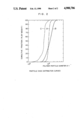
- FIG. 2 is a particle size distribution curve of polypropylene powder, wherein (A), (B) and (C) each expresses the particle size distribution curve of the polypropylene powder obtained in Example 21, Example 22 and Comparative Example 12, respectively.
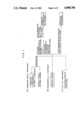
- FIG. 1 is a flow chart for facilitating the understanding of the present invention. This flow chart is a typical example of the embodiments of the present invention, and the invention is by no means limited by this flow chart.
- the solid catalyst component used in the present invention is prepared by impregnating an organic porous polymer carrier having a mean particle diameter of 5 to 1,000 ⁇ m and a pore volume of 0.1 ml/g or above at a pore radius of 100 to 5,000 ⁇ with a catalyst component comprising at least titanium, magnesium and chlorine.
- the performance required of the catalyst of the invention include that it can exhibit a sufficiently high activity and form a copolymer having good properties in a random copolymerization of ethylene and ⁇ -olefin, that it can form polymer particles having good particle characteristics, etc. Further, when a multistage polymerization is carried out and, in this process, a polymer constituted mainly of polypropylene is to be formed, the catalyst is required to exhibit a more enhanced stereospecificity.
- thermoplastic elastomer when a solid catalyst component having so high a catalyst activity that the formation of total polymer per 1 g titanium atom in the solid catalyst component is 5 ⁇ 10 4 g or above, preferably 7.5 ⁇ 10 4 g or above and particularly preferably 10 ⁇ 10 4 g or above is used, a thermoplastic elastomer can be obtained without any substantial step for removing the catalyst residue, and this is advantageous.
- the polypropylene obtained therewith has a stereospecificity of 10% by weight or below, preferably 7% by weight or below and particularly 5% by weight or below, as expressed by the content of xylene-soluble fraction (at 20° C.), i.e. the weight of ascetic polypropylene, in the resulting polypropylene, from the viewpoint of properties of copolymer.
- mean particle diameter of solid catalyst component is an important factor. That is, the mean particle diameter of the solid catalyst component should be 5 to 1,000 ⁇ m, preferably 10 to 600 ⁇ m, and particularly 15 to 500 ⁇ m.
- the mean particle diameter is smaller than 5 ⁇ m, the adhesive force of polymer particles increases and, in fluidized bed type gas phase reactor, there arises the flying problem of catalyst and polymer particle. If the mean particle diameter is greater than 1,000 ⁇ m, stable state of flow cannot be realized in fluidized bed type gas phase reactor because the minimum velocity of fluidization markedly increases and, as its result, the polymer particles tend to form a mass.
- R 1 examples include alkyl groups such as methyl, ethyl, n-propyl, isopropyl, n-butyl, isobutyl, n-amyl, isoamyl, n-hexyl, n-heptyl, n-octyl, n-decyl, n-dodecyl and the like; aryl groups such as phenyl, cresyl, xylyl, naphthyl and the like; cycloalkyl groups such as cyclohexyl, cyclopentyl and the like; allyl groups such as propenyl group and the like; and aralkyl groups such as benzyl and the like.
- alkyl groups such as methyl, ethyl, n-propyl, isopropyl, n-butyl, isobutyl, n-amyl, isoamyl, n-he
- alkyl groups having 2 to 18 carbon atoms and aryl groups having 6 to 18 carbon atoms are preferable, and straight chain alkyl groups having 2 to 18 carbon atoms are particularly preferable.
- halogen atom represented by X examples include chlorine, bromine and iodine, among which chlorine gives a particularly good result.
- any of the well known methods may be adopted.
- a method which comprises reacting Ti(OR 1 ) 4 and TiX 4 at a specified ratio and a method which comprises reacting TiX 4 and the corresponding alcohol at a specified ratio can be adopted.
- Concrete examples of the compound represented by the aforementioned general formula Ti(OR 1 ) a X b which can preferably be used in the present invention include titanium trichloride, ethoxytitanium dichloride, butoxytitanium dichloride, titanium tetrachloride, ethoxytitanium trichloride, butoxytitanium trichloride, phenoxytitanium trichloride, dibutoxytitanium dichloride, diphenoxytitanium dichloride, tributoxytitanium chloride, tetraethoxytitanium, tetrabutoxytitanium, tetraphenoxytitanium, and the like.
- organosilicon compound having Si--O bond which is optionally used in the synthesis of component (A) of the present invention, those represented by the following general formulas can be referred to:
- R 3 represents a hydrocarbon residue having 1 to 20 carbon atoms
- R 4 , R 5 , R 6 , R 7 and R 8 each represents a hydrocarbon residue having 1 to 20 carbon atoms or a hydrogen atom
- m represents a number satisfying 0 ⁇ m ⁇ 4
- p is an integer of 1 to 1,000
- q is an integer of 2 to 1,000.
- organosilicon compound examples include the followings:
- tetramethoxysilane dimethyldimethoxysilane, tetraethoxysilane, triethoxyethylsilane, diethoxydiethylsilane, ethoxytriethylsilane, tetraisopropoxysilane, diisopropoxydiisopropylsilane, tetrapropoxysilane, dipropoxydipropylsilane, tetra-n-butoxysilane, di-n-butoxy-di-n-butylsilane, dicyclopentoxydiethylsilane, diethoxydiphenylsilane, triethoxyphenylsilane, hexamethyldisiloxane, hexaethyldisiloxane, hexapropyldisiloxane, octaethyltrisiloxane, dimethylpolysiloxane, dipheny
- alkoxysilane compounds represented by general formula Si(OR 3 ) m R 4 4-m are preferable wherein m is preferably a number satisfying 1 ⁇ m ⁇ 4.
- Grignard compounds represented by the general formula R'MgX (wherein R' is a hydrocarbon group of 1 to 20 carbon atoms and X is a halogen atom) and dialkyl- or diaryl-magnesium compounds represented by the general formula R"R"'Mg (wherein R" and R"' are each a hydrocarbon group of 1 to 20 carbon atoms) are used preferably.
- R', R" and R"' may be same or different and are each of alkyl, aryl, aralkyl or alkenyl group such as methyl, ethyl, n-propyl, isopropyl, n-butyl, sec-butyl, tert-butyl, n-amyl, isoamyl, n-hexyl, n-octyl, 2-ethylhexyl, phenyl, benzyl or the like.
- alkylmagnesium hydride is used preferably.
- Examples of the above-mentioned compounds include the followings: diethylmagnesium, dibutylmagnesium, dihexylmagnesium, ethylmagnesium chloride, butylmagnesium chloride, hexylmagnesium chloride, butylethoxymagnesium, butylmagnesium hydride and the like are preferably used, for example.
- These magnesium compounds may be used in the form of a complex compound with an organoaluminum compound.
- non-reductive magnesium compound examples include magnesium dihalogendies such as magnesium dichloride, magnesium dibromide and the like; alkoxymagnesium compounds such as methoxymagnesium chloride, phenoxymagnesium chloride, diethoxymagnesium, dibutoxymagnesium, diphenoxymagnesium and the like; and magnesium carboxylates such as magnesium laurate, magnesium stearate and the like.
- Said non-reductive magnesium compound may also be a compound which has been derived from a reductive magnesium compound by known process either previously or at the time of preparing the solid catalyst.
- organic porous polymer carrier used in the solid catalyst component (A) of the present invention examples include polystyrene type, polyacrylic ester type, polymethacrylic ester type, polyacrylonitrile type, polyvinylchloride type and polyolefin type of porous polymer beads, and the like.
- the material constituting the carrier examples include polystyrene, styrene-divinylbenzene copolymer, styrene-N,N'-alkylenedimethacrylamide copolymer, styreneethyleneglycol dimethacrylate copolymer, polymethylacrylate, polyethylacrylate, methylacrylatedivinylbenzene copolymer, ethylacrylate-divinylbenzene copolymer, polymethylmethacrylate, methylmethacrylatedivinylbenzene copolymer, polyethyleneglycol dimethacrylate, polyacrylonitrile, acrylonitriledivinylbenzene copolymer, polyvinylchloride, polyvinylpyrrolidine, polyvinylpyridine, ethylvinylbenzene-divinylbenzene copolymer, polyethylene, ethylene-methylacrylate copolymer, polypropylene,
- porous polymer beads of these materials those of polystyrene, polyvinylchloride, polyolefin and polyacrylonitirle are preferable, and those of polystyrene, styrene-divinylbenzene copolymer and polyvinylchloride are more preferable.
- the mean particle diameter of the porous polymer beads is 5 to 1,000 ⁇ m, preferably 10 to 600 ⁇ m, and particularly 15 to 500 ⁇ m. Further, as measured in the pore radius range of 100 to 5,000 ⁇ , its pore volume is 0.1 ml/g or above, preferably 0.2 ml/g or above, and particularly 0.25 ml/g or above.
- the porous polymer is preferably put to use after removing the adsorbed water.
- a porous polymer is dried under reduced pressure at a temperature of about 80° C. or above and then put to use. Otherwise, it is dried at a temperature of about 60° C. or above and then treated with an organometallic compound such as organomagnesium and the like and then put to use.
- ester compound optionally used in the synthesis of component (A) of the present invention monobasic and polybasic carboxylic esters, including aliphatic carboxylic esters, olefinic carboxylic esters, alicyclic carboxylic esters and aromatic carboxylic esters, are used.
- ester compound examples include methyl acetate, ethyl acetate, phenyl acetate, methyl propionate, ethyl propionate, ethyl butyrate, ethyl valerate, methyl acrylate, ethyl acrylate, methyl methacrylate, ethyl benzoate, butyl benzoate, methyl toluate, ethyl toluate, ethyl anisate, diethyl succinate, dibutyl succinate, diethyl malonate, dibutyl malonate, dimethyl maleate, dibutyl maleate, diethyl itaconate, dibutyl itaconate, monoethyl phthalate, dimethyl phthalate, methyl ethyl phthalate, diethyl phthalate, di-n-propyl phthalate, diisopropyl phthalate, di-n-butyl phthalate, diisobutyl
- ester compounds such as methacrylic ester, maleic esters and the like and phthalic esters are referable, and phthalic diesters are particularly preferable.
- the ether compound is used optionally in the synthesis of component (A) of the present invention.
- the ether compound include dialkyl ethers such as diethyl ether, di-n-propyl ether, diisopropyl ether, di-n-butyl ether, di-n-amyl ether, diisoamyl ether, dineopentyl ether, di-n-hexyl ether, di-n-octyl ether, methyl n-butyl ether, methyl isoamyl ether, ethyl isobutyl ether and the like.
- di-n-butyl ether and diisoamyl ether are particularly preferable.
- the catalyst component comprising at least titanium, magnesium and chlorine used for impregnation of the organic porous polymer carrier will be explained concretely.
- titanium/magnesium atomic ratio is 0.01 to 0.8 and preferably 0.02 to 0.2.
- the chlorine/magnesium atomic ratio is 1.8 to 10 and preferably 2.0 to 5.0.
- the method comprising impregnating a porous carrier such as silica gel or the like with the catalyst component, disclosed in Japanese Patent Application Kokai (Laid-Open) Nos. 52-42585, 54-148093, 56-47407, 59-230006 and 61-37803, for example, can be adopted.
- a method which comprises treating a porous carrier with an organomagnesium compound such as Grignard reagent or the like and then treating it with TiCl 4 or the like.
- a method which comprises treating a porous carrier with an organomagnesium compound such as Grignard reagent or the like, followed by reacting it with a halogenating agent and/or an alcohol and then treating it with a titanium compound such as TiCl 4 .
- a method which comprises dissolving a magnesium halide compound and/or an alkoxymagnesium compound into an donor such as an alcohol, an ether or the like, followed by forming it into a complex compound with TiCl 4 or the like and then impregnating it into a porous carrier.
- a method which comprises dissolving a magnesium halide compound and/or an alkoxymagnesium compound into a donor such as an alcohol, an ether or the like, followed by impregnating it into a porous carrier and then treating it with a titanium compound such as TiCl 4 .
- a method which comprises reducing an alkoxytitanium compound with an organomagnesium compound such as Grignard reagent or the like in the presence of a porous carrier and then treating it with a mixture of an ether compound and titanium tetrachloride.
- the method (5) is preferable, and a method which comprises reducing an alkoxytitanium compound with an organomagnesium compound such as Grignard reagent or the like in the presence of an organosilicon compound having Si--O bond and an organic porous polymer carrier to obtain a solid product and then treating it with a mixture of an ether compound and titanium tetrachloride or treating it with an ester compound and a mixture of an ester compound and titanium tetrachloride is more preferable.
- an organomagnesium compound such as Grignard reagent or the like
- the amount of the catalyst component to be impregnated into the organic porous polymer carrier is 1 to 70% by weight, preferably 3 to 60% by weight and particularly 5 to 55% by weight, as expressed by the content in the resulting solid catalyst component. If the amount of catalyst component impregnated into organic porous polymer carrier is too much, particle characteristics of the polymer are deteriorated. If its amount is too small, the activity per unit weight of solid catalyst decreases.
- the solid catalyst component of the present invention As a concrete preparation example for producing the solid catalyst component of the present invention, there is explained below a method comprising reducing an alkoxytitanium compound with an organo-magnesium compound in the co-presence of an organo-silicon compound having Si--O bond and an organic porous polymer carrier, treating the reduced titanium compound with an ester compound and then treating the ester-treated compound with an ether compound and titanium tetrachloride.
- the solid catalyst component of the present invention is, however, not limited by the following explanation.
- the solid product is synthesized by reducing a titanium compound with an organomagnesium compound in the presence of an organosilicon compound having Si--O bond and an organic porous polymer carrier. It is desired in this reaction that the solid formed by the reduction is deposited onto the particles of porous polymer carrier and therefore the solid product retains the form of porous polymer carrier without forming any fine powders.
- a method which comprises adding an organomagnesium compound to a mixture consisting of a titanium compound, an organosilicon compound and porous polymer beads can be referred to, for example.
- the titanium compound, the organosilicon compound and the porous polymer beads are put to use after dissolving them into an appropriate solvent or diluting them with a solvent.
- aliphatic hydrocarbons such as hexane, heptane, octane, decane and the like
- aromatic hydrocarbons such as toluene, xylene and the like
- alicyclic hydrocarbons such as cyclohexane, methylcyclohexane, decalin and the like
- ether compounds such as diethyl ether, dibutyl ether, diisoamyl ether, tetrahydrofuran and the like.
- the temperature of the reduction is -50° C. to 70° C., preferably -30° C. to 50° C., and particularly -25° C. to 35° C.
- dropping time is not critical, it is usually about 10 minutes to 6 hours.
- a post-reaction may be carried out at a temperature of 20° C. to 120° C. after completion of the reduction.
- the amount of the porous polymer beads is such an amount that its weight in the solid product comes to 20 to 95% by weight and preferably 30 to 85% by weight.
- the solid product formed by the reduction is separated from liquid phase and several times washed with inert hydrocarbon solvent such a hexane, heptane or the like.
- the ester compound is used in an amount of 0.1 to 50 moles, preferably 0.3 to 20 moles, and particularly 0.5 to 10 moles, per one mole of the titanium atom in the solid product.
- the ester compound Per one mole of magnesium atom in the solid product, the ester compound is used in an amount of 0.01 to 1.0 mole and preferably 0.03 to 0.5 mole.
- the treatment of the solid product with the ester compound can be carried out by any well known methods for contacting them together, such as slurry method, mechanical pulverization using ball mill, etc.
- mechanical pulverization is not preferable from the industrial point of view because it produces a large quantity of fine powder in the solid catalyst component and thereby broadens the particle size distribution.
- both the materials are contacted in the presence of a diluent.
- the diluents which can be used for this purpose include aliphatic hydrocarbons such as pentane, hexane, heptane, octane and the like; aromatic hydrocarbons such as benzene, toluene, xylene and the like; alicyclic hydrocarbons such as cyclohexane, cyclopentane and the like; and halogenated hydrocarbons such as 1,2-dichloroethane, monochlorobenzene and the like.
- halogenated hydrocarbons and aromatic hydrocarbons are particularly preferable.
- the diluent is used in an amount of 0.1 ml to 1,000 ml and preferably 1 ml to 100 ml, per 1 g of the solid product.
- Temperature of the treatment is -50° C. to 150° C., and preferably 0° C. to 120° C.
- the duration of the treatment is 10 minutes or longer, and preferably 30 minutes to 3 hours.
- the mixture is allowed to stand, the solid is separated from the liquid phase, and it is several times washed with an inert hydrocarbon solvent. Thus, an ester-treated solid product is obtained.
- the treatment with ester compound may also be carried out simultaneously with the subsequent treatment with a mixture of ether compound and titanium tetrachloride by using the ester compound in the presence of the mixture of ether compound and titanium tetrachloride.
- the treatment of the ester-treated solid product with a mixture of an ether compound and titanium tetrachloride is preferably carried out in the state of a slurry.
- the solvent for preparing the slurry there can be referred to aliphatic hydrocarbons such as pentane, hexane, heptane, octane, decane and the like; aromatic hydrocarbons such as toluene, xylene and the like; alicyclic hydrocarbons such as cyclohexane, methylcyclohexane, decalin and the like; and halogenated hydrocarbons such as dichlorethane, trichlorethane, trichlorethylene, monochlorobenzene, dichlorobenzene, trichlorobenzene and the like.
- the slurry concentration is 0.05 to 0.5 g-solid/ml-solvent and preferably 0.1 to 0.4 g-solid/ml-solvent.
- the reaction temperature is 30° C. to 150° C., preferably 45° C. to 120° C., and particularly 60° C. to 100° C.
- reaction time is not critical, a reaction time of 30 minutes to 6 hours is usually preferable.
- the method for the addition of the ester-treated solid product, the ether compound and titanium tetrachloride may be any of the method which comprises adding the ether compound and titanium tetrachloride to the ester-treated solid product and the method which comprises adding the ester-treated solid product to a solution of the ether compound and titanium tetrachloride, in the reverse order.
- a method which comprises addition of the ether compound followed by addition of titanium tetrachloride or a method which comprises simultaneous addition of the ether compound and titanium tetrachloride is preferable, and a method which comprises adding a previously prepared mixture of an ether compound and titanium tetrachloride is particularly preferable.
- the reaction between the ester-treated solid product and the ether compound and titanium tetrachloride may be repeated twice or more. From the viewpoint of catalyst activity and stereospecificity, it is preferable to repeat the reaction using the mixture of ether compound and titanium tetrachloride at least twice.
- the ether compound is used in an amount of 0.1 to 100 moles, preferably 0.5 to 50 moles, and particularly 1 to 20 moles per one mole of titanium atom in the solid product.
- the amount of titanium tetrachloride to be added is 2 to 2,000 moles, preferably 10 to 1,000 moles, and particularly 30 to 800 moles per one mole of titanium atom in the solid product.
- the amount of titanium tetrachloride to be added is 1 to 100 moles, preferably 1.5 to 75 moles and particularly 2 to 50 moles.
- the trivalent titanium compound-containing solid catalyst component obtained in the above-mentioned manner is separated from liquid phase and several times washed with an inert hydrocarbon solvent such as hexane, heptane or the like, after which it is put to use for polymerization.
- an inert hydrocarbon solvent such as hexane, heptane or the like
- the organoaluminum compound (B) used in the present invention in combination with the above-mentioned solid catalyst component (A) has at least one aluminum carbon bond in one molecule. Its typical examples are those represented by the following general formulas:
- R 9 , R 10 , R 11 , R 12 and R 13 each represents a hydrocarbon residue having 1 to 8 carbon atoms; Y represents halogen atom, hydrogen atom or alkoxy group; and r represents a number satisfying 2 ⁇ r ⁇ 3.
- organoaluminum compound examples include trialkylaluminums such as triethylaluminum, triisobutylaluminum, trihexylaluminum and the like; dialkylaluminum hydrides such as diethylaluminum hydride, diisobutylaluminum hydride and the like; mixtures of trialkylaluminum and dialkylaluminum halide; and alkylalumoxanes such as tetraethyldialumoxane, tetrabutyldialumoxane and the like.
- trialkylaluminums such as triethylaluminum, triisobutylaluminum, trihexylaluminum and the like
- dialkylaluminum hydrides such as diethylaluminum hydride, diisobutylaluminum hydride and the like
- mixtures of trialkylaluminum and dialkylaluminum halide examples of al
- trialkylaluminums mixtures of trialkylaluminum and dialkylaluminum halide and alkylalumoxanes are preferable, and triethylaluminum, triisobutylaluminum, mixture of triethylaluminum and diethylaluminum chloride and tetraethyldialumoxane are particularly preferable.
- Said organoaluminum compound is used in so widely ranging an amount as 1 to 1,000 moles per one mole of titanium atom in the solid catalyst.
- the particularly preferable range of its amount is 5 to 600 moles per one mole of titanium atom.
- a known electron donor may be added to the system for the purpose of regulating the molecular weight of polymer or, in some cases, for improving the stereospecificity of polymer.
- said electron donor (C) a compound selected from organosilicon compounds having Si--OR 2 bond (R 2 represents a hydrocarbon residue having 1 to 20 carbon atoms) or Si--N--C bond, aromatic carboxylic ester compounds and sterically hindered amines are used.
- alkoxysilane compounds represented by general formula R 14 t Si(OR 2 ) 4-t (R 14 and R 2 each represents a hydrocarbon residue having 1 to 20 carbon atoms, and t represents a number satisfying 0 ⁇ t ⁇ 3) are preferably used.
- aromatic carboxylic ester examples include methyl benzoate, ethyl benzoate, n-propyl benzoate, isopropyl benzoate, n-butyl benzoate, phenyl benzoate, methyl toluate, ethyl toluate, methyl anisate, ethyl anisate, monoethyl phthalate, dimethyl phthalate, methyl ethyl phthalate, diethyl phthalate, di-n-propyl phthalate, diisopropyl phthalate, di-n-butyl phthalate, diisobutyl phthalate, di-n-heptyl phthalate, di-n-octyl phthalate, diphenyl phthalate, and the like.
- sterically hindered amine examples include 2,6-substituted piperidines, 2,5-substituted pyrrolidines, and substituted methylenediamine compounds such as N,N,N',N'-tetramethylmethylenediamine and the like.
- alkoxysilane compounds represented by general formula R 14 t Si(OR 2 ) 4-t give a particularly good result.
- alkoxysilane compound examples include tetramethoxysilane, methyltrimethoxysilane, dimethyldimethoxysilane, ethyltrimethoxysilane, phenyltrimethoxysilane, phenylmethyldimethoxysilane, tetraethoxysilane, methyltriethoxysilane, ethyltriethoxysilane, vinyltriethoxysilane, phenyltriethoxysilane, diphenyldimethoxysilane, diphenyldiethoxysilane, butyltriethoxysilane, tetrabutoxysilane, vinyltributoxysilane, diethyldiethoxysilane, and the like.
- the electron donor is used in an amount of 0.01 to 5 moles, preferably 0.03 to 3 moles, and particularly 0.05 to 1.0 mole, per one mole of the aluminum atom in the organoaluminum compound (B).
- the method for feeding the catalyst components into polymerization reactor is not critical, so far as they are fed in a water-free state in an atmosphere of inert gas such as nitrogen, argon or the like.
- the solid catalyst component (A), organoaluminum compound (B) and the optionally used electron donor (C) may be fed either separately or after previously contacting two of them.
- the polymerization reaction can be carried out in a wide temperature range of -30° C. to 200° C. However, if the temperature is lower than 0° C., the polymerization rate decreases, and at a temperature higher than 100° C. a polymer having a high stereospecificity cannot be obtained. Thus, it is usually preferable to carry out the polymerization in the temperature range of 0° to 100° C. Though pressure of polymerization is not critical, a pressure of about 3 to 100 atmospheres is preferable from the industrial and economical points of view.
- the polymerization can be effected by any of continuous process and batch process.
- a slurry polymerization process using an inert hydrocarbon solvent such as propane, butane, pentane, hexane, heptane, octane and the like, a liquid phase polymerization using no solvent, and a gas phase polymerization are also adoptable.
- the alpha-olefins to which the present invention is applicable are those having 3 or more carbon atoms, of which concrete examples include propylene, butene-1, pentene-1, hexene-1, 3-methylpentene-1, 4-methylpentene-1, and the like.
- the polymerization of the present invention may be any of homopolymerization and copolymerization, including the copolymerization with ethylene.
- two or more species of olefins are mixed together and contacted mutually, whereby a copolymer of them can be obtained.
- hetero-block copolymerization in which the polymerization is effected in two or more steps can also be carried out easily.
- the invention provides a process for producing a granular elastomer which comprises carrying out a random copolymerization of ethylene and ⁇ -olefin in gas phase by the use of the above-mentioned catalyst system and a process for producing a granular thermoplastic elastomer which comprises two steps substantially.
- the ⁇ -olefins to be copolymerized with ethylene include propylene, butene-1, pentene-1, hexene-1, 4-methylpentene-1, 3-methylbutene-1 and the like, among which propylene and butene-1 are particularly preferable.
- a polyene may be additionally copolymerized with ethylene and ⁇ -olefin for the purpose of facilitating the vulcanization of the resulting copolymer.
- said polyene include butadiene, dicyclopentadiene, 1,3,7-octatriene, vinylcyclohexane, 5-ethyldiene-2-norbornene, 5-isopropenyl-2-norbornene, 1,4-hexadiene, 1,5-hexadiene, 1,9-decadiene, and the like, among which nonconjugated dienes are preferable and straight chain nonconjugated dienes are particularly preferable.
- the content of ethylene in the ethylene- ⁇ -olefin copolymer is 5 to 95% by weight and preferably 15 to 90% by weight. If the ethylene content in the formed copolymer exceeds the above-mentioned range, rubbery character of the product is deteriorated. If its content is lower than the above-mentioned range, low temperature characteristics and rubbery character are deteriorated.
- the reaction is so controlled that iodine number of copolymer comes to 2 to 50 and preferably 3 to 40.
- the polymerization reaction can be advanced in two or more steps while changing the ethylene concentration.
- the polymerization is carried out at a temperature not higher than the temperature at which the polymer melts, preferably at 20° to 85° C. and particularly at 40° to 75° C., at a pressure ranging from ordinary pressure to 40 kg/cm 2 , under a condition not liquefying the monomer in the polymerization reactor.
- hydrogen is added to the copolymerization system as a molecular weight regulator for the purpose of controlling the melt-flow property of the ultimate product.
- an inert gas may be mixed into the gas mixture for polymerization.
- too large an amount of inert gas for example, an amount exceeding 25% by mole is undesirable, because it markedly deteriorates the productivity of the process.
- the molecular weight of the ethylene- ⁇ -olefin random copolymer formed by the polymerization reaction is 0.3 to 10, preferably 0.5 to 8, and particularly 1 to 5, as expressed by intrinsic viscosity [ ⁇ ] measured in tetralin at 135° C. If [ ⁇ ] is too low, no sufficient tensile strength can be achieved.
- step 1 it is also possible to produce a granular thermoplastic elastomer by a process comprising substantially two steps by carrying out a homopolymerization (hereinafter referred to as "step 1") of propylene or ethylene prior to the above-mentioned gas phase random copolymerization of ethylene and ⁇ -olefin.
- step 1 When homopolymerization of propylene is carried out in step 1, the step 1 is carried out in liquefied propylene and/or gas phase.
- the effect of the invention can be achieved by any of the method which comprises effecting the polymerization in liquefied propylene, the method which comprises effecting the polymerization in liquefied propylene and then effecting the polymerization in gas phase and the method which comprises effecting the polymerization in gas phase.
- step 1 in case that propylene is homopolymerized in step 1, the embodiment of polymerization of step 1 is as follows.
- the polymerization is carried out by polymerizing propylene in itself alone, and it is also possible to copolymerize propylene with a comonomer which is ethylene or ⁇ -olefin having 4 to 6 carbon atoms.
- the amount of the comonomer should be so controlled that the comonomer content in the resulting copolymer comes to preferably 6% by mole or below and most preferably 4% by mole or below.
- the polymerization When the polymerization is carried out in liquefied propylene, it is preferably carried out at a temperature of 40° C. to 90° C. at a pressure of 17 to 50 kg/cm 2 .
- the polymerization when the polymerization is carried out in gas phase, the polymerization is carried out at a temperature not higher than the melting temperature of the polymer and preferably in the temperature range of 40° C. to 100° C., at a pressure ranging from ordinary pressure to 40 kg/cm 2 , under a condition not liquefying the monomer in the polymerization reactor.
- the polymerization is carried out preferably in the presence of a molecular weight regulator such as hydrogen or the like for the purpose of improving the melt flow property of the ultimate product.
- step 1 When homopolymerization of ethylene is carried out in step 1, the step 1 is carried out in the form of a slurry polymerization in propane solvent or butane solvent or in the form of gas phase polymerization of ethylene.
- the polymerization of step 1 involves not only a homopolymerization of ethylene but also a copolymerization of ethylene and a small quantity of ⁇ -olefin having 3 to 6 carbon atoms as a comonomer.
- the amount of the comonomer should be so controlled that the content of the comonomer in the resulting copolymer comes to preferably 6% by mole or below and more preferably 4% by mole or below.
- the polymerization When the polymerization is carried out in propane solvent or butane solvent, it is preferably carried out at a temperature of 40° C. to 95° C. at a pressure of 17 to 50 kg/cm 2 .
- the polymerization when the polymerization is carried out in gas phase, it is carried out at a temperature not higher than the melting temperature of the polymer and preferably at a temperature of 40° C. to 110° C., at a pressure ranging from ordinary pressure to 50 kg/cm 2 , under a condition not liquefying the monomer in the polymerization reactor.
- a molecular weight regulator such as hydrogen or the like for the purpose of improving the melt flow property of the ultimate product.
- step 2 of the polymerization is carried out in succession to step 1. That is, a random copolymerization of ethylene and ⁇ -olefin is carried out in gas phase. Its details are as have been mentioned above.
- the copolymer formed in step 2 of the invention occupies 60 to 97% by weight, preferably 70 to 95% by weight and particularly 75 to 90% by weight of the total quantity of the polymers.
- a higher formation of polymer in step 2 gives a product richer in rubbery character, and a lower formation of polymer in step 2 gives a product exhibiting a more plastic behavior.
- thermoplastic elastomer and a granular elastomer having good particle characteristics are obtained, and their adhesive force is usually 6.0 g/cm 2 or below.
- the gas phase polymerization reactor used for carrying out the present invention is not critical, but any of known stirring-mixing tank type reactor, fluidized bed type reactor, fluidized bed type reactor equipped with stirrer, and the like may be used.
- the polymerization reaction of the invention can be carried out by any of the continuous process using in-series combined two or more reactors, the batch polymerization process in one or more reactors, and combination of the above-mentioned two processes.
- Intrinsic Viscosity (hereinafter simply referred to as [ ⁇ ]): Measured in tetralin solvent at 135° C.
- [ ⁇ ] EP was calculated according to the following equation: ##EQU1## where (E) and (P) each represents the proportion of the quantity of the polymers in step 1 (weight fraction) and (EP) represents the proportion of the quantity of the polymers in step 2 (weight fraction).
- ethylene was determined from the adsorption bands of 722, 733 and 736 cm -1 , and 1,9-decadiene was determined from the absorption band of 1640 cm -1 .
- the ethylene content thus determined roughly coincided with the value determined from material balance.
- Two cells for shearing test made of aluminum plate, 30 mm in width, 53 mm in length and 12 mm in height, were tightly superposed up-and-down, and the polymer particles to be tested were introduced therein.
- one surface shearing test was carried out at ordinary temperature at a drawing speed of 100 mm/minute under a vertical load of 50 g, 100 g, 200 g, 300 g or 400 g to measure the shearing stress at each vertical load.
- the plot of shearing stress against vertical load was approximated to linearity by the least square method, and the shearing stress extrapolated to zero gram vertical load was taken as the adhesive force.
- Pore volume was measured in the pore radius range of 40 to 75,000 ⁇ by mercury injection method using Poresizer 9310 (porosimeter) manufactured by Micromeritics Co.
- n-butylmagnesium chloride in the di-n-butyl ether was hydrolyzed with 1 N sulfuric acid and back-titrated with 1 N aqueous solution of sodium hydroxide, using phenolphthalein as an indicator. Thus, it was found that the concentration of n-butylmagnesium chloride was 2.0 M/liter.
- porous polymer beads constituted of a styrene-divinylbenzene copolymer (Chromosorb 101®, manufactured by Johns-Manville Co.) were thrown into the flask.
- the polymer beads had a pore volume (hereinafter referred to as "dVp") of 0.92 ml/g as measured in the pore radius range of 100 to 5,000 ⁇ by means of porosimeter, and the beads were previously vacuum-dried at 80° C. for 0.5 hour and then put to use.
- the solid product thus obtained contained 0.4% by weight of titanium atom and 3.9% by weight of magnesium atom.
- the solid product was separated from the liquid phase at 80° C. and washed twice with each 30 ml portions of n-heptane.
- the solid catalyst component contained 0.5% by weight of titanium atom, 4.3% by weight of magnesium atom and 0.7% by weight of phthalic ester.
- the solid catalyst component obtained herein had a mean particle diameter of 200 ⁇ m and dVp (pore volume) of 0.75 ml/g.
- step 1 Using an autoclave having an inner volume of 5 liters and equipped with a stirrer, a homopolymerization of propylene was carried out in step 1 and a random polymerization of ethylene and propylene was carried out in step 2.
- the content of ethylene/ propylene copolymer formed in step 2 (hereinafter referred to as EP) was 85% by weight. In the EP, the content of ethylene was 48% by weight.
- Adhesive force of the polymer particle obtained herein was 2.8 g/cm 2 .
- Example 1 (A) 22.6 ml of the organomagnesium compound synthesized in Example 1 (A) was dropped from the dropping funnel over a period of one hour while keeping the inner temperature of the flask at 5° C. After dropping it, the content of the flask was stirred at 5° C. for one hour and then at room temperature for one hour, after which the product was washed thrice with each 60 ml portions of n-heptane and dried under reduced pressure to obtain 21.1 g of a brown-colored solid product.
- the solid product thus obtained contained 0.5% by weight of titanium atom and 5.9% by weight of magnesium atom.
- the solid catalyst component contained 1.1% by weight of titanium atom, 7.8% by weight of magnesium atom and 1.5% by weight of phthalic ester.
- This solid catalyst component had a mean particle diameter of 40 ⁇ m, and dVp (pore volume) of 0.35 ml/g.
- silica gel was used as the catalyst carrier instead of organic porous polymer, the resulting polymer was agglomerated. Its particle characteristics were extremely bad, and its adhesive force was 7.7 g/cm 2 .
- Example 1 (A) 30.0 ml of the organomagnesium compound synthesized in Example 1 (A) was dropped from the dropping funnel over a period o one hour, while keeping the inner temperature of the flask at 5° C. After dropping it, the resulting mixture was stirred at 5° C. for 30 minutes and then at 30° C. for one hour, after which the product was washed twice with each 40 ml portions of n-heptane and dried under reduced pressure to obtain 17.5 g of a brown-colored solid product.
- the solid catalyst component thus obtained contained 1.9% by weight of titanium atom, 9.0% by weight of magnesium atom and 2.3% by weight of phthalic ester. Its pore volume dVp was 0.25 ml/g.
- This solid catalyst component contained 1.9% by weight of titanium atom, 19.4% by weight of magnesium atom and 5.0% by weight of phthalic ester. Its mean particle diameter was 35 ⁇ m, and its pore volume dVp was 0.27 ml/g.
- a solid catalyst component was synthesized by the same procedure as mentioned in Example 5 of Japanese Patent Application Kokai (Laid-Open) No. 61-287,917 (U.S. Pat. No. 4,412,049).
- This solid catalyst component contained 2.5% by weight of titanium atom, 20.9% by weight of magnesium atom, 1.7% by weight of phenol and 9.1% by weight of ethyl benzoate. This solid catalyst component had a mean particle diameter of 30 ⁇ m, and its pore volume dVp was 0.29 ml/g.
- a block copolymerization of P-EP was carried out in the same manner as in Example 1 (D), except that 32.4 mg of the solid catalyst component synthesized in (A) was used and the phenyltrimethoxysilane used in Example 1 as electron donor (C) was replaced with 0.2 g of methyl p-toluate.
- a block copolymerization of P-EP was carried out under the same conditions as in Example 1 (D), except that 377.0 mg of the solid catalyst component synthesized in Example 1 was used and 0.2 kg/cm 2 of hydrogen was charged in step 2 of the polymerization. Conditions and results of the polymerization are shown in Table 1 and Table 2, respectively.
- the formation of total polymer per 1 g of titanium atom (PP/Ti) was 140,000.
- the total polymer contained 73% by weight of the ethylene/butene-1 copolymer formed in step 2 (hereinafter referred to as EB).
- EB the content of ethylene was 77% by weight.
- the polymer thus obtained had an adhesive force of 2.4 g/cm 2 .
- Example 1 (A) 16.0 ml of the organomagnesium compound synthesized in Example 1 (A) was dropped from the dropping funnel while maintaining the inner temperature of the flask at 5° C. After dropping it, the content of the flask was stirred at 5° C. for one hour and then at room temperature for one hour, and the product was washed thrice with each 30 ml portions of n-heptane and dried under reduced pressure to obtain 11.6 g of a brown colored solid product.
- the solid catalyst component contained 1.6% by weight of titanium atom and 6.3% by weight of magnesium atom. It had a mean particle diameter of 200 ⁇ m and a pore volume dVp of 0.53 ml/g.
- step 1 Using an autoclave having an inner volume of 5 liters and equipped with a stirrer, a homopolymerization of ethylene was carried out in step 1 and a random copolymerization of ethylene and propylene was carried out in step 2.
- a homopolymerization of ethylene was carried out for 50 minutes while maintaining a total pressure of 20 kg/cm 2 G and a temperature of 60° C., after which the unreacted monomer and butane were purged and a small amount of polymer was sampled out in order to measure [ ⁇ ] E . Then, 0.075 kg/cm 2 G of hydrogen was fed, and pressure was elevated to 8 kg/cm 2 G with propylene and then to 10 kg/cm.sup. 2 G with ethylene, after which temperature was adjusted to 70° C. and the polymerization of step 2 was started.
- the homopolymer formed in step 1 (hereinafter 1 referred to as E) had an intrinsic viscosity [ ⁇ ] E of 1.7.
- the total polymer contained 85% by weight of the ethylene/propylene copolymer formed in step 2 (hereinafter referred to as EP).
- Adhesive force of the polymer particle obtained herein was 4.2 g/cm 2 .
- the solid catalyst component contained 7.6% by weight of titanium atom and 18.5% by weight of magnesium atom. Its mean particle diameter was 35 ⁇ m, and its pore volume dVp was 0.17 ml/g.
- Example 1 (A) 12.4 ml of the organomagnesium compound synthesized in Example 1 (A) was dropped from the dropping funnel over a period of 45 minutes, while keeping the inner temperature of the flask at 5° C. After dropping it, the content of the flask was stirred at 5° C. for 45 minutes and then at 30° C. for 45 minutes, and then the product was washed twice with each 51.0 ml portions of n-heptane and dried under reduced pressure to obtain 13.8 g of a brown colored solid product.
- the solid catalyst component thus obtained contained 2.1% by weight of titanium atom and 3.5% by weight of magnesium atom. Its mean particle diameter was 40 ⁇ m, provided that this solid catalyst component contained a considerable amount of fine powders. Its pore volume dVp was so small as 0.07 ml/g.
- the solid was separated from liquid phase and washed twice with each 16.5 ml portions of toluene.
- the solid catalyst component thus obtained contained 0.5% by weight of titanium atom, 4.3% by weight of magnesium atom and 0.7% by weight of phthalic ester.
- step 1 Using an autoclave having an inner volume of 5 liters and equipped with a stirrer, a homopolymerization of ethylene was carried out in step 1 and a random copolymerization of ethylene and propylene was carried out in step 2.
- step 2 the unreacted monomer and butane were purged, and a small amount of polymer was sampled out in order to measure [ ⁇ ] E . Then, 0.05 kg/cm 2 G of hydrogen was fed, and the pressure was elevated to 8 kg/cm 2 G with propylene, and then pressure was elevated to 10 kg/cm 2 G with ethylene, after which the temperature was adjusted to 40° C. and the polymerization of step 2 was started.
- Example 6 (A) Using 413.7 mg of the solid catalyst component prepared in Example 6 (A), a block copolymerization of E-EP was carried out under the same conditions as in Example 7 (A). Conditions and results of the polymerization are shown in Table 3 and Table 4, respectively.
- Example 7 (A) A block copolymerization of E-EP was carried out under the same conditions as in Example 7 (A), except that 144.0 mg of the solid catalyst component prepared in Comparative Example 6 (B) was used and polymerization temperature of EP was lowered to 30° C. Conditions and results of the polymerization are shown in Table 3 and Table 4, respectively. Since in this experiment the pore volume of solid catalyst component was very small, the particle characteristics of the resulting polymer were very bad, even if the polymerization was carried out at a low temperature.
- a solid catalyst component was prepared under the same conditions as in Example 5, except that an ethylene/propylene gaseous mixture (85%/15% by volume) was fed in the step of random copolymerization of ethylene and propylene in Example 5 (C). Using this solid catalyst component, a polymerization was carried out. Conditions and results of the polymerization are shown in Table 3 and Table 4, respectively.
- Example 1 (A) 16.0 ml of the organomagnesium compound synthesized in Example 1 (A) was dropped from the dropping funnel over a period of 45 minutes, while maintaining the inner temperature of the flask at 5° C. After dropping it, the content of the flask was stirred at 5° C. for 45 minutes and then at 30° C. for 45 minutes, after which the product was washed twice with each 65.5 ml portions of n-heptane and dried under reduced pressure to obtain 16.7 g of a brown colored solid product.
- thermoplastic elastomer having good particle characteristics.
- Example 1 (A) 180 ml of the organomagnesium compound prepared in Example 1 (A) was dropped from the dropping funnel over a period of 45 minutes, while maintaining the inner temperature of the flask at 5° C. After dropping it, the content of the flask was stirred at 5° C. for 45 minutes and then at 30° C. for 45 minutes, after which the product was washed twice with each 300 ml portions of hexane and dried under reduced pressure. Thus, 126.3 g of a brown colored solid product was obtained.
- This solid catalyst component had a mean particle diameter of 50 ⁇ m.
- Example 1 (A) 35.5 ml of the organomagnesium compound synthesized in Example 1 (A) was dropped from the dropping funnel over a period of 45 minutes while keeping the inner temperature of the flask at 5° C. After dropping it, the content of the flask was stirred at 5° C. for 45 minutes and then at 30° C. for 45 minutes, and the produce was washed twice with each 50 ml portions of heptane and dried under reduced pressure to obtain 21.0 g of a brown colored solid product.
- the solid catalyst component contained 2.4% by weight of titanium atom, 5.0% by weight of magnesium atom and 2.5% by weight of phthalic ester. Its mean particle diameter was 60 ⁇ m.
- Example 1 (A) 6.1 ml of the organomagnesium compound synthesized in Example 1 (A) was dropped from the dropping funnel over a period of one hour while keeping the inner temperature of the flask at 5° C. After dropping it, the content of the flask was stirred at 5° C. for 45 minutes and then at 30° C. for 45 minutes, after which the product was washed thrice with each 30 ml portions of heptane and dried under reduced pressure. Thus, 5.7 g of a brown colored solid product was obtained.
- the organic porous polymer carrier used in this example had a much smaller dVp in the pore radius range of 100 to 5,000 ⁇ than the carrier of Example 1, it could not hold the catalyst component having catalyst activity in its porous polymer, so that the catalyst of this example could not function as an effective catalyst for ethylene/propylene copolymerization.
- Example 12 (C) Using the solid catalyst component prepared in Example 12 (B), a random copolymerization of ethylene and propylene was carried out in the same manner as in Example 12 (C), except that the amount of solid catalyst, temperature of polymerization, partial pressure of hydrogen, composition of ethylene/propylene gas mixture and polymerization time were altered as shown in Table 5. Conditions and results of the polymerization are shown in Table 5 and Table 6, respectively.
- Example 15 (A) Using the solid catalyst component prepared in Example 15 (A), a random copolymerization of ethylene and propylene was carried out in the same manner as in Example 12 (C), except that the amount of solid catalyst, partial pressure of hydrogen and time of polymerization were altered as shown in Table 5 and no electron donor was used. Conditions and results of the polymerization are shown in Table 5 and Table 6, respectively.
- Example 12 (B) Using the solid catalyst component prepared in Example 12 (B), a random copolymerization of ethylene, propylene and 1,9-decadiene was carried out in a 5 liter autoclave equipped with a stirrer.
- Example 12 (B) Using the solid catalyst component prepared in Example 12 (B), a random copolymerization of ethylene and butene-1 was carried out in a 5 liter autoclave equipped with a stirrer.
- Example 12 (B) Using the solid catalyst component prepared in Example 12 (B), a random copolymerization of ethylene and butene-1 was carried out in a fluidized bed type gas phase polymerization reactor having a volume of 26 liters.
- the polymer thus obtained had good powder characteristics and contained neither fine powders nor coarse particles. It contained 82.8% by weight of ethylene, and had an intrinsic viscosity [ ⁇ ] of 1.4 and an adhesive force of 4.6 g/cm 2 . Formation of total polymer per 1 gram solid catalyst throughout the six runs of polymerization (P/cat) was 540.
- Example 1 (A) 7.3 ml of the organomagnesium compound synthesized in Example 1 (A) was dropped from the dropping funnel over a period of 45 minutes, while keeping the inner temperature of the flask at 5° C. After dropping it, the content of the flask was stirred at 5° C. for 45 minutes and then at 30° C. for 45 minutes, after which the product was washed twice with each 30.0 ml portions of heptane and dried under reduced pressure to obtain 7.45 g of a brown colored solid product.
- the solid product was separated from liquid phase and washed twice with each 22.4 ml portions of toluene. Then, 22.4 ml of toluene, 1.48 ml (8.74 millimoles) of butyl ether and 26.2 ml (238 millimoles) of titanium tetrachloride were charged into the flask and reacted at 95° C. for 3 hours. After the reaction, the solid product was separated from liquid phase at 95° C. and washed at that temperature twice with each 22.4 ml portions of toluene.
- the solid catalyst component thus obtained contained 0.14% by weight of titanium atom, 2.5% by weight of magnesium atom and 0.9% by weight of phthalic ester.
- the solid catalyst component thus obtained contained 0.20% by weight of titanium atom, 2.5% by weight of magnesium atom and 1.3% by weight of phthalic ester.
- This solid catalyst component had a mean particle diameter of 40 ⁇ m.
- preliminary polymerization catalyst, triethylaluminum and phenyltrimethoxysilane were continuously fed into the reactor at a rate of 9.6 g/hour, 3.9 g/hour and 0.77 g/hour, respectively, and copolymerization was carried out.
- the resulting excessive polymer was successively discharged out of the reactor, and the polymerization was continued for 61 hours.
- the polymerization could be carried out stably without any trouble.
- the quantity of polymerization was 9.8 kg/hour, and quantity of polymerization per unit weight of solid catalyst was 5,100 g/g.
- the polymer thus obtained had good powder characteristics and contained neither fine powder nor coarse particles. It contained 82.4% by weight of ethylene and had an intrinsic viscosity [n]of 2.9 and an adhesive force of 2.2 g/cm 2 .
- the yield (g) of polypropylene per 1 g titanium present in the solid catalyst component (PP/Ti) was 52,000.
- the polypropylene powder obtained in (A) was fractionated by means of JIS Standard Wire Screen having mesh sizes of 0.125 to 3.36 mm. Then, the polymer remaining on each sieve was weighed, and its ratio to the total polymer weight was calculated. The results were cumulated from the side of smaller particle size. Table 7 and FIG. 2 illustrate the cumulative fractions (% by weight) by screening. Bulk density (BD) is also shown in Table 7.
- the solid catalyst component thus obtained contained 2.7% by weight of titanium atom, 21% by weight of magnesium atom and 9.7% by weight of phthalic ester.
- the particle size distribution of the polypropylene powder obtained herein was measured in the same manner as in Example 21 (B) to obtain the results shown in Table 7 and FIG. 2.
- the polymer obtained in this example contained a very large amount of fine powder having a size smaller than 500 ⁇ m.
- Example 1 (A) 24.0 ml of the organomagnesium compound synthesized in Example 1 (A) was dropped from the dropping funnel over a period of one hour while keeping the inner temperature of the flask at 5° C. After dropping it, the content of the flask was stirred at 5° C for 45 minutes and then at 30° C for 45 minutes, after which the product was washed thrice with each 50 ml portions of n-heptane and dried under reduced pressure to obtain 15.9 g of a brown colored solid product.
- the solid product contained 0.54% by weight of titanium atom and 4.2% by weight of magnesium atom.
- Particle size distribution of the polypropylene powder thus obtained was determined in the same manner as in Example 21 (B) to obtain the results shown in Table 7 and FIG. 2.
- Example 1 (A) 16.0 ml of the organomagnesium compound synthesized in Example 1 (A) was dropped from the dropping funnel over a period of one hour, while keeping the inner temperature of the flask at 5° C. After dropping it, the content of the flask was stirred at 5° C for one hour and then at room temperature for one hour, after which the product was washed thrice with each 35 ml portions of n-heptane and dried under reduced pressure to obtain 11.6 g of a brown colored solid product.
- the solid product thus obtained contained 0.46% by weight of titanium atom and 5.1% by weight of magnesium atom.
- the solid catalyst component thus obtained contained 0.41% by weight of titanium atom, 5.2% by weight of magnesium atom and 1.0% by weight of phthalic ester.
- Example 1 (A) 6.1 ml of the organomagnesium compound synthesized in Example 1 (A) was dropped from the dropping funnel over a period of one hour while keeping the inner temperature of the flask at 5° C. After dropping it, the content of the flask was stirred at 5° C for 45 minutes and then at 30° C for 45 minutes, after which the product was washed thrice with each 30 ml portions of n-heptane and dried under reduced pressure to obtain 5.7 g of a solid product.
- the solid product contained 0.3% by weight of titanium atom and 2.5% by weight of magnesium atom.
- porous polymer beads used in this experiment had a smaller pore volume (dVp) in the pore radius range of 100 to 5,000 ⁇ as compared with the porous polymer beads used in Examples 21, 22 and 23, the catalyst component having polymerization activity could not be held in the porous polymer, so that it could not function as an effective catalyst for polymerization of propylene.
- dVp pore volume
- Example 1 (A) 8.4 ml of the organomagnesium compound synthesized in Example 1 (A) was dropped from the dropping funnel over a period of one hour while keeping the inner temperature of the flask at 5° C. After dropping it, the content of the flask was stirred at 5° C for one hour and then at room temperature for one hour, after which the product was washed thrice with each 46 ml portions of n-heptane and dried under reduced pressure to obtain 10.5 g of a brown colored solid product.
- the solid product thus obtained contained 0.2% by weight of titanium atom and 2.4% by weight of magnesium atom.
- the solid catalyst component thus obtained contained 0.1% by weight of titanium atom, 1.5% by weight of magnesium atom and 0.4% by weight of phthalic ester.
- PP/Ti was equal to 804,000.
- the proportion of cold xylene-soluble atactic component in the total yield of polymer [hereinafter referred to as CXS (%)]was equal to 2.0% by weight.
- BD was 0.36 g/ml.
- the polymer obtained in (A) was formed into a sheet having a thickness of 500 ⁇ m by pre-heating the polymer at 230° C for 5 minutes, pressing it up to a pressure of 80 kg/cm 2 G in 3 minutes, and thereafter keeping the pressure of 80 kg/cm 2 G for one minute.
- the sheet thus obtained was cut into a size of 90 ⁇ 90 mm, and subjected to a biaxial stretching under the following conditions.
- a portable biaxial stretching machine the sheet was pre-heated at 155° C for 3.5 minutes and then stretched to 5 times its initial length, in both longitudinal and lateral directions, at a speed of 5 m/ minute.
- a biaxially stretched film was obtained.
- Example 1 (A) 22.6 ml of the organomagnesium compound synthesized in Example 1 (A) was dropped from the dropping funnel over a period of 2 hours during which the inner temperature of the flask was kept at 5° C. After dropping it, the content of the flask was stirred at 5° C for one hour and then at room temperature for one hour, after which the product was washed thrice with each 60 ml portions of n-heptane and dried under reduced pressure to obtain 21.1 g of a brown colored solid product.
- the solid product thus obtained contained 0.53% by weight of titanium atom and 5.9% by weight of magnesium atom.
- the solid catalyst component thus obtained contained 1.1% by weight of titanium atom, 7.8% by weight of magnesium atom and 1.5% by weight of phthalic ester.
- the catalyst system has a very high catalytic activity per one titanium atom, there can be obtained an ⁇ -olefin polymer containing only very small quantities of halogen and titanium, closely relating to the colorizability, stability of polymer and corrosiveness of apparatus, without any particular procedure for removing the catalyst residue. That is, the invention makes the apparatus for removal of catalyst residue unnecessary and enables to reduce the production cost of ⁇ -olefin polymer.
- the catalyst of the present invention When the catalyst of the present invention is used for the purpose of producing crystalline polymers, since the catalyst system of the invention forms only a very small quantity of amorphous polymer as by-product, it enables to produce ⁇ -olefin polymer excellent in mechanical properties without removing the amorphous polymer.
- the shape of porous polymer beads can be reflected upon the shape of solid catalyst. This means that the shape and size of ⁇ -olefin polymer can easily be controlled by varying the shape and size of polymer beads, because they are in a relation of analogy.
- the use of the catalyst system of the invention enables to minimize the quantity of fine powder in ⁇ -olefin polymer, owing to which the clogging troubles in pipings caused by fine powder can be prevented.
- the catalyst system of the invention enables to obtain elastomers and thermoplastic elastomers in a granular form, which facilitates the procedures of molding and processing.
Landscapes
- Chemical & Material Sciences (AREA)
- Health & Medical Sciences (AREA)
- Chemical Kinetics & Catalysis (AREA)
- Medicinal Chemistry (AREA)
- Polymers & Plastics (AREA)
- Organic Chemistry (AREA)
- Transition And Organic Metals Composition Catalysts For Addition Polymerization (AREA)
Applications Claiming Priority (9)
| Application Number | Priority Date | Filing Date | Title |
|---|---|---|---|
| JP62063094A JPS63227605A (ja) | 1987-03-17 | 1987-03-17 | 粒状熱可塑性エラストマ−の製造法 |
| JP62-63094 | 1987-03-17 | ||
| JP62-124321 | 1987-05-20 | ||
| JP12432187A JPH0714975B2 (ja) | 1987-05-20 | 1987-05-20 | α−オレフィン重合体の製造法 |
| JP62195531A JPH0742327B2 (ja) | 1987-08-04 | 1987-08-04 | エチレン共重合体の製造法 |
| JP62-195531 | 1987-08-04 | ||
| JP25601587A JPH06104702B2 (ja) | 1987-10-09 | 1987-10-09 | 粒状熱可塑性エラストマーの製造法 |
| JP62-256015 | 1987-10-09 | ||
| SG156594A SG156594G (en) | 1987-03-17 | 1994-10-24 | Process for producing olefin polymers and catalyst used therein |
Related Child Applications (1)
| Application Number | Title | Priority Date | Filing Date |
|---|---|---|---|
| US07/445,792 Division US5051484A (en) | 1987-03-17 | 1989-12-04 | Process for producing granular thermoplastic elastomer and granular elastomer |
Publications (1)
| Publication Number | Publication Date |
|---|---|
| US4900706A true US4900706A (en) | 1990-02-13 |
Family
ID=27523753
Family Applications (2)
| Application Number | Title | Priority Date | Filing Date |
|---|---|---|---|
| US07/167,003 Expired - Lifetime US4900706A (en) | 1987-03-17 | 1988-03-11 | Process for producing olefin polymers and catalyst used therein |
| US07/445,792 Expired - Lifetime US5051484A (en) | 1987-03-17 | 1989-12-04 | Process for producing granular thermoplastic elastomer and granular elastomer |
Family Applications After (1)
| Application Number | Title | Priority Date | Filing Date |
|---|---|---|---|
| US07/445,792 Expired - Lifetime US5051484A (en) | 1987-03-17 | 1989-12-04 | Process for producing granular thermoplastic elastomer and granular elastomer |
Country Status (7)
| Country | Link |
|---|---|
| US (2) | US4900706A (fr) |
| EP (1) | EP0283011B1 (fr) |
| CN (1) | CN1019303B (fr) |
| CA (1) | CA1299807C (fr) |
| DE (1) | DE3882253T2 (fr) |
| ES (1) | ES2056845T3 (fr) |
| SG (1) | SG156594G (fr) |
Cited By (54)
| Publication number | Priority date | Publication date | Assignee | Title |
|---|---|---|---|---|
| US5077250A (en) * | 1989-05-08 | 1991-12-31 | Sumitomo Chemical Company, Limited | Olefin polymerization catalyst and process for producing ethylene copolymers |
| US5118648A (en) * | 1988-10-05 | 1992-06-02 | Mobil Oil Corporation | Particulate polymer-supported olefin polymerization catalyst |
| US5300568A (en) * | 1990-06-11 | 1994-04-05 | Sumitomo Chemical Company, Limited | Thermoplastic resin composition |
| US5362824A (en) * | 1991-12-13 | 1994-11-08 | Mobil Oil Corporation | Olefin polymerization catalysts |
| US5405915A (en) * | 1994-06-27 | 1995-04-11 | Phillips Petroleum Company | Ethylene polymer compositions |
| US5409875A (en) * | 1993-03-08 | 1995-04-25 | Queen's University | Polymer-supported catalyst for polymerization and copolymerization of olefins |
| WO1995023816A1 (fr) * | 1994-03-01 | 1995-09-08 | Mobil Oil Corpporation | Catalyseurs de polymerisation d'olefine |
| US5461017A (en) * | 1991-12-13 | 1995-10-24 | Mobil Oil Corporation | Olefin polymerization catalysts |
| US5463000A (en) * | 1991-10-29 | 1995-10-31 | Sumitomo Chemical Company, Limited | Process for producing olefin polymers |
| US5470900A (en) * | 1992-04-03 | 1995-11-28 | Sumitomo Chemical Company, Limited | Powder molding process using a thermoplastic elastomer powder |
| US5643846A (en) * | 1993-04-28 | 1997-07-01 | Fina Technology, Inc. | Process for a isotactic/syndiotactic polymer blend in a single reactor |
| US5661095A (en) * | 1995-06-06 | 1997-08-26 | Quantum Chemical Corporation | Olefin polymerization catalyst component supported on a copolymer of an olefin and an unsaturated silane |
| US5717041A (en) * | 1992-01-29 | 1998-02-10 | Tomoegawa Paper Co., Ltd. | Suspension polymerization method and particles obtained therewith |
| US5804524A (en) * | 1993-04-28 | 1998-09-08 | Fina Technology, Inc. | Process for a isotactic/syndiotactic polymer blend in a single reactor |
| US5854164A (en) * | 1995-10-16 | 1998-12-29 | Sumitomo Chemical Company, Limited | Method for preparing catalyst component for olefin polymerization, catalyst for olefin polymerization and process for producing olefin polymer with the catalyst |
| US5863958A (en) * | 1995-01-10 | 1999-01-26 | The Procter & Gamble Company | Absorbent article containing a foam comprising crosslinked polymers made from 1,3,7-octatriene and like conjugated polyenes |
| US5965478A (en) * | 1995-02-13 | 1999-10-12 | Toho Titanium Co., Ltd. | Solid catalyst component and catalyst for polymerization of olefins |
| EP0825897A4 (fr) * | 1995-03-29 | 2000-04-26 | Equistar Chem Lp | Catalyseur a support polymere pour la polymerisation d'olefines |
| US6194343B1 (en) | 1999-03-11 | 2001-02-27 | University Of Waterloo | Bridged “tethered” metallocenes |
| US6214949B1 (en) * | 1993-12-29 | 2001-04-10 | Fina Technology, Inc. | Polymerization of polyolefins having low melt flow and high molecular weight |
| US6218331B1 (en) | 1995-03-29 | 2001-04-17 | Equistar Chemicals, L.P. | Polymer-supported catalyst for olefin polymerization |
| US6231960B1 (en) | 1995-03-30 | 2001-05-15 | The Procter & Gamble Company | Biodegradable and/or compostable polymers made from conjugated dienes such as isoprene and 2,3-dimethyl-1,3-butadiene |
| SG86981A1 (en) * | 1995-06-07 | 2002-03-19 | Sumitomo Chemical Co | Alpha-olefin polymerization catalyst and process for producing alpha-olefin polymer |
| US6413901B1 (en) | 1998-10-16 | 2002-07-02 | Saudi Basic Industries Corporation | Highly active, supported ziegler-natta catalyst systems for olefin polymerization, methods of making and using the same |
| US6420500B1 (en) * | 1997-04-03 | 2002-07-16 | Tosoh Akzo Corporation | Catalyst for α-olefin polymerization |
| US6448348B1 (en) | 1998-10-16 | 2002-09-10 | Saudi Basic Industries Corporation | Process for polymerizing olefins with supported Ziegler-Natta catalyst systems |
| US20030008769A1 (en) * | 2000-01-27 | 2003-01-09 | Thomas Garoff | Catalyst |
| US6583082B2 (en) | 2000-12-01 | 2003-06-24 | The Governors Of The University Of Alberta | Functional organic particles for catalyst supports |
| US20030162654A1 (en) * | 2002-01-07 | 2003-08-28 | Yi-Feng Wang | Polymer-containing organo-metal catalysts |
| US6620758B1 (en) * | 1998-04-06 | 2003-09-16 | Borealis Technology Oy | Olefin polymerization catalyst component, its preparation and use |
| US20030195108A1 (en) * | 1998-03-11 | 2003-10-16 | Kumamoto Shin-Ichi | Solid catalyst component and catalyst for olefin polymerization, and process for producing olefin polymer |
| US20030195328A1 (en) * | 2002-03-20 | 2003-10-16 | Yi-Feng Wang | Catalytic systems |
| US20030236386A1 (en) * | 2000-09-01 | 2003-12-25 | Faler Gary R. | Methods for converting linear polyesters to macrocyclic oligoester compositions and macrocyclic oligoesters |
| US20040011992A1 (en) * | 2000-01-21 | 2004-01-22 | Cyclics Corporation | Macrocyclic polyester oligomers and processes for polymerizing the same |
| US6683139B2 (en) | 2000-12-27 | 2004-01-27 | Sumitomo Chemical Company, Limited | Process for producing solid product, solid catalyst component, and catalyst for olefin polymerization, and process for producing olefin polymer |
| US20040106513A1 (en) * | 2001-02-07 | 2004-06-03 | Moman Akhlaq A. | Catalyst composition for polymerization of olefins and method for preparing the same |
| US20040192879A1 (en) * | 2002-12-20 | 2004-09-30 | Phelps Peter D. | Purification of macrocyclic oligoesters |
| US6800581B2 (en) | 2001-09-03 | 2004-10-05 | Sabic Basic Industries Corporation | Catalyst composition for polymerization of olefins and process using the composition |
| US20040220334A1 (en) * | 2000-01-21 | 2004-11-04 | Yi-Feng Wang | Blends containing macrocyclic polyester oligomer and high molecular weight polymer |
| US20040225058A1 (en) * | 2000-01-21 | 2004-11-11 | Tohru Takekoshi | Intimate physical mixtures containing macrocyclic polyester oligomer and filler |
| US20040254281A1 (en) * | 2001-06-27 | 2004-12-16 | Thompson Timothy A | Isolation, formulation and shaping of macrocyclic oligoesters |
| US6838412B2 (en) | 1995-06-15 | 2005-01-04 | Sumitomo Chemical Company, Limited | α-Olefin polymerization catalyst and process for producing α-olefin polymer |
| US6858685B2 (en) | 2001-09-28 | 2005-02-22 | Sumitomo Chemical Company, Limited | Solid catalyst component for olefin polymerization, process for producing the same, process for producing catalyst for olefin polymerization, and process for producing olefin polymer |
| US20050075467A1 (en) * | 2003-03-28 | 2005-04-07 | Nova Chemicals (International) S.A. | Halogenated organic particles for catalyst supports |
| US20050080208A1 (en) * | 2003-10-08 | 2005-04-14 | Mehta Sameer D. | Process for copolymerizing ethylene with vinylsilanes |
| US20050113537A1 (en) * | 2002-01-25 | 2005-05-26 | Sumit Bhaduri | Olefin polymerisation titanium catalyst |
| US20050137333A1 (en) * | 2003-12-19 | 2005-06-23 | Cyclics Corporation | Processes for dispersing an impact modifier in a macrocyclic polyester oligomer |
| US20050215422A1 (en) * | 2004-01-28 | 2005-09-29 | Sang-Yull Kim | Method for preparation of a solid titanium catalyst for olefin polymerization |
| US20050282952A1 (en) * | 2000-01-21 | 2005-12-22 | Cyclics Corporation | Graphite-polyester composites made from macrocyclic polyester oligomers |
| US20060115666A1 (en) * | 2000-01-21 | 2006-06-01 | Cyclics Corporation | Methods for polymerizing macrocyclic polyester oligomers using catalyst promoters |
| US20060194946A1 (en) * | 2001-06-27 | 2006-08-31 | Cyclics Corporation | Processes for shaping macrocyclic oligoesters |
| US20060235185A1 (en) * | 2000-09-01 | 2006-10-19 | Cyclics Corporation | Preparation of low-acid polyalkylene terephthalate and preparation of macrocyclic polyester oligomer therefrom |
| US7615511B2 (en) | 2001-10-09 | 2009-11-10 | Cyclics Corporation | Organo-titanate catalysts for preparing pure macrocyclic oligoesters |
| US7750109B2 (en) | 2000-09-01 | 2010-07-06 | Cyclics Corporation | Use of a residual oligomer recyclate in the production of macrocyclic polyester oligomer |
Families Citing this family (25)
| Publication number | Priority date | Publication date | Assignee | Title |
|---|---|---|---|---|
| US5552115A (en) * | 1986-02-06 | 1996-09-03 | Steris Corporation | Microbial decontamination system with components porous to anti-microbial fluids |
| JPH072798B2 (ja) * | 1987-10-28 | 1995-01-18 | 住友化学工業株式会社 | オレフィン重合用固体触媒成分 |
| JP3124317B2 (ja) * | 1991-06-28 | 2001-01-15 | 三菱化学株式会社 | オレフィン重合用触媒 |
| US5198399A (en) * | 1992-01-17 | 1993-03-30 | Quantum Chemical Corporation | Polymerization catalyst and method |
| BE1007040A3 (fr) | 1993-05-25 | 1995-02-28 | Solvay | Support de catalyseur et catalyseur de polymerisation des alpha-olefines; procedes pour leur obtention et polymerisation des alpha-olefines en presence du catalyseur. |
| EP0750642B1 (fr) * | 1994-03-17 | 2000-01-05 | Exxon Chemical Patents Inc. | Polymere seche par pulverisation pour support de catalyseur |
| JP3552342B2 (ja) * | 1995-06-23 | 2004-08-11 | 住友化学工業株式会社 | α−オレフィン重合用触媒ならびにα−オレフィン重合体の製造方法 |
| JP3582181B2 (ja) * | 1995-10-04 | 2004-10-27 | 住友化学工業株式会社 | オレフィン重合触媒用担体、オレフィン重合触媒及びオレフィン重合体の製造方法 |
| DE19630451C1 (de) * | 1996-07-27 | 1998-01-08 | Solvay Deutschland | Verfahren zur Herstellung von porösen Polymerkugeln und deren Verwendung |
| US6013589A (en) * | 1998-03-13 | 2000-01-11 | The Procter & Gamble Company | Absorbent materials for distributing aqueous liquids |
| US6083211A (en) * | 1998-03-13 | 2000-07-04 | The Procter & Gamble Company | High suction polymeric foam materials |
| US6544921B1 (en) | 1999-09-28 | 2003-04-08 | Sumitomo Chemical Comapny, Limited | Solid catalyst component and catalyst for olefin polymerization, process for producing olefin polymer and process for producing solid catalyst component for olefin polymerization |
| US7666960B2 (en) | 2006-04-13 | 2010-02-23 | Equistar Chemicals, Lp | Process for the production of ethylene copolymers |
| CA2592235A1 (fr) * | 2007-06-19 | 2008-12-19 | Michael W. Lynch | Procede ameliore de production de copolymeres d'ethylene |
| CN103772551B (zh) * | 2012-10-23 | 2016-08-17 | 中国石油化工股份有限公司 | 一种乙烯聚合反应用催化剂组分及其催化剂 |
| EP3564278A4 (fr) * | 2016-12-28 | 2020-07-29 | Kuraray Co., Ltd. | Copolymère de 1,3,7-octatriène et de butadiène ainsi qu'hybride de celui-ci, et procédé de fabrication de ce copolymère |
| CN110016094B (zh) * | 2018-01-10 | 2021-05-11 | 中国石油化工股份有限公司 | 用于烯烃聚合的固体催化剂组分和催化剂体系以及烯烃聚合方法 |
| CN110016093B (zh) * | 2018-01-10 | 2021-05-11 | 中国石油化工股份有限公司 | 用于烯烃聚合的固体催化剂组分和催化剂体系以及烯烃聚合方法 |
| CN110016095B (zh) * | 2018-01-10 | 2021-07-02 | 中国石油化工股份有限公司 | 用于烯烃聚合的固体催化剂组分及其制备方法和催化剂及其应用 |
| CN110016096B (zh) * | 2018-01-10 | 2021-05-11 | 中国石油化工股份有限公司 | 用于烯烃聚合的催化剂载体及其制备方法和固体催化剂组分及催化剂体系和烯烃聚合方法 |
| CN110734510B (zh) * | 2018-07-19 | 2022-02-08 | 中国石油化工股份有限公司 | 包含环三藜芦烃及其衍生物的烯烃聚合催化剂 |
| CN111234066B (zh) * | 2018-11-29 | 2021-07-30 | 中国石油化工股份有限公司 | 用于烯烃聚合的固体催化剂组分和烯烃聚合催化剂及其应用 |
| CN116410365B (zh) * | 2021-12-30 | 2025-11-18 | 中国石油天然气股份有限公司 | 一种聚丙烯催化剂及其制备方法与应用 |
| JP2023103559A (ja) | 2022-01-14 | 2023-07-27 | 住友化学株式会社 | ヘテロファジックプロピレン重合材料およびオレフィン重合体 |
| CN118106029A (zh) * | 2022-11-30 | 2024-05-31 | 中国石油天然气股份有限公司 | 一种负载型乙烯二聚催化剂及其制备方法和应用 |
Citations (13)
| Publication number | Priority date | Publication date | Assignee | Title |
|---|---|---|---|---|
| US3135809A (en) * | 1960-07-21 | 1964-06-02 | Southern Res Inst | Isomerization process |
| US3769233A (en) * | 1970-03-26 | 1973-10-30 | Solvay | Process for the preparation of a ziegler-natta type catalyst |
| US4098979A (en) * | 1970-12-29 | 1978-07-04 | Sumitomo Chemical Company, Limited | Method for preparing easily processable polyolefin granule |
| JPS5580418A (en) * | 1978-12-12 | 1980-06-17 | Chisso Corp | Preparation of propylene-ethylene block copolymer |
| US4302565A (en) * | 1978-03-31 | 1981-11-24 | Union Carbide Corporation | Impregnated polymerization catalyst, process for preparing, and use for ethylene copolymerization |
| US4315999A (en) * | 1979-09-26 | 1982-02-16 | Nippon Oil Company, Limited | Process for preparing polyolefins |
| US4379759A (en) * | 1979-02-16 | 1983-04-12 | Union Carbide Corporation | Impregnated polymerization catalyst, process for preparing, and use for ethylene copolymerization |
| JPS5971306A (ja) * | 1982-10-16 | 1984-04-23 | Showa Denko Kk | 熱可塑性エラストマ−の製造方法 |
| US4489195A (en) * | 1980-09-30 | 1984-12-18 | Showa Denko K.K. | Process for producing thermoplastic olefinic elastomer |
| CA1219400A (fr) * | 1983-03-29 | 1987-03-17 | Frederick J. Karol | Preparation sur lit fluidise de copolymeres d'ethylene de faible densite et module de cisaillement |
| CA1219996A (fr) * | 1982-11-10 | 1987-03-31 | Kazuo Matsuura | Preparation de polyolefines |
| US4672050A (en) * | 1985-03-25 | 1987-06-09 | Sumitomo Chemical Company, Limited | Catalyst and process for producing alpha-olefin polymers using the same |
| JPS62256802A (ja) * | 1986-04-28 | 1987-11-09 | Sumitomo Chem Co Ltd | α−オレフイン重合体の製造法 |
Family Cites Families (6)
| Publication number | Priority date | Publication date | Assignee | Title |
|---|---|---|---|---|
| NL136307C (fr) * | 1966-02-23 | |||
| GB2036761B (en) * | 1978-11-28 | 1983-04-13 | Inst Khim Fiz Akad Nauk Ssr & | Catalyst for di-oligo-co and polymerization of vinyl monomers |
| FR2541683B1 (fr) * | 1983-02-28 | 1986-05-09 | Ato Chimie | Procede pour la preparation d'un solide hydrocarbone actif utilisable pour polymeriser des olefines, et procede de synthese d'un polymere ou copolymere olefinique faisant appel audit solide hydrocarbone actif comme systeme |
| US4477639A (en) * | 1983-05-27 | 1984-10-16 | Shell Oil Company | Olefin polymerization catalyst component and composition and method of preparation |
| US4618595A (en) * | 1984-12-12 | 1986-10-21 | Phillips Petrolem Company | Polymerization of olefins |
| US4710538A (en) * | 1986-03-10 | 1987-12-01 | Union Carbide Corporation | Process for the production of a sticky polymer |
-
1988
- 1988-03-11 US US07/167,003 patent/US4900706A/en not_active Expired - Lifetime
- 1988-03-14 CA CA000561421A patent/CA1299807C/fr not_active Expired - Lifetime
- 1988-03-17 ES ES88104256T patent/ES2056845T3/es not_active Expired - Lifetime
- 1988-03-17 EP EP88104256A patent/EP0283011B1/fr not_active Expired - Lifetime
- 1988-03-17 DE DE88104256T patent/DE3882253T2/de not_active Expired - Fee Related
- 1988-03-17 CN CN88101397A patent/CN1019303B/zh not_active Expired
-
1989
- 1989-12-04 US US07/445,792 patent/US5051484A/en not_active Expired - Lifetime
-
1994
- 1994-10-24 SG SG156594A patent/SG156594G/en unknown
Patent Citations (13)
| Publication number | Priority date | Publication date | Assignee | Title |
|---|---|---|---|---|
| US3135809A (en) * | 1960-07-21 | 1964-06-02 | Southern Res Inst | Isomerization process |
| US3769233A (en) * | 1970-03-26 | 1973-10-30 | Solvay | Process for the preparation of a ziegler-natta type catalyst |
| US4098979A (en) * | 1970-12-29 | 1978-07-04 | Sumitomo Chemical Company, Limited | Method for preparing easily processable polyolefin granule |
| US4302565A (en) * | 1978-03-31 | 1981-11-24 | Union Carbide Corporation | Impregnated polymerization catalyst, process for preparing, and use for ethylene copolymerization |
| JPS5580418A (en) * | 1978-12-12 | 1980-06-17 | Chisso Corp | Preparation of propylene-ethylene block copolymer |
| US4379759A (en) * | 1979-02-16 | 1983-04-12 | Union Carbide Corporation | Impregnated polymerization catalyst, process for preparing, and use for ethylene copolymerization |
| US4315999A (en) * | 1979-09-26 | 1982-02-16 | Nippon Oil Company, Limited | Process for preparing polyolefins |
| US4489195A (en) * | 1980-09-30 | 1984-12-18 | Showa Denko K.K. | Process for producing thermoplastic olefinic elastomer |
| JPS5971306A (ja) * | 1982-10-16 | 1984-04-23 | Showa Denko Kk | 熱可塑性エラストマ−の製造方法 |
| CA1219996A (fr) * | 1982-11-10 | 1987-03-31 | Kazuo Matsuura | Preparation de polyolefines |
| CA1219400A (fr) * | 1983-03-29 | 1987-03-17 | Frederick J. Karol | Preparation sur lit fluidise de copolymeres d'ethylene de faible densite et module de cisaillement |
| US4672050A (en) * | 1985-03-25 | 1987-06-09 | Sumitomo Chemical Company, Limited | Catalyst and process for producing alpha-olefin polymers using the same |
| JPS62256802A (ja) * | 1986-04-28 | 1987-11-09 | Sumitomo Chem Co Ltd | α−オレフイン重合体の製造法 |
Cited By (96)
| Publication number | Priority date | Publication date | Assignee | Title |
|---|---|---|---|---|
| US5118648A (en) * | 1988-10-05 | 1992-06-02 | Mobil Oil Corporation | Particulate polymer-supported olefin polymerization catalyst |
| US5166280A (en) * | 1989-05-08 | 1992-11-24 | Sumitomo Chemical Company, Limited | Olefin polymerization catalyst and process for producing ethylene copolymers |
| US5077250A (en) * | 1989-05-08 | 1991-12-31 | Sumitomo Chemical Company, Limited | Olefin polymerization catalyst and process for producing ethylene copolymers |
| US5300568A (en) * | 1990-06-11 | 1994-04-05 | Sumitomo Chemical Company, Limited | Thermoplastic resin composition |
| US5428091A (en) * | 1990-06-11 | 1995-06-27 | Sumitomo Chemical Co., Ltd. | Thermoplastic resin compositions comprising polyphenylene ether, polyolefins and dinitrodiamines |
| US5463000A (en) * | 1991-10-29 | 1995-10-31 | Sumitomo Chemical Company, Limited | Process for producing olefin polymers |
| US5362824A (en) * | 1991-12-13 | 1994-11-08 | Mobil Oil Corporation | Olefin polymerization catalysts |
| US5461017A (en) * | 1991-12-13 | 1995-10-24 | Mobil Oil Corporation | Olefin polymerization catalysts |
| US5717041A (en) * | 1992-01-29 | 1998-02-10 | Tomoegawa Paper Co., Ltd. | Suspension polymerization method and particles obtained therewith |
| US5470900A (en) * | 1992-04-03 | 1995-11-28 | Sumitomo Chemical Company, Limited | Powder molding process using a thermoplastic elastomer powder |
| US5409875A (en) * | 1993-03-08 | 1995-04-25 | Queen's University | Polymer-supported catalyst for polymerization and copolymerization of olefins |
| US5804524A (en) * | 1993-04-28 | 1998-09-08 | Fina Technology, Inc. | Process for a isotactic/syndiotactic polymer blend in a single reactor |
| US5643846A (en) * | 1993-04-28 | 1997-07-01 | Fina Technology, Inc. | Process for a isotactic/syndiotactic polymer blend in a single reactor |
| US6214949B1 (en) * | 1993-12-29 | 2001-04-10 | Fina Technology, Inc. | Polymerization of polyolefins having low melt flow and high molecular weight |
| WO1995023816A1 (fr) * | 1994-03-01 | 1995-09-08 | Mobil Oil Corpporation | Catalyseurs de polymerisation d'olefine |
| US5405915A (en) * | 1994-06-27 | 1995-04-11 | Phillips Petroleum Company | Ethylene polymer compositions |
| US5863958A (en) * | 1995-01-10 | 1999-01-26 | The Procter & Gamble Company | Absorbent article containing a foam comprising crosslinked polymers made from 1,3,7-octatriene and like conjugated polyenes |
| US5922780A (en) * | 1995-01-10 | 1999-07-13 | The Procter & Gamble Company | Crosslinked polymers made from 1,3,7-octatriene and like conjugated polyenes |
| US5965478A (en) * | 1995-02-13 | 1999-10-12 | Toho Titanium Co., Ltd. | Solid catalyst component and catalyst for polymerization of olefins |
| US6218331B1 (en) | 1995-03-29 | 2001-04-17 | Equistar Chemicals, L.P. | Polymer-supported catalyst for olefin polymerization |
| EP0825897A4 (fr) * | 1995-03-29 | 2000-04-26 | Equistar Chem Lp | Catalyseur a support polymere pour la polymerisation d'olefines |
| US6231960B1 (en) | 1995-03-30 | 2001-05-15 | The Procter & Gamble Company | Biodegradable and/or compostable polymers made from conjugated dienes such as isoprene and 2,3-dimethyl-1,3-butadiene |
| US5661095A (en) * | 1995-06-06 | 1997-08-26 | Quantum Chemical Corporation | Olefin polymerization catalyst component supported on a copolymer of an olefin and an unsaturated silane |
| SG86981A1 (en) * | 1995-06-07 | 2002-03-19 | Sumitomo Chemical Co | Alpha-olefin polymerization catalyst and process for producing alpha-olefin polymer |
| US20050059542A1 (en) * | 1995-06-15 | 2005-03-17 | Sumitomo Chemical Company, Limited | Alpha-olefin polymerization catalyst and process for producing alpha-olefin polymer |
| US6838412B2 (en) | 1995-06-15 | 2005-01-04 | Sumitomo Chemical Company, Limited | α-Olefin polymerization catalyst and process for producing α-olefin polymer |
| US5854164A (en) * | 1995-10-16 | 1998-12-29 | Sumitomo Chemical Company, Limited | Method for preparing catalyst component for olefin polymerization, catalyst for olefin polymerization and process for producing olefin polymer with the catalyst |
| US6420500B1 (en) * | 1997-04-03 | 2002-07-16 | Tosoh Akzo Corporation | Catalyst for α-olefin polymerization |
| US7109142B2 (en) | 1998-03-11 | 2006-09-19 | Sumitomo Chemical Company, Limited | Solid catalyst component and catalyst for olefin polymerization, and process for producing olefin polymer |
| US20030195108A1 (en) * | 1998-03-11 | 2003-10-16 | Kumamoto Shin-Ichi | Solid catalyst component and catalyst for olefin polymerization, and process for producing olefin polymer |
| US20050176577A1 (en) * | 1998-03-11 | 2005-08-11 | Sumitomo Chemical Company, Limited | Solid catalyst component and catalyst for olefin polymerization, and process for producing olefin polymer |
| US6903041B2 (en) | 1998-03-11 | 2005-06-07 | Sumitomo Chemical Company, Limited | Solid catalyst component and catalyst for olefin polymerization, and process for producing olefin polymer |
| US20050020785A1 (en) * | 1998-04-06 | 2005-01-27 | Borealis Technology Oy | Olefin polymerization catalyst component, its preparation and use |
| US6924343B2 (en) | 1998-04-06 | 2005-08-02 | Borealis Technology Oy | Olefin polymerization catalyst component, its preparation and use |
| US6620758B1 (en) * | 1998-04-06 | 2003-09-16 | Borealis Technology Oy | Olefin polymerization catalyst component, its preparation and use |
| US6448348B1 (en) | 1998-10-16 | 2002-09-10 | Saudi Basic Industries Corporation | Process for polymerizing olefins with supported Ziegler-Natta catalyst systems |
| US6413901B1 (en) | 1998-10-16 | 2002-07-02 | Saudi Basic Industries Corporation | Highly active, supported ziegler-natta catalyst systems for olefin polymerization, methods of making and using the same |
| US6194343B1 (en) | 1999-03-11 | 2001-02-27 | University Of Waterloo | Bridged “tethered” metallocenes |
| US7230044B2 (en) | 2000-01-21 | 2007-06-12 | Cyclics Corporation | Intimate physical mixtures containing macrocyclic polyester oligomer and filler |
| US7256241B2 (en) | 2000-01-21 | 2007-08-14 | Cyclics Corporation | Methods for polymerizing macrocyclic polyester oligomers using catalyst promoters |
| US20050282952A1 (en) * | 2000-01-21 | 2005-12-22 | Cyclics Corporation | Graphite-polyester composites made from macrocyclic polyester oligomers |
| US20050245676A1 (en) * | 2000-01-21 | 2005-11-03 | Cyclics Corporation | Macrocyclic polyester oligomers and processes for polymerizing the same |
| US6960626B2 (en) | 2000-01-21 | 2005-11-01 | Cyclics Corporation | Intimate physical mixtures containing macrocyclic polyester oligomer and filler |
| US20040220334A1 (en) * | 2000-01-21 | 2004-11-04 | Yi-Feng Wang | Blends containing macrocyclic polyester oligomer and high molecular weight polymer |
| US20040225058A1 (en) * | 2000-01-21 | 2004-11-11 | Tohru Takekoshi | Intimate physical mixtures containing macrocyclic polyester oligomer and filler |
| US6994914B2 (en) | 2000-01-21 | 2006-02-07 | Cyclics Corporation | Macrocyclic polyester oligomers and processes for polymerizing the same |
| US20060115666A1 (en) * | 2000-01-21 | 2006-06-01 | Cyclics Corporation | Methods for polymerizing macrocyclic polyester oligomers using catalyst promoters |
| US20060122307A1 (en) * | 2000-01-21 | 2006-06-08 | Cyclics Corporation | Intimate physical mixtures containing macrocyclic polyester oligomer and filler |
| US7151143B2 (en) | 2000-01-21 | 2006-12-19 | Cyclics Corporation | Blends containing macrocyclic polyester oligomer and high molecular weight polymer |
| US20040011992A1 (en) * | 2000-01-21 | 2004-01-22 | Cyclics Corporation | Macrocyclic polyester oligomers and processes for polymerizing the same |
| US20030008769A1 (en) * | 2000-01-27 | 2003-01-09 | Thomas Garoff | Catalyst |
| US6818584B2 (en) * | 2000-01-27 | 2004-11-16 | Borealis Technology Oy | Process for preparing a Ziegler-Natta catalyst |
| US20080214775A1 (en) * | 2000-09-01 | 2008-09-04 | Cyclics Corporation | Methods for converting linear polyesters to macrocyclic oligoester compositions and macrocyclic oligoesters |
| US7750109B2 (en) | 2000-09-01 | 2010-07-06 | Cyclics Corporation | Use of a residual oligomer recyclate in the production of macrocyclic polyester oligomer |
| US20060235185A1 (en) * | 2000-09-01 | 2006-10-19 | Cyclics Corporation | Preparation of low-acid polyalkylene terephthalate and preparation of macrocyclic polyester oligomer therefrom |
| US7022806B2 (en) | 2000-09-01 | 2006-04-04 | Cyclics Corporation | Methods for converting linear polyesters to macrocyclic oligoester compositions and macrocyclic oligoesters |
| US7767781B2 (en) | 2000-09-01 | 2010-08-03 | Cyclics Corporation | Preparation of low-acid polyalkylene terephthalate and preparation of macrocyclic polyester oligomer therefrom |
| US6855798B2 (en) | 2000-09-01 | 2005-02-15 | Cyclics Corporation | Methods for converting linear polyesters to macrocyclic oligoester compositions and macrocyclic oligoesters |
| US20030236386A1 (en) * | 2000-09-01 | 2003-12-25 | Faler Gary R. | Methods for converting linear polyesters to macrocyclic oligoester compositions and macrocyclic oligoesters |
| US7309756B2 (en) | 2000-09-01 | 2007-12-18 | Cyclics Corporation | Methods for converting linear polyesters to macrocyclic oligoester compositions and macrocyclic oligoesters |
| US8283437B2 (en) | 2000-09-01 | 2012-10-09 | Cyclics Corporation | Preparation of low-acid polyalkylene terephthalate and preparation of macrocyclic polyester oligomer therefrom |
| US20050176917A1 (en) * | 2000-09-01 | 2005-08-11 | Cyclics Corporation | Methods for converting linear polyesters to macrocyclic oligoester compositions and macrocyclic oligoesters |
| US20060128936A1 (en) * | 2000-09-01 | 2006-06-15 | Cyclics Corporation | Methods for converting linear polyesters to macrocyclic oligoester compositions and macrocyclic oligoesters |
| US20030199389A1 (en) * | 2000-12-01 | 2003-10-23 | The Governors Of The University Of Alberta | Functional organic particles for catalysts supports |
| US6583082B2 (en) | 2000-12-01 | 2003-06-24 | The Governors Of The University Of Alberta | Functional organic particles for catalyst supports |
| US6750303B2 (en) | 2000-12-01 | 2004-06-15 | The Governors Of The University Of Alberta | Functional organic particles for catalysts supports |
| US6683139B2 (en) | 2000-12-27 | 2004-01-27 | Sumitomo Chemical Company, Limited | Process for producing solid product, solid catalyst component, and catalyst for olefin polymerization, and process for producing olefin polymer |
| SG125062A1 (en) * | 2000-12-27 | 2006-09-29 | Sumitomo Chemical Co | Process for producing solid product, solid catalyst component, and catalyst for olefin polymerization, and process for producing olefin polymer |
| US20040106513A1 (en) * | 2001-02-07 | 2004-06-03 | Moman Akhlaq A. | Catalyst composition for polymerization of olefins and method for preparing the same |
| US7001862B2 (en) * | 2001-02-07 | 2006-02-21 | Saudi Basic Industries Corporation | Catalyst composition for polymerization of olefins and method for preparing the same |
| US20060194946A1 (en) * | 2001-06-27 | 2006-08-31 | Cyclics Corporation | Processes for shaping macrocyclic oligoesters |
| US7304123B2 (en) | 2001-06-27 | 2007-12-04 | Cyclics Corporation | Processes for shaping macrocyclic oligoesters |
| US20070037464A1 (en) * | 2001-06-27 | 2007-02-15 | Cyclics Corporation | Isolation, formulation, and shaping of macrocyclic oligoesters |
| US7071291B2 (en) | 2001-06-27 | 2006-07-04 | Cyclics Corporation | Isolation, formulation and shaping of macrocyclic oligoesters |
| US20040254281A1 (en) * | 2001-06-27 | 2004-12-16 | Thompson Timothy A | Isolation, formulation and shaping of macrocyclic oligoesters |
| US7666517B2 (en) | 2001-06-27 | 2010-02-23 | Cyclics Corporation | Isolation, formulation, and shaping of macrocyclic oligoesters |
| US6800581B2 (en) | 2001-09-03 | 2004-10-05 | Sabic Basic Industries Corporation | Catalyst composition for polymerization of olefins and process using the composition |
| US6858685B2 (en) | 2001-09-28 | 2005-02-22 | Sumitomo Chemical Company, Limited | Solid catalyst component for olefin polymerization, process for producing the same, process for producing catalyst for olefin polymerization, and process for producing olefin polymer |
| US7615511B2 (en) | 2001-10-09 | 2009-11-10 | Cyclics Corporation | Organo-titanate catalysts for preparing pure macrocyclic oligoesters |
| US6831138B2 (en) * | 2002-01-07 | 2004-12-14 | Cyclics Corporation | Polymer-containing organo-metal catalysts |
| US20030162654A1 (en) * | 2002-01-07 | 2003-08-28 | Yi-Feng Wang | Polymer-containing organo-metal catalysts |
| US6969747B2 (en) | 2002-01-25 | 2005-11-29 | Reliance Industries Limited | Olefin polymerization titanium catalyst |
| US20050113537A1 (en) * | 2002-01-25 | 2005-05-26 | Sumit Bhaduri | Olefin polymerisation titanium catalyst |
| US6906147B2 (en) | 2002-03-20 | 2005-06-14 | Cyclics Corporation | Catalytic systems |
| US7186666B2 (en) | 2002-03-20 | 2007-03-06 | Cyclics Corporation | Catalytic systems |
| US20030195328A1 (en) * | 2002-03-20 | 2003-10-16 | Yi-Feng Wang | Catalytic systems |
| US20050227861A1 (en) * | 2002-03-20 | 2005-10-13 | Cyclics Corporation | Catalytic systems |
| US20040192879A1 (en) * | 2002-12-20 | 2004-09-30 | Phelps Peter D. | Purification of macrocyclic oligoesters |
| US6962968B2 (en) | 2002-12-20 | 2005-11-08 | Cyclics Corporation | Purification of macrocyclic oligoesters |
| US7078469B2 (en) | 2003-03-28 | 2006-07-18 | Nova Chemicals (International) S.A. | Halogenated organic particles for catalyst supports |
| US20050075467A1 (en) * | 2003-03-28 | 2005-04-07 | Nova Chemicals (International) S.A. | Halogenated organic particles for catalyst supports |
| US20050080208A1 (en) * | 2003-10-08 | 2005-04-14 | Mehta Sameer D. | Process for copolymerizing ethylene with vinylsilanes |
| US6936671B2 (en) | 2003-10-08 | 2005-08-30 | Equistar Chemicals, Lp | Process for copolymerizing ethylene with vinylsilanes |
| US20050137333A1 (en) * | 2003-12-19 | 2005-06-23 | Cyclics Corporation | Processes for dispersing an impact modifier in a macrocyclic polyester oligomer |
| US7151071B2 (en) * | 2004-01-28 | 2006-12-19 | Sansung Atofina Co., Ltd. | Method for preparation of a solid titanium catalyst for olefin polymerization |
| US20050215422A1 (en) * | 2004-01-28 | 2005-09-29 | Sang-Yull Kim | Method for preparation of a solid titanium catalyst for olefin polymerization |
Also Published As
| Publication number | Publication date |
|---|---|
| EP0283011A3 (en) | 1989-11-23 |
| SG156594G (en) | 1995-03-17 |
| CA1299807C (fr) | 1992-04-28 |
| US5051484A (en) | 1991-09-24 |
| EP0283011A2 (fr) | 1988-09-21 |
| DE3882253D1 (de) | 1993-08-19 |
| CN88101397A (zh) | 1988-09-28 |
| EP0283011B1 (fr) | 1993-07-14 |
| ES2056845T3 (es) | 1994-10-16 |
| DE3882253T2 (de) | 1994-01-27 |
| CN1019303B (zh) | 1992-12-02 |
Similar Documents
| Publication | Publication Date | Title |
|---|---|---|
| US5051484A (en) | Process for producing granular thermoplastic elastomer and granular elastomer | |
| US5023223A (en) | Process for producing highly stereospecific α-olefin polymers | |
| EP0417346B1 (fr) | Procédé de préparation d'un catalyseur solide à utiliser dans la polymérisation d'oléfines | |
| US4916099A (en) | Solid catalyst component for olefin copolymerization and process for olefin copolymerization using said solid catalyst component | |
| EP0551485B2 (fr) | Procede de preparation de polyethylene lineaire de faible densite | |
| AU594421B2 (en) | Polymerization of olefins | |
| RU2142471C1 (ru) | НЕПРЕРЫВНЫЙ СПОСОБ ГАЗОФАЗНОЙ ПОЛИМЕРИЗАЦИИ α-ОЛЕФИНОВ | |
| KR100505547B1 (ko) | α-올레핀 중합용 고체 촉매 성분 | |
| US4645808A (en) | Process for producing olefin polymer | |
| JPH10212319A (ja) | α−オレフィン重合用触媒ならびにα−オレフィン重合体の製造方法 | |
| EP1866347A2 (fr) | Composant donneur pour catalyseur de polymerisation de propylene | |
| US5166280A (en) | Olefin polymerization catalyst and process for producing ethylene copolymers | |
| EP0446801B1 (fr) | Composant solide de catalyseur à utiliser dans la polymérisation d'alpha-oléfines | |
| US5275993A (en) | Olefin polymerization catalyst | |
| JPH1180234A (ja) | オレフィン重合用固体触媒成分、オレフィン重合用触媒、及びオレフィン(共)重合体の製造法 | |
| JP3419237B2 (ja) | α−オレフィン重合用触媒ならびにα−オレフィン重合体の製造方法 | |
| US4533706A (en) | Catalyst and process using same for producing olefin polymer | |
| EP0748819B1 (fr) | Procédé de préparation de catalyseurs pour la polymérisation d'alpha oléfine et procédé pour la production d'un polymère d'alpha oléfine | |
| KR950008157B1 (ko) | 올레핀 중합체의 제조방법 및 사용된 촉매 | |
| JPH11228617A (ja) | α−オレフィン重合用触媒ならびにα−オレフィン重合体の製造方法 | |
| KR0169718B1 (ko) | 올레핀 중합촉매 및 에틸렌 공중합체의 제조법 | |
| JPH0714975B2 (ja) | α−オレフィン重合体の製造法 | |
| JP3427472B2 (ja) | 二軸延伸フィルム用ポリプロピレン及び二軸延伸フィルム | |
| JPH01240507A (ja) | プロピレンブロック共重合体の製造法 | |
| JP2004075915A (ja) | α−オレフィン重合触媒およびα−オレフィン共重合体の製造法 |
Legal Events
| Date | Code | Title | Description |
|---|---|---|---|
| AS | Assignment |
Owner name: SUMITOMO CHEMICAL COMPANY, LIMITED, 15, KITAHAMA-5 Free format text: ASSIGNMENT OF ASSIGNORS INTEREST.;ASSIGNORS:EBARA, TAKESHI;KORA, HIROYUKI;KAWAI, KIYOSHI;AND OTHERS;REEL/FRAME:004885/0163 Effective date: 19880510 Owner name: SUMITOMO CHEMICAL COMPANY, LIMITED, A CORP. OF JAP Free format text: ASSIGNMENT OF ASSIGNORS INTEREST;ASSIGNORS:EBARA, TAKESHI;KORA, HIROYUKI;KAWAI, KIYOSHI;AND OTHERS;REEL/FRAME:004885/0163 Effective date: 19880510 |
|
| STCF | Information on status: patent grant |
Free format text: PATENTED CASE |
|
| FEPP | Fee payment procedure |
Free format text: PAYOR NUMBER ASSIGNED (ORIGINAL EVENT CODE: ASPN); ENTITY STATUS OF PATENT OWNER: LARGE ENTITY |
|
| FPAY | Fee payment |
Year of fee payment: 4 |
|
| FPAY | Fee payment |
Year of fee payment: 8 |
|
| FPAY | Fee payment |
Year of fee payment: 12 |