EP0147819B1 - Purification d'interleukine-2 recombinée - Google Patents
Purification d'interleukine-2 recombinée Download PDFInfo
- Publication number
- EP0147819B1 EP0147819B1 EP84116054A EP84116054A EP0147819B1 EP 0147819 B1 EP0147819 B1 EP 0147819B1 EP 84116054 A EP84116054 A EP 84116054A EP 84116054 A EP84116054 A EP 84116054A EP 0147819 B1 EP0147819 B1 EP 0147819B1
- Authority
- EP
- European Patent Office
- Prior art keywords
- process according
- membrane components
- cell membrane
- mature
- dna
- Prior art date
- Legal status (The legal status is an assumption and is not a legal conclusion. Google has not performed a legal analysis and makes no representation as to the accuracy of the status listed.)
- Expired - Lifetime
Links
Images



Classifications
-
- C—CHEMISTRY; METALLURGY
- C12—BIOCHEMISTRY; BEER; SPIRITS; WINE; VINEGAR; MICROBIOLOGY; ENZYMOLOGY; MUTATION OR GENETIC ENGINEERING
- C12N—MICROORGANISMS OR ENZYMES; COMPOSITIONS THEREOF; PROPAGATING, PRESERVING, OR MAINTAINING MICROORGANISMS; MUTATION OR GENETIC ENGINEERING; CULTURE MEDIA
- C12N15/00—Mutation or genetic engineering; DNA or RNA concerning genetic engineering, vectors, e.g. plasmids, or their isolation, preparation or purification; Use of hosts therefor
- C12N15/09—Recombinant DNA-technology
- C12N15/63—Introduction of foreign genetic material using vectors; Vectors; Use of hosts therefor; Regulation of expression
- C12N15/70—Vectors or expression systems specially adapted for E. coli
-
- C—CHEMISTRY; METALLURGY
- C07—ORGANIC CHEMISTRY
- C07K—PEPTIDES
- C07K14/00—Peptides having more than 20 amino acids; Gastrins; Somatostatins; Melanotropins; Derivatives thereof
- C07K14/435—Peptides having more than 20 amino acids; Gastrins; Somatostatins; Melanotropins; Derivatives thereof from animals; from humans
- C07K14/52—Cytokines; Lymphokines; Interferons
- C07K14/54—Interleukins [IL]
- C07K14/55—IL-2
-
- A—HUMAN NECESSITIES
- A61—MEDICAL OR VETERINARY SCIENCE; HYGIENE
- A61K—PREPARATIONS FOR MEDICAL, DENTAL OR TOILETRY PURPOSES
- A61K38/00—Medicinal preparations containing peptides
Definitions
- IL-2 Human interleukin-2
- T cell growth factor Human interleukin-2
- IL-2 Human interleukin-2
- T cell growth factor is a soluble protein that can be synthesized by lectin or antigen activated T cells and is capable of lymphocyte reactivity to modulate and promote the long-term in vitro culture of antigen-specific T effector lymphocytes.
- IL-2 has also been shown to enhance thymocyte mitogenesis and induce cytotoxic T lymphocyte reactivity.
- this lymphocyte-regulating substance is useful for increasing the humoral and cell-bound immune response and for restoring normal humoral and cell-bound immunity.
- These proven immunological activities show that IL-2 can be used for medical immunotherapy of diseases of the immune system including neoplastic diseases, bacterial and viral infections, immune deficiency diseases, autoimmune diseases etc.
- the purification of homogeneous human IL-2 from induced human malignant cells to homogeneity has recently been achieved by a multi-stage high resolution liquid chromatography (HPLC) method.
- HPLC high resolution liquid chromatography
- the resulting homogeneous human IL-2 was characterized by a specific activity of about 1.4 x 10⁹ U / mg (see e.g. European Patent Application No. 83.109202.8, publication number 106 179)
- IL-2 in transformed host cells, mainly in E. coli, has been described in various references, no purification methods are disclosed which would allow the person skilled in the art to obtain mature recombinant human IL-2 in a homogeneous or substantially pure form .
- EP-A-0 145 390 describes a process for the production of recombinant human IL-2 with the aid of 7M guanidine-HCl and chromatography, a previous lysis of the microorganisms and the isolation of membrane components are not carried out in this process.
- the specific activity of the IL-2 recovered is lower than that of the IL-2 obtained according to the method described in the present application.
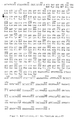
- Figure 1 shows the DNA nucleotide sequence of pIL-2-2B and the corresponding amino acid sequence of mature human IL-2. The amino terminal end of mature IL-2 is indicated by an arrow.
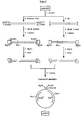
- Figure 2 shows schematically the construction of the plasmid pRC2, starting from pBR322.
- Figure 3 shows schematically the construction of the plasmid pRC23 with a P L promoter.
- Figure 4 describes the construction of the IL-2 structural gene that expresses Ser-IL-2.
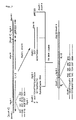
- FIG. 5 shows schematically the construction of the plasmid pRC201 / IL2, which was used to construct the plasmid pRC233 / IL2 (see FIG. 6).
- Figure 6 shows schematically the construction of an expression vector with a P L promoter system which was used for the expression of mature IL-2.
- the method of the present invention is based on the surprising finding that IL-2 expressed from a microbe tends to with the membrane fraction of the host microbe, mainly with the inner membrane of the microbe (that is the membrane whose lipid bilayer is often hydrophobic Proteins is associated).
- the separation of the membranes during the purification process for IL-2 from transformed microorganisms consequently leads to high yields and an end product of high purity.
- cell lysis e.g. enzymatic or chemical lysis.
- sonication is the preferred method.
- the inner and outer membranes are then removed from the remaining cell components by known methods such as e.g. Centrifugation, separated.
- the cell membranes After the cell membranes have been separated from the cell lysate, they are washed with extraction solutions, preferably salt and detergent solutions, in order to obtain a solution which contains at least 50% IL-2.
- the cell membranes are washed in 4 separate steps with salt and detergent solutions.
- the first step is characterized in that the cell membranes are preferably washed with a salt solution, in particular with 1M NaCl.
- the cell membranes are washed with a detergent solution, preferably 1% Triton X-100.
- the cell membranes In the third step, the cell membranes are washed with a further salt solution, preferably 1.75-2 M guanidine-HCl.
- the final washing is carried out with a further salt solution, preferably about 4-7 M guanidine-HCL.
- the wash solution after the 4th and final wash then contains approximately 50% IL-2.
- the last washing solution is preferably purified chromatographically on reverse phases with the aid of high-resolution liquid chromatography (HPLC).
- HPLC high-resolution liquid chromatography
- This HPLC purification step leads to active IL-2 present in almost 100% pure or homogeneous form.
- antibody affinity chromatography columns with poly- or monoclonal antibodies against IL-2 can be used instead of HPLC.
- Other chromatographic purification procedures such as dye affinity chromatography (e.g. with Procion Red Agarose as described in European Patent Application No. 83103582.9, published October 26, 1983 under Publication No. 92163) or Sephacryl S200 columns can also be used.
- the chromatography is carried out in several stages, i.e. HPLC chromatography is followed by dye affinity chromatography.
- the IL-2 purified according to the present invention can be used in the same way as the other known substances with immunomodulating activity, for example as an agent for treating immunosuppressive conditions. It can be administered orally, by injection or locally in the form of pharmaceutical preparations. Dose and dosing frequency can be set based on experience in clinical application of known immunomodulating substances, usually 1-200 x 106 units daily.
- the drugs resulting from this invention contain said IL-2 together with a physiologically acceptable carrier. All usual carrier materials can be used.
- the carrier material can be an inert, organic or inorganic material which is suitable for enteral, percutaneous or parenteral administration.
- Suitable carriers are water, gelatin, gum arabic, Lactose, corn starch, stearic acid, talc, vegetable oils, polyalkylene glycols, especially polyethylene glycols, natural petroleum jelly and the like.
- the pharmaceutical preparations can contain further pharmaceutically active ingredients. Additional additives such as flavoring agents, coating agents, stabilizing agents, emulsifying agents, buffers and the like can be added by means of conventional galenical processes.
- the pharmaceutical preparations can be made in any dosage form, i.e. a) in solid form, e.g. in the form of tablets, capsules, powders, granules and the like for oral administration: b) in liquid form, e.g. in the form of solutions, syrups, suspensions, elixirs and the like for oral administration; c) as preparations for parenteral administration, e.g. as sterile solutions, suspensions or emulsions: and d) as preparations for topical use in the form of solutions, suspensions, ointments, creams, gels, micronized powders, aerosols and the like.
- the pharmaceutical preparations can be sterilized and / or aids such as e.g. Contain coating agents, stabilizers, wetting agents, emulsifiers, salts for changing the osmotic pressure and / or buffers.
- Infusion or injection solutions that can be injected intravenously or intramuscularly are considered as parenteral administration forms.
- IL-2 expression vectors and transformants that are capable of expressing IL-2 is described in detail below.
- the amino acid sequence of mature IL-2 protein is shown in Figure 1.
- the mature form of the protein can be expressed with methionine as the amino terminal amino acid, provided that the initiation codon is at the beginning of the gene ATG is.
- the methionine may be split off from the host cell after IL-2 expression.
- the expression vectors used in this invention are pBR322 derivatives containing the P L promoter isolated from bacteriophage lambda DNA.
- P L is the promoter of choice because it is a very powerful promoter that is effectively controlled by the Lambda- c I repressor, whose gene is either compatible on the chromosome of the microorganism, the vector containing the P L promoter or another compatible Vector is isolated.
- the gene coding for the repressor carries a c its mutation, which results in a temperature-sensitive repressor.
- Such a vector which can be used in this invention and which carries the c I mutation is the vector pRK 248 c Its, which is known in the research and by Kahn et al., Methods in Enzymology, 68 , 268 (1979), has been described.
- the repressor works normally at a temperature of 30 ° C, but is deactivated at temperatures of around 37 ° -42 ° C.
- the P L promoter is therefore re-pressed at 30 ° C and dere-pressed at 37 ° -42 ° C.
- This type of P L promoter control allows the culture to grow at about 30 ° C-36 ° C without expression of the desired gene product, and then at an optimal time to raise the temperature to about 42 ° C at which the desired mature human IL-2 product is expressed.
- the vector preferably used in this invention has an additional EcoRI interface distal to the SD sequence (downstream in 3 'direction).
- the following description serves to illustrate the construction of a preferred vector, the vector pRC23, into which the IL-2 gene is introduced.
- other vectors can also be used.
- pRC2 To construct pRC2, the 3600 BP-containing fragment from the Klenow reaction was combined with the 760 BP-containing fragment, the S1 reaction.
- the E. coli strain RR1 was transformed with this DNA combination and transformants were selected in a medium with 50 ⁇ g / ml ampicillin.
- Transformants with the expected plasmid combination ie a plasmid with a Bgl II site in the immediate vicinity of the EcoRI site, were identified by restriction analysis of the isolated plasmid DNAs.
- the plasmid pRC 23 was created by combining a synthetic oligonucleotide which codes for a "consensus" RBS (computer-developed ribosome binding site) [Scherer et al. Nucleic Acids Research, 8 , 3895 (1980)], with a 250 BP-containing Bgl II-Hae III fragment, which contains the lambda P L promoter, and the plasmid pRC2.
- E. coli RR1 (pRK 248 c Its) with this DNA combination was carried out according to standard methods and the transformants were selected in a medium with 50 ⁇ g / ml ampicillin at 30 ° C. 50 transformants were obtained, 8 of which were selected for further analysis.
- the plasmid DNAs of these 8 transformants were isolated and analyzed by Hinc II digestion. 6 of these 8 plasmid DNAs showed the expected restriction pattern and also the Maxam-Gilbert nucleotide sequence analysis of one of these 6 confirmed the expected construction (designated as pRC 23).
- This example illustrates the tendency of IL-2 to associate with the cell membrane components of the transformed E. coli host cells.
- the following example describes the purification of mature IL-2 from a paste of transformed E. coli cells by Procion-Red agarose chromatography and HPLC.
- E. coli cells (containing a plasmid coding for human IL-2) are thawed and 1 g of these cells is taken up in 5 ml of buffer A (0.03 M Tris-HCl, pH 8.0, 0.005 M EDTA). The resulting cell suspension is then stirred for 15 minutes and then the cells are collected by centrifugation in a Sorvall SS-34 rotor (10,000 rpm for 10 minutes). The supernatant is discarded and the cells are resuspended in 5 ml of buffer A. The resuspended cells are broken up with an ultrasound device (6 x 30 seconds).
- the broken cells are centrifuged off (10,000 rpm for 10 minutes) and the supernatant with the soluble proteins is discarded.
- the residue is washed once with 5 ml of buffer A and centrifuged off (10,000 rpm for 10 minutes).
- the residue, which corresponds to the membrane fraction is in Buffer B (1 M NaCl, 0.03 M Tris-HCl, pH 8.0, 0.005 M EDTA) was dissolved with a tissue homogenizer and stirred for 10 minutes.
- the membrane fraction is centrifuged off in a Sorvall SS-34 rotor (15000 rpm for 10 minutes).
- the residue is dissolved in 5 ml of buffer C (1% Triton X-100, 0.03 M Tris-HCl, pH 8.0), homogenized, stirred and centrifuged again (15000 rpm for 10 minutes).
- the residue is dissolved in 5 ml of 1.75 M guanidine-HCl. homogenized, stirred and centrifuged (15000 rpm for 10 minutes).
- the resulting residue is washed once with 5 ml of buffer A and centrifuged off.
- the membrane fraction (residue) is extracted with 5 ml of 7 M guanidine-HCl. After centrifugation, the extract containing IL-2 is saved and the residue is extracted a second time with 5 ml of 7 M guanidine-HCl. This extract is also kept.
- the column is filled at room temperature, washed with two column volumes of 7 M guanidine-HCl and then equilibrated at 4 ° C. with equilibration buffer (0.01 M Tris-HCl, pH 7.9, 0.035 M NaCl). At least 1 ml Procion Red Agarose should be used per 100 ⁇ g expected IL-2 protein.
- the flow rate is 2 bed volumes per hour.
- the IL-2-containing 7 M guanidine-HCl extract is diluted 40-fold with equilibration buffer and the precipitate is removed by centrifugation.
- the column is loaded with the resulting supernatant.
- the column is washed with two column volumes of equilibration buffer.
- IL-2 appears in a peak after 1.5-2 volumes of elution buffer (0.01 M Tris-HCl, pH 7.9, 1.035 M NaCl). After elution of the IL-2, the column is cleaned of foreign material by washing with 6 M guanidine-HCl.
- the pH of the Procion red eluate is adjusted to 7 by slowly adding 1.0 M acetic acid. Samples of each 0.1 ml are taken to determine the activity before and after the pH adjustment.
- the neutralized eluate (60 ml) is pumped at a flow rate of 1 ml / minute onto a 0.31 x 25 cm RP-18 column and equilibrated with a buffer mixture consisting of 5% HPLC buffer II and 95% HPLC buffer I. .
- the column flow is collected and examined for its protein content and biological IL-2 activity.
- the column is eluted at room temperature according to the gradient profile described in Table 4. Flow is measured at 220 nm wavelength and 1.5 ml fractions are collected. Their protein content and their biological IL-2 activity are determined.
- the peak with maximum IL-2 activity eluted at approx. 74% HPLC buffer II (59% acetonitrile).
- the fractions are stored at 4-8 ° C and combined according to their specific activity.
Landscapes
- Health & Medical Sciences (AREA)
- Genetics & Genomics (AREA)
- Life Sciences & Earth Sciences (AREA)
- Chemical & Material Sciences (AREA)
- Organic Chemistry (AREA)
- Engineering & Computer Science (AREA)
- Zoology (AREA)
- General Health & Medical Sciences (AREA)
- Biomedical Technology (AREA)
- Biophysics (AREA)
- General Engineering & Computer Science (AREA)
- Molecular Biology (AREA)
- Biotechnology (AREA)
- Biochemistry (AREA)
- Bioinformatics & Cheminformatics (AREA)
- Wood Science & Technology (AREA)
- Physics & Mathematics (AREA)
- Proteomics, Peptides & Aminoacids (AREA)
- Medicinal Chemistry (AREA)
- Plant Pathology (AREA)
- Gastroenterology & Hepatology (AREA)
- Microbiology (AREA)
- Toxicology (AREA)
- Preparation Of Compounds By Using Micro-Organisms (AREA)
- Medicines That Contain Protein Lipid Enzymes And Other Medicines (AREA)
- Peptides Or Proteins (AREA)
- Medicines Containing Material From Animals Or Micro-Organisms (AREA)
- Micro-Organisms Or Cultivation Processes Thereof (AREA)
Claims (12)
- Procédé de préparation d'interleukine-2 (IL-2) humaine recombinante mature, homogène, caractérisée en ce que(a) on cultive des microorganismes qui sont transformés avec une séquence d'ADN qui code pour l'IL-2 humaine mature;(b) on incite les microorganismes transformés à exprimer et à accumuler l'IL-2 humaine mature;(c) on lyse les microorganismes; et l'on obtient un lysat cellulaire;(d) on sépare les composants de membrane cellulaire contenus dans le lysat cellulaire;(e) on extrait l'IL-2 à partir des composants de membrane cellulaire isolés au moyen d'une solution de lavage qui contient du chlorhydrate de guanidine environ 4 à 7 M; et(f) on purifie l'IL-2 par chromatographie à partir de la solution de lavage.
- Procédé selon la revendication 1, caractérisé en ce qu'on lyse les microorganismes transformés par traitement aux ultra-sons.
- Procédé selon la revendication 1 ou 2, caractérisé en ce qu'on sépare les composants de membrane cellulaire d'avec le lysat cellulaire par centrifugation.
- Procédé selon les revendications 1-3, caractérisé en ce qu'on lave avec des solutions de sels et de détergents les composants de membrane cellulaire isolés avant l'extraction de l'IL-2 avec la solution de lavage, qui contient du chlorhydrate de guanidine environ 4 à 7 M.
- Procédé selon la revendication 4, caractérisé en ce que les lavages sont faits avec des solutions de sels et de détergents en trois étapes de procédé successives séparées.
- Procédé selon la revendication 5, caractérisé en ce qu'on lave les composants de membrane cellulaire dans la première étape du procédé avec une solution de NaCl, dans la seconde étape du procédé avec une solution de détergent et dans la troisième étape du procédé avec une solution de chlorhydrate de guanidine ayant une molarité d'environ 1,75 à 2,0.
- Procédé selon l'une des revendication 1-6, caractérisé en ce que l'extraction de l'IL-2 s'effectue à partir des composants de membrane cellulaire isolés avec utilisation d'une solution de lavage qui contient du chlorhydrate de guanidine environ 7 M.
- Procédé selon la revendication 1, caractérisé en ce que la purification chromatographique s'effectue au moyen d'une chromatographie en phase liquide à haute performance (HPLC).
- Procédé selon la revendication 1, caractérisé en ce que la purification chromatographique se fait par chromatographie d'affinité.
- Procédé selon la revendication 9, caractérisé en ce qu'il s'agit pour la chromatographie d'affinité d'une chromatographie d'affinité avec colorant.
- Procédé selon la revendication 1, caractérisé en ce qu'il s'agit pour la purification chromatographique, d'un procédé à plusieurs étapes dans lequel on utilise chromatographie en phase liquide à haute performance et chromatographie d'affinité.
- Préparations pharmaceutiques contenant de l'interleukine-2 humaine (IL-2) recombinante, mature et homogène, ayant une activité spécifique d'au moins 53 x 10⁶ E/mg que l'on peut préparer selon le procédé de l'une des revendications 1 à 11 comme composant actif, ainsi qu'un support physiologiquement acceptable.
Priority Applications (1)
| Application Number | Priority Date | Filing Date | Title |
|---|---|---|---|
| AT84116054T ATE76905T1 (de) | 1983-12-23 | 1984-12-21 | Reinigung von rekombinanten interleukin-2. |
Applications Claiming Priority (2)
| Application Number | Priority Date | Filing Date | Title |
|---|---|---|---|
| US56498683A | 1983-12-23 | 1983-12-23 | |
| US564986 | 1983-12-23 |
Publications (3)
| Publication Number | Publication Date |
|---|---|
| EP0147819A2 EP0147819A2 (fr) | 1985-07-10 |
| EP0147819A3 EP0147819A3 (en) | 1987-09-23 |
| EP0147819B1 true EP0147819B1 (fr) | 1992-06-03 |
Family
ID=24256731
Family Applications (1)
| Application Number | Title | Priority Date | Filing Date |
|---|---|---|---|
| EP84116054A Expired - Lifetime EP0147819B1 (fr) | 1983-12-23 | 1984-12-21 | Purification d'interleukine-2 recombinée |
Country Status (12)
| Country | Link |
|---|---|
| EP (1) | EP0147819B1 (fr) |
| JP (2) | JPH0728753B2 (fr) |
| AT (1) | ATE76905T1 (fr) |
| AU (1) | AU580276B2 (fr) |
| CA (1) | CA1340853C (fr) |
| DE (1) | DE3485759D1 (fr) |
| DK (1) | DK174501B1 (fr) |
| IE (1) | IE57914B1 (fr) |
| IL (1) | IL73882A (fr) |
| NZ (1) | NZ210634A (fr) |
| PH (1) | PH19584A (fr) |
| ZA (1) | ZA849910B (fr) |
Families Citing this family (26)
| Publication number | Priority date | Publication date | Assignee | Title |
|---|---|---|---|---|
| US4925919A (en) * | 1984-04-25 | 1990-05-15 | Roland Mertelsmann | Purified interleukin 2 |
| US4992271A (en) * | 1982-09-23 | 1991-02-12 | Cetus Corporation | Formulation for lipophilic IL-2 proteins |
| US4853332A (en) * | 1982-10-19 | 1989-08-01 | Cetus Corporation | Structural genes, plasmids and transformed cells for producing cysteine depleted muteins of biologically active proteins |
| JPS60115528A (ja) * | 1983-11-28 | 1985-06-22 | Takeda Chem Ind Ltd | ヒトインタ―ロイキン―2蛋白質を含有する抗腫瘍用または免疫機能低下疾患治療用組成物 |
| US4569790A (en) * | 1984-03-28 | 1986-02-11 | Cetus Corporation | Process for recovering microbially produced interleukin-2 and purified recombinant interleukin-2 compositions |
| US4908434A (en) * | 1984-04-25 | 1990-03-13 | Sloan-Kettering Institute For Cancer Research | Process for preparing purified interleukin-2 |
| US4908433A (en) * | 1984-04-25 | 1990-03-13 | Sloan-Kettering Institute For Cancer Research | Uses of interleukin-2 |
| IL76360A0 (en) * | 1984-09-26 | 1986-01-31 | Takeda Chemical Industries Ltd | Mutual separation of proteins |
| WO1986002068A1 (fr) * | 1984-09-26 | 1986-04-10 | Takeda Chemical Industries, Ltd. | Separation mutuelle de proteines |
| EP0226639B1 (fr) * | 1985-05-29 | 1990-11-14 | The Green Cross Corporation | Procede de preparation d'une proteine heterogene |
| US4748234A (en) * | 1985-06-26 | 1988-05-31 | Cetus Corporation | Process for recovering refractile bodies containing heterologous proteins from microbial hosts |
| WO1987000553A1 (fr) * | 1985-07-16 | 1987-01-29 | The Green Cross Corporation | Procede de preparation d'hetero-proteine |
| US5831022A (en) * | 1986-02-18 | 1998-11-03 | Hoffmann-La Roche Inc. | Purification of recombinant human IL-1α |
| CA1339757C (fr) * | 1987-04-16 | 1998-03-17 | Robert F. Halenbeck | Methode de production bacteriologique de csf-1 humain recombinant biologiquement actif pur |
| US4929700A (en) * | 1987-04-16 | 1990-05-29 | Cetus Corporation | Production of purified, biologically active, bacterially produced recombinant human CSF-1 |
| US4931543A (en) * | 1987-05-11 | 1990-06-05 | Cetus Corporation | Process for recovering microbially produced interleukin-2 |
| US5162507A (en) * | 1987-05-11 | 1992-11-10 | Cetus Corporation | Process for recovering purified, oxidized, renatured recombinant interleukin-2 from microorganisms |
| US5162503A (en) * | 1987-05-19 | 1992-11-10 | Hoffmann-La Roche, Inc. | Purification of interleukin-2 by receptor-affinity chromatography |
| EP0337243A1 (fr) * | 1988-04-14 | 1989-10-18 | F. Hoffmann-La Roche Ag | Procédé pour purifier de l'interleukine-2 recombinante |
| ZA898139B (en) * | 1988-11-17 | 1990-08-29 | Hoffmann La Roche | Recombinant interleukin-2 hybrid proteins |
| IT1262981B (it) * | 1992-09-09 | 1996-07-23 | Tecnogen Scpa | Procedimento per la purificazione della proteina big endotelina |
| US7144999B2 (en) | 2002-11-23 | 2006-12-05 | Isis Pharmaceuticals, Inc. | Modulation of hypoxia-inducible factor 1 alpha expression |
| JP2006141263A (ja) * | 2004-11-18 | 2006-06-08 | Kyoto Univ | (r)−ヒドロキシニトリルリアーゼの製造方法 |
| RU2565553C2 (ru) * | 2013-04-09 | 2015-10-20 | Общество с ограниченной ответственностью "Стратегия" | Способ получения препарата интерлейкина-2, препарат интерлейкина-2 и фармацевтический иммуномодулирующий препарат |
| CA2954476C (fr) | 2014-07-10 | 2023-09-19 | Novartis Ag | Anticorps monoclonaux de stimulation immunitaire contre l'interleukine-2 humaine |
| HK1257518A1 (zh) | 2016-01-11 | 2019-10-25 | Novartis Ag | 针对人白介素-2的免疫刺激性人源化单克隆抗体及其融合蛋白 |
Family Cites Families (9)
| Publication number | Priority date | Publication date | Assignee | Title |
|---|---|---|---|---|
| JPS58159420A (ja) * | 1982-03-18 | 1983-09-21 | Ajinomoto Co Inc | インタ−ロイキン2の精製法 |
| EP0091539B2 (fr) * | 1982-03-31 | 1996-11-27 | Ajinomoto Co., Inc. | Gène codant pour interleukin-2 polypeptide, ADN recombinant portant ledit gène, lignées cellulaires possédant le recombinant ADN et procédé pour la préparation d'interleukin-2 utilisant lesdites cellules |
| ATE37564T1 (de) * | 1982-04-20 | 1988-10-15 | Sloan Kettering Inst Cancer | Reinigung von interleukin-2. |
| JPS58198293A (ja) * | 1982-05-12 | 1983-11-18 | Shionogi & Co Ltd | インタ−ロイキン等免疫調節因子の製造方法 |
| JPS59144719A (ja) * | 1983-02-03 | 1984-08-18 | Japan Found Cancer | ヒトインタ―ロイキン2活性を有するポリペプチド |
| EP0119621A1 (fr) * | 1983-03-21 | 1984-09-26 | F. HOFFMANN-LA ROCHE & CO. Aktiengesellschaft | Interleukin-2 |
| JPS60115528A (ja) * | 1983-11-28 | 1985-06-22 | Takeda Chem Ind Ltd | ヒトインタ―ロイキン―2蛋白質を含有する抗腫瘍用または免疫機能低下疾患治療用組成物 |
| US4569790A (en) * | 1984-03-28 | 1986-02-11 | Cetus Corporation | Process for recovering microbially produced interleukin-2 and purified recombinant interleukin-2 compositions |
| DE3419995A1 (de) * | 1984-05-29 | 1985-12-05 | Hoechst Ag, 6230 Frankfurt | Gentechnologisches verfahren zur herstellung von human-interleukin-2 und mittel zur durchfuehrung dieses verfahrens |
-
1984
- 1984-12-19 NZ NZ210634A patent/NZ210634A/xx unknown
- 1984-12-19 DK DK198406124A patent/DK174501B1/da not_active IP Right Cessation
- 1984-12-19 CA CA000470498A patent/CA1340853C/fr not_active Expired - Lifetime
- 1984-12-19 ZA ZA849910A patent/ZA849910B/xx unknown
- 1984-12-20 AU AU36995/84A patent/AU580276B2/en not_active Expired
- 1984-12-20 IL IL73882A patent/IL73882A/xx not_active IP Right Cessation
- 1984-12-21 IE IE3320/84A patent/IE57914B1/en not_active IP Right Cessation
- 1984-12-21 AT AT84116054T patent/ATE76905T1/de not_active IP Right Cessation
- 1984-12-21 DE DE8484116054T patent/DE3485759D1/de not_active Expired - Lifetime
- 1984-12-21 EP EP84116054A patent/EP0147819B1/fr not_active Expired - Lifetime
- 1984-12-22 JP JP59271681A patent/JPH0728753B2/ja not_active Expired - Lifetime
- 1984-12-26 PH PH31644A patent/PH19584A/en unknown
-
1994
- 1994-09-08 JP JP6215128A patent/JP2864996B2/ja not_active Expired - Lifetime
Also Published As
| Publication number | Publication date |
|---|---|
| IE843320L (en) | 1985-06-23 |
| JPH07233082A (ja) | 1995-09-05 |
| DK612484D0 (da) | 1984-12-19 |
| DE3485759D1 (de) | 1992-07-09 |
| NZ210634A (en) | 1989-05-29 |
| IE57914B1 (en) | 1993-05-19 |
| JP2864996B2 (ja) | 1999-03-08 |
| EP0147819A3 (en) | 1987-09-23 |
| ZA849910B (en) | 1985-09-25 |
| EP0147819A2 (fr) | 1985-07-10 |
| JPS60172295A (ja) | 1985-09-05 |
| AU580276B2 (en) | 1989-01-12 |
| DK612484A (da) | 1985-06-24 |
| CA1340853C (fr) | 1999-12-21 |
| JPH0728753B2 (ja) | 1995-04-05 |
| ATE76905T1 (de) | 1992-06-15 |
| AU3699584A (en) | 1985-07-04 |
| DK174501B1 (da) | 2003-04-28 |
| PH19584A (en) | 1986-05-26 |
| IL73882A (en) | 1989-05-15 |
| IL73882A0 (en) | 1985-03-31 |
Similar Documents
| Publication | Publication Date | Title |
|---|---|---|
| EP0147819A2 (fr) | Purification d'interleukine-2 recombinée | |
| DE3177288T3 (de) | Reife menschliche Leukozyten-Interferone, Verfahren zu ihrer bacteriellen Herstellung, Zwischenprodukte hierfür und Zusammensetzungen diese enthaltend. | |
| DE3238554C2 (fr) | ||
| DE3750106T3 (de) | Rekombinanter B-Zell-Differenzierungsfaktor. | |
| EP0236920B1 (fr) | Interférons hybrides, leur emploi comme médicaments et comme produits intermédiaires pour la préparation d'anticorps, leur emploi ainsi qu'un procédé pour leur préparation | |
| EP0099084B1 (fr) | Procédé de préparation d'interféron et des vecteurs d'expression pour celui-ci | |
| DE3650266T2 (de) | DNS-Sequenzen, rekombinante DNS-Moleküle und Verfahren zur Herstellung von "mullerian inhibiting substance"-ähnlichen Polypeptiden. | |
| DD202085A5 (de) | Verfahren zur herstellung von human-fibroblasten-interferon | |
| DE3587605T2 (de) | Interleukin-1 und dessen Derivat. | |
| DE3382575T2 (de) | Dna-sequenzen, rekombinante dna-molekuele und verfahren zur herstellung von schweinewachstumshormonaehnlichen polypeptiden. | |
| DD203330A5 (de) | Verfahren zur herstellung hybrider human-leukozyten-interferone | |
| CH660743A5 (de) | Hybride human-leukozyten-interferone und deren mikrobielle herstellung. | |
| DD297188A5 (de) | Gm-csf und il-3 umfassende fusionsproteine | |
| DE3851035T2 (de) | Interleukin-7. | |
| EP0170204B1 (fr) | Séquences génétiques, interféron peptide du type I codé par celles-ci et les organismes les produisant | |
| AT389892B (de) | Dna-sequenz mit einem gen, das fuer human-interleukin-2 codiert | |
| DE68920931T2 (de) | Rekombinanter natürlicher Killerzellen-Aktivator. | |
| DE3886395T2 (de) | RINDER-INTERLEUKIN-1-g(b). | |
| DE3876843T2 (de) | Verfahren zur reinigung des granulocyt-koloniestimulierungsfaktors. | |
| DE68919085T2 (de) | Verfahren zur herstellung eines polypeptids welches als menschlicher neutrophiler chemotaktischer faktor aktiv ist. | |
| AT394208B (de) | Verfahren zur herstelluung von vektoren | |
| AT394207B (de) | Verfahren zur herstellung von human-leukozyteninterferonen | |
| DD218632A5 (de) | Verfahren zur herstellung von interleukin-2 |
Legal Events
| Date | Code | Title | Description |
|---|---|---|---|
| PUAI | Public reference made under article 153(3) epc to a published international application that has entered the european phase |
Free format text: ORIGINAL CODE: 0009012 |
|
| 17P | Request for examination filed |
Effective date: 19841221 |
|
| AK | Designated contracting states |
Designated state(s): AT BE CH DE FR GB IT LI LU NL SE |
|
| PUAL | Search report despatched |
Free format text: ORIGINAL CODE: 0009013 |
|
| AK | Designated contracting states |
Kind code of ref document: A3 Designated state(s): AT BE CH DE FR GB IT LI LU NL SE |
|
| RAP1 | Party data changed (applicant data changed or rights of an application transferred) |
Owner name: F. HOFFMANN-LA ROCHE AG |
|
| 17Q | First examination report despatched |
Effective date: 19900427 |
|
| GRAA | (expected) grant |
Free format text: ORIGINAL CODE: 0009210 |
|
| AK | Designated contracting states |
Kind code of ref document: B1 Designated state(s): AT BE CH DE FR GB IT LI LU NL SE |
|
| REF | Corresponds to: |
Ref document number: 76905 Country of ref document: AT Date of ref document: 19920615 Kind code of ref document: T |
|
| ITF | It: translation for a ep patent filed | ||
| REF | Corresponds to: |
Ref document number: 3485759 Country of ref document: DE Date of ref document: 19920709 |
|
| ET | Fr: translation filed | ||
| GBT | Gb: translation of ep patent filed (gb section 77(6)(a)/1977) | ||
| PLBE | No opposition filed within time limit |
Free format text: ORIGINAL CODE: 0009261 |
|
| STAA | Information on the status of an ep patent application or granted ep patent |
Free format text: STATUS: NO OPPOSITION FILED WITHIN TIME LIMIT |
|
| 26N | No opposition filed | ||
| EPTA | Lu: last paid annual fee | ||
| EAL | Se: european patent in force in sweden |
Ref document number: 84116054.2 |
|
| REG | Reference to a national code |
Ref country code: GB Ref legal event code: IF02 |
|
| PGFP | Annual fee paid to national office [announced via postgrant information from national office to epo] |
Ref country code: AT Payment date: 20031104 Year of fee payment: 20 |
|
| PGFP | Annual fee paid to national office [announced via postgrant information from national office to epo] |
Ref country code: GB Payment date: 20031105 Year of fee payment: 20 |
|
| PGFP | Annual fee paid to national office [announced via postgrant information from national office to epo] |
Ref country code: NL Payment date: 20031110 Year of fee payment: 20 |
|
| PGFP | Annual fee paid to national office [announced via postgrant information from national office to epo] |
Ref country code: FR Payment date: 20031201 Year of fee payment: 20 |
|
| PGFP | Annual fee paid to national office [announced via postgrant information from national office to epo] |
Ref country code: SE Payment date: 20031202 Year of fee payment: 20 |
|
| PGFP | Annual fee paid to national office [announced via postgrant information from national office to epo] |
Ref country code: CH Payment date: 20031219 Year of fee payment: 20 |
|
| PGFP | Annual fee paid to national office [announced via postgrant information from national office to epo] |
Ref country code: DE Payment date: 20031230 Year of fee payment: 20 |
|
| PGFP | Annual fee paid to national office [announced via postgrant information from national office to epo] |
Ref country code: BE Payment date: 20040114 Year of fee payment: 20 |
|
| PGFP | Annual fee paid to national office [announced via postgrant information from national office to epo] |
Ref country code: LU Payment date: 20040226 Year of fee payment: 20 |
|
| PG25 | Lapsed in a contracting state [announced via postgrant information from national office to epo] |
Ref country code: LI Free format text: LAPSE BECAUSE OF EXPIRATION OF PROTECTION Effective date: 20041220 Ref country code: GB Free format text: LAPSE BECAUSE OF EXPIRATION OF PROTECTION Effective date: 20041220 Ref country code: CH Free format text: LAPSE BECAUSE OF EXPIRATION OF PROTECTION Effective date: 20041220 |
|
| PG25 | Lapsed in a contracting state [announced via postgrant information from national office to epo] |
Ref country code: NL Free format text: LAPSE BECAUSE OF EXPIRATION OF PROTECTION Effective date: 20041221 Ref country code: LU Free format text: LAPSE BECAUSE OF EXPIRATION OF PROTECTION Effective date: 20041221 |
|
| BE20 | Be: patent expired |
Owner name: F. *HOFFMANN-LA ROCHE A.G. Effective date: 20041221 |
|
| REG | Reference to a national code |
Ref country code: GB Ref legal event code: PE20 |
|
| REG | Reference to a national code |
Ref country code: CH Ref legal event code: PL |
|
| EUG | Se: european patent has lapsed | ||
| NLV7 | Nl: ceased due to reaching the maximum lifetime of a patent |
Effective date: 20041221 |
|
| EUG | Se: european patent has lapsed |