EP0274092A2 - Polycarbonatcopolymer und optische Platte - Google Patents
Polycarbonatcopolymer und optische Platte Download PDFInfo
- Publication number
- EP0274092A2 EP0274092A2 EP87118582A EP87118582A EP0274092A2 EP 0274092 A2 EP0274092 A2 EP 0274092A2 EP 87118582 A EP87118582 A EP 87118582A EP 87118582 A EP87118582 A EP 87118582A EP 0274092 A2 EP0274092 A2 EP 0274092A2
- Authority
- EP
- European Patent Office
- Prior art keywords
- bis
- reaction
- propane
- solution
- temperature
- Prior art date
- Legal status (The legal status is an assumption and is not a legal conclusion. Google has not performed a legal analysis and makes no representation as to the accuracy of the status listed.)
- Granted
Links
- 0 CC(C)(C(**1)=CC(C)=C1O)c(cc1C)ccc1O Chemical compound CC(C)(C(**1)=CC(C)=C1O)c(cc1C)ccc1O 0.000 description 2
Images


Classifications
-
- C—CHEMISTRY; METALLURGY
- C08—ORGANIC MACROMOLECULAR COMPOUNDS; THEIR PREPARATION OR CHEMICAL WORKING-UP; COMPOSITIONS BASED THEREON
- C08G—MACROMOLECULAR COMPOUNDS OBTAINED OTHERWISE THAN BY REACTIONS ONLY INVOLVING UNSATURATED CARBON-TO-CARBON BONDS
- C08G64/00—Macromolecular compounds obtained by reactions forming a carbonic ester link in the main chain of the macromolecule
- C08G64/04—Aromatic polycarbonates
- C08G64/06—Aromatic polycarbonates not containing aliphatic unsaturation
-
- G—PHYSICS
- G11—INFORMATION STORAGE
- G11B—INFORMATION STORAGE BASED ON RELATIVE MOVEMENT BETWEEN RECORD CARRIER AND TRANSDUCER
- G11B7/00—Recording or reproducing by optical means, e.g. recording using a thermal beam of optical radiation by modifying optical properties or the physical structure, reproducing using an optical beam at lower power by sensing optical properties; Record carriers therefor
- G11B7/24—Record carriers characterised by shape, structure or physical properties, or by the selection of the material
- G11B7/241—Record carriers characterised by shape, structure or physical properties, or by the selection of the material characterised by the selection of the material
- G11B7/252—Record carriers characterised by shape, structure or physical properties, or by the selection of the material characterised by the selection of the material of layers other than recording layers
- G11B7/253—Record carriers characterised by shape, structure or physical properties, or by the selection of the material characterised by the selection of the material of layers other than recording layers of substrates
-
- Y—GENERAL TAGGING OF NEW TECHNOLOGICAL DEVELOPMENTS; GENERAL TAGGING OF CROSS-SECTIONAL TECHNOLOGIES SPANNING OVER SEVERAL SECTIONS OF THE IPC; TECHNICAL SUBJECTS COVERED BY FORMER USPC CROSS-REFERENCE ART COLLECTIONS [XRACs] AND DIGESTS
- Y10—TECHNICAL SUBJECTS COVERED BY FORMER USPC
- Y10T—TECHNICAL SUBJECTS COVERED BY FORMER US CLASSIFICATION
- Y10T428/00—Stock material or miscellaneous articles
- Y10T428/31504—Composite [nonstructural laminate]
- Y10T428/31507—Of polycarbonate
Definitions
- the present invention relates to a polycarbonate copolymer usable in an optical information recording disk in which signals are recorded by means of a laser beam or recorded signals are read by utilizing the reflecting or transmission of the laser beam.
- a quite high recording density can be provided by an information recording/reproduction system of DRAW type or Erasable-DRAW-type in which a spot laser beam is applied to a disk to record signals on the disk of means of minute pits or the signals thus recorded by means of such pits are read by detecting the quantity of reflected or transmitted laser beam.
- the record can be erased or written and images and sounds reproduced therefrom are excellent.
- the system of Erasable-DRAW type broadly in the recording of images and sounds or reproduction of them and in the recording/reproduction of a large quantity of information.
- the disk used in the recording/reproduction system must be not only transparent so as to transmit the laser beam through the disk body but also optically uniform so as to minimize an error in the readout.
- double refraction occurs due to mainly a thermal stress caused in the cooling and flowing steps of a resin in the molding to form the disk body, molecular orientation and residual stress caused by a change in volume around a glass transition point.
- a high optical ununiformity due to the double refraction is a fatal defect of optical disks.
- the double refraction of the disk occurring due to mainly the thermal stress caused in the cooling and flowing steps of a resin in the molding to form the disk body, molecular orientation and residual stress can be reduced considerably by selecting the molding conditions suitably. However, it still depends greatly on the intrinsic double refraction, i.e. photoelasticity constant, of the molded resin per se.
- the double refraction can be represented as the product of the photoelasticity constant and residual stress according to the following formula (1):
- the invention provides an aromatic polycarbonate copolymer composed of 1 to 99 mole percent of the unit of 2,2-bis(4-hydroxy-3-tertiary-butyl-phenyl)propane, 99 to 1 mole percent of the unit of a comonomer selected from the group consisting of
- the aromatic polycarbonate copolymer of the invention can be obtained from the first monomer and the comonomer by a carbonate linkage between them.
- the comonomer is selected from the group consisting of (1), (2), (3), (4) and (5); the copolymer is composed of 5 to 95 mole percent of the unit of 2,2-bis(4-hydroxy-3-tertiary-butylphenyl)-propane, 95 to 5 mole percent of the unit of a comonomer selected from the group consisting of (1), (2), (4), (5) and (9) and a carbonate group located between the two units; and the copolymer is composed of 3 to 97 mole percent of the unit of 2,2-bis(4-hydroxy-3-tertiary-butyl-phenyl)propane, 97 to 3 mole percent of the unit of a comonomer selected from the group consisting of (6), (7), (8) and (10) and a carbonate group located between the two units.
- the invention further provides an optical disk which comprises a substrate of the copolymer as defined above and a recording layer coated thereon.
- the copolymer to use for the substrate has a viscosity-average molecular weight of 13,000 to 50,000.
- the first monomer has the formula (I):
- the comonomers have the formulae (II 1 to 10):
- the copolymer of the invention has the above defined proportions of the two constituent monomers. If the monomer (I) amounts to less than 5 mole percent, the copolymer gets to have almost the same photoelasticity constant as the homopolycarbonate of the monomer (II). If it amounts to more than 95 mole percent, the copolymer gets to have much lower glass transition point than the homopolycarbonate of the 1 monomer (II).
- the copolymer of the present invention has a viscosity-average molecular weight of preferably 1,000 to 100,000 and more preferably 13,000 to 50,000. When this value is less than 1,000, the produced moldings are brittle and, on the contrary, when it exceeds 100,000, the fluidity is lowered to reduce the moldability thereof. Thus, the resin having a viscosity-average molecular weight of less than 1,000 or higher than 100,000 is unsuitable for use as the starting material for the optical disks.
- the polycarbonate copolymer of the invention may further comprise a third monomer unit in addition to the above shown essential two monomer units. It may be any compound capable of being bonded through the carbonate linkage.
- the amount (weight ratio) of the third component is not limited so far as it does not impair the physical properties of the product.
- the polycarbonate copolymer of the present invention can be prepared by the two following processes:
- the two monomers are reacted with each other in the presence of diphenyl carbonate in an amount slightly larger than its stoichiometric amount and an ordinary carbonation catalyst at a temperature of about 160 to 180°C under atmospheric pressure for about 30 min while an inert gas is introduced thereinto. Then, the pressure is reduced gradually over 2 h to finally 10 Torr at about 180 to 220°C to complete the precondensation reaction at 220°C. Then the reaction is continued at 270°C under 10 Torr for 30 min and then at 270°C under 5 Torr for 20 min. Thereafter the postcondensation reaction is conducted at 270°C under a reduced pressure of lower than 0.5 Torr, preferably 0.3 to 0.1 Torr, for 1.5 to 2.0 h.
- Suitable carbonation catalysts used for forming the carbonate linkage include alkali metal and alkaline earth metal catalysts such as lithium, potassium, sodium, calcium and tin catalysts. Examples of them include lithium hydroxide, lithium carbonate, potassium borohydride, potassium hydrogenphosphate, sodium hydroxide, sodium borohydride, calcium hydride, dibutyltin oxide and stannous oxide. Among them, the potassium catalysts are preferred.
- a three-necked flask is provided with a stirrer, thermometer, gas-inlet tube and gas-outlet tube.
- a mixture of the two monomers is dissolved in a solvent such as pyridine or dichloromethane and gaseous phosgene is introduced thereinto under vigorous stirring. This operation is conducted in a powerful draft chamber, since phosgene is virulent.
- a unit for decomposing excess phosgene into nonpoisonous compounds with a 10% aqueous sodium hydroxide solution is provided at an end of the outlet tube.
- Phosgene is introduced from a bomb into the flask through an empty gas washing bottle, a gas washing bottle containing paraffin (to count the number of bubbles) and an empty gas washing bottle sequentially.
- the gas inlet tube is inserted into the flask and placed above the stirrer and the end thereof is widened like a funnel so that it would not be clogged by the formed pyridine salt.
- the aromatic polycarbonate of the invention is useful as a starting material for an optical disk to record information with.
- the disk according to the invention includes the direct read after write type (DRAW) and the erasable direct read after write type (Erasable DRAW) and serves to record signals with a laser beam and read recorded signals with reflection or transmission of a laser beam.
- DRAW direct read after write type
- Erasable DRAW erasable direct read after write type
- the polycarbonate is used as a supporting substrate for a recording layer.
- a disk of it is covered with a recording layer such as evaporated metals to form a recording medium.
- a recording layer such as evaporated metals to form a recording medium.
- Two recording disks obtained this way are assembled into one body, for example by bonding with an adhesive or melting and bonding with the ultrasonic waves, through a spacer so that the two recording surfaces may be faced to each other.
- the recording layer may be further covered with a protective layer.
- the polycarbonate copolymer of the present invention having a low photoelasticity constant can be used as a starting material for optical information recording disks wherein signals are recorded by a laser beam or recorded signals are read by utilizing the reflection or transmission of the laser beam.
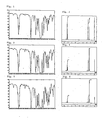
- the polymer was a polycarbonate copolymer comprising 2,2-bis(4-hydroxyphenyl)propane and 2,2-bis(4-hydroxy-3-tert-butylphenyl)propane in a ratio of 9:1.
- the devices used in the measurement were an IR spectrometer (IR-810; a product of Nippon Bunko Co.), a 1 H-NMR device JNP-GX-270; (a product of JEOL, Ltd.) and a DSC [(differential scanning calorimeter (Perkin-Elmer 2C)].
- the photoelasticity constant was determined with a device made by the present inventors. The photoelasticity constant was determined by applying various tensile stresses to test pieces (50 mm X 10 mm x 1 mm) lengthwise, measuring the double refraction, putting the value in the above-mentioned formula (1) and determining the photoelasticity constant from the gradient.
- the photoelasticity constant of 2,2-bis(4-hydroxyphenyl)propane polycarbonate was 82 Brewsters (10 12 m2/N).
- a three-necked flask was provided with a stirrer, thermometer, gas-inlet tube and gas-outlet tube.
- 247 parts (90 molar %) of 2,2-bis(4-hydroxyphenyl)propane and 41 parts (10 molar %) of 2,2-bis(4-hydroxy-3-tert-butylphenyl)propane were dissolved in a 10% aqueous sodium hydroxide solution.
- Dichloromethane was added to the solution thus prepared.
- Gaseous phosgene was introduced thereinto under vigorous stirring. Phosgene was introduced from a bomb into the flask through an empty gas washing bottle, a gas washing bottle containing water and an empty gas washing bottle sequentially.
- the reaction temperature was kept below 25°C with water during the introduction of gaseous phosgene. As the condensation reaction proceeded, the solution became viscous. Phosgene was introduced thereinto until yellow color of phosgene/hydrogen chloride complex no more disappeared. After completion of the reaction, the reaction solution was poured into methanol, the mixture was filtered and the filtration residue was washed with water. This procedure was repeated. The polycarbonate thus formed in the form of a solution in dichloromethane was reprecipitated from methanol to purify the same.
- the solution viscosity of the product was determined using dichloromethane as the solvent at 20°C.
- the viscosity-average molecular weight M v calculated from the solution viscosity was 35,000. From the fact that the results similar to those obtained in Example 1 were obtained by the instrumental analysis conducted in the same manner as in Example 1, the formed polymer was identified with a polycarbonate copolymer comprising 2,2-bis-(4-hydroxyphenyl)propane and 2,2-bis(4-hydroxy-3-tert-butylphenyl)propane in a ratio of 9:1.
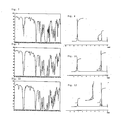
- the polymer was a polycarbonate copolymer comprising 2,2-bis(4-hydroxyphenyl)propane and 2,2-bis(4-hydroxy-3-tert-butylphenyl)propane in a ratio of 1:1.
- a three-necked flask was provided with a stirrer, thermometer, gas-inlet tube and gas-outlet tube. 137 parts (50 molar %) of 2,2-bis(4-hydroxyphenyl)propane and 204 parts (50 molar %) of 2,2-bis(4-hydroxy-3-tert-butylphenyl)propane were dissolved in a 10% aqueous sodium hydroxide solution. Dichloromethane was added to the solution thus prepared. Gaseous phosgene was introduced thereinto under vigorous stirring. Phosgene was introduced from a bomb into the flask through an empty gas washing bottle, a gas washing bottle containing water and an empty gas washing bottle sequentially.
- the reaction temperature was kept below 25°C with water during the introduction of gaseous phosgene. As the condensation reaction proceeded, the solution became viscous. Phosgene was introduced thereinto until yellow color of phosgene/hydrogen chloride complex no more disappeared. After completion of the reaction, the reaction solution was poured into methanol, the mixture was filtered and the filtration residue was washed with water. This procedure was repeated. The polycarbonate thus formed in the form of a solution in dichloromethane was reprecipitated from methanol to purify the same.
- the solution viscosity of the product was determined using dichloromethane as the solvent at 20°C.
- the viscosity-average molecular weight M v calculated from the solution viscosity was 26,000. From the fact that the results similar to those obtained in Example 3 were obtained by the instrumental analysis conducted in the same manner as in Example 3, the formed polymer was identified with a polycarbonate copolymer comprising 2,2-bis(4-hydroxyphenyl)propane and 2,2-bis(4-hydroxy-3-tert-butylphenyl)propane in a ratio of 1:1.
- the polymer was a polycarbonate copolymer comprising 2,2- bis(4-hydroxyphenyl)propane and 2,2-bis-(4-hydroxy-3-tert-butylphenyl)propane in a ratio of 3:17.
- a three-necked flask was provided with a stirrer, thermometer, gas-inlet tube and gas-outlet tube. 41 , parts (15 molar %) of 2,2-bis(4-hydroxyphenyi)propane and 347 parts (85 molar %) of 2,2-bis(4-hydroxy-3-tert-butylphenyl)propane were dissolved in a 10% aqueous sodium hydroxide solution. Dichloromethane was added to the solution thus prepared. Ganeous phosgene was introduced thereinto under vigorous stirring. Phosgene was introduced from a bomb into the flask through an empty gas washing bottle, a gas washing bottle containing water and an empty gas washing bottle sequentially.
- the reaction temperature was kept below 25°C with water during the introduction of gaseous phosgene. As the condensation reaction proceeded, the solution became viscous. Phosgene was introduced thereinto until yellow color of phosgene/hydrogen chloride complex no more disappeared. After completion of the reaction, the reaction solution was poured into methanol, the mixture was filtered and the filtration residue was washed with water. This procedure was repeated. The polycarbonate thus formed in the form of a solution in dichloromethane was reprecipitated from methanol to purify the same.
- the solution viscosity of the product was determined using dichloromethane as the solvent at 20°C.
- the viscosity-average molecular weight M v calculated from the solution viscosity was 20,000. From the fact that the results similar to those obtained in Example 5 were obtained by the instrumental analysis conducted in the same manner as in Example 5, the formed polymer was identified with a polycarbonate copolymer comprising 2,2-bis(4-hydroxyphenyl)propane and 2,2-bis(4-hydroxy-3-tert-butylphenyl)propane in a ratio of 3:17.
- the polymer was a polycarbonate copolymer comprising 4,4'-dihydroxy-2,2,2-triphenylethane and 2,2- bis(4-hydroxy-3-tert-butylphenyl)propane in a ratio of 9:1.
- the devices used in the measurement were an IR spectrometer (IR-810; a product of Nippon Bunk6 Co.), a I H-NMR device (JNM-MH-100; a product of JEOL, Ltd.) and a DSC [differential scanning calorimeter (Perkin-Elmer 2C)].
- the photoelasticity constant was determined with a device made by the present inventors. The photoelasticity constant was determined by applying various tensile stresses to test pieces (50 mm x 10 mm X 1 mm) lengthwise, measuring the double refraction, putting the value in the above-mentioned formula (1) and determining the photoelasticity constant from the gradient.
- the photoelasticity constant of 2,2-bis(4-hydroxyphenyl)propane polycarbonate was 82 Brewsters (10 12 m 2 /N).
- a three-necked flask was provided with a stirrer, thermometer, gas-inlet tube and gas-outlet tube.
- 314 parts (90 molar %) of 4,4 ' -dihydroxy-2,2,2-triphenylethane and 41 parts (10 molar %) of 2,2-bis(4-hydroxy-3-tert-butylphenyl)propane were dissolved in a 10% aqueous sodium hydroxide solution.
- Dichloromethane was added to the solution thus prepared.
- Gaseous phosgene was introduced thereinto under vigorous stirring. Phosgene was introduced from a bomb into the flask through an empty gas washing bottle, a gas washing bottle containing water and an empty gas washing bottle sequentially.
- the reaction temperature was kept below 25°C with water during the introduction of gaseous phosgene. As the condensation reaction proceeded, the solution became viscous. Phosgene was introduced thereinto until yellow color of phosgene/hydrogen chloride complex no more disappeared. After completion of the reaction, methanol was poured into the reaction solution, the mixture was filtered and the filtration residue was washed with water. This procedure was repeated. The polycarbonate thus formed in the form of a solution in dichloromethane was reprecipitated from methanol to purify the same.
- the solution viscosity of the product was determined using dichloromethane as the solvent at 20°C.
- the viscosity-average molecular weight m v calculated from the solution viscosity was 35,000. From the fact that the results similar to those obtained in Example 7 were obtained by the instrumental analysis conducted in the same manner as in Example 7, the formed polymer was identified with a polycarbonate copolymer comprising 4,4'-dihydroxy-2,2,2-triphenylethane and 2,2-bis-(4-hydroxy-3-tert-butylphenyl)propane in a ratio of 9:1.
- the polymer was a polycarbonate copolymer comprising 4,4'-dihydroxy-2,2,2-triphenylethane and 2,2- bis(4-hydroxy-3-tert-butylphenyi)propane in a ratio of 1:1.
- a three-necked flask was provided with a stirrer, thermometer, gas-inlet tube and gas-outlet tube. 174 parts (50 molar %) of 4,4'-dihydroxy-2,2,2-triphenylethane and 204 parts (50 molar %) of 2,2-bis(4-hydroxy-3-tert-butylphenyl)propane were dissolved in a 10% aqueous sodium hydroxide solution. Dichloromethane was added to the solution thus prepared. Gaseous phosgene was introduced thereinto under vigorous stirring. Phosgene was introduced from a bomb into the flask through an empty gas washing bottle, a gas washing bottle containing water and an empty gas washing bottle sequentially.
- the reaction temperature was kept below 25°C with water during the introduction of gaseous phosgene. As the condensation reaction proceeded, the solution became viscous. Phosgene was introduced thereinto until yellow color of phosgene/hydrogen chloride complex no more disappeared. After completion of the reaction, the reaction solution was poured into methanol, the mixture was filtered and the filtration residue was washed with water. This procedure was repeated. The polycarbonate thus formed in the form of a solution in dichloromethane was reprecipitated from methanol to purify the same.
- the solution viscosity of the product was determined using dichloromethane as the solvent at 20°C.
- the viscosity-average molecular weight M calculated from the solution viscosity was 25,000. From the fact that the results similar to those obtained in Example 9 were obtained by the instrumental analysis conducted in the same manner as in Example 9, the formed polymer was identified with a polycarbonate copolymer comprising 4,4'-dihydroxy-2,2,2-triphenylethane and 2,2-bis-(4-hydroxy-3-tert-butylphenyl)propane in a ratio of 1:1.
- the polymer was a polycarbonate copolymer comprising 4,4'-dihydroxy-2,2,2-triphenylethane and 2,2- bis(4-hydroxy-3-tert-butylphenyl)propane in a ratio of 3:17.
- a three-necked flask was provided with a stirrer, thermometer, gas-inlet tube and gas-outlet tube.
- 52 parts (15 molar %) of 4,4'-dihydroxy-2,2,2-triphenylethane and 347 parts (85 molar %) of 2,2-bis(4-hydroxy3-tert-butylphenyl)propane were dissolved in a 10% aqueous sodium hydroxide solution.
- Dichloromethane was added to the solution thus prepared.
- Gaseous phosgene was introduced thereinto under vigorous stirring. Phosgene was introduced from a bomb into the flask through an empty gas washing bottle, a gas washing bottle containing water and an empty gas washing bottle sequentially.
- the reaction temperature was kept below 25°C with water during the introduction of gaseous phosgene. As the condensation reaction proceeded, the solution became viscous. Phosgene was introduced thereinto until yellow color of phosgene/hydrogen chloride complex no more disappeared. After completion of the reaction, the reaction solution was poured into methanol, the mixture was filtered and the filtration residue was washed with water. This procedure was repeated. The polycarbonate thus formed in the form of a solution in dichloromethane was reprecipitated from methanol to purify the same.
- the solution viscosity of the product was determined using dichloromethane as the solvent at 20°C.
- the viscosity-average molecular weight M v calculated from the solution viscosity was 25,000. From the fact that the results similar to those obtained in Example 11 were obtained by the instrumental analysis conducted in the same manner as in Example 11 the formed polymer was identified with a polycarbonate copolymer comprising 4,4'-dihydroxy-2,2,2-triphenylethane and 2,2-bis-(4-hydroxy-3-tert-butylphenyl)propane in a ratio of 3:17.
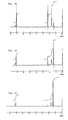
- the polymer was a polycarbonate copolymer comprising 2,2-bis(4-hydroxy-3-methylphenyl)propane and 2,2-bis(4-hydroxy-3-tert-butylphenyl)propane in a ratio of 9:1.
- the devices used in the measurement were an IR spectrometer (IR-810; a product of Nippon Bunk6 Co.), a I H-NMR device (JNM-MH-100; a product of JEOL, Ltd.) and a DSC [differential scanning calorimeter (Perkin-Elmer 2C)].
- the photoelasticity constant was determined with a device made by the present inventors.
- the photoelasticity constant was determined by applying various tensile stresses to test pieces (50 mm x 10 mm X 1 mm) lengthwise, measuring the double refraction, putting the value in the above-mentioned formula (1) and determining the photo-elasticity constant from the gradient.
- the photo-elasticity constant of 2,2-bis(4-hydroxyphenyl)propane polycarbonate was 82 Brewsters (10 12 m2/N).
- a three-necked flask was provided with a stirrer, thermometer, gas-inlet tube and gas-outlet tube.
- 277 parts (90 molar %) of 2,2-bis(4-hydroxy-3-methylphenyl)propane and 41 parts (10 molar %) of 2,2-bis(4-hydroxy-3-tert-butylphenyl)propane were dissolved in 10% aqueous sodium hydroxide solution.
- Dichloromethane was added to the solution thus prepared.
- Gaseous phosgene was introduced thereinto under vigorous stirring. Phosgene was introduced from a bomb into the flask through an empty gas washing bottle, a gas washing bottle containing water and an empty gas washing bottle sequentially.
- the reaction temperature was kept below 25°C with water during the introduction of gaseous phosgene. As the condensation reaction proceeded, the solution became viscous. Phosgene was introduced thereinto until yellow color of phosgene/hydrogen chloride complex no more disappeared. After completion of the reaction, the reaction solution was poured into methanol, the mixture was filtered and the filtration residue was washed with water. This procedure was repeated. The polycarbonate thus formed in the form of a solution in dichloromethane was reprecipitated from methanol to purify the same. After the purification followed by drying, the solution viscosity of the product was determined using dichloromethane as the solvent at 20°C.
- the viscosity-average molecular weight M v calculated from the solution viscosity was 31,000. From the fact that the results similar to those obtained in Example 13 were obtained by the instrumental analysis conducted in the same manner as in Example 13, the formed polymer was identified with a polycarbonate copolymer comprising 2,2-bis-(4-hydroxy-3-methylphenyl)propane and 2,2-bis(4-hydroxy-3-tert-butytphenyt)-propane in a ratio of 9:1.
- the polymer was a polycarbonate copolymer comprising 2,2-bis(4-hydroxy-3-methylphenyl)propane and 2,2-bis(4-hydroxy-3-tert-butylphenyl)propane in a ratio of 1:1.
- a three-necked flask was provided with a stirrer, thermometer, gas-inlet tube and gas-outlet tube.
- 154 parts (50 molar %) of 2,2-bis(4-hydroxy-3-methylphneyl)propane and 204 parts (50 molar %) of 2,2-bis(4-hydroxy-3-tert-butylphenyl)propane were dissolved in 10% aqueous sodium hydroxide solution.
- Dichloromethane was added to the solution thus prepared.
- Gaseous phosgene was introduced thereinto under vigorous stirring. Phosgene was introduced from a bomb into the flask through an empty gas washing bottle, a gas washing bottle containing water and an empty gas washing bottle sequentially.
- the reaction temperature was kept below 25°C with water during the introduction of gaseous phosgene. As the condensation reaction proceeded, the solution became viscous. Phosgene was introduced thereinto until yellow color of phosgene/hydrogen chloride complex no more disappeared. After completion of the reaction, the reaction solution was poured into methanol, the mixture was filtered and the filtration residue was washed with water. This procedure was repeated. The polycarbonate thus formed in the form of a solution in dichloromethane was reprecipitated from methanol to purify the same. After the purification followed by drying, the solution viscosity of the product was determined using dichloromethane as the solvent at 20°C.
- the viscosity-average molecular weight M calculated from the solution viscosity was 29,000. From the fact that the results similar to those obtained in Example 15 were obtained by the instrumental analysis conducted in the same manner as in Example 15, the formed polymer was identified with a polycarbonate copolymer comprising 2,2-bis-(4-hydroxy-3-methylphenyl)propane and 2,2-bis(4-hydroxy-3-tert-butylphenyl)-propane in a ratio of 1:1.
- the polymer was a polycarbonate copolymer comprising 2,2-bis(4-hydroxy-3-methylphenyl)propane and 2,2-bis(4-hydroxy-3-tert-butylphenyl)propane in a ratio of 3:17.
- a three-necked flask was provided with a stirrer, thermometer, gas-inlet tube and gas-outlet tube. 46 parts (15 molar %) of 2,2-bis(4-hydroxy-3-methylphenyl)propane and 347 parts (85 molar %) of 2,2-bis(4-hydroxy-3-tert-butylphenyl)propane were dissolved in 10% aqueous sodium hydroxide solution. Dichloromethane was added to the solution thus prepared. Gaseous phosgene was introduced thereinto under vigorous stirring. Phosgene was introduced from a bomb into the flask through an empty gas washing bottle, a gas washing bottle containing water and an empty gas washing bottle sequentially.
- the reaction temperature was kept below 25°C with water during the introduction of gaseous phosgene. As the condensation reaction proceeded, the solution became viscous. Phosgene was introduced thereinto until yellow color of phosgene/hydrogen chloride complex no more disappeared. After completion of the reaction, the reaction solution was poured into methanol, the mixture was filtered and the filtration residue was washed with water. This procedure was repeated. The polycarbonate thus formed in the form of a solution in dichloromethane was reprecipitated from methanol to purity the same. After the purification followed by drying, the solution viscosity of the product was determined using dichloromethane as the solvent at 20°C.
- the viscosity-average molecular weight Mv calculated from the solution viscosity was 20,000. From the fact that the results similar to those obtained in Example 17 were obtained by the instrumental analysis conducted in the same manner as in Example 17, the formed polymer was identified with a polycarbonate copolymer comprising 2,2-bis-(4-hydroxy-3-methylphenyl)propane and 2,2-bis(4-hydroxy-3-tert-butylphenyl)-propane in a ratio of 3:17.
- the polymer was a polycarbonate copolymer comprising 1,1'-bis(4-hydroxyphenyl)-p-diisopropylbenzene and 2,2-bis(4-hydroxy-3-tert-butylphenyl)propane in a ratio of 9:1.
- the devices used in the measurement were an IR spectrometer (IR-810; a product of Nippon Bunk6 Co.), a 'H-NMR device JNM-GX-270 (a product of JEOL, Ltd.) and a DSC [(differential scanning calorimeter (Perkin-Elmer 2C)].
- the photoelasticity constant was determined with a device made by the present inventors. The photoelasticity constant was determined by applying various tensile stresses to test pieces (50 mm x 10 mm X 1 mm) lengthwise, measuring the double refraction, putting the value in the above-mentioned formula (1) and determining the photoelasticity constant from the gradient.
- the photoelasticity constant of 2,2-bis(4-hydroxyphenyl)propane polycarbonate was 82 Brewsters (10 12 m 2 /N).
- a three-necked flask was provided with a stirrer, thermometer, gas-inlet tube and gas-outlet tube.
- 374 parts (90 molar %) of 1,1'-bis(4-hydroxyphenyl)-p-diisopropylbenzene and 41 parts (10 molar %) of 2,2-bis-(4-hydroxy-3-tert-butylphenyl)propane were dissolved in a 10 % aqueous sodium hydroxide solution.
- Dichloromethane was added to the solution thus prepared.
- Gaseous phosgene was introduced thereinto under vigorous stirring. Phosgene was introduced from a bomb into the flask through an empty gas washing bottle, a gas washing bottle containing water and an empty gas washing bottle sequentially.
- the reaction temperature was kept below 25°C with water during the introduction of gaseous phosgene. As the condensation reaction proceeded, the solution became viscous. Phosgene was introduced thereinto until yellow color of phosgene/hydrogen chloride complex no more disappeared. After completion of the reaction, the reaction solution was poured into methanol, the mixture was filtered and the filtration residue was washed with water. This procedure was repeated. The polycarbonate thus formed in the form of a solution in dichloromethane was reprecipitated from methanol to purify the same.
- the solution viscosity of the product was determined using dichloromethane as the solvent at 20°C.
- the viscosity-average molecular weight Mv calculated from the solution viscosity was 29,000. From the fact that the results similar to those obtained in Example 19 were obtained by the instrumental analysis conducted in the same manner as in Example 19, the formed polymer was identified with a polycarbonate copolymer comprising 1,1'-bis(4-hydroxyphenyl)-p-diisopropylbenzene and 2,2-bis(4-hydroxy-3-tert-butylphenyl)propane in a ratio of 9:1.
- the polymer was a polycarbonate comprising 1,1'-bis(4-hydroxyphenyl)-p-diisopropylbenzene and 2,2-bis(4-hydroxy-3-tert-butylphenyl)propane in a ratio of 1:1.
- a three-necked flask was provided with a stirrer, thermometer, gas-inlet tube and gas-outlet tube.
- 208 parts (50 molar %) of 1,1'-bis(4-hydroxyphenyl)-p-diisopropylbenzene and 204 parts (50 molar %) of 2,2- bis(4-hydroxy-3-tert-butylphenyl)propane were dissolved in a 10 % aqueous sodium hydroxide solution.
- Dichloromethane was added to the solution thus prepared.
- Gaseous phosgene was introduced thereinto under vigorous stirring.
- Phosgene was introduced from a bomb into the flask through an empty gas-washing bottle, a gas washing bottle containing water and an empty gas washing bottle sequentially.
- the reaction temperature was kept below 25°C with water during the introduction of gaseous phosgene.
- the solution became viscous.
- Phosgene was introduced thereinto until yellow color of phosgene/hydrogen chloride complex no more disappeared.
- the reaction solution was poured into methanol, the mixture was filtered and the filtration residue was washed with water. This procedure was repeated.
- the polycarbonate thus formed in the form of a solution in dichloromethane was reprecipitated from methanol to purify the same.
- the solution viscosity of the product was determined using dichloromethane as the solvent at 20°C.
- the viscosity-average molecular weight M calculated from the solution viscosity was 28,000. From the fact that the results similar to those obtained in Example 21 were obtained by the instrumental analysis conducted in the same manner as in Example 21, the formed polymer was identified with a polycarbonate copolymer comprising 1,1'-bis(4-hydroxyphenyl)-p-diisopropylbenzene and 2,2-bis(4-hydroxy-3-tert-butylphenyl)propane in a ratio of 1:1.
- the polymer was a polycarbonate copolymer comprising 1,1'-bis(4-hydroxyphenylrp-diisopropylbenzene and 2,2-bis(4-hydroxy-3-tert-butylphenyl)propane in a ratio of 3:17.
- a three-necked flask was provided with a stirrer, thermometer, gas-inlet tube and gas-outlet tube.
- 63 parts (15 molar %) of 1,1'-bis(4-hydroxyphenyl)-p-diisopropybenzene and 347 parts (85 molar %) of 2,2-bis-(4-hydroxy-3-tert-butylphenyl)propane were dissolved in a 10 % aqueous sodium hydroxide solution.
- Dichloromethane was added to the solution thus prepared.
- Gaseous phosgene was introduced thereinto under vigorous stirring.
- Phosgene was introduced from a bomb into the flask through an empty gas-washing bottle, a gas washing bottle containing water and an empty gas washing bottle sequentially.
- the reaction temperature was kept below 25°C with water during the introduction of gaseous phosgene.
- the solution viscosity of the product was determined using dichloromethane as the solvent at 20°C.
- the viscosity-average molecular weight M v calculated from the solution viscosity was 23,000. From the fact that the results similar to those obtained in Example 23 were obtained by the instrumental analysis conducted in the same manner as in Example 23,the formed polymer was identified with a polycarbonate copolymer comprising 1,1'-bis(4-hydroxyphenyl)-p-diisopropylbenzene and 2,2-bis(4-hydroxy-3-tert-butylphenyl)propane in a ratio of 3:17.
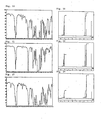
- the polymer was a polycarbonate copolymer comprising 1,1'-bis(4-hydroxyphenyl)-m-diisopropylbenzene and 2,2-bis(4-hydroxy-3-tert-butylphenyl)propane in a ratio of 9:1.
- the devices used in the measurement were an IR spectrometer (IR-810; a product of Nippon Bunk6 Co.), a ! H-NMR device JNM-GX-270 (a product of JEOL, Ltd.) and a DSC [(differential scanning calorimeter (Perkin-Elmer 2C)].
- the photoelasticity constant was determined with a device made by the present inventors. The photoelasticity constant was determined by applying various tensile stresses to test pieces (50 mm x 10 mm X 1 mm) lengthwise, measuring the double refraction, putting the value in the above-mentioned formula (1) and determining the photoelasticity constant from the gradient.
- the photoelasticity constant of 2,2-bis(4-hydroxyphenyl)propane polycarbonate was 82 Brewsters (10 12 m 2 /N).
- a three-necked flask was provided with a stirrer, thermometer, gas-inlet tube and gas-outlet tube.
- 374 parts (90 molar %) of 1,1'-bis(4-hydroxyphenyl)-m-diisopropylbenzene and 41 parts (10 molar %) of 2,2-bis-(4-hydroxy-3-tert-butylphenyl)propane were dissolved in a 10 % aqueous sodium hydroxide solution.
- Dichloromethane was added to the solution thus prepared.
- Gaseous phosgene was introduced thereinto under vigorous stirring. Phosgene was introduced from a bomb into the flask through an empty gas washing bottle, a gas washing bottle containing water and an empty gas washing bottle sequentially.
- the reaction temperature was kept below 25°C with water during the introduction of gaseous phosgene. As the condensation reaction proceeded, the solution became viscous. Phosgene was introduced thereinto until yellow color of phosgene/hydrogen chloride complex no more disappeared. After completion of the reaction, the reaction solution was poured into methanol, the mixture was filtered and the filtration residue was washed with water. This procedure was repeated. The polycarbonate thus formed in the form of a solution in dichloromethane was reprecipitated from methanol to purify the same.
- the solution viscosity of the product was determined using dichloromethane as the solvent at 20°C.
- the viscosity-average molecular weight M v calculated from the solution viscosity was 27,500. From the fact that the results similar to those obtained in Example 25 were obtained by the instrumental analysis conducted in the same manner as in Example 25, the formed polymer was identified with a polycarbonate copolymer comprising 1,1'-bis(4-hydroxyphenyl)-m-diisopropylbenzene and 2,2-bis(4-hydroxy-3-tert-butylphenyl)propane in a ratio of 9:1.
- the polymer was a polycarbonate copolymer comprising 1,1'-bis(4-hydroxyphenyl)-m-diisopropylbenzene and 2,2-bis(4-hydroxy-3-tert-butylphenyl)propane in a ratio of 1:1.
- a three-necked flask was provided with a stirrer, thermometer, gas-inlet tube and gas-outlet tube.
- 208 parts (50 molar %) of 1,1'-bis(4-hydroxyphenyl)-m-diisopropylbenzene and 204 parts (50 molar %) of 2,2- bis(4-hydroxy-3-tert-butylphenyl)propane were dissolved in a 10 % aqueous sodium hydroxide solution.
- Dichloromethane was added to the solution thus prepared.
- Gaseous phosgene was introduced thereinto under vigorous stirring.
- Phosgene was introduced from a bomb into the flask through an empty gas-washing bottle, a gas washing bottle containing water and an empty gas washing bottle sequentially.
- the reaction temperature was kept below 25°C with water during the introduction of gaseous phosgene.
- the solution became viscous.
- Phosgene was introduced thereinto until yellow color of phosgene/hydrogen chloride complex no more disappeared.
- the reaction solution was poured into methanol, the mixture was filtered and the filtration residue was washed with water. This procedure was repeated.
- the polycarbonate thus formed in the form of a solution in dichloromethane was reprecipitated from methanol to purify the same.
- the solution viscosity of the product was determined using dichloromethane as the solvent at 20°C.
- the viscosity-average molecular weight Mv calculated from the solution viscosity was 31,000. From the fact that the results similar to those obtained in Example 27 were obtained by the instrumental analysis conducted in the same manner as in Example 27, the formed polymer was identified with a polycarbonate copolymer comprising 1,1'-bis(4-hydroxyphenyl)-m-diisopropylbenzene and 2,2-bis(4-hydroxy-3-tert-butylphenyl)propane in a ratio of 1:1.
- the polymer was a polycarbonate copolymer comprising 1.1'-bis(4-hydroxyphenyl)-m-diisopropylbenzene and 2,2-bis(4-hydroxy-3-tert-butylphenyl)propane in a ratio of 3:17.
- a three-necked flask was provided with a stirrer, thermometer, gas-inlet tube and gas-outlet tube.
- 63 parts (15 molar %) of 1,1'-bis(4-hydroxyphenyl)-m-diisopropylbenzene and 347 parts (85 molar %) of 2,2- bis(4-hydroxy-3-tert-butylphenyl)propane were dissolved in a 10 % aqueous sodium hydroxide solution.
- Dichloromethane was added to the solution thus prepared.
- Gaseous phosgene was introduced thereinto under vigorous stirring.
- Phosgene was introduced from a bomb into the flask through an empty gas-washing bottle, a gas washing bottle containing was and an empty gas washing bottled sequentially.
- the reaction temperature was kept below 25°C with water during the introduction of gaseous phosgene.
- the solution became viscous.
- Phosgene was introduced thereinto until yellow color of phosgene/hydrogen chloride complex no more disappeared.
- the reaction solution was poured into methanol, the mixture was filtered and the filtration residue was washed with water. This procedure was repeated.
- the polycarbonate thus formed in the form of a solution in dichloromethane was reprecipitated from methanol to purify the same.
- the solution viscosity of the product was determined using dichloromethane as the solvent at 20°C.
- the viscosity-average molecular weight 5v calculated from the solution viscosity was 29,500. From the fact that the results similar to those obtained in Example 29 were obtained by the instrumental analysis conducted in the same manner as in Example 29, the formed polymer was identified with a polycarbonate copolymer comprising 1,1'-bis(4-hydroxyphenyl)-m-diisopropylbenzene and 2,2-bis(4-hydroxy-3-tert-butylphenyl)propane in a ratio of 3:17.
- the viscosity-average molecular weight was determined with measurement of an intrinsic viscosity and the below shown formula, corresponding to that of bisphenol-A polycarbonate.
- [ ⁇ ] 1 . 11 ⁇ 10 M 0.82 [E. Miller & O. Bayer, U.S.P. 2,999,844 (1961)] which represents the relationship between the molecular weight M and the intrinsic viscosity [71] of bisphenol-A polycarbonate measured at 20°C using methylene chloride solution.
- the photoelasticity constant was obtained by substituting the formula (1) above for varied amounts of tensile stress applied in the longitudinal direction of a sample measuring 50 x 10 1 1 mm.
- a 3-1 three-necked flask was charged with 145 parts by weight (50 mol%) of 2,2-bis(4-hydroxyphenyl)-butane, 204 parts by weight (50 mol%) of 2,2-bis(4-hydroxy-3-tert-butylphenyl)propane, and 264 parts by weight of diphenyl carbonate. Deaeration and purging with a nitrogen gas were each repeated five times. Thereafter, the mixture was molten on a silicone bath at 160°C while introducing a nitrogen gas thereinto.
- a solution prepared by dissolving potassium borohydride as a carbonation catalyst in phenol (in an amount of 10 3 mol% based on the total amount of the bisphenols fed) was added to the molten mixture, followed by stirring in a nitrogen atmosphere at 160°C for 30 min.
- the mixture was then stirred at the same temperature under a pressure of 100 Torr for 30 min and then allowed to react at the same temperature under a pressure of 50 Torr for 60 min.
- the reaction mixture was gradually heated to 220°C, followed by reaction at that temperature for 60 min. 80% of the theoretical amount of phenol to be distilled was distilled away in the reactions up to this stage. Thereafter, the reaction was allowed to proceed at the same temperature under a reduced pressure of 10 Torr for 40 min.
- the temperature was gradually raised to 270°C, followed by reaction at that temperature for 30 min. Further, the reaction was allowed to proceed at the same temperature under a reduced pressure of 5 Torr for 30 min, thereby distilling away phenol in an amount substantially corresponding to the theoretical amount of phenol to be distilled. Thus, the step of pre-condensation was completed. Subsequently, the condensation was conducted at the same temperature under a pressure of 0.1 to 0.3 Torr for 2 hr. The resulting polymer as a product was taken out in a nitrogen gas atmosphere and allowed to cool. The solution viscosity of the polymer was determined at 20°C using dichloromethane as a solvent. The viscosity-average molecular weight ( M v ) of the polymer was calculated based on the value thus obtained and found to be 19,500.
- a three-necked flask was provided with a stirrer, a thermometer, a gas inlet tube, and an exhaust tube.
- 145 parts by weight of 2,2-bis(4-hydroxyphenyl)-4-methylpentane and 204 parts by weight of 2,2-bis(4-hydroxy-3-tert-butylphenyl)propane were dissolved in 10 wt.% aqueous solution of sodium hydroxide.
- Dichloromethane was added to the resulting solution.
- a phosgene gas was fed into the solution with vigorous stirring. Phosgene was fed into the flask from a cylinder through an empty scrubbing bottle, a scrubbing bottle containing water and an empty scrubbing bottle in that order.
- the reaction temperature was kept at 25°C or below during the supply of phosgene while cooling the flask with water. As the condensation reaction proceeded, the viscosity of the solution was increased. After the completion of the reaction, the reaction mixture was poured into methanol. The mixture was filtered, followed by repetition of washing with water. Polycarbonate thus obtained was reprecipitated from a dichloromethane solution with methanol to allow it to purify. Thereafter, the purified polymer was sufficiently dried. The solution viscosity of the polymer was then determined at 20°C using dichloromethane as a solvent. The viscosity-average molecular weight ( M v ) of the polymer was calculated based on the value thus obtained and found to be 20,000.
- a 3-t three-necked flask was charged with 162 parts by weight (50 mol%) of 2,2-bis(4-hydroxyphenyl)-4-methylpentane, 204 parts by weight (50 mol%) of 2,2-bis(4-hydroxy-3-tert-butylphenyl)propane, and 264 parts by weight of diphenyl carbonate. Deaeration and purging with a nitrogen gas were each repeated five times. Thereafter, the mixture was molten on a silicone bath at 160°C while introducing a nitrogen gas thereinto.
- a solution prepared by dissolving potassium borohydride as a carbonation catalyst in phenol (in an amount of 10 3 mol% based on the total amount of the bisphenols fed) was added to the molten mixture, followed by stirring in a nitrogen atmosphere at 160°C for 30 min.
- the mixture was then stirred at the same temperature under a pressure of 100 Torr for 30 min and then allowed to react at the same temperature under a pressure of 50 Torr for 60 min.
- the reaction mixture was gradually heated to 220°C, followed by reaction at that temperature for 60 min. 80% of the theoretical amount of phenol to be distilled was distilled away in the reactions up to this stage. Thereafter, the reaction was allowed to proceed at the same temperature under a reduced pressure of 10 Torr for 40 min.
- the temperature was gradually raised to 270°C, followed by reaction at that temperature for 30 min. Further, the reaction was allowed to proceed at the same temperature under a reduced pressure of 5 Torr for 30 min, thereby distilling away phenol in an amount substantially corresponding to the theoretical amount of phenol to be distilled. Thus, the step of pre-condensation was completed. Subsequently, the condensation was conducted at the same temperature under a pressure of 0.1 to 0.3 Torr for 2 hr. The resulting polymer as a product was taken out in a nitrogen gas atmosphere and allowed to cool. The solution viscosity of the polymer was determined at 20°C using dichloromethane as a solvent. The viscosity-average molecular weight ( M v) of the polymer was calculated based on the value thus obtained and found to be 18,000.
- a three-necked flask was provided with a stirrer, a thermometer, a gas inlet tube, and an exhaust tube.
- 162 parts by weight of 2,2-bis(4-hydroxyphenyl)-4-methylpentane and 204 parts by weight of 2,2-bis(4-hydroxy-3-tert-butylphenyl)propane were dissolved in dichloromethane.
- a 10 wt% aqueous solution of sodium hydroxide was added to the resulting solution.
- a phosgene gas was fed into the solution with vigorous stirring. Phosgene was fed into the flask from a cylinder through an empty scrubbing bottle, a scrubbing bottle containing water and an empty scrubbing bottle in that order.
- the reaction temperature was kept at 25°C or below during the supply of phosgene while cooling the flask with water. As the condensation reaction proceeded, the viscosity of the solution was increased. Phosgene was further supplied until a yellow color derived from a phosgene-hydrogen chloride complex disappeared. After the completion of the reaction, the reaction mixture was poured into methanol. The mixture was filtered, followed by repetition of washing with water. Polycarbonate thus obtained was reprecipitated from a dichloromethane solution with methanol to allow it to purify. Thereafter, the purified polymer was sufficiently dried. The solution viscosity of the polymer was then determined at 20°C using dichloromethane as a solvent. The viscosity-average molecular weight ( M v ) of the polymer was calculated based on the value thus obtained and found to be 19,800.
- a 3-t three-necked flask was charged with 179 parts by weight (50 mol%) of 2,2-bis(4-hydroxyphenyl)-octane, 204 parts by weight (50 mol%) of 2,2-bis(4-hydroxy-3-tert-butylphenyl)propane, and 264 parts by weight of diphenyl carbonate. Deaeration and purging with a nitrogen gas were each repeated five times. Thereafter, the mixture was molten on a silicone bath at 160°C while introducing a nitrogen gas thereinto.
- a solution prepared by dissolving potassium borohydride as a carbonation catalyst in phenol (in an amount of 10 3 mol% based on the total amount of the bisphenols fed) was added to the molten mixture, followed by stirring in a nitrogen atmosphere at 160°C for 30 min.
- the mixture was then stirred at the same temperature under a pressure of 100 Torr for 30 min and then allowed to react at the same temperature under a pressure of 50 Torr for 60 min.
- the reaction mixture was gradually heated to 220°C, followed by reaction at that temperature for 60 min. 80% of the theoretical amount of phenol to be distilled was distilled away in the reactions up to this stage. Thereafter, the reaction was allowed to proceed at the same temperature under a reduced pressure of 10 Torr for 40 min.
- the temperature was gradually raised to 270°C, followed by reaction at that temperature for 30 min. Further, the reaction was allowed to proceed at the same temperature under a reduced pressure of 5 Torr for 30 min, thereby distilling away phenol in an amount substantially corresponding to the theoretical amount of phenol to be distilled. Thus, the step of pre-condensation was completed. Subsequently, the condensation was conducted at the same temperature under a pressure of 0.1 to 0.3 Torr for 2 hr. The resulting polymer as a product was taken out in a nitrogen gas atmosphere and allowed to cool. The solution viscosity of the polymer was determined at 20°C using dichloromethane as a solvent. The viscosity-average molecular weight ( M v) of the polymer was calculated based on the value thus obtained and found to be 18,000.
- a three-necked flask was provided with a stirrer, a thermometer, a gas inlet tube, and an exhaust tube. 179 parts by weight of 2,2-bis(4-hydroxyphenyi)octane and 204 parts by weight of 2,2-bis(4-hydroxy-3-tert-butylphenyl)propane were dissolved in dichloromethane. A 10 wt% aqueous solution of sodium hydroxide was added to the resulting solution. A phosgene gas was fed into the solution with vigorous stirring. Phosgene was fed into the flask from a cylinder through an empty scrubbing bottle, a scrubbing bottle containing water and an empty scrubbing bottle in that order.
- the reaction temperature was kept at 25°C or below during the supply of phosgene while cooling the flask with water. As the condensation reaction proceeded, the viscosity of the solution was increased. Phosgene was further supplied until a yellow color derived from a phosgene-hydrogen chloride complex disappeared. After the completion of the reaction, the reaction mixture was poured into methanol. The mixture was filtered, followed by repetition of washing with water. Polycarbonate thus obtained was reprecipitated from a dichloromethane solution with methanol to allow it to purify. Thereafter, the purified polymer was sufficiently dried. The solution viscosity of the polymer was then determined at 20°C using dichloromethane as a solvent. The viscosity-average molecular weight (t7fv) of the polymer was calculated based on the value thus obtained and found to be 19,000.
- the polycarbonate copolymers as prepared above were each provided with a recording film, followed by evaluation of optical recording characteristics. Specifically, the polycarbonate copolymers as described in Examples 31, 32, 33, 34, 35 and 36 were molded into disk-shaped substrates each having. a diameter of 130 mm and a thickness of 1.2 mm with an injection press (Dynamelter; a product of Meiki Co., Ltd.). A 1,000 A-thick optical magnetic film was formed on the substrates thus obtained with an alloy target composed of Tb 23 . s Fe 64 . 2 C0 12 . 3 (atomic %) in a sputtering device (RF sputtering device; a product of Ulvac Corporation).
- RF sputtering device a product of Ulvac Corporation
- a 3-t three-necked flask was charged with 161 parts by weight (50 mol%) of 1,1-bis(4-hydroxyphenyl)-cyclohexane, 204 parts by weight (50 mol%) of 2,2-bis(4-hydroxy-3-tertbutylphenyl)propane, and 264 parts by weight of diphenyl carbonate. Deaeration and purging with a nitrogen gas were each repeated five times. Thereafter, the mixture was molten on a silicone bath at 160°C while introducing a nitrogen gas thereinto.
- a solution prepared by dissolving potassium borohydride as a carbonation catalyst in phenol (in an amount of 10 3 mol% based on the total amount of the bisphenols fed) was added to the molten mixture, followed by stirring in a nitrogen atmosphere at 160°C for 30 min.
- the mixture was then stirred at the same temperature under a pressure of 100 Torr for 30 min and then allowed to react at the same temperature under a pressure of 50 Torr for 60 min.
- the reaction mixture was gradually heated to 220°C, followed by reaction at that temperature for 60 min. 80% of the theoretical amount of phenol to be distilled was distilled away in the reactions up to this stage. Thereafter, the reaction was allowed to proceed at the same temperature under a reduced pressure of 10 Torr for 30 min.
- the temperature was gradually raised to 270°C, followed by reaction at that temperature for 30 min. Further, the reaction was allowed to proceed at the same temperature under a reduced pressure of 5 Torr for 30 min, thereby distilling away phenol in an amount substantially corresponding to the theoretical amount of phenol to be distilled. Thus, the step of pre-condensation was completed. Subsequently, the condensation was conducted at the same temperature under a pressure of 0.1 to 0.3 Torr for 2 hr. The resulting polymer as a product was taken out in a nitrogen gas atmosphere and allowed to cool. The solution viscosity of the polymer was determined at 20°C using dichloromethane as a solvent. The viscosity-average molecular weight ( M v ) of the polymer was calculated based on the value thus obtained and found to be 20,800.
- a three-necked flask was provided with a stirrer, a thermometer, a gas inlet tube, and an exhaust tube.
- 161 parts by weight of 1,1-bis(4-hydroxyphenyl)cyclohexane and 204 parts by weight of 2,2-bis(4-hydroxy-3-tertbutylphenyl)propane were dissolved in 10 wt.% aqueous solution of sodium hydroxide.
- Dichloromethane was added to the resulting solution.
- a phosgene gas was fed into the solution with vigorous stirring. Phosgene was fed into the flask from a cylinder through an empty scrubbing bottle, a scrubbing bottle containing water and an empty scrubbing bottle in that order.
- the reaction temperature was kept at 25°C or below during the supply of phosgene while cooling the flask with water. As the condensation reaction proceeded, the viscosity of the solution was increased After the completion of the reaction, the reaction mixture was poured into methanol. The mixture was filtered, followed by repetition of washing with water. Polycarbonate thus obtained was reprecipitated from a dichloromethane solution with methanol to allow it to purify. Thereafter, the purified polymer was sufficiently dried. The solution viscosity of the polymer was then determined at 20°C using dischloromethane as a solvent. The viscosity-average molecular weight ( My) of the polymer was calculated based on the value thus obtained and found to be 22,000.
- a 3-t three-necked flask was charged with 102 parts by weight (30 mol%) of 2,2-bis(3,5-dimethyl-4-hydroxyphenyl)propane, 286 parts by weight (70 mol%) of 2,2-bis(4-hydroxy-3-tert-butylphenyl)propane, and 264 parts by weight of diphenyl carbonate. Deaeration and purging with a nitrogen gas were each repeated five times. Thereafter, the mixture was molten on a silicone bath at 160°C while introducing a nitrogen gas thereinto.
- a solution prepared by dissolving potassium borohydride as a carbonation catalyst in phenol (in an amount of 10 3 mol% based on the total amount of the bisphenols fed) was added to the molten mixture, followed by stirring in a nitrogen atmosphere at 160°C for 30 min.
- the mixture was then stirred at the same temperature under a pressure of 100 Torr for 30 min and then allowed to react at the same temperature under a pressure of 50 Torr for 60 min.
- the reaction mixture was gradually heated to 220°C, followed by reaction at that temperature for 60 min. 80% of the theoretical amount of phenol to be distilled was distilled away in the reactions up to this stage. Thereafter, the reaction was allowed to proceed at the same temperature under a reduced pressure of 10 Torr for 60 min.
- the temperature was gradually raised to 270°C, followed by reaction at that temperature for 40 min. Further, the reaction was allowed to proceed at the same temperature under a reduced pressure of 5 Torr for 30 min, thereby distilling away phenol in an amount substantially corresponding to the theoretical amount of phenol to be distilled. Thus, the step of pre-condensation was completed. Subsequently, the condensation was conducted at the same temperature under a pressure of 0.1 to 0.3 Torr for 2 hr. The resulting polymer as a product was taken out in a nitrogen gas atmosphere and allowed to cool. The solution viscosity of the polymer was determined at 20°C using dichloromethane as a solvent. The viscosity-average molecular weight ( M v ) of the polymer was calculated based on the value thus obtained and found to be 16,000.
- a three-necked flask was provided with a stirrer, a thermometer, a gas inlet tube, and an exhaust tube.
- 102 parts by weight of 2,2-bis(3,5-dimethyl-4-hydroxyphenyl)propane and 286 parts by weight of 2,2-bis(4-hydroxy-3-tert-butyiphenyi)propane were dissolved in 10 wt.% aqueous solution of sodium hydroxide.
- Dichloromethane was added to the resulting solution.
- a phosgene gas was fed into the solution with vigorous stirring..
- Phosgene was fed into the flask from a cylinder through an empty scrubbing bottle, a scrubbing bottle containing water and an empty scrubbing bottle in that order.
- the reaction temperature was kept at 25°C or below during the supply of phosgene while cooling the flask with water. As the condensation reaction proceeded, the viscosity of the solution was increased. After the completion of the reaction, the reaction mixture was poured into methanol. The mixture was filtered, followed by repetition of washing with water. Polycarbonate thus obtained was reprecipitated from a dichloromethane solution with methanol to allow it to purify. Thereafter, the purified polymer was sufficiently dried. The solution viscosity of the polymer was then determined at 20°C using dichloromethane as a solvent. The viscosity-average molecular weight ( M v ) of the polymer was calculated based on the value thus obtained and found to be 19,000.
Landscapes
- Chemical & Material Sciences (AREA)
- Health & Medical Sciences (AREA)
- Chemical Kinetics & Catalysis (AREA)
- Medicinal Chemistry (AREA)
- Polymers & Plastics (AREA)
- Organic Chemistry (AREA)
- Polyesters Or Polycarbonates (AREA)
- Optical Record Carriers And Manufacture Thereof (AREA)
Applications Claiming Priority (16)
| Application Number | Priority Date | Filing Date | Title |
|---|---|---|---|
| JP301403/86 | 1986-12-19 | ||
| JP61301403A JP2606832B2 (ja) | 1986-12-19 | 1986-12-19 | 光学式デイスク |
| JP30140786A JPS63154732A (ja) | 1986-12-19 | 1986-12-19 | 光学式デイスク |
| JP301408/86 | 1986-12-19 | ||
| JP301407/86 | 1986-12-19 | ||
| JP30140886A JPS63154733A (ja) | 1986-12-19 | 1986-12-19 | 光学式デイスク |
| JP62007932A JP2613038B2 (ja) | 1987-01-16 | 1987-01-16 | ポリカーボネート共重合体 |
| JP7932/87 | 1987-01-16 | ||
| JP62020251A JPS63189431A (ja) | 1987-01-30 | 1987-01-30 | ポリカ−ボネ−ト共重合体 |
| JP62020250A JP2559391B2 (ja) | 1987-01-30 | 1987-01-30 | ポリカ−ボネ−ト共重合体 |
| JP62020252A JP2575683B2 (ja) | 1987-01-30 | 1987-01-30 | ポリカ−ボネ−ト共重合体 |
| JP62020253A JPS63189433A (ja) | 1987-01-30 | 1987-01-30 | ポリカ−ボネ−ト共重合体 |
| JP20253/87 | 1987-01-30 | ||
| JP20252/87 | 1987-01-30 | ||
| JP20251/87 | 1987-01-30 | ||
| JP20250/87 | 1987-01-30 |
Publications (3)
| Publication Number | Publication Date |
|---|---|
| EP0274092A2 true EP0274092A2 (de) | 1988-07-13 |
| EP0274092A3 EP0274092A3 (en) | 1988-11-02 |
| EP0274092B1 EP0274092B1 (de) | 1992-11-25 |
Family
ID=27571625
Family Applications (1)
| Application Number | Title | Priority Date | Filing Date |
|---|---|---|---|
| EP19870118582 Expired - Lifetime EP0274092B1 (de) | 1986-12-19 | 1987-12-15 | Polycarbonatcopolymer und optische Platte |
Country Status (3)
| Country | Link |
|---|---|
| US (1) | US4831110A (de) |
| EP (1) | EP0274092B1 (de) |
| DE (1) | DE3782815T2 (de) |
Cited By (9)
| Publication number | Priority date | Publication date | Assignee | Title |
|---|---|---|---|---|
| EP0359953A1 (de) * | 1988-08-12 | 1990-03-28 | Bayer Ag | Dihydroxydiphenylcycloalkane, ihre Herstellung und ihre Verwendung zur Herstellung von hochmolekularen Polycarbonaten |
| EP0382250A3 (de) * | 1989-02-10 | 1991-01-30 | Daicel Chemical Industries, Ltd. | Verfahren zur Herstellung von Polycarbonat |
| EP0362792A3 (de) * | 1988-10-05 | 1991-04-03 | Daicel Chemical Industries, Ltd. | Aromatisches Polycarbonat-Copolymer und optische Platte mit solchem Substrat |
| EP0402678A3 (de) * | 1989-06-06 | 1992-01-29 | Bayer Ag | Verwendung von Polycarbonatmischungen in der Optik |
| EP0535261A1 (de) * | 1990-06-14 | 1993-04-07 | Daicel Chemical Industries, Ltd. | Verfahren zur Herstellung von Polycarbonaten |
| US5227458A (en) * | 1988-08-12 | 1993-07-13 | Bayer Aktiengesellschaft | Polycarbonate from dihydroxydiphenyl cycloalkane |
| EP1028420A3 (de) * | 1999-02-04 | 2003-06-11 | Sony Corporation | Magnetooptisches Aufzeichnungsmedium |
| US6991889B2 (en) * | 2001-03-14 | 2006-01-31 | General Electric Company | Limited play data storage media and method for limiting access to data thereon |
| US7202292B2 (en) | 2003-07-15 | 2007-04-10 | General Electric Company | Colored polymeric resin composition with 1,8-diaminoanthraquinone derivative, article made therefrom, and method for making the same |
Families Citing this family (4)
| Publication number | Priority date | Publication date | Assignee | Title |
|---|---|---|---|---|
| US5301145A (en) * | 1987-07-13 | 1994-04-05 | Sharp Kabushiki Kaisha | Method and apparatus for recording and reading information, and an information recording element |
| US4978578A (en) * | 1988-07-27 | 1990-12-18 | Daicel Chemical Industries, Ltd. | Optical disk of polycarbonate |
| US7087282B2 (en) | 2003-07-15 | 2006-08-08 | General Electric Company | Limited play optical storage medium, method for making the same |
| WO2012091701A1 (en) * | 2010-12-29 | 2012-07-05 | Empire Technology Development Llc | Substances for use as bisphenol a substitutes |
Family Cites Families (5)
| Publication number | Priority date | Publication date | Assignee | Title |
|---|---|---|---|---|
| DE2701173C2 (de) * | 1977-01-13 | 1983-02-10 | Bayer Ag, 5090 Leverkusen | Verwendung von Polycarbonaten zur Herstellung von Linsen für Photo- und Filmkameras |
| US4237259A (en) * | 1978-12-06 | 1980-12-02 | General Electric Company | Organic materials having meta, para-isopropylidene diphenoxy units and method |
| JPS58179224A (ja) * | 1982-03-18 | 1983-10-20 | Konishiroku Photo Ind Co Ltd | 光学用樹脂組成物および光学用素子 |
| JPH0662752B2 (ja) * | 1984-08-24 | 1994-08-17 | 三菱化成株式会社 | 光情報材料 |
| JPH0649750B2 (ja) * | 1984-08-24 | 1994-06-29 | 三菱化成株式会社 | ポリカーボネートより成る射出成形材料 |
-
1987
- 1987-12-03 US US07/128,497 patent/US4831110A/en not_active Expired - Fee Related
- 1987-12-15 EP EP19870118582 patent/EP0274092B1/de not_active Expired - Lifetime
- 1987-12-15 DE DE8787118582T patent/DE3782815T2/de not_active Expired - Fee Related
Cited By (12)
| Publication number | Priority date | Publication date | Assignee | Title |
|---|---|---|---|---|
| EP0359953A1 (de) * | 1988-08-12 | 1990-03-28 | Bayer Ag | Dihydroxydiphenylcycloalkane, ihre Herstellung und ihre Verwendung zur Herstellung von hochmolekularen Polycarbonaten |
| US4982014A (en) * | 1988-08-12 | 1991-01-01 | Bayer Aktiengesellschaft | Dihydroxydiphenyl cycloalkanes, their production and their use for the production of high molecular weight polycarbonates |
| US5126428A (en) * | 1988-08-12 | 1992-06-30 | Bayer Aktiengesellschaft | Polycarbonate from dihydroxy diphenyl cycloalkane |
| US5227458A (en) * | 1988-08-12 | 1993-07-13 | Bayer Aktiengesellschaft | Polycarbonate from dihydroxydiphenyl cycloalkane |
| EP0362792A3 (de) * | 1988-10-05 | 1991-04-03 | Daicel Chemical Industries, Ltd. | Aromatisches Polycarbonat-Copolymer und optische Platte mit solchem Substrat |
| EP0382250A3 (de) * | 1989-02-10 | 1991-01-30 | Daicel Chemical Industries, Ltd. | Verfahren zur Herstellung von Polycarbonat |
| EP0402678A3 (de) * | 1989-06-06 | 1992-01-29 | Bayer Ag | Verwendung von Polycarbonatmischungen in der Optik |
| EP0535261A1 (de) * | 1990-06-14 | 1993-04-07 | Daicel Chemical Industries, Ltd. | Verfahren zur Herstellung von Polycarbonaten |
| EP1028420A3 (de) * | 1999-02-04 | 2003-06-11 | Sony Corporation | Magnetooptisches Aufzeichnungsmedium |
| US6991889B2 (en) * | 2001-03-14 | 2006-01-31 | General Electric Company | Limited play data storage media and method for limiting access to data thereon |
| US7419762B2 (en) | 2001-03-14 | 2008-09-02 | General Electric Company | Media and method for limiting access to data thereon |
| US7202292B2 (en) | 2003-07-15 | 2007-04-10 | General Electric Company | Colored polymeric resin composition with 1,8-diaminoanthraquinone derivative, article made therefrom, and method for making the same |
Also Published As
| Publication number | Publication date |
|---|---|
| DE3782815T2 (de) | 1993-04-01 |
| EP0274092B1 (de) | 1992-11-25 |
| DE3782815D1 (en) | 1993-01-07 |
| US4831110A (en) | 1989-05-16 |
| EP0274092A3 (en) | 1988-11-02 |
Similar Documents
| Publication | Publication Date | Title |
|---|---|---|
| US4831110A (en) | Co-polycarbonate copolymer from 2,2-bis(4-hydroxy-3-tertiary butyl phenyl)propane and optical disk | |
| JPS6389539A (ja) | 光学式デイスク | |
| JPS63223034A (ja) | ポリカ−ボネ−ト共重合体 | |
| EP0262557B1 (de) | Polycarbonat und optische Platte hieraus | |
| US5173347A (en) | Polycarbonate and optical disk therefrom | |
| US4978578A (en) | Optical disk of polycarbonate | |
| EP0362792A2 (de) | Aromatisches Polycarbonat-Copolymer und optische Platte mit solchem Substrat | |
| JPS63207821A (ja) | 芳香族ポリカ−ボネ−ト三元共重合体 | |
| JPS6389529A (ja) | 光学式デイスク | |
| JPS6389540A (ja) | 光学式デイスク | |
| JPS63207820A (ja) | 芳香族ポリカ−ボネ−ト三元共重合体 | |
| JP2552120B2 (ja) | 光学式デイスク | |
| JPH01178519A (ja) | 光学材料用樹脂 | |
| JPH02128336A (ja) | 光学式ディクス基板用芳香族ポリカーボネート共重合体 | |
| JPH01101327A (ja) | 芳香族ポリカーボネート三元共重合体 | |
| JP2513717B2 (ja) | ポリカ−ボネ−ト重合体 | |
| JP2596732B2 (ja) | 光学式デイスク | |
| JPS63199734A (ja) | 芳香族ポリカ−ボネ−ト三元共重合体 | |
| JPS63207822A (ja) | 芳香族ポリカ−ボネ−ト三元共重合体 | |
| JPS63199731A (ja) | 芳香族ポリカ−ボネ−ト三元共重合体 | |
| JPS63193921A (ja) | 芳香族ポリカ−ボネ−ト三元共重合体 | |
| JPS6389527A (ja) | 光学式デイスク | |
| JPS63199728A (ja) | 芳香族ポリカ−ボネ−ト三元共重合体 | |
| JPS63277232A (ja) | 芳香族ポリカ−ボネ−ト三元共重合体 | |
| JPS63193918A (ja) | 芳香族ポリカ−ボネ−ト三元共重合体 |
Legal Events
| Date | Code | Title | Description |
|---|---|---|---|
| PUAI | Public reference made under article 153(3) epc to a published international application that has entered the european phase |
Free format text: ORIGINAL CODE: 0009012 |
|
| AK | Designated contracting states |
Kind code of ref document: A2 Designated state(s): DE FR GB NL |
|
| PUAL | Search report despatched |
Free format text: ORIGINAL CODE: 0009013 |
|
| AK | Designated contracting states |
Kind code of ref document: A3 Designated state(s): DE FR GB NL |
|
| 17P | Request for examination filed |
Effective date: 19890224 |
|
| 17Q | First examination report despatched |
Effective date: 19890824 |
|
| GRAA | (expected) grant |
Free format text: ORIGINAL CODE: 0009210 |
|
| AK | Designated contracting states |
Kind code of ref document: B1 Designated state(s): DE FR GB NL |
|
| REF | Corresponds to: |
Ref document number: 3782815 Country of ref document: DE Date of ref document: 19930107 |
|
| ET | Fr: translation filed | ||
| PLBE | No opposition filed within time limit |
Free format text: ORIGINAL CODE: 0009261 |
|
| STAA | Information on the status of an ep patent application or granted ep patent |
Free format text: STATUS: NO OPPOSITION FILED WITHIN TIME LIMIT |
|
| 26N | No opposition filed | ||
| PGFP | Annual fee paid to national office [announced via postgrant information from national office to epo] |
Ref country code: GB Payment date: 19961206 Year of fee payment: 10 |
|
| PGFP | Annual fee paid to national office [announced via postgrant information from national office to epo] |
Ref country code: FR Payment date: 19961211 Year of fee payment: 10 |
|
| PGFP | Annual fee paid to national office [announced via postgrant information from national office to epo] |
Ref country code: DE Payment date: 19961223 Year of fee payment: 10 |
|
| PGFP | Annual fee paid to national office [announced via postgrant information from national office to epo] |
Ref country code: NL Payment date: 19961231 Year of fee payment: 10 |
|
| PG25 | Lapsed in a contracting state [announced via postgrant information from national office to epo] |
Ref country code: GB Free format text: LAPSE BECAUSE OF NON-PAYMENT OF DUE FEES Effective date: 19971215 |
|
| PG25 | Lapsed in a contracting state [announced via postgrant information from national office to epo] |
Ref country code: FR Free format text: THE PATENT HAS BEEN ANNULLED BY A DECISION OF A NATIONAL AUTHORITY Effective date: 19971231 |
|
| PG25 | Lapsed in a contracting state [announced via postgrant information from national office to epo] |
Ref country code: NL Free format text: LAPSE BECAUSE OF NON-PAYMENT OF DUE FEES Effective date: 19980701 |
|
| GBPC | Gb: european patent ceased through non-payment of renewal fee |
Effective date: 19971215 |
|
| NLV4 | Nl: lapsed or anulled due to non-payment of the annual fee |
Effective date: 19980701 |
|
| PG25 | Lapsed in a contracting state [announced via postgrant information from national office to epo] |
Ref country code: DE Free format text: LAPSE BECAUSE OF NON-PAYMENT OF DUE FEES Effective date: 19980901 |
|
| REG | Reference to a national code |
Ref country code: FR Ref legal event code: ST |