EP0458959B1 - B-ketten-analoge des von blutplättchen abstammenden wachstumsfaktors und verfahren zu deren homogener herstellung - Google Patents
B-ketten-analoge des von blutplättchen abstammenden wachstumsfaktors und verfahren zu deren homogener herstellung Download PDFInfo
- Publication number
- EP0458959B1 EP0458959B1 EP91902366A EP91902366A EP0458959B1 EP 0458959 B1 EP0458959 B1 EP 0458959B1 EP 91902366 A EP91902366 A EP 91902366A EP 91902366 A EP91902366 A EP 91902366A EP 0458959 B1 EP0458959 B1 EP 0458959B1
- Authority
- EP
- European Patent Office
- Prior art keywords
- amino acid
- codon
- pdgf
- recombinant protein
- sequence
- Prior art date
- Legal status (The legal status is an assumption and is not a legal conclusion. Google has not performed a legal analysis and makes no representation as to the accuracy of the status listed.)
- Expired - Lifetime
Links
- 238000000034 method Methods 0.000 title claims abstract description 47
- 238000004519 manufacturing process Methods 0.000 title claims abstract description 16
- 102100040990 Platelet-derived growth factor subunit B Human genes 0.000 title claims 2
- 101710103494 Platelet-derived growth factor subunit B Proteins 0.000 title claims 2
- 150000001413 amino acids Chemical class 0.000 claims abstract description 156
- 108020004705 Codon Proteins 0.000 claims abstract description 97
- 108090000623 proteins and genes Proteins 0.000 claims abstract description 86
- 102000004169 proteins and genes Human genes 0.000 claims abstract description 82
- 239000002243 precursor Substances 0.000 claims abstract description 50
- 108700021652 sis Genes Proteins 0.000 claims abstract description 48
- 108091026890 Coding region Proteins 0.000 claims abstract description 34
- 230000004071 biological effect Effects 0.000 claims abstract description 7
- 102000007056 Recombinant Fusion Proteins Human genes 0.000 claims description 25
- 108010008281 Recombinant Fusion Proteins Proteins 0.000 claims description 25
- 125000003275 alpha amino acid group Chemical group 0.000 claims description 24
- 230000002297 mitogenic effect Effects 0.000 claims description 14
- 230000000694 effects Effects 0.000 claims description 13
- 206010052428 Wound Diseases 0.000 claims description 11
- 208000027418 Wounds and injury Diseases 0.000 claims description 11
- 239000008194 pharmaceutical composition Substances 0.000 claims description 7
- 238000002360 preparation method Methods 0.000 claims description 7
- 239000002253 acid Substances 0.000 claims description 5
- 125000000637 arginyl group Chemical group N[C@@H](CCCNC(N)=N)C(=O)* 0.000 claims description 4
- 230000001131 transforming effect Effects 0.000 claims description 4
- 239000003937 drug carrier Substances 0.000 claims description 2
- 108010019674 Proto-Oncogene Proteins c-sis Proteins 0.000 claims 5
- 150000001412 amines Chemical class 0.000 claims 1
- 102000010780 Platelet-Derived Growth Factor Human genes 0.000 abstract description 141
- 108010038512 Platelet-Derived Growth Factor Proteins 0.000 abstract description 141
- 241000588724 Escherichia coli Species 0.000 abstract description 27
- 235000001014 amino acid Nutrition 0.000 description 106
- 229940024606 amino acid Drugs 0.000 description 103
- 235000018102 proteins Nutrition 0.000 description 76
- 210000004027 cell Anatomy 0.000 description 68
- 108020004414 DNA Proteins 0.000 description 48
- 239000000047 product Substances 0.000 description 38
- 239000012634 fragment Substances 0.000 description 29
- LFQSCWFLJHTTHZ-UHFFFAOYSA-N Ethanol Chemical compound CCO LFQSCWFLJHTTHZ-UHFFFAOYSA-N 0.000 description 27
- 239000011347 resin Substances 0.000 description 23
- 229920005989 resin Polymers 0.000 description 23
- 239000000178 monomer Substances 0.000 description 20
- XSQUKJJJFZCRTK-UHFFFAOYSA-N Urea Chemical compound NC(N)=O XSQUKJJJFZCRTK-UHFFFAOYSA-N 0.000 description 16
- 108091008816 c-sis Proteins 0.000 description 16
- 239000000539 dimer Substances 0.000 description 16
- 239000000710 homodimer Substances 0.000 description 16
- 239000000872 buffer Substances 0.000 description 15
- 125000002924 primary amino group Chemical group [H]N([H])* 0.000 description 15
- 239000000243 solution Substances 0.000 description 14
- 239000000203 mixture Substances 0.000 description 13
- QTBSBXVTEAMEQO-UHFFFAOYSA-N Acetic acid Chemical compound CC(O)=O QTBSBXVTEAMEQO-UHFFFAOYSA-N 0.000 description 12
- HEMHJVSKTPXQMS-UHFFFAOYSA-M Sodium hydroxide Chemical compound [OH-].[Na+] HEMHJVSKTPXQMS-UHFFFAOYSA-M 0.000 description 12
- 102000004196 processed proteins & peptides Human genes 0.000 description 12
- 108090000765 processed proteins & peptides Proteins 0.000 description 12
- VEXZGXHMUGYJMC-UHFFFAOYSA-N Hydrochloric acid Chemical compound Cl VEXZGXHMUGYJMC-UHFFFAOYSA-N 0.000 description 11
- 239000000499 gel Substances 0.000 description 11
- 239000006144 Dulbecco’s modified Eagle's medium Substances 0.000 description 10
- FAPWRFPIFSIZLT-UHFFFAOYSA-M Sodium chloride Chemical compound [Na+].[Cl-] FAPWRFPIFSIZLT-UHFFFAOYSA-M 0.000 description 10
- 239000012528 membrane Substances 0.000 description 10
- 239000008188 pellet Substances 0.000 description 10
- 239000013612 plasmid Substances 0.000 description 10
- DHMQDGOQFOQNFH-UHFFFAOYSA-N Glycine Natural products NCC(O)=O DHMQDGOQFOQNFH-UHFFFAOYSA-N 0.000 description 9
- 210000004899 c-terminal region Anatomy 0.000 description 9
- 210000002950 fibroblast Anatomy 0.000 description 9
- 229920001184 polypeptide Polymers 0.000 description 9
- 235000009697 arginine Nutrition 0.000 description 8
- 239000004202 carbamide Substances 0.000 description 8
- 230000003399 chemotactic effect Effects 0.000 description 8
- 210000004978 chinese hamster ovary cell Anatomy 0.000 description 8
- 239000002609 medium Substances 0.000 description 8
- 239000006228 supernatant Substances 0.000 description 8
- 239000013598 vector Substances 0.000 description 8
- 239000004475 Arginine Substances 0.000 description 7
- 238000012300 Sequence Analysis Methods 0.000 description 7
- 238000004458 analytical method Methods 0.000 description 7
- ODKSFYDXXFIFQN-UHFFFAOYSA-N arginine Natural products OC(=O)C(N)CCCNC(N)=N ODKSFYDXXFIFQN-UHFFFAOYSA-N 0.000 description 7
- 238000006243 chemical reaction Methods 0.000 description 7
- 238000001962 electrophoresis Methods 0.000 description 7
- 230000004048 modification Effects 0.000 description 7
- 238000012986 modification Methods 0.000 description 7
- 210000001616 monocyte Anatomy 0.000 description 7
- 241001646716 Escherichia coli K-12 Species 0.000 description 6
- MTCFGRXMJLQNBG-UHFFFAOYSA-N Serine Natural products OCC(N)C(O)=O MTCFGRXMJLQNBG-UHFFFAOYSA-N 0.000 description 6
- 108020005038 Terminator Codon Proteins 0.000 description 6
- 125000003178 carboxy group Chemical group [H]OC(*)=O 0.000 description 6
- 238000001502 gel electrophoresis Methods 0.000 description 6
- 238000002844 melting Methods 0.000 description 6
- 239000007858 starting material Substances 0.000 description 6
- 238000003756 stirring Methods 0.000 description 6
- 239000000725 suspension Substances 0.000 description 6
- 230000001225 therapeutic effect Effects 0.000 description 6
- 238000011144 upstream manufacturing Methods 0.000 description 6
- 108091003079 Bovine Serum Albumin Proteins 0.000 description 5
- 239000004471 Glycine Substances 0.000 description 5
- 239000007983 Tris buffer Substances 0.000 description 5
- 239000011543 agarose gel Substances 0.000 description 5
- 230000001580 bacterial effect Effects 0.000 description 5
- 230000015572 biosynthetic process Effects 0.000 description 5
- 238000003776 cleavage reaction Methods 0.000 description 5
- 239000003636 conditioned culture medium Substances 0.000 description 5
- 230000029087 digestion Effects 0.000 description 5
- 239000013604 expression vector Substances 0.000 description 5
- 239000012091 fetal bovine serum Substances 0.000 description 5
- 238000009472 formulation Methods 0.000 description 5
- 238000000338 in vitro Methods 0.000 description 5
- 238000002703 mutagenesis Methods 0.000 description 5
- 231100000350 mutagenesis Toxicity 0.000 description 5
- 238000012545 processing Methods 0.000 description 5
- 102000005962 receptors Human genes 0.000 description 5
- 108020003175 receptors Proteins 0.000 description 5
- 230000009467 reduction Effects 0.000 description 5
- 108091008146 restriction endonucleases Proteins 0.000 description 5
- 230000007017 scission Effects 0.000 description 5
- 239000011780 sodium chloride Substances 0.000 description 5
- LENZDBCJOHFCAS-UHFFFAOYSA-N tris Chemical compound OCC(N)(CO)CO LENZDBCJOHFCAS-UHFFFAOYSA-N 0.000 description 5
- 102000053602 DNA Human genes 0.000 description 4
- AYFVYJQAPQTCCC-GBXIJSLDSA-N L-threonine Chemical compound C[C@@H](O)[C@H](N)C(O)=O AYFVYJQAPQTCCC-GBXIJSLDSA-N 0.000 description 4
- 108091034117 Oligonucleotide Proteins 0.000 description 4
- 108091005804 Peptidases Proteins 0.000 description 4
- NBIIXXVUZAFLBC-UHFFFAOYSA-N Phosphoric acid Chemical compound OP(O)(O)=O NBIIXXVUZAFLBC-UHFFFAOYSA-N 0.000 description 4
- 239000004365 Protease Substances 0.000 description 4
- 102100037486 Reverse transcriptase/ribonuclease H Human genes 0.000 description 4
- AYFVYJQAPQTCCC-UHFFFAOYSA-N Threonine Natural products CC(O)C(N)C(O)=O AYFVYJQAPQTCCC-UHFFFAOYSA-N 0.000 description 4
- 239000004473 Threonine Substances 0.000 description 4
- 238000002835 absorbance Methods 0.000 description 4
- 238000003277 amino acid sequence analysis Methods 0.000 description 4
- 238000005119 centrifugation Methods 0.000 description 4
- NKLPQNGYXWVELD-UHFFFAOYSA-M coomassie brilliant blue Chemical compound [Na+].C1=CC(OCC)=CC=C1NC1=CC=C(C(=C2C=CC(C=C2)=[N+](CC)CC=2C=C(C=CC=2)S([O-])(=O)=O)C=2C=CC(=CC=2)N(CC)CC=2C=C(C=CC=2)S([O-])(=O)=O)C=C1 NKLPQNGYXWVELD-UHFFFAOYSA-M 0.000 description 4
- 238000000855 fermentation Methods 0.000 description 4
- 230000004151 fermentation Effects 0.000 description 4
- 210000003000 inclusion body Anatomy 0.000 description 4
- 238000003780 insertion Methods 0.000 description 4
- 230000037431 insertion Effects 0.000 description 4
- 238000009630 liquid culture Methods 0.000 description 4
- 238000013507 mapping Methods 0.000 description 4
- 229930182817 methionine Natural products 0.000 description 4
- 125000001360 methionine group Chemical group N[C@@H](CCSC)C(=O)* 0.000 description 4
- 239000002773 nucleotide Substances 0.000 description 4
- 125000003729 nucleotide group Chemical group 0.000 description 4
- 239000011148 porous material Substances 0.000 description 4
- 230000006337 proteolytic cleavage Effects 0.000 description 4
- 238000000926 separation method Methods 0.000 description 4
- 125000003607 serino group Chemical group [H]N([H])[C@]([H])(C(=O)[*])C(O[H])([H])[H] 0.000 description 4
- 210000002966 serum Anatomy 0.000 description 4
- 238000013519 translation Methods 0.000 description 4
- KFDVPJUYSDEJTH-UHFFFAOYSA-N 4-ethenylpyridine Chemical compound C=CC1=CC=NC=C1 KFDVPJUYSDEJTH-UHFFFAOYSA-N 0.000 description 3
- BWGNESOTFCXPMA-UHFFFAOYSA-N Dihydrogen disulfide Chemical compound SS BWGNESOTFCXPMA-UHFFFAOYSA-N 0.000 description 3
- 108091028043 Nucleic acid sequence Proteins 0.000 description 3
- 240000004808 Saccharomyces cerevisiae Species 0.000 description 3
- 229920002684 Sepharose Polymers 0.000 description 3
- 108020004682 Single-Stranded DNA Proteins 0.000 description 3
- IQFYYKKMVGJFEH-XLPZGREQSA-N Thymidine Chemical compound O=C1NC(=O)C(C)=CN1[C@@H]1O[C@H](CO)[C@@H](O)C1 IQFYYKKMVGJFEH-XLPZGREQSA-N 0.000 description 3
- 241000714205 Woolly monkey sarcoma virus Species 0.000 description 3
- 150000007513 acids Chemical class 0.000 description 3
- 125000000539 amino acid group Chemical group 0.000 description 3
- BFNBIHQBYMNNAN-UHFFFAOYSA-N ammonium sulfate Chemical compound N.N.OS(O)(=O)=O BFNBIHQBYMNNAN-UHFFFAOYSA-N 0.000 description 3
- 229910052921 ammonium sulfate Inorganic materials 0.000 description 3
- 235000011130 ammonium sulphate Nutrition 0.000 description 3
- AVKUERGKIZMTKX-NJBDSQKTSA-N ampicillin Chemical compound C1([C@@H](N)C(=O)N[C@H]2[C@H]3SC([C@@H](N3C2=O)C(O)=O)(C)C)=CC=CC=C1 AVKUERGKIZMTKX-NJBDSQKTSA-N 0.000 description 3
- 229960000723 ampicillin Drugs 0.000 description 3
- 238000003556 assay Methods 0.000 description 3
- 239000002981 blocking agent Substances 0.000 description 3
- 230000035605 chemotaxis Effects 0.000 description 3
- 235000018417 cysteine Nutrition 0.000 description 3
- 125000000151 cysteine group Chemical group N[C@@H](CS)C(=O)* 0.000 description 3
- 239000004615 ingredient Substances 0.000 description 3
- 210000004498 neuroglial cell Anatomy 0.000 description 3
- 229920002401 polyacrylamide Polymers 0.000 description 3
- 230000008569 process Effects 0.000 description 3
- 238000012163 sequencing technique Methods 0.000 description 3
- 210000000329 smooth muscle myocyte Anatomy 0.000 description 3
- 125000000341 threoninyl group Chemical group [H]OC([H])(C([H])([H])[H])C([H])(N([H])[H])C(*)=O 0.000 description 3
- FDKWRPBBCBCIGA-REOHCLBHSA-N (2r)-2-azaniumyl-3-$l^{1}-selanylpropanoate Chemical compound [Se]C[C@H](N)C(O)=O FDKWRPBBCBCIGA-REOHCLBHSA-N 0.000 description 2
- CURLTUGMZLYLDI-UHFFFAOYSA-N Carbon dioxide Chemical compound O=C=O CURLTUGMZLYLDI-UHFFFAOYSA-N 0.000 description 2
- 102000000844 Cell Surface Receptors Human genes 0.000 description 2
- 108010001857 Cell Surface Receptors Proteins 0.000 description 2
- FDKWRPBBCBCIGA-UWTATZPHSA-N D-Selenocysteine Natural products [Se]C[C@@H](N)C(O)=O FDKWRPBBCBCIGA-UWTATZPHSA-N 0.000 description 2
- 102000004594 DNA Polymerase I Human genes 0.000 description 2
- 108010017826 DNA Polymerase I Proteins 0.000 description 2
- KCXVZYZYPLLWCC-UHFFFAOYSA-N EDTA Chemical compound OC(=O)CN(CC(O)=O)CCN(CC(O)=O)CC(O)=O KCXVZYZYPLLWCC-UHFFFAOYSA-N 0.000 description 2
- ZRALSGWEFCBTJO-UHFFFAOYSA-N Guanidine Chemical compound NC(N)=N ZRALSGWEFCBTJO-UHFFFAOYSA-N 0.000 description 2
- QNAYBMKLOCPYGJ-REOHCLBHSA-N L-alanine Chemical compound C[C@H](N)C(O)=O QNAYBMKLOCPYGJ-REOHCLBHSA-N 0.000 description 2
- ZDXPYRJPNDTMRX-VKHMYHEASA-N L-glutamine Chemical compound OC(=O)[C@@H](N)CCC(N)=O ZDXPYRJPNDTMRX-VKHMYHEASA-N 0.000 description 2
- 229930182816 L-glutamine Natural products 0.000 description 2
- AGPKZVBTJJNPAG-WHFBIAKZSA-N L-isoleucine Chemical compound CC[C@H](C)[C@H](N)C(O)=O AGPKZVBTJJNPAG-WHFBIAKZSA-N 0.000 description 2
- BACYUWVYYTXETD-UHFFFAOYSA-N N-Lauroylsarcosine Chemical compound CCCCCCCCCCCC(=O)N(C)CC(O)=O BACYUWVYYTXETD-UHFFFAOYSA-N 0.000 description 2
- 239000000020 Nitrocellulose Substances 0.000 description 2
- 102000004142 Trypsin Human genes 0.000 description 2
- 108090000631 Trypsin Proteins 0.000 description 2
- FJWGYAHXMCUOOM-QHOUIDNNSA-N [(2s,3r,4s,5r,6r)-2-[(2r,3r,4s,5r,6s)-4,5-dinitrooxy-2-(nitrooxymethyl)-6-[(2r,3r,4s,5r,6s)-4,5,6-trinitrooxy-2-(nitrooxymethyl)oxan-3-yl]oxyoxan-3-yl]oxy-3,5-dinitrooxy-6-(nitrooxymethyl)oxan-4-yl] nitrate Chemical compound O([C@@H]1O[C@@H]([C@H]([C@H](O[N+]([O-])=O)[C@H]1O[N+]([O-])=O)O[C@H]1[C@@H]([C@@H](O[N+]([O-])=O)[C@H](O[N+]([O-])=O)[C@@H](CO[N+]([O-])=O)O1)O[N+]([O-])=O)CO[N+](=O)[O-])[C@@H]1[C@@H](CO[N+]([O-])=O)O[C@@H](O[N+]([O-])=O)[C@H](O[N+]([O-])=O)[C@H]1O[N+]([O-])=O FJWGYAHXMCUOOM-QHOUIDNNSA-N 0.000 description 2
- 235000004279 alanine Nutrition 0.000 description 2
- 229910000147 aluminium phosphate Inorganic materials 0.000 description 2
- 238000004113 cell culture Methods 0.000 description 2
- 230000012292 cell migration Effects 0.000 description 2
- 239000007795 chemical reaction product Substances 0.000 description 2
- 239000003795 chemical substances by application Substances 0.000 description 2
- 239000002975 chemoattractant Substances 0.000 description 2
- 210000002808 connective tissue Anatomy 0.000 description 2
- 238000010276 construction Methods 0.000 description 2
- XUJNEKJLAYXESH-UHFFFAOYSA-N cysteine Natural products SCC(N)C(O)=O XUJNEKJLAYXESH-UHFFFAOYSA-N 0.000 description 2
- 238000006471 dimerization reaction Methods 0.000 description 2
- BNIILDVGGAEEIG-UHFFFAOYSA-L disodium hydrogen phosphate Chemical compound [Na+].[Na+].OP([O-])([O-])=O BNIILDVGGAEEIG-UHFFFAOYSA-L 0.000 description 2
- 229910000397 disodium phosphate Inorganic materials 0.000 description 2
- 235000019800 disodium phosphate Nutrition 0.000 description 2
- 125000002228 disulfide group Chemical group 0.000 description 2
- VHJLVAABSRFDPM-QWWZWVQMSA-N dithiothreitol Chemical compound SC[C@@H](O)[C@H](O)CS VHJLVAABSRFDPM-QWWZWVQMSA-N 0.000 description 2
- 229960001484 edetic acid Drugs 0.000 description 2
- 230000002500 effect on skin Effects 0.000 description 2
- 238000005516 engineering process Methods 0.000 description 2
- 239000013613 expression plasmid Substances 0.000 description 2
- 238000000605 extraction Methods 0.000 description 2
- RWSXRVCMGQZWBV-WDSKDSINSA-N glutathione Chemical compound OC(=O)[C@@H](N)CCC(=O)N[C@@H](CS)C(=O)NCC(O)=O RWSXRVCMGQZWBV-WDSKDSINSA-N 0.000 description 2
- 125000003630 glycyl group Chemical group [H]N([H])C([H])([H])C(*)=O 0.000 description 2
- 239000003102 growth factor Substances 0.000 description 2
- 238000010438 heat treatment Methods 0.000 description 2
- 238000011534 incubation Methods 0.000 description 2
- 230000003993 interaction Effects 0.000 description 2
- 229960000310 isoleucine Drugs 0.000 description 2
- AGPKZVBTJJNPAG-UHFFFAOYSA-N isoleucine Natural products CCC(C)C(N)C(O)=O AGPKZVBTJJNPAG-UHFFFAOYSA-N 0.000 description 2
- 239000007788 liquid Substances 0.000 description 2
- 238000011068 loading method Methods 0.000 description 2
- 230000005012 migration Effects 0.000 description 2
- 238000013508 migration Methods 0.000 description 2
- 230000035772 mutation Effects 0.000 description 2
- 229920001220 nitrocellulos Polymers 0.000 description 2
- 230000003287 optical effect Effects 0.000 description 2
- 238000006366 phosphorylation reaction Methods 0.000 description 2
- 108010017843 platelet-derived growth factor A Proteins 0.000 description 2
- 238000000734 protein sequencing Methods 0.000 description 2
- 238000000746 purification Methods 0.000 description 2
- 230000008439 repair process Effects 0.000 description 2
- 108700004121 sarkosyl Proteins 0.000 description 2
- ZKZBPNGNEQAJSX-UHFFFAOYSA-N selenocysteine Natural products [SeH]CC(N)C(O)=O ZKZBPNGNEQAJSX-UHFFFAOYSA-N 0.000 description 2
- 235000016491 selenocysteine Nutrition 0.000 description 2
- 229940055619 selenocysteine Drugs 0.000 description 2
- 238000002415 sodium dodecyl sulfate polyacrylamide gel electrophoresis Methods 0.000 description 2
- KSAVQLQVUXSOCR-UHFFFAOYSA-M sodium lauroyl sarcosinate Chemical compound [Na+].CCCCCCCCCCCC(=O)N(C)CC([O-])=O KSAVQLQVUXSOCR-UHFFFAOYSA-M 0.000 description 2
- UCSJYZPVAKXKNQ-HZYVHMACSA-N streptomycin Chemical compound CN[C@H]1[C@H](O)[C@@H](O)[C@H](CO)O[C@H]1O[C@@H]1[C@](C=O)(O)[C@H](C)O[C@H]1O[C@@H]1[C@@H](NC(N)=N)[C@H](O)[C@@H](NC(N)=N)[C@H](O)[C@H]1O UCSJYZPVAKXKNQ-HZYVHMACSA-N 0.000 description 2
- 239000000126 substance Substances 0.000 description 2
- 238000006467 substitution reaction Methods 0.000 description 2
- 238000003786 synthesis reaction Methods 0.000 description 2
- 125000003396 thiol group Chemical group [H]S* 0.000 description 2
- 238000011282 treatment Methods 0.000 description 2
- 239000001226 triphosphate Substances 0.000 description 2
- 235000011178 triphosphate Nutrition 0.000 description 2
- 125000002264 triphosphate group Chemical class [H]OP(=O)(O[H])OP(=O)(O[H])OP(=O)(O[H])O* 0.000 description 2
- 239000012588 trypsin Substances 0.000 description 2
- 238000000108 ultra-filtration Methods 0.000 description 2
- XLYOFNOQVPJJNP-UHFFFAOYSA-N water Substances O XLYOFNOQVPJJNP-UHFFFAOYSA-N 0.000 description 2
- DGVVWUTYPXICAM-UHFFFAOYSA-N β‐Mercaptoethanol Chemical compound OCCS DGVVWUTYPXICAM-UHFFFAOYSA-N 0.000 description 2
- BDOYKFSQFYNPKF-UHFFFAOYSA-N 2-[2-[bis(carboxymethyl)amino]ethyl-(carboxymethyl)amino]acetic acid;sodium Chemical compound [Na].[Na].OC(=O)CN(CC(O)=O)CCN(CC(O)=O)CC(O)=O BDOYKFSQFYNPKF-UHFFFAOYSA-N 0.000 description 1
- CUVGUPIVTLGRGI-UHFFFAOYSA-N 4-(3-phosphonopropyl)piperazine-2-carboxylic acid Chemical compound OC(=O)C1CN(CCCP(O)(O)=O)CCN1 CUVGUPIVTLGRGI-UHFFFAOYSA-N 0.000 description 1
- USFZMSVCRYTOJT-UHFFFAOYSA-N Ammonium acetate Chemical compound N.CC(O)=O USFZMSVCRYTOJT-UHFFFAOYSA-N 0.000 description 1
- 239000005695 Ammonium acetate Substances 0.000 description 1
- 108010077805 Bacterial Proteins Proteins 0.000 description 1
- 108010081589 Becaplermin Proteins 0.000 description 1
- DWRXFEITVBNRMK-UHFFFAOYSA-N Beta-D-1-Arabinofuranosylthymine Natural products O=C1NC(=O)C(C)=CN1C1C(O)C(O)C(CO)O1 DWRXFEITVBNRMK-UHFFFAOYSA-N 0.000 description 1
- 241000282693 Cercopithecidae Species 0.000 description 1
- 241000699802 Cricetulus griseus Species 0.000 description 1
- 102000012410 DNA Ligases Human genes 0.000 description 1
- 108010061982 DNA Ligases Proteins 0.000 description 1
- 230000006820 DNA synthesis Effects 0.000 description 1
- 229920001917 Ficoll Polymers 0.000 description 1
- WQZGKKKJIJFFOK-GASJEMHNSA-N Glucose Natural products OC[C@H]1OC(O)[C@H](O)[C@@H](O)[C@@H]1O WQZGKKKJIJFFOK-GASJEMHNSA-N 0.000 description 1
- 108010024636 Glutathione Proteins 0.000 description 1
- 108010053070 Glutathione Disulfide Proteins 0.000 description 1
- 241000282412 Homo Species 0.000 description 1
- 108091006905 Human Serum Albumin Proteins 0.000 description 1
- 102000008100 Human Serum Albumin Human genes 0.000 description 1
- FFEARJCKVFRZRR-BYPYZUCNSA-N L-methionine Chemical compound CSCC[C@H](N)C(O)=O FFEARJCKVFRZRR-BYPYZUCNSA-N 0.000 description 1
- 241000124008 Mammalia Species 0.000 description 1
- CHJJGSNFBQVOTG-UHFFFAOYSA-N N-methyl-guanidine Natural products CNC(N)=N CHJJGSNFBQVOTG-UHFFFAOYSA-N 0.000 description 1
- 108700020796 Oncogene Proteins 0.000 description 1
- 108010037217 Oncogene Proteins v-sis Proteins 0.000 description 1
- 108091008606 PDGF receptors Proteins 0.000 description 1
- 229930182555 Penicillin Natural products 0.000 description 1
- JGSARLDLIJGVTE-MBNYWOFBSA-N Penicillin G Chemical compound N([C@H]1[C@H]2SC([C@@H](N2C1=O)C(O)=O)(C)C)C(=O)CC1=CC=CC=C1 JGSARLDLIJGVTE-MBNYWOFBSA-N 0.000 description 1
- 102000007079 Peptide Fragments Human genes 0.000 description 1
- 108010033276 Peptide Fragments Proteins 0.000 description 1
- 102000011653 Platelet-Derived Growth Factor Receptors Human genes 0.000 description 1
- ONIBWKKTOPOVIA-UHFFFAOYSA-N Proline Natural products OC(=O)C1CCCN1 ONIBWKKTOPOVIA-UHFFFAOYSA-N 0.000 description 1
- 239000004783 Serene Substances 0.000 description 1
- 108091081024 Start codon Proteins 0.000 description 1
- 229930006000 Sucrose Natural products 0.000 description 1
- CZMRCDWAGMRECN-UGDNZRGBSA-N Sucrose Chemical compound O[C@H]1[C@H](O)[C@@H](CO)O[C@@]1(CO)O[C@@H]1[C@H](O)[C@@H](O)[C@H](O)[C@@H](CO)O1 CZMRCDWAGMRECN-UGDNZRGBSA-N 0.000 description 1
- 108700005078 Synthetic Genes Proteins 0.000 description 1
- 239000004480 active ingredient Substances 0.000 description 1
- 125000003295 alanine group Chemical group N[C@@H](C)C(=O)* 0.000 description 1
- 230000029936 alkylation Effects 0.000 description 1
- 238000005804 alkylation reaction Methods 0.000 description 1
- 229940043376 ammonium acetate Drugs 0.000 description 1
- 235000019257 ammonium acetate Nutrition 0.000 description 1
- 239000012736 aqueous medium Substances 0.000 description 1
- 239000007864 aqueous solution Substances 0.000 description 1
- 239000012298 atmosphere Substances 0.000 description 1
- 230000008901 benefit Effects 0.000 description 1
- IQFYYKKMVGJFEH-UHFFFAOYSA-N beta-L-thymidine Natural products O=C1NC(=O)C(C)=CN1C1OC(CO)C(O)C1 IQFYYKKMVGJFEH-UHFFFAOYSA-N 0.000 description 1
- 230000031018 biological processes and functions Effects 0.000 description 1
- 210000004369 blood Anatomy 0.000 description 1
- 239000008280 blood Substances 0.000 description 1
- 210000000988 bone and bone Anatomy 0.000 description 1
- 210000004556 brain Anatomy 0.000 description 1
- 229910052799 carbon Inorganic materials 0.000 description 1
- 239000001569 carbon dioxide Substances 0.000 description 1
- 229910002092 carbon dioxide Inorganic materials 0.000 description 1
- 108010054847 carboxypeptidase P Proteins 0.000 description 1
- 239000000969 carrier Substances 0.000 description 1
- 210000000845 cartilage Anatomy 0.000 description 1
- 125000002091 cationic group Chemical group 0.000 description 1
- 239000006285 cell suspension Substances 0.000 description 1
- 239000001913 cellulose Substances 0.000 description 1
- 229920002678 cellulose Polymers 0.000 description 1
- 239000003638 chemical reducing agent Substances 0.000 description 1
- 239000012539 chromatography resin Substances 0.000 description 1
- 150000001875 compounds Chemical class 0.000 description 1
- 238000012790 confirmation Methods 0.000 description 1
- 210000001608 connective tissue cell Anatomy 0.000 description 1
- 239000000356 contaminant Substances 0.000 description 1
- 239000005289 controlled pore glass Substances 0.000 description 1
- 210000004748 cultured cell Anatomy 0.000 description 1
- 150000001944 cysteine derivatives Chemical class 0.000 description 1
- 230000003247 decreasing effect Effects 0.000 description 1
- 239000008367 deionised water Substances 0.000 description 1
- 229910021641 deionized water Inorganic materials 0.000 description 1
- 230000002939 deleterious effect Effects 0.000 description 1
- 238000012217 deletion Methods 0.000 description 1
- 230000037430 deletion Effects 0.000 description 1
- 238000001514 detection method Methods 0.000 description 1
- 238000010586 diagram Methods 0.000 description 1
- 238000010790 dilution Methods 0.000 description 1
- 239000012895 dilution Substances 0.000 description 1
- SWSQBOPZIKWTGO-UHFFFAOYSA-N dimethylaminoamidine Natural products CN(C)C(N)=N SWSQBOPZIKWTGO-UHFFFAOYSA-N 0.000 description 1
- 150000002019 disulfides Chemical class 0.000 description 1
- 239000002552 dosage form Substances 0.000 description 1
- 238000001035 drying Methods 0.000 description 1
- 210000000981 epithelium Anatomy 0.000 description 1
- 239000006167 equilibration buffer Substances 0.000 description 1
- 238000001914 filtration Methods 0.000 description 1
- 239000012467 final product Substances 0.000 description 1
- 108020001507 fusion proteins Proteins 0.000 description 1
- 102000037865 fusion proteins Human genes 0.000 description 1
- 230000002068 genetic effect Effects 0.000 description 1
- 239000011521 glass Substances 0.000 description 1
- 239000003365 glass fiber Substances 0.000 description 1
- 239000008103 glucose Substances 0.000 description 1
- 229960003180 glutathione Drugs 0.000 description 1
- YPZRWBKMTBYPTK-BJDJZHNGSA-N glutathione disulfide Chemical compound OC(=O)[C@@H](N)CCC(=O)N[C@H](C(=O)NCC(O)=O)CSSC[C@@H](C(=O)NCC(O)=O)NC(=O)CC[C@H](N)C(O)=O YPZRWBKMTBYPTK-BJDJZHNGSA-N 0.000 description 1
- 150000002332 glycine derivatives Chemical class 0.000 description 1
- 230000013595 glycosylation Effects 0.000 description 1
- 238000006206 glycosylation reaction Methods 0.000 description 1
- 210000003714 granulocyte Anatomy 0.000 description 1
- 230000005484 gravity Effects 0.000 description 1
- 239000001963 growth medium Substances 0.000 description 1
- 230000035876 healing Effects 0.000 description 1
- 239000000833 heterodimer Substances 0.000 description 1
- 239000008241 heterogeneous mixture Substances 0.000 description 1
- 238000001727 in vivo Methods 0.000 description 1
- 230000000968 intestinal effect Effects 0.000 description 1
- 238000002955 isolation Methods 0.000 description 1
- 125000000741 isoleucyl group Chemical group [H]N([H])C(C(C([H])([H])[H])C([H])([H])C([H])([H])[H])C(=O)O* 0.000 description 1
- 229930027917 kanamycin Natural products 0.000 description 1
- 229960000318 kanamycin Drugs 0.000 description 1
- SBUJHOSQTJFQJX-NOAMYHISSA-N kanamycin Chemical compound O[C@@H]1[C@@H](O)[C@H](O)[C@@H](CN)O[C@@H]1O[C@H]1[C@H](O)[C@@H](O[C@@H]2[C@@H]([C@@H](N)[C@H](O)[C@@H](CO)O2)O)[C@H](N)C[C@@H]1N SBUJHOSQTJFQJX-NOAMYHISSA-N 0.000 description 1
- 229930182823 kanamycin A Natural products 0.000 description 1
- 210000003292 kidney cell Anatomy 0.000 description 1
- 238000002372 labelling Methods 0.000 description 1
- 210000003041 ligament Anatomy 0.000 description 1
- 239000006166 lysate Substances 0.000 description 1
- 210000004962 mammalian cell Anatomy 0.000 description 1
- 239000011159 matrix material Substances 0.000 description 1
- 230000010534 mechanism of action Effects 0.000 description 1
- MIKKOBKEXMRYFQ-WZTVWXICSA-N meglumine amidotrizoate Chemical compound C[NH2+]C[C@H](O)[C@@H](O)[C@H](O)[C@H](O)CO.CC(=O)NC1=C(I)C(NC(C)=O)=C(I)C(C([O-])=O)=C1I MIKKOBKEXMRYFQ-WZTVWXICSA-N 0.000 description 1
- QSHDDOUJBYECFT-UHFFFAOYSA-N mercury Chemical compound [Hg] QSHDDOUJBYECFT-UHFFFAOYSA-N 0.000 description 1
- 229910052753 mercury Inorganic materials 0.000 description 1
- 230000037230 mobility Effects 0.000 description 1
- 238000010369 molecular cloning Methods 0.000 description 1
- 210000005087 mononuclear cell Anatomy 0.000 description 1
- 230000007935 neutral effect Effects 0.000 description 1
- 102000042567 non-coding RNA Human genes 0.000 description 1
- 108091027963 non-coding RNA Proteins 0.000 description 1
- 108020004707 nucleic acids Proteins 0.000 description 1
- 102000039446 nucleic acids Human genes 0.000 description 1
- 150000007523 nucleic acids Chemical class 0.000 description 1
- 231100000590 oncogenic Toxicity 0.000 description 1
- 230000002246 oncogenic effect Effects 0.000 description 1
- 210000001672 ovary Anatomy 0.000 description 1
- 239000007800 oxidant agent Substances 0.000 description 1
- 238000007254 oxidation reaction Methods 0.000 description 1
- 230000001590 oxidative effect Effects 0.000 description 1
- YPZRWBKMTBYPTK-UHFFFAOYSA-N oxidized gamma-L-glutamyl-L-cysteinylglycine Natural products OC(=O)C(N)CCC(=O)NC(C(=O)NCC(O)=O)CSSCC(C(=O)NCC(O)=O)NC(=O)CCC(N)C(O)=O YPZRWBKMTBYPTK-UHFFFAOYSA-N 0.000 description 1
- 230000037361 pathway Effects 0.000 description 1
- 229940049954 penicillin Drugs 0.000 description 1
- 239000000825 pharmaceutical preparation Substances 0.000 description 1
- 125000002467 phosphate group Chemical group [H]OP(=O)(O[H])O[*] 0.000 description 1
- 239000013600 plasmid vector Substances 0.000 description 1
- 108010000685 platelet-derived growth factor AB Proteins 0.000 description 1
- 239000004417 polycarbonate Substances 0.000 description 1
- 229920000515 polycarbonate Polymers 0.000 description 1
- 239000002244 precipitate Substances 0.000 description 1
- 125000001500 prolyl group Chemical group [H]N1C([H])(C(=O)[*])C([H])([H])C([H])([H])C1([H])[H] 0.000 description 1
- 239000012460 protein solution Substances 0.000 description 1
- 230000003362 replicative effect Effects 0.000 description 1
- 230000004044 response Effects 0.000 description 1
- 230000001177 retroviral effect Effects 0.000 description 1
- 210000003705 ribosome Anatomy 0.000 description 1
- 230000028327 secretion Effects 0.000 description 1
- 238000004904 shortening Methods 0.000 description 1
- 238000002741 site-directed mutagenesis Methods 0.000 description 1
- 239000001488 sodium phosphate Substances 0.000 description 1
- 229910000162 sodium phosphate Inorganic materials 0.000 description 1
- 235000011008 sodium phosphates Nutrition 0.000 description 1
- 239000007787 solid Substances 0.000 description 1
- 241000894007 species Species 0.000 description 1
- 238000010186 staining Methods 0.000 description 1
- 210000002784 stomach Anatomy 0.000 description 1
- 229960005322 streptomycin Drugs 0.000 description 1
- 239000012607 strong cation exchange resin Substances 0.000 description 1
- 239000005720 sucrose Substances 0.000 description 1
- -1 sulphoxyethyl Chemical group 0.000 description 1
- 210000002435 tendon Anatomy 0.000 description 1
- 238000012360 testing method Methods 0.000 description 1
- 230000004797 therapeutic response Effects 0.000 description 1
- 239000005451 thionucleotide Substances 0.000 description 1
- 229940104230 thymidine Drugs 0.000 description 1
- 230000014621 translational initiation Effects 0.000 description 1
- RYFMWSXOAZQYPI-UHFFFAOYSA-K trisodium phosphate Chemical compound [Na+].[Na+].[Na+].[O-]P([O-])([O-])=O RYFMWSXOAZQYPI-UHFFFAOYSA-K 0.000 description 1
- 125000002987 valine group Chemical group [H]N([H])C([H])(C(*)=O)C([H])(C([H])([H])[H])C([H])([H])[H] 0.000 description 1
- 239000011534 wash buffer Substances 0.000 description 1
- 238000005406 washing Methods 0.000 description 1
Images





Classifications
-
- C—CHEMISTRY; METALLURGY
- C07—ORGANIC CHEMISTRY
- C07K—PEPTIDES
- C07K14/00—Peptides having more than 20 amino acids; Gastrins; Somatostatins; Melanotropins; Derivatives thereof
- C07K14/435—Peptides having more than 20 amino acids; Gastrins; Somatostatins; Melanotropins; Derivatives thereof from animals; from humans
- C07K14/475—Growth factors; Growth regulators
- C07K14/49—Platelet-derived growth factor [PDGF]
-
- A—HUMAN NECESSITIES
- A61—MEDICAL OR VETERINARY SCIENCE; HYGIENE
- A61P—SPECIFIC THERAPEUTIC ACTIVITY OF CHEMICAL COMPOUNDS OR MEDICINAL PREPARATIONS
- A61P43/00—Drugs for specific purposes, not provided for in groups A61P1/00-A61P41/00
-
- A—HUMAN NECESSITIES
- A61—MEDICAL OR VETERINARY SCIENCE; HYGIENE
- A61K—PREPARATIONS FOR MEDICAL, DENTAL OR TOILETRY PURPOSES
- A61K38/00—Medicinal preparations containing peptides
Definitions
- PDGF Human platelet-derived growth factor
- the mitogenic activity of PDGF has been documented in numerous studies, wherein PDGF has been shown to positively affect mitogenesis in arterial smooth muscle cells, fibroblast cell lines, and glial cells; see e.g. Deuel et al., J. Biol. Chem. , 256 (17), 8896-8899 (1981); Heldin et al., J. Cell Physiol. , 105 , 235 (1980) (brain glial cells); Raines and Ross, J. Biol. Chem. , 257 , 5154 (1982) (monkey arterial smooth muscle cells).
- PDGF is also believed to be a chemoattractant for fibroblasts, smooth muscle cells, monocytes, and granulocytes. Because of its apparent abilities to both induce mitogenesis at the site of connective tissue wounds, and to attract fibroblasts to the site of such wounds, PDGF is thought to have particular potential for therapeutic use in the repair of injured, or traumatized, connective tissues.
- PDGF was initially described by Ross et al., Proc. Natl. Acad. Sci. USA , 71 , 1207-1210 (1974), as a factor found in whole blood serum (but not platelet-poor serum) which is capable of supporting the growth of fibroblasts in culture.
- PDGF was subsequently isolated from platelets and from serum, with the native unreduced PDGF being identified as a 27-35 kd mw dimeric protein. Reduction of PDGF was found to yield two or more smaller bands on gels, in a molecular weight range of 10-18 kd.
- the PDGF B found in human platelets has been further identified as a 109 amino acid cleavage product of a 241 amino acid precursor polypeptide, which is encoded by the c-sis gene, the human counterpart of the v-sis gene; see Johnsson et al., EMBO Journal , 3 (5), 921-928 (1984).
- the Johnsson et al. sequencing data also confirmed the high degree of homology of the predicted amino acid sequence of the v-sis gene product, p28 sis , with the actual amino acid sequence of the B chain of PDGF.
- the homology of the PDGF B chain to the v-sis gene product begins at amino acid 67 of p28 sis , a serine residue, and continues for 109 amino acids to a threonine residue at amino acid 175; see Johnsson et al., ibid .
- This 109 amino acid homologous sequence also coincides with the 109 amino acid cleavage product of the c-sis encoded precursor protein, believed to be the mature form of PDGF in humans.
- Homology with the c-sis encoded precursor protein begins at amino acid 82 of the 241 amino acid precursor protein and continues for 109 amino acids.
- PDGF is believed to be biologically active only in dimeric form.
- These biologically active PDGF dimers can take the form of a PDGF-AB heterodimer, a PDGF-BB homodimer, or a PDGF-AA homodimer; see Hannink et al., Mol. Cell. Biol. , 6 , 1304-1314 (1986).
- Each monomeric subunit of the biologically active dimer irrespective of whether it is an A chain monomer or a B chain monomer, contains eight cysteine residues. Some of these cysteine residues form interchain disulfide bonds which hold the dimer together.
- PDGF B109- The 109 amino acid v-sis homologous sequence (PDGF B109-), identified by Johnsson et al. as being the mature form of PDGF B, has been used in recombinant technology employing yeast and other eucaryotic host cell systems to obtain active recombinant PDGF (rPDGF); see U.S. Patent No. 4,766,073 ("Murray et al. I"), yeast host cells.
- a coding sequence encoding PDGF B109 provides two advantages over the use of the entire c-sis coding sequence: (1) the 109 amino acid coding sequence facilitates the recombinant production of a protein such as PDGF B, because it is easier to manipulate than the longer c-sis coding sequence; and, (2) the 109 amino acid coding sequence results in a recombinant product which is closer in structure to the mature form of PDGF B, and, thus, may require less processing by the subject being treated with rPDGF B. It has been suggested that further deletions of carboxy and/or amino terminal amino acids, resulting in still smaller potentially biologically active PDGF B analogs, may have even broader therapeutic utility; see U.S. Patent No. 4,845,075 ("Murray et al. II”), but the therapeutic efficacy of these truncated forms has not been demonstrated.
- PDGF B109 can be prepared by recombinant technology using any one of a number of starting materials to provide the necessary coding sequences. For example, one can modify the commonly available v-sis gene to obtain the human counterpart c-sis gene, and then transfect the desired host cell following insertion of a stop codon at amino acid 110. Alternatively one can either use the c-sis gene as a starting material, or synthesize the sequence coding for the 109 amino acids. It is still further possible to utilize a combination of these methods, for example, such as described in Murray et al. I. In any case, a stop codon must still be placed at amino acid position 110 on the coding sequence.
- the translation system of the host cell will translate past the 109 amino acid codon until a naturally occurring stop codon is reached, producing a protein which contains the amino acid sequence of the remaining c-sis encoded protein (where a vector incorporating the c-sis gene is used) or vector encoded protein (where a synthetic gene is used).
- Procaryotic host cell systems such as E. coli , on the other hand, produce a more easily controlled and defined product, due to the relative lack of biological processing pathways that exist at the lower evolutionary scale occupied by these host cells.
- Procaryotic host cell systems also produce much greater amounts of the desired recombinant product.
- the trade-off with higher expression systems is that, in return for obtaining higher yields of recombinant product, the recombinant protein must be isolated from inclusion bodies. This typically requires refolding of the denatured protein in order to generate biologically active product.
- recently developed refolding methods have increased the desirability of producing rPDGF B in high expression host cell systems.
- WO 91/08762 describes a method for refolding the denatured rPDGF using a blocking agent to form a blocked monomeric intermediate.
- WO 90/04035 describes PDGF expression from E. coli as a fusion protein (i.e. with a leader sequence) which is refolded prior to the leader sequence being cleaved.
- PDGF B109 in E. coli has, at least in some instances, surprisingly been found to exhibit a stop codon "read through” problem.
- the host cell expression system may read through the stop codon at position 110 some of the time, thus expressing a longer product than the desired PDGF B109 end product.
- the stop codon UGA is placed at position 110 of the c-sis gene, it has been found that the amino acid selenocysteine is inserted at this position during "read through”. Insertion of selenocysteine during "read through” of naturally occurring UGA codons in several other proteins has also been reported; see Zinoni et al., Proc Natl. Acad. Sci.
- Novel rPDGF B analogs are provided in accordance with the present invention. Also provided is a method for the production of significant quantities of these novel homogeneous analogs.
- the method of the present invention employs a novel coding sequence wherein a stop codon is placed on the c-sis gene, or other coding sequence for a precursor protein of PDGF B, or analogs thereof, at a position corresponding to a location from the codon for amino acid 111 to the codon for amino acid 160.
- the method of the present invention results in the production of relatively large quantities of homogeneous rPDGF B analogs from high expression host cells, such as E. coli .
- the rPDGF B analogs produced by the method of the present invention exhibit biological activity comparable to that exhibited by naturally occurring PDGF B.
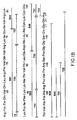
- FIG. 1 is a diagram of the amino acid sequencing data derived from the analysis of mammalian rPDGF B.
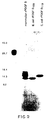
- FIG. 2 is a Coomassie Brilliant Blue-stained electrophoretic gel showing the relative migration of mammalian rPDGF B compared with E. coli rPDGF B109 and rPDGF B119.
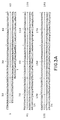
- FIG. 3 shows the particular coding sequence used to express PDGF B119 as set forth in Example 1.
- FIG. 4 is a Coomassie Brilliant Blue-stained electrophoretic gel showing the migration of E. coli rPDGF B119 from various lots produced in accordance with the present invention.
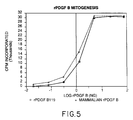
- FIG. 5 is a graph showing the mitogenic activity of E. coli -produced rPDGF B119 which has been refolded in accordance with the teachings of the present invention.
- FIG. 6 is a graph showing the chemotactic activity on fibroblasts of E. coli -produced rPDGF B119 which has been refolded in accordance with the teachings of the present invention.
- FIG. 7 is a graph showing the chemotactic activity on monocytes of E. coli -produced rPDGF B119 which has been refolded in accordance with the teachings of the present invention.
- FIG. 8 demonstrates the activity of a PDGF B119 monomer as compared with PDGF B119 homodimer.
- the present invention provides novel rPDGF B analogs. These analogs are 110-159 amino acids in length, and have the same amino acid sequence as a portion of PDGF B109 precursor protein or PDGF B109 precursor protein analog.
- the analogs may be in form of monomers and/or dimers.
- the present invention further provides a method for the production of commercially useful amounts of these homogeneous rPDGF B analogs from high expression host cell systems such as E. coli .
- the method of the present invention is carried out by transfecting or transforming a selected host cell with a novel coding sequence.
- the novel coding sequence employs the c-sis gene, or a coding sequence for PDGF B109 precursor protein or analogs thereof, wherein a stop codon is placed at a position corresponding to the codon for amino acid 111 to the codon for amino acid 160.
- PDGF B is any combination of PDGF B monomers and/or dimers, including analogs thereof, reduced or unreduced, biologically active, or inactive, recombinant or otherwise.
- the term "PDGF B" is specifically intended to include PDGF B analogs having one or more modifications to the number and/or identity of amino acid sequences of naturally occurring PDGF B109.
- PDGF B analogs are biologically active or capable of being made biologically active by refolding techniques or other similar manipulations.
- PDGF monomer and “monomeric PDGF” mean a single monomeric PDGF molecule which is not disulfide bonded to any other PDGF molecule. It will be appreciated that “reduced PDGF” will necessarily be monomeric PDGF.
- PDGF dimer or "dimeric PDGF” mean a PDGF molecule comprising two monomeric PDGF subunits which are disulfide bonded to each other.
- biologically active PDGF dimer means dimeric PDGF having substantially the same mitogenic activity and/or chemotactic activity as naturally occurring PDGF.
- biologically active PDGF monomer means monomeric PDGF having a specific mitogenic activity of at least about one-one thousandth the specific mitogenic activity of naturally occurring dimeric PDGF.
- biologically active conformation refers to the conformation of a biologically active PDGF dimer or a biologically active PDGF monomer.
- precursor protein refers to the 241 amino acid c-sis -encoded precursor protein of PDGF B109.
- precursor protein analog refers to a precursor protein having one or more modifications to the number and/or identity of the 241 amino acid sequence encoded by the c-sis gene. Precursor protein analogs, like the precursor protein, are encoded by sequences coding for the precursor protein.
- sequence coding for the precursor protein means the c-sis gene or any coding sequence which codes for the 241 amino acid PDGF B109 precursor protein encoded by the c-sis gene or analogs thereof.
- the precursor protein coding sequence may have one or more modifications to the number and/or identity of codons in the naturally occurring c-sis gene, the sequence coding for the precursor protein is: (1) capable of hybridizing to the c-sis gene; or, (2) but for the degeneracy of the genetic code, would hybridize to the c-sis gene and/or (1) above.
- a sequence coding for a precursor protein will contain preferred codons for expression in the selected host cell system.
- amino acid number 1 is designated as the amino terminal serine of mature platelet PDGF B as determined by Johnsson et al., ibid . This position corresponds to residue 82 of the 241 amino acid precursor protein. Amino acids preceding serine number 1 in the c-sis -encoded precursor protein are designated by negative numbers. Amino acids following serene number 1 are numbered sequentially, such that the 241st amino acid of the precursor protein is designated amino acid 160.
- the homogeneous PDGF B product of the present invention from high expression procaryotic host cells which would most closely resemble the naturally occurring mammalian PDGF B.
- the entire 241 amino acid c-sis gene was first inserted into an expression vector and used to transfect Chinese hamster ovary (CHO) cells.
- the resulting secreted protein products were then purified and separated chromatographically to determine the carboxy termini of the proteins as processed by the CHO cells.
- the two predominant PDGF B protein products expressed by the CHO cells were terminated after amino acid 109 and after amino acid 119.
- at least two other PDGF B analogs were processed by proteolytic cleavage in a range of after about amino acid 126 to after about amino acid 136. Based on probable proteolytic cleavage sites, the carboxy termini of these two additional PDGF analogs were estimated to end after arginine residues; i.e., at amino acid 126, 130, 133, 135, or 136.
- the method of the present invention is carried out by transfecting or transforming a host cell with a sequence coding for a precursor protein wherein a stop codon has been placed at a position on the coding sequence from the codon for amino acid 111 to the codon for amino acid 137. More preferably, the stop codon is placed at a position from the codon for amino acid 120 to the codon for amino acid 137. Still more preferably, the stop codon is placed at a position from the codon for amino acid 120, amino acid 127, amino acid 131, amino acid 134, amino acid 136, or amino acid 137. Most preferably, a coding sequence employing a stop codon at the codon for amino acid 120 is used to carry out the method of the present invention.
- the method of the present invention results in the production of novel analogs of PDGF B having a length of 110 to 159 amino acids. The most preferred positioning of the stop codon results in the production of PDGF B119.
- the method of the present invention can generally be carried out using a modification of any one of a number of known methods for the recombinant production of PDGF B.
- the stop codon is preferably placed in the c-sis gene or modified v-sis sequence coding for a precursor protein by site-directed mutagenesis of a pre-existing codon.
- the c-sis gene or modified v-sis gene can also be cut back at an appropriate restriction site near the amino terminus, with the amino terminus being built back to the desired starting position (preferably amino acid 1), again using preferred codons for the selected vector and host cell systems.
- a stop codon must be placed after the desired carboxy terminal amino acid of the precursor protein coding sequence; i.e., at any one of amino acid positions at 111 to 160.
- the v-sis gene is modified to obtain the c-sis gene, after which, or concurrently therewith, a stop codon is placed at the desired location of the modified gene, in accordance with the teachings of the present invention.
- the c-sis sequence coding for the precursor protein containing the stop codon is then inserted into a vector, which is used to transform or transfect the desired procaryotic host cell.
- the sequence coding for the precursor protein used in the method of the present invention is an analog of the c-sis gene.
- the analog of the c-sis gene coding for the precursor protein may be constructed to contain preferred codons for expression in an E. coli host cell.
- the analog of the c-sis gene may be obtained by a process which employs both mutation of individual bases in the DNA, and substitution of synthetic coding sequences for the carboxy and amino termini by cleaving the existing coding sequences with restriction enzymes at appropriate locations to allow for ligation of the synthetic termini.
- the v-sis gene provides an excellent starting material for obtaining a sequence coding for a precursor protein for use in the process of the present invention.
- a sequence coding for a precursor protein for use in the process of the present invention.
- the region coding for amino acids 1-119 there are only five amino acid differences between the protein encoded by the v-sis gene and the c-sis encoded PDGF B109 precursor protein.
- Two of these five codons coding for amino acids in the v-sis gene can be altered by in vitro mutagenesis techniques to generate a DNA sequence coding for a protein in which the two amino acids are the same as the corresponding residues in the PDGF B109 precursor protein.
- a number of methods for in vitro mutagenesis of DNA can be utilized for introducing the desired changes in codons 101 and 107.
- the altered v-sis DNA may then be shortened at the amino terminus with the restriction enzyme Bgl II, which cuts at a position corresponding to the codon for amino acid 24.
- the upstream portion of the gene, including the codons for the first 24 amino acids, may be restored by ligation of the downstream, Bgl II-cut mutagenized v-sis DNA with a synthetic DNA fragment encoding: (1) an ATG translation initiation codon; (2) a serine residue at amino acid 1; and, (3) the remainder of the first 24 amino acids of the c-sis encoded precursor protein.
- the mutagenized v-sis DNA is cut with the restriction enzyme Sma I, which cuts at a position corresponding to the codon for amino acid 112.
- Sma I restriction enzyme
- a synthetic DNA fragment coding for amino acids 112-119 of the PDGF B109 precursor protein, and a translation stop codon at position 120, may then ligated to the Sma I-cut mutagenized v-sis DNA.
- This synthetic DNA also encodes for a glycine residue, instead of a threonine residue, at codon for amino acid 114, accomplishing the conversion of the fifth variant amino acid to the corresponding amino acid in the PDGF B109 precursor protein.
- This precursor protein coding sequence codes for amino acids 1-119 of PDGF B, plus an additional methionine residue at the amino terminus.
- This PDGF B119 gene may then be ligated into an appropriate expression vector, such as pCFM1156, and then an appropriate host cell system may be transformed or transfected, preferably a procaryote such as an E. coli host cell, with the amino terminal methionine being removed in vivo following synthesis in the host cell. (It is possible that some E. coli strains will fail to remove the amino terminal methionine, thereby producing a recombinant product containing an additional amino acid residue at the amino terminus).
- the preferred expression systems for the production of the homogeneous rPDGF B analogs of the present invention comprise procaryotic cell culture systems, preferably E. coli .
- procaryotic cell culture systems preferably E. coli .
- other systems are contemplated by the present invention and include, for example but without limitation, modification of the sites for protease cleavage, and/or use of an alternate leader sequence to increase the level of production from host cells of the rPDGF analogs of the present invention.
- novel rPDGF B analogs of the present invention may be isolated, refolded and purified from the resulting host cell culture paste by any one of a number of known methods. A preferred method for refolding is described in WO 91/08762.
- a disulfide blocking agent is employed to generate a monomeric mixed disulfide intermediate, such that the free sulfhydryls of the reduced, unfolded monomeric rPDGF become blocked.
- this modification also renders the rPDGF intermediate soluble in aqueous solutions. Consequently it is possible for the blocked monomeric intermediate to assume its biologically active conformation in an aqueous medium, after which unblocking may occur.
- unblocking results in the formation of a dimeric form of PDGF, wherein the dimeric structure is now "locked” in place by the formation of the desired intrachain and interchain disulfide bonds.
- the blocked monomeric rPDGF B analog of the present invention has been found to exhibit biological activity, although a significantly greater quantity of the monomer is required to achieve the maximal activity observed for the corresponding PDGF dimer (i.e., the specific activity of the monomer is lower than that of the dimer).
- PDGF is not believed to naturally exist in monomeric form, and thus has not been isolated from nature.
- the dimeric form of PDGF has been hypothesized as being necessary for biological activity on the basis of current models of the mechanism of action whereby PDGF is thought to transmit a signal via interaction with PDGF cell surface receptors.
- PDGF may, in some cases, exhibit biological activity (WO. 89/04460), the existence of any such activity in a PDGF monomer has not heretofor been shown to exist. Furthermore, no explanation has been provided for how a monomer might induce the required receptor dimerization.
- the pharmaceutical potential of biologically active dimeric rPDGF B analogs and/or biologically active monomeric rPDGF B analogs of the present invention can be used for the preparation of a pharmaceutical composition for the treatment of many types of wounds of mammalian species by physicians and/or veterinarians.
- the amount of biologically active PDGF used in the pharmaceutical compositions for such treatments will, of course, depend upon the severity of the wound being treated, the route of administration chosen, and the specific activity or purity of the PDGF, and will be determined by the attending physician or veterinarian.
- the term "PDGF therapeutically effective" amount refers to the amount of PDGF, in the absence of other administered growth factors, determined to produce a therapeutic response in a mammal. Such therapeutically effective amounts are readily ascertained.
- the PDGF produced in accordance with the present invention may be administered by any route appropriate to the wound or condition being treated.
- Conditions which may be beneficially treated with therapeutic application(s) of PDGF include the aforementioned open dermal wounds, dermal incisional wounds, and gastointestinal incisional wounds.
- PDGF may also be used in the healing of bone, cartilage, tendons, ligaments, and epithelium (e.g., intestinal linings, stomach linings), and in glial cell repair.
- the PDGF is applied exogenously to the wound.
- the exogenous application may be by a single application or dose, or by a repeated dose at multiple designated intervals.
- Compositions for exogenous application of the PDGF of the present invention are readily ascertained by one of ordinary skill in the art. It will be readily appreciated by those skilled in the art that the preferred route will vary with the wound or condition being treated. While it is possible for the PDGF to be administered as the pure or substantially pure compound, it is preferable to present it as a pharmaceutical formulation or preparation.
- the formulations of the present invention comprise a therapeutically effective amount of PDGF as above described, together with one or more pharmaceutically acceptable carriers therefore and optionally other therapeutic ingredients.
- the carrier(s) must be "acceptable” in the sense of being compatible with the other ingredients of the formulation and not deleterious to the recipient thereof. Desirably, the formulation should not include oxidizing or reducing agents and other substances with which peptides are known to be incompatible.
- the formulations may conveniently be presented in unit dosage form and may be prepared by any of the methods well known in the art. All methods include the step of bringing into association the active ingredient with the carrier which constitutes one or more accessory ingredients. In general, the formulations are prepared by uniformly and intimately bringing into association the PDGF with liquid carriers or finely divided solid cariers or both.
- the c-sis gene containing a naturally occurring stop codon at the codon for amino acid 161, was cloned and expressed in CHO cells as described in detail in International Patent Application No. PCT/US88/0070, with the resulting rPDGF B being purified and separated as set forth below.
- the rPDGF B from the conditioned media of CHO-pDSVE/c-sis cells was purified in four steps, then concentrated and diafiltered.
- a strong cation exchange resin BiocrylTM BPA-2100
- BiocrylTM BPA-2100 was added to the filtered conditioned media at a level of 0.125% (vol. 10% suspension/vol. medium).
- the product-resin complex was recovered by continuous flow centrifugation.
- the pellet was then washed with approximately 8 volumes (relative to the wet weight of the pellet) of a buffer comprising 10% ethanol/10 mM Tris ⁇ HCl, pH 7.7 and recovered by centrifugation.
- the pellet was resuspended in two volumes of the same buffer, after which an equivalent volume of 95% ethanol was added. This resin suspension was stored a -20°C ⁇ 10°C prior to further processing.
- the resin suspension was centrifuged, and the pellet was resuspended in 0.1 M NaCl/20 mM Tris ⁇ HCl, pH 7.7 at controlled room temperature. After a suspension was obtained, 10% (w/v) sodium N-lauroylsarcosine was added to a final concentration of 1% (w/v). The resin suspension was then mixed for at least 30 minutes, after which it was subjected to centrifugation to separate the resin (pellet) from the product (now in the supernatant). The resin was then re-extracted as before, using one-third of the volume of the sodium N-lauroylsarcosine extractant, to obtain any residual product which may have been occluded in the pellet after the first extraction.
- the pooled supernatants from the resin extraction steps were brought to pH 2.7 ⁇ 0.1 with hydrochloric acid. 1.05 volumes of 95% ethanol were then added, and a slight precipitate was removed by centrifugation.
- the supernatant from the previous step was applied to a sulphoxyethyl (SE)-cellulose column previously equilibrated with 50% ethanol/5 mM HCl.
- SE sulphoxyethyl
- N-lauroylsarcosine was uncharged, and thus passed through the column, whereas the product, rPDGF B, being cationic, bound to the column matrix.
- the column was washed with 50% ethanol/5 mM HCl to remove residual N-lauroylsarcosine, then with 20 mM NaPO4, pH 7.5, to bring it to neutral pH, and finally with 10 mM Tris ⁇ HCl, pH 7.7.
- the rPDGF B product was eluted with 0.5 M NaCl/10 mM Tris ⁇ HCl, pH 7.7.
- the pooled fractions from the previous step were brought to pH 4.0 ⁇ 0.1 with 1 N HCl, and then concentrated over an Amicon YM® 10 (Amicon Inc., Danvers, Massachusetts) ultrafiltration membrane to an absorbance at 280 nm (1 cm light path) of approximately 0.6.
- the product was then diafiltered with at least four volumes of 10 mM ammonium acetate/0.15 M NaCl, pH 4.0
- the product solution was then diluted with this solution to an absorbance a 280 nm (1 cm light path) of 0.24 ⁇ 0.04 which is the equivalent of 0.5 mg rPDGF B/mL.
- the amino acid sequence of rPDGF B purified from the conditioned media of CH0-pDSVE/ c-sis cells was determined by a combination of sequence analysis of the intact rPDGF B, and sequence analysis of tryptic and SV8 protease peptides obtained by digestion of reduced rPDGF B which had been derivatized with 4-vinyl pyridine. The sequence determinations were performed using 470A and 477A sequencers (Applied Biosystems, Inc., Foster City, California). The results are summarized below and in Fig. 1.
- Intact rPDGF B was sequenced for 26 cycles.
- the major sequence identified in this analysis begins with rPDGF B amino acid 1 and is indicated by the upper lines labeled "total PDGF" in Fig. 1. This sequence corresponds to that expected for rPDGF B from the DNA sequence.
- the preparation used for this sequencer run was not alkylated, so the cysteine at cycle 16 could not be detected. Unalkylated cysteine is not easily identified by sequence analysis. Minor sequences were observed corresponding to fragments beginning at amino acids 33 and 80 of the rPDGF B sequence. These minor amino termini are similar to those observed from human platelets (Johnsson et al, ibid ) and are due to internal cleavages produced during processing of the protein.
- Peptide fragments were isolated following separate trypsin and SV-8 protease digestions of rPDGF B which had been reduced and alkylated with 4-vinyl pyridine. The reduction was necessary because unreduced rPDGF B is not digested by trypsin or SV-8 protease. Alkylation with 4-vinyl pyridine allowed detection of cysteines by the sequencer.
- the rPDGF B protein (10»g) produced by CHO-pDSVE/ c-sis cells was separated by electrophoresis both before and after reduction, and the gel was then stained with Coomassie Brilliant Blue. As can be seen in Fig. 2, lanes 1 and 2, this protein migrated considerably faster after reduction. Analysis of the reduced sample also revealed the presence of four major bands. The pattern is consistent with a structure for unreduced rPDGF B in which rPDGF B monomers of four different lengths are paired into disulfide dimers.
- PDGF B109 and PDGF B160 Due to the presence of a stop codon "read through” problem in the latter case, the resulting recombinant proteins (PDGF B109 and PDGF B160) had to be separated from the conditioned medium.
- the two bacterially-produced rPDGF B proteins chosen for use as standards against the mammalian recombinant product were specifically engineered to terminate at the carboxy terminus with amino acids 109 and 119, based on the sequence analysis of PDGF B from human platelets (Johnsson et al., ibid ) and rPDGF B from CHO-pDSVE/ c-sis cells (described above).
- Basic amino acid residues are often the site of proteolytic cleavages. Examination of the amino acid sequences of the 241 amino acid PDGF B109 precursor protein revealed basic amino acids at positions 126, 130, 133, 135, and 136. Specifically these amino acids are arginines. Cleavage at any one of these positions would yield PDGF B analogs being 7-17 amino acids longer than the 119 amino acid form.
- rPDGF B secreted by mammalian (CHO-pDSVE/ c-sis ) host cells is a mixture of dimers derived from four monomers, each of which has an amino terminus comprised of serine number 1 of the PDGF B109 protein sequence.
- the most abundant of the four polypeptides has a carboxy terminus which ends at arginine number 119.
- One of the other of these polypeptides has a carboxy terminus consisting of threonine number 109.
- the remaining two polypeptides are 5-20 amino acids longer than the 119 amino acid form and terminate at the carboxy terminus with an amino acid most probably at arginine 126, arginine 130, arginine 133, arginine 135, or arginine 136.
- a PDGF B119-encoding precursor protein coding sequence shown in Fig. 3, was constructed using the v-sis gene as a starting material.
- 0.2 »g of M13mp19 DNA was also digested with Sal I and Xba I, with the large 7245 base pair band being similarly isolated from a low-melting temperature gel. Both excised gel slices were melted at 65°C, and then cooled to 37°C. All of the gel with the 7245 base pair M13mp19 fragment and one fourth of the gel with the 1183 base pair v-sis fragment were mixed and ligated according to Struhl, Biotechniques , 3 , 452-453 (1985). The ligated DNA was introduced into E. coli K12 strain TG1, and a clear plaque was selected and grown in liquid culture.
- the M13mp19/ v-sis phage thus obtained was grown in liquid culture, and the single stranded DNA isolated; Messing et al., ibid .
- This DNA was used as a template for oligonucleotide-directed in vitro mutagenesis to convert the codons for the amino acids at positions 101 and 107 to the corresponding codons for the amino acids of PDGF B.
- the ATA codon coding for isoleucine 101 was converted to ACA (coding for threonine)
- the GCT codon coding for alanine 107 was converted to CCT (coding for proline).
- Plaques were selected, grown in liquid culture, and the single-stranded DNA isolated.
- the DNA was sequenced by the method of Sanger et al., Proc. Natl. Acad. Sci. USA , 74 , 5463-5467 (1977) to confirm that the desired mutants had been obtained.
- the 5' portion of the mutated v-sis gene was replaced with a synthetic DNA fragment which changed the codons for amino acids 6 and 7 from the v-sis gene to the human PDGF B forms.
- This synthetic fragment also provided a translation-initiating ATG codon immediately preceding the codon for serine 1 of human PDGF B, as well providing sequences for binding to E. coli ribosomes and a restriction site for ligation into the desired E. coli expression vector (described below).
- the synthetic DNA fragment was ligated to the Bgl II site located at nucleotide 4061 of the v-sis gene (numbering system of Devare et al., ibid ).
- the mutated v-sis gene was first inserted into the known plasmid vector pUC18, which does not contain a Bgl II site.
- the M13mp19/ v-sis mutant RF DNA was digested with Sal I and Bam H1, and the resulting 1193 base pair fragment isolated by electrophoresis using a low-melting temperature agarose gel. This fragment was ligated to the plasmid pUC18 which had also been digested with Sal I and Bam H1.
- the ligated DNA was introduced into the known E. coli K12 strain DH5 and transformants were selected by growth in the presence of ampicillin. Colonies were selected, grown in liquid culture, and isolated plasmid DNA analyzed by restriction mapping for the presence of the v-sis insert.
- the pUC18/ v-sis mutant DNA was digested with Hind III, which cuts in the polylinker of pUC18 just upstream of the mutated v-sis insert, and with Bgl II, which cuts within the v-sis DNA at nucleotide 4061 (numbering system of Devare et al., ibid ) corresponding to amino acid number 24 of the mature protein product.
- Hind III which cuts in the polylinker of pUC18 just upstream of the mutated v-sis insert
- Bgl II which cuts within the v-sis DNA at nucleotide 4061 (numbering system of Devare et al., ibid ) corresponding to amino acid number 24 of the mature protein product.
- the large 3565 base pair fragment resulting from this reaction was isolated by electrophoresis in a low-melting temperature agarose gel.
- This fragment was ligated to a synthetic double-stranded DNA fragment with the following sequence:
- This synthetic DNA fragment contains a Hind III "sticky” end at its upstream (left) end and a Bgl II "sticky” end at its downstream (right) end.
- an Xba I site (TCTAGA) is present within the synthetic DNA just downstream of the Hind III "sticky” end, which allows subsequent digestion with Xba I for ligation into the Xba I site of an expression vector described below.
- the ligated DNA was introduced into E. coli K12 strain DH5, and transformants were selected by growth on ampicillin-containing medium. The plasmid DNAs from resulting colonies were analyzed by restriction mapping for the presence of the synthetic DNA fragment.
- the pUC18/ v-sis construction contained a mutated v-sis gene, with amino acid numbers 6, 7, 101, and 107 changed to the human PDGF B form, and its 5' end altered to begin translation with an ATG codon immediately preceding Serine 1.
- codon for amino acid 114 was changed from ACT to GGT, resulting in the substitution of glycine for threonine in the final protein product.
- codon 120 in which GCC codes for alanine in v-sis , was changed to TAA, a translation termination codon.
- the resulting protein product of this construction ends with the arginine 119. Both of the changes were accomplished in one step by insertion of a synthetic DNA fragment after a Sma I site located within codon 112.
- the pUC18/ v-sis mutant DNA generated above was digested with Sma I, which cuts at nucleotide 4324 in the v-sis sequence (numbering system of Devare et al., ibid ), and with Eco R1, which cuts in the polylinker of pUC18 just downstream of the v-sis insert.
- Sma I which cuts at nucleotide 4324 in the v-sis sequence (numbering system of Devare et al., ibid )
- Eco R1 which cuts in the polylinker of pUC18 just downstream of the v-sis insert.
- the large fragment (about 3530 base pairs) was ligated to a synthetic DNA fragment having the following sequence:
- the GGT codon coding for the new glycine residue at position 114 and the TAA termination codon introduced at position 120 are underlined above.
- This synthetic DNA fragment contains a blunt end at its upstream (left) end for ligating to the blunt end created by digestion of the v-sis mutant sequence with Sma I, and an Eco R1 "sticky" end at its downstream (right) end for ligating to the Eco R1 end created by digestion of the pUC18 polylinker with Eco R1.
- the ligated DNA was inserted into E. coli K12 strain DH5, and transformants were selected by growth on ampicillin-containing medium.
- the plasmid DNAs from resulting colonies were analyzed for the presence of the synthetic DNA fragment by restriction mapping.
- the completed form of the mutated v-sis gene was removed from pUC18 and ligated into the E. coli expression vector pCFM1156.
- the plasmid pCFM1156PL is prepared from the known plasmid pCFM836.
- the preparation of plasmid pCFM836 is described in U.S. Patent No. 4,710,473, examples 1 to 7.
- the resulting plasmid is then digested with Cla I and Kpn I and the excised DNA fragment is replaced with a DNA oligonucleotide of the following sequence:
- the pCFM1156 vector contains a region for insertion of foreign genes between an upstream Xba I site and one of a number of downstream restriction sites. In this case, the downstream Eco R1 site was utilized.
- the pUC18/ v-sis mutant DNA generated above was digested with Xba I and Eco R1, with the small 383 base pair fragment being isolated by electrophoresis on a low-melting temperature agarose gel. This fragment was ligated to pCFM1156 DNA which had also been digested with Xba I and Eco R1.
- the ligated DNA was transformed into E. coli K12 strain FM5 (ATCC No. 67545), and transformants were selected by growth on kanamycin-containing medium.
- the plasmid DNAs from resulting colonies were analyzed for the presence of the inserted DNA fragment by restriction mapping.
- the final expression plasmid contained an inserted DNA sequence which codes for a protein that begins with a methionine, followed by amino acids 1-119 of the human PDGF B chain sequence.
- the procaryotic E. coli host cells removed the amino terminal methionine after synthesis, so that the final protein produced corresponds to amino acids 1-119 of human PDGF B.
- 119 amino acid PDGF B protein was confirmed by growing bacterial cells containing the expression plasmid at 28-30°C until the desired optical density of the culture was reached, and then shifting the culture to growth at 42° for several hours. Samples of the cultured cells were taken prior to shifting to 42°C, and at several time points thereafter. It was observed, upon SDS-polyacrylamide gel electrophoretic analysis of the bacterial proteins, that a prominent band of apparent molecular weight 14.6 kd was present in temperature-induced, but not in pre-induced, bacterial cells. This protein was present at an approximate level of 25-40 mg per liter of bacterial culture grown to an optical density at 600 nm of 1.0.
- the recombinant product from three different lots was purified from the inclusion bodies using known techniques, as more fully described in Example 5, and then analyzed by analytical gel electrophoresis and by protein sequencing.
- E. coli rPDGF B119 from Example 3 was subjected to SDS-PAGE analysis under both reduced (5% 2-mercaptoethanol with heating) and unreduced (without heating) conditions. Electrophoretic analysis was carried out generally as described in Example 2, with the exception that samples were run on a 3 to 27% polyacrylamide gel alongside molecular weight standards obtained from Bio Rad Laboratories (Richmond, California).
- Fig. 4 shows the results for lots 1, 2, and 3 following staining with Coomassie Brilliant Blue.
- the only bands detected were those attributable to the E. coli rPDGF B119.
- a band was observed at approximately 30,000 mw.
- a band was observed with an apparent mw of approximately 15,000.
- E. coli paste from Example 3, containing rPDGF B119, was used for the refolding reaction.
- the E. coli paste was suspended in 9 volumes (v/w) of 20 mM disodium ethylene diamine tetraacetic acid (EDTA), with the temperature being maintained at 4°C.
- the suspended cell paste was lysed using a Menton-Gaulin homogenizer at a pressure of 984 kg/cm2 (14,000 psi) and a temperature of 12°C.
- the lysate was immediately centrifuged at 3,600 x g for 60 minutes at 4°C and the supernatant discarded, with the inclusion body rPDGF-containing pellet being saved.
- the pellet was suspended in 14 volumes (v/w) of 8.5 M urea, 0.1 M glycine, pH 3.0, and stirred for 30 minutes. Meanwhile, SE Sepharose® (Pharmacia) chromatography resin was drained by placing the commercially available resin in a sintered glass funnel, allowing the resin to drain by gravity, washing the resin with deionized water, and allowing the resin to drain once again. With continued stirring of the resuspended pellet, 2.4 kg of the drained resin was added to the pellet suspension. Stirring was stopped after 30 minutes. The resin was allowed to settle and the supernatant discarded. Five liters of 8.5 M urea, 0.1 M glycine, pH 3.5, was added to the settled resin. The mixture was stirred for an additional 5 minutes, with the resin again being allowed to settle, and the supernatant being discarded.
- SE Sepharose® Pulacia
- the resin was allowed to settle and 90% of the supernatant discarded.
- the resin was immediately slurried with the residual liquid and poured into a 25 cm diameter column (batch column), the flow adapter attached, and the resin packed at 100 cm/hour for 10 minutes with 8.5 M urea, 20 mM sodium phosphate (Na2HPO4), pH 7.7 that had been and was being sparged with N2 gas (buffer A).
- the flow adapter was lowered to the surface of resin and the column washed with additional buffer A at a flow rate of 25 cm/hour until the effluent absorbance at 280 nm was constant.
- the outlet of the batch column was then connected to the inlet of a second 25 cm X 20 cm column (resolving column) packed with fresh SE Sepharose® (Pharmacia) and equilibrated with buffer A.
- the batch and resolving columns were then eluted at a flow rate of 25 cm/hour with an 80-liter linear gradient from 100% buffer A to 100% buffer B (8.5 M urea, 20 mM Na2HPO4, 0.4 M NaCl, pH 7.7) which had been and was being sparged with N2 gas.
- the appropriate fractions were immediately pooled and placed under vacuum as they came off the column. Yield was between 0.45 and 0.90 gm per liter of fermentation broth.
- the denatured rPDGF B119-containing solution was diluted, if necessary, to an absorbance of between 0.4 and 0.5 O.D.
- the monomeric protein solution was then made 0.1 M in oxidized glutathione and the pH adjusted to 8.0 with 10 M NaOH.
- the solution was again placed under vacuum and stirred for 18 to 24 hours. The vacuum was lifted and the pH of the now derivatized monomeric rPDGF mixed disulfide intermediate was lowered to 3.0 with HCl.
- the resultant solution was concentrated to 1/2 the initial volume, and then diafiltered first against four volumes of 8.5 M urea, 0.1 M acetic acid, and then followed by four volumes of 0.1 M acetic acid using an Amicon YM® 10 (Amicon Inc., Danvers, Massachusetts) ultrafiltration membrane.
- the final protein concentration was between 1.5 and 2.0 mg/mL with rPDGF-S-S-G purity >85%, and yield of between 0.45 and 0.90 gm per liter of fermentation broth.
- Refolding was effected by dilution of the rPDGF-S-S-G solution to 0.1 mg/mL with 20 mM Tris. Subsequently, 1 M cysteine in 0.1 M acetic acid was added to this solution, to a final concentration of 1 mM, and the pH adjusted to 8.0 with NaOH. The solution was allowed to stir for 16 hours, in order to unblock the derivatized monomeric rPDGF-S-S-G intermediate and initiate formation of intrachain and interchain disulfide bonds of the desired dimeric end product, and then made 0.1 M in acetic acid. Yield was .32 to .63 gm per liter of fermentation broth.
- the refolded dimeric rPDGF solution was loaded, at a flow rate of 100 cm/hr, onto a 11.3 X 5 cm column filled with controlled pore glass (CPG, pg-350-400, 96 M2/gm, 382 ⁇ mean pore diameter, Sigma Chemical Company, St. Louis, Missouri), equilibrated in either 0.05 M glycine, pH 3.5 (buffer C) or 0.05 M glycine, 0.4 M NaCl, pH 3.5 (buffer D).
- C controlled pore glass
- Buffer D 0.05 M glycine, 0.4 M NaCl, pH 3.5
- the purified rPDGF B119 homodimer was then eluted from the column, again at a flow rate of 40 cm/hr, by the application of a 5 liter gradient starting with either buffer C or D and finishing with either 2 M guanidine ⁇ HCl in buffer C or 8 M urea in buffer D.
- the refolded rPDGF B119 homodimer from Example 5 was assayed for mitogenic activity by a thymidine uptake assay using normal rat kidney cells, Clone 49F, ATCC No. CRL-1570 (NRK) by a modification of the method described by Pierce et al., J. Exp. Med. , 176 , 974-987 (1988), using mammalian rPDGF B from CHO cells as a standard.
- the NRK cells were grown in a growth medium (FBS-DMEM) comprising: (1) Dulbecco's Modified Eagle Medium (DMEM), containing 1 g/L glucose, 1% (w/v) penicillin-streptomycin solution (100X, 10,00 units penicillin, 10,000 »g streptomycin/ml), and 1% (v/v) L-glutamine solution at 100X, 200 mM; and, (2) 7.5% fetal bovine serum (FBS) (Whitaker MA Bioproducts, Walkersville, Maryland).
- DMEM Dulbecco's Modified Eagle Medium
- FBS 7.5% fetal bovine serum
- Cells were plated into 24-well microtiter plates at a density of 2 X 10⁴ cells/well in FBS-DMEM. After 5 days, the FBS-DMEM was aspirated and replaced with 1 ml of DMEM without FBS, in order to "starve" the cells so that they might respond more markedly upon exposure to PDGF. The cells were incubated in this medium for 24 hours, after which time, 50 »l of a PDGF-containing sample was added to each well. After a further 18 hour incubation, the PDGF-containing sample was aspirated and replaced with 1 ml of labeling medium consisting of DMEM, 5% FBS, and 2 »Ci/ml of 3H-thymidine.
- the plates were incubated for an additional 1 hour at 37°C.
- Cells from triplicate wells were detached with a sucrose/EDTA solution and harvested with an automated microharvester onto glass fiber filter mats.
- the cells were fixed onto the mats with ethanol, and after drying, the mats were counted in a scintillation counter.
- the refolded rPDGF B119 homodimer from Example 5 was also assayed for chemotactic activity on fibroblasts and monocytes essentially as described in Senior et al., J. Cell. Biol. , 96 , 382-385 (1983); Deuel et al., J. Clin. Invest. , 69 , 1046-1049 (1982).
- the rPDGF B119 from Example 4 was tested in Boyden chambers as described in the referenced articles, using mammalian rPDGF B from CHO cells as a standard. In this test, cells migrate through a filter, from one chamber without a chemotactic agent to another chamber with a chemotactic agent. After a given period of time, the number of cells in a microscopic field on the side with the chemoattractant are counted.
- Fibroblasts were obtained from explants of normal adult skin surgical specimens. The cells were cultured in Dulbecco's modified Eagle's medium (DMEM), supplemented with 2 mM L-glutamine, nonessential amino acids, and 10% fetal bovine serum (KC Biological, Inc., Lenexa, Kansas). The cells were used for assays after six passages. Human blood mononuclear cells (monocytes) were obtained using Ficoll/Hypaque gradients, and suspended in DMEM supplemented with 2% human albumin at densities of 2.5 X 10⁶ cells/ml.
- DMEM Dulbecco's modified Eagle's medium
- Chemotaxis was determined in a multi-blind well apparatus having 30 wells.
- a double-membrane technique using a polycarbonate membrane (Nucleopore Corporation, Pleasanton, California) with 8 »m pores (fibroblasts) or 5»m pores (monocytes) on top of a cellulose nitrate membrane (Millipore Corporation, Bedford, Massachusetts) having 0.45-»m pores, was used to separate each well into an upper and lower compartment.
- the lower compartment was filled with either PDGF solution to be assayed, or control medium, then covered with the membranes, in the appropriate order, after which a cell suspension containing fibroblasts or monocytes was added to the upper compartment.
- the chemotaxis apparatus was placed in a humidified incubator at 37°C in an atmosphere of 5% carbon dioxide/95% air for 6 hours. The multi-blind well apparatus was then disassembled and each membrane pair was removed and stained.
- Cell migration was determined by counting, under high-power magnification (X400), the cells that had moved to the interface between the two membranes and those on the lower membrane. Five high-power fields (hpf) were counted per membrane pair. Cell migration is expressed as the net number of cells migrated per hpf, that is, the number of cells per hpf minus the number of cells per hpf that migrated in response to control medium.
- the results from the chemotaxis assay on fibroplasts is shown in Fig. 6 and on monocytes in Fig. 7. These results show the refolded rPDGF B119 from Example 5 to have substantially the same chemotactic activity as the rPDGF B from the CHO host cells.
- the blocked monomeric rPDGF B119 intermediate from Example 5 was assayed for mitogenic activity, as set forth in Example 6, using the rPDGF B119 homodimer (also from Example 5) as a standard.
- the monomeric form of the rPDGF B119 analog of the present invention exhibited mitogenic activity, although it took much more monomer than dimer (500 to 1,000 times as much) to achieve the same maximal activity achievable with the rPDGF B119 homodimer.
- the maximal activity that could be achieved with the monomeric form was 3 to 3.5 times higher than could be achieved with any quantity of the corresponding PDGF B119 homodimer.
- rPDGF B119-S-S-G monomer (“mB-g") was assayed for mitogenic activity on NRK cells, as set forth in Example 6, using the control PDGF B119 homodimer ("BB") as a standard.
- the results are shown in Fig. 8. While the maximal achievable activity of the dimer is seen to peak at about 30 cpm x 10 ⁇ 3 (after reaching a concentration of about 4 ng/ml), the monomeric form required 500-1000 ng/ml to achieve comparable activity. At even higher concentrations, however, the activity of the monomer far exceeds the maximum activity observed for the dimer.
Landscapes
- Health & Medical Sciences (AREA)
- Chemical & Material Sciences (AREA)
- Organic Chemistry (AREA)
- Life Sciences & Earth Sciences (AREA)
- Medicinal Chemistry (AREA)
- General Health & Medical Sciences (AREA)
- Genetics & Genomics (AREA)
- Toxicology (AREA)
- Biophysics (AREA)
- Molecular Biology (AREA)
- Biochemistry (AREA)
- Proteomics, Peptides & Aminoacids (AREA)
- Gastroenterology & Hepatology (AREA)
- Zoology (AREA)
- Nuclear Medicine, Radiotherapy & Molecular Imaging (AREA)
- Chemical Kinetics & Catalysis (AREA)
- Public Health (AREA)
- Animal Behavior & Ethology (AREA)
- Pharmacology & Pharmacy (AREA)
- Engineering & Computer Science (AREA)
- General Chemical & Material Sciences (AREA)
- Veterinary Medicine (AREA)
- Bioinformatics & Cheminformatics (AREA)
- Preparation Of Compounds By Using Micro-Organisms (AREA)
- Micro-Organisms Or Cultivation Processes Thereof (AREA)
- Peptides Or Proteins (AREA)
- Medicines Containing Material From Animals Or Micro-Organisms (AREA)
- Transition And Organic Metals Composition Catalysts For Addition Polymerization (AREA)
Claims (32)
- Verfahren zur Herstellung von B Ketten Analoga des von Blutplättchen abstammenden Wachstumsfaktors, umfassend die Transformation oder Transfektion einer Wirtszelle mit einer für ein Vorläuferprotein kodierenden Sequenz, in der ein Stopkodon an einer Stelle der kodierenden Sequenz von dem Kodon für die Aminosäure 111 bis zum Kodon für die Aminosäure 160 positioniert ist.
- Verfahren nach Anspruch 1, wobei die Wirtszelle eine prokaryontische Wirtszelle ist.
- Verfahren nach Anspruch 2, wobei das Stopkodon an einer Stelle von dem Kodon für die Aminosäure 111 bis zum Kodon für die Aminosäure 137 positioniert ist.
- Verfahren nach Anspruch 3, wobei das Stopkodon an einer Stelle von dem Kodon für die Aminosäure 120 bis zum Kodon für die Aminosäure 137 positioniert ist.
- Verfahren nach Anspruch 4, wobei daß das Stopkodon an einer Stelle positioniert ist, die unmittelbar einem Kodon für einen Argininrest folgt.
- Verfahren nach Anspruch 5, wobei das Stopkodon an einer Stelle positioniert ist, die dem Kodon für die Aminosäure 120, Aminosäure 127, Aminosäure 131, Aminosäure 134, Aminosäure 136 oder Aminosäure 137 entspricht.
- Verfahren nach Anspruch 6, wobei das Stopkodon beim Kodon für Aminosäure 120 positioniert ist.
- Verfahren nach einem der Ansprüche 1 bis 7, wobei die für das Vorläuferprotein kodierende Sequenz das c-sis-Gen ist.
- Ein rekombinantes Protein mit einer homogenen Aminosäuresequenz, die im wesentlichen zu einem Teil der Aminosäuresequenz des PDGF B₁₀₉ Vorläuferproteins identisch ist und das, wenn zurückgefaltet, im wesentlichen die gleiche biologische Aktivität wie das natürlich vorkommende PDGF B₁₀₉ besitzt, wobei das rekombinante Protein an einer Position von Aminosäure 110 bis Aminosäure 159 endet.
- Das rekombinante Protein nach Anspruch 9, wobei das rekombinante Protein an einer Position von Aminosäure 110 bis Aminosäure 136 endet.
- Das rekombinante Protein nach Anspruch 10, wobei das rekombinante Protein an einer Position von Aminosäure 119 bis Aminosäure 136 endet.
- Das rekombinante Protein nach Anspruch 11, wobei das rekombinante Protein an einer Position endet, die der Aminosäure 119, Aminosäure 126, Aminosäure 130, Aminosäure 133, Aminosäure 135 oder Aminosäure 136 entspricht.
- Das rekombinante Protein nach Anspruch 12, wobei das rekombinante Protein bei der Aminosäure 119 endet.
- Das rekombinante Protein nach Anspruch 13, mit der Sequenz:

- Ein monomeres rekombinantes Protein, mit einer homogenen Aminosäuresequenz, die im wesentlichen zu einem Teil der Aminosäuresequenz des PDGF B₁₀₉ Vorläuferproteins identisch ist und das, wenn zurückgefaltet, mindestens ungefähr eintausentstel der mitogenen spezifischen Aktivität des natürlich vorkommenden PDGF B₁₀₉ besitzt, wobei das rekombinante Protein an einer Position von Aminosäure 110 bis Aminosäure 159 endet.
- Das monomere rekombinante Protein nach Anspruch 15, wobei das rekombinante Protein an einer Position von Aminosäure 110 bis Aminosäure 136 endet.
- Das monomere rekombinante Protein nach Anspruch 16, wobei das rekombinante Protein an einer Position von Aminosäure 119 bis Aminosäure 136 endet.
- Das monomere rekombinante Protein nach Anspruch 17, wobei das rekombinante Protein an einer Position endet, die der Aminosäure 119, Aminosäure 126, Aminosäure 130, Aminosäure 133, Aminosäure 135 oder Aminosäure 136 entspricht.
- Das monomere rekombinante Protein nach Anspruch 18, wobei das rekombinante Protein bei der Aminosäure 119 endet.
- Das monomere rekombinante Protein nach Anspruch 19 mit der Sequenz:

- Eine für ein Vorläuferprotein kodierende Sequenz für die Verwendung bei der Expression eines rekombinanten von Blutplättchen abstammenden Wachstumsfaktor B Analogon in einer Wirtszelle, wobei ein Stopkodon an einer Stelle der kodierenden Sequenz von dem Kodon für die Aminosäure 111 bis zum Kodon für die Aminosäure 160 positioniert ist.
- Die kodierende Sequenz nach Anspruch 21, wobei ein Stopkodon an einer Stelle der kodierenden Sequenz von dem Kodon für die Aminosäure 111 bis zum Kodon für die Aminosäure 137 positioniert ist.
- Die kodierende Sequenz nach Anspruch 22, wobei ein Stopkodon an einer Stelle der kodierenden Sequenz von dem Kodon für die Aminosäure 120 bis zum Kodon für die Aminosäure 137 positioniert ist.
- Die kodierende Sequenz nach Anspruch 23, wobei ein Stopkodon an einer Stelle der kodierenden Sequenz positioniert ist, die unmittelbar einem Kodon für einen Argininrest folgt.
- Die kodierende Sequenz nach Anspruch 24, wobei das Stopkodon an einer Stelle der kodierenden Sequenz positioniert ist, die dem Kodon für die Aminosäure 120, Aminosäure 127, Aminosäure 131, Aminosäure 134, Aminosäure 136 oder Aminosäure 137 entspricht.
- Die kodierende Sequenz nach Anspruch 25, wobei das Stopkodon beim Kodon für die Aminosäure 120 positioniert ist.
- Eine Wirtszelle, die mit einer kodierenden Sequenz nach einem der Ansprüche 21 bis 26 in einer Weise transformiert oder transfiziert ist, daß die Wirtszelle ein Analogon des von Blutplättchen abstammenden Wachstumsfaktors B mit einer homogenen Aminosäuresequenz exprimiert.
- Die Wirtszelle nach Anspruch 27, wobei die kodierende Sequenz der Aminosäuresequenzentspricht.
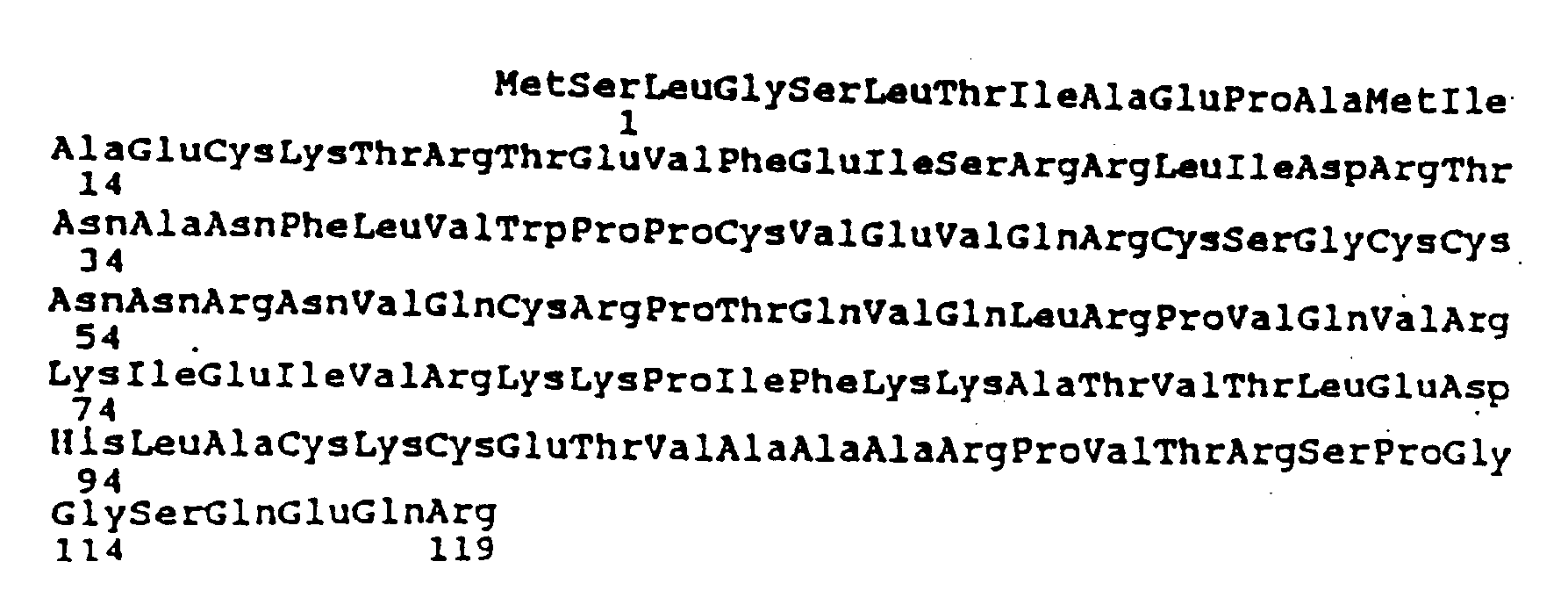
- Eine pharmazeutische Zusammensetzung, enthaltend eine therapeutisch wirksame Menge an von Blutplättchen abstammenden Wachstumsfaktor B Analogon nach einem der Ansprüche 9 bis 20 und ein pharmazeutisch verträgliches Trägermaterial.
- Die pharmazeutische Zusammensetzung nach Anspruch 29, wobei das von Blutplättchen abstammende Wachstumsfaktor B Analogon das Analogon gemäß Anspruch 13 ist.
- Die pharmazeutische Zusammensetzung nach Anspruch 30, wobei das von Blutplättchen abstammenden Wachstumsfaktor B Analogon das Analogon gemäß Anspruch 14 ist.
- Verwendung eines PDGF B Analogons nach einem der Ansprüche 9 bis 20, zur Herstellung einer pharmazeutischen Zusammensetzung für die Behandlung von Wunden.
Applications Claiming Priority (5)
| Application Number | Priority Date | Filing Date | Title |
|---|---|---|---|
| US07/454,794 US5149792A (en) | 1989-12-19 | 1989-12-19 | Platelet-derived growth factor B chain analogs |
| US454794 | 1989-12-19 | ||
| US07/624,451 US5272064A (en) | 1989-12-19 | 1990-12-13 | DNA molecules encoding platelet-derived growth factor B chain analogs and method for expression thereof |
| US624451 | 1990-12-13 | ||
| PCT/US1990/007451 WO1991008761A1 (en) | 1989-12-19 | 1990-12-17 | Novel platelet-derived growth factor b chain analogs and method for homogeneous production thereof |
Publications (3)
| Publication Number | Publication Date |
|---|---|
| EP0458959A1 EP0458959A1 (de) | 1991-12-04 |
| EP0458959A4 EP0458959A4 (en) | 1993-06-16 |
| EP0458959B1 true EP0458959B1 (de) | 1995-06-21 |
Family
ID=27037609
Family Applications (1)
| Application Number | Title | Priority Date | Filing Date |
|---|---|---|---|
| EP91902366A Expired - Lifetime EP0458959B1 (de) | 1989-12-19 | 1990-12-17 | B-ketten-analoge des von blutplättchen abstammenden wachstumsfaktors und verfahren zu deren homogener herstellung |
Country Status (17)
| Country | Link |
|---|---|
| US (1) | US5272064A (de) |
| EP (1) | EP0458959B1 (de) |
| JP (1) | JPH04504064A (de) |
| AT (1) | ATE123949T1 (de) |
| AU (1) | AU646014B2 (de) |
| CA (1) | CA2032675A1 (de) |
| DE (1) | DE69020335T2 (de) |
| DK (1) | DK0458959T3 (de) |
| ES (1) | ES2073735T3 (de) |
| FI (1) | FI913892A7 (de) |
| GR (1) | GR3017317T3 (de) |
| IE (1) | IE904608A1 (de) |
| IL (1) | IL96723A0 (de) |
| NO (1) | NO913232L (de) |
| NZ (1) | NZ236549A (de) |
| PT (1) | PT96272A (de) |
| WO (1) | WO1991008761A1 (de) |
Cited By (1)
| Publication number | Priority date | Publication date | Assignee | Title |
|---|---|---|---|---|
| WO2011008904A1 (en) | 2009-07-17 | 2011-01-20 | Tabor Aaron T | Compositions and methods for genetic modification of cells having cosmetic function to enhance cosmetic appearance |
Families Citing this family (29)
| Publication number | Priority date | Publication date | Assignee | Title |
|---|---|---|---|---|
| JPH07507055A (ja) * | 1992-02-26 | 1995-08-03 | アラーガン、インコーポレイテッド | 眼の創傷の治癒における血小板誘導化成長因子の使用 |
| IL105176A0 (en) * | 1992-03-30 | 1993-07-08 | Schering Corp | Monomeric platelet-derived growth factor and prevention of stenosis or restenosis |
| CA2480121C (en) | 2002-03-27 | 2012-02-28 | Immunex Corporation | Methods for increasing polypeptide production |
| US20040248796A1 (en) * | 2003-02-04 | 2004-12-09 | Kari Alitalo | VEGF-B and PDGF modulation of stem cells |
| SG187198A1 (en) | 2010-08-05 | 2013-03-28 | Amgen Inc | Dipeptides to enhance yield and viability from cell cultures |
| HUE042822T2 (hu) | 2011-04-20 | 2019-07-29 | Amgen Inc | Automata befecskendezõ szerkezet |
| WO2012145682A1 (en) | 2011-04-21 | 2012-10-26 | Amgen Inc. | A method for culturing mammalian cells to improve recombinant protein production |
| PT2837680T (pt) | 2011-07-01 | 2020-04-17 | Amgen Inc | Cultura celular de mamífero |
| JP2014529473A (ja) | 2011-09-02 | 2014-11-13 | アムジエン・インコーポレーテツド | 医薬製品および医薬製品の露光を分析する方法 |
| AR089231A1 (es) | 2011-12-15 | 2014-08-06 | Amgen Inc | Metodo de floculacion |
| US20150353542A1 (en) | 2013-01-14 | 2015-12-10 | Amgen Inc. | Methods of using cell-cycle inhibitors to modulate one or more properties of a cell culture |
| SI3395423T1 (sl) | 2013-03-14 | 2023-12-29 | Amgen Inc. | Odstranjevanje izluženega liganda za afinitetno čiščenje |
| TWI832345B (zh) | 2013-03-14 | 2024-02-11 | 美商安美基公司 | 用於增加重組蛋白質之甘露糖含量之方法 |
| TWI614041B (zh) | 2013-03-15 | 2018-02-11 | 安美基公司 | 用於注射器之匣盒 |
| US10646664B2 (en) | 2013-03-15 | 2020-05-12 | Amgen Inc. | Body contour adaptable autoinjector device |
| JP6336564B2 (ja) | 2013-03-15 | 2018-06-06 | アムゲン・インコーポレーテッド | 薬物カセット、自動注入器、および自動注入器システム |
| US9481901B2 (en) | 2013-05-30 | 2016-11-01 | Amgen Inc. | Methods for increasing mannose content of recombinant proteins |
| RS66894B1 (sr) | 2013-10-31 | 2025-07-31 | Amgen Inc | Upotreba monensina za regulaciju glikozilacije rekombinantnih proteina |
| BR122020004385B1 (pt) | 2014-01-13 | 2022-10-04 | Amgen Inc | Método para aumentar o teor de glicoforma de alta manose de uma glicoproteína recombinante e método de produção de uma glicoproteína recombinante |
| US10106829B2 (en) | 2014-01-29 | 2018-10-23 | Amgen Inc. | Overexpression of N-glycosylation pathway regulators to modulate glycosylation of recombinant proteins |
| WO2015116315A1 (en) | 2014-01-29 | 2015-08-06 | Amgen Inc. | Overexpression of n-glycosylation pathway regulators to modulate glycosylation of recombinant proteins |
| AU2015269365A1 (en) | 2014-06-04 | 2016-12-15 | Amgen Inc. | Methods for harvesting mammalian cell cultures |
| US11275090B2 (en) | 2014-11-19 | 2022-03-15 | Amgen Inc. | Quantitation of glycan moiety in recombinant glycoproteins |
| CA2969225C (en) | 2014-12-01 | 2023-08-22 | Amgen Inc. | Process for manipulating the level of glycan content of a glycoprotein |
| MX2020005066A (es) | 2017-11-16 | 2020-08-20 | Amgen Inc | Autoinyector con deteccion de detencion y punto final. |
| IL307155B2 (en) | 2018-05-01 | 2025-11-01 | Amgen Inc | Antibodies with modulated glycan profiles |
| KR20220129006A (ko) | 2020-01-15 | 2022-09-22 | 우시 바이올로직스 아일랜드 리미티드 | 배양 세포로부터 생산된 생체 물질을 연속적으로 수확하기 위한 장치 및 방법 |
| WO2023079058A1 (en) | 2021-11-05 | 2023-05-11 | Yokogawa Insilico Biotechnology Gmbh | Cell culture with reduced production of lactate |
| AU2022424002A1 (en) | 2021-12-29 | 2024-06-13 | Bristol-Myers Squibb Company | Generation of landing pad cell lines |
Family Cites Families (8)
| Publication number | Priority date | Publication date | Assignee | Title |
|---|---|---|---|---|
| US4479896A (en) * | 1981-12-11 | 1984-10-30 | Antoniades Harry N | Method for extraction localization and direct recovery of platelet derived growth factor |
| EP0487116B1 (de) * | 1984-10-12 | 1999-12-29 | ZymoGenetics, Inc. | Von Blutplättchen abstammende biologisch aktive Analoga eines Wachstumsfaktors in eukaryotischen Zellen |
| US4769328A (en) * | 1984-10-12 | 1988-09-06 | Zymogenetics Inc. | Expression of biologically active PDGF analogs in yeast |
| US4766073A (en) * | 1985-02-25 | 1988-08-23 | Zymogenetics Inc. | Expression of biologically active PDGF analogs in eucaryotic cells |
| US4801542A (en) * | 1984-10-12 | 1989-01-31 | Zymogenetics, Inc. | Expression of biologically active PDGF analogs in eucaryotic cells |
| EP0259632B1 (de) * | 1986-08-13 | 1995-12-13 | Zymogenetics, Inc. | Expression von biologisch-aktiven PDGF-Analogen in eukaryotischen Zellen |
| DE3834079A1 (de) * | 1988-10-06 | 1990-04-12 | Biotechnolog Forschung Gmbh | Wachstumstimulierendes pdgf-bb und dessen verwendung sowie ein verfahren zu seiner herstellung und der des monomeren |
| IL96682A0 (en) * | 1989-12-15 | 1991-09-16 | Amgen Inc | Production of biologically active platelet-derived growth factor from high expression host cell systems |
-
1990
- 1990-12-13 US US07/624,451 patent/US5272064A/en not_active Expired - Lifetime
- 1990-12-17 DE DE69020335T patent/DE69020335T2/de not_active Expired - Fee Related
- 1990-12-17 DK DK91902366.3T patent/DK0458959T3/da active
- 1990-12-17 FI FI913892A patent/FI913892A7/fi not_active Application Discontinuation
- 1990-12-17 EP EP91902366A patent/EP0458959B1/de not_active Expired - Lifetime
- 1990-12-17 JP JP3502837A patent/JPH04504064A/ja active Pending
- 1990-12-17 AU AU71534/91A patent/AU646014B2/en not_active Ceased
- 1990-12-17 ES ES91902366T patent/ES2073735T3/es not_active Expired - Lifetime
- 1990-12-17 WO PCT/US1990/007451 patent/WO1991008761A1/en not_active Ceased
- 1990-12-17 AT AT91902366T patent/ATE123949T1/de not_active IP Right Cessation
- 1990-12-19 PT PT96272A patent/PT96272A/pt not_active Application Discontinuation
- 1990-12-19 IL IL96723A patent/IL96723A0/xx unknown
- 1990-12-19 IE IE460890A patent/IE904608A1/en unknown
- 1990-12-19 CA CA002032675A patent/CA2032675A1/en not_active Abandoned
- 1990-12-19 NZ NZ236549A patent/NZ236549A/xx unknown
-
1991
- 1991-08-19 NO NO91913232A patent/NO913232L/no unknown
-
1995
- 1995-09-06 GR GR950402446T patent/GR3017317T3/el unknown
Cited By (2)
| Publication number | Priority date | Publication date | Assignee | Title |
|---|---|---|---|---|
| WO2011008904A1 (en) | 2009-07-17 | 2011-01-20 | Tabor Aaron T | Compositions and methods for genetic modification of cells having cosmetic function to enhance cosmetic appearance |
| EP4219708A2 (de) | 2009-07-17 | 2023-08-02 | Aaron Thomas Tabor | Zusammensetzungen und verfahren zur genetischen modifikation von zellen mit kosmetischer funktion zur verbesserung des kosmetischen erscheinungsbildes |
Also Published As
| Publication number | Publication date |
|---|---|
| AU7153491A (en) | 1991-07-18 |
| EP0458959A4 (en) | 1993-06-16 |
| NO913232D0 (no) | 1991-08-19 |
| FI913892A0 (fi) | 1991-08-16 |
| PT96272A (pt) | 1991-09-30 |
| AU646014B2 (en) | 1994-02-03 |
| ATE123949T1 (de) | 1995-07-15 |
| NZ236549A (en) | 1993-03-26 |
| DE69020335T2 (de) | 1995-11-02 |
| GR3017317T3 (en) | 1995-12-31 |
| DE69020335D1 (de) | 1995-07-27 |
| US5272064A (en) | 1993-12-21 |
| JPH04504064A (ja) | 1992-07-23 |
| WO1991008761A1 (en) | 1991-06-27 |
| IE904608A1 (en) | 1991-06-19 |
| ES2073735T3 (es) | 1995-08-16 |
| FI913892A7 (fi) | 1991-08-16 |
| EP0458959A1 (de) | 1991-12-04 |
| IL96723A0 (en) | 1991-09-16 |
| DK0458959T3 (da) | 1995-08-14 |
| CA2032675A1 (en) | 1991-06-20 |
| NO913232L (no) | 1991-08-19 |
Similar Documents
| Publication | Publication Date | Title |
|---|---|---|
| EP0458959B1 (de) | B-ketten-analoge des von blutplättchen abstammenden wachstumsfaktors und verfahren zu deren homogener herstellung | |
| US5149792A (en) | Platelet-derived growth factor B chain analogs | |
| US4889919A (en) | Biologically active PDGF derived A-chain homodimers | |
| AU590006B2 (en) | Recombinant fibroblast growth factors | |
| EP0267678A1 (de) | Rekombinantes menschliches Erythropoietin | |
| JPH02104284A (ja) | エリトロポエチンを発現するヒトcDNAまたはヒトgDNAのクローニング方法 | |
| US5705484A (en) | Biologically active polypeptide fusion dimers | |
| US5516896A (en) | Biologically active B-chain homodimers | |
| CA2084514A1 (en) | O-glycosylated ifn-alpha | |
| AU651083B2 (en) | Production of biologically active platelet-derived growth factor from high expression host cell systems | |
| SK43097A3 (en) | Method for purifying keratinocyte growth factors | |
| US6004929A (en) | Biologically active PDGF A-chain homodimers | |
| US5498600A (en) | Biologically active mosaic proteins | |
| US5656458A (en) | Expression and processing of amino terminus acetylated FGF's in yeast | |
| CA2002210C (en) | Expression and processing of authentic fgf's in yeast | |
| JP3213985B2 (ja) | 新規なタンパク質 | |
| KR930005917B1 (ko) | 에리트로포이에틴의 제조방법 | |
| CA2032430A1 (en) | Production of biologically active platelet-derived growth factor from high expression host cell systems | |
| EP0495638A2 (de) | Expression von reifem PDGF-B in Escherichia coli | |
| MXPA99003874A (es) | Agonistas del receptor de eritropoyetina circularmente permutados |
Legal Events
| Date | Code | Title | Description |
|---|---|---|---|
| PUAI | Public reference made under article 153(3) epc to a published international application that has entered the european phase |
Free format text: ORIGINAL CODE: 0009012 |
|
| AK | Designated contracting states |
Kind code of ref document: A1 Designated state(s): AT BE CH DE DK ES FR GB GR IT LI LU NL SE |
|
| 17P | Request for examination filed |
Effective date: 19911218 |
|
| A4 | Supplementary search report drawn up and despatched |
Effective date: 19930427 |
|
| AK | Designated contracting states |
Kind code of ref document: A4 Designated state(s): AT BE CH DE DK ES FR GB GR IT LI LU NL SE |
|
| 17Q | First examination report despatched |
Effective date: 19930928 |
|
| GRAA | (expected) grant |
Free format text: ORIGINAL CODE: 0009210 |
|
| PGFP | Annual fee paid to national office [announced via postgrant information from national office to epo] |
Ref country code: FR Payment date: 19950619 Year of fee payment: 6 |
|
| AK | Designated contracting states |
Kind code of ref document: B1 Designated state(s): AT BE CH DE DK ES FR GB GR IT LI LU NL SE |
|
| REF | Corresponds to: |
Ref document number: 123949 Country of ref document: AT Date of ref document: 19950715 Kind code of ref document: T |
|
| REF | Corresponds to: |
Ref document number: 69020335 Country of ref document: DE Date of ref document: 19950727 |
|
| REG | Reference to a national code |
Ref country code: DK Ref legal event code: T3 |
|
| REG | Reference to a national code |
Ref country code: ES Ref legal event code: FG2A Ref document number: 2073735 Country of ref document: ES Kind code of ref document: T3 |
|
| ITF | It: translation for a ep patent filed | ||
| ET | Fr: translation filed | ||
| REG | Reference to a national code |
Ref country code: GR Ref legal event code: FG4A Free format text: 3017317 |
|
| PGFP | Annual fee paid to national office [announced via postgrant information from national office to epo] |
Ref country code: AT Payment date: 19951213 Year of fee payment: 6 |
|
| PGFP | Annual fee paid to national office [announced via postgrant information from national office to epo] |
Ref country code: SE Payment date: 19951215 Year of fee payment: 6 |
|
| PGFP | Annual fee paid to national office [announced via postgrant information from national office to epo] |
Ref country code: GR Payment date: 19951219 Year of fee payment: 6 Ref country code: ES Payment date: 19951219 Year of fee payment: 6 Ref country code: BE Payment date: 19951219 Year of fee payment: 6 |
|
| PGFP | Annual fee paid to national office [announced via postgrant information from national office to epo] |
Ref country code: NL Payment date: 19951220 Year of fee payment: 6 Ref country code: DK Payment date: 19951220 Year of fee payment: 6 |
|
| PGFP | Annual fee paid to national office [announced via postgrant information from national office to epo] |
Ref country code: DE Payment date: 19951222 Year of fee payment: 6 Ref country code: CH Payment date: 19951222 Year of fee payment: 6 |
|
| PGFP | Annual fee paid to national office [announced via postgrant information from national office to epo] |
Ref country code: LU Payment date: 19960101 Year of fee payment: 6 |
|
| PLBE | No opposition filed within time limit |
Free format text: ORIGINAL CODE: 0009261 |
|
| STAA | Information on the status of an ep patent application or granted ep patent |
Free format text: STATUS: NO OPPOSITION FILED WITHIN TIME LIMIT |
|
| 26N | No opposition filed | ||
| PGFP | Annual fee paid to national office [announced via postgrant information from national office to epo] |
Ref country code: GB Payment date: 19961129 Year of fee payment: 7 |
|
| PG25 | Lapsed in a contracting state [announced via postgrant information from national office to epo] |
Ref country code: LU Free format text: LAPSE BECAUSE OF NON-PAYMENT OF DUE FEES Effective date: 19961217 Ref country code: DK Effective date: 19961217 Ref country code: AT Effective date: 19961217 |
|
| REG | Reference to a national code |
Ref country code: DK Ref legal event code: EBP |
|
| PG25 | Lapsed in a contracting state [announced via postgrant information from national office to epo] |
Ref country code: SE Effective date: 19961218 Ref country code: ES Free format text: LAPSE BECAUSE OF EXPIRATION OF PROTECTION Effective date: 19961218 |
|
| PG25 | Lapsed in a contracting state [announced via postgrant information from national office to epo] |
Ref country code: LI Effective date: 19961231 Ref country code: CH Effective date: 19961231 Ref country code: BE Effective date: 19961231 |
|
| BERE | Be: lapsed |
Owner name: AMGEN INC. Effective date: 19961231 |
|
| PG25 | Lapsed in a contracting state [announced via postgrant information from national office to epo] |
Ref country code: GR Free format text: THE PATENT HAS BEEN ANNULLED BY A DECISION OF A NATIONAL AUTHORITY Effective date: 19970630 |
|
| PG25 | Lapsed in a contracting state [announced via postgrant information from national office to epo] |
Ref country code: NL Effective date: 19970701 |
|
| REG | Reference to a national code |
Ref country code: GR Ref legal event code: MM2A Free format text: 3017317 |
|
| REG | Reference to a national code |
Ref country code: CH Ref legal event code: PL |
|
| PG25 | Lapsed in a contracting state [announced via postgrant information from national office to epo] |
Ref country code: FR Effective date: 19970829 |
|
| NLV4 | Nl: lapsed or anulled due to non-payment of the annual fee |
Effective date: 19970701 |
|
| PG25 | Lapsed in a contracting state [announced via postgrant information from national office to epo] |
Ref country code: DE Effective date: 19970902 |
|
| EUG | Se: european patent has lapsed |
Ref document number: 91902366.3 |
|
| REG | Reference to a national code |
Ref country code: FR Ref legal event code: ST |
|
| PG25 | Lapsed in a contracting state [announced via postgrant information from national office to epo] |
Ref country code: GB Free format text: LAPSE BECAUSE OF NON-PAYMENT OF DUE FEES Effective date: 19971217 |
|
| GBPC | Gb: european patent ceased through non-payment of renewal fee |
Effective date: 19971217 |
|
| REG | Reference to a national code |
Ref country code: ES Ref legal event code: FD2A Effective date: 20010301 |
|
| PG25 | Lapsed in a contracting state [announced via postgrant information from national office to epo] |
Ref country code: IT Free format text: LAPSE BECAUSE OF NON-PAYMENT OF DUE FEES;WARNING: LAPSES OF ITALIAN PATENTS WITH EFFECTIVE DATE BEFORE 2007 MAY HAVE OCCURRED AT ANY TIME BEFORE 2007. THE CORRECT EFFECTIVE DATE MAY BE DIFFERENT FROM THE ONE RECORDED. Effective date: 20051217 |