EP0682869A1 - Nicht-systemische Bekämpfung von Parasiten - Google Patents
Nicht-systemische Bekämpfung von Parasiten Download PDFInfo
- Publication number
- EP0682869A1 EP0682869A1 EP95106925A EP95106925A EP0682869A1 EP 0682869 A1 EP0682869 A1 EP 0682869A1 EP 95106925 A EP95106925 A EP 95106925A EP 95106925 A EP95106925 A EP 95106925A EP 0682869 A1 EP0682869 A1 EP 0682869A1
- Authority
- EP
- European Patent Office
- Prior art keywords
- alkyl
- compounds
- acid
- steht
- für
- Prior art date
- Legal status (The legal status is an assumption and is not a legal conclusion. Google has not performed a legal analysis and makes no representation as to the accuracy of the status listed.)
- Granted
Links
Classifications
-
- A—HUMAN NECESSITIES
- A01—AGRICULTURE; FORESTRY; ANIMAL HUSBANDRY; HUNTING; TRAPPING; FISHING
- A01N—PRESERVATION OF BODIES OF HUMANS OR ANIMALS OR PLANTS OR PARTS THEREOF; BIOCIDES, e.g. AS DISINFECTANTS, AS PESTICIDES OR AS HERBICIDES; PEST REPELLANTS OR ATTRACTANTS; PLANT GROWTH REGULATORS
- A01N43/00—Biocides, pest repellants or attractants, or plant growth regulators containing heterocyclic compounds
- A01N43/34—Biocides, pest repellants or attractants, or plant growth regulators containing heterocyclic compounds having rings with one nitrogen atom as the only ring hetero atom
- A01N43/40—Biocides, pest repellants or attractants, or plant growth regulators containing heterocyclic compounds having rings with one nitrogen atom as the only ring hetero atom six-membered rings
-
- A—HUMAN NECESSITIES
- A01—AGRICULTURE; FORESTRY; ANIMAL HUSBANDRY; HUNTING; TRAPPING; FISHING
- A01N—PRESERVATION OF BODIES OF HUMANS OR ANIMALS OR PLANTS OR PARTS THEREOF; BIOCIDES, e.g. AS DISINFECTANTS, AS PESTICIDES OR AS HERBICIDES; PEST REPELLANTS OR ATTRACTANTS; PLANT GROWTH REGULATORS
- A01N61/00—Biocides, pest repellants or attractants, or plant growth regulators containing substances of unknown or undetermined composition, e.g. substances characterised only by the mode of action
-
- A—HUMAN NECESSITIES
- A01—AGRICULTURE; FORESTRY; ANIMAL HUSBANDRY; HUNTING; TRAPPING; FISHING
- A01N—PRESERVATION OF BODIES OF HUMANS OR ANIMALS OR PLANTS OR PARTS THEREOF; BIOCIDES, e.g. AS DISINFECTANTS, AS PESTICIDES OR AS HERBICIDES; PEST REPELLANTS OR ATTRACTANTS; PLANT GROWTH REGULATORS
- A01N43/00—Biocides, pest repellants or attractants, or plant growth regulators containing heterocyclic compounds
- A01N43/72—Biocides, pest repellants or attractants, or plant growth regulators containing heterocyclic compounds having rings with nitrogen atoms and oxygen or sulfur atoms as ring hetero atoms
- A01N43/74—Biocides, pest repellants or attractants, or plant growth regulators containing heterocyclic compounds having rings with nitrogen atoms and oxygen or sulfur atoms as ring hetero atoms five-membered rings with one nitrogen atom and either one oxygen atom or one sulfur atom in positions 1,3
- A01N43/78—1,3-Thiazoles; Hydrogenated 1,3-thiazoles
-
- A—HUMAN NECESSITIES
- A01—AGRICULTURE; FORESTRY; ANIMAL HUSBANDRY; HUNTING; TRAPPING; FISHING
- A01N—PRESERVATION OF BODIES OF HUMANS OR ANIMALS OR PLANTS OR PARTS THEREOF; BIOCIDES, e.g. AS DISINFECTANTS, AS PESTICIDES OR AS HERBICIDES; PEST REPELLANTS OR ATTRACTANTS; PLANT GROWTH REGULATORS
- A01N51/00—Biocides, pest repellants or attractants, or plant growth regulators containing organic compounds having the sequences of atoms O—N—S, X—O—S, N—N—S, O—N—N or O-halogen, regardless of the number of bonds each atom has and with no atom of these sequences forming part of a heterocyclic ring
-
- A—HUMAN NECESSITIES
- A61—MEDICAL OR VETERINARY SCIENCE; HYGIENE
- A61P—SPECIFIC THERAPEUTIC ACTIVITY OF CHEMICAL COMPOUNDS OR MEDICINAL PREPARATIONS
- A61P33/00—Antiparasitic agents
-
- A—HUMAN NECESSITIES
- A61—MEDICAL OR VETERINARY SCIENCE; HYGIENE
- A61P—SPECIFIC THERAPEUTIC ACTIVITY OF CHEMICAL COMPOUNDS OR MEDICINAL PREPARATIONS
- A61P33/00—Antiparasitic agents
- A61P33/14—Ectoparasiticides, e.g. scabicides
-
- A—HUMAN NECESSITIES
- A61—MEDICAL OR VETERINARY SCIENCE; HYGIENE
- A61P—SPECIFIC THERAPEUTIC ACTIVITY OF CHEMICAL COMPOUNDS OR MEDICINAL PREPARATIONS
- A61P43/00—Drugs for specific purposes, not provided for in groups A61P1/00-A61P41/00
Definitions
- the present invention relates to the non-systemic control of parasitic insects in humans and animals by means of agonists or antagonists of the nicotinergic acetylcholine receptors of insects.
- Agonists or antagonists of the nicotinic acetylcholine receptors of insects are known. They include the nicotinyl insecticides and especially the chloronicotinyl insecticides. It is also known that these compounds have an excellent action against plant-damaging insects. The systemic action of these compounds in plants against plant-damaging insects is also known.
- agonists or antagonists of the nicotinergic acetylcholine receptors of insects are particularly suitable for non-systemic control of parasitic insects such as fleas, lice or flies on humans and animals.
- Agonists or antanogists of the nicotinogenic acetylcholine receptors of insects are known e.g. from European Offenlegungsschriften No. 464 830, 428 941, 425 978, 386 565, 383 091, 375 907, 364 844, 315 826, 259 738, 254 859, 235 725, 212 600, 192 060, 163 855, 154 178, 136 636, 303 570, 302 833, 306 696, 189 972, 455 000, 135 956, 471 372, 302 389; German Offenlegungsschriften No.
- the pests include: From the order of the Anoplura, for example Haematopinus spp., Linognathus spp., Solenopotes spp., Pediculus spp., Pthirus spp .; from the order of the Mallophaga, for example Trimenopon spp., Menopon spp., Eomenacanthus spp., Menacanthus spp., Trichodectes spp., Felicola spp., Damalinea spp., Bovicola spp; from the order of the Diptera, for example Chrysops spp., Tabanus spp., Musca spp., Hydrotaea spp., Muscina spp., Haematobosca spp., Haematobia spp., Stomoxys spp., Fannia spp., Glossina spp., Lucilia spp
- the livestock and breeding animals include mammals such as cattle, horses, sheep, pigs, goats, camels, water buffalos, donkeys, rabbits, fallow deer, reindeer, fur animals such as mink, chinchilla, raccoon, birds such as chickens, geese, turkeys, Ducks.
- Laboratory and experimental animals include mice, rats, guinea pigs, golden hamsters, dogs and cats.
- the pets include dogs and cats.
- the application can be prophylactic as well as therapeutic.
- the active ingredients are used directly or in the form of suitable preparations dermally, by treating the environment or with the aid of shaped articles containing the active ingredient, e.g. Strips, plates, tapes, collars, ear tags, cast tape, marking devices.
- the dermal application happens e.g. in the form of bathing, diving (dipping), spraying (spraying), pouring on (pour-on or spot-on), washing, shampooing, watering, powdering.
- Suitable preparations are: Solutions or concentrates for administration after dilution, solutions for use on the skin, infusion formulations, gels; Emulsions and suspensions for dermal use and semi-solid preparations; Formulations in which the active ingredient is processed in an ointment base or in an oil in water or water in oil emulsion base; Solid preparations such as powders, shaped articles containing active ingredients.
- Solutions for use on the skin are dripped on, spread on, rubbed in, sprayed on, sprayed on or applied by dipping (dipping), bathing or washing.
- the solutions are prepared by dissolving the active ingredient in a suitable solvent and possibly adding additives such as solubilizers, acids, bases, buffer salts, antioxidants, preservatives.
- solvents physiologically compatible solvents such as water, alcohols such as ethanol, butanol, benzyl alcohol, glycerol, hydrocarbons, propylene glycol, polyethylene glycols, N-methylpyrrolidone, and mixtures thereof.
- the active ingredients can optionally also be dissolved in physiologically compatible vegetable or synthetic oils.
- solubilizers solvents which promote the dissolution of the active ingredient in the main solvent or prevent its precipitation.
- solvents which promote the dissolution of the active ingredient in the main solvent or prevent its precipitation.
- examples are polyvinyl pyrrolidone, polyoxyethylated castor oil, polyoxyethylated sorbitan esters.
- Preservatives are: benzyl alcohol, trichlorobutanol, p-hydroxybenzoic acid ester, n-butanol.
- Thickeners are: inorganic thickeners such as bentonites, colloidal silica, aluminum monostearate, organic thickeners such as cellulose derivatives, polyvinyl alcohols and their copolymers, acrylates and metacrylates.
- Gels that are applied or spread on the skin are produced by adding solutions, which have been prepared as described above, with so much thickening agent that a clear mass with ointment-like Consistency arises.
- the thickeners specified above are used as thickeners.
- Pour-on formulations are poured or sprayed onto limited areas of the skin, the active ingredient being distributed over the surface of the body.
- pour-on formulations are prepared by dissolving, suspending or emulsifying the active ingredient in suitable skin-compatible solvents or solvent mixtures. If necessary, further auxiliaries such as dyes, antioxidants, light stabilizers and adhesives are added.
- solvents water, alkanols, glycols, polyethylene glycols, polypropylene glycols, glycerin, aromatic alcohols such as benzyl alcohol, phenylethanol, phenoxyethanol, esters such as ethyl acetate, butyl acetate, benzyl benzoate, ethers such as alkylene glycol alkyl ethers such as dipropylene glycol monomethyl ether, diethylene glycol, methyl butyl glycol, methyl butyl acetate, methyl butyl glycol, methyl butyl acetate, aromatic and / or aliphatic hydrocarbons, vegetable or synthetic oils, DMF, dimethylacetamide, N-methylpyrrolidone, 2-dimethyl-4-oxy-methylene-1,3-dioxolane.
- aromatic alcohols such as benzyl alcohol, phenylethanol, phenoxyethanol
- esters such as ethyl acetate, butyl acetate,
- Dyes are all dyes approved for use on animals, which can be dissolved or suspended.
- Excipients are also spreading oils such as isopropyl myristate, dipropylene glycol pelargonate, silicone oils, fatty acid esters, triglycerides, fatty alcohols.
- Antioxidants are sulfites or metabisulfites such as potassium metabisulfite, ascorbic acid, butylated hydroxytoluene, butylated hydroxyanisole, tocopherol.
- Light stabilizers are e.g. Substances from the class of benzophenones or novantisolic acid.
- Adhesives are e.g. Cellulose derivatives, starch derivatives, polyacrylates, natural polymers such as alginates, gelatin.
- Emulsions are either water in oil or oil in water.
- hydrophobic phase may be mentioned: paraffin oils, silicone oils, natural vegetable oils such as sesame oil, almond oil, castor oil, synthetic triglycerides such as caprylic / capric acid bigylceride, triglyceride mixture with vegetable fatty acids of chain length C8 ⁇ 12 or other specially selected natural fatty acids, partial glyceride saturated or unsaturated mixtures possibly also hydroxyl-containing fatty acids, mono- and diglycerides of C8 / C10 fatty acids.
- Fatty acid esters such as ethyl stearate, di-n-butyryl adipate, lauric acid hexyl ester, dipropylene glycol pelargonate, esters of a branched fatty acid of medium chain length with saturated fatty alcohols of chain length C16-C18, isopropyl myristate, isopropyl palmitate, capryl / capric alcohol ester of saturated fatty alkanolate C C , Oleic acid oleyl ester, oleic acid decyl ester, ethyl oleate, lactic acid ethyl ester, waxy fatty acid esters such as dibutyl phthalate, adipic acid diisopropyl ester, the latter related ester mixtures and others Fatty alcohols such as isotridecyl alcohol, 2-octyldodecanol, cetylstearyl alcohol, oleyl alcohol.
- Fatty acids such as Oleic acid and its mixtures.
- hydrophilic phase Water, alcohols such as propylene glycol, glycerin, sorbitol and their mixtures.
- nonionic surfactants for example polyoxyethylated castor oil, polyoxyethylated sorbitan monooleate, sorbitan monostearate, glycerol monostearate, polyoxyethyl stearate, alkylphenol polyglycol ether; ampholytic surfactants such as di-Na-N-lauryl- ⁇ -iminodipropionate or lecithin; anionic surfactants such as sodium lauryl sulfate, fatty alcohol ether sulfates, mono / dialkyl polyglycol ether orthophosphoric acid ester monoethanolamine salt; cationic surfactants such as cetyltrimethylammonium chloride.
- nonionic surfactants for example polyoxyethylated castor oil, polyoxyethylated sorbitan monooleate, sorbitan monostearate, glycerol monostearate, polyoxyethyl stearate, alkylphenol polyg
- auxiliaries that may be mentioned are: viscosity-increasing and emulsion-stabilizing substances such as carboxymethyl cellulose, methyl cellulose and other cellulose and starch derivatives, polyacrylates, alginates, gelatin, gum arabic, polyvinyl pyrrolidone, polyvinyl alcohol, copolymers of methyl vinyl ether and maleic anhydride, polyethylene glycoloids, waxes, waxes Silicic acid or mixtures of the listed substances.
- viscosity-increasing and emulsion-stabilizing substances such as carboxymethyl cellulose, methyl cellulose and other cellulose and starch derivatives, polyacrylates, alginates, gelatin, gum arabic, polyvinyl pyrrolidone, polyvinyl alcohol, copolymers of methyl vinyl ether and maleic anhydride, polyethylene glycoloids, waxes, waxes Silicic acid or mixtures of the listed substances.
- Suspensions are produced by suspending the active ingredient in a carrier liquid, optionally with the addition of other auxiliaries such as wetting agents, dyes, absorption-promoting substances, preservatives, antioxidants, light stabilizers.
- the surfactants specified above may be mentioned as wetting agents (dispersants).
- Semi-solid preparations for dermal administration differ from the suspensions and emulsions described above only in their higher viscosity.
- the active ingredient is mixed with suitable carriers, if appropriate with the addition of auxiliaries, and brought into the desired shape.
- Inorganic substances are, for example, table salt, carbonates such as calcium carbonate, hydrogen carbonates, aluminum oxides, Silicas, clays, precipitated or colloidal silicon dioxide, phosphates.
- Excipients are preservatives, antioxidants, dyes, which have already been listed above.
- auxiliaries are lubricants and lubricants such as Magnesium stearate, stearic acid, talc, bentonite.
- Ready-to-use preparations contain the active ingredient in concentrations of 1 ppm to 20 percent by weight, preferably 0.01 to 10 percent by weight.
- Preparations which are diluted before use contain the active ingredient in concentrations of 0.5-90 percent by weight, preferably from 1 to 50 percent by weight.
- Shaped bodies include Collars, pendants for collars (medallions), ear tags, ribbons for attachment to limbs or body parts, adhesive strips and foils, peel-off foils.
- Polyvinyl resins, polyurethanes, polyacrylates, epoxy resins, cellulose, cellulose derivatives, polyamides and polyesters which are sufficiently compatible with the abovementioned active ingredient may be mentioned as such.
- the polymers must have sufficient strength and flexibility so that they do not crack or become brittle during molding. They have to be of sufficient durability to be against normal wear and tear. In addition, the polymers must allow the active ingredient to migrate sufficiently to the surface of the molding.
- the polyvinyl resins include polyvinyl halides such as polyvinyl chloride, polyvinyl chloride vinyl acetate and polyvinyl fluoride; Polyacrylate and polymethacrylate esters, such as polymethyl acrylate and polymethyl methacrylate; and polyvinylbenzenes such as polystyrene and polyvinyltoluene. Special mention should be made of polyvinyl chloride.
- plasticizers which are usually used to plasticize solid vinyl resins are suitable for the production of the molded articles based on polyvinyl resin.
- the plasticizer to be used depends on the resin and its compatibility with the plasticizer.
- Suitable plasticizers are, for example, esters of phosphoric acid, such as esters of phthalic acid, such as dimethyl phthalate and dioctyl phthalate, and esters of adipic acid, such as diisobutyl adipate.
- esters such as the esters of azelaic acid, maleic acid, ricinoleic acid, myristic acid, palmitic acid, oleic acid, sebacic acid, stearic acid and trimellitic acid, as well as complex linear polyesters, polymeric plasticizers and epoxidized soybean oils can also be used.
- the amount of plasticizer is about 10 to 50%, preferably about 20 to 45% by weight of the total composition.
- the constituent bodies can also contain further constituents, such as stabilizing agents, lubricants, fillers and coloring materials, without changing the basic properties of the composition.
- Suitable stabilizers are antioxidants and agents that protect the tapes from ultraviolet radiation and unwanted degradation during processing, such as extrusion.
- stearates, stearic acid and low molecular weight polyethylenes can be used as lubricants. These ingredients can be used in a concentration up to about 5% by weight of the total composition.
- the various constituents are mixed by known processes and molded by known extrusion or injection molding processes.
- the choice of the processing method for the production of the shaped bodies depends in principle on the rheological properties of the strip material and the shape of the desired strip.
- the processing methods can be set according to the processing technology or the type of shaping.
- the processes can be subdivided according to the rheological conditions they run through. Thereafter, casting, pressing, injection molding and application are possible for viscous strip materials and injection molding, extrusion (extrusion), calendering, rolling and, if necessary, edging for elastoviscous polymers.
- the moldings according to the invention can be produced by casting, dipping, pressing, injection molding, extruding, calendering, embossing, bending, deep-drawing, etc.
- the polyurethanes used as the carrier material are prepared in a manner known per se by reacting polyisocyanates with higher molecular weight compounds having at least two groups which are reactive toward isocyanates, and optionally with low molecular weight chain extenders and / or monofunctional chain terminators.
- Suitable starting components in the production of the polyurethanes are aliphatic, cycloaliphatic, araliphatic, aromatic and heterocyclic polyisocyanates, as are described, for example, by W. Siefken in Liebig's Annalen der Chemie, 562, pages 75 to 136.
- Examples include: ethylene diisocyanate, 1,4-tetramethylene diisocyanate, 1,6-hexamethylene diisocyanate, 1,12-dodecane diisocyanate, cyclobutane-1,3-diisocyanate, cyclohexane-1,3- and -1,4-diisocyanate and any mixtures of these compounds, 1-isocyanato-3,3,5.-trimethyl-5-isocyanatomethyl-cyclohexane (see DE-AS 202 785 and US Pat. No.
- polyisocyanates prepared by telomerization reactions, as described, for example, in US Pat. No. 3,654,106; Polyisocyanates containing ester groups, as mentioned, for example, in British Pat. Nos. 965,474 and 1,072,956, in US Pat. No. 3,567,763 and in German Pat. No. 1,231,688; Reaction products of the above-mentioned isocyanates with acetals according to DE-PS 1 072 385 and polyisocyanates containing polymeric fatty acid residues according to US-PS 3 455 883.
- distillation residues obtained in the industrial production of isocyanate and containing isocyanate groups optionally dissolved in one or more of the aforementioned polyisocyanates. It is also possible to use any mixtures of the aforementioned polyisocyanates.
- Preferred polyisocyanates are generally the tolylene diisocyanates and the diphenylmethane diisocyanates.
- Starting components for the production of the polyurethanes are furthermore compounds having at least two isocyanate-reactive hydrogen atoms with a molecular weight of generally 400-10,000.
- these are preferably polyhydroxyl compounds, in particular two to eight compounds containing hydroxyl groups, especially those with a molecular weight of 800 to 10,000, preferably 1,000 to 6,000, for example at least two, usually 2-8, but preferably 2-4, hydroxyl-containing polyesters, polyethers, polythioethers, polyacetals, polycarbonates and polyesteramides, as are known per se for the production of homogeneous and cellular polyurethanes.
- the hydroxyl group-containing polyesters are e.g. Reaction products of polyvalent, preferably divalent and optionally additionally trivalent, carboxylic acids.
- the corresponding polycarboxylic acid anhydrides or corresponding polycarboxylic acid esters of lower alcohols or mixtures thereof can also be used to prepare the polyesters.
- the polycarboxylic acids can be aliphatic, cycloaliphatic, aromatic and / or heterocyclic in nature and optionally, e.g. by halogen atoms, substituted and / or unsaturated.
- succinic acid adipic acid, azelaic acid, phthalic acid, trimellitic anhydride, phthalic anhydride, hexahydrophthalic anhydride, tetrachlorophthalic endomethylenetetrahydrophthalic, glutaric anhydride, maleic anhydride, fumaric acid, dimeric and trimeric fatty acids such as oleic acid, optionally mixed with monomeric fatty acids, terephthalic acid dimethyl ester and terephthalic acid bis-glycol ester.
- polyhydric alcohols are ethylene glycol, propylene glycol (1,2) and - (1,3), butylene glycol (1,4) and - (2,3), hexanediol .- (1,6), octanediol- (1 ,8th), Neopentyglycol, cyclohexanedimethanol (1,4-bis-hydroxy-methylcyclohexane), 2-methyl-1,3-propanediol, glycerol, trimethylolpropane, hexanetriol (1,2,6), butanetriol (1,2,4), trimethylethane , Pentaerythritol, quinite, mannitol and sorbitol, methyl glycol, also diethylene glycol, triethylene glycol, tetraethylene glycol, polyethylene glycols, dipropylene glycol, polypropylene glycols, dibutylene glycol and polybutylene glycol.
- the polyesters can have
- Possible polyhydric alcohols are polyethers which have at least two, generally two to eight, preferably two to three, hydroxyl groups. These are known per se and are e.g. by polymerizing epoxides such as ethylene oxide, propylene oxide, butylene oxide, tetrahydrofuran, styrene oxide or epichlorohydrin with themselves, e.g. in the presence of BF3 or by addition of these epoxides, optionally in a mixture or in succession, to starting components with reactive hydrogen atoms such as water, alcohols, ammonia or amines, e.g.
- epoxides such as ethylene oxide, propylene oxide, butylene oxide, tetrahydrofuran, styrene oxide or epichlorohydrin
- reactive hydrogen atoms such as water, alcohols, ammonia or amines, e.g.
- sucrose polyethers e.g. described in DE-ASen 1 176 358 and 1 064 938 come into question. In many cases, those polyethers are preferred which predominantly (up to 90% by weight, based on all the OH groups present in the polyether) have primary OH groups.
- Polyethers modified by vinyl polymers, such as those obtained by polymerizing styrene and acrylonitrile in the presence of polyethers US Pat. Nos. 3,383,351, 3,304,273, 3,523,093, 3,110,695, German Patent 1,152,536) are also suitable. also polybutadienes containing OH groups.
- the condensation products on thiodiglycol with itself and / or with other glycols, dicarboxylic acids, formaldehyde, aminocarboxylic acids or amino alcohols should be mentioned in particular.
- the products are polythio mixed ethers, polythioether esters or polythioether ester amides.
- polyacetals examples are those from glycols, such as diethylene glycol, triethylene glycol, 4,4'-dioxethoxydiphenyldimethylmethane, hexanediol and formaldehyde connectivity in question.
- glycols such as diethylene glycol, triethylene glycol, 4,4'-dioxethoxydiphenyldimethylmethane, hexanediol and formaldehyde connectivity in question.
- Polyacetals suitable according to the invention can also be prepared by polymerizing cyclic acetals.
- Suitable polycarbonates containing hydroxyl groups are those of the type known per se, which e.g. by reacting diols such as propanediol (1,3), butanediol (1,4) and / or hexanediol (1,6), diethylene glycol, triethylene glycol or tetraethylene glycol with diaryl carbonates, e.g. Diphenyl carbonate, or phosgene can be produced.
- diols such as propanediol (1,3), butanediol (1,4) and / or hexanediol (1,6)
- diethylene glycol triethylene glycol or tetraethylene glycol
- diaryl carbonates e.g. Diphenyl carbonate, or phosgene
- polyester amides and polyamides include e.g. the predominantly linear condensates obtained from polyvalent saturated and unsaturated carboxylic acids or their anhydrides and polyvalent saturated and unsaturated amino alcohols, diamines, polyamines and their mixtures.
- Polyhydroxyl compounds already containing urethane or urea groups and optionally modified natural polyols, such as castor oil, carbohydrates or starch, can also be used.
- Addition products of alkylene oxides on phenol-formaldehyde resins or also on urea-formaldehyde resins can also be used according to the invention.
- mixtures of the above-mentioned compounds with at least two isocyanate-reactive hydrogen atoms with a molecular weight of 400-10,000, e.g. Mixtures of polyethers can be used.
- Compounds with at least two isocyanate-reactive hydrogen atoms with a molecular weight of 32-400 can also be used as starting components which may be used.
- These compounds generally have 2 to 8 isocyanate-reactive hydrogen atoms, preferably 2 or 3 reactive hydrogen atoms.
- Examples of such connections are: Ethylene glycol, propylene glycol- (1,2) and - (1,3), butylene glycol- (1,4) and - (2,3), pentanediol- (1,5), hexanediol- (1,6), octanediol- (1,8), neopentyl glycol, 1,4-bis-hydroxymethyl-cyclohexane, 2-methyl-1,3-propanediol, glycerin, trimethylolpropane, hexanetriol- (1,2,6), trimethylolethane, pentaerythritol, quinite, mannitol and Sorbitol, diethylene glycol, triethylene glycol, tetraethylene glycol, polyethylene glycols with a molecular weight of up to 400, dipropylene glycol, polypropylene glycols with a molecular weight of up to 400, dibutyllene glycol, poly
- mixtures of different compounds with at least two isocyanate-reactive hydrogen atoms with a molecular weight of 32-400 can be used.
- polyhydroxyl compounds can also be used, in which high molecular weight polyadducts or polycondensates are contained in finely dispersed or dissolved form. Modified polyhydroxyl compounds of this type are obtained if polyaddition reactions (for example reactions between polyisocyanates and amino-functional compounds) or polycondensation reactions (for example between formaldehyde and phenols and / or amines) are carried out directly in situ in the above-mentioned compounds containing hydroxyl groups expires.
- polyaddition reactions for example reactions between polyisocyanates and amino-functional compounds
- polycondensation reactions for example between formaldehyde and phenols and / or amines
- the finished polyurethane should not be swellable in water.
- the use of an excess of polyhydroxyl compounds with ethylene oxide units should therefore be avoided.
- Thermoplastic elastomers are particularly emphasized for the production of the shaped bodies. These are materials that contain elastomeric phases in thermoplastically processable polymers either physically mixed in or chemically bound. A distinction is made between polymer blends in which the elastomeric phases are part of the polymer structure. Due to the structure of the thermoplastic elastomers, hard and soft areas are side by side. The hard areas form a crystalline network structure or a continuous phase whose spaces are filled with elastomeric segments. Because of this structure, these materials have rubber-like properties.
- copolyesters which can be used according to the invention can be prepared by polymerizing together a) one or more dicarboxylic acids, b) one or more linear, long-chain glycols and c) one or more low molecular weight diols.
- the dicarboxylic acids for the preparation of the copolyester can be aromatic, aliphatic or cycloaliphatic.
- the preferred dicarboxylic acids are the aromatic acids with 8-16 carbon atoms, especially phenylenedicarboxylic acids, such as phthalic, terephthalic and isophthalic acid.
- the low molecular weight diols for the reaction to form the short-chain ester units of the copolyesters belong to the classes of the acyclic, alicyclic and aromatic dihydroxy compounds.
- the preferred diols have 2-15 carbon atoms, such as ethylene, propylene, tetramethylene, isobutylene, pentamethylene, 2,2-dimethyltrimethylene, hexamethylene and decamethylene glycols, dihydroxycyclohexane, cyclohexane dimethanol, resorcinol, hydroquinone and the like.
- Bisphenols for the present purpose include bis (p-hydroxy) diphenyl, bis (p-hydroxyphenyl) methane, bis (p-hydroxyphenyl) ethane and bis (p-hydroxyphenyl) propane.
- the long chain glycols used to make the soft segments of the copolyesters preferably have molecular weights from about 600 to 3000. They include poly (alkylene ether) glycols in which the alkylene groups have 2-9 carbon atoms.
- Glycol esters of poly (alkylene oxide) dicarboxylic acids can also be used as long-chain glycol.
- Polyester glycols can also be used as long-chain glycol.
- the long-chain glycols also include polyformals which are obtained by reacting formaldehyde with glycols.
- Polythioether glycols are also suitable.
- Polybutadiene and polyisoprene glycols, copolymers of the same and saturated hydrogenation products of these materials are satisfactory long-chain polymeric glycols.
- Suitable copolyesters are e.g. Available under the trade names ®Hytrel from Du Pont, ®Pelpren from Toyobo®, Arnitel from Akzo, ®Ectel from Eastman Kodak and ®Riteflex from Hoechst.
- the end groups here are preferably OH groups or residues of compounds which terminate the polymerization.
- the dicarboxylic acid polyamides with the terminal carboxyl groups are obtained in a known manner, for example by polycondensation of one or more lactams or / and one or more amino acids, furthermore by polycondensation of a dicarboxylic acid with a diamine, in each case in the presence of an excess of an organic dicarboxylic acid, preferably with terminal carboxyl groups .
- These carboxylic acids become part of the polyamide chain during the polycondensation and attach themselves in particular to the end thereof, whereby an ⁇ - ⁇ -dicarboxylic acid polyamide is obtained.
- the dicarboxylic acid acts as a chain terminator, which is why it is also used in excess.
- the polyamide can be obtained starting from lactams and / or amino acids with a hydrocarbon chain consisting of 4-14 C atoms, e.g. of caprolactam, oenantholactam, dodekalactam, undekanolactam, decanolactam, 11-amino-undekano or 12-aminododecanoic acid.
- polyamides such as those formed by polycondensation of a dicarboxylic acid with a diamine
- condensation products of hexamethylenediamine with adipic, azelaic, sebacic and 1,12-dodecanedioic acid are the condensation products of nonamethylene diamine and adipic acid.
- those having 4-20 C atoms are suitable, in particular alkanedioic acids such as amber, adipic, cork -, Azelaic, sebacic, undecanedioic or dodecanedioic acid, also cycloaliphatic or aromatic dicarboxylic acid such as terephthalic or isphthalic or cyclohexane-1,4-dicarboxylic acid.
- the polyoxyalkylene glycols containing terminal OH groups are unbranched or branched and have an alkylene radical with at least 2 carbon atoms.
- these are polyoxyethylene, polyoxypropylene and polyoxytetramethylene glycol, as well as copolymers thereof.
- the average molecular weight of these OH group-terminated polyoxyalkylene glycols can be in a wide range, advantageously between 100 and 6000, in particular between 200 and 3000.
- the proportion by weight of the polyoxyalkylene glycol, based on the total weight of the polyoxyalkylene glycol and dicarboxylic acid polyamide used to produce the PEBA polymer, is 5-85%, preferably 10-50%.
- PEBA polymers are e.g. in DE-OS 2 712 987.
- Suitable and preferably suitable PEBA polymers are e.g. Available under the trade names ®PEBAX from Atochem, ®Vestamid from Hüls AG, ®Grilamid from EMS-Chemie and ®Kellaflex from DSM.
- the moldings contain active substance in concentrations of 1 to 20% by weight, preferably 5 to 20% by weight, particularly preferably 10% by weight.
- the concentration of the active substances is preferably 1 to 15%; in the case of medallions, pendants and ear tags preferably 5 to 20%, in the case of foils, adhesive strips preferably 0.1 to 5%.
- the active substances can be present in the preparations and moldings in a mixture with synergists or other active substances.
- Active ingredients include insecticides such as phosphorus-containing compounds, i.e. Phosphoric or phosphonic acid esters, natural or synthetic pyrethroids, carbamates, amidines, juvenile hormones and juvenoid synthetic active ingredients.
- the phosphoric or phosphoric acid esters include: 0-ethyl-0- (8-quinolyl) phenylthiophosphate (Quintiofos), 0.0-diethyl-0- (3-chloro-4-methyl-7-coumarinyl) thiophosphate (Coumaphos), 0.0-diethyl-0-phenylglyoxylonitrile oxime thiophosphate (phoxime), 0,0-diethyl-0-cyanochlorobenzaldoxime thiophosphate (chlorophoxime), 0,0-diethyl-0- (4-bromo-2,5-dichlorophenyl) phosphorothionate (bromophos-ethyl), 0,0,0 ', 0'-tetraethyl-S, S'-methylene-di (phosphorodithionate) (ethion), 2,3-p-dioxanedithiol-S, S-bis (0,0-diethylphospho
- the carbamates include: 2-isopropoxyphenylmethyl carbamate (propoxur), 1-naphthyl-N-methyl carbamate (carbaryl).
- the amidines include: 3-methyl-2- [2,4-dimethyl-phenylimino] thiazoline, 2- (4-chloro-2-methylphenylimino) -3-methylthiazolidine, 2- (4-chloro-2-methylphenylimino) -3- (isobutyl-1-enyl) thiazolidine 1,5-bis (2,4-dimethylphenyl) -3-methyl-1,3,5-triazapenta-1,4-diene (Amitraz).
- R1 R3 R5 R6 Z H H CH3 H O H H CH3 2-cl O 5-F H CH3 H O H H CF3 H O H H C2H5 H O H H H H O H H CH3 H CH2 H H CH3 H C (CH3) 2
- the moldings can also contain the additives customary for plastics.
- Typical additives are, for example, pigments, stabilizers, flow agents, lubricants, mold release agents.
- SC- (suspension concentrate) formulation 368 g imidacloprid 35 g block polymer of emulsifier ethylene oxide and propylene oxide 12 g ditolyl ether sulfonate formaldehyde condensate (emulsifier) 3.5 g water-soluble polyvinyl alcohol 58.0 g NH4Cl 116.0 g urea 1.2 g (37% aqueous hydrochloric acid) 4.6 g xanthan gum 560.5 g of distilled water
- WP (dispersible powder) formulation: 25.0 g imidacloprid 1.0 g diisobutyl naphthalene Na sulfonate 10.0 g of n-dodecylbenzylsulfonic acid calcium 12.0 g of highly disperse silicic acid-containing alkylaryl polyglycol ether 3.0 g ditolyl ether sulfonate formaldehyde condensate (emulsifier) 2.0 g ®Baysilon-E, a silicone-containing defoamer from Bayer AG 2.0 g of finely divided silica and 45.0 g kaolin
- Spray formulation consisting of 2.0 g imidacloprid 10.0 g dimethyl sulfoxide 35.0 g of 2-propanol and 53.0 g acetone
- pour-on wording 20.3 g imidacloprid 1.8 g polyvinyl alcohol 1.8 g block copolymer based on ethylene oxide and propylene oxide 0.26 g of xanthan gum 9.0 g glycerin 59.2 g distilled water
- Composition Imidachloprid 10.00 g Di-n-butyl adipate 21.10 g Diethylhexyl phthalate 9.10 g Epoxidized soy 2.30 g Stearic acid 0.80 g PVC 56.70 g
- Composition Imidachloprid 10.00 g Epoxidized soy 2.30 g Stearic acid 0.80 g Acetyltributyl citrate 30.20 g PVC 56.70 g
- Composition Imidachloprid 20.00 g Epoxidized soy 2.30 g Stearic acid 0.80 g Acetyltributyl citrate 30.20 g PVC 56.70 g
- composition Imidachloprid 7.50 g Epoxidized soy 10.00 g Stearic acid 0.80 g Acetyltributyl citrate 15.00 g PVC 66.70 g
- composition Imidachloprid 10.00 g Epoxidized soy 2.30 g Stearic acid 0.80 g Triacetin 15.00 g PVC 71.90 g
- composition Imidacloprid 5.00 g Polyether block amide (Pebax®) 94.50 g
- Composition Imidacloprid 10.00 g Medium chain triglycerides 15.00 g highly disperse silicon dioxide 0.50 g Polyether block amide (Pebax®) 74.50 g
- composition Imidacloprid 10.00 g Styrene-butylene block copolymer (Thermoplast®K) 90.00 g
- composition Imidacloprid 5.00 g Copolyester (Hytrel®) 95.00 g
- composition Imidacloprid 10.00 g Polyether block amide (Pebax®) 90.00 g
- composition Imidacloprid 10.00 g medium chain triglycerides 30.00 g highly disperse silicon dioxide 0.50 g Polyether block amide (Pebax®) 59.50 g
- Example 1 1 ml of the SC formulation given in Example 1 was applied as a pour-on solution to the shoulder of a dog infested with 200 fleas. The experimental animal was immediately freed from adult fleas. The treatment according to the invention leads to a 100% mortality rate of the fleas.
- Example 1 1 ml of the solution according to Example 1 was placed on the shoulder of a dog.
- the animal was infested with 200 fleas after 2 and 6 days of treatment.
- the fleas remaining in the dog were counted on days 3 and 7 after treatment. No living fleas could be found.
- the effect was 100%.
Landscapes
- Life Sciences & Earth Sciences (AREA)
- Health & Medical Sciences (AREA)
- General Health & Medical Sciences (AREA)
- Engineering & Computer Science (AREA)
- Agronomy & Crop Science (AREA)
- Pest Control & Pesticides (AREA)
- Plant Pathology (AREA)
- Dentistry (AREA)
- Wood Science & Technology (AREA)
- Zoology (AREA)
- Environmental Sciences (AREA)
- Veterinary Medicine (AREA)
- Nuclear Medicine, Radiotherapy & Molecular Imaging (AREA)
- General Chemical & Material Sciences (AREA)
- Medicinal Chemistry (AREA)
- Chemical & Material Sciences (AREA)
- Organic Chemistry (AREA)
- Pharmacology & Pharmacy (AREA)
- Animal Behavior & Ethology (AREA)
- Public Health (AREA)
- Chemical Kinetics & Catalysis (AREA)
- Tropical Medicine & Parasitology (AREA)
- Bioinformatics & Cheminformatics (AREA)
- Agricultural Chemicals And Associated Chemicals (AREA)
- Pharmaceuticals Containing Other Organic And Inorganic Compounds (AREA)
- Acyclic And Carbocyclic Compounds In Medicinal Compositions (AREA)
- Medicines That Contain Protein Lipid Enzymes And Other Medicines (AREA)
- Plural Heterocyclic Compounds (AREA)
- Nitrogen- Or Sulfur-Containing Heterocyclic Ring Compounds With Rings Of Six Or More Members (AREA)
- Pyridine Compounds (AREA)
- Medicinal Preparation (AREA)
- Organic Low-Molecular-Weight Compounds And Preparation Thereof (AREA)
Abstract
Description
- Die vorliegende Erfindung betrifft die nicht-systemische Bekämpfung von parasitierenden Insekten an Menschen und Tieren mittels Agonisten oder Antagonisten der nicotinergen Acetylcholinrezeptoren von Insekten.
- Agonisten oder Antagonisten der nicotinergen Acetylcholinrezeptoren von Insekten sind bekannt. Zu ihnen gehören die Nicotinyl-Insektizide und ganz besonders die Chlornicotinyl-Insektizide. Es ist auch bekannt, daß diese Verbindungen hervorragend gegen pflanzenschädigende Insekten wirken. Die systemische Wirkung dieser Verbindungen in Pflanzen gegen pflanzenschädigende Insekten ist ebenfalls bekant.
- Aus der PCT-Anmeldung WO 93/24 002 ist bekannt, daß sich bestimmte 1-[N-(Halo-3-pyridylmethyl)]-N-methylamino-1-alkylamino-2-nitroethylen-Derivate zur systemischen Anwendung gegen Flöhe bei Haustieren eignen. Bei dieser Art der Anwendung wird der Wirkstoff dem Haustier oral oder parenteral z.B. durch Injektion verabreicht und gelangt so in die Blutbahn des Haustieres. Die Flöhe nehmen den Wirkstoff dann beim Blutsaugen auf. Als ungeeignet zur Bekämpfung der Flöhe an Haustieren wird nach WO 93/24 002 die nicht-systemische Art der Anwendung dargestellt.
- Es wurde nun überraschenderweise gefunden, daß sich gerade Agonisten oder Antagonisten der nicotinergen Acetylcholinrezeptoren von Insekten besonders zur nicht-systemischen Bekämpfung parasitierender Insekten wie Flöhen, Läusen oder Fliegen an Menschen und Tieren eignen.
- Agonisten oder Antanogisten der nicotinogen Acetylcholinrezeptoren von Insekten sind bekannt z.B. aus Europäische Offenlegungsschriften Nr. 464 830, 428 941, 425 978, 386 565, 383 091, 375 907, 364 844, 315 826, 259 738, 254 859, 235 725, 212 600, 192 060, 163 855, 154 178, 136 636, 303 570, 302 833, 306 696, 189 972, 455 000, 135 956, 471 372, 302 389; Deutsche Offenlegungsschriften Nr. 3 639 877, 3 712 307; Japanische Offenlegungsschriften Nr. 03 220 176, 02 207 083, 63 307 857, 63 287 764, 03 246 283, 04 9371, 03 279 359, 03 255 072; US-Patentschriften Nr. 5 034 524, 4 948 798, 4 918 086, 5 039 686, 5 034 404; PCT-Anmeldungen Nr. WO 91/17 659, 91/4965; Französische Anmeldung Nr. 2 611 114; Brasilianische Anmeldung Nr. 88 03 621.
- Auf die in diesen Publikationen beschriebenen Methoden, Verfahren, Formeln und Definitionen sowie auf die darin beschriebenen einzelnen Präparationen und Verbindungen wird hiermit ausdrücklich Bezug genommen.
- Diese Verbindungen lassen sich bevorzugt durch die allgemeine Formel (I) wiedergeben

in welcher - R
- für Wasserstoff, gegebenenfalls substituierte Reste der Gruppe Acyl, Alkyl, Aryl, Aralkyl, Heteroaryl oder Heteroarylalkyl steht;
- A
- für eine monofunktionelle Gruppe aus der Reihe Wasserstoff, Acyl, Alkyl, Aryl steht oder für eine bifunktionelle Gruppe steht, die mit dem Rest Z verknüpft ist;
- E
- für einen elektronenziehenden Rest steht;
- X
- für die Reste -CH= oder =N- steht, wobei der Rest -CH= anstelle eines H-Atoms mit dem Rest Z verknüpft sein kann;
- Z
- für eine monofunktionelle Gruppe aus der Reihe Alkyl, -O-R, -S-R,

- Besonders bevorzugt sind Verbindungen der Formel (I), in welcher die Reste folgende Bedeutung haben:
- R
- steht für Wasserstoff sowie für gegebenenfalls substituierte Reste aus der Reihe Acyl, Alkyl, Aryl, Aralkyl, Heteroaryl, Heteroarylalkyl.
Als Acylreste seien genannt Formyl, Alkylcarbonyl, Arylcarbonyl, Alkylsulfonyl, Arylsulfonyl, (Alkyl-)-(Aryl-)-phosphoryl, die ihrerseits substituiert sein können.
Als Alkyl seien genannt C₁₋₁₀-Alkyl, insbesondere C₁₋₄-Alkyl, im einzelnen Methyl, Ethyl, i-Propyl, sec.- oder t.-Butyl, die ihrerseits substituiert sein können.
Als Aryl seien genannt Phenyl, Naphthyl, insbesondere Phenyl.
Als Aralkyl seien genannt Phenylmethyl, Phenethyl.
Als Heteroaryl seien genannt Heteroaryl mit bis zu 10 Ringatomen und N, O, S insbesondere N als Heteroatomen. Im einzelnen seien genannt Thienyl, Furyl, Thiazolyl, Imidazolyl, Pyridyl, Benzthiazolyl.
Als Heteroarylalkyl seien genannt Heteroarylmethyl, Heteroarylethyl mit bis zu 6 Ringatomen und N, O, S, insbesondere N als Heteroatomen.
Als Substituenten seien beispielhaft und vorzugsweise aufgeführt: Alkyl mit vorzugsweise 1 bis 4, insbesondere 1 oder 2 Kohlenstoffatomen, wie Methyl, Ethyl, n- und i-Propyl und n-, i- und t-Butyl; Alkoxy mit vorzugsweise 1 bis 4, insbesondere 1 oder 2 Kohlenstoffatomen, wie Methoxy, Ethoxy, n- und i-Propyloxy und n-, i- und t-Butyloxy; Alkylthio mit vorzugsweise 1 bis 4, insbesondere 1 oder 2 Kohlenstoffatomen, wie Methylthio, Ethylthio, n- und i-Propylthio und n-, i- und t-Butylthio; Halogenalkyl mit vorzugsweise 1 bis 4, insbesondere 1 oder 2 Kohlenstoffatomen und vorzugsweise 1 bis 5, insbesondere 1 bis 3 Halogenatomen, wobei die Halogenatome gleich oder verschieden sind und als Halogenatome, vorzugsweise Fluor, Chlor oder Brom, insbesondere Fluor stehen, wie Trifluormethyl; Hydroxy; Halogen, vorzugsweise Fluor, Chlor, Brom und Jod, insbesondere Fluor, Chlor und Brom; Cyano; Nitro; Amino; Monoalkyl- und Dialkylamino mit vorzugsweise 1 bis 4, insbesondere 1 oder 2 Kohlenstoffatomen je Alkylgruppe, wie Methylamino, Methyl-ethyl-amino, n- und i-Propylamino und Methyl-n-butylamino; Carboxyl; Carbalkoxy mit vorzugsweise 2 bis 4, insbesondere 2 oder 3 Kohlenstoffatomen, wie Carbomethoxy und Carboethoxy; Sulfo (-SO₃H); Alkylsulfonyl mit vorzugsweise 1 bis 4, insbesondere 1 oder 2 Kohlenstoffatomen, wie Methylsulfonyl und Ethylsulfonyl; Arylsulfonyl mit vorzugsweise 6 oder 10 Arylkohlenstoffatomen, wie Phenylsulfonyl sowie Heteroarylamino und Heteroarylalkylamino wie Chlorpyridylamino und Chlorpyridylmethylamino. - A
- steht besonders bevorzugt für Wasserstoff sowie für gegebenenfalls substituierte Reste aus der Reihe Acyl, Alkyl, Aryl, die bevorzugt die bei R angegebenen Bedeutungen haben. A steht ferner für eine bifunktionelle Gruppe. Genannt sei gegebenenfalls substituiertes Alkylen mit 1-4, insbesondere 1-2 C-Atomen, wobei als Substituenten die weiter oben aufgezählten Substituenten genannt seien und wobei die Alkylengruppen durch Heteroatome aus der Reihe N, O, S unterbrochen sein können.
- A und Z
- können gemeinsam mit den Atomen, an welche sie gebunden sind, einen gesättigten oder ungesättigten heterocyclischen Ring bilden. Der heterocyclische Ring kann weitere 1 oder 2 gleiche oder verschiedene Heteroatome und/oder Heterogruppen enthalten. Als Heteroatome stehen vorzugsweise Sauerstoff, Schwefel oder Stickstoff und als Heterogruppen N-Alkyl, wobei Alkyl der N-Alkyl-Gruppe vorzugsweise 1 bis 4, insbesondere 1 oder 2 Kohlenstoffatome enthält. Als Alkyl seien Methyl, Ethyl, n- und i-Propyl und n-, i- und t-Butyl genannt. Der heterocyclische Ring enthält 5 bis 7, vorzugsweise 5 oder 6 Ringglieder.
Als Beispiele für den heterocyclischen Ring seien Pyrrolidin, Piperidin, Piperazin, Hexamethylenimin, Hexahydro-1,3,5-triazin, Morpholin genannt, die gegebenenfalls bevorzugt durch Methyl substituiert sein können. - E
- steht für einen elektronentziehenden Rest, wobei insbesondere NO₂, CN, Halogenalkylcarbonyl wie 1,5-Halogen-C₁₋₄-carbonyl, insbesondere COCF₃ genannt seien.
- X
- steht für -CH= oder -N=
- Z
- steht für gegebenenfalls substituierte Reste Alkyl, -OR, -SR, -NRR, wobei R und die Substituenten bevorzugt die oben angegebene Bedeutung haben.
- Z
- kann außer dem obengenannten Ring gemeinsam mit dem Atom, an welches es gebunden ist und dem Rest

Als Beispiele für den heterocyclischen Ring seien Pyrrolidin, Piperidin, Piperazin, Hexamethylenimin, Morpholin und N-Methylpiperazin genannt. - Als ganz besonders bevorzugt erfindungsgemäß verwendbare Verbindungen seien Verbindungen der allgemeinen Formeln (II) und (III) genannt:

in welchen - n
- für 1 oder 2 steht,
- Subst.
- für einen der oben aufgeführten Substituenten, insbesonders für Halogen, ganz besondere für Chlor, steht,
- A, Z, X und E
- die oben angegebenen Bedeutungen haben,
- Zu den Schädlingen gehören:
Aus der Ordnung der Anoplura z.B. Haematopinus spp., Linognathus spp., Solenopotes spp., Pediculus spp., Pthirus spp.;
aus der Ordnung der Mallophaga z.B. Trimenopon spp., Menopon spp., Eomenacanthus spp., Menacanthus spp., Trichodectes spp., Felicola spp., Damalinea spp., Bovicola spp;
aus der Ordnung der Diptera z.B. Chrysops spp., Tabanus spp., Musca spp., Hydrotaea spp., Muscina spp., Haematobosca spp., Haematobia spp., Stomoxys spp., Fannia spp., Glossina spp., Lucilia spp., Calliphora spp., Auchmeromyia spp., Cordylobia spp., Cochliomyia spp., Chrysomyia spp., Sarcophaga spp., Wohlfartia spp., Gasterophilus spp., Oesteromyia spp., Oedemagena spp., Hypoderma spp., Oestrus spp., Rhinoestrus spp., Melophagus spp., Hippobosca spp.. - Aus der Ordnung der Siphonaptera z.B. Ctenocephalides spp., Echidnophaga spp., Ceratophyllus spp..
- Besonders hervorgehoben sei die Wirkung gegen Siphonaptera, insbesondere gegen Flöhe.
- Bevorzugt genannt seien folgende Zieltiere:
Zu den Nutz- und Zuchttieren gehören Säugetiere wie z.B. Rinder, Pferde, Schafe, Schweine, Ziegen, Kamele, Wasserbüffel, Esel, Kaninchen, Damwild, Rentiere, Pelztiere wie z.B. Nerze, Chinchilla, Waschbär, Vögel wie z.B. Hühner, Gänse, Puten, Enten. - Zu Labor- und Versuchstieren gehören Mäuse, Ratten, Meerschweinchen, Goldhamster, Hunde und Katzen.
- Zu den Hobbytieren gehören Hunde und Katzen.
- Die Anwendung kann sowohl prophylaktisch als auch therapeutisch erfolgen.
- Die Anwendung der Wirkstoffe erfolgt direkt oder in Form von geeigneten Zubereitungen dermal, durch Behandlung der Umgebung oder mit Hilfe wirkstoffhaltiger Formkörper wie z.B. Streifen, Platten, Bänder, Halsbänder, Ohrmarken, Gließmaßenbänder, Markierungsvorrichtungen.
- Die dermale Anwendung geschieht z.B. in Form des Badens, Tauchens (Dippen), Sprühens (Sprayen), Aufgießens (pour-on oder spot-on), Waschens, Schamponierens, Begießens, Einpuderns.
- Geeignete Zubereitungen sind:
Lösungen oder Konzentrate zur Verabreichung nach Verdünnung, Lösungen zum Gebrauch auf der Haut, Aufgußformulierungen, Gele;
Emulsionen und Suspensionen zur dermalen Anwendung sowie halbfeste Zubereitungen;
Formulierungen, bei denen der Wirkstoff in einer Salbengrundlage oder in einer Öl in Wasser oder Wasser in Öl Emulsionsgrundlage verarbeitet ist;
Feste Zubereitungen wie Pulver, wirkstoffhaltige Formkörper. - Lösungen zum Gebrauch auf der Haut werden aufgeträufelt, aufgestrichen, eingerieben, aufgespritzt, aufgesprüht oder durch Tauchen (Dippen), Baden oder Waschen aufgebracht.
- Die Lösungen werden hergestellt, indem der Wirkstoff in einem geeigneten Lösungsmittel gelöst wird und evtl. Zusätze wie Lösungsvermittler, Säuren, Basen, Puffersalze, Antioxidantien, Konservierungsmittel zugefügt werden.
- Als Lösungsmittel seien genannt: Physiologisch verträgliche Lösungsmittel wie Wasser, Alkohole wie Ethanol, Butanol, Benzylakohol, Glycerin, Kohlenwasserstoffe, Propylenglykol, Polyethylenglykole, N-Methyl-pyrrolidon, sowie Gemische derselben.
- Die Wirkstoffe lassen sich gegebenenfalls auch in physiologisch verträglichen pflanzlichen oder synthetischen Ölen lösen.
- Als Lösungsvermittler seien genannt: Lösungsmittel, die die Lösung des Wirkstoffs im Hauptlösungsmittel fördern oder sein Ausfallen verhindern. Beispiele sind Polyvinylpyrrolidon, polyoxyethyliertes Rhizinusöl, polyoxyethylierte Sorbitanester.
- Konservierungsmittel sind: Benzylalkohol, Trichlorbutanol, p-Hydroxybenzoesäureester, n-Butanol.
- Es kann vorteilhaft sein, bei der Herstellung der Lösungen Verdickungsmittel zuzufügen. Verdickungsmittel sind: Anorganische Verdickungsmittel wie Bentonite, kolloidale Kieselsäure, Aluminiummonostearat, organische Verdickungsmittel wie Cellulosederivate, Polyvinylalkohole und deren Copolymere, Acrylate und Metacrylate.
- Gele, die auf die Haut aufgetragen oder aufgestrichen werden, werden hergestellt indem Lösungen, die wie oben beschrieben hergestellt worden sind, mit soviel Verdickungsmittel versetzt werden, daß eine klare Masse mit salbenartiger Konsistenz entsteht. Als Verdickungsmittel werden die weiter oben angegebenen Verdickungsmittel eingesetzt.
- Aufgießformulierungen werden auf begrenzte Bereiche der Haut aufgegossen oder aufgespritzt, wobei der Wirkstoff sich auf der Körperoberfläche verteilt.
- Aufgießformulierungen werden hergestellt, indem der Wirkstoff in geeigneten hautverträglichen Lösungsmitteln oder Lösungsmittelgemischen gelöst, suspendiert oder emulgiert wird. Gegebenenfalls werden weitere Hilfsstoffe wie Farbstoffe, Antioxidantien, Lichtschutzmittel, Haftmittel zugefügt.
- Als Lösungsmittel seien genannt: Wasser, Alkanole, Glycole, Polyethylenglycole, Polypropylenglycole, Glycerin, aromatische Alkohole wie Benzylalkohol, Phenylethanol, Phenoxyethanol, Ester wie Essigester, Butylacetat, Benzylbenzoat, Ether wie Alkylenglykolalkylether wie Dipropylenglykolmonomethylether, Diethylenglykolmono-butylether, Ketone wie Aceton, Methylethylketon, aromatische und/oder aliphatische Kohlenwasserstoffe, pflanzliche oder synthetische Öle, DMF, Dimethylacetamid, N-Methylpyrrolidon, 2-Dimethyl-4-oxy-methylen-1,3-dioxolan.
- Farbstoffe sind alle zur Anwendung am Tier zugelassenen Farbstoffe, die gelöst oder suspendiert sein können.
- Hilfsstoffe sind auch spreitende Öle wie Isopropylmyristat, Dipropylenglykolpelargonat, Silikonöle, Fettsäureester, Triglyceride, Fettalkohole.
- Antioxidantien sind Sulfite oder Metabisulfite wie Kaliummetabisulfit, Ascorbinsäure, Butylhydroxytoluol, Butylhydroxyanisol, Tocopherol.
- Lichtschutzmittel sind z.B. Stoffe aus der Klasse der Benzophenone oder Novantisolsäure.
- Haftmittel sind z.B. Cellulosederivate, Stärkederivate, Polyacrylate, natürliche Polymere wie Alginate, Gelatine.
- Emulsionen sind entweder vom Typ Wasser in Öl oder vom Typ Öl in Wasser.
- Sie werden hergestellt, indem man den Wirkstoff entweder in der hydrophoben oder in der hydrophilen Phase löst und diese unter Zuhilfenahme geeigneter Emulgatoren und gegebenenfalls weiterer Hilfsstoffe wie Farbstoffe, resorptionsfördernde Stoffe, Konservierungsstoffe, Antioxidantien, Lichtschutzmittel, viskositätserhöhende Stoffe, mit dem Lösungsmittel der anderen Phase homogenisiert.
- Als hydrophobe Phase (Öle) seien genannt: Paraffinöle, Silikonöle, natürliche Pflanzenöle wie Sesamöl, Mandelöl, Rizinusöl, synthetische Triglyceride wie Capryl/ Caprinsäure-bigylcerid, Triglyceridgemisch mit Pflanzenfettsäuren der Kettenlänge C₈₋₁₂ oder anderen speziell ausgewählten natürlichen Fettsäuren, Partialglyceridgemische gesättigter oder ungesättigter eventuell auch hydroxylgruppenhaltiger Fettsäuren, Mono- und Diglyceride der C₈/C₁₀-Fettsäuren.
- Fettsäureester wie Ethylstearat, Di-n-butyryl-adipat, Laurinsäurehexylester, Dipropylen-glykolpelargonat, Ester einer verzweigten Fettsäure mittlerer Kettenlänge mit gesättigten Fettalkoholen der Kettenlänge C₁₆-C₁₈, Isopropylmyristat, Isopropylpalmitat, Capryl/Caprinsäureester von gesättigten Fettalkoholen der Kettenlänge C₁₂-C₁₈, Isopropylstearat, Ölsäureoleylester, Ölsäuredecylester, Ethyloleat, Milchsäureethylester, wachsartige Fettsäureester wie Dibutylphthalat, Adipinsäurediisopropylester, letzterem verwandte Estergemische u.a. Fettalkohole wie Isotridecylalkohol, 2-Octyldodecanol, Cetylstearyl-alkohol, Oleylalkohol.
- Fettsäuren wie z.B. Ölsäure und ihre Gemische.
- Als hydrophile Phase seien genannt:
Wasser, Alkohole wie z.B. Propylenglycol, Glycerin, Sorbitol und ihre Gemische. - Als Emulgatoren seien genannt: nichtionogene Tenside, z.B. polyoxyethyliertes Rizinusöl, polyoxyethyliertes Sorbitan-monooleat, Sorbitanmonostearat, Glycerinmonostearat, Polyoxyethylstearat, Alkylphenolpolyglykolether;
ampholytische Tenside wie Di-Na-N-lauryl-β-iminodipropionat oder Lecithin; anionaktive Tenside, wie Na-Laurylsulfat, Fettalkoholethersulfate, Mono/Dialkylpolyglykoletherorthophosphor-säureester-monoethanolaminsalz;
kationaktive Tenside wie Cetyltrimethylammoniumchlorid. - Als weitere Hilfsstoffe seien genannt: Viskositätserhöhende und die Emulsion stabilisierende Stoffe wie Carboxymethylcellulose, Methylcellulose und andere Cellulose- und Stärke-Derivate, Polyacrylate, Alginate, Gelatine, Gummi-arabicum, Polyvinylpyrrolidon, Polyvinylalkohol, Copolymere aus Methylvinylether und Maleinsäureanhydrid, Polyethylenglykole, Wachse, kolloidale Kieselsäure oder Gemische der aufgeführten Stoffe.
- Suspensionen werden hergestellt, indem man den Wirkstoff in einer Trägerflüssigkeit gegebenenfalls unter Zusatz weiterer Hilfsstoffe wie Netzmittel, Farbstoffe, resorptionsfördernde Stoffe, Konservierungsstoffe, Antioxidantien Lichtschutzmittel suspendiert.
- Als Trägerflüssigkeiten seien alle homogenen Lösungsmittel und Lösungsmittelgemische genannt.
- Als Netzmittel (Dispergiermittel) seien die weiter oben angegebene Tenside genannt.
- Als weitere Hilfsstoffe seien die weiter oben angegebenen genannt.
- Halbfeste Zubereitungen zur dermalen Verabreichung unterscheiden sich von den oben beschriebenen Suspensionen und Emulsionen nur durch ihre höhere Viskosität.
- Zur Herstellung fester Zubereitungen wird der Wirkstoff mit geeigneten Trägerstoffen gegebenenfalls unter Zusatz von Hilfsstoffen vermischt und in die gewünschte Form gebracht.
- Als Trägerstoffe seien genannt alle physiologisch verträglichen festen Inertstoffe. Alle solche dienen anorganische und organische Stoffe. Anorganische Stoffe sind z.B. Kochsalz, Carbonate wie Calciumcarbonat, Hydrogencarbonate, Aluminiumoxide, Kieselsäuren, Tonerden, gefälltes oder kolloidales Siliciumdioxid, Phosphate.
- Hilfsstoffe sind Konservierungsstoffe, Antioxidantien, Farbstoffe, die bereits weiter oben aufgeführt worden sind.
- Weitere geeignete Hilfsstoffe sind Schmier- und Gleitmittel wie z.B. Magnesiumstearat, Stearinsäure, Talkum, Bentonite.
- Anwendungsfertige Zubereitungen enthalten den Wirkstoff in Konzentrationen von 1 ppm - 20 Gewichtsprozent, bevorzugt von 0,01 - 10 Gewichtsprozent.
- Zubereitungen die vor Anwendung verdünnt werden, enthalten den Wirkstoff in Konzentrationen von 0,5 - 90 Gewichtsprozent, bevorzugt von 1 bis 50 Gewichtsprozent.
- Im allgemeinen hat es sich als vorteilhaft erwiesen, Mengen von etwa 0,5 bis etwa 50 mg, bevorzugt 1 bis 20 mg, Wirkstoff je kg Körpergewicht pro Tag zur Erzielung wirksamer Ergebnisse zu verabreichen.
- Besonders hervorgehoben sei die Anwendung über Formkörper. Formkörper sind u.a. Halsbänder, Anhänger für Halsbänder (Medaillons), Ohrmarken, Bänder zur Befestigung an Gliedmaßen oder Körperteilen, Klebestreifen und -folien, Abziehfolien.
- Besonders hervorgehoben seien Halsbänder und Medaillons.
- Für die Herstellung der Formkörper kommen thermoplastische und flexible hitzehärtbare Kunststoffe sowie Elastomere und thermoplastische Elastomere in Frage. Als solche seien genannt Polyvinylharze, Polyurethane, Polyacrylate, Epoxyharze, Cellulose, Cellulosederivate, Polyamide und Polyester, die mit den obengenannten Wirkstoff ausreichend verträglich sind. Die Polymeren müssen eine ausreichende Festigkeit und Biegsamkeit haben, um beim Formen nicht zu reißen oder brüchig zu werden. Sie müssen von ausreichender Haltbarkeit sein, um gegen normale Abnutzung beständig zu sein. Außerdem müssen die Polymere eine ausreichende Wanderung des Wirkstoffs an die Oberfläche des Formkörpers zulassen.
- Zu den Polyvinylharzen gehören Polyvinylhalogenide, wie Polyvinylchlorid, Polyvinylchlorid-Vinylacetat und Polyvinylfluorid; Polyacrylat- und Polymethacrylatester, wie Polymethylacrylat und Polymethylmethacrylat; und Polyvinylbenzole, wie Polystyrol und Polyvinyltoluol. Besonders hervorgehoben sei Polyvinylchlorid.
- Für die Herstellung der Formkörper auf der Basis Polyvinylharz sind die Weichmacher geeignet, die üblicherweise zum Weichmachen von festen Vinylharzen verwendet werden. Der zu verwendende Weichmacher hängt von dem Harz und seiner Verträglichkeit mit dem Weichmacher ab. Geeignete Weichmacher sind beispielsweise Ester von Phosphorsäure, wie Ester von Phthalsäure, wie Dimethylphthalat und Dioctylphthalat, und Ester von Adipinsäure, wie Diisobutyladipat. Es können auch andere Ester, wie die Ester von Azelainsäure, Maleinsäure, Ricinolsäure, Myristinsäure, Palmitinsäure, Ölsäure, Sebacinsäure, Stearinsäure und Trimellithsäure, sowie komplexe lineare Polyester, polymere Weichmacher und epoxydierte Sojabohnenöle verwendet werden. Die Menge des Weichmachers beträgt etwa 10 bis 50 Gew.-%, vorzugsweise etwa 20 bis 45 Gew.-% der gesamten Zusammensetzung.
- In den Formkörpern können noch weitere Bestandteile, wie Stabilisierungsmittel, Schmiermittel, Füllstoffe und Färbematerialien, enthalten sein, ohne daß dadurch die grundlegenden Eigenschaften der Zusammensetzung verändert werden. Geeignete Stabilisierungsmittel sind Antioxydationsmittel und Mittel, die die Bänder vor ultravioletter Strahlung und unerwünschtem Abbau während der Bearbeitung, wie Strangpressen schützen. Einige Stabilisierungsmittel, wie epoxydierte Sojabohnenöle, dienen außerdem als sekundäre Weichmacher. Als Schmiermittel können beispielsweise Stearate, Stearinsäure und Polyethylene mit niedrigem Molekulargewicht verwendet werden. Diese Bestandteile können in einer Konzentration bis zu etwa 5 Gew.-% der gesamten Zusammensetzung verwendet werden.
- Bei der Herstellung der Formkörper auf Vinylbasis werden die verschiedenen Bestandteile nach bekannten Verfahren gemischt und nach bekannten Strangpreß- oder Spritzgußverfahren formgepreßt.
- Die Wahl des Verarbeitungsverfahrens zur Herstellung der Formkörper richtet sich technisch grundsätzlich nach den rheologischen Eigenschaften des Bandmaterials und der Form des gewünschten Bandes. Die Verarbeitungsverfahren können nach der Verarbeitungstechnologie oder nach der Art der Formgebung eingestellt werden. Bei der Verfahrenstechnologie kann man die Verfahren nach den bei ihnen durchlaufenden rheologischen Zuständen unterteilen. Danach kommen für viskose Bandmaterialien Gießen, Pressen, Spritzgießen und Auftragen und für elastoviskose Polymere Spritzgießen, Strangpressen (Extrudieren), Kalandrieren, Walzen und gegebenenfalls Kanten in Frage. Nach Art der Formgebung eingeteilt, lassen sich die erfindungsgemäßen Formkörper durch Gießen, Tauchen, Pressen, Spritzgießen, Extrudieren, Kalandrieren, Prägen, Biegen, Tiefziehen etc. herstellen.
- Diese Verarbeitungsverfahren sind bekannt und bedürfen keiner näheren Erklärung. Im Prinzip gelten für andere Polymere die Erläuterungen, die oben beispielhaft für Polyvinylharze gemacht wurden.
- Die als Trägermaterial dienenden Polyurethane werden in an sich bekannter Weise durch Umsetzung von Polyisocyanaten mit höhermolekularen, mindestens zwei gegenüber Isocyanaten reaktionsfähigen Gruppen aufweisenden Verbindungen sowie gegebenenfalls niedermolekularen Kettenverlängerungsmitteln und/oder monofunktionellen Kettenabbrechern hergestellt.
- Als Ausgangskomponenten bei der Herstellung der Polyurethane kommen aliphatische, cycloaliphatische, araliphatische, aromatische und heterocyclische Polyisocyanate in Betracht, wie sie z.B. von W. Siefken in Liebig's Annalen der Chemie, 562, Seiten 75 bis 136, beschrieben werden. Beispielhaft seien genannt: Ethylen-diisocyanat, 1,4-Tetramethylendiisocyanat, 1,6-Hexamethylendiisocyanat, 1,12-Dodecandiisocyanat, Cyclobutan-1,3-diisocyanat, Cyclohexan-1,3- und -1,4-diisocyanat sowie beliebige Gemische dieser Verbindungen, 1-Isocyanato-3,3,5.-trimethyl-5-isocyanatomethyl-cyclohexan (s. DE-AS 202 785 und US-PS 3 401 190), 2,4- und 2,6-Hexahydrotoluylen-diisocyanat sowie beliebige Gemische dieser Verbindungen; Hexahydro-1,3- und/oder -1,4-phenylen-diisocyanat, Perhydro-2,4'- und/oder -4,4'-diphenylmethan-diisocyanat, 1,3- und 1,4-Phenylendiisocyanat, 2,4- und 2,6-Toluylendiisocyanat sowie beliebige Gemische dieser Verbindungen; Diphenylmethan-2,4'-und/oder -4,4'-diisocyanat, Naphthylen-1,5-diisocyanat, Triphenylmethan-4,4', 4''-triisocyanat, Polyphenyl-polymethylen-polyisocyanate, wie sie durch Anilin-Formaldehyd-Kondensation und anschließende Phosgenierung erhalten und z.B. in den GB-PSen 874 430 und 848 671 beschrieben werden; m- und p-Isocyanatophenol-sulfonyl-isocyanate gemäß der US-PS 3 454 606; perchlorierte Arylpolyisocyanate, wie sie z.B. in der DE-AS 1 157 601 und in der US-PS 3 277 138 beschrieben werden; Carbodiimidgruppen aufweisende Polyisocyanate, wie sie in der DE-PS 1 092 007 und in der US-PS 3 152 162 beschrieben werden; Diisocyanate, wie sie in der US-PS 3 492 330 beschrieben werden; Allophanatgruppen aufweisende Polyisocyanate, wie sie z.B. in der GB-PS 994 890, der DE-PS 761 626 und der veröffentlichten holländischen Patentanmeldung 7 102 524 beschrieben werden; Isocyanuratgruppen aufweisende Polyisocyanate, wie sie z.B. in der US-PS 3 001 973, in den DE-PSen 1 022 789, 1 222 067 und 1 027 394 sowie in den DE-OSen 1 929 034 und 2 004 048 beschrieben werden; Urethangruppen aufweisende Polyisocyanate, wie sie z.B. in der DE-PS 752 261 oder in der US-PS 3 394 164 beschrieben werden; acylierte Harnstoffgruppen aufweisende Polyisocyanate gemäß der DE-PS 1 230 778; Biuretgruppen aufweisende Polyisocyanate, wie sie z.B. in der DE-PS 1 101 394, in den US-PSen 3 124 605 und 3 201 372, sowie in der GB-PS 889 050 beschrieben werden; durch Telomerisationsreaktionen hergestellte Polyisocyanate, wie sie z.B. in der US-PS 3 654 106 beschrieben werden; Estergruppen aufweisende Polyisocyanate, wie sie z.B. in den GB-PSen 965 474 und 1 072 956, in der US-PS 3 567 763 und in der DE-PS 1 231 688 genannt werden; Umsetzungsprodukte der obengenannten Isocyanate mit Acetalen gemäß der DE-PS 1 072 385 und polymere Fettsäurereste enthaltene Polyisocyanate gemäß der US-PS 3 455 883.
- Es ist auch möglich, die bei der technischen Isocyanatherstellung anfallenden, Isocyanatgruppen aufweisenden Destillationsrückstände, gegebenenfalls gelöst in einem oder mehreren der vorgenannten Polyisocyanaten, einzusetzen. Ferner ist es möglich, beliebige Mischungen der vorgenannten Polyisocyanate zu verwenden.
- Bevorzugte Polyisocyanate sind im allgemeinen die Toluylendiisocyanate und die Diphenylmethandiisocyanate.
- Ausgangskomponenten für die Herstellung der Polyurethane sind ferner Verbindungen mit mindestens zwei gegenüber Isocyanaten reaktionsfähigen Wasserstoffatomen mit einem Molekulargewicht in der Regel von 400 - 10 000. Hierunter versteht man neben Aminogruppen, Thiolgruppen oder Carboxylgruppen aufweisenden Verbindungen vorzugsweise Polyhydroxylverbindungen, insbesondere zwei bis acht Hydroxylgruppen aufweisende Verbindungen, speziell solche vom Molekulargewicht 800 bis 10 000, vorzugsweise 1 000 bis 6 000, z.B. mindestens zwei, in der Regel 2 - 8, vorzugsweise aber 2 - 4, Hydroxylgruppen aufweisende Polyester, Polyether, Polythioether, Polyacetale, Polycarbonate und Polyesteramide, wie sie für die Herstellung von homogenen und von zellförmigen Polyurethanen an sich bekannt sind.
- Die in Frage kommenden Hydroxylgruppen aufweisenden Polyester sind z.B. Umsetzungsprodukte von mehrwertigen, vorzugsweise zweiwertigen und gegebenenfalls zusätzlich dreiwertigen, Carbonsäuren. Anstelle der freien Polycarbonsäuren können auch die entsprechenden Polycarbonsäureanhydride oder entsprechenden Polycarbonsäureester von niedrigen Alkoholen oder deren Gemische zur Herstellung der Polyester verwendet werden. Die Polycarbonsäuren können aliphatischer, cycloaliphatischer, aromatischer und/oder heterocyclischer Natur sein und gegebenenfalls, z.B. durch Halogenatome, substituiert und/oder ungesättigt sein.
- Als Beispiele hierfür seien genannt: Bernsteinsäure, Adipinsäure, Korksäure, Azelainsäure, Sebacinsäure, Phthalsäure, Isophthalsäure, Trimellitsäure, Phthalsäureanhydrid, Tetrahydrophthalsäureanhydrid, Hexahydrophthalsäureanhydrid, Tetrachlorphthalsäureanhydrid, Endomethylentetrahydrophthalsäureanhydrid, Glutarsäureanhydrid, Maleinsäure, Maleinsäureanhydrid, Fumarsäure, dimere und trimere Fettsäuren wie Ölsäure, gegebenenfalls in Mischung mit monomeren Fettsäuren, Terephthalsäuedimethylester und Terephthalsäure-bis-glykolester.
- Als mehrwertige Alkohole kommen z.B. Ethylenglykol, Propylenglykol-(1,2) und - (1,3), Butylenglykol-(1,4) und -(2,3), Hexandiol.-(1,6), Octandiol-(1,8), Neopentyglykol, Cyclohexandimethanol(1,4-Bis-hydroxy-methylcyclohexan), 2-Methyl-1,3-propandiol, Glycerin, Trimethylolpropan, Hexantriol-(1,2,6), Butantriol-(1,2,4), Trimethyläthan, Pentaerythrit, Chinit, Mannit und Sorbit, Methylglykosit, ferner Diethylenglykol, Triethylenglykol, Tetraethylenglykol, Polyethylenglykole, Dipropylenglykol, Polypropylenglykole, Dibutylenglykol und Polybutylenglykole in Frage. Die Polyester können anteilig endständige Carboxylgruppen aufweisen. Auch Polyester aus Lactonen, z.B. ε-Caprolacton oder Hydroxycarbonsäuren, z.B. ω-Hydroxycapronsäure, sind einsetzbar.
- Als mehrwertige Alkohole kommen infrage Polyether die mindestens zwei, in der Regel zwei bis acht, vorzugsweise zwei bis drei, Hydroxylgruppen aufweisen. Diese sind an sich bekannt und werden z.B. durch Polymerisation von Epoxiden wie Ethylenoxid, Propylenoxid, Butylenoxid, Tetrahydrofuran, Styroloxid oder Epichlorhydrin mit sich selbst, z.B. in Gegenwart von BF₃ oder durch Anlagerung dieser Epoxide, gegebenenfalls im Gemisch oder nacheinander, an Startkomponenten mit reaktionsfähigen Wasserstoffatomen wie Wasser, Alkohole, Ammoniak oder Amine, z.B. Ethylenglykol, Propylenglykol-(1,3) oder -(1,2), Trimethylolpropan, 4,4'-Dihydroxy diphenylpropan, Anilin, Ethanolamin oder Ethylendiamin hergestellt. Auch Sucrosepolyether, wie sie z.B. in den DE-ASen 1 176 358 und 1 064 938 beschrieben werden, kommen in Frage. Vielfach sind solche Polyether bevorzugt, die überwiegend (bis zu 90 Gew.-%, bezogen auf alle vorhandenen OH-Gruppen im Polyether) primäre OH-Gruppen aufweisen. Auch durch Vinylpolymerisate modifizierte Polyether, wie sie z.B durch Polymerisation von Styrol und Acrylnitril in Gegenwart von Polyethern entstehen (US-PSen 3 383 351, 3 304 273, 3 523 093, 3 110 695, deutsche Patentschrift 1 152 536), sind geeignet, ebenso OH-Gruppen aufweisende Polybutadiene.
- Unter den Polythioethern seien insbesondere die Kondensationsprodukte an Thiodiglykol mit sich selbst und/oder mit anderen Glykolen, Dicarbonsäuren, Formaldehyd, Aminocarbonsäuren oder Aminoalkoholen angeführt. Je nach den Co-Komponenten handelt es sich bei den Produkten um Polythiomischether, Polythioetherester oder Polythioetheresteramide.
- Als Polyacetale kommen z.B. die aus Glykolen, wie Diethylenglykol, Triethylenglykol, 4,4'-Dioxethoxydiphenyldimethylmethan, Hexandiol und Formaldehyd herstellbaren Verbindungen in Frage. Auch durch Polymerisation cyclischer Acetale lassen sich erfindungsgemäß geeignete Polyacetale herstellen.
- Als Hydroxylgruppen aufweisende Polycarbonate kommen solche der an sich bekannten Art in Betracht, die z.B. durch Umsetzung von Diolen wie Propandiol(1,3), Butandiol-(1,4) und/oder Hexandiol-(1,6), Diethylenglykol, Triethylenglykol oder Tetraethylenglykol mit Diarylcarbonaten, z.B. Diphenylcarbonat, oder Phosgen hergestellt werden können.
- Zu den Polyesteramiden und Polyamiden zählen z.B. die aus mehrwertigen gesättigten und ungesättigten Carbonsäuren bzw. deren Anhydriden und mehrwertigen gesättigten und ungesättigten Aminoalkoholen, Diaminen, Polyaminen und ihren Mischungen gewonnenen, vorwiegend linearen Kondensate.
- Auch bereits Urethan- oder Harnstoffgruppen enthaltene Polyhydroxylverbindungen sowie gegebenenfalls modifizierte natürliche Polyole, wie Rizinusöl, Kohlenhydrate oder Stärke, sind verwendbar. Auch Anlagerungsprodukte von Alkylenoxiden an Phenol-Formaldehyd-Harze oder auch an Harnstoff-Formaldehydharze sind erfindungsgemäß einsetzbar.
- Vertreter dieser Verbindungen sind z.B. in High Polymers, Vol. XVI, "Polyurethans, Chemistry and Technology", verfaßt von Saunders-Frisch, Interscience Publishers, New York, London, Band I, 1962, Seiten 32 - 42 und Seiten 44 - 54 und Band II, 1964, Seiten 5 -6 und 198 - 199, sowie im Kunststoff-Handbuch, Band VII, Vieweg-Höchtlen, Carl-Hanser-Verlag, München, 1966, z.B. auf den Seiten 45 - 71, beschrieben.
- Selbstverständlich können Mischungen der obengenannten Verbindungen mit mindestens zwei gegenüber Isocyanaten reaktionsfähigen Wasserstoffatomen mit einem Molekulargewicht von 400 - 10 000, z.B. Mischungen von Polyethern, eingesetzt werden.
- Als gegebenenfalls einzusetzende Ausgangskomponenten kommen auch Verbindungen mit mindestens zwei gegenüber Isocyanaten reaktionsfähigen Wasserstoffatomen von einem Molekulargewicht 32 - 400 in Frage. Auch in diesem Fall versteht man hierunter Hydroxylgruppen und/oder Aminogruppen und/oder Thiolgruppen und/oder Carboxylgruppen aufweisende Verbindungen, vorzugsweise Verbindungen, die als Kettenverlängerungsmittel oder Vernetzungsmittel dienen. Diese Verbindungen weisen in der Regel 2 bis 8 gegenüber Isocyanaten reaktionsfähige Wasserstoffatome auf, vorzugsweise 2 oder 3 reaktionsfähige Wasserstoffatome.
- Als Beispiele für derartige Verbindungen seien genannt:
Ethylenglykol, Propylenglykol-(1,2) und -(1,3), Butylenglykol-(1,4) und -(2,3), Pentandiol-(1,5), Hexandiol-(1,6), Octandiol-(1,8), Neopentylglykol, 1,4-Bis-hydroxymethyl-cyclohexan, 2-Methyl-1,3-propandiol, Glyzerin, Trimethylolpropan, Hexantriol-(1,2,6), Trimethyloläthan, Pentaerythrit, Chinit, Mannit und Sorbit, Diethylenglykol, Triethylenglykol, Tetraethylenglykol, Polyethylenglykole mit einem Molekulargewicht bis 400, Dipropylenglykol, Polypropylenglykole mit einem Molekulargewicht bis 400, Dibutyllenglykol, Polybutylenglykole mit einem Molekulargewicht bis 400, 4,4'-Dihydroxy-diphenylpropan, Di-hydroxymethylhydrochinon, Äthanolamin, Diäthanolamin, Triäthanolamin, 3-Aminopropanol, Ethylendiamin, 1,3-Diaminopropan, 1-Mercapto-3-aminopropan, 4-Hydroxy- oder - Amino-phthalsäure, Bernsteinsäure, Adipinsäure, Hydrazin, N,N'-Dimethylhydrazin, 4,4'-Diaminodiphenylmethan, Toluylendiamin, Methylen-bis-chloranilin, Methylen-bis-anthranilsäueester, Diaminobenzoesäureester und die isomeren Chlorphenylendiamine. - Auch in diesem Fall können Mischungen von verschiedenen Verbindungen mit mindestens zwei gegenüber Isocyanaten reaktionsfähigen Wasserstoffatomen mit einem Molekulargewicht von 32 - 400 verwendet werden.
- Es können jedoch auch Polyhydroxylverbindungen eingesetzt werden, in welchen hochmolekulare Polyaddukte bzw. Polykondensate in feindisperser oder gelöster Form enthalten sind. Derartige modifizierte Polyhydroxylverbindungen werden erhalten, wenn man Polyadditionsreaktionen (z.B. Umsetzungen zwischen Polyisocyanaten und aminofunktionellen Verbindungen) bzw. Polykondensationsreaktionen (z.B. zwischen Formaldehyd und Phenolen und/oder Aminen) direkt in situ in den oben genannten, Hydroxylgruppen aufweisenden Verbindungen ablaufen läßt. Derartige Verfahren sind beispielsweise in den DE-ASen 1 168 075 und 1 260 142, sowie den DE-OSen 2 324 134, 2 423 984, 2 512 385, 2 513 815, 2 550 797, 2 550 833 und 2 550 862 beschrieben. Es ist aber auch möglich, gemäß US-PS 3 869 413 bzw. DE-OS 2 550 860 eine fertige wässrige Polymerdispersion mit einer Polyhydroxylverbindung zu vermischen und anschließend aus dem Gemisch das Wasser zu entfernen.
- Bei der Auswahl der für die Herstellung des Polyurethans verwendeten höhermolekularen Polyolkomponente ist zu beachten, daß das fertige Polyurethan in Wasser nicht quellbar sein soll. Die Verwendung eines Überschusses an Polyhydroxylverbindungen mit Ethylenoxideinheiten (Polyethylenglykolpolyether oder Polyester mit Diethylen- oder Triethylenglykol als Diolkomponente) ist daher zu vermeiden.
- Besonders hervorgehoben zur Herstellung der Formkörper seien thermoplastische Elastomere. Dies sind Werkstoffe, die elastomere Phasen in thermoplastisch verarbeitbaren Polymeren entweder physikalisch eingemischt oder chemisch eingebunden enthalten. Man unterscheidet Polymerblends, in denen die elastomeren Phasen Bestandteil des polymeren Gerüsts sind. Durch den Aufbau der thermoplastischen Elastomere liegen harte und weiche Bereiche nebeneinander vor. Die harten Bereiche bilden dabei eine kristalline Netzstruktur oder eine kontinuierliche Phase deren Zwischenräume von elastomeren Segmenten ausgefüllt sind. Aufgrund dieses Aufbaus haben diese Werkstoffe kautschukähnliche Eigenschaften.
- Man kann 5 Hauptgruppen der thermoplastischen Elastomere unterscheiden:
- 1. Copolyester
- 2. Polyether-Block-Amide (PEBA)
- 3. Thermoplastische Polyurethane (TPU)
- 4. Thermoplastische Polyolefine (TPO)
- 5. Styrol-Block Copolymere
- R
- für einen zweiwertigen Rest einer Dicarbonsäure steht, der ein Molekulargewicht von unter etwa 350 hat,
- D
- für einen zweiwertigen Rest eines organischen Diols steht, der ein Molekulargewicht von unter etwa 250 hat,
- R
- für einen zweiwertigen Rest einer Dicarbonsäure steht, der ein Molekulargewicht von unter etwa 350 hat,
- G
- für einen zweiwertigen Rest eines langkettigen Glykols steht, das ein durchschnittliches Molekulargewicht von etwa 350 bis 6000 hat.
- Die erfindungsgemäß verwendbaren Copolyester sind herstellbar, indem man miteinander a) eine oder mehrere Dicarbonsäuren, b) ein oder mehrere lineare, langkettige Glykole und c) ein oder mehrere niedermolekulare Diole polymerisiert.
- Die Dicarbonsäuren für die Herstellung des Copolyesters können aromatisch, aliphatisch oder cycloaliphatisch sein. Die bevorzugten Dicarbonsäuren sind die aromatischen Säuren mit 8-16 C-Atomen, insbesondere Phenylendicarbonsäuren, wie Phthal-, Terephthal- und Isophthalsäure.
- Die niedermolekularen Diole für die Umsetzung zur Bildung der kurzkettigen Estereinheiten der Copolyester gehören den Klassen der acyclischen, alicyclischen und aromatischen Dihydroxyverbindungen an. Die bevorzugten Diole haben 2-15 C-Atome, wie Ethylen-, Propylen-, Tetramethylen-, Isobutylen-, Pentamethylen-, 2,2-Dimethyltrimethylen-, Hexamethylen- und Decamethylenglykole, Dihydroxycyclohexan, Cyclohexandimethanol, Resorcin, Hydrochinon und dergleichen. Zu den Bisphenolen für den vorliegenden Zweck gehören Bis-(p-hydroxy)-diphenyl, Bis-(p-hydroxyphenyl)-methan, Bis-(p-hydroxyphenyl)-ethan und Bis-(p-hydroxyphenyl)-propan.
- Die langkettigen Glycole zur Herstellung der weichen Segmente der Copolyester haben vorzugsweise Molekulargewichte von etwa 600 bis 3000. Zu ihnen gehören Poly-(alkylenether)-glycole, bei denen die Alkylengruppen 2-9 Kohlenstoffatome aufweisen.
- Auch Glycolester von Poly-(alkylenoxid)-dicarbonsäuren können als langkettiges Glycol Verwendung finden.
- Auch Polyesterglycole können als langkettiges Glycol Verwendung finden.
- Zu den langkettigen Glycolen gehören auch Polyformale, die durch Umsetzung von Formaldehyd mit Glycolen erhalten werden. Auch Polythioetherglycole sind geeignet. Polybutadien- und Polyisoprenglycole, Mischpolymere derselben und gesättigte Hydrierungsprodukte dieser Materialien stellen zufriedenstellende langkettige polymere Glycole dar.
- Verfahren zur Synthese derartiger Copolyester sind aus DOS 2 239 271, DOS 2 213 128, DOS 2 449 343 und US-P 3 023 192 bekannt.
- Geeignete Copolyester sind z.B. unter den Handelsnamen ®Hytrel der Fa. Du Pont, ®Pelpren der Fa. Toyobo®, Arnitel der Fa. Akzo, ®Ectel der Fa. Eastman Kodak und ®Riteflex der Fa. Hoechst erhältlich.
- Geeignete Polyether-Blockamide sind beispielsweise solche, die aus Polymerketten bestehen, die aus wiederkehrenden Einheiten entsprechend der Formel I aufgebaut sind.
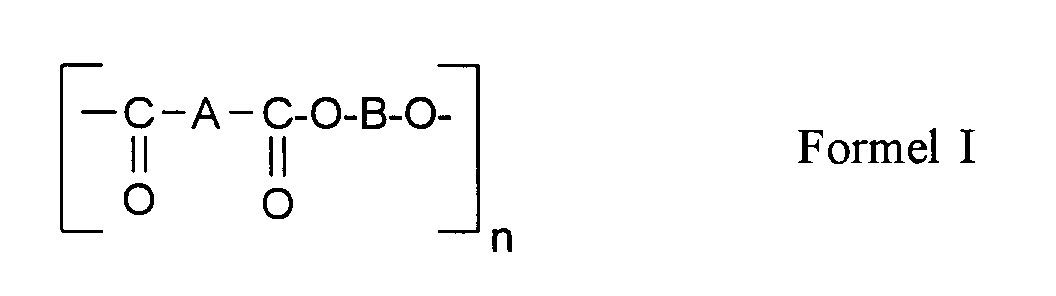
in welcher - A
- die von einem Polyamid mit 2 Carboxylendgruppen durch Verlust der letzteren abgeleitete Polyamidkette ist und
- B
- die von einem Polyoxyalkylenglycol mit endständigen OH-Gruppen durch Verlust der letzteren abgeleitete Polyoxyalkylenglycolkette ist und
- n
- die Zahl der die Polymerkette bildenden Einheiten ist.
- Als Endgruppen stehen dabei bevorzugt OH-Gruppen oder Reste von Verbindungen die die Polymerisation abbrechen.
- Die Dicarbonsäurepolyamide mit den endständigen Carboxylgruppen werden auf bekannte Weise erhalten, so z.B. durch Polykondensation eines oder mehrerer Lactame oder/und einer oder mehrerer Aminosäure, ferner durch Polykondensation einer Dicarbonsäure mit einem Diamin, jeweils in Gegenwart eines Überschusses einer organischen Dicarbonsäure, vorzugsweise mit endständigen Carboxylgruppen. Diese Carbonsäuren werden während der Polykondensation Bestandteil der Polyamidkette und lagern sich insbesondere an den Ende derselben an, wodurch man ein α-ω-dicarbonsaures Polyamid erhält. Ferner wirkt die Dicarbonsäure als Kettenabbruchmittel, weshalb sie auch im Überschuß eingesetzt wird.
- Das Polyamid kann erhalten werden, ausgehend von Lactamen und/oder Aminosäuren mit einer Kohlenwasserstoffkette bestehend aus 4-14 C-Atomen, wie z.B. von Caprolactam, Oenantholactam, Dodekalactam, Undekanolactam, Dekanolactam, 11-Amino-undekano oder 12-Aminododekansäure.
- Als Beispiele für Polyamide, wie sie durch Polykondensation einer Dicarbonsäure mit einem Diamin entstehen, können genannt werden die Kondensationsprodukte aus Hexamethylendiamin mit Adipin-, Azelain-, Sebacin-, und 1,12-Dodecandisäure, sowie die Kondensationsprodukte aus Nonamethylendiamin und Adipinsäure.
- Bei den zur Synthese des Polyamids, das heißt, einerseits zur Fixierung jeweils einer Carboxylgruppe an jedem Ende der Polyamidkette und andererseits als Kettenabbruchmittel verwendeten Dicarbonsäure kommen solche mit 4-20 C-Atomen in Frage, insbesondere Alkandisäuren, wie Bernstein-, Adipin-, Kork-, Azelain-, Sebacin-, Undekandi- oder Dodekandisäure, ferner cycloaliphatische oder aromatische Dicarbonsäure, wie Terephthal- oder Isphthal- oder Cyclohexan-1,4-dicarbonsäure.
- Die endständigen OH-Gruppen aufweisenden Polyoxyalkylenglycole sind unverzweigt oder verzweigt und weisen einen Alkylenrest mit mindestens 2 C-Atomen auf. Insbesondere sind dies Polyoxyethylen-, Polyoxypropylen- und Polyoxytetramethylenglycol, sowie Copolymerisate davon.
- Das Durchschnittsmolekulargewicht dieser OH-Gruppen-terminierten Polyoxyalkylenglycole kann sich in einem großen Bereich bewegen, vorteilhaft liegt es zwischen 100 und 6000, insbesondere zwischen 200 und 3000.
- Der Gewichtsanteil des Polyoxyalkylenglycols, bezogen auf das Gesamtgewicht des zur Herstellung des PEBA-Polymeren verwendeten Polyoxyalkylenglycols und Dicarbonsäurepolyamids beträgt 5-85 % vorzugsweise 10-50 %.
- Verfahren zur Synthese derartiger PEBA-Polymerer sind aus FR-PS 7 418 913 (Nr. der Veröffentlichung 2 273 021), DOS 2 802 989, DOS 2 837 687, DOS 2 523 991, EP-S 0 095 893, DOS 2 712 987 beziehungsweise DOS 2 716 004 bekannt.
- Bevorzugt geeignet sind solche PEBA-Polymere, die im Gegensatz zu den vorher beschriebenen, statistisch aufgebaut sind. Zur Herstellung dieser Polymere wird ein Gemisch aus
- 1. einer oder mehrerer polyamidbildender Verbindungen aus der Gruppe der ω-Aminocarbonsäuren beziehungsweise Lactame mit mindestens 10 Kohlenstoffatomen,
- 2. einem α-ω-Dihydroxy-Polyoxyalkylenglycol,
- 3. mindestens einer organischen Dicarbonsäure
in einem Gewichtsverhältnis von 1:(2+3) zwischen 30:70 und 98:2, wobei in (2+3) Hydroxyl- und Carbonylgruppen in äquivalenten Mengen vorliegen, in Gegenwart von 2 bis 30 Gewichtsprozent Wasser, bezogen auf die polyamidbildenden Verbindungen der Gruppe 1, unter dem sich einstellenden Eigendruck auf Temperaturen zwischen 23°C und 30°C erhitzt und anschließend nach Entfernen des Wassers unter Ausschluß von Sauerstoff bei Normaldruck oder unter vermindertem Druck bei 250 bis 280°C weiterbehandelt werden. - Solche bevorzugt geeignete PEBA-Polymere sind z.B. in DE-OS 2 712 987 beschrieben.
- Geeignete und bevorzugt geeignete PEBA-Polymere sind z.B. unter den Handelsnamen ®PEBAX der Fa. Atochem, ®Vestamid der Fa. Hüls AG, ®Grilamid der Fa. EMS-Chemie und ®Kellaflex der Fa. DSM erhältlich.
- Die Formkörper enthalten Wirkstoff in Konzentrationen von 1 bis 20 Gew.-%, bevorzugt von 5 bis 20 Gew.-%, besonders bevorzugt um 10 Gew.-%.
- Im Fall von Halsbändern liegt die Konzentration der Wirkstoffe bevorzugt bei 1 bis 15 %; im Fall von Medaillons, Anhängern und Ohrmarken bevorzugt bei 5 bis 20 %, im Fall von Folien, Klebestreifen bevorzugt bei 0,1 bis 5 %.
- Die Wirkstoffe können in den Zubereitungen und Formkörpern in Mischung mit Synergisten oder anderen Wirkstoffen vorliegen. Zu den Wirkstoffen gehören Insektizide wie phosphorhaltige Verbindungen, d.h. Phosphor- oder Phosphonsäureester, natürliche oder synthetische Pyrethroide, Carbamate, Amidine, Juvenilhormone und juvenoide synthetische Wirkstoffe.
- Zu den Phosphor- oder Phosphorsäureestern gehören:
0-Ethyl-0-(8-chinolyl)phenyl-thiophosphat (Quintiofos),
0,0-Diethyl-0-(3-chloro-4-methyl-7-coumarinyl)-thiophosphat (Coumaphos),
0,0-Diethyl-0-phenylglyoxylonitril-oxim-thiophosphat (Phoxim),
0,0-Diethyl-0-cyanochlorbenzaldoxim-thiophosphat (Chlorphoxim),
0,0-Diethyl-0-(4-bromo-2,5-dichlorophenyl)-phosphorothionat (Bromophos-ethyl),
0,0,0',0'-Tetraethyl-S,S'-methylene-di(phosphorodithionat) (Ethion),
2,3-p-Dioxanedithiol-S,S-bis(0,0-diethylphosphorodithionat,
2-Chlor-1-(2,4-dichlorphenyl)-vinyldiethylphosphat (Chlorfenvinphos),
0,0-Dimethyl-0-(3-methyl-4-methylthiophenyl)-thionophosphorsäureester (Fenthion). - Zu den Carbamaten gehören:
2-Isopropoxyphenylmethylcarbamat (Propoxur),
1-Naphthyl-N-methylcarbamat (Carbaryl). - Zu den synthetischen Pyrethroiden zählen Verbindungen der Formel I

in welcher - R¹ und R²
- für Halogen, gegebenenfalls halogensubstituiertes Alkyl, gegebenenfalls halogensubstituiertes Phenyl stehen,
- R³
- für Wasserstoff oder CN steht,
- R⁴
- für Wasserstoff oder Halogen steht,
- R⁵
- für Wasserstoff oder Halogen steht,
- R¹
- für Halogen, insbesondere Fluor, Chlor, Brom steht,
- R²
- für Halogen, insbesondere Fluor, Chlor, Brom, Trihalogenmethyl, Phenyl, Chlorphenyl steht,
- R³
- für Wasserstoff oder CN steht,
- R⁴
- für Wasserstoff oder Fluor steht,
- R⁵
- für Wasserstoff steht.
- Besonders bevorzugt sind synthetische Pyrethroide der Formel I in welcher
- R¹
- für Chlor steht,
- R²
- für Chlor, Trifluormethyl, p-Chlorphenyl steht,
- R³
- für CN steht,
- R⁴
- für Wasserstoff oder Fluor steht,
- R⁵
- für Wasserstoff steht.
- R¹
- für Chlor steht,
- R²
- für Chlor oder p-Chlorphenyl steht,
- R³
- für CN steht,
- R⁴
- für Fluor in 4-Stellung steht,
- R⁵
- für Wasserstoff steht.
- Im Einzelnen seien genannt:
3-[2-(4-Chlorphenyl)-2-chlorvinyl]-2,2-dimethyl-cyclo-propancarbonsäure [(α-cyano-4-fluor-3 -phenoxy)-benzyl]-ester (Flumethrin),
2,2-Dimethyl-3-(2,2-dichlorvinyl)-cyclopropancarbonsäure-α-cyano(4-fluor-3-phenoxy)-benzyl-ester (Cyfluthrin) und seine Enantiomere und Stereomere,
α-Cyano-3-phenoxybenzyl(±)-cis, trans-3-(2,2-dibromvinyl)-2,2-dimethylcyclopropancarboxylat (Deltamethrin),
2,2-Dimethyl-3-(2,2-dichlorvinyl)-cyclopropancarbonsäure-α-cyano-3-phenoxybenzylester (Cypermethrin),
3-Phenoxybenzyl(±)-cis, trans-3-(2,2-dichlorvinyl)-2,2-dimethylcyclopropancarboxylat (Permethrin),
α-(p-Cl-phenyl)-isovaleriansäure-α-cyano-3-phenoxy-benzylester (Fenvalerate),
2-Cyano-3-phenoxybenzyl-2-(2-chlor-α,α,α-trifluor-p-toluidino)-3-methylbutyrat (Fluvalinate).
Zu den Amidinen gehören:
3-Methyl-2-[2,4-dimethyl-phenylimino]-thiazolin,
2-(4-Chlor-2-methylphenylimino)-3-methylthiazolidin,
2-(4-Chlor-2-methylphenylimino)-3-(isobutyl-1-enyl)-thiazolidin
1,5-Bis-(2,4-dimethylphenyl)-3-methyl-1,3,5-triazapenta-1,4-dien (Amitraz). - Zu den Juvenilhormonen oder juvenilhormonartigen Substanzen gehören substituierte Diarylether, Benzoylharnstoffe und Triazinderivate. Zu den Juvenilhormonen und juvenilhormonartigen Substanzen gehören insbesondere Verbindungen der folgenden Formeln:


Zu den substituierten Diarylethern gehören insbesondere substituierte Alkoxydiphenylether oder -diphenylmethane der allgemeinen Formel I
wobei - R¹
- für Wasserstoff, Halogen, Alkyl, Alkoxy, Alkylthio, Halogenalkyl, Halogenalkoxy, Halogenalkylthio, Dioxyalkylen, Dioxyhalogenalkylen, CN, NO₂, Alkenyl, Alkinyl, Alkoxyalkyl, Alkoxyalkoxy, Hydroxyalkoxy steht,
- R²
- für die bei R¹ angegebenen Reste steht,
- R³
- für die bei R¹ angegebenen Reste steht,
- R⁴
- für Wasserstoff, Alkyl, Halogenalkyl oder Halogen steht,
- R⁵
- für die bei R⁴ angegebenen Reste steht,
- Het
- für gegebenenfalls substituiertes Heteroaryl steht das nicht über das Heteroatom an den übrigen Rest gebunden ist,
- X, Y
- unabhängig voneinander für -O-, -S- stehen
- Z
- für -O-, -S-, -CH₂-, -CHCH₃-, -C(CH₃)₂- steht,
- m und n
- unabhängig voneinander für 0, 1, 2, 3 stehen ihre Summe aber gleich oder größer 2 ist.
- Besonders bevorzugt sind Verbindungen der Formel I
in welcher - R¹
- Wasserstoff, Methyl, Trifluormethyl, Methoxy, Trifluormethoxy, Chlor, Fluor steht
- R²
- für Wasserstoff steht,
- R³
- für Wasserstoff, Fluor, Chlor, Methyl steht,
- R⁴
- für Wasserstoff oder Methyl steht,
- R⁵
- für Methyl, Ethyl, Trifluormethyl oder Wasserstoff steht,
- Het
- für Pyridyl oder Pyridazinyl steht die gegebenenfalls substituiert sind durch Fluor, Chlor, Methyl, NO₂, Methoxy, Methylmercapto,
- X
- für O steht,
- Y
- für O steht,
- Z
- für O, CH₂ oder -(CH₃)₂- steht,
- m
- für 1 steht,
- n
- für 1 steht.
- Im einzelnen seien folgende Verbindungen genannt:

R¹ R³ R⁵ R⁶ Z H H CH₃ H O H H CH₃ 2-Cl O 5-F H CH₃ H O H H CF₃ H O H H C₂H₅ H O H H H H O H H CH₃ H CH₂ H H CH₃ H C(CH₃)₂ - Zu den Benzoylharnstoffen gehören Verbindungen der Formel (V):

wobei - R¹
- für Halogen steht,
- R²
- für Wasserstoff oder Halogen steht,
- R³
- für Wasserstoff, Halogen oder C₁₋₄-Alkyl steht,
- R⁴
- für Halogen, 1-5-Halogen-C₁₋₄-alkyl, C₁₋₄-Alkoxy, 1-5-Halogen-C₁₋₄-alkoxy, C₁₋₄-Alkylthio, 1-5-Halogen-C₁₋₄-alkylthio, Phenoxy oder Pyridyloxy die gegebenenfalls substituiert sein können durch Halogen, C₁₋₄-Alkyl, 1-5-Halogen-C₁₋₄-alkyl, C₋₄-Alkoxy, 1-5-Halogen-C₁₋₄-alkoxy, C₁₋₄-Alkylthio, 1-5-Halogen-C₁-C₄-alkylthio.
- Insbesondere seien genannt:


- Zu den Triazinen gehzören Verbindungen der Formel (VI)

worin - R₁
- für Cyclopropyl oder Isopropyl steht;
- R₂
- Wasserstoff, Halogen, C₁-C₁₂-Alkylcarbonyl, Cyclopropylcarbonyl, C₁-C₁₂-Alkylcarbamoyl, C₁-C₁₂-Alkylthiocarbamoyl oder C₂-C₆-Alkenylcarbamoyl bedeutet; und
- R₃
- für Wasserstoff, C₁-C₁₂-Alkyl, Cyclopropyl, C₂-C₆-Alkenyl, C₁-C₁₂-Alkylcarbonyl, Cyclopropylcarbonyl, C₁-C₁₂-Alkylcarbamoyl, C₁-C₁₂-Alkylthiocarbamoyl oder C₂-C₆-Alkenylcarbamoyl steht und deren Säureadditionssalze, die für Warmblüter untoxisch sind.
- Insbesondere seien genannt:


- Besonders hervorgehoben seien die Wirkstoffe mit den common names Propoxur, Cyfluthrin, Flumethrin, Pyriproxyfen, Methoprene, Diazinon, Amitraz, Fenthion und Levamisol.
- Die Formkörper können weiterhin die für Kunststoffe üblichen Additive enthalten. Übliche Additive sind beispielsweise Pigmente, Stabilisatoren, Fließmittel, Gleitmittel, Entformungsmittel.
- In den folgenden Beispielen wird als Wirkstoff 1-[(6-Chlor-3-pyridinyl)methyl]-N-nitro-2-imidazolidinium (common name Imidacloprid) eingesetzt.
- SC-(Suspensionskonzentrat) Formulierung:
368 g Imidacloprid
35 g Blockpolymer aus Emulgator Ethylenoxid- und Propylenoxid
12 g Ditolylethersulfonat-Formaldehyd-Kondensat (Emulgator)
3,5 g wasserlöslicher Polyvinylalkohol
58,0 g NH₄Cl
116,0 g Harnstoff
1,2 g (37 %ige wäßrige Salzsäure)
4,6 g Xanthan-gum
560,5 g destilliertes Wasser - WP (dispergierbares Pulver)-Formulierung:
25,0 g Imidacloprid
1,0 g Diisobutyl-naphthalin-Na-sulfonat
10,0 g n-Dodecylbenzylsulfonsäure Calcium
12,0 g hochdisperser Kieselsäure-haltiger Alkylarylpolyglykolether
3,0 g Ditolylethersulfonat-Formaldehyd-Kondensat (Emulgator)
2,0 g ®Baysilon-E, ein siliconhaltiger Entschäumer der Fa. Bayer AG
2,0 g feindisperses Siliciumdioxid und
45,0 g Kaolin - SL-(wasserlösliche Konzentrat)-Formulierung
18,3 g Imidacloprid
2,5 g neutraler Emulgator auf Basis Alkylarylpolyglykolether
3,5 g Natriumsulfobernsteinsäurediisooctylester
38,4 g Dimethylsulfoxid und
37,5 g 2-Propanol - SL-(wasserlösliche Konzentrat)-Formulierung
185, g Imidacloprid
5,0 g Natriumsulfonbernsteinsäurediisooctylester und
76,5 g Dimethylsulfoxid
werden einer 100 g Schampoo-Formulierung bestehend aus
- 44,4 Gew.-%
- Marlon AT 50, ein Triethanolaminsalz von Alkylbenzolsulfonsäuren der Fa. Hüls AG
- 11,1 Gew.-%
- Marlon A 350, Natriumsalz von Alkylbenzolsulfonsäuren der Fa. Hüls AG
- 3,0 Gew.-%
- Kondensationsprodukt von Ölsäuren und Diethanolamin der Fa. Hüls AG und
- 41,5 Gew.-%
- Polyethylenglykol
- Spray-Formulierung bestehend aus
2,0 g Imidacloprid
10,0 g Dimethylsulfoxid
35,0 g 2-Propanol und
53,0 g Aceton - pour-on-Formulierung
20,3 g Imidacloprid
1,8 g Polyvinylalkohol
1,8 g Blockcopolymerisat auf Basis Ethylenoxid und Propylenoxid
0,26 g Xanthan Gum
9,0 g Glycerin
59,2 g destilliertes Wasser -
Zusammensetzung: Imidachloprid 10,00 g Di-n-butyladipat 21,10 g Diethylhexylphthalat 9,10 g Epoxidiertes Sojabohnenöl 2,30 g Stearinsäure 0,80 g PVC 56,70 g - Herstellung:
- Die homogene Mischung aus Imidacloprid und PVC wird in einem Mischer mit dem Gemisch aus Di-n-butyladipat, Diethylhexylphthalat und Epoxidiertem Sojabohnenöl benetzt. Man mischt solange, bis die Mischung homogen ist. Dabei fördert Erwärmen, z.B. infolge einer Erhöhung der Tourenzahl des Mischers, das Einziehen der Weichmachermischung in das PVC. Nach der anschließenden homogenen Verteilung der Stearinsäure wird die Mischung im Spritzguß zu Hundehalsbändern geformt.
-
Zusammensetzung: Imidachloprid 10,00 g Epoxidiertes Sojabohnenöl 2,30 g Stearinsäure 0,80 g Acetyltributylcitrat 30,20 g PVC 56,70 g - Herstellung:
- Das Gemisch aus Acetyltributylcitrat und Epoxidiertem Sojabohnenöl wird in einem Mischer auf die homogene Mischung aus Imidacloprid und PVC aufgebracht. Erwärmen fördert beim Mischen das Einziehen des Weichmachergemisches in das PVC; man mischt solange, bis die Mischung homogen ist. Die Mischung wird in herkömmlicher Weise zu Hundehalsbändern extrudiert.
-
Zusammensetzung: Imidachloprid 20,00 g Epoxidiertes Sojabohnenöl 2,30 g Stearinsäure 0,80 g Acetyltributylcitrat 30,20 g PVC 56,70 g - Herstellung:
- wie Beispiel 8
-
Zusammensetzung: Imidachloprid 7,50 g Epoxidiertes Sojabohnenöl 10,00 g Stearinsäure 0,80 g Acetyltributylcitrat 15,00 g PVC 66,70 g - Herstellung:
- wie Beispiel 8
-
Zusammensetzung: Imidachloprid 10,00 g Epoxidiertes Sojabohnenöl 2,30 g Stearinsäure 0,80 g Triacetin 15,00 g PVC 71,90 g - Herstellung:
- Das Gemisch aus Triacetin und Epoxidiertem Sojabohnenöl wird in einem Mischer auf die homogene Mischung aus PVC und Imidacloprid aufgebracht. Dabei fördert Erwärmen, z.B. infolge einer Erhöhung der Tourenzahl des Mischers, das Einziehen des Weichmachers in das PVC. Nach homogener Untermischung der Stearinsäure wird die Mischung auf einem Extruder zu Platten extrudiert, aus denen Medaillons (=Anhänger für Halsbänder) ausgestanzt werden.
-
Zusammensatzung: Imidacloprid 5,00 g Polyetherblockamid (Pebax®) 94,50 g - Herstellung:
- Der Wirkstoff wird in einem Intensivmischer auf den Träger aufgebracht und die Mischung in Spritzguß zu Hundehalsbändern geformt.
-
Zusammensetzung: Imidacloprid 10,00 g Mittelkettige Triglyceride 15,00 g hochdisperses Siliciumdioxid 0,50 g Polyetherblockamid (Pebax®) 74,50 g - Herstellung:
- Mittelkettige Triglyceride werden in einem Mischer auf die homogene Mischung aus Imidacloprid und Polyetherblockamid aufgebracht. Erwärmen fördert dabei das Einziehen der mittelkettigen Triglyceride in das Polyetherblockamid. Zur Verbesserung der Fließfähigkeit wird vor der Extrusion der Mischung hochdisperses Siliciumdioxid homogen untergemischt. Es werden Platten extrudiert, aus denen Medaillons (=Anhänger für Halsbänder) ausgestanzt werden.
-
Zusammensetzung: Imidacloprid 10,00 g Styrol-Butylen-Block-Copolymer (Thermoplast®K) 90,00 g - Herstellung:
- Der Wirkstoff wird in einem Intensivmischer auf den Träger aufgebracht und die Mischung im Spritzguß zu Halsbändern geformt.
-
Zusammensetzung: Imidacloprid 5,00 g Copolyester (Hytrel®) 95,00 g - Herstellung:
- Die Mischung wird in herkömmlicher Weise zu Hundehalsbändern extrudiert.
-
Zusammensetzung: Imidacloprid 10,00 g Polyetherblockamid (Pebax®) 90,00 g - Herstellung:
- Die homogene Mischung wird auf einem Extruder zu Platten extrudiert, aus denen Medaillons (= Anhänger für Halsbänder) ausgestanzt werden.
-
Zusammensetzung: Imidacloprid 10,00 g mittelkettige Triglyceride 30,00 g hochdisperses Siliciumdioxid 0,50 g Polyetherblockamid (Pebax®) 59,50 g - Herstellung:
- wie Beispiel 13
- 1 ml der im Beispiel 1 angegebenen SC-Formulierung wurde als Lösung pour-on auf die Schulter eines mit 200 Flöhen infestierten Hundes aufgetragen. Das Versuchstier konnte sofort von adulten Flöhen befreit werden. Die erfindungsgemäße Behandlung führt zu einer 100 %igen Mortalitätsrate der Flöhe.
- 1 ml der in Beispiel 1 beschriebenen Formulierung wurde in 1 l Wasser verdünnt und mit dieser Lösung Hunde die mit Flöhen infestiert waren tropfnaß begossen. Es wurden folgende Ergebnisse erhalten:
Zeitraum Tag Anzahl der Flöhe pro Hund % Wirkung unbehandelt behandelt -1 Infestation mit 100 Flöhen 0 Behandlung und Zählung 30 0 100 5, 8 Infestation mit 100 Flöhen 9 Zählung 56 0 100 15 Infestation mit 100 Flöhen 16 Zählung 76 0 100 19 Infestation mit 100 Flöhen (unbehandeltes Tiere) 250 Flöhen (behandelte Tiere 20 Zählung 39 0 100 26 Infestation mit 100 Flöhen 27 Zählung 43 0 100 - 1 ml der Lösung gemäß Beispiel 1 wurden auf die Schulter eines Hundes gegeben. Das Tier wurde nach 2 und nach 6 Tagen der Behandlung mit 200 Flöhen infestiert. Jeweils am Tag 3 und am Tag 7 nach Behandlung wurden die am Hund verbliebenen Flöhe gezählt. Es konnten keine lebenden Flöhe gefunden werden. Die Wirkung war 100 %.


Die Wirkstoffe eignen sich bei günstiger Warmblütertoxizität zur Bekämpfung von parasitierenden Insekten, die am Menschen und in der Tierhaltung und Tierzucht bei Haus- und Nutztieren sowie Zoo-, Labor-, Versuchs- und Hobbytieren vorkommen. Sie sind dabei gegen alle oder einzelne Entwicklungsstadien der Schädlinge sowie gegen resistente und normal sensible Arten der Schädlinge wirksam.

in welcher
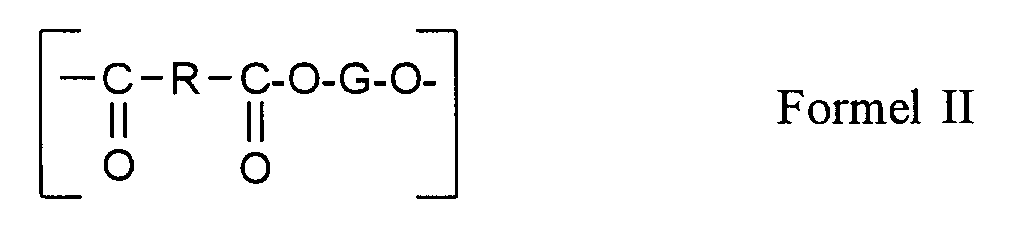
in welcher
Claims (9)
- Verwendung von Agonisten und Antagonisten der nicotinergen Acetylcholinrezeptoren von Insekten zur nicht-systemischen Bekämpfüng von parasitierenden Insekten wie Flöhen, Läusen und Fliegen an Menschen und Tieren.
- Verwendung gemäß Anspruch 1, dadurch gekennzeichnet, daß als Wirkstoff Verbindungen der allgemeinen Formel (I) eingesetzt werden
 R für Wasserstoff, gegebenenfalls substituierte Reste der Gruppe Acyl, Alkyl, Aryl, Aralkyl, Heteroaryl oder Heteroarylalkyl steht;A für eine monofunktionelle Gruppe aus der Reihe Wasserstoff, Acyl, Alkyl, Aryl steht oder für eine bifunktionelle Gruppe steht, die mit dem Rest Z verknüpft ist;E für einen elektronenziehenden Rest steht;X für die Reste -CH= oder =N- steht, wobei der Rest -CH= anstelle eines H-Atoms mit dem Rest Z verknüpft sein kann;Z für eine monofunktionelle Gruppe aus der Reihe Alkyl, -O-R, -S-R,
- Verwendung gemäß Anspruch 1, dadurch gekennzeichnet, daß als Wirkstoffe Verbindungen der Formel (I) gemäß Anspruch 2 eingesetzt werden, in welcher die Reste folgende Bedeutung haben:R steht für gegebenenfalls substituiertes Heteroarylmethyl, Heteroarylethyl mit bis zu 6 Ringatomen und N, O, S, insbesondere N als Heteroatomen,A steht für Wasserstoff sowie für gegebenenfalls substituiertes Alkyl oder Alkylen mit 1-4 C-Atomen und wobei die Alkylengruppen durch Heteroatome aus der Reihe N, O, S unterbrochen sein können,A und Z können gemeinsam mit den Atomen, an welche sie gebunden sind, einen gesättigten oder ungesättigten heterocyclischen Ring bilden. Der heterocyclische Ring kann weitere 1 oder 2 gleiche oder verschiedene Heteroatome und/oder Heterogruppen enthalten,E steht für NO₂, CN, Halogenalkylcarbonyl,X steht für -CH= oder -N=Z steht für gegebenenfalls substituierte Reste Alkyl, -OR, -SR, -NRR, wobei R die oben angegebene Bedeutung hat,Z kann außer dem obengenannten Ring gemeinsam mit dem Atom, an welches es gebunden ist und dem Rest

- Verwendung gemäß Anspruch 1 dadurch gekennzeichnet, daß als Wirkstoff Verbindungen der allgemeinen Formeln (II) und (III) eingesetzt werden
 n für 1 oder 2 steht,Subst. für Halogen steht,A, Z, X und E die in Ansprüchen 2 und 3 angegebenen Bedeutungen haben.
 - Verwendung gemäß Anspruch 1 dadurch gekennzeichnet, daß als Wirkstoff eine oder mehrere der folgenden Verbindungen eingesetzt werden:

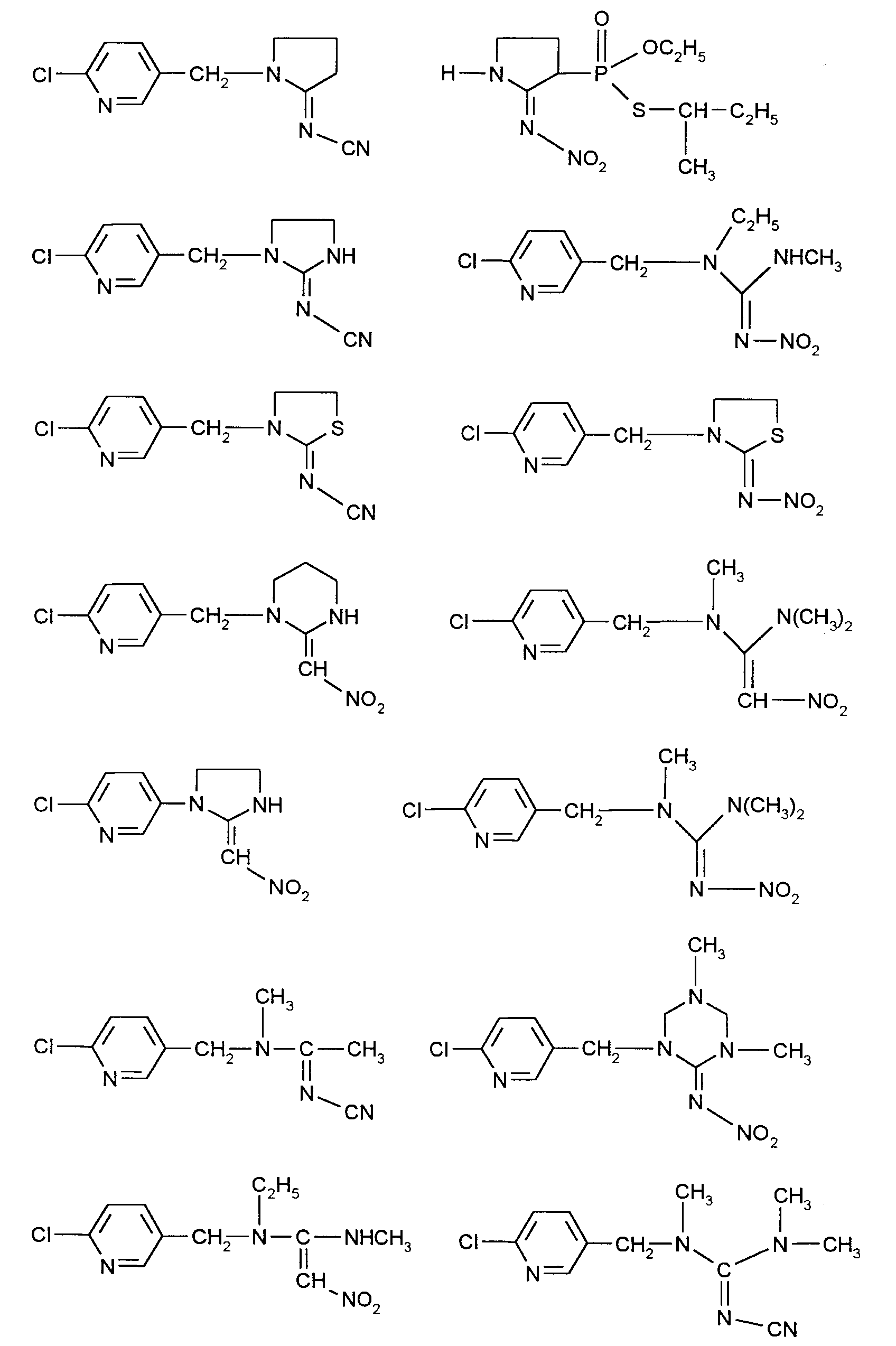

- Verwendung gemäß Anspruch 1 dadurch gekennzeichnet, daß als Wirkstoff Imidacloprid = 1-[(6-Chlor-3-pyridinyl)methyl]-N-nitro-2-imidazolidinium eingesetzt wird.
- Mittel zur nicht-systemischen Bekämpfung von parasitierenden Insekten an Menschen und Tieren, dadurch gekennzeichnet, daß sie die Wirkstoffe gemäß Ansprüchen 1 bis 6 enthalten.
- Formkörper zur nicht-systemischen Bekämpfung von parasitierenden Insekten an Tieren, dadurch gekennzeichnet, daß sie die Wirkstoffe gemäß Ansprüchen 1 bis 6 enthalten.
- Verwendung der Wirkstoffe gemäß Ansprüchen 1 bis 7 zur Herstellung von Mitteln zur nicht-systemischen Bekämpfung von parasitierenden Insekten an Menschen und Tieren.
Priority Applications (3)
| Application Number | Priority Date | Filing Date | Title |
|---|---|---|---|
| EP05021260.4A EP1609362B1 (de) | 1994-05-20 | 1995-05-08 | Nicht-systemische Bekämpfung von Parasiten |
| DK05021260T DK1609362T3 (da) | 1994-05-20 | 1995-05-08 | Ikke-systemisk bekæmpelse af parasitter |
| FR15C0032C FR15C0032I2 (fr) | 1994-05-20 | 2015-04-22 | Lutte non-systemique contre les parasites |
Applications Claiming Priority (2)
| Application Number | Priority Date | Filing Date | Title |
|---|---|---|---|
| DE4417742A DE4417742A1 (de) | 1994-05-20 | 1994-05-20 | Nicht-systemische Bekämpfung von Parasiten |
| DE4417742 | 1994-05-20 |
Related Child Applications (1)
| Application Number | Title | Priority Date | Filing Date |
|---|---|---|---|
| EP05021260.4A Division EP1609362B1 (de) | 1994-05-20 | 1995-05-08 | Nicht-systemische Bekämpfung von Parasiten |
Publications (2)
| Publication Number | Publication Date |
|---|---|
| EP0682869A1 true EP0682869A1 (de) | 1995-11-22 |
| EP0682869B1 EP0682869B1 (de) | 2005-12-21 |
Family
ID=6518608
Family Applications (2)
| Application Number | Title | Priority Date | Filing Date |
|---|---|---|---|
| EP05021260.4A Expired - Lifetime EP1609362B1 (de) | 1994-05-20 | 1995-05-08 | Nicht-systemische Bekämpfung von Parasiten |
| EP95106925A Revoked EP0682869B1 (de) | 1994-05-20 | 1995-05-08 | Nicht-systemische Bekämpfung von Parasiten |
Family Applications Before (1)
| Application Number | Title | Priority Date | Filing Date |
|---|---|---|---|
| EP05021260.4A Expired - Lifetime EP1609362B1 (de) | 1994-05-20 | 1995-05-08 | Nicht-systemische Bekämpfung von Parasiten |
Country Status (25)
| Country | Link |
|---|---|
| US (10) | US6232328B1 (de) |
| EP (2) | EP1609362B1 (de) |
| JP (2) | JP3276808B2 (de) |
| KR (1) | KR100377187B1 (de) |
| AT (1) | ATE313261T1 (de) |
| AU (1) | AU696581C (de) |
| CA (1) | CA2149594C (de) |
| CZ (1) | CZ291031B6 (de) |
| DE (2) | DE4417742A1 (de) |
| DK (2) | DK0682869T3 (de) |
| ES (2) | ES2533867T3 (de) |
| FI (1) | FI111125B (de) |
| FR (1) | FR15C0032I2 (de) |
| HU (1) | HU220131B (de) |
| IL (1) | IL113756A (de) |
| NL (1) | NL300733I1 (de) |
| NO (1) | NO313901B1 (de) |
| NZ (1) | NZ272141A (de) |
| PL (1) | PL190280B1 (de) |
| PT (1) | PT1609362E (de) |
| RU (1) | RU2166253C2 (de) |
| SK (1) | SK284104B6 (de) |
| TW (1) | TW342310B (de) |
| UA (1) | UA34466C2 (de) |
| ZA (1) | ZA954107B (de) |
Cited By (18)
| Publication number | Priority date | Publication date | Assignee | Title |
|---|---|---|---|---|
| WO1996017520A1 (de) * | 1994-12-09 | 1996-06-13 | Bayer Aktiengesellschaft | Dermal applizierbare formulierungen von parasitiziden |
| WO1997037544A1 (de) * | 1996-04-03 | 1997-10-16 | Bayer Aktiengesellschaft | Mittel zur bekämpfung parasitierender insekten und milben an menschen |
| WO1997046101A1 (de) * | 1996-06-03 | 1997-12-11 | Bayer Aktiengesellschaft | Schädlingsbekämpfungsmittel auf basis cyclischer polysiloxane |
| EP0836851A1 (de) * | 1996-10-21 | 1998-04-22 | Virbac S.A. | Amidin-Verbindungen zur Behandlung von durch Ekto- oder Endoparasiten hervorgerufenen Erkrankungen und systemische Zusammensetzungen zur Parasitenkontrolle |
| EP0857725A1 (de) * | 1997-02-06 | 1998-08-12 | Pfizer Inc. | (N-(Pyridinylmethyl)-heterozyklische)-ylidenamin-Derivate als Nikotin-Acetylcholin-Rezeptor-Bindemittel |
| WO1998042191A1 (fr) * | 1997-03-26 | 1998-10-01 | Merial | Procede et moyens d'eradication des puces dans les locaux habites par les petits mammiferes |
| EP0966961A1 (de) * | 1998-06-08 | 1999-12-29 | Sumitomo Chemical Company, Limited | Verfahren zur Kontrolle von Ektoparasiten |
| JP2000063271A (ja) * | 1998-06-08 | 2000-02-29 | Sumitomo Chem Co Ltd | 寄生虫の駆除方法 |
| EP0976328A3 (de) * | 1998-07-27 | 2000-08-16 | Sumitomo Chemical Company, Limited | Mittel zur Bekämpfung von Ektoparasiten bei Tieren |
| US6201017B1 (en) | 1998-07-27 | 2001-03-13 | Sumitomo Chemical Co., Ltd. | Ectoparasite controlling agent for animals |
| EP1149532A1 (de) * | 2000-04-26 | 2001-10-31 | Takeda Chemical Industries, Ltd. | Verfahren zur Bekämpfung von Fliegen |
| WO2002017948A3 (en) * | 2000-08-30 | 2002-06-13 | Syngenta Mogen Bv | Control of crop pests and animal parasites through direct neuronal uptake |
| WO2002043494A3 (en) * | 2000-11-30 | 2002-08-22 | Bayer Ag | Compositions for enhanced acaricidal activity |
| WO2002087338A1 (de) * | 2001-04-09 | 2002-11-07 | Bayer Aktiengesellschaft | Dermal applizierbare flüssige formulierungen zur bekämpfung von parasitierenden insekten an tieren |
| EP1609362A2 (de) | 1994-05-20 | 2005-12-28 | Bayer HealthCare AG | Nicht-systemische Bekämpfung von Parasiten |
| BG64814B1 (bg) * | 1998-02-23 | 2006-05-31 | Bayer Aktiengesellschaft | Дермално приложими водосъдържащи паразитицидни препарати |
| WO2008098168A3 (en) * | 2007-02-09 | 2009-05-22 | Wyeth Corp | High-dose, long-acting ectoparasiticide for extended control |
| US8404735B2 (en) | 2009-03-18 | 2013-03-26 | Omnipharm Limited | Parasiticidal formulation |
Families Citing this family (31)
| Publication number | Priority date | Publication date | Assignee | Title |
|---|---|---|---|---|
| DE19519007A1 (de) * | 1995-05-24 | 1996-11-28 | Bayer Ag | Insektizide Mittel |
| US6828275B2 (en) * | 1998-06-23 | 2004-12-07 | Bayer Aktiengesellschaft | Synergistic insecticide mixtures |
| AUPP105497A0 (en) * | 1997-12-19 | 1998-01-15 | Schering-Plough Animal Health Limited | Aqueous insecticidal pour-on treatment |
| DE19807630A1 (de) * | 1998-02-23 | 1999-08-26 | Bayer Ag | Wasserhaltige Mittel zur Bekämpfung parasitierender Insekten und Milben an Menschen |
| DE10008128A1 (de) * | 2000-02-22 | 2001-08-23 | Bayer Ag | Endoparasitizide Mittel |
| JP2002047110A (ja) * | 2000-08-01 | 2002-02-12 | Sumitomo Chem Co Ltd | 防虫樹脂組成物および防虫成形体 |
| JP4972843B2 (ja) * | 2000-11-09 | 2012-07-11 | 住友化学株式会社 | 動物外部寄生虫防除用経皮投与剤 |
| US20030166554A1 (en) * | 2001-01-16 | 2003-09-04 | Genset, S.A. | Treatment of CNS disorders using D-amino acid oxidase and D-aspartate oxidase antagonists |
| AR036377A1 (es) * | 2001-08-28 | 2004-09-01 | Bayer Corp | Dispositivo de control de insectos que contiene cumafos y diazinon para el tratamiento prolongado de animales. |
| GB0121285D0 (en) * | 2001-09-03 | 2001-10-24 | Cancer Res Ventures Ltd | Anti-cancer combinations |
| US6663876B2 (en) | 2002-04-29 | 2003-12-16 | Piedmont Pharmaceuticals, Llc | Methods and compositions for treating ectoparasite infestation |
| US7008979B2 (en) | 2002-04-30 | 2006-03-07 | Hydromer, Inc. | Coating composition for multiple hydrophilic applications |
| DE10219751A1 (de) * | 2002-05-02 | 2003-11-13 | Siemens Ag | Röntgendetektor mit einer Konverterschicht |
| DE10301906A1 (de) * | 2003-01-17 | 2004-07-29 | Bayer Healthcare Ag | Repellentmittel |
| PT1610613T (pt) * | 2003-04-04 | 2017-03-07 | Merial Inc | Formulações veterinárias anti-helmínticas tópicas |
| EP1755399A2 (de) * | 2004-05-13 | 2007-02-28 | Bayer CropScience AG | Verfahren zur verbesserung des pflanzlichen wachstums |
| DE102004031325A1 (de) * | 2004-06-29 | 2006-01-19 | Bayer Healthcare Ag | Wirkstoffhaltige feste Formkörper zur äußerlichen Anwendung gegen Parasiten an Tieren |
| JP2008510814A (ja) * | 2004-08-23 | 2008-04-10 | ワイス | Pai−1阻害剤としてのピロロ−ナフチル酸 |
| AU2005239726C1 (en) * | 2004-12-14 | 2010-11-18 | Sumitomo Chemical Company, Limited | Pesticidal composition comprising pyriproxyfen |
| ITMI20061825A1 (it) * | 2006-09-26 | 2008-03-27 | Giuliani Spa | Composizione antipediculosi provvista di attivita' di soffocamento dei pidocchi |
| EP2219637A4 (de) * | 2007-11-08 | 2012-01-11 | Ceapro Inc | Avenanthramid enthaltende zusammensetzungen |
| DE102008033834A1 (de) * | 2008-07-19 | 2010-01-21 | Lanxess Deutschland Gmbh | Weichmacherzubereitungen |
| GB2464449B (en) * | 2008-09-05 | 2011-10-12 | Norbrook Lab Ltd | A topical ectoparasticide composition |
| CN102300457B (zh) | 2009-01-29 | 2016-04-27 | 拜耳知识产权有限责任公司 | 高载量活性成分的农药控制设备 |
| WO2012107585A1 (fr) * | 2011-02-11 | 2012-08-16 | Ceva Sante Animale Sa | Nouvelles compositions antiparasitaires topiques concentrees et stables |
| GB201107040D0 (en) * | 2011-04-26 | 2011-06-08 | Syngenta Ltd | Formulation component |
| JP5847810B2 (ja) | 2011-05-10 | 2016-01-27 | 日本曹達株式会社 | 液状殺虫剤組成物 |
| US10721930B2 (en) | 2014-12-23 | 2020-07-28 | Cap Innovet, Inc. | Dermal compositions |
| CN105145615A (zh) * | 2015-09-30 | 2015-12-16 | 河南科技学院 | 一种含有氯噻啉和氟啶脲的杀虫组合物及其应用 |
| NZ776819A (en) | 2019-01-16 | 2023-04-28 | Boehringer Ingelheim Animal Health Usa Inc | Topical compositions comprising a neonicotinoid and a macrocyclic lactone, methods and uses thereof |
| CA3220746A1 (en) * | 2021-07-16 | 2023-01-19 | Min Xie | Flea and tick collar |
Citations (8)
| Publication number | Priority date | Publication date | Assignee | Title |
|---|---|---|---|---|
| CH114863A (de) * | 1925-12-22 | 1926-03-16 | Josef Bruelhart | Ungeziefer-Vertilgungsmittel. |
| DE587853C (de) * | 1932-03-15 | 1933-11-09 | Hermann Nier Fa | Mittel zur Bekaempfung von Ungeziefer an Haustieren |
| JPS63244B2 (de) * | 1986-02-21 | 1988-01-06 | Nippon Denso Co | |
| DE3639877A1 (de) * | 1986-11-21 | 1988-05-26 | Bayer Ag | Hetarylalkyl substituierte 5- und 6-ringheterocyclen |
| US4874753A (en) * | 1984-07-10 | 1989-10-17 | Aeci Limited | Insecticidal composition |
| EP0413610A2 (de) * | 1989-08-18 | 1991-02-20 | Pfizer Inc. | Pestizide Formulierungen |
| EP0483052A1 (de) * | 1990-09-18 | 1992-04-29 | Ciba-Geigy Ag | Picolinoxide |
| WO1993024002A1 (de) * | 1992-05-23 | 1993-12-09 | Ciba-Geigy Ag | 1-[n-(halo-3-pyridylmethyl)]-n-methylamino-1-alkylamino-2-nitroethylen-derivate zur bekämpfung von flöhen bei haustieren |
Family Cites Families (57)
| Publication number | Priority date | Publication date | Assignee | Title |
|---|---|---|---|---|
| GB587853A (en) | 1945-01-23 | 1947-05-07 | Papworth Village Settlement | Improvements in or relating to windows |
| GB1511646A (en) | 1974-05-08 | 1978-05-24 | Wellcome Found | Method for insecticide use |
| GB1595081A (en) | 1977-02-08 | 1981-08-05 | Shell Int Research | Pesticidal composition |
| DE2932920A1 (de) | 1979-08-14 | 1981-04-09 | Bayer Ag, 5090 Leverkusen | Ektoparasitizide mittel enthaltend substituierte phenoxybenzyloxy-carbonylderivate und carbaminsaeureester, verfahren zu ihrer herstellung und ihre verwendung zur bekaempfung von ektoparasiten |
| DE3021725A1 (de) * | 1980-06-10 | 1981-12-17 | Bayer Ag, 5090 Leverkusen | Mittel zur bekaempfung tierischer ektoparasiten mit stark ausgepruegter residualwirkung |
| US4479968A (en) | 1980-10-17 | 1984-10-30 | The Wellcome Foundation Ltd. | Control of ectoparasitic infestations of pigs |
| DE3039882A1 (de) * | 1980-10-22 | 1982-05-27 | Bayer Ag, 5090 Leverkusen | Ektoparasitizidhaltige polyurethane |
| GB2088212B (en) | 1980-11-21 | 1985-12-04 | Wellcome Found | Pest control |
| DE3132610A1 (de) | 1981-08-18 | 1983-03-10 | Bayer Ag, 5090 Leverkusen | Schaedlingsbekaempfungsmittel, ihre herstellung und verwendung |
| US4607050A (en) * | 1981-10-19 | 1986-08-19 | Wellcome Australia Limited | Method of controlling insects and parasites with an aqueous localized pour-on formulation |
| DE3208334A1 (de) * | 1982-03-09 | 1983-09-15 | Bayer Ag, 5090 Leverkusen | Pestizide pour-on-formulierungen |
| JPH0629256B2 (ja) | 1983-10-06 | 1994-04-20 | 日本バイエルアグロケム株式会社 | ニトロメチレン−テトラヒドロピリミジン誘導体,その製法及び殺虫,殺ダニ,殺センチユウ剤 |
| JPS60172976A (ja) | 1984-02-16 | 1985-09-06 | Nippon Tokushu Noyaku Seizo Kk | ニトロメチレン誘導体,その製法及び殺虫,殺ダニ,殺センチユウ剤 |
| ZW5085A1 (en) | 1984-04-13 | 1985-09-18 | Nihon Tokushu Noyaku Seizo Kk | Nitromethylene derivatives,intermediates thereof,processes for production thereof,and insecticides |
| DE3681465D1 (de) | 1985-02-04 | 1991-10-24 | Nihon Bayer Agrochem K.K., Tokio/Tokyo, Jp | |
| EP0214546A2 (de) | 1985-09-05 | 1987-03-18 | Nihon Tokushu Noyaku Seizo K.K. | Insektizide Zusammensetzung zur Verwendung in Landwirtschaft und Gartenbau |
| GB8613914D0 (en) | 1986-06-07 | 1986-07-09 | Coopers Animal Health | Liquid formulations |
| JPH085859B2 (ja) | 1986-07-01 | 1996-01-24 | 日本バイエルアグロケム株式会社 | 新規アルキレンジアミン類 |
| WO1988000471A1 (en) | 1986-07-21 | 1988-01-28 | Southwest Foundation For Biomedical Research | Composition of matter and method of immunizing against viral causative agents of aids and arc |
| JPH07121909B2 (ja) | 1986-09-10 | 1995-12-25 | 日本バイエルアグロケム株式会社 | 新規複素環式化合物及び殺虫剤 |
| ES2005135A6 (es) | 1987-04-08 | 1989-03-01 | Carnot Sa | Ciclo termico con fluido de trabajo mezcla |
| DE3712307A1 (de) * | 1987-04-10 | 1988-10-20 | Bayer Ag | 3-substituierte 1-(2-chlor-thiazol-5-yl-methyl)-2- nitroimino-1,3-diazacycloalkane |
| JPH0710865B2 (ja) | 1987-06-26 | 1995-02-08 | 日本バイエルアグロケム株式会社 | ニトロ置換ヘテロ環式化合物及び殺虫剤 |
| ATE166051T1 (de) * | 1987-08-01 | 1998-05-15 | Takeda Chemical Industries Ltd | Zwischenprodukte, ihre herstellung und verwendung zur herstellung alpha-ungesättigter amine |
| EP0306696B1 (de) | 1987-08-04 | 1994-02-16 | Ciba-Geigy Ag | Substituierte Guanidine |
| US4918086A (en) | 1987-08-07 | 1990-04-17 | Ciba-Geigy Corporation | 1-nitro-2,2-diaminoethylene derivatives |
| JP2583429B2 (ja) * | 1987-11-06 | 1997-02-19 | 日本バイエルアグロケム株式会社 | イミダゾリン類及び殺虫剤 |
| FR2637005B1 (fr) | 1988-09-23 | 1990-12-21 | Chorin Christian | Dispositif de verrouillage d'une porte a deux battants |
| JP2884412B2 (ja) * | 1988-10-21 | 1999-04-19 | 日本バイエルアグロケム株式会社 | 殺虫性シアノ化合物 |
| JP2779403B2 (ja) * | 1988-11-29 | 1998-07-23 | 日本バイエルアグロケム株式会社 | 殺虫性ニトロ化合物 |
| IE960441L (en) * | 1988-12-27 | 1990-06-27 | Takeda Chemical Industries Ltd | Guanidine derivatives, their production and insecticides |
| IL93159A (en) * | 1989-01-31 | 1996-11-14 | Takeda Chemical Industries Ltd | Process for the production of 1,1,1-trihalogen-2-nitroethanes |
| GB2228003A (en) * | 1989-02-13 | 1990-08-15 | Shell Int Research | Pesticidal nitroethene compounds |
| EP0383091B1 (de) * | 1989-02-13 | 1993-11-10 | Nihon Bayer Agrochem K.K. | Nitroverbindungen als Insektizide |
| US4928991A (en) | 1989-03-08 | 1990-05-29 | Automotive Systems Laboratory, Inc. | Aspirating inflator assembly |
| JP2610988B2 (ja) * | 1989-03-09 | 1997-05-14 | 日本バイエルアグロケム 株式会社 | 新規ヘテロ環式化合物及び殺虫剤 |
| EP0387663B1 (de) | 1989-03-17 | 1993-09-01 | Bayer Ag | Mittel gegen Keratinschädlinge |
| US5304566A (en) * | 1989-10-06 | 1994-04-19 | Nippon Soda Co., Ltd | Pyridine compounds which have useful insecticidal utility |
| JPH03200768A (ja) * | 1989-10-24 | 1991-09-02 | Agro Kanesho Co Ltd | ニトログアニジン化合物及び殺虫剤 |
| AU628229B2 (en) | 1989-11-10 | 1992-09-10 | Agro-Kanesho Co. Ltd. | Hexahydrotriazine compounds and insecticides |
| JP2978245B2 (ja) * | 1990-03-05 | 1999-11-15 | マリンクロット ベタリナリイ,インコーポレイテッド | 寄生虫防除組成物ならびにその製造法および使用法 |
| WO1991017659A1 (en) | 1990-05-17 | 1991-11-28 | E.I. Du Pont De Nemours And Company | Arthropodicidal nitroethylenes and nitroguanidines |
| IL99161A (en) * | 1990-08-17 | 1996-11-14 | Takeda Chemical Industries Ltd | History of guanidine A process for their preparation and preparations from pesticides that contain them |
| DE4033445A1 (de) * | 1990-10-20 | 1992-04-23 | Bayer Ag | Tetramisol oder levamisol enthaltende pour-on formulierungen fuer hunde und katzen |
| DE4207604A1 (de) | 1991-03-13 | 1992-09-17 | Ciba Geigy Ag | Schaedlingsbekaempfungsmittel |
| DE4111389A1 (de) * | 1991-04-09 | 1992-10-15 | Bayer Ag | Verwendung von imidacloprid als laufkaefer-repellent in molluskizid-formulierungen |
| GB9113796D0 (en) * | 1991-06-26 | 1991-08-14 | Schering Agrochemicals Ltd | Pesticidal compositions |
| FR2684519B1 (fr) * | 1991-12-06 | 1994-01-28 | Rhone Poulenc Agrochimie | Association d'un fongicide de la famille des triazoles et d'imidacloprid. |
| DE4215590A1 (de) | 1992-05-12 | 1993-11-18 | Bayer Ag | Formkörper zur Bekämpfung von Ektoparasiten bei Tieren |
| FR2694752B1 (fr) | 1992-08-11 | 1994-10-14 | Roussel Uclaf | Nouveaux dérivés de l'imidazole, leur procédé de préparation et leur application comme pesticides. |
| DE4232561A1 (de) | 1992-09-29 | 1994-03-31 | Bayer Ag | Bekämpfung von Fischparasiten |
| DE4239181A1 (de) * | 1992-11-03 | 1994-05-05 | Hoechst Ag | Wirkungsverstärkung von Neophanen, Azaneophanen und anderen Wirkstoffen durch Penetrationsmittel |
| DE4417742A1 (de) * | 1994-05-20 | 1995-11-23 | Bayer Ag | Nicht-systemische Bekämpfung von Parasiten |
| DE4443888A1 (de) * | 1994-12-09 | 1996-06-13 | Bayer Ag | Dermal applizierbare Formulierungen von Parasitiziden |
| DE19807630A1 (de) * | 1998-02-23 | 1999-08-26 | Bayer Ag | Wasserhaltige Mittel zur Bekämpfung parasitierender Insekten und Milben an Menschen |
| US20020103233A1 (en) | 2000-11-30 | 2002-08-01 | Arther Robert G. | Compositions for enhanced acaricidal activity |
| DE10117676A1 (de) * | 2001-04-09 | 2002-10-10 | Bayer Ag | Dermal applizierbare flüssige Formulierungen zur Bekämpfung von parasitierenden Insekten an Tieren |
-
1994
- 1994-05-20 DE DE4417742A patent/DE4417742A1/de not_active Withdrawn
-
1995
- 1995-04-28 TW TW084104207A patent/TW342310B/zh not_active IP Right Cessation
- 1995-05-08 PT PT50212604T patent/PT1609362E/pt unknown
- 1995-05-08 DK DK95106925T patent/DK0682869T3/da active
- 1995-05-08 ES ES05021260.4T patent/ES2533867T3/es not_active Expired - Lifetime
- 1995-05-08 EP EP05021260.4A patent/EP1609362B1/de not_active Expired - Lifetime
- 1995-05-08 ES ES95106925T patent/ES2255055T3/es not_active Expired - Lifetime
- 1995-05-08 EP EP95106925A patent/EP0682869B1/de not_active Revoked
- 1995-05-08 DK DK05021260T patent/DK1609362T3/da active
- 1995-05-08 AT AT95106925T patent/ATE313261T1/de active
- 1995-05-08 DE DE59511031T patent/DE59511031D1/de not_active Expired - Lifetime
- 1995-05-17 KR KR1019950012286A patent/KR100377187B1/ko not_active Expired - Lifetime
- 1995-05-17 IL IL11375695A patent/IL113756A/xx not_active IP Right Cessation
- 1995-05-17 NZ NZ272141A patent/NZ272141A/en not_active IP Right Cessation
- 1995-05-17 CA CA002149594A patent/CA2149594C/en not_active Expired - Lifetime
- 1995-05-18 FI FI952421A patent/FI111125B/fi not_active IP Right Cessation
- 1995-05-18 SK SK663-95A patent/SK284104B6/sk not_active IP Right Cessation
- 1995-05-18 AU AU20144/95A patent/AU696581C/en not_active Expired
- 1995-05-18 PL PL95308664A patent/PL190280B1/pl unknown
- 1995-05-18 UA UA95058436A patent/UA34466C2/uk unknown
- 1995-05-19 JP JP14425195A patent/JP3276808B2/ja not_active Expired - Lifetime
- 1995-05-19 NO NO19951993A patent/NO313901B1/no not_active IP Right Cessation
- 1995-05-19 ZA ZA954107A patent/ZA954107B/xx unknown
- 1995-05-19 RU RU95107893/13A patent/RU2166253C2/ru active
- 1995-05-19 HU HU9501483A patent/HU220131B/hu unknown
- 1995-05-19 CZ CZ19951309A patent/CZ291031B6/cs not_active IP Right Cessation
-
1997
- 1997-09-08 US US08/925,372 patent/US6232328B1/en not_active Expired - Lifetime
-
2001
- 2001-02-09 US US09/781,028 patent/US6329374B1/en not_active Expired - Lifetime
- 2001-02-09 US US09/780,783 patent/US6613783B2/en not_active Expired - Lifetime
- 2001-02-09 US US09/781,108 patent/US6429206B2/en not_active Expired - Lifetime
- 2001-02-09 US US09/780,646 patent/US6896891B2/en not_active Expired - Fee Related
- 2001-02-09 US US09/780,918 patent/US6495573B2/en not_active Expired - Lifetime
- 2001-12-19 JP JP2001386054A patent/JP4596714B2/ja not_active Expired - Lifetime
-
2005
- 2005-05-24 US US11/136,016 patent/US20050222217A1/en not_active Abandoned
-
2006
- 2006-06-07 US US11/448,557 patent/US7517535B2/en not_active Expired - Fee Related
-
2007
- 2007-10-31 US US11/931,897 patent/US20080108671A1/en not_active Abandoned
- 2007-10-31 US US11/931,650 patent/US8728507B2/en not_active Expired - Fee Related
-
2015
- 2015-04-10 NL NL300733C patent/NL300733I1/nl unknown
- 2015-04-22 FR FR15C0032C patent/FR15C0032I2/fr active Active
Patent Citations (9)
| Publication number | Priority date | Publication date | Assignee | Title |
|---|---|---|---|---|
| CH114863A (de) * | 1925-12-22 | 1926-03-16 | Josef Bruelhart | Ungeziefer-Vertilgungsmittel. |
| DE587853C (de) * | 1932-03-15 | 1933-11-09 | Hermann Nier Fa | Mittel zur Bekaempfung von Ungeziefer an Haustieren |
| US4874753A (en) * | 1984-07-10 | 1989-10-17 | Aeci Limited | Insecticidal composition |
| JPS63244B2 (de) * | 1986-02-21 | 1988-01-06 | Nippon Denso Co | |
| DE3639877A1 (de) * | 1986-11-21 | 1988-05-26 | Bayer Ag | Hetarylalkyl substituierte 5- und 6-ringheterocyclen |
| EP0268915A2 (de) * | 1986-11-21 | 1988-06-01 | Bayer Ag | Trifluormethylcarbonyl-Derivate |
| EP0413610A2 (de) * | 1989-08-18 | 1991-02-20 | Pfizer Inc. | Pestizide Formulierungen |
| EP0483052A1 (de) * | 1990-09-18 | 1992-04-29 | Ciba-Geigy Ag | Picolinoxide |
| WO1993024002A1 (de) * | 1992-05-23 | 1993-12-09 | Ciba-Geigy Ag | 1-[n-(halo-3-pyridylmethyl)]-n-methylamino-1-alkylamino-2-nitroethylen-derivate zur bekämpfung von flöhen bei haustieren |
Non-Patent Citations (7)
| Title |
|---|
| A.ELBERT ET AL.: "Imidacloprid-a new systemic insecticide", PFLANZENSCHUTZ-NACHRICHTEN BAYER, vol. 44, no. 2, LEVERKUSEN,DE;, pages 113 - 136 * |
| A.ELEBRT ET AL.: "Imidacloprid, a Novel Nitromethylene Analogue Insecticide for Crop Protection", BRIGHTON CROP PROTECTION CONFERENCE-PESTS AND DISEASES, no. 1, THORNTON HEATH, GB;, pages 21 - 28, XP002019557 * |
| ADV. PESTIC. SCI., PLENARY LECT. SYMP. PAP. INT. CONGR. PESTIC. CHEM. 4TH. 1978, PUBL., OXFORD, GB;, pages 449 - 457 * |
| CHEMICAL ABSTRACTS, vol. 91, no. 1, 2 July 1979, Columbus, Ohio, US; abstract no. 1323y, S.W. JONES ET AL.: "Interaction of insecticides with acetylcholine receptors" * |
| CHEMICAL ABSTRACTS, vol. 91, no. 9, 27 August 1979, Columbus, Ohio, US; abstract no. 69959r, R.D. O'BRIEN: "The interaction of pesticides with gates, receptors and enzymes of the nervous system" * |
| DATABASE WPI Derwent World Patents Index; AN 66-10652F * |
| NEUROTOXICOL. INSECTIC. PHEROMONES, [PROC. SYMP.] 1978, PUBL., NEW YORK, US;, pages 259 - 275 * |
Cited By (32)
| Publication number | Priority date | Publication date | Assignee | Title |
|---|---|---|---|---|
| EP1609362A2 (de) | 1994-05-20 | 2005-12-28 | Bayer HealthCare AG | Nicht-systemische Bekämpfung von Parasiten |
| WO1996017520A1 (de) * | 1994-12-09 | 1996-06-13 | Bayer Aktiengesellschaft | Dermal applizierbare formulierungen von parasitiziden |
| WO1997037544A1 (de) * | 1996-04-03 | 1997-10-16 | Bayer Aktiengesellschaft | Mittel zur bekämpfung parasitierender insekten und milben an menschen |
| WO1997046101A1 (de) * | 1996-06-03 | 1997-12-11 | Bayer Aktiengesellschaft | Schädlingsbekämpfungsmittel auf basis cyclischer polysiloxane |
| EP0836851A1 (de) * | 1996-10-21 | 1998-04-22 | Virbac S.A. | Amidin-Verbindungen zur Behandlung von durch Ekto- oder Endoparasiten hervorgerufenen Erkrankungen und systemische Zusammensetzungen zur Parasitenkontrolle |
| WO1998017277A1 (en) * | 1996-10-21 | 1998-04-30 | Virbac S.A. | Amidine compounds for use in systemic treating ecto and/or endo parasitic diseases |
| EP0857725A1 (de) * | 1997-02-06 | 1998-08-12 | Pfizer Inc. | (N-(Pyridinylmethyl)-heterozyklische)-ylidenamin-Derivate als Nikotin-Acetylcholin-Rezeptor-Bindemittel |
| WO1998042191A1 (fr) * | 1997-03-26 | 1998-10-01 | Merial | Procede et moyens d'eradication des puces dans les locaux habites par les petits mammiferes |
| FR2761232A1 (fr) * | 1997-03-26 | 1998-10-02 | Rhone Merieux | Procede et moyens d'eradication des puces dans les locaux habites par les petits mammiferes |
| US6716442B2 (en) | 1997-03-26 | 2004-04-06 | Merial | Process and means for the eradication of fleas in the habitats of small mammals |
| BG64814B1 (bg) * | 1998-02-23 | 2006-05-31 | Bayer Aktiengesellschaft | Дермално приложими водосъдържащи паразитицидни препарати |
| EP0966961A1 (de) * | 1998-06-08 | 1999-12-29 | Sumitomo Chemical Company, Limited | Verfahren zur Kontrolle von Ektoparasiten |
| US6140350A (en) * | 1998-06-08 | 2000-10-31 | Sumitomo Chemical Company, Limited | Method for controlling ectoparasites |
| JP2000063271A (ja) * | 1998-06-08 | 2000-02-29 | Sumitomo Chem Co Ltd | 寄生虫の駆除方法 |
| US6201017B1 (en) | 1998-07-27 | 2001-03-13 | Sumitomo Chemical Co., Ltd. | Ectoparasite controlling agent for animals |
| AU744790B2 (en) * | 1998-07-27 | 2002-03-07 | Sumitomo Chemical Company, Limited | Ectoparasite controlling agent for animals |
| EP0976328A3 (de) * | 1998-07-27 | 2000-08-16 | Sumitomo Chemical Company, Limited | Mittel zur Bekämpfung von Ektoparasiten bei Tieren |
| EP1149532A1 (de) * | 2000-04-26 | 2001-10-31 | Takeda Chemical Industries, Ltd. | Verfahren zur Bekämpfung von Fliegen |
| WO2002017948A3 (en) * | 2000-08-30 | 2002-06-13 | Syngenta Mogen Bv | Control of crop pests and animal parasites through direct neuronal uptake |
| WO2002043494A3 (en) * | 2000-11-30 | 2002-08-22 | Bayer Ag | Compositions for enhanced acaricidal activity |
| KR100877311B1 (ko) * | 2000-11-30 | 2009-01-07 | 바이엘 헬스케어 엘엘씨 | 살비 활성을 증진시키기 위한 조성물 |
| EP1349456B2 (de) † | 2000-11-30 | 2009-10-14 | Bayer HealthCare LLC | Verwendung von zusammensetzungen zur verbesserung der akariziden wirksamkeit |
| CZ303689B6 (cs) * | 2000-11-30 | 2013-03-13 | Bayer Healthcare Llc | Pouzití kompozice se zvýseným akaricidním úcinkem |
| WO2002087338A1 (de) * | 2001-04-09 | 2002-11-07 | Bayer Aktiengesellschaft | Dermal applizierbare flüssige formulierungen zur bekämpfung von parasitierenden insekten an tieren |
| CN100337545C (zh) * | 2001-04-09 | 2007-09-19 | 拜耳医药保健股份公司 | 可应用于皮肤的,用于抑制动物体上寄生虫的液体制剂 |
| KR100883848B1 (ko) * | 2001-04-09 | 2009-02-17 | 바이엘 헬스케어 아게 | 동물에 기생하는 곤충을 치료하기 위한 피부 적용용 액체제제 |
| US7728011B2 (en) | 2001-04-09 | 2010-06-01 | Bayer Animal Health Gmbh | Dermally applicable liquid formulations for controlling parasitic insects on animals |
| HRP20030904B1 (hr) * | 2001-04-09 | 2011-10-31 | Bayer Animal Health Gmbh | Tekuće formulacije za dermalnu primjenu u obradbi parazitnih insekata na životinjama |
| WO2008098168A3 (en) * | 2007-02-09 | 2009-05-22 | Wyeth Corp | High-dose, long-acting ectoparasiticide for extended control |
| US8404735B2 (en) | 2009-03-18 | 2013-03-26 | Omnipharm Limited | Parasiticidal formulation |
| US8580837B2 (en) | 2009-03-18 | 2013-11-12 | Fidopharm, Inc. | Parasiticidal formulation |
| US8829038B2 (en) | 2009-03-18 | 2014-09-09 | Velcera, Inc. | Parasiticidal formulation |
Also Published As
Similar Documents
| Publication | Publication Date | Title |
|---|---|---|
| EP0682869B1 (de) | Nicht-systemische Bekämpfung von Parasiten | |
| EP0796042B1 (de) | Dermal applizierbare formulierungen von parasitiziden | |
| DE10216737A1 (de) | Bekämpfung von Parasiten bei Tieren | |
| EP0528303A1 (de) | Formkörper zur Bekämpfung von Schädlingen | |
| DE19807633A1 (de) | Dermal applizierbare wasserhaltige Formulierungen von Parasitiziden | |
| DE4025345A1 (de) | Verfahren und mittel zur bekaempfung von floehen | |
| WO2002078443A1 (de) | Wirkstoffhaltige formkörper auf basis thermoplastisch verarbeitbarer polyurethane zur bekämpfung von parasiten | |
| EP0569791A2 (de) | Formkörper zur Bekämpfung von Ektoparasiten bei Tieren |
Legal Events
| Date | Code | Title | Description |
|---|---|---|---|
| PUAI | Public reference made under article 153(3) epc to a published international application that has entered the european phase |
Free format text: ORIGINAL CODE: 0009012 |
|
| AK | Designated contracting states |
Kind code of ref document: A1 Designated state(s): AT BE CH DE DK ES FR GB GR IE IT LI NL PT SE |
|
| 17P | Request for examination filed |
Effective date: 19960417 |
|
| 17Q | First examination report despatched |
Effective date: 19970714 |
|
| RAP1 | Party data changed (applicant data changed or rights of an application transferred) |
Owner name: BAYER HEALTHCARE AG |
|
| GRAP | Despatch of communication of intention to grant a patent |
Free format text: ORIGINAL CODE: EPIDOSNIGR1 |
|
| GRAS | Grant fee paid |
Free format text: ORIGINAL CODE: EPIDOSNIGR3 |
|
| GRAA | (expected) grant |
Free format text: ORIGINAL CODE: 0009210 |
|
| AK | Designated contracting states |
Kind code of ref document: B1 Designated state(s): AT BE CH DE DK ES FR GB GR IE IT LI NL PT SE |
|
| REG | Reference to a national code |
Ref country code: GB Ref legal event code: FG4D Free format text: NOT ENGLISH |
|
| REG | Reference to a national code |
Ref country code: CH Ref legal event code: EP |
|
| REG | Reference to a national code |
Ref country code: CH Ref legal event code: NV Representative=s name: E. BLUM & CO. PATENTANWAELTE |
|
| REG | Reference to a national code |
Ref country code: IE Ref legal event code: FG4D Free format text: LANGUAGE OF EP DOCUMENT: GERMAN |
|
| REF | Corresponds to: |
Ref document number: 59511031 Country of ref document: DE Date of ref document: 20060126 Kind code of ref document: P |
|
| REG | Reference to a national code |
Ref country code: SE Ref legal event code: TRGR |
|
| REG | Reference to a national code |
Ref country code: GR Ref legal event code: EP Ref document number: 20060400833 Country of ref document: GR |
|
| REG | Reference to a national code |
Ref country code: DK Ref legal event code: T3 |
|
| GBT | Gb: translation of ep patent filed (gb section 77(6)(a)/1977) |
Effective date: 20060503 |
|
| REG | Reference to a national code |
Ref country code: ES Ref legal event code: FG2A Ref document number: 2255055 Country of ref document: ES Kind code of ref document: T3 |
|
| ET | Fr: translation filed | ||
| PLBI | Opposition filed |
Free format text: ORIGINAL CODE: 0009260 |
|
| 26 | Opposition filed |
Opponent name: NORBROOK LABORATORIES LIMITED Effective date: 20060918 |
|
| PLAX | Notice of opposition and request to file observation + time limit sent |
Free format text: ORIGINAL CODE: EPIDOSNOBS2 |
|
| NLR1 | Nl: opposition has been filed with the epo |
Opponent name: NORBROOK LABORATORIES LIMITED |
|
| PLAF | Information modified related to communication of a notice of opposition and request to file observations + time limit |
Free format text: ORIGINAL CODE: EPIDOSCOBS2 |
|
| PLBB | Reply of patent proprietor to notice(s) of opposition received |
Free format text: ORIGINAL CODE: EPIDOSNOBS3 |
|
| REG | Reference to a national code |
Ref country code: CH Ref legal event code: PFA Owner name: BAYER HEALTHCARE AG Free format text: BAYER HEALTHCARE AG# #51368 LEVERKUSEN (DE) -TRANSFER TO- BAYER HEALTHCARE AG# #51368 LEVERKUSEN (DE) |
|
| REG | Reference to a national code |
Ref country code: PT Ref legal event code: PC4A Owner name: BAYER ANIMAL HEALTH GMBH, DE Effective date: 20090113 |
|
| APBM | Appeal reference recorded |
Free format text: ORIGINAL CODE: EPIDOSNREFNO |
|
| APBP | Date of receipt of notice of appeal recorded |
Free format text: ORIGINAL CODE: EPIDOSNNOA2O |
|
| APAH | Appeal reference modified |
Free format text: ORIGINAL CODE: EPIDOSCREFNO |
|
| REG | Reference to a national code |
Ref country code: CH Ref legal event code: PUE Owner name: BAYER ANIMAL HEALTH GMBH Free format text: BAYER HEALTHCARE AG# #51368 LEVERKUSEN (DE) -TRANSFER TO- BAYER ANIMAL HEALTH GMBH# #51368 LEVERKUSEN (DE) |
|
| APBQ | Date of receipt of statement of grounds of appeal recorded |
Free format text: ORIGINAL CODE: EPIDOSNNOA3O |
|
| BECA | Be: change of holder's address |
Owner name: BAYER ANIMAL HEALTH G.M.B.H., D-51368 LEVERKUSEN Effective date: 20090709 |
|
| BECH | Be: change of holder |
Owner name: BAYER ANIMAL HEALTH G.M.B.H. Effective date: 20090709 |
|
| NLS | Nl: assignments of ep-patents |
Owner name: BAYER ANIMAL HEALTH GMBH Effective date: 20090622 |
|
| REG | Reference to a national code |
Ref country code: GB Ref legal event code: 732E Free format text: REGISTERED BETWEEN 20090917 AND 20090923 |
|
| REG | Reference to a national code |
Ref country code: FR Ref legal event code: TP |
|
| REG | Reference to a national code |
Ref country code: DE Ref legal event code: R103 Ref document number: 59511031 Country of ref document: DE Ref country code: DE Ref legal event code: R064 Ref document number: 59511031 Country of ref document: DE |
|
| APBU | Appeal procedure closed |
Free format text: ORIGINAL CODE: EPIDOSNNOA9O |
|
| RAP2 | Party data changed (patent owner data changed or rights of a patent transferred) |
Owner name: BAYER ANIMAL HEALTH GMBH |
|
| PGFP | Annual fee paid to national office [announced via postgrant information from national office to epo] |
Ref country code: PT Payment date: 20110503 Year of fee payment: 17 Ref country code: GR Payment date: 20110419 Year of fee payment: 17 Ref country code: ES Payment date: 20110520 Year of fee payment: 17 |
|
| PGFP | Annual fee paid to national office [announced via postgrant information from national office to epo] |
Ref country code: AT Payment date: 20110427 Year of fee payment: 17 |
|
| PGFP | Annual fee paid to national office [announced via postgrant information from national office to epo] |
Ref country code: DE Payment date: 20110428 Year of fee payment: 17 |
|
| RDAF | Communication despatched that patent is revoked |
Free format text: ORIGINAL CODE: EPIDOSNREV1 |
|
| RDAG | Patent revoked |
Free format text: ORIGINAL CODE: 0009271 |
|
| REG | Reference to a national code |
Ref country code: CH Ref legal event code: PL |
|
| 27W | Patent revoked |
Effective date: 20110203 |
|
| GBPR | Gb: patent revoked under art. 102 of the ep convention designating the uk as contracting state |
Effective date: 20110203 |
|
| REG | Reference to a national code |
Ref country code: PT Ref legal event code: MP4A Effective date: 20120118 |
|
| PG25 | Lapsed in a contracting state [announced via postgrant information from national office to epo] |
Ref country code: CH Free format text: LAPSE BECAUSE OF THE APPLICANT RENOUNCES Effective date: 20051221 Ref country code: LI Free format text: LAPSE BECAUSE OF THE APPLICANT RENOUNCES Effective date: 20051221 |
|
| POAG | Date of filing of petition for review recorded |
Free format text: ORIGINAL CODE: EPIDOSNPRV3 |
|
| POAH | Number of petition for review recorded |
Free format text: ORIGINAL CODE: EPIDOSNPRV1 |
|
| POAI | Petitioner in petition for review recorded |
Free format text: ORIGINAL CODE: EPIDOSNPRV2 |
|
| REG | Reference to a national code |
Ref country code: DE Ref legal event code: R107 Ref document number: 59511031 Country of ref document: DE Effective date: 20120308 |
|
| REG | Reference to a national code |
Ref country code: AT Ref legal event code: MA03 Ref document number: 313261 Country of ref document: AT Kind code of ref document: T Effective date: 20110203 |
|
| REG | Reference to a national code |
Ref country code: SE Ref legal event code: ECNC |
|
| REG | Reference to a national code |
Ref country code: SE Ref legal event code: ECNC |
|
| APBC | Information on closure of appeal procedure deleted |
Free format text: ORIGINAL CODE: EPIDOSDNOA9O |
|
| POAK | Decision taken: petition for review obviously unsubstantiated |
Free format text: ORIGINAL CODE: 0009255 |
|
| RDAE | Information deleted related to despatch of communication that patent is revoked |
Free format text: ORIGINAL CODE: EPIDOSDREV1 |
|
| RDAC | Information related to revocation of patent modified |
Free format text: ORIGINAL CODE: 0009299REVO |
|
| PRVG | Petition for review allowed and appeal procedure re-opened |
Free format text: PETITION FOR REVIEW ALLOWED AND RE-OPENING OF THE APPEAL PROCEDURE WITH TOTAL REFUND OF THE FEE FOR THE PETITION FOR REVIEW Effective date: 20120615 |
|
| D27W | Patent revoked (deleted) | ||
| REG | Reference to a national code |
Ref country code: CH Ref legal event code: PK Free format text: DER WIDERRUF IST VOM EPA AUFGEHOBEN WORDEN Ref country code: CH Ref legal event code: AEN Free format text: REAKTIVIERUNG NACH IRRTUEMLICHER LOESCHUNG |
|
| REG | Reference to a national code |
Ref country code: NL Ref legal event code: BK Free format text: . ONTERECHT VERVALLEN OP 03.02.2012 PUBLIKATIE VERVAL I.E.25.01.2012 I.E. 2012/04 |
|
| PLAB | Opposition data, opponent's data or that of the opponent's representative modified |
Free format text: ORIGINAL CODE: 0009299OPPO |
|
| REG | Reference to a national code |
Ref country code: CH Ref legal event code: PUE Owner name: BAYER INTELLECTUAL PROPERTY GMBH, DE Free format text: FORMER OWNER: BAYER ANIMAL HEALTH GMBH, DE |
|
| RAP2 | Party data changed (patent owner data changed or rights of a patent transferred) |
Owner name: BAYER INTELLECTUAL PROPERTY GMBH |
|
| R26 | Opposition filed (corrected) |
Opponent name: NORBROOK LABORATORIES LIMITED Effective date: 20060918 |
|
| REG | Reference to a national code |
Ref country code: DE Ref legal event code: R081 Ref document number: 59511031 Country of ref document: DE Owner name: BAYER INTELLECTUAL PROPERTY GMBH, DE Free format text: FORMER OWNER: BAYER ANIMAL HEALTH GMBH, 51373 LEVERKUSEN, DE Effective date: 20121119 |
|
| REG | Reference to a national code |
Ref country code: FR Ref legal event code: TP Owner name: BAYER INTELLECTUAL PROPERTY GMBH, DE Effective date: 20130320 |
|
| APBU | Appeal procedure closed |
Free format text: ORIGINAL CODE: EPIDOSNNOA9O |
|
| PGFP | Annual fee paid to national office [announced via postgrant information from national office to epo] |
Ref country code: DK Payment date: 20130513 Year of fee payment: 19 Ref country code: CH Payment date: 20130514 Year of fee payment: 19 Ref country code: GB Payment date: 20130508 Year of fee payment: 19 Ref country code: IE Payment date: 20130517 Year of fee payment: 19 Ref country code: SE Payment date: 20130513 Year of fee payment: 19 |
|
| PGFP | Annual fee paid to national office [announced via postgrant information from national office to epo] |
Ref country code: BE Payment date: 20130531 Year of fee payment: 19 Ref country code: NL Payment date: 20130516 Year of fee payment: 19 Ref country code: IT Payment date: 20130426 Year of fee payment: 19 |
|
| PGFP | Annual fee paid to national office [announced via postgrant information from national office to epo] |
Ref country code: FR Payment date: 20130718 Year of fee payment: 19 |
|
| RDAF | Communication despatched that patent is revoked |
Free format text: ORIGINAL CODE: EPIDOSNREV1 |
|
| RDAG | Patent revoked |
Free format text: ORIGINAL CODE: 0009271 |
|
| STAA | Information on the status of an ep patent application or granted ep patent |
Free format text: STATUS: PATENT REVOKED |
|
| REG | Reference to a national code |
Ref country code: CH Ref legal event code: PL |
|
| 27W | Patent revoked |
Effective date: 20130610 |
|
| GBPR | Gb: patent revoked under art. 102 of the ep convention designating the uk as contracting state |
Effective date: 20130610 |
|
| PG25 | Lapsed in a contracting state [announced via postgrant information from national office to epo] |
Ref country code: DE Free format text: LAPSE BECAUSE OF REVOCATION BY EPO Effective date: 20110203 |
|
| REG | Reference to a national code |
Ref country code: GB Ref legal event code: 732E Free format text: REGISTERED BETWEEN 20140306 AND 20140312 |
|
| REG | Reference to a national code |
Ref country code: SE Ref legal event code: ECNC |
|
| PG25 | Lapsed in a contracting state [announced via postgrant information from national office to epo] |
Ref country code: ES Free format text: LAPSE BECAUSE OF NON-PAYMENT OF DUE FEES Effective date: 20120509 |