EP1609362A2 - Nicht-systemische Bekämpfung von Parasiten - Google Patents
Nicht-systemische Bekämpfung von Parasiten Download PDFInfo
- Publication number
- EP1609362A2 EP1609362A2 EP05021260A EP05021260A EP1609362A2 EP 1609362 A2 EP1609362 A2 EP 1609362A2 EP 05021260 A EP05021260 A EP 05021260A EP 05021260 A EP05021260 A EP 05021260A EP 1609362 A2 EP1609362 A2 EP 1609362A2
- Authority
- EP
- European Patent Office
- Prior art keywords
- alkyl
- compounds
- acid
- steht
- für
- Prior art date
- Legal status (The legal status is an assumption and is not a legal conclusion. Google has not performed a legal analysis and makes no representation as to the accuracy of the status listed.)
- Granted
Links
- WCXDHFDTOYPNIE-RIYZIHGNSA-N C/C(/N(C)Cc(cn1)ccc1Cl)=N\C#N Chemical compound C/C(/N(C)Cc(cn1)ccc1Cl)=N\C#N WCXDHFDTOYPNIE-RIYZIHGNSA-N 0.000 description 1
- AASQEDBOBILJSU-FMIVXFBMSA-N CN(CN1C)CN(CC(CN2)SC2Cl)/C1=N/[N+]([O-])=O Chemical compound CN(CN1C)CN(CC(CN2)SC2Cl)/C1=N/[N+]([O-])=O AASQEDBOBILJSU-FMIVXFBMSA-N 0.000 description 1
- JSQALCOPVQFHFG-SDNWHVSQSA-N CN(CN1C)CN(Cc(cc2)cnc2Cl)/C1=N/[N+]([O-])=O Chemical compound CN(CN1C)CN(Cc(cc2)cnc2Cl)/C1=N/[N+]([O-])=O JSQALCOPVQFHFG-SDNWHVSQSA-N 0.000 description 1
- MDEZYMCFWAWAPT-SREVYHEPSA-N CSCCN(CCN1)/C1=C\[N+]([O-])=O Chemical compound CSCCN(CCN1)/C1=C\[N+]([O-])=O MDEZYMCFWAWAPT-SREVYHEPSA-N 0.000 description 1
- HAQJTQMJRIIJKB-FNORWQNLSA-N [O-][N+](/C=C1/N(CC2SC(Cl)=NC2)CCN1)=O Chemical compound [O-][N+](/C=C1/N(CC2SC(Cl)=NC2)CCN1)=O HAQJTQMJRIIJKB-FNORWQNLSA-N 0.000 description 1
- HJGRRIFNOOYFTC-XFXZXTDPSA-N [O-][N+](/N=C1\SCCN1Cc(cn1)ccc1Cl)=O Chemical compound [O-][N+](/N=C1\SCCN1Cc(cn1)ccc1Cl)=O HJGRRIFNOOYFTC-XFXZXTDPSA-N 0.000 description 1
Classifications
-
- A—HUMAN NECESSITIES
- A01—AGRICULTURE; FORESTRY; ANIMAL HUSBANDRY; HUNTING; TRAPPING; FISHING
- A01N—PRESERVATION OF BODIES OF HUMANS OR ANIMALS OR PLANTS OR PARTS THEREOF; BIOCIDES, e.g. AS DISINFECTANTS, AS PESTICIDES OR AS HERBICIDES; PEST REPELLANTS OR ATTRACTANTS; PLANT GROWTH REGULATORS
- A01N43/00—Biocides, pest repellants or attractants, or plant growth regulators containing heterocyclic compounds
- A01N43/34—Biocides, pest repellants or attractants, or plant growth regulators containing heterocyclic compounds having rings with one nitrogen atom as the only ring hetero atom
- A01N43/40—Biocides, pest repellants or attractants, or plant growth regulators containing heterocyclic compounds having rings with one nitrogen atom as the only ring hetero atom six-membered rings
-
- A—HUMAN NECESSITIES
- A01—AGRICULTURE; FORESTRY; ANIMAL HUSBANDRY; HUNTING; TRAPPING; FISHING
- A01N—PRESERVATION OF BODIES OF HUMANS OR ANIMALS OR PLANTS OR PARTS THEREOF; BIOCIDES, e.g. AS DISINFECTANTS, AS PESTICIDES OR AS HERBICIDES; PEST REPELLANTS OR ATTRACTANTS; PLANT GROWTH REGULATORS
- A01N61/00—Biocides, pest repellants or attractants, or plant growth regulators containing substances of unknown or undetermined composition, e.g. substances characterised only by the mode of action
-
- A—HUMAN NECESSITIES
- A01—AGRICULTURE; FORESTRY; ANIMAL HUSBANDRY; HUNTING; TRAPPING; FISHING
- A01N—PRESERVATION OF BODIES OF HUMANS OR ANIMALS OR PLANTS OR PARTS THEREOF; BIOCIDES, e.g. AS DISINFECTANTS, AS PESTICIDES OR AS HERBICIDES; PEST REPELLANTS OR ATTRACTANTS; PLANT GROWTH REGULATORS
- A01N43/00—Biocides, pest repellants or attractants, or plant growth regulators containing heterocyclic compounds
- A01N43/72—Biocides, pest repellants or attractants, or plant growth regulators containing heterocyclic compounds having rings with nitrogen atoms and oxygen or sulfur atoms as ring hetero atoms
- A01N43/74—Biocides, pest repellants or attractants, or plant growth regulators containing heterocyclic compounds having rings with nitrogen atoms and oxygen or sulfur atoms as ring hetero atoms five-membered rings with one nitrogen atom and either one oxygen atom or one sulfur atom in positions 1,3
- A01N43/78—1,3-Thiazoles; Hydrogenated 1,3-thiazoles
-
- A—HUMAN NECESSITIES
- A01—AGRICULTURE; FORESTRY; ANIMAL HUSBANDRY; HUNTING; TRAPPING; FISHING
- A01N—PRESERVATION OF BODIES OF HUMANS OR ANIMALS OR PLANTS OR PARTS THEREOF; BIOCIDES, e.g. AS DISINFECTANTS, AS PESTICIDES OR AS HERBICIDES; PEST REPELLANTS OR ATTRACTANTS; PLANT GROWTH REGULATORS
- A01N51/00—Biocides, pest repellants or attractants, or plant growth regulators containing organic compounds having the sequences of atoms O—N—S, X—O—S, N—N—S, O—N—N or O-halogen, regardless of the number of bonds each atom has and with no atom of these sequences forming part of a heterocyclic ring
-
- A—HUMAN NECESSITIES
- A61—MEDICAL OR VETERINARY SCIENCE; HYGIENE
- A61P—SPECIFIC THERAPEUTIC ACTIVITY OF CHEMICAL COMPOUNDS OR MEDICINAL PREPARATIONS
- A61P33/00—Antiparasitic agents
-
- A—HUMAN NECESSITIES
- A61—MEDICAL OR VETERINARY SCIENCE; HYGIENE
- A61P—SPECIFIC THERAPEUTIC ACTIVITY OF CHEMICAL COMPOUNDS OR MEDICINAL PREPARATIONS
- A61P33/00—Antiparasitic agents
- A61P33/14—Ectoparasiticides, e.g. scabicides
-
- A—HUMAN NECESSITIES
- A61—MEDICAL OR VETERINARY SCIENCE; HYGIENE
- A61P—SPECIFIC THERAPEUTIC ACTIVITY OF CHEMICAL COMPOUNDS OR MEDICINAL PREPARATIONS
- A61P43/00—Drugs for specific purposes, not provided for in groups A61P1/00-A61P41/00
Definitions
- the present invention relates to the non-systemic control of parasitic Insects on humans and animals by means of agonists or antagonists the nicotinergic acetylcholine receptors of insects.
- Agonists or antagonists of the nicotinergic acetylcholine receptors of insects are known. These include the nicotinyl insecticides and especially the Chloronicotinyl insecticides. It is also known that these compounds excellent against plant-damaging insects. The systemic Effect of these compounds in plants against plant-damaging insects is also known.
- Agonists or antanogists of the nicotinogenic acetylcholine receptors of insects are known e.g. from European Patent Laid-Open Nos. 464 830, 428 941, 425 978, 386 565, 383 091, 375 907, 364 844, 315 826, 259 738, 254 859, 235 725, 212 600, 192 060, 163 855, 154 178, 136 636, 303 570, 302 833, 306,696, 189,972, 455,000, 135,956, 471,372, 302,389; German Laid-Open Nos. 3,639,877, 3,712,307; Japanese publications No.
- the active substances are suitable for combating warm-blooded toxicity parasitic insects affecting humans and in animal husbandry and animal husbandry in domestic and farm animals as well as zoo, laboratory, experimental and hobby animals occurrence. They are against all or individual stages of development of the Pests and against resistant and normally sensitive species of pests effective.
- the pests include:
- siphonaptera e.g. Ctenocephalides spp., Echidnophaga spp., Ceratophyllus spp ..
- the livestock and breeding animals include mammals such as e.g. Cattle, Horses, Sheep, Pigs, goats, camels, water buffalo, donkeys, rabbits, fallow deer, reindeer, Fur animals such as Mink, chinchilla, raccoon, birds, e.g. Chickens, geese, Turkeys, ducks.
- mammals such as e.g. Cattle, Horses, Sheep, Pigs, goats, camels, water buffalo, donkeys, rabbits, fallow deer, reindeer, Fur animals such as Mink, chinchilla, raccoon, birds, e.g. Chickens, geese, Turkeys, ducks.
- Laboratory and experimental animals include mice, rats, guinea pigs, Golden hamsters, dogs and cats.
- the application can be both prophylactic and therapeutic.
- the application of the active ingredients is carried out directly or in the form of suitable Preparations dermal, by treatment of the environment or with the help active substance-containing shaped body, such as Strips, plates, bands, collars, Ear tags, lubricating tapes, marking devices.
- suitable Preparations dermal such as Strips, plates, bands, collars, Ear tags, lubricating tapes, marking devices.
- the dermal application is e.g. in the form of bathing, diving (dipping), Spraying, pouring-on or spot-on, washing, Shampooing, pouring, powdering.
- Solutions for use on the skin are dripped, painted, rubbed in, sprayed on, sprayed on or by dipping (dip), bathing or Washing applied.
- the solutions are prepared by placing the active ingredient in a suitable Solvent is dissolved and possibly additives such as solubilizers, acids, bases, Buffer salts, antioxidants, preservatives are added.
- solvents Physiologically acceptable solvents such as Water, alcohols such as ethanol, butanol, benzyl alcohol, glycerine, hydrocarbons, Propylene glycol, polyethylene glycols, N-methyl-pyrrolidone, and mixtures the same.
- the active ingredients can be optionally also in physiologically compatible dissolve vegetable or synthetic oils.
- Solubilizers which are the solution of the Promote active ingredient in the main solvent or prevent its precipitation.
- examples are polyvinylpyrrolidone, polyoxyethylated castor oil, polyoxyethylated Sorbitan.
- Preservatives are: benzyl alcohol, trichlorobutanol, p-hydroxybenzoic acid ester, n-butanol.
- Thickeners are: Inorganic thickeners like Bentonites, colloidal silicic acid, aluminum monostearate, organic thickeners such as cellulose derivatives, polyvinyl alcohols and their copolymers, Acrylates and metacrylates.
- Gels applied or painted on the skin are made by making solutions prepared as described above with so much Thickeners are added to give a clear mass with ointment-like Consistency arises.
- thickening agents are those specified above Thickener used.
- Pouring formulations are infused on limited areas of the skin or sprayed with the active ingredient distributed on the body surface.
- Pouring formulations are prepared by adding the active ingredient in suitable skin-compatible solvents or solvent mixtures dissolved, suspended or emulsified.
- suitable skin-compatible solvents or solvent mixtures dissolved, suspended or emulsified.
- other auxiliaries such as dyes, Antioxidants, light stabilizers, adhesives added.
- solvents water, alkanols, glycols, polyethylene glycols, Polypropylene glycols, glycerol, aromatic alcohols such as benzyl alcohol, phenylethanol, Phenoxyethanol, esters such as ethyl acetate, butyl acetate, benzyl benzoate, ethers such as alkylene glycol alkyl ethers such as dipropylene glycol monomethyl ether, diethylene glycol mono-butyl ether, Ketones such as acetone, methyl ethyl ketone, aromatic and / or aliphatic hydrocarbons, vegetable or synthetic oils, DMF, Dimethylacetamide, N-methylpyrrolidone, 2-dimethyl-4-oxy-methylene-1,3-dioxolane.
- aromatic alcohols such as benzyl alcohol, phenylethanol, Phenoxyethanol
- esters such as ethyl acetate, butyl acetate
- Dyes are all dyes approved for animal use that have been dissolved or suspended.
- Excipients are also spreading oils such as isopropyl myristate, dipropylene glycol pelargonate, Silicone oils, fatty acid esters, triglycerides, fatty alcohols.
- Antioxidants are sulfites or metabisulfites such as potassium metabisulfite, Ascorbic acid, butylhydroxytoluene, butylhydroxyanisole, tocopherol.
- Sunscreen agents are e.g. Substances from the class of benzophenones or Novantisol acid.
- Adhesives are e.g. Cellulose derivatives, starch derivatives, polyacrylates, natural Polymers such as alginates, gelatin.
- Emulsions are either water-in-oil type or oil-in-water type.
- Emulsifiers are made by adding the active ingredient either in the hydrophobic or dissolves in the hydrophilic phase and this with the aid of suitable Emulsifiers and optionally other auxiliaries such as dyes, absorption-promoting Substances, preservatives, antioxidants, light stabilizers, viscosity increasing Substances homogenized with the solvent of the other phase.
- hydrophobic phase may be mentioned: paraffin oils, silicone oils, natural vegetable oils such as sesame oil, almond oil, castor oil, synthetic triglycerides such as caprylic / capric acid bigylcerid, Triglyceridgemisch with vegetable fatty acids of chain length C 8-12 or other specially selected natural fatty acids, partial glyceride mixtures saturated or unsaturated fatty acids which may also contain hydroxyl groups, mono- and diglycerides of C 8 / C 10 -fatty acids.
- Fatty acid esters such as ethyl stearate, di-n-butyryl adipate, lauric acid hexyl ester, dipropylene glycol pelargonate, esters of a medium-chain branched fatty acid with saturated fatty alcohols of chain length C 16 -C 18 , isopropyl myristate, isopropyl palmitate, caprylic / capric acid ester of saturated fatty alcohols of chain length C 12 C 18 , isopropyl stearate, oleyl oleate, oleic acid ethyl ester, ethyl oleate, ethyl lactate, waxy fatty acid esters such as dibutyl phthalate, diisopropyl adipate, the latter related ester mixtures, inter alia, fatty alcohols such as isotridecyl alcohol, 2-octyldodecanol, cetylstearyl alcohol,
- Fatty acids e.g. Oleic acid and its mixtures.
- auxiliaries which may be mentioned are: viscosity-increasing and the emulsion Stabilizing substances such as carboxymethylcellulose, methylcellulose and others Cellulose and starch derivatives, polyacrylates, alginates, gelatin, gum arabic, Polyvinyl pyrrolidone, polyvinyl alcohol, copolymers of methyl vinyl ether and Maleic anhydride, polyethylene glycols, waxes, colloidal silica or Mixtures of the listed substances.
- viscosity-increasing and the emulsion Stabilizing substances such as carboxymethylcellulose, methylcellulose and others Cellulose and starch derivatives, polyacrylates, alginates, gelatin, gum arabic, Polyvinyl pyrrolidone, polyvinyl alcohol, copolymers of methyl vinyl ether and Maleic anhydride, polyethylene glycols, waxes, colloidal silica or Mixtures of the listed substances.
- Suspensions are prepared by placing the active ingredient in a carrier liquid if appropriate with the addition of further auxiliaries, such as wetting agents, dyes, absorption promoting substances, preservatives, antioxidants Light stabilizer suspended.
- auxiliaries such as wetting agents, dyes, absorption promoting substances, preservatives, antioxidants Light stabilizer suspended.
- carrier liquids are all homogeneous solvents and solvent mixtures called.
- Suitable wetting agents are the surfactants specified above called.
- Semi-solid preparations for dermal administration differ from the above described suspensions and emulsions only by their higher Viscosity.
- the active compound with suitable Carriers optionally mixed with the addition of excipients and in the desired shape brought.
- Suitable carriers are all physiologically compatible solid inert substances. All such are inorganic and organic substances. Inorganic substances are e.g. Common salt, carbonates such as calcium carbonate, bicarbonates, aluminum oxides, Silicas, clays, precipitated or colloidal silica, Phosphates.
- Excipients are preservatives, antioxidants, dyes that are already further have been listed above.
- Suitable excipients are lubricants and lubricants such as e.g. Magnesium stearate, stearic acid, talc, bentonites.
- Ready-to-use preparations contain the active substance in concentrations of 1 ppm-20% by weight, preferably from 0.01-10% by weight.
- Preparations that are diluted before use contain the active substance in Concentrations of 0.5-90% by weight, preferably from 1 to 50 Weight.
- Shaped bodies are et al Collars, pendants for collars (medallions), ear tags, ribbons for Attachment to limbs or body parts, adhesive strips and foils, Release liners.
- thermoplastic and flexible thermosetting plastics and elastomers and thermoplastic elastomers in Question.
- mention may be made of polyvinyl resins, polyurethanes, polyacrylates, Epoxy resins, cellulose, cellulose derivatives, polyamides and polyesters associated with the above-mentioned active substance are sufficiently compatible.
- the polymers need a have sufficient strength and flexibility so as not to break during molding or to become brittle. They must be of sufficient durability to counter normal wear resistant. In addition, the polymers must have a sufficient migration of the drug to the surface of the molding allow.
- Polyvinyl resins include polyvinyl halides such as polyvinyl chloride, Polyvinyl chloride-vinyl acetate and polyvinyl fluoride; Polyacrylate and Polymethacrylate esters such as polymethyl acrylate and polymethyl methacrylate; and Polyvinylbenzenes, such as polystyrene and polyvinyltoluene. Especially highlighted be polyvinyl chloride.
- Plasticizers are usually suitable for softening solid Vinyl resins are used.
- the plasticizer to be used depends on the Resin and its compatibility with the plasticizer.
- suitable Plasticizers are, for example, esters of phosphoric acid, such as esters of Phthalic acid, such as dimethyl phthalate and dioctyl phthalate, and esters of adipic acid, such as diisobutyl adipate.
- esters such as the esters of Azelaic acid, maleic acid, ricinoleic acid, myristic acid, palmitic acid, oleic acid, Sebacic acid, stearic acid and trimellitic acid, as well as complex linear polyesters, polymeric plasticizers and epoxidized soybean oils.
- the Amount of plasticizer is about 10 to 50 wt .-%, preferably about 20 to 45% by weight of the total composition.
- Suitable stabilizing agents are antioxidants and agents containing the Tapes against ultraviolet radiation and unwanted degradation during the Processing how to protect extruders.
- Some stabilizers like Epoxidized soybean oils also serve as secondary plasticizers.
- Lubricants may include, for example, stearates, stearic acid and polyethylenes low molecular weight can be used. These ingredients can be used in a concentration of up to about 5% by weight of the total composition become.
- the choice of the processing method for the production of the shaped body depends technically in principle according to the rheological properties of the strip material and the shape of the desired band.
- the processing methods can after processing technology or the type of molding become. In the process technology, one can follow the procedures at subdivide them through ongoing rheological states. After that come for viscous strip materials casting, pressing, injection molding and coating and for elastoviscose polymers injection molding, extrusion (extrusion), calendering, Rolls and possibly edges in question. Divided by type of shaping, can the moldings according to the invention by casting, dipping, pressing, Injection molding, extrusion, calendering, embossing, bending, deep drawing, etc.
- the polyurethanes used as support material are known per se by reacting polyisocyanates with higher molecular weight, at least two towards isocyanate-reactive groups containing compounds and optionally low molecular weight chain extenders and / or made of monofunctional chain terminators.
- Examples include: Ethylene diisocyanate, 1,4-tetramethylene diisocyanate, 1,6-hexamethylene diisocyanate, 1,12-dodecane diisocyanate, cyclobutane-1,3-diisocyanate, cyclohexane-1,3- and 1,4-diisocyanate as well as any mixtures of these compounds, 1-isocyanato-3,3,5-trimethyl-5-isocyanatomethyl-cyclohexane (see DE-AS 202 785 and US-PS 3 401 190), 2,4- and 2,6-hexahydrotoluylene diisocyanate and any mixtures of these Links; Hexahydro-1,3- and / or -1,4-phenylene diisocyanate, perhydro-2,4'- and / or 4,4'-diphenylmethane diisocyanate, 1,3- and 1,4-phenylene diisocyanate, 2,4-
- Preferred polyisocyanates are generally the tolylene diisocyanates and the Diphenylmethane.
- Starting components for the preparation of the polyurethanes are also Compounds having at least two isocyanate-reactive Hydrogen atoms with a molecular weight usually from 400 to 10,000.
- This is meant besides amino groups, thiol groups or carboxyl groups having compounds preferably polyhydroxyl compounds, in particular two to eight hydroxyl-containing compounds, especially those of molecular weight 800 to 10,000, preferably 1,000 to 6,000, e.g. at least two, usually 2-8, but preferably 2-4, hydroxyl groups comprising polyesters, polyethers, polythioethers, polyacetals, polycarbonates and Polyesteramides, as used for the production of homogeneous and cellular Polyurethanes are known per se.
- the suitable hydroxyl-containing polyesters are e.g. Reaction products of polyvalent, preferably divalent and optionally additionally trivalent, carboxylic acids.
- the free polycarboxylic acids also the corresponding polycarboxylic anhydrides or corresponding polycarboxylic acid esters of lower alcohols or their Mixtures are used to make the polyester.
- the polycarboxylic acids may be aliphatic, cycloaliphatic, aromatic and / or heterocyclic Be natural and optionally, e.g. by halogen atoms, substituted and / or be unsaturated.
- Examples include: succinic acid, adipic acid, suberic acid, Azelaic acid, sebacic acid, phthalic acid, isophthalic acid, trimellitic acid, phthalic anhydride, Tetrahydrophthalic anhydride, hexahydrophthalic anhydride, Tetrachlorophthalic anhydride, endomethylenetetrahydrophthalic anhydride, Glutaric anhydride, maleic acid, maleic anhydride, fumaric acid, dimeric and trimeric fatty acids such as oleic acid, optionally mixed with monomers Fatty acids, Terephthal Aciddimethylester and terephthalic acid bis-glycol ester.
- polyhydric alcohols e.g. Ethylene glycol, propylene glycol (1,2) and (1,3), butylene glycol (1,4) and - (2,3), hexanediol (1,6), octanediol (1,8), Neopentyl glycol, cyclohexanedimethanol (1,4-bis-hydroxy-methylcyclohexane), 2-methyl-1,3-propanediol, Glycerol, trimethylolpropane, hexanetriol (1,2,6), butantriol (1,2,4), Trimethylethane, pentaerythritol, quinitol, mannitol and sorbitol, methylglycositol, furthermore diethylene glycol, triethylene glycol, tetraethylene glycol, polyethylene glycols, Dipropylene glycol, polypropylene glycols, dibutylene glycol and polybutylene glycols in
- Suitable polyhydric alcohols are polyethers which have at least two, generally two to eight, preferably two to three, hydroxyl groups. These are known per se and are, for example, by polymerization of epoxides such as ethylene oxide, propylene oxide, butylene oxide, tetrahydrofuran, styrene oxide or epichlorohydrin with itself, for example in the presence of BF 3 or by addition of these epoxides, optionally in admixture or in succession, to starting components with reactive Hydrogen atoms such as water, alcohols, ammonia or amines, for example ethylene glycol, propylene glycol (1.3) or - (1.2), trimethylolpropane, 4,4'-dihydroxy diphenylpropane, aniline, ethanolamine or ethylenediamine produced.
- epoxides such as ethylene oxide, propylene oxide, butylene oxide, tetrahydrofuran, styrene oxide or epic
- Sucrose polyethers as described, for example, in DE-AS 1,176,358 and 1,064,938, are also suitable. In many cases, preference is given to those polyethers which predominantly (up to 90% by weight, based on all OH groups present in the polyether) have primary OH groups.
- Vinyl polyether-modified polyethers such as those formed by polymerization of styrene and acrylonitrile in the presence of polyethers (US Pat. Nos. 3,383,351, 3,304,273, 3,523,093, 3,110,695, German Patent No. 1,152,536) are also suitable. also OH-containing polybutadienes.
- polythioethers are in particular the condensation products Thiodiglycol with itself and / or with other glycols, dicarboxylic acids, Formaldehyde, aminocarboxylic acids or amino alcohols listed.
- the products are polythiomic ether, Polythioetherester or Polythioetheresteramide.
- polyacetals e.g. glycols, such as diethylene glycol, triethylene glycol, 4,4'-Dioxethoxydiphenyldimethylmethane, hexanediol and formaldehyde producible connections in question.
- glycols such as diethylene glycol, triethylene glycol, 4,4'-Dioxethoxydiphenyldimethylmethane, hexanediol and formaldehyde producible connections in question.
- cyclic acetals can be prepared according to the invention suitable polyacetals.
- Hydroxyl-containing polycarbonates are those of themselves known type, e.g. by reaction of diols such as propanediol (1,3), Butanediol (1,4) and / or hexanediol (1,6), diethylene glycol, triethylene glycol or tetraethylene glycol with diaryl carbonates, e.g. Diphenyl carbonate, or Phosgene can be prepared.
- diols such as propanediol (1,3), Butanediol (1,4) and / or hexanediol (1,6)
- diethylene glycol triethylene glycol or tetraethylene glycol
- diaryl carbonates e.g. Diphenyl carbonate, or Phosgene
- polyesteramides and polyamides include e.g. the from multivalued saturated and unsaturated carboxylic acids or their anhydrides and polyvalent saturated and unsaturated aminoalcohols, diamines, polyamines and their mixtures obtained, predominantly linear condensates.
- urethane or urea polyhydroxyl compounds and optionally modified natural polyols such as castor oil, Carbohydrates or starch.
- addition products of Alkylene oxides of phenol-formaldehyde resins or urea-formaldehyde resins are used according to the invention.
- Optionally used starting components are also compounds with at least two isocyanate-reactive hydrogen atoms of a molecular weight 32-400 in question.
- hydroxyl groups and / or amino groups and / or Thiol groups and / or carboxyl-containing compounds preferably Compounds which serve as chain extenders or crosslinkers.
- These compounds generally have from 2 to 8 isocyanate-reactive Hydrogen atoms, preferably 2 or 3 reactive hydrogen atoms.
- Examples of such compounds include:
- Also in this case can be mixtures of different connections with at least two isocyanate-reactive hydrogen atoms with a molecular weight of 32-400 can be used.
- polyhydroxyl compounds in which high molecular weight polyadducts or polycondensates in finely dispersed or dissolved Form are included.
- modified polyhydroxyl compounds are when polyaddition reactions (e.g., reactions between Polyisocyanates and amino-functional compounds) or polycondensation reactions (e.g., between formaldehyde and phenols and / or amines) directly in situ in the above-mentioned, hydroxyl-containing compounds expire.
- thermoplastic Elastomers are materials that have elastomeric phases in thermoplastic processable polymers either physically mixed or chemically included.
- By building the thermoplastic elastomers are hard and soft areas next to each other. The hard areas form a crystalline network structure or a continuous one Phase whose interstices are filled by elastomeric segments. Due to this structure, these materials have rubber-like properties.
- copolyesters which can be used according to the invention can be prepared by a) one or more dicarboxylic acids, b) one or more linear, long-chain glycols and c) polymerized one or more low molecular weight diols.
- the dicarboxylic acids for the preparation of the copolyester can be aromatic, be aliphatic or cycloaliphatic.
- the preferred dicarboxylic acids are the aromatic acids having 8-16 C atoms, in particular phenylenedicarboxylic acids, such as phthalic, terephthalic and isophthalic acid.
- the low molecular weight diols for the reaction to form the short chain Ester units of copolyesters belong to the classes of acyclic, alicyclic and aromatic dihydroxy compounds.
- the preferred diols have 2-15 C atoms, such as ethylene, propylene, tetramethylene, isobutylene, pentamethylene, 2,2-dimethyltrimethylene, hexamethylene and decamethylene glycols, dihydroxycyclohexane, Cyclohexanedimethanol, resorcinol, hydroquinone and the like.
- To bisphenols for the present purpose include bis (p-hydroxy) diphenyl, Bis (p-hydroxyphenyl) methane, bis (p-hydroxyphenyl) ethane and bis (p-hydroxyphenyl) propane.
- the long-chain glycols for the preparation of the soft segments of copolyesters preferably have molecular weights of about 600 to 3000.
- These include Poly (alkylene ether) glycols in which the alkylene groups have 2-9 carbon atoms exhibit.
- Glycol esters of poly (alkylene oxide) dicarboxylic acids can also be used as long-chain Glycol are used.
- Polyester glycols can also be used as long-chain glycol.
- the long-chain glycols also include polyformals obtained by reaction of formaldehyde with glycols. Also Polythioetherglycole are suitable. Polybutadien- and Polyisoprenglycole, mixed polymers thereof and saturated hydrogenation products of these materials provide satisfactory long-chain polymeric glycols.
- Suitable copolyesters are e.g. under the trade names ® Hytrel Fa. Du Pont, ® Pelpren from Toyobo®, Arnitel from Akzo, ® Ectel from Eastman Kodak and ® Riteflex from Hoechst available.
- end groups are preferably OH groups or residues of compounds which break off the polymerization.
- the dicarboxylic acid polyamides with the terminal carboxyl groups are on obtained in a known manner, e.g. by polycondensation of one or more Lactams and / or one or more amino acids, further by polycondensation a dicarboxylic acid with a diamine, each in the presence of an excess an organic dicarboxylic acid, preferably with terminal carboxyl groups.
- These carboxylic acids become part of the polycondensation during the polycondensation Polyamide chain and accumulate in particular at the end of the same, whereby to obtain an ⁇ - ⁇ -dicarboxylic acid polyamide.
- the dicarboxylic acid acts as Chain stopper, which is why it is also used in excess.
- the polyamide can be obtained starting from lactams and / or Amino acids with a hydrocarbon chain consisting of 4-14 C atoms, such as e.g. of caprolactam, oenantholactam, dodecalactam, undecanolactam, Decanolactam, 11-amino-undecano or 12-aminododecanoic acid.
- polyamides as obtained by polycondensation of a dicarboxylic acid can arise with a diamine can be called the condensation products hexamethylenediamine with adipic, azelaic, sebacic, and 1,12-dodecanedioic acid, and the condensation products of nonamethylenediamine and Adipic acid.
- Dicarboxylic acid used are those with 4-20 C atoms in question, in particular alkanedioic acids, such as succinic, adipic, cork, azelaic, Sebacin-, undecanedioic or dodecanedioic acid, furthermore cycloaliphatic or aromatic dicarboxylic acid, such as terephthalic or isophthalic or cyclohexane-1,4-dicarboxylic acid.
- alkanedioic acids such as succinic, adipic, cork, azelaic, Sebacin-, undecanedioic or dodecanedioic acid
- cycloaliphatic or aromatic dicarboxylic acid such as terephthalic or isophthalic or cyclohexane-1,4-dicarboxylic acid.
- the terminal OH-containing polyoxyalkylene glycols are unbranched or branched and have an alkylene radical with at least 2 C atoms on.
- these are polyoxyethylene, polyoxypropylene and polyoxytetramethylene glycol, and copolymers thereof.
- the average molecular weight of these OH group-terminated polyoxyalkylene glycols can move in a large area, it is advantageous between 100 and 6000, in particular between 200 and 3000.
- the proportion by weight of the polyoxyalkylene glycol, based on the total weight the polyoxyalkylene glycol used to prepare the PEBA polymer and Dicarboxylic acid polyamide is 5-85%, preferably 10-50%.
- Such preferred suitable PEBA polymers are e.g. in DE-OS 2,712,987 described.
- Suitable and preferably suitable PEBA polymers are e.g. under the Trade names ® PEBAX from Atochem, ® Vestamid from Hüls AG, ® Grilamid from EMS-Chemie and Kellaflex from DSM.
- the moldings contain active substance in concentrations of 1 to 20 wt .-%, preferably from 5 to 20 wt .-%, particularly preferably by 10 wt .-%.
- the concentration of the active ingredients is preferably 1 to 15 %; in the case of medallions, pendants and ear tags preferred at 5 bis 20%, in the case of films, adhesive strips preferably 0.1 to 5%.
- the active ingredients may be in the preparations and moldings in admixture with Synergists or other active ingredients.
- Insecticides such as phosphorus-containing compounds, i. Phosphorus or Phosphonic esters, natural or synthetic pyrethroids, carbamates, amidines, Juvenile hormones and juvenoid synthetic agents.
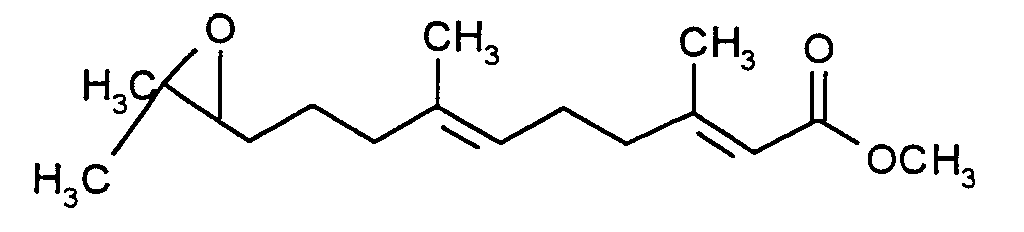
- Juvenile hormones or juvenile hormone-like substances include substituted diaryl ethers, benzoylureas and triazine derivatives.
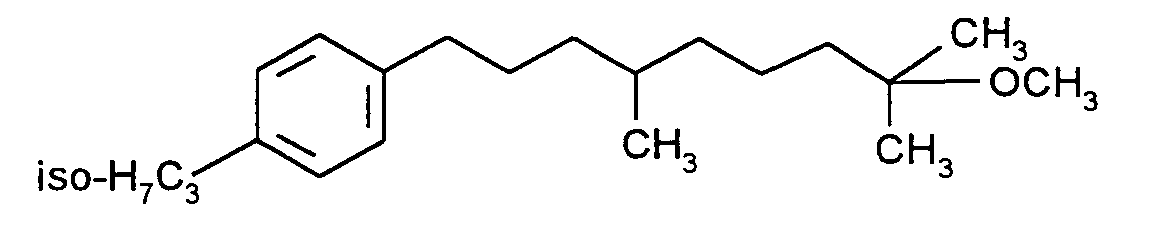
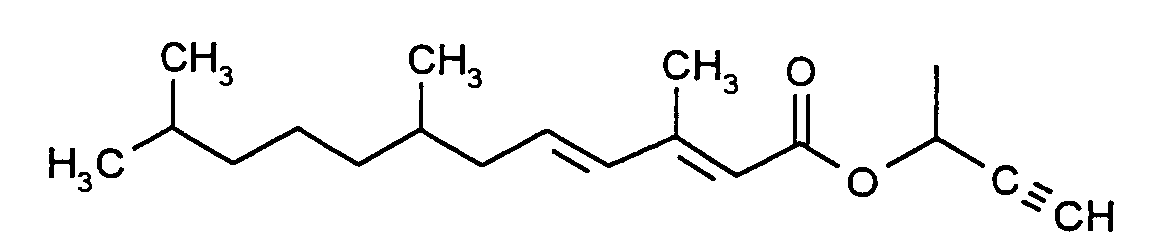
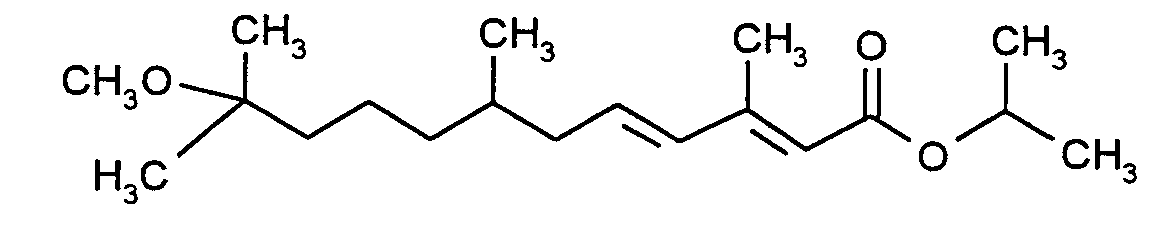
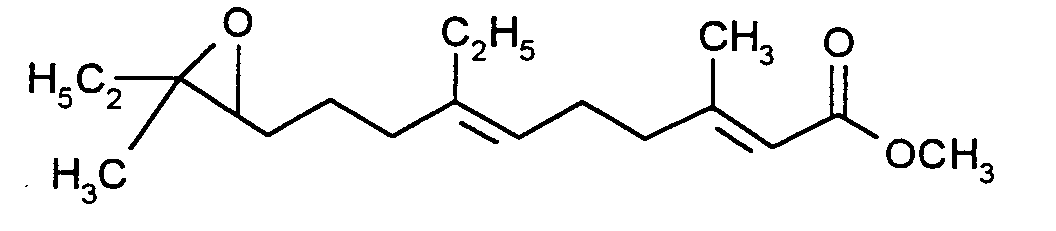
- the juvenile hormones and juvenile hormone-like substances include in particular compounds of the following formulas:
- R 1 R 2 R 3 cyclopropyl H H cyclopropyl H CH 3 cyclopropyl H C 2 H 5 cyclopropyl H C 3 H 7 -n cyclopropyl H C 4 H 9 -n cyclopropyl H C 5 H 11 -n cyclopropyl H C 6 H 13 -n cyclopropyl H C 7 H 15 -n cyclopropyl H C 8 H 17 -n cyclopropyl H C 12 -H 25 -n cyclopropyl H CH 2 -C 4 H 9 -n cyclopropyl H CH 2 CH (CH 3 ) C 2 H 5 cyclopropyl H CH 2 CH CH 2 cyclopropyl Cl C 2 H 5 cyclopropyl Cl C 6 H 13 -n cyclopropyl Cl C 8 H 17 -n cyclopropyl Cl C 12 H 25 -n cyclopropyl H cyclopropyl H cycloprop
- the moldings may furthermore contain the additives customary for plastics.
- Typical additives are, for example, pigments, stabilizers, flow agents, Lubricant, mold release agents.
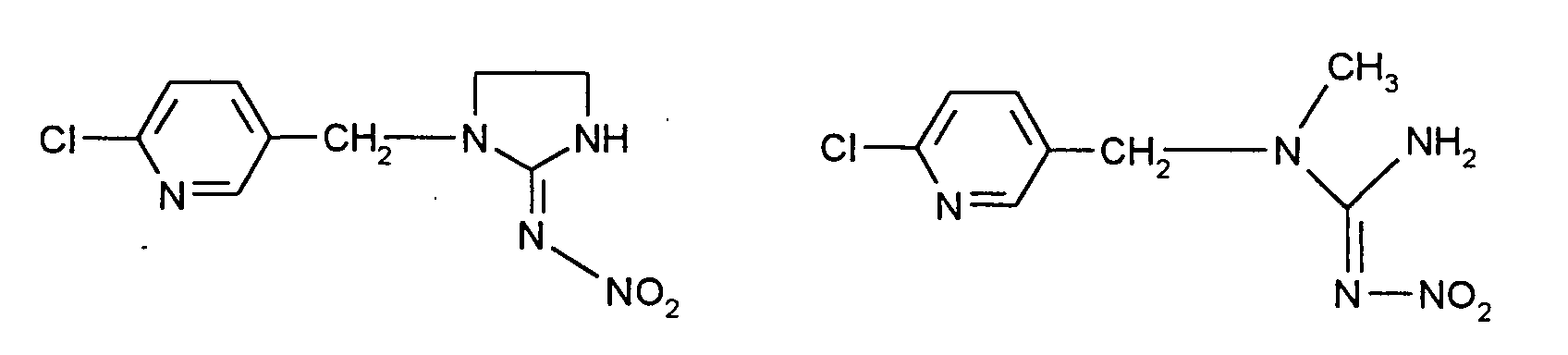
- the active ingredient is 1 - [(6-chloro-3-pyridinyl) methyl] -N-nitro-2-imidazolidinium (common name Imidacloprid) used.
- SC suspension concentrate formulation: 368 g imidacloprid 35 g Block polymer of emulsifier ethylene oxide and propylene oxide 12 g Ditolyl ether sulfonate formaldehyde condensate (emulsifier) 3.5 g water-soluble polyvinyl alcohol 58.0 g NH 4 Cl 116.0 g urea 1.2 g (37% aqueous hydrochloric acid) 4.6 g Xanthan gum 560.5 g distilled water
- WP (dispersible powder) formulation: 25.0 g imidacloprid 1.0 g Diisobutylnaphthalenesulphonates Na-sulfonate 10.0 g n-dodecylbenzylsulfonic acid calcium 12.0 g highly dispersed silicic acid-containing alkylaryl polyglycol ether 3.0 g Ditolyl ether sulfonate formaldehyde condensate (emulsifier) 2.0 g ® Baysilon-E, a silicone defoamer from Bayer AG 2.0 g finely divided silica and 45.0 g kaolin
- SL (water soluble concentrate) formulation 185 g imidacloprid 5.0 g Diisooctyl sodium sulfonosuccinate and 76.5 g dimethyl sulfoxide are made up of a 100g shampoo formulation 44.4% by weight Marlon AT 50, a triethanolamine salt of alkylbenzenesulfonic acids from Huls AG 11.1% by weight Marlon A 350, sodium salt of alkylbenzenesulfonic acids from Huls AG 3.0% by weight Condensation product of oleic acids and diethanolamine Fa. Hüls AG and 41.5% by weight polyethylene glycol added.
- Spray formulation consisting of 2.0 g imidacloprid 10.0 g dimethyl sulfoxide 35.0 g 2-propanol and 53.0 g acetone
- pour-on formulation 20.3 g imidacloprid 1.8 g polyvinyl alcohol 1.8 g Block copolymer based on ethylene oxide and propylene oxide 0.26 g Xanthan gum 9.0 g glycerin 59.2 g distilled water
- the homogeneous mixture of imidacloprid and PVC is wetted in a mixer with the mixture of di-n-butyl adipate, diethylhexyl phthalate and epoxidized soybean oil. Mix until the mixture is homogeneous. In doing so, heating, e.g. due to an increase in the number of revolutions of the mixer, the incorporation of the plasticizer mixture in the PVC. After the subsequent homogeneous distribution of the stearic acid, the mixture is injection molded into dog collars.
- the mixture of acetyltributyl citrate and epoxidized soybean oil is applied in a mixer to the homogeneous mixture of imidacloprid and PVC. Heating during mixing promotes the incorporation of the plasticizer mixture into the PVC; Mix until the mixture is homogeneous. The mixture is extruded into dog collars in a conventional manner.
- composition imidacloprid 7.50 g Epoxidized soy 10.00 g stearic acid 0.80 g acetyltributylcitrate 15.00 g PVC 66.70 g manufacturing as example 8
- composition imidacloprid 10.00 g Medium chain triglycerides 15.00 g fumed silica 0.50 g Polyether block amide (Pebax®) 74.50 g manufacturing Medium-chain triglycerides are applied in a mixer to the homogeneous mixture of imidacloprid and polyether block amide. Heating thereby promotes the entrainment of the medium-chain triglycerides in the polyether block amide.
- the active ingredient is applied to the carrier in an intensive mixer and the mixture is molded into collars by injection molding.
- the mixture is extruded into dog collars in a conventional manner.
- composition imidacloprid 10.00 g Polyether block amide (Pebax®) 90.00 g manufacturing The homogeneous mixture is extruded on an extruder to form plates from which medallions ( pendants for collars) are punched out.
- Example 1 1 ml of the SC formulation given in Example 1 was pour-on as a solution applied to the shoulder of a dog infested with 200 fleas. The Test animal could be immediately freed from adult fleas. The inventive Treatment leads to a 100% mortality rate of fleas.
- Example 1 1 ml of the solution according to Example 1 was placed on the shoulder of a dog. The animal was treated after 2 and 6 days of treatment with 200 fleas infested. On the day 3 and on day 7 after treatment were the dog counted remaining fleas. No living fleas could be found. The effect was 100%.
Landscapes
- Life Sciences & Earth Sciences (AREA)
- Health & Medical Sciences (AREA)
- General Health & Medical Sciences (AREA)
- Engineering & Computer Science (AREA)
- Environmental Sciences (AREA)
- Zoology (AREA)
- Wood Science & Technology (AREA)
- Dentistry (AREA)
- Plant Pathology (AREA)
- Pest Control & Pesticides (AREA)
- Agronomy & Crop Science (AREA)
- Veterinary Medicine (AREA)
- Organic Chemistry (AREA)
- Chemical & Material Sciences (AREA)
- Animal Behavior & Ethology (AREA)
- Public Health (AREA)
- Pharmacology & Pharmacy (AREA)
- Nuclear Medicine, Radiotherapy & Molecular Imaging (AREA)
- Medicinal Chemistry (AREA)
- General Chemical & Material Sciences (AREA)
- Chemical Kinetics & Catalysis (AREA)
- Tropical Medicine & Parasitology (AREA)
- Bioinformatics & Cheminformatics (AREA)
- Agricultural Chemicals And Associated Chemicals (AREA)
- Pharmaceuticals Containing Other Organic And Inorganic Compounds (AREA)
- Acyclic And Carbocyclic Compounds In Medicinal Compositions (AREA)
- Medicines That Contain Protein Lipid Enzymes And Other Medicines (AREA)
- Plural Heterocyclic Compounds (AREA)
- Nitrogen- Or Sulfur-Containing Heterocyclic Ring Compounds With Rings Of Six Or More Members (AREA)
- Pyridine Compounds (AREA)
- Medicinal Preparation (AREA)
- Organic Low-Molecular-Weight Compounds And Preparation Thereof (AREA)
Abstract
Description
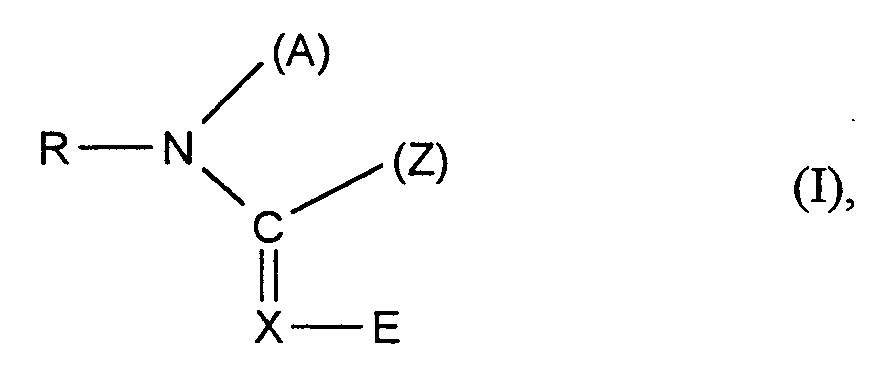
- R
- für Wasserstoff, gegebenenfalls substituierte Reste der Gruppe Acyl, Alkyl, Aryl, Aralkyl, Heteroaryl oder Heteroarylalkyl steht;
- A
- für eine monofunktionelle Gruppe aus der Reihe Wasserstoff, Acyl, Alkyl, Aryl steht oder für eine bifunktionelle Gruppe steht, die mit dem Rest Z verknüpft ist;
- E
- für einen elektronenziehenden Rest steht;
- X
- für die Reste -CH= oder =N- steht, wobei der Rest -CH= anstelle eines H-Atoms mit dem Rest Z verknüpft sein kann;
- Z
- für eine monofunktionelle Gruppe aus der Reihe Alkyl, -O-R, -S-R,
steht
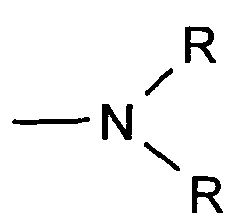
oder für eine bifunktionelle Gruppe steht, die mit dem Rest A oder dem Rest X verknüpft ist.
- R
- steht für Wasserstoff sowie für gegebenenfalls substituierte Reste aus der
Reihe Acyl, Alkyl, Aryl, Aralkyl, Heteroaryl, Heteroarylalkyl.
Als Acylreste seien genannt Formyl, Alkylcarbonyl, Arylcarbonyl, Alkylsulfonyl, Arylsulfonyl, (Alkyl-)-(Aryl-)-phosphoryl, die ihrerseits substituiert sein können.
Als Alkyl seien genannt C1-10-Alkyl, insbesondere C1-4-Alkyl, im einzelnen Methyl, Ethyl, i-Propyl, sec.- oder t.-Butyl, die ihrerseits substituiert sein können.
Als Aryl seien genannt Phenyl, Naphthyl, insbesondere Phenyl.
Als Aralkyl seien genannt Phenylmethyl, Phenethyl.
Als Heteroaryl seien genannt Heteroaryl mit bis zu 10 Ringatomen und N, O, S insbesondere N als Heteroatomen. Im einzelnen seien genannt Thienyl, Furyl, Thiazolyl, Imidazolyl, Pyridyl, Benzthiazolyl.
Als Heteroarylalkyl seien genannt Heteroarylmethyl, Heteroarylethyl mit bis zu 6 Ringatomen und N, O, S, insbesondere N als Heteroatomen.
Als Substituenten seien beispielhaft und vorzugsweise aufgeführt:
Alkyl mit vorzugsweise 1 bis 4, insbesondere 1 oder 2 Kohlenstoffatomen, wie Methyl, Ethyl, n- und i-Propyl und n-, i- und t-Butyl; Alkoxy mit vorzugsweise 1 bis 4, insbesondere 1 oder 2 Kohlenstoffatomen, wie Methoxy, Ethoxy, n- und i-Propyloxy und n-, i- und t-Butyloxy; Alkylthio mit vorzugsweise 1 bis 4, insbesondere 1 oder 2 Kohlenstoffatomen, wie Methylthio, Ethylthio, n- und i-Propylthio und n-, i- und t-Butylthio; Halogenalkyl mit vorzugsweise 1 bis 4, insbesondere 1 oder 2 Kohlenstoffatomen und vorzugsweise 1 bis 5, insbesondere 1 bis 3 Halogenatomen, wobei die Halogenatome gleich oder verschieden sind und als Halogenatome, vorzugsweise Fluor, Chlor oder Brom, insbesondere Fluor stehen, wie Trifluormethyl; Hydroxy; Halogen, vorzugsweise Fluor, Chlor, Brom und Jod, insbesondere Fluor, Chlor und Brom; Cyano; Nitro; Amino; Monoalkylund Dialkylamino mit vorzugsweise 1 bis 4, insbesondere 1 oder 2 Kohlenstoffatomen je Alkylgruppe, wie Methylamino, Methyl-ethyl-amino, n- und i-Propylamino und Methyl-n-butylamino; Carboxyl; Carbalkoxy mit vorzugsweise 2 bis 4, insbesondere 2 oder 3 Kohlenstoffatomen, wie Carbomethoxy und Carboethoxy; Sulfo (-SO3H); Alkylsulfonyl mit vorzugsweise 1 bis 4, insbesondere 1 oder 2 Kohlenstoffatomen, wie Methylsulfonyl und Ethylsulfonyl; Arylsulfonyl mit vorzugsweise 6 oder 10 Arylkohlenstoffatomen, wie Phenylsulfonyl sowie Heteroarylamino und Heteroarylalkylamino wie Chlorpyridylamino und Chlorpyridylmethylamino. - A
- steht besonders bevorzugt für Wasserstoff sowie für gegebenenfalls substituierte Reste aus der Reihe Acyl, Alkyl, Aryl, die bevorzugt die bei R angegebenen Bedeutungen haben. A steht ferner für eine bifunktionelle Gruppe. Genannt sei gegebenenfalls substituiertes Alkylen mit 1-4, insbesondere 1-2 C-Atomen, wobei als Substituenten die weiter oben aufgezählten Substituenten genannt seien und wobei die Alkylengruppen durch Heteroatome aus der Reihe N, O, S unterbrochen sein können.
- A und Z
- können gemeinsam mit den Atomen, an welche sie gebunden sind, einen
gesättigten oder ungesättigten heterocyclischen Ring bilden. Der heterocyclische
Ring kann weitere 1 oder 2 gleiche oder verschiedene Heteroatome
und/oder Heterogruppen enthalten. Als Heteroatome stehen vorzugsweise
Sauerstoff, Schwefel oder Stickstoff und als Heterogruppen N-Alkyl,
wobei Alkyl der N-Alkyl-Gruppe vorzugsweise 1 bis 4, insbesondere 1
oder 2 Kohlenstoffatome enthält. Als Alkyl seien Methyl, Ethyl, n- und i-Propyl
und n-, i- und t-Butyl genannt. Der heterocyclische Ring enthält 5
bis 7, vorzugsweise 5 oder 6 Ringglieder.
Als Beispiele für den heterocyclischen Ring seien Pyrrolidin, Piperidin, Piperazin, Hexamethylenimin, Hexahydro-1,3,5-triazin, Morpholin genannt, die gegebenenfalls bevorzugt durch Methyl substituiert sein können. - E
- steht für einen elektronentziehenden Rest, wobei insbesondere NO2, CN, Halogenalkylcarbonyl wie 1,5-Halogen-C1-4-carbonyl, insbesondere COCF3 genannt seien.
- X
- steht für -CH= oder -N=
- Z
- steht für gegebenenfalls substituierte Reste Alkyl, -OR, -SR, -NRR, wobei R und die Substituenten bevorzugt die oben angegebene Bedeutung haben.
- Z
- kann außer dem obengenannten Ring gemeinsam mit dem Atom, an
welches es gebunden ist und dem Rest
an der Stelle von X einen gesättigten oder ungesättigten heterocyclischen Ring bilden. Der heterocyclische Ring kann weitere 1 oder 2 gleiche oder verschiedene Heteroatome und/oder Heterogruppen enthalten. Als Heteroatome stehen vorzugsweise Sauerstoff, Schwefel oder Stickstoff und als Heterogruppen N-Alkyl, wobei die Alkyl oder N-Alkyl-Gruppe vorzugsweise 1 bis 4, insbesondere 1 oder 2 Kohlenstoffatome enthält. Als Alkyl seien Methyl, Ethyl, n- und i-Propyl und n-, i- und t-Butyl genannt. Der heterocyclische Ring enthält 5 bis 7, vorzugsweise 5 oder 6 Ringglieder.
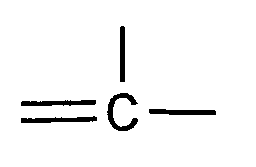
Als Beispiele für den heterocyclischen Ring seien Pyrrolidin, Piperidin, Piperazin, Hexamethylenimin, Morpholin und N-Methylpiperazin genannt.
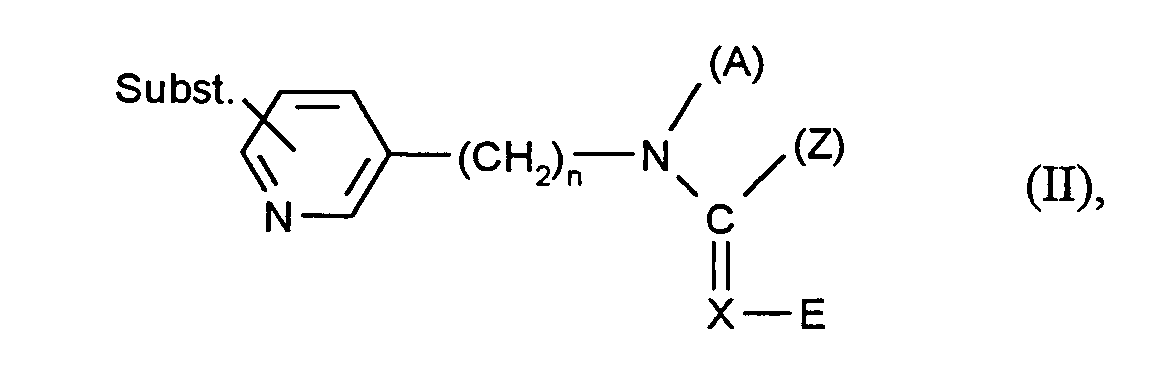

- n
- für 1 oder 2 steht,
- Subst.
- für einen der oben aufgeführten Substituenten, insbesonders für Halogen, ganz besondere für Chlor, steht,
- A, Z, X und E
- die oben angegebenen Bedeutungen haben,





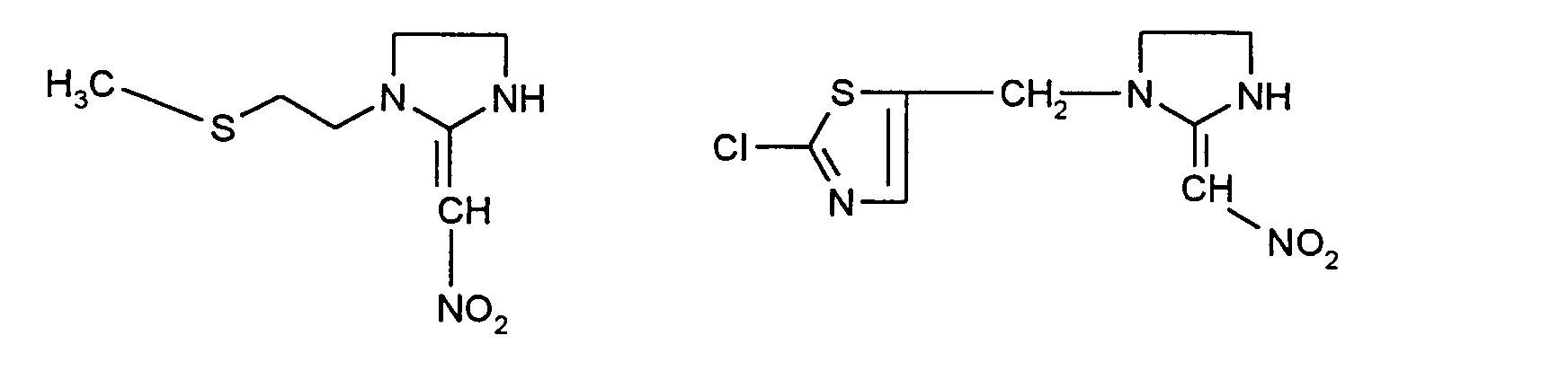
aus der Ordnung der Mallophaga z.B. Trimenopon spp., Menopon spp., Eomenacanthus spp., Menacanthus spp., Trichodectes spp., Felicola spp., Damalinea spp., Bovicola spp;
aus der Ordnung der Diptera z.B. Chrysops spp., Tabanus spp., Musca spp., Hydrotaea spp., Muscina spp., Haematobosca spp., Haematobia spp., Stomoxys spp., Fannia spp., Glossina spp., Lucilia spp., Calliphora spp., Auchmeromyia spp., Cordylobia spp., Cochliomyia spp., Chrysomyia spp., Sarcophaga spp., Wohlfartia spp., Gasterophilus spp., Oesteromyia spp., Oedemagena spp., Hypoderma spp., Oestrus spp., Rhinoestrus spp., Melophagus spp., Hippobosca spp..
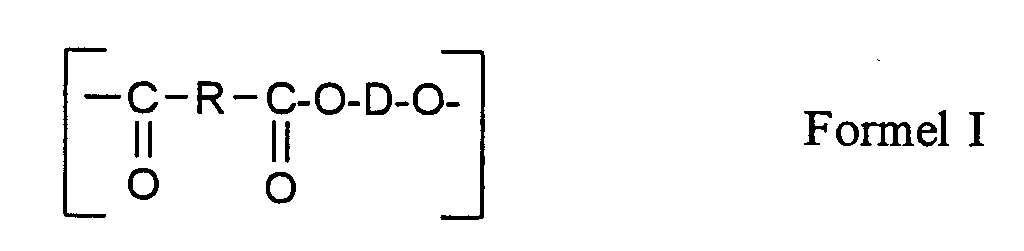
- R
- für einen zweiwertigen Rest einer Dicarbonsäure steht, der ein Molekulargewicht von unter etwa 350 hat,
- D
- für einen zweiwertigen Rest eines organischen Diols steht, der ein Molekulargewicht von unter etwa 250 hat,
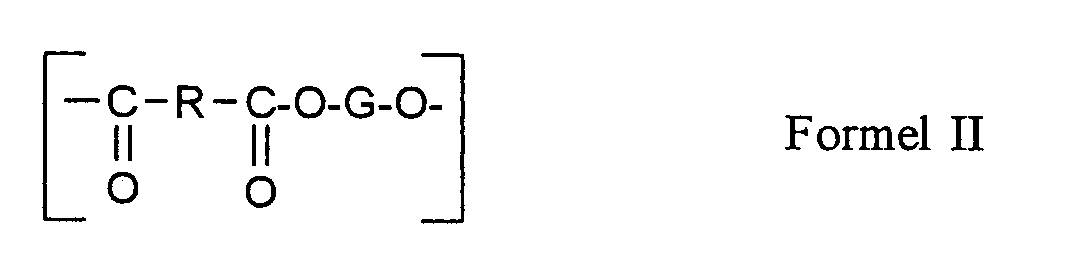
- R
- für einen zweiwertigen Rest einer Dicarbonsäure steht, der ein Molekulargewicht von unter etwa 350 hat,
- G
- für einen zweiwertigen Rest eines langkettigen Glykols steht, das ein durchschnittliches Molekulargewicht von etwa 350 bis 6000 hat.

- A
- die von einem Polyamid mit 2 Carboxylendgruppen durch Verlust der letzteren abgeleitete Polyamidkette ist und
- B
- die von einem Polyoxyalkylenglycol mit endständigen OH-Gruppen durch Verlust der letzteren abgeleitete Polyoxyalkylenglycolkette ist und
- n
- die Zahl der die Polymerkette bildenden Einheiten ist.
in einem Gewichtsverhältnis von 1:(2+3) zwischen 30:70 und 98:2, wobei in (2+3) Hydroxyl- und Carbonylgruppen in äquivalenten Mengen vorliegen, in Gegenwart von 2 bis 30 Gewichtsprozent Wasser, bezogen auf die polyamidbildenden Verbindungen der Gruppe 1, unter dem sich einstellenden Eigendruck auf Temperaturen zwischen 23°C und 30°C erhitzt und anschließend nach Entfernen des Wassers unter Ausschluß von Sauerstoff bei Normaldruck oder unter vermindertem Druck bei 250 bis 280°C weiterbehandelt werden.

- R1 und R2
- für Halogen, gegebenenfalls halogensubstituiertes Alkyl, gegebenenfalls halogensubstituiertes Phenyl stehen,
- R3
- für Wasserstoff oder CN steht,
- R4
- für Wasserstoff oder Halogen steht,
- R5
- für Wasserstoff oder Halogen steht,
- R1
- für Halogen, insbesondere Fluor, Chlor, Brom steht,
- R2
- für Halogen, insbesondere Fluor, Chlor, Brom, Trihalogenmethyl, Phenyl, Chlorphenyl steht,
- R3
- für Wasserstoff oder CN steht,
- R4
- für Wasserstoff oder Fluor steht,
- R5
- für Wasserstoff steht.
- R1
- für Chlor steht,
- R2
- für Chlor, Trifluormethyl, p-Chlorphenyl steht,
- R3
- für CN steht,
- R4
- für Wasserstoff oder Fluor steht,
- R5
- für Wasserstoff steht.
- R1
- für Chlor steht,
- R2
- für Chlor oder p-Chlorphenyl steht,
- R3
- für CN steht,
- R4
- für Fluor in 4-Stellung steht,
- R5
- für Wasserstoff steht.
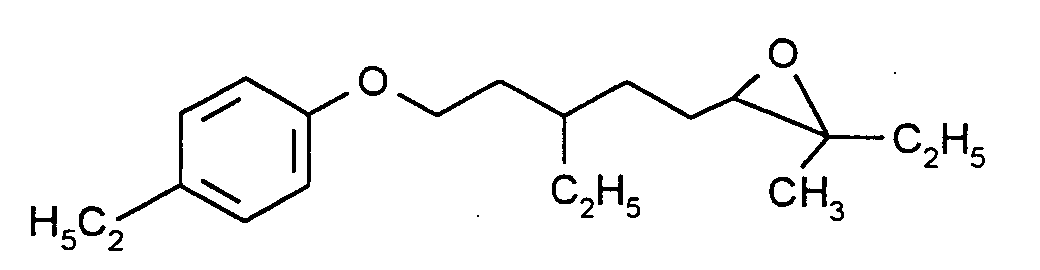

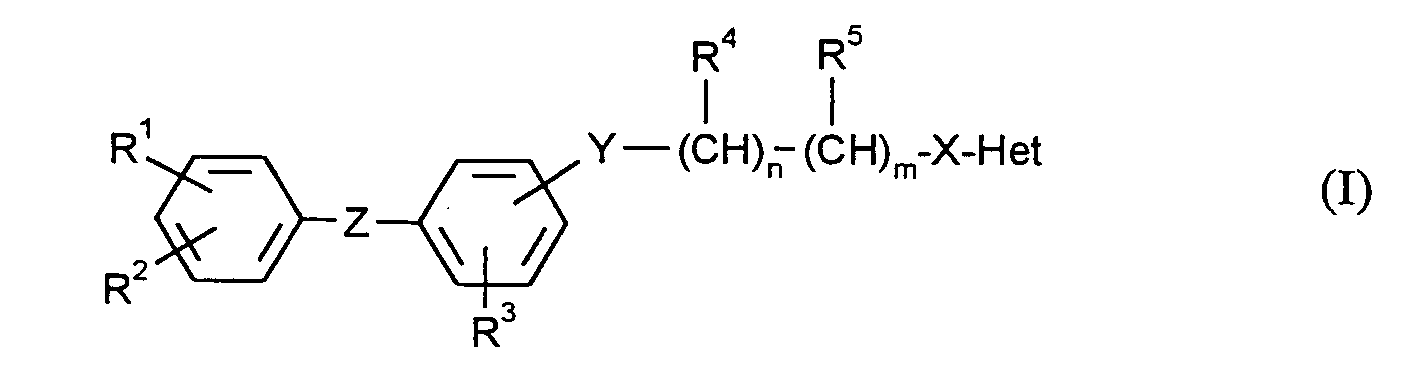
- R1
- für Wasserstoff, Halogen, Alkyl, Alkoxy, Alkylthio, Halogenalkyl, Halogenalkoxy, Halogenalkylthio, Dioxyalkylen, Dioxyhalogenalkylen, CN, NO2, Alkenyl, Alkinyl, Alkoxyalkyl, Alkoxyalkoxy, Hydroxyalkoxy steht,
- R2
- für die bei R1 angegebenen Reste steht,
- R3
- für die bei R1 angegebenen Reste steht,
- R4
- für Wasserstoff, Alkyl, Halogenalkyl oder Halogen steht,
- R5
- für die bei R4 angegebenen Reste steht,
- Het
- für gegebenenfalls substituiertes Heteroaryl steht das nicht über das Heteroatom an den übrigen Rest gebunden ist,
- X, Y
- unabhängig voneinander für -O-, -S- stehen
- Z
- für -O-, -S-, -CH2-, -CHCH3-, -C(CH3)2- steht,
- m und n
- unabhängig voneinander für 0, 1, 2, 3 stehen ihre Summe aber gleich oder größer 2 ist.
in welcher
- R1
- Wasserstoff, Methyl, Trifluormethyl, Methoxy, Trifluormethoxy, Chlor, Fluor steht
- R2
- für Wasserstoff steht,
- R3
- für Wasserstoff, Fluor, Chlor, Methyl steht,
- R4
- für Wasserstoff oder Methyl steht,
- R5
- für Methyl, Ethyl, Trifluormethyl oder Wasserstoff steht,
- Het
- für Pyridyl oder Pyridazinyl steht die gegebenenfalls substituiert sind durch Fluor, Chlor, Methyl, NO2, Methoxy, Methylmercapto,
- X
- für O steht,
- Y
- für O steht,
- Z
- für O, CH2 oder -(CH3)2- steht,
- m
- für 1 steht,
- n
- für 1 steht.

| R1 | R3 | R5 | R6 | Z |
| H | H | CH3 | H | O |
| H | H | CH3 | 2-Cl | O |
| 5-F | H | CH3 | H | O |
| H | H | CF3 | H | O |
| H | H | C2H5 | H | O |
| H | H | H | H | O |
| H | H | CH3 | H | CH2 |
| H | H | CH3 | H | C(CH3)2 |

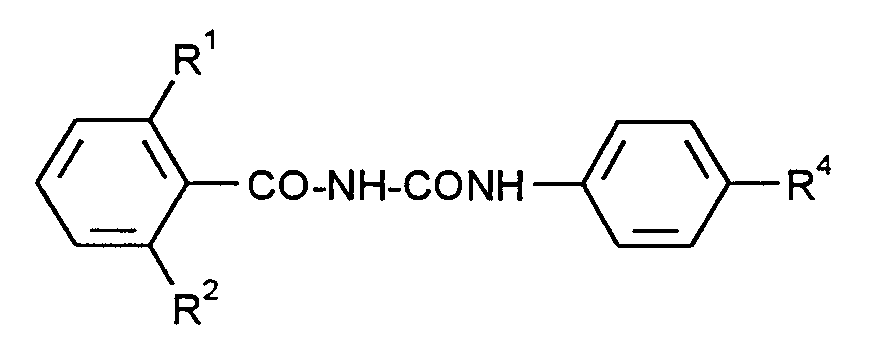
- R1
- für Halogen steht,
- R2
- für Wasserstoff oder Halogen steht,
- R3
- für Wasserstoff, Halogen oder C1-4-Alkyl steht,
- R4
- für Halogen, 1-5-Halogen-C1-4-alkyl, C1-4-Alkoxy, 1-5-Halogen-C1-4-alkoxy, C1-4-Alkylthio, 1-5-Halogen-C1-4-alkylthio, Phenoxy oder Pyridyloxy die gegebenenfalls substituiert sein können durch Halogen, C1-4-Alkyl, 1-5-Halogen-C1-4-alkyl, C-4-Alkoxy, 1-5-Halogen-C1-4-alkoxy, C1-4-Alkylthio, 1-5-Halogen-C1-C4-alkylthio.
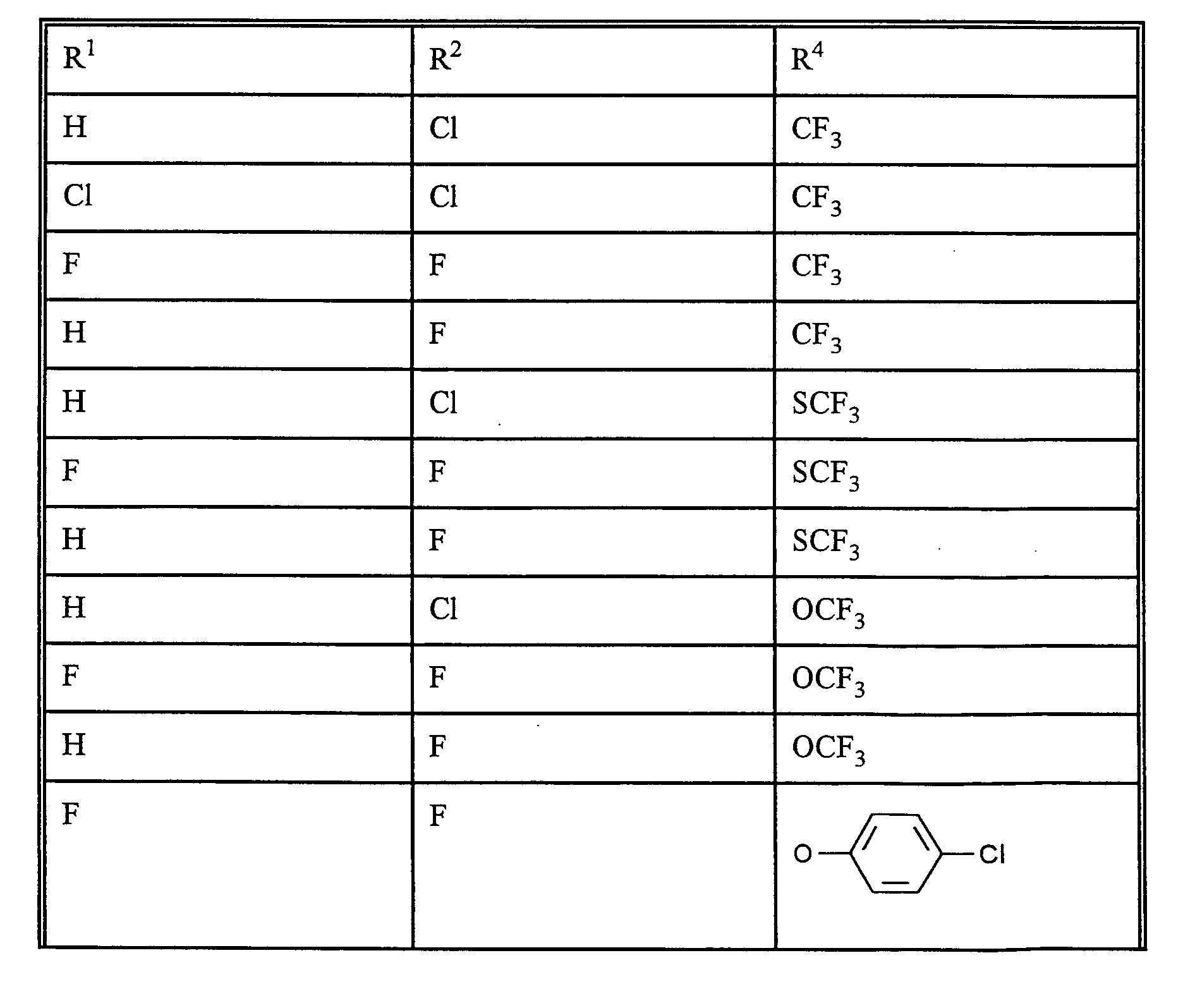


- R1
- für Cyclopropyl oder Isopropyl steht;
- R2
- Wasserstoff, Halogen, C1-C12-Alkylcarbonyl, Cyclopropylcarbonyl, C1-C12-Alkylcarbamoyl, C1-C12-Alkylthiocarbamoyl oder C2-C6-Alkenylcarbamoyl bedeutet; und
- R3
- für Wasserstoff, C1-C12-Alkyl, Cyclopropyl, C2-C6-Alkenyl, C1-C12-Alkylcarbonyl, Cyclopropylcarbonyl, C1-C12-Alkylcarbamoyl, C1-C12-Alkylthiocarbamoyl oder C2-C6-Alkenylcarbamoyl steht und deren Säureadditionssalze, die für Warmblüter untoxisch sind.
| R1 | R2 | R3 |
| Cyclopropyl | H | H |
| Cyclopropyl | H | CH3 |
| Cyclopropyl | H | C2H5 |
| Cyclopropyl | H | C3H7-n |
| Cyclopropyl | H | C4H9-n |
| Cyclopropyl | H | C5H11-n |
| Cyclopropyl | H | C6H13-n |
| Cyclopropyl | H | C7H15-n |
| Cyclopropyl | H | C8H17-n |
| Cyclopropyl | H | C12-H25-n |
| Cyclopropyl | H | CH2-C4H9-n |
| Cyclopropyl | H | CH2CH(CH3)C2H5 |
| Cyclopropyl | H | CH2CH=CH2 |
| Cyclopropyl | Cl | C2H5 |
| Cyclopropyl | Cl | C6H13-n |
| Cyclopropyl | Cl | C8H17-n |
| Cyclopropyl | Cl | C12H25-n |
| Cyclopropyl | H | Cyclopropyl |
| Cyclopropyl | H | COCH3 |
| Cyclopropyl | H | COCH3 HCl |
| Cyclopropyl | H | COC2H5 HCl |
| Cyclopropyl | H | COC2H5 |
| Cyclopropyl | H | COC3H7-n |
| Cyclopropyl | H | COC3H7-i |
| Cyclopropyl | H | COC4H9-t HCl |
| Cyclopropyl | H | COC4H9-n |
| Cyclopropyl | H | COC6H13-n |
| Cyclopropyl | H | COC11-H23-n |
| Cyclopropyl | COCH3 | COC2H5 |
| Cyclopropyl | COC3H7-n | COC6H13-n |
| Cyclopropyl | COCH3 | COC3H7-n |
| Cyclopropyl | COC2H5 | COC3H7-n |
| Cyclopropyl | H | COCyclopropyl |
| Cyclopropyl | COCyclopropyl | COCyclopropyl |
| Cyclopropyl | COCH3 | COCH3 |
| Isopropyl | H | H |
| Isopropyl | H | COCH3 |
| Isopropyl | H | COC3H7-n |
| Cyclopropyl | H | CONHCH3 |
| Cyclopropyl | H | CONHC3H7-i |
| Cyclopropyl | CONHCH3 | CONHCH3 |
| Cyclopropyl | H | SCNHCH3 |
| Cyclopropyl | H | CONHCH2CH=CH2 |
| Cyclopropyl | CONHCH2CH=CH2 | CONHCH2CH=CH2 |
| Cyclopropyl | CSNHCH3 | CSNHCH3 |
| SC-(Suspensionskonzentrat) Formulierung: | |
| 368 g | Imidacloprid |
| 35 g | Blockpolymer aus Emulgator Ethylenoxid- und Propylenoxid |
| 12 g | Ditolylethersulfonat-Formaldehyd-Kondensat (Emulgator) |
| 3,5 g | wasserlöslicher Polyvinylalkohol |
| 58,0 g | NH4Cl |
| 116,0 g | Harnstoff |
| 1,2 g | (37 %ige wäßrige Salzsäure) |
| 4,6 g | Xanthan-gum |
| 560,5 g | destilliertes Wasser |
| WP (dispergierbares Pulver)-Formulierung: | |
| 25,0 g | Imidacloprid |
| 1,0 g | Diisobutyl-naphthalin-Na-sulfonat |
| 10,0 g | n-Dodecylbenzylsulfonsäure Calcium |
| 12,0 g | hochdisperser Kieselsäure-haltiger Alkylarylpolyglykolether |
| 3,0 g | Ditolylethersulfonat-Formaldehyd-Kondensat (Emulgator) |
| 2,0 g | ® Baysilon-E, ein siliconhaltiger Entschäumer der Fa. Bayer AG |
| 2,0 g | feindisperses Siliciumdioxid und |
| 45,0 g | Kaolin |
| SL-(wasserlösliche Konzentrat)-Formulierung | |
| 18,3 g | Imidacloprid |
| 2,5 g | neutraler Emulgator auf Basis Alkylarylpolyglykolether |
| 3,5 g | Natriumsulfobernsteinsäurediisooctylester |
| 38,4 g | Dimethylsulfoxid und |
| 37,5 g | 2-Propanol |
| SL-(wasserlösliche Konzentrat)-Formulierung | |
| 185, g | Imidacloprid |
| 5,0 g | Natriumsulfonbernsteinsäurediisooctylester und |
| 76,5 g | Dimethylsulfoxid |
| 44,4 Gew.-% | Marlon AT 50, ein Triethanolaminsalz von Alkylbenzolsulfonsäuren der Fa. Hüls AG |
| 11,1 Gew.-% | Marlon A 350, Natriumsalz von Alkylbenzolsulfonsäuren der Fa. Hüls AG |
| 3,0 Gew.-% | Kondensationsprodukt von Ölsäuren und Diethanolamin der Fa. Hüls AG und |
| 41,5 Gew.-% | Polyethylenglykol |
| Spray-Formulierung bestehend aus | |
| 2,0 g | Imidacloprid |
| 10,0 g | Dimethylsulfoxid |
| 35,0 g | 2-Propanol und |
| 53,0 g | Aceton |
| pour-on-Formulierung | |
| 20,3 g | Imidacloprid |
| 1,8 g | Polyvinylalkohol |
| 1,8 g | Blockcopolymerisat auf Basis Ethylenoxid und Propylenoxid |
| 0,26 g | Xanthan Gum |
| 9,0 g | Glycerin |
| 59,2 g | destilliertes Wasser |
| Zusammensetzung | Imidachloprid | 10,00 g |
| Di-n-butyladipat | 21,10 g | |
| Diethylhexylphthalat | 9,10 g | |
| Epoxidiertes Sojabohnenöl | 2,30 g | |
| Stearinsäure | 0,80 g | |
| PVC | 56,70 g | |
| Herstellung | Die homogene Mischung aus Imidacloprid und PVC wird in einem Mischer mit dem Gemisch aus Di-n-butyladipat, Diethylhexyl phthalat und Epoxidiertem Sojabohnenöl benetzt. Man mischt solange, bis die Mischung homogen ist. Dabei fördert Erwärmen, z.B. infolge einer Erhöhung der Tourenzahl des Mischers, das Einziehen der Weichmachermischung in das PVC. Nach der anschließenden homogenen Verteilung der Stearinsäure wird die Mischung im Spritzguß zu Hundehalsbändern geformt. |
| Zusammensetzung | Imidachloprid | 10,00 g |
| Epoxidiertes Sojabohnenöl | 2,30 g | |
| Stearinsäure | 0,80 g | |
| Acetyltributylcitrat | 30,20 g | |
| PVC | 56,70 g | |
| Herstellung | Das Gemisch aus Acetyltributylcitrat und Epoxidiertem Sojabohnenöl wird in einem Mischer auf die homogene Mischung aus Imidacloprid und PVC aufgebracht. Erwärmen fördert beim Mischen das Einziehen des Weichmachergemisches in das PVC; man mischt solange, bis die Mischung homogen ist. Die Mischung wird in herkömmlicher Weise zu Hundehalsbändern extrudiert. |
| Zusammensetzung | Imidachloprid | 20,00 g |
| Epoxidiertes Sojabohnenöl | 2,30 g | |
| Stearinsäure | 0,80 g | |
| Acetyltributylcitrat | 30,20 g | |
| PVC | 56,70 g | |
| Herstellung | wie Beispiel 8 |
| Zusammensetzung | Imidachloprid | 7,50 g |
| Epoxidiertes Sojabohnenöl | 10,00 g | |
| Stearinsäure | 0,80 g | |
| Acetyltributylcitrat | 15,00 g | |
| PVC | 66,70 g | |
| Herstellung | wie Beispiel 8 |
| Zusammensetzung | Imidachloprid | 10,00 g |
| Epoxidiertes Sojabohnenöl | 2,30 g | |
| Stearinsäure | 0,80 g | |
| Triacetin | 15,00 g | |
| PVC | 71,90 g | |
| Herstellung | Das Gemisch aus Triacetin und Epoxidiertem Sojabohnenöl wird in einem Mischer auf die homogene Mischung aus PVC und Imidacloprid aufgebracht. Dabei fördert Erwärmen, z.B. infolge einer Erhöhung der Tourenzahl des Mischers, das Einziehen des Weichmachers in das PVC. Nach homogener Untermischung der Stearinsäure wird die Mischung auf einem Extruder zu Platten extrudiert, aus denen Medaillons (=Anhänger für Halsbänder) ausgestanzt werden. |
| Zusammensatzung | Imidacloprid | 5,00 g |
| Polyetherblockamid (Pebax®) | 94,50 g | |
| Herstellung | Der Wirkstoff wird in einem Intensivmischer auf den Träger aufgebracht und die Mischung in Spritzguß zu Hundehalsbändern geformt. |
| Zusammensetzung | Imidacloprid | 10,00 g |
| Mittelkettige Triglyceride | 15,00 g | |
| hochdisperses Siliciumdioxid | 0,50 g | |
| Polyetherblockamid (Pebax®) | 74,50 g | |
| Herstellung | Mittelkettige Triglyceride werden in einem Mischer auf die homogene Mischung aus Imidacloprid und Polyetherblockamid aufgebracht. Erwärmen fördert dabei das Einziehen der mittelkettigen Triglyceride in das Polyetherblockamid. Zur Verbesserung der Fließfähigkeit wird vor der Extrusion der Mischung hochdisperses Siliciumdioxid homogen untergemischt. Es werden Platten extrudiert, aus denen Medaillons (=Anhänger für Halsbänder) ausgestanzt werden. |
| Zusammensetzung | Imidacloprid | 10,00 g |
| Styrol-Butylen-Block-Copolymer (Thermoplast® K) |
90,00 g | |
| Herstellung | Der Wirkstoff wird in einem Intensivmischer auf den Träger aufgebracht und die Mischung im Spritzguß zu Halsbändern geformt. |
| Zusammensetzung | Imidacloprid | 5,00 g |
| Copolyester (Hytrel® ) | 95,00 g | |
| Herstellung | Die Mischung wird in herkömmlicher Weise zu Hundehalsbändern extrudiert. |
| Zusammensetzung | Imidacloprid | 10,00 g |
| Polyetherblockamid (Pebax®) | 90,00 g | |
| Herstellung | Die homogene Mischung wird auf einem Extruder zu Platten extrudiert, aus denen Medaillons (= Anhänger für Halsbänder) ausgestanzt werden. |
| Zusammensetzung | Imidacloprid | 10,00 g |
| mittelkettige Triglyceride | 30,00 g | |
| hochdisperses Siliciumdioxid | 0,50 g | |
| Polyetherblockamid (Pebax®) | 59,50 g | |
| Herstellung | wie Beispiel 13 |
| Zeitraum Tag | Anzahl der Flöhe pro Hund | % Wirkung | |
| unbehandelt | behandelt | ||
| -1 Infestation mit 100 Flöhen | |||
| 0 Behandlung und Zählung | 30 | 0 | 100 |
| 5, 8 Infestation mit 100 Flöhen | |||
| 9 Zählung | 56 | 0 | 100 |
| 15 Infestation mit 100 Flöhen | |||
| 16 Zählung | 76 | 0 | 100 |
| 19 Infestation mit 100 Flöhen (unbehandeltes Tiere) 250 Flöhen (behandelte Tiere | |||
| 20 Zählung | 39 | 0 | 100 |
| 26 Infestation mit 100 Flöhen | |||
| 27 Zählung | 43 | 0 | 100 |
Claims (9)
- Verwendung von Agonisten und Antagonisten der nicotinergen Acetylcholinrezeptoren von Insekten zur nicht-systemischen Bekämpfung von parasitierenden Insekten wie Flöhen, Läusen und Fliegen an Menschen und Tieren.
- Verwendung gemäß Anspruch 1, dadurch gekennzeichnet, daß als Wirkstoff Verbindungen der allgemeinen Formel (I) eingesetzt werdenin welcher

- R
- für Wasserstoff, gegebenenfalls substituierte Reste der Gruppe Acyl, Alkyl, Aryl, Aralkyl, Heteroaryl oder Heteroarylalkyl steht;
- A
- für eine monofunktionelle Gruppe aus der Reihe Wasserstoff, Acyl, Alkyl, Aryl steht oder für eine bifunktionelle Gruppe steht, die mit dem Rest Z verknüpft ist;
- E
- für einen elektronenziehenden Rest steht;
- X
- für die Reste -CH= oder =N- steht, wobei der Rest -CH= anstelle eines H-Atoms mit dem Rest Z verknüpft sein kann;
- Z
- für eine monofunktionelle Gruppe aus der Reihe Alkyl, -O-R, -S-R,
steht
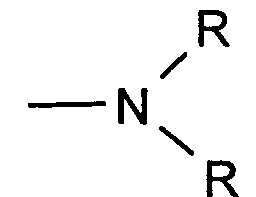
oder für eine bifunktionelle Gruppe steht, die mit dem Rest A oder dem Rest X verknüpft ist.
- Verwendung gemäß Anspruch 1, dadurch gekennzeichnet, daß als Wirkstoffe Verbindungen der Formel (I) gemäß Anspruch 2 eingesetzt werden, in welcher die Reste folgende Bedeutung haben:
- R
- steht für gegebenenfalls substituiertes Heteroarylmethyl, Heteroarylethyl mit bis zu 6 Ringatomen und N, O, S, insbesondere N als Heteroatomen,
- A
- steht für Wasserstoff sowie für gegebenenfalls substituiertes Alkyl oder Alkylen mit 1-4 C-Atomen und wobei die Alkylengruppen durch Heteroatome aus der Reihe N, O, S unterbrochen sein können,
- A und Z
- können gemeinsam mit den Atomen, an welche sie gebunden sind, einen gesättigten oder ungesättigten heterocyclischen Ring bilden. Der heterocyclische Ring kann weitere 1 oder 2 gleiche oder verschiedene Heteroatome und/oder Heterogruppen enthalten,
- E
- steht für NO2, CN, Halogenalkylcarbonyl,
- X
- steht für -CH= oder -N=
- Z
- steht für gegebenenfalls substituierte Reste Alkyl, -OR, -SR, -NRR, wobei R die oben angegebene Bedeutung hat,
- Z
- kann außer dem obengenannten Ring gemeinsam mit dem Atom, an
welches es gebunden ist und dem Rest
an der Stelle von X einen gesättigten oder ungesättigten heterocyclischen Ring bilden:
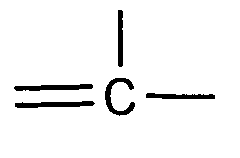
- Verwendung gemäß Anspruch 1 dadurch gekennzeichnet, daß als Wirkstoff Verbindungen der allgemeinen Formeln (II) und (III) eingesetzt werden
 in welchen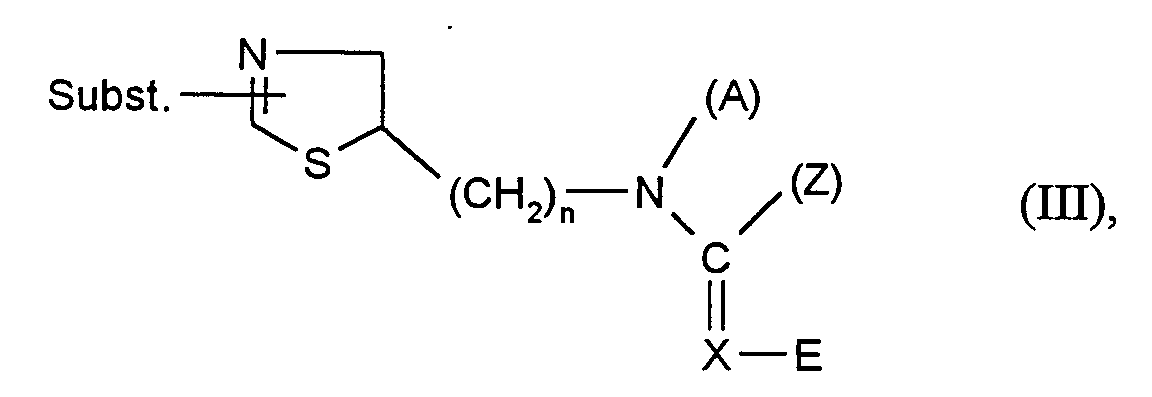
- n
- für 1 oder 2 steht,
- Subst.
- für Halogen steht,
- A, Z, X und E
- die in Ansprüchen 2 und 3 angegebenen Bedeutungen haben.
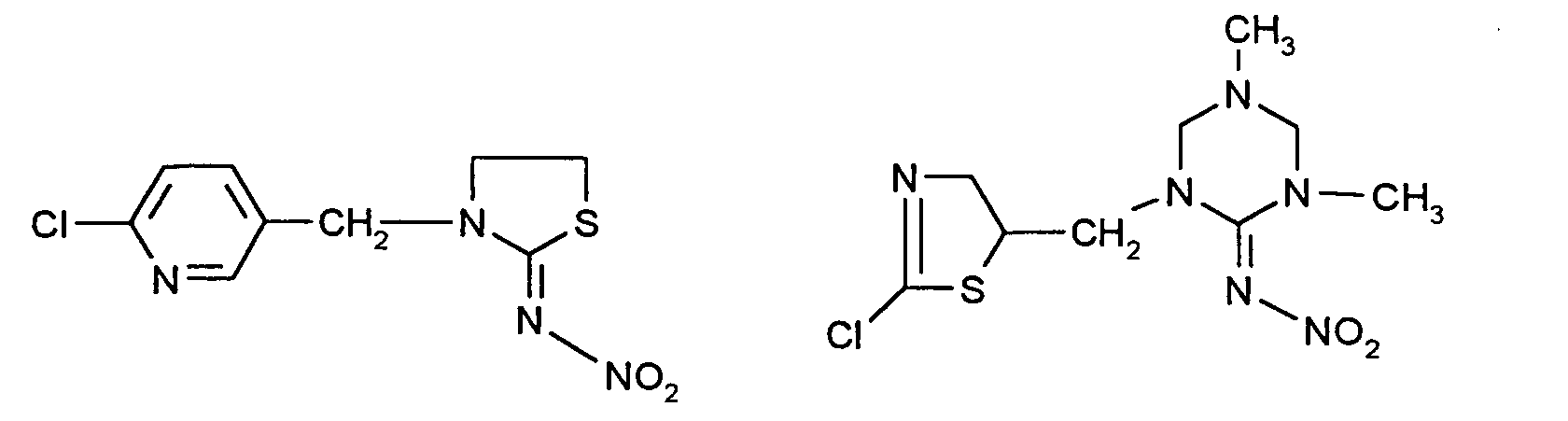
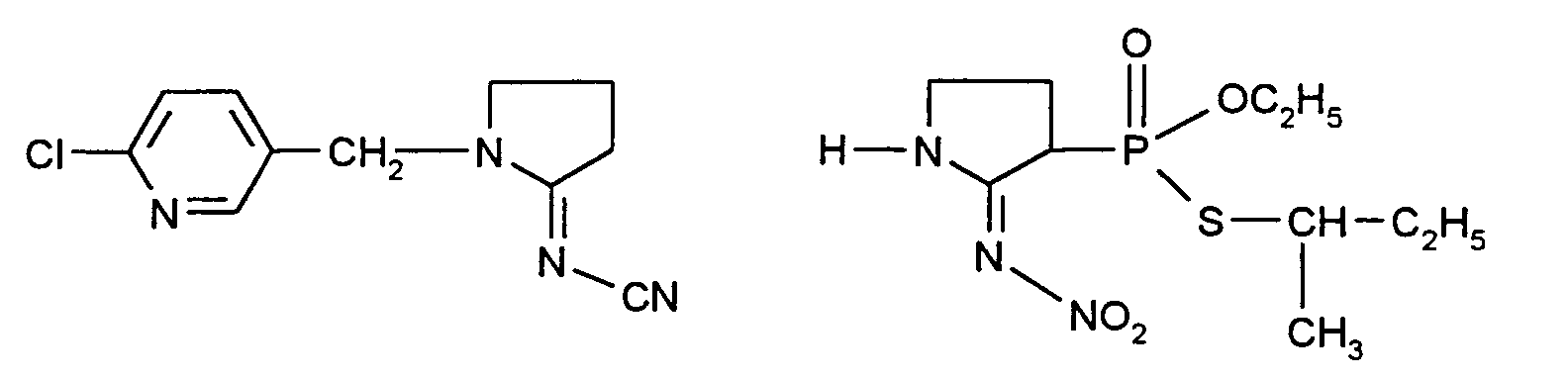
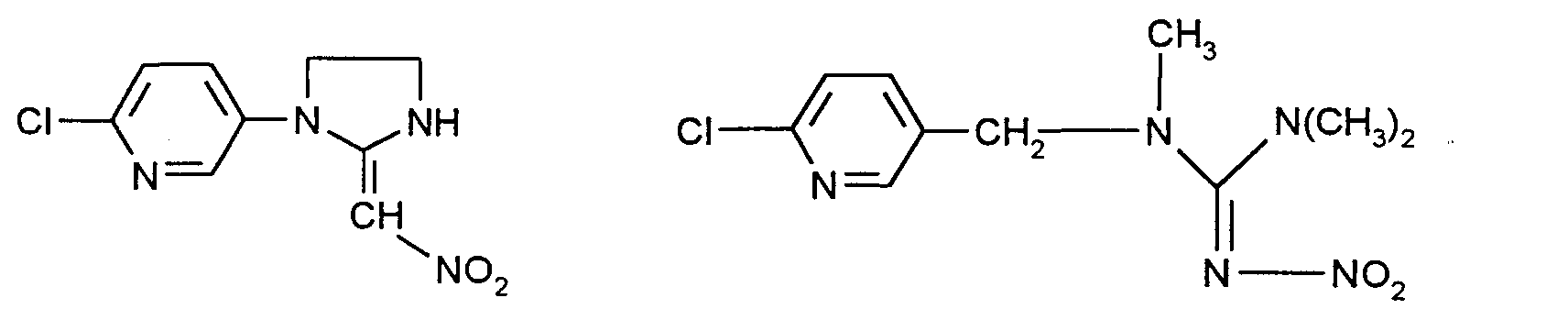
- Verwendung gemäß Anspruch 1 dadurch gekennzeichnet, daß als Wirkstoff eine oder mehrere der folgenden Verbindungen eingesetzt werden:


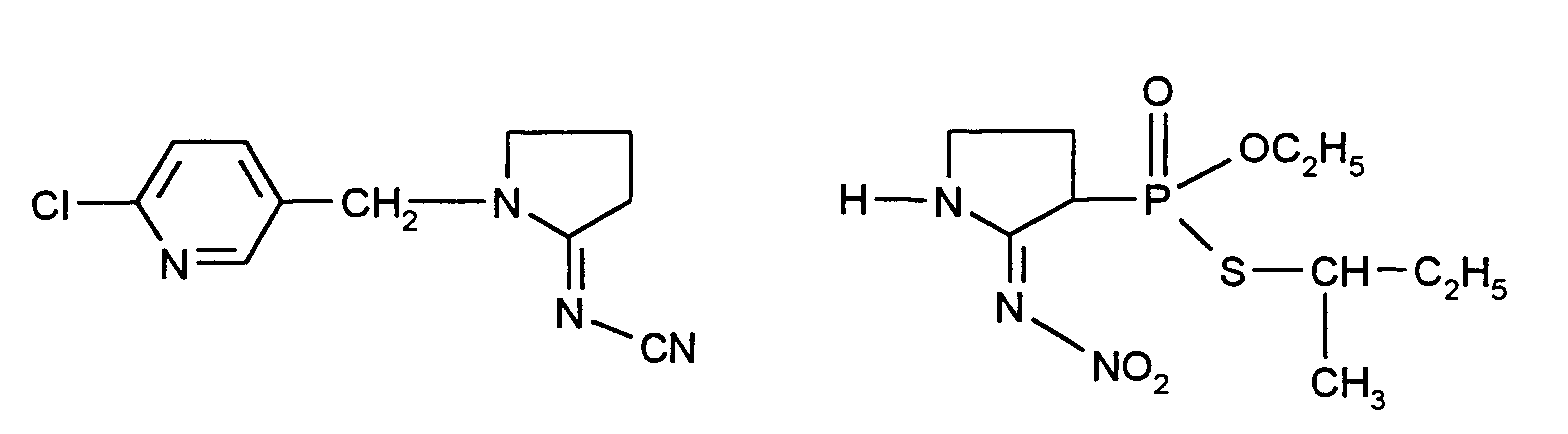
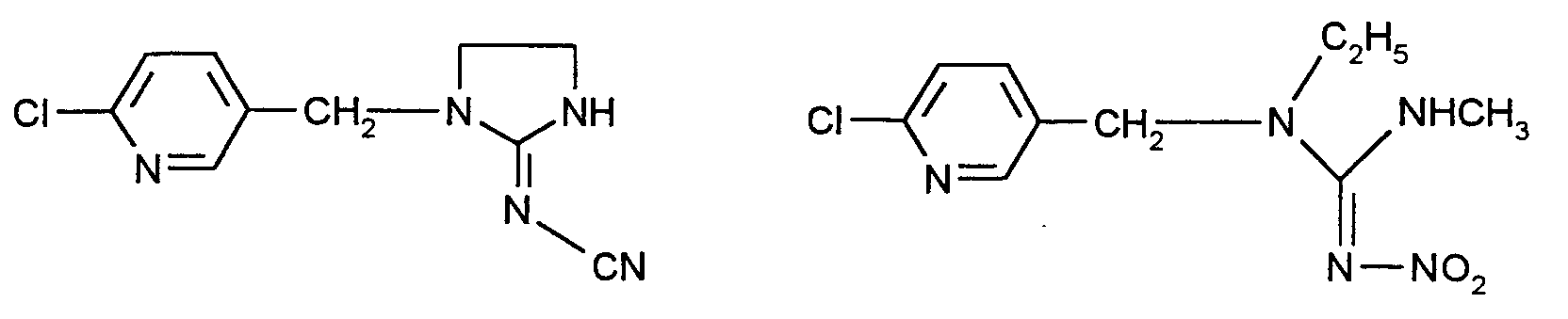

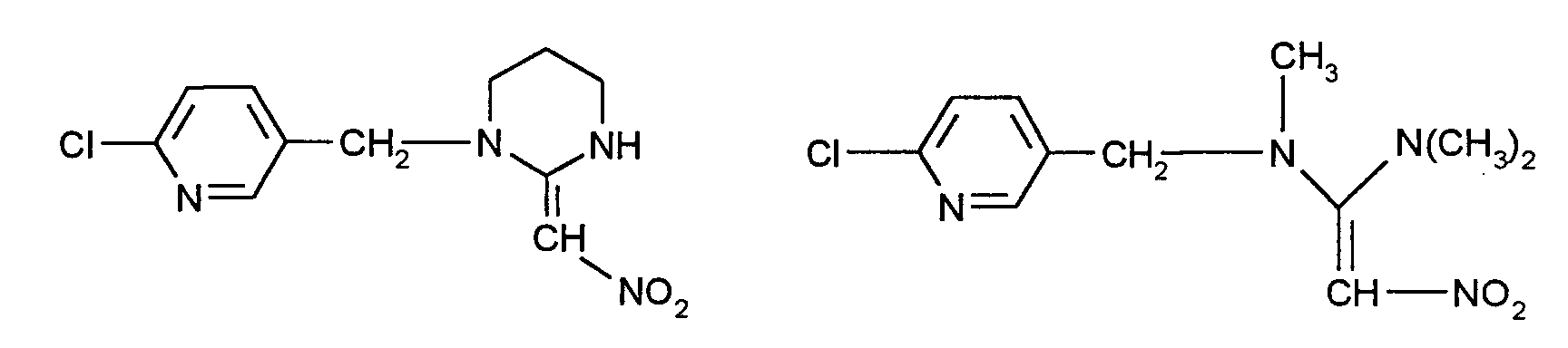


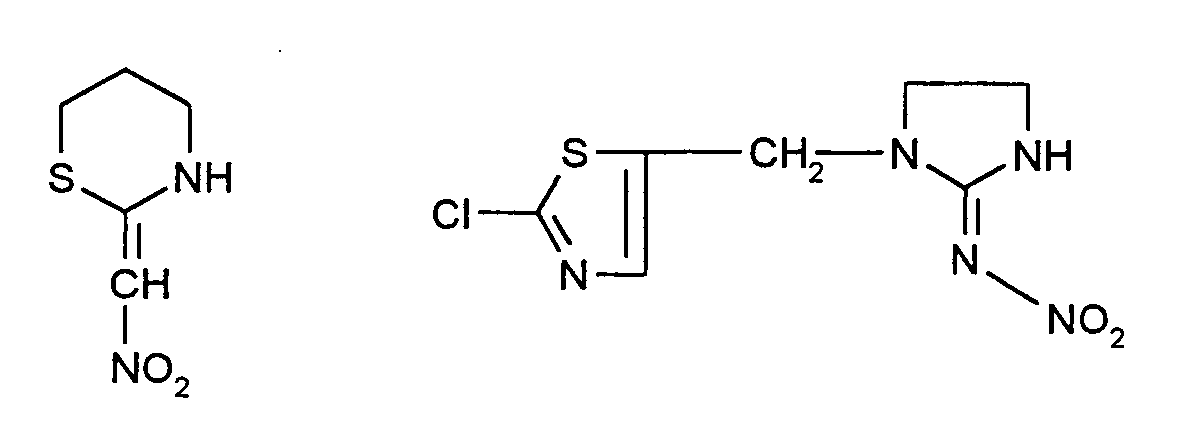
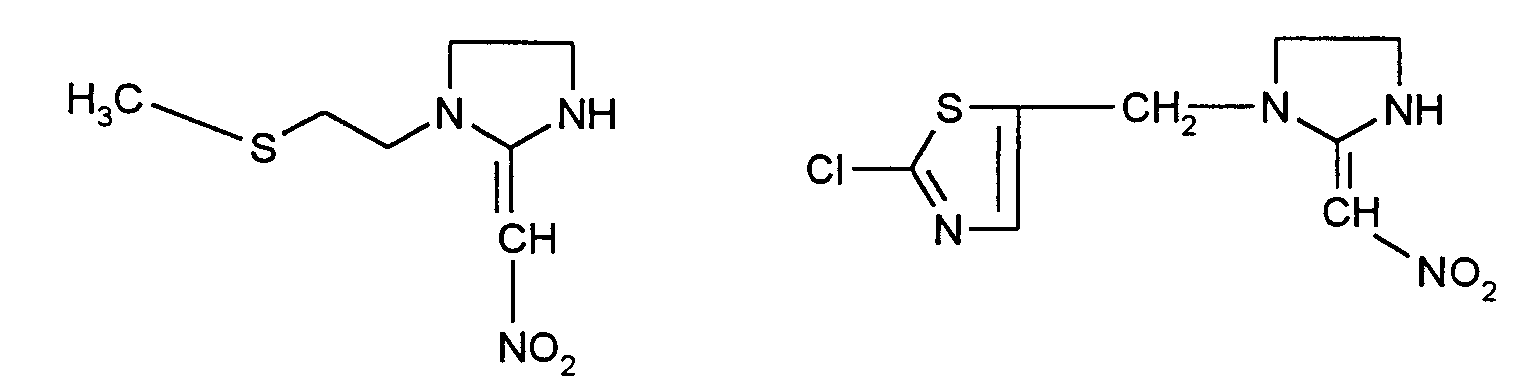
- Verwendung gemäß Anspruch 1 dadurch gekennzeichnet, daß als Wirkstoff Imidacloprid = 1-[(6-Chlor-3-pyridinyl)methyl]-N-nitro-2-imidazolidinium eingesetzt wird.
- Mittel zur nicht-systemischen Bekämpfung von parasitierenden Insekten an Menschen und Tieren, dadurch gekennzeichnet, daß sie die Wirkstoffe gemäß Ansprüchen 1 bis 6 enthalten.
- Formkörper zur nicht-systemischen Bekämpfung von parasitierenden Insekten an Tieren, dadurch gekennzeichnet, daß sie die Wirkstoffe gemäß Ansprüchen 1 bis 6 enthalten.
- Verwendung der Wirkstoffe gemäß Ansprüchen 1 bis 7 zur Herstellung von Mitteln zur nicht-systemischen Bekämpfung von parasitierenden Insekten an Menschen und Tieren.
Applications Claiming Priority (3)
| Application Number | Priority Date | Filing Date | Title |
|---|---|---|---|
| DE4417742 | 1994-05-20 | ||
| DE4417742A DE4417742A1 (de) | 1994-05-20 | 1994-05-20 | Nicht-systemische Bekämpfung von Parasiten |
| EP95106925A EP0682869B1 (de) | 1994-05-20 | 1995-05-08 | Nicht-systemische Bekämpfung von Parasiten |
Related Parent Applications (1)
| Application Number | Title | Priority Date | Filing Date |
|---|---|---|---|
| EP95106925A Division EP0682869B1 (de) | 1994-05-20 | 1995-05-08 | Nicht-systemische Bekämpfung von Parasiten |
Publications (3)
| Publication Number | Publication Date |
|---|---|
| EP1609362A2 true EP1609362A2 (de) | 2005-12-28 |
| EP1609362A3 EP1609362A3 (de) | 2009-12-30 |
| EP1609362B1 EP1609362B1 (de) | 2015-03-18 |
Family
ID=6518608
Family Applications (2)
| Application Number | Title | Priority Date | Filing Date |
|---|---|---|---|
| EP95106925A Revoked EP0682869B1 (de) | 1994-05-20 | 1995-05-08 | Nicht-systemische Bekämpfung von Parasiten |
| EP05021260.4A Expired - Lifetime EP1609362B1 (de) | 1994-05-20 | 1995-05-08 | Nicht-systemische Bekämpfung von Parasiten |
Family Applications Before (1)
| Application Number | Title | Priority Date | Filing Date |
|---|---|---|---|
| EP95106925A Revoked EP0682869B1 (de) | 1994-05-20 | 1995-05-08 | Nicht-systemische Bekämpfung von Parasiten |
Country Status (25)
| Country | Link |
|---|---|
| US (10) | US6232328B1 (de) |
| EP (2) | EP0682869B1 (de) |
| JP (2) | JP3276808B2 (de) |
| KR (1) | KR100377187B1 (de) |
| AT (1) | ATE313261T1 (de) |
| AU (1) | AU696581C (de) |
| CA (1) | CA2149594C (de) |
| CZ (1) | CZ291031B6 (de) |
| DE (2) | DE4417742A1 (de) |
| DK (2) | DK0682869T3 (de) |
| ES (2) | ES2533867T3 (de) |
| FI (1) | FI111125B (de) |
| FR (1) | FR15C0032I2 (de) |
| HU (1) | HU220131B (de) |
| IL (1) | IL113756A (de) |
| NL (1) | NL300733I1 (de) |
| NO (1) | NO313901B1 (de) |
| NZ (1) | NZ272141A (de) |
| PL (1) | PL190280B1 (de) |
| PT (1) | PT1609362E (de) |
| RU (1) | RU2166253C2 (de) |
| SK (1) | SK284104B6 (de) |
| TW (1) | TW342310B (de) |
| UA (1) | UA34466C2 (de) |
| ZA (1) | ZA954107B (de) |
Cited By (3)
| Publication number | Priority date | Publication date | Assignee | Title |
|---|---|---|---|---|
| WO2008038108A3 (en) * | 2006-09-26 | 2009-04-09 | Giuliani Spa | Antipediculosis composition having a lice-suffocating activity |
| WO2012107585A1 (fr) * | 2011-02-11 | 2012-08-16 | Ceva Sante Animale Sa | Nouvelles compositions antiparasitaires topiques concentrees et stables |
| US10721930B2 (en) | 2014-12-23 | 2020-07-28 | Cap Innovet, Inc. | Dermal compositions |
Families Citing this family (46)
| Publication number | Priority date | Publication date | Assignee | Title |
|---|---|---|---|---|
| DE4417742A1 (de) * | 1994-05-20 | 1995-11-23 | Bayer Ag | Nicht-systemische Bekämpfung von Parasiten |
| DE4443888A1 (de) * | 1994-12-09 | 1996-06-13 | Bayer Ag | Dermal applizierbare Formulierungen von Parasitiziden |
| DE19519007A1 (de) * | 1995-05-24 | 1996-11-28 | Bayer Ag | Insektizide Mittel |
| US6828275B2 (en) * | 1998-06-23 | 2004-12-07 | Bayer Aktiengesellschaft | Synergistic insecticide mixtures |
| DE19613334A1 (de) * | 1996-04-03 | 1997-10-09 | Bayer Ag | Mittel zur Bekämpfung parasitierender Insekten und Milben an Menschen |
| DE19622190A1 (de) * | 1996-06-03 | 1997-12-04 | Bayer Ag | Schädlingsbekämpfungsmittel auf Basis cyclischer Polysiloxane |
| EP0836851A1 (de) * | 1996-10-21 | 1998-04-22 | Virbac S.A. | Amidin-Verbindungen zur Behandlung von durch Ekto- oder Endoparasiten hervorgerufenen Erkrankungen und systemische Zusammensetzungen zur Parasitenkontrolle |
| US6020335A (en) * | 1997-02-06 | 2000-02-01 | Pfizer Inc | (N-(pyridinylmethyl)-heterocyclic)ylideneamine compounds as nicotinic acetylcholine receptor binding agents |
| FR2761232B1 (fr) | 1997-03-26 | 2000-03-10 | Rhone Merieux | Procede et moyens d'eradication des puces dans les locaux habites par les petits mammiferes |
| AUPP105497A0 (en) * | 1997-12-19 | 1998-01-15 | Schering-Plough Animal Health Limited | Aqueous insecticidal pour-on treatment |
| DE19807630A1 (de) * | 1998-02-23 | 1999-08-26 | Bayer Ag | Wasserhaltige Mittel zur Bekämpfung parasitierender Insekten und Milben an Menschen |
| DE19807633A1 (de) * | 1998-02-23 | 1999-08-26 | Bayer Ag | Dermal applizierbare wasserhaltige Formulierungen von Parasitiziden |
| US6140350A (en) * | 1998-06-08 | 2000-10-31 | Sumitomo Chemical Company, Limited | Method for controlling ectoparasites |
| JP4538863B2 (ja) * | 1998-06-08 | 2010-09-08 | 住友化学株式会社 | 寄生虫の駆除方法 |
| AU744790B2 (en) * | 1998-07-27 | 2002-03-07 | Sumitomo Chemical Company, Limited | Ectoparasite controlling agent for animals |
| US6201017B1 (en) | 1998-07-27 | 2001-03-13 | Sumitomo Chemical Co., Ltd. | Ectoparasite controlling agent for animals |
| DE10008128A1 (de) * | 2000-02-22 | 2001-08-23 | Bayer Ag | Endoparasitizide Mittel |
| JP4324308B2 (ja) * | 2000-04-26 | 2009-09-02 | 住友化学株式会社 | ハエ類の防除方法 |
| JP2002047110A (ja) * | 2000-08-01 | 2002-02-12 | Sumitomo Chem Co Ltd | 防虫樹脂組成物および防虫成形体 |
| GB0021306D0 (en) * | 2000-08-30 | 2000-10-18 | Zeneca Mogen B V | Control of crop pests and animal parasites through direct neuronal uptake |
| JP4972843B2 (ja) * | 2000-11-09 | 2012-07-11 | 住友化学株式会社 | 動物外部寄生虫防除用経皮投与剤 |
| US20020103233A1 (en) * | 2000-11-30 | 2002-08-01 | Arther Robert G. | Compositions for enhanced acaricidal activity |
| US20030166554A1 (en) * | 2001-01-16 | 2003-09-04 | Genset, S.A. | Treatment of CNS disorders using D-amino acid oxidase and D-aspartate oxidase antagonists |
| DE10117676A1 (de) * | 2001-04-09 | 2002-10-10 | Bayer Ag | Dermal applizierbare flüssige Formulierungen zur Bekämpfung von parasitierenden Insekten an Tieren |
| AR036377A1 (es) * | 2001-08-28 | 2004-09-01 | Bayer Corp | Dispositivo de control de insectos que contiene cumafos y diazinon para el tratamiento prolongado de animales. |
| GB0121285D0 (en) * | 2001-09-03 | 2001-10-24 | Cancer Res Ventures Ltd | Anti-cancer combinations |
| US6663876B2 (en) * | 2002-04-29 | 2003-12-16 | Piedmont Pharmaceuticals, Llc | Methods and compositions for treating ectoparasite infestation |
| US7008979B2 (en) | 2002-04-30 | 2006-03-07 | Hydromer, Inc. | Coating composition for multiple hydrophilic applications |
| DE10219751A1 (de) * | 2002-05-02 | 2003-11-13 | Siemens Ag | Röntgendetektor mit einer Konverterschicht |
| DE10301906A1 (de) * | 2003-01-17 | 2004-07-29 | Bayer Healthcare Ag | Repellentmittel |
| BRPI0409185B1 (pt) * | 2003-04-04 | 2018-05-15 | Merial, Inc | Formulações veterinárias anti-helmínticas tópicas |
| EP1755399A2 (de) * | 2004-05-13 | 2007-02-28 | Bayer CropScience AG | Verfahren zur verbesserung des pflanzlichen wachstums |
| DE102004031325A1 (de) * | 2004-06-29 | 2006-01-19 | Bayer Healthcare Ag | Wirkstoffhaltige feste Formkörper zur äußerlichen Anwendung gegen Parasiten an Tieren |
| AU2005277137A1 (en) * | 2004-08-23 | 2006-03-02 | Wyeth | Pyrrolo-naphthyl acids as PAI-1 inhibitors |
| AU2005239726C1 (en) * | 2004-12-14 | 2010-11-18 | Sumitomo Chemical Company, Limited | Pesticidal composition comprising pyriproxyfen |
| TW200846029A (en) * | 2007-02-09 | 2008-12-01 | Wyeth Corp | High dose, long-acting ectoparasiticide for extended control |
| US20100267662A1 (en) * | 2007-11-08 | 2010-10-21 | Ceapro, Inc. | Avenanthramide-containing compositions |
| DE102008033834A1 (de) * | 2008-07-19 | 2010-01-21 | Lanxess Deutschland Gmbh | Weichmacherzubereitungen |
| GB2464449B (en) * | 2008-09-05 | 2011-10-12 | Norbrook Lab Ltd | A topical ectoparasticide composition |
| RU2538366C9 (ru) | 2009-01-29 | 2015-09-10 | Байер Интеллектуэль Проперти Гмбх | Устройство для борьбы с вредителями, содержащее пестицид, с высоким содержанием активного компонента |
| WO2010106325A2 (en) | 2009-03-18 | 2010-09-23 | Omnipharm Limited | Parasiticidal formulation |
| GB201107040D0 (en) * | 2011-04-26 | 2011-06-08 | Syngenta Ltd | Formulation component |
| RS59230B1 (sr) | 2011-05-10 | 2019-10-31 | Nippon Soda Co | Sastav tečnog insekticida |
| CN105145615A (zh) * | 2015-09-30 | 2015-12-16 | 河南科技学院 | 一种含有氯噻啉和氟啶脲的杀虫组合物及其应用 |
| WO2020150032A1 (en) | 2019-01-16 | 2020-07-23 | Boehringer Ingelheim Animal Health USA Inc. | Topical compositions comprising a neonicotinoid and a macrocyclic lactone, methods and uses thereof |
| CA3220746A1 (en) * | 2021-07-16 | 2023-01-19 | Min Xie | Flea and tick collar |
Citations (11)
| Publication number | Priority date | Publication date | Assignee | Title |
|---|---|---|---|---|
| US4020181A (en) | 1974-05-08 | 1977-04-26 | Burroughs Wellcome Co. | Method of repelling insects from domestic mammals |
| US4144331A (en) | 1977-02-08 | 1979-03-13 | Shell Oil Company | Synergistic chlorfenvinphos and pyrethroid pesticidal composition |
| DE2932920A1 (de) | 1979-08-14 | 1981-04-09 | Bayer Ag, 5090 Leverkusen | Ektoparasitizide mittel enthaltend substituierte phenoxybenzyloxy-carbonylderivate und carbaminsaeureester, verfahren zu ihrer herstellung und ihre verwendung zur bekaempfung von ektoparasiten |
| US4590272A (en) | 1983-10-06 | 1986-05-20 | Nihon Tokushu Noyaku Seizo K.K. | Pesticidal 1-(substituted benzyl)-2-nitromethylene-tetrahydropyrimidines |
| US4647570A (en) | 1984-02-16 | 1987-03-03 | Nihon Tokushu Noyaku Seizo K.K. | Pesticidal novel nitromethylene derivatives |
| US4678795A (en) | 1984-04-13 | 1987-07-07 | Nihon Tokushu Noyaku Seizo K.K. | 1-pyridylmethyl-2-nitromethylene-1,3-diazacycloalkane insecticides |
| US4742060A (en) | 1985-02-04 | 1988-05-03 | Nihon Tokushu Noyaku Seizo K. K. | Heterocyclic compounds |
| US4780457A (en) | 1985-09-05 | 1988-10-25 | Nihon Tokushi Noyaku Seizo K.K. | Insecticidal composition for agricultural and horticultural use |
| US4863909A (en) | 1981-08-18 | 1989-09-05 | Bayer Aktiengesellschaft | Synergistic pesticidal compositions |
| CA2095770A1 (en) | 1992-05-12 | 1993-11-13 | Wilhelm Stendel | Shaped articles for combating ectoparasites on animals |
| EP0682869A1 (de) | 1994-05-20 | 1995-11-22 | Bayer Ag | Nicht-systemische Bekämpfung von Parasiten |
Family Cites Families (54)
| Publication number | Priority date | Publication date | Assignee | Title |
|---|---|---|---|---|
| CH114863A (de) * | 1925-12-22 | 1926-03-16 | Josef Bruelhart | Ungeziefer-Vertilgungsmittel. |
| DE587853C (de) * | 1932-03-15 | 1933-11-09 | Hermann Nier Fa | Mittel zur Bekaempfung von Ungeziefer an Haustieren |
| GB587853A (en) | 1945-01-23 | 1947-05-07 | Papworth Village Settlement | Improvements in or relating to windows |
| DE3021725A1 (de) * | 1980-06-10 | 1981-12-17 | Bayer Ag, 5090 Leverkusen | Mittel zur bekaempfung tierischer ektoparasiten mit stark ausgepruegter residualwirkung |
| US4479968A (en) | 1980-10-17 | 1984-10-30 | The Wellcome Foundation Ltd. | Control of ectoparasitic infestations of pigs |
| DE3039882A1 (de) * | 1980-10-22 | 1982-05-27 | Bayer Ag, 5090 Leverkusen | Ektoparasitizidhaltige polyurethane |
| GB2088212B (en) | 1980-11-21 | 1985-12-04 | Wellcome Found | Pest control |
| US4607050A (en) * | 1981-10-19 | 1986-08-19 | Wellcome Australia Limited | Method of controlling insects and parasites with an aqueous localized pour-on formulation |
| DE3208334A1 (de) * | 1982-03-09 | 1983-09-15 | Bayer Ag, 5090 Leverkusen | Pestizide pour-on-formulierungen |
| ZA854998B (en) * | 1984-07-10 | 1987-06-24 | Aeci Ltd | Insecticidal composition |
| JPS61211117A (ja) * | 1986-02-21 | 1986-09-19 | Nippon Denso Co Ltd | 車両用空調制御装置 |
| GB8613914D0 (en) | 1986-06-07 | 1986-07-09 | Coopers Animal Health | Liquid formulations |
| JPH085859B2 (ja) | 1986-07-01 | 1996-01-24 | 日本バイエルアグロケム株式会社 | 新規アルキレンジアミン類 |
| JPH01500432A (ja) | 1986-07-21 | 1989-02-16 | サウスウェスト・ファウンデーション・フォー・バイオメディカル・リサーチ | Aidsおよびarcのウィルス原因物質に対して免疫化するための組成物および方法 |
| JPH07121909B2 (ja) | 1986-09-10 | 1995-12-25 | 日本バイエルアグロケム株式会社 | 新規複素環式化合物及び殺虫剤 |
| DE3639877A1 (de) * | 1986-11-21 | 1988-05-26 | Bayer Ag | Hetarylalkyl substituierte 5- und 6-ringheterocyclen |
| ES2005135A6 (es) | 1987-04-08 | 1989-03-01 | Carnot Sa | Ciclo termico con fluido de trabajo mezcla |
| DE3712307A1 (de) * | 1987-04-10 | 1988-10-20 | Bayer Ag | 3-substituierte 1-(2-chlor-thiazol-5-yl-methyl)-2- nitroimino-1,3-diazacycloalkane |
| JPH0710865B2 (ja) | 1987-06-26 | 1995-02-08 | 日本バイエルアグロケム株式会社 | ニトロ置換ヘテロ環式化合物及び殺虫剤 |
| IL100688A (en) * | 1987-08-01 | 1995-08-31 | Takeda Chemical Industries Ltd | Intermediates for the production of unsaturated amines in position A and the process for their preparation |
| EP0306696B1 (de) | 1987-08-04 | 1994-02-16 | Ciba-Geigy Ag | Substituierte Guanidine |
| US4918086A (en) | 1987-08-07 | 1990-04-17 | Ciba-Geigy Corporation | 1-nitro-2,2-diaminoethylene derivatives |
| JP2583429B2 (ja) * | 1987-11-06 | 1997-02-19 | 日本バイエルアグロケム株式会社 | イミダゾリン類及び殺虫剤 |
| FR2637005B1 (fr) | 1988-09-23 | 1990-12-21 | Chorin Christian | Dispositif de verrouillage d'une porte a deux battants |
| JP2884412B2 (ja) * | 1988-10-21 | 1999-04-19 | 日本バイエルアグロケム株式会社 | 殺虫性シアノ化合物 |
| JP2779403B2 (ja) * | 1988-11-29 | 1998-07-23 | 日本バイエルアグロケム株式会社 | 殺虫性ニトロ化合物 |
| IE960441L (en) * | 1988-12-27 | 1990-06-27 | Takeda Chemical Industries Ltd | Guanidine derivatives, their production and insecticides |
| IL93159A (en) * | 1989-01-31 | 1996-11-14 | Takeda Chemical Industries Ltd | Process for the production of 1,1,1-trihalogen-2-nitroethanes |
| ES2059841T3 (es) * | 1989-02-13 | 1994-11-16 | Bayer Agrochem Kk | Nitro compuestos con actividad insecticida. |
| GB2228003A (en) * | 1989-02-13 | 1990-08-15 | Shell Int Research | Pesticidal nitroethene compounds |
| US4928991A (en) | 1989-03-08 | 1990-05-29 | Automotive Systems Laboratory, Inc. | Aspirating inflator assembly |
| JP2610988B2 (ja) * | 1989-03-09 | 1997-05-14 | 日本バイエルアグロケム 株式会社 | 新規ヘテロ環式化合物及び殺虫剤 |
| DE59002510D1 (de) | 1989-03-17 | 1993-10-07 | Bayer Ag | Mittel gegen Keratinschädlinge. |
| US5130135A (en) * | 1989-08-18 | 1992-07-14 | Smithkline Beecham Plc | Pesticidal formulations |
| US5304566A (en) * | 1989-10-06 | 1994-04-19 | Nippon Soda Co., Ltd | Pyridine compounds which have useful insecticidal utility |
| JPH03200768A (ja) * | 1989-10-24 | 1991-09-02 | Agro Kanesho Co Ltd | ニトログアニジン化合物及び殺虫剤 |
| AU628229B2 (en) | 1989-11-10 | 1992-09-10 | Agro-Kanesho Co. Ltd. | Hexahydrotriazine compounds and insecticides |
| BR9106124A (pt) | 1990-03-05 | 1992-12-01 | Coopers Animal Health | Composicao parasiticida para aplicacao topica e processo de controlar a infestacao de ectoparasitas em hospedeiros mamiferos,domesticos,nao humanos |
| EP0530259A1 (de) | 1990-05-17 | 1993-03-10 | E.I. Du Pont De Nemours And Company | Arthropodizide nitroäthylene und nitroguanidine |
| IL99161A (en) * | 1990-08-17 | 1996-11-14 | Takeda Chemical Industries Ltd | History of guanidine A process for their preparation and preparations from pesticides that contain them |
| IL99445A (en) * | 1990-09-18 | 1996-06-18 | Ciba Geigy Ag | Picoline oxides process for their preparation and insecticidal and acaricidal compositions containing them |
| DE4033445A1 (de) * | 1990-10-20 | 1992-04-23 | Bayer Ag | Tetramisol oder levamisol enthaltende pour-on formulierungen fuer hunde und katzen |
| DE4207604A1 (de) | 1991-03-13 | 1992-09-17 | Ciba Geigy Ag | Schaedlingsbekaempfungsmittel |
| DE4111389A1 (de) * | 1991-04-09 | 1992-10-15 | Bayer Ag | Verwendung von imidacloprid als laufkaefer-repellent in molluskizid-formulierungen |
| GB9113796D0 (en) * | 1991-06-26 | 1991-08-14 | Schering Agrochemicals Ltd | Pesticidal compositions |
| FR2684519B1 (fr) * | 1991-12-06 | 1994-01-28 | Rhone Poulenc Agrochimie | Association d'un fongicide de la famille des triazoles et d'imidacloprid. |
| JP2783912B2 (ja) * | 1992-05-23 | 1998-08-06 | ノバルティス アクチェンゲゼルシャフト | 家畜内の蚤を駆除するための1−〔n−(ハロ−3−ピリジルメチル)〕−n−メチルアミノ−1−アルキルアミノ−2−ニトロエチレン誘導体 |
| FR2694752B1 (fr) | 1992-08-11 | 1994-10-14 | Roussel Uclaf | Nouveaux dérivés de l'imidazole, leur procédé de préparation et leur application comme pesticides. |
| DE4232561A1 (de) | 1992-09-29 | 1994-03-31 | Bayer Ag | Bekämpfung von Fischparasiten |
| DE4239181A1 (de) * | 1992-11-03 | 1994-05-05 | Hoechst Ag | Wirkungsverstärkung von Neophanen, Azaneophanen und anderen Wirkstoffen durch Penetrationsmittel |
| DE4443888A1 (de) * | 1994-12-09 | 1996-06-13 | Bayer Ag | Dermal applizierbare Formulierungen von Parasitiziden |
| DE19807630A1 (de) * | 1998-02-23 | 1999-08-26 | Bayer Ag | Wasserhaltige Mittel zur Bekämpfung parasitierender Insekten und Milben an Menschen |
| US20020103233A1 (en) | 2000-11-30 | 2002-08-01 | Arther Robert G. | Compositions for enhanced acaricidal activity |
| DE10117676A1 (de) | 2001-04-09 | 2002-10-10 | Bayer Ag | Dermal applizierbare flüssige Formulierungen zur Bekämpfung von parasitierenden Insekten an Tieren |
-
1994
- 1994-05-20 DE DE4417742A patent/DE4417742A1/de not_active Withdrawn
-
1995
- 1995-04-28 TW TW084104207A patent/TW342310B/zh not_active IP Right Cessation
- 1995-05-08 EP EP95106925A patent/EP0682869B1/de not_active Revoked
- 1995-05-08 DK DK95106925T patent/DK0682869T3/da active
- 1995-05-08 PT PT50212604T patent/PT1609362E/pt unknown
- 1995-05-08 DK DK05021260T patent/DK1609362T3/da active
- 1995-05-08 EP EP05021260.4A patent/EP1609362B1/de not_active Expired - Lifetime
- 1995-05-08 ES ES05021260.4T patent/ES2533867T3/es not_active Expired - Lifetime
- 1995-05-08 ES ES95106925T patent/ES2255055T3/es not_active Expired - Lifetime
- 1995-05-08 AT AT95106925T patent/ATE313261T1/de active
- 1995-05-08 DE DE59511031T patent/DE59511031D1/de not_active Expired - Lifetime
- 1995-05-17 IL IL11375695A patent/IL113756A/xx not_active IP Right Cessation
- 1995-05-17 NZ NZ272141A patent/NZ272141A/en not_active IP Right Cessation
- 1995-05-17 KR KR1019950012286A patent/KR100377187B1/ko not_active Expired - Lifetime
- 1995-05-17 CA CA002149594A patent/CA2149594C/en not_active Expired - Lifetime
- 1995-05-18 UA UA95058436A patent/UA34466C2/uk unknown
- 1995-05-18 PL PL95308664A patent/PL190280B1/pl unknown
- 1995-05-18 AU AU20144/95A patent/AU696581C/en not_active Expired
- 1995-05-18 FI FI952421A patent/FI111125B/fi not_active IP Right Cessation
- 1995-05-18 SK SK663-95A patent/SK284104B6/sk not_active IP Right Cessation
- 1995-05-19 JP JP14425195A patent/JP3276808B2/ja not_active Expired - Lifetime
- 1995-05-19 ZA ZA954107A patent/ZA954107B/xx unknown
- 1995-05-19 HU HU9501483A patent/HU220131B/hu unknown
- 1995-05-19 CZ CZ19951309A patent/CZ291031B6/cs not_active IP Right Cessation
- 1995-05-19 NO NO19951993A patent/NO313901B1/no not_active IP Right Cessation
- 1995-05-19 RU RU95107893/13A patent/RU2166253C2/ru active
-
1997
- 1997-09-08 US US08/925,372 patent/US6232328B1/en not_active Expired - Lifetime
-
2001
- 2001-02-09 US US09/780,783 patent/US6613783B2/en not_active Expired - Lifetime
- 2001-02-09 US US09/780,646 patent/US6896891B2/en not_active Expired - Fee Related
- 2001-02-09 US US09/780,918 patent/US6495573B2/en not_active Expired - Lifetime
- 2001-02-09 US US09/781,028 patent/US6329374B1/en not_active Expired - Lifetime
- 2001-02-09 US US09/781,108 patent/US6429206B2/en not_active Expired - Lifetime
- 2001-12-19 JP JP2001386054A patent/JP4596714B2/ja not_active Expired - Lifetime
-
2005
- 2005-05-24 US US11/136,016 patent/US20050222217A1/en not_active Abandoned
-
2006
- 2006-06-07 US US11/448,557 patent/US7517535B2/en not_active Expired - Fee Related
-
2007
- 2007-10-31 US US11/931,897 patent/US20080108671A1/en not_active Abandoned
- 2007-10-31 US US11/931,650 patent/US8728507B2/en not_active Expired - Fee Related
-
2015
- 2015-04-10 NL NL300733C patent/NL300733I1/nl unknown
- 2015-04-22 FR FR15C0032C patent/FR15C0032I2/fr active Active
Patent Citations (12)
| Publication number | Priority date | Publication date | Assignee | Title |
|---|---|---|---|---|
| US4020181A (en) | 1974-05-08 | 1977-04-26 | Burroughs Wellcome Co. | Method of repelling insects from domestic mammals |
| US4020181B1 (de) | 1974-05-08 | 1988-06-28 | ||
| US4144331A (en) | 1977-02-08 | 1979-03-13 | Shell Oil Company | Synergistic chlorfenvinphos and pyrethroid pesticidal composition |
| DE2932920A1 (de) | 1979-08-14 | 1981-04-09 | Bayer Ag, 5090 Leverkusen | Ektoparasitizide mittel enthaltend substituierte phenoxybenzyloxy-carbonylderivate und carbaminsaeureester, verfahren zu ihrer herstellung und ihre verwendung zur bekaempfung von ektoparasiten |
| US4863909A (en) | 1981-08-18 | 1989-09-05 | Bayer Aktiengesellschaft | Synergistic pesticidal compositions |
| US4590272A (en) | 1983-10-06 | 1986-05-20 | Nihon Tokushu Noyaku Seizo K.K. | Pesticidal 1-(substituted benzyl)-2-nitromethylene-tetrahydropyrimidines |
| US4647570A (en) | 1984-02-16 | 1987-03-03 | Nihon Tokushu Noyaku Seizo K.K. | Pesticidal novel nitromethylene derivatives |
| US4678795A (en) | 1984-04-13 | 1987-07-07 | Nihon Tokushu Noyaku Seizo K.K. | 1-pyridylmethyl-2-nitromethylene-1,3-diazacycloalkane insecticides |
| US4742060A (en) | 1985-02-04 | 1988-05-03 | Nihon Tokushu Noyaku Seizo K. K. | Heterocyclic compounds |
| US4780457A (en) | 1985-09-05 | 1988-10-25 | Nihon Tokushi Noyaku Seizo K.K. | Insecticidal composition for agricultural and horticultural use |
| CA2095770A1 (en) | 1992-05-12 | 1993-11-13 | Wilhelm Stendel | Shaped articles for combating ectoparasites on animals |
| EP0682869A1 (de) | 1994-05-20 | 1995-11-22 | Bayer Ag | Nicht-systemische Bekämpfung von Parasiten |
Non-Patent Citations (19)
| Title |
|---|
| "THE PESTICIDE MANUAL INCORPORATING THE AGROCHEMICALS HANDBOOK", 1994, ISBN: 978-0-948404-79-5, pages: III-V - 1339,1340, XP003035691 |
| ANNE SIMON MOFFAT: "NEW CHEMICALS SEEK TO OUTWIT INSECT PESTS", SCIENCE, vol. 261, 30 July 1993 (1993-07-30), pages 550 - 551, XP003035759 |
| BRIGGS O.M.: "FLEA CONTROL ON PETS IN SOUTHERN AFRICA", JOURNAL OF THE SOUTH AFRICAN VETERINARY ASSOCIATION, vol. 57, no. 1, 1986, pages 43 - 47, XP003033287 |
| CLARENCE M. FRASER; ET AL: "THE MERCK VETERINARY MANUAL, SEVENTH EDITION", 1991, MERCK & CO., INC., article "FLEAS", pages: 2PP, 795 - 797, 1497-1502, XP003035756 |
| DONGLIN BAI; ET AL: "ACTIONS OF IMIDACLOPRID AND A RELATED NITROMETHYLENE ON CHOLINERGICRECEPTORS OF AN IDENTIFIED INSECT MOTOR NEURONE", PESTICIDE SCIENCE, vol. 33, no. 2, 1991, pages 197 - 204, XP000565723 |
| DRUMMOND R.O.: "NEW METHODS OF APPLYING DRUGS FOR THE CNTROL OF ECTOPARASITES", VETERINARY PARASITOLOGY, vol. 18, no. 2, August 1985 (1985-08-01), pages 111 - 119, XP023713707 |
| DRYDEN M.W. ET AL.: "THE CAT FLEA: BIOLOGY, ECOLOGY AND CONTROL", VETERINARY PARASITOLOGY, vol. 52, 1994, pages 1 - 19, XP023891494 |
| DUKE S.; ET AL: "PEST CONTROL WITH ENHANCED ENVIRONMENTAL SAFETY", 1993, AMERICAN CHEMICAL SOCIETY, article J.W. MULLINS: "IMIDACLOPRID A NEW NITROGUANIDINE INSECTICIDE", pages: 184 - 198, XP003035760 |
| FISHER M.A. ET AL: "COMPARATIVE EFFICACY OF FENTHION, DICHLORVOS/FENITROTHIONAND PERMETHRINAGAINST THE FLEA,CTENOCEPHALIDES FELIS ON THE DOG", JOURNAL OF SMALL ANIMAL PRACTICE, vol. 35, no. 5, May 1994 (1994-05-01), pages 244 - 246, XP055135536 |
| FISHER M.A. ET AL: "EFFICACY OF FENTHION AGAINST THE FLEA, CTENOCEPHALIDES FELIS, ON THE CAT", JOURNAL OF SMALL ANIMAL PRACTICE, vol. 34, no. 9, September 1993 (1993-09-01), pages 434 - 435, XP055135528 |
| GRANT D.: "PARASITIC SKIN DISEASES IN CATS", JOURNAL OF SMALL ANIMAL PRACTICE, vol. 30, no. 4, April 1989 (1989-04-01), pages 250 - 254, XP055135533 |
| GRANT D.: "SMALL ANIMAL PRACTICE: THE PRURITIC DOG", IN PRACTICE, vol. 9, 1987, pages 133 - 140, XP003033286 |
| MALLINCKRODT VETERINARY, INC., DEFEND EXSPOT INSECTICIDE FOR DOGS, pages 1 - 18, XP003035757 |
| MIZELL R F III; SCONYERS M C: "TOXICITY OF IMIDACLOPRID TO SELECTED ARTHROPOD PREDATORS IN THE LABORATORY", FLORIDA ENTOMOLOGIST, vol. 75, no. 2, June 1992 (1992-06-01), pages 277 - 280, XP008163268 |
| MORIYA K. ET AL: "1-DIAZINYLMETHYL-2-NITROMETHYLENE- AND 2-NITROIMINO-IMIDAZOLIDINES AS NEW POTENTIAL INSECTICIDES", JOURNAL OF PESTICIDE SCIENCE, vol. 18, 1993, pages 119 - 123, XP055192280 |
| NOAH, NOAH COMPENDIUM OF DATA SHEETS FOR VETERINARY PRODUCTS 1993-94, 1993, pages 3PP, II-VIII, 408 - 411, XP003035754 |
| SCHROEDER M E; FLATTUM R F: "THE MODE OF ACTION AND NEUROTOXIC PROPERTIES OF THE NITROMETHYLENE HETEROCYCLE INSECTICIDES", PESTICIDE BIOCHEMISTRY AND PHYSIOLOGY, vol. 22, 1984, pages 148 - 160, XP000653455 |
| VETERINARY TECHNICIAN FLEA AND TICK PRODUCT GUIDE, May 1994 (1994-05-01), pages 229 - 242, XP003035755 |
| W.C.CAMPBELL ET AL.: "CHEMOTHERAPY OF PARASITIC DISEASES", 1986, PLENUM PRESS, article RICHARD JOHN HART: "MODE OF ACTION OF AGENTS USED AGAINST ARTHROPOD PARASITES", pages: 585 - 601, XP003035758 |
Cited By (4)
| Publication number | Priority date | Publication date | Assignee | Title |
|---|---|---|---|---|
| WO2008038108A3 (en) * | 2006-09-26 | 2009-04-09 | Giuliani Spa | Antipediculosis composition having a lice-suffocating activity |
| WO2012107585A1 (fr) * | 2011-02-11 | 2012-08-16 | Ceva Sante Animale Sa | Nouvelles compositions antiparasitaires topiques concentrees et stables |
| US10721930B2 (en) | 2014-12-23 | 2020-07-28 | Cap Innovet, Inc. | Dermal compositions |
| US11744247B2 (en) | 2014-12-23 | 2023-09-05 | Neogen Corporation | Dermal compositions |
Also Published As
Similar Documents
| Publication | Publication Date | Title |
|---|---|---|
| EP0682869B1 (de) | Nicht-systemische Bekämpfung von Parasiten | |
| EP0796042B1 (de) | Dermal applizierbare formulierungen von parasitiziden | |
| DE10216737A1 (de) | Bekämpfung von Parasiten bei Tieren | |
| EP1056343B1 (de) | Dermal applizierbare wasserhaltige formulierungen von parasitiziden | |
| EP0528303A1 (de) | Formkörper zur Bekämpfung von Schädlingen | |
| DE4215590A1 (de) | Formkörper zur Bekämpfung von Ektoparasiten bei Tieren |
Legal Events
| Date | Code | Title | Description |
|---|---|---|---|
| PUAI | Public reference made under article 153(3) epc to a published international application that has entered the european phase |
Free format text: ORIGINAL CODE: 0009012 |
|
| AC | Divisional application: reference to earlier application |
Ref document number: 0682869 Country of ref document: EP Kind code of ref document: P |
|
| AK | Designated contracting states |
Kind code of ref document: A2 Designated state(s): AT BE CH DE DK ES FR GB GR IE IT LI NL PT SE |
|
| RAP1 | Party data changed (applicant data changed or rights of an application transferred) |
Owner name: BAYER ANIMAL HEALTH GMBH |
|
| PUAL | Search report despatched |
Free format text: ORIGINAL CODE: 0009013 |
|
| AK | Designated contracting states |
Kind code of ref document: A3 Designated state(s): AT BE CH DE DK ES FR GB GR IE IT LI NL PT SE |
|
| 17P | Request for examination filed |
Effective date: 20100630 |
|
| AKX | Designation fees paid |
Designated state(s): AT BE CH DE DK ES FR GB GR IE IT LI NL PT SE |
|
| 17Q | First examination report despatched |
Effective date: 20100916 |
|
| TPAC | Observations filed by third parties |
Free format text: ORIGINAL CODE: EPIDOSNTIPA |
|
| TPAC | Observations filed by third parties |
Free format text: ORIGINAL CODE: EPIDOSNTIPA |
|
| RAP1 | Party data changed (applicant data changed or rights of an application transferred) |
Owner name: BAYER INTELLECTUAL PROPERTY GMBH |
|
| TPAC | Observations filed by third parties |
Free format text: ORIGINAL CODE: EPIDOSNTIPA |
|
| TPAC | Observations filed by third parties |
Free format text: ORIGINAL CODE: EPIDOSNTIPA |
|
| GRAP | Despatch of communication of intention to grant a patent |
Free format text: ORIGINAL CODE: EPIDOSNIGR1 |
|
| TPAC | Observations filed by third parties |
Free format text: ORIGINAL CODE: EPIDOSNTIPA |
|
| GRAS | Grant fee paid |
Free format text: ORIGINAL CODE: EPIDOSNIGR3 |
|
| INTG | Intention to grant announced |
Effective date: 20150122 |
|
| GRAA | (expected) grant |
Free format text: ORIGINAL CODE: 0009210 |
|
| AC | Divisional application: reference to earlier application |
Ref document number: 0682869 Country of ref document: EP Kind code of ref document: P |
|
| AK | Designated contracting states |
Kind code of ref document: B1 Designated state(s): AT BE CH DE DK ES FR GB GR IE IT LI NL PT SE |
|
| REG | Reference to a national code |
Ref country code: DE Ref legal event code: R081 Ref document number: 59511118 Country of ref document: DE Owner name: BAYER INTELLECTUAL PROPERTY GMBH, DE Free format text: FORMER OWNER: BAYER HEALTHCARE AG, 51373 LEVERKUSEN, DE Ref country code: GB Ref legal event code: FG4D Free format text: NOT ENGLISH |
|
| REG | Reference to a national code |
Ref country code: DK Ref legal event code: T3 Effective date: 20150323 |
|
| REG | Reference to a national code |
Ref country code: CH Ref legal event code: NV Representative=s name: E. BLUM AND CO. AG PATENT- UND MARKENANWAELTE , CH Ref country code: CH Ref legal event code: EP |
|
| REG | Reference to a national code |
Ref country code: PT Ref legal event code: SC4A Free format text: AVAILABILITY OF NATIONAL TRANSLATION Effective date: 20150319 |
|
| REG | Reference to a national code |
Ref country code: NL Ref legal event code: T3 Ref country code: IE Ref legal event code: FG4D Free format text: LANGUAGE OF EP DOCUMENT: GERMAN |
|
| REG | Reference to a national code |
Ref country code: SE Ref legal event code: TRGR |
|
| REG | Reference to a national code |
Ref country code: AT Ref legal event code: REF Ref document number: 715944 Country of ref document: AT Kind code of ref document: T Effective date: 20150415 Ref country code: ES Ref legal event code: FG2A Ref document number: 2533867 Country of ref document: ES Kind code of ref document: T3 Effective date: 20150415 |
|
| REG | Reference to a national code |
Ref country code: FR Ref legal event code: CP Free format text: PRODUCT NAME: IMIDACLOPRIDE ET FLUMETHRINE; NAT. REGISTRATION NO/DATE: 13096 20110819; FIRST REGISTRATION: DE - 401389.00.00 20110809 Spc suppl protection certif: 15C0032 Filing date: 20150422 Ref country code: FR Ref legal event code: CP Free format text: PRODUCT NAME: IMIDACLOPRIDE ET PERMETHRINE; NAT. REGISTRATION NO/DATE: 12032 20040127; FIRST REGISTRATION: IT - 103629010 20030812 Spc suppl protection certif: 15C0031 Filing date: 20150422 Ref country code: FR Ref legal event code: CP Free format text: PRODUCT NAME: IMIDACLOPRIDE ET FLUMETHRINE; NAT. REGISTRATION NO/DATE: 13096 20110819; FIRST REGISTRATION: DE - 401389.00.00 20110805 Spc suppl protection certif: 15C0032 Filing date: 20150422 |
|
| REG | Reference to a national code |
Ref country code: DE Ref legal event code: R096 Ref document number: 59511118 Country of ref document: DE Effective date: 20150423 |
|
| REG | Reference to a national code |
Ref country code: FR Ref legal event code: SPAY Free format text: PRODUCT NAME: IMIDACLOPRIDE ET PERMETHRINE; NAT. REGISTRATION NO/DATE: 12032 20040127; FIRST REGISTRATION: IT - 103629010 20030812 Spc suppl protection certif: 15C0031 Filing date: 20150422 Year of fee payment: 1 Extension date: 20180812 Ref country code: FR Ref legal event code: SPAY Free format text: PRODUCT NAME: IMIDACLOPRIDE ET FLUMETHRINE; NAT. REGISTRATION NO/DATE: 13096 20110819; FIRST REGISTRATION: DE - 401389.00.00 20110809 Spc suppl protection certif: 15C0032 Filing date: 20150422 Year of fee payment: 1 Extension date: 20200507 Ref country code: FR Ref legal event code: SPAY Free format text: PRODUCT NAME: IMIDACLOPRIDE ET FLUMETHRINE; NAT. REGISTRATION NO/DATE: 13096 20110819; FIRST REGISTRATION: DE - 401389.00.00 20110809 Spc suppl protection certif: 15C0032 Filing date: 20150422 Year of fee payment: 1 Ref country code: FR Ref legal event code: SPAY Free format text: PRODUCT NAME: IMIDACLOPRIDE ET FLUMETHRINE; NAT. REGISTRATION NO/DATE: 13096 20110819; FIRST REGISTRATION: DE - 401389.00.00 20110805 Spc suppl protection certif: 15C0032 Filing date: 20150422 Year of fee payment: 1 Ref country code: FR Ref legal event code: SPAY Free format text: PRODUCT NAME: IMIDACLOPRIDE ET PERMETHRINE; NAT. REGISTRATION NO/DATE: 12032 20040127; FIRST REGISTRATION: IT - 103629010 20030812 Spc suppl protection certif: 15C0031 Filing date: 20150422 Year of fee payment: 1 |
|
| REG | Reference to a national code |
Ref country code: CH Ref legal event code: SPCF Free format text: PRODUCT NAME: IMIDACLOPRID UND FLUMETHRIN; REGISTRATION NO/DATE: SWISSMEDIC 62811 12.03.2013 Filing date: 20150417 Ref country code: CH Ref legal event code: SPCF Free format text: PRODUCT NAME: IMIDACLOPRID UND PERMETHRIN; REGISTRATION NO/DATE: SWISSMEDIC 56909 13.02.2004 Filing date: 20150417 |
|
| REG | Reference to a national code |
Ref country code: IE Ref legal event code: SPCF Free format text: PRODUCT NAME: A COMBINATION OF IMIDACLOPRID AND FLUMETHRIN.; NAT REGISTRATION NO/DATE: VPA 10021/063/001 20111021; FIRST REGISTRATION NO/DATE: 401389.00.00 20110805 Spc suppl protection certif: 2015/021 Filing date: 20150414 |
|
| REG | Reference to a national code |
Ref country code: DE Ref legal event code: R071 Ref document number: 59511118 Country of ref document: DE |
|
| REG | Reference to a national code |
Ref country code: DK Ref legal event code: EUP Effective date: 20150508 |
|
| REG | Reference to a national code |
Ref country code: SE Ref legal event code: SPCF Free format text: PRODUCT NAME: IMIDACLOPRID AND FLUMETHRIN; NAT. REG. NO/DATE: MTNR 44992 20120913; FIRST REG.: DE 401389.00.00 20110805 Spc suppl protection certif: 1590022-8 |
|
| REG | Reference to a national code |
Ref country code: CH Ref legal event code: PL Ref country code: PT Ref legal event code: MM4A Free format text: MAXIMUM VALIDITY LIMIT REACHED Effective date: 20150508 |
|
| REG | Reference to a national code |
Ref country code: DK Ref legal event code: CTFG Free format text: PRODUCT NAME: IMIDACLOPRID OG PERMETHRIN; NAT. REG. NO/DATE: 35715-35718 20040301; FIRST REG. NO/DATE: (I 103629010, 103629022, 103629034, 103629046, 103629059 20030812 Spc suppl protection certif: CR 2015 00025 Filing date: 20150422 Expiry date: 20150508 Extension date: 20180812 Ref country code: DK Ref legal event code: CTFF Free format text: PRODUCT NAME: IMIDACLOPRID OG PERMETHRIN; NAT. REG. NO/DATE: 35715-35718 20040301; FIRST REG. NO/DATE: (I 103629010, 103629022, 103629034, 103629046, 103629059 20030812 Spc suppl protection certif: CR 2015 00025 Filing date: 20150422 Expiry date: 20150508 Extension date: 20180812 |
|
| REG | Reference to a national code |
Ref country code: NL Ref legal event code: V4 Effective date: 20150508 Ref country code: IE Ref legal event code: SPCF Free format text: PRODUCT NAME: A COMBINATION OF IMIDACLOPRID AND PERMETHRIN.; NAT REGISTRATION NO/DATE: VPA 10021/47/3 20040402; FIRST REGISTRATION NO/DATE: 103628018/103628020/103628032/103628044/103628057 20030813 Spc suppl protection certif: 2015/022 Filing date: 20150416 Ref country code: NL Ref legal event code: KC1 Free format text: PRODUCT NAME: IMIDACLOPRID EN FLUMETHRINE; NAT. REGISTRATION NO/DATE: REG NL 108284 20110901; FIRST REGISTRATION: 401389.00.00 20110805 Spc suppl protection certif: C300734 Filing date: 20150413 Extension date: 20200507 Ref country code: GB Ref legal event code: CTFF Free format text: PRODUCT NAME: COMBINATION OF IMIDACLOPRID AND FLUMETHRIN; REGISTERED: DE 401389.00.00 20110805; UK VM00010/4175 20110906 Spc suppl protection certif: SPC/GB15/025 Filing date: 20150422 Ref country code: GB Ref legal event code: CTFF Free format text: PRODUCT NAME: COMBINATION OF IMIDACLOPRID AND PERMETHRIN; REGISTERED: IT ITALYA.I.C 103628018 20030813; IT ITALYA.I.C 103628020 20030813; IT ITALYA.I.C.103628032 20030813; IT ITALYA.I.C 103628044 20030813; IT ITALYA.I.C 103628057 20030813; IT ITALYA.I.C 103626014 20030813; IT ITALYA.I.C 103626026 20030813; IT ITALYA.I.C 103626038 20030813; IT ITALYA.I.C 103626040 20030813; IT ITALYA.I.C 103628053 20030813; UK VM 00010/4136 20031223; UK VM 00010/4137 20031223; UK VM 00010/4138 20031223; UK VM 00010/4139 20031223 Spc suppl protection certif: SPC/GB15/024 Filing date: 20150422 |
|
| REG | Reference to a national code |
Ref country code: DE Ref legal event code: R065 Ref document number: 59511118 Country of ref document: DE Free format text: PRODUCT NAME: IMIDACLOPRID UND FLUMETHRIN; REGISTRATION NO/DATE: 401389.00.00 20110805 Spc suppl protection certif: 122015000030 Filing date: 20150423 Expiry date: 20150509 Extension date: 20200508 |
|
| REG | Reference to a national code |
Ref country code: NL Ref legal event code: V4 Effective date: 20150508 |
|
| REG | Reference to a national code |
Ref country code: DK Ref legal event code: CTFF Free format text: PRODUCT NAME: IMIDACLOPRID OG FLUMETHRIN; NAT. REG. NO/DATE: 47543-47546 20110913; FIRST REG. NO/DATE: EU 401389.00.00 20110805 Spc suppl protection certif: CA 2015 00024 Filing date: 20150422 Expiry date: 20150508 Extension date: 20200508 |
|
| REG | Reference to a national code |
Ref country code: IE Ref legal event code: SPCG Free format text: PRODUCT NAME: A COMBINATION OF IMIDACLOPRID AND FLUMETHRIN.; NAT REGISTRATION NO/DATE: VPA 10021/063/001 20111021; FIRST REGISTRATION NO/DATE: 401389.00.00 20110805 Spc suppl protection certif: 2015/021 Extension date: 20200507 Effective date: 20150515 |
|
| REG | Reference to a national code |
Ref country code: AT Ref legal event code: MK07 Ref document number: 715944 Country of ref document: AT Kind code of ref document: T Effective date: 20150508 |
|
| REG | Reference to a national code |
Ref country code: GR Ref legal event code: EP Ref document number: 20150400730 Country of ref document: GR Effective date: 20150518 |
|
| REG | Reference to a national code |
Ref country code: FR Ref legal event code: CP Free format text: PRODUCT NAME: IMIDACLOPRIDE ET FLUMETHRINE; NAT. REGISTRATION NO/DATE: 13096 20110819; FIRST REGISTRATION: 401389.00.00 20110805 Spc suppl protection certif: 15C0032 Filing date: 20150422 Ref country code: FR Ref legal event code: CP Free format text: PRODUCT NAME: IMIDACLOPRIDE ET PERMETHRINE; NAT. REGISTRATION NO/DATE: 12032 20040127; FIRST REGISTRATION: 103629010 20030812 Spc suppl protection certif: 15C0031 Filing date: 20150422 |
|
| REG | Reference to a national code |
Ref country code: SE Ref legal event code: EUG |
|
| REG | Reference to a national code |
Ref country code: IE Ref legal event code: MK9A |
|
| REG | Reference to a national code |
Ref country code: DE Ref legal event code: R082 Ref document number: 59511118 Country of ref document: DE Representative=s name: KOENIG SZYNKA TILMANN VON RENESSE PATENTANWAEL, DE Ref country code: DE Ref legal event code: R081 Ref document number: 59511118 Country of ref document: DE Owner name: BAYER INTELLECTUAL PROPERTY GMBH, DE Free format text: FORMER OWNER: BAYER INTELLECTUAL PROPERTY GMBH, 13353 BERLIN, DE Ref country code: DE Ref legal event code: R065 Ref document number: 59511118 Country of ref document: DE Free format text: PRODUCT NAME: LMIDACLOPRID UND PERMETHRIN; NAT. REGISTRATION NO/DATE: 400738.02.00 20040129 FIRST REGISTRATION: ITALIEN 103629010 103629022 103629034 103629046 103629059 20030812 Spc suppl protection certif: 122015000032 Filing date: 20150424 Expiry date: 20150509 Extension date: 20180812 Ref country code: GB Ref legal event code: PE20 Expiry date: 20150507 |
|
| REG | Reference to a national code |
Ref country code: GR Ref legal event code: MA Ref document number: 20150400730 Country of ref document: GR Effective date: 20150509 |
|
| PG25 | Lapsed in a contracting state [announced via postgrant information from national office to epo] |
Ref country code: PT Free format text: LAPSE BECAUSE OF EXPIRATION OF PROTECTION Effective date: 20150515 Ref country code: GB Free format text: LAPSE BECAUSE OF EXPIRATION OF PROTECTION Effective date: 20150507 |
|
| REG | Reference to a national code |
Ref country code: ES Ref legal event code: FD2A Effective date: 20150826 |
|
| PG25 | Lapsed in a contracting state [announced via postgrant information from national office to epo] |
Ref country code: IE Free format text: LAPSE BECAUSE OF EXPIRATION OF PROTECTION Effective date: 20150508 |
|
| PG25 | Lapsed in a contracting state [announced via postgrant information from national office to epo] |
Ref country code: ES Free format text: LAPSE BECAUSE OF EXPIRATION OF PROTECTION Effective date: 20150509 |
|
| REG | Reference to a national code |
Ref country code: DE Ref legal event code: R026 Ref document number: 59511118 Country of ref document: DE |
|
| PLBI | Opposition filed |
Free format text: ORIGINAL CODE: 0009260 |
|
| PLAX | Notice of opposition and request to file observation + time limit sent |
Free format text: ORIGINAL CODE: EPIDOSNOBS2 |
|
| REG | Reference to a national code |
Ref country code: CH Ref legal event code: SPCG Free format text: PRODUCT NAME: IMIDACLOPRID UND PERMETHRIN; REGISTRATION NO/DATE: SWISSMEDIC 56909 13.02.2004 Spc suppl protection certif: C01609362/01 Filing date: 20150417 Extension date: 20190212 |
|
| REG | Reference to a national code |
Ref country code: DE Ref legal event code: R067 Ref document number: 59511118 Country of ref document: DE Free format text: PRODUCT NAME: LMIDACLOPRID UND PERMETHRIN; NAT. REGISTRATION NO/DATE: 400738.02.00 20040129 FIRST REGISTRATION: ITALIEN 103629010 103629022 103629034 103629046 103629059 20030812 Spc suppl protection certif: 122015000032 Filing date: 20150424 Expiry date: 20150509 Extension date: 20180812 |
|
| 26 | Opposition filed |
Opponent name: KRKA, TOVARNA ZDRAVIL, D.D., NOVO MESTO Effective date: 20151218 |
|
| REG | Reference to a national code |
Ref country code: GB Ref legal event code: CTFG Free format text: PRODUCT NAME: COMBINATION OF IMIDACLOPRID AND PERMETHRIN; REGISTERED: IT ITALYA.I.C 103629010 20030813; IT ITALYA.I.C 103629022 20030813; IT ITALYA.I.C.103629034 20030813; IT ITALYA.I.C 103629046 20030813; IT ITALYA.I.C 103629059 20030813; IT ITALYA.I.C 103627016 20030813; IT ITALYA.I.C 103627028 20030813; IT ITALYA.I.C 103627030 20030813; IT ITALYA.I.C 103627055 20030813; IT ITALYA.I.C 103627042 20030813; UK VM 00010/4136 20031223; UK VM 00010/4137 20031223; UK VM 00010/4138 20031223; UK VM 00010/4139 20031223 Spc suppl protection certif: SPC/GB15/024 Filing date: 20150422 Extension date: 20180811 Effective date: 20160201 |
|
| REG | Reference to a national code |
Ref country code: IE Ref legal event code: SPCG Free format text: PRODUCT NAME: A COMBINATION OF IMIDACLOPRID AND PERMETHRIN.; NAT REGISTRATION NO/DATE: VPA 10021/47/3 20040402; FIRST REGISTRATION NO/DATE: 103629010/103629022/103629034/103629046/103629059 20030812 Spc suppl protection certif: 2015/022 Extension date: 20180811 Effective date: 20160211 |
|
| REG | Reference to a national code |
Ref country code: DE Ref legal event code: R069 Ref document number: 59511118 Country of ref document: DE Free format text: PRODUCT NAME: LMIDACLOPRID UND PERMETHRIN; NAT. REGISTRATION NO/DATE: 400738.02.00 20040129 FIRST REGISTRATION: ITALIEN 103629010 103629022 103629034 103629046 103629059 20030812 Spc suppl protection certif: 122015000032 Filing date: 20150424 Expiry date: 20150509 Extension date: 20180812 |
|
| REG | Reference to a national code |
Ref country code: NL Ref legal event code: SPCG Free format text: PRODUCT NAME: IMIDACLOPRID EN PERMETHRINE; NATIONAL REGISTRATION NO/DATE: REG NL 106412 20100129; FIRST REGISTRATION: IT A.I.C. 103628018 20030812 Spc suppl protection certif: 300733 Filing date: 20150410 Expiry date: 20150507 Extension date: 20180811 Effective date: 20160317 |
|
| REG | Reference to a national code |
Ref country code: FR Ref legal event code: CT Free format text: PRODUCT NAME: IMIDACLOPRIDE ET PERMETHRINE; NAT. REGISTRATION NO/DATE: 12032 20040127; FIRST REGISTRATION: IT - 103629010 20030812 Spc suppl protection certif: 15C0031 Filing date: 20150422 Extension date: 20180812 Ref country code: FR Ref legal event code: CT Free format text: PRODUCT NAME: IMIDACLOPRIDE ET FLUMETHRINE; NAT. REGISTRATION NO/DATE: 13096 20110819; FIRST REGISTRATION: DE - 401389.00.00 20110809 Spc suppl protection certif: 15C0032 Filing date: 20150422 Extension date: 20200507 Ref country code: FR Ref legal event code: AV Effective date: 20160223 |
|
| REG | Reference to a national code |
Ref country code: FR Ref legal event code: SPAY Free format text: PRODUCT NAME: IMIDACLOPRIDE ET FLUMETHRINE; NAT. REGISTRATION NO/DATE: 13096 20110819; FIRST REGISTRATION: DE - 401389.00.00 20110809 Spc suppl protection certif: 15C0032 Filing date: 20150422 Year of fee payment: 2 Extension date: 20200507 Ref country code: FR Ref legal event code: SPAY Free format text: PRODUCT NAME: IMIDACLOPRIDE ET PERMETHRINE; NAT. REGISTRATION NO/DATE: 12032 20040127; FIRST REGISTRATION: IT - 103629010 20030812 Spc suppl protection certif: 15C0031 Filing date: 20150422 Year of fee payment: 2 Extension date: 20180812 Ref country code: GB Ref legal event code: CTFE Free format text: PRODUCT NAME: COMBINATION OF IMIDACLOPRID AND PERMETHRIN; REGISTERED: IT ITALYA.I.C 103629010 20030813; IT ITALYA.I.C 103629022 20030813; IT ITALYA.I.C.103629034 20030813; IT ITALYA.I.C 103629046 20030813; IT ITALYA.I.C 103629059 20030813; IT ITALYA.I.C 103627016 20030813; IT ITALYA.I.C 103627028 20030813; IT ITALYA.I.C 103627030 20030813; IT ITALYA.I.C 103627055 20030813; IT ITALYA.I.C 103627042 20030813; UK VM 00010/4136 20031223; UK VM 00010/4137 20031223; UK VM 00010/4138 20031223; UK VM 00010/4139 20031223 Spc suppl protection certif: SPC/GB15/024 Filing date: 20150422 Expiry date: 20150508 Extension date: 20180811 |
|
| REG | Reference to a national code |
Ref country code: GB Ref legal event code: CTFW Free format text: PRODUCT NAME: COMBINATION OF IMIDACLOPRID AND FLUMETHRIN; REGISTERED: DE 401389.00.00 20110805; UK VM00010/4175 20110906 Spc suppl protection certif: SPC/GB15/025 Filing date: 20150422 |
|
| PLBB | Reply of patent proprietor to notice(s) of opposition received |
Free format text: ORIGINAL CODE: EPIDOSNOBS3 |
|
| REG | Reference to a national code |
Ref country code: CH Ref legal event code: SPCW Free format text: PRODUCT NAME: IMIDACLOPRID UND FLUMETHRIN; REGISTRATION NO/DATE: SWISSMEDIC 62811 12.03.2013 Spc suppl protection certif: C01609362/02 |
|
| APBM | Appeal reference recorded |
Free format text: ORIGINAL CODE: EPIDOSNREFNO |
|
| APBP | Date of receipt of notice of appeal recorded |
Free format text: ORIGINAL CODE: EPIDOSNNOA2O |
|
| APAH | Appeal reference modified |
Free format text: ORIGINAL CODE: EPIDOSCREFNO |
|
| REG | Reference to a national code |
Ref country code: AT Ref legal event code: SPCW Ref document number: 715944 Country of ref document: AT Kind code of ref document: T Free format text: PRODUCT NAME: IMIDACLOPRID UND FLUMETHRIN; NAT. REGISTRATION NO/DATE: 8-00995 20110916; FIRST REGISTRATION: DE 401389.00.00 20110805 Spc suppl protection certif: 21/2015 Filing date: 20150423 Effective date: 20170415 Ref country code: AT Ref legal event code: SPCG Ref document number: 715944 Country of ref document: AT Kind code of ref document: T Free format text: PRODUCT NAME: IMIDACLOPRID UND PERMETHRIN; NAT. REGISTRATION NO/DATE: 8-00601 20040127; FIRST REGISTRATION: EU 103629010, 103629022, 103629034, 103629046, 103629059 (MITTEILUNG) 20030812 Spc suppl protection certif: 20/2015 Filing date: 20150423 Expiry date: 20150508 Extension date: 20180812 Effective date: 20170415 |
|
| REG | Reference to a national code |
Ref country code: FR Ref legal event code: SPAY Free format text: PRODUCT NAME: IMIDACLOPRIDE ET PERMETHRINE; NAT. REGISTRATION NO/DATE: 12032 20040127; FIRST REGISTRATION: IT - 103629010 20030812 Spc suppl protection certif: 15C0031 Filing date: 20150422 Year of fee payment: 3 Extension date: 20180812 |
|
| APBM | Appeal reference recorded |
Free format text: ORIGINAL CODE: EPIDOSNREFNO |
|
| APBP | Date of receipt of notice of appeal recorded |
Free format text: ORIGINAL CODE: EPIDOSNNOA2O |
|
| APBQ | Date of receipt of statement of grounds of appeal recorded |
Free format text: ORIGINAL CODE: EPIDOSNNOA3O |
|
| REG | Reference to a national code |
Ref country code: FR Ref legal event code: SPAY Free format text: PRODUCT NAME: IMIDACLOPRIDE ET FLUMETHRINE; NAT. REGISTRATION NO/DATE: 13096 20110819; FIRST REGISTRATION: DE - 401389.00.00 20110809 Spc suppl protection certif: 15C0032 Filing date: 20150422 Year of fee payment: 3 Extension date: 20200507 |
|
| REG | Reference to a national code |
Ref country code: DE Ref legal event code: R067 Ref document number: 59511118 Country of ref document: DE Free format text: PRODUCT NAME: IMIDACLOPRID UND FLUMETHRIN; REGISTRATION NO/DATE: 401389.00.00 20110805 Spc suppl protection certif: 122015000030 Filing date: 20150423 Expiry date: 20150509 Extension date: 20200508 |
|
| REG | Reference to a national code |
Ref country code: DE Ref legal event code: R069 Ref document number: 59511118 Country of ref document: DE Free format text: PRODUCT NAME: IMIDACLOPRID UND FLUMETHRIN; REGISTRATION NO/DATE: 401389.00.00 20110805 Spc suppl protection certif: 122015000030 Filing date: 20150423 Expiry date: 20150509 Extension date: 20200508 |
|
| REG | Reference to a national code |
Ref country code: DE Ref legal event code: R100 Ref document number: 59511118 Country of ref document: DE |
|
| APBU | Appeal procedure closed |
Free format text: ORIGINAL CODE: EPIDOSNNOA9O |
|
| REG | Reference to a national code |
Ref country code: FR Ref legal event code: SPAY Free format text: PRODUCT NAME: IMIDACLOPRIDE ET FLUMETHRINE; NAT. REGISTRATION NO/DATE: 13096 20110819; FIRST REGISTRATION: DE - 401389.00.00 20110809 Spc suppl protection certif: 15C0032 Filing date: 20150422 Year of fee payment: 4 Extension date: 20200507 Ref country code: FR Ref legal event code: SPAY Free format text: PRODUCT NAME: IMIDACLOPRIDE ET PERMETHRINE; NAT. REGISTRATION NO/DATE: 12032 20040127; FIRST REGISTRATION: IT - 103629010 20030812 Spc suppl protection certif: 15C0031 Filing date: 20150422 Year of fee payment: 4 Extension date: 20180812 |
|
| PLCK | Communication despatched that opposition was rejected |
Free format text: ORIGINAL CODE: EPIDOSNREJ1 |
|
| REG | Reference to a national code |
Ref country code: DK Ref legal event code: CTFG Free format text: PRODUCT NAME: IMIDACLOPRID OG FLUMETHRIN; NAT. REG. NO/DATE: 47543-47546 20110913; FIRST REG. NO/DATE: DE 401389.00.00 20110805 Spc suppl protection certif: CR 2015 00024 Filing date: 20150422 Expiry date: 20150508 Extension date: 20200508 |
|
| PLBN | Opposition rejected |
Free format text: ORIGINAL CODE: 0009273 |
|
| 27O | Opposition rejected |
Effective date: 20171122 |
|
| REG | Reference to a national code |
Ref country code: DE Ref legal event code: R071 Ref document number: 59511118 Country of ref document: DE Free format text: PRODUCT NAME: LMIDACLOPRID UND PERMETHRIN; NAT. REGISTRATION NO/DATE: 400738.02.00 20040129 FIRST REGISTRATION: ITALIEN 103629010 103629022 103629034 103629046 103629059 20030812 Spc suppl protection certif: 122015000032 Filing date: 20150424 Expiry date: 20150509 Extension date: 20180812 |
|
| REG | Reference to a national code |
Ref country code: NL Ref legal event code: SPCX Free format text: PRODUCT NAME: IMIDACLOPRID EN PERMETHRINE; NATIONAL REGISTRATION NO/DATE: REG NL 106412 20100129; FIRST REGISTRATION: IT A.I.C. 103628020 20030812 Spc suppl protection certif: 300733 Filing date: 20150410 Expiry date: 20150507 Extension date: 20180811 |
|
| REG | Reference to a national code |
Ref country code: GB Ref legal event code: SPCE Free format text: PRODUCT NAME: COMBINATION OF IMIDACLOPRID AND PERMETHRIN; REGISTERED: IT ITALYA.I.C 103629010 20030813; IT ITALYA.I.C 103629022 20030813; IT ITALYA.I.C.103629034 20030813; IT ITALYA.I.C 103629046 20030813; IT ITALYA.I.C 103629059 20030813; IT ITALYA.I.C 103627016 20030813; IT ITALYA.I.C 103627028 20030813; IT ITALYA.I.C 103627030 20030813; IT ITALYA.I.C 103627055 20030813; IT ITALYA.I.C 103627042 20030813; UK VM 00010/4136 20031223; UK VM 00010/4137 20031223; UK VM 00010/4138 20031223; UK VM 00010/4139 20031223 Spc suppl protection certif: SPC/GB15/024 Filing date: 20150422 Expiry date: 20150508 Extension date: 20180811 |
|
| REG | Reference to a national code |
Ref country code: AT Ref legal event code: SPCX Ref document number: 715944 Country of ref document: AT Kind code of ref document: T Free format text: PRODUCT NAME: IMIDACLOPRID UND PERMETHRIN; NAT. REGISTRATION NO/DATE: 8-00601 20040127; FIRST REGISTRATION: EU 103629010, 103629022, 103629034, 103629046, 103629059 (MITTEILUNG) 20030812 Spc suppl protection certif: 20/2015 Filing date: 20150423 Expiry date: 20150508 Extension date: 20180812 Effective date: 20180812 |
|
| REG | Reference to a national code |
Ref country code: BE Ref legal event code: SPCX Free format text: PRODUCT NAME: IMIDACLOPRID, PERMETHRIN; AUTHORISATION NUMBER AND DATE: 103629010 20040322 Spc suppl protection certif: 2015C/022 Extension date: 20180811 Ref country code: BE Ref legal event code: SPCG Free format text: PRODUCT NAME: IMIDACLOPRID, PERMETHRIN; AUTHORISATION NUMBER AND DATE: 103629010 20040322 Spc suppl protection certif: 2015C/022 Filing date: 20150420 Expiry date: 20150508 Extension date: 20180811 Effective date: 20160122 Ref country code: BE Ref legal event code: SPCF Free format text: PRODUCT NAME: IMIDACLOPRID, PERMETHRIN; AUTHORISATION NUMBER AND DATE: 103628018 20040322 Spc suppl protection certif: 2015C/022 Filing date: 20150420 Expiry date: 20150508 |
|
| REG | Reference to a national code |
Ref country code: CH Ref legal event code: SPCL Spc suppl protection certif: C01609362/01 |
|
| REG | Reference to a national code |
Ref country code: FR Ref legal event code: SPAY Free format text: PRODUCT NAME: IMIDACLOPRIDE ET FLUMETHRINE; NAT. REGISTRATION NO/DATE: 13096 20110819; FIRST REGISTRATION: DE - 401389.00.00 20110809 Spc suppl protection certif: 15C0032 Filing date: 20150422 Year of fee payment: 5 Extension date: 20200507 |
|
| REG | Reference to a national code |
Ref country code: DE Ref legal event code: R071 Ref document number: 59511118 Country of ref document: DE Free format text: PRODUCT NAME: IMIDACLOPRID UND FLUMETHRIN; REGISTRATION NO/DATE: 401389.00.00 20110805 Spc suppl protection certif: 122015000030 Filing date: 20150423 Expiry date: 20150509 Extension date: 20200508 |
|
| REG | Reference to a national code |
Ref country code: NL Ref legal event code: SPCX Free format text: PRODUCT NAME: IMIDACLOPRID EN FLUMETHRINE; NATIONAL REGISTRATION NO/DATE: REG NL 108284 20110901; FIRST REGISTRATION: DE 401389.00.00 20110805 Spc suppl protection certif: 300734 Filing date: 20150413 Expiry date: 20150507 Extension date: 20200507 |
|
| REG | Reference to a national code |
Ref country code: BE Ref legal event code: SPCX Free format text: PRODUCT NAME: IMIDACLOPRID, FLUMETHRINE; AUTHORISATION NUMBER AND DATE: BE-V400111 20110922 Spc suppl protection certif: 2015C/019 Extension date: 20200508 Ref country code: BE Ref legal event code: SPCF Free format text: PRODUCT NAME: IMIDACLOPRID, FLUMETHRINE; AUTHORISATION NUMBER AND DATE: 401389.00.00 20110922 Spc suppl protection certif: 2015C/019 Filing date: 20150420 Expiry date: 20150508 |