EP0686879A1 - Ladungstransportpolymer und organische, elektronische Anlage worin es benutzt wird - Google Patents
Ladungstransportpolymer und organische, elektronische Anlage worin es benutzt wird Download PDFInfo
- Publication number
- EP0686879A1 EP0686879A1 EP95108773A EP95108773A EP0686879A1 EP 0686879 A1 EP0686879 A1 EP 0686879A1 EP 95108773 A EP95108773 A EP 95108773A EP 95108773 A EP95108773 A EP 95108773A EP 0686879 A1 EP0686879 A1 EP 0686879A1
- Authority
- EP
- European Patent Office
- Prior art keywords
- charge
- group
- transporting polymer
- polymer
- formula
- Prior art date
- Legal status (The legal status is an assumption and is not a legal conclusion. Google has not performed a legal analysis and makes no representation as to the accuracy of the status listed.)
- Granted
Links
Images







Classifications
-
- C—CHEMISTRY; METALLURGY
- C08—ORGANIC MACROMOLECULAR COMPOUNDS; THEIR PREPARATION OR CHEMICAL WORKING-UP; COMPOSITIONS BASED THEREON
- C08G—MACROMOLECULAR COMPOUNDS OBTAINED OTHERWISE THAN BY REACTIONS ONLY INVOLVING UNSATURATED CARBON-TO-CARBON BONDS
- C08G63/00—Macromolecular compounds obtained by reactions forming a carboxylic ester link in the main chain of the macromolecule
- C08G63/68—Polyesters containing atoms other than carbon, hydrogen and oxygen
- C08G63/685—Polyesters containing atoms other than carbon, hydrogen and oxygen containing nitrogen
- C08G63/6854—Polyesters containing atoms other than carbon, hydrogen and oxygen containing nitrogen derived from polycarboxylic acids and polyhydroxy compounds
- C08G63/6856—Dicarboxylic acids and dihydroxy compounds
-
- G—PHYSICS
- G03—PHOTOGRAPHY; CINEMATOGRAPHY; ANALOGOUS TECHNIQUES USING WAVES OTHER THAN OPTICAL WAVES; ELECTROGRAPHY; HOLOGRAPHY
- G03G—ELECTROGRAPHY; ELECTROPHOTOGRAPHY; MAGNETOGRAPHY
- G03G5/00—Recording-members for original recording by exposure, e.g. to light, to heat or to electrons; Manufacture thereof; Selection of materials therefor
- G03G5/02—Charge-receiving layers
- G03G5/04—Photoconductive layers; Charge-generation layers or charge-transporting layers; Additives therefor; Binders therefor
- G03G5/06—Photoconductive layers; Charge-generation layers or charge-transporting layers; Additives therefor; Binders therefor characterised by the photoconductive material being organic
- G03G5/07—Polymeric photoconductive materials
- G03G5/075—Polymeric photoconductive materials obtained otherwise than by reactions only involving carbon-to-carbon unsaturated bonds
- G03G5/076—Polymeric photoconductive materials obtained otherwise than by reactions only involving carbon-to-carbon unsaturated bonds having a photoconductive moiety in the polymer backbone
- G03G5/0763—Polymeric photoconductive materials obtained otherwise than by reactions only involving carbon-to-carbon unsaturated bonds having a photoconductive moiety in the polymer backbone comprising arylamine moiety
- G03G5/0766—Polymeric photoconductive materials obtained otherwise than by reactions only involving carbon-to-carbon unsaturated bonds having a photoconductive moiety in the polymer backbone comprising arylamine moiety benzidine
Definitions
- the present invention relates to a novel charge-transporting polymer.
- the present invention also relates to an organic electronic device using the novel charge-transporting polymer, in particular to an electrophotographic photoreceptor using the same.
- Charge-transporting polymers such as poly(vinylcarbazole) (PVK) are promising materials for use as a photoconductive material for electrophotographic photoreceptors or as an organic electroluminescent element material, as described in Lecture Meeting of the Applied Physics Association, 36th, Preprints of Papers , p.31, K-12 (1990). In both of these applications, a charge-transporting polymer is used in the form of a charge transport layer.
- Well known materials for forming a charge transport layer include charge-transporting polymers such as PVK and low-molecular weight compound dispersions composed of a charge-transporting low-molecular weight compound dispersed in a polymer.
- a vapor-deposited low-molecular weight charge transport material is generally used.
- the low-molecular weight compound dispersions are mainly used especially in electrophotographic photoreceptors because they have an advantage that a variety of materials can be used so that highly functional devices are apt to be obtained.
- Electrophotographic photoreceptors have come to be used also in high-speed copiers and printers with the recent trend toward performance increase in organic photoreceptors.
- the current performance of electrophotographic photoreceptors is insufficient for use in high-speed copiers and printers.
- organic photoreceptors With respect to organic photoreceptors, in particular, it is desired to further prolong the life thereof.
- One of the determinative factors of the life of an organic photoreceptor is the wear of the charge transport layer.
- the recent low-molecular weight compound dispersion type charge transport layers which are mainly used at present, exhibit fully satisfactory performance with respect to electrical properties.
- charge transport layers still have a drawback that since they are composed of a dispersion of a low-molecular weight compound in a polymer, they essentially have poor mechanical strength and hence poor resistance to wear.
- organic electroluminescent elements there is a drawback that the low-molecular weight charge transport material melts due to the Joule's heat generated therein and undergoes crystallization, etc., and this tends to result in a morphological change of the film.
- Patents 4,937,165 and 4,959,288 is disclosed a polycarbonate obtained by polymerizing a specific dihydroxyarylamine or bishydroxyalkylarylamine with a bischloroformate or a polyester obtained by polymerizing the specific amine with a bisacyl halide. Further, a polycarbonate or polyester obtained from an arylamine having a specific fluorene skeleton is disclosed in U.S. Patent 5,034,296, and a polyurethane is disclosed in U.S. Patent 4,983,482.
- polyesters having a backbone comprising units of a specific bisstyrylbisarylamine are disclosed in JP-B-59-28903, wherein the polyesters are used for sensitization in the form of an eutactic crystal complex formed with a pyrylium pigment salt.
- JP-B as used herein means an "examined Japanese patent publication”.
- polymers having a charge-transporting substituent such as a hydrazone or a triarylamine as pendant groups and photoreceptors using these polymers are proposed, for example, in JP-A-61-20953, JP-A-1-134456, JP-A-1-134457, JP-A-1-134462, JP-A-4-133065, and JP-A-4-133066.
- JP-A as used herein means an "unexamined published Japanese patent application”.
- the polymer having a tetraarylbenzidine skeleton is especially suitable for practical use because it has high mobility as reported in The Sixth International Congress on Advances in Non-impact Printing Technologies , 306 (1990).
- Charge-transporting polymers are required to have various properties including solubility, mobility, and matching in oxidation potential.
- a generally employed technique for satisfying these requirements is to incorporate a substituent to control properties. Since the ionization potential of charge-transporting polymer is mostly determined by the charge-transporting monomer(s), it is important to use charge-transporting monomers whose ionization potentials are controllable.
- Monomers used as a starting material for the triarylamine polymers mentioned above are roughly classified into two groups, (1) dihydroxyarylamines and (2) bishydroxyalkylarylamines. However, the dihydroxyarylamines are susceptible to oxidation because of the possession of an aminophenol structure and are hence difficult to purify.
- the dihydroxyarylamines are more instable especially when they have a para-hydroxy-substituted structure, it is difficult to control the ionization potential thereof by changing the positions of the substituents.
- a further problem of the dihydroxyarylamines is that since they have a structure in which the oxygen atoms of the substituents are directly bonded to the aromatic ring, they tend to have an inhomogeneous charge distribution due to the electron-withdrawing nature of the oxygen atoms and are hence apt to have reduced mobility.
- the bishydroxyalkylarylamines have an advantage that the influence of electron-withdrawal by the oxygen atoms is eliminated due to the alkylene groups, but have a drawback that monomer synthesis is difficult.
- the present invention provides a novel charge-transporting polymer with which the above-described problems can be eliminated.
- an object of the present invention is to provide a novel charge-transporting polymer which is excellent in solubility and film-forming property, can be easily synthesized, can have a controlled ionization potential, and is effective when used in various organic electronic devices.
- Another object of the present invention is to provide an organic electronic device containing the novel charge-transporting polymer.
- Still another object of the present invention is to provide an electrophotographic photoreceptor using the novel charge-transporting polymer.
- the charge-transporting polymer of the present invention is represented by formula (I-1) or (I-2) wherein Y represents a divalent hydrocarbon group; Z represents a divalent hydrocarbon group; A represents a group represented by formula (II) (wherein R1 and R2 each represents a hydrogen atom, an alkyl group, an alkoxy group, a substituted or unsubstituted aryl group, a substituted amino group, or a halogen atom, X represents a substituted or unsubstituted divalent aryl (i.e., arylenyl) group, n represents an integer of 1 to 5, and k is 0 or 1); B represents a group represented by -O-(Y-O) m -H or -O-(Y-O) m -CO-Z-CO-OR' (wherein R' represents a hydrogen atom, an alkyl group, a substituted or unsubstituted aryl group, or a substituted or
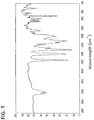
- Fig. 1 is an IR spectrum of N,N'-diphenyl-N,N'-bis[3-(2-ethoxycarbonylethyl)phenyl]-[1,1'-biphenyl]-4,4'-diamine.
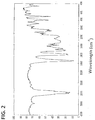
- Fig. 2 is an IR spectrum of N,N-bis[3-(2-ethoxycarbonylethyl)phenyl]-3,4-xylidine.
- Fig. 3 is an IR spectrum of the compound prepared in Synthesis Example 3.
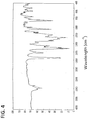
- Fig. 4 is an IR spectrum of the compound prepared in Synthesis Example 4.
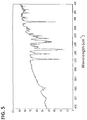
- Fig. 5 is an IR spectrum of the compound prepared in Synthesis Example 5.
- Fig. 6 is an IR spectrum of the compound prepared in Synthesis Example 6.
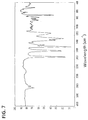
- Fig. 7 is an IR spectrum of the charge-transporting polymer (4) obtained in Example 1.
- Fig. 8 is an IR spectrum of the charge-transporting polymer (11) obtained in Example 2.
- Fig. 9 is an IR spectrum of the charge-transporting polymer (15) obtained in Example 3.
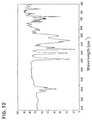
- Fig. 10 is an IR spectrum of the charge-transporting polymer (19) obtained in Example 4.
- Fig. 11 is an IR spectrum of the charge-transporting polymer (1) obtained in Example 5.
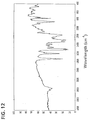
- Fig. 12 is an IR spectrum of the charge-transporting polymer (58) obtained in Example 6.
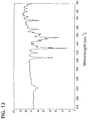
- Fig. 13 is an IR spectrum of the charge-transporting polymer (63) obtained in Example 7.
- Fig. 14 is an IR spectrum of the charge-transporting polymer (73) obtained in Example 8.
- Fig. 15 is an IR spectrum of the charge-transporting polymer (67) obtained in Example 9.
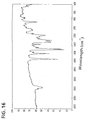
- Fig. 16 is an IR spectrum of the charge-transporting polymer (70) obtained in Example 10.
- the alkyl group and the alkoxy group for R1 and R2 preferably have up to 5 carbon atoms and more preferably from 1 to 3 carbon atoms, and examples of the substituted amino group for R1 and R2 include dimethylamino, diethylamino, dipropylamino and diphenylamino groups.
- X represents a substituted arylenyl group
- the substituent thereof may be an alkyl or alkoxy group preferably having up to 4 carbon atoms, a substituted or unsubstituted phenyl group, a substituted or unsubstituted aralkyl group, or a halogen atom
- the arylene group may have up to 6 substituents.
- the alkyl group and the aralkyl group for R' in the group B preferably have from 1 to 5 carbon atoms and from 7 to 12 carbon atoms, respectively.
- substituents if any on the aryl or aralkyl group for R' include mono-, di- or trimethyl, ethyl, phenyl, dimethylamino, diethylamino, and dipropylamino groups.
- Examples of the substituents if any on the phenyl or aralkyl group for R3 to R10 include mono-, di- or trimethyl, ethyl and phenyl groups.
- the plurality of each of R6 and R10 may be the same or different.
- Y and Z in formulae (I-1) and (I-2) as well as in the group B are those described below: wherein R11 and R12 each represents a hydrogen atom, an alkyl group having up to 4 carbon atoms, an alkoxy group having up to 4 carbon atoms, a substituted or unsubstituted phenyl group, a substituted or unsubstituted aralkyl group or a halogen atom, V has the same meanings as defined above, d and e each represents an integer of 1 to 10, f and g each represents 0,1 or 2, and h and i each represents 0 or 1.
- the plurality of each of R11, R12, f and g may be the same or different.
- the above-described charge-transporting polymer of the present invention has a degree of polymerization, p, of from 5 to 5,000, preferably from 10 to 1,000.
- the weight-average molecular weight, M w , thereof is preferably from 10,000 to 300,000.
- the molecular weight herein used is measured by GPC (calibrated with polystyrene).
- Preferred examples of the charge-transporting polymer of the present invention are shown in Table 1 below, wherein the compounds having none (-) for Z are those of formula (I-1) and the remainders are those of formula (I-2) having the group of -O-(-Y-O-) m -H or the group of -O-(-Y-O-) m -CO-Z-COOR' for both the terminals B, or having these groups at the terminals, respectively.
- Each compound of formula (I-2) shown in Table 1 is a mixture of those having the three kinds of the terminals (i.e.
- a monomer for use in producing the above-described charge-transporting polymer of the present invention can be easily synthesized by reacting an arylamine, a diarylbenzidine, or the like with a halogenated alkoxycarbonylalkylbenzene.
- a process for synthesizing a charge transport material having an alkylenecarboxylic acid ester group is described in JP-A-5-80550, which process comprises introducing a chloromethyl group into a starting compound, subsequently reacting Mg to form a Grignard reagent, converting the Grignard reagent to a carboxylic acid with carbon dioxide, and then esterifying the carboxylic acid.
- Mg a chloromethyl group
- converting the Grignard reagent to a carboxylic acid with carbon dioxide
- a chloromethyl group is incorporated after the skeleton of a triarylamine, a tetraarylbenzidine, or the like has been formed.
- This incorporation of a chloromethyl group may be accomplished, for example, by incorporating a methyl group into a starting compound at an initial stage and converting the methyl group into a chloromethyl group at that later stage, or by using an unsubstituted starting compound and conducting direct chloromethylation at that later stage, or by first incorporating a formyl group and converting the formyl group to a hydroxymethyl group through reduction and then to a chloromethyl group with, e.g., thionyl chloride.
- the charge-transporting polymer of the present invention described above can be synthesized by polymerizing a charge-transporting monomer represented by the following structural formula (III-1) by, e.g., the known method described in Lectures on Experimental Chemistry , 4th edition, Vol. 28.
- R1, R2, X, n and k have the same meanings as defined above
- E represents a hydroxyl group, a halogen atom, or a group represented by -O-R13 (where R13 represents an alkyl group, preferably having up to 10 carbon atoms a substituted or unsubstituted aryl group, or an aralkyl group preferably having from 7 to 12 carbon atoms).
- the substituent if any on the aryl group for R13 may be methyl, ethyl, propyl, phenyl, and benzyl groups.
- charge-transporting polymer represented by formula (I-1) can be synthesized as follows.
- the charge-transporting monomer is mixed with an almost equivalent amount of a dihydric alcohol represented by HO-(Y-O) m -H, and polymerized using an acid catalyst.
- the acid catalyst may be one for use in ordinary esterification reactions, such as sulfuric acid, toluenesulfonic acid, or trifluoroacetic acid. This catalyst is used in an amount of from 10 ⁇ 4 to 10 ⁇ 1 part by weight, preferably from 10 ⁇ 3 to 0.02 part by weight, per part by weight of the charge-transporting monomer.
- a solvent capable of forming an azeotrope with water For removing water generated during the reaction, it is preferred to use a solvent capable of forming an azeotrope with water.
- Solvents effective for this purpose include toluene, chlorobenzene, and 1-chloronaphthalene. Such a solvent may be used in an amount of from 1 to 100 parts by weight, preferably from 2 to 50 parts by weight, per part by weight of the charge-transporting monomer. Any desired reaction temperature may be used, but the reaction is preferably conducted at the boiling point of the solvent for the purpose of removing the water generated during the polymerization.
- the reaction mixture obtained after completion of the reaction is dissolved into a solvent in which the reaction product is soluble, such as dichloromethane, trichloromethane, monochlorobenzene, toluene, xylene, and benzene.
- the resulting solution is dropwise added into a solvent having poor solubility (poor solvent) for the charge-transporting polymer, such as an alcohol (e.g., methanol or ethanol), or acetone.
- the resulting reaction mixture in the form of solution is dropwise added as it is into such a poor solvent.
- the charge-transporting polymer is precipitated.
- the precipitated charge-transporting polymer is separated, subsequently sufficiently washed with water or an organic solvent, and then dried. If desired, this polymer may be subjected to a reprecipitation treatment in which the polymer is dissolved into an appropriate organic solvent and the solution is dropwise added into a poor solvent to precipitate the charge-transporting polymer.
- This reprecipitation treatment is preferably conducted with efficient stirring using a mechanical stirrer, etc.
- the solvent for dissolving the charge-transporting polymer is used in an amount of from 1 to 100 parts by weight, preferably from 2 to 50 parts by weight, per part by weight of the charge-transporting polymer.
- the poor solvent is used in an amount of from 1 to 1,000 parts by weight, preferably from 10 to 500 parts by weight, per part by weight of the charge-transporting polymer.
- E in formula (III-1) is a halogen
- the charge-transporting monomer is mixed with an almost equivalent amount of a dihydric alcohol represented by HO-(Y-O) m -H, and polymerized using an organic basic catalyst, e.g., pyridine or triethylamine.
- the organic basic catalyst is used in an amount of from 1 to 10 equivalents, preferably from 2 to 5 equivalents, to the charge-transporting monomer.
- Effective solvents include methylene chloride, tetrahydrofuran (THF), toluene, chlorobenzene, and 1-chloronaphthalene.
- Such a solvent may be used in an amount of from 1 to 100 parts by weight, preferably from 2 to 50 parts by weight, per part by weight of the charge-transporting monomer. Any desired reaction temperature may be used. After polymerization, a reprecipitation treatment is performed in the same manner as described above to purify the polymer.
- the interfacial polymerization method is also usable.
- This interfacial polymerization may be accomplished by adding the dihydric alcohol to water, adding an equivalent or more amount of a base to dissolve the dihydric alcohol, and then adding with vigorous agitation a solution of the charge-transporting monomer in an amount equivalent to the dihydric alcohol.
- the water is used in an amount of from 1 to 1,000 parts by weight, preferably from 2 to 500 parts by weight, per part by weight of the dihydric alcohol.
- Solvents effective in dissolving the charge-transporting monomer therein include methylene chloride, dichloroethane, trichloroethane, toluene, chlorobenzene, and 1-chloronaphthalene. Any desired reaction temperature may be used.
- a phase-transfer catalyst e.g., an ammonium salt or a sulfonium salt, is effective in accelerating the reaction.
- Such a phase-transfer catalyst may be used in an amount of from 0.1 to 10 parts by weight, preferably from 0.2 to 5 parts by weight, per part by weight of the charge-transporting monomer.
- the desired polymer can be synthesized by adding an excess of a dihydric alcohol represented by HO-(Y-O) m -H to the charge-transporting monomer and heating the mixture in the presence of a catalyst selected from an inorganic acid (e.g., sulfuric acid or phosphoric acid), a titanium alkoxide, a salt of calcium, cobalt, etc. with acetic acid or carbonic acid, and an oxide of zinc or lead to cause transesterification.
- a catalyst selected from an inorganic acid (e.g., sulfuric acid or phosphoric acid), a titanium alkoxide, a salt of calcium, cobalt, etc. with acetic acid or carbonic acid, and an oxide of zinc or lead to cause transesterification.
- the dihydric alcohol is used in an amount of from 2 to 100 equivalents, preferably from 3 to 50 equivalents, to the charge-transporting monomer.
- the catalyst is used in an amount of from 10 ⁇ 4 to 1 part by weight, preferably from 10 ⁇ 3 to 0.5 part by weight, per part by weight of the charge-transporting monomer.
- the reaction is carried out at a temperature of from 200 to 300°C.
- the subsequent reaction is preferably conducted at a reduced pressure generally from 0.01 to 100 mmHg, preferably from 0.05 to 20 mmHg, in order to accelerate the polymerization which proceeds with the elimination of HO-(Y-O) m -H.
- a high-boiling solvent capable of forming an azeotrope with the HO-(Y-O) m -H such as 1-chloronaphthalene, may be used to conduct the reaction while removing the HO-(Y-O) m -H as an azeotrope at ordinary pressure.
- the charge-transporting polymer represented by formula (I-2) can be synthesized as follows.
- the compound of formula (III-2) is then reacted as a charge-transporting monomer with an atmost equivalent amount of a dibasic carboxylic acid, a halide thereof, or the like using an organic basic catalyst, e.g., pyridine or triethylamine, to thereby obtain the charge-transporting polymer of formula (I-2).
- organic basic catalyst e.g., pyridine or triethylamine
- the organic basic catalyst is used in an amount of from 1 to 10 equivalents, preferably from 2 to 5 equivalents, to the charge-transporting monomer.
- Effective solvents include methylene chloride, tetrahydrofuran (THF), toluene, chlorobenzene, and 1-chloronaphthalene.
- Such a solvent may be used in an amount of from 1 to 100 parts by weight, preferably from 2 to 50 parts by weight, per part by weight of the charge-transporting monomer. Any desired reaction temperature may be used. After polymerization, a reprecipitation treatment is performed in the same manner as described above to purify the polymer.
- the novel charge-transporting polymer of the present invention is used in an organic electronic device such as an organic electroluminescent element, an electroconductive polymer doped with iodine, benzoquinone, chloranil as an acceptor, and an electrophotographic photoreceptor.
- organic electronic device of the present invention preferably contains the charge-transporting polymer and an insulating polymer compatible therewith.
- the organic electronic device may have a structure comprising a support having formed thereon a layer containing the charge-transporting polymer.
- Representative organic electronic device of the present invention include an electrophotographic photoreceptor having a photosensitive layer, in particular an electrophotographic photoreceptor having a surface layer in which the charge-transporting polymer of formula (I-1) or (I-2) is contained with or without other resins or charge-transport materials, or in which an charge generation material is dispersed in the charge-transporting polymer.
- the charge-transporting polymer of the present invention may be provided as an overcoat layer on a photosensitive layer of conventional electrophotographic photoreceptor.
- the overcoat layer generally has a thickness of from 1 to 20 ⁇ m and preferably from 3 to 10 ⁇ m.
- a preferred electrophotographic photoreceptor is one having a photosensitive layer containing the charge-transporting polymer represented by formula (I-1) or (I-2) as a charge transport material and phthalocyanine compound crystals as a charge generation material.
- Examples of the phthalocyanine crystals used in combination with the charge-transporting polymer in the above-described electrophotographic photoreceptor of the present invention include the halogenated gallium phthalocyanine crystals disclosed in JP-A-5-98181, the halogenated tin phthalocyanine crystals disclosed in JP-A-5-140472 and JP-A-5-140473, the hydroxygallium phthalocyanine crystals disclosed in JP-A-5-263007 and JP-A-5-279591, and the oxytitanium phthalocyanine hydrate crystals disclosed in JP-A-4-189873 and JP-A-5-43813.
- phthalocyanine crystals By use of such phthalocyanine crystals, an electrophotographic photoreceptor having especially high sensitivity and excellent stability to repeated use can be obtained.
- Chlorogallium phthalocyanine crystals for use in the present invention can be produced, as disclosed in JP-A-5-98181, from chlorogallium phthalocyanine crystals produced by a known method, either by mechanically dry-grinding the crystals with an automatic mortar, a planetary mill, an oscillating mill, a CF mill, a roll mill, a sand mill, a kneader, or the like or by subjecting the crystals to such dry grinding and then to wet grinding along with a solvent using a ball mill, a mortar, a sand mill, a kneader, or the like.
- solvent used in the above treatment examples include aromatic compounds (e.g., toluene and chlorobenzene), amides (e.g., dimethylformamide and N-methylpyrrolidone), aliphatic alcohols (e.g., methanol, ethanol, and butanol), aliphatic polyhydric alcohols (e.g., ethylene glycol, glycerol, and poly(ethylene glycol)), aromatic alcohols (e.g., benzyl alcohol and phenethyl alcohol), esters (e.g., ethyl acetate and butyl acetate), ketones (e.g., acetone and methyl ethyl ketone), dimethyl sulfoxide, ethers (e.g., diethyl ether and tetrahydrofuran), mixtures of two or more thereof, and mixtures of water and one or more of these organic solvents.
- aromatic compounds e.g., toluene and chloro
- the solvent is used in an amount of from 1 to 200 parts, preferably from 10 to 100 parts, per the chlorogallium phthalocyanine.
- the treatment is performed at a temperature of from 0°C to the boiling point of the solvent, preferably from 10 to 60°C.
- a grinding aid e.g., common salt or Glauber's salt, may be used in the grinding in an amount from 0.5 to 20 times, preferably from 1 to 10 times, the amount of the pigment.
- Dichlorotin phthalocyanine crystals for use in the present invention can be obtained, as disclosed in JP-A-5-140472 and JP-A-5-140473, from dichlorotin phthalocyanine crystals produced by a known method, by grinding the crystals in the same manner as for the above-described chlorogallium phthalocyanine and treating the ground crystals with a solvent.
- the hydroxygallium phthalocyanine crystals can be produced by the methods disclosed in JP-A-5-263007 and JP-A-5-279591. That is, chlorogallium phthalocyanine crystals produced by a known method are subjected to hydrolysis in an acidic or alkaline solution or to acid pasting to synthesize hydroxygallium phthalocyanine crystals, which are then directly treated with a solvent or subjected to wet grinding along with a solvent using a ball mill, a mortar, a sand mill, a kneader, etc., or which are dry-ground without using a solvent and then treated with a solvent, thereby giving the desired crystals.
- solvents used in the above treatments include aromatic compounds (e.g., toluene and chlorobenzene), amides (e.g., dimethylformamide and N-methylpyrrolidone), aliphatic alcohols (e.g., methanol, ethanol, and butanol), aliphatic polyhydric alcohols (e.g., ethylene glycol, glycerol, and poly(ethylene glycol)), aromatic alcohols (e.g., benzyl alcohol and phenethyl alcohol), esters (e.g., ethyl acetate and butyl acetate), ketones (e.g., acetone and methyl ethyl ketone), dimethyl sulfoxide, ethers (e.g., diethyl ether and tetrahydrofuran), mixtures of two or more thereof, and mixtures of water and one or more of these organic solvents.
- aromatic compounds e.g., toluene and chloro
- the solvent is used in an amount of from 1 to 200 parts, preferably from 10 to 100 parts, per the hydroxygallium phthalocyanine.
- the treatments are performed at a temperature of from 0 to 150°C, preferably from room temperature to 100°C.
- a grinding aid e.g., common salt or Glauber's salt, may be used in the grinding in an amount from 0.5 to 20 times, preferably from 1 to 10 times, the amount of the pigment.
- the oxytitanium phthalocyanine crystals can be produced by the methods disclosed in JP-A-4-189873 and JP-A-5-43813. That is, oxytitanium phthalocyanine produced by a known method is subjected to acid pasting or to salt milling along with an inorganic salt using a ball mill, a mortar, a sand mill, a kneader, or the like to obtain oxytitanium phthalocyanine crystals which have relatively low crystallinity and give an X-ray diffraction spectrum having a peak at 27.2°.
- the crystals obtained are directly treated with a solvent or subjected to wet grinding along with a solvent using a ball mill, a mortar, a sand mill, a kneader, or the like, thereby giving the desired crystals.
- sulfuric acid is preferably used, which has a concentration of from 70 to 100%, preferably from 95 to 100%.
- the temperature for dissolution is from -20 to 100°C, preferably from 0 to 60°C.
- the amount of concentrated sulfuric acid is from 1 to 100 times, preferably from 3 to 50 times, the amount of the oxytitanium phthalocyanine crystals.
- the solvent for precipitation is water or a mixed solvent composed of water and an organic solvent, and may be used in any desired amount.
- Especially preferred precipitation solvents are a mixed solvent composed of water and an alcohol such as methanol or ethanol and a mixed solvent composed of water and an aromatic solvent such as benzene or toluene.
- the temperature for precipitation is not particularly limited, but it is preferred to conduct cooling with ice or by other means in order to prevent heat generation.
- the proportion of the oxytitanium phthalocyanine crystals to the inorganic salt is from 1/0.1 to 1/20 by weight, preferably from 1/0.5 to 1/5 by weight.
- Examples of the solvent used in the above solvent treatment include aromatic compounds (e.g., toluene and chlorobenzene), aliphatic alcohols (e.g., methanol, ethanol, and butanol), halogenated hydrocarbons (e.g., dichloromethane, chloroform, and trichloroethane), mixtures of two or more thereof, and mixed solvents composed of water and one or more of these organic solvents.
- the solvent is used in an amount of from 1 to 100 times, preferably from 5 to 50 times, the amount of the oxytitanium phthalocyanine.
- the temperature for the treatment is from room temperature to 100°C, preferably from 50 to 100°C.
- a grinding aid may be used in an amount from 0.5 to 20 times, preferably from 1 to 10 times, the amount of the pigment.
- these phthalocyanine compound crystals are incorporated as a charge generation material preferably in a charge generation layer in the photosensitive layer.
- a preferred electrophotographic photoreceptor of the present invention comprises a conductive support having provided thereon a photosensitive layer containing the charge-transporting polymer of formula (I-1) or (I-2), which may have either a single layer structure, or a laminated structure in which a charge generation layer and a charge transport layer are functionally separated from each other.
- a photosensitive layer containing the charge-transporting polymer of formula (I-1) or (I-2) which may have either a single layer structure, or a laminated structure in which a charge generation layer and a charge transport layer are functionally separated from each other.
- the order of lamination of the charge generation layer and the charge transport layer may be arbitrary.
- an overcoat layer may be provided on the photosensitive layer as described above.
- the thickness of the layer is generally from 5 to 50 ⁇ m and preferably from 10 to 35 ⁇ m.
- the charge generation layer generally has a thickness of from 0.2 to 5 ⁇ m, preferably from 0.5 to 2 ⁇ m
- the charge transport layer generally has a thickness of from 5 to 50 ⁇ m, preferably 10 to 35 ⁇ m.
- conductive supports include metals such as aluminum, nickel, chromium, and stainless steel, plastic or other films having a thin film of, e.g., aluminum, titanium, nickel, chromium, stainless steel, gold, vanadium, tin oxide, indium oxide, or ITO, and paper, plastic, or other supports coated or impregnated with a conducting agent.
- These conductive supports may be used in a suitable form such as a drum, sheet, or plate form, but the supports are not limited to these forms. If desired or necessary, the surface of the conductive support may be subjected to various treatments as long as these treatments do not adversely influence image quality.
- An undercoat layer may be formed between the conductive support and the charge generation layer. This undercoat layer functions not only to inhibit injection from the conductive support into the photosensitive layer having a laminated structure at the time when the photosensitive layer is in an electrified state, but also as an adhesive layer for tenaciously bonding the photosensitive layer to the conductive support. In some cases, the undercoat layer also functions to inhibit light reflection by the conductive support.
- a binder resin for use in forming the undercoat layer may be a known material.
- Examples thereof include polyethylene resins, polypropylene resins, acrylic resins, methacrylic resins, polyamide resins, vinyl chloride resins, vinyl acetate resins, phenolic resins, polycarbonate resins, polyurethane resins, polyimide resins, vinylidene chloride resins, poly(vinyl acetal) resins, vinyl chloride-vinyl acetate copolymers, poly(vinyl alcohol) resins, water-soluble polyester resins, nitrocellulose, casein, gelatin, poly(glutamic acid), starch, starch acetate, aminostarch, poly(acrylic acid), polyacrylamide, zirconium chelate compounds, titanyl chelate compounds, titanyl alkoxide compounds, organic titanyl compounds, and silane coupling agents.
- the thickness of the undercoat layer is from 0.01 to 10 ⁇ m, preferably from 0.05 to 2 ⁇ m.
- Coating methods usable for forming the undercoat layer include ordinary coating techniques such as blade coating, Mayer bar coating, spray coating, dip coating, bead coating, air knife coating, and curtain coating.
- the charge transport layer may consist of the charge-transporting polymer of the invention alone, or may be composed of a combination of the charge-transporting polymer with a known binder resin, a charge transport material of another type such as, e.g., the hydrazone, triarylamine, or stilbene type, etc.
- binder resin examples include known resins such as polycarbonate resins, polyester resins, methacrylic resins, acrylic resins, poly(vinyl chloride) resins, poly(vinylidene chloride) resins, polystyrene resins, poly(vinyl acetate) resins, styrene-butadiene copolymers, vinylidene chloride-acrylonitrile copolymers, vinyl chloride-vinyl acetate copolymers, vinyl chloride-vinyl acetate-maleic anhydride copolymers, silicone resins, silicone-alkyd resins, phenol-formaldehyde resins, styrene-alkyd resins, poly(N-vinylcarbazole), and polysilanes.
- resins such as polycarbonate resins, polyester resins, methacrylic resins, acrylic resins, poly(vinyl chloride) resins, poly(vinylidene chloride) resins, polyst
- binder resins are not limited thereto.
- the polycarbonate resins represented by the following structural formulae (IV) to (IX) or polycarbonate resins obtained by copolymerizing these resins are preferred in that such resins show good compatibility and give a homogeneous film having especially good properties.
- the proportion (by weight) of the charge-transporting polymer to the binder resin is preferably from 10:0 to 8:10.
- the proportion of the sum of the charge-transporting polymer and the binder resin to another charge transport material is preferably from 10:0 to 10:8.
- n indicating a degree of polymerization is from 50 to 3,000.
- charge generation material contained in the charge generation layer is preferably the phthalocyanine crystals described above, any other known charge generation material may also be used, such as bisazo pigments, squarilium pigments, perylene pigments and dibromoanthanthrone, as well as other phthalocyanine pigments.
- the binder resin for use in the charge generation layer can be selected from a wide variety of insulating resins. It is also possible to select the binder resin from organic photoconductive polymers such as poly(N-vinylcarbazole), poly(vinylanthracene), poly(vinylpyrene), and polysilanes.
- Preferred binder resins include insulating resins such as poly(vinyl butyral) resins, polyarylate resins (e.g., polycondensation products obtained from bisphenol A and phthalic acid), polycarbonate resins, polyester resins, phenoxy resins, vinyl chloride-vinyl acetate copolymers, polyamide resins, acrylic resins, polyacrylamide resins, poly(vinylpyridine) resins, cellulose resins, urethane resins, epoxy resins, casein, poly(vinyl alcohol) resins, and poly(vinylpyrrolidone) resins.
- the binder resin for the charge generation layer is not limited thereto. These binder resins may be used alone or as a mixture of two or more thereof.
- the proportion (by weight) of the charge generation material to the binder resin is preferably from 10:1 to 1:10.
- an ordinary technique may be employed using, e.g., a ball mill, an attritor, or a sand mill.
- Examples thereof include methanol, ethanol, n-propanol, n-butanol, benzyl alcohol, methyl Cellosolve, ethyl Cellosolve, acetone, methyl ethyl ketone, cyclohexanone, methyl acetate, n-butyl acetate, dioxane, tetrahydrofuran, methylene chloride, chloroform, chlorobenzene, and toluene.
- dichlorotin phthalocyanine crystals Five grams of the dichlorotin phthalocyanine crystals obtained were placed in an agate pot along with 10 g of common salt and 500 g of agate balls (20 mm ⁇ ) and ground in a planetary ball mill (Type P-5, manufactured by Flitche Co.) at 400 rpm for 10 hours. The ground crystals were then sufficiently washed with water and dried. 0.5 grams of the dried crystals were milled along with 15 g of THF and 30 g of glass beads (1 mm ⁇ ) at room temperature for 24 hours. The glass beads were then filtered off, and the milled crystals were washed with methanol and dried. Thus, dichlorotin phthalocyanine crystals having strong diffraction peaks at 8.5°, 11.2°, 14.5°, and 27.2° were obtained. This phthalocyanine is referred to as CG-2.
- hydroxygallium phthalocyanine crystals having strong peaks at 7.5°, 9.9°, 12.5°, 16.3°, 18.6°, 25.1°, and 28.3° were obtained.
- This phthalocyanine is referred to as CG-3.
- the ground crystals were sufficiently washed with distilled water and dried to obtain 4.8 parts of oxytitanium phthalocyanine crystals.
- the oxytitanium phthalocyanine crystals obtained showed a distinct peak at 27.3°.
- Two parts of the oxytitanium phthalocyanine crystals obtained were stirred at 50°C for 1 hour in a mixed solvent composed of 20 parts of distilled water and 2 parts of monochlorobenzene. The crystals were then recovered by filtration, sufficiently washed with methanol, and dried.
- oxytitanium phthalocyanine hydrate crystals having a strong diffraction peak at 27.3° were obtained.
- This phthalocyanine is referred to as CG-4.
- the polymer obtained was dissolved into 50 ml of THF, and a filtrate obtained therefrom was dropwise added into 300 ml of water kept being stirred to precipitate a polymer.
- This polymer was sufficiently washed with water and then dried to obtain 0.25 g of a polymer.
- the molecular weight of this polymer was measured by GPC.
- M w 1.13x10⁵ (calculated for standard polystyrene).
- the degree of polymerization, p, was about 170.
- An IR spectrum thereof is shown in Fig. 7.
- a solution containing 10 parts of a zirconium compound (Orgatics ZC540, manufactured by Matsumoto Seiyaku K.K., Japan), 1 part of a silane compound (A1110, manufactured by Nippon Unicar Co., Ltd., Japan), 40 parts of isopropanol, and 20 parts of butanol was applied on an aluminum substrate by dip coating. The coating was dried at 150°C for 10 minutes to form an undercoat layer having a thickness of 0.5 ⁇ m.
- phthalocyanine compound CG-1 was mixed with 1 part of a poly-(vinyl butyral) resin (S-Lec BM-S, manufactured by Sekisui Chemical Co., Ltd., Japan) and 100 parts of n-butyl acetate. This mixture was treated for 1 hour with a paint shaker along with glass beads to disperse the CG-1. The coating composition obtained was applied on the undercoat layer by dip coating, and dried at 100°C for 10 minutes to form a charge generation layer.
- a poly-(vinyl butyral) resin S-Lec BM-S, manufactured by Sekisui Chemical Co., Ltd., Japan
- a coating composition obtained by dissolving 0.2 parts of charge-transporting polymer (4) into 1.5 parts of monochlorobenzene was then applied, by wire-wound bar coating, on the aluminum substrate on which the charge generation layer had been formed.
- the coating was dried at 120°C for 1 hour to form a charge transport layer having a thickness of 15 ⁇ m.
- the electrophotographic photoreceptor thus obtained was examined for electrophotographic properties as follows.
- the photoreceptor was subjected to -6 kV corona discharge using an electrostatic copying paper tester (Electrostatic Analyzer EPA-8100, manufactured by Kawaguchi Denki K.K., Japan) in an atmosphere having ordinary temperature and pressure (20°C, 40% RH) to electrify the photoreceptor.
- the electrified photoreceptor was irradiated with 800 nm monochromatic light obtained from tungsten lamp light using a monochromator, at an irradiance of 1 ⁇ W/cm2 as measured on the photoreceptor surface.
- the surface potential V0 (V) and the half decay exposure E 1/2 (erg/cm2) were measured.
- Electrophotographic photoreceptors were produced and evaluated in the same manner as in Example 11, except that the charge generation material/charge transport material combinations shown in Table 2 were used. The results obtained are shown in Table 2.
- An electrophotographic photoreceptor was produced and evaluated in the same manner as in Example 11, except that 0.2 parts of PVK was used in place of 0.2 parts of charge-transporting polymer (4), and 1 part of phthalocyanine compound CG-2 was used in place of the CG-1. The results obtained are shown in Table 2.
- the charge-transporting polymer of the present invention represented by formula (I-1) or (I-2) described above, is a novel substance which is excellent in solubility and film-forming property and can be easily synthesized and whose ionization potential is controllable.
- introduction of a biphenyl structure for X in formulae (I-1) and (I-2) provides a charge-transporting polymer having an enhanced mobility and a good charge-injection property. Therefore, the polymer is useful as a charge transport material in the production of organic electronic devices.
- the organic electronic devices of the present invention in particular the electrophotographic photoreceptor, have high photosensitivity and high stability to repeated use, as shown in the above Examples.
Landscapes
- Chemical & Material Sciences (AREA)
- Chemical Kinetics & Catalysis (AREA)
- Physics & Mathematics (AREA)
- General Physics & Mathematics (AREA)
- Polymers & Plastics (AREA)
- Medicinal Chemistry (AREA)
- Health & Medical Sciences (AREA)
- Organic Chemistry (AREA)
- Photoreceptors In Electrophotography (AREA)
- Polyesters Or Polycarbonates (AREA)
- Light Receiving Elements (AREA)
- Electroluminescent Light Sources (AREA)
- Compositions Of Macromolecular Compounds (AREA)
Applications Claiming Priority (12)
| Application Number | Priority Date | Filing Date | Title |
|---|---|---|---|
| JP15177694 | 1994-06-10 | ||
| JP151776/94 | 1994-06-10 | ||
| JP15177694 | 1994-06-10 | ||
| JP21959994 | 1994-08-23 | ||
| JP219599/94 | 1994-08-23 | ||
| JP21959994 | 1994-08-23 | ||
| JP24484/95 | 1995-01-20 | ||
| JP2448495 | 1995-01-20 | ||
| JP2448495 | 1995-01-20 | ||
| JP144240/95 | 1995-05-19 | ||
| JP14424095 | 1995-05-19 | ||
| JP7144240A JP2865020B2 (ja) | 1994-06-10 | 1995-05-19 | 新規な電荷輸送性ポリマーおよびそれを用いた有機電子デバイス |
Publications (2)
| Publication Number | Publication Date |
|---|---|
| EP0686879A1 true EP0686879A1 (de) | 1995-12-13 |
| EP0686879B1 EP0686879B1 (de) | 2000-05-24 |
Family
ID=27458146
Family Applications (1)
| Application Number | Title | Priority Date | Filing Date |
|---|---|---|---|
| EP95108773A Expired - Lifetime EP0686879B1 (de) | 1994-06-10 | 1995-06-07 | Ladungstransportpolymer und organische, elektronische Anlage worin es benutzt wird |
Country Status (3)
| Country | Link |
|---|---|
| EP (1) | EP0686879B1 (de) |
| JP (1) | JP2865020B2 (de) |
| DE (1) | DE69517091T2 (de) |
Cited By (1)
| Publication number | Priority date | Publication date | Assignee | Title |
|---|---|---|---|---|
| EP0713149B1 (de) * | 1994-10-18 | 2000-08-23 | Fuji Xerox Co., Ltd. | Elektrophotographischer Photorezeptor unter Verwendung eines Ladungs- Transport- Copolyesters |
Families Citing this family (18)
| Publication number | Priority date | Publication date | Assignee | Title |
|---|---|---|---|---|
| JPH10133405A (ja) * | 1996-10-29 | 1998-05-22 | Fuji Xerox Co Ltd | 電荷輸送性樹脂及びそれを用いた電子写真感光体 |
| JP2000214602A (ja) | 1999-01-25 | 2000-08-04 | Fuji Xerox Co Ltd | 画像形成装置 |
| KR20040005261A (ko) * | 2002-07-09 | 2004-01-16 | 박수영 | 여기상태 분자내 양성자이동 특성을 보이는 새로운 퀴놀린계 화합물 |
| US7416823B2 (en) | 2004-01-15 | 2008-08-26 | Ricoh Company, Ltd. | Electrophotographic photoconductor, and image formation method, image formation apparatus, and process cartridge for image formation apparatus using the same |
| US7473504B2 (en) | 2004-05-25 | 2009-01-06 | Ricoh Company, Ltd. | Electrophotographic photoreceptor, and image forming method, apparatus and process cartridge therefor using the photoreceptor |
| JP2006217408A (ja) * | 2005-02-04 | 2006-08-17 | Fujitsu Ltd | 信号伝送システム |
| JP2007123440A (ja) * | 2005-10-26 | 2007-05-17 | Fuji Xerox Co Ltd | 有機電界発光素子 |
| US7914959B2 (en) | 2005-11-28 | 2011-03-29 | Ricoh Company, Limited | Image bearing member, image forming method, and image forming apparatus |
| JP4579151B2 (ja) | 2005-12-27 | 2010-11-10 | 株式会社リコー | 感光体及びその製造方法 |
| US8335456B2 (en) | 2006-04-17 | 2012-12-18 | Ricoh Company, Ltd. | Image forming apparatus, image forming method, and process cartridge |
| US8043773B2 (en) | 2006-11-16 | 2011-10-25 | Ricoh Company, Limited | Image bearing member, image forming apparatus and process cartridge |
| JP5006164B2 (ja) | 2006-11-21 | 2012-08-22 | 株式会社リコー | 画像形成装置、画像形成方法及びプロセスカートリッジ |
| JP2008311367A (ja) | 2007-06-13 | 2008-12-25 | Fuji Xerox Co Ltd | 有機電界発光素子及び表示装置 |
| JP5382404B2 (ja) | 2007-07-02 | 2014-01-08 | 株式会社リコー | 電子写真感光体、該電子写真感光体を有するプロセスカートリッジ及び電子写真装置 |
| JP5526521B2 (ja) * | 2008-09-29 | 2014-06-18 | 富士ゼロックス株式会社 | カルバゾール化合物、カルバゾリル基含有ポリエステル、塗膜用組成物、有機電界発光素子、及び表示媒体 |
| JP5407459B2 (ja) * | 2009-03-18 | 2014-02-05 | 富士ゼロックス株式会社 | 画像形成装置用像保持体、プロセスカートリッジ、及び画像形成装置 |
| JP5614651B2 (ja) | 2011-01-21 | 2014-10-29 | 株式会社リコー | 電子写真感光体、及びそれを用いた画像形成方法、画像形成装置、画像形成装置用プロセスカートリッジ |
| US20130247989A1 (en) * | 2012-03-23 | 2013-09-26 | The Regents Of The University Of California | Inert solution-processable molecular chromophores for organic electronic devices |
Citations (26)
| Publication number | Priority date | Publication date | Assignee | Title |
|---|---|---|---|---|
| GB1603663A (en) * | 1976-12-22 | 1981-11-25 | Eastman Kodak Co | Polymeric compounds for use as sensitizers in photoconductive compositions |
| JPS5928903B2 (ja) | 1976-12-22 | 1984-07-17 | イ−ストマン・コダツク・カンパニ− | 多活性、光導電性絶縁要素 |
| JPS6120953A (ja) | 1984-07-09 | 1986-01-29 | Mitsubishi Paper Mills Ltd | 電子写真感光体 |
| US4801517A (en) | 1987-06-10 | 1989-01-31 | Xerox Corporation | Polyarylamine compounds and systems utilizing polyarylamine compounds |
| US4806444A (en) | 1987-06-10 | 1989-02-21 | Xerox Corporation | Arylamine polymers and systems utilizing arylamine polymers |
| US4806443A (en) | 1987-06-10 | 1989-02-21 | Xerox Corporation | Polyarylamine compounds and systems utilizing polyarylamine compounds |
| JPH01134462A (ja) | 1987-11-20 | 1989-05-26 | Kao Corp | 電子写真感光体 |
| JPH01134457A (ja) | 1987-11-20 | 1989-05-26 | Kao Corp | 電子写真感光体 |
| JPH01134456A (ja) | 1987-11-20 | 1989-05-26 | Kao Corp | 電子写真感光体 |
| US4937165A (en) | 1989-04-03 | 1990-06-26 | Xerox Corporation | Photoconductive imaging members with N,N-bis(biarylyl)aniline charge transport polymers |
| US4959288A (en) | 1989-04-03 | 1990-09-25 | Xerox Corporation | Photoconductive imaging members with diaryl biarylylamine copolymer charge transport layers |
| US4983482A (en) | 1989-04-03 | 1991-01-08 | Xerox Corporation | Photoconductive imaging members with polyurethane hole transporting layers |
| US5034296A (en) | 1989-04-03 | 1991-07-23 | Xerox Corporation | Photoconductive imaging members with fluorene polyester hole transporting layers |
| US5080989A (en) * | 1989-11-29 | 1992-01-14 | Eastman Kodak Company | Photoconductive block copolymers |
| JPH04133065A (ja) | 1990-09-25 | 1992-05-07 | Konica Corp | 光導電性高分子化合物 |
| JPH04133066A (ja) | 1990-09-25 | 1992-05-07 | Konica Corp | 電子写真感光体 |
| JPH04189873A (ja) | 1990-11-22 | 1992-07-08 | Fuji Xerox Co Ltd | オキシチタニウムフタロシアニン水和物結晶及びそれを用いた電子写真感光体 |
| US5149609A (en) * | 1990-12-14 | 1992-09-22 | Xerox Corporation | Polymers for photoreceptor overcoating for use as protective layer against liquid xerographic ink interaction |
| JPH0543813A (ja) | 1991-08-16 | 1993-02-23 | Fuji Xerox Co Ltd | オキシチタニウムフタロシアニン水和物結晶の製造方法 |
| JPH0580550A (ja) | 1991-09-24 | 1993-04-02 | Kao Corp | 電子写真感光体 |
| JPH0598181A (ja) | 1991-04-22 | 1993-04-20 | Fuji Xerox Co Ltd | クロロガリウムフタロシアニンの新規な結晶、その新規な結晶よりなる光導電材料及びそれを用いた電子写真感光体 |
| GB2261669A (en) * | 1991-11-25 | 1993-05-26 | Xerox Corp | Electrophotographic imaging members containing polyarylamine polyesters |
| JPH05140472A (ja) | 1991-11-15 | 1993-06-08 | Fuji Xerox Co Ltd | 新規なジクロロスズフタロシアニン結晶の製造方法及びその結晶を用いた電子写真感光体 |
| JPH05140473A (ja) | 1991-09-27 | 1993-06-08 | Fuji Xerox Co Ltd | ジクロロスズフタロシアニンの新規な結晶とその製造方法、それを用いた電子写真感光体および電子写真感光体用塗布液 |
| JPH05263007A (ja) | 1991-04-26 | 1993-10-12 | Fuji Xerox Co Ltd | ヒドロキシガリウムフタロシアニンの新規な結晶、その新規な結晶よりなる光導電材料およびそれを用いた電子写真感光体 |
| JPH05279591A (ja) | 1992-03-31 | 1993-10-26 | Fuji Xerox Co Ltd | ヒドロキシガリウムフタロシアニンの新規な結晶の製造方法とその方法で製造された結晶を用いる電子写真感光体 |
-
1995
- 1995-05-19 JP JP7144240A patent/JP2865020B2/ja not_active Expired - Fee Related
- 1995-06-07 DE DE69517091T patent/DE69517091T2/de not_active Expired - Lifetime
- 1995-06-07 EP EP95108773A patent/EP0686879B1/de not_active Expired - Lifetime
Patent Citations (26)
| Publication number | Priority date | Publication date | Assignee | Title |
|---|---|---|---|---|
| GB1603663A (en) * | 1976-12-22 | 1981-11-25 | Eastman Kodak Co | Polymeric compounds for use as sensitizers in photoconductive compositions |
| JPS5928903B2 (ja) | 1976-12-22 | 1984-07-17 | イ−ストマン・コダツク・カンパニ− | 多活性、光導電性絶縁要素 |
| JPS6120953A (ja) | 1984-07-09 | 1986-01-29 | Mitsubishi Paper Mills Ltd | 電子写真感光体 |
| US4801517A (en) | 1987-06-10 | 1989-01-31 | Xerox Corporation | Polyarylamine compounds and systems utilizing polyarylamine compounds |
| US4806444A (en) | 1987-06-10 | 1989-02-21 | Xerox Corporation | Arylamine polymers and systems utilizing arylamine polymers |
| US4806443A (en) | 1987-06-10 | 1989-02-21 | Xerox Corporation | Polyarylamine compounds and systems utilizing polyarylamine compounds |
| JPH01134462A (ja) | 1987-11-20 | 1989-05-26 | Kao Corp | 電子写真感光体 |
| JPH01134457A (ja) | 1987-11-20 | 1989-05-26 | Kao Corp | 電子写真感光体 |
| JPH01134456A (ja) | 1987-11-20 | 1989-05-26 | Kao Corp | 電子写真感光体 |
| US5034296A (en) | 1989-04-03 | 1991-07-23 | Xerox Corporation | Photoconductive imaging members with fluorene polyester hole transporting layers |
| US4983482A (en) | 1989-04-03 | 1991-01-08 | Xerox Corporation | Photoconductive imaging members with polyurethane hole transporting layers |
| US4937165A (en) | 1989-04-03 | 1990-06-26 | Xerox Corporation | Photoconductive imaging members with N,N-bis(biarylyl)aniline charge transport polymers |
| US4959288A (en) | 1989-04-03 | 1990-09-25 | Xerox Corporation | Photoconductive imaging members with diaryl biarylylamine copolymer charge transport layers |
| US5080989A (en) * | 1989-11-29 | 1992-01-14 | Eastman Kodak Company | Photoconductive block copolymers |
| JPH04133065A (ja) | 1990-09-25 | 1992-05-07 | Konica Corp | 光導電性高分子化合物 |
| JPH04133066A (ja) | 1990-09-25 | 1992-05-07 | Konica Corp | 電子写真感光体 |
| JPH04189873A (ja) | 1990-11-22 | 1992-07-08 | Fuji Xerox Co Ltd | オキシチタニウムフタロシアニン水和物結晶及びそれを用いた電子写真感光体 |
| US5149609A (en) * | 1990-12-14 | 1992-09-22 | Xerox Corporation | Polymers for photoreceptor overcoating for use as protective layer against liquid xerographic ink interaction |
| JPH0598181A (ja) | 1991-04-22 | 1993-04-20 | Fuji Xerox Co Ltd | クロロガリウムフタロシアニンの新規な結晶、その新規な結晶よりなる光導電材料及びそれを用いた電子写真感光体 |
| JPH05263007A (ja) | 1991-04-26 | 1993-10-12 | Fuji Xerox Co Ltd | ヒドロキシガリウムフタロシアニンの新規な結晶、その新規な結晶よりなる光導電材料およびそれを用いた電子写真感光体 |
| JPH0543813A (ja) | 1991-08-16 | 1993-02-23 | Fuji Xerox Co Ltd | オキシチタニウムフタロシアニン水和物結晶の製造方法 |
| JPH0580550A (ja) | 1991-09-24 | 1993-04-02 | Kao Corp | 電子写真感光体 |
| JPH05140473A (ja) | 1991-09-27 | 1993-06-08 | Fuji Xerox Co Ltd | ジクロロスズフタロシアニンの新規な結晶とその製造方法、それを用いた電子写真感光体および電子写真感光体用塗布液 |
| JPH05140472A (ja) | 1991-11-15 | 1993-06-08 | Fuji Xerox Co Ltd | 新規なジクロロスズフタロシアニン結晶の製造方法及びその結晶を用いた電子写真感光体 |
| GB2261669A (en) * | 1991-11-25 | 1993-05-26 | Xerox Corp | Electrophotographic imaging members containing polyarylamine polyesters |
| JPH05279591A (ja) | 1992-03-31 | 1993-10-26 | Fuji Xerox Co Ltd | ヒドロキシガリウムフタロシアニンの新規な結晶の製造方法とその方法で製造された結晶を用いる電子写真感光体 |
Non-Patent Citations (4)
| Title |
|---|
| "36th Preprints of Papers", vol. K-12, 1990, article "Lecture Meeting of the Applied Physics Association", pages: 31 |
| "Lectures on Experimental Chemistry", vol. 28 |
| "The Sixth International Congress on Advances in Non-impact Printing Technologies", 1990, pages: 306 |
| PATENT ABSTRACTS OF JAPAN vol. 18, no. 40 (C - 1155) 21 January 1994 (1994-01-21) * |
Cited By (1)
| Publication number | Priority date | Publication date | Assignee | Title |
|---|---|---|---|---|
| EP0713149B1 (de) * | 1994-10-18 | 2000-08-23 | Fuji Xerox Co., Ltd. | Elektrophotographischer Photorezeptor unter Verwendung eines Ladungs- Transport- Copolyesters |
Also Published As
| Publication number | Publication date |
|---|---|
| EP0686879B1 (de) | 2000-05-24 |
| DE69517091D1 (de) | 2000-06-29 |
| JPH08253568A (ja) | 1996-10-01 |
| JP2865020B2 (ja) | 1999-03-08 |
| DE69517091T2 (de) | 2001-01-18 |
Similar Documents
| Publication | Publication Date | Title |
|---|---|---|
| US5734003A (en) | Charge transporting polymer, process for producing the same, and organic electronic device containing the same | |
| EP0710893B1 (de) | Ladungs-Transportpolymer, sein Herstellungsverfahren und elektrophotographischer Photorezeptor unter Verwendung desselben | |
| EP0686879B1 (de) | Ladungstransportpolymer und organische, elektronische Anlage worin es benutzt wird | |
| JP3058069B2 (ja) | 新規な電荷輸送性ポリマーおよびそれを用いた有機電子デバイス | |
| JP2865029B2 (ja) | 電荷輸送性ポリエステルを用いた有機電子デバイス | |
| US5604064A (en) | Charge-transporting polymer and organic electronic device using the same | |
| KR20080072762A (ko) | 폴리비닐아세탈 수지, 전자 사진 감광체, 공정 카트리지 및전자 사진 장치 | |
| EP0713149B1 (de) | Elektrophotographischer Photorezeptor unter Verwendung eines Ladungs- Transport- Copolyesters | |
| EP0415446A2 (de) | Bildtragendes Element und es umfassender Apparat | |
| US5080989A (en) | Photoconductive block copolymers | |
| JP3496541B2 (ja) | 電荷輸送性ポリエステルおよびそれを用いた有機電子デバイス | |
| JP3422140B2 (ja) | ランダム共重合した電荷輸送性ポリエステル樹脂を用いた有機電子デバイス | |
| JP3853194B2 (ja) | 画像形成部材 | |
| EP0687958A1 (de) | Ladungstransportpolymer, und organische, elektronische Anlage, worin es benutzt wird | |
| JP3243981B2 (ja) | 電荷輸送性樹脂の精製方法、それを利用した電子写真感光体および電子写真装置 | |
| JPH10171139A (ja) | 電荷輸送性材料及びそれを用いた電子写真用感光体 | |
| JP3497199B2 (ja) | ヒドラゾン誘導体及びこれを用いた電子写真感光体 | |
| JP3538973B2 (ja) | 電子写真感光体 | |
| JP3344182B2 (ja) | 電子写真感光体 | |
| US5731118A (en) | Charge transporting random copolyester resin, process for producing the same and organic electronic device using the same | |
| JP3267115B2 (ja) | ランダム共重合した電荷輸送性ポリエステル樹脂、及びその製造方法 | |
| JP3185476B2 (ja) | 電子写真感光体 | |
| JP2827915B2 (ja) | 電子写真用感光材料およびそれを用いた電子写真感光体 | |
| JPH0643667A (ja) | 像保持部材及びそれを用いた装置 | |
| JP2004054288A (ja) | 画像形成部材 |
Legal Events
| Date | Code | Title | Description |
|---|---|---|---|
| PUAI | Public reference made under article 153(3) epc to a published international application that has entered the european phase |
Free format text: ORIGINAL CODE: 0009012 |
|
| AK | Designated contracting states |
Kind code of ref document: A1 Designated state(s): DE FR GB |
|
| 17P | Request for examination filed |
Effective date: 19960319 |
|
| 17Q | First examination report despatched |
Effective date: 19980115 |
|
| GRAG | Despatch of communication of intention to grant |
Free format text: ORIGINAL CODE: EPIDOS AGRA |
|
| GRAG | Despatch of communication of intention to grant |
Free format text: ORIGINAL CODE: EPIDOS AGRA |
|
| GRAH | Despatch of communication of intention to grant a patent |
Free format text: ORIGINAL CODE: EPIDOS IGRA |
|
| GRAH | Despatch of communication of intention to grant a patent |
Free format text: ORIGINAL CODE: EPIDOS IGRA |
|
| GRAA | (expected) grant |
Free format text: ORIGINAL CODE: 0009210 |
|
| AK | Designated contracting states |
Kind code of ref document: B1 Designated state(s): DE FR GB |
|
| REF | Corresponds to: |
Ref document number: 69517091 Country of ref document: DE Date of ref document: 20000629 |
|
| ET | Fr: translation filed | ||
| PLBE | No opposition filed within time limit |
Free format text: ORIGINAL CODE: 0009261 |
|
| STAA | Information on the status of an ep patent application or granted ep patent |
Free format text: STATUS: NO OPPOSITION FILED WITHIN TIME LIMIT |
|
| 26N | No opposition filed | ||
| REG | Reference to a national code |
Ref country code: GB Ref legal event code: IF02 |
|
| PGFP | Annual fee paid to national office [announced via postgrant information from national office to epo] |
Ref country code: DE Payment date: 20130605 Year of fee payment: 19 Ref country code: GB Payment date: 20130605 Year of fee payment: 19 |
|
| PGFP | Annual fee paid to national office [announced via postgrant information from national office to epo] |
Ref country code: FR Payment date: 20130624 Year of fee payment: 19 |
|
| REG | Reference to a national code |
Ref country code: DE Ref legal event code: R119 Ref document number: 69517091 Country of ref document: DE |
|
| GBPC | Gb: european patent ceased through non-payment of renewal fee |
Effective date: 20140607 |
|
| REG | Reference to a national code |
Ref country code: FR Ref legal event code: ST Effective date: 20150227 |
|
| REG | Reference to a national code |
Ref country code: DE Ref legal event code: R119 Ref document number: 69517091 Country of ref document: DE Effective date: 20150101 |
|
| PG25 | Lapsed in a contracting state [announced via postgrant information from national office to epo] |
Ref country code: DE Free format text: LAPSE BECAUSE OF NON-PAYMENT OF DUE FEES Effective date: 20150101 |
|
| PG25 | Lapsed in a contracting state [announced via postgrant information from national office to epo] |
Ref country code: GB Free format text: LAPSE BECAUSE OF NON-PAYMENT OF DUE FEES Effective date: 20140607 Ref country code: FR Free format text: LAPSE BECAUSE OF NON-PAYMENT OF DUE FEES Effective date: 20140630 |