EP0928193B1 - Verwendung von 1-hydroxy-2-pyridonen zur behandlung von hautinfektionen - Google Patents
Verwendung von 1-hydroxy-2-pyridonen zur behandlung von hautinfektionen Download PDFInfo
- Publication number
- EP0928193B1 EP0928193B1 EP97910293A EP97910293A EP0928193B1 EP 0928193 B1 EP0928193 B1 EP 0928193B1 EP 97910293 A EP97910293 A EP 97910293A EP 97910293 A EP97910293 A EP 97910293A EP 0928193 B1 EP0928193 B1 EP 0928193B1
- Authority
- EP
- European Patent Office
- Prior art keywords
- hydroxy
- pyridone
- formula
- methyl
- carbon atoms
- Prior art date
- Legal status (The legal status is an assumption and is not a legal conclusion. Google has not performed a legal analysis and makes no representation as to the accuracy of the status listed.)
- Expired - Lifetime
Links
- SNUSZUYTMHKCPM-UHFFFAOYSA-N 1-hydroxypyridin-2-one Chemical class ON1C=CC=CC1=O SNUSZUYTMHKCPM-UHFFFAOYSA-N 0.000 title claims description 8
- 208000017520 skin disease Diseases 0.000 title 1
- 206010040872 skin infection Diseases 0.000 claims description 15
- 241000894006 Bacteria Species 0.000 claims description 14
- 150000003254 radicals Chemical class 0.000 claims description 14
- 125000004432 carbon atom Chemical group C* 0.000 claims description 10
- 150000001875 compounds Chemical class 0.000 claims description 10
- -1 octyl radical Chemical class 0.000 claims description 10
- 125000004178 (C1-C4) alkyl group Chemical group 0.000 claims description 9
- SCKYRAXSEDYPSA-UHFFFAOYSA-N ciclopirox Chemical compound ON1C(=O)C=C(C)C=C1C1CCCCC1 SCKYRAXSEDYPSA-UHFFFAOYSA-N 0.000 claims description 8
- 230000000699 topical effect Effects 0.000 claims description 8
- 230000003115 biocidal effect Effects 0.000 claims description 7
- 229910052717 sulfur Inorganic materials 0.000 claims description 6
- WKBOTKDWSSQWDR-UHFFFAOYSA-N Bromine atom Chemical compound [Br] WKBOTKDWSSQWDR-UHFFFAOYSA-N 0.000 claims description 5
- ZAMOUSCENKQFHK-UHFFFAOYSA-N Chlorine atom Chemical compound [Cl] ZAMOUSCENKQFHK-UHFFFAOYSA-N 0.000 claims description 5
- 208000002874 Acne Vulgaris Diseases 0.000 claims description 4
- 241000588724 Escherichia coli Species 0.000 claims description 4
- 206010000496 acne Diseases 0.000 claims description 4
- GDTBXPJZTBHREO-UHFFFAOYSA-N bromine Substances BrBr GDTBXPJZTBHREO-UHFFFAOYSA-N 0.000 claims description 4
- 229910052794 bromium Inorganic materials 0.000 claims description 4
- 239000000460 chlorine Substances 0.000 claims description 4
- 229910052801 chlorine Inorganic materials 0.000 claims description 4
- ZUOUZKKEUPVFJK-UHFFFAOYSA-N diphenyl Chemical compound C1=CC=CC=C1C1=CC=CC=C1 ZUOUZKKEUPVFJK-UHFFFAOYSA-N 0.000 claims description 4
- 125000004435 hydrogen atom Chemical group [H]* 0.000 claims description 4
- 244000005700 microbiome Species 0.000 claims description 4
- 229910052760 oxygen Inorganic materials 0.000 claims description 4
- 125000004430 oxygen atom Chemical group O* 0.000 claims description 4
- OIQJEQLSYJSNDS-UHFFFAOYSA-N piroctone Chemical compound CC(C)(C)CC(C)CC1=CC(C)=CC(=O)N1O OIQJEQLSYJSNDS-UHFFFAOYSA-N 0.000 claims description 4
- 125000004434 sulfur atom Chemical group 0.000 claims description 4
- PXGOKWXKJXAPGV-UHFFFAOYSA-N Fluorine Chemical compound FF PXGOKWXKJXAPGV-UHFFFAOYSA-N 0.000 claims description 3
- 241000295644 Staphylococcaceae Species 0.000 claims description 3
- YUDRVAHLXDBKSR-UHFFFAOYSA-N [CH]1CCCCC1 Chemical compound [CH]1CCCCC1 YUDRVAHLXDBKSR-UHFFFAOYSA-N 0.000 claims description 3
- 125000000217 alkyl group Chemical group 0.000 claims description 3
- USIUVYZYUHIAEV-UHFFFAOYSA-N diphenyl ether Chemical compound C=1C=CC=CC=1OC1=CC=CC=C1 USIUVYZYUHIAEV-UHFFFAOYSA-N 0.000 claims description 3
- 229920006395 saturated elastomer Polymers 0.000 claims description 3
- 125000000876 trifluoromethoxy group Chemical group FC(F)(F)O* 0.000 claims description 3
- 125000002023 trifluoromethyl group Chemical group FC(F)(F)* 0.000 claims description 3
- UDYUIWXQUBNDHC-UHFFFAOYSA-N 6-[[4-(4-chlorophenoxy)phenoxy]methyl]-1-hydroxy-4-methylpyridin-2-one Chemical compound ON1C(=O)C=C(C)C=C1COC(C=C1)=CC=C1OC1=CC=C(Cl)C=C1 UDYUIWXQUBNDHC-UHFFFAOYSA-N 0.000 claims description 2
- 241000588748 Klebsiella Species 0.000 claims description 2
- 241001465754 Metazoa Species 0.000 claims description 2
- 241000588769 Proteus <enterobacteria> Species 0.000 claims description 2
- 241000589516 Pseudomonas Species 0.000 claims description 2
- 125000003118 aryl group Chemical group 0.000 claims description 2
- 235000010290 biphenyl Nutrition 0.000 claims description 2
- 239000004305 biphenyl Substances 0.000 claims description 2
- 229910052799 carbon Inorganic materials 0.000 claims description 2
- 208000004000 erythrasma Diseases 0.000 claims description 2
- 229910052731 fluorine Inorganic materials 0.000 claims description 2
- 239000011737 fluorine Substances 0.000 claims description 2
- 125000005843 halogen group Chemical group 0.000 claims description 2
- 238000004519 manufacturing process Methods 0.000 claims description 2
- 125000000956 methoxy group Chemical group [H]C([H])([H])O* 0.000 claims description 2
- 201000004700 rosacea Diseases 0.000 claims description 2
- 229930195734 saturated hydrocarbon Natural products 0.000 claims description 2
- OKTJSMMVPCPJKN-UHFFFAOYSA-N Carbon Chemical compound [C] OKTJSMMVPCPJKN-UHFFFAOYSA-N 0.000 claims 1
- 125000002619 bicyclic group Chemical group 0.000 claims 1
- 229910052727 yttrium Inorganic materials 0.000 claims 1
- 238000002360 preparation method Methods 0.000 description 11
- KFZMGEQAYNKOFK-UHFFFAOYSA-N Isopropanol Chemical compound CC(C)O KFZMGEQAYNKOFK-UHFFFAOYSA-N 0.000 description 9
- 230000001580 bacterial effect Effects 0.000 description 9
- ULGZDMOVFRHVEP-RWJQBGPGSA-N Erythromycin Chemical compound O([C@@H]1[C@@H](C)C(=O)O[C@@H]([C@@]([C@H](O)[C@@H](C)C(=O)[C@H](C)C[C@@](C)(O)[C@H](O[C@H]2[C@@H]([C@H](C[C@@H](C)O2)N(C)C)O)[C@H]1C)(C)O)CC)[C@H]1C[C@@](C)(OC)[C@@H](O)[C@H](C)O1 ULGZDMOVFRHVEP-RWJQBGPGSA-N 0.000 description 8
- GSDSWSVVBLHKDQ-UHFFFAOYSA-N 9-fluoro-3-methyl-10-(4-methylpiperazin-1-yl)-7-oxo-2,3-dihydro-7H-[1,4]oxazino[2,3,4-ij]quinoline-6-carboxylic acid Chemical compound FC1=CC(C(C(C(O)=O)=C2)=O)=C3N2C(C)COC3=C1N1CCN(C)CC1 GSDSWSVVBLHKDQ-UHFFFAOYSA-N 0.000 description 7
- 239000004480 active ingredient Substances 0.000 description 7
- 150000003839 salts Chemical class 0.000 description 7
- 238000002560 therapeutic procedure Methods 0.000 description 7
- HEMHJVSKTPXQMS-UHFFFAOYSA-M Sodium hydroxide Chemical compound [OH-].[Na+] HEMHJVSKTPXQMS-UHFFFAOYSA-M 0.000 description 6
- 241000191963 Staphylococcus epidermidis Species 0.000 description 6
- 239000000203 mixture Substances 0.000 description 6
- XLYOFNOQVPJJNP-UHFFFAOYSA-N water Substances O XLYOFNOQVPJJNP-UHFFFAOYSA-N 0.000 description 6
- CEAZRRDELHUEMR-URQXQFDESA-N Gentamicin Chemical compound O1[C@H](C(C)NC)CC[C@@H](N)[C@H]1O[C@H]1[C@H](O)[C@@H](O[C@@H]2[C@@H]([C@@H](NC)[C@@](C)(O)CO2)O)[C@H](N)C[C@@H]1N CEAZRRDELHUEMR-URQXQFDESA-N 0.000 description 5
- 229930182566 Gentamicin Natural products 0.000 description 5
- RJQXTJLFIWVMTO-TYNCELHUSA-N Methicillin Chemical compound COC1=CC=CC(OC)=C1C(=O)N[C@@H]1C(=O)N2[C@@H](C(O)=O)C(C)(C)S[C@@H]21 RJQXTJLFIWVMTO-TYNCELHUSA-N 0.000 description 5
- 229960002227 clindamycin Drugs 0.000 description 5
- KDLRVYVGXIQJDK-AWPVFWJPSA-N clindamycin Chemical compound CN1C[C@H](CCC)C[C@H]1C(=O)N[C@H]([C@H](C)Cl)[C@@H]1[C@H](O)[C@H](O)[C@@H](O)[C@@H](SC)O1 KDLRVYVGXIQJDK-AWPVFWJPSA-N 0.000 description 5
- 229960003085 meticillin Drugs 0.000 description 5
- 229960001699 ofloxacin Drugs 0.000 description 5
- 239000000126 substance Substances 0.000 description 5
- 229920001817 Agar Polymers 0.000 description 4
- LFQSCWFLJHTTHZ-UHFFFAOYSA-N Ethanol Chemical compound CCO LFQSCWFLJHTTHZ-UHFFFAOYSA-N 0.000 description 4
- 241000233866 Fungi Species 0.000 description 4
- DNIAPMSPPWPWGF-UHFFFAOYSA-N Propylene glycol Chemical compound CC(O)CO DNIAPMSPPWPWGF-UHFFFAOYSA-N 0.000 description 4
- 239000008272 agar Substances 0.000 description 4
- 239000003242 anti bacterial agent Substances 0.000 description 4
- 229940088710 antibiotic agent Drugs 0.000 description 4
- 229960003276 erythromycin Drugs 0.000 description 4
- 238000012360 testing method Methods 0.000 description 4
- 240000004808 Saccharomyces cerevisiae Species 0.000 description 3
- 241000191967 Staphylococcus aureus Species 0.000 description 3
- ZMANZCXQSJIPKH-UHFFFAOYSA-N Triethylamine Chemical compound CCN(CC)CC ZMANZCXQSJIPKH-UHFFFAOYSA-N 0.000 description 3
- 108010059993 Vancomycin Proteins 0.000 description 3
- 230000000844 anti-bacterial effect Effects 0.000 description 3
- 244000052769 pathogen Species 0.000 description 3
- 238000001228 spectrum Methods 0.000 description 3
- 229960003165 vancomycin Drugs 0.000 description 3
- MYPYJXKWCTUITO-UHFFFAOYSA-N vancomycin Natural products O1C(C(=C2)Cl)=CC=C2C(O)C(C(NC(C2=CC(O)=CC(O)=C2C=2C(O)=CC=C3C=2)C(O)=O)=O)NC(=O)C3NC(=O)C2NC(=O)C(CC(N)=O)NC(=O)C(NC(=O)C(CC(C)C)NC)C(O)C(C=C3Cl)=CC=C3OC3=CC2=CC1=C3OC1OC(CO)C(O)C(O)C1OC1CC(C)(N)C(O)C(C)O1 MYPYJXKWCTUITO-UHFFFAOYSA-N 0.000 description 3
- MYPYJXKWCTUITO-LYRMYLQWSA-O vancomycin(1+) Chemical compound O([C@@H]1[C@@H](O)[C@H](O)[C@@H](CO)O[C@H]1OC1=C2C=C3C=C1OC1=CC=C(C=C1Cl)[C@@H](O)[C@H](C(N[C@@H](CC(N)=O)C(=O)N[C@H]3C(=O)N[C@H]1C(=O)N[C@H](C(N[C@@H](C3=CC(O)=CC(O)=C3C=3C(O)=CC=C1C=3)C([O-])=O)=O)[C@H](O)C1=CC=C(C(=C1)Cl)O2)=O)NC(=O)[C@@H](CC(C)C)[NH2+]C)[C@H]1C[C@](C)([NH3+])[C@H](O)[C@H](C)O1 MYPYJXKWCTUITO-LYRMYLQWSA-O 0.000 description 3
- HZAXFHJVJLSVMW-UHFFFAOYSA-N 2-Aminoethan-1-ol Chemical compound NCCO HZAXFHJVJLSVMW-UHFFFAOYSA-N 0.000 description 2
- 241000186427 Cutibacterium acnes Species 0.000 description 2
- IAZDPXIOMUYVGZ-UHFFFAOYSA-N Dimethylsulphoxide Chemical compound CS(C)=O IAZDPXIOMUYVGZ-UHFFFAOYSA-N 0.000 description 2
- QUSNBJAOOMFDIB-UHFFFAOYSA-N Ethylamine Chemical compound CCN QUSNBJAOOMFDIB-UHFFFAOYSA-N 0.000 description 2
- 206010017533 Fungal infection Diseases 0.000 description 2
- ZRALSGWEFCBTJO-UHFFFAOYSA-N Guanidine Chemical compound NC(N)=N ZRALSGWEFCBTJO-UHFFFAOYSA-N 0.000 description 2
- BAVYZALUXZFZLV-UHFFFAOYSA-N Methylamine Chemical compound NC BAVYZALUXZFZLV-UHFFFAOYSA-N 0.000 description 2
- YNAVUWVOSKDBBP-UHFFFAOYSA-N Morpholine Chemical compound C1COCCN1 YNAVUWVOSKDBBP-UHFFFAOYSA-N 0.000 description 2
- 208000031888 Mycoses Diseases 0.000 description 2
- 206010034133 Pathogen resistance Diseases 0.000 description 2
- GLUUGHFHXGJENI-UHFFFAOYSA-N Piperazine Chemical compound C1CNCCN1 GLUUGHFHXGJENI-UHFFFAOYSA-N 0.000 description 2
- NQRYJNQNLNOLGT-UHFFFAOYSA-N Piperidine Chemical compound C1CCNCC1 NQRYJNQNLNOLGT-UHFFFAOYSA-N 0.000 description 2
- 241000589517 Pseudomonas aeruginosa Species 0.000 description 2
- 229920002125 Sokalan® Polymers 0.000 description 2
- 241001148470 aerobic bacillus Species 0.000 description 2
- 238000002814 agar dilution Methods 0.000 description 2
- 229940121375 antifungal agent Drugs 0.000 description 2
- 239000003429 antifungal agent Substances 0.000 description 2
- 244000052616 bacterial pathogen Species 0.000 description 2
- WGQKYBSKWIADBV-UHFFFAOYSA-N benzylamine Chemical compound NCC1=CC=CC=C1 WGQKYBSKWIADBV-UHFFFAOYSA-N 0.000 description 2
- 239000003795 chemical substances by application Substances 0.000 description 2
- 210000000349 chromosome Anatomy 0.000 description 2
- PAFZNILMFXTMIY-UHFFFAOYSA-N cyclohexylamine Chemical compound NC1CCCCC1 PAFZNILMFXTMIY-UHFFFAOYSA-N 0.000 description 2
- 238000011161 development Methods 0.000 description 2
- 230000018109 developmental process Effects 0.000 description 2
- 239000003814 drug Substances 0.000 description 2
- 230000000694 effects Effects 0.000 description 2
- BXWNKGSJHAJOGX-UHFFFAOYSA-N hexadecan-1-ol Chemical compound CCCCCCCCCCCCCCCCO BXWNKGSJHAJOGX-UHFFFAOYSA-N 0.000 description 2
- NAQMVNRVTILPCV-UHFFFAOYSA-N hexane-1,6-diamine Chemical compound NCCCCCCN NAQMVNRVTILPCV-UHFFFAOYSA-N 0.000 description 2
- 238000000338 in vitro Methods 0.000 description 2
- 208000015181 infectious disease Diseases 0.000 description 2
- 239000007788 liquid Substances 0.000 description 2
- FJQXCDYVZAHXNS-UHFFFAOYSA-N methadone hydrochloride Chemical compound Cl.C=1C=CC=CC=1C(CC(C)N(C)C)(C(=O)CC)C1=CC=CC=C1 FJQXCDYVZAHXNS-UHFFFAOYSA-N 0.000 description 2
- 238000000034 method Methods 0.000 description 2
- 230000001717 pathogenic effect Effects 0.000 description 2
- 229940055019 propionibacterium acne Drugs 0.000 description 2
- 241000894007 species Species 0.000 description 2
- 230000009885 systemic effect Effects 0.000 description 2
- WGTYBPLFGIVFAS-UHFFFAOYSA-M tetramethylammonium hydroxide Chemical compound [OH-].C[N+](C)(C)C WGTYBPLFGIVFAS-UHFFFAOYSA-M 0.000 description 2
- JNYAEWCLZODPBN-JGWLITMVSA-N (2r,3r,4s)-2-[(1r)-1,2-dihydroxyethyl]oxolane-3,4-diol Chemical compound OC[C@@H](O)[C@H]1OC[C@H](O)[C@H]1O JNYAEWCLZODPBN-JGWLITMVSA-N 0.000 description 1
- QGLWBTPVKHMVHM-KTKRTIGZSA-N (z)-octadec-9-en-1-amine Chemical compound CCCCCCCC\C=C/CCCCCCCCN QGLWBTPVKHMVHM-KTKRTIGZSA-N 0.000 description 1
- PVOAHINGSUIXLS-UHFFFAOYSA-N 1-Methylpiperazine Chemical compound CN1CCNCC1 PVOAHINGSUIXLS-UHFFFAOYSA-N 0.000 description 1
- KDVOJQXQRMNYOK-UHFFFAOYSA-N 1-hydroxy-4-methyl-6-(2-phenylethyl)pyridin-2-one Chemical compound ON1C(=O)C=C(C)C=C1CCC1=CC=CC=C1 KDVOJQXQRMNYOK-UHFFFAOYSA-N 0.000 description 1
- QUAMONVCYKMUNY-UHFFFAOYSA-N 1-hydroxy-4-methyl-6-[[4-(3-phenylprop-2-enoxy)phenoxy]methyl]pyridin-2-one Chemical compound ON1C(=O)C=C(C)C=C1COC(C=C1)=CC=C1OCC=CC1=CC=CC=C1 QUAMONVCYKMUNY-UHFFFAOYSA-N 0.000 description 1
- CMJRXUFGEJJSCZ-UHFFFAOYSA-N 1-hydroxy-4-methyl-6-[[4-[4-(trifluoromethyl)phenoxy]phenoxy]methyl]pyridin-2-one Chemical compound ON1C(=O)C=C(C)C=C1COC(C=C1)=CC=C1OC1=CC=C(C(F)(F)F)C=C1 CMJRXUFGEJJSCZ-UHFFFAOYSA-N 0.000 description 1
- YBYIRNPNPLQARY-UHFFFAOYSA-N 1H-indene Natural products C1=CC=C2CC=CC2=C1 YBYIRNPNPLQARY-UHFFFAOYSA-N 0.000 description 1
- MIJDSYMOBYNHOT-UHFFFAOYSA-N 2-(ethylamino)ethanol Chemical compound CCNCCO MIJDSYMOBYNHOT-UHFFFAOYSA-N 0.000 description 1
- KKFDCBRMNNSAAW-UHFFFAOYSA-N 2-(morpholin-4-yl)ethanol Chemical compound OCCN1CCOCC1 KKFDCBRMNNSAAW-UHFFFAOYSA-N 0.000 description 1
- BQJLEQAXRYBKPQ-UHFFFAOYSA-N 2-amino-2-methylpropane-1,1-diol Chemical compound CC(C)(N)C(O)O BQJLEQAXRYBKPQ-UHFFFAOYSA-N 0.000 description 1
- BFSVOASYOCHEOV-UHFFFAOYSA-N 2-diethylaminoethanol Chemical compound CCN(CC)CCO BFSVOASYOCHEOV-UHFFFAOYSA-N 0.000 description 1
- WLAMNBDJUVNPJU-UHFFFAOYSA-N 2-methylbutyric acid Chemical compound CCC(C)C(O)=O WLAMNBDJUVNPJU-UHFFFAOYSA-N 0.000 description 1
- LEACJMVNYZDSKR-UHFFFAOYSA-N 2-octyldodecan-1-ol Chemical compound CCCCCCCCCCC(CO)CCCCCCCC LEACJMVNYZDSKR-UHFFFAOYSA-N 0.000 description 1
- PYSGFFTXMUWEOT-UHFFFAOYSA-N 3-(dimethylamino)propan-1-ol Chemical compound CN(C)CCCO PYSGFFTXMUWEOT-UHFFFAOYSA-N 0.000 description 1
- KSMVBYPXNKCPAJ-UHFFFAOYSA-N 4-Methylcyclohexylamine Chemical compound CC1CCC(N)CC1 KSMVBYPXNKCPAJ-UHFFFAOYSA-N 0.000 description 1
- SBQHPGUWHTXOFQ-UHFFFAOYSA-N 6-(5,5-dimethylhexyl)-1-hydroxy-4-methylpyridin-2-one Chemical compound CC=1C=C(CCCCC(C)(C)C)N(O)C(=O)C=1 SBQHPGUWHTXOFQ-UHFFFAOYSA-N 0.000 description 1
- BRAAURUJHFSPTE-UHFFFAOYSA-N 6-[(4-benzylphenoxy)methyl]-1-hydroxy-4-methylpyridin-2-one Chemical compound ON1C(=O)C=C(C)C=C1COC(C=C1)=CC=C1CC1=CC=CC=C1 BRAAURUJHFSPTE-UHFFFAOYSA-N 0.000 description 1
- FICIDNLKUZDFQS-UHFFFAOYSA-N 6-[[4-(2,4-dichlorophenoxy)phenoxy]methyl]-1-hydroxy-4-methylpyridin-2-one Chemical compound ON1C(=O)C=C(C)C=C1COC(C=C1)=CC=C1OC1=CC=C(Cl)C=C1Cl FICIDNLKUZDFQS-UHFFFAOYSA-N 0.000 description 1
- NOMIBIVUURZCPM-UHFFFAOYSA-N 6-[[4-(4-chlorophenoxy)phenoxy]methyl]-1-hydroxy-3,4-dimethylpyridin-2-one Chemical compound ON1C(=O)C(C)=C(C)C=C1COC(C=C1)=CC=C1OC1=CC=C(Cl)C=C1 NOMIBIVUURZCPM-UHFFFAOYSA-N 0.000 description 1
- WQRDQQATCFVLNN-UHFFFAOYSA-N 6-[[4-[(2,4-dichlorophenyl)methoxy]phenoxy]methyl]-1-hydroxy-4-methylpyridin-2-one Chemical compound ON1C(=O)C=C(C)C=C1COC(C=C1)=CC=C1OCC1=CC=C(Cl)C=C1Cl WQRDQQATCFVLNN-UHFFFAOYSA-N 0.000 description 1
- MJQVWFQOPJBTIP-UHFFFAOYSA-N 6-[[4-[(2,4-dichlorophenyl)methyl]phenoxy]methyl]-1-hydroxy-3,4-dimethylpyridin-2-one Chemical compound ON1C(=O)C(C)=C(C)C=C1COC(C=C1)=CC=C1CC1=CC=C(Cl)C=C1Cl MJQVWFQOPJBTIP-UHFFFAOYSA-N 0.000 description 1
- 235000001674 Agaricus brunnescens Nutrition 0.000 description 1
- 208000035143 Bacterial infection Diseases 0.000 description 1
- GAWIXWVDTYZWAW-UHFFFAOYSA-N C[CH]O Chemical group C[CH]O GAWIXWVDTYZWAW-UHFFFAOYSA-N 0.000 description 1
- 239000004215 Carbon black (E152) Substances 0.000 description 1
- 229920002101 Chitin Polymers 0.000 description 1
- 241001518260 Corynebacterium minutissimum Species 0.000 description 1
- BWLUMTFWVZZZND-UHFFFAOYSA-N Dibenzylamine Chemical compound C=1C=CC=CC=1CNCC1=CC=CC=C1 BWLUMTFWVZZZND-UHFFFAOYSA-N 0.000 description 1
- 241000588697 Enterobacter cloacae Species 0.000 description 1
- PIICEJLVQHRZGT-UHFFFAOYSA-N Ethylenediamine Chemical compound NCCN PIICEJLVQHRZGT-UHFFFAOYSA-N 0.000 description 1
- 206010020751 Hypersensitivity Diseases 0.000 description 1
- DGAQECJNVWCQMB-PUAWFVPOSA-M Ilexoside XXIX Chemical compound C[C@@H]1CC[C@@]2(CC[C@@]3(C(=CC[C@H]4[C@]3(CC[C@@H]5[C@@]4(CC[C@@H](C5(C)C)OS(=O)(=O)[O-])C)C)[C@@H]2[C@]1(C)O)C)C(=O)O[C@H]6[C@@H]([C@H]([C@@H]([C@H](O6)CO)O)O)O.[Na+] DGAQECJNVWCQMB-PUAWFVPOSA-M 0.000 description 1
- 241000588915 Klebsiella aerogenes Species 0.000 description 1
- 241000588747 Klebsiella pneumoniae Species 0.000 description 1
- 101500021084 Locusta migratoria 5 kDa peptide Proteins 0.000 description 1
- FYYHWMGAXLPEAU-UHFFFAOYSA-N Magnesium Chemical compound [Mg] FYYHWMGAXLPEAU-UHFFFAOYSA-N 0.000 description 1
- CHJJGSNFBQVOTG-UHFFFAOYSA-N N-methyl-guanidine Natural products CNC(N)=N CHJJGSNFBQVOTG-UHFFFAOYSA-N 0.000 description 1
- 229930193140 Neomycin Natural products 0.000 description 1
- REYJJPSVUYRZGE-UHFFFAOYSA-N Octadecylamine Chemical compound CCCCCCCCCCCCCCCCCCN REYJJPSVUYRZGE-UHFFFAOYSA-N 0.000 description 1
- 239000005662 Paraffin oil Substances 0.000 description 1
- 229920003171 Poly (ethylene oxide) Polymers 0.000 description 1
- 239000002202 Polyethylene glycol Substances 0.000 description 1
- 229920001214 Polysorbate 60 Polymers 0.000 description 1
- ZLMJMSJWJFRBEC-UHFFFAOYSA-N Potassium Chemical compound [K] ZLMJMSJWJFRBEC-UHFFFAOYSA-N 0.000 description 1
- 241000186429 Propionibacterium Species 0.000 description 1
- 241000334216 Proteus sp. Species 0.000 description 1
- 241000588767 Proteus vulgaris Species 0.000 description 1
- 241001620634 Roger Species 0.000 description 1
- 206010070834 Sensitisation Diseases 0.000 description 1
- HVUMOYIDDBPOLL-XWVZOOPGSA-N Sorbitan monostearate Chemical compound CCCCCCCCCCCCCCCCCC(=O)OC[C@@H](O)[C@H]1OC[C@H](O)[C@H]1O HVUMOYIDDBPOLL-XWVZOOPGSA-N 0.000 description 1
- 241000193996 Streptococcus pyogenes Species 0.000 description 1
- GSEJCLTVZPLZKY-UHFFFAOYSA-N Triethanolamine Chemical compound OCCN(CCO)CCO GSEJCLTVZPLZKY-UHFFFAOYSA-N 0.000 description 1
- SLINHMUFWFWBMU-UHFFFAOYSA-N Triisopropanolamine Chemical compound CC(O)CN(CC(C)O)CC(C)O SLINHMUFWFWBMU-UHFFFAOYSA-N 0.000 description 1
- HCHKCACWOHOZIP-UHFFFAOYSA-N Zinc Chemical compound [Zn] HCHKCACWOHOZIP-UHFFFAOYSA-N 0.000 description 1
- 125000001931 aliphatic group Chemical group 0.000 description 1
- 229910052784 alkaline earth metal Inorganic materials 0.000 description 1
- 150000003973 alkyl amines Chemical class 0.000 description 1
- 230000029936 alkylation Effects 0.000 description 1
- 238000005804 alkylation reaction Methods 0.000 description 1
- 208000026935 allergic disease Diseases 0.000 description 1
- 230000007815 allergy Effects 0.000 description 1
- 229910052782 aluminium Inorganic materials 0.000 description 1
- XAGFODPZIPBFFR-UHFFFAOYSA-N aluminium Chemical compound [Al] XAGFODPZIPBFFR-UHFFFAOYSA-N 0.000 description 1
- CBTVGIZVANVGBH-UHFFFAOYSA-N aminomethyl propanol Chemical compound CC(C)(N)CO CBTVGIZVANVGBH-UHFFFAOYSA-N 0.000 description 1
- 235000011114 ammonium hydroxide Nutrition 0.000 description 1
- 150000003863 ammonium salts Chemical class 0.000 description 1
- 230000000843 anti-fungal effect Effects 0.000 description 1
- 230000002924 anti-infective effect Effects 0.000 description 1
- 229960005475 antiinfective agent Drugs 0.000 description 1
- 230000001651 autotrophic effect Effects 0.000 description 1
- 208000022362 bacterial infectious disease Diseases 0.000 description 1
- 230000006399 behavior Effects 0.000 description 1
- NDKBVBUGCNGSJJ-UHFFFAOYSA-M benzyltrimethylammonium hydroxide Chemical compound [OH-].C[N+](C)(C)CC1=CC=CC=C1 NDKBVBUGCNGSJJ-UHFFFAOYSA-M 0.000 description 1
- 159000000007 calcium salts Chemical class 0.000 description 1
- 229940049638 carbomer homopolymer type c Drugs 0.000 description 1
- 229940082484 carbomer-934 Drugs 0.000 description 1
- 229940043234 carbomer-940 Drugs 0.000 description 1
- 150000001767 cationic compounds Chemical class 0.000 description 1
- 150000001768 cations Chemical class 0.000 description 1
- 210000004027 cell Anatomy 0.000 description 1
- 210000003855 cell nucleus Anatomy 0.000 description 1
- 210000002421 cell wall Anatomy 0.000 description 1
- 239000001913 cellulose Substances 0.000 description 1
- 229920002678 cellulose Polymers 0.000 description 1
- 229960000541 cetyl alcohol Drugs 0.000 description 1
- 238000006243 chemical reaction Methods 0.000 description 1
- 239000006071 cream Substances 0.000 description 1
- 125000004122 cyclic group Chemical group 0.000 description 1
- ZBCBWPMODOFKDW-UHFFFAOYSA-N diethanolamine Chemical compound OCCNCCO ZBCBWPMODOFKDW-UHFFFAOYSA-N 0.000 description 1
- NAPSCFZYZVSQHF-UHFFFAOYSA-N dimantine Chemical compound CCCCCCCCCCCCCCCCCCN(C)C NAPSCFZYZVSQHF-UHFFFAOYSA-N 0.000 description 1
- 229950010007 dimantine Drugs 0.000 description 1
- SWSQBOPZIKWTGO-UHFFFAOYSA-N dimethylaminoamidine Natural products CN(C)C(N)=N SWSQBOPZIKWTGO-UHFFFAOYSA-N 0.000 description 1
- 235000019329 dioctyl sodium sulphosuccinate Nutrition 0.000 description 1
- LTYMSROWYAPPGB-UHFFFAOYSA-N diphenyl sulfide Chemical class C=1C=CC=CC=1SC1=CC=CC=C1 LTYMSROWYAPPGB-UHFFFAOYSA-N 0.000 description 1
- 201000010099 disease Diseases 0.000 description 1
- 208000037265 diseases, disorders, signs and symptoms Diseases 0.000 description 1
- YHAIUSTWZPMYGG-UHFFFAOYSA-L disodium;2,2-dioctyl-3-sulfobutanedioate Chemical compound [Na+].[Na+].CCCCCCCCC(C([O-])=O)(C(C([O-])=O)S(O)(=O)=O)CCCCCCCC YHAIUSTWZPMYGG-UHFFFAOYSA-L 0.000 description 1
- JRBPAEWTRLWTQC-UHFFFAOYSA-N dodecylamine Chemical compound CCCCCCCCCCCCN JRBPAEWTRLWTQC-UHFFFAOYSA-N 0.000 description 1
- 229940079593 drug Drugs 0.000 description 1
- 229940092559 enterobacter aerogenes Drugs 0.000 description 1
- 125000000816 ethylene group Chemical group [H]C([H])([*:1])C([H])([H])[*:2] 0.000 description 1
- 238000011156 evaluation Methods 0.000 description 1
- 238000002474 experimental method Methods 0.000 description 1
- 239000000499 gel Substances 0.000 description 1
- 229940074047 glyceryl cocoate Drugs 0.000 description 1
- 239000002271 gyrase inhibitor Substances 0.000 description 1
- 229930195733 hydrocarbon Natural products 0.000 description 1
- 125000003454 indenyl group Chemical group C1(C=CC2=CC=CC=C12)* 0.000 description 1
- 230000002401 inhibitory effect Effects 0.000 description 1
- 239000002054 inoculum Substances 0.000 description 1
- 229910001411 inorganic cation Inorganic materials 0.000 description 1
- 125000001449 isopropyl group Chemical group [H]C([H])([H])C([H])(*)C([H])([H])[H] 0.000 description 1
- 108010059345 keratinase Proteins 0.000 description 1
- 239000011777 magnesium Substances 0.000 description 1
- 229910052749 magnesium Inorganic materials 0.000 description 1
- 229940126601 medicinal product Drugs 0.000 description 1
- 230000004060 metabolic process Effects 0.000 description 1
- CRVGTESFCCXCTH-UHFFFAOYSA-N methyl diethanolamine Chemical compound OCCN(C)CCO CRVGTESFCCXCTH-UHFFFAOYSA-N 0.000 description 1
- 125000000325 methylidene group Chemical group [H]C([H])=* 0.000 description 1
- 125000001421 myristyl group Chemical group [H]C([*])([H])C([H])([H])C([H])([H])C([H])([H])C([H])([H])C([H])([H])C([H])([H])C([H])([H])C([H])([H])C([H])([H])C([H])([H])C([H])([H])C([H])([H])C([H])([H])[H] 0.000 description 1
- YWFWDNVOPHGWMX-UHFFFAOYSA-N n,n-dimethyldodecan-1-amine Chemical compound CCCCCCCCCCCCN(C)C YWFWDNVOPHGWMX-UHFFFAOYSA-N 0.000 description 1
- HVAAHUDGWQAAOJ-UHFFFAOYSA-N n-benzylethanamine Chemical compound CCNCC1=CC=CC=C1 HVAAHUDGWQAAOJ-UHFFFAOYSA-N 0.000 description 1
- 125000001624 naphthyl group Chemical group 0.000 description 1
- 229960004927 neomycin Drugs 0.000 description 1
- 239000002674 ointment Substances 0.000 description 1
- 150000007530 organic bases Chemical class 0.000 description 1
- 239000000825 pharmaceutical preparation Substances 0.000 description 1
- 125000001997 phenyl group Chemical group [H]C1=C([H])C([H])=C(*)C([H])=C1[H] 0.000 description 1
- 229920001223 polyethylene glycol Polymers 0.000 description 1
- 229940068918 polyethylene glycol 400 Drugs 0.000 description 1
- 239000011591 potassium Substances 0.000 description 1
- 229910052700 potassium Inorganic materials 0.000 description 1
- 229940007042 proteus vulgaris Drugs 0.000 description 1
- UBQKCCHYAOITMY-UHFFFAOYSA-N pyridin-2-ol Chemical group OC1=CC=CC=N1 UBQKCCHYAOITMY-UHFFFAOYSA-N 0.000 description 1
- 125000001453 quaternary ammonium group Chemical group 0.000 description 1
- 238000011160 research Methods 0.000 description 1
- 230000008313 sensitization Effects 0.000 description 1
- 239000011734 sodium Substances 0.000 description 1
- 229910052708 sodium Inorganic materials 0.000 description 1
- 239000007787 solid Substances 0.000 description 1
- 239000000243 solution Substances 0.000 description 1
- 239000001587 sorbitan monostearate Substances 0.000 description 1
- 235000011076 sorbitan monostearate Nutrition 0.000 description 1
- 229940035048 sorbitan monostearate Drugs 0.000 description 1
- 125000004079 stearyl group Chemical group [H]C([*])([H])C([H])([H])C([H])([H])C([H])([H])C([H])([H])C([H])([H])C([H])([H])C([H])([H])C([H])([H])C([H])([H])C([H])([H])C([H])([H])C([H])([H])C([H])([H])C([H])([H])C([H])([H])C([H])([H])C([H])([H])[H] 0.000 description 1
- 125000001424 substituent group Chemical group 0.000 description 1
- 239000000725 suspension Substances 0.000 description 1
- 229940073455 tetraethylammonium hydroxide Drugs 0.000 description 1
- LRGJRHZIDJQFCL-UHFFFAOYSA-M tetraethylazanium;hydroxide Chemical compound [OH-].CC[N+](CC)(CC)CC LRGJRHZIDJQFCL-UHFFFAOYSA-M 0.000 description 1
- 125000001712 tetrahydronaphthyl group Chemical group C1(CCCC2=CC=CC=C12)* 0.000 description 1
- 230000001225 therapeutic effect Effects 0.000 description 1
- IMFACGCPASFAPR-UHFFFAOYSA-N tributylamine Chemical compound CCCCN(CCCC)CCCC IMFACGCPASFAPR-UHFFFAOYSA-N 0.000 description 1
- 241001148471 unidentified anaerobic bacterium Species 0.000 description 1
- 229910052725 zinc Inorganic materials 0.000 description 1
- 239000011701 zinc Substances 0.000 description 1
- 150000003754 zirconium Chemical class 0.000 description 1
Classifications
-
- A—HUMAN NECESSITIES
- A61—MEDICAL OR VETERINARY SCIENCE; HYGIENE
- A61K—PREPARATIONS FOR MEDICAL, DENTAL OR TOILETRY PURPOSES
- A61K31/00—Medicinal preparations containing organic active ingredients
- A61K31/33—Heterocyclic compounds
- A61K31/395—Heterocyclic compounds having nitrogen as a ring hetero atom, e.g. guanethidine or rifamycins
- A61K31/435—Heterocyclic compounds having nitrogen as a ring hetero atom, e.g. guanethidine or rifamycins having six-membered rings with one nitrogen as the only ring hetero atom
- A61K31/44—Non condensed pyridines; Hydrogenated derivatives thereof
- A61K31/4412—Non condensed pyridines; Hydrogenated derivatives thereof having oxo groups directly attached to the heterocyclic ring
-
- A—HUMAN NECESSITIES
- A61—MEDICAL OR VETERINARY SCIENCE; HYGIENE
- A61P—SPECIFIC THERAPEUTIC ACTIVITY OF CHEMICAL COMPOUNDS OR MEDICINAL PREPARATIONS
- A61P17/00—Drugs for dermatological disorders
-
- A—HUMAN NECESSITIES
- A61—MEDICAL OR VETERINARY SCIENCE; HYGIENE
- A61P—SPECIFIC THERAPEUTIC ACTIVITY OF CHEMICAL COMPOUNDS OR MEDICINAL PREPARATIONS
- A61P17/00—Drugs for dermatological disorders
- A61P17/10—Anti-acne agents
-
- A—HUMAN NECESSITIES
- A61—MEDICAL OR VETERINARY SCIENCE; HYGIENE
- A61P—SPECIFIC THERAPEUTIC ACTIVITY OF CHEMICAL COMPOUNDS OR MEDICINAL PREPARATIONS
- A61P31/00—Antiinfectives, i.e. antibiotics, antiseptics, chemotherapeutics
-
- A—HUMAN NECESSITIES
- A61—MEDICAL OR VETERINARY SCIENCE; HYGIENE
- A61P—SPECIFIC THERAPEUTIC ACTIVITY OF CHEMICAL COMPOUNDS OR MEDICINAL PREPARATIONS
- A61P31/00—Antiinfectives, i.e. antibiotics, antiseptics, chemotherapeutics
- A61P31/04—Antibacterial agents
-
- A—HUMAN NECESSITIES
- A61—MEDICAL OR VETERINARY SCIENCE; HYGIENE
- A61P—SPECIFIC THERAPEUTIC ACTIVITY OF CHEMICAL COMPOUNDS OR MEDICINAL PREPARATIONS
- A61P31/00—Antiinfectives, i.e. antibiotics, antiseptics, chemotherapeutics
- A61P31/10—Antimycotics
-
- Y—GENERAL TAGGING OF NEW TECHNOLOGICAL DEVELOPMENTS; GENERAL TAGGING OF CROSS-SECTIONAL TECHNOLOGIES SPANNING OVER SEVERAL SECTIONS OF THE IPC; TECHNICAL SUBJECTS COVERED BY FORMER USPC CROSS-REFERENCE ART COLLECTIONS [XRACs] AND DIGESTS
- Y02—TECHNOLOGIES OR APPLICATIONS FOR MITIGATION OR ADAPTATION AGAINST CLIMATE CHANGE
- Y02A—TECHNOLOGIES FOR ADAPTATION TO CLIMATE CHANGE
- Y02A50/00—TECHNOLOGIES FOR ADAPTATION TO CLIMATE CHANGE in human health protection, e.g. against extreme weather
- Y02A50/30—Against vector-borne diseases, e.g. mosquito-borne, fly-borne, tick-borne or waterborne diseases whose impact is exacerbated by climate change
Definitions
- Skin infections are predominantly caused by skin pathogens Bacteria or fungi. Your treatment takes place - depending on respective pathogen - either with antibacterial or with antifungal agents.
- Staphylococci and streptococci are the cause of approximately 70% of all cases bacterial skin infections.
- Skin infections are Proteus sp. to call.
- Other aerobic and anaerobic growing Bacteria such as Enterococci, Escherichia coli, Pseudomonas aeruginosa and Ctebsials are far less likely to cause skin infections.
- Yeasts have been a clear cause of skin infections in recent times Gained importance, especially in immunosuppressed, in which the mucocutane and systemic spread of yeast a therapeutic problem can represent.
- the present invention therefore relates to substances for topical treatment Suitable for both fungal infections and bacterial skin infections are.
- Wide spectrum topical anti-infectives according to the present invention have so far not been available as monopreparations for the treatment of skin infections to disposal.
- Gentamycin resistant Staphylococcus aureus Strains that are usually also insensitive to methicillin and ofloxacin (Martindale 30th edition, 1993, p. 171.2 / own research).
- the C chain links are preferably CH 2 groups. If the CH 2 groups are substituted by C 1 -C 4 alkyl groups, CH 3 and C 2 H 5 are preferred substituents.
- the remainder "S” means sulfur atom, the remainder “O” means oxygen atom.
- the term “Ar” means phenyl or condensed systems such as naphthyl, Tetrahydronaphthyl and indenyl, as well as isolated systems such as those that differ from Derive biphenyl, diphenylalkanes, diphenyl ethers and diphenyl thioethers.
- the hydrocarbon radical R 4 is an alkyl or cyclohexyl radical which can also be bonded to the pyridone ring via a methylene or ethylene group or can contain an endomethyl group.
- R 4 can also represent an aromatic radical, which, however, is preferably bonded to the pyridone radical via at least one aliphatic carbon atom.
- saturated denotes those residues that are not aliphatic Multiple bonds, i.e. no ethylenic or acetylenic bonds contain.
- topical describes the local effect on the skin Roger that.
- fungus means all chlorophyll-free cells with cellulose or Chitin in the cell walls that contain chromosomes in the cell nucleus. To the mushrooms include in particular yeast, mold, skin, hair and sprouts.
- bacteria means microorganisms with heterotrophic or autotrophic Metabolism that does not have a chromosome core.
- Bacteria include Gram positive and Gram negative microorganisms, especially those on can grow on the skin surface of humans or animals, for example skin pathogenic bacteria from the genera staphylococci, streptococci, Corynebacteria, Propionibacteria and Proteus as well as other aerobic and anaerobic growing bacteria such as Enterococci, Escherichia coli, and Pseudomonas Klebsiella.
- antibiotic resistance means the property of Microorganisms against the therapeutically achievable drug concentration of a Active ingredient to be insensitive.
- organic bases are used, heavy ones are preferred volatile bases used, for example low molecular weight alkanolamines such as Ethanolamine, diethanolamine, N-ethylethanolamine, N-methyl-diethanolamine, Triethanolamine, diethylaminoethanol, 2-amino-2-methyl-n-propanol, Dimethylaminopropanol, 2-amino-2-methyl-propanediol, tri-isopropanolamine.
- alkanolamines such as Ethanolamine, diethanolamine, N-ethylethanolamine, N-methyl-diethanolamine, Triethanolamine, diethylaminoethanol, 2-amino-2-methyl-n-propanol, Dimethylaminopropanol, 2-amino-2-methyl-propanediol, tri-isopropanolamine.
- less volatile bases include ethylenediamine, Hexamethylenediamine, morpholine, piperidine, piperazine, cyclohexylamine, tributylamine, Dodecylamine, N, N-dimethyl-dodecylamine, stearylamine, oleylamine, benzylamine, Dibenzylamine, N-ethylbenzylamine, dimethylstearylamine, N-methylmorphotin, N-methylpiperazine, 4-methylcyclohexylamine, N-hydroxyethyl morpholine.
- the salts too quaternary ammonium hydroxides such as trimethylbenzylammonium hydroxide, Tetramethylammonium hydroxide or tetraethylammonium hydroxide can be used, further guanidine and its descendants, especially his Alkylation.
- a salt former low molecular weight alkylamines such as methylamine, ethylamine or triethylamine use.
- salts with inorganic cations for example aikate salts, in particular sodium, potassium or ammonium salts, alkaline earth metal salts such as especially the magnesium or calcium salt, and salts with two to tetravalent cations, for example the zinc, aluminum or zirconium salt come into consideration for the compounds to be used according to the invention.
- aikate salts in particular sodium, potassium or ammonium salts
- alkaline earth metal salts such as especially the magnesium or calcium salt
- salts with two to tetravalent cations for example the zinc, aluminum or zirconium salt come into consideration for the compounds to be used according to the invention.
- the active ingredients of the compound of formula I to be used in the preparations can be produced, for example, by methods according to US 2,540,218.
- Liquid compounds are used for the use of the compounds mentioned according to the invention to semi-solid pharmaceutical preparations, in particular solutions, Cream, ointment and gel preparations, where the latter because of their increased Active ingredient release is preferred.
- the making of this Preparations are carried out in a manner known per se with the addition of Active ingredient used according to the invention.
- the preparations according to the invention can of the above 1-hydroxy-2-pyridones a compound or several included in combination.
- the active ingredient is used in quantities incorporated, usually between about 0.1 and about 5%, preferably between 0.5 and 1%.
- the medicinal products according to the invention can be used for topical treatment Get a thorough cure from skin infections.
- the Agents according to the invention can also be used to treat acne, rosacea. a disease of unexplained aetiology - and of erythrasma, one through Corynebacterium minutissimum caused pseudomycosis of the skin become.
- a preparation according to the invention has the following composition: 1-hydroxy-4-methyl-6- (2,4,4-trimethylpentyl) -2 (1H) pyridone 0.50% hydroxyethyl 1.50% Polyethylene glycol 7 glyceryl cocoate 5.00% 1,2-propylene glycol 10.00% isopropyl alcohol 20.00% Demineralised water 63.00%
- a preparation according to the invention has the following composition: 1-Hydroxy-4-methyl-6-cyclohexyl-2 (1 H) pyridone polyacrylic acid polymer 1.00% (e.g. Carbomer 934 P) 0.70% sodium hydroxide 0.20% sodium dioctylsulfosuccinate 0.05% 2-octyldodecanol 7.50% isopropyl alcohol 25.00% Demineralised water 65.55%
- a preparation according to the invention has the following composition: 1-Hydroxy-4-methyl-6-cyclohexyl-2 (1H) pyridone polyacrylic acid polymer 0.50% (e.g. Carbomer 940) 0.50% sodium hydroxide 0.20% Polyoxyethylene (20) sorbitan monostearate 3.50% isopropyl 10.00% ethanol 20.00% Demineralised water 65.30%
- a preparation according to the invention has the following composition: 1-Hydroxy-4-methyl-6- (2,4,4-trimethylpentyl) -2 (1H) pyridone 1.00% hydroxypropyl 1.00% 1,2-propylene glycol 2.50% ethanol 20.00% Demineralised water 75.50%
- a preparation according to the invention has the following composition: 1-hydroxy-4-methyl-6-cyclohexyl-2 (1H) pyridone 1.00% isopropyl alcohol 25.00% Polyethylene glycol 400 5.00% Demineralised water 69.00%
- a preparation according to the invention has the following composition: 1-hydroxy-4-methyl-6- (trimethyl-pentyl) -2 (1H) pyridone 1.00% 2-Octyldocenol 5.00% paraffin oil 5.00% cetyl alcohol 5.00% stearyl 5.00% myristyl 5.00% Polyoxyethylene 20 sorbitan 3.00% Sorbitan monostearate 2.00% Demineralised water 69.00%
- the minimum inhibitory concentration (MIC) was determined in the agar dilution test in Mueller-Hinton agar.
- the active ingredient was first dissolved in 10% strength in dimethyl sulfoxide and then diluted twice in the same steps with agar, so that in the end concentrations between 128 ⁇ g / ml and 1 ⁇ g / ml were obtained.
- Overnight cultures of the bacterial strains to be tested were diluted with liquid medium and used as an inoculum.
- the bacterial suspensions (1 x 10 5 cfu / ml) were applied to the surface of the agar plates containing the active ingredient.
- MRSA methicillin-resistant strains of Staphylococcus aureus
- MRSE Staphylococcus epidermidis
- the investigated antibiotic-resistant bacteria can with known methods isolated from patients or from hospitals where Antibiotic resistance was found.
- the other types of bacteria mentioned can easily be isolated by a specialist due to their species and genus names or can be requested from a master collection.
Landscapes
- Health & Medical Sciences (AREA)
- Pharmacology & Pharmacy (AREA)
- Veterinary Medicine (AREA)
- Public Health (AREA)
- Chemical & Material Sciences (AREA)
- General Health & Medical Sciences (AREA)
- Medicinal Chemistry (AREA)
- Animal Behavior & Ethology (AREA)
- Life Sciences & Earth Sciences (AREA)
- General Chemical & Material Sciences (AREA)
- Organic Chemistry (AREA)
- Nuclear Medicine, Radiotherapy & Molecular Imaging (AREA)
- Chemical Kinetics & Catalysis (AREA)
- Oncology (AREA)
- Communicable Diseases (AREA)
- Epidemiology (AREA)
- Engineering & Computer Science (AREA)
- Bioinformatics & Cheminformatics (AREA)
- Dermatology (AREA)
- Pharmaceuticals Containing Other Organic And Inorganic Compounds (AREA)
- Pyridine Compounds (AREA)
- Plural Heterocyclic Compounds (AREA)
Description
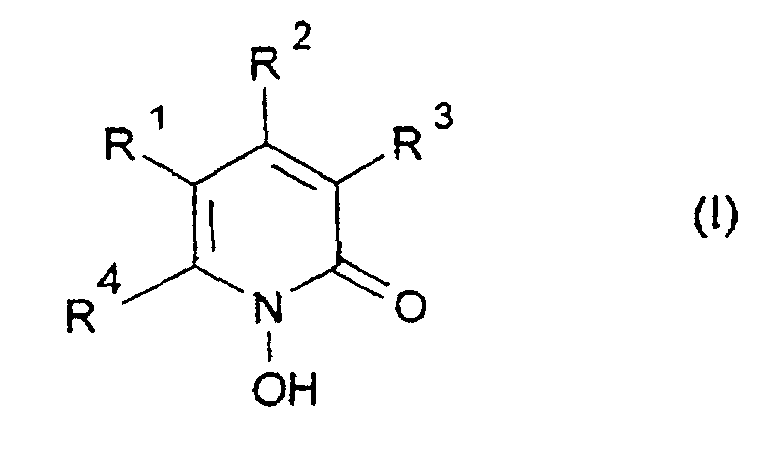
R4 einen gesättigten Kohlenwasserstoffrest mit 6 bis 9 Kohlenstoffatomen oder einen Rest der Formel II bedeutet

- X
- S oder O bedeutet,
- Y
- Wasserstoffatom oder bis zu 2 Halogenatome wie Chlor und/oder Brom bedeutet,
- Z
- eine Einfachbindung oder die zweiwertigen Reste O, S, -CR2-(R = H oder (C1-C4)-Alkyl) oder andere zweiwertige Reste mit 2- 10 kettenförmig verknüpften C- und gegebenenfalls O- und/oder S-Atomen, wobei - wenn die Reste 2 oder mehr O- und/oder S-Atome enthalten - letztere durch mindestens 2 C-Atome voneinander getrennt sein müssen und wobei 2 benachbarte C-Atome auch durch eine Doppelbindung miteinander verknüpft sein können und die freien Valenzen der C-Atome durch H und/oder (C1-C4)-Alkylgruppen abgesättigt sind, bedeutet,
- Ar
- ein aromatisches Ringsystem mit bis zu zwei Ringen, das durch bis zu drei Reste aus der Gruppe Fluor, Chlor, Brom, Methoxy, (C1-C4)-Alkyl, Trifluormethyl und Trifluormethoxy substituiert sein kann, bedeutet, in freier oder in Salz-Form,
-O-, -S-, -CH2-, -(CH2)m- (m = 2 - 10), -C(CH3)2-, -CH2O-, -OCH2-, -CH2S-, -SCH2-, -SCH(C2H5)-, -CH=CH-CH2O-, -O-CH2-CH=CH-CH2O-, -OCH2-CH2O-, -OCH2-CH2CH2O-, -SCH2CH2CH2S-, -SCH2CH2CH2CH2O-, -SCH2CH2OCH2CH2O-, -SCH2CH2OCH2CH2O-CH2CH2S- oder -S-CH2-C(CH3)2-CH2-S-.
| 1-Hydroxy-4-methyl-6-(2,4,4-trimethylpentyl)-2(1H)pyridon | 0,50 % |
| Hydroxyethylcellulose | 1,50 % |
| Polyethylenglykol-7 Glycerylcocoat | 5,00 % |
| 1,2-Propylenglykol | 10,00 % |
| Isopropylalkohol | 20,00 % |
| Demineralisiertes Wasser | 63,00 % |
| 1-Hydroxy-4-methyl-6-cyclohexyl-2(1 H)pyridon Polyacrylsäurepolymer | 1,00 % |
| (z.B. Carbomer 934 P) | 0,70 % |
| Natriumhydroxid | 0,20 % |
| Natriumdioctylsulfosuccinat | 0,05 % |
| 2-Octyldodecanol | 7,50 % |
| Isopropylalkohol | 25,00 % |
| Demineralisiertes Wasser | 65,55 % |
| 1-Hydroxy-4-methyl-6-cyclohexyl-2(1H)pyridon Polyacrylsäurepolymer | 0,50 % |
| (z.B. Carbomer 940) | 0,50 % |
| Natriumhydroxid | 0,20 % |
| Polyoxyethylen(20)sorbitanmonostearat | 3,50 % |
| Isopropylmyristat | 10,00 % |
| Ethanol | 20,00 % |
| Demineralisiertes Wasser | 65,30 % |
| 1 -Hydroxy-4-methyl-6-(2,4,4-trimethylpentyl)-2(1H)-pyridon | 1,00 % |
| Hydroxypropylcellulose | 1,00% |
| 1,2-Propylenglykol | 2,50 % |
| Ethanol | 20,00 % |
| Demineralisiertes Wasser | 75,50 % |
| 1-Hydroxy-4-methyl-6-cyclohexyl-2(1H)pyridon | 1,00% |
| Isopropylalkohol | 25,00 % |
| Polyethylenglykol 400 | 5,00 % |
| Demineralisiertes Wasser | 69,00 % |
| 1-Hydroxy-4-methyl-6-(trimethyl-pentyl)-2(1H)pyridon | 1,00% |
| 2-Octyldocenol | 5,00 % |
| Paraffinöl | 5,00 % |
| Cetylalkohol | 5,00 % |
| Stearylalkohol | 5,00 % |
| Myristylalkohol | 5,00 % |
| Polyoxyethylen-20-sorbitanmonostearat | 3,00 % |
| Sorbitan monostearat | 2,00 % |
| Demineralisiertes Wasser | 69,00 % |
| Gram-positive Stämme | n = | MHK (µg/ml) (n =) |
| Staphylococcus aureus | 20 | 64 |
| S. aureus, methicillin-resistente, MRSA | 19 | 64 |
| S. aureus, ofloxacin-resistent, OFXr | 16 | 64(8), 128(8) |
| Staphylococcus epidermidis | 20 | 128 |
| S. epidermidis, methicillin-resistent, MRSE | 2 | 64 |
| S. epidermidis, ofloxacin-resistent, OFXr | 4 | 64 |
| Streptococcus pyogenes | 20 | 64 |
| Strept. faecalis | 3 | 64(1), 128(2) |
| Strept. faecium | 1 | 128 |
| Strept. faecium, vancomycin-resistent, VANr | 1 | 32 |
| Strept. durans | 10 | 64(4), 128(6) |
| Strept. equisimilis | 1 | 128 |
| Strept. agalactiae | 9 | 128 |
| Gram-negative Stämme | ||
| Proteus vulgaris | 3 | 32(1), 64(2) |
| Gram-positive Stämme | n = | MHK (µg/ml) (n =) |
| Enterobacter aerogenes | 1 | 128 |
| Enterobacter cloacae | 1 | 128 |
| Escherichia coli | 3 | 64 |
| Klebsiella pneumoniae | 2 | 64(1), 128(1) |
| Pseudomonas aeruginosa | 5 | 128 |
| n = Anzahl der untersuchten Stämme; die in der Klammer genannte Zahl gibt die getesteten Stämme an bei der die genannte MHK ermittelt wurde. |
| Bakterienbezeichnung | MHK (µg/ml) | |
| Propionibacterium acnes | Stamm 6919 | 32,0 |
| " | Stamm 6922 | 32,0 |
| " | Stamm 15549 | 32,0 |
| " | Stamm DSM 20458 | 32,0 |
Claims (9)
- Die Verwendung von 1-Hydroxy-2-pyridon der Formel Iworin R1, R2 und R3, die gleich oder verschieden sind, Wasserstoffatom oder Alkyl mit 1 - 4 Kohlenstoffatomen bedeuten, und

R4 einen gesättigten Kohlenwasserstoffrest mit 6 bis 9 Kohlenstoffatomen oder einen Rest der Formel II bedeutetwobei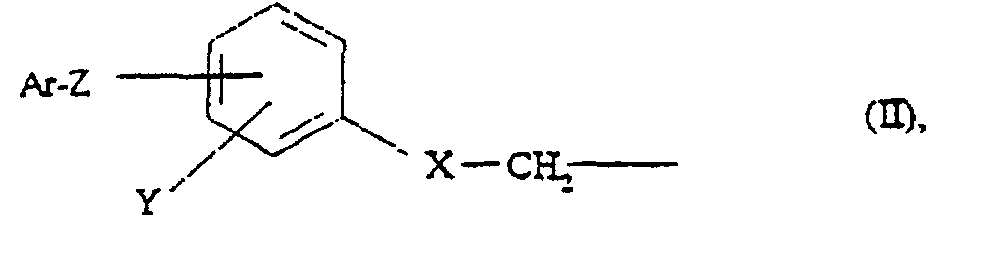
- X
- S oder O bedeutet,
- Y
- Wasserstoffatom oder bis zu 2 Halogenatome wie Chlor und/oder Brom bedeutet,
- Z
- eine Einfachbindung oder die zweiwertigen Reste O, S, -CR2-(R = H oder (C1-C4)-Alkyl) oder andere zweiwertige Reste mit 2 - 10 kettenförmig verknüpften C- und gegebenenfalls O- und/oder S-Atomen, wobei - wenn die Reste 2 oder mehr O- und/oder S-Atome enthalten - letztere durch mindestens 2 C-Atome voneinander getrennt sein müssen und wobei 2 benachbarte C-Atome auch durch eine Doppelbindung miteinander verknüpft sein können und die freien Valenzen der C-Atome durch H und/oder (C1-C4)-Alkylgruppen abgesättigt sind, bedeutet,
- Ar
- ein aromatisches Ringsystem mit bis zu zwei Ringen, das durch bis zu drei Reste aus der Gruppe Fluor, Chlor, Brom, Methoxy, (C1-C4)-Alkyl, Trifluormethyl und Trifluormethoxy substituiert sein kann, bedeutet,
- Verwendung gemäß Anspruch 1, dadurch gekennzeichnet, daß man die Verbindung der Formel I einsetzt, worin Ar ein bicyclisches System darsteitt, das sich vom Biphenyl, Diphenylalkan oder Diphenylether ableitet.
- Verwendung gemäß Anspruch 1 oder 2, dadurch gekennzeichnet, daß die Verbindung der Formel I in der Position R4 einen Cyclohexylrest enthält.
- Verwendung gemäß einem oder mehreren der Ansprüche 1 bis 3, dadurch gekennzeichnet, daß die Verbindung der Formel I in der Position R4 einen Octylrest der Formel -CH2-CH(CH3)-CH2-C(CH3)3 enthält.
- Verwendung gemäß Anspruch 1, dadurch gekennzeichnet, daß man 1-Hydroxy-4-methyl-6-[4-(4-chlorphenoxy)-phenoxymethyl]-2-(1H)pyridon, 1-Hydroxy-4-methyl-6-cyclohexyl-2-(1H)pyridon oder 1-Hydroxy-4-methyl-6-(2,4,4-trimethylpentyl)-2-(1H)pyridon einsetzt.
- Verwendung gemäß einem oder mehreren der Ansprüche 1 bis 5, dadurch gekennzeichnet, daß die Behandlung topisch erfolgt.
- Verwendung gemäß Anspruch 6, dadurch gekennzeichnet, daß die Antibiotika resistenten Bakterien aus der Gruppe der Gram positive und/oder Gram negative Mikroorganismen stammen, insbesondere solche die auf der Hautoberfläche von Menschen oder Tieren wachsen können.
- Verwendung gemäß Anspruch 7 zur topischen Behandlung von Hautinfektionen, die durch hautpathogene Bakterien aus einer oder meherer der Gattungen Staphylokokken, Streptokokken, Proteus, Corynebakterien und Propionibakterien verursacht werden oder die durch andere aerob oder anaerob wachsende Bakterien wie Escherichia coli, Enterokokken, Pseudomonas oder Klebsiellen verursacht werden.
- Verwendung gemäß einem oder mehreren der Ansprüche 1 bis 8, dadurch gekennzeichnet, daß Akne, Rosacea oder Erythrasma behandelt wird.
Priority Applications (1)
| Application Number | Priority Date | Filing Date | Title |
|---|---|---|---|
| SI9730360T SI0928193T1 (en) | 1996-09-27 | 1997-09-16 | Use of 1-hydroxy-2-pyridones for the treatment of skin diseases |
Applications Claiming Priority (3)
| Application Number | Priority Date | Filing Date | Title |
|---|---|---|---|
| DE19639817 | 1996-09-27 | ||
| DE19639817A DE19639817A1 (de) | 1996-09-27 | 1996-09-27 | Verwendung von 1-Hydroxy-2-pyridonen zur Behandlung von Hautinfektionen |
| PCT/EP1997/005069 WO1998013043A1 (de) | 1996-09-27 | 1997-09-16 | Verwendung von 1-hydroxy-2-pyridonen zur behandlung von hautinfektionen |
Publications (2)
| Publication Number | Publication Date |
|---|---|
| EP0928193A1 EP0928193A1 (de) | 1999-07-14 |
| EP0928193B1 true EP0928193B1 (de) | 2002-06-12 |
Family
ID=7807117
Family Applications (1)
| Application Number | Title | Priority Date | Filing Date |
|---|---|---|---|
| EP97910293A Expired - Lifetime EP0928193B1 (de) | 1996-09-27 | 1997-09-16 | Verwendung von 1-hydroxy-2-pyridonen zur behandlung von hautinfektionen |
Country Status (32)
| Country | Link |
|---|---|
| US (1) | US6469033B1 (de) |
| EP (1) | EP0928193B1 (de) |
| JP (1) | JP4203125B2 (de) |
| KR (1) | KR100457851B1 (de) |
| CN (1) | CN1141096C (de) |
| AR (1) | AR008859A1 (de) |
| AT (1) | ATE218862T1 (de) |
| AU (1) | AU717333B2 (de) |
| BG (1) | BG64370B1 (de) |
| BR (1) | BR9712141A (de) |
| CA (1) | CA2267309C (de) |
| CZ (1) | CZ290701B6 (de) |
| DE (2) | DE19639817A1 (de) |
| DK (1) | DK0928193T3 (de) |
| ES (1) | ES2178761T3 (de) |
| HU (1) | HU226911B1 (de) |
| ID (1) | ID21948A (de) |
| IL (1) | IL129144A0 (de) |
| MA (1) | MA24332A1 (de) |
| MY (1) | MY117381A (de) |
| NO (1) | NO322072B1 (de) |
| NZ (1) | NZ334848A (de) |
| OA (1) | OA11027A (de) |
| PL (1) | PL190298B1 (de) |
| PT (1) | PT928193E (de) |
| RU (1) | RU2203059C2 (de) |
| TR (1) | TR199900661T2 (de) |
| TW (1) | TW531418B (de) |
| UA (1) | UA56192C2 (de) |
| WO (1) | WO1998013043A1 (de) |
| YU (1) | YU49494B (de) |
| ZA (1) | ZA978639B (de) |
Families Citing this family (17)
| Publication number | Priority date | Publication date | Assignee | Title |
|---|---|---|---|---|
| US20040039030A1 (en) | 1996-09-27 | 2004-02-26 | Hoechst Akeengesellschaft | Use of 1-hydroxy-2-pyridones for the treatment of seborrheic dermatitis |
| DE19639816A1 (de) | 1996-09-27 | 1998-04-02 | Hoechst Ag | Antimykotische Mittel mit hoher Wirkstofffreisetzung |
| US20030228340A1 (en) * | 2002-04-04 | 2003-12-11 | Gans Eugene H. | Methods for treating rosacea with pyridones |
| ITMI20022447A1 (it) * | 2002-11-19 | 2004-05-20 | Carlo Ghisalberti | Uso di piridinoni nel trattamento della purpura capillare ed affezioni cutanee correlate. |
| US20050095215A1 (en) * | 2003-11-03 | 2005-05-05 | Popp Karl F. | Antimicrobial shampoo compositions |
| US7087622B2 (en) | 2004-05-07 | 2006-08-08 | Janssen Pharmaceutica N.V. | Pyridone compounds as inhibitors of bacterial type III protein secreation systems |
| DE102005001990A1 (de) * | 2005-01-15 | 2006-07-20 | Clariant Gmbh | Wässrige fungizide Zubereitungen |
| US20070071705A1 (en) * | 2005-09-29 | 2007-03-29 | De Oliveira Monica A M | Topical anti-microbial compositions |
| RU2317110C1 (ru) * | 2006-11-07 | 2008-02-20 | Общество с ограниченной ответственностью "Уралстинол Био" | Кожное антисептическое средство "септустин-антисепт" |
| BR112014004832A2 (pt) | 2011-08-29 | 2017-04-04 | Ptc Therapeutics Inc | compostos antibacterianos e métodos para uso |
| AU2012301953C1 (en) | 2011-08-29 | 2016-11-03 | Ptc Therapeutics, Inc. | Antibacterial compounds and methods for use |
| CN103360308A (zh) * | 2012-03-28 | 2013-10-23 | 孙伟新 | 1,4-二羟基-6-甲基-2-吡啶酮类化合物及其制备方法和用途 |
| DE102015219009A1 (de) | 2015-10-01 | 2017-04-06 | Beiersdorf Ag | Sonnenschutzmittel mit reduzierter Textilverfleckung durch Diethylamino Hydroxybenzoyl Hexyl Benzoate |
| DE102015219006A1 (de) | 2015-10-01 | 2017-04-20 | Beiersdorf Ag | Sonnenschutzmittel mit reduzierter Textilverfleckung durch Bis-Ethylhexyloxyphenol Methoxyphenyl Triazine |
| DE102015219008A1 (de) | 2015-10-01 | 2017-04-06 | Beiersdorf Ag | Sonnenschutzmittel mit reduzierter Textilverfleckung durch 4-(tert.-Butyl)-4'-methoxydibenzoylmethan |
| DE102015219592A1 (de) | 2015-10-09 | 2017-04-13 | Beiersdorf Aktiengesellschaft | Sonnenschutzmittel mit stark reduzierter Textilverfleckung durch Bis-Ethylhexyloxyphenol Methoxyphenyl Triazine |
| DE102015219591A1 (de) | 2015-10-09 | 2017-04-13 | Beiersdorf Aktiengesellschaft | Sonnenschutzmittel mit stark reduierter Textilverfleckung durch 4-(tert.-Butyl)-4 - methoxydibenzoylmethan |
Family Cites Families (41)
| Publication number | Priority date | Publication date | Assignee | Title |
|---|---|---|---|---|
| FR771187A (fr) * | 1934-12-26 | 1934-10-02 | Moule en caoutchouc pour conduites en ciment, armé ou non | |
| US3968118A (en) | 1968-08-31 | 1976-07-06 | Hoechst Aktiengesellschaft | Process for the manufacture of 1-hydroxy-2-pyridones |
| US4185106A (en) | 1972-07-11 | 1980-01-22 | Hoechst Aktiengesellschaft | Pyridones as antidandruff agents |
| DE3140954A1 (de) | 1981-10-15 | 1983-05-05 | Hoechst Ag | "verwendung von 1-hydroxy-2-pyridonen zur prophylaxe und behandlung von akne" |
| JPS6169721A (ja) | 1984-09-13 | 1986-04-10 | Kao Corp | 抗真菌組成物 |
| GB8524508D0 (en) | 1985-10-04 | 1985-11-06 | Beecham Group Plc | Composition |
| DE3687458T2 (de) | 1985-11-04 | 1993-07-29 | Owen Galderma Lab Inc | Filmbildende arzneimitteltraeger zur verabreichung von arzneimitteln an naegeln |
| DE3544983A1 (de) | 1985-12-19 | 1987-06-25 | Hoechst Ag | Antimykotisch wirksamer nagellack |
| AR242187A1 (es) * | 1986-04-18 | 1993-03-31 | Hoechst Ag | Procedimiento para la preparacion de 1-hidroxi-2-piridonas, obtencion de medicamentos que las contienen, e intermediarios utiles en dicho procedimiento. |
| NL8601762A (nl) | 1986-07-07 | 1988-02-01 | Bouke Jan Lange | Werkwijze voor de reiniging en conditionering en eventuele medicinale behandeling van het haar en de hoofdhuid, een voor dit doel bruikbare tweefasen shampoo, alsmede een verpakking daarvoor. |
| US5641475A (en) | 1987-05-15 | 1997-06-24 | Tristrata, Inc. | Antiodor, antimicrobial and preservative compositions and methods of using same |
| DE3720147A1 (de) | 1987-06-16 | 1988-12-29 | Hoechst Ag | Antimykotisch wirksamer nagellack sowie verfahren zu dessen herstellung |
| LU86945A1 (fr) | 1987-07-17 | 1989-03-08 | Oreal | Compositions pharmaceutiques et cosmetiques a base de pyridones et d'agents antibacteriens |
| LU86944A1 (fr) | 1987-07-17 | 1989-03-08 | Oreal | Composition a base de derives d'hydroxypyridone pour diminuer la chute des cheveux |
| ATE177939T1 (de) | 1987-10-22 | 1999-04-15 | Procter & Gamble | Chelatbildner enthaltende lichtschutzmittel |
| HU202098B (en) | 1988-08-05 | 1991-02-28 | Istvan Laczko | Nail polish remover without aceton |
| DE3826914A1 (de) | 1988-08-09 | 1990-02-15 | Henkel Kgaa | Farbstabilisierung von antimikrobiellen zubereitungen |
| US5116603A (en) | 1989-01-31 | 1992-05-26 | Yissum Research Development Company Of The Hebrew University Of Jerusalem | Oral antifungal preventative, and method of use |
| CA2008775C (en) | 1989-02-24 | 1998-12-22 | Alberto Ferro | Nail lacquer |
| JPH0623087B2 (ja) | 1989-10-09 | 1994-03-30 | 花王株式会社 | 洗浄剤組成物 |
| US5066484A (en) | 1990-04-30 | 1991-11-19 | Revlon, Inc. | Nail enamels containing glyceryl, glycol or citrate esters |
| HU219480B (hu) | 1991-05-23 | 2001-04-28 | Novartis Ag. | Eljárás gombás körömmegbetegségek ellen helyileg alkalmazható, allil-amin-származékot tartalmazó gyógyászati készítmények előállítására |
| FR2685638A1 (fr) | 1991-12-31 | 1993-07-02 | Biorga Sa Laboratoires | Compositions pour l'usage cosmetique et/ou dermatologique, comprenant une association de pyrithione zinc, de piroctone olamine, et d'un derive de collagene et d'acide gras. |
| FR2685867B1 (fr) | 1992-01-07 | 1995-06-09 | Thorel Jean | Compositions contre la desquamation de l'epiderme et du cuir chevelu. |
| DE4212105A1 (de) | 1992-04-10 | 1993-10-14 | Roehm Pharma Gmbh | Nagellack zur Behandlung von Onychomykosen |
| FR2694694B1 (fr) | 1992-08-13 | 1994-10-28 | Thorel Jean Noel | Composition active pour le traitement du psoriasis, notamment le psoriasis du cuir chevelu. |
| AU5096393A (en) | 1992-09-08 | 1994-03-29 | Procter & Gamble Company, The | Mild, substantially colorless shampoo composition |
| FR2697749B1 (fr) | 1992-11-12 | 1995-01-13 | Oreal | Composition cosmétique filmogène à base d'un copolymère chloré greffé résultant du greffage d'une polyoléfine chlorée et de monomères insaturés du type acrylique, styrénique et/ou vinylique. |
| DE4333893A1 (de) | 1993-10-05 | 1995-04-06 | Hoechst Ag | Kosmetische Zubereitungen |
| DE19518262A1 (de) | 1995-05-18 | 1996-11-21 | Hoechst Ag | Die Verwendung von Glyceryltriacetat zur Behandlung von Onychomykosen |
| US5424435A (en) | 1993-10-18 | 1995-06-13 | Olin Corporation | 1-hydroxy-6-substituted-2-pyridones |
| DE4336434A1 (de) | 1993-10-26 | 1995-04-27 | Hoechst Ag | Pharmazeutische Zubereitung für die parenterale, enterale und dermale Verabreichung von praktisch unlöslichen Arzneistoffen und Verfahren zu ihrer Herstellung |
| WO1995017165A2 (en) | 1993-12-23 | 1995-06-29 | The Procter & Gamble Company | Tissue moisturizing and antimicrobial compositions |
| FR2718349B1 (fr) | 1994-04-07 | 1996-05-31 | Oreal | Compositions cosmétiques à appliquer sur l'ongle. |
| FR2719481B1 (fr) * | 1994-05-05 | 1996-05-31 | Oreal | Composition à base de composés antifongiques et de composés antibactériens halogènes pour diminuer la chute des cheveux. |
| FR2722689B1 (fr) | 1994-07-20 | 1996-10-04 | Fabre Pierre Dermo Cosmetique | Nouveau produit de combinaison comprenant un agent antifongique et du crotamiton comme potentialisateur de l'activite de l'agent antifongique, et compositions dermatologiques et/ou cosmetiques le comprenant |
| US5696164A (en) | 1994-12-22 | 1997-12-09 | Johnson & Johnson Consumer Products, Inc. | Antifungal treatment of nails |
| AT408067B (de) | 1995-03-17 | 2001-08-27 | Gebro Pharma Gmbh | Pharmazeutische zusammensetzung zur topischen applizierung und verfahren zu ihrer herstellung |
| IL113057A (en) | 1995-03-21 | 1999-01-26 | Univ Ramot | Compositions for the treatment of dandruff |
| CA2278328C (en) | 1998-02-09 | 2008-07-22 | Macrochem Corporation | Antifungal nail lacquer and method using same |
| US6231875B1 (en) | 1998-03-31 | 2001-05-15 | Johnson & Johnson Consumer Companies, Inc. | Acidified composition for topical treatment of nail and skin conditions |
-
1996
- 1996-09-27 DE DE19639817A patent/DE19639817A1/de not_active Withdrawn
-
1997
- 1997-09-16 HU HU9904317A patent/HU226911B1/hu not_active IP Right Cessation
- 1997-09-16 KR KR10-1999-7002622A patent/KR100457851B1/ko not_active Expired - Fee Related
- 1997-09-16 EP EP97910293A patent/EP0928193B1/de not_active Expired - Lifetime
- 1997-09-16 WO PCT/EP1997/005069 patent/WO1998013043A1/de not_active Ceased
- 1997-09-16 BR BR9712141-0A patent/BR9712141A/pt not_active Application Discontinuation
- 1997-09-16 US US09/077,191 patent/US6469033B1/en not_active Expired - Lifetime
- 1997-09-16 AT AT97910293T patent/ATE218862T1/de active
- 1997-09-16 CZ CZ19991074A patent/CZ290701B6/cs not_active IP Right Cessation
- 1997-09-16 AU AU47745/97A patent/AU717333B2/en not_active Ceased
- 1997-09-16 PL PL97332579A patent/PL190298B1/pl not_active IP Right Cessation
- 1997-09-16 NZ NZ334848A patent/NZ334848A/xx not_active IP Right Cessation
- 1997-09-16 ES ES97910293T patent/ES2178761T3/es not_active Expired - Lifetime
- 1997-09-16 CA CA002267309A patent/CA2267309C/en not_active Expired - Fee Related
- 1997-09-16 ID IDW990128A patent/ID21948A/id unknown
- 1997-09-16 CN CNB971982651A patent/CN1141096C/zh not_active Expired - Fee Related
- 1997-09-16 RU RU99108754/14A patent/RU2203059C2/ru not_active IP Right Cessation
- 1997-09-16 IL IL12914497A patent/IL129144A0/xx not_active IP Right Cessation
- 1997-09-16 YU YU13699A patent/YU49494B/sh unknown
- 1997-09-16 PT PT97910293T patent/PT928193E/pt unknown
- 1997-09-16 JP JP51522298A patent/JP4203125B2/ja not_active Expired - Fee Related
- 1997-09-16 DE DE59707519T patent/DE59707519D1/de not_active Expired - Lifetime
- 1997-09-16 DK DK97910293T patent/DK0928193T3/da active
- 1997-09-16 TR TR1999/00661T patent/TR199900661T2/xx unknown
- 1997-09-16 UA UA99042350A patent/UA56192C2/uk unknown
- 1997-09-25 AR ARP970104431A patent/AR008859A1/es not_active Application Discontinuation
- 1997-09-25 TW TW086113945A patent/TW531418B/zh not_active IP Right Cessation
- 1997-09-26 ZA ZA9708639A patent/ZA978639B/xx unknown
- 1997-09-26 MY MYPI97004502A patent/MY117381A/en unknown
- 1997-09-29 MA MA24813A patent/MA24332A1/fr unknown
-
1999
- 1999-03-17 BG BG103261A patent/BG64370B1/bg unknown
- 1999-03-25 NO NO19991459A patent/NO322072B1/no not_active IP Right Cessation
- 1999-03-26 OA OA9900070A patent/OA11027A/fr unknown
Also Published As
Similar Documents
| Publication | Publication Date | Title |
|---|---|---|
| DE19639817A1 (de) | Verwendung von 1-Hydroxy-2-pyridonen zur Behandlung von Hautinfektionen | |
| DE69626971T2 (de) | Schnell und anhaltend wirkendes topisches antispetikum | |
| DE60308891T2 (de) | Neue komplexe von polyhydroxyalkanfettsäureestern und niacinamid | |
| EP0864579B1 (de) | Wismutsalze von Antibiotika der Moenomycin-Gruppe, Verfahren zu ihrer Herstellung, ihre Verwendung und solche Salze enthaltende Arzneimittel | |
| Roy et al. | Treatment of feline otitis externa due to Otodectes cynotis and complicated by secondary bacterial and fungal infections with Oridermyl auricular ointment | |
| JP2020533417A (ja) | 抗菌組成物 | |
| DE2942107C2 (de) | Pharmazeutische Zubereitung mit einer antibakteriellen Wirkung und ihre Verwendung zur Behandlung von durch gram-positive und gram-negative krankheitserregende Keime hervorgerufene Infektionen | |
| US6455551B1 (en) | Use of 1-hydroxy-2-pyridones for treating mucosa diseases which are difficult to treat | |
| EP0655249A1 (de) | Moenomycin als Arzneimittel zur Behandlung von Magengeschwüren | |
| DE102011108227A1 (de) | Pharmazeutische Zusammensetzung zur Behandlung einer Atemwegserkrankung | |
| DE3816442C2 (de) | ||
| HU194493B (en) | Process for preparing primycin-containing colloidal basic gel and compositions comprising the same | |
| EP2536400A1 (de) | Arzneimittel enthaltend myramistin | |
| EP0865278B1 (de) | Verwendung von 1-hydroxy-2-pyridonen zur behandlung von schwer therapierbaren schleimhauterkrankungen | |
| DE68908620T2 (de) | Primycin enthaltende Arzneimittelzusammensetzungen. | |
| DE10010512A1 (de) | Wirkstoff gegen Keime der Gattung Pseudomonas | |
| DE60201935T2 (de) | Verwendung von Biguanid und Pyrimidin-Derivaten zur Herstellung topischer Hautpflegezubereitungen | |
| HK1022269B (en) | Use of 1-hydroxy-2-pyridones in the manufacture of a medicament for treating skin infections | |
| MXPA99002865A (en) | Use of 1-hydroxy-2-pyridones for the treatment of skin diseases | |
| DE60037741T2 (de) | Verwendung von gemifloxacin-verbindungen gegen bakterien | |
| DE1915019C3 (de) | Mittel und Verfahren zur Behandlung von Dermatophytose |
Legal Events
| Date | Code | Title | Description |
|---|---|---|---|
| PUAI | Public reference made under article 153(3) epc to a published international application that has entered the european phase |
Free format text: ORIGINAL CODE: 0009012 |
|
| 17P | Request for examination filed |
Effective date: 19990427 |
|
| AK | Designated contracting states |
Kind code of ref document: A1 Designated state(s): AT BE CH DE DK ES FI FR GB GR IE IT LI LU NL PT SE |
|
| AX | Request for extension of the european patent |
Free format text: RO PAYMENT 19990427;SI PAYMENT 19990427 |
|
| RAP1 | Party data changed (applicant data changed or rights of an application transferred) |
Owner name: AVENTIS PHARMA DEUTSCHLAND GMBH |
|
| GRAG | Despatch of communication of intention to grant |
Free format text: ORIGINAL CODE: EPIDOS AGRA |
|
| RIC1 | Information provided on ipc code assigned before grant |
Free format text: 7A 61K 31/44 A, 7A 61P 17/10 B |
|
| RIC1 | Information provided on ipc code assigned before grant |
Free format text: 7A 61K 31/44 A, 7A 61P 17/00 B |
|
| 17Q | First examination report despatched |
Effective date: 20010809 |
|
| GRAG | Despatch of communication of intention to grant |
Free format text: ORIGINAL CODE: EPIDOS AGRA |
|
| GRAH | Despatch of communication of intention to grant a patent |
Free format text: ORIGINAL CODE: EPIDOS IGRA |
|
| GRAH | Despatch of communication of intention to grant a patent |
Free format text: ORIGINAL CODE: EPIDOS IGRA |
|
| GRAA | (expected) grant |
Free format text: ORIGINAL CODE: 0009210 |
|
| AK | Designated contracting states |
Kind code of ref document: B1 Designated state(s): AT BE CH DE DK ES FI FR GB GR IE IT LI LU NL PT SE |
|
| AX | Request for extension of the european patent |
Free format text: RO PAYMENT 19990427;SI PAYMENT 19990427 |
|
| REF | Corresponds to: |
Ref document number: 218862 Country of ref document: AT Date of ref document: 20020615 Kind code of ref document: T |
|
| REG | Reference to a national code |
Ref country code: GB Ref legal event code: FG4D Free format text: NOT ENGLISH |
|
| REG | Reference to a national code |
Ref country code: CH Ref legal event code: EP |
|
| REF | Corresponds to: |
Ref document number: 59707519 Country of ref document: DE Date of ref document: 20020718 |
|
| REG | Reference to a national code |
Ref country code: IE Ref legal event code: FG4D Free format text: GERMAN |
|
| REG | Reference to a national code |
Ref country code: DK Ref legal event code: T3 |
|
| GBT | Gb: translation of ep patent filed (gb section 77(6)(a)/1977) |
Effective date: 20020912 |
|
| REG | Reference to a national code |
Ref country code: GR Ref legal event code: EP Ref document number: 20020402522 Country of ref document: GR |
|
| ET | Fr: translation filed | ||
| REG | Reference to a national code |
Ref country code: PT Ref legal event code: SC4A Free format text: AVAILABILITY OF NATIONAL TRANSLATION Effective date: 20020911 |
|
| REG | Reference to a national code |
Ref country code: ES Ref legal event code: FG2A Ref document number: 2178761 Country of ref document: ES Kind code of ref document: T3 |
|
| PLBE | No opposition filed within time limit |
Free format text: ORIGINAL CODE: 0009261 |
|
| STAA | Information on the status of an ep patent application or granted ep patent |
Free format text: STATUS: NO OPPOSITION FILED WITHIN TIME LIMIT |
|
| 26N | No opposition filed |
Effective date: 20030313 |
|
| REG | Reference to a national code |
Ref country code: SI Ref legal event code: IF |
|
| REG | Reference to a national code |
Ref country code: CH Ref legal event code: PFA Owner name: SANOFI-AVENTIS DEUTSCHLAND GMBH Free format text: AVENTIS PHARMA DEUTSCHLAND GMBH#BRUENINGSTRASSE 50#65929 FRANKFURT AM MAIN (DE) -TRANSFER TO- SANOFI-AVENTIS DEUTSCHLAND GMBH##65926 FRANKFURT AM MAIN (DE) |
|
| NLT1 | Nl: modifications of names registered in virtue of documents presented to the patent office pursuant to art. 16 a, paragraph 1 |
Owner name: SANOFI-AVENTIS DEUTSCHLAND GMBH |
|
| REG | Reference to a national code |
Ref country code: SI Ref legal event code: SP73 Owner name: SANOFI-AVENTIS DEUTSCHLAND GMBH; DE Effective date: 20060110 |
|
| REG | Reference to a national code |
Ref country code: FR Ref legal event code: CD |
|
| PGFP | Annual fee paid to national office [announced via postgrant information from national office to epo] |
Ref country code: GR Payment date: 20130813 Year of fee payment: 17 Ref country code: AT Payment date: 20130828 Year of fee payment: 17 Ref country code: FI Payment date: 20130910 Year of fee payment: 17 Ref country code: CH Payment date: 20130912 Year of fee payment: 17 Ref country code: DE Payment date: 20130911 Year of fee payment: 17 Ref country code: ES Payment date: 20130813 Year of fee payment: 17 Ref country code: PT Payment date: 20130318 Year of fee payment: 17 Ref country code: SE Payment date: 20130911 Year of fee payment: 17 Ref country code: NL Payment date: 20130910 Year of fee payment: 17 Ref country code: IE Payment date: 20130910 Year of fee payment: 17 Ref country code: DK Payment date: 20130910 Year of fee payment: 17 |
|
| PGFP | Annual fee paid to national office [announced via postgrant information from national office to epo] |
Ref country code: GB Payment date: 20130911 Year of fee payment: 17 Ref country code: FR Payment date: 20130910 Year of fee payment: 17 |
|
| PGFP | Annual fee paid to national office [announced via postgrant information from national office to epo] |
Ref country code: IT Payment date: 20130912 Year of fee payment: 17 |
|
| PGFP | Annual fee paid to national office [announced via postgrant information from national office to epo] |
Ref country code: BE Payment date: 20130912 Year of fee payment: 17 Ref country code: LU Payment date: 20131007 Year of fee payment: 17 |
|
| REG | Reference to a national code |
Ref country code: PT Ref legal event code: MM4A Free format text: LAPSE DUE TO NON-PAYMENT OF FEES Effective date: 20150316 |
|
| REG | Reference to a national code |
Ref country code: DE Ref legal event code: R119 Ref document number: 59707519 Country of ref document: DE |
|
| REG | Reference to a national code |
Ref country code: DK Ref legal event code: EBP Effective date: 20140930 |
|
| PG25 | Lapsed in a contracting state [announced via postgrant information from national office to epo] |
Ref country code: FI Free format text: LAPSE BECAUSE OF NON-PAYMENT OF DUE FEES Effective date: 20140916 Ref country code: LU Free format text: LAPSE BECAUSE OF NON-PAYMENT OF DUE FEES Effective date: 20140916 Ref country code: PT Free format text: LAPSE BECAUSE OF NON-PAYMENT OF DUE FEES Effective date: 20150316 |
|
| REG | Reference to a national code |
Ref country code: CH Ref legal event code: PL |
|
| REG | Reference to a national code |
Ref country code: SE Ref legal event code: EUG |
|
| REG | Reference to a national code |
Ref country code: AT Ref legal event code: MM01 Ref document number: 218862 Country of ref document: AT Kind code of ref document: T Effective date: 20140916 |
|
| REG | Reference to a national code |
Ref country code: GR Ref legal event code: ML Ref document number: 20020402522 Country of ref document: GR Effective date: 20150403 |
|
| GBPC | Gb: european patent ceased through non-payment of renewal fee |
Effective date: 20140916 |
|
| PG25 | Lapsed in a contracting state [announced via postgrant information from national office to epo] |
Ref country code: SE Free format text: LAPSE BECAUSE OF NON-PAYMENT OF DUE FEES Effective date: 20140917 |
|
| REG | Reference to a national code |
Ref country code: IE Ref legal event code: MM4A |
|
| REG | Reference to a national code |
Ref country code: DE Ref legal event code: R119 Ref document number: 59707519 Country of ref document: DE Effective date: 20150401 |
|
| REG | Reference to a national code |
Ref country code: FR Ref legal event code: ST Effective date: 20150529 |
|
| PG25 | Lapsed in a contracting state [announced via postgrant information from national office to epo] |
Ref country code: BE Free format text: LAPSE BECAUSE OF NON-PAYMENT OF DUE FEES Effective date: 20140930 Ref country code: NL Free format text: LAPSE BECAUSE OF NON-PAYMENT OF DUE FEES Effective date: 20150401 |
|
| REG | Reference to a national code |
Ref country code: SI Ref legal event code: KO00 Effective date: 20150504 |
|
| PG25 | Lapsed in a contracting state [announced via postgrant information from national office to epo] |
Ref country code: LI Free format text: LAPSE BECAUSE OF NON-PAYMENT OF DUE FEES Effective date: 20140930 Ref country code: CH Free format text: LAPSE BECAUSE OF NON-PAYMENT OF DUE FEES Effective date: 20140930 Ref country code: GB Free format text: LAPSE BECAUSE OF NON-PAYMENT OF DUE FEES Effective date: 20140916 Ref country code: DE Free format text: LAPSE BECAUSE OF NON-PAYMENT OF DUE FEES Effective date: 20150401 |
|
| PG25 | Lapsed in a contracting state [announced via postgrant information from national office to epo] |
Ref country code: IE Free format text: LAPSE BECAUSE OF NON-PAYMENT OF DUE FEES Effective date: 20140916 Ref country code: IT Free format text: LAPSE BECAUSE OF NON-PAYMENT OF DUE FEES Effective date: 20140916 Ref country code: AT Free format text: LAPSE BECAUSE OF NON-PAYMENT OF DUE FEES Effective date: 20140916 Ref country code: GR Free format text: LAPSE BECAUSE OF NON-PAYMENT OF DUE FEES Effective date: 20150403 Ref country code: FR Free format text: LAPSE BECAUSE OF NON-PAYMENT OF DUE FEES Effective date: 20140930 |
|
| REG | Reference to a national code |
Ref country code: ES Ref legal event code: FD2A Effective date: 20151026 |
|
| PG25 | Lapsed in a contracting state [announced via postgrant information from national office to epo] |
Ref country code: DK Free format text: LAPSE BECAUSE OF NON-PAYMENT OF DUE FEES Effective date: 20140930 |
|
| PG25 | Lapsed in a contracting state [announced via postgrant information from national office to epo] |
Ref country code: ES Free format text: LAPSE BECAUSE OF NON-PAYMENT OF DUE FEES Effective date: 20140917 |