EP1247623A2 - Système de traitement d'information pour robot - Google Patents
Système de traitement d'information pour robot Download PDFInfo
- Publication number
- EP1247623A2 EP1247623A2 EP20020252415 EP02252415A EP1247623A2 EP 1247623 A2 EP1247623 A2 EP 1247623A2 EP 20020252415 EP20020252415 EP 20020252415 EP 02252415 A EP02252415 A EP 02252415A EP 1247623 A2 EP1247623 A2 EP 1247623A2
- Authority
- EP
- European Patent Office
- Prior art keywords
- robot
- information processing
- information
- teaching pendant
- processing device
- Prior art date
- Legal status (The legal status is an assumption and is not a legal conclusion. Google has not performed a legal analysis and makes no representation as to the accuracy of the status listed.)
- Ceased
Links
Images



Classifications
-
- G—PHYSICS
- G05—CONTROLLING; REGULATING
- G05B—CONTROL OR REGULATING SYSTEMS IN GENERAL; FUNCTIONAL ELEMENTS OF SUCH SYSTEMS; MONITORING OR TESTING ARRANGEMENTS FOR SUCH SYSTEMS OR ELEMENTS
- G05B19/00—Program-control systems
- G05B19/02—Program-control systems electric
- G05B19/42—Recording and playback systems, i.e. in which the program is recorded from a cycle of operations, e.g. the cycle of operations being manually controlled, after which this record is played back on the same machine
- G05B19/425—Teaching successive positions by numerical control, i.e. commands being entered to control the positioning servo of the tool head or end effector
-
- B—PERFORMING OPERATIONS; TRANSPORTING
- B25—HAND TOOLS; PORTABLE POWER-DRIVEN TOOLS; MANIPULATORS
- B25J—MANIPULATORS; CHAMBERS PROVIDED WITH MANIPULATION DEVICES
- B25J9/00—Program-controlled manipulators
- B25J9/16—Program controls
- B25J9/1656—Program controls characterised by programming, planning systems for manipulators
- B25J9/1671—Program controls characterised by programming, planning systems for manipulators characterised by simulation, either to verify existing program or to create and verify new program, CAD/CAM oriented, graphic oriented programming systems
-
- G—PHYSICS
- G05—CONTROLLING; REGULATING
- G05B—CONTROL OR REGULATING SYSTEMS IN GENERAL; FUNCTIONAL ELEMENTS OF SUCH SYSTEMS; MONITORING OR TESTING ARRANGEMENTS FOR SUCH SYSTEMS OR ELEMENTS
- G05B2219/00—Program-control systems
- G05B2219/30—Nc systems
- G05B2219/32—Operator till task planning
- G05B2219/32126—Hyperlink, access to program modules and to hardware modules in www, web server, browser
-
- G—PHYSICS
- G05—CONTROLLING; REGULATING
- G05B—CONTROL OR REGULATING SYSTEMS IN GENERAL; FUNCTIONAL ELEMENTS OF SUCH SYSTEMS; MONITORING OR TESTING ARRANGEMENTS FOR SUCH SYSTEMS OR ELEMENTS
- G05B2219/00—Program-control systems
- G05B2219/30—Nc systems
- G05B2219/36—Nc in input of data, input key till input tape
- G05B2219/36163—Local as well as remote control panel
-
- G—PHYSICS
- G05—CONTROLLING; REGULATING
- G05B—CONTROL OR REGULATING SYSTEMS IN GENERAL; FUNCTIONAL ELEMENTS OF SUCH SYSTEMS; MONITORING OR TESTING ARRANGEMENTS FOR SUCH SYSTEMS OR ELEMENTS
- G05B2219/00—Program-control systems
- G05B2219/30—Nc systems
- G05B2219/36—Nc in input of data, input key till input tape
- G05B2219/36169—Remote, host controlled, operated manual data input, keyboard
-
- G—PHYSICS
- G05—CONTROLLING; REGULATING
- G05B—CONTROL OR REGULATING SYSTEMS IN GENERAL; FUNCTIONAL ELEMENTS OF SUCH SYSTEMS; MONITORING OR TESTING ARRANGEMENTS FOR SUCH SYSTEMS OR ELEMENTS
- G05B2219/00—Program-control systems
- G05B2219/30—Nc systems
- G05B2219/39—Robotics, robotics to robotics hand
- G05B2219/39448—Same teach pendant connects to many robot controllers over network
Definitions
- the present invention relates to an information processing system for a robot simulation and the like.
- the taught operating program is simulated, the operating animation is displayed, and the operating program is examined, confirmed and further modified immediately after this operating program is taught.
- Teaching and modification of the operating program are performed by operating a teaching pendant (teaching operation panel).
- examining and confirming of the taught contents are performed with a PC, which are inconvenient in teaching, examining, confirming, and modifying the operating program so that there is a problem of being time consuming.
- An embodiment of the present invention may provide a robot information processing system capable of displaying information stored in a PC on a teaching pendant and operating the information from the teaching pendant.
- a robot information processing system comprises a robot controller comprising a teaching pendant and an information processing device provided separately from the robot controller, wherein the information processing device comprises means for directly or indirectly (for example, via the robot controller) sending information stored in the information processing device to the teaching pendant, and the teaching pendant comprises means for displaying the information on a display section of the teaching pendant on the basis of the information.
- a robot information processing system comprises a robot controller comprising a teaching pendant and an information processing device provided separately from the robot controller, wherein the information processing device generates display information for displaying a robot operation in a form of animation on the basis of operating position information of a robot sent from the robot controller. Further, the generated display information is directly or indirectly (for example, via the robot controller) sent from the information processing device to the teaching pendant to be displayed in a form of animation on a display section of the teaching pendant.
- the teaching pendant may display part of or all the display information sent from the information processing device on the display section. Further, there may be provided means for operating a robot simulation performed by the information processing device from the teaching pendant so that the robot simulation can be operated also from the teaching pendant. Furthermore, there may be provided operating means for operating for various information for a display stored in the information processing device also from the teaching pendant. The means for operating for various information for this display may display a guidance for information modifying for the display on a display section of the teaching pendant.
- a first operating mode for sending operating position information from the robot controller to a robot main body to cause the robot to operate
- a second operating mode for sending the operating position information from the robot controller to the information processing device to generate display information for displaying a robot operation in a form of animation
- the robot information processing system may be configured such that, when the second operating mode is selected, immediately before the robot controller sends first operating position information to the information processing device, information representing the state of the robot controller at that time is sent to the information processing device to be stored in storage means of the information processing device, and, after the animation display in the second operating mode is terminated, the information processing device sends back the information to the robot controller so that the robot controller can be returned back to the state immediately before the first operating position information is sent.
- the operating program may be simulated so that the operating animation of the robot on the basis of the operating program may be displayed also on the teaching pendant, the operating program can be efficiently taught and modified.
- Fig. 1 is a schematic diagram according to an embodiment of the present invention.
- Robot mechanism sections of a robot main body 4 are connected to a robot controller 1.
- the robot controller 1 controls the robot main body 4 and drives each mechanism section such as an arm or the like of the robot to cause the robot to operate.
- the above aspects are not different from those in a conventional robot.
- a teaching pendant 2 and a PC 3 as an information processing device via a cable 5.
- This connection is conducted via an Ethernet cable or a RS-422 cable.
- this cable 5 is configured with the Ethernet cable, information can be directly exchanged between the teaching pendant 2 and the PC 3.
- the cable 5 is configured with the RS-422 cable, information is indirectly exchanged between the teaching pendant 2 and the PC 3 via the robot controller 1.
- a target PC for acquiring information may be selected in the teaching pendant 2.
- the teaching pendant 2 comprises a display section 2a which is configured with a liquid crystal or the like, and an operating section 2b which is configured with software keys, keys for inputting various instructions, or the like.
- this operating section 2b there are particularly provided (1) a key for instructing to activate and stop an operating simulation, (2) an operating mode switch for selecting whether or not to instruct an instruction value of the robot for driving the robot main body to either one of or both a servo section for driving and controlling a servo motor of each shaft and the PC 3, (3) a display condition modifying instruction key for setting and modifying display condition data of an animation stored in the PC 3, and (4) a display operating mode changeover switch for enabling to perform an operation for the operating simulation in either one of or both this teaching pendant 2 and the PC 3.
- the PC 3 comprises a display section 3a and an operating section 3b such as a keyboard or the like.
- an operating section 3b such as a keyboard or the like.
- the operating section 3b there are particularly provided (1) a key for instructing to activate and stop the operating simulation, (2) an operating mode switch for selecting whether or not to instruct the instruction value of the robot to either one or both the servo section for driving the robot main body 4 and the PC 3, and (3) a display operating mode changeover switch for selecting an operation concerning the animation, and the like.
- the PC 3 may be stored inside a cabinet of the robot controller 1.
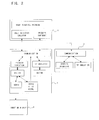
- Fig. 2 is an explanatory diagram showing a software configuration of the robot controller 1, the teaching pendant 2 and the PC 3 according to the present invention.
- the robot controller 1 is configured with a communication interface, a motion section for creating operating position information of the robot on the basis of a software for a program execution processing and an execution of the program, a servo section for driving and controlling the servo motor of each shaft or the like of the robot mechanism section 4 on the basis of the operating position information from the motion section, a servo delay model for acquiring the operating position information for the animation in which a servo delay system is compensated, a teaching pendant (TP) interface, an editor, and the like.
- TP teaching pendant
- teaching pendant 2 comprises a user interface program, a user interface, an emulator, a browser software, and the like.
- the PC 3 comprises a communication interface, a graphic animation, a teaching pendant (TP) emulation, and the like.
- Fig. 2 shows an example in which the robot controller 1, the teaching pendant 2 and the PC 3 are connected via the Ethernet cable 5.
- Fig. 3 is a flow chart which shows a processing which is performed when an operating mode selecting switch provided in the teaching pendant 2 or the PC 3 is selected to a mode for issuing an instruction of the robot to the PC 3 or both the PC 3 and the servo section, showing a processing for displaying in a form of animation to simulate the operation of the robot in the operating program on the display section 2a of the teaching pendant 2.
- the processings from step 101 to step 112 in this flow chart are the processings in the robot controller 1 and the teaching pendant 2, and the processings from step 201 to step 209 show the processings in the PC 3.
- a display region of the animation and a time interval of the animation in the display section 2a of the teaching pendant 2 which have been inputted and stored in advance are set (step 101). Then, the operating section 3b of the PC 3 is operated, a determination is made on whether or not a communication starting instruction has been inputted to be sent, or the communication starting instruction has been inputted according to the operation of the operating section 2b of the teaching pendant 2 (step 102). Until this communication starting instruction is inputted, the following processings are not performed.
- a communication with the PC 3 is started (step 103), and a determination is made on whether or not an operation starting instruction has been inputted from the PC 3 or the teaching pendant 2 (step 104). In the case where the display operating mode changeover switch provided in the teaching pendant 2 or the PC 3 has been switched to enable an operation of the simulation in either one of the teaching pendant 2 and the PC 3, this operation starting instruction can be inputted only from the selected teaching pendant 2 or PC 3.
- the execution of the robot operating program is started (step 105), a position and posture of the robot at the current time are calculated on the basis of the robot operating program and the servo delay model (step 106), and the calculated robot position and posture data (that is, operating position information) is sent to the PC 3 via the cable 5 (step 107).
- the operating mode switch is selected to instruct the operating position information to both the PC 3 and the servo section
- the operating position information which is acquired by analyzing the operating program is output also to the servo section, and the servo motor of each shaft of the robot main body 4 is driven to cause the robot to operate.
- step 108 a determination is made on whether or not display information of the animation created with a graphic animation software of the PC 3 has reached.
- a process proceeds to step 110.
- this display information has reached, an animation image is displayed on the display section 2a of the teaching pendant 2 according to this display information (step 109).
- This animation image is displayed on the display region which is set in step 101.
- an animation image outside this display region is not displayed, in some cases, only part of animation image is displayed. Further, of course, all the animation image may be displayed.
- step 110 After the animation image is displayed on the display section 2a of the teaching pendant 2, a determination is made on whether or not an execution cancel instruction has been inputted (step 110). When the execution cancel instruction has not been inputted, a determination is further made on whether or not the operating program has been terminated (step 111). When the operating program has not been terminated, the process returns back to step 106, and the aforementioned processings are repeatedly performed.
- the execution cancel instruction can be issued only from the teaching pendant 2 or PC 3 selected according to the display operating mode changeover switch.
- step 110: Yes When the execution cancel instruction is inputted (step 110: Yes) or the operating program is terminated (step 111: Yes), the operating program execution is terminated, and an end signal of this program execution is sent to the PC 3 (step 112).
- step 102 a determination is made on whether or not the communication starting instruction has been inputted from the PC 3 or the teaching pendant 2.
- a communication with the robot controller 1 is started (step 202).
- step 203 a determination is made on whether or not the operation starting instruction has been inputted from the PC 3 or the teaching pendant 2 (step 203). If the operation starting instruction has been inputted, the position and posture data of the robot at the current time, which is sent from the robot controller 1 through the processing in step 107, is received (step 204), a layout image of this work cell and the display information representing the position and posture of the robot at the current time are created on the basis of layout data of peripheral devices, accessories and the like in a work cell, set in advance, in which this robot is arranged, and the display information is displayed on the display section 3a of the PC 3 on the basis of this display information (step 205).
- the display conditions for this image display such as a coordinate system, colors displayed, sizes of lines, and the like set and stored in storage means of the PC 3 can be set and modified in the PC 3, but they can also be modified by using the display condition modifying instruction key provided in the aforementioned teaching pendant 2.
- this display condition modifying instruction key When this display condition modifying instruction key is operated, a guidance for modifying and setting is displayed on the display section 2a of the teaching pendant 2 so that these items of data can be modified and set by using the software key (function key) and the like.
- step 206 a determination is made on whether or not a mode for displaying this displayed graphic image also on the teaching pendant 2 has been set (step 206), and when the mode has not been set, the process proceeds to step 208.
- this image data that is, display information of the animation image
- this sent display information of the animation image is received in the robot controller 1 or the teaching pendant 2.
- step 208 a determination is made on whether or not an operating program execution end signal sent according to the processing of the robot controller 1 and the teaching pendant 2 in step 112 has been received (step 208), and when the signal has not been received, the process returns back to step 204, where the aforementioned processings are repeatedly performed.
- step 208: Yes When the operating program is terminated (step 208: Yes), and the execution end signal is sent according to the processing in step 112 from the robot controller 1 or the teaching pendant 2, the communication between the robot controller 1 and the teaching pendant 2 is terminated (step 209), and this processing is terminated.
- the position and posture information (that is, operating position information) of the robot along with the operating program is sent from the robot controller 1 to the PC 3, the work cell and the animation image of the position and posture of the robot are created according to the graphic animation processing in the PC 3, this image data is directly sent (when the Ethernet cable is used) or indirectly sent (when the RS-422 cable is used) via the robot controller 1 to the teaching pendant 2 to display the operating animation of the robot on the display section 2a of the teaching pendant 2.
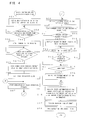
- Figs. 4 and 5 are flow charts of the processings of the robot controller 1 and the teaching pendant 2 and the processing of the PC 3 for animation displaying in the robot operating simulation according to a second embodiment of the present invention.
- this second embodiment there is configured such that the state of the robot controller before the robot is operated for simulation is reproduced after the simulation operating is performed, which is different from the first embodiment.
- Fig. 4 shows the processings in the robot controller 1 and the teaching pendant 2 in which the processings from step 301 to step 304 are identical to the processings from step 101 to step 104 shown in Fig. 3.
- step 305 when the operation starting instruction is inputted, at first, all the signals representing the operating state of the robot controller 1 at that time such as the current state of the robot controller 1, the position and the posture of the robot, the state of the input/output signal and the like are sent to PC 3 (step 305), so that the robot is machine-locked and set in a non-operating state (step 306). Thereafter, similarly to the first embodiment, the processings from step 307 to step 313 identical to those from step 105 to step 111 in the flow chart of Fig. 3 are performed.
- the robot operating program execution is started, the robot position and posture at the current time are calculated and the calculated position and posture are sent to the PC 3.
- the animation image data is reached from the PC 3
- the image is displayed on the display section 2a of the teaching pendant 2.
- a determination is made on whether or not the operating cancel instruction has been inputted and whether or not the operating program has been terminated, and, until the cancel instruction is inputted or the operating program is terminated, the processing for sending the operating position information representing the current position and posture of the robot and the processing for displaying the robot animation image sent from the PC 3 on the teaching pendant 2a (step 308 to step 313) are repeatedly performed.
- step 312 When the cancel instruction is inputted (step 312: Yes) or the operating program is terminated (step 313: Yes), a determination is made on whether or not, from the teaching pendant 2 or the PC 3, the modification starting instruction of the operating program is inputted or an instruction of "OK" has been inputted without modifying the operating program (step 314).
- step 316 When the modification has not been performed, the process proceeds to step 316.
- step 315 On the other hand, the modification has been performed, the process proceeds to step 315, where the modification processing of the operating program is performed (step 315).
- step 307 where the modified robot operating program is executed, so that the aforementioned processings from step 308 to step 313 are repeatedly performed.
- step 314 when the operating program has not been modified (step 314: Yes), the process proceeds from step 314 to step 316, where the information sent in step 305 and stored in the PC 3 is read out, and, on the basis of this information, the robot controller is returned back to the state before the simulation is started, the machine lock of the robot is unlocked (step 317), and the operating program execution end signal is sent to the PC 3 (step 318).
- Fig. 5 is a flow chart showing the processing of the PC 3 according to the second embodiment.
- the processing of the PC 3 according to the second embodiment is different from the processing of the PC 3 according to the first embodiment in that steps 404 and 410 are added to the flow chart of the PC 3 according to the first embodiment.
- the steps 401 to 403 are identical to the steps 201 to 203 according to the first embodiment. Further, the processings from steps 405 to 409 are identical to the processings from steps 204 to 208 according to the first embodiment. Furthermore, the processing in step 411 is identical to the processing in step 209 according to the first embodiment.
- the teaching pendant 2 and the PC 3 when the communication between the robot controller 1, the teaching pendant 2 and the PC 3 is started and the operation starting instruction is inputted (steps 401 to 403), at first, the information representing the state of the robot controller 1 at the present time, which is sent from the robot controller 1, is stored and saved (step 404). Thereafter, the display information of the animation image of the robot operation, which changes according to execution of the above operating program, is created, and on the basis of this information, the animation image is displayed on the display section 3a of the PC 3. Further, when the mode for displaying the animation image is set in the teaching pendant, the animation image is sent also to the teaching pendant 2, and the robot operating animation is displayed on the teaching pendant 2a (steps 405 to 409).
- step 409 When the operating program execution end signal is received (step 409), the information representing the state of the robot controller before the animation operating is started, which has been stored in step 404, is sent to the robot controller 1 (step 410), the communication between the robot controller 1 and the teaching pendant 2 is terminated (step 411).
- the robot controller 1 can be returned back to the state before the simulation is started.
- the robot controller can be configured to be returned back to the original state after the operation is confirmed.
Landscapes
- Engineering & Computer Science (AREA)
- Robotics (AREA)
- Mechanical Engineering (AREA)
- Physics & Mathematics (AREA)
- General Physics & Mathematics (AREA)
- Automation & Control Theory (AREA)
- Numerical Control (AREA)
- Manipulator (AREA)
Applications Claiming Priority (4)
| Application Number | Priority Date | Filing Date | Title |
|---|---|---|---|
| JP2001107165 | 2001-04-05 | ||
| JP2001107165 | 2001-04-05 | ||
| JP2001117708A JP3673725B2 (ja) | 2001-04-05 | 2001-04-17 | ロボット用情報処理システム |
| JP2001117708 | 2001-04-17 |
Publications (2)
| Publication Number | Publication Date |
|---|---|
| EP1247623A2 true EP1247623A2 (fr) | 2002-10-09 |
| EP1247623A3 EP1247623A3 (fr) | 2005-05-11 |
Family
ID=26613136
Family Applications (1)
| Application Number | Title | Priority Date | Filing Date |
|---|---|---|---|
| EP02252415A Ceased EP1247623A3 (fr) | 2001-04-05 | 2002-04-03 | Système de traitement d'information pour robot |
Country Status (3)
| Country | Link |
|---|---|
| US (1) | US6853881B2 (fr) |
| EP (1) | EP1247623A3 (fr) |
| JP (1) | JP3673725B2 (fr) |
Cited By (3)
| Publication number | Priority date | Publication date | Assignee | Title |
|---|---|---|---|---|
| EP1526421A3 (fr) * | 2003-10-07 | 2007-07-25 | Traub Drehmaschinen GmbH | Procédé de commande d' une machine-outil et commande d'une machine-outil |
| EP1462896A3 (fr) * | 2003-02-28 | 2007-11-21 | Fanuc Ltd | Dispositif d'apprentissage pour robot |
| EP1522912A3 (fr) * | 2003-10-08 | 2008-07-16 | Fanuc Ltd | Système de contrôle manuel pour robot |
Families Citing this family (38)
| Publication number | Priority date | Publication date | Assignee | Title |
|---|---|---|---|---|
| DE10234233A1 (de) * | 2002-07-27 | 2004-02-05 | Kuka Roboter Gmbh | Verfahren zum Austausch von Daten zwischen Steuerungen von Maschinen, insbesondere von Robotern |
| DE10236392A1 (de) * | 2002-08-08 | 2004-02-19 | Kuka Roboter Gmbh | Verfahren und Vorrichtung zum Steuern von Handhabungsgeräten |
| ITTO20020863A1 (it) * | 2002-10-04 | 2004-04-05 | Comau Spa | Terminale portatile di comando, programmazione e/ o |
| ITTO20020862A1 (it) * | 2002-10-04 | 2004-04-05 | Comau Spa | Sistema di programmazione per robot o simili apparati |
| JP4441409B2 (ja) | 2003-03-25 | 2010-03-31 | ローツェ株式会社 | ロボットシミュレーション装置、および、シミュレーションプログラム |
| JP3972854B2 (ja) * | 2003-04-10 | 2007-09-05 | ソニー株式会社 | ロボットの運動制御装置 |
| DE10323466A1 (de) * | 2003-05-23 | 2004-12-30 | Robert Bosch Gmbh | Bedienvorrichtung |
| DE602004019781D1 (de) * | 2003-06-20 | 2009-04-16 | Fanuc Robotics America Inc | Mehrfach-roboterarm-verfolgung und spiegel-jog |
| JP3819883B2 (ja) * | 2003-08-27 | 2006-09-13 | ファナック株式会社 | ロボットプログラム位置修正装置 |
| JP3834307B2 (ja) * | 2003-09-29 | 2006-10-18 | ファナック株式会社 | ロボットシステム |
| JP4325407B2 (ja) * | 2004-01-08 | 2009-09-02 | パナソニック株式会社 | 産業用ロボット |
| CN101194213A (zh) * | 2005-03-04 | 2008-06-04 | 范努克机器人技术美国有限公司 | 教导装置和可编程控制器的活动连接 |
| KR100624387B1 (ko) * | 2005-04-25 | 2006-09-20 | 엘지전자 주식회사 | 주행영역 지정이 가능한 로봇 시스템 |
| US7860614B1 (en) * | 2005-09-13 | 2010-12-28 | The United States Of America As Represented By The Secretary Of The Army | Trainer for robotic vehicle |
| JP4171488B2 (ja) * | 2005-12-16 | 2008-10-22 | ファナック株式会社 | オフラインプログラミング装置 |
| US7853356B2 (en) * | 2006-04-14 | 2010-12-14 | Fanuc Robotics America, Inc. | Method for optimizing a robot program and a robot system |
| JP4238256B2 (ja) * | 2006-06-06 | 2009-03-18 | ファナック株式会社 | ロボットシミュレーション装置 |
| JP2008183664A (ja) * | 2007-01-30 | 2008-08-14 | Mitsubishi Electric Engineering Co Ltd | ロボット装置 |
| JP4653836B2 (ja) * | 2008-12-12 | 2011-03-16 | ファナック株式会社 | シミュレーション装置 |
| JP4689745B2 (ja) * | 2009-08-19 | 2011-05-25 | ファナック株式会社 | 工作機械の工具ベクトル表示装置 |
| JP5951200B2 (ja) * | 2010-09-09 | 2016-07-13 | Dmg森精機株式会社 | 加工関連データ処理システム |
| US10475240B2 (en) * | 2010-11-19 | 2019-11-12 | Fanuc Robotics America Corporation | System, method, and apparatus to display three-dimensional robotic workcell data |
| JP5565392B2 (ja) * | 2011-08-11 | 2014-08-06 | 株式会社安川電機 | 携帯遠隔操作装置およびロボットシステム |
| US20130119032A1 (en) * | 2011-11-11 | 2013-05-16 | Lincoln Global, Inc. | System and method for welding materials of different conductivity |
| DE102012102749A1 (de) * | 2012-03-29 | 2013-10-02 | Reis Group Holding Gmbh & Co. Kg | Vorrichtung und Verfahren zur Bedienung eines Industrieroboters |
| JP5426719B2 (ja) * | 2012-05-18 | 2014-02-26 | ファナック株式会社 | ロボットシステムの動作シミュレーション装置 |
| JP5582427B2 (ja) * | 2012-12-18 | 2014-09-03 | 株式会社安川電機 | 教示データ作成装置、ロボットシステム、及び教示データ作成方法 |
| US20150129581A1 (en) * | 2013-11-12 | 2015-05-14 | Lincoln Global, Inc. | System and method for pendant component for a welding system |
| JP2017170472A (ja) * | 2016-03-23 | 2017-09-28 | 株式会社神戸製鋼所 | 多層盛溶接における溶接条件設定支援装置 |
| JP6392817B2 (ja) * | 2016-08-04 | 2018-09-19 | ファナック株式会社 | シミュレーション装置 |
| JP6853675B2 (ja) * | 2017-01-20 | 2021-03-31 | 川崎重工業株式会社 | ロボットシステムとロボットの制御装置 |
| US20180272526A1 (en) * | 2017-03-21 | 2018-09-27 | Seiko Epson Corporation | Control device, teaching device, and robot system |
| JP6894659B2 (ja) * | 2017-08-04 | 2021-06-30 | 株式会社スター精機 | 産業ロボットの移動データ設定装置及び移動軸確認方法 |
| AT16425U1 (de) * | 2017-12-14 | 2019-08-15 | Wittmann Kunststoffgeraete | Verfahren zur Validierung von programmierten Ablaufsequenzen oder |
| JP6773084B2 (ja) * | 2018-07-02 | 2020-10-21 | 株式会社安川電機 | 動作教示装置、ロボットシステム及び動作教示方法 |
| JP7205972B2 (ja) * | 2019-05-24 | 2023-01-17 | 川崎重工業株式会社 | 教示システム |
| US12589485B2 (en) * | 2021-03-02 | 2026-03-31 | Fanuc Corporation | Teaching point generation device that generates teaching points on basis of output of sensor, and teaching point generation method |
| US20230381965A1 (en) * | 2022-05-27 | 2023-11-30 | Canon Kabushiki Kaisha | Information processing apparatus, information processing method, robot system, article manufacturing method, and recording medium |
Citations (1)
| Publication number | Priority date | Publication date | Assignee | Title |
|---|---|---|---|---|
| WO1997004370A1 (fr) | 1995-07-22 | 1997-02-06 | Kuka Roboter Gmbh | Dispositif de commande et de programmation |
Family Cites Families (28)
| Publication number | Priority date | Publication date | Assignee | Title |
|---|---|---|---|---|
| IT8521821U1 (it) * | 1985-05-15 | 1986-11-15 | Volpato Alberto | Attrezzo per la pratica dello sci su terreno non innevato |
| JP2548027B2 (ja) * | 1988-06-30 | 1996-10-30 | ファナック株式会社 | アークビジョンセンサ操作方式 |
| JPH0796481A (ja) * | 1993-08-03 | 1995-04-11 | Nippondenso Co Ltd | ロボットの動作領域設定方法およびその制御装置 |
| JP3305451B2 (ja) | 1993-08-27 | 2002-07-22 | 株式会社安川電機 | ロボット制御装置 |
| US5760560A (en) * | 1993-10-21 | 1998-06-02 | Fanuc, Ltd. | Robot apparatus |
| JP3500739B2 (ja) * | 1994-11-18 | 2004-02-23 | 株式会社安川電機 | ロボットの教示装置 |
| JP2933305B2 (ja) | 1994-12-15 | 1999-08-09 | ファナック株式会社 | ロボット用教示操作盤 |
| US5949683A (en) * | 1994-12-20 | 1999-09-07 | Tokico Ltd. | Robot control apparatus |
| JPH08202428A (ja) * | 1995-01-24 | 1996-08-09 | Nissan Motor Co Ltd | 教示プログラム自動生成装置 |
| JP4014662B2 (ja) * | 1995-09-18 | 2007-11-28 | ファナック株式会社 | ロボット教示操作盤 |
| WO1997010919A1 (fr) * | 1995-09-19 | 1997-03-27 | Kabushiki Kaisha Yaskawa Denki | Dispositif de reglage automatique de conditions de soudage |
| DE69618606T2 (de) * | 1995-09-19 | 2002-09-12 | Kabushiki Kaisha Yaskawa Denki, Kitakyushu | Prozessor für robotersprache |
| JPH0991017A (ja) | 1995-09-25 | 1997-04-04 | Fanuc Ltd | ロボット動作経路確認装置 |
| JPH1011122A (ja) * | 1996-06-24 | 1998-01-16 | Nippon Telegr & Teleph Corp <Ntt> | 情報提示装置 |
| EP0864401B1 (fr) * | 1996-07-24 | 2006-02-15 | Fanuc Ltd | Procede de commande de deplacement graduel de robots |
| JPH10138182A (ja) * | 1996-11-08 | 1998-05-26 | Toyoda Mach Works Ltd | ロボットの教示装置 |
| JP3901772B2 (ja) * | 1996-11-13 | 2007-04-04 | 三菱重工業株式会社 | ロボットの教示操作方法 |
| JP3269003B2 (ja) * | 1997-05-12 | 2002-03-25 | 川崎重工業株式会社 | ロボット制御装置 |
| JP3269005B2 (ja) * | 1997-05-12 | 2002-03-25 | 川崎重工業株式会社 | ロボット制御装置 |
| JPH1148173A (ja) * | 1997-07-31 | 1999-02-23 | Tokico Ltd | ロボットの教示装置 |
| US6107601A (en) * | 1997-10-01 | 2000-08-22 | Matsushita Electric Industrial Co., Ltd. | Apparatus and method for controlling an arc welding robot |
| JP3655083B2 (ja) * | 1998-02-25 | 2005-06-02 | 富士通株式会社 | ロボットの位置決めを行うインタフェース装置 |
| JPH11262883A (ja) * | 1998-03-19 | 1999-09-28 | Denso Corp | ロボットのマニュアル操作装置 |
| US6188194B1 (en) * | 1998-10-05 | 2001-02-13 | Fanuc Ltd. | Controller for automatic machine |
| JP3307886B2 (ja) * | 1998-10-16 | 2002-07-24 | 松下電器産業株式会社 | 溶接装置 |
| DE19857436A1 (de) * | 1998-12-12 | 2000-06-21 | Kuka Roboter Gmbh | Verfahren zum Behandeln des Spannungsabfalls in der Steuerung eines Roboters und zum Wiederanfahren eines Roboters nach Spannungsabfall |
| JP2000288967A (ja) * | 1999-03-31 | 2000-10-17 | Denso Corp | 移動ロボット |
| JP2000343466A (ja) | 1999-06-04 | 2000-12-12 | Matsushita Electric Ind Co Ltd | 産業用ロボットの教示方法、産業用ロボットおよびシミュレーション装置 |
-
2001
- 2001-04-17 JP JP2001117708A patent/JP3673725B2/ja not_active Expired - Fee Related
-
2002
- 2002-04-02 US US10/112,866 patent/US6853881B2/en not_active Expired - Lifetime
- 2002-04-03 EP EP02252415A patent/EP1247623A3/fr not_active Ceased
Patent Citations (1)
| Publication number | Priority date | Publication date | Assignee | Title |
|---|---|---|---|---|
| WO1997004370A1 (fr) | 1995-07-22 | 1997-02-06 | Kuka Roboter Gmbh | Dispositif de commande et de programmation |
Cited By (4)
| Publication number | Priority date | Publication date | Assignee | Title |
|---|---|---|---|---|
| EP1462896A3 (fr) * | 2003-02-28 | 2007-11-21 | Fanuc Ltd | Dispositif d'apprentissage pour robot |
| US7373220B2 (en) | 2003-02-28 | 2008-05-13 | Fanuc Ltd. | Robot teaching device |
| EP1526421A3 (fr) * | 2003-10-07 | 2007-07-25 | Traub Drehmaschinen GmbH | Procédé de commande d' une machine-outil et commande d'une machine-outil |
| EP1522912A3 (fr) * | 2003-10-08 | 2008-07-16 | Fanuc Ltd | Système de contrôle manuel pour robot |
Also Published As
| Publication number | Publication date |
|---|---|
| US20020147528A1 (en) | 2002-10-10 |
| US6853881B2 (en) | 2005-02-08 |
| JP2002361580A (ja) | 2002-12-18 |
| JP3673725B2 (ja) | 2005-07-20 |
| EP1247623A3 (fr) | 2005-05-11 |
Similar Documents
| Publication | Publication Date | Title |
|---|---|---|
| US6853881B2 (en) | Robot information processing system | |
| EP1310844B1 (fr) | Dispositif de simulation | |
| US5488689A (en) | Robot operation training system | |
| US6330495B1 (en) | Off-line teaching method and apparatus for the same | |
| JP3708083B2 (ja) | ロボット教示装置 | |
| US6928337B2 (en) | Robot simulation apparatus | |
| US6175206B1 (en) | Robot information processor | |
| JP3819883B2 (ja) | ロボットプログラム位置修正装置 | |
| EP1310843A2 (fr) | Dispositif de simulation | |
| JPH1158276A (ja) | ロボットのオフラインシミュレーションシステム | |
| JP2003133200A (ja) | シミュレーション装置及びシミュレーション方法 | |
| JP3202051B2 (ja) | オフラインティーチング方法 | |
| JPH03265006A (ja) | ベンダ用データ入力装置 | |
| JP2001042907A (ja) | シーケンス制御装置 | |
| CN117043692A (zh) | 机器人控制装置、机器人控制系统以及机器人控制方法 | |
| JPH06295236A (ja) | エンジニアリング装置 | |
| JPH11262882A (ja) | ロボットシステム | |
| JPH06332518A (ja) | 対話形数値制御装置 | |
| JP2001067110A (ja) | ロボット装置の教示装置およびロボット装置の教示方法ならびにロボット装置の制御装置 | |
| JPH07302107A (ja) | 数値制御装置 | |
| JP2597635B2 (ja) | 全キー動作チェック方式及び装置 | |
| KR19990061539A (ko) | 로보트동작 시뮬레이션 장치 | |
| JPH11134009A (ja) | オフラインティーチング方法 | |
| JPH0816091A (ja) | 運転訓練シミュレータ運用装置 | |
| JP2003280741A (ja) | モータ制御システム、及びこれを搭載したパンタグラフ |
Legal Events
| Date | Code | Title | Description |
|---|---|---|---|
| PUAI | Public reference made under article 153(3) epc to a published international application that has entered the european phase |
Free format text: ORIGINAL CODE: 0009012 |
|
| AK | Designated contracting states |
Kind code of ref document: A2 Designated state(s): AT BE CH CY DE DK ES FI FR GB GR IE IT LI LU MC NL PT SE TR |
|
| AX | Request for extension of the european patent |
Free format text: AL;LT;LV;MK;RO;SI |
|
| PUAL | Search report despatched |
Free format text: ORIGINAL CODE: 0009013 |
|
| AK | Designated contracting states |
Kind code of ref document: A3 Designated state(s): AT BE CH CY DE DK ES FI FR GB GR IE IT LI LU MC NL PT SE TR |
|
| AX | Request for extension of the european patent |
Extension state: AL LT LV MK RO SI |
|
| RIC1 | Information provided on ipc code assigned before grant |
Ipc: 7G 05B 19/409 A |
|
| 17P | Request for examination filed |
Effective date: 20051107 |
|
| AKX | Designation fees paid |
Designated state(s): DE |
|
| STAA | Information on the status of an ep patent application or granted ep patent |
Free format text: STATUS: THE APPLICATION HAS BEEN REFUSED |
|
| 18R | Application refused |
Effective date: 20091030 |