EP1522590B1 - Verfahren für die Herstellung modifizierter Glykoproteine - Google Patents
Verfahren für die Herstellung modifizierter Glykoproteine Download PDFInfo
- Publication number
- EP1522590B1 EP1522590B1 EP04025648A EP04025648A EP1522590B1 EP 1522590 B1 EP1522590 B1 EP 1522590B1 EP 04025648 A EP04025648 A EP 04025648A EP 04025648 A EP04025648 A EP 04025648A EP 1522590 B1 EP1522590 B1 EP 1522590B1
- Authority
- EP
- European Patent Office
- Prior art keywords
- host cell
- glcnac
- golgi
- mannosidase
- gnt
- Prior art date
- Legal status (The legal status is an assumption and is not a legal conclusion. Google has not performed a legal analysis and makes no representation as to the accuracy of the status listed.)
- Revoked
Links
Images
Classifications
-
- C—CHEMISTRY; METALLURGY
- C12—BIOCHEMISTRY; BEER; SPIRITS; WINE; VINEGAR; MICROBIOLOGY; ENZYMOLOGY; MUTATION OR GENETIC ENGINEERING
- C12P—FERMENTATION OR ENZYME-USING PROCESSES TO SYNTHESISE A DESIRED CHEMICAL COMPOUND OR COMPOSITION OR TO SEPARATE OPTICAL ISOMERS FROM A RACEMIC MIXTURE
- C12P21/00—Preparation of peptides or proteins
- C12P21/02—Preparation of peptides or proteins having a known sequence of two or more amino acids, e.g. glutathione
-
- C—CHEMISTRY; METALLURGY
- C12—BIOCHEMISTRY; BEER; SPIRITS; WINE; VINEGAR; MICROBIOLOGY; ENZYMOLOGY; MUTATION OR GENETIC ENGINEERING
- C12P—FERMENTATION OR ENZYME-USING PROCESSES TO SYNTHESISE A DESIRED CHEMICAL COMPOUND OR COMPOSITION OR TO SEPARATE OPTICAL ISOMERS FROM A RACEMIC MIXTURE
- C12P21/00—Preparation of peptides or proteins
- C12P21/005—Glycopeptides, glycoproteins
-
- A—HUMAN NECESSITIES
- A61—MEDICAL OR VETERINARY SCIENCE; HYGIENE
- A61P—SPECIFIC THERAPEUTIC ACTIVITY OF CHEMICAL COMPOUNDS OR MEDICINAL PREPARATIONS
- A61P29/00—Non-central analgesic, antipyretic or antiinflammatory agents, e.g. antirheumatic agents; Non-steroidal antiinflammatory drugs [NSAID]
-
- A—HUMAN NECESSITIES
- A61—MEDICAL OR VETERINARY SCIENCE; HYGIENE
- A61P—SPECIFIC THERAPEUTIC ACTIVITY OF CHEMICAL COMPOUNDS OR MEDICINAL PREPARATIONS
- A61P3/00—Drugs for disorders of the metabolism
- A61P3/08—Drugs for disorders of the metabolism for glucose homeostasis
- A61P3/10—Drugs for disorders of the metabolism for glucose homeostasis for hyperglycaemia, e.g. antidiabetics
-
- A—HUMAN NECESSITIES
- A61—MEDICAL OR VETERINARY SCIENCE; HYGIENE
- A61P—SPECIFIC THERAPEUTIC ACTIVITY OF CHEMICAL COMPOUNDS OR MEDICINAL PREPARATIONS
- A61P37/00—Drugs for immunological or allergic disorders
-
- C—CHEMISTRY; METALLURGY
- C12—BIOCHEMISTRY; BEER; SPIRITS; WINE; VINEGAR; MICROBIOLOGY; ENZYMOLOGY; MUTATION OR GENETIC ENGINEERING
- C12N—MICROORGANISMS OR ENZYMES; COMPOSITIONS THEREOF; PROPAGATING, PRESERVING, OR MAINTAINING MICROORGANISMS; MUTATION OR GENETIC ENGINEERING; CULTURE MEDIA
- C12N1/00—Microorganisms; Compositions thereof; Processes of propagating, maintaining or preserving microorganisms or compositions thereof; Processes of preparing or isolating a composition containing a microorganism; Culture media therefor
- C12N1/14—Fungi; Culture media therefor
-
- C—CHEMISTRY; METALLURGY
- C12—BIOCHEMISTRY; BEER; SPIRITS; WINE; VINEGAR; MICROBIOLOGY; ENZYMOLOGY; MUTATION OR GENETIC ENGINEERING
- C12N—MICROORGANISMS OR ENZYMES; COMPOSITIONS THEREOF; PROPAGATING, PRESERVING, OR MAINTAINING MICROORGANISMS; MUTATION OR GENETIC ENGINEERING; CULTURE MEDIA
- C12N15/00—Mutation or genetic engineering; DNA or RNA concerning genetic engineering, vectors, e.g. plasmids, or their isolation, preparation or purification; Use of hosts therefor
- C12N15/09—Recombinant DNA-technology
- C12N15/63—Introduction of foreign genetic material using vectors; Vectors; Use of hosts therefor; Regulation of expression
- C12N15/79—Vectors or expression systems specially adapted for eukaryotic hosts
-
- C—CHEMISTRY; METALLURGY
- C12—BIOCHEMISTRY; BEER; SPIRITS; WINE; VINEGAR; MICROBIOLOGY; ENZYMOLOGY; MUTATION OR GENETIC ENGINEERING
- C12N—MICROORGANISMS OR ENZYMES; COMPOSITIONS THEREOF; PROPAGATING, PRESERVING, OR MAINTAINING MICROORGANISMS; MUTATION OR GENETIC ENGINEERING; CULTURE MEDIA
- C12N15/00—Mutation or genetic engineering; DNA or RNA concerning genetic engineering, vectors, e.g. plasmids, or their isolation, preparation or purification; Use of hosts therefor
- C12N15/09—Recombinant DNA-technology
- C12N15/63—Introduction of foreign genetic material using vectors; Vectors; Use of hosts therefor; Regulation of expression
- C12N15/79—Vectors or expression systems specially adapted for eukaryotic hosts
- C12N15/80—Vectors or expression systems specially adapted for eukaryotic hosts for fungi
-
- C—CHEMISTRY; METALLURGY
- C12—BIOCHEMISTRY; BEER; SPIRITS; WINE; VINEGAR; MICROBIOLOGY; ENZYMOLOGY; MUTATION OR GENETIC ENGINEERING
- C12N—MICROORGANISMS OR ENZYMES; COMPOSITIONS THEREOF; PROPAGATING, PRESERVING, OR MAINTAINING MICROORGANISMS; MUTATION OR GENETIC ENGINEERING; CULTURE MEDIA
- C12N15/00—Mutation or genetic engineering; DNA or RNA concerning genetic engineering, vectors, e.g. plasmids, or their isolation, preparation or purification; Use of hosts therefor
- C12N15/09—Recombinant DNA-technology
- C12N15/63—Introduction of foreign genetic material using vectors; Vectors; Use of hosts therefor; Regulation of expression
- C12N15/79—Vectors or expression systems specially adapted for eukaryotic hosts
- C12N15/80—Vectors or expression systems specially adapted for eukaryotic hosts for fungi
- C12N15/81—Vectors or expression systems specially adapted for eukaryotic hosts for fungi for yeasts
-
- C—CHEMISTRY; METALLURGY
- C12—BIOCHEMISTRY; BEER; SPIRITS; WINE; VINEGAR; MICROBIOLOGY; ENZYMOLOGY; MUTATION OR GENETIC ENGINEERING
- C12N—MICROORGANISMS OR ENZYMES; COMPOSITIONS THEREOF; PROPAGATING, PRESERVING, OR MAINTAINING MICROORGANISMS; MUTATION OR GENETIC ENGINEERING; CULTURE MEDIA
- C12N9/00—Enzymes; Proenzymes; Compositions thereof; Processes for preparing, activating, inhibiting, separating or purifying enzymes
- C12N9/10—Transferases (2.)
- C12N9/1048—Glycosyltransferases (2.4)
-
- C—CHEMISTRY; METALLURGY
- C12—BIOCHEMISTRY; BEER; SPIRITS; WINE; VINEGAR; MICROBIOLOGY; ENZYMOLOGY; MUTATION OR GENETIC ENGINEERING
- C12N—MICROORGANISMS OR ENZYMES; COMPOSITIONS THEREOF; PROPAGATING, PRESERVING, OR MAINTAINING MICROORGANISMS; MUTATION OR GENETIC ENGINEERING; CULTURE MEDIA
- C12N9/00—Enzymes; Proenzymes; Compositions thereof; Processes for preparing, activating, inhibiting, separating or purifying enzymes
- C12N9/14—Hydrolases (3)
- C12N9/24—Hydrolases (3) acting on glycosyl compounds (3.2)
- C12N9/2402—Hydrolases (3) acting on glycosyl compounds (3.2) hydrolysing O- and S- glycosyl compounds (3.2.1)
- C12N9/2477—Hemicellulases not provided in a preceding group
- C12N9/2488—Mannanases
-
- C—CHEMISTRY; METALLURGY
- C12—BIOCHEMISTRY; BEER; SPIRITS; WINE; VINEGAR; MICROBIOLOGY; ENZYMOLOGY; MUTATION OR GENETIC ENGINEERING
- C12Y—ENZYMES
- C12Y302/00—Hydrolases acting on glycosyl compounds, i.e. glycosylases (3.2)
- C12Y302/01—Glycosidases, i.e. enzymes hydrolysing O- and S-glycosyl compounds (3.2.1)
- C12Y302/01113—Mannosyl-oligosaccharide 1,2-alpha-mannosidase (3.2.1.113), i.e. alpha-1,2-mannosidase
-
- C—CHEMISTRY; METALLURGY
- C07—ORGANIC CHEMISTRY
- C07K—PEPTIDES
- C07K2319/00—Fusion polypeptide
- C07K2319/01—Fusion polypeptide containing a localisation/targetting motif
- C07K2319/04—Fusion polypeptide containing a localisation/targetting motif containing an ER retention signal such as a C-terminal HDEL motif
-
- C—CHEMISTRY; METALLURGY
- C07—ORGANIC CHEMISTRY
- C07K—PEPTIDES
- C07K2319/00—Fusion polypeptide
- C07K2319/01—Fusion polypeptide containing a localisation/targetting motif
- C07K2319/05—Fusion polypeptide containing a localisation/targetting motif containing a GOLGI retention signal
-
- C—CHEMISTRY; METALLURGY
- C12—BIOCHEMISTRY; BEER; SPIRITS; WINE; VINEGAR; MICROBIOLOGY; ENZYMOLOGY; MUTATION OR GENETIC ENGINEERING
- C12Y—ENZYMES
- C12Y302/00—Hydrolases acting on glycosyl compounds, i.e. glycosylases (3.2)
- C12Y302/01—Glycosidases, i.e. enzymes hydrolysing O- and S-glycosyl compounds (3.2.1)
Definitions
- De novo synthesized proteins may undergo further processing in cells, known as post-translational modification.
- sugar residues may be added enzymatically, a process known as glycosylation
- glycosylation The resulting proteins bearing covalently linked oligosaccharide side chains are known as glycosylated proteins or glycoproteins.
- Bacteria typically do not glycosylate proteins; in cases where glycosylation does occur it usually occurs at nonspecific sites in the protein ( Moens and Vanderleyden, Arch. Microbiol. 1997 168(3):169-175 ).
- Eukaryotes commonly attach a specific oligosaccharide to the side chain of a protein asparagine residue, particularly an asparagine which occurs in the sequence Asn-Xaa-Ser/Thr/Cys (where Xaa represents any amino acid).
- an N-glycan Following attachment of the saccharide moiety, known as an N-glycan, further modifications may occur in vivo. Typically these modifications occur via an ordered sequence of enzymatic reactions, known as a cascade.
- Different organisms provide different glycosylation enzymes (glycosyltransferases and glycosidases) and different glycosyl substrates, so that the final composition of a sugar side chain may vary markedly depending upon the host
- microorganisms such as filamentous fungi and yeast (lower eukaryotes) typically add additional mannose and/or mannosylphosphate sugars.
- the resulting glycan is known as a "high-mannose” type or a mannan.
- the nascent oligosaccharide side chain may be trimmed to remove several mannose residues and elongated with additional sugar residues that typically do not occur in the N-glycans of lower eukaryotes. See R.K. Bretthauer, et al. Biotechnology and Applied Biochemistry,1999, 30,193-200 ; W. Martinet, et al.
- a complex N -glycan means a structure with typically two to six outer branches with a sialyllactosamine sequence linked to an inner core structure Man 3 GlcNAc 2 .
- a complex N- glycan has at least one branch, and preferably at least two, of alternating GlcNAc and galactose (Gal) residues that terminate in oligosaccharides such as, for example: NeuNAc-; NeuAc ⁇ 2-6GalNAc ⁇ 1-; NeuAc ⁇ 2-3Gal ⁇ 1-3GalNAc ⁇ 1-; NeuAc ⁇ 2-3/6Gal ⁇ 1-4GlcNAc ⁇ 1-; GlcNAc ⁇ 1-4Gal ⁇ 1-(mucins only); Fuc ⁇ 1-2Gal ⁇ 1-(blood group H).
- Sulfate esters can occur on galactose, GalNAc, and GlcNAc residues, and phosphate esters can occur on mannose residues.
- NeuAc Neuronic acid
- Ac acetyl
- NeuGl N- glycolylneuraminic acid
- Complex N-glycans may also have intrachain substitutions of bisecting GlcNAc and core fucose (Fuc).
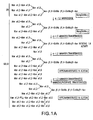
- Human glycosylation begins with a sequential set of reactions in the endoplasmatic reticulum (ER) leading to a core oligosaccharide structure, which is transferred onto de novo synthesized proteins at the asparagine residue in the sequence Asn-Xaa-Ser/Thr (see Figure 1A ). Further processing by glucosidases and mannosidases occurs in the ER before the nascent glycoprotein is transferred to the early Golgi apparatus, where additional mannose residues are removed by Golgi-specific 1,2-mannosidases. Processing continues as the proteins proceeds through the Golgi.
- N -acetylglucosamine transferases GnT I. GnT II, GnT III, GnT IV GnT V GnT VI
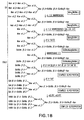
- mannosidase II fucosyltransferases add and remove specific sugar residues (see Figure 1B ).
- the N -glycans are acted son by galactosyl transferases and sialyltransferases (ST) and the finished glycoprotein is released from the Golgi apparatus.
- the protein N -glycans of animal glycoproteins have bi-, td-, or tetra-antennary structures, and may typically include galactose, fucose, and N -acetylglucosamine. Commonly the terminal residues of the N -glycans consist of sialic acid.
- a typical structure of a human N -glycan is show in Figure 1B .
- the N -glycans of animal glycoproteins typically include galactose, fucose, and terminal sialic acid. These sugars are not generally found on glycoproteins produced in yeast and filamentous fungi. In humans, the full range of nucleotide sugar precursors (e.g. UDP- N -acetylglucosamine, UDP- N -acetylgalactosamine, CMP- N -acetylneuraminic acid, UDP-galactose, GDP-fucose etc.) are generally synthesized in the cytosol and transported into the Golgi, where they are attached to the core oligosaccharide by glycosyltransferases.
- nucleotide sugar precursors e.g. UDP- N -acetylglucosamine, UDP- N -acetylgalactosamine, CMP- N -acetylneuraminic acid, UDP-galactose,
- Glycosyl transfer reactions typically yield a side product which is a nucleoside diphosphate or monophosphate. While monophosphates can be directly exported in exchange for nucleoside triphosphate sugars by an antiport mechanism, diphosphonucleosides (e.g. GDP) have to be cleaved by phosphatases (e.g. GDPase) to yield nucleoside monophosphates and inorganic phosphate prior to being exported. This reaction is important for efficient glycosylation; for example, GDPase from S . cerevisiae has been found to be necessary for mannosylation. However the GDPase has 90% reduced activity toward UDP ( Beminsone et aL, 1994 J. BioL Chem.
- Lower eukaryotes typically lack UDP-specific diphosphatase activity in the Golgi since they do not utilize UDP-sugar precursors for Golgi-based glycoprotein synthesis.
- Schizosaccharomyces pombe a yeast found to add galactose residues to cell wall polysaccharides (from UDP-galactose) has been found to have specific UDPase activity, indicating the requirement for such an enzyme (Berninsone et al., 1994).
- UDP is known to be a potent inhibitor of glycosyltransferases and the removal of this glycosylation side product is important in order to prevent glycosyltransferase inhibition in the lumen of the Golgi (Khatara et al., 1974). See Berninsone, P., et aL 1995. J. Biol. Chem. 270(24): 14564-14567 ; Beaudet, L., et aL 1998 Abc Transporters: Biochemical, Cellular, and Molecular Aspects. 292:397-413 .
- Glycosyltransferases and mannosidases line the inner (luminal) surface of the ER and Golgi apparatus and thereby provide a catalytic surface that allows for the sequential processing of glycoproteins as they proceed through the ER and Golgi network.
- the multiple compartments of the cis, medial, and trans Golgi and the trans Golgi Network (TGN), provide the different localities in which the ordered sequence of glycosylation reactions can take place.
- TGN trans Golgi Network
- the enzymes typically include a catalytic domain, a stem region, a membrane spanning region and an N-terminal cytoplasmic tail. The latter three structural components are responsible for directing a glycosylation enzyme to the appropriate locus.
- Localization sequences from one organism may function in other organisms.
- ⁇ -2,6-sialyltransferase ⁇ -2,6-ST
- an enzyme known to localize in the rat trans Golgi was shown to also localize a reporter gene (invertase) in the yeast Golgi (Schwientek, et al., 1995).
- invertase invertase
- the transmembrane region of the same human GalT fused to an invertase reporter was able to direct localization to the yeast Golgi, albeit it at low production levels.
- Schwientek and co-workers have shown that fusing 28 amino acids of a yeast mannosyltransferase (Mnt1), a region containing an N-terminal cytoplasmic tail, a transmembrane region and eight amino acids of the stem region, to the catalytic domain of human GalT are sufficient for Golgi localization of an active GalT ( Schwientek et al. 1995 J. Biol. Chem. 270(10):5483-5489 ).
- Other galactosyltransferases appear to rely on interactions with enzymes resident in particular organelles since after removal of their transmembrane region they are still able to localize properly.
- Improper localization of a glycosylation enzyme may prevent proper functioning of the enzyme in the pathway.
- Aspergillus nidulans which has numerous ⁇ -1,2-mannosidases ( Eades and Hintz, 2000 Gene 255(1):25-34 ), does not add GlcNAc to MansGlcNAc 2 when transformed with the rabbit GnT I gene, despite a high overall level of GaT I activity (Kalsner et al., 1995).
- GnT I although actively expressed, may be incorrectly localized such that the enzyme is not in contact with both of its substrates: the nascent N-glycan of the glycoprotein and UDP-GlcNAc.
- the host organism may not provide an adequate level of UDP-GleNAc in the Golgi.
- glycoproteins are typically immunogenic in humans and show a reduced half-life in vivo after administration (Takeuchi, 1997).
- Specific receptors in humans and animals can recognize terminal mannose residues and promote the rapid clearance of the protein from the bloodstream. Additional adverse effects may include changes in protein folding, solubility, susceptibility to proteases, trafficking, transport, compartmentalization, secretion, recognition by other proteins or factors, antigenicity, or allergenicity. Accordingly, it has been necessary to produce therapeutic glycoproteins in animal host systems, so that the pattern of glycosylation is identical or at least similar to that in humans or in the intended recipient species. In most cases a mammalian host system, such as mammalian cell culture, is used.
- animal or plant-based expression systems In order to produce therapeutic proteins that have appropriate glycoforms and have satisfactory therapeutic effects, animal or plant-based expression systems have been used.
- the available systems include:
- Recombinant human proteins expressed in the above-mentioned host systems may still include non-human glycoforms ( Raju et al., 2000 Annals Biochem. 283(2):123-132 ).
- fraction of the N -glycans may lack terminal sialic acid, typically found in human glycoproteins.
- Substantial efforts have been directed to developing processes to obtain glycoproteins that are as close as possible in structure to the human forms, or have other therapeutic advantages.
- Glycoproteins having specific glycoforms may be especially useful, for example in the targeting of therapeutic proteins.
- the addition of one or more sialic acid residues to a glycan side chain may increase the lifetime of a therapeutic glycoprotein in vivo after admininstration.
- the mammalian host cells may be genetically engineered to increase the extent of terminal sialic acid in glycoproteins expressed in the cells.
- sialic acid may be conjugated to the protein of interest in vitro prior to administration using a sialic acid transferase and an appropriate substrate.
- changes in growth medium composition or the expression of enzymes involved in human glycosylation have been employed to produce glycoproteins more closely resembling the human forms ( S. Weikert, et aL, Nature Biotechnology, 1999, 17,1116-1121 ; Werner, Noe, et al 1998 Arzneistoffforschung 48(8):870-880 ; Weikert, Papac et al., 1999; Andersen and Goochee 1994 Cur. Opin.Biotechnol. 5: 546-549 ; Yang and Butler 2000 Biotechnol.Bioengin 68(4): 370-380 ).
- cultured human cells may be used.
- animal cells are highly susceptible to viral infection or contamination.
- virus or other infectious agent may compromise the growth of the culture, while in other cases the agent may be a human pathogen rendering the therapeutic protein product unfit for its intended use.
- many cell culture processes require the use of complex, temperature-sensitive, animal-derived growth media components, which may carry pathogens such as bovine spongiform enrephalopathy (BSE) prions.
- BSE bovine spongiform enrephalopathy
- pathogens are difficult to detect and/or difficult to remove or sterilize without compromising the growth medium.
- use of animal cells to produce therapeutic proteins necessitates costly quality controls to assure product safety.
- Transgenic animals may also be used for manufacturing high-volume therapeutic proteins such as human serum albumin, tissue plasminogen activator, monoclonal antibodies, hemoglobin, collagen, fibrinogen and others. While transgenic goats and other transgenic animals (mice, sheep, cows, etc.) can be genetically engineered to produce therapeutic proteins at high concentrations in the milk, the process is costly since every batch has to undergo rigorous quality control. Animals may host a variety of animal or human pathogens, including bacteria, viruses, fungi, and prions. In the case of scrapies and bovine spongiform encephalopathy, testing can take about a year to rule out infection. The production of therapeutic compounds is thus preferably carried out in a well-controlled sterile environment, e.g.
- GMP Good Manufacturing Practice
- MBC Master Cell Bank
- transgenic animal technology relies on different animals and thus is inherently non-uniform.
- external factors such as different food uptake, disease and lack of homogeneity within a herd, may effect glycosylation patterns of the final product. It is known in humans, for example, that different dietary habits result in differing glycosylation patterns.
- Transgenic plants have been developed as a potential source to obtain proteins of therapeutic value.
- high level expression of proteins in plants suffers from gene silencing, a mechanism by which the genes for highly expressed proteins are down-regulated in subsequent plant generations.
- plants add xylose and/or ⁇ -1,3-linked fucose to protein N-glycans, resulting in glycoproteins that differ in structure from animals and are immunogenic in mammals ( Altmann, Marz et aL, 1995 Glycoconj. J. 12(2);150-155 ).
- it is generally not practical to grow plants in a sterile or GMP environment and the recovery of proteins from plant tissues is more costly than the recovery from fermented microorganisms.
- fermentation-based processes may offer (a) rapid production of high concentrations of protein; (b) the ability to use sterile, well-controlled production conditions (e.g. GMP conditions); (c) the ability to use simple, chemically defined growth media; (d) ease of genetic manipulation; (e) the absence of contaminating human or animal pathogens; (f) the ability to express a wide variety of proteins, including those poorly expressed in cell culture owing to toxicity etc.; (g) ease of protein recovery (e.g. via secretion into the medium).
- fermentation facilities are generally far less costly to construct than cell culture facilities.
- bacteria including species such as Escherichia coli commonly used to produce recombinant proteins, do not glycosylate proteins in a specific manner like eukaryotes.
- Various methylotrophic yeasts such as Pichia pastoris, Pichia methanolica and Hansenula polymorpha, are particularly useful as eukaryotic expression systems, since they are able to grow to high cell densities and/or secrete large quantities of recombinant protein.
- glycoproteins expressed in these eukaryotic microorganisms differ substantially in N-glycan structure from those in animals. This has prevented the use of yeast or filamentous fungi as hosts for the production of many useful glycoproteins.
- glycosyltransferases have been separately cloned and expressed in S . cerevisiae (GAIT, GnT I), Aspergillus nidulans (GnT I) and other fungi (Yoshida et al., 1999, Kalsner et al., 1995 Glycoconj. J. 12(3):360-370 , Schwientek et al., 1995).
- GIT S . cerevisiae
- GnT I Aspergillus nidulans
- fungi Yoshida et al., 1999, Kalsner et al., 1995 Glycoconj. J. 12(3):360-370 , Schwientek et al., 1995.
- N-glycans with human characteristics were not obtained.
- Yeasts produce a variety of mannosyltransferases e.g. 1,3-mannosyltransferases (e.g. MNN1 in S . cerevisiae) ( Graham and Emr, 1991 J. Cell. Biol. 114(2):207-218 ),1,2-mannosyltransferases (e.g. KTR/KRE family from S . cerevisiae), 1,6-mannosyltransferases (OCH1 from cerevisiae), mannosylphosphate transferases (MNN4 and MNN6 from S. cerevisiae) and additional enzymes that are involved in endogenous glycosylation reactions.
- 1,3-mannosyltransferases e.g. MNN1 in S . cerevisiae
- 1,6-mannosyltransferases e.g. KTR/KRE family from S . cerevisiae
- OH1 from cerevisiae
- MNN4 and MNN6 man
- Japanese Patent Application Public No. 8-336387 discloses an OCH1 mutant strain of Pichia pastoris.
- the OCH1 gene encodes 1,6-mannosyltransferase, which adds a mannose to the glycan structure Man 8 GlcNAc 2 to yield Man 9 GlcNAc 2 .
- the Man 9 GlcNAc 2 structure is then a substrate for further mamosylation in vivo, leading to the hypermannosylated glycoproteins that are characteristic of yeasts and typically may have at least 30-40 mannose residue per N-glycan.
- proteins glycosylated with Man 8 GlcNAc 2 are accumulated and hypermannosylation does not occur.
- the structure Man 8 GlcNAc 2 is not a substrate for animal glycosylation enzymes, such as human UDP-GlcNAc transferase I, and accordingly the method is not useful for producing proteins with human glycosylation patterns.
- Chiba et al. 1998 expressed ⁇ -1, 2-mannosidase from Aspergillus saitoi in the yeast Saccharomyces cerevisiae.
- a signal peptide sequence (His-Asp-Glu-Leu) was engineered into the exogenous mannosidase to promote retention in the endoplasmic reticulum.
- the yeast host was a mutant lacking three enzyme activities associated with hypermannosylation of proteins: 1,6-mannosyltransferase (OCH1) ; 1,3-mannosyltransferase ( MNN1 ) ; and mannosylphosphatetransferase (MNN4).
- OCH1 1,6-mannosyltransferase
- MNN1 1,3-mannosyltransferase
- MNN4 mannosylphosphatetransferase
- the N-glycans of the triple mutant host thus consisted of the structure Man 8 GlcNAc 2 , rather than the high mannose forms found in wild-type S . cerevisiae.
- the N glycans of a model protein (carboxypeptidase Y) were trimmed to give a mixture consisting of 27 mole % Man 5 GlcNAc 2 , 22 mole % Man 6 GlcNAc 2 , 22 mole % Man 7 GlcNAc 2 ; 29 mole % Man 8 GlcNAc 2 .
- U. S. Patent No. 5,834,251 to Maras and Contreras discloses a method for producing a hybrid glycoprotein derived from Trichoderma reesei.
- a hybrid N-glycan has only mannose residues on the Mana 1-6 arm of the core and one or two complex antennae on the Mana 1-3 arm. While this structure has utility, the method has the disadvantage that numerous enzymatic steps must be performed in vitro, which is costly and time-consuming. Isolated enzymes are expensive to prepare and maintain, may need unusual and costly substrates (e.g. UDP-GlcNAc), and are prone to loss of activity and/or proteolysis under the conditions of use.
- the lower eukaryotes which ordinarily produce high-mannose containing N-glycans, including unicellular and multicellular fungi such as Pichia pastoris, Hansenula polymorpha, Pichia stiptis, Pichia methanolica, Pichia sp., Kluyveromyces sp., Candida albicans, Aspergillus nidulans, and Trichoderma reseei, are modified to produce N -glycans such as Man 5 GlcNAc 2 or other structures along human glycosylation pathways.
- unicellular and multicellular fungi such as Pichia pastoris, Hansenula polymorpha, Pichia stiptis, Pichia methanolica, Pichia sp., Kluyveromyces sp., Candida albicans, Aspergillus nidulans, and Trichoderma reseei
- N -glycans such as Man 5 GlcNAc
- strains which: do not express certain enzymes which create the undesirable complex structures characteristic of the fungal glycoproteins, which express exogenous enzymes selected either to have optimal activity under the conditions present in the fungi where activity is desired, or which are targeted to an organelle where optimal activity is achieved, and combinations thereof wherein the genetically engineered eukaryote expresses multiple exogenous enzymes required to produce "human-like" glycoproteins.
- the invention relates to a method of screening a library for a host cell capable of producing a target glycoprotein with in excess of 30 Mole% Man 5 GlcNAc 2 said method comprising the steps of:
- the glycosylation pathway of an eukaryotic microorganism is modified by (a) constructing a DNA library including at least two genes encoding exogenous glycosylation enzymes; (b) transforming the microorganism with the library to produce a genetically mixed population expressing at least two distinct exogenous glycosylation enzymes; (c) selecting from the population a microorganism having the desired glycosylation phenotype.
- the DNA library includes chimeric genes each encoding a protein localization sequence and a catalytic activity related to glycosylation. Organisms modified using the method are useful for producing glycoproteins having a glycosylation pattern similar or identical to mammals, especially humans.
- the present invention relates to a method for producing a recombinant glycoprotein comprising (a) introducing a nucleic acid encoding the recombinant glycoprotein into a host cell of the invention; (b) expressing the nucleic acid in a host cell to produce the glycoprotein; and (c) isolating the recombinant glycoprotein from the host cell.
- the glycosylation pathway is modified to express a sugar nucleotide transporter enzyme.
- a nucleotide diphosphatase enzyme is also expressed.
- the transporter and diphosphatase enzyme is also expressed. The transporter and diphosphatase improve the efficiency of engineered glycosylation steps, by providing the appropriate compartments, reducing competitive product inhibition, and promoting the removal of nucleoside diphosphates.
- the methods and recombinant lower eukaryotic strains described herein are used to make "humanized glycoproteins".
- the recombinant lower eukaryotes are made by engineering lower eukaryotes which do not express one or more enzymes involved in production of high mannose structures to express the enzymes required to produce human-like sugars.
- a lower eukaryote is a unicellular or filamentous fungus.
- a "humanized glycoprotein” refers to a protein having attached thereto N-glycans including less than four mannose residues, and the synthetic intermediates (which are also useful and can be manipulated further in vitro ) having at least five mannose residues.
- the glycoproteins produced in the recombinant lower eukaryotic strains contain at least 27 mole % of the Man5 intermediate. This is achieved by cloning in a better mannosidase, i.e., an enzyme selected to have optimal activity under the conditions present in the organisms at the site where proteins are glycosylated, or by targeting the enzyme to the organelle where activity is desired.
- a better mannosidase i.e., an enzyme selected to have optimal activity under the conditions present in the organisms at the site where proteins are glycosylated, or by targeting the enzyme to the organelle where activity is desired.
- eukaryotic strains which do not express one or more enzymes involved in the production of high mannose structures are used. These strains can be engineered or one of the many such mutants already described in yeasts, including a hypermannosylation-minus (OCH1) mutant in Pichia pastoris .
- OCH1 hypermannosylation-minus
- the strains can be engineered one enzyme at a time, or a library of genes encoding potentially useful enzymes can be created, and those strains having enzymes with optimal activities or producing the most "human-like" glycoproteins, selected.
- N-glycan Man 5 GlcNAc 2 Lower eukaryotes that are able to produce glycoproteins having the attached N-glycan Man 5 GlcNAc 2 are particularly useful since (a) lacking a high degree of mannosylation (e.g. greater than 8 mannoses per N -glycan, or especially 30-40 mannoses), they show reduced immunogenicity in humans; and (b) the N -glycan is a substrate for further glycosylation reactions to form an even more human-like glycoform, e.g. by the action of GlcNAc transferase I to form GlcNAcMan 5 GlcNAc 2 .
- a high degree of mannosylation e.g. greater than 8 mannoses per N -glycan, or especially 30-40 mannoses
- the N -glycan is a substrate for further glycosylation reactions to form an even more human-like glycoform, e.g. by the action of GlcNAc transferase I
- Man 5 GlcNAc 2 must be formed in vivo in a high yield, at least transiently, since all subsequent glycosylation reactions require Man 5 GlcNAc 2 or a derivative thereof. Accordingly, a yield is obtained of greater than 27 mole %, more preferably a yield of 50-100 mole %, glycoproteins in which a high proportion of N-glycans have Man 5 GlcNAc 2 . It is then possible to perform further glycosylation reactions in vitro, using for example the method of U.S. Patent No. 5,834,251 to Maras and Contreras . In a preferred embodiment, at least one further glycosylation reaction is performed in vivo . In a highly preferred embodiment thereof, active forms of glycosylating enzymes are expressed in the endoplasmic reticulum and/or Golgi apparatus.
- Yeast and filamentous fungi have both been successfully used for the production of recombinant proteins, both intracellular and secreted ( Cereghino, J. L. and J. M. Cregg 2000 FEMS Microbiology Reviews 24(1): 45-66 ; Harkki, A., et al. 1989 Bio-Technology 7(6): 596 ; Berka, R M., et al. 1992 Abstr.Papers Amer. Chem.Soc.203: 121-BIOT ; Svetina, M., et al. 2000 J.Biotechnol. 76(2-3): 245-251 .
- the first step the transfer of the core oligosaccharide structure to the nascent protein, is highly conserved in all eukaryotes including yeast, fungi, plants and humans (compare Figures 1A and 1B ).
- Subsequent processing of the core oligosaccharide differs significantly in yeast and involves the addition of several mannose sugars.
- This step is catalyzed by mannosyltransferases residing in the Golgi (e.g: OCH1, MNT1, MNN1, etc.), which sequentially add mannose sugars to the core oligosaccharide.
- the resulting structure is undesirable for the production of humanoid proteins and it is thus desirable to reduce or eliminate mannosyl transferase activity.
- Mutants of S. cerevisiae, deficient in mannosyl transferase activity e.g. och1 or mnn9 mutants
- och1 or mnn9 mutants have shown to be non-lethal and display a reduced mannose content in the oligosacharide of yeast glycoproteins.
- Other oligosacharide processing enzymes such as mannosylphophate transferase may also have to be eliminated depending on the host's particular endogenous glycosylation pattern.
- After reducing undesired endogenous glycosylation reactions the Sanction of complex N-glycans has to be engineered into the host system. This requires the stable expression of several enzymes and sugar-nucleotide transporters. Moreover, one has to locate these enzymes in a fashion such that a sequential processing of the maturing glycosy
- glycoproteins especially glycoproteins used therapeutically in humans.
- Such therapeutic proteins are typically administered by injection, orally, pulmomary, or other means.
- target glycoproteins include, without limitation: erythropoietin, cytokines such as interferon- ⁇ interferon- ⁇ , interferon- ⁇ , interferon- ⁇ , and granulocyte-CSF, coagulation factors such as factor VIII, factor IX, and human protein C, soluble IgE receptor ⁇ -chain.
- IgG, IgM, urokinase, chymase, and urea trypsin inhibitor IGF-binding protein, epidermal growth factor, growth hormone-releasing factor, annexin V fusion protein, angiostatin, vascular endothelial growth factor-2, myeloid progenitor inhibitory factor-1, and osteoprotegerin.
- the first step involves the selection or creation of a lower eukaryote that is able to produce a specific precursor structure of Man 5 GlcNAc 2 , which is able to accept in vivo GlcNAc by the action of a GlcNAc transferase I.
- This step requires the formation of a particular isomeric structure of Man 5 GlcNAc 2 .
- This structure has to be formed within the cell at a high yield (in excess of 30%) since all subsequent manipulations are contingent on the presence of this precursor.
- Man 5 GlcNAc 2 structures are necessary for complex N-glycan formation, however, their presence is by no means sufficient, since Man 5 GlcNAc 2 may occur in different isomeric forms, which may or may not serve as a substrate for GlcNAc transferase L Most glycosylation reactions are not complete and thus a particular protein generally contains a range of different carbohydrate structures (i.e. glycoforms) on its surface. The mere presence of trace amounts (less than 5%) of a particular structure like Man 5 GlcNAc 2 is of little practical relevance. It is the formation of a particular, GlcNAc transferase I accepting intermediate (Structure I) in high yield (above 30%), which is required. The formation of this intermediate is necessary and subsequently allows for the in vivo synthesis of complex N-glycans.
- the method described herein may be used to engineer the glycosylation pattern of a wide range of lower eukaryotes (e.g. Hansenula polymorpha , Pichia stiptis , Pichia methanolica , Pichia sp , Kluyveromyces sp , Candida albicans , Aspergillus ridulans , Trichoderma reseei etc .).
- Pichia pastoris is used to exemplify the required manipulation steps.
- P.pastoris processes Man 9 GlcNAc 2 structures in the ER with a 1,2- ⁇ -mannosidase to yield Man 8 GlcNAc 2 .
- Mannosyltransferases Through the action of several mannosyltransferases, this structure is then converted to hypermannosylated structures (Man 9 GlcNAc 2 ), also known as mannans.
- Man 9 GlcNAc 2 hypermannosylated structures
- P . pastoris is able to add non-terminal phosphate groups, through the action of mannosylphosphate transferases to the carbohydrate structure. This is contrary to the reactions found in mammalian cells, which involve the removal of mannose sugars as opposed to their addition. It is of particular importance to eliminate the ability of the fungus to hypermannosylate the existing Man 8 GlcNAc 2 structure. This can be achieved by either selecting for a fungus that does not by hypermanosylate, or by genetically engineering such a fungus.
- genes that are involved in this process have been identified in Pichia pastoris and by creating mutations in these genes one is able to reduce the production of "undesirable” glycoforms.
- Such genes can be identified by homology to existing mannosyltransferases (e.g. OCH1, MNN4, MNN6, MNN1), found in other lower eukaryotes such as C . albicans, Pichia angusta or S.cerevisiae or by mutagenizing the host strain and selecting for a phenotype with reduced mannosylation.
- OCH1 mutants of S. cerevisiae are temperature sensitive and are slow growers at elevated temperatures. One can thus identify functional homologues of OCH1 in P.pastoris by complementing an OCH1 mutant of S.
- Such a library can be created by partially digesting chromosomal DNA of P.pastoris with a suitable restriction enzyme and after inactivating the restriction enzyme ligating the digested DNA into a suitable vector, which has been digested with a compatible restriction enzymes.
- suitable vectors are pRS314, a low copy (CEN6/ARS4) plasmid based on pBluescript containing the Trp1 marker (Sikorski, R.
- Examples are pYES/GS, 2 ⁇ origin of replication based yeast expression plasmid from Invitrogen, or Yep24 cloning vehicle from New England Biolabs. After ligation of the chromosomal DNA and the vector one may transform the DNA library into strain of S.cerevisiae with a specific mutation and select for the correction of the corresponding phenotype. After sub-cloning and sequencing the DNA fragment that is able to restore the wild-type phenotype, one may use this fragment to eliminate the activity of the gene product encoded by OCH1 in P. pastoris.
- genomic sequence of a particular fungus of interest is known, one may identify such genes simply by searching publicly available DNA databases, which are available from several sources such as NCBI, Swissprot etc. For example by searching a given genomic sequence or data base with a known 1,6 mannosyltransferase gene (OCH1) from S. cerevisiae, one is able to identify genes of high homology in such a genome, which a high degree of certainty encodes a gene that has 1,6 mannosyltransferase activity. Homologues to several known mannosyltransferases from S.cerevisiae in P.pastoris have been identified using either one of these approaches. These genes have similar functions to genes involved in the mannosylation of proteins in S. cerevisiae and thus their deletion may be used to manipulate the glycosylation pattern in P. pastoris or any other fungus with similar glycosylation pathways.
- OCH1 1,6 mannosyltransferase gene
- URA3 may be used as a marker to ensure the selection of transform ants that have integrated a construct.
- URA3 marker By flanking the URA3 marker with direct repeats one may first select for transformants that have integrated the construct and have thus disrupted the target gene. After isolation of the transformants, and their characterization, one may counter select in a second round for those that are resistant to 5'FOA. Colonies that are able to survive on plates containing 5'FOA have lost the URA3 marker again through a crossover event involving the repeats mentioned earlier. This approach thus allows for the repeated use of the same marker and facilitates the disruption of multiple genes without requiring additional markers.
- Eliminating specific mannosyltransferases such as 1,6 mannosyltransferase (OCH1), mannosylphosphate transferases (MNN4, MNN6, or genes complementing lbd mutants) in P . pastoris, allows for the creation of engineered strains of this organism which synthesize primarily Man 8 GlcNAc 2 and thus can be used to further modify the glycosylation pattern to more closely resemble more complex human glycoform structures.
- a preferred embodiment of this method utilizes known DNA sequences, encoding known biochemical glycosylation activities to eliminate similar or identical biochemical functions in P . pastoris, such that the glycosylation structure of the resulting genetically altered P. pastoris strain is modified. Table 2.
- Man 5 GlcNAc 2 structures must involve two parallel approaches: (1) reducing endogenous mannosyltransferase activity and (2) removing 1,2- ⁇ - mannose by mannosidases to yield high levels of suitable Man 5 GlcNAc 2 structures. What distinguishes this method from the prior art is that it deals directly with those two issues. As the work of Chiba and coworkers demonstrates, one can reduce Man 8 GlcNAc 2 structures to a Man 5 GlcNAc 2 isomer in S. cerevisiae, by engineering the presence of a fungal mannosidase from A.
- a preferred process utilizes an ⁇ -mannosidase in vivo, where the pH optimum of the mannosidase is within 1.4 pH units of the average pH optimum of other representative marker enzymes localized in the same organelle(s).
- the pH optimum of the enzyme to be targeted to a specific organelle should be matched with the pH optimum of other enzymes found in the same organelle, such that the maximum activity per unit enzyme is obtained.
- Table 3 summarizes the activity of mannosidases from various sources and their respective pH optima.
- Table 4 summarizes their location. Table 3. Mannosidases and their pH optimum.
- any enzyme or combination of enzymes that (1) has/have a sufficiently close pH optimum (i.e. between pH 5.2 and pH 7.8), and (2) is/are known to generate, alone or in concert, the specific isomeric Man 5 GlcNAc 2 structure required to accept subsequent addition of GlcNAc by GnT I. Any enzyme or combination of enzymes that has/have shown to generate a structure that can be converted to GlcNAcMan 5 GlcNAc 2 by GnT I in vitro would constitute an appropriate choice.
- Mannosidase IA from a human or murine source would be an appropriate choice.
- the ⁇ -1,2-mannosidase enzyme should have optimal activity at a pH between 5.1 and 8.0. In a preferred embodiment, the enzyme has an optimal activity at a pH between 5.9 and 7.5. The optimal pH may be determined under in vitro assay conditions.
- Preferred mannosidases include those listed in Table 3 having appropriate pH optima, e.g. Aspergillus nidulans, Homo sapiens IA(Golgi), Homo sapiens IB (Golgi), Lepidopteran insect cells (IPLB-SF21AE), Homo sapiens, mouse IB (Golgi), and Xanthomonas manihotis.
- a single cloned mannosidase gene is expressed in the host organism.
- the encoded mannosidases should all have pH optima within the preferred range of 5.1 to 8.0, or especially between 5.9 and 7.5.
- mannosidase activity is targeted to the ER or cis Golgi, where the early reactions of glycosylation occur.
- a second step of the process involves the sequential addition of sugars to the nascent carbohydrate structure by engineering the expression of glucosyltransferases into the Golgi apparatus.
- This process first requires the functional expression of GnT I in the early or medial Golgi apparatus as well as ensuring the sufficient supply of UDP-GlcNAc.
- the integration of multiple genes into the fungal chromosome involves careful planing.
- the engineered strain will most likely have to be transformed with a range of different genes, and these genes will have to be transformed in a stable fashion to ensure that the desired activity is maintained throughout the fermentation process.
- Away combination of the following enzyme activities will have to be engineered into the fungal protein expression host sialyltransferases, mannosidases, fucosyltransferases, galactosyltransferases, glucosyltransferases, GlcNAc transferases, ER and Golgi specific transporters (e.g.
- Glycosyltransferases and mannosidases line the inner (luminal) surface of the ER and Golgi apparatus and thereby provide a "catalytic" surface that allows for the sequential processing of glycoproteins as they proceed through the ER and Golgi network.
- the multiple compartments of the cis, medial, and trans Golgi and the trans-Golgi Network (TGN) provide the different localities in which the ordered sequence of glycosylation reactions can take place.
- glycoprotein proceeds from synthesis in the ER to full maturation in the late Golgi or TGN, it is sequentially exposed to different glycosidases, mannosidases and glycosyltransferases such that a specific carbohydrate structure may be synthesized.
- Much work has been dedicated to revealing the exact mechanism by which these enzymes are retained and anchored to their respective organelle.
- the evolving picture is complex but evidence suggests that stem region, membrane spanning region and cytoplasmic tail individually or in concert direct enzymes to the membrane of individual organelles and thereby localize the associated catalytic domain to that locus.
- Targeting sequences are well known and described in the scientific literature and public databases, as discussed in more detail below with respect to libraries for selection of targeting sequences and targeted enzymes.
- a library including at least two genes encoding exogeneous glycosylation enzymes is transformed into the host organism, producing a genetically mixed population. Transformants having the desired glycosylation phenotypes are then selected from the mixed population.
- the host organism is a yeast, especially P. pastoris, and the host glycosylation pathway is modified by the operative expression of one or more human or animal glycosylation enzymes, yielding protein N- glycans similar or identical to human glycoforms.
- the DNA library includes genetic constructs encoding fusions of glycosylation enzymes with targeting sequences for various cellular loci involved in glycosylation especially the ER, cis Golgi, medial Golgi, or trans Golgi.
- Examples of modifications to glycosylation which can be effected using method are: (1) engineering an eukaryotic microorganism to trim mannose residues from Man 8 GlcNAc 2 to yield Man 5 GlcNAc 2 as a protein N- glycan; (2) engineering an eukaryotic microorganism to add an N-acetylglucosamine (GlcNAc) residue to Man 5 GlcNAc 2 by action of GlcNAc transferase I; (3) engineering an eukaryotic microorganism to functionally express an enzyme such as an N -acetylglucosamine transferase (GnT I, GnT II, GnT III, GnT IV, GnT V, GnT VI), mannosidase II, fucosyltransferase, galactosyl tranferase (GalT) or sialyltransferases (ST).
- N -acetylglucosamine transferase GnT
- the host organism is transformed two or more times with DNA libraries including sequences encoding glycosylation activities. Selection of desired phenotypes may be performed after each round of transformation or alternatively after several transformations have occurred. Complex glycosylation pathways can be rapidly engineered in this manner.
- each library construct includes at least two exogenous genes encoding glycosylation enzymes.
- promoters include, for example, the AOX1, AOX2, DAS, and P40 promoters.
- selectable marker such as a gene to impart drug resistance or to complement a host metabolic lesion. The presence of the marker is useful in the subsequent selection of transformants; for example, in yeast the URA3, HIS4, SUC2, G418, BLA, or SH BLE genes may be used.
- the library may be assembled directly from existing or wild-type genes.
- the DNA library is assembled from the fusion of two or more sub-libraries.
- one useful sub-library includes DNA sequences encoding any combination of enzymes such as sialyltransferases, mannosidases, fucosyltransferases, galactosyltransferases, glucosyltransferases, and GlcNAc transferases.
- the enzymes are of human origin, although other mammalian, animal, or fungal enzymes are also useful.
- genes are truncated to give fragments encoding the catalytic domains of the enzymes.
- the enzymes may then be redirected and expressed in other cellular loci.
- the choice of such catalytic domains may be guided by the knowledge of the particular environment in which the catalytic domain is subsequently to be active. For example, if a particular glycosylation enzyme is to be active in the late Golgi, and all known enzymes of the host organism in the late Golgi have a certain pH optimum, then a catalytic domain is chosen which exhibits adequate activity at that pH.
- Another useful sub-library includes DNA sequences encoding signal peptides that result in localization of a protein to a particular location within the ER, Golgi, or trans Golgi network. These signal sequences may be selected from the host organism as well as from other related or unrelated organisms.
- Membrane-bound proteins of the ER or Golgi typically may include, for example, N-terminal sequences encoding a cytosolic tail (ct), a transmembrane domain (tmd), and a stem region (sr). The ct, tmd, and sr sequences are sufficient individually or in combination to anchor proteins to the inner (lumenal) membrane of the organelle.
- a preferred embodiment of the sub-library of signal sequences includes ct, tmd, and/or sr sequences from these proteins.
- Still other useful sources of signal sequences include retrieval signal peptides, e.g. the tetrapeptides HDEL or KDEL, which are-typically found at the C-terminus of proteins that are transported retrograde into the ER or Golgi.
- Still other sources of signal sequences include (a) type II membrane proteins, (b) the enzymes listed in Table 3, (c) membrane spanning nucleotide sugar transporters that are localized in the Golgi, and (d) sequences referenced in Table 5.
- Table 5 Sources of useful compartmental targeting sequences Gene or Sequence Organism Function Location of Gene Product MnsI S . cerevisiae ⁇ -1,2-mannosidase ER OCH1 S . cerevisiae 1,6-mannosyltransferase Golgi (cis) MNN2 S . cerevisiae 1,2-mannosyltransferase Golgi (medial) MNN1 S .
- signal sequences are selected which are appropriate for the enzymatic activity or activities which are to be engineered into the host.
- a process which occurs in the late Golgi in humans it is desirable to utilize a sub-library of signal sequences derived from late Golgi proteins.
- the trimming of Man 8 GlcNAc 2 by an ⁇ -1,2-mannosidase to give Man 5 ClcNAc 2 is an early step in complex N -glycan formation in humans. It is therefore desirable to have this reaction occur in the ER or early Golgi of an engineered host microorganism.
- a sub-library encoding ER and eady Golgi retention signals is used.
- a DNA library is then constructed by the in-frame ligation of a sub-library including DNA encoding signal sequences with a sub-library including DNA encoding glycosylation enzymes or catalytically active fragments thereof.
- the resulting library includes synthetic genes encoding fusion proteins.
- signal sequences may be inserted within the open reading frame of an enzyme, provided the protein structure of individual folded domains is not disrupted.
- a DNA library transformed into the host contains a large diversity of sequences, thereby increasing the probability that at least one transformant will exhibit the desired phenotype. Accordingly, prior to transformation, a DNA library or a constituent sub-library may be subjected to one or more rounds of gene shuffling, error prone PCR, or in vitro mutagenesis.
- the DNA library is then transformed into the host organism.
- yeast any convenient method of DNA transfer may be used, such as electroporation, the lithium chloride method, or the spheroplast method.
- integration occurs via homologous recombination, using techniques known in the art.
- DNA library elements are provided with flanking sequences homologous to sequences of the host organism. In this manner integration occurs at a defined site in the host genome, without disruption of desirable or essential genes.
- library DNA is integrated into the site of an undesired gene in a host chromosome, effecting the disruption or deletion of the gene.
- library DNA may be introduced into the host via a chromosome, plasmid, retroviral vector, or random integration into the host genome.
- Recyclable marker genes such as ura3, which can be selected for or against, are especially suitable.
- transformants displaying the desired glycosylation phenotype are selected. Selection may be performed in a single step or by a series of phenotypic enrichment and/or depletion steps using any of a variety of assays or detection methods. Phenotypic characterization may be carried out manually or using automated high-throughput screening equipment. Commonly a host microorganism displays protein N -glycans on the cell surface, where various glycoproteins are localized. Accordingly intact cells may be screened for a desired glycosylation phenotype by exposing the cells to a lectin or antibody that binds specifically to the desired N -glycan.
- oligosaccharide-specific lectins are available commercially (EY Laboratories, San Mateo, CA).
- antibodies to specific human or animal N -glycans are available commercially or may be produced using standard techniques.
- An appropriate lectin or antibody may be conjugated to a reporter molecule, such as a chromophore, fluorophore, radioisotope, or an enzyme having a chromogenic substrate ( Guillen et al., 1998. Proc. Natl.Acad. Sci. USA 95(14): 7888-7892 ). Screening may then be performed using analytical methods such as spectrophotometry, fluorimetry, fluorescence activated cell sorting, or scintillation counting.
- N -glycans may be used to analyze isolated glycoproteins or N -glycans from transformed cells.
- Protein isolation may be carried out by techniques known in the art.
- an enzyme such as endo- ⁇ - N -acetylglucosaminidase (Genzyme Co., Boston, MA) may be used to cleave the N -glycans from glycoproteins.
- Isolated proteins or N -glycans may then be analyzed by liquid chromatography (e.g. HPLC), mass spectroscopy, or other suitable means.
- HPLC liquid chromatography
- mass spectroscopy or other suitable means.
- a desired transformant Prior to selection of a desired transformant, it may be desirable to deplete the transformed population of cells having undesired phenotypes. For example, when the method is used to engineer a functional mannosidase activity into cells, the desired transformants will have lower levels of mannose in cellular glycoprotein. Exposing the transformed population to a lethal radioisotope of mannose in the medium depletes the population of transformants having the undesired phenotypes, i.e. high levels of incorporated mannose. Alternatively, a cytotoxic lectin or antibody, directed against an undesirable N -glycan, may be used to deplete a transformed population of undesired phenotypes.
- the enzyme For a glycosyltransferase to function satisfactorily in the Golgi, it is necessary for the enzyme to be provided with a sufficient concentration of an appropriate nucleotide sugar, which is the high-energy donor of the sugar moiety added to a nascent glycoprotein.
- nucleotide sugars to the appropriate compartments are provided by expressing an exogenous gene encoding a sugar nucleotide transporter in the host microorganism.
- the choice of transporter enzyme is influenced by the nature of the exogenous glycosyltransferase being used.
- a GlcNAc transferase may require a UDP-GlcNAc transporter
- a fucosyltransferase may require a GDP-fucose transporter
- a galactosyltransferase may require a UDP-galactose transporter
- a sialyltransferase may require a CMP-sialic acid transporter.
- the added transporter protein conveys a nucleotide sugar from the cytosol into the Golgi apparatus, where the nucleotide sugar may be reacted by the glycosyltransferase, e.g. to elongate an N-glycan.
- the reaction liberates a nucleoside diphosphate or monophosphate, e.g. UDP, GDP, or CMP.
- a nucleoside diphosphate inhibits the further activity of a glycosyltransferase, it is frequently also desirable to provide an expressed copy of a gene encoding a nucleotide diphosphatase.
- the diphosphatase hydrolyzes the diphosphonucleoside to yield nucleoside monophosphate and inorganic phosphate.
- the nucleoside monophosphate does not inhibit the glycotransferase and in any case is exported from the Golgi by an endogenous cellular system.
- Suitable transporter enzymes which are typically of mammalian origin, are described below.
- Example 1 Engineering of P. pastoris with ⁇ -1,2-Mannosidase to produce interferon
- An ⁇ -1,2-mannosidase is required for the trimming of Man 8 GlcNAc 2 to yield Man 5 GlcNAc 2 , an essential intermediate for complex N -glycan formation.
- An OCH1 mutant of P . pastoris is engineered to express secreted human interferon- ⁇ under the control of an aox promoter.
- a DNA library is constructed by the in-frame ligation of the catalytic domain of human mannosidase IB (an ⁇ -1,2-mannosidase) with a sub-library including sequences encoding early Golgi localization peptides.
- the DNA library is then transformed into the host organism, resulting in a genetically mixed population wherein individual transformants each express interferon- ⁇ as well as a synthetic mannosidase gene from the library. Individual transformant colonies are cultured and the production of interferon is induced by addition of methanol. Under these conditions, over 90% of the secreted protein includes interferon- ⁇ .
- Supernatants are purified to remove salts and low-molecular weight contaminants by C 18 silica reversed-phase chromatography. Desired transformants expressing appropriately targeted, active ⁇ -1,2-mannosidase produce interferon- ⁇ including N -glycans of the structure Man 5 GlcNAc 2 , which has a reduced molecular mass compared to the interferon of the parent strain.
- the purified supernatants including interferon- ⁇ are analyzed by MALDI-TOF mass spectroscopy and colonies expressing the desired form of interferon- ⁇ are identified.
- GlcNAc Transferase I activity is required for the maturation of complex N -glycans.
- Man 5 GlcNAc 2 may only be trimmed by mannosidase II, a necessary step in the formation of human glycoforms, after the addition of GlcNAc to the terminal ⁇ -1,3 mannose residue by GlcNAc Transferase I ( Schachter, 1991 Glycobiology 1(5):453-461 ).
- a library is prepared including DNA fragments encoding suitably targeted GlcNAc Transferase I genes.
- the host organism is a strain, e.g. a yeast, that is deficient in hypermannosylation (e.g.
- an OCH1 mutant provides the substrate UDP-GlcNAc in the Golgi and/or ER, and provides N -glycans of the structure Man 5 GlcNAc 2 in the Golgi and/or ER.
- the transformants are screened for those having the highest concentration of terminal GlcNAc on the cell surface, or alternatively secrete the protein having the highest terminal GlcNAc content.
- a visual method e.g. a staining procedure
- a specific terminal GlcNAc binding antibody e.g. a specific terminal GlcNAc binding antibody
- a lectin e.g. a lectin.
- the desired transformants exhibit reduced binding of certain lectins specific for terminal mannose residues.
- a human glycoform in a microorganism it is desirable in order to generate a human glycoform in a microorganism to remove the two remaining terminal mannoses from the structure GlcNAcMan 5 GlcNAc 2 by action of a mannosidase II.
- a DNA library including sequences encoding cis and medial Golgi localization signals is fused in-frame to a library encoding mannosidase II catalytic domains.
- the host organism is a strain, e.g. a yeast, that is deficient in hypermannosylation (e.g. an OCH1 mutant) and provides N -glycans having the structure GlcNAcMan 5 GlcNAc 2 in the Golgi and/or ER.
- lectin binding assay is used.
- the reduced binding of lectins specific for terminal mannoses allows the selection of transformants having the desired phenotype.
- Galantus nivalis lectin binds specifically to terminal ⁇ -1,3-mannose, the concentration of which is reduced in the presence of operatively expressed mannosidase II activity.
- G . nivalis lectin attached to a solid agarose support is used to deplete the transformed population of cells having high levels of terminal ⁇ -1,3-mannose.
- the enzymes ⁇ 2,3-sialyltransferase and ⁇ 2,6-sialyltransferase add terminal sialic acid to galactose residues in nascent human N -glycans, leading to mature glycoproteins. In human the reactions occur in the trans Golgi or TGN. Accordingly a DNA library is constructed by the in-frame fusion of sequences encoding sialyltransferase catalytic domains with sequences encoding trans Golgi or TGN localization signals.
- the host organism is a strain, e.g. a yeast, that is deficient in hypermannosylation (e.g.
- an OCH1 mutant which provides N -glycans having terminal galactose residues in the trans Golgi or TGN, and provides a sufficient concentration of CMP-sialic acid in the trans Golgi or TGN.
- transformants having the desired phenotype are selected using a fluorescent antibody specific for N -glycans having a terminal sialic acid.
- the cDNA of human Golgi UDP-GlcNAc transporter has been cloned by Ishida and coworkers. ( Ishida, N., et al. 1999 J. Biochem. 126(1): 68-77 ). Guillen and coworkers have cloned the canine kidney Golgi UDP-GlcNAc transporter by phenotypic correction of a Kluyveromyces lactis mutant deficient in Golgi UDP-GlcNAc transport. (Guillen. E., et al. 1998). Thus a mammalian Golgi UDP-GlcNAc transporter gene has all of the necessary information for the protein to be expressed and targeted functionally to the Golgi apparatus of yeast.
- the rat liver Golgi, membrane GDP-fucose transporter has been identified and purified by Puglielli, L. and C. B. Hirschberg 1999 J. Biol. Chem. 274(50):35596-35600 .
- the corresponding gene can be identified using standard techniques, such as N -terminal sequencing and Southern blotting using a degenerate DNA probe.
- the intact gene can then be expressed in a host microorganism that also expresses a fucosyltransferase.
- Example 7 Method of engineering strains to express UDP-Galactose Transporter
- UDP-galactose (UDP-GaI) transporter has been cloned and shown to be active in S . cerevisiae. ( Kainuma, M., et aL 1999 Glycobiology 9(2): 133-141 ).
- a second human UDP-galactose transporter (hUGT1) has been cloned and functionally expressed in Chinese Hamster Ovary Cells. Aoki, K., et al. 1999 J.Biochem. 126(5): 940-950 .
- Segawa and coworkers have cloned a UDP-galactose transporter from Schizosaccharomyces pombe ( Segawa, H., et al. 1999 Febs Letters 451(3): 295-298 ).
- Human CMP-sialic acid transporter (hCST) has been cloned and expressed in Lee 8 CHO cells by Aoki and coworkers (1999). Molecular cloning of the hamster CMP-sialic acid transporter has also been achieved ( Eckhardt and Gerardy Schahn 1997 Eur. J. Biochem 248(1): 187-192 ). The functional expression of the murine CMP-sialic acid transporter was achieved in Saccharomyces cerevisiae by Berninsone, P., et al. 1997 J. Biol. Chem. 272(19):12616-12619 . Table6.
- Examples of preferred embodiments of the methods for modifying glycosylation in a eukaroytic microorganism e.g. Pichia pastoris Desired Structure Suitable Catalytic Activities Suitable Sources of Localization Sequences Suitable Gene Deletions Suitable Transporters and / or Phosphatases Man 5 GlcNAc 2 ⁇ -1,2-mannosidase (murine, human, Bacillus sp., A. nidulans) Mns1 (N-terminus, S. cerevisiae) Och1 (N-terminus, S. cerevisiae, P. pastoris) Ktr1 Mnn9 Mnt1 (S.
- a eukaroytic microorganism e.g. Pichia pastoris Desired Structure Suitable Catalytic Activities Suitable Sources of Localization Sequences Suitable Gene Deletions Suitable Transporters and / or Phosphatases Man 5 GlcNAc 2 ⁇ -1,2-mannosidase
- bovine cDNA D'Agostaro et al (1989) Eur. J. Biochem. 183:211-217 22. bovine cDNA (partial), Narimatsu et al (1986) Proc. Natl. Acad. Sci. USA 83:4720-4724 23. bovine cDNA (partial), Masibay & Qasba (1989) Proc. Natl. Acad. Sci. USA 86:5733-5377 24. bovine cDNA (5' end), Russo et al (1990) J. Biol. Chem. 265:3324 25. chicken cDNA (partial), Ghosh et al (1992) Biochem. Biophys. Res. Commun.
- human cDNA Masri et al (1988) Biochem. Biophys. Res. Commun. 157:657-663 27.
- human cDNA (HeLa cells) Watzele & Berger (1990) Nucl. Acids Res. 18:7174 28.
- human cDNA (partial) Uejima et al (1992) Cancer Res. 52:6158-6163 29.
- human cDNA (carcinoma) Appert et al (1986) Biochem. Biophys. Res. Commun. 139:163-168 30.
- human gene Mengle-Gaw et al (1991) Biochem. Biophys. Res. Commun. 176:1269-1276 31.
- murine cDNA Nakazawa et al (1988) J. Biochem. 104:165-168 32.
- murine cDNA Shaper et al (1988) J. BioL Chem. 263:10420-10428 33.
- murine cDNA (novel), Uehara & Muramatsu unpublished 34.
- murine gene Hollis et al (1989) Biochem Biophys. Res. Commun. 162:1069-1075 35.
- rat protein partial
- human cDNA Grundmann et al (1990) Nucl. Acids Res. 18:667 41. human cDNA, Zettlmeisl et al (1992) Patent EPO475354-A/3 42. human cDNA, Stamenkovic et al (1990) J. Exp. Med. 172:641-643 (CD75) 43. human cDNA, Bast et al (1992) J. Cell Biol. 116:423-435 44. human gene (partial), Wang et al (1993) J. Biol. Chem. 268:4355-4361 45. human gene (5' flank), Aasheim et al (1993) Eur. J. Biochem.
- human gene promoter
- mouse cDNA Hamamoto et al (1993) Bioorg. Med. Chem.1:141-145 48.
- rat cDNA Weinstein et al (1987) J. BioL Chem. 262:17735-17743 49.
- rat cDNA (transcript fragments), Wang et al (1991) Glycobiology 1:25-31 , Wang et al (1990) J. BioL Chem. 265:17849-17853 50.
- rat cDNA (5' end), O'Hanlon et al (1989) J. Biol.
- yeast expression systems can be obtained from sources such as the American Type Culture Collection, Rockville, MD. Vectors are commercially available from a variety of sources.
Landscapes
- Health & Medical Sciences (AREA)
- Life Sciences & Earth Sciences (AREA)
- Chemical & Material Sciences (AREA)
- Organic Chemistry (AREA)
- Engineering & Computer Science (AREA)
- Genetics & Genomics (AREA)
- Zoology (AREA)
- Wood Science & Technology (AREA)
- Bioinformatics & Cheminformatics (AREA)
- General Engineering & Computer Science (AREA)
- Biotechnology (AREA)
- General Health & Medical Sciences (AREA)
- Biochemistry (AREA)
- Biomedical Technology (AREA)
- Microbiology (AREA)
- Molecular Biology (AREA)
- Medicinal Chemistry (AREA)
- General Chemical & Material Sciences (AREA)
- Chemical Kinetics & Catalysis (AREA)
- Mycology (AREA)
- Physics & Mathematics (AREA)
- Plant Pathology (AREA)
- Biophysics (AREA)
- Diabetes (AREA)
- Animal Behavior & Ethology (AREA)
- Nuclear Medicine, Radiotherapy & Molecular Imaging (AREA)
- Pharmacology & Pharmacy (AREA)
- Veterinary Medicine (AREA)
- Public Health (AREA)
- Tropical Medicine & Parasitology (AREA)
- Botany (AREA)
- Virology (AREA)
- Pain & Pain Management (AREA)
- Proteomics, Peptides & Aminoacids (AREA)
- Endocrinology (AREA)
- Emergency Medicine (AREA)
- Hematology (AREA)
- Rheumatology (AREA)
- Obesity (AREA)
- Immunology (AREA)
Claims (22)
- Verfahren zum Durchmustern einer Bibliothek nach einer Wirtszelle, die fähig ist, ein Zielglycoprotein mit mehr als 30 Mol% Man5GlcNAc2 zu produzieren, wobei das Verfahren die folgenden Schritte umfasst:(a) Bereitstellen einer Wirtszelle von einem unizellulären oder filamentösen Pilz, die keine alpha-1,6-Mannosyltransferaseaktivität bezogen auf das N-Glycan auf dem Zielglycoprotein aufweist;(b) Einbringen eines Gens in die Wirtszelle, das ein Hybridenzym codiert, das eine alpha-1,2-Mannosidase-katalytische Domäne umfasst, die an ein zelluläres N-terminales Signalpeptid fusioniert ist, das die katalytische Domäne in das ER oder den Golgi-Apparat bringt und dort verankert; und(c) Bestimmen des Spiegels an Man5GlcNAc2 auf dem Zielprotein.
- Verfahren nach Anspruch 1, das des Weiteren umfasst:(i) Einbringen eines Gens in die Wirtszelle, das ein Hybridenzym codiert, das eine GnT I-katalytische Domäne umfasst, die mit einem zellulären N-terminalen Signalpeptid fusioniert ist, das sie in das ER oder den Golgi-Apparat bringt und dort verankert; und(ii) Bestimmen des Spiegels an Man5GlcNAc2, das durch die GnTI in GlcNAcMan5GlcNAc2 umgewandelt wurde.
- Verfahren nach Anspruch 1 oder 2, des Weiteren umfassend das Einbringen eines oder mehrerer Gene in die Wirtszelle, das/die ein Hybridenzym codiert/codieren, das eine Mannosidase-, Glycosyltransferase- oder Glycosidase-katalytische Domäne umfasst, die mit einem zellulären N-terminalen Signalpeptid fusioniert ist, das sie in das ER oder den Golgi-Apparat bringt und dort verankert.
- Verfahren nach Anspruch 3, wobei die Glycosyltransferase-katalytische Domäne ausgewählt ist aus der Gruppe bestehend aus GnT II, GnT III, GnT IV, GnT V, GnT VI, GalT, Fucosyltransferase und Sialyltransferase.
- Verfahren nach Anspruch 3, wobei die Mannosidase Mannosidase II ist.
- Verfahren nach einem der Ansprüche 1 bis 5, des Weiteren umfassend das Einbringen eines Gens in die Wirtszelle, das Nucleotidzucker-Transporter oder Nucleotid-Diphosphatasen codiert.
- Verfahren nach Anspruch 6, wobei der Nucleotidzucker-Transporter ausgewählt ist aus der Gruppe bestehend aus UDP-GlcNAc-Transporter, UDP-Galactose-Transporter, GDP-Fucose-Transporter und CMP-Sialinsäure-Transporter.
- Verfahren nach Anspruch 6, wobei die Nucleotid-Diphosphatase eine UDP- oder GDP-spezifische Diphosphatase ist.
- Wirtszelle, die gemäß dem Verfahren nach einem der Ansprüche 1 bis 8 erhältlich ist.
- Wirtszelle, die ein unizellulärer oder filamentöser Pilz ist, der(a) keine alpha-1,6-Mannosyltransferase-Aktivität in Bezug auf das N-Glycan auf einem Glycoprotein aufweist; und(b) in seinem endoplastischen Reticulum (ER) oder Golgi-Apparat ein Hybridenzym aufweist, das ausgewählt ist, um optimale Aktivität im ER oder Golgi zu haben, umfassend:(ba) eine alpha-1,2-Mannosidase-katalytische Domäne; fusioniert mit(bb) einem zellulären N-terminalen Ziel-Signalpeptid, das mit der katalytischen Domäne nach (ba) chimär ist und das die katalytische Domäne nach (ba) in das ER oder den Golgi-Apparat bringt und dort verankert.
- Wirtszelle nach Anspruch 10, die des Weiteren(c) in ihrem ER oder Golgi-Apparat ein Hybridenzym aufweist, das ausgewählt ist, um optimale Aktivität im ER oder Golgi zu haben, umfassend:(ca) eine GnT I-katalytische Domäne; fusioniert mit(cb) einem zellulären N-terminalen Signalpeptid, das mit der katalytischen Domäne nach (ca) chimär ist und das die katalytische Domäne nach (ca) in das ER oder den Golgi bringt und dort verankert.
- Wirtszelle nach Anspruch 10, wobei die alpha-1,2-Mannosidase-katalytische Domäne im ER oder Golgi optimale Aktivität bei einem pH-Wert zwischen 5,1 und 8,0 aufweist.
- Wirtszelle nach Anspruch 12, wobei die alpha-1,2-Mannosidase-katalytische Domäne optimale Aktivität bei einem pH-Wert zwischen 5,9 und 7,5 aufweist.
- Wirtszelle nach einem der Ansprüche 10 bis 13, die des Weiteren eines oder mehrere Hybridenzyme exprimiert, die eine Mannosidase-, Glycosyltransferase- oder Glycosidase-katalytische Domäne fusioniert mit einem zellulären N-terminalen Signalpeptid umfasst/umfassen, das sie in das ER oder den Golgi bringt und dort verankert.
- Wirtszelle nach Anspruch 14, wobei die Glycosyltransferase-katalytische Domäne ausgewählt ist aus der Gruppe bestehend aus GnT II, GnT III, GnT IV, GnT V, GnT VI, GalT, Fucosyltransferase und Sialyltransferase.
- Wirtszelle nach Anspruch 14, wobei die Mannosidase Mannosidase II ist.
- Wirtszelle nach einem der Ansprüche 10 bis 16, die des Weiteren Nucleotidzucker-Transporter oder Nucleotid-Diphosphatasen exprimiert.
- Wirtszelle nach Anspruch 17, wobei der Nucleotidzucker-Transporter ausgewählt ist aus der Gruppe bestehend aus UDP-GlcNAc-Transporter, UDP-Galactose-Transporter, GDP-Fucose-Transporter und CMP-Sialinsäure-Transporter.
- Wirtszelle nach Anspruch 17, wobei die Nucleotid-Diphosphatase eine UDP- oder GDP-spezifische Diphosphatase ist.
- Wirtszelle nach einem der Ansprüche 10 bis 19, die zusätzlich eine defiziente Aktivität eines oder mehrerer Enzyme ausgewählt aus der Gruppe bestehend aus Mannosyltransferasen und Phosphomannosyltransferasen aufweist.
- Wirtszelle nach Anspruch 20, die zusätzlich kein Enzym ausgewählt aus der Gruppe bestehend aus 1,6-Mannosyltransferase, 1,3-Mannosyltransferase und 1,2-Mannosyltransferase exprimiert.
- Verfahren zur Herstellung eines rekombinanten Glycoproteins, umfassend:(a) Einbringen einer das rekombinante Glycoprotein codierenden Nucleinsäure in eine Wirtszelle nach einem der Ansprüche 9 bis 21;(b) Exprimieren der Nucleinsäure in der Wirtszelle zur Herstellung des Glycoproteins; und(c) Isolieren des rekombinanten Glycoproteins aus der Wirtszelle.
Priority Applications (4)
| Application Number | Priority Date | Filing Date | Title |
|---|---|---|---|
| EP10012383.5A EP2339013B1 (de) | 2000-06-28 | 2001-06-27 | Expression von Klasse-2-Mannosidase und Klasse-III-Mannosidase in niederen eukaryotischen Zellen |
| EP10011297A EP2322644A1 (de) | 2000-06-28 | 2001-06-27 | Verfahren für die Herstellung modifizierter Glykoproteine |
| EP09004758A EP2119793A1 (de) | 2000-06-28 | 2001-06-27 | Verfahren zur Herstellung modifizierter Glykoproteine |
| CY20091101214T CY1109639T1 (el) | 2000-06-28 | 2009-11-25 | Μεθοδοι παρασκευης τροποποιημενων γλυκοπρωτεινων |
Applications Claiming Priority (7)
| Application Number | Priority Date | Filing Date | Title |
|---|---|---|---|
| US21435800P | 2000-06-28 | 2000-06-28 | |
| US214358P | 2000-06-28 | ||
| US21563800P | 2000-06-30 | 2000-06-30 | |
| US215638P | 2000-06-30 | ||
| US27999701P | 2001-03-30 | 2001-03-30 | |
| US279997P | 2001-03-30 | ||
| EP01954606A EP1297172B1 (de) | 2000-06-28 | 2001-06-27 | Verfahren für die herstellung modifizierter glykoproteine |
Related Parent Applications (1)
| Application Number | Title | Priority Date | Filing Date |
|---|---|---|---|
| EP01954606A Division EP1297172B1 (de) | 2000-06-28 | 2001-06-27 | Verfahren für die herstellung modifizierter glykoproteine |
Related Child Applications (2)
| Application Number | Title | Priority Date | Filing Date |
|---|---|---|---|
| EP10012383.5A Division EP2339013B1 (de) | 2000-06-28 | 2001-06-27 | Expression von Klasse-2-Mannosidase und Klasse-III-Mannosidase in niederen eukaryotischen Zellen |
| EP09004758A Division EP2119793A1 (de) | 2000-06-28 | 2001-06-27 | Verfahren zur Herstellung modifizierter Glykoproteine |
Publications (2)
| Publication Number | Publication Date |
|---|---|
| EP1522590A1 EP1522590A1 (de) | 2005-04-13 |
| EP1522590B1 true EP1522590B1 (de) | 2009-08-26 |
Family
ID=27395978
Family Applications (5)
| Application Number | Title | Priority Date | Filing Date |
|---|---|---|---|
| EP01954606A Revoked EP1297172B1 (de) | 2000-06-28 | 2001-06-27 | Verfahren für die herstellung modifizierter glykoproteine |
| EP09004758A Withdrawn EP2119793A1 (de) | 2000-06-28 | 2001-06-27 | Verfahren zur Herstellung modifizierter Glykoproteine |
| EP04025648A Revoked EP1522590B1 (de) | 2000-06-28 | 2001-06-27 | Verfahren für die Herstellung modifizierter Glykoproteine |
| EP10011297A Withdrawn EP2322644A1 (de) | 2000-06-28 | 2001-06-27 | Verfahren für die Herstellung modifizierter Glykoproteine |
| EP10012383.5A Expired - Lifetime EP2339013B1 (de) | 2000-06-28 | 2001-06-27 | Expression von Klasse-2-Mannosidase und Klasse-III-Mannosidase in niederen eukaryotischen Zellen |
Family Applications Before (2)
| Application Number | Title | Priority Date | Filing Date |
|---|---|---|---|
| EP01954606A Revoked EP1297172B1 (de) | 2000-06-28 | 2001-06-27 | Verfahren für die herstellung modifizierter glykoproteine |
| EP09004758A Withdrawn EP2119793A1 (de) | 2000-06-28 | 2001-06-27 | Verfahren zur Herstellung modifizierter Glykoproteine |
Family Applications After (2)
| Application Number | Title | Priority Date | Filing Date |
|---|---|---|---|
| EP10011297A Withdrawn EP2322644A1 (de) | 2000-06-28 | 2001-06-27 | Verfahren für die Herstellung modifizierter Glykoproteine |
| EP10012383.5A Expired - Lifetime EP2339013B1 (de) | 2000-06-28 | 2001-06-27 | Expression von Klasse-2-Mannosidase und Klasse-III-Mannosidase in niederen eukaryotischen Zellen |
Country Status (15)
| Country | Link |
|---|---|
| US (13) | US7029872B2 (de) |
| EP (5) | EP1297172B1 (de) |
| JP (2) | JP2004501642A (de) |
| KR (1) | KR100787073B1 (de) |
| AT (2) | ATE440959T1 (de) |
| AU (2) | AU2001276842B2 (de) |
| CA (1) | CA2412701A1 (de) |
| CY (1) | CY1109639T1 (de) |
| DE (2) | DE60114830T2 (de) |
| DK (2) | DK1522590T3 (de) |
| ES (2) | ES2330330T3 (de) |
| MX (1) | MXPA03000105A (de) |
| NZ (1) | NZ523476A (de) |
| PT (1) | PT1522590E (de) |
| WO (1) | WO2002000879A2 (de) |
Cited By (5)
| Publication number | Priority date | Publication date | Assignee | Title |
|---|---|---|---|---|
| US8067551B2 (en) | 2000-06-28 | 2011-11-29 | Glycofi, Inc. | Combinatorial DNA library for producing modified N-glycans in lower eukaryotes |
| US10927360B1 (en) | 2019-08-07 | 2021-02-23 | Clara Foods Co. | Compositions comprising digestive enzymes |
| US11160299B2 (en) | 2019-07-11 | 2021-11-02 | Clara Foods Co. | Protein compositions and consumable products thereof |
| US11279748B2 (en) | 2014-11-11 | 2022-03-22 | Clara Foods Co. | Recombinant animal-free food compositions and methods of making them |
| US12096784B2 (en) | 2019-07-11 | 2024-09-24 | Clara Foods Co. | Protein compositions and consumable products thereof |
Families Citing this family (507)
| Publication number | Priority date | Publication date | Assignee | Title |
|---|---|---|---|---|
| US5545553A (en) * | 1994-09-26 | 1996-08-13 | The Rockefeller University | Glycosyltransferases for biosynthesis of oligosaccharides, and genes encoding them |
| NZ512185A (en) | 1998-12-09 | 2004-02-27 | Dow Chemical Co | A method for manufacturing glycoproteins having human- type glycosylation in plant cells |
| AU1738401A (en) | 1999-10-26 | 2001-05-08 | Plant Research International B.V. | Mammalian-type glycosylation in plants |
| ATE438722T1 (de) * | 2000-05-17 | 2009-08-15 | Mitsubishi Tanabe Pharma Corp | Verfahren zur herstellung von proteinen unter reduktion von mannosephosphat in der zuckerkette und dadurch hergestelltes glykoprotein |
| US7598055B2 (en) * | 2000-06-28 | 2009-10-06 | Glycofi, Inc. | N-acetylglucosaminyltransferase III expression in lower eukaryotes |
| US7863020B2 (en) * | 2000-06-28 | 2011-01-04 | Glycofi, Inc. | Production of sialylated N-glycans in lower eukaryotes |
| US7795002B2 (en) * | 2000-06-28 | 2010-09-14 | Glycofi, Inc. | Production of galactosylated glycoproteins in lower eukaryotes |
| US20060029604A1 (en) * | 2000-06-28 | 2006-02-09 | Gerngross Tillman U | Immunoglobulins comprising predominantly a GlcNAc2Man3GlcNAc2 glycoform |
| US20060024304A1 (en) * | 2000-06-28 | 2006-02-02 | Gerngross Tillman U | Immunoglobulins comprising predominantly a Man5GlcNAc2 glycoform |
| US20060034830A1 (en) * | 2000-06-28 | 2006-02-16 | Gerngross Tillman U | Immunoglobulins comprising predominantly a GalGlcNAcMan5GLcNAc2 glycoform |
| US20060034828A1 (en) * | 2000-06-28 | 2006-02-16 | Gerngross Tillman U | Immunoglobulins comprising predominantly a GlcNAcMAN5GLCNAC2 glycoform |
| US8697394B2 (en) | 2000-06-28 | 2014-04-15 | Glycofi, Inc. | Production of modified glycoproteins having multiple antennary structures |
| US7625756B2 (en) | 2000-06-28 | 2009-12-01 | GycoFi, Inc. | Expression of class 2 mannosidase and class III mannosidase in lower eukaryotic cells |
| ATE440959T1 (de) * | 2000-06-28 | 2009-09-15 | Glycofi Inc | Verfahren für die herstellung modifizierter glykoproteine |
| PT1294910E (pt) | 2000-06-30 | 2009-02-16 | Vib Vzw | Modificação da glicosilação de proteínas em pichia pastoris |
| ES2390425T3 (es) | 2000-12-22 | 2012-11-12 | MAX-PLANCK-Gesellschaft zur Förderung der Wissenschaften e.V. | Uso de moléculas de orientación repulsivas (RGM) y sus moduladores |
| CA2434364C (en) | 2001-01-19 | 2013-03-19 | The Dow Chemical Company | Method for secretory production of glycoprotein having human-type sugar chain using plant cell |
| TWI324181B (en) | 2001-04-16 | 2010-05-01 | Martek Biosciences Corp | Product and process for transformation of thraustochytriales microorganisms |
| US7795210B2 (en) | 2001-10-10 | 2010-09-14 | Novo Nordisk A/S | Protein remodeling methods and proteins/peptides produced by the methods |
| US7439043B2 (en) * | 2001-10-10 | 2008-10-21 | Neose Technologies, Inc. | Galactosyl nucleotide sugars |
| US7173003B2 (en) | 2001-10-10 | 2007-02-06 | Neose Technologies, Inc. | Granulocyte colony stimulating factor: remodeling and glycoconjugation of G-CSF |
| US7226903B2 (en) | 2001-10-10 | 2007-06-05 | Neose Technologies, Inc. | Interferon beta: remodeling and glycoconjugation of interferon beta |
| US7399613B2 (en) | 2001-10-10 | 2008-07-15 | Neose Technologies, Inc. | Sialic acid nucleotide sugars |
| US7265085B2 (en) * | 2001-10-10 | 2007-09-04 | Neose Technologies, Inc. | Glycoconjugation methods and proteins/peptides produced by the methods |
| US7157277B2 (en) * | 2001-11-28 | 2007-01-02 | Neose Technologies, Inc. | Factor VIII remodeling and glycoconjugation of Factor VIII |
| US8008252B2 (en) * | 2001-10-10 | 2011-08-30 | Novo Nordisk A/S | Factor VII: remodeling and glycoconjugation of Factor VII |
| US7297511B2 (en) * | 2001-10-10 | 2007-11-20 | Neose Technologies, Inc. | Interferon alpha: remodeling and glycoconjugation of interferon alpha |
| US7696163B2 (en) | 2001-10-10 | 2010-04-13 | Novo Nordisk A/S | Erythropoietin: remodeling and glycoconjugation of erythropoietin |
| EP2042196B1 (de) | 2001-10-10 | 2016-07-13 | ratiopharm GmbH | Neumodellierung und Glykokonjugation von Granulozyten-Kolonie stimulierender Faktor (G-CSF) |
| US7265084B2 (en) * | 2001-10-10 | 2007-09-04 | Neose Technologies, Inc. | Glycopegylation methods and proteins/peptides produced by the methods |
| US7125843B2 (en) | 2001-10-19 | 2006-10-24 | Neose Technologies, Inc. | Glycoconjugates including more than one peptide |
| US7179617B2 (en) | 2001-10-10 | 2007-02-20 | Neose Technologies, Inc. | Factor IX: remolding and glycoconjugation of Factor IX |
| US7214660B2 (en) * | 2001-10-10 | 2007-05-08 | Neose Technologies, Inc. | Erythropoietin: remodeling and glycoconjugation of erythropoietin |
| US7473680B2 (en) * | 2001-11-28 | 2009-01-06 | Neose Technologies, Inc. | Remodeling and glycoconjugation of peptides |
| EP2359685B1 (de) | 2001-12-27 | 2013-12-04 | GlycoFi, Inc. | Verfahren für die rekombinante veränderung von kohlenhydratstrukturen des säugetiertyps |
| US20060024292A1 (en) * | 2001-12-27 | 2006-02-02 | Gerngross Tillman U | Immunoglobulins comprising predominantly a Gal2GlcNAc2Man3GlcNAc2 glycoform |
| US20060034829A1 (en) * | 2001-12-27 | 2006-02-16 | Gerngross Tillman U | Immunoglobulins comprising predominantly a MAN3GLCNAC2 glycoform |
| US6964784B2 (en) * | 2002-03-07 | 2005-11-15 | Optigenex, Inc. | Method of preparation and composition of a water soluble extract of the bioactive component of the plant species uncaria for enhancing immune, anti-inflammatory, anti-tumor and dna repair processes of warm blooded animals |
| EP2339004B1 (de) | 2002-03-19 | 2015-02-25 | Stichting Dienst Landbouwkundig Onderzoek | Optimierung von Glycanprozessierung in Pflanzen |
| EP2319935B1 (de) | 2002-03-19 | 2016-04-27 | Stichting Dienst Landbouwkundig Onderzoek | GnTIII (UDP-N-acetylglucosamin:Beta -D mannoside Beta (1,4)-N -acetylglucosaminyltransferase III) expression in pflanzen |
| ATE420198T1 (de) * | 2002-04-26 | 2009-01-15 | Kirin Pharma Kk | Methylotrophe hefe,die eine zuckerkette eines säugers herstellt |
| MXPA04012496A (es) | 2002-06-21 | 2005-09-12 | Novo Nordisk Healthcare Ag | Glicoformos del factor vii pegilados. |
| US7252933B2 (en) * | 2002-06-26 | 2007-08-07 | Flanders Interuniversity Institute For Biotechnology | Protein glycosylation modification in methylotrophic yeast |
| KR20040004089A (ko) * | 2002-06-29 | 2004-01-13 | 한국생명공학연구원 | 당외쇄 합성 결손 한세눌라 폴리모르파 변이주 및 그를이용한 재조합 당단백질의 제조 방법 |
| WO2004028545A1 (en) * | 2002-09-25 | 2004-04-08 | Astrazeneca Ab | A COMBINATION OF A LONG-ACTING β2-AGONIST AND A GLUCOCORTICOSTEROID IN THE TREATMENT OF FIBROTIC DISEASES |
| CL2003002461A1 (es) | 2002-11-27 | 2005-01-07 | Dow Chemical Company Agroscien | Inmunoglobulina que comprende al menos un glicano afucosilado, composicion que la contiene, secuencia nucleotidica y vector que la comprende, procedimiento para producir dicha inmunoglobulina en plantas. |
| RU2407796C2 (ru) * | 2003-01-22 | 2010-12-27 | Гликарт Биотекнолоджи АГ | КОНСТРУКЦИИ СЛИЯНИЯ И ИХ ПРИМЕНЕНИЕ ДЛЯ ПОЛУЧЕНИЯ АНТИТЕЛ С ПОВЫШЕННЫМИ АФФИННОСТЬЮ СВЯЗЫВАНИЯ Fc-РЕЦЕПТОРА И ЭФФЕКТОРНОЙ ФУНКЦИЕЙ |
| CZ308720B6 (cs) | 2003-01-22 | 2021-03-24 | Roche Glycart Ag | Fúzní konstrukty a jejich použití pro přípravu protilátek se zvýšenou vazebnou afinitou k receptorům Fc a efektorovou funkcí |
| DE10303974A1 (de) | 2003-01-31 | 2004-08-05 | Abbott Gmbh & Co. Kg | Amyloid-β(1-42)-Oligomere, Verfahren zu deren Herstellung und deren Verwendung |
| US7332299B2 (en) | 2003-02-20 | 2008-02-19 | Glycofi, Inc. | Endomannosidases in the modification of glycoproteins in eukaryotes |
| AU2012227297B2 (en) * | 2003-02-20 | 2013-11-14 | Glycofi, Inc. | Combinatorial DNA Library for Producing Modified N-Glycans in Lower Eukaryotes |
| JP2006523211A (ja) | 2003-03-14 | 2006-10-12 | ネオス テクノロジーズ インコーポレイテッド | 分岐水溶性ポリマーとその複合物 |
| WO2007022512A2 (en) * | 2005-08-19 | 2007-02-22 | Neose Technologies, Inc. | Glycopegylated factor vii and factor viia |
| WO2006127896A2 (en) | 2005-05-25 | 2006-11-30 | Neose Technologies, Inc. | Glycopegylated factor ix |
| NZ542586A (en) | 2003-04-09 | 2009-11-27 | Biogenerix Ag | Method of forming a covalent conjugate between a G-CSF peptide and PEG |
| EP1613261A4 (de) * | 2003-04-09 | 2011-01-26 | Novo Nordisk As | Intrazelluläre bildung von peptidkonjugaten |
| US8791070B2 (en) | 2003-04-09 | 2014-07-29 | Novo Nordisk A/S | Glycopegylated factor IX |
| AU2004240553A1 (en) | 2003-05-09 | 2004-12-02 | Neose Technologies, Inc. | Compositions and methods for the preparation of human growth hormone glycosylation mutants |
| US9005625B2 (en) | 2003-07-25 | 2015-04-14 | Novo Nordisk A/S | Antibody toxin conjugates |
| US9357755B2 (en) * | 2003-10-28 | 2016-06-07 | The University Of Wyoming | Production of human glycosylated proteins in silk worm |
| WO2005042753A1 (en) * | 2003-10-28 | 2005-05-12 | Chesapeake Perl, Inc. | Production of human glycosylated proteins in transgenic insects |
| US20050100965A1 (en) | 2003-11-12 | 2005-05-12 | Tariq Ghayur | IL-18 binding proteins |
| US7507573B2 (en) * | 2003-11-14 | 2009-03-24 | Vib, Vzw | Modification of protein glycosylation in methylotrophic yeast |
| US8633157B2 (en) | 2003-11-24 | 2014-01-21 | Novo Nordisk A/S | Glycopegylated erythropoietin |
| US7405198B2 (en) * | 2003-11-24 | 2008-07-29 | Neose Technologies, Inc. | Glycopegylated erythropoietin |
| US20080305992A1 (en) | 2003-11-24 | 2008-12-11 | Neose Technologies, Inc. | Glycopegylated erythropoietin |
| US20060040856A1 (en) | 2003-12-03 | 2006-02-23 | Neose Technologies, Inc. | Glycopegylated factor IX |
| US7956032B2 (en) * | 2003-12-03 | 2011-06-07 | Novo Nordisk A/S | Glycopegylated granulocyte colony stimulating factor |
| US20080318850A1 (en) * | 2003-12-03 | 2008-12-25 | Neose Technologies, Inc. | Glycopegylated Factor Ix |
| CA2551484C (en) * | 2003-12-24 | 2015-03-31 | Glycofi, Inc. | Methods for eliminating mannosylphosphorylation of glycans in the production of glycoproteins |
| US7338933B2 (en) | 2004-01-08 | 2008-03-04 | Neose Technologies, Inc. | O-linked glycosylation of peptides |
| KR100604994B1 (ko) | 2004-01-30 | 2006-07-26 | 한국생명공학연구원 | 알파1,6-만노실트랜스퍼라제를 코딩하는 한세눌라폴리모르파 기원의 신규 유전자 및 상기 유전자가 결손된한세눌라 폴리모르파 변이주를 이용한 재조합 당단백질생산 방법 |
| WO2005090552A2 (en) * | 2004-03-17 | 2005-09-29 | Glycofi, Inc. | Method of engineering a cytidine monophosphate-sialic acid synthetic pathway in fungi and yeast |
| WO2005089047A2 (en) * | 2004-03-18 | 2005-09-29 | Glycofi, Inc. | Glycosylated glucocerebrosidase expression in fungal hosts |
| EP1737969B2 (de) * | 2004-04-15 | 2018-09-12 | GlycoFi, Inc. | Produktion galaktosylierter glykoproteine in niederen eukaryonten |
| JP5752582B2 (ja) * | 2004-04-29 | 2015-07-22 | グライコフィ, インコーポレイテッド | 糖タンパク質の作製においてアルファ−マンノシダーゼ抵抗性グリカンを減少させるか又は排除する方法 |
| CN101084233B (zh) * | 2004-04-29 | 2012-08-15 | 格利科菲公司 | 用于在糖蛋白产生中减少或消除α-甘露糖苷酶抗性聚糖的方法 |
| KR20070008645A (ko) | 2004-05-04 | 2007-01-17 | 노보 노르디스크 헬스 케어 악티엔게젤샤프트 | 폴리펩티드의 o-연결된 단백당형 및 그들의 제조 방법 |
| WO2006010143A2 (en) | 2004-07-13 | 2006-01-26 | Neose Technologies, Inc. | Branched peg remodeling and glycosylation of glucagon-like peptide-1 [glp-1] |
| JP2008512355A (ja) * | 2004-07-21 | 2008-04-24 | グライコフィ, インコーポレイテッド | GlcNAcMan5Man3GlcNAc2グリコフォームを支配的に含む免疫グロブリン |
| WO2006026992A1 (en) * | 2004-09-07 | 2006-03-16 | Novozymes A/S | Altered structure of n-glycans in a fungus |
| EP1799249A2 (de) | 2004-09-10 | 2007-06-27 | Neose Technologies, Inc. | Glycopegyliertes interferon alpha |
| EP1797192A1 (de) * | 2004-09-29 | 2007-06-20 | Novo Nordisk Health Care AG | Modifizierte proteine |
| EP3061461A1 (de) | 2004-10-29 | 2016-08-31 | ratiopharm GmbH | Remodellierung und glykopegylierung von fibroblasten-wachstumsfaktor (fgf) |
| WO2006071856A2 (en) * | 2004-12-23 | 2006-07-06 | Glycofi, Inc. | Immunoglobulins comprising predominantly a man5glcnac2 glycoform |
| US9029331B2 (en) | 2005-01-10 | 2015-05-12 | Novo Nordisk A/S | Glycopegylated granulocyte colony stimulating factor |
| US20080280324A1 (en) * | 2005-03-07 | 2008-11-13 | Gerard Johan Adolph Rouwendal | Glycoengineering in Mushrooms |
| EP1866427A4 (de) * | 2005-03-30 | 2010-09-01 | Novo Nordisk As | Herstellungsverfahren zur produktion von in insektenzelllinien entstandenen peptiden |
| EP1871795A4 (de) * | 2005-04-08 | 2010-03-31 | Biogenerix Ag | Zusammensetzungen und verfahren zur herstellung von glycosylierungsmutanten eines proteaseresistenten menschlichen wachstumshormons |
| GB0510390D0 (en) | 2005-05-20 | 2005-06-29 | Novartis Ag | Organic compounds |
| WO2006127910A2 (en) | 2005-05-25 | 2006-11-30 | Neose Technologies, Inc. | Glycopegylated erythropoietin formulations |
| CN103146708A (zh) * | 2005-06-30 | 2013-06-12 | Abbvie公司 | Il-12/p40结合蛋白 |
| US7612181B2 (en) * | 2005-08-19 | 2009-11-03 | Abbott Laboratories | Dual variable domain immunoglobulin and uses thereof |
| EP2500353A3 (de) | 2005-08-19 | 2012-10-10 | Abbott Laboratories | Immunglobuline mit zweifacher variabler Domäne und ihre Verwendung |
| US20070105755A1 (en) | 2005-10-26 | 2007-05-10 | Neose Technologies, Inc. | One pot desialylation and glycopegylation of therapeutic peptides |
| JP5364870B2 (ja) | 2005-08-19 | 2013-12-11 | アッヴィ・インコーポレイテッド | 二重可変ドメイン免疫グロブリン及びその使用 |
| US20090215992A1 (en) * | 2005-08-19 | 2009-08-27 | Chengbin Wu | Dual variable domain immunoglobulin and uses thereof |
| EP1942935A4 (de) * | 2005-09-02 | 2009-12-23 | Glycofi Inc | Immunglobuline, die vorwiegend eine glcnacman3glcnac2 glycoform enthalten |
| EP1937305A4 (de) * | 2005-09-09 | 2008-10-08 | Glycofi Inc | Immunglobulin, das vorwiegend eine man7glcnac2, man8glcnac2 glycoform enthält |
| CA2623197A1 (en) * | 2005-09-22 | 2007-03-29 | Prosci Incorporated | Glycosylated polypeptides produced in yeast mutants and methods of use thereof |
| CN101277974A (zh) | 2005-09-30 | 2008-10-01 | 阿伯特有限及两合公司 | 排斥性引导分子(rgm)蛋白质家族的蛋白质的结合结构域及其功能性片段和它们的用途 |
| KR101105718B1 (ko) * | 2005-10-27 | 2012-01-17 | 한국생명공학연구원 | 돌리칠 포스페이트 만노스 의존알파-1,3-만노실트랜스퍼라제를 코딩하는 한세눌라폴리모르파 기원의 신규 유전자와 상기 유전자가 결손된한세눌라 폴리모르파 변이주를 이용한 재조합 당단백질생산 방법 |
| WO2007056191A2 (en) | 2005-11-03 | 2007-05-18 | Neose Technologies, Inc. | Nucleotide sugar purification using membranes |
| JP5284789B2 (ja) | 2005-11-15 | 2013-09-11 | グライコフィ, インコーポレイテッド | O−グリコシル化を減少している糖タンパク質の生成 |
| PT1976877E (pt) | 2005-11-30 | 2014-04-29 | Abbvie Inc | Anticorpos monoclonais contra proteína beta-amilóide e suas utilizações |
| BRPI0619249A2 (pt) | 2005-11-30 | 2011-09-20 | Abbott Lab | anticorpos anti-globulÈmeros-aß, frações que se ligam a antìgeno destes, hibridomas correspondentes, ácidos nucléicos, vetores, células hospedeiras, métodos de produzir os ditos anticorpos, composições compreendendo os ditos anticorpos, usos dos ditos anticorpos e métodos de usar os ditos anticorpos |
| ES2395842T3 (es) * | 2006-01-17 | 2013-02-15 | Synthon Biopharmaceuticals B.V. | Composiciones y métodos para la humanización y optimización de N-glicanos en plantas |
| US20090060921A1 (en) * | 2006-01-17 | 2009-03-05 | Biolex Therapeutics, Inc. | Glycan-optimized anti-cd20 antibodies |
| US20090181041A1 (en) * | 2006-01-23 | 2009-07-16 | Jan Holgersson | Production of proteins carrying oligomannose or human-like glycans in yeast and methods of use thereof |
| US20070190057A1 (en) | 2006-01-23 | 2007-08-16 | Jian Wu | Methods for modulating mannose content of recombinant proteins |
| EP2264061A1 (de) * | 2006-01-26 | 2010-12-22 | Recopharma AB | Zusammensetzung und verfahren zur Bekämpfung von viralen Infektionen |
| WO2007123801A1 (en) * | 2006-04-05 | 2007-11-01 | Genencor International, Inc. | Filamentous fungi having reduced udp-galactofuranose content |
| US20070287160A1 (en) * | 2006-04-21 | 2007-12-13 | Chou Judy H | Methods for high throughput screening of cell lines |
| BRPI0711898A2 (pt) * | 2006-05-19 | 2011-12-27 | Glycofi Inc | composiÇço de proteÍna da eritropoietina substancialmente homogÊnea, composiÇço farmacÊutica, e, mÉtodos de aumentar hematàcrito em um mamÍfero, e de produzir uma composiÇço de eritropoietina |
| AU2007254141B2 (en) * | 2006-05-19 | 2012-10-11 | Glycofi, Inc. | Erythropoietin compositions |
| PL2019864T3 (pl) * | 2006-05-24 | 2012-02-29 | Univ De Provence Aix Marseille 1 | Wytwarzanie i zastosowania sekwencji genowych kodujących chimerowe glikozylotransferazy o optymalizowanej aktywności glikozylacji |
| AR078117A1 (es) | 2006-06-20 | 2011-10-19 | Protech Pharma S A | Una muteina recombinante del interferon alfa humano glicosilado, un gen que codifica para dicha muteina, un metodo de produccion de dicho gen, un metodo para obtener una celula eucariota productora de dicha muteina, un metodo para producir dicha muteina, un procedimiento para purificar dicha muteina |
| US20080242607A1 (en) * | 2006-07-21 | 2008-10-02 | Neose Technologies, Inc. | Glycosylation of peptides via o-linked glycosylation sequences |
| US7879799B2 (en) * | 2006-08-10 | 2011-02-01 | Institute For Systems Biology | Methods for characterizing glycoproteins and generating antibodies for same |
| PL3339445T3 (pl) * | 2006-09-08 | 2020-12-14 | Abbvie Bahamas Ltd. | Białka wiążące interleukinę 13 |
| US8969532B2 (en) | 2006-10-03 | 2015-03-03 | Novo Nordisk A/S | Methods for the purification of polypeptide conjugates comprising polyalkylene oxide using hydrophobic interaction chromatography |
| NZ576032A (en) * | 2006-10-12 | 2012-03-30 | Genentech Inc | Antibodies to lymphotoxin-alpha |
| EP1916259A1 (de) | 2006-10-26 | 2008-04-30 | Institut National De La Sante Et De La Recherche Medicale (Inserm) | Anti-Glycoprotein VI SCFV Fragment zur Thrombosebehandlung |
| US20080207487A1 (en) * | 2006-11-02 | 2008-08-28 | Neose Technologies, Inc. | Manufacturing process for the production of polypeptides expressed in insect cell-lines |
| US8455626B2 (en) | 2006-11-30 | 2013-06-04 | Abbott Laboratories | Aβ conformer selective anti-aβ globulomer monoclonal antibodies |
| AR064464A1 (es) * | 2006-12-22 | 2009-04-01 | Genentech Inc | Anticuerpos anti - receptor del factor de crecimiento insulinico |
| FR2912154B1 (fr) | 2007-02-02 | 2012-11-02 | Glycode | Levures genetiquement modifiees pour la production de glycoproteines homogenes |
| AU2008214359B2 (en) | 2007-02-05 | 2014-01-16 | Apellis Pharmaceuticals, Inc. | Local complement inhibition for treatment of complement-mediated disorders |
| EP2124952A2 (de) | 2007-02-27 | 2009-12-02 | Abbott GmbH & Co. KG | Verfahren zur behandlung von amyloidosen |
| CA2679732A1 (en) | 2007-03-07 | 2008-09-18 | Glycofi, Inc. | Production of glycoproteins with modified fucosylation |
| CA2679986C (en) | 2007-03-08 | 2018-03-06 | Martin Lackmann | Epha3 antibodies for the treatment of solid tumors |
| SG196697A1 (en) | 2007-03-22 | 2014-02-13 | Biogen Idec Inc | Binding proteins, including antibodies, antibody derivatives and antibody fragments, that specifically bind cd154 and uses thereof |
| CN101796063B (zh) | 2007-04-03 | 2017-03-22 | 拉蒂奥法姆有限责任公司 | 使用糖聚乙二醇化g‑csf的治疗方法 |
| EP2134853B1 (de) * | 2007-04-03 | 2018-07-18 | Oxyrane UK Limited | Glycosylierung von molekülen |
| US20080256056A1 (en) * | 2007-04-10 | 2008-10-16 | Yahoo! Inc. | System for building a data structure representing a network of users and advertisers |
| NZ580510A (en) | 2007-04-17 | 2011-06-30 | Stichting Dienst Landbouwkundi | Mammalian-type glycosylation in plants by expression of non-mammalian glycosyltransferases |
| EP2703011A3 (de) | 2007-05-07 | 2014-03-26 | MedImmune, LLC | Anti-Icos-Antikörper und ihre Verwendung bei der Behandlung von Krebs, Transplantationen und Autoimmunerkrankungen |
| US20090053167A1 (en) * | 2007-05-14 | 2009-02-26 | Neose Technologies, Inc. | C-, S- and N-glycosylation of peptides |
| DK3072525T3 (en) | 2007-05-14 | 2018-04-30 | Astrazeneca Ab | PROCEDURES FOR REDUCING BASOFILE CELL LEVELS |
| PE20090329A1 (es) * | 2007-05-30 | 2009-03-27 | Abbott Lab | Anticuerpos humanizados contra el globulomero ab(20-42) y sus usos |
| US20090232801A1 (en) * | 2007-05-30 | 2009-09-17 | Abbot Laboratories | Humanized Antibodies Which Bind To AB (1-42) Globulomer And Uses Thereof |
| US9493499B2 (en) | 2007-06-12 | 2016-11-15 | Novo Nordisk A/S | Process for the production of purified cytidinemonophosphate-sialic acid-polyalkylene oxide (CMP-SA-PEG) as modified nucleotide sugars via anion exchange chromatography |
| US8207112B2 (en) | 2007-08-29 | 2012-06-26 | Biogenerix Ag | Liquid formulation of G-CSF conjugate |
| US8637435B2 (en) * | 2007-11-16 | 2014-01-28 | Merck Sharp & Dohme Corp. | Eukaryotic cell display systems |
| JP5960947B2 (ja) | 2007-12-19 | 2016-08-02 | グライコフィ, インコーポレイテッド | タンパク質の製造のための酵母株 |
| DK2240595T4 (da) * | 2008-01-03 | 2019-10-07 | Cornell Res Foundation Inc | Glykosyleret proteinekspression i prokaryoter |
| JP2011514157A (ja) * | 2008-02-20 | 2011-05-06 | グライコフィ, インコーポレイテッド | 蛋白質生産用ベクター及び酵母株 |
| DK2257311T3 (da) | 2008-02-27 | 2014-06-30 | Novo Nordisk As | Konjugerede Faktor VIII-Molekyler |
| US8962803B2 (en) | 2008-02-29 | 2015-02-24 | AbbVie Deutschland GmbH & Co. KG | Antibodies against the RGM A protein and uses thereof |
| EP2263089B1 (de) * | 2008-03-03 | 2015-01-28 | GlycoFi, Inc. | Oberflächenanzeige rekombinanter proteine bei niederen eukaryoten |
| EP2271669A1 (de) * | 2008-03-11 | 2011-01-12 | Genentech, Inc. | Antikörper mit verstärkter adcc-funktion |
| JP5646457B2 (ja) | 2008-04-29 | 2014-12-24 | アッヴィ・インコーポレイテッド | 二重可変ドメイン免疫グロブリン及びその使用 |
| US9296810B2 (en) | 2008-05-02 | 2016-03-29 | Novartis Ag | Fibronectin-based binding molecules and uses thereof |
| RU2518351C2 (ru) | 2008-05-09 | 2014-06-10 | Эббви Дойчланд Гмбх Унд Ко.Кг, | Антитела к рецептору конечных продуктов глубокого гликирования (rage) и их применения |
| AU2009251328B2 (en) * | 2008-05-30 | 2014-10-02 | Glycofi, Inc. | Yeast strain for the production of proteins with terminal alpha-1,3-linked galactose |
| EP3002299A1 (de) | 2008-06-03 | 2016-04-06 | AbbVie Inc. | Dual-variable- domain-immunglobuline und ihre verwendungen |
| PE20100054A1 (es) | 2008-06-03 | 2010-03-03 | Abbott Lab | Inmunoglobulina con dominio variable dual |
| RU2559525C2 (ru) | 2008-07-08 | 2015-08-10 | Эббви Инк | Белки, связывающие простагландин е2, и их применение |
| MX2010014574A (es) | 2008-07-08 | 2011-04-27 | Abbott Lab | Inmunoglobulinas de dominio variable dual para prostaglandina e2 y usos de las mismas. |
| US8067339B2 (en) * | 2008-07-09 | 2011-11-29 | Merck Sharp & Dohme Corp. | Surface display of whole antibodies in eukaryotes |
| AU2009279062B2 (en) | 2008-08-08 | 2014-01-16 | Universiteit Gent | Cells producing glycoproteins having altered glycosylation patterns and methods and use thereof |
| EP2324121B1 (de) | 2008-08-12 | 2012-11-07 | GlycoFi, Inc. | Verbesserte vektoren und hefestämme zur proteinproduktion: ca2+-atpase-überexpression |
| JP2012503491A (ja) | 2008-09-25 | 2012-02-09 | グリコシン インコーポレイテッド | プロバイオティック酵母を操作するための組成物および方法 |
| JP5652206B2 (ja) | 2008-10-01 | 2015-01-14 | 旭硝子株式会社 | 宿主、形質転換体およびその製造方法、ならびにo−グリコシド型糖鎖含有異種蛋白質の製造方法 |
| JP5933975B2 (ja) | 2008-11-12 | 2016-06-15 | メディミューン,エルエルシー | 抗体製剤 |
| US20100233079A1 (en) * | 2008-12-04 | 2010-09-16 | Abbott Laboratories | Dual Variable Domain Immunoglobulins and Uses Thereof |
| BRPI0923433B1 (pt) | 2008-12-19 | 2021-06-01 | Jennewein Biotechnologie Gmbh | Método para produzir uma célula geneticamente modificada tendo a capacidade de produzir compostos fucosilados e método para fazer um composto fucosilado |
| WO2010071824A2 (en) * | 2008-12-19 | 2010-06-24 | Momenta Pharmaceuticals, Inc. | Methods related to modified glycans |
| WO2010075249A2 (en) | 2008-12-22 | 2010-07-01 | Genentech, Inc. | A method for treating rheumatoid arthritis with b-cell antagonists |
| US20110165063A1 (en) * | 2009-01-29 | 2011-07-07 | Abbott Laboratories | Il-1 binding proteins |
| CN102369217A (zh) * | 2009-01-29 | 2012-03-07 | 雅培制药有限公司 | Il-1结合蛋白 |
| US8030026B2 (en) | 2009-02-24 | 2011-10-04 | Abbott Laboratories | Antibodies to troponin I and methods of use thereof |
| EP2401378B1 (de) | 2009-02-25 | 2013-08-14 | Merck Sharp & Dohme Corp. | Stoffwechselmanipulation eines galaktoseassimilationswegs bei der glycoengineerten hefe pichia pastoris |
| TW201613969A (en) * | 2009-03-05 | 2016-04-16 | Abbvie Inc | IL-17 binding proteins |
| WO2010102244A1 (en) | 2009-03-06 | 2010-09-10 | Kalobios Pharmaceuticals, Inc. | Treatment of leukemias and chronic myeloproliferative diseases with antibodies to epha3 |
| US8283162B2 (en) | 2009-03-10 | 2012-10-09 | Abbott Laboratories | Antibodies relating to PIVKAII and uses thereof |
| MX2011009704A (es) * | 2009-03-16 | 2011-09-28 | Cephalon Australia Pty Ltd | Anticuerpos humanizados con actividad anti-tumor. |
| TWI504749B (zh) | 2009-03-16 | 2015-10-21 | Dsm Ip Assets Bv | 於網黏菌門微生物中生產蛋白質之技術 |
| US8715657B2 (en) | 2009-04-27 | 2014-05-06 | Novartis Ag | Therapeutic antibodies binding IL12Rβ1 |
| CA2993053A1 (en) | 2009-04-27 | 2010-11-04 | Novartis Ag | Antagonistic activin receptor iib (actriib) antibodies for increasing muscle growth |
| WO2010138502A2 (en) * | 2009-05-26 | 2010-12-02 | Momenta Pharmaceuticals, Inc. | Production of glycoproteins |
| US8815242B2 (en) * | 2009-05-27 | 2014-08-26 | Synageva Biopharma Corp. | Avian derived antibodies |
| US20120121630A1 (en) * | 2009-07-24 | 2012-05-17 | Bryan Janine T | Recombinant ectodomain expression of herpes simplex virus glycoproteins in yeast |
| US8623358B2 (en) | 2009-08-29 | 2014-01-07 | Abbvie Inc. | Therapeutic DLL4 binding proteins |
| AR078254A1 (es) | 2009-09-01 | 2011-10-26 | Abbott Lab | Inmunoglobulinas con dominio variable dual y usos de las mismas |
| WO2011029823A1 (en) | 2009-09-09 | 2011-03-17 | Novartis Ag | Monoclonal antibody reactive with cd63 when expressed at the surface of degranulated mast cells |
| US9598682B2 (en) | 2009-09-29 | 2017-03-21 | Vib Vzw | Hydrolysis of mannose-1-phospho-6-mannose linkage to phospho-6-mannose |
| PT2488554T (pt) | 2009-10-14 | 2019-09-13 | Humanigen Inc | Anticorpos para epha3 |
| MX2012004415A (es) | 2009-10-15 | 2012-05-08 | Abbott Lab | Inmunoglobulinas de dominio variable doble y usos de las mismas. |
| CN102648286A (zh) | 2009-10-16 | 2012-08-22 | 默沙东公司 | 在巴斯德毕赤氏酵母中生产缺乏与针对宿主细胞抗原的抗体的可检测交叉结合活性的蛋白质的方法 |
| UY32979A (es) * | 2009-10-28 | 2011-02-28 | Abbott Lab | Inmunoglobulinas con dominio variable dual y usos de las mismas |
| AU2010313608A1 (en) | 2009-10-30 | 2012-06-07 | Merck Sharp & Dohme Corp. | Methods for the production of recombinant proteins with improved secretion efficiencies |
| US9528116B2 (en) | 2009-10-30 | 2016-12-27 | Merck Sharp & Dohme Corp. | Method for producing therapeutic proteins in Pichia pastoris lacking dipeptidyl aminopeptidase activity |
| WO2011051327A2 (en) | 2009-10-30 | 2011-05-05 | Novartis Ag | Small antibody-like single chain proteins |
| US20120213728A1 (en) * | 2009-10-30 | 2012-08-23 | Merck | Granulocyte-colony stimulating factor produced in glycoengineered pichia pastoris |
| WO2011053707A1 (en) * | 2009-10-31 | 2011-05-05 | Abbott Laboratories | Antibodies to receptor for advanced glycation end products (rage) and uses thereof |
| WO2011051466A1 (en) | 2009-11-02 | 2011-05-05 | Novartis Ag | Anti-idiotypic fibronectin-based binding molecules and uses thereof |
| EP2496257A4 (de) | 2009-11-05 | 2013-02-27 | Cephalon Australia Pty Ltd | Behandlung von krebs mit mutierten kras- oder braf-genen |
| JP2013511272A (ja) | 2009-11-19 | 2013-04-04 | オキシレイン ユーケー リミテッド | 哺乳類様複合n−グリカンを生成する酵母株 |
| CN102770458A (zh) | 2009-12-02 | 2012-11-07 | 阿塞勒隆制药公司 | 用于增加Fc融合蛋白的血清半寿期的组合物和方法 |
| KR20120118002A (ko) | 2009-12-08 | 2012-10-25 | 애보트 게엠베하 운트 콤파니 카게 | 망막 신경 섬유 층 변성의 치료에 사용하기 위한 rgm a 단백질에 대한 모노클로날 항체 |
| JP2013514795A (ja) | 2009-12-22 | 2013-05-02 | ノバルティス アーゲー | 治療における使用のための四価cd47抗体定常領域融合タンパク質 |
| IN2012DN06277A (de) | 2009-12-28 | 2015-09-25 | Dsm Ip Assets Bv | |
| ES2651313T3 (es) * | 2009-12-28 | 2018-01-25 | Dsm Ip Assets B.V. | Traustoquítridos recombinantes que crecen en xilosa, y composiciones, métodos de preparación y usos de los mismos |
| EP2519636B8 (de) * | 2009-12-28 | 2017-08-09 | DSM IP Assets B.V. | Herstellung eines hämagglutinin-neuraminidase-proteins in mikroalgen |
| WO2011092233A1 (en) | 2010-01-29 | 2011-08-04 | Novartis Ag | Yeast mating to produce high-affinity combinations of fibronectin-based binders |
| KR101930961B1 (ko) * | 2010-02-24 | 2018-12-19 | 머크 샤프 앤드 돔 코포레이션 | 피키아 파스토리스에서 생산된 치료 당단백질 상의 n-글리코실화 부위 점유를 증가시키는 방법 |
| EP2542582A4 (de) | 2010-03-02 | 2013-12-04 | Abbvie Inc | Therapeutische dll4-bindende proteine |
| CA2794697A1 (en) | 2010-04-07 | 2011-10-13 | Momenta Pharmaceuticals, Inc. | High mannose glycans |
| EP2558494B1 (de) | 2010-04-15 | 2018-05-23 | AbbVie Inc. | Amyloid-beta-bindende proteine |
| AU2011248625B2 (en) | 2010-04-26 | 2017-01-05 | Pangu Biopharma Limited | Innovative discovery of therapeutic, diagnostic, and antibody compositions related to protein fragments of cysteinyl-tRNA synthetase |
| JP6294074B2 (ja) | 2010-04-27 | 2018-03-14 | エータイアー ファーマ, インコーポレイテッド | イソロイシルtRNA合成酵素のタンパク質フラグメントに関連した治療用、診断用および抗体組成物の革新的発見 |
| CN103097524B (zh) | 2010-04-28 | 2016-08-03 | Atyr医药公司 | 与丙氨酰-tRNA合成酶的蛋白片段相关的治疗、诊断和抗体组合物的创新发现 |
| AU2011248457B2 (en) | 2010-04-29 | 2017-02-16 | Pangu Biopharma Limited | Innovative discovery of therapeutic, diagnostic, and antibody compositions related to protein fragments of valyl tRNA synthetases |
| CA2797374C (en) | 2010-04-29 | 2021-02-16 | Pangu Biopharma Limited | Innovative discovery of therapeutic, diagnostic, and antibody compositions related to protein fragments of asparaginyl trna synthetases |
| WO2011150279A2 (en) | 2010-05-27 | 2011-12-01 | Atyr Pharma, Inc. | Innovative discovery of therapeutic, diagnostic, and antibody compositions related to protein fragments of glutaminyl-trna synthetases |
| WO2011140135A2 (en) | 2010-05-03 | 2011-11-10 | Atyr Pharma, Inc. | Innovative discovery of therapeutic, diagnostic, and antibody compositions related to protein fragments of methionyl-trna synthetases |
| CA2797977C (en) | 2010-05-03 | 2019-08-20 | Atyr Pharma, Inc. | Innovative discovery of therapeutic, diagnostic, and antibody compositions related to protein fragments of phenylalanyl-alpha-trna synthetases |
| WO2011139986A2 (en) | 2010-05-03 | 2011-11-10 | Atyr Pharma, Inc. | Innovative discovery of therapeutic, diagnostic, and antibody compositions related to protein fragments of arginyl-trna synthetases |
| CA2798139C (en) | 2010-05-04 | 2019-09-24 | Atyr Pharma, Inc. | Innovative discovery of therapeutic, diagnostic, and antibody compositions related to protein fragments of p38 multi-trna synthetase complex |
| AU2011252883B2 (en) | 2010-05-14 | 2015-09-10 | Abbvie Inc. | IL-1 binding proteins |
| CN103200953B (zh) | 2010-05-14 | 2017-02-15 | Atyr 医药公司 | 与苯丙氨酰‑β‑tRNA合成酶的蛋白片段相关的治疗、诊断和抗体组合物的创新发现 |
| RU2604811C2 (ru) | 2010-05-27 | 2016-12-10 | Мерк Шарп Энд Домэ Корп. | Способ получения антител с улучшенными свойствами |
| CA2800281C (en) | 2010-06-01 | 2021-01-12 | Atyr Pharma, Inc. | Innovative discovery of therapeutic, diagnostic, and antibody compositions related to protein fragments of lysyl-trna synthetases |
| WO2012006500A2 (en) | 2010-07-08 | 2012-01-12 | Abbott Laboratories | Monoclonal antibodies against hepatitis c virus core protein |
| UY33492A (es) | 2010-07-09 | 2012-01-31 | Abbott Lab | Inmunoglobulinas con dominio variable dual y usos de las mismas |
| AU2011289831C1 (en) | 2010-07-12 | 2017-06-15 | Pangu Biopharma Limited | Innovative discovery of therapeutic, diagnostic, and antibody compositions related to protein fragments of glycyl-tRNA synthetases |
| US9120862B2 (en) | 2010-07-26 | 2015-09-01 | Abbott Laboratories | Antibodies relating to PIVKA-II and uses thereof |
| EP2598638A2 (de) * | 2010-07-30 | 2013-06-05 | Glycode | Künstliches hefechromosom als träger des säuger-glycosylierungssignaleweges |
| US8735546B2 (en) | 2010-08-03 | 2014-05-27 | Abbvie Inc. | Dual variable domain immunoglobulins and uses thereof |
| EP2603526A1 (de) | 2010-08-13 | 2013-06-19 | Medimmune Limited | Monomere polypeptide mit abweichenden fc-regionen und verwendungsverfahren |
| CN105348387B (zh) | 2010-08-14 | 2020-08-25 | Abbvie 公司 | β淀粉样蛋白结合蛋白 |
| WO2012022734A2 (en) | 2010-08-16 | 2012-02-23 | Medimmune Limited | Anti-icam-1 antibodies and methods of use |
| WO2012024650A2 (en) | 2010-08-19 | 2012-02-23 | Abbott Laboratories | Anti-ngf antibodies and their use |
| CN103108650A (zh) | 2010-08-25 | 2013-05-15 | Atyr医药公司 | 与酪氨酰-tRNA合成酶的蛋白片段相关的治疗、诊断和抗体组合物的创新发现 |
| PH12013500337A1 (en) | 2010-08-26 | 2017-08-23 | Abbvie Inc | Dual variable domain immunoglobulins and uses thereof |
| WO2012042386A2 (en) | 2010-09-29 | 2012-04-05 | Oxyrane Uk Limited | Mannosidases capable of uncapping mannose-1-phospho-6-mannose linkages and demannosylating phosphorylated n-glycans and methods of facilitating mammalian cellular uptake of glycoproteins |
| SG189110A1 (en) | 2010-09-29 | 2013-05-31 | Oxyrane Uk Ltd | De-mannosylation of phosphorylated n-glycans |
| JP2013543384A (ja) | 2010-10-05 | 2013-12-05 | ノバルティス アーゲー | 抗−il12rベータ1抗体ならびに自己免疫性および炎症性疾患の処置おけるその使用 |
| WO2012074948A2 (en) | 2010-12-01 | 2012-06-07 | Merck Sharp & Dohme Corp. | Surface, anchored fc-bait antibody display system |
| US9458240B2 (en) | 2010-12-10 | 2016-10-04 | Novartis Pharma Ag | Anti-BAFFR antibody formulations |
| WO2012121775A2 (en) | 2010-12-21 | 2012-09-13 | Abbott Laboratories | Dual variable domain immunoglobulins and uses thereof |
| TW201307388A (zh) | 2010-12-21 | 2013-02-16 | Abbott Lab | Il-1結合蛋白 |
| BR112013020086B1 (pt) | 2011-02-08 | 2020-12-08 | Medimmune, Llc | Anticorpo isolado ou seu fragmento de ligação a antígeno, composição compreendendo o anticorpo ou fragmento de ligação a antígeno, kit, uso de uma quantidade eficaz de um anticorpo ou seu fragmento de ligação a antígeno e método para inibir a formação da oligômeros de alfatoxina |
| KR20140114278A (ko) | 2011-02-25 | 2014-09-26 | 머크 샤프 앤드 돔 코포레이션 | 변형된 o-글리코실화를 갖는 단백질의 생산을 위한 효모 균주 |
| US9170249B2 (en) | 2011-03-12 | 2015-10-27 | Momenta Pharmaceuticals, Inc. | N-acetylhexosamine-containing N-glycans in glycoprotein products |
| JP2014509864A (ja) | 2011-03-23 | 2014-04-24 | グリコド | Gdp−フコースを産生可能な酵母組換え細胞 |
| US9062106B2 (en) | 2011-04-27 | 2015-06-23 | Abbvie Inc. | Methods for controlling the galactosylation profile of recombinantly-expressed proteins |
| US9346883B2 (en) | 2011-05-13 | 2016-05-24 | Institut National De La Sante Et De La Recherche Medicale (Inserm) | Antibodies against HER3 |
| JP2014517846A (ja) | 2011-05-25 | 2014-07-24 | メルク・シャープ・アンド・ドーム・コーポレーション | 改善された特性を有するFc含有ポリペプチドの製造方法 |
| JP2014519338A (ja) | 2011-06-16 | 2014-08-14 | ノバルティス アーゲー | 治療薬として使用される可溶性タンパク質 |
| JP6033293B2 (ja) | 2011-06-22 | 2016-11-30 | インサーム(インスティテュ ナシオナル ドゥ ラ サンテ エ ドゥ ラ ルシェルシェ メディカル)Inserm(Institut National Dela Sante Et De La Recherche Medicale) | 抗Axl抗体及びその使用 |
| US9409988B2 (en) | 2011-06-22 | 2016-08-09 | Inserm (Institut National De La Sante Et De La Recherche Medicale) | Anti-Axl antibodies and uses thereof |
| FR2976811A1 (fr) | 2011-06-22 | 2012-12-28 | Lfb Biotechnologies | Utilisation d'un anticorps anti-cd20 a haute adcc pour le traitement de la maladie de waldenstrom |
| DK2726099T3 (en) | 2011-07-01 | 2018-11-05 | Novartis Ag | Method of treating metabolic disorders |
| RU2640025C2 (ru) | 2011-07-13 | 2017-12-25 | Эббви Инк. | Способы и композиции для лечения астмы с использованием антител против il-13 |
| EP2734537B1 (de) | 2011-07-20 | 2022-12-21 | Zepteon, Incorporated | Polypeptid-trennverfahren |
| JP5800160B2 (ja) * | 2011-10-03 | 2015-10-28 | 国立研究開発法人産業技術総合研究所 | 複合型糖鎖加水分解酵素 |
| EP2771360A1 (de) | 2011-10-24 | 2014-09-03 | AbbVie Inc. | Gegen sclerostin gerchtet immunbinder |
| AR088512A1 (es) | 2011-10-24 | 2014-06-18 | Abbvie Inc | Anticuerpos dirigidos contra el tnf |
| CA2853341A1 (en) | 2011-10-28 | 2013-05-02 | Merck Sharp & Dohme Corp. | Engineered lower eukaryotic host strains for recombinant protein expression |
| WO2013059885A2 (en) | 2011-10-28 | 2013-05-02 | Cephalon Australia Pty Ltd | Polypeptide constructs and uses thereof |
| US20140287463A1 (en) * | 2011-10-31 | 2014-09-25 | Merck Sharp & Dohme Corp. | Engineered pichia strains with improved fermentation yield and n-glycosylation quality |
| ES2749349T3 (es) | 2011-11-07 | 2020-03-19 | Medimmune Llc | Proteínas de unión multiespecíficas y multivalentes y usos de las mismas |
| KR101457514B1 (ko) * | 2011-11-21 | 2014-11-03 | 한국생명공학연구원 | 우렁쉥이(멍게) 유래의 시알산 전이효소 및 이를 이용한 시알화 복합당질 합성 방법 |
| CN104114183A (zh) | 2011-12-20 | 2014-10-22 | 印第安纳大学研究及科技有限公司 | 用于治疗糖尿病的基于ctp的胰岛素类似物 |
| US9120870B2 (en) | 2011-12-30 | 2015-09-01 | Abbvie Inc. | Dual specific binding proteins directed against IL-13 and IL-17 |
| EP2617732A1 (de) | 2012-01-19 | 2013-07-24 | Vib Vzw | Werkzeuge und Verfahren zur Expression von Membranproteinen |
| EP3369746A1 (de) | 2012-01-27 | 2018-09-05 | AbbVie Deutschland GmbH & Co KG | Zusammensetzung und verfahren zur diagnose und behandlung von krankheiten im zusammenhang mit neuritenabbau |
| IN2014MN01642A (de) | 2012-02-16 | 2015-07-03 | Atyr Pharma Inc | |
| JP6194324B2 (ja) | 2012-03-15 | 2017-09-06 | オキシレイン ユーケー リミテッド | ポンペ病の処置のための方法および材料 |
| WO2013158273A1 (en) | 2012-04-20 | 2013-10-24 | Abbvie Inc. | Methods to modulate c-terminal lysine variant distribution |
| WO2013158279A1 (en) | 2012-04-20 | 2013-10-24 | Abbvie Inc. | Protein purification methods to reduce acidic species |
| US9067990B2 (en) | 2013-03-14 | 2015-06-30 | Abbvie, Inc. | Protein purification using displacement chromatography |
| US9890378B2 (en) | 2012-05-11 | 2018-02-13 | Merck Sharp & Dohme Corp. | Surface anchored light chain bait antibody display system |
| DK2852610T3 (en) | 2012-05-23 | 2018-09-03 | Glykos Finland Oy | PRODUCTION OF FUCOSYLED GLYCOPROTEIN |
| EP2856159A4 (de) | 2012-06-01 | 2016-04-13 | Momenta Pharmaceuticals Inc | Verfahren im zusammenhang mit denosumab |
| JP6629069B2 (ja) | 2012-06-06 | 2020-01-15 | ゾエティス・エルエルシー | イヌ化抗ngf抗体およびその方法 |
| US9216219B2 (en) | 2012-06-12 | 2015-12-22 | Novartis Ag | Anti-BAFFR antibody formulation |
| WO2014004549A2 (en) | 2012-06-27 | 2014-01-03 | Amgen Inc. | Anti-mesothelin binding proteins |
| TW201402608A (zh) | 2012-07-12 | 2014-01-16 | Abbvie Inc | Il-1結合蛋白質 |
| EA201590237A1 (ru) | 2012-07-18 | 2015-05-29 | Гликотоп Гмбх | Новые способы лечения антителами против her2 с низкой степенью фукозилирования |
| EP2877589B1 (de) | 2012-07-26 | 2024-03-06 | Momenta Pharmaceuticals, Inc. | Glykoproteine mit entzündungshemmenden eigenschaften |
| US9512214B2 (en) | 2012-09-02 | 2016-12-06 | Abbvie, Inc. | Methods to control protein heterogeneity |
| US9376489B2 (en) | 2012-09-07 | 2016-06-28 | Novartis Ag | IL-18 binding molecules |
| US20150275222A1 (en) * | 2012-10-22 | 2015-10-01 | Bo Jiang | Crz1 mutant fungal cells |
| ES2654664T3 (es) | 2012-10-23 | 2018-02-14 | Research Corporation Technologies, Inc. | Cepas de Pichia pastoris para la producción de una estructura de glicano predominantemente homogénea |
| EP2911681A1 (de) | 2012-10-26 | 2015-09-02 | Institut National de la Santé et de la Recherche Médicale (INSERM) | Lyve-1-antagonisten zur vorbeugung oder behandlung eines pathologischen leidens in zusammenhang mit lymphangiogenese |
| AU2013337775B2 (en) | 2012-11-01 | 2017-03-30 | Abbvie Inc. | Anti-VEGF/DLL4 dual variable domain immunoglobulins and uses thereof |
| EP2733153A1 (de) | 2012-11-15 | 2014-05-21 | INSERM (Institut National de la Santé et de la Recherche Médicale) | Verfahren zur Herstellung von Immunkonjugaten und Verwendungen davon |
| US9707276B2 (en) | 2012-12-03 | 2017-07-18 | Merck Sharp & Dohme Corp. | O-glycosylated carboxy terminal portion (CTP) peptide-based insulin and insulin analogues |
| US9764006B2 (en) | 2012-12-10 | 2017-09-19 | The General Hospital Corporation | Bivalent IL-2 fusion toxins |
| WO2014090948A1 (en) | 2012-12-13 | 2014-06-19 | INSERM (Institut National de la Santé et de la Recherche Médicale) | Serpin spn4a and biologically active derivatives thereof for use in the treatment of cancer |
| WO2014096672A1 (fr) | 2012-12-17 | 2014-06-26 | Laboratoire Francais Du Fractionnement Et Des Biotechnologies | Utilisation d'anticorps monoclonaux pour le traitement de l'inflammation et d'infections bacteriennes |
| TWI630215B (zh) | 2012-12-18 | 2018-07-21 | 美國洛克菲勒大學 | 用於hiv預防及治療的醣修飾抗cd4抗體 |
| WO2014100542A1 (en) | 2012-12-21 | 2014-06-26 | Abbvie, Inc. | High-throughput antibody humanization |
| HK1216894A1 (zh) | 2012-12-28 | 2016-12-09 | Abbvie Inc. | 多價結合蛋白組合物 |
| US9458244B2 (en) | 2012-12-28 | 2016-10-04 | Abbvie Inc. | Single chain multivalent binding protein compositions and methods |
| AU2013373679A1 (en) | 2013-01-16 | 2015-08-13 | Inserm (Institut National De La Sante Et De La Recherche Medicale) | A soluble fibroblast growth factor receptor 3 (FGR3) polypeptide for use in the prevention or treatment of skeletal growth retardation disorders |
| WO2014116596A1 (en) | 2013-01-22 | 2014-07-31 | Abbvie, Inc. | Methods for optimizing domain stability of binding proteins |
| MX371052B (es) | 2013-02-08 | 2020-01-14 | Novartis Ag | Anticuerpos anti-il-17a y su uso en el tratamiento de trastornos autoinmunes e inflamatorios. |
| US9534041B2 (en) | 2013-02-12 | 2017-01-03 | The United States Of America, As Represented By The Secretary, Department Of Health And Human Services | Monoclonal antibodies that neutralize a norovirus |
| AU2014217561B2 (en) | 2013-02-13 | 2018-11-15 | Laboratoire Francais Du Fractionnement Et Des Biotechnologies | Highly galactosylated anti-TNF-alpha antibodies and uses thereof |
| US9944689B2 (en) | 2013-03-07 | 2018-04-17 | The General Hospital Corporation | Human CTLA4 mutants and use thereof |
| SG11201507230PA (en) | 2013-03-12 | 2015-10-29 | Abbvie Inc | Human antibodies that bind human tnf-alpha and methods of preparing the same |
| PT2970398T (pt) | 2013-03-13 | 2024-06-07 | The Us Secretary Department Ofhealth And Human Servic | Proteínas f de pré-fusão do vsr e sua utilização |
| WO2014151878A2 (en) | 2013-03-14 | 2014-09-25 | Abbvie Inc. | Methods for modulating protein glycosylation profiles of recombinant protein therapeutics using monosaccharides and oligosacharides |
| CN105378099B (zh) | 2013-03-14 | 2021-05-11 | 雅培制药有限公司 | Hcv核心脂质结合结构域单克隆抗体 |
| JP6538645B2 (ja) | 2013-03-14 | 2019-07-03 | インディアナ ユニバーシティー リサーチ アンド テクノロジー コーポレーションIndiana University Research And Technology Corporation | インスリン‐インクレチン複合物 |
| US9017687B1 (en) | 2013-10-18 | 2015-04-28 | Abbvie, Inc. | Low acidic species compositions and methods for producing and using the same using displacement chromatography |
| JP6505076B2 (ja) | 2013-03-14 | 2019-04-24 | アボット・ラボラトリーズAbbott Laboratories | Hcv抗原−抗体組み合わせアッセイおよびこれに使用するための方法および組成物 |
| EP2970947A4 (de) | 2013-03-14 | 2016-10-12 | Abbott Lab | Rekombinante hcv-ns3-antigene und mutanten für den verbesserten nachweis von antikörpern |
| EP2855533A4 (de) | 2013-03-15 | 2015-11-25 | Momenta Pharmaceuticals Inc | Verfahren in zusammenhang mit ctla4-fc-fusionsproteinen |
| US9587235B2 (en) | 2013-03-15 | 2017-03-07 | Atyr Pharma, Inc. | Histidyl-tRNA synthetase-Fc conjugates |
| EP2970459A2 (de) | 2013-03-15 | 2016-01-20 | AbbVie Inc. | Gegen il-1beta und il-17 gerichtete duale spezifische bindungsproteine |
| KR20150144804A (ko) | 2013-04-22 | 2015-12-28 | 글리코토페 게엠베하 | 낮은 푸코실화를 갖는 항egfr 항체를 이용한 항암 치료 |
| US11117975B2 (en) | 2013-04-29 | 2021-09-14 | Teva Pharmaceuticals Australia Pty Ltd | Anti-CD38 antibodies and fusions to attenuated interferon alpha-2B |
| CA2909952C (en) | 2013-04-29 | 2021-10-12 | Teva Pharmaceuticals Australia Pty Ltd. | Anti-cd38 antibodies and fusions to attenuated interferon alpha-2b |
| EP3583950A1 (de) | 2013-05-09 | 2019-12-25 | The U.S.A. As Represented By The Secretary, Department Of Health And Human Services | Single-domain-vhh-antikörper gegen norovirus gi.1 und gii.4 und deren verwendung |
| US10464996B2 (en) | 2013-05-13 | 2019-11-05 | Momenta Pharmaceuticals, Inc. | Methods for the treatment of neurodegeneration |
| CA2918300A1 (en) | 2013-08-14 | 2015-02-19 | Novartis Ag | Methods of treating sporadic inclusion body myositis |
| AU2014317092B2 (en) | 2013-09-05 | 2018-02-08 | Universiteit Gent | Cells producing Fc containing molecules having altered glycosylation patterns and methods and use thereof |
| WO2015044379A1 (en) | 2013-09-27 | 2015-04-02 | INSERM (Institut National de la Santé et de la Recherche Médicale) | A dyrk1a polypeptide for use in preventing or treating metabolic disorders |
| WO2015050959A1 (en) | 2013-10-01 | 2015-04-09 | Yale University | Anti-kit antibodies and methods of use thereof |
| PT3052192T (pt) | 2013-10-02 | 2020-09-24 | Medimmune Llc | Anticorpos neutralizantes anti-influenza a e suas utilizações |
| EP3052640A2 (de) | 2013-10-04 | 2016-08-10 | AbbVie Inc. | Verwendung von metallionen zur modulation von proteinglykosylierungsprofilen rekombinanter proteine |
| WO2015057622A1 (en) | 2013-10-16 | 2015-04-23 | Momenta Pharmaceuticals, Inc. | Sialylated glycoproteins |
| US9085618B2 (en) | 2013-10-18 | 2015-07-21 | Abbvie, Inc. | Low acidic species compositions and methods for producing and using the same |
| US9181337B2 (en) | 2013-10-18 | 2015-11-10 | Abbvie, Inc. | Modulated lysine variant species compositions and methods for producing and using the same |
| SI3063275T1 (sl) | 2013-10-31 | 2020-02-28 | Resolve Therapeutics, Llc | Terapevtske fuzije nukleaza-albumin in postopki |
| CA2929386C (en) | 2013-11-07 | 2023-01-03 | Inserm (Institut National De La Sante Et De La Recherche Medicale) | Neuregulin allosteric anti-her3 antibody |
| WO2015073884A2 (en) | 2013-11-15 | 2015-05-21 | Abbvie, Inc. | Glycoengineered binding protein compositions |
| FR3016633B1 (fr) | 2014-01-17 | 2018-04-13 | Laboratoire Francais Du Fractionnement Et Des Biotechnologies | Immunoglobuline anti-toxine du charbon |
| JP6440636B2 (ja) * | 2014-01-21 | 2018-12-19 | 株式会社シンプロジェン | 単位dna組成物の調製方法及びdna連結体の作製方法 |
| TW202214691A (zh) | 2014-03-21 | 2022-04-16 | 美商艾伯維有限公司 | 抗-egfr抗體及抗體藥物結合物 |
| TW201622746A (zh) | 2014-04-24 | 2016-07-01 | 諾華公司 | 改善或加速髖部骨折術後身體復原之方法 |
| UA119352C2 (uk) | 2014-05-01 | 2019-06-10 | Тева Фармасьютикалз Острейліа Пті Лтд | Комбінація леналідоміду або помалідоміду і конструкції анти-cd38 антитіло-атенуйований інтерферон альфа-2b та спосіб лікування суб'єкта, який має cd38-експресуючу пухлину |
| US20170291939A1 (en) | 2014-06-25 | 2017-10-12 | Novartis Ag | Antibodies specific for il-17a fused to hyaluronan binding peptide tags |
| CA2954780A1 (en) | 2014-07-15 | 2016-01-21 | Medimmune, Llc | Neutralizing anti-influenza b antibodies and uses thereof |
| AU2015293949B2 (en) | 2014-07-21 | 2019-07-25 | Teknologian Tutkimuskeskus Vtt Oy | Production of glycoproteins with mammalian-like N-glycans in filamentous fungi |
| CR20170060A (es) | 2014-08-19 | 2017-04-18 | Merck Sharp & Dohme | Anticuerpos anti tigit |
| JO3663B1 (ar) | 2014-08-19 | 2020-08-27 | Merck Sharp & Dohme | الأجسام المضادة لمضاد lag3 وأجزاء ربط الأنتيجين |
| US10232020B2 (en) | 2014-09-24 | 2019-03-19 | Indiana University Research And Technology Corporation | Incretin-insulin conjugates |
| CA2963166C (en) | 2014-10-01 | 2023-10-03 | Medimmune Limited | Antibodies to ticagrelor and methods of use |
| UA125637C2 (uk) | 2014-10-29 | 2022-05-11 | Тева Фармасьютікалз Острейліа Пті Лтд | ЗЛИТИЙ ПОЛІПЕПТИД ІНТЕРФЕРОНУ <font face="Symbol">a2</font>b |
| WO2016069889A1 (en) | 2014-10-31 | 2016-05-06 | Resolve Therapeutics, Llc | Therapeutic nuclease-transferrin fusions and methods |
| WO2016090170A1 (en) | 2014-12-05 | 2016-06-09 | The United States Of America, As Represented By The Secretary, Department Of Health And Human Services | A potent anti-influenza a neuraminidase subtype n1 antibody |
| EP3229836B1 (de) | 2014-12-09 | 2019-11-13 | Institut National de la Sante et de la Recherche Medicale (INSERM) | Menschliche monoklonale antikörper gegen axl |
| US10093733B2 (en) | 2014-12-11 | 2018-10-09 | Abbvie Inc. | LRP-8 binding dual variable domain immunoglobulin proteins |
| WO2016135041A1 (en) | 2015-02-26 | 2016-09-01 | INSERM (Institut National de la Santé et de la Recherche Médicale) | Fusion proteins and antibodies comprising thereof for promoting apoptosis |
| WO2016160976A2 (en) | 2015-03-30 | 2016-10-06 | Abbvie Inc. | Monovalent tnf binding proteins |
| EP3091033A1 (de) | 2015-05-06 | 2016-11-09 | Gamamabs Pharma | Anti-human-her3-antikörper und verwendungen davon |
| AU2016256911B2 (en) | 2015-05-07 | 2022-03-31 | Agenus Inc. | Anti-OX40 antibodies and methods of use thereof |
| WO2016188911A1 (en) | 2015-05-22 | 2016-12-01 | INSERM (Institut National de la Santé et de la Recherche Médicale) | Human monoclonal antibodies fragments inhibiting both the cath-d catalytic activity and its binding to the lrp1 receptor |
| RU2715597C2 (ru) | 2015-05-29 | 2020-03-02 | Эббви Инк. | Антитела к cd40 и способы их применения |
| EP3960761A1 (de) | 2015-06-01 | 2022-03-02 | MedImmune, LLC | Neutralisierende anti-antiinfluenza-bindungsmoleküle und verwendungen davon |
| TW201710286A (zh) | 2015-06-15 | 2017-03-16 | 艾伯維有限公司 | 抗vegf、pdgf及/或其受體之結合蛋白 |
| FR3038517B1 (fr) | 2015-07-06 | 2020-02-28 | Laboratoire Francais Du Fractionnement Et Des Biotechnologies | Utilisation de fragments fc modifies en immunotherapie |
| CN108026558B (zh) | 2015-07-09 | 2021-08-17 | 非营利性组织佛兰芒综合大学生物技术研究所 | 产生具有改变的n-和o-糖基化模式的糖蛋白的细胞及其方法和用途 |
| JP7628764B2 (ja) | 2015-09-29 | 2025-02-12 | アムジエン・インコーポレーテツド | Asgr阻害剤 |
| BR122021000898A8 (pt) | 2015-10-12 | 2023-02-07 | Aprogen Kic Inc | Anticorpo anti-cd43 e uso do mesmo para tratamento de câncer |
| JO3555B1 (ar) | 2015-10-29 | 2020-07-05 | Merck Sharp & Dohme | جسم مضاد يبطل فعالية فيروس الالتهاب الرئوي البشري |
| JP7000322B2 (ja) | 2015-12-16 | 2022-02-04 | メルク・シャープ・アンド・ドーム・コーポレーション | 抗lag3抗体および抗原結合性フラグメント |
| WO2017117539A1 (en) | 2015-12-30 | 2017-07-06 | Northwestern University | Cell-free glycoprotein synthesis (cfgps) in prokaryotic cell lysates enriched with components for glycosylation |
| US11414477B2 (en) | 2016-01-27 | 2022-08-16 | Medimmune, Llc | Methods for preparing antibodies with a defined glycosylation pattern |
| IL260937B2 (en) | 2016-02-06 | 2024-07-01 | Epimab Biotherapeutics Inc | Fabs-in-tandem immunoglobulin and uses thereof |
| KR20180107151A (ko) | 2016-02-17 | 2018-10-01 | 노파르티스 아게 | Tgf베타 2 항체 |
| WO2017162678A1 (en) | 2016-03-22 | 2017-09-28 | INSERM (Institut National de la Santé et de la Recherche Médicale) | Humanized anti-claudin-1 antibodies and uses thereof |
| CA3019588A1 (en) | 2016-04-20 | 2017-10-26 | Merck Sharp & Dohme Corp. | Cmv neutralizing antigen binding proteins |
| EP3468596A2 (de) | 2016-06-08 | 2019-04-17 | AbbVie Inc. | Anti-cd98-antikörper und antikörperwirkstoffkonjugate |
| JP2019521114A (ja) | 2016-06-08 | 2019-07-25 | アッヴィ・インコーポレイテッド | 抗egfr抗体薬物コンジュゲート |
| AU2017277534A1 (en) | 2016-06-08 | 2019-01-03 | Abbvie Inc. | Anti-EGFR antibody drug conjugates |
| TW202320860A (zh) | 2016-06-08 | 2023-06-01 | 美商艾伯維有限公司 | 抗egfr抗體藥物結合物 |
| TWI762487B (zh) | 2016-06-08 | 2022-05-01 | 美商艾伯維有限公司 | 抗-b7-h3抗體及抗體藥物結合物 |
| WO2017214458A2 (en) | 2016-06-08 | 2017-12-14 | Abbvie Inc. | Anti-cd98 antibodies and antibody drug conjugates |
| CA3027044A1 (en) | 2016-06-08 | 2017-12-14 | Abbvie Inc. | Anti-b7-h3 antibodies and antibody drug conjugates |
| BR112018075649A2 (pt) | 2016-06-08 | 2019-04-09 | Abbvie Inc. | anticorpos anti-b7-h3 e conjugados de fármaco de anticorpo |
| EP3468598A1 (de) | 2016-06-08 | 2019-04-17 | AbbVie Inc. | Anti-cd98-antikörper und antikörper-wirkstoff-konjugate |
| AU2017290389B2 (en) | 2016-07-01 | 2024-09-26 | Resolve Therapeutics, Llc | Optimized binuclease fusions and methods |
| US10829795B2 (en) | 2016-07-14 | 2020-11-10 | Northwestern University | Method for rapid in vitro synthesis of glycoproteins via recombinant production of N-glycosylated proteins in prokaryotic cell lysates |
| US11618784B2 (en) | 2016-07-19 | 2023-04-04 | Teva Pharmaceuticals Australia Pty Ltd. | Anti-CD47 combination therapy |
| NL2017267B1 (en) | 2016-07-29 | 2018-02-01 | Aduro Biotech Holdings Europe B V | Anti-pd-1 antibodies |
| US11186634B2 (en) | 2016-07-29 | 2021-11-30 | INSERM (Institut National de la Santé et de la Recherche Médicale) | Antibodies targeting tumor associated macrophages and uses thereof |
| NL2017270B1 (en) | 2016-08-02 | 2018-02-09 | Aduro Biotech Holdings Europe B V | New anti-hCTLA-4 antibodies |
| WO2018026969A2 (en) | 2016-08-03 | 2018-02-08 | Achaogen, Inc. | Plazomicin antibodies and methods of use |
| AU2017312974B2 (en) | 2016-08-16 | 2024-03-21 | Epimab Biotherapeutics, Inc. | Monovalent asymmetric tandem Fab bispecific antibodies |
| EP3504237A1 (de) | 2016-08-23 | 2019-07-03 | Medimmune Limited | Anti-vegf-a- und anti-ang2-antikörper und verwendungen davon |
| JP6949106B2 (ja) | 2016-08-23 | 2021-10-13 | メディミューン リミテッド | 抗vegf−a抗体ならびにそれらの使用 |
| EP3512883A1 (de) | 2016-09-13 | 2019-07-24 | Humanigen, Inc. | Epha3-antikörper zur behandlung von lungenfibrose |
| JOP20190055A1 (ar) | 2016-09-26 | 2019-03-24 | Merck Sharp & Dohme | أجسام مضادة ضد cd27 |
| CN110121508A (zh) | 2016-10-25 | 2019-08-13 | 法国国家健康和医学研究院 | 与cd160跨膜同种型结合的单克隆抗体 |
| EP3544628A4 (de) | 2016-11-23 | 2020-11-18 | Immunoah Therapeutics, Inc. | 4-1bb-bindende proteine und verwendungen davon |
| CN118634323A (zh) | 2016-12-07 | 2024-09-13 | 艾吉纳斯公司 | 抗体和其使用方法 |
| JP7350313B2 (ja) | 2016-12-16 | 2023-09-26 | ブルーフィン バイオメディシン, インコーポレイテッド | 抗cubドメイン含有タンパク質1(cdcp1)抗体、抗体薬物コンジュゲート、およびその使用方法 |
| US11471538B2 (en) | 2017-02-10 | 2022-10-18 | INSERM (Institut National de la Santéet de la Recherche Medicale) | Methods and pharmaceutical compositions for the treatment of cancers associated with activation of the MAPK pathway |
| EP3589654A1 (de) | 2017-03-02 | 2020-01-08 | INSERM (Institut National de la Santé et de la Recherche Médicale) | Antikörper mit spezifität gegen nectin-4 und verwendungen davon |
| US11883434B2 (en) | 2017-03-15 | 2024-01-30 | Nutech Ventures | Extracellular vesicles and methods of using |
| SI3600415T1 (sl) | 2017-03-24 | 2026-01-30 | Novartis Ag | Protitelo proti aktivinskemu receptorju tipa ii za uporabo pri zdravljenju srčnega popuščanja |
| WO2018183671A1 (en) | 2017-03-29 | 2018-10-04 | Tdw Group | Protein conjugates |
| TWI796329B (zh) | 2017-04-07 | 2023-03-21 | 美商默沙東有限責任公司 | 抗-ilt4抗體及抗原結合片段 |
| WO2018190719A2 (en) | 2017-04-13 | 2018-10-18 | Aduro Biotech Holdings, Europe B.V. | Anti-sirp alpha antibodies |
| WO2018195302A1 (en) | 2017-04-19 | 2018-10-25 | Bluefin Biomedicine, Inc. | Anti-vtcn1 antibodies and antibody drug conjugates |
| KR20200031571A (ko) | 2017-05-29 | 2020-03-24 | 가마맵스 파마 | 암 연관 면역억제의 억제제 |
| UY37758A (es) | 2017-06-12 | 2019-01-31 | Novartis Ag | Método de fabricación de anticuerpos biespecíficos, anticuerpos biespecíficos y uso terapéutico de dichos anticuerpos |
| CA3066918A1 (en) | 2017-06-12 | 2018-12-20 | Bluefin Biomedicine, Inc. | Anti-il1rap antibodies and antibody drug conjugates |
| GB201710838D0 (en) | 2017-07-05 | 2017-08-16 | Ucl Business Plc | Bispecific antibodies |
| WO2019035916A1 (en) | 2017-08-15 | 2019-02-21 | Northwestern University | DESIGN OF PROTEIN GLYCOSYLATION SITES BY RAPID EXPRESSION AND CHARACTERIZATION OF N-GLYCOSYLTRANSFERASES |
| US10947295B2 (en) | 2017-08-22 | 2021-03-16 | Sanabio, Llc | Heterodimers of soluble interferon receptors and uses thereof |
| TWI817952B (zh) | 2017-08-25 | 2023-10-11 | 美商戊瑞治療有限公司 | B7-h4抗體及其使用方法 |
| EP3694552A1 (de) | 2017-10-10 | 2020-08-19 | Tilos Therapeutics, Inc. | Anti-lap-antikörper und verwendungen davon |
| WO2019148412A1 (en) | 2018-02-01 | 2019-08-08 | Merck Sharp & Dohme Corp. | Anti-pd-1/lag3 bispecific antibodies |
| WO2019148410A1 (en) | 2018-02-01 | 2019-08-08 | Merck Sharp & Dohme Corp. | Anti-pd-1 antibodies |
| MA51902A (fr) | 2018-02-21 | 2021-05-26 | Five Prime Therapeutics Inc | Schémas posologiques d'anticorps b7-h4 |
| BR112020016986A2 (pt) | 2018-02-21 | 2021-03-02 | Five Prime Therapeutics, Inc. | formulações de anticorpo contra b7-h4 |
| CA3091801A1 (en) | 2018-03-02 | 2019-09-06 | Five Prime Therapeutics, Inc. | B7-h4 antibodies and methods of use thereof |
| MX2020009526A (es) | 2018-03-12 | 2020-10-28 | Zoetis Services Llc | Anticuerpos anti-ngf y metodos de estos. |
| US11530432B2 (en) | 2018-03-19 | 2022-12-20 | Northwestern University | Compositions and methods for rapid in vitro synthesis of bioconjugate vaccines in vitro via production and N-glycosylation of protein carriers in detoxified prokaryotic cell lysates |
| US11505610B2 (en) | 2018-04-06 | 2022-11-22 | Atyr Pharma, Inc. | Compositions and methods comprising anti-NRP2 antibodies |
| US11725224B2 (en) | 2018-04-16 | 2023-08-15 | Northwestern University | Methods for co-activating in vitro non-standard amino acid (nsAA) incorporation and glycosylation in crude cell lysates |
| US12060425B2 (en) | 2018-05-03 | 2024-08-13 | Shanghai Epimab Biotherapeutics Co., Ltd. | High affinity antibodies to PD-1 and LAG-3 and bispecific binding proteins made therefrom |
| WO2019236873A1 (en) | 2018-06-06 | 2019-12-12 | Board Of Regents Of The University Of Nebraska | Extracellular vesicles and methods of using |
| WO2020072127A2 (en) | 2018-08-03 | 2020-04-09 | Northwestern University | On demand, portable, cell-free molecular sensing platform |
| EP3840582A4 (de) * | 2018-08-21 | 2022-08-03 | Clara Foods Co. | Modifikation der proteinglykosylierung in mikroorganismen |
| CN112672760B (zh) | 2018-09-13 | 2025-05-30 | 德克萨斯大学体系董事会 | 新颖lilrb4抗体和其用途 |
| WO2020058372A1 (en) | 2018-09-19 | 2020-03-26 | INSERM (Institut National de la Santé et de la Recherche Médicale) | Methods and pharmaceutical composition for the treatment of cancers resistant to immune checkpoint therapy |
| FI3852617T3 (fi) | 2018-09-20 | 2025-10-21 | Sfj Pharma X Inc | Vasta-ainefragmenttien käyttö tikagrelorin aktiivisuuden kääntämiseen |
| US11130802B2 (en) | 2018-10-10 | 2021-09-28 | Tilos Therapeutics, Inc. | Anti-lap antibody variants |
| CN113166242B (zh) | 2018-10-15 | 2024-11-19 | 戊瑞治疗有限公司 | 用于癌症的组合疗法 |
| US20220025058A1 (en) | 2018-11-06 | 2022-01-27 | INSERM (Institut National de la Santé et de la Recherche Médicale) | Methods and pharmaceutical compositions for the treatment of acute myeloid leukemia by eradicating leukemic stem cells |
| JP7609775B2 (ja) | 2018-12-14 | 2025-01-07 | インセルム(インスティチュート ナショナル デ ラ サンテ エ デ ラ リシェルシェ メディカル) | 単離されたMHC由来ヒトペプチドおよびCD8+CD45RClowTregの抑制機能を刺激し、かつ活性化するためのその使用 |
| JP7499257B2 (ja) | 2019-01-04 | 2024-06-13 | リゾルブ セラピューティクス, エルエルシー | ヌクレアーゼ融合タンパク質によるシェーグレン病の処置 |
| WO2020146814A1 (en) | 2019-01-11 | 2020-07-16 | Northwestern University | Bioconjugate vaccines' synthesis in prokaryotic cell lysates |
| WO2020148207A1 (en) | 2019-01-14 | 2020-07-23 | INSERM (Institut National de la Santé et de la Recherche Médicale) | Human monoclonal antibodies binding to hla-a2 |
| WO2020185451A2 (en) | 2019-03-04 | 2020-09-17 | Northwestern University | Riboswitch-based fluoride sensing in cell-free extract |
| US20220251232A1 (en) | 2019-05-20 | 2022-08-11 | INSERM (Institut National de la Santé et de la Recherche Médicale) | Novel anti-cd25 antibodies |
| CN113966345B (zh) | 2019-06-12 | 2024-12-13 | 诺华股份有限公司 | 利钠肽受体1抗体及使用方法 |
| JP7753184B2 (ja) | 2019-07-16 | 2025-10-14 | インサーム(インスティテュ ナシオナル ドゥ ラ サンテ エ ドゥ ラ ルシェルシェ メディカル) | Cd38に特異性を有する抗体及びその使用 |
| US20220356234A1 (en) | 2019-10-02 | 2022-11-10 | Alexion Pharmaceuticals, Inc. | Complement inhibitors for treating drug-induced complement-mediated response |
| EP4037710A1 (de) | 2019-10-04 | 2022-08-10 | Institut National de la Santé et de la Recherche Médicale (INSERM) | Verfahren und pharmazeutische zusammensetzung zur behandlung von eierstockkrebs, brustkrebs oder bauchspeicheldrüsenkrebs |
| US12226410B2 (en) | 2019-10-18 | 2025-02-18 | Northwestern University | Methods for enhancing cellular clearance of pathological molecules via activation of the cellular protein ykt6 |
| AU2020371793A1 (en) | 2019-10-25 | 2022-06-02 | Northwestern University | Cell-free extract preparation protocol for enrichment of membrane vesicles and increased glycoprotein yields |
| US12577324B2 (en) | 2019-12-09 | 2026-03-17 | Inserm (Institut National De La Sante Et De La Recherche Medicale) | Antibodies having specificity to HER4 and uses thereof |
| CN115943157A (zh) | 2020-01-21 | 2023-04-07 | 耶路撒冷希伯来大学伊森姆研究发展公司 | 植物蛋白质同源物在培养基中的利用 |
| EP4100435A1 (de) | 2020-02-05 | 2022-12-14 | Larimar Therapeutics, Inc. | Tat-peptidbindende proteine und ihre verwendungen |
| BR112022018088A2 (pt) | 2020-03-12 | 2023-01-17 | Immune Onc Therapeutics Inc | Novos anticorpos anti-lilrb4 e produtos derivados |
| MX2022011892A (es) | 2020-03-26 | 2022-10-18 | Univ Vanderbilt | Anticuerpos monoclonales humanos dirigidos contra el coronavirus 2 del sindrome respiratorio agudo grave (sars-cov-2). |
| US20230272056A1 (en) | 2020-04-09 | 2023-08-31 | Merck Sharp & Dohme Llc | Affinity matured anti-lap antibodies and uses thereof |
| IL297806A (en) | 2020-04-30 | 2022-12-01 | Sairopa B V | Anti-cd103 antibodies |
| KR20230008751A (ko) | 2020-05-12 | 2023-01-16 | 인쎄름 (엥스띠뛰 나씨오날 드 라 쌍떼 에 드 라 흐쉐르슈 메디깔) | 피부 t-세포 림프종 및 tfh 유래된 림프종을 치료하는 신규한 방법 |
| CA3182150A1 (en) | 2020-05-17 | 2021-11-25 | Astrazeneca Uk Limited | Sars-cov-2 antibodies and methods of selecting and using the same |
| EP4171633A1 (de) | 2020-06-25 | 2023-05-03 | Merck Sharp & Dohme LLC | Hochaffine antikörper gegen tau, das an serin-isoformat phosphoryliert ist |
| EP4171614A1 (de) | 2020-06-29 | 2023-05-03 | Resolve Therapeutics, LLC | Behandlung des sjögren-syndroms mit nukleasefusionsproteinen |
| WO2022006503A2 (en) * | 2020-07-02 | 2022-01-06 | The Johns Hopkins University | Methods to glycoengineer proteins |
| EP4189071A1 (de) | 2020-08-03 | 2023-06-07 | Institut National de la Santé et de la Recherche Médicale (INSERM) | Population von treg-zellen, die funktionell mit einer regulatorischen aktivität behaftet sind, und ihre verwendung zur adoptiven therapie |
| IL300257A (en) | 2020-08-10 | 2023-03-01 | Astrazeneca Uk Ltd | SARS-COV-2 antibodies for the treatment and prevention of COVID-19 |
| CN116157513A (zh) | 2020-08-18 | 2023-05-23 | 昂希莱斯制药公司 | 经修饰的猪胰腺弹性蛋白酶蛋白 |
| CN116917318A (zh) | 2020-11-20 | 2023-10-20 | 法国国家健康和医学研究院 | 抗cd25抗体 |
| EP4247496A1 (de) | 2020-11-20 | 2023-09-27 | Institut National de la Santé et de la Recherche Médicale (INSERM) | Anti-cd25-antikörper |
| EP4623930A3 (de) | 2020-12-03 | 2026-02-25 | The Board Of Regents Of The University Of Texas System | Verfahren zur identifizierung von lilrb-blockierenden antikörpern |
| US20240052042A1 (en) | 2020-12-14 | 2024-02-15 | Novartis Ag | Reversal binding agents for anti-natriuretic peptide receptor i (npri) antibodies and uses thereof |
| US20240301068A1 (en) | 2021-01-08 | 2024-09-12 | Beijing Hanmi Pharmaceutical Co., Ltd. | Antibody specifically binding with pd-l1 and antigen-binding fragment of antibody |
| KR20230129481A (ko) | 2021-01-08 | 2023-09-08 | 베이징 한미 파마슈티컬 컴퍼니 리미티드 | Cd47과 특이적으로 결합하는 항체 및 그 항원 결합단편 |
| WO2022148413A1 (zh) | 2021-01-08 | 2022-07-14 | 北京韩美药品有限公司 | 特异性结合4-1bb的抗体及其抗原结合片段 |
| WO2022153212A1 (en) | 2021-01-13 | 2022-07-21 | Axon Neuroscience Se | Antibodies neutralizing sars-cov-2 |
| AR124681A1 (es) | 2021-01-20 | 2023-04-26 | Abbvie Inc | Conjugados anticuerpo-fármaco anti-egfr |
| JP2024512567A (ja) | 2021-03-23 | 2024-03-19 | インサーム(インスティテュ ナシオナル ドゥ ラ サンテ エ ドゥ ラ ルシェルシェ メディカル) | T細胞リンパ腫の診断および治療方法 |
| WO2022214681A1 (en) | 2021-04-09 | 2022-10-13 | INSERM (Institut National de la Santé et de la Recherche Médicale) | Methods for the treatment of anaplastic large cell lymphoma |
| US20240294626A1 (en) | 2021-06-22 | 2024-09-05 | Novartis Ag | Bispecific antibodies for use in treatment of hidradenitis suppurativa |
| WO2023034809A1 (en) | 2021-08-30 | 2023-03-09 | Lassen Therapeutics 1, Inc. | Anti-il-11rα antibodies |
| TW202342095A (zh) | 2021-11-05 | 2023-11-01 | 英商阿斯特捷利康英國股份有限公司 | 用於治療和預防covid—19之組成物 |
| EP4437005A1 (de) | 2021-11-25 | 2024-10-02 | Veraxa Biotech GmbH | Verbesserte antikörper-nutzlast-konjugate (aps), hergestellt durch ortsspezifische konjugation mittels genetischer codeerweiterung |
| EP4186529B1 (de) | 2021-11-25 | 2025-07-09 | Veraxa Biotech GmbH | Verbesserte antikörper-nutzlast-konjugate (aps), hergestellt durch ortsspezifische konjugation mittels genetischer codeerweiterung |
| EP4448095A1 (de) | 2021-12-14 | 2024-10-23 | Institut National de la Santé et de la Recherche Médicale (INSERM) | Abreicherung von nk-zellen zur behandlung von postischämischer kardialer remodellierung |
| EP4472740A1 (de) | 2022-01-31 | 2024-12-11 | INSERM (Institut National de la Santé et de la Recherche Médicale) | Cd38 als biomarker und biotarget bei t-zell-lymphomen |
| TW202342510A (zh) | 2022-02-18 | 2023-11-01 | 英商Rq生物科技有限公司 | 抗體 |
| KR20240163736A (ko) | 2022-03-30 | 2024-11-19 | 노파르티스 아게 | 항-나트륨이뇨 펩티드 수용체 1(npr1) 항체를 사용하여 장애를 치료하는 방법 |
| JP2025514669A (ja) | 2022-04-11 | 2025-05-09 | アンスティチュ ナショナル ドゥ ラ サンテ エ ドゥ ラ ルシェルシュ メディカル | T細胞悪性腫瘍の診断及び処置のための方法 |
| WO2023198874A1 (en) | 2022-04-15 | 2023-10-19 | Institut National de la Santé et de la Recherche Médicale | Methods for the diagnosis and treatment of t cell-lymphomas |
| CN115386009B (zh) * | 2022-04-26 | 2023-12-01 | 江苏靶标生物医药研究所有限公司 | 一种膜联蛋白v与血管生成抑制剂融合蛋白的构建方法和应用 |
| WO2023209177A1 (en) | 2022-04-29 | 2023-11-02 | Astrazeneca Uk Limited | Sars-cov-2 antibodies and methods of using the same |
| WO2023222886A1 (en) | 2022-05-20 | 2023-11-23 | Depth Charge Ltd | Antibody-cytokine fusion proteins |
| WO2024003310A1 (en) | 2022-06-30 | 2024-01-04 | Institut National de la Santé et de la Recherche Médicale | Methods for the diagnosis and treatment of acute lymphoblastic leukemia |
| EP4309666A1 (de) | 2022-07-21 | 2024-01-24 | Technische Universität Dresden | M-csf zur verwendung bei der prophylaxe und/oder behandlung viraler infektionen bei immunsuppressionszuständen |
| US20260041734A1 (en) | 2022-07-21 | 2026-02-12 | Technische Universität Dresden | M-csf for use in the prophylaxis and/or treatment of viral infections in states of immunosuppression |
| EP4558823A1 (de) | 2022-07-22 | 2025-05-28 | Institut National de la Santé et de la Recherche Médicale | Garp als biomarker und biotarget bei t-zell-malignitäten |
| WO2024023283A1 (en) | 2022-07-29 | 2024-02-01 | Institut National de la Santé et de la Recherche Médicale | Lrrc33 as a biomarker and biotarget in cutaneous t-cell lymphomas |
| JP2025531832A (ja) | 2022-09-08 | 2025-09-25 | アンスティチュ ナショナル ドゥ ラ サンテ エ ドゥ ラ ルシェルシュ メディカル | LTBP2(潜在的形質転換増殖因子β結合タンパク質2)に対する特異性を有する抗体及びその使用 |
| WO2024079192A1 (en) | 2022-10-12 | 2024-04-18 | Institut National de la Santé et de la Recherche Médicale | Cd81 as a biomarker and biotarget in t-cell malignancies |
| CN115590017B (zh) * | 2022-11-04 | 2023-09-12 | 中国农业大学 | 一种通过降低线粒体温度提高卵母细胞冷冻效果的方法 |
| WO2024147113A1 (en) | 2023-01-05 | 2024-07-11 | Glycoera Ag | Glycoengineered polypeptides targeting anti-podocyte autoantibodies and uses thereof |
| JP2026501772A (ja) | 2023-01-05 | 2026-01-16 | グリコエラ アーゲー | 抗好中球自己抗体を標的とする糖鎖改変ポリペプチド及びその使用 |
| JP2026501773A (ja) | 2023-01-05 | 2026-01-16 | グリコエラ アーゲー | 免疫グロブリンaを標的とする糖鎖改変ポリペプチド及びそれを含む複合体 |
| TW202430560A (zh) | 2023-01-06 | 2024-08-01 | 美商拉森醫療公司 | 抗il-18bp抗體 |
| JP2026503273A (ja) | 2023-01-06 | 2026-01-28 | ラッセン・セラピューティクス・インコーポレイテッド | 抗il-18bp抗体 |
| WO2024170543A1 (en) | 2023-02-14 | 2024-08-22 | Institut National de la Santé et de la Recherche Médicale | Anti-cd44 antibodies and uses thereof |
| WO2024218743A1 (en) | 2023-04-21 | 2024-10-24 | Glycoera Ag | Multi-functional molecules comprising glycans and uses thereof |
| WO2025012417A1 (en) | 2023-07-13 | 2025-01-16 | Institut National de la Santé et de la Recherche Médicale | Anti-neurotensin long fragment and anti-neuromedin n long fragment antibodies and uses thereof |
| WO2025027529A1 (en) | 2023-07-31 | 2025-02-06 | Advesya | Anti-il-1rap antibody drug conjugates and methods of use thereof |
| WO2025068957A1 (en) | 2023-09-29 | 2025-04-03 | Novartis Ag | Bispecific antibodies for use in lowering the risk of cardiovascular disease events in subjects known to be a carrier of clonal expansion of hematopoietic cell lines with somatic mutations |
| WO2025120015A1 (en) | 2023-12-06 | 2025-06-12 | Institut National de la Santé et de la Recherche Médicale | Cd5 targeting antibodies with depleting and t or b-cell activation effects |
| WO2025126157A1 (en) | 2023-12-15 | 2025-06-19 | Advesya | Anti-il-1rap binding domains and antibody-drug conjugates thereof |
| WO2025147696A1 (en) | 2024-01-05 | 2025-07-10 | Resolve Therapeutics, Llc | Treatment of symptoms associated with sars-cov viral infection or a prior sars-cov viral infection with nuclease agents |
| WO2025215516A1 (en) | 2024-04-08 | 2025-10-16 | Glycoera Ag | Glycoengineered polypeptides targeting igg4 autoantibodies and uses thereof |
| WO2025224297A1 (en) | 2024-04-26 | 2025-10-30 | Institut National de la Santé et de la Recherche Médicale | Antibodies having specificity to tgfbi and uses thereof |
| WO2025238052A1 (en) | 2024-05-15 | 2025-11-20 | Institut National de la Santé et de la Recherche Médicale | Depletion of plasmacytoid dendritic cells for the treatment of respiratory viral infections |
| WO2025242732A1 (en) | 2024-05-21 | 2025-11-27 | Institut National de la Santé et de la Recherche Médicale | Pan antibodies against sars-cov-2 spike protein and uses thereof for therapeutical purposes |
| WO2025257181A1 (en) | 2024-06-11 | 2025-12-18 | Institut National de la Santé et de la Recherche Médicale | Antibodies targeting trans-active response dna-binding protein-43 (tdp-43) |
Family Cites Families (124)
| Publication number | Priority date | Publication date | Assignee | Title |
|---|---|---|---|---|
| US513854A (en) * | 1894-01-30 | Clevis | ||
| US4166329A (en) * | 1978-10-10 | 1979-09-04 | Herbig Charles A | Adjustable arch support for shoes |
| US4414329A (en) | 1980-01-15 | 1983-11-08 | Phillips Petroleum Company | Biochemical conversions by yeast fermentation at high cell densities |
| NZ199722A (en) | 1981-02-25 | 1985-12-13 | Genentech Inc | Dna transfer vector for expression of exogenous polypeptide in yeast;transformed yeast strain |
| US4617274A (en) | 1981-10-29 | 1986-10-14 | Phillips Petroleum Company | Biochemical conversions by yeast fermentation at high cell densities |
| US4775622A (en) | 1982-03-08 | 1988-10-04 | Genentech, Inc. | Expression, processing and secretion of heterologous protein by yeast |
| KR850004274A (ko) | 1983-12-13 | 1985-07-11 | 원본미기재 | 에리트로포이에틴의 제조방법 |
| US4655231A (en) * | 1984-01-09 | 1987-04-07 | Advanced Tobacco Products, Inc. | Snuff and preparation thereof |
| US4855231A (en) | 1984-10-30 | 1989-08-08 | Phillips Petroleum Company | Regulatory region for heterologous gene expression in yeast |
| US4879231A (en) | 1984-10-30 | 1989-11-07 | Phillips Petroleum Company | Transformation of yeasts of the genus pichia |
| US4885242A (en) | 1984-10-30 | 1989-12-05 | Phillips Petroleum Company | Genes from pichia histidine pathway and uses thereof |
| US4837148A (en) | 1984-10-30 | 1989-06-06 | Phillips Petroleum Company | Autonomous replication sequences for yeast strains of the genus pichia |
| US4808537A (en) | 1984-10-30 | 1989-02-28 | Phillips Petroleum Company | Methanol inducible genes obtained from pichia and methods of use |
| US5032516A (en) | 1985-10-25 | 1991-07-16 | Phillips Petroleum Company | Pichia pastoris alcohol oxidase II regulatory region |
| US5166329A (en) | 1985-10-25 | 1992-11-24 | Phillips Petroleum Company | DNA encoding the alcohol oxidase 2 gene of yeast of the genus Pichia |
| US4882279A (en) | 1985-10-25 | 1989-11-21 | Phillips Petroleum Company | Site selective genomic modification of yeast of the genus pichia |
| US4818700A (en) | 1985-10-25 | 1989-04-04 | Phillips Petroleum Company | Pichia pastoris argininosuccinate lyase gene and uses thereof |
| US4935349A (en) | 1986-01-17 | 1990-06-19 | Zymogenetics, Inc. | Expression of higher eucaryotic genes in aspergillus |
| US5837518A (en) * | 1986-01-31 | 1998-11-17 | Genetics Institute, Inc. | Thrombolytic proteins |
| US4812405A (en) | 1986-02-18 | 1989-03-14 | Phillips Petroleum Company | Double auxotrophic mutants of Pichia pastoris and methods for preparation |
| US5272066A (en) * | 1986-03-07 | 1993-12-21 | Massachusetts Institute Of Technology | Synthetic method for enhancing glycoprotein stability |
| US4925796A (en) | 1986-03-07 | 1990-05-15 | Massachusetts Institute Of Technology | Method for enhancing glycoprotein stability |
| US4857467A (en) | 1986-07-23 | 1989-08-15 | Phillips Petroleum Company | Carbon and energy source markers for transformation of strains of the genes Pichia |
| US5002876A (en) | 1986-09-22 | 1991-03-26 | Phillips Petroleum Company | Yeast production of human tumor necrosis factor |
| US4683293A (en) | 1986-10-20 | 1987-07-28 | Phillips Petroleum Company | Purification of pichia produced lipophilic proteins |
| US4929555A (en) | 1987-10-19 | 1990-05-29 | Phillips Petroleum Company | Pichia transformation |
| US5135854A (en) | 1987-10-29 | 1992-08-04 | Zymogenetics, Inc. | Methods of regulating protein glycosylation |
| US4816700A (en) * | 1987-12-16 | 1989-03-28 | Intel Corporation | Two-phase non-overlapping clock generator |
| US5004688A (en) | 1988-04-15 | 1991-04-02 | Phillips Petroleum Company | Purification of hepatitis proteins |
| US5047335A (en) | 1988-12-21 | 1991-09-10 | The Regents Of The University Of Calif. | Process for controlling intracellular glycosylation of proteins |
| US5122465A (en) | 1989-06-12 | 1992-06-16 | Phillips Petroleum Company | Strains of pichia pastoris created by interlocus recombination |
| US5032519A (en) | 1989-10-24 | 1991-07-16 | The Regents Of The Univ. Of California | Method for producing secretable glycosyltransferases and other Golgi processing enzymes |
| US5324663A (en) | 1990-02-14 | 1994-06-28 | The Regents Of The University Of Michigan | Methods and products for the synthesis of oligosaccharide structures on glycoproteins, glycolipids, or as free molecules, and for the isolation of cloned genetic sequences that determine these structures |
| US5595900A (en) | 1990-02-14 | 1997-01-21 | The Regents Of The University Of Michigan | Methods and products for the synthesis of oligosaccharide structures on glycoproteins, glycolipids, or as free molecules, and for the isolation of cloned genetic sequences that determine these structures |
| DE4028800A1 (de) | 1990-09-11 | 1992-03-12 | Behringwerke Ag | Gentechnische sialylierung von glykoproteinen |
| CA2058820C (en) | 1991-04-25 | 2003-07-15 | Kotikanyad Sreekrishna | Expression cassettes and vectors for the secretion of human serum albumin in pichia pastoris cells |
| US5962294A (en) | 1992-03-09 | 1999-10-05 | The Regents Of The University Of California | Compositions and methods for the identification and synthesis of sialyltransferases |
| US5602003A (en) | 1992-06-29 | 1997-02-11 | University Of Georgia Research Foundation | N-acetylglucosaminyltransferase V gene |
| JPH09501044A (ja) | 1993-05-14 | 1997-02-04 | ジ・アップジョン・カンパニー | UDP−GALNAc:ポリペプチド、N−アセチルガラクトサミニルトランスフェラーゼをコードするクローン化されたDNA |
| US5484590A (en) | 1993-09-09 | 1996-01-16 | La Jolla Cancer Research Foundation | Expression of the developmental I antigen by a cloned human cDNA encoding a member of a β-1,6-N-acetylglucosaminyltransferase gene family |
| US6300113B1 (en) * | 1995-11-21 | 2001-10-09 | New England Biolabs Inc. | Isolation and composition of novel glycosidases |
| US5683899A (en) * | 1994-02-03 | 1997-11-04 | University Of Hawaii | Methods and compositions for combinatorial-based discovery of new multimeric molecules |
| US6069235A (en) * | 1994-02-23 | 2000-05-30 | Monsanto Company | Method for carbohydrate engineering of glycoproteins |
| US6204431B1 (en) | 1994-03-09 | 2001-03-20 | Abbott Laboratories | Transgenic non-human mammals expressing heterologous glycosyltransferase DNA sequences produce oligosaccharides and glycoproteins in their milk |
| ES2191702T3 (es) * | 1994-03-17 | 2003-09-16 | Merck Patent Gmbh | Fv monocatenarios anti-egfr y anticuerpos anti-egfr. |
| JP3707075B2 (ja) | 1994-06-13 | 2005-10-19 | 萬有製薬株式会社 | グリコシルトランスフェラーゼをコードする遺伝子及びその用途 |
| US5545553A (en) | 1994-09-26 | 1996-08-13 | The Rockefeller University | Glycosyltransferases for biosynthesis of oligosaccharides, and genes encoding them |
| DE69524246T2 (de) * | 1994-09-27 | 2002-06-27 | Yamanouchi Pharmaceutical Co., Ltd. | 1,2,3,4-Tetrahydroquinoxalindion Derivate und ihre Verwendung als Glutamat Rezeptor Antagonisten |
| DE4439759C1 (de) * | 1994-11-07 | 1996-02-01 | Siemens Ag | Photodiodenarray |
| US5849904A (en) | 1994-12-22 | 1998-12-15 | Boehringer Mannheim Gmbh | Isolated nucleic acid molecules which hybridize to polysialyl transferases |
| US5834251A (en) | 1994-12-30 | 1998-11-10 | Alko Group Ltd. | Methods of modifying carbohydrate moieties |
| JP2810635B2 (ja) | 1995-04-03 | 1998-10-15 | 理化学研究所 | 新規糖鎖合成酵素 |
| JPH08336387A (ja) | 1995-06-12 | 1996-12-24 | Green Cross Corp:The | ピキア属酵母由来の糖鎖伸長タンパク及びそのdna |
| WO1997012892A1 (en) * | 1995-09-29 | 1997-04-10 | Glycim Oy | SYNTHETIC MULTIVALENT sLEX CONTAINING POLYLACTOSAMINES AND METHODS FOR USE |
| JP3348336B2 (ja) * | 1995-10-26 | 2002-11-20 | 株式会社豊田中央研究所 | 吸着ヒートポンプ |
| US5910570A (en) | 1995-11-13 | 1999-06-08 | Pharmacia & Upjohn Company | Cloned DNA encoding a UDP-GalNAc: polypeptide N-acetylgalactosaminy-ltransferase |
| JPH11512933A (ja) | 1996-08-02 | 1999-11-09 | ザ オースティン リサーチ インスティテュート | キメラグリコシルトランスフェラーゼをコード化する改良された核酸 |
| KR100325552B1 (ko) | 1996-12-12 | 2002-08-14 | 기린비이루가부시끼가이샤 | 신규β1→4N-아세틸글루코사미닐트랜스퍼라아제및이를코딩하는유전자 |
| US5945314A (en) | 1997-03-31 | 1999-08-31 | Abbott Laboratories | Process for synthesizing oligosaccharides |
| US20040191256A1 (en) * | 1997-06-24 | 2004-09-30 | Genentech, Inc. | Methods and compositions for galactosylated glycoproteins |
| US7029870B1 (en) * | 1997-07-03 | 2006-04-18 | Human Genome Sciences, Inc. | Gabaa receptor epsilon subunits |
| PL339773A1 (en) * | 1997-09-05 | 2001-01-02 | Glycim Oy | Synthetic bivalent polylactose amines containing slex and method of using them |
| JPH11103158A (ja) | 1997-09-26 | 1999-04-13 | Olympus Optical Co Ltd | プリント配線板へのフリップチップ実装方法および実装構造 |
| US7244601B2 (en) | 1997-12-15 | 2007-07-17 | National Research Council Of Canada | Fusion proteins for use in enzymatic synthesis of oligosaccharides |
| JPH11221079A (ja) | 1998-02-04 | 1999-08-17 | Kyowa Hakko Kogyo Co Ltd | 糖転移酵素および該酵素をコードするdna |
| WO1999040208A1 (en) | 1998-02-05 | 1999-08-12 | The General Hospital Corporation | In vivo construction of dna libraries |
| AU3657899A (en) * | 1998-04-20 | 1999-11-08 | James E. Bailey | Glycosylation engineering of antibodies for improving antibody-dependent cellular cytotoxicity |
| US6324663B1 (en) * | 1998-10-22 | 2001-11-27 | Vlsi Technology, Inc. | System and method to test internal PCI agents |
| US6870565B1 (en) | 1998-11-24 | 2005-03-22 | Micron Technology, Inc. | Semiconductor imaging sensor array devices with dual-port digital readout |
| NZ512185A (en) * | 1998-12-09 | 2004-02-27 | Dow Chemical Co | A method for manufacturing glycoproteins having human- type glycosylation in plant cells |
| PT1176195E (pt) | 1999-04-09 | 2013-07-18 | Kyowa Hakko Kirin Co Ltd | Processo para controlar a actividade de uma molécula funcional sob o ponto de vista imunológico |
| DE60032370T2 (de) * | 1999-08-19 | 2007-10-11 | Kirin Beer K.K. | Hefevarianten und verfahren zur herstellung von glykoprotein enthaltenden zuckerketten vom säugetiertyp |
| WO2001025406A1 (en) | 1999-10-01 | 2001-04-12 | University Of Victoria Innovation & Development Corporation | Mannosidases and methods for using same |
| EP1234030A4 (de) | 1999-11-19 | 2003-05-07 | Human Genome Sciences Inc | 18 humane sekretierte proteine |
| AU2001241541A1 (en) | 2000-02-17 | 2001-08-27 | Millennium Predictive Medicine, Inc. | Novel genes, compositions, kits, and methods for identification, assessment, prevention, and therapy of human prostate cancer |
| US6410246B1 (en) * | 2000-06-23 | 2002-06-25 | Genetastix Corporation | Highly diverse library of yeast expression vectors |
| US20060024304A1 (en) * | 2000-06-28 | 2006-02-02 | Gerngross Tillman U | Immunoglobulins comprising predominantly a Man5GlcNAc2 glycoform |
| US20060257399A1 (en) * | 2000-06-28 | 2006-11-16 | Glycofi, Inc. | Immunoglobulins comprising predominantly a Man5GIcNAc2 glycoform |
| US7795002B2 (en) * | 2000-06-28 | 2010-09-14 | Glycofi, Inc. | Production of galactosylated glycoproteins in lower eukaryotes |
| ATE440959T1 (de) * | 2000-06-28 | 2009-09-15 | Glycofi Inc | Verfahren für die herstellung modifizierter glykoproteine |
| US7863020B2 (en) * | 2000-06-28 | 2011-01-04 | Glycofi, Inc. | Production of sialylated N-glycans in lower eukaryotes |
| US7625756B2 (en) * | 2000-06-28 | 2009-12-01 | GycoFi, Inc. | Expression of class 2 mannosidase and class III mannosidase in lower eukaryotic cells |
| US7598055B2 (en) | 2000-06-28 | 2009-10-06 | Glycofi, Inc. | N-acetylglucosaminyltransferase III expression in lower eukaryotes |
| US20060034828A1 (en) * | 2000-06-28 | 2006-02-16 | Gerngross Tillman U | Immunoglobulins comprising predominantly a GlcNAcMAN5GLCNAC2 glycoform |
| US20060029604A1 (en) * | 2000-06-28 | 2006-02-09 | Gerngross Tillman U | Immunoglobulins comprising predominantly a GlcNAc2Man3GlcNAc2 glycoform |
| US8697394B2 (en) * | 2000-06-28 | 2014-04-15 | Glycofi, Inc. | Production of modified glycoproteins having multiple antennary structures |
| US20060034830A1 (en) * | 2000-06-28 | 2006-02-16 | Gerngross Tillman U | Immunoglobulins comprising predominantly a GalGlcNAcMan5GLcNAc2 glycoform |
| US7449308B2 (en) | 2000-06-28 | 2008-11-11 | Glycofi, Inc. | Combinatorial DNA library for producing modified N-glycans in lower eukaryotes |
| PT1294910E (pt) | 2000-06-30 | 2009-02-16 | Vib Vzw | Modificação da glicosilação de proteínas em pichia pastoris |
| US6946292B2 (en) * | 2000-10-06 | 2005-09-20 | Kyowa Hakko Kogyo Co., Ltd. | Cells producing antibody compositions with increased antibody dependent cytotoxic activity |
| US7064191B2 (en) * | 2000-10-06 | 2006-06-20 | Kyowa Hakko Kogyo Co., Ltd. | Process for purifying antibody |
| JP4655388B2 (ja) | 2001-03-05 | 2011-03-23 | 富士レビオ株式会社 | タンパク質の生産方法 |
| JP2005501526A (ja) | 2001-05-25 | 2005-01-20 | インサイト・ゲノミックス・インコーポレイテッド | 糖質結合タンパク質 |
| NZ581474A (en) * | 2001-08-03 | 2011-04-29 | Glycart Biotechnology Ag | Antibody glycosylation variants having increased antibody-dependent cellular cytotoxicity |
| GB0120311D0 (en) * | 2001-08-21 | 2001-10-17 | Immunoporation Ltd | Treating cells |
| WO2003025148A2 (en) | 2001-09-19 | 2003-03-27 | Nuvelo, Inc. | Novel nucleic acids and polypeptides |
| KR100988949B1 (ko) * | 2001-10-25 | 2010-10-20 | 제넨테크, 인크. | 당단백질 조성물 |
| EP2359685B1 (de) | 2001-12-27 | 2013-12-04 | GlycoFi, Inc. | Verfahren für die rekombinante veränderung von kohlenhydratstrukturen des säugetiertyps |
| US20060034829A1 (en) * | 2001-12-27 | 2006-02-16 | Gerngross Tillman U | Immunoglobulins comprising predominantly a MAN3GLCNAC2 glycoform |
| US20060024292A1 (en) * | 2001-12-27 | 2006-02-02 | Gerngross Tillman U | Immunoglobulins comprising predominantly a Gal2GlcNAc2Man3GlcNAc2 glycoform |
| US7332299B2 (en) | 2003-02-20 | 2008-02-19 | Glycofi, Inc. | Endomannosidases in the modification of glycoproteins in eukaryotes |
| US7514253B2 (en) * | 2003-05-16 | 2009-04-07 | Glycofi, Inc. | URA5 gene and methods for stable genetic integration in yeast |
| WO2005018539A2 (en) * | 2003-06-16 | 2005-03-03 | Medimmune Vaccines, Inc. | Influenza hemagglutinin and neuraminidase variants |
| CA2551484C (en) | 2003-12-24 | 2015-03-31 | Glycofi, Inc. | Methods for eliminating mannosylphosphorylation of glycans in the production of glycoproteins |
| CA2550324A1 (en) * | 2003-12-30 | 2005-07-14 | Gumlink A/S | Chewing gum comprising biodegradable polymers and having accelerated degradability |
| WO2005090552A2 (en) | 2004-03-17 | 2005-09-29 | Glycofi, Inc. | Method of engineering a cytidine monophosphate-sialic acid synthetic pathway in fungi and yeast |
| WO2005089047A2 (en) * | 2004-03-18 | 2005-09-29 | Glycofi, Inc. | Glycosylated glucocerebrosidase expression in fungal hosts |
| EP1737969B2 (de) | 2004-04-15 | 2018-09-12 | GlycoFi, Inc. | Produktion galaktosylierter glykoproteine in niederen eukaryonten |
| CN101084233B (zh) * | 2004-04-29 | 2012-08-15 | 格利科菲公司 | 用于在糖蛋白产生中减少或消除α-甘露糖苷酶抗性聚糖的方法 |
| AU2005269759A1 (en) | 2004-07-21 | 2006-02-09 | Glycofi, Inc. | Immunoglobulins comprising predominantly a GlcNAc2Man3GlcNAc2 glycoform |
| WO2006014683A2 (en) | 2004-07-21 | 2006-02-09 | Glycofi, Inc. | Immunoglobulins comprising predominantly a gal2glcnac2man3glcnac2 glycoform |
| JP2008512354A (ja) | 2004-07-21 | 2008-04-24 | グライコフィ, インコーポレイテッド | Man3GlcNAc2グリコフォームを支配的に含む免疫グロブリン |
| JP2008512355A (ja) | 2004-07-21 | 2008-04-24 | グライコフィ, インコーポレイテッド | GlcNAcMan5Man3GlcNAc2グリコフォームを支配的に含む免疫グロブリン |
| JP2008507535A (ja) | 2004-07-21 | 2008-03-13 | グライコフィ, インコーポレイテッド | 主にman5glcnac2グリコフォームを含むイムノグロブリン |
| AU2005322617A1 (en) | 2004-12-23 | 2006-07-06 | Glycofi, Inc. | Immunoglobulins comprising predominantly a Ga1G1cNAcMan5GlcNAc2 glycoform |
| WO2006071856A2 (en) | 2004-12-23 | 2006-07-06 | Glycofi, Inc. | Immunoglobulins comprising predominantly a man5glcnac2 glycoform |
| US7849651B2 (en) * | 2005-05-31 | 2010-12-14 | Kubota Matsushitadenko Exterior Works, Ltd. | Wall materials bracket and insulating wall structure |
| EP1942935A4 (de) | 2005-09-02 | 2009-12-23 | Glycofi Inc | Immunglobuline, die vorwiegend eine glcnacman3glcnac2 glycoform enthalten |
| EP1937305A4 (de) | 2005-09-09 | 2008-10-08 | Glycofi Inc | Immunglobulin, das vorwiegend eine man7glcnac2, man8glcnac2 glycoform enthält |
| JP5284789B2 (ja) * | 2005-11-15 | 2013-09-11 | グライコフィ, インコーポレイテッド | O−グリコシル化を減少している糖タンパク質の生成 |
| US20080274162A1 (en) * | 2007-05-04 | 2008-11-06 | Jeffrey Nessa | Method, composition, and delivery mode for treatment of prostatitis and other urogenital infections using a probiotic rectal suppository |
| TW201028431A (en) * | 2008-10-31 | 2010-08-01 | Lonza Ag | Novel tools for the production of glycosylated proteins in host cells |
| JP2011039027A (ja) * | 2009-07-14 | 2011-02-24 | Pacific Ind Co Ltd | 金属調樹脂カバー及びその製造方法並びに車両用ドアハンドル |
| US9439972B2 (en) * | 2012-09-10 | 2016-09-13 | Ad Lunam Labs, Inc. | Antifungal serum |
-
2001
- 2001-06-27 AT AT04025648T patent/ATE440959T1/de active
- 2001-06-27 KR KR1020027017911A patent/KR100787073B1/ko not_active Expired - Fee Related
- 2001-06-27 EP EP01954606A patent/EP1297172B1/de not_active Revoked
- 2001-06-27 NZ NZ523476A patent/NZ523476A/en not_active IP Right Cessation
- 2001-06-27 AT AT01954606T patent/ATE309385T1/de not_active IP Right Cessation
- 2001-06-27 JP JP2002506194A patent/JP2004501642A/ja active Pending
- 2001-06-27 DK DK04025648T patent/DK1522590T3/da active
- 2001-06-27 DE DE60114830T patent/DE60114830T2/de not_active Revoked
- 2001-06-27 CA CA002412701A patent/CA2412701A1/en not_active Abandoned
- 2001-06-27 AU AU2001276842A patent/AU2001276842B2/en not_active Ceased
- 2001-06-27 EP EP09004758A patent/EP2119793A1/de not_active Withdrawn
- 2001-06-27 EP EP04025648A patent/EP1522590B1/de not_active Revoked
- 2001-06-27 MX MXPA03000105A patent/MXPA03000105A/es active IP Right Grant
- 2001-06-27 PT PT04025648T patent/PT1522590E/pt unknown
- 2001-06-27 ES ES04025648T patent/ES2330330T3/es not_active Expired - Lifetime
- 2001-06-27 DE DE60139720T patent/DE60139720D1/de not_active Expired - Lifetime
- 2001-06-27 EP EP10011297A patent/EP2322644A1/de not_active Withdrawn
- 2001-06-27 EP EP10012383.5A patent/EP2339013B1/de not_active Expired - Lifetime
- 2001-06-27 US US09/892,591 patent/US7029872B2/en not_active Expired - Fee Related
- 2001-06-27 WO PCT/US2001/020553 patent/WO2002000879A2/en not_active Ceased
- 2001-06-27 DK DK01954606T patent/DK1297172T3/da active
- 2001-06-27 ES ES01954606T patent/ES2252261T3/es not_active Expired - Lifetime
- 2001-06-27 AU AU7684201A patent/AU7684201A/xx active Pending
-
2005
- 2005-09-30 US US11/240,432 patent/US7326681B2/en not_active Expired - Fee Related
- 2005-10-11 US US11/249,061 patent/US7923430B2/en not_active Expired - Fee Related
- 2005-11-01 US US11/265,444 patent/US20070178551A1/en not_active Abandoned
- 2005-11-10 US US11/271,235 patent/US7629163B2/en not_active Expired - Fee Related
- 2005-11-10 US US11/271,217 patent/US20070105127A1/en not_active Abandoned
-
2007
- 2007-10-30 US US11/981,408 patent/US8211691B2/en not_active Expired - Fee Related
-
2009
- 2009-08-27 US US12/549,062 patent/US7981660B2/en not_active Expired - Fee Related
- 2009-11-25 CY CY20091101214T patent/CY1109639T1/el unknown
-
2010
- 2010-10-11 US US12/901,843 patent/US20110020870A1/en not_active Abandoned
-
2011
- 2011-03-17 JP JP2011059620A patent/JP2011167194A/ja active Pending
-
2012
- 2012-05-01 US US13/461,111 patent/US20120322100A1/en not_active Abandoned
-
2013
- 2013-07-03 US US13/934,551 patent/US20130295604A1/en not_active Abandoned
-
2014
- 2014-05-07 US US14/271,475 patent/US20140234902A1/en not_active Abandoned
-
2015
- 2015-10-30 US US14/927,519 patent/US20160068880A1/en not_active Abandoned
Non-Patent Citations (1)
| Title |
|---|
| CHOI ET AL: "Use of combinatorial genetic libraries to humanize N-linked glycosylation in the yeast Pichia pastoris", PROCEEDINGS OF THE NATIONAL ACADEMY OF SCIENCES OF USA, NATIONAL ACADEMY OF SCIENCE, vol. 100, no. 9, 29 April 2003 (2003-04-29), pages 5022 - 5027, XP002267831 * |
Cited By (11)
| Publication number | Priority date | Publication date | Assignee | Title |
|---|---|---|---|---|
| US8067551B2 (en) | 2000-06-28 | 2011-11-29 | Glycofi, Inc. | Combinatorial DNA library for producing modified N-glycans in lower eukaryotes |
| US11279748B2 (en) | 2014-11-11 | 2022-03-22 | Clara Foods Co. | Recombinant animal-free food compositions and methods of making them |
| US11518797B2 (en) | 2014-11-11 | 2022-12-06 | Clara Foods Co. | Methods and compositions for egg white protein production |
| US11160299B2 (en) | 2019-07-11 | 2021-11-02 | Clara Foods Co. | Protein compositions and consumable products thereof |
| US11800887B2 (en) | 2019-07-11 | 2023-10-31 | Clara Foods Co. | Protein compositions and consumable products thereof |
| US11974592B1 (en) | 2019-07-11 | 2024-05-07 | Clara Foods Co. | Protein compositions and consumable products thereof |
| US12096784B2 (en) | 2019-07-11 | 2024-09-24 | Clara Foods Co. | Protein compositions and consumable products thereof |
| US10927360B1 (en) | 2019-08-07 | 2021-02-23 | Clara Foods Co. | Compositions comprising digestive enzymes |
| US11142754B2 (en) | 2019-08-07 | 2021-10-12 | Clara Foods Co. | Compositions comprising digestive enzymes |
| US11649445B2 (en) | 2019-08-07 | 2023-05-16 | Clara Foods Co. | Compositions comprising digestive enzymes |
| US12391935B2 (en) | 2019-08-07 | 2025-08-19 | Clara Foods Co. | Compositions comprising digestive enzymes |
Also Published As
Similar Documents
| Publication | Publication Date | Title |
|---|---|---|
| EP2339013B1 (de) | Expression von Klasse-2-Mannosidase und Klasse-III-Mannosidase in niederen eukaryotischen Zellen | |
| AU2001276842A2 (en) | Methods for producing modified glycoproteins | |
| AU2001276842A1 (en) | Methods for producing modified glycoproteins | |
| US8067551B2 (en) | Combinatorial DNA library for producing modified N-glycans in lower eukaryotes | |
| CN101484585A (zh) | 在低等真核生物中生产唾液酸化n-聚糖 | |
| JP2011019521A (ja) | 下等真核生物におけるn−アセチルグルコサミニルトランスフェラーゼiii発現 |
Legal Events
| Date | Code | Title | Description |
|---|---|---|---|
| PUAI | Public reference made under article 153(3) epc to a published international application that has entered the european phase |
Free format text: ORIGINAL CODE: 0009012 |
|
| AC | Divisional application: reference to earlier application |
Ref document number: 1297172 Country of ref document: EP Kind code of ref document: P |
|
| AK | Designated contracting states |
Kind code of ref document: A1 Designated state(s): AT BE CH CY DE DK ES FI FR GB GR IE IT LI LU MC NL PT SE TR |
|
| 17P | Request for examination filed |
Effective date: 20051004 |
|
| AKX | Designation fees paid |
Designated state(s): AT BE CH CY DE DK ES FI FR GB GR IE IT LI LU MC NL PT SE TR |
|
| GRAP | Despatch of communication of intention to grant a patent |
Free format text: ORIGINAL CODE: EPIDOSNIGR1 |
|
| GRAS | Grant fee paid |
Free format text: ORIGINAL CODE: EPIDOSNIGR3 |
|
| GRAA | (expected) grant |
Free format text: ORIGINAL CODE: 0009210 |
|
| AC | Divisional application: reference to earlier application |
Ref document number: 1297172 Country of ref document: EP Kind code of ref document: P |
|
| AK | Designated contracting states |
Kind code of ref document: B1 Designated state(s): AT BE CH CY DE DK ES FI FR GB GR IE IT LI LU MC NL PT SE TR |
|
| REG | Reference to a national code |
Ref country code: GB Ref legal event code: FG4D |
|
| REG | Reference to a national code |
Ref country code: CH Ref legal event code: EP |
|
| REG | Reference to a national code |
Ref country code: IE Ref legal event code: FG4D Ref country code: CH Ref legal event code: NV Representative=s name: SERVOPATENT GMBH |
|
| REF | Corresponds to: |
Ref document number: 60139720 Country of ref document: DE Date of ref document: 20091008 Kind code of ref document: P |
|
| REG | Reference to a national code |
Ref country code: PT Ref legal event code: SC4A Free format text: AVAILABILITY OF NATIONAL TRANSLATION Effective date: 20091019 |
|
| REG | Reference to a national code |
Ref country code: SE Ref legal event code: TRGR |
|
| REG | Reference to a national code |
Ref country code: ES Ref legal event code: FG2A Ref document number: 2330330 Country of ref document: ES Kind code of ref document: T3 |
|
| REG | Reference to a national code |
Ref country code: DK Ref legal event code: T3 |
|
| REG | Reference to a national code |
Ref country code: GR Ref legal event code: EP Ref document number: 20090402869 Country of ref document: GR |
|
| PLBI | Opposition filed |
Free format text: ORIGINAL CODE: 0009260 |
|
| 26 | Opposition filed |
Opponent name: GLYCODE Effective date: 20100526 Opponent name: NOVARTIS AG Effective date: 20100526 |
|
| PGFP | Annual fee paid to national office [announced via postgrant information from national office to epo] |
Ref country code: FI Payment date: 20100607 Year of fee payment: 10 Ref country code: LU Payment date: 20100629 Year of fee payment: 10 |
|
| PLAX | Notice of opposition and request to file observation + time limit sent |
Free format text: ORIGINAL CODE: EPIDOSNOBS2 |
|
| PGFP | Annual fee paid to national office [announced via postgrant information from national office to epo] |
Ref country code: CY Payment date: 20100614 Year of fee payment: 10 Ref country code: GR Payment date: 20100517 Year of fee payment: 10 |
|
| PLAF | Information modified related to communication of a notice of opposition and request to file observations + time limit |
Free format text: ORIGINAL CODE: EPIDOSCOBS2 |
|
| PG25 | Lapsed in a contracting state [announced via postgrant information from national office to epo] |
Ref country code: MC Free format text: LAPSE BECAUSE OF NON-PAYMENT OF DUE FEES Effective date: 20100630 |
|
| PLAF | Information modified related to communication of a notice of opposition and request to file observations + time limit |
Free format text: ORIGINAL CODE: EPIDOSCOBS2 |
|
| PLBB | Reply of patent proprietor to notice(s) of opposition received |
Free format text: ORIGINAL CODE: EPIDOSNOBS3 |
|
| PLAB | Opposition data, opponent's data or that of the opponent's representative modified |
Free format text: ORIGINAL CODE: 0009299OPPO |
|
| R26 | Opposition filed (corrected) |
Opponent name: GLYCODE Effective date: 20100526 Opponent name: NOVARTIS AG Effective date: 20100526 |
|
| PG25 | Lapsed in a contracting state [announced via postgrant information from national office to epo] |
Ref country code: FI Free format text: LAPSE BECAUSE OF NON-PAYMENT OF DUE FEES Effective date: 20110627 |
|
| PG25 | Lapsed in a contracting state [announced via postgrant information from national office to epo] |
Ref country code: CY Free format text: LAPSE BECAUSE OF NON-PAYMENT OF DUE FEES Effective date: 20110627 |
|
| REG | Reference to a national code |
Ref country code: GR Ref legal event code: ML Ref document number: 20090402869 Country of ref document: GR Effective date: 20120105 |
|
| PG25 | Lapsed in a contracting state [announced via postgrant information from national office to epo] |
Ref country code: GR Free format text: LAPSE BECAUSE OF NON-PAYMENT OF DUE FEES Effective date: 20120105 |
|
| PLAB | Opposition data, opponent's data or that of the opponent's representative modified |
Free format text: ORIGINAL CODE: 0009299OPPO |
|
| R26 | Opposition filed (corrected) |
Opponent name: GLYCODE Effective date: 20100526 Opponent name: NOVARTIS AG Effective date: 20100526 |
|
| PLAB | Opposition data, opponent's data or that of the opponent's representative modified |
Free format text: ORIGINAL CODE: 0009299OPPO |
|
| R26 | Opposition filed (corrected) |
Opponent name: NOVARTIS AG Effective date: 20100526 Opponent name: GLYCODE Effective date: 20100526 |
|
| PLAB | Opposition data, opponent's data or that of the opponent's representative modified |
Free format text: ORIGINAL CODE: 0009299OPPO |
|
| R26 | Opposition filed (corrected) |
Opponent name: NOVARTIS AG Effective date: 20100526 Opponent name: GLYCODE Effective date: 20100526 |
|
| RDAF | Communication despatched that patent is revoked |
Free format text: ORIGINAL CODE: EPIDOSNREV1 |
|
| APBM | Appeal reference recorded |
Free format text: ORIGINAL CODE: EPIDOSNREFNO |
|
| APBP | Date of receipt of notice of appeal recorded |
Free format text: ORIGINAL CODE: EPIDOSNNOA2O |
|
| APAH | Appeal reference modified |
Free format text: ORIGINAL CODE: EPIDOSCREFNO |
|
| APBQ | Date of receipt of statement of grounds of appeal recorded |
Free format text: ORIGINAL CODE: EPIDOSNNOA3O |
|
| PG25 | Lapsed in a contracting state [announced via postgrant information from national office to epo] |
Ref country code: LU Free format text: LAPSE BECAUSE OF NON-PAYMENT OF DUE FEES Effective date: 20110627 |
|
| PLAB | Opposition data, opponent's data or that of the opponent's representative modified |
Free format text: ORIGINAL CODE: 0009299OPPO |
|
| R26 | Opposition filed (corrected) |
Opponent name: GLYCODE Effective date: 20100526 |
|
| PGFP | Annual fee paid to national office [announced via postgrant information from national office to epo] |
Ref country code: IE Payment date: 20140529 Year of fee payment: 14 |
|
| PGFP | Annual fee paid to national office [announced via postgrant information from national office to epo] |
Ref country code: AT Payment date: 20140527 Year of fee payment: 14 Ref country code: PT Payment date: 20140530 Year of fee payment: 14 Ref country code: TR Payment date: 20140520 Year of fee payment: 14 Ref country code: SE Payment date: 20140609 Year of fee payment: 14 Ref country code: ES Payment date: 20140609 Year of fee payment: 14 Ref country code: IT Payment date: 20140623 Year of fee payment: 14 |
|
| PGFP | Annual fee paid to national office [announced via postgrant information from national office to epo] |
Ref country code: BE Payment date: 20140527 Year of fee payment: 14 Ref country code: DK Payment date: 20140527 Year of fee payment: 14 |
|
| REG | Reference to a national code |
Ref country code: PT Ref legal event code: MM4A Free format text: LAPSE DUE TO NON-PAYMENT OF FEES Effective date: 20151228 |
|
| REG | Reference to a national code |
Ref country code: DK Ref legal event code: EBP Effective date: 20150630 |
|
| PG25 | Lapsed in a contracting state [announced via postgrant information from national office to epo] |
Ref country code: IT Free format text: LAPSE BECAUSE OF NON-PAYMENT OF DUE FEES Effective date: 20150627 |
|
| REG | Reference to a national code |
Ref country code: SE Ref legal event code: EUG |
|
| REG | Reference to a national code |
Ref country code: AT Ref legal event code: MM01 Ref document number: 440959 Country of ref document: AT Kind code of ref document: T Effective date: 20150627 |
|
| PG25 | Lapsed in a contracting state [announced via postgrant information from national office to epo] |
Ref country code: SE Free format text: LAPSE BECAUSE OF NON-PAYMENT OF DUE FEES Effective date: 20150628 Ref country code: PT Free format text: LAPSE BECAUSE OF NON-PAYMENT OF DUE FEES Effective date: 20151228 |
|
| REG | Reference to a national code |
Ref country code: IE Ref legal event code: MM4A |
|
| PG25 | Lapsed in a contracting state [announced via postgrant information from national office to epo] |
Ref country code: IE Free format text: LAPSE BECAUSE OF NON-PAYMENT OF DUE FEES Effective date: 20150627 |
|
| PG25 | Lapsed in a contracting state [announced via postgrant information from national office to epo] |
Ref country code: AT Free format text: LAPSE BECAUSE OF NON-PAYMENT OF DUE FEES Effective date: 20150627 |
|
| REG | Reference to a national code |
Ref country code: FR Ref legal event code: PLFP Year of fee payment: 16 |
|
| REG | Reference to a national code |
Ref country code: ES Ref legal event code: FD2A Effective date: 20160727 |
|
| PGFP | Annual fee paid to national office [announced via postgrant information from national office to epo] |
Ref country code: GB Payment date: 20160525 Year of fee payment: 16 Ref country code: CH Payment date: 20160425 Year of fee payment: 16 |
|
| PG25 | Lapsed in a contracting state [announced via postgrant information from national office to epo] |
Ref country code: DK Free format text: LAPSE BECAUSE OF NON-PAYMENT OF DUE FEES Effective date: 20150630 |
|
| PGFP | Annual fee paid to national office [announced via postgrant information from national office to epo] |
Ref country code: NL Payment date: 20160607 Year of fee payment: 16 Ref country code: FR Payment date: 20160531 Year of fee payment: 16 |
|
| PGFP | Annual fee paid to national office [announced via postgrant information from national office to epo] |
Ref country code: DE Payment date: 20160629 Year of fee payment: 16 |
|
| PG25 | Lapsed in a contracting state [announced via postgrant information from national office to epo] |
Ref country code: ES Free format text: LAPSE BECAUSE OF NON-PAYMENT OF DUE FEES Effective date: 20150628 |
|
| PG25 | Lapsed in a contracting state [announced via postgrant information from national office to epo] |
Ref country code: BE Free format text: LAPSE BECAUSE OF NON-PAYMENT OF DUE FEES Effective date: 20150630 |
|
| APAH | Appeal reference modified |
Free format text: ORIGINAL CODE: EPIDOSCREFNO |
|
| PG25 | Lapsed in a contracting state [announced via postgrant information from national office to epo] |
Ref country code: TR Free format text: LAPSE BECAUSE OF NON-PAYMENT OF DUE FEES Effective date: 20150627 |
|
| REG | Reference to a national code |
Ref country code: DE Ref legal event code: R119 Ref document number: 60139720 Country of ref document: DE |
|
| REG | Reference to a national code |
Ref country code: CH Ref legal event code: PL |
|
| REG | Reference to a national code |
Ref country code: NL Ref legal event code: MM Effective date: 20170701 |
|
| GBPC | Gb: european patent ceased through non-payment of renewal fee |
Effective date: 20170627 |
|
| PG25 | Lapsed in a contracting state [announced via postgrant information from national office to epo] |
Ref country code: NL Free format text: LAPSE BECAUSE OF NON-PAYMENT OF DUE FEES Effective date: 20170701 |
|
| REG | Reference to a national code |
Ref country code: FR Ref legal event code: ST Effective date: 20180228 |
|
| PG25 | Lapsed in a contracting state [announced via postgrant information from national office to epo] |
Ref country code: LI Free format text: LAPSE BECAUSE OF NON-PAYMENT OF DUE FEES Effective date: 20170630 Ref country code: GB Free format text: LAPSE BECAUSE OF NON-PAYMENT OF DUE FEES Effective date: 20170627 Ref country code: DE Free format text: LAPSE BECAUSE OF NON-PAYMENT OF DUE FEES Effective date: 20180103 Ref country code: CH Free format text: LAPSE BECAUSE OF NON-PAYMENT OF DUE FEES Effective date: 20170630 |
|
| PG25 | Lapsed in a contracting state [announced via postgrant information from national office to epo] |
Ref country code: FR Free format text: LAPSE BECAUSE OF NON-PAYMENT OF DUE FEES Effective date: 20170630 |
|
| APBY | Invitation to file observations in appeal sent |
Free format text: ORIGINAL CODE: EPIDOSNOBA2O |
|
| APBY | Invitation to file observations in appeal sent |
Free format text: ORIGINAL CODE: EPIDOSNOBA2O |
|
| APBU | Appeal procedure closed |
Free format text: ORIGINAL CODE: EPIDOSNNOA9O |
|
| REG | Reference to a national code |
Ref country code: DE Ref legal event code: R064 Ref document number: 60139720 Country of ref document: DE Ref country code: DE Ref legal event code: R103 Ref document number: 60139720 Country of ref document: DE |
|
| RDAG | Patent revoked |
Free format text: ORIGINAL CODE: 0009271 |
|
| STAA | Information on the status of an ep patent application or granted ep patent |
Free format text: STATUS: PATENT REVOKED |
|
| 27W | Patent revoked |
Effective date: 20190125 |
|
| REG | Reference to a national code |
Ref country code: BE Ref legal event code: MM Effective date: 20150630 |
|
| REG | Reference to a national code |
Ref country code: AT Ref legal event code: MA03 Ref document number: 440959 Country of ref document: AT Kind code of ref document: T Effective date: 20190125 |