EP1970449A1 - Mutants attenués de SPI2 de salmonelles utilisés comme porteurs d'antigènes - Google Patents
Mutants attenués de SPI2 de salmonelles utilisés comme porteurs d'antigènes Download PDFInfo
- Publication number
- EP1970449A1 EP1970449A1 EP08075560A EP08075560A EP1970449A1 EP 1970449 A1 EP1970449 A1 EP 1970449A1 EP 08075560 A EP08075560 A EP 08075560A EP 08075560 A EP08075560 A EP 08075560A EP 1970449 A1 EP1970449 A1 EP 1970449A1
- Authority
- EP
- European Patent Office
- Prior art keywords
- gene
- nucleic acid
- antigen
- cell according
- genes
- Prior art date
- Legal status (The legal status is an assumption and is not a legal conclusion. Google has not performed a legal analysis and makes no representation as to the accuracy of the status listed.)
- Granted
Links
Images














Classifications
-
- C—CHEMISTRY; METALLURGY
- C07—ORGANIC CHEMISTRY
- C07K—PEPTIDES
- C07K14/00—Peptides having more than 20 amino acids; Gastrins; Somatostatins; Melanotropins; Derivatives thereof
- C07K14/435—Peptides having more than 20 amino acids; Gastrins; Somatostatins; Melanotropins; Derivatives thereof from animals; from humans
- C07K14/79—Transferrins, e.g. lactoferrins, ovotransferrins
-
- A—HUMAN NECESSITIES
- A61—MEDICAL OR VETERINARY SCIENCE; HYGIENE
- A61P—SPECIFIC THERAPEUTIC ACTIVITY OF CHEMICAL COMPOUNDS OR MEDICINAL PREPARATIONS
- A61P31/00—Antiinfectives, i.e. antibiotics, antiseptics, chemotherapeutics
-
- A—HUMAN NECESSITIES
- A61—MEDICAL OR VETERINARY SCIENCE; HYGIENE
- A61P—SPECIFIC THERAPEUTIC ACTIVITY OF CHEMICAL COMPOUNDS OR MEDICINAL PREPARATIONS
- A61P31/00—Antiinfectives, i.e. antibiotics, antiseptics, chemotherapeutics
- A61P31/04—Antibacterial agents
-
- A—HUMAN NECESSITIES
- A61—MEDICAL OR VETERINARY SCIENCE; HYGIENE
- A61P—SPECIFIC THERAPEUTIC ACTIVITY OF CHEMICAL COMPOUNDS OR MEDICINAL PREPARATIONS
- A61P31/00—Antiinfectives, i.e. antibiotics, antiseptics, chemotherapeutics
- A61P31/12—Antivirals
-
- A—HUMAN NECESSITIES
- A61—MEDICAL OR VETERINARY SCIENCE; HYGIENE
- A61P—SPECIFIC THERAPEUTIC ACTIVITY OF CHEMICAL COMPOUNDS OR MEDICINAL PREPARATIONS
- A61P35/00—Antineoplastic agents
-
- A—HUMAN NECESSITIES
- A61—MEDICAL OR VETERINARY SCIENCE; HYGIENE
- A61P—SPECIFIC THERAPEUTIC ACTIVITY OF CHEMICAL COMPOUNDS OR MEDICINAL PREPARATIONS
- A61P43/00—Drugs for specific purposes, not provided for in groups A61P1/00-A61P41/00
-
- C—CHEMISTRY; METALLURGY
- C07—ORGANIC CHEMISTRY
- C07K—PEPTIDES
- C07K14/00—Peptides having more than 20 amino acids; Gastrins; Somatostatins; Melanotropins; Derivatives thereof
- C07K14/195—Peptides having more than 20 amino acids; Gastrins; Somatostatins; Melanotropins; Derivatives thereof from bacteria
- C07K14/24—Peptides having more than 20 amino acids; Gastrins; Somatostatins; Melanotropins; Derivatives thereof from bacteria from Enterobacteriaceae (F), e.g. Citrobacter, Serratia, Proteus, Providencia, Morganella, Yersinia
- C07K14/255—Salmonella (G)
-
- C—CHEMISTRY; METALLURGY
- C12—BIOCHEMISTRY; BEER; SPIRITS; WINE; VINEGAR; MICROBIOLOGY; ENZYMOLOGY; MUTATION OR GENETIC ENGINEERING
- C12N—MICROORGANISMS OR ENZYMES; COMPOSITIONS THEREOF; PROPAGATING, PRESERVING, OR MAINTAINING MICROORGANISMS; MUTATION OR GENETIC ENGINEERING; CULTURE MEDIA
- C12N1/00—Microorganisms; Compositions thereof; Processes of propagating, maintaining or preserving microorganisms or compositions thereof; Processes of preparing or isolating a composition containing a microorganism; Culture media therefor
- C12N1/36—Adaptation or attenuation of cells
-
- C—CHEMISTRY; METALLURGY
- C12—BIOCHEMISTRY; BEER; SPIRITS; WINE; VINEGAR; MICROBIOLOGY; ENZYMOLOGY; MUTATION OR GENETIC ENGINEERING
- C12N—MICROORGANISMS OR ENZYMES; COMPOSITIONS THEREOF; PROPAGATING, PRESERVING, OR MAINTAINING MICROORGANISMS; MUTATION OR GENETIC ENGINEERING; CULTURE MEDIA
- C12N15/00—Mutation or genetic engineering; DNA or RNA concerning genetic engineering, vectors, e.g. plasmids, or their isolation, preparation or purification; Use of hosts therefor
- C12N15/09—Recombinant DNA-technology
- C12N15/87—Introduction of foreign genetic material using processes not otherwise provided for, e.g. co-transformation
-
- A—HUMAN NECESSITIES
- A61—MEDICAL OR VETERINARY SCIENCE; HYGIENE
- A61K—PREPARATIONS FOR MEDICAL, DENTAL OR TOILETRY PURPOSES
- A61K35/00—Medicinal preparations containing materials or reaction products thereof with undetermined constitution
- A61K2035/11—Medicinal preparations comprising living procariotic cells
-
- A—HUMAN NECESSITIES
- A61—MEDICAL OR VETERINARY SCIENCE; HYGIENE
- A61K—PREPARATIONS FOR MEDICAL, DENTAL OR TOILETRY PURPOSES
- A61K39/00—Medicinal preparations containing antigens or antibodies
- A61K2039/51—Medicinal preparations containing antigens or antibodies comprising whole cells, viruses or DNA/RNA
- A61K2039/52—Bacterial cells; Fungal cells; Protozoal cells
- A61K2039/522—Bacterial cells; Fungal cells; Protozoal cells avirulent or attenuated
-
- A—HUMAN NECESSITIES
- A61—MEDICAL OR VETERINARY SCIENCE; HYGIENE
- A61K—PREPARATIONS FOR MEDICAL, DENTAL OR TOILETRY PURPOSES
- A61K39/00—Medicinal preparations containing antigens or antibodies
- A61K2039/51—Medicinal preparations containing antigens or antibodies comprising whole cells, viruses or DNA/RNA
- A61K2039/52—Bacterial cells; Fungal cells; Protozoal cells
- A61K2039/523—Bacterial cells; Fungal cells; Protozoal cells expressing foreign proteins
-
- A—HUMAN NECESSITIES
- A61—MEDICAL OR VETERINARY SCIENCE; HYGIENE
- A61K—PREPARATIONS FOR MEDICAL, DENTAL OR TOILETRY PURPOSES
- A61K39/00—Medicinal preparations containing antigens or antibodies
-
- C—CHEMISTRY; METALLURGY
- C07—ORGANIC CHEMISTRY
- C07K—PEPTIDES
- C07K2319/00—Fusion polypeptide
-
- Y—GENERAL TAGGING OF NEW TECHNOLOGICAL DEVELOPMENTS; GENERAL TAGGING OF CROSS-SECTIONAL TECHNOLOGIES SPANNING OVER SEVERAL SECTIONS OF THE IPC; TECHNICAL SUBJECTS COVERED BY FORMER USPC CROSS-REFERENCE ART COLLECTIONS [XRACs] AND DIGESTS
- Y02—TECHNOLOGIES OR APPLICATIONS FOR MITIGATION OR ADAPTATION AGAINST CLIMATE CHANGE
- Y02A—TECHNOLOGIES FOR ADAPTATION TO CLIMATE CHANGE
- Y02A50/00—TECHNOLOGIES FOR ADAPTATION TO CLIMATE CHANGE in human health protection, e.g. against extreme weather
- Y02A50/30—Against vector-borne diseases, e.g. mosquito-borne, fly-borne, tick-borne or waterborne diseases whose impact is exacerbated by climate change
Definitions
- autoimmune diseases such as rheumatoid arthritis
- Borrelia burgdorferi is, in addition to many other bacteria, a prominent example of an organism causing disease affecting increasing numbers of people.
- Nanobacteria have been identified in the chronically diseased kidneys of patients with crystalline deposits.
- Other serious chronic diseases are caused by viral pathogens, the most clinically relevant are Hepatitis B and C viruses (liver cancer) and the human papilloma virus (cervical cancer).
- inactivated pathogens dead vaccine
- parenteral injections of a defined mixture of purified components subunit vaccines.
- Most of the dead vaccines are efficacious, however, the risk that the inactivation procedure was incomplete and that the vaccinee may become infected remains a problem.
- dead vaccines very often do not cover all genetic variants that appear in nature.
- the subunit vaccines abolish most of the disadvantages of the traditional dead vaccines. However, they require technologically advanced antigen and adjuvant preparations, which makes such vaccines relatively expensive.
- the subunit vaccines are preferentially inoculated by the parenteral route, which is not the optimal route for eliciting a broad immune response.
- the mucosal branch of the immune system which is the primary line of protection against many pathogens, is strongly neglected by parenteral immunisations.
- live attenuated vaccines are based on pathogenic bacteria or viruses that have been mutated to apathogenic variants. These variants multiply in vivo for a limited period of time before they are completely cleared by the host. Their limited prevalence in the host tissue is sufficient to adequately provoke the host immune system, which is then able to establish a protective immune response. From the safety aspect, live attenuated bacterial vaccines are more favoured than live attenuated viral vaccines. Should a live bacterial vaccine becomes threating for a vaccinee, the attenuated bacteria can generally be controlled by antibiotic treatment. In contrast, live viral vaccines, which use the replication apparatus of the host cell, are almost impossible to control.
- Live bacterial vaccines are typically administered orally and serve as excellent stimulators of the mucosal immune system. Moreover, live bacterial vaccines are also good stimulators of the systemically active immune system, namely the humoral and cellular branches. Due to these excellent immuno-stimulatory characteristics, live bacterial vaccine strains, such as Salmonella, are ideal carriers for expressing antigens from a heterologous pathogen. Such bivalent (or multivalent) vaccines mediate protection against two pathogens: the pathogen homologous to the carrier as well as the pathogen whose protective antigen(s) are expressed by the carrier. Although no bivalent bacterial vaccine expressing heterologous antigens is currently in use, potential carriers currently under investigation include Bacille Calmette-Guerin (BCG), Salmonella species, Vibrio cholerae and Escherichia coli.
- BCG Bacille Calmette-Guerin
- Such vaccine strains contain mutations in proteins causing deficiencies in the biosynthesis of aromatic amino acids (e.g. aroA, aroC and aroD ) or purines ( e.g. purA and purE ), in the adenylate cyclase gene (cya) or the cAMP receptor protein ( crp ), or possess mutations affecting the regulation of several virulence factors ( phoP and phoQ ).
- mutants have been generated and characterised in the mouse model with regard to their role in virulence, relatively few of them have been evaluated as vaccine carriers in humans. The reason for this is that the mutants used are either still too virulent, causing severe side effects in the host, or are not sufficiently immunogenic, due to inadequate presentation to the immune system, which requires a critical level of persistence of the vaccine strain in the host for activation.
- heterologous antigens have been expressed in the Salmonella cytosol.
- inclusion bodies are often formed, which negatively influence the immunogenicity of the recombinant live vaccine strain in the vaccinated host. It was concluded that the formation of inclusion bodies might be fatal for the bacterium, further decreasing vitality and increasing attenuation, and thus lowering the immunogenicity.
- specific expression systems that circumvent this secondary attenuation principle, e.g. the 2-phase regulated expression system, can improve the efficacy of the presentation of heterologous antigens to the host immune system.
- a similar immunological profile is induced by the two type III secretion systems, which are encoded by the Salmonella Pathogenicity Islands 1 and 2. These complex secretion machineries naturally deliver "effector proteins" into the cytosol of the infected host cell, supporting the survival of the pathogen within the host cell.
- the "effector proteins” can be converted into carrier vehicles for epitopes from heterologous antigens.
- Such chimeric "effector proteins” lose their virulent character but retain their secretory character. Consequently, the chimeric "effector protein” is delivered into the lumen of the host cell, where it is appropriately processed and subsequently stimulates the cytotoxic branch of the host immune system.
- flagellin The most abundant protein secreted by Salmonella is flagellin (see, for example (Hueck et al., 1995)). In S.typhimurium, flagellin occurs in two allelic variants, FliC or FljB, while S. typhi carries only the FliC gene. Flagellin is secreted via the flagellum-specific export (FEX) pathway (Macnab, 1996; Minamino and Macnab, 1999), which is homologous to the type III secretion pathway (Hueck, 1998). It also has been shown recently that the FEX pathway functions in secretion of non-flagella proteins in Yersinia enterocolitica (Young et al., 1999).
- FEX flagellum-specific export pathway
- FliC Like in type III secretion, the amino terminus of FliC directs secretion. Thus, a truncated version of 183 amino terminal amino acids of FliC (full length is 495 aa) is constitutively secreted in large amounts (Kuwajima et al., 1989). In analogy to type III secretion, the effective secretion signal in FliC may be as short as 10 to 20 amino acids.
- the FliC or FljB secretion signals can potentially be used to secrete large quantities of a heterologous protein which can serve as an antigen in heterologous vaccination.
- Secretion via the FEX pathway can allow the delivery of large amounts of antigen into the Salmonella -containing phagosome for early and efficient antigen processing and antigen presentation to the host immune system. Especially the MHC class II dependent branch of the host immune system is strongly supported by the FEX pathway mediated antigen delivery.
- Additional immuno-modulatory effects can be achieved when environmentally regulated Salmonella promoters are used for the expression of heterologous antigens.
- the expression of a heterologous gene in a Salmonella carrier strain under control of the in vivo regulated stress response htrA gene promoter resulted in a stronger immune response than was obtained when under control of the anaerobically inducible promoter of the nirB gene.
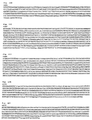
- the present invention relates to an isolated nucleic acid molecule comprising a nucleic acid sequence comprising at least 50 nucleotides a) of the nucleic acid sequence of one of Figs.21A, B , b) of an allele of the nucleic acid sequence of one of Figs.21A, B or c ) of a nucleic acid sequence which under stringent conditions hybridizes with the nucleic acid sequence of one of Figs. 21 A, B .
- hybridization under stringent conditions means that a positive hybridization signal is still observed after washing for 1 hour with 1 x SSC buffer and 0.1 % SDS at 55°C, preferably at 62°C and most preferably at 68°C, in particular, for 1 hour in 0.2 x SSC buffer and 0.1% SDS at 55°C, preferably at 62°C and most preferably at 68°C.
- the present invention relates to such a nucleic acid molecule which comprises the complete coding regions or parts thereof of the genes ssaD, ssaE, sseA, sseB, sscA, ssec, sseD, sseE, sscB, sseF, sseG, ssaG, ssaH, ssaE, ssaJ, ssrA and ssrB.
- the invention pertains also to such nucleic acids, wherein at least one coding region of said genes is functionally deleted.
- the nucleic acid molecule comprises an insertion cassette to facilitate the insertion of a heterologous nucleic acid molecule by transposon or phage mediated mechanism.
- said nucleic acid molecules can comprise at least one heterologous nucleic acid molecule.
- the heterologous nucleic acid molecule may be fused 5' or 3', inserted or deletion-inserted to the inventive nucleic acid molecule.
- deletion-inserted it is understood that the insertion of the heterologous nucleic acid molecule is associated with a concurrent deletion of parts of the inventive nucleic acid molecule.
- the nucleic acid molecule is inserted or deletion-inserted and in one preferred embodiment the heterologous nucleic acid molecule is flanked 5' and 3' by sequences of the nucleic acid molecule according to the invention, wherein each of said sequences has a length of at least 50 nucleotides, preferably 200-250 nucleotides.
- the heterologous nucleic acid molecule codes for a polypeptide or peptide, more preferred it codes for a bacterial or viral antigen or a homologue thereof or for a tumor antigen.
- the nucleic acid molecule also comprises at least one gene expression cassette to allow for efficient expression of the heterologous nucleic acid molecule.
- Such gene expression cassette usually comprises elements such as promoters and/or enhancers which improve the expression of the heterologous nucleic molecule acids.
- gene expression cassette comprises elements for the termination of transcription. The presence of transcription terminators, however, may be not preferred in cases where the heterologous nucleic acid molecule is to be transcribed together with other genes into a cistronic mRNA.
- nucleic acid molecule one or more selective marker cassettes and one or more transactivator cassettes and optionally invertase cassettes for allowing the expression of the heterologous nucleic acid molecules in a one-phase system or a two-phase system.
- sequences may be present which code for a polypeptide or peptide-targeting domain and, thus, allow for the targeting of the expression product of the heterologous nucleic acid molecule to a predetermined cell compartment such as cytosol, periplasma or outer membrane, or the secretion of said expression product, or which code for an immunostimulatory domain.
- the invention relates to a recombinant vector which comprises the nucleic acid molecule described above.
- a cell comprising a modified inventive nucleic acid molecule as described above by insertion of a heterologous sequence or the recombinant vector.
- the cell may be a prokaryotic cell such as a gram-negative cell, e.g. a Salmonella cell, or it can be a eukaryotic cell such as a mammalian cell, e.g. a human cell, and, in particular, a macrophage.
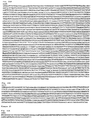
- the present invention relates to a peptide or polypeptide comprising a peptide sequence comprising at least 20 amino acids a) of the sequence of one of Figs. 23A-Q , or b) of a sequence which is 60%, preferred 65% and more preferred 70% homologous to the sequence of one of Figs. 23A-Q .
- the invention relates to a polypeptide comprising the sequence a) of one of Figs. 23A-Q , or b) which is 60%, preferred 65% and more preferred 70% homologous to the sequence of one of Figs. 23A-Q .
- Another aspect of the present invention relates to an antibody which is directed against an epitope which is comprised of the aforementioned peptide or polypeptide.
- the antibody may be polyclonal or monoclonal.
- a further aspect of the present invention relates to a fusion protein comprising the polypeptide according to any one of the claims 17 and 18 having inserted or deletion-inserted or being fused C- or NH 2 -terminally with at least one heterologous polypeptide.
- the heterologous polypeptide preferred is an antigen, more preferred a bacterial or viral antigen or a tumor antigen.
- the present invention furthermore provides instructions for the development of a variety of potential live Salmonella vaccine strains with different attenuation levels, which subsequently serve as platforms for the development of recombinant live Salmonella vaccine carrier strains that express antigens from heterologous pathogens, thus serving as multivalent vaccines.
- Such recombinant live Salmonella vaccine carriers are equipped with modules comprising variable gene cassettes that regulate the expression of heterologous antigens in Salmonella and determine presentation of the heterologous antigens to the host immune system.
- the basic attenuation principle originates from novel mutations in the Salmonella Pathogenicity Island 2 (SPI2) gene locus. Additional mutations, which can be used either alone or in combination with mutations in sse or SPI-2 genes or in combination with the aroA mutation for optimal attenuation of live vaccine carrier strains, have been reported recently (Heithoff et al., 1999; Valentine et al., 1998). By combination of the individual mutations in the SPI-2 gene locus with each other and with other known attenuating gene mutations, such as aroA, etc., a broad repertoire of attenuation and immunogenicity can be achieved. Different expression cassettes can be introduced on these platforms, allowing further modulation of the immune response directed against the heterologous antigens.
- SPI2 Salmonella Pathogenicity Island 2
- the present invention is an attenuated gram-negative cell comprising the SPI2 gene locus, wherein at least one gene of the SPI2 locus is inactivated, wherein said inactivation results in an attenuation/reduction of virulence compared to the wild type of said cell.
- Genes present in the Salmonella pathogenicity island 2 that encode for a variety of proteins involved in type III secretion and those that are required for systemic spread and survival within phagocytic cells are ideal candidates for attenuation of pathogenic Salmonella ssp.
- Several gram-negative bacterial pathogens secrete certain virulence proteins via specialised type III secretion systems. Virulence factors enable pathogenic bacteria to colonise a niche in the host despite specific attacks of the immune system.
- the type III secretion systems comprise a large number of proteins required to transfer specific effector proteins into eukaryotic host cells in a contact-dependent manner, thus they have also been called contact-dependent secretory systems.
- the Yersinia effectors YpkA and YopH have threonine/serine kinase and tyrosine phosphatase activities, respectively.
- Yops inhibit bacterial phagocytosis by host cells, which is thought to enable extracellular bacterial proliferation.
- the Shigella Ipa proteins secreted by the mxi / spa type III secretion system, promote entry of this bacterium into epithelial cells.
- EspA, EspB and EspD encoded by the locus of enterocyte effacement (LEE) of enteropathogenic Escherichia coli (EPEC) are required for translocation of proteins that cause cytoskeletal rearrangements and the formation of pedestal-like structures on the host cell surface.
- an "gram-negative cell comprising the SPI2 gene locus” is a cell having a gene locus that harbors genes required for the systemic spread and survival within phagocytic cells and, thus, is a homologue or functional equivalent of the SPI2 locus from Salmonella.
- the inventive attenuated gram-negative cell is an Enterobactericae cell, more preferred, a Salmonella cell, a Shigella cell or a Vibrio cell.
- cells having a broad host range are preferred. Typical hosts are mammals, e.g. man, and birds, e.g. chicken. Salmonella cells are more preferred, and particularly preferred is Salmonella serotype typhimurium Definitive Type 104 (DT 104).
- Salmonella typhimurium is unusual in that it contains two type III secretion systems for virulence determinants. The first controls bacterial invasion of epithelial cells, and is encoded by genes within a 40kb pathogenicity island (SPI1). The other is encoded by genes within a second 40kb pathogenicity island (SPI2) and is required for systemic growth of this pathogen within its host.
- SPI1 40kb pathogenicity island
- SPI2 40kb pathogenicity island
- the genes located on pathogenicity island SPI1 are mainly responsible for early steps of the infection process, the invasion of non-phagocytic host cells by the bacterium. For most of the SPI1 genes, mutations result in a reduced invasiveness in vitro.
- mutants that are defective in invasion are not necessarily avirulent; studies in mice demonstrated that, while these mutations in SPI1 genes significantly reduced virulence upon delivery by the oral route, they had no influence on virulence following an intraperitoneal route of infection. Taken together, these results indicate that mutations in genes within the pathogenicity island SPI1 do not abolish systemic infection and are therefore not very useful for the development of a safe, attenuated Salmonella carrier strain. In comparison, virulence studies of SPI2 mutants have shown them to be attenuated by at least five orders of magnitude compared with the wild-type strain after both oral and intraperitoneal inoculation of mice.
- SPI2 contains genes for a type III secretion apparatus ( ssa ) and a two component regulatory system (ssr), as well as candidate genes for a set of secreted effectors (sse) and their specific chaperones ( ssc ).
- ssa type III secretion apparatus
- ssr two component regulatory system
- ssc specific chaperones
- the first 13 genes within the ssaK / U operon and ssaJ encode components of the secretion system apparatus.
- ssac orf 11 in Shea et al., 1996; spiA in Ochman et al., 1996) and ssrA (orf 12 in Shea et al., 1996; spiR in Ochman et al., 1996), which encode a secretion system apparatus protein and a two component regulatory protein, respectively, are found in a region approximately 8kb from ssaJ.
- the inventive attenuated gram-negative cell has inactivated at least one gene selected from effector (sse) gene secretion apparatus (ssa) genes, chaperon (ssc) genes and regulation (ssr) genes. More preferably, the at least one inactivated gene is an sse, ssc and/or ssr gene, even more preferred is an sse and/or ssc gene.
- the inactivated gene is preferably sseC, sseD, sseE or a combination thereof.
- the ssr genes are affected by the inactivation, preferably at least ssrB is inactivated.
- the ssc genes are affected by the inactivation, preferably at least sscB is inactivated.
- the inactivation of said gene of the SPI2 locus is effected by a mutation which may comprise deletion.
- deletions of at least six nucleotides, and more preferred is a deletion of the partial and, in particular, the complete coding sequence for said gene.
- the mutation may also comprise the insertion of a heterologous nucleic acid molecule into said gene to be inactivated or a combination of deletion and insertion.
- Pathogenic Salmonella ssp serve a basis for the construction of a panel of different live Salmonella vaccine prototypes generated by gradual attenuations accomplished through the introduction of defined SPI2 gene locus mutations.
- Each resulting individual live Salmonella vaccine prototype is further transformed into a multivalent recombinant vaccine by the introduction of exchangeable DNA modules carrying (1) genetically engineered genes from heterologous pathogens and (2) adequate expression systems executing efficacious antigen presentation to the host immune system.
- exchangeable DNA modules carrying (1) genetically engineered genes from heterologous pathogens and (2) adequate expression systems executing efficacious antigen presentation to the host immune system.
- these features elicit a specific immune response that either protects vaccinated hosts against subsequently invading Salmonella and/or other pathogens (prophylactic vaccination) or eliminates persistant pathogens, such as Helicobacter pylori (therapeutic vaccination).
- Pathogenic Salmonella ssp. are gradually attenuated by mutations in individual virulence genes that are part of the SP12 gene locus, e.g. an sse gene coding for an effector protein, such as sseC, sseD or sseE, or an ssc gene, such as sscB, coding for a chaperone, or an ssr gene, such as ssrB, coding for a regulator.
- Individual mutation of each of these genes leads to a unique individual grade of attenuation, which, in turn, effects a characteristic immune response at the mucosal, humoral and cellular levels.
- the individual grade of attenuation can be moderately increased by combinations of at least two gene mutations within the SPI2 gene locus or by combination with a mutation in another Salmonella gene known to attenuate virulence, e.g. an aro gene, such as aroA.
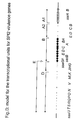
- a stronger grade of attenuation is achieved by mutation of a virulence gene that is part of a polycistronic gene cluster encoding several virulence factors, such as the transcriptional unit comprising the sseC, sseD, sseE and sscB genes, such that the mutation exerts a polar effect, disrupting expression of the following genes.
- the grade of attenuation may directly depend on the number of virulence genes that are affected by the polar mutation as well as their individual characteristics. Finally, the strongest attenuation is achieved when regulatory genes, such as ssrB, are mutated. Again, each mode of attenuation of a Salmonella ssp. leads to the generation of a live Salmonella vaccine strain that evokes an immune response at the mucosal, humoral and cellular levels that is characteristic for the type and/or combination of attenuating mutations present in that strain.
- the panel of differently attenuated live Salmonella vaccine strains that is generated represents a pool of potential carrier strains from which that carrier can be selected that provokes the most efficacious immune response for either the prevention or eradiction of disease in conjunction with the heterologous antigens that are expressed.
- Mutations leading to attenuation of the indicated Salmonella virulence genes are preferentially introduced by recombinant DNA technology as defined deletions that either completely delete the selected virulence gene or result in a truncated gene encoding an inactive virulence factor. In both cases, the mutation involves a single gene and does not affect expression of neighbouring genes (non-polar mutation).
- An insertional mutation in one of the indicated virulence genes is preferred when the selected gene is part of a polycistronic virulence gene cluster and all of the following virulence genes are included in the attenuation process (polar mutation).
- Insertional mutations with non-polar effects are in general restricted to genes that are either singly transcribed or are localised at the end of a polycistronic cluster, such as ssrB.
- other attenuating mutations can arise spontaneously, by chemical, energy or other forms of physical mutagenesis or as a result of mating or other forms of genetic exchange.
- the mutation which results in the preparation of the inventive attenuated gram-negative cell may be a polar or non-polar mutation.
- the grade of attenuation may be modified by inactivating an additional gene outside of the SPI2 locus, for example, another virulence gene or a gene that is involved in the biosynthesis of a metabolite or a precursor thereof such as the aro genes, in particular, aroA, or any other suitable gene such as superoxide dismutase (SOD).
- an additional gene outside of the SPI2 locus for example, another virulence gene or a gene that is involved in the biosynthesis of a metabolite or a precursor thereof such as the aro genes, in particular, aroA, or any other suitable gene such as superoxide dismutase (SOD).
- SOD superoxide dismutase
- the attenuated cell according to the invention may furthermore comprise elements which facilitate the detection of said cell and/or the expression of an inserted heterologous nucleic acid molecule.
- An example of an element which facilitates the detection of the attenuated cell is a selective marker cassette, in particular, a selective marker cassette which is capable of conferring antibiotic resistance to the cell.
- the selective marker cassette confers an antibotic resistance for an antibiotic which is not used for therapy in a mammal.
- Examples of elements which facilitate the expression of a heterologous nucleic acid molecule are a gene expression cassette which may comprise one or more promoter, enhancer, optionally transcription terminator or a combination thereof, a transactivator cassette, an invertase cassette for 1-phase or 2-phase expression of a heterologous nucleic acid.
- An example of an element which facilitates the insertion of a heterologous nucleic acid molecule is an insertion cassette.
- the invention provides a carrier for the presentation of an antigen to a host, which carrier is an attenuated gram-negative cell according to any one of the claims 22 to 49, wherein said cell comprises at least one heterologous nucleic acid molecule comprising a nucleic acid sequence coding for said antigen, wherein said cell is capable of expressing said nucleid acid molecule or capable of causing the expression of said nucleic acid molecule in a target cell.
- said nucleic acid molecules comprises a nucleic acid sequence coding for a bacterial or viral antigen or for a tumor antigen.
- bacterial antigens are antigens from Helicobacter pylori, Chlamydia pneumoniae, Borrelia burgdorferi and Nanobacteria.
- viral antigens are antigens from Hepatitis virus, e.g. Hepatitis B and C, human papilloma virus and Herpes virus.
- the heterologous nucleic acid molecule may comprise a nucleic acid sequence which codes for at least one polypeptide or peptide-targeting domain and/or immunostimulatory domain.
- the expression product of said heterologous nucleic acid molecule may be targeted specifically to predetermined compartments such as periplasma, outer membrane, etc.
- the heterologous nucleic acid molecule may code for a fusion protein.
- the heterologous nucleic acid molecule is inserted into the SPI2 locus, preferred, into an sse gene and, more preferred, into sseC, sseD and/or sseE, in particular, sseC.
- the insertion may be a polar insertion or an unpolar insertion.
- an unpolar insertion is preferred, since it allows for the expression of the remaining genes of a polycistronic gene cluster, which can be used for the generation of carriers having different grades of attenuation.
- Attenuated live Salmonella vaccines are used as carriers for specific antigens from heterologous pathogens, e.g. Helicobacter, etc., thus acting as a multivalent vaccine.
- the heterologous antigens are provided by a gene expression cassette (GEC) that is inserted by genetic engineering into the genome of an attenuated Salmonella strain.
- GEC gene expression cassette
- insertion of the gene expression cassette is targeted to one of the indicated virulence genes, thereby causing an insertional mutation as described in previous paragraph.
- expression of the heterologous genes in the gene expression cassette is regulated by trans-acting factors encoded by a trans-activator cassette (TC) or an invertase cassette performing a 2-phase variable expression mode.
- TC trans-activator cassette
- invertase cassette performing a 2-phase variable expression mode.
- the insertion of the trans-activator cassette is targeted to a second chosen virulence gene, which is then inactivated.
- the gene expression cassette or the trans-activator cassette or the invertase cassette can be introduced into the Salmonella genome by transposon-mediated insertion, which has no attenuation effect.
- a suicide plasmid carrying a mutated virulence gene cassette containing a selective marker cassette (SMC) either alone or in combination with a gene expression cassette or a trans-activator cassette or the invertase cassette is introduced into the receptor Salmonella strain by conjugation.
- SMC selective marker cassette
- the original virulence gene is replaced with the mutated virulence gene cassette via homologous recombination, and the suicide plasmid, unable to replicate in the Salmonella receptor strain, becomes rapidly depleted.
- Successfully recombined Salmonella can be selected based on properties (such as, but not limited to, antibiotic resistance) conferred by the product of the gene(s) within the selective marker cassette.
- the mutated virulence gene cassette comprises DNA sequences that are homologous to the genome of the receptor Salmonella strain where the original virulence gene is localised. In the case where the original virulence gene is to be completely deleted, only those genomic DNA sequences that border the original virulence gene (indicated as flanking regions) are included in the mutated virulence gene cassette.
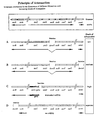
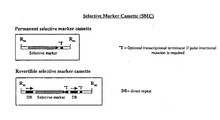
- the general architecture of a mutated virulence gene cassette includes at each end a DNA sequence of at least 50 nucleotides, ideally 200 - 250 nucleotides, that is homologous to the genome segment where the original virulence gene is localised. These DNA sequences flank a selective marker cassette and the other cassettes, such as the gene expression cassette (GEC) or the trans-activator cassette (TC) or the invertase cassette. As indicated above, these cassettes are used to generate insertional mutations which disrupt original gene expression. For in-frame deletions, a selective marker cassette is preferentially used.
- the selective marker cassette principally consists of a gene mediating resistance to an antibioticum which is able to inactivate the receptor Salmonella strain but which is actually not used in the treatment of Salmonellosis.
- another selectable marker can be used.
- the selective marker cassette is inserted in-frame in the targeted virulence gene and, consequently, the expression of the marker gene is under the control of the virulence gene promoter.
- the cassette is inserted within a polycistronic transcriptional unit, in which case the marker gene is under control of the promoter for this unit.
- the selective marker gene is under control of its own promoter; in this case a transcriptional terminator is included downstream of the gene.
- the selective marker is needed to indicate the successful insertion of the mutated virulence gene cassette into the genome of the receptor Salmonella strain. Furthermore, the antibiotic resistance marker is needed to facilitate the pre-clinical immunological assessment of the various attenuated Salmonella strains.
- the selective marker is flanked by direct repeats, which, in the absence of selective pressure, lead to the recombinatorial excision of the selective marker cassette from the genome, leaving the short sequence of the direct repeat.
- the selective marker cassette can be completely removed by recombinant DNA technology.
- the selective marker cassette is removed by adequate restriction endonuclease from the original mutated virulence gene cassette on the suicide plasmid leaving the flanking region sequences which are homologous to the Salmonella genome.
- the suicide plasmid is then transfered into the attenuated receptor Salmonella strain by conjugation where the SMC-depleted mutated virulence gene cassette replaces the SMC-carrying mutated virulence gene cassette by recombination.
- the attenuated Salmonella strain is free for the application in humans.
- Transcriptional terminator sequences are generally included in the cassettes when polar mutations are established.
- the gene expression cassette comprises elements that allow, facilitate or improve the expression of a gene.
- the gene expression cassette additionally comprises one or more gene expression units derived from either complete genes from a heterologous source or fragments thereof, with a minimal size of an epitope. Multiple gene expression units are preferentially organised as a concatemeric structure.
- the genes or gene fragments are further genetically engineered, such that the resulting proteins or fusion proteins are expressed in the cytosol, in the periplasm, surface displayed or secreted.
- the genes or gene fragments can be fused with DNA sequences encoding immunologically reactive protein portions, e.g. cytokines or attenuated bacterial toxins.
- the genes or gene fragments are either controlled in a one-phase mode from a promoter within the gene expression cassette or in a 2-phase mode or indirectly by a trans-activator cassette (TC).
- the promoter is preferentially a Salmonella promoter that is activated, i.e. induced, by environmental signals but also constitutive promoters of different strength can be used.
- the expression of the gene cassette is controlled by an invertase that derived from an invertase cassette. The invertase catalyses the inversion of a DNA segment comprising the gene cassette.
- the DNA segment is flanked on each end by an inverted repeat which is the specific substrate for the invertase finally causing two orientation of the gene cassette with respect to the gene expression cassette promoter.
- the invertase cassette comprises of an invertase that is controlled by a constitutive promoter or a Salmonella promoter induced or derepressed by environmental signals.
- Heterologous antigens encoded within the gene expression cassette can be expressed under the control of a promoter, e.g. a tissue-specific promoter, which may be constitutive or inducible.
- the expression can be activated in a target cell, whereby a signal is transmitted from the target cell to the interior of the Salmonella cell, which signal induces the expression.
- the target cell for example, can be a macrophage.
- the expression product may comprise a targeting domain or immunostimulatory domain, e.g. in the form of a fusion protein.
- the heterologous protein itself also may be a fusion protein.
- the heterologous antigens can be optionally expressed as cytosolic, periplasmic, surface displayed or secretory proteins or fusion proteins in order to achieve an efficacious immune response.
- the antigen encoding sequences may be fused to accessory sequences that direct the proteins to the periplasm or outer membrane of the Salmonella cell or into the extracellular milieu. If the heterologous polypeptides are secreted, secretion can occur using a type III secretion system. Secretion by the SPI2 type III secretion system is suitable. Proteins that are destined for the cytosolic compartment of the Salmonella do not need accessory sequences, in this case, naturally occurring accessory sequences must be removed from the genes encoding such antigens.
- the accessory sequences for the periplasmatic compartment of Salmonella comprise a DNA sequence deduced from the amino-terminally localised signal peptide of a heterologous protein naturally translocated via the general secretion pathway, e.g. CtxA, etc.
- the accessory sequences for the outer membrane compartment of Salmonella preferentially comprise DNA sequences deduced from the functionally relevant portions of a type IV secretory (autotransporter) protein, e.g. AIDA or IgA protease.
- a type IV secretory (autotransporter) protein e.g. AIDA or IgA protease.
- the appropriate fusion protein contains an amino-terminally localised signal peptide and, at the carboxy-terminus, a ⁇ -barrel shaped trans-membrane domain to which the foreign passenger protein is coupled via a spacer that anchors the passenger protein to the bacterial surface.
- the accessory sequences for secretion into the extracellular milieu comprise DNA sequences deduced from proteins naturally secreted by the type III secretion system.
- the heterologous antigen is fused in the centre of a protein naturally secreted by the type III pathway or at the carboxy-terminal end of the respective protein.
- the transactivator cassettes provide activators which generally improve expression of the heterologous antigens encoded by the various gene expression cassettes.
- Such activators either directly (RNA polymerase) or indirectly (transcriptional activator) act on the transcription level in a highly specific order.
- the expression of such activators are controlled by Salmonella promoters which are induced in vivo by environmental signals.
- the synthesis of the activator within the transactivator cassette is regulated in a 2-phase mode.
- the invertase expressed by the invertase cassette places the activator encoding DNA fragment in two orientations with respect to the transcriptional promoter. In the ON-orientation the activator gene is in the correct transcriptional order. In the OFF-modus the activator is incorrectly orientated and no expression occurs.
- the gene product of the transactivator cassette exerts its effect directly on the promoter present in the gene expression cassette, directly activating or de-repressing expression of the heterologous gene.
- activation of the promoter in the heterologous gene expression cassette is dependent upon two or more interacting factors, at least one of which (encoded in the transactivator cassette) may be regulated by external signals.
- the external signal does not directly exert its effect on the transactivator cassette, but rather through a multi-step process, or in which the gene product of the transactivator cassette does not directly exert its effect on the heterologous gene expression cassette , but rather through a multi-step process.
- the present invention is an attenuated gram-negative cell comprising the SPI2 gene locus, characterized by a lack of at least one SPI2 polypeptide, wherein said lack results in an attenuation/reduction of virulence compared to the wild type of said cell.
- said missing SPI2 polypeptide is one or more effector polypeptide, secretion apparatus polypeptide, chaperon polypeptide or regulatory polypeptide.
- said attenuated cell may be a carrier which then is characterized by the presence of at least one heterologous peptide or polypeptide having immunogenic properties.
- a further aspect of the present invention is a pharmaceutical composition which comprises as an active agent an immunologically protective living vaccine which is an attenuated gram-negative cell or carrier according to the invention.
- the pharmaceutical composition will comprise additives such as pharmaceutically acceptable diluents, carriers and/or adjuvants. These additives are known to the person skilled in the art.
- the composition will administered to a patient via a mucosa surface or via or via the parenteral route.
- Further aspects of the present invention include a method for the preparation of a living vaccine, which comprises providing a living gram-negative cell comprising the SPI2 locus and inactivating at least one gene of the SPI2 locus to obtain an attenuated gram-negative cell of the invention, and optionally inserting at least one heterologous nucleic acid molecule coding for an antigen to obtain a carrier according to the invention.
- a further aspect pertains to a method for the preparation of a living vaccine composition comprising formulating an attenuated cell or a carrier according to the invention in a pharmaceutically effective amount together with pharmaceutically acceptable diluents, carriers and/or adjuvants.
- a further aspect of the invention relates to a method for the detection of an attenuated cell or a carrier according to the invention, comprising providing a sample containing said cell and detecting a specific property not present in a wild type cell.
- Methods for detecting a specific property of the attenuated cell or carrier, which is not present in wild type are known to the person skilled in the art. For example, if this specific property of the attenuated cell comprises a deletion of one or more parts of the SPI2 locus, then the presence of said cell can be detected by providing a pair of specific primers which are complementary to sequences flanking this deletion and amplifying a fragment of specific length using amplification methods such as PCR.
- Methods for detecting the presence of an inventive carrier comprise PCR amplification of an inserted fragment or a fragment spanning the insertion boundary, hybridization methods or the detection of the heterologous expression product or of a selective marker.
- a further aspect of the invention is a method for establishing a library of attenuated gram-negative cells or carriers, respectively, according to the invention.
- the method comprises the preparation of attenuated recombinant vaccine strains, each having a different mutation in the SPI2 locus which results in a different degree of attenuation.
- the pathogenicity or virulence potential of said strains can then be determined using known methods such as determination of the LD50, and the strains are rated according to the different pathogenicities, i.e. a different grade of attenuation.
- the method comprises also the determination of other parameters of interest such as the immunogenicity or the immuno-stimulatory response raised in a host.
- the immuno-stimulatory potential of the inventive attenuated cells or carriers is determined at humoral, cellular and/or mucosal level.
- the strain having the desired properties can be selected specifically. For example, it will be usually preferred to select a strong attenuated strain for administration to patients which receive immunosuppressive drugs.
- the invention allows for the establishment of libraries of attenuated carriers having defined pathogenicities and optionally immunogenicities.
- the establishment of a carrier library additionally will comprise the determination of the antigen presentation of said carrier strains to a host, whereby a panel of different carriers strains will be obtained having defined properties with respectto pathogenicity, immuno-stimulatory potential of carrier antigens and immuno-stimulatory potential of the heterologous antigen.
- Another aspect of the invention is the use of the attenuated cell or carrier according to the invention for the preparation of a drug for the preventive or therapeutic treatment of an acute or chronic disease caused essentially by a bacterium or virus.
- a carrier according to the invention may be used for the preparation of a drug for the preventive or therapeutic treatment of a tumor.
- the individual immuno-protective potential of each of the established recombinant Salmonella vaccine strains is determined in a mouse model using a pathogenic Salmonella typhimurium as the challenge strain.
- the Salmonella acceptor strain has a broad host range, exhibiting significant pathogenicity in both animals and humans. Ideally, this is a Salmonella strain that is strongly pathogenic for mice, such as S. typhimurium. After successful development of the recombinant Salmonella vaccine strain, the strain is directly applicable for use in both animals and humans. If such an ideal Salmonella acceptor strain is not satisfactory for the respective host, other host-specific Salmonella must be selected, such as S. typhi for humans.
- nucleic acid molecule as shown in Fig. 21A or B or one of the Figs.22A-Q , optionally modified as described hereinabove or of a vector as described hereinabove for the preparation of an attenuated cell, a living vaccine or a carrier for the presentation of an antigen to a host and to the use of the Salmonella SP12 locus for the preparation of an attenuated cell, a living vaccine or preferably a carrier for the presentation of an antigen to a host.
- Salmonella SP12 locus refers to any nucleic acid sequence, coding or not coding, and to the expression product of coding sequences.
- a still further aspect of the present invention is the use of a virulence gene locus of a gram-negative cell for the preparation of a carrier for the presentation of an antigen to a host.
- Another aspect of the invention relates to a method of therapeutically or prophylactically vaccinating an animal, e.g. a mammal, e.g. a human, against a chronic disease caused primarily by a infectious organism including preparation and administering a vaccine of the invention.
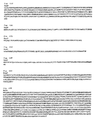
- Still another aspect of the present invention is an isolated nucleic acid molecule comprising a nucleic acid of at least 100 nucleotides a) of the nucleic acid sequence of one of Figs.24A , B, b) of a nucleic acid sequence which under stringent conditions hybridizes with the nucleic acid sequence of one of Figs.24A , B.
- said aspect relates to said nucleic acid molecule which is capable of inducing the expression of a nucleic acid sequence conding for a peptide or polypeptide operatively linked to said nucleic acid molecule.
- the in vivo inducible promoter Pivi comprises a DNA fragment which carries sequences for an operator and a transcriptional promoter.
- Such in vivo inducible promoter can be identified by applying an adequate reporter gene approach.
- Two of such in vivo inducible promoters have been identified within the SPI2 locus which initiate expression of the ssaBCDE operon (promoter A2) and the sseABsscAsseCDEsscBsseFG operon (promoter B), respectively.
- These promoters are induced by a regulative system comprising the ssrA and ssrB gene products.
- This regulative system is part of the SPI2 locus responsible for the activation of additional SPI2 locus genes.
- the regulative system is activated in macrophages by environmental signal(s) via sensor protein SsrA.
- the SsrB protein finally binds at a defined DNA sequence which initiates transcription through the RNA polymerase.
- the DNA fragment comprising operator/promoter sequences is inserted in front of an invertase gene or an activator gene or a gene expression cassette, thereby executing an in vivo inducible expression in bacteria carrying at least the ssrA and ssrB genes or the complete SPI2 locus.
- the invention relates to an expression system for the in vivo inducible expression of a heterologous nucleic acid in a target cell, comprising a carrier cell for said heterologous nucleic acid, wherein said carrier cell comprises (a) a polypeptide having the amino acid sequence shown in Fig.23P (ssrA) or a functional homologue thereof, (b) a polypeptide having the amino acid sequence shown in Fig.23Q (ssrB) or a functional homologue thereof, and (c) the nucleic acid molecule of one of Figs.24A , B or a functional homologue thereof, as described above.
- a carrier cell comprises (a) a polypeptide having the amino acid sequence shown in Fig.23P (ssrA) or a functional homologue thereof, (b) a polypeptide having the amino acid sequence shown in Fig.23Q (ssrB) or a functional homologue thereof, and (c) the nucleic acid molecule of one of Figs.24A
- the target cell may be any suitable cell but preferably it is a macrophage.
- the carrier cell preferably is a Salmonella cell.
- the target cell may also comprise one or more of the elements described above such as selective marker cassettes, gene expression cassettes, transactivator cassettes, invertase cassettes and/or insertion cassettes.
- it may comprise a heterologous nucleic acid, in particular, the heterologous nucleic acids may be inserted into a gene expression cassette, thus rendering the GEC functional.
- a still further aspect of the invention relates to the use of a nucleic acid molecule comprising at least 100 nucleotides of the nucleic acid sequence shown in one of Figs.24A , B or hybridizing therewith and having promoter activity, for the in vivo inducible expression of a heterologous nucleic acid molecule.
- a further aspect of the present invention is the use of said nucleic acid molecule for the detection of in vivo inducible promoters.
- bacteria were grown at 37°C in Luria Bertani (LB) broth or agar, supplemented with ampicillin (50 ⁇ g/ml), kanamycin (50 ⁇ g/ml), or chloramphenicol (50 ⁇ g/ml) where appropriate.
- Eukaryotic cells were grown in RPMI 1640 supplemented with 10% of foetal calf serum (FCS), 100 U/ml penicillin, 50 ⁇ g/ml streptomycin, 5x10 -5 M 2-mercaptoethanol and 1 mM L-glutamine (GIBCO BRL; Prisley, Scotland).
- FCS foetal calf serum
- Example 1 Distribution of the pathogenicity island SPI-2 within different Salmonella strains
- Table 2 Prevalence of SPI-2 genes in various Salmonella ssp. deduced from representative gene probes Species subspec. serovar/serotype ssrAB ORF S. enterica I typhimurium + + S. enterica I typhi + + S. enterica II + + S. enterica IIIa + + S. enterica IIIb + + S. enterica IV + + S. enterica VI + + S. enterica VII + + S. bongori 66:z41:-- - + S. bongori 44:z48:-- - + E. coli K-12 - - Presence or absence of hybridizing bands is indicated by + or -, respectively.
- Genomic DNA of various Salmonella strains and E. coli K-1 2 was prepared as previously described (Hensel et al., 1997a).
- genomic DNA was digested with Eco RI or Eco RV, fractionated on 0.6 % agarose gels and transferred to Hybond N + membranes (Amersham, Braunschweig).
- Various probes corresponding to the SPI-2 region were obtained as restriction fragments of the subcloned insert of ⁇ 1.
- Probes corresponding to ORF 242 and ORF 319 were generated by PCR using primer sets D89 (5'-TTTTTACGTGAAGCGGGGTG-3') and D90 (5'-GGCATTAGCGGATGTCTGACTG-3'), and D91 (5'-CACCAGGAACCATTTTCTCTGG-3') and D92 (5'-CAGCGATGACGATATTCGACAAG-3'), respectively. PCR was performed according to the specifications of the manufacturer (Perkin-Elmer, Rothstadt). PCR products were submitted to agarose gel electrophoresis and fragments of the expected size were recovered and purified. Hybridization probes were labeled using the DIG labeling system as described by the manufacturer (Boehringer, Mannheim).
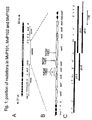
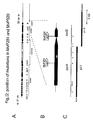
- a central region of the pathogenicity island ( FIG. 1A ) has been cloned and sequenced. DNA fragments covering the region between ssaC and ssaJ were subcloned in plasmids p5-2 and p5-4 as indicated in Fig. 1C . The arrangement and designation of genes in the 8kb region between ssaC and ssaK is shown in Fig. 1B . This sequence will be available from the EMBL database under accession number AJ224892 in the near future.
- the sequenced region extends the open reading frame (ORF) of a gene encoding a putative subunit of the type III secretion apparatus referred to as spiB (Ochman et al., 1996).
- ORF open reading frame
- a gene encoding a putative subunit of the type III secretion apparatus referred to as spiB (Ochman et al., 1996).
- this gene has been designated ssaD.
- the deduced amino acid sequence of ssaD is 24% identical to YscD of Y. enterocolitica. This is followed by an ORF with coding capacity for a 9.3 kDa protein, 34% identical to YscE of Y.
- ssaE This gene is designated ssaE.
- a sequence of 263 bp separates ssaE and a set of nine genes, several of which encode proteins with sequence similarity to secreted effector proteins or their chaperones from other pathogens. These genes are separated by short intergenic regions or have overlapping reading frames and it is likely that some are co-transcribed and translationally coupled. Therefore, the genes with similarity to those encoding chaperones were designated sscA and sscB, and the others sseA-E.
- the amino acid sequence deduced from sscA shows 26% identity/49% similarity over 158 amino acid residues to SycD, the product of IcrH of Y.
- pseudotuberculosis which acts as a secretion-specific chaperone for YopB and YopD (Wattiau et al., 1994).
- the amino acid sequence deduced from sscB shows 23% identity/36% similarity over 98 amino acid residues to Ippl of Shigella flexneri.
- Ippl is a chaperone for S. flexneri invasion proteins (Ipas) (Baundry et al., 1988).
- Ipas S. flexneri invasion proteins
- SscB has an acidic pl (Table 3), whereas SscA has an unusually high pl of 8.8.
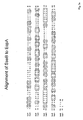
- SseB is 25% identical/47% similar to EspA of EPEC over the entire length of the 192 amino acid residue protein ( Fig. 2b ).
- SseD is 27% identical/51 % similar to EspB of EPEC over 166 amino acid residues.
- SseC has sequence similarity to a class of effector proteins involved in the translocation of other effectors into the target host cell. These include YopB of Y. enterocolitica, EspD of EPEC and PepB of Pseudomonas aerugunosa.
- SseC is approximately 24% identical/48% similar to both EspD of EPEC and YopB of Y. enterocolitica ( Fig. 2a ).
- EspD and YopB have two hydrophobic domains that are predicted to insert into target cell membranes (Pallen et al., 1997).
- SseC contains three hydrophobic regions that could represent membrane-spanning domains. Other features of these predicted effector proteins are shown in Table 1.
- TMpredict program Hofmann and Stoffel, 1993
- transmembrane helices are predicted for all the effector proteins apart from SseA which is very hydrophilic.
- Alignments of SseC to homologs in other pathogens are shown in Fig. 2b .
- conserveed amino acids are mainly clustered in the central, more hydrophobic portion of the protein, but unlike YopB, there is no significant similarity to the RTX family of toxins.
- SseD The conserved residues in SseD are present mainly in the N-terminal half of the protein. Comparison of the deduced amino acid sequences of sseABCDEF with entries in the PROSITE database did not reveal the presence of any characteristic protein motifs. We subjected the predicted amino acid sequences of the sse genes to searches using the programs COIL and MULTICOIL as described by Pallen et al. (1997). SseA and SseD are predicted to have one trimeric coil each, and SseC is predicted to have two trimeric coils (Table 3). Since EspB and EspD are predicted to have one and two trimeric coils, respectively (Pallen et al., 1997), this provides further evidence that these proteins are functionally related. Table 3.
- Protein M (kDa) pI Tm predictions Predicted coils SseA 12.5 9.3 hydrophilic at least one (trimer) SseB 21.5 4.7 one transmembrane helix none SseC 52.8 6.3 three transmembrane helices at least two (trimers) SseD 20.6 4.8 three transmembrane helices at least one (trimer) SseE 16.3 9.7 one transmembrane helix none SscA 18.1 8.8 hydrophilic none SscB 16.4 4.7 hydrophilic none
- Protein gel electrophoresis and Western blotting were performed as described elsewhere (Laemmli, 1970 and Sambrook et al., 1989). Plasmids for the expression of recombinant SPI2 protein were constructed by cloning the individual SPI2 genes in plasmids pQE30, pQE31 or pQE32 (Qiagen, Hilden) in order to generate in-frame fusion to the N-terminal 6His tag. Recombinant SP12 genes were expressed in E. coli M 15 [pREP] (Qiagen) and purified by metal chelating chromotography according to recommendations of the manufacturer (Qiagen).
- SPI2 proteins were emulsified with complete and incomplete Freund's adjuvant for primary and booster immunizations, respectively.
- Rabbits were immunized subcutaneously according to standard protocols (Harlow and Lane, 1988).
- SPI2 proteins were detected with antisera raised against recombinant SPI2 proteins after electrophoretical separation of proteins from total cells and transfered onto a nitrocellulose membrane (Schleicher and Schuell) using a 'Semi-Dry' blotting device (Bio-Rad) according to the manufacturers manual. Bound antibody was visualized using a secondary antibody-alkaline phosphatase conjugate according to standard protocols (Harlow and Lane).
- Fusions of the reporter gene firefly luciferase (luc) to various genes in SP12 were obtained using the suicide vectors pLB02 and pGPL01 (Gunn and Miller, 1996), which were kindly provided by Drs. Gunn and Miller (Seattle).
- a 831 bp Eco RV fragment of p2-2 was subcloned in Eco RV digested pSK + .
- a 1060 bp Sma l/ Hin cll fragment of p5-4 was subcloned in pSK + .
- the inserts of the resulting constructs were recovered as a Eco Rl/ Kpn l fragment and ligated with Eco RI/ Kpn I digested reporter vectors pGPL01 and pLB02.
- a 3kb Sma I/ Kpn I fragment of p5-2 was directly subcloned in pGPL01 and pLB02.
- ⁇ -galactosidase activities of reporter gene fusions were determined according to standard procedures (Miller, 1992). Bacterial strains harbouring firefly luciferase fusions to SP12 genes (strain MvP127, sseA :: luc, strain MvP131, ssaB :: luc, strain MvP266, ssaH :: luc ) were grown in medium with various Mg 2+ concentrations. The luciferase activity of aliquots of the cultures was determined using the Promega (Heidelberg) luciferase assay kit or custom made reagents accordingly. Briefly, bacteria were pelleted by centrifugation for 5 min.
- lysates were incubated for 15 min at room temperature with repeated agitation and subjected to a freeze/thaw cycle.
- SPI2 genes such as ssaB and ssaH is induced by low Mg 2+ concentrations of the growth medium
- S. typhimurium wild-type strain and strains harbouring luc reporter-gene fusions to ssaB (strain MvP131) and to ssaH (strain MvP266) were grown to mid-log phase (OD at 600 nm of about 0.5) in minimal media containing high amounts of Mg 2+ (10 mM MgCl 2 ).
- This medium is referred to as medium G.
- Bacteria were recovered by centrifugation, washed three times in minimal medium containing 8 ⁇ M Mg 2+ . This medium is referred to as medium F. Bacteria were resuspended in medium F or medium G and growth at 37°C was continued.
- This induction can be monitored by using the reporter gene luc fused into different positions of SPI2. Furthermore, proteins synthesized after induction of SPI2 were detected by Western Blots. However, even in the presence of high amounts of Mg 2+ , a low level of expression of SPI2 genes was observed.
- SPI2 genes such as sseA and ssaB is modulated by PhoP / PhoQ regulation
- DNA preparations and genetic manipulations were carried out according to standard protocols (Sambrook et al, 1989). Plasmid DNA transformation of bacterial cells was performed by electroporation (O'Callaghan and Charbit, 1990).
- Clones harbouring fragments of SPI2 were identified from a library of genomic DNA of S. typhimurium in ⁇ 1059 which has been described previously (Shea et al., 1996).
- the sse and ssc genes were subcloned from clone ⁇ 5 on a 5.7kb Eco RI fragment (p5-2) and a 5.8kb Hin dIII fragment (p5-4) in pBluescriptKS + as indicated in Fig. 1 and Table 1.
- DNA sequencing was performed using a primer-walking strategy.
- the dideoxy method (Sanger et al., 1977) was applied using the Pharmacia T7 sequencing system for manual sequencing and the dye terminator chemistry for automatic analysis on a ABI377 sequencing instrument.
- Plasmid p5-2 was digested by Cla I and the larger fragment containing the vector portion was recovered and self-ligated to generate p5-60. Plasmid p5-60 was linearized by digestion with Hin dIII, which cuts once within the sseC gene. Primers sseC -del-1 (5'- GCT AAG CTT CGG CTC AAA TTG TTT GGA AAA C -3') and sseE -del-2 (5'- GCT AAG CTT AGA GAT GTA TTA GAT ACC -3') were designed to introduce Hin dIII sites. PCR was performed using linearized p5-60 as template DNA.
- the TaqPlus polymerase (Stratagene) was used according to the instructions of the manufacturer. Reactions of 100 ⁇ l volume were set up using 10 ⁇ l of 10 x TaqPlus Precision buffer containing magnesium chloride, 0.8 ⁇ l of 100 mM dNTPs, 250 ng DNA template (linearized p5-8), 250 ng of each primer and 5 U of TaqPlus DNA polymerase. PCR was carried out for 35 cycles of: 95°C for 1 minute, 60°C for 1 minute, 72°C for 6 minutes. Then a final step of 72°C for 10 minutes was added. 10 ⁇ l of the PCR reaction were analyzed.
- a product of the expected size was recovered, digested by Hin dIII, self-ligated, and the ligation mixture was used to transform E . coli DH5 a to resistance to carbenicillin. Plasmids were isolated from transformants and the integrity of the insert and the deletion was analyzed by restriction digestion and DNA sequencing. The insert of a confirmed construct was isolated after digestion with Xbal and Kpn I and ligated to Xba I/ Kpn I-digested vector pKAS32. The resulting construct was used to transform E. coll S17-1 ⁇ pir to resistance to carbenicillin, and conjugational transfer of the plasmid to S.
- typhimurium (Nal R , Strep R ) was performed according to standard procedures (de Lorenzo and Timmis, 1994). Exconjugants that had integrated the suicide plasmid by homologous recombination were selected by resistance to nalidixic acid and carbenicillin, and screened for sensitivity to streptomycin. Such clones were grown in LB to OD600 of about 0.5 and aliquots were plated on LB containing 250 ⁇ g/ml streptomycin to select for colonies which had lost the integrated plasmid and undergone allelic exchange. Clones resistant to streptomycin but sensitive to carbenicillin were used for further analysis.
- Plasmid p5-2 was digested by Hind III/ Pst I and a fragment of 2.1 kb was isolated and subcloned in Hind III/ Pst I-digested vector pBluescript SK+. The resulting construct was designated p5-8. p5-8 was linearized by digestion with Eco RV, which cuts twice within the sseD gene.
- Primers sseD -del-1 (5'-ATA GAA TTC GGA GGG AGA TGG AGT GGA AG -3') and sseD-del-2 (5'-ATA GAA TTC GAA GAT AAA GCG ATT GCC GAC -3') were designed to introduce Eco RI sites.
- PCR was performed using linearized p5-8 as template DNA.
- the TaqPlus polymerase (Stratagene) was used according to the instructions of the manufacturer.
- Reactions of 100 ⁇ l volume were set up using 10 ⁇ l of 10 x TaqPlus Precision buffer containing magnesium chloride, 0.8 ⁇ l of 100 mM dNTPs, 250 ng DNA template (linearized p5-8), 250 ng of each primer and 5 U of TaqPlus DNA polymerase.
- PCR was carried out for 35 cycles of: 95°C for 1 minute, 60°C for 1 minute, 72°C for 5 minutes. Then a final step of 72°C for 10 minutes was added. 10 ⁇ l of the PCR reaction were analyzed. A product of the expected size was recovered, digested by Eco RI, self-ligated, and the ligation mixture was used to transform E. coli DH5 ⁇ to resistance to carbenicillin.
- Plasmids were isolated from transformants and the integrity of the insert and the deletion was analyzed by restriction mapping and DNA sequencing.
- the insert of a confirmed construct was isolated after digestion with Xbal and Kpn I and ligated to Xba I/ Kpn I-digested vector pKAS32.
- the resulting construct was used to transform E. coli S17-1 ⁇ pir to resistance to carbenicillin, and conjugational transfer of the plasmid to S. typhimurium (Nal R , Strep R ) was performed according to standard procedures (de Lorenzo and Timmis, 1994).
- Exconjugants that had integrated the suicide plasmid by homologous recombination were selected by resistance to nalidixic acid and carbenicillin, and screened for sensitivity to streptomycin. Such clones were grown in LB to OD600 of about 0.5 and aliquots were plated on LB containing 250 ⁇ g/ml streptomycin to select for colonies which had lost the integrated plasmid and undergone allelic exchange. Clones resistant to streptomycin but sensitive to carbenicillin were used for further analysis.
- a deletion of 128 bp between codon 32 and 160 of ssc B was generated.
- a 3kb Bg /II fragment of plasmid p5-2 was ligated into the Bam HI site of pBluescript KS + to generate plasmid p5-70.
- Plasmid p5-70 was linearized by digestion with Nco I , which cuts once within the sscB gene.
- Primers sscB-del-1 (5'- ATG GGA TCC GAG ATT CGC CAG AAT GCG CAA -3') and sscB-del-2 (5'- ATG GGA TCC ACT GGC ATA AAC GGT TTC CGG -3') were designed to introduce Bam HI sites.
- PCR was performed using linearized p5-70 as template DNA.
- the TaqPlus polymerase (Stratagene) was used according to the instructions of the manufacturer. Reactions of 100 ⁇ l volume were set up using 10 ⁇ l of 10 x TaqPlus Precision buffer containing magnesium chloride, 0.8 ⁇ l of 100 mM dNTPs, 250 ng DNA template (linearized p5-70), 250 ng of each primer and 5 U of TaqPlus DNA polymerase. PCR was carried out for 35 cycles of: 95 °C for 1 minute, 60°C for 1 minute, 72°C for 6 minutes. Then a final step of 72°C for 10 minutes was added. 10 ⁇ l of the PCR reaction were analyzed.
- a product of the expected size was recovered, digested by Bam HI, self-ligated, and the ligation mixture was used to transform E. coli DH5a to resistance to carbenicillin. Plasmids were isolated from transformants and the integrity of the insert and the deletion was analyzed by restriction analysis and DNA sequencing. The insert of a confirmed construct was isolated after digestion with Xbal and Kpn I and ligated to Xba I/ Kpn I-digested vector pKAS32. The resulting construct was used to transform E. coli S17-1 ⁇ pir to resistance to carbenicillin, and conjugational transfer of the plasmid to S.
- typhimurium (Nal R , Strep R ) was performed according to standard procedures (de Lorenzo and Timmis, 1994). Exconjugants that had integrated the suicide plasmid by homologous recombination were selected by resistance to nalidixic acid and carbenicillin, and screened for sensitivity to streptomycin. Such clones were grown in LB to OD600 of about 0.5 and aliquots were plated on LB containing 250 ⁇ g/ml streptomycin to select for colonies which had lost the integrated plasmid and undergone allelic exchange. Clones resistant to streptomycin but sensitive to carbenicillin were used for further analysis.
- the complete sequence of the chromosomal sseC gene was deleted by allelic replacement with a deleted copy of the gene.
- the deletion was constructed in a suicide plasmid (pCVD442 (Donnenberg et al., 1991).
- pCVD442 Donnenberg et al., 1991.
- fragment A carrying artificial SalI and XbaI sites at its 5' and 3' ends, respectively
- fragment B carrying artificial XbaI and SacI sites at its 5' and 3' ends, respectively
- oligonucleotides used for PCR were: 1.) sseDelfor1 GCTGTCGACTTGTAGTGAGTGAGCAAG (3' nucleotide corresponds to bp 941 in included sequence: Fig 21 A) ; 2.) sseCDelrev2 GGATCTAGATTTTAGCTCCTGTCAGAAAG (3' nucleotide corresponds to bp 2585 in included sequence, oligo binds to reverse strand); 3.) sseCDelfor2 GGATCTAGATCTGAGGATAAAAATATGG (3' nucleotide corresponds to bp 4078 in included sequence); 4.) sseDelrev1 GCTGAGCTCTGCCGCTGACGGAATATG (3' nucleotide corresponds to bp 5592 in included sequence, oligo binds to reverse strand).
- the resulting PCR fragments were fused together via the XbaI site.
- the resulting fragment was cut with SalI and SacI and cloned into pCVD442 cut with SalI and SacI.
- the resulting plasmid was introduced into S.typhimurium NCTC12023 by conjugation and chromosomal integrants of the plasmid into the sseC locus were selected for by the plasmid-encoded ampicillin resistance marker.
- clones which had lost the plasmid were screened for by loss of ampicillin resistance.
- the sseC:aphT (Km r ) marker from MvP103 was transferred by P22 phage transduction into S.typhimurium SL7207 (his G46 DEL407 [ aroA 544:Tn10], Tc R ) a strain carrying a stable deletion in the aroA gene.
- Example 3 Invasion and intracellular growth in tissue culture
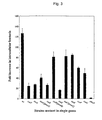
- Fig. 3 The increase in cfu for different strains in RAW macrophages over a 16 h period is shown in Fig. 3 .
- Replication defects were observed for strains carrying mutations in ssa V (encoding a component of the secretion apparatus), sseB and sseC and to a lesser extent for strains carrying mutations in sseE. Partial complementation of this defect was achieved with strains harbouring plasmids carrying functional copies of sseB and sseC, HH103 and MvP103[p sseC ], respectively.
- the ability of SPI2 mutant strains to replicate inside the J774.1 macrophage cell line Fig.
- RAW 264.7 cells (ECACC 91062702), a murine macrophage-like cell line, were grown in Dulbecco's modified Eagle's medium (DMEM) containing 10% foetal calf serum (FCS) and 2 mM glutamine at 37°C in 5% CO 2 .
- DMEM Dulbecco's modified Eagle's medium
- FCS foetal calf serum
- S. typhimurium strains were grown in LB to stationary phase and diluted to an OD 600 of 0.1 and opsonized for 20 min in DMEM containing 10% normal mouse serum. Bacteria were then centrifuged onto macrophages seeded in 24 well tissue culture plates at a multiplicity of infection of approximately 1:10 and incubated for 30 min.
- the macrophages were washed twice with PBS to remove extracellular bacteria and incubated for 90 min (2h post-infection) or 16 h in medium containing gentamicin (12 ⁇ g/ml). Infected macrophages were washed twice with PBS and lysed with 1% Triton X-100 for 10 min and appropriate aliquots and dilutions were plated onto LB agar to enumerate cfu.
- Non-adherent cells were flushed out with prewarmed medium containing 10% heat-inactivated foetal calf serum. In previous studies, we have established that > 95% of the cells remaining after this procedure are macrophages.
- S . typhimurium from aerated overnight cultures was opsonized with normal mouse serum and centrifuged onto adherent cells at an effector to target ratio of 1:10. The bacteria were allowed to internalize for 15 min, and washed with medium containing 6 ⁇ g/ml gentamicin to kill extracellular bacteria.
- PBS containing 0.5% deoxycholate Sigma, St. Louis, MO
- sse genes might encode effector proteins of the secretion system, but apart from a possible polar effect from a transposon insertion in sscA no strains carrying mutations in these genes were recovered in the original STM screen for S. typhimurium virulence genes using mTn5 mutagenesis (Hensel et al., 1995), and their role in virulence was unclear.
- strains carrying non-polar mutations in ssec, sseD and sseEsscB ( Fig. 1 ) have been constructed and subjected to virulence tests.
- Table 4 shows that all mice inoculated with strains carrying mutations sseC and sseD survived a dose of 1 x 10 4 cfu, three orders of magnitude greater than the LD 50 of the wild-type strain, which is less than 10 cfu when the inoculum is administered by the i.p. route (Buchmeier et al., 1993; Shea et al, 1996).
- the same strains containing a plasmid carrying the corresponding wild-type allele were also inoculated into mice at a dose of 1 x 10 4 cfu.
- the competitive index defined as the output ratio of mutant to wild-type bacteria, divided by the input ratio of mutant to wild-type bacteria, shows that the sseEsscB mutant was not significantly different to that of a fully virulent strain carrying an antibiotic resistance marker, which implies that this gene does not play a significant role in systemic Salmonella infection of the mouse.
- Table 4 Virulence of S. typhimurium strains in mice. Strain Genotype Mouse survival after inoculation a with bacterial strain Mouse survival after inoculation a with mutant + complementing plasmid Competitive index in vivo NCTC120 wild-type 0/5 n.d. 0.98 b 23 MvP101 ⁇ sseD::aphT 5/5 n.d.
- Example 5 Vaccination with the sseC :: aphT, and ⁇ sseD :: aphT mutant S . typhimurium strains MvP103 and MvP101
- NCTC12023 wild-type in BALB/c is 6 bacteria, and the LD 50 of MvP103 in BALB/c is 2.77 x 10 6 after intraperitoneal inoculation.
- the mutation can be complemented by p sseC, but no LD 50 determination for the complemented mutant strain was performed.
- LD 50 of MvP101 in BALB/c is 3.54 x 10 6 after intraperitoneal inoculation.
- a partial complementation by plasmid p5-K1 was possible.
- An intraperitoneal LD 50 for MvP101 [p5-K1] of 8.45 x 10 2 was determined.
- mice were immunized four times at 15 day intervals by gently feeding them with the bacterial suspension (10 9 CFU/mouse) in a volume of approximately 30 ⁇ l. Control mice were vaccinated with the carrier, lacking plasmid.
- Spleen cells were obtained from mice 14 days after the last immunization and 2 ⁇ 10 6 effector cells were restimulated in vitro for 5 days in complete medium supplemented with 20 U/ml of rIL-2 and 20 ⁇ M of the ßGP1 peptide ( ⁇ -gal p876-884, TPHPARIGL), which encompasses the immunodominant H-2L d -restricted ⁇ -gal epitope. After restimulation, the assay was performed using the [ 3 H]-thymidine incorporation method.
- Example 6 Evaluation of the induced immune response
- spleen cells were enriched in CD4+ T cells and restimulated in vitro during four days with ⁇ -gal.
- antigen-specific CD4+-enriched spleen cells were generated after vaccination with the three carriers, MvP103 and MvP101 were significantly more efficient than SL7207 (P 0.05) at triggering specific cellular immune response.
- SL7207 P 0.05
- the content of IFN- ⁇ , IL-2, IL-4, IL-5, IL-6 and IL-10 was measured in the supernatant fluids of restimulated cells.
- IFN- ⁇ was the only cytokine with significantly increased levels in comparison to those observed in supernatants from spleen cells isolated from mice immunized with plasmidless carriers ( Fig. 7 ).
- mice were immunized with the recombinant strains MvP101 [pAH97] and MvP103 [pAH97].
- MvP101 [pAH97]
- MvP103 [pAH97].
- SL7207 the well-established carrier strain SL7207 [pAH97].
- the abilities of the different carriers to induce a systemic humoral response was determined by measuring the titer of ⁇ -gal-specific antibodies in the serum of vaccinated mice. As shown in Fig. 8 , significant titers of ⁇ -gal-specific IgG and IgM antibodies were detected at day 30 in all vaccinated animals.
- Serum samples were collected at different time points and monitored for the presence of ⁇ -gal-specific antibodies.
- intestinal lavages were obtained by flushing the small intestine with 2 ml of PBS supplemented with 50 mM EDTA, 0.1% bovine serum albumin and 0.1 mg/ml of soybean trypsin inhibitor (Sigma). Then, the lavages were centrifuged (10 min at 600 x g) to remove debris, supernatants were removed and supplemented with phenylmethylsulfonyl fluoride (10 mM) and NaN 3 , and stored at -20°C.
- Antibody titres were determined by an enzyme-linked immunosorbent assay (ELISA). Briefly, 96 well Nunc-Immuno MaxiSorp TM assay plates (Nunc, Roskilde, Denmark) were coated with 50 ⁇ l/well ⁇ -gal (5 ⁇ g/ml) in coating buffer (0.1 M Na 2 HPO 4 , pH 9.0). After overnight incubation at 4°C, plates were blocked with 10% FCS in PBS for 1 h at 37°C. Serial two-fold dilutions of serum in FCS-PBS were added (100 ⁇ l/well) and plates were incubated for 2 h at 37°C.
- ELISA enzyme-linked immunosorbent assay
- serial dilutions of the corresponding samples were incubated in microtiter plates that had been coated with goat anti-mouse IgG, IgM and IgA as capture antibodies (100 ⁇ g/well, Sigma) and serial dilutions of purified mouse IgG, IgM and IgA (Sigma) were used to generate standard curves. Detection of antigen-specific Ig was performed as described above.
- MHC class I restricted responses are particularly important for protection against many intracellular pathogens and tumors. It has been shown that antigen-specific CD8 + CTL can be generated both in vitro and in vivo after immunization with recombinant Salmonella spp. expressing heterologous antigens. Therefore, we considered it important to determine whether the tested carriers were also able to trigger a ⁇ -gal-specific CTL response.
- Spleen cells were collected from mice vaccinated with either MvP101 [pAH97], MvP103 [pAH97] or SL7207 [pAH97] at day 52 from immunization and restimulated in vitro with ⁇ GP1-pulsed syngenic spleen cells for 5 days.
- the spleen cells from mice immunized with either of the three constructs induced significant lysis of ⁇ GP1-loaded target cells compared with unloaded controls.
- the more efficient responses were observed using the carrier strain MvP103.
- the lysis was mediated by CD8 + T cells since the cytotoxic activity was completely abrogated when CD8+ T effector cells were depleted (data not shown).
- IL-2, IL-4, IL-5, IL-6, IL-10 and IFN- ⁇ was performed by specific ELISA.
- 96-well microtiter plates were coated overnight at 4°C with purified rat anti-mouse IL-2 mAb (clone JESG-1A12), anti-IL-4 mAb (clone 11B11), anti-IL-5 mAb (clone TRFK5), anti-IL-6 mAb (clone MP5-2OF3), anti-IL-10 mAb (clone JES5-2A5), and anti-IFN- ⁇ mAb (clone R4-6A2) (Pharmingen).
- rIL-2 recombinant murine IL-2
- rIL-4 recombinant murine IL-4
- rIL-5 recombinant murine IL-6
- rIL-10 recombinant murine IL-6
- the CD8 + cell subset was depleted using MiniMACS Magnetic Ly-2 Microbeads according to the manufacturer's instructions (Miltenyi Biotec). Depleted cell preparations contained 1 % CD8 + cells.
- Spleen cell suspensions were enriched for CD4 + T cells using MiniMACS Magnetic Ly-2 and indirect goat-anti-mouse-IgG Microbeads according to the instructions of the manufacturer (Mitenyi Biotec GmbH, Germany).
- Cell preparations contained > 65% of CD4+ cells.
- Cells were adjusted to 2x10 6 cells/ml in complete medium supplemented with 20 U/ml of mouse rIL-2 (Pharmigen), seeded at 100 ⁇ l/well in a flat-bottomed 96-well microtiter plate (Nunc, Roskilde, Denmark) and incubated for four days in the presence of different concentrations of soluble ⁇ -gal.
- the SPI2 gene ssrA encodes a protein similar to sensor components of bacterial two component regulatory systems as has been described before (Ochman et al., 1996). For consistency with the nomenclature of SPI2 virulence genes (Hensel et al., 1997b; Valdivia and Falkow, 1997), this gene is designated ssrA. Downstream of ssrA, an ORF with coding capacity for a 24.3 kDa protein was identified. This gene shares significant similarity with a family of genes encoding transcriptional activators like DegU of Bacillus subtilis, UvrY of E. coli and BvgA of Bordetella pertussis. Therefore, it is likely that the protein acts as the regulatory component of the ssr system and the gene was designated ssrB.
- SPI1 and SPI2 The expression of the type III secretions systems of SPI1 and SPI2 is tightly regulated by environmental conditions. While SPI1 is induced during late log/early stationary phase after growth in rich media of high osmolarity and limiting O 2 (oxygen) concentration, no induction of SP12 gene expression was observed. In contrast, after growth in minimal medium with limiting amounts of Mg 2+ (8 ⁇ M) the ssaB::luc fusion was highly expressed while the sipC::lac Z fusion was not expressed. The expression of the ssaB::luc fusion is dependent on the function of SsrA/B, since there is no expression in the ssrB -negative background strain P8G12 (Hensel et al., 1998).
- sipC::lac Z fusion The expression of the sipC::lac Z fusion is dependent on HilA, the transcriptional regulator of SPI1.
- ssrB the transcriptional regulator of SPI1.
- SPI2 has a regulatory effect on the expression of SPI1 genes.
- Bacterial strains harbouring a luc fusion to ssa B in SPI2 (strain MvP131) and a lacZ fusion to sipC in SPI1 (strain MvP239) were grown under conditions previously shown to induce SPI gene expression. Bacteria were grown over night in minimal medium containing 8 ⁇ M Mg 2+ or over night in LB broth containing 1 % NaCl (LB 1%NaCl). The Luc activity of strain MvP131 and ⁇ -galactosidase activity of strain MvP239 were determined. As a control, both reporter fusions were assayed in the ssrB negative strain background of P8G 12.
- lacZ reporter-gene fusions to SPI genes were assayed as described by Miller, 1992.
- a strain was constructed harbouring a chromosomal integration of pLB02, a suicide plasmid without a promoter fusion to the luc gene (Gunn and Miller, 1996).
- strains were grown for 16 h in minimal medium with aeration. Aliquots of the bacterial cultures were lysed and luciferase activity was determined using a luciferase assay kit according to the manufacturer's protocol (Boehringer Mannheim). Photon detection was performed on a Microplate scintillation/luminescence counter (Wallac, Turku). All assay were done in triplicate, and replicated on independent occasions.
- sseA / uc reporter gene fusion, integrated by homologous recombination into the chromosome of different SP12 mutant strains, has been investigated ( Fig. 11 ).
- Transcriptional activity of sse A in a wild-type background during growth in minimal medium was dramatically reduced by inactivation of the SPI2 two-component system.
- S. typhimurium within eukaryotic cells (macrophages) induces the expression of SPI2 genes as indicated by analysis of fusions to ssaB and ssaH. This expression is dependent on the two component regulatory system SsrA/B encoded by SPI2.
- the murine macrophage-line cell line J744 was used for this experiment. Macrophages were infected at a multiplicity of infection of 10 bacteria per macrophage with MvP131 ( luc fusion to ssaB ), MvP266 ( luc fusion of ssaH ) and MvP244 ( luc fusion to ssaB in a ssrB negative background). Extracellular bacteria were killed by the addition of gentamicin (20 ⁇ g/ml). At various time points, macrophages were lysed by the addition of 0.1% Triton X-100, and intracellular bacteria were enumerated by plating serial dilutions onto LB agar plates. A further aliquot of the bacteria was recovered and the luciferase activity was determined. Luciferase activities were expressed a relative light emission per bacteria.
- SipC was detected in culture supernatants of other SPI2 mutants like P2D6 ( ssaV::mTn5 ), P9B6 ( ssaV ::mTn5) and NP ssaV(ssaV::aphT ) (Deiwick et al., 1998).
- the detection by antiserum of SipC in culture supernatants of various strains was in accord with the presence or absence of SipC as detected by SDS-PAGE. Further it was analyzed whether the absence of SipC in culture supernatants of SPI2 mutant strains was due to defective secretion of SipC via the type III secretion system or reduced synthesis of SipC in these strains.
- Antiserum against rSipC was used to detect SipC in pellets of cultures grown under inducing conditions for the expression of SPI1 genes (i.e. stationary phase, high osmolarity, low oxygen) (Bajaj et al., 1996). Analysis of wild-type and strains carrying various mutations in SPI1 and SPI2 genes indicated highly reduced amounts of SipC in the mutants with a non-polar mutation in ssrB. However, SipC was detected at levels comparable to those observed in pellets of wild-type cultures and SPI2 mutant strains P2D6, P9B6 and NPssa V. The effect on SipC synthesis is not due to reduced growth rates or reduced protein levels in SPI2 mutants, since both parameters were comparable for the wild-type and SPI2 mutants.
- mutant strains with a mutation in the SPI2 gene ssrB encoding a components of the two component regulatory system showed reduced expression of reporter fusions to prgK and sipC ( Fig. 11 ).
- the effects on the expression of both genes was similar.
- Other mutant strains with Tn insertions in ssaV (P2D6, P9B6), as well as mutant NP ssaV harbouring a non-polar insertions in ssaV had levels of expression of prgK and sipC comparable to that of corresponding reporter fusions in a wild-type genetic background.
- Analysis of lacZ fusions to prgH and invF revealed a similar effect on expression as shown for prgK and sipC.
- a mutation in the SPI2 gene ssrB affects expression of the SPI1 regulator hilA
- Plasmid p2-2 was digested by Bam HI and Kpn I, a fragment of 3.7kb was recovered and subcloned in pBluescript KS + to generate p2-50. Plasmid p2-50 was linearized by digestion with Pst I , which cuts once within the subcloned fragment of the ssrA gene.
- Primers ssrA -del-1 (5'- GGT CTG CAG GAT TTT TCA CGC ATC GCG TC -3') and ssrB -del-2 (5'- GGT CTG CAG AAC CAT TGA TAT ATA AGC TGC -3') were designed to introduce Pst I sites.
- PCR was performed using linearized p2-50 as template DNA.
- the TaqPlus polymerase (Stratagene) was used according to the instructions of the manufacturer.
- Reactions of 100 ⁇ l volume were set up using 10 ⁇ l of 10 x TaqPlus Precision buffer containing magnesium chloride, 0.8 ⁇ l of 100 mM dNTPs, 250 ng DNA template (linearized p2-50), 250 ng of each primer and 5 U of TaqPlus DNA polymerase. PCR was carried out for 35 cycles of: 95°C for 1 minute, 60°C for 1 minute, 72°C for 6 minutes. Then a final step of 72°C for 10 minutes was added. 10 ⁇ l of the PCR reaction were analyzed. A product of the expected size was recovered, digested by Pst I, self-ligated, and the ligation mixture was used to transform E. coli DH5a to resistance to carbenicillin.
- Plasmids were isolated from transformants and the integrity of the insert and the deletion was analyzed by restriction analysis and DNA sequencing.
- the insert of a confirmed construct was isolated after digestion with Xbal and Kpn I and ligated to Xba I/ Kpn I-digested vector pKAS32.
- the resulting construct was used to transform E. coli S17-1 ⁇ pir to resistance to carbenicillin, and conjugational transfer of the plasmid to S. typhimurium (Nal R , Strep R ) was performed according to standard procedures (de Lorenzo and Timmis, 1994).
- Exconjugants that had integrated the suicide plasmid by homologous recombination were selected by resistance to nalidixic acid and carbenicillin, and screened for sensitivity to streptomycin. Such clones were grown in LB to OD600 of about 0.5 and aliquots were plated on LB containing 250 ⁇ g/ml streptomycin to select for colonies which had lost the integrated plasmid and undergone allelic exchange. Clones resistant to streptomycin but sensitive to carbenicillin were used for further analysis.
- Genomic DNA of Salmonella was prepared as previously described (Hensel et al., 1997). For Southern hybridization analysis, genomic DNA was digested with Eco RI or Eco RV, fractionated on 0.6 % agarose gels and transferred to Hybond N + membranes (Amersham, Braunschweig). Various probes corresponding to the ssrA and ssrB region were obtained as restriction fragments of the subcloned insert of ⁇ 1 and ⁇ 2.
- bacteria were grown in LB to an optical density at 600 nm of 0.4 - 0.6. Cultures were diluted and aliquots of the two cultures were mixed to form an inoculum containing equal amounts of both strains. The ratio of both strains was determined by plating dilutions on LB plates containing antibiotics selective for individual strains. An inoculum of about 10 4 colony forming units (cfu) was used to infect 6 to 8 weeks old female BALB/c mice (Charles River Breeders, Wiga) by injection into the peritoneal cavity.
- cfu colony forming units
- mice were sacrificed by cervical dislocation and the bacterial load of liver and spleen was determined by plating tissue homogenates using the 'WASP' (Meintrup, Lähden) spiral plating device. Plating was performed using LB plates containing 50 ⁇ g/ml kanamycin or 100 ⁇ g/ml nalidixic acid to select for the mutant strains or the wild-type, respectively.
- Strain MvP320 harbouring the aphT gene cassette in ssrB was recovered in at least 1000-fold lower numbers than the S. typhimurium wild-type strain. These data indicate that ssrB contributes significantly to systemic infections of S. typhimurium in the mouse model of salmonellosis.
- the promoter which is located upstream of ssaE (P ssaE , formerly called Promoter B) was shown to be regulated by the ssrAB locus.
- a DNA fragment comprising nucleotide 800 to 120 (800-1205) in the included sequence (Fig.21 A) was shown to confer ssrB -dependent regulation upon the expression of a reporter gene (gfp) fused to the promoter.
- the DNA fragment was cloned on a low-copy plasmid in front of the gfp gene.
Landscapes
- Health & Medical Sciences (AREA)
- Chemical & Material Sciences (AREA)
- Life Sciences & Earth Sciences (AREA)
- Organic Chemistry (AREA)
- Genetics & Genomics (AREA)
- Engineering & Computer Science (AREA)
- General Health & Medical Sciences (AREA)
- Medicinal Chemistry (AREA)
- Zoology (AREA)
- Bioinformatics & Cheminformatics (AREA)
- Wood Science & Technology (AREA)
- Biotechnology (AREA)
- Biochemistry (AREA)
- Biomedical Technology (AREA)
- General Engineering & Computer Science (AREA)
- Molecular Biology (AREA)
- Biophysics (AREA)
- Veterinary Medicine (AREA)
- Nuclear Medicine, Radiotherapy & Molecular Imaging (AREA)
- General Chemical & Material Sciences (AREA)
- Chemical Kinetics & Catalysis (AREA)
- Animal Behavior & Ethology (AREA)
- Public Health (AREA)
- Pharmacology & Pharmacy (AREA)
- Gastroenterology & Hepatology (AREA)
- Microbiology (AREA)
- Proteomics, Peptides & Aminoacids (AREA)
- Virology (AREA)
- Oncology (AREA)
- Communicable Diseases (AREA)
- Tropical Medicine & Parasitology (AREA)
- Plant Pathology (AREA)
- Cell Biology (AREA)
- Physics & Mathematics (AREA)
- Toxicology (AREA)
- Medicines Containing Antibodies Or Antigens For Use As Internal Diagnostic Agents (AREA)
- Micro-Organisms Or Cultivation Processes Thereof (AREA)
- Medicines That Contain Protein Lipid Enzymes And Other Medicines (AREA)
- Peptides Or Proteins (AREA)
Priority Applications (1)
| Application Number | Priority Date | Filing Date | Title |
|---|---|---|---|
| EP08075560A EP1970449B1 (fr) | 1998-09-04 | 1999-09-03 | Mutants attenués de SPI2 de salmonelles utilisés comme porteurs d'antigènes |
Applications Claiming Priority (3)
| Application Number | Priority Date | Filing Date | Title |
|---|---|---|---|
| EP98116827 | 1998-09-04 | ||
| EP08075560A EP1970449B1 (fr) | 1998-09-04 | 1999-09-03 | Mutants attenués de SPI2 de salmonelles utilisés comme porteurs d'antigènes |
| EP99946122A EP1108034B1 (fr) | 1998-09-04 | 1999-09-03 | Mutants attenues de spi2 de salmonelles utilises comme porteurs d'antigenes |
Related Parent Applications (2)
| Application Number | Title | Priority Date | Filing Date |
|---|---|---|---|
| EP99946122A Division EP1108034B1 (fr) | 1998-09-04 | 1999-09-03 | Mutants attenues de spi2 de salmonelles utilises comme porteurs d'antigenes |
| EP99946122.1 Division | 1999-09-03 |
Publications (2)
| Publication Number | Publication Date |
|---|---|
| EP1970449A1 true EP1970449A1 (fr) | 2008-09-17 |
| EP1970449B1 EP1970449B1 (fr) | 2010-11-03 |
Family
ID=8232583
Family Applications (2)
| Application Number | Title | Priority Date | Filing Date |
|---|---|---|---|
| EP08075560A Expired - Lifetime EP1970449B1 (fr) | 1998-09-04 | 1999-09-03 | Mutants attenués de SPI2 de salmonelles utilisés comme porteurs d'antigènes |
| EP99946122A Expired - Lifetime EP1108034B1 (fr) | 1998-09-04 | 1999-09-03 | Mutants attenues de spi2 de salmonelles utilises comme porteurs d'antigenes |
Family Applications After (1)
| Application Number | Title | Priority Date | Filing Date |
|---|---|---|---|
| EP99946122A Expired - Lifetime EP1108034B1 (fr) | 1998-09-04 | 1999-09-03 | Mutants attenues de spi2 de salmonelles utilises comme porteurs d'antigenes |
Country Status (13)
| Country | Link |
|---|---|
| US (3) | US6936425B1 (fr) |
| EP (2) | EP1970449B1 (fr) |
| JP (1) | JP2002524077A (fr) |
| AT (2) | ATE486940T1 (fr) |
| AU (1) | AU5860599A (fr) |
| BR (1) | BR9914479A (fr) |
| CA (1) | CA2341349C (fr) |
| CY (1) | CY1109387T1 (fr) |
| DE (2) | DE69939264D1 (fr) |
| DK (1) | DK1108034T3 (fr) |
| ES (2) | ES2356863T3 (fr) |
| PT (1) | PT1108034E (fr) |
| WO (1) | WO2000014240A2 (fr) |
Cited By (2)
| Publication number | Priority date | Publication date | Assignee | Title |
|---|---|---|---|---|
| RU2496518C1 (ru) * | 2012-05-03 | 2013-10-27 | Федеральное государственное бюджетное образовательное учреждение высшего профессионального образования "Кубанский государственный аграрный университет" | Способ изготовления вакцины ассоциированной против сальмонеллеза, эшерихиоза и вирусной геморрагической болезни кроликов |
| RU2510839C2 (ru) * | 2012-05-03 | 2014-04-10 | Федеральное государственное бюджетное образовательное учреждение высшего профессионального образования "Кубанский государственный аграрный университет" | Вакцина ассоциированная против сальмонеллеза, эшерихиоза и вирусной геморрагической болезни кроликов |
Families Citing this family (61)
| Publication number | Priority date | Publication date | Assignee | Title |
|---|---|---|---|---|
| DE69526377T2 (de) * | 1994-12-09 | 2002-11-07 | Microscience Ltd | Virulenzgene in der VGC2-Region von Salmonella |
| WO2000014240A2 (fr) | 1998-09-04 | 2000-03-16 | Creatogen Aktiengesellschaft | Mutants attenues de spi2 de salmonelles utilises comme porteurs d'antigenes |
| GB9910812D0 (en) * | 1999-05-10 | 1999-07-07 | Microscience Ltd | Vaccine composition |
| AU2003204710B2 (en) * | 1999-05-10 | 2006-08-03 | Microscience Limited | Attenuated microorganisms for the treatment of infection |
| EP1640013A3 (fr) * | 2000-03-17 | 2007-02-21 | Pharmacia & Upjohn Company LLC | Vaccins de Salmonelles inactivées |
| AU5695701A (en) | 2000-03-17 | 2001-10-03 | Upjohn Co | Salmonella vaccine materials and methods |
| GB0105924D0 (en) * | 2001-03-09 | 2001-04-25 | Microscience Ltd | Promoter |
| EP1407014B1 (fr) * | 2001-05-17 | 2006-11-15 | Creatogen Aktiengesellschaft | Procede de criblage pour l'attenuation ou la virulence des cellules microbiennes defectueuses |
| EP1789094B1 (fr) | 2004-08-13 | 2014-12-10 | MARSHALL, Barry J. | Vecteur d'administration bactérien |
| US8029777B2 (en) | 2004-08-13 | 2011-10-04 | Marshall Barry J | Helicobacter system and uses thereof |
| RU2296560C2 (ru) * | 2004-08-25 | 2007-04-10 | Федеральное государственное учреждение науки "Государственный научный центр вирусологии и биотехнологии "Вектор" Федеральной службы по надзору в сфере защиты прав потебителей и благополучия человека (ФГУН ГНЦ ВБ "ВЕКТОР" Роспотребнадзора) | Суппозитории для иммунопрофилактики вирусных инфекций |
| CN1276076C (zh) * | 2004-12-14 | 2006-09-20 | 华东理工大学 | 一种鳗弧菌野生毒株的无标记基因缺失减毒突变株及其应用 |
| US20070134814A1 (en) * | 2005-12-09 | 2007-06-14 | Kajander E O | Methods and compositions for the detection of calcifying nano-particles, identification and quantification of associated proteins thereon, and correlation to disease |
| EP2857038B1 (fr) | 2006-09-18 | 2019-04-10 | The Board of Trustees of the University of Arkansas | Compositions et procédés d'amélioration des réponses immunitaires |
| US20080124355A1 (en) | 2006-09-22 | 2008-05-29 | David Gordon Bermudes | Live bacterial vaccines for viral infection prophylaxis or treatment |
| US20100317084A1 (en) * | 2007-05-10 | 2010-12-16 | The Arizona Board Of Regents For And On Behalf Of Arizona State University | Recombinant bacteria comprising vectors for expression of nucleic acid sequences encoding antigens |
| EP2150616A4 (fr) | 2007-05-10 | 2011-07-27 | Univ Arizona | Expression régulée d'antigène et/ou atténuation régulée pour accroître l'immunogénicité et/ou la sécurité de vaccins |
| WO2008153772A2 (fr) * | 2007-05-25 | 2008-12-18 | Emergent Product Development Gaithersburg Inc. | Vaccin anti-chlamydia contenant des polypeptides htra |
| US9040059B2 (en) | 2007-10-05 | 2015-05-26 | The Arizona Board Of Regents For And On Behalf Of Arizona State University | Recombinant bacterium capable of eliciting a protective immune response against C. perfringens |
| US9125854B2 (en) * | 2007-10-30 | 2015-09-08 | The Board Of Trustees Of The University Of Arkansas | Compositions and methods of enhancing immune responses to flagellated bacterium |
| PT2214701T (pt) | 2007-11-01 | 2016-11-02 | Univ Guelph | Composições e métodos de potenciar respostas imunes a eimeria |
| RU2392003C2 (ru) * | 2008-04-02 | 2010-06-20 | ФГОУ ВПО Курская государственная сельскохозяйственная академия им. профессора И.И. Иванова | Способ получения сальмонеллезной вакцины |
| US8703153B2 (en) * | 2008-06-16 | 2014-04-22 | Prokarium Ltd. | Salmonella vectored vaccines against Chlamydia and methods of use |
| EP2318515A4 (fr) | 2008-08-06 | 2012-11-14 | Emergent Product Dev Uk Ltd | Vaccins contre clostridium difficile, et procédés d'utilisation |
| WO2010045620A1 (fr) | 2008-10-17 | 2010-04-22 | The Arizona Board Of Regents For And On Behalf Of Arizona State University | Bactérie recombinante pouvant éliciter une réponse immunitaire contre le streptococcus pneumoniae |
| US20120064114A1 (en) * | 2008-10-21 | 2012-03-15 | Emergent Product Development United Kingdom | Use of e. coli surface antigen 3 sequences for the export of heterologous antigens |
| JP4575498B2 (ja) * | 2009-02-20 | 2010-11-04 | 株式会社東芝 | 磁気記録媒体の製造方法 |
| US9163219B2 (en) * | 2009-04-14 | 2015-10-20 | Arizona Board Of Regents On Behalf Of Arizona State University | Single expression vector for generation of a virus with a segmented genome |
| WO2010141143A2 (fr) * | 2009-04-21 | 2010-12-09 | Vivocure, Inc. | Souches bactériennes avirulentes génétiquement modifiées et utilisations dans des traitements médicaux |
| US8518658B1 (en) * | 2009-04-27 | 2013-08-27 | University Of South Florida | ATP-bioluminescence immunoassay |
| WO2010135563A1 (fr) * | 2009-05-22 | 2010-11-25 | The Arizona Board Of Regents For And On Behalf Of Arizona State University | Bactérie de recombinaison et méthodes d'administration d'antigène et d'acide nucléique |
| US9045742B2 (en) * | 2009-05-29 | 2015-06-02 | The Arizona Board Of Regents For And On Behalf Of Arizona State University | Recombinant Edwardsiella bacterium |
| US9062297B2 (en) | 2010-01-13 | 2015-06-23 | The Arizona Board Of Regents For And On Behalf Of Arizona State University | Yersinia pestis vaccine |
| NO2525817T3 (fr) | 2010-01-21 | 2018-01-06 | ||
| WO2011091291A1 (fr) | 2010-01-22 | 2011-07-28 | The Arizona Board Of Regents For And On Behalf Of Arizona State University | Bactérie renfermant un acide nucléique régulé par le rfah |
| WO2011150421A2 (fr) | 2010-05-28 | 2011-12-01 | The Arizona Board Of Regents For And On Behalf Of Arizona State University | Bactérie recombinante permettant de diminuer la croissance tumorale |
| BR112012031211A2 (pt) | 2010-06-09 | 2018-01-30 | Univ Arkansas | métodos e vacina para reduzir a infecção causada pelo campylobacter |
| US8481052B2 (en) * | 2011-05-17 | 2013-07-09 | Cj Cheiljedang Corporation | Avirulent Salmonella gallinarum variants and pharmaceutical composition using the same |
| US9303264B2 (en) | 2012-05-18 | 2016-04-05 | The Arizona Board Of Regents For And On Behalf Of Arizona State University | Photosynthetic microorganisms expressing thermostable lipase |
| JP6216371B2 (ja) * | 2012-05-23 | 2017-10-18 | ザ ユナイテッド ステイツ オブ アメリカ, アズ リプレゼンテッド バイ ザ セクレタリー, デパートメント オブ ヘルス アンド ヒューマン サービシーズ | YersiniapestisF1−V融合タンパク質を発現するSalmonellaTyphiTy21aおよびその使用 |
| ES2752190T3 (es) | 2012-09-14 | 2020-04-03 | Us Health | Proteína Brachyury, vectores adenovirales que codifican proteína Brachyury y su uso |
| EP2956165B1 (fr) | 2013-02-14 | 2019-09-11 | The Board of Trustees of the University of Arkansas | Compositions et procédés pour renforcer des réponses immunitaires vis-à-vis d'eimeria ou limiter une infection par eimeria |
| WO2014144965A1 (fr) * | 2013-03-15 | 2014-09-18 | Husseiny Elsayed Mohamed I | Bactérie salmonella atténuée et procédés d'utilisation |
| CN105142653B (zh) | 2013-03-15 | 2019-11-15 | 阿肯色大学评议会 | 增强对肠病原体免疫应答的组合物和方法 |
| US9580718B2 (en) | 2013-06-17 | 2017-02-28 | Arizona Board Of Regents On Behalf Of Arizona State University | Attenuated live bacteria with increased acid resistance and methods of use thereof |
| US10987432B2 (en) * | 2013-09-05 | 2021-04-27 | The University Of Hong Kong | Therapeutic delivery and expression system, methods and uses thereof |
| US9616114B1 (en) | 2014-09-18 | 2017-04-11 | David Gordon Bermudes | Modified bacteria having improved pharmacokinetics and tumor colonization enhancing antitumor activity |
| US10676723B2 (en) | 2015-05-11 | 2020-06-09 | David Gordon Bermudes | Chimeric protein toxins for expression by therapeutic bacteria |
| AR108688A1 (es) | 2016-05-03 | 2018-09-19 | Univ Arkansas | Vector de vacuna de levadura que incluye polipéptidos inmunoestimuladores y antigénicos, métodos para su uso |
| US11180535B1 (en) | 2016-12-07 | 2021-11-23 | David Gordon Bermudes | Saccharide binding, tumor penetration, and cytotoxic antitumor chimeric peptides from therapeutic bacteria |
| US11129906B1 (en) | 2016-12-07 | 2021-09-28 | David Gordon Bermudes | Chimeric protein toxins for expression by therapeutic bacteria |
| US11541105B2 (en) | 2018-06-01 | 2023-01-03 | The Research Foundation For The State University Of New York | Compositions and methods for disrupting biofilm formation and maintenance |
| US11471497B1 (en) | 2019-03-13 | 2022-10-18 | David Gordon Bermudes | Copper chelation therapeutics |
| US20220362361A1 (en) * | 2019-10-18 | 2022-11-17 | University Of Virginia Patent Foundation | Compositions and methods for producing enhanced immune responses and rapid antibody production |
| US10973908B1 (en) | 2020-05-14 | 2021-04-13 | David Gordon Bermudes | Expression of SARS-CoV-2 spike protein receptor binding domain in attenuated salmonella as a vaccine |
| US12537071B1 (en) | 2020-07-22 | 2026-01-27 | David Gordon Bermudes | Bacteria having boolean control pathways expressing therapeutic proteins including immunotherapeutic cytotoxins |
| GB202019767D0 (en) | 2020-12-15 | 2021-01-27 | Chain Biotechnology Ltd | Compostitions and methods |
| WO2022271976A1 (fr) * | 2021-06-24 | 2022-12-29 | Elanco Us Inc. | Salmonella atténuée, vaccins et plateforme d'administration |
| CN114292339B (zh) * | 2022-01-05 | 2022-08-09 | 武汉科前生物股份有限公司 | 鞭毛素突变体与非洲猪瘟抗原的融合蛋白及其应用 |
| CN114703214A (zh) * | 2022-03-03 | 2022-07-05 | 南京吉芮康生物科技研究院有限公司 | 一种抗丢失时空可控表达的新型质粒及其应用 |
| JP2025531378A (ja) * | 2022-09-21 | 2025-09-19 | プロカリウム リミテッド | 染色体上にランディングパッドが統合されたサルモネラ株 |
Citations (1)
| Publication number | Priority date | Publication date | Assignee | Title |
|---|---|---|---|---|
| WO1996017951A2 (fr) * | 1994-12-09 | 1996-06-13 | Rpms Technology Limited | Identification de genes responsables de la survie de microorganismes in vivo |
Family Cites Families (46)
| Publication number | Priority date | Publication date | Assignee | Title |
|---|---|---|---|---|
| US232165A (en) * | 1880-09-14 | Mechanical musical instrument | ||
| US1449502A (en) * | 1921-04-23 | 1923-03-27 | James G Diffendaffer | Restraining device |
| US1476164A (en) * | 1922-02-21 | 1923-12-04 | Michael J Manahan | Door and window shade and curtain clamp |
| US1903387A (en) * | 1930-08-20 | 1933-04-04 | Eaton Mfg Co | Automobile heater |
| US2103863A (en) * | 1936-12-28 | 1937-12-28 | Woodall Industries Inc | Visor construction |
| US2728467A (en) * | 1954-01-28 | 1955-12-27 | Glicker Herman | Parking tower structure |
| US4440859A (en) * | 1977-05-27 | 1984-04-03 | The Regents Of The University Of California | Method for producing recombinant bacterial plasmids containing the coding sequences of higher organisms |
| US4704362A (en) * | 1977-11-08 | 1987-11-03 | Genentech, Inc. | Recombinant cloning vehicle microbial polypeptide expression |
| DK171727B1 (da) * | 1978-12-22 | 1997-04-14 | Biogen Inc | Rekombinante hepatitis B virus DNA-molekyler, værtsorganismer transformeret hermed, HBV-antigenspecifikke polypeptider, DNA-sekvenser kodende for HBV-antigenspecifikke polypeptider, metoder til påvisning af hepatitis B virus-antistoffer, metoder til fremstilling af nævnte DNA-molekyler, fremgangsmåder til fremstilling af nævnte polypeptider og midler til påvisning af HBV-infektion |
| US4530901A (en) * | 1980-01-08 | 1985-07-23 | Biogen N.V. | Recombinant DNA molecules and their use in producing human interferon-like polypeptides |
| US4550081A (en) * | 1980-05-19 | 1985-10-29 | The Board Of Trustees Of The Leland Stanford Jr. University | Non-reverting salmonella |
| US4837151A (en) * | 1980-05-19 | 1989-06-06 | The Board Of Trustees Of The Leland Stanford Junior University, Stanford University | Live vaccines comprising two mutations and foreign antigen |
| US5210035A (en) * | 1980-05-19 | 1993-05-11 | Board Of Trustees Of Leland Stanford Jr. University | Non-reventing live vaccines |
| US4766075A (en) * | 1982-07-14 | 1988-08-23 | Genentech, Inc. | Human tissue plasminogen activator |
| US4582800A (en) * | 1982-07-12 | 1986-04-15 | Hoffmann-La Roche Inc. | Novel vectors and method for controlling interferon expression |
| US4757006A (en) * | 1983-10-28 | 1988-07-12 | Genetics Institute, Inc. | Human factor VIII:C gene and recombinant methods for production |
| US4677063A (en) * | 1985-05-02 | 1987-06-30 | Cetus Corporation | Human tumor necrosis factor |
| US5643579A (en) * | 1984-11-01 | 1997-07-01 | American Home Products Corporation | Oral vaccines |
| US4810648A (en) * | 1986-01-08 | 1989-03-07 | Rhone Poulenc Agrochimie | Haloarylnitrile degrading gene, its use, and cells containing the gene |
| US5397697A (en) | 1989-01-10 | 1995-03-14 | Ciba-Geigy Corporation | Identification of plant-responsive genes of bacteria |
| FR2664614B1 (fr) | 1990-07-11 | 1992-10-16 | Pasteur Institut | Sequences nucleiques issues du genome de salmonella typhi, et leurs utilisations notamment pour le diagnostic in vitro de la presence de bacteries du genre salmonella dans les produits alimentaires. |
| SE9101433D0 (sv) | 1991-05-13 | 1991-05-13 | Marianne Hansson | Recombinant dna sequence and its use |
| EP0669989A1 (fr) | 1991-08-22 | 1995-09-06 | Washington University | Sondes de polynucleotide de detection de salmonelle |
| AU2778992A (en) | 1991-10-07 | 1993-05-03 | Idaho Research Foundation Inc., The | Genetic construct for selection of homologous recombinants on a single selective medium |
| WO1993010246A1 (fr) | 1991-11-15 | 1993-05-27 | Board Of Regents, The University Of Texas System | Expression membranaire de genes heterologues |
| US5356797A (en) * | 1991-11-15 | 1994-10-18 | Board Of Regents, The University Of Texas | Membrane expression of heterologous genes |
| WO1994011024A1 (fr) | 1992-11-06 | 1994-05-26 | Regents Of The University Of Minnesota | COMPOSITION PROTEGEANT DE L'INFECTION PAR LA PASTEURELLOSE A $i(P. MULTOCIDA) |
| WO1994026933A1 (fr) | 1993-05-13 | 1994-11-24 | The Board Of Trustees Of The Leland Stanford Junior University | Empreinte genetique: mutagenese d'insertion et selection genetique |
| AU3958895A (en) | 1994-10-18 | 1996-05-06 | Board Of Regents, The University Of Texas System | Membrane expression of heterologous genes |
| US5700683A (en) | 1995-02-17 | 1997-12-23 | Pathogenesis Corporation | Virulence-attenuating genetic deletions deleted from mycobacterium BCG |
| WO1997014800A1 (fr) | 1995-10-16 | 1997-04-24 | Smithkline Beecham Plc | Nouvelle proteine fixant la salive |
| CA2237581A1 (fr) | 1995-11-14 | 1997-05-22 | The General Hospital Corporation | Proteines secretees par la salmonelle et utilisations de ces proteines |
| US6030624A (en) | 1996-08-16 | 2000-02-29 | Uab Research Foundation | Mucosal immunogens for novel vaccines |
| GB9621091D0 (en) * | 1996-10-09 | 1996-11-27 | Fondation Pour Le Perfectionem | Attenuated microorganisms strains and their uses |
| DE69828182T2 (de) | 1997-02-14 | 2005-12-22 | Merck & Co., Inc. | Polynukleotid-impfstoff-formulierungen |
| US6455323B1 (en) | 1997-07-03 | 2002-09-24 | Pharmacia & Upjohn Company | Anti-bacterial methods and materials |
| GB9804809D0 (en) | 1998-03-06 | 1998-04-29 | Wallis Timothy S | Attenuated salmonella:materials and methods relating thereto |
| US6585975B1 (en) * | 1998-04-30 | 2003-07-01 | Acambis, Inc. | Use of Salmonella vectors for vaccination against helicobacter infection |
| WO2000014240A2 (fr) * | 1998-09-04 | 2000-03-16 | Creatogen Aktiengesellschaft | Mutants attenues de spi2 de salmonelles utilises comme porteurs d'antigenes |
| NZ527279A (en) * | 1998-11-09 | 2005-05-27 | Microscience Ltd | Virulence genes and proteins, and their use |
| GB9910812D0 (en) * | 1999-05-10 | 1999-07-07 | Microscience Ltd | Vaccine composition |
| WO2001032697A2 (fr) | 1999-11-05 | 2001-05-10 | L'unite De Recherche En Biologie Moleculaire (Urbm) Des Facultes Universitaires Notre Dame De La Paix (Fundp) | Genes et proteines virulents ainsi que leur utilisation |
| EP1905834A3 (fr) * | 1999-12-23 | 2008-07-23 | Vmax Limited | Gènes de virulence, protéines et leur utilisation |
| GB0011108D0 (en) | 2000-05-08 | 2000-06-28 | Microscience Ltd | Virulence gene and protein and their use |
| GB0127657D0 (en) | 2001-11-19 | 2002-01-09 | Microscience Ltd | Virulence genes and proteins and their use |
| US7449178B2 (en) * | 2002-04-05 | 2008-11-11 | Merial Limited | Attenuated gram negative bacteria |
-
1999
- 1999-09-03 WO PCT/EP1999/006514 patent/WO2000014240A2/fr not_active Ceased
- 1999-09-03 ES ES08075560T patent/ES2356863T3/es not_active Expired - Lifetime
- 1999-09-03 BR BR9914479-4A patent/BR9914479A/pt not_active Application Discontinuation
- 1999-09-03 JP JP2000568983A patent/JP2002524077A/ja active Pending
- 1999-09-03 DE DE69939264T patent/DE69939264D1/de not_active Expired - Lifetime
- 1999-09-03 EP EP08075560A patent/EP1970449B1/fr not_active Expired - Lifetime
- 1999-09-03 PT PT99946122T patent/PT1108034E/pt unknown
- 1999-09-03 DE DE69942925T patent/DE69942925D1/de not_active Expired - Lifetime
- 1999-09-03 DK DK99946122T patent/DK1108034T3/da active
- 1999-09-03 ES ES99946122T patent/ES2313792T3/es not_active Expired - Lifetime
- 1999-09-03 EP EP99946122A patent/EP1108034B1/fr not_active Expired - Lifetime
- 1999-09-03 AU AU58605/99A patent/AU5860599A/en not_active Abandoned
- 1999-09-03 CA CA2341349A patent/CA2341349C/fr not_active Expired - Fee Related
- 1999-09-03 AT AT08075560T patent/ATE486940T1/de not_active IP Right Cessation
- 1999-09-03 US US09/763,620 patent/US6936425B1/en not_active Expired - Fee Related
- 1999-09-03 AT AT99946122T patent/ATE403728T1/de active
-
2004
- 2004-01-23 US US10/763,883 patent/US7700104B2/en not_active Expired - Lifetime
-
2007
- 2007-08-17 US US11/840,928 patent/US7955600B2/en not_active Expired - Fee Related
-
2008
- 2008-11-06 CY CY20081101270T patent/CY1109387T1/el unknown
Patent Citations (1)
| Publication number | Priority date | Publication date | Assignee | Title |
|---|---|---|---|---|
| WO1996017951A2 (fr) * | 1994-12-09 | 1996-06-13 | Rpms Technology Limited | Identification de genes responsables de la survie de microorganismes in vivo |
Non-Patent Citations (68)
| Title |
|---|
| BAJAJ, V. ET AL.: "Co-ordinate regulation of Salmonella typhimurium invasion genes by environmental and regulatory factors is mediated by control of expression", MOL. MICROBIOL., vol. 22, 1996, pages 703 - 714 |
| BAJAJ, V.; HWANG, C.; LEE, C.A.: "hilA is a novel ompR/toxR family member that activates the expression of Salmonella typhimurium invasion genes", MOL. MICROBIOL., vol. 18, 1995, pages 715 - 727 |
| BAUDRY, B.; KACZOREK, M.; SANSONETTI, P.J.: "Nucleotide sequence of the invasion plasmid antigen B and C genes (ipaB and ipac) of Shigella flexneri", MICROB PATHOG, vol. 4, 1988, pages 345 - 357, XP023312760, DOI: doi:10.1016/0882-4010(88)90062-9 |
| BOGDANOVE, A.J. ET AL.: "Unified nomenclature for broadly conserved hrp genes of phytopathogenic bacteria", MOL MICROBIOL, vol. 20, 1996, pages 681 - 683, XP009007316, DOI: doi:10.1046/j.1365-2958.1996.5731077.x |
| BUCHMEIER, N.A. ET AL.: "Recombination-deficient mutants of Salmonella typhimurium are avirulent and sensitive to the oxidative burst of macrophages", MOL. MICROBIOL., vol. 7, 1993, pages 933 - 936, XP000926294, DOI: doi:10.1111/j.1365-2958.1993.tb01184.x |
| CHANG, A.C.; COHEN, S.N.: "Construction and characterization of amplifiable multicopy DNA cloning vehicles derived from the P15A cryptic miniplasmid", J BACTERIOL, vol. 134, 1978, pages 1141 - 1156, XP000990365 |
| CIRILLO, D. M. ET AL.: "Macrophage-dependent induction of the Salmonella pathogenicity island 2 type III secretion system and its role in intracellular survival", MOL. MICROBIOL., vol. 30, 1998, pages 175 - 88, XP002212516, DOI: doi:10.1046/j.1365-2958.1998.01048.x |
| CIRILLO, J.D. ET AL.: "Bacterial vaccine vectors and bacillus Calmette-Guerin", CLIN. INFECT. DIS., vol. 20, 1995, pages 1001 - 1009, XP009168029, DOI: doi:10.1093/clinids/20.4.1001 |
| DE LORENZO, V.; TIMMIS, K.N.: "Analysis and construction of stable phenotypes in Gram-negative bacteria with Tn5-and TnlO-derived minitransposons", METHODS ENZYMOL., vol. 235, 1994, pages 386 - 405, XP002037675, DOI: doi:10.1016/0076-6879(94)35157-0 |
| DEGROOTE, M.A. ET AL.: "Periplasmic superoxide dismutase protects Salmonella from products of phagocyte NADPH-oxidase and nitric oxide synthase", PROC NATLACAD SCI USA, vol. 94, 1997, pages 13997 - 14001, XP002380881, DOI: doi:10.1073/pnas.94.25.13997 |
| DEIWICK, J. ET AL.: "Environmental regulation of Salmonella pathogenicity island 2 gene expression", MOL. MICROBIOL., vol. 31, 1999, pages 1759 - 1773 |
| DEIWICK, J. ET AL.: "Mutations in SP12 genes affecting transcription of SPI1 genes and resistance to anti-microbial agents", J. BACTERIOL., vol. 180, 1998, pages 4775 - 4780 |
| DEVEREUX, J.; HAEBERLI, P.; SMITHIES, O.: "A comprehensive set of sequence analysis programs for the VAX.", NUCLEIC ACIDS RES, vol. 12, 1984, pages 387 - 395 |
| DONNENBERG, M.S.; KAPER, J.B.: "Construction of an eae deletion mutant of enteropathogenic Escherichia coli using a positive-selection suizide vector", INFECT IMMUN, vol. 59, 1991, pages 4310 - 4317, XP002121476 |
| ELLIOT, S.J. ET AL.: "The complete sequence of the locus of enterocyte affacement (LEE) from enteropathogenic Escherichia coli E2348/69", MOL MICROBIOL, vol. 28, 1998, pages 1 - 4 |
| FIELDS, P.I. ET AL.: "Mutants of Salmonella typhimurium that cannot survive within the macrophage are avirulent", PROC NATL ACAD SCI USA, vol. 83, 1986, pages 5189 - 5193, XP002241678, DOI: doi:10.1073/pnas.83.14.5189 |
| FORSBERG, A.; PAVITT, G.D.; HIGGINS, C.F.: "Use of transcriptional fusions to monitor gene expression: a cautionary tale", J.BACTERIOL., vol. 176, 1994, pages 2128 - 2132 |
| GA ÁN, J.E.; GINOCCHIO, C.; COSTEAS, P.: "Molecular and functional characterization of the Salmonella invasion gene invA: homology of InvA to members of a new protein family", J.BACTERIOL., vol. 174, 1992, pages 4338 - 4349, XP001083622 |
| GENTSCHEV, I. ET AL.: "Delivery of the p67 sporozoite antigen of Theileria parva by using recombinant Salmonella dublin: secretion of the product enhances specific antibody responses in cattle", INFECT IMMUN, vol. 66, 1998, pages 2060 - 2064 |
| GUNN, J.S.; MILLER, S.I.: "PhoP-PhoQ activates transcription of pmrAB, encoding a two-component regulatory system involved in Salmonella typhimurium antimicrobial peptide resistance", J. BACTERIOL., vol. 178, 1996, pages 6857 - 6864 |
| HAKANSSON, S. ET AL.: "The YopB protein of Yersinia pseudotuberculosis is essential for the translocation of Yop effector proteins across the target cell plasma membrane and displays a contact-dependent membrane disrupting activity", EMBO J, vol. 15, 1996, pages 5812 - 5823 |
| HARLOW, E.; LANE, D.: "Antibodies: A laboratory manual", 1988, COLD SPRING HARBOUR LABORATORY PRESS |
| HAUSER, A.R. ET AL.: "Defects in type III secretion correlate with internalization of Pseudomonas aeruginosa by epithelial cells", INFECT IMMUN, vol. 66, 1998, pages 1413 - 1420 |
| HEITHOFF, D.M. ET AL.: "An essential role for DNA adenine methylation in bacterial virulence", SCIENCE, vol. 284, 1999, pages 967 - 970, XP002530326, DOI: doi:10.1126/science.284.5416.967 |
| HENSEL M ET AL: "Functional analysis of ssaJ and the ssaK/U operon, 13 genes encoding components of the type III secretion apparatus of Salmonella Pathogenicity Island 2", MOLECULAR MICROBIOLOGY, vol. 24, no. 1, April 1997 (1997-04-01), pages 155 - 167, XP000906797 * |
| HENSEL, M. ET AL.: "Analysis of the boundaries of Salmonella pathogenicity island 2 and the corresponding chromosomal region of Escherichia coli K- 12", J BACTERIOL, vol. 179, 1997, pages 1105 - 1111 |
| HENSEL, M. ET AL.: "Functional analysis of ssaJ and the ssaK/U operon, 13 genes encoding components of the type III secretion apparatus of Salmonella pathogenicity island 2", MOL MICROBIOL, vol. 24, 1997, pages 155 - 167, XP002922652, DOI: doi:10.1046/j.1365-2958.1997.3271699.x |
| HENSEL, M. ET AL.: "Simultaneous identification of bacterial virulence genes by negative selection", SCIENCE, vol. 269, 1995, pages 400 - 403, XP000645478, DOI: doi:10.1126/science.7618105 |
| HENSEL, M.; NIKOLAUS, T.; EGELSEER, C.: "Molecular and functional analysis indicates a mosaic structure of Salmonella Pathogenicity Island 2", MOL. MICROBIOL., vol. 31, 1999, pages 489 - 98 |
| HERRERO, M.; DE LORENZO, V.; TIMMIS, K.N.: "Transposon vectors containing non-antibiotic resistance selection markers for cloning and stable chromosomal insertion of foreign genes in gram-negative bacteria", J BACTERIOL, vol. 172, 1990, pages 6557 - 6567 |
| HESS, J. ET AL.: "Modulation of antigen display by attenuated Salmonella typhimurium strains and its impact on protective immunity against listeriosis", BEHRING INST MITT, 1997, pages 160 - 171 |
| HESS, J. ET AL.: "Protection against murine listeriosis by an attenuated recombinant Salmonella typhimurium vaccine strain that secretes the naturally somatic antigen superoxide dismutase", INFECT IMMUN, vol. 65, 1997, pages 1286 - 1292, XP002078663 |
| HESS, J. ET AL.: "Superior efficacy of secreted over somatic antigen display in recombinant Salmonella vaccine induced protection against listeriosis", PROC NATL ACAD SCI USA, vol. 93, 1996, pages 1458 - 1463, XP002910291, DOI: doi:10.1073/pnas.93.4.1458 |
| HOFMANN, K.; STOFFEL, W.: "TMbase - a database of membrane spanning proteins segments", BIOL CHEM HOPPE-SEYLER, vol. 347, 1993, pages 166 |
| HOLTEL, A.; TIMMIS, K.N.; RAMOS, J.L.: "Upstream binding sequences of the XylR activator protein and integration host factor in the xylS gene promoter region of the Pseudomonas TOL plasmid", NUCLEIC. ACIDS. RES., vol. 20, 1992, pages 1755 - 1762 |
| HUECK, C. J.: "Type III protein secretion systems in bacterial pathogens of animals and plants", MICROBIOL. MOL. BIOL. REV., vol. 62, 1998, pages 379 - 433, XP000915080 |
| HUECK, C.J. ET AL.: "Salmonella typhimurium secreted invasion determinants are homologous to Shigella Ipa proteins", MOL. MICROBIOL., vol. 18, 1995, pages 479 - 490, XP001037785, DOI: doi:10.1111/j.1365-2958.1995.mmi_18030479.x |
| KANIGA, K. ET AL.: "Homologs of the Shigella IpaB and lpac invasins are required for Salmonella typhimurium entry into cultured epithelial cells", J. BACTERIOL., vol. 177, 1995, pages 3965 - 3971, XP002188881 |
| KUWAJIMA, G. ET AL.: "Export of an N-terminal fragment of Escherichia coli flagellin by a flagellum-specific pathway", PROC NATLACAD SCI USA, vol. 86, 1989, pages 4953 - 4957, XP002426111, DOI: doi:10.1073/pnas.86.13.4953 |
| LAEMMLI, U.K.: "Cleavage of structural proteins during the assembly of the head of bacteriophage T4", NATURE, vol. 227, 1970, pages 680 - 685, XP055108426, DOI: doi:10.1038/227680a0 |
| MACNAB, R.M. ET AL.: "Flagella and motility. In Escherichia coli and Salmonella: cellular and molecular biology", 1996, ASM PRESS, pages: 123 - 145 |
| MALOY, S.R.; STEWARD, V.L.; TAYLOR, R.K.: "Genetic analysis of pathogenic bacteria", 1996, COLD SPRING HARBOR LABORATORY PRESS |
| MILLER, J.H.: "A short course in bacteria genetics", 1992, COLD SPRING HARBOR LABORATORY PRESS |
| MILLER, S.I.; KUKRAL, A.M.; MEKALANOS, J.J.: "A two component regulatory system (phoP and phoQ) controls Salmonella typhimurium virulence", PROC NATL ACAD SCI USA, vol. 86, 1989, pages 5054 - 5058, XP002068853, DOI: doi:10.1073/pnas.86.13.5054 |
| MILLER, V.L.; MEKALANOS, J.J.: "A novel suicide vector and its use in construction of invertion mutations: osmoregulation of outer membrane proteins and virulence determinants in Vibrio cholerae requires toxR", J.BACTERIOL., vol. 170, 1988, pages 2575 - 2583, XP000572224 |
| MINAMINO, T.; MACNAB, R.M.: "Components of the Salmonella flagellar export apparatus and classification of export substrates", JBACTERIOL, vol. 181, 1999, pages 1388 - 1394 |
| MONACK, D.M. ET AL.: "Salmonella typhimurium invasion induces apoptosis in infected macrophages", PROC NATL ACAD SCI USA, vol. 93, 1996, pages 9833 - 9838 |
| O'CALLAGHAN, D.; CHARBIT, A.: "High efficiency transformation of Salmonella typhimurium and Salmonella typhi by electroporation", MOL. GEN. GENET., vol. 223, 1990, pages 156 - 158, XP002919534, DOI: doi:10.1007/BF00315809 |
| OCHMAN H ET AL.: "Identification of a pathogenicity island required for Salmonella survival in host cells", PROCEEDINGS OF THE NATIONAL ACADEMY OF SCIENCES OF USA., vol. 93, July 1996 (1996-07-01), WASHINGTON US, pages 7800 - 7804, XP002094896 * |
| OCHMAN, H. ET AL.: "Identification of a pathogenicity island required for Salmonella survival in host cells", PROC. NATL. ACAD. SCI. USA, vol. 93, 1996, pages 7800 - 7804, XP002094896, DOI: doi:10.1073/pnas.93.15.7800 |
| ORR, N.; GALEN, J.E.; LEVINE, M.M.: "Expression and immunogenicity of a mutant diphtheria toxin molecule, CRM197, and its fragments in Salmonella typhi vaccine strain CVD 908-htrA", INFECT IMMUN, vol. 67, 1999, pages 4290 - 4294 |
| PALLEN, M.J.; DOUGAN, G.; FRANKEL, G.: "Coiled-coil domains in proteins secreted by type III secretion systems", MOL MICROBIOL, vol. 25, 1997, pages 423 - 425 |
| RALPH, P.; PRICHARD, J.; COHN, M.: "Reticulum cell sarcoma: and effector cell in antibody-dependent cell-mediated immunity", J. IMMUNOL., vol. 114, 1975, pages 898 - 905 |
| REED, L.J.; MUENCH, H.: "A simple method of estimating fifty per cent end points", AM. J. HYG., vol. 27, 1938, pages 493 - 497 |
| SAMBROOK ET AL.: "Molecular Cloning, A Laboratory Manual", 1989, COLD SPRING HARBOR LABORATORY PRESS, pages: 1.101 - 1.104 |
| SAMBROOK, J.; FRITSCH, E.F.; MANIATIS, T.: "Molecular cloning: a laboratory manual", 1989, COLD SPRING HARBOR LABORATORY PRESS |
| SANGER, F.; NICKLEN, S.; COULSON, A.R.: "DNA sequencing with chain terminating inhibitors", PROC NATL ACAD SCI USA, vol. 74, 1977, pages 5463 - 5467, XP008154983, DOI: doi:10.1073/pnas.74.12.5463 |
| SCHMITT, C.K.; DARNELL, S.C.; O'BRIEN, A.D.: "The attenuated phenotype of a Salmonella typhimurium flgM mutant is related to expression of FliC flagellin", J BACTERIOL, vol. 178, 1996, pages 2911 - 2915 |
| SHEA, J.E. ET AL.: "Identification of a virulence locus encoding a second type III secretion system in Salmonella typhimurium", PROC. NATL. ACAD. SCI. USA, vol. 93, 1996, pages 2593 - 2597, XP002213357, DOI: doi:10.1073/pnas.93.6.2593 |
| SKORUPSKI, K.; TAYLOR, R.K.: "Positive selection vectors for allelic exchange", GENE, vol. 169, 1996, pages 47 - 52, XP004042985, DOI: doi:10.1016/0378-1119(95)00793-8 |
| SOUTHERN, J. MOL. BIOL., vol. 98, 1975, pages 503 - 517 |
| VALDIVIA, R.H.; FALKOW, S.: "Fluorescence-based isolation of bacterial genes expressed within host cells", SCIENCE, vol. 277, 1997, pages 2007 - 2011, XP002212432, DOI: doi:10.1126/science.277.5334.2007 |
| VALENTINE P J: "Identification of three highly attenuated Salmonella typhimurium mutants that are more immunogenic and protective in mice than a prototypical aroA mutant", INFECTION AND IMMUNITY, vol. 66, no. 7, July 1998 (1998-07-01), WASHINGTON US, pages 3378 - 3383, XP002094897 * |
| VALENTINE, P.J.; DEVORE, B.P.; HEFFRON, F.: "Identification of three highly attenuated Salmonella typhimurium mutants that are more immunogenic and protective in mice than a prototypical aroA mutant", INFECT IMMUN, vol. 66, 1998, pages 3378 - 3383, XP002094897 |
| WATTIAU, P. ET AL.: "Individual chaperones required for Yop secretion by Yersinia", PROC NATLACAD SCI USA, vol. 91, 1994, pages 10493 - 10497 |
| YANISCH-PERRON, C.; VIEIRA, J.; MESSING, J., GENE, vol. 33, 1985, pages 103 - 119 |
| YOUNG, G.M.; SCHMIEL, D.H.; MILLER, V.L.: "A new pathway for the secretion of virulence factors by bacteria: the flagellar export apparatus functions as a protein-secretion system", PROC NATLACAD SCI USA, vol. 96, 1999, pages 6456 - 6461 |
| ZHU, N. ET AL.: "Systemic gene expression after intravenous DNA delivery into adult mice", SCIENCE, vol. 261, 1993, pages 209 - 211, XP001068973, DOI: doi:10.1126/science.7687073 |
Cited By (2)
| Publication number | Priority date | Publication date | Assignee | Title |
|---|---|---|---|---|
| RU2496518C1 (ru) * | 2012-05-03 | 2013-10-27 | Федеральное государственное бюджетное образовательное учреждение высшего профессионального образования "Кубанский государственный аграрный университет" | Способ изготовления вакцины ассоциированной против сальмонеллеза, эшерихиоза и вирусной геморрагической болезни кроликов |
| RU2510839C2 (ru) * | 2012-05-03 | 2014-04-10 | Федеральное государственное бюджетное образовательное учреждение высшего профессионального образования "Кубанский государственный аграрный университет" | Вакцина ассоциированная против сальмонеллеза, эшерихиоза и вирусной геморрагической болезни кроликов |
Also Published As
| Publication number | Publication date |
|---|---|
| US6936425B1 (en) | 2005-08-30 |
| WO2000014240A2 (fr) | 2000-03-16 |
| PT1108034E (pt) | 2008-11-14 |
| EP1108034B1 (fr) | 2008-08-06 |
| DE69939264D1 (de) | 2008-09-18 |
| CY1109387T1 (el) | 2014-07-02 |
| US7700104B2 (en) | 2010-04-20 |
| CA2341349A1 (fr) | 2000-03-16 |
| DE69942925D1 (de) | 2010-12-16 |
| ATE403728T1 (de) | 2008-08-15 |
| EP1970449B1 (fr) | 2010-11-03 |
| AU5860599A (en) | 2000-03-27 |
| ES2313792T3 (es) | 2009-03-01 |
| CA2341349C (fr) | 2013-12-10 |
| US20040203039A1 (en) | 2004-10-14 |
| US7955600B2 (en) | 2011-06-07 |
| JP2002524077A (ja) | 2002-08-06 |
| ES2356863T3 (es) | 2011-04-13 |
| US20080075739A1 (en) | 2008-03-27 |
| WO2000014240A3 (fr) | 2000-08-03 |
| DK1108034T3 (da) | 2008-11-10 |
| ATE486940T1 (de) | 2010-11-15 |
| BR9914479A (pt) | 2001-06-26 |
| EP1108034A2 (fr) | 2001-06-20 |
Similar Documents
| Publication | Publication Date | Title |
|---|---|---|
| EP1970449B1 (fr) | Mutants attenués de SPI2 de salmonelles utilisés comme porteurs d'antigènes | |
| ES2286905T3 (es) | Sistema de estabilizacion de plasmidos para el suministro de antigenos. | |
| EP1921149A1 (fr) | Microorganimses portant des séquences nucléotidiques codant pour des antigènes et des toxines, procédé de fabrication, et leurs utilisations | |
| JP4583607B2 (ja) | 感染症の治療のための弱毒化微生物 | |
| JPH04504204A (ja) | 病原性のないphoP型微生物を含有するワクチン | |
| WO2011091291A1 (fr) | Bactérie renfermant un acide nucléique régulé par le rfah | |
| US9402889B2 (en) | Live, oral vaccine for protection against Shigella dysenteriae serotype 1 | |
| US20070281348A1 (en) | Plasmid maintenance system for antigen delivery |
Legal Events
| Date | Code | Title | Description |
|---|---|---|---|
| PUAI | Public reference made under article 153(3) epc to a published international application that has entered the european phase |
Free format text: ORIGINAL CODE: 0009012 |
|
| 17P | Request for examination filed |
Effective date: 20080717 |
|
| AC | Divisional application: reference to earlier application |
Ref document number: 1108034 Country of ref document: EP Kind code of ref document: P |
|
| AK | Designated contracting states |
Kind code of ref document: A1 Designated state(s): AT BE CH CY DE DK ES FI FR GB GR IE IT LI LU MC NL PT SE |
|
| 17Q | First examination report despatched |
Effective date: 20090408 |
|
| AKX | Designation fees paid |
Designated state(s): AT BE CH CY DE DK ES FI FR GB GR IE IT LI LU MC NL PT SE |
|
| GRAP | Despatch of communication of intention to grant a patent |
Free format text: ORIGINAL CODE: EPIDOSNIGR1 |
|
| GRAS | Grant fee paid |
Free format text: ORIGINAL CODE: EPIDOSNIGR3 |
|
| GRAA | (expected) grant |
Free format text: ORIGINAL CODE: 0009210 |
|
| AC | Divisional application: reference to earlier application |
Ref document number: 1108034 Country of ref document: EP Kind code of ref document: P |
|
| AK | Designated contracting states |
Kind code of ref document: B1 Designated state(s): AT BE CH CY DE DK ES FI FR GB GR IE IT LI LU MC NL PT SE |
|
| REG | Reference to a national code |
Ref country code: GB Ref legal event code: FG4D |
|
| REG | Reference to a national code |
Ref country code: CH Ref legal event code: EP |
|
| REG | Reference to a national code |
Ref country code: IE Ref legal event code: FG4D |
|
| REF | Corresponds to: |
Ref document number: 69942925 Country of ref document: DE Date of ref document: 20101216 Kind code of ref document: P |
|
| REG | Reference to a national code |
Ref country code: SE Ref legal event code: TRGR |
|
| REG | Reference to a national code |
Ref country code: NL Ref legal event code: VDEP Effective date: 20101103 |
|
| REG | Reference to a national code |
Ref country code: CH Ref legal event code: NV Representative=s name: ISLER & PEDRAZZINI AG |
|
| REG | Reference to a national code |
Ref country code: ES Ref legal event code: FG2A Ref document number: 2356863 Country of ref document: ES Kind code of ref document: T3 Effective date: 20110413 |
|
| PG25 | Lapsed in a contracting state [announced via postgrant information from national office to epo] |
Ref country code: PT Free format text: LAPSE BECAUSE OF FAILURE TO SUBMIT A TRANSLATION OF THE DESCRIPTION OR TO PAY THE FEE WITHIN THE PRESCRIBED TIME-LIMIT Effective date: 20110303 Ref country code: NL Free format text: LAPSE BECAUSE OF FAILURE TO SUBMIT A TRANSLATION OF THE DESCRIPTION OR TO PAY THE FEE WITHIN THE PRESCRIBED TIME-LIMIT Effective date: 20101103 Ref country code: FI Free format text: LAPSE BECAUSE OF FAILURE TO SUBMIT A TRANSLATION OF THE DESCRIPTION OR TO PAY THE FEE WITHIN THE PRESCRIBED TIME-LIMIT Effective date: 20101103 Ref country code: AT Free format text: LAPSE BECAUSE OF FAILURE TO SUBMIT A TRANSLATION OF THE DESCRIPTION OR TO PAY THE FEE WITHIN THE PRESCRIBED TIME-LIMIT Effective date: 20101103 |
|
| PG25 | Lapsed in a contracting state [announced via postgrant information from national office to epo] |
Ref country code: GR Free format text: LAPSE BECAUSE OF FAILURE TO SUBMIT A TRANSLATION OF THE DESCRIPTION OR TO PAY THE FEE WITHIN THE PRESCRIBED TIME-LIMIT Effective date: 20110204 |
|
| PG25 | Lapsed in a contracting state [announced via postgrant information from national office to epo] |
Ref country code: BE Free format text: LAPSE BECAUSE OF FAILURE TO SUBMIT A TRANSLATION OF THE DESCRIPTION OR TO PAY THE FEE WITHIN THE PRESCRIBED TIME-LIMIT Effective date: 20101103 |
|
| PG25 | Lapsed in a contracting state [announced via postgrant information from national office to epo] |
Ref country code: DK Free format text: LAPSE BECAUSE OF FAILURE TO SUBMIT A TRANSLATION OF THE DESCRIPTION OR TO PAY THE FEE WITHIN THE PRESCRIBED TIME-LIMIT Effective date: 20101103 |
|
| PLBE | No opposition filed within time limit |
Free format text: ORIGINAL CODE: 0009261 |
|
| STAA | Information on the status of an ep patent application or granted ep patent |
Free format text: STATUS: NO OPPOSITION FILED WITHIN TIME LIMIT |
|
| 26N | No opposition filed |
Effective date: 20110804 |
|
| REG | Reference to a national code |
Ref country code: DE Ref legal event code: R097 Ref document number: 69942925 Country of ref document: DE Effective date: 20110804 |
|
| PG25 | Lapsed in a contracting state [announced via postgrant information from national office to epo] |
Ref country code: IT Free format text: LAPSE BECAUSE OF FAILURE TO SUBMIT A TRANSLATION OF THE DESCRIPTION OR TO PAY THE FEE WITHIN THE PRESCRIBED TIME-LIMIT Effective date: 20101103 |
|
| PG25 | Lapsed in a contracting state [announced via postgrant information from national office to epo] |
Ref country code: MC Free format text: LAPSE BECAUSE OF NON-PAYMENT OF DUE FEES Effective date: 20110930 |
|
| REG | Reference to a national code |
Ref country code: IE Ref legal event code: MM4A |
|
| PG25 | Lapsed in a contracting state [announced via postgrant information from national office to epo] |
Ref country code: IE Free format text: LAPSE BECAUSE OF NON-PAYMENT OF DUE FEES Effective date: 20110903 |
|
| PG25 | Lapsed in a contracting state [announced via postgrant information from national office to epo] |
Ref country code: LU Free format text: LAPSE BECAUSE OF NON-PAYMENT OF DUE FEES Effective date: 20110903 Ref country code: CY Free format text: LAPSE BECAUSE OF EXPIRATION OF PROTECTION Effective date: 20101103 |
|
| REG | Reference to a national code |
Ref country code: FR Ref legal event code: PLFP Year of fee payment: 18 |
|
| PGFP | Annual fee paid to national office [announced via postgrant information from national office to epo] |
Ref country code: CH Payment date: 20160914 Year of fee payment: 18 Ref country code: GB Payment date: 20160831 Year of fee payment: 18 Ref country code: DE Payment date: 20160831 Year of fee payment: 18 |
|
| PGFP | Annual fee paid to national office [announced via postgrant information from national office to epo] |
Ref country code: FR Payment date: 20160816 Year of fee payment: 18 Ref country code: SE Payment date: 20160914 Year of fee payment: 18 |
|
| PGFP | Annual fee paid to national office [announced via postgrant information from national office to epo] |
Ref country code: ES Payment date: 20160810 Year of fee payment: 18 |
|
| REG | Reference to a national code |
Ref country code: DE Ref legal event code: R119 Ref document number: 69942925 Country of ref document: DE |
|
| REG | Reference to a national code |
Ref country code: CH Ref legal event code: PL |
|
| REG | Reference to a national code |
Ref country code: SE Ref legal event code: EUG |
|
| GBPC | Gb: european patent ceased through non-payment of renewal fee |
Effective date: 20170903 |
|
| REG | Reference to a national code |
Ref country code: FR Ref legal event code: ST Effective date: 20180531 |
|
| PG25 | Lapsed in a contracting state [announced via postgrant information from national office to epo] |
Ref country code: CH Free format text: LAPSE BECAUSE OF NON-PAYMENT OF DUE FEES Effective date: 20170930 Ref country code: DE Free format text: LAPSE BECAUSE OF NON-PAYMENT OF DUE FEES Effective date: 20180404 Ref country code: LI Free format text: LAPSE BECAUSE OF NON-PAYMENT OF DUE FEES Effective date: 20170930 Ref country code: GB Free format text: LAPSE BECAUSE OF NON-PAYMENT OF DUE FEES Effective date: 20170903 |
|
| PG25 | Lapsed in a contracting state [announced via postgrant information from national office to epo] |
Ref country code: FR Free format text: LAPSE BECAUSE OF NON-PAYMENT OF DUE FEES Effective date: 20171002 |
|
| REG | Reference to a national code |
Ref country code: ES Ref legal event code: FD2A Effective date: 20181024 |
|
| PG25 | Lapsed in a contracting state [announced via postgrant information from national office to epo] |
Ref country code: ES Free format text: LAPSE BECAUSE OF NON-PAYMENT OF DUE FEES Effective date: 20170904 |
|
| PG25 | Lapsed in a contracting state [announced via postgrant information from national office to epo] |
Ref country code: SE Free format text: LAPSE BECAUSE OF NON-PAYMENT OF DUE FEES Effective date: 20170904 |