EP2357006A2 - Conjugués de médicaments et leur utilisation pour traiter le cancer, maladie auto-immune ou maladie infectieuse - Google Patents
Conjugués de médicaments et leur utilisation pour traiter le cancer, maladie auto-immune ou maladie infectieuse Download PDFInfo
- Publication number
- EP2357006A2 EP2357006A2 EP20110165210 EP11165210A EP2357006A2 EP 2357006 A2 EP2357006 A2 EP 2357006A2 EP 20110165210 EP20110165210 EP 20110165210 EP 11165210 A EP11165210 A EP 11165210A EP 2357006 A2 EP2357006 A2 EP 2357006A2
- Authority
- EP
- European Patent Office
- Prior art keywords
- alkyl
- carbocycle
- aryl
- heterocycle
- antibody
- Prior art date
- Legal status (The legal status is an assumption and is not a legal conclusion. Google has not performed a legal analysis and makes no representation as to the accuracy of the status listed.)
- Granted
Links
- 239000003814 drug Substances 0.000 title claims abstract description 148
- 229940079593 drug Drugs 0.000 title claims abstract description 137
- 206010028980 Neoplasm Diseases 0.000 title claims abstract description 104
- 201000011510 cancer Diseases 0.000 title claims abstract description 79
- 208000023275 Autoimmune disease Diseases 0.000 title abstract description 34
- 208000015181 infectious disease Diseases 0.000 title abstract description 33
- 208000035473 Communicable disease Diseases 0.000 title abstract description 32
- 150000001875 compounds Chemical class 0.000 claims abstract description 169
- 125000006850 spacer group Chemical group 0.000 claims description 61
- 238000011282 treatment Methods 0.000 claims description 57
- 239000000427 antigen Substances 0.000 claims description 56
- 108091007433 antigens Proteins 0.000 claims description 55
- 102000036639 antigens Human genes 0.000 claims description 55
- 150000003839 salts Chemical class 0.000 claims description 48
- 125000003275 alpha amino acid group Chemical group 0.000 claims description 46
- 239000012453 solvate Substances 0.000 claims description 42
- 241000282414 Homo sapiens Species 0.000 claims description 36
- 239000008194 pharmaceutical composition Substances 0.000 claims description 25
- 239000007788 liquid Substances 0.000 claims description 16
- 238000001990 intravenous administration Methods 0.000 claims description 7
- 208000017604 Hodgkin disease Diseases 0.000 claims description 5
- 208000010747 Hodgkins lymphoma Diseases 0.000 claims description 4
- 108010044023 Ki-1 Antigen Proteins 0.000 claims description 3
- 239000008176 lyophilized powder Substances 0.000 claims description 2
- 208000021519 Hodgkin lymphoma Diseases 0.000 claims 2
- 230000002489 hematologic effect Effects 0.000 claims 2
- 238000000034 method Methods 0.000 abstract description 187
- 239000003446 ligand Substances 0.000 abstract description 175
- 239000000203 mixture Substances 0.000 abstract description 91
- 108090000765 processed proteins & peptides Proteins 0.000 abstract description 35
- 125000000623 heterocyclic group Chemical group 0.000 description 300
- 125000002877 alkyl aryl group Chemical group 0.000 description 135
- YMWUJEATGCHHMB-UHFFFAOYSA-N Dichloromethane Chemical compound ClCCl YMWUJEATGCHHMB-UHFFFAOYSA-N 0.000 description 123
- 239000000243 solution Substances 0.000 description 118
- 210000004027 cell Anatomy 0.000 description 102
- 125000004432 carbon atom Chemical group C* 0.000 description 93
- 229910052799 carbon Inorganic materials 0.000 description 91
- 239000011541 reaction mixture Substances 0.000 description 90
- 125000005647 linker group Chemical group 0.000 description 77
- 238000006243 chemical reaction Methods 0.000 description 75
- XEKOWRVHYACXOJ-UHFFFAOYSA-N Ethyl acetate Chemical compound CCOC(C)=O XEKOWRVHYACXOJ-UHFFFAOYSA-N 0.000 description 61
- 241001465754 Metazoa Species 0.000 description 60
- -1 -isopentyl Chemical group 0.000 description 59
- IAZDPXIOMUYVGZ-UHFFFAOYSA-N Dimethylsulphoxide Chemical compound CS(C)=O IAZDPXIOMUYVGZ-UHFFFAOYSA-N 0.000 description 56
- 239000007787 solid Substances 0.000 description 56
- 235000002639 sodium chloride Nutrition 0.000 description 54
- WEVYAHXRMPXWCK-UHFFFAOYSA-N Acetonitrile Chemical compound CC#N WEVYAHXRMPXWCK-UHFFFAOYSA-N 0.000 description 53
- 238000004128 high performance liquid chromatography Methods 0.000 description 51
- 229910052705 radium Inorganic materials 0.000 description 50
- XLYOFNOQVPJJNP-UHFFFAOYSA-N water Substances O XLYOFNOQVPJJNP-UHFFFAOYSA-N 0.000 description 49
- ZMANZCXQSJIPKH-UHFFFAOYSA-N Triethylamine Chemical compound CCN(CC)CC ZMANZCXQSJIPKH-UHFFFAOYSA-N 0.000 description 48
- 239000000543 intermediate Substances 0.000 description 46
- ZMXDDKWLCZADIW-UHFFFAOYSA-N N,N-Dimethylformamide Chemical compound CN(C)C=O ZMXDDKWLCZADIW-UHFFFAOYSA-N 0.000 description 44
- 239000002953 phosphate buffered saline Substances 0.000 description 40
- 108090000623 proteins and genes Proteins 0.000 description 40
- JGFZNNIVVJXRND-UHFFFAOYSA-N N,N-Diisopropylethylamine (DIPEA) Chemical compound CCN(C(C)C)C(C)C JGFZNNIVVJXRND-UHFFFAOYSA-N 0.000 description 39
- RTZKZFJDLAIYFH-UHFFFAOYSA-N Diethyl ether Chemical compound CCOCC RTZKZFJDLAIYFH-UHFFFAOYSA-N 0.000 description 38
- 125000004435 hydrogen atom Chemical group [H]* 0.000 description 33
- 125000002915 carbonyl group Chemical group [*:2]C([*:1])=O 0.000 description 32
- 229910052739 hydrogen Inorganic materials 0.000 description 32
- 125000004430 oxygen atom Chemical group O* 0.000 description 31
- 238000002330 electrospray ionisation mass spectrometry Methods 0.000 description 30
- 238000003786 synthesis reaction Methods 0.000 description 30
- 108060003951 Immunoglobulin Proteins 0.000 description 29
- 102000018358 immunoglobulin Human genes 0.000 description 29
- 238000003756 stirring Methods 0.000 description 29
- OKKJLVBELUTLKV-UHFFFAOYSA-N Methanol Chemical compound OC OKKJLVBELUTLKV-UHFFFAOYSA-N 0.000 description 28
- 150000001412 amines Chemical class 0.000 description 28
- YXFVVABEGXRONW-UHFFFAOYSA-N Toluene Chemical compound CC1=CC=CC=C1 YXFVVABEGXRONW-UHFFFAOYSA-N 0.000 description 27
- 239000003921 oil Substances 0.000 description 27
- 235000019198 oils Nutrition 0.000 description 27
- 238000002360 preparation method Methods 0.000 description 27
- 230000002829 reductive effect Effects 0.000 description 27
- 150000003573 thiols Chemical class 0.000 description 27
- 150000001413 amino acids Chemical class 0.000 description 26
- 235000019439 ethyl acetate Nutrition 0.000 description 26
- 230000015572 biosynthetic process Effects 0.000 description 25
- 229910052757 nitrogen Inorganic materials 0.000 description 25
- DTQVDTLACAAQTR-UHFFFAOYSA-N trifluoroacetic acid Substances OC(=O)C(F)(F)F DTQVDTLACAAQTR-UHFFFAOYSA-N 0.000 description 23
- 102000004196 processed proteins & peptides Human genes 0.000 description 22
- 210000004881 tumor cell Anatomy 0.000 description 22
- 239000012634 fragment Substances 0.000 description 21
- 125000004433 nitrogen atom Chemical group N* 0.000 description 21
- 235000018102 proteins Nutrition 0.000 description 21
- 102000004169 proteins and genes Human genes 0.000 description 21
- 201000009030 Carcinoma Diseases 0.000 description 19
- 108010016626 Dipeptides Proteins 0.000 description 19
- 125000003396 thiol group Chemical group [H]S* 0.000 description 19
- QPCDCPDFJACHGM-UHFFFAOYSA-N N,N-bis{2-[bis(carboxymethyl)amino]ethyl}glycine Chemical compound OC(=O)CN(CC(O)=O)CCN(CC(=O)O)CCN(CC(O)=O)CC(O)=O QPCDCPDFJACHGM-UHFFFAOYSA-N 0.000 description 18
- JUJWROOIHBZHMG-UHFFFAOYSA-N Pyridine Chemical compound C1=CC=NC=C1 JUJWROOIHBZHMG-UHFFFAOYSA-N 0.000 description 18
- 239000013598 vector Substances 0.000 description 18
- FAPWRFPIFSIZLT-UHFFFAOYSA-M Sodium chloride Chemical compound [Na+].[Cl-] FAPWRFPIFSIZLT-UHFFFAOYSA-M 0.000 description 17
- 229920001184 polypeptide Polymers 0.000 description 17
- 238000002953 preparative HPLC Methods 0.000 description 17
- 229960002317 succinimide Drugs 0.000 description 17
- 229940024606 amino acid Drugs 0.000 description 16
- 235000001014 amino acid Nutrition 0.000 description 16
- BJDCWCLMFKKGEE-CMDXXVQNSA-N chembl252518 Chemical compound C([C@@](OO1)(C)O2)C[C@H]3[C@H](C)CC[C@@H]4[C@@]31[C@@H]2O[C@H](O)[C@@H]4C BJDCWCLMFKKGEE-CMDXXVQNSA-N 0.000 description 16
- 239000003795 chemical substances by application Substances 0.000 description 16
- 208000037265 diseases, disorders, signs and symptoms Diseases 0.000 description 16
- VHJLVAABSRFDPM-QWWZWVQMSA-N dithiothreitol Chemical compound SC[C@@H](O)[C@H](O)CS VHJLVAABSRFDPM-QWWZWVQMSA-N 0.000 description 16
- 230000014509 gene expression Effects 0.000 description 16
- KRKNYBCHXYNGOX-UHFFFAOYSA-N citric acid Chemical compound OC(=O)CC(O)(C(O)=O)CC(O)=O KRKNYBCHXYNGOX-UHFFFAOYSA-N 0.000 description 15
- 239000013604 expression vector Substances 0.000 description 15
- 229910052736 halogen Inorganic materials 0.000 description 15
- 230000003612 virological effect Effects 0.000 description 15
- LFQSCWFLJHTTHZ-UHFFFAOYSA-N Ethanol Chemical compound CCO LFQSCWFLJHTTHZ-UHFFFAOYSA-N 0.000 description 14
- 125000003277 amino group Chemical group 0.000 description 14
- 125000003118 aryl group Chemical group 0.000 description 14
- 239000001257 hydrogen Substances 0.000 description 14
- 125000002887 hydroxy group Chemical group [H]O* 0.000 description 14
- 229940127121 immunoconjugate Drugs 0.000 description 14
- 125000004209 (C1-C8) alkyl group Chemical group 0.000 description 13
- 229940127271 compound 49 Drugs 0.000 description 13
- 238000002347 injection Methods 0.000 description 13
- 239000007924 injection Substances 0.000 description 13
- 239000010410 layer Substances 0.000 description 13
- 239000012071 phase Substances 0.000 description 13
- 239000000523 sample Substances 0.000 description 13
- VYPSYNLAJGMNEJ-UHFFFAOYSA-N Silicium dioxide Chemical compound O=[Si]=O VYPSYNLAJGMNEJ-UHFFFAOYSA-N 0.000 description 12
- 241000700605 Viruses Species 0.000 description 12
- 230000001363 autoimmune Effects 0.000 description 12
- 230000021615 conjugation Effects 0.000 description 12
- SPXSEZMVRJLHQG-XMMPIXPASA-N [(2R)-1-[[4-[(3-phenylmethoxyphenoxy)methyl]phenyl]methyl]pyrrolidin-2-yl]methanol Chemical compound C(C1=CC=CC=C1)OC=1C=C(OCC2=CC=C(CN3[C@H](CCC3)CO)C=C2)C=CC=1 SPXSEZMVRJLHQG-XMMPIXPASA-N 0.000 description 11
- 238000002835 absorbance Methods 0.000 description 11
- 239000002246 antineoplastic agent Substances 0.000 description 11
- 238000005859 coupling reaction Methods 0.000 description 11
- XUJNEKJLAYXESH-UHFFFAOYSA-N cysteine Natural products SCC(N)C(O)=O XUJNEKJLAYXESH-UHFFFAOYSA-N 0.000 description 11
- 235000018417 cysteine Nutrition 0.000 description 11
- HPNMFZURTQLUMO-UHFFFAOYSA-N diethylamine Chemical compound CCNCC HPNMFZURTQLUMO-UHFFFAOYSA-N 0.000 description 11
- 238000003818 flash chromatography Methods 0.000 description 11
- 125000001449 isopropyl group Chemical group [H]C([H])([H])C([H])(*)C([H])([H])[H] 0.000 description 11
- 230000000813 microbial effect Effects 0.000 description 11
- 239000002773 nucleotide Substances 0.000 description 11
- 125000003729 nucleotide group Chemical group 0.000 description 11
- 239000000047 product Substances 0.000 description 11
- 238000000746 purification Methods 0.000 description 11
- 229920006395 saturated elastomer Polymers 0.000 description 11
- WGFNXGPBPIJYLI-UHFFFAOYSA-N 2,6-difluoro-3-[(3-fluorophenyl)sulfonylamino]-n-(3-methoxy-1h-pyrazolo[3,4-b]pyridin-5-yl)benzamide Chemical compound C1=C2C(OC)=NNC2=NC=C1NC(=O)C(C=1F)=C(F)C=CC=1NS(=O)(=O)C1=CC=CC(F)=C1 WGFNXGPBPIJYLI-UHFFFAOYSA-N 0.000 description 10
- 108020004414 DNA Proteins 0.000 description 10
- 239000003480 eluent Substances 0.000 description 10
- 238000004519 manufacturing process Methods 0.000 description 10
- 150000007523 nucleic acids Chemical class 0.000 description 10
- 239000000843 powder Substances 0.000 description 10
- 238000003259 recombinant expression Methods 0.000 description 10
- 230000002441 reversible effect Effects 0.000 description 10
- 239000011780 sodium chloride Substances 0.000 description 10
- RWRDLPDLKQPQOW-UHFFFAOYSA-N tetrahydropyrrole Substances C1CCNC1 RWRDLPDLKQPQOW-UHFFFAOYSA-N 0.000 description 10
- AXKGIPZJYUNAIW-UHFFFAOYSA-N (4-aminophenyl)methanol Chemical compound NC1=CC=C(CO)C=C1 AXKGIPZJYUNAIW-UHFFFAOYSA-N 0.000 description 9
- 125000003088 (fluoren-9-ylmethoxy)carbonyl group Chemical group 0.000 description 9
- DQAZPZIYEOGZAF-UHFFFAOYSA-N 4-ethyl-n-[4-(3-ethynylanilino)-7-methoxyquinazolin-6-yl]piperazine-1-carboxamide Chemical compound C1CN(CC)CCN1C(=O)NC(C(=CC1=NC=N2)OC)=CC1=C2NC1=CC=CC(C#C)=C1 DQAZPZIYEOGZAF-UHFFFAOYSA-N 0.000 description 9
- XFJBGINZIMNZBW-CRAIPNDOSA-N 5-chloro-2-[4-[(1r,2s)-2-[2-(5-methylsulfonylpyridin-2-yl)oxyethyl]cyclopropyl]piperidin-1-yl]pyrimidine Chemical compound N1=CC(S(=O)(=O)C)=CC=C1OCC[C@H]1[C@@H](C2CCN(CC2)C=2N=CC(Cl)=CN=2)C1 XFJBGINZIMNZBW-CRAIPNDOSA-N 0.000 description 9
- 239000002253 acid Substances 0.000 description 9
- 239000000443 aerosol Substances 0.000 description 9
- 238000003556 assay Methods 0.000 description 9
- 239000003153 chemical reaction reagent Substances 0.000 description 9
- 239000003937 drug carrier Substances 0.000 description 9
- NPZTUJOABDZTLV-UHFFFAOYSA-N hydroxybenzotriazole Substances O=C1C=CC=C2NNN=C12 NPZTUJOABDZTLV-UHFFFAOYSA-N 0.000 description 9
- 239000000463 material Substances 0.000 description 9
- 239000003960 organic solvent Substances 0.000 description 9
- 229920001223 polyethylene glycol Polymers 0.000 description 9
- UMJSCPRVCHMLSP-UHFFFAOYSA-N pyridine Natural products COC1=CC=CN=C1 UMJSCPRVCHMLSP-UHFFFAOYSA-N 0.000 description 9
- 229910052717 sulfur Inorganic materials 0.000 description 9
- 239000000725 suspension Substances 0.000 description 9
- 229940124597 therapeutic agent Drugs 0.000 description 9
- FMKGJQHNYMWDFJ-CVEARBPZSA-N 2-[[4-(2,2-difluoropropoxy)pyrimidin-5-yl]methylamino]-4-[[(1R,4S)-4-hydroxy-3,3-dimethylcyclohexyl]amino]pyrimidine-5-carbonitrile Chemical compound FC(COC1=NC=NC=C1CNC1=NC=C(C(=N1)N[C@H]1CC([C@H](CC1)O)(C)C)C#N)(C)F FMKGJQHNYMWDFJ-CVEARBPZSA-N 0.000 description 8
- XKRFYHLGVUSROY-UHFFFAOYSA-N Argon Chemical compound [Ar] XKRFYHLGVUSROY-UHFFFAOYSA-N 0.000 description 8
- IJGRMHOSHXDMSA-UHFFFAOYSA-N Atomic nitrogen Chemical compound N#N IJGRMHOSHXDMSA-UHFFFAOYSA-N 0.000 description 8
- PEDCQBHIVMGVHV-UHFFFAOYSA-N Glycerine Chemical compound OCC(O)CO PEDCQBHIVMGVHV-UHFFFAOYSA-N 0.000 description 8
- PEEHTFAAVSWFBL-UHFFFAOYSA-N Maleimide Chemical compound O=C1NC(=O)C=C1 PEEHTFAAVSWFBL-UHFFFAOYSA-N 0.000 description 8
- 125000001797 benzyl group Chemical group [H]C1=C([H])C([H])=C(C([H])=C1[H])C([H])([H])* 0.000 description 8
- 239000002775 capsule Substances 0.000 description 8
- 229940127113 compound 57 Drugs 0.000 description 8
- 230000008878 coupling Effects 0.000 description 8
- 238000010168 coupling process Methods 0.000 description 8
- 201000010099 disease Diseases 0.000 description 8
- 125000000524 functional group Chemical group 0.000 description 8
- 239000012528 membrane Substances 0.000 description 8
- 210000004379 membrane Anatomy 0.000 description 8
- 108020004707 nucleic acids Proteins 0.000 description 8
- 102000039446 nucleic acids Human genes 0.000 description 8
- 125000006239 protecting group Chemical group 0.000 description 8
- 238000001959 radiotherapy Methods 0.000 description 8
- 239000002904 solvent Substances 0.000 description 8
- 238000004809 thin layer chromatography Methods 0.000 description 8
- KIUMMUBSPKGMOY-UHFFFAOYSA-N 3,3'-Dithiobis(6-nitrobenzoic acid) Chemical group C1=C([N+]([O-])=O)C(C(=O)O)=CC(SSC=2C=C(C(=CC=2)[N+]([O-])=O)C(O)=O)=C1 KIUMMUBSPKGMOY-UHFFFAOYSA-N 0.000 description 7
- RSIWALKZYXPAGW-NSHDSACASA-N 6-(3-fluorophenyl)-3-methyl-7-[(1s)-1-(7h-purin-6-ylamino)ethyl]-[1,3]thiazolo[3,2-a]pyrimidin-5-one Chemical compound C=1([C@@H](NC=2C=3N=CNC=3N=CN=2)C)N=C2SC=C(C)N2C(=O)C=1C1=CC=CC(F)=C1 RSIWALKZYXPAGW-NSHDSACASA-N 0.000 description 7
- 241001529936 Murinae Species 0.000 description 7
- 239000004365 Protease Substances 0.000 description 7
- 239000012267 brine Substances 0.000 description 7
- 125000003178 carboxy group Chemical group [H]OC(*)=O 0.000 description 7
- 238000003776 cleavage reaction Methods 0.000 description 7
- 229940127089 cytotoxic agent Drugs 0.000 description 7
- 208000035475 disorder Diseases 0.000 description 7
- 238000001914 filtration Methods 0.000 description 7
- 230000002401 inhibitory effect Effects 0.000 description 7
- 230000007246 mechanism Effects 0.000 description 7
- 201000001441 melanoma Diseases 0.000 description 7
- 230000000269 nucleophilic effect Effects 0.000 description 7
- 230000010076 replication Effects 0.000 description 7
- 230000007017 scission Effects 0.000 description 7
- 239000011734 sodium Substances 0.000 description 7
- HPALAKNZSZLMCH-UHFFFAOYSA-M sodium;chloride;hydrate Chemical compound O.[Na+].[Cl-] HPALAKNZSZLMCH-UHFFFAOYSA-M 0.000 description 7
- 239000007858 starting material Substances 0.000 description 7
- 239000011550 stock solution Substances 0.000 description 7
- 125000004434 sulfur atom Chemical group 0.000 description 7
- 208000011580 syndromic disease Diseases 0.000 description 7
- QEWLAXQBHYLUSH-VGMNWLOBSA-N (2s)-1-[(2s,4r)-1-(2-aminoacetyl)-4-hydroxypyrrolidine-2-carbonyl]pyrrolidine-2-carboxylic acid Chemical compound NCC(=O)N1C[C@H](O)C[C@H]1C(=O)N1[C@H](C(O)=O)CCC1 QEWLAXQBHYLUSH-VGMNWLOBSA-N 0.000 description 6
- VBICKXHEKHSIBG-UHFFFAOYSA-N 1-monostearoylglycerol Chemical compound CCCCCCCCCCCCCCCCCC(=O)OCC(O)CO VBICKXHEKHSIBG-UHFFFAOYSA-N 0.000 description 6
- VVCMGAUPZIKYTH-VGHSCWAPSA-N 2-acetyloxybenzoic acid;[(2s,3r)-4-(dimethylamino)-3-methyl-1,2-diphenylbutan-2-yl] propanoate;1,3,7-trimethylpurine-2,6-dione Chemical compound CC(=O)OC1=CC=CC=C1C(O)=O.CN1C(=O)N(C)C(=O)C2=C1N=CN2C.C([C@](OC(=O)CC)([C@H](C)CN(C)C)C=1C=CC=CC=1)C1=CC=CC=C1 VVCMGAUPZIKYTH-VGHSCWAPSA-N 0.000 description 6
- VHYFNPMBLIVWCW-UHFFFAOYSA-N 4-Dimethylaminopyridine Chemical compound CN(C)C1=CC=NC=C1 VHYFNPMBLIVWCW-UHFFFAOYSA-N 0.000 description 6
- HCCNBKFJYUWLEX-UHFFFAOYSA-N 7-(6-methoxypyridin-3-yl)-1-(2-propoxyethyl)-3-(pyrazin-2-ylmethylamino)pyrido[3,4-b]pyrazin-2-one Chemical compound O=C1N(CCOCCC)C2=CC(C=3C=NC(OC)=CC=3)=NC=C2N=C1NCC1=CN=CC=N1 HCCNBKFJYUWLEX-UHFFFAOYSA-N 0.000 description 6
- JQUCWIWWWKZNCS-LESHARBVSA-N C(C1=CC=CC=C1)(=O)NC=1SC[C@H]2[C@@](N1)(CO[C@H](C2)C)C=2SC=C(N2)NC(=O)C2=NC=C(C=C2)OC(F)F Chemical compound C(C1=CC=CC=C1)(=O)NC=1SC[C@H]2[C@@](N1)(CO[C@H](C2)C)C=2SC=C(N2)NC(=O)C2=NC=C(C=C2)OC(F)F JQUCWIWWWKZNCS-LESHARBVSA-N 0.000 description 6
- KXDHJXZQYSOELW-UHFFFAOYSA-M Carbamate Chemical compound NC([O-])=O KXDHJXZQYSOELW-UHFFFAOYSA-M 0.000 description 6
- XTHFKEDIFFGKHM-UHFFFAOYSA-N Dimethoxyethane Chemical compound COCCOC XTHFKEDIFFGKHM-UHFFFAOYSA-N 0.000 description 6
- 239000007821 HATU Substances 0.000 description 6
- 206010025323 Lymphomas Diseases 0.000 description 6
- CSNNHWWHGAXBCP-UHFFFAOYSA-L Magnesium sulfate Chemical compound [Mg+2].[O-][S+2]([O-])([O-])[O-] CSNNHWWHGAXBCP-UHFFFAOYSA-L 0.000 description 6
- 208000015914 Non-Hodgkin lymphomas Diseases 0.000 description 6
- 108091005804 Peptidases Proteins 0.000 description 6
- 229920005654 Sephadex Polymers 0.000 description 6
- 239000012507 Sephadex™ Substances 0.000 description 6
- UIIMBOGNXHQVGW-UHFFFAOYSA-M Sodium bicarbonate Chemical compound [Na+].OC([O-])=O UIIMBOGNXHQVGW-UHFFFAOYSA-M 0.000 description 6
- 238000004458 analytical method Methods 0.000 description 6
- ACBQROXDOHKANW-UHFFFAOYSA-N bis(4-nitrophenyl) carbonate Chemical compound C1=CC([N+](=O)[O-])=CC=C1OC(=O)OC1=CC=C([N+]([O-])=O)C=C1 ACBQROXDOHKANW-UHFFFAOYSA-N 0.000 description 6
- 150000001735 carboxylic acids Chemical class 0.000 description 6
- 239000000969 carrier Substances 0.000 description 6
- 238000010367 cloning Methods 0.000 description 6
- 229940126545 compound 53 Drugs 0.000 description 6
- 125000004093 cyano group Chemical group *C#N 0.000 description 6
- 230000003013 cytotoxicity Effects 0.000 description 6
- 231100000135 cytotoxicity Toxicity 0.000 description 6
- 239000000839 emulsion Substances 0.000 description 6
- 125000005842 heteroatom Chemical group 0.000 description 6
- 150000002431 hydrogen Chemical group 0.000 description 6
- 238000000338 in vitro Methods 0.000 description 6
- 230000002147 killing effect Effects 0.000 description 6
- 125000002496 methyl group Chemical group [H]C([H])([H])* 0.000 description 6
- 230000004048 modification Effects 0.000 description 6
- 238000012986 modification Methods 0.000 description 6
- VLKZOEOYAKHREP-UHFFFAOYSA-N n-Hexane Chemical compound CCCCCC VLKZOEOYAKHREP-UHFFFAOYSA-N 0.000 description 6
- 230000002265 prevention Effects 0.000 description 6
- 125000002924 primary amino group Chemical group [H]N([H])* 0.000 description 6
- 102000005962 receptors Human genes 0.000 description 6
- 108020003175 receptors Proteins 0.000 description 6
- 238000004007 reversed phase HPLC Methods 0.000 description 6
- 239000000741 silica gel Substances 0.000 description 6
- 229910002027 silica gel Inorganic materials 0.000 description 6
- WYURNTSHIVDZCO-UHFFFAOYSA-N tetrahydrofuran Substances C1CCOC1 WYURNTSHIVDZCO-UHFFFAOYSA-N 0.000 description 6
- 239000003981 vehicle Substances 0.000 description 6
- OOKAZRDERJMRCJ-KOUAFAAESA-N (3r)-7-[(1s,2s,4ar,6s,8s)-2,6-dimethyl-8-[(2s)-2-methylbutanoyl]oxy-1,2,4a,5,6,7,8,8a-octahydronaphthalen-1-yl]-3-hydroxy-5-oxoheptanoic acid Chemical compound C1=C[C@H](C)[C@H](CCC(=O)C[C@@H](O)CC(O)=O)C2[C@@H](OC(=O)[C@@H](C)CC)C[C@@H](C)C[C@@H]21 OOKAZRDERJMRCJ-KOUAFAAESA-N 0.000 description 5
- 108091026890 Coding region Proteins 0.000 description 5
- 206010009944 Colon cancer Diseases 0.000 description 5
- 208000001333 Colorectal Neoplasms Diseases 0.000 description 5
- OFDNQWIFNXBECV-UHFFFAOYSA-N Dolastatin 10 Natural products CC(C)C(N(C)C)C(=O)NC(C(C)C)C(=O)N(C)C(C(C)CC)C(OC)CC(=O)N1CCCC1C(OC)C(C)C(=O)NC(C=1SC=CN=1)CC1=CC=CC=C1 OFDNQWIFNXBECV-UHFFFAOYSA-N 0.000 description 5
- 241000588724 Escherichia coli Species 0.000 description 5
- OAKJQQAXSVQMHS-UHFFFAOYSA-N Hydrazine Chemical compound NN OAKJQQAXSVQMHS-UHFFFAOYSA-N 0.000 description 5
- VEXZGXHMUGYJMC-UHFFFAOYSA-N Hydrochloric acid Chemical compound Cl VEXZGXHMUGYJMC-UHFFFAOYSA-N 0.000 description 5
- 108090001090 Lectins Proteins 0.000 description 5
- 102000004856 Lectins Human genes 0.000 description 5
- 241000699660 Mus musculus Species 0.000 description 5
- KDLHZDBZIXYQEI-UHFFFAOYSA-N Palladium on carbon Substances [Pd] KDLHZDBZIXYQEI-UHFFFAOYSA-N 0.000 description 5
- 102100024952 Protein CBFA2T1 Human genes 0.000 description 5
- 108020004511 Recombinant DNA Proteins 0.000 description 5
- 230000001154 acute effect Effects 0.000 description 5
- 239000002671 adjuvant Substances 0.000 description 5
- 239000012300 argon atmosphere Substances 0.000 description 5
- 239000012298 atmosphere Substances 0.000 description 5
- 230000037396 body weight Effects 0.000 description 5
- 239000000872 buffer Substances 0.000 description 5
- 150000001720 carbohydrates Chemical class 0.000 description 5
- 150000001732 carboxylic acid derivatives Chemical group 0.000 description 5
- 238000010276 construction Methods 0.000 description 5
- 238000013270 controlled release Methods 0.000 description 5
- 238000013461 design Methods 0.000 description 5
- 238000010790 dilution Methods 0.000 description 5
- 239000012895 dilution Substances 0.000 description 5
- AMRJKAQTDDKMCE-UHFFFAOYSA-N dolastatin Chemical class CC(C)C(N(C)C)C(=O)NC(C(C)C)C(=O)N(C)C(C(C)C)C(OC)CC(=O)N1CCCC1C(OC)C(C)C(=O)NC(C=1SC=CN=1)CC1=CC=CC=C1 AMRJKAQTDDKMCE-UHFFFAOYSA-N 0.000 description 5
- 108010045524 dolastatin 10 Proteins 0.000 description 5
- OFDNQWIFNXBECV-VFSYNPLYSA-N dolastatin 10 Chemical compound CC(C)[C@H](N(C)C)C(=O)N[C@@H](C(C)C)C(=O)N(C)[C@@H]([C@@H](C)CC)[C@H](OC)CC(=O)N1CCC[C@H]1[C@H](OC)[C@@H](C)C(=O)N[C@H](C=1SC=CN=1)CC1=CC=CC=C1 OFDNQWIFNXBECV-VFSYNPLYSA-N 0.000 description 5
- 238000005516 engineering process Methods 0.000 description 5
- 108020001507 fusion proteins Proteins 0.000 description 5
- 102000037865 fusion proteins Human genes 0.000 description 5
- 210000004408 hybridoma Anatomy 0.000 description 5
- IXCSERBJSXMMFS-UHFFFAOYSA-N hydrogen chloride Substances Cl.Cl IXCSERBJSXMMFS-UHFFFAOYSA-N 0.000 description 5
- 238000001802 infusion Methods 0.000 description 5
- 239000003112 inhibitor Substances 0.000 description 5
- 239000002523 lectin Substances 0.000 description 5
- 125000005439 maleimidyl group Chemical group C1(C=CC(N1*)=O)=O 0.000 description 5
- 239000013612 plasmid Substances 0.000 description 5
- 238000010791 quenching Methods 0.000 description 5
- 238000001542 size-exclusion chromatography Methods 0.000 description 5
- 238000001356 surgical procedure Methods 0.000 description 5
- 239000003826 tablet Substances 0.000 description 5
- 125000000999 tert-butyl group Chemical group [H]C([H])([H])C(*)(C([H])([H])[H])C([H])([H])[H] 0.000 description 5
- 238000005199 ultracentrifugation Methods 0.000 description 5
- WOWDZACBATWTAU-FEFUEGSOSA-N (2s)-2-[[(2s)-2-(dimethylamino)-3-methylbutanoyl]amino]-n-[(3r,4s,5s)-1-[(2s)-2-[(1r,2r)-3-[[(1s,2r)-1-hydroxy-1-phenylpropan-2-yl]amino]-1-methoxy-2-methyl-3-oxopropyl]pyrrolidin-1-yl]-3-methoxy-5-methyl-1-oxoheptan-4-yl]-n,3-dimethylbutanamide Chemical compound CC(C)[C@H](N(C)C)C(=O)N[C@@H](C(C)C)C(=O)N(C)[C@@H]([C@@H](C)CC)[C@H](OC)CC(=O)N1CCC[C@H]1[C@H](OC)[C@@H](C)C(=O)N[C@H](C)[C@@H](O)C1=CC=CC=C1 WOWDZACBATWTAU-FEFUEGSOSA-N 0.000 description 4
- VIJSPAIQWVPKQZ-BLECARSGSA-N (2s)-2-[[(2s)-2-[[(2s)-2-[[(2s)-2-[[(2s)-2-[[(2s)-2-acetamido-5-(diaminomethylideneamino)pentanoyl]amino]-4-methylpentanoyl]amino]-4,4-dimethylpentanoyl]amino]-4-methylpentanoyl]amino]propanoyl]amino]-5-(diaminomethylideneamino)pentanoic acid Chemical compound NC(=N)NCCC[C@@H](C(O)=O)NC(=O)[C@H](C)NC(=O)[C@H](CC(C)C)NC(=O)[C@H](CC(C)(C)C)NC(=O)[C@H](CC(C)C)NC(=O)[C@H](CCCNC(N)=N)NC(C)=O VIJSPAIQWVPKQZ-BLECARSGSA-N 0.000 description 4
- TVTJUIAKQFIXCE-HUKYDQBMSA-N 2-amino-9-[(2R,3S,4S,5R)-4-fluoro-3-hydroxy-5-(hydroxymethyl)oxolan-2-yl]-7-prop-2-ynyl-1H-purine-6,8-dione Chemical compound NC=1NC(C=2N(C(N(C=2N=1)[C@@H]1O[C@@H]([C@H]([C@H]1O)F)CO)=O)CC#C)=O TVTJUIAKQFIXCE-HUKYDQBMSA-N 0.000 description 4
- 208000031261 Acute myeloid leukaemia Diseases 0.000 description 4
- CIWBSHSKHKDKBQ-JLAZNSOCSA-N Ascorbic acid Chemical compound OC[C@H](O)[C@H]1OC(=O)C(O)=C1O CIWBSHSKHKDKBQ-JLAZNSOCSA-N 0.000 description 4
- CMSMOCZEIVJLDB-UHFFFAOYSA-N Cyclophosphamide Chemical compound ClCCN(CCCl)P1(=O)NCCCO1 CMSMOCZEIVJLDB-UHFFFAOYSA-N 0.000 description 4
- LYCAIKOWRPUZTN-UHFFFAOYSA-N Ethylene glycol Chemical compound OCCO LYCAIKOWRPUZTN-UHFFFAOYSA-N 0.000 description 4
- DHMQDGOQFOQNFH-UHFFFAOYSA-N Glycine Chemical group NCC(O)=O DHMQDGOQFOQNFH-UHFFFAOYSA-N 0.000 description 4
- 108010054477 Immunoglobulin Fab Fragments Proteins 0.000 description 4
- 102000001706 Immunoglobulin Fab Fragments Human genes 0.000 description 4
- AGPKZVBTJJNPAG-WHFBIAKZSA-N L-isoleucine Chemical compound CC[C@H](C)[C@H](N)C(O)=O AGPKZVBTJJNPAG-WHFBIAKZSA-N 0.000 description 4
- FBOZXECLQNJBKD-ZDUSSCGKSA-N L-methotrexate Chemical compound C=1N=C2N=C(N)N=C(N)C2=NC=1CN(C)C1=CC=C(C(=O)N[C@@H](CCC(O)=O)C(O)=O)C=C1 FBOZXECLQNJBKD-ZDUSSCGKSA-N 0.000 description 4
- LVDRREOUMKACNJ-BKMJKUGQSA-N N-[(2R,3S)-2-(4-chlorophenyl)-1-(1,4-dimethyl-2-oxoquinolin-7-yl)-6-oxopiperidin-3-yl]-2-methylpropane-1-sulfonamide Chemical compound CC(C)CS(=O)(=O)N[C@H]1CCC(=O)N([C@@H]1c1ccc(Cl)cc1)c1ccc2c(C)cc(=O)n(C)c2c1 LVDRREOUMKACNJ-BKMJKUGQSA-N 0.000 description 4
- OPFJDXRVMFKJJO-ZHHKINOHSA-N N-{[3-(2-benzamido-4-methyl-1,3-thiazol-5-yl)-pyrazol-5-yl]carbonyl}-G-dR-G-dD-dD-dD-NH2 Chemical compound S1C(C=2NN=C(C=2)C(=O)NCC(=O)N[C@H](CCCN=C(N)N)C(=O)NCC(=O)N[C@H](CC(O)=O)C(=O)N[C@H](CC(O)=O)C(=O)N[C@H](CC(O)=O)C(N)=O)=C(C)N=C1NC(=O)C1=CC=CC=C1 OPFJDXRVMFKJJO-ZHHKINOHSA-N 0.000 description 4
- 108091034117 Oligonucleotide Proteins 0.000 description 4
- 239000002202 Polyethylene glycol Substances 0.000 description 4
- 102100037486 Reverse transcriptase/ribonuclease H Human genes 0.000 description 4
- UIIMBOGNXHQVGW-DEQYMQKBSA-M Sodium bicarbonate-14C Chemical compound [Na+].O[14C]([O-])=O UIIMBOGNXHQVGW-DEQYMQKBSA-M 0.000 description 4
- 229920002472 Starch Polymers 0.000 description 4
- 206010067584 Type 1 diabetes mellitus Diseases 0.000 description 4
- JLCPHMBAVCMARE-UHFFFAOYSA-N [3-[[3-[[3-[[3-[[3-[[3-[[3-[[3-[[3-[[3-[[3-[[5-(2-amino-6-oxo-1H-purin-9-yl)-3-[[3-[[3-[[3-[[3-[[3-[[5-(2-amino-6-oxo-1H-purin-9-yl)-3-[[5-(2-amino-6-oxo-1H-purin-9-yl)-3-hydroxyoxolan-2-yl]methoxy-hydroxyphosphoryl]oxyoxolan-2-yl]methoxy-hydroxyphosphoryl]oxy-5-(5-methyl-2,4-dioxopyrimidin-1-yl)oxolan-2-yl]methoxy-hydroxyphosphoryl]oxy-5-(6-aminopurin-9-yl)oxolan-2-yl]methoxy-hydroxyphosphoryl]oxy-5-(6-aminopurin-9-yl)oxolan-2-yl]methoxy-hydroxyphosphoryl]oxy-5-(6-aminopurin-9-yl)oxolan-2-yl]methoxy-hydroxyphosphoryl]oxy-5-(6-aminopurin-9-yl)oxolan-2-yl]methoxy-hydroxyphosphoryl]oxyoxolan-2-yl]methoxy-hydroxyphosphoryl]oxy-5-(5-methyl-2,4-dioxopyrimidin-1-yl)oxolan-2-yl]methoxy-hydroxyphosphoryl]oxy-5-(4-amino-2-oxopyrimidin-1-yl)oxolan-2-yl]methoxy-hydroxyphosphoryl]oxy-5-(5-methyl-2,4-dioxopyrimidin-1-yl)oxolan-2-yl]methoxy-hydroxyphosphoryl]oxy-5-(5-methyl-2,4-dioxopyrimidin-1-yl)oxolan-2-yl]methoxy-hydroxyphosphoryl]oxy-5-(6-aminopurin-9-yl)oxolan-2-yl]methoxy-hydroxyphosphoryl]oxy-5-(6-aminopurin-9-yl)oxolan-2-yl]methoxy-hydroxyphosphoryl]oxy-5-(4-amino-2-oxopyrimidin-1-yl)oxolan-2-yl]methoxy-hydroxyphosphoryl]oxy-5-(4-amino-2-oxopyrimidin-1-yl)oxolan-2-yl]methoxy-hydroxyphosphoryl]oxy-5-(4-amino-2-oxopyrimidin-1-yl)oxolan-2-yl]methoxy-hydroxyphosphoryl]oxy-5-(6-aminopurin-9-yl)oxolan-2-yl]methoxy-hydroxyphosphoryl]oxy-5-(4-amino-2-oxopyrimidin-1-yl)oxolan-2-yl]methyl [5-(6-aminopurin-9-yl)-2-(hydroxymethyl)oxolan-3-yl] hydrogen phosphate Polymers Cc1cn(C2CC(OP(O)(=O)OCC3OC(CC3OP(O)(=O)OCC3OC(CC3O)n3cnc4c3nc(N)[nH]c4=O)n3cnc4c3nc(N)[nH]c4=O)C(COP(O)(=O)OC3CC(OC3COP(O)(=O)OC3CC(OC3COP(O)(=O)OC3CC(OC3COP(O)(=O)OC3CC(OC3COP(O)(=O)OC3CC(OC3COP(O)(=O)OC3CC(OC3COP(O)(=O)OC3CC(OC3COP(O)(=O)OC3CC(OC3COP(O)(=O)OC3CC(OC3COP(O)(=O)OC3CC(OC3COP(O)(=O)OC3CC(OC3COP(O)(=O)OC3CC(OC3COP(O)(=O)OC3CC(OC3COP(O)(=O)OC3CC(OC3COP(O)(=O)OC3CC(OC3COP(O)(=O)OC3CC(OC3COP(O)(=O)OC3CC(OC3CO)n3cnc4c(N)ncnc34)n3ccc(N)nc3=O)n3cnc4c(N)ncnc34)n3ccc(N)nc3=O)n3ccc(N)nc3=O)n3ccc(N)nc3=O)n3cnc4c(N)ncnc34)n3cnc4c(N)ncnc34)n3cc(C)c(=O)[nH]c3=O)n3cc(C)c(=O)[nH]c3=O)n3ccc(N)nc3=O)n3cc(C)c(=O)[nH]c3=O)n3cnc4c3nc(N)[nH]c4=O)n3cnc4c(N)ncnc34)n3cnc4c(N)ncnc34)n3cnc4c(N)ncnc34)n3cnc4c(N)ncnc34)O2)c(=O)[nH]c1=O JLCPHMBAVCMARE-UHFFFAOYSA-N 0.000 description 4
- 239000004480 active ingredient Substances 0.000 description 4
- 238000007792 addition Methods 0.000 description 4
- 150000001408 amides Chemical class 0.000 description 4
- 238000013459 approach Methods 0.000 description 4
- 229910052786 argon Inorganic materials 0.000 description 4
- 235000014633 carbohydrates Nutrition 0.000 description 4
- 210000004978 chinese hamster ovary cell Anatomy 0.000 description 4
- 239000003086 colorant Substances 0.000 description 4
- 239000002299 complementary DNA Substances 0.000 description 4
- 229940126086 compound 21 Drugs 0.000 description 4
- 229940125851 compound 27 Drugs 0.000 description 4
- 238000009833 condensation Methods 0.000 description 4
- 230000005494 condensation Effects 0.000 description 4
- 238000012217 deletion Methods 0.000 description 4
- 230000037430 deletion Effects 0.000 description 4
- WGLUMOCWFMKWIL-UHFFFAOYSA-N dichloromethane;methanol Chemical compound OC.ClCCl WGLUMOCWFMKWIL-UHFFFAOYSA-N 0.000 description 4
- 238000002651 drug therapy Methods 0.000 description 4
- 230000000694 effects Effects 0.000 description 4
- 230000004927 fusion Effects 0.000 description 4
- 238000001727 in vivo Methods 0.000 description 4
- 238000007914 intraventricular administration Methods 0.000 description 4
- 210000004072 lung Anatomy 0.000 description 4
- 208000020816 lung neoplasm Diseases 0.000 description 4
- 210000004698 lymphocyte Anatomy 0.000 description 4
- HQKMJHAJHXVSDF-UHFFFAOYSA-L magnesium stearate Chemical compound [Mg+2].CCCCCCCCCCCCCCCCCC([O-])=O.CCCCCCCCCCCCCCCCCC([O-])=O HQKMJHAJHXVSDF-UHFFFAOYSA-L 0.000 description 4
- 210000004962 mammalian cell Anatomy 0.000 description 4
- 239000003550 marker Substances 0.000 description 4
- 229960000485 methotrexate Drugs 0.000 description 4
- 150000007530 organic bases Chemical class 0.000 description 4
- 230000001717 pathogenic effect Effects 0.000 description 4
- 239000000546 pharmaceutical excipient Substances 0.000 description 4
- 229910052698 phosphorus Inorganic materials 0.000 description 4
- 239000002244 precipitate Substances 0.000 description 4
- 238000012545 processing Methods 0.000 description 4
- 210000002307 prostate Anatomy 0.000 description 4
- 230000005855 radiation Effects 0.000 description 4
- 125000000467 secondary amino group Chemical group [H]N([*:1])[*:2] 0.000 description 4
- 239000008107 starch Substances 0.000 description 4
- 235000019698 starch Nutrition 0.000 description 4
- 239000000126 substance Substances 0.000 description 4
- 239000000829 suppository Substances 0.000 description 4
- 238000012360 testing method Methods 0.000 description 4
- FYSNRJHAOHDILO-UHFFFAOYSA-N thionyl chloride Chemical compound ClS(Cl)=O FYSNRJHAOHDILO-UHFFFAOYSA-N 0.000 description 4
- 238000004448 titration Methods 0.000 description 4
- 238000013518 transcription Methods 0.000 description 4
- 230000035897 transcription Effects 0.000 description 4
- ZBZJXHCVGLJWFG-UHFFFAOYSA-N trichloromethyl(.) Chemical compound Cl[C](Cl)Cl ZBZJXHCVGLJWFG-UHFFFAOYSA-N 0.000 description 4
- 241000701161 unidentified adenovirus Species 0.000 description 4
- DLNKOYKMWOXYQA-VXNVDRBHSA-N (+)-norephedrine Chemical group C[C@@H](N)[C@@H](O)C1=CC=CC=C1 DLNKOYKMWOXYQA-VXNVDRBHSA-N 0.000 description 3
- UAOUIVVJBYDFKD-XKCDOFEDSA-N (1R,9R,10S,11R,12R,15S,18S,21R)-10,11,21-trihydroxy-8,8-dimethyl-14-methylidene-4-(prop-2-enylamino)-20-oxa-5-thia-3-azahexacyclo[9.7.2.112,15.01,9.02,6.012,18]henicosa-2(6),3-dien-13-one Chemical compound C([C@@H]1[C@@H](O)[C@@]23C(C1=C)=O)C[C@H]2[C@]12C(N=C(NCC=C)S4)=C4CC(C)(C)[C@H]1[C@H](O)[C@]3(O)OC2 UAOUIVVJBYDFKD-XKCDOFEDSA-N 0.000 description 3
- AGGWFDNPHKLBBV-YUMQZZPRSA-N (2s)-2-[[(2s)-2-amino-3-methylbutanoyl]amino]-5-(carbamoylamino)pentanoic acid Chemical group CC(C)[C@H](N)C(=O)N[C@H](C(O)=O)CCCNC(N)=O AGGWFDNPHKLBBV-YUMQZZPRSA-N 0.000 description 3
- MPDDTAJMJCESGV-CTUHWIOQSA-M (3r,5r)-7-[2-(4-fluorophenyl)-5-[methyl-[(1r)-1-phenylethyl]carbamoyl]-4-propan-2-ylpyrazol-3-yl]-3,5-dihydroxyheptanoate Chemical compound C1([C@@H](C)N(C)C(=O)C2=NN(C(CC[C@@H](O)C[C@@H](O)CC([O-])=O)=C2C(C)C)C=2C=CC(F)=CC=2)=CC=CC=C1 MPDDTAJMJCESGV-CTUHWIOQSA-M 0.000 description 3
- HZAXFHJVJLSVMW-UHFFFAOYSA-N 2-Aminoethan-1-ol Chemical compound NCCO HZAXFHJVJLSVMW-UHFFFAOYSA-N 0.000 description 3
- LFOIDLOIBZFWDO-UHFFFAOYSA-N 2-methoxy-6-[6-methoxy-4-[(3-phenylmethoxyphenyl)methoxy]-1-benzofuran-2-yl]imidazo[2,1-b][1,3,4]thiadiazole Chemical compound N1=C2SC(OC)=NN2C=C1C(OC1=CC(OC)=C2)=CC1=C2OCC(C=1)=CC=CC=1OCC1=CC=CC=C1 LFOIDLOIBZFWDO-UHFFFAOYSA-N 0.000 description 3
- FPQQSJJWHUJYPU-UHFFFAOYSA-N 3-(dimethylamino)propyliminomethylidene-ethylazanium;chloride Chemical compound Cl.CCN=C=NCCCN(C)C FPQQSJJWHUJYPU-UHFFFAOYSA-N 0.000 description 3
- QTBSBXVTEAMEQO-UHFFFAOYSA-M Acetate Chemical compound CC([O-])=O QTBSBXVTEAMEQO-UHFFFAOYSA-M 0.000 description 3
- GUBGYTABKSRVRQ-XLOQQCSPSA-N Alpha-Lactose Chemical compound O[C@@H]1[C@@H](O)[C@@H](O)[C@@H](CO)O[C@H]1O[C@@H]1[C@@H](CO)O[C@H](O)[C@H](O)[C@H]1O GUBGYTABKSRVRQ-XLOQQCSPSA-N 0.000 description 3
- 241000201370 Autographa californica nucleopolyhedrovirus Species 0.000 description 3
- 208000010839 B-cell chronic lymphocytic leukemia Diseases 0.000 description 3
- WVDDGKGOMKODPV-UHFFFAOYSA-N Benzyl alcohol Chemical compound OCC1=CC=CC=C1 WVDDGKGOMKODPV-UHFFFAOYSA-N 0.000 description 3
- 206010006187 Breast cancer Diseases 0.000 description 3
- BVKZGUZCCUSVTD-UHFFFAOYSA-L Carbonate Chemical compound [O-]C([O-])=O BVKZGUZCCUSVTD-UHFFFAOYSA-L 0.000 description 3
- DLGOEMSEDOSKAD-UHFFFAOYSA-N Carmustine Chemical compound ClCCNC(=O)N(N=O)CCCl DLGOEMSEDOSKAD-UHFFFAOYSA-N 0.000 description 3
- UHDGCWIWMRVCDJ-CCXZUQQUSA-N Cytarabine Chemical compound O=C1N=C(N)C=CN1[C@H]1[C@@H](O)[C@H](O)[C@@H](CO)O1 UHDGCWIWMRVCDJ-CCXZUQQUSA-N 0.000 description 3
- QOSSAOTZNIDXMA-UHFFFAOYSA-N Dicylcohexylcarbodiimide Chemical compound C1CCCCC1N=C=NC1CCCCC1 QOSSAOTZNIDXMA-UHFFFAOYSA-N 0.000 description 3
- 241000196324 Embryophyta Species 0.000 description 3
- 102000009024 Epidermal Growth Factor Human genes 0.000 description 3
- 108010010803 Gelatin Proteins 0.000 description 3
- WQZGKKKJIJFFOK-GASJEMHNSA-N Glucose Natural products OC[C@H]1OC(O)[C@H](O)[C@@H](O)[C@@H]1O WQZGKKKJIJFFOK-GASJEMHNSA-N 0.000 description 3
- 102000005720 Glutathione transferase Human genes 0.000 description 3
- 108010070675 Glutathione transferase Proteins 0.000 description 3
- 239000004471 Glycine Substances 0.000 description 3
- 102100039620 Granulocyte-macrophage colony-stimulating factor Human genes 0.000 description 3
- 241000700588 Human alphaherpesvirus 1 Species 0.000 description 3
- 102000006496 Immunoglobulin Heavy Chains Human genes 0.000 description 3
- 108010019476 Immunoglobulin Heavy Chains Proteins 0.000 description 3
- KZSNJWFQEVHDMF-BYPYZUCNSA-N L-valine Chemical compound CC(C)[C@H](N)C(O)=O KZSNJWFQEVHDMF-BYPYZUCNSA-N 0.000 description 3
- GUBGYTABKSRVRQ-QKKXKWKRSA-N Lactose Natural products OC[C@H]1O[C@@H](O[C@H]2[C@H](O)[C@@H](O)C(O)O[C@@H]2CO)[C@H](O)[C@@H](O)[C@H]1O GUBGYTABKSRVRQ-QKKXKWKRSA-N 0.000 description 3
- 208000034578 Multiple myelomas Diseases 0.000 description 3
- 241000699666 Mus <mouse, genus> Species 0.000 description 3
- 208000033776 Myeloid Acute Leukemia Diseases 0.000 description 3
- NWIBSHFKIJFRCO-WUDYKRTCSA-N Mytomycin Chemical compound C1N2C(C(C(C)=C(N)C3=O)=O)=C3[C@@H](COC(N)=O)[C@@]2(OC)[C@@H]2[C@H]1N2 NWIBSHFKIJFRCO-WUDYKRTCSA-N 0.000 description 3
- 241000283973 Oryctolagus cuniculus Species 0.000 description 3
- 229910019142 PO4 Inorganic materials 0.000 description 3
- 229930012538 Paclitaxel Natural products 0.000 description 3
- 206010035226 Plasma cell myeloma Diseases 0.000 description 3
- 241000276498 Pollachius virens Species 0.000 description 3
- DNIAPMSPPWPWGF-UHFFFAOYSA-N Propylene glycol Chemical compound CC(O)CO DNIAPMSPPWPWGF-UHFFFAOYSA-N 0.000 description 3
- 240000004808 Saccharomyces cerevisiae Species 0.000 description 3
- 150000001299 aldehydes Chemical class 0.000 description 3
- 125000000539 amino acid group Chemical group 0.000 description 3
- 239000003708 ampul Substances 0.000 description 3
- 239000003242 anti bacterial agent Substances 0.000 description 3
- 125000004429 atom Chemical group 0.000 description 3
- 210000003719 b-lymphocyte Anatomy 0.000 description 3
- 230000001580 bacterial effect Effects 0.000 description 3
- WQZGKKKJIJFFOK-VFUOTHLCSA-N beta-D-glucose Chemical compound OC[C@H]1O[C@@H](O)[C@H](O)[C@@H](O)[C@@H]1O WQZGKKKJIJFFOK-VFUOTHLCSA-N 0.000 description 3
- 230000004071 biological effect Effects 0.000 description 3
- 230000008033 biological extinction Effects 0.000 description 3
- 244000309464 bull Species 0.000 description 3
- 238000002512 chemotherapy Methods 0.000 description 3
- 229960004397 cyclophosphamide Drugs 0.000 description 3
- 210000000172 cytosol Anatomy 0.000 description 3
- 230000001472 cytotoxic effect Effects 0.000 description 3
- FAMRKDQNMBBFBR-BQYQJAHWSA-N diethyl azodicarboxylate Substances CCOC(=O)\N=N\C(=O)OCC FAMRKDQNMBBFBR-BQYQJAHWSA-N 0.000 description 3
- 239000003085 diluting agent Substances 0.000 description 3
- 230000002255 enzymatic effect Effects 0.000 description 3
- 150000002148 esters Chemical class 0.000 description 3
- 239000000706 filtrate Substances 0.000 description 3
- 235000003599 food sweetener Nutrition 0.000 description 3
- 238000009472 formulation Methods 0.000 description 3
- 239000000499 gel Substances 0.000 description 3
- 239000008273 gelatin Substances 0.000 description 3
- 229920000159 gelatin Polymers 0.000 description 3
- 235000019322 gelatine Nutrition 0.000 description 3
- 235000011852 gelatine desserts Nutrition 0.000 description 3
- 235000011187 glycerol Nutrition 0.000 description 3
- 230000013595 glycosylation Effects 0.000 description 3
- 238000006206 glycosylation reaction Methods 0.000 description 3
- 230000012010 growth Effects 0.000 description 3
- 208000006454 hepatitis Diseases 0.000 description 3
- 229940088597 hormone Drugs 0.000 description 3
- 239000005556 hormone Substances 0.000 description 3
- 238000006460 hydrolysis reaction Methods 0.000 description 3
- 230000028993 immune response Effects 0.000 description 3
- 229940072221 immunoglobulins Drugs 0.000 description 3
- 125000000959 isobutyl group Chemical group [H]C([H])([H])C([H])(C([H])([H])[H])C([H])([H])* 0.000 description 3
- 239000008101 lactose Substances 0.000 description 3
- 208000032839 leukemia Diseases 0.000 description 3
- 239000002502 liposome Substances 0.000 description 3
- 229910052943 magnesium sulfate Inorganic materials 0.000 description 3
- OSWPMRLSEDHDFF-UHFFFAOYSA-N methyl salicylate Chemical compound COC(=O)C1=CC=CC=C1O OSWPMRLSEDHDFF-UHFFFAOYSA-N 0.000 description 3
- 125000004170 methylsulfonyl group Chemical group [H]C([H])([H])S(*)(=O)=O 0.000 description 3
- 229960001592 paclitaxel Drugs 0.000 description 3
- 238000007911 parenteral administration Methods 0.000 description 3
- 125000001997 phenyl group Chemical group [H]C1=C([H])C([H])=C(*)C([H])=C1[H] 0.000 description 3
- 235000021317 phosphate Nutrition 0.000 description 3
- 239000006187 pill Substances 0.000 description 3
- 239000003755 preservative agent Substances 0.000 description 3
- 230000008569 process Effects 0.000 description 3
- 230000002685 pulmonary effect Effects 0.000 description 3
- 230000010837 receptor-mediated endocytosis Effects 0.000 description 3
- 230000009467 reduction Effects 0.000 description 3
- 238000006722 reduction reaction Methods 0.000 description 3
- 238000011160 research Methods 0.000 description 3
- 238000012552 review Methods 0.000 description 3
- 206010039073 rheumatoid arthritis Diseases 0.000 description 3
- CVHZOJJKTDOEJC-UHFFFAOYSA-N saccharin Chemical compound C1=CC=C2C(=O)NS(=O)(=O)C2=C1 CVHZOJJKTDOEJC-UHFFFAOYSA-N 0.000 description 3
- 238000012216 screening Methods 0.000 description 3
- 125000002914 sec-butyl group Chemical group [H]C([H])([H])C([H])([H])C([H])(*)C([H])([H])[H] 0.000 description 3
- 238000000926 separation method Methods 0.000 description 3
- 238000012163 sequencing technique Methods 0.000 description 3
- 229910000030 sodium bicarbonate Inorganic materials 0.000 description 3
- 241000894007 species Species 0.000 description 3
- 239000003381 stabilizer Substances 0.000 description 3
- 239000004094 surface-active agent Substances 0.000 description 3
- 239000003765 sweetening agent Substances 0.000 description 3
- 208000024891 symptom Diseases 0.000 description 3
- 239000006188 syrup Substances 0.000 description 3
- 235000020357 syrup Nutrition 0.000 description 3
- 230000009885 systemic effect Effects 0.000 description 3
- RCINICONZNJXQF-MZXODVADSA-N taxol Chemical compound O([C@@H]1[C@@]2(C[C@@H](C(C)=C(C2(C)C)[C@H](C([C@]2(C)[C@@H](O)C[C@H]3OC[C@]3([C@H]21)OC(C)=O)=O)OC(=O)C)OC(=O)[C@H](O)[C@@H](NC(=O)C=1C=CC=CC=1)C=1C=CC=CC=1)O)C(=O)C1=CC=CC=C1 RCINICONZNJXQF-MZXODVADSA-N 0.000 description 3
- 230000001225 therapeutic effect Effects 0.000 description 3
- 210000001519 tissue Anatomy 0.000 description 3
- 230000001988 toxicity Effects 0.000 description 3
- 231100000419 toxicity Toxicity 0.000 description 3
- 238000011830 transgenic mouse model Methods 0.000 description 3
- 238000013519 translation Methods 0.000 description 3
- 241000712461 unidentified influenza virus Species 0.000 description 3
- OGWKCGZFUXNPDA-XQKSVPLYSA-N vincristine Chemical compound C([N@]1C[C@@H](C[C@]2(C(=O)OC)C=3C(=CC4=C([C@]56[C@H]([C@@]([C@H](OC(C)=O)[C@]7(CC)C=CCN([C@H]67)CC5)(O)C(=O)OC)N4C=O)C=3)OC)C[C@@](C1)(O)CC)CC1=C2NC2=CC=CC=C12 OGWKCGZFUXNPDA-XQKSVPLYSA-N 0.000 description 3
- 229960004528 vincristine Drugs 0.000 description 3
- OGWKCGZFUXNPDA-UHFFFAOYSA-N vincristine Natural products C1C(CC)(O)CC(CC2(C(=O)OC)C=3C(=CC4=C(C56C(C(C(OC(C)=O)C7(CC)C=CCN(C67)CC5)(O)C(=O)OC)N4C=O)C=3)OC)CN1CCC1=C2NC2=CC=CC=C12 OGWKCGZFUXNPDA-UHFFFAOYSA-N 0.000 description 3
- KWGRBVOPPLSCSI-WPRPVWTQSA-N (-)-ephedrine Chemical compound CN[C@@H](C)[C@H](O)C1=CC=CC=C1 KWGRBVOPPLSCSI-WPRPVWTQSA-N 0.000 description 2
- STVVMTBJNDTZBF-SECBINFHSA-N (2r)-2-amino-3-phenylpropan-1-ol Chemical compound OC[C@H](N)CC1=CC=CC=C1 STVVMTBJNDTZBF-SECBINFHSA-N 0.000 description 2
- GCTFTMWXZFLTRR-GFCCVEGCSA-N (2r)-2-amino-n-[3-(difluoromethoxy)-4-(1,3-oxazol-5-yl)phenyl]-4-methylpentanamide Chemical compound FC(F)OC1=CC(NC(=O)[C@H](N)CC(C)C)=CC=C1C1=CN=CO1 GCTFTMWXZFLTRR-GFCCVEGCSA-N 0.000 description 2
- VEGGTWZUZGZKHY-GJZGRUSLSA-N (2s)-2-[[(2s)-2-amino-3-methylbutanoyl]amino]-5-(carbamoylamino)-n-[4-(hydroxymethyl)phenyl]pentanamide Chemical compound NC(=O)NCCC[C@H](NC(=O)[C@@H](N)C(C)C)C(=O)NC1=CC=C(CO)C=C1 VEGGTWZUZGZKHY-GJZGRUSLSA-N 0.000 description 2
- 125000006832 (C1-C10) alkylene group Chemical group 0.000 description 2
- FDKXTQMXEQVLRF-ZHACJKMWSA-N (E)-dacarbazine Chemical compound CN(C)\N=N\c1[nH]cnc1C(N)=O FDKXTQMXEQVLRF-ZHACJKMWSA-N 0.000 description 2
- DJMOXMNDXFFONV-UHFFFAOYSA-N 1,3-dimethyl-7-[2-(n-methylanilino)ethyl]purine-2,6-dione Chemical compound C1=NC=2N(C)C(=O)N(C)C(=O)C=2N1CCN(C)C1=CC=CC=C1 DJMOXMNDXFFONV-UHFFFAOYSA-N 0.000 description 2
- KKHFRAFPESRGGD-UHFFFAOYSA-N 1,3-dimethyl-7-[3-(n-methylanilino)propyl]purine-2,6-dione Chemical compound C1=NC=2N(C)C(=O)N(C)C(=O)C=2N1CCCN(C)C1=CC=CC=C1 KKHFRAFPESRGGD-UHFFFAOYSA-N 0.000 description 2
- FORMFFDDQMCTCT-UHFFFAOYSA-N 1-(diethoxyphosphorylmethyl)-4-nitrobenzene Chemical compound CCOP(=O)(OCC)CC1=CC=C([N+]([O-])=O)C=C1 FORMFFDDQMCTCT-UHFFFAOYSA-N 0.000 description 2
- LMDZBCPBFSXMTL-UHFFFAOYSA-N 1-Ethyl-3-(3-dimethylaminopropyl)carbodiimide Substances CCN=C=NCCCN(C)C LMDZBCPBFSXMTL-UHFFFAOYSA-N 0.000 description 2
- GHEAOCPXAWGVSO-UHFFFAOYSA-N 1-[4-(2-aminoethyl)phenyl]ethanone Chemical compound CC(=O)C1=CC=C(CCN)C=C1 GHEAOCPXAWGVSO-UHFFFAOYSA-N 0.000 description 2
- 102100025573 1-alkyl-2-acetylglycerophosphocholine esterase Human genes 0.000 description 2
- FCEHBMOGCRZNNI-UHFFFAOYSA-N 1-benzothiophene Chemical compound C1=CC=C2SC=CC2=C1 FCEHBMOGCRZNNI-UHFFFAOYSA-N 0.000 description 2
- DGHHQBMTXTWTJV-BQAIUKQQSA-N 119413-54-6 Chemical compound Cl.C1=C(O)C(CN(C)C)=C2C=C(CN3C4=CC5=C(C3=O)COC(=O)[C@]5(O)CC)C4=NC2=C1 DGHHQBMTXTWTJV-BQAIUKQQSA-N 0.000 description 2
- 238000005160 1H NMR spectroscopy Methods 0.000 description 2
- ASFQDNDZFGFMMP-UHFFFAOYSA-N 2,2-dimethyl-1,3-dioxan-5-one Chemical compound CC1(C)OCC(=O)CO1 ASFQDNDZFGFMMP-UHFFFAOYSA-N 0.000 description 2
- JYWOMPJPBBWLRG-UHFFFAOYSA-N 2-[(2-bromoacetyl)amino]hexanoic acid Chemical compound CCCCC(C(O)=O)NC(=O)CBr JYWOMPJPBBWLRG-UHFFFAOYSA-N 0.000 description 2
- QDGAVODICPCDMU-UHFFFAOYSA-N 2-amino-3-[3-[bis(2-chloroethyl)amino]phenyl]propanoic acid Chemical group OC(=O)C(N)CC1=CC=CC(N(CCCl)CCCl)=C1 QDGAVODICPCDMU-UHFFFAOYSA-N 0.000 description 2
- WYFCZWSWFGJODV-MIANJLSGSA-N 4-[[(1s)-2-[(e)-3-[3-chloro-2-fluoro-6-(tetrazol-1-yl)phenyl]prop-2-enoyl]-5-(4-methyl-2-oxopiperazin-1-yl)-3,4-dihydro-1h-isoquinoline-1-carbonyl]amino]benzoic acid Chemical compound O=C1CN(C)CCN1C1=CC=CC2=C1CCN(C(=O)\C=C\C=1C(=CC=C(Cl)C=1F)N1N=NN=C1)[C@@H]2C(=O)NC1=CC=C(C(O)=O)C=C1 WYFCZWSWFGJODV-MIANJLSGSA-N 0.000 description 2
- ALYNCZNDIQEVRV-UHFFFAOYSA-N 4-aminobenzoic acid Chemical compound NC1=CC=C(C(O)=O)C=C1 ALYNCZNDIQEVRV-UHFFFAOYSA-N 0.000 description 2
- 229960000549 4-dimethylaminophenol Drugs 0.000 description 2
- STQGQHZAVUOBTE-UHFFFAOYSA-N 7-Cyan-hept-2t-en-4,6-diinsaeure Natural products C1=2C(O)=C3C(=O)C=4C(OC)=CC=CC=4C(=O)C3=C(O)C=2CC(O)(C(C)=O)CC1OC1CC(N)C(O)C(C)O1 STQGQHZAVUOBTE-UHFFFAOYSA-N 0.000 description 2
- 208000030507 AIDS Diseases 0.000 description 2
- QTBSBXVTEAMEQO-UHFFFAOYSA-N Acetic acid Chemical compound CC(O)=O QTBSBXVTEAMEQO-UHFFFAOYSA-N 0.000 description 2
- 206010000830 Acute leukaemia Diseases 0.000 description 2
- 208000036762 Acute promyelocytic leukaemia Diseases 0.000 description 2
- 206010001257 Adenoviral conjunctivitis Diseases 0.000 description 2
- 208000035939 Alveolitis allergic Diseases 0.000 description 2
- 206010001935 American trypanosomiasis Diseases 0.000 description 2
- 108010024976 Asparaginase Proteins 0.000 description 2
- 201000002909 Aspergillosis Diseases 0.000 description 2
- 208000036641 Aspergillus infections Diseases 0.000 description 2
- 102100038080 B-cell receptor CD22 Human genes 0.000 description 2
- 241000894006 Bacteria Species 0.000 description 2
- 208000008439 Biliary Liver Cirrhosis Diseases 0.000 description 2
- 208000033222 Biliary cirrhosis primary Diseases 0.000 description 2
- 108010006654 Bleomycin Proteins 0.000 description 2
- BTBUEUYNUDRHOZ-UHFFFAOYSA-N Borate Chemical compound [O-]B([O-])[O-] BTBUEUYNUDRHOZ-UHFFFAOYSA-N 0.000 description 2
- 208000026310 Breast neoplasm Diseases 0.000 description 2
- CPELXLSAUQHCOX-UHFFFAOYSA-M Bromide Chemical compound [Br-] CPELXLSAUQHCOX-UHFFFAOYSA-M 0.000 description 2
- 101150013553 CD40 gene Proteins 0.000 description 2
- 241000701489 Cauliflower mosaic virus Species 0.000 description 2
- 208000024699 Chagas disease Diseases 0.000 description 2
- 241000606161 Chlamydia Species 0.000 description 2
- VEXZGXHMUGYJMC-UHFFFAOYSA-M Chloride anion Chemical compound [Cl-] VEXZGXHMUGYJMC-UHFFFAOYSA-M 0.000 description 2
- KRKNYBCHXYNGOX-UHFFFAOYSA-K Citrate Chemical compound [O-]C(=O)CC(O)(CC([O-])=O)C([O-])=O KRKNYBCHXYNGOX-UHFFFAOYSA-K 0.000 description 2
- 108010071942 Colony-Stimulating Factors Proteins 0.000 description 2
- 108010047041 Complementarity Determining Regions Proteins 0.000 description 2
- 229920000858 Cyclodextrin Polymers 0.000 description 2
- 201000003808 Cystic echinococcosis Diseases 0.000 description 2
- 241000701022 Cytomegalovirus Species 0.000 description 2
- 102100039498 Cytotoxic T-lymphocyte protein 4 Human genes 0.000 description 2
- 108010092160 Dactinomycin Proteins 0.000 description 2
- IAZDPXIOMUYVGZ-WFGJKAKNSA-N Dimethyl sulfoxide Chemical compound [2H]C([2H])([2H])S(=O)C([2H])([2H])[2H] IAZDPXIOMUYVGZ-WFGJKAKNSA-N 0.000 description 2
- AOJJSUZBOXZQNB-TZSSRYMLSA-N Doxorubicin Chemical compound O([C@H]1C[C@@](O)(CC=2C(O)=C3C(=O)C=4C=CC=C(C=4C(=O)C3=C(O)C=21)OC)C(=O)CO)[C@H]1C[C@H](N)[C@H](O)[C@H](C)O1 AOJJSUZBOXZQNB-TZSSRYMLSA-N 0.000 description 2
- GKQLYSROISKDLL-UHFFFAOYSA-N EEDQ Chemical compound C1=CC=C2N(C(=O)OCC)C(OCC)C=CC2=C1 GKQLYSROISKDLL-UHFFFAOYSA-N 0.000 description 2
- 206010014096 Echinococciasis Diseases 0.000 description 2
- 208000009366 Echinococcosis Diseases 0.000 description 2
- 102000004190 Enzymes Human genes 0.000 description 2
- 108090000790 Enzymes Proteins 0.000 description 2
- 101800003838 Epidermal growth factor Proteins 0.000 description 2
- 241000283073 Equus caballus Species 0.000 description 2
- ULGZDMOVFRHVEP-RWJQBGPGSA-N Erythromycin Chemical compound O([C@@H]1[C@@H](C)C(=O)O[C@@H]([C@@]([C@H](O)[C@@H](C)C(=O)[C@H](C)C[C@@](C)(O)[C@H](O[C@H]2[C@@H]([C@H](C[C@@H](C)O2)N(C)C)O)[C@H]1C)(C)O)CC)[C@H]1C[C@@](C)(OC)[C@@H](O)[C@H](C)O1 ULGZDMOVFRHVEP-RWJQBGPGSA-N 0.000 description 2
- 108010037362 Extracellular Matrix Proteins Proteins 0.000 description 2
- 102000010834 Extracellular Matrix Proteins Human genes 0.000 description 2
- GHASVSINZRGABV-UHFFFAOYSA-N Fluorouracil Chemical compound FC1=CNC(=O)NC1=O GHASVSINZRGABV-UHFFFAOYSA-N 0.000 description 2
- 208000005577 Gastroenteritis Diseases 0.000 description 2
- 208000007465 Giant cell arteritis Diseases 0.000 description 2
- 102000003886 Glycoproteins Human genes 0.000 description 2
- 108090000288 Glycoproteins Proteins 0.000 description 2
- 208000024869 Goodpasture syndrome Diseases 0.000 description 2
- 206010072579 Granulomatosis with polyangiitis Diseases 0.000 description 2
- 208000031886 HIV Infections Diseases 0.000 description 2
- 208000037357 HIV infectious disease Diseases 0.000 description 2
- 208000030836 Hashimoto thyroiditis Diseases 0.000 description 2
- 241000700721 Hepatitis B virus Species 0.000 description 2
- 241000238631 Hexapoda Species 0.000 description 2
- 101000884305 Homo sapiens B-cell receptor CD22 Proteins 0.000 description 2
- 101000610605 Homo sapiens Tumor necrosis factor receptor superfamily member 10A Proteins 0.000 description 2
- 101000851370 Homo sapiens Tumor necrosis factor receptor superfamily member 9 Proteins 0.000 description 2
- 241000725303 Human immunodeficiency virus Species 0.000 description 2
- UFHFLCQGNIYNRP-UHFFFAOYSA-N Hydrogen Chemical compound [H][H] UFHFLCQGNIYNRP-UHFFFAOYSA-N 0.000 description 2
- CPELXLSAUQHCOX-UHFFFAOYSA-N Hydrogen bromide Chemical compound Br CPELXLSAUQHCOX-UHFFFAOYSA-N 0.000 description 2
- XDXDZDZNSLXDNA-TZNDIEGXSA-N Idarubicin Chemical compound C1[C@H](N)[C@H](O)[C@H](C)O[C@H]1O[C@@H]1C2=C(O)C(C(=O)C3=CC=CC=C3C3=O)=C3C(O)=C2C[C@@](O)(C(C)=O)C1 XDXDZDZNSLXDNA-TZNDIEGXSA-N 0.000 description 2
- XDXDZDZNSLXDNA-UHFFFAOYSA-N Idarubicin Natural products C1C(N)C(O)C(C)OC1OC1C2=C(O)C(C(=O)C3=CC=CC=C3C3=O)=C3C(O)=C2CC(O)(C(C)=O)C1 XDXDZDZNSLXDNA-UHFFFAOYSA-N 0.000 description 2
- 108010009817 Immunoglobulin Constant Regions Proteins 0.000 description 2
- 102000009786 Immunoglobulin Constant Regions Human genes 0.000 description 2
- 108010021625 Immunoglobulin Fragments Proteins 0.000 description 2
- 102000008394 Immunoglobulin Fragments Human genes 0.000 description 2
- 102000013463 Immunoglobulin Light Chains Human genes 0.000 description 2
- 108010065825 Immunoglobulin Light Chains Proteins 0.000 description 2
- KFZMGEQAYNKOFK-UHFFFAOYSA-N Isopropanol Chemical compound CC(C)O KFZMGEQAYNKOFK-UHFFFAOYSA-N 0.000 description 2
- 241000588748 Klebsiella Species 0.000 description 2
- 201000010743 Lambert-Eaton myasthenic syndrome Diseases 0.000 description 2
- 239000004166 Lanolin Substances 0.000 description 2
- GQYIWUVLTXOXAJ-UHFFFAOYSA-N Lomustine Chemical compound ClCCN(N=O)C(=O)NC1CCCCC1 GQYIWUVLTXOXAJ-UHFFFAOYSA-N 0.000 description 2
- 206010058467 Lung neoplasm malignant Diseases 0.000 description 2
- 208000016604 Lyme disease Diseases 0.000 description 2
- 208000031422 Lymphocytic Chronic B-Cell Leukemia Diseases 0.000 description 2
- 201000005505 Measles Diseases 0.000 description 2
- 201000009906 Meningitis Diseases 0.000 description 2
- 244000246386 Mentha pulegium Species 0.000 description 2
- 235000016257 Mentha pulegium Nutrition 0.000 description 2
- 235000004357 Mentha x piperita Nutrition 0.000 description 2
- AFVFQIVMOAPDHO-UHFFFAOYSA-N Methanesulfonic acid Chemical class CS(O)(=O)=O AFVFQIVMOAPDHO-UHFFFAOYSA-N 0.000 description 2
- 229930192392 Mitomycin Natural products 0.000 description 2
- 208000005647 Mumps Diseases 0.000 description 2
- APGLTERDKORUHK-LURJTMIESA-N N,N-dimethyl-L-Valine Chemical group CC(C)[C@H](N(C)C)C(O)=O APGLTERDKORUHK-LURJTMIESA-N 0.000 description 2
- ZDZOTLJHXYCWBA-VCVYQWHSSA-N N-debenzoyl-N-(tert-butoxycarbonyl)-10-deacetyltaxol Chemical compound O([C@H]1[C@H]2[C@@](C([C@H](O)C3=C(C)[C@@H](OC(=O)[C@H](O)[C@@H](NC(=O)OC(C)(C)C)C=4C=CC=CC=4)C[C@]1(O)C3(C)C)=O)(C)[C@@H](O)C[C@H]1OC[C@]12OC(=O)C)C(=O)C1=CC=CC=C1 ZDZOTLJHXYCWBA-VCVYQWHSSA-N 0.000 description 2
- QOVYHDHLFPKQQG-NDEPHWFRSA-N N[C@@H](CCC(=O)N1CCC(CC1)NC1=C2C=CC=CC2=NC(NCC2=CN(CCCNCCCNC3CCCCC3)N=N2)=N1)C(O)=O Chemical compound N[C@@H](CCC(=O)N1CCC(CC1)NC1=C2C=CC=CC2=NC(NCC2=CN(CCCNCCCNC3CCCCC3)N=N2)=N1)C(O)=O QOVYHDHLFPKQQG-NDEPHWFRSA-N 0.000 description 2
- 108091028043 Nucleic acid sequence Proteins 0.000 description 2
- 206010033128 Ovarian cancer Diseases 0.000 description 2
- 206010061535 Ovarian neoplasm Diseases 0.000 description 2
- JGSARLDLIJGVTE-MBNYWOFBSA-N Penicillin G Chemical compound N([C@H]1[C@H]2SC([C@@H](N2C1=O)C(O)=O)(C)C)C(=O)CC1=CC=CC=C1 JGSARLDLIJGVTE-MBNYWOFBSA-N 0.000 description 2
- 102000057297 Pepsin A Human genes 0.000 description 2
- 108090000284 Pepsin A Proteins 0.000 description 2
- 102000035195 Peptidases Human genes 0.000 description 2
- FADYJNXDPBKVCA-STQMWFEESA-N Phe-Lys Chemical group NCCCC[C@@H](C(O)=O)NC(=O)[C@@H](N)CC1=CC=CC=C1 FADYJNXDPBKVCA-STQMWFEESA-N 0.000 description 2
- BHHGXPLMPWCGHP-UHFFFAOYSA-N Phenethylamine Chemical compound NCCC1=CC=CC=C1 BHHGXPLMPWCGHP-UHFFFAOYSA-N 0.000 description 2
- 206010035664 Pneumonia Diseases 0.000 description 2
- 101710182846 Polyhedrin Proteins 0.000 description 2
- 208000012654 Primary biliary cholangitis Diseases 0.000 description 2
- 201000004681 Psoriasis Diseases 0.000 description 2
- 241000700159 Rattus Species 0.000 description 2
- 206010061603 Respiratory syncytial virus infection Diseases 0.000 description 2
- 206010039085 Rhinitis allergic Diseases 0.000 description 2
- IWUCXVSUMQZMFG-AFCXAGJDSA-N Ribavirin Chemical compound N1=C(C(=O)N)N=CN1[C@H]1[C@H](O)[C@H](O)[C@@H](CO)O1 IWUCXVSUMQZMFG-AFCXAGJDSA-N 0.000 description 2
- 241000606701 Rickettsia Species 0.000 description 2
- 241000700584 Simplexvirus Species 0.000 description 2
- 208000000453 Skin Neoplasms Diseases 0.000 description 2
- 108091081024 Start codon Proteins 0.000 description 2
- PPBRXRYQALVLMV-UHFFFAOYSA-N Styrene Chemical compound C=CC1=CC=CC=C1 PPBRXRYQALVLMV-UHFFFAOYSA-N 0.000 description 2
- CZMRCDWAGMRECN-UGDNZRGBSA-N Sucrose Chemical compound O[C@H]1[C@H](O)[C@@H](CO)O[C@@]1(CO)O[C@@H]1[C@H](O)[C@@H](O)[C@H](O)[C@@H](CO)O1 CZMRCDWAGMRECN-UGDNZRGBSA-N 0.000 description 2
- 229930006000 Sucrose Natural products 0.000 description 2
- 102100036011 T-cell surface glycoprotein CD4 Human genes 0.000 description 2
- NKANXQFJJICGDU-QPLCGJKRSA-N Tamoxifen Chemical compound C=1C=CC=CC=1C(/CC)=C(C=1C=CC(OCCN(C)C)=CC=1)/C1=CC=CC=C1 NKANXQFJJICGDU-QPLCGJKRSA-N 0.000 description 2
- 239000004098 Tetracycline Substances 0.000 description 2
- 241000723873 Tobacco mosaic virus Species 0.000 description 2
- 108010009583 Transforming Growth Factors Proteins 0.000 description 2
- 102000009618 Transforming Growth Factors Human genes 0.000 description 2
- HEDRZPFGACZZDS-MICDWDOJSA-N Trichloro(2H)methane Chemical compound [2H]C(Cl)(Cl)Cl HEDRZPFGACZZDS-MICDWDOJSA-N 0.000 description 2
- 241000224526 Trichomonas Species 0.000 description 2
- 108060008683 Tumor Necrosis Factor Receptor Proteins 0.000 description 2
- 102100040113 Tumor necrosis factor receptor superfamily member 10A Human genes 0.000 description 2
- 102100022153 Tumor necrosis factor receptor superfamily member 4 Human genes 0.000 description 2
- 102100040245 Tumor necrosis factor receptor superfamily member 5 Human genes 0.000 description 2
- 102100036856 Tumor necrosis factor receptor superfamily member 9 Human genes 0.000 description 2
- XSQUKJJJFZCRTK-UHFFFAOYSA-N Urea Chemical compound NC(N)=O XSQUKJJJFZCRTK-UHFFFAOYSA-N 0.000 description 2
- 101800003344 Vaccinia growth factor Proteins 0.000 description 2
- KZSNJWFQEVHDMF-UHFFFAOYSA-N Valine Chemical compound CC(C)C(N)C(O)=O KZSNJWFQEVHDMF-UHFFFAOYSA-N 0.000 description 2
- 241000607598 Vibrio Species 0.000 description 2
- JXLYSJRDGCGARV-WWYNWVTFSA-N Vinblastine Natural products O=C(O[C@H]1[C@](O)(C(=O)OC)[C@@H]2N(C)c3c(cc(c(OC)c3)[C@]3(C(=O)OC)c4[nH]c5c(c4CCN4C[C@](O)(CC)C[C@H](C3)C4)cccc5)[C@@]32[C@H]2[C@@]1(CC)C=CCN2CC3)C JXLYSJRDGCGARV-WWYNWVTFSA-N 0.000 description 2
- PSLUFJFHTBIXMW-WYEYVKMPSA-N [(3r,4ar,5s,6s,6as,10s,10ar,10bs)-3-ethenyl-10,10b-dihydroxy-3,4a,7,7,10a-pentamethyl-1-oxo-6-(2-pyridin-2-ylethylcarbamoyloxy)-5,6,6a,8,9,10-hexahydro-2h-benzo[f]chromen-5-yl] acetate Chemical compound O([C@@H]1[C@@H]([C@]2(O[C@](C)(CC(=O)[C@]2(O)[C@@]2(C)[C@@H](O)CCC(C)(C)[C@@H]21)C=C)C)OC(=O)C)C(=O)NCCC1=CC=CC=N1 PSLUFJFHTBIXMW-WYEYVKMPSA-N 0.000 description 2
- 238000010521 absorption reaction Methods 0.000 description 2
- 150000001242 acetic acid derivatives Chemical class 0.000 description 2
- 230000021736 acetylation Effects 0.000 description 2
- 238000006640 acetylation reaction Methods 0.000 description 2
- RJURFGZVJUQBHK-UHFFFAOYSA-N actinomycin D Natural products CC1OC(=O)C(C(C)C)N(C)C(=O)CN(C)C(=O)C2CCCN2C(=O)C(C(C)C)NC(=O)C1NC(=O)C1=C(N)C(=O)C(C)=C2OC(C(C)=CC=C3C(=O)NC4C(=O)NC(C(N5CCCC5C(=O)N(C)CC(=O)N(C)C(C(C)C)C(=O)OC4C)=O)C(C)C)=C3N=C21 RJURFGZVJUQBHK-UHFFFAOYSA-N 0.000 description 2
- 239000013543 active substance Substances 0.000 description 2
- 208000009956 adenocarcinoma Diseases 0.000 description 2
- 230000002776 aggregation Effects 0.000 description 2
- 238000004220 aggregation Methods 0.000 description 2
- 150000001298 alcohols Chemical class 0.000 description 2
- 125000000217 alkyl group Chemical group 0.000 description 2
- 150000001350 alkyl halides Chemical class 0.000 description 2
- 201000010105 allergic rhinitis Diseases 0.000 description 2
- 229940126575 aminoglycoside Drugs 0.000 description 2
- 230000003321 amplification Effects 0.000 description 2
- 150000008064 anhydrides Chemical class 0.000 description 2
- 230000002924 anti-infective effect Effects 0.000 description 2
- 230000000340 anti-metabolite Effects 0.000 description 2
- 239000002111 antiemetic agent Substances 0.000 description 2
- 229940125683 antiemetic agent Drugs 0.000 description 2
- 229940100197 antimetabolite Drugs 0.000 description 2
- 239000002256 antimetabolite Substances 0.000 description 2
- 229940045719 antineoplastic alkylating agent nitrosoureas Drugs 0.000 description 2
- 239000003443 antiviral agent Substances 0.000 description 2
- 201000009361 ascariasis Diseases 0.000 description 2
- 235000010323 ascorbic acid Nutrition 0.000 description 2
- 239000011668 ascorbic acid Substances 0.000 description 2
- 208000006673 asthma Diseases 0.000 description 2
- VSRXQHXAPYXROS-UHFFFAOYSA-N azanide;cyclobutane-1,1-dicarboxylic acid;platinum(2+) Chemical compound [NH2-].[NH2-].[Pt+2].OC(=O)C1(C(O)=O)CCC1 VSRXQHXAPYXROS-UHFFFAOYSA-N 0.000 description 2
- WPYMKLBDIGXBTP-UHFFFAOYSA-N benzoic acid Chemical class OC(=O)C1=CC=CC=C1 WPYMKLBDIGXBTP-UHFFFAOYSA-N 0.000 description 2
- 230000001588 bifunctional effect Effects 0.000 description 2
- 239000011230 binding agent Substances 0.000 description 2
- 239000012496 blank sample Substances 0.000 description 2
- OYVAGSVQBOHSSS-UAPAGMARSA-O bleomycin A2 Chemical compound N([C@H](C(=O)N[C@H](C)[C@@H](O)[C@H](C)C(=O)N[C@@H]([C@H](O)C)C(=O)NCCC=1SC=C(N=1)C=1SC=C(N=1)C(=O)NCCC[S+](C)C)[C@@H](O[C@H]1[C@H]([C@@H](O)[C@H](O)[C@H](CO)O1)O[C@@H]1[C@H]([C@@H](OC(N)=O)[C@H](O)[C@@H](CO)O1)O)C=1N=CNC=1)C(=O)C1=NC([C@H](CC(N)=O)NC[C@H](N)C(N)=O)=NC(N)=C1C OYVAGSVQBOHSSS-UAPAGMARSA-O 0.000 description 2
- 210000004899 c-terminal region Anatomy 0.000 description 2
- 125000000837 carbohydrate group Chemical group 0.000 description 2
- 125000005587 carbonate group Chemical group 0.000 description 2
- 229960004562 carboplatin Drugs 0.000 description 2
- 238000009903 catalytic hydrogenation reaction Methods 0.000 description 2
- 230000001413 cellular effect Effects 0.000 description 2
- 210000003169 central nervous system Anatomy 0.000 description 2
- 238000005119 centrifugation Methods 0.000 description 2
- 238000007385 chemical modification Methods 0.000 description 2
- 239000003638 chemical reducing agent Substances 0.000 description 2
- 229960004630 chlorambucil Drugs 0.000 description 2
- JCKYGMPEJWAADB-UHFFFAOYSA-N chlorambucil Chemical compound OC(=O)CCCC1=CC=C(N(CCCl)CCCl)C=C1 JCKYGMPEJWAADB-UHFFFAOYSA-N 0.000 description 2
- 150000001805 chlorine compounds Chemical class 0.000 description 2
- 238000004587 chromatography analysis Methods 0.000 description 2
- 208000024207 chronic leukemia Diseases 0.000 description 2
- 208000032852 chronic lymphocytic leukemia Diseases 0.000 description 2
- MYSWGUAQZAJSOK-UHFFFAOYSA-N ciprofloxacin Chemical compound C12=CC(N3CCNCC3)=C(F)C=C2C(=O)C(C(=O)O)=CN1C1CC1 MYSWGUAQZAJSOK-UHFFFAOYSA-N 0.000 description 2
- DQLATGHUWYMOKM-UHFFFAOYSA-L cisplatin Chemical compound N[Pt](N)(Cl)Cl DQLATGHUWYMOKM-UHFFFAOYSA-L 0.000 description 2
- 229960004316 cisplatin Drugs 0.000 description 2
- 239000011248 coating agent Substances 0.000 description 2
- 238000000576 coating method Methods 0.000 description 2
- 210000001072 colon Anatomy 0.000 description 2
- 229940125810 compound 20 Drugs 0.000 description 2
- 229940125900 compound 59 Drugs 0.000 description 2
- 238000007796 conventional method Methods 0.000 description 2
- 239000012043 crude product Substances 0.000 description 2
- 229960000684 cytarabine Drugs 0.000 description 2
- 229960003901 dacarbazine Drugs 0.000 description 2
- STQGQHZAVUOBTE-VGBVRHCVSA-N daunorubicin Chemical compound O([C@H]1C[C@@](O)(CC=2C(O)=C3C(=O)C=4C=CC=C(C=4C(=O)C3=C(O)C=21)OC)C(C)=O)[C@H]1C[C@H](N)[C@H](O)[C@H](C)O1 STQGQHZAVUOBTE-VGBVRHCVSA-N 0.000 description 2
- 229960000975 daunorubicin Drugs 0.000 description 2
- WHBIGIKBNXZKFE-UHFFFAOYSA-N delavirdine Chemical compound CC(C)NC1=CC=CN=C1N1CCN(C(=O)C=2NC3=CC=C(NS(C)(=O)=O)C=C3C=2)CC1 WHBIGIKBNXZKFE-UHFFFAOYSA-N 0.000 description 2
- 238000010511 deprotection reaction Methods 0.000 description 2
- 238000011033 desalting Methods 0.000 description 2
- 239000008121 dextrose Substances 0.000 description 2
- 125000004663 dialkyl amino group Chemical group 0.000 description 2
- CSJLBAMHHLJAAS-UHFFFAOYSA-N diethylaminosulfur trifluoride Chemical compound CCN(CC)S(F)(F)F CSJLBAMHHLJAAS-UHFFFAOYSA-N 0.000 description 2
- 230000029087 digestion Effects 0.000 description 2
- LOKCTEFSRHRXRJ-UHFFFAOYSA-I dipotassium trisodium dihydrogen phosphate hydrogen phosphate dichloride Chemical compound P(=O)(O)(O)[O-].[K+].P(=O)(O)([O-])[O-].[Na+].[Na+].[Cl-].[K+].[Cl-].[Na+] LOKCTEFSRHRXRJ-UHFFFAOYSA-I 0.000 description 2
- 229960003668 docetaxel Drugs 0.000 description 2
- 229930188854 dolastatin Natural products 0.000 description 2
- 238000010828 elution Methods 0.000 description 2
- 239000003995 emulsifying agent Substances 0.000 description 2
- 229940088598 enzyme Drugs 0.000 description 2
- 229940116977 epidermal growth factor Drugs 0.000 description 2
- 229960005420 etoposide Drugs 0.000 description 2
- VJJPUSNTGOMMGY-MRVIYFEKSA-N etoposide Chemical compound COC1=C(O)C(OC)=CC([C@@H]2C3=CC=4OCOC=4C=C3[C@@H](O[C@H]3[C@@H]([C@@H](O)[C@@H]4O[C@H](C)OC[C@H]4O3)O)[C@@H]3[C@@H]2C(OC3)=O)=C1 VJJPUSNTGOMMGY-MRVIYFEKSA-N 0.000 description 2
- 239000000796 flavoring agent Substances 0.000 description 2
- IRXSLJNXXZKURP-UHFFFAOYSA-N fluorenylmethyloxycarbonyl chloride Chemical compound C1=CC=C2C(COC(=O)Cl)C3=CC=CC=C3C2=C1 IRXSLJNXXZKURP-UHFFFAOYSA-N 0.000 description 2
- 229960002949 fluorouracil Drugs 0.000 description 2
- 235000013355 food flavoring agent Nutrition 0.000 description 2
- 239000007789 gas Substances 0.000 description 2
- 239000007903 gelatin capsule Substances 0.000 description 2
- 208000005017 glioblastoma Diseases 0.000 description 2
- RWSXRVCMGQZWBV-WDSKDSINSA-N glutathione Chemical compound OC(=O)[C@@H](N)CCC(=O)N[C@@H](CS)C(=O)NCC(O)=O RWSXRVCMGQZWBV-WDSKDSINSA-N 0.000 description 2
- YQEMORVAKMFKLG-UHFFFAOYSA-N glycerine monostearate Natural products CCCCCCCCCCCCCCCCCC(=O)OC(CO)CO YQEMORVAKMFKLG-UHFFFAOYSA-N 0.000 description 2
- SVUQHVRAGMNPLW-UHFFFAOYSA-N glycerol monostearate Natural products CCCCCCCCCCCCCCCCC(=O)OCC(O)CO SVUQHVRAGMNPLW-UHFFFAOYSA-N 0.000 description 2
- 239000008187 granular material Substances 0.000 description 2
- JAXFJECJQZDFJS-XHEPKHHKSA-N gtpl8555 Chemical compound OC(=O)C[C@H](N)C(=O)N[C@@H](CCC(O)=O)C(=O)N[C@@H](C(C)C)C(=O)N[C@@H](C(C)C)C(=O)N1CCC[C@@H]1C(=O)N[C@H](B1O[C@@]2(C)[C@H]3C[C@H](C3(C)C)C[C@H]2O1)CCC1=CC=C(F)C=C1 JAXFJECJQZDFJS-XHEPKHHKSA-N 0.000 description 2
- 230000003394 haemopoietic effect Effects 0.000 description 2
- 201000005787 hematologic cancer Diseases 0.000 description 2
- 231100000283 hepatitis Toxicity 0.000 description 2
- 229940022353 herceptin Drugs 0.000 description 2
- 235000001050 hortel pimenta Nutrition 0.000 description 2
- 208000033519 human immunodeficiency virus infectious disease Diseases 0.000 description 2
- JYGXADMDTFJGBT-VWUMJDOOSA-N hydrocortisone Chemical compound O=C1CC[C@]2(C)[C@H]3[C@@H](O)C[C@](C)([C@@](CC4)(O)C(=O)CO)[C@@H]4[C@@H]3CCC2=C1 JYGXADMDTFJGBT-VWUMJDOOSA-N 0.000 description 2
- XMBWDFGMSWQBCA-UHFFFAOYSA-N hydrogen iodide Chemical compound I XMBWDFGMSWQBCA-UHFFFAOYSA-N 0.000 description 2
- 230000007062 hydrolysis Effects 0.000 description 2
- WGCNASOHLSPBMP-UHFFFAOYSA-N hydroxyacetaldehyde Natural products OCC=O WGCNASOHLSPBMP-UHFFFAOYSA-N 0.000 description 2
- 229960000908 idarubicin Drugs 0.000 description 2
- 229960001101 ifosfamide Drugs 0.000 description 2
- HOMGKSMUEGBAAB-UHFFFAOYSA-N ifosfamide Chemical compound ClCCNP1(=O)OCCCN1CCCl HOMGKSMUEGBAAB-UHFFFAOYSA-N 0.000 description 2
- 239000007943 implant Substances 0.000 description 2
- 201000006747 infectious mononucleosis Diseases 0.000 description 2
- 239000004615 ingredient Substances 0.000 description 2
- NOESYZHRGYRDHS-UHFFFAOYSA-N insulin Chemical compound N1C(=O)C(NC(=O)C(CCC(N)=O)NC(=O)C(CCC(O)=O)NC(=O)C(C(C)C)NC(=O)C(NC(=O)CN)C(C)CC)CSSCC(C(NC(CO)C(=O)NC(CC(C)C)C(=O)NC(CC=2C=CC(O)=CC=2)C(=O)NC(CCC(N)=O)C(=O)NC(CC(C)C)C(=O)NC(CCC(O)=O)C(=O)NC(CC(N)=O)C(=O)NC(CC=2C=CC(O)=CC=2)C(=O)NC(CSSCC(NC(=O)C(C(C)C)NC(=O)C(CC(C)C)NC(=O)C(CC=2C=CC(O)=CC=2)NC(=O)C(CC(C)C)NC(=O)C(C)NC(=O)C(CCC(O)=O)NC(=O)C(C(C)C)NC(=O)C(CC(C)C)NC(=O)C(CC=2NC=NC=2)NC(=O)C(CO)NC(=O)CNC2=O)C(=O)NCC(=O)NC(CCC(O)=O)C(=O)NC(CCCNC(N)=N)C(=O)NCC(=O)NC(CC=3C=CC=CC=3)C(=O)NC(CC=3C=CC=CC=3)C(=O)NC(CC=3C=CC(O)=CC=3)C(=O)NC(C(C)O)C(=O)N3C(CCC3)C(=O)NC(CCCCN)C(=O)NC(C)C(O)=O)C(=O)NC(CC(N)=O)C(O)=O)=O)NC(=O)C(C(C)CC)NC(=O)C(CO)NC(=O)C(C(C)O)NC(=O)C1CSSCC2NC(=O)C(CC(C)C)NC(=O)C(NC(=O)C(CCC(N)=O)NC(=O)C(CC(N)=O)NC(=O)C(NC(=O)C(N)CC=1C=CC=CC=1)C(C)C)CC1=CN=CN1 NOESYZHRGYRDHS-UHFFFAOYSA-N 0.000 description 2
- 102000006495 integrins Human genes 0.000 description 2
- 108010044426 integrins Proteins 0.000 description 2
- 238000007918 intramuscular administration Methods 0.000 description 2
- 238000007913 intrathecal administration Methods 0.000 description 2
- 150000002540 isothiocyanates Chemical class 0.000 description 2
- 229940039717 lanolin Drugs 0.000 description 2
- 235000019388 lanolin Nutrition 0.000 description 2
- 239000000314 lubricant Substances 0.000 description 2
- 201000005202 lung cancer Diseases 0.000 description 2
- 206010025135 lupus erythematosus Diseases 0.000 description 2
- 235000019359 magnesium stearate Nutrition 0.000 description 2
- 201000004792 malaria Diseases 0.000 description 2
- LXCFILQKKLGQFO-UHFFFAOYSA-N methylparaben Chemical compound COC(=O)C1=CC=C(O)C=C1 LXCFILQKKLGQFO-UHFFFAOYSA-N 0.000 description 2
- HPNSFSBZBAHARI-UHFFFAOYSA-N micophenolic acid Natural products OC1=C(CC=C(C)CCC(O)=O)C(OC)=C(C)C2=C1C(=O)OC2 HPNSFSBZBAHARI-UHFFFAOYSA-N 0.000 description 2
- 239000002480 mineral oil Substances 0.000 description 2
- 235000010446 mineral oil Nutrition 0.000 description 2
- 229960004857 mitomycin Drugs 0.000 description 2
- 229960001156 mitoxantrone Drugs 0.000 description 2
- KKZJGLLVHKMTCM-UHFFFAOYSA-N mitoxantrone Chemical compound O=C1C2=C(O)C=CC(O)=C2C(=O)C2=C1C(NCCNCCO)=CC=C2NCCNCCO KKZJGLLVHKMTCM-UHFFFAOYSA-N 0.000 description 2
- BQJCRHHNABKAKU-KBQPJGBKSA-N morphine Chemical compound O([C@H]1[C@H](C=C[C@H]23)O)C4=C5[C@@]12CCN(C)[C@@H]3CC5=CC=C4O BQJCRHHNABKAKU-KBQPJGBKSA-N 0.000 description 2
- 239000003612 morphinomimetic agent Substances 0.000 description 2
- 201000006417 multiple sclerosis Diseases 0.000 description 2
- 208000010805 mumps infectious disease Diseases 0.000 description 2
- 229960000951 mycophenolic acid Drugs 0.000 description 2
- HPNSFSBZBAHARI-RUDMXATFSA-N mycophenolic acid Chemical compound OC1=C(C\C=C(/C)CCC(O)=O)C(OC)=C(C)C2=C1C(=O)OC2 HPNSFSBZBAHARI-RUDMXATFSA-N 0.000 description 2
- 208000025113 myeloid leukemia Diseases 0.000 description 2
- OWIUPIRUAQMTTK-UHFFFAOYSA-M n-aminocarbamate Chemical compound NNC([O-])=O OWIUPIRUAQMTTK-UHFFFAOYSA-M 0.000 description 2
- 125000001280 n-hexyl group Chemical group C(CCCCC)* 0.000 description 2
- IOMMMLWIABWRKL-WUTDNEBXSA-N nazartinib Chemical compound C1N(C(=O)/C=C/CN(C)C)CCCC[C@H]1N1C2=C(Cl)C=CC=C2N=C1NC(=O)C1=CC=NC(C)=C1 IOMMMLWIABWRKL-WUTDNEBXSA-N 0.000 description 2
- NQDJXKOVJZTUJA-UHFFFAOYSA-N nevirapine Chemical compound C12=NC=CC=C2C(=O)NC=2C(C)=CC=NC=2N1C1CC1 NQDJXKOVJZTUJA-UHFFFAOYSA-N 0.000 description 2
- 239000012299 nitrogen atmosphere Substances 0.000 description 2
- 238000003199 nucleic acid amplification method Methods 0.000 description 2
- 238000010534 nucleophilic substitution reaction Methods 0.000 description 2
- 238000011580 nude mouse model Methods 0.000 description 2
- 238000011275 oncology therapy Methods 0.000 description 2
- 230000002611 ovarian Effects 0.000 description 2
- 150000002923 oximes Chemical class 0.000 description 2
- 229910052760 oxygen Inorganic materials 0.000 description 2
- 230000036961 partial effect Effects 0.000 description 2
- 229960003330 pentetic acid Drugs 0.000 description 2
- 229940111202 pepsin Drugs 0.000 description 2
- 238000010647 peptide synthesis reaction Methods 0.000 description 2
- ISWSIDIOOBJBQZ-UHFFFAOYSA-N phenol group Chemical group C1(=CC=CC=C1)O ISWSIDIOOBJBQZ-UHFFFAOYSA-N 0.000 description 2
- NBIIXXVUZAFLBC-UHFFFAOYSA-K phosphate Chemical compound [O-]P([O-])([O-])=O NBIIXXVUZAFLBC-UHFFFAOYSA-K 0.000 description 2
- 239000010452 phosphate Substances 0.000 description 2
- XHXFXVLFKHQFAL-UHFFFAOYSA-N phosphoryl trichloride Chemical compound ClP(Cl)(Cl)=O XHXFXVLFKHQFAL-UHFFFAOYSA-N 0.000 description 2
- 239000002504 physiological saline solution Substances 0.000 description 2
- BASFCYQUMIYNBI-UHFFFAOYSA-N platinum Chemical compound [Pt] BASFCYQUMIYNBI-UHFFFAOYSA-N 0.000 description 2
- 239000003880 polar aprotic solvent Substances 0.000 description 2
- 229940068917 polyethylene glycols Drugs 0.000 description 2
- 229920001282 polysaccharide Polymers 0.000 description 2
- 239000005017 polysaccharide Substances 0.000 description 2
- 150000004804 polysaccharides Chemical class 0.000 description 2
- XOFYZVNMUHMLCC-ZPOLXVRWSA-N prednisone Chemical compound O=C1C=C[C@]2(C)[C@H]3C(=O)C[C@](C)([C@@](CC4)(O)C(=O)CO)[C@@H]4[C@@H]3CCC2=C1 XOFYZVNMUHMLCC-ZPOLXVRWSA-N 0.000 description 2
- 229960004618 prednisone Drugs 0.000 description 2
- 238000000159 protein binding assay Methods 0.000 description 2
- 230000006798 recombination Effects 0.000 description 2
- 229960000329 ribavirin Drugs 0.000 description 2
- HZCAHMRRMINHDJ-DBRKOABJSA-N ribavirin Natural products O[C@@H]1[C@H](O)[C@@H](CO)O[C@H]1N1N=CN=C1 HZCAHMRRMINHDJ-DBRKOABJSA-N 0.000 description 2
- 229960004641 rituximab Drugs 0.000 description 2
- 201000005404 rubella Diseases 0.000 description 2
- 235000019204 saccharin Nutrition 0.000 description 2
- 229940081974 saccharin Drugs 0.000 description 2
- 239000000901 saccharin and its Na,K and Ca salt Substances 0.000 description 2
- 229930195734 saturated hydrocarbon Natural products 0.000 description 2
- HFHDHCJBZVLPGP-UHFFFAOYSA-N schardinger α-dextrin Chemical compound O1C(C(C2O)O)C(CO)OC2OC(C(C2O)O)C(CO)OC2OC(C(C2O)O)C(CO)OC2OC(C(O)C2O)C(CO)OC2OC(C(C2O)O)C(CO)OC2OC2C(O)C(O)C1OC2CO HFHDHCJBZVLPGP-UHFFFAOYSA-N 0.000 description 2
- 201000004409 schistosomiasis Diseases 0.000 description 2
- 108010047846 soblidotin Proteins 0.000 description 2
- DZMVCVHATYROOS-ZBFGKEHZSA-N soblidotin Chemical compound CC(C)[C@H](N(C)C)C(=O)N[C@@H](C(C)C)C(=O)N(C)[C@@H]([C@@H](C)CC)[C@H](OC)CC(=O)N1CCC[C@H]1[C@H](OC)[C@@H](C)C(=O)NCCC1=CC=CC=C1 DZMVCVHATYROOS-ZBFGKEHZSA-N 0.000 description 2
- JQWHASGSAFIOCM-UHFFFAOYSA-M sodium periodate Chemical compound [Na+].[O-]I(=O)(=O)=O JQWHASGSAFIOCM-UHFFFAOYSA-M 0.000 description 2
- 239000008247 solid mixture Substances 0.000 description 2
- 238000000527 sonication Methods 0.000 description 2
- 210000000130 stem cell Anatomy 0.000 description 2
- UCSJYZPVAKXKNQ-HZYVHMACSA-N streptomycin Chemical compound CN[C@H]1[C@H](O)[C@@H](O)[C@H](CO)O[C@H]1O[C@@H]1[C@](C=O)(O)[C@H](C)O[C@H]1O[C@@H]1[C@@H](NC(N)=N)[C@H](O)[C@@H](NC(N)=N)[C@H](O)[C@H]1O UCSJYZPVAKXKNQ-HZYVHMACSA-N 0.000 description 2
- 238000006467 substitution reaction Methods 0.000 description 2
- 239000000758 substrate Substances 0.000 description 2
- KDYFGRWQOYBRFD-UHFFFAOYSA-L succinate(2-) Chemical compound [O-]C(=O)CCC([O-])=O KDYFGRWQOYBRFD-UHFFFAOYSA-L 0.000 description 2
- KZNICNPSHKQLFF-UHFFFAOYSA-N succinimide Chemical group O=C1CCC(=O)N1 KZNICNPSHKQLFF-UHFFFAOYSA-N 0.000 description 2
- 239000005720 sucrose Substances 0.000 description 2
- PXQLVRUNWNTZOS-UHFFFAOYSA-N sulfanyl Chemical compound [SH] PXQLVRUNWNTZOS-UHFFFAOYSA-N 0.000 description 2
- 238000010189 synthetic method Methods 0.000 description 2
- 208000006379 syphilis Diseases 0.000 description 2
- 201000000596 systemic lupus erythematosus Diseases 0.000 description 2
- 239000000454 talc Substances 0.000 description 2
- 229910052623 talc Inorganic materials 0.000 description 2
- 206010043207 temporal arteritis Diseases 0.000 description 2
- 235000019364 tetracycline Nutrition 0.000 description 2
- 150000003522 tetracyclines Chemical class 0.000 description 2
- 238000002560 therapeutic procedure Methods 0.000 description 2
- 239000002562 thickening agent Substances 0.000 description 2
- SRVJKTDHMYAMHA-WUXMJOGZSA-N thioacetazone Chemical compound CC(=O)NC1=CC=C(\C=N\NC(N)=S)C=C1 SRVJKTDHMYAMHA-WUXMJOGZSA-N 0.000 description 2
- WYWHKKSPHMUBEB-UHFFFAOYSA-N tioguanine Chemical compound N1C(N)=NC(=S)C2=C1N=CN2 WYWHKKSPHMUBEB-UHFFFAOYSA-N 0.000 description 2
- JOXIMZWYDAKGHI-UHFFFAOYSA-N toluene-4-sulfonic acid Chemical class CC1=CC=C(S(O)(=O)=O)C=C1 JOXIMZWYDAKGHI-UHFFFAOYSA-N 0.000 description 2
- 238000011200 topical administration Methods 0.000 description 2
- 230000000699 topical effect Effects 0.000 description 2
- 229960000303 topotecan Drugs 0.000 description 2
- 125000002088 tosyl group Chemical group [H]C1=C([H])C(=C([H])C([H])=C1C([H])([H])[H])S(*)(=O)=O 0.000 description 2
- 231100000331 toxic Toxicity 0.000 description 2
- 230000002588 toxic effect Effects 0.000 description 2
- VZCYOOQTPOCHFL-UHFFFAOYSA-N trans-butenedioic acid Natural products OC(=O)C=CC(O)=O VZCYOOQTPOCHFL-UHFFFAOYSA-N 0.000 description 2
- 239000012581 transferrin Substances 0.000 description 2
- RIOQSEWOXXDEQQ-UHFFFAOYSA-N triphenylphosphine Chemical compound C1=CC=CC=C1P(C=1C=CC=CC=1)C1=CC=CC=C1 RIOQSEWOXXDEQQ-UHFFFAOYSA-N 0.000 description 2
- 201000008827 tuberculosis Diseases 0.000 description 2
- 102000003298 tumor necrosis factor receptor Human genes 0.000 description 2
- DZGWFCGJZKJUFP-UHFFFAOYSA-N tyramine Chemical compound NCCC1=CC=C(O)C=C1 DZGWFCGJZKJUFP-UHFFFAOYSA-N 0.000 description 2
- 238000000870 ultraviolet spectroscopy Methods 0.000 description 2
- VBEQCZHXXJYVRD-GACYYNSASA-N uroanthelone Chemical compound C([C@@H](C(=O)N[C@H](C(=O)N[C@@H](CS)C(=O)N[C@@H](CC(N)=O)C(=O)N[C@@H](CS)C(=O)N[C@H](C(=O)N[C@@H]([C@@H](C)CC)C(=O)NCC(=O)N[C@@H](CC=1C=CC(O)=CC=1)C(=O)N[C@@H](CO)C(=O)NCC(=O)N[C@@H](CC(O)=O)C(=O)N[C@@H](CCCNC(N)=N)C(=O)N[C@@H](CS)C(=O)N[C@@H](CCC(N)=O)C(=O)N[C@@H]([C@@H](C)O)C(=O)N[C@@H](CCCNC(N)=N)C(=O)N[C@@H](CC(O)=O)C(=O)N[C@@H](CC(C)C)C(=O)N[C@@H](CCCNC(N)=N)C(=O)N[C@@H](CC=1C2=CC=CC=C2NC=1)C(=O)N[C@@H](CC=1C2=CC=CC=C2NC=1)C(=O)N[C@@H](CCC(O)=O)C(=O)N[C@@H](CC(C)C)C(=O)N[C@@H](CCCNC(N)=N)C(O)=O)C(C)C)[C@@H](C)O)NC(=O)[C@H](CO)NC(=O)[C@H](CC(O)=O)NC(=O)[C@H](CC(C)C)NC(=O)[C@H](CO)NC(=O)[C@H](CCC(O)=O)NC(=O)[C@@H](NC(=O)[C@H](CC=1NC=NC=1)NC(=O)[C@H](CCSC)NC(=O)[C@H](CS)NC(=O)[C@@H](NC(=O)CNC(=O)CNC(=O)[C@H](CC(N)=O)NC(=O)[C@H](CC(C)C)NC(=O)[C@H](CS)NC(=O)[C@H](CC=1C=CC(O)=CC=1)NC(=O)CNC(=O)[C@H](CC(O)=O)NC(=O)[C@H](CC=1C=CC(O)=CC=1)NC(=O)[C@H](CO)NC(=O)[C@H](CO)NC(=O)[C@H]1N(CCC1)C(=O)[C@H](CS)NC(=O)CNC(=O)[C@H]1N(CCC1)C(=O)[C@H](CC=1C=CC(O)=CC=1)NC(=O)[C@H](CO)NC(=O)[C@@H](N)CC(N)=O)C(C)C)[C@@H](C)CC)C1=CC=C(O)C=C1 VBEQCZHXXJYVRD-GACYYNSASA-N 0.000 description 2
- MYPYJXKWCTUITO-UHFFFAOYSA-N vancomycin Natural products O1C(C(=C2)Cl)=CC=C2C(O)C(C(NC(C2=CC(O)=CC(O)=C2C=2C(O)=CC=C3C=2)C(O)=O)=O)NC(=O)C3NC(=O)C2NC(=O)C(CC(N)=O)NC(=O)C(NC(=O)C(CC(C)C)NC)C(O)C(C=C3Cl)=CC=C3OC3=CC2=CC1=C3OC1OC(CO)C(O)C(O)C1OC1CC(C)(N)C(O)C(C)O1 MYPYJXKWCTUITO-UHFFFAOYSA-N 0.000 description 2
- 229960003048 vinblastine Drugs 0.000 description 2
- JXLYSJRDGCGARV-XQKSVPLYSA-N vincaleukoblastine Chemical compound C([C@@H](C[C@]1(C(=O)OC)C=2C(=CC3=C([C@]45[C@H]([C@@]([C@H](OC(C)=O)[C@]6(CC)C=CCN([C@H]56)CC4)(O)C(=O)OC)N3C)C=2)OC)C[C@@](C2)(O)CC)N2CCC2=C1NC1=CC=CC=C21 JXLYSJRDGCGARV-XQKSVPLYSA-N 0.000 description 2
- GBABOYUKABKIAF-GHYRFKGUSA-N vinorelbine Chemical compound C1N(CC=2C3=CC=CC=C3NC=22)CC(CC)=C[C@H]1C[C@]2(C(=O)OC)C1=CC([C@]23[C@H]([C@]([C@H](OC(C)=O)[C@]4(CC)C=CCN([C@H]34)CC2)(O)C(=O)OC)N2C)=C2C=C1OC GBABOYUKABKIAF-GHYRFKGUSA-N 0.000 description 2
- 229960002066 vinorelbine Drugs 0.000 description 2
- 239000000080 wetting agent Substances 0.000 description 2
- 238000010626 work up procedure Methods 0.000 description 2
- 239000012224 working solution Substances 0.000 description 2
- BSPMWFRGZQDRIU-UHFFFAOYSA-N (2-amino-1h-imidazol-5-yl)methanol Chemical class NC1=NC(CO)=CN1 BSPMWFRGZQDRIU-UHFFFAOYSA-N 0.000 description 1
- DIGQNXIGRZPYDK-WKSCXVIASA-N (2R)-6-amino-2-[[2-[[(2S)-2-[[2-[[(2R)-2-[[(2S)-2-[[(2R,3S)-2-[[2-[[(2S)-2-[[2-[[(2S)-2-[[(2S)-2-[[(2R)-2-[[(2S,3S)-2-[[(2R)-2-[[(2S)-2-[[(2S)-2-[[(2S)-2-[[2-[[(2S)-2-[[(2R)-2-[[2-[[2-[[2-[(2-amino-1-hydroxyethylidene)amino]-3-carboxy-1-hydroxypropylidene]amino]-1-hydroxy-3-sulfanylpropylidene]amino]-1-hydroxyethylidene]amino]-1-hydroxy-3-sulfanylpropylidene]amino]-1,3-dihydroxypropylidene]amino]-1-hydroxyethylidene]amino]-1-hydroxypropylidene]amino]-1,3-dihydroxypropylidene]amino]-1,3-dihydroxypropylidene]amino]-1-hydroxy-3-sulfanylpropylidene]amino]-1,3-dihydroxybutylidene]amino]-1-hydroxy-3-sulfanylpropylidene]amino]-1-hydroxypropylidene]amino]-1,3-dihydroxypropylidene]amino]-1-hydroxyethylidene]amino]-1,5-dihydroxy-5-iminopentylidene]amino]-1-hydroxy-3-sulfanylpropylidene]amino]-1,3-dihydroxybutylidene]amino]-1-hydroxy-3-sulfanylpropylidene]amino]-1,3-dihydroxypropylidene]amino]-1-hydroxyethylidene]amino]-1-hydroxy-3-sulfanylpropylidene]amino]-1-hydroxyethylidene]amino]hexanoic acid Chemical compound C[C@@H]([C@@H](C(=N[C@@H](CS)C(=N[C@@H](C)C(=N[C@@H](CO)C(=NCC(=N[C@@H](CCC(=N)O)C(=NC(CS)C(=N[C@H]([C@H](C)O)C(=N[C@H](CS)C(=N[C@H](CO)C(=NCC(=N[C@H](CS)C(=NCC(=N[C@H](CCCCN)C(=O)O)O)O)O)O)O)O)O)O)O)O)O)O)O)N=C([C@H](CS)N=C([C@H](CO)N=C([C@H](CO)N=C([C@H](C)N=C(CN=C([C@H](CO)N=C([C@H](CS)N=C(CN=C(C(CS)N=C(C(CC(=O)O)N=C(CN)O)O)O)O)O)O)O)O)O)O)O)O DIGQNXIGRZPYDK-WKSCXVIASA-N 0.000 description 1
- CIDUJQMULVCIBT-MQDUPKMGSA-N (2r,3r,4r,5r)-2-[(1s,2s,3r,4s,6r)-4-amino-3-[[(2s,3r)-3-amino-6-(aminomethyl)-3,4-dihydro-2h-pyran-2-yl]oxy]-6-(ethylamino)-2-hydroxycyclohexyl]oxy-5-methyl-4-(methylamino)oxane-3,5-diol Chemical compound O([C@@H]1[C@@H](N)C[C@H]([C@@H]([C@H]1O)O[C@@H]1[C@@H]([C@@H](NC)[C@@](C)(O)CO1)O)NCC)[C@H]1OC(CN)=CC[C@H]1N CIDUJQMULVCIBT-MQDUPKMGSA-N 0.000 description 1
- ZYJPUMXJBDHSIF-NSHDSACASA-N (2s)-2-[(2-methylpropan-2-yl)oxycarbonylamino]-3-phenylpropanoic acid Chemical compound CC(C)(C)OC(=O)N[C@H](C(O)=O)CC1=CC=CC=C1 ZYJPUMXJBDHSIF-NSHDSACASA-N 0.000 description 1
- VZQHRKZCAZCACO-PYJNHQTQSA-N (2s)-2-[[(2s)-2-[2-[[(2s)-2-[[(2s)-2-amino-5-(diaminomethylideneamino)pentanoyl]amino]propanoyl]amino]prop-2-enoylamino]-3-methylbutanoyl]amino]propanoic acid Chemical compound OC(=O)[C@H](C)NC(=O)[C@H](C(C)C)NC(=O)C(=C)NC(=O)[C@H](C)NC(=O)[C@@H](N)CCCNC(N)=N VZQHRKZCAZCACO-PYJNHQTQSA-N 0.000 description 1
- AEVBPXDFDKBGLT-YOUFYPILSA-N (2s,3s,4r,5r)-n-[2-[4-(diethoxyphosphorylmethyl)anilino]-2-oxoethyl]-5-(2,4-dioxopyrimidin-1-yl)-3,4-dihydroxyoxolane-2-carboxamide Chemical compound C1=CC(CP(=O)(OCC)OCC)=CC=C1NC(=O)CNC(=O)[C@@H]1[C@@H](O)[C@@H](O)[C@H](N2C(NC(=O)C=C2)=O)O1 AEVBPXDFDKBGLT-YOUFYPILSA-N 0.000 description 1
- ASWBNKHCZGQVJV-UHFFFAOYSA-N (3-hexadecanoyloxy-2-hydroxypropyl) 2-(trimethylazaniumyl)ethyl phosphate Chemical compound CCCCCCCCCCCCCCCC(=O)OCC(O)COP([O-])(=O)OCC[N+](C)(C)C ASWBNKHCZGQVJV-UHFFFAOYSA-N 0.000 description 1
- IWZSHWBGHQBIML-ZGGLMWTQSA-N (3S,8S,10R,13S,14S,17S)-17-isoquinolin-7-yl-N,N,10,13-tetramethyl-2,3,4,7,8,9,11,12,14,15,16,17-dodecahydro-1H-cyclopenta[a]phenanthren-3-amine Chemical compound CN(C)[C@H]1CC[C@]2(C)C3CC[C@@]4(C)[C@@H](CC[C@@H]4c4ccc5ccncc5c4)[C@@H]3CC=C2C1 IWZSHWBGHQBIML-ZGGLMWTQSA-N 0.000 description 1
- UDQTXCHQKHIQMH-KYGLGHNPSA-N (3ar,5s,6s,7r,7ar)-5-(difluoromethyl)-2-(ethylamino)-5,6,7,7a-tetrahydro-3ah-pyrano[3,2-d][1,3]thiazole-6,7-diol Chemical compound S1C(NCC)=N[C@H]2[C@@H]1O[C@H](C(F)F)[C@@H](O)[C@@H]2O UDQTXCHQKHIQMH-KYGLGHNPSA-N 0.000 description 1
- FELGMEQIXOGIFQ-CYBMUJFWSA-N (3r)-9-methyl-3-[(2-methylimidazol-1-yl)methyl]-2,3-dihydro-1h-carbazol-4-one Chemical compound CC1=NC=CN1C[C@@H]1C(=O)C(C=2C(=CC=CC=2)N2C)=C2CC1 FELGMEQIXOGIFQ-CYBMUJFWSA-N 0.000 description 1
- GHCBYDBRCQYPPL-XKSSXDPKSA-N (3r,4s,5s)-3-methoxy-5-methyl-4-(methylamino)heptanoic acid Chemical compound CC[C@H](C)[C@H](NC)[C@H](OC)CC(O)=O GHCBYDBRCQYPPL-XKSSXDPKSA-N 0.000 description 1
- SGKRLCUYIXIAHR-AKNGSSGZSA-N (4s,4ar,5s,5ar,6r,12ar)-4-(dimethylamino)-1,5,10,11,12a-pentahydroxy-6-methyl-3,12-dioxo-4a,5,5a,6-tetrahydro-4h-tetracene-2-carboxamide Chemical compound C1=CC=C2[C@H](C)[C@@H]([C@H](O)[C@@H]3[C@](C(O)=C(C(N)=O)C(=O)[C@H]3N(C)C)(O)C3=O)C3=C(O)C2=C1O SGKRLCUYIXIAHR-AKNGSSGZSA-N 0.000 description 1
- FFTVPQUHLQBXQZ-KVUCHLLUSA-N (4s,4as,5ar,12ar)-4,7-bis(dimethylamino)-1,10,11,12a-tetrahydroxy-3,12-dioxo-4a,5,5a,6-tetrahydro-4h-tetracene-2-carboxamide Chemical compound C1C2=C(N(C)C)C=CC(O)=C2C(O)=C2[C@@H]1C[C@H]1[C@H](N(C)C)C(=O)C(C(N)=O)=C(O)[C@@]1(O)C2=O FFTVPQUHLQBXQZ-KVUCHLLUSA-N 0.000 description 1
- GUXHBMASAHGULD-SEYHBJAFSA-N (4s,4as,5as,6s,12ar)-7-chloro-4-(dimethylamino)-1,6,10,11,12a-pentahydroxy-3,12-dioxo-4a,5,5a,6-tetrahydro-4h-tetracene-2-carboxamide Chemical compound C1([C@H]2O)=C(Cl)C=CC(O)=C1C(O)=C1[C@@H]2C[C@H]2[C@H](N(C)C)C(=O)C(C(N)=O)=C(O)[C@@]2(O)C1=O GUXHBMASAHGULD-SEYHBJAFSA-N 0.000 description 1
- MWWSFMDVAYGXBV-MYPASOLCSA-N (7r,9s)-7-[(2r,4s,5s,6s)-4-amino-5-hydroxy-6-methyloxan-2-yl]oxy-6,9,11-trihydroxy-9-(2-hydroxyacetyl)-4-methoxy-8,10-dihydro-7h-tetracene-5,12-dione;hydrochloride Chemical compound Cl.O([C@@H]1C[C@@](O)(CC=2C(O)=C3C(=O)C=4C=CC=C(C=4C(=O)C3=C(O)C=21)OC)C(=O)CO)[C@H]1C[C@H](N)[C@H](O)[C@H](C)O1 MWWSFMDVAYGXBV-MYPASOLCSA-N 0.000 description 1
- GHOKWGTUZJEAQD-ZETCQYMHSA-N (D)-(+)-Pantothenic acid Chemical compound OCC(C)(C)[C@@H](O)C(=O)NCCC(O)=O GHOKWGTUZJEAQD-ZETCQYMHSA-N 0.000 description 1
- LKJPYSCBVHEWIU-KRWDZBQOSA-N (R)-bicalutamide Chemical compound C([C@@](O)(C)C(=O)NC=1C=C(C(C#N)=CC=1)C(F)(F)F)S(=O)(=O)C1=CC=C(F)C=C1 LKJPYSCBVHEWIU-KRWDZBQOSA-N 0.000 description 1
- BGRJTUBHPOOWDU-NSHDSACASA-N (S)-(-)-sulpiride Chemical compound CCN1CCC[C@H]1CNC(=O)C1=CC(S(N)(=O)=O)=CC=C1OC BGRJTUBHPOOWDU-NSHDSACASA-N 0.000 description 1
- WHTVZRBIWZFKQO-AWEZNQCLSA-N (S)-chloroquine Chemical compound ClC1=CC=C2C(N[C@@H](C)CCCN(CC)CC)=CC=NC2=C1 WHTVZRBIWZFKQO-AWEZNQCLSA-N 0.000 description 1
- VYEWZWBILJHHCU-OMQUDAQFSA-N (e)-n-[(2s,3r,4r,5r,6r)-2-[(2r,3r,4s,5s,6s)-3-acetamido-5-amino-4-hydroxy-6-(hydroxymethyl)oxan-2-yl]oxy-6-[2-[(2r,3s,4r,5r)-5-(2,4-dioxopyrimidin-1-yl)-3,4-dihydroxyoxolan-2-yl]-2-hydroxyethyl]-4,5-dihydroxyoxan-3-yl]-5-methylhex-2-enamide Chemical compound N1([C@@H]2O[C@@H]([C@H]([C@H]2O)O)C(O)C[C@@H]2[C@H](O)[C@H](O)[C@H]([C@@H](O2)O[C@@H]2[C@@H]([C@@H](O)[C@H](N)[C@@H](CO)O2)NC(C)=O)NC(=O)/C=C/CC(C)C)C=CC(=O)NC1=O VYEWZWBILJHHCU-OMQUDAQFSA-N 0.000 description 1
- RYHBNJHYFVUHQT-UHFFFAOYSA-N 1,4-Dioxane Chemical compound C1COCCO1 RYHBNJHYFVUHQT-UHFFFAOYSA-N 0.000 description 1
- CBCKQZAAMUWICA-UHFFFAOYSA-N 1,4-phenylenediamine Chemical compound NC1=CC=C(N)C=C1 CBCKQZAAMUWICA-UHFFFAOYSA-N 0.000 description 1
- UBCHPRBFMUDMNC-UHFFFAOYSA-N 1-(1-adamantyl)ethanamine Chemical compound C1C(C2)CC3CC2CC1(C(N)C)C3 UBCHPRBFMUDMNC-UHFFFAOYSA-N 0.000 description 1
- ASOKPJOREAFHNY-UHFFFAOYSA-N 1-Hydroxybenzotriazole Chemical group C1=CC=C2N(O)N=NC2=C1 ASOKPJOREAFHNY-UHFFFAOYSA-N 0.000 description 1
- SWQQELWGJDXCFT-PNHWDRBUSA-N 1-[(2r,3r,4s,5r)-3,4-dihydroxy-5-(hydroxymethyl)oxolan-2-yl]-5-ethynylimidazole-4-carboxamide Chemical compound C#CC1=C(C(=O)N)N=CN1[C@H]1[C@H](O)[C@H](O)[C@@H](CO)O1 SWQQELWGJDXCFT-PNHWDRBUSA-N 0.000 description 1
- WZZBNLYBHUDSHF-DHLKQENFSA-N 1-[(3s,4s)-4-[8-(2-chloro-4-pyrimidin-2-yloxyphenyl)-7-fluoro-2-methylimidazo[4,5-c]quinolin-1-yl]-3-fluoropiperidin-1-yl]-2-hydroxyethanone Chemical compound CC1=NC2=CN=C3C=C(F)C(C=4C(=CC(OC=5N=CC=CN=5)=CC=4)Cl)=CC3=C2N1[C@H]1CCN(C(=O)CO)C[C@@H]1F WZZBNLYBHUDSHF-DHLKQENFSA-N 0.000 description 1
- XXJGBENTLXFVFI-UHFFFAOYSA-N 1-amino-methylene Chemical compound N[CH2] XXJGBENTLXFVFI-UHFFFAOYSA-N 0.000 description 1
- PEXYWNARVQJCTP-UHFFFAOYSA-N 1-azido-3-phenylpropan-2-amine Chemical compound [N-]=[N+]=NCC(N)CC1=CC=CC=C1 PEXYWNARVQJCTP-UHFFFAOYSA-N 0.000 description 1
- GPAAEZIXSQCCES-UHFFFAOYSA-N 1-methoxy-2-(2-methoxyethoxymethoxymethoxy)ethane Chemical compound COCCOCOCOCCOC GPAAEZIXSQCCES-UHFFFAOYSA-N 0.000 description 1
- SDTORDSXCYSNTD-UHFFFAOYSA-N 1-methoxy-4-[(4-methoxyphenyl)methoxymethyl]benzene Chemical compound C1=CC(OC)=CC=C1COCC1=CC=C(OC)C=C1 SDTORDSXCYSNTD-UHFFFAOYSA-N 0.000 description 1
- IXPNQXFRVYWDDI-UHFFFAOYSA-N 1-methyl-2,4-dioxo-1,3-diazinane-5-carboximidamide Chemical compound CN1CC(C(N)=N)C(=O)NC1=O IXPNQXFRVYWDDI-UHFFFAOYSA-N 0.000 description 1
- JRZJOMJEPLMPRA-UHFFFAOYSA-N 1-nonene Chemical group CCCCCCCC=C JRZJOMJEPLMPRA-UHFFFAOYSA-N 0.000 description 1
- VSNHCAURESNICA-NJFSPNSNSA-N 1-oxidanylurea Chemical compound N[14C](=O)NO VSNHCAURESNICA-NJFSPNSNSA-N 0.000 description 1
- MQLACMBJVPINKE-UHFFFAOYSA-N 10-[(3-hydroxy-4-methoxyphenyl)methylidene]anthracen-9-one Chemical compound C1=C(O)C(OC)=CC=C1C=C1C2=CC=CC=C2C(=O)C2=CC=CC=C21 MQLACMBJVPINKE-UHFFFAOYSA-N 0.000 description 1
- USPFJPDEADLGIG-UHFFFAOYSA-N 1ld8 Chemical compound C1CN(C=2C3=CC(O4)=CC=C3C=CC=2)C(=O)C1NCC1=CN=CN1CC1=CC=C(C#N)C4=C1 USPFJPDEADLGIG-UHFFFAOYSA-N 0.000 description 1
- 125000003562 2,2-dimethylpentyl group Chemical group [H]C([H])([H])C([H])([H])C([H])([H])C(C([H])([H])[H])(C([H])([H])[H])C([H])([H])* 0.000 description 1
- 125000003660 2,3-dimethylpentyl group Chemical group [H]C([H])([H])C([H])([H])C([H])(C([H])([H])[H])C([H])(C([H])([H])[H])C([H])([H])* 0.000 description 1
- 125000003764 2,4-dimethylpentyl group Chemical group [H]C([H])([H])C([H])(C([H])([H])[H])C([H])([H])C([H])(C([H])([H])[H])C([H])([H])* 0.000 description 1
- UFBJCMHMOXMLKC-UHFFFAOYSA-N 2,4-dinitrophenol Chemical compound OC1=CC=C([N+]([O-])=O)C=C1[N+]([O-])=O UFBJCMHMOXMLKC-UHFFFAOYSA-N 0.000 description 1
- WXTMDXOMEHJXQO-UHFFFAOYSA-N 2,5-dihydroxybenzoic acid Chemical compound OC(=O)C1=CC(O)=CC=C1O WXTMDXOMEHJXQO-UHFFFAOYSA-N 0.000 description 1
- UFCRQKWENZPCAD-UHFFFAOYSA-N 2-(2-aminophenyl)propanamide Chemical class NC(=O)C(C)C1=CC=CC=C1N UFCRQKWENZPCAD-UHFFFAOYSA-N 0.000 description 1
- SGTNSNPWRIOYBX-UHFFFAOYSA-N 2-(3,4-dimethoxyphenyl)-5-{[2-(3,4-dimethoxyphenyl)ethyl](methyl)amino}-2-(propan-2-yl)pentanenitrile Chemical compound C1=C(OC)C(OC)=CC=C1CCN(C)CCCC(C#N)(C(C)C)C1=CC=C(OC)C(OC)=C1 SGTNSNPWRIOYBX-UHFFFAOYSA-N 0.000 description 1
- HUHXLHLWASNVDB-UHFFFAOYSA-N 2-(oxan-2-yloxy)oxane Chemical compound O1CCCCC1OC1OCCCC1 HUHXLHLWASNVDB-UHFFFAOYSA-N 0.000 description 1
- BGFTWECWAICPDG-UHFFFAOYSA-N 2-[bis(4-chlorophenyl)methyl]-4-n-[3-[bis(4-chlorophenyl)methyl]-4-(dimethylamino)phenyl]-1-n,1-n-dimethylbenzene-1,4-diamine Chemical compound C1=C(C(C=2C=CC(Cl)=CC=2)C=2C=CC(Cl)=CC=2)C(N(C)C)=CC=C1NC(C=1)=CC=C(N(C)C)C=1C(C=1C=CC(Cl)=CC=1)C1=CC=C(Cl)C=C1 BGFTWECWAICPDG-UHFFFAOYSA-N 0.000 description 1
- FCLDUALXSYSMFB-UHFFFAOYSA-N 2-amino-1,3-thiazole-4-carboxylic acid Chemical compound NC1=NC(C(O)=O)=CS1 FCLDUALXSYSMFB-UHFFFAOYSA-N 0.000 description 1
- KGTRXRJMKPFFHY-UHFFFAOYSA-N 2-amino-3,7-dihydropurine-6-thione;3,7-dihydropurine-6-thione Chemical compound S=C1N=CNC2=C1NC=N2.S=C1NC(N)=NC2=C1NC=N2 KGTRXRJMKPFFHY-UHFFFAOYSA-N 0.000 description 1
- YSUIQYOGTINQIN-UZFYAQMZSA-N 2-amino-9-[(1S,6R,8R,9S,10R,15R,17R,18R)-8-(6-aminopurin-9-yl)-9,18-difluoro-3,12-dihydroxy-3,12-bis(sulfanylidene)-2,4,7,11,13,16-hexaoxa-3lambda5,12lambda5-diphosphatricyclo[13.2.1.06,10]octadecan-17-yl]-1H-purin-6-one Chemical compound NC1=NC2=C(N=CN2[C@@H]2O[C@@H]3COP(S)(=O)O[C@@H]4[C@@H](COP(S)(=O)O[C@@H]2[C@@H]3F)O[C@H]([C@H]4F)N2C=NC3=C2N=CN=C3N)C(=O)N1 YSUIQYOGTINQIN-UZFYAQMZSA-N 0.000 description 1
- NPRYCHLHHVWLQZ-TURQNECASA-N 2-amino-9-[(2R,3S,4S,5R)-4-fluoro-3-hydroxy-5-(hydroxymethyl)oxolan-2-yl]-7-prop-2-ynylpurin-8-one Chemical compound NC1=NC=C2N(C(N(C2=N1)[C@@H]1O[C@@H]([C@H]([C@H]1O)F)CO)=O)CC#C NPRYCHLHHVWLQZ-TURQNECASA-N 0.000 description 1
- COTYIKUDNNMSDT-UHFFFAOYSA-N 2-benzhydryloxy-n,n-dimethylethanamine;2-(1,3-dimethyl-2,6-dioxopurin-7-yl)acetic acid Chemical compound O=C1N(C)C(=O)N(C)C2=C1N(CC(O)=O)C=N2.O=C1N(C)C(=O)N(C)C2=C1N(CC(O)=O)C=N2.C=1C=CC=CC=1C(OCCN(C)C)C1=CC=CC=C1 COTYIKUDNNMSDT-UHFFFAOYSA-N 0.000 description 1
- QXPXILGITKUCLM-UHFFFAOYSA-N 2-benzylidenepropane-1,3-diol Chemical compound OCC(CO)=CC1=CC=CC=C1 QXPXILGITKUCLM-UHFFFAOYSA-N 0.000 description 1
- JUIKUQOUMZUFQT-UHFFFAOYSA-N 2-bromoacetamide Chemical compound NC(=O)CBr JUIKUQOUMZUFQT-UHFFFAOYSA-N 0.000 description 1
- 125000004493 2-methylbut-1-yl group Chemical group CC(C*)CC 0.000 description 1
- 125000003229 2-methylhexyl group Chemical group [H]C([H])([H])C([H])([H])C([H])([H])C([H])([H])C([H])(C([H])([H])[H])C([H])([H])* 0.000 description 1
- 125000005916 2-methylpentyl group Chemical group 0.000 description 1
- 125000004336 3,3-dimethylpentyl group Chemical group [H]C([H])([H])C([H])([H])C(C([H])([H])[H])(C([H])([H])[H])C([H])([H])C([H])([H])* 0.000 description 1
- NDMPLJNOPCLANR-UHFFFAOYSA-N 3,4-dihydroxy-15-(4-hydroxy-18-methoxycarbonyl-5,18-seco-ibogamin-18-yl)-16-methoxy-1-methyl-6,7-didehydro-aspidospermidine-3-carboxylic acid methyl ester Natural products C1C(CC)(O)CC(CC2(C(=O)OC)C=3C(=CC4=C(C56C(C(C(O)C7(CC)C=CCN(C67)CC5)(O)C(=O)OC)N4C)C=3)OC)CN1CCC1=C2NC2=CC=CC=C12 NDMPLJNOPCLANR-UHFFFAOYSA-N 0.000 description 1
- FEWJPZIEWOKRBE-UHFFFAOYSA-M 3-carboxy-2,3-dihydroxypropanoate Chemical compound OC(=O)C(O)C(O)C([O-])=O FEWJPZIEWOKRBE-UHFFFAOYSA-M 0.000 description 1
- LNEHHTWYEBGHBY-UHFFFAOYSA-N 3-methoxy-2-methyl-3-[1-[(2-methylpropan-2-yl)oxycarbonyl]pyrrolidin-2-yl]propanoic acid Chemical compound OC(=O)C(C)C(OC)C1CCCN1C(=O)OC(C)(C)C LNEHHTWYEBGHBY-UHFFFAOYSA-N 0.000 description 1
- 125000003469 3-methylhexyl group Chemical group [H]C([H])([H])C([H])([H])C([H])([H])C([H])(C([H])([H])[H])C([H])([H])C([H])([H])* 0.000 description 1
- 125000005917 3-methylpentyl group Chemical group 0.000 description 1
- INZOTETZQBPBCE-NYLDSJSYSA-N 3-sialyl lewis Chemical compound O[C@H]1[C@H](O)[C@H](O)[C@H](C)O[C@H]1O[C@H]([C@H](O)CO)[C@@H]([C@@H](NC(C)=O)C=O)O[C@H]1[C@H](O)[C@@H](O[C@]2(O[C@H]([C@H](NC(C)=O)[C@@H](O)C2)[C@H](O)[C@H](O)CO)C(O)=O)[C@@H](O)[C@@H](CO)O1 INZOTETZQBPBCE-NYLDSJSYSA-N 0.000 description 1
- AOJJSUZBOXZQNB-VTZDEGQISA-N 4'-epidoxorubicin Chemical compound O([C@H]1C[C@@](O)(CC=2C(O)=C3C(=O)C=4C=CC=C(C=4C(=O)C3=C(O)C=21)OC)C(=O)CO)[C@H]1C[C@H](N)[C@@H](O)[C@H](C)O1 AOJJSUZBOXZQNB-VTZDEGQISA-N 0.000 description 1
- MHIOUSCGKHONQX-UHFFFAOYSA-N 4-(1-amino-2-phenylethyl)phenol Chemical compound C=1C=C(O)C=CC=1C(N)CC1=CC=CC=C1 MHIOUSCGKHONQX-UHFFFAOYSA-N 0.000 description 1
- LNPMZQXEPNWCMG-UHFFFAOYSA-N 4-(2-aminoethyl)aniline Chemical compound NCCC1=CC=C(N)C=C1 LNPMZQXEPNWCMG-UHFFFAOYSA-N 0.000 description 1
- ZJDBQMWMDZEONW-UHFFFAOYSA-N 4-[(2-methylpropan-2-yl)oxycarbonylamino]benzoic acid Chemical compound CC(C)(C)OC(=O)NC1=CC=C(C(O)=O)C=C1 ZJDBQMWMDZEONW-UHFFFAOYSA-N 0.000 description 1
- PRLDILURXJMICQ-UHFFFAOYSA-N 4-[(4-aminophenyl)methoxymethyl]aniline Chemical compound C1=CC(N)=CC=C1COCC1=CC=C(N)C=C1 PRLDILURXJMICQ-UHFFFAOYSA-N 0.000 description 1
- QCQCHGYLTSGIGX-GHXANHINSA-N 4-[[(3ar,5ar,5br,7ar,9s,11ar,11br,13as)-5a,5b,8,8,11a-pentamethyl-3a-[(5-methylpyridine-3-carbonyl)amino]-2-oxo-1-propan-2-yl-4,5,6,7,7a,9,10,11,11b,12,13,13a-dodecahydro-3h-cyclopenta[a]chrysen-9-yl]oxy]-2,2-dimethyl-4-oxobutanoic acid Chemical compound N([C@@]12CC[C@@]3(C)[C@]4(C)CC[C@H]5C(C)(C)[C@@H](OC(=O)CC(C)(C)C(O)=O)CC[C@]5(C)[C@H]4CC[C@@H]3C1=C(C(C2)=O)C(C)C)C(=O)C1=CN=CC(C)=C1 QCQCHGYLTSGIGX-GHXANHINSA-N 0.000 description 1
- QBHDSQZASIBAAI-UHFFFAOYSA-N 4-acetylbenzoic acid Chemical compound CC(=O)C1=CC=C(C(O)=O)C=C1 QBHDSQZASIBAAI-UHFFFAOYSA-N 0.000 description 1
- ALYNCZNDIQEVRV-PZFLKRBQSA-N 4-amino-3,5-ditritiobenzoic acid Chemical compound [3H]c1cc(cc([3H])c1N)C(O)=O ALYNCZNDIQEVRV-PZFLKRBQSA-N 0.000 description 1
- GIYAQDDTCWHPPL-UHFFFAOYSA-N 4-amino-5-bromo-N-[2-(diethylamino)ethyl]-2-methoxybenzamide Chemical compound CCN(CC)CCNC(=O)C1=CC(Br)=C(N)C=C1OC GIYAQDDTCWHPPL-UHFFFAOYSA-N 0.000 description 1
- BVPWJMCABCPUQY-UHFFFAOYSA-N 4-amino-5-chloro-2-methoxy-N-[1-(phenylmethyl)-4-piperidinyl]benzamide Chemical compound COC1=CC(N)=C(Cl)C=C1C(=O)NC1CCN(CC=2C=CC=CC=2)CC1 BVPWJMCABCPUQY-UHFFFAOYSA-N 0.000 description 1
- CDXHOBQTVYVWHA-UHFFFAOYSA-N 4-amino-n-(5-methyl-1,3,4-thiadiazol-2-yl)benzenesulfonimidic acid Chemical compound S1C(C)=NN=C1N=S(O)(=O)C1=CC=C(N)C=C1 CDXHOBQTVYVWHA-UHFFFAOYSA-N 0.000 description 1
- WCVPFJVXEXJFLB-UHFFFAOYSA-N 4-aminobutanamide Chemical class NCCCC(N)=O WCVPFJVXEXJFLB-UHFFFAOYSA-N 0.000 description 1
- 125000003143 4-hydroxybenzyl group Chemical group [H]C([*])([H])C1=C([H])C([H])=C(O[H])C([H])=C1[H] 0.000 description 1
- IZZYABADQVQHLC-UHFFFAOYSA-N 4-methylbenzenesulfonyl fluoride Chemical compound CC1=CC=C(S(F)(=O)=O)C=C1 IZZYABADQVQHLC-UHFFFAOYSA-N 0.000 description 1
- SLXKOJJOQWFEFD-UHFFFAOYSA-N 6-aminohexanoic acid Chemical compound NCCCCCC(O)=O SLXKOJJOQWFEFD-UHFFFAOYSA-N 0.000 description 1
- KSEYRUGYKHXGFW-UHFFFAOYSA-N 6-methoxy-N-[(1-prop-2-enyl-2-pyrrolidinyl)methyl]-2H-benzotriazole-5-carboxamide Chemical compound COC1=CC2=NNN=C2C=C1C(=O)NCC1CCCN1CC=C KSEYRUGYKHXGFW-UHFFFAOYSA-N 0.000 description 1
- FUXVKZWTXQUGMW-FQEVSTJZSA-N 9-Aminocamptothecin Chemical compound C1=CC(N)=C2C=C(CN3C4=CC5=C(C3=O)COC(=O)[C@]5(O)CC)C4=NC2=C1 FUXVKZWTXQUGMW-FQEVSTJZSA-N 0.000 description 1
- GSDSWSVVBLHKDQ-UHFFFAOYSA-N 9-fluoro-3-methyl-10-(4-methylpiperazin-1-yl)-7-oxo-2,3-dihydro-7H-[1,4]oxazino[2,3,4-ij]quinoline-6-carboxylic acid Chemical compound FC1=CC(C(C(C(O)=O)=C2)=O)=C3N2C(C)COC3=C1N1CCN(C)CC1 GSDSWSVVBLHKDQ-UHFFFAOYSA-N 0.000 description 1
- 229930000680 A04AD01 - Scopolamine Natural products 0.000 description 1
- 102100031585 ADP-ribosyl cyclase/cyclic ADP-ribose hydrolase 1 Human genes 0.000 description 1
- 244000215068 Acacia senegal Species 0.000 description 1
- 235000006491 Acacia senegal Nutrition 0.000 description 1
- 206010069754 Acquired gene mutation Diseases 0.000 description 1
- 208000024893 Acute lymphoblastic leukemia Diseases 0.000 description 1
- 208000014697 Acute lymphocytic leukaemia Diseases 0.000 description 1
- 206010000890 Acute myelomonocytic leukaemia Diseases 0.000 description 1
- 208000026872 Addison Disease Diseases 0.000 description 1
- 102100029457 Adenine phosphoribosyltransferase Human genes 0.000 description 1
- 108010024223 Adenine phosphoribosyltransferase Proteins 0.000 description 1
- 208000010507 Adenocarcinoma of Lung Diseases 0.000 description 1
- 241000701242 Adenoviridae Species 0.000 description 1
- 206010001324 Adrenal atrophy Diseases 0.000 description 1
- 241000607528 Aeromonas hydrophila Species 0.000 description 1
- 208000000230 African Trypanosomiasis Diseases 0.000 description 1
- 208000008190 Agammaglobulinemia Diseases 0.000 description 1
- 229920000936 Agarose Polymers 0.000 description 1
- 102100024321 Alkaline phosphatase, placental type Human genes 0.000 description 1
- 208000024985 Alport syndrome Diseases 0.000 description 1
- 102100034452 Alternative prion protein Human genes 0.000 description 1
- 208000024827 Alzheimer disease Diseases 0.000 description 1
- 239000004254 Ammonium phosphate Substances 0.000 description 1
- 206010073478 Anaplastic large-cell lymphoma Diseases 0.000 description 1
- 241001465677 Ancylostomatoidea Species 0.000 description 1
- 201000002045 Ancylostomiasis Diseases 0.000 description 1
- 201000003076 Angiosarcoma Diseases 0.000 description 1
- 206010002556 Ankylosing Spondylitis Diseases 0.000 description 1
- 208000033211 Ankylostomiasis Diseases 0.000 description 1
- 206010059313 Anogenital warts Diseases 0.000 description 1
- 101710099705 Anti-lipopolysaccharide factor Proteins 0.000 description 1
- 108010083359 Antigen Receptors Proteins 0.000 description 1
- 102000006306 Antigen Receptors Human genes 0.000 description 1
- 108020000948 Antisense Oligonucleotides Proteins 0.000 description 1
- 241001523209 Antissa Species 0.000 description 1
- 108010083590 Apoproteins Proteins 0.000 description 1
- 102000006410 Apoproteins Human genes 0.000 description 1
- 101001084702 Arabidopsis thaliana Histone H2B.10 Proteins 0.000 description 1
- 241000712892 Arenaviridae Species 0.000 description 1
- 206010053555 Arthritis bacterial Diseases 0.000 description 1
- 241000244185 Ascaris lumbricoides Species 0.000 description 1
- 208000006740 Aseptic Meningitis Diseases 0.000 description 1
- 108010011485 Aspartame Proteins 0.000 description 1
- 241001225321 Aspergillus fumigatus Species 0.000 description 1
- 206010003571 Astrocytoma Diseases 0.000 description 1
- 206010003645 Atopy Diseases 0.000 description 1
- 208000004300 Atrophic Gastritis Diseases 0.000 description 1
- 208000031212 Autoimmune polyendocrinopathy Diseases 0.000 description 1
- 108010008014 B-Cell Maturation Antigen Proteins 0.000 description 1
- 102000006942 B-Cell Maturation Antigen Human genes 0.000 description 1
- 102100024222 B-lymphocyte antigen CD19 Human genes 0.000 description 1
- 102100022005 B-lymphocyte antigen CD20 Human genes 0.000 description 1
- 208000032791 BCR-ABL1 positive chronic myelogenous leukemia Diseases 0.000 description 1
- 241000193738 Bacillus anthracis Species 0.000 description 1
- 241000193755 Bacillus cereus Species 0.000 description 1
- 235000014469 Bacillus subtilis Nutrition 0.000 description 1
- 108010001478 Bacitracin Proteins 0.000 description 1
- 208000031729 Bacteremia Diseases 0.000 description 1
- 208000035143 Bacterial infection Diseases 0.000 description 1
- 206010044583 Bartonella Infections Diseases 0.000 description 1
- 206010004146 Basal cell carcinoma Diseases 0.000 description 1
- 208000023328 Basedow disease Diseases 0.000 description 1
- 208000009137 Behcet syndrome Diseases 0.000 description 1
- 206010004593 Bile duct cancer Diseases 0.000 description 1
- 206010005003 Bladder cancer Diseases 0.000 description 1
- 241000228405 Blastomyces dermatitidis Species 0.000 description 1
- 206010005098 Blastomycosis Diseases 0.000 description 1
- 108010051479 Bombesin Proteins 0.000 description 1
- 206010005949 Bone cancer Diseases 0.000 description 1
- 208000018084 Bone neoplasm Diseases 0.000 description 1
- 241000589968 Borrelia Species 0.000 description 1
- 241000589969 Borreliella burgdorferi Species 0.000 description 1
- 241000283690 Bos taurus Species 0.000 description 1
- 241000167854 Bourreria succulenta Species 0.000 description 1
- 206010055113 Breast cancer metastatic Diseases 0.000 description 1
- 206010006448 Bronchiolitis Diseases 0.000 description 1
- 206010053160 Bronchitis viral Diseases 0.000 description 1
- 241000589567 Brucella abortus Species 0.000 description 1
- 241001148106 Brucella melitensis Species 0.000 description 1
- 241001148111 Brucella suis Species 0.000 description 1
- 206010006500 Brucellosis Diseases 0.000 description 1
- COVZYZSDYWQREU-UHFFFAOYSA-N Busulfan Chemical compound CS(=O)(=O)OCCCCOS(C)(=O)=O COVZYZSDYWQREU-UHFFFAOYSA-N 0.000 description 1
- FERIUCNNQQJTOY-UHFFFAOYSA-N Butyric acid Natural products CCCC(O)=O FERIUCNNQQJTOY-UHFFFAOYSA-N 0.000 description 1
- 125000001433 C-terminal amino-acid group Chemical group 0.000 description 1
- 102100024217 CAMPATH-1 antigen Human genes 0.000 description 1
- 229940124292 CD20 monoclonal antibody Drugs 0.000 description 1
- 108010046080 CD27 Ligand Proteins 0.000 description 1
- 102100027207 CD27 antigen Human genes 0.000 description 1
- 102000017420 CD3 protein, epsilon/gamma/delta subunit Human genes 0.000 description 1
- 108050005493 CD3 protein, epsilon/gamma/delta subunit Proteins 0.000 description 1
- 108010036239 CD4-IgG(2) Proteins 0.000 description 1
- 108010065524 CD52 Antigen Proteins 0.000 description 1
- 102100025221 CD70 antigen Human genes 0.000 description 1
- QAGYKUNXZHXKMR-UHFFFAOYSA-N CPD000469186 Natural products CC1=C(O)C=CC=C1C(=O)NC(C(O)CN1C(CC2CCCCC2C1)C(=O)NC(C)(C)C)CSC1=CC=CC=C1 QAGYKUNXZHXKMR-UHFFFAOYSA-N 0.000 description 1
- 201000002829 CREST Syndrome Diseases 0.000 description 1
- 108010021064 CTLA-4 Antigen Proteins 0.000 description 1
- 229940045513 CTLA4 antagonist Drugs 0.000 description 1
- 208000008889 California Encephalitis Diseases 0.000 description 1
- KLWPJMFMVPTNCC-UHFFFAOYSA-N Camptothecin Natural products CCC1(O)C(=O)OCC2=C1C=C3C4Nc5ccccc5C=C4CN3C2=O KLWPJMFMVPTNCC-UHFFFAOYSA-N 0.000 description 1
- 241000589876 Campylobacter Species 0.000 description 1
- 241000222122 Candida albicans Species 0.000 description 1
- 241000282465 Canis Species 0.000 description 1
- 208000020119 Caplan syndrome Diseases 0.000 description 1
- 241000283707 Capra Species 0.000 description 1
- KXDHJXZQYSOELW-UHFFFAOYSA-N Carbamic acid Chemical group NC(O)=O KXDHJXZQYSOELW-UHFFFAOYSA-N 0.000 description 1
- 229920002134 Carboxymethyl cellulose Polymers 0.000 description 1
- 208000031229 Cardiomyopathies Diseases 0.000 description 1
- 102000004225 Cathepsin B Human genes 0.000 description 1
- 108090000712 Cathepsin B Proteins 0.000 description 1
- 102000003902 Cathepsin C Human genes 0.000 description 1
- 108090000267 Cathepsin C Proteins 0.000 description 1
- 102000003908 Cathepsin D Human genes 0.000 description 1
- 108090000258 Cathepsin D Proteins 0.000 description 1
- 241000700198 Cavia Species 0.000 description 1
- 241000700199 Cavia porcellus Species 0.000 description 1
- 229940123587 Cell cycle inhibitor Drugs 0.000 description 1
- 206010007882 Cellulitis Diseases 0.000 description 1
- 241000282693 Cercopithecidae Species 0.000 description 1
- 206010008342 Cervix carcinoma Diseases 0.000 description 1
- 208000026368 Cestode infections Diseases 0.000 description 1
- 102000009410 Chemokine receptor Human genes 0.000 description 1
- 108050000299 Chemokine receptor Proteins 0.000 description 1
- 201000006082 Chickenpox Diseases 0.000 description 1
- 208000000362 Chlamydial Pneumonia Diseases 0.000 description 1
- HEDRZPFGACZZDS-UHFFFAOYSA-N Chloroform Chemical compound ClC(Cl)Cl HEDRZPFGACZZDS-UHFFFAOYSA-N 0.000 description 1
- 206010008631 Cholera Diseases 0.000 description 1
- 208000005243 Chondrosarcoma Diseases 0.000 description 1
- 201000009047 Chordoma Diseases 0.000 description 1
- 208000006332 Choriocarcinoma Diseases 0.000 description 1
- 206010008761 Choriomeningitis lymphocytic Diseases 0.000 description 1
- 108010062540 Chorionic Gonadotropin Proteins 0.000 description 1
- 102000011022 Chorionic Gonadotropin Human genes 0.000 description 1
- 206010008803 Chromoblastomycosis Diseases 0.000 description 1
- 208000015116 Chromomycosis Diseases 0.000 description 1
- 206010008909 Chronic Hepatitis Diseases 0.000 description 1
- 208000010833 Chronic myeloid leukaemia Diseases 0.000 description 1
- VWFCHDSQECPREK-LURJTMIESA-N Cidofovir Chemical compound NC=1C=CN(C[C@@H](CO)OCP(O)(O)=O)C(=O)N=1 VWFCHDSQECPREK-LURJTMIESA-N 0.000 description 1
- 241001327965 Clonorchis sinensis Species 0.000 description 1
- 241000193155 Clostridium botulinum Species 0.000 description 1
- 241000193468 Clostridium perfringens Species 0.000 description 1
- 241000193449 Clostridium tetani Species 0.000 description 1
- 241000223205 Coccidioides immitis Species 0.000 description 1
- 208000015943 Coeliac disease Diseases 0.000 description 1
- 208000010007 Cogan syndrome Diseases 0.000 description 1
- 208000011038 Cold agglutinin disease Diseases 0.000 description 1
- 206010009868 Cold type haemolytic anaemia Diseases 0.000 description 1
- 108010078777 Colistin Proteins 0.000 description 1
- 206010009900 Colitis ulcerative Diseases 0.000 description 1
- 102000007644 Colony-Stimulating Factors Human genes 0.000 description 1
- 101710184994 Complement control protein Proteins 0.000 description 1
- 208000000907 Condylomata Acuminata Diseases 0.000 description 1
- 206010010619 Congenital rubella infection Diseases 0.000 description 1
- 206010010741 Conjunctivitis Diseases 0.000 description 1
- 229920002261 Corn starch Polymers 0.000 description 1
- 241000711573 Coronaviridae Species 0.000 description 1
- 241000186216 Corynebacterium Species 0.000 description 1
- 241000186227 Corynebacterium diphtheriae Species 0.000 description 1
- 208000009798 Craniopharyngioma Diseases 0.000 description 1
- 208000020406 Creutzfeldt Jacob disease Diseases 0.000 description 1
- 208000003407 Creutzfeldt-Jakob Syndrome Diseases 0.000 description 1
- 208000010859 Creutzfeldt-Jakob disease Diseases 0.000 description 1
- 208000011231 Crohn disease Diseases 0.000 description 1
- 206010011416 Croup infectious Diseases 0.000 description 1
- 201000007336 Cryptococcosis Diseases 0.000 description 1
- 241000221204 Cryptococcus neoformans Species 0.000 description 1
- 208000014311 Cushing syndrome Diseases 0.000 description 1
- 102100021906 Cyclin-O Human genes 0.000 description 1
- 206010011715 Cyclitis Diseases 0.000 description 1
- 206010061802 Cyclosporidium infection Diseases 0.000 description 1
- 108010036949 Cyclosporine Proteins 0.000 description 1
- FMGYKKMPNATWHP-UHFFFAOYSA-N Cyperquat Chemical compound C1=C[N+](C)=CC=C1C1=CC=CC=C1 FMGYKKMPNATWHP-UHFFFAOYSA-N 0.000 description 1
- 102000004127 Cytokines Human genes 0.000 description 1
- 108090000695 Cytokines Proteins 0.000 description 1
- 206010011831 Cytomegalovirus infection Diseases 0.000 description 1
- FBPFZTCFMRRESA-KVTDHHQDSA-N D-Mannitol Chemical compound OC[C@@H](O)[C@@H](O)[C@H](O)[C@H](O)CO FBPFZTCFMRRESA-KVTDHHQDSA-N 0.000 description 1
- DSLZVSRJTYRBFB-LLEIAEIESA-N D-glucaric acid Chemical compound OC(=O)[C@@H](O)[C@@H](O)[C@H](O)[C@@H](O)C(O)=O DSLZVSRJTYRBFB-LLEIAEIESA-N 0.000 description 1
- RGHNJXZEOKUKBD-SQOUGZDYSA-M D-gluconate Chemical compound OC[C@@H](O)[C@@H](O)[C@H](O)[C@@H](O)C([O-])=O RGHNJXZEOKUKBD-SQOUGZDYSA-M 0.000 description 1
- 101150074155 DHFR gene Proteins 0.000 description 1
- 230000004544 DNA amplification Effects 0.000 description 1
- FMTDIUIBLCQGJB-UHFFFAOYSA-N Demethylchlortetracyclin Natural products C1C2C(O)C3=C(Cl)C=CC(O)=C3C(=O)C2=C(O)C2(O)C1C(N(C)C)C(O)=C(C(N)=O)C2=O FMTDIUIBLCQGJB-UHFFFAOYSA-N 0.000 description 1
- 208000001490 Dengue Diseases 0.000 description 1
- 206010012310 Dengue fever Diseases 0.000 description 1
- 201000004624 Dermatitis Diseases 0.000 description 1
- 206010012438 Dermatitis atopic Diseases 0.000 description 1
- 229920001353 Dextrin Polymers 0.000 description 1
- 239000004375 Dextrin Substances 0.000 description 1
- BXZVVICBKDXVGW-NKWVEPMBSA-N Didanosine Chemical compound O1[C@H](CO)CC[C@@H]1N1C(NC=NC2=O)=C2N=C1 BXZVVICBKDXVGW-NKWVEPMBSA-N 0.000 description 1
- 102100024746 Dihydrofolate reductase Human genes 0.000 description 1
- 208000021866 Dressler syndrome Diseases 0.000 description 1
- 241000255601 Drosophila melanogaster Species 0.000 description 1
- KCXVZYZYPLLWCC-UHFFFAOYSA-N EDTA Chemical compound OC(=O)CN(CC(O)=O)CCN(CC(O)=O)CC(O)=O KCXVZYZYPLLWCC-UHFFFAOYSA-N 0.000 description 1
- 102000018386 EGF Family of Proteins Human genes 0.000 description 1
- 108010066486 EGF Family of Proteins Proteins 0.000 description 1
- 201000011001 Ebola Hemorrhagic Fever Diseases 0.000 description 1
- 208000005235 Echovirus Infections Diseases 0.000 description 1
- 241000607471 Edwardsiella tarda Species 0.000 description 1
- 201000009051 Embryonal Carcinoma Diseases 0.000 description 1
- 206010014584 Encephalitis california Diseases 0.000 description 1
- 206010014614 Encephalitis western equine Diseases 0.000 description 1
- 241000498255 Enterobius vermicularis Species 0.000 description 1
- 206010014954 Eosinophilic fasciitis Diseases 0.000 description 1
- 206010014967 Ependymoma Diseases 0.000 description 1
- 206010014978 Epidemic pleurodynia Diseases 0.000 description 1
- YQYJSBFKSSDGFO-UHFFFAOYSA-N Epihygromycin Natural products OC1C(O)C(C(=O)C)OC1OC(C(=C1)O)=CC=C1C=C(C)C(=O)NC1C(O)C(O)C2OCOC2C1O YQYJSBFKSSDGFO-UHFFFAOYSA-N 0.000 description 1
- HTIJFSOGRVMCQR-UHFFFAOYSA-N Epirubicin Natural products COc1cccc2C(=O)c3c(O)c4CC(O)(CC(OC5CC(N)C(=O)C(C)O5)c4c(O)c3C(=O)c12)C(=O)CO HTIJFSOGRVMCQR-UHFFFAOYSA-N 0.000 description 1
- 206010015108 Epstein-Barr virus infection Diseases 0.000 description 1
- 208000007985 Erythema Infectiosum Diseases 0.000 description 1
- 102000003951 Erythropoietin Human genes 0.000 description 1
- 108090000394 Erythropoietin Proteins 0.000 description 1
- 239000001856 Ethyl cellulose Substances 0.000 description 1
- ZZSNKZQZMQGXPY-UHFFFAOYSA-N Ethyl cellulose Chemical compound CCOCC1OC(OC)C(OCC)C(OCC)C1OC1C(O)C(O)C(OC)C(CO)O1 ZZSNKZQZMQGXPY-UHFFFAOYSA-N 0.000 description 1
- 208000004332 Evans syndrome Diseases 0.000 description 1
- 208000006168 Ewing Sarcoma Diseases 0.000 description 1
- 201000005866 Exanthema Subitum Diseases 0.000 description 1
- 108010074860 Factor Xa Proteins 0.000 description 1
- 102000009109 Fc receptors Human genes 0.000 description 1
- 108010087819 Fc receptors Proteins 0.000 description 1
- 241000282326 Felis catus Species 0.000 description 1
- 208000028387 Felty syndrome Diseases 0.000 description 1
- 208000001640 Fibromyalgia Diseases 0.000 description 1
- 201000008808 Fibrosarcoma Diseases 0.000 description 1
- 201000006353 Filariasis Diseases 0.000 description 1
- 206010016675 Filariasis lymphatic Diseases 0.000 description 1
- 108010029961 Filgrastim Proteins 0.000 description 1
- BDAGIHXWWSANSR-UHFFFAOYSA-M Formate Chemical compound [O-]C=O BDAGIHXWWSANSR-UHFFFAOYSA-M 0.000 description 1
- 241000589602 Francisella tularensis Species 0.000 description 1
- 229930091371 Fructose Natural products 0.000 description 1
- RFSUNEUAIZKAJO-ARQDHWQXSA-N Fructose Chemical compound OC[C@H]1O[C@](O)(CO)[C@@H](O)[C@@H]1O RFSUNEUAIZKAJO-ARQDHWQXSA-N 0.000 description 1
- 239000005715 Fructose Substances 0.000 description 1
- 241000233866 Fungi Species 0.000 description 1
- 102400000921 Gastrin Human genes 0.000 description 1
- 102000004862 Gastrin releasing peptide Human genes 0.000 description 1
- 108090001053 Gastrin releasing peptide Proteins 0.000 description 1
- 102100036519 Gastrin-releasing peptide Human genes 0.000 description 1
- 108010052343 Gastrins Proteins 0.000 description 1
- 108700028146 Genetic Enhancer Elements Proteins 0.000 description 1
- CEAZRRDELHUEMR-URQXQFDESA-N Gentamicin Chemical compound O1[C@H](C(C)NC)CC[C@@H](N)[C@H]1O[C@H]1[C@H](O)[C@@H](O[C@@H]2[C@@H]([C@@H](NC)[C@@](C)(O)CO2)O)[C@H](N)C[C@@H]1N CEAZRRDELHUEMR-URQXQFDESA-N 0.000 description 1
- 229930182566 Gentamicin Natural products 0.000 description 1
- 208000003736 Gerstmann-Straussler-Scheinker Disease Diseases 0.000 description 1
- 206010072075 Gerstmann-Straussler-Scheinker syndrome Diseases 0.000 description 1
- 208000032612 Glial tumor Diseases 0.000 description 1
- 201000010915 Glioblastoma multiforme Diseases 0.000 description 1
- 206010018338 Glioma Diseases 0.000 description 1
- 206010018364 Glomerulonephritis Diseases 0.000 description 1
- 206010018367 Glomerulonephritis chronic Diseases 0.000 description 1
- 108010024636 Glutathione Proteins 0.000 description 1
- 206010018612 Gonorrhoea Diseases 0.000 description 1
- 208000009329 Graft vs Host Disease Diseases 0.000 description 1
- 102100039619 Granulocyte colony-stimulating factor Human genes 0.000 description 1
- 208000003807 Graves Disease Diseases 0.000 description 1
- 208000015023 Graves' disease Diseases 0.000 description 1
- AIJTTZAVMXIJGM-UHFFFAOYSA-N Grepafloxacin Chemical compound C1CNC(C)CN1C(C(=C1C)F)=CC2=C1C(=O)C(C(O)=O)=CN2C1CC1 AIJTTZAVMXIJGM-UHFFFAOYSA-N 0.000 description 1
- 229920000084 Gum arabic Polymers 0.000 description 1
- 208000008899 Habitual abortion Diseases 0.000 description 1
- 241000606768 Haemophilus influenzae Species 0.000 description 1
- 206010061192 Haemorrhagic fever Diseases 0.000 description 1
- 208000020061 Hand, Foot and Mouth Disease Diseases 0.000 description 1
- 208000025713 Hand-foot-and-mouth disease Diseases 0.000 description 1
- 101710154606 Hemagglutinin Proteins 0.000 description 1
- 208000001258 Hemangiosarcoma Diseases 0.000 description 1
- 208000002250 Hematologic Neoplasms Diseases 0.000 description 1
- 208000035186 Hemolytic Autoimmune Anemia Diseases 0.000 description 1
- 201000004331 Henoch-Schoenlein purpura Diseases 0.000 description 1
- 206010019617 Henoch-Schonlein purpura Diseases 0.000 description 1
- 241000711549 Hepacivirus C Species 0.000 description 1
- 241000724675 Hepatitis E virus Species 0.000 description 1
- 241000709721 Hepatovirus A Species 0.000 description 1
- GVGLGOZIDCSQPN-PVHGPHFFSA-N Heroin Chemical compound O([C@H]1[C@H](C=C[C@H]23)OC(C)=O)C4=C5[C@@]12CCN(C)[C@@H]3CC5=CC=C4OC(C)=O GVGLGOZIDCSQPN-PVHGPHFFSA-N 0.000 description 1
- 201000006219 Herpangina Diseases 0.000 description 1
- 208000001688 Herpes Genitalis Diseases 0.000 description 1
- 241000700586 Herpesviridae Species 0.000 description 1
- 241000228404 Histoplasma capsulatum Species 0.000 description 1
- 101000777636 Homo sapiens ADP-ribosyl cyclase/cyclic ADP-ribose hydrolase 1 Proteins 0.000 description 1
- 101000980825 Homo sapiens B-lymphocyte antigen CD19 Proteins 0.000 description 1
- 101000897405 Homo sapiens B-lymphocyte antigen CD20 Proteins 0.000 description 1
- 101000914511 Homo sapiens CD27 antigen Proteins 0.000 description 1
- 101000897441 Homo sapiens Cyclin-O Proteins 0.000 description 1
- 101001078158 Homo sapiens Integrin alpha-1 Proteins 0.000 description 1
- 101001078133 Homo sapiens Integrin alpha-2 Proteins 0.000 description 1
- 101000994378 Homo sapiens Integrin alpha-3 Proteins 0.000 description 1
- 101000994375 Homo sapiens Integrin alpha-4 Proteins 0.000 description 1
- 101000994369 Homo sapiens Integrin alpha-5 Proteins 0.000 description 1
- 101000994365 Homo sapiens Integrin alpha-6 Proteins 0.000 description 1
- 101001046687 Homo sapiens Integrin alpha-E Proteins 0.000 description 1
- 101001078143 Homo sapiens Integrin alpha-IIb Proteins 0.000 description 1
- 101001046686 Homo sapiens Integrin alpha-M Proteins 0.000 description 1
- 101000935043 Homo sapiens Integrin beta-1 Proteins 0.000 description 1
- 101000935040 Homo sapiens Integrin beta-2 Proteins 0.000 description 1
- 101001015006 Homo sapiens Integrin beta-4 Proteins 0.000 description 1
- 101000578784 Homo sapiens Melanoma antigen recognized by T-cells 1 Proteins 0.000 description 1
- 101001090860 Homo sapiens Myeloblastin Proteins 0.000 description 1
- 101000934338 Homo sapiens Myeloid cell surface antigen CD33 Proteins 0.000 description 1
- 101000904173 Homo sapiens Progonadoliberin-1 Proteins 0.000 description 1
- 101001094545 Homo sapiens Retrotransposon-like protein 1 Proteins 0.000 description 1
- 101000934346 Homo sapiens T-cell surface antigen CD2 Proteins 0.000 description 1
- 101000716102 Homo sapiens T-cell surface glycoprotein CD4 Proteins 0.000 description 1
- 101000946843 Homo sapiens T-cell surface glycoprotein CD8 alpha chain Proteins 0.000 description 1
- 101000914514 Homo sapiens T-cell-specific surface glycoprotein CD28 Proteins 0.000 description 1
- 101000800116 Homo sapiens Thy-1 membrane glycoprotein Proteins 0.000 description 1
- 101000610604 Homo sapiens Tumor necrosis factor receptor superfamily member 10B Proteins 0.000 description 1
- 101000610602 Homo sapiens Tumor necrosis factor receptor superfamily member 10C Proteins 0.000 description 1
- 101000610609 Homo sapiens Tumor necrosis factor receptor superfamily member 10D Proteins 0.000 description 1
- 101000795167 Homo sapiens Tumor necrosis factor receptor superfamily member 13B Proteins 0.000 description 1
- 101000679903 Homo sapiens Tumor necrosis factor receptor superfamily member 25 Proteins 0.000 description 1
- 101000611023 Homo sapiens Tumor necrosis factor receptor superfamily member 6 Proteins 0.000 description 1
- 101000851376 Homo sapiens Tumor necrosis factor receptor superfamily member 8 Proteins 0.000 description 1
- 206010020376 Hookworm infection Diseases 0.000 description 1
- 108010084873 Human Immunodeficiency Virus nef Gene Products Proteins 0.000 description 1
- 241000598436 Human T-cell lymphotropic virus Species 0.000 description 1
- 241000701074 Human alphaherpesvirus 2 Species 0.000 description 1
- 241000701024 Human betaherpesvirus 5 Species 0.000 description 1
- 101100321817 Human parvovirus B19 (strain HV) 7.5K gene Proteins 0.000 description 1
- AVXURJPOCDRRFD-UHFFFAOYSA-N Hydroxylamine Chemical compound ON AVXURJPOCDRRFD-UHFFFAOYSA-N 0.000 description 1
- VSNHCAURESNICA-UHFFFAOYSA-N Hydroxyurea Chemical compound NC(=O)NO VSNHCAURESNICA-UHFFFAOYSA-N 0.000 description 1
- STECJAGHUSJQJN-GAUPFVANSA-N Hyoscine Natural products C1([C@H](CO)C(=O)OC2C[C@@H]3N([C@H](C2)[C@@H]2[C@H]3O2)C)=CC=CC=C1 STECJAGHUSJQJN-GAUPFVANSA-N 0.000 description 1
- 206010020751 Hypersensitivity Diseases 0.000 description 1
- 206010020850 Hyperthyroidism Diseases 0.000 description 1
- 206010020983 Hypogammaglobulinaemia Diseases 0.000 description 1
- 108010091358 Hypoxanthine Phosphoribosyltransferase Proteins 0.000 description 1
- 102100029098 Hypoxanthine-guanine phosphoribosyltransferase Human genes 0.000 description 1
- XQFRJNBWHJMXHO-RRKCRQDMSA-N IDUR Chemical compound C1[C@H](O)[C@@H](CO)O[C@H]1N1C(=O)NC(=O)C(I)=C1 XQFRJNBWHJMXHO-RRKCRQDMSA-N 0.000 description 1
- 208000031814 IgA Vasculitis Diseases 0.000 description 1
- 208000010159 IgA glomerulonephritis Diseases 0.000 description 1
- 206010021263 IgA nephropathy Diseases 0.000 description 1
- 102100026120 IgG receptor FcRn large subunit p51 Human genes 0.000 description 1
- 101710177940 IgG receptor FcRn large subunit p51 Proteins 0.000 description 1
- 108700005091 Immunoglobulin Genes Proteins 0.000 description 1
- 108010067060 Immunoglobulin Variable Region Proteins 0.000 description 1
- 102000017727 Immunoglobulin Variable Region Human genes 0.000 description 1
- 206010021531 Impetigo Diseases 0.000 description 1
- 208000004575 Infectious Arthritis Diseases 0.000 description 1
- 208000022559 Inflammatory bowel disease Diseases 0.000 description 1
- 108020005350 Initiator Codon Proteins 0.000 description 1
- 102000004877 Insulin Human genes 0.000 description 1
- 108090001061 Insulin Proteins 0.000 description 1
- 206010022489 Insulin Resistance Diseases 0.000 description 1
- 108090000723 Insulin-Like Growth Factor I Proteins 0.000 description 1
- 102100025323 Integrin alpha-1 Human genes 0.000 description 1
- 102100025305 Integrin alpha-2 Human genes 0.000 description 1
- 102100032819 Integrin alpha-3 Human genes 0.000 description 1
- 102100032818 Integrin alpha-4 Human genes 0.000 description 1
- 102100032817 Integrin alpha-5 Human genes 0.000 description 1
- 102100032816 Integrin alpha-6 Human genes 0.000 description 1
- 102100022341 Integrin alpha-E Human genes 0.000 description 1
- 102100025306 Integrin alpha-IIb Human genes 0.000 description 1
- 102100022338 Integrin alpha-M Human genes 0.000 description 1
- 102100022297 Integrin alpha-X Human genes 0.000 description 1
- 102100025304 Integrin beta-1 Human genes 0.000 description 1
- 102100025390 Integrin beta-2 Human genes 0.000 description 1
- 102100033000 Integrin beta-4 Human genes 0.000 description 1
- 102000006992 Interferon-alpha Human genes 0.000 description 1
- 108010047761 Interferon-alpha Proteins 0.000 description 1
- 102000008070 Interferon-gamma Human genes 0.000 description 1
- 108010074328 Interferon-gamma Proteins 0.000 description 1
- 102000000588 Interleukin-2 Human genes 0.000 description 1
- 108010002350 Interleukin-2 Proteins 0.000 description 1
- 102000010789 Interleukin-2 Receptors Human genes 0.000 description 1
- 108010038453 Interleukin-2 Receptors Proteins 0.000 description 1
- 102000004889 Interleukin-6 Human genes 0.000 description 1
- 108090001005 Interleukin-6 Proteins 0.000 description 1
- PWWVAXIEGOYWEE-UHFFFAOYSA-N Isophenergan Chemical compound C1=CC=C2N(CC(C)N(C)C)C3=CC=CC=C3SC2=C1 PWWVAXIEGOYWEE-UHFFFAOYSA-N 0.000 description 1
- 206010023076 Isosporiasis Diseases 0.000 description 1
- 208000003456 Juvenile Arthritis Diseases 0.000 description 1
- 206010059176 Juvenile idiopathic arthritis Diseases 0.000 description 1
- 108010076876 Keratins Proteins 0.000 description 1
- 102000011782 Keratins Human genes 0.000 description 1
- 208000008839 Kidney Neoplasms Diseases 0.000 description 1
- 241000588747 Klebsiella pneumoniae Species 0.000 description 1
- FADYJNXDPBKVCA-UHFFFAOYSA-N L-Phenylalanyl-L-lysin Natural products NCCCCC(C(O)=O)NC(=O)C(N)CC1=CC=CC=C1 FADYJNXDPBKVCA-UHFFFAOYSA-N 0.000 description 1
- WHUUTDBJXJRKMK-VKHMYHEASA-N L-glutamic acid Chemical compound OC(=O)[C@@H](N)CCC(O)=O WHUUTDBJXJRKMK-VKHMYHEASA-N 0.000 description 1
- STVVMTBJNDTZBF-VIFPVBQESA-N L-phenylalaninol Chemical compound OC[C@@H](N)CC1=CC=CC=C1 STVVMTBJNDTZBF-VIFPVBQESA-N 0.000 description 1
- FEWJPZIEWOKRBE-JCYAYHJZSA-L L-tartrate(2-) Chemical compound [O-]C(=O)[C@H](O)[C@@H](O)C([O-])=O FEWJPZIEWOKRBE-JCYAYHJZSA-L 0.000 description 1
- 102000007330 LDL Lipoproteins Human genes 0.000 description 1
- 108010007622 LDL Lipoproteins Proteins 0.000 description 1
- 201000009908 La Crosse encephalitis Diseases 0.000 description 1
- JVTAAEKCZFNVCJ-UHFFFAOYSA-M Lactate Chemical compound CC(O)C([O-])=O JVTAAEKCZFNVCJ-UHFFFAOYSA-M 0.000 description 1
- 208000032004 Large-Cell Anaplastic Lymphoma Diseases 0.000 description 1
- 208000004204 Larva Migrans Diseases 0.000 description 1
- 206010023927 Lassa fever Diseases 0.000 description 1
- 208000018142 Leiomyosarcoma Diseases 0.000 description 1
- 241000222740 Leishmania braziliensis Species 0.000 description 1
- 241000222727 Leishmania donovani Species 0.000 description 1
- 241000222736 Leishmania tropica Species 0.000 description 1
- 208000004554 Leishmaniasis Diseases 0.000 description 1
- 206010024229 Leprosy Diseases 0.000 description 1
- 241000589902 Leptospira Species 0.000 description 1
- 206010024238 Leptospirosis Diseases 0.000 description 1
- 108010000817 Leuprolide Proteins 0.000 description 1
- GSDSWSVVBLHKDQ-JTQLQIEISA-N Levofloxacin Chemical compound C([C@@H](N1C2=C(C(C(C(O)=O)=C1)=O)C=C1F)C)OC2=C1N1CCN(C)CC1 GSDSWSVVBLHKDQ-JTQLQIEISA-N 0.000 description 1
- NNJVILVZKWQKPM-UHFFFAOYSA-N Lidocaine Chemical compound CCN(CC)CC(=O)NC1=C(C)C=CC=C1C NNJVILVZKWQKPM-UHFFFAOYSA-N 0.000 description 1
- OJMMVQQUTAEWLP-UHFFFAOYSA-N Lincomycin Natural products CN1CC(CCC)CC1C(=O)NC(C(C)O)C1C(O)C(O)C(O)C(SC)O1 OJMMVQQUTAEWLP-UHFFFAOYSA-N 0.000 description 1
- 206010024641 Listeriosis Diseases 0.000 description 1
- 208000002041 Loiasis Diseases 0.000 description 1
- 208000037263 Lymphatic filariasis Diseases 0.000 description 1
- 206010025327 Lymphopenia Diseases 0.000 description 1
- KDXKERNSBIXSRK-UHFFFAOYSA-N Lysine Natural products NCCCCC(N)C(O)=O KDXKERNSBIXSRK-UHFFFAOYSA-N 0.000 description 1
- 229930195725 Mannitol Natural products 0.000 description 1
- 208000030156 Marburg disease Diseases 0.000 description 1
- OCJYIGYOJCODJL-UHFFFAOYSA-N Meclizine Chemical compound CC1=CC=CC(CN2CCN(CC2)C(C=2C=CC=CC=2)C=2C=CC(Cl)=CC=2)=C1 OCJYIGYOJCODJL-UHFFFAOYSA-N 0.000 description 1
- 208000007054 Medullary Carcinoma Diseases 0.000 description 1
- 208000000172 Medulloblastoma Diseases 0.000 description 1
- 208000035490 Megakaryoblastic Acute Leukemia Diseases 0.000 description 1
- 102100028389 Melanoma antigen recognized by T-cells 1 Human genes 0.000 description 1
- ZRVUJXDFFKFLMG-UHFFFAOYSA-N Meloxicam Chemical compound OC=1C2=CC=CC=C2S(=O)(=O)N(C)C=1C(=O)NC1=NC=C(C)S1 ZRVUJXDFFKFLMG-UHFFFAOYSA-N 0.000 description 1
- 208000027530 Meniere disease Diseases 0.000 description 1
- 206010027201 Meningitis aseptic Diseases 0.000 description 1
- XADCESSVHJOZHK-UHFFFAOYSA-N Meperidine Chemical compound C=1C=CC=CC=1C1(C(=O)OCC)CCN(C)CC1 XADCESSVHJOZHK-UHFFFAOYSA-N 0.000 description 1
- 241000002163 Mesapamea fractilinea Species 0.000 description 1
- 206010027406 Mesothelioma Diseases 0.000 description 1
- 102000003792 Metallothionein Human genes 0.000 description 1
- 108090000157 Metallothionein Proteins 0.000 description 1
- 206010027476 Metastases Diseases 0.000 description 1
- RJQXTJLFIWVMTO-TYNCELHUSA-N Methicillin Chemical compound COC1=CC=CC(OC)=C1C(=O)N[C@@H]1C(=O)N2[C@@H](C(O)=O)C(C)(C)S[C@@H]21 RJQXTJLFIWVMTO-TYNCELHUSA-N 0.000 description 1
- 229920000168 Microcrystalline cellulose Polymers 0.000 description 1
- 201000000090 Microsporidiosis Diseases 0.000 description 1
- 208000003250 Mixed connective tissue disease Diseases 0.000 description 1
- PCZOHLXUXFIOCF-UHFFFAOYSA-N Monacolin X Natural products C12C(OC(=O)C(C)CC)CC(C)C=C2C=CC(C)C1CCC1CC(O)CC(=O)O1 PCZOHLXUXFIOCF-UHFFFAOYSA-N 0.000 description 1
- 208000035489 Monocytic Acute Leukemia Diseases 0.000 description 1
- 208000003445 Mouth Neoplasms Diseases 0.000 description 1
- 101100425758 Mus musculus Tnfrsf1b gene Proteins 0.000 description 1
- 241000699670 Mus sp. Species 0.000 description 1
- 206010028424 Myasthenic syndrome Diseases 0.000 description 1
- 241000041810 Mycetoma Species 0.000 description 1
- 241000187479 Mycobacterium tuberculosis Species 0.000 description 1
- RTGDFNSFWBGLEC-UHFFFAOYSA-N Mycophenolate mofetil Chemical compound COC1=C(C)C=2COC(=O)C=2C(O)=C1CC=C(C)CCC(=O)OCCN1CCOCC1 RTGDFNSFWBGLEC-UHFFFAOYSA-N 0.000 description 1
- 241000204031 Mycoplasma Species 0.000 description 1
- 208000031888 Mycoses Diseases 0.000 description 1
- 102100034681 Myeloblastin Human genes 0.000 description 1
- 102100025243 Myeloid cell surface antigen CD33 Human genes 0.000 description 1
- 208000033835 Myelomonocytic Acute Leukemia Diseases 0.000 description 1
- 208000009525 Myocarditis Diseases 0.000 description 1
- WUKZPHOXUVCQOR-UHFFFAOYSA-N N-(1-azabicyclo[2.2.2]octan-3-yl)-6-chloro-4-methyl-3-oxo-1,4-benzoxazine-8-carboxamide Chemical compound C1N(CC2)CCC2C1NC(=O)C1=CC(Cl)=CC2=C1OCC(=O)N2C WUKZPHOXUVCQOR-UHFFFAOYSA-N 0.000 description 1
- STECJAGHUSJQJN-UHFFFAOYSA-N N-Methyl-scopolamin Natural products C1C(C2C3O2)N(C)C3CC1OC(=O)C(CO)C1=CC=CC=C1 STECJAGHUSJQJN-UHFFFAOYSA-N 0.000 description 1
- SECXISVLQFMRJM-UHFFFAOYSA-N N-Methylpyrrolidone Chemical compound CN1CCCC1=O SECXISVLQFMRJM-UHFFFAOYSA-N 0.000 description 1
- GXCLVBGFBYZDAG-UHFFFAOYSA-N N-[2-(1H-indol-3-yl)ethyl]-N-methylprop-2-en-1-amine Chemical compound CN(CCC1=CNC2=C1C=CC=C2)CC=C GXCLVBGFBYZDAG-UHFFFAOYSA-N 0.000 description 1
- BKAYIFDRRZZKNF-VIFPVBQESA-N N-acetylcarnosine Chemical compound CC(=O)NCCC(=O)N[C@H](C(O)=O)CC1=CN=CN1 BKAYIFDRRZZKNF-VIFPVBQESA-N 0.000 description 1
- UBQYURCVBFRUQT-UHFFFAOYSA-N N-benzoyl-Ferrioxamine B Chemical compound CC(=O)N(O)CCCCCNC(=O)CCC(=O)N(O)CCCCCNC(=O)CCC(=O)N(O)CCCCCN UBQYURCVBFRUQT-UHFFFAOYSA-N 0.000 description 1
- 229910002651 NO3 Inorganic materials 0.000 description 1
- 241000588652 Neisseria gonorrhoeae Species 0.000 description 1
- 241000588650 Neisseria meningitidis Species 0.000 description 1
- 229930193140 Neomycin Natural products 0.000 description 1
- 102000005348 Neuraminidase Human genes 0.000 description 1
- 108010006232 Neuraminidase Proteins 0.000 description 1
- 206010029260 Neuroblastoma Diseases 0.000 description 1
- NHNBFGGVMKEFGY-UHFFFAOYSA-N Nitrate Chemical compound [O-][N+]([O-])=O NHNBFGGVMKEFGY-UHFFFAOYSA-N 0.000 description 1
- 206010029443 Nocardia Infections Diseases 0.000 description 1
- 206010029444 Nocardiosis Diseases 0.000 description 1
- ONBWJWYUHXVEJS-ZTYRTETDSA-N Normorphine Chemical compound C([C@@H](NCC1)[C@@H]2C=C[C@@H]3O)C4=CC=C(O)C5=C4[C@@]21[C@H]3O5 ONBWJWYUHXVEJS-ZTYRTETDSA-N 0.000 description 1
- 208000010505 Nose Neoplasms Diseases 0.000 description 1
- 201000010133 Oligodendroglioma Diseases 0.000 description 1
- 108020005187 Oligonucleotide Probes Proteins 0.000 description 1
- 241000243985 Onchocerca volvulus Species 0.000 description 1
- 108700020796 Oncogene Proteins 0.000 description 1
- 102000043276 Oncogene Human genes 0.000 description 1
- 240000007594 Oryza sativa Species 0.000 description 1
- 235000007164 Oryza sativa Nutrition 0.000 description 1
- 108010035042 Osteoprotegerin Proteins 0.000 description 1
- 102000008108 Osteoprotegerin Human genes 0.000 description 1
- 101710093908 Outer capsid protein VP4 Proteins 0.000 description 1
- 101710135467 Outer capsid protein sigma-1 Proteins 0.000 description 1
- MUBZPKHOEPUJKR-UHFFFAOYSA-N Oxalic acid Chemical compound OC(=O)C(O)=O MUBZPKHOEPUJKR-UHFFFAOYSA-N 0.000 description 1
- 102000004316 Oxidoreductases Human genes 0.000 description 1
- 108090000854 Oxidoreductases Proteins 0.000 description 1
- BRUQQQPBMZOVGD-XFKAJCMBSA-N Oxycodone Chemical compound O=C([C@@H]1O2)CC[C@@]3(O)[C@H]4CC5=CC=C(OC)C2=C5[C@@]13CCN4C BRUQQQPBMZOVGD-XFKAJCMBSA-N 0.000 description 1
- UQCNKQCJZOAFTQ-ISWURRPUSA-N Oxymorphone Chemical compound O([C@H]1C(CC[C@]23O)=O)C4=C5[C@@]12CCN(C)[C@@H]3CC5=CC=C4O UQCNKQCJZOAFTQ-ISWURRPUSA-N 0.000 description 1
- 239000004100 Oxytetracycline Substances 0.000 description 1
- 241001484645 Ozaena Species 0.000 description 1
- 229910020667 PBr3 Inorganic materials 0.000 description 1
- 229910020656 PBr5 Inorganic materials 0.000 description 1
- 238000012408 PCR amplification Methods 0.000 description 1
- 229910019213 POCl3 Inorganic materials 0.000 description 1
- 208000002193 Pain Diseases 0.000 description 1
- 206010061902 Pancreatic neoplasm Diseases 0.000 description 1
- 241000935974 Paralichthys dentatus Species 0.000 description 1
- 208000002606 Paramyxoviridae Infections Diseases 0.000 description 1
- 208000030852 Parasitic disease Diseases 0.000 description 1
- 241000701945 Parvoviridae Species 0.000 description 1
- 241000237988 Patellidae Species 0.000 description 1
- 235000019483 Peanut oil Nutrition 0.000 description 1
- 229930195708 Penicillin V Natural products 0.000 description 1
- 108010057150 Peplomycin Proteins 0.000 description 1
- 108010033276 Peptide Fragments Proteins 0.000 description 1
- 102000007079 Peptide Fragments Human genes 0.000 description 1
- 206010034681 Peritonitis pneumococcal Diseases 0.000 description 1
- 208000031845 Pernicious anaemia Diseases 0.000 description 1
- 241000009328 Perro Species 0.000 description 1
- 201000005702 Pertussis Diseases 0.000 description 1
- 239000004264 Petrolatum Substances 0.000 description 1
- 201000007100 Pharyngitis Diseases 0.000 description 1
- YGYAWVDWMABLBF-UHFFFAOYSA-N Phosgene Chemical compound ClC(Cl)=O YGYAWVDWMABLBF-UHFFFAOYSA-N 0.000 description 1
- 241000235648 Pichia Species 0.000 description 1
- 241000709664 Picornaviridae Species 0.000 description 1
- 208000007641 Pinealoma Diseases 0.000 description 1
- KMSKQZKKOZQFFG-HSUXVGOQSA-N Pirarubicin Chemical compound O([C@H]1[C@@H](N)C[C@@H](O[C@H]1C)O[C@H]1C[C@@](O)(CC=2C(O)=C3C(=O)C=4C=CC=C(C=4C(=O)C3=C(O)C=21)OC)C(=O)CO)[C@H]1CCCCO1 KMSKQZKKOZQFFG-HSUXVGOQSA-N 0.000 description 1
- 206010035148 Plague Diseases 0.000 description 1
- 241000224016 Plasmodium Species 0.000 description 1
- 241000223960 Plasmodium falciparum Species 0.000 description 1
- 241000223810 Plasmodium vivax Species 0.000 description 1
- 108010038512 Platelet-Derived Growth Factor Proteins 0.000 description 1
- 102000010780 Platelet-Derived Growth Factor Human genes 0.000 description 1
- 208000005384 Pneumocystis Pneumonia Diseases 0.000 description 1
- 241000233872 Pneumocystis carinii Species 0.000 description 1
- 206010073755 Pneumocystis jirovecii pneumonia Diseases 0.000 description 1
- 206010035673 Pneumonia chlamydial Diseases 0.000 description 1
- 208000000474 Poliomyelitis Diseases 0.000 description 1
- 108010093965 Polymyxin B Proteins 0.000 description 1
- 102100025067 Potassium voltage-gated channel subfamily H member 4 Human genes 0.000 description 1
- 101710163352 Potassium voltage-gated channel subfamily H member 4 Proteins 0.000 description 1
- 241000700625 Poxviridae Species 0.000 description 1
- 208000006664 Precursor Cell Lymphoblastic Leukemia-Lymphoma Diseases 0.000 description 1
- 206010036631 Presenile dementia Diseases 0.000 description 1
- 108091000054 Prion Proteins 0.000 description 1
- 206010036774 Proctitis Diseases 0.000 description 1
- 102100024028 Progonadoliberin-1 Human genes 0.000 description 1
- 208000033826 Promyelocytic Acute Leukemia Diseases 0.000 description 1
- 206010060862 Prostate cancer Diseases 0.000 description 1
- 108010072866 Prostate-Specific Antigen Proteins 0.000 description 1
- 102100038358 Prostate-specific antigen Human genes 0.000 description 1
- 208000000236 Prostatic Neoplasms Diseases 0.000 description 1
- 102100035703 Prostatic acid phosphatase Human genes 0.000 description 1
- 101710176177 Protein A56 Proteins 0.000 description 1
- 208000003251 Pruritus Diseases 0.000 description 1
- 241000589517 Pseudomonas aeruginosa Species 0.000 description 1
- 201000001263 Psoriatic Arthritis Diseases 0.000 description 1
- 208000036824 Psoriatic arthropathy Diseases 0.000 description 1
- 206010037688 Q fever Diseases 0.000 description 1
- 206010037742 Rabies Diseases 0.000 description 1
- 208000012322 Raynaud phenomenon Diseases 0.000 description 1
- 108010008281 Recombinant Fusion Proteins Proteins 0.000 description 1
- 102000007056 Recombinant Fusion Proteins Human genes 0.000 description 1
- 208000033464 Reiter syndrome Diseases 0.000 description 1
- 206010038389 Renal cancer Diseases 0.000 description 1
- 208000006265 Renal cell carcinoma Diseases 0.000 description 1
- 241000702247 Reoviridae Species 0.000 description 1
- 241000725643 Respiratory syncytial virus Species 0.000 description 1
- 201000000582 Retinoblastoma Diseases 0.000 description 1
- 241000712907 Retroviridae Species 0.000 description 1
- 201000007981 Reye syndrome Diseases 0.000 description 1
- 241000711931 Rhabdoviridae Species 0.000 description 1
- 208000034712 Rickettsia Infections Diseases 0.000 description 1
- 241000606723 Rickettsia akari Species 0.000 description 1
- 201000004282 Rickettsialpox Diseases 0.000 description 1
- 206010061495 Rickettsiosis Diseases 0.000 description 1
- NCDNCNXCDXHOMX-UHFFFAOYSA-N Ritonavir Natural products C=1C=CC=CC=1CC(NC(=O)OCC=1SC=NC=1)C(O)CC(CC=1C=CC=CC=1)NC(=O)C(C(C)C)NC(=O)N(C)CC1=CSC(C(C)C)=N1 NCDNCNXCDXHOMX-UHFFFAOYSA-N 0.000 description 1
- 206010039207 Rocky Mountain Spotted Fever Diseases 0.000 description 1
- 208000036485 Roseola Diseases 0.000 description 1
- 229910006121 SOBr2 Inorganic materials 0.000 description 1
- 229910006124 SOCl2 Inorganic materials 0.000 description 1
- 241000235070 Saccharomyces Species 0.000 description 1
- 241000607142 Salmonella Species 0.000 description 1
- 241000293869 Salmonella enterica subsp. enterica serovar Typhimurium Species 0.000 description 1
- 208000007893 Salpingitis Diseases 0.000 description 1
- 206010039491 Sarcoma Diseases 0.000 description 1
- 241000242683 Schistosoma haematobium Species 0.000 description 1
- 241000242677 Schistosoma japonicum Species 0.000 description 1
- 241000242680 Schistosoma mansoni Species 0.000 description 1
- 206010039710 Scleroderma Diseases 0.000 description 1
- 201000010208 Seminoma Diseases 0.000 description 1
- 229920001800 Shellac Polymers 0.000 description 1
- 241000607764 Shigella dysenteriae Species 0.000 description 1
- 241000607762 Shigella flexneri Species 0.000 description 1
- 241000607760 Shigella sonnei Species 0.000 description 1
- 102220497176 Small vasohibin-binding protein_T47D_mutation Human genes 0.000 description 1
- DWAQJAXMDSEUJJ-UHFFFAOYSA-M Sodium bisulfite Chemical compound [Na+].OS([O-])=O DWAQJAXMDSEUJJ-UHFFFAOYSA-M 0.000 description 1
- 102000013275 Somatomedins Human genes 0.000 description 1
- 241000256251 Spodoptera frugiperda Species 0.000 description 1
- 206010041736 Sporotrichosis Diseases 0.000 description 1
- 206010041896 St. Louis Encephalitis Diseases 0.000 description 1
- 241000191967 Staphylococcus aureus Species 0.000 description 1
- XNKLLVCARDGLGL-JGVFFNPUSA-N Stavudine Chemical compound O=C1NC(=O)C(C)=CN1[C@H]1C=C[C@@H](CO)O1 XNKLLVCARDGLGL-JGVFFNPUSA-N 0.000 description 1
- 206010042033 Stevens-Johnson syndrome Diseases 0.000 description 1
- 206010072148 Stiff-Person syndrome Diseases 0.000 description 1
- 208000005718 Stomach Neoplasms Diseases 0.000 description 1
- 241000193998 Streptococcus pneumoniae Species 0.000 description 1
- 241000193996 Streptococcus pyogenes Species 0.000 description 1
- 241000244177 Strongyloides stercoralis Species 0.000 description 1
- 208000037065 Subacute sclerosing leukoencephalitis Diseases 0.000 description 1
- 206010042297 Subacute sclerosing panencephalitis Diseases 0.000 description 1
- QAOWNCQODCNURD-UHFFFAOYSA-L Sulfate Chemical compound [O-]S([O-])(=O)=O QAOWNCQODCNURD-UHFFFAOYSA-L 0.000 description 1
- NHUHCSRWZMLRLA-UHFFFAOYSA-N Sulfisoxazole Chemical compound CC1=NOC(NS(=O)(=O)C=2C=CC(N)=CC=2)=C1C NHUHCSRWZMLRLA-UHFFFAOYSA-N 0.000 description 1
- NINIDFKCEFEMDL-UHFFFAOYSA-N Sulfur Chemical compound [S] NINIDFKCEFEMDL-UHFFFAOYSA-N 0.000 description 1
- 241000282898 Sus scrofa Species 0.000 description 1
- 101000996723 Sus scrofa Gonadotropin-releasing hormone receptor Proteins 0.000 description 1
- 108010008038 Synthetic Vaccines Proteins 0.000 description 1
- 201000009594 Systemic Scleroderma Diseases 0.000 description 1
- 206010042938 Systemic candida Diseases 0.000 description 1
- 206010042953 Systemic sclerosis Diseases 0.000 description 1
- 208000000389 T-cell leukemia Diseases 0.000 description 1
- 208000028530 T-cell lymphoblastic leukemia/lymphoma Diseases 0.000 description 1
- 206010042971 T-cell lymphoma Diseases 0.000 description 1
- 102100025237 T-cell surface antigen CD2 Human genes 0.000 description 1
- 102100034922 T-cell surface glycoprotein CD8 alpha chain Human genes 0.000 description 1
- 102100027213 T-cell-specific surface glycoprotein CD28 Human genes 0.000 description 1
- QJJXYPPXXYFBGM-LFZNUXCKSA-N Tacrolimus Chemical compound C1C[C@@H](O)[C@H](OC)C[C@@H]1\C=C(/C)[C@@H]1[C@H](C)[C@@H](O)CC(=O)[C@H](CC=C)/C=C(C)/C[C@H](C)C[C@H](OC)[C@H]([C@H](C[C@H]2C)OC)O[C@@]2(O)C(=O)C(=O)N2CCCC[C@H]2C(=O)O1 QJJXYPPXXYFBGM-LFZNUXCKSA-N 0.000 description 1
- 208000001106 Takayasu Arteritis Diseases 0.000 description 1
- 229920002253 Tannate Polymers 0.000 description 1
- 208000024313 Testicular Neoplasms Diseases 0.000 description 1
- 206010057644 Testis cancer Diseases 0.000 description 1
- 206010043376 Tetanus Diseases 0.000 description 1
- HATRDXDCPOXQJX-UHFFFAOYSA-N Thapsigargin Natural products CCCCCCCC(=O)OC1C(OC(O)C(=C/C)C)C(=C2C3OC(=O)C(C)(O)C3(O)C(CC(C)(OC(=O)C)C12)OC(=O)CCC)C HATRDXDCPOXQJX-UHFFFAOYSA-N 0.000 description 1
- 206010043515 Throat cancer Diseases 0.000 description 1
- 108090000190 Thrombin Proteins 0.000 description 1
- 102100033523 Thy-1 membrane glycoprotein Human genes 0.000 description 1
- 102000006601 Thymidine Kinase Human genes 0.000 description 1
- 108020004440 Thymidine kinase Proteins 0.000 description 1
- 108010034949 Thyroglobulin Proteins 0.000 description 1
- 102000009843 Thyroglobulin Human genes 0.000 description 1
- 206010044223 Toxic epidermal necrolysis Diseases 0.000 description 1
- 231100000087 Toxic epidermal necrolysis Toxicity 0.000 description 1
- 241000223997 Toxoplasma gondii Species 0.000 description 1
- 201000005485 Toxoplasmosis Diseases 0.000 description 1
- 206010044302 Tracheitis Diseases 0.000 description 1
- 102000004338 Transferrin Human genes 0.000 description 1
- 108090000901 Transferrin Proteins 0.000 description 1
- 108090001012 Transforming Growth Factor beta Proteins 0.000 description 1
- 102000004887 Transforming Growth Factor beta Human genes 0.000 description 1
- 108700019146 Transgenes Proteins 0.000 description 1
- 208000004938 Trematode Infections Diseases 0.000 description 1
- YCPOZVAOBBQLRI-WDSKDSINSA-N Treosulfan Chemical compound CS(=O)(=O)OC[C@H](O)[C@@H](O)COS(C)(=O)=O YCPOZVAOBBQLRI-WDSKDSINSA-N 0.000 description 1
- 241000589886 Treponema Species 0.000 description 1
- 241000589884 Treponema pallidum Species 0.000 description 1
- 241000589904 Treponema pallidum subsp. pertenue Species 0.000 description 1
- 241000243777 Trichinella spiralis Species 0.000 description 1
- 206010044608 Trichiniasis Diseases 0.000 description 1
- 241000224527 Trichomonas vaginalis Species 0.000 description 1
- 241001489145 Trichuris trichiura Species 0.000 description 1
- 206010044696 Tropical spastic paresis Diseases 0.000 description 1
- 241001442397 Trypanosoma brucei rhodesiense Species 0.000 description 1
- 241000223109 Trypanosoma cruzi Species 0.000 description 1
- 102000004243 Tubulin Human genes 0.000 description 1
- 108090000704 Tubulin Proteins 0.000 description 1
- 108060008682 Tumor Necrosis Factor Proteins 0.000 description 1
- 102100040112 Tumor necrosis factor receptor superfamily member 10B Human genes 0.000 description 1
- 102100040115 Tumor necrosis factor receptor superfamily member 10C Human genes 0.000 description 1
- 102100040110 Tumor necrosis factor receptor superfamily member 10D Human genes 0.000 description 1
- 102100029675 Tumor necrosis factor receptor superfamily member 13B Human genes 0.000 description 1
- 101710187743 Tumor necrosis factor receptor superfamily member 1A Proteins 0.000 description 1
- 102100033732 Tumor necrosis factor receptor superfamily member 1A Human genes 0.000 description 1
- 102100022203 Tumor necrosis factor receptor superfamily member 25 Human genes 0.000 description 1
- 101710165473 Tumor necrosis factor receptor superfamily member 4 Proteins 0.000 description 1
- 102100040403 Tumor necrosis factor receptor superfamily member 6 Human genes 0.000 description 1
- 102100036857 Tumor necrosis factor receptor superfamily member 8 Human genes 0.000 description 1
- YJQCOFNZVFGCAF-UHFFFAOYSA-N Tunicamycin II Natural products O1C(CC(O)C2C(C(O)C(O2)N2C(NC(=O)C=C2)=O)O)C(O)C(O)C(NC(=O)C=CCCCCCCCCC(C)C)C1OC1OC(CO)C(O)C(O)C1NC(C)=O YJQCOFNZVFGCAF-UHFFFAOYSA-N 0.000 description 1
- 208000037386 Typhoid Diseases 0.000 description 1
- 201000006704 Ulcerative Colitis Diseases 0.000 description 1
- ISAKRJDGNUQOIC-UHFFFAOYSA-N Uracil Chemical class O=C1C=CNC(=O)N1 ISAKRJDGNUQOIC-UHFFFAOYSA-N 0.000 description 1
- 208000006105 Uterine Cervical Neoplasms Diseases 0.000 description 1
- 208000006374 Uterine Cervicitis Diseases 0.000 description 1
- 208000002495 Uterine Neoplasms Diseases 0.000 description 1
- 206010046851 Uveitis Diseases 0.000 description 1
- 241000700618 Vaccinia virus Species 0.000 description 1
- HDOVUKNUBWVHOX-QMMMGPOBSA-N Valacyclovir Chemical compound N1C(N)=NC(=O)C2=C1N(COCCOC(=O)[C@@H](N)C(C)C)C=N2 HDOVUKNUBWVHOX-QMMMGPOBSA-N 0.000 description 1
- 108010059993 Vancomycin Proteins 0.000 description 1
- 206010046980 Varicella Diseases 0.000 description 1
- 241000700647 Variola virus Species 0.000 description 1
- 208000014070 Vestibular schwannoma Diseases 0.000 description 1
- OIRDTQYFTABQOQ-UHTZMRCNSA-N Vidarabine Chemical compound C1=NC=2C(N)=NC=NC=2N1[C@@H]1O[C@H](CO)[C@@H](O)[C@@H]1O OIRDTQYFTABQOQ-UHTZMRCNSA-N 0.000 description 1
- 229940122803 Vinca alkaloid Drugs 0.000 description 1
- 208000036142 Viral infection Diseases 0.000 description 1
- 206010047505 Visceral leishmaniasis Diseases 0.000 description 1
- 206010047642 Vitiligo Diseases 0.000 description 1
- 208000033559 Waldenström macroglobulinemia Diseases 0.000 description 1
- 208000005466 Western Equine Encephalomyelitis Diseases 0.000 description 1
- 201000005806 Western equine encephalitis Diseases 0.000 description 1
- 208000008383 Wilms tumor Diseases 0.000 description 1
- 208000027418 Wounds and injury Diseases 0.000 description 1
- 208000003152 Yellow Fever Diseases 0.000 description 1
- 241000607447 Yersinia enterocolitica Species 0.000 description 1
- 241000607479 Yersinia pestis Species 0.000 description 1
- 241000607477 Yersinia pseudotuberculosis Species 0.000 description 1
- WREGKURFCTUGRC-POYBYMJQSA-N Zalcitabine Chemical compound O=C1N=C(N)C=CN1[C@@H]1O[C@H](CO)CC1 WREGKURFCTUGRC-POYBYMJQSA-N 0.000 description 1
- 206010061418 Zygomycosis Diseases 0.000 description 1
- JSZILQVIPPROJI-CEXWTWQISA-N [(2R,3R,11bS)-3-(diethylcarbamoyl)-9,10-dimethoxy-2,3,4,6,7,11b-hexahydro-1H-benzo[a]quinolizin-2-yl] acetate Chemical compound C1CC2=CC(OC)=C(OC)C=C2[C@H]2N1C[C@@H](C(=O)N(CC)CC)[C@H](OC(C)=O)C2 JSZILQVIPPROJI-CEXWTWQISA-N 0.000 description 1
- LNUFLCYMSVYYNW-ZPJMAFJPSA-N [(2r,3r,4s,5r,6r)-2-[(2r,3r,4s,5r,6r)-6-[(2r,3r,4s,5r,6r)-6-[(2r,3r,4s,5r,6r)-6-[[(3s,5s,8r,9s,10s,13r,14s,17r)-10,13-dimethyl-17-[(2r)-6-methylheptan-2-yl]-2,3,4,5,6,7,8,9,11,12,14,15,16,17-tetradecahydro-1h-cyclopenta[a]phenanthren-3-yl]oxy]-4,5-disulfo Chemical compound O([C@@H]1[C@@H](COS(O)(=O)=O)O[C@@H]([C@@H]([C@H]1OS(O)(=O)=O)OS(O)(=O)=O)O[C@@H]1[C@@H](COS(O)(=O)=O)O[C@@H]([C@@H]([C@H]1OS(O)(=O)=O)OS(O)(=O)=O)O[C@@H]1[C@@H](COS(O)(=O)=O)O[C@H]([C@@H]([C@H]1OS(O)(=O)=O)OS(O)(=O)=O)O[C@@H]1C[C@@H]2CC[C@H]3[C@@H]4CC[C@@H]([C@]4(CC[C@@H]3[C@@]2(C)CC1)C)[C@H](C)CCCC(C)C)[C@H]1O[C@H](COS(O)(=O)=O)[C@@H](OS(O)(=O)=O)[C@H](OS(O)(=O)=O)[C@H]1OS(O)(=O)=O LNUFLCYMSVYYNW-ZPJMAFJPSA-N 0.000 description 1
- QBVWLPLPPLINQM-LBPRGKRZSA-N [(4S)-4-(azidomethyl)-2-methyl-5-phenylpentan-2-yl] carbamate Chemical compound CC(C)(C[C@@H](CN=[N+]=[N-])Cc1ccccc1)OC(N)=O QBVWLPLPPLINQM-LBPRGKRZSA-N 0.000 description 1
- DULZJSBFYXKCJG-UHFFFAOYSA-M [OH-].[Si+4].CN(C)CCC[Si](C)(C)[O-].c1ccc2c3nc(nc4[n-]c(nc5nc(nc6[n-]c(n3)c3ccccc63)c3ccccc53)c3ccccc43)c2c1 Chemical compound [OH-].[Si+4].CN(C)CCC[Si](C)(C)[O-].c1ccc2c3nc(nc4[n-]c(nc5nc(nc6[n-]c(n3)c3ccccc63)c3ccccc53)c3ccccc43)c2c1 DULZJSBFYXKCJG-UHFFFAOYSA-M 0.000 description 1
- SMNRFWMNPDABKZ-WVALLCKVSA-N [[(2R,3S,4R,5S)-5-(2,6-dioxo-3H-pyridin-3-yl)-3,4-dihydroxyoxolan-2-yl]methoxy-hydroxyphosphoryl] [[[(2R,3S,4S,5R,6R)-4-fluoro-3,5-dihydroxy-6-(hydroxymethyl)oxan-2-yl]oxy-hydroxyphosphoryl]oxy-hydroxyphosphoryl] hydrogen phosphate Chemical compound OC[C@H]1O[C@H](OP(O)(=O)OP(O)(=O)OP(O)(=O)OP(O)(=O)OC[C@H]2O[C@H]([C@H](O)[C@@H]2O)C2C=CC(=O)NC2=O)[C@H](O)[C@@H](F)[C@@H]1O SMNRFWMNPDABKZ-WVALLCKVSA-N 0.000 description 1
- 235000010489 acacia gum Nutrition 0.000 description 1
- 229960004150 aciclovir Drugs 0.000 description 1
- MKUXAQIIEYXACX-UHFFFAOYSA-N aciclovir Chemical compound N1C(N)=NC(=O)C2=C1N(COCCO)C=N2 MKUXAQIIEYXACX-UHFFFAOYSA-N 0.000 description 1
- 150000007513 acids Chemical class 0.000 description 1
- 208000004064 acoustic neuroma Diseases 0.000 description 1
- 208000017733 acquired polycythemia vera Diseases 0.000 description 1
- 229930183665 actinomycin Natural products 0.000 description 1
- RJURFGZVJUQBHK-IIXSONLDSA-N actinomycin D Chemical compound C[C@H]1OC(=O)[C@H](C(C)C)N(C)C(=O)CN(C)C(=O)[C@@H]2CCCN2C(=O)[C@@H](C(C)C)NC(=O)[C@H]1NC(=O)C1=C(N)C(=O)C(C)=C2OC(C(C)=CC=C3C(=O)N[C@@H]4C(=O)N[C@@H](C(N5CCC[C@H]5C(=O)N(C)CC(=O)N(C)[C@@H](C(C)C)C(=O)O[C@@H]4C)=O)C(C)C)=C3N=C21 RJURFGZVJUQBHK-IIXSONLDSA-N 0.000 description 1
- 201000007691 actinomycosis Diseases 0.000 description 1
- 239000012190 activator Substances 0.000 description 1
- 208000037831 acute erythroleukemic leukemia Diseases 0.000 description 1
- 208000037832 acute lymphoblastic B-cell leukemia Diseases 0.000 description 1
- 208000037833 acute lymphoblastic T-cell leukemia Diseases 0.000 description 1
- 208000013593 acute megakaryoblastic leukemia Diseases 0.000 description 1
- 208000020700 acute megakaryocytic leukemia Diseases 0.000 description 1
- 208000011912 acute myelomonocytic leukemia M4 Diseases 0.000 description 1
- 150000001266 acyl halides Chemical class 0.000 description 1
- 201000003462 adenoid hypertrophy Diseases 0.000 description 1
- 239000000362 adenosine triphosphatase inhibitor Substances 0.000 description 1
- 108700010877 adenoviridae proteins Proteins 0.000 description 1
- 238000001042 affinity chromatography Methods 0.000 description 1
- 239000000556 agonist Substances 0.000 description 1
- 235000010443 alginic acid Nutrition 0.000 description 1
- 239000000783 alginic acid Substances 0.000 description 1
- 229920000615 alginic acid Polymers 0.000 description 1
- 229960001126 alginic acid Drugs 0.000 description 1
- 150000004781 alginic acids Chemical class 0.000 description 1
- 229960003687 alizapride Drugs 0.000 description 1
- 229930013930 alkaloid Natural products 0.000 description 1
- 229940100198 alkylating agent Drugs 0.000 description 1
- 239000002168 alkylating agent Substances 0.000 description 1
- 238000005804 alkylation reaction Methods 0.000 description 1
- 125000002947 alkylene group Chemical group 0.000 description 1
- 208000026935 allergic disease Diseases 0.000 description 1
- 230000000172 allergic effect Effects 0.000 description 1
- 230000007815 allergy Effects 0.000 description 1
- 102000013529 alpha-Fetoproteins Human genes 0.000 description 1
- 108010026331 alpha-Fetoproteins Proteins 0.000 description 1
- VREFGVBLTWBCJP-UHFFFAOYSA-N alprazolam Chemical compound C12=CC(Cl)=CC=C2N2C(C)=NN=C2CN=C1C1=CC=CC=C1 VREFGVBLTWBCJP-UHFFFAOYSA-N 0.000 description 1
- WNROFYMDJYEPJX-UHFFFAOYSA-K aluminium hydroxide Chemical compound [OH-].[OH-].[OH-].[Al+3] WNROFYMDJYEPJX-UHFFFAOYSA-K 0.000 description 1
- DKNWSYNQZKUICI-UHFFFAOYSA-N amantadine Chemical compound C1C(C2)CC3CC2CC1(N)C3 DKNWSYNQZKUICI-UHFFFAOYSA-N 0.000 description 1
- 229960003805 amantadine Drugs 0.000 description 1
- 230000009435 amidation Effects 0.000 description 1
- 238000007112 amidation reaction Methods 0.000 description 1
- 238000010640 amide synthesis reaction Methods 0.000 description 1
- 229960004821 amikacin Drugs 0.000 description 1
- LKCWBDHBTVXHDL-RMDFUYIESA-N amikacin Chemical compound O([C@@H]1[C@@H](N)C[C@H]([C@@H]([C@H]1O)O[C@@H]1[C@@H]([C@@H](N)[C@H](O)[C@@H](CO)O1)O)NC(=O)[C@@H](O)CCN)[C@H]1O[C@H](CN)[C@@H](O)[C@H](O)[C@H]1O LKCWBDHBTVXHDL-RMDFUYIESA-N 0.000 description 1
- 125000006242 amine protecting group Chemical group 0.000 description 1
- 229960004050 aminobenzoic acid Drugs 0.000 description 1
- 229960002684 aminocaproic acid Drugs 0.000 description 1
- 125000002344 aminooxy group Chemical group [H]N([H])O[*] 0.000 description 1
- 229910000148 ammonium phosphate Inorganic materials 0.000 description 1
- 235000019289 ammonium phosphates Nutrition 0.000 description 1
- 229960003022 amoxicillin Drugs 0.000 description 1
- LSQZJLSUYDQPKJ-NJBDSQKTSA-N amoxicillin Chemical compound C1([C@@H](N)C(=O)N[C@H]2[C@H]3SC([C@@H](N3C2=O)C(O)=O)(C)C)=CC=C(O)C=C1 LSQZJLSUYDQPKJ-NJBDSQKTSA-N 0.000 description 1
- 229960000723 ampicillin Drugs 0.000 description 1
- AVKUERGKIZMTKX-NJBDSQKTSA-N ampicillin Chemical compound C1([C@@H](N)C(=O)N[C@H]2[C@H]3SC([C@@H](N3C2=O)C(O)=O)(C)C)=CC=CC=C1 AVKUERGKIZMTKX-NJBDSQKTSA-N 0.000 description 1
- LKYQLAWMNBFNJT-UHFFFAOYSA-N anileridine Chemical compound C1CC(C(=O)OCC)(C=2C=CC=CC=2)CCN1CCC1=CC=C(N)C=C1 LKYQLAWMNBFNJT-UHFFFAOYSA-N 0.000 description 1
- 229960002512 anileridine Drugs 0.000 description 1
- 210000004102 animal cell Anatomy 0.000 description 1
- 238000000137 annealing Methods 0.000 description 1
- 208000025009 anogenital human papillomavirus infection Diseases 0.000 description 1
- 201000004201 anogenital venereal wart Diseases 0.000 description 1
- 125000002178 anthracenyl group Chemical group C1(=CC=CC2=CC3=CC=CC=C3C=C12)* 0.000 description 1
- 229940045799 anthracyclines and related substance Drugs 0.000 description 1
- 230000002280 anti-androgenic effect Effects 0.000 description 1
- 230000003429 anti-cardiolipin effect Effects 0.000 description 1
- 230000002494 anti-cea effect Effects 0.000 description 1
- 230000003476 anti-centromere Effects 0.000 description 1
- 229940046836 anti-estrogen Drugs 0.000 description 1
- 230000001833 anti-estrogenic effect Effects 0.000 description 1
- 230000003432 anti-folate effect Effects 0.000 description 1
- 230000002583 anti-histone Effects 0.000 description 1
- 230000002529 anti-mitochondrial effect Effects 0.000 description 1
- 230000003460 anti-nuclear Effects 0.000 description 1
- 230000003097 anti-respiratory effect Effects 0.000 description 1
- 239000000051 antiandrogen Substances 0.000 description 1
- 229940030495 antiandrogen sex hormone and modulator of the genital system Drugs 0.000 description 1
- 229940127074 antifolate Drugs 0.000 description 1
- 229940041181 antineoplastic drug Drugs 0.000 description 1
- 239000003963 antioxidant agent Substances 0.000 description 1
- 235000006708 antioxidants Nutrition 0.000 description 1
- 239000000074 antisense oligonucleotide Substances 0.000 description 1
- 238000012230 antisense oligonucleotides Methods 0.000 description 1
- VMWNQDUVQKEIOC-CYBMUJFWSA-N apomorphine Chemical compound C([C@H]1N(C)CC2)C3=CC=C(O)C(O)=C3C3=C1C2=CC=C3 VMWNQDUVQKEIOC-CYBMUJFWSA-N 0.000 description 1
- 229960004046 apomorphine Drugs 0.000 description 1
- 239000012062 aqueous buffer Substances 0.000 description 1
- 150000001491 aromatic compounds Chemical class 0.000 description 1
- 125000006615 aromatic heterocyclic group Chemical group 0.000 description 1
- 206010003246 arthritis Diseases 0.000 description 1
- 125000000732 arylene group Chemical group 0.000 description 1
- 229940072107 ascorbate Drugs 0.000 description 1
- 229960005070 ascorbic acid Drugs 0.000 description 1
- 229960003272 asparaginase Drugs 0.000 description 1
- DCXYFEDJOCDNAF-UHFFFAOYSA-M asparaginate Chemical compound [O-]C(=O)C(N)CC(N)=O DCXYFEDJOCDNAF-UHFFFAOYSA-M 0.000 description 1
- 239000000605 aspartame Substances 0.000 description 1
- IAOZJIPTCAWIRG-QWRGUYRKSA-N aspartame Chemical compound OC(=O)C[C@H](N)C(=O)N[C@H](C(=O)OC)CC1=CC=CC=C1 IAOZJIPTCAWIRG-QWRGUYRKSA-N 0.000 description 1
- 235000010357 aspartame Nutrition 0.000 description 1
- 229960003438 aspartame Drugs 0.000 description 1
- 229940091771 aspergillus fumigatus Drugs 0.000 description 1
- XRWSZZJLZRKHHD-WVWIJVSJSA-N asunaprevir Chemical compound O=C([C@@H]1C[C@H](CN1C(=O)[C@@H](NC(=O)OC(C)(C)C)C(C)(C)C)OC1=NC=C(C2=CC=C(Cl)C=C21)OC)N[C@]1(C(=O)NS(=O)(=O)C2CC2)C[C@H]1C=C XRWSZZJLZRKHHD-WVWIJVSJSA-N 0.000 description 1
- QVGXLLKOCUKJST-UHFFFAOYSA-N atomic oxygen Chemical compound [O] QVGXLLKOCUKJST-UHFFFAOYSA-N 0.000 description 1
- 201000008937 atopic dermatitis Diseases 0.000 description 1
- 208000010668 atopic eczema Diseases 0.000 description 1
- 108010044540 auristatin Chemical class 0.000 description 1
- 239000012752 auxiliary agent Substances 0.000 description 1
- 229950005951 azasetron Drugs 0.000 description 1
- 229960002170 azathioprine Drugs 0.000 description 1
- LMEKQMALGUDUQG-UHFFFAOYSA-N azathioprine Chemical compound CN1C=NC([N+]([O-])=O)=C1SC1=NC=NC2=C1NC=N2 LMEKQMALGUDUQG-UHFFFAOYSA-N 0.000 description 1
- 125000000852 azido group Chemical group *N=[N+]=[N-] 0.000 description 1
- 229960004099 azithromycin Drugs 0.000 description 1
- MQTOSJVFKKJCRP-BICOPXKESA-N azithromycin Chemical compound O([C@@H]1[C@@H](C)C(=O)O[C@@H]([C@@]([C@H](O)[C@@H](C)N(C)C[C@H](C)C[C@@](C)(O)[C@H](O[C@H]2[C@@H]([C@H](C[C@@H](C)O2)N(C)C)O)[C@H]1C)(C)O)CC)[C@H]1C[C@@](C)(OC)[C@@H](O)[C@H](C)O1 MQTOSJVFKKJCRP-BICOPXKESA-N 0.000 description 1
- 229960003623 azlocillin Drugs 0.000 description 1
- JTWOMNBEOCYFNV-NFFDBFGFSA-N azlocillin Chemical compound N([C@@H](C(=O)N[C@H]1[C@H]2SC([C@@H](N2C1=O)C(O)=O)(C)C)C=1C=CC=CC=1)C(=O)N1CCNC1=O JTWOMNBEOCYFNV-NFFDBFGFSA-N 0.000 description 1
- 201000008680 babesiosis Diseases 0.000 description 1
- PFOLLRNADZZWEX-FFGRCDKISA-N bacampicillin Chemical compound C1([C@@H](N)C(=O)N[C@H]2[C@@H]3N(C2=O)[C@H](C(S3)(C)C)C(=O)OC(C)OC(=O)OCC)=CC=CC=C1 PFOLLRNADZZWEX-FFGRCDKISA-N 0.000 description 1
- 229960002699 bacampicillin Drugs 0.000 description 1
- 229960003071 bacitracin Drugs 0.000 description 1
- 229930184125 bacitracin Natural products 0.000 description 1
- CLKOFPXJLQSYAH-ABRJDSQDSA-N bacitracin A Chemical compound C1SC([C@@H](N)[C@@H](C)CC)=N[C@@H]1C(=O)N[C@@H](CC(C)C)C(=O)N[C@H](CCC(O)=O)C(=O)N[C@@H]([C@@H](C)CC)C(=O)N[C@@H]1C(=O)N[C@H](CCCN)C(=O)N[C@@H]([C@@H](C)CC)C(=O)N[C@H](CC=2C=CC=CC=2)C(=O)N[C@@H](CC=2N=CNC=2)C(=O)N[C@H](CC(O)=O)C(=O)N[C@@H](CC(N)=O)C(=O)NCCCC1 CLKOFPXJLQSYAH-ABRJDSQDSA-N 0.000 description 1
- 206010004145 bartonellosis Diseases 0.000 description 1
- 239000011324 bead Substances 0.000 description 1
- 235000013871 bee wax Nutrition 0.000 description 1
- 239000012166 beeswax Substances 0.000 description 1
- 229940092738 beeswax Drugs 0.000 description 1
- SRSXLGNVWSONIS-UHFFFAOYSA-M benzenesulfonate Chemical compound [O-]S(=O)(=O)C1=CC=CC=C1 SRSXLGNVWSONIS-UHFFFAOYSA-M 0.000 description 1
- 229940077388 benzenesulfonate Drugs 0.000 description 1
- 125000000499 benzofuranyl group Chemical group O1C(=CC2=C1C=CC=C2)* 0.000 description 1
- 229960004564 benzquinamide Drugs 0.000 description 1
- 235000019445 benzyl alcohol Nutrition 0.000 description 1
- 125000001584 benzyloxycarbonyl group Chemical group C(=O)(OCC1=CC=CC=C1)* 0.000 description 1
- 239000003782 beta lactam antibiotic agent Substances 0.000 description 1
- 102000005936 beta-Galactosidase Human genes 0.000 description 1
- 108010005774 beta-Galactosidase Proteins 0.000 description 1
- 229960000997 bicalutamide Drugs 0.000 description 1
- 201000007180 bile duct carcinoma Diseases 0.000 description 1
- 238000001815 biotherapy Methods 0.000 description 1
- 230000002051 biphasic effect Effects 0.000 description 1
- 239000004305 biphenyl Substances 0.000 description 1
- 208000015440 bird fancier lung Diseases 0.000 description 1
- 201000001531 bladder carcinoma Diseases 0.000 description 1
- 229960001561 bleomycin Drugs 0.000 description 1
- 230000000903 blocking effect Effects 0.000 description 1
- 210000004369 blood Anatomy 0.000 description 1
- 239000008280 blood Substances 0.000 description 1
- DNDCVAGJPBKION-DOPDSADYSA-N bombesin Chemical compound C([C@@H](C(=O)N[C@@H](CC(C)C)C(=O)N[C@@H](CCSC)C(N)=O)NC(=O)CNC(=O)[C@@H](NC(=O)[C@H](C)NC(=O)[C@H](CC=1NC2=CC=CC=C2C=1)NC(=O)[C@H](CCC(N)=O)NC(=O)[C@H](CC(N)=O)NC(=O)CNC(=O)[C@H](CC(C)C)NC(=O)[C@H](CCCNC(N)=N)NC(=O)[C@H](CCC(N)=O)NC(=O)[C@H]1NC(=O)CC1)C(C)C)C1=CN=CN1 DNDCVAGJPBKION-DOPDSADYSA-N 0.000 description 1
- 210000001185 bone marrow Anatomy 0.000 description 1
- 210000002798 bone marrow cell Anatomy 0.000 description 1
- 229910021538 borax Inorganic materials 0.000 description 1
- 210000004556 brain Anatomy 0.000 description 1
- 210000000481 breast Anatomy 0.000 description 1
- OZVBMTJYIDMWIL-AYFBDAFISA-N bromocriptine Chemical compound C1=CC(C=2[C@H](N(C)C[C@@H](C=2)C(=O)N[C@]2(C(=O)N3[C@H](C(N4CCC[C@H]4[C@]3(O)O2)=O)CC(C)C)C(C)C)C2)=C3C2=C(Br)NC3=C1 OZVBMTJYIDMWIL-AYFBDAFISA-N 0.000 description 1
- 229960002802 bromocriptine Drugs 0.000 description 1
- 229960001034 bromopride Drugs 0.000 description 1
- 208000003362 bronchogenic carcinoma Diseases 0.000 description 1
- 229940056450 brucella abortus Drugs 0.000 description 1
- 229940038698 brucella melitensis Drugs 0.000 description 1
- 201000006824 bubonic plague Diseases 0.000 description 1
- MOYGZHXDRJNJEP-UHFFFAOYSA-N buclizine Chemical compound C1=CC(C(C)(C)C)=CC=C1CN1CCN(C(C=2C=CC=CC=2)C=2C=CC(Cl)=CC=2)CC1 MOYGZHXDRJNJEP-UHFFFAOYSA-N 0.000 description 1
- 229960001705 buclizine Drugs 0.000 description 1
- RMRJXGBAOAMLHD-IHFGGWKQSA-N buprenorphine Chemical compound C([C@]12[C@H]3OC=4C(O)=CC=C(C2=4)C[C@@H]2[C@]11CC[C@]3([C@H](C1)[C@](C)(O)C(C)(C)C)OC)CN2CC1CC1 RMRJXGBAOAMLHD-IHFGGWKQSA-N 0.000 description 1
- 229960001736 buprenorphine Drugs 0.000 description 1
- 229960002092 busulfan Drugs 0.000 description 1
- PPKJUHVNTMYXOD-PZGPJMECSA-N c49ws9n75l Chemical compound O=C([C@@H]1N(C2=O)CC[C@H]1S(=O)(=O)CCN(CC)CC)O[C@H](C(C)C)[C@H](C)\C=C\C(=O)NC\C=C\C(\C)=C\[C@@H](O)CC(=O)CC1=NC2=CO1.N([C@@H]1C(=O)N[C@@H](C(N2CCC[C@H]2C(=O)N(C)[C@@H](CC=2C=CC(=CC=2)N(C)C)C(=O)N2C[C@@H](CS[C@H]3C4CCN(CC4)C3)C(=O)C[C@H]2C(=O)N[C@H](C(=O)O[C@@H]1C)C=1C=CC=CC=1)=O)CC)C(=O)C1=NC=CC=C1O PPKJUHVNTMYXOD-PZGPJMECSA-N 0.000 description 1
- 239000001506 calcium phosphate Substances 0.000 description 1
- 229910000389 calcium phosphate Inorganic materials 0.000 description 1
- 235000011010 calcium phosphates Nutrition 0.000 description 1
- 229940112129 campath Drugs 0.000 description 1
- VSJKWCGYPAHWDS-FQEVSTJZSA-N camptothecin Chemical compound C1=CC=C2C=C(CN3C4=CC5=C(C3=O)COC(=O)[C@]5(O)CC)C4=NC2=C1 VSJKWCGYPAHWDS-FQEVSTJZSA-N 0.000 description 1
- 229940127093 camptothecin Drugs 0.000 description 1
- 229940095731 candida albicans Drugs 0.000 description 1
- 201000003984 candidiasis Diseases 0.000 description 1
- 239000004202 carbamide Substances 0.000 description 1
- 229960003669 carbenicillin Drugs 0.000 description 1
- FPPNZSSZRUTDAP-UWFZAAFLSA-N carbenicillin Chemical compound N([C@H]1[C@H]2SC([C@@H](N2C1=O)C(O)=O)(C)C)C(=O)C(C(O)=O)C1=CC=CC=C1 FPPNZSSZRUTDAP-UWFZAAFLSA-N 0.000 description 1
- 150000004649 carbonic acid derivatives Chemical class 0.000 description 1
- STNNHWPJRRODGI-UHFFFAOYSA-N carbonic acid;n,n-diethylethanamine Chemical compound [O-]C([O-])=O.CC[NH+](CC)CC.CC[NH+](CC)CC STNNHWPJRRODGI-UHFFFAOYSA-N 0.000 description 1
- 239000001768 carboxy methyl cellulose Substances 0.000 description 1
- 235000010948 carboxy methyl cellulose Nutrition 0.000 description 1
- 150000001733 carboxylic acid esters Chemical class 0.000 description 1
- 125000002843 carboxylic acid group Chemical group 0.000 description 1
- 239000008112 carboxymethyl-cellulose Substances 0.000 description 1
- 229960005243 carmustine Drugs 0.000 description 1
- 238000004113 cell culture Methods 0.000 description 1
- 230000024245 cell differentiation Effects 0.000 description 1
- 230000007910 cell fusion Effects 0.000 description 1
- 230000010261 cell growth Effects 0.000 description 1
- 230000003833 cell viability Effects 0.000 description 1
- 239000001913 cellulose Substances 0.000 description 1
- 235000010980 cellulose Nutrition 0.000 description 1
- 229920002678 cellulose Polymers 0.000 description 1
- 201000010881 cervical cancer Diseases 0.000 description 1
- 206010008323 cervicitis Diseases 0.000 description 1
- 229960005395 cetuximab Drugs 0.000 description 1
- 239000002738 chelating agent Substances 0.000 description 1
- JQXXHWHPUNPDRT-BQVAUQFYSA-N chembl1523493 Chemical compound O([C@](C1=O)(C)O\C=C/[C@@H]([C@H]([C@@H](OC(C)=O)[C@H](C)[C@H](O)[C@H](C)[C@@H](O)[C@@H](C)/C=C\C=C(C)/C(=O)NC=2C(O)=C3C(O)=C4C)C)OC)C4=C1C3=C(O)C=2C=NN1CCN(C)CC1 JQXXHWHPUNPDRT-BQVAUQFYSA-N 0.000 description 1
- UKTAZPQNNNJVKR-KJGYPYNMSA-N chembl2368925 Chemical compound C1=CC=C2C(C(O[C@@H]3C[C@@H]4C[C@H]5C[C@@H](N4CC5=O)C3)=O)=CNC2=C1 UKTAZPQNNNJVKR-KJGYPYNMSA-N 0.000 description 1
- AOXOCDRNSPFDPE-UKEONUMOSA-N chembl413654 Chemical compound C([C@H](C(=O)NCC(=O)N[C@H](CC=1C2=CC=CC=C2NC=1)C(=O)N[C@H](CCSC)C(=O)N[C@H](CC(O)=O)C(=O)N[C@H](CC=1C=CC=CC=1)C(N)=O)NC(=O)[C@@H](C)NC(=O)[C@@H](CCC(O)=O)NC(=O)[C@@H](CCC(O)=O)NC(=O)[C@@H](CCC(O)=O)NC(=O)[C@H](CCC(O)=O)NC(=O)[C@H](CCC(O)=O)NC(=O)[C@H](CC(C)C)NC(=O)[C@H](CC=1C2=CC=CC=C2NC=1)NC(=O)[C@H]1N(CCC1)C(=O)CNC(=O)[C@@H](N)CCC(O)=O)C1=CC=C(O)C=C1 AOXOCDRNSPFDPE-UKEONUMOSA-N 0.000 description 1
- 235000019693 cherries Nutrition 0.000 description 1
- 229940112822 chewing gum Drugs 0.000 description 1
- 235000015218 chewing gum Nutrition 0.000 description 1
- 229960005091 chloramphenicol Drugs 0.000 description 1
- WIIZWVCIJKGZOK-RKDXNWHRSA-N chloramphenicol Chemical compound ClC(Cl)C(=O)N[C@H](CO)[C@H](O)C1=CC=C([N+]([O-])=O)C=C1 WIIZWVCIJKGZOK-RKDXNWHRSA-N 0.000 description 1
- FZFAMSAMCHXGEF-UHFFFAOYSA-N chloro formate Chemical compound ClOC=O FZFAMSAMCHXGEF-UHFFFAOYSA-N 0.000 description 1
- AOGYCOYQMAVAFD-UHFFFAOYSA-N chlorocarbonic acid Chemical group OC(Cl)=O AOGYCOYQMAVAFD-UHFFFAOYSA-N 0.000 description 1
- 229960003677 chloroquine Drugs 0.000 description 1
- WHTVZRBIWZFKQO-UHFFFAOYSA-N chloroquine Natural products ClC1=CC=C2C(NC(C)CCCN(CC)CC)=CC=NC2=C1 WHTVZRBIWZFKQO-UHFFFAOYSA-N 0.000 description 1
- ZPEIMTDSQAKGNT-UHFFFAOYSA-N chlorpromazine Chemical compound C1=C(Cl)C=C2N(CCCN(C)C)C3=CC=CC=C3SC2=C1 ZPEIMTDSQAKGNT-UHFFFAOYSA-N 0.000 description 1
- 229960001076 chlorpromazine Drugs 0.000 description 1
- 210000000349 chromosome Anatomy 0.000 description 1
- 208000016644 chronic atrophic gastritis Diseases 0.000 description 1
- 208000025302 chronic primary adrenal insufficiency Diseases 0.000 description 1
- 229960000724 cidofovir Drugs 0.000 description 1
- VDUWPHTZYNWKRN-UHFFFAOYSA-N cinoxacin Chemical compound C1=C2N(CC)N=C(C(O)=O)C(=O)C2=CC2=C1OCO2 VDUWPHTZYNWKRN-UHFFFAOYSA-N 0.000 description 1
- 229960004621 cinoxacin Drugs 0.000 description 1
- 229960003405 ciprofloxacin Drugs 0.000 description 1
- 229940001468 citrate Drugs 0.000 description 1
- 150000001860 citric acid derivatives Chemical class 0.000 description 1
- 229960002626 clarithromycin Drugs 0.000 description 1
- AGOYDEPGAOXOCK-KCBOHYOISA-N clarithromycin Chemical compound O([C@@H]1[C@@H](C)C(=O)O[C@@H]([C@@]([C@H](O)[C@@H](C)C(=O)[C@H](C)C[C@](C)([C@H](O[C@H]2[C@@H]([C@H](C[C@@H](C)O2)N(C)C)O)[C@H]1C)OC)(C)O)CC)[C@H]1C[C@@](C)(OC)[C@@H](O)[C@H](C)O1 AGOYDEPGAOXOCK-KCBOHYOISA-N 0.000 description 1
- 229960001791 clebopride Drugs 0.000 description 1
- 229960002227 clindamycin Drugs 0.000 description 1
- KDLRVYVGXIQJDK-AWPVFWJPSA-N clindamycin Chemical compound CN1C[C@H](CCC)C[C@H]1C(=O)N[C@H]([C@H](C)Cl)[C@@H]1[C@H](O)[C@H](O)[C@@H](O)[C@@H](SC)O1 KDLRVYVGXIQJDK-AWPVFWJPSA-N 0.000 description 1
- 229910017052 cobalt Inorganic materials 0.000 description 1
- 239000010941 cobalt Substances 0.000 description 1
- GUTLYIVDDKVIGB-UHFFFAOYSA-N cobalt atom Chemical compound [Co] GUTLYIVDDKVIGB-UHFFFAOYSA-N 0.000 description 1
- 229940110456 cocoa butter Drugs 0.000 description 1
- 235000019868 cocoa butter Nutrition 0.000 description 1
- 229960003346 colistin Drugs 0.000 description 1
- 239000008119 colloidal silica Substances 0.000 description 1
- 229940075614 colloidal silicon dioxide Drugs 0.000 description 1
- 208000029742 colonic neoplasm Diseases 0.000 description 1
- 229940047120 colony stimulating factors Drugs 0.000 description 1
- 238000004440 column chromatography Methods 0.000 description 1
- 229940125961 compound 24 Drugs 0.000 description 1
- 229940125936 compound 42 Drugs 0.000 description 1
- 239000007891 compressed tablet Substances 0.000 description 1
- 235000008504 concentrate Nutrition 0.000 description 1
- 239000012141 concentrate Substances 0.000 description 1
- 239000000599 controlled substance Substances 0.000 description 1
- 239000008120 corn starch Substances 0.000 description 1
- 125000000332 coumarinyl group Chemical group O1C(=O)C(=CC2=CC=CC=C12)* 0.000 description 1
- SBRXTSOCZITGQG-UHFFFAOYSA-N crisnatol Chemical compound C1=CC=C2C(CNC(CO)(CO)C)=CC3=C(C=CC=C4)C4=CC=C3C2=C1 SBRXTSOCZITGQG-UHFFFAOYSA-N 0.000 description 1
- 229950007258 crisnatol Drugs 0.000 description 1
- 239000003431 cross linking reagent Substances 0.000 description 1
- 201000010549 croup Diseases 0.000 description 1
- 201000003278 cryoglobulinemia Diseases 0.000 description 1
- GICLSALZHXCILJ-UHFFFAOYSA-N ctk5a5089 Chemical compound NCC(O)=O.NCC(O)=O GICLSALZHXCILJ-UHFFFAOYSA-N 0.000 description 1
- 125000004122 cyclic group Chemical group 0.000 description 1
- UVKZSORBKUEBAZ-UHFFFAOYSA-N cyclizine Chemical compound C1CN(C)CCN1C(C=1C=CC=CC=1)C1=CC=CC=C1 UVKZSORBKUEBAZ-UHFFFAOYSA-N 0.000 description 1
- 229960003564 cyclizine Drugs 0.000 description 1
- 125000000113 cyclohexyl group Chemical group [H]C1([H])C([H])([H])C([H])([H])C([H])(*)C([H])([H])C1([H])[H] 0.000 description 1
- 201000002641 cyclosporiasis Diseases 0.000 description 1
- 208000002445 cystadenocarcinoma Diseases 0.000 description 1
- 125000000151 cysteine group Chemical group N[C@@H](CS)C(=O)* 0.000 description 1
- 201000008167 cystoisosporiasis Diseases 0.000 description 1
- 102000003675 cytokine receptors Human genes 0.000 description 1
- 108010057085 cytokine receptors Proteins 0.000 description 1
- OPTASPLRGRRNAP-UHFFFAOYSA-N cytosine Chemical class NC=1C=CNC(=O)N=1 OPTASPLRGRRNAP-UHFFFAOYSA-N 0.000 description 1
- KWGRBVOPPLSCSI-UHFFFAOYSA-N d-ephedrine Natural products CNC(C)C(O)C1=CC=CC=C1 KWGRBVOPPLSCSI-UHFFFAOYSA-N 0.000 description 1
- 229960000640 dactinomycin Drugs 0.000 description 1
- POZRVZJJTULAOH-LHZXLZLDSA-N danazol Chemical compound C1[C@]2(C)[C@H]3CC[C@](C)([C@](CC4)(O)C#C)[C@@H]4[C@@H]3CCC2=CC2=C1C=NO2 POZRVZJJTULAOH-LHZXLZLDSA-N 0.000 description 1
- 229960000766 danazol Drugs 0.000 description 1
- 238000007257 deesterification reaction Methods 0.000 description 1
- 229960000958 deferoxamine Drugs 0.000 description 1
- FMGSKLZLMKYGDP-USOAJAOKSA-N dehydroepiandrosterone Chemical compound C1[C@@H](O)CC[C@]2(C)[C@H]3CC[C@](C)(C(CC4)=O)[C@@H]4[C@@H]3CC=C21 FMGSKLZLMKYGDP-USOAJAOKSA-N 0.000 description 1
- 229960005319 delavirdine Drugs 0.000 description 1
- 229960002398 demeclocycline Drugs 0.000 description 1
- 208000025729 dengue disease Diseases 0.000 description 1
- 238000001212 derivatisation Methods 0.000 description 1
- 201000001981 dermatomyositis Diseases 0.000 description 1
- 229960003957 dexamethasone Drugs 0.000 description 1
- UREBDLICKHMUKA-CXSFZGCWSA-N dexamethasone Chemical compound C1CC2=CC(=O)C=C[C@]2(C)[C@]2(F)[C@@H]1[C@@H]1C[C@@H](C)[C@@](C(=O)CO)(O)[C@@]1(C)C[C@@H]2O UREBDLICKHMUKA-CXSFZGCWSA-N 0.000 description 1
- 235000019425 dextrin Nutrition 0.000 description 1
- MNNHAPBLZZVQHP-UHFFFAOYSA-N diammonium hydrogen phosphate Chemical compound [NH4+].[NH4+].OP([O-])([O-])=O MNNHAPBLZZVQHP-UHFFFAOYSA-N 0.000 description 1
- 229960002069 diamorphine Drugs 0.000 description 1
- MHDVGSVTJDSBDK-UHFFFAOYSA-N dibenzyl ether Chemical compound C=1C=CC=CC=1COCC1=CC=CC=C1 MHDVGSVTJDSBDK-UHFFFAOYSA-N 0.000 description 1
- NPOMSUOUAZCMBL-UHFFFAOYSA-N dichloromethane;ethoxyethane Chemical compound ClCCl.CCOCC NPOMSUOUAZCMBL-UHFFFAOYSA-N 0.000 description 1
- YFAGHNZHGGCZAX-JKIFEVAISA-N dicloxacillin Chemical compound N([C@@H]1C(N2[C@H](C(C)(C)S[C@@H]21)C(O)=O)=O)C(=O)C1=C(C)ON=C1C1=C(Cl)C=CC=C1Cl YFAGHNZHGGCZAX-JKIFEVAISA-N 0.000 description 1
- 229960001585 dicloxacillin Drugs 0.000 description 1
- 229960002656 didanosine Drugs 0.000 description 1
- XYYVYLMBEZUESM-UHFFFAOYSA-N dihydrocodeine Natural products C1C(N(CCC234)C)C2C=CC(=O)C3OC2=C4C1=CC=C2OC XYYVYLMBEZUESM-UHFFFAOYSA-N 0.000 description 1
- 108020001096 dihydrofolate reductase Proteins 0.000 description 1
- MZDOIJOUFRQXHC-UHFFFAOYSA-N dimenhydrinate Chemical compound O=C1N(C)C(=O)N(C)C2=NC(Cl)=N[C]21.C=1C=CC=CC=1C(OCCN(C)C)C1=CC=CC=C1 MZDOIJOUFRQXHC-UHFFFAOYSA-N 0.000 description 1
- 229960004993 dimenhydrinate Drugs 0.000 description 1
- 239000000539 dimer Substances 0.000 description 1
- OGAKLTJNUQRZJU-UHFFFAOYSA-N diphenidol Chemical compound C=1C=CC=CC=1C(C=1C=CC=CC=1)(O)CCCN1CCCCC1 OGAKLTJNUQRZJU-UHFFFAOYSA-N 0.000 description 1
- 229960003520 diphenidol Drugs 0.000 description 1
- PONXTPCRRASWKW-KBPBESRZSA-N diphenylethylenediamine Chemical compound C1([C@H](N)[C@@H](N)C=2C=CC=CC=2)=CC=CC=C1 PONXTPCRRASWKW-KBPBESRZSA-N 0.000 description 1
- 230000006806 disease prevention Effects 0.000 description 1
- 239000002270 dispersing agent Substances 0.000 description 1
- 238000004090 dissolution Methods 0.000 description 1
- VSJKWCGYPAHWDS-UHFFFAOYSA-N dl-camptothecin Natural products C1=CC=C2C=C(CN3C4=CC5=C(C3=O)COC(=O)C5(O)CC)C4=NC2=C1 VSJKWCGYPAHWDS-UHFFFAOYSA-N 0.000 description 1
- DLNKOYKMWOXYQA-UHFFFAOYSA-N dl-pseudophenylpropanolamine Natural products CC(N)C(O)C1=CC=CC=C1 DLNKOYKMWOXYQA-UHFFFAOYSA-N 0.000 description 1
- 239000003534 dna topoisomerase inhibitor Substances 0.000 description 1
- 229960003413 dolasetron Drugs 0.000 description 1
- FGXWKSZFVQUSTL-UHFFFAOYSA-N domperidone Chemical compound C12=CC=CC=C2NC(=O)N1CCCN(CC1)CCC1N1C2=CC=C(Cl)C=C2NC1=O FGXWKSZFVQUSTL-UHFFFAOYSA-N 0.000 description 1
- 229960001253 domperidone Drugs 0.000 description 1
- 230000003291 dopaminomimetic effect Effects 0.000 description 1
- 239000002552 dosage form Substances 0.000 description 1
- ZWAOHEXOSAUJHY-ZIYNGMLESA-N doxifluridine Chemical compound O[C@@H]1[C@H](O)[C@@H](C)O[C@H]1N1C(=O)NC(=O)C(F)=C1 ZWAOHEXOSAUJHY-ZIYNGMLESA-N 0.000 description 1
- 229950005454 doxifluridine Drugs 0.000 description 1
- 229960004679 doxorubicin Drugs 0.000 description 1
- 229960003722 doxycycline Drugs 0.000 description 1
- 208000008576 dracunculiasis Diseases 0.000 description 1
- 229940126534 drug product Drugs 0.000 description 1
- 230000009977 dual effect Effects 0.000 description 1
- 239000000975 dye Substances 0.000 description 1
- 208000001848 dysentery Diseases 0.000 description 1
- 210000005069 ears Anatomy 0.000 description 1
- 201000010582 ecthyma Diseases 0.000 description 1
- 208000000292 ehrlichiosis Diseases 0.000 description 1
- 238000010894 electron beam technology Methods 0.000 description 1
- 238000004520 electroporation Methods 0.000 description 1
- 230000008030 elimination Effects 0.000 description 1
- 238000003379 elimination reaction Methods 0.000 description 1
- 238000005538 encapsulation Methods 0.000 description 1
- 206010014599 encephalitis Diseases 0.000 description 1
- 201000002491 encephalomyelitis Diseases 0.000 description 1
- 206010014665 endocarditis Diseases 0.000 description 1
- 230000002124 endocrine Effects 0.000 description 1
- 239000003623 enhancer Substances 0.000 description 1
- IDYZIJYBMGIQMJ-UHFFFAOYSA-N enoxacin Chemical compound N1=C2N(CC)C=C(C(O)=O)C(=O)C2=CC(F)=C1N1CCNCC1 IDYZIJYBMGIQMJ-UHFFFAOYSA-N 0.000 description 1
- 229960002549 enoxacin Drugs 0.000 description 1
- HKSZLNNOFSGOKW-UHFFFAOYSA-N ent-staurosporine Natural products C12=C3N4C5=CC=CC=C5C3=C3CNC(=O)C3=C2C2=CC=CC=C2N1C1CC(NC)C(OC)C4(C)O1 HKSZLNNOFSGOKW-UHFFFAOYSA-N 0.000 description 1
- 239000002702 enteric coating Substances 0.000 description 1
- 238000009505 enteric coating Methods 0.000 description 1
- 206010014881 enterobiasis Diseases 0.000 description 1
- 229960002179 ephedrine Drugs 0.000 description 1
- 208000021373 epidemic keratoconjunctivitis Diseases 0.000 description 1
- 208000028104 epidemic louse-borne typhus Diseases 0.000 description 1
- 201000010063 epididymitis Diseases 0.000 description 1
- 208000001606 epiglottitis Diseases 0.000 description 1
- 229960001904 epirubicin Drugs 0.000 description 1
- 208000037828 epithelial carcinoma Diseases 0.000 description 1
- 229960003276 erythromycin Drugs 0.000 description 1
- 229940105423 erythropoietin Drugs 0.000 description 1
- 239000000328 estrogen antagonist Substances 0.000 description 1
- CCIVGXIOQKPBKL-UHFFFAOYSA-M ethanesulfonate Chemical compound CCS([O-])(=O)=O CCIVGXIOQKPBKL-UHFFFAOYSA-M 0.000 description 1
- 125000001033 ether group Chemical group 0.000 description 1
- VFRSADQPWYCXDG-LEUCUCNGSA-N ethyl (2s,5s)-5-methylpyrrolidine-2-carboxylate;2,2,2-trifluoroacetic acid Chemical compound OC(=O)C(F)(F)F.CCOC(=O)[C@@H]1CC[C@H](C)N1 VFRSADQPWYCXDG-LEUCUCNGSA-N 0.000 description 1
- MHYCRLGKOZWVEF-UHFFFAOYSA-N ethyl acetate;hydrate Chemical compound O.CCOC(C)=O MHYCRLGKOZWVEF-UHFFFAOYSA-N 0.000 description 1
- 235000019325 ethyl cellulose Nutrition 0.000 description 1
- 229920001249 ethyl cellulose Polymers 0.000 description 1
- 125000001495 ethyl group Chemical group [H]C([H])([H])C([H])([H])* 0.000 description 1
- FAMRKDQNMBBFBR-UHFFFAOYSA-N ethyl n-ethoxycarbonyliminocarbamate Chemical compound CCOC(=O)N=NC(=O)OCC FAMRKDQNMBBFBR-UHFFFAOYSA-N 0.000 description 1
- JLHMVTORNNQCRM-UHFFFAOYSA-N ethylphosphine Chemical compound CCP JLHMVTORNNQCRM-UHFFFAOYSA-N 0.000 description 1
- CAHCBJPUTCKATP-FAWZKKEFSA-N etorphine Chemical compound O([C@H]1[C@@]2(OC)C=C[C@@]34C[C@@H]2[C@](C)(O)CCC)C2=C5[C@]41CCN(C)[C@@H]3CC5=CC=C2O CAHCBJPUTCKATP-FAWZKKEFSA-N 0.000 description 1
- 229950004155 etorphine Drugs 0.000 description 1
- 210000003527 eukaryotic cell Anatomy 0.000 description 1
- 238000011156 evaluation Methods 0.000 description 1
- 208000024711 extrinsic asthma Diseases 0.000 description 1
- 208000006275 fascioliasis Diseases 0.000 description 1
- 206010016235 fasciolopsiasis Diseases 0.000 description 1
- 201000006061 fatal familial insomnia Diseases 0.000 description 1
- 239000010685 fatty oil Substances 0.000 description 1
- 210000003754 fetus Anatomy 0.000 description 1
- 239000000835 fiber Substances 0.000 description 1
- 208000005239 filarial elephantiasis Diseases 0.000 description 1
- 229960004177 filgrastim Drugs 0.000 description 1
- 235000013312 flour Nutrition 0.000 description 1
- ODKNJVUHOIMIIZ-RRKCRQDMSA-N floxuridine Chemical compound C1[C@H](O)[C@@H](CO)O[C@H]1N1C(=O)NC(=O)C(F)=C1 ODKNJVUHOIMIIZ-RRKCRQDMSA-N 0.000 description 1
- 229960000961 floxuridine Drugs 0.000 description 1
- 229960000390 fludarabine Drugs 0.000 description 1
- GIUYCYHIANZCFB-FJFJXFQQSA-N fludarabine phosphate Chemical compound C1=NC=2C(N)=NC(F)=NC=2N1[C@@H]1O[C@H](COP(O)(O)=O)[C@@H](O)[C@@H]1O GIUYCYHIANZCFB-FJFJXFQQSA-N 0.000 description 1
- 239000012530 fluid Substances 0.000 description 1
- NBVXSUQYWXRMNV-UHFFFAOYSA-N fluoromethane Chemical compound FC NBVXSUQYWXRMNV-UHFFFAOYSA-N 0.000 description 1
- 229940124307 fluoroquinolone Drugs 0.000 description 1
- 229960002074 flutamide Drugs 0.000 description 1
- MKXKFYHWDHIYRV-UHFFFAOYSA-N flutamide Chemical compound CC(C)C(=O)NC1=CC=C([N+]([O-])=O)C(C(F)(F)F)=C1 MKXKFYHWDHIYRV-UHFFFAOYSA-N 0.000 description 1
- 239000006260 foam Substances 0.000 description 1
- 239000004052 folic acid antagonist Substances 0.000 description 1
- 235000019264 food flavour enhancer Nutrition 0.000 description 1
- 230000022244 formylation Effects 0.000 description 1
- 238000006170 formylation reaction Methods 0.000 description 1
- 229940118764 francisella tularensis Drugs 0.000 description 1
- 229960002737 fructose Drugs 0.000 description 1
- VZCYOOQTPOCHFL-OWOJBTEDSA-L fumarate(2-) Chemical compound [O-]C(=O)\C=C\C([O-])=O VZCYOOQTPOCHFL-OWOJBTEDSA-L 0.000 description 1
- 244000053095 fungal pathogen Species 0.000 description 1
- ZZUFCTLCJUWOSV-UHFFFAOYSA-N furosemide Chemical compound C1=C(Cl)C(S(=O)(=O)N)=CC(C(O)=O)=C1NCC1=CC=CO1 ZZUFCTLCJUWOSV-UHFFFAOYSA-N 0.000 description 1
- 125000002541 furyl group Chemical group 0.000 description 1
- 230000005251 gamma ray Effects 0.000 description 1
- 206010017758 gastric cancer Diseases 0.000 description 1
- PUBCCFNQJQKCNC-XKNFJVFFSA-N gastrin-releasingpeptide Chemical compound C([C@@H](C(=O)N[C@@H](CC(C)C)C(=O)N[C@@H](CCSC)C(N)=O)NC(=O)CNC(=O)[C@@H](NC(=O)[C@H](C)NC(=O)[C@H](CC=1C2=CC=CC=C2NC=1)NC(=O)[C@H](CC=1N=CNC=1)NC(=O)[C@H](CC(N)=O)NC(=O)CNC(=O)[C@H](CCCN=C(N)N)NC(=O)[C@H]1N(CCC1)C(=O)[C@H](CC=1C=CC(O)=CC=1)NC(=O)[C@H](CCSC)NC(=O)[C@H](CCCCN)NC(=O)[C@@H](NC(=O)[C@H](CC(C)C)NC(=O)[C@@H](NC(=O)[C@@H](NC(=O)CNC(=O)CNC(=O)CNC(=O)[C@H](C)NC(=O)[C@H]1N(CCC1)C(=O)[C@H](CC(C)C)NC(=O)[C@H]1N(CCC1)C(=O)[C@@H](N)C(C)C)[C@@H](C)O)C(C)C)[C@@H](C)O)C(C)C)C1=CNC=N1 PUBCCFNQJQKCNC-XKNFJVFFSA-N 0.000 description 1
- 201000005298 gastrointestinal allergy Diseases 0.000 description 1
- 210000001035 gastrointestinal tract Anatomy 0.000 description 1
- 238000002523 gelfiltration Methods 0.000 description 1
- 201000004946 genital herpes Diseases 0.000 description 1
- 229960002518 gentamicin Drugs 0.000 description 1
- 201000006592 giardiasis Diseases 0.000 description 1
- 239000011521 glass Substances 0.000 description 1
- 229940050410 gluconate Drugs 0.000 description 1
- 239000008103 glucose Substances 0.000 description 1
- 229930195712 glutamate Natural products 0.000 description 1
- 229960003180 glutathione Drugs 0.000 description 1
- 125000003630 glycyl group Chemical group [H]N([H])C([H])([H])C(*)=O 0.000 description 1
- XLXSAKCOAKORKW-UHFFFAOYSA-N gonadorelin Chemical compound C1CCC(C(=O)NCC(N)=O)N1C(=O)C(CCCN=C(N)N)NC(=O)C(CC(C)C)NC(=O)CNC(=O)C(NC(=O)C(CO)NC(=O)C(CC=1C2=CC=CC=C2NC=1)NC(=O)C(CC=1NC=NC=1)NC(=O)C1NC(=O)CC1)CC1=CC=C(O)C=C1 XLXSAKCOAKORKW-UHFFFAOYSA-N 0.000 description 1
- 208000001786 gonorrhea Diseases 0.000 description 1
- 208000024908 graft versus host disease Diseases 0.000 description 1
- MFWNKCLOYSRHCJ-BTTYYORXSA-N granisetron Chemical compound C1=CC=C2C(C(=O)N[C@H]3C[C@H]4CCC[C@@H](C3)N4C)=NN(C)C2=C1 MFWNKCLOYSRHCJ-BTTYYORXSA-N 0.000 description 1
- 229960003727 granisetron Drugs 0.000 description 1
- 229960000642 grepafloxacin Drugs 0.000 description 1
- 201000009277 hairy cell leukemia Diseases 0.000 description 1
- 150000004820 halides Chemical class 0.000 description 1
- 201000010536 head and neck cancer Diseases 0.000 description 1
- 208000014829 head and neck neoplasm Diseases 0.000 description 1
- 208000025750 heavy chain disease Diseases 0.000 description 1
- 239000000185 hemagglutinin Substances 0.000 description 1
- 201000002222 hemangioblastoma Diseases 0.000 description 1
- 210000003958 hematopoietic stem cell Anatomy 0.000 description 1
- 108060003552 hemocyanin Proteins 0.000 description 1
- 208000007475 hemolytic anemia Diseases 0.000 description 1
- 208000002672 hepatitis B Diseases 0.000 description 1
- 206010073071 hepatocellular carcinoma Diseases 0.000 description 1
- 208000003215 hereditary nephritis Diseases 0.000 description 1
- UQEAIHBTYFGYIE-UHFFFAOYSA-N hexamethyldisiloxane Chemical compound C[Si](C)(C)O[Si](C)(C)C UQEAIHBTYFGYIE-UHFFFAOYSA-N 0.000 description 1
- 239000012456 homogeneous solution Substances 0.000 description 1
- 238000001794 hormone therapy Methods 0.000 description 1
- 208000029080 human African trypanosomiasis Diseases 0.000 description 1
- 229940084986 human chorionic gonadotropin Drugs 0.000 description 1
- 150000002430 hydrocarbons Chemical group 0.000 description 1
- LLPOLZWFYMWNKH-CMKMFDCUSA-N hydrocodone Chemical compound C([C@H]1[C@H](N(CC[C@@]112)C)C3)CC(=O)[C@@H]1OC1=C2C3=CC=C1OC LLPOLZWFYMWNKH-CMKMFDCUSA-N 0.000 description 1
- OROGSEYTTFOCAN-UHFFFAOYSA-N hydrocodone Natural products C1C(N(CCC234)C)C2C=CC(O)C3OC2=C4C1=CC=C2OC OROGSEYTTFOCAN-UHFFFAOYSA-N 0.000 description 1
- 229960000240 hydrocodone Drugs 0.000 description 1
- 229960000890 hydrocortisone Drugs 0.000 description 1
- 229910000042 hydrogen bromide Inorganic materials 0.000 description 1
- QAOWNCQODCNURD-UHFFFAOYSA-M hydrogensulfate Chemical compound OS([O-])(=O)=O QAOWNCQODCNURD-UHFFFAOYSA-M 0.000 description 1
- WVLOADHCBXTIJK-YNHQPCIGSA-N hydromorphone Chemical compound O([C@H]1C(CC[C@H]23)=O)C4=C5[C@@]12CCN(C)[C@@H]3CC5=CC=C4O WVLOADHCBXTIJK-YNHQPCIGSA-N 0.000 description 1
- 229960001410 hydromorphone Drugs 0.000 description 1
- 229960001330 hydroxycarbamide Drugs 0.000 description 1
- XXSMGPRMXLTPCZ-UHFFFAOYSA-N hydroxychloroquine Chemical compound ClC1=CC=C2C(NC(C)CCCN(CCO)CC)=CC=NC2=C1 XXSMGPRMXLTPCZ-UHFFFAOYSA-N 0.000 description 1
- 229960004171 hydroxychloroquine Drugs 0.000 description 1
- ZQDWXGKKHFNSQK-UHFFFAOYSA-N hydroxyzine Chemical compound C1CN(CCOCCO)CCN1C(C=1C=CC(Cl)=CC=1)C1=CC=CC=C1 ZQDWXGKKHFNSQK-UHFFFAOYSA-N 0.000 description 1
- 229960000930 hydroxyzine Drugs 0.000 description 1
- 125000002883 imidazolyl group Chemical group 0.000 description 1
- 239000012729 immediate-release (IR) formulation Substances 0.000 description 1
- 230000003053 immunization Effects 0.000 description 1
- 208000015446 immunoglobulin a vasculitis Diseases 0.000 description 1
- 230000001976 improved effect Effects 0.000 description 1
- 238000000099 in vitro assay Methods 0.000 description 1
- 238000005462 in vivo assay Methods 0.000 description 1
- 238000011065 in-situ storage Methods 0.000 description 1
- 125000003453 indazolyl group Chemical group N1N=C(C2=C1C=CC=C2)* 0.000 description 1
- CBVCZFGXHXORBI-PXQQMZJSSA-N indinavir Chemical compound C([C@H](N(CC1)C[C@@H](O)C[C@@H](CC=2C=CC=CC=2)C(=O)N[C@H]2C3=CC=CC=C3C[C@H]2O)C(=O)NC(C)(C)C)N1CC1=CC=CN=C1 CBVCZFGXHXORBI-PXQQMZJSSA-N 0.000 description 1
- 229960001936 indinavir Drugs 0.000 description 1
- 125000001041 indolyl group Chemical group 0.000 description 1
- 230000001939 inductive effect Effects 0.000 description 1
- 239000003701 inert diluent Substances 0.000 description 1
- 230000002458 infectious effect Effects 0.000 description 1
- 229960000598 infliximab Drugs 0.000 description 1
- 206010022000 influenza Diseases 0.000 description 1
- 208000030603 inherited susceptibility to asthma Diseases 0.000 description 1
- 230000000977 initiatory effect Effects 0.000 description 1
- 239000007972 injectable composition Substances 0.000 description 1
- 229910052500 inorganic mineral Inorganic materials 0.000 description 1
- 239000002348 inosinate dehydrogenase inhibitor Substances 0.000 description 1
- 238000003780 insertion Methods 0.000 description 1
- 230000037431 insertion Effects 0.000 description 1
- 238000009434 installation Methods 0.000 description 1
- 229940125396 insulin Drugs 0.000 description 1
- 230000003993 interaction Effects 0.000 description 1
- 229960003130 interferon gamma Drugs 0.000 description 1
- 239000013067 intermediate product Substances 0.000 description 1
- 210000004347 intestinal mucosa Anatomy 0.000 description 1
- 238000007912 intraperitoneal administration Methods 0.000 description 1
- 238000005342 ion exchange Methods 0.000 description 1
- 229960004768 irinotecan Drugs 0.000 description 1
- GURKHSYORGJETM-WAQYZQTGSA-N irinotecan hydrochloride (anhydrous) Chemical compound Cl.C1=C2C(CC)=C3CN(C(C4=C([C@@](C(=O)OC4)(O)CC)C=4)=O)C=4C3=NC2=CC=C1OC(=O)N(CC1)CCC1N1CCCCC1 GURKHSYORGJETM-WAQYZQTGSA-N 0.000 description 1
- 239000012948 isocyanate Substances 0.000 description 1
- 150000002513 isocyanates Chemical class 0.000 description 1
- 125000004491 isohexyl group Chemical group C(CCC(C)C)* 0.000 description 1
- 229960000310 isoleucine Drugs 0.000 description 1
- AGPKZVBTJJNPAG-UHFFFAOYSA-N isoleucine Natural products CCC(C)C(N)C(O)=O AGPKZVBTJJNPAG-UHFFFAOYSA-N 0.000 description 1
- 125000000741 isoleucyl group Chemical group [H]N([H])C(C(C([H])([H])[H])C([H])([H])C([H])([H])[H])C(=O)O* 0.000 description 1
- TWBYWOBDOCUKOW-UHFFFAOYSA-M isonicotinate Chemical compound [O-]C(=O)C1=CC=NC=C1 TWBYWOBDOCUKOW-UHFFFAOYSA-M 0.000 description 1
- 125000001972 isopentyl group Chemical group [H]C([H])([H])C([H])(C([H])([H])[H])C([H])([H])C([H])([H])* 0.000 description 1
- 230000006122 isoprenylation Effects 0.000 description 1
- 125000002183 isoquinolinyl group Chemical group C1(=NC=CC2=CC=CC=C12)* 0.000 description 1
- 125000001786 isothiazolyl group Chemical group 0.000 description 1
- 239000007951 isotonicity adjuster Substances 0.000 description 1
- 125000000842 isoxazolyl group Chemical group 0.000 description 1
- 229960000318 kanamycin Drugs 0.000 description 1
- 229930027917 kanamycin Natural products 0.000 description 1
- SBUJHOSQTJFQJX-NOAMYHISSA-N kanamycin Chemical compound O[C@@H]1[C@@H](O)[C@H](O)[C@@H](CN)O[C@@H]1O[C@H]1[C@H](O)[C@@H](O[C@@H]2[C@@H]([C@@H](N)[C@H](O)[C@@H](CO)O2)O)[C@H](N)C[C@@H]1N SBUJHOSQTJFQJX-NOAMYHISSA-N 0.000 description 1
- 229930182823 kanamycin A Natural products 0.000 description 1
- 206010023332 keratitis Diseases 0.000 description 1
- 201000010982 kidney cancer Diseases 0.000 description 1
- 229950000518 labetuzumab Drugs 0.000 description 1
- 229960001627 lamivudine Drugs 0.000 description 1
- JTEGQNOMFQHVDC-NKWVEPMBSA-N lamivudine Chemical compound O=C1N=C(N)C=CN1[C@H]1O[C@@H](CO)SC1 JTEGQNOMFQHVDC-NKWVEPMBSA-N 0.000 description 1
- GFIJNRVAKGFPGQ-LIJARHBVSA-N leuprolide Chemical compound CCNC(=O)[C@@H]1CCCN1C(=O)[C@H](CCCNC(N)=N)NC(=O)[C@H](CC(C)C)NC(=O)[C@@H](CC(C)C)NC(=O)[C@@H](NC(=O)[C@H](CO)NC(=O)[C@H](CC=1C2=CC=CC=C2NC=1)NC(=O)[C@H](CC=1N=CNC=1)NC(=O)[C@H]1NC(=O)CC1)CC1=CC=C(O)C=C1 GFIJNRVAKGFPGQ-LIJARHBVSA-N 0.000 description 1
- 229960004338 leuprorelin Drugs 0.000 description 1
- 229960003376 levofloxacin Drugs 0.000 description 1
- 229960004194 lidocaine Drugs 0.000 description 1
- 230000000670 limiting effect Effects 0.000 description 1
- OJMMVQQUTAEWLP-KIDUDLJLSA-N lincomycin Chemical compound CN1C[C@H](CCC)C[C@H]1C(=O)N[C@H]([C@@H](C)O)[C@@H]1[C@H](O)[C@H](O)[C@@H](O)[C@@H](SC)O1 OJMMVQQUTAEWLP-KIDUDLJLSA-N 0.000 description 1
- 229960005287 lincomycin Drugs 0.000 description 1
- 238000012417 linear regression Methods 0.000 description 1
- 208000012987 lip and oral cavity carcinoma Diseases 0.000 description 1
- 150000002632 lipids Chemical class 0.000 description 1
- 206010024627 liposarcoma Diseases 0.000 description 1
- 239000007791 liquid phase Substances 0.000 description 1
- 239000003589 local anesthetic agent Substances 0.000 description 1
- 229960002422 lomefloxacin Drugs 0.000 description 1
- ZEKZLJVOYLTDKK-UHFFFAOYSA-N lomefloxacin Chemical compound FC1=C2N(CC)C=C(C(O)=O)C(=O)C2=CC(F)=C1N1CCNC(C)C1 ZEKZLJVOYLTDKK-UHFFFAOYSA-N 0.000 description 1
- 229960002247 lomustine Drugs 0.000 description 1
- 230000007774 longterm Effects 0.000 description 1
- PCZOHLXUXFIOCF-BXMDZJJMSA-N lovastatin Chemical compound C([C@H]1[C@@H](C)C=CC2=C[C@H](C)C[C@@H]([C@H]12)OC(=O)[C@@H](C)CC)C[C@@H]1C[C@@H](O)CC(=O)O1 PCZOHLXUXFIOCF-BXMDZJJMSA-N 0.000 description 1
- 229960004844 lovastatin Drugs 0.000 description 1
- QLJODMDSTUBWDW-UHFFFAOYSA-N lovastatin hydroxy acid Natural products C1=CC(C)C(CCC(O)CC(O)CC(O)=O)C2C(OC(=O)C(C)CC)CC(C)C=C21 QLJODMDSTUBWDW-UHFFFAOYSA-N 0.000 description 1
- 239000007937 lozenge Substances 0.000 description 1
- 230000001050 lubricating effect Effects 0.000 description 1
- 201000005249 lung adenocarcinoma Diseases 0.000 description 1
- 239000003580 lung surfactant Substances 0.000 description 1
- 201000003265 lymphadenitis Diseases 0.000 description 1
- 208000037829 lymphangioendotheliosarcoma Diseases 0.000 description 1
- 208000012804 lymphangiosarcoma Diseases 0.000 description 1
- 208000001419 lymphocytic choriomeningitis Diseases 0.000 description 1
- 230000000527 lymphocytic effect Effects 0.000 description 1
- 231100001023 lymphopenia Toxicity 0.000 description 1
- 125000003588 lysine group Chemical group [H]N([H])C([H])([H])C([H])([H])C([H])([H])C([H])([H])C([H])(N([H])[H])C(*)=O 0.000 description 1
- 239000003120 macrolide antibiotic agent Substances 0.000 description 1
- 229940041033 macrolides Drugs 0.000 description 1
- ZLNQQNXFFQJAID-UHFFFAOYSA-L magnesium carbonate Chemical compound [Mg+2].[O-]C([O-])=O ZLNQQNXFFQJAID-UHFFFAOYSA-L 0.000 description 1
- 239000001095 magnesium carbonate Substances 0.000 description 1
- 229910000021 magnesium carbonate Inorganic materials 0.000 description 1
- 230000014759 maintenance of location Effects 0.000 description 1
- VZCYOOQTPOCHFL-UPHRSURJSA-N maleic acid Chemical compound OC(=O)\C=C/C(O)=O VZCYOOQTPOCHFL-UPHRSURJSA-N 0.000 description 1
- 208000015486 malignant pancreatic neoplasm Diseases 0.000 description 1
- 239000000594 mannitol Substances 0.000 description 1
- 235000010355 mannitol Nutrition 0.000 description 1
- 239000011159 matrix material Substances 0.000 description 1
- 238000005259 measurement Methods 0.000 description 1
- 229960001474 meclozine Drugs 0.000 description 1
- 239000002609 medium Substances 0.000 description 1
- 208000023356 medullary thyroid gland carcinoma Diseases 0.000 description 1
- 229960001786 megestrol Drugs 0.000 description 1
- RQZAXGRLVPAYTJ-GQFGMJRRSA-N megestrol acetate Chemical compound C1=C(C)C2=CC(=O)CC[C@]2(C)[C@@H]2[C@@H]1[C@@H]1CC[C@@](C(C)=O)(OC(=O)C)[C@@]1(C)CC2 RQZAXGRLVPAYTJ-GQFGMJRRSA-N 0.000 description 1
- 229960001929 meloxicam Drugs 0.000 description 1
- 206010027191 meningioma Diseases 0.000 description 1
- 201000011475 meningoencephalitis Diseases 0.000 description 1
- GLVAUDGFNGKCSF-UHFFFAOYSA-N mercaptopurine Chemical compound S=C1NC=NC2=C1NC=N2 GLVAUDGFNGKCSF-UHFFFAOYSA-N 0.000 description 1
- 229960001428 mercaptopurine Drugs 0.000 description 1
- 230000002503 metabolic effect Effects 0.000 description 1
- 230000009401 metastasis Effects 0.000 description 1
- XMQICEWOKPEQRG-UHFFFAOYSA-N methallatal Chemical compound CC(=C)CC1(CC)C(=O)NC(=S)NC1=O XMQICEWOKPEQRG-UHFFFAOYSA-N 0.000 description 1
- 229950010373 methallatal Drugs 0.000 description 1
- TWXDDNPPQUTEOV-FVGYRXGTSA-N methamphetamine hydrochloride Chemical compound Cl.CN[C@@H](C)CC1=CC=CC=C1 TWXDDNPPQUTEOV-FVGYRXGTSA-N 0.000 description 1
- NSPJNIDYTSSIIY-UHFFFAOYSA-N methoxy(methoxymethoxy)methane Chemical compound COCOCOC NSPJNIDYTSSIIY-UHFFFAOYSA-N 0.000 description 1
- 229940012189 methyl orange Drugs 0.000 description 1
- STZCRXQWRGQSJD-GEEYTBSJSA-M methyl orange Chemical compound [Na+].C1=CC(N(C)C)=CC=C1\N=N\C1=CC=C(S([O-])(=O)=O)C=C1 STZCRXQWRGQSJD-GEEYTBSJSA-M 0.000 description 1
- 235000010270 methyl p-hydroxybenzoate Nutrition 0.000 description 1
- 239000004292 methyl p-hydroxybenzoate Substances 0.000 description 1
- 229960001047 methyl salicylate Drugs 0.000 description 1
- 229960002216 methylparaben Drugs 0.000 description 1
- 229960003085 meticillin Drugs 0.000 description 1
- BQDBKDMTIJBJLA-UHFFFAOYSA-N metopimazine Chemical compound C12=CC(S(=O)(=O)C)=CC=C2SC2=CC=CC=C2N1CCCN1CCC(C(N)=O)CC1 BQDBKDMTIJBJLA-UHFFFAOYSA-N 0.000 description 1
- 229960000767 metopimazine Drugs 0.000 description 1
- NPZXCTIHHUUEEJ-CMKMFDCUSA-N metopon Chemical compound O([C@@]1(C)C(=O)CC[C@@H]23)C4=C5[C@@]13CCN(C)[C@@H]2CC5=CC=C4O NPZXCTIHHUUEEJ-CMKMFDCUSA-N 0.000 description 1
- 229950006080 metopon Drugs 0.000 description 1
- 229960000282 metronidazole Drugs 0.000 description 1
- VAOCPAMSLUNLGC-UHFFFAOYSA-N metronidazole Chemical compound CC1=NC=C([N+]([O-])=O)N1CCO VAOCPAMSLUNLGC-UHFFFAOYSA-N 0.000 description 1
- 229960000198 mezlocillin Drugs 0.000 description 1
- YPBATNHYBCGSSN-VWPFQQQWSA-N mezlocillin Chemical compound N([C@@H](C(=O)N[C@H]1[C@H]2SC([C@@H](N2C1=O)C(O)=O)(C)C)C=1C=CC=CC=1)C(=O)N1CCN(S(C)(=O)=O)C1=O YPBATNHYBCGSSN-VWPFQQQWSA-N 0.000 description 1
- 238000012737 microarray-based gene expression Methods 0.000 description 1
- 244000005700 microbiome Species 0.000 description 1
- 239000003094 microcapsule Substances 0.000 description 1
- 235000019813 microcrystalline cellulose Nutrition 0.000 description 1
- 239000008108 microcrystalline cellulose Substances 0.000 description 1
- 229940016286 microcrystalline cellulose Drugs 0.000 description 1
- 239000011859 microparticle Substances 0.000 description 1
- 230000003228 microsomal effect Effects 0.000 description 1
- 235000010755 mineral Nutrition 0.000 description 1
- 239000011707 mineral Substances 0.000 description 1
- 229940042472 mineral oil Drugs 0.000 description 1
- 229960004023 minocycline Drugs 0.000 description 1
- CFCUWKMKBJTWLW-BKHRDMLASA-N mithramycin Chemical compound O([C@@H]1C[C@@H](O[C@H](C)[C@H]1O)OC=1C=C2C=C3C[C@H]([C@@H](C(=O)C3=C(O)C2=C(O)C=1C)O[C@@H]1O[C@H](C)[C@@H](O)[C@H](O[C@@H]2O[C@H](C)[C@H](O)[C@H](O[C@@H]3O[C@H](C)[C@@H](O)[C@@](C)(O)C3)C2)C1)[C@H](OC)C(=O)[C@@H](O)[C@@H](C)O)[C@H]1C[C@@H](O)[C@H](O)[C@@H](C)O1 CFCUWKMKBJTWLW-BKHRDMLASA-N 0.000 description 1
- 229950003063 mitumomab Drugs 0.000 description 1
- 238000010369 molecular cloning Methods 0.000 description 1
- 108010032806 molgramostim Proteins 0.000 description 1
- 229960003063 molgramostim Drugs 0.000 description 1
- 229960005181 morphine Drugs 0.000 description 1
- 210000002200 mouth mucosa Anatomy 0.000 description 1
- 201000007524 mucormycosis Diseases 0.000 description 1
- 238000012243 multiplex automated genomic engineering Methods 0.000 description 1
- 238000002703 mutagenesis Methods 0.000 description 1
- 231100000350 mutagenesis Toxicity 0.000 description 1
- 230000035772 mutation Effects 0.000 description 1
- 206010028417 myasthenia gravis Diseases 0.000 description 1
- 208000001611 myxosarcoma Diseases 0.000 description 1
- QXCWGPDMARHDKQ-UHFFFAOYSA-N n-(sulfanylidenemethylidene)carbamoyl chloride Chemical class ClC(=O)N=C=S QXCWGPDMARHDKQ-UHFFFAOYSA-N 0.000 description 1
- JORAUNFTUVJTNG-BSTBCYLQSA-N n-[(2s)-4-amino-1-[[(2s,3r)-1-[[(2s)-4-amino-1-oxo-1-[[(3s,6s,9s,12s,15r,18s,21s)-6,9,18-tris(2-aminoethyl)-3-[(1r)-1-hydroxyethyl]-12,15-bis(2-methylpropyl)-2,5,8,11,14,17,20-heptaoxo-1,4,7,10,13,16,19-heptazacyclotricos-21-yl]amino]butan-2-yl]amino]-3-h Chemical compound CC(C)CCCCC(=O)N[C@@H](CCN)C(=O)N[C@H]([C@@H](C)O)CN[C@@H](CCN)C(=O)N[C@H]1CCNC(=O)[C@H]([C@@H](C)O)NC(=O)[C@H](CCN)NC(=O)[C@H](CCN)NC(=O)[C@H](CC(C)C)NC(=O)[C@@H](CC(C)C)NC(=O)[C@H](CCN)NC1=O.CCC(C)CCCCC(=O)N[C@@H](CCN)C(=O)N[C@H]([C@@H](C)O)CN[C@@H](CCN)C(=O)N[C@H]1CCNC(=O)[C@H]([C@@H](C)O)NC(=O)[C@H](CCN)NC(=O)[C@H](CCN)NC(=O)[C@H](CC(C)C)NC(=O)[C@@H](CC(C)C)NC(=O)[C@H](CCN)NC1=O JORAUNFTUVJTNG-BSTBCYLQSA-N 0.000 description 1
- 125000004108 n-butyl group Chemical group [H]C([H])([H])C([H])([H])C([H])([H])C([H])([H])* 0.000 description 1
- 125000003136 n-heptyl group Chemical group [H]C([H])([H])C([H])([H])C([H])([H])C([H])([H])C([H])([H])C([H])([H])C([H])([H])* 0.000 description 1
- 125000000740 n-pentyl group Chemical group [H]C([H])([H])C([H])([H])C([H])([H])C([H])([H])C([H])([H])* 0.000 description 1
- GECBBEABIDMGGL-RTBURBONSA-N nabilone Chemical compound C1C(=O)CC[C@H]2C(C)(C)OC3=CC(C(C)(C)CCCCCC)=CC(O)=C3[C@@H]21 GECBBEABIDMGGL-RTBURBONSA-N 0.000 description 1
- 229960002967 nabilone Drugs 0.000 description 1
- GPXLMGHLHQJAGZ-JTDSTZFVSA-N nafcillin Chemical compound C1=CC=CC2=C(C(=O)N[C@@H]3C(N4[C@H](C(C)(C)S[C@@H]43)C(O)=O)=O)C(OCC)=CC=C21 GPXLMGHLHQJAGZ-JTDSTZFVSA-N 0.000 description 1
- 229960000515 nafcillin Drugs 0.000 description 1
- MHWLWQUZZRMNGJ-UHFFFAOYSA-N nalidixic acid Chemical compound C1=C(C)N=C2N(CC)C=C(C(O)=O)C(=O)C2=C1 MHWLWQUZZRMNGJ-UHFFFAOYSA-N 0.000 description 1
- 229960000210 nalidixic acid Drugs 0.000 description 1
- 125000001624 naphthyl group Chemical group 0.000 description 1
- 208000037830 nasal cancer Diseases 0.000 description 1
- 201000009240 nasopharyngitis Diseases 0.000 description 1
- 229930014626 natural product Natural products 0.000 description 1
- 239000006199 nebulizer Substances 0.000 description 1
- 208000037931 necrotizing enteritis Diseases 0.000 description 1
- QAGYKUNXZHXKMR-HKWSIXNMSA-N nelfinavir Chemical compound CC1=C(O)C=CC=C1C(=O)N[C@H]([C@H](O)CN1[C@@H](C[C@@H]2CCCC[C@@H]2C1)C(=O)NC(C)(C)C)CSC1=CC=CC=C1 QAGYKUNXZHXKMR-HKWSIXNMSA-N 0.000 description 1
- 229960000884 nelfinavir Drugs 0.000 description 1
- 229960004927 neomycin Drugs 0.000 description 1
- 125000001971 neopentyl group Chemical group [H]C([*])([H])C(C([H])([H])[H])(C([H])([H])[H])C([H])([H])[H] 0.000 description 1
- 230000001613 neoplastic effect Effects 0.000 description 1
- 229960000808 netilmicin Drugs 0.000 description 1
- 239000002581 neurotoxin Substances 0.000 description 1
- 231100000618 neurotoxin Toxicity 0.000 description 1
- 229960000689 nevirapine Drugs 0.000 description 1
- 229960000564 nitrofurantoin Drugs 0.000 description 1
- NXFQHRVNIOXGAQ-YCRREMRBSA-N nitrofurantoin Chemical compound O1C([N+](=O)[O-])=CC=C1\C=N\N1C(=O)NC(=O)C1 NXFQHRVNIOXGAQ-YCRREMRBSA-N 0.000 description 1
- 231100000344 non-irritating Toxicity 0.000 description 1
- 229940121367 non-opioid analgesics Drugs 0.000 description 1
- 231100000252 nontoxic Toxicity 0.000 description 1
- 230000003000 nontoxic effect Effects 0.000 description 1
- 239000000346 nonvolatile oil Substances 0.000 description 1
- 229960001180 norfloxacin Drugs 0.000 description 1
- OGJPXUAPXNRGGI-UHFFFAOYSA-N norfloxacin Chemical compound C1=C2N(CC)C=C(C(O)=O)C(=O)C2=CC(F)=C1N1CCNCC1 OGJPXUAPXNRGGI-UHFFFAOYSA-N 0.000 description 1
- 229950006134 normorphine Drugs 0.000 description 1
- XXUPLYBCNPLTIW-UHFFFAOYSA-N octadec-7-ynoic acid Chemical compound CCCCCCCCCCC#CCCCCCC(O)=O XXUPLYBCNPLTIW-UHFFFAOYSA-N 0.000 description 1
- 208000003177 ocular onchocerciasis Diseases 0.000 description 1
- 229960001699 ofloxacin Drugs 0.000 description 1
- 239000002674 ointment Substances 0.000 description 1
- 229940049964 oleate Drugs 0.000 description 1
- ZQPPMHVWECSIRJ-KTKRTIGZSA-M oleate Chemical compound CCCCCCCC\C=C/CCCCCCCC([O-])=O ZQPPMHVWECSIRJ-KTKRTIGZSA-M 0.000 description 1
- 239000002751 oligonucleotide probe Substances 0.000 description 1
- 229960005343 ondansetron Drugs 0.000 description 1
- 238000005580 one pot reaction Methods 0.000 description 1
- 208000003692 opisthorchiasis Diseases 0.000 description 1
- 229950007283 oregovomab Drugs 0.000 description 1
- 239000012074 organic phase Substances 0.000 description 1
- 230000008520 organization Effects 0.000 description 1
- 201000008968 osteosarcoma Diseases 0.000 description 1
- 210000001672 ovary Anatomy 0.000 description 1
- UWYHMGVUTGAWSP-JKIFEVAISA-N oxacillin Chemical compound N([C@@H]1C(N2[C@H](C(C)(C)S[C@@H]21)C(O)=O)=O)C(=O)C1=C(C)ON=C1C1=CC=CC=C1 UWYHMGVUTGAWSP-JKIFEVAISA-N 0.000 description 1
- 229960001019 oxacillin Drugs 0.000 description 1
- 229960002085 oxycodone Drugs 0.000 description 1
- 239000001301 oxygen Substances 0.000 description 1
- 229960005118 oxymorphone Drugs 0.000 description 1
- 229960000625 oxytetracycline Drugs 0.000 description 1
- IWVCMVBTMGNXQD-PXOLEDIWSA-N oxytetracycline Chemical compound C1=CC=C2[C@](O)(C)[C@H]3[C@H](O)[C@H]4[C@H](N(C)C)C(O)=C(C(N)=O)C(=O)[C@@]4(O)C(O)=C3C(=O)C2=C1O IWVCMVBTMGNXQD-PXOLEDIWSA-N 0.000 description 1
- 235000019366 oxytetracycline Nutrition 0.000 description 1
- LSQZJLSUYDQPKJ-UHFFFAOYSA-N p-Hydroxyampicillin Natural products O=C1N2C(C(O)=O)C(C)(C)SC2C1NC(=O)C(N)C1=CC=C(O)C=C1 LSQZJLSUYDQPKJ-UHFFFAOYSA-N 0.000 description 1
- 125000000636 p-nitrophenyl group Chemical group [H]C1=C([H])C(=C([H])C([H])=C1*)[N+]([O-])=O 0.000 description 1
- 239000006179 pH buffering agent Substances 0.000 description 1
- WLJNZVDCPSBLRP-UHFFFAOYSA-N pamoic acid Chemical class C1=CC=C2C(CC=3C4=CC=CC=C4C=C(C=3O)C(=O)O)=C(O)C(C(O)=O)=CC2=C1 WLJNZVDCPSBLRP-UHFFFAOYSA-N 0.000 description 1
- 210000000496 pancreas Anatomy 0.000 description 1
- 201000002528 pancreatic cancer Diseases 0.000 description 1
- 208000008443 pancreatic carcinoma Diseases 0.000 description 1
- 229940014662 pantothenate Drugs 0.000 description 1
- 235000019161 pantothenic acid Nutrition 0.000 description 1
- 239000011713 pantothenic acid Substances 0.000 description 1
- 208000004019 papillary adenocarcinoma Diseases 0.000 description 1
- 201000010198 papillary carcinoma Diseases 0.000 description 1
- 239000002245 particle Substances 0.000 description 1
- 244000052769 pathogen Species 0.000 description 1
- 239000000312 peanut oil Substances 0.000 description 1
- 230000006320 pegylation Effects 0.000 description 1
- 239000008188 pellet Substances 0.000 description 1
- 229940056360 penicillin g Drugs 0.000 description 1
- 229940056367 penicillin v Drugs 0.000 description 1
- 125000000538 pentafluorophenyl group Chemical group FC1=C(F)C(F)=C(*)C(F)=C1F 0.000 description 1
- 238000005897 peptide coupling reaction Methods 0.000 description 1
- 230000010412 perfusion Effects 0.000 description 1
- 208000008494 pericarditis Diseases 0.000 description 1
- 229960000482 pethidine Drugs 0.000 description 1
- 229940066842 petrolatum Drugs 0.000 description 1
- 235000019271 petrolatum Nutrition 0.000 description 1
- 239000003208 petroleum Substances 0.000 description 1
- 239000000825 pharmaceutical preparation Substances 0.000 description 1
- 239000002831 pharmacologic agent Substances 0.000 description 1
- 201000001369 pharyngoconjunctival fever Diseases 0.000 description 1
- BPLBGHOLXOTWMN-MBNYWOFBSA-N phenoxymethylpenicillin Chemical compound N([C@H]1[C@H]2SC([C@@H](N2C1=O)C(O)=O)(C)C)C(=O)COC1=CC=CC=C1 BPLBGHOLXOTWMN-MBNYWOFBSA-N 0.000 description 1
- 229960005190 phenylalanine Drugs 0.000 description 1
- 125000000843 phenylene group Chemical group C1(=C(C=CC=C1)*)* 0.000 description 1
- UYWQUFXKFGHYNT-UHFFFAOYSA-N phenylmethyl ester of formic acid Natural products O=COCC1=CC=CC=C1 UYWQUFXKFGHYNT-UHFFFAOYSA-N 0.000 description 1
- 229960000395 phenylpropanolamine Drugs 0.000 description 1
- 150000003904 phospholipids Chemical class 0.000 description 1
- 150000003013 phosphoric acid derivatives Chemical class 0.000 description 1
- UHZYTMXLRWXGPK-UHFFFAOYSA-N phosphorus pentachloride Chemical compound ClP(Cl)(Cl)(Cl)Cl UHZYTMXLRWXGPK-UHFFFAOYSA-N 0.000 description 1
- IPNPIHIZVLFAFP-UHFFFAOYSA-N phosphorus tribromide Chemical compound BrP(Br)Br IPNPIHIZVLFAFP-UHFFFAOYSA-N 0.000 description 1
- FAIAAWCVCHQXDN-UHFFFAOYSA-N phosphorus trichloride Chemical compound ClP(Cl)Cl FAIAAWCVCHQXDN-UHFFFAOYSA-N 0.000 description 1
- 230000026731 phosphorylation Effects 0.000 description 1
- 238000006366 phosphorylation reaction Methods 0.000 description 1
- 238000002428 photodynamic therapy Methods 0.000 description 1
- IEQIEDJGQAUEQZ-UHFFFAOYSA-N phthalocyanine Chemical compound N1C(N=C2C3=CC=CC=C3C(N=C3C4=CC=CC=C4C(=N4)N3)=N2)=C(C=CC=C2)C2=C1N=C1C2=CC=CC=C2C4=N1 IEQIEDJGQAUEQZ-UHFFFAOYSA-N 0.000 description 1
- 208000024724 pineal body neoplasm Diseases 0.000 description 1
- 201000004123 pineal gland cancer Diseases 0.000 description 1
- OSJJYEUEJRVVOD-UHFFFAOYSA-N pipamazine Chemical compound C1CC(C(=O)N)CCN1CCCN1C2=CC(Cl)=CC=C2SC2=CC=CC=C21 OSJJYEUEJRVVOD-UHFFFAOYSA-N 0.000 description 1
- 229950008580 pipamazine Drugs 0.000 description 1
- 229960002292 piperacillin Drugs 0.000 description 1
- WCMIIGXFCMNQDS-IDYPWDAWSA-M piperacillin sodium Chemical compound [Na+].O=C1C(=O)N(CC)CCN1C(=O)N[C@H](C=1C=CC=CC=1)C(=O)N[C@@H]1C(=O)N2[C@@H](C([O-])=O)C(C)(C)S[C@@H]21 WCMIIGXFCMNQDS-IDYPWDAWSA-M 0.000 description 1
- 229960001221 pirarubicin Drugs 0.000 description 1
- 125000005547 pivalate group Chemical class 0.000 description 1
- 108010031345 placental alkaline phosphatase Proteins 0.000 description 1
- 239000004033 plastic Substances 0.000 description 1
- 229920003023 plastic Polymers 0.000 description 1
- 229910052697 platinum Inorganic materials 0.000 description 1
- 229960003171 plicamycin Drugs 0.000 description 1
- 201000000317 pneumocystosis Diseases 0.000 description 1
- 208000030773 pneumonia caused by chlamydia Diseases 0.000 description 1
- 239000003495 polar organic solvent Substances 0.000 description 1
- 229920001983 poloxamer Polymers 0.000 description 1
- 230000008488 polyadenylation Effects 0.000 description 1
- 229920000447 polyanionic polymer Polymers 0.000 description 1
- 208000037244 polycythemia vera Diseases 0.000 description 1
- 229920000024 polymyxin B Polymers 0.000 description 1
- XDJYMJULXQKGMM-UHFFFAOYSA-N polymyxin E1 Natural products CCC(C)CCCCC(=O)NC(CCN)C(=O)NC(C(C)O)C(=O)NC(CCN)C(=O)NC1CCNC(=O)C(C(C)O)NC(=O)C(CCN)NC(=O)C(CCN)NC(=O)C(CC(C)C)NC(=O)C(CC(C)C)NC(=O)C(CCN)NC1=O XDJYMJULXQKGMM-UHFFFAOYSA-N 0.000 description 1
- KNIWPHSUTGNZST-UHFFFAOYSA-N polymyxin E2 Natural products CC(C)CCCCC(=O)NC(CCN)C(=O)NC(C(C)O)C(=O)NC(CCN)C(=O)NC1CCNC(=O)C(C(C)O)NC(=O)C(CCN)NC(=O)C(CCN)NC(=O)C(CC(C)C)NC(=O)C(CC(C)C)NC(=O)C(CCN)NC1=O KNIWPHSUTGNZST-UHFFFAOYSA-N 0.000 description 1
- 229960005266 polymyxin b Drugs 0.000 description 1
- 229920005862 polyol Polymers 0.000 description 1
- 150000003077 polyols Chemical class 0.000 description 1
- 230000001323 posttranslational effect Effects 0.000 description 1
- OXCMYAYHXIHQOA-UHFFFAOYSA-N potassium;[2-butyl-5-chloro-3-[[4-[2-(1,2,4-triaza-3-azanidacyclopenta-1,4-dien-5-yl)phenyl]phenyl]methyl]imidazol-4-yl]methanol Chemical compound [K+].CCCCC1=NC(Cl)=C(CO)N1CC1=CC=C(C=2C(=CC=CC=2)C2=N[N-]N=N2)C=C1 OXCMYAYHXIHQOA-UHFFFAOYSA-N 0.000 description 1
- 238000001556 precipitation Methods 0.000 description 1
- 230000001855 preneoplastic effect Effects 0.000 description 1
- 230000002335 preservative effect Effects 0.000 description 1
- 201000009395 primary hyperaldosteronism Diseases 0.000 description 1
- WIKYUJGCLQQFNW-UHFFFAOYSA-N prochlorperazine Chemical compound C1CN(C)CCN1CCCN1C2=CC(Cl)=CC=C2SC2=CC=CC=C21 WIKYUJGCLQQFNW-UHFFFAOYSA-N 0.000 description 1
- 229960003111 prochlorperazine Drugs 0.000 description 1
- 206010036807 progressive multifocal leukoencephalopathy Diseases 0.000 description 1
- 229960003910 promethazine Drugs 0.000 description 1
- VVWRJUBEIPHGQF-MDZDMXLPSA-N propan-2-yl (ne)-n-propan-2-yloxycarbonyliminocarbamate Chemical compound CC(C)OC(=O)\N=N\C(=O)OC(C)C VVWRJUBEIPHGQF-MDZDMXLPSA-N 0.000 description 1
- VVWRJUBEIPHGQF-UHFFFAOYSA-N propan-2-yl n-propan-2-yloxycarbonyliminocarbamate Chemical compound CC(C)OC(=O)N=NC(=O)OC(C)C VVWRJUBEIPHGQF-UHFFFAOYSA-N 0.000 description 1
- 125000001436 propyl group Chemical group [H]C([*])([H])C([H])([H])C([H])([H])[H] 0.000 description 1
- QQONPFPTGQHPMA-UHFFFAOYSA-N propylene Natural products CC=C QQONPFPTGQHPMA-UHFFFAOYSA-N 0.000 description 1
- 125000004805 propylene group Chemical group [H]C([H])([H])C([H])([*:1])C([H])([H])[*:2] 0.000 description 1
- 108010043671 prostatic acid phosphatase Proteins 0.000 description 1
- 230000009145 protein modification Effects 0.000 description 1
- 230000006337 proteolytic cleavage Effects 0.000 description 1
- 150000003212 purines Chemical class 0.000 description 1
- 125000003373 pyrazinyl group Chemical group 0.000 description 1
- 125000003226 pyrazolyl group Chemical group 0.000 description 1
- 125000002098 pyridazinyl group Chemical group 0.000 description 1
- 125000005494 pyridonyl group Chemical group 0.000 description 1
- 125000004076 pyridyl group Chemical group 0.000 description 1
- 150000003230 pyrimidines Chemical class 0.000 description 1
- 125000000714 pyrimidinyl group Chemical group 0.000 description 1
- 125000000168 pyrrolyl group Chemical group 0.000 description 1
- 125000002943 quinolinyl group Chemical group N1=C(C=CC2=CC=CC=C12)* 0.000 description 1
- 150000007660 quinolones Chemical class 0.000 description 1
- 108010071077 quinupristin-dalfopristin Proteins 0.000 description 1
- 230000002285 radioactive effect Effects 0.000 description 1
- HCWPIIXVSYCSAN-UHFFFAOYSA-N radium atom Chemical compound [Ra] HCWPIIXVSYCSAN-UHFFFAOYSA-N 0.000 description 1
- GZUITABIAKMVPG-UHFFFAOYSA-N raloxifene Chemical compound C1=CC(O)=CC=C1C1=C(C(=O)C=2C=CC(OCCN3CCCCC3)=CC=2)C2=CC=C(O)C=C2S1 GZUITABIAKMVPG-UHFFFAOYSA-N 0.000 description 1
- 229960004622 raloxifene Drugs 0.000 description 1
- ZAHRKKWIAAJSAO-UHFFFAOYSA-N rapamycin Natural products COCC(O)C(=C/C(C)C(=O)CC(OC(=O)C1CCCCN1C(=O)C(=O)C2(O)OC(CC(OC)C(=CC=CC=CC(C)CC(C)C(=O)C)C)CCC2C)C(C)CC3CCC(O)C(C3)OC)C ZAHRKKWIAAJSAO-UHFFFAOYSA-N 0.000 description 1
- 208000010563 rat-bite fever Diseases 0.000 description 1
- 208000002574 reactive arthritis Diseases 0.000 description 1
- 229940044551 receptor antagonist Drugs 0.000 description 1
- 239000002464 receptor antagonist Substances 0.000 description 1
- 238000005215 recombination Methods 0.000 description 1
- 210000000664 rectum Anatomy 0.000 description 1
- 239000013074 reference sample Substances 0.000 description 1
- 230000001105 regulatory effect Effects 0.000 description 1
- 208000007865 relapsing fever Diseases 0.000 description 1
- 208000030925 respiratory syncytial virus infectious disease Diseases 0.000 description 1
- 208000023504 respiratory system disease Diseases 0.000 description 1
- 201000009410 rhabdomyosarcoma Diseases 0.000 description 1
- 201000003068 rheumatic fever Diseases 0.000 description 1
- 206010039083 rhinitis Diseases 0.000 description 1
- 235000009566 rice Nutrition 0.000 description 1
- 229960001225 rifampicin Drugs 0.000 description 1
- 229960000888 rimantadine Drugs 0.000 description 1
- 238000007363 ring formation reaction Methods 0.000 description 1
- NCDNCNXCDXHOMX-XGKFQTDJSA-N ritonavir Chemical compound N([C@@H](C(C)C)C(=O)N[C@H](C[C@H](O)[C@H](CC=1C=CC=CC=1)NC(=O)OCC=1SC=NC=1)CC=1C=CC=CC=1)C(=O)N(C)CC1=CSC(C(C)C)=N1 NCDNCNXCDXHOMX-XGKFQTDJSA-N 0.000 description 1
- 229960000311 ritonavir Drugs 0.000 description 1
- YGSDEFSMJLZEOE-UHFFFAOYSA-M salicylate Chemical compound OC1=CC=CC=C1C([O-])=O YGSDEFSMJLZEOE-UHFFFAOYSA-M 0.000 description 1
- 229960001860 salicylate Drugs 0.000 description 1
- 229960001852 saquinavir Drugs 0.000 description 1
- QWAXKHKRTORLEM-UGJKXSETSA-N saquinavir Chemical compound C([C@@H]([C@H](O)CN1C[C@H]2CCCC[C@H]2C[C@H]1C(=O)NC(C)(C)C)NC(=O)[C@H](CC(N)=O)NC(=O)C=1N=C2C=CC=CC2=CC=1)C1=CC=CC=C1 QWAXKHKRTORLEM-UGJKXSETSA-N 0.000 description 1
- 108010038379 sargramostim Proteins 0.000 description 1
- 229960002530 sargramostim Drugs 0.000 description 1
- STECJAGHUSJQJN-FWXGHANASA-N scopolamine Chemical compound C1([C@@H](CO)C(=O)O[C@H]2C[C@@H]3N([C@H](C2)[C@@H]2[C@H]3O2)C)=CC=CC=C1 STECJAGHUSJQJN-FWXGHANASA-N 0.000 description 1
- 229960002646 scopolamine Drugs 0.000 description 1
- 201000008407 sebaceous adenocarcinoma Diseases 0.000 description 1
- 150000003335 secondary amines Chemical class 0.000 description 1
- 239000006152 selective media Substances 0.000 description 1
- PMOBWAXBGUSOPS-UHFFFAOYSA-N selenium tetrafluoride Chemical compound F[Se](F)(F)F PMOBWAXBGUSOPS-UHFFFAOYSA-N 0.000 description 1
- 201000001223 septic arthritis Diseases 0.000 description 1
- 239000008159 sesame oil Substances 0.000 description 1
- 235000011803 sesame oil Nutrition 0.000 description 1
- 208000002491 severe combined immunodeficiency Diseases 0.000 description 1
- 239000004208 shellac Substances 0.000 description 1
- ZLGIYFNHBLSMPS-ATJNOEHPSA-N shellac Chemical compound OCCCCCC(O)C(O)CCCCCCCC(O)=O.C1C23[C@H](C(O)=O)CCC2[C@](C)(CO)[C@@H]1C(C(O)=O)=C[C@@H]3O ZLGIYFNHBLSMPS-ATJNOEHPSA-N 0.000 description 1
- 229940113147 shellac Drugs 0.000 description 1
- 235000013874 shellac Nutrition 0.000 description 1
- 229940007046 shigella dysenteriae Drugs 0.000 description 1
- 229940115939 shigella sonnei Drugs 0.000 description 1
- 201000006476 shipyard eye Diseases 0.000 description 1
- 201000009890 sinusitis Diseases 0.000 description 1
- 229960002930 sirolimus Drugs 0.000 description 1
- QFJCIRLUMZQUOT-HPLJOQBZSA-N sirolimus Chemical compound C1C[C@@H](O)[C@H](OC)C[C@@H]1C[C@@H](C)[C@H]1OC(=O)[C@@H]2CCCCN2C(=O)C(=O)[C@](O)(O2)[C@H](C)CC[C@H]2C[C@H](OC)/C(C)=C/C=C/C=C/[C@@H](C)C[C@@H](C)C(=O)[C@H](OC)[C@H](O)/C(C)=C/[C@@H](C)C(=O)C1 QFJCIRLUMZQUOT-HPLJOQBZSA-N 0.000 description 1
- 238000002741 site-directed mutagenesis Methods 0.000 description 1
- 238000003998 size exclusion chromatography high performance liquid chromatography Methods 0.000 description 1
- 238000004513 sizing Methods 0.000 description 1
- 235000020183 skimmed milk Nutrition 0.000 description 1
- 201000000849 skin cancer Diseases 0.000 description 1
- 201000002612 sleeping sickness Diseases 0.000 description 1
- 208000000587 small cell lung carcinoma Diseases 0.000 description 1
- 235000010413 sodium alginate Nutrition 0.000 description 1
- 239000000661 sodium alginate Substances 0.000 description 1
- 229940005550 sodium alginate Drugs 0.000 description 1
- 235000010267 sodium hydrogen sulphite Nutrition 0.000 description 1
- RYYKJJJTJZKILX-UHFFFAOYSA-M sodium octadecanoate Chemical compound [Na+].CCCCCCCCCCCCCCCCCC([O-])=O RYYKJJJTJZKILX-UHFFFAOYSA-M 0.000 description 1
- 235000010339 sodium tetraborate Nutrition 0.000 description 1
- 230000037439 somatic mutation Effects 0.000 description 1
- 238000001179 sorption measurement Methods 0.000 description 1
- 239000003549 soybean oil Substances 0.000 description 1
- 235000012424 soybean oil Nutrition 0.000 description 1
- DZZWHBIBMUVIIW-DTORHVGOSA-N sparfloxacin Chemical compound C1[C@@H](C)N[C@@H](C)CN1C1=C(F)C(N)=C2C(=O)C(C(O)=O)=CN(C3CC3)C2=C1F DZZWHBIBMUVIIW-DTORHVGOSA-N 0.000 description 1
- 229960004954 sparfloxacin Drugs 0.000 description 1
- 229960000268 spectinomycin Drugs 0.000 description 1
- UNFWWIHTNXNPBV-WXKVUWSESA-N spectinomycin Chemical compound O([C@@H]1[C@@H](NC)[C@@H](O)[C@H]([C@@H]([C@H]1O1)O)NC)[C@]2(O)[C@H]1O[C@H](C)CC2=O UNFWWIHTNXNPBV-WXKVUWSESA-N 0.000 description 1
- 238000002798 spectrophotometry method Methods 0.000 description 1
- 239000007921 spray Substances 0.000 description 1
- 206010041823 squamous cell carcinoma Diseases 0.000 description 1
- 230000000087 stabilizing effect Effects 0.000 description 1
- 230000010473 stable expression Effects 0.000 description 1
- 238000010561 standard procedure Methods 0.000 description 1
- HKSZLNNOFSGOKW-FYTWVXJKSA-N staurosporine Chemical compound C12=C3N4C5=CC=CC=C5C3=C3CNC(=O)C3=C2C2=CC=CC=C2N1[C@H]1C[C@@H](NC)[C@@H](OC)[C@]4(C)O1 HKSZLNNOFSGOKW-FYTWVXJKSA-N 0.000 description 1
- CGPUWJWCVCFERF-UHFFFAOYSA-N staurosporine Natural products C12=C3N4C5=CC=CC=C5C3=C3CNC(=O)C3=C2C2=CC=CC=C2N1C1CC(NC)C(OC)C4(OC)O1 CGPUWJWCVCFERF-UHFFFAOYSA-N 0.000 description 1
- 229960001203 stavudine Drugs 0.000 description 1
- 239000008227 sterile water for injection Substances 0.000 description 1
- 201000011549 stomach cancer Diseases 0.000 description 1
- 229940031000 streptococcus pneumoniae Drugs 0.000 description 1
- 229960005322 streptomycin Drugs 0.000 description 1
- 238000007920 subcutaneous administration Methods 0.000 description 1
- 238000010254 subcutaneous injection Methods 0.000 description 1
- 239000007929 subcutaneous injection Substances 0.000 description 1
- 235000000346 sugar Nutrition 0.000 description 1
- SKIVFJLNDNKQPD-UHFFFAOYSA-N sulfacetamide Chemical compound CC(=O)NS(=O)(=O)C1=CC=C(N)C=C1 SKIVFJLNDNKQPD-UHFFFAOYSA-N 0.000 description 1
- 229960002673 sulfacetamide Drugs 0.000 description 1
- SEEPANYCNGTZFQ-UHFFFAOYSA-N sulfadiazine Chemical compound C1=CC(N)=CC=C1S(=O)(=O)NC1=NC=CC=N1 SEEPANYCNGTZFQ-UHFFFAOYSA-N 0.000 description 1
- 229960004306 sulfadiazine Drugs 0.000 description 1
- 229960000654 sulfafurazole Drugs 0.000 description 1
- 229960005158 sulfamethizole Drugs 0.000 description 1
- VACCAVUAMIDAGB-UHFFFAOYSA-N sulfamethizole Chemical compound S1C(C)=NN=C1NS(=O)(=O)C1=CC=C(N)C=C1 VACCAVUAMIDAGB-UHFFFAOYSA-N 0.000 description 1
- 229960005404 sulfamethoxazole Drugs 0.000 description 1
- 229940124530 sulfonamide Drugs 0.000 description 1
- 150000003456 sulfonamides Chemical class 0.000 description 1
- 239000011593 sulfur Substances 0.000 description 1
- QHMQWEPBXSHHLH-UHFFFAOYSA-N sulfur tetrafluoride Chemical compound FS(F)(F)F QHMQWEPBXSHHLH-UHFFFAOYSA-N 0.000 description 1
- YBBRCQOCSYXUOC-UHFFFAOYSA-N sulfuryl dichloride Chemical class ClS(Cl)(=O)=O YBBRCQOCSYXUOC-UHFFFAOYSA-N 0.000 description 1
- JLKIGFTWXXRPMT-UHFFFAOYSA-N sulphamethoxazole Chemical compound O1C(C)=CC(NS(=O)(=O)C=2C=CC(N)=CC=2)=N1 JLKIGFTWXXRPMT-UHFFFAOYSA-N 0.000 description 1
- 229960004940 sulpiride Drugs 0.000 description 1
- 239000006228 supernatant Substances 0.000 description 1
- 230000003319 supportive effect Effects 0.000 description 1
- 239000000375 suspending agent Substances 0.000 description 1
- 230000002459 sustained effect Effects 0.000 description 1
- 238000013268 sustained release Methods 0.000 description 1
- 239000012730 sustained-release form Substances 0.000 description 1
- 201000010965 sweat gland carcinoma Diseases 0.000 description 1
- 230000002889 sympathetic effect Effects 0.000 description 1
- 229940036185 synagis Drugs 0.000 description 1
- 206010042863 synovial sarcoma Diseases 0.000 description 1
- 238000001308 synthesis method Methods 0.000 description 1
- 229960001967 tacrolimus Drugs 0.000 description 1
- QJJXYPPXXYFBGM-SHYZHZOCSA-N tacrolimus Natural products CO[C@H]1C[C@H](CC[C@@H]1O)C=C(C)[C@H]2OC(=O)[C@H]3CCCCN3C(=O)C(=O)[C@@]4(O)O[C@@H]([C@H](C[C@H]4C)OC)[C@@H](C[C@H](C)CC(=C[C@@H](CC=C)C(=O)C[C@H](O)[C@H]2C)C)OC QJJXYPPXXYFBGM-SHYZHZOCSA-N 0.000 description 1
- 229960001603 tamoxifen Drugs 0.000 description 1
- 238000002626 targeted therapy Methods 0.000 description 1
- 230000008685 targeting Effects 0.000 description 1
- 229940095064 tartrate Drugs 0.000 description 1
- NRUKOCRGYNPUPR-QBPJDGROSA-N teniposide Chemical compound COC1=C(O)C(OC)=CC([C@@H]2C3=CC=4OCOC=4C=C3[C@@H](O[C@H]3[C@@H]([C@@H](O)[C@@H]4O[C@@H](OC[C@H]4O3)C=3SC=CC=3)O)[C@@H]3[C@@H]2C(OC3)=O)=C1 NRUKOCRGYNPUPR-QBPJDGROSA-N 0.000 description 1
- 229960001278 teniposide Drugs 0.000 description 1
- IWVCMVBTMGNXQD-UHFFFAOYSA-N terramycin dehydrate Natural products C1=CC=C2C(O)(C)C3C(O)C4C(N(C)C)C(O)=C(C(N)=O)C(=O)C4(O)C(O)=C3C(=O)C2=C1O IWVCMVBTMGNXQD-UHFFFAOYSA-N 0.000 description 1
- DRDVJQOGFWAVLH-UHFFFAOYSA-N tert-butyl n-hydroxycarbamate Chemical compound CC(C)(C)OC(=O)NO DRDVJQOGFWAVLH-UHFFFAOYSA-N 0.000 description 1
- FGTJJHCZWOVVNH-UHFFFAOYSA-N tert-butyl-[tert-butyl(dimethyl)silyl]oxy-dimethylsilane Chemical compound CC(C)(C)[Si](C)(C)O[Si](C)(C)C(C)(C)C FGTJJHCZWOVVNH-UHFFFAOYSA-N 0.000 description 1
- 239000012085 test solution Substances 0.000 description 1
- 201000003120 testicular cancer Diseases 0.000 description 1
- 229960002180 tetracycline Drugs 0.000 description 1
- 229930101283 tetracycline Natural products 0.000 description 1
- 229940040944 tetracyclines Drugs 0.000 description 1
- 125000003831 tetrazolyl group Chemical group 0.000 description 1
- ZRKFYGHZFMAOKI-QMGMOQQFSA-N tgfbeta Chemical compound C([C@H](NC(=O)[C@H](C(C)C)NC(=O)CNC(=O)[C@H](CCC(O)=O)NC(=O)[C@H](CCCNC(N)=N)NC(=O)[C@H](CC(N)=O)NC(=O)[C@H](CC(C)C)NC(=O)[C@H]([C@@H](C)O)NC(=O)[C@H](CCC(O)=O)NC(=O)[C@H]([C@@H](C)O)NC(=O)[C@H](CC(C)C)NC(=O)CNC(=O)[C@H](C)NC(=O)[C@H](CO)NC(=O)[C@H](CCC(N)=O)NC(=O)[C@@H](NC(=O)[C@H](C)NC(=O)[C@H](C)NC(=O)[C@@H](NC(=O)[C@H](CC(C)C)NC(=O)[C@@H](N)CCSC)C(C)C)[C@@H](C)CC)C(=O)N[C@@H]([C@@H](C)O)C(=O)N[C@@H](C(C)C)C(=O)N[C@@H](CC=1C=CC=CC=1)C(=O)N[C@@H](C)C(=O)N1[C@@H](CCC1)C(=O)N[C@@H]([C@@H](C)O)C(=O)N[C@@H](CC(N)=O)C(=O)N[C@@H](CCC(O)=O)C(=O)N[C@@H](C)C(=O)N[C@@H](CC=1C=CC=CC=1)C(=O)N[C@@H](CCCNC(N)=N)C(=O)N[C@@H](C)C(=O)N[C@@H](CC(C)C)C(=O)N1[C@@H](CCC1)C(=O)N1[C@@H](CCC1)C(=O)N[C@@H](CCCNC(N)=N)C(=O)N[C@@H](CCC(O)=O)C(=O)N[C@@H](CCCNC(N)=N)C(=O)N[C@@H](CO)C(=O)N[C@@H](CCCNC(N)=N)C(=O)N[C@@H](CC(C)C)C(=O)N[C@@H](CC(C)C)C(O)=O)C1=CC=C(O)C=C1 ZRKFYGHZFMAOKI-QMGMOQQFSA-N 0.000 description 1
- IXFPJGBNCFXKPI-FSIHEZPISA-N thapsigargin Chemical compound CCCC(=O)O[C@H]1C[C@](C)(OC(C)=O)[C@H]2[C@H](OC(=O)CCCCCCC)[C@@H](OC(=O)C(\C)=C/C)C(C)=C2[C@@H]2OC(=O)[C@@](C)(O)[C@]21O IXFPJGBNCFXKPI-FSIHEZPISA-N 0.000 description 1
- 125000000335 thiazolyl group Chemical group 0.000 description 1
- 230000008719 thickening Effects 0.000 description 1
- 125000001544 thienyl group Chemical group 0.000 description 1
- XCTYLCDETUVOIP-UHFFFAOYSA-N thiethylperazine Chemical compound C12=CC(SCC)=CC=C2SC2=CC=CC=C2N1CCCN1CCN(C)CC1 XCTYLCDETUVOIP-UHFFFAOYSA-N 0.000 description 1
- 229960004869 thiethylperazine Drugs 0.000 description 1
- CNHYKKNIIGEXAY-UHFFFAOYSA-N thiolan-2-imine Chemical compound N=C1CCCS1 CNHYKKNIIGEXAY-UHFFFAOYSA-N 0.000 description 1
- ATGUDZODTABURZ-UHFFFAOYSA-N thiolan-2-ylideneazanium;chloride Chemical compound Cl.N=C1CCCS1 ATGUDZODTABURZ-UHFFFAOYSA-N 0.000 description 1
- HFRXJVQOXRXOPP-UHFFFAOYSA-N thionyl bromide Chemical compound BrS(Br)=O HFRXJVQOXRXOPP-UHFFFAOYSA-N 0.000 description 1
- VZYCZNZBPPHOFY-UHFFFAOYSA-N thioproperazine Chemical compound C12=CC(S(=O)(=O)N(C)C)=CC=C2SC2=CC=CC=C2N1CCCN1CCN(C)CC1 VZYCZNZBPPHOFY-UHFFFAOYSA-N 0.000 description 1
- 229960003397 thioproperazine Drugs 0.000 description 1
- 229960004072 thrombin Drugs 0.000 description 1
- 206010043554 thrombocytopenia Diseases 0.000 description 1
- 229960002175 thyroglobulin Drugs 0.000 description 1
- 210000001685 thyroid gland Anatomy 0.000 description 1
- 206010043778 thyroiditis Diseases 0.000 description 1
- 208000005057 thyrotoxicosis Diseases 0.000 description 1
- 229960003723 tiazofurine Drugs 0.000 description 1
- FVRDYQYEVDDKCR-DBRKOABJSA-N tiazofurine Chemical compound NC(=O)C1=CSC([C@H]2[C@@H]([C@H](O)[C@@H](CO)O2)O)=N1 FVRDYQYEVDDKCR-DBRKOABJSA-N 0.000 description 1
- 229960004659 ticarcillin Drugs 0.000 description 1
- OHKOGUYZJXTSFX-KZFFXBSXSA-N ticarcillin Chemical compound C=1([C@@H](C(O)=O)C(=O)N[C@H]2[C@H]3SC([C@@H](N3C2=O)C(O)=O)(C)C)C=CSC=1 OHKOGUYZJXTSFX-KZFFXBSXSA-N 0.000 description 1
- 229960003087 tioguanine Drugs 0.000 description 1
- 229960000707 tobramycin Drugs 0.000 description 1
- NLVFBUXFDBBNBW-PBSUHMDJSA-N tobramycin Chemical compound N[C@@H]1C[C@H](O)[C@@H](CN)O[C@@H]1O[C@H]1[C@H](O)[C@@H](O[C@@H]2[C@@H]([C@@H](N)[C@H](O)[C@@H](CO)O2)O)[C@H](N)C[C@@H]1N NLVFBUXFDBBNBW-PBSUHMDJSA-N 0.000 description 1
- 239000012049 topical pharmaceutical composition Substances 0.000 description 1
- 206010044325 trachoma Diseases 0.000 description 1
- LLPOLZWFYMWNKH-UHFFFAOYSA-N trans-dihydrocodeinone Natural products C1C(N(CCC234)C)C2CCC(=O)C3OC2=C4C1=CC=C2OC LLPOLZWFYMWNKH-UHFFFAOYSA-N 0.000 description 1
- 230000002103 transcriptional effect Effects 0.000 description 1
- 238000001890 transfection Methods 0.000 description 1
- 238000012546 transfer Methods 0.000 description 1
- 229960000575 trastuzumab Drugs 0.000 description 1
- 229960003181 treosulfan Drugs 0.000 description 1
- LGSAOJLQTXCYHF-UHFFFAOYSA-N tri(propan-2-yl)-tri(propan-2-yl)silyloxysilane Chemical compound CC(C)[Si](C(C)C)(C(C)C)O[Si](C(C)C)(C(C)C)C(C)C LGSAOJLQTXCYHF-UHFFFAOYSA-N 0.000 description 1
- 150000003626 triacylglycerols Chemical class 0.000 description 1
- PYHOFAHZHOBVGV-UHFFFAOYSA-N triazane Chemical compound NNN PYHOFAHZHOBVGV-UHFFFAOYSA-N 0.000 description 1
- 150000004654 triazenes Chemical class 0.000 description 1
- 125000001425 triazolyl group Chemical group 0.000 description 1
- QORWJWZARLRLPR-UHFFFAOYSA-H tricalcium bis(phosphate) Chemical compound [Ca+2].[Ca+2].[Ca+2].[O-]P([O-])([O-])=O.[O-]P([O-])([O-])=O QORWJWZARLRLPR-UHFFFAOYSA-H 0.000 description 1
- 229940096911 trichinella spiralis Drugs 0.000 description 1
- 208000003982 trichinellosis Diseases 0.000 description 1
- 201000007588 trichinosis Diseases 0.000 description 1
- 208000009920 trichuriasis Diseases 0.000 description 1
- ITMCEJHCFYSIIV-UHFFFAOYSA-M triflate Chemical compound [O-]S(=O)(=O)C(F)(F)F ITMCEJHCFYSIIV-UHFFFAOYSA-M 0.000 description 1
- 150000008648 triflates Chemical class 0.000 description 1
- ITMCEJHCFYSIIV-UHFFFAOYSA-N triflic acid Chemical compound OS(=O)(=O)C(F)(F)F ITMCEJHCFYSIIV-UHFFFAOYSA-N 0.000 description 1
- VSQQQLOSPVPRAZ-RRKCRQDMSA-N trifluridine Chemical compound C1[C@H](O)[C@@H](CO)O[C@H]1N1C(=O)NC(=O)C(C(F)(F)F)=C1 VSQQQLOSPVPRAZ-RRKCRQDMSA-N 0.000 description 1
- 229960003962 trifluridine Drugs 0.000 description 1
- 125000001889 triflyl group Chemical group FC(F)(F)S(*)(=O)=O 0.000 description 1
- FEZBIKUBAYAZIU-UHFFFAOYSA-N trimethobenzamide Chemical compound COC1=C(OC)C(OC)=CC(C(=O)NCC=2C=CC(OCCN(C)C)=CC=2)=C1 FEZBIKUBAYAZIU-UHFFFAOYSA-N 0.000 description 1
- 229960004161 trimethobenzamide Drugs 0.000 description 1
- IEDVJHCEMCRBQM-UHFFFAOYSA-N trimethoprim Chemical compound COC1=C(OC)C(OC)=CC(CC=2C(=NC(N)=NC=2)N)=C1 IEDVJHCEMCRBQM-UHFFFAOYSA-N 0.000 description 1
- 229960001082 trimethoprim Drugs 0.000 description 1
- NOYPYLRCIDNJJB-UHFFFAOYSA-N trimetrexate Chemical compound COC1=C(OC)C(OC)=CC(NCC=2C(=C3C(N)=NC(N)=NC3=CC=2)C)=C1 NOYPYLRCIDNJJB-UHFFFAOYSA-N 0.000 description 1
- 229960001099 trimetrexate Drugs 0.000 description 1
- 239000008243 triphasic system Substances 0.000 description 1
- UCPYLLCMEDAXFR-UHFFFAOYSA-N triphosgene Chemical compound ClC(Cl)(Cl)OC(=O)OC(Cl)(Cl)Cl UCPYLLCMEDAXFR-UHFFFAOYSA-N 0.000 description 1
- BSVBQGMMJUBVOD-UHFFFAOYSA-N trisodium borate Chemical compound [Na+].[Na+].[Na+].[O-]B([O-])[O-] BSVBQGMMJUBVOD-UHFFFAOYSA-N 0.000 description 1
- 229960000875 trofosfamide Drugs 0.000 description 1
- UMKFEPPTGMDVMI-UHFFFAOYSA-N trofosfamide Chemical compound ClCCN(CCCl)P1(=O)OCCCN1CCCl UMKFEPPTGMDVMI-UHFFFAOYSA-N 0.000 description 1
- 208000006961 tropical spastic paraparesis Diseases 0.000 description 1
- ZNRGQMMCGHDTEI-ITGUQSILSA-N tropisetron Chemical compound C1=CC=C2C(C(=O)O[C@H]3C[C@H]4CC[C@@H](C3)N4C)=CNC2=C1 ZNRGQMMCGHDTEI-ITGUQSILSA-N 0.000 description 1
- 229960003688 tropisetron Drugs 0.000 description 1
- 230000004614 tumor growth Effects 0.000 description 1
- 102000003390 tumor necrosis factor Human genes 0.000 description 1
- MEYZYGMYMLNUHJ-UHFFFAOYSA-N tunicamycin Natural products CC(C)CCCCCCCCCC=CC(=O)NC1C(O)C(O)C(CC(O)C2OC(C(O)C2O)N3C=CC(=O)NC3=O)OC1OC4OC(CO)C(O)C(O)C4NC(=O)C MEYZYGMYMLNUHJ-UHFFFAOYSA-N 0.000 description 1
- 208000035408 type 1 diabetes mellitus 1 Diseases 0.000 description 1
- 208000001072 type 2 diabetes mellitus Diseases 0.000 description 1
- 201000008297 typhoid fever Diseases 0.000 description 1
- 206010061393 typhus Diseases 0.000 description 1
- 238000000108 ultra-filtration Methods 0.000 description 1
- 238000002211 ultraviolet spectrum Methods 0.000 description 1
- 241000701447 unidentified baculovirus Species 0.000 description 1
- 241001515965 unidentified phage Species 0.000 description 1
- 229930195735 unsaturated hydrocarbon Natural products 0.000 description 1
- 208000000143 urethritis Diseases 0.000 description 1
- 208000010570 urinary bladder carcinoma Diseases 0.000 description 1
- 208000019206 urinary tract infection Diseases 0.000 description 1
- 206010046766 uterine cancer Diseases 0.000 description 1
- 229940093257 valacyclovir Drugs 0.000 description 1
- 229960004295 valine Drugs 0.000 description 1
- 239000004474 valine Substances 0.000 description 1
- MYPYJXKWCTUITO-LYRMYLQWSA-N vancomycin Chemical compound O([C@@H]1[C@@H](O)[C@H](O)[C@@H](CO)O[C@H]1OC1=C2C=C3C=C1OC1=CC=C(C=C1Cl)[C@@H](O)[C@H](C(N[C@@H](CC(N)=O)C(=O)N[C@H]3C(=O)N[C@H]1C(=O)N[C@H](C(N[C@@H](C3=CC(O)=CC(O)=C3C=3C(O)=CC=C1C=3)C(O)=O)=O)[C@H](O)C1=CC=C(C(=C1)Cl)O2)=O)NC(=O)[C@@H](CC(C)C)NC)[C@H]1C[C@](C)(N)[C@H](O)[C@H](C)O1 MYPYJXKWCTUITO-LYRMYLQWSA-N 0.000 description 1
- 229960003165 vancomycin Drugs 0.000 description 1
- 235000013311 vegetables Nutrition 0.000 description 1
- 229960001722 verapamil Drugs 0.000 description 1
- 229960003636 vidarabine Drugs 0.000 description 1
- UGGWPQSBPIFKDZ-KOTLKJBCSA-N vindesine Chemical compound C([C@@H](C[C@]1(C(=O)OC)C=2C(=CC3=C([C@]45[C@H]([C@@]([C@H](O)[C@]6(CC)C=CCN([C@H]56)CC4)(O)C(N)=O)N3C)C=2)OC)C[C@@](C2)(O)CC)N2CCC2=C1N=C1[C]2C=CC=C1 UGGWPQSBPIFKDZ-KOTLKJBCSA-N 0.000 description 1
- 229960004355 vindesine Drugs 0.000 description 1
- 229920002554 vinyl polymer Polymers 0.000 description 1
- 230000009385 viral infection Effects 0.000 description 1
- QYSXJUFSXHHAJI-YRZJJWOYSA-N vitamin D3 Chemical class C1(/[C@@H]2CC[C@@H]([C@]2(CCC1)C)[C@H](C)CCCC(C)C)=C\C=C1\C[C@@H](O)CCC1=C QYSXJUFSXHHAJI-YRZJJWOYSA-N 0.000 description 1
- 238000005406 washing Methods 0.000 description 1
- 239000008215 water for injection Substances 0.000 description 1
- 238000009736 wetting Methods 0.000 description 1
- 239000009637 wintergreen oil Substances 0.000 description 1
- 229940098232 yersinia enterocolitica Drugs 0.000 description 1
- 229960000523 zalcitabine Drugs 0.000 description 1
- 229960002555 zidovudine Drugs 0.000 description 1
- HBOMLICNUCNMMY-XLPZGREQSA-N zidovudine Chemical compound O=C1NC(=O)C(C)=CN1[C@@H]1O[C@H](CO)[C@@H](N=[N+]=[N-])C1 HBOMLICNUCNMMY-XLPZGREQSA-N 0.000 description 1
- FBTUMDXHSRTGRV-ALTNURHMSA-N zorubicin Chemical compound O([C@H]1C[C@@](O)(CC=2C(O)=C3C(=O)C=4C=CC=C(C=4C(=O)C3=C(O)C=21)OC)C(\C)=N\NC(=O)C=1C=CC=CC=1)[C@H]1C[C@H](N)[C@H](O)[C@H](C)O1 FBTUMDXHSRTGRV-ALTNURHMSA-N 0.000 description 1
- 229960000641 zorubicin Drugs 0.000 description 1
- 239000002132 β-lactam antibiotic Substances 0.000 description 1
- 229940124586 β-lactam antibiotics Drugs 0.000 description 1
Images


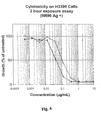


Classifications
-
- A—HUMAN NECESSITIES
- A61—MEDICAL OR VETERINARY SCIENCE; HYGIENE
- A61K—PREPARATIONS FOR MEDICAL, DENTAL OR TOILETRY PURPOSES
- A61K47/00—Medicinal preparations characterised by the non-active ingredients used, e.g. carriers or inert additives; Targeting or modifying agents chemically bound to the active ingredient
- A61K47/50—Medicinal preparations characterised by the non-active ingredients used, e.g. carriers or inert additives; Targeting or modifying agents chemically bound to the active ingredient the non-active ingredient being chemically bound to the active ingredient, e.g. polymer-drug conjugates
- A61K47/51—Medicinal preparations characterised by the non-active ingredients used, e.g. carriers or inert additives; Targeting or modifying agents chemically bound to the active ingredient the non-active ingredient being chemically bound to the active ingredient, e.g. polymer-drug conjugates the non-active ingredient being a modifying agent
- A61K47/62—Medicinal preparations characterised by the non-active ingredients used, e.g. carriers or inert additives; Targeting or modifying agents chemically bound to the active ingredient the non-active ingredient being chemically bound to the active ingredient, e.g. polymer-drug conjugates the non-active ingredient being a modifying agent the modifying agent being a protein, peptide or polyamino acid
- A61K47/64—Drug-peptide, drug-protein or drug-polyamino acid conjugates, i.e. the modifying agent being a peptide, protein or polyamino acid which is covalently bonded or complexed to a therapeutically active agent
- A61K47/642—Drug-peptide, drug-protein or drug-polyamino acid conjugates, i.e. the modifying agent being a peptide, protein or polyamino acid which is covalently bonded or complexed to a therapeutically active agent the peptide or protein in the drug conjugate being a cytokine, e.g. IL2, chemokine, growth factors or interferons being the inactive part of the conjugate
-
- A—HUMAN NECESSITIES
- A61—MEDICAL OR VETERINARY SCIENCE; HYGIENE
- A61K—PREPARATIONS FOR MEDICAL, DENTAL OR TOILETRY PURPOSES
- A61K47/00—Medicinal preparations characterised by the non-active ingredients used, e.g. carriers or inert additives; Targeting or modifying agents chemically bound to the active ingredient
- A61K47/50—Medicinal preparations characterised by the non-active ingredients used, e.g. carriers or inert additives; Targeting or modifying agents chemically bound to the active ingredient the non-active ingredient being chemically bound to the active ingredient, e.g. polymer-drug conjugates
- A61K47/51—Medicinal preparations characterised by the non-active ingredients used, e.g. carriers or inert additives; Targeting or modifying agents chemically bound to the active ingredient the non-active ingredient being chemically bound to the active ingredient, e.g. polymer-drug conjugates the non-active ingredient being a modifying agent
- A61K47/62—Medicinal preparations characterised by the non-active ingredients used, e.g. carriers or inert additives; Targeting or modifying agents chemically bound to the active ingredient the non-active ingredient being chemically bound to the active ingredient, e.g. polymer-drug conjugates the non-active ingredient being a modifying agent the modifying agent being a protein, peptide or polyamino acid
- A61K47/64—Drug-peptide, drug-protein or drug-polyamino acid conjugates, i.e. the modifying agent being a peptide, protein or polyamino acid which is covalently bonded or complexed to a therapeutically active agent
-
- A—HUMAN NECESSITIES
- A61—MEDICAL OR VETERINARY SCIENCE; HYGIENE
- A61K—PREPARATIONS FOR MEDICAL, DENTAL OR TOILETRY PURPOSES
- A61K47/00—Medicinal preparations characterised by the non-active ingredients used, e.g. carriers or inert additives; Targeting or modifying agents chemically bound to the active ingredient
- A61K47/50—Medicinal preparations characterised by the non-active ingredients used, e.g. carriers or inert additives; Targeting or modifying agents chemically bound to the active ingredient the non-active ingredient being chemically bound to the active ingredient, e.g. polymer-drug conjugates
- A61K47/51—Medicinal preparations characterised by the non-active ingredients used, e.g. carriers or inert additives; Targeting or modifying agents chemically bound to the active ingredient the non-active ingredient being chemically bound to the active ingredient, e.g. polymer-drug conjugates the non-active ingredient being a modifying agent
- A61K47/68—Medicinal preparations characterised by the non-active ingredients used, e.g. carriers or inert additives; Targeting or modifying agents chemically bound to the active ingredient the non-active ingredient being chemically bound to the active ingredient, e.g. polymer-drug conjugates the non-active ingredient being a modifying agent the modifying agent being an antibody, an immunoglobulin or a fragment thereof, e.g. an Fc-fragment
- A61K47/6801—Drug-antibody or immunoglobulin conjugates defined by the pharmacologically or therapeutically active agent
- A61K47/6803—Drugs conjugated to an antibody or immunoglobulin, e.g. cisplatin-antibody conjugates
- A61K47/6811—Drugs conjugated to an antibody or immunoglobulin, e.g. cisplatin-antibody conjugates the drug being a protein or peptide, e.g. transferrin or bleomycin
- A61K47/6817—Toxins
-
- A—HUMAN NECESSITIES
- A61—MEDICAL OR VETERINARY SCIENCE; HYGIENE
- A61K—PREPARATIONS FOR MEDICAL, DENTAL OR TOILETRY PURPOSES
- A61K47/00—Medicinal preparations characterised by the non-active ingredients used, e.g. carriers or inert additives; Targeting or modifying agents chemically bound to the active ingredient
- A61K47/50—Medicinal preparations characterised by the non-active ingredients used, e.g. carriers or inert additives; Targeting or modifying agents chemically bound to the active ingredient the non-active ingredient being chemically bound to the active ingredient, e.g. polymer-drug conjugates
- A61K47/51—Medicinal preparations characterised by the non-active ingredients used, e.g. carriers or inert additives; Targeting or modifying agents chemically bound to the active ingredient the non-active ingredient being chemically bound to the active ingredient, e.g. polymer-drug conjugates the non-active ingredient being a modifying agent
- A61K47/68—Medicinal preparations characterised by the non-active ingredients used, e.g. carriers or inert additives; Targeting or modifying agents chemically bound to the active ingredient the non-active ingredient being chemically bound to the active ingredient, e.g. polymer-drug conjugates the non-active ingredient being a modifying agent the modifying agent being an antibody, an immunoglobulin or a fragment thereof, e.g. an Fc-fragment
- A61K47/6835—Medicinal preparations characterised by the non-active ingredients used, e.g. carriers or inert additives; Targeting or modifying agents chemically bound to the active ingredient the non-active ingredient being chemically bound to the active ingredient, e.g. polymer-drug conjugates the non-active ingredient being a modifying agent the modifying agent being an antibody, an immunoglobulin or a fragment thereof, e.g. an Fc-fragment the modifying agent being an antibody or an immunoglobulin bearing at least one antigen-binding site
- A61K47/6851—Medicinal preparations characterised by the non-active ingredients used, e.g. carriers or inert additives; Targeting or modifying agents chemically bound to the active ingredient the non-active ingredient being chemically bound to the active ingredient, e.g. polymer-drug conjugates the non-active ingredient being a modifying agent the modifying agent being an antibody, an immunoglobulin or a fragment thereof, e.g. an Fc-fragment the modifying agent being an antibody or an immunoglobulin bearing at least one antigen-binding site the antibody targeting a determinant of a tumour cell
- A61K47/6867—Medicinal preparations characterised by the non-active ingredients used, e.g. carriers or inert additives; Targeting or modifying agents chemically bound to the active ingredient the non-active ingredient being chemically bound to the active ingredient, e.g. polymer-drug conjugates the non-active ingredient being a modifying agent the modifying agent being an antibody, an immunoglobulin or a fragment thereof, e.g. an Fc-fragment the modifying agent being an antibody or an immunoglobulin bearing at least one antigen-binding site the antibody targeting a determinant of a tumour cell the tumour determinant being from a cell of a blood cancer
-
- A—HUMAN NECESSITIES
- A61—MEDICAL OR VETERINARY SCIENCE; HYGIENE
- A61P—SPECIFIC THERAPEUTIC ACTIVITY OF CHEMICAL COMPOUNDS OR MEDICINAL PREPARATIONS
- A61P31/00—Antiinfectives, i.e. antibiotics, antiseptics, chemotherapeutics
-
- A—HUMAN NECESSITIES
- A61—MEDICAL OR VETERINARY SCIENCE; HYGIENE
- A61P—SPECIFIC THERAPEUTIC ACTIVITY OF CHEMICAL COMPOUNDS OR MEDICINAL PREPARATIONS
- A61P35/00—Antineoplastic agents
-
- A—HUMAN NECESSITIES
- A61—MEDICAL OR VETERINARY SCIENCE; HYGIENE
- A61P—SPECIFIC THERAPEUTIC ACTIVITY OF CHEMICAL COMPOUNDS OR MEDICINAL PREPARATIONS
- A61P37/00—Drugs for immunological or allergic disorders
-
- A—HUMAN NECESSITIES
- A61—MEDICAL OR VETERINARY SCIENCE; HYGIENE
- A61P—SPECIFIC THERAPEUTIC ACTIVITY OF CHEMICAL COMPOUNDS OR MEDICINAL PREPARATIONS
- A61P37/00—Drugs for immunological or allergic disorders
- A61P37/02—Immunomodulators
- A61P37/06—Immunosuppressants, e.g. drugs for graft rejection
-
- C—CHEMISTRY; METALLURGY
- C07—ORGANIC CHEMISTRY
- C07K—PEPTIDES
- C07K5/00—Peptides containing up to four amino acids in a fully defined sequence; Derivatives thereof
- C07K5/02—Peptides containing up to four amino acids in a fully defined sequence; Derivatives thereof containing at least one abnormal peptide link
- C07K5/0205—Peptides containing up to four amino acids in a fully defined sequence; Derivatives thereof containing at least one abnormal peptide link containing the structure -NH-(X)3-C(=0)-, e.g. statine or derivatives thereof
Definitions
- the present invention is directed to Drug-Linker-Ligand Conjugates and to Drug-Linker Compounds, to compositions comprising a Drug-Linker-Ligand Conjugate or a Drug-Linker Compound, and to methods for using the same to treat cancer, an autoimmune disease or an infectious disease.
- Auristatin E U.S. patent 5,635,483 to Pettit et al.
- Dolastatin 10 an agent that inhibits tubulin polymerization by binding to the same site on tubulin as the anticancer drug vincristine ( G. R. Pettit, Prog. Chem. Org. Nat. Prod., 70: 1-79 (1997 )).
- Dolastatin 10, auristatin PE, and auristatin E are linear peptides having four amino acids, three of which are unique to the dolastatin class of compounds. Both dolastatin 10 and auristatin PE are presently being used in human clinical trials to treat cancer. The structural differences between dolastatin 10 and auristatin E reside in the C-terminal residue, in which the thiazolephenethyl amine group of dolastatin 10 is replaced by a norephedrine unit in auristatin E.
- the present invention provides compounds of general Formula Ia: and pharmaceutically acceptable salts and solvates thereof wherein,
- the present invention provides compounds of general formula Ib: and pharmaceutically acceptable salts and solvates thereof wherein,
- the present invention provides compounds of general formula Ic: and pharmaceutically acceptable salts and solvates thereof wherein,
- a compound of formula Ia, formula Ib, formula Ic or a pharmaceutically acceptable salt or solvate thereof is useful for treating or preventing cancer, an autoimmune disease or an infectious disease in an animal.
- the present invention provides compounds of the formula IIa: and pharmaceutically acceptable salts and solvates thereof wherein, independently at each location:
- the present invention provides compounds of the formula IIb: and pharmaceutically acceptable salts and solvates thereof wherein, independently at each location:
- the present invention provides compounds of the formula IIc: and pharmaceutically acceptable salts and solvates thereof wherein, independently at each location:
- the present invention provides compounds of the formula IId: and pharmaceutically acceptable salts and solvates thereof wherein, independently at each location:
- the present invention provides compounds of the formula IIe: and pharmaceutically acceptable salts and solvates thereof wherein, independently at each location:
- the present invention provides compounds of the formula IIf: and pharmaceutically acceptable salts and solvates thereof wherein, independently at each location:
- the present invention provides compounds of the formula IIg: and pharmaceutically acceptable salts and solvates thereof wherein, independently at each location:
- the present invention provides compounds of the formula IIh: and pharmaceutically acceptable salts and solvates thereof wherein, independently at each location:
- the present invention provides compounds of the formula IIi: and pharmaceutically acceptable salts and solvates thereof wherein, independently at each location:
- a compound of formula IIa-i or a pharmaceutically acceptable salt or solvate thereof is useful for treating cancer, an autoimmune disease or an infectious disease in an animal or useful as an intermediate for the synthesis of a Drug-Linker-Ligand Conjugate.
- compositions comprising an effective amount of a Drug-Linker-Ligand Conjugate and a pharmaceutically acceptable carrier or vehicle.
- compositions comprising an effective amount of a Drug-Linker Compound and a pharmaceutically acceptable carrier or vehicle.
- the present invention provides methods for killing or inhibiting the multiplication of a tumor cell or cancer cell, comprising administering to an animal in need thereof an effective amount of a Drug-Linker Compound.
- the present invention provides methods for killing or inhibiting the multiplication of a tumor cell or cancer cell, comprising administering to an animal in need thereof an effective amount of a Drug-Linker-Ligand Conjugate.
- the invention provides methods for treating cancer, comprising administering to an animal in need thereof an effective amount of a Drug-Linker Compound.
- the invention provides methods for treating cancer, comprising administering to an animal in need thereof an effective amount of a Drug-Linker-Ligand Conjugate.
- the invention provides methods for killing or inhibiting the replication of a cell that expresses an auto-immune antibody, comprising administering to an animal in need thereof an effective amount of a Drug-Linker Compound.
- the invention provides methods for killing or inhibiting the replication of a cell that expresses an auto-immune antibody, comprising administering to an animal in need thereof an effective amount of a Drug-Linker-Ligand Conjugate.
- the invention provides methods for treating an autoimmune disease, comprising administering to an animal in need thereof an effective amount of a Drug-Linker Compound.
- the invention provides methods for treating an autoimmune disease, comprising administering to an animal in need thereof an effective amount of a Drug-Linker-Ligand Conjugate.
- the invention provides methods for treating an infectious disease, comprising administering to an animal in need thereof an effective amount of a Drug-Linker Compound.
- the invention provides methods for treating an infectious disease, comprising administering to an animal in need thereof an effective amount of a Drug-Linker-Ligand Conjugate.
- the present invention provides methods for preventing the multiplication of a tumor cell or cancer cell, comprising administering to an animal in need thereof an effective amount of a Drug-Linker Compound.
- the present invention provides methods for preventing the multiplication of a tumor cell or cancer cell, comprising administering to an animal in need thereof an effective amount of a Drug-Linker-Ligand Conjugate.
- the invention provides methods for preventing cancer, comprising administering to an animal in need thereof an effective amount of a Drug-Linker Compound.
- the invention provides methods for preventing cancer, comprising administering to an animal in need thereof an effective amount of a Drug-Linker-Ligand Conjugate.
- the invention provides methods for preventing the multiplication of a cell that expresses an auto-immune antibody, comprising administering to an animal in need thereof an effective amount of a Drug-Linker Compound.
- the invention provides methods for preventing the multiplication of a cell that expresses an auto-immune antibody, comprising administering to an animal in need thereof an effective amount of a Drug-Linker-Ligand Conjugate.
- the invention provides methods for preventing an autoimmune disease, comprising administering to an animal in need thereof an effective amount of a Drug-Linker Compound.
- the invention provides methods for preventing an autoimmune disease, comprising administering to an animal in need thereof an effective amount of a Drug-Linker-Ligand Conjugate.
- the invention provides methods for preventing an infectious disease, comprising administering to an animal in need thereof an effective amount of a Drug-Linker Compound.
- the invention provides methods for preventing an infectious disease, comprising administering to an animal in need thereof an effective amount of a Drug-Linker-Ligand Conjugate.
- the invention provides a Drug-Linker Compound which can be used as an intermediate for the synthesis of a Drug-Linker-Ligand Conjugate.
- an "animal” examples include, but are not limited to, a human, rat, mouse, guinea pig, monkey, pig, goat, cow, horse, dog, cat, bird and fowl.
- Aryl refers to a carbocyclic aromatic group
- aryl groups include, but are not limited to, phenyl, naphthyl and anthracenyl.
- a carbocyclic aromatic group or a heterocyclic aromatic group can be unsubstituted or substituted with one or more groups including, but not limited to, -C 1 -C 8 alkyl, -O-(C 1 -C 8 alkyl), -aryl, -C(O)R', - OC(O)R', -C(O)OR', -C(O)NH 2 , -C(O)NHR', -C(O)N(R') 2 -NHC(O)R', -S(O) 2 R', - S(O)R', -OH, -halogen, -N 3 , -NH 2 , -NH(R'), -N(R') 2 and -CN; where each R' is independently selected
- C 1 -C 8 alkyl refers to a straight chain or branched, saturated or unsaturated hydrocarbon having from 1 to 8 carbon atoms.
- Representative “C 1 -C 8 alkyl” groups include, but are not limited to, -methyl, -ethyl, -n-propyl, -n-butyl, - n-pentyl, -n-hexyl, -n-heptyl, -n-octyl, -n-nonly and -n-decyl; while branched C 1 -C 8 alkyls include, but are not limited to, -isopropyl, -sec-butyl, -isobutyl, -tert-butyl, -isopentyl, 2-methylbutyl, unsaturated C 1 -C 8 alkyls include, but are not limited to, -vinyl, -allyl, - 1-buteny
- a C 1 -C 8 alkyl group can be unsubstituted or substituted with one or more groups including, but not limited to, -C 1 -C 8 alkyl, -O-(C 1 -C 8 alkyl), -aryl, -C(O)R', -OC(O)R, -C(O)OR', -C(O)NH 2 , -C(O)NHR', -C(O)N(R') 2 -NHC(O)R', - S(O) 2 R', -S(O)R', -OH, -halogen, -N 3 , -NH 2 , -NH(R'), -N(R') 2 and -CN; where each R' is independently selected from -C 1 -C 8 alkyl and aryl.
- C 3 -C 8 carbocycle is a 3-, 4-, 5-, 6-, 7- or 8-membered saturated or unsaturated non-aromatic carbocyclic ring.
- Representative C 3 -C 8 carbocycles include, but are not limited to, -cyclopropyl, -cyclobutyl, -cyclopentyl, -cyclopentadienyl, -cyclohexyl, - cyclohexenyl, -1,3-cyclohexadienyl, -1,4-cyclohexadienyl, -cycloheptyl, -1,3-cycloheptadienyl, -1,3,5-cycloheptatrienyl, -cyclooctyl, and -cyclooctadienyl.
- a C 3 -C 8 carbocycle group can be unsubstituted or substituted with one or more groups including, but not limited to, -C 1 -C 8 alkyl, -O-(C 1 -C 8 alkyl), -aryl, -C(O)R', -OC(O)R', -C(O)OR', - C(O)NH 2 , -C(O)NHR', -C(O)N(R') 2 -NHC(O)R', -S(O) 2 R', -S(O)R', -OH, -halogen, -N 3 , -NH 2 , -NH(R'), -N(R') 2 and -CN; where each R' is independently selected from -C 1 -C 8 alkyl and aryl.
- C 3 -C 8 carbocyclo refers to a C 3 -C 8 carbocycle group defined above wherein one of the carbocycle groups hydrogen atoms is replaced with a bond.
- a "C 1 -C 10 alkylene” is a straight chain, saturated hydrocarbon group of the formula -(CH 2 ) 1-10 -.
- Examples of a C 1 -C 10 alkylene include methylene, ethylene, propylene, butylene, pentylene, hexylene, heptylene, ocytylene, nonylene and decalene.
- arylene is an aryl group which has two covalent bonds and can be in the ortho, meta, or para configurations as shown in the following structures: in which the phenyl group can be unsubstituted or substituted with up to four groups including, but not limited to, -C 1 -C 8 alkyl, -O-(C 1 -C 8 alkyl), -aryl, -C(O)R', -OC(O)R', - C(O)OR', -C(O)NH 2 , -C(O)NHR', -C(O)N(R') 2 -NHC(O)R', -S(O) 2 R', -S(O)R', -OH, - halogen, -N 3 , -NH 2 , -NH(R'), -N(R') 2 and -CN; where each R' is independently selected from -C 1 -C 8 alkyl and aryl.
- C 3 -C 8 heterocycle refers to an aromatic or non-aromatic C 3 -C 8 carbocycle in which one to four of the ring carbon atoms are independently replaced with a heteroatom from the group consisting of O, S and N.
- C 3 -C 8 heterocycle include, but are not limited to, benzofuranyl, benzothiophene, indolyl, benzopyrazolyl, coumarinyl, isoquinolinyl, pyrrolyl, thiophenyl, furanyl, thiazolyl, imidazolyl, pyrazolyl, triazolyl, quinolinyl, pyrimidinyl, pyridinyl, pyridonyl, pyrazinyl, pyridazinyl, isothiazolyl, isoxazolyl and tetrazolyl.
- a C 3 -C 8 Heterocycle can be unsubstituted or substituted with up to seven groups including, but not limited to, -C 1 -C 8 alkyl, -O-(C 1 -C 8 alkyl), -aryl, -C(O)R', -OC(O)R', -C(O)OR', -C(O)NH 2 , -C(O)NHR', - C(O)N(R') 2 -NHC(O)R', -S(O) 2 R', -S(O)R', -OH, -halogen, -N 3 , -NH 2 , -NH(R'), -N(R') 2 and -CN; where each R' is independently selected from -C 1 -C 8 alkyl and aryl.
- C 3 -C 8 heterocyclo refers to a C 3 -C 8 heterocycle group defined above wherein one of the heterocycle groups hydrogen atoms is replaced with a bond.
- a C 3 -C 8 heterocyclo can be unsubstituted or substituted with up to six groups including, but not limited to, -C 1 -C 8 alkyl, -O-(C 1 -C 8 alkyl), -aryl, -C(O)R', -OC(O)R', -C(O)OR', -C(O)NH 2 , -C(O)NHR', -C(O)N(R') 2 -NHC(O)R', -S(O) 2 R', -S(O)R', -OH, -halogen, -N 3 , -NH 2 , - NH(R'), -N(R') 2 and -CN; where each R' is independently selected from -C 1
- a "Compound of the Invention” is a Drug-Linker Compound or a Drug-Linker-Ligand Conjugate.
- the Compounds of the Invention are in isolated or purified form.
- isolated means separated from other components of (a) a natural source, such as a plant or animal cell or cell culture, or (b) a synthetic organic chemical reaction mixture.
- purified means that when isolated, the isolate contains at least 95 %, preferably at least 98%, of a Compound of the Invention by weight of the isolate.
- Hydroxyl protecting group examples include, but are not limited to, methoxymethyl ether, 2-methoxyethoxymethyl ether, tetrahydropyranyl ether, benzyl ether, p-methoxybenzyl ether, trimethylsilyl ether, triisopropyl silyl ether, t-butyldimethyl silyl ether, triphenylmethyl silyl ether, acetate ester, substituted acetate esters, pivaloate, benzoate, methanesulfonate and p-toluenesulfonate.
- leaving group refers to a functional group that can be substituted by another functional group.
- Such leaving groups are well known in the art, and examples include, but are not limited to, a halide (e.g., chloride, bromide, iodide), methanesulfonyl (mesyl), p-toluenesulfonyl (tosyl), trifluoromethylsulfonyl (triflate), and trifluoromethylsulfonate.
- a halide e.g., chloride, bromide, iodide
- methanesulfonyl methanesulfonyl
- p-toluenesulfonyl tosyl
- triflate trifluoromethylsulfonate
- antibody refers to a full-length immunoglobulin molecule or an immunologically active portion of a full-length immunoglobulin molecule, i.e., a molecule that contains an antigen binding site that immunospecifically binds an antigen of a target of interest or part thereof, such targets including but not limited to, cancer cell or cells that produce auto-immune antibodies associated with an autoimmune disease.
- the immunoglobulin disclosed herein can be of any type (e.g ., IgG, IgE, IgM, IgD, IgA and IgY), class (e.g ., IgG1, IgG2, IgG3, IgG4, IgAl and IgA2) or subclass of immunoglobulin molecule.
- the immunoglobulins can be derived from any species. Preferably, however, the immunoglobulin is of human, murine, or rabbit origin.
- Antibodies useful in the invention are preferably monoclonal, and include, but are not limited to, polyclonal, monoclonal, bispecific, human, humanized or chimeric antibodies, single chain antibodies, Fv, Fab fragments, F(ab') fragments, F(ab')2 fragments, fragments produced by a Fab expression library, anti-idiotypic (anti-Id) antibodies, CDR's, and epitope-binding fragments of any of the above which immunospecifically bind to cancer cell antigens, viral antigens or microbial antigens.
- phrases "pharmaceutically acceptable salt,” as used herein, refers to pharmaceutically acceptable organic or inorganic salts of a Compound of the Invention.
- the Compounds of the Invention contain at least one amino group, and accordingly acid addition salts can be formed with this amino group.
- Preferred salts include, but are not limited, to sulfate, citrate, acetate, oxalate, chloride, bromide, iodide, nitrate, bisulfate, phosphate, acid phosphate, isonicotinate, lactate, salicylate, acid citrate, tartrate, oleate, tannate, pantothenate, bitartrate, ascorbate, succinate, maleate, gentisinate, fumarate, gluconate, glucaronate, saccharate, formate, benzoate, glutamate, methanesulfonate, ethanesulfonate, benzenesulfonate, p- toluenesulfonate, and pamoate (i.e., 1,1'-methylene-bis-(2-hydroxy-3- naphthoate)) salts.
- pamoate i.e., 1,1'-methylene-bis-(2-hydroxy-3-
- a pharmaceutically acceptable salt may involve the inclusion of another molecule such as an acetate ion, a succinate ion or other counterion.
- the counterion may be any organic or inorganic moiety that stabilizes the charge on the parent compound.
- a pharmaceutically acceptable salt may have more than one charged atom in its structure. Instances where multiple charged atoms are part of the pharmaceutically acceptable salt can have multiple counterions. Hence, a pharmaceutically acceptable salt can have one or more charged atoms and/or one or more counterion.
- “Pharmaceutically acceptable solvate” refers to an association of one or more solvent molecules and a Compound of the Invention.
- solvents that form pharmaceutically acceptable solvates include, but are not limited to, water, isopropanol, ethanol, methanol, DMSO, ethyl acetate, acetic acid, and ethanolamine.
- treating includes any or all of: preventing growth of tumor cells or cancer cells, preventing replication of tumor cells or cancer cells, lessening of overall tumor burden and ameliorating one or more symptoms associated with the disease.
- treating includes any or all of: preventing replication of cells associated with an autoimmune disease state including, but not limited to, cells capable of producing an autoimmune antibody, lessening the autoimmune-antibody burden and ameliorating one or more symptoms of an autoimmune disease.
- treating includes any or all of: preventing the growth, multiplication or replication of the pathogen that causes the infectious disease and ameliorating one or more symptoms of an infectious disease.
- AE is auristatin E
- Boc is N- ( t -butoxycarbonyl)
- cit is citrulline
- dap is dolaproine
- DCC is 1,3-dicyclohexylcarbodiimide
- DCM is dichloromethane
- DEA diethylamine
- DEAD is diethylazodicarboxylate
- DEPC diethylphosphorylcyanidate
- DIAD diisopropylazodicarboxylate
- DIEA is N,N -diisopropylethylamine
- dil is dolaisoleuine
- DMAP is 4-dimethylaminopyridine
- DME is ethyleneglycol dimethyl ether (or 1,2-dimethoxyethane)
- DMF is N,N -dimethylformamide
- DMSO is dimethylsulfoxide
- doe is dolaphenine
- dov N,N- dimethylvaline
- DTNB is 5
- the invention provides compounds of the formula Ia: and pharmaceutically acceptable salts and solvates thereof wherein,
- R 10 is selected from
- w is an integer ranging from 2 to 12.
- p ranges from 1 to about 8.
- p ranges from 1 to about 3.
- p ranges from about 3 to about 5.
- p ranges from about 7 to about 9.
- p is about 8.
- p is about 4.
- p is about 2.
- Illustrative classes of compounds of formula Ia have the structures: and and pharmaceutically acceptable salts and solvates thereof, where L- is a Ligand unit, E is -CH 2 - or -CH 2 CH 2 O-; e is an integer ranging either from 0-10 when E is -CH 2 -, or from 1-10 when E is -CH 2 CH 2 -O-; F is -CH 2 -; f is 0 or 1; and p ranges from 1 to about 20.
- L- is a Ligand unit
- E is -CH 2 - or -CH 2 CH 2 O-
- e is an integer ranging either from 0-10 when E is -CH 2 -, or from 1-10 when E is -CH 2 CH 2 -O-
- F is -CH 2 -
- f is 0 or 1
- p ranges from 1 to about 20.
- p ranges from 1 to about 8.
- p ranges from 1 to about 3.
- p ranges from about 3 to about 5.
- p ranges from about 7 to about 9.
- p is about 8.
- p is about 4.
- L is cBR96, cAC10 or 1F6.
- Illustrative compounds of formula Ia have the structure: and and pharmaceutically acceptable salts and solvates thereof, where p ranges from about 7 to about 9.
- p ranges from 1 to about 3.
- p ranges from about 3 to about 5.
- p is about 8.
- p is about 4.
- p is about 2.
- the present invention provides compounds of general formula Ib: and pharmaceutically acceptable salts and solvates thereof wherein,
- R 10 is selected from:
- w is an integer ranging from 2 to 12.
- p ranges from 1 to about 8.
- p ranges from 1 to about 3.
- p ranges from about 3 to about 5.
- p ranges from about 7 to about 9. In another embodiment, p is about 8.
- p is about 4.
- p is about 2.
- Illustrative classes of compounds of formula Ib have the structure: and pharmaceutically acceptable salts and solvates thereof, where L- is Ligand unit, E is -CH 2 - or -CH 2 CH 2 O-; e is an integer ranging either from 0-10 when E is -CH 2 -, or 1-10 when E is -CH 2 CH 2 -O-; F is -CH 2 -; f is 0 or 1; and p ranges from 1 to about 20.
- L- is Ligand unit
- E is -CH 2 - or -CH 2 CH 2 O-
- e is an integer ranging either from 0-10 when E is -CH 2 -, or 1-10 when E is -CH 2 CH 2 -O-
- F is -CH 2 -
- f is 0 or 1
- p ranges from 1 to about 20.
- p ranges from 1 to about 8.
- p ranges from 1 to about 3.
- p ranges from about 3 to about 5.
- p ranges from about 7 to about 9.
- p is about 8.
- p is about 4.
- p is about 2.
- L is cBR96, cAC10 or 1F6.
- Illustrative compounds of formula Ib have the structure: and pharmaceutically acceptable salts and solvates thereof, where p ranges from about 7 to about 9.
- p ranges from 1 to about 3.
- p ranges from about 3 to about 5.
- p is about 8.
- p is about 4.
- p is about 2.
- the present invention provides compounds of general formula Ic:
- R 10 is selected from
- R 10 is selected from
- w is an integer ranging from 2 to 12.
- p ranges from 1 to about 8.
- p ranges from 1 to about 3.
- p ranges from about 3 to about 5.
- p ranges from about 7 to about 9.
- p is about 8.
- p is about 4.
- p is about 2.
- An illustrative compound of formula Ic has the structure: wherein where L- is Ligand unit, E is -CH 2 - or -CH 2 CH 2 O-; e is an integer ranging either from 0-10 when E is -CH 2 -, or 1-10 when E is -CH 2 CH 2 -O-; F is -CH 2 -; f is 0 or 1; and p ranges from 1 to about 20.
- p ranges from 1 to about 8.
- p ranges from 1 to about 3.
- p ranges from about 3 to about 5.
- p ranges from about 7 to about 9.
- p is about 8.
- p is about 4.
- p is about 2.
- L is cBR96, cAC10 or 1F6.
- the Drug-Linker-Ligand Conjugates are useful for treating or preventing cancer, an autoimmune disease or an infectious disease in an animal.
- p is the average number of -A a -W w Y y -D units per ligand in a Drug-Linker-Ligand Conjugate of formulas Ia, Ib and Ic.
- p ranges from 1 to 15.
- p ranges from 1 to 10.
- p ranges from 1 to about 8.
- p ranges from 1 to about 5.
- p ranges from 1 to about 3.
- p ranges from about 3 to about 5.
- p ranges from about 7 to about 9.
- p is about 8.
- p is about 4.
- p is about 2.
- the Drug-Linker-Ligand Conjugates of formulas Ia, Ib and Ic may exist as mixtures, wherein each component of a mixture has a different p value.
- a Drug-Linker-Ligand Conjugate may exist as a mixture of two separate Conjugates, one Conjugate component wherein p is 7 and the other Conjugate component wherein p is 8.
- a Drug-Linker-Ligand Conjugate exists as a mixture of three separate conjugates wherein p for the three separate conjugates is 1, 2, and 3, respectively.
- a Drug-Linker-Ligand Conjugate exists as a mixture of three separate conjugates wherein p for the three separate conjugates is 3, 4, and 5, respectively.
- a Drug-Linker-Ligand Conjugate exists as a mixture of three separate conjugates wherein p for the three separate conjugates is 5, 6, and 7, respectively.
- a Drug-Linker-Ligand Conjugate exists as a mixture of three separate conjugates wherein p for the three separate conjugates is 7, 8, and 9, respectively.
- a Drug-Linker-Ligand Conjugate exists as a mixture of three separate conjugates wherein p for the three separate conjugates is 9, 10, and 11, respectively.
- a Drug-Linker-Ligand Conjugate exists as a mixture of three separate conjugates wherein p for the three separate conjugates is 11, 12, and 13, respectively.
- a Drug-Linker-Ligand Conjugate exists as a mixture of three separate conjugates wherein p for the three separate conjugates is 13, 14, and 15, respectively.
- the present invention provides compounds of the formula IIa: and pharmaceutically acceptable salts and solvates thereof wherein, independently at each location:
- An illustrative compound of formula IIa has the structure: and pharmaceutically acceptable salts and solvates thereof.
- the present invention provides compounds of the formula IIb: and pharmaceutically acceptable salts and solvates thereof wherein, independently at each location:
- the present invention provides compounds of the formula IIc: and pharmaceutically acceptable salts and solvates thereof wherein, independently at each location:
- the present invention provides compounds of the formula IId: and pharmaceutically acceptable salts and solvates thereof wherein, independently at each location:
- the present invention provides compounds of the formula IIe: and pharmaceutically acceptable salts and solvates thereof wherein, independently at each location:
- the present invention provides compounds of the formula IIf: and pharmaceutically acceptable salts and solvates thereof wherein, independently at each location:
- R 1 is selected from -C 1 -C 8 alkyl and -C 3 -C 8 carbocycle; and R 2 is selected from -H and -C 1 -C 8 alkyl; or R 1 and R 2 join, have the formula -(CR a R b ) n - wherein R a and R b are independently selected from -H, -C 1 -C 8 alkyl and -C 3 -C 8 carbocycle and n is selected from 2, 3, 4, 5 and 6, and form a ring with the nitrogen atom to which they are attached
- Illustrative compounds of formula IIf have the structure: and and pharmaceutically acceptable salts and solvates thereof.
- the present invention provides compounds of the formula IIg: and pharmaceutically acceptable salts and solvates thereof wherein, independently at each location:
- the present invention provides compounds of the formula IIh: and pharmaceutically acceptable salts and solvates thereof wherein, independently at each location:
- the present invention provides compounds of the formula IIi: and pharmaceutically acceptable salts and solvates thereof wherein, independently at each location:
- Illustrative compounds of formula IIi have the structures: and and pharmaceutically acceptable salts and solvates thereof.
- the compounds of formulas IIa-i are useful for treating or preventing cancer, an autoimmune disease or an infectious disease in an animal.
- the Linker unit of the Drug-Linker-Ligand Conjugate links the Drug unit and the Ligand unit and has the formula: wherein:
- a Ligand (L) has a functional group that can form a bond with a functional group of a Stretcher.
- Useful functional groups that can be present on a ligand, either naturally or via chemical manipulation include, but are not limited to, sulfhydryl (-SH), amino, hydroxyl, carboxy, the anomeric hydroxyl group of a carbohydrate, and carboxyl.
- Preferred Ligand functional groups are sulfhydryl and amino. Sulfhydryl groups can be generated by reduction of an intramolecular disulfide bond of a Ligand.
- sulfhydryl groups can be generated by reaction of an amino group of a lysine moiety of a Ligand using 2-iminothiolane (Traut's reagent) or another sulfhydryl generating reagent.
- the Stretcher unit forms a bond with a sulfur atom of the Ligand unit.
- the sulfur atom can be derived from a sulfhydryl group of a Ligand.
- Representative Stretcher units of this embodiment are depicted within the square brackets of Formulas (IIIa) and (IIIb), wherein L-, -W-, -Y-, -D, w and y are as defined above and R 17 is selected from -C 1 -C 10 alkylene-, -C 3 -C 8 carbocyclo-, -O-(C 1 -C 8 alkyl)-, -arylene-, -C 1 -C 10 alkylene-arylene-, -arylene-C 1 -C 10 alkylene-, -C 1 -C 10 alkylene-(C 3 -C 8 carbocyclo)-, -(C 3 -C 8 carbocyclo)-C 1 -C 10 alkylene-, -C 3 -C 8 hetero
- An illustrative Stretcher unit is that of formula (IIIa) where R 17 is -(CH 2 ) 5 -:
- Stretcher unit is that of formula (IIIa) where R 17 is -(CH 2 CH 2 O) r -CH 2 -; and r is 2:
- Still another illustrative Stretcher unit is that of formula (IIIb) where R 17 is -(CH 2 ) 5 -:
- the Stretcher unit is linked to the Ligand unit via a disulfide bond between a sulfur atom of the Ligand unit and a sulfur atom of the Stretcher unit.
- a representative Stretcher unit of this embodiment is depicted within the square brackets of Formula (IV), wherein R 17 , L-, -W-, -Y-, -D, w and y are as defined above.
- the reactive group of the Stretcher contains a reactive site that can form a bond with a primary or secondary amino group of a Ligand.
- these reactive sites include, but are not limited to, activated esters such as succinimide esters, 4-nitrophenyl esters, pentafluorophenyl esters, tetrafluorophenyl esters, anhydrides, acid chlorides, sulfonyl chlorides, isocyanates and isothiocyanates.
- Representative Stretcher units of this embodiment are depicted within the square brackets of Formulas (Va) and (Vb), wherein -R 17 -, L-, -W-, -Y-, -D, w and y are as defined above;
- the reactive group of the Stretcher contains a reactive site that is reactive to a carbohydrate's (-CHO) group that can be present on a Ligand.
- a carbohydrate can be mildly oxidized using a reagent such as sodium periodate and the resulting (-CHO) unit of the oxidized carbohydrate can be condensed with a Stretcher that contains a functionality such as a hydrazide, an oxime, a primary or secondary amine, a hydrazine, a thiosemicarbazone, a hydrazine carboxylate, and an arylhydrazide such as those described by Kaneko, T. et al.
- the Amino Acid unit (-W-) when present, links the Stretcher unit to the Spacer unit if the Spacer unit is present, links the Stretcher unit to the Drug unit if the Spacer unit is absent, and links the Ligand unit to the Drug unit if the Stretcher unit and Spacer unit are absent.
- the Amino Acid unit of the Compounds of the Invention can be enzymatically cleaved by one or more enzymes, including a tumor-associated protease, to liberate the Drug unit (-D), which in one embodiment is protonated in vivo upon release to provide a Drug (D).
- one or more enzymes including a tumor-associated protease
- Preferred Amino Acid units include, but are not limited to, units of formula (VII) where: R 20 is benzyl and R 21 is -(CH 2 ) 4 NH 2 ; R 20 isopropyl and R 21 is -(CH 2 ) 4 NH 2; R 20 isopropyl and R 21 is -(CH 2 ) 3 NHCONH 2 .
- Another preferred Amino Acid unit is a unit of formula (VIII) where R 20 is benzyl, R 21 is benzyl, and R 22 is -(CH 2 ) 4 NH 2 .
- -W w - units useful in the present invention can be designed and optimized in their selectivity for enzymatic cleavage by a particular enzymes, for example, a tumor-associated protease.
- a -W w - unit is that whose cleavage is catalyzed by cathepsin B, C and D, or a plasmin protease.
- -W w - is a dipeptide, tripeptide or pentapeptide.
- R 19 , R 20 , R 21 , R 22 or R 23 is other than hydrogen
- the carbon atom to which R 19 , R 20 , R 21 , R 22 or R 23 is attached is chiral.
- Each carbon atom to which R 19 , R 20 , R 21 , R 22 or R 23 is attached is independently in the (S) or (R) configuration.
- the Spacer unit when present, links an Amino Acid unit to the Drug unit when an Amino Acid unit is present. Alternately, the Spacer unit links the Stretcher unit to the Drug unit when the Amino Acid unit is absent. The Spacer unit also links the Drug unit to the ligand unit when both the Amino Acid unit and Stretcher unit are absent. Spacer units are of two general types: self-immolative and non self-immolative. A non self-immolative Spacer unit is one in which part or all of the Spacer unit remains bound to the Drug unit after cleavage, particularly enzymatic, of an Amino Acid unit from the Drug-Linker-Ligand Conjugate or the Drug-Linker Compound.
- Examples of a non self-immolative Spacer unit include, but are not limited to a (glycine-glycine) Spacer unit and a glycine Spacer unit (both depicted in Scheme 1).
- a Compound of the Invention containing a glycine-glycine Spacer unit or a glycine Spacer unit undergoes enzymatic cleavage via a tumor-cell associated-protease, a cancer-cell-associated protease or a lymphocyte-associated protease, a glycine-glycine-Drug moiety or a glycine-Drug moiety is cleaved from L-A a - Ww-.
- an independent hydrolysis reaction takes place within the target cell, cleaving the glycine-Drug unit bond and liberating the Drug.
- -Yy- is a p-aminobenzyl alcohol (PAB) unit (see Schemes 2 and 3) whose phenylene portion is substituted with Q m where Q is is -C 1 -C 8 alkyl, -O-(C 1 -C 8 alkyl), -halogen,- nitro or -cyano; and m is an integer ranging from 0-4.
- PAB p-aminobenzyl alcohol
- a non self-immolative Spacer unit (-Y-) is -Gly-Gly-.
- a non self-immolative the Spacer unit (-Y-) is -Gly-.
- a Compound of the Invention containing a self-immolative Spacer unit can release -D without the need for a separate hydrolysis step.
- -Y- is a PAB group that is linked to -W w - via the amino nitrogen atom of the PAB group, and connected directly to -D via a carbonate, carbamate or ether group.
- Scheme 2 depicts a possible mechanism of Drug release of a PAB group which is attached directly to -D via a carbamate or carbonate group.
- Q is -C 1 -C 8 alkyl, -O-(C 1 -C 8 alkyl), -halogen, -nitro or -cyano;
- m is an integer ranging from 0-4; and
- p ranges from 1 to about 20.
- Scheme 3 depicts a possible mechanism of Drug release of a PAB group which is attached directly to -D via an ether or amine linkage.
- Q is -C 1 -C 8 alkyl, -O-(C 1 -C 8 alkyl), -halogen,- nitro or -cyano;
- m is an integer ranging from 0-4; and
- p ranges from 1 to about 20.
- self-immolative spacers include, but are not limited to, aromatic compounds that are electronically similar to the PAB group such as 2-aminoimidazol-5-methanol derivatives (see Hay et al., Bioorg. Med. Chena. Lett., 1999, 9, 2237 ) and ortho or para-aminobenzylacetals.
- Spacers can be used that undergo cyclization upon amide bond hydrolysis, such as substituted and unsubstituted 4-aminobutyric acid amides ( Rodrigues et al., Chemistry Biology, 1995, 2, 223 ), appropriately substituted bicyclo[2.2.1] and bicyclo[2.2.2] ring systems ( Storm, et al., J Amer. Chem.
- the Spacer unit is a branched bis(hydroxymethyl)styrene (BHMS) unit as depicted in Scheme 4, which can be used to incorporate and release multiple drugs.
- Q is -C 1 -C 8 alkyl, -O-(C 1 -C 8 alkyl), -halogen, -nitro or -cyano;
- m is an integer ranging from 0-4;
- n is 0 or 1; and
- p ranges raging from 1 to about 20.
- the -D moieties are the same.
- the -D moieties are different.
- Preferred Spacer units are represented by Formulas (X)-(XII): where Q is -C 1 -C 8 alkyl, -O-(C 1 -C 8 alkyl), -halogen, -nitro or -cyano; and m is an integer ranging from 0-4; and
- -D is represented by the formula: wherein, independently at each location:
- R 10 is selected from
- -D has the formula or a pharmaceutically acceptable salt or solvate thereof, wherein, independently at each location:
- R 10 is selected from
- -D is represented by the formula: wherein, independently at each location:
- R 10 is selected from:
- -D has the formula or a pharmaceutically acceptable salt or solvate thereof, wherein, independently at each location:
- R 10 is selected from or
- R 10 is selected from: or
- a Drug unit can form a bond with a Linker unit via a nitrogen atom of a Drug's primary or secondary amino group, via an oxygen atom of a Drug's hydroxyl group, or via a sulfur atom of a Drug's sulfhydryl group to form a Drug-Linker Compound.
- Drug units have the formula and
- the Ligand unit (L-) includes within its scope any unit of a Ligand (L) that binds or reactively associates or complexes with a receptor, antigen or other receptive moiety associated with a given target-cell population.
- a Ligand can be any molecule that binds to, complexes with or reacts with a moiety of a cell population sought to be therapeutically or otherwise biologically modified.
- the Ligand unit acts to deliver the Drug unit to the particular target cell population with which the Ligand unit reacts.
- Such Ligands include, but are not limited to, large molecular weight proteins such as, for example, full-length antibodies, antibody fragments, smaller molecular weight proteins, polypeptide or peptides, and lectins.
- a Ligand unit can form a bond to either a Stretcher unit or an Amino Acid unit of a Linker.
- a Ligand unit can form a bond to a Linker unit via a heteroatom of the Ligand.
- Heteroatoms that may be present on a Ligand unit include sulfur (in one embodiment, from a sulfhydryl group of a Ligand), oxygen (in one embodiment, from a carbonyl, carboxyl or hydroxyl group of a Ligand) and nitrogen (in one embodiment, from a primary or secondary amino group of a Ligand). These heteroatoms can be present on the Ligand in the Ligand's natural state, for example a naturally occurring antibody, or can be introduced into the Ligand via chemical modification.
- a Ligand has a sulfhydryl group and the Ligand bonds to the Linker unit via the sulfhydryl group's sulfur atom.
- the Ligand can have one or more carbohydrate groups that can be chemically modified to have one or more sulfhydryl groups.
- the Ligand unit bonds to the Stretcher unit via the sulfhydryl group's sulfur atom.
- the Ligand can have one or more carbohydrate groups that can be oxidized to provide an aldehyde (-CHO) group (see Laguzza, et al., J. Med. Chem. 1989, 32(3), 548-55 ).
- the corresponding aldehyde can form a bond with a Reactive Site on a Stretcher.
- Reactive sites on a Stretcher that can react with a carbonyl group on a Ligand include, but are not limited to, hydrazine and hydroxylamine.
- Useful non-immunoreactive protein, polypeptide, or peptide Ligands include, but are not limited to, transferrin, epidermal growth factors ("EGF”), bombesin, gastrin, gastrin-releasing peptide, platelet-derived growth factor, IL-2, IL-6, transforming growth factors ("TGF”), such as TGF-a and TGF- ⁇ , vaccinia growth factor (“VGF”), insulin and insulin-like growth factors I and II, lectins and apoprotein from low density lipoprotein.
- EGF epidermal growth factors
- TGF transforming growth factors
- VGF vaccinia growth factor
- I and II lectins and apoprotein from low density lipoprotein.
- Useful Polyclonal antibody Ligands are heterogeneous populations of antibody molecules derived from the sera of immunized animals.
- Various procedures well known in the art may be used for the production of polyclonal antibodies to an antigen-of-interest.
- various host animals can be immunized by injection with an antigen of interest or derivative thereof, including but not limited to rabbits, mice, rats, and guinea pigs.
- adjuvants may be used to increase the immunological response, depending on the host species, and including but not limited to Freund's (complete and incomplete), mineral gels such as aluminum hydroxide, surface active substances such as lysolecithin, pluronic polyols, polyanions, peptides, oil emulsions, keyhole limpet hemocyanins, dinitrophenol, and potentially useful human adjuvants such as BCG (bacille Calmette-Guerin) and corynebacterium parvum.
- BCG Bacille Calmette-Guerin
- corynebacterium parvum Such adjuvants are also well known in the art.
- Useful monoclonal antibody Ligands are homogeneous populations of antibodies to a particular antigen (e.g ., a cancer cell antigen, a viral antigen, a microbial antigen covalently linked to a second molecule).
- a monoclonal antibody (mAb) to an antigen-of-interest can be prepared by using any technique known in the art which provides for the production of antibody molecules by continuous cell lines in culture.
- Such antibodies may be of any immunoglobulin class including IgG, IgM, IgE, IgA, and IgD and any subclass thereof.
- the hybridoma producing the mAbs of use in this invention may be cultivated in vitro or in vivo.
- Useful monoclonal antibody Ligands include, but are not limited to, human monoclonal antibodies or chimeric human-mouse (or other species) monoclonal antibodies.
- Human monoclonal antibodies may be made by any of numerous techniques known in the art (e.g., Teng et al., 1983, Proc. Natl. Acad. Sci. U.S.A. 80, 7308-7312 ; Kozbor et al., 1983, Immunology Today 4, 72-79 ; and Olsson et al., 1982, Meth. Enzymol. 92, 3-16 ).
- the Ligand can also be a bispecific antibody.
- Methods for making bispecific antibodies are known in the art. Traditional production of full-length bispecific antibodies is based on the coexpression of two immunoglobulin heavy chain-light chain pairs, where the two chains have different specificities ( Milstein et al., 1983, Nature 305:537-539 ). Because of the random assortment of immunoglobulin heavy and light chains, these hybridomas (quadromas) produce a potential mixture of 10 different antibody molecules, of which only one has the correct bispecific structure. Purification of the correct molecule, which is usually performed using affinity chromatography steps, is rather cumbersome, and the product yields are low. Similar procedures are disclosed in International Publication No. WO 93/08829 , and in Traunecker et al., EMBO J. 10:3655-3659 (1991 ).
- antibody variable domains with the desired binding specificities are fused to immunoglobulin constant domain sequences.
- the fusion preferably is with an immunoglobulin heavy chain constant domain, comprising at least part of the hinge, CH2, and CH3 regions. It is preferred to have the first heavy-chain constant region (CH1) containing the site necessary for light chain binding, present in at least one of the fusions.
- DNAs encoding the immunoglobulin heavy chain fusions and, if desired, the immunoglobulin light chain are inserted into separate expression vectors, and are co-transfected into a suitable host organism.
- the bispecific antibodies have a hybrid immunoglobulin heavy chain with a first binding specificity in one arm, and a hybrid immunoglobulin heavy chain-light chain pair (providing a second binding specificity) in the other arm.
- This asymmetric structure facilitates the separation of the desired bispecific compound from unwanted immunoglobulin chain combinations, as the presence of an immunoglobulin light chain in only one half of the bispecific molecule provides for a facile way of separation (International Publication No. WO 94/04690 ) which is incorporated herein by reference in its entirety.
- bispecific antibody Ligands can be prepared for use in the treatment or prevention of disease as defined herein.
- bifunctional antibodies are also described, in European Patent Publication No. EPA 0 105 360 .
- hybrid or bifunctional antibodies can be derived either biologically, i.e ., by cell fusion techniques, or chemically, especially with cross-linking agents or disulfide-bridge forming reagents, and may comprise whole antibodies or fragments thereof. Methods for obtaining such hybrid antibodies are disclosed for example, in International Publication WO 83/03679 , and European Patent Publication No. EPA 0 217 577 , both of which are incorporated herein by reference.
- the Ligand can be a functionally active fragment, derivative or analog of an antibody that immunospecifically binds to cancer cell antigens, viral antigens, or microbial antigens.
- “Functionally active” means that the fragment, derivative or analog is able to elicit anti-anti-idiotype antibodies that recognize the same antigen that the antibody from which the fragment, derivative or analog is derived recognized.
- the antigenicity of the idiotype of the immunoglobulin molecule can be enhanced by deletion of framework and CDR sequences that are C-terminal to the CDR sequence that specifically recognizes the antigen.
- synthetic peptides containing the CDR sequences can be used in binding assays with the antigen by any binding assay method known in the art (e.g ., the BIA core assay)
- Other useful Ligands include fragments of antibodies such as, but not limited to, F(ab')2 fragments, which contain the variable region, the light chain constant region and the CH1 domain of the heavy chain can be produced by pepsin digestion of the antibody molecule, and Fab fragments, which can be generated by reducing the disulfide bridges of the F(ab')2 fragments.
- Other useful Ligands are heavy chain and light chain dimers of antibodies, or any minimal fragment thereof such as Fvs or single chain antibodies (SCAs) (e.g., as described in U.S. Patent 4,946,778 ; Bird, 1988, Science 242:423-42 ; Huston et al., 1988, Proc. Natl. Acad. Sci. USA 85:5879-5883 ; and Ward et al., 1989, Nature 334:544-54 ), or any other molecule with the same specificity as the antibody.
- SCAs single chain antibodies
- chimeric and humanized monoclonal antibodies comprising both human and non-human portions, which can be made using standard recombinant DNA techniques
- Ligands are useful Ligands.
- a chimeric antibody is a molecule in which different portions are derived from different animal species, such as those having a variable region derived from a murine monoclonal and a human immunoglobulin constant region.
- Humanized antibodies are antibody molecules from non-human species having one or more complementarity determining regions (CDRs) from the non-human species and a framework region from a human immunoglobulin molecule.
- CDRs complementarity determining regions
- Such chimeric and humanized monoclonal antibodies can be produced by recombinant DNA techniques known in the art, for example using methods described in International Publication No. WO 87/02671 ; European Patent Publication No. 184,187 ; European Patent Publication No. 171,496 ; European Patent Publication No.
- Completely human antibodies are particularly desirable for Ligands.
- Such antibodies can be produced using transgenic mice that are incapable of expressing endogenous immunoglobulin heavy and light chains genes, but which can express human heavy and light chain genes.
- the transgenic mice are immunized in the normal fashion with a selected antigen, e.g ., all or a portion of a polypeptide of the invention.
- Monoclonal antibodies directed against the antigen can be obtained using conventional hybridoma technology.
- the human immunoglobulin transgenes harbored by the transgenic mice rearrange during B cell differentiation, and subsequently undergo class switching and somatic mutation. Thus, using such a technique, it is possible to produce therapeutically useful IgG, IgA, IgM and IgE antibodies.
- Completely human antibodies that recognize a selected epitope can be generated using a technique referred to as "guided selection.”
- a selected non-human monoclonal antibody e.g ., a mouse antibody
- the Ligand is a fusion protein of an antibody, or a functionally active fragment thereof, for example in which the antibody is fused via a covalent bond (e.g ., a peptide bond), at either the N-terminus or the C-terminus to an amino acid sequence of another protein (or portion thereof, preferably at least 10, 20 or 50 amino acid portion of the protein) that is not the antibody.
- a covalent bond e.g ., a peptide bond
- the antibody or fragment thereof is covalently linked to the other protein at the N-terminus of the constant domain.
- the Ligand antibodies include analogs and derivatives that are either modified, i.e , by the covalent attachment of any type of molecule as long as such covalent attachment permits the antibody to retain its antigen binding immunospecificity.
- the derivatives and analogs of the antibodies include those that have been further modified, e.g ., by glycosylation, acetylation, pegylation, phosphylation, amidation, derivatization by known protecting/blocking groups, proteolytic cleavage, linkage to a cellular Ligand unit or other protein, etc.
- analog or derivative can contain one or more unnaturalamino acids.
- the Ligand antibodies include antibodies having modifications (e.g ., substitutions, deletions or additions) in amino acid residues that interact with Fc receptors.
- the Ligand antibodies include antibodies having modifications in amino acid residues identified as involved in the interaction between the Fc domain and the FcRn receptor (see, e.g ., International Publication No. WO 97/34631 , which is incorporated herein by reference in its entirety).
- Antibodies immunospecific for a cancer cell antigen can be obtained commercially, for example, from Genentech (San Francisco, CA) or produced by any method known to one of skill in the art such as, e.g ., chemical synthesis or recombinant expression techniques.
- the nucleotide sequence encoding antibodies immunospecific for a cancer cell antigen can be obtained, e.g ., from the GenBank database or a database like it, the literature publications, or by routine cloning and sequencing.
- antibodies for the treatment or prevention of cancer are used in accordance with the compositions and methods of the invention.
- Antibodies immunospecific for a cancer cell antigen can be obtained commercially or produced by any method known to one of skill in the art such as, e.g ., chemical synthesis or recombinant expression techniques.
- the nucleotide sequence encoding antibodies immunospecific for a cancer cell antigen can be obtained, e.g ., from the GenBank database or a database like it, the literature publications, or by routine cloning and sequencing.
- HERCEPTIN Trastuzumab; Genentech, CA
- Herceptin trastuzumab
- RITUXAN rituximab; Genentech
- OvaRex AltaRex Corporation, MA
- Panorex Gaxo Wellcome, NC
- BEC2 ImClone Systems Inc., NY
- IMC-C225 Imclone Systems Inc., NY
- Vitaxin MedImmune, Inc., MD
- Campath I/H Leukosite, MA
- antibodies useful in the treatment of cancer include, but are not limited to, antibodies against the following antigens: CA125 (ovarian), CA15-3 (carcinomas), CA19-9 (carcinomas), L6 (carcinomas), Lewis Y (carcinomas), Lewis X (carcinomas), alpha fetoprotein (carcinomas), CA 242 (colorectal), placental alkaline phosphatase (carcinomas), prostate specific antigen (prostate), prostatic acid phosphatase (prostate), epidermal growth factor (carcinomas), MAGE-1 (carcinomas), MAGE-2 (carcinomas), MAGE-3 (carcinomas), MAGE -4 (carcinomas), anti-transferrin receptor (carcinomas), p97 (melanoma), MUC1-KLH (breast cancer), CEA (colorectal), gp100 (melanoma), MART1 (melanoma), PSA (prostate), IL-2 receptor (T-cell leukemia and lymphomas), CD20 (n
- Some specific useful antibodies include, but are not limited to, BR96 mAb ( Trail, P. A., Willner, D., Lasch, S. J., Henderson, A. J., Hofstead, S. J., Casazza, A. M., Firestone, R. A., Hellström, I., Hellström, K. E., "Cure of Xenografted Human Carcinomas by BR96-Doxorubicin Immunoconjugates" Science 1993, 261, 212-215 ), BR64 ( Trail, PA, Willner, D, Knipe, J., Henderson, A. J., Lasch, S. J., Zoeckler, M. E., Trailsmith, M. D., ., Doyle, T. W., King, H.
- BR96 mAb Trail, P. A., Willner, D., Lasch, S. J., Henderson, A. J., Hofstead, S. J., Casazza, A. M., Firestone, R. A., Hellström
- antibodies for the treatment or prevention of an autoimmune disease are used in accordance with the compositions and methods of the invention.
- Antibodies immunospecific for an antigen of a cell that is responsible for producing autoimmune antibodies can be obtained from any organization (e.g ., a university scientist or a company such as Genentech) or produced by any method known to one of skill in the art such as, e.g ., chemical synthesis or recombinant expression techniques.
- useful Ligand antibodies that are immunospecific for the treatment of autoimmune diseases include, but are not limited to, Anti-Nuclear Antibody; Anti ds DNA; Anti ss DNA, Anti Cardiolipin Antibody IgM, IgG; Anti Phospholipid Antibody IgM, IgG; Anti SM Antibody; Anti Mitochondrial Antibody; Thyroid Antibody; Microsomal Antibody; Thyroglobulin Antibody; Anti SCL-70; Anti-Jo; Anti-U 1 RNP; Anti-La/SSB; Anti SSA; Anti SSB; Anti Perital Cells Antibody; Anti Histones; Anti RNP; C-ANCA; P-ANCA; Anti centromere; Anti-Fibrillarin, and Anti GBM Antibody.
- antibodies useful in the present methods can bind to both a receptor or a receptor complex expressed on an activated lymphocyte.
- the receptor or receptor complex can comprise an immunoglobulin gene superfamily member, a TNF receptor superfamily member, an integrin, a cytokine receptor, a chemokine receptor, a major histocompatibility protein, a lectin, or a complement control protein.
- suitable immunoglobulin superfamily members are CD2, CD3, CD4, CD8, CD19, CD22, CD28, CD79, CD90, CD152/CTLA-4, PD-1, and ICOS.
- TNF receptor superfamily members are CD27, CD40, CD95/Fas, CD134/OX40, CD137/4-1BB, TNF-R1, TNFR-2, RANK, TACI, BCMA, osteoprotegerin, Apo2/TRAIL-R1, TRAIL-R2, TRAIL-R3, TRAIL-R4, and APO-3.
- suitable integrins are CD11a, CD11b, CD11c, CD18, CD29, CD41, CD49a, CD49b, CD49c, CD49d, CD49e, CD49f, CD103, and CD104.
- suitable lectins are C-type, S-type, and I-type lectin.
- the Ligand is an antibody that binds to an activated lymphocyte that is associated with an autoimmune disease.
- useful Ligand antibodies that are immunospecific for a viral or a microbial antigen are monoclonal antibodies.
- Ligand antibodies that are immunospecific for a viral antigen or microbial antigen are humanized or human monoclonal antibodies.
- viral antigen includes, but is not limited to, any viral peptide, polypeptide protein (e.g ., HIV gp120, HIV nef, RSV F glycoprotein, influenza virus neuraminidase, influenza virus hemagglutinin, HTLV tax, herpes simplex virus glycoprotein (e.g ., gB, gC, gD, and gE) and hepatitis B surface antigen) that is capable of eliciting an immune response.
- polypeptide protein e.g ., HIV gp120, HIV nef, RSV F glycoprotein, influenza virus neuraminidase, influenza virus hemagglutinin, HTLV tax, herpes simplex virus glycoprotein (e.g ., gB, gC, gD, and gE) and hepatitis B surface antigen
- microbial antigen includes, but is not limited to, any microbial peptide, polypeptide, protein, saccharide, polysaccharide, or lipid molecule ( e.g ., a bacterial, fungi, pathogenic protozoa, or yeast polypeptide including, e.g ., LPS and capsular polysaccharide 5/8) that is capable of eliciting an immune response.
- microbial antigen includes, but is not limited to, any microbial peptide, polypeptide, protein, saccharide, polysaccharide, or lipid molecule (e.g ., a bacterial, fungi, pathogenic protozoa, or yeast polypeptide including, e.g ., LPS and capsular polysaccharide 5/8) that is capable of eliciting an immune response.
- Antibodies immunospecific for a viral or microbial antigen can be obtained commercially, for example, from Genentech (San Francisco, CA) or produced by any method known to one of skill in the art such as, e.g ., chemical synthesis or recombinant expression techniques.
- the nucleotide sequence encoding antibodies that are immunospecific for a viral or microbial antigen can be obtained, e.g ., from the GenBank database or a database like it, the literature publications, or by routine cloning and sequencing.
- useful Ligand antibodies are those that are useful for the treatment or prevention of viral or microbial infection in accordance with the methods of the invention.
- antibodies available useful for the treatment of viral infection or microbial infection include, but are not limited to, SYNAGIS (MedImmune, Inc., MD) which is a humanized anti-respiratory syncytial virus (RSV) monoclonal antibody useful for the treatment of patients with RSV infection; PRO542 (Progenics) which is a CD4 fusion antibody useful for the treatment of HIV infection; OSTAVB.
- PROTOVIR Protein Design Labs, Inc., CA
- CMV cytomegalovirus
- antibodies useful in the treatment of infectious diseases include, but are not limited to, antibodies against the antigens from pathogenic strains of bacteria (Streptococcus pyogenes, Streptococcus pneumoniae, Neisseria gonorrheae, Neisseria meningitidis, Corynebacterium diphtheriae, Clostridium botulinum, Clostridium perfringens, Clostridium tetani, Hemophilus influenzae, Klebsiella pneumoniae, Klebsiella ozaenas, Klebsiella rhinoscleromotis, Staphylococcus aureus, Vibrio colerae, Escherichia coli, Pseudomonas aeruginosa, Campylobacter (Vibrio) fetus, Aeromonas hydrophila, Bacillus cereus, Edwardsiella tarda, Yersinia enterocolitica, Yersinia pestis,
- antibodies useful in this invention for treatment of viral disease include, but are not limited to, antibodies against antigens of pathogenic viruses, including as examples and not by limitation: Poxviridae, Herpesviridae, Herpes Simplex virus 1, Herpes Simplex virus 2, Adenoviridae, Papovaviridae, Enteroviridae, Picornaviridae, Parvoviridae, Reoviridae, Retroviridae, influenza viruses, parainfluenza viruses, mumps, measles, respiratory syncytial virus, rubella, Arboviridae, Rhabdoviridae, Arenaviridae, Hepatitis A virus, Hepatitis B virus, Hepatitis C virus, Hepatitis E virus, Non-A/Non-B Hepatitis virus, Rhinoviridae, Coronaviridae, Rotoviridae, and Human Immunodeficiency Virus.
- Herpesviridae Herpes Simplex virus 1
- the antibodies suitable for use in the invention can be produced by any method known in the art for the synthesis of antibodies, in particular, by chemical synthesis or by recombinant expression, and are preferably produced by recombinant expression techniques.
- Ligand antibodies of the invention can be produced using any method known in the art to be useful for the synthesis of antibodies, in particular, by chemical synthesis or by recombinant expression, and are preferably produced by recombinant expression techniques.
- a nucleic acid encoding the antibody may be assembled from chemically synthesized oligonucleotides (e.g ., as described in Kutmeier et al., 1994, BioTechniques 17:242 ), which involves the synthesis of overlapping oligonucleotides containing portions of the sequence encoding the antibody, annealing and ligation of those oligonucleotides, and then amplification of the ligated oligonucleotides by PCR.
- a nucleic acid molecule encoding an antibody can be generated from a suitable source. If a clone containing the nucleic acid encoding the particular antibody is not available, but the sequence of the antibody is known, a nucleic acid encoding the antibody can be obtained from a suitable source (e.g ., an antibody cDNA library, or cDNA library generated from any tissue or cells expressing the immunoglobulin) by PCR amplification using synthetic primers hybridizable to the 3' and 5' ends of the sequence or by cloning using an oligonucleotide probe specific for the particular gene sequence.
- a suitable source e.g ., an antibody cDNA library, or cDNA library generated from any tissue or cells expressing the immunoglobulin
- antibodies specific for a particular antigen can be generated by any method known in the art, for example, by immunizing an animal, such as a rabbit, to generate polyclonal antibodies or, more preferably, by generating monoclonal antibodies, e.g., as described by Kohler and Milstein (1975, Nature 256:495-497 ) or, as described by Kozbor et al. (1983, Immunology Today 4:72 ) or Cole et al. (1985 in Monoclonal Antibodies and Cancer Therapy, Alan R. Liss, Inc., pp.
- a clone encoding at least the Fab portion of the antibody can be obtained by screening Fab expression libraries ( e.g ., as described in Huse et al., 1989, Science 246:1275-1281 ) for clones of Fab fragments that bind the specific antigen or by screening antibody libraries (See, e.g ., Clackson et al., 1991, Nature 352:624 ; Hane et al., 1997 Proc. Natl. Acad. Sci. USA 94:4937 ).
- nucleic acid sequence encoding at least the variable domain of the antibody can be introduced into a vector containing the nucleotide sequence encoding the constant regions of the antibody (see, e.g ., International Publication No. WO 86/05807 ; International Publication No. WO 89/01036 ; and U.S. Patent No. 5,122,464 ).
- Vectors containing the complete light or heavy chain that allow for the expression of a complete antibody molecule are available.
- the nucleic acid encoding the antibody can be used to introduce the nucleotide substitutions or deletion necessary to substitute (or delete) the one or more variable region cysteine residues participating in an intrachain disulfide bond with an amino acid residue that does not contain a sulfhydyl group.
- Such modifications can be carried out by any method known in the art for the introduction of specific mutations or deletions in a nucleotide sequence, for example, but not limited to, chemical mutagenesis and in vitro site directed mutagenesis ( Hutchinson et al., 1978, J. Biol. Chem. 253:6551 ).
- chimeric antibodies Morrison et al., 1984, Proc. Natl. Acad. Sci. 81:851-855 ; Neuberger et al., 1984, Nature 312:604-608 ; Takeda et al., 1985, Nature 314:452-454 ) by splicing genes from a mouse antibody molecule of appropriate antigen specificity together with genes from a human antibody molecule of appropriate biological activity can be used.
- a chimeric antibody is a molecule in which different portions are derived from different animal species, such as those having a variable region derived from a murine monoclonal antibody and a human immunoglobulin constant region, e.g ., humanized antibodies.
- Single chain antibodies are formed by linking the heavy and light chain fragments of the Fv region via an amino acid bridge, resulting in a single chain polypeptide.
- Techniques for the assembly of functional Fv fragments in E. coli may also be used ( Skerra et al., 1988, Science 242:1038-1041 ).
- Antibody fragments that recognize specific epitopes can be generated by known techniques.
- such fragments include, but are not limited to, the F(ab')2 fragments that can be produced by pepsin digestion of the antibody molecule and the Fab fragments that can be generated by reducing the disulfide bridges of the F(ab')2 fragments.
- the vector for the production of the antibody can be produced by recombinant DNA technology using techniques well known in the art. Methods that are well known to those skilled in the art can be used to construct expression vectors containing the antibody coding sequences and appropriate transcriptional and translational control signals. These methods include, for example, in vitro recombinant DNA techniques, synthetic techniques, and in vivo genetic recombination. See, for example, the techniques described in Sambrook et al. (1990, Molecular Cloning, A Laboratory Manual, 2nd Ed., Cold Spring Harbor Laboratory, Cold Spring Harbor, NY ) and Ausubel et al. (eds., 1998, Current Protocols in Molecular Biology, John Wiley & Sons, NY ).
- An expression vector comprising the nucleotide sequence of an antibody or the nucleotide sequence of an antibody can be transferred to a host cell by conventional techniques (e.g ., electroporation, liposomal transfection, and calcium phosphate precipitation), and the transfected cells are then cultured by conventional techniques to produce the antibody.
- the expression of the antibody is regulated by a constitutive, an inducible or a tissue, specific promoter.
- the host cells used to express the recombinant Ligand antibody can be either bacterial cells such as Escherichia coli, or, preferably, eukaryotic cells, especially for the expression of whole recombinant immunoglobulin molecule.
- mammalian cells such as Chinese hamster ovary cells (CHO), in conjunction with a vector such as the major intermediate early gene promoter element from human cytomegalovirus is an effective expression system for immunoglobulins ( Foecking et al., 198, Gene 45:101 ; Cockett et al., 1990, BioTechnology 8:2 ).
- host-expression vector systems can be utilized to express the immunoglobulin Ligands.
- Such host-expression systems represent vehicles by which the coding sequences of the antibody can be produced and subsequently purified, but also represent cells that can, when transformed or transfected with the appropriate nucleotide coding sequences, express a Ligand immunoglobulin molecule in situ.
- These include, but are not limited to, microorganisms such as bacteria (e.g., E. coli and B.
- subtilis transformed with recombinant bacteriophage DNA, plasmid DNA or cosmid DNA expression vectors containing immunoglobulin coding sequences; yeast (e.g., Saccharomyces Pichia ) transformed with recombinant yeast expression vectors containing immunoglobulin coding sequences; insect cell systems infected with recombinant virus expression vectors ( e.g ., baculovirus) containing the immunoglobulin coding sequences; plant cell systems infected with recombinant virus expression vectors (e.g ., cauliflower mosaic virus (CaMV) and tobacco mosaic virus (TMV)) or transformed with recombinant plasmid expression vectors (e.g ., Ti plasmid) containing immunoglobulin coding sequences; or mammalian cell systems (e.g ., COS, CHO, BH, 293, 293T, 3T3 cells) harboring recombinant expression constructs containing promoters;
- yeast
- a number of expression vectors can be advantageously selected depending upon the use intended for the antibody being expressed. For example, when a large quantity of such a protein is to be produced, vectors that direct the expression of high levels of fusion protein products that are readily purified might be desirable.
- Such vectors include, but are not limited, to the E. coli expression vector pUR278 ( Ruther et al., 1983, EMBO J. 2:1791 ), in which the antibody coding sequence may be ligated individually into the vector in frame with the lac Z coding region so that a fusion protein is produced; pIN vectors ( Inouye & Inouye, 1985, Nucleic Acids Res.
- pGEX vectors can also be used to express foreign polypeptides as fusion proteins with glutathione S-transferase (GST).
- GST glutathione S-transferase
- fusion proteins are soluble and can easily be purified from lysed cells by adsorption and binding to a matrix glutathione-agarose beads followed by elution in the presence of free glutathione.
- the pGEX vectors are designed to include thrombin or factor Xa protease cleavage sites so that the cloned target gene product can be released from the GST moiety.
- Autographa californica nuclear polyhedrosis virus (AcNPV) or the analogous virus from Drosophila Melanogaster is used as a vector to express foreign genes.
- the virus grows in Spodoptera frugiperda cells.
- the antibody coding sequence can be cloned individually into non-essential regions (for example the polyhedrin gene) of the virus and placed under control of an AcNPV promoter (for example the polyhedrin promoter).
- a number of viral-based expression systems can be utilized.
- the antibody coding sequence of interest can be ligated to an adenovirus transcription/translation control complex, e.g ., the late promoter and tripartite leader sequence.
- This chimeric gene can then be inserted in the adenovirus genome by in vitro or in vivo recombination. Insertion in a non-essential region of the viral genome (e.g ., region E1 or E3) results in a recombinant virus that is viable and capable of expressing the immunoglobulin molecule in infected hosts.
- Specific initiation signals can also be required for efficient translation of inserted antibody coding sequences. These signals include the ATG initiation codon and adjacent sequences. Furthermore, the initiation codon must be in phase with the reading frame of the desired coding sequence to ensure translation of the entire insert. These exogenous translational control signals and initiation codons can be of a variety of origins, both natural and synthetic. The efficiency of expression can be enhanced by the inclusion of appropriate transcription enhancer elements, transcription terminators, etc. (see Bittner et al., 1987, Methods in Enzymol. 153:51-544 ).
- a host cell strain can be chosen to modulate the expression of the inserted sequences, or modifies and processes the gene product in the specific fashion desired. Such modifications (e.g ., glycosylation) and processing (e.g ., cleavage) of protein products can be important for the function of the protein.
- Different host cells have characteristic and specific mechanisms for the post-translational processing and modification of proteins and gene products. Appropriate cell lines or host systems can be chosen to ensure the correct modification and processing of the foreign protein expressed.
- eukaryotic host cells that possess the cellular machinery for proper processing of the primary transcript, glycosylation, and phosphorylation of the gene product can be used.
- Such mammalian host cells include, but are not limited to, CHO, VERY, BH, Hela, COS, MDCK, 293, 293T, 3T3, WI38, BT483, Hs578T, HTB2, BT20 and T47D, CRL7030 and Hs578Bst.
- cell lines that stably express an antibody can be engineered.
- host cells can be transformed with DNA controlled by appropriate expression control elements (e.g ., promoter, enhancer, sequences, transcription terminators, polyadenylation sites, etc.), and a selectable marker.
- appropriate expression control elements e.g ., promoter, enhancer, sequences, transcription terminators, polyadenylation sites, etc.
- engineered cells can be allowed to grow for 1-2 days in an enriched media, and then are switched to a selective media.
- the selectable marker in the recombinant plasmid confers resistance to the selection and allows cells to stably integrate the plasmid into their chromosomes and grow to form foci that in turn can be cloned and expanded into cell lines.
- This method can advantageously be used to engineer cell lines which express the antibody
- Such engineered cell lines can be particularly useful in screening and evaluation of tumor antigens that interact directly or indirectly with the antibody Ligand.
- a number of selection systems can be used, including but not limited to the herpes simplex virus thymidine kinase ( Wigler et al., 1977, Cell 11:223 ), hypoxanthine-guanine phosphoribosyltransferase ( Szybalska & Szybalski, 192, Proc. Natl. Acad. Sci. USA 48:202 ), and adenine phosphoribosyltransferase (Lowy et al., 1980, Cell 22:817) genes can be employed in tk-, hgprt- or aprt- cells, respectively.
- antimetabolite resistance can be used as the basis of selection for the following genes: dhfr, which confers resistance to methotrexate ( Wigler et al., 1980, Proc. Natl. Acad. Sci. USA 77:357 ; O'Hare et al., 1981, Proc. Natl. Acad. Sci. USA 78:1527 ); gpt, which confers resistance to mycophenolic acid ( Mulligan & Berg, 1981, Proc. Natl. Acad. Sci.
- the expression levels of an antibody can be increased by vector amplification (for a review, see Bebbington and Hentschel, The use of vectors based on gene amplification for the expression of cloned genes in mammalian cells in DNA cloning, Vol.3. (Academic Press, New York, 1987 )).
- vector amplification for a review, see Bebbington and Hentschel, The use of vectors based on gene amplification for the expression of cloned genes in mammalian cells in DNA cloning, Vol.3. (Academic Press, New York, 1987 )).
- a marker in the vector system expressing an antibody is amplifiable
- an increase in the level of inhibitor present in culture of host cell will increase the number of copies of the marker gene. Since the amplified region is associated with the nucleotide sequence of the antibody, production of the antibody will also increase ( Crouse et al., 1983, Mol. Cell. Biol. 3:257 ).
- the host cell can be co-transfected with two expression vectors of the invention, the first vector encoding a heavy chain derived polypeptide and the second vector encoding a light chain derived polypeptide.
- the two vectors can contain identical selectable markers that enable equal expression of heavy and light chain polypeptides.
- a single vector can be used to encode both heavy and light chain polypeptides.
- the light chain should be placed before the heavy chain to avoid an excess of toxic free heavy chain ( Proudfoot, 1986, Nature 322:52 ; Kohler, 1980, Proc. Natl. Acad. Sci. USA 77:2197 ).
- the coding sequences for the heavy and light chains can comprise cDNA or genomic DNA.
- the antibody can be purified using any method known in the art for purification of an antibody, for example, by chromatography (e.g ., ion exchange, affinity, particularly by affinity for the specific antigen after Protein A, and sizing column chromatography), centrifugation, differential solubility, or by any other standard technique for the purification of proteins.
- chromatography e.g ., ion exchange, affinity, particularly by affinity for the specific antigen after Protein A, and sizing column chromatography
- centrifugation e.g ion exchange, affinity, particularly by affinity for the specific antigen after Protein A, and sizing column chromatography
- differential solubility e.g., differential solubility
- the Ligand is an antibody.
- the Ligand is a monoclonal antibody.
- the hybrid antibodies have a dual specificity, preferably with one or more binding sites specific for the hapten of choice or one or more binding sites specific for a target antigen, for example, an antigen associated with a tumor, an autoimmune disease, an infectious organism, or other disease state.
- a Linker has a Reactive site which has an electrophilic group that is reactive to a nucleophilic group present on a Ligand.
- Useful nucleophilic groups on a Ligand include but are not limited to, sulfhydryl, hydroxyl and amino groups.
- the heteroatom of the nucleophilic group of a Ligand is reactive to an electrophilic group on a Linker and forms a covalent bond to a Linker unit.
- Useful electrophilic groups include, but are not limited to, maleimide and haloacetamide groups. The electrophilic group provides a convenient site for Ligand attachment.
- a Linker has a Reactive site which has a nucleophilic group that is reactive to an electrophilic group present on a Ligand.
- Useful electrophilic groups on a Ligand include, but are not limited to, aldehyde and ketone carbonyl groups.
- the heteroatom of a nucleophilic group of a Linker can react with an electrophilic group on a Ligand and form a covalent bond to a Ligand unit.
- Useful nucleophilic groups on a Linker include, but are not limited to, hydrazide, oxime, amino, hydrazine, thiosemicarbazone, hydrazine carboxylate, and arylhydrazide.
- the electrophilic group on a Ligand provides a convenient site for attachment to a Linker.
- Carboxylic acid functional groups and chloroformate functional groups are also useful reactive sites for a Linker because they can react with primary or secondary amino groups of a Drug to form an amide linkage. Also useful as a reactive site is a carbonate functional group on a Linker which can react with an amino group or hydroxyl group of a Drug to form a carbamate linkage or carbonate linkage, respectively. Similarly, a Drug's phenol moiety can react with the Linker, existing as an alcohol, under Mitsunobu conditions.
- peptide-based Drugs can be prepared by forming a peptide bond between two or more amino acids and/or peptide fragments.
- Such peptide bonds can be prepared, for example, according to the liquid phase synthesis method (see E. Schröder and K. Lübke, "The Peptides", volume 1, pp 76-136, 1965, Academic Press ) that is well known in the field of peptide chemistry.
- a Drug is prepared by combining about a stoichiometric equivalent of a dipeptide and a tripeptide, preferably in a one-pot reaction under suitable condensation conditions. This approach is illustrated in the following Schemes 5-7.
- the tripeptide 6 can be prepared as shown in Scheme 5
- the dipeptide 9 can be prepared as shown in Scheme 6.
- the two fragments 6 and 9 can be condensed to provide a Drug 10 as shown in Scheme 7.
- Schemes 8-9 The synthesis of an illustrative Stretcher having an electrophilic maleimide group is illustrated in Schemes 8-9.
- General synthetic methods useful for the synthesis of a Linker are described in Scheme 10.
- Scheme 11 shows the construction of a Linker unit having a val-cit group, an electrophilic maleimide group and a PAB self-immolative Spacer group.
- Scheme 12 depicts the synthesis of a Linker having a phe-lys group, an electrophilic maleimide group, with and without the PAB self-immolative Spacer group.
- Scheme 13 presents a general outline for the synthesis of a Drug-Linker Compound, while Scheme 14 presents an alternate route for preparing a Drug-Linker Compound.
- Scheme 15 depicts the synthesis of a branched linker containing a BHMS group.
- Scheme 16 outlines the attachment of a Ligand to a Drug-Linker Compound to form a Drug-Linker-Ligand Conjugate, and
- Scheme 17 illustrates the synthesis of Drug-Linker-Ligand Conjugates having 2 or 4 drugs per Ligand.
- a protected amino acid 1 (where PG represents an amine protecting group, R 4 is selected from hydrogen, C 1 -C 8 alkyl, C 3 -C 8 carbocycle, -O-(C 1 -C 8 alkyl), -aryl, alkyl-aryl, alkyl-(C 3 -C 8 carbocycle), C 3 -C 8 heterocycle, alkyl-(C 3 -C 8 heterocycle) wherein R 5 is selected from H and methyl; or R 4 and R 5 join, have the formula -(CR a R b ) n - wherein R a and R b are independently selected from hydrogen, C 1 -C 8 alkyl and C 3 -C 8 carbocycle and n is selected from 2, 3, 4, 5 and 6, and form a ring with the carbon atom to which they are attached) is coupled to t-butyl ester 2 (where R 6 is selected from -H and -C 1 -C 8 alkyl; and R 7 is selected
- Suitable protecting groups PG and suitable synthetic methods to protect an amino group with a protecting group are well known in the art. See, e.g., Greene, T.W. and Wuts, P.G.M., Protective Groups in Organic Synthesis, 2nd Edition, 1991, John Wiley & Sons.
- Preferred protected amino acids 1 are PG-Ile and, particularly, PG-Val, while other suitable protected amino acids include, without limitation: PG-cyclohexylglycine, PG-cyclohexylalanine, PG-aminocyclopropane-1-carboxylic acid, PG-aminoisobutyric acid, PG-phenylalanine, PG-phenylglycine, and PG- tert -butylglycine.
- Z is a preferred protecting group.
- Fmoc is another preferred protecting group.
- a preferred t-butyl ester 2 is dolaisoleuine t-butyl ester.
- the dipeptide 3 can be purified, e.g., using chromatography, and subsequently deprotected, e.g ., using H 2 and 10% Pd-C in ethanol when PG is benzyloxycarbonyl, or using diethylamine for removal of an Fmoc protecting group.
- the resulting amine 4 readily forms a peptide bond with an amino acid 5 (where R 1 is selected from -H, -C 1 -C 8 alkyl and -C 3 -C 8 carbocycle; and R 2 is selected from -H and -C 1 -C 8 alkyl; or R 1 and R 2 join, have the formula -(CR a R b ) n wherein R a and R b are independently selected from -H, -C 1 -C 8 alkyl and -C 3 -C 8 carbocycle and n is selected from 2, 3, 4, 5 and 6, and form a ring with the nitrogen atom to which they are attached; and R 3 is selected from hydrogen, C 1 -C 8 alkyl, C 3 -C 8 carbocycle, -O-(C 1 -C 8 alkyl), -aryl, alkyl-aryl, alkyl-(C 3 -C 8 carbocycle), C 3 -C 8 heterocycle and alkyl-(C
- N,N Dialkyl amino acids are preferred amino acids 5, such as commercially available NN-dimethyl valine.
- Other N,N dialkyl amino acids can be prepared by reductive bis-alkylation using known procedures (see, e.g., Bowman, R.E, Stroud, H.H J. Chem. Soc., 1950, 1342-1340 ).
- Fmoc-Me-L-Val and Fmoc-Me-L-glycine are two preferred amino acids 5 useful for the synthesis of N-monoalkyl derivatives.
- the amine 4 and the amino acid 5 react to provide the tripeptide 6 using coupling reagent DEPC with triethylamine as the base.
- General procedure B Peptide synthesis using PyBrop .
- the amino acid 2 (1.0 eq.), optionally having a carboxyl protecting group, is diluted with an aprotic organic solvent such as dichloromethane or DME to provide a solution of a concentration between 0.5 and 1.0 mM, then diisopropylethylamine (1.5 eq.) is added.
- Fmoc-, or Z-protected amino acid 1 (1.1 eq.) is added as a solid in one portion, then PyBrop (1.2 eq.) is added to the resulting mixture.
- the reaction is monitored by TLC or HPLC , followed by a workup procedure similar to that described in General Procedure A.
- Table 1 lists representative examples of tripeptide intermediates (compounds 39-43) that were prepared according to Scheme 5.
- the dipeptide 9 can be readily prepared by condensation of the modified amino acid Boc-Dolaproine 7 (see, for example, Pettit, G.R., et al. Synthesis, 1996, 719-725 ), with (1 S , 2 R )-norephedrine, L- or D-phenylalaninol, or with synthetic p- acetylphenethylamine 8 ( U.S. Patent 3,445,518 to Shavel et al. ) using condensing agents well known for peptide chemistry, such as, for example, DEPC in the presence of triethylamine, as shown in Scheme 6.
- Compound 7 may also be condensed with commercially available compounds in this manner to form dipeptides of formula 9.
- Examples of commercially available compounds useful for this purpose include, but are not limited to, norephedrine, ephedrine, and stereoisomers thereof (Sigma-Sigma-Aldrich), L- or D-phenylalaninol (Sigma-Aldrich), 2-phenylethylamine (Sigma-Aldrich), 2-(4-aminophenyl)ethylamine (Sigma-Aldrich), 1,2-ethanediamine-1,2-diphenyl (Sigma-Aldrich), or 4-(2-aminoethyl)phenol (Sigma-Aldrich), or with synthetically prepared p-acetylphenethylamine, aryl- and heterocyclo-amides of L-phenylalanine, 1-azidomethyl-2-phenylethylamine (prepared from phenylalaninol according to a general procedure described in J.
- R 8 is independently selected from -H, -OH, -C 1 -C 8 alkyl, -C 3 -C 8 carbocycle and -O-(C 1 -C 8 alkyl);
- R 9 is selected from -H and -C 1 -C 8 alkyl;
- R 10 is selected from: where Z is -O-, -S-, -NH- or -N(R 14 )-;
- R 11 is selected from -H, -OH, -NH 2 , -NHR 14 ,-N(R 14 ) 2 , -C 1 -C 8 alkyl, -C 3 -C 8 carbocycle, -O-(C 1 -C 8 alkyl), -aryl, -C 1 -C 8 alkyl-aryl
- Table 2 lists representative examples of dipeptides (Compounds 44-48) that were prepared according to Scheme 6.
- Table 2 Compound Y Compound Y 44 47 45 48 46
- Scheme 7 illustrates a procedure useful for coupling tripeptide 6 and dipeptide 9 to form Drug 10.
- the coupling of 6 and 9 can be accomplished using a strong acid, e.g . TFA, to facilitate Boc and t-butyl ester cleavage, from dipeptide 9 and tripeptide 6, respectively, followed by condensation conditions, e.g ., utilizing DEPC, or similar coupling reagent, in the presence of excess base (triethylamine or equivalent) to provide Drug 10.
- a strong acid e.g . TFA
- condensation conditions e.g utilizing DEPC, or similar coupling reagent
- the R 10 group of a Drug of general formula 10 can be further modified, if desired, to include a functional group that allows the drug to be attached to a Linker.
- Examples of useful modifications to the R 10 group of a Drug 10 include, but are not limited to the chemical transformations described below.
- R 10 is the hydroxyl group of R 10 can be reacted with commercially available or synthetically derived carboxylic acids or carboxylic acid derivatives, including but not limted to, carboxylic esters, acid chlorides, anhydrides and carbonates to provide the corresponding esters according to well known methods in the art.
- Coupling reagents including, but not limited to DCC/DMAP and EDCI/HOBt, can be useful in such coupling reactions between alcohols and carboxylic acids or carboxylic acid derivatives.
- carboxylic acids are substituted or unsubstituted aryl-carboxylic acids, for example, 4-aminobenzoic acid.
- condensation of a hydroxyl group of the R 10 group shown above with carboxylic acids provides drugs of the general structure 10 where R 10 is and where R 11 , R 12 , R 14 and R 15 are as previously described herein and X is selected from -OH, -NH 2 and -NHR 14 .
- R 10 is the azido group of the drug can be reduced (for an example see J. Chem.
- R 10 is the amino group of which can be reacted with the carboxyl group of a carboxylic acid under general peptide coupling conditions to provide drugs of general structure 10, where R 10 is and where R 11 , R 12 , R 14 and R 15 are as previously described herein and X is selected from -OH, -NH 2 and -NR 14 .
- Carboxylic acids useful in the above regard include, but are not limited to, 4-aminobenzoic acid, p-acetylbenzoic acid and 2-amino-4-thiazolecarboxylic acid (Tyger Scientific, Inc., Ewing, NJ).
- An Fmoc-protected amino group may be present on an amine-containing R 10 group of Drug 10 (e.g., as depicted in Table 2).
- the Fmoc group is removable from the protected amine using diethylamine (see General Procedure E as an illustrative example described below).
- An organic base such as triethylamine or diisopropylethylamine (1.5 eq.) is then added, followed by either PyBrop (1.2 eq.) or DEPC (1.2 eq.) depending on the chemical functionality on the residue.
- the reaction mixture is monitored by either TLC or HPLC and upon completion, the reaction is subjected to a workup procedure similar or identical to that described in General Procedure A.
- the Drug is reacted with a reactive site on the Linker.
- the Linker can have the structure: when both a Spacer unit (-Y-) and a Stretcher unit (-A-) are present.
- the Linker can have the structure: when the Spacer unit (-Y-) is absent.
- the Linker can also have the structure: when both the Stretcher unit (-A-) and the Spacer unit (-Y-) are absent.
- a suitable Linker has an Amino Acid unit linked to an optional Stretcher Unit and an optional Spacer Unit.
- Reactive Site 1 is present at the terminus of the Spacer and Reactive site 2 is present at the terminus of the Stretcher. If a Spacer unit is not present, then Reactive site 1 is present at the C-terminus of the Amino Acid unit.
- Reactive Site No. 1 is reactive to a nitrogen atom of the Drug
- Reactive Site No. 2 is reactive to a sulfhydryl group on the Ligand.
- Reactive Sites 1 and 2 can be reactive to different functional groups.
- Reactive Site No. 1 is
- Reactive Site No. 1 is wherein R is -Br, -Cl, -O-Su or -O-(4-nitrophenyl).
- Reactive Site No. 1 is wherein R is -Br, -Cl, -O-Su or -O-(4-nitrophenyl), when a Spacer unit (-Y-) is absent.
- Linkers having at Reactive Site No. 1 where R is -Br or -Cl can be prepared from Linkers having at Reactive Site No. 1 by reacting the -COOH group with PX 3 or PX 5 , where X is -Br or -Cl.
- linkers having at Reactive Site No. 1 can be prepared from Linkers having at Reactive Site No. 1 by reacting the -COOH group with thionyl chloride.
- Reactive Site No. 1 is
- Reactive Site No. 1 is wherein R is -Cl, -O-CH(Cl)CCl 3 or -O-(4-nitrophenyl).
- Linkers having at Reactive Site No. 1 can be prepared from Linkers having at Reactive Site No. 1 by reacting the -OH group with phosgene or triphosgene to form the corresponding chloroformate.
- Linkers having at Reactive Site No. 1 where R is -O-CH(Cl)CCl 3 or -O-(4-nitrophenyl) can be prepared from Linkers having at Reactive Site No. 1 by reacting the -OC(O)Cl group with HO-CH(Cl)CCl 3 or HO-(4-nitrophenyl), respectively.
- R is -O-CH(Cl)CCl 3 or -O-(4-nitrophenyl
- Reactive Site No. 1 is wherein X is -F, -Cl, -Br, -I, or a leaving group such as -0-mesyl, -O-tosyl or -O-triflate.
- Linkers having at Reactive Site No. 1 where X is -O-mesyl, -O-tosyl and O-triflate can be prepared from Linkers having at Reactive Site No. 1 by reacting the -OH group with various reagents, including HCl, SOCl 2 PCl 5 , PCl 3 and POCl 3 (where X is Cl); HBr, PBr 3 , PBr 5 and SOBr 2 (where X is Br); HI (where X is I); and CH 3 CH 2 NSF 3 (DAST), SF 4 , SeF 4 and p-toluenesulfonyl fluoride (where X is F).
- various reagents including HCl, SOCl 2 PCl 5 , PCl 3 and POCl 3 (where X is Cl); HBr, PBr 3 , PBr 5 and SOBr 2 (where X is Br); HI (where X is I); and CH 3 CH 2 NSF 3 (
- Linkers having at Reactive Site No. 1 where X is -0-mesyl, -O-tosyl and -O-triflate can be prepared from Linkers having at Reactive Site No. 1 by reacting the -OH group with various mesylating, tosylating and triflating reagents, respectively.
- Such reagents and methods for their use will be well known to one of ordinary skill in the art of organic synthesis.
- mesyl, tosyl and triflates as leaving groups, see March, Advanced Organic Chemistry - Reactions, Mechanisms and Structure, 4th Ed., 1992, John Wiley and Sons, New York, p. 353-354 .
- Reactive Site No. 1 is wherein R is -Cl, -O-CH(Cl)CCl 3 or -O-(4-nitrophenyl) and X is -F, -Cl, -Br, -I, or a leaving group such as -O-mesyl, -O-tosyl or -O-triflate.
- Reactive Site No. 1 is
- Reactive Site No. 1 is a p-nitrophenyl carbonate having the formula
- Reactive Site No. 2 is a thiol-accepting group.
- Suitable thiol-accepting groups include haloacetamide groups having the formula where X represents a leaving group, preferably O-mesyl, O-tosyl, -Cl, -Br, or -I; or a maleimide group having the formula
- Useful Linkers can be obtained via commercial sources, such as Molecular Biosciences Inc. (Boulder, CO), or synthesized in accordance with procedures described in U.S. Patent No. 6,214,345 to Firestone et al. , summarized in Schemes 8-10 below.
- X is -CH 2 - or -CH 2 OCH 2 -
- n is an integer ranging either from 0-10 when X is -CH 2 - ; or 1-10 when X is -CH 2 OCH 2 -.
- PEG-maleimide and PEG-haloacetamide stretchers can be prepared as described by Frisch, et al., Bioconjugate Chem. 1996, 7, 180-186 .
- Scheme 10 illustrates a general synthesis of an illustrative Linker unit containing a maleimide Stretcher group and optionally a p-aminobenzyl ether self-immolative Spacer.
- Q is -C 1 -C 8 alkyl, -O-(Ci -C 8 alkyl), -halogen,-nitro or -cyano;
- m is an integer ranging from 0-4; and
- n is an integer ranging from 0-10.
- Useful Stretchers may be incorporated into a Linker using the commercially available intermediates from Molecular Biosciences (Boulder, CO) described below by utilizing known techniques of organic synthesis.
- Stretchers of formula (IIIa) can be introduced into a Linker by reacting the following intermediates with the N-terminus of an Amino Acid unit as depicted in Schemes 11 and 12: where n is an integer ranging from 1-10 and T is -H or -SO 3 Na; where n is an integer ranging from 0-3; and
- Stretcher units of formula (IIIb) can be introduced into a Linker by reacting the following intermediates with the N-terminus of an Amino Acid unit: where X is -Br or -I; and
- Stretcher units of formula (IV) can be introduced into a Linker by reacting the following intermediates with the N-terminus of an Amino Acid unit:
- Stretcher units of formula (Va) can be introduced into a Linker by reacting the following intermediates with the N-terminus of an Amino Acid unit:
- Stretchers useful in the invention may be synthesized according to known procedures.
- Aminooxy Stretchers of the formula shown below can be prepared by treating alkyl halides with N-Boc-hydroxylamine according to procedures described in Jones, D.S. et al., Tetrahedron Letters, 2000, 41(10), 1531-1533 ; and Gilon, C. et al., Tetrahedron, 1967, 23(11), 4441-4447 .
- -R 17 - is selected from -C 1 -C 10 alkylene-, -C 3 -C 8 carbocyclo-, -O-(Ci-C 8 alkyl)-, -arylene-, -C 1 -C 10 alkylene-arylene-, -arylene-C 1 -C 10 alkylene-, -C 1 -C 10 alkylene-(C 3 -C 8 carbocyclo)-, -(C 3 -C 8 carbocyclo)-C 1 -C 10 alkylene-, -C 3 -C 8 heterocyclo-, -C 1 -C 10 alkylene-(C 3 -C 8 heterocyclo)-, -(C 3 -C 8 heterocyclo)-Ci-Clo alkylene-, -(CH 2 CH 2 O) r -, -(CH 2 CH 2 O) r -CH 2 -; and r is an integer ranging from 1-10;
- Isothiocyanate Stretchers of the formula shown below may be prepared from isothiocyanatocarboxylic acid chlorides as described in Angew. Chem., 1975, 87(14), 517 . where -R 17 - is as described herein.
- Scheme 11 shows a method for obtaining of a val-cit dipeptide Linker having a maleimide Stretcher and optionally a p-aminobenzyl self-immolative Spacer.
- Q is -C 1 -C 8 alkyl, -O-(C 1 -C 8 alkyl), -halogen, -nitro or -cyano; and m is an integer ranging from 0-4.
- Scheme 12 illustrates the synthesis of a phe-lys(Mtr) dipeptide Linker unit having a maleimide Stretcher unit and a p-aminobenzyl self-immolative Spacer unit.
- Starting material 23 (lys(Mtr)) is commercially available (Bachem, Torrance, CA) or can be prepared according to Dubowclik, et al. Tetrahedrom Letters 1997, 38, 5257-60 .
- Q is -C 1 -C 8 alkyl, -O-(C 1 -C 8 alkyl), -halogen, -nitro or -cyano
- m is an integer ranging from 0-4.
- a Linker can be reacted with an amino group of a Drug 10 to form a Drug-Linker Compound that contains an amide or carbamate group, linking the Drug unit to the Linker unit.
- Reactive Site No. 1 is a carboxylic acid group, as in Linker 29, the coupling reaction can be performed using HATU or PyBrop and an appropriate amine base, resulting in a Drug-Linker Compound 30, containing a amide bond between the Drug unit and the Linker unit.
- Linker 1 is a carbonate, as in Linker 31, the Linker can be coupled to the Drug using HOBt in a mixture of DMF/pyridine to provide a Drug-Linker Compound 32, containing a carbamate bond between the Drug unit and the Linker unit.
- Reactive Site No. 1 is an hydroxyl group, such as Linker 33
- the Linker can be coupled with a phenol group of a Drug using Mitsunobu chemistry to provide a Drug-Linker Compound 34 having an ether linkage between the Drug unit and the Linker unit.
- the Linker when Reactive Site No. 1 is a good leaving group, such as in Linker 70, the Linker can be coupled with a hydroxyl group or an amine group of a Drug via a nucleophilic substitution process to provide a Drug-Linker Compound having an ether linkage (34) or an amine linkage (71) between the Drug unit and the Linker unit.
- reaction mixture is diluted with water (in volume equal to that of the THF) and the reaction mixture is extracted into EtOAc.
- the EtOAc layer is washed sequentially with water and brine, then dried over MgSO 4 and concentrated.
- the resulting residue is purified via flash column chromatography using a suitable eluent to provide ether 34.
- a Drug of general formula 10 which contains a free hydroxyl group or a free amine group, is diluted with a polar aprotic solvent, such as THF, DMF or DMSO, to make a 1.0 M solution and to this solution is added a non-nucleophilic base (about 1.5 eq), such as pyridine, diisopropylethylamine or triethylamine.
- a polar aprotic solvent such as THF, DMF or DMSO
- a non-nucleophilic base about 1.5 eq
- the reaction mixture is allowed to stir for about 1 hour, and to the resulting solution is added an approximately 1.OM solution of Linker 70 in a polar aprotic solvent, such as THF, DMF or DMSO.
- the resulting reaction is stirred under an inert atmosphere while being monitored using TLC or HPLC.
- the reaction is typically complete in 0.5-12 h, depending on the substrates.
- the reaction mixture is diluted with water (in volume equal to that of the reaction volume) and extracted into EtOAc.
- the EtOAc layer is washed sequentially with water, 1N HCl, water, and brine, then dried over MgSO 4 and concentrated.
- the resulting residue is purified via flash column chromatography using a suitable eluent to provide an ether of formula 34 or an amine of formula 71, depending on whether the drug 10 contained a free hydroxyl group or a free amine group.
- Scheme 15 illustrates the synthesis of a val-cit dipeptide linker having a maleimide Stretcher unit and a bis(4-hydroxymethyl)styrene (BHMS) unit.
- the synthesis of the BHMS intermediate (75) has been improved from previous literature procedures (see International Publication No, WO 9813059 to Firestone et al. , and Crozet, M.P.; Archaimbault, G.; Vanelle, P.; Nouguier, R. Tetrahedron Lett. 1985, 26, 5133-5134 ) and utilizes as starting materials, commercially available diethyl (4-nitrobenzyl)phosphonate (72) and commercially available 2,2-dimethyl-1,3-dioxan-5-one (73).
- Linkers 77 and 79 can be prepared from intermediate 75 using the methodology described in Scheme 11.
- Scheme 16 illustrates methodology useful for making Drug-Linker-Ligand conjugates of the invention having about 2 to about 4 drugs per antibody.
- the relevant antibody is reduced using a reducing agent such as dithiothreitol (DTT) or tricarbonyl ethylphosphine (TCEP) (about 1.8 equivalents) in PBS with 1mM DTPA, adjusted to pH 8 with 50mM borate.
- DTT dithiothreitol
- TCEP tricarbonyl ethylphosphine
- the solution is incubated at 37°C for 1 hour, purified using a 50ml G25 desalting column equilibrated in PBS/1mM DTPA at 4°C.
- the thiol concentration can be determined according to General Procedure M
- the protein concentration can be determined by dividing the A280 value by 1.58 extinction coefficient (mg/ml)
- the ratio of thiol to antibody can be determined according to General Procedure N.
- Conjugates having 4 drugs per antibody can be made using the same methodology, using about 4.2 equivalents of a suitable reducing agent to partially reduce the antibody.
- the partially reduced antibody samples can be conjugated to a corresponding Drug-Linker compound using about 2.4 and about 4.6 molar equivalents of Drug-Linker compound per antibody to prepare the 2 and 4 drug per antibody conjugates, respectively.
- the conjugation reactions are incubated on ice for 1 hour, quenched with about 20-fold excess of cysteine to drug, and purified by elution over a G25 desalting column at about 4°C .
- the resulting Drug-Linker-Ligand conjugates are concentrated to about 3 mg/ml, sterile filtered, aliquoted and stored frozen.
- Scheme 17 depicts the construction of a Drug-Linker-Ligand Conjugate by reacting the sulfhydryl group of a Ligand with a thiol-acceptor group on the Linker group of a Drug-Linker Compound.
- Ligand is a monoclonal antibody having one or more disulfide bonds
- solutions of the monoclonal antibody (5-20 mg/mL) in phosphate buffered saline, pH 7.2, are reduced with dithiothreitol (10 mM final) at 37 °C for 30 minutes (See General Procedure M) and separation of low molecular weight agents is achieved by size exclusion chromatography on Sephadex G25 columns in PBS containing 1 mM diethylenetriaminepentaacetic acid.
- the sulfhydryl content in the Ligand can be determined using 5,5'-dithiobis(2-nitrobenzoic acid) (DTNB) as described in General Procedure M (see Riddles, P. W., Blakeley, R. L., and Zerner, B. (1979) Anal. Biochem. 94, 75-81 ).
- DTNB 5,5'-dithiobis(2-nitrobenzoic acid)
- a Drug-Linker Compound in MeCN is added so that the solution is 20% MeCN/PBS (vol/vol).
- the amount of Drug-Linker Compound is approximately 10% more than the total number of sulfhydryl groups on a Ligand.
- General Procedure N Determination of number of thiols per Ligand.
- a reference sample of a Ligand or a sample of an antibody reduced according to General Procedure L is diluted to about 1:40 (w/w) in PBS, and the uv absorbance of the solution is measured at 280 nm using standard uv spectroscopic methods.
- the ratio of Ligand:PBS in the solution is such that the uv absorbance ranges from about 0.13 - 0.2 AU (absorbance units).
- a test sample of a Ligand or a test sample of an antibody reduced according to General Procedure L is diluted to about 1:20 with a PBS solution containing about 15 ⁇ L DTNB stock solution/mL PBS.
- a blank sample containing DTNB at the same concentration as the test solution i.e., 15 ⁇ L DTNB stock/mL PBS
- the spectrophotometer is referenced at zero nm with the blank sample, then the absorbance of the test sample is measured at 412 nm.
- a reduced monoclonal antibody Ligand can have from 1 to about 20 sulfhydryl groups, but typically has between about 6 to about 9 sulfhydryl groups. In a preferred embodiment, the [SH]/[Ligand] ratio range is from about 7 to about 9.
- [SH]/[Ligand] ratio is the average number of-A a -W w -Y y -D units per Ligand unit.
- the Drug:Antibody ratio for a Drug-Linker-Antibody Conjugate is determined by measuring the number of Dithiothreitol (DTT) reducible thiols that remain after conjugation, using the following method: A 200 mL sample of a Drug-Linker-Antibody conjugate is treated with DTT (100 mM solution in water) to bring the concentration to 10 mM DTT. The resulting solution is incubated at 37 °C for 30 min, then eluted through a PD10 column using PBS/DTPA as the eluent. The OD 2so of the reduced conjugate is then measured and the molar concentration is measured according to General Procedure Q.
- DTT Dithiothreitol
- the molar concentration of thiol is determined using DTNB as described in General Procedure M.
- the ratio of thiol concentration to antibody concentration is then calculated and the Drug:Ligand ratio is the difference between the Thiol:Antibody ratio (determined using General Procedure N) and the Drug:Antibody ratio as determined in the previous paragraph.
- the unbound Drug-Linker-Cys is detected quantitatively by HPLC, and the resulting chromatogram is compared to a standard curve to determine the concentration of unbound Drug-Linker-Cys in the sample. This concentration is divided by the total concentration of Drug in the conjugate as determined using General Procedure O and General Procedure Q.
- 100 mL of a 100 ⁇ M Drug-Linker-Cys adduct "working solution” is prepared by adding 1 ⁇ L of 100 mM Cysteine in PBS/DTPA and an appropriate volume of stock solution of a Drug-Linker compound to 98 ⁇ L of 50 % methanol/PBS.
- Six tubes are then labelled as follows: “0”, “0.5”, “1”, “2”, “3”, and "5", and appropriate amounts of working solution are placed in each tube and diluted with 50 % methanol/PBS to give a total volume of 100 mL in each tube.
- the labels indicate the ⁇ M concentration of the standards.
- a 50 ⁇ L solution of a Drug-Linker-Antibody Conjugate and a 50 ⁇ L solution of the Cysteine quenched reaction mixture (“qrm”) are collected in separate test tubes and are each diluted with 50 ⁇ L of methanol that has been cooled to -20°C. The samples are then cooled to -20°C over 10 min.
- the samples are then centrifuged at 13000 rpm in a desktop centrifuge for 10 min.
- the supernatants are transferred to HPLC vials, and 90 ⁇ L aliquots of each sample are separately analyzed using HPLC (C 12 RP column (Phenomenex); monitored at the absorbance maximum of the Drug-Linker Compound using a flow rate of 1.0 mL/min.
- HPLC C 12 RP column (Phenomenex)
- the eluent used is a linear gradient of MeCN ranging from 10 to 90 % in aqueous 5 mM ammonium phosphate, pH 7.4, over 10 min; then 90 % MeCN over 5 min.; then returning to initial conditions).
- the Drug-Linker-Cys adduct typically elutes between about 7 and about 10 minutes.
- the present invention provides a composition comprising an effective amount of a Compound of the Invention and a pharmaceutically acceptable carrier or vehicle.
- a pharmaceutically acceptable carrier or vehicle for convenience, the Drug units, Drug-Linker Compounds and Drug-Linker-Ligand Conjugates of the invention can simply be referred to as compounds of the invention.
- the compositions are suitable for veterinary or human administration.
- compositions of the present invention can be in any form that allows for the composition to be administered to an animal.
- the composition can be in the form of a solid, liquid or gas (aerosol).
- routes of administration include, without limitation, oral, topical, parenteral, sublingual, rectal, vaginal, ocular, and intranasal.
- Parenteral administration includes subcutaneous injections, intravenous, intramuscular, intrasternal injection or infusion techniques.
- the compositions are administered parenterally.
- Pharmaceutical compositions of the invention can be formulated so as to allow a Compound of the Invention to be bioavailable upon administration of the composition to an animal.
- Compositions can take the form of one or more dosage units, where for example, a tablet can be a single dosage unit, and a container of a Compound of the Invention in aerosol form can hold a plurality of dosage units.
- compositions can be nontoxic in the amounts used. It will be evident to those of ordinary skill in the art that the optimal dosage of the active ingredient(s) in the pharmaceutical composition will depend on a variety of factors. Relevant factors include, without limitation, the type of animal (e.g ., human), the particular form of the Compound of the Invention, the manner of administration, and the composition employed.
- the pharmaceutically acceptable carrier or vehicle can be particulate, so that the compositions are, for example, in tablet or powder form.
- the carrier(s) can be liquid, with the compositions being, for example, an oral syrup or injectable liquid.
- the carrier(s) can be gaseous, so as to provide an aerosol composition useful in, e.g ., inhalatory administration.
- composition When intended for oral administration, the composition is preferably in solid or liquid form, where semi-solid, semi-liquid, suspension and gel forms are included within the forms considered herein as either solid or liquid.
- the composition can be formulated into a powder, granule, compressed tablet, pill, capsule, chewing gum, wafer or the like form.
- a solid composition typically contains one or more inert diluents.
- binders such as carboxymethylcellulose, ethyl cellulose, microcrystalline cellulose, or gelatin; excipients such as starch, lactose or dextrins, disintegrating agents such as alginic acid, sodium alginate, Primogel, corn starch and the like; lubricants such as magnesium stearate or Sterotex; glidants such as colloidal silicon dioxide; sweetening agents such as sucrose or saccharin, a flavoring agent such as peppermint, methyl salicylate or orange flavoring, and a coloring agent.
- composition when in the form of a capsule, e.g ., a gelatin capsule, it can contain, in addition to materials of the above type, a liquid carrier such as polyethylene glycol, cyclodextrin or a fatty oil.
- a liquid carrier such as polyethylene glycol, cyclodextrin or a fatty oil.
- the composition can be in the form of a liquid, e.g ., an elixir, syrup, solution, emulsion or suspension.
- the liquid can be useful for oral administration or for delivery by injection.
- a composition can comprise one or more of a sweetening agent, preservatives, dye/colorant and flavor enhancer.
- a surfactant, preservative, wetting agent, dispersing agent, suspending agent, buffer, stabilizer and isotonic agent can also be included.
- the liquid compositions of the invention can also include one or more of the following: sterile diluents such as water for injection, saline solution, preferably physiological saline, Ringer's solution, isotonic sodium chloride, fixed oils such as synthetic mono or digylcerides which can serve as the solvent or suspending medium, polyethylene glycols, glycerin, cyclodextrin, propylene glycol or other solvents; antibacterial agents such as benzyl alcohol or methyl paraben; antioxidants such as ascorbic acid or sodium bisulfite; chelating agents such as ethylenediaminetetraacetic acid; buffers such as acetates, citrates or phosphates and agents for the adjustment of tonicity such as sodium chloride or dextrose.
- sterile diluents such as water for injection, saline solution, preferably physiological saline, Ringer's solution, isotonic sodium chloride
- fixed oils such as synthetic mono or dig
- a parenteral composition can be enclosed in ampoule, a disposable syringe or a multiple-dose vial made of glass, plastic or other material.
- Physiological saline is a preferred adjuvant.
- An injectable composition is preferably sterile.
- the amount of the Compound of the Invention that is effective in the treatment of a particular disorder or condition will depend on the nature of the disorder or condition, and can be determined by standard clinical techniques. In addition, in vitro or in vivo assays can optionally be employed to help identify optimal dosage ranges. The precise dose to be employed in the compositions will also depend on the route of administration, and the seriousness of the disease or disorder, and should be decided according to the judgment of the practitioner and each patient's circumstances.
- compositions comprise an effective amount of a Compound of the Invention such that a suitable dosage will be obtained. Typically, this amount is at least about 0.01 % of a Compound of the Invention by weight of the composition. When intended for oral administration, this amount can be varied to range from about 0.1% to about 80% by weight of the composition.
- Preferred oral compositions can comprise from about 4% to about 50% of the Compound of the Invention by weight of the composition.
- Preferred compositions of the present invention are prepared so that a parenteral dosage unit contains from about 0.01 % to about 2% by weight of the Compound of the Invention.
- the composition can comprise from about 1 to about 250 mg of a Compound of the Invention per kg of the animal's body weight.
- the amount administered will be in the range from about 4 to about 25 mg/kg of body weight of the Compound of the Invention.
- the dosage of Compound of the Invention administered to an animal is typically about 0.1 mg/kg to about 250 mg/kg of the animal's body weight.
- the dosage administered to an animal is between about 0.1 mg/kg and about 20 mg/kg of the animal's body weight, more preferably about 1 mg/kg to about 10 mg/kg of the animal's body weight.
- the Compounds of the Invention or compositions can be administered by any convenient route, for example by infusion or bolus injection, by absorption through epithelial or mucocutaneous linings ( e.g ., oral mucosa, rectal and intestinal mucosa, etc.). Administration can be systemic or local.
- Various delivery systems are known, e.g ., encapsulation in liposomes, microparticles, microcapsules, capsules, etc., and can be used to administer a Compound of the Invention or composition.
- more than one Compound of the Invention or composition is administered to an animal.
- Methods of administration include, but are not limited to, oral administration and parenteral administration; parenteral administration including, but not limited to, intradermal, intramuscular, intraperitoneal, intravenous, subcutaneous; intranasal, epidural, sublingual, intranasal, intracerebral, intraventricular, intrathecal, intravaginal, transdermal, rectally, by inhalation, or topically to the ears, nose, eyes, or skin.
- parenteral administration including, but not limited to, intradermal, intramuscular, intraperitoneal, intravenous, subcutaneous; intranasal, epidural, sublingual, intranasal, intracerebral, intraventricular, intrathecal, intravaginal, transdermal, rectally, by inhalation, or topically to the ears, nose, eyes, or skin.
- parenteral administration including, but not limited to, intradermal, intramuscular, intraperitoneal, intravenous, subcutaneous; intranasal, epidural
- the present Compounds of the Invention or compositions are administered parenterally.
- the present Compounds of the Invention or compositions are administered intravenously.
- administration can be by direct injection at the site (or former site) of a cancer, tumor or neoplastic or pre-neoplastic tissue. In another embodiment, administration can be by direct injection at the site (or former site) of a manifestation of an autoimmune disease.
- Intraventricular injection can be facilitated by an intraventricular catheter, for example, attached to a reservoir, such as an Ommaya reservoir.
- Pulmonary administration can also be employed, e.g ., by use of an inhaler or nebulizer, and formulation with an aerosolizing agent, or via perfusion in a fluorocarbon or synthetic pulmonary surfactant.
- the Compounds of the Invention or compositions can be formulated as a suppository, with traditional binders and carriers such as triglycerides.
- the Compounds of the invention can be delivered in a vesicle, in particular a liposome (see Langer, Science 249:1527-1533 (1990 ); Treat et al., in Liposomes in the Therapy of Infectious Disease and Cancer, Lopez-Berestein and Fidler (eds.), Liss, New York, pp. 353-365 (1989 ); Lopez-Berestein, ibid., pp. 317-327 ; see generally ibid. )
- the Compounds of the Invention or compositions can be delivered in a controlled release system.
- a pump can be used (see Langer, supra; Sefton, CRC Crit. Ref. Biomed. Eng. 14:201 (1987 ); Buchwald et al., Surgery 88:507 (1980 ); Saudek et al., N. Engl. J. Med. 321:574 (1989 )).
- polymeric materials can be used (see Medical Applications of Controlled Release, Langer and Wise (eds.), CRC Pres., Boca Raton, Florida (1974 ); Controlled Drug Bioavailability, Drug Product Design and Performance, Smolen and Ball (eds.), Wiley, New York (1984 ); Ranger and Peppas, J. Macromol. Sci. Rev. Macromol. Chem. 23:61 1 (1983 ); see also Levy et al., Science 228:190 (1985 ); During et al., Ann. Neurol. 25:351 1 (1989 ); Howard et al., J. Neurosurg. 71:105 (1989 )).
- a controlled-release system can be placed in proximity of the target of the Compounds of the Invention or compositions, e.g ., the brain, thus requiring only a fraction of the systemic dose (see, e.g., Goodson, in Medical Applications of Controlled Release, supra, vol. 2, pp. 115-138 (1984 )).
- Other controlled-release systems discussed in the review by Langer discussed in the review by Langer (Science 249:1527-1533 (1990 )) can be used.
- carrier refers to a diluent, adjuvant or excipient, with which a Compound of the Invention is administered.
- Such pharmaceutical carriers can be liquids, such as water and oils, including those of petroleum, animal, vegetable or synthetic origin, such as peanut oil, soybean oil, mineral oil, sesame oil and the like.
- the carriers can be saline, gum acacia, gelatin, starch paste, talc, keratin, colloidal silica, urea, and the like.
- auxiliary, stabilizing, thickening, lubricating and coloring agents can be used.
- the Compounds of the Invention or compositions and pharmaceutically acceptable carriers are sterile.
- Water is a preferred carrier when the Compounds of the Invention are administered intravenously.
- Saline solutions and aqueous dextrose and glycerol solutions can also be employed as liquid carriers, particularly for injectable solutions.
- Suitable pharmaceutical carriers also include excipients such as starch, glucose, lactose, sucrose, gelatin, malt, rice, flour, chalk, silica gel, sodium stearate, glycerol monostearate, talc, sodium chloride, dried skim milk, glycerol, propylene, glycol, water, ethanol and the like.
- the present compositions if desired, can also contain minor amounts of wetting or emulsifying agents, or pH buffering agents.
- compositions can take the form of solutions, suspensions, emulsion, tablets, pills, pellets, capsules, capsules containing liquids, powders, sustained-release formulations, suppositories, emulsions, aerosols, sprays, suspensions, or any other form suitable for use.
- the pharmaceutically acceptable carrier is a capsule (see e.g ., U.S. Patent No. 5,698,155 ).
- suitable pharmaceutical carriers are described in " Remington's Pharmaceutical Sciences” by E.W. Martin .
- the Compounds of the Invention are formulated in accordance with routine procedures as a pharmaceutical composition adapted for intravenous administration to animals, particularly human beings.
- the carriers or vehicles for intravenous administration are sterile isotonic aqueous buffer solutions.
- the compositions can also include a solubilizing agent.
- Compositions for intravenous administration can optionally comprise a local anesthetic such as lignocaine to ease pain at the site of the injection.
- the ingredients are supplied either separately or mixed together in unit dosage form, for example, as a dry lyophilized powder or water free concentrate in a hermetically sealed container such as an ampoule or sachette indicating the quantity of active agent.
- a Compound of the Invention is to be administered by infusion, it can be dispensed, for example, with an infusion bottle containing sterile pharmaceutical grade water or saline.
- an ampoule of sterile water for injection or saline can be provided so that the ingredients can be mixed prior to administration.
- compositions for oral delivery can be in the form of tablets, lozenges, aqueous or oily suspensions, granules, powders, emulsions, capsules, syrups, or elixirs, for example.
- Orally administered compositions can contain one or more optionally agents, for example, sweetening agents such as fructose, aspartame or saccharin; flavoring agents such as peppermint, oil of wintergreen, or cherry; coloring agents; and preserving agents, to provide a pharmaceutically palatable preparation.
- sweetening agents such as fructose, aspartame or saccharin
- flavoring agents such as peppermint, oil of wintergreen, or cherry
- coloring agents such as peppermint, oil of wintergreen, or cherry
- preserving agents to provide a pharmaceutically palatable preparation.
- the compositions can be coated to delay disintegration and absorption in the gastrointestinal tract thereby providing a sustained action over an extended period of time.
- Selectively permeable membranes surrounding an osmotically active driving compound are also suitable for orally administered compounds.
- fluid from the environment surrounding the capsule is imbibed by the driving compound, which swells to displace the agent or agent composition through an aperture.
- delivery platforms can provide an essentially zero order delivery profile as opposed to the spiked profiles of immediate release formulations.
- a time-delay material such as glycerol monostearate or glycerol stearate can also be used.
- Oral compositions can include standard carriers such as mannitol, lactose, starch, magnesium stearate, sodium saccharine, cellulose, magnesium carbonate, etc. Such carriers are preferably of pharmaceutical grade.
- compositions can be intended for topical administration, in which case the carrier may be in the form of a solution, emulsion, ointment or gel base.
- the base for example, can comprise one or more of the following: petrolatum, lanolin, polyethylene glycols, beeswax, mineral oil, diluents such as water and alcohol, and emulsifiers and stabilizers.
- Thickening agents can be present in a composition for topical administration. If intended for transdermal administration, the composition can be in the form of a transdermal patch or an iontophoresis device.
- Topical formulations can comprise a concentration of a Compound of the Invention of from about 0.1% to about 10% w/v (weight per unit volume of composition).
- the composition can be intended for rectal administration, in the form, e.g ., of a suppository which will melt in the rectum and release the Compound of the Invention.
- the composition for rectal administration can contain an oleaginous base as a suitable nonirritating excipient.
- bases include, without limitation, lanolin, cocoa butter and polyethylene glycol.
- the composition can include various materials that modify the physical form of a solid or liquid dosage unit.
- the composition can include materials that form a coating shell around the active ingredients.
- the materials that form the coating shell are typically inert, and can be selected from, for example, sugar, shellac, and other enteric coating agents.
- the active ingredients can be encased in a gelatin capsule.
- compositions can consist of gaseous dosage units, e.g ., it can be in the form of an aerosol.
- aerosol is used to denote a variety of systems ranging from those of colloidal nature to systems consisting of pressurized packages. Delivery can be by a liquefied or compressed gas or by a suitable pump system that dispenses the active ingredients. Aerosols of Compounds of the Invention can be delivered in single phase, biphasic, or tri-phasic systems in order to deliver the Compound(s) of the Invention. Delivery of the aerosol includes the necessary container, activators, valves, subcontainers, Spacers and the like, which together can form a kit. Preferred aerosols can be determined by one skilled in the art, without undue experimentation.
- compositions of the present invention can comprise a pharmacological agent used in the treatment of cancer, an autoimmune disease or an infectious disease.
- compositions can be prepared using methodology well known in the pharmaceutical art.
- a composition intended to be administered by injection can be prepared by combining a Compound of the Invention with water so as to form a solution.
- a surfactant can be added to facilitate the formation of a homogeneous solution or suspension.
- Surfactants are compounds that non-covalently interact with a Compound of the Invention so as to facilitate dissolution or homogeneous suspension of the active compound in the aqueous delivery system.
- the Compounds of the Invention are useful for treating cancer, an autoimmune disease or an infectious disease in an animal.
- the Compounds of the Invention are useful for inhibiting the multiplication of a tumor cell or cancer cell, or for treating cancer in an animal.
- the Compounds of the Invention can be used accordingly in a variety of settings for the treatment of animal cancers.
- the Drug-Linker-Ligand Conjugates can be used to deliver a Drug or Drug unit to a tumor cell or cancer cell.
- the Ligand unit of a Compound of the Invention binds to or associates with a cancer-cell or a tumor-cell-associated antigen, and the Compound of the Invention can be taken up inside a tumor cell or cancer cell through receptor-mediated endocytosis.
- the antigen can be attached to a tumor cell or cancer cell or can be an extracellular matrix protein associated with the tumor cell or cancer cell.
- one or more specific peptide sequences within the Linker unit are hydrolytically cleaved by one or more tumor-cell or cancer-cell-associated proteases, resulting in release of a Drug or a Drug-Linker Compound.
- the released Drug or Drug-Linker Compound is then free to migrate in the cytosol and induce cytotoxic activities.
- the Drug or Drug unit is cleaved from the Compound of the Invention outside the tumor cell or cancer cell, and the Drug or Drug-Linker Compound subsequently penetrates the cell.
- the Ligand unit binds to the tumor cell or cancer cell.
- the Ligand unit binds to a tumor cell or cancer cell antigen which is on the surface of the tumor cell or cancer cell.
- the Ligand unit binds to a tumor cell or cancer cell antigen which is an extracellular matrix protein associated with the tumor cell or cancer cell.
- the tumor cell or cancer cell is of the type of tumor or cancer that the animal needs treatment or prevention of.
- the specificity of the Ligand unit for a particular tumor cell or cancer cell can be important for determining those tumors or cancers that are most effectively treated.
- Compounds of the Invention having a BR96 Ligand unit can be useful for treating antigen positive carcinomas including those of the lung, breast, colon, ovaries, and pancreas.
- Compounds of the Invention having an Anti-CD30 or an anti-CD40 Ligand unit can be useful for treating hematologic malignancies.
- Solid tumors including but not limited to: fibrosarcoma myxosarcoma liposarcoma chondrosarcoma osteogenic sarcoma chordoma angiosarcoma endotheliosarcoma lymphangiosarcoma lymphangioendotheliosarcoma synovioma mesothelioma Ewing's tumor leiomyosarcoma rhabdomyosarcoma colon cancer colorectal cancer kidney cancer pancreatic cancer bone cancer breast cancer ovarian cancer prostate cancer esophogeal cancer stomach cancer oral cancer nasal cancer throat cancer squamous cell carcinoma basal cell carcinoma adenocarcinoma sweat gland carcinoma sebaceous gland carcinoma papillary carcinoma papillary adenocarcinomas cystadenocarcinoma medullary carcinoma bronchogenic carcinoma renal cell carcinoma hep
- the Compounds of the Invention can also be used as chemotherapeutics in the untargeted form.
- the Drugs themselves, or the Drug-Linker Compounds are useful for treating ovarian, CNS, renal, lung, colon, melanoma, or hematologic cancers or tumors.
- the Compounds of the Invention provide Conjugation specific tumor or cancer targeting, thus reducing general toxicity of these compounds.
- the Linker units stabilize the Compounds of the Invention in blood, yet are cleavable by tumor-specific proteases within the cell, liberating a Drug.
- Cancer including, but not limited to, a tumor, metastasis, or any disease or disorder characterized by uncontrolled cell growth, can be treated or prevented by administration of a Compound of the Invention.
- the invention provides methods for treating or preventing cancer, comprising administering to an animal in need thereof an effective amount of a Compound of the Invention and a chemotherapeutic agent.
- a chemotherapeutic agent is that with which treatment of the cancer has not been found to be refractory.
- the chemotherapeutic agent is that with which the treatment of cancer has been found to be refractory.
- the Compounds of the Invention can be administered to an animal that has also undergone surgery as treatment for the cancer.
- the additional method of treatment is radiation therapy.
- the Compound of the Invention is administered concurrently with the chemotherapeutic agent or with radiation therapy.
- the chemotherapeutic agent or radiation therapy is administered prior or subsequent to administration of a Compound of the Invention, preferably at least an hour, five hours, 12 hours, a day, a week, a month, more preferably several months ( e.g ., up to three months), prior or subsequent to administration of a Compound of the Invention.
- a chemotherapeutic agent can be administered over a series of sessions, any one or a combination of the chemotherapeutic agents listed in Table 4 can be administered.
- any radiation therapy protocol can be used depending upon the type of cancer to be treated.
- x-ray radiation can be administered; in particular, high-energy megavoltage (radiation of greater that 1 MeV energy) can be used for deep tumors, and electron beam and orthovoltage x-ray radiation can be used for skin cancers.
- Gamma-ray emitting radioisotopes such as radioactive isotopes of radium, cobalt and other elements, can also be administered.
- the invention provides methods of treatment of cancer with a Compound of the Invention as an alternative to chemotherapy or radiation therapy where the chemotherapy or the radiation therapy has proven or can prove too toxic, e.g ., results in unacceptable or unbearable side effects, for the subject being treated.
- the animal being treated can, optionally, be treated with another cancer treatment such as surgery, radiation therapy or chemotherapy, depending on which treatment is found to be acceptable or bearable.
- the Compounds of the Invention can also be used in an in vitro or ex vivo fashion, such as for the treatment of certain cancers, including, but not limited to leukemias and lymphomas, such treatment involving autologous stem cell transplants.
- This can involve a multi-step process in which the animal's autologous hematopoietic stem cells are harvested and purged of all cancer cells, the patient's remaining bone-marrow cell population is then eradicated via the administration of a high dose of a Compound of the Invention with or without accompanying high dose radiation therapy, and the stem cell graft is infused back into the animal. Supportive care is then provided while bone marrow function is restored and the animal recovers.
- the present invention includes methods for treating cancer, comprising administering to an animal in need thereof an effective amount of a Compound of the Invention and another therapeutic agent that is an anti-cancer agent.
- Suitable anticancer agents include, but are not limited to, methotrexate, taxol, L-asparaginase, mercaptopurine, thioguanine, hydroxyurea, cytarabine, cyclophosphamide, ifosfamide, nitrosoureas, cisplatin, carboplatin, mitomycin, dacarbazine, procarbizine, topotecan, nitrogen mustards, cytoxan, etoposide, 5-fluorouracil, BCNU, irinotecan, camptothecins, bleomycin, doxorubicin, idarubicin, daunorubicin, dactinomycin, plicamycin, mitoxantrone, asparaginase, vinblastine
- the anti-cancer agent includes, but is not limited to, a drug listed in Table 4.
- TABLE 4 Alkylating agents Nitrogen mustards: cyclophosphamide Ifosfamide trofosfamide Chlorambucil Nitrosoureas: carmustine (BCNU) Lomustine (CCNU) Alkylsulphonates busulfan Treosulfan Triazenes: dacarbazine Platinum containing compounds: Cisplatin carboplatin Plant Alkaloids Vinca alkaloids: vincristine Vinblastine Vindesine Vinorelbine Taxoids: paclitaxel Docetaxol DNA Topoisomerase Inhibitors Epipodophyllins: etoposide Teniposide Topotecan 9-aminocamptothecin camptothecin crisnatol mitomycins: Mitomycin C Anti-metabolites Anti-folates: DHFR inhibitors: methotrexate Trimetrexate IMP dehydr
- the Compounds of the Invention are useful for killing or inhibiting the replication of a cell that produces an autoimmune disease or for treating an autoimmune disease.
- the Compounds of the Invention can be used accordingly in a variety of settings for the treatment of an autoimmune disease in an animal.
- the Drug-Linker-Ligand Conjugates can be used to deliver a Drug to a target cell. Without being bound by theory, in one embodiment, the Drug-Linker-Ligand Conjugate associates with an antigen on the surface of a target cell, and the Compound of the Invention is then taken up inside a target-cell through receptor-mediated endocytosis.
- one or more specific peptide sequences within the Linker unit are enzymatically or hydrolytically cleaved, resulting in release of a Drug.
- the released Drug is then free to migrate in the cytosol and induce cytotoxic activities.
- the Drug is cleaved from the Compound of the Invention outside the target cell, and the Drug subsequently penetrates the cell.
- the Ligand unit binds to an autoimmune antigen.
- the Ligand unit binds to an autoimmune antigen which is on the surface of a cell.
- the target cell is of the type of cell that produces the autoimmune antigen which causes the disease the animal needs treatment or prevention of.
- the Ligand binds to activated lympocytes that are associated with the autoimmune diesease state.
- the Compounds of the Invention kill or inhibit the multiplication of cells that produce an auto-immune antibody associated with a particular autoimmune disease.
- Th2-lymphocyte related disorders e.g ., atopic dermatitis, atopic asthma, rhinoconjunctivitis, allergic rhinitis, Omenn's syndrome, systemic sclerosis, and graft versus host disease
- Th1 lymphocyte-related disorders e.g ., rheumatoid arthritis, multiple sclerosis, psoriasis, Sjorgren's syndrome, Hashimoto's thyroiditis, Grave's disease, primary biliary cirrhosis, Wegener's granulomatosis, and tuberculosis
- activated B lymphocyte-related disorders e.g ., systemic lupus erythematosus, Goodpasture's syndrome, rheumatoid arthritis, and type I diabetes
- the present invention also provides methods for treating an autoimmune disease, comprising administering to an animal in need thereof an effective amount of a Compound of the Invention and another therapeutic agent that known for the treatment of an autoimmune disease.
- the anti-autoimmune disease agent includes, but is not limited to, agents listed in Table 6. Table 6 cyclosporine cyclosporine A mycophenylate mofetil sirolimus tacrolimus enanercept prednisone azathioprine methotrexate cyclophosphamide prednisone aminocaproic acid chloroquine hydroxychloroquine hydrocortisone dexamethasone chlorambucil DHEA danazol bromocriptine meloxicam infliximab
- the Compounds of the Invention are useful for killing or inhibiting the multiplication of a cell that produces an infectious disease or for treating an infectious disease.
- the Compounds of the Invention can be used accordingly in a variety of settings for the treatment of an infectious disease in an animal.
- the Drug-Linker-Ligand Conjugates can be used to deliver a Drug to a target cell. Without being bound by theory, in one embodiment, the Drug-Linker-Ligand Conjugate associates with an antigen on the surface of a target cell, and the Compound of the Invention is then taken up inside a target-cell through receptor-mediated endocytosis.
- one or more specific peptide sequences within the Linker unit are enzymatically or hydrolytically cleaved, resulting in release of a Drug.
- the released Drug is then free to migrate in the cytosol and induce cytotoxic activities.
- the Drug is cleaved from the Compound of the Invention outside the target cell, and the Drug subsequently penetrates the cell.
- the Ligand unit binds to the infectious disease cell.
- the Compounds of the Invention kill or inhibit the multiplication of cells that produce a particular infectious disease.
- Bacterial Diseases Diptheria Pertussis Occult Bacteremia Urinary Tract Infection Gastroenteritis Cellulitis Epiglottitis Tracheitis Adenoid Hypertrophy Retropharyngeal Abcess Impetigo Ecthyma Pneumonia Endocarditis Septic Arthritis Pneumococcal Peritonitis Bactermia Meningitis Acute Purulent Meningitis Urethritis Cervicitis Proctitis Pharyngitis Salpingitis Epididymitis Gonorrhea Syphilis Listeriosis Anthrax Nocardiosis Salmonella Typhoid Fever Dysentery Conjuntivitis Sinusitis Brucellosis Tullaremia Cholera Bubonic Plague Tetanus Necrotizing Enteritis Actinomycosis Mixed Anaerobic Infection
- the present invention also provides methods for treating an infectious disease, comprising administering to an animal in need thereof a Compound of the Invention and another therapeutic agent that is an anti-infectious disease agent.
- the anti-infectious disease agent is, but not limited to, agents listed in Table 8.
- the present methods can further comprise the administration of a Compound of the Invention and an additional therapeutic agent or pharmaceutically acceptable salts or solvates thereof.
- the Compound of the Invention and the other therapeutic agent can act additively or, more preferably, synergistically.
- a composition comprising a Compound of the Invention is administered concurrently with the administration of one or more additional therapeutic agent(s), which can be part of the same composition or in a different composition from that comprising the Compound of the Invention.
- a Compound of the Invention is administered prior to or subsequent to administration of another therapeutic agent(s).
- the other therapeutic agent can be an antiemetic agent.
- Suitable antiemetic agents include, but are not limited to, metoclopromide, domperidone, prochlorperazine, promethazine, chlorpromazine, trimethobenzamide, ondansetron, granisetron, hydroxyzine, acethylleucine monoethanolamine, alizapride, azasetron, benzquinamide, bietanautine, bromopride, buclizine, clebopride, cyclizine, dimenhydrinate, diphenidol, dolasetron, meclizine, methallatal, metopimazine, nabilone, oxyperndyl, pipamazine, scopolamine, sulpiride, tetrahydrocannabinols, thiethylperazine, thioproperazine and tropisetron
- the other therapeutic agent can be an hematopoietic colony stimulating factor.
- Suitable hematopoietic colony stimulating factors include, but are not limited to, filgrastim, sargramostim, molgramostim and erythropoietin alfa.
- the other therapeutic agent can be an opioid or non-opioid analgesic agent.
- opioid analgesic agents include, but are not limited to, morphine, heroin, hydromorphone, hydrocodone, oxymorphone, oxycodone, metopon, apomorphine, normorphine, etorphine, buprenorphine, meperidine, lopermide, anileridine,
- Fmoc-(L)-val-(L)-cit-PAB-OH ( 19 )(14.61 g, 24.3 mmol, 1.0 eq., U.S. Pat. No. 6,214,345 to Firestone et al. ) was diluted with DMF (120 mL, 0.2 M) and to this solution was added a diethylamine (60 mL). The reaction was monitored by HPLC and found to be complete in 2 h. The reaction mixture was concentrated and the resulting residue was precipitated using ethyl acetate (about 100 mL) under sonication over for 10 min. Ether (200 mL) was added and the precipitate was further sonicated for 5 min.
- Val-cit-PAB-OH (8.0 g, 21 mmol) was diluted with DMF (110 mL) and the resulting solution was treated with MC-OSu ( Willner et al., Bioconjugate Chem. 4, 521, 1993 , 6.5 g, 21 mmol, 1.0 eq.). Reaction was complete according to HPLC after 2 h. The reaction mixture was concentrated and the resulting oil was precipitated using ethyl acetate (50 mL).
- Fmoc-phe-lys(Mtr)-OH (24) (0.5 g, 0.63 mmol, U.S. Pat. No. 6,214,345 to Firestone et al. ) was diluted with dichloromethane to a concentration of 0.5 M and to this solution was added diethylamine in an amount that was approximately one-third of the volume of the Compound 24 /dichloromethane solution.
- the reaction was allowed to stir and was monitored using HPLC. It was shown to be complete by HPLC in 3 h.
- the reaction mixture was concentrated in vacuo, and the resulting residue was diluted with ethyl acetate and then reconcentrated. The resulting residue was triturated using ether and filtered.
- the reaction mixture was immediately treated with diisopropylethylamine (0.43 mL, 2.5 mmol, 1.5 eq.) and the reaction was allowed to stir under an argon atmosphere. The reaction was complete in 2.5 h according to HPLC. The reaction mixture was concentrated to provide a light brown oil that was precipitated using ethyl acetate (5 mL), then precipitated again using ether (about 100 mL). The resulting precipitate was allowed to stand for 30 min, and was then filtered and dried under high vacuum to provide Compound 19a as an off-white powder. Yield: 1.05 g (83%); ES-MS m / z 767.2 [M+H] + ; UV ⁇ max 215, 256 nm.
- Compound 49 was made according to General Procedure D using Fmoc-Me-val-val-dil- O-t- Bu 39 (0.40 g, 0.57 mmol) as the tripeptide and Boc-dap-nor 44 (0.26 g, 0.62 mmol, 1.1 eq.) as the dipeptide.
- the reaction mixture was purified using flash column chromatography (silica gel column, eluant - 100% EtOAc). Two Fmoc-containing products eluted: the Fmoc derivative of Compound 49 (R f 0.17 in 100% EtOAc) and what was believed to be the Fmoc derivative of the TFA acetate of Compound 49 (R f 0.37).
- Compound 50 was prepared by reacting tripeptide 42 and dipeptide 48 according to General Procedure D using triethylamine (5.0 eq.) as the base. After concentration of the reaction mixture, the resulting residue was directly injected onto a reverse phase preparative-HPLC column (Varian Dynamax column 21.4 mm x 25 cm, 5 ⁇ , 100 ⁇ , using a gradient run of MeCN and 0.1M TEA/CO 2 at 20 mL/min from 10% to 100% over 40 min followed by 100% MeCN for 20 min). The relevant fractions were pooled and concentrated, and the resulting residue was diluted with 10 mL of dichloromethane-ether (1:1).
- Compound 51 was prepared by reacting Fmoc-tripeptide 41 and dipeptide 46 according to General Procedure D using triethylamine as the base. After concentration of the reaction mixture, the residue was directly injected onto a reverse phase preparative-HPLC column (Varian Dynamax column 21.4 mm x 25 cm, 5 ⁇ , 100 ⁇ , using a gradient run of MeCN and 0.1M TEA/CO 2 at 20 mL/min from 10% to 100% over 40 min followed by 100% MeCN for 20 min). The relevant fractions were pooled and concentrated to provide a white solid intermediate that was used in the next step without further purification. ES-MS m / z 882.9 [M+NH 4 ] + , 899.9 [M+Na] + ; UV ⁇ max 215, 256 nm.
- Boc-dolaproine (0.33 g, 1.14 mmol) and (I S ,2 S )-(-)-1,2-diphenylethylenediamine (0.5 g, 2.28 mmol, 2.0 eq.) were diluted with dichloromethane, (10 mL) and to the resulting solution was added triethylamine (0.32 mL, 2.28 mmol, 2.0 eq.), then DEPC (0.39 mL, 2.28 mmol, 2.0 eq.). After 4 h, additional DEPC (0.39 mL) was added and the reaction was allowed to stir overnight.
- the reaction mixture was concentrated and the resulting residue was purified using preparative-HPLC (Varian Dynamax C 18 column 21.4 mm x 25 cm, 5 ⁇ , 100 ⁇ , using a gradient run of MeCN and water at 20 mL/min from 10% to 100% over 40 min followed by 100% MeCN for 20 min).
- the relevant fractions were pooled and concentrated to provide a yellow gummy solid peptide intermediate that was used without further purification.
- the yellow gummy peptide intermediate (0.24 g, 0.50 mmol) was diluted with dichloromethane, and to the resulting solution was added diisopropylethylamine (0.18 mL, 1.0 mmol, 2.0 eq.) and Fmoc-Cl (0.15 g, 0.55 mmol, 1.1 eq.). The reaction was allowed to stir for 3 h, after which time HPLC showed a complete reaction. The reaction mixture was concentrated to an oil, and the oil was diluted with EtOAc and extracted successively with 10% aqueous citric acid, water, saturated aqueous sodium bicarbonate, and brine.
- Compound 52 was prepared by reacting tripeptide 42 (94 mg, 0.13 mmol) and dipeptide compound 45 (65 mg, 0.13 mmol) according to General Procedure D (using 3.6 eq. of diisopropylethylamine as the base). After concentration of the reaction mixture, the resulting residue was diluted with EtOAc and washed successively with 10% aqueous citric acid, water, saturated aqueous sodium bicarbonate, and brine. The organic phase was dried, filtered and concentrated to provide a white solid residue which was diluted with dichloromethane and deprotected according to General Procedure E. According to HPLC, reaction was complete after 2 h. The reaction mixture was concentrated to an oil.
- Boc-phenylalanine (1.0 g, 3.8 mmol) was added to a suspension of 1,4-diaminobenzene ⁇ HCl (3.5 g, 19.0 mmol, 5.0 eq.) in triethylamine (10.7 mL, 76.0 mmol, 20 eq.) and dichloromethane (50 mL). To the resulting solution was added DEPC (3.2 mL, 19.0 mmol, 5.0 eq.) via syringe. HPLC showed no remaining Boc-phe after 24 h. The reaction mixture was filtered, and the filtrate was concentrated to provide a dark solid.
- the reddish-white intermediate (0.49 g, 0.85 mmol), was diluted with 10 mL of dichloromethane, and then treated with 5 mL of trifluoroacetic acid. Reaction was complete in 30 min according to reverse-phase HPLC. The reaction mixture was concentrated and the resulting residue was precipitated with ether to provide an off-white solid. The off-white solid was filtered and dried to provide an amorphous powder, which was added to a solution of Boc-dap (0.24 g, 0.85 mmol) in dichloromethane (10 mL).
- Tripeptide compound 42 55 mg, 0.11 mmol
- dipeptide compound 47 85 mg, 0.11 mmol
- General Procedure D using 3.0 eq. of diisopropylethylamine.
- the resulting residue was diluted with EtOAc, and washed sequentially with 10% aqueous citric acid, water, saturated aqueous sodium bicarbonate, and brine.
- the EtOAc layer was dried, filtered and concentrated to provide a yellow oil.
- the yellow oil was diluted with dichloromethane (10 mL) and deprotected according to General Procedure E. According to HPLC, reaction was complete after 2 h. The reaction mixture was concentrated to provide an oil.
- Compound 54 was prepared according to K. Miyazaki, et al. Chem. Pharm. Bull. 1995, 43(10), 1706-18 .
- Compound 55 was synthesized in the same manner as Compound 54, but by substituting FmocMeVal-Ile-Dil-tBu (40) for FmocMeVal-Val-Dil-tBu (39) as the starting material.
- the white solid intermediate was diluted with dichloromethane (5 mL) and to the resulting solution was added sequentially N- Boc-Dolaproine (0.58 g, 1eq.), triethylamine (780 ⁇ L, 3 eq.) and DEPC (406 ⁇ L, 1.2 eq.), and the reaction mixture was allowed to stir for 2 h at room temperature. Reaction progress was monitored using reverse-phase HPLC. Upon completion of reaction as determined by HPLC, the reaction mixture was diluted with dichloromethane (30 mL), the dichloromethane layer was washed successively with 10 % aqueous citric acid (20 mL), saturated aqueous NaHCO 3 (20 mL), and water (20 mL).
- the solid intermediate (450 mg, 1 mmol) and Tripeptide 42 (534 mg, 1.1 eq.) were diluted with a 50 % solution of TFA in dichloromethane (10 mL), and the resulting reaction was allowed to stir for 2 h at room temperature. Toluene (10 mL) was added to the reaction and the reaction mixture was concentrated. The resulting amine intermediate was azeotropically dried using toluene (3 x 20 mL) and dried under vacuum overnight.
- the resulting amine intermediate was diluted with dichloromethane (2 mL) and to the resulting solution was added triethylamine (557 ⁇ L, 4 eq.), followed by DEPC (203 ⁇ L, 1.4 eq.).
- the reaction mixture was allowed to stir for 4 h at room temperature and reaction progress was monitored using HPLC.
- the reaction mixture was diluted with dichloromethane (30 mL) and the dichloromethane layer was washed sequentially using saturated aqueous NaHCO 3 (20 mL) and saturated aqueous NaCl (20 mL).
- the dichloromethane layer was concentrated and the resulting residue was purified using flash column chromatography in a step gradient of 0-5% methanol in dichloromethane. The relevant fractions were combined and concentrated and the resulting residue was dried using a dichloromethane:hexane (1:1) to provide a white solid intermediate, 0.64 g (84 %).
- the gray solid intermediate (100 mg, 0.136 mmol), N -Boc-4-aminobenzoic acid (39 mg, 1.2 eq.) and triethylamine (90 ⁇ L, 4 eq.) were diluted with dichloromethane (2 mL) and to the resulting solution was added DEPC (28 ⁇ L, 1.2 eq.).
- the reaction mixture was allowed to stir at room temperature for 2 h, then the reaction mixture was diluted with dichloromethane (30 mL).
- the dichloromethane layer was sequentially washed with saturated aqueous NaHCO 3 (20 mL) and saturated aqueous NaCl (20 mL).
- the white solid intermediate was diluted with a 50 % solution of TFA in dichloromethane and allowed to stir for 2 h at room temperature. Toluene (10 mL) was added to the reaction and the reaction mixture was concentrated. The resulting residue was azeotropically dried using toluene (3 x 15 mL), to provide a yellow oil which was purified using preparative HPLC (C 18 -RP Varian Dynamax column, 5 ⁇ , 100 ⁇ , linear gradient of MeCN from 10 to 95 % in 0.05 M Triethylammonium carbonate buffer, pH 7.0, in 30 min at a flow rate of 10 mL/min).
- preparative HPLC C 18 -RP Varian Dynamax column, 5 ⁇ , 100 ⁇ , linear gradient of MeCN from 10 to 95 % in 0.05 M Triethylammonium carbonate buffer, pH 7.0, in 30 min at a flow rate of 10 mL/min).
- the off-white solid intermediate was diluted with MeCN/water/TFA in an 85:5:10 ratio, respectively.
- the reaction mixture was monitored using HPLC and was complete in 3 h.
- the reaction mixture was directly concentrated and the resulting residue was purified using reverse phase preparative-HPLC (Varian Dynamax column 21.4 mm x 25 cm, 5 ⁇ , 100 ⁇ , using a gradient run of MeCN and 0.1% TFA at 20 mL/min from 10% to 100% over 40 min followed by 100% MeCN for 20 min).
- the relevant fractions were combined and concentrated to provide Compound 57 as an off-white powder. Yield: 46 mg (32% overall); ES-MS m / z 1334.8 [M+H] + ; UV ⁇ max 215, 256 nm.
- the DMSO solution was purified using reverse phase preparative-HPLC (Varian Dynamax column 21.4 mm x 25 cm, 5 ⁇ , 100 ⁇ , using a gradient run of MeCN and 0.1% TFA at 20 mL/min from 10% to 100% over 40 min followed by 100% MeCN for 20 min) and the relevant fractions were combined and concentrated to provide an an off-white solid intermediate which was >95% pure according to HPLC.
- reaction mixture was concentrated in vacuo and the resulting residue was purified using preparative-HPLC (Varian Dynamax C18 column 41.4 mm x 25 cm, 5 ⁇ , 100 ⁇ , using a gradient run of MeCN and 0.1% aqueous TFA at 45 mL/min from 10% to 100% over 40 min followed by 100% MeCN for 20 min) to provide a faint pink solid intermediate.
- preparative-HPLC Variant Dynamax C18 column 41.4 mm x 25 cm, 5 ⁇ , 100 ⁇ , using a gradient run of MeCN and 0.1% aqueous TFA at 45 mL/min from 10% to 100% over 40 min followed by 100% MeCN for 20 min
- the pink solid intermediate was diluted with DMF (30 mL) and to the resulting solution was added diethylamine (15 mL). Reaction was complete by HPLC in 2 h. The reaction mixture was concentrated and the resulting residue was washed twice with ether. The solid intermediate was dried under high vacuum and then used directly in the next step.
- Fmoc-val-cit-PAB-OCO-Pnp (19a) (0.65 g, 0.85 mmol, 1.1 eq.), Compound 49 (0.55 g, 0.77 mmol, 1.0 eq.), and HOBt (21 mg, 0.15 mmol, 2.0 eq.) were diluted with DMF (2.0 mL) and dissolved using sonication. To the resulting solution was added pyridine (0.5 mL) and the reaction was monitored using HPLC. After 24 h, diisopropylethylamine (1.0 eq.) was added and the reaction was allowed to stand without stirring for 24 h. The reaction mixture was concentrated to provide an oil residue.
- the oil residue was purified using reverse phase preparative-HPLC (Varian Dynamax column 41.4 mm x 25 cm, 5 ⁇ , 100 ⁇ , using a gradient run of MeCN and 0.1% TFA at 45 mL/min from 10% to 100% over 40 min followed by 100% MeCN for 20 min.)
- the desired fractions were pooled and concentrated to yield an oil that was precipitated with ether to provide an off-white solid intermediate. Yield: 0.77 g (74%); ES-MS m / z 1345.7 [M+H] + ; UV ⁇ max 215, 254 nm.
- the off-white solid intermediate (about 85 mg) was deprotected using diethylamine (1 mL) in DMF (3 mL). After 1 h, the reaction was complete. The reaction mixture was concentrated, and the resulting residue was precipitated in 1 mL of EtOAc followed by addition of excess ether (about 20 mL). The amine intermediate was filtered and dried under high vacuum and used in the next step without further purification.
- the amine intermediate (70 mg, 61 ⁇ mol, 1.0 eq.) was taken up in DMF (10 mL), and to the resulting solution was added sequentially, bromoacetamidocaproic acid (17 mg, 67 ⁇ mol, 1.1. eq.), PyBrop (32 mg, 67 ⁇ mol, 1.1 eq.), and diisopropylethylamine (16 ⁇ L, 92 ⁇ mol, 1.5 eq.). After 24 h, an additional 1.0 eq. of bromoacetamidocaproic acid was added. Reaction was stopped after 30 h.
- the reaction mixture was concentrated to an oil and the oil purified using reverse phase preparative-HPLC (Synergi MaxRP C 12 column 21.4 mm x 25 cm, 5 ⁇ , 80 ⁇ , using a gradient run of MeCN and 0.1% TFA at 20 mL/min from 10% to 100% over 40 min followed by 100% MeCN for 20 min.).
- the relevant fractions were combined and concentrated to provide Compound 62 as a white solid. Yield: 23mg (27%); ES-MS m / z 1356.7 [M+H] + ; UV ⁇ max 215, 247 nm.
- Fmoc-val-cit-PAB-OC(O)-Me-val-val-dil-dap-nor (about 48 mg, obtained according to Example 18) was subjected to Fmoc-removal by treating with diethylamine (1 mL) in DMF (3 mL). After 1 h, the reaction was complete. The reaction mixture was concentrated and the resulting residue was precipitated using 1 mL of EtOAc followed by addition of excess ether (about 20 mL). The amine intermediate was filtered and dried under high vacuum and used in the next step without further purification.
- the amine intermediate (35 ⁇ mol, 1.1 eq.) was diluted with DMF (2 mL), and to the resulting solution was added sequentially maleimido-PEG acid ( Frisch, B.; Boeckler, C.; Schuber, F. Bioconjugate Chem. 1996, 7, 180-6 ; 7.8 mg, 32 ⁇ mol, 1.0 eq.), DEPC (10.7 ⁇ L, 64 ⁇ mol, 2.0 eq.), and diisopropylethylamine (11.3 ⁇ L, 64 ⁇ mol, 2.0 eq.). The reaction was complete in 15 min according to HPLC. The reaction mixture was concentrated to provide an oil.
- the oil was diluted with 1 mL of DMSO and purified using reverse phase preparative-HPLC (Synergi MaxRP C 12 column 21.4 mm x 25 cm, 5 ⁇ , 80 ⁇ , using a gradient run of MeCN and 0.1% TFA at 20 mL/min from 10% to 100% over 40 min followed by 100% MeCN for 20 min). The relevant fractions were combined and concentrated to provide Compound 63 as a white solid.
- Examples 20-25 describe the conjugation of the monoclonal antibodies cBR96 and cAC10 to a Drug-Linker Compound. These antibodies were obtained as described in Bowen, et al., J. Immunol. 1993, 151, 5896 ; and Trail, et al., Science 1993, 261, 212 , respectively.
- the number of Drug-Linker moities per Ligand in a Drug-Linker-Ligand Conjugate varies from conjugation reaction to conjugation reaction, but typically ranges from about 7 to about 9, particularly when the Ligand is cBR96 or cAC10.
- cBR96 Antibody 24 mg was reduced using DTT as described in General Procedure L, then the number of thiols per antibody and the antibody concentration were determined as described in General Procedure M and General Procedure N, respectively.
- the MeCN solution of Compound 57 was rapidly added to the antibody solution and the reaction mixture was stirred using a vortex instrument for 5-10 sec., returned to the ice bath and allowed to stir at 0 °C for 1 hr, after which time 218 ⁇ L of a cysteine solution (100 mM in PBS/DTPA) was then added to quench the reaction. 60 ⁇ L of the quenched reaction mixture was saved as a "qrm" sample.
- the quenched reaction mixture which contained Compound 64, was concentrated to ⁇ 3 mL by ultracentrifugation using two Ultrafree 4 centrifuge filtering devices (30K molecular weight cutoff membrane; Millipore Corp.; Bedford, MA; used according to manufacturer's instructions) which were pre-cooled to 4 °C in a refrigerator and the concentrated reaction mixture was eluted through the three pre-chilled PD10 columns using PBS as the eluent (1 mL for each column). The eluted conjugate was collected in a volume of 1.4 mL per column, for a total eluted volume of 4.2 mL.
- the eluted Conjugate solution was then filtered using a sterile 0.2 micron syringe-end filter, 250 ⁇ L of Conjugate solution was set aside for analysis, and the remainder of the Conjugate solution was frozen in sterile vials.
- the concentration of Compound 64, the number of Drug molecules per Antibody, the amount of quenched Drug-Linker and the percent of aggregates were determined using General Procedures P, N, O and Q, respectively.
- cAC10 Antibody 24 mg was reduced using DTT as described in General Procedure L, then the number of thiols per antibody and the antibody concentration were determined as described in General Procedure M and General Procedure N, respectively.
- the MeCN solution of Compound 57 was rapidly added to the antibody solution and the reaction mixture was stirred using a vortex instrument for 5-10 sec., then returned to the ice bath and allowed to stir at 0 °C for 1 hr, after which time 218 ⁇ L of a cysteine solution (100 mM in PBS/DTPA) was then added to quench the reaction. 60 ⁇ L of the quenched reaction mixture was saved as a "qrm" sample.
- the quenched reaction mixture which contained Compound 65, was concentrated to ⁇ 3 mL by ultracentrifugation using two Ultrafree 4 centrifuge filtering devices (30K molecular weight cutoff membrane; Millipore Corp.; Bedford, MA; used according to manufacturer's instructions) which were pre-cooled to 4 °C in a refrigerator and the concentrated reaction mixture was eluted through the four pre-chilled PD10 columns using PBS as the eluent (1 mL for each column). The eluted conjugate was collected in a volume of 1.4 mL per column, for a total eluted volume of 5.6 mL.
- the eluted Conjugate solution was then filtered using a sterile 0.2 micron syringe-end filter, 250 ⁇ L of Conjugate solution was set aside for analysis, and the remainder of the Conjugate solution was frozen in sterile vials.
- the concentration of Compound 65, the number of Drug molecules per Antibody, the amount of quenched Drug-Linker and the percent of aggregates were then determined using General Procedures P, N, O and Q, respectively.
- cBR96 Antibody 24 mg was was reduced using DTT as described in General Procedure L, then the number of thiols per antibody and the antibody concentration were determined as described in General Procedure M and General Procedure N, respectively.
- the MeCN solution of Compound 58 was rapidly added to the antibody solution and the reaction mixture was stirred using a vortex instrument for 5-10 sec., then returned to the ice bath and allowed to stir at 0 °C for 1 hr, after which time 249 ⁇ L of a cysteine solution (100 mM in PBS/DTPA) was then added to quench the reaction. 60 ⁇ L of the quenched reaction mixture was saved as a "qrm" sample.
- the quenched reaction mixture which contained Compound 66, was concentrated to ⁇ 3 mL by ultracentrifugation using two Ultrafree 4 centrifuge filtering devices (30K molecular weight cutoff membrane; Millipore Corp.; Bedford, MA; used according to manufacturer's instructions) which were pre-cooled to 4 °C in a refrigerator and the concentrated reaction mixture was eluted through the three pre-chilled PD10 columns using PBS as the eluent (1 mL for each column). The eluted conjugate was collected in a volume of 1.4 mL per column, for a total eluted volume of 4.2 mL.
- the eluted Conjugate solution was then filtered using a sterile 0.2 micron syringe-end filter, 250 ⁇ L of Conjugate solution was set aside for analysis, and the remainder of the Conjugate solution was frozen in sterile vials.
- the concentration of Compound 66, the number of Drug molecules per Antibody, the amount of quenched Drug-Linker and the percent of aggregates were determined using General Procedures P, N, O and Q, respectively.
- cAC10 Antibody 24 mg was reduced using DTT as described in General Procedure L, then the number of thiols per antibody and the antibody concentration were determined as described in General Procedure M and General Procedure N, respectively.
- the MeCN solution of Compound 58 was rapidly added to the antibody solution and the reaction mixture was stirred using a vortex instrument for 5-10 sec., then returned to the ice bath and allowed to stir at 0 °C for 1 hr, after which time 249 ⁇ L of a cysteine solution (100 mM in PBS/DTPA) was then added to quench the reaction. 60 ⁇ L of the quenched reaction mixture was saved as a "qrm" sample.
- the quenched reaction mixture which contained Compound 67, was concentrated to ⁇ 3 mL by ultracentrifugation using two Ultrafree 4 centrifuge filtering devices (30K molecular weight cutoff membrane; Millipore Corp.; Bedford, MA; used according to manufacturer's instructions) which were pre-cooled to 4 °C in a refrigerator and the concentrated reaction mixture was eluted through the four pre-chilled PD10 columns using PBS as the eluent (1 mL for each column). The eluted conjugate was collected in a volume of 1.4 mL per column, for a total eluted volume of 5.6 mL.
- the eluted Conjugate solution was then filtered using a sterile 0.2 micron syringe-end filter, 250 ⁇ L of Conjugate solution was set aside for analysis, and the remainder of the Conjugate solution was frozen in sterile vials.
- the concentration of Compound 67, the number of Drug molecules per Antibody, the amount of quenched Drug-Linker and the percent of aggregates were determined using General Procedures P, N, O and Q, respectively.
- cBR96 Antibody 24 mg was reduced using DTT as described in General Procedure L, then the number of thiols per antibody and the antibody concentration were determined as described in General Procedure M and General Procedure N, repectively.
- the reduced antibody was diluted with DMSO (1.47 mL, pre-chilled to 0 °C in an ice bath) so that the resulting solution was 20% DMSO.
- the solution was allowed to stir for 10 min. at 0 °C, then 127.8 ⁇ L of a stock solution of Compound 60 (7.6 mM solution in DMSO; 9 mol Compound 60 per mol antibody) was rapidly added.
- the reaction mixture was immediately stirred using a vortex instrument and return to the ice bath and allowed to stir at 0 °C for 1 hr, after which time 213 ⁇ L of a cysteine solution (100 mM in PBS/DTPA) was then added to quench the reaction. 60 ⁇ L of the quenched reaction mixture was saved as a "qrm" sample.
- the quenched reaction mixture which contained Compound 68, was concentrated to ⁇ 3 mL by ultracentrifugation using two Ultrafree 4 centrifuge filtering devices (30K molecular weight cutoff membrane; Millipore Corp.; Bedford, MA; used according to manufacturer's instructions) which were pre-cooled to 4 °C in a refrigerator and the concentrated reaction mixture was eluted through the four pre-chilled PD10 columns using PBS as the eluent (1 mL for each column). The eluted conjugate was collected in a volume of 1.4 mL per column, for a total eluted volume of 5.6 mL.
- the eluted Conjugate solution was then filtered using a sterile 0.2 micron syringe-end filter, 250 ⁇ L of Conjugate solution was set aside for analysis, and the remainder of the Conjugate solution was frozen in sterile vials.
- the concentration of Compound 68, the number of Drug molecules per Antibody, the amount of quenched Drug-Linker and the percent of aggregates were determined using General Procedures P, N, O and Q, respectively.
- cAC10 Antibody 24 mg was reduced using DTT as described in General Procedure L, then the number of thiols per antibody and the antibody concentration were determined as described in General Procedure M and General Procedure N, repectively.
- the reduced antibody was diluted with DMSO (1.47 mL, pre-chilled to 0 °C in an ice bath) so that the resulting solution was 20% DMSO.
- the solution was allowed to stir for 10 min. at 0 °C, then 140 ⁇ L of a stock solution of Compound 60 (7.6 mM solution in DMSO; 8.5 mol Compound 60 per mol antibody) was rapidly added.
- the reaction mixture was immediately stirred using a vortex instrument and return to the ice bath and allowed to stir for 1 hr at 0 °C, after which time 213 ⁇ L of a cysteine solution (100 mM in PBS/DTPA) was then added to quench the reaction. 60 ⁇ L of the quenched reaction mixture was saved as a "qrm" sample.
- the quenched reaction mixture which contained Compound 69, was concentrated to ⁇ 3 mL by ultracentrifugation using two Ultrafree 4 centrifuge filtering devices (30K molecular weight cutoff membrane; Millipore Corp.; Bedford, MA; used according to manufacturer's instructions) which were pre-cooled to 4 °C in a refrigerator and the concentrated reaction mixture was eluted through the four pre-chilled PD10 columns using PBS as the eluent (1 mL for each column). The eluted conjugate was collected in a volume of 1.4 mL per column, for a total eluted volume of 5.6 mL.
- the eluted Conjugate solution was then filtered using a sterile 0.2 micron syringe-end filter, 250 ⁇ L of Conjugate solution was set aside for analysis, and the remainder of the Conjugate solution was frozen in sterile vials.
- the concentration of Compound 69, the number of Drug molecules per Antibody, the amount of quenched Drug-Linker and the percent of aggregates were determined using General Procedures P, N, O and Q, respectively.
- the pale yellow solid intermediate (0.25 g, 1.0 mmol) was diluted using THF (20 mL), the resulting mixture was treated with 1 N HCl (10 mL) and allowed to stir for 5 min. To the reaction mixture was added diethyl ether (150 mL) and water and the resulting mixture was transferred to a separatory funnel. The organic layer was dried (MgSO 4 ), filtered and concentrated to give an oil. The resulting diol was then taken up in THF-methanol (1:1, 4 mL each, 0.3 M) followed by the addition of Raney Nickel (100 ⁇ L, 100 ⁇ L/mmol nitro-group, 50% slurry in water) and hydrazine (74 ⁇ L, 1.5 eq.).
- the tan solid intermediate was diluted with DMF (10 mL) and the resulting mixture was treated with diethylamine (5 mL), allowed to stir for 1 hour and concentrated to provide a tan solid which was dried under high vacuum for 3 days.
- the tan solid was triturated using EtOAc (10 mL) and further precipitated using ether (80 mL) to provide a crude residue which was filtered through a sintered glass funnel and dried in vacuo to afford a light tan intermediate.
- the light tan intermediate was diluted with DMF (10 mL) and treated with 6-maleimidocaproic acid hydroxysuccinimde ester (0.16 g, 0.53 mmol, 1 eq.). The reaction was allowed to stir for 18 h, additional diisopropylethylamine (1.0 eq) was added followed by additional 6-maleimidocaproic acid hydroxysuccinimde ester (0.5 eq.). The resulting reaction was allowed to stir for 4 hours, after which time, HPLC indicated that the starting material had been consumed. The reaction mixture was concentrated to provide a crude residue that was triturated using EtOAc (10 mL) and then further precipitated using ether (75 mL).
- the tan/orange powdered intermediate (0.40 g, 0.64 mmol) was partially dissolved in DMF (20 mL) and to the resulting mixture was added bis(4-nitrophenyl) carbonate (0.98 g, 3.2 mmol, 5.0 eq.) and diisopropylethylamine (0.45 mL, 2.5 mmol, 4.0 eq.).
- the resulting reaction was allowed to stir for about 4 hours, after which time, HPLC monitoring indicated that no starting material remained and that the reaction mixture contained 2 products in a 3:2 ratio (the desired bis-carbonate and the 1,3-dioxan-2-one, respectively).
- Compound 84 was made using the method described in Example 14 and substituting Compound 81 for Compound 21.
- the white solid intermediate (259 mg, 0.0538 mmol, 1.0 eq.), MMAE (464 mg, 0.646 mmol, 1.2 eq.), and HOBt (14.5 mg, 0.108 mmol, 0.2 eq.) were diluted in pyridine/DMF (1:5, 6 mL), and the resulting reaction was stirred for about 10 h, after which time RP-HPLC indicated incomplete reaction.
- the reaction mixture was concentrated, the resulting crude residue was diluted using DMF (3 mL), and to the resulting mixture was added diisopropylethylamine (0.469 mL, 0.538 mmol, 1.0 eq.) and the resulting reaction was allowed to stir for about 16 hr.
- reaction mixture was directly purified using Chromatotron® (radial thin-layer chromatography) with a step gradient (0-5 % methanol in dichloromethane), to provide Compound 87 as a white solid. Yield: 217 mg (38 %); ES-MS mlz 1082.64 [M+Na] + ; UV ⁇ mas 215, 248 nm.
- Fmoc-val-cit ( U.S. Pat. No. 6,214,345 to Firestone et al. ) was suspended in dichloromethane (50 mL) and the resulting mixture was treated with 33% HBr in HOAc (20 mL), which was added via pipette over about 5 minutes. After stirring for about 10 minutes, the reaction mixture was shown to be complete using HPLC. The reaction mixture was diluted with ice (about 500 mL) and saturated aqueous sodium bicarbonate was slowly added while stirring until gas evolution ceased. The resulting gelatinous mass was filtered and washed with distilled water to provide a solid which was dried under high vacuum in the presence of P 2 O 5 for 24 h. The resulting tan powdered intermediate (Fmoc-val-cit-PAB-Br) was about 70% pure by HPLC and was used without further purification.
- the slight tan powdered intermediate (4 mg, 9.5 ⁇ mol) was diluted using DMF (1 mL) and the resulting mixture was treated with diethylamine (0.5 mL). The resulting reaction was complete in 1 h according to HPLC. The reaction mixture was concentrated to provide an oily solid residue which was triturated with ether (3x) to provide a crude residue. The crude residue was diluted with DMF (1 mL) and to the resulting mixture was added 6-maleimidocaproic acid hydroxysuccinimide ester (3 mg, 9.5 ⁇ mol). The resulting reaction was allowed to stir at room temperature for about 16h.
- reaction mixture was directly purified using preparative-HPLC (C 12 -RP column, 5 ⁇ , 100 ⁇ , linear gradient of MeCN in water (containing 0.1 % formic acid) 10 to 100 % in 40 min followed by 20 min at 100 %, at a flow rate of 25 mL/min) to provide Compound 88 as a slight tan solid. Yield: 3.9 mg (quant); ES-MS m / z 1391 [M+H] + ; UV ⁇ max 205, 250 nm.
- 1,4-Phenylenediamine dihydrochloride (3.06 g, 17 mmoles) and di-t-butyl dicarbonate (3.69 g, 17 mmoles) were diluted with 30 mL of dichloromethane.
- diisopropylethylamine (8.83 ml, 50.7 mmoles, 3.0 eq.) and the resulting reaction was allowed to stirred for 1 hr.
- the reaction mixture was transferred to a seperatory funnel and the organic phase was washed water (3 x 10 ml).
- the organic layer was stored at 4 °C for about 15 h and and crystalization of the product occurred.
- a solution of cAC10 (10 mg/mL in 25 mM sodium citrate, 250 mM sodium chloride, 0.02% Tween 80, pH 6.5) was adjusted to pH 7.5 by addition of 0.3 M sodium phosphate, dibasic. To this pH-adjusted cAC10 solution, EDTA was added to a final concentration of 5 mM. The cAC10 solution was then pre-heated to 37°C by incubation in a temperature-controlled oven.
- DTT from a stock solution of 10 mM
- a final DTT-to-cAC10 molar ratio of about 3.0 in the reduction reaction (a molecular weight of 148,500 Da was used for cAC10).
- the reduction reaction was then allowed to proceed for 2 hours at 37°C.
- the reduction reaction was cooled to an internal temperature of 2 to 8°C in an ice-water bath. The temperature of the solution was kept at 2 to 8°C throughout the remaining conjugation steps.
- the chilled reduction reaction was subjected to constant-volume diafiltration to remove excess DTT using a 30 kDa membrane and the buffer was exchanged into phosphate buffered saline, pH 7.4 (PBS). Following diafiltration, the concentration of free thiol in the reduced and diafiltered cAC10 was determined using General Procedure M.
- Conjugation is then carried out by addition of a 15% molar excess of Compound 58 (from a stock solution of 13 mg/mL in DMSO) relative to the total thiols determined using General Procedure M. Additional DMSO was added to the conjugation reaction to achieve a final DMSO concentration of 15% (v/v). The conjugation reaction was allowed to proceed for a total of 30 min.
- any unreacted excess Drug-Linker compound was quenched by addition of excess Cysteine (2X molar excess relative to the total thiols determined using General Procedure M, performed on the reduced and diafiltered cAC10 to produce the quenched reaction mixture.
- the quenched reaction mixture is then purified free of small-molecule contaminants via constant-volume diafiltration using a 30 kDa membrane and the buffer was exchanged into PBS, pH 7.4. After diafiltration, the conjugate was sterile-filtered using a 0.22 micron filter to provide Compound 91 in a clear, colorless solution.
- Compound 92 was prepared using the method described in Example 39 using an amount of DTT (from a stock solution of 10 mM) which provides a final DTT-to-cAC10 molar ratio of about 1.5 in the reduction reaction.
- the cell lines used were H3396 human breast carcinoma (cBR96 antigen positive, cAC10 antigen negative), HCT-116 human colorectal carcinoma (cBR96 and cAC10 antigen negative), and Karpas human anaplastic large cell lymphoma (ALCL) (cBR96 antigen negative, cAC10 antigen positive). These cell lines are available from ATCC.
- CD30-positive Hodgkin's Disease (HD) cell line L540 and the ALCL cell line Karpas 299 were obtained from the Deutsche Sammlung von Mikroorganism und Zellkulturen GmbH (Braunschweig, Germany).
- L540cy a derivative of the HD line L540 adapted to xenograft growth, was provided by Dr.
- mice were used for in vivo experiments.
- FIG. 1 The cytotoxic effects of Compound 49 and Compound 53 on H3396 human breast carcinoma cells are shown in FIG. 1 .
- the data show that after exposure for 1 hour, Compound 53 is more cytotoxic than Compound 49 at concentrations of up to 0.01 mM.
- the compounds show substantially equal cytotoxicity at concentrations between 0.01 mM and 1.0 mM.
- FIG. 2 shows the cytotoxic effects of Compounds 64, 65, 68 and 69 on H3396 human breast carcinoma cells (cBR96 antigen positive, cAC10 antigen negative).
- the data show that the Compounds 64 and 68 demonstrate similar and significant cytotoxicity, while Compounds 65 and 69 are less efficacious, but nevertheless cytotoxic against H3396 cells in this particular assay.
- FIG. 3 shows the cytotoxic effects of Compounds 64, 65, 68 and 69 on HCT-116 human colorectal carcinoma cells (cBR96 antigen negative, cAC10 antigen negative). The data illustrate that none of Compounds 64, 65, 68 and 69 is cytotoxic toward the antigen negative HCT-116 cells in this assay.
- FIG. 4 illustrates the cytotoxicity of Compounds 66 and 68 on H3396 human breast carcinoma cells (cBR96 antigen positive). The data show that both Compounds are highly cytotoxic at concentrations above 0.1 mM and that Compound 68 demonstrates greater cytotoxicity than Compound 66 at concentrations between 0.01 mg/mL and 0.4 mg/mL.
- FIG. 5 illustrates the cytotoxicity of Compounds 66, 68 and 69 on Karpas human anaplastic large cell lymphoma (cBR96 antigen negative, cAC10 antigen positive).
- the data show that Compound 69 was more cytotoxic toward Karpas cells than compared to Compounds 68 and 66 in this assay.
- Compound 69 demonstrated significant cytotoxicity at concentrations above 0.001 mM, while Compound 66 and Compound 68 were not cytotoxic at concentrations below 1.0 mg/mL.
- FIG. 6 illustrates the cytotoxicity of Compound 66 and 67 at 2h and 96 h on H3396 human breast carcinoma cells (cBR96 antigen positive, cAC10 antigen negative).
- the data show that Compound 66 is highly cytotoxic at concentrations above 100 mg/mL at short-term exposure (2 h) mg/mL, and at concentrations above 100 mg/mL over long-term exposure (96 h).
- Compound 67 did not demonstrate cytotoxicity against H3396 cells in this assay at concentrations up to 1000 mg/mL.
- FIG. 7 shows the therapeutic effects of Compounds 66-69 on L2987 human lung adenocarcinoma xenograft tumors (cBR96 antigen positive, cAC10 antigen negative) implanted in athymic nude mice.
- General Procedure S was followed using subcutaneous L2987 human lung tumors (from in vivo passaging). Mice were administered by injection with one of Compounds 66, 67, 68 or 69 at four day intervals for a total of 6 injections. The first injection was given at 15 days post tumor-implant.
- the data illustrate that administration of Compound 66 and Compound 68 markedly reduced tumor volume and no additional growth was noted in treated mice for at approximately 25 days after the last injection.
- Compound 67 and Compound 69 were less efficacious but nevertheless inhibited tumor cell multiplication in the treated mice. Testing was stopped in animals receiving Compounds 67 and 69 when tumor volume exceeded 1000 mm 3 .
- Fig. 8 shows the therapeutic effects of compounds 66-69 on Karpas human anaplastic large cell lymphoma xenograft tumors (cAC10 antigen positive, cBR96 antigen negative) implanted in nude mice.
- General Procedure S was followed using Karpas human anaplastic large cell lymphoma model, CB-17 SCID mice were implanted subcutaneously with 5 x 10 6 cells. Mice were dosed intravenously with one of Compounds 66, 67, 68 or 69 at four day intervals for a total of 2 injections starting on day 8.
- the data illustrate that Compounds 67 and 69 induced complete regressions, and that the tumors progressed in animals that received substantially equivalent amounts of Compounds 66 and 68.
- Compound 67 demonstrated activity against Karpas 299 cells with an IC 50 of 4 ng/mL.
- the IC 50 was inversely proportional to drug loading as it increased from 4 ng/mL for Compound 67 to 7 ng/mL for Compound 91, to 40 ng/mL for Compound 92.
- Selectivity of the tested compounds was evaluated using the antigen-negative Raji cell line which were insensitive to all cAC10-containing Compounds with IC 50 values > 1000 ng/ml for Compounds 67, 91 and 92.
- Cytotoxicity of Compounds 67, 91 and 92 was evaluated in subcutaneous Karpas 299 human anaplastic large cell lymphoma and L540cy Hodgkin's Disease xenograft models in C.B.-17 SCID mice. Evaluations were initiated when tumor volumes averaged 50-100 mm 3 . Cohorts of Karpas-299 bearing mice were injected q4dx4 with Compound 92, Compound 91, or Compound 67 at either 0.25 mg/kg or 0.5 mg/kg. None of the animals treated at 0.25 mg/kg had a regression, although there was a delay in tumor growth compared to untreated controls for the animals treated with Compound 91 and Compound 67 .
- Efficacy was also tested in a subcutaneous Karpas model with selected compounds administered as a single dose.
- Compound 91 and Compound 67 were injected at single doses of 0.25, 0.5 and 2.0 mg/kg. At the dose of 0.25 mg/kg there was no antitumor activity in either group and mean tumor volume did not deviate from the untreated controls. A delay in the tumor growth was demonstrated by both molecules at 0.5 mg/kg, but no complete regressions were obtained. Treating the mice with Compound 91 and Compound 67 at 2 mg/kg achieved 100% complete regressions in both groups.
Landscapes
- Health & Medical Sciences (AREA)
- Life Sciences & Earth Sciences (AREA)
- Bioinformatics & Cheminformatics (AREA)
- Engineering & Computer Science (AREA)
- Chemical & Material Sciences (AREA)
- General Health & Medical Sciences (AREA)
- Medicinal Chemistry (AREA)
- Animal Behavior & Ethology (AREA)
- Pharmacology & Pharmacy (AREA)
- Public Health (AREA)
- Veterinary Medicine (AREA)
- Proteomics, Peptides & Aminoacids (AREA)
- Immunology (AREA)
- Epidemiology (AREA)
- Organic Chemistry (AREA)
- Molecular Biology (AREA)
- Cell Biology (AREA)
- Nuclear Medicine, Radiotherapy & Molecular Imaging (AREA)
- Chemical Kinetics & Catalysis (AREA)
- General Chemical & Material Sciences (AREA)
- Oncology (AREA)
- Crystallography & Structural Chemistry (AREA)
- Biochemistry (AREA)
- Biophysics (AREA)
- Genetics & Genomics (AREA)
- Toxicology (AREA)
- Hematology (AREA)
- Transplantation (AREA)
- Communicable Diseases (AREA)
- Medicines That Contain Protein Lipid Enzymes And Other Medicines (AREA)
- Peptides Or Proteins (AREA)
- Medicinal Preparation (AREA)
- Pharmaceuticals Containing Other Organic And Inorganic Compounds (AREA)
- Medicines Containing Antibodies Or Antigens For Use As Internal Diagnostic Agents (AREA)
- Medicines Containing Plant Substances (AREA)
- Acyclic And Carbocyclic Compounds In Medicinal Compositions (AREA)
Priority Applications (2)
| Application Number | Priority Date | Filing Date | Title |
|---|---|---|---|
| SI200332457T SI2357006T1 (sl) | 2002-07-31 | 2003-07-31 | Konjugati zdravil in njihova uporaba za zdravljenje raka, avtoimunske bolezni ali infekcijske bolezni |
| CY20151101132T CY1117037T1 (el) | 2002-07-31 | 2015-12-10 | Προϊοντα συζευξης auristatin και χρηση αυτων για θεραπεια καρκινου, αυτοανοσης ασθενειας ή μολυσματικης ασθενεια |
Applications Claiming Priority (2)
| Application Number | Priority Date | Filing Date | Title |
|---|---|---|---|
| US40040302P | 2002-07-31 | 2002-07-31 | |
| EP03772186A EP1545613B9 (fr) | 2002-07-31 | 2003-07-31 | Conjugues d'auristatine et leur utilisation dans le traitement du cancer, d'une maladie auto-immune ou d'une maladie infectieuse |
Related Parent Applications (2)
| Application Number | Title | Priority Date | Filing Date |
|---|---|---|---|
| EP03772186.7 Division | 2003-07-31 | ||
| EP03772186A Division EP1545613B9 (fr) | 2002-07-31 | 2003-07-31 | Conjugues d'auristatine et leur utilisation dans le traitement du cancer, d'une maladie auto-immune ou d'une maladie infectieuse |
Publications (3)
| Publication Number | Publication Date |
|---|---|
| EP2357006A2 true EP2357006A2 (fr) | 2011-08-17 |
| EP2357006A3 EP2357006A3 (fr) | 2011-10-19 |
| EP2357006B1 EP2357006B1 (fr) | 2015-09-16 |
Family
ID=31188683
Family Applications (3)
| Application Number | Title | Priority Date | Filing Date |
|---|---|---|---|
| EP11165210.3A Expired - Lifetime EP2357006B1 (fr) | 2002-07-31 | 2003-07-31 | Conjugués de médicaments et leur utilisation pour traiter le cancer, maladie auto-immune ou maladie infectieuse |
| EP20110165204 Expired - Lifetime EP2353611B1 (fr) | 2002-07-31 | 2003-07-31 | Conjugués de médicaments et leur utilisation pour traiter le cancer, maladie auto-immune ou maladie infectieuse |
| EP03772186A Expired - Lifetime EP1545613B9 (fr) | 2002-07-31 | 2003-07-31 | Conjugues d'auristatine et leur utilisation dans le traitement du cancer, d'une maladie auto-immune ou d'une maladie infectieuse |
Family Applications After (2)
| Application Number | Title | Priority Date | Filing Date |
|---|---|---|---|
| EP20110165204 Expired - Lifetime EP2353611B1 (fr) | 2002-07-31 | 2003-07-31 | Conjugués de médicaments et leur utilisation pour traiter le cancer, maladie auto-immune ou maladie infectieuse |
| EP03772186A Expired - Lifetime EP1545613B9 (fr) | 2002-07-31 | 2003-07-31 | Conjugues d'auristatine et leur utilisation dans le traitement du cancer, d'une maladie auto-immune ou d'une maladie infectieuse |
Country Status (16)
| Country | Link |
|---|---|
| US (5) | US7659241B2 (fr) |
| EP (3) | EP2357006B1 (fr) |
| JP (1) | JP4741838B2 (fr) |
| AT (1) | ATE516818T1 (fr) |
| AU (2) | AU2003263964C1 (fr) |
| BE (1) | BE2012C047I2 (fr) |
| CA (2) | CA2494105C (fr) |
| CY (2) | CY1111894T1 (fr) |
| DK (2) | DK2357006T3 (fr) |
| ES (3) | ES2369542T3 (fr) |
| FR (1) | FR12C0066I2 (fr) |
| HU (2) | HUE027549T2 (fr) |
| LU (1) | LU92133I2 (fr) |
| PT (2) | PT2357006E (fr) |
| SI (2) | SI2357006T1 (fr) |
| WO (1) | WO2004010957A2 (fr) |
Cited By (5)
| Publication number | Priority date | Publication date | Assignee | Title |
|---|---|---|---|---|
| WO2014100762A1 (fr) * | 2012-12-21 | 2014-06-26 | Biolliance C.V. | Lieurs auto-immolables hydrophiles et conjugués de ceux-ci |
| WO2016071418A1 (fr) | 2014-11-05 | 2016-05-12 | Nerviano Medical Sciences S.R.L. | Dérivés de morpholinylanthracycline fonctionnalisés |
| US9556192B2 (en) | 2012-10-30 | 2017-01-31 | Nerviano Medical Sciences S.R.L. | Functionalized 9-bromo-camptothecin derivatives |
| US9950077B2 (en) | 2014-06-20 | 2018-04-24 | Bioalliance C.V. | Anti-folate receptor alpha (FRA) antibody-drug conjugates and methods of using thereof |
| US10472422B2 (en) | 2016-01-08 | 2019-11-12 | Abgenomics International Inc. | Tetravalent anti-PSGL-1 antibodies and uses thereof |
Families Citing this family (792)
| Publication number | Priority date | Publication date | Assignee | Title |
|---|---|---|---|---|
| US20040141983A1 (en) | 1999-03-15 | 2004-07-22 | Protein Design Labs, Inc. | Compositions against cancer antigen LIV-1 and uses thereof |
| US7244827B2 (en) | 2000-04-12 | 2007-07-17 | Agensys, Inc. | Nucleic acid and corresponding protein entitled 24P4C12 useful in treatment and detection of cancer |
| US6946129B1 (en) * | 1999-06-08 | 2005-09-20 | Seattle Genetics, Inc. | Recombinant anti-CD40 antibody and uses thereof |
| US20040018194A1 (en) * | 2000-11-28 | 2004-01-29 | Francisco Joseph A. | Recombinant anti-CD30 antibodies and uses thereof |
| US7256257B2 (en) | 2001-04-30 | 2007-08-14 | Seattle Genetics, Inc. | Pentapeptide compounds and uses related thereto |
| US6884869B2 (en) | 2001-04-30 | 2005-04-26 | Seattle Genetics, Inc. | Pentapeptide compounds and uses related thereto |
| US20110313230A1 (en) | 2001-05-11 | 2011-12-22 | Terrance Grant Johns | Specific binding proteins and uses thereof |
| DK1392359T4 (da) | 2001-05-11 | 2013-06-10 | Ludwig Inst For Cancer Res Ltd | Specifikke bindingsproteiner og deres anvendelser. |
| US20100056762A1 (en) | 2001-05-11 | 2010-03-04 | Old Lloyd J | Specific binding proteins and uses thereof |
| US20050215472A1 (en) | 2001-10-23 | 2005-09-29 | Psma Development Company, Llc | PSMA formulations and uses thereof |
| WO2003034903A2 (fr) | 2001-10-23 | 2003-05-01 | Psma Development Company, L.L.C. | Anticorps et multimeres de proteines psma |
| ES2369542T3 (es) * | 2002-07-31 | 2011-12-01 | Seattle Genetics, Inc. | Conjugados de auristatina y su uso para tratar cáncer, una enfermedad autoinmune o una enfermedad infecciosa. |
| US20040081653A1 (en) * | 2002-08-16 | 2004-04-29 | Raitano Arthur B. | Nucleic acids and corresponding proteins entitled 251P5G2 useful in treatment and detection of cancer |
| WO2004067564A2 (fr) | 2003-01-29 | 2004-08-12 | Protein Design Labs, Inc. | Compositions contre l'antgene cancereux liv-1 et leurs utilisations |
| US20080025989A1 (en) * | 2003-02-20 | 2008-01-31 | Seattle Genetics, Inc. | Anti-cd70 antibody-drug conjugates and their use for the treatment of cancer and immune disorders |
| US7662387B2 (en) | 2003-02-20 | 2010-02-16 | Seattle Genetics | Anti-cd70 antibody-drug conjugates and their use for the treatment of cancer and immune disorders |
| CA2525929A1 (fr) | 2003-05-13 | 2004-11-25 | Chiron Corporation | Methodes de modulation de metastase et d'evenements lies au squelette resultant de metastases |
| ES2605443T3 (es) * | 2003-11-06 | 2017-03-14 | Seattle Genetics, Inc. | Conjugados de auristatina con anticuerpos anti-HER2 o anti-CD22 y su uso en terapia |
| US20050175619A1 (en) * | 2004-02-05 | 2005-08-11 | Robert Duffy | Methods of producing antibody conjugates |
| CA2556752C (fr) * | 2004-02-23 | 2016-02-02 | Genentech, Inc. | Liants et conjugues heterocycliques auto-immolateurs |
| US7837980B2 (en) * | 2004-03-02 | 2010-11-23 | Seattle Genetics, Inc. | Partially loaded antibodies and methods of their conjugation |
| CN101098854B (zh) | 2004-07-23 | 2012-12-05 | 恩多塞特公司 | 二价连接体及其轭合物 |
| US7641903B2 (en) | 2004-10-15 | 2010-01-05 | Seattle Genetics, Inc. | Anti-CD70 antibody and its use for the treatment and prevention of cancer and immune disorders |
| WO2006044643A2 (fr) * | 2004-10-15 | 2006-04-27 | Seattle Genetics, Inc. | Anticorps anti-cd70 et son utilisation pour le traitement et la prevention du cancer et des troubles immunitaires |
| US8337838B2 (en) * | 2004-10-15 | 2012-12-25 | Seattle Genetics, Inc. | Anti-CD70 antibody and its use for the treatment and prevention of cancer and immune disorders |
| JP2008519863A (ja) * | 2004-11-12 | 2008-06-12 | シアトル ジェネティクス インコーポレイティッド | N末端にアミノ安息香酸単位を有するオーリスタチン |
| DE602005022928D1 (de) | 2004-11-30 | 2010-09-23 | Abgenix Inc | Antikörper gegen gpnmb und ihre verwendungen |
| WO2006078776A2 (fr) | 2005-01-19 | 2006-07-27 | The Trustees Of The University Of Pennsylvania | Inhibiteurs et procedes de traitement de maladies cardio-vasculaires, et procede pour l'identification d'inhibiteurs |
| US8067546B2 (en) | 2005-04-19 | 2011-11-29 | Seattle Genetics, Inc. | Humanized anti-CD70 binding agents and uses thereof |
| USRE47223E1 (en) | 2005-06-20 | 2019-02-05 | Genentech, Inc. | Compositions and methods for the diagnosis and treatment of tumor |
| AU2006262231B2 (en) * | 2005-06-20 | 2013-01-24 | Psma Development Company, Llc | PSMA antibody-drug conjugates |
| WO2007008848A2 (fr) | 2005-07-07 | 2007-01-18 | Seattle Genetics, Inc. | Composes de monomethylvaline presentant des modifications carboxy phenylalanine a la terminaison c |
| ES2708763T3 (es) | 2005-07-07 | 2019-04-11 | Seattle Genetics Inc | Compuestos de monometilvalina que tienen modificaciones de la cadena lateral de fenilalanina en el extremo C |
| EP1901778A2 (fr) * | 2005-07-08 | 2008-03-26 | Elan Pharmaceuticals Inc. | Preparation de conjugues polymeres de composes therapeutiques, de composes destines a un usage agricole et de composes d'additif alimentaire |
| HUE035853T2 (en) | 2005-07-18 | 2018-05-28 | Seattle Genetics Inc | Beta-glucuronide-linker-drug conjugates |
| EP1934261B1 (fr) * | 2005-09-26 | 2014-10-29 | Medarex, L.L.C. | Anticorps monoclonaux humains diriges contre cd70 |
| AR059900A1 (es) | 2006-03-17 | 2008-05-07 | Genentech Inc | Anticuerpos anti-tat226 e inmunoconjugados |
| CN101495152A (zh) * | 2006-05-22 | 2009-07-29 | 艾伦药物公司 | 通过三信反应制备作为vla-4拮抗剂的聚合物结合物的方法 |
| PT2032606E (pt) | 2006-05-30 | 2014-02-05 | Genentech Inc | Anticorpos e imunoconjugados e respetivas utilizações |
| WO2008025020A2 (fr) * | 2006-08-25 | 2008-02-28 | Seattle Genetics, Inc. | agents de liaison de CD30 et leurs usages |
| PT2845866T (pt) | 2006-10-27 | 2017-08-09 | Genentech Inc | Anticorpos e imunoconjugados e utilizações dos mesmos |
| PL2099823T5 (pl) | 2006-12-01 | 2023-02-20 | Seagen Inc. | Wariant środków wiążących cel i jego zastosowania |
| US20100150950A1 (en) * | 2006-12-14 | 2010-06-17 | Medarex, Inc. | Human antibodies that bind cd70 and uses thereof |
| US9090693B2 (en) | 2007-01-25 | 2015-07-28 | Dana-Farber Cancer Institute | Use of anti-EGFR antibodies in treatment of EGFR mutant mediated disease |
| US7834154B2 (en) | 2007-02-09 | 2010-11-16 | Genentech, Inc. | Anti-ROBO4 antibodies and uses therefor |
| JP5618549B2 (ja) * | 2007-03-15 | 2014-11-05 | ルードヴィッヒ インスティテュート フォー キャンサーリサーチ リミテッド | Egfr抗体及びsrc阻害剤を用いる治療方法及び関連製剤 |
| AU2008230795B2 (en) | 2007-03-27 | 2014-05-29 | Bioassets, Llc | Constructs and libraries comprising antibody surrogate light chain sequences |
| GB0707034D0 (en) | 2007-04-12 | 2007-05-23 | St Andrews The | Compounds |
| PE20090245A1 (es) | 2007-05-08 | 2009-03-17 | Genentech Inc | Anticuerpos anti-muc16 disenados con cisteina y conjugados de anticuerpos y farmacos |
| BRPI0812970A2 (pt) | 2007-06-25 | 2019-09-24 | Endocyte Inc | conjugados contendo espaçadores hidrofílicos |
| US9877965B2 (en) | 2007-06-25 | 2018-01-30 | Endocyte, Inc. | Vitamin receptor drug delivery conjugates for treating inflammation |
| PE20140625A1 (es) | 2007-07-16 | 2014-05-29 | Genentech Inc | ANTICUERPOS ANTI-CD79b E INMUNOCONJUGADOS HUMANIZADOS |
| PT2474557E (pt) | 2007-07-16 | 2014-12-03 | Genentech Inc | Anticorpos e imunoconjugados anti-cd79b e métodos de utilização |
| US20090035848A1 (en) * | 2007-08-03 | 2009-02-05 | Robert Hickey | Moving bed biofilm reactor (mbbr) system for conversion of syngas components to liquid products |
| JP5532486B2 (ja) | 2007-08-14 | 2014-06-25 | ルードヴィッヒ インスティテュート フォー キャンサー リサーチ | Egf受容体を標的とするモノクローナル抗体175ならびにその誘導体および用途 |
| DK2187965T3 (da) | 2007-08-17 | 2020-01-20 | Purdue Research Foundation | Psma-bindingsligand-linker-konjugater og fremgangsmåder til anvendelse |
| US7858759B2 (en) | 2007-10-04 | 2010-12-28 | Zymogenetics, Inc. | Anti-zB7H6 antibody-drug conjugates |
| KR101641345B1 (ko) | 2007-10-12 | 2016-07-20 | 시애틀 지네틱스, 인크. | 항체-약물 접합체를 이용한 병용 요법 |
| CN101903403B (zh) | 2007-10-19 | 2016-03-16 | 西雅图基因公司 | Cd19结合剂及其应用 |
| CA2705486C (fr) | 2007-11-19 | 2019-04-02 | Celera Corporation | Marqueurs de cancer du poumon et leurs utilisations |
| EP2078492A1 (fr) * | 2008-01-11 | 2009-07-15 | Roche Diagnostics GmbH | Cassette à bande magnétique pour un appareil médical manuel et lecteur de glycémie |
| KR20100107501A (ko) | 2008-01-18 | 2010-10-05 | 메디뮨 엘엘씨 | 부위 특이적 접합을 위한 시스테인 조작 항체 |
| DK2657253T3 (en) | 2008-01-31 | 2017-10-09 | Genentech Inc | Anti-CD79b antibodies and immune conjugates and methods of use |
| WO2009117531A1 (fr) * | 2008-03-18 | 2009-09-24 | Seattle Genetics, Inc. | Conjugués auristatine-lieur de médicament |
| ES2588194T3 (es) | 2008-04-11 | 2016-10-31 | Seattle Genetics, Inc. | Detección y tratamiento de cáncer pancreático, de ovario y otros cánceres |
| NZ588884A (en) | 2008-04-30 | 2013-05-31 | Immunogen Inc | Cross-linkers and their uses |
| PL2282773T3 (pl) | 2008-05-02 | 2014-08-29 | Seattle Genetics Inc | Sposoby i kompozycje do wytwarzania przeciwciał i pochodnych przeciwciał o obniżonej fukozylacji rdzeniowej |
| WO2009148623A2 (fr) | 2008-06-05 | 2009-12-10 | Stc.Unm | Procédés et compositions associées pour le traitement du cancer |
| EP2326350B1 (fr) | 2008-09-08 | 2013-09-04 | Psma Development Company, L.L.C. | Composés pour tuer des cellules cancéreuses exprimant psma et résistantes au taxane |
| GB0819287D0 (en) | 2008-10-22 | 2008-11-26 | Univ Bradford | Compounds |
| UA109633C2 (uk) | 2008-12-09 | 2015-09-25 | Антитіло людини проти тканинного фактора | |
| WO2010081004A1 (fr) | 2009-01-09 | 2010-07-15 | Seattle Genetics, Inc. | Régimes posologiques hebdomadaires pour des conjugués anticorps anti-cd30 vc-pab-mmae - médicament |
| US9238878B2 (en) | 2009-02-17 | 2016-01-19 | Redwood Bioscience, Inc. | Aldehyde-tagged protein-based drug carriers and methods of use |
| WO2010111018A1 (fr) * | 2009-03-06 | 2010-09-30 | Agensys, Inc. | Conjugues anticorps-medicament (adc) se liant aux proteines 24p4c12 |
| US20120128671A1 (en) | 2009-05-13 | 2012-05-24 | Lawrence Horowitz | Neutralizing molecules to influenza viruses |
| JP5784592B2 (ja) | 2009-06-03 | 2015-09-24 | イミュノジェン・インコーポレーテッド | 抱合方法 |
| BRPI1015234A2 (en) | 2009-06-22 | 2018-02-20 | Medimmune Llc | fc regions designed for site specific conjugation. |
| US9493578B2 (en) | 2009-09-02 | 2016-11-15 | Xencor, Inc. | Compositions and methods for simultaneous bivalent and monovalent co-engagement of antigens |
| CA2775350A1 (fr) * | 2009-09-24 | 2011-03-31 | Seattle Genetics, Inc. | Conjugues ligand-medicament dr5 |
| US20110076232A1 (en) * | 2009-09-29 | 2011-03-31 | Ludwig Institute For Cancer Research | Specific binding proteins and uses thereof |
| CN102596922A (zh) | 2009-10-06 | 2012-07-18 | 免疫基因公司 | 有效的缀合物和亲水性连接体 |
| MY173390A (en) | 2009-10-23 | 2020-01-22 | Takeda Pharmaceuticals Co | Anti-gcc antibody molecules and related compositions and methods |
| TWI507524B (zh) * | 2009-11-30 | 2015-11-11 | 建南德克公司 | 診斷及治療腫瘤之組合物及方法 |
| MX2012006443A (es) | 2009-12-09 | 2012-06-28 | Inst Nat Sante Rech Med | Anticuerpos monoclonales que se enlazan a b7h6 y usos de los mismos. |
| WO2011075185A1 (fr) | 2009-12-18 | 2011-06-23 | Oligasis | Conjugués de polymère de phosphorylcholine à médicament ciblé |
| BR112012019780A2 (pt) | 2010-02-08 | 2020-09-01 | Agensys, Inc. | conjugados de fármaco e anticorpo (adc) que ligam a proteínas 161p2f10b |
| AU2011221226A1 (en) * | 2010-02-23 | 2012-08-16 | Genentech, Inc. | Compositions and methods for the diagnosis and treatment of tumor |
| US9951324B2 (en) | 2010-02-25 | 2018-04-24 | Purdue Research Foundation | PSMA binding ligand-linker conjugates and methods for using |
| WO2011109308A1 (fr) * | 2010-03-02 | 2011-09-09 | Seattle Genetics, Inc. | Procédés pour cribler des anticorps |
| EP4450523A3 (fr) | 2010-04-02 | 2025-03-12 | Amunix Pharmaceuticals, Inc. | Protéines de fusion de liaison, conjugués protéine de fusion-médicament de liaison, conjugués xten-médicament et leurs procédés de fabrication et d'utilisation |
| CN103068405A (zh) | 2010-04-15 | 2013-04-24 | 西雅图基因公司 | 靶向吡咯并苯并二氮杂卓结合物 |
| PT2558538T (pt) | 2010-04-15 | 2019-10-10 | Kodiak Sciences Inc | Polímeros contendo zwiterião de elevado peso molecular |
| MX368648B (es) | 2010-04-15 | 2019-10-09 | Seattle Genetics Inc | Pirrolobenzodiazepinas usadas para tratar enfermedades proliferativas. |
| NZ701208A (en) | 2010-06-03 | 2016-05-27 | Genentech Inc | Immuno-pet imaging of antibodies and immunoconjugates and uses thereof |
| CA3220104A1 (fr) | 2010-06-08 | 2011-12-15 | Genentech, Inc. | Anticorps et conjugues modifies par la cysteine |
| EP2580243B1 (fr) | 2010-06-09 | 2019-10-16 | Genmab A/S | Anticorps dirigés contre le cd38 humain |
| CN103200950B (zh) | 2010-06-10 | 2016-03-16 | 西雅图基因公司 | 新颖的耳他汀衍生物及其用途 |
| JP6055404B2 (ja) | 2010-06-15 | 2016-12-27 | ゲンマブ エー/エス | 組織因子に対するヒト抗体薬物結合体 |
| EP2598530A2 (fr) | 2010-07-29 | 2013-06-05 | Xencor, Inc. | Anticorps dont les points isoélectriques sont modifiés |
| ES2874306T3 (es) | 2010-09-29 | 2021-11-04 | Agensys Inc | Conjugados de anticuerpos y fármacos (CAF) que se unen a las proteínas 191P4D12 |
| US8987209B2 (en) | 2010-09-29 | 2015-03-24 | Seattle Genetics, Inc. | N-carboxyalkyl-auristatin and the use thereof |
| US9228023B2 (en) | 2010-10-01 | 2016-01-05 | Oxford Biotherapeutics Ltd. | Anti-ROR1 antibodies and methods of use for treatment of cancer |
| JP6121906B2 (ja) | 2010-10-22 | 2017-04-26 | シアトル ジェネティクス,インコーポレーテッド | アウリスタチン系抗体薬物複合体とPI3K−AKTmTOR経路インヒビターの間の相乗効果 |
| PT3156420T (pt) | 2010-12-06 | 2019-05-27 | Seattle Genetics Inc | Anticorpos humanizados a liv-1 e seu uso para tratar o cancro |
| AU2011349443B2 (en) | 2010-12-20 | 2015-12-24 | Genentech, Inc. | Anti-mesothelin antibodies and immunoconjugates |
| JOP20210044A1 (ar) | 2010-12-30 | 2017-06-16 | Takeda Pharmaceuticals Co | الأجسام المضادة لـ cd38 |
| EP2663647A4 (fr) | 2011-01-14 | 2015-08-19 | Redwood Bioscience Inc | Immunoglobulines polypeptidiques à marquage aldéhydique et leur méthode d'utilisation |
| ES2543888T3 (es) | 2011-03-16 | 2015-08-25 | Seattle Genetics, Inc. | N-carboxialquil-auristatinas y su utilización |
| WO2012123755A1 (fr) | 2011-03-17 | 2012-09-20 | The University Of Birmingham | Immunothérapie redirigée |
| AU2012236511B2 (en) | 2011-03-30 | 2016-04-28 | Arizona Board Of Regents, For And On Behalf Of, Arizona State University | Auristatin tyramine phosphate salts and auristatin aminoquinoline derivatives and prodrugs thereof |
| EP2699260B1 (fr) | 2011-04-20 | 2024-11-20 | Genmab A/S | Anticorps bispécifiques contre her2 |
| CA2832387A1 (fr) | 2011-04-20 | 2012-10-26 | Genmab A/S | Anticorps bispecifiques contre her2 |
| SG194567A1 (en) | 2011-04-21 | 2013-12-30 | Seattle Genetics Inc | Novel binder-drug conjugates (adcs) and their use |
| EP2707723B1 (fr) | 2011-05-12 | 2016-02-10 | Genentech, Inc. | Procédé lc-ms/ms de surveillance de réactions multiples pour détecter des anticorps thérapeutiques dans des échantillons animaux à l'aide de peptides de signature d'infrastructure |
| CN103857689A (zh) | 2011-05-19 | 2014-06-11 | 哈佛大学的校长及成员们 | Osw-1类似物和缀合物,及其用途 |
| US9127065B2 (en) | 2011-05-19 | 2015-09-08 | Institut National De La Sante Et De La Recherche Medicale (Inserm) | Anti-human HER3 antibodies and uses thereof |
| UA112434C2 (uk) | 2011-05-27 | 2016-09-12 | Ґлаксо Ґруп Лімітед | Антигензв'язувальний білок, який специфічно зв'язується з всма |
| KR20200128601A (ko) * | 2011-05-27 | 2020-11-13 | 암브룩스, 인코포레이티드 | 비-천연 아미노산 연결된 돌라스타틴 유도체를 함유하는 조성물, 이를 수반하는 방법, 및 용도 |
| DK2714685T3 (en) * | 2011-05-27 | 2017-01-09 | Ambrx Inc | FORMATIONS CONTAINING, METHODS INVOLVING, AND USES OF NON-NATURAL AMINO ACID BOUND dolastatin |
| EP2714737A1 (fr) | 2011-05-27 | 2014-04-09 | Glaxo Group Limited | Protéines de liaison à bcma (cd269/tnfrsf17) |
| EP2717916B1 (fr) | 2011-06-10 | 2017-03-08 | Mersana Therapeutics, Inc. | Conjugués protéine-polymère-médicament |
| US8815226B2 (en) | 2011-06-10 | 2014-08-26 | Mersana Therapeutics, Inc. | Protein-polymer-drug conjugates |
| WO2012177837A2 (fr) | 2011-06-21 | 2012-12-27 | Immunogen, Inc. | Nouveaux dérivés de maytansinoïde comprenant un lieur peptidique et conjugués correspondants |
| AU2012273955A1 (en) | 2011-06-22 | 2014-01-09 | Inserm (Institut National De La Sante Et De La Recherche Medicale) | Anti-Axl antibodies and uses thereof |
| WO2012175691A1 (fr) | 2011-06-22 | 2012-12-27 | INSERM (Institut National de la Santé et de la Recherche Médicale) | Anticorps anti-axl et utilisations associées |
| UA117901C2 (uk) | 2011-07-06 | 2018-10-25 | Ґенмаб Б.В. | Спосіб посилення ефекторної функції вихідного поліпептиду, його варіанти та їх застосування |
| US9120858B2 (en) | 2011-07-22 | 2015-09-01 | The Research Foundation Of State University Of New York | Antibodies to the B12-transcobalamin receptor |
| WO2013015821A1 (fr) | 2011-07-22 | 2013-01-31 | The Research Foundation Of State University Of New York | Anticorps anti-récepteur de b12-transcobalamine |
| CA2842860A1 (fr) | 2011-07-28 | 2013-01-31 | Sea Lane Biotechnologies, Llc | Proteines se liant a sur dirigees contre erbb3 |
| WO2013022855A1 (fr) | 2011-08-05 | 2013-02-14 | Xencor, Inc. | Anticorps avec points isoélectriques modifiés et immunofiltration |
| US9399641B2 (en) | 2011-09-20 | 2016-07-26 | Medimmune Limited | Pyrrolobenzodiazepines as unsymmetrical dimeric PBD compounds for inclusion in targeted conjugates |
| EP3483611B1 (fr) | 2011-09-29 | 2023-01-04 | Seagen Inc. | Détermination de masse intact de composés d'agent conjugué à une protéine |
| US12466897B2 (en) | 2011-10-10 | 2025-11-11 | Xencor, Inc. | Heterodimeric human IgG1 polypeptides with isoelectric point modifications |
| US10851178B2 (en) | 2011-10-10 | 2020-12-01 | Xencor, Inc. | Heterodimeric human IgG1 polypeptides with isoelectric point modifications |
| DK2766392T3 (da) | 2011-10-10 | 2019-10-07 | Xencor Inc | Fremgangsmåde til oprensning af antistoffer |
| CA2850375C (fr) | 2011-10-14 | 2019-07-02 | Seattle Genetics, Inc. | Pyrrolobenzodiazepines et conjugues cibles |
| CA2850373C (fr) | 2011-10-14 | 2019-07-16 | Seattle Genetics, Inc. | Pyrrolobenzodiazepines et conjugues cibles |
| CA2850264C (fr) | 2011-10-14 | 2019-11-05 | Medimmune Limited | Pyrrolobenzodiazepines |
| AU2012322934B2 (en) | 2011-10-14 | 2016-09-08 | Medimmune Limited | Pyrrolobenzodiazepines |
| EP2780039B9 (fr) | 2011-11-17 | 2018-04-18 | Pfizer Inc | Peptides cytotoxiques et conjugués anticorps-médicaments de ceux-ci |
| BR112014013526A8 (pt) * | 2011-12-05 | 2017-06-13 | Igenica Biotherapeutics Inc | conjugados de anticorpo-fármaco e compostos, composições e métodos relacionados |
| US9975956B2 (en) | 2011-12-22 | 2018-05-22 | I2 Pharmaceuticals, Inc. | Surrogate binding proteins which bind DR4 and/or DR5 |
| EP3539982B1 (fr) | 2011-12-23 | 2025-02-19 | Pfizer Inc. | Régions constantes d'anticorps modifiés pour conjugaison spécifique à un site, et leurs procédés et utilisations |
| CA2858806A1 (fr) | 2011-12-23 | 2013-06-27 | Innate Pharma | Conjugaison enzymatique de polypeptides |
| US9081453B2 (en) | 2012-01-12 | 2015-07-14 | Synaptics Incorporated | Single layer capacitive imaging sensors |
| AU2013209512B2 (en) | 2012-01-20 | 2017-08-03 | I2 Pharmaceuticals, Inc. | Surrobody cojugates |
| AU2013216863B2 (en) | 2012-02-10 | 2018-09-06 | Seagen Inc. | Detection and treatment of CD30+ cancers |
| WO2013126797A1 (fr) | 2012-02-24 | 2013-08-29 | Purdue Research Foundation | Ciblage du récepteur de la cholécystokinine de type b pour imagerie et thérapie |
| GB201203442D0 (en) | 2012-02-28 | 2012-04-11 | Univ Birmingham | Immunotherapeutic molecules and uses |
| WO2013130093A1 (fr) | 2012-03-02 | 2013-09-06 | Genentech, Inc. | Biomarqueurs pour un traitement à base de composés chimiothérapeutiques anti-tubuline |
| AR090549A1 (es) | 2012-03-30 | 2014-11-19 | Genentech Inc | Anticuerpos anti-lgr5 e inmunoconjugados |
| US9156915B2 (en) | 2012-04-26 | 2015-10-13 | Thomas Jefferson University | Anti-GCC antibody molecules |
| KR20150006000A (ko) | 2012-05-01 | 2015-01-15 | 제넨테크, 인크. | 항-pmel17 항체 및 면역접합체 |
| CN104822656B (zh) | 2012-05-15 | 2018-05-01 | 西雅图基因公司 | 自稳定接头偶联物 |
| CN104640572B (zh) | 2012-05-15 | 2018-04-27 | 索伦托医疗有限公司 | 药物偶联物,偶联方法,及其用途 |
| US9504756B2 (en) | 2012-05-15 | 2016-11-29 | Seattle Genetics, Inc. | Self-stabilizing linker conjugates |
| US8822423B2 (en) * | 2012-05-17 | 2014-09-02 | Janssen Biotech, Inc. | Affinity peptides toward infliximab |
| US20130309223A1 (en) | 2012-05-18 | 2013-11-21 | Seattle Genetics, Inc. | CD33 Antibodies And Use Of Same To Treat Cancer |
| PE20150025A1 (es) | 2012-05-21 | 2015-02-09 | Genentech Inc | Anticuerpos e inmunoconjugados contra ly6e y metodos de uso |
| WO2013174783A1 (fr) | 2012-05-23 | 2013-11-28 | Pieris Ag | Mutéines de lipocaline avec affinité de liaison pour le glypican-3 (gpc-3) et utilisation de mutéines de lipocaline pour la délivrance spécifique de la cible aux cellules exprimant le gpc-3 |
| AU2013270682A1 (en) | 2012-06-08 | 2014-12-11 | Biogen Ma Inc. | Procoagulant compounds |
| AU2013270683A1 (en) | 2012-06-08 | 2014-12-11 | Biogen Ma Inc. | Chimeric clotting factors |
| US9738724B2 (en) | 2012-06-08 | 2017-08-22 | Sutro Biopharma, Inc. | Antibodies comprising site-specific non-natural amino acid residues, methods of their preparation and methods of their use |
| EP3135690A1 (fr) | 2012-06-26 | 2017-03-01 | Sutro Biopharma, Inc. | Proteines fc modifiees contenant des residus specifiques d'acides amines non naturels, leurs conjugues, leurs procedes de preparation et leurs procedes d'utilisation |
| WO2014006217A1 (fr) | 2012-07-06 | 2014-01-09 | Genmab B.V. | Protéine dimérique ayant des mutations triples |
| EP3632462A1 (fr) | 2012-07-06 | 2020-04-08 | Genmab B.V. | Protéine dimérique ayant des mutations triples |
| EP2872894B1 (fr) | 2012-07-13 | 2019-04-17 | Innate Pharma | Criblage d'anticorps conjugués |
| CN112587671A (zh) | 2012-07-18 | 2021-04-02 | 博笛生物科技有限公司 | 癌症的靶向免疫治疗 |
| PT2692865E (pt) | 2012-07-30 | 2015-02-06 | Nbe Therapeutics Llc | Identificação mediada por transposição de proteínas funcionais ou de ligação específicas |
| WO2014022680A1 (fr) | 2012-08-02 | 2014-02-06 | Genentech, Inc. | Anticorps et immunoconjugués anti-etbr |
| BR112015002193A2 (pt) | 2012-08-02 | 2017-07-04 | Genentech Inc | anticorpos anti-etbr e imunoconjugados |
| TR201900694T4 (tr) | 2012-08-23 | 2019-02-21 | Agensys Inc | 158p1d7 proteinlerine bağlanan antikor ilaç konjugatları (adc). |
| SI2890402T1 (sl) | 2012-08-31 | 2019-07-31 | Sutro Biopharma, Inc. | Modificirane aminokisline vsebujoče acido skupino |
| PT2906253T (pt) | 2012-10-12 | 2018-11-05 | Medimmune Ltd | Conjugados de anticorpo anti-psma de pirrolobenzodiazepina |
| PT2906248T (pt) | 2012-10-12 | 2019-03-04 | Medimmune Ltd | Pirrolobenzodiazepinas e conjugados das mesmas |
| EP2906297B1 (fr) | 2012-10-12 | 2017-12-06 | ADC Therapeutics SA | Conjugués anticorps - pyrrolobenzodiazépine |
| WO2014057114A1 (fr) | 2012-10-12 | 2014-04-17 | Adc Therapeutics Sàrl | Conjugués pyrrolobenzodiazepine-anticorps anti-psma |
| BR112015008238A2 (pt) | 2012-10-12 | 2017-11-28 | Adc Therapeutics Sarl | conjugados de pirrolbenzodiazepina-anticorpo anti-cd22 |
| KR101995620B1 (ko) | 2012-10-12 | 2019-07-03 | 에이디씨 테라퓨틱스 에스에이 | 피롤로벤조디아제핀-항체 컨주게이트 |
| DK2906298T3 (en) | 2012-10-12 | 2018-12-17 | Adc Therapeutics Sa | Pyrrolobenzodiazepine-antibody conjugates |
| EP2906249B1 (fr) | 2012-10-12 | 2018-06-27 | MedImmune Limited | Synthèse et intermédiaires de dérivés de pyrrolobenzodiazépine pour conjugaison |
| DK2839860T3 (da) | 2012-10-12 | 2019-06-17 | Medimmune Ltd | Pyrrolobenzodiazepiner og konjugater deraf |
| EA201590622A1 (ru) * | 2012-10-16 | 2015-10-30 | Эндосайт, Инк. | Конъюгаты для доставки лекарственного средства, содержащие не встречающиеся в природе аминокислоты, и способы применения |
| EP2914628A1 (fr) | 2012-11-01 | 2015-09-09 | Max-Delbrück-Centrum für Molekulare Medizin | Anticorps qui se lie à cd269 (bcma) pouvant être utilisé dans le traitement de maladies des cellules plasmatiques comme le myélome multiple et les maladies auto-immunes |
| MX340090B (es) | 2012-11-05 | 2016-06-23 | Pfizer | Analogos de spliceostatina. |
| EP2916872B1 (fr) | 2012-11-09 | 2019-02-27 | Innate Pharma | Etiquettes de reconnaissance pour la conjugaison à médiation par la tgase |
| KR102318999B1 (ko) | 2012-11-15 | 2021-10-29 | 엔도사이트, 인코포레이티드 | Psma 발현 세포에 의해 야기되는 질병을 치료하기 위한 컨쥬게이트 |
| US10131682B2 (en) | 2012-11-24 | 2018-11-20 | Hangzhou Dac Biotech Co., Ltd. | Hydrophilic linkers and their uses for conjugation of drugs to a cell binding molecules |
| US9353150B2 (en) | 2012-12-04 | 2016-05-31 | Massachusetts Institute Of Technology | Substituted pyrazino[1′,2′:1 ,5]pyrrolo[2,3-b]-indole-1,4-diones for cancer treatment |
| WO2014093394A1 (fr) | 2012-12-10 | 2014-06-19 | Mersana Therapeutics, Inc. | Conjugués protéine-polymère-médicament |
| US10226535B2 (en) | 2012-12-10 | 2019-03-12 | Mersana Therapeutics, Inc. | Auristatin compounds and conjugates thereof |
| US9872918B2 (en) | 2012-12-12 | 2018-01-23 | Mersana Therapeutics, Inc. | Hydroxyl-polymer-drug-protein conjugates |
| CN104853767B (zh) | 2012-12-12 | 2017-04-05 | 普洛麦格公司 | 用于捕获生物活性剂的细胞标靶的组合物和方法 |
| US20150314007A1 (en) | 2012-12-21 | 2015-11-05 | Glykos Finland Oy | Linker-payload molecule conjugates |
| WO2014100740A1 (fr) | 2012-12-21 | 2014-06-26 | Seattle Genetics, Inc. | Anticorps anti-ntb-a et compositions et procédés associés |
| MX387324B (es) | 2013-01-10 | 2025-03-18 | Genmab Bv | Variantes de regiones fc de igg1 de humano y usos de las mismas. |
| US9701759B2 (en) | 2013-01-14 | 2017-07-11 | Xencor, Inc. | Heterodimeric proteins |
| US10487155B2 (en) | 2013-01-14 | 2019-11-26 | Xencor, Inc. | Heterodimeric proteins |
| US9605084B2 (en) | 2013-03-15 | 2017-03-28 | Xencor, Inc. | Heterodimeric proteins |
| US11053316B2 (en) | 2013-01-14 | 2021-07-06 | Xencor, Inc. | Optimized antibody variable regions |
| US10131710B2 (en) | 2013-01-14 | 2018-11-20 | Xencor, Inc. | Optimized antibody variable regions |
| KR102391731B1 (ko) | 2013-01-14 | 2022-04-27 | 젠코어 인코포레이티드 | 신규한 이형이량체 단백질 |
| US10968276B2 (en) | 2013-03-12 | 2021-04-06 | Xencor, Inc. | Optimized anti-CD3 variable regions |
| WO2014113510A1 (fr) | 2013-01-15 | 2014-07-24 | Xencor, Inc. | Elimination rapide de complexes antigéniques à l'aide de nouveaux anticorps |
| HK1219422A1 (zh) | 2013-02-28 | 2017-04-07 | Immunogen, Inc. | 包含细胞结合剂及细胞毒素剂的轭合物 |
| HK1219423A1 (zh) | 2013-02-28 | 2017-04-07 | Immunogen, Inc. | 包含细胞结合剂及细胞毒素剂的轭合物 |
| MX2015010777A (es) | 2013-03-14 | 2016-04-25 | Genentech Inc | Anticuerpos e inmunoconjugados anti-b7-h4. |
| US9562099B2 (en) | 2013-03-14 | 2017-02-07 | Genentech, Inc. | Anti-B7-H4 antibodies and immunoconjugates |
| EP3421495A3 (fr) | 2013-03-15 | 2019-05-15 | Xencor, Inc. | Modulation de cellules t avec des anticorps bispécifiques et des fusions fc |
| US10168323B2 (en) | 2013-03-15 | 2019-01-01 | Promega Corporation | Compositions and methods for capture of cellular targets of bioactive agents |
| US11072812B2 (en) | 2013-03-15 | 2021-07-27 | Promega Corporation | Substrates for covalent tethering of proteins to functional groups or solid surfaces |
| US10519242B2 (en) | 2013-03-15 | 2019-12-31 | Xencor, Inc. | Targeting regulatory T cells with heterodimeric proteins |
| HK1219044A1 (zh) | 2013-03-15 | 2017-03-24 | 艾伯维德国有限责任两合公司 | 抗egfr抗体药物偶联物制剂 |
| US10106624B2 (en) | 2013-03-15 | 2018-10-23 | Xencor, Inc. | Heterodimeric proteins |
| US10858417B2 (en) | 2013-03-15 | 2020-12-08 | Xencor, Inc. | Heterodimeric proteins |
| US10611824B2 (en) | 2013-03-15 | 2020-04-07 | Innate Pharma | Solid phase TGase-mediated conjugation of antibodies |
| TW201519904A (zh) | 2013-03-15 | 2015-06-01 | Abbvie Inc | 抗體藥物結合物(adc)之純化 |
| HK1220626A1 (zh) | 2013-03-15 | 2017-05-12 | The Centre For Drug Research And Development | 具细胞毒性和抗有丝分裂的化合物以及其使用方法 |
| EP3587448B1 (fr) | 2013-03-15 | 2021-05-19 | Xencor, Inc. | Protéines hétérodimériques |
| DK2991683T3 (da) | 2013-05-02 | 2019-11-04 | Glykos Finland Oy | Konjugater af et glykoprotein eller en glykan med en toksisk ladning |
| MX369758B (es) | 2013-05-31 | 2019-11-20 | Genentech Inc | Anticuerpos anti-acido teicoico de pared y conjugados. |
| PE20160715A1 (es) | 2013-05-31 | 2016-08-01 | Genentech Inc | Anticuerpos frente a acidos teicoicos de pared y conjugados |
| GB201309807D0 (en) | 2013-05-31 | 2013-07-17 | Pharma Mar Sau | Antibody drug conjugates |
| WO2014194030A2 (fr) | 2013-05-31 | 2014-12-04 | Immunogen, Inc. | Conjugués comprenant des agents de liaison cellulaire et des agents cytotoxiques |
| BR112015030514A2 (pt) | 2013-06-04 | 2017-08-29 | Cytomx Therapeutics Inc | Composições e métodos para conjugação de anticorpos ativáveis |
| WO2014202773A1 (fr) | 2013-06-20 | 2014-12-24 | Innate Pharma | Conjugaison enzymatique de polypeptides |
| KR20160042871A (ko) | 2013-06-21 | 2016-04-20 | 이나뜨 파르마, 에스.아. | 폴리펩티드의 효소적 콘쥬게이션 |
| WO2015006555A2 (fr) | 2013-07-10 | 2015-01-15 | Sutro Biopharma, Inc. | Anticorps comprenant plusieurs résidus d'acides aminés non naturels site-spécifiques, des procédés permettant leur préparation et leurs méthodes d'utilisation |
| US10208125B2 (en) | 2013-07-15 | 2019-02-19 | University of Pittsburgh—of the Commonwealth System of Higher Education | Anti-mucin 1 binding agents and uses thereof |
| AR097161A1 (es) * | 2013-08-01 | 2016-02-24 | Agensys Inc | Conjugados de fármacos anticuerpo (adc) que se unen a las proteínas cd37 |
| GB2516882A (en) | 2013-08-02 | 2015-02-11 | Univ Bradford | Tumour-targeted theranostic |
| US9542023B2 (en) | 2013-08-07 | 2017-01-10 | Synaptics Incorporated | Capacitive sensing using matrix electrodes driven by routing traces disposed in a source line layer |
| BR112016002829A2 (pt) | 2013-08-12 | 2017-09-19 | Genentech Inc | Composto e processo para preparar o composto de conjugado anticorpo-¿droga, composição farmacêutica, método de tratamento do câncer, kit para o tratamento do câncer, intermediário ligante¿-droga, porção e composto de porção droga de dímero cbi |
| JP2016531915A (ja) | 2013-08-28 | 2016-10-13 | ステムセントリックス, インコーポレイテッド | 部位特異的抗体コンジュゲーション方法および組成物 |
| WO2015038984A2 (fr) | 2013-09-12 | 2015-03-19 | Halozyme, Inc. | Anticorps anti-récepteur du facteur de croissance épidermique modifiés et procédés pour les utiliser |
| BR112016004450A2 (pt) | 2013-09-17 | 2017-10-17 | Genentech Inc | métodos para tratar uma doença, para aumentar a eficácia de um tratamento, para adiar e/ou prevenir desenvolvimento da reincidência e/ou resistência de uma doença, para aumentar a sensibilidade a um inibidor, para estender o período de sensibilidade a um inibidor e para estender a duração de resposta a um inibidor |
| US9298325B2 (en) | 2013-09-30 | 2016-03-29 | Synaptics Incorporated | Processing system for a capacitive sensing device |
| US10042489B2 (en) | 2013-09-30 | 2018-08-07 | Synaptics Incorporated | Matrix sensor for image touch sensing |
| US20150091842A1 (en) | 2013-09-30 | 2015-04-02 | Synaptics Incorporated | Matrix sensor for image touch sensing |
| US9459367B2 (en) | 2013-10-02 | 2016-10-04 | Synaptics Incorporated | Capacitive sensor driving technique that enables hybrid sensing or equalization |
| GB201317981D0 (en) | 2013-10-11 | 2013-11-27 | Spirogen Sarl | Pyrrolobenzodiazepines and conjugates thereof |
| WO2015054658A1 (fr) | 2013-10-11 | 2015-04-16 | Sutro Biopharma, Inc. | Acides aminés modifiés comprenant des groupes fonctionnels de tétrazine, procédés de préparation et procédés d'utilisation associés |
| WO2015052534A1 (fr) | 2013-10-11 | 2015-04-16 | Spirogen Sàrl | Conjugués anticorps-pyrrolobenzodiazépine |
| US10010624B2 (en) | 2013-10-11 | 2018-07-03 | Medimmune Limited | Pyrrolobenzodiazepine-antibody conjugates |
| CA2927022C (fr) | 2013-10-11 | 2018-08-21 | Asana Biosciences, Llc | Conjugues medicament-polymere-proteine |
| WO2015054659A1 (fr) | 2013-10-11 | 2015-04-16 | Mersana Therapeutics, Inc. | Conjugués de médicament-protéine-polymère |
| WO2015052535A1 (fr) | 2013-10-11 | 2015-04-16 | Spirogen Sàrl | Conjugués anticorps-pyrrolobenzodiazépine |
| CR20160156A (es) | 2013-10-11 | 2016-11-01 | Oxford Biotherapeutics Ltd | Anticuerpos conjugados contra ly75 para el tratamiento del cáncer |
| EP3054987B1 (fr) | 2013-10-11 | 2019-10-09 | The United States of America, represented by the Secretary, Department of Health and Human Services | Anticorps tem8 et leur utilisation |
| AU2014337317A1 (en) | 2013-10-15 | 2016-09-15 | Sorrento Therapeutics Inc. | Drug-conjugates with a targeting molecule and two different drugs |
| PT3057585T (pt) | 2013-10-15 | 2020-10-21 | Seagen Inc | Fármaco-ligadores peguilados para farmacocinética melhorada de conjugados de fármaco-ligando |
| US9274662B2 (en) | 2013-10-18 | 2016-03-01 | Synaptics Incorporated | Sensor matrix pad for performing multiple capacitive sensing techniques |
| AU2014336638C1 (en) | 2013-10-18 | 2020-09-17 | Novartis Ag | Labeled inhibitors of prostate specific membrane antigen (PSMA), their use as imaging agents and pharmaceutical agents for the treatment of prostate cancer |
| KR20160068963A (ko) | 2013-10-21 | 2016-06-15 | 제넨테크, 인크. | 항-Ly6E 항체 및 사용 방법 |
| US9495046B2 (en) | 2013-10-23 | 2016-11-15 | Synaptics Incorporated | Parasitic capacitance filter for single-layer capacitive imaging sensors |
| US9081457B2 (en) | 2013-10-30 | 2015-07-14 | Synaptics Incorporated | Single-layer muti-touch capacitive imaging sensor |
| EP3066118B1 (fr) | 2013-11-06 | 2020-01-08 | The U.S.A. as represented by the Secretary, Department of Health and Human Services | Anticorps anti-alk, conjugues, et recepteurs antigeniques chimeriques, et leur utilisation |
| WO2015067986A1 (fr) | 2013-11-07 | 2015-05-14 | INSERM (Institut National de la Santé et de la Recherche Médicale) | Anticorps allosteriques de la neureguline, diriges contre her3 |
| WO2015073678A1 (fr) | 2013-11-14 | 2015-05-21 | Endocyte, Inc. | Composés pour la tomographie par émission de positrons |
| ES2753269T3 (es) | 2013-11-25 | 2020-04-07 | Seattle Genetics Inc | Preparación de anticuerpos a partir del cultivo de células CHO para conjugación |
| US10335494B2 (en) | 2013-12-06 | 2019-07-02 | Millennium Pharmaceuticals, Inc. | Combination of aurora kinase inhibitors and anti-CD30 antibodies |
| AR098743A1 (es) | 2013-12-13 | 2016-06-08 | Genentech Inc | Anticuerpos e inmunoconjugados anti-cd33 |
| JP6980384B2 (ja) | 2013-12-16 | 2021-12-15 | ジェネンテック, インコーポレイテッド | 1−(クロロメチル)−2,3−ジヒドロ−1h−ベンゾ[e]インドール二量体抗体−薬物コンジュゲート化合物、並びに使用及び処置の方法 |
| CN105813653B (zh) | 2013-12-19 | 2020-06-26 | 西雅图基因公司 | 与目标-药物偶联物并用的亚甲基氨基甲酸酯连接物 |
| HUE060643T2 (hu) | 2013-12-19 | 2023-04-28 | Seagen Inc | Metilén-karbamát-linkerek célzott hatóanyag-konjgátumokkal közös alkalmazásra |
| KR102384740B1 (ko) | 2013-12-27 | 2022-04-07 | 자임워크스 인코포레이티드 | 약물 접합체를 위한 설폰아마이드-함유 연결 시스템 |
| MX2016008448A (es) | 2013-12-27 | 2017-01-09 | Zymeworks Inc | Conjugados de var2csa-farmaco. |
| WO2015103549A1 (fr) | 2014-01-03 | 2015-07-09 | The United States Of America, As Represented By The Secretary Department Of Health And Human Services | Anticorps neutralisants dirigés contre la env du vih-1 et leur utilisation |
| EP3092256B1 (fr) | 2014-01-10 | 2022-05-18 | Birdie Biopharmaceuticals Inc. | Composés et compositions pour l'immunothérapie |
| AU2015206515B2 (en) | 2014-01-15 | 2019-12-12 | The United States Of America, As Represented By The Secretary, Department Of Health And Human Services | Cartilage targeting agents and their use |
| WO2015112909A1 (fr) | 2014-01-24 | 2015-07-30 | Genentech, Inc. | Procédés d'utilisation d'anticorps anti-steap1 et immunoconjugués |
| CA2937561A1 (fr) | 2014-01-29 | 2015-08-06 | Shanghai Hengrui Pharmaceutical Co., Ltd. | Conjugue de medicaments cytotoxiques et de ligands, son procede de preparation et ses applications |
| FR3017298B1 (fr) | 2014-02-07 | 2016-03-04 | Centre Nat Rech Scient | Conjugues et pro-drogues pour le traitement du cancer et de maladies inflammatoires |
| MX2016010295A (es) | 2014-02-11 | 2016-10-17 | Seattle Genetics Inc | Reduccion selectiva de proteinas. |
| EP3107557B1 (fr) * | 2014-02-17 | 2021-06-09 | Seagen Inc. | Conjugués anticorps-médicament hydrophiles |
| EP3107576A4 (fr) | 2014-02-21 | 2017-09-06 | Abbvie Stemcentrx LLC | Anticorps anti-dll3 et conjugués de médicaments destinés à être utilisés dans un mélanome |
| US9798429B2 (en) | 2014-02-28 | 2017-10-24 | Synaptics Incorporated | Guard electrodes in a sensing stack |
| JP6417421B2 (ja) | 2014-02-28 | 2018-11-07 | ハンジョウ ディーエーシー バイオテック シーオー.,エルティディ.Hangzhou Dac Biotech Co.,Ltd. | 荷電連結体及び共役体のためのその使用 |
| TWI731535B (zh) | 2014-03-21 | 2021-06-21 | 美商艾伯維有限公司 | 抗-egfr抗體及抗體藥物結合物 |
| PL3122781T3 (pl) | 2014-03-28 | 2020-06-15 | Xencor, Inc. | Dwuswoiste przeciwciała, które wiążą się z CD38 i CD3 |
| US10133421B2 (en) | 2014-04-02 | 2018-11-20 | Synaptics Incorporated | Display stackups for matrix sensor |
| US9260478B2 (en) | 2014-04-04 | 2016-02-16 | Shanghui Hu | Potent and efficient cytotoxic peptides and antibody-drug conjugates thereof and their synthesis |
| FR3020063A1 (fr) | 2014-04-16 | 2015-10-23 | Gamamabs Pharma | Anticorps humain anti-her4 |
| US9927832B2 (en) | 2014-04-25 | 2018-03-27 | Synaptics Incorporated | Input device having a reduced border region |
| US9690397B2 (en) | 2014-05-20 | 2017-06-27 | Synaptics Incorporated | System and method for detecting an active pen with a matrix sensor |
| WO2015189477A1 (fr) | 2014-06-13 | 2015-12-17 | Tenboron Oy | Conjugués comprenant un anticorps anti-egfr1 |
| DK3166638T3 (da) | 2014-06-13 | 2025-10-06 | Glykos Finland Oy | Nyttelagt-polymer-proteinkonjugater |
| WO2015197919A1 (fr) | 2014-06-25 | 2015-12-30 | Glykos Finland Oy | Conjugués médicament-anticorps se liant à un n-glycane à haute teneur en mannose |
| US10973920B2 (en) | 2014-06-30 | 2021-04-13 | Glykos Finland Oy | Saccharide derivative of a toxic payload and antibody conjugates thereof |
| DK3169706T3 (da) | 2014-07-11 | 2020-03-09 | Genmab As | Antistoffer, der binder axl |
| WO2016008112A1 (fr) | 2014-07-16 | 2016-01-21 | Medshine Discovery Inc. | Lieurs et application à des conjugués anticorps-médicament (acd) associée |
| US20160060360A1 (en) | 2014-07-24 | 2016-03-03 | Xencor, Inc. | Rapid clearance of antigen complexes using novel antibodies |
| SG10202102467RA (en) | 2014-07-24 | 2021-04-29 | Genentech Inc | Methods of conjugating an agent to a thiol moiety in a protein that contains at least one trisulfide bond |
| DK3186284T3 (da) | 2014-08-28 | 2022-05-09 | Bioatla Inc | Betinget aktive kimæriske antigenreceptorer til modificerede t-celler |
| CN112546238A (zh) | 2014-09-01 | 2021-03-26 | 博笛生物科技有限公司 | 用于治疗肿瘤的抗-pd-l1结合物 |
| HRP20241124T1 (hr) | 2014-09-11 | 2024-11-22 | Seagen Inc. | Ciljana isporuka lijekovitih tvari koje sadrže tercijarni amin |
| JP2017531620A (ja) | 2014-09-12 | 2017-10-26 | ジェネンテック, インコーポレイテッド | システイン操作抗体及びコンジュゲート |
| SI3191135T1 (sl) | 2014-09-12 | 2021-01-29 | Genentech, Inc. | Anti-HER2 protitelesa in imunokonjugati |
| TW201625689A (zh) | 2014-09-12 | 2016-07-16 | 建南德克公司 | 抗-b7-h4抗體及免疫結合物 |
| MA40579A (fr) | 2014-09-12 | 2016-03-17 | Genentech Inc | Anticorps anti-cll-1 et immunoconjugués |
| GB201416112D0 (en) | 2014-09-12 | 2014-10-29 | Medimmune Ltd | Pyrrolobenzodiazepines and conjugates thereof |
| ES2905569T3 (es) | 2014-09-17 | 2022-04-11 | Zymeworks Inc | Compuestos citotóxicos y antimitóticos y métodos para utilizarlos |
| CA2979671C (fr) | 2014-09-23 | 2020-03-10 | Genentech, Inc. | Methodes d'utilisation d'immunoconjugues anti-cd79b |
| GB201416960D0 (en) | 2014-09-25 | 2014-11-12 | Antikor Biopharma Ltd | Biological materials and uses thereof |
| GB201419108D0 (en) | 2014-10-27 | 2014-12-10 | Glythera Ltd | Materials and methods relating to linkers for use in antibody drug conjugates |
| CA2966005C (fr) | 2014-10-31 | 2021-04-27 | Abbvie Biotherapeutics Inc. | Anticorps anti-cs1 et conjugues anticorps-medicament |
| EP3221349B1 (fr) | 2014-11-19 | 2020-11-04 | Axon Neuroscience SE | Anticorps anti-tau humanisés dans la maladie d'alzheimer |
| CN104609464B (zh) * | 2014-11-21 | 2017-01-04 | 中国科学院电工研究所 | 一种PbS纳米片的制备方法 |
| CN107148285B (zh) | 2014-11-25 | 2022-01-04 | Adc治疗股份有限公司 | 吡咯并苯并二氮杂䓬-抗体缀合物 |
| JP6696982B2 (ja) | 2014-11-26 | 2020-05-20 | ゼンコー・インコーポレイテッドXencor、 Inc. | Cd3および腫瘍抗原に結合するヘテロ二量体抗体 |
| HK1245171A1 (zh) | 2014-11-26 | 2018-08-24 | Xencor, Inc. | 结合cd3和cd38的异二聚体抗体 |
| US10259887B2 (en) | 2014-11-26 | 2019-04-16 | Xencor, Inc. | Heterodimeric antibodies that bind CD3 and tumor antigens |
| KR20170086536A (ko) | 2014-12-03 | 2017-07-26 | 제넨테크, 인크. | 항-스타필로코커스 아우레우스 항체 리파마이신 접합체 및 이의 용도 |
| MX2017007231A (es) | 2014-12-03 | 2017-11-08 | Genentech Inc | Conjugados de rifamicina y anticuerpos contra el staphylococcuss aureus y usos de estos. |
| EP3229836B1 (fr) | 2014-12-09 | 2019-11-13 | Institut National de la Sante et de la Recherche Medicale (INSERM) | Anticoprs monoclonaux contre 'axl' |
| RU2017123942A (ru) | 2014-12-09 | 2019-01-11 | Эббви Инк. | Ингибирующие bcl-xl соединения, обладающие низкой клеточной проницаемостью, и коньюгаты антитело-лекарственное средство, включающие их |
| EP3229844B1 (fr) | 2014-12-09 | 2020-03-04 | AbbVie Inc. | Conjugués anticorps médicaments avec des inhibiteurs bcl-xl à perméabilité cellulaire |
| US10428155B2 (en) | 2014-12-22 | 2019-10-01 | Xencor, Inc. | Trispecific antibodies |
| US10175827B2 (en) | 2014-12-23 | 2019-01-08 | Synaptics Incorporated | Detecting an active pen using a capacitive sensing device |
| US10795471B2 (en) | 2015-01-05 | 2020-10-06 | Synaptics Incorporated | Modulating a reference voltage to perform capacitive sensing |
| US10188759B2 (en) | 2015-01-07 | 2019-01-29 | Endocyte, Inc. | Conjugates for imaging |
| TW201632531A (zh) | 2015-01-14 | 2016-09-16 | 必治妥美雅史谷比公司 | 苯二氮呯二聚物,其結合物及製造與使用方法 |
| CN107231804B (zh) | 2015-01-14 | 2019-11-26 | 百时美施贵宝公司 | 亚杂芳基桥连苯并二氮杂*二聚体、其缀合物及制备和使用方法 |
| GB201501004D0 (en) | 2015-01-21 | 2015-03-04 | Cancer Rec Tech Ltd | Inhibitors |
| JP6871858B2 (ja) * | 2015-01-28 | 2021-05-19 | ソレント・セラピューティクス・インコーポレイテッドSorrento Therapeutics, Inc. | 抗体薬物コンジュゲート |
| AU2016215604B2 (en) | 2015-02-02 | 2020-08-13 | The University Of Birmingham | Targeting moiety peptide epitope complexes having a plurality of T-cell epitopes |
| WO2016141230A1 (fr) | 2015-03-05 | 2016-09-09 | Sirenas Llc | Analogues peptidiques cycliques et leurs conjugués |
| US10227411B2 (en) | 2015-03-05 | 2019-03-12 | Xencor, Inc. | Modulation of T cells with bispecific antibodies and FC fusions |
| CA2978631C (fr) | 2015-03-09 | 2023-06-27 | Agensys, Inc. | Conjugues anticorps-medicament (cam) se liant aux proteines flt3 |
| KR20170128256A (ko) | 2015-03-18 | 2017-11-22 | 시애틀 지네틱스, 인크. | Cd48 항체 및 이의 접합체 |
| US9939972B2 (en) | 2015-04-06 | 2018-04-10 | Synaptics Incorporated | Matrix sensor with via routing |
| GB201506402D0 (en) | 2015-04-15 | 2015-05-27 | Berkel Patricius H C Van And Howard Philip W | Site-specific antibody-drug conjugates |
| GB201506411D0 (en) | 2015-04-15 | 2015-05-27 | Bergenbio As | Humanized anti-axl antibodies |
| CN106188293A (zh) | 2015-04-17 | 2016-12-07 | 江苏恒瑞医药股份有限公司 | 抗c-Met抗体和抗c-Met抗体-细胞毒性药物偶联物及其医药用途 |
| EP3091033A1 (fr) | 2015-05-06 | 2016-11-09 | Gamamabs Pharma | Anticorps anti-her3 humains et leurs utilisations |
| EP3295171A1 (fr) | 2015-05-12 | 2018-03-21 | INSERM - Institut National de la Santé et de la Recherche Médicale | Procédés et kits pour marquer, détecter et isoler des lymphocytes t régulateurs foxp3+, population isolée de lymphocytes t régulateurs foxp3+ ainsi obtenus et ses utilisations |
| WO2016188911A1 (fr) | 2015-05-22 | 2016-12-01 | INSERM (Institut National de la Santé et de la Recherche Médicale) | Fragments d'anticorps monoclonaux humains inhibant à la fois l'activité catalytique de cath-d et sa liaison au récepteur lrp1 |
| EP3303391A1 (fr) | 2015-05-26 | 2018-04-11 | INSERM (Institut National de la Santé et de la Recherche Médicale) | Procédés et compositions pharmaceutiques (inhibiteurs de ntsr1) pour le traitement de carcinomes hépatocellulaires |
| WO2016189118A1 (fr) | 2015-05-28 | 2016-12-01 | INSERM (Institut National de la Santé et de la Recherche Médicale) | Méthodes de pronostic et de traitement de patients atteints de leucémie myéloïde aiguë |
| CA3172801A1 (fr) | 2015-06-12 | 2016-12-15 | Lentigen Technology, Inc. | Procede de traitement de cancer a l'aide de lymphocytes t genetiquement modifies |
| EP3307749A4 (fr) | 2015-06-15 | 2019-06-19 | Hangzhou Dac Biotech Co., Ltd | Lieurs hydrophiles pour conjugaison |
| AU2016284340A1 (en) | 2015-06-23 | 2018-02-08 | Bristol-Myers Squibb Company | Macrocyclic benzodiazepine dimers, conjugates thereof, preparation and uses |
| US10095948B2 (en) | 2015-06-30 | 2018-10-09 | Synaptics Incorporated | Modulation scheme for fingerprint sensing |
| KR20180021705A (ko) | 2015-06-30 | 2018-03-05 | 시애틀 지네틱스, 인크. | 항-ntb-a 항체 및 관련 조성물 및 방법 |
| US9720541B2 (en) | 2015-06-30 | 2017-08-01 | Synaptics Incorporated | Arrangement of sensor pads and display driver pads for input device |
| US9715304B2 (en) | 2015-06-30 | 2017-07-25 | Synaptics Incorporated | Regular via pattern for sensor-based input device |
| CA2991805A1 (fr) | 2015-07-10 | 2017-01-19 | Genmab A/S | Conjugues anticorps-medicament specifiques d'axl pour le traitement du cancer |
| CA2991973C (fr) | 2015-07-12 | 2021-12-07 | Suzhou M-Conj Biotech Co., Ltd. | Lieurs de pontage pour la conjugaison d'une molecule de liaison cellulaire |
| US9839687B2 (en) | 2015-07-15 | 2017-12-12 | Suzhou M-Conj Biotech Co., Ltd. | Acetylenedicarboxyl linkers and their uses in specific conjugation of a cell-binding molecule |
| IL257065B (en) | 2015-07-22 | 2022-07-01 | Inatherys | Antibodies to tfr for use in the treatment of proliferative and inflammatory diseases |
| CN205028263U (zh) | 2015-09-07 | 2016-02-10 | 辛纳普蒂克斯公司 | 一种电容传感器 |
| US10037112B2 (en) | 2015-09-30 | 2018-07-31 | Synaptics Incorporated | Sensing an active device'S transmission using timing interleaved with display updates |
| WO2017058808A1 (fr) | 2015-10-02 | 2017-04-06 | Sirenas Llc | Composés anticancéreux et conjugués de ceux-ci |
| AU2016335750B2 (en) | 2015-10-07 | 2023-05-25 | The United States Of America, As Represented By The Secretary, Department Of Health And Human Services | IL-7R-alpha specific antibodies for treating acute lymphoblastic leukemia |
| WO2017060397A1 (fr) | 2015-10-09 | 2017-04-13 | INSERM (Institut National de la Santé et de la Recherche Médicale) | Procédés de prédiction du temps de survie de sujets souffrant de métastases d'un mélanome |
| ES2778651T3 (es) | 2015-10-09 | 2020-08-11 | Miltenyi Biotec Technology Inc | Receptores de antígeno quimérico y métodos de uso |
| WO2017064034A1 (fr) | 2015-10-12 | 2017-04-20 | INSERM (Institut National de la Santé et de la Recherche Médicale) | Agent en mesure de dissiper les cellules t cd8 pour traiter l'infarctus du myocarde ou l'infarctus aigu du myocarde |
| MA43354A (fr) | 2015-10-16 | 2018-08-22 | Genentech Inc | Conjugués médicamenteux à pont disulfure encombré |
| WO2017067944A1 (fr) | 2015-10-19 | 2017-04-27 | INSERM (Institut National de la Santé et de la Recherche Médicale) | Procédés de prédiction du temps de survie de patientes souffrant du cancer du sein triple négatif |
| TWI660741B (zh) | 2015-11-03 | 2019-06-01 | 財團法人工業技術研究院 | 抗體藥物複合物及其製造方法 |
| HUE054131T2 (hu) | 2015-11-19 | 2021-08-30 | Revitope Ltd | Funkcionális ellenanyag-fragmens-komplementáció nemkívánatos sejtek elpusztítására szolgáló kétkomponensû rendszerben |
| EP3383909B1 (fr) | 2015-11-30 | 2020-06-17 | AbbVie Inc. | Conjugués anticorps-medicaments anti-hulrrc15 et procédés d'utilisation de ces conjugués |
| JP2019501124A (ja) | 2015-11-30 | 2019-01-17 | アッヴィ・インコーポレイテッド | 抗huLRRC15抗体薬物コンジュゲート及びその使用方法 |
| US11793880B2 (en) | 2015-12-04 | 2023-10-24 | Seagen Inc. | Conjugates of quaternized tubulysin compounds |
| US11229708B2 (en) | 2015-12-04 | 2022-01-25 | Seagen Inc. | Conjugates of quaternized tubulysin compounds |
| EP3387013B1 (fr) | 2015-12-07 | 2022-06-08 | Xencor, Inc. | Anticorps hétérodimères se liant à cd3 et psma |
| US10067587B2 (en) | 2015-12-29 | 2018-09-04 | Synaptics Incorporated | Routing conductors in an integrated display device and sensing device |
| CN106933400B (zh) | 2015-12-31 | 2021-10-29 | 辛纳普蒂克斯公司 | 单层传感器图案和感测方法 |
| JP2019505520A (ja) | 2016-01-13 | 2019-02-28 | ゲンマブ エー/エス | 抗体およびその薬物コンジュゲートの製剤 |
| MX2018008926A (es) | 2016-01-20 | 2019-01-10 | Scripps Research Inst | Composiciones de anticuerpo contra ror1 y métodos relacionados. |
| MX390630B (es) * | 2016-01-25 | 2025-03-21 | Regeneron Pharma | Derivados de maitansinoide, conjugados de los mismos y metodos de uso. |
| GB201601431D0 (en) | 2016-01-26 | 2016-03-09 | Medimmune Ltd | Pyrrolobenzodiazepines |
| AU2017212739B2 (en) | 2016-01-27 | 2024-03-21 | Sutro Biopharma, Inc. | Anti-CD74 antibody conjugates, compositions comprising anti-CD74 antibody conjugates and methods of using anti-CD74 antibody conjugates |
| US10940213B2 (en) | 2016-02-05 | 2021-03-09 | Rigshospitalet | Antibody-drug conjugates targeting uPARAP |
| GB201602356D0 (en) | 2016-02-10 | 2016-03-23 | Medimmune Ltd | Pyrrolobenzodiazepine Conjugates |
| GB201602359D0 (en) | 2016-02-10 | 2016-03-23 | Medimmune Ltd | Pyrrolobenzodiazepine Conjugates |
| MA44254A (fr) | 2016-02-17 | 2018-12-26 | Seattle Genetics Inc | Anticorps bcma et leur utilisation pour traiter le cancer et les troubles immunologiques |
| US11191821B2 (en) | 2016-02-27 | 2021-12-07 | The United States Of America As Represented By The Secretary, Department Of Health And Human Services | Peptide vaccine formulations and use thereof for inducing an immune response |
| EP3791897A1 (fr) | 2016-02-29 | 2021-03-17 | Madrigal Pharmaceuticals, Inc. | Conjugués de type inhibiteur de hsp90-médicament |
| MY199595A (en) * | 2016-03-02 | 2023-11-08 | Eisai R&D Man Co Ltd | Eribulin-based antibody-drug conjugates and methods of use |
| BR112018014355A2 (pt) | 2016-03-04 | 2018-12-18 | Genentech, Inc. | processos para a preparação de f-benzoxazinorifamicina i e para a preparação de 2-amino-5-fluorobenzeno-1,3-diol iii |
| EA201891968A1 (ru) | 2016-03-15 | 2019-02-28 | Сиэтл Дженетикс, Инк. | Комбинированное лечение с использованием liv1-adc и химиотерапевтического средства |
| WO2017161206A1 (fr) | 2016-03-16 | 2017-09-21 | Halozyme, Inc. | Conjugués contenant des anticorps à activité conditionnelle ou des fragments de liaison à un antigène associés, et procédés d'utilisation |
| KR102438140B1 (ko) | 2016-03-22 | 2022-08-31 | 엥스띠뛰 나씨오날 드 라 쌍떼 에 드 라 흐쉐르슈 메디깔 | 인간화 항-클라우딘-1 항체 및 이의 용도 |
| EP3433259B1 (fr) | 2016-03-24 | 2021-06-30 | The Administrators of The Tulane Educational Fund | Conjugués de tacrolimus, leurs compositions et leurs utilisations |
| EP3433278A4 (fr) | 2016-03-25 | 2019-11-06 | Seattle Genetics, Inc. | Procédé de préparation de lieurs de médicaments pégylés et leurs intermédiaires |
| ES2948846T3 (es) | 2016-03-29 | 2023-09-20 | Toray Industries | Derivado peptídico y uso del mismo |
| KR102775461B1 (ko) | 2016-04-01 | 2025-02-28 | 어비디티 바이오사이언시스 인크. | 핵산-폴리펩타이드 조성물 및 이의 용도 |
| EP4656204A3 (fr) | 2016-04-15 | 2026-06-03 | BioAtla, Inc. | Anticorps anti-axl, fragments d'anticorps et leurs immunoconjugués et leurs utilisations |
| CA3019398A1 (fr) | 2016-04-26 | 2017-11-02 | R.P. Scherer Technologies, Llc | Conjugues d'anticorps et methodes de fabrication et d'utilisation de ceux-ci |
| GB201607478D0 (en) | 2016-04-29 | 2016-06-15 | Medimmune Ltd | Pyrrolobenzodiazepine Conjugates |
| US10918627B2 (en) | 2016-05-11 | 2021-02-16 | Massachusetts Institute Of Technology | Convergent and enantioselective total synthesis of Communesin analogs |
| EP4122958A1 (fr) | 2016-05-13 | 2023-01-25 | BioAtla, Inc. | Anticorps anti-ror2, fragments d'anticorps, leurs immunoconjugués et leurs utilisations |
| RS61659B1 (sr) | 2016-05-17 | 2021-04-29 | Abbvie Biotherapeutics Inc | Konjugati antitelo lek anti-cmet i metode za njihovu upotrebu |
| CN109313200B (zh) | 2016-05-27 | 2022-10-04 | 豪夫迈·罗氏有限公司 | 用于表征位点特异性抗体-药物缀合物的生物分析性方法 |
| WO2017207540A1 (fr) | 2016-05-30 | 2017-12-07 | Toxinvent Oü | Conjugués anticorps-médicament comprenant de nouveaux dérivés d'anthracycline pour le traitement du cancer |
| JP7043425B2 (ja) | 2016-06-06 | 2022-03-29 | ジェネンテック, インコーポレイテッド | シルベストロール抗体-薬物コンジュゲート及び使用方法 |
| CN109641962A (zh) | 2016-06-08 | 2019-04-16 | 艾伯维公司 | 抗b7-h3抗体和抗体药物偶联物 |
| MX2018015272A (es) | 2016-06-08 | 2019-08-12 | Abbvie Inc | Anticuerpos anti-cd98 y conjugados de anticuerpo y farmaco. |
| WO2017214456A1 (fr) | 2016-06-08 | 2017-12-14 | Abbvie Inc. | Anticorps anti-cd98 et conjugués anticorps-médicament |
| RS61828B1 (sr) | 2016-06-08 | 2021-06-30 | Abbvie Inc | Anti-b7-h3 antitela i antitelske konjugacije lekova |
| MX2018015268A (es) | 2016-06-08 | 2019-08-12 | Abbvie Inc | Anticuerpos anti-cd98 y conjugados de anticuerpo y farmaco. |
| CN116059201A (zh) | 2016-06-08 | 2023-05-05 | 艾伯维公司 | 抗egfr抗体药物偶联物 |
| JP2019526529A (ja) | 2016-06-08 | 2019-09-19 | アッヴィ・インコーポレイテッド | 抗b7−h3抗体及び抗体薬物コンジュゲート |
| CN109562190A (zh) | 2016-06-08 | 2019-04-02 | 艾伯维公司 | 抗egfr抗体药物偶联物 |
| MX2018015284A (es) | 2016-06-08 | 2019-09-18 | Abbvie Inc | Conjugados de anticuerpo anti-egfr y fármaco. |
| CA3026151A1 (fr) | 2016-06-14 | 2017-12-21 | Xencor, Inc. | Anticorps inhibiteurs de points de controle bispecifiques |
| US11617799B2 (en) | 2016-06-27 | 2023-04-04 | Tagworks Pharmaceuticals B.V. | Cleavable tetrazine used in bio-orthogonal drug activation |
| RU2019102008A (ru) | 2016-06-28 | 2020-07-28 | Ксенкор, Инк. | Гетеродимерные антитела, которые связывают рецептор соматостатина 2-го типа |
| KR20240010534A (ko) | 2016-08-09 | 2024-01-23 | 씨젠 인크. | 개선된 물리화학적 특성을 갖는 자기 안정화 링커를 구비한 약물 접합체 |
| CN106674347B (zh) * | 2016-08-16 | 2019-12-13 | 滨州医学院 | 一种新型耳抑素抗体 |
| US10793632B2 (en) | 2016-08-30 | 2020-10-06 | Xencor, Inc. | Bispecific immunomodulatory antibodies that bind costimulatory and checkpoint receptors |
| CN117298260A (zh) | 2016-09-02 | 2023-12-29 | 莱蒂恩技术公司 | 用DuoCAR治疗癌症的组合物和方法 |
| WO2018045245A1 (fr) | 2016-09-02 | 2018-03-08 | Sirenas Llc | Analogues peptidiques cycliques et leurs conjugués |
| US10517958B2 (en) | 2016-10-04 | 2019-12-31 | Zymeworks Inc. | Compositions and methods for the treatment of platinum-drug resistant cancer |
| MX2019004327A (es) | 2016-10-14 | 2019-10-14 | Xencor Inc | Proteinas de fusion heterodimericas biespecificas que contienen proteinas de fusion fc il-15/il-15ra y fragmentos de anticuerpo pd-1. |
| GB201617466D0 (en) | 2016-10-14 | 2016-11-30 | Medimmune Ltd | Pyrrolobenzodiazepine conjugates |
| EA201990890A1 (ru) | 2016-10-18 | 2019-10-31 | Целевая доставка ингибиторов реутилизационного пути никотинамидадениндинуклеотида | |
| DK3529269T3 (da) | 2016-10-19 | 2026-02-23 | Invenra Inc | Antistof-konstruktioner |
| CN110121508A (zh) | 2016-10-25 | 2019-08-13 | 法国国家健康和医学研究院 | 与cd160跨膜同种型结合的单克隆抗体 |
| WO2018079740A1 (fr) | 2016-10-28 | 2018-05-03 | 東レ株式会社 | Composition pharmaceutique pour le traitement et/ou la prévention du cancer |
| EP3535291A1 (fr) | 2016-11-01 | 2019-09-11 | Genmab B.V. | Variants polypeptidiques et ses utilisations |
| CA3042428A1 (fr) | 2016-11-08 | 2018-05-17 | Regeneron Pharmaceuticals, Inc. | Steroides et leurs conjugues proteiques |
| MA46759A (fr) | 2016-11-14 | 2019-09-18 | Millennium Pharm Inc | Dosage de conjugués anticorps-médicament anti-cd30 pour humain non adulte |
| KR20220147719A (ko) | 2016-11-14 | 2022-11-03 | 항저우 디에이씨 바이오테크 씨오, 엘티디 | 결합 링커, 그러한 결합 링커를 함유하는 세포 결합 분자-약물 결합체, 링커를 갖는 그러한 결합체의 제조 및 사용 |
| US11135307B2 (en) | 2016-11-23 | 2021-10-05 | Mersana Therapeutics, Inc. | Peptide-containing linkers for antibody-drug conjugates |
| JP7244987B2 (ja) | 2016-12-14 | 2023-03-23 | シージェン インコーポレイテッド | 多剤抗体薬物コンジュゲート |
| EP3554544A4 (fr) | 2016-12-16 | 2020-07-29 | Bluefin Biomedicine, Inc. | Anticorps anti-protéine 1 contenant un domaine anti-cub (cdcp1), conjugués anticorps-médicament et leurs méthodes d'utilisation |
| US10864279B2 (en) | 2016-12-16 | 2020-12-15 | Industrial Technology Research Institute | Linker-drug and antibody-drug conjugate (ADC) employing the same |
| WO2018115485A1 (fr) | 2016-12-22 | 2018-06-28 | Pierfrancesco Tassone | Anticorps monoclonal ciblant un épitope de cd43 unique associé au cancer sialoglycosilé |
| KR102015524B1 (ko) * | 2016-12-26 | 2019-08-29 | 인터올리고 주식회사 | 압타머-약물 콘쥬게이트 및 그 용도 |
| CN106854245A (zh) * | 2016-12-28 | 2017-06-16 | 无锡傲锐东源生物科技有限公司 | 抗cd30蛋白单克隆抗体及其用途 |
| CN110603265B (zh) | 2017-01-09 | 2024-01-30 | 莱蒂恩技术公司 | 用于用抗间皮素免疫治疗癌症的组合物和方法 |
| GB201702031D0 (en) | 2017-02-08 | 2017-03-22 | Medlmmune Ltd | Pyrrolobenzodiazepine-antibody conjugates |
| RS61795B1 (sr) | 2017-02-08 | 2021-06-30 | Adc Therapeutics Sa | Konjugati pirolobenzodiazepin antitela |
| EP3579872A1 (fr) | 2017-02-10 | 2019-12-18 | INSERM (Institut National de la Santé et de la Recherche Médicale) | Procédés et compositions pharmaceutiques pour le traitement de cancers associés à l'activation de la voie mapk |
| PT3583125T (pt) | 2017-02-16 | 2025-04-04 | Sonnet Biotherapeutics Inc | Proteínas de fusão ao domínio de ligação à albumina |
| US20210330801A1 (en) | 2017-03-02 | 2021-10-28 | Cadila Healthcare Limited | Novel protein drug conjugate formulation |
| GB201703876D0 (en) | 2017-03-10 | 2017-04-26 | Berlin-Chemie Ag | Pharmaceutical combinations |
| JP7527787B2 (ja) | 2017-03-24 | 2024-08-05 | シージェン インコーポレイテッド | グルクロニド薬物-リンカーの調製のためのプロセスおよびその中間体 |
| AU2018240556B2 (en) | 2017-03-24 | 2025-02-27 | Lentigen Technology, Inc. | Compositions and methods for treating cancer with anti-CD33 immunotherapy |
| PE20200010A1 (es) | 2017-04-03 | 2020-01-06 | Hoffmann La Roche | Anticuerpos que se unen a steap-1 |
| MX2019012017A (es) | 2017-04-07 | 2020-02-12 | Juno Therapeutics Inc | Celulas modificadas que expresan antigeno de membrana especifico de prostata (psma) o una forma modificada del mismo y metodos relacionados. |
| SMT202200490T1 (it) | 2017-04-18 | 2023-01-13 | Medimmune Ltd | Coniugati di pirrolobenzodiazepina |
| WO2018195302A1 (fr) | 2017-04-19 | 2018-10-25 | Bluefin Biomedicine, Inc. | Anticorps anti-vtcn1 et conjugués anticorps-médicament |
| WO2018193102A1 (fr) | 2017-04-20 | 2018-10-25 | Adc Therapeutics Sa | Polythérapie avec un conjugué anticorps anti-axl-médicament |
| WO2018201087A1 (fr) | 2017-04-27 | 2018-11-01 | Seattle Genetics, Inc. | Conjugués d'inhibiteur de la voie de récupération du nicotinamide adénine dinucléotide quaternarisé |
| LT3615544T (lt) | 2017-04-27 | 2023-05-10 | Pharma Mar S.A. | Priešnavikiniai junginiai |
| CA3061467A1 (fr) | 2017-04-28 | 2019-10-24 | Ajinomoto Co., Inc. | Compose renfermant une substance ayant une affinite pour une proteine soluble, fraction clivable, et groupe reactif, ou sel de celui-ci |
| US11932650B2 (en) | 2017-05-11 | 2024-03-19 | Massachusetts Institute Of Technology | Potent agelastatin derivatives as modulators for cancer invasion and metastasis |
| US11666657B2 (en) | 2017-05-16 | 2023-06-06 | Universite De Strasbourg | Protein-drug conjugates and their use in the treatment of cancers |
| KR20250008984A (ko) | 2017-05-18 | 2025-01-16 | 리제너론 파마슈티칼스 인코포레이티드 | 사이클로덱스트린 단백질 약물 접합체 |
| CN111010867B (zh) | 2017-05-30 | 2023-05-12 | 俄克拉何马大学董事会 | 抗双皮层蛋白样激酶1抗体及其使用方法 |
| WO2018231827A1 (fr) | 2017-06-12 | 2018-12-20 | Bluefin Biomedicine, Inc. | Anticorps anti-il1rap et conjugués anticorps-médicament |
| KR102442736B1 (ko) | 2017-06-14 | 2022-09-16 | 에이디씨 테라퓨틱스 에스에이 | 항-cd19 adc의 투여를 위한 투약량 체제 |
| AU2018288029B2 (en) * | 2017-06-19 | 2021-12-23 | Systimmune, Inc. | Antibody-drug conjugate having acidic self-stabilization junction |
| WO2018234843A1 (fr) | 2017-06-22 | 2018-12-27 | INSERM (Institut National de la Santé et de la Recherche Médicale) | Méthodes et compositions pharmaceutiques pour le traitement de la fibrose avec des agents capables d'inhiber l'activation de cellules t invariantes associées aux muqueuses (mait) |
| US10772971B2 (en) | 2017-06-22 | 2020-09-15 | Mersana Therpeutics, Inc. | Methods of producing drug-carrying polymer scaffolds and protein-polymer-drug conjugates |
| TWI804499B (zh) | 2017-06-23 | 2023-06-11 | 美商維洛斯生物公司 | Ror1抗體免疫接合物 |
| WO2019005756A1 (fr) | 2017-06-28 | 2019-01-03 | The Rockefeller University | Conjugués anticorps agoniste anti-mertk-médicament |
| AU2018291497A1 (en) | 2017-06-30 | 2020-01-16 | Xencor, Inc. | Targeted heterodimeric Fc fusion proteins containing IL-15/IL-15Ra and antigen binding domains |
| CN111201030B (zh) | 2017-07-25 | 2024-11-01 | 真和制药有限公司 | 通过阻断tim-3和其配体的相互作用治疗癌症 |
| EP3658588A1 (fr) | 2017-07-26 | 2020-06-03 | Sutro Biopharma, Inc. | Méthodes d'utilisation d'anticorps anti-cd74 et de conjugués d'anticorps dans le traitement d'un lymphome à cellules t |
| AU2018309735B2 (en) | 2017-07-31 | 2025-03-13 | Lentigen Technology, Inc. | Compositions and methods for treating cancer with anti-CD19/CD20 immunotherapy |
| KR102755437B1 (ko) | 2017-08-09 | 2025-01-20 | 주노 쎄러퓨티크스 인코퍼레이티드 | 유전자 조작된 세포 조성물 및 관련 조성물의 제조 방법 |
| SI3668874T1 (sl) | 2017-08-18 | 2022-04-29 | Medimmune Limited | Pirolobenzodiazepinski konjugati |
| JP7035170B2 (ja) | 2017-09-15 | 2022-03-14 | レンティジェン・テクノロジー・インコーポレイテッド | 抗cd19免疫療法によりがんを処置するための組成物および方法 |
| MA50265A (fr) | 2017-09-18 | 2020-07-29 | Sutro Biopharma Inc | Conjugués anticorps-récepteur alpha anti-folate et leurs utilisations |
| MA50767A (fr) | 2017-10-11 | 2020-08-19 | Seattle Genetics Inc | Procédés de réduction des effets secondaires d'une thérapie par conjugués de médicament anticorps anti-cd30 |
| EP3694883A1 (fr) | 2017-10-12 | 2020-08-19 | Keio University | Anticorps monoclonal anti-aqp3 se liant de manière spécifique au domaine extracellulaire de l'aquaporine 3 (aqp3) et son utilisation |
| US10640508B2 (en) | 2017-10-13 | 2020-05-05 | Massachusetts Institute Of Technology | Diazene directed modular synthesis of compounds with quaternary carbon centers |
| EP4279584A3 (fr) | 2017-10-16 | 2024-03-06 | Lentigen Technology, Inc. | Compositions et méthodes pour le traitement du cancer avec une immunothérapie anti-cd22 |
| CN107759699A (zh) * | 2017-10-18 | 2018-03-06 | 银丰生物工程集团有限公司 | 靶向cd30抗原的转基因t细胞及其制备方法与应用 |
| KR20200080274A (ko) | 2017-11-01 | 2020-07-06 | 시애틀 지네틱스, 인크. | 항-cd30 항체 약물 컨쥬게이트 요법의 부작용을 감소시키는 방법 |
| CN117756946A (zh) | 2017-11-03 | 2024-03-26 | 莱蒂恩技术公司 | 用于用抗ror1免疫治疗来治疗癌症的组合物和方法 |
| CA3247730A1 (en) | 2017-11-07 | 2025-10-30 | Regeneron Pharmaceuticals, Inc. | Hydrophilic linkers for antibody drug conjugates |
| US10981992B2 (en) | 2017-11-08 | 2021-04-20 | Xencor, Inc. | Bispecific immunomodulatory antibodies that bind costimulatory and checkpoint receptors |
| AU2018366199A1 (en) | 2017-11-08 | 2020-05-28 | Xencor, Inc. | Bispecific and monospecific antibodies using novel anti-PD-1 sequences |
| WO2019104084A1 (fr) * | 2017-11-22 | 2019-05-31 | Seattle Genetics, Inc. | Dosage à médiation par acide pour l'analyse de conjugués ligand-médicament |
| CN111727075B (zh) | 2017-11-27 | 2024-04-05 | 普渡制药公司 | 靶向人组织因子的人源化抗体 |
| BR112020010816A2 (pt) * | 2017-11-29 | 2020-11-10 | Magenta Therapeutics, Inc. | composições e métodos para a depleção de células de cd2+ |
| CA3084495A1 (fr) | 2017-12-01 | 2019-06-06 | Seattle Genetics, Inc. | Anticorps anti-liv1 humanises pour le traitement du cancer du sein |
| AR113862A1 (es) | 2017-12-01 | 2020-06-17 | Seattle Genetics Inc | Anticuerpos anti-cd47 y sus usos para tratar cáncer |
| CN111344402A (zh) | 2017-12-14 | 2020-06-26 | Ezy生物科技有限公司 | 受试者特异性肿瘤抑制细胞及其用途 |
| EP3498293A1 (fr) | 2017-12-15 | 2019-06-19 | Institut National De La Sante Et De La Recherche Medicale (Inserm) | Traitement de maladies monogéniques avec un anticorps anti-cd45rc |
| JP7765181B2 (ja) | 2017-12-19 | 2025-11-06 | ゼンコア インコーポレイテッド | 改変されたil-2 fc融合タンパク質 |
| JP7377802B2 (ja) | 2017-12-20 | 2023-11-10 | レンティジェン・テクノロジー・インコーポレイテッド | 免疫療法を用いてhiv/aidsを処置するための組成物および方法 |
| MA50259A1 (fr) | 2018-01-08 | 2021-07-29 | Regeneron Pharma | Stéroïdes et leurs conjugués-anticorps |
| MX2020008267A (es) * | 2018-02-20 | 2020-09-21 | Seattle Genetics Inc | Compuestos de auristatina f hidrofoba y conjugados de los mismos. |
| GB201803342D0 (en) | 2018-03-01 | 2018-04-18 | Medimmune Ltd | Methods |
| US12453779B2 (en) | 2018-03-07 | 2025-10-28 | Forschungsverbund Berlin E.V. | Chemoselective thiol-conjugation with alkene or alkyne-phosphonothiolates and -phosphonates |
| AU2019235634A1 (en) | 2018-03-13 | 2020-10-22 | Zymeworks Bc Inc. | Anti-HER2 biparatopic antibody-drug conjugates and methods of use |
| WO2019183131A1 (fr) | 2018-03-19 | 2019-09-26 | Bioventures, Llc | Anticorps de périostine et leurs procédés d'utilisation |
| WO2019183438A1 (fr) | 2018-03-23 | 2019-09-26 | Seattle Genetics, Inc. | Utilisation de conjugués anticorps-médicament comprenant des agents de rupture de tubuline pour traiter une tumeur solide |
| CN112469477A (zh) | 2018-04-04 | 2021-03-09 | Xencor股份有限公司 | 与成纤维细胞活化蛋白结合的异源二聚体抗体 |
| EP3552631A1 (fr) | 2018-04-10 | 2019-10-16 | Inatherys | Conjugués d'anticorps-médicament et leurs utilisations pour le traitement du cancer |
| GB201806022D0 (en) | 2018-04-12 | 2018-05-30 | Medimmune Ltd | Pyrrolobenzodiazepines and conjugates thereof |
| MX2020010813A (es) | 2018-04-17 | 2021-01-08 | Endocyte Inc | Metodos de tratamiento de cancer. |
| CA3097593A1 (fr) | 2018-04-18 | 2019-10-24 | Xencor, Inc. | Proteines de fusion heterodimeres ciblant pd-1 contenant des proteines de fusion fc d'il-15/il-15ra, domaines de liaison a l'antigene pd-1 et utilisations associees |
| KR20210003814A (ko) | 2018-04-18 | 2021-01-12 | 젠코어 인코포레이티드 | IL-15/IL-15Rα Fc-융합 단백질 및 TIM-3 항원 결합 도메인을 함유하는 TIM-3 표적화 이종이량체 융합 단백질 |
| US11396497B2 (en) | 2018-05-04 | 2022-07-26 | New Mexico Tech University Research Park Corporation | Proteasome inhibitors |
| AU2019262521B2 (en) | 2018-05-04 | 2024-04-18 | Tagworks Pharmaceuticals B.V. | Compounds comprising a linker for increasing transcyclooctene stability |
| CA3099419A1 (fr) | 2018-05-04 | 2019-11-07 | Tagworks Pharmaceuticals B.V. | Tetrazines pour un rendement eleve de conjugaison de chimie click in vivo et un rendement eleve de liberation de chimie click |
| JP7460608B2 (ja) | 2018-05-07 | 2024-04-02 | ジェンマブ エー/エス | 抗pd-1抗体と抗組織因子抗体-薬物コンジュゲートとの組み合わせを用いるがんの治療方法 |
| EA202092136A1 (ru) | 2018-05-07 | 2021-03-22 | Генмаб А/С | Способы лечения рака с помощью комбинации антитела к pd-1 и конъюгата антитела к тканевому фактору и лекарственного средства |
| WO2019217591A1 (fr) | 2018-05-09 | 2019-11-14 | Regeneron Pharmaceuticals, Inc. | Anticorps anti-msr1 et leurs procédés d'utilisation |
| PE20210320A1 (es) | 2018-06-01 | 2021-02-16 | Novartis Ag | Moleculas de union contra bcma y usos de las mismas |
| CN113227127A (zh) | 2018-06-05 | 2021-08-06 | 伦敦大学国王学院 | 向胃肠系统递送酬载的btnl3/8导引构建体 |
| TWI920652B (zh) | 2018-06-07 | 2026-04-01 | 美商思進公司 | 喜樹鹼結合物 |
| GB201809746D0 (en) | 2018-06-14 | 2018-08-01 | Berlin Chemie Ag | Pharmaceutical combinations |
| EP4406975A3 (fr) | 2018-06-14 | 2024-11-13 | Ajinomoto Co., Inc. | Composé ayant une substance d'affinité pour un anticorps et un groupe fonctionnel bioorthogonal, ou un sel de celui-ci |
| JP7413999B2 (ja) | 2018-06-14 | 2024-01-16 | 味の素株式会社 | 抗体に対する親和性物質、切断性部分および反応性基を有する化合物またはその塩 |
| FI3817770T3 (fi) | 2018-07-02 | 2026-07-06 | Amgen Inc | Antigeeniä sitova anti-steap1-proteiini |
| US11857638B2 (en) | 2018-07-27 | 2024-01-02 | Promega Corporation | Quinone-containing conjugates |
| KR20210057124A (ko) | 2018-09-11 | 2021-05-20 | 암브룩스, 인코포레이티드 | 인터류킨-2 폴리펩타이드 접합체 및 그의 용도 |
| JP2022500454A (ja) | 2018-09-17 | 2022-01-04 | ストロ バイオファーマ インコーポレーテッド | 抗葉酸受容体抗体コンジュゲートによる併用療法 |
| WO2020058372A1 (fr) | 2018-09-19 | 2020-03-26 | INSERM (Institut National de la Santé et de la Recherche Médicale) | Procédés et composition pharmaceutique pour le traitement du cancer résistant à une thérapie ciblant des points de contrôle immunitaires |
| AU2019343184B2 (en) | 2018-09-20 | 2026-04-30 | Lentigen Technology, Inc. | Compositions and methods for treating cancer with anti-CD123 immunotherapy |
| EP3626265A1 (fr) | 2018-09-21 | 2020-03-25 | INSERM (Institut National de la Santé et de la Recherche Médicale) | Anticorps anti-cd45rc anti-humains et leurs utilisations |
| WO2020069184A2 (fr) | 2018-09-26 | 2020-04-02 | Lentigen Technology, Inc. | Compositions et procédés de traitement du cancer par immunothérapie anti-cd19/cd22 |
| UA130338C2 (uk) | 2018-09-26 | 2026-01-28 | Джянгсу Хенгруй Медісін Ко., Лтд. | Кон'югат ліганд-лікарський засіб аналога ексатекану, спосіб його отримання та його застосування |
| MX2021003734A (es) | 2018-10-01 | 2021-07-16 | Seagen Inc | Métodos de tratamiento del linfoma de linfocitos t periférico mediante terapia con conjugado fármaco-anticuerpo anti-cd30. |
| KR102884523B1 (ko) | 2018-10-03 | 2025-11-10 | 젠코어 인코포레이티드 | IL-12 이종이량체 Fc-융합 단백질 |
| JP2022512746A (ja) | 2018-10-19 | 2022-02-07 | アンブルックス,インコーポレイテッド | インターロイキン-10ポリペプチド複合体、その二量体、およびそれらの使用 |
| TWI824043B (zh) | 2018-10-25 | 2023-12-01 | 西班牙商瑪製藥股份有限公司 | 藥物抗體共軛物 |
| CA3117050A1 (fr) | 2018-10-29 | 2020-05-07 | Mersana Therapeutics, Inc. | Conjugues anticorps-medicament modifies par une cysteine avec des lieurs contenant des peptides |
| TWI844571B (zh) | 2018-10-30 | 2024-06-11 | 丹麥商珍美寶股份有限公司 | 使用抗血管內皮生長因子(vegf)抗體與抗組織因子(tf)抗體-藥物共軛體之組合以治療癌症之方法 |
| JPWO2020090979A1 (ja) | 2018-10-31 | 2021-09-24 | 味の素株式会社 | 抗体に対する親和性物質、切断性部分および反応性基を有する化合物またはその塩 |
| EP3647419A1 (fr) | 2018-11-02 | 2020-05-06 | NBE Therapeutics AG | Sortase f et son utilisation dans des procédés de conjugaison |
| US20220025058A1 (en) | 2018-11-06 | 2022-01-27 | INSERM (Institut National de la Santé et de la Recherche Médicale) | Methods and pharmaceutical compositions for the treatment of acute myeloid leukemia by eradicating leukemic stem cells |
| CN113302207B (zh) | 2018-11-16 | 2025-05-13 | 维尔托索宾科公司 | Cd38和icam1抗体及其用途 |
| KR20210116437A (ko) | 2018-11-20 | 2021-09-27 | 코넬 유니버시티 | 방사성핵종의 마크로사이클릭 복합체 및 암의 방사선 요법에서의 이의 용도 |
| AU2019387377B2 (en) | 2018-11-30 | 2026-07-09 | Lentigen Technology, Inc. | Compositions and methods for treating cancer with anti-CD38 immunotherapy |
| EA202191201A1 (ru) | 2018-12-03 | 2022-01-26 | Эдженсис, Инк. | Фармацевтические композиции, включающие конъюгаты анти-191p4d12 антитело-лекарственное средство, и способы их применения |
| BR112021010908A2 (pt) | 2018-12-06 | 2021-08-31 | Genentech, Inc. | Método para tratamento de linfoma difuso de grandes células b, kit e imunoconjugado |
| EP3894427A1 (fr) | 2018-12-10 | 2021-10-20 | Genentech, Inc. | Peptides de photoréticulation pour conjugaison spécifique de site à des protéines contenant fc |
| EP3894543A1 (fr) | 2018-12-14 | 2021-10-20 | INSERM (Institut National de la Santé et de la Recherche Médicale) | Peptides humains dérivés du cmh isolés et leurs utilisations pour stimuler et activer la fonction suppressive des tregs cd8+cd45rc |
| WO2020127411A1 (fr) | 2018-12-19 | 2020-06-25 | INSERM (Institut National de la Santé et de la Recherche Médicale) | Procédés et compositions pour le traitement de cancers par immuno-modulation à l'aide d'anticorps dirigés contre la cathespine-d |
| GB201820864D0 (en) * | 2018-12-20 | 2019-02-06 | J A Kemp | Antibody-drug conjugates |
| WO2020127968A1 (fr) | 2018-12-20 | 2020-06-25 | Marino Stephen F | Conjugué protéine-médicament comprenant une forme monomère de protéinase 3 |
| IL312067B2 (en) | 2018-12-21 | 2025-08-01 | Avidity Biosciences Inc | Anti-transferrin receptor antibodies and uses thereof |
| KR20210124308A (ko) | 2019-01-30 | 2021-10-14 | 트루바인딩 아이엔씨. | 항-gal3 항체 및 이의 용도 |
| JP7754715B2 (ja) | 2019-02-05 | 2025-10-15 | シージェン インコーポレイテッド | 抗cd228抗体及び抗体薬物コンジュゲート |
| US12109273B2 (en) | 2019-02-15 | 2024-10-08 | Wuxi Xdc Singapore Private Limited | Process for preparing antibody-drug conjugates with improved homogeneity |
| JP7232925B2 (ja) | 2019-02-15 | 2023-03-03 | ウーシー バイオロジクス アイルランド リミテッド | 改善された均一性を有する抗体薬物コンジュゲートの調製するプロセス |
| CN109652384B (zh) * | 2019-02-21 | 2021-10-26 | 昆明理工大学 | 一种体外培养戊型肝炎病毒的方法 |
| CN119735688A (zh) | 2019-02-26 | 2025-04-01 | 茵思博纳公司 | 高-亲和力抗-mertk抗体及其用途 |
| EP3930850A1 (fr) | 2019-03-01 | 2022-01-05 | Xencor, Inc. | Anticorps hétérodimères qui se lient à enpp3 et cd3 |
| AU2020232789B2 (en) | 2019-03-06 | 2026-04-09 | Lentigen Technology, Inc. | Compositions and methods for treating cancer with self-driving chimeric antigen receptors |
| CN113631560B (zh) | 2019-03-15 | 2025-02-18 | 麦迪穆有限责任公司 | 氮杂环丁烷并苯并二氮杂䓬二聚体和用于治疗癌症的包含它们的缀合物 |
| CA3133155A1 (fr) | 2019-03-19 | 2020-09-24 | Fundacio Privada Institut D'investigacio Oncologica De Vall Hebron | Polytherapie pour le traitement du cancer |
| DK3941946T3 (da) | 2019-03-20 | 2025-03-24 | Univ California | Claudin-6-antistoffer og lægemiddelkonjugater |
| WO2020191344A1 (fr) | 2019-03-20 | 2020-09-24 | The Regents Of The University Of California | Anticorps de claudin-6 bispécifiques |
| WO2020213084A1 (fr) | 2019-04-17 | 2020-10-22 | Keio University | Anticorps monoclonal anti-aqp3 se liant de manière spécifique au domaine extracellulaire de l'aquaporine 3 (aqp3) et son utilisation |
| US20220362394A1 (en) | 2019-05-03 | 2022-11-17 | Sutro Biopharma, Inc. | Anti-bcma antibody conjugates |
| CA3139378A1 (fr) | 2019-05-06 | 2020-11-12 | Seekyo | Nouveaux vecteurs therapeutiques et promedicaments pour le traitement de cancers |
| BR112021022815A2 (pt) | 2019-05-14 | 2021-12-28 | Genentech Inc | Métodos para tratar linfoma folicular, kits, imunoconjugados e polatuzumabe vedotina |
| EP3972627A4 (fr) | 2019-05-20 | 2023-06-21 | Endocyte, Inc. | Procédés de préparation de conjugués psma |
| UY38701A (es) | 2019-05-21 | 2020-12-31 | Novartis Ag | Moléculas de unión a cd19, conjugados, composiciones que las comprenden y usos de las mismas |
| US12037378B2 (en) | 2019-05-21 | 2024-07-16 | Novartis Ag | Variant CD58 domains and uses thereof |
| CA3140102A1 (fr) | 2019-05-30 | 2020-12-03 | Dina SCHNEIDER | Compositions et methodes de traitement du cancer par immunotherapie anti-bcma |
| WO2020247054A1 (fr) | 2019-06-05 | 2020-12-10 | Massachusetts Institute Of Technology | Composés, conjugués et compositions d'épipolythiodicétopipérazines et de polythiodicétopipérazines et leurs utilisations |
| TW202112801A (zh) | 2019-06-05 | 2021-04-01 | 美商西雅圖遺傳學公司 | 純化遮蔽抗體之方法 |
| TW202112354A (zh) | 2019-06-05 | 2021-04-01 | 美商西雅圖遺傳學公司 | 遮蔽抗體調配物 |
| IL289094A (en) | 2019-06-17 | 2022-02-01 | Tagworks Pharmaceuticals B V | Tetrazines for increasing the speed and yield of the "click release" reaction |
| WO2020256546A1 (fr) | 2019-06-17 | 2020-12-24 | Tagworks Pharmaceuticals B.V. | Composés pour libération de chimie click rapide et efficace |
| MX2022000174A (es) | 2019-07-02 | 2022-05-20 | Us Health | Anticuerpos monoclonales que se enlazan a egfrviii y sus usos. |
| MX2022000853A (es) | 2019-07-22 | 2022-03-17 | Seagen Inc | Anticuerpos anti-liv1 humanizados para el tratamiento de cancer. |
| MX2022001626A (es) | 2019-08-06 | 2022-03-02 | Glaxosmithkline Ip Dev Ltd | Composiciones biofarmaceuticas y procedimientos conexos. |
| CN114585651A (zh) | 2019-08-08 | 2022-06-03 | 再生元制药公司 | 新型抗原结合分子形式 |
| CN114127121B (zh) | 2019-08-12 | 2025-04-11 | 北京恩瑞尼生物科技股份有限公司 | 用于通过cd39表达细胞的adcc靶向促进和增强t细胞介导的免疫反应的方法和组合物 |
| JP2022548530A (ja) | 2019-09-05 | 2022-11-21 | ファルマ、マール、ソシエダード、アノニマ | 薬物抗体コンジュゲート |
| CN112125915A (zh) | 2019-09-18 | 2020-12-25 | 四川百利药业有限责任公司 | 一种喜树碱衍生物及其偶联物 |
| AU2020348876A1 (en) | 2019-09-19 | 2022-04-07 | Seagen Inc. | Selective drug release from internalized conjugates of biologically active compounds |
| KR20220069964A (ko) | 2019-09-25 | 2022-05-27 | 씨젠 인크. | 조혈암의 치료를 위한 항-cd30 adc, 항-pd-1 및 화학치료제 조합 |
| CN114450324B (zh) | 2019-09-26 | 2024-02-27 | 日油株式会社 | 具有肽连接子的异双官能单分散聚乙二醇 |
| BR112022005114A2 (pt) | 2019-10-04 | 2022-06-21 | Seagen Inc | Anticorpo, composição farmacêutica, métodos para tratar câncer e para produzir um conjugado anticorpo-fármaco e um anticorpo, ácido nucleico, vetor, célula hospedeira, e, conjugado anticorpo-fármaco |
| KR20220079590A (ko) | 2019-10-04 | 2022-06-13 | 티에이이 라이프 사이언시스 | Fc 돌연변이 및 부위-특이적인 접합 성질을 포함하는 항체 조성물 |
| US20220363776A1 (en) | 2019-10-04 | 2022-11-17 | INSERM (Institut National de la Santé et de la Recherche Médicale) | Methods and pharmaceutical composition for the treatment of ovarian cancer, breast cancer or pancreatic cancer |
| CA3157509A1 (fr) | 2019-10-10 | 2021-04-15 | Kodiak Sciences Inc. | Procedes de traitement d'un trouble oculaire |
| CR20220166A (es) | 2019-10-18 | 2022-06-15 | Genentech Inc | Métodos para usar inmunoconjugados anti-cd79b para tratar linfoma difuso de linfocitos b grandes |
| EP3812008A1 (fr) | 2019-10-23 | 2021-04-28 | Gamamabs Pharma | Anticorps antagoniste compétitif amh |
| WO2021080608A1 (fr) | 2019-10-25 | 2021-04-29 | Medimmune, Llc | Fraction ramifiée destinée à être utilisée dans des conjugués |
| AU2020379735A1 (en) | 2019-11-05 | 2022-05-26 | Regeneron Pharmaceuticals, Inc. | N-terminal SCFV multispecific binding molecules |
| TW202131954A (zh) | 2019-11-07 | 2021-09-01 | 丹麥商珍美寶股份有限公司 | 利用鉑類劑與抗組織因子抗體-藥物共軛體之組合來治療癌症之方法 |
| WO2021090272A1 (fr) | 2019-11-07 | 2021-05-14 | Genmab A/S | Méthodes de traitement du cancer à l'aide d'une combinaison d'un anticorps anti-pd-1 et d'un conjugué anticorps anti-facteur tissulaire-médicament |
| EP4247957A1 (fr) | 2019-11-22 | 2023-09-27 | MedImmune Limited | Protéines de fusion comprenant un domaine de conjugaison e2 ubiquitine ou de type ubiquitine et un domaine de ciblage destiné à la dégradation spécifique de protéines |
| CN115279789A (zh) | 2019-12-06 | 2022-11-01 | 真和制药有限公司 | 破坏gal3和胰岛素受体或整联蛋白的相互作用的抗体及其使用方法 |
| TWI877278B (zh) | 2019-12-30 | 2025-03-21 | 美商思進公司 | 以非海藻糖苷化抗-cd70抗體治療癌症之方法 |
| CN115052663B (zh) | 2020-01-08 | 2026-06-09 | 辛瑟斯治疗股份有限公司 | Alk5抑制剂缀合物及其用途 |
| JP7821733B2 (ja) | 2020-01-22 | 2026-02-27 | 上海森輝医薬有限公司 | エリブリン誘導体の薬物複合体、その調製方法及びその医薬的応用 |
| US20230095053A1 (en) | 2020-03-03 | 2023-03-30 | Sutro Biopharma, Inc. | Antibodies comprising site-specific glutamine tags, methods of their preparation and methods of their use |
| JP7859981B2 (ja) | 2020-03-06 | 2026-05-15 | ジーオー セラピューティクス,インコーポレイテッド | 抗グリコcd44抗体およびその使用 |
| EP4117732A1 (fr) | 2020-03-11 | 2023-01-18 | Ambrx, Inc. | Conjugués polypeptidiques d'interleukine-2 et leurs procédés d'utilisation |
| TW202144572A (zh) | 2020-03-19 | 2021-12-01 | 美商亞維代堤生物科學公司 | 治療臉肩胛肱骨肌肉失養症之組合物及方法 |
| CN115103691B (zh) | 2020-03-25 | 2025-01-24 | 苏州盛迪亚生物医药有限公司 | 一种含抗体药物偶联物的药物组合物及其用途 |
| CA3175048A1 (fr) | 2020-03-25 | 2021-09-30 | Jiangsu Hengrui Pharmaceuticals Co., Ltd. | Procede de preparation d'un conjugue anticorps-medicament |
| KR102927945B1 (ko) | 2020-03-27 | 2026-02-23 | 어비디티 바이오사이언시스 인크. | 근이영양증의 치료용 조성물 및 방법 |
| WO2021195513A1 (fr) | 2020-03-27 | 2021-09-30 | Novartis Ag | Polythérapie bispécifique pour traiter des maladies prolifératives et des troubles auto-immuns |
| AU2021251875A1 (en) | 2020-04-10 | 2022-11-03 | Seagen Inc. | Charge variant linkers |
| CR20220581A (es) | 2020-04-21 | 2023-01-09 | Pharma Mar Sa | Conjugados de anticuerpos de fármacos |
| MX2022013198A (es) | 2020-04-24 | 2022-11-14 | Genentech Inc | Metodos de uso de inmunoconjugados anti-cd79b. |
| WO2021221927A1 (fr) | 2020-04-27 | 2021-11-04 | Parsons Corporation | Brouillage de signal iq à bande étroite |
| EP4149632A1 (fr) | 2020-05-14 | 2023-03-22 | Xencor, Inc. | Anticorps hétérodimères se liant à msln et cd3 |
| WO2021231976A1 (fr) | 2020-05-14 | 2021-11-18 | Xencor, Inc. | Anticorps hétérodimères qui se lient à l'antigène membranaire spécifique de la prostate (psma) et cd3 |
| AU2021275489A1 (en) | 2020-05-20 | 2022-12-01 | Centre National De La Recherche Scientifique - Cnrs - | Single domain antibodies and their use in cancer therapies |
| MX2022014786A (es) | 2020-05-26 | 2023-01-16 | Truebinding Inc | Metodos para tratar enfermedades inflamatorias mediante el bloqueo de galectina-3. |
| US12685773B2 (en) | 2020-06-05 | 2026-07-21 | The University Of North Carolina At Chapel Hill | Treatment of CD30-positive cancer |
| JP7882104B2 (ja) | 2020-06-09 | 2026-06-30 | 味の素株式会社 | 修飾フェリチンおよびその製造方法 |
| EP4168437A1 (fr) | 2020-06-22 | 2023-04-26 | Lentigen Technology, Inc. | Compositions et méthodes de traitement du cancer par immunothérapie tslpr-cd19 ou tslpr-cd22 |
| KR20230028492A (ko) | 2020-06-29 | 2023-02-28 | 젠맵 에이/에스 | 항-조직 인자 항체-약물 접합체 및 암의 치료에서의 그의 용도 |
| EP4189071A1 (fr) | 2020-08-03 | 2023-06-07 | Institut National de la Santé et de la Recherche Médicale (INSERM) | Population de lymphocytes treg fonctionnellement engagés dans l'exercice d'une activité régulatrice et leur utilisation en thérapie adoptive |
| AU2021320739A1 (en) | 2020-08-04 | 2023-02-23 | Seagen Inc. | Anti-CD228 antibodies and antibody-drug conjugates |
| US11919958B2 (en) | 2020-08-19 | 2024-03-05 | Xencor, Inc. | Anti-CD28 compositions |
| CN112062855B (zh) | 2020-08-26 | 2024-08-30 | 北京天诺健成医药科技有限公司 | 一种含有衔接器的药物治疗剂的开发和应用 |
| JP2023542141A (ja) | 2020-09-15 | 2023-10-05 | ザ ユニバーシティー オブ モンタナ | 繊維状バクテリオファージを標的化する組成物および方法 |
| EP3970752A1 (fr) | 2020-09-17 | 2022-03-23 | Merck Patent GmbH | Molécules ayant une étiquette de solubilité et procédés associés |
| TW202229346A (zh) | 2020-09-28 | 2022-08-01 | 美商西根公司 | 用於治療癌症之人化抗liv1抗體 |
| WO2022079270A1 (fr) | 2020-10-16 | 2022-04-21 | Université D'aix-Marseille | Anticorps à domaine unique anti-gpc4 |
| CN116801898A (zh) | 2020-11-05 | 2023-09-22 | 莱蒂恩技术公司 | 用于用抗cd19/cd22免疫治疗来治疗癌症的组合物和方法 |
| TW202233248A (zh) | 2020-11-08 | 2022-09-01 | 美商西健公司 | 組合療法 |
| WO2022106629A1 (fr) | 2020-11-19 | 2022-05-27 | Novartis Ag | Synthèse de ligands de l'antigène membranaire spécifique de la prostate (psma) |
| CN118878693A (zh) | 2020-11-23 | 2024-11-01 | 康诺亚生物医药科技(成都)有限公司 | 一种双特异性抗体及其用途 |
| CN114573702A (zh) | 2020-12-02 | 2022-06-03 | 康诺亚生物医药科技(成都)有限公司 | 一种新型肿瘤衔接器治疗药物的开发和应用 |
| CN114573703A (zh) | 2020-12-02 | 2022-06-03 | 康诺亚生物医药科技(成都)有限公司 | 一种t细胞衔接器治疗剂的开发和应用 |
| US20250270320A1 (en) | 2020-12-10 | 2025-08-28 | Eutilex Co., Ltd. | Anti-pd-1 antibody and uses thereof |
| AR124475A1 (es) | 2020-12-23 | 2023-03-29 | Univ Muenchen Ludwig Maximilians | Conjugados anticuerpo-droga mejorados dirigidos contra cd30 y usos de los mismos |
| CN114685657B (zh) | 2020-12-31 | 2024-08-16 | 康诺亚生物医药科技(成都)有限公司 | 一种功能增强型抗体阻断剂的开发及其应用 |
| CN114716548B (zh) | 2021-01-05 | 2024-11-05 | (株)爱恩德生物 | 抗-fgfr3抗体及其用途 |
| EP4277934A1 (fr) | 2021-01-14 | 2023-11-22 | Institut Curie | Variants d'anticorps à domaine unique her2 et cars associés |
| KR20230133294A (ko) | 2021-01-18 | 2023-09-19 | 아지노모토 가부시키가이샤 | 화합물 또는 그 염, 및 그것들에 의해 얻어지는 항체 |
| AU2022207278A1 (en) | 2021-01-18 | 2023-08-03 | Ajinomoto Co., Inc. | Compound or salt thereof, and antibody obtained therefrom |
| AR124681A1 (es) | 2021-01-20 | 2023-04-26 | Abbvie Inc | Conjugados anticuerpo-fármaco anti-egfr |
| CA3206549A1 (fr) | 2021-01-29 | 2022-08-04 | Frederick G. Vogt | Procedes de fabrication de lymphocytes infiltrant les tumeurs modifies et leur utilisation dans la therapie cellulaire adoptive |
| WO2022182415A1 (fr) | 2021-02-24 | 2022-09-01 | Massachusetts Institute Of Technology | Dérivés d'himastatine, leurs procédés de préparation et leurs utilisations |
| US20250269046A1 (en) | 2021-02-26 | 2025-08-28 | Forschungsverbund Berlin E.V. | Cellular uptake of large biomolecules enabled by cell-surface-reactive cell-penetrating peptide additives |
| EP4301782A1 (fr) | 2021-03-05 | 2024-01-10 | Go Therapeutics, Inc. | Anticorps anti-glyco-cd44 et leurs utilisations |
| EP4305067A1 (fr) | 2021-03-09 | 2024-01-17 | Xencor, Inc. | Anticorps hétérodimériques se liant à cd3 et à cldn6 |
| US11859012B2 (en) | 2021-03-10 | 2024-01-02 | Xencor, Inc. | Heterodimeric antibodies that bind CD3 and GPC3 |
| CN116964076A (zh) | 2021-03-11 | 2023-10-27 | 味之素株式会社 | 化合物或其盐、以及由它们得到的抗体 |
| WO2022196675A1 (fr) | 2021-03-16 | 2022-09-22 | 味の素株式会社 | Complexe ou son sel, et procédé de fabrication associé |
| IL305886A (en) | 2021-03-18 | 2023-11-01 | Seagen Inc | Selective release of drugs from internalized conjugates of biologically active compounds |
| JP2024510435A (ja) | 2021-03-18 | 2024-03-07 | シージェン インコーポレイテッド | 生体活性化合物の内部移行複合体からの選択的薬物放出 |
| KR20240012352A (ko) | 2021-03-23 | 2024-01-29 | 인쎄름 (엥스띠뛰 나씨오날 드 라 쌍떼 에 드 라 흐쉐르슈 메디깔) | T 세포 림프종의 진단 및 치료 방법 |
| JP7624255B2 (ja) | 2021-03-31 | 2025-01-30 | 日本マイクロバイオファーマ株式会社 | 抗体薬物複合体の製造方法及びそれに用いる酵素 |
| EP4320153A1 (fr) | 2021-04-09 | 2024-02-14 | INSERM (Institut National de la Santé et de la Recherche Médicale) | Méthodes de traitement d'un lymphome anaplasique à grandes cellules |
| WO2022217022A1 (fr) | 2021-04-10 | 2022-10-13 | Profoundbio Us Co. | Agents de liaison à folr1, conjugués de ceux-ci et leurs procédés d'utilisation |
| US20240197783A1 (en) | 2021-04-21 | 2024-06-20 | Indapta Therapeutics, Inc. | Methods of treatment and dosing of natural killer cell compositions |
| CA3216459A1 (fr) | 2021-04-23 | 2022-10-27 | Profoundbio Us Co. | Anticorps anti-cd70, leurs conjugues et leurs procedes d'utilisation |
| US20240350655A1 (en) | 2021-04-23 | 2024-10-24 | Forschungsverbund Berlin E.V. | Thiol-conjugation with unsaturated phosphorus(v) compounds |
| JP2024515803A (ja) | 2021-04-27 | 2024-04-10 | ベイラー カレッジ オブ メディスン | キメラ抗原受容体を発現するウイルス特異的免疫細胞 |
| CN117396231A (zh) | 2021-04-30 | 2024-01-12 | 新基公司 | 使用抗BCMA抗体药物缀合物(ADC)与γ分泌酶抑制剂(GSI)的组合的组合疗法 |
| EP4337266A1 (fr) | 2021-05-12 | 2024-03-20 | Genentech, Inc. | Méthodes d'utilisation d'immunoconjugués anti-cd79b pour traiter un lymphome diffus à grandes cellules b |
| US20240254238A1 (en) | 2021-05-26 | 2024-08-01 | Oxford Biotherapeutics Ltd | Pharmaceutical combination comprising an anti-cd205 antibody and an immune checkpoint inhibitor |
| TW202320857A (zh) | 2021-07-06 | 2023-06-01 | 美商普方生物製藥美國公司 | 連接子、藥物連接子及其結合物及其使用方法 |
| JP2024526764A (ja) | 2021-07-13 | 2024-07-19 | トゥルーバインディング,インコーポレイテッド | タンパク質凝集を防止する方法 |
| US20240352080A1 (en) | 2021-07-14 | 2024-10-24 | Seagen Inc. | Antibody Masking Domains |
| KR20240040786A (ko) | 2021-08-03 | 2024-03-28 | 글락소스미스클라인 인털렉츄얼 프로퍼티 디벨로프먼트 리미티드 | 생물제약 조성물 및 안정한 동위원소 표지 펩티드 맵핑 방법 |
| JP2024531915A (ja) | 2021-08-05 | 2024-09-03 | ジーオー セラピューティクス,インコーポレイテッド | 抗グリコmuc抗体およびその使用 |
| US20240336697A1 (en) | 2021-08-07 | 2024-10-10 | Genentech, Inc. | Methods of using anti-cd79b immunoconjugates to treat diffuse large b-cell lymphoma |
| JP2024534910A (ja) | 2021-09-03 | 2024-09-26 | ジーオー セラピューティクス,インコーポレイテッド | 抗グリコlamp1抗体およびその使用 |
| WO2023034569A1 (fr) | 2021-09-03 | 2023-03-09 | Go Therapeutics, Inc. | Anticorps anti-glyco-cmet et leurs utilisations |
| CA3230737A1 (fr) | 2021-09-03 | 2023-03-09 | Toray Industries, Inc. | Composition pharmaceutique pour le traitement et/ou la prevention du cancer |
| EP4399283A2 (fr) | 2021-09-06 | 2024-07-17 | Veraxa Biotech GmbH | Nouveaux variants d'aminoacyl-arnt synthétase pour l'expansion de code génétique dans des eucaryotes |
| FR3126982B1 (fr) | 2021-09-14 | 2023-09-15 | Centre Nat Rech Scient | Vecteurs ciblant la beta-d-n-acetylglucosaminidase |
| EP4401792A4 (fr) | 2021-09-16 | 2025-12-03 | Avidity Biosciences Inc | Compositions et méthodes de traitement d'une dystrophie musculaire facio-scapulo-humérale |
| PL4401842T3 (pl) | 2021-09-16 | 2025-11-24 | Aboleris Pharma | Domeny wiążące przeciwko ludzkiemu CD45RC i ich zastosowania |
| WO2023049825A1 (fr) | 2021-09-24 | 2023-03-30 | Seagen Inc. | Domaines de masquage d'anticorps améliorés |
| CN115975030B (zh) | 2021-09-30 | 2023-09-26 | 杭州邦顺制药有限公司 | 抗cd39抗体-药物偶联物及其用途 |
| KR20240073034A (ko) | 2021-09-30 | 2024-05-24 | 아지노모토 가부시키가이샤 | 항체 및 기능성 물질의 위치 선택적인 컨쥬게이트 또는 그 염, 및 그 제조에 사용되는 항체 유도체 및 화합물 또는 그것들의 염 |
| EP4410830A4 (fr) | 2021-09-30 | 2026-07-08 | Ajinomoto Kk | Conjugué d'anticorps et de substance fonctionnelle ou de son sel, dérivé d'anticorps et composé ou ses sels à utiliser dans la production d'un conjugué ou de son sel |
| TW202321443A (zh) | 2021-10-26 | 2023-06-01 | 新加坡商泰莎治療有限公司 | 用於生產編碼car之反轉錄病毒載體的細胞株 |
| CN117980327A (zh) | 2021-11-03 | 2024-05-03 | 杭州多禧生物科技有限公司 | 抗体的特异性偶联 |
| US20230330258A1 (en) | 2021-11-09 | 2023-10-19 | Tubulis Gmbh | Conjugates comprising a phosphorus (v) and a drug moiety |
| US20230279120A1 (en) | 2021-11-09 | 2023-09-07 | Truebinding, Inc. | Methods of treating or inhibiting cardiovascular diseases |
| PE20242114A1 (es) | 2021-11-09 | 2024-10-28 | Tubulis Gmbh | Conjugados que comprenden fosforo (v) y una fraccion molecular de camptotecina |
| EP4433170A1 (fr) | 2021-11-18 | 2024-09-25 | Oxford BioTherapeutics Ltd | Combinaisons pharmaceutiques |
| EP4433096A1 (fr) | 2021-11-19 | 2024-09-25 | Ardeagen Corporation | Agents de liaison de gpc3, leurs conjugués et leurs procédés d'utilisation |
| DK4186529T3 (da) | 2021-11-25 | 2025-08-25 | Veraxa Biotech Gmbh | Forbedrede antistof-payload-konjugater (apc) fremstillet ved stedspecifik konjugering ved hjælp af genetisk kodeudvidelse |
| JP2024543916A (ja) | 2021-11-25 | 2024-11-26 | ヴェラクサ バイオテック ゲーエムベーハー | 遺伝暗号拡張を利用した部位特異的結合によって調製された改良された抗体ペイロード複合体(apc) |
| KR20240119102A (ko) | 2021-12-08 | 2024-08-06 | 유럽피안 몰레큘러 바이올로지 래보러토리 | 표적화 접합체의 제조를 위한 친수성 테트라진-관능화 페이로드 |
| TW202328438A (zh) | 2021-12-08 | 2023-07-16 | 新加坡商泰莎治療有限公司 | 淋巴瘤之治療 |
| WO2023110937A1 (fr) | 2021-12-14 | 2023-06-22 | INSERM (Institut National de la Santé et de la Recherche Médicale) | Déplétion de cellules nk pour le traitement d'un remodelage cardiaque post-ischémique indésirable |
| EP4469065A1 (fr) | 2022-01-28 | 2024-12-04 | Iovance Biotherapeutics, Inc. | Compositions et procédés de lymphocytes infiltrant les tumeurs associés à la cytokine |
| WO2023144303A1 (fr) | 2022-01-31 | 2023-08-03 | INSERM (Institut National de la Santé et de la Recherche Médicale) | Cd38 en tant que biomarqueur et biocible dans des lymphomes t |
| EP4372000B1 (fr) | 2022-02-15 | 2026-06-17 | Tagworks Pharmaceuticals B.V. | Proteine il12 masquee |
| US11590169B1 (en) | 2022-03-02 | 2023-02-28 | Lentigen Technology, Inc. | Compositions and methods for treating cancer with anti-CD123 immunotherapy |
| US20230338424A1 (en) | 2022-03-02 | 2023-10-26 | Lentigen Technology, Inc. | Compositions and Methods for Treating Cancer with Anti-CD123 Immunotherapy |
| WO2023198648A1 (fr) | 2022-04-11 | 2023-10-19 | Institut National de la Santé et de la Recherche Médicale | Méthodes de diagnostic et de traitement de malignités des lymphocytes t |
| TW202346576A (zh) | 2022-04-13 | 2023-12-01 | 新加坡商泰莎治療有限公司 | 治療性t細胞產品 |
| WO2023198874A1 (fr) | 2022-04-15 | 2023-10-19 | Institut National de la Santé et de la Recherche Médicale | Méthodes pour le diagnostic et le traitement de lymphomes t |
| CA3248580A1 (fr) | 2022-04-29 | 2023-11-02 | Purinomia Biotech, Inc. | Méthodes et compositions pour le traitement de maladies et de troubles entraînés par une activité éosinophile |
| JP2025515166A (ja) | 2022-05-06 | 2025-05-13 | ジェンマブ エー/エス | 抗組織因子抗体-薬物コンジュゲートを用いたがんの治療方法 |
| MA71257A (fr) | 2022-06-27 | 2025-04-30 | Foreseen Technology (Beijing) Co., Ltd. | Anticorps ciblant itga2 et conjugués anticorps-médicament les comprenant |
| WO2024003310A1 (fr) | 2022-06-30 | 2024-01-04 | Institut National de la Santé et de la Recherche Médicale | Méthodes de diagnostic et de traitement de la leucémie lymphoblastique aiguë |
| AU2023298568A1 (en) | 2022-06-30 | 2025-01-09 | Toray Industries, Inc. | Pharmaceutical composition for cancer treatment and/or prevention |
| IL317782A (en) | 2022-06-30 | 2025-02-01 | Sutro Biopharma Inc | Anti-ROR1 antibodies and conjugates thereof, compositions containing anti-ROR1 antibodies or conjugates thereof, and methods for preparing and using anti-ROR1 antibodies and conjugates thereof |
| KR20250049568A (ko) | 2022-07-15 | 2025-04-11 | 페온 테라퓨틱스 리미티드 | Cdcp1에 결합하는 항체 약물 접합체 및 이의 용도 |
| US20260029402A1 (en) | 2022-07-22 | 2026-01-29 | Institut National de la Santé et de la Recherche Médicale | Garp as a biomarker and biotarget in t-cell malignancies |
| IL318546A (en) | 2022-07-26 | 2025-03-01 | Aimed Bio Inc | Anti-ROR1 antibody and its uses |
| CN119923410A (zh) | 2022-07-28 | 2025-05-02 | 莱蒂恩技术公司 | 用于治疗实体瘤的嵌合抗原受体治疗 |
| WO2024023283A1 (fr) | 2022-07-29 | 2024-02-01 | Institut National de la Santé et de la Recherche Médicale | Lrrc33 en tant que biomarqueur et biocible dans des lymphomes t cutanés |
| EP4536283A4 (fr) * | 2022-08-22 | 2026-07-29 | Suzhou Bioreinno Biotechnology Limited Co | Procédé de gestion programmatique d'une modification spécifique d'un site de liaison disulfure d'anticorps |
| CN119325483A (zh) * | 2022-08-22 | 2025-01-17 | 苏州佰睿壹生物技术有限公司 | 具有位点特异性修饰的抗体的制备方法 |
| CN119325482A (zh) * | 2022-08-22 | 2025-01-17 | 苏州佰睿壹生物技术有限公司 | 具有硫醇基团位点特异性修饰的抗体的制备方法及tcep的用途 |
| WO2024044743A1 (fr) | 2022-08-26 | 2024-02-29 | Lentigen Technology, Inc. | Compositions et méthodes de traitement du cancer par immunothérapie anti-cd20/cd19 entièrement humaine |
| CN120225528A (zh) | 2022-09-02 | 2025-06-27 | 默沙东有限责任公司 | 依喜替康衍生的拓扑异构酶-1抑制剂药物组合物及其用途 |
| WO2024064714A2 (fr) | 2022-09-21 | 2024-03-28 | Seagen Inc. | Anticorps qui se lient à cd228 |
| IL320221A (en) | 2022-10-12 | 2025-06-01 | Tagworks Pharmaceuticals B V | Strained bicyclo-nonanes |
| WO2024079192A1 (fr) | 2022-10-12 | 2024-04-18 | Institut National de la Santé et de la Recherche Médicale | Cd81 utilisé en tant que biomarqueur et cible biologique dans des malignités de lymphocytes t |
| CN120112312A (zh) | 2022-10-18 | 2025-06-06 | Tubulis 股份有限公司 | 新型抗-tpbg抗体和基于其的抗体-药物偶联物、其治疗方法及用途 |
| KR20250089528A (ko) | 2022-10-18 | 2025-06-18 | 투불리스 게엠베하 | 신규한 napi2b 항체를 함유하는 신규한 항체 약물 접합체, 치료 방법 및 이의 용도 |
| KR20250079227A (ko) | 2022-10-25 | 2025-06-04 | 머크 샤프 앤드 돔 엘엘씨 | 엑사테칸-유래 adc 링커-페이로드, 제약 조성물, 및 그의 용도 |
| WO2024089013A1 (fr) | 2022-10-25 | 2024-05-02 | Peptomyc, S.L. | Polythérapie pour le traitement du cancer |
| JP2025537099A (ja) | 2022-11-03 | 2025-11-14 | シージェン インコーポレイテッド | 抗αVβ6抗体および抗体-薬物コンジュゲートならびにがんの治療におけるそれらの使用 |
| WO2024129756A1 (fr) | 2022-12-13 | 2024-06-20 | Seagen Inc. | Conjugués anticorps-médicament modifiés par la cystéine spécifiques d'un site |
| AU2023396827A1 (en) | 2022-12-13 | 2025-06-19 | Crinetics Pharmaceuticals, Inc. | Somatostatin subtype-2 receptor (sst2r) targeted therapeutics and uses thereof |
| KR20250116773A (ko) | 2022-12-14 | 2025-08-01 | 머크 샤프 앤드 돔 엘엘씨 | 아우리스타틴 링커-페이로드, 제약 조성물, 및 그의 용도 |
| GB202219154D0 (en) | 2022-12-19 | 2023-02-01 | Metacurum Biotech Ab | Antibodies and uses thereof |
| IL321506A (en) | 2022-12-22 | 2025-08-01 | Tubulis Gmbh | Conjugates comprising a phosphorus(v) moiety and a drug |
| CN121002062A (zh) | 2023-01-13 | 2025-11-21 | 再生元制药公司 | Fgfr3结合分子及其使用方法 |
| CN120569216A (zh) | 2023-01-20 | 2025-08-29 | 巴斯夫欧洲公司 | 稳定型生物聚合物组合物、其制造和用途 |
| WO2024165484A1 (fr) | 2023-02-06 | 2024-08-15 | Institut National de la Santé et de la Recherche Médicale | Enrichissement de cellules souches hématopoïétiques génétiquement modifiées par édition de bases multiplex |
| KR20250145079A (ko) | 2023-02-09 | 2025-10-13 | 비원 메디슨즈 아이 게엠베하 | 자가 안정화 링커 접합체 |
| WO2024170543A1 (fr) | 2023-02-14 | 2024-08-22 | Institut National de la Santé et de la Recherche Médicale | Anticorps anti-cd44 et leurs utilisations |
| JP2026509291A (ja) | 2023-03-10 | 2026-03-17 | タグワークス ファーマシューティカルス ビー.ブイ. | 向上されたt-リンカーを有するトランス-シクロオクテン |
| AU2024238898A1 (en) | 2023-03-22 | 2025-10-16 | Salubris Biotherapeutics, Inc. | Anti-5t4 antigen binding domains, antibody-drug conjugates and methods of use thereof |
| JP2026511515A (ja) | 2023-03-23 | 2026-04-14 | ビーワン メディシンズ ワン ゲーエムベーハー | 生体活性コンジュゲートならびにその調製方法及びその使用 |
| WO2024206738A1 (fr) | 2023-03-31 | 2024-10-03 | Immunai Inc. | Anticorps anti-trem2 humanisés |
| EP4692115A1 (fr) | 2023-04-04 | 2026-02-11 | Ajinomoto Co., Inc. | Conjugué anticorps-substance fonctionnelle, dérivé d'anticorps et composé, ou sels associés |
| AU2024243973C1 (en) | 2023-04-05 | 2026-01-15 | Ajinomoto Co., Inc. | Conjugate of antibody and functional substance or salt of said conjugate, and antibody intermediate having thiol group or salt of said antibody intermediate |
| CN116239513B (zh) * | 2023-05-05 | 2023-08-18 | 天津凯莱英制药有限公司 | Mmae关键中间体的制备方法、mmae的制备方法和抗体偶联药物 |
| CN121263211A (zh) | 2023-05-09 | 2026-01-02 | 上海复宏汉霖生物技术股份有限公司 | 一种抗表皮生长因子受体(egfr)抗体-药物偶联物及其应用 |
| KR20260007619A (ko) | 2023-05-09 | 2026-01-14 | 상하이 헨리우스 바이오테크, 인크. | 항-pdl1 항체-약물 접합체 및 응용 |
| WO2024236156A1 (fr) | 2023-05-17 | 2024-11-21 | Institut National de la Santé et de la Recherche Médicale | Anticorps anti-cathepsine d |
| AU2023451019A1 (en) | 2023-06-02 | 2025-12-11 | Foreseen Biotechnology (Shanghai) Co., Ltd. | Antibody targeting itga2, antibody drug conjugate thereof, and use |
| IL325025A (en) | 2023-06-07 | 2026-01-01 | Fundaci? Privada Inst Dinvestigaci? Oncol?Gica De Vall Hebron | Combination therapy with BRAF inhibitors for cancer treatment |
| EP4724100A1 (fr) | 2023-06-07 | 2026-04-15 | Fundació Privada Institut d'Investigació Oncològica de Vall Hebron | Polythérapie avec des inhibiteurs de mek pour le traitement du cancer |
| EP4473974A1 (fr) | 2023-06-07 | 2024-12-11 | Peptomyc, S.L. | Polythérapie avec omomyc et des inhibiteurs de kras pour le traitement du cancer |
| WO2024254455A1 (fr) | 2023-06-08 | 2024-12-12 | Genentech, Inc. | Signatures de macrophages pour méthodes diagnostiques et thérapeutiques pour un lymphome |
| WO2024258967A1 (fr) | 2023-06-13 | 2024-12-19 | Synthis Therapeutics, Inc. | Anticorps anti-cd5 et leurs utilisations |
| AU2024304180A1 (en) | 2023-06-13 | 2026-01-08 | Adcentrx Therapeutics, Inc. | Methods and compositions related to antibodies and antibody drug conjugates (adcs) that bind nectin-4 proteins |
| EP4477236A1 (fr) | 2023-06-14 | 2024-12-18 | Inatherys | Polythérapie pour le traitement d'une tumeur à l'aide d'un adc comprenant des anticorps anti-cd71 et des mimétiques bh3 |
| EP4737482A1 (fr) | 2023-06-27 | 2026-05-06 | Atheon Bio, Inc. | Anticorps anti-myct1 humanisé et son utilisation |
| WO2025014896A1 (fr) | 2023-07-07 | 2025-01-16 | The United States Of America, As Represented By The Secretary, Department Of Health And Human Services | Anticorps 40h3 humanisé |
| IL325907A (en) | 2023-07-13 | 2026-03-01 | Iovance Biotherapeutics Inc | Cytokine encoding lentiviral vectors and uses thereof for making tumor infiltrating lymphocytes |
| CN121909049A (zh) | 2023-07-25 | 2026-04-21 | 默克专利股份公司 | 艾杜糖苷酸酶可切割化合物 |
| EP4750750A1 (fr) | 2023-07-27 | 2026-06-03 | Veraxa Biotech GmbH | Composés de trans-cyclooctène hydrophiles (hytco), constructions et conjugués les contenant |
| WO2025027529A1 (fr) | 2023-07-31 | 2025-02-06 | Advesya | Conjugués médicament-anticorps anti-il-1rap et leurs procédés d'utilisation |
| EP4509142A1 (fr) | 2023-08-16 | 2025-02-19 | Ona Therapeutics S.L. | Fgfr4 comme cible dans le traitement du cancer |
| JPWO2025058000A1 (fr) | 2023-09-13 | 2025-03-20 | ||
| EP4778540A1 (fr) | 2023-09-13 | 2026-07-22 | Astellas Pharma Inc. | Conjugué anticorps-médicament contenant un composé hétérocyclique ayant pour activité l'induction de la décomposition de la protéine kras mutante g12d |
| CN122206462A (zh) | 2023-09-15 | 2026-06-12 | 巴斯夫欧洲公司 | 稳定型生物聚合物组合物、其制造和用途 |
| WO2025063790A1 (fr) | 2023-09-20 | 2025-03-27 | 주식회사 유씨아이테라퓨틱스 | Anticorps anti-mésothéline et son utilisation |
| AR133955A1 (es) | 2023-09-26 | 2025-11-19 | Profoundbio Us Co | Agentes de unión a ptk7, conjugados de éstos y métodos de uso de los mismos |
| US12540197B2 (en) | 2023-10-13 | 2026-02-03 | Sutro Biopharma, Inc. | Anti-tissue factor antibodies and antibody conjugates, compositions comprising anti-tissue factor antibodies or antibody conjugates, and methods of making and using anti-tissue factor antibodies and antibody conjugates |
| AU2024369355A1 (en) | 2023-10-23 | 2026-05-07 | Shanghai Qilu Pharmaceutical Research And Development Centre Ltd. | Camptothecin drug conjugate, and preparation method therefor and use thereof |
| WO2025121861A1 (fr) | 2023-12-04 | 2025-06-12 | 아테온바이오 주식회사 | Nouvel anticorps humain anti-myct1 et son utilisation |
| WO2025120015A1 (fr) | 2023-12-06 | 2025-06-12 | Institut National de la Santé et de la Recherche Médicale | Anticorps ciblant cd5 ayant des effets de déplétion et d'activation de lymphocytes t ou b |
| TW202530255A (zh) | 2023-12-15 | 2025-08-01 | 法商亞維西亞有限公司 | 抗il-1rap結合結構域及其抗體-藥物偶聯物 |
| US12134635B1 (en) | 2023-12-29 | 2024-11-05 | Sonnet BioTherapeutics, Inc. | Interleukin 18 (IL-18) variants and fusion proteins comprising same |
| TW202547866A (zh) | 2024-01-10 | 2025-12-16 | 丹麥商珍美寶股份有限公司 | Slitrk6結合劑、其共軛物及使用彼之方法 |
| WO2025151608A1 (fr) * | 2024-01-10 | 2025-07-17 | Systimmune, Inc. | Unités de liaison pour conjugués ligand-médicament et leurs procédés de fabrication et d'utilisation |
| WO2025149667A1 (fr) | 2024-01-12 | 2025-07-17 | Pheon Therapeutics Ltd | Conjugués anticorps-médicament et leurs utilisations |
| WO2025149947A1 (fr) | 2024-01-12 | 2025-07-17 | Seagen Inc. | Conjugués anticorps-médicament |
| TW202545567A (zh) | 2024-01-30 | 2025-12-01 | 美商思進公司 | 抗pd-l1抗體和抗體-藥物共軛體及彼等在治療癌症的用途 |
| WO2025174248A1 (fr) | 2024-02-16 | 2025-08-21 | Tagworks Pharmaceuticals B.V. | Trans-cyclooctènes à libération avec "fonction ou" |
| WO2025181219A1 (fr) | 2024-02-29 | 2025-09-04 | Genmab A/S | Agents de liaison bispécifiques egfr et c-met, conjugués de ceux-ci et leurs procédés d'utilisation |
| US20250295801A1 (en) | 2024-03-21 | 2025-09-25 | Seagen Inc. | Cd25 antibodies, antibody drug conjugates, and uses thereof |
| EP4624494A1 (fr) | 2024-03-29 | 2025-10-01 | Institut Curie | Anticorps à domaine unique her2 et ses utilisations |
| WO2025223455A1 (fr) | 2024-04-24 | 2025-10-30 | Biocytogen Pharmaceuticals (Beijing) Co., Ltd. | Anticorps anti-ptk7/b7h3 et leurs utilisations |
| WO2025240335A1 (fr) | 2024-05-13 | 2025-11-20 | Regeneron Pharmaceuticals, Inc. | Molécules de liaison au fgfr3 et leurs procédés d'utilisation |
| WO2025238052A1 (fr) | 2024-05-15 | 2025-11-20 | Institut National de la Santé et de la Recherche Médicale | Déplétion de cellules dendritiques plasmacytoïdes pour le traitement d'infections virales respiratoires |
| WO2025250825A1 (fr) | 2024-05-30 | 2025-12-04 | Sutro Biopharma, Inc. | Anticorps anti-trop2, compositions comprenant des anticorps anti-trop2 et méthodes de fabrication et d'utilisation d'anticorps anti-trop2 |
| WO2025248500A1 (fr) | 2024-05-31 | 2025-12-04 | Janssen Biotech, Inc. | Conjugués anticorps-médicaments qui ciblent enpp3 |
| WO2025248097A2 (fr) | 2024-05-31 | 2025-12-04 | Gamamabs Pharma | Anticorps anti-her3 humain humanisés et leurs utilisations |
| EP4766727A1 (fr) | 2024-06-14 | 2026-07-01 | Biontech SE | Polythérapie pour le traitement du cancer |
| WO2025264533A1 (fr) | 2024-06-17 | 2025-12-26 | Adcentrx Therapeutics Inc. | Procédés et compositions associés à des conjugués anticorps-médicament (adcs) qui se lient à des protéines steap-1 |
| US20260000765A1 (en) | 2024-06-27 | 2026-01-01 | Lentigen Technology, Inc. | CHIMERIC ANTIGEN RECEPTOR THERAPIES FOR TREATING CANCER WITH IL7Fc ARMORED CAR-T CELLS |
| WO2026006784A1 (fr) | 2024-06-28 | 2026-01-02 | Iovance Biotherapeutics, Inc. | Procédés de fabrication de lymphocytes de sang périphérique réactifs aux tumeurs (trpbl) |
| WO2026039642A1 (fr) | 2024-08-16 | 2026-02-19 | Ardeagen Corporation | Conjugués d'anticorps anti-mésothéline et leurs procédés d'utilisation |
| WO2026043823A2 (fr) | 2024-08-19 | 2026-02-26 | Sutro Biopharma, Inc. | Anticorps comprenant des résidus d'acides aminés non naturels spécifiques à un site, leurs procédés de préparation et leurs utilisations |
| WO2026042013A1 (fr) | 2024-08-19 | 2026-02-26 | Institute Of Molecular And Clinical Ophthalmology Basel (Iob) | Thérapie mitochondriale |
| TW202617187A (zh) | 2024-08-22 | 2026-05-01 | 荷蘭商泰格沃克斯製藥有限公司 | 反-環辛烯調配物 |
| WO2026077659A1 (fr) | 2024-09-17 | 2026-04-16 | Institut National de la Santé et de la Recherche Médicale | Enrichissement en cellules souches hématopoïétiques génétiquement modifiées par édition épigénomique |
| WO2026061986A1 (fr) | 2024-09-17 | 2026-03-26 | Institut National de la Santé et de la Recherche Médicale | Régulation à la baisse médiée par un oligonucléotide antisens (aso) de cd33 pour enrichir en toute sécurité des cellules génétiquement modifiées |
| WO2026078060A1 (fr) | 2024-10-08 | 2026-04-16 | Basf Se | Alcoxylates de tocophérol pour la stabilisation de biopolymères |
| WO2026080697A1 (fr) | 2024-10-09 | 2026-04-16 | Sutro Biopharma, Inc. | Conjugués d'anticorps à rapports élevés charge utile/anticorps, compositions les comprenant, et leurs procédés d'utilisation |
| WO2026087510A2 (fr) | 2024-10-21 | 2026-04-30 | Merck Patent Gmbh | Compositions pharmaceutiques contenant des conjugués anticorps-médicaments stabilisés |
| WO2026105061A1 (fr) | 2024-11-15 | 2026-05-21 | Pheon Therapeutics Ltd | Conjugués anticorps-médicament se liant à cdcp1 et leurs utilisations |
| WO2026139575A1 (fr) | 2024-12-23 | 2026-07-02 | Veraxa Biotech Gmbh | Nouvelles molécules d'immunoglobuline modifiées par glycane fonctionnalisées par tco, nouveaux composés saccharidiques fonctionnalisés par tco pour leur préparation, et nouveaux conjugués charge utile-anticorps |
| WO2026165269A1 (fr) | 2025-01-29 | 2026-08-06 | Sutro Biopharma, Inc. | Anticorps anti-b7-h3, compositions comprenant des anticorps anti-b7-h3 et procédés de fabrication et méthodes d'utilisation d'anticorps anti-b7-h3 |
Citations (38)
| Publication number | Priority date | Publication date | Assignee | Title |
|---|---|---|---|---|
| US3445518A (en) | 1966-05-06 | 1969-05-20 | Warner Lambert Pharmaceutical | P-acylphenylethylamines |
| WO1983003679A1 (fr) | 1982-04-12 | 1983-10-27 | Hybritech Inc | Anticorps ayant des doubles specificites, leur preparation et utilisation |
| EP0125023A1 (fr) | 1983-04-08 | 1984-11-14 | Genentech, Inc. | Préparations d'immunoglobuline recombinante, méthodes pour leur préparation, séquences d'ADN, vecteurs d'expression et cellules d'hôtes recombinantes |
| EP0171496A2 (fr) | 1984-08-15 | 1986-02-19 | Research Development Corporation of Japan | Procédé pour la production d'un anticorps monoclonal chimérique |
| EP0173494A2 (fr) | 1984-08-27 | 1986-03-05 | The Board Of Trustees Of The Leland Stanford Junior University | Récepteurs chimériques par liaison et expression de l'ADN |
| WO1986001533A1 (fr) | 1984-09-03 | 1986-03-13 | Celltech Limited | Production d'anticorps chimeriques |
| EP0184187A2 (fr) | 1984-12-04 | 1986-06-11 | Teijin Limited | Chaîne lourde d'immunoglobuline chimère souris-humaine et chimère de l'ADN codant celle-ci |
| WO1986005807A1 (fr) | 1985-04-01 | 1986-10-09 | Celltech Limited | Lignee cellulaire de myelomes transformee et procede d'expression d'un gene codant un polypeptide eucaryotque employant cette lignee |
| EP0217577A2 (fr) | 1985-09-12 | 1987-04-08 | Hybritech Incorporated | Complexes d'anticorps d'agents diagnostiques ou thérapeutiques modifiés par un haptène |
| WO1987002671A1 (fr) | 1985-11-01 | 1987-05-07 | International Genetic Engineering, Inc. | Assemblage modulaire de genes d'anticorps, anticorps ainsi prepares et utilisation |
| US4694778A (en) | 1984-05-04 | 1987-09-22 | Anicon, Inc. | Chemical vapor deposition wafer boat |
| WO1989001036A1 (fr) | 1987-07-23 | 1989-02-09 | Celltech Limited | Vecteurs d'expression a base d'adn recombinant |
| US4816397A (en) | 1983-03-25 | 1989-03-28 | Celltech, Limited | Multichain polypeptides or proteins and processes for their production |
| EP0356035A2 (fr) | 1988-08-12 | 1990-02-28 | Astra Aktiebolag | Arylalkyl-amines et -amides à activité anticonvulsive et neuroprotectrice |
| US4946778A (en) | 1987-09-21 | 1990-08-07 | Genex Corporation | Single polypeptide chain binding molecules |
| US5122464A (en) | 1986-01-23 | 1992-06-16 | Celltech Limited, A British Company | Method for dominant selection in eucaryotic cells |
| WO1993003054A1 (fr) | 1991-08-09 | 1993-02-18 | Teikoku Hormone Mfg. Co., Ltd. | Nouveau derive de tetrapeptide |
| WO1993008829A1 (fr) | 1991-11-04 | 1993-05-13 | The Regents Of The University Of California | Compositions induisant la destruction de cellules infectees par l'hiv |
| US5225539A (en) | 1986-03-27 | 1993-07-06 | Medical Research Council | Recombinant altered antibodies and methods of making altered antibodies |
| WO1994004690A1 (fr) | 1992-08-17 | 1994-03-03 | Genentech, Inc. | Immunoadhesines bispecifiques |
| WO1995009864A1 (fr) | 1993-10-01 | 1995-04-13 | Teikoku Hormone Mfg. Co., Ltd. | Nouveau derive peptidique |
| EP0695759A2 (fr) | 1994-08-01 | 1996-02-07 | Arizona Board Of Regents | Esters méthyliques d'un pentapeptide, qui inhibent le cancer humain |
| EP0695758A2 (fr) | 1994-08-01 | 1996-02-07 | Arizona Board Of Regents | Amides et esters d'un pentapeptide, qui inhibent le cancer humain |
| EP0695757A2 (fr) | 1994-08-01 | 1996-02-07 | Arizona Board Of Regents | Amides d'un peptide qui inhibent le cancer humain |
| WO1996014856A1 (fr) | 1994-11-10 | 1996-05-23 | Arizona Board Of Regents, A Body Corporate Of The State Of Arizona Acting For And On Behalf Of Arizona State University | Peptides inhibiteurs du cancer |
| US5545806A (en) | 1990-08-29 | 1996-08-13 | Genpharm International, Inc. | Ransgenic non-human animals for producing heterologous antibodies |
| WO1996033212A1 (fr) | 1995-04-21 | 1996-10-24 | Teikoku Hormone Mfg. Co., Ltd. | Nouveaux derives peptidiques |
| US5569825A (en) | 1990-08-29 | 1996-10-29 | Genpharm International | Transgenic non-human animals capable of producing heterologous antibodies of various isotypes |
| US5585089A (en) | 1988-12-28 | 1996-12-17 | Protein Design Labs, Inc. | Humanized immunoglobulins |
| US5625126A (en) | 1990-08-29 | 1997-04-29 | Genpharm International, Inc. | Transgenic non-human animals for producing heterologous antibodies |
| US5633425A (en) | 1990-08-29 | 1997-05-27 | Genpharm International, Inc. | Transgenic non-human animals capable of producing heterologous antibodies |
| US5635483A (en) | 1992-12-03 | 1997-06-03 | Arizona Board Of Regents Acting On Behalf Of Arizona State University | Tumor inhibiting tetrapeptide bearing modified phenethyl amides |
| US5661016A (en) | 1990-08-29 | 1997-08-26 | Genpharm International Inc. | Transgenic non-human animals capable of producing heterologous antibodies of various isotypes |
| WO1997034631A1 (fr) | 1996-03-18 | 1997-09-25 | Board Of Regents, The University Of Texas System | Domaines analogues a l'immunoglobuline a demi-vies prolongees |
| US5698155A (en) | 1991-05-31 | 1997-12-16 | Gs Technologies, Inc. | Method for the manufacture of pharmaceutical cellulose capsules |
| WO1998013059A1 (fr) | 1996-09-27 | 1998-04-02 | Bristol-Myers Squibb Company | Promedicaments hydrolysables pour la liberation de medicaments anticancereux dans des cellules metastatiques |
| US6214345B1 (en) | 1993-05-14 | 2001-04-10 | Bristol-Myers Squibb Co. | Lysosomal enzyme-cleavable antitumor drug conjugates |
| US6323315B1 (en) | 1999-09-10 | 2001-11-27 | Basf Aktiengesellschaft | Dolastatin peptides |
Family Cites Families (84)
| Publication number | Priority date | Publication date | Assignee | Title |
|---|---|---|---|---|
| US4414205A (en) * | 1981-08-28 | 1983-11-08 | University Patents, Inc. | Cell growth inhibitory substances |
| US4753894A (en) * | 1984-02-08 | 1988-06-28 | Cetus Corporation | Monoclonal anti-human breast cancer antibodies |
| US5169774A (en) * | 1984-02-08 | 1992-12-08 | Cetus Oncology Corporation | Monoclonal anti-human breast cancer antibodies |
| US6054561A (en) * | 1984-02-08 | 2000-04-25 | Chiron Corporation | Antigen-binding sites of antibody molecules specific for cancer antigens |
| US4764368A (en) * | 1984-08-29 | 1988-08-16 | Dana-Farber Cancer Institute, Inc. | Acid-cleavable compound |
| US4816444A (en) * | 1987-07-10 | 1989-03-28 | Arizona Board Of Regents, Arizona State University | Cell growth inhibitory substance |
| JPH01202700A (ja) | 1988-02-09 | 1989-08-15 | Mitsubishi Electric Corp | X線ミラー及びその製造方法 |
| IL89220A (en) * | 1988-02-11 | 1994-02-27 | Bristol Myers Squibb Co | Anthracycline immunoconjugates, their production and pharmaceutical compositions containing them |
| US4943628A (en) * | 1988-06-13 | 1990-07-24 | Ortho Pharmaceutical Corporation | HIV peptide-inducted T cell stimulation |
| US4978744A (en) * | 1989-01-27 | 1990-12-18 | Arizona Board Of Regents | Synthesis of dolastatin 10 |
| US4879278A (en) * | 1989-05-16 | 1989-11-07 | Arizona Board Of Regents | Isolation and structural elucidation of the cytostatic linear depsipeptide dolastatin 15 |
| US5286637A (en) * | 1989-08-07 | 1994-02-15 | Debiopharm, S.A. | Biologically active drug polymer derivatives and method for preparing same |
| US5165923A (en) * | 1989-11-20 | 1992-11-24 | Imperial Cancer Research Technology | Methods and compositions for the treatment of hodgkin's disease |
| US5767236A (en) * | 1990-05-09 | 1998-06-16 | Biomeasure, Inc. | Linear therapeutic peptides |
| WO1994004679A1 (fr) * | 1991-06-14 | 1994-03-03 | Genentech, Inc. | Procede pour fabriquer des anticorps humanises |
| EP0590058B1 (fr) * | 1991-06-14 | 2003-11-26 | Genentech, Inc. | ANTICORP HUMANISE specifique pour heregulin |
| US5622929A (en) * | 1992-01-23 | 1997-04-22 | Bristol-Myers Squibb Company | Thioether conjugates |
| US6034065A (en) * | 1992-12-03 | 2000-03-07 | Arizona Board Of Regents | Elucidation and synthesis of antineoplastic tetrapeptide phenethylamides of dolastatin 10 |
| US6569834B1 (en) * | 1992-12-03 | 2003-05-27 | George R. Pettit | Elucidation and synthesis of antineoplastic tetrapeptide w-aminoalkyl-amides |
| US5410024A (en) * | 1993-01-21 | 1995-04-25 | Arizona Board Of Regents Acting On Behalf Of Arizona State University | Human cancer inhibitory pentapeptide amides |
| US5780588A (en) | 1993-01-26 | 1998-07-14 | Arizona Board Of Regents | Elucidation and synthesis of selected pentapeptides |
| JPH06234790A (ja) | 1993-02-09 | 1994-08-23 | Teikoku Hormone Mfg Co Ltd | 新規テトラペプチドアミド誘導体 |
| FR2710536B1 (fr) | 1993-09-29 | 1995-12-22 | Transgene Sa | Usage anti-cancéreux d'un vecteur viral comportant un gène modulateur de la réponse immunitaire et/ou inflammatoire. |
| US5554725A (en) * | 1994-09-14 | 1996-09-10 | Arizona Board Of Regents Acting On Behalf Of Arizona State University | Synthesis of dolastatin 15 |
| US5663149A (en) * | 1994-12-13 | 1997-09-02 | Arizona Board Of Regents Acting On Behalf Of Arizona State University | Human cancer inhibitory pentapeptide heterocyclic and halophenyl amides |
| ATE186745T1 (de) * | 1995-01-18 | 1999-12-15 | Roche Diagnostics Gmbh | Antikörper gegen cd30, die proteolytische spaltung und abgabe des membrangebundenen cd30 antigens verhindern |
| US5714586A (en) * | 1995-06-07 | 1998-02-03 | American Cyanamid Company | Methods for the preparation of monomeric calicheamicin derivative/carrier conjugates |
| JPH0977791A (ja) | 1995-09-08 | 1997-03-25 | Nippon Kayaku Co Ltd | ペプチド誘導体及びその用途 |
| SE9503380D0 (sv) * | 1995-09-29 | 1995-09-29 | Pharmacia Ab | Protein derivatives |
| US5741892A (en) * | 1996-07-30 | 1998-04-21 | Basf Aktiengesellschaft | Pentapeptides as antitumor agents |
| CA2282504A1 (fr) * | 1997-02-25 | 1998-08-27 | Jun-Ping Xu | Isolement et analyse de la structure des depsipeptides cytostatiques lineaires et des cyclo-depsipeptides cytostatiques dolastatine 16, dolastatine 17, dolastatine 18 |
| US5965537A (en) * | 1997-03-10 | 1999-10-12 | Basf Aktiengesellschaft | Dolastatin 15 derivatives with carbonyl and heterocyclic functionalities at the C-terminus |
| US6143721A (en) * | 1997-07-18 | 2000-11-07 | Basf Aktiengesellschaft | Dolastatin 15 derivatives |
| ATE284412T1 (de) | 1998-01-09 | 2004-12-15 | Univ Arizona State | Anti-kryptokokkus peptide |
| US6162930A (en) * | 1998-03-06 | 2000-12-19 | Baylor University | Anti-mitotic agents which inhibit tubulin polymerization |
| US5985837A (en) * | 1998-07-08 | 1999-11-16 | Basf Aktiengesellschaft | Dolastatin 15 derivatives |
| US7425541B2 (en) | 1998-12-11 | 2008-09-16 | Medarex, Inc. | Enzyme-cleavable prodrug compounds |
| RU2236251C2 (ru) * | 1999-02-12 | 2004-09-20 | Дзе Скриппс Рисерч Инститьют | Способы лечения опухолей и метастазов с использованием комбинации антиангиогенной терапии и иммунотерапии |
| US20040141983A1 (en) * | 1999-03-15 | 2004-07-22 | Protein Design Labs, Inc. | Compositions against cancer antigen LIV-1 and uses thereof |
| EP1179541B1 (fr) * | 1999-04-28 | 2004-06-16 | Board Of Regents, The University Of Texas System | Compositions et procédes de traitment du cancer par l'inhibition sélective du VEGF |
| EP1216056A1 (fr) * | 1999-07-12 | 2002-06-26 | Genentech Inc. | Blocage d'une reponse immunitaire a un antigene etranger au moyen d'un antagoniste de liaison a cd20 |
| US7097840B2 (en) * | 2000-03-16 | 2006-08-29 | Genentech, Inc. | Methods of treatment using anti-ErbB antibody-maytansinoid conjugates |
| PT2857516T (pt) * | 2000-04-11 | 2017-08-28 | Genentech Inc | Anticorpos multivalentes e utilizações dos mesmos |
| US20040018194A1 (en) * | 2000-11-28 | 2004-01-29 | Francisco Joseph A. | Recombinant anti-CD30 antibodies and uses thereof |
| US20070258987A1 (en) * | 2000-11-28 | 2007-11-08 | Seattle Genetics, Inc. | Recombinant Anti-Cd30 Antibodies and Uses Thereof |
| US7090843B1 (en) * | 2000-11-28 | 2006-08-15 | Seattle Genetics, Inc. | Recombinant anti-CD30 antibodies and uses thereof |
| US6884869B2 (en) * | 2001-04-30 | 2005-04-26 | Seattle Genetics, Inc. | Pentapeptide compounds and uses related thereto |
| US20030083263A1 (en) * | 2001-04-30 | 2003-05-01 | Svetlana Doronina | Pentapeptide compounds and uses related thereto |
| US7803915B2 (en) * | 2001-06-20 | 2010-09-28 | Genentech, Inc. | Antibody compositions for the diagnosis and treatment of tumor |
| US20050107595A1 (en) * | 2001-06-20 | 2005-05-19 | Genentech, Inc. | Compositions and methods for the diagnosis and treatment of tumor |
| US6737409B2 (en) | 2001-07-19 | 2004-05-18 | Hoffmann-La Roche Inc. | Dolastatin 10 derivatives |
| US20040235068A1 (en) * | 2001-09-05 | 2004-11-25 | Levinson Arthur D. | Methods for the identification of polypeptide antigens associated with disorders involving aberrant cell proliferation and compositions useful for the treatment of such disorders |
| US7098305B2 (en) * | 2001-09-06 | 2006-08-29 | Ardana Bioscience Limited | Sustained release of microcrystalline peptide suspensions |
| US7091186B2 (en) * | 2001-09-24 | 2006-08-15 | Seattle Genetics, Inc. | p-Amidobenzylethers in drug delivery agents |
| US20050238650A1 (en) * | 2002-04-17 | 2005-10-27 | Genentech, Inc. | Compositions and methods for the treatment of tumor of hematopoietic origin |
| WO2003034903A2 (fr) | 2001-10-23 | 2003-05-01 | Psma Development Company, L.L.C. | Anticorps et multimeres de proteines psma |
| US20050123536A1 (en) * | 2001-11-20 | 2005-06-09 | Che-Leung Law | Treatment of immunological disorders using anti-dc30 antibodies |
| US7771727B2 (en) | 2002-03-01 | 2010-08-10 | The Administrators Of The Tulane Educational Fund | Conjugates of therapeutic or cytotoxic agents and biologically active peptides |
| WO2003075855A2 (fr) * | 2002-03-08 | 2003-09-18 | Protein Design Labs, Inc. | Anticorps diriges contre l'antigene cancereux tmeff2 et utilisations de ceux-ci |
| AU2003228336B2 (en) * | 2002-03-19 | 2009-07-30 | Curagen Corporation | Therapeutic polypeptides, nucleic acids encoding same, and methods of use |
| ES2369542T3 (es) | 2002-07-31 | 2011-12-01 | Seattle Genetics, Inc. | Conjugados de auristatina y su uso para tratar cáncer, una enfermedad autoinmune o una enfermedad infecciosa. |
| CA2494104A1 (fr) * | 2002-07-31 | 2004-04-22 | Seattle Genetics, Inc. | Conjugues anticorps anti-cd20-medicament pour le traitement du cancer et des troubles immunitaires |
| EP1542723B1 (fr) * | 2002-08-16 | 2011-02-23 | ImmunoGen, Inc. | Agents de reticulation a reactivite et solubilite elevees et utilisation de ceux-ci dans la preparation de conjugues pour l'administration ciblee de medicaments a petites molecules |
| US7276372B2 (en) * | 2002-12-20 | 2007-10-02 | Pdl Biopharma, Inc. | Antibodies against GPR64 and uses thereof |
| US7662387B2 (en) * | 2003-02-20 | 2010-02-16 | Seattle Genetics | Anti-cd70 antibody-drug conjugates and their use for the treatment of cancer and immune disorders |
| CA2519528C (fr) * | 2003-03-19 | 2016-01-26 | Abgenix, Inc. | Anticorps contre l'antigene de lymphocytes t, du domaine d'immunoglobuline et du domaine 1 de mucine (tim-1) et leurs utilisations |
| ES2605443T3 (es) * | 2003-11-06 | 2017-03-14 | Seattle Genetics, Inc. | Conjugados de auristatina con anticuerpos anti-HER2 o anti-CD22 y su uso en terapia |
| CA2556752C (fr) | 2004-02-23 | 2016-02-02 | Genentech, Inc. | Liants et conjugues heterocycliques auto-immolateurs |
| US7837980B2 (en) | 2004-03-02 | 2010-11-23 | Seattle Genetics, Inc. | Partially loaded antibodies and methods of their conjugation |
| US7399469B2 (en) * | 2004-03-26 | 2008-07-15 | Pdl Biopharma, Inc. | Anti-LFL2 antibodies for the diagnosis, prognosis and treatment of cancer |
| US7442332B2 (en) * | 2004-05-04 | 2008-10-28 | Clopay Plastic Products Company, Inc. | Method and apparatus for uniformly stretching thermoplastic film and products produced thereby |
| WO2005118525A1 (fr) * | 2004-06-02 | 2005-12-15 | F.Hoffmann-La Roche Ag | Synthese d'ester alkylique d'acide amino-alcoxy-heptanoique |
| TR201808537T4 (tr) * | 2004-09-23 | 2018-07-23 | Genentech Inc | Sistein değiştirilmiş antikorlar ve konjugatlar. |
| CA2583137A1 (fr) * | 2004-10-05 | 2006-04-20 | Genentech, Inc. | Agents therapeutiques a toxicite reduite |
| DE602005022928D1 (de) | 2004-11-30 | 2010-09-23 | Abgenix Inc | Antikörper gegen gpnmb und ihre verwendungen |
| EP1828117A1 (fr) * | 2004-12-13 | 2007-09-05 | F. Hoffmann-Roche AG | Nouveau procede pour la fabrication de derives d'acide 3-pyrrolidin-2-yl-propionique |
| CA2594636A1 (fr) | 2005-01-31 | 2006-08-10 | Genentech, Inc. | Anticorps anti-ephb2 et methodes d'utilisation associees |
| JP2008535823A (ja) * | 2005-03-25 | 2008-09-04 | キュラジェン コーポレイション | テネイシンの主要な抗原に対する抗体 |
| AU2006262231B2 (en) * | 2005-06-20 | 2013-01-24 | Psma Development Company, Llc | PSMA antibody-drug conjugates |
| KR20080080482A (ko) | 2005-09-07 | 2008-09-04 | 메디뮨 엘엘씨 | 독소가 컨쥬게이트된 eph 수용체 항체 |
| EP1957115B8 (fr) | 2005-11-10 | 2014-03-05 | Celldex Therapeutics, Inc. | Methode de traitement du cancer de l'ovaire et du rein utilisant des anticorps diriges contre l'antigene a domaine 1 de mucine et a domaine immunoglobuline des lymphocytes t (tim-1) |
| WO2007062138A2 (fr) | 2005-11-23 | 2007-05-31 | Applera Corporation | Procedes et compositions pour le traitement de maladies ciblant la prominin-1(cd133) humaine |
| DOP2006000277A (es) | 2005-12-12 | 2007-08-31 | Bayer Pharmaceuticals Corp | Anticuerpos anti mn y métodos para su utilización |
| AR059900A1 (es) | 2006-03-17 | 2008-05-07 | Genentech Inc | Anticuerpos anti-tat226 e inmunoconjugados |
-
2003
- 2003-07-31 ES ES03772186T patent/ES2369542T3/es not_active Expired - Lifetime
- 2003-07-31 EP EP11165210.3A patent/EP2357006B1/fr not_active Expired - Lifetime
- 2003-07-31 AU AU2003263964A patent/AU2003263964C1/en active Active
- 2003-07-31 EP EP20110165204 patent/EP2353611B1/fr not_active Expired - Lifetime
- 2003-07-31 PT PT111652103T patent/PT2357006E/pt unknown
- 2003-07-31 HU HUE11165210A patent/HUE027549T2/hu unknown
- 2003-07-31 CA CA2494105A patent/CA2494105C/fr not_active Expired - Lifetime
- 2003-07-31 JP JP2004524294A patent/JP4741838B2/ja not_active Expired - Lifetime
- 2003-07-31 DK DK11165210.3T patent/DK2357006T3/en active
- 2003-07-31 DK DK03772186.7T patent/DK1545613T3/da active
- 2003-07-31 AT AT03772186T patent/ATE516818T1/de active
- 2003-07-31 WO PCT/US2003/024209 patent/WO2004010957A2/fr not_active Ceased
- 2003-07-31 ES ES11165204.6T patent/ES2544527T3/es not_active Expired - Lifetime
- 2003-07-31 ES ES11165210.3T patent/ES2556641T3/es not_active Expired - Lifetime
- 2003-07-31 SI SI200332457T patent/SI2357006T1/sl unknown
- 2003-07-31 SI SI200332051T patent/SI1545613T1/sl unknown
- 2003-07-31 US US10/522,911 patent/US7659241B2/en not_active Expired - Lifetime
- 2003-07-31 PT PT03772186T patent/PT1545613E/pt unknown
- 2003-07-31 EP EP03772186A patent/EP1545613B9/fr not_active Expired - Lifetime
- 2003-07-31 CA CA2802205A patent/CA2802205C/fr not_active Expired - Lifetime
-
2008
- 2008-01-18 US US12/016,978 patent/US20080213289A1/en not_active Abandoned
-
2009
- 2009-03-20 US US12/408,646 patent/US7829531B2/en not_active Expired - Lifetime
- 2009-11-18 US US12/621,406 patent/US7851437B2/en not_active Expired - Lifetime
-
2010
- 2010-04-13 AU AU2010201459A patent/AU2010201459B2/en not_active Expired
- 2010-09-10 US US12/880,028 patent/US8906376B2/en not_active Expired - Lifetime
-
2011
- 2011-09-07 CY CY20111100855T patent/CY1111894T1/el unknown
-
2012
- 2012-10-31 FR FR12C0066C patent/FR12C0066I2/fr active Active
- 2012-10-31 BE BE2012C047C patent/BE2012C047I2/fr unknown
-
2013
- 2013-01-10 CY CY2013004C patent/CY2013004I2/el unknown
- 2013-01-16 LU LU92133C patent/LU92133I2/fr unknown
- 2013-01-18 HU HUS1300002C patent/HUS1300002I1/hu unknown
Patent Citations (40)
| Publication number | Priority date | Publication date | Assignee | Title |
|---|---|---|---|---|
| US3445518A (en) | 1966-05-06 | 1969-05-20 | Warner Lambert Pharmaceutical | P-acylphenylethylamines |
| WO1983003679A1 (fr) | 1982-04-12 | 1983-10-27 | Hybritech Inc | Anticorps ayant des doubles specificites, leur preparation et utilisation |
| EP0105360A1 (fr) | 1982-04-12 | 1984-04-18 | Hybritech Incorporated | Anticorps ayant des doubles specificites, leur preparation et utilisation |
| US4816397A (en) | 1983-03-25 | 1989-03-28 | Celltech, Limited | Multichain polypeptides or proteins and processes for their production |
| EP0125023A1 (fr) | 1983-04-08 | 1984-11-14 | Genentech, Inc. | Préparations d'immunoglobuline recombinante, méthodes pour leur préparation, séquences d'ADN, vecteurs d'expression et cellules d'hôtes recombinantes |
| US4816567A (en) | 1983-04-08 | 1989-03-28 | Genentech, Inc. | Recombinant immunoglobin preparations |
| US4694778A (en) | 1984-05-04 | 1987-09-22 | Anicon, Inc. | Chemical vapor deposition wafer boat |
| EP0171496A2 (fr) | 1984-08-15 | 1986-02-19 | Research Development Corporation of Japan | Procédé pour la production d'un anticorps monoclonal chimérique |
| EP0173494A2 (fr) | 1984-08-27 | 1986-03-05 | The Board Of Trustees Of The Leland Stanford Junior University | Récepteurs chimériques par liaison et expression de l'ADN |
| WO1986001533A1 (fr) | 1984-09-03 | 1986-03-13 | Celltech Limited | Production d'anticorps chimeriques |
| EP0184187A2 (fr) | 1984-12-04 | 1986-06-11 | Teijin Limited | Chaîne lourde d'immunoglobuline chimère souris-humaine et chimère de l'ADN codant celle-ci |
| WO1986005807A1 (fr) | 1985-04-01 | 1986-10-09 | Celltech Limited | Lignee cellulaire de myelomes transformee et procede d'expression d'un gene codant un polypeptide eucaryotque employant cette lignee |
| EP0217577A2 (fr) | 1985-09-12 | 1987-04-08 | Hybritech Incorporated | Complexes d'anticorps d'agents diagnostiques ou thérapeutiques modifiés par un haptène |
| WO1987002671A1 (fr) | 1985-11-01 | 1987-05-07 | International Genetic Engineering, Inc. | Assemblage modulaire de genes d'anticorps, anticorps ainsi prepares et utilisation |
| US5122464A (en) | 1986-01-23 | 1992-06-16 | Celltech Limited, A British Company | Method for dominant selection in eucaryotic cells |
| US5225539A (en) | 1986-03-27 | 1993-07-06 | Medical Research Council | Recombinant altered antibodies and methods of making altered antibodies |
| WO1989001036A1 (fr) | 1987-07-23 | 1989-02-09 | Celltech Limited | Vecteurs d'expression a base d'adn recombinant |
| US4946778A (en) | 1987-09-21 | 1990-08-07 | Genex Corporation | Single polypeptide chain binding molecules |
| EP0356035A2 (fr) | 1988-08-12 | 1990-02-28 | Astra Aktiebolag | Arylalkyl-amines et -amides à activité anticonvulsive et neuroprotectrice |
| US5585089A (en) | 1988-12-28 | 1996-12-17 | Protein Design Labs, Inc. | Humanized immunoglobulins |
| US5661016A (en) | 1990-08-29 | 1997-08-26 | Genpharm International Inc. | Transgenic non-human animals capable of producing heterologous antibodies of various isotypes |
| US5625126A (en) | 1990-08-29 | 1997-04-29 | Genpharm International, Inc. | Transgenic non-human animals for producing heterologous antibodies |
| US5545806A (en) | 1990-08-29 | 1996-08-13 | Genpharm International, Inc. | Ransgenic non-human animals for producing heterologous antibodies |
| US5633425A (en) | 1990-08-29 | 1997-05-27 | Genpharm International, Inc. | Transgenic non-human animals capable of producing heterologous antibodies |
| US5569825A (en) | 1990-08-29 | 1996-10-29 | Genpharm International | Transgenic non-human animals capable of producing heterologous antibodies of various isotypes |
| US5698155A (en) | 1991-05-31 | 1997-12-16 | Gs Technologies, Inc. | Method for the manufacture of pharmaceutical cellulose capsules |
| WO1993003054A1 (fr) | 1991-08-09 | 1993-02-18 | Teikoku Hormone Mfg. Co., Ltd. | Nouveau derive de tetrapeptide |
| WO1993008829A1 (fr) | 1991-11-04 | 1993-05-13 | The Regents Of The University Of California | Compositions induisant la destruction de cellules infectees par l'hiv |
| WO1994004690A1 (fr) | 1992-08-17 | 1994-03-03 | Genentech, Inc. | Immunoadhesines bispecifiques |
| US5635483A (en) | 1992-12-03 | 1997-06-03 | Arizona Board Of Regents Acting On Behalf Of Arizona State University | Tumor inhibiting tetrapeptide bearing modified phenethyl amides |
| US6214345B1 (en) | 1993-05-14 | 2001-04-10 | Bristol-Myers Squibb Co. | Lysosomal enzyme-cleavable antitumor drug conjugates |
| WO1995009864A1 (fr) | 1993-10-01 | 1995-04-13 | Teikoku Hormone Mfg. Co., Ltd. | Nouveau derive peptidique |
| EP0695757A2 (fr) | 1994-08-01 | 1996-02-07 | Arizona Board Of Regents | Amides d'un peptide qui inhibent le cancer humain |
| EP0695758A2 (fr) | 1994-08-01 | 1996-02-07 | Arizona Board Of Regents | Amides et esters d'un pentapeptide, qui inhibent le cancer humain |
| EP0695759A2 (fr) | 1994-08-01 | 1996-02-07 | Arizona Board Of Regents | Esters méthyliques d'un pentapeptide, qui inhibent le cancer humain |
| WO1996014856A1 (fr) | 1994-11-10 | 1996-05-23 | Arizona Board Of Regents, A Body Corporate Of The State Of Arizona Acting For And On Behalf Of Arizona State University | Peptides inhibiteurs du cancer |
| WO1996033212A1 (fr) | 1995-04-21 | 1996-10-24 | Teikoku Hormone Mfg. Co., Ltd. | Nouveaux derives peptidiques |
| WO1997034631A1 (fr) | 1996-03-18 | 1997-09-25 | Board Of Regents, The University Of Texas System | Domaines analogues a l'immunoglobuline a demi-vies prolongees |
| WO1998013059A1 (fr) | 1996-09-27 | 1998-04-02 | Bristol-Myers Squibb Company | Promedicaments hydrolysables pour la liberation de medicaments anticancereux dans des cellules metastatiques |
| US6323315B1 (en) | 1999-09-10 | 2001-11-27 | Basf Aktiengesellschaft | Dolastatin peptides |
Non-Patent Citations (121)
| Title |
|---|
| "Current Protocols in Human Genetics", 1994, JOHN WILEY & SONS |
| "Current Protocols in Molecular Biology", 1998, WILEY & SONS |
| "Drug Product Design and Performance", 1984, WILEY, article "Controlled Drug Bioavailability" |
| "Medical Applications of Controlled Release", 1974, CRC PRES. |
| AHMED SA, GOGAL RM JR, WALSH JE., J. IMMUNOL. METHODS, vol. 170, 1994, pages 211 - 224 |
| AMSBERRY ET AL., J ORG. CHEM., vol. 55, 1990, pages 5867 |
| ANGEW. CHEM., vol. 87, no. 14, 1975, pages 517 |
| AUSUBEL ET AL.: "Current Protocols in Molecular Biology", 1993, JOHN WILEY & SONS |
| BEBBINGTON, HENTSCHEL: "The use ofvectors based on gene amplification for the expression of cloned genes in mammalian cells in DNA cloning", vol. 3, 1987, ACADEMIC PRESS |
| BEIDLER ET AL., J. IMMUNOL., vol. 141, 1988, pages 4053 - 4060 |
| BERTER ET AL., SCIENCE, vol. 240, 1988, pages 1041 - 1043 |
| BIRD, SCIENCE, vol. 242, 1988, pages 423 - 42 |
| BITTNER ET AL., METHODS IN ENZYRNOL., vol. 153, 1987, pages 51 - 544 |
| BOWEN ET AL., J. IMMUNOL., vol. 151, 1993, pages 5896 |
| BOWEN, M. A., OLSEN, K. J., CHENG, L., AVILA, D., PODACK, E. R.: "Functional effects of CD30 on a large granular lymphoma cell line YT", J. IMMUNOL., vol. 151, 1993, pages 5896 - 5906 |
| BOWMAN, R.E, STROUD, H.H, J CHEM. SOC., 1950, pages 1342 - 1340 |
| BREITLING, F., DUBEL, S.: "Recombinant Antibodies", 1998, JOHN WILEY, AND SONS |
| BUCHWALD ET AL., SURGERY, vol. 88, 1980, pages 507 |
| CLACKSON ET AL., NATURE, vol. 352, 1991, pages 624 |
| CLINICAL PHARRNACY, vol. 12, pages 488 - 505 |
| COCKETT ET AL., BIOTECHNOLOGY, vol. 8, 1990, pages 2 |
| COLBERRE-GARAPIN ET AL., J. MOL. BIOL., vol. 150, 1981, pages 1 |
| COLE ET AL.: "Monoclonal Antibodies and Cancer Therapy", 1985, ALAN R. LISS, INC., pages: 77 - 96 |
| CROUSE ET AL., MOL. CELL. BIOL., vol. 3, 1983, pages 257 |
| CROZET, M.P., ARCHAIMBAULT, G., VANELLE, P., OUGUIER, R., TETRAHEDRON LETT., vol. 26, 1985, pages 5133 - 5134 |
| DUBOWCHIK ET AL., TETRAHEDROM LETTERS, vol. 38, 1997, pages 5257 - 60 |
| DURING ET AL., ANN. NEUROL., vol. 25, 1989, pages 351 |
| E. SCHRODER, K. LÜBKE: "The Peptides", vol. 1, 1965, ACADEMIC PRESS, pages: 76 - 136 |
| E.W. MARTIN., REMINGTON'S PHARMACEUTICAL SCIENCES |
| FOECKING ET AL., GENE, vol. 45, pages 101 |
| FRANCISCO, J. A., DONALDSON, K. L., CHACE, D., SIEGALL, C. B., WAHL, A. F.: "Agonistic properties and in vivo antitumor activity of the anti-CD-40 antibody, SGN-14", CANCER RES., vol. 60, 2000, pages 3225 - 3231 |
| FRANKE, A. E., SIEVERS, E. L., SCHEINBERG, D. A.: "Cell surface receptor-targeted therapy of acute myeloid leukemia: a review", CANCER BIOTHER RADIOPHARM., vol. 15, 2000, pages 459 - 76 |
| FRISCH ET AL., BIOCONJUGATE CHEM., vol. 7, 1996, pages 180 - 186 |
| FRISCH, B., BOECKLER, C., SCHUBER, F., BIOCONJUGATE CHEM., vol. 7, 1996, pages 180 - 6 |
| G. R. PETTIT, PROG. CHEM. ORG. NAT. PROD., vol. 70, 1997, pages 1 - 79 |
| G.R. PETTIT ET AL., ANTI-CANCER DRUG DES., vol. 10, no. 7, 1995, pages 529 - 544 |
| G.R. PETTIT ET AL., ANTI-CANCER DRUG DES., vol. 13, no. 4, 1998, pages 243 - 277 |
| GILON, C. ET AL., TETRAHEDRON, vol. 23, no. 11, 1967, pages 4441 - 4447 |
| GOODSON, MEDICAL APPLICATIONS OF CONTROLLED RELEASE, vol. 2, 1984, pages 115 - 138 |
| GREENE, T.W., WUTS, P.G.M.: "Protective Groups in Organic Synthesis", 1991, JOHN WILEY & SONS |
| HANE ET AL., PROC. NATL. ACAD. SCI. USA, vol. 94, 1997, pages 4937 |
| HAY ET AL., BIOORG. MED. CHEM. LETT., vol. 9, 1999, pages 2237 |
| HOWARD ET AL., J. NEUROSURG., vol. 71, 1989, pages 105 |
| HUSE ET AL., SCIENCE, vol. 246, 1989, pages 1275 - 1281 |
| HUSTON ET AL., PROC. NATL. ACAD. SCI. USA, vol. 85, 1988, pages 5879 - 5883 |
| HUTCHINSON ET AL., J BIOL. CHEM., vol. 253, 1978, pages 6551 |
| INOUYE, INOUYE, NUCLEIC ACIDS RES., vol. 13, 1985, pages 3101 - 3109 |
| J. CHEM. RESEARCH (S, 1992, pages 391 |
| JESPERS ET AL., BIOTECHNOLOGY, vol. 12, 1994, pages 899 - 903 |
| JONES ET AL., NATURE, vol. 321, 1986, pages 552 - 525 |
| JONES, D.S. ET AL., TETRAHEDRON LETTERS, vol. 41, no. 10, 2000, pages 1531 - 1533 |
| K. MIYAZAKI ET AL., CHEM. PHARM. BULL., vol. 43, no. 10, 1995, pages 1706 - 18 |
| KANEKO, T. ET AL., BIOCONJUGATE CHEM, vol. 2, 1991, pages 133 - 41 |
| KINGSBURY ET AL., J MED. CHEM., vol. 27, 1984, pages 1447 |
| KOHLER, MILSTEIN, NATURE, vol. 256, 1975, pages 495 - 497 |
| KOHLER, PROC. NATL. ACAD. SCI. USA, vol. 77, 1980, pages 2197 |
| KOZBOR ET AL., IMMUNOLOGY TODAY, vol. 4, 1983, pages 72 |
| KOZBOR ET AL., IMMUNOLOGY TODAY, vol. 4, 1983, pages 72 - 79 |
| KRIEGLER: "Gene Transfer and Expression, A Laboratory Manual", 1990, STOCKTON PRESS |
| KUTMEIER ET AL., BIOTECHNIQUES, vol. 17, 1994, pages 242 |
| LAGUZZA ET AL., J. MED. CHEM., vol. 32, no. 3, 1989, pages 548 - 55 |
| LANGER, SCIENCE, vol. 249, 1990, pages 1527 - 1533 |
| LEVY ET AL., SCIENCE, vol. 228, 1985, pages 190 |
| LIU ET AL., J. IMMUNOL., vol. 139, 1987, pages 3521 - 3526 |
| LIU ET AL., PROC. NATL. ACAD. SCI. USA, vol. 84, 1987, pages 3439 - 3443 |
| LOGAN, SHENK, PROC. NATL. ACAD. SCI. USA, vol. 81, 1984, pages 355 - 359 |
| LONBERG, HUSZAR, INT. REV. IRNRNUNOL., vol. 13, 1995, pages 65 - 93 |
| LOPEZ-BERESTEIN: "Lopez-Berestein", pages: 317 - 327 |
| LOWY ET AL., CELL, vol. 22, 1980, pages 817 |
| MARCH: "Advanced Organic Chemistry - Reactions, Mechanisms and Structure", 1992, JOHN WILEY AND SONS, pages: 353 - 354 |
| MARCH: "Advanced Organic Chemistry - Reactions, Mechanisms and Structure", 1992, JOHN WILEY AND SONS, pages: 392 |
| MARCH: "Advanced Organic Chemistry - Reactions, Mechanisms and Structure", 1992, JOHN WILEY AND SONS, pages: 431 - 433 |
| MARCH: "Advanced Organic Chemistry - Reactions, Mechanisms and Structure", 1992, JOHN WILEY AND SONS, pages: 437 - 438 |
| MILSTEIN ET AL., NATURE, vol. 305, 1983, pages 537 - 539 |
| MIYAZAKI, K., CHEM. PHARM. BULL., vol. 43, no. 10, 1995, pages 1706 - 1718 |
| MORGAN, ANDERSON, ANN. REV. BIOCHEIN., vol. 62, 1993, pages 191 - 217 |
| MORRISON ET AL., PROC. NATL. ACAD. SCI., vol. 81, 1984, pages 851 - 855 |
| MORRISON, SCIENCE, vol. 229, 1985, pages 1202 - 1207 |
| MULLIGAN, BERG, PROC. NATL. ACAD. SCI. USA, vol. 78, 1981, pages 2072 |
| MULLIGAN, SCIENCE, vol. 260, 1993, pages 926 - 932 |
| MURRAY, J. L.: "Monoclonal antibody treatment of solid tumors: a coming of age", SEMIN ONCOL., vol. 27, 2000, pages 64 - 70 |
| NEUBERGER ET AL., NATURE, vol. 312, 1984, pages 604 - 608 |
| NISHIMURA ET AL., CANC. RES., vol. 47, 1987, pages 999 - 1005 |
| O'HARE ET AL., PROC. NATL. ACAD. SCI. USA, vol. 78, 1981, pages 1527 |
| OI ET AL., BIOTECHNIQUES, vol. 4, 1986, pages 214 |
| OLSSON ET AL., METH. ENZYRNOL., vol. 92, 1982, pages 3 - 16 |
| PETTIT, G.R. ET AL., SYNTHESIS, 1996, pages 719 - 725 |
| PROUDFOOT, NATURE, vol. 322, 1986, pages 52 |
| RANGER, PEPPAS, J. MACROMOL. SCI. REV. MACROMOL. CHEM., vol. 23, no. 61, 1983 |
| RIDDLES, P. W., BLAKELEY, R. L., ZERNER, B., ANAL. BIOCHEM., vol. 94, 1979, pages 75 - 81 |
| RODRIGUES ET AL., CHEMISTRY BIOLOGY, vol. 2, 1995, pages 223 |
| RUTHER ET AL., EMBO J., vol. 2, 1983, pages 1791 |
| SAMBROOK ET AL.: "Molecular Cloning, A Laboratory Manual", 1990, COLD SPRING HARBOR LABORATORY, COLD SPRING HARBOR |
| SANTERRE ET AL., GENE, vol. 30, 1984, pages 147 |
| SAUDEK ET AL., N. ENGL. J. MED., vol. 321, 1989, pages 574 |
| SEFTON: "Crit. Ref. Biomed. Eng.", vol. 14, 1987, CRC, pages: 201 |
| SHAW ET AL., J. NATL. CANCER INST., vol. 80, 1988, pages 1553 - 1559 |
| SKERRA ET AL., SCIENCE, vol. 242, 1988, pages 1038 - 1041 |
| STEBBING, J., COPSON, E., O'REILLY, S.: "Herceptin (trastuzamab) in advanced breast cancer", CANCER TREAT REV., vol. 26, 2000, pages 287 - 90 |
| STORM ET AL., J AMER. CHEM. SOC., vol. 94, 1972, pages 5815 |
| SUN ET AL., PROC. NATL. ACAD. SCI. USA, vol. 84, 1987, pages 214 - 218 |
| SURESH ET AL., METHODS IN ENZYRNOLOGY, vol. 121, 1986, pages 210 |
| SZYBALSKA, SZYBALSKI, PROC. NATL. ACAD. SCI. USA, vol. 48, pages 202 |
| TAKEDA ET AL., NATURE, vol. 314, 1985, pages 452 - 454 |
| TENG ET AL., PROC. NATL. ACAD. SCI. U.S.A., vol. 80, 1983, pages 7308 - 7312 |
| TIB TECH, vol. 11, no. 5, May 1993 (1993-05-01), pages 155 - 215 |
| TOLSTOSHEV, ANN. REV. PHARMACAL. TOXICOL., vol. 32, 1993, pages 573 - 596 |
| TRAIL ET AL., SCIENCE, vol. 261, 1993, pages 212 |
| TRAIL, P. A., WILLNER, D., LASCH, S. J., HENDERSON, A. J., HOFSTEAD, S. J., CASAZZA, A. M., FIRESTONE, R. A., HELLSTROM, I., HELLS: "Cure of Xenografted Human Carcinomas by BR96-Doxorubicin Immunoconjugates", SCIENCE, vol. 261, 1993, pages 212 - 215 |
| TRAIL, PA, WILLNER, D, KNIPE, J., HENDERSON, A. J., LASCH, S. J., ZOECKLER, M. E., TRAILSMITH, M. D., DOYLE, T. W., KING, H. D., C: "Effect of Linker Variation on the Stability, Potency, and Efficacy of Carcinoma-reactive BR64-Doxorubicin Immunoconjugates", CANCER RESEARCH, vol. 57, 1997, pages 100 - 105 |
| TRAUNECKER ET AL., EMBO J., vol. 10, 1991, pages 3655 - 3659 |
| TREAT ET AL.: "Liposomes in the Therapy of Infectious Disease and Cancer", 1989, LISS, pages: 353 - 365 |
| VAN HEEKE, SCHUSTER, J BIOL. CHEM., vol. 24, 1989, pages 5503 - 5509 |
| VERHOEYAN ET AL., SCIENCE, vol. 239, 1988, pages 1534 |
| WALKER, M.A., J. ORG. CHEM., vol. 60, 1995, pages 5352 - 5 |
| WARD ET AL., NATURE, vol. 334, 1989, pages 544 - 54 |
| WIGLER ET AL., CELL, vol. 11, 1977, pages 223 |
| WIGLER ET AL., PROC. NATL. ACAD. SCI. USA, vol. 77, 1980, pages 357 |
| WILLNER ET AL., BIOCONJUGATE CHEIN., vol. 4, 1993, pages 521 |
| WOOD ET AL., NATURE, vol. 314, 1985, pages 446 - 449 |
| WU, WU, BIOTHERAPY, vol. 3, 1991, pages 87 - 95 |
Cited By (9)
| Publication number | Priority date | Publication date | Assignee | Title |
|---|---|---|---|---|
| US9556192B2 (en) | 2012-10-30 | 2017-01-31 | Nerviano Medical Sciences S.R.L. | Functionalized 9-bromo-camptothecin derivatives |
| WO2014100762A1 (fr) * | 2012-12-21 | 2014-06-26 | Biolliance C.V. | Lieurs auto-immolables hydrophiles et conjugués de ceux-ci |
| US9089614B2 (en) | 2012-12-21 | 2015-07-28 | Bioalliance C.V. | Hydrophilic self-immolative linkers and conjugates thereof |
| US9408923B2 (en) | 2012-12-21 | 2016-08-09 | Bioalliance C.V. | Hydrophilic self-immolative linkers and conjugates thereof |
| US9943610B2 (en) | 2012-12-21 | 2018-04-17 | Bioalliance C.V. | Hydrophilic self-immolative linkers and conjugates thereof |
| AU2013364065B2 (en) * | 2012-12-21 | 2018-10-04 | Altrubio Inc. | Hydrophilic self-immolative linkers and conjugates thereof |
| US9950077B2 (en) | 2014-06-20 | 2018-04-24 | Bioalliance C.V. | Anti-folate receptor alpha (FRA) antibody-drug conjugates and methods of using thereof |
| WO2016071418A1 (fr) | 2014-11-05 | 2016-05-12 | Nerviano Medical Sciences S.R.L. | Dérivés de morpholinylanthracycline fonctionnalisés |
| US10472422B2 (en) | 2016-01-08 | 2019-11-12 | Abgenomics International Inc. | Tetravalent anti-PSGL-1 antibodies and uses thereof |
Also Published As
Similar Documents
| Publication | Publication Date | Title |
|---|---|---|
| EP2353611B1 (fr) | Conjugués de médicaments et leur utilisation pour traiter le cancer, maladie auto-immune ou maladie infectieuse | |
| EP1817336B1 (fr) | Auristatines comportant une unite d'acide aminobenzoique au n-terminal | |
| US8609105B2 (en) | Auristatin drug linker conjugates | |
| US7553816B2 (en) | p-amidobenzylethers in drug delivery agents | |
| US7256257B2 (en) | Pentapeptide compounds and uses related thereto | |
| HK1157180B (en) | Drug conjugates and their use for treating cancer, an autoimmune disease or an infectious disease |
Legal Events
| Date | Code | Title | Description |
|---|---|---|---|
| PUAI | Public reference made under article 153(3) epc to a published international application that has entered the european phase |
Free format text: ORIGINAL CODE: 0009012 |
|
| AC | Divisional application: reference to earlier application |
Ref document number: 1545613 Country of ref document: EP Kind code of ref document: P |
|
| AK | Designated contracting states |
Kind code of ref document: A2 Designated state(s): AT BE BG CH CY CZ DE DK EE ES FI FR GB GR HU IE IT LI LU MC NL PT RO SE SI SK TR |
|
| REG | Reference to a national code |
Ref country code: DE Ref legal event code: R079 Ref document number: 60348072 Country of ref document: DE Free format text: PREVIOUS MAIN CLASS: A61K0039395000 Ipc: A61K0047480000 |
|
| PUAL | Search report despatched |
Free format text: ORIGINAL CODE: 0009013 |
|
| RIN1 | Information on inventor provided before grant (corrected) |
Inventor name: TOKI, BRIAN E. Inventor name: SENTER, PETER D. Inventor name: DORONINA, SVETLANA |
|
| AK | Designated contracting states |
Kind code of ref document: A3 Designated state(s): AT BE BG CH CY CZ DE DK EE ES FI FR GB GR HU IE IT LI LU MC NL PT RO SE SI SK TR |
|
| RIC1 | Information provided on ipc code assigned before grant |
Ipc: C07K 5/02 20060101ALI20110912BHEP Ipc: C07K 16/46 20060101ALI20110912BHEP Ipc: A61K 47/48 20060101AFI20110912BHEP Ipc: C07K 16/30 20060101ALI20110912BHEP Ipc: C07K 5/06 20060101ALI20110912BHEP Ipc: C07K 16/12 20060101ALI20110912BHEP |
|
| 17P | Request for examination filed |
Effective date: 20120419 |
|
| REG | Reference to a national code |
Ref country code: HK Ref legal event code: DE Ref document number: 1157180 Country of ref document: HK |
|
| 17Q | First examination report despatched |
Effective date: 20120913 |
|
| GRAP | Despatch of communication of intention to grant a patent |
Free format text: ORIGINAL CODE: EPIDOSNIGR1 |
|
| INTG | Intention to grant announced |
Effective date: 20140516 |
|
| GRAP | Despatch of communication of intention to grant a patent |
Free format text: ORIGINAL CODE: EPIDOSNIGR1 |
|
| GRAJ | Information related to disapproval of communication of intention to grant by the applicant or resumption of examination proceedings by the epo deleted |
Free format text: ORIGINAL CODE: EPIDOSDIGR1 |
|
| INTG | Intention to grant announced |
Effective date: 20150217 |
|
| GRAP | Despatch of communication of intention to grant a patent |
Free format text: ORIGINAL CODE: EPIDOSNIGR1 |
|
| INTG | Intention to grant announced |
Effective date: 20150319 |
|
| GRAS | Grant fee paid |
Free format text: ORIGINAL CODE: EPIDOSNIGR3 |
|
| GRAA | (expected) grant |
Free format text: ORIGINAL CODE: 0009210 |
|
| AC | Divisional application: reference to earlier application |
Ref document number: 1545613 Country of ref document: EP Kind code of ref document: P |
|
| AK | Designated contracting states |
Kind code of ref document: B1 Designated state(s): AT BE BG CH CY CZ DE DK EE ES FI FR GB GR HU IE IT LI LU MC NL PT RO SE SI SK TR |
|
| REG | Reference to a national code |
Ref country code: GB Ref legal event code: FG4D |
|
| REG | Reference to a national code |
Ref country code: CH Ref legal event code: EP |
|
| REG | Reference to a national code |
Ref country code: IE Ref legal event code: FG4D |
|
| REG | Reference to a national code |
Ref country code: AT Ref legal event code: REF Ref document number: 749260 Country of ref document: AT Kind code of ref document: T Effective date: 20151015 |
|
| REG | Reference to a national code |
Ref country code: DE Ref legal event code: R096 Ref document number: 60348072 Country of ref document: DE |
|
| REG | Reference to a national code |
Ref country code: RO Ref legal event code: EPE |
|
| REG | Reference to a national code |
Ref country code: DK Ref legal event code: T3 Effective date: 20151217 |
|
| REG | Reference to a national code |
Ref country code: SE Ref legal event code: TRGR |
|
| REG | Reference to a national code |
Ref country code: CH Ref legal event code: NV Representative=s name: BOHEST AG, CH |
|
| REG | Reference to a national code |
Ref country code: ES Ref legal event code: FG2A Ref document number: 2556641 Country of ref document: ES Kind code of ref document: T3 Effective date: 20160119 |
|
| REG | Reference to a national code |
Ref country code: PT Ref legal event code: SC4A Free format text: AVAILABILITY OF NATIONAL TRANSLATION Effective date: 20151214 |
|
| REG | Reference to a national code |
Ref country code: EE Ref legal event code: FG4A Ref document number: E011383 Country of ref document: EE Effective date: 20151214 |
|
| REG | Reference to a national code |
Ref country code: NL Ref legal event code: FP |
|
| REG | Reference to a national code |
Ref country code: HK Ref legal event code: GR Ref document number: 1157180 Country of ref document: HK |
|
| REG | Reference to a national code |
Ref country code: SK Ref legal event code: T3 Ref document number: E 20035 Country of ref document: SK |
|
| REG | Reference to a national code |
Ref country code: GR Ref legal event code: EP Ref document number: 20150402593 Country of ref document: GR Effective date: 20160219 Ref country code: DE Ref legal event code: R097 Ref document number: 60348072 Country of ref document: DE |
|
| PLBE | No opposition filed within time limit |
Free format text: ORIGINAL CODE: 0009261 |
|
| STAA | Information on the status of an ep patent application or granted ep patent |
Free format text: STATUS: NO OPPOSITION FILED WITHIN TIME LIMIT |
|
| REG | Reference to a national code |
Ref country code: FR Ref legal event code: PLFP Year of fee payment: 14 |
|
| 26N | No opposition filed |
Effective date: 20160617 |
|
| REG | Reference to a national code |
Ref country code: HU Ref legal event code: AG4A Ref document number: E027549 Country of ref document: HU |
|
| REG | Reference to a national code |
Ref country code: DE Ref legal event code: R079 Ref document number: 60348072 Country of ref document: DE Free format text: PREVIOUS MAIN CLASS: A61K0047480000 Ipc: A61K0047500000 |
|
| REG | Reference to a national code |
Ref country code: FR Ref legal event code: PLFP Year of fee payment: 15 |
|
| REG | Reference to a national code |
Ref country code: AT Ref legal event code: UEP Ref document number: 749260 Country of ref document: AT Kind code of ref document: T Effective date: 20150916 |
|
| REG | Reference to a national code |
Ref country code: FR Ref legal event code: PLFP Year of fee payment: 16 |
|
| REG | Reference to a national code |
Ref country code: CH Ref legal event code: PFA Owner name: SEAGEN INC., US Free format text: FORMER OWNER: SEATTLE GENETICS, INC., US |
|
| REG | Reference to a national code |
Ref country code: LU Ref legal event code: HC Owner name: SEAGEN INC.; US Free format text: FORMER OWNER: SEATTLE GENETICS INC. Effective date: 20210128 |
|
| REG | Reference to a national code |
Ref country code: DE Ref legal event code: R082 Ref document number: 60348072 Country of ref document: DE Representative=s name: BOETERS & LIECK, DE Ref country code: DE Ref legal event code: R081 Ref document number: 60348072 Country of ref document: DE Owner name: SEAGEN INC., BOTHELL, US Free format text: FORMER OWNER: SEATTLE GENETICS, INC., BOTHELL, WASH., US |
|
| REG | Reference to a national code |
Ref country code: EE Ref legal event code: HC1A Ref document number: E011383 Country of ref document: EE |
|
| REG | Reference to a national code |
Ref country code: NL Ref legal event code: HC Owner name: SEAGEN INC.; US Free format text: DETAILS ASSIGNMENT: CHANGE OF OWNER(S), CHANGE OF OWNER(S) NAME; FORMER OWNER NAME: SEATTLE GENETICS, INC. Effective date: 20210129 |
|
| REG | Reference to a national code |
Ref country code: HU Ref legal event code: HC9C Owner name: SEAGEN INC., US Free format text: FORMER OWNER(S): SEATTLE GENETICS, INC., US |
|
| REG | Reference to a national code |
Ref country code: SK Ref legal event code: TC4A Ref document number: E 20035 Country of ref document: SK Owner name: SEAGEN INC., BOTHELL, WA, US Effective date: 20210317 |
|
| REG | Reference to a national code |
Ref country code: ES Ref legal event code: PC2A Owner name: SEAGEN INC. Effective date: 20210420 |
|
| REG | Reference to a national code |
Ref country code: BE Ref legal event code: HC Owner name: SEAGEN INC.; US Free format text: DETAILS ASSIGNMENT: CHANGE OF OWNER(S), CHANGE OF OWNER(S) NAME; FORMER OWNER NAME: SEATTLE GENETICS, INC. Effective date: 20210413 |
|
| REG | Reference to a national code |
Ref country code: SI Ref legal event code: SP73 Owner name: SEAGEN INC; US Effective date: 20210512 |
|
| REG | Reference to a national code |
Ref country code: AT Ref legal event code: HC Ref document number: 749260 Country of ref document: AT Kind code of ref document: T Owner name: SEAGEN INC., US Effective date: 20210712 |
|
| PGFP | Annual fee paid to national office [announced via postgrant information from national office to epo] |
Ref country code: NL Payment date: 20220726 Year of fee payment: 20 |
|
| PGFP | Annual fee paid to national office [announced via postgrant information from national office to epo] |
Ref country code: TR Payment date: 20220714 Year of fee payment: 20 Ref country code: SK Payment date: 20220701 Year of fee payment: 20 Ref country code: SE Payment date: 20220727 Year of fee payment: 20 Ref country code: RO Payment date: 20220707 Year of fee payment: 20 Ref country code: PT Payment date: 20220708 Year of fee payment: 20 Ref country code: LU Payment date: 20220727 Year of fee payment: 20 Ref country code: IT Payment date: 20220721 Year of fee payment: 20 Ref country code: IE Payment date: 20220727 Year of fee payment: 20 Ref country code: GB Payment date: 20220727 Year of fee payment: 20 Ref country code: FI Payment date: 20220727 Year of fee payment: 20 Ref country code: ES Payment date: 20220801 Year of fee payment: 20 Ref country code: EE Payment date: 20220704 Year of fee payment: 20 Ref country code: DK Payment date: 20220727 Year of fee payment: 20 Ref country code: DE Payment date: 20220727 Year of fee payment: 20 Ref country code: CZ Payment date: 20220712 Year of fee payment: 20 Ref country code: BG Payment date: 20220711 Year of fee payment: 20 Ref country code: AT Payment date: 20220705 Year of fee payment: 20 |
|
| PGFP | Annual fee paid to national office [announced via postgrant information from national office to epo] |
Ref country code: SI Payment date: 20220705 Year of fee payment: 20 Ref country code: MC Payment date: 20220706 Year of fee payment: 20 Ref country code: HU Payment date: 20220706 Year of fee payment: 20 Ref country code: GR Payment date: 20220726 Year of fee payment: 20 Ref country code: FR Payment date: 20220725 Year of fee payment: 20 Ref country code: BE Payment date: 20220727 Year of fee payment: 20 |
|
| PGFP | Annual fee paid to national office [announced via postgrant information from national office to epo] |
Ref country code: CH Payment date: 20220808 Year of fee payment: 20 |
|
| PGFP | Annual fee paid to national office [announced via postgrant information from national office to epo] |
Ref country code: CY Payment date: 20220706 Year of fee payment: 20 |
|
| P01 | Opt-out of the competence of the unified patent court (upc) registered |
Effective date: 20230515 |
|
| REG | Reference to a national code |
Ref country code: DE Ref legal event code: R071 Ref document number: 60348072 Country of ref document: DE |
|
| REG | Reference to a national code |
Ref country code: NL Ref legal event code: MK Effective date: 20230730 |
|
| REG | Reference to a national code |
Ref country code: DK Ref legal event code: EUP Expiry date: 20230731 |
|
| REG | Reference to a national code |
Ref country code: CH Ref legal event code: PL |
|
| REG | Reference to a national code |
Ref country code: BE Ref legal event code: MK Effective date: 20230731 |
|
| REG | Reference to a national code |
Ref country code: GB Ref legal event code: PE20 Expiry date: 20230730 Ref country code: SK Ref legal event code: MK4A Ref document number: E 20035 Country of ref document: SK Expiry date: 20230731 |
|
| REG | Reference to a national code |
Ref country code: SE Ref legal event code: EUG |
|
| REG | Reference to a national code |
Ref country code: IE Ref legal event code: MK9A |
|
| REG | Reference to a national code |
Ref country code: ES Ref legal event code: FD2A Effective date: 20230831 |
|
| REG | Reference to a national code |
Ref country code: AT Ref legal event code: MK07 Ref document number: 749260 Country of ref document: AT Kind code of ref document: T Effective date: 20230731 |
|
| PG25 | Lapsed in a contracting state [announced via postgrant information from national office to epo] |
Ref country code: PT Free format text: LAPSE BECAUSE OF EXPIRATION OF PROTECTION Effective date: 20230809 Ref country code: IE Free format text: LAPSE BECAUSE OF EXPIRATION OF PROTECTION Effective date: 20230731 Ref country code: GB Free format text: LAPSE BECAUSE OF EXPIRATION OF PROTECTION Effective date: 20230730 Ref country code: ES Free format text: LAPSE BECAUSE OF EXPIRATION OF PROTECTION Effective date: 20230801 Ref country code: CZ Free format text: LAPSE BECAUSE OF EXPIRATION OF PROTECTION Effective date: 20230731 |
|
| PG25 | Lapsed in a contracting state [announced via postgrant information from national office to epo] |
Ref country code: SK Free format text: LAPSE BECAUSE OF EXPIRATION OF PROTECTION Effective date: 20230731 Ref country code: SI Free format text: LAPSE BECAUSE OF EXPIRATION OF PROTECTION Effective date: 20230801 |