EP3149045B1 - Compositions et procédés concernant des glycoformes universelles pour une efficacité d'anticorps améliorée - Google Patents
Compositions et procédés concernant des glycoformes universelles pour une efficacité d'anticorps améliorée Download PDFInfo
- Publication number
- EP3149045B1 EP3149045B1 EP15799981.4A EP15799981A EP3149045B1 EP 3149045 B1 EP3149045 B1 EP 3149045B1 EP 15799981 A EP15799981 A EP 15799981A EP 3149045 B1 EP3149045 B1 EP 3149045B1
- Authority
- EP
- European Patent Office
- Prior art keywords
- glcnac
- antibody
- antibodies
- man
- rituximab
- Prior art date
- Legal status (The legal status is an assumption and is not a legal conclusion. Google has not performed a legal analysis and makes no representation as to the accuracy of the status listed.)
- Active
Links
Images





Classifications
-
- C—CHEMISTRY; METALLURGY
- C12—BIOCHEMISTRY; BEER; SPIRITS; WINE; VINEGAR; MICROBIOLOGY; ENZYMOLOGY; MUTATION OR GENETIC ENGINEERING
- C12P—FERMENTATION OR ENZYME-USING PROCESSES TO SYNTHESISE A DESIRED CHEMICAL COMPOUND OR COMPOSITION OR TO SEPARATE OPTICAL ISOMERS FROM A RACEMIC MIXTURE
- C12P19/00—Preparation of compounds containing saccharide radicals
- C12P19/14—Preparation of compounds containing saccharide radicals produced by the action of a carbohydrase (EC 3.2.x), e.g. by alpha-amylase, e.g. by cellulase, hemicellulase
-
- A—HUMAN NECESSITIES
- A61—MEDICAL OR VETERINARY SCIENCE; HYGIENE
- A61K—PREPARATIONS FOR MEDICAL, DENTAL OR TOILETRY PURPOSES
- A61K45/00—Medicinal preparations containing active ingredients not provided for in groups A61K31/00 - A61K41/00
- A61K45/06—Mixtures of active ingredients without chemical characterisation, e.g. antiphlogistics and cardiaca
-
- A—HUMAN NECESSITIES
- A61—MEDICAL OR VETERINARY SCIENCE; HYGIENE
- A61K—PREPARATIONS FOR MEDICAL, DENTAL OR TOILETRY PURPOSES
- A61K39/00—Medicinal preparations containing antigens or antibodies
- A61K39/395—Antibodies; Immunoglobulins; Immune serum, e.g. antilymphocytic serum
- A61K39/39533—Antibodies; Immunoglobulins; Immune serum, e.g. antilymphocytic serum against materials from animals
- A61K39/3955—Antibodies; Immunoglobulins; Immune serum, e.g. antilymphocytic serum against materials from animals against proteinaceous materials, e.g. enzymes, hormones, lymphokines
-
- A—HUMAN NECESSITIES
- A61—MEDICAL OR VETERINARY SCIENCE; HYGIENE
- A61K—PREPARATIONS FOR MEDICAL, DENTAL OR TOILETRY PURPOSES
- A61K39/00—Medicinal preparations containing antigens or antibodies
- A61K39/395—Antibodies; Immunoglobulins; Immune serum, e.g. antilymphocytic serum
- A61K39/42—Antibodies; Immunoglobulins; Immune serum, e.g. antilymphocytic serum viral
-
- A—HUMAN NECESSITIES
- A61—MEDICAL OR VETERINARY SCIENCE; HYGIENE
- A61P—SPECIFIC THERAPEUTIC ACTIVITY OF CHEMICAL COMPOUNDS OR MEDICINAL PREPARATIONS
- A61P1/00—Drugs for disorders of the alimentary tract or the digestive system
- A61P1/04—Drugs for disorders of the alimentary tract or the digestive system for ulcers, gastritis or reflux esophagitis, e.g. antacids, inhibitors of acid secretion, mucosal protectants
-
- A—HUMAN NECESSITIES
- A61—MEDICAL OR VETERINARY SCIENCE; HYGIENE
- A61P—SPECIFIC THERAPEUTIC ACTIVITY OF CHEMICAL COMPOUNDS OR MEDICINAL PREPARATIONS
- A61P13/00—Drugs for disorders of the urinary system
- A61P13/12—Drugs for disorders of the urinary system of the kidneys
-
- A—HUMAN NECESSITIES
- A61—MEDICAL OR VETERINARY SCIENCE; HYGIENE
- A61P—SPECIFIC THERAPEUTIC ACTIVITY OF CHEMICAL COMPOUNDS OR MEDICINAL PREPARATIONS
- A61P17/00—Drugs for dermatological disorders
- A61P17/06—Antipsoriatics
-
- A—HUMAN NECESSITIES
- A61—MEDICAL OR VETERINARY SCIENCE; HYGIENE
- A61P—SPECIFIC THERAPEUTIC ACTIVITY OF CHEMICAL COMPOUNDS OR MEDICINAL PREPARATIONS
- A61P19/00—Drugs for skeletal disorders
- A61P19/02—Drugs for skeletal disorders for joint disorders, e.g. arthritis, arthrosis
-
- A—HUMAN NECESSITIES
- A61—MEDICAL OR VETERINARY SCIENCE; HYGIENE
- A61P—SPECIFIC THERAPEUTIC ACTIVITY OF CHEMICAL COMPOUNDS OR MEDICINAL PREPARATIONS
- A61P21/00—Drugs for disorders of the muscular or neuromuscular system
- A61P21/04—Drugs for disorders of the muscular or neuromuscular system for myasthenia gravis
-
- A—HUMAN NECESSITIES
- A61—MEDICAL OR VETERINARY SCIENCE; HYGIENE
- A61P—SPECIFIC THERAPEUTIC ACTIVITY OF CHEMICAL COMPOUNDS OR MEDICINAL PREPARATIONS
- A61P25/00—Drugs for disorders of the nervous system
-
- A—HUMAN NECESSITIES
- A61—MEDICAL OR VETERINARY SCIENCE; HYGIENE
- A61P—SPECIFIC THERAPEUTIC ACTIVITY OF CHEMICAL COMPOUNDS OR MEDICINAL PREPARATIONS
- A61P27/00—Drugs for disorders of the senses
- A61P27/02—Ophthalmic agents
-
- A—HUMAN NECESSITIES
- A61—MEDICAL OR VETERINARY SCIENCE; HYGIENE
- A61P—SPECIFIC THERAPEUTIC ACTIVITY OF CHEMICAL COMPOUNDS OR MEDICINAL PREPARATIONS
- A61P29/00—Non-central analgesic, antipyretic or antiinflammatory agents, e.g. antirheumatic agents; Non-steroidal antiinflammatory drugs [NSAID]
-
- A—HUMAN NECESSITIES
- A61—MEDICAL OR VETERINARY SCIENCE; HYGIENE
- A61P—SPECIFIC THERAPEUTIC ACTIVITY OF CHEMICAL COMPOUNDS OR MEDICINAL PREPARATIONS
- A61P3/00—Drugs for disorders of the metabolism
- A61P3/08—Drugs for disorders of the metabolism for glucose homeostasis
- A61P3/10—Drugs for disorders of the metabolism for glucose homeostasis for hyperglycaemia, e.g. antidiabetics
-
- A—HUMAN NECESSITIES
- A61—MEDICAL OR VETERINARY SCIENCE; HYGIENE
- A61P—SPECIFIC THERAPEUTIC ACTIVITY OF CHEMICAL COMPOUNDS OR MEDICINAL PREPARATIONS
- A61P31/00—Antiinfectives, i.e. antibiotics, antiseptics, chemotherapeutics
- A61P31/12—Antivirals
-
- A—HUMAN NECESSITIES
- A61—MEDICAL OR VETERINARY SCIENCE; HYGIENE
- A61P—SPECIFIC THERAPEUTIC ACTIVITY OF CHEMICAL COMPOUNDS OR MEDICINAL PREPARATIONS
- A61P31/00—Antiinfectives, i.e. antibiotics, antiseptics, chemotherapeutics
- A61P31/12—Antivirals
- A61P31/14—Antivirals for RNA viruses
-
- A—HUMAN NECESSITIES
- A61—MEDICAL OR VETERINARY SCIENCE; HYGIENE
- A61P—SPECIFIC THERAPEUTIC ACTIVITY OF CHEMICAL COMPOUNDS OR MEDICINAL PREPARATIONS
- A61P31/00—Antiinfectives, i.e. antibiotics, antiseptics, chemotherapeutics
- A61P31/12—Antivirals
- A61P31/14—Antivirals for RNA viruses
- A61P31/18—Antivirals for RNA viruses for HIV
-
- A—HUMAN NECESSITIES
- A61—MEDICAL OR VETERINARY SCIENCE; HYGIENE
- A61P—SPECIFIC THERAPEUTIC ACTIVITY OF CHEMICAL COMPOUNDS OR MEDICINAL PREPARATIONS
- A61P31/00—Antiinfectives, i.e. antibiotics, antiseptics, chemotherapeutics
- A61P31/12—Antivirals
- A61P31/20—Antivirals for DNA viruses
-
- A—HUMAN NECESSITIES
- A61—MEDICAL OR VETERINARY SCIENCE; HYGIENE
- A61P—SPECIFIC THERAPEUTIC ACTIVITY OF CHEMICAL COMPOUNDS OR MEDICINAL PREPARATIONS
- A61P31/00—Antiinfectives, i.e. antibiotics, antiseptics, chemotherapeutics
- A61P31/12—Antivirals
- A61P31/20—Antivirals for DNA viruses
- A61P31/22—Antivirals for DNA viruses for herpes viruses
-
- A—HUMAN NECESSITIES
- A61—MEDICAL OR VETERINARY SCIENCE; HYGIENE
- A61P—SPECIFIC THERAPEUTIC ACTIVITY OF CHEMICAL COMPOUNDS OR MEDICINAL PREPARATIONS
- A61P35/00—Antineoplastic agents
-
- A—HUMAN NECESSITIES
- A61—MEDICAL OR VETERINARY SCIENCE; HYGIENE
- A61P—SPECIFIC THERAPEUTIC ACTIVITY OF CHEMICAL COMPOUNDS OR MEDICINAL PREPARATIONS
- A61P35/00—Antineoplastic agents
- A61P35/02—Antineoplastic agents specific for leukemia
-
- A—HUMAN NECESSITIES
- A61—MEDICAL OR VETERINARY SCIENCE; HYGIENE
- A61P—SPECIFIC THERAPEUTIC ACTIVITY OF CHEMICAL COMPOUNDS OR MEDICINAL PREPARATIONS
- A61P37/00—Drugs for immunological or allergic disorders
- A61P37/02—Immunomodulators
-
- A—HUMAN NECESSITIES
- A61—MEDICAL OR VETERINARY SCIENCE; HYGIENE
- A61P—SPECIFIC THERAPEUTIC ACTIVITY OF CHEMICAL COMPOUNDS OR MEDICINAL PREPARATIONS
- A61P7/00—Drugs for disorders of the blood or the extracellular fluid
-
- C—CHEMISTRY; METALLURGY
- C07—ORGANIC CHEMISTRY
- C07K—PEPTIDES
- C07K16/00—Immunoglobulins [IG], e.g. monoclonal or polyclonal antibodies
-
- C—CHEMISTRY; METALLURGY
- C07—ORGANIC CHEMISTRY
- C07K—PEPTIDES
- C07K16/00—Immunoglobulins [IG], e.g. monoclonal or polyclonal antibodies
- C07K16/08—Immunoglobulins [IG], e.g. monoclonal or polyclonal antibodies against material from viruses
- C07K16/10—RNA viruses
- C07K16/108—Orthomyxoviridae (F), e.g. influenza virus
-
- C—CHEMISTRY; METALLURGY
- C07—ORGANIC CHEMISTRY
- C07K—PEPTIDES
- C07K16/00—Immunoglobulins [IG], e.g. monoclonal or polyclonal antibodies
- C07K16/18—Immunoglobulins [IG], e.g. monoclonal or polyclonal antibodies against material from animals or humans
-
- C—CHEMISTRY; METALLURGY
- C07—ORGANIC CHEMISTRY
- C07K—PEPTIDES
- C07K16/00—Immunoglobulins [IG], e.g. monoclonal or polyclonal antibodies
- C07K16/18—Immunoglobulins [IG], e.g. monoclonal or polyclonal antibodies against material from animals or humans
- C07K16/24—Immunoglobulins [IG], e.g. monoclonal or polyclonal antibodies against material from animals or humans against cytokines, lymphokines or interferons
- C07K16/241—Tumor Necrosis Factors
-
- C—CHEMISTRY; METALLURGY
- C07—ORGANIC CHEMISTRY
- C07K—PEPTIDES
- C07K16/00—Immunoglobulins [IG], e.g. monoclonal or polyclonal antibodies
- C07K16/18—Immunoglobulins [IG], e.g. monoclonal or polyclonal antibodies against material from animals or humans
- C07K16/28—Immunoglobulins [IG], e.g. monoclonal or polyclonal antibodies against material from animals or humans against receptors, cell surface antigens or cell surface determinants
- C07K16/2887—Immunoglobulins [IG], e.g. monoclonal or polyclonal antibodies against material from animals or humans against receptors, cell surface antigens or cell surface determinants against CD20
-
- C—CHEMISTRY; METALLURGY
- C07—ORGANIC CHEMISTRY
- C07K—PEPTIDES
- C07K16/00—Immunoglobulins [IG], e.g. monoclonal or polyclonal antibodies
- C07K16/18—Immunoglobulins [IG], e.g. monoclonal or polyclonal antibodies against material from animals or humans
- C07K16/28—Immunoglobulins [IG], e.g. monoclonal or polyclonal antibodies against material from animals or humans against receptors, cell surface antigens or cell surface determinants
- C07K16/2896—Immunoglobulins [IG], e.g. monoclonal or polyclonal antibodies against material from animals or humans against receptors, cell surface antigens or cell surface determinants against molecules with a "CD"-designation, not provided for elsewhere
-
- C—CHEMISTRY; METALLURGY
- C07—ORGANIC CHEMISTRY
- C07K—PEPTIDES
- C07K16/00—Immunoglobulins [IG], e.g. monoclonal or polyclonal antibodies
- C07K16/18—Immunoglobulins [IG], e.g. monoclonal or polyclonal antibodies against material from animals or humans
- C07K16/28—Immunoglobulins [IG], e.g. monoclonal or polyclonal antibodies against material from animals or humans against receptors, cell surface antigens or cell surface determinants
- C07K16/30—Immunoglobulins [IG], e.g. monoclonal or polyclonal antibodies against material from animals or humans against receptors, cell surface antigens or cell surface determinants from tumour cells
-
- C—CHEMISTRY; METALLURGY
- C07—ORGANIC CHEMISTRY
- C07K—PEPTIDES
- C07K16/00—Immunoglobulins [IG], e.g. monoclonal or polyclonal antibodies
- C07K16/18—Immunoglobulins [IG], e.g. monoclonal or polyclonal antibodies against material from animals or humans
- C07K16/32—Immunoglobulins [IG], e.g. monoclonal or polyclonal antibodies against material from animals or humans against translation products of oncogenes
-
- C—CHEMISTRY; METALLURGY
- C12—BIOCHEMISTRY; BEER; SPIRITS; WINE; VINEGAR; MICROBIOLOGY; ENZYMOLOGY; MUTATION OR GENETIC ENGINEERING
- C12N—MICROORGANISMS OR ENZYMES; COMPOSITIONS THEREOF; PROPAGATING, PRESERVING, OR MAINTAINING MICROORGANISMS; MUTATION OR GENETIC ENGINEERING; CULTURE MEDIA
- C12N9/00—Enzymes; Proenzymes; Compositions thereof; Processes for preparing, activating, inhibiting, separating or purifying enzymes
- C12N9/14—Hydrolases (3)
-
- C—CHEMISTRY; METALLURGY
- C12—BIOCHEMISTRY; BEER; SPIRITS; WINE; VINEGAR; MICROBIOLOGY; ENZYMOLOGY; MUTATION OR GENETIC ENGINEERING
- C12N—MICROORGANISMS OR ENZYMES; COMPOSITIONS THEREOF; PROPAGATING, PRESERVING, OR MAINTAINING MICROORGANISMS; MUTATION OR GENETIC ENGINEERING; CULTURE MEDIA
- C12N9/00—Enzymes; Proenzymes; Compositions thereof; Processes for preparing, activating, inhibiting, separating or purifying enzymes
- C12N9/14—Hydrolases (3)
- C12N9/24—Hydrolases (3) acting on glycosyl compounds (3.2)
-
- G—PHYSICS
- G01—MEASURING; TESTING
- G01N—INVESTIGATING OR ANALYSING MATERIALS BY DETERMINING THEIR CHEMICAL OR PHYSICAL PROPERTIES
- G01N33/00—Investigating or analysing materials by specific methods not covered by groups G01N1/00 - G01N31/00
- G01N33/48—Biological material, e.g. blood, urine; Haemocytometers
- G01N33/50—Chemical analysis of biological material, e.g. blood, urine; Testing involving biospecific ligand binding methods; Immunological testing
- G01N33/53—Immunoassay; Biospecific binding assay; Materials therefor
- G01N33/575—Immunoassay; Biospecific binding assay; Materials therefor for cancer
- G01N33/5758—Immunoassay; Biospecific binding assay; Materials therefor for cancer involving compounds serving as markers for tumours, cancers or neoplasias, e.g. cellular determinants, receptors, heat shock/stress proteins, A-protein, oligosaccharides or metabolites
- G01N33/5759—Immunoassay; Biospecific binding assay; Materials therefor for cancer involving compounds serving as markers for tumours, cancers or neoplasias, e.g. cellular determinants, receptors, heat shock/stress proteins, A-protein, oligosaccharides or metabolites involving compounds localised on the membrane of tumour or cancer cells
-
- A—HUMAN NECESSITIES
- A61—MEDICAL OR VETERINARY SCIENCE; HYGIENE
- A61K—PREPARATIONS FOR MEDICAL, DENTAL OR TOILETRY PURPOSES
- A61K39/00—Medicinal preparations containing antigens or antibodies
- A61K2039/505—Medicinal preparations containing antigens or antibodies comprising antibodies
-
- C—CHEMISTRY; METALLURGY
- C07—ORGANIC CHEMISTRY
- C07K—PEPTIDES
- C07K2317/00—Immunoglobulins specific features
- C07K2317/20—Immunoglobulins specific features characterized by taxonomic origin
- C07K2317/24—Immunoglobulins specific features characterized by taxonomic origin containing regions, domains or residues from different species, e.g. chimeric, humanized or veneered
-
- C—CHEMISTRY; METALLURGY
- C07—ORGANIC CHEMISTRY
- C07K—PEPTIDES
- C07K2317/00—Immunoglobulins specific features
- C07K2317/40—Immunoglobulins specific features characterized by post-translational modification
- C07K2317/41—Glycosylation, sialylation, or fucosylation
-
- C—CHEMISTRY; METALLURGY
- C07—ORGANIC CHEMISTRY
- C07K—PEPTIDES
- C07K2317/00—Immunoglobulins specific features
- C07K2317/70—Immunoglobulins specific features characterized by effect upon binding to a cell or to an antigen
- C07K2317/72—Increased effector function due to an Fc-modification
-
- C—CHEMISTRY; METALLURGY
- C07—ORGANIC CHEMISTRY
- C07K—PEPTIDES
- C07K2317/00—Immunoglobulins specific features
- C07K2317/70—Immunoglobulins specific features characterized by effect upon binding to a cell or to an antigen
- C07K2317/73—Inducing cell death, e.g. apoptosis, necrosis or inhibition of cell proliferation
- C07K2317/732—Antibody-dependent cellular cytotoxicity [ADCC]
-
- C—CHEMISTRY; METALLURGY
- C07—ORGANIC CHEMISTRY
- C07K—PEPTIDES
- C07K2317/00—Immunoglobulins specific features
- C07K2317/70—Immunoglobulins specific features characterized by effect upon binding to a cell or to an antigen
- C07K2317/73—Inducing cell death, e.g. apoptosis, necrosis or inhibition of cell proliferation
- C07K2317/734—Complement-dependent cytotoxicity [CDC]
-
- C—CHEMISTRY; METALLURGY
- C07—ORGANIC CHEMISTRY
- C07K—PEPTIDES
- C07K2317/00—Immunoglobulins specific features
- C07K2317/90—Immunoglobulins specific features characterized by (pharmaco)kinetic aspects or by stability of the immunoglobulin
- C07K2317/92—Affinity (KD), association rate (Ka), dissociation rate (Kd) or EC50 value
-
- C—CHEMISTRY; METALLURGY
- C12—BIOCHEMISTRY; BEER; SPIRITS; WINE; VINEGAR; MICROBIOLOGY; ENZYMOLOGY; MUTATION OR GENETIC ENGINEERING
- C12Y—ENZYMES
- C12Y302/00—Hydrolases acting on glycosyl compounds, i.e. glycosylases (3.2)
- C12Y302/01—Glycosidases, i.e. enzymes hydrolysing O- and S-glycosyl compounds (3.2.1)
-
- C—CHEMISTRY; METALLURGY
- C12—BIOCHEMISTRY; BEER; SPIRITS; WINE; VINEGAR; MICROBIOLOGY; ENZYMOLOGY; MUTATION OR GENETIC ENGINEERING
- C12Y—ENZYMES
- C12Y302/00—Hydrolases acting on glycosyl compounds, i.e. glycosylases (3.2)
- C12Y302/01—Glycosidases, i.e. enzymes hydrolysing O- and S-glycosyl compounds (3.2.1)
- C12Y302/01051—Alpha-L-fucosidase (3.2.1.51)
-
- Y—GENERAL TAGGING OF NEW TECHNOLOGICAL DEVELOPMENTS; GENERAL TAGGING OF CROSS-SECTIONAL TECHNOLOGIES SPANNING OVER SEVERAL SECTIONS OF THE IPC; TECHNICAL SUBJECTS COVERED BY FORMER USPC CROSS-REFERENCE ART COLLECTIONS [XRACs] AND DIGESTS
- Y02—TECHNOLOGIES OR APPLICATIONS FOR MITIGATION OR ADAPTATION AGAINST CLIMATE CHANGE
- Y02A—TECHNOLOGIES FOR ADAPTATION TO CLIMATE CHANGE
- Y02A50/00—TECHNOLOGIES FOR ADAPTATION TO CLIMATE CHANGE in human health protection, e.g. against extreme weather
- Y02A50/30—Against vector-borne diseases, e.g. mosquito-borne, fly-borne, tick-borne or waterborne diseases whose impact is exacerbated by climate change
Definitions
- Antibody-based therapies have a proven record of efficacy against many diseases including inflammatory disorders, cancers, infectious diseases, and solid organ transplant rejection.
- mAbs therapeutic monoclonal antibodies
- Examples of therapeutic antibodies with anti-tumor activities include anti-CD20, anti-Her2, anti-EGFR, anti-CD40, anti-CTLA-4, and anti-PD-1 antibodies.
- antibodies are heterogeneously glycosylated, and the glycosylation in the Fc region has been an important issue in the development of efficacious and safe therapeutic monoclonal antibodies because the glycan can significantly affect the antibody's activity through interaction with the Fc receptors. Consequently, there is a need for the development of homogeneous monoclonal antibodies with well-defined Fc-glycan to understand these interactions and to improve the safety and efficacy in medication.
- ADCC antibody-dependent cellular cytotoxicity
- the two FDA approved glycoengineered antibodies mogamulizumab (POTELLIGENT ® ) and obinutuzuman (GA101), are defucosylated antibodies in which POTELLIGENT ® was produced by the FUT8 knockout CHO cell line and GA101 was from the GnT-III overexpressing system.
- POTELLIGENT ® was produced by the FUT8 knockout CHO cell line
- GA101 was from the GnT-III overexpressing system.
- more Fcyllla was expressed on the monocytes of long-term RA, and the tendency of more fucosylation was also found in the IgG heavy chain of RA patients, implying the possibility of RA treatment and remission with afucosylated pharmaceutical antibodies, which not only neutralize proinflammatory cytokines but also compete with autologous autoantibodies for Fcyllla.
- US2011263828A1 provides Fc regions with core fucose residues removed, and attached to oligosaccharides comprising terminal sialyl residues. Antibodies comprising homogeneous glycosylation of Fc regions with specific oligosaccharides are also described.
- WO2013120066A1 provides recombinant Endo-S mutants useful for efficient glycosylation remodeling of IgGl-Fc domain to provide different antibody glycoforms carrying structurally well-defined Fc N-glycans.
- Husng et al. J. Am. Chem. Soc. 2012, 134, 29, 12308-12318 ) describes a chemoenzymatic method for site-selective Fc glycoengineering of intact monoclonal antibody.
- the present disclosure is based on the discovery of glyco-optimized Fc for monoclonal antibodies, specifically a homogeneous population of monoclonal antibodies ("glycoantibodies").
- the optimized glycoform exhibits an enhanced efficacy of effector cell function (e.g., ADCC).
- glycoantibodies was coined by the inventor, Dr. Chi-Huey Wong, to refer to a homogeneous population of monoclonal antibodies (preferably, therapeutic monoclonal antibodies) having a single, uniform N-glycan on Fc.
- the individual glycoantibodies comprising the homogeneous population are substantially identical, bind to the same epitope, and contain the same Fc glycan with a well-defined glycan structure and sequence.
- Substantially identical means the objects being compared have such close resemblance as to be essentially the same - as understood by one having ordinary skill in the art. “Substantially identical” encompasses “identical”.
- glycoantibodies refers to a homogeneous population of IgG molecules having the same N-glycan on Fc.
- glycoantibody refers to an individual IgG molecule in the glycoantibodies.
- one aspect of the present disclosure relates to a composition
- a composition comprising anti-CD20 glycoantibodies, wherein the anti-CD20 glycoantibodies are a homogeneous population of Rituximab comprising a single, uniform N-glycan on the Fc region and wherein the N-glycan is free of core fucose and has the structure of Sia2( ⁇ 2-6)Gal2GlcNAc2Man3GlcNAc2, for use in treating cancer in a patient that is resistant or refractory to treatment with Rituximab.
- the N-glycan is attached to the Asn-297 of the Fc region.
- the glycoantibodies described herein may be produced in vitro.
- the glycoantibodies may be generated by Fc glycoengineering.
- the glycoantibodies are enzymatically or chemoenzymatically engineered from the monoclonal antibodies obtained by mammalian cell culturing.
- the Fc region of the glycoantibodies described herein exhibits an increased binding affinity for FcyRIIIA relative to a wild-type Fc region in the corresponding monoclonal antibodies.
- the glycoantibodies described herein exhibit an enhanced antibody-dependent cell mediated cytotoxicity (ADCC) activity relative to wild-type immunoglobulins.
- ADCC antibody-dependent cell mediated cytotoxicity
- the glycoantibody described herein is a glycoengineered Rituximab (Rituxan ® ).
- composition comprising anti-CD20 glycoantibodies for use can be administered alone or in conjunction with a second therapeutic agent such as a second antibody, or a chemotherapeutic agent or an immunosuppressive agent.
- a second therapeutic agent such as a second antibody, or a chemotherapeutic agent or an immunosuppressive agent.
- glycoantibodies was coined by the inventor, Dr. Chi-Huey Wong, to refer to a homogeneous population of monoclonal antibodies (preferably, therapeutic monoclonal antibodies) having a single, uniformed glycoform bound to the Fc region.
- the individual glycoantibodies comprising the essentially homogeneous population are identical, bind to the same epitope, and contain the same Fc glycan with a well-defined glycan structure and sequence.
- anti-CD20 glycoantibodies refers to a homogeneous population of anti-CD20 IgG molecules having the same glycoform on Fc.
- glycan refers to a polysaccharide, oligosaccharide or monosaccharide. Glycans can be monomers or polymers of sugar residues and can be linear or branched. A glycan may include natural sugar residues (e.g., glucose, N-acetylglucosamine, N-acetyl neuraminic acid, galactose, mannose, fucose, hexose, arabinose, ribose, xylose, etc.) and/or modified sugars (e.g., 2'-fluororibose, 2'-deoxyribose, phosphomannose, 6' sulfo N-acetylglucosamine, etc).
- natural sugar residues e.g., glucose, N-acetylglucosamine, N-acetyl neuraminic acid, galactose, mannose, fucose, hexose, arabinose,
- Glycan is also used herein to refer to the carbohydrate portion of a glycoconjugate, such as a glycoprotein, glycolipid, glycopeptide, glycoproteome, peptidoglycan, lipopolysaccharide or a proteoglycan.
- Glycans usually consist solely of O-glycosidic linkages between monosaccharides.
- cellulose is a glycan (or more specifically a glucan) composed of ⁇ -1,4-linked D-glucose
- chitin is a glycan composed of ⁇ -1,4-linked N-acetyl-D-glucosamine.
- Glycans can be homo or heteropolymers of monosaccharide residues, and can be linear or branched. Glycans can be found attached to proteins as in glycoproteins and proteoglycans. They are generally found on the exterior surface of cells. O- and N-linked glycans are very common in eukaryotes but may also be found, although less commonly, in prokaryotes. N-Linked glycans are found attached to the R-group nitrogen (N) of asparagine in the sequon. The sequon is a Asn-X-Ser or Asn-X-Thr sequence, where X is any amino acid except praline.
- fucose As used herein, the terms “fucose”, “core fucose” and “core fucose residue” are used interchangeably and refer to a fucose in ⁇ 1,6-position linked to the N-acetylglucosamine .
- N-glycan As used herein, the terms "N-glycan”, “N-linked glycan”, “N-linked glycosylation”, “Fc glycan” and “Fc glycosylation” are used interchangeably and refer to an N-linked oligosaccharide attached by an N-acetylglucosamine (GlcNAc) linked to the amide nitrogen of an asparagine residue in a Fc-containing polypeptide.
- GlcNAc N-acetylglucosamine
- Fc-containing polypeptide refers to a polypeptide, such as an antibody, which comprises an Fc region.
- glycosylation pattern and “glycosylation profile” are used interchangeably and refer to the characteristic “fingerprint” of the N-glycan species that have been released from a glycoprotein or antibody, either enzymatically or chemically, and then analyzed for their carbohydrate structure, for example, using LC-HPLC, or MALDI-TOF MS, and the like. See, for example, the review in Current Analytical Chemistry, Vol. 1, No. 1 (2005), pp. 28-57 .
- glycoengineered Fc when used herein refers to N-glycan on the Fc region has been altered or engineered either enzymatically or chemically.
- Fc glycoengineering refers to the enzymatic or chemical process used to make the glycoengineered Fc. Exemplary methods of engineering are described in, for example, Wong et al USSN12/959,351 .
- homogeneous in the context of a glycosylation profile of Fc region are used interchangeably and are intended to mean a single glycosylation pattern represented by one desired N-glycan species, with little or no trace amount of precursor N-glycan.
- the trace amount of the precursor N-glycan is less than about 2%.
- Essentially pure protein means a composition comprising at least about 90% by weight of the protein, based on total weight of the composition, including, for example, at least about 91%, at least about 92%, at least about 93%, at least about 94%, at least about 95%, at least about 96%, at least about 97%, at least about 98%, or at least about 99% by weight.
- Essentially homogeneous protein means a composition comprising at least about 98% by weight of protein, including for example, at least about 98.5 %, at least about 99% based on total weight of the composition.
- the protein is an antibody, structural variants, and/or antigen binding fragment thereof.
- Fc receptor or “FcR” describes a receptor that binds to the Fc region of an antibody.
- the preferred FcR is a native sequence human FcR.
- a preferred FcR is one which binds an IgG antibody (a gamma receptor) and includes receptors of the FcyRI (CD64), FcyRII (CD32), and Fc ⁇ RIII (CD16) subclasses, including allelic variants and alternatively spliced forms of these receptors.
- effector function refers to a biochemical event that results from the interaction of an antibody Fc region with an Fc receptor or ligand.
- exemplary "effector functions” include Clq binding; complement dependent cytotoxicity; Fc receptor binding; antibody-dependent cell-mediated cytotoxicity (ADCC); phagocytosis; down regulation of cell surface receptors (e.g. B cell receptor; BCR), etc.
- ADCC antibody-dependent cell-mediated cytotoxicity
- phagocytosis e.g. B cell receptor; BCR
- ADCC activity of a molecule of interest is summarized in Table 3 on page 464 of Ravetch and Kinet, Annu. Rev. Immunol 9:457-92 (1991 ).
- an in vitro ADCC assay such as that described in U.S. Pat. No. 5,500,362 or U.S. Pat. No. 5,821,337 may be performed.
- Useful effector cells for such assays include peripheral blood mononuclear cells (PBMC) and Natural Killer (NK) cells.
- PBMC peripheral blood mononuclear cells
- NK Natural Killer
- ADCC activity of the molecule of interest may be assessed in vivo, e.g., in a animal model such as that disclosed in Clynes et al. PNAS (USA) 95:652-656 (1998 ).
- “Chimeric” antibodies have a portion of the heavy and/or light chain identical with or homologous to corresponding sequences in antibodies derived from a particular species or belonging to a particular antibody class or subclass, while the remainder of the chain(s) is identical with or homologous to corresponding sequences in antibodies derived from another species or belonging to another antibody class or subclass, as well as fragments of such antibodies, so long as they exhibit the desired biological activity ( U.S. Pat. No. 4,816,567 ; and Morrison et al., Proc. Natl. Acad. Sci. USA 81:6851-6855 (1984 )). Humanized antibody as used herein is a subset of chimeric antibodies.
- the humanized antibody will comprise substantially all of at least one, and typically two, variable domains, in which all or substantially all of the hypervariable loops correspond to those of a non-human immunoglobulin and all or substantially all of the FR regions are those of a human immunoglobulin sequence although the FR regions may include one or more amino acid substitutions that improve binding affinity.
- the number of these amino acid substitutions in the FR is typically no more than 6 in the H chain, and in the L chain, no more than 3.
- the humanized antibody optionally also will comprise at least a portion of an immunoglobulin constant region (Fc), typically that of a human immunoglobulin.
- Fc immunoglobulin constant region
- the term "antigen” is defined as any substance capable of eliciting an immune response.
- the term “antigen specific” refers to a property of a cell population such that supply of a particular antigen, or a fragment of the antigen, results in specific cell proliferation.
- immunogenicity refers to the ability of an immunogen, antigen, or vaccine to stimulate an immune response.
- epitope is defined as the parts of an antigen molecule which contact the antigen binding site of an antibody or a T cell receptor.
- specifically binding refers to the interaction between binding pairs (e.g., an antibody and an antigen). In various instances, specifically binding can be embodied by an affinity constant of about 10-6 moles/liter, about 10-7 moles/liter, or about 10-8 moles/liter, or less.
- an “isolated” antibody is one which has been identified and separated and/or recovered from a component of its natural environment. Contaminant components of its natural environment are materials which would interfere with research, diagnostic or therapeutic uses for the antibody, and may include enzymes, hormones, and other proteinaceous or nonproteinaceous solutes.
- substantially similar denotes a sufficiently high degree of similarity between two numeric values (for example, one associated with a molecule and the other associated with a reference/comparator molecule) such that one of skill in the art would consider the difference between the two values to be of little or no biological and/or statistical significance within the context of the biological characteristic measured by said values (e.g., Kd values, anti-viral effects, etc.).
- the difference between said two values is, for example, less than about 50%, less than about 40%, less than about 30%, less than about 20%, and/or less than about 10% as a function of the value for the reference/comparator molecule.
- substantially reduced denotes a sufficiently high degree of difference between two numeric values (generally one associated with a molecule and the other associated with a reference/comparator molecule) such that one of skill in the art would consider the difference between the two values to be of statistical significance within the context of the biological characteristic measured by said values (e.g., Kd values).
- the difference between said two values is, for example, greater than about 10%, greater than about 20%, greater than about 30%, greater than about 40%, and/or greater than about 50% as a function of the value for the reference/comparator molecule.
- Binding affinity generally refers to the strength of the sum total of noncovalent interactions between a single binding site of a molecule (e.g., an antibody) and its binding partner (e.g., an antigen). Unless indicated otherwise, as used herein, "binding affinity” refers to intrinsic binding affinity which reflects a 1:1 interaction between members of a binding pair (e.g., antibody and antigen).
- the affinity of a molecule X for its partner Y can generally be represented by the dissociation constant (Kd). Affinity can be measured by common methods known in the art, including those described herein. Low-affinity antibodies generally bind antigen slowly and tend to dissociate readily, whereas high-affinity antibodies generally bind antigen faster and tend to remain bound longer. A variety of methods of measuring binding affinity are known in the art, any of which can be used for purposes of the present invention. Specific illustrative embodiments are described in the following.
- variable region or “variable domain” of an antibody refers to the amino-terminal domains of heavy or light chain of the antibody. These domains are generally the most variable parts of an antibody and contain the antigen-binding sites.
- variable refers to the fact that certain portions of the variable domains differ extensively in sequence among antibodies and are used in the binding and specificity of each particular antibody for its particular antigen. However, the variability is not evenly distributed throughout the variable domains of antibodies. It is concentrated in three segments called complementarity-determining regions (CDRs) or hypervariable regions both in the light-chain and the heavy-chain variable domains. The more highly conserved portions of variable domains are called the framework (FR).
- CDRs complementarity-determining regions
- FR framework
- the variable domains of native heavy and light chains each comprise four FR regions, largely adopting a beta-sheet configuration, connected by three CDRs, which form loops connecting, and in some cases forming part of, the beta-sheet structure.
- the CDRs in each chain are held together in close proximity by the FR regions and, with the CDRs from the other chain, contribute to the formation of the antigen-binding site of antibodies (see Kabat et al., Sequences of Proteins of Immunological Interest, Fifth Edition, National Institute of Health, Bethesda, Md. (1991 )).
- the constant domains are not involved directly in binding an antibody to an antigen, but exhibit various effector functions, such as participation of the antibody in antibody-dependent cellular toxicity.
- Papain digestion of antibodies produces two identical antigen-binding fragments, called “Fab” fragments, each with a single antigen-binding site, and a residual "Fc” fragment, whose name reflects its ability to crystallize readily. Pepsin treatment yields an F(ab')2 fragment that has two antigen-combining sites and is still capable of cross-linking antigen.
- Fv is the minimum antibody fragment which contains a complete antigen-recognition and -binding site.
- this region consists of a dimer of one heavy- and one light-chain variable domain in tight, non-covalent association.
- one heavy- and one light-chain variable domain can be covalently linked by a flexible peptide linker such that the light and heavy chains can associate in a "dimeric" structure analogous to that in a two-chain Fv species. It is in this configuration that the three CDRs of each variable domain interact to define an antigen-binding site on the surface of the VH-VL dimer.
- the six CDRs confer antigen-binding specificity to the antibody.
- the Fab fragment also contains the constant domain of the light chain and the first constant domain (CH1) of the heavy chain.
- Fab' fragments differ from Fab fragments by the addition of a few residues at the carboxy terminus of the heavy chain CH1 domain including one or more cysteines from the antibody hinge region.
- Fab'-SH is the designation herein for Fab' in which the cysteine residue(s) of the constant domains bear a free thiol group.
- F(ab')2 antibody fragments originally were produced as pairs of Fab' fragments which have hinge cysteines between them. Other chemical couplings of antibody fragments are also known.
- the "light chains" of antibodies (immunoglobulins) from any vertebrate species can be assigned to one of two clearly distinct types, called kappa ( ⁇ ) and lambda ( ⁇ ), based on the amino acid sequences of their constant domains.
- antibodies can be assigned to different classes.
- immunoglobulins There are five major classes of immunoglobulins: IgA, IgD, IgE, IgG and IgM, and several of these may be further divided into subclasses (isotypes), e.g., IgG1, IgG2, IgG3, IgG4, IgAl, and IgA2.
- the heavy chain constant domains that correspond to the different classes of immunoglobulins are called ⁇ , ⁇ , ⁇ , ⁇ , and ⁇ , respectively.
- An antibody may be part of a larger fusion molecule, formed by covalent or non-covalent association of the antibody with one or more other proteins or peptides.
- full length antibody “intact antibody” and “whole antibody” are used herein interchangeably, to refer to an antibody in its substantially intact form, not antibody fragments as defined below.
- monoclonal antibody refers to an antibody obtained from a population of substantially homogeneous antibodies, i.e., the individual antibodies comprising the population are identical except for possible naturally occurring mutations that may be present in minor amounts. Thus, the modifier “monoclonal” indicates the character of the antibody as not being a mixture of discrete antibodies.
- Such monoclonal antibody typically includes an antibody comprising a polypeptide sequence that binds a target, wherein the target-binding polypeptide sequence was obtained by a process that includes the selection of a single target binding polypeptide sequence from a plurality of polypeptide sequences.
- the selection process can be the selection of a unique clone from a plurality of clones, such as a pool of hybridoma clones, phage clones or recombinant DNA clones.
- the selected target binding sequence can be further altered, for example, to improve affinity for the target, to humanize the target binding sequence, to improve its production in cell culture, to reduce its immunogenicity in vivo, to create a multispecific antibody, etc., and that an antibody comprising the altered target binding sequence is also a monoclonal antibody of this invention.
- each monoclonal antibody of a monoclonal antibody preparation is directed against a single determinant on an antigen.
- the monoclonal antibody preparations are advantageous in that they are typically uncontaminated by other immunoglobulins.
- the modifier "monoclonal" indicates the character of the antibody as being obtained from a substantially homogeneous population of antibodies, and is not to be construed as requiring production of the antibody by any particular method.
- phage display technologies See, e.g., Clackson et al., Nature, 352: 624-628 (1991 ); Marks et al., J. Mol. Biol. 222: 581-597 (1992 ); Sidhu et al., J. Mol. Biol. 338(2): 299-310 (2004 ); Lee et al., J. Mol. Biol. 340(5): 1073-1093 (2004 ); Fellouse, Proc. Natl. Acad. Sci. USA 101(34): 12467-12472 (2004 ); and Lee et al., J. Immunol.
- Methods 284(1-2): 119-132 (2004 ), and technologies for producing human or human-like antibodies in animals that have parts or all of the human immunoglobulin loci or genes encoding human immunoglobulin sequences see, e.g., WO98/24893 ; WO96/34096 ; WO96/33735 ; WO91/10741 ; Jakobovits et al., Proc. Natl. Acad. Sci. USA 90: 2551 (1993 ); Jakobovits et al., Nature 362: 255-258 (1993 ); Bruggemann et al., Year in Immunol. 7:33 (1993 ); U.S. Pat. Nos.
- the monoclonal antibodies herein specifically include "chimeric" antibodies in which a portion of the heavy and/or light chain is identical with or homologous to corresponding sequences in antibodies derived from a particular species or belonging to a particular antibody class or subclass, while the remainder of the chain(s) is identical with or homologous to corresponding sequences in antibodies derived from another species or belonging to another antibody class or subclass, as well as fragments of such antibodies, so long as they exhibit the desired biological activity ( U.S. Pat. No. 4,816,567 ; and Morrison et al., Proc. Natl. Acad. Sci. USA 81:6851-6855 (1984 )).
- hypervariable region when used herein refers to the regions of an antibody variable domain which are hypervariable in sequence and/or form structurally defined loops.
- antibodies comprise six hypervariable regions; three in the VH (H1, H2, H3), and three in the VL (L1, L2, L3).
- a number of hypervariable region delineations are in use and are encompassed herein.
- the Kabat Complementarity Determining Regions are based on sequence variability and are the most commonly used ( Kabat et al., Sequences of Proteins of Immunological Interest, 5th Ed. Public Health Service, National Institutes of Health, Bethesda, Md. (1991 )).
- Chothia refers instead to the location of the structural loops ( Chothia and Lesk J. Mol. Biol. 196:901-917 (1987 )).
- the AbM hypervariable regions represent a compromise between the Kabat CDRs and Chothia structural loops, and are used by Oxford Molecular's AbM antibody modeling software.
- the "contact" hypervariable regions are based on an analysis of the available complex crystal structures. The residues from each of these hypervariable regions are noted below.
- Hypervariable regions may comprise "extended hypervariable regions” as follows: 24-36 or 24-34 (LI), 46-56 or 50-56 or 49-56 (L2) and 89-97 or 89-96 (L3) in the VL and 26-35 (HI), 50-65 or 49-65 (H2) and 93-102, 94-102, or 95-102 (H3) in the VH.
- the variable domain residues are numbered according to Kabat et al., supra, for each of these definitions.
- Framework or "FR” residues are those variable domain residues other than the hypervariable region residues as herein defined.
- variable domain residue numbering as in Kabat or "amino acid position numbering as in Kabat,” and variations thereof, refers to the numbering system used for heavy chain variable domains or light chain variable domains of the compilation of antibodies in Kabat et al., Sequences of Proteins of Immunological Interest, 5th Ed. Public Health Service, National Institutes of Health, Bethesda, Md. (1991 ). Using this numbering system, the actual linear amino acid sequence may contain fewer or additional amino acids corresponding to a shortening of, or insertion into, a FR or HVR of the variable domain.
- a heavy chain variable domain may include a single amino acid insert (residue 52a according to Kabat) after residue 52 of H2 and inserted residues (e.g. residues 82a, 82b, and 82c, etc. according to Kabat) after heavy chain FR residue 82.
- the Kabat numbering of residues may be determined for a given antibody by alignment at regions of homology of the sequence of the antibody with a "standard" Kabat numbered sequence.
- Single-chain Fv or “scFv” antibody fragments comprise the VH and VL domains of antibody, wherein these domains are present in a single polypeptide chain.
- the scFv polypeptide further comprises a polypeptide linker between the VH and VL domains which enables the scFv to form the desired structure for antigen binding.
- diabodies refers to small antibody fragments with two antigen-binding sites, which fragments comprise a heavy-chain variable domain (VH) connected to a light-chain variable domain (VL) in the same polypeptide chain (VH-VL).
- VH heavy-chain variable domain
- VL light-chain variable domain
- VH-VL polypeptide chain
- a "human antibody” is one which possesses an amino acid sequence which corresponds to that of an antibody produced by a human and/or has been made using any of the techniques for making human antibodies as disclosed herein. This definition of a human antibody specifically excludes a humanized antibody comprising non-human antigen-binding residues.
- an “affinity matured” antibody is one with one or more alterations in one or more HVRs thereof which result in an improvement in the affinity of the antibody for antigen, compared to a parent antibody which does not possess those alteration(s).
- an affinity matured antibody has nanomolar or even picomolar affinities for the target antigen.
- Affinity matured antibodies are produced by procedures known in the art. Marks et al. Bio/Technology 10:779-783 (1992 ) describes affinity maturation by VH and VL domain shuffling. Random mutagenesis of CDR and/or framework residues is described by: Barbas et al. Proc Nat. Acad. Sci. USA 91:3809-3813 (1994 ); Schier et al.
- blocking antibody or an “antagonist” antibody is one which inhibits or reduces biological activity of the antigen it binds. Certain blocking antibodies or antagonist antibodies substantially or completely inhibit the biological activity of the antigen.
- an "agonist antibody”, as used herein, is an antibody which mimics at least one of the functional activities of a polypeptide of interest.
- cell proliferative disorder and “proliferative disorder” refer to disorders that are associated with some degree of abnormal cell proliferation.
- the cell proliferative disorder is cancer.
- Tumor refers to all neoplastic cell growth and proliferation, whether malignant or benign, and all pre-cancerous and cancerous cells and tissues.
- cancer refers to all neoplastic cell growth and proliferation, whether malignant or benign, and all pre-cancerous and cancerous cells and tissues.
- cancer refers to all neoplastic cell growth and proliferation, whether malignant or benign, and all pre-cancerous and cancerous cells and tissues.
- cancer cancer
- cancer cancer
- cancer cancer
- cancer cancer
- cancer cancer
- cancer cancer
- cancer and “cancerous” generally refer to or describe the physiological condition in mammals that is typically characterized by unregulated cell growth/proliferation.
- examples of cancer include, but are not limited to, carcinoma, lymphoma (e.g., Hodgkin's and non-Hodgkin's lymphoma), blastoma, sarcoma, and leukemia.
- cancers include squamous cell cancer, small-cell lung cancer, non-small cell lung cancer, adenocarcinoma of the lung, squamous carcinoma of the lung, cancer of the peritoneum, hepatocellular cancer, gastrointestinal cancer, pancreatic cancer, glioblastoma, cervical cancer, ovarian cancer, liver cancer, bladder cancer, hepatoma, breast cancer, colon cancer, colorectal cancer, endometrial or uterine carcinoma, salivary gland carcinoma, kidney cancer, liver cancer, prostate cancer, vulval cancer, thyroid cancer, hepatic carcinoma, leukemia and other lymphoproliferative disorders, and various types of head and neck cancer.
- the term "antigen" is defined as any substance capable of eliciting an immune response.
- the term "antigen specific” refers to a property of a cell population such that supply of a particular antigen, or a fragment of the antigen, results in specific cell proliferation.
- CD20 expressing cancer refers to all cancers in which the cancer cells show an expression of the CD20 antigen.
- CD20 expressing cancer refers to lymphomas (preferably B-Cell Non-Hodgkin's lymphomas (NHL)) and lymphocytic leukemias.
- lymphomas and lymphocytic leukemias include e.g.
- follicular lymphomas b) Small Non-Cleaved Cell Lymphomas/Burkitt's lymphoma (including endemic Burkitt's lymphoma, sporadic Burkitt's lymphoma and Non-Burkitt's lymphoma) c) marginal zone lymphomas (including extranodal marginal zone B cell lymphoma (Mucosa-associated lymphatic tissue lymphomas, MALT), nodal marginal zone B cell lymphoma and splenic marginal zone lymphoma), d) Mantle cell lymphoma (MCL), e) Large Cell Lymphoma (including B-cell diffuse large cell lymphoma (DLCL), Diffuse Mixed Cell Lymphoma, Immunoblastic Lymphoma, Primary Mediastinal B-Cell Lymphoma, Angiocentric Lymphoma-Pulmonary B-Cell Lymphoma) f) hairy cell leukemia, g) lymphocy
- the CD20 expressing cancer is a B-Cell Non-Hodgkin's lymphomas (NHL).
- the CD20 expressing cancer is a Mantle cell lymphoma (MCL), acute lymphocytic leukemia (ALL), chronic lymphocytic leukemia (CLL), B-cell diffuse large cell lymphoma (DLCL), Burkitt's lymphoma, hairy cell leukemia, follicular lymphoma, multiple myeloma, marginal zone lymphoma, post transplant lymphoproliferative disorder (PTLD), HIV associated lymphoma, Waldenstrom's macro globulinemia, or primary CNS lymphoma.
- MCL Mantle cell lymphoma
- ALL acute lymphocytic leukemia
- CLL chronic lymphocytic leukemia
- DLCL B-cell diffuse large cell lymphoma
- Burkitt's lymphoma hairy cell leukemia
- follicular lymphoma multiple mye
- treatment refers to clinical intervention in an attempt to alter the natural course of the individual or cell being treated, and can be performed either for prophylaxis or during the course of clinical pathology. Desirable effects of treatment include preventing occurrence or recurrence of disease, alleviation of symptoms, diminishment of any direct or indirect pathological consequences of the disease, preventing or decreasing inflammation and/or tissue/organ damage, decreasing the rate of disease progression, amelioration or palliation of the disease state, and remission or improved prognosis.
- antibodies of the invention are used to delay development of a disease or disorder.
- an “individual” or a “subject” is a vertebrate.
- the vertebrate is a mammal. Mammals include, but are not limited to, farm animals (such as cows), sport animals, pets (such as cats, dogs, and horses), primates, mice and rats.
- the vertebrate is a human.
- mammal for purposes of treatment refers to any animal classified as a mammal, including humans, domestic and farm animals, and zoo, sports, or pet animals, such as dogs, horses, cats, cows, etc. In certain embodiments, the mammal is human.
- an “effective amount” refers to an amount effective, at dosages and for periods of time necessary, to achieve the desired therapeutic or prophylactic result.
- a “therapeutically effective amount” of a substance/molecule of the invention may vary according to factors such as the disease state, age, sex, and weight of the individual, and the ability of the substance/molecule, to elicit a desired response in the individual.
- a therapeutically effective amount is also one in which any toxic or detrimental effects of the substance/molecule are outweighed by the therapeutically beneficial effects.
- a “prophylactically effective amount” refers to an amount effective, at dosages and for periods of time necessary, to achieve the desired prophylactic result. Typically but not necessarily, since a prophylactic dose is used in subjects prior to or at an earlier stage of disease, the prophylactically effective amount would be less than the therapeutically effective amount.
- cytotoxic agent refers to a substance that inhibits or prevents the function of cells and/or causes destruction of cells.
- the term is intended to include radioactive isotopes (e.g., At211, I131, I125, Y90, Rel86, Rel88, Sml53, Bi212, P32, Pb212 and radioactive isotopes of Lu), chemotherapeutic agents (e.g., methotrexate, adriamicin, vinca alkaloids (vincristine, vinblastine, etoposide), doxorubicin, melphalan, mitomycin C, chlorambucil, daunorubicin or other intercalating agents, enzymes and fragments thereof such as nucleolyticenzymes, antibiotics, and toxins such as small molecule toxins or enzymatically active toxins of bacterial, fungal, plant or animal origin, including fragments and/or variants thereof, and the various antitumor or anticancer
- chemotherapeutic agent is a chemical compound useful in the treatment of cancer.
- examples of chemotherapeutic agents include alkylating agents such as thiotepa and CYTOXAN ® cyclosphosphamide; alkyl sulfonates such as busulfan, improsulfan and piposulfan; aziridines such as benzodopa, carboquone, meturedopa, and uredopa; ethylenimines and methylamelamines including altretamine, triethylenemelamine, trietylenephosphoramide, triethiylenethiophosphoramide and trimethylolomelamine; acetogenins (especially bullatacin and bullatacinone); delta-9-tetrahydrocannabinol (dronabinol, MARINOL ® ); beta-lapachone; lapachol; colchicines; betulinic acid; a camptothecin (including the synthetic analogue
- dynemicin including dynemicin A; an esperamicin; as well as neocarzinostatin chromophore and related chromoprotein enediyne antiobiotic chromophores), aclacinomysins, actinomycin, authramycin, azaserine, bleomycins, cactinomycin, carabicin, caminomycin, carzinophilin, chromomycinis, dactinomycin, daunorubicin, detorubicin, 6-diazo-5-oxo-L-norleucine, ADRIAMYCIN ® doxorubicin (including morpholino-doxorubicin, cyanomorpholino-doxorubicin, 2-pyrrolino-doxorubicin and deoxydoxorubicin), epirubicin, esorubicin
- treatment refers to clinical intervention in an attempt to alter the natural course of the individual or cell being treated, and can be performed either for prophylaxis or during the course of clinical pathology. Desirable effects of treatment include preventing occurrence or recurrence of disease, alleviation of symptoms, diminishment of any direct or indirect pathological consequences of the disease, preventing or decreasing inflammation and/or tissue/organ damage, decreasing the rate of disease progression, amelioration or palliation of the disease state, and remission or improved prognosis.
- antibodies of the invention are used to delay development of a disease or disorder.
- an “individual” or a “subject” is a vertebrate.
- the vertebrate is a mammal. Mammals include, but are not limited to, farm animals (such as cows), sport animals, pets (such as cats, dogs, and horses), primates, mice and rats.
- the vertebrate is a human.
- mammal for purposes of treatment refers to any animal classified as a mammal, including humans, domestic and farm animals, and zoo, sports, or pet animals, such as dogs, horses, cats, cows, etc. In certain embodiments, the mammal is human.
- an “effective amount” refers to an amount effective, at dosages and for periods of time necessary, to achieve the desired therapeutic or prophylactic result.
- a “therapeutically effective amount” of a substance/molecule of the invention may vary according to factors such as the disease state, age, sex, and weight of the individual, and the ability of the substance/molecule, to elicit a desired response in the individual.
- a therapeutically effective amount is also one in which any toxic or detrimental effects of the substance/molecule are outweighed by the therapeutically beneficial effects.
- a “prophylactically effective amount” refers to an amount effective, at dosages and for periods of time necessary, to achieve the desired prophylactic result. Typically but not necessarily, since a prophylactic dose is used in subjects prior to or at an earlier stage of disease, the prophylactically effective amount would be less than the therapeutically effective amount.
- cytotoxic agent refers to a substance that inhibits or prevents the function of cells and/or causes destruction of cells.
- the term is intended to include radioactive isotopes (e.g., At211, I131, I125, Y90, Rel86, Rel88, Sml53, Bi212, P32, Pb212 and radioactive isotopes of Lu), chemotherapeutic agents (e.g., methotrexate, adriamicin, vinca alkaloids (vincristine, vinblastine, etoposide), doxorubicin, melphalan, mitomycin C, chlorambucil, daunorubicin or other intercalating agents, enzymes and fragments thereof such as nucleolyticenzymes, antibiotics, and toxins such as small molecule toxins or enzymatically active toxins of bacterial, fungal, plant or animal origin, including fragments and/or variants thereof, and the various antitumor or anticancer
- Treating” or “treatment” or “alleviation” refers to both therapeutic treatment and prophylactic or preventative measures; wherein the object is to prevent or slow down (lessen) the targeted pathologic condition or disorder.
- Those in need of treatment include those already with the disorder as well as those prone to have the disorder or those in whom the disorder is to be prevented.
- a subject or mammal is successfully "treated" for an infection if, after receiving a therapeutic amount of an antibody according to the methods of the present invention, the patient shows observable and/or measurable reduction in or absence of one or more of the following: reduction in the number of infected cells or absence of the infected cells; reduction in the percent of total cells that are infected; and/or relief to some extent, one or more of the symptoms associated with the specific infection; reduced morbidity and mortality, and improvement in quality of life issues.
- the above parameters for assessing successful treatment and improvement in the disease are readily measurable by routine procedures familiar to a physician.
- terapéuticaally effective amount refers to an amount of an antibody or a drug effective to "treat" a disease or disorder in a subject or mammal See preceding definition of "treating.”
- Administration "in combination with” one or more further therapeutic agents includes simultaneous (concurrent) and consecutive administration in any order.
- Carriers as used herein include pharmaceutically acceptable carriers, excipients, or stabilizers that are nontoxic to the cell or mammal being exposed thereto at the dosages and concentrations employed. Often the physiologically acceptable carrier is an aqueous pH buffered solution.
- physiologically acceptable carriers include buffers such as phosphate, citrate, and other organic acids; antioxidants including ascorbic acid; low molecular weight (less than about 10 residues) polypeptide; proteins, such as serum albumin, gelatin, or immunoglobulins; hydrophilic polymers such as polyvinylpyrrolidone; amino acids such as glycine, glutamine, asparagine, arginine or lysine; monosaccharides, disaccharides, and other carbohydrates including glucose, mannose, or dextrins; chelating agents such as EDTA; sugar alcohols such as mannitol or sorbitol; salt-forming counterions such as sodium; and/or nonionic surfactants such as TWEEN TM polyethylene glycol (PEG), and PLURONICS TM .
- buffers such as phosphate, citrate, and other organic acids
- antioxidants including ascorbic acid
- proteins such as serum album
- glycosylation of recombinant proteins produced from mammalian cells in culture is an important process in ensuring the effective use of therapeutic antibodies (Goochee et al., 1991; Jenkins and Curling, 1994).
- Mammalian cell culture delivers a heterogeneous mixture of glycosylation patterns which do not all have the same properties. Properties like safety, efficacy and the serum half-life of therapeutic proteins can be affected by these glycosylation patterns.
- glycoform heterogeneity problem by the development of a novel class of monoclonal antibodies, named "glycoantibodies”.
- glycoantibodies was coined by the inventor, Dr. Chi-Huey Wong, to refer to a homogeneous population of monoclonal antibodies (preferably, therapeutic monoclonal antibodies) having a single, uniformed glycoform on Fc.
- the individual glycoantibodies comprising the homogeneous population are identical, bind to the same epitope, and contain the same Fc glycan with a well-defined glycan structure and sequence.
- Glycoantibodies may be generated from monoclonal antibodies (preferably, therapeutic monoclonal antibodies) commercially available or in the development. Monoclonal antibodies for therapeutic use can be humanized, human or chimeric.
- Monoclonal antibodies can be prepared using a wide variety of techniques known in the art including the use of hybridoma, recombinant, and phage display technologies, or a combination thereof.
- monoclonal antibodies can be produced using hybridoma techniques including those known in the art and taught, for example, in Harlow et al., Antibodies: A Laboratory Manual, (Cold Spring Harbor Laboratory Press, 2nd ed. 1988 ); Hammerling, et al., in: Monoclonal Antibodies and T-Cell Hybridomas 563-681 (Elsevier, N.Y., 1981 ); each of which is incorporated herein by reference in its entirety.
- mAb monoclonal antibody
- the term “monoclonal antibody” refers to an antibody that is derived from a single clone, including any eukaryotic, prokaryotic, or phage clone, and not the method by which it is produced.
- a “monoclonal antibody” may comprise, or alternatively consist of, two proteins, i.e., a heavy and a light chain.
- glycoantibodies with optimized glycoforms exhibit more potent biological activities compared to the therapeutic monoclonal antibodies. It is contemplated that the glycoantibodies with optimized glycoforms may provide an alternative for therapeutic use.
- Glycoantibodies of the invention consist of a single, uniformed glycoform (N-glycan) on Fc.
- N-glycan uniformed glycoform
- the N-glycan is attached to the Asn-297 of the Fc region.
- the N-glycans according to the invention have a common pentasaccharide core of Man 3 GlcNAc 2 which is also referred to as "trimannose core” or "pentasaccharide core", wherein “Man” refers to mannose, “Glc” refers to glucose, “NAc” refers to N-acetyl, and GlcNAc refers to N-acetylglucosamine.
- the N-glycan according to the disclosure is free of core fucose.
- Table 1 lists exemplary N-glycans in glycoantibodies. Table 1.
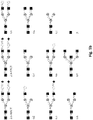
- GAb Glycan structure Glycan sequence 1-101 Sia 2 ( ⁇ 2-6)Gal 2 GlcNAc 2 Man 3 GlcNAc 2 1-102 Sia( ⁇ 2-6)Gal 2 GlcNAC 2 Man 3 GlcNAC 2 1-103 Sia( ⁇ 2-6)GalGlcNAc 2 Man 3 GlcNAc 2 1-104 Gal 2 GlcNAc 2 Man 3 GlcNAc 2 1-105 GalGlcNAcMan 3 GlcNAc 2 1-106 GalGlcNAc 2 Man 3 GlcNAc 2 1-107 GlcNAc 3 Man 3 GlcNAc 2 1-108 GlcNAc 2 Man 3 GlcNAc 2 1-109 GlcNAcMan 3 GlcNAc 2 1-110 GlcNAcMan 3 GlcNAc 2 1-111 Man 3 GlcNAc 2 1-112 Sia 2 ( ⁇ 2-6)Gal 2 GlcNAc 3 Man 3 GlcNA
- ADCC enhancement is a key strategy for improving therapeutic antibody drug efficacy. It has the potential of lowering effective drug dosage for benefits of lower drug cost.
- the glycoantibodies described herein can be characterized by functional properties.
- Glycoantibodies described herein may be useful for treating a cancer.
- the FDA has approved multiple therapeutic monoclonal antibodies for cancer therapies, and many more are being studied in clinical trials either alone or in combination with other treatments. These monoclonal antibodies (“parental antibodies”) can be used to produce glycoantibodies.
- Exemplary monoclonal antibodies for cancers include, but are not limited to, Adotrastuzumab emtansine (Kadcyla), Alemtuzumab (Campath), Belimumab (Benlysta), Bevacizumab (Avastin), Brentuximab vedotin (Adcetris), Cabozantinib (Cometriq), Canakinumab (Ilaris), Cetuximab (Erbitux), Denosumab (Xgeva), Ibritumomab tiuxetan (Zevalin), Ipilimumab (Yervoy), Nivolumab (Opdivo), Obinutuzumab (Gazyva), Ofatumumab (Arzerra, HuMax-CD20), Panitumumab (Vectibix), Pembrolizumab (Keytruda), Pertuzumab (Perjeta), Ramucirumab (
- Anti-CD20 Glycoantibodies Anti-CD20 GAb
- the "CD20" antigen is a non-glycosylated, transmembrane phosphoprotein with a molecular weight of approximately 35 kD that is found on the surface of greater than 90% of B cells from peripheral blood or lymphoid organs. CD20 is expressed during early pre-B cell development and remains until plasma cell differentiation; it is not found on human stem cells, lymphoid progenitor cells or normal plasma cells. CD20 is present on both normal B cells as well as malignant B cells. Other names for CD20 in the literature include "B-lymphocyte-restricted differentiation antigen" and "Bp35". The CD20 antigen is described in, for example, Clark and Ledbetter, Adv. Can Res. 52:81-149 (1989 ) and Valentine et al. J. Biol. Chem. 264(19):11282-11287 (1989 ).
- anti-CD20 glycoantibodies termed "anti-CD20 GAb"
- the anti-CD20 glycoantibodies can be generated from anti-CD20 monoclonal antibodies by Fc glycoengineering.
- the individual anti-CD20 glycoantibodies comprising the homogeneous population are identical and contain the same Fc glycan with a well-defined glycan structure and sequence.
- the anti-CD20 GAb according to the present invention specifically binds to the same epitope of a human CD20 antigen on a cell membrane as its patent antibody.
- parental antibody refers to the anti-CD20 monoclonal antibody used to produce an anti-CD20 glycoantibody.
- the parental antibodies can be obtained by cell culturing such as mammalian cell culture, Pichia pastoris or insect cell lines. Preferrably, the parental antibodies are produced in mammalian cell culture.
- the parental antibodies may be FDA approved or in development.
- the parental antibody of the invention is Rituximab.
- the anti-CD20 GAb described herein comprise a heavy chain having the amino acid sequence set forth in SEQ ID NO: 1, and a light chain having the amino acid sequence set forth in SEQ ID NO: 2.
- the anti-CD20 GAb comprises a light chain sequence and a heavy chain sequence of Rituximab. Table 2 below shows the heavy chain and the light chain sequences of Rituximab. TABLE 2 Rituximab Accession Number: DB00073 Source: http://www.drugbank.ca/drugs/DB00073 >Rituximab heavy chain >Rituximab light chain
- the N-glycan is attached to the Asn-297 of the Fc region.
- the N-glycans according to the invention have a common pentasaccharide core of Man 3 GlcNAc 2 which is also referred to as "trimannose core” or "pentasaccharide core", wherein “Man” refers to mannose, “Glc” refers to glucose, “NAc” refers to N-acetyl, and GlcNAc refers to N-acetylglucosamine.
- Sia refers to a termial sialic acid.
- the N-glycan according to the disclosure is free of core fucose.
- ADCC enhancement is a key strategy for improving therapeutic antibody drug efficacy. It has the potential of lowering effective drug dosage for benefits of lower drug cost.
- the anti-CD20 glycoantibodies described herein can be characterized by functional properties.
- the anti-CD20 GAb has cell growth inhibitory activities including apoptosis against human CD20 expressing cells. In some embodiments, the anti-CD20 GAb exhibits more potent cell growth inhibitory activities as compared to its patent antibody.
- the increased ADCC activity of the glycoantibody according to the invention is at least about 5 fold, including but not limited to, at least about 6 fold, about 7 fold, about 8 fold, about 9 fold about 10 fold, about 15 fold, about 20 fold, about 25 fold, about 30 fold, about 35 fold, about 40 fold, about 50 fold, about 60 fold, and about 80 fold or at least about a value in the range between any of the two numbers listed herein compared to the ADCC activity of the parental antibody.
- the glycoantibody described herein is surprisingly able to provide improved ADCC without affecting CDC.
- Exemplary CDC assays are described in the examples.
- ADCC of the glycoantibody is increased but other immunoglobulin-type effector functions such as complement-dependent cytoxicity (CDC) remain similar or are not significantly affected.
- CDC complement-dependent cytoxicity
- Table 5 lists exemplary FcyRIIIA binding of anti-CD20 GAbs and Rituximab.
- Fc ⁇ RIIIA binding may be measured using assays known in the art. Exemplary assays are described in the examples.
- the Fc receptor binding may be determined as the relative ratio of anti-CD20 GAb vs Rituximab.
- Fc receptor binding in exemplary embodiments is increased by at least 1.2-fold, 2-fold, 3-fold, 4-fold, 5-fold, 6-fold, 7-fold, 8-fold, 9-fold, 10-fold, 15-fold or 20-fold, 30-fold, 40-fold, 50-fold, 100-fold or higher. Table 5.
- the binding data showed that the anti-CD20 GAbs, in particular GAb101 and GAb104, exhibit stronger binding affinity for the target molecule CD20.
- the glycoantibodies of the invention may provide a superior clinical response either alone or, in a composition comprising two or more such antibodies, and optionally in combination with other treatments such as chemotherapy. It is contemplated that the ADCC-enhanced anti-CD20 glycoantibody may provide an alternative therapeutic for B-cell lymphoma and other diseases.
- the glycoantibodies of the present invention advantageously can be used to alter current routes of administration and current therapeutic regimens, as their increased effector function means they can be dosed at lower concentrations and with less frequency, thereby reducing the potential for antibody toxicity and/or development of antibody tolerance. Furthermore, the improved effector function yields new approaches to treating clinical indications that have previously been resistant or refractory to treatment with the corresponding anti-CD20 monoclonal antibody produced in recombinant host systems.
- the anti-CD20 glycoantibodies of the invention can be produced by Fc glycoengineering from anti-CD20 monoclonal antibodies ("parental antibodies") commercially available or in the preclinical or clinical development.
- the monoclonal antibodies are therapeutic monoclonal antibodies.
- Fc glycoengineering may be performed enzymatically or chemoenzymatically.
- the parental antibody is Rituximab.
- the N-glycans in the glycoantibodies of the invention are preferrably defucosylated.
- Defucosylation of N-glycans is a process to remove core fucoses in N-glycans of the Fc domains. Defucosylation can be employed enzymatically. Since N-glycans are embedded between two Fc domains, the enzymatic defucosylation efficiency is much lower due to steric hindrance, i.e., access of fucosidase to fucose residues is blocked by potions of the Fc domains.
- ⁇ -fucosidases are known in the art. Examples include ⁇ -fucosidases from Turbo cornutus, Charonia lampas, Bacillus fulminans, Aspergillus niger, Clostridium perfringens, Bovine kidney (Glyko), chicken liver ( Tyagarajan et al., 1996, Glycobiology 6:83-93 ) and ⁇ -fucosidase II from Xanthomonas manihotis (Glyko, PROzyme).
- fucosidase Many varieties of fucosidase are also commercially available (Glyko, Novato, Calif.; PROzyme, San Leandro, Calif.; Calbiochem-Novabiochem Corp., San Diego, Calif.; among others). However, none of a-fucosidases are known to efficiently remove the core fucose from N-linked glycans.
- the present invention provides a compostion of the ⁇ -fucosidase, and an improved method for removing core fucoses of N-glycans using the ⁇ -fucosidase.
- the ⁇ -fucosidase comprises a polypeptide having an amino acid sequence having at least 80%, 85% 90%, 95%, 98% or 99% identity to the sequences of SEQ ID NO: 5 or variants thereof.
- the improved method of defucosylation comprises contacting an antibody with an ⁇ -fucosidase, and in which the ⁇ -fucosidase comprises a polypeptide having an amino acid sequence having at least 80%, 85%, 90%, 95%, 98% or 99% identity to the sequences of SEQ ID NO: 5, a variant or a fragment thereof.
- Described herein includes an improved method for making an anti-CD20 glycoantibody, the method comprising the steps of (a) contacting an anti-CD20 monoclonal antibody with an ⁇ -fucosidase and at least one endoglycosidase, thereby yielding a defucosylated antibody having a single N-acetylglucosamine (GlcNAc), and (b) adding a carbohydrate moiety to GlcNAc under suitable conditions.
- Endoglycosidase is used to trim off the variable portions of an oligosaccharide in N-glycan.
- Examples of endoglycosidases used herein include, but not limited to, EndoA, EndoF, EndoF1, EndoF2, EndoF3, EndoH, EndoM, EndoS, EndoS2 and variants thereof.
- the ⁇ -fucosidase according to the method of the invention comprises a polypeptide having an amino acid sequence having at least 85% identity to the sequences of SEQ ID NO: 5, a functional variant thereof.
- the ⁇ -fucosidase comprises a polypeptide having an amino acid sequence having at least 90% or 95% identity to the sequences of SEQ ID NO: 5, a variant or a fragment thereof.
- the ⁇ -fucosidase is a recombinant Bacteroides ⁇ -fucosidase.
- Step (a) in the method of the invention leads to a defucosylated antibody having a single N-acetylglucosamine (GlcNAc).
- GlcNAc N-acetylglucosamine
- Subsequent enzyme-mediated glycosylation using a transglycosylase is performed to add a designated carbohydrate moiety to GlcNAc and extend the sugar chain.
- a homogenous population of glycoantibodies can therefore be produced.
- transglycosylases as described herein include, but not limited to, EndoA, EndoF, EndoF1, EndoF2, Endo F3, EndoH, EndoM, EndoS, Endo S2 and variants thereof.
- the carbohydrate moiety according to the method is slected from the group consisting of Sia 2 ( ⁇ 2-6)Gal 2 GlcNAc 2 Man 3 GlcNAc 2 , Sia 2 ( ⁇ 2-6)Gal 2 GlcNAc 3 Man 3 GlcNAc 2 , Sia 2 ( ⁇ 2-3)Gal 2 GlcNAc 2 Man 3 GlcNAc 2 , Sia 2 ( ⁇ 2-3)Gal 2 GlcNAc 3 Man 3 GlcNAc 2 , Sia 2 ( ⁇ 2-3/ ⁇ 2-6)Gal 2 GlcNAc 2 Man 3 GlcNAc 2 , Sia 2 ( ⁇ 2-6/ ⁇ 2-3)Gal 2 GlcNAc 2 Man 3 GlcNAc 2 , Sia 2 ( ⁇ 2-3/ ⁇ 2-6)Gal 2 GlcNAc 3 Man 3 GlcNAc 2 , Sia 2 ( ⁇ 2-3/ ⁇ 2-6)Gal 2 GlcNAc 3 Man 3 GlcNAc 2 , Sia 2 ( ⁇ 2-3/ ⁇ 2-6)Gal
- the carbohydrate moiety is selected from the group consisting of Sia 2 ( ⁇ 2-6)Gal 2 GlcNAc 2 Man 3 GlcNAc 2 , Sia 2 ( ⁇ 2-6)Gal 2 GlcNAc 3 Man 3 GlcNAc 2 , Sia 2 ( ⁇ 2-3)Gal 2 GlcNAc 2 Man 3 GlcNAc 2 , Sia 2 ( ⁇ 2-3)Gal 2 GlcNAc 3 Man 3 GlcNAc 2 , Sia 2 ( ⁇ 2-3/ ⁇ 2-6)Gal 2 GlcNAc 2 Man 3 GlcNAc 2 , Sia 2 ( ⁇ 2-6/ ⁇ 2-3)Gal 2 GlcNAc 2 Man 3 GlcNAc 2 , Sia 2 ( ⁇ 2-3/ ⁇ 2-6)Gal 2 GlcNAc 3 Man 3 GlcNAc 2 , Sia 2 ( ⁇ 2-3/ ⁇ 2-6)Gal 2 GlcNAc 3 Man 3 GlcNAc 2 , Sia 2 ( ⁇ 2-3/ ⁇ 2-6)Gal 2 GlcNAc 3
- Step (b) in the method of leads to sugar chain extension is through an enzyme-catalyzed glycosylation reaction. It is well known in the art that glycosylation using a sugar oxazoline as the sugar donor among the enzyme-catalyzed glycosylation reactions is useful for synthesizing oligosaccharides because the glycosylation reaction is an addition reaction and advances without any accompanying elimination of acid, water, or the like. ( Fujita, et al., Biochim. Biophys. Acta 2001, 1528, 9-14 )
- the carbohydrate moiety is a sugar oxazoline.
- Suitable conditions also include incubation of the reaction mixture for at least 20 minutes, 30 minutes, 40 minutes, 50 minutes, 60 minutes, 70 minutes, 80 minutes, 90 minutes or 100 minutes, preferably less than 60 minutes. Incubation preferably takes place at room temperature, more preferably at approximately 20°C, 25 °C, 30°C, 35 °C, 40°C or 45 °C, and most preferably at approximately 37°C.
- the polypeptide of the ⁇ -fucosidase may be derivatized or modified to assist with their isolation or purification.
- the polypeptide is derivatized or modified by addition of a ligand which is capable of binding directly and specifically to a separation means.
- the polypeptide is derivatized or modified by addition of one member of a binding pair and the separation means comprises a reagent that is derivatized or modified by addition of the other member of a binding pair. Any suitable binding pair can be used.
- the polypeptide is preferably histidine-tagged or biotin-tagged.
- the amino acid coding sequence of the histidine or biotin tag is included at the gene level and the proteins are expressed recombinantly in E. coli.
- the histidine or biotin tag is typically present at one end of the polypeptide, either at the N-terminus or at the C-terminus.
- the histidine tag typically consists of six histidine residues, although it can be longer than this, typically up to 7, 8, 9, 10 or 20 amino acids or shorter, for example 5, 4, 3, 2 or 1 amino acids.
- the histidine tag may contain one or more amino acid substitutions, preferably conservative substitutions as defined above.
- Variant polypeptide as described herein are those for which the amino acid sequence varies from that in SEQ ID NO: 5, but exhibit the same or similar function of the enzyme comprising the polypeptide having an amino acid sequence of SEQ ID NO: 5.
- percent (%) sequence identity with respect to a sequence is defined as the percentage of amino acid residues in a candidate polypeptide sequence that are identical with the amino acid residues in the reference polypeptide sequence, after aligning the sequences and introducing gaps, if necessary, to achieve the maximum percent sequence identity. Alignment for purposes of determining percent sequence identity can be achieved in various ways that are within the skill in the art, for instance, using publicly available computer software such as BLAST, ALIGN or Megalign (DNASTAR) software. Those skilled in the art can determine appropriate parameters for measuring alignment, including any algorithms needed to achieve maximal alignment over the full length of the sequences being compared.
- a humanized antibody has one or more amino acid residues introduced into it from a source which is non-human. These non-human amino acid residues are often referred to as "import" residues, which are typically taken from an "import” variable domain. Humanization can be essentially performed following the method of Winter and co-workers ( Jones et al., Nature, 321:522-525 (1986 ); Riechmann et al., Nature, 332:323-327 (1988 ); Verhoeyen et al., Science, 239:1534-1536 (1988 )), by substituting rodent CDRs or CDR sequences for the corresponding sequences of a human antibody.
- humanized antibodies are chimeric antibodies ( U.S. Pat. No. 4,816,567 ), wherein substantially less than an intact human variable domain has been substituted by the corresponding sequence from a non-human species.
- humanized antibodies are typically human antibodies in which some CDR residues and possibly some FR residues are substituted by residues from analogous sites in rodent antibodies.
- variable domains both light and heavy
- the choice of human variable domains, both light and heavy, to be used in making the humanized antibodies is very important to reduce antigenicity.
- the sequence of the variable domain of a rodent antibody is screened against the entire library of known human variable-domain sequences.
- the human sequence which is closest to that of the rodent is then accepted as the human framework (FR) for the humanized antibody ( Sims et al., J. Immunol., 151:2296 (1993 ); Chothia et al., J. Mol. Biol., 196:901 (1987 )).
- Another method uses a particular framework derived from the consensus sequence of all human antibodies of a particular subgroup of light or heavy chains.
- the same framework may be used for several different humanized antibodies ( Carter et al., Proc. Natl. Acad Sci. USA, 89:4285 (1992 ); Prestaetal., J. Immnol., 151:2623 (1993 )).
- humanized antibodies are prepared by a process of analysis of the parental sequences and various conceptual humanized products using three-dimensional models of the parental and humanized sequences.
- Three-dimensional immunoglobulin models are commonly available and are familiar to those skilled in the art.
- Computer programs are available which illustrate and display probable three-dimensional conformational structures of selected candidate immunoglobulin sequences. Inspection of these displays permits analysis of the likely role of the residues in the functioning of the candidate immunoglobulin sequence, i. e., the analysis of residues that influence the ability of the candidate immunoglobulin to bind its antigen.
- FR residues can be selected and combined from the recipient and import sequences so that the desired antibody characteristic, such as increased affinity for the target antigen(s), is achieved.
- the CDR residues are directly and most substantially involved in influencing antigen binding.
- transgenic animals e.g., mice
- transgenic animals e.g., mice
- JH antibody heavy-chain joining region
- Human antibodies can also be derived from phage-display libraries ( Hoogenboom et al., J. Mol. Biol., 227:381 (1991 ); Marks et al., J. Mol. Biol., 222:581-597 (1991 )).
- the pharmaceutical composition according to the disclosure may be for use in therapeutics.
- the pharmaceutical composition can be for use in preventing, treating, or ameliorating one or more symptoms associated with a disease, disorder, or infection where an enhanced efficacy of effector cell function (e.g., ADCC) mediated by FcyR is desired, e.g., cancer, autoimmune, infectious disease, and in enhancing the therapeutic efficacy of therapeutic antibodies the effect of which is mediated by ADCC.
- ADCC effector cell function
- a "pre-lyophilized formulation” can be produced.
- the antibody for preparing the formulation is preferably essentially pure and desirably essentially homogeneous (i.e. free from contaminating proteins etc).
- "Essentially pure” protein means a composition comprising at least about 90% by weight of the protein, based on total weight of the composition, preferably at least about 95% by weight.
- "Essentially homogeneous” protein means a composition comprising at least about 99% by weight of protein, based on total weight of the composition.
- the protein is an antibody.
- the amount of antibody in the pre-lyophilized formulation is determined taking into account the desired dose volumes, mode(s) of administration etc.
- the protein of choice is an intact antibody (a full-length antibody)
- from about 2 mg/mL to about 50 mg/mL, preferably from about 5 mg/mL to about 40 mg/mL and most preferably from about 20-30 mg/mL is an exemplary starting protein concentration.
- the protein is generally present in solution.
- the protein may be present in a pH-buffered solution at a pH from about 4-8, and preferably from about 5-7.
- Exemplary buffers include histidine, phosphate, Tris, citrate, succinate and other organic acids.
- the buffer concentration can be from about 1 mM to about 20 mM, or from about 3 mM to about 15 mM, depending, for example, on the buffer and the desired isotonicity of the formulation (e.g. of the reconstituted formulation).
- the preferred buffer is histidine in that, as demonstrated below, this can have lyoprotective properties. Succinate was shown to be another useful buffer.
- the lyoprotectant is added to the pre-lyophilized formulation.
- the lyoprotectant is a non-reducing sugar such as sucrose or trehalose.
- the amount of lyoprotectant in the pre-lyophilized formulation is generally such that, upon reconstitution, the resulting formulation will be isotonic. However, hypertonic reconstituted formulations may also be suitable. In addition, the amount of lyoprotectant must not be too low such that an unacceptable amount of degradation/aggregation of the protein occurs upon lyophilization.
- the ratio of protein to lyoprotectant is selected for each protein and lyoprotectant combination.
- the molar ratio of lyoprotectant to antibody may be from about 100 to about 1500 moles lyoprotectant to 1 mole antibody, and preferably from about 200 to about 1000 moles of lyoprotectant to 1 mole antibody, for example from about 200 to about 600 moles of lyoprotectant to 1 mole antibody.
- a surfactant to the pre-lyophilized formulation.
- the surfactant may be added to the lyophilized formulation and/or the reconstituted formulation.
- exemplary surfactants include nonionic surfactants such as polysorbates (e.g. polysorbates 20 or 80); poloxamers (e.g.
- the amount of surfactant added is such that it reduces aggregation of the reconstituted protein and minimizes the formation of particulates after reconstitution.
- the surfactant may be present in the pre-lyophilized formulation in an amount from about 0.001-0.5%, and preferably from about 0.005-0.05%.
- a mixture of the lyoprotectant such as sucrose or trehalose
- a bulking agent e.g. mannitol or glycine
- the bulking agent may allow for the production of a uniform lyophilized cake without excessive pockets therein etc.
- compositions such as those described in Remington's Pharmaceutical Sciences 16th edition, Osol, A. Ed. (1980 ) may be included in the pre-lyophilized formulation (and/or the lyophilized formulation and/or the reconstituted formulation) provided that they do not adversely affect the desired characteristics of the formulation.
- Acceptable carriers, excipients or stabilizers are nontoxic to recipients at the dosages and concentrations employed and include; additional buffering agents; preservatives; co-solvents; antioxidants including ascorbic acid and methionine; chelating agents such as EDTA; metal complexes (e.g. Zn-protein complexes); biodegradable polymers such as polyesters; and/or salt-forming counterions such as sodium.
- the container in this instance may, for example, be a 3, 5, 10, 20, 50 or 100 cc vial.
- lyophilization will result in a lyophilized formulation in which the moisture content thereof is less than about 5%, and preferably less than about 3%.
- the lyophilized formulation may be reconstituted with a diluent such that the protein concentration in the reconstituted formulation is at least 50 mg/mL, for example from about 50 mg/mL to about 400 mg/mL, more preferably from about 80 mg/mL to about 300 mg/mL, and most preferably from about 90 mg/mL to about 150 mg/mL.
- a diluent such that the protein concentration in the reconstituted formulation is at least 50 mg/mL, for example from about 50 mg/mL to about 400 mg/mL, more preferably from about 80 mg/mL to about 300 mg/mL, and most preferably from about 90 mg/mL to about 150 mg/mL.
- Such high protein concentrations in the reconstituted formulation are considered to be particularly useful where subcutaneous delivery of the reconstituted formulation is intended.
- the protein concentration in the reconstituted formulation is significantly higher than that in the pre-lyophilized formulation.
- the protein concentration in the reconstituted formulation may be about 2-40 times, preferably 3-10 times and most preferably 3-6 times (e.g. at least three fold or at least four fold) that of the pre-lyophilized formulation.
- the amount of preservative employed is determined by assessing different preservative concentrations for compatibility with the protein and preservative efficacy testing.
- the preservative is an aromatic alcohol (such as benzyl alcohol)
- it can be present in an amount from about 0.1-2.0% and preferably from about 0.5-1.5%, but most preferably about 1.0-1.2%.
- the reconstituted formulation has less than 6000 particles per vial which are > 10 ⁇ m m size.
- Disclosed herein include methods for preventing, treating, or ameliorating one or more symptoms associated with a disease, disorder, or infection, the method comprising administering to a subject in need thereof a therapeutically effective amount of the pharmaceutical composition described herein.
- the diseases, disorders, or infections include, but not limited to, cancers, autoimmune disorders, inflammatory disorders and infectious infections.
- compositions comprising anti-CD20 glycoantibodies for use in treating cancer in a patient that is resistant or refractory to treatment with Rituximab.
- cancers include, but not limited to, B cell lymphomas, NHL, precursor B cell lymphoblastic leukemia/lymphoma and mature B cell neoplasms, B cell chronic lymphocytic leukemia (CLL)/small lymphocytic lymphoma (SLL), B cell prolymphocytic leukemia, lymphoplasmacytic lymphoma, mantle cell lymphoma (MCL), follicular lymphoma (FL), low-grade, intermediate-grade and high-grade (FL), cutaneous follicle center lymphoma, marginal zone B cell lymphoma, MALT type marginal zone B cell lymphoma, nodal marginal zone B cell lymphoma, splenic type marginal zone B cell lymphoma, hairy cell leukemia, diffuse large B cell lymphoma, Burkitt's lymphoma, plasmacytoma, plasma cell myeloma, post-transplant lymphoproliferative disorder, Waldenstrom's macroglobulinemia
- the cancer is B-cell lymphoma such as non-Hodgkin's lymphoma.
- Treating” or “treatment” or “alleviation” refers to both therapeutic treatment and prophylactic or preventative measures; wherein the object is to prevent or slow down (lessen) the targeted pathologic condition or disorder.
- Those in need of treatment include those already with the disorder as well as those prone to have the disorder or those in whom the disorder is to be prevented.
- a subject or mammal is successfully "treated" for an infection if, after receiving a therapeutic amount of an antibody according to the methods of the present invention, the patient shows observable and/or measurable reduction in or absence of one or more of the following: reduction in the number of infected cells or absence of the infected cells; reduction in the percent of total cells that are infected; and/or relief to some extent, one or more of the symptoms associated with the specific infection; reduced morbidity and mortality, and improvement in quality of life issues.
- the above parameters for assessing successful treatment and improvement in the disease are readily measurable by routine procedures familiar to a physician.
- terapéuticaally effective amount refers to an amount of an antibody or a drug effective to "treat" a disease or disorder in a subject or mammal See preceding definition of "treating.”
- Administration "in combination with” one or more further therapeutic agents includes simultaneous (concurrent) and consecutive administration in any order.
- Carriers as used herein include pharmaceutically acceptable carriers, excipients, or stabilizers that are nontoxic to the cell or mammal being exposed thereto at the dosages and concentrations employed. Often the physiologically acceptable carrier is an aqueous pH buffered solution.
- physiologically acceptable carriers include buffers such as phosphate, citrate, and other organic acids; antioxidants including ascorbic acid; low molecular weight (less than about 10 residues) polypeptide; proteins, such as serum albumin, gelatin, or immunoglobulins; hydrophilic polymers such as polyvinylpyrrolidone; amino acids such as glycine, glutamine, asparagine, arginine or lysine; monosaccharides, disaccharides, and other carbohydrates including glucose, mannose, or dextrins; chelating agents such as EDTA; sugar alcohols such as mannitol or sorbitol; salt-forming counterions such as sodium; and/or nonionic surfactants such as TWEEN TM polyethylene glycol (PEG), and PLURONICS TM .
- buffers such as phosphate, citrate, and other organic acids
- antioxidants including ascorbic acid
- proteins such as serum album
- N -iodosuccinimide (NIS, 1.7 ⁇ 2.2 eq.) and trimethylsilyl trifluoromethanesulfonate (TMSOTf, 0.1 eq.) were added to the solution on -78°C, and then the solution was stirred at -20 °C. Reaction was monitored by thin-layer chromatography (TLC) analysis, which was carried out on glass-backed silica gel plates (Merck DC Kieselgel 60F 254 ) and visualized by UV light (254 nm) and acidic ceric ammonium molybdate. After the acceptor was consumed completely, the reaction was quenched with sat.
- TLC thin-layer chromatography
- p-Toluenesulfonic acid ( pTSA, 1.5 eq. ) was added to solution of starting material ( 1.0 eq. ) in ACN/MeOH (2/1). Reaction was stirred at room temperature and monitored by thin-layer chromatography (TLC) analysis. After the benzylidene group was removed completely, the reaction was quenched by trimethylamine and then concentrated. The crude was purified by silica gel column chromatography (hexanes/ethyl acetate as elution system) to give product (the yield was shown on the scheme).
- the goal of this study is to prepare homogenous antibodies with optimized activities in both anti-cancer and anti-inflammatory functions. Therefore, the commercially available Rituximab IgG1 is selected as a model because it has been used for the treatment of both cancer and autoimmune diseases.
- the strategy of glycoprotein remodeling was used to first obtain the homogeneous antibody with mono-GlcNAc at the Fc region, then a pure synthetic glycan was ligated with the mono-GlcNAc antibody to obtain the homogeneous antibody for activity assay (Figure la).
- Coli was used in combination with an endoglycosidase, either the EndoS from Streptococcus pyogene alone or mixtures of Endo F1/F3 or Endo F1/S, to prepare the homogeneous mono-GlcNAc glycosylated antibody in one-pot within one day.
- This fucosidase was more efficient than the one from bovine kidney which required 20 days of incubation (23). It was found that incubation at 37 °C for one week would cause the Rituximab structure to deteriorate and leads to a loss of ⁇ 15% binding affinity towards its antigen (supporting information).
- ADCC is also a key issue in considering cytotoxicity relevant to antibody. Defucosylation of IgG1 was reported to effectively raise the ADCC effect via increasing the interaction between the afucosylated Fc-glycan and Fc ⁇ RIIIa (5, 33).
- PI-stained dead cells in the PBMC mediated ADCC assay which was induced by the non-treated Rituximab and treated mAb, 2,3-NSCT- and 2,6-NSCT-Rituximab on flow cytometry using three different CFSE-labled B lymphoma cells, Raji, Ramos and SKW6.4.
- both the 2,6-NSCT- and 2,3-NSCT-Rituximab showed a stronger interaction with Fc ⁇ RIIIa and smaller EC50 in ADCC (Table 11A and 11C).
- the 2,6-sialyl linkage showed an excellent affinity and effect towards Fc ⁇ RIIIa and ADCC, whereas the 2,3-linkage had weaker activities.
- the ADCC results of the same antibody are comparable among different target cells, including Raji, Ramos and SKW6.4 (Table 11C).
- EXAMPLE 5 Fc ⁇ RIIIa Binding affinity of various afucosylated Herceptins - For reference only
- the antibodies such as G1, G2, and 2,6-NSCT, had a more than nine-fold increase in affinity for FcyRIIIa, compare to the others like G3, G4, G5, G6, G7, G9 and 2,3-NSCT.
- the afucosylayed glycoengineered G8 almost lost its defucosylation advantage for the ADCC activity.
- the antibody with bisected glycan, G9 showed a slight but not significant increase in affinity towards Fc ⁇ RIIIa in both Rituximab and Herceptin when it is compared with the nonbisected analogue, G4.
- the 2,6-NSCT-Herceptin indeed also showed a superb Fc ⁇ RIIIa binding affinity among these afucosylated analogous in the SPR analysis.
- the Fc glycan of FI6 antibody was modified to the homogeneous 2,6-NSCT glycan and mixed with human HEK293T cells, which express HA on cell surface to mimic influenzainfected cells; then, the ADCC effects were measured by both the PBMC-mediated killing in target cells and the activation of ADCC signaling nuclear factor of activated T-cell (NFAT) pathway of the effector cells.
- the cytotoxicity results showed that the homogeneous 2,6-NSCT glycan modified FI6 (FI6m) indeed exhibits a significantly higher (2- to 3-fold increase) ADCC activity than the ordinary unmodified FI6 antibody ( Fig. 4A ).
- Analyzed antibodies were captured by means of the Human Fab capture kit and detected with the single cycle kinetic method.
Landscapes
- Health & Medical Sciences (AREA)
- Chemical & Material Sciences (AREA)
- Life Sciences & Earth Sciences (AREA)
- Organic Chemistry (AREA)
- Medicinal Chemistry (AREA)
- General Health & Medical Sciences (AREA)
- Engineering & Computer Science (AREA)
- Immunology (AREA)
- Genetics & Genomics (AREA)
- Bioinformatics & Cheminformatics (AREA)
- Molecular Biology (AREA)
- Biochemistry (AREA)
- Public Health (AREA)
- Veterinary Medicine (AREA)
- Animal Behavior & Ethology (AREA)
- Pharmacology & Pharmacy (AREA)
- Chemical Kinetics & Catalysis (AREA)
- General Chemical & Material Sciences (AREA)
- Wood Science & Technology (AREA)
- Zoology (AREA)
- Nuclear Medicine, Radiotherapy & Molecular Imaging (AREA)
- Proteomics, Peptides & Aminoacids (AREA)
- Biophysics (AREA)
- Virology (AREA)
- Microbiology (AREA)
- Biotechnology (AREA)
- General Engineering & Computer Science (AREA)
- Biomedical Technology (AREA)
- Epidemiology (AREA)
- Oncology (AREA)
- Hematology (AREA)
- Mycology (AREA)
- Communicable Diseases (AREA)
- Urology & Nephrology (AREA)
- Endocrinology (AREA)
- Cell Biology (AREA)
- Diabetes (AREA)
- Rheumatology (AREA)
- Physics & Mathematics (AREA)
- Pathology (AREA)
Claims (1)
- - Composition comprenant des glycoanticorps anti-CD20, dans laquelle les glycoanticorps anti-CD20 sont une population homogène de Rituximab comprenant un N-glycane unique et uniforme sur la région Fc et dans laquelle le N-glycane est exempt de noyau fucose et a la structure de Sia2 (α2-6) Gal2GlcNAc2Man3GlcNAc2, pour une utilisation dans le traitement du cancer chez un patient qui est résistant ou réfractaire au traitement par le Rituximab.
Applications Claiming Priority (6)
| Application Number | Priority Date | Filing Date | Title |
|---|---|---|---|
| US201462003104P | 2014-05-27 | 2014-05-27 | |
| US201462003136P | 2014-05-27 | 2014-05-27 | |
| US201462003908P | 2014-05-28 | 2014-05-28 | |
| US201462020199P | 2014-07-02 | 2014-07-02 | |
| US201562110338P | 2015-01-30 | 2015-01-30 | |
| PCT/US2015/032745 WO2015184009A1 (fr) | 2014-05-27 | 2015-05-27 | Compositions et procédés concernant des glycoformes universelles pour une efficacité d'anticorps améliorée |
Publications (3)
| Publication Number | Publication Date |
|---|---|
| EP3149045A1 EP3149045A1 (fr) | 2017-04-05 |
| EP3149045A4 EP3149045A4 (fr) | 2017-12-27 |
| EP3149045B1 true EP3149045B1 (fr) | 2023-01-18 |
Family
ID=54699741
Family Applications (4)
| Application Number | Title | Priority Date | Filing Date |
|---|---|---|---|
| EP15799981.4A Active EP3149045B1 (fr) | 2014-05-27 | 2015-05-27 | Compositions et procédés concernant des glycoformes universelles pour une efficacité d'anticorps améliorée |
| EP21162500.9A Active EP3904388B1 (fr) | 2014-05-27 | 2015-05-27 | Fucosidase issue de bacteroïdes et ses procédés d'utilisation |
| EP15800191.7A Active EP3149161B1 (fr) | 2014-05-27 | 2015-05-27 | Fucosidase issue de bacteroïdes et ses procédés d'utilisation |
| EP15878250.8A Active EP3245225B1 (fr) | 2014-05-27 | 2015-07-13 | Compositions et méthodes pour traiter et détecter des cancers |
Family Applications After (3)
| Application Number | Title | Priority Date | Filing Date |
|---|---|---|---|
| EP21162500.9A Active EP3904388B1 (fr) | 2014-05-27 | 2015-05-27 | Fucosidase issue de bacteroïdes et ses procédés d'utilisation |
| EP15800191.7A Active EP3149161B1 (fr) | 2014-05-27 | 2015-05-27 | Fucosidase issue de bacteroïdes et ses procédés d'utilisation |
| EP15878250.8A Active EP3245225B1 (fr) | 2014-05-27 | 2015-07-13 | Compositions et méthodes pour traiter et détecter des cancers |
Country Status (12)
| Country | Link |
|---|---|
| US (4) | US11319567B2 (fr) |
| EP (4) | EP3149045B1 (fr) |
| JP (5) | JP7093612B2 (fr) |
| KR (5) | KR20170010003A (fr) |
| CN (3) | CN106661562A (fr) |
| AU (3) | AU2015267051B2 (fr) |
| CA (2) | CA2950577A1 (fr) |
| DK (2) | DK3149045T3 (fr) |
| FI (1) | FI3149045T3 (fr) |
| IL (2) | IL249183B (fr) |
| TW (2) | TWI654202B (fr) |
| WO (2) | WO2015184008A1 (fr) |
Families Citing this family (49)
| Publication number | Priority date | Publication date | Assignee | Title |
|---|---|---|---|---|
| US7960139B2 (en) | 2007-03-23 | 2011-06-14 | Academia Sinica | Alkynyl sugar analogs for the labeling and visualization of glycoconjugates in cells |
| DK2318832T3 (da) | 2008-07-15 | 2014-01-20 | Academia Sinica | Glycan-arrays på PTFE-lignende aluminiumcoatede objektglas og relaterede fremgangsmåder |
| US11377485B2 (en) * | 2009-12-02 | 2022-07-05 | Academia Sinica | Methods for modifying human antibodies by glycan engineering |
| US10087236B2 (en) * | 2009-12-02 | 2018-10-02 | Academia Sinica | Methods for modifying human antibodies by glycan engineering |
| WO2011130332A1 (fr) | 2010-04-12 | 2011-10-20 | Academia Sinica | Puces au glycane pour la recherche par criblage haut débit de virus |
| GB201201314D0 (en) * | 2012-01-26 | 2012-03-07 | Isis Innovation | Composition |
| US10130714B2 (en) | 2012-04-14 | 2018-11-20 | Academia Sinica | Enhanced anti-influenza agents conjugated with anti-inflammatory activity |
| US9914956B2 (en) | 2012-08-18 | 2018-03-13 | Academia Sinica | Cell-permeable probes for identification and imaging of sialidases |
| EP2928474B1 (fr) | 2012-12-07 | 2018-11-14 | ChemoCentryx, Inc. | Lactames de diazole |
| AR095196A1 (es) | 2013-03-15 | 2015-09-30 | Regeneron Pharma | Medio de cultivo celular libre de suero |
| WO2014210397A1 (fr) | 2013-06-26 | 2014-12-31 | Academia Sinica | Antigènes rm2 et leur utilisation |
| EP3013347B1 (fr) | 2013-06-27 | 2019-12-11 | Academia Sinica | Conjugués de glycane et leur utilisation |
| EP3041484B1 (fr) | 2013-09-06 | 2021-03-03 | Academia Sinica | Activation des cellules humaines inkt à l'aide de glycolipides ayant des groupes glycolsyles modifiés |
| KR20160104727A (ko) | 2014-01-16 | 2016-09-05 | 아카데미아 시니카 | 암의 치료 및 검출을 위한 조성물 및 방법 |
| US10150818B2 (en) | 2014-01-16 | 2018-12-11 | Academia Sinica | Compositions and methods for treatment and detection of cancers |
| TWI797430B (zh) | 2014-03-27 | 2023-04-01 | 中央研究院 | 反應性標記化合物及其用途 |
| US10118969B2 (en) * | 2014-05-27 | 2018-11-06 | Academia Sinica | Compositions and methods relating to universal glycoforms for enhanced antibody efficacy |
| EP4116329A1 (fr) * | 2014-05-27 | 2023-01-11 | Academia Sinica | Anticorps de glycane anti-her2 et leurs utilisations |
| KR20170010003A (ko) | 2014-05-27 | 2017-01-25 | 아카데미아 시니카 | 박테로이드 기원의 푸코시다제 및 이의 사용 방법 |
| JP2017518989A (ja) * | 2014-05-27 | 2017-07-13 | アカデミア シニカAcademia Sinica | 抗cd20糖操作抗体群およびその使用 |
| JP7063538B2 (ja) | 2014-05-28 | 2022-05-09 | アカデミア シニカ | 抗TNFα糖操作抗体群およびその使用 |
| EP3191500A4 (fr) | 2014-09-08 | 2018-04-11 | Academia Sinica | Activation des cellules inkt humaines par des glycolipides |
| US9975965B2 (en) | 2015-01-16 | 2018-05-22 | Academia Sinica | Compositions and methods for treatment and detection of cancers |
| US10495645B2 (en) | 2015-01-16 | 2019-12-03 | Academia Sinica | Cancer markers and methods of use thereof |
| TWI710571B (zh) * | 2015-01-24 | 2020-11-21 | 中央研究院 | 腫瘤標記及其使用方法 |
| AU2015378564A1 (en) | 2015-01-24 | 2017-07-13 | Academia Sinica | Novel glycan conjugates and methods of use thereof |
| CN114702581B (zh) * | 2015-01-30 | 2025-08-01 | 台湾地区“中央研究院” | 增进抗体功效的通用糖型组合物及方法 |
| WO2016196740A1 (fr) * | 2015-06-02 | 2016-12-08 | The Rockefeller University | Anticorps tri-spécifiques pour traitement anti-vih |
| CN109195996A (zh) | 2016-03-08 | 2019-01-11 | 中央研究院 | N-聚醣及其阵列的模组化合成方法 |
| IL261998B2 (en) * | 2016-04-07 | 2023-03-01 | Chemocentryx Inc | Reducing your burden by giving ccr1 antagonists in combination with pd-1 inhibitors or pd-l1 inhibitors |
| CA3034057A1 (fr) | 2016-08-22 | 2018-03-01 | CHO Pharma Inc. | Anticorps, fragments de liaison, et procedes d'utilisation |
| EP3288086A1 (fr) | 2016-08-26 | 2018-02-28 | LG Electronics Inc. | Module de cellule solaire et son procédé de fabrication |
| JP6888764B2 (ja) * | 2016-12-29 | 2021-06-16 | ディヴェロップメント センター フォー バイオテクノロジー | 糖タンパク質−薬物コンジュゲートを調製する方法 |
| WO2018133139A1 (fr) | 2017-01-21 | 2018-07-26 | 宁波知明生物科技有限公司 | Application de paeéniflorin-6'-o-benzène sulfonate en médecine pour le traitement du syndrome de sjögren |
| US10260056B2 (en) | 2017-03-17 | 2019-04-16 | New England Biolabs, Inc. | Cleavage of fucose in N-glycans |
| KR20210084695A (ko) * | 2017-07-06 | 2021-07-07 | 리제너론 파마슈티칼스 인코포레이티드 | 당단백질을 만들기 위한 세포 배양 과정 |
| US12077792B2 (en) * | 2018-05-15 | 2024-09-03 | The Board Of Trustees Of The University Of Illinois | Engineered microorganisms for production of 2′fucosyllactose and l-fucose |
| CN110760492A (zh) * | 2018-07-25 | 2020-02-07 | 复旦大学 | 一种岩藻糖苷酶及其在制备孟买型红细胞中的应用 |
| CN114026229B (zh) * | 2019-08-05 | 2025-03-25 | 醣基生医股份有限公司 | 用于重塑抗体醣型之融合蛋白 |
| JP7523789B2 (ja) * | 2019-09-04 | 2024-07-29 | 独立行政法人国立病院機構 | 抗炎症性非フコシル化免疫グロブリン製剤及びその製造方法 |
| US12297451B1 (en) | 2019-10-25 | 2025-05-13 | Regeneron Pharmaceuticals, Inc. | Cell culture medium |
| TW202216771A (zh) * | 2020-06-26 | 2022-05-01 | 德商拜耳廠股份有限公司 | 用於治療應用之ccr8抗體 |
| AU2021376384B2 (en) * | 2020-11-06 | 2026-04-16 | Cho Pharma, Inc. | Immune composition comprising antigen and glycoengineered antibody thereof |
| AU2022289365A1 (en) * | 2021-06-07 | 2023-12-14 | Amgen Inc. | Using fucosidase to control afucosylation level of glycosylated proteins |
| CN113960232B (zh) * | 2021-10-28 | 2024-02-20 | 苏州大学 | 一种基于唾液特异性岩藻糖基化结构糖谱及其检测方法和应用 |
| CN116903738A (zh) * | 2022-08-02 | 2023-10-20 | 北京绿竹生物技术股份有限公司 | 一种低甘露糖型抗人肿瘤坏死因子-α单抗及其用途 |
| CN116554330B (zh) * | 2023-07-04 | 2023-09-01 | 天津旷博同生生物技术有限公司 | 一种抗人cd24工程抗体及应用 |
| ES3073626T3 (en) * | 2023-07-28 | 2026-07-14 | Cho Pharma Inc | Fucosidase mutants and the use thereof |
| WO2026032010A1 (fr) * | 2024-08-05 | 2026-02-12 | The Hong Kong University Of Science And Technology | Thérapie d'agrégation de protéines ciblant le glycane |
Family Cites Families (402)
| Publication number | Priority date | Publication date | Assignee | Title |
|---|---|---|---|---|
| US3773919A (en) | 1969-10-23 | 1973-11-20 | Du Pont | Polylactide-drug mixtures |
| US3896111A (en) | 1973-02-20 | 1975-07-22 | Research Corp | Ansa macrolides |
| US4151042A (en) | 1977-03-31 | 1979-04-24 | Takeda Chemical Industries, Ltd. | Method for producing maytansinol and its derivatives |
| US4137230A (en) | 1977-11-14 | 1979-01-30 | Takeda Chemical Industries, Ltd. | Method for the production of maytansinoids |
| USRE30985E (en) | 1978-01-01 | 1982-06-29 | Serum-free cell culture media | |
| US4265814A (en) | 1978-03-24 | 1981-05-05 | Takeda Chemical Industries | Matansinol 3-n-hexadecanoate |
| US4307016A (en) | 1978-03-24 | 1981-12-22 | Takeda Chemical Industries, Ltd. | Demethyl maytansinoids |
| JPS5562090A (en) | 1978-10-27 | 1980-05-10 | Takeda Chem Ind Ltd | Novel maytansinoid compound and its preparation |
| JPS5566585A (en) | 1978-11-14 | 1980-05-20 | Takeda Chem Ind Ltd | Novel maytansinoid compound and its preparation |
| JPS55164687A (en) | 1979-06-11 | 1980-12-22 | Takeda Chem Ind Ltd | Novel maytansinoid compound and its preparation |
| US4256746A (en) | 1978-11-14 | 1981-03-17 | Takeda Chemical Industries | Dechloromaytansinoids, their pharmaceutical compositions and method of use |
| JPS55102583A (en) | 1979-01-31 | 1980-08-05 | Takeda Chem Ind Ltd | 20-acyloxy-20-demethylmaytansinoid compound |
| JPS55162791A (en) | 1979-06-05 | 1980-12-18 | Takeda Chem Ind Ltd | Antibiotic c-15003pnd and its preparation |
| JPS55164685A (en) | 1979-06-08 | 1980-12-22 | Takeda Chem Ind Ltd | Novel maytansinoid compound and its preparation |
| JPS55164686A (en) | 1979-06-11 | 1980-12-22 | Takeda Chem Ind Ltd | Novel maytansinoid compound and its preparation |
| US4309428A (en) | 1979-07-30 | 1982-01-05 | Takeda Chemical Industries, Ltd. | Maytansinoids |
| JPS5645483A (en) | 1979-09-19 | 1981-04-25 | Takeda Chem Ind Ltd | C-15003phm and its preparation |
| EP0028683A1 (fr) | 1979-09-21 | 1981-05-20 | Takeda Chemical Industries, Ltd. | Antibiotique C-15003 PHO et sa préparation |
| JPS5645485A (en) | 1979-09-21 | 1981-04-25 | Takeda Chem Ind Ltd | Production of c-15003pnd |
| US4270537A (en) | 1979-11-19 | 1981-06-02 | Romaine Richard A | Automatic hypodermic syringe |
| US4376110A (en) | 1980-08-04 | 1983-03-08 | Hybritech, Incorporated | Immunometric assays using monoclonal antibodies |
| WO1982001188A1 (fr) | 1980-10-08 | 1982-04-15 | Takeda Chemical Industries Ltd | Composes 4,5-deoxymaytansinoide et leur procede de preparation |
| US4450254A (en) | 1980-11-03 | 1984-05-22 | Standard Oil Company | Impact improvement of high nitrile resins |
| US4419446A (en) | 1980-12-31 | 1983-12-06 | The United States Of America As Represented By The Department Of Health And Human Services | Recombinant DNA process utilizing a papilloma virus DNA as a vector |
| US4313946A (en) | 1981-01-27 | 1982-02-02 | The United States Of America As Represented By The Secretary Of Agriculture | Chemotherapeutically active maytansinoids from Trewia nudiflora |
| US4315929A (en) | 1981-01-27 | 1982-02-16 | The United States Of America As Represented By The Secretary Of Agriculture | Method of controlling the European corn borer with trewiasine |
| JPS57192389A (en) | 1981-05-20 | 1982-11-26 | Takeda Chem Ind Ltd | Novel maytansinoid |
| US4596792A (en) | 1981-09-04 | 1986-06-24 | The Regents Of The University Of California | Safe vaccine for hepatitis containing polymerized serum albumin |
| US4741900A (en) | 1982-11-16 | 1988-05-03 | Cytogen Corporation | Antibody-metal ion complexes |
| US4601978A (en) | 1982-11-24 | 1986-07-22 | The Regents Of The University Of California | Mammalian metallothionein promoter system |
| US4560655A (en) | 1982-12-16 | 1985-12-24 | Immunex Corporation | Serum-free cell culture medium and process for making same |
| US4657866A (en) | 1982-12-21 | 1987-04-14 | Sudhir Kumar | Serum-free, synthetic, completely chemically defined tissue culture media |
| US4816567A (en) | 1983-04-08 | 1989-03-28 | Genentech, Inc. | Recombinant immunoglobin preparations |
| US4767704A (en) | 1983-10-07 | 1988-08-30 | Columbia University In The City Of New York | Protein-free culture medium |
| US4599231A (en) | 1984-03-09 | 1986-07-08 | Scripps Clinic And Research Foundation | Synthetic hepatitis B virus vaccine including both T cell and B cell determinants |
| US4599230A (en) | 1984-03-09 | 1986-07-08 | Scripps Clinic And Research Foundation | Synthetic hepatitis B virus vaccine including both T cell and B cell determinants |
| US4965199A (en) | 1984-04-20 | 1990-10-23 | Genentech, Inc. | Preparation of functional human factor VIII in mammalian cells using methotrexate based selection |
| US4970198A (en) | 1985-10-17 | 1990-11-13 | American Cyanamid Company | Antitumor antibiotics (LL-E33288 complex) |
| US4596556A (en) | 1985-03-25 | 1986-06-24 | Bioject, Inc. | Hypodermic injection apparatus |
| US4601903A (en) | 1985-05-01 | 1986-07-22 | The United States Of America As Represented By The Department Of Health And Human Services | Vaccine against Neisseria meningitidis Group B serotype 2 invasive disease |
| GB8516415D0 (en) | 1985-06-28 | 1985-07-31 | Celltech Ltd | Culture of animal cells |
| US4676980A (en) | 1985-09-23 | 1987-06-30 | The United States Of America As Represented By The Secretary Of The Department Of Health And Human Services | Target specific cross-linked heteroantibodies |
| US4927762A (en) | 1986-04-01 | 1990-05-22 | Cell Enterprises, Inc. | Cell culture medium with antioxidant |
| US5567610A (en) | 1986-09-04 | 1996-10-22 | Bioinvent International Ab | Method of producing human monoclonal antibodies and kit therefor |
| US5075109A (en) | 1986-10-24 | 1991-12-24 | Southern Research Institute | Method of potentiating an immune response |
| US6024983A (en) | 1986-10-24 | 2000-02-15 | Southern Research Institute | Composition for delivering bioactive agents for immune response and its preparation |
| CA1283827C (fr) | 1986-12-18 | 1991-05-07 | Giorgio Cirelli | Dispositif pour l'injection de formules liquides |
| IL85035A0 (en) | 1987-01-08 | 1988-06-30 | Int Genetic Eng | Polynucleotide molecule,a chimeric antibody with specificity for human b cell surface antigen,a process for the preparation and methods utilizing the same |
| US5079233A (en) | 1987-01-30 | 1992-01-07 | American Cyanamid Company | N-acyl derivatives of the LL-E33288 antitumor antibiotics, composition and methods for using the same |
| GB8704027D0 (en) | 1987-02-20 | 1987-03-25 | Owen Mumford Ltd | Syringe needle combination |
| JP3101690B2 (ja) | 1987-03-18 | 2000-10-23 | エス・ビィ・2・インコーポレイテッド | 変性抗体の、または変性抗体に関する改良 |
| US4849222A (en) | 1987-03-24 | 1989-07-18 | The Procter & Gamble Company | Mixtures for treating hypercholesterolemia |
| US4940460A (en) | 1987-06-19 | 1990-07-10 | Bioject, Inc. | Patient-fillable and non-invasive hypodermic injection device assembly |
| US4941880A (en) | 1987-06-19 | 1990-07-17 | Bioject, Inc. | Pre-filled ampule and non-invasive hypodermic injection device assembly |
| US4790824A (en) | 1987-06-19 | 1988-12-13 | Bioject, Inc. | Non-invasive hypodermic injection device |
| US4975278A (en) | 1988-02-26 | 1990-12-04 | Bristol-Myers Company | Antibody-enzyme conjugates in combination with prodrugs for the delivery of cytotoxic agents to tumor cells |
| US5004697A (en) | 1987-08-17 | 1991-04-02 | Univ. Of Ca | Cationized antibodies for delivery through the blood-brain barrier |
| US5770701A (en) | 1987-10-30 | 1998-06-23 | American Cyanamid Company | Process for preparing targeted forms of methyltrithio antitumor agents |
| US5053394A (en) | 1988-09-21 | 1991-10-01 | American Cyanamid Company | Targeted forms of methyltrithio antitumor agents |
| US5606040A (en) | 1987-10-30 | 1997-02-25 | American Cyanamid Company | Antitumor and antibacterial substituted disulfide derivatives prepared from compounds possessing a methyl-trithio group |
| JP2670680B2 (ja) | 1988-02-24 | 1997-10-29 | 株式会社ビーエムジー | 生理活性物質含有ポリ乳酸系微小球およびその製造法 |
| US5339163A (en) | 1988-03-16 | 1994-08-16 | Canon Kabushiki Kaisha | Automatic exposure control device using plural image plane detection areas |
| JPH01287029A (ja) | 1988-05-13 | 1989-11-17 | Mect Corp | 新規抗ウィルス剤 |
| WO1990003430A1 (fr) | 1988-09-23 | 1990-04-05 | Cetus Corporation | Milieu de culture de cellules pour l'amelioration de la croissance des cellules, de la longivite de la culture et de l'expression du produit |
| GB8823869D0 (en) | 1988-10-12 | 1988-11-16 | Medical Res Council | Production of antibodies |
| FR2638359A1 (fr) | 1988-11-03 | 1990-05-04 | Tino Dalto | Guide de seringue avec reglage de la profondeur de penetration de l'aiguille dans la peau |
| US5175384A (en) | 1988-12-05 | 1992-12-29 | Genpharm International | Transgenic mice depleted in mature t-cells and methods for making transgenic mice |
| US5530101A (en) | 1988-12-28 | 1996-06-25 | Protein Design Labs, Inc. | Humanized immunoglobulins |
| DE3920358A1 (de) | 1989-06-22 | 1991-01-17 | Behringwerke Ag | Bispezifische und oligospezifische, mono- und oligovalente antikoerperkonstrukte, ihre herstellung und verwendung |
| EP0739904A1 (fr) | 1989-06-29 | 1996-10-30 | Medarex, Inc. | Réactifs bispécifiques pour le traitement du SIDA |
| US5690938A (en) | 1989-07-07 | 1997-11-25 | Oravax, Inc. | Oral immunization with multiple particulate antigen delivery system |
| US5518725A (en) | 1989-09-25 | 1996-05-21 | University Of Utah Research Foundation | Vaccine compositions and method for induction of mucosal immune response via systemic vaccination |
| CA2026147C (fr) | 1989-10-25 | 2006-02-07 | Ravi J. Chari | Agents cytotoxiques comprenant des maytansinoides et leur usage therapeutique |
| US5208020A (en) | 1989-10-25 | 1993-05-04 | Immunogen Inc. | Cytotoxic agents comprising maytansinoids and their therapeutic use |
| US5238843A (en) * | 1989-10-27 | 1993-08-24 | Genencor International, Inc. | Method for cleaning a surface on which is bound a glycoside-containing substance |
| US5064413A (en) | 1989-11-09 | 1991-11-12 | Bioject, Inc. | Needleless hypodermic injection device |
| US5312335A (en) | 1989-11-09 | 1994-05-17 | Bioject Inc. | Needleless hypodermic injection device |
| EP1690935A3 (fr) | 1990-01-12 | 2008-07-30 | Abgenix, Inc. | Génération d'anticorps xenogéniques |
| US5061620A (en) | 1990-03-30 | 1991-10-29 | Systemix, Inc. | Human hematopoietic stem cell |
| US5268164A (en) | 1990-04-23 | 1993-12-07 | Alkermes, Inc. | Increasing blood-brain barrier permeability with permeabilizer peptides |
| US5112596A (en) | 1990-04-23 | 1992-05-12 | Alkermes, Inc. | Method for increasing blood-brain barrier permeability by administering a bradykinin agonist of blood-brain barrier permeability |
| ATE162402T1 (de) | 1990-04-24 | 1998-02-15 | Flustat Pty Ltd | Oraler an der oberfläche von erythrozyten gebundene antigene beinhaltender impfstoff |
| SK282950B6 (sk) | 1990-04-24 | 2003-01-09 | Biota Scientific Management Pty Ltd | Deriváty alfa-D-neuramínovej kyseliny, spôsob ich prípravy, ich použitie a farmaceutické prípravky na ich báze |
| US5229275A (en) | 1990-04-26 | 1993-07-20 | Akzo N.V. | In-vitro method for producing antigen-specific human monoclonal antibodies |
| US5427908A (en) | 1990-05-01 | 1995-06-27 | Affymax Technologies N.V. | Recombinant library screening methods |
| AU8295491A (en) | 1990-06-29 | 1992-01-23 | Biosource Technologies Incorporated | Melanin production by transformed microorganisms |
| US5190521A (en) | 1990-08-22 | 1993-03-02 | Tecnol Medical Products, Inc. | Apparatus and method for raising a skin wheal and anesthetizing skin |
| US5661016A (en) | 1990-08-29 | 1997-08-26 | Genpharm International Inc. | Transgenic non-human animals capable of producing heterologous antibodies of various isotypes |
| US5545806A (en) | 1990-08-29 | 1996-08-13 | Genpharm International, Inc. | Ransgenic non-human animals for producing heterologous antibodies |
| US5625126A (en) | 1990-08-29 | 1997-04-29 | Genpharm International, Inc. | Transgenic non-human animals for producing heterologous antibodies |
| US5633425A (en) | 1990-08-29 | 1997-05-27 | Genpharm International, Inc. | Transgenic non-human animals capable of producing heterologous antibodies |
| ES2246502T3 (es) | 1990-08-29 | 2006-02-16 | Genpharm International, Inc. | Animales no humanos transgenicos capaces de producir anticuerpos heterologos. |
| US5714374A (en) | 1990-09-12 | 1998-02-03 | Rutgers University | Chimeric rhinoviruses |
| US5122469A (en) | 1990-10-03 | 1992-06-16 | Genentech, Inc. | Method for culturing Chinese hamster ovary cells to improve production of recombinant proteins |
| WO1992006691A1 (fr) | 1990-10-19 | 1992-04-30 | Biota Scientific Management Pty. Ltd. | Composes anti-viraux qui lient le site actif de la neuraminidase de la grippe et presentent une activite in vivo contre l'orthomixovirus et le paramyxovirus |
| US5508192A (en) | 1990-11-09 | 1996-04-16 | Board Of Regents, The University Of Texas System | Bacterial host strains for producing proteolytically sensitive polypeptides |
| US5264365A (en) | 1990-11-09 | 1993-11-23 | Board Of Regents, The University Of Texas System | Protease-deficient bacterial strains for production of proteolytically sensitive polypeptides |
| DE69129154T2 (de) | 1990-12-03 | 1998-08-20 | Genentech, Inc., South San Francisco, Calif. | Verfahren zur anreicherung von proteinvarianten mit geänderten bindungseigenschaften |
| US5527288A (en) | 1990-12-13 | 1996-06-18 | Elan Medical Technologies Limited | Intradermal drug delivery device and method for intradermal delivery of drugs |
| US5571894A (en) | 1991-02-05 | 1996-11-05 | Ciba-Geigy Corporation | Recombinant antibodies specific for a growth factor receptor |
| DE69222303T2 (de) | 1991-04-30 | 1998-01-22 | Eukarion Inc | Kationisierte antikörper gegen intrazelluläre eiweisse |
| EP0590058B1 (fr) | 1991-06-14 | 2003-11-26 | Genentech, Inc. | ANTICORP HUMANISE specifique pour heregulin |
| GB9114948D0 (en) | 1991-07-11 | 1991-08-28 | Pfizer Ltd | Process for preparing sertraline intermediates |
| GB9118204D0 (en) | 1991-08-23 | 1991-10-09 | Weston Terence E | Needle-less injector |
| SE9102652D0 (sv) | 1991-09-13 | 1991-09-13 | Kabi Pharmacia Ab | Injection needle arrangement |
| EP0604580A1 (fr) | 1991-09-19 | 1994-07-06 | Genentech, Inc. | EXPRESSION DANS L'E. COLI DE FRAGMENTS D'ANTICORPS POSSEDANT AU MOINS UNE CYSTEINE PRESENTE SOUS FORME D'UN THIOL LIBRE, ET LEUR UTILISATION DANS LA PRODUCTION D'ANTICORPS BIFONCTIONNELS F(ab') 2? |
| JP3540315B2 (ja) | 1991-09-23 | 2004-07-07 | メディカル リサーチ カウンシル | キメラ抗体の製造−組合せアプローチ |
| ES2136092T3 (es) | 1991-09-23 | 1999-11-16 | Medical Res Council | Procedimientos para la produccion de anticuerpos humanizados. |
| US5362852A (en) | 1991-09-27 | 1994-11-08 | Pfizer Inc. | Modified peptide derivatives conjugated at 2-hydroxyethylamine moieties |
| FI941572L (fi) | 1991-10-07 | 1994-05-27 | Oncologix Inc | Anti-erbB-2-monoklonaalisten vasta-aineiden yhdistelmä ja käyttömenetelmä |
| US5288502A (en) | 1991-10-16 | 1994-02-22 | The University Of Texas System | Preparation and uses of multi-phase microspheres |
| WO1993008829A1 (fr) | 1991-11-04 | 1993-05-13 | The Regents Of The University Of California | Compositions induisant la destruction de cellules infectees par l'hiv |
| ES2137981T3 (es) | 1991-11-19 | 2000-01-01 | Univ Virginia | Tratamiento combinado por agentes antimediaticos y antiviricos de resfriados comunes. |
| JPH0826057B2 (ja) | 1992-01-16 | 1996-03-13 | 株式会社ディ・ディ・エス研究所 | シアル酸オリゴ糖誘導体及び微粒子キャリヤー |
| US5667988A (en) | 1992-01-27 | 1997-09-16 | The Scripps Research Institute | Methods for producing antibody libraries using universal or randomized immunoglobulin light chains |
| CA2372813A1 (fr) | 1992-02-06 | 1993-08-19 | L.L. Houston | Proteine fixatrice biosynthetique pour marqueur du cancer |
| US5328483A (en) | 1992-02-27 | 1994-07-12 | Jacoby Richard M | Intradermal injection device with medication and needle guard |
| US5733743A (en) | 1992-03-24 | 1998-03-31 | Cambridge Antibody Technology Limited | Methods for producing members of specific binding pairs |
| US5326856A (en) | 1992-04-09 | 1994-07-05 | Cytogen Corporation | Bifunctional isothiocyanate derived thiocarbonyls as ligands for metal binding |
| ZA932522B (en) | 1992-04-10 | 1993-12-20 | Res Dev Foundation | Immunotoxins directed against c-erbB-2(HER/neu) related surface antigens |
| JP2904647B2 (ja) | 1992-06-12 | 1999-06-14 | 株式会社蛋白工学研究所 | 5−ブロム−4−クロロインド−3−イル−2−シアル酸の製造方法 |
| WO1994002610A1 (fr) | 1992-07-17 | 1994-02-03 | Dana-Farber Cancer Institute | Procede de liaison intracellulaire de molecules cibles |
| US5383851A (en) | 1992-07-24 | 1995-01-24 | Bioject Inc. | Needleless hypodermic injection device |
| AU677216B2 (en) | 1992-07-27 | 1997-04-17 | Government Of The United States Of America, As Represented By The Secretary Of The Department Of Health And Human Services, The | Targeting of liposomes to the blood-brain barrier |
| DE69308573T2 (de) | 1992-08-17 | 1997-08-07 | Genentech Inc | Bispezifische immunoadhesine |
| US5569189A (en) | 1992-09-28 | 1996-10-29 | Equidyne Systems, Inc. | hypodermic jet injector |
| ATE191916T1 (de) | 1992-10-22 | 2000-05-15 | Kirin Brewery | Neues sphingolglycolipid und verwendung davon |
| US5807722A (en) | 1992-10-30 | 1998-09-15 | Bioengineering Resources, Inc. | Biological production of acetic acid from waste gases with Clostridium ljungdahlii |
| US5334144A (en) | 1992-10-30 | 1994-08-02 | Becton, Dickinson And Company | Single use disposable needleless injector |
| ATE139900T1 (de) | 1992-11-13 | 1996-07-15 | Idec Pharma Corp | Therapeutische verwendung von chimerischen und markierten antikörper gegen menschlichen b lymphozyt beschränkter differenzierung antigen für die behandlung von b-zell-lymphoma |
| US5736137A (en) | 1992-11-13 | 1998-04-07 | Idec Pharmaceuticals Corporation | Therapeutic application of chimeric and radiolabeled antibodies to human B lymphocyte restricted differentiation antigen for treatment of B cell lymphoma |
| US5635483A (en) | 1992-12-03 | 1997-06-03 | Arizona Board Of Regents Acting On Behalf Of Arizona State University | Tumor inhibiting tetrapeptide bearing modified phenethyl amides |
| JP3523285B2 (ja) * | 1993-01-22 | 2004-04-26 | 雪印乳業株式会社 | 糖分解酵素の製造法 |
| US5780588A (en) | 1993-01-26 | 1998-07-14 | Arizona Board Of Regents | Elucidation and synthesis of selected pentapeptides |
| US5374541A (en) | 1993-05-04 | 1994-12-20 | The Scripps Research Institute | Combined use of β-galactosidase and sialyltransferase coupled with in situ regeneration of CMP-sialic acid for one pot synthesis of oligosaccharides |
| US20020037517A1 (en) | 1993-05-28 | 2002-03-28 | Hutchens T. William | Methods for sequencing biopolymers |
| AU691811B2 (en) | 1993-06-16 | 1998-05-28 | Celltech Therapeutics Limited | Antibodies |
| EP0724432B1 (fr) | 1993-10-22 | 2002-09-18 | Genentech, Inc. | Compositions et procedes de microencapsulation d'antigenes a utiliser comme vaccins |
| US5369017A (en) | 1994-02-04 | 1994-11-29 | The Scripps Research Institute | Process for solid phase glycopeptide synthesis |
| WO1995023157A1 (fr) | 1994-02-25 | 1995-08-31 | E.I. Du Pont De Nemours And Company | Acides sialiques 4-n-substitues et leurs sialosides |
| WO1995024176A1 (fr) | 1994-03-07 | 1995-09-14 | Bioject, Inc. | Dispositif de remplissage d'ampoule |
| US5466220A (en) | 1994-03-08 | 1995-11-14 | Bioject, Inc. | Drug vial mixing and transfer device |
| US5773001A (en) | 1994-06-03 | 1998-06-30 | American Cyanamid Company | Conjugates of methyltrithio antitumor agents and intermediates for their synthesis |
| US5622701A (en) | 1994-06-14 | 1997-04-22 | Protein Design Labs, Inc. | Cross-reacting monoclonal antibodies specific for E- and P-selectin |
| AU3272695A (en) | 1994-08-12 | 1996-03-07 | Immunomedics Inc. | Immunoconjugates and humanized antibodies specific for b-cell lymphoma and leukemia cells |
| US5639635A (en) | 1994-11-03 | 1997-06-17 | Genentech, Inc. | Process for bacterial production of polypeptides |
| AU4289496A (en) | 1994-12-02 | 1996-06-19 | Chiron Corporation | Method of promoting an immune response with a bispecific antibody |
| US5663149A (en) | 1994-12-13 | 1997-09-02 | Arizona Board Of Regents Acting On Behalf Of Arizona State University | Human cancer inhibitory pentapeptide heterocyclic and halophenyl amides |
| US5599302A (en) | 1995-01-09 | 1997-02-04 | Medi-Ject Corporation | Medical injection system and method, gas spring thereof and launching device using gas spring |
| US5840523A (en) | 1995-03-01 | 1998-11-24 | Genetech, Inc. | Methods and compositions for secretion of heterologous polypeptides |
| US5731168A (en) | 1995-03-01 | 1998-03-24 | Genentech, Inc. | Method for making heteromultimeric polypeptides |
| US6673533B1 (en) | 1995-03-10 | 2004-01-06 | Meso Scale Technologies, Llc. | Multi-array multi-specific electrochemiluminescence testing |
| US5641870A (en) | 1995-04-20 | 1997-06-24 | Genentech, Inc. | Low pH hydrophobic interaction chromatography for antibody purification |
| US5869046A (en) | 1995-04-14 | 1999-02-09 | Genentech, Inc. | Altered polypeptides with increased half-life |
| CN1181720A (zh) | 1995-04-25 | 1998-05-13 | 伊萝莉公司 | 可远程编程的存储器材料及其应用 |
| CA2219361C (fr) | 1995-04-27 | 2012-02-28 | Abgenix, Inc. | Anticorps humains derives d'une xenosouris immunisee |
| WO1996034096A1 (fr) | 1995-04-28 | 1996-10-31 | Abgenix, Inc. | Anticorps humains derives de xeno-souris immunisees |
| US5730723A (en) | 1995-10-10 | 1998-03-24 | Visionary Medical Products Corporation, Inc. | Gas pressured needle-less injection device and method |
| US5712374A (en) | 1995-06-07 | 1998-01-27 | American Cyanamid Company | Method for the preparation of substantiallly monomeric calicheamicin derivative/carrier conjugates |
| US5837234A (en) | 1995-06-07 | 1998-11-17 | Cytotherapeutics, Inc. | Bioartificial organ containing cells encapsulated in a permselective polyether suflfone membrane |
| US6265150B1 (en) | 1995-06-07 | 2001-07-24 | Becton Dickinson & Company | Phage antibodies |
| US5714586A (en) | 1995-06-07 | 1998-02-03 | American Cyanamid Company | Methods for the preparation of monomeric calicheamicin derivative/carrier conjugates |
| CA2227871A1 (fr) | 1995-07-26 | 1997-02-13 | Maxim Pharmaceuticals, Inc. | Apport de polynucleotides dans les muqueuses |
| DE19544393A1 (de) | 1995-11-15 | 1997-05-22 | Hoechst Schering Agrevo Gmbh | Synergistische herbizide Mischungen |
| US5893397A (en) | 1996-01-12 | 1999-04-13 | Bioject Inc. | Medication vial/syringe liquid-transfer apparatus |
| AU2660397A (en) | 1996-04-05 | 1997-10-29 | Board Of Regents, The University Of Texas System | Methods for producing soluble, biologically-active disulfide bond-containing eukaryotic proteins in bacterial cells |
| GB9607549D0 (en) | 1996-04-11 | 1996-06-12 | Weston Medical Ltd | Spring-powered dispensing device |
| US5922845A (en) | 1996-07-11 | 1999-07-13 | Medarex, Inc. | Therapeutic multispecific compounds comprised of anti-Fcα receptor antibodies |
| US6340702B1 (en) | 1996-07-22 | 2002-01-22 | Sankyo Company, Limited | Neuraminic acid derivatives, their preparation and their medical use |
| US6506564B1 (en) | 1996-07-29 | 2003-01-14 | Nanosphere, Inc. | Nanoparticles having oligonucleotides attached thereto and uses therefor |
| KR20000068986A (ko) | 1996-11-14 | 2000-11-25 | 리차드웨드레이 | 신규 용도 화합물 및 그 제조방법 |
| EP1972194A1 (fr) | 1996-12-03 | 2008-09-24 | Amgen Fremont Inc. | Mammifères transgéniques disposant d'un loci ig comprenant plusieurs régions vh et vk et anticorps produits à partir de ceux-ci |
| TW555562B (en) | 1996-12-27 | 2003-10-01 | Kirin Brewery | Method for activation of human antigen-presenting cells, activated human antigen-presenting cells and use thereof |
| DE69835201T2 (de) | 1997-04-18 | 2007-06-14 | Novartis Ag | Neoglycoproteine |
| US5993412A (en) | 1997-05-19 | 1999-11-30 | Bioject, Inc. | Injection apparatus |
| US6083715A (en) | 1997-06-09 | 2000-07-04 | Board Of Regents, The University Of Texas System | Methods for producing heterologous disulfide bond-containing polypeptides in bacterial cells |
| JPH1135593A (ja) | 1997-07-18 | 1999-02-09 | Daikin Ind Ltd | 2−フルオロフコシル−n−アロイルグルコサミン誘導体及びその中間物、並びにそれらの製造方法 |
| TW477783B (en) | 1997-12-12 | 2002-03-01 | Gilead Sciences Inc | Novel compounds useful as neuraminidase inhibitors and pharmaceutical compositions containing same |
| IT1298087B1 (it) | 1998-01-08 | 1999-12-20 | Fiderm S R L | Dispositivo per il controllo della profondita' di penetrazione di un ago, in particolare applicabile ad una siringa per iniezioni |
| AU765703B2 (en) | 1998-03-27 | 2003-09-25 | Bruce J. Bryan | Luciferases, fluorescent proteins, nucleic acids encoding the luciferases and fluorescent proteins and the use thereof in diagnostics, high throughput screening and novelty items |
| CA2323757C (fr) | 1998-04-02 | 2011-08-02 | Genentech, Inc. | Variants d'anticorps et fragments de ceux-ci |
| JP4334141B2 (ja) | 1998-04-20 | 2009-09-30 | グリカート バイオテクノロジー アクチェンゲゼルシャフト | 抗体依存性細胞傷害性を改善するための抗体のグリコシル化操作 |
| US6455571B1 (en) | 1998-04-23 | 2002-09-24 | Abbott Laboratories | Inhibitors of neuraminidases |
| ATE370961T1 (de) | 1998-05-06 | 2007-09-15 | Genentech Inc | Reinigung von antikörpern durch ionenaustauschchromatographie |
| US6528286B1 (en) | 1998-05-29 | 2003-03-04 | Genentech, Inc. | Mammalian cell culture process for producing glycoproteins |
| JP3773153B2 (ja) | 1998-05-29 | 2006-05-10 | 独立行政法人理化学研究所 | シアル酸誘導体 |
| ATE234468T1 (de) | 1998-09-18 | 2003-03-15 | Massachusetts Inst Technology | Biologische verwendungen von halbleitenden nanokristallen |
| FR2783523B1 (fr) | 1998-09-21 | 2006-01-20 | Goemar Lab Sa | Fuco-oligosaccharides, enzyme pour leur preparation a partir des fucanes, bacterie productrice de l'enzyme et applications des fuco-oligosaccharides a la protection des plantes |
| US6994966B2 (en) | 2000-02-17 | 2006-02-07 | Glycominds Ltd. | Combinatorial complex carbohydrate libraries and methods for the manufacture and uses thereof |
| US6696304B1 (en) | 1999-02-24 | 2004-02-24 | Luminex Corporation | Particulate solid phase immobilized protein quantitation |
| AUPP913999A0 (en) | 1999-03-12 | 1999-04-01 | Biota Scientific Management Pty Ltd | Novel chemical compounds and their use |
| US7090973B1 (en) | 1999-04-09 | 2006-08-15 | Oscient Pharmaceuticals Corporation | Nucleic acid sequences relating to Bacteroides fragilis for diagnostics and therapeutics |
| US7854934B2 (en) | 1999-08-20 | 2010-12-21 | Sloan-Kettering Institute For Cancer Research | Glycoconjugates, glycoamino acids, intermediates thereto, and uses thereof |
| US6824780B1 (en) | 1999-10-29 | 2004-11-30 | Genentech, Inc. | Anti-tumor antibody compositions and methods of use |
| AUPQ422399A0 (en) | 1999-11-24 | 1999-12-16 | University Of New South Wales, The | Method of screening transformed or transfected cells |
| US6727356B1 (en) | 1999-12-08 | 2004-04-27 | Epoch Pharmaceuticals, Inc. | Fluorescent quenching detection reagents and methods |
| US7019129B1 (en) | 2000-05-09 | 2006-03-28 | Biosearch Technologies, Inc. | Dark quenchers for donor-acceptor energy transfer |
| US7863020B2 (en) | 2000-06-28 | 2011-01-04 | Glycofi, Inc. | Production of sialylated N-glycans in lower eukaryotes |
| US6514221B2 (en) | 2000-07-27 | 2003-02-04 | Brigham And Women's Hospital, Inc. | Blood-brain barrier opening |
| AU2001286930A1 (en) | 2000-08-30 | 2002-03-13 | The Board Of Trustees Of The Leland Stanford Junior University | Glucocorticoid blocking agents for increasing blood-brain barrier permeability |
| AUPR001000A0 (en) | 2000-09-08 | 2000-10-05 | Biota Scientific Management Pty Ltd | Novel chemical compounds and their use |
| US7034036B2 (en) | 2000-10-30 | 2006-04-25 | Pain Therapeutics, Inc. | Inhibitors of ABC drug transporters at the blood-brain barrier |
| US20030083299A1 (en) | 2000-11-04 | 2003-05-01 | Ferguson Ian A. | Non-invasive delivery of polypeptides through the blood-brain barrier |
| JP2002153272A (ja) | 2000-11-24 | 2002-05-28 | Inst Of Physical & Chemical Res | 生体分子マイクロアレイ |
| US7754208B2 (en) | 2001-01-17 | 2010-07-13 | Trubion Pharmaceuticals, Inc. | Binding domain-immunoglobulin fusion proteins |
| US20030104402A1 (en) | 2001-01-23 | 2003-06-05 | University Of Rochester | Methods of producing or identifying intrabodies in eukaryotic cells |
| US6884869B2 (en) | 2001-04-30 | 2005-04-26 | Seattle Genetics, Inc. | Pentapeptide compounds and uses related thereto |
| DE10121982B4 (de) | 2001-05-05 | 2008-01-24 | Lts Lohmann Therapie-Systeme Ag | Nanopartikel aus Protein mit gekoppeltem Apolipoprotein E zur Überwindung der Blut-Hirn-Schranke und Verfahren zu ihrer Herstellung |
| JP2002371087A (ja) | 2001-06-15 | 2002-12-26 | Mitsubishi Chemicals Corp | 有機ホスホン酸 |
| AU2002327338A1 (en) | 2001-07-25 | 2003-02-17 | New York University | Use of glycosylceramides as adjuvants for vaccines against infections and cancer |
| ATE454137T1 (de) | 2001-07-25 | 2010-01-15 | Facet Biotech Corp | Stabile lyophilisierte pharmazeutische formulierung des igg-antikörpers daclizumab |
| CA2450073C (fr) | 2001-07-25 | 2017-08-29 | Biomarin Pharmaceutical Inc. | Compositions et procedes de modulation du transport a travers la barriere hematho-encephalique |
| EP1423510A4 (fr) | 2001-08-03 | 2005-06-01 | Glycart Biotechnology Ag | Variants de glycosylation d'anticorps presentant une cytotoxicite cellulaire accrue dependante des anticorps |
| EP2292273A3 (fr) | 2001-10-10 | 2011-11-23 | BioGeneriX AG | Remodelage et Glycoconjugaison de Peptides |
| JP4763237B2 (ja) | 2001-10-19 | 2011-08-31 | キャボット コーポレイション | 基板上に導電性電子部品を製造する方法 |
| AUPR879601A0 (en) | 2001-11-09 | 2001-12-06 | Biota Scientific Management Pty Ltd | Novel chemical compounds and their use |
| US20040024293A1 (en) | 2001-11-21 | 2004-02-05 | Matthew Lawrence | Methods and systems for analyzing complex biological systems |
| CA2476166C (fr) | 2002-02-14 | 2011-11-15 | Immunomedics, Inc. | Anticorps anti-cd20 et proteines hybrides desdits anticorps, et methodes d'utilisation |
| US20030162695A1 (en) | 2002-02-27 | 2003-08-28 | Schatzberg Alan F. | Glucocorticoid blocking agents for increasing blood-brain barrier permeability |
| US7317091B2 (en) | 2002-03-01 | 2008-01-08 | Xencor, Inc. | Optimized Fc variants |
| AU2003219277A1 (en) | 2002-03-14 | 2003-09-29 | Medical Research Council | Intracellular antibodies |
| DE60328481D1 (de) | 2002-05-14 | 2009-09-03 | Novartis Vaccines & Diagnostic | Schleimhautapplizierter impfstoff, der das adjuvanz chitosan und menigokokkenantigene enthält |
| ES2325495T3 (es) | 2002-07-08 | 2009-09-07 | Glaxosmithkline Istrazivacki Centar Zagreb D.O.O. | Moleculas hibridas de macrolidos con moleculas anti-inflamatorias esteroideas y no esteroideas. |
| US20080070324A1 (en) | 2002-07-15 | 2008-03-20 | Floyd Alton D | Quantity control device for microscope slide staining assays |
| EP1391213A1 (fr) | 2002-08-21 | 2004-02-25 | Boehringer Ingelheim International GmbH | Compositions et méthodes pour le traitement du cancer en utilisant un conjugué d'un anticorps contre le CD44 avec un maytansinoide et des agents chimiothérapeutiques |
| US20040062682A1 (en) | 2002-09-30 | 2004-04-01 | Rakow Neal Anthony | Colorimetric sensor |
| KR100944575B1 (ko) | 2002-10-17 | 2010-02-25 | 젠맵 에이/에스 | Cd20에 대한 인간 모노클로날 항체 |
| JP4995423B2 (ja) | 2002-12-03 | 2012-08-08 | ブランシェット・ロックフェラー・ニューロサイエンスィズ・インスティテュート | 物質を血液−脳関門を渡って輸送するための人工低密度リポタンパク質キャリア |
| HUE035898T2 (en) | 2002-12-16 | 2018-05-28 | Genentech Inc | Immunoglobulin variants and their applications |
| US7355008B2 (en) | 2003-01-09 | 2008-04-08 | Macrogenics, Inc. | Identification and engineering of antibodies with variant Fc regions and methods of using same |
| KR101498588B1 (ko) * | 2003-01-22 | 2015-03-05 | 로슈 글리카트 아게 | 융합 구성체와 Fc 수용체 결합 친화도 및 이펙터 기능이 증가된 항체를 생성하기 위한 이의 용도 |
| US8088387B2 (en) | 2003-10-10 | 2012-01-03 | Immunogen Inc. | Method of targeting specific cell populations using cell-binding agent maytansinoid conjugates linked via a non-cleavable linker, said conjugates, and methods of making said conjugates |
| AR044388A1 (es) | 2003-05-20 | 2005-09-07 | Applied Molecular Evolution | Moleculas de union a cd20 |
| US20040259142A1 (en) | 2003-06-04 | 2004-12-23 | Imperial College Innovations Limited | Products and methods |
| US20060019256A1 (en) | 2003-06-09 | 2006-01-26 | The Regents Of The University Of Michigan | Compositions and methods for treating and diagnosing cancer |
| JP4148844B2 (ja) | 2003-06-11 | 2008-09-10 | ソニー・エリクソン・モバイルコミュニケーションズ株式会社 | 情報端末装置及び音声付画像ファイルの出力方法 |
| HUE033129T2 (en) * | 2003-07-24 | 2017-11-28 | Innate Pharma Sa | Methods and compositions for increasing the efficacy of therapeutic antibodies using compounds that potentiate NK cells |
| WO2005014035A2 (fr) | 2003-08-08 | 2005-02-17 | Novo Nordisk Health Care Ag | Utilisation de galactose oxydase pour la conjugaison chimique selective de molecules d'extraction a des proteines d'interet therapeutique |
| WO2005025511A2 (fr) | 2003-09-10 | 2005-03-24 | Cedars-Sinai Medical Center | Administration assistee par les canaux potassiques d'agents a travers la barriere hemato-encephalique |
| ATE493157T1 (de) | 2003-09-15 | 2011-01-15 | Smart Tech Lp | Implantate mit befestigten silylierten therapeutischen mitteln |
| WO2005030258A2 (fr) | 2003-09-22 | 2005-04-07 | Acidophil Llc | Compositions a petites molecules et procedes destines a augmenter l'efficacite d'un medicament au moyen de ces compositions |
| WO2005033663A2 (fr) | 2003-09-30 | 2005-04-14 | Sequenom, Inc. | Procedes de fabrication de substrats pour analyse par spectrometrie de masse et dispositifs associes |
| US20050221337A1 (en) | 2003-10-02 | 2005-10-06 | Massachusetts Institute Of Technology | Microarrays and microspheres comprising oligosaccharides, complex carbohydrates or glycoproteins |
| HUE038955T2 (hu) | 2003-11-05 | 2018-12-28 | Roche Glycart Ag | Antigén-kötõ molekulák fokozott Fc receptor-kötõ affinitással és effektor funkcióval |
| ES2605443T3 (es) | 2003-11-06 | 2017-03-14 | Seattle Genetics, Inc. | Conjugados de auristatina con anticuerpos anti-HER2 o anti-CD22 y su uso en terapia |
| WO2005050224A2 (fr) | 2003-11-13 | 2005-06-02 | Epitome Biosystems Inc. | Agencements de peptides et de petites molecules et leurs utilisations |
| WO2005088310A2 (fr) | 2004-03-05 | 2005-09-22 | The Scripps Research Institute | Jeux ordonnes de microechantillons de glycanes a haut rendement |
| US20050221397A1 (en) | 2004-03-30 | 2005-10-06 | Northern Advancement Center For Science & Technology | RM2 antigen (beta1,4-GalNAc-disialyl-Lc4) as prostate cancer-associated antigen |
| EP1740946B1 (fr) | 2004-04-20 | 2013-11-06 | Genmab A/S | Anticorps monoclonaux humains diriges contre cd20 |
| ITMI20040928A1 (it) | 2004-05-07 | 2004-08-07 | Uni Di Bologna Dipartiment O D | Procedura per la preparazione di coniugati della doxorubicina con l'albumina umana lattosaminata |
| JP2008504531A (ja) | 2004-06-24 | 2008-02-14 | ザ スクリップス リサーチ インスティテュート | 切断可能なリンカーを有するアレイ |
| UA90480C2 (uk) | 2004-07-22 | 2010-05-11 | Джэнэнтэк, Инк. | Фармацевтична композиція, що має протипухлинну активність, яка включає антитіло до her2 |
| US8022043B2 (en) | 2004-08-27 | 2011-09-20 | Albert Einstein College Of Medicine Of Yeshiva University | Ceramide derivatives as modulators of immunity and autoimmunity |
| US20100291537A1 (en) | 2004-11-16 | 2010-11-18 | Glauco Souza | Methods and compositions related to phage-nanoparticle assemblies |
| WO2006055925A2 (fr) | 2004-11-19 | 2006-05-26 | Swiss Federal Institute Of Technology | Jeux ordonnes de microechantillons pour la detection d'analytes |
| WO2006064983A1 (fr) | 2004-12-14 | 2006-06-22 | Korea Research Institute Of Bioscience And Biotechnology | Anticorps monoclonal specifique aux cellules souches embryonnaires humaines |
| US7923013B2 (en) | 2004-12-28 | 2011-04-12 | The Rockefeller University | Glycolipids and analogues thereof as antigens for NKT cells |
| JP5090928B2 (ja) | 2004-12-28 | 2012-12-05 | ザ ロックフェラー ユニバーシティ | Nkt細胞に対する抗原としての糖脂質及びその類似体 |
| PL1835937T3 (pl) | 2005-01-06 | 2012-09-28 | Novo Nordisk As | Kompozycje i sposoby leczenia infekcji wirusowej |
| US7837990B2 (en) | 2005-03-28 | 2010-11-23 | The Rockefeller University | In vivo expanded NKT cells and methods of use thereof |
| RU2415871C2 (ru) | 2005-03-31 | 2011-04-10 | Байомедикс Инк. | Моноклональное анти-cd20-антитело |
| US20060252096A1 (en) | 2005-04-26 | 2006-11-09 | Glycofi, Inc. | Single chain antibody with cleavable linker |
| KR20080039844A (ko) | 2005-05-24 | 2008-05-07 | 아베스타 겐그레인 테크놀로지스 피브이티 리미티드 | B―세포 림프종 치료를 위한 cd20에 대한 모노클로날항체의 제조 방법 |
| EP1891113A2 (fr) | 2005-06-02 | 2008-02-27 | AstraZeneca AB | Anticorps diriges contre cd20 et leurs utilisations |
| CN101506238B (zh) * | 2005-06-30 | 2013-11-06 | 森托科尔公司 | 具有提高治疗活性的方法和成分 |
| JP2007036104A (ja) | 2005-07-29 | 2007-02-08 | Nec Electronics Corp | 半導体装置およびその製造方法 |
| AU2006287224A1 (en) * | 2005-08-31 | 2007-03-08 | Centocor, Inc. | Host cell lines for production of antibody constant region with enhanced effector function |
| EP1945754B1 (fr) | 2005-10-31 | 2014-07-23 | The Regents Of The University Of Michigan | Compositions et méthodes pour traiter et diagnostiquer un cancer |
| MY149159A (en) | 2005-11-15 | 2013-07-31 | Hoffmann La Roche | Method for treating joint damage |
| US7781203B2 (en) | 2005-12-29 | 2010-08-24 | Corning Incorporated | Supports for assaying analytes and methods of making and using thereof |
| US20090060921A1 (en) * | 2006-01-17 | 2009-03-05 | Biolex Therapeutics, Inc. | Glycan-optimized anti-cd20 antibodies |
| CA2647632C (fr) | 2006-03-27 | 2017-06-27 | University Of Maryland Biotechnology Institute | Synthese de glycoproteines et remodelage par transglycosylation enzymatique |
| CA2652404A1 (fr) | 2006-05-18 | 2007-11-29 | Veterinarmedizinische Universitat Wien | Procede de detection des virus de la grippe |
| CA2655246A1 (fr) | 2006-06-09 | 2007-12-21 | University Of Maryland, Baltimore | Therapie utilisant des anticorps modifies par glycosylation |
| US8445288B2 (en) | 2006-07-12 | 2013-05-21 | Merck Patent Gmbh | Solid-phase detection of terminal monosaccharides cleaved from glycosylated substrates |
| JP2008025989A (ja) | 2006-07-15 | 2008-02-07 | Keio Gijuku | 局在表面プラズモン共鳴法と質量分析法によるリガンドの分析方法及びそのためのセンサー素子 |
| CA2660516A1 (fr) | 2006-08-18 | 2008-02-21 | Oncotherapy Science, Inc. | Traitement ou prevention de cancers surexprimant le reg4 ou le kiaa0101 |
| AU2007325283B2 (en) | 2006-11-27 | 2012-08-30 | Diadexus, Inc. | Ovr110 antibody compositions and methods of use |
| US8765390B2 (en) | 2006-12-08 | 2014-07-01 | The Board Of Trustees Of The Leland Stanford Junior University | Identification and isolation of squamous carcinoma stem cells |
| US9239329B2 (en) | 2006-12-18 | 2016-01-19 | Japan Science And Technology Agency | Method of measuring interaction between biomaterial and sugar chain, method of evaluating biomaterial in sugar chain selectivity, method of screening biomaterial, method of patterning biomaterials, and kits for performing these methods |
| CA2712562A1 (fr) | 2007-01-18 | 2008-07-24 | Glykos Finland Ltd | Nouveaux agents de liaison cellulaire specifiques |
| EP2108043A4 (fr) | 2007-01-18 | 2010-04-21 | Suomen Punainen Risti Veripalv | Nouveaux procedes et reactifs pour la production de cellules |
| WO2008091908A2 (fr) | 2007-01-22 | 2008-07-31 | Raven Biotechnologies | Cellules souches cancéreuses humaines |
| WO2008103824A1 (fr) | 2007-02-23 | 2008-08-28 | Chinese Academy Of Inspection And Quarantine (Caiq) | Immunoessai à l'or lié à un anticorps par point amélioré en sensibilité pour la détection de virus |
| PT2123271E (pt) | 2007-03-07 | 2011-12-20 | Daiichi Sankyo Co Ltd | Fármaco para o tratamento de gripe |
| US20080220988A1 (en) | 2007-03-07 | 2008-09-11 | Ada Technologies, Inc. | Preparing carbohydrate microarrays and conjugated nanoparticles |
| WO2008118013A2 (fr) | 2007-03-23 | 2008-10-02 | To-Bbb Holding B.V. | Administration intracellulaire ciblée d'agents antiviraux |
| US7943330B2 (en) | 2007-03-23 | 2011-05-17 | Academia Sinica | Tailored glycoproteomic methods for the sequencing, mapping and identification of cellular glycoproteins |
| US7960139B2 (en) | 2007-03-23 | 2011-06-14 | Academia Sinica | Alkynyl sugar analogs for the labeling and visualization of glycoconjugates in cells |
| WO2008128207A1 (fr) | 2007-04-13 | 2008-10-23 | Academia Sinica | Analogues d'alpha-galactosyl céramide et leur utilisation en immunothérapies |
| JP2010526066A (ja) | 2007-04-23 | 2010-07-29 | シェーリング コーポレイション | 抗mdl−1抗体 |
| US8082480B2 (en) | 2007-06-27 | 2011-12-20 | Presagis | Distributed checksum computation |
| AU2008275649B2 (en) | 2007-07-12 | 2013-09-05 | Sangamo Therapeutics, Inc. | Methods and compositions for inactivating alpha 1,6 fucosyltransferase (FUT 8) gene expression |
| EP2022848A1 (fr) | 2007-08-10 | 2009-02-11 | Hubrecht Institut | Procédé d'identification, d'expansion, et de suppression de cellules souches adultes et cellules souches de cancer |
| EP2187217B1 (fr) | 2007-08-24 | 2013-11-06 | Lsip, Llc | Procede de detection de cancer gynecologique |
| CN101883569B (zh) | 2007-08-31 | 2013-08-21 | 梁启铭 | 具有抗流感活性之含奥司他伟膦酸酯同系物的合成 |
| FR2921387B1 (fr) | 2007-09-26 | 2012-04-20 | Sanofi Pasteur | Procede de production du virus de la grippe |
| US8647626B2 (en) | 2007-10-02 | 2014-02-11 | Avaxia Biologics, Incorporated | Compositions comprising TNF-specific antibodies for oral delivery |
| US20090123439A1 (en) | 2007-11-09 | 2009-05-14 | The Jackson Laboratory | Diagnostic and prognosis methods for cancer stem cells |
| EP2225276B1 (fr) | 2007-12-31 | 2014-04-23 | Bayer Intellectual Property GmbH | Anticorps du tnf alpha |
| CN106222150A (zh) * | 2008-03-21 | 2016-12-14 | 丹尼斯科美国公司 | 用于增加生物量水解的富含半纤维素酶的组合物 |
| WO2009119692A1 (fr) | 2008-03-25 | 2009-10-01 | 独立行政法人理化学研究所 | Nouveau glycolipide et son utilisation |
| CA2721064C (fr) | 2008-04-09 | 2016-11-01 | Kristin Weidemaier | Immuno-essais sensibles utilisant des nanoparticules revetues |
| US8383554B2 (en) | 2008-04-14 | 2013-02-26 | Academia Sinica | Quantitative microarray of intact glycolipid CD1d interaction and correlation with cell-based cytokine production |
| JP2011517960A (ja) * | 2008-04-22 | 2011-06-23 | ザ ロックフェラー ユニバーシティー | 抗炎症化合物の識別方法 |
| US8906832B2 (en) | 2008-04-30 | 2014-12-09 | Academia Sinica | Quantitative analysis of carbohydrate-protein interactions using glycan microarrays: determination of surface and solution dissociation constants |
| WO2009140853A1 (fr) | 2008-05-23 | 2009-11-26 | The University Of Hong Kong | Thérapie de combinaison pour le traitement de la grippe |
| WO2009154964A2 (fr) | 2008-05-30 | 2009-12-23 | Glycome Technologies Inc. | Procédés d'analyse structurelle des glycanes |
| MX2010013931A (es) | 2008-06-16 | 2011-06-01 | Academia Sinica | Diagnosis de cancer basada en niveles de anticuerpos contra globo h y sus fragmentos. |
| JP2011524375A (ja) | 2008-06-16 | 2011-09-01 | アカデミア シニカ | GloboHおよびSSEA3に特異的な免疫反応を誘起する組成物および癌治療におけるその使用 |
| JP2010014691A (ja) | 2008-06-20 | 2010-01-21 | Igaku Seibutsugaku Kenkyusho:Kk | 腹水中のメソテリン及び/又は巨核球増強因子を検出するための方法、キット、試薬及び装置 |
| US20100003674A1 (en) | 2008-07-03 | 2010-01-07 | Cope Frederick O | Adult stem cells, molecular signatures, and applications in the evaluation, diagnosis, and therapy of mammalian conditions |
| US7928077B2 (en) | 2008-07-11 | 2011-04-19 | Academia Sinica | Alpha-galactosyl ceramide analogs and their use as immunotherapies |
| DK2318832T3 (da) | 2008-07-15 | 2014-01-20 | Academia Sinica | Glycan-arrays på PTFE-lignende aluminiumcoatede objektglas og relaterede fremgangsmåder |
| US20100022916A1 (en) | 2008-07-24 | 2010-01-28 | Javanbakhsh Esfandiari | Method and Apparatus for Collecting and Preparing Biological Samples for Testing |
| GB0816679D0 (en) | 2008-09-11 | 2008-10-22 | Univ Bath | Compounds for treating viral infections |
| WO2010036443A1 (fr) | 2008-09-26 | 2010-04-01 | Eureka Therapeutics, Inc. | Lignées cellulaires et protéines avec motif de glycosylation variant |
| WO2010037402A1 (fr) | 2008-10-02 | 2010-04-08 | Dako Denmark A/S | Vaccins moléculaires contre les maladies infectieuses |
| WO2010050190A1 (fr) | 2008-10-27 | 2010-05-06 | 北海道公立大学法人札幌医科大学 | Marqueur moléculaire de cellule souche cancéreuse |
| KR20110097772A (ko) * | 2008-11-17 | 2011-08-31 | 제넨테크, 인크. | 생리적 조건하에 거대분자의 응집을 감소시키는 방법 및 제제 |
| EP2401378B1 (fr) * | 2009-02-25 | 2013-08-14 | Merck Sharp & Dohme Corp. | Ingénierie métabolique d'une voie d'assimilation du galactose dans la levure glycosynthétisée pichia pastoris |
| US8507660B2 (en) | 2009-03-27 | 2013-08-13 | Academia Sinica | Alpha-selective sialyl phosphate donors for preparation of sialosides and sialoside arrays for influenza virus detection |
| US20100278822A1 (en) * | 2009-05-04 | 2010-11-04 | Abbott Biotechnology, Ltd. | Stable high protein concentration formulations of human anti-tnf-alpha-antibodies |
| WO2011005756A1 (fr) | 2009-07-06 | 2011-01-13 | Puretech Ventures, Llc | Administration d'agents ciblés contre des niches de microbiote |
| AU2010273118B2 (en) | 2009-07-15 | 2015-10-29 | The University Of British Columbia | 2,3-fluorinated glycosides as neuraminidase inhibitors and their use as anti-virals |
| EP2456464A4 (fr) | 2009-07-22 | 2013-02-20 | Enzon Pharmaceuticals Inc | Procédés de traitement d'un cancer her2 positif avec un antagoniste du récepteur her2 en association avec des conjugués polymères à multiples bras de la 7-éthyl-10-hydroxycamptothécine |
| US20120172329A1 (en) | 2009-09-14 | 2012-07-05 | Thailand Excellence Center For Tissue Engineering | Phytochemical compositions including xanthones for anti-inflammatory, anti-cytokine storm, and other uses |
| US10087236B2 (en) | 2009-12-02 | 2018-10-02 | Academia Sinica | Methods for modifying human antibodies by glycan engineering |
| JPWO2011074621A1 (ja) | 2009-12-18 | 2013-04-25 | 株式会社医学生物学研究所 | メソセリン(msln)に対する抗体及びその用途 |
| EP2347769A1 (fr) | 2010-01-20 | 2011-07-27 | Glycotope GmbH | Marqueurs de cellules souches de cancer et utilisations associées |
| NZ601580A (en) | 2010-02-11 | 2014-11-28 | Alexion Pharma Inc | Therapeutic methods using anti-cd200 antibodies |
| BR112012020882A2 (pt) | 2010-02-24 | 2015-11-03 | Merck Sharp & Dohme | métodos para produzir uma glicoproteína heteróloga e para produzir uma composição de glicoproteína, célula hospedeira, composição de glicoproteína, e, uso da pichia pastoris recombinante. |
| LT2544719T (lt) | 2010-03-12 | 2019-10-25 | Debiopharm Int Sa | Cd37 surišančios molekulės, ir jų imunokonjugatai |
| WO2011130332A1 (fr) | 2010-04-12 | 2011-10-20 | Academia Sinica | Puces au glycane pour la recherche par criblage haut débit de virus |
| WO2011130624A2 (fr) | 2010-04-16 | 2011-10-20 | Immune Disease Institute, Inc. | Expression de polypeptide prolongée à partir d'arn synthétiques modifiés et utilisations de celle-ci |
| DK2568976T3 (en) | 2010-05-10 | 2016-01-11 | Academia Sinica | Zanamivir-phosphonate congener with the anti-influenza activity, and determining the sensitivity oseltamivir in influenza viruses |
| WO2011145957A1 (fr) | 2010-05-20 | 2011-11-24 | Auckland Uniservices Limited | Agents et procédés de détection et/ou d'imagerie d'hypoxie |
| AU2011258425B2 (en) * | 2010-05-27 | 2015-12-10 | Merck Sharp & Dohme Llc | Method for preparing antibodies having improved properties |
| US9046513B2 (en) * | 2010-08-26 | 2015-06-02 | Abbvie Inc. | Dual variable domain immunoglobulins and uses thereof |
| GB201015569D0 (en) | 2010-09-16 | 2010-10-27 | Medical Res Council | Blood assay for prions |
| WO2012082635A1 (fr) | 2010-12-13 | 2012-06-21 | Ancora Pharmaceuticals, Inc. | Streptocoque du groupe a à base d'oligosaccharides synthétiques |
| JP6057300B2 (ja) | 2011-01-05 | 2017-01-11 | ナショナル タイワン ユニバーシティ | グリコスフィンゴ脂質の調製及びその使用の方法 |
| AU2012222812A1 (en) | 2011-02-28 | 2013-05-02 | Mcmaster University | Treatment of cancer with dopamine receptor antagonists |
| US10851174B2 (en) | 2011-03-03 | 2020-12-01 | University Of Maryland, Baltimore | Core fucosylated glycopeptides and glycoproteins: chemoenzymatic synthesis and uses thereof |
| AU2012258907A1 (en) * | 2011-05-25 | 2013-11-07 | Merck Sharp & Dohme Corp. | Method for preparing Fc-containing polypeptides having improved properties |
| HUE044089T2 (hu) * | 2011-07-18 | 2019-09-30 | Inst Res Biomedicine | Neutralizáló anti-influenza A antitestek és alkalmazásaik |
| JP5795067B2 (ja) | 2011-07-21 | 2015-10-14 | 京セラ株式会社 | 照明装置、イメージセンサヘッドおよびこれを備える読取装置 |
| BR112014002472A2 (pt) | 2011-08-12 | 2017-04-11 | Nissan Chemical Ind Ltd | "compostos heterocíclicos tricíclicos, seu uso, agente terapêutico para reumatismo articular e medicamento" |
| KR20140097245A (ko) | 2011-10-31 | 2014-08-06 | 머크 샤프 앤드 돔 코포레이션 | 개선된 특성을 갖는 항체의 제조 방법 |
| EP2780463A4 (fr) * | 2011-11-18 | 2015-07-01 | Merck Sharp & Dohme | Polypeptides contenant fc ayant des propriétés anti-inflammatoires améliorées et une liaison améliorée à fcrn |
| EP2604281B1 (fr) | 2011-12-14 | 2014-07-30 | Centre National de la Recherche Scientifique (CNRS) | Analogues conjugués de somatostatine coupés pour des applications biologiques |
| CN107954963A (zh) | 2012-01-19 | 2018-04-24 | 不列颠哥伦比亚大学 | 3’平伏氟取代的神经氨酸酶抑制剂化合物、组合物及其用作抗病毒剂的方法 |
| GB201201314D0 (en) | 2012-01-26 | 2012-03-07 | Isis Innovation | Composition |
| JP6282232B2 (ja) | 2012-02-10 | 2018-02-21 | ユニバーシティー オブ メリーランド,ボルティモア | 抗体及びそのFcフラグメントの酵素化学的糖鎖改変 |
| US9846160B2 (en) | 2012-02-27 | 2017-12-19 | Board Of Regents, The University Of Texas Systems | Ganglioside GD2 as a marker and target on cancer stem cells |
| CN104684579A (zh) | 2012-04-02 | 2015-06-03 | 梅里麦克制药股份有限公司 | 单特异性的和双特异性的抗-IGF-1R 和抗-ErbB3 抗体的剂量和施用 |
| WO2013151649A1 (fr) | 2012-04-04 | 2013-10-10 | Sialix Inc | Composés d'interaction avec des glycanes |
| US10130714B2 (en) | 2012-04-14 | 2018-11-20 | Academia Sinica | Enhanced anti-influenza agents conjugated with anti-inflammatory activity |
| EP2855745A4 (fr) | 2012-06-01 | 2016-01-20 | Momenta Pharmaceuticals Inc | Méthodes associées à l'adalimumab |
| US9914956B2 (en) | 2012-08-18 | 2018-03-13 | Academia Sinica | Cell-permeable probes for identification and imaging of sialidases |
| TWI573876B (zh) | 2012-08-20 | 2017-03-11 | 中央研究院 | 寡醣之大規模酵素合成 |
| JP6211084B2 (ja) | 2012-08-21 | 2017-10-11 | アカデミア シニカAcademia Sinica | ベンゾシクロオクチン化合物およびその使用 |
| KR20210090298A (ko) | 2012-10-30 | 2021-07-19 | 에스퍼란스 파마슈티컬스, 인코포레이티드 | 항체/약물 컨쥬게이트 및 이의 사용 방법 |
| JP6506024B2 (ja) * | 2012-11-05 | 2019-04-24 | 全薬工業株式会社 | 抗体又は抗体組成物の製造方法 |
| WO2014078373A1 (fr) | 2012-11-13 | 2014-05-22 | Iogenetics, Llc | Compositions antimicrobiennes |
| CN103045647A (zh) * | 2012-11-29 | 2013-04-17 | 大连大学 | 核心岩藻糖基转移酶基因沉默细胞模型的建立及鉴定方法 |
| GB201305986D0 (en) | 2013-04-03 | 2013-05-15 | Asociaci N Ct De Investigaci N Cooperativa En Biomateriales | Synthesis and use of isotopically-labelled glycans |
| AU2014253040A1 (en) | 2013-04-13 | 2015-11-05 | Universidade De Coimbra | Platform for targeted delivery to stem cells and tumor cells and uses thereof |
| CN104225616A (zh) | 2013-06-08 | 2014-12-24 | 中南大学 | 一种靶向卵巢癌干细胞的抗肿瘤生物制剂 |
| WO2014210397A1 (fr) | 2013-06-26 | 2014-12-31 | Academia Sinica | Antigènes rm2 et leur utilisation |
| EP3013347B1 (fr) | 2013-06-27 | 2019-12-11 | Academia Sinica | Conjugués de glycane et leur utilisation |
| TWI599370B (zh) | 2013-07-26 | 2017-09-21 | 中央研究院 | 靈芝多醣誘發之抗體介導抗腫瘤活性 |
| JP6553042B2 (ja) | 2013-09-05 | 2019-07-31 | ブイアイビー ブイゼットダブリュVib Vzw | 変更されたグリコシル化パターンを有するFc含有分子を産生する細胞並びにその方法及び使用 |
| EP3041484B1 (fr) | 2013-09-06 | 2021-03-03 | Academia Sinica | Activation des cellules humaines inkt à l'aide de glycolipides ayant des groupes glycolsyles modifiés |
| EP3043647A4 (fr) | 2013-09-12 | 2017-05-10 | Teva Pharmaceutical Industries Ltd. | Expression génétique de biomarqueurs de la réceptivité au laquinimod |
| CN103436627B (zh) | 2013-09-13 | 2016-02-03 | 四川大学华西医院 | 一种恶性乳腺癌干细胞的筛查试剂盒 |
| WO2015054039A1 (fr) | 2013-10-08 | 2015-04-16 | Merck Sharp & Dohme Corp. | Polypeptides contenant fc présentant une liaison accrue à fcgammariib |
| US10150818B2 (en) | 2014-01-16 | 2018-12-11 | Academia Sinica | Compositions and methods for treatment and detection of cancers |
| KR20160104727A (ko) * | 2014-01-16 | 2016-09-05 | 아카데미아 시니카 | 암의 치료 및 검출을 위한 조성물 및 방법 |
| TWI682033B (zh) * | 2014-03-17 | 2020-01-11 | 泉盛生物科技股份有限公司 | 製造具有經修飾的糖苷化作用之重組糖蛋白之方法 |
| TWI797430B (zh) | 2014-03-27 | 2023-04-01 | 中央研究院 | 反應性標記化合物及其用途 |
| US10118969B2 (en) | 2014-05-27 | 2018-11-06 | Academia Sinica | Compositions and methods relating to universal glycoforms for enhanced antibody efficacy |
| KR20170010003A (ko) | 2014-05-27 | 2017-01-25 | 아카데미아 시니카 | 박테로이드 기원의 푸코시다제 및 이의 사용 방법 |
| JP2017518989A (ja) * | 2014-05-27 | 2017-07-13 | アカデミア シニカAcademia Sinica | 抗cd20糖操作抗体群およびその使用 |
| EP4116329A1 (fr) | 2014-05-27 | 2023-01-11 | Academia Sinica | Anticorps de glycane anti-her2 et leurs utilisations |
| JP7063538B2 (ja) | 2014-05-28 | 2022-05-09 | アカデミア シニカ | 抗TNFα糖操作抗体群およびその使用 |
| JP6588084B2 (ja) | 2014-08-19 | 2019-10-09 | ミルテニイ バイオテック ゲゼルシャフト ミット ベシュレンクテル ハフツング | Ssea4抗原に特異的なキメラ抗原受容体 |
| KR102003138B1 (ko) | 2014-08-22 | 2019-07-23 | 아카데미아 시니카 | 신규한 글리칸 접합체 및 그의 용도 |
| EP3191500A4 (fr) | 2014-09-08 | 2018-04-11 | Academia Sinica | Activation des cellules inkt humaines par des glycolipides |
| EP3191524A4 (fr) | 2014-09-12 | 2018-05-30 | The Regents of The University of California | Anticorps anti-cd46 humains formant des macropinosomes et agents thérapeutiques anti-cancéreux ciblés |
| US9975965B2 (en) | 2015-01-16 | 2018-05-22 | Academia Sinica | Compositions and methods for treatment and detection of cancers |
| US10495645B2 (en) | 2015-01-16 | 2019-12-03 | Academia Sinica | Cancer markers and methods of use thereof |
| WO2016118090A1 (fr) | 2015-01-23 | 2016-07-28 | Agency For Science, Technology And Research | Protéines de liaison à l'antigène spécifiques du cancer |
| AU2015378564A1 (en) | 2015-01-24 | 2017-07-13 | Academia Sinica | Novel glycan conjugates and methods of use thereof |
| CN114702581B (zh) * | 2015-01-30 | 2025-08-01 | 台湾地区“中央研究院” | 增进抗体功效的通用糖型组合物及方法 |
| US20170283878A1 (en) | 2015-12-11 | 2017-10-05 | Academia Sinica | Modulation of globoseries glycosphingolipid synthesis and cancer biomarkers |
| CN109195996A (zh) | 2016-03-08 | 2019-01-11 | 中央研究院 | N-聚醣及其阵列的模组化合成方法 |
| AU2017239637A1 (en) | 2016-03-29 | 2018-11-15 | Obi Pharma, Inc. | Antibodies, pharmaceutical compositions and methods |
| CA3034057A1 (fr) | 2016-08-22 | 2018-03-01 | CHO Pharma Inc. | Anticorps, fragments de liaison, et procedes d'utilisation |
| KR102166120B1 (ko) | 2016-08-24 | 2020-10-16 | 초 파마 인크. | 당단백질 재구성을 위한 엔도글리코시다제 돌연변이체 및 그의 사용 방법 |
| WO2018094414A1 (fr) | 2016-11-21 | 2018-05-24 | Obi Pharma, Inc. | Molécules biologiques conjuguées, compositions pharmaceutiques et procédés |
| TW202504930A (zh) | 2018-06-27 | 2025-02-01 | 台灣浩鼎生技股份有限公司 | 用於糖蛋白工程的糖苷合成酶變體及其使用方法 |
-
2015
- 2015-05-27 KR KR1020167036507A patent/KR20170010003A/ko not_active Ceased
- 2015-05-27 JP JP2016569720A patent/JP7093612B2/ja active Active
- 2015-05-27 EP EP15799981.4A patent/EP3149045B1/fr active Active
- 2015-05-27 KR KR1020227043794A patent/KR102576850B1/ko active Active
- 2015-05-27 EP EP21162500.9A patent/EP3904388B1/fr active Active
- 2015-05-27 DK DK15799981.4T patent/DK3149045T3/da active
- 2015-05-27 WO PCT/US2015/032744 patent/WO2015184008A1/fr not_active Ceased
- 2015-05-27 US US14/722,612 patent/US11319567B2/en active Active
- 2015-05-27 EP EP15800191.7A patent/EP3149161B1/fr active Active
- 2015-05-27 AU AU2015267051A patent/AU2015267051B2/en active Active
- 2015-05-27 CA CA2950577A patent/CA2950577A1/fr active Pending
- 2015-05-27 CN CN201580027982.6A patent/CN106661562A/zh active Pending
- 2015-05-27 FI FIEP15799981.4T patent/FI3149045T3/fi active
- 2015-05-27 US US14/723,297 patent/US10023892B2/en active Active
- 2015-05-27 CA CA2950423A patent/CA2950423A1/fr active Pending
- 2015-05-27 KR KR1020237006450A patent/KR102821413B1/ko active Active
- 2015-05-27 AU AU2015267052A patent/AU2015267052A1/en not_active Abandoned
- 2015-05-27 TW TW104117111A patent/TWI654202B/zh active
- 2015-05-27 TW TW104117110A patent/TWI717319B/zh active
- 2015-05-27 WO PCT/US2015/032745 patent/WO2015184009A1/fr not_active Ceased
- 2015-05-27 KR KR1020167036488A patent/KR20170005142A/ko not_active Ceased
- 2015-05-27 JP JP2016569735A patent/JP6894239B2/ja active Active
- 2015-05-27 CN CN201580027960.XA patent/CN107074945B/zh active Active
- 2015-07-13 EP EP15878250.8A patent/EP3245225B1/fr active Active
- 2015-07-13 JP JP2017537359A patent/JP2018509385A/ja not_active Withdrawn
- 2015-07-13 CN CN201580073451.0A patent/CN107406495B/zh active Active
- 2015-07-13 KR KR1020177022487A patent/KR20170098954A/ko not_active Withdrawn
- 2015-07-13 DK DK15878250.8T patent/DK3245225T3/da active
-
2016
- 2016-11-24 IL IL249183A patent/IL249183B/en active IP Right Grant
- 2016-11-24 IL IL249195A patent/IL249195B/en unknown
-
2018
- 2018-06-26 US US16/018,400 patent/US20190119713A1/en not_active Abandoned
-
2019
- 2019-10-02 US US16/591,229 patent/US20200165649A1/en not_active Abandoned
- 2019-12-23 JP JP2019231775A patent/JP2020041003A/ja active Pending
-
2020
- 2020-07-17 JP JP2020123040A patent/JP2020171320A/ja active Pending
-
2021
- 2021-02-02 AU AU2021200644A patent/AU2021200644B2/en active Active
Also Published As
Similar Documents
| Publication | Publication Date | Title |
|---|---|---|
| US11884739B2 (en) | Anti-CD20 glycoantibodies and uses thereof | |
| AU2021200644B2 (en) | Compositions and methods relating to universal glycoforms for enhanced antibody efficacy | |
| US10618973B2 (en) | Anti-HER2 glycoantibodies and uses thereof | |
| US11377485B2 (en) | Methods for modifying human antibodies by glycan engineering | |
| US20150344559A1 (en) | Anti-tnf-alpha glycoantibodies and uses thereof | |
| CA2950433C (fr) | Glycoanticorps anti-thf-alpha et leurs utilisations |
Legal Events
| Date | Code | Title | Description |
|---|---|---|---|
| STAA | Information on the status of an ep patent application or granted ep patent |
Free format text: STATUS: THE INTERNATIONAL PUBLICATION HAS BEEN MADE |
|
| PUAI | Public reference made under article 153(3) epc to a published international application that has entered the european phase |
Free format text: ORIGINAL CODE: 0009012 |
|
| STAA | Information on the status of an ep patent application or granted ep patent |
Free format text: STATUS: REQUEST FOR EXAMINATION WAS MADE |
|
| 17P | Request for examination filed |
Effective date: 20161213 |
|
| AK | Designated contracting states |
Kind code of ref document: A1 Designated state(s): AL AT BE BG CH CY CZ DE DK EE ES FI FR GB GR HR HU IE IS IT LI LT LU LV MC MK MT NL NO PL PT RO RS SE SI SK SM TR |
|
| AX | Request for extension of the european patent |
Extension state: BA ME |
|
| DAV | Request for validation of the european patent (deleted) | ||
| DAX | Request for extension of the european patent (deleted) | ||
| A4 | Supplementary search report drawn up and despatched |
Effective date: 20171129 |
|
| RIC1 | Information provided on ipc code assigned before grant |
Ipc: C07K 16/28 20060101AFI20171123BHEP |
|
| STAA | Information on the status of an ep patent application or granted ep patent |
Free format text: STATUS: EXAMINATION IS IN PROGRESS |
|
| 17Q | First examination report despatched |
Effective date: 20200407 |
|
| REG | Reference to a national code |
Ref country code: DE Ref legal event code: R079 Ref document number: 602015082320 Country of ref document: DE Free format text: PREVIOUS MAIN CLASS: C07K0016280000 Ipc: A61K0045060000 |
|
| RIC1 | Information provided on ipc code assigned before grant |
Ipc: A61P 31/12 20060101ALI20220310BHEP Ipc: A61P 35/02 20060101ALI20220310BHEP Ipc: A61K 35/00 20060101ALI20220310BHEP Ipc: C12N 9/24 20060101ALI20220310BHEP Ipc: C07K 16/18 20060101ALI20220310BHEP Ipc: C07K 16/28 20060101ALI20220310BHEP Ipc: A61K 45/06 20060101AFI20220310BHEP |
|
| GRAP | Despatch of communication of intention to grant a patent |
Free format text: ORIGINAL CODE: EPIDOSNIGR1 |
|
| STAA | Information on the status of an ep patent application or granted ep patent |
Free format text: STATUS: GRANT OF PATENT IS INTENDED |
|
| INTG | Intention to grant announced |
Effective date: 20220608 |
|
| GRAJ | Information related to disapproval of communication of intention to grant by the applicant or resumption of examination proceedings by the epo deleted |
Free format text: ORIGINAL CODE: EPIDOSDIGR1 |
|
| STAA | Information on the status of an ep patent application or granted ep patent |
Free format text: STATUS: EXAMINATION IS IN PROGRESS |
|
| GRAP | Despatch of communication of intention to grant a patent |
Free format text: ORIGINAL CODE: EPIDOSNIGR1 |
|
| STAA | Information on the status of an ep patent application or granted ep patent |
Free format text: STATUS: GRANT OF PATENT IS INTENDED |
|
| INTC | Intention to grant announced (deleted) | ||
| INTG | Intention to grant announced |
Effective date: 20221011 |
|
| GRAS | Grant fee paid |
Free format text: ORIGINAL CODE: EPIDOSNIGR3 |
|
| GRAA | (expected) grant |
Free format text: ORIGINAL CODE: 0009210 |
|
| STAA | Information on the status of an ep patent application or granted ep patent |
Free format text: STATUS: THE PATENT HAS BEEN GRANTED |
|
| AK | Designated contracting states |
Kind code of ref document: B1 Designated state(s): AL AT BE BG CH CY CZ DE DK EE ES FI FR GB GR HR HU IE IS IT LI LT LU LV MC MK MT NL NO PL PT RO RS SE SI SK SM TR |
|
| REG | Reference to a national code |
Ref country code: GB Ref legal event code: FG4D |
|
| REG | Reference to a national code |
Ref country code: CH Ref legal event code: EP |
|
| REG | Reference to a national code |
Ref country code: DE Ref legal event code: R096 Ref document number: 602015082320 Country of ref document: DE |
|
| REG | Reference to a national code |
Ref country code: AT Ref legal event code: REF Ref document number: 1544318 Country of ref document: AT Kind code of ref document: T Effective date: 20230215 Ref country code: IE Ref legal event code: FG4D |
|
| REG | Reference to a national code |
Ref country code: DK Ref legal event code: T3 Effective date: 20230301 |
|
| REG | Reference to a national code |
Ref country code: NL Ref legal event code: FP |
|
| REG | Reference to a national code |
Ref country code: NO Ref legal event code: T2 Effective date: 20230118 |
|
| REG | Reference to a national code |
Ref country code: LT Ref legal event code: MG9D |
|
| PG25 | Lapsed in a contracting state [announced via postgrant information from national office to epo] |
Ref country code: RS Free format text: LAPSE BECAUSE OF FAILURE TO SUBMIT A TRANSLATION OF THE DESCRIPTION OR TO PAY THE FEE WITHIN THE PRESCRIBED TIME-LIMIT Effective date: 20230118 Ref country code: PT Free format text: LAPSE BECAUSE OF FAILURE TO SUBMIT A TRANSLATION OF THE DESCRIPTION OR TO PAY THE FEE WITHIN THE PRESCRIBED TIME-LIMIT Effective date: 20230518 Ref country code: LV Free format text: LAPSE BECAUSE OF FAILURE TO SUBMIT A TRANSLATION OF THE DESCRIPTION OR TO PAY THE FEE WITHIN THE PRESCRIBED TIME-LIMIT Effective date: 20230118 Ref country code: LT Free format text: LAPSE BECAUSE OF FAILURE TO SUBMIT A TRANSLATION OF THE DESCRIPTION OR TO PAY THE FEE WITHIN THE PRESCRIBED TIME-LIMIT Effective date: 20230118 Ref country code: HR Free format text: LAPSE BECAUSE OF FAILURE TO SUBMIT A TRANSLATION OF THE DESCRIPTION OR TO PAY THE FEE WITHIN THE PRESCRIBED TIME-LIMIT Effective date: 20230118 Ref country code: ES Free format text: LAPSE BECAUSE OF FAILURE TO SUBMIT A TRANSLATION OF THE DESCRIPTION OR TO PAY THE FEE WITHIN THE PRESCRIBED TIME-LIMIT Effective date: 20230118 |
|
| PG25 | Lapsed in a contracting state [announced via postgrant information from national office to epo] |
Ref country code: SE Free format text: LAPSE BECAUSE OF FAILURE TO SUBMIT A TRANSLATION OF THE DESCRIPTION OR TO PAY THE FEE WITHIN THE PRESCRIBED TIME-LIMIT Effective date: 20230118 Ref country code: PL Free format text: LAPSE BECAUSE OF FAILURE TO SUBMIT A TRANSLATION OF THE DESCRIPTION OR TO PAY THE FEE WITHIN THE PRESCRIBED TIME-LIMIT Effective date: 20230118 Ref country code: IS Free format text: LAPSE BECAUSE OF FAILURE TO SUBMIT A TRANSLATION OF THE DESCRIPTION OR TO PAY THE FEE WITHIN THE PRESCRIBED TIME-LIMIT Effective date: 20230518 Ref country code: GR Free format text: LAPSE BECAUSE OF FAILURE TO SUBMIT A TRANSLATION OF THE DESCRIPTION OR TO PAY THE FEE WITHIN THE PRESCRIBED TIME-LIMIT Effective date: 20230419 |
|
| P01 | Opt-out of the competence of the unified patent court (upc) registered |
Effective date: 20230727 |
|
| REG | Reference to a national code |
Ref country code: DE Ref legal event code: R097 Ref document number: 602015082320 Country of ref document: DE |
|
| PG25 | Lapsed in a contracting state [announced via postgrant information from national office to epo] |
Ref country code: SM Free format text: LAPSE BECAUSE OF FAILURE TO SUBMIT A TRANSLATION OF THE DESCRIPTION OR TO PAY THE FEE WITHIN THE PRESCRIBED TIME-LIMIT Effective date: 20230118 Ref country code: RO Free format text: LAPSE BECAUSE OF FAILURE TO SUBMIT A TRANSLATION OF THE DESCRIPTION OR TO PAY THE FEE WITHIN THE PRESCRIBED TIME-LIMIT Effective date: 20230118 Ref country code: EE Free format text: LAPSE BECAUSE OF FAILURE TO SUBMIT A TRANSLATION OF THE DESCRIPTION OR TO PAY THE FEE WITHIN THE PRESCRIBED TIME-LIMIT Effective date: 20230118 Ref country code: CZ Free format text: LAPSE BECAUSE OF FAILURE TO SUBMIT A TRANSLATION OF THE DESCRIPTION OR TO PAY THE FEE WITHIN THE PRESCRIBED TIME-LIMIT Effective date: 20230118 |
|
| PLBE | No opposition filed within time limit |
Free format text: ORIGINAL CODE: 0009261 |
|
| STAA | Information on the status of an ep patent application or granted ep patent |
Free format text: STATUS: NO OPPOSITION FILED WITHIN TIME LIMIT |
|
| PG25 | Lapsed in a contracting state [announced via postgrant information from national office to epo] |
Ref country code: SK Free format text: LAPSE BECAUSE OF FAILURE TO SUBMIT A TRANSLATION OF THE DESCRIPTION OR TO PAY THE FEE WITHIN THE PRESCRIBED TIME-LIMIT Effective date: 20230118 |
|
| 26N | No opposition filed |
Effective date: 20231019 |
|
| PG25 | Lapsed in a contracting state [announced via postgrant information from national office to epo] |
Ref country code: MC Free format text: LAPSE BECAUSE OF FAILURE TO SUBMIT A TRANSLATION OF THE DESCRIPTION OR TO PAY THE FEE WITHIN THE PRESCRIBED TIME-LIMIT Effective date: 20230118 |
|
| PG25 | Lapsed in a contracting state [announced via postgrant information from national office to epo] |
Ref country code: SI Free format text: LAPSE BECAUSE OF FAILURE TO SUBMIT A TRANSLATION OF THE DESCRIPTION OR TO PAY THE FEE WITHIN THE PRESCRIBED TIME-LIMIT Effective date: 20230118 Ref country code: MC Free format text: LAPSE BECAUSE OF FAILURE TO SUBMIT A TRANSLATION OF THE DESCRIPTION OR TO PAY THE FEE WITHIN THE PRESCRIBED TIME-LIMIT Effective date: 20230118 Ref country code: LU Free format text: LAPSE BECAUSE OF NON-PAYMENT OF DUE FEES Effective date: 20230527 |
|
| REG | Reference to a national code |
Ref country code: IE Ref legal event code: MM4A |
|
| PG25 | Lapsed in a contracting state [announced via postgrant information from national office to epo] |
Ref country code: IE Free format text: LAPSE BECAUSE OF NON-PAYMENT OF DUE FEES Effective date: 20230527 |
|
| PG25 | Lapsed in a contracting state [announced via postgrant information from national office to epo] |
Ref country code: IE Free format text: LAPSE BECAUSE OF NON-PAYMENT OF DUE FEES Effective date: 20230527 |
|
| PG25 | Lapsed in a contracting state [announced via postgrant information from national office to epo] |
Ref country code: IT Free format text: LAPSE BECAUSE OF FAILURE TO SUBMIT A TRANSLATION OF THE DESCRIPTION OR TO PAY THE FEE WITHIN THE PRESCRIBED TIME-LIMIT Effective date: 20230118 |
|
| REG | Reference to a national code |
Ref country code: AT Ref legal event code: UEP Ref document number: 1544318 Country of ref document: AT Kind code of ref document: T Effective date: 20230118 |
|
| PG25 | Lapsed in a contracting state [announced via postgrant information from national office to epo] |
Ref country code: BG Free format text: LAPSE BECAUSE OF FAILURE TO SUBMIT A TRANSLATION OF THE DESCRIPTION OR TO PAY THE FEE WITHIN THE PRESCRIBED TIME-LIMIT Effective date: 20230118 |
|
| PG25 | Lapsed in a contracting state [announced via postgrant information from national office to epo] |
Ref country code: BG Free format text: LAPSE BECAUSE OF FAILURE TO SUBMIT A TRANSLATION OF THE DESCRIPTION OR TO PAY THE FEE WITHIN THE PRESCRIBED TIME-LIMIT Effective date: 20230118 |
|
| PG25 | Lapsed in a contracting state [announced via postgrant information from national office to epo] |
Ref country code: CY Free format text: LAPSE BECAUSE OF FAILURE TO SUBMIT A TRANSLATION OF THE DESCRIPTION OR TO PAY THE FEE WITHIN THE PRESCRIBED TIME-LIMIT; INVALID AB INITIO Effective date: 20150527 |
|
| PG25 | Lapsed in a contracting state [announced via postgrant information from national office to epo] |
Ref country code: HU Free format text: LAPSE BECAUSE OF FAILURE TO SUBMIT A TRANSLATION OF THE DESCRIPTION OR TO PAY THE FEE WITHIN THE PRESCRIBED TIME-LIMIT; INVALID AB INITIO Effective date: 20150527 |
|
| PG25 | Lapsed in a contracting state [announced via postgrant information from national office to epo] |
Ref country code: TR Free format text: LAPSE BECAUSE OF FAILURE TO SUBMIT A TRANSLATION OF THE DESCRIPTION OR TO PAY THE FEE WITHIN THE PRESCRIBED TIME-LIMIT Effective date: 20230118 |
|
| PGFP | Annual fee paid to national office [announced via postgrant information from national office to epo] |
Ref country code: GB Payment date: 20260327 Year of fee payment: 12 |
|
| REG | Reference to a national code |
Ref country code: CH Ref legal event code: U11 Free format text: ST27 STATUS EVENT CODE: U-0-0-U10-U11 (AS PROVIDED BY THE NATIONAL OFFICE) Effective date: 20260601 |
|
| PGFP | Annual fee paid to national office [announced via postgrant information from national office to epo] |
Ref country code: NL Payment date: 20260526 Year of fee payment: 12 |
|
| PGFP | Annual fee paid to national office [announced via postgrant information from national office to epo] |
Ref country code: DK Payment date: 20260525 Year of fee payment: 12 |
|
| PGFP | Annual fee paid to national office [announced via postgrant information from national office to epo] |
Ref country code: DE Payment date: 20260528 Year of fee payment: 12 |
|
| PGFP | Annual fee paid to national office [announced via postgrant information from national office to epo] |
Ref country code: NO Payment date: 20260528 Year of fee payment: 12 |
|
| PGFP | Annual fee paid to national office [announced via postgrant information from national office to epo] |
Ref country code: AT Payment date: 20260528 Year of fee payment: 12 Ref country code: FI Payment date: 20260525 Year of fee payment: 12 |
|
| PGFP | Annual fee paid to national office [announced via postgrant information from national office to epo] |
Ref country code: BE Payment date: 20260527 Year of fee payment: 12 Ref country code: CH Payment date: 20260601 Year of fee payment: 12 |
|
| PGFP | Annual fee paid to national office [announced via postgrant information from national office to epo] |
Ref country code: FR Payment date: 20260525 Year of fee payment: 12 |