EP3636669A1 - Anticorps codés arn - Google Patents
Anticorps codés arn Download PDFInfo
- Publication number
- EP3636669A1 EP3636669A1 EP19192410.9A EP19192410A EP3636669A1 EP 3636669 A1 EP3636669 A1 EP 3636669A1 EP 19192410 A EP19192410 A EP 19192410A EP 3636669 A1 EP3636669 A1 EP 3636669A1
- Authority
- EP
- European Patent Office
- Prior art keywords
- rna
- antibody
- triphosphate
- modified
- cancer
- Prior art date
- Legal status (The legal status is an assumption and is not a legal conclusion. Google has not performed a legal analysis and makes no representation as to the accuracy of the status listed.)
- Withdrawn
Links
Images










Classifications
-
- C—CHEMISTRY; METALLURGY
- C07—ORGANIC CHEMISTRY
- C07K—PEPTIDES
- C07K16/00—Immunoglobulins [IG], e.g. monoclonal or polyclonal antibodies
- C07K16/08—Immunoglobulins [IG], e.g. monoclonal or polyclonal antibodies against material from viruses
- C07K16/10—RNA viruses
- C07K16/11—Paramyxoviridae (F); Pneumoviridae (F), e.g. respiratory syncytial virus [RSV]
-
- A—HUMAN NECESSITIES
- A61—MEDICAL OR VETERINARY SCIENCE; HYGIENE
- A61K—PREPARATIONS FOR MEDICAL, DENTAL OR TOILETRY PURPOSES
- A61K39/00—Medicinal preparations containing antigens or antibodies
- A61K39/395—Antibodies; Immunoglobulins; Immune serum, e.g. antilymphocytic serum
-
- A—HUMAN NECESSITIES
- A61—MEDICAL OR VETERINARY SCIENCE; HYGIENE
- A61K—PREPARATIONS FOR MEDICAL, DENTAL OR TOILETRY PURPOSES
- A61K39/00—Medicinal preparations containing antigens or antibodies
- A61K39/395—Antibodies; Immunoglobulins; Immune serum, e.g. antilymphocytic serum
- A61K39/39533—Antibodies; Immunoglobulins; Immune serum, e.g. antilymphocytic serum against materials from animals
- A61K39/39558—Antibodies; Immunoglobulins; Immune serum, e.g. antilymphocytic serum against materials from animals against tumor tissues, cells, antigens
-
- A—HUMAN NECESSITIES
- A61—MEDICAL OR VETERINARY SCIENCE; HYGIENE
- A61K—PREPARATIONS FOR MEDICAL, DENTAL OR TOILETRY PURPOSES
- A61K39/00—Medicinal preparations containing antigens or antibodies
- A61K39/395—Antibodies; Immunoglobulins; Immune serum, e.g. antilymphocytic serum
- A61K39/40—Antibodies; Immunoglobulins; Immune serum, e.g. antilymphocytic serum bacterial
-
- A—HUMAN NECESSITIES
- A61—MEDICAL OR VETERINARY SCIENCE; HYGIENE
- A61K—PREPARATIONS FOR MEDICAL, DENTAL OR TOILETRY PURPOSES
- A61K39/00—Medicinal preparations containing antigens or antibodies
- A61K39/395—Antibodies; Immunoglobulins; Immune serum, e.g. antilymphocytic serum
- A61K39/42—Antibodies; Immunoglobulins; Immune serum, e.g. antilymphocytic serum viral
-
- A—HUMAN NECESSITIES
- A61—MEDICAL OR VETERINARY SCIENCE; HYGIENE
- A61K—PREPARATIONS FOR MEDICAL, DENTAL OR TOILETRY PURPOSES
- A61K48/00—Medicinal preparations containing genetic material which is inserted into cells of the living body to treat genetic diseases; Gene therapy
- A61K48/005—Medicinal preparations containing genetic material which is inserted into cells of the living body to treat genetic diseases; Gene therapy characterised by an aspect of the 'active' part of the composition delivered, i.e. the nucleic acid delivered
-
- A—HUMAN NECESSITIES
- A61—MEDICAL OR VETERINARY SCIENCE; HYGIENE
- A61K—PREPARATIONS FOR MEDICAL, DENTAL OR TOILETRY PURPOSES
- A61K48/00—Medicinal preparations containing genetic material which is inserted into cells of the living body to treat genetic diseases; Gene therapy
- A61K48/005—Medicinal preparations containing genetic material which is inserted into cells of the living body to treat genetic diseases; Gene therapy characterised by an aspect of the 'active' part of the composition delivered, i.e. the nucleic acid delivered
- A61K48/0066—Manipulation of the nucleic acid to modify its expression pattern, e.g. enhance its duration of expression, achieved by the presence of particular introns in the delivered nucleic acid
-
- A—HUMAN NECESSITIES
- A61—MEDICAL OR VETERINARY SCIENCE; HYGIENE
- A61K—PREPARATIONS FOR MEDICAL, DENTAL OR TOILETRY PURPOSES
- A61K48/00—Medicinal preparations containing genetic material which is inserted into cells of the living body to treat genetic diseases; Gene therapy
- A61K48/0075—Medicinal preparations containing genetic material which is inserted into cells of the living body to treat genetic diseases; Gene therapy characterised by an aspect of the delivery route, e.g. oral, subcutaneous
-
- A—HUMAN NECESSITIES
- A61—MEDICAL OR VETERINARY SCIENCE; HYGIENE
- A61K—PREPARATIONS FOR MEDICAL, DENTAL OR TOILETRY PURPOSES
- A61K9/00—Medicinal preparations characterised by special physical form
- A61K9/0012—Galenical forms characterised by the site of application
- A61K9/0019—Injectable compositions; Intramuscular, intravenous, arterial, subcutaneous administration; Compositions to be administered through the skin in an invasive manner
-
- A—HUMAN NECESSITIES
- A61—MEDICAL OR VETERINARY SCIENCE; HYGIENE
- A61P—SPECIFIC THERAPEUTIC ACTIVITY OF CHEMICAL COMPOUNDS OR MEDICINAL PREPARATIONS
- A61P25/00—Drugs for disorders of the nervous system
-
- A—HUMAN NECESSITIES
- A61—MEDICAL OR VETERINARY SCIENCE; HYGIENE
- A61P—SPECIFIC THERAPEUTIC ACTIVITY OF CHEMICAL COMPOUNDS OR MEDICINAL PREPARATIONS
- A61P31/00—Antiinfectives, i.e. antibiotics, antiseptics, chemotherapeutics
-
- A—HUMAN NECESSITIES
- A61—MEDICAL OR VETERINARY SCIENCE; HYGIENE
- A61P—SPECIFIC THERAPEUTIC ACTIVITY OF CHEMICAL COMPOUNDS OR MEDICINAL PREPARATIONS
- A61P33/00—Antiparasitic agents
-
- A—HUMAN NECESSITIES
- A61—MEDICAL OR VETERINARY SCIENCE; HYGIENE
- A61P—SPECIFIC THERAPEUTIC ACTIVITY OF CHEMICAL COMPOUNDS OR MEDICINAL PREPARATIONS
- A61P35/00—Antineoplastic agents
-
- A—HUMAN NECESSITIES
- A61—MEDICAL OR VETERINARY SCIENCE; HYGIENE
- A61P—SPECIFIC THERAPEUTIC ACTIVITY OF CHEMICAL COMPOUNDS OR MEDICINAL PREPARATIONS
- A61P37/00—Drugs for immunological or allergic disorders
-
- A—HUMAN NECESSITIES
- A61—MEDICAL OR VETERINARY SCIENCE; HYGIENE
- A61P—SPECIFIC THERAPEUTIC ACTIVITY OF CHEMICAL COMPOUNDS OR MEDICINAL PREPARATIONS
- A61P37/00—Drugs for immunological or allergic disorders
- A61P37/02—Immunomodulators
- A61P37/04—Immunostimulants
-
- A—HUMAN NECESSITIES
- A61—MEDICAL OR VETERINARY SCIENCE; HYGIENE
- A61P—SPECIFIC THERAPEUTIC ACTIVITY OF CHEMICAL COMPOUNDS OR MEDICINAL PREPARATIONS
- A61P9/00—Drugs for disorders of the cardiovascular system
-
- C—CHEMISTRY; METALLURGY
- C07—ORGANIC CHEMISTRY
- C07K—PEPTIDES
- C07K16/00—Immunoglobulins [IG], e.g. monoclonal or polyclonal antibodies
- C07K16/08—Immunoglobulins [IG], e.g. monoclonal or polyclonal antibodies against material from viruses
- C07K16/10—RNA viruses
- C07K16/108—Orthomyxoviridae (F), e.g. influenza virus
-
- C—CHEMISTRY; METALLURGY
- C07—ORGANIC CHEMISTRY
- C07K—PEPTIDES
- C07K16/00—Immunoglobulins [IG], e.g. monoclonal or polyclonal antibodies
- C07K16/18—Immunoglobulins [IG], e.g. monoclonal or polyclonal antibodies against material from animals or humans
- C07K16/28—Immunoglobulins [IG], e.g. monoclonal or polyclonal antibodies against material from animals or humans against receptors, cell surface antigens or cell surface determinants
- C07K16/2803—Immunoglobulins [IG], e.g. monoclonal or polyclonal antibodies against material from animals or humans against receptors, cell surface antigens or cell surface determinants against the immunoglobulin superfamily
-
- C—CHEMISTRY; METALLURGY
- C07—ORGANIC CHEMISTRY
- C07K—PEPTIDES
- C07K16/00—Immunoglobulins [IG], e.g. monoclonal or polyclonal antibodies
- C07K16/18—Immunoglobulins [IG], e.g. monoclonal or polyclonal antibodies against material from animals or humans
- C07K16/28—Immunoglobulins [IG], e.g. monoclonal or polyclonal antibodies against material from animals or humans against receptors, cell surface antigens or cell surface determinants
- C07K16/2863—Immunoglobulins [IG], e.g. monoclonal or polyclonal antibodies against material from animals or humans against receptors, cell surface antigens or cell surface determinants against receptors for growth factors, growth regulators
-
- C—CHEMISTRY; METALLURGY
- C07—ORGANIC CHEMISTRY
- C07K—PEPTIDES
- C07K16/00—Immunoglobulins [IG], e.g. monoclonal or polyclonal antibodies
- C07K16/18—Immunoglobulins [IG], e.g. monoclonal or polyclonal antibodies against material from animals or humans
- C07K16/28—Immunoglobulins [IG], e.g. monoclonal or polyclonal antibodies against material from animals or humans against receptors, cell surface antigens or cell surface determinants
- C07K16/2887—Immunoglobulins [IG], e.g. monoclonal or polyclonal antibodies against material from animals or humans against receptors, cell surface antigens or cell surface determinants against CD20
-
- C—CHEMISTRY; METALLURGY
- C07—ORGANIC CHEMISTRY
- C07K—PEPTIDES
- C07K16/00—Immunoglobulins [IG], e.g. monoclonal or polyclonal antibodies
- C07K16/18—Immunoglobulins [IG], e.g. monoclonal or polyclonal antibodies against material from animals or humans
- C07K16/28—Immunoglobulins [IG], e.g. monoclonal or polyclonal antibodies against material from animals or humans against receptors, cell surface antigens or cell surface determinants
- C07K16/30—Immunoglobulins [IG], e.g. monoclonal or polyclonal antibodies against material from animals or humans against receptors, cell surface antigens or cell surface determinants from tumour cells
-
- C—CHEMISTRY; METALLURGY
- C07—ORGANIC CHEMISTRY
- C07K—PEPTIDES
- C07K16/00—Immunoglobulins [IG], e.g. monoclonal or polyclonal antibodies
- C07K16/18—Immunoglobulins [IG], e.g. monoclonal or polyclonal antibodies against material from animals or humans
- C07K16/28—Immunoglobulins [IG], e.g. monoclonal or polyclonal antibodies against material from animals or humans against receptors, cell surface antigens or cell surface determinants
- C07K16/30—Immunoglobulins [IG], e.g. monoclonal or polyclonal antibodies against material from animals or humans against receptors, cell surface antigens or cell surface determinants from tumour cells
- C07K16/3046—Stomach, Intestines
-
- C—CHEMISTRY; METALLURGY
- C07—ORGANIC CHEMISTRY
- C07K—PEPTIDES
- C07K16/00—Immunoglobulins [IG], e.g. monoclonal or polyclonal antibodies
- C07K16/18—Immunoglobulins [IG], e.g. monoclonal or polyclonal antibodies against material from animals or humans
- C07K16/28—Immunoglobulins [IG], e.g. monoclonal or polyclonal antibodies against material from animals or humans against receptors, cell surface antigens or cell surface determinants
- C07K16/30—Immunoglobulins [IG], e.g. monoclonal or polyclonal antibodies against material from animals or humans against receptors, cell surface antigens or cell surface determinants from tumour cells
- C07K16/3061—Blood cells
-
- C—CHEMISTRY; METALLURGY
- C07—ORGANIC CHEMISTRY
- C07K—PEPTIDES
- C07K16/00—Immunoglobulins [IG], e.g. monoclonal or polyclonal antibodies
- C07K16/18—Immunoglobulins [IG], e.g. monoclonal or polyclonal antibodies against material from animals or humans
- C07K16/32—Immunoglobulins [IG], e.g. monoclonal or polyclonal antibodies against material from animals or humans against translation products of oncogenes
-
- A—HUMAN NECESSITIES
- A61—MEDICAL OR VETERINARY SCIENCE; HYGIENE
- A61K—PREPARATIONS FOR MEDICAL, DENTAL OR TOILETRY PURPOSES
- A61K39/00—Medicinal preparations containing antigens or antibodies
- A61K2039/505—Medicinal preparations containing antigens or antibodies comprising antibodies
-
- A—HUMAN NECESSITIES
- A61—MEDICAL OR VETERINARY SCIENCE; HYGIENE
- A61K—PREPARATIONS FOR MEDICAL, DENTAL OR TOILETRY PURPOSES
- A61K39/00—Medicinal preparations containing antigens or antibodies
- A61K2039/51—Medicinal preparations containing antigens or antibodies comprising whole cells, viruses or DNA/RNA
-
- A—HUMAN NECESSITIES
- A61—MEDICAL OR VETERINARY SCIENCE; HYGIENE
- A61K—PREPARATIONS FOR MEDICAL, DENTAL OR TOILETRY PURPOSES
- A61K39/00—Medicinal preparations containing antigens or antibodies
- A61K2039/51—Medicinal preparations containing antigens or antibodies comprising whole cells, viruses or DNA/RNA
- A61K2039/53—DNA (RNA) vaccination
-
- A—HUMAN NECESSITIES
- A61—MEDICAL OR VETERINARY SCIENCE; HYGIENE
- A61K—PREPARATIONS FOR MEDICAL, DENTAL OR TOILETRY PURPOSES
- A61K48/00—Medicinal preparations containing genetic material which is inserted into cells of the living body to treat genetic diseases; Gene therapy
-
- C—CHEMISTRY; METALLURGY
- C07—ORGANIC CHEMISTRY
- C07K—PEPTIDES
- C07K2317/00—Immunoglobulins specific features
- C07K2317/20—Immunoglobulins specific features characterized by taxonomic origin
- C07K2317/21—Immunoglobulins specific features characterized by taxonomic origin from primates, e.g. man
-
- C—CHEMISTRY; METALLURGY
- C07—ORGANIC CHEMISTRY
- C07K—PEPTIDES
- C07K2317/00—Immunoglobulins specific features
- C07K2317/20—Immunoglobulins specific features characterized by taxonomic origin
- C07K2317/24—Immunoglobulins specific features characterized by taxonomic origin containing regions, domains or residues from different species, e.g. chimeric, humanized or veneered
-
- C—CHEMISTRY; METALLURGY
- C07—ORGANIC CHEMISTRY
- C07K—PEPTIDES
- C07K2317/00—Immunoglobulins specific features
- C07K2317/50—Immunoglobulins specific features characterized by immunoglobulin fragments
- C07K2317/51—Complete heavy chain or Fd fragment, i.e. VH + CH1
-
- C—CHEMISTRY; METALLURGY
- C07—ORGANIC CHEMISTRY
- C07K—PEPTIDES
- C07K2317/00—Immunoglobulins specific features
- C07K2317/50—Immunoglobulins specific features characterized by immunoglobulin fragments
- C07K2317/515—Complete light chain, i.e. VL + CL
-
- C—CHEMISTRY; METALLURGY
- C07—ORGANIC CHEMISTRY
- C07K—PEPTIDES
- C07K2317/00—Immunoglobulins specific features
- C07K2317/50—Immunoglobulins specific features characterized by immunoglobulin fragments
- C07K2317/52—Constant or Fc region; Isotype
-
- C—CHEMISTRY; METALLURGY
- C07—ORGANIC CHEMISTRY
- C07K—PEPTIDES
- C07K2317/00—Immunoglobulins specific features
- C07K2317/50—Immunoglobulins specific features characterized by immunoglobulin fragments
- C07K2317/54—F(ab')2
-
- C—CHEMISTRY; METALLURGY
- C07—ORGANIC CHEMISTRY
- C07K—PEPTIDES
- C07K2317/00—Immunoglobulins specific features
- C07K2317/50—Immunoglobulins specific features characterized by immunoglobulin fragments
- C07K2317/55—Fab or Fab'
-
- C—CHEMISTRY; METALLURGY
- C07—ORGANIC CHEMISTRY
- C07K—PEPTIDES
- C07K2317/00—Immunoglobulins specific features
- C07K2317/50—Immunoglobulins specific features characterized by immunoglobulin fragments
- C07K2317/56—Immunoglobulins specific features characterized by immunoglobulin fragments variable (Fv) region, i.e. VH and/or VL
-
- C—CHEMISTRY; METALLURGY
- C07—ORGANIC CHEMISTRY
- C07K—PEPTIDES
- C07K2317/00—Immunoglobulins specific features
- C07K2317/60—Immunoglobulins specific features characterized by non-natural combinations of immunoglobulin fragments
- C07K2317/62—Immunoglobulins specific features characterized by non-natural combinations of immunoglobulin fragments comprising only variable region components
- C07K2317/622—Single chain antibody (scFv)
-
- C—CHEMISTRY; METALLURGY
- C07—ORGANIC CHEMISTRY
- C07K—PEPTIDES
- C07K2317/00—Immunoglobulins specific features
- C07K2317/70—Immunoglobulins specific features characterized by effect upon binding to a cell or to an antigen
- C07K2317/76—Antagonist effect on antigen, e.g. neutralization or inhibition of binding
-
- C—CHEMISTRY; METALLURGY
- C07—ORGANIC CHEMISTRY
- C07K—PEPTIDES
- C07K2317/00—Immunoglobulins specific features
- C07K2317/70—Immunoglobulins specific features characterized by effect upon binding to a cell or to an antigen
- C07K2317/77—Internalization into the cell
-
- C—CHEMISTRY; METALLURGY
- C07—ORGANIC CHEMISTRY
- C07K—PEPTIDES
- C07K2317/00—Immunoglobulins specific features
- C07K2317/90—Immunoglobulins specific features characterized by (pharmaco)kinetic aspects or by stability of the immunoglobulin
- C07K2317/92—Affinity (KD), association rate (Ka), dissociation rate (Kd) or EC50 value
-
- C—CHEMISTRY; METALLURGY
- C07—ORGANIC CHEMISTRY
- C07K—PEPTIDES
- C07K2317/00—Immunoglobulins specific features
- C07K2317/90—Immunoglobulins specific features characterized by (pharmaco)kinetic aspects or by stability of the immunoglobulin
- C07K2317/94—Stability, e.g. half-life, pH, temperature or enzyme-resistance
-
- Y—GENERAL TAGGING OF NEW TECHNOLOGICAL DEVELOPMENTS; GENERAL TAGGING OF CROSS-SECTIONAL TECHNOLOGIES SPANNING OVER SEVERAL SECTIONS OF THE IPC; TECHNICAL SUBJECTS COVERED BY FORMER USPC CROSS-REFERENCE ART COLLECTIONS [XRACs] AND DIGESTS
- Y02—TECHNOLOGIES OR APPLICATIONS FOR MITIGATION OR ADAPTATION AGAINST CLIMATE CHANGE
- Y02A—TECHNOLOGIES FOR ADAPTATION TO CLIMATE CHANGE
- Y02A50/00—TECHNOLOGIES FOR ADAPTATION TO CLIMATE CHANGE in human health protection, e.g. against extreme weather
- Y02A50/30—Against vector-borne diseases, e.g. mosquito-borne, fly-borne, tick-borne or waterborne diseases whose impact is exacerbated by climate change
Definitions
- the present application describes an antibody-coding, non-modified or modified RNA and the use thereof for expression of this antibody, for the preparation of a pharmaceutical composition, in particular a passive vaccine, for treatment of tumours and cancer diseases, cardiovascular diseases, infectious diseases, autoimmune diseases, virus diseases and monogenetic diseases, e.g. also in gene therapy.
- the present invention furthermore describes an in vitro transcription method, in vitro methods for expression of this antibody using the RNA according to the invention and an in vivo method.
- tumours and cancer diseases The occurrence of tumours and cancer diseases is, alongside cardiovascular and infectious diseases, one of the most frequent causes of death in modern societies and is associated with usually considerable costs during the therapy and subsequent rehabilitation measures.
- the treatment of tumours and cancer diseases depends greatly, for example, on the nature of the tumour which occurs and at present conventionally is undertaken by using radio- or chemotherapy, in addition to invasive interventions.
- these therapies represent an exceptional burden on the immune system, and in some cases can be employed to only a limited extent.
- these therapy forms usually require long pauses between the individual treatments for regeneration of the immune system.
- molecular biology programmes in particular have emerged as promising for the treatment or for assisting these therapies.
- An example of these molecular biology methods comprises the use of antibodies or immunoglobulins as essential effectors of the immune system.
- Antibodies or immunoglobulins can be generated either in vitro by using known molecular biology methods or by the immune system of the organism itself to be treated.
- the immune system of higher vertebrates thus has two separate functions of the immune system: the innate immune system, which reacts non-specifically to pathogens (e.g. by macrophage-mediated phagocytosis) and the adaptive immune system, which reacts specifically to pathogens by means of specialized effector cells (e.g. B and T cells).
- the antibodies or immunoglobulins which are secreted by plasma cells during an immune response are part of this adaptive immune system. Together with the complement system, they form the humoral branch of the immune response.
- antibodies are capable of binding specifically to their target structures (e.g. antigens, which substantially comprise proteins, peptides, in some cases lipids, carbohydrates etc.) and of thereby blocking (inhibiting) or, where appropriate, labelling these. They can moreover activate the immune system by means of their Fc part, so that the labelled cells are destroyed.
- target structures e.g. antigens, which substantially comprise proteins, peptides, in some cases lipids, carbohydrates etc.
- Fc part e.g. antigens, which substantially comprise proteins, peptides, in some cases lipids, carbohydrates etc.
- Antibodies which can be employed in cancer therapy play by far the greatest role in this context.
- Antibodies generally can be assigned to the group of immunoglobulins. These immunoglobulins can in turn be differentiated into five main classes of immunoglobulins on the basis of their heavy chain, the IgM ( ⁇ ), IgD ( ⁇ ), IgG ( ⁇ ), IgA ( ⁇ ) and IgE ( ⁇ ) antibodies, IgG antibodies making up the largest proportion. Immunoglobulins can moreover be differentiated into the isotypes ⁇ and ⁇ on the basis of their light chains.
- IgG antibodies typically are built up two identical light and two heavy protein chains which are bonded to one another via disulfide bridges.
- the light chain comprises the N-terminal variable domain V L and the C-terminal constant domain C L .
- the heavy chain of an IgG antibody can be divided into an N-terminal variable domain V H and three constant domains C H 1, C H 2 and C H 3 (cf. Fig. 1 ). While the amino acid sequence is largely the same in the region of the constant domains, wide differences in sequence are typically found within the variable domains.
- the antibody repertoire of a human comprises about at least 10 11 different antibody specificities.
- the formation of antibodies takes place naturally in the immune system by somatic recombination.
- an organism is indeed theoretically capable of generating an antibody of appropriate specificity against any antigen.
- each of these antibodies were to be coded by an endogenous gene, they would burst the human genome.
- antibody genes are composed of a large number of individual gene segments.
- the part of the antibody gene which codes for the variable region of a light chain is formed from a V gene segment and a J gene segment.
- numerous different V and J segments are available, which can be combined with one another virtually as desired.
- the variable region of a heavy chain is composed of three different gene segments.
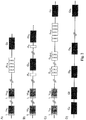
- V H , D H and J H segments can likewise be combined with one another virtually as desired to form the variable region of the heavy chain (cf. Fig. 2 ).
- the mechanism by which the various gene segments are combined to form complete antibody genes is called immunoglobulin rearrangement or somatic recombination. It takes place exclusively in B lymphocytes at certain times of cell development.
- junctional diversity in this context describes controlled imprecise joining together of the rearranged gene segments, as a result of which random removal and insertion of nucleotides occurs at the cleavage sites.
- a further combinatorial diversity results from the possibility of combining a particular rearranged light chain with a particular rearranged heavy chain.
- the diversity of antibodies is also additionally increased after successful rearrangement and later activation of B cells, in that an affinity maturation of antibodies occurs due to an increased rate of mutation in the region of the variable regions of activated B cells (somatic hypermutation).
- antibodies can also be generated by molecular biology methods.
- the formation of antibodies is at present typically induced in selected organisms by injection of a particular antigen, and the antibody is then isolated from the organism for further use.
- the B lymphocytes of the organism are conventionally purified selectively and fused with an immortal myeloma cell to form a hybridoma cell. Those cells which secrete the corresponding antigen-specific antibodies are then determined by selection methods.
- hybridoma cells In addition to use of hybridoma cells, recombinant preparation of these antibodies with the desired specificity is also possible after isolation and sequencing. Cells which provide the required posttranslational modifications are typically used for this. On the basis of the immune reaction with formation of human anti-mouse antibodies in the human organism in the case of native antibodies produced in the mouse (or in other hosts), chimeric, humanized or human antibodies are preferably prepared here.
- these antibodies can be employed as agents both in biochemical and molecular biology research, and in diagnostics and for medical uses.
- antibodies can be employed directly only with difficulty, since these usually have only a very short half-life in vivo and therefore, possibly, cannot reach their target antigen or their target nucleic acid at all. This requires either high active compound concentrations of the desired antibody, or alternative methods which are suitable for providing large amounts of antibodies in vivo.
- Such methods include, e.g. molecular medicine methods of gene therapy and genetic vaccination which, when used generally in the therapy and prevention of diseases, have considerable effects on medical practice. Both methods are based on the introduction of nucleic acids into cells or into tissue of the patient and on subsequent processing by the cells or, respectively, tissue of the information coded by the nucleic acids introduced, i.e. expression of the desired polypeptides, e.g. antibodies, in the cells or respectively, the tissue..
- the conventional procedure of methods of gene therapy and of genetic vaccination to date is based on the use of DNA to sluice the required genetic information into the cell.
- Various methods for introducing DNA into cells have been developed in this connection, such as, for example, calcium phosphate transfection, polyprene transfection, protoplast fusion, electroporation, microinjection, lipofection and the use of gene canons, lipofection in particular having emerged as a suitable method.
- a further method which has been proposed in particular in the case of genetic vaccination methods is the use of DNA viruses as DNA vehicles.
- DNA viruses have the advantage that because of their infectious properties a very high transfection rate can be achieved.
- the viruses used are genetically modified, so that no functional infectious particles are formed in the transfected cell.
- the use of DNA viruses as DNA vehicles has been criticized in recent years because of the risk of recombination of non-active viruses to give active viruses.
- DNA as an agent in gene therapy and genetic vaccination or for passive immunization (by passive vaccines), e.g. by using coding sequences for antibodies, may, however, also be less advantageous from some points of view.
- DNA is degraded only relatively slowly in the bloodstream, so that when (foreign) DNA is used as the coding sequence for a desired protein, a formation of anti-DNA antibodies may occur, which has been confirmed in an animal model in the mouse ( Gilkeson et al., J. Clin. Invest. 1995, 95: 1398-1402 ).
- (foreign) DNA can interact with the host genome, and in particular cause mutations by integration into the host genome.
- the (foreign) DNA introduced may be inserted into an intact gene, which represents a mutation which can impede or even completely switch off the function of the endogenous gene.
- Active immunization thus creates a permanent immunization of the organism against the particular antigen, which can be associated with the disadvantages described above.
- passive immunization in contrast, only an antiserum or the purified antibody itself ("passive vaccine") is administered to the organism.
- the coding sequence for the antibody can likewise be administered, as described above, as a so-called passive vaccine for passive immunization.
- an RNA (sequence) for intracellular expression of an antibody wherein the RNA (sequence) codes for an antibody or contains at least one coding region, which codes for at least one antibody, respectively.
- an antibody-coding RNA according to the invention includes any RNA which encodes an antibody. More generally, the RNA of the present invention (directed to intracellular expression) contains at least one coding region, wherein the at least one coding region codes for at least one antibody. If more than one coding region is contained in the RNA molecule of the invention, the second, third etc. coding region may code for antibodies as well, which may be the same or distinct from the first antibody coding region.
- the inventive RNA contains at least two coding regions, all of them coding for identical or distinct antibodies.
- an inventive RNA may code for more than one antibody within the same coding region.
- the inventive RNA may be mono-, bi- or multicistronic, codes for at least one antibody.
- the antibody-coding RNA according to the invention can be single-stranded or double-stranded, linear or circular, or in particular in the form of mRNA.
- the antibody-coding RNA according to the invention is particularly preferably in the form of single-stranded RNA, even more preferably in the form of mRNA.
- An antibody-coding RNA according to the invention preferably has a length of from 50 to 15,000 nucleotides, more preferably a length of from 50 to 10,000 nucleotides, even more preferably a length of from 500 to 10,000 nucleotides and most preferably a length of from 500 to 7,000, 500 to 5,000 or 700 to 3,000 nucleotides.
- the antibodies coded by the RNA according to the invention can be chosen from all antibodies, e.g. from all antibodies which are generated by recombinant methods or are naturally occurring and are known to a person skilled in the art from the prior art, in particular antibodies which are (can be) employed for therapeutic purposes or for diagnostic or for research purposes or have been found with particular diseases, e.g. cancer diseases, infectious diseases etc.
- antibodies which are coded by an RNA according to the invention typically include all antibodies (described above) which are known to a person skilled in the art, e.g. naturally occurring antibodies or antibodies generated in a host organism by immunization, antibodies prepared by recombinant methods which have been isolated and identified from naturally occurring antibodies or antibodies generated in a host organism by (conventional) immunization or have been generated with the aid of molecular biology methods, as well as chimeric antibodies, human antibodies, humanized antibodies, bispecific antibodies, intrabodies, i.e. antibodies expressed in cells and possibly localized in particular cell compartments, and fragments of the abovementioned antibodies.
- the term antibody is to be understood in its broadest meaning.
- antibodies in general typically comprise a light chain and a heavy chain, both of which have variable and constant domains.
- the light chain comprises the N-terminal variable domain V L and the C-terminal constant domain C L .
- the heavy chain of an IgG antibody in contrast, can be divided into an N-terminal variable domain V H and three constant domains C H 1, C H 2 and C H 3 (cf. Fig. 1 ).
- RNA molecules according to the invention can also be prepared on the basis of polyclonal antibodies or, as an antibody-coding RNA cocktail, can have a polyclonal character.
- polyclonal antibodies are typically mixtures of antibodies against a specific antigen or immunogen or epitope of a protein which have been generated by immunization of a host organism, for example mammals, i.e. animals, including cattle, pigs, dogs, cats, donkeys, monkeys, including rodents, e.g. mice, hamsters, rabbits etc., and man.
- Polyclonal antibodies conventionally recognize different epitopes or regions of the same specific antigen, each of these epitopes in turn being capable of generating a clone of B lymphocytes which produces an antibody against this epitope. From such polyclonal antibodies or from the antibody sera obtained from the host organism, the individual antibodies specific against the particular epitopes can be obtained by individualization to monoclonal antibodies.
- the present invention accordingly also provides RNA which codes for a monoclonal antibody obtained by individualization of polyclonal antibodies.
- Monoclonal antibodies in the context of this invention are therefore typically antibodies which are specific for a particular antigen or epitope (of a protein), i.e. bind this antigen or epitope (of a protein) with a high affinity, and conventionally are expressed by a hybridoma cell.
- the corresponding antigen or immunogen or epitope of a protein is typically injected at least once, but typically several times, into a host organism as described here, as a result of which the immune system of the host organism, in the presence of suitable adjuvants, is preferably stimulated to antibody production via activation of correspondingly specific B cells.
- the B lymphocytes are then conventionally selectively purified from the spleen or other organs or fluids suitable for this from an animal immunized in this manner, and are fused with an immortal myeloma cell to give the so-called hybridoma cell.
- hybridoma cell After selection methods and cloning of the hybridomas or hybridoma cells formed, those clones which secemate, i.e. express and secrete, antibodies of the desired specificity can be determined. These clones can be isolated and sequenced with known molecular biology methods.
- the data obtained from such a sequencing can serve further in a nucleic acid synthesis for generation of synthetic DNA sequences or for screening a cDNA library and isolation of the cDNA fragments and generation of a DNA or nucleic acid template for in vitro or in vivo synthesis of the RNA according to the invention which codes for an antibody.
- the RNA contained in the hybridomas can also be isolated, for example by fractionation, and subsequently the RNA molecules according to the invention which code for the hybridoma antibody can be purified by methods known to the person skilled in the art.
- RNA molecules which code for non-human monoclonal or polyclonal antibody e.g. murine monoclonal antibodies or monoclonal antibodies from other, as described here, non-human host organisms or hybridoma cells are of only limited suitability for therapeutic use in humans, since in the human organism itself they conventionally cause an immune reaction with formation of human anti-antibodies directed against these non-human host antibodies.
- non-human monoclonal or polyclonal antibodies as a rule can be administered to a person only a single time.
- RNA molecules which code for chimeric, humanized and human antibodies can also be provided according to the invention.
- Chimeric antibodies in the context of the present invention are preferably antibodies in which the constant domains of an antibody as described here have been replaced by human sequences.
- chimeric antibodies are formed from monoclonal or polyclonal antibodies as described here.
- Humanized antibodies in the context of the present invention are antibodies in which the constant and variable domains described above of the non-human monoclonal or polyclonal antibodies, with the exception of the hypervariable regions, have been replaced by human sequences.
- RNA molecules which code for human antibodies i.e. antibodies which have completely human sequences, that is to say in the constant and variable domains, including the hypervariable regions, can furthermore be used in the context of the present invention.
- Such RNA molecules which code for human antibodies can be isolated from human tissue or originate from immunized host organisms as described here, e.g. mice, which are then transgenic for the human IgG gene locus.
- RNA molecules which code for human antibodies and have been isolated by means of phage display and cloned with the aid of molecular biology methods are furthermore provided (see below).
- Antibodies which are coded by RNAs according to the invention particularly preferably include so-called full length antibodies, i.e. antibodies which comprise both the complete heavy and the complete light chains, as described above.
- RNAs which alternatively code for one or more antibody fragment(s) of the antibodies described above, instead of the corresponding full length antibody, can furthermore be provided in the context of the present invention.
- antibody fragments are any antibody fragments known to a person skilled in the art, e.g. Fab, Fab', F(ab) 2 , Fc, Facb, pFc', Fd, und Fv fragments of the abovementioned antibodies etc.
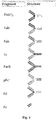
- a diagram of the structure of such antibody fragments is shown by way of example in Fig. 4 .
- Protein fragments consisting of the minimal binding subunit of antibodies known as single-chain antibodies (scFvs) have excellent binding specificity and affinity for their ligands. In contrast to antibodies, scFvs lack the non-binding regions. Accordingly, RNA encoding scFvs are also encompassed by the present invention.
- an Fab (fragment antigen binding) fragment typically comprises the variable and a constant domain of a light and a heavy chain, e.g. the C H 1 and the V H domain of the heavy chain and the complete light chain. The two chains are bonded to one another via a disulfide bridge.
- An Fab fragment thus conventionally contains the complete antigen-binding region of the original antibody and usually has the same affinity for the antigen, the immunogen or an epitope of a protein.
- Antibody fragments, as also described above for antibodies, can be prepared with the aid of molecular biology methods. In this context, the DNA sequences which code for the various domains of the antibody fragment are cloned into a specific expression vector.
- RNA which codes for these antibody fragments can then be expressed e.g. in suitable host cells.
- suitable host cells in connection with the present invention include, inter alia, E. coli, yeasts, transgenic plants or mammalian cells etc. (see below).
- an scFv fragment single chain variable fragment typically comprises the variable domain of the light and of the heavy chain, which are bonded to one another via an artificial polypeptide linker.
- RNAs which code for a V H and V L these being linked to one another by a polypeptide linker, are preferably provided.
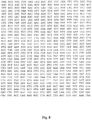
- a polypeptide built up from 15-25 glycine, proline and/or serine residues (cf. Fig. 5 ) or the associated nucleotide sequence is used at the RNA level for the provision of this component.
- RNA molecules which code for bispecific antibodies can also be provided in the context of the present invention.
- Bispecific antibodies in the context of the present invention are preferably antibodies which can act as adaptors between an effector and a corresponding target, e.g. for recruiting effector molecules (e.g. toxins, active compounds (drugs), cytokines etc.), targeting of effector cells (e.g. CTL, NK cells, macrophages, granulocytes etc. (see, for example, review by Kontermann R.E., Acta Pharmacol. Sin, 2005, 26(1): 1-9 ).
- bispecific antibodies are in principle built up such as is described here in general for antibodies, these bispecific antibodies e.g.
- bispecific antibodies can also be single-chain antibodies (e.g. scFv fragments etc.). Bispecific antibodies can be used, for example, to bring two reaction partners, e.g.
- bispecific antibodies are used above all to bring effector cells (such as, for example, T cells, NK cells, macrophages etc.) and target cells (e.g. tumour cells, infected cells etc.) spatially close.
- effector cells such as, for example, T cells, NK cells, macrophages etc.
- target cells e.g. tumour cells, infected cells etc.
- bispecific antibodies can include, without being limited thereto, e.g. those antibodies or antibody fragments which bind on the one hand a surface factor as described here, and on the other hand an antigen as described here, preferably a tumour antigen as described here. This includes e.g. CD28 and a tumour antigen ( Grosse-Hovest L.
- RNAs which code for antibodies inter alia code for those antibodies which bind antigens or specific nucleic acids.
- Antigens in the context of the present invention are typically molecules which are recognized as exogenous by the immune system and conventionally cause an immune reaction or immune response with the formation of antibodies directed specifically against them.
- antigens can also include, especially in the case of autoimmune diseases, endogenous molecules or structures which are incorrectly recognized as exogenous by the immune system and thereby trigger an immune reaction.
- antigens are therefore all molecules which are recognized by an antibody in the context of the present invention.
- Antigens substantially comprise proteins, peptides or epitopes of these proteins or peptides.
- epitopes are typically small regions (molecular sections) lying on the surface of such protein or peptide structures and having a length of from 5 to 15, in rare case also to 25, preferably 6 to 9 amino acids.
- Antigens can furthermore also include lipids, carbohydrates etc.
- antigens also include, for example, so-called immunogens, i.e. antigens which lead to an immunity of the organism transfected therewith.
- Antigens by way of example include, without being limited thereto, surface antigens of cells, tumour antigens etc.
- antibodies can bind the following antigens (which typically occur in vertebrates), e.g.
- tumour-specific surface antigens e.g. 5T4, ⁇ 5 ⁇ 1-integrin, 707-AP, AFP, ART-4, B7H4, BAGE, ⁇ -catenin/m, Bcr-abl, MN/C IX-antigen, CA125, CAMEL, CAP-1, CASP-8, CD4, CD19, CD20, CD22, CD25, CDC27/m, CD 30, CD33, CD52, CD56, CD80, CDK4/m, CEA, CT, Cyp-B, DAM, EGFR, ErbB3, ELF2M, EMMPRIN, EpCam, ETV6-AML1, G250, GAGE, GnT-V, Gp100, HAGE, HER-2/neu, HLA-A*0201-R170I, HPV-E7, HSP70-2M, HAST-2, hTERT (or hTRT), iCE, IGF-1R, IL-2R, IL-5, KIAA
- Tumour antigens can, for example, typically be responsible for metastasing, that is to say dissolving of tumour cells out of their native tissue, transfer into the vascular system (lymph or blood vessel system), exit from the vascular system and colonization in a new tissue.
- metastasing that is to say dissolving of tumour cells out of their native tissue, transfer into the vascular system (lymph or blood vessel system), exit from the vascular system and colonization in a new tissue.
- tumour antigens which cause modified cell-cell interactions compared with the native state are of interest in particular.
- Antibodies encoded by the inventive RNA may also be directed against tumour antigens listed by Table 1 or Table 2.
- RNA encoding those antibodies may be used to treat (or, may be used to prepare a medicament to treat, respectively) the cancer diseases given in the last column of Tables 1 and 2.
- Table 1 Antigens expressed in cancer diseases Tumor antigen Name of tumor antigen Cancers or cancer diseases related thereto 5T4 colorectal cancer, gastric cancer, ovarian cancer 707-AP 707 alanine proline melanoma 9D7 renal cell carcinoma AFP alpha-fetoprotein hepatocellular carcinoma, gallbladder cancer, testicular cancer, ovarian cancer, bladder cancer AlbZIP HPG1 prostate cancer alpha5beta1-Integrin alpha5beta6-Integrin colon cancer alpha-methylacyl-coenzyme A racemase prostate cancer ART-4 adenocarcinoma antigen recognized by T cells 4 lung cancer, head and neck cancer, leukemia, esophageal cancer, gastric cancer, cervical cancer, ovarian cancer, breast cancer, squamous cell carcinoma B7H4 ovarian cancer BAGE-1 B antigen bladder cancer, head and neck cancer, lung cancer, melanoma, squamous cell carcinoma BCL-2 leuk
- antibodies encoded by the inventive RNA are directed against the following (protein) antigens (whereby the RNA molecules may be used for the preparation of a medicament, e.g. a pharmaceutical composition or more preferably a (passive) vaccine in the meaning of the present inventino), are selected from the group consisting of 5T4, 707-AP, 9D7, AFP, AlbZIP HPG1, alpha-5-beta-1-integrin, alpha-5-beta-6-integrin, alpha-actinin-4/m, alpha-methylacyl-coenzyme A racemase, ART-4, ARTC1/m, B7H4, BAGE-1, BCL-2, bcr/abl, beta-catenin/m, BING-4, BRCA1/m, BRCA2/m, CA 15-3/CA 27-29, CA 19-9, CA72-4, CA125, calreticulin, CAMEL, CASP-8/m, cathepsin B, cathepsin
- the RNA codes for antibodies which are directed against protein antigens selected from the group consisting of MAGE-A1, MAGE-A6, melan-A, GP100, tyrosinase, survivin, CEA, Her-2/neu, WT1, PRAME, EGFRI (epidermal growth factor receptor 1), mucin-1 and SEC61G, hTERT, 5T4, NY-Eso1, and TRP-2, more preferably from sequences of group consisting of MAGE-A1 [accession number M77481], MAGE-A6 [accession number NM_005363], melan-A [accession number NM_005511], GP100 [accession number M77348], tyrosinase [accession number NM_000372], survivin [accession number AF077350], CEA [accession number NM_004363], Her-2/neu [accession number M11730], WT1 [accession number MAGE-A
- Antibodies (and therefore also the RNAs according to the invention on which these antibodies are based) which bind the antigens described here and, possibly, other antigens or nucleic acids can be identified e.g. by means of the method of phage display developed by George P. Smith. In this context, antibodies or antibody fragments are typically expressed on the surface of filamentous phages ( Smith, G.P., 1985, "Filamentous fusion phage: novel expression vectors that display cloned antigens on the virion surface", Science 228; 1315-1317 ).
- the DNA for an antibody fragment which codes the antigen-binding variable domain is then cloned in-frame before the gpIII gene.
- a fusion protein is formed therefrom, which is expressed on the virus surface without the phage losing its infectiousness.
- the aid of the phage display technique it is possible to generate large antibody libraries, each phage expressing a different antibody fragment on the surface. To this extent, the underlying RNA is therefore also available.
- a particular antibody fragment can be isolated from such a library by a method called "phage panning". For this, the corresponding antigen is bound to a matrix and incubated with the phage suspension. The phages which present an appropriate antibody fragment interact with the fixed antigen, while the other phages are removed by a washing step. The phages isolated are multiplied, for example, in E. coli. The DNA is isolated accordingly and the gene sequence is determined. Expression constructs which contain the cDNA coding for the entire antibody or antibody fragments can then be developed with the aid of genetic engineering methods. An RNA (mRNA) which codes for the antibody can be generated from this cDNA by means of in vitro transcription (see below). Nucleic acids or, respectively, mRNA coding for monoclonal antibodies which are entirely of human origin are obtained in this manner.
- mRNA RNA
- RNA according to the invention which codes for antibodies as described above is also suitable for coding so-called intrabodies or for rendering possible an expression of intrabodies.
- Intrabodies in the context of the present invention can include any of the antibodies or antibody fragments described here.
- Intrabodies are intracellularly expressed antibodies, i.e. antibodies which are coded by nucleic acids localized in the cell and are expressed there.
- an RNA according to the invention which encodes the antibodies or antibody fragments as described above is introduced into cells beforehand, for example with the aid of transfection methods according to the invention or other suitable transfection methods (see below) and, where appropriate, thereafter transplanted into an organism or being or introduced directly as nucleic acids into an organism or being.
- the RNA according to the invention (or a corresponding nucleic acid) can be introduced in the naked form or as a complex with suitable carriers (e.g. liposomes) into the organism or the being or can have such modifications (of the RNA) which, where appropriate together with one of the transfection methods mentioned, lead to a better cell uptake, e.g. any of the RNA modifications mentioned here, such as, for example, lipid modifications of the RNA according to the invention.
- An organism or a being in connection with the present invention typically means mammals, i.e. animals, including cattle, pig, dog, cat, donkey, monkey, rodents, e.g.
- Intrabodies can be localized and expressed at certain sites in the cell.
- intrabodies can be expressed in the cytoplasm, the formation of disulfide bridges usually being decreased under the reducing conditions of the cytoplasm. It has been possible to demonstrate, however, that cytoplasmic intrabodies, and in particular scFv fragments, can be functional. Cytoplasmic expression by the RNA according to the invention opens up the possibility of also inhibiting cytoplasmic proteins. This is not possible with treatment with monoclonal antibodies from the prior art, since these antibodies can reach only secreted and membrane-located (extracellular) proteins due to their secretion from the cell after intracellular expression (which represents the major difference between antibodies and intrabodies).
- intrabodies By expression of a signal peptide, intrabodies can be transported into the endoplasmic reticulum (ER) and then secreted as with regular antibodies. In this case, typically only secreted or membrane-located proteins are a target for these antibodies.
- ER retention signal for example KDEL
- the intrabody can remain in the ER (where it may bind to specific antigen located in the ER) and prevent secretion of its antigen and/or transport of its antigen or its target molecule to the plasma membrane.
- intrabodies can include full length antibodies or antibody fragments as described above.
- Intrabodies in the context of the present invention preferably initially include full length antibodies, which are retained in the cell and not secreted from the cell (by whatever technique, e.g. retention signal sequences etc.). However, if e.g. intracellular expression of full length antibodies is technically not possible or not appropriate, antibody fragments as described above can also be employed as intrabodies.
- Antibodies which are coded by the RNA according to the invention furthermore also include those antibodies or antibody fragments which have a sequence identity to one of the antibodies or antibody fragments described here of at least 70 %, 80% or 85 %, preferably at least 90 %, more preferably at least 95 % and most preferably at least 99 % over the entire length of the coding nucleic acid or amino acid sequence of an antibody or antibody fragment as described here.
- such antibodies or antibody fragments have the same biological function as or, respectively, the specific activity of the corresponding full length antibody, e.g. the specific binding of particular antigens or nucleic acids. Accordingly, it is preferred, if the hypervariable region(s) are conserved or are modified by merely conservative mutations.
- the biological function of antibodies described here which are coded by the RNA according to the invention includes e.g. neutralization of antigens, complement activation or opsonization.
- the antibody can bind to an antigen and thereby neutralize this.
- the antibody is conventionally blocked by the binding of the antigen, and can therefore display its action only against one antigen, or two antigens in the case of bispecific antibodies.
- scFv antibody fragments are suitable above all for this (neutralization) function of an antibody, since they do not include the functions of the constant domains of an antibody.
- complement activation the complex system of complement proteins which are dependent upon the Fc part of the antibody can be activated via binding of antibodies.
- End products of the complement cascade typically lead to lysis of cells and to the creation of a phlogistic (inflammatory) milieu.
- pathogens or foreign particles are rendered accessible to phagocytes by binding by an antibody via the constant domains of the antibody.
- the opsonized cells which are recognized as foreign, can be lysed via an antibody-dependent, cell-mediated cytotoxicity (ADCC).
- ADCC antibody-dependent, cell-mediated cytotoxicity
- NK cells in particular can perform lytic functions in this manner via activation of their Fc receptors.
- the term "identity" means that the sequences are compared with one another as follows. In order to determine the percentage identity of two nucleic acid sequences, the sequences can first be aligned with respect to one another in order subsequently to make a comparison of these sequences possible. For this e.g. gaps can be inserted into the sequence of the first nucleic acid sequence and the nucleotides can be compared with the corresponding position of the second nucleic acid sequence. If a position in the first nucleic acid sequence is occupied by the same nucleotide as is the case at a position in the second sequence, the two sequences are identical at this position.
- the percentage identity between two sequences is a function of the number of identical positions divided by the number of all the positions compared in the sequences investigated. If e.g. a specific sequence identity is assumed for a particular nucleic acid (e.g. a nucleic acid which codes for a protein, as described above) in comparison with a reference nucleic acid (e.g. a nucleic acid from the prior art) of defined length, this percentage identity is stated relatively with reference to this reference nucleic acid.
- this nucleic acid can be a nucleic acid 50 nucleotides long which is completely identical to a 50 nucleotides long section of the reference nucleic acid. Indeed, it can also be a nucleic acid 100 nucleotides long which has 50 % identity, i.e. in this case 50 % identical nucleic acids, with the reference nucleic acid over the entire length thereof.
- this nucleic acid can be a nucleic acid 200 nucleotides long which is completely identical in a 100 nucleotides long section of the nucleic acid to the reference nucleic acid 100 nucleotides long.
- Other nucleic acids of course equally meet these criteria.
- the identity statements described for nucleic acids apply equally to the antibodies and antibody fragments coded by the RNA according to the invention. The same holds for the determination of the sequence identity between two (poly)peptides, based on the comparison/alignment of the respective amino acid sequences.
- the percentage identity of two sequences can be determined with the aid of a mathematical algorithm.
- a preferred, but not limiting, example of a mathematical algorithm which can be used for comparison of two sequences is the algorithm of Karlin et al. (1993), PNAS USA, 90:5873-5877 .
- Such an algorithm is integrated in the NBLAST program, with which sequences which have a desired identity to the sequences of the present invention can be identified.
- the "Gapped BLAST" program can be used, as is described in Altschul et al. (1997), Nucleic Acids Res, 25:3389-3402 . If BLAST and Gapped BLAST programs are used, the preset parameters of the particular program (e.g.
- NBLAST NBLAST
- the sequences can be aligned further using version 9 of GAP (global alignment program) of the "Genetic Computing Group” using the preset (BLOSUM62) matrix (values -4 to +11) with a gap open penalty of -12 (for the first zero of a gap) and a gap extension penalty of -4 (for each additional successive zero in the gap).
- GAP global alignment program
- BLOSUM62 preset matrix
- the percentage identity is calculated by expressing the number of agreements as a percentage content of the nucleic acids in the sequence claimed.
- the methods described for determination of the percentage identity of two nucleic acid sequences can also be used correspondingly, if necessary, on the coded amino acid sequences, e.g. the antibodies described here.
- the antibody-coding RNA according to the invention contains acoding regions which codes for one of the anribodies listed in Table 3.
- the antibody encoding RNA may be used to treat (or, may be used to provide a pharmaceutical composition to treat) one of the diseases, disorders, pathologies listed in the right-hand column of Table 3.
- the antibody-coding RNA according to the invention contains or has a sequence which codes for the heavy chains according to SEQ ID NO: 2 and the light chains according to SEQ ID NO: 4. According to an even more preferred embodiment, the antibody-coding RNA according to the invention contains or has a coding sequence according to SEQ ID NO: 5 or SEQ ID NO: 51, respectively.
- the antibody-coding RNA according to the invention contains or has a sequence which codes for the heavy chains according to SEQ ID NO: 7 and the light chains according to SEQ ID NO: 9.
- the antibody-coding RNA according to the invention contains or has a coding sequence according to SEQ ID NO: 10 or SEQ ID NO: 52, respectively.
- the antibody-coding RNA according to the invention contains or has a sequence which codes for the heavy chains according to SEQ ID NO: 12 and the light chains according to SEQ ID NO: 14. According to an even more preferred embodiment, the antibody-coding RNA according to the invention contains or has a coding sequence according to SEQ ID NO: 15 or SEQ ID NO: 53, respectively.
- Antibodies which are coded by the RNA according to the invention can furthermore also encode such antibodies which have a sequence identity to one of the coding sequences of the antibodies described here, e.g. as described by Table 3 or by SEQ ID NO: 5 (51), 10 (52) or 15 (53), of at least 70 %, 80 % or 85 %, preferably at least 90 %, more preferably at least 95 % and most preferably at least 99 % over the entire length of the nucleic acid sequence or amino acid sequence of an antibody as described here, e.g. as described by Table 3 or by SEQ ID NO: 5 (51), 10 (52) or 15 (53).
- Such antibodies which are coded by the RNA according to the invention likewise include antibodies according to SEQ ID NO: 5 (51), 10 (52) or 15 (53) or according to Table 3 which contain or have, in one of the heavy chains described here according to SEQ ID NO: 2, 7 or 12 and/or in one of the light chains described here according to SEQ ID NO: 4, 9 or 14, a nucleic acid or amino acid sequence identity of at least 70 %, 80 % or 85 %, preferably at least 90 %, more preferably at least 95 % and most preferably at least 99 % over the entire length of the coding sequence for the particular light and/or heavy chain, with an otherwise unchanged coding antibody sequence of SEQ ID NO: 5 (51), 10 (52) or 15 (53) or e.g antibodies of Table 3.
- RNA in particular mRNA
- angiogenesis inhibitors based on antibodies, for example bevacizumab (monoclonal immunoglobulin G 1 antibody which binds to the vascular growth factor VEGF (vascular endothelial growth factor); or trastuzumab (Herceptin), an indirect inhibitor which inhibits the action of tumour proteins on receptors, or for example rituximab or cetuximab (directed against the epidermal growth factor receptor (EGFR)), based on RNA
- VEGF vascular endothelial growth factor
- trastuzumab Herceptin
- an indirect inhibitor which inhibits the action of tumour proteins on receptors
- rituximab or cetuximab directed against the epidermal growth factor receptor (EGFR)
- EGFR epidermal growth factor receptor
- the antibody-coding RNA according to the invention typically additionally has at least one of the following modifications, which are preferably suitable for increasing the stability of the coding RNA, improving the expression of the antibody thereby coded, increasing the cell permeability, rendering possible localization of the antibody on or in certain cell compartments etc.
- modifications of the RNA according to the invention described here modified RNA
- modify RNA can be combined with one another in a suitable manner, such modifications which do not interfere with one another or adversely influence the stability or cell permeability of the antibody-coding, modified RNA according to the invention or the expression of the antibody thereby coded preferably being combined with one another.
- the nomenclature "modified” is equated with the content of "optionally modified”.
- Modifications of the RNA according to the invention described here can include, for example, modifications of the nucleotides of the RNA.
- An RNA (modified RNA) according to the invention can thus include, for example, backbone modifications, sugar modifications or base modifications.
- the antibody-coding RNA according to the invention typically first contains nucleotides which can be chosen from all naturally occurring nucleotides and analogues thereof (modified nucleotides), such as e.g. ribonucleotides and/or deoxyribonucleotides.
- Nucleotides in the context of the present invention therefore include, without being limited thereto, for example purines (adenine (A), guanine (G)) or pyrimidines (thymine (T), cytosine (C), uracil (U)), and as modified nucleotides analogues or derivatives of purines and pyrimidines, such as e.g.
- an antibody-coding RNA according to the invention can contain RNA backbone modifications.
- a backbone modification is a modification in which the phosphates of the backbone of the nucleotides contained in the RNA are modified chemically.
- backbone modifications typically include, without being limited thereto, modifications from the group consisting of methylphosphonates, methylphosphoramidates, phosphoramidates, phosphorothioates (e.g. cytidine 5'-O-(1-thiophosphate)), boranophosphates, positively charged guanidinium groups etc., which means by replacing the phosphodiester linkage by other anionic, cationic or neutral groups.
- An antibody-coding RNA according to the invention can likewise also contain sugar modifications.
- a sugar modification in connection with the present invention is a chemical modification of the sugar of the nucleotides it contains and typically includes, without being limited thereto, sugar modifications chosen from the group consisting of 2'-deoxy-2'-fluoro-oligoribonucleotide (2'-fluoro-2'-deoxycytidine 5'-triphosphate, 2'-fluoro-2'-deoxyuridine 5'-triphosphate), 2'-deoxy-2'-deamine-oligoribonucleotide (2'-amino-2'-deoxycytidine 5'-triphosphate, 2'-amino-2'-deoxyuridine 5'-triphosphate), 2'-O-alkyloligoribonucleotide, 2'-deoxy-2'-C-alkyloligoribonucleotide (2'-O-methylcytidine 5'-triphosphate, 2'-methyluridine 5'-triphosphat
- the modified RNA sequence according to the invention contains no sugar modifications or backbone modifications if e.g. an in vitro transcription is necessary.
- the reason for this preferred exclusion lies in the problem that certain backbone modifications and sugar modifications of RNA sequences on the one hand can prevent or at least greatly reduce in vitro transcription thereof.
- an in vitro transcription of eGFP carried out by way of example functions, for example, only with the sugar modifications 2'-amino-2'-deoxyuridine 5'-phosphate, 2'-fluoro-2'-deoxyuridine 5'-phosphate and 2'-azido-2'-deoxyuridine 5'-phosphate.
- the translation of the protein, i.e. the protein expression, in vitro or in vivo typically can be reduced considerably by backbone modifications and, independently thereof, by sugar modifications of RNA sequences. It was possible to demonstrate this, for example, for eGFP in connection with the backbone modifications and sugar modifications selected above.
- an antibody-coding RNA according to the invention can likewise also contain modifications of the bases of the nucleotides it contains (base modifications).
- the antibody-coding RNA according to the invention can be modified such that only one or several of the nucleotides of the modified RNA are exchanged for nucleotides having base modifications, which are preferably suitable for increasing the expression of the antibody coded by the RNA significantly compared with the non-modified, i.e. native RNA sequence.
- significant means an increase in the expression of the antibody on the basis of the modified RNA sequence compared with the native RNA sequence by at least 20 %, preferably at least 30 %, 40 %, 50 % or 60 %, even more preferably by at least 70 %, 80 %, 90 % or even 100 % and most preferably by at least 150 %, 200 % or even 300 %.
- a modified nucleotide which contains a base modification is called a base-modified nucleotide and, without being limited thereto, is preferably chosen from the group consisting of: 2-amino-6-chloropurine riboside 5'-triphosphate, 2-aminoadenosine 5'-triphosphate, 2-thiocytidine 5'-triphosphate, 2-thiouridine 5'-triphosphate, 4-thiouridine 5'-triphosphate, 5-aminoallylcytidine 5'-triphosphate, 5-aminoallyluridine 5'-triphosphate, 5-bromocytidine 5'-triphosphate, 5-bromouridine 5'-triphosphate, 5-iodocytidine 5'-triphosphate, 5-iodouridine 5'-triphosphate, 5-methylcytidine 5'-triphosphate, 5-methyluridine 5'-triphosphate, 6-azacytidine 5'-triphosphate, 6-azauridine 5'-triphosphate,
- the inventors attribute an increase in the expression of the antibody coded by the (base)-modified RNA according to the invention to, inter alia, the improvement in the stabilizing of secondary structures and, where appropriate, to the "more rigid" structure formed in the RNA and the increased base stacking.
- pseudouridine 5'-triphosphate it is known of pseudouridine 5'-triphosphate that this occurs naturally in structural RNAs (tRNA, rRNA and snRNA) in eukaryotes as well as in prokaryotes.
- pseudouridine is necessary in rRNA for stabilizing secondary structures.
- RNA has increased, and it has been possible to demonstrate, surprisingly, that the translation depends on the presence of pseudouridine in the tRNA and rRNA, the interaction between tRNA and mRNA presumably being intensified in this context.
- the conversion of uridine into pseudouridine takes place posttranscriptionally by pseudouridine synthase.
- a posttranscriptional modification of RNA likewise takes place in the case of 5-methylcytidine 5'-triphosphate, and is catalysed by methyltransferases.
- a further increase in the content of pseudouridine and the base modification of other nucleotides is assumed to lead to similar effects, which, in contrast to the naturally occurring increased contents of pseudouridine in the sequence, can be carried out in a targeted manner and with a considerably wider variability.
- a similar mechanism to that for pseudouridine 5'-triphosphate is therefore assumed, i.e. an improved stabilizing of secondary structures, and on the basis of this an improved translation efficiency.
- a positive effect on the translation is presumed, independently of the stabilizing of secondary structures and a "more rigid" structure of the RNA. Further causes of the increase in expression are also to be found, possibly, in the lower degradation rate of the RNA sequences by RNAses in vitro or in vivo.
- RNA modifications of the antibody-coding RNA according to the invention which are described above can be introduced into the RNA with the aid of methods known to a person skilled in the art. Possible methods for this are, for example, synthesis methods using (automatic or semi-automatic) oligonucleotide synthesis apparatuses, biochemical methods, such as e.g. in vitro transcription methods, etc.
- synthesis methods using (automatic or semi-automatic) oligonucleotide synthesis apparatuses and also in vitro transcription methods can be employed.
- biochemical methods are preferred, such as, for example, in vitro transcription methods, preferably an in vitro transcription method as described here, optionally using the modified RNA according to the invention.
- Modifications with nucleotides as described here in an antibody-coding RNA according to the invention can occur on at least one (modifiable) nucleotide of the RNA sequence according to the invention, preferably on at least 2, 3, 4, 5, 6, 7, 8, 9 or 10 (modifiable) nucleotides, more preferably on at least 10-20 (modifiable) nucleotides, even more preferably on at least 10-100 (modifiable) nucleotides and most preferably on at least 10-200, 10 to 1,000 or 10 to 10,000 or more (modifiable), e.g. all, nucleotides.
- modifications in an antibody-coding RNA according to the invention can occur on at least one (modifiable) nucleotide of the RNA sequence according to the invention, preferably on at least 10 % of all the (modifiable) nucleotides, more preferably on at least 25 % of all the (modifiable) nucleotides, even more preferably on at least 50 % of all the (modifiable) nucleotides, even more preferably on at least 75 % of all the (modifiable) nucleotides and most preferably on 100 % of the (modifiable) nucleotides contained in the RNA sequence according to the invention.
- a "modifiable nucleotide” is any (preferably naturally occurring (native) and therefore non-modified) nucleotide which is to be exchanged for a nucleotide modified as described here.
- all the nucleotides of the RNA sequence can be modified, or only certain selected nucleotides of the RNA sequence. If all the nucleotides of the RNA sequence are to be modified, 100 % of the "modifiable nucleotides" of the RNA sequence are all the nucleotides of the RNA sequence used.
- the selected nucleotides are, for example, adenosine, cytidine, guanosine or uridine.
- an adenosine of the native sequence can be exchanged for a modified adenosine, a cytidine for a modified cytidine, a uridine for a modified uridine and a guanosine for a modified guanosine.
- 100 % of the "modifiable nucleotides" of the RNA sequence are 100 % of the adenosines, cytidines, guanosines and/or uridines in the RNA sequence used.
- the antibody-coding RNA according to the invention can contain, for example, a GC content which has been modified compared with the native, i.e. non-modified (precursor) RNA sequence.
- the G/C content for the coding region of the RNA according to the invention is greater than the G/C content for the coding region of the native RNA sequence, the coded amino acid sequence of the antibody or antibody fragment being unchanged compared with the wild-type, i.e. the antibody or antibody fragment amino acid sequence coded by the native RNA sequence.
- the composition and the sequence of the various nucleotides plays a major role.
- sequences having an increased G (guanine)/C (cytosine) content are more stable than sequences having an increased A (adenine)/U (uracil) content.
- the codons are therefore varied compared with the wild-type RNA, while retaining the translated amino acid sequence, such that they include an increased amount of G/C nucleotides. Since several codons code for one and the same amino acid (degeneration of the genetic code), the most favourable codons for the stability can be determined (alternative codon usage).
- codons which contain A and/or U nucleotides are modified by substitution of other codons which encode the same amino acids but contain no A and/or U. Examples are:
- substitutions listed above can of course be used individually or also in all possible combinations to increase the G/C content of the antibody-coding RNA according to the invention compared with the native RNA sequence (and nucleic acid sequence, respectively).
- all the codons for Thr occurring in the native RNA sequence can be modified to ACC (or ACG).
- combinations of the above substitution possibilities are used, e.g.:
- the G/C content of the coding region of the antibody-coding RNA according to the invention is increased compared with the G/C content of the coding region of the native RNA such that at least 5 %, at least 10 %, at least 15 %, at least 20 %, at least 25 % or more preferably at least 30 %, at least 35 %, at least 40 %, at least 45 %, at least 50 % or at least 55 %, even more preferably at least 60 %, at least 65 %, at least 70 % or at least 75 % and most preferably at least 80 %, at least 85 %, at least 90 %, at least 95 % or at least 100 % of the possible modifiable codons of the coding region of the native RNA (and nucleic acid, respectively) are modified.
- a second alternative of the antibody-coding RNA according to the invention with modifications is based on the knowledge that the translation efficiency of the RNA is also determined by a different frequency in the occurrence of tRNAs in cells. Thus, if so-called "rare" codons are present in an RNA sequence to an increased extent, the corresponding RNA is translated to a significantly poorer degree than in the case where codons which code for relatively "frequent" tRNAs are present.
- the coding region of the RNA according to the invention is therefore modified compared with the coding region of the native RNA such that at least one codon of the native RNA which codes for a tRNA which is relatively rare in the cell is exchanged for a codon which codes for a tRNA which is relatively frequent in the cell and which carries the same amino acid as the relatively rare tRNA.
- the sequence of the antibody-coding RNA according to the invention is modified such that codons for which frequently occurring tRNAs are available are inserted. Which tRNAs occur relatively frequently in the cell and which, in contrast, are relatively rare is known to a person skilled in the art; cf. e.g. Akashi, Curr. Opin. Genet. Dev. 2001, 11(6): 660-666 .
- RNA sequence according to the invention which encodes an antibody (for example for a pharmaceutical composition according to the invention).
- RNA DSE destabilizing sequence elements
- the antibody-coding RNA it is of course also preferable, where appropriate, to eliminate from the RNA DSEs present in the untranslated regions (3' and/or 5' UTR).
- Such destabilizing sequences are, for example, AU-rich sequences ("AURES"), which occur in 3' UTR sections of numerous unstable RNAs ( Caput et al., Proc. Natl. Acad. Sci. USA 1986, 83: 1670 to 1674 ).
- the antibody-coding RNA according to the invention is therefore preferably modified compared with the native RNA such that this no longer contains such destabilizing sequences.
- sequence motifs which are recognized by possible endonucleases, for example the sequence GAACAAG, which is contained in the 3' UTR segment of the gene which codes for the transferrin receptor ( Binder et al., EMBO J. 1994, 13: 1969 to 1980 ).
- sequence motifs are also preferably eliminated in the antibody-coding RNA according to the invention.
- RNAs i.e. substitution of codons in the antibody-coding RNA according to the invention.
- the total antibody-coding RNA according to the invention can be synthesized chemically using standard techniques such as are familiar to a person skilled in the art.
- base substitutions are preferably introduced using a DNA template for the preparation of the antibody-coding RNA according to the invention with the aid of techniques of the usual targeted mutagenesis (see, for example, Maniatis et al., Molecular Cloning: A Laboratory Manual, Cold Spring Harbor Laboratory Press, 3rd ed., Cold Spring Harbor, NY, 2001 ).
- a corresponding DNA molecule is therefore transcribed in vitro (see below).
- This DNA template optionally has a suitable promoter, for example a T3, T7 or SP6 promoter, for the in vitro transcription, which is followed by the desired nucleotide sequence for the antibody-coding RNA according to the invention to be prepared and a termination signal for the in vitro transcription.
- a suitable promoter for example a T3, T7 or SP6 promoter
- the DNA molecule which forms the template of the antibody-coding RNA construct to be prepared can be prepared by fermentative proliferation and subsequent isolation as part of a plasmid which can be replicated in bacteria.
- Plasmids which may be mentioned as suitable for this are, for example, the plasmids pT7Ts (GenBank accession number U26404; Lai et al., Development 1995, 121: 2349 to 2360 ), pGEM® series, for example pGEM®-1 (GenBank accession number X65300; from Promega) and pSP64 (GenBank accession number X65327); cf. also Mezei and Storts, Purification of PCR Products, in: Griffin and Griffin (ed.), PCR Technology: Current Innovation, CRC Press, Boca Raton, FL, 2001 .
- RNA or DNA oligonucleotides which contain short single-stranded transitions at the cleavage sites formed, or genes prepared by chemical synthesis
- the desired nucleotide sequence can thus be cloned into a suitable plasmid by molecular biology methods with which a person skilled in the art is familiar (cf. Maniatis et al., (2001) supra).
- the RNA or DNA molecule is then cut out of the plasmid, in which it can be present in one or several copies, by digestion with restriction endonucleases.
- the antibody-coding (modified) RNA according to the invention described above can moreover have a 5' cap structure (a modified guanosine nucleotide).
- a 5' cap structure a modified guanosine nucleotide.
- cap structures which may be mentioned, without being restricted thereto, are m7G(5')ppp (5'(A,G(5')ppp(5')A and G(5')ppp(5')G.
- the antibody-coding (modified) RNA according to the invention contains, especially if the RNA is in the form of mRNA, a poly-A tail on the 3' terminus of typically about 10 to 200 adenosine nucleotides, preferably about 10 to 100 adenosine nucleotides, more preferably about 20 to 70 adenosine nucleotides or even more preferably about 20 to 60 adenosine nucleotides.
- the antibody-coding (modified) RNA according to the invention contains, especially if the RNA is in the form of mRNA, a poly-C tail on the 3' terminus of typically about 10 to 200 cytosine nucleotides, preferably about 10 to 100 cytosine nucleotides, more preferably about 20 to 70 cytosine nucleotides or even more preferably about 20 to 60 or even 10 to 40 cytosine nucleotides.
- the poly-C tail may be added to the poly-A tail or may substitute the poly-A tail.
- the antibody-coding (modified) RNA according to the invention can additionally contain a nucleic acid section which codes a tag for purification.
- tags include, but without being limited thereto, e.g. a hexahistidine tag (His tag, polyhistidine tag), a streptavidin tag (Strep tag), an SBP tag (streptavidin-binding tag) a GST (glutathione S transferase) tag etc.
- the antibody-coding (modified) RNA according to the invention can furthermore encode a tag for purification via an antibody epitope (antibody-binding tag), e.g. a Myc tag, an Swa11 epitope, a FLAG tag, an HA tag etc., i.e. via recognition of the epitope via the (immobilized) antibody.
- the antibody-coding (modified) RNA according to the invention can therefore have an increased A/U content around the ribosome binding site, preferably an A/U content which is increased by 5 to 50 %, more preferably one increased by 25 to 50 % or more, compared with the native RNA.
- an IRES internal ribosomal entry site
- An IRES can thus function as the sole ribosome binding site, but it can also serve to provide an antibody-coding (modified) RNA according to the invention which codes for several antibodies or antibody fragments or for at least one antibody or antibody fragment which are to be translated by the ribosomes independently of one another ("multicistronic RNA").
- Such an RNA can code, for example, a complete sequence of an antibody, the corresponding coding regions of the heavy and light chain being linked (functionally) with one another by an IRES sequence.
- the heavy and light chain to be encoded by the inventive RNA may also be located in one single "cistron".
- the IRES sequences described are employed in particular for (virtually) simultaneous and uniform expression of the light and the heavy chains of the antibody coded by the RNA according to the invention.
- Examples of IRES sequences which can be used according to the invention are those from picornaviruses (e.g.
- FMDV pestiviruses
- CFFV pestiviruses
- PV polioviruses
- ECMV encephalomyocarditis viruses
- FMDV foot and mouth disease viruses
- HCV hepatitis C viruses
- CSFV classical swine fever viruses
- MLV murine leukoma virus
- SIV simian immunodeficiency viruses
- CrPV cricket paralysis viruses
- the antibody-coding (modified) RNA according to the invention has, in the 5' and/or 3' untranslated regions, stabilizing sequences which are capable of increasing the half-life of the RNA in the cytosol.
- stabilizing sequences can have a 100 % sequence homology to naturally occurring sequences which occur in viruses, bacteria and eukaryotes, but can also be partly or completely synthetic in nature.
- the untranslated sequences (UTR) of the ⁇ -globin gene for example from Homo sapiens or Xenopus laevis, may be mentioned as an example of stabilizing sequences which can be used in the present invention.
- stabilizing sequence has the general formula (C/U)CCAN x CCC(U/A)Py x UC(C/U)CC (SEQ ID NO: 17), which is contained in the 3'UTR of the very stable RNA which codes for ⁇ -globin, ⁇ -(I)-collagen, 15-lipoxygenase or for tyrosine hydroxylase (cf. Holcik et al., Proc. Natl. Acad. Sci. USA 1997, 94: 2410 to 2414 ).
- Such stabilizing sequences can of course be used individually or in combination with one another and also in combination with other stabilizing sequences known to a person skilled in the art.
- the antibody-coding (modified) RNA according to the invention can encode a secretory signal peptide, in addition to the antibodies as described here.
- signal peptides are (signal) sequences which conventionally comprise a length of from 15 to 30 amino acids and are preferably localized on the N-terminus of the coded antibody.
- Signal peptides typically render possible transport of a protein or peptide fused therewith (here e.g. an antibody) to or into a defined cell compartment, preferably the cell surface, the endoplasmic reticulum or the endosomal-lysosomal compartment. Examples of signal sequences which can be used according to the invention are e.g.
- signal sequences of conventional and non-conventional MHC molecules cytokines, immunoglobulins, the invariant chain, Lamp1, tapasin, Erp57, calreticulin and calnexin, and all further membrane-located, endosomally-lysosomally or endoplasmic reticulum-associated proteins.
- the signal peptide of the human MHC class I molecule HLA-A*0201 is preferably used.
- Sequences which render possible transport of a protein or peptide fused therewith to or into a defined cell compartment, preferably the cell surface, the nucleus, the nucleus region, the plasma membrane, the cytosol, the endoplasmic reticulum, the organelles, the mitochondria, the Golgi apparatus or the endosomal-lysosomal compartment, also include, without being limited thereto, so-called routing signals, sorting signals, retention signals or salvage signals and membrane topology-stop transfer signals (cf. Pugsley, A. P., Protein Targeting, Academic Press, Inc. (1989 )) at the level of the RNA according to the invention.
- routing signals sorting signals
- retention signals or salvage signals cf. Pugsley, A. P., Protein Targeting, Academic Press, Inc. (1989 )
- localization sequences include nucleic acid sequences which encode e.g. signals, i.e. amino acid sequences, such as, for example, KDEL (SEQ ID NO: 18) ( Munro, et al., Cell 48:899-907 (1987 )) DDEL (SEQ ID NO: 19), DEEL (SEQ ID NO: 20), QEDL (SEQ ID NO: 21) and RDEL (SEQ ID NO: 22) ( Hangejorden, et al., J. Biol. Chem. 266:6015 (1991 )) for the endoplasmic reticulum; PKKKRKV (SEQ ID NO: 23) ( Lanford, et al.
- KDEL SEQ ID NO: 18
- DEEL SEQ ID NO: 20
- QEDL SEQ ID NO: 21
- RDEL SEQ ID NO: 22
- PQKKIKS SEQ ID NO: 24
- QPKKP SEQ ID NO: 25
- RKKR SEQ ID NO:26
- RKKRRQRRRAHQ SEQ ID NO: 27
- an antibody to the plasma membrane, or to certain various sub-cell compartments, such as the nucleus region, the organelles, the mitochondria and the Golgi apparatus.
- Corresponding amino acid sequences which are coded by a corresponding codon sequence of the RNA according to the invention are given below.
- the sequence MLFNLRXXLNNAAFRHGHNFMVRNFRCGQPLX (SEQ ID NO: 31) can be used to lead the antibody to the mitochondrial matrix (Pugsley, supra). See Tang, et al., J. Bio. Chem.
- GCVCSSNP SEQ ID NO: 32
- GQTVTTPL SEQ ID NO: 33
- GQELSQHE SEQ ID NO: 34
- GNSPSYNP SEQ ID NO: 35
- GVSGSKGQ SEQ ID NO: 36
- GQTITTPL SEQ ID NO: 37
- GQTLTTPL SEQ ID NO: 38
- GQIFSRSA SEQ ID NO: 39
- GQIHGLSP SEQ ID NO: 40
- GARASVLS SEQ ID NO: 41
- GCTLSAEE SEQ ID NO: 42
- to the endoplasmic reticulum GQNLSTSN SEQ ID NO: 43
- nucleus GAALTILV SEQ ID NO: 44
- GAALTLLG SEQ ID NO: 45
- the modifications described here can be introduced into the antibody-coding RNA sequence according to the invention in a suitable manner by a person skilled in the art.
- the optimum modified RNA according to the invention can be determined by methods known to the person skilled in the art, e.g. the G/C content can be adapted manually and/or by means of an automated method as disclosed in WO 02/098443 .
- the RNA sequences can be adapted with the various additional optimization aims described here: On the one hand, the adaptation can be carried out with the highest possible G/C content, and on the other hand taking into the best possible account the frequency of the tRNAs according to codon usage.
- RNA (or DNA) sequence is carried out in order to generate the corresponding amino acid sequence.
- a virtual reverse translation is carried out, which on the basis of the degenerated genetic code provides selection possibilities for the corresponding codons.
- corresponding selection lists and optimization algorithms are used for selection of the suitable codons.
- the algorithm is typically implemented on a computer with the aid of suitable software.
- the optimized RNA sequence is established in this way and can be displayed, for example, with the aid of an appropriate display device and compared with the original (wild-type) sequence. The same also applies to the frequency of the individual nucleotides.
- RNA stabilized in accordance with natural sequence motifs are furthermore read in.
- a secondary structure analysis which can analyse stabilizing and destabilizing properties or, respectively, regions of the RNA with the aid of structure calculations can likewise be envisaged.
- RNA (mRNA) according to the invention includes, for example, complexing (or binding) of the RNA according to the invention with a (poly)cationic polymer, polyplexes, protein(s), in particular polycationic protein(s), or peptide(s).
- a RNA (mRNA) according to the invention is complexed or condensed with at least one cationic or polycationic agent.
- such a cationic or polycationic agent is an agent which is chosen from the group consisting of protamine, poly-L-lysine, poly-L-arginine, nucleolin, spermin and histones, nucleolin or derivatives thereof.
- protamine as a polycationic, nucleic acid-binding protein is particularly preferred.
- This procedure for stabilizing RNA is described, for example, in EP-A-1083232 , the disclosure content of which in this respect is included in its full scope in the present invention.
- the antibody-coding (modified) RNA according to the invention can contain a lipid modification.
- a RNA modified with a lipid typically comprises an antibody-coding RNA, as defined here, according to the invention, at least one linker covalently linked with this RNA and at least one lipid covalently linked with the particular linker.
- the (modified) RNA according to the invention modified with a lipid comprises (at least) one (modified) RNA, as defined here, according to the invention and at least one (bifunctional) lipid covalently linked with this RNA.
- the (modified) RNA according to the invention modified with a lipid comprises a (modified) RNA, as defined here, according to the invention, at least one linker covalently linked with this RNA and at least one lipid linked covalently with the particular linker and at least one (bifunctional) lipid covalently linked (without a linker) with this (modified) RNA according to the invention.
- the lipid employed for lipid modification of the antibody-coding (modified) RNA according to the invention is typically a lipid or a lipophilic residue, which is preferably biologically active per se.
- lipids preferably include natural substances, or compounds, such as e.g. vitamins, e.g. ⁇ -tocopherol (vitamin E), including RRR- ⁇ -tocopherol (formerly D- ⁇ -tocopherol), L- ⁇ -tocopherol, the racemate D,L- ⁇ -tocopherol, vitamin E succinate (VES) or vitamin A and derivatives thereof, e.g. retinic acid, retinol, vitamin D and derivatives thereof, e.g.
- vitamin D and ergosterol precursors thereof vitamin E and derivatives thereof, vitamin K and derivatives thereof, e.g. vitamin K and related quinone or phytol compounds, or steroids, such as bile acids, for example cholic acid, deoxycholic acid, dehydrocholic acid, cortisone, digoxygenin, testosterone, cholesterol or thiocholesterol.
- bile acids for example cholic acid, deoxycholic acid, dehydrocholic acid, cortisone, digoxygenin, testosterone, cholesterol or thiocholesterol.
- Further lipids or lipophilic residues in the context of the present invention include, without being limited thereto, polyalkylene glycols, ( Oberhauser et al., Nucl. Acids Res., 1992, 20, 533 ), aliphatic groups, such as e.g.
- C 1 -C 20 -alkanes such as, for example, dodecanediol, hexadecanol or undecyl residues (
- WO 2011/001100 phospholipids
- phospholipids such as e.g.
- phosphatidylglycerol diacylphosphatidylglycerol, phosphatidylcholine, dipalmitoylphosphatidylcholine, distearoylphosphatidylcholine, phosphatidylserine, phosphatidylethanolamine, dihexadecyl-rac-glycerol, sphingolipids, cerebrosides, gangliosides, or triethylammonium 1,2-di-O-hexadecyl-rac-glycero-3-H-phosphonate ( Manoharan et al., Tetrahedron Lett., 1995, 36, 3651 ; Shea et al., Nucl.
- polyamines or polyalkylene glycols such as e.g. polyethylene glycol (PEG) ( Manoharan et al., Nucleosides & Nucleotides, 1995, 14, 969 ), hexaethylene glycol (HEG), palmitin, or palmityl residues ( Mishra et al., Biochim. Biophys. Acta, 1995, 1264, 229 ), octadecylamines, or hexylaminocarbonyloxycholesterol residues ( Crooke et al., J. Pharmacol. Exp. Ther., 1996, 277, 923 ), and waxes, terpenes, alicyclic hydrocarbons, saturated or mono- or polyunsaturated fatty acid residues etc.
- PEG polyethylene glycol
- HEG hexaethylene glycol
- HEG hexaethylene glycol
- palmitin palmitin
- palmityl residues Mishra
- the linking between the lipid and the antibody-coding (modified) RNA according to the invention can in principle take place on any nucleotide, on the base or the sugar residue of any nucleotide, on the 3' and/or 5' end, and/or on the phosphate backbone of the antibody-coding (modified) RNA according to the invention.
- a terminal lipid modification of the (modified) RNA according to the invention on the 3' and/or 5' end thereof is particularly preferred.
- a terminal modification has several advantages over modifications within the sequence. On the one hand, modifications within the sequence can influence the hybridization properties, which may have an adverse effect in the case of sterically demanding residues.
- the linking takes place between the antibody-coding (modified) RNA according to the invention and at least one lipid via a linker (linked covalently with the (modified) RNA).
- Linkers in the context of the present invention typically contain at least two and optionally 3, 4, 5, 6, 7, 8, 9, 10, 10-20, 20-30 or more reactive groups, chosen from e.g. a hydroxyl group, an amino group, an alkoxy group etc.
- One reactive group preferably serves to bond the antibody-coding (modified) RNA according to the invention described here. This reactive group can be in a protected form, e.g.
- an antibody-coding (modified) RNA can therefore bond at least one lipid via the covalently bonded linker, e.g.
- the bonded lipids can be bonded separately from one another at various positions of the antibody-coding (modified) RNA according to the invention, but can also be in the form of a complex at one or more positions of the (modified) RNA.
- An additional reactive group of the linker can be used for direct or indirect (cleavable) bonding to a carrier material, e.g. a solid phase.
- Preferred linkers according to the present invention are e.g.
- glycerol or glycerol derivatives (C 3 anchor) or a 2-aminobutyl-1,3-propanediol derivative/matrix (C 7 anchor) are particularly preferably used as linkers.
- a glycerol derivative (C 3 anchor) as a linker is particularly preferred if the lipid modification can be introduced via an ether bond.
- the bond formed between the linker and the antibody-coding (modified) RNA according to the invention is preferably such that it is compatible with the conditions and chemicals of amidite chemistry, that is to say it is preferably neither acid- nor base-labile.
- bonds which are readily accessible synthetically and are not hydrolysed by the ammoniacal cleavage procedure of a nucleic acid synthesis process are preferred.
- Possible bonds are in principle all appropriately suitable bonds, preferably ester bonds, amide bonds, urethane bonds and ether bonds.
- the ether bond is particularly preferred in this context because of its relatively high biological stability to enzymatic hydrolysis.
- the linking of (at least one) (modified) RNA according to the invention takes place directly with at least one (bifunctional) lipid as described here, i.e. without using a linker as described here.
- the (bifunctional) lipid according to the invention preferably contains at least two reactive groups, or optionally 3, 4, 5, 6, 7, 8, 9, 10 or more reactive groups, a first reactive group serving for direct or indirect bonding of the lipid to a carrier material described here and at least one further reactive group serving for bonding of the (modified) RNA.
- an antibody-coding (modified) RNA according to the invention can therefore preferably bond at least one lipid (directly without a linker), e.g. 1, 2, 3, 4, 5, 5-10, 10-20, 20-30 or more lipid(s), particularly preferably at least 3-8 or more lipids per (modified) RNA.
- the bonded lipids can be bonded separately from one another at various positions of the antibody-coding (modified) RNA according to the invention, but can also be in the form of a complex at one or more positions of the (modified) RNA.
- at least one antibody-coding (modified) RNA e.g.
- RNAs can be bonded to a lipid as described above via reactive groups thereof.
- Lipids which can be used for this second embodiment particularly preferably include such (bifunctional) lipids which render possible a coupling (preferably on their termini or optionally intramolecularly), such as e.g. polyethylene glycol (PEG) and derivatives thereof, hexaethylene glycol (HEG) and derivatives thereof, alkanediols, aminoalkanes, thioalkanols etc.
- PEG polyethylene glycol
- HEG hexaethylene glycol
- alkanediols aminoalkanes
- thioalkanols thioalkanols etc.
- the bond between a (bifunctional) lipid and an antibody-coding (modified) RNA according to the invention as described above is preferably such as is described for the first preferred embodiment.
- the linking between the antibody-coding (modified) RNA according to the invention and at least one lipid as described here takes place via both of the abovementioned embodiments simultaneously.
- the antibody-coding (modified) RNA according to the invention can be linked at one position of the RNA with at least one lipid via a linker (analogously to the 1st embodiment) and at another position of the (modified) RNA directly with at least one lipid without using a linker (analogously to the 2nd embodiment).
- At least one lipid as described here can be linked covalently with the RNA at the 3' end of the (modified) RNA via a linker, and a lipid as described here can be linked covalently with the RNA at the 5' end of the (modified) RNA without a linker.
- at least one lipid as described here can be linked covalently with the (modified) RNA at the 5' end of an antibody-coding (modified) RNA according to the invention via a linker, and a lipid as described here can be linked covalently with the (modified) RNA at the 3' end of the (modified) RNA without a linker.
- Covalent linkings can likewise take place not only on the termini of the antibody-coding (modified) RNA according to the invention, but also intramolecularly, as described above, e.g. on the 3' end and intramolecularly, on the 5' end and intramolecularly, on the 3' and 5' end and intramolecularly, exclusively intramolecularly etc.
- the (modified) RNA according to the invention described here can be prepared by preparation processes known in the prior art, e.g. automatically or manually via known nucleic acid syntheses (see, for example, Maniatis et al. (2001) supra) or also via molecular biology methods, for example with subsequent purification, for example via chromatography methods.
- the antibody-coding (modified) RNA according to the invention can be used for the preparation of a pharmaceutical composition for treatment of tumours and cancer diseases, cardiovascular diseases, infectious diseases, autoimmune diseases or optionally monogenetic diseases, e.g. in gene therapy.
- a pharmaceutical composition in the context of the present invention comprises an antibody-coding (modified) RNA as described here and optionally a pharmaceutically suitable carrier and/or further auxiliary substances and additives.
- the pharmaceutical composition employed according to the present invention typically comprises a safe and effective amount of a (modified) RNA as described here.
- safe and effective amount means an amount of the antibody-coding (modified) RNA according to the invention such as is sufficient to induce significantly, by expression of the coded antibody, a positive change of a state to be treated, e.g. a tumour disease or cancer disease, a cardiovascular disease or an infectious disease, as described in the following.
- a "safe and effective amount” is low enough to avoid serious side effects in the therapy of these diseases, that is to say to render possible a reasonable ratio of advantage and risk. Determination of these limits typically lies within the range of reasonable medical judgement.
- the concentration of the antibody-coding (modified) RNA according to the invention in such pharmaceutical compositions can therefore vary, for example, without being limited thereto, within a wide range of from e.g. 0.1 ng to 1,000 mg/ml.
- Such a "safe and effective amount" of an antibody-coding (modified) RNA according to the invention can vary in connection with the particular state to be treated and the age and the physical state of the patient to be treated, the severity of the state, the duration of the treatment, the nature of the concomitant therapy, of the particular pharmaceutically suitable carrier used and similar factors within the knowledge and experience of the treating doctor.
- the pharmaceutical composition described here can be employed for human and also for veterinary medicine purposes.
- the pharmaceutical composition according to the invention described here can optionally comprise a pharmaceutically suitable carrier (and/or vehicle).
- pharmaceutically suitable carrier (and/or vehicle) used here preferably includes one or more compatible solid or liquid carriers or vehicles, (e.g. fillers, or diluents or encapsulating compounds) which are suitable for administration to a person.
- compatible means that the constituents of the composition are capable of being mixed together with the antibody-coding (modified) RNA according to the invention and the auxiliary substance optionally contained in the composition, as such and with one another in a manner such that no interaction occurs which would substantially reduce the pharmaceutical effectiveness of the composition under usual condition of use, such as e.g. would reduce the pharmaceutical activity of the coded antibody or even suppress or impair expression of the coded antibody.
- Pharmaceutically suitable carrier must of course have a sufficiently high purity and a sufficiently low toxicity to render them suitable for administration to a person to be treated.
- compositions may be typically distinguished into solid or liquid carriers or vehicles, wherein a specific determination may depend on the viscosity of the respective carrier or vehicle to be used.
- solid carriers and vehicles typically include e.g., but are not limited to, ion exchangers, alumina, aluminum stearate, lecithin, and salts, if provided in solid form, such as protamine sulfate, disodium hydrogen phosphate, potassium hydrogen phosphate, sodium chloride, zinc salts, colloidal silica, magnesium trisilicate, or polyvinyl pyrrolidone, waxes, polyethylene-polyoxypropylene-block polymers, wool fat, sugars, such as, for example, lactose, glucose and sucrose; starches, such as, for example, corn starch or potato starch; or cellulose-based substances, e.g.
- cellulose and its derivatives such as, for example, sodium carboxymethylcellulose, ethylcellulose, cellulose acetate; pulverized tragacanth; malt; gelatine; tallow; solid lubricants, such as, for example, stearic acid, magnesium stearate; calcium sulfate; wetting agents, such as, for example, sodium lauryl sulfate; colouring agents; flavouring agents; drug (active agent) carriers; tablet-forming agents; stabilizers; antioxidants; preservatives; etc.
- Liquid carriers or vehicles typically include, but are not limited to, e.g., water; pyrogen-free water; solutions of ion exchangers, alumina, aluminum stearate, lecithin, or serum proteins, such as human serum albumin; alginic acid; isotonic saline solutions or phosphatebuffered solutions, Ringer's solution, isotonic sodium chloride solution, etc. or salts or electrolytes, if provided in solubilized form, such as protamine sulfate, phosphates, e.g.
- liquid carriers or vehicles may also contain or comprise a long-chain alcohol diluent or dispersant, such as carboxymethyl cellulose or similar dispersing agents, or commonly used surfactants or emulsifiers, such as Tween®, Spans and other emulsifying agents or bioavailability enhancers, etc., if provided in a liquid form.
- a long-chain alcohol diluent or dispersant such as carboxymethyl cellulose or similar dispersing agents, or commonly used surfactants or emulsifiers, such as Tween®, Spans and other emulsifying agents or bioavailability enhancers, etc.
- a pharmaceutically suitable carrier as described above is determined in particular by the mode in which the pharmaceutical composition according to the invention is administered.
- the pharmaceutical composition according to the invention can be administered, for example, systemically.
- Administration routes include e.g. transdermal, oral, parenteral, including subcutaneous or intravenous injections, topical and/or intranasal routes.
- the suitable amount of the pharmaceutical composition according to the invention which is to be used can be determined by routine experiments using animal models. Such models include, but without being limited thereto, models of the rabbit, sheep, mouse, rat, dog and non-human primate models.
- Preferred unit dose forms for injection include sterile solutions of water, physiological saline solution or mixtures thereof. The pH of such solutions should be adjusted to about 7.4.
- Suitable carriers for injection include hydrogels, devices for controlled or delayed release, polylactic acid and collagen matrices.
- Pharmaceutically suitable carriers which can be used here include those which are suitable for use in lotions, creams, gels and the like. If the compound is to be administered perorally, tablets, capsules and the like are the preferred unit dose form.
- the pharmaceutically suitable carriers for the preparation of unit dose forms which can be used for oral administration are well-known in the prior art. Their choice will depend on secondary considerations, such as flavour, cost and storage stability, which are not critical for the purposes of the present invention and can be implemented without difficulties by a person skilled in the art.
- the pharmaceutical composition according to the invention can furthermore comprise an injection buffer, which preferably improves the transfection and also the translation of the antibody-coding RNA according to the invention in cells or an organism.
- the pharmaceutical composition according to the invention can comprise, for example, an aqueous injection buffer which contains, with respect to the total pharmaceutical composition, if this is in liquid form, a sodium salt, preferably at least 50 mM sodium salt, a calcium salt, preferably at least 0.01 mM calcium salt, and optionally a potassium salt, preferably at least 3 mM potassium salt.
- the sodium salts, calcium salts and optionally potassium salts contained in such an injection buffer are in the form of halides, e.g.
- the injection buffer can also contain organic anions of the abovementioned cations.
- such an injection buffer contains as salts sodium chloride (NaCl), calcium chloride (CaCl 2 ) and optionally potassium chloride (KCl), it also being possible for other anions to be present in addition to the chlorides.
- the injection buffer can be in the form of both hypertonic and isotonic or hypotonic injection buffers.
- the injection buffer is hypertonic, isotonic or hypotonic with respect to the particular reference medium, i.e.
- the injection buffer has either a higher, the same or a lower salt content compared with the particular reference medium, such concentrations of the abovementioned salts which do not lead to damage to the cells caused by osmosis or other concentration effects preferably being employed.
- Reference media are, for example, liquids which occur in “in vivo” methods, such as, for example, blood, lymph fluid, cytosol fluids or other fluids which occur in the body, or liquids or buffers conventionally employed in “in vitro” methods. Such liquids and buffers are known to a person skilled in the art.
- the injection buffer optionally contained in the pharmaceutical composition according to the invention can also contain further components, for example sugars (mono-, di-, tri- or polysaccharides), in particular glucose or mannitol. In a preferred embodiment, however, no sugars are present in the injection buffer used. It is also preferable for the injection buffer precisely to contain no non-charged components, such as, for example, sugars.
- the injection buffer typically contains exclusively metal cations, in particular from the group consisting of the alkali or alkaline earth metals, and anions, in particular the anions described above.
- the pH of the injection buffer used is preferably between 1 and 8.5, preferably between 3 and 5, more preferably between 5.5 and 7.5, in particular between 5.5 and 6.5.
- the injection buffer can also contain a buffer system which fixes the injection buffer at a buffered pH. This can be, for example, a phosphate buffer system, HEPES or Na 2 HPO 4 /NaH 2 PO 4 .
- the injection buffer used very particularly preferably contains none of the abovementioned buffer systems or contains no buffer system at all.
- the injection buffer optionally contained in the pharmaceutical composition according to the invention can contain, in addition to or as an alternative to the monovalent and divalent cations described, divalent cations, in particular from the group consisting of alkaline earth metals, such as, for example, magnesium (Mg 2+ ), or also iron (Fe 2+ ), and monovalent cations, in particular from the groups consisting of alkali metals, such as, for example, lithium (Li + ).
- These monovalent cations are preferably in the form of their salts, e.g. in the form of halides, e.g. chlorides, iodides or bromides, or in the form of their hydroxides, carbonates, bicarbonates or sulfates.
- lithium salt LiCl, LiI, LiBr, Li 2 CO 3 , LiHCO 3 , Li 2 SO 4 for the magnesium salt MgCl 2 , MgI 2 , MgBr 2 , MgCO 3 , MgSO 4 , and Mg(OH) 2
- iron salt FeCl 2 , FeBr 2 , FeI 2 , FeF 2 , Fe 2 O 3 , FeCO 3 , FeSO 4 , Fe(OH) 2 All the combinations of di- and/or monovalent cations, as described above, are likewise included.
- Such injection buffers which contain only divalent, only monovalent or di- and monovalent cations can thus be used in the pharmaceutical composition according to the invention.
- Such injection buffers which contain only one type of di- or monovalent cations, particularly preferably e.g. only Ca 2+ cations, or a salt thereof, e.g. CaCl 2 , can likewise be used.
- the molarities given above for Ca 2+ (as a divalent cation) and Na 1+ (as a monovalent cation) (that is to say typically concentrations of at least 50 mM Na + , at least 0.01 mM Ca 2+ and optionally at least 3 mM K + ) in the injection buffer can also be taken into consideration if another di- or monovalent cation, in particular other cations from the group consisting of the alkaline earth metals and alkali metals, are employed instead of some or all the Ca 2+ or, respectively, Na 1+ in the injection buffer used according to the invention for the preparation of the injection solution.
- All the Ca 2+ or Na 1+ can indeed be replaced by other di- or, respectively, monovalent cations in the injection buffer used, for example also by a combination of other divalent cations (instead of Ca 2+ ) and/or a combination of other monovalent cations (instead of Na 1+ ) (in particular a combination of other divalent cations from the group consisting of the alkaline earth metals or, respectively, of other monovalent cations from the group consisting of the alkali metals), but it is preferable to replace at most some of the Ca 2+ or Na 1+ , i.e.
- the injection buffer optionally contained in the pharmaceutical composition according to the invention contains exclusively Ca 2+ as a divalent cation and Na 1+ as a monovalent cation, that is to say, with respect to the total pharmaceutical composition, Ca 2+ represents 100 % of the total molarity of divalent cations, just as Na 1+ represents 100 % of the total molarity of monovalent cations.
- the aqueous solution of the injection buffer can contain, with respect to the total pharmaceutical composition, up to 30 mol% of the salts contained in the solution, preferably up to 25 mol%, preferably up to 20 mol%, furthermore preferably up to 15 mol%, more preferably up to 10 mol%, even more preferably up to 5 mol%, likewise more preferably up to 2 mol% of insoluble or sparingly soluble salts.
- Salts which are sparingly soluble in the context of the present invention are those of which the solubility product is ⁇ 10 -4 .
- Salts which are readily soluble are those of which the solubility product is > 10 -4 .
- the injection buffer optionally contained in the pharmaceutical composition according to the invention is from 50 mM to 800 mM, preferably from 60 mM to 500 mM, more preferably from 70 mM to 250 mM, particularly preferably 60 mM to 110 mM in sodium chloride (NaCl), from 0.01 mM to 100 mM, preferably from 0.5 mM to 80 mM, more preferably from 1.5 mM to 40 mM in calcium chloride (CaCl 2 ) and optionally from 3 mM to 500 mM, preferably from 4 mM to 300 mM, more preferably from 5 mM to 200 mM in potassium chloride (KCl).
- KCl potassium chloride
- Organic anions can also occur as further anions in addition to the abovementioned inorganic anions, for example halides, sulfates or carbonates.
- succinate, lactobionate, lactate, malate, maleate etc. which can also be present in combination.
- An injection buffer optionally contained in the pharmaceutical composition according to the invention preferably contains lactate. If it contains an organic anion, such an injection buffer particularly preferably contains exclusively lactate as the organic anion.
- Lactate in the context of the invention can be any desired lactate, for example L-lactate and D-lactate.
- Lactate salts which occur in connection with the present invention are typically sodium lactate and/or calcium lactate, especially if the injection buffer contains only Na + as a monovalent cation and Ca 2+ as a divalent cation.
- An injection buffer optionally used in the pharmaceutical composition according to the invention and as described above preferably contains, with respect to the total pharmaceutical composition, from 15 mM to 500 mM, more preferably from 15 mM to 200 mM, and even more preferably from 15 mM to 100 mM lactate.
- an injection buffer with the components described above, optionally with or without lactate in the following: "RL injection buffer” if it does not contain the component lactate, or "RL injection buffer with lactate” if it does contain the component lactate) for RNA injection solutions (i.e. injection solutions which contain RNA and are suitable for injection of this RNA) significantly increases both the transfer and the translation of the RNA into/in the cells/tissue of a host organism (mammal) compared with other injection buffers conventionally used in the prior art.
- the pharmaceutical composition used here can also be provided as a passive vaccine (for passive immunization).
- passive immunization is based on the introduction of an antibody-coding (modified) RNA as described here into an organism, in particular into a cell, the coded antibody then being expressed, i.e. translated.
- binding of such molecules e.g. nucleic acids or antigens, for which the coded antibody is specific can take place.
- Passive vaccines in connection with the present invention typically comprise a composition as described above for a pharmaceutical composition, the composition of such passive vaccines used being determined in particular by the mode in which they are administered.
- the passive vaccines according to the invention are administered systemically or in some cases non-systemically.
- Administration routes of such passive vaccines according to the invention typically include transdermal, oral, parenteral, including subcutaneous, intravenous, or intraarterial injections, topical and/or intranasal routes.
- Passive vaccines according to the invention are therefore preferably formulated in a liquid or solid form.
- the antibody-coding (modified) RNA according to the invention or a pharmaceutical composition according to the invention is used for treatment of indications mentioned by way of example in the following.
- diseases or states for example, such as e.g.
- cervix carcinoma cervical cancer
- the antibody-coding (modified) RNA according to the invention or a pharmaceutical composition according to the invention can likewise be used for treatment of, for example, viral infectious diseases chosen from, without being limited thereto, AIDS, condyloma acuminata, molluscum contagiosum, dengue fever, three-day fever, Ebola virus, colds, early summer meningoencephalitis (ESME), influenza, shingles, hepatitis, herpes simplex type I, herpes simplex type II, herpes zoster, influenza, Japanese encephalitis, Lassa fever, Marburg virus, measles, foot and mouth disease, mononucleosis, mumps, Norwalk virus infection, Pfeiffer's glandular fever, smallpox, polio (poliomyelitis), pseuodcroup, infectious erythema, rabies, warts, West Nile fever, chicken-pox, cytomegalovirus (CMV), caused by viruses
- HIV orthopox variola virus, orthopox alastrim virus, parapox ovis virus, molluscum contagiosum virus, herpes simplex virus 1, herpes simplex virus 2, herpes B virus, varicella zoster virus, pseudorabies virus, human cytomegaly virus, human herpes virus 6, human herpes virus 7, Epstein-Barr virus, human herpes virus 8, hepatitis B virus, chikungunya virus, O'nyong'nyong virus, rubivirus, hepatitis C virus, GB virus C, West Nile virus, dengue virus, yellow fever virus, louping ill virus, St.
- the antibody-coding (modified) RNA according to the invention or a pharmaceutical composition according to the invention can also be used for treatment of cardiovascular diseases chosen from, without being limited thereto, coronary heart disease, arteriosclerosis, apoplexy and hypertension, and neuronal diseases chosen from Alzheimer's disease, amyotrophic lateral sclerosis, dystonia, epilepsy, multiple sclerosis and Parkinson's disease etc.
- the antibody-coding (modified) RNA according to the invention or a pharmaceutical composition according to the invention can furthermore be used for treatment of autoimmune diseases chosen from, without being limited thereto, autoimmune type I diseases or autoimmune type II diseases or autoimmune type III diseases or autoimmune type IV diseases, such as, for example, multiple sclerosis (MS), rheumatoid arthritis, diabetes, diabetes type I (diabetes mellitus), systemic lupus erythematosus (SLE), chronic polyarthritis, Basedow's disease, autoimmune forms of chronic hepatitis, colitis ulcerosa, allergy type I diseases, allergy type II diseases, allergy type III diseases, allergy type IV diseases, fibromyalgia, hair loss, Bechterew's disease, Crohn's disease, myasthenia gravis, neurodermatitis, polymyalgia rheumatica, progressive systemic sclerosis (PSS), psoriasis, Reiter's syndrome, rheumatic
- Diseases in the context of the present invention likewise include monogenetic diseases, i.e. (hereditary) diseases which are caused by an individual gene defect and are inherited according to Mendel's rules.
- Monogenetic diseases in the context of the present invention are preferably chosen from the group consisting of autosomally recessive hereditary diseases, such as, for example, adenosine deaminase deficiency, familial hypercholesterolaemia, Canavan's syndrome, Gaucher's disease, Fanconi's anaemia, neuronal ceroid lipofuscinoses, mucoviscidosis (cystic fibrosis), sickle cell anaemia, phenylketonuria, alcaptonuria, albinism, hypothyroidism, galactosaemia, alpha-1 antitrypsin deficiency, xeroderma pigmentosum, Ribbing's syndrome, mucopolysaccharidoses, cleft lip, jaw, palate, Laurence-Moo
- RNA according to the invention which encodes an antibody as described here can be used on monogenetic diseases in the context of the present invention, the coded antibody being able to intervene in a regulatory manner, and also as a therapy, for example by regulation of undesirable metabolism products, trapping of specific gene products, interference with undesired certain interactions of proteins, e.g. inhibiting certain undesired ligand/receptor interactions etc.
- a (modified) RNA according to the invention which encodes an antibody can be employed in various ways for treatment of the abovementioned indications.
- cancer diseases for example, can be treated by immunotherapy in addition or as an alternative to known therapies.
- an RNA according to the invention which codes for a bispecific antibody can be employed, the antibody recognizing on the one hand a surface antigen, such as e.g. CD3, on T cells and on the other hand a tumour antigen, such as e.g. Her2/neu, C20, EGFR or CA-125.
- a surface antigen such as e.g. CD3
- tumour antigen such as e.g. Her2/neu, C20, EGFR or CA-125.
- RNA according to the invention which codes for a bispecific antibody which recognizes on the one hand a stem cell antigen, such as e.g. CD45, and on the other hand an antigen of the target tissue, such as e.g. myosin light chain, in order to increase the concentration of stem cells in the heart muscle (see also Reusch et al. Anti-CD3 x anti-epidermal growth factor receptor (EGFR) bispecific antibody redirects T-cell cytolytic activity to EGFR-positive cancers in vitro and in an animal model. Clin Cancer Res. 2006 ).
- a stem cell antigen such as e.g. CD45
- an antigen of the target tissue such as e.g. myosin light chain
- RNA according to the invention which codes bispecific antibodies e.g. two different cell types can be brought into contact or spatially close by the coded antibodies.
- This is advantageous, for example, in order to concentrate a cell in a tissue or to bring two proteins, e.g. antigens, into contact with or spatially close to one another, e.g. ligand and receptor or proteins which must dimerize/oligomerize in order to become activated.
- RNAs according to the invention as described here which code for intrabodies can also be employed for use on the abovementioned diseases, in particular infectious diseases, autoimmune diseases and neuronal diseases and also on monogenetic diseases.
- intrabodies can be used in order to inhibit, as e.g. bispecific intracellularly expressed antibodies, cytoplasmic proteins (be it proteins originating from the pathogenic organism or be it proteins from the host organism), as described above.
- RNAs according to the invention which code for intrabodies can be employed in order to inhibit IL-2R (receptor of IL-2) or ErbB2 (Her2/neu) by the coded antibodies.
- RNAs according to the invention which code for intrabodies are also suitable for use on virus diseases, such as e.g. HIV-1.
- RNAs according to the invention which code for intrabodies can furthermore be employed in order to bind and preferably to neutralize, by the coded antibodies, intracellularly expressed factors as described here, such as e.g. antigens, nucleic acids etc. (see above).
- the invention therefore also provides the use of an antibody-coding (modified) RNA according to the invention or of a pharmaceutical composition according to the invention, e.g. a passive vaccine according to the invention, for treatment of indications and diseases described here.
- This also includes, in particular, the use of the antibody-coding (modified) RNA according to the invention for passive immunization and, respectively, the use of the pharmaceutical composition described according to the invention as a passive vaccine.
- the use of the antibody-coding (modified) RNA according to the invention for the preparation of a pharmaceutical composition or a passive vaccine, as described here, for treatment of the indications described here is likewise included.
- the use of the antibody-coding (modified) RNA according to the invention for the preparation of a passive vaccine, as described here, for passive immunization against the abovementioned indications is also included.
- the invention therefore likewise provides the use of an antibody-coding (modified) RNA according to the invention, of the antibody thereby coded, of the pharmaceutical composition described here or of the passive vaccine according to the invention for therapeutic use or for inhibition/neutralization of a protein function in one of the indications described here.
- a protein function is preferably suppressed (neutralizing antibodies).
- any of the antibodies coded by the RNA according to the invention and described here simultaneously also has a neutralizing action by binding of its specific substrate. Examples include e.g. anti-CD4 antibodies for prevention of rejection of transplants, Avastin (see above), Herceptin (see above) etc.
- the invention therefore also furthermore provides the use of an antibody-coding (modified) RNA according to the invention, of the antibody thereby coded or of the pharmaceutical composition described here for therapeutic use for passive immunization by triggering an immunological effector function in the sense of a monoclonal antibody.
- an antibody-coding (modified) RNA according to the invention, of the antibody thereby coded or of the pharmaceutical composition described here for therapeutic use for passive immunization by triggering an immunological effector function in the sense of a monoclonal antibody.
- therapy of tumour cells or pathogens such as viruses or bacteria
- the immune defense of the host is supported by the inventive RNA by triggering the innate, cellular or humoral immune system.
- Antibodies may be directed against immune suppressing factors or they may simulate the function of certain immunologically active cytokines by e.g. activating cytokine receptors.
- an antibody-coding (modified) RNA according to the invention or the pharmaceutical composition according to the invention described here or the passive vaccine according to the invention can also be used as an immunosuppressant in the indications described above.
- an antibody-coding (modified) RNA according to the invention or the pharmaceutical composition according to the invention described here or the passive vaccine according to the invention can also be used as an immunosuppressant in the indications described above.
- Such (modified) RNAs according to the invention which encode an antibody, the coded antibodies of which can bind to surface antigens or generally to surface factors of cells, such as e.g.
- MHC class I molecules, MHC class II molecules, T cell receptors, LMP2 molecules, LMP7 molecules, CD1, CD2, CD3, CD4, CD8, CD11, CD28, CD30, CD31, CD40, CD50, CD54, CD56, CD58, CD80, CD86, CD95, CD153, CD154, CD178, CD3 TCR (T cell receptor) etc. are therefore preferably employed for use as immunosuppressants.
- the invention also additionally provides the use of an antibody-coding (modified) RNA according to the invention or of the pharmaceutical composition described here for therapeutic use for expansion of (certain) cells in vitro or in vivo.
- CD4- and CD25-positive cells and regulatory T cells can be stimulated to expansion by expression of the superantagonistic CD28 antibody.
- Regulatory T cells which can be multiplied by expression of the superantagonistic CD28 antibody play a role above all in autoimmune diseases ( Beyersdorf N, Hanke T, Kerkau T, Hunig T. Superagonistic anti-CD28 antibodies: potent activators of regulatory T cells for the therapy of autoimmune diseases. Ann Rheum Dis. 2005 Nov;64 ).
- An antibody-coding (modified) RNA according to the invention or the pharmaceutical composition described here can likewise be used on rheumatoid arthritis for prevention of inflammation reactions by antibodies against e.g. TNF ⁇ or other factors exacerbating the undesired immune response against e.g. the patients' proteins, as for the treatment of autoimmune diseases.
- a (modified) RNA according to the invention which encodes anti-CD 18 antibodies or the pharmaceutical composition described here or the passive vaccine according to the invention can furthermore also be used for reduction of inflammations by inhibition of leukocytes, e.g. in the abovementioned indications.
- the present invention furthermore also provides a method for treatment and/or prevention of the above-mentioned diseases and, respectively, for (preventive) passive immunization against the abovementioned diseases, which comprises administration of the pharmaceutical composition according to the invention described, the passive vaccine according to the invention or, respectively, the RNA according to the invention to a patient, in particular a human.
- Such methods also relate to treatment of indications which are connected with the intra- and extracellular processes described above, with neutralization functions of antibodies, the abovementioned inhibition of certain (cell) functions by antibodies etc.
- the present invention also provides an in vitro transcription method for the preparation of an antibody-coding (modified) RNA, comprising the following steps:
- a nucleic acid as described in step a) of the in vitro transcription method according to the invention can be any nucleic acid as described here (for example single- or double-stranded DNA, cDNA etc.) which encodes an antibody as described here.
- DNA sequences e.g. genomic DNA or fragments thereof, or plasmids which encode an antibody as described here, preferably in linearized form, are typically employed for this.
- the in vitro transcription can conventionally be carried out using a vector which has an RNA polymerase binding site. Any (expression) vectors known in the prior art, e.g. commercially obtainable (expression) vectors, can be used for this.
- Preferred (expression) vectors are, for example, those which have an SP6 or a T7 or T3 binding site upstream and/or downstream of the cloning site.
- the nucleic acid sequences used can thus be transcribed later as desired, depending on the RNA polymerase chosen.
- a nucleic acid sequence which is used for the in vitro transcription and codes for an antibody as described here is typically cloned into the (expression) vector, e.g. via a multiple cloning site of the vector used.
- the (expression) vector is typically cleaved with restriction enzymes at the site at which the future 3' end of the RNA is to be found, using a suitable restriction enzyme, and the fragment is purified.
- RNA transcript of defined length is obtained.
- no restriction enzymes which generate overhanging ends such as e.g. Aat II, Apa I, Ban II, Bgl I, Bsp 1286, BstX I, Cfo I, Hae II, HgiA I, Hha I, Kpn I, Pst I, Pvu I, Sac I, Sac II, Sfi I, Sph I etc.
- the overhanging 3' end is preferably filled up, e.g. with Klenow or T4 DNA polymerase.
- the nucleic acid can also be prepared as a transcription template by a polymerase chain reaction (PCR).
- PCR polymerase chain reaction
- one of the primers used typically contains the sequence of an RNA polymerase binding site.
- the 5' end of the primer used preferably contains an extension of about 10 - 50 further nucleotides, more preferably of from 15 to 30 further nucleotides and most preferably of about 20 nucleotides.
- the nucleic acid e.g. the DNA or cDNA, template is typically purified and freed from RNase in order to ensure a high yield. Purification can be carried out with the aid of any method known in the prior art, for example using a caesium chloride gradient, ion exchange methods or by purification via agarose gel electrophoresis.
- the nucleic acid (used as the transcription template) is added to an in vitro transcription medium.
- a suitable in vitro transcription medium initially comprises a nucleic acid as provided under step a), for example about 0.1 - 10 ⁇ g, preferably about 1 - 5 ⁇ g, more preferably 2,5 ⁇ g and most preferably about 1 ⁇ g of such a nucleic acid.
- a suitable in vitro transcription medium furthermore optionally comprises a reducing agent, e.g. DTT, more preferably about 1-20 ⁇ l 50 mM DTT, even more preferably about 5 ⁇ l 50 mM DTT.
- the in vitro transcription medium furthermore comprises nucleotides, e.g.
- nucleotide mix in the case of the present invention comprising a mixture of (modified) nucleotides as defined here (typically about 0.1-10 mM per nucleotide, preferably 0.1 to 1 mM per nucleotide (preferably about 4 mM in total)) and optionally non-modified nucleotides.
- modified nucleotides as defined here about 1 mM per nucleotide, preferably about 4 mM in total
- pseudouridine 5'-triphosphate, 5-methylcytidine 5'-triphosphate etc. are employed, they are typically added in an amount such that the modified or base-modified nucleotides is completely replaced by the natural nucleotide.
- a suitable in vitro transcription medium likewise comprises an RNA polymerase, e.g. T7 RNA polymerase (for example T7-Opti mRNA Kit, CureVac, Tübingen, Germany), T3 RNA polymerase or SP6, typically about 10 to 500 U, preferably about 25 to 250 U, more preferably about 50 to 150 U, and most preferably about 100 U of RNA polymerase.
- T7 RNA polymerase for example T7-Opti mRNA Kit, CureVac, Tübingen, Germany
- T3 RNA polymerase or SP6 typically about 10 to 500 U, preferably about 25 to 250 U, more preferably about 50 to 150 U, and most preferably about 100 U of RNA polymerase.
- the in vitro transcription medium is furthermore preferably kept free from RNase in order to avoid degradation of the transcribed RNA.
- a suitable in vitro transcription medium therefore optionally additionally comprises an RNase inhibitor.
- the nucleic acid is incubated in the in vitro transcription medium in a step c) and is transcribed to an antibody-coding (modified) RNA.
- the incubation times are typically about 30 to 240 minutes, preferably about 40 to 120 minutes and most preferably about 90 minutes.
- the incubation temperatures are typically about 30-45 °C, preferably 37-42 °C.
- the incubation temperature depends on the RNA polymerase used, e.g. for T7 RNA polymerase it is about 37 °C.
- the RNA obtained by the transcription is preferably an mRNA.
- the yields obtained in the in vitro transcription are, for the stated starting amounts employed in step b), typically in the region of about 30 ⁇ g of RNA per ⁇ g of template DNA used.
- the yields obtained in the in vitro transcription can be increased by linear up scaling.
- the stated starting amounts employed in step b) are preferably increased according to the yields required, e.g. by a multiplication factor of 5, 10, 50, 100, 500, 1,000, 5,000, 10,000, 50,000, 100,000 etc.
- a purification of the transcribed antibody-coding (modified) RNA can optionally take place in step d) of the in vitro transcription method according to the invention.
- Any suitable method known in the prior art e.g. chromatographic purification methods, e.g. affinity chromatography, gel filtration etc., can be used for this.
- non-incorporated, i.e. excess nucleotides and template DNA can be removed from the in vitro transcription medium and a clean (modified) RNA can be obtained.
- the reaction mixture containing the transcribed RNA can typically be digested with DNase in order to remove the DNA template still contained in the reaction mixture.
- the transcribed RNA can be subsequently or alternatively precipitated with LiCl. Purification of the transcribed RNA can then take place via IP RP-HPLC. This renders it possible in particular to separate longer and shorter fragments from one another effectively.
- the purification takes place via a method for purification of RNA on a preparative scale, which is distinguished in that the RNA is purified by means of HPLC using a porous reverse phase as the stationary phase (PURE Messenger).
- a reverse phase can be employed as the stationary phase for the HPLC purification.
- a non-polar compound typically serves as stationary phase
- a polar solvent such as mixtures of water, which is usually employed in the form of buffers, with acetonitrile and/or methanol, serves as the mobile phase for the elution.
- the porous reverse phase has a particle size of 8.0 ⁇ 2 ⁇ m, preferably ⁇ 1 ⁇ m, more preferably +/- 0.5 ⁇ m.
- the reverse phase material can be in the form of beads.
- the purification can be carried out in a particularly favourable manner with a porous reverse phase having this particle size, optionally in the form of beads, particularly good separation results being obtained.
- the reverse phase employed is preferably porous since with stationary reverse phases which are not porous, such as are described e.g. by Azarani A. and Hecker K.H., pressures which are too high are built up, so that preparative purification of the RNA is possible, if at all, only with great difficulty.
- the reverse phase preferably has a pore size of from 200 ⁇ to 5,000 ⁇ , in particular a pore size of from 300 ⁇ to 4,000 ⁇ .
- Particularly preferred pore sizes for the reverse phases are 200 - 400 ⁇ , 800 - 1,200 ⁇ and 3,500 - 4,500 ⁇ . With a reverse phase having these pore sizes, particularly good results are achieved in respect of the purification of the RNA in process step d).
- the material for the reverse phase is preferably a polystyrene-divinylbenzene, and non-alkylated polystyrene-divinylbenzenes can be employed in particular. Stationary phases with polystyrene-divinylbenzene are known per se.
- the polystyrene-divinylbenzenes which are known per se and already employed for HPLC methods and are commercially obtainable can be used.
- a non-alkylated porous polystyrene-divinylbenzene which in particular has a particle size of 8.0 ⁇ 0.5 ⁇ m and a pore size of 250 - 300 ⁇ , 900 - 1,100 ⁇ or 3,500 - 4,500 ⁇ is very particularly preferably used for the purification in method step d).
- the advantages described above can be achieved in a particularly favourable manner with this material for the reverse phases.
- the HPLC purification can be carried out by the ion pair method, an ion having a positive charge being added to the mobile phase as a counter-ion to the negatively charged RNA.
- An ion pair having a lipophilic character which is slowed down by the non-polar stationary phase of the reverse phase system, is formed in this manner.
- the precise conditions for the ion pair method must be worked out empirically for each concrete separation problem.
- the size of the counter-ion, its concentration and the pH of the solution contribute greatly towards the result of the separation.
- alkylammonium salts such as triethylammonium acetate and/or tetraalkylammonium compounds, such as tetrabutylammonium
- 0.1 M triethylammonium acetate is added and the pH is adjusted to about 7.
- the choice of mobile phase depends on the nature of the desired separation. This means that the mobile phase found for a specific separation, such as can be known, for example, from the prior art, cannot be transferred readily to another separation problem with adequate prospect of success.
- the ideal elution conditions, in particular the mobile phase used must be determined for each separation problem by empirical experiments.
- a mixture of an aqueous solvent and an organic solvent can be employed as the mobile phase for elution of the RNA by the HPLC method.
- a buffer which has, in particular, a pH of about 7, for example 6.5 - 7.5, e.g. 7.0, is used as the aqueous solvent; preferably, the buffer triethylammonium acetate is used, particularly preferably a 0.1 M triethylammonium acetate buffer which, as described above, also acts as a counter-ion to the RNA in the ion pair method.
- the organic solvent employed in the mobile phase can be acetonitrile, methanol or a mixture of these two, very particularly preferably acetonitrile.
- the purification of the RNA in method step d) using an HPLC method as described is carried out in a particularly favourable manner with these organic solvents.
- the mobile phase is particularly preferably a mixture of 0.1 M triethylammonium acetate, pH 7, and acetonitrile. It has emerged to be likewise particularly favourable if the mobile phase contains 5.0 vol.% to 20.0 vol.% of organic solvent, based on the mobile phase, and the remainder to make up 100 vol.% is the aqueous solvent. It is very particularly favourable for the method according to the invention if the mobile phase contains 9.5 vol.% to 14.5 vol.% of organic solvent, based on the mobile phase, and the remainder to make up 100 vol.% is the aqueous solvent.
- Elution of the RNA can subsequently be carried out isocratically or by means of a gradient separation.
- elution of the RNA is carried out with a single eluting agent or a mixture of several eluting agents which remains constant, it being possible for the solvents described above in detail to be employed as the eluting agent.
- the present invention also provides an in vitro transcription and translation method for expression of an antibody, comprising the following steps:
- Steps a), b), c) and d) of the in vitro transcription and translation method according to the invention for expression of an antibody are identical to steps a), b), c) and d) of the in vitro transcription method according to the invention described here.
- step e) of the in vitro transcription and translation method according to the invention for expression of an antibody the (modified) RNA transcribed in step c) (and optionally purified in step d) is added to a suitable in vitro translation medium.
- a suitable in vitro translation medium comprises, for example, reticulocyte lysate, wheat germ extract etc. Such a medium conventionally furthermore comprises an amino acid mix. The amino acid mix typically comprises (all) naturally occurring amino acids and optionally modified amino acids, e.g. 35 S-methionine (for example for monitoring the translation efficiency via autoradiography).
- a suitable in vitro translation medium furthermore comprises a reaction buffer.
- In vitro translation media are described, for example, in Krieg and Melton (1987) ( P. A. Krieg and D. A. Melton (1987) In vitro RNA synthesis with SP6 RNA polymerase; Methods Enzymol 155:397-415 ), the disclosure content of which in this respect is included in its full scope in the present invention.
- a step f) of the in vitro transcription and translation method according to the invention for expression of an antibody the (modified) nucleic acid is incubated in the in vitro translation medium and the antibody coded by the (modified) nucleic acid is translated in vitro.
- the incubation typically lasts about 30 to 240 minutes, preferably about 40 to 120 minutes and most preferably about 90 minutes.
- the incubation temperature is typically in a range of about 20-40 °C, preferably about 25 to 35 °C and most preferably about 30 °C.
- Steps b) to f) of the in vitro transcription and translation method according to the invention for expression of an antibody or individual steps of steps b) to f) can be combined with one another, i.e. can be carried out together.
- all the necessary components are preferably added to the reaction medium together at the start or successively during the reaction in accordance with the sequence of the steps b) to f) described.
- the translated antibody obtained in step f) can be purified in an optional step g).
- a purification can be carried out with methods which are known to a person skilled in the art from the prior art, e.g. chromatography, such as, for example, affinity chromatography (HPLC, FPLC, etc.), ion exchange chromatography, gel chromatography, size exclusion chromatography, gas chromatography, or antibody detection, or biophysical methods, such as e.g. NMR analyses, etc. (see e.g. Maniatis et al. (2001) supra ). Chromatography methods, including affinity chromatography methods, can employ tags in a suitable manner for the purification, as described above, e.g.
- the purification can furthermore be carried out via an antibody epitope (antibody-binding tag), e.g. a Myc tag, an Swa11 epitope, a FLAG tag, an HA tag etc., i.e. via recognition of the epitope via a corresponding (immobilized) antibody.
- antibody-binding tag e.g. a Myc tag, an Swa11 epitope, a FLAG tag, an HA tag etc., i.e. via recognition of the epitope via a corresponding (immobilized) antibody.
- the purification can likewise be carried out via the immobilized substrate of the specific antibody, i.e. by binding of the antibody to an immobilized antigen which is recognized and, respectively, bound specifically by the translated antibody.
- the present invention also provides an in vitro transcription and translation method for expression of an antibody in a host cell, comprising the following steps:
- Steps a), b), c) and d) of the in vitro transcription and translation method according to the invention for expression of an antibody in a host cell are identical to steps a), b), c) and d) of the in vitro transcription method according to the invention described here and of the in vitro transcription and translation method according to the invention described here for expression of an antibody.
- transfection of the (modified) RNA obtained in step c) (and optionally in step d)) into a host cell is carried out.
- the transfection is in general carried out via transfection methods known in the prior art (see, for example, Maniatis et al. (2001) Molecular Cloning: A laboratory manual, Cold Spring Harbor Laboratory Press, Cold Spring Harbor, NY ).
- Suitable transfection methods in the context of the present invention include, without being limited thereto, e.g. electroporation methods, including modified electroporation methods (e.g. nucleofection), calcium phosphate methods, e.g.
- the lipofection method e.g. the transferrin-mediated lipofection method, polyprene transfection, particle bombardment, nanoplexes, e.g. PLGA, polyplexes, e.g. PEI, protoplast fusion and the microinjection method, the lipofection method having emerged in particular as a suitable method.
- the (modified) RNA according to the invention can be in the naked or complexed form, as described above for the (modified) RNA according to the invention.
- a (suitable) host cell includes any cell which allows expression of the antibody coded by the (modified) RNA according to the invention, preferably any cultured eukaryotic cell (e.g. yeast cells, plant cells, animal cells and human cells) or prokaryotic cell (e.g. bacteria cells etc.).
- Cells of multicellular organisms are preferably chosen for expression of the antibody coded by the (modified) RNA according to the invention if posttranslational modifications, e.g. glycosylation of the coded protein, are necessary (N- and/or O-coupled).
- eukaryotic cells render possible posttranslational modification of the protein synthesized.
- the person skilled in the art knows a large number of such higher eukaryotic cells or cell lines, e.g. 293T (embryonal kidney cell line), HeLa (human cervix carcinoma cells), CHO (cells from the ovaries of the Chinese hamster) and further cell lines, including such cells and cell lines developed for laboratory purposes, such as, for example, hTERT-MSC, HEK293, Sf9 or COS cells.
- Suitable eukaryotic cells furthermore include cells or cell lines which are impaired by diseases or infections, e.g.
- cancer cells in particular cancer cells of any of the types of cancer mentioned here in the description, cells impaired by HIV, and/or cells of the immune system or of the central nervous system (CNS).
- Human cells or animal cells, e.g. of animals as mentioned here, are particularly preferred as eukaryotic cells.
- Suitable host cells can likewise be derived from eukaryotic microorganisms, such as yeast, e.g. Saccharomyces cerevisiae ( Stinchcomb et al., Nature, 282:39, (1997 )), Schizosaccharomyces pombe, Candida, Pichia, and filamentous fungi of the genera Aspergillus, Penicillium, etc.
- Suitable host cells likewise include prokaryotic cells, such as e.g. bacteria cells, e.g. from Escherichia coli or from bacteria of the genera Bacillus, Lactococcus, Lactobacillus, Pseudomonas, Streptomyces, Streptococcus, Staphylococcus, preferably E. coli, etc.
- prokaryotic cells such as e.g. bacteria cells, e.g. from Escherichia coli or from bacteria of the genera Bacillus, Lactococcus, Lactobacillus, Pseudomonas, Streptomyces, Streptococcus, Staphylococcus, preferably E. coli, etc.
- step f) of the in vitro transcription and translation method according to the invention for expression of an antibody in a host cell incubation of the (modified) RNA in the host cell and translation of the antibody coded by the (modified) RNA in the host cell are carried out.
- Expression mechanisms intrinsic to the host cell are preferably used for this, e.g. by translation of the RNA in the host cell via ribosomes and tRNAs.
- the incubation temperatures used in this context depend on the particular host cell systems used.
- the translated antibody obtained in step f) can be isolated and/or purified.
- an isolation of the translated (expressed) antibody typically comprises separating off the antibody from reaction constituents, and can be carried out by methods which are known to a person skilled in the art, for example by cell lysis, breakdown by ultrasound, or similar methods, including the abovementioned methods.
- a purification can therefore also be carried out by methods as described for step e) of the in vitro transcription and translation method according to the invention for expression of an antibody.
- the purification usually requires an involved breakdown of the bacteria and a difficult separating off of all the bacterial constituents which can act as endotoxins during a therapeutic use.
- expression systems for yeasts, insect cells, mammalian cells and plants can be employed according to the invention in such cases, the production preferably being carried out in suitable mammalian cells, such as e.g. hamster cells (CHO), as described here.
- the antibody coded by the (modified) RNA according to the invention can also be expressed by an in vitro translation method of steps (e') to (g'), which is also subject matter of the present invention as such.
- the present invention also provides an in vitro transcription and in vivo translation method for expression of an antibody in an organism, comprising the following steps:
- Steps a), b), c) and d) of the in vitro transcription and in vivo translation method according to the invention for expression of an antibody in an organism are identical to steps a), b), c) and d) of the in vitro transcription method according to the invention described here, of the in vitro transcription and translation method according to the invention described here for expression of an antibody and of the in vitro transcription and translation method according to the invention described here for expression of an antibody in a host cell.
- Host cells in the context of the present invention can also include autologous cells, i.e. cells which are taken from a patient and returned again (endogenous cells). Such autologous cells reduce the risk of rejection by the immune system in the case of in vivo uses.
- autologous cells (healthy or diseased) cells from the affected body regions/organs of the patient are preferably employed. Transfection methods are preferably those as described above for step e).
- step e" transplanting of the host cell into an organism is carried out, additionally to step e).
- An organism or a being in connection with the present invention typically means mammals, i.e.
- the isolation and/or purification can be carried out according to steps f)/f') and/or g)/g') and the translated (therapeutically active) protein can be administered subsequently to the being.
- the administration can be carried out as described for pharmaceutical compositions.
- step f" translation of the antibody coded by the (modified) RNA is carried out in the organism.
- the translation is preferably carried out by means of systems specific to the host cell, depending on the host cell used.
- the transcribed (modified) RNA according to the invention can also be expressed by an in vitro translation method of steps (e") to (g"), which is also subject matter of the present invention as such.
- RNA according to the invention transcribed according to steps a) to d) can be administered directly into the organism, e.g. human, e.g. by administration of the naked or complexed RNA according to the invention, for example using the transfection methods described above, optionally using certain stabilizing factors described here.
- the RNA is preferably transported into the cells, e.g. with localization or signal sequences as described here, and preferably translated into the coded antibody in the cells.
- the present invention describes in particular an antibody-coding RNA according to the invention.
- This can be modified or non-modified, where the definition of "modification” is to be understood in the broadest sense.
- a native RNA covalently bonded to another group for example a lipid or a sugar residue, is modified in the context of this invention.
- An RNA which contains non-natively occurring constituents, for example non-native nucleotides, or an RNA which is modified with respect to its precursor by exchange of nucleotides, regardless of whether these are native or non-native, is also modified in the context of the invention.
- the great advantage of such RNAs is that these do not have the negative actions of DNA transfections (with stable incorporation into the genome).
- the limited stability of the RNA coding for the antibodies or antibody fragments is moreover improved.
- the antibodies after administration to patients, in particular mammals, above all humans, the antibodies are therefore thus expressed in vivo for only an estimatable time beyond the treatment and therefore do not lead to harmful effects.
- the conventional intrabody DNAs can be integrated into the genome in a stable manner or at least expressed persistently, which can lead to uncontrollable events.
- the great advantage compared with administration of monoclonal antibodies in vivo is furthermore that with the use of an antibody-coding (modified) RNA as described here, no antibodies have to be prepared and purified in an involved manner and they are therefore considerably less expensive to prepare.
- the most essential advantage of the present invention is, however, that intracellularly expressed proteins can also be achieved with the antibodies coded by (modified) RNAs according to the invention, which is not possible with monoclonal antibodies known hitherto from the prior art.
- HeLa human cervix carcinoma cell line; Her2-positive
- HEK293 human embryonal kidney; Her2-negative
- BHK21 human hamster kidney; Her2-negative
- DMSZ Deutsche Sammlung von Mikroorganismen und Zellkulturen GmbH
- RPMI medium enriched with 2mM L-glutamine (Bio Whittaker) and 10 ⁇ g/ml streptomycin and 10 U/ml of penicillin at 37 °C under 5 % CO 2 .
- the GC-enriched and translation-optimized DNA sequences which code for a heavy chain and a light chain of an antibody e.g. cetuximab (Erbitux), trastuzumab (Herceptin) and rituximab (Rituxan), cf. SEQ ID NO: 1-15, where SEQ ID NO: 1, 3, 6, 8, 11 and 13 represent the particular coding sequences which are not GC-optimized of the heavy and the light chains of these antibodies and SEQ ID NO: 2, 4, 5, 7, 9, 10, 12, 14 and 15 represent the coding GC-enriched sequences (see above)) were cloned into the pCV19 vector (CureVac GmbH) by standard molecular biology methods.
- an antibody e.g. cetuximab (Erbitux), trastuzumab (Herceptin) and rituximab (Rituxan)
- SEQ ID NO: 1-15 where SEQ ID NO: 1, 3, 6, 8, 11 and 13 represent the particular coding sequences which are not
- an IRES internal ribosomal entry site
- the mutated 3' UTR (untranslated region) of the alpha-globin gene and a polyA-polyC tail at the 3' end serve for additional stabilizing of the mRNA.
- the signal peptide of the HLA-A*0201 gene is coded for secretion of the antibody expressed.
- a His tag was additionally introduced for detection of the antibody.
- Fig. 6 shows the expression constructs used.
- T7 polymerase T7-Opti mRNA Kit, CureVac, Tübingen, Germany
- Purification with Pure MessengerTM CureVac, Tübingen, Germany
- a DNase digestion was first carried out, followed by an LiCl precipitation and thereafter an HPLC using a porous reverse phase as the stationary phase (PURE Messenger).
- a microtitre plate was loaded with a murine antibody (1) against a first antigen (HER-2).
- Cell lysate of antigen-expressing cells was then added to the plate.
- the antigen was bound here by the murine antigen-specific antibody (1).
- the supernatant of cells which were transfected with a modified mRNA according to the invention which codes for an HER-2-specific antibody was then added to the microtitre plate.
- the HER-2-specific antibody (2) contained in the supernatant likewise binds to the antibody-bound antigen, the two antibodies recognizing different domains of the antigen.
- anti-human IgG coupled to horseradish peroxidase (3-HRP) was added, the substrate TMB being converted and the result determined photometrically.
- An antibody-coding (m)RNA according to the invention as described above was injected intradermally or intramuscularly into BALB/c mice. 24 h thereafter, the corresponding tissues were removed and protein extracts were prepared. The expression of the antibody was detected by means of ELISA as described here.
- the expressed antibodies from the supernatant of cells which were transfected with a modified mRNA which codes for an antibody as described above were separated by means of a polyacrylamide gel electrophoresis and then transferred to a membrane. After incubation with anti-His tag antibody and a second antibody coupled to horseradish peroxidase, the antibody expressed was detected by means of chemoluminescence.
- SKOV-3 cells were injected subcutaneously into BALB/c mice. Within the following 28 days, eight portions of 10 ⁇ g of a modified mRNA which codes for an antibody as described above were injected into the tail vein of the mice. The tumour growth was monitored over a period of 5 weeks.
- RNA-based expression of humanised antibodies was done in either CHO-K1 or BHK-21 cells.
- RNA proteins from either cell culture supernatants or cell lysates were separated by a 12% SDS-PAGE and blotted onto a nitrocellulose membrane.
- Humanised antibodies Herceptin (Roche), Erbitux (Merck KGAA), and Mabthera Rituxan (Roche) were used as controls. After blotting was completed, membranes were consecutively incubated with biotinylated goat anti-human IgG (Dianova), streptavidin coupled to horseradish peroxidase (BD), and a chemiluminescent substrate (SuperSignal West Pico, Pierce). Staining was detected with a Fuji LAS-1000 chemiluminescence camera.
- target cells expressing the respective antigen were incubated with either control antibodies (Herceptin, Erbitux, Mabthera) or cell culture supernatants.
- control antibodies Herceptin, Erbitux, Mabthera
- cell culture supernatants For detection of bound antibodies, cells were stained with biotinylated goat anti-human IgG (Dianova) and PE-labelled streptavidin (Invitrogen). Cells were analysed on a FACSCalibur (BD).
Landscapes
- Health & Medical Sciences (AREA)
- Chemical & Material Sciences (AREA)
- Life Sciences & Earth Sciences (AREA)
- Medicinal Chemistry (AREA)
- Organic Chemistry (AREA)
- Immunology (AREA)
- General Health & Medical Sciences (AREA)
- Veterinary Medicine (AREA)
- Molecular Biology (AREA)
- Genetics & Genomics (AREA)
- Public Health (AREA)
- Pharmacology & Pharmacy (AREA)
- Animal Behavior & Ethology (AREA)
- Biochemistry (AREA)
- Engineering & Computer Science (AREA)
- Biophysics (AREA)
- Proteomics, Peptides & Aminoacids (AREA)
- Epidemiology (AREA)
- Bioinformatics & Cheminformatics (AREA)
- Nuclear Medicine, Radiotherapy & Molecular Imaging (AREA)
- General Chemical & Material Sciences (AREA)
- Chemical Kinetics & Catalysis (AREA)
- Virology (AREA)
- Microbiology (AREA)
- Mycology (AREA)
- Cell Biology (AREA)
- Oncology (AREA)
- Biotechnology (AREA)
- Biomedical Technology (AREA)
- Dermatology (AREA)
- Hematology (AREA)
- Communicable Diseases (AREA)
- Neurology (AREA)
- Neurosurgery (AREA)
- Tropical Medicine & Parasitology (AREA)
- Cardiology (AREA)
- Heart & Thoracic Surgery (AREA)
- Medicines Containing Antibodies Or Antigens For Use As Internal Diagnostic Agents (AREA)
- Peptides Or Proteins (AREA)
- Medicines That Contain Protein Lipid Enzymes And Other Medicines (AREA)
Applications Claiming Priority (4)
| Application Number | Priority Date | Filing Date | Title |
|---|---|---|---|
| DE102007001370A DE102007001370A1 (de) | 2007-01-09 | 2007-01-09 | RNA-kodierte Antikörper |
| PCT/EP2008/000081 WO2008083949A2 (fr) | 2007-01-09 | 2008-01-08 | Anticorps codé par un arn |
| EP08701020.3A EP2101823B1 (fr) | 2007-01-09 | 2008-01-08 | Anticorps code par un arn |
| EP16001778.6A EP3118224A1 (fr) | 2007-01-09 | 2008-01-08 | Anticorps codés arn |
Related Parent Applications (2)
| Application Number | Title | Priority Date | Filing Date |
|---|---|---|---|
| EP08701020.3A Division EP2101823B1 (fr) | 2007-01-09 | 2008-01-08 | Anticorps code par un arn |
| EP16001778.6A Division EP3118224A1 (fr) | 2007-01-09 | 2008-01-08 | Anticorps codés arn |
Publications (1)
| Publication Number | Publication Date |
|---|---|
| EP3636669A1 true EP3636669A1 (fr) | 2020-04-15 |
Family
ID=39427526
Family Applications (5)
| Application Number | Title | Priority Date | Filing Date |
|---|---|---|---|
| EP17198401.6A Withdrawn EP3329941A1 (fr) | 2007-01-09 | 2008-01-08 | Anticorps bispecifique codé arn |
| EP16001146.6A Active EP3115064B1 (fr) | 2007-01-09 | 2008-01-08 | Anticorps codés arn |
| EP08701020.3A Revoked EP2101823B1 (fr) | 2007-01-09 | 2008-01-08 | Anticorps code par un arn |
| EP16001778.6A Ceased EP3118224A1 (fr) | 2007-01-09 | 2008-01-08 | Anticorps codés arn |
| EP19192410.9A Withdrawn EP3636669A1 (fr) | 2007-01-09 | 2008-01-08 | Anticorps codés arn |
Family Applications Before (4)
| Application Number | Title | Priority Date | Filing Date |
|---|---|---|---|
| EP17198401.6A Withdrawn EP3329941A1 (fr) | 2007-01-09 | 2008-01-08 | Anticorps bispecifique codé arn |
| EP16001146.6A Active EP3115064B1 (fr) | 2007-01-09 | 2008-01-08 | Anticorps codés arn |
| EP08701020.3A Revoked EP2101823B1 (fr) | 2007-01-09 | 2008-01-08 | Anticorps code par un arn |
| EP16001778.6A Ceased EP3118224A1 (fr) | 2007-01-09 | 2008-01-08 | Anticorps codés arn |
Country Status (6)
| Country | Link |
|---|---|
| US (12) | US11421038B2 (fr) |
| EP (5) | EP3329941A1 (fr) |
| DE (1) | DE102007001370A1 (fr) |
| DK (1) | DK2101823T3 (fr) |
| ES (2) | ES2614901T3 (fr) |
| WO (1) | WO2008083949A2 (fr) |
Families Citing this family (424)
| Publication number | Priority date | Publication date | Assignee | Title |
|---|---|---|---|---|
| DE102005046490A1 (de) | 2005-09-28 | 2007-03-29 | Johannes-Gutenberg-Universität Mainz | Modifikationen von RNA, die zu einer erhöhten Transkriptstabilität und Translationseffizienz führen |
| CA2655933C (fr) | 2006-06-23 | 2014-09-09 | Alethia Biotherapeutics Inc. | Sequences de polynucleotides et de polypeptides impliquees dans le cancer |
| WO2008039874A2 (fr) | 2006-09-26 | 2008-04-03 | Cedars-Sinai Medical Center | Vaccins comprenant des antigènes de cellules souches cancéreuses et procédés |
| WO2008039974A2 (fr) | 2006-09-28 | 2008-04-03 | Cedars-Sinai Medical Center | Vaccins contre le cancer et méthodes de vaccination |
| DE102006061015A1 (de) * | 2006-12-22 | 2008-06-26 | Curevac Gmbh | Verfahren zur Reinigung von RNA im präparativen Maßstab mittels HPLC |
| DE102007001370A1 (de) | 2007-01-09 | 2008-07-10 | Curevac Gmbh | RNA-kodierte Antikörper |
| WO2009030254A1 (fr) | 2007-09-04 | 2009-03-12 | Curevac Gmbh | Complexes d'arn et de peptides cationiques pour transfection et immunostimulation |
| WO2009046738A1 (fr) | 2007-10-09 | 2009-04-16 | Curevac Gmbh | Composition pour traiter le cancer du poumon, notamment les cancers du poumon non à petites cellules (nsclc) |
| WO2009046739A1 (fr) | 2007-10-09 | 2009-04-16 | Curevac Gmbh | Composition pour traiter le cancer de la prostate (pca) |
| PL2328923T3 (pl) | 2008-09-02 | 2016-06-30 | Cedars Sinai Medical Center | Epitopy CD133 |
| WO2010037408A1 (fr) | 2008-09-30 | 2010-04-08 | Curevac Gmbh | Composition comprenant un arnm complexé et un arnm nu pour déclencher ou augmenter une réponse immunostimulante chez un mammifère et utilisations de ladite composition |
| KR20110084280A (ko) | 2008-11-03 | 2011-07-21 | 알레시아 바이오쎄라퓨틱스 인코포레이티드 | 종양 항원의 생물 활성을 특이적으로 차단하는 항체 |
| US10837020B2 (en) | 2009-04-22 | 2020-11-17 | Massachusetts Institute Of Technology | Innate immune suppression enables repeated delivery of long RNA molecules |
| US20100273220A1 (en) * | 2009-04-22 | 2010-10-28 | Massachusetts Institute Of Technology | Innate immune suppression enables repeated delivery of long rna molecules |
| US20110053829A1 (en) | 2009-09-03 | 2011-03-03 | Curevac Gmbh | Disulfide-linked polyethyleneglycol/peptide conjugates for the transfection of nucleic acids |
| HUE042177T2 (hu) | 2009-12-01 | 2019-06-28 | Translate Bio Inc | Szteroidszármazék mRNS szállítására humán genetikai betegségekben |
| WO2011069529A1 (fr) | 2009-12-09 | 2011-06-16 | Curevac Gmbh | Solution contenant du mannose pour la lyophilisation, la transfection et/ou l'injection d'acides nucléiques |
| PL2591114T3 (pl) | 2010-07-06 | 2017-08-31 | Glaxosmithkline Biologicals Sa | Immunizacja dużych ssaków małymi dawkami rna |
| HUE026646T2 (en) | 2010-07-06 | 2016-07-28 | Glaxosmithkline Biologicals Sa | Preferred liposomes containing lipids of PKA value for delivery of RNA |
| HUE047796T2 (hu) | 2010-07-06 | 2020-05-28 | Glaxosmithkline Biologicals Sa | RNS bevitele több immunútvonal bekapcsolására |
| CA2801523C (fr) | 2010-07-30 | 2021-08-03 | Curevac Gmbh | Complexation d'acides nucleiques avec des composants cationiques reticules par un pont disulfure pour une transfection et une immunostimulation |
| WO2012019168A2 (fr) | 2010-08-06 | 2012-02-09 | Moderna Therapeutics, Inc. | Acides nucléiques modifiés et leurs procédés d'utilisation |
| WO2012019630A1 (fr) | 2010-08-13 | 2012-02-16 | Curevac Gmbh | Acide nucléique comprenant ou codant pour une tige-boucle d'histone et une séquence poly(a) ou un signal de polyadénylation pour augmenter l'expression d'une protéine codée |
| PT3970742T (pt) | 2010-08-31 | 2022-06-27 | Glaxosmithkline Biologicals Sa | Lipossomas peguilados para entrega de arn codificador de imunogénio |
| TW201302793A (zh) | 2010-09-03 | 2013-01-16 | Glaxo Group Ltd | 新穎之抗原結合蛋白 |
| BR112013005872A2 (pt) | 2010-09-22 | 2019-09-24 | Alios Biopharma Inc | compostos, composição farmacêutica e respectivos usos |
| RU2013120302A (ru) * | 2010-10-01 | 2014-11-20 | Модерна Терапьютикс, Инк. | Сконструированные нуклеиновые кислоты и способы их применения |
| JP2013544504A (ja) | 2010-10-11 | 2013-12-19 | ノバルティス アーゲー | 抗原送達プラットフォーム |
| WO2012075040A2 (fr) | 2010-11-30 | 2012-06-07 | Shire Human Genetic Therapies, Inc. | Arnm pour l'utilisation dans le traitement de maladies génétiques humaines |
| WO2012089225A1 (fr) | 2010-12-29 | 2012-07-05 | Curevac Gmbh | Combinaison de vaccination et d'inhibition de la présentation des antigènes restreinte par le cmh de classe i |
| WO2012116715A1 (fr) | 2011-03-02 | 2012-09-07 | Curevac Gmbh | Vaccination chez des nouveaux-nés et des enfants en bas âge |
| WO2012116714A1 (fr) | 2011-03-02 | 2012-09-07 | Curevac Gmbh | Vaccination chez des patients âgés |
| EP2691101A2 (fr) | 2011-03-31 | 2014-02-05 | Moderna Therapeutics, Inc. | Administration et formulation d'acides nucléiques génétiquement modifiés |
| RS59080B1 (sr) | 2011-03-31 | 2019-09-30 | Adc Therapeutics Sa | Antitela protiv antigena 1 povezanog sa bubrezima i njihovi fragmenti koji se vezuju za antigen |
| PL3586861T3 (pl) | 2011-06-08 | 2022-05-23 | Translate Bio, Inc. | Kompozycje nanocząstek lipidowych i sposoby dostarczania mrna |
| WO2013006838A1 (fr) | 2011-07-06 | 2013-01-10 | Novartis Ag | Compositions de combinaisons immunogènes et utilisations de celles-ci |
| US9464124B2 (en) | 2011-09-12 | 2016-10-11 | Moderna Therapeutics, Inc. | Engineered nucleic acids and methods of use thereof |
| RU2648950C2 (ru) | 2011-10-03 | 2018-04-02 | Модерна Терапьютикс, Инк. | Модифицированные нуклеозиды, нуклеотиды и нуклеиновые кислоты и их применение |
| SG10201603411WA (en) | 2011-10-28 | 2016-07-28 | Teva Pharmaceuticals Australia Pty Ltd | Polypeptide constructs and uses thereof |
| CN104114572A (zh) | 2011-12-16 | 2014-10-22 | 现代治疗公司 | 经修饰的核苷、核苷酸和核酸组合物 |
| EP2794630A4 (fr) | 2011-12-22 | 2015-04-01 | Alios Biopharma Inc | Analogues de nucléotide phosphorothioate substitués |
| HRP20190946T1 (hr) | 2012-01-09 | 2019-07-26 | Adc Therapeutics Sa | Sredstva za liječenje trostruko negativnog raka dojke |
| WO2013113326A1 (fr) | 2012-01-31 | 2013-08-08 | Curevac Gmbh | Composition pharmaceutique comprenant un complexe support polymère - charge et au moins un antigène de protéine ou de peptide |
| WO2013120500A1 (fr) | 2012-02-15 | 2013-08-22 | Curevac Gmbh | Acide nucléique comprenant ou codant pour une tige-boucle d'histone et une séquence poly(a) ou un signal de polyadénylation en vue d'augmenter l'expression d'un antigène tumoral codé |
| WO2013120498A1 (fr) | 2012-02-15 | 2013-08-22 | Curevac Gmbh | Acide nucléique comprenant ou codant pour une tige-boucle d'histone et une séquence poly(a) ou un signal de polyadénylation pour augmenter l'expression d'un autoantigène auto-immun ou d'un antigène allergène codé |
| WO2013120499A1 (fr) | 2012-02-15 | 2013-08-22 | Curevac Gmbh | Acide nucléique comprenant ou codant pour une tige-boucle d'histone et une séquence poly(a) ou un signal de polyadénylation pour augmenter l'expression d'un antigène pathogène codé |
| WO2013120497A1 (fr) | 2012-02-15 | 2013-08-22 | Curevac Gmbh | Acide nucléique comprenant ou codant pour une tige-boucle d'histone et une séquence poly(a) ou un signal de polyadénylation pour l'augmentation de l'expression d'une protéine thérapeutique codée |
| WO2013142124A1 (fr) | 2012-03-21 | 2013-09-26 | Vertex Pharmaceuticals Incorporated | Formes solides d'un promédicament nucléotidique thiophosphoramidate |
| US9012427B2 (en) | 2012-03-22 | 2015-04-21 | Alios Biopharma, Inc. | Pharmaceutical combinations comprising a thionucleotide analog |
| WO2013143555A1 (fr) * | 2012-03-26 | 2013-10-03 | Biontech Ag | Formulation d'arn pour immunothérapie |
| WO2013143700A2 (fr) | 2012-03-27 | 2013-10-03 | Curevac Gmbh | Molécules d'acide nucléique artificielles comprenant une 5'top utr |
| RU2658490C2 (ru) | 2012-03-27 | 2018-06-21 | Кьюрвак Аг | Искусственные молекулы нуклеиновых кислот для улучшенной экспрессии белков или пептидов |
| SG10201607962RA (en) | 2012-03-27 | 2016-11-29 | Curevac Ag | Artificial nucleic acid molecules |
| US9254311B2 (en) | 2012-04-02 | 2016-02-09 | Moderna Therapeutics, Inc. | Modified polynucleotides for the production of proteins |
| AU2013243948A1 (en) | 2012-04-02 | 2014-10-30 | Moderna Therapeutics, Inc. | Modified polynucleotides for the production of proteins associated with human disease |
| US9283287B2 (en) | 2012-04-02 | 2016-03-15 | Moderna Therapeutics, Inc. | Modified polynucleotides for the production of nuclear proteins |
| CA2868391A1 (fr) | 2012-04-02 | 2013-10-10 | Stephane Bancel | Polynucleotides comprenant du n1-methyl-pseudouracils et methodes pour les preparer |
| US9572897B2 (en) | 2012-04-02 | 2017-02-21 | Modernatx, Inc. | Modified polynucleotides for the production of cytoplasmic and cytoskeletal proteins |
| EP3536787A1 (fr) | 2012-06-08 | 2019-09-11 | Translate Bio, Inc. | Polynucléotides résistant aux nucléases et leurs utilisations |
| US9512456B2 (en) | 2012-08-14 | 2016-12-06 | Modernatx, Inc. | Enzymes and polymerases for the synthesis of RNA |
| WO2014081507A1 (fr) | 2012-11-26 | 2014-05-30 | Moderna Therapeutics, Inc. | Arn modifié à son extrémité terminale |
| US10137182B2 (en) | 2013-02-14 | 2018-11-27 | Immunocellular Therapeutics, Ltd. | Cancer vaccines and vaccination methods |
| EP2956164A4 (fr) * | 2013-02-14 | 2016-08-31 | Immunocellular Therapeutics Ltd | Vaccins contre le cancer ovarien et méthodes de vaccination |
| EP2958588B1 (fr) | 2013-02-22 | 2017-08-23 | CureVac AG | Combinaison d'une vaccination et de l'inhibition de la voie de pd-1 |
| RU2718988C2 (ru) | 2013-02-22 | 2020-04-15 | Куревак Аг | Комбинация противораковой рнк-вакцины и ингибитора пути pd-1 и ее применение |
| PL3467108T3 (pl) | 2013-03-14 | 2024-09-30 | Translate Bio, Inc. | Sposoby oczyszczania informacyjnego rna |
| KR20210122917A (ko) | 2013-03-14 | 2021-10-12 | 샤이어 휴먼 지네틱 테라피즈 인크. | Cftr mrna 조성물 및 관련 방법 및 사용 |
| DK2970456T3 (da) * | 2013-03-14 | 2021-07-05 | Translate Bio Inc | Fremgangsmåder og sammensætninger til levering af mrna-kodede antistoffer |
| EP2971010B1 (fr) | 2013-03-14 | 2020-06-10 | ModernaTX, Inc. | Formulation et administration de compositions de nucléosides, de nucléotides, et d'acides nucléiques modifiés |
| WO2014152027A1 (fr) | 2013-03-15 | 2014-09-25 | Moderna Therapeutics, Inc. | Procédés de fabrication pour la production de transcrits d'arn |
| WO2014152030A1 (fr) | 2013-03-15 | 2014-09-25 | Moderna Therapeutics, Inc. | Elimination de fragments d'adn dans des procédés de production d'arnm |
| US8980864B2 (en) | 2013-03-15 | 2015-03-17 | Moderna Therapeutics, Inc. | Compositions and methods of altering cholesterol levels |
| WO2014152031A1 (fr) | 2013-03-15 | 2014-09-25 | Moderna Therapeutics, Inc. | Purification d'acide ribonucléique |
| WO2014144767A1 (fr) | 2013-03-15 | 2014-09-18 | Moderna Therapeutics, Inc. | Purification d'arnm par échange d'ions |
| ES2774976T3 (es) | 2013-04-29 | 2020-07-23 | Teva Pharmaceuticals Australia Pty Ltd | Anticuerpos anti-CD38 y fusiones con interferón alfa-2b atenuado |
| US11117975B2 (en) | 2013-04-29 | 2021-09-14 | Teva Pharmaceuticals Australia Pty Ltd | Anti-CD38 antibodies and fusions to attenuated interferon alpha-2B |
| SMT202100691T1 (it) | 2013-07-11 | 2022-01-10 | Modernatx Inc | Composizioni 5 comprendenti polinucleotidi sintetici che codificano proteine correlate a crispr e sgrna sintetici e metodi d'uso |
| BR112016001192A2 (pt) | 2013-08-21 | 2017-08-29 | Curevac Ag | Vacina contra a raiva |
| SG11201510747RA (en) | 2013-08-21 | 2016-03-30 | Curevac Ag | Method for increasing expression of rna-encoded proteins |
| BR112016003361A2 (pt) | 2013-08-21 | 2017-11-21 | Curevac Ag | vacina do vírus sincicial respiratório (rsv) |
| AU2014310935B2 (en) | 2013-08-21 | 2019-11-21 | CureVac SE | Combination vaccine |
| US20160194625A1 (en) | 2013-09-03 | 2016-07-07 | Moderna Therapeutics, Inc. | Chimeric polynucleotides |
| US20160213754A1 (en) * | 2013-09-20 | 2016-07-28 | Nils LANDEGREN | Transglutaminase 4 as a prostate specific autoantigen and the methods of use thereof |
| US10023626B2 (en) | 2013-09-30 | 2018-07-17 | Modernatx, Inc. | Polynucleotides encoding immune modulating polypeptides |
| WO2015051169A2 (fr) | 2013-10-02 | 2015-04-09 | Moderna Therapeutics, Inc. | Molécules de polynucléotides et leurs utilisations |
| JP2016538829A (ja) | 2013-10-03 | 2016-12-15 | モデルナ セラピューティクス インコーポレイテッドModerna Therapeutics,Inc. | 低密度リポタンパク質受容体をコードするポリヌクレオチド |
| EA034103B1 (ru) | 2013-10-22 | 2019-12-27 | Транслейт Био, Инк. | СПОСОБ ЛЕЧЕНИЯ ФЕНИЛКЕТОНУРИИ С ПРИМЕНЕНИЕМ мРНК |
| ES2707966T3 (es) | 2013-10-22 | 2019-04-08 | Translate Bio Inc | Terapia de ARNm para la deficiencia en síntesis de argininosuccinato |
| ES2806575T3 (es) | 2013-11-01 | 2021-02-18 | Curevac Ag | ARN modificado con propiedades inmunoestimuladoras disminuidas |
| SG11201604198YA (en) | 2013-12-30 | 2016-07-28 | Curevac Ag | Methods for rna analysis |
| KR102399799B1 (ko) | 2013-12-30 | 2022-05-18 | 큐어백 아게 | 인공 핵산 분자 |
| CA2927254C (fr) | 2013-12-30 | 2023-10-24 | Curevac Ag | Molecules d'acides nucleiques artificielles |
| US11254951B2 (en) | 2014-12-30 | 2022-02-22 | Curevac Ag | Artificial nucleic acid molecules |
| EP3092250A4 (fr) | 2014-01-08 | 2017-05-24 | Moderna Therapeutics, Inc. | Polynucléotides pour la production in vivo d'anticorps |
| WO2015135558A1 (fr) | 2014-03-12 | 2015-09-17 | Curevac Gmbh | Combinaison de vaccination et d'agonistes de ox40 |
| US20170143848A1 (en) | 2014-03-24 | 2017-05-25 | Shire Human Genetic Therapies, Inc. | Mrna therapy for the treatment of ocular diseases |
| CA2936286A1 (fr) | 2014-04-01 | 2015-10-08 | Curevac Ag | Complexe cargo de support polymere a utiliser comme agent immunostimulant ou comme adjuvant |
| SG10201912038TA (en) | 2014-04-23 | 2020-02-27 | Modernatx Inc | Nucleic acid vaccines |
| PT3134506T (pt) | 2014-04-25 | 2019-10-31 | Translate Bio Inc | Métodos de purificação de rna mensageiro |
| UA119352C2 (uk) | 2014-05-01 | 2019-06-10 | Тева Фармасьютикалз Острейліа Пті Лтд | Комбінація леналідоміду або помалідоміду і конструкції анти-cd38 антитіло-атенуйований інтерферон альфа-2b та спосіб лікування суб'єкта, який має cd38-експресуючу пухлину |
| US10837039B2 (en) | 2014-06-10 | 2020-11-17 | Curevac Real Estate Gmbh | Methods and means for enhancing RNA production |
| WO2015196128A2 (fr) | 2014-06-19 | 2015-12-23 | Moderna Therapeutics, Inc. | Molécules d'acide nucléique alternatives et leurs utilisations |
| SMT202200502T1 (it) | 2014-06-25 | 2023-01-13 | Acuitas Therapeutics Inc | Nuovi lipidi e formulazioni di nanoparticelle lipidiche per l'erogazione di acidi nucleici |
| EP3169693B1 (fr) | 2014-07-16 | 2022-03-09 | ModernaTX, Inc. | Polynucléotides chimériques |
| US10407683B2 (en) | 2014-07-16 | 2019-09-10 | Modernatx, Inc. | Circular polynucleotides |
| WO2016014846A1 (fr) | 2014-07-23 | 2016-01-28 | Moderna Therapeutics, Inc. | Polynucléotides modifiés destinés à la production d'anticorps intracellulaires |
| MA40871A (fr) * | 2014-10-29 | 2017-09-05 | Novartis Ag | Expression directe d'anticorps |
| CA2965414C (fr) | 2014-10-29 | 2024-01-09 | Teva Pharmaceuticals Australia Pty Ltd | Variantes de l'interferon .alpha.2.beta. |
| EP3461904A1 (fr) | 2014-11-10 | 2019-04-03 | ModernaTX, Inc. | Molécules d'acide nucléique de remplacement contenant une quantité réduite d'uracile et leurs utilisations |
| DE202015010000U1 (de) | 2014-12-12 | 2023-07-03 | CureVac SE | Artifizielle Nukleinsäuremoleküle für eine verbesserte Proteinexpression |
| WO2016109415A1 (fr) | 2014-12-30 | 2016-07-07 | Celgene Corporation | Anticorps anti-cd47 et leurs utilisations |
| WO2016164920A1 (fr) * | 2015-04-09 | 2016-10-13 | Cornell University | Thérapie génique pour prévenir les réactions à des allergènes |
| EP3283059B1 (fr) | 2015-04-13 | 2024-01-03 | CureVac Manufacturing GmbH | Procédé de production de compositions d'arn |
| SG11201707663SA (en) | 2015-04-17 | 2017-11-29 | Curevac Ag | Lyophilization of rna |
| RU2749113C2 (ru) | 2015-04-22 | 2021-06-04 | Куревак Аг | Содержащая рнк композиция для лечения опухолевых заболеваний |
| US20180303925A1 (en) | 2015-04-27 | 2018-10-25 | The Trustees Of The University Of Pennsylvania | Nucleoside-Modified RNA For Inducing an Adaptive Immune Response |
| ES2897823T3 (es) | 2015-04-30 | 2022-03-02 | Curevac Ag | Poli(N)polimerasa inmovilizada |
| DK3294885T3 (da) | 2015-05-08 | 2020-08-10 | Curevac Real Estate Gmbh | Fremgangsmåde til at fremstille rna |
| KR20180004820A (ko) | 2015-05-15 | 2018-01-12 | 큐어백 아게 | 적어도 하나의 mRNA 구성의 투여를 포함하는 신규 프라임-부스트 요법 |
| EP3297682B1 (fr) | 2015-05-20 | 2021-07-14 | CureVac AG | Composition de poudre sèche comprenant de l'arn à chaîne longue |
| WO2016184575A1 (fr) | 2015-05-20 | 2016-11-24 | Curevac Ag | Composition de poudre sèche comprenant de l'arn à chaîne longue |
| EP4098743A1 (fr) | 2015-05-29 | 2022-12-07 | CureVac AG | Procédé pour ajouter des structures de capuchon à l'arn à l'aide d'enzymes immobilisés |
| PL4108769T3 (pl) | 2015-05-29 | 2024-02-05 | CureVac Manufacturing GmbH | Sposób wytwarzania i oczyszczania rna obejmujący co najmniej jeden etap filtracji o przepływie stycznym |
| NL2014935B1 (en) * | 2015-06-08 | 2017-02-03 | Applied Immune Tech Ltd | T cell receptor like antibodies having fine specificity. |
| LT3313829T (lt) | 2015-06-29 | 2024-08-12 | Acuitas Therapeutics Inc. | Lipidai ir lipidų nanodalelių sudėtys, skirtos nukleorūgščių tiekimui |
| WO2017009376A1 (fr) | 2015-07-13 | 2017-01-19 | Curevac Ag | Procédé de production d'arn à partir d'adn circulaire et adn matriciel correspondant |
| US11364292B2 (en) | 2015-07-21 | 2022-06-21 | Modernatx, Inc. | CHIKV RNA vaccines |
| EP3324979B1 (fr) | 2015-07-21 | 2022-10-12 | ModernaTX, Inc. | Vaccins contre une maladie infectieuse |
| WO2017020026A1 (fr) | 2015-07-30 | 2017-02-02 | Modernatx, Inc. | Arn épitopes peptidiques concatémériques |
| CA2992801A1 (fr) | 2015-08-28 | 2017-03-09 | Curevac Ag | Molecules d'acide nucleique artificielles |
| EP4286012A3 (fr) | 2015-09-17 | 2024-05-29 | ModernaTX, Inc. | Composés et compositions pour l'administration intracellulaire d'agents thérapeutiques |
| WO2017049286A1 (fr) | 2015-09-17 | 2017-03-23 | Moderna Therapeutics, Inc. | Polynucléotides contenant un lieur morpholino |
| PL3350333T3 (pl) | 2015-09-17 | 2022-03-07 | Modernatx, Inc. | Polinukleotydy zawierające region stabilizujący ogon |
| AU2016336344A1 (en) | 2015-10-05 | 2018-04-19 | Modernatx, Inc. | Methods for therapeutic administration of messenger ribonucleic acid drugs |
| US11225682B2 (en) | 2015-10-12 | 2022-01-18 | Curevac Ag | Automated method for isolation, selection and/or detection of microorganisms or cells comprised in a solution |
| WO2017066791A1 (fr) | 2015-10-16 | 2017-04-20 | Modernatx, Inc. | Analogues de coiffe d'arnm à substitution sucre |
| US11866754B2 (en) | 2015-10-16 | 2024-01-09 | Modernatx, Inc. | Trinucleotide mRNA cap analogs |
| WO2017066782A1 (fr) | 2015-10-16 | 2017-04-20 | Modernatx, Inc. | Analogues de coiffes d'arnm hydrophobes |
| WO2017066781A1 (fr) | 2015-10-16 | 2017-04-20 | Modernatx, Inc. | Analogues de coiffe d'arnm à liaison phosphate modifié |
| JP2018530587A (ja) | 2015-10-16 | 2018-10-18 | モデルナティエックス インコーポレイテッドModernaTX,Inc. | mRNAキャップ類似体およびmRNAキャッピングの方法 |
| WO2017066789A1 (fr) | 2015-10-16 | 2017-04-20 | Modernatx, Inc. | Analogues de coiffe d'arnm avec sucre modifié |
| EP3364981A4 (fr) | 2015-10-22 | 2019-08-07 | ModernaTX, Inc. | Vaccin contre le cytomégalovirus humain |
| EP3364949A4 (fr) | 2015-10-22 | 2019-07-31 | ModernaTX, Inc. | Vaccins anticancéreux |
| US20180289792A1 (en) | 2015-10-22 | 2018-10-11 | ModernaTX. Inc. | Sexually transmitted disease vaccines |
| TW201729835A (zh) | 2015-10-22 | 2017-09-01 | 現代公司 | 呼吸道病毒疫苗 |
| EP3364950A4 (fr) | 2015-10-22 | 2019-10-23 | ModernaTX, Inc. | Vaccins contre des maladies tropicales |
| CA3002912A1 (fr) | 2015-10-22 | 2017-04-27 | Modernatx, Inc. | Vaccins a base d'acide nucleique contre le virus varicelle-zona (vzv) |
| IL307179A (en) | 2015-10-28 | 2023-11-01 | Acuitas Therapeutics Inc | Novel lipids and lipid nanoparticle formulations for delivery of nucleic acids |
| US11413346B2 (en) | 2015-11-09 | 2022-08-16 | Curevac Ag | Rotavirus vaccines |
| HUE057877T2 (hu) | 2015-12-22 | 2022-06-28 | Modernatx Inc | Vegyületek és készítmények terápiás szerek intracelluláris bejuttatására |
| EP3701963A1 (fr) | 2015-12-22 | 2020-09-02 | CureVac AG | Procédé de production de compositions de molécules d'arn |
| EP3394280A1 (fr) | 2015-12-23 | 2018-10-31 | CureVac AG | Procédé de transcription in vitro d'arn utilisant un tampon contenant un acide dicarboxyliqlue ou un acide tricarboxylique ou un sel de celui-ci |
| US11723967B2 (en) | 2016-02-17 | 2023-08-15 | CureVac SE | Zika virus vaccine |
| EP3423595A1 (fr) | 2016-03-03 | 2019-01-09 | CureVac AG | Analyse d'arn par hydrolyse totale |
| EP3443001B1 (fr) | 2016-04-11 | 2025-04-30 | Obsidian Therapeutics, Inc. | Systèmes de biocircuits régulés |
| WO2017186928A1 (fr) * | 2016-04-29 | 2017-11-02 | Curevac Ag | Arn codant pour un anticorps |
| EP3452101A2 (fr) | 2016-05-04 | 2019-03-13 | CureVac AG | Arn codant pour une protéine thérapeutique |
| EP4233898A3 (fr) | 2016-05-04 | 2023-11-01 | CureVac SE | Vaccins contre l'arnm de la grippe |
| EP4631970A3 (fr) | 2016-05-04 | 2026-01-07 | CureVac SE | Molécules d'acide nucléique et leurs utilisations |
| KR20230074598A (ko) | 2016-05-18 | 2023-05-30 | 모더나티엑스, 인크. | 릴랙신을 인코딩하는 폴리뉴클레오타이드 |
| WO2017212009A1 (fr) | 2016-06-09 | 2017-12-14 | Curevac Ag | Supports hybrides pour cargo d'acides nucléiques |
| WO2017218704A1 (fr) | 2016-06-14 | 2017-12-21 | Modernatx, Inc. | Formulations stabilisées de nanoparticules lipidiques |
| WO2017223176A1 (fr) | 2016-06-24 | 2017-12-28 | Modernatx, Inc. | Procédés et appareil de filtration |
| MX2019001920A (es) | 2016-08-19 | 2019-07-01 | Curevac Ag | Arn la terapia contra el cancer. |
| MA46584A (fr) | 2016-10-21 | 2019-08-28 | Modernatx Inc | Vaccin contre le cytomégalovirus humain |
| BR112019008481A2 (pt) | 2016-10-26 | 2020-03-03 | Curevac Ag | Vacinas de mrna de nanopartículas lipídicas |
| US11583504B2 (en) | 2016-11-08 | 2023-02-21 | Modernatx, Inc. | Stabilized formulations of lipid nanoparticles |
| EP3538549A1 (fr) | 2016-11-10 | 2019-09-18 | iOmx Therapeutics AG | Protéines de liaison à l'antigène or10h1 et leurs utilisations |
| WO2018089851A2 (fr) | 2016-11-11 | 2018-05-17 | Modernatx, Inc. | Vaccin antigrippal |
| US11279923B2 (en) | 2016-11-28 | 2022-03-22 | Curevac Ag | Method for purifying RNA |
| EP4035659A1 (fr) | 2016-11-29 | 2022-08-03 | PureTech LYT, Inc. | Exosomes destinés à l'administration d'agents thérapeutiques |
| EP3551230A1 (fr) | 2016-12-08 | 2019-10-16 | CureVac AG | Arn pour le traitement ou la prophylaxie d'une maladie du foie |
| WO2018107088A2 (fr) | 2016-12-08 | 2018-06-14 | Modernatx, Inc. | Vaccins à acide nucléique contre des virus respiratoires |
| WO2018104540A1 (fr) | 2016-12-08 | 2018-06-14 | Curevac Ag | Arn pour la cicatrisation des plaies |
| WO2018115525A1 (fr) | 2016-12-23 | 2018-06-28 | Curevac Ag | Vaccin contre le virus de lassa |
| EP3558356A2 (fr) | 2016-12-23 | 2019-10-30 | CureVac AG | Vaccin contre le coronavirus du syndrome respiratoire du moyen-orient |
| EP3558355A2 (fr) | 2016-12-23 | 2019-10-30 | CureVac AG | Vaccin contre l'hénipavirus |
| WO2018132537A1 (fr) | 2017-01-11 | 2018-07-19 | The Trustees Of The University Of Pennsylvania | Arn modifié par nucléoside pour induire une réponse immunitaire contre le virus zika |
| WO2018141371A1 (fr) | 2017-01-31 | 2018-08-09 | Curevac Ag | Purification et/ou formulation d'arn |
| WO2018151816A1 (fr) | 2017-02-16 | 2018-08-23 | Modernatx, Inc. | Compositions immunogènes très puissantes |
| EA201991747A1 (ru) | 2017-02-27 | 2020-06-04 | Транслейт Био, Инк. | НОВАЯ КОДОН-ОПТИМИЗИРОВАННАЯ мРНК CFTR |
| KR102746901B1 (ko) | 2017-03-03 | 2024-12-26 | 옵시디안 테라퓨틱스, 인크. | Cd19 조성물 및 면역요법을 위한 방법 |
| CA3055200A1 (fr) | 2017-03-03 | 2018-09-07 | Obsidian Therapeutics, Inc. | Compositions et methodes pour immunotherapie |
| US11752206B2 (en) | 2017-03-15 | 2023-09-12 | Modernatx, Inc. | Herpes simplex virus vaccine |
| US11045540B2 (en) | 2017-03-15 | 2021-06-29 | Modernatx, Inc. | Varicella zoster virus (VZV) vaccine |
| US11969506B2 (en) | 2017-03-15 | 2024-04-30 | Modernatx, Inc. | Lipid nanoparticle formulation |
| WO2018170245A1 (fr) | 2017-03-15 | 2018-09-20 | Modernatx, Inc. | Vaccin à large spectre contre le virus de la grippe |
| SMT202300097T1 (it) | 2017-03-15 | 2023-05-12 | Modernatx Inc | Composto e composizioni per il rilascio intracellulare di agenti terapeutici |
| EP3595713A4 (fr) | 2017-03-15 | 2021-01-13 | ModernaTX, Inc. | Vaccin contre le virus respiratoire syncytial |
| MA47790A (fr) | 2017-03-17 | 2021-05-05 | Modernatx Inc | Vaccins à base d'arn contre des maladies zoonotiques |
| AU2018240515B2 (en) | 2017-03-24 | 2024-07-25 | CureVac SE | Nucleic acids encoding CRISPR-associated proteins and uses thereof |
| TWI690538B (zh) | 2017-04-05 | 2020-04-11 | 瑞士商赫孚孟拉羅股份公司 | 特異性結合至pd1至lag3的雙特異性抗體 |
| WO2018191657A1 (fr) | 2017-04-13 | 2018-10-18 | Acuitas Therapeutics, Inc. | Lipides pour administration d'agents actifs |
| JP7464954B2 (ja) | 2017-04-27 | 2024-04-10 | ザ トラスティーズ オブ ザ ユニバーシティ オブ ペンシルバニア | C型肝炎ウイルスに対するヌクレオシド修飾mRNA-脂質ナノ粒子系統ワクチン |
| WO2018200943A1 (fr) | 2017-04-28 | 2018-11-01 | Acuitas Therapeutics, Inc. | Nouveaux lipides carbonyles et formulations nanoparticulaires lipidiques pour l'administration d'acides nucléiques |
| WO2018208980A1 (fr) | 2017-05-10 | 2018-11-15 | Oric Pharmaceuticals, Inc. | Inhibiteurs de cd73 |
| MX2019013752A (es) | 2017-05-16 | 2020-07-20 | Translate Bio Inc | Tratamiento de la fibrosis quística mediante el suministro de arnm que codifica cftr optimizado en codones. |
| WO2018211038A1 (fr) | 2017-05-17 | 2018-11-22 | Curevac Ag | Procédé de détermination d'au moins un paramètre de qualité d'un échantillon d'arn |
| US12077501B2 (en) | 2017-06-14 | 2024-09-03 | Modernatx, Inc. | Compounds and compositions for intracellular delivery of agents |
| WO2018229226A1 (fr) | 2017-06-14 | 2018-12-20 | Technische Universität Dresden | Procédés et moyens de modification génétique de génomes faisant appel à des enzymes de recombinaison d'adn de conception |
| RU2020103379A (ru) | 2017-07-04 | 2021-08-04 | Куревак Аг | Новые молекулы нуклеиновых кислот |
| CA3073020A1 (fr) | 2017-08-16 | 2019-02-21 | Acuitas Therapeutics, Inc. | Lipides destines a etre utilises dans des formulations nanoparticulaires lipidiques |
| EP3668834B1 (fr) | 2017-08-17 | 2024-10-02 | Acuitas Therapeutics, Inc. | Lipides destinés à être utilisés dans des formulations de nanoparticules lipidiques |
| US11524932B2 (en) | 2017-08-17 | 2022-12-13 | Acuitas Therapeutics, Inc. | Lipids for use in lipid nanoparticle formulations |
| WO2019036028A1 (fr) | 2017-08-17 | 2019-02-21 | Acuitas Therapeutics, Inc. | Lipides destinés à être utilisés dans des formulations nanoparticulaires lipidiques |
| EP3668897B1 (fr) * | 2017-08-18 | 2024-06-05 | Centessa Pharmaceuticals (UK) Limited | Agents de liaison |
| WO2019036638A1 (fr) | 2017-08-18 | 2019-02-21 | Modernatx, Inc. | Procédés de préparation d'arn modifié |
| US11602557B2 (en) | 2017-08-22 | 2023-03-14 | Cure Vac SE | Bunyavirales vaccine |
| WO2019046809A1 (fr) | 2017-08-31 | 2019-03-07 | Modernatx, Inc. | Procédés de fabrication de nanoparticules lipidiques |
| EP3681514A4 (fr) | 2017-09-14 | 2021-07-14 | ModernaTX, Inc. | Vaccins à arn contre le virus zika |
| US11377469B2 (en) | 2017-11-03 | 2022-07-05 | Oric Pharmaceuticals, Inc. | CD73 inhibitors |
| EP3707271A1 (fr) | 2017-11-08 | 2020-09-16 | CureVac AG | Adaptation de séquence d'arn |
| EP3723796A1 (fr) | 2017-12-13 | 2020-10-21 | CureVac AG | Vaccin contre les flavivirus |
| EP3728634A1 (fr) | 2017-12-21 | 2020-10-28 | CureVac AG | Adn linéaire double brin couplé à un support ou une étiquette unique et procédés de production dudit adn linéaire double brin |
| IL275462B2 (en) | 2017-12-22 | 2026-01-01 | Genentech Inc | Targeted integration of nucleic acids |
| WO2019129679A1 (fr) | 2017-12-29 | 2019-07-04 | F. Hoffmann-La Roche Ag | Procédé pour améliorer la sélectivité de blocage de récepteur de vegf d'un anticorps anti-vegf |
| MA51523A (fr) | 2018-01-05 | 2020-11-11 | Modernatx Inc | Polynucléotides codant pour des anticorps anti-virus du chikungunya |
| EP3508499A1 (fr) | 2018-01-08 | 2019-07-10 | iOmx Therapeutics AG | Anticorps ciblant et d'autres modulateurs d'un gène d'immunoglobuline associé à une résistance contre des réponses immunitaires antitumorales et leurs utilisations |
| WO2019148101A1 (fr) | 2018-01-29 | 2019-08-01 | Modernatx, Inc. | Vaccins à base d'arn contre le vrs |
| US20200354457A1 (en) | 2018-01-31 | 2020-11-12 | Hoffmann-La Roche Inc. | Bispecific antibodies comprising an antigen-binding site binding to lag3 |
| CN111630063A (zh) | 2018-01-31 | 2020-09-04 | 豪夫迈·罗氏有限公司 | 稳定化的免疫球蛋白结构域 |
| GB201804860D0 (en) | 2018-03-27 | 2018-05-09 | Ultrahuman Two Ltd | CD47 Binding agents |
| HRP20260157T1 (hr) | 2018-03-29 | 2026-03-27 | F. Hoffmann - La Roche Ag | Moduliranje laktogene aktivnosti u stanicama sisavaca |
| CR20200459A (es) | 2018-04-13 | 2020-11-11 | Hoffmann La Roche | Moléculas de unión a antígeno dirigidas a her2 que comprendan 4-1bbl |
| CA3091558A1 (fr) | 2018-04-17 | 2019-10-24 | Curevac Ag | Nouvelles molecules d'arn rsv et compositions pour vaccination |
| CN112423764A (zh) | 2018-04-30 | 2021-02-26 | 欧瑞克制药公司 | Cd73抑制剂 |
| WO2019241315A1 (fr) | 2018-06-12 | 2019-12-19 | Obsidian Therapeutics, Inc. | Constructions régulatrices dérivées de pde5 et procédés d'utilisation en immunothérapie |
| BR112020025601A8 (pt) | 2018-06-28 | 2022-07-05 | Tesla Automation GmbH | Biorreator para a transcrição in vitro de rna |
| WO2020007817A1 (fr) | 2018-07-04 | 2020-01-09 | F. Hoffmann-La Roche Ag | Nouvelles molécules de liaison à l'antigène 4-1bb bispécifiques |
| MA53122A (fr) | 2018-07-13 | 2021-05-19 | Genmab As | Variants d'anticorps cd38 et leurs utilisations |
| JP7534281B2 (ja) | 2018-07-13 | 2024-08-14 | ジェンマブ エー/エス | Cd38抗体を使用したトロゴサイトーシスを介した治療 |
| CA3108544A1 (fr) | 2018-08-24 | 2020-02-27 | Translate Bio, Inc. | Procedes de purification d'arn messager |
| US12263248B2 (en) | 2018-09-19 | 2025-04-01 | Modernatx, Inc. | Compounds and compositions for intracellular delivery of therapeutic agents |
| CN113271926A (zh) | 2018-09-20 | 2021-08-17 | 摩登纳特斯有限公司 | 脂质纳米颗粒的制备及其施用方法 |
| IL281615B2 (en) | 2018-09-21 | 2026-01-01 | Acuitas Therapeutics Inc | Systems and methods for producing lipid nanoparticles and liposomes |
| NZ773887A (en) | 2018-10-01 | 2024-11-29 | Hoffmann La Roche | Bispecific antigen binding molecules comprising anti-fap clone 212 |
| JP7543259B2 (ja) | 2018-10-18 | 2024-09-02 | アクイタス セラピューティクス インコーポレイテッド | 活性剤の脂質ナノ粒子送達のための脂質 |
| WO2020086742A1 (fr) | 2018-10-24 | 2020-04-30 | Obsidian Therapeutics, Inc. | Régulation de protéine accordable par er |
| MX2021005969A (es) | 2018-11-21 | 2021-09-14 | Translate Bio Inc | Tratamiento de la fibrosis quística mediante el suministro de arnm que codifica cftr nebulizado. |
| TW202039534A (zh) | 2018-12-14 | 2020-11-01 | 美商美國禮來大藥廠 | KRAS變體mRNA分子 |
| US12492425B2 (en) | 2018-12-21 | 2025-12-09 | CureVac SE | Methods for RNA analysis |
| SG10202105788SA (en) | 2018-12-21 | 2021-06-29 | Hoffmann La Roche | Antibodies binding to cd3 |
| AU2019403279A1 (en) | 2018-12-21 | 2021-07-01 | Genentech, Inc. | Targeted integration of nucleic acids |
| CN119708247A (zh) | 2018-12-21 | 2025-03-28 | 豪夫迈·罗氏有限公司 | 与VEGF和IL-1β结合的抗体及其使用方法 |
| TWI861039B (zh) | 2018-12-21 | 2024-11-11 | 瑞士商赫孚孟拉羅股份公司 | 靶向腫瘤之促效cd28抗原結合分子 |
| US20220062404A1 (en) * | 2019-01-08 | 2022-03-03 | Aura Rae GARRISON | Gp38-targeting monoclonal antibodies protect adult mice against lethal crimean-congo hemorrhagic fever virus infection |
| BR112021014276A2 (pt) | 2019-01-22 | 2021-09-28 | Genentech, Inc. | Anticorpos iga isolados, moléculas de fusão igg-iga isoladas, ácido nucleico isolado, célula hospedeira, método para produzir um anticorpo, para tratar um indivíduo, para aumentar a expressão de dímeros, trímeros ou tetrâmeros, para aumentar a produção de polímeros, para aumentar a produção de dímeros, para aumentar a produção de um polímero, para diminuir a produção de polímeros, para aumentar a expressão transitória de um anticorpo, para expressar dímeros de moléculas de fusão, para expressar dímeros, trímeros ou tetrâmeros, para purificar um anticorpo, para purificar um estado oligomérico de um anticorpo, composição farmacêutica e uso do anticorpo |
| JP7635131B2 (ja) | 2019-01-31 | 2025-02-25 | モデルナティエックス インコーポレイテッド | 脂質ナノ粒子の調製方法 |
| MX2021009236A (es) | 2019-01-31 | 2021-11-12 | Modernatx Inc | Agitadores vorticiales y metodos, sistemas y aparatos asociados de estos. |
| US11351242B1 (en) | 2019-02-12 | 2022-06-07 | Modernatx, Inc. | HMPV/hPIV3 mRNA vaccine composition |
| WO2020178258A1 (fr) | 2019-03-05 | 2020-09-10 | F. Hoffmann-La Roche Ag | Ciblage intracellulaire de molécules |
| EP3938379A4 (fr) | 2019-03-15 | 2023-02-22 | ModernaTX, Inc. | Vaccins à base d'arn contre le vih |
| WO2020208049A1 (fr) | 2019-04-12 | 2020-10-15 | F. Hoffmann-La Roche Ag | Molécules bispécifiques de liaison à un antigène comprenant des mutéines de lipocalines |
| JP2022538075A (ja) | 2019-06-26 | 2022-08-31 | エフ・ホフマン-ラ・ロシュ・アクチェンゲゼルシャフト | 抗体結合cea及び4-1bblの融合 |
| CA3146023A1 (fr) | 2019-07-05 | 2021-01-14 | Iomx Therapeutics Ag | Anticorps de liant a l'igc2 de l'igsf11 (vsig3) et leurs utilisations |
| AR119393A1 (es) | 2019-07-15 | 2021-12-15 | Hoffmann La Roche | Anticuerpos que se unen a nkg2d |
| US12544391B2 (en) | 2019-07-16 | 2026-02-10 | Oric Pharmaceuticals, Inc. | CD73 inhibitors |
| BR112022002365A2 (pt) | 2019-08-09 | 2022-04-26 | Nutcracker Therapeutics Inc | Métodos e aparelhos para fabricar e para remover material de uma composição terapêutica |
| EP4013880A1 (fr) | 2019-08-14 | 2022-06-22 | CureVac AG | Combinaisons d'arn et compositions à propriétés immunostimulatrices réduites |
| US20220325265A1 (en) | 2019-09-09 | 2022-10-13 | Hoffmann-La Roche Inc. | Glucocerebrosidase mutants |
| PE20221906A1 (es) | 2019-09-18 | 2022-12-23 | Genentech Inc | Anticuerpos anti-klk7, anticuerpos anti-klk5, anticuerpos multiespecificos anti-klk5/klk7 y metodos de uso |
| WO2021079002A2 (fr) | 2019-10-24 | 2021-04-29 | Novago Therapeutics Ag | Nouveaux anticorps anti-nogo-a |
| HUE072504T2 (hu) | 2019-10-30 | 2025-11-28 | Oric Pharmaceuticals Inc | CD73-inhibitorok |
| EP3822288A1 (fr) | 2019-11-18 | 2021-05-19 | Deutsches Krebsforschungszentrum, Stiftung des öffentlichen Rechts | Anticorps ciblant et autres modulateurs de l'antigène cd276 et leurs utilisations |
| CR20220256A (es) | 2019-12-18 | 2022-08-31 | Hoffmann La Roche | Anticuerpos que se unen a hla-a2/mage-a4 |
| CN114846024A (zh) | 2019-12-20 | 2022-08-02 | 豪夫迈·罗氏有限公司 | Il-37融合蛋白及其用途 |
| KR20220121246A (ko) | 2019-12-20 | 2022-08-31 | 큐어백 아게 | 핵산 전달용 신규한 지질 나노입자 |
| EP4081294A2 (fr) | 2019-12-23 | 2022-11-02 | Genentech, Inc. | Anticorps spécifiques à l'apolipoprotéine l1 et méthodes d'utilisation |
| MX2022008214A (es) | 2020-01-09 | 2022-08-08 | Hoffmann La Roche | Nuevas moleculas de union al antigeno que contienen el trimero de 4-1bbl. |
| US12194089B2 (en) | 2020-02-04 | 2025-01-14 | CureVac SE | Coronavirus vaccine |
| US11241493B2 (en) | 2020-02-04 | 2022-02-08 | Curevac Ag | Coronavirus vaccine |
| KR20220159426A (ko) | 2020-03-26 | 2022-12-02 | 제넨테크, 인크. | 감소된 숙주 세포 단백질을 보유하는 변형된 포유동물 세포 |
| WO2021198034A1 (fr) | 2020-03-30 | 2021-10-07 | F. Hoffmann-La Roche Ag | Anticorps se liant à vegf et pdgf-b et méthodes d'utilisation |
| WO2021198157A1 (fr) * | 2020-03-30 | 2021-10-07 | BioNTech SE | Compositions d'arn ciblant la claudine-18.2 |
| AR121706A1 (es) | 2020-04-01 | 2022-06-29 | Hoffmann La Roche | Moléculas de unión a antígeno biespecíficas dirigidas a ox40 y fap |
| EP4132576A1 (fr) | 2020-04-09 | 2023-02-15 | Suzhou Abogen Biosciences Co., Ltd. | Vaccins à base d'acide nucléique pour coronavirus |
| JP7681617B2 (ja) | 2020-04-09 | 2025-05-22 | スージョウ・アボジェン・バイオサイエンシズ・カンパニー・リミテッド | 脂質ナノ粒子組成物 |
| AU2021255583A1 (en) | 2020-04-14 | 2022-11-10 | Flagship Pioneering Innovations Vi, Llc | Trem compositions and uses thereof |
| JP2023106635A (ja) | 2020-04-17 | 2023-08-02 | 中外製薬株式会社 | 二重特異性抗原結合分子ならびに、それに関連する組成物、組成物の製造のための使用、キット、および方法 |
| US20230242624A1 (en) | 2020-06-02 | 2023-08-03 | Neurimmune Ag | HUMAN ANTIBODIES AGAINST SEVERE ACUTE RESPIRATORY SYNDROME CORONAVIRUS-2 (SARS-CoV-2) |
| MX2022015206A (es) | 2020-06-08 | 2023-01-05 | Hoffmann La Roche | Anticuerpos anti-hbv y metodos de uso. |
| CN115916827A (zh) | 2020-06-19 | 2023-04-04 | 豪夫迈·罗氏有限公司 | 免疫活化Fc结构域结合分子 |
| WO2021255146A1 (fr) | 2020-06-19 | 2021-12-23 | F. Hoffmann-La Roche Ag | Anticorps se liant à cd3 et cea |
| JP2023530961A (ja) | 2020-06-19 | 2023-07-20 | エフ・ホフマン-ラ・ロシュ・アクチェンゲゼルシャフト | Cd3に結合する抗体 |
| BR112022025856A2 (pt) | 2020-06-19 | 2023-01-10 | Hoffmann La Roche | Anticorpo que se liga a cd3 e cd19, polinucleotídeo isolado, célula hospedeira, método de produção de um anticorpo que se liga a cd3 e cd19, composição farmacêutica, uso do anticorpo, método para tratar uma doença em um indivíduo e invenção |
| KR20230025673A (ko) | 2020-06-19 | 2023-02-22 | 에프. 호프만-라 로슈 아게 | CD3 및 FolR1에 결합하는 항체 |
| CN115702168A (zh) | 2020-06-23 | 2023-02-14 | 豪夫迈·罗氏有限公司 | 靶向Her2的激动性CD28抗原结合分子 |
| US20220041672A1 (en) | 2020-06-24 | 2022-02-10 | Genentech, Inc. | Apoptosis resistant cell lines |
| WO2021262798A1 (fr) | 2020-06-24 | 2021-12-30 | Genentech, Inc. | Intégration ciblée d'acides nucléiques |
| CN115916830A (zh) | 2020-06-25 | 2023-04-04 | 豪夫迈·罗氏有限公司 | 抗cd3/抗cd28双特异性抗原结合分子 |
| JP2023532707A (ja) | 2020-06-30 | 2023-07-31 | スージョウ・アボジェン・バイオサイエンシズ・カンパニー・リミテッド | 脂質化合物及び脂質ナノ粒子組成物 |
| EP4175668A1 (fr) | 2020-07-06 | 2023-05-10 | iOmx Therapeutics AG | Anticorps de liaison à l'igv d'igsf11 (vsig3) et leurs utilisations |
| JP2023533533A (ja) | 2020-07-10 | 2023-08-03 | エフ・ホフマン-ラ・ロシュ・アクチェンゲゼルシャフト | がん細胞に結合し、当該細胞に対して放射性ヌクレオチドを標的化する抗体 |
| CA3188000A1 (fr) | 2020-07-13 | 2022-01-20 | Genentech, Inc. | Methodes a base de cellules pour predire l'immunogenicite polypeptidique |
| WO2022016070A1 (fr) | 2020-07-16 | 2022-01-20 | Acuitas Therapeutics, Inc. | Lipides cationiques destinés à être utilisés dans des nanoparticules lipidiques |
| EP4182348A1 (fr) | 2020-07-17 | 2023-05-24 | Genentech, Inc. | Anticorps anti-notch2 et procédés d'utilisation |
| CN116194124A (zh) | 2020-07-31 | 2023-05-30 | 中外制药株式会社 | 包含表达嵌合受体的细胞的药物组合物 |
| CN115836122A (zh) | 2020-08-07 | 2023-03-21 | 基因泰克公司 | 用于预测多肽免疫原性的基于t细胞的方法 |
| CN114391008B (zh) | 2020-08-20 | 2024-05-03 | 苏州艾博生物科技有限公司 | 脂质化合物和脂质纳米颗粒组合物 |
| US11406703B2 (en) | 2020-08-25 | 2022-08-09 | Modernatx, Inc. | Human cytomegalovirus vaccine |
| TW202227625A (zh) | 2020-08-28 | 2022-07-16 | 美商建南德克公司 | 宿主細胞蛋白質之CRISPR/Cas9多重剔除 |
| JP7158626B1 (ja) | 2020-09-04 | 2022-10-21 | エフ.ホフマン-ラ ロシュ アーゲー | Vegf-a及びang2に結合する抗体及び使用方法 |
| JP2023546175A (ja) | 2020-10-14 | 2023-11-01 | ジョージ・メイソン・リサーチ・ファウンデーション・インコーポレイテッド | 脂質ナノ粒子製造の方法及びそれに由来する組成物 |
| AR123855A1 (es) | 2020-10-20 | 2023-01-18 | Genentech Inc | Anticuerpos anti-mertk conjugados con peg y métodos de uso |
| IL300024A (en) | 2020-10-20 | 2023-03-01 | Hoffmann La Roche | Combination therapy of PD-1 axis binding antagonists and LRRK2 inhibitors |
| KR20230098317A (ko) | 2020-11-03 | 2023-07-03 | 도이체스크레브스포르슝스젠트룸스티프퉁데스외펜트리헨레크츠 | 표적 세포가 제한되는, 공동자극, 이중특이적 및 2가 항-cd28 항체 |
| JP2023549316A (ja) | 2020-11-16 | 2023-11-24 | エフ・ホフマン-ラ・ロシュ・アクチェンゲゼルシャフト | Fapを標的としたcd40アゴニストとの併用療法 |
| CN116848147A (zh) | 2020-11-20 | 2023-10-03 | 先声再明医药有限公司 | Cd19人源化抗体及其应用 |
| US20240156946A1 (en) | 2020-12-22 | 2024-05-16 | CureVac SE | Rna vaccine against sars-cov-2 variants |
| WO2022148732A1 (fr) | 2021-01-06 | 2022-07-14 | F. Hoffmann-La Roche Ag | Polythérapie utilisant un anticorps bispécifique pd1-lag3 et un anticorps bispécifique de lymphocyte t cd20 |
| WO2022148853A1 (fr) | 2021-01-11 | 2022-07-14 | F. Hoffmann-La Roche Ag | Immunoconjugués |
| EP4277705A1 (fr) | 2021-01-12 | 2023-11-22 | F. Hoffmann-La Roche AG | Anticorps fragmentés se liant à des cellules cancéreuses et ciblant ces cellules avec des radionucléides |
| US20240173442A1 (en) | 2021-01-13 | 2024-05-30 | Hoffmann-La Roche Inc. | Combination therapy |
| WO2022152109A2 (fr) | 2021-01-14 | 2022-07-21 | Suzhou Abogen Biosciences Co., Ltd. | Composés lipidiques et compositions de nanoparticules lipidiques |
| WO2022152141A2 (fr) | 2021-01-14 | 2022-07-21 | Suzhou Abogen Biosciences Co., Ltd. | Composés lipidiques conjugués polymères et compositions de nanoparticules lipidiques |
| JP2024504614A (ja) * | 2021-01-14 | 2024-02-01 | トランスレイト バイオ, インコーポレイテッド | mRNAがコードする抗体を送達する方法および組成物 |
| EP4288458A1 (fr) | 2021-02-03 | 2023-12-13 | Genentech, Inc. | Plateforme de dégradation de protéines de liaison multispécifiques et méthodes d'utilisation |
| US20240174768A1 (en) | 2021-03-03 | 2024-05-30 | Chemotherapeutisches Forschungsinstitut Georg-Speyer-Haus | Bispecific antibodies enhancing cell mediated immune responses |
| JP2024512377A (ja) | 2021-03-12 | 2024-03-19 | ジェネンテック, インコーポレイテッド | 抗klk7抗体、抗klk5抗体、多重特異性抗klk5/klk7抗体、及び使用方法 |
| CA3215965A1 (fr) | 2021-04-19 | 2022-10-27 | Amy Shen | Cellules mammiferes modifiees |
| AU2022273303A1 (en) | 2021-05-14 | 2023-11-02 | Genentech, Inc. | Agonists of trem2 |
| WO2022243261A1 (fr) | 2021-05-19 | 2022-11-24 | F. Hoffmann-La Roche Ag | Molécules de liaison à l'antigène cd40 agonistes ciblant cea |
| WO2022246259A1 (fr) | 2021-05-21 | 2022-11-24 | Genentech, Inc. | Cellules modifiées pour la production d'un produit recombiné d'intérêt |
| CA3211623A1 (fr) | 2021-05-24 | 2022-12-01 | Bo YING | Composes lipidiques et compositions de nanoparticules lipidiques |
| AR126009A1 (es) | 2021-06-02 | 2023-08-30 | Hoffmann La Roche | Moléculas agonistas de unión al antígeno cd28 que se dirigen a epcam |
| AU2022289684A1 (en) | 2021-06-09 | 2023-10-05 | F. Hoffmann-La Roche Ag | Combination of a particular braf inhibitor (paradox breaker) and a pd-1 axis binding antagonist for use in the treatment of cancer |
| AU2022299846B2 (en) | 2021-06-25 | 2024-08-15 | Chugai Seiyaku Kabushiki Kaisha | Anti–ctla-4 antibody |
| TWI864408B (zh) | 2021-06-25 | 2024-12-01 | 日商中外製藥股份有限公司 | 抗ctla-4抗體的用途 |
| WO2023274183A1 (fr) | 2021-06-29 | 2023-01-05 | 江苏先声药业有限公司 | Anticorps anti-cd16 et son utilisation |
| EP4368640A4 (fr) | 2021-07-09 | 2025-01-22 | Hainan Simcere Zaiming Pharmaceutical Co., Ltd. | Anticorps cd19 et son application |
| JP2024530402A (ja) | 2021-07-12 | 2024-08-21 | ジェネンテック, インコーポレイテッド | 抗体-リパーゼ結合を減少させるための構造 |
| CN113514645A (zh) * | 2021-07-13 | 2021-10-19 | 广州医科大学附属第三医院(广州重症孕产妇救治中心、广州柔济医院) | CD138抗体联合Mum1抗体在检测浆细胞中的应用 |
| CA3224853A1 (fr) | 2021-07-14 | 2023-01-19 | Gautham GAMPA | Anticorps anti-recepteur de chimiokine a motif c-c 8 (ccr8) et methodes d'utilisation |
| JP2024528631A (ja) | 2021-07-22 | 2024-07-30 | エフ・ホフマン-ラ・ロシュ・アクチェンゲゼルシャフト | ヘテロ二量体Fcドメイン抗体 |
| AU2022320667A1 (en) | 2021-07-30 | 2024-03-14 | Shandong Simcere Biopharmaceutical Co., Ltd. | Anti-pvrig/anti-tigit bispecific antibody and application |
| EP4380980A1 (fr) | 2021-08-03 | 2024-06-12 | F. Hoffmann-La Roche AG | Anticorps bispécifiques et procédés d'utilisation |
| KR20240051280A (ko) | 2021-09-06 | 2024-04-19 | 젠맵 에이/에스 | Cd27과 결합할 수 있는 항체, 그의 변이체 및 그의 용도 |
| AU2022341443A1 (en) | 2021-09-13 | 2024-03-28 | Shandong Simcere Zaiming Biopharmaceutical Co., Ltd. | Anti-human cd3 antibody and use thereof |
| TW202328067A (zh) | 2021-09-14 | 2023-07-16 | 美商雷納嘉德醫療管理公司 | 環狀脂質及其使用方法 |
| CN118317944A (zh) | 2021-09-14 | 2024-07-09 | 雷纳嘉德医疗管理公司 | 非环状脂质及其使用方法 |
| AR127312A1 (es) | 2021-10-08 | 2024-01-10 | Suzhou Abogen Biosciences Co Ltd | Compuestos lipídicos ycomposiciones de nanopartículas lipídicas |
| CA3234127A1 (fr) | 2021-10-08 | 2023-04-13 | Suzhou Abogen Biosciences Co., Ltd. | Composes lipidiques et compositions de nanoparticules lipidiques |
| TW202333781A (zh) | 2021-10-08 | 2023-09-01 | 日商中外製藥股份有限公司 | 抗hla-dq2﹒5抗體製劑 |
| CN116064598B (zh) | 2021-10-08 | 2024-03-12 | 苏州艾博生物科技有限公司 | 冠状病毒的核酸疫苗 |
| MX2024005779A (es) | 2021-11-15 | 2024-05-24 | Univ Dresden Tech | Recombinasas especificas de sitio para edicion eficiente y especifica del genoma. |
| CN118696058A (zh) | 2021-12-03 | 2024-09-24 | 山东先声生物制药有限公司 | 抗bcma纳米抗体及其应用 |
| AR127887A1 (es) | 2021-12-10 | 2024-03-06 | Hoffmann La Roche | Anticuerpos que se unen a cd3 y plap |
| WO2023114829A1 (fr) | 2021-12-15 | 2023-06-22 | Genentech, Inc. | Polypeptides il-18 stabilisés et leurs utilisations |
| CA3242402A1 (fr) | 2021-12-16 | 2023-06-22 | Acuitas Therapeutics, Inc. | Lipides destines a etre utilises dans des formulations de nanoparticules lipidiques |
| CR20240246A (es) | 2021-12-20 | 2024-07-19 | Hoffmann La Roche | Anticuerpos agonistas anti-ltbr y anticuerpos biespecificos que los comprenden |
| US20250108007A1 (en) | 2021-12-23 | 2025-04-03 | Suzhou Abogen Biosciences Co., Ltd. | Lipid compound and lipid nanoparticle composition |
| WO2023122752A1 (fr) | 2021-12-23 | 2023-06-29 | Renagade Therapeutics Management Inc. | Lipides contraints et procédés d'utilisation associés |
| US20250145705A1 (en) | 2021-12-31 | 2025-05-08 | Shandong Simcere Biopharmaceutical Co., Ltd. | Gprc5d antibody and application thereof |
| US20230322958A1 (en) | 2022-01-19 | 2023-10-12 | Genentech, Inc. | Anti-Notch2 Antibodies and Conjugates and Methods of Use |
| WO2023159220A1 (fr) | 2022-02-18 | 2023-08-24 | Kenjockety Biotechnology, Inc. | Anticorps anti-cd47 |
| AR128876A1 (es) | 2022-03-28 | 2024-06-19 | Hoffmann La Roche | Anticuerpos biespecíficos de linfocitos t activables con proteasa folr1 mejorados |
| JP2025511000A (ja) | 2022-03-28 | 2025-04-15 | エフ・ホフマン-ラ・ロシュ・アクチェンゲゼルシャフト | インターフェロンガンマバリアントおよびこれを含む抗原結合分子 |
| CA3255619A1 (fr) | 2022-04-07 | 2023-10-12 | Renagade Therapeutics Management Inc. | Lipides cycliques et nanoparticules lipidiques (npl) pour l'apport d'acides nucléiques ou de peptides destinés à être utilisés dans la vaccination contre des agents infectieux |
| WO2023198661A1 (fr) | 2022-04-12 | 2023-10-19 | F. Hoffmann-La Roche Ag | Protéines de fusion ciblées sur le système nerveux central |
| AR129268A1 (es) | 2022-05-11 | 2024-08-07 | Hoffmann La Roche | Anticuerpo que se une a vegf-a e il6 y métodos de uso |
| TW202411253A (zh) | 2022-06-06 | 2024-03-16 | 大陸商山東先聲生物製藥有限公司 | 靶向bcma、gprc5d和t細胞的多特異性抗體及其應用 |
| CA3261989A1 (fr) | 2022-07-22 | 2024-01-25 | Genentech, Inc. | Molécules de liaison à l'antigène anti-steap1 et leurs utilisations |
| EP4572745A1 (fr) | 2022-08-18 | 2025-06-25 | Suzhou Abogen Biosciences Co., Ltd. | Composition de nanoparticules lipidiques |
| TW202421664A (zh) | 2022-10-07 | 2024-06-01 | 美商建南德克公司 | 用抗c—c模體趨化因子受體8(ccr8)抗體治療癌症之方法 |
| WO2024089638A1 (fr) | 2022-10-28 | 2024-05-02 | Glaxosmithkline Biologicals Sa | Vaccin à base d'acide nucléique |
| WO2024100170A1 (fr) | 2022-11-11 | 2024-05-16 | F. Hoffmann-La Roche Ag | Anticorps se liant à hla-a*02/foxp3 |
| JP2025539760A (ja) | 2022-11-15 | 2025-12-09 | エフ・ホフマン-ラ・ロシュ・アクチェンゲゼルシャフト | 抗原結合分子 |
| IL320559A (en) | 2022-11-15 | 2025-07-01 | Genentech Inc | Combining transposon-mediated integration and targeted integration of nucleic acids into host cells |
| CN120359214A (zh) | 2022-12-15 | 2025-07-22 | 豪夫迈·罗氏有限公司 | 用于癌症治疗的组合疗法 |
| CN120548326A (zh) | 2022-12-23 | 2025-08-26 | 艾奥麦克斯治疗公司 | 靶向白细胞免疫球蛋白样受体亚家族b1(lilrb1)和lilrb2的交叉特异性抗原结合蛋白(abp)、其组合和用途 |
| EP4491230A1 (fr) | 2023-07-14 | 2025-01-15 | iOmx Therapeutics AG | Protéines de liaison à l'antigène (abp) à spécificité croisée ciblant la sous-famille b1 des récepteurs de leucocytes de type immunoglobuline (illrb1) et lilrb2, combinaisons et utilisations associées |
| JP2026502534A (ja) | 2023-01-12 | 2026-01-23 | ジェネンテック, インコーポレイテッド | 核酸の標的組込みのためのコンビナトリアルベクターのクローニングおよびトランスフェクション戦略 |
| CN116287246B (zh) * | 2023-01-18 | 2026-04-17 | 安徽同科生物科技有限公司 | Trappc1基因在制备肿瘤诊断和/或预后的试剂中的应用 |
| WO2024155807A1 (fr) | 2023-01-18 | 2024-07-25 | Genentech, Inc. | Anticorps multispécifiques et leurs utilisations |
| WO2024156672A1 (fr) | 2023-01-25 | 2024-08-02 | F. Hoffmann-La Roche Ag | Anticorps se liant à csf1r et cd3 |
| CN120659810A (zh) | 2023-02-10 | 2025-09-16 | 海南先声再明医药股份有限公司 | 抗cdh6的抗体及其用途 |
| JP2026510318A (ja) | 2023-03-06 | 2026-04-02 | エフ・ホフマン-ラ・ロシュ・アクチェンゲゼルシャフト | 抗EGFRvIII/抗CD3抗体と腫瘍標的化4-1BBアゴニストの併用療法 |
| JP2026509243A (ja) | 2023-03-10 | 2026-03-17 | ジェネンテック, インコーポレイテッド | プロテアーゼとの融合およびその使用 |
| JP2026510584A (ja) | 2023-03-13 | 2026-04-08 | エフ・ホフマン-ラ・ロシュ・アクチェンゲゼルシャフト | Pd1-lag3二重特異性抗体およびhla-g t細胞二重特異性抗体を用いる併用療法 |
| WO2024192291A1 (fr) | 2023-03-15 | 2024-09-19 | Renagade Therapeutics Management Inc. | Administration de systèmes d'édition de gènes et leurs procédés d'utilisation |
| EP4680595A2 (fr) | 2023-03-15 | 2026-01-21 | Renagade Therapeutics Management Inc. | Nanoparticules lipidiques comprenant des molécules d'arn codant destinées à être utilisées dans l'édition génique et en tant que vaccins et agents thérapeutiques |
| CN120936388A (zh) | 2023-04-14 | 2025-11-11 | 海南先声再明医药股份有限公司 | 抗cdh6抗体药物偶联物及其用途 |
| WO2024218137A1 (fr) | 2023-04-17 | 2024-10-24 | Technische Universität Dresden | Nouvelles enzymes recombinase pour recombinaison d'adn spécifique à un site |
| AR132623A1 (es) | 2023-05-08 | 2025-07-16 | Hoffmann La Roche | PROTEÍNAS DE FUSIÓN DE INTERFERÓN a DIRIGIDAS Y MÉTODOS DE USO |
| CN121285385A (zh) | 2023-05-12 | 2026-01-06 | 金麦安博股份有限公司 | 能够与ox40结合的抗体、其变体及其用途 |
| CN121263435A (zh) | 2023-05-16 | 2026-01-02 | 豪夫迈·罗氏有限公司 | Pd-1调节的il-2免疫细胞因子及其用途 |
| EP4720120A1 (fr) | 2023-06-01 | 2026-04-08 | F. Hoffmann-La Roche AG | Anticorps bispécifiques ciblant bcma et cd28 |
| EP4720121A1 (fr) | 2023-06-01 | 2026-04-08 | F. Hoffmann-La Roche AG | Molécules de liaison à l'antigène immunostimulatrices se liant spécifiquement à bcma |
| KR20260026086A (ko) | 2023-06-21 | 2026-02-25 | 에프. 호프만-라 로슈 아게 | Fap 표적화 림포톡신 베타 수용체 작용제를 이용한 조합 요법 |
| TW202502809A (zh) | 2023-06-22 | 2025-01-16 | 美商建南德克公司 | 抗體及其用途 |
| EP4480490A1 (fr) | 2023-06-23 | 2024-12-25 | Medizinische Hochschule Hannover | Brique1 pour le traitement de maladies myocardiques |
| CN121712799A (zh) | 2023-07-26 | 2026-03-20 | 豪夫迈·罗氏有限公司 | 与cd3结合的抗体 |
| WO2025026332A1 (fr) | 2023-08-01 | 2025-02-06 | 先声药业有限公司 | Anticorps anti-il4r et son application |
| CN121712808A (zh) | 2023-08-18 | 2026-03-20 | 豪夫迈·罗氏有限公司 | 蛋白酶可活化的Fc结构域结合分子 |
| CN121729500A (zh) | 2023-08-29 | 2026-03-24 | 豪夫迈·罗氏有限公司 | 用于生成单链dna的方法 |
| AU2024335327A1 (en) | 2023-09-01 | 2026-03-26 | Renagade Therapeutics Management Inc. | Gene editing systems, compositions, and methods for treatment of vexas syndrome |
| AU2024332500A1 (en) | 2023-09-01 | 2026-03-19 | Seamless Therapeutics Gmbh | Method for the production of a target-specific large serine recombinase |
| AR133909A1 (es) | 2023-09-25 | 2025-11-12 | Hoffmann La Roche | ANTICUERPO QUE SE UNE A C3bBb |
| WO2025081042A1 (fr) | 2023-10-12 | 2025-04-17 | Renagade Therapeutics Management Inc. | Système d'édition de précision basé sur un modèle de nickase-rétron et méthodes d'utilisation |
| TW202530403A (zh) | 2023-10-16 | 2025-08-01 | 德勒斯登工業大學 | 包含異源dna結合域之條件化的dna修飾酶 |
| US20250179533A1 (en) | 2023-10-18 | 2025-06-05 | Genentech, Inc. | Retroviral-like particle-reduced chinese hamster ovary production cell lines |
| WO2025099120A1 (fr) | 2023-11-09 | 2025-05-15 | F. Hoffmann-La Roche Ag | Anticorps multispécifiques à activité conditionnelle |
| JP2025082576A (ja) * | 2023-11-17 | 2025-05-29 | アンジェス株式会社 | 核酸、医薬組成物、及び核酸を製造する方法 |
| WO2025125118A1 (fr) | 2023-12-11 | 2025-06-19 | F. Hoffmann-La Roche Ag | Molécules de liaison à un domaine fc activables par une protéase |
| WO2025128871A2 (fr) | 2023-12-13 | 2025-06-19 | Renagade Therapeutics Management Inc. | Nanoparticules lipidiques comprenant des molécules d'arn codant destinées à être utilisées dans l'édition de gènes et en tant que vaccins et agents thérapeutiques |
| WO2025125386A1 (fr) | 2023-12-14 | 2025-06-19 | F. Hoffmann-La Roche Ag | Anticorps se liant à folr1 et méthodes d'utilisation |
| WO2025132503A1 (fr) | 2023-12-20 | 2025-06-26 | F. Hoffmann-La Roche Ag | Anticorps se liant à ceacam5 |
| US20250207106A1 (en) | 2023-12-20 | 2025-06-26 | Genentech, Inc. | Composition and methods for adeno-associated virus producing stable human embryonic kidney-293 cell lines |
| WO2025133042A2 (fr) | 2023-12-22 | 2025-06-26 | F. Hoffmann-La Roche Ag | Protéines de fusion activables et méthodes d'utilisation |
| WO2025151723A1 (fr) | 2024-01-12 | 2025-07-17 | Genentech, Inc. | Dégradation ciblée de protéine par l'utilisation d'une ligase e3 bactérienne |
| WO2025155753A2 (fr) | 2024-01-17 | 2025-07-24 | Renagade Therapeutics Management Inc. | Système, guides et procédés d'édition de gènes améliorés |
| WO2025174765A1 (fr) | 2024-02-12 | 2025-08-21 | Renagade Therapeutics Management Inc. | Nanoparticules lipidiques comprenant des molécules d'arn codant destinées à être utilisées dans l'édition génique et comme vaccins et agents thérapeutiques |
| WO2025176614A1 (fr) | 2024-02-20 | 2025-08-28 | F. Hoffmann-La Roche Ag | Nouveaux anticorps de pré-ciblage et leurs utilisations |
| WO2025181189A1 (fr) | 2024-03-01 | 2025-09-04 | F. Hoffmann-La Roche Ag | Anticorps se liant à cd3 |
| WO2025212519A1 (fr) | 2024-04-01 | 2025-10-09 | Moonlight Bio, Inc. | Protéines de liaison au dll3 et leurs utilisations |
| US20260002204A1 (en) | 2024-06-07 | 2026-01-01 | Technische Universität Dresden Körperschaft Des Öffentlichen Rechts | Method for producing spacer-specific dna recombining enzymes |
| WO2025261943A1 (fr) | 2024-06-18 | 2025-12-26 | F. Hoffmann-La Roche Ag | Combinaisons anticancéreuses comprenant du mosperafénib et du folfox ou du folfiri |
| WO2026003224A2 (fr) | 2024-06-26 | 2026-01-02 | Iomx Therapeutics Ag | Protéines bispécifiques de liaison à l'antigène (abp) ciblant des molécules de point de contrôle immunitaire et à la fois la sous-famille b1 des récepteurs de type immunoglobuline leucocytaire (lilrb1) et lilrb2; combinaisons et utilisations associées |
| US20260049306A1 (en) | 2024-07-25 | 2026-02-19 | Technische Universität Dresden Körperschaft Des Öffentlichen Rechts | Modifying nucleic acid sequences having asymmetric target sites |
| WO2026041568A1 (fr) | 2024-08-20 | 2026-02-26 | F. Hoffmann-La Roche Ag | Anticorps se liant à cd3 et dotam |
| WO2026041734A1 (fr) | 2024-08-22 | 2026-02-26 | Novago Therapeutics Ag | Méthodes de traitement de troubles neurologiques utilisant des anticorps anti-nogo-a |
| WO2026073840A1 (fr) | 2024-10-01 | 2026-04-09 | F. Hoffmann-La Roche Ag | Anticorps se liant au cd3 et leurs utilisations |
| WO2026078029A1 (fr) | 2024-10-10 | 2026-04-16 | F. Hoffmann-La Roche Ag | Promédicaments d'interleukine-2 découpés et leurs utilisations |
| CN121320099B (zh) * | 2025-12-12 | 2026-03-13 | 南方医科大学 | 一种弓形虫体外裂殖子诱导模型及其构建方法 |
Citations (20)
| Publication number | Priority date | Publication date | Assignee | Title |
|---|---|---|---|---|
| US4373071A (en) | 1981-04-30 | 1983-02-08 | City Of Hope Research Institute | Solid-phase synthesis of polynucleotides |
| US4401796A (en) | 1981-04-30 | 1983-08-30 | City Of Hope Research Institute | Solid-phase synthesis of polynucleotides |
| US4415732A (en) | 1981-03-27 | 1983-11-15 | University Patents, Inc. | Phosphoramidite compounds and processes |
| US4458066A (en) | 1980-02-29 | 1984-07-03 | University Patents, Inc. | Process for preparing polynucleotides |
| US4500707A (en) | 1980-02-29 | 1985-02-19 | University Patents, Inc. | Nucleosides useful in the preparation of polynucleotides |
| US4668777A (en) | 1981-03-27 | 1987-05-26 | University Patents, Inc. | Phosphoramidite nucleoside compounds |
| US4973679A (en) | 1981-03-27 | 1990-11-27 | University Patents, Inc. | Process for oligonucleo tide synthesis using phosphormidite intermediates |
| US5047524A (en) | 1988-12-21 | 1991-09-10 | Applied Biosystems, Inc. | Automated system for polynucleotide synthesis and purification |
| US5132418A (en) | 1980-02-29 | 1992-07-21 | University Patents, Inc. | Process for preparing polynucleotides |
| US5153319A (en) | 1986-03-31 | 1992-10-06 | University Patents, Inc. | Process for preparing polynucleotides |
| US5262530A (en) | 1988-12-21 | 1993-11-16 | Applied Biosystems, Inc. | Automated system for polynucleotide synthesis and purification |
| US5700642A (en) | 1995-05-22 | 1997-12-23 | Sri International | Oligonucleotide sizing using immobilized cleavable primers |
| US5736137A (en) * | 1992-11-13 | 1998-04-07 | Idec Pharmaceuticals Corporation | Therapeutic application of chimeric and radiolabeled antibodies to human B lymphocyte restricted differentiation antigen for treatment of B cell lymphoma |
| EP1083232A1 (fr) | 1999-09-09 | 2001-03-14 | Jung, Günther, Prof. Dr. | Transfert de mARN á l'aide de composés polycationiques |
| WO2002098443A2 (fr) | 2001-06-05 | 2002-12-12 | Curevac Gmbh | Composition pharmaceutique contenant un arnm stabilise et optimise pour la traduction dans ses regions codantes |
| US20030153735A1 (en) * | 2002-02-05 | 2003-08-14 | Genentech, Inc. | Protein purification |
| WO2004085474A2 (fr) * | 2003-03-20 | 2004-10-07 | Imclone Systems Incorporated | Procede de production d'un anticorps contre le recepteur du facteur de croissance epidermique |
| US20050011836A1 (en) * | 2003-07-17 | 2005-01-20 | Brian Bidlingmeyer | Additives for reversed-phase HPLC mobile phases |
| WO2007024708A2 (fr) * | 2005-08-23 | 2007-03-01 | The Trustees Of The University Of Pennsylvania | Arn contenant des nucleosides modifies, et procedes d'utilisation associes |
| WO2016193206A1 (fr) * | 2015-05-29 | 2016-12-08 | Curevac Ag | Procédé de production et de purification d'arn, comprenant au moins une étape de filtration à flux tangentiel |
Family Cites Families (51)
| Publication number | Priority date | Publication date | Assignee | Title |
|---|---|---|---|---|
| NO145164C (no) | 1978-11-06 | 1982-01-27 | Sintef | Fremgangsmaate for fremstilling av polymerlateks. |
| US5703055A (en) | 1989-03-21 | 1997-12-30 | Wisconsin Alumni Research Foundation | Generation of antibodies through lipid mediated DNA delivery |
| US6214804B1 (en) | 1989-03-21 | 2001-04-10 | Vical Incorporated | Induction of a protective immune response in a mammal by injecting a DNA sequence |
| ES2116269T3 (es) * | 1989-03-21 | 1998-07-16 | Vical Inc | Expresion de secuencias exogenas de polinucleotidos en un vertebrado. |
| US5316908A (en) | 1990-07-13 | 1994-05-31 | Life Technologies, Inc. | Size markers for electrophoretic analysis of DNA |
| EP1400536A1 (fr) | 1991-06-14 | 2004-03-24 | Genentech Inc. | Procédé pour fabriquer des anticorps humanisés |
| JPH07506563A (ja) | 1991-12-24 | 1995-07-20 | ザ イミューン レスポンス コーポレイション | 特異的t細胞群による病原応答に起因する疾患に対してのワクチン接種および方法 |
| US5851829A (en) * | 1993-07-16 | 1998-12-22 | Dana-Farber Cancer Institute | Method of intracellular binding of target molecules |
| FR2724320B1 (fr) | 1994-09-13 | 1996-12-20 | Transgene Sa | Nouvel implant pour le traitement des maladies acquises |
| US20040102389A1 (en) | 1995-10-26 | 2004-05-27 | Ribozyme Pharmaceuticals, Inc. | Nucleic acid-mediated treatment of diseases or conditions related to levels of vascular endothelial growth factor receptor (VEGF-R) |
| US6066258A (en) | 1997-12-05 | 2000-05-23 | Transgenomic, Inc. | Polynucleotide separations on polymeric separation media |
| US20050036995A1 (en) * | 1995-12-13 | 2005-02-17 | Hans Herweijer | Genetic vaccines for cancer therapy |
| US5972222A (en) | 1996-11-13 | 1999-10-26 | Transgenomic, Inc. | Process for performing polynucleotide separations |
| US6576133B2 (en) | 1996-11-13 | 2003-06-10 | Transgenomic, Inc | Method and system for RNA analysis by matched ion polynucleotide chromatography |
| US20030083272A1 (en) | 1997-09-19 | 2003-05-01 | Lahive & Cockfield, Llp | Sense mrna therapy |
| US6541606B2 (en) | 1997-12-31 | 2003-04-01 | Altus Biologics Inc. | Stabilized protein crystals formulations containing them and methods of making them |
| US6136195A (en) | 1998-04-10 | 2000-10-24 | Transgenomic, Inc. | MIPC column cleaning system and process |
| BR9909918A (pt) | 1998-05-06 | 2000-12-26 | Upjohn Co | Método para a liberação de um hormÈnio de crescimento ou citocina de proteìna, peptìdeo ou polipeptìdeo fisiologicamente ativos a um vertebrado não-humano |
| FR2784997A1 (fr) * | 1998-10-22 | 2000-04-28 | Transgene Sa | Materiel biologique pour la preparation de compositions pharmaceutiques destinees au traitement de mammiferes |
| EP1235852B1 (fr) | 2000-01-26 | 2011-06-15 | TRANSGENOMIC, Inc. | Procede permettant de separer des polynucleotides a l'aide de colonnes capillaires monolithiques |
| EP1224943A1 (fr) * | 2001-01-19 | 2002-07-24 | Crucell Holland B.V. | Fibronectin comme marqueur de tumeurs, détectée par des anticorps exprimés sur phages |
| CA2435949A1 (fr) | 2001-01-26 | 2002-08-01 | Transgene S.A. | Materiel biologique pour la preparation de compositions pharmaceutiques destinees au traitement de mammiferes |
| US6777187B2 (en) * | 2001-05-02 | 2004-08-17 | Rubicon Genomics, Inc. | Genome walking by selective amplification of nick-translate DNA library and amplification from complex mixtures of templates |
| AU2002361642A1 (en) * | 2001-11-16 | 2003-06-10 | The University Of Tennessee Research Corporation | Recombinant antibody fusion proteins and methods for detection of apoptotic cells |
| EP1321176A1 (fr) | 2001-12-18 | 2003-06-25 | Boehringer Ingelheim International GmbH | Méthode et dispositif pour isoler et purifier un polynucleotide d'intérêt à l'échelle industrielle |
| DE10162480A1 (de) * | 2001-12-19 | 2003-08-07 | Ingmar Hoerr | Die Applikation von mRNA für den Einsatz als Therapeutikum gegen Tumorerkrankungen |
| WO2003059381A2 (fr) | 2002-01-18 | 2003-07-24 | Curevac Gmbh | Préparations immunogènes et vaccins à base d'arn |
| AU2003207708A1 (en) | 2002-02-20 | 2003-09-09 | Sirna Therapeutics, Inc. | Rna interference mediated inhibition of map kinase genes |
| DE10229872A1 (de) * | 2002-07-03 | 2004-01-29 | Curevac Gmbh | Immunstimulation durch chemisch modifizierte RNA |
| US7411045B2 (en) | 2002-11-19 | 2008-08-12 | A&G Pharmaceutical, Inc. | Autocrine growth factor receptor antibodies and methods |
| DE10335833A1 (de) | 2003-08-05 | 2005-03-03 | Curevac Gmbh | Transfektion von Blutzellen mit mRNA zur Immunstimulation und Gentherapie |
| WO2005076965A2 (fr) * | 2004-02-04 | 2005-08-25 | The Trustees Of Columbia University In The City Of New York | Immunotherapie anti-cd3 et specifique d'antigenes pour le traitement de l'auto-immunite |
| AT7634U1 (de) | 2004-06-29 | 2005-06-27 | Binder Co Ag | Detektiervorrichtung und sortiervorrichtung |
| DE102004035227A1 (de) | 2004-07-21 | 2006-02-16 | Curevac Gmbh | mRNA-Gemisch zur Vakzinierung gegen Tumorerkrankungen |
| DE102004042546A1 (de) | 2004-09-02 | 2006-03-09 | Curevac Gmbh | Kombinationstherapie zur Immunstimulation |
| EP1669370A1 (fr) | 2004-10-06 | 2006-06-14 | Institut Pasteur | Identification, par dérivation et analyse de la structure tridimensionnelle, des régions de "l'antigène apical 1 membranaire" des parasites apicomplexan appropriée au ciblage par des vaccins et des médicaments |
| WO2006116458A2 (fr) | 2005-04-26 | 2006-11-02 | Coley Pharmaceutical Gmbh | Analogues d'oligoribonucleotides modifies presentant une activite d'immunostimulation amelioree |
| DE102005023170A1 (de) | 2005-05-19 | 2006-11-23 | Curevac Gmbh | Optimierte Formulierung für mRNA |
| US9012219B2 (en) | 2005-08-23 | 2015-04-21 | The Trustees Of The University Of Pennsylvania | RNA preparations comprising purified modified RNA for reprogramming cells |
| DE102006035618A1 (de) * | 2006-07-31 | 2008-02-07 | Curevac Gmbh | Nukleinsäure der Formel (I): GlXmGn, insbesondere als immunstimulierendes Adjuvanz |
| DE102006051516A1 (de) | 2006-10-31 | 2008-05-08 | Curevac Gmbh | (Basen-)modifizierte RNA zur Expressionssteigerung eines Proteins |
| DE102006061015A1 (de) * | 2006-12-22 | 2008-06-26 | Curevac Gmbh | Verfahren zur Reinigung von RNA im präparativen Maßstab mittels HPLC |
| DE102007001376B4 (de) * | 2007-01-09 | 2009-04-16 | Greiner, Switbert, Dr. | Membranelement und Verfahren zum Verkleiden von Flächen |
| DE102007001370A1 (de) | 2007-01-09 | 2008-07-10 | Curevac Gmbh | RNA-kodierte Antikörper |
| WO2010037408A1 (fr) | 2008-09-30 | 2010-04-08 | Curevac Gmbh | Composition comprenant un arnm complexé et un arnm nu pour déclencher ou augmenter une réponse immunostimulante chez un mammifère et utilisations de ladite composition |
| DK2970456T3 (da) | 2013-03-14 | 2021-07-05 | Translate Bio Inc | Fremgangsmåder og sammensætninger til levering af mrna-kodede antistoffer |
| ES2806575T3 (es) | 2013-11-01 | 2021-02-18 | Curevac Ag | ARN modificado con propiedades inmunoestimuladoras disminuidas |
| EP3092250A4 (fr) | 2014-01-08 | 2017-05-24 | Moderna Therapeutics, Inc. | Polynucléotides pour la production in vivo d'anticorps |
| MA40871A (fr) | 2014-10-29 | 2017-09-05 | Novartis Ag | Expression directe d'anticorps |
| WO2017186928A1 (fr) | 2016-04-29 | 2017-11-02 | Curevac Ag | Arn codant pour un anticorps |
| WO2017201352A1 (fr) | 2016-05-18 | 2017-11-23 | Modernatx, Inc. | Polythérapie à base d'arnm pour le traitement du cancer |
-
2007
- 2007-01-09 DE DE102007001370A patent/DE102007001370A1/de not_active Ceased
-
2008
- 2008-01-08 WO PCT/EP2008/000081 patent/WO2008083949A2/fr not_active Ceased
- 2008-01-08 EP EP17198401.6A patent/EP3329941A1/fr not_active Withdrawn
- 2008-01-08 US US12/522,214 patent/US11421038B2/en active Active
- 2008-01-08 EP EP16001146.6A patent/EP3115064B1/fr active Active
- 2008-01-08 ES ES08701020.3T patent/ES2614901T3/es active Active
- 2008-01-08 DK DK08701020.3T patent/DK2101823T3/en active
- 2008-01-08 EP EP08701020.3A patent/EP2101823B1/fr not_active Revoked
- 2008-01-08 EP EP16001778.6A patent/EP3118224A1/fr not_active Ceased
- 2008-01-08 ES ES16001146T patent/ES2904550T3/es active Active
- 2008-01-08 EP EP19192410.9A patent/EP3636669A1/fr not_active Withdrawn
-
2012
- 2012-12-10 US US13/709,897 patent/US20130195867A1/en not_active Abandoned
-
2016
- 2016-01-26 US US15/007,072 patent/US20160145346A1/en not_active Abandoned
- 2016-02-04 US US15/015,879 patent/US20160152691A1/en not_active Abandoned
- 2016-02-04 US US15/015,657 patent/US20160168254A1/en not_active Abandoned
- 2016-02-04 US US15/015,798 patent/US20160152706A1/en not_active Abandoned
- 2016-02-25 US US15/053,826 patent/US20160166692A1/en not_active Abandoned
- 2016-02-25 US US15/053,890 patent/US20160166690A1/en not_active Abandoned
- 2016-02-25 US US15/053,755 patent/US20160166691A1/en not_active Abandoned
- 2016-03-10 US US15/067,160 patent/US20160185840A1/en not_active Abandoned
-
2019
- 2019-04-23 US US16/392,004 patent/US20190284260A1/en not_active Abandoned
-
2022
- 2022-07-19 US US17/813,530 patent/US20220372158A1/en not_active Abandoned
Patent Citations (20)
| Publication number | Priority date | Publication date | Assignee | Title |
|---|---|---|---|---|
| US4458066A (en) | 1980-02-29 | 1984-07-03 | University Patents, Inc. | Process for preparing polynucleotides |
| US4500707A (en) | 1980-02-29 | 1985-02-19 | University Patents, Inc. | Nucleosides useful in the preparation of polynucleotides |
| US5132418A (en) | 1980-02-29 | 1992-07-21 | University Patents, Inc. | Process for preparing polynucleotides |
| US4415732A (en) | 1981-03-27 | 1983-11-15 | University Patents, Inc. | Phosphoramidite compounds and processes |
| US4668777A (en) | 1981-03-27 | 1987-05-26 | University Patents, Inc. | Phosphoramidite nucleoside compounds |
| US4973679A (en) | 1981-03-27 | 1990-11-27 | University Patents, Inc. | Process for oligonucleo tide synthesis using phosphormidite intermediates |
| US4401796A (en) | 1981-04-30 | 1983-08-30 | City Of Hope Research Institute | Solid-phase synthesis of polynucleotides |
| US4373071A (en) | 1981-04-30 | 1983-02-08 | City Of Hope Research Institute | Solid-phase synthesis of polynucleotides |
| US5153319A (en) | 1986-03-31 | 1992-10-06 | University Patents, Inc. | Process for preparing polynucleotides |
| US5262530A (en) | 1988-12-21 | 1993-11-16 | Applied Biosystems, Inc. | Automated system for polynucleotide synthesis and purification |
| US5047524A (en) | 1988-12-21 | 1991-09-10 | Applied Biosystems, Inc. | Automated system for polynucleotide synthesis and purification |
| US5736137A (en) * | 1992-11-13 | 1998-04-07 | Idec Pharmaceuticals Corporation | Therapeutic application of chimeric and radiolabeled antibodies to human B lymphocyte restricted differentiation antigen for treatment of B cell lymphoma |
| US5700642A (en) | 1995-05-22 | 1997-12-23 | Sri International | Oligonucleotide sizing using immobilized cleavable primers |
| EP1083232A1 (fr) | 1999-09-09 | 2001-03-14 | Jung, Günther, Prof. Dr. | Transfert de mARN á l'aide de composés polycationiques |
| WO2002098443A2 (fr) | 2001-06-05 | 2002-12-12 | Curevac Gmbh | Composition pharmaceutique contenant un arnm stabilise et optimise pour la traduction dans ses regions codantes |
| US20030153735A1 (en) * | 2002-02-05 | 2003-08-14 | Genentech, Inc. | Protein purification |
| WO2004085474A2 (fr) * | 2003-03-20 | 2004-10-07 | Imclone Systems Incorporated | Procede de production d'un anticorps contre le recepteur du facteur de croissance epidermique |
| US20050011836A1 (en) * | 2003-07-17 | 2005-01-20 | Brian Bidlingmeyer | Additives for reversed-phase HPLC mobile phases |
| WO2007024708A2 (fr) * | 2005-08-23 | 2007-03-01 | The Trustees Of The University Of Pennsylvania | Arn contenant des nucleosides modifies, et procedes d'utilisation associes |
| WO2016193206A1 (fr) * | 2015-05-29 | 2016-12-08 | Curevac Ag | Procédé de production et de purification d'arn, comprenant au moins une étape de filtration à flux tangentiel |
Non-Patent Citations (70)
| Title |
|---|
| "Cancer immunotherapy 2006 meets strategies for immune therapy; Poster presentations", CANCER IMMUNOLOGY, IMMUNOTHERAPY, SPRINGER, BERLIN, DE, vol. 56, no. 3, 1 September 2006 (2006-09-01), pages 403 - 427, XP019472695, ISSN: 1432-0851, DOI: 10.1007/S00262-006-0201-3 * |
| "Design and Pharmaceutical Applications of Prodrugs", 1 January 2005, JOHN WILEY & SONS, INC., ISBN: 978-0-471-21384-0, article SHAYNE COX GAD ET AL: "RNA-based Therapies", pages: 1259 - 1308, XP055415554, DOI: 10.1002/0471728780.ch27 * |
| "GenBank", Database accession no. X65327 |
| "Non-Viral DNA and mRNA Gene Delivery to the CNS Pre-Operatively for Neuroprotection and Following Neurotrauma", MOLECULAR THERAPY : THE JOURNAL OF THE AMERICAN SOCIETY OF GENE THERAPY, CELL PRESS, US, vol. 9, 1 May 2004 (2004-05-01), pages 258, XP004635047, ISSN: 1525-0016 * |
| AKASHI, CURR. OPIN. GENET. DEV., vol. 11, no. 6, 2001, pages 660 - 666 |
| ALTSCHUL ET AL., NUCLEIC ACIDS RES, vol. 25, 1997, pages 3389 - 3402 |
| ANDREAS SCHMIEDLSTEFAN DIIBEL: "Molekulare Biotechnologie [Molecular Biotechnology", 2004, WILEY-VCH, article "Rekombinante Antikorper & Phagen-Display [Recombinant Antibody & Phage Display" |
| AZARANI A ET AL: "RNA analysis by ion-pair reversed-phase high performance liquid chromatography", NUCLEIC ACIDS RESEARCH, OXFORD UNIVERSITY PRESS, GB, vol. 29, no. 2, 15 January 2001 (2001-01-15), pages E7 - 1, XP002474349, ISSN: 0305-1048, DOI: 10.1093/NAR/29.2.E7 * |
| BAKKE ET AL., CELL, vol. 63, 1990, pages 707 - 716 |
| BAKKER J M ET AL: "Therapeutic Antibody Gene Transfer: An Active Approach to Passive Immunity", MOLECULAR THERAPY : THE JOURNAL OF THE AMERICAN SOCIETY OF GENE THERAPY, CELL PRESS, US, vol. 10, no. 3, 1 September 2004 (2004-09-01), pages 411 - 416, XP004660582, ISSN: 1525-0016, DOI: 10.1016/J.YMTHE.2004.06.865 * |
| BANDBON BALENGA ET AL: "Bicistronic expression plasmid encoding allergen and anti-IgE single chain variable fragment antibody as a novel DNA vaccine for allergy therapy and prevention", MEDICAL HYPOTHESES, EDEN PRESS, PENRITH, US, vol. 67, no. 1, 1 January 2006 (2006-01-01), pages 71 - 74, XP005397016, ISSN: 0306-9877, DOI: 10.1016/J.MEHY.2005.12.044 * |
| BEYERSDORF NHANKE TKERKAU THUNIG T: "Superagonistic anti-CD28 antibodies: potent activators of regulatory T cells for the therapy of autoimmune diseases", ANN RHEUM DIS, November 2005 (2005-11-01), pages 64 |
| BINDER ET AL., EMBO J., vol. 13, 1994, pages 1969 - 1980 |
| CAPUT ET AL., PROC. NATL. ACAD. SCI. USA, vol. 83, 1986, pages 1670 - 1674 |
| CARRALOT J-P ET AL: "Polarization of immunity induced by direct injection of naked sequence-stabilized mRNA vaccines", CMLS CELLULAR AND MOLECULAR LIFE SCIENCES, BIRKHAUSER VERLAG, HEIDELBERG, DE, vol. 61, no. 18, 1 September 2004 (2004-09-01), pages 2418 - 2424, XP002355208, ISSN: 1420-682X, DOI: 10.1007/S00018-004-4255-0 * |
| CARSTEN FINGER ET AL: "Replicating retroviral vectors mediating continuous production and secretion of therapeutic gene products from cancer cells", CANCER GENE THERAPY, 1 January 2005 (2005-01-01), XP055039486, ISSN: 0929-1903, DOI: 10.1038/sj.cgt.7700805 * |
| CHRISTIAN KLEIN: "Dissertation", 2004, article "Monoklonale Antikorper und rekombinante Antikorperfragmente gegen sekundare Arzneipflanzenmetabolite [Monoclonal Antibodies and Recombinant Antibody Fragments Against Secondary Medicinal Plant Metabolites" |
| CREE BRUCE ET AL: "Tolerability and effects of Rituximab (anti-CD20 antibody) in neuromyelitis optica (NMO) and rapidly worsening multiple sclerosis (MS)", NEUROLOGY, LIPPINCOTT WILLIAMS & WILKINS, PHILADELPHIA, US, vol. 62, no. 7, Suppl. 5, 1 April 2004 (2004-04-01), pages A492, XP009080814, ISSN: 0028-3878 * |
| CROOKE, J. PHANNACOL. EXP. THER., vol. 277, 1996, pages 923 |
| GILKESON ET AL., J. CLIN. INVEST., vol. 95, 1995, pages 1398 - 1402 |
| GROSSE-HOVEST L. ET AL., EUR. IMMUNOL., vol. 33, no. 5, 2003, pages 1334 - 40 |
| HANGEJORDEN ET AL., J. BIOL. CHEM., vol. 266, 1991, pages 6015 |
| HAR-LOW ET AL., MOL. CELL BIOL., vol. 5, 1985, pages 1605 |
| HOERR INGMAR: "Stabilized messenger RNA (RNActive (TM)) as a tool for innovative gene delivery", TISSUE ENGINEERING, & 2ND INTERNATIONAL CONGRESS ON REGENERATIVE BIOLOGY/2ND INTERNATIONAL CONGRESS ON BIO-NANO-INTERFACE; STUTTGART, GERMANY; OCTOBER 09 -11, 2006, vol. 13, no. 4, 1 April 2007 (2007-04-01), pages 886 - 887, XP009125215 * |
| HOLCIK ET AL., PROC. NATL. ACAD. SCI. USA, vol. 94, 1997, pages 2410 - 2414 |
| HU ET AL: "Codon optimization, expression, and characterization of an internalizing anti-ErbB2 single-chain antibody in Pichia pastoris", PROTEIN EXPRESSION AND PURIFICATION, ACADEMIC PRESS, SAN DIEGO, CA, vol. 47, no. 1, 1 May 2006 (2006-05-01), pages 249 - 257, XP005392638, ISSN: 1046-5928, DOI: 10.1016/J.PEP.2005.11.014 * |
| ISAO FUKUDA ET AL: "In vitro evolution of single-chain antibodies using mRNA display", NUCLEIC ACIDS RESEARCH, OXFORD UNIVERSITY PRESS, GB, vol. 34, no. 19, 1 November 2006 (2006-11-01), pages E127 - 1, XP002639193, ISSN: 1362-4962, [retrieved on 20060929], DOI: 10.1093/NAR/GKL618 * |
| IVANOVSKA ET AL: "Immunization with a DNA chimeric molecule encoding a hemagglutinin peptide and a scFv CD21-specific antibody fragment induces long-lasting IgM and CTL responses to influenza virus", VACCINE, ELSEVIER, AMSTERDAM, NL, vol. 24, no. 11, 10 March 2006 (2006-03-10), pages 1830 - 1837, XP005294681, ISSN: 0264-410X, DOI: 10.1016/J.VACCINE.2005.10.029 * |
| KABANOV ET AL., FEBS LETT., vol. 259, 1990, pages 327 |
| KARIKO K ET AL: "mRNA Is an Endogenous Ligand for Toll-like Receptor 3", JOURNAL OF BIOLOGICAL CHEMISTRY, AMERICAN SOCIETY FOR BIOCHEMISTRY AND MOLECULAR BIOLOGY, US, vol. 279, no. 13, 26 March 2004 (2004-03-26), pages 12542 - 12550, XP002598534, ISSN: 0021-9258, [retrieved on 20040116], DOI: 10.1074/JBC.M310175200 * |
| KARLIN ET AL., PNAS USA, vol. 90, 1993, pages 5873 - 5877 |
| KHARE P D ET AL: "TUMOR GROWTH SUPPRESSION BY A RETROVIRAL VECTOR DISPLAYING SCFV ANTIBODY TO CEA AND CARRYING THE INOS GENE", ANTICANCER RESEARCH - INTERNATIONAL JOURNAL OF CANCER RESEARCH AND TREATMENT, INTERNATIONAL INSTITUTE OF ANTICANCER RESEARCH, GR, vol. 22, 1 January 2002 (2002-01-01), pages 2443 - 2446, XP008054734, ISSN: 0250-7005 * |
| KITAGUCHI KOHJI ET AL: "Immune deficiency enhances expression of recombinant human antibody in mice after nonviral in vivo gene transfer", INTERNATIONAL JOURNAL OF MOLECULAR MEDICINE, SPANDIDOS PUBLICATIONS, GR, vol. 16, no. 4, 1 October 2005 (2005-10-01), pages 683 - 688, XP008118466, ISSN: 1107-3756 * |
| KOLB ET AL: "A virus-neutralising antibody is not cytotoxic in vitro", MOLECULAR IMMUNOLOGY, PERGAMON, GB, vol. 43, no. 6, 1 February 2006 (2006-02-01), pages 677 - 689, XP005211235, ISSN: 0161-5890, DOI: 10.1016/J.MOLIMM.2005.04.008 * |
| KONTERMANN R.E., ACTA PHARMACOL. SIN, vol. 26, no. 1, 2005, pages 1 - 9 |
| KUBOTA ET AL., BIOCHEM. AND BIOPHY, RES. COMM., vol. 162, 1989, pages 963 |
| LAI ET AL., DEVELOPMENT, vol. 121, 1995, pages 2349 - 2360 |
| LANFORD ET AL., CELL, vol. 46, 1986, pages 575 |
| LESAFFRE BRIGITTE ET AL: "Direct non-cell autonomous Pax6 activity regulates eye development in the zebrafish", NEURAL DEVELOPMENT, BIOMED CENTRAL LTD, LO, vol. 2, no. 2, 17 January 2007 (2007-01-17), pages 12, XP021026216, ISSN: 1749-8104, DOI: 10.1186/1749-8104-2-2 * |
| LETOURNEUR ET AL., CELL, vol. 69, 1992, pages 1183 |
| MANIATIS ET AL.: "Molecular Cloning: A laboratory manual", 2001, COLD SPRING HARBOR LABORATORY PRESS |
| MANIATIS ET AL.: "Molecular Cloning: A Laboratory Manual", 2001, COLD SPRING HARBOR LABORATORY PRESS, article "Purification of PCR Products" |
| MANOHARAN, NUCLEOSIDES & NUCLEOTIDES, vol. 14, 1995, pages 969 |
| MANOHARAN, TETRAHEDRON LETT., vol. 36, 1995, pages 3651 |
| MARASCO \VA: "Intrabodies: turning the humoral immune system outside in for intracellular immunization", GENE THERAPY, vol. 4, 1997, pages 11 - 15, XP002097642, doi:10.1038/sj.gt.3300346 |
| MAYFIELD STEPHEN P ET AL: "Expression and assembly of a fully active antibody in algae", PROCEEDINGS OF THE NATIONAL ACADEMY OF SCIENCES, NATIONAL ACADEMY OF SCIENCES, US, vol. 100, no. 2, 21 January 2003 (2003-01-21), pages 438 - 442, XP002440629, ISSN: 0027-8424, DOI: 10.1073/PNAS.0237108100 * |
| MISHRA, BIOCHIM. BIOPHYS. ACTA, vol. 1264, 1995, pages 229 |
| MONTHEITH ET AL., ANTICANCER DRUG RES, vol. 12, no. 5, 1997, pages 421 - 432 |
| MUNRO ET AL., CELL, vol. 48, 1987, pages 899 - 907 |
| OBERHAUSER ET AL., NUCL. ACIDS RES., vol. 20, 1992, pages 533 |
| OHASHI ET AL: "Efficient protein selection based on ribosome display system with purified components", BIOCHEMICAL AND BIOPHYSICAL RESEARCH COMMUNICATIONS, ELSEVIER, AMSTERDAM, NL, vol. 352, no. 1, 30 November 2006 (2006-11-30), pages 270 - 276, XP005725399, ISSN: 0006-291X, DOI: 10.1016/J.BBRC.2006.11.017 * |
| P. A. KRIEGD. A. MELTON: "In vitro RNA synthesis with SP6 RNA polymerase", METHODS ENZYMOL, vol. 155, 1987, pages 397 - 415 |
| PASCOLO S: "Vaccination with messenger RNA", METHODS IN MOLECULAR MEDICINE, HUMANA PRESS, 1 January 2006 (2006-01-01), pages 23 - 40, XP009117840, ISSN: 1543-1894 * |
| PAUL R HESS ET AL: "Vaccination with mRNAs encoding tumor-associated antigens and granulocyte-macrophage colony-stimulating factor efficiently primes CTL responses, but is insufficient to overcome tolerance to a model tumor/self antigen", CANCER IMMUNOLOGY, IMMUNOTHERAPY, SPRINGER, BERLIN, DE, vol. 55, no. 6, 1 June 2006 (2006-06-01), pages 672 - 683, XP019333249, ISSN: 1432-0851, DOI: 10.1007/S00262-005-0064-Z * |
| PRIMUS F ET AL: "SELF-REACTIVE ANTIBODY EXPRESSION BY HUMAN CARCINOMA CELLS ENGINEERED WITH MONOCLONAL ANTIBODY GENES", CANCER RESEARCH, AMERICAN ASSOCIATION FOR CANCER RESEARCH, US, vol. 53, no. 14, 15 July 1993 (1993-07-15), pages 3355 - 3361, XP002013764, ISSN: 0008-5472 * |
| PROBST J ET AL: "Spontaneous cellular uptake of exogenous messenger RNA in vivo is nucleic acid-specific, saturable and ion dependent", GENE THERAPY, NATURE PUBLISHING GROUP, LONDON, GB, vol. 14, 3 May 2007 (2007-05-03), pages 1175 - 1180, XP002679377, ISSN: 0969-7128, [retrieved on 20070503], DOI: 10.1038/SJ.GT.3302964 * |
| RA WILLEMSEN ET AL: "A phage display selected Fab fragment with MHC class I-restricted specificity for MAGE-A1 allows for retargeting of primary human T lymphocytes", GENE THERAPY, vol. 8, no. 21, 1 November 2001 (2001-11-01), pages 1601 - 1608, XP055028813, ISSN: 0969-7128, DOI: 10.1038/sj.gt.3301570 * |
| SAISON-BEHMOARAS, EMBO J, vol. 10, 1991, pages 111 |
| SEOMI ET AL., J. VIROLOGY, vol. 64, 1990, pages 1803 |
| SHEA, NUCL. ACIDS RES., vol. 18, 1990, pages 3777 |
| SIOMI ET AL., CELL, vol. 55, 1988, pages 197 |
| SMITH, G.P.: "Filamentous fusion phage: novel expression vectors that display cloned antigens on the virion surface", SCIENCE, vol. 228, 1985, pages 1315 - 1317, XP002464311, doi:10.1126/science.4001944 |
| STANTON, L. W. ET AL., PROC. NATL. ACAD. SCI USA, vol. 83, 1986, pages 1772 |
| STINCHCOMB ET AL., NATURE, vol. 282, 1997, pages 39 |
| SVINARCHUK, BIOCHIMIE, vol. 75, 1993, pages 49 |
| T. XUE ET AL: "RNA Encoding the MPT83 Antigen Induces Protective Immune Responses against Mycobacterium tuberculosis Infection", INFECTION AND IMMUNITY, vol. 72, no. 11, 21 October 2004 (2004-10-21), US, pages 6324 - 6329, XP055308024, ISSN: 0019-9567, DOI: 10.1128/IAI.72.11.6324-6329.2004 * |
| TANG ET AL., J. BIO. CHEM., vol. 207, pages 10122 |
| VALLE G ET AL: "Synthesis and secretion of mouse immunoglobulin chains from Xenopus oocytes", NATURE, MACMILLAN JOURNALS LTD, LONDON, vol. 291, no. 5813, 28 May 1981 (1981-05-28), pages 338 - 340, XP002764726, ISSN: 0028-0836 * |
| VERTRUGNO ET AL.: "KDEL-tagged anti-prion intrabodies impair PrP lysosomal degradation and inhibit scrapie infectivity", BIOCHEM BIOPHYS RES COMMUN, 2005 |
| ZEYTIN H E ET AL: "CONSTRUCTION AND CHARACTERIZATION OF DNA VACCINES ENCODING THE SINGLE-CHAIN VARIABLE FRAGMENT OF THE ANTI-IDIOTYPE ANTIBODY 1A7 MIMICKING THE TUMOR-ASSOCIATED ANTIGEN DISIALOGANGLIOSIDE GD2", CANCER GENE THERAPY, APPLETON & LANGE, GB, vol. 7, no. 11, 1 November 2000 (2000-11-01), pages 1426 - 1436, XP001145646, ISSN: 0929-1903, DOI: 10.1038/SJ.CGT.7700240 * |
Also Published As
| Publication number | Publication date |
|---|---|
| EP3115064A1 (fr) | 2017-01-11 |
| EP3115064B1 (fr) | 2021-11-24 |
| ES2614901T3 (es) | 2017-06-02 |
| DK2101823T3 (en) | 2017-02-13 |
| DE102007001370A1 (de) | 2008-07-10 |
| US20100189729A1 (en) | 2010-07-29 |
| EP3329941A1 (fr) | 2018-06-06 |
| WO2008083949A2 (fr) | 2008-07-17 |
| US20160166690A1 (en) | 2016-06-16 |
| US20130195867A1 (en) | 2013-08-01 |
| US20160168254A1 (en) | 2016-06-16 |
| EP2101823B1 (fr) | 2016-11-23 |
| ES2904550T3 (es) | 2022-04-05 |
| EP2101823A2 (fr) | 2009-09-23 |
| WO2008083949A3 (fr) | 2008-09-25 |
| US20190284260A1 (en) | 2019-09-19 |
| US11421038B2 (en) | 2022-08-23 |
| US20160145346A1 (en) | 2016-05-26 |
| US20160185840A1 (en) | 2016-06-30 |
| US20160166692A1 (en) | 2016-06-16 |
| EP3118224A1 (fr) | 2017-01-18 |
| US20160152691A1 (en) | 2016-06-02 |
| US20220372158A1 (en) | 2022-11-24 |
| US20160152706A1 (en) | 2016-06-02 |
| US20160166691A1 (en) | 2016-06-16 |
Similar Documents
| Publication | Publication Date | Title |
|---|---|---|
| US20220372158A1 (en) | Rna-coded antibody | |
| US20230293731A1 (en) | Rna encoding an antibody | |
| US20230322920A1 (en) | Multi-specific antibodies and methods of making and using thereof | |
| CA3068049A1 (fr) | Anticorps multispecifiques et procedes de fabrication et d'utilisation associes | |
| US20230398147A1 (en) | Methods for administering therapeutic doses of bispecific t-cell engaging molecules for the treatment of cancer | |
| TW202144434A (zh) | 人源化cd19抗體及其應用 | |
| WO2019219064A1 (fr) | Anticorps de liaison à pd-1 et utilisation associée | |
| CA3197951A1 (fr) | Anticorps monoclonaux diriges contre la proteine de mort programmee 1 et leur utilisation en medecine | |
| JP2021520850A (ja) | Pd−1結合抗体及びその使用 | |
| JP2025524564A (ja) | Cd19指向性がん免疫療法の投与レジメン | |
| US12404331B2 (en) | Anti-PD-1 antibodies and uses thereof | |
| US20230117803A1 (en) | Treatment involving antigen vaccination and binding agents binding to pd-l1 and cd137 | |
| HK40111322A (zh) | 多特异性抗体及其制备和使用方法 | |
| HK40111323A (zh) | 多特异性抗体及其制备和使用方法 | |
| HK40099506A (zh) | 结合pd-1的抗体及其用途 |
Legal Events
| Date | Code | Title | Description |
|---|---|---|---|
| PUAI | Public reference made under article 153(3) epc to a published international application that has entered the european phase |
Free format text: ORIGINAL CODE: 0009012 |
|
| STAA | Information on the status of an ep patent application or granted ep patent |
Free format text: STATUS: REQUEST FOR EXAMINATION WAS MADE |
|
| 17P | Request for examination filed |
Effective date: 20190820 |
|
| AC | Divisional application: reference to earlier application |
Ref document number: 3118224 Country of ref document: EP Kind code of ref document: P Ref document number: 2101823 Country of ref document: EP Kind code of ref document: P |
|
| AK | Designated contracting states |
Kind code of ref document: A1 Designated state(s): AT BE BG CH CY CZ DE DK EE ES FI FR GB GR HR HU IE IS IT LI LT LU LV MC MT NL NO PL PT RO SE SI SK TR |
|
| RIN1 | Information on inventor provided before grant (corrected) |
Inventor name: PROBST, JOCHEN Inventor name: PASCOLO, STEVE Inventor name: HOERR, INGMAR |
|
| RAP1 | Party data changed (applicant data changed or rights of an application transferred) |
Owner name: CUREVAC AG |
|
| STAA | Information on the status of an ep patent application or granted ep patent |
Free format text: STATUS: EXAMINATION IS IN PROGRESS |
|
| 17Q | First examination report despatched |
Effective date: 20210719 |
|
| RAP3 | Party data changed (applicant data changed or rights of an application transferred) |
Owner name: CUREVAC SE |
|
| STAA | Information on the status of an ep patent application or granted ep patent |
Free format text: STATUS: THE APPLICATION IS DEEMED TO BE WITHDRAWN |
|
| 18D | Application deemed to be withdrawn |
Effective date: 20230801 |