EP4218801A2 - Procédé de modification d'anticorps pour purifier un anticorps bispécifique - Google Patents
Procédé de modification d'anticorps pour purifier un anticorps bispécifique Download PDFInfo
- Publication number
- EP4218801A2 EP4218801A2 EP23150077.8A EP23150077A EP4218801A2 EP 4218801 A2 EP4218801 A2 EP 4218801A2 EP 23150077 A EP23150077 A EP 23150077A EP 4218801 A2 EP4218801 A2 EP 4218801A2
- Authority
- EP
- European Patent Office
- Prior art keywords
- antibody
- polypeptide
- amino acid
- humanized
- antibodies
- Prior art date
- Legal status (The legal status is an assumption and is not a legal conclusion. Google has not performed a legal analysis and makes no representation as to the accuracy of the status listed.)
- Pending
Links
Images











Classifications
-
- C—CHEMISTRY; METALLURGY
- C07—ORGANIC CHEMISTRY
- C07K—PEPTIDES
- C07K16/00—Immunoglobulins [IG], e.g. monoclonal or polyclonal antibodies
-
- A—HUMAN NECESSITIES
- A61—MEDICAL OR VETERINARY SCIENCE; HYGIENE
- A61P—SPECIFIC THERAPEUTIC ACTIVITY OF CHEMICAL COMPOUNDS OR MEDICINAL PREPARATIONS
- A61P35/00—Antineoplastic agents
-
- A—HUMAN NECESSITIES
- A61—MEDICAL OR VETERINARY SCIENCE; HYGIENE
- A61P—SPECIFIC THERAPEUTIC ACTIVITY OF CHEMICAL COMPOUNDS OR MEDICINAL PREPARATIONS
- A61P37/00—Drugs for immunological or allergic disorders
-
- A—HUMAN NECESSITIES
- A61—MEDICAL OR VETERINARY SCIENCE; HYGIENE
- A61P—SPECIFIC THERAPEUTIC ACTIVITY OF CHEMICAL COMPOUNDS OR MEDICINAL PREPARATIONS
- A61P43/00—Drugs for specific purposes, not provided for in groups A61P1/00-A61P41/00
-
- C—CHEMISTRY; METALLURGY
- C07—ORGANIC CHEMISTRY
- C07K—PEPTIDES
- C07K16/00—Immunoglobulins [IG], e.g. monoclonal or polyclonal antibodies
- C07K16/18—Immunoglobulins [IG], e.g. monoclonal or polyclonal antibodies against material from animals or humans
- C07K16/24—Immunoglobulins [IG], e.g. monoclonal or polyclonal antibodies against material from animals or humans against cytokines, lymphokines or interferons
- C07K16/244—Interleukins [IL]
- C07K16/248—IL-6
-
- C—CHEMISTRY; METALLURGY
- C07—ORGANIC CHEMISTRY
- C07K—PEPTIDES
- C07K2317/00—Immunoglobulins specific features
- C07K2317/20—Immunoglobulins specific features characterized by taxonomic origin
- C07K2317/24—Immunoglobulins specific features characterized by taxonomic origin containing regions, domains or residues from different species, e.g. chimeric, humanized or veneered
-
- C—CHEMISTRY; METALLURGY
- C07—ORGANIC CHEMISTRY
- C07K—PEPTIDES
- C07K2317/00—Immunoglobulins specific features
- C07K2317/30—Immunoglobulins specific features characterized by aspects of specificity or valency
- C07K2317/31—Immunoglobulins specific features characterized by aspects of specificity or valency multispecific
-
- C—CHEMISTRY; METALLURGY
- C07—ORGANIC CHEMISTRY
- C07K—PEPTIDES
- C07K2317/00—Immunoglobulins specific features
- C07K2317/50—Immunoglobulins specific features characterized by immunoglobulin fragments
- C07K2317/52—Constant or Fc region; Isotype
- C07K2317/522—CH1 domain
-
- C—CHEMISTRY; METALLURGY
- C07—ORGANIC CHEMISTRY
- C07K—PEPTIDES
- C07K2317/00—Immunoglobulins specific features
- C07K2317/50—Immunoglobulins specific features characterized by immunoglobulin fragments
- C07K2317/52—Constant or Fc region; Isotype
- C07K2317/524—CH2 domain
-
- C—CHEMISTRY; METALLURGY
- C07—ORGANIC CHEMISTRY
- C07K—PEPTIDES
- C07K2317/00—Immunoglobulins specific features
- C07K2317/50—Immunoglobulins specific features characterized by immunoglobulin fragments
- C07K2317/52—Constant or Fc region; Isotype
- C07K2317/526—CH3 domain
-
- C—CHEMISTRY; METALLURGY
- C07—ORGANIC CHEMISTRY
- C07K—PEPTIDES
- C07K2317/00—Immunoglobulins specific features
- C07K2317/50—Immunoglobulins specific features characterized by immunoglobulin fragments
- C07K2317/56—Immunoglobulins specific features characterized by immunoglobulin fragments variable (Fv) region, i.e. VH and/or VL
-
- C—CHEMISTRY; METALLURGY
- C07—ORGANIC CHEMISTRY
- C07K—PEPTIDES
- C07K2317/00—Immunoglobulins specific features
- C07K2317/50—Immunoglobulins specific features characterized by immunoglobulin fragments
- C07K2317/56—Immunoglobulins specific features characterized by immunoglobulin fragments variable (Fv) region, i.e. VH and/or VL
- C07K2317/567—Framework region [FR]
-
- C—CHEMISTRY; METALLURGY
- C07—ORGANIC CHEMISTRY
- C07K—PEPTIDES
- C07K2317/00—Immunoglobulins specific features
- C07K2317/70—Immunoglobulins specific features characterized by effect upon binding to a cell or to an antigen
- C07K2317/76—Antagonist effect on antigen, e.g. neutralization or inhibition of binding
Definitions
- the present invention relates to methods of modifying antibodies for purification of bispecific antibodies, methods for separating the bispecific antibodies, and pharmaceutical compositions and such comprising the bispecific antibodies as active ingredients.
- bispecific antibodies that can simultaneously recognize two types of antigens, e.g., antibody A and antibody B (see Non-Patent Document 1).
- MDX-210 which is currently under clinical trial investigation, is an IgG-type bispecific antibody that retargets FcyRI-expressing monocytes and such to HER-2/neu-expressing cancer cells (see Non-Patent Document 2).
- antibodies are produced using genetic recombination techniques.
- One specific technique involves the cloning of a DNA encoding an antibody protein from antibody-producing cells, such as hybridomas or sensitized lymphocytes that produce antibodies or a phage library presenting antibody genes, and the insertion of such into a suitable vector, which is then transfected into host cells for antibody production.
- Production of IgG type bispecific antibodies using genetic recombination techniques involves the introduction of a total of four types of genes into cells, in which these genes of H chains and L chains constitute two types of IgGs of interest, and the secretion of the antibodies by coexpression.
- Non-Patent Document 3 and Non-Patent Document 4 the content of the chain A-chain B heterodimer of interest can be increased up to a maximum of about 95% as shown in Non-Patent Document 3 and Non-Patent Document 4, the remaining 5% is impurities and consists of chain A and chain B homodimers.
- the chain A-chain B heterodimers must be purified to the highest possible purity from the three types of molecular species (chain A homodimer, chain B homodimer, and chain A-chain B heterodimer) that are produced when a common L chain is used (Non-Patent Document 3 and Non-Patent Document 4).
- Non-Patent Document 5 reports a method for selectively purifying the chain A-chain B heterodimer using mouse IgG2a as chain A and rat IgG2b as chain B. This method uses difference between the respective mouse IgG2a and rat IgG2b H chains in their affinity for protein A, and purifies the chain A-chain B heterodimer by controlling the pH for elution from protein A.
- this method since constant regions from mouse and rat are used, this method is difficult to apply to pharmaceuticals for human from the perspective of antigenicity. Furthermore, since this method cannot separate the chain A-chain B heterodimer, which is composed from H chains belonging to the same subclass, its use is limited.
- Non-Patent Document 6 A method for purifying the chain A-chain B heterodimer using hydrophobic interaction chromatography is reported in Non-Patent Document 6.
- the peak of the chain A-chain B heterodimer of interest containing anti-CD3 mouse IgG2a and anti-CD19 mouse IgG 1 is not sufficiently separated.
- H chains belonging to different subclasses are used, and the difference in their hydrophobicity seems to be used for the separation.
- this method may not necessarily separate the chain A-chain B heterodimer composed from H chains belonging to the same subclass.
- Non-Patent Document 7 A method for purifying the chain A-chain B heterodimer using thiophilic affinity chromatography is reported in Non-Patent Document 7.
- this method cannot be adopted to separate the chain A-chain B heterodimer composed from H chains belonging to the same subclass, because it uses mouse IgG1 and rat IgG2a, and the free cysteines (thiol groups) in the hinge regions.
- this method is not suitable for development of stable pharmaceutical formulations.
- Affinity chromatography using antigens is reported in Non-Patent Document 8.
- affinity chromatography using proteins or peptide antigens is problematic in terms of cost and column stability, production of pharmaceuticals using affinity chromatography is unconventional.
- affinity chromatography must be performed twice, and this is expected to become costly. It has been reported that there are antibodies that recognize only the three-dimensional structures of antigens as well as antibodies that have desired functions but low affinity. For antibodies with such characteristics, it is difficult to adopt affinity chromatography that uses antigens. Therefore, purification of bispecific antibodies using affinity chromatography cannot be used widely.
- Non-Patent Document 9 since the amino acid sequence homology between antibody variable regions is very high (Non-Patent Document 9), it has been difficult to purify the chain A-chain B heterodimer to a high purity that is acceptable for pharmaceuticals solely based on the differences in their variable region sequences.
- Carter P "Bispecific human IgG by design.”, J. Immunol. Methods., Feb 2001, Vol. 248(1-2), p.7-15 .
- the present invention was achieved in view of the above circumstances.
- An objective of the present invention is to provide methods for modifying the amino acids of antibody variable regions to efficiently purify bispecific antibodies, pharmaceutical compositions comprising the modified bispecific antibodies, and methods for producing the bispecific antibody pharmaceutical compositions.
- Another objective of the present invention is to provide bispecific antibodies in which the heavy chain constant regions have been modified, pharmaceutical compositions comprising the modified bispecific antibodies, and methods for producing the bispecific antibody pharmaceutical compositions.
- the present inventors conducted dedicated research on methods that substitute amino acids in antibody variable regions. These methods use a standard chromatography column to efficiently purify bispecific antibodies of interest which was conventionally challenging.
- the present inventors devised methods for efficiently purifying bispecific antibodies using a chromatography column based on the difference in isoelectric points of the H chains of two types of antibodies, and the difference is introduced by modifying the amino acids present on the surface of the variable regions of the two types of antibodies that constitute a bispecific antibody. Specifically, the present inventors discovered sites of modification in the antibody H chain that enable regulation of the isoelectric point alone without reducing the antibody function (activity). Furthermore, the present inventors confirmed that bispecific antibodies obtained by the methods of the present invention actually maintain their functions.
- the present inventors successfully developed methods for substituting amino acids in the antibody variable regions as efficient methods for purifying any bispecific antibody by using a standard chromatography column, and thereby completed the present invention.
- the present inventors further devised methods to efficiently purify bispecific antibodies using a chromatography column based on the difference in isoelectric point. Constant regions of different subclasses originally having different isoelectric points are used as the constant regions of the two types of H chains that constitute a bispecific antibody. Furthermore, the present inventors confirmed that the bispecific antibodies obtained by the methods of the present invention actually maintain their functions.
- the present invention relates to methods of substituting amino acids in the antibody variable regions for efficient purification by using a chromatography column, pharmaceutical compositions comprising the modified bispecific antibodies, and methods for producing the bispecific antibody pharmaceutical compositions.
- the present invention also relates to bispecific antibodies in which the heavy chain constant regions have been modified, pharmaceutical compositions comprising the modified bispecific antibodies, and methods for producing the bispecific antibody pharmaceutical compositions. More specifically, the present invention relates to the following:
- the present invention provides methods of modifying antibodies for production of multispecific antibodies.
- a preferred embodiment of the production methods of the present invention is a method comprising modifying both or either one of a nucleic acid encoding the amino acid residues of a first polypeptide and a nucleic acid encoding the amino acid residues of a second polypeptide, so that the isoelectric points of the first polypeptide and second polypeptide will be different. That is, multispecific antibodies can be produced based on differences in isoelectric point (pI), and the difference can be introduced into polypeptides by altering the charges of the amino acid residues in the first polypeptide and second polypeptide. More specifically, a preferred production method comprises the following steps of
- polypeptides generally refers to peptides and proteins whose length is approximately ten amino acids or longer. Polypeptides are generally derived from organisms, but are not particularly limited thereto, and for example, they may be composed of an artificially designed sequence. They may also be naturally derived polypeptides, synthetic polypeptides, recombinant polypeptides, or such. Additionally, fragments of the above-mentioned polypeptides are also included in the polypeptides of the present invention.
- the phrase "the difference between the isoelectric points of the polypeptides" means that the isoelectric points of two or more polypeptides are made unequal by modifying the charges of the amino acids on the surface of each polypeptide.
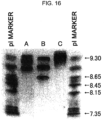
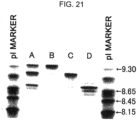
- the difference in the isoelectric points can be observed, for example, by using a technique such as isoelectric focusing.
- the isoelectric points are preferably modified without altering the structure and/or function (activity) of the polypeptides.
- the present invention provides a method for producing a multispecific antibody comprising a first polypeptide and a second polypeptide, wherein the method comprises the steps of
- a preferred embodiment of the purification methods of the present invention is a method comprising the step of modifying both or either one of a nucleic acid encoding the amino acid residues of a first polypeptide and a nucleic acid encoding the amino acid residues of a second polypeptide, so that the isoelectric points of the first polypeptide and second polypeptide will be different. That is, the difference in isoelectric point (pI) is introduced into the polypeptides by altering the charges of the amino acid residues of the first polypeptide and those of the second polypeptide.
- a purification method comprises the following steps of:
- the nucleic acids of the present invention are generally cloned (inserted) into suitable vectors and then introduced into host cells. These vectors are not particularly limited so long as the inserted nucleic acids are stably maintained.
- the cloning vectors are preferably pBluescript vectors (Stratagene) and such, while various commercially available vectors may be used.
- expression vectors are particularly useful. There is no particular limitation on expression vectors, so long as they can express polypeptides in test tubes, E. coli, cultured cells, or individual organisms.
- preferred vectors include pBEST vectors (Promega) for expression in test tubes, pET vectors (Invitrogen) in E . coli, the pME18S-FL3 vector (GenBank Accession No. AB009864) in cultured cells, and the pME18S vector ( Mol. Cell Biol. 8:466-472(1998 )) in individual rganisms. Insertion of the DNAs of the present invention into vectors can be performed, for example, by standard methods such as ligase reactions using restriction enzyme sites ( Current protocols in Molecular Biology edit. Ausubel et al. (1987) Publish. John Wiley & Sons. Section 11.4-11.11 ).
- Cells used for expressing polypeptides include bacterial cells (for example, Streptococcus, Staphylococcus, E. coli, Streptomyces, and Bacillus subtilis ) , fungal cells (for example, yeast and Aspergillus ) , insect cells (for example, Drosophila S2 and Spodoptera SF9), animal cells (for example, CHO, COS, HeLa, C127, 3T3, BHK, HEK293, Bowes melanoma cell), and plant cells.
- bacterial cells for example, Streptococcus, Staphylococcus, E. coli, Streptomyces, and Bacillus subtilis
- fungal cells for example, yeast and Aspergillus
- insect cells for example, Drosophila S2 and Spodoptera SF9
- animal cells for example, CHO, COS, HeLa, C127, 3T3, BHK, HEK293, Bowes melanoma cell
- Vectors can be introduced into host cells using known methods, such as the calcium phosphate precipitation method, electroporation method ( Current protocols in Molecular Biology edit. Ausubel et al. (1987) Publish. John Wiley & Sons. Section 9.1-9.9 ), lipofection method, and microinjection method.
- known methods such as the calcium phosphate precipitation method, electroporation method ( Current protocols in Molecular Biology edit. Ausubel et al. (1987) Publish. John Wiley & Sons. Section 9.1-9.9 ), lipofection method, and microinjection method.
- suitable secretion signals can be incorporated into the polypeptides of interest. These signals may be intrinsic or foreign to the polypeptides of interest.
- the multispecific antibodies (polypeptides) produced by the above-mentioned methods can be harvested by collecting the media.
- the polypeptides of the present invention are produced inside cells, the cells first are lysed, and then these polypeptides are collected.
- polypeptides of the present invention can be collected and purified from recombinant cell cultures using known methods, including ammonium sulfate or ethanol precipitation, acidic extraction, anion or cation exchange chromatography, phosphocellulose chromatography, hydrophobic interaction chromatography, affinity chromatography, hydroxyapatite chromatography, and lectin chromatography.
- compositions comprising a multispecific antibody of the present invention and a pharmaceutically acceptable carrier.
- compositions generally refers to agents for treating or preventing, or testing and diagnosing diseases.
- compositions of the present invention can be formulated by methods known to those skilled in the art.
- such pharmaceutical compositions can be used parenterally in the form of injections, which are sterile solutions or suspensions prepared with water or another pharmaceutically acceptable liquid.
- such compositions may be formulated by appropriately combining with a pharmaceutically acceptable carrier or medium, specifically, sterile water, physiological saline, vegetable oil, emulsifier, suspension, surfactant, stabilizer, flavoring agent, excipient, vehicle, preservative, binder, or such, and mixed in a unit dose form that meets the generally accepted requirements for preparation of pharmaceuticals.
- the amount of active ingredient is adjusted such that a suitable amount within a specified range is obtained.
- Sterile compositions for injection can be formulated using vehicles such as distilled water for injection, according to standard protocols for formulation.
- Aqueous solutions for injection include, for example, physiological saline and isotonic solutions containing glucose or other adjuvants (for example, D-sorbitol, D-mannose, D-mannitol, and sodium chloride).
- glucose or other adjuvants for example, D-sorbitol, D-mannose, D-mannitol, and sodium chloride.
- Appropriate solubilizers for example, alcohols (ethanol and such), polyalcohols (propylene glycol, polyethylene glycol, and such), non-ionic surfactants (polysorbate 80 TM , HCO-50, and such) may be used in combination.
- Oils include sesame and soybean oils.
- Benzyl benzoate and/or benzyl alcohol can be used as solubilizers in combination.
- Buffers for example, phosphate buffer and sodium acetate buffer
- soothing agents for example, procaine hydrochloride
- stabilizers for example, benzyl alcohol and phenol
- antioxidants can also be combined. Prepared injections are generally filled into appropriate ampules.
- compositions of the present invention are preferably administered parenterally.
- the compositions may be in the form of injections, transnasal agents, transpulmonary agents, or transdermal agents.
- such compositions can be administered systemically or locally by intravenous injection, intramuscular injection, intraperitoneal injection, subcutaneous injection, or such.
- the administration methods can be appropriately selected in consideration of a patient's age and symptoms.
- the dosage of a pharmaceutical composition comprising an antibody or a polynucleotide encoding an antibody may be set, for example, within the range of 0.0001 to 1000 mg/kg weight for each administration. Alternatively, the dosage may be, for example, from 0.001 to 100,000 mg per patient. However, in the present invention, the dosage is not necessarily limited to the ranges described above. Although the dosage and administration method vary depending on a patient's weight, age, symptoms, and such, those skilled in the art can select appropriate dosage and administration methods in consideration of the factors described above.
- the multispecific antibodies of the present invention can be formulated by combining with other pharmaceutical components as necessary.
- the present invention also provides nucleic acids encoding polypeptides that constitute the multispecific antibodies of the present invention. Furthermore, vectors that carry these nucleic acids are also included in the present invention.
- the present invention also provides host cells carrying the above described nucleic acids.
- the host cells are not particularly limited and include, for example, E coli and various animal cells.
- the host cells may be used, for example, as a production system to produce and express the antibodies or polypeptides of the present invention.
- Eukaryotic cells that can be used as host cells include, for example, animal cells, plant cells, and fungal cells.
- Animal cells include: mammalian cells, for example, CHO (J. Exp. Med. (1995) 108, 945 ), COS, HEK293, 3T3, myeloma, BHK (baby hamster kidney), HeLa, and Vero; amphibian cells such as Xenopus laevis oocytes ( Valle, et al., Nature (1981) 291: 338-340 ); and insect cells such as Sf9, Sf21, and Tn5.
- mammalian cells for example, CHO (J. Exp. Med. (1995) 108, 945 ), COS, HEK293, 3T3, myeloma, BHK (baby hamster kidney), HeLa, and Vero
- amphibian cells such as Xenopus laevis oocytes ( Valle, et al., Nature (1981)
- CHO-DG44 For expressing the antibodies of the present invention, CHO-DG44, CHO-DX11B, COS7 cells, HEK293 cells, and BHK cells can be suitably used. Of the animal cells, CHO cells are particularly preferable for large-scale expression.
- Vectors can be introduced into a host cell by, for example, calcium phosphate methods, DEAE-dextran methods, methods using cationic liposome DOTAP (Boehringer-Mannheim), electroporation methods, or lipofection methods.
- plant cells such as Nicotiana tabacum-derived cells and Lemna minor cells are protein production systems, and these cells can be used to produce antibodies of the present invention by methods that culture calluses from these cells.
- Protein expression systems that use fungal cells including yeast cells, for example, cells of the genus Saccharomyces ( Saccharomyces cerevisiae, Saccharomyces pombe, etc.), and cells of filamentous fungi, for example, the genus Aspergillus ( Aspergillus niger, etc.) are known, and these cells can be used as a host to produce antibodies of the present invention.
- prokaryotic cells When prokaryotic cells are used, production systems that use bacterial cells are available. Production systems that use bacterial cells including Bacillus subtilis as well as E . coli described above are known, and they can be used to produce antibodies of the present invention.
- a polynucleotide encoding an antibody of the present invention may be expressed by culturing the host cell transformed with an expression vector comprising the polynucleotide. Culturing can be performed according to known methods. For example, when animal cells are used as a host, DMEM, MEM, RPMI 1640, or IMDM may be used as the culture medium. The culture medium may be used with serum supplement solutions such as FBS or fetal calf serum (FCS). Alternatively, cells can be cultured in serum-free cultures. The preferred pH is about 6 to 8 during the course of culturing. Incubation is carried out typically at about 30 to 40°C for about 15 to 200 hours. Medium is exchanged, aerated, or agitated, as necessary.
- systems for producing polypeptides in vivo include, for example, those using animals and those using plants.
- a polynucleotide of interest is introduced into an animal or plant to produce the polypeptide in the body of the animal or the plant, and then the polypeptide is collected.
- the "host" of the present invention includes such animals and plants.
- mammals When animals are used, production systems that use mammals or insects are available. Mammals such as goat, pig, sheep, mouse, and cattle may be used ( Vicki Glaser, SPECTRUM Biotechnology Applications (1993 )). When mammals are used, transgenic animals may be used.
- a polynucleotide encoding a antibody of the present invention may be prepared as a fusion gene with a gene encoding a polypeptide specifically produced in milk, such as goat ⁇ -casein.
- polynucleotide fragments containing this fusion gene are injected into goat embryos, which are then introduced back into female goats.
- the antibody of interest can be obtained from milk produced by the transgenic goats, which are born from the goats that received the embryos, or by their offspring.
- Appropriate hormones may be administered to the transgenic goats to increase the volume of milk containing the antibody produced by the transgenic goats ( Ebert et al., Bio/Technology (1994) 12: 699-702 ).
- Insects such as silkworms may be used for producing antibodies of the present invention.
- silkworms When silkworms are used, baculoviruses carrying a polynucleotide encoding an antibody of interest can be used to infect silkworms, so that the antibody of interest can be obtained from the body fluids of these silkworms ( Susumu et al., Nature (1985) 315:592-594 ).
- Plants used for producing antibodies of the present invention include, for example, tobacco.
- a polynucleotide encoding an antibody of interest is inserted into a plant expression vector, for example, pMON 530, and then the vector is introduced into a bacterium such as Agrobacterium tumefaciens.
- the bacteria are then used to infect tobacco such as Nicotiana tabacum, and the desired antibody can be obtained from the leaves of the tobacco ( Ma et al., Eur. J. Immunol. (1994) 24: 131-138 ).
- the same bacteria can be used to infect Lemna minor, and after cloning, the desired antibody can be obtained from the cells of Lemna minor ( Cox K.M. et al., Nat. Biotechnol. 2006 Dec; 24(12):1591-1597 ).
- the antibody thus obtained may be isolated from the inside or outside (such as the medium and milk) of host cells, and purified as a substantially pure and homogenous antibody. Methods used for separating and purifying an antibody are not limited, and methods used in standard polypeptide purification may be applied. Antibodies may be isolated and purified by selecting an appropriate combination of, for example, chromatographic columns, filtration, ultrafiltration, salting-out, solvent precipitation, solvent extraction, distillation, immunoprecipitation, SDS-polyacrylamide gel electrophoresis, isoelectric focusing, dialysis, recrystallization, and such.
- Chromatographies include, for example, affinity chromatography, ion exchange chromatography, hydrophobic chromatography, gel filtration, reverse-phase chromatography, and adsorption chromatography ( strategies for Protein Purification and Characterization: A Laboratory Course Manual. Ed Daniel R. Marshak et al., (1996) Cold Spring Harbor Laboratory Press ). These chromatographies can be carried out using liquid phase chromatography such as HPLC and FPLC. Examples of columns for affinity chromatography include protein A columns and protein G columns. Examples of the columns that use protein A include Hyper D, POROS, and Sepharose F. F. (Pharmacia).
- An antibody can be modified arbitrarily, and peptides can be deleted partially from the antibody by treatment with an appropriate protein modifying enzyme before or after antibody purification, as necessary.
- protein modifying enzymes include, for example, trypsins, chymotrypsins, lysyl endopeptidases, protein kinases, and glucosidases.
- Another preferred embodiment of the present invention includes a method for producing a multispecific antibody of the present invention, wherein the method comprises the steps of culturing the host cells of the present invention as described above and collecting the polypeptide from the cell culture.
- multispecific antibody refers to an antibody that can specifically bind to at least two different types of antigens.
- preferred multispecific antibodies obtained by the production methods or purification methods of the present invention include bispecific antibodies (BsAbs) (also called dual-specificity antibodies) that can specifically bind to two antigens.
- BsAbs bispecific antibodies
- dual-specificity antibodies also called dual-specificity antibodies
- the term "different antigens” does not necessarily mean that the antigens themselves are different, and may mean that the epitopes are different. Therefore, for example, different epitopes within a single molecule are also included in the "different antigens" of the present invention.
- two antibodies that recognize different epitopes within a single molecule are regarded as antibodies that recognize different antigens.
- the multispecific antibodies of the present invention are antibodies having specificity to two or more different antigens, or molecules comprising fragments of such antibodies.
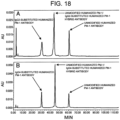
- the phrase "modification of nucleic acids” comprises modification of nucleic acids that results in separated peaks of a first polypeptide and a second polypeptide by standard chromatography analysis.
- the phrase "modification of nucleic acids” refers to modifying nucleic acids that correspond to the amino acid residues that are introduced by “modification” of the present invention. More specifically, the phrase refers to altering nucleic acids encoding the original amino acid residues (before modification) to nucleic acids encoding amino acid residues that are introduced by the modification.
- the phrase means gene manipulation or mutagenesis that modifies the original nucleic acids by inserting, deleting, or substituting at least one nucleotide, to produce a codon that encodes an amino acid residue of interest More specifically, a codon encoding the original amino acid residue is replaced by a codon encoding the amino acid residue to be introduced by the modification.
- nucleic acid modifications can be carried out appropriately by those skilled in the art using known techniques, for example, site-directed mutagenesis or PCR mutagenesis.
- the modification positions in the present invention include, for example, (1) amino acid residues on the surface of a polypeptide, (2) amino acid residues in the variable region, preferably in the FR region, and (3) amino acid residues in the constant region.
- amino acids on the surface of a polypeptide are amino acids whose side chains can contact solvent molecules (usually water molecules). It is not necessary for the entire side chain to be in contact with solvent molecules, and even if only part of the side chain is in contact with solvent molecules, the amino acid is considered to be an amino acid on surface.
- solvent molecules usually water molecules.
- the amino acid is considered to be an amino acid on surface.
- Those skilled in the art can produce homology models of polypeptides or antibodies by homology modeling and such using commercially available software, and thereby selecting appropriate residues as amino acids on the surface.
- Those skilled in the art can suitably select surface amino acids in the antibody variable region using homology models produced by homology modeling and such.
- H1, H3, H5, H8, H10, H12, H13, H15, H16, H19, H23, H25, H26, H39, H42, H43, H44, H46, H68, H71, H72, H73, H75, H76, H81, H82b, H83, H85, H86, H105, H108, H110, and H112 are examples of surface amino acids.
- the surface amino acids of the present invention are not limited thereto.
- surface amino acids can be similarly selected using homology models.
- L1, L3, L7, L8, L9, L11, L12, L16, L17, L18, L20, L22, L38, L39, L41, L42, L43, L45, L46, L49, L57, L60, L63, L65, L66, L68, L69, L70, L74, L76, L77, L79, L80, L81, L85, L100, L103, L105, L106, L107, and L108 are examples of surface amino acids.
- the surface amino acids of the present invention are not limited thereto.
- surface amino acids can be similarly selected using homology models.
- amino acid residues in the variable region include amino acid residues in the heavy chain variable region (VH) or light chain variable region (VL), and are preferably amino acid residues in the framework region (FR).
- surface-exposed amino acids other than those in CDR are, for example, H10, H12, H23, H39, H43, and H105 in the FR region, but are not limited thereto.
- polypeptides with nucleic acid modification are preferably a homomultimer of a first polypeptide, a homomultimer of a second polypeptide, and a heteromultimer of the first polypeptide and second polypeptide.
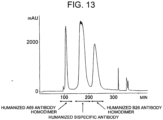
- the homomultimer of a first polypeptide is, for example, a homodimer of the humanized A69-H chain and humanized BBA-L chain
- a homomultimer of a second polypeptide is, for example, a homodimer of the humanized B26-H chain and humanized BBA-L chain
- a heteromultimer of a first polypeptide and a second polypeptide is, for example, a heterodimer of the humanized A69-H chain, humanized B26-H chain, and humanized BBA-L chain.
- the polypeptides are not limited thereto.
- Examples of standard chromatography in the present invention include cation exchange chromatography, anion exchange chromatography, hydrophobic chromatography, hydroxyapatite chromatography, hydrophobic charge interaction chromatography, and chromatofocusing.
- a first polypeptide and a second polypeptide preferably comprise a heavy chain variable region (VH).
- the variable region may comprise, for example, a complementary determining region (CDR) and a framework region (FR).
- the number of amino acid residues that undergo modification in the methods of the present invention is not particularly limited. However, for example, when the variable region(s) of an antibody is modified, it is preferable that for the separation of polypeptides of interest, the number of modified amino acid residues be kept to the minimum as necessary, so as not to decrease the antigen binding activity or increase the antigenicity of the antibody.
- the amino acid sequences after modification in the present invention are preferably human sequences, but are not limited thereto. Furthermore, in order to turn each of the modified FRs (FR1, FR2, FR3, and FR4) into a human sequence, mutations may be introduced into positions other than those that have been modified for alteration of isoelectric point. The method of replacing each FR with a human sequence in this manner has been reported in a Non-Patent Document ( Ono K. et al., Mol. Immunol. 1999 Apr; 36(6):387-395 ).
- the FR can be modified into another human FR having a different isoelectric point (for example, FR3 can be replaced with another human FR having a lower isoelectric point).
- FR3 can be replaced with another human FR having a lower isoelectric point.
- the desired multispecific antibody can be obtained by repeating modification of surface charge and evaluation of polypeptide separation.
- a multispecific antibody preferably comprises a third polypeptide comprising a light chain variable region, and preferably, the first polypeptide and the second polypeptide each forms a multimer with the third polypeptide.
- a first polypeptide and a second polypeptide preferably comprise a heavy chain constant region that preferably generates different pIs for the first polypeptide and second polypeptide.
- heavy chain constant regions include heavy chain constant regions of antibodies having different pIs.
- the pI difference can be introduced into the first polypeptide and the second polypeptide using the heavy chain constant regions of IgG1, IgG2, IgG3, or IgG4 which have pIs that are originally different from each other.
- amino acids in the heavy chain constant regions of the first polypeptide and the second polypeptide that cause differences in isoelectric point among these subclasses can be modified alone, or in combination with adjacent amino acids that do not have any effect on the isoelectric points to generate non-wild-type human constant regions, and pI difference can be introduced into the two constant regions.
- positions to be modified for introducing pI difference into the constant regions include, for example, positions 137, 196, 203, 214, 217, 233, 268, 274, 276, 297, 355, 392, 419, and 435, EU numbering, in the H chain constant region.
- position 297 which is a glycosylated site
- position 297 is another example of a position to be modified for introducing pI difference.
- methods that comprise the above-mentioned first polypeptide and second polypeptide comprising a heavy chain constant region methods that combine with the method in which the above-mentioned first polypeptide and second polypeptide comprise a heavy chain variable region, and/or the method in which the multispecific antibody comprises a third polypeptide comprising a light chain variable region, and a first polypeptide and a second polypeptide that each forms a multimer with the third polypeptide, are included in the present invention.
- Multispecific antibodies produced by the above-mentioned methods are also included in the present invention.
- the first polypeptide in the multispecific antibody provided by the present invention comprises a heavy chain variable region and/or a heavy chain constant region
- at least one amino acid residue in the region is made to carry a charge so that "the isoelectric points will be different".
- the amino acid residue(s) is selected from amino acid residues at positions 10, 12, 23, 39, 43, and 105, Kabat numbering, in the heavy chain variable region, or amino acid residues at positions 137, 196, 203, 214, 217, 233, 268, 274, 276, 297, 355, 392, 419, and 435, EU numbering, in the heavy chain constant region.
- amino acid residues other than the charged amino acid residue may have the same type of charge as that of the charged amino acid residue, or may be uncharged, or may have the opposite charge of that of the charged amino acid residue, as long as the isoelectric point of the first polypeptide and that of the second polypeptide are different.
- the above-mentioned multispecific antibodies of the present invention comprise a second polypeptide that preferably has the opposite charge of that of the charged amino acid residue in the first polypeptide, or is uncharged. More specifically, the second polypeptide in the multispecific antibodies comprises a heavy chain variable region and/or a heavy chain constant region, and at least one amino acid residue in the region is uncharged or has the opposite charge of that of the amino acid residue selected to carry a charge in the heavy chain variable region and/or the heavy chain constant region in the first polypeptide.
- amino acid residue(s) is selected from amino acid residues at positions 10, 12, 23, 39, 43, and 105, Kabat numbering, in the heavy chain variable region, or amino acid residues at positions 137, 196, 203, 214, 217, 233, 268, 274, 276, 297, 355, 392, 419, and 435, EU numbering, in the heavy chain constant region.
- amino acid residues other than the charged amino acid residue may have the same type of charge as that of the charged amino acid residue, or may be uncharged, or may have the opposite charge of that of the charged amino acid residue, as long as the isoelectric point of the first polypeptide and that of the second polypeptide are different.
- an IgG2 or IgG4 sequence to position 137 an IgG1, IgG2, or IgG4 sequence to position 196, an IgG2 or IgG4 sequence to position 203, an IgG2 sequence to position 214, an IgG1, IgG3, or IgG4 sequence to position 217, an IgG1, IgG3, or IgG4 sequence to position 233, an IgG4 sequence to position 268, an IgG2, IgG3, or IgG4 sequence to position 274, an IgG1, IgG2, or IgG4 sequence to position 276, an IgG4 sequence to position 355, an IgG3 sequence to position 392, an IgG4 sequence to position 419, and an IgG1, IgG2, or IgG4 sequence to position 435.
- an IgG1 or IgG3 sequence to position 137 an IgG3 sequence to position 196, the IgG1 or IgG3 sequence to position 203, an IgG1, IgG3, or IgG4 sequence to position 214, an IgG2 sequence to position 217, an IgG2 sequence to position 233, an IgG1, IgG2, or IgG3 sequence to position 268, an IgG1 sequence to position 274, an IgG3 sequence to position 276, an IgG1, IgG2, or IgG3 sequence to position 355, an IgG1, IgG2, or IgG4 sequence to position 392, an IgG1, IgG2, or IgG3 sequence to position 419, and an IgG3 sequence to position 435.
- amino acids are known to be charged amino acids.
- lysine (K), arginine (R), and histidine (H) are known as positively charged amino acids (cationic amino acids).
- Aspartic acid (D), glutamic acid (E), and such are known as negatively charged amino acids (anionic amino acids).
- charged amino acid residues are suitably selected from amino acid residues included in either one of groups (a) and (b) below, but are not particularly limited thereto:
- the phrase "having the same type of charge” means, for example, that the above-mentioned amino acid residue in the heavy chain variable region according to Kabat numbering and the above-mentioned amino acid residue in the heavy chain constant region according to EU numbering both carry an amino acid residue included in either one of the above-mentioned groups (a) and (b).
- phrases, "having the opposite charge” means that, for example, at least one of the above-mentioned amino acid residues, by Kabat numbering or EU numbering, in the second polypeptide comprising a heavy chain variable region and/or a heavy chain constant region is included in either one of the above-mentioned groups (a) or (b), and its corresponding amino acid residue at a position in the heavy chain variable region and/or heavy chain constant region comprised in the first polypeptide is included in the other group.
- the present invention provides multispecific antibodies, in which the above-mentioned amino acid residues having the same type of charge are selected from the amino acid residues included in either one of the above-mentioned group (a) or (b).
- the original amino acid residue (before modification) if it is already charged, it may be modified to be an uncharged amino acid residue.
- an amino acid residue is preferably modified such that the isoelectric point (pI) of the first polypeptide and that of the second polypeptide will be different. Furthermore, when multiple amino acid residues are introduced by modification, a few uncharged amino acid residues may be included in these amino acid residues.
- variable region of the first polypeptide comprises the amino acid sequence of any one of (a1) to (a7) below
- variable region of the second polypeptide comprises the amino acid sequence of any one of (b)1 to (b3) below
- variable region of the third polypeptide comprises the amino acid sequence of (c1) or (c2) below:
- amino acids are specific examples of the amino acids subjected to modification in the present invention.
- variable regions are not limited to those comprising these amino acids.
- variable region of the first polypeptide comprises the amino acid sequence of SEQ ID NO: 11
- variable region of the second polypeptide comprises the amino acid sequence of SEQ ID NO: 16
- variable region of the third polypeptide comprises the amino acid sequence of SEQ ID NO: 17.
- variable region of the first polypeptide comprises the amino acid sequence of SEQ ID NO: 12
- variable region of the second polypeptide comprises the amino acid sequence of SEQ ID NO: 16
- variable region of the third polypeptide comprises the amino acid sequence of SEQ ID NO: 18.
- a further preferred embodiment of the above-mentioned multispecific antibody is a multispecific antibody, wherein the first polypeptide and the second polypeptide comprise the human IgG4 constant region, and wherein the third polypeptide comprises the human ⁇ constant region.
- antibody is used in the broadest sense, and includes monoclonal antibodies, polyclonal antibodies, and mutant antibodies, such as chimeric antibodies, humanized antibodies, minibodies (including antibody fragments), and multispecific antibodies, as long as they display a desired biological activity.
- the methods of antibody modification of the present invention can be used favorably on these antibodies when they are obtained (produced).
- the "antibodies" of the present invention include antibodies in which the charge of amino acid residues has been modified as described above, and whose amino acid sequences have been further modified by amino acid substitutions, deletions, additions, and/or insertions.
- the antibodies also include antibodies whose amino acid sequences have been modified by amino acid substitution, deletion, addition, and/or insertion, or chimerization, humanization, or such, and in which the charge of amino acid residues has been further modified. In short, modifications may be performed at the same time when mouse antibodies are humanized, or further modifications may be performed on humanized antibodies.
- amino acid sequence modifications such as amino acid substitutions, deletions, additions, and/or insertions, and humanization and chimerization, can be achieved by methods known to those skilled in the art.
- the amino acid sequences of the antibody variable and constant regions may also be modified by amino acid substitutions, deletions, additions, and/or insertions, or chimerization, humanization and the like.
- the antibodies of the present invention may be derived from any animal, such as a mouse, human, rat, rabbit, goat, or camel. Furthermore, the antibodies may be modified, for example, chimeric antibodies, and in particular, modified antibodies that include amino acid substitutions in their sequence, such as humanized antibodies.
- the antibodies may be any type of antibody, such as antibody modification products linked with various molecules, antibody fragments, and minibodies.
- Chimeric antibodies are antibodies prepared by combining sequences derived from different animals.
- An example is an antibody having heavy and light chain variable (V) regions from a mouse antibody and heavy and light chain constant (C) regions from a human antibody.
- Chimeric antibodies can be prepared by known methods. To obtain such chimeric antibodies, for example, a DNA encoding an antibody V region may be ligated with a DNA encoding a human antibody C region; the resulting ligation product can be inserted into an expression vector; and the construct can be introduced into a host to produce the chimeric antibody.
- Humanized antibodies are also referred to as reshaped human antibodies, and can be obtained by substituting the complementary determining region (CDR) of a human antibody for the CDR of an antibody derived from a nonhuman mammal, for example, a mouse.
- CDR complementary determining region
- Methods for identifying CDRs are known in the art ( Kabat et al., Sequence of Proteins of Immunological Interest (1987), National Institute of Health, Bethesda, Md .; Chothia et al., Nature (1989) 342:877 ).
- General genetic recombination techniques suitable for this purpose are also known (see European Patent Application EP 125023 ; and WO 96/02576 ).
- the CDR of a mouse antibody can be determined by known methods, and a DNA can be prepared such that it encodes an antibody in which the CDR is ligated with the framework region (FR) of a human antibody.
- a humanized antibody can then be produced using a system that uses conventional expression vectors.
- DNAs can be synthesized by PCR, using as primers several oligonucleotides designed to include portions that overlap the ends of both the CDR and FR regions (see the method described in WO 98/13388 ).
- Human antibody FRs linked via CDRs are selected such that the CDRs form a suitable antigen binding site.
- amino acids in the FRs of an antibody variable region may be substituted so that the CDRs of the reshaped human antibody can form a suitable antigen binding site ( Sato, K. et al., Cancer Res. (1993) 53:851-856 ).
- Modifiable amino acid residues in the FRs include portions that directly bind to an antigen via non-covalent bonds ( Amit et al., Science (1986) 233: 747-53 ), portions that have some impact or effect on the CDR structure ( Chothia et al., J. Mol. Biol. (1987) 196: 901-17 ), and portions involved in the interaction between VH and VL ( EP 239400 ).
- the C regions of these antibodies are preferably derived from human antibodies.
- C ⁇ 1, Cy2, Cy3, and C ⁇ 4 can be used for the H chain, while C ⁇ and C ⁇ can be used for the L chain.
- the human antibody C region may be modified as required to improve antibody or production stability.
- a chimeric antibody of the present invention preferably includes a variable region of an antibody derived from a nonhuman mammal and a constant region of a human antibody.
- a humanized antibody preferably includes CDRs of an antibody derived from a nonhuman mammal and FRs and C regions of a human antibody.
- the constant regions of the human antibodies include specific amino acid sequences, which vary depending on the isotype of the antibody, for example, IgG (IgG1, IgG2, IgG3, and IgG4), IgM, IgA, IgD, and IgE.
- the constant regions used to prepare the humanized antibodies of the present invention may be the constant regions of antibodies of any isotype.
- a constant region of human IgG is preferably used, although the invention is not limited thereto.
- the FRs derived from a human antibody, which are used to prepare the humanized antibodies, are not particularly limited, and thus may be derived from an antibody of any isotype.
- variable and constant regions of chimeric or humanized antibodies of the present invention may be modified by deletion, substitution, insertion, and/or addition, so long as the antibodies exhibit the same binding specificity as that of the original antibodies.
- minibodies are useful as the antibodies because of their in vivo kinetic characteristics and low-cost production using E. coli, plant cells, or such.
- Antibody fragments are one type of minibody.
- minibodies includes antibodies that include an antibody fragment as a partial structural unit.
- the minibodies of the present invention are not particularly limited by their structure nor their method of production, so long as they have antigen binding activity. Some minibodies have an activity greater than that of a whole antibody ( Orita et al., Blood (2005) 105:562-566 ).
- the "antibody fragments” are not particularly limited, so long as they are a portion of a whole antibody (for example, whole IgG).
- the antibody fragments preferably include a heavy chain variable region (VH) or a light chain variable region (VL).
- Examples of preferred antibody fragments are: Fab, F(ab') 2 , Fab', and Fv.
- the amino acid sequence of a VH or VL in an antibody fragment may be modified by substitution, deletion, addition, and/or insertion. Furthermore, some portions of a VH and VL may be deleted, so long as the resulting fragments retain their antigen binding ability.
- Fv is a minimal antibody fragment composed of the complete antigen recognition and binding sites.
- “Fv” is a dimer (VH-VL dimer) composed of one unit of VH and one unit of VL bound very strongly by non-covalent bonding.
- variable region An antigen binding site is formed on the surface of the VH-VL dimer by the three complementary determining regions (CDRs) of each variable region.
- CDRs complementary determining regions
- Six CDRs confer an antigen binding site to the antibody.
- one variable region or half of an Fv composed of only three antigen-specific CDRs
- molecules smaller than Fv are also included in the context of antibody fragments of the present invention.
- the variable regions of an antibody fragment may also be chimerized or humanized.
- the minibodies preferably include both VH and VL.
- suitable minibodies include antibody fragments such as Fab, Fab', F(ab')2, and Fv, and scFv (single-chain Fv), which can be prepared using antibody fragments, ( Huston et al., Proc. Natl. Acad. Sci. USA (1988) 85: 5879-83 ; Pluckthun "The Pharmacology of Monoclonal Antibodies” Vol. 113, Resenburg and Moore (eds.), Springer Verlag, New York, pp. 269-315, (1994 )); diabodies ( Holliger et al., Proc. Natl. Acad. Sci.
- An antibody fragment can be prepared by treating an antibody with an enzyme, for example, a protease such as papain or pepsin (see Morimoto et al., J. Biochem. Biophys. Methods (1992) 24: 107-17 ; Brennan et al., Science (1985) 229:81 ).
- an enzyme for example, a protease such as papain or pepsin (see Morimoto et al., J. Biochem. Biophys. Methods (1992) 24: 107-17 ; Brennan et al., Science (1985) 229:81 ).
- antibody fragments can also be produced by genetic recombination based on its amino acid sequence.
- a minibody having a structure that results from modification of an antibody fragment can be prepared using antibody fragments obtained by enzyme treatment or genetic recombination.
- the minibody may be expressed in appropriate host cells (see, for example, Co et al., J. Immunol. (1994) 152: 2968-76 ; Better and Horwitz, Methods Enzymol. (1989) 178: 476-96 ; Pluckthun and Skerra, Methods Enzymol. (1989) 178: 497-515 ; Lamoyi, Methods Enzymol. (1986) 121: 652-63 ; Rousseaux et al., Methods Enzymol. (1986) 121: 663-9 ; Bird and Walker, Trends Biotechnol. (1991) 9: 132-7 ).
- scFVs are single-chain polypeptides that include two variable regions linked together via a linker or such, as required.
- the two variable regions in an scFv are typically one VH and one VL, but an scFv may include two VH or two VL.
- scFv polypeptides include a linker between the VH and VL domains, thereby forming a paired portion of VH and VL required for antigen binding.
- a peptide linker composed of ten or more amino acids is typically used as the linker between VH and VL when forming an intramolecular paired portion between VH and VL.
- linkers of the scFv of the present invention are not limited to such peptide linkers, so long as they do not inhibit the formation of an scFv.
- diabodies refers to bivalent antibody fragments constructed by gene fusion ( P. Holliger et al., Proc. Natl. Acad. Sci. USA 90: 6444-6448 (1993 ); EP 404,097 ; WO93/11161 and such).
- Diabodies are dimers composed of two polypeptide chains, wherein each polypeptide chain includes within the same chain a light chain variable region (VL) and a heavy chain variable region (VH) connected with a linker short enough to disable interaction of these two regions, for example a linker of about five amino acid residues.
- VL and VH encoded on the same polypeptide chain will form a dimer because the linker between VL and VH is too short to form a single chain V region fragment. Therefore, the resulting diabody has two antigen-binding sites.
- VL and VH directed against two different epitopes (a and b) are expressed simultaneously as combinations of VLa-VHb and VLb-VHa connected with a linker of about five residues, they are secreted as bispecific Db.
- diabodies include two molecules of scFvs, they thus composed of four variable regions, and as a result have two antigen binding sites.
- linkers forming a connection between VH and VL in each scFv molecules are linkers of about five amino acids when used as peptide linkers.
- scFv linkers for diabody formation are not limited to such peptide linkers so long as they do not interfere with scFv expression and diabody formation.
- an example of a multispecific antibody is a bispecific antibody.
- bispecific antibody may be, for example, an antibody having a structure in which a heavy chain variable region and a light chain variable region are linked in a single chain (for example, sc(Fv)2).
- the bispecific antibody may also be an antibody-like molecule (for example, scFv-Fc) produced by fusing an scFv (or sc(Fv)2), in which a heavy chain variable region and a light chain variable region are linked, to an Fc region (a constant region lacking the CH1 domain).
- a multispecific antibody consisting of scFv-Fc has an (scFv)2-Fc type structure with VH1-linker-VL1-Fc as the first polypeptide and VH2-linker-VL2-Fc as the second polypeptide.
- the bispecific antibody may be an antibody-like molecule in which a single domain antibody is linked with an Fc region ( Curr. Opin. Drug Discov. Devel. 2006, 9(2), 184-93 ).
- an antibody of the present invention known sequences can be used, or they can be obtained by methods known to those skilled in the art. For example, they may be obtained from an antibody library, or they may be obtained by cloning genes encoding the antibody from hybridomas producing monoclonal antibodies.
- antibody libraries many antibody libraries are already well known, and since methods for producing antibody libraries are known, those skilled in the art can appropriately obtain antibody libraries.
- antibody phage libraries one can refer to the literature such as Clackson et al., Nature 1991, 352: 624-8 ; Marks et al., J. Mol. Biol. 1991, 222: 581-97 ; Waterhouses et al., Nucleic Acids Res. 1993, 21: 2265-6 ; Griffiths et al., EMBO J. 1994, 13: 3245-60 ; Vaughan et al., Nature Biotechnology 1996, 14: 309-14 ; and Japanese Patent Kohyo Publication No.
- variable regions of human antibodies can be expressed on the surface of phages as single chain antibodies (scFvs) using phage display methods, and phages that bind to antigens can be selected. Genetic analysis of the selected phages can determine the DNA sequences encoding the variable regions of human antibodies that bind to the antigens.
- suitable expression vectors can be produced based on these sequences to obtain human antibodies. These methods are already well known, and one can refer to WO92/01047 , WO92/20791 , WO93/06213 , WO93/11236 , WO93/19172 , WO95/01438 , and WO95/15388 .
- known techniques may be used, involving the use of desired antigens or cells expressing the desired antigens as sensitizing antigens, using these to perform immunizations according to conventional immunization methods, fusing the immune cells thus obtained with known parent cells by ordinary cell fusion methods, screening monoclonal antibody producing cells (hybridomas) by ordinary screening methods, synthesizing cDNAs of antibody variable regions (V regions) from mRNAs of the obtained hybridomas using reverse transcriptase, and linking them with DNAs encoding the desired antibody constant regions (C regions).
- V regions antibody variable regions
- C regions desired antibody constant regions
- sensitizing antigens for obtaining the above-mentioned antibody genes encoding the H chains and L chains include both complete antigens with immunogenicity and incomplete antigens composed of haptens and such that do not show antigenicity.
- full length proteins and partial peptides of proteins of interest can be used.
- substances composed of polysaccharides, nucleic acids, lipids, and such may become antigens.
- Antigens can be prepared by methods known to those skilled in the art, and they can be prepared, for example, by the following methods using baculoviruses (for example, WO98/46777 ).
- Hybridomas can be produced, for example, the following methods of Milstein et al. (a Kohler and C. Milstein, Methods Enzymol. 1981, 73: 3-46 ), and such.
- an antigen When the immunogenicity of an antigen is low, it can be linked to a macromolecule that has immunogenicity, such as albumin, and then used for immunization.
- antigens with other molecules if necessary, they can be converted into soluble antigens.
- transmembrane molecules such as receptors are used as antigens, portions of the extracellular regions of the receptors can be used as a fragment, or cells expressing transmembrane molecules on their cell surface may be used as immunogens.
- Antibody-producing cells can be obtained by immunizing animals using suitable sensitizing antigens described above. Alternatively, antibody-producing cells can be prepared by in vitro immunization of lymphocytes that can produce antibodies. Various mammals can be used as the animals for immunization, where rodents, lagomorphas and primates are generally used. Examples of such animals include mice, rats, and hamsters for rodents, rabbits for lagomorphas, and monkeys including the cynomolgus monkey, rhesus monkey, hamadryas, and chimpanzees for primates.
- transgenic animals carrying human antibody gene repertoires are also known, and human antibodies can be obtained by using these animals (see WO96/34096 ; Mendez et al., Nat. Genet. 1997, 15: 146-56 ).
- desired human antibodies having binding activity against antigens can be obtained by in vitro sensitization of human lymphocytes with desired antigens or cells expressing the desired antigens, and then fusing the sensitized lymphocytes with human myeloma cells such as U266 (see Japanese Patent Application Kokoku Publication No. ( JP-B) H1-59878 (examined, approved Japanese patent application published for opposition)).
- desired human antibodies can be obtained by immunizing transgenic animals carrying a complete repertoire of human antibody genes, with desired antigens (see WO93/12227 , WO92/03918 , WO94/02602 , WO96/34096 , and WO96/33735 ).
- Animal immunization can be carried out by appropriately diluting and suspending a sensitizing antigen in Phosphate-Buffered Saline (PBS), physiological saline, or such, and forming an emulsion by mixing an adjuvant if necessary, followed by an intraperitoneal or subcutaneous injection into animals. After that, the sensitizing antigen mixed with Freund's incomplete adjuvant is preferably administered several times every four to 21 days. Antibody production can be confirmed by measuring the target antibody titer in animal sera using conventional methods.
- PBS Phosphate-Buffered Saline
- physiological saline physiological saline
- Antibody production can be confirmed by measuring the target antibody titer in animal sera using conventional methods.
- Antibody-producing cells obtained from lymphocytes or animals immunized with a desired antigen can be fused with myeloma cells to generate hybridomas using conventional fusing agents (for example, polyethylene glycol) (Goding, Monoclonal Antibodies: Principles and Practice, Academic Press, 1986, 59-103).
- fusing agents for example, polyethylene glycol
- hybridoma cells can be cultured and grown, and the binding specificity of the antibody produced from these hybridomas can be measured using known analysis methods, such as immunoprecipitation, radioimmunoassay
- hybridomas that produce antibodies of interest whose specificity, affinity, or activity has been determined can be subcloned by methods such as limiting dilution.
- genes encoding the selected antibodies can be cloned from hybridomas or antibody-producing cells (sensitized lymphocytes, and such) using probes that may specifically bind to the antibodies (for example, oligonucleotides complementary to sequences encoding the antibody constant regions). Cloning from mRNA using RT-PCR is also possible.
- Immunoglobulins are classified into five different classes, IgA, IgD, IgE, IgG and IgM. These classes are further divided into several subclasses (isotypes) (for example, IgG-1, IgG-2, IgG-3, and IgG-4; IgA-1 and IgA-2; and such).
- H chains and L chains used in the present invention to produce antibodies are not particularly limited and may derive from antibodies belonging to any of these classes or subclasses; however, IgG is particularly preferred.
- H-chain-encoding genes and L-chain-encoding genes using genetic engineering techniques.
- Genetically modified antibodies such as chimeric antibodies, humanized antibodies that have been artificially modified for the purpose of decreasing heterologous antigenicity and such against humans, can be appropriately produced if necessary for antibodies such as mouse antibodies, rat antibodies, rabbit antibodies, hamster antibodies, sheep antibodies, and camel antibodies.
- Chimeric antibodies are antibodies composed of a nonhuman mammal antibody H chain and L chain variable regions, such as mouse antibody, and the H chain and L chain constant regions of human antibody.
- a humanized antibody which is also called a reshaped human antibody, can be synthesized by PCR from a number of oligonucleotides produced so that they have overlapping portions at the ends of DNA sequences designed to link the complementary determining regions (CDRs) of an antibody of a nonhuman mammal such as a mouse.
- the obtained DNA can be ligated to a DNA encoding a human antibody constant region.
- the ligated DNA can be incorporated into an expression vector, and the vector can be introduced into a host to produce the antibody (see EP239400 and WO96/02576 ).
- Human antibody FRs that are ligated via the CDR are selected when the CDR forms a favorable antigen-binding site. If necessary, amino acids in the framework region of an antibody variable region may be substituted such that the CDR of the reshaped human antibody forms an appropriate antigen-binding site ( K. Sato et al., Cancer Res. 1993, 53: 851-856 ).
- antibodies may be modified to improve their biological properties, for example, antigenic affinity.
- modifications can be carried out using methods such as site-directed mutagenesis (see for example, Kunkel (1985) Proc. Natl. Acad. Sci. USA 82: 488 ), PCR mutagenesis, and cassette mutagenesis.
- mutant antibodies whose biological properties have been improved show amino acid sequence homology and/or similarity of 70% or higher, more preferably 80% or higher, and even more preferably 90% or higher (for example, 95% or higher, 97%, 98%, 99%, etc.), when compared to the amino acid sequence of the original antibody variable region.
- sequence homology and/or similarity is defined as the ratio of amino acid residues that are homologous (same residue) or similar (amino acid residues classified into the same group based on the general properties of amino acid side chains) to the original antibody residues, after the sequence homology value has been maximized by sequence alignment and gap introduction, if necessary.
- amino acid residues are classified into groups based on the characteristics of their side chains: (1) hydrophobic: alanine, isoleucine, valine, methionine, and leucine; (2) neutral hydrophilic: asparagine, glutamine, cysteine, threonine, and serine; (3) acidic: aspartic acid, and glutamic acid; (4) basic: arginine, histidine, and lysine; (5) residues that affect the orientation of the chain: glycine, and proline; and (5) aromatic: tyrosine, tryptophan, and phenylalanine.
- CDRs complementary determining regions
- hypervariable regions present in the H chain and L chain variable regions interact to form the antigen binding site(s) of an antibody.
- CDRs complementary determining regions
- variable regions are known to have the ability to recognize and bind to the antigen, although the affinity will be lower than when all binding sites are included. Therefore, antibody genes of the present invention encoding the H chain and L chain only have to encode fragment portions having each of the antigen binding sites of H chain and L chain, and polypeptides encoded by these genes only have to maintain affinity with the desired antigens.
- desired bispecific antibodies that actually have activities can be obtained efficiently by the methods of the present invention.
- Heavy chain variable regions are generally composed of three CDR regions and four FR regions, as described above.
- amino acid residues subjected to "modification” can be appropriately selected, for example, from amino acid residues in the CDR regions or FR regions.
- modification of amino acid residues in the CDR regions can decrease affinity towards antigens. Therefore, in the present invention, amino acid residues subjected to "modification” are not particularly limited, but are preferably appropriately selected from amino acid residues in the FR regions.
- variable region FRs for antibodies in organisms such as human or mouse
- sequences that can be used as variable region FRs for antibodies in organisms such as human or mouse can be appropriately obtained by those skilled in the art using public databases. More specifically, amino acid sequence information of the FR regions can be obtained by means described later in the Examples.
- a database was constructed by obtaining amino acid sequence data of human antibodies from the publicly disclosed in Kabat Database (ftp://ftp.ebi.ac.uk/pub/databases/kabat/) and IMGT Database (http://imgt.cines.fr/), and homology search was performed on the database for the mouse A69 H chain variable region (amino acid sequence: SEQ ID NO: 19), mouse B26 H chain variable region (amino acid sequence: SEQ ID NO: 20), and mouse BBA L chain variable region (amino acid sequence: SEQ ID NO: 21).
- the results confirmed that they have high homologies to the human antibody sequences below, and it was thus decided that they could be used as framework region (hereinafter referred to as FR) for humanized antibodies.
- the complementary determining region (hereinafter referred to as CDR) of each of the mouse antibodies was grafted into the FR of human antibodies of (1)-(3), and humanized antibodies were thus prepared.
- homology search web site publicly disclosed by NCBI (http://www.ncbi.nlm.nih.gov/BLAST/) was used to search for secretory signal sequences of human antibodies that are highly homologous to human antibodies of (4)-(6).
- the following secretory signal sequences obtained by the search were used.
- nucleotide sequence encoding the amino acid sequence covering from the secretory signal sequence to the antibody variable region twelve synthetic oligo-DNAs of about 50 bases were prepared, such that about 20 bases at the 3' end hybridize with each other.
- the synthetic oligo-DNAs were designed such that they encode a human sequence at the 5' side and a mouse sequence at the 3' side, or such that all the nucleotides encode a human sequence.
- a primer that anneals to the 5'-end of an antibody variable region gene and has the Xhol cleavage sequence and a primer that encodes the 5'-end sequence of the intron sequence, anneals to the 3'-end of an antibody variable region gene, and has the SfiI cleavage sequence were prepared.
- the fragments were cloned using the pGEM-T Easy Vector System (Promega) according to the method described in the attached instruction manual.
- the nucleotide sequence of each DNA fragment was determined using the BigDye Terminator Cycle Sequencing Kit (Applied Biosystems) and ABI PRISM 3730xL DNA Sequencer or ABI PRISM 3700 DNA Sequencer (Applied Biosystems) according to the method described in the attached instruction manual.
- the H-chain variable region fragment-inserted plasmid was digested with XhoI and SfiI, and the L-chain variable region fragment-inserted plasmid was digested with EcoRI, after they were confirmed to have the correct humanized antibody variable region gene sequence. Then, the reaction solutions were subjected to 1% agarose gel electrophoresis. DNA fragments having the desired size (about 400 bp) were purified using the QIAquick Gel Extraction Kit (QIAGEN) according to the method described in the attached instruction manual, and eluted with 30 ⁇ L of sterilized water. Thereafter, vectors for expression in animal cells were prepared as follows.
- an IgG4 that has amino acid substitution in its CH3 portion was used by referring to the knobs-into-holes technique for IgG1 ( Merchant AM et al., Nature Biotechnology, 1998, Vol. 16, p. 677-681 ). Furthermore, to promote H-chain dimer formation, amino acid substitution (-ppcpScp- ⁇ -ppcpPcp-) was also introduced into the hinge.
- Humanized A69 H chain expression vector was prepared by inserting the humanized A69 H chain variable region antibody gene fragment into an expression vector prepared by inserting an Y349C and T366W-substituted constant region gene into pCAGGS comprising a chicken ⁇ -actin promoter ( Niwa et al., Gene, 1991, 108: 193-199 ).
- Humanized B26 H chain expression vector was prepared by inserting the humanized B26 H chain variable region antibody gene fragment into an expression vector prepared by inserting an E356C, T366S, L368A, and Y407V-substituted constant region gene to pCAGGS.
- the plasmid (pCAG-gxDNA) was prepared by inserting a wild-type antibody L chain constant region into pCAGGS, and was digested with EcoRI to prepare an expression vector into which the humanized BBA L chain variable region antibody gene fragment was inserted. Ligation reaction was performed using the Rapid DNA Ligation Kit (Roche Diagnostics), and the E. coli strain DH5 ⁇ (TOYOBO) was transformed.
- Humanized bispecific antibodies were expressed using the following method. Human fetal renal carcinoma cell-derived humanized bispecific antibodies were expressed using the method described in Example 1-2, or using the following method. Human fetal renal carcinoma cell-derived HEK293H strain (Invitrogen) was suspended in a DMEM medium (Invitrogen) containing 10% Fetal Bovine Serum (Invitrogen), seeded at a cell density of 5-6 x 10 5 cells/mL (10 mL per dish) in dishes used for adhesive cells (10-cm diameter, CORNING), and cultured for one day and night in a CO 2 incubator (37°C, 5% CO 2 ).
- DMEM medium Invitrogen
- Fetal Bovine Serum Fetal Bovine Serum
- CHO-S-SFM-II Invitrogen
- Fetal Bovine Serum Fetal Bovine Serum
- the plasmid DNA mixture solution prepared in 1-2 was mixed with 20.7 ⁇ L of 1 ⁇ g/mL Polyethylenimine (Polysciences Inc.) and 690 ⁇ L of CHO-S-SFMII medium, left to stand at room temperature for ten minutes, and then added to the cells in each dish.
- the cells were then incubated in a CO 2 incubator (37°C, 5% CO 2 ) for four to five hours.
- CHO-S-SFM-II Invitrogen
- Fetal Bovine Serum Invitrogen
- the culture supernatant was collected, then cells were removed by centrifugation (at approximately 2000 g for five minutes at room temperature), and the solution was sterilized by passing it through a 0.22 ⁇ m filter MILLEX ® -GV (Millipore). The sample was stored at 4°C until use.
- rProtein A Sepharose TM Fast Flow 100 ⁇ L of rProtein A Sepharose TM Fast Flow (Amersham Biosciences) was added to the culture supernatant obtained by the method described in Example 1-2, and the solution was mixed by rotation at 4°C for four hours. The solution was transferred to an Ultrafree ® -MC 0.22- ⁇ m filter cup (Millipore). After three washes with 500 ⁇ L of TBS containing 0.01% Tween ® 20, the rProtein A Sepharose TM resin was suspended in 100 ⁇ L of 50 mM aqueous sodium acetate solution containing 0.01% Tween ® 20 at pH 3.3, and left to stand for two minutes, and then, the antibody was eluted. The eluate was immediately neutralized by adding 6.7 ⁇ L of 1.5 M Tris-HCl, pH 7.8.
- Goat anti-human IgG (Biosource International) was adjusted to 1 ⁇ g/mL with a coating buffer, and immobilized to a Nunc-Immuno plate (Nunc). After blocking with a diluent buffer (D.B.), a sample of the culture supernatant suitably diluted with D.B. was added. Furthermore, eleven three-fold serial dilutions of human IgG4 (humanized anti-TF antibody, see WO 99/51743 ) starting from 2000 ng/mL were made with D.B., and added as a standard for antibody concentration calculation. After three washes, goat anti-human IgG, alkaline phosphatase (Biosource International) was added for reaction.
- D.B. diluent buffer
- human IgG4 humanized anti-TF antibody, see WO 99/51743
- measurements were performed with Biacore 1000 (BIACORE) using Protein A-immobilized Sensor Chip CM5 (BIACORE). More specifically, according to the manufacturer's protocol, an activated sensor chip was reacted with Protein A (SIGMA) solution diluted to 50 ⁇ g/mL with 10 mM aqueous sodium acetate solution (pH 4.0, BIACORE) at 5 ⁇ L/minute for 30 minutes, and then a blocking procedure was carried out to produce a Protein A-immobilized sensor chip. This sensor chip was used to measure the concentrations of the culture supernatant and the purified products on Biacore 1000 (BIACORE). HBS-EP Buffer (BIACORE) was used for the immobilization of the sensor chip and for the concentration measurements.
- SIGMA Protein A
- HBS-EP Buffer BIACORE
- APTT activated partial thromboplastin time
- the Factor VIII-like activity (%) of a bispecific antibody was calculated from the coagulation time measured when the bispecific antibody was added.
- the human antibody FR of humanized bispecific antibodies that displayed decreased blood coagulation ability in the above-mentioned blood coagulation activity assay were subjected to amino acid modification in order to increase the activity. More specifically, the QuikChange Site-Directed Mutagenesis Kit (Stratagene) was used to introduce mutations into the humanized antibody variable region according to the method described in the attached instruction manual. The H-chain variable region fragment-inserted plasmid digested with XhoI and SfiI, and the L-chain variable region fragment-inserted plasmid was digested with EcoRI, , after they were confirmed to have the desired humanized antibody variable region gene sequence. Then, the reaction solutions were subjected to 1% agarose gel electrophoresis.
- DNA fragments having the desired size (about 400 bp) were purified using the QIAquick Gel Extraction Kit (QIAGEN) according to the method described in the attached instruction manual, and eluted with 30 ⁇ L of sterilized water. Then, plasmids for expression in animal cells were prepared according to the method described in Example 1-2. Humanized bispecific antibodies were prepared according to the method described in Examples 1-3, 1-4, and 1-5, and blood coagulation activity was evaluated according to the method described in Example 1-6.
- a humanized bispecific antibody (humanized A69 (hA69a)/humanized B26 (hB26-F123e4)/humanized BBA (hAL-F123j4)) having the same level of activity as the chimeric bispecific antibody (A69/B26/BBA) was obtained ( Fig. 1 ).
- the antibody variable region sequences are shown in the following SEQ ID NOs.
- a bispecific antibody In preparation of a bispecific antibody, when two types of H chains and one type of L chain are used for expression, the following three types of antibodies are expressed: a homodimer of the humanized A69 H chain and humanized BBA L chain, a homodimer of the humanized B26 H chain and humanized BBA L chain, and a heterodimer of the humanized A69 H chain, humanized B26 H chain, and humanized BBA L chain.
- the objective is to purify only the bispecific antibody by separating these three types of antibodies, and thus amino acid modifications were carried out to decrease the isoelectric point of the humanized A69 H chain variable region and increase the isoelectric point of the humanized B26 H chain variable region.
- antibody Fv region models were prepared for the humanized A69 antibody and humanized B26 antibody by homology modeling using the MOE software (Chemical Computing Group Inc.), and the amino acid resides exposed on the surface of the variable regions of the humanized A69 antibody and humanized B26 antibody were confirmed.
- the models are shown in Fig. 2 .
- the surface-exposed amino acids in the FR sequence outside CDR, H10, H12, H23, H39, H43, and H105 are thought to be candidates that can alter the isoelectric point without decreasing the activity.
- DNA fragments having the desired size (about 400 bp) were purified using the QIAquick Gel Extraction Kit (QIAGEN) according to the method described in the attached instruction manual, and eluted with 30 ⁇ L of sterilized water.
- H-chain expression vectors were prepared by inserting the prepared DNA fragments into an expression plasmid carrying a wild-type constant region and an expression plasmid in which the constant region amino acids have been replaced using the knobs-into-holes technique.
- humanized bispecific antibodies were prepared by the method described in Examples 1-3, 1-4, and 1-5. Sequences of the modified humanized antibody variable regions are shown in the SEQ ID NOs in Table 1 shown below.
- modified antibodies were prepared and analyzed by isoelectric focusing.
- the humanized BBA L-chain (hAL-F123j4) expression vector was simultaneously expressed together with the H-chain expression vector of unmodified hA69a, or hA69-p18, hA69-p8, hA69-p17, or hA69-p16 modified from the humanized A69 H chain.
- Five types of antibodies composed of hA69a, hA69-p18, hA69-p8, hA69-p17, or hA69-p16 homodimers were prepared.
- the humanized BBA L-chain expression vector was simultaneously expressed together with the H-chain expression vector of unmodified hB26-F123e4, or hB26-p19 or hB26-p15 modified from the humanized B26 H chain.
- Three types of antibodies composed of hB26-F123e4, hB26-p19, or hB26-p15 homodimers were prepared. Isoelectric focusing was performed as follows. PhastGel Dry IEF gel (Amersham Biosciences) was swollen for about 30 minutes in the swelling solution described below using the Phastsystem Cassette (Amersham Biosciences).
- Electrophoresis was performed using the swollen gel by PhastSystem (Amersham Biosciences) according to the following program. The samples were applied to the gel in Step 2. ApI calibration kit (Amersham Biosciences) was used as the pI marker. Step 1: 2000 V 2.5 mA 3.5 W 15°C 75 Vh Step 2: 200 V 2.5 mA 3.5 W 15°C 15 Vh Step 3: 2000 V 2.5 mA 3.5 W 15°C 410 Vh
- the gel was fixed with 20% TCA, and then silver stained using a silver staining kit, protein (Amersham Biosciences) according to the protocol attached to the kit. After staining, the isoelectric points of the samples were calculated from the known isoelectric points of the pI marker.
- the results of analysis of the unmodified and modified humanized A69 antibody homodimers and the humanized B26 antibody homodimer are shown in Fig. 3 .
- Band shifts were observed in the isoelectric focusing due to modification of the surface charge.
- the isoelectric points of the respective antibodies estimated in reference to the pI marker were approximately 8.4 for modified hA69-p18, approximately 8.2 for modified hA69-p17, approximately 8.2 for modified hA69-p8, and approximately 8.1 for modified hA69-p16, in contrast to approximately 8.8 for the unmodified hA69a homodimer. That is, the modification was able to provide a maximum isoelectric point difference of approximately 0.7.
- the isoelectric points were approximately 9.3 for modified hB26-p19 and approximately 9.4 for modified hB26-p15, in contrast to approximately 9.1 for unmodified hB26-F123e4. That is, the modification was able to provide a maximum isoelectric point difference of approximately 0.3. It was shown that the isoelectric point can be altered by modifying the charges on the surface amino acids in the variable region selected for this examination: H12, H23, H39, H43, and H105.
- Cation exchange chromagographic analysis was performed by the following method using the modified antibodies produced in Example 4 to evaluate the effect of the modification on the separation of the two antibodies.
- the conditions for the cation exchange chromatographic analysis were as follows. The retention time was calculated for the humanized A69 antibody homodimer and the humanized B26 antibody homodimer.
- Peak shifts were observed when comparing the unmodified humanized B26 antibody with those that have been modified to have higher isoelectric points for the variable region, and the retention time was increased to approximately 28.4 minutes and approximately 29.4 minutes, as the number of modifications increased.
- the retention time can be altered by modifying the charges on the surface amino acids in the variable region selected for this examination, H12, H23, H39, H43, and H105, and thereby modifying the surface charges of the two types of antibodies.
- Example 4 According to the isoelectric point measurements in Example 4, despite a pI difference of 0.3 between the unmodified hA69a homodimer and the unmodified hB26-F123e4 homodimer, the retention time for both of the homodimers was around 25 minutes, and thus they could not be separated ( Fig. 9 ). However, the pI difference between the unmodified hA69a homodimer and hB26-p19 was 0.5, and thus they were separated by a retention time difference of approximately 2.6 minutes. Also, the pI difference between hA69-p18 and the hB26 homodimer was 0.7, and thus they were separated by a retention time difference of approximately 3.4 minutes.
- APTT activated partial thromboplastin time
- Coagulation reaction was initiated by adding 50 ⁇ L of 20 mM CaCl 2 (Dade Behring) to the mixture. The time period until coagulation was measured with KC10A (Amelung) linked to CR-A (Amelung).
- the Factor VIII-like activity (%) of a bispecific antibody was calculated from the coagulation time measured when the bispecific antibody was added.
- H97 was confirmed to be a surface-exposed amino acid.
- the humanized A69 H chain hA69-N97R has a sequence in which asparagine at position 97 in CDR3 has been replaced with arginine.
- Modified antibodies were prepared by producing an expression vector carrying hA69-N97R according to the method of Example 1-2, and expressing it together with the humanized BBA L chain hAL-F123j4. To evaluate the alteration of surface charge of this antibody, isoelectric focusing was performed according to the method of Example 4. As indicated in Fig.
- Factor IXa the activity of binding to the antigen, Factor IXa was assayed by the following method.
- Factor IXa ⁇ Enzyme Research Laboratories
- coating buffer 100 mM sodium bicarbonate, pH 9.6, 0.02% sodium azide
- the plate was blocked with diluent buffer (50 mM Tris-HCl, pH 8.1,1% bovine serum albumin, 1 mM MgCl 2 , 0.15 M NaCl, 0.05% Tween ® 20, 0.02% sodium azide) at room temperature for two hours. After removal of the buffer, a purified antibody diluted in the diluent buffer was added to the plate at 100 ⁇ L/well and incubated at room temperature for one hour.
- diluent buffer 50 mM Tris-HCl, pH 8.1,1% bovine serum albumin, 1 mM MgCl 2 , 0.15 M NaCl, 0.05% Tween ® 20, 0.02% sodium azide
- the plate was washed three times, then alkaline phosphatase-labeled goat anti-mouse IgG (BIOSOURCE) diluted at 1/4000 with the diluent buffer was added at 100 ⁇ L/well. This was then incubated at room temperature for one hour. The plate was washed five times, then a chromogenic substrate (Sigma) was added at 100 ⁇ L/well. This was then incubated at room temperature for 30 minutes. The absorbance at 405 nm (control: 655 nm) was measured using the Model 3550 Microplate Reader (Bio-Rad Laboratories). As a result, as shown in Fig.
- the antibody in which the CDR had been modified to alter the surface charge showed a binding activity equivalent to that of the antibody before modification.
- the sites of modification may not only be in the FR indicated in Example 5, but also in the CDR.
- An unmodified humanized bispecific antibody was prepared using the unmodified antibodies (humanized A69 H chain hA69a and humanized B26 H chain hB26-F123e4) shown in Table 1, as well as the humanized BBAL chain hAL-F123j4 (SEQ ID NO: 5).
- a humanized bispecific PF antibody was prepared using the modified antibodies (the modified form of the humanized A69 H chain hA69-PFL and the modified form of the humanized B26 H chain hB26-PF) shown in Table 1, as well as the humanized BBA L chain hAL-s8 (SEQ ID NO: 17).
- H-chain expression vectors were prepared using an expression vector carrying the wild-type constant region, and the antibodies were prepared by the method described in Examples 1-3, 1-4, and 1-5.
- cation exchange chromatographic analysis was carried out according to the method described in Example 5.
- Figs. 9 and 10 The results of analysis of the unmodified humanized bispecific antibody and humanized bispecific PF antibody are shown in Figs. 9 and 10 .
- the results showed that the two types of homodimers and the bispecific antibody failed to separate, and were eluted as a single peak.
- the humanized bispecific PF antibody each of the two types of homodimers and the desired bispecific antibody were separated, and were eluted as three peaks in the following order: hA69-PF homodimer, humanized bispecific PF antibody, and hB26-PF homodimer.
- the two types of homodimers and the humanized bispecific PF antibody were purified. These fractions were concentrated using Amicon Ultra, MWCO 10000 (Millipore), then dialyzed overnight against 20 mM sodium acetate, 150 mM NaCl, pH 6.0 while cooling. Then, the concentrations were measured.
- the isoelectric point difference between the humanized A69-PF antibody homodimer and the humanized bispecific PF antibody was approximately 0.7, while the isoelectric point difference between the humanized B26-PF antibody homodimer and the humanized bispecific PF antibody was approximately 0.6.
- the coagulation activity of the bispecific PF antibody purified according to the method described in Example 6 was evaluated.
- the coagulation activity was compared with those of the following three types of antibodies expressed using an IgG4 constant region with the knobs-into-holes technique: the aforementioned chimeric bispecific antibody; the bispecific antibody composed of hA69a (SEQ ID NO: 2), hB26-F123e4 (SEQ ID NO: 4), and hAL-F123j4 (SEQ ID NO: 6) whose variable regions were not modified; and the bispecific antibody having the same variable regions as those of the purified bispecific PF antibody.
- the results of the evaluation are shown in Fig. 12 .
- the coagulation activity of the bispecific PF antibody carrying an IgG4 constant region prepared based on the knobs-into-holes technique was equivalent to that of the bispecific PF antibody carrying a wild-type constant region purified by cation exchange chromatography.
- modifications at H10, H12, H23, H39, H43, and H105 in the variable region enable purification of bispecific antibodies to a high purity without affecting their activities.
- antibody-expressing cell lines were established as follows.
- the H-chain constant region was amplified by PCR using the wild-type H-chain constant region gene of human IgG4 as a template, as well as a 5'-end primer designed such that the nucleotide sequence encoding the two amino acids (Ala-Ser) at the N terminus of the H-chain constant region will be the NheI recognition sequence (GCTAGC), and a primer designed to anneal to the 3'-end and carry the NotI recognizing site, and was linked to a vector prepared by digesting the pBluescriptKS+ vector (TOYOBO) with NheI and NotI (both from Takara), to produce pBCH4 comprising the IgG4 constant region gene.
- a 5'-end primer designed such that the nucleotide sequence encoding the two amino acids (Ala-Ser) at the N terminus of the H-chain constant region will be the NheI recognition sequence (GCTAGC), and a primer designed to anneal to the 3'-end and carry the NotI recognizing
- PCR was performed using a primer that is complementary to the 5'-end nucleotide sequence of the H-chain variable region of the humanized A69 H chain antibody (hA69-KQ) and humanized B26 H chain antibody (hB26-PF) shown in Table 1, and which has a Kozak sequence (CCACC) and the EcoRI recognition sequence, and a primer to the 3'-end nucleotide sequence and has the NheI recognition sequence.
- the obtained PCR products were digested with EcoRI and NheI (both from Takara), and were inserted into pBCH4 similarly digested with EcoRI and NheI, to link the variable region and the constant region.
- the prepared humanized A69 H chain antibody vector was digested with EcoRI and NheI (both from Takara), and was cloned into the pCXND3 expression vector for animal cells similarly digested with EcoRI and NotI.
- the course of construction of the present vector pCXND3 will be described below.
- To separate the antibody H chain gene and the vector in DHFR- ⁇ E-rVH-PM1-f (see WO92/19759 ), it was digested at the EcoRI and SmaI restriction sites to recover only the vector part. Subsequently, the EcoRI-NotI-BamHI adaptor (Takara) was cloned into this vector. The resulting vector was named pCHOI.
- the region of pCHOI for expressing the DHFR gene was cloned into the HindIII restriction site of pCXN ( Niwa et al., Gene 1991; 108: 193-200 ).
- the resulting vector was named pCXND3.
- the prepared humanized B26 H chain antibody vector was digested with EcoRI and NotI (both from Takara), and was cloned in the pCXZD1 expression vector for animal cells similarly digested with EcoRI and NotI.
- the pCXZD1 vector is an expression vector in which the neomycin resistance gene of the pCXND3 vector has been replaced with a Zeocin resistance gene.
- PCR was performed using a synthetic oligonucleotide that is complementary to the 5'-end nucleotide sequence of the L chain variable region of the humanized BBA L chain antibody (hAL-AQ, SEQ ID NO: 18) and which has a Kozak sequence, and a synthetic oligonucleotide that is complementary to the 3'-end nucleotide sequence and has the BsiWI site.
- the obtained PCR product was cloned in the pBCL vector, in which the human kappa chain constant region was inserted into the pBluescript KS+ vector.
- the human L chain variable region and constant region were linked together via the BsiWI site.
- the produced L chain gene fragment was cloned into the expression vector pUCAG.
- the pUCAG vector was prepared by digesting pCXN ( Niwa et al., Gene 1991; 108: 193-200 ) with the restriction enzyme BamHI to obtain a 2.6-kbp fragment, and cloning the fragment into the BamHI restriction site of the pUC19 vector (TOYOBO).
- the vector produced by cloning the L chain into pUCAG was digested with the restriction enzyme BamHI, and this was cloned into the expression vector pHygDHFR-4b containing a hygromycin resistance gene.
- the three types of expression vectors thus produced were linearized with restriction enzymes, and then they were transfected into CHO-DG44 cells to establish antibody-expressing cell lines.
- a ten-fold diluted solution was prepared using the same culture medium, and added at 100 ⁇ L/well to a 96-well culture plate. After culturing in a CO 2 incubator (5% CO 2 ) for one day and night, Geneticin (Invitrogen), Zeocin (Invitrogen), and Hygromycin B (Invitrogen) were added at 0.5 mg/mL, 0.6 mg/mL, and 0.4 mg/mL, respectively, and culture was continued for two weeks. Colonies of transfected cells showing drug resistance were sequentially cultured and expanded. Large scale culturing was carried out using the established high expression cell lines, and the culture supernatant was obtained.
- Bispecific antibodies were purified from the culture supernatant obtained in Example 8 by the following method.
- Solvent A 20 mmol/L sodium acetate buffer, pH 6.0
- Solvent B 20 mmol/L sodium acetate buffer, 1 mol/L NaCl, pH 6.0
- Flow Rate 10 mL/min (113 cm/h), or 5.3 mL/min (60 cm/h) only at the time of elution
- Gradient 0 ⁇ 15%
- B Step wise 3 Column Volume (CV) flushed 15 ⁇ 22% B gradient 2.5 CV 22 ⁇ 30% B gradient 6 CV 30 ⁇ 100% B Step wise 3 CV flushed
- bispecific antibodies can be also separated and purified using a standard preparative column.
- the coagulation activity of the humanized bispecific antibody prepared in Example 9 was evaluated according to the method described in Example 6. The results of the evaluation are shown in Fig. 14 .
- the humanized bispecific antibody purified in Example 9 had a coagulation activity equivalent to that of the humanized bispecific PF antibody prepared in Example 8. Thus, it was shown that even if amino acid sequences of the variable regions are slightly different in hA69-PFL and hA69-KQ, or even if the antibodies are purified using a standard preparative column, the antibody activities were not affected.
- the humanized bispecific antibody of interest and the two types of homodimeric antibodies can be separated and purified without modifying the structure or function (activity) of the antibody, by altering the surface charge through modification of the H-chain variable region when preparing the bispecific antibody. Since it was shown that bispecific antibodies can be separated and purified on a standard preparative column using the present method, this will be useful as a method for producing pharmaceuticals comprising a bispecific antibody.
- reaction solution (1 ⁇ L each of 20 ⁇ M K62 primer (5' cac cgt etc etc age etc cac caa 3', SEQ ID NO: 22) and K63 primer (5' gtg gca etc att tac ccg gag aca 3', SEQ ID NO: 23), 5 ⁇ L of MTC Multiple Tissue cDNA Panels (peripheral leukocytes) (Clontech), 4 ⁇ L of 5 ⁇ Prime STAR Buffer, 4 ⁇ L of 2.5 mM dNTPs, and 1 ⁇ L of PrimeSTAR HS DNA Polymerase (the above from Takara)) was prepared, and this was subjected to PCR.
- reaction solution 1 ⁇ L each of 20 ⁇ M K62 primer (5' cac cgt etc etc age etc cac caa 3', SEQ ID NO: 22) and K63 primer (5' gtg gca etc att tac ccg gag aca 3', SEQ ID NO: 23
- PCR was performed using a thermal cycler. GeneAmp PCR system 9700 (Perkin Elmer), by heating at 98°C for two minutes, followed by 30 cycles of reacting at 98°C for ten seconds, 60°C for five seconds, and 72°C for two minutes per cycle, and finally heating at 72°C for ten minutes. After PCR, the reaction solution was subjected to 1% agarose gel electrophoresis. Amplified fragments having the size of interest (approximately 1000 bp) were purified using the QIAquick Gel Extraction Kit (QIAGEN) according to the method described in the attached instruction manual, and eluted with 50 ⁇ L of sterile water.
- QIAquick Gel Extraction Kit QIAquick Gel Extraction Kit
- r-Taq treatment was performed to add A (Adenosine) to the ends of the amplified fragments.
- A Addenosine
- the obtained amplified fragments were incubated in 10 ⁇ L of rTaq reaction solution (1 ⁇ L of 10 ⁇ rTaq reaction solution, 1 ⁇ L of 2.5 mM dNTPs, 1 ⁇ L of rTaq, and 7 ⁇ L of the above-mentioned amplified fragments) at 72°C for 30 minutes.
- the r-Taq-treated fragments were cloned into the pCR2.1-TOPO vector (Invitrogen), and the nucleotide sequences were determined.
- the nucleotide sequence of each DNA fragment was determined by a DNA sequencer ABI PRISM 3730xL Genetic Analyzer (Applied Biosystems) using the BigDye Terminator 3.1 Cycle Sequencing Kit (Applied Biosystems) according to the method described in the attached instruction manual.
- the determined nucleotide sequences were compared to the sequence of Accession No. BX640623. If nucleotides in a determined sequence encode an amino acid sequence different from the corresponding sequence of BX640623, such nucleotides were considered to be mutations inserted during PCR amplification. In such cases, amino acid substitutions were performed using the Quick Change Site-Directed Mutagenesis Kit (Stratagene) so that the amino acid sequence will be the same as that of BX640623. The Quick Change Site-Directed Mutagenesis Kit (Stratagene) was used according to the method described in the attached instruction manual.
- a mutation was introduced such that the first two amino acids (Ala-Ser) of the human IgG2 H chain constant region were encoded by the restriction enzyme NheI recognition sequence (GCTAGC).
- the nucleotide sequence and amino acid sequence of the human IgG2 H-chain constant region used in this examination are shown in SEQ ID NOs: 24 and 25, respectively.
- Antibody expression vectors in which the H-chain variable region of the humanized PM-1 antibody is linked to one of the H chain constant regions of human IgG 1, human IgG2, and human IgG4, were prepared as follows.
- PCR was performed using a synthetic oligonucleotide that has a Kozak sequence and is complementary to the 5'-end nucleotide sequence of the H-chain variable region of the humanized anti-human interleukin 6 receptor antibody (humanized PM-1 antibody) described in a Non-Patent Document ( Sato K. et al., Cancer Research 1993, 53:851-856 ), and a synthetic oligonucleotide that has the NheI recognition sequence and is complementary to the 3'-end nucleotide sequence.
- the obtained PCR product was cloned into the pB-CH vector, in which the human IgG1 H chain constant region (see Sato, K.
- H-chain variable region gene of the humanized PM-1 antibody was linked to the human IgG4 constant region gene (see WO 99/51743 ) or the human IgG2 H chain gene prepared in Example 11-1 via the 5'-end NheI site, and then inserted into the pCAGGS vector.
- Each H-chain expression vector expresses the H chain by linking the H-chain variable region of the humanized PM-1 antibody to the humanized H chain constant region via the Nhel sequence.
- PCR was performed using a synthetic oligonucleotide that has a Kozak sequence and is complementary to the 5'-end nucleotide sequence of the L-chain variable region of the humanized PM-1 antibody, and a synthetic oligonucleotide that has the restriction enzyme BsiWI recognition sequence and is complementary to the 3'-end nucleotide sequence.
- the obtained PCR product was cloned into the pB-CL vector, in which the human kappa chain constant region was inserted into the pBluescript KS+ vector (TOYOBO).
- the L chain gene fragment in which the L-chain variable region and constant region were linked, was inserted into the pCAGGS vector whose expression is regulated by the chicken ⁇ -actin promoter.
- the L chain is expressed by linking the L-chain variable region of the humanized PM-1 antibody to the human kappa chain constant region via the BsiWI sequence.
- Subclass hybrid antibodies can be produced by combining any two of the humanized PM-1 antibody H chain expression vectors carrying the constant region of human IgG1, human IgG2, or human IgG4, and coexpressing them with the humanized PM-1 antibody L-chain expression vector in cells for expression. Each antibody was expressed by the method described in Example 4-2 or the following method.
- Human fetal renal carcinoma cell-derived HEK293H strain (Invitrogen) was suspended in a DMEM medium (Invitrogen) containing 10% Fetal Bovine Serum (Invitrogen), and this was seeded at a cell density of 5-6 x 10 5 cells/mL (10 mL per dish) in dishes used for adhesive cells (10-cm diameter, CORNING) and cultured for one day and night in a CO 2 incubator (37°C, 5% CO 2 ). Then, the medium was removed by suction, and 6.9 mL of CHO-S-SFM-II (Invitrogen) medium was added. As described below, the mixture solutions for expressing the different subclass antibodies and the mixture solutions for expressing the hybrid antibodies (a total of 13.8 ⁇ g) were prepared using the plasmid DNAs prepared in 11-2.
- Each mixture solution was mixed with 20.7 ⁇ L of 1 ⁇ g/mL Polyethylenimine (Polysciences Inc.) and 690 ⁇ L of CHO-S-SFMII medium, left to stand at room temperature for ten minutes, then added to the cells in each dish, and then the cells were then incubated in a CO 2 incubator (37°C, 5% CO 2 ) for four to five hours. Thereafter, 6.9 mL of CHO-S-SFM-II (Invitrogen) medium was added and then the cells were incubated in a CO 2 incubator for three days.
- CHO-S-SFM-II Invitrogen
- the culture supernatant was collected, then cells were removed by centrifugation (at approximately 2000 g for five minutes at room temperature), and the solution was sterilized by passing it through a 0.22 ⁇ m filter MILLEX ® -GV (Millipore). The sample was stored at 4°C until use.
- rProtein A Sepharose TM Fast Flow 100 ⁇ L of rProtein A Sepharose TM Fast Flow (Amersham Biosciences) was added to the culture supernatant obtained by the method described in Example 11-3, and the solution was mixed by rotation at 4°C for four hours. The solution was transferred to an Ultrafree ® -MC 0.22- ⁇ m filter cup (Millipore). After three washes with 500 ⁇ L of TBS, the rProtein A Sepharose TM resin was suspended in 100 ⁇ L of 50 mM aqueous sodium acetate solution at pH 3.0, and left to stand for two minutes, and then, the antibody was eluted.
- the eluate was immediately neutralized by adding 6.7 ⁇ L of 1.5 M Tris-HCl, 150 mM NaCl, pH 8.0.
- the buffer of the obtained antibody solution was exchanged by dialyzing it against PBS for activity measurement, or against 20 mM acetic acid buffer containing 150 mM NaCl, pH 6.0 for DSC measurement.
- the purified antibody carrying the H-chain constant region of human IgG1 will be referred to as "unmodified humanized anti-PM-1 antibody”
- the antibody carrying the H-chain constant region of human IgG2 will be referred to as “IgG2-substituted humanized anti-PM-1 antibody”
- the antibody carrying the H-chain constant region of human IgG4 will be referred to as "IgG4-substituted humanized anti-PM-1 antibody”.
- the absorbance of the antibody-containing solution obtained in 11-4 at 280 nm was measured on ND-1000 Spectrophotometer (NanoDrop) using 2 ⁇ L of the solution, or on the DU600 spectrophotometer (BECKMAN) using 50 ⁇ L of the solution.
- the antibody concentration was calculated from the obtained values using the following equation. PBS, or 20 mM acetic acid buffer containing 150 mM NaCl at pH6.0 was used as the blank.
- Antibody concentration (mg/mL) absorbance x dilution factor / 14.6 x 10
- Isoelectric focusing analysis was carried out to evaluate the alteration of surface charge as a result of substitution in the constant region.
- PhastGel Dry IEF (Amersham Biosciences) gel was swollen for about 30 minutes in the swelling solution described below using the Phastsystem Cassette (Amersham Biosciences). 20% Glycerol 1.5 mL Pharmalyte 8-10.5 for IEF (Amersham Biosciences) 100 mL
- Electrophoresis was performed using the swollen gel by PhastSystem (Amersham Biosciences) according to the following program. The samples were applied to the gel in Step 2. A pI calibration kit (Amersham Biosciences) was used as the pI marker. Step 1: 2000 V 2.5 mA 3.5 W 15°C 75 Vh Step 2: 200 V 2.5 mA 3.5 W 15°C 15 Vh Step 3: 2000 V 2.5 mA 3.5 W 15°C 410 Vh
- the gel was fixed with 20% TCA, and then silver stained using a silver staining kit, protein (Amersham Biosciences) according to the protocol attached to the kit. After staining, the isoelectric points of the samples were calculated from the known isoelectric points of the pI marker.
- the results of analysis of the unmodified, IgG2-substituted and IgG4-substituted humanized PM-1 antibodies are shown in Fig. 15 .
- Band shifts were observed in isoelectric focusing due to subclass substitution.
- the isoelectric points of the respective antibodies estimated in reference to the pI marker were approximately 8.9 for the IgG2-substituted humanized PM-1 antibody, and approximately 8.7 for the IgG4-substituted humanized PM-1 antibody, in contrast to approximately 9.3 for the unmodified humanized PM-1 antibody. That is, the substitution was able to provide a maximum isoelectric point difference of approximately 0.6. It was shown in this examination that the isoelectric points can be altered by substituting the constant region of an antibody subclass.
- Fig. 16 the results of analysis of coexpressed unmodified and IgG2-substituted humanized PM-1 antibodies, and coexpressed unmodified and IgG4-substituted humanized PM-1 antibodies are shown in Fig. 16 .
- the isoelectric points of the respective subclass hybrid antibodies estimated in reference to the pI marker were 9.2 for the unmodified humanized PM-1/IgG2-substituted human PM-1 hybrid antibody and 9.0 for the unmodified humanized PM-1/IgG4-substituted human PM-1 hybrid antibody. It was shown in this study that subclass hybrid antibodies can be produced by coexpressing a combination of expression vectors of subclass antibodies, and that the hybrid antibodies can be separated by their difference in isoelectric points.
- Cation exchange chromatographic analysis was performed by the following method using the subclass hybrid antibodies prepared in Example 11, and the effect of the subclass substitution on separation was evaluated.
- the conditions for cation exchange chromatographic analysis were as follows. The retention time was calculated for the unmodified humanized PM-1 antibody, the IgG2-substituted humanized PM-1 antibody, the IgG4-substituted humanized PM-1 antibody, the hybrid antibody of the unmodified humanized PM-1 antibody and IgG2-substituted humanized PM-1 antibody, and the hybrid antibody of the unmodified humanized PM-1 antibody and IgG4-substituted humanized PM-1 antibody.
- the results of analysis of singly expressed unmodified, IgG2-substituted, and IgG4-substituted humanized PM-1 antibodies are shown in Fig. 17 .
- the retention time of the unmodified humanized PM-1 antibody, IgG2-substituted humanized PM-1 antibody, and IgG4-substituted humanized PM-1 antibody was 60.2 minutes, 30.5 minutes, and 30.3 minutes, respectively. That is, the retention time was altered by slightly less than 30 minutes due to subclass substitution. On the other hand, the retention time was nearly the same for the IgG2-substituted humanized PM-1 antibody and the IgG4-substituted humanized PM-1 antibody, which showed a pI difference according to isoelectric focusing.
- Fig. 18 the results of analysis of coexpressing unmodified and IgG2-substituted humanized PM-1 antibodies, and coexpressing unmodified and IgG4-substituted humanized PM-1 antibodies are shown in Fig. 18 .
- the homodimers of each subclass and heterodimer were observed as three main peaks in the combination of the unmodified humanized PM-1 antibody and IgG2-substituted humanized PM-1 antibody, and the combination of the unmodified humanized PM-1 antibody and IgG4-substituted humanized PM-1 antibody.
- the retention time was approximately 43.8 minutes for the unmodified humanized PM-1/IgG2-substituted humanized PM-1 hybrid antibody, and approximately 45.1 minutes for the unmodified humanized PM-1/IgG4-substituted humanized PM-1 hybrid antibody. That is, these antibodies were separated from the respective homodimers with a retention time difference of 10 minutes or more. It was shown in this examination that subclass hybrid antibodies can be produced by coexpressing a combination of expression vectors of subclass antibodies, and that the hybrid antibodies can be separated by ion exchange chromatography.
- Example 11 The antibody solutions obtained in Example 11 were concentrated using Amicon-Ultra4 (Amicon), then enveloped in EasySep (TOMY SEIKO). After buffer exchange was performed by dialysis against 5 mM citric acid buffer (pH 6.5), subclass hybrid antibodies were purified under the following conditions.
- Fig. 19 Peak fractions from multiple experiments were combined, concentrated using Amicon-Ultra4 (Amicon), and then enveloped in EasySep (TOMY SEIKO). The buffer was exchanged by dialysis against PBS for activity measurement, or against 20 mM acetic acid buffer containing 150 mM NaCl, pH 6.0 for DSC measurement. The fractionated peaks were reanalyzed under conditions similar to those described above and the results are shown in Fig. 20 . This shows that subclass hybrid antibodies can be fractionated and purified by ion exchange chromatography methods.
- This technique enables separation of antibodies carrying a common H-chain variable region by using constant regions of different subclasses with different pI values.
- bispecific antibodies can be separated by ion exchange chromatography by linking the H-chain variable regions to subclass H-chain constant regions with different pI values.
- the pI difference between the molecules can be increased to further facilitate separation and purification by combining the above technique with the technique for introducing mutations into the variable region as shown in Example 9.
- bispecific antibodies can be separated and purified by ion exchange chromatography by substituting the H-chain variable region with a naturally-occurring IgG subclass sequence, without worrying about antigenicity.
- PhastGel Dry IEF (Amersham Biosciences) gel was swollen for about 30 minutes in the swelling solution described below using the Phastsystem Cassette (Amersham Biosciences). MilliQ water 1.5 mL Pharmalyte 5-8 for IEF (Amersham Biosciences) 50 ⁇ L Pharmalyte 8-10.5 for IEF (Amersham Biosciences) 50 ⁇ L
- Electrophoresis was performed using the swollen gel by PhastSystem (Amersham Biosciences) according to the following program. The samples were applied to the gel in Step 2. A pI calibration kit (Amersham Biosciences) was used as the pI marker. Step 1: 2000 V 2.5 mA 3.5 W 15°C 75 Vh Step 2: 200 V 2.5 mA 3.5 W 15°C 15 Vh Step 3: 2000 V 2.5 mA 3.5 W 15°C 410 Vh
- the gel was fixed with 20% TCA, and then silver stained using a silver staining kit, protein (Amersham Biosciences) according to the protocol attached to the kit.
- Fig. 21 The results of analysis of the fractionated and purified subclass hybrid antibody products are shown in Fig. 21 . It was shown that the products can be purified without containing any subclass homodimer by using ion exchange chromatography.
- Example 15 Activity assessment of fractionated and purified subclass hybrid antibody products 15-1. Establishment of human gp130-expressing BaF3 cell line and human gp130/human IL-6 receptor-coexpressing BaF3 cell line
- a BaF3 cell line expressing human gp130 was established as described below.
- the full-length human gp130 cDNA ( Hibi et al., Cell 1990; 63:1149-1157 (GenBank Accession No. NM_002184)) was amplified by PCR, and cloned into the pCOS2Zeo expression vector, from which the DHFR gene expression site of pCHOI ( Hirata et al., FEBS Letter 1994; 356:244-248 ) was removed, and to which a Zeocin resistance gene expression site was inserted, to construct pCOS2Zeo/gp130.
- pCOS2Zeo/gp130 10 ⁇ g was mixed with BaF3 cells (0.8 x 10 7 cells) suspended in PBS, then a pulse was applied at 0.33 kV and a capacity of 950 ⁇ FD using Gene Pulser (Bio-Rad).
- BaF3 cells subjected to the gene transfer by electroporation treatment were cultured for one day and night in RPMI1640 medium (Invitrogen) containing 0.2 ng/mL of mouse interleukin-3 (Peprotech), 10% Fetal Bovine Serum (hereinafter referred to as FBS, HyClone).
- the cells were selected by adding RPMI1640 medium containing 100 ng/mL of human interleukin-6 (R&D), 100 ng/mL of soluble human interleukin-6 receptor (R&D systems), and 10% FBS, to establish a human gp130-expressing BaF3 cell line (hereinafter referred to as BaF3/gp130). 15-2. Assessment of the activity of fractionated and purified subclass hybrid antibody products to neutralize human IL-6
- IL-6 neutralizing activity was evaluated using BaF3/gp130 showing IL-6-dependent growth, as described below.
- Purified unmodified humanized PM-1 antibody, unmodified/IgG4-substituted humanized PM-1 subclass hybrid antibody, and IgG4-substituted humanized PM-1 antibody were diluted in RPMI1640 containing 10% FBS to 10 ⁇ g/mL.
- a gene that encodes the 1st to the 344th amino acids of the soluble human IL-6 receptor ( Yamasaki et al., Science 1988; 241:825-828 (GenBank Accession No. X12830)) was introduced into CHO cells. Then, the receptor was purified from the culture supernatant. Cells were cultured for 72 hours under conditions of 37°C and 5% COz. Then, WST-8 reagent (Cell Counting Kit-8, Dojindo Laboratories) diluted two-fold with PBS was added at 20 ⁇ L/well. Immediately after, the absorbance at 450 nm (reference wavelength: 620 nm) was measured using SUNRISE CLASSIC (TECAN). After a two-hour culture, the absorbance at 450 nm (reference wavelength: 620 nm) was measured again. The IL-6 neutralizing activity was evaluated using the change in absorbance during the two-hour culture as an index.
- the fractioned and purified unmodified humanized PM-1 antibody, unmodified/IgG4-substituted humanized PM-1 subclass hybrid antibody, and IgG4-substituted humanized PM-1 antibody had neutralizing activities equivalent to that of a purified product of humanized PM-1 antibody (bulk).
- the subclass hybrid antibodies do not lose their original antigen-binding activities, and they function as neutralizing antibodies.
- the isoelectric point of an antibody can be altered by only a small number of amino acid substitutions without changing its structure/function (activity). This enables efficient purification of bispecific antibodies to high purity using a standard chromatography column. The high purity allows development of the bispecific antibodies into pharmaceuticals. Thus, the methods of the present invention are highly useful for developing bispecific antibodies as pharmaceuticals.
- Bispecific antibodies that actually have activities can be obtained efficiently by the methods of the present invention.
- the invention further comprises the following items:
Landscapes
- Chemical & Material Sciences (AREA)
- Health & Medical Sciences (AREA)
- Organic Chemistry (AREA)
- Life Sciences & Earth Sciences (AREA)
- Medicinal Chemistry (AREA)
- General Health & Medical Sciences (AREA)
- Immunology (AREA)
- Proteomics, Peptides & Aminoacids (AREA)
- Biochemistry (AREA)
- Molecular Biology (AREA)
- Genetics & Genomics (AREA)
- Biophysics (AREA)
- Veterinary Medicine (AREA)
- General Chemical & Material Sciences (AREA)
- Pharmacology & Pharmacy (AREA)
- Public Health (AREA)
- Nuclear Medicine, Radiotherapy & Molecular Imaging (AREA)
- Animal Behavior & Ethology (AREA)
- Chemical Kinetics & Catalysis (AREA)
- Engineering & Computer Science (AREA)
- Bioinformatics & Cheminformatics (AREA)
- Peptides Or Proteins (AREA)
- Preparation Of Compounds By Using Micro-Organisms (AREA)
- Micro-Organisms Or Cultivation Processes Thereof (AREA)
- Medicines Containing Antibodies Or Antigens For Use As Internal Diagnostic Agents (AREA)
Applications Claiming Priority (5)
| Application Number | Priority Date | Filing Date | Title |
|---|---|---|---|
| JP2006097795 | 2006-03-31 | ||
| JP2006275804 | 2006-10-06 | ||
| EP17196942.1A EP3345616A1 (fr) | 2006-03-31 | 2007-03-30 | Procédé de modification d'anticorps pour purifier un anticorps bispécifique |
| PCT/JP2007/057058 WO2007114325A1 (fr) | 2006-03-31 | 2007-03-30 | Procédé de modification d'anticorps pour purifier un anticorps bispécifique |
| EP07740494.5A EP2009101B1 (fr) | 2006-03-31 | 2007-03-30 | Procede de modification d'anticorps pour purifier un anticorps bispecifique |
Related Parent Applications (2)
| Application Number | Title | Priority Date | Filing Date |
|---|---|---|---|
| EP07740494.5A Division EP2009101B1 (fr) | 2006-03-31 | 2007-03-30 | Procede de modification d'anticorps pour purifier un anticorps bispecifique |
| EP17196942.1A Division EP3345616A1 (fr) | 2006-03-31 | 2007-03-30 | Procédé de modification d'anticorps pour purifier un anticorps bispécifique |
Publications (2)
| Publication Number | Publication Date |
|---|---|
| EP4218801A2 true EP4218801A2 (fr) | 2023-08-02 |
| EP4218801A3 EP4218801A3 (fr) | 2023-08-23 |
Family
ID=38563592
Family Applications (3)
| Application Number | Title | Priority Date | Filing Date |
|---|---|---|---|
| EP07740494.5A Active EP2009101B1 (fr) | 2006-03-31 | 2007-03-30 | Procede de modification d'anticorps pour purifier un anticorps bispecifique |
| EP17196942.1A Ceased EP3345616A1 (fr) | 2006-03-31 | 2007-03-30 | Procédé de modification d'anticorps pour purifier un anticorps bispécifique |
| EP23150077.8A Pending EP4218801A3 (fr) | 2006-03-31 | 2007-03-30 | Procédé de modification d'anticorps pour purifier un anticorps bispécifique |
Family Applications Before (2)
| Application Number | Title | Priority Date | Filing Date |
|---|---|---|---|
| EP07740494.5A Active EP2009101B1 (fr) | 2006-03-31 | 2007-03-30 | Procede de modification d'anticorps pour purifier un anticorps bispecifique |
| EP17196942.1A Ceased EP3345616A1 (fr) | 2006-03-31 | 2007-03-30 | Procédé de modification d'anticorps pour purifier un anticorps bispécifique |
Country Status (8)
| Country | Link |
|---|---|
| US (2) | US9670269B2 (fr) |
| EP (3) | EP2009101B1 (fr) |
| JP (3) | JP5144499B2 (fr) |
| CN (1) | CN105177091A (fr) |
| DK (1) | DK2009101T3 (fr) |
| ES (1) | ES2654040T3 (fr) |
| HK (1) | HK1217217A1 (fr) |
| WO (1) | WO2007114325A1 (fr) |
Families Citing this family (258)
| Publication number | Priority date | Publication date | Assignee | Title |
|---|---|---|---|---|
| JP4794301B2 (ja) | 2003-06-11 | 2011-10-19 | 中外製薬株式会社 | 抗体の製造方法 |
| WO2005035753A1 (fr) | 2003-10-10 | 2005-04-21 | Chugai Seiyaku Kabushiki Kaisha | Anticorps a double specificite remplaçant une proteine fonctionnelle |
| AU2003271186A1 (en) * | 2003-10-14 | 2005-04-27 | Chugai Seiyaku Kabushiki Kaisha | Double specific antibodies substituting for functional protein |
| AU2006232287B2 (en) | 2005-03-31 | 2011-10-06 | Chugai Seiyaku Kabushiki Kaisha | Methods for producing polypeptides by regulating polypeptide association |
| PT1876236E (pt) * | 2005-04-08 | 2014-10-22 | Chugai Pharmaceutical Co Ltd | Anticorpos para substituição da função do factor de coagulação sanguínea viii |
| EP2009101B1 (fr) | 2006-03-31 | 2017-10-25 | Chugai Seiyaku Kabushiki Kaisha | Procede de modification d'anticorps pour purifier un anticorps bispecifique |
| CN104761637B (zh) | 2006-03-31 | 2021-10-15 | 中外制药株式会社 | 调控抗体血液动力学的方法 |
| BRPI0813645A2 (pt) | 2007-06-25 | 2014-12-30 | Esbatech Alcon Biomed Res Unit | Métodos para modificar anticorpos, e anticorpos modificados com propriedades funcionais aperfeiçoadas |
| KR101680906B1 (ko) | 2007-09-26 | 2016-11-30 | 추가이 세이야쿠 가부시키가이샤 | 항체 정상영역 개변체 |
| ES2595638T3 (es) | 2007-09-26 | 2017-01-02 | Chugai Seiyaku Kabushiki Kaisha | Método para modificar el punto isoeléctrico de un anticuerpo mediante la sustitución de aminoácidos en una CDR |
| US8497355B2 (en) * | 2007-09-28 | 2013-07-30 | Chugai Seiyaku Kabushiki Kaisha | Anti-glypican-3 antibody having improved kinetics in plasma |
| TW201634479A (zh) | 2007-12-05 | 2016-10-01 | 中外製藥股份有限公司 | 抗nr10抗體及其應用 |
| JP6157046B2 (ja) * | 2008-01-07 | 2017-07-05 | アムジェン インコーポレイテッド | 静電的ステアリング(electrostaticsteering)効果を用いた抗体Fcヘテロ二量体分子を作製するための方法 |
| CL2009000647A1 (es) * | 2008-04-04 | 2010-06-04 | Chugai Pharmaceutical Co Ltd | Composicion farmaceutica para tratar o prevenir cancer hepatico que comprende una combinacion de un agente quimioterapeutico y un anticuerpo anti-glipicano 3; agente para atenuar un efecto secundario que comprende dicho anticuerpo; metodo para tratar o prevenir un cancer hepatico de un sujeto. |
| KR102057826B1 (ko) | 2008-04-11 | 2019-12-20 | 추가이 세이야쿠 가부시키가이샤 | 복수 분자의 항원에 반복 결합하는 항원 결합 분자 |
| TWI440469B (zh) * | 2008-09-26 | 2014-06-11 | Chugai Pharmaceutical Co Ltd | Improved antibody molecules |
| EP2826789A1 (fr) * | 2009-03-19 | 2015-01-21 | Chugai Seiyaku Kabushiki Kaisha | Variant d'une région constante d'anticorps |
| JP5717624B2 (ja) | 2009-03-19 | 2015-05-13 | 中外製薬株式会社 | 抗体定常領域改変体 |
| KR20120024763A (ko) | 2009-05-15 | 2012-03-14 | 추가이 세이야쿠 가부시키가이샤 | 항axl 항체 |
| MY192182A (en) * | 2009-06-26 | 2022-08-04 | Regeneron Pharma | Readily isolated bispecific antibodies with native immunoglobulin format |
| WO2011028952A1 (fr) | 2009-09-02 | 2011-03-10 | Xencor, Inc. | Compositions et procédés pour une co-liaison bivalente et monovalente simultanée d'antigènes |
| US10150808B2 (en) | 2009-09-24 | 2018-12-11 | Chugai Seiyaku Kabushiki Kaisha | Modified antibody constant regions |
| CA2785414C (fr) | 2009-12-25 | 2019-01-22 | Tomoyuki Igawa | Procede de modification de polypeptide pour purifier un multimere de polypeptide |
| AR080428A1 (es) | 2010-01-20 | 2012-04-11 | Chugai Pharmaceutical Co Ltd | Formulaciones liquidas estabilizadas contentivas de anticuerpos |
| KR101762467B1 (ko) | 2010-01-29 | 2017-07-27 | 도레이 카부시키가이샤 | 폴리락트산계 수지 시트 |
| WO2011108714A1 (fr) | 2010-03-04 | 2011-09-09 | 中外製薬株式会社 | Variante de région constante d'anticorps |
| AU2011283694B2 (en) | 2010-07-29 | 2017-04-13 | Xencor, Inc. | Antibodies with modified isoelectric points |
| ES2758994T3 (es) | 2010-11-05 | 2020-05-07 | Zymeworks Inc | Diseño anticuerpo heterodimérico estable con mutaciones en el dominio Fc |
| TWI452136B (zh) | 2010-11-17 | 2014-09-11 | 中外製藥股份有限公司 | A multiple specific antigen-binding molecule that replaces the function of Factor VIII in blood coagulation |
| PT3434767T (pt) | 2010-11-30 | 2026-01-23 | Chugai Pharmaceutical Co Ltd | Agente terapêutico indutor de citotoxicidade |
| EP2647706B1 (fr) | 2010-11-30 | 2023-05-17 | Chugai Seiyaku Kabushiki Kaisha | Molécule de liaison à l'antigène, apte à se lier de façon répétée à une pluralité de molécules d'antigène |
| MX352889B (es) | 2011-02-25 | 2017-12-13 | Chugai Pharmaceutical Co Ltd | Anticuerpo de fc especifico para fcyriib. |
| EP2500073A1 (fr) | 2011-03-17 | 2012-09-19 | ChromaCon AG | Procédé pour l'identification et la purification de polypeptides plurispécifiques |
| TWI687439B (zh) | 2011-06-30 | 2020-03-11 | 中外製藥股份有限公司 | 異源二聚化多胜肽 |
| WO2013022855A1 (fr) * | 2011-08-05 | 2013-02-14 | Xencor, Inc. | Anticorps avec points isoélectriques modifiés et immunofiltration |
| TW201817744A (zh) | 2011-09-30 | 2018-05-16 | 日商中外製藥股份有限公司 | 具有促進抗原清除之FcRn結合域的治療性抗原結合分子 |
| JP6322411B2 (ja) | 2011-09-30 | 2018-05-09 | 中外製薬株式会社 | 複数の生理活性を有する抗原の消失を促進する抗原結合分子 |
| US10851178B2 (en) | 2011-10-10 | 2020-12-01 | Xencor, Inc. | Heterodimeric human IgG1 polypeptides with isoelectric point modifications |
| US12466897B2 (en) | 2011-10-10 | 2025-11-11 | Xencor, Inc. | Heterodimeric human IgG1 polypeptides with isoelectric point modifications |
| AU2012323287B2 (en) * | 2011-10-10 | 2018-02-01 | Xencor, Inc. | A method for purifying antibodies |
| CN109134658B (zh) * | 2011-10-31 | 2022-10-14 | 中外制药株式会社 | 控制了重链与轻链的缔合的抗原结合分子 |
| BR112014010580B1 (pt) | 2011-11-04 | 2021-01-12 | Zymeworks, Inc. | constructo de fc heteromultimérico isolado, composição, uso de um constructo de fc heteromultimérico isolado, composição de ácido nucléico e método para expressar o constructo de fc heteromultimérico isolado |
| KR20230143201A (ko) | 2011-11-30 | 2023-10-11 | 추가이 세이야쿠 가부시키가이샤 | 면역 복합체를 형성하는 세포내로의 운반체(캐리어)를 포함하는 의약 |
| SG11201404751UA (en) | 2012-02-09 | 2014-09-26 | Chugai Pharmaceutical Co Ltd | Modified fc region of antibody |
| JP6628966B2 (ja) | 2012-06-14 | 2020-01-15 | 中外製薬株式会社 | 改変されたFc領域を含む抗原結合分子 |
| US9499634B2 (en) | 2012-06-25 | 2016-11-22 | Zymeworks Inc. | Process and methods for efficient manufacturing of highly pure asymmetric antibodies in mammalian cells |
| SG10201709559PA (en) | 2012-08-24 | 2017-12-28 | Chugai Pharmaceutical Co Ltd | Fcγriib-specific fc region variant |
| EP2914634B1 (fr) | 2012-11-02 | 2017-12-06 | Zymeworks Inc. | Structures cristallines de domaines fc hétérodimères |
| US9914785B2 (en) | 2012-11-28 | 2018-03-13 | Zymeworks Inc. | Engineered immunoglobulin heavy chain-light chain pairs and uses thereof |
| CN105026430B (zh) | 2012-11-28 | 2025-03-25 | 酵活英属哥伦比亚有限公司 | 工程化免疫球蛋白重链-轻链对及其用途 |
| ES2876009T3 (es) | 2012-12-27 | 2021-11-11 | Chugai Pharmaceutical Co Ltd | Polipéptido heterodimerizado |
| KR102211837B1 (ko) | 2013-01-14 | 2021-02-03 | 젠코어 인코포레이티드 | 신규한 이형이량체 단백질 |
| US9701759B2 (en) | 2013-01-14 | 2017-07-11 | Xencor, Inc. | Heterodimeric proteins |
| US10968276B2 (en) | 2013-03-12 | 2021-04-06 | Xencor, Inc. | Optimized anti-CD3 variable regions |
| US10487155B2 (en) | 2013-01-14 | 2019-11-26 | Xencor, Inc. | Heterodimeric proteins |
| US11053316B2 (en) | 2013-01-14 | 2021-07-06 | Xencor, Inc. | Optimized antibody variable regions |
| US10131710B2 (en) | 2013-01-14 | 2018-11-20 | Xencor, Inc. | Optimized antibody variable regions |
| US9605084B2 (en) | 2013-03-15 | 2017-03-28 | Xencor, Inc. | Heterodimeric proteins |
| WO2014113510A1 (fr) | 2013-01-15 | 2014-07-24 | Xencor, Inc. | Elimination rapide de complexes antigéniques à l'aide de nouveaux anticorps |
| JP6594855B2 (ja) * | 2013-03-15 | 2019-10-23 | ゼンコア インコーポレイテッド | ヘテロ二量体タンパク質 |
| US10858417B2 (en) | 2013-03-15 | 2020-12-08 | Xencor, Inc. | Heterodimeric proteins |
| US10106624B2 (en) | 2013-03-15 | 2018-10-23 | Xencor, Inc. | Heterodimeric proteins |
| US10519242B2 (en) | 2013-03-15 | 2019-12-31 | Xencor, Inc. | Targeting regulatory T cells with heterodimeric proteins |
| EP2970486B1 (fr) | 2013-03-15 | 2018-05-16 | Xencor, Inc. | Modulation de cellules t avec des anticorps bispecifiques et des fusions fc |
| CN105246914B (zh) | 2013-04-02 | 2021-08-27 | 中外制药株式会社 | Fc区变体 |
| ES2881306T3 (es) | 2013-09-27 | 2021-11-29 | Chugai Pharmaceutical Co Ltd | Método para la producción de heteromultímeros de polipéptidos |
| MX2016003617A (es) * | 2013-09-30 | 2016-07-21 | Chugai Pharmaceutical Co Ltd | Metodo para producir molecula de enlace al antigeno usando fago auxiliar modificado. |
| KR102813659B1 (ko) | 2013-11-11 | 2025-05-28 | 추가이 세이야쿠 가부시키가이샤 | 개변된 항체 가변영역을 포함하는 항원 결합 분자 |
| AU2014357292B2 (en) | 2013-11-27 | 2020-06-25 | Zymeworks Bc Inc. | Bispecific antigen-binding constructs targeting HER2 |
| PE20170255A1 (es) | 2014-01-24 | 2017-03-22 | Dana Farber Cancer Inst Inc | Moleculas de anticuerpo que se unen a pd-1 y usos de las mismas |
| HUE045065T2 (hu) | 2014-01-31 | 2019-12-30 | Novartis Ag | TIM-3 antitest molekulák és felhasználásaik |
| KR102442436B1 (ko) | 2014-03-14 | 2022-09-15 | 노파르티스 아게 | Lag-3에 대한 항체 분자 및 그의 용도 |
| US20170335281A1 (en) | 2014-03-15 | 2017-11-23 | Novartis Ag | Treatment of cancer using chimeric antigen receptor |
| EP3699195A3 (fr) | 2014-03-28 | 2020-11-04 | Xencor, Inc. | Anticorps bispécifiques se liant à cd38 et cd3 |
| CA3244731A1 (en) | 2014-05-28 | 2025-11-29 | Zymeworks Bc Inc. | Modified antigen binding polypeptide constructs and uses thereof |
| JP2017528433A (ja) | 2014-07-21 | 2017-09-28 | ノバルティス アーゲー | 低い免疫増強用量のmTOR阻害剤とCARの組み合わせ |
| TWI719942B (zh) | 2014-07-21 | 2021-03-01 | 瑞士商諾華公司 | 使用cd33嵌合抗原受體治療癌症 |
| BR112017001183A2 (pt) | 2014-07-21 | 2017-11-28 | Novartis Ag | tratamento de câncer usando receptor de antígeno quimérico anti-bcma humanizado |
| US11542488B2 (en) | 2014-07-21 | 2023-01-03 | Novartis Ag | Sortase synthesized chimeric antigen receptors |
| EP4205749A1 (fr) | 2014-07-31 | 2023-07-05 | Novartis AG | Cellules contenant un récepteur d'antigène chimérique optimisé en sous-ensemble |
| AU2015301460B2 (en) | 2014-08-14 | 2021-04-08 | Novartis Ag | Treatment of cancer using GFR alpha-4 chimeric antigen receptor |
| MX2017002205A (es) | 2014-08-19 | 2017-08-21 | Novartis Ag | Receptor quimerico de antigeno (car) anti-cd123 para uso en el tratamiento de cancer. |
| JP6839074B2 (ja) | 2014-09-17 | 2021-03-03 | ノバルティス アーゲー | 養子免疫療法のためのキメラ受容体での細胞毒性細胞のターゲティング |
| TWI701435B (zh) | 2014-09-26 | 2020-08-11 | 日商中外製藥股份有限公司 | 測定fviii的反應性之方法 |
| MA40764A (fr) | 2014-09-26 | 2017-08-01 | Chugai Pharmaceutical Co Ltd | Agent thérapeutique induisant une cytotoxicité |
| TWI700300B (zh) | 2014-09-26 | 2020-08-01 | 日商中外製藥股份有限公司 | 中和具有第viii凝血因子(fviii)機能替代活性的物質之抗體 |
| EP4245376A3 (fr) | 2014-10-14 | 2023-12-13 | Novartis AG | Molécules d'anticorps de pd-l1 et leurs utilisations |
| TWI831044B (zh) | 2014-11-11 | 2024-02-01 | 日商中外製藥股份有限公司 | 抗原結合分子、包含抗原結合分子的醫藥組合物以及製造及選擇抗原結合分子之方法 |
| PE20171324A1 (es) | 2014-11-26 | 2017-09-11 | Xencor Inc | Anticuerpos heterodimericos que se unen a cd3 y a antigenos tumorales |
| EP3223907A2 (fr) | 2014-11-26 | 2017-10-04 | Xencor, Inc. | Anticorps hétérodimériques se liant aux antigènes cd3 et cd38 |
| US10259887B2 (en) | 2014-11-26 | 2019-04-16 | Xencor, Inc. | Heterodimeric antibodies that bind CD3 and tumor antigens |
| US20180334490A1 (en) | 2014-12-03 | 2018-11-22 | Qilong H. Wu | Methods for b cell preconditioning in car therapy |
| KR101860280B1 (ko) | 2014-12-19 | 2018-05-21 | 추가이 세이야쿠 가부시키가이샤 | 항-마이오스타틴 항체, 변이체 Fc 영역을 함유하는 폴리펩타이드, 및 사용 방법 |
| BR112017011235A2 (pt) | 2014-12-19 | 2018-02-06 | Chugai Pharmaceutical Co Ltd | anticorpos anti-c5 e métodos de uso |
| WO2016105450A2 (fr) | 2014-12-22 | 2016-06-30 | Xencor, Inc. | Anticorps trispécifiques |
| KR102605798B1 (ko) | 2015-02-05 | 2023-11-23 | 추가이 세이야쿠 가부시키가이샤 | 이온 농도 의존적 항원 결합 도메인을 포함하는 항체, Fc 영역 개변체, IL-8에 결합하는 항체, 및 그들의 사용 |
| CA2972393A1 (fr) | 2015-02-27 | 2016-09-01 | Chugai Seiyaku Kabushiki Kaisha | Composition pour le traitement de maladies associees a il-6 |
| US10227411B2 (en) | 2015-03-05 | 2019-03-12 | Xencor, Inc. | Modulation of T cells with bispecific antibodies and FC fusions |
| JP7082484B2 (ja) | 2015-04-01 | 2022-06-08 | 中外製薬株式会社 | ポリペプチド異種多量体の製造方法 |
| JP6961490B2 (ja) | 2015-04-08 | 2021-11-05 | ノバルティス アーゲー | Cd20療法、cd22療法、およびcd19キメラ抗原受容体(car)発現細胞との併用療法 |
| JP6962819B2 (ja) * | 2015-04-10 | 2021-11-05 | アディマブ, エルエルシー | 親ホモ二量体抗体種からのヘテロ二量体多重特異性抗体の精製方法 |
| EP3286211A1 (fr) | 2015-04-23 | 2018-02-28 | Novartis AG | Traitement du cancer à l'aide de protéine récepteur antigénique chimérique et un inhibiteur de protéine kinase |
| US10526404B2 (en) | 2015-04-29 | 2020-01-07 | Institute For Research In Biomedicine | Multispecific anti GM-CSF antibodies |
| US10676723B2 (en) | 2015-05-11 | 2020-06-09 | David Gordon Bermudes | Chimeric protein toxins for expression by therapeutic bacteria |
| EP3885368A1 (fr) * | 2015-05-12 | 2021-09-29 | Regeneron Pharmaceuticals, Inc. | Détermination de la pureté de protéines multimériques |
| HRP20211058T8 (hr) | 2015-07-29 | 2021-11-26 | Novartis Ag | Kombinirane terapije koje sadrže molekule antitijela protiv lag-3 |
| EP3878465A1 (fr) | 2015-07-29 | 2021-09-15 | Novartis AG | Polythérapies comprenant des molécules d'anticorps tim-3 |
| EP3328418A1 (fr) | 2015-07-29 | 2018-06-06 | Novartis AG | Traitements combinés comprenant des molécules d'anticorps qui se lient à pd-1 |
| EP3359576B1 (fr) | 2015-10-08 | 2024-12-25 | Zymeworks BC Inc. | Constructions de polypeptides de liaison à l'antigène comprenant des chaînes légères kappa et lambda et leurs utilisations |
| WO2017086419A1 (fr) | 2015-11-18 | 2017-05-26 | 中外製薬株式会社 | Procédé pour renforcer la réponse immunitaire humorale |
| WO2017086367A1 (fr) | 2015-11-18 | 2017-05-26 | 中外製薬株式会社 | Polythérapie utilisant une molécule de liaison à l'antigène à rôle de redirection des cellules t, ciblant des cellules immunosupressives |
| CA3007030A1 (fr) | 2015-12-07 | 2017-06-15 | Xencor, Inc. | Anticorps heterodimees se liant a cd3 et psma |
| US20200261573A1 (en) | 2015-12-17 | 2020-08-20 | Novartis Ag | Combination of c-met inhibitor with antibody molecule to pd-1 and uses thereof |
| ES2986067T3 (es) | 2015-12-17 | 2024-11-08 | Novartis Ag | Moléculas de anticuerpos frente a PD-1 y usos de las mismas |
| AR107078A1 (es) | 2015-12-18 | 2018-03-21 | Chugai Pharmaceutical Co Ltd | Anticuerpo antimiostatina, polipéptidos que contienen regiones fc variantes así como métodos de uso |
| EP4643874A3 (fr) | 2015-12-22 | 2026-02-11 | Novartis AG | Récepteur antigénique chimérique (car) de mésothéline et anticorps contre un inhibiteur de pd-l1 pour une utilisation combinée dans une thérapie anticancéreuse |
| WO2017110980A1 (fr) | 2015-12-25 | 2017-06-29 | 中外製薬株式会社 | Anticorps présentant une activité accrue et son procédé de modification |
| WO2017110981A1 (fr) | 2015-12-25 | 2017-06-29 | Chugai Seiyaku Kabushiki Kaisha | Anticorps anti-myostatine et procédés d'utilisation |
| AU2016381992B2 (en) | 2015-12-28 | 2024-01-04 | Chugai Seiyaku Kabushiki Kaisha | Method for promoting efficiency of purification of Fc region-containing polypeptide |
| MA55746A (fr) | 2016-01-21 | 2022-03-02 | Novartis Ag | Molécules multispécifiques ciblant cll-1 |
| KR20180118175A (ko) | 2016-03-04 | 2018-10-30 | 노파르티스 아게 | 다중 키메라 항원 수용체 (car) 분자를 발현하는 세포 및 그에 따른 용도 |
| US11072666B2 (en) | 2016-03-14 | 2021-07-27 | Chugai Seiyaku Kabushiki Kaisha | Cell injury inducing therapeutic drug for use in cancer therapy |
| EP3432924A1 (fr) | 2016-03-23 | 2019-01-30 | Novartis AG | Mini-corps sécrétés par des cellules et leurs usages |
| CN109715808A (zh) | 2016-04-15 | 2019-05-03 | 诺华股份有限公司 | 用于选择性蛋白质表达的组合物和方法 |
| CR20180554A (es) | 2016-04-28 | 2019-01-10 | Chugai Pharmaceutical Co Ltd | Preparaciones que contienen anticuerpos |
| WO2017210617A2 (fr) | 2016-06-02 | 2017-12-07 | Porter, David, L. | Régimes thérapeutiques pour cellules exprimant un récepteur antigénique chimérique (car) |
| JP7010854B2 (ja) | 2016-06-14 | 2022-01-26 | ゼンコア インコーポレイテッド | 二重特異性チェックポイント阻害剤抗体 |
| KR102376582B1 (ko) | 2016-06-17 | 2022-03-18 | 추가이 세이야쿠 가부시키가이샤 | 항-마이오스타틴 항체 및 사용 방법 |
| CN109715663B (zh) | 2016-06-28 | 2022-11-25 | Xencor股份有限公司 | 结合生长抑素受体2的异源二聚抗体 |
| SG11201900344YA (en) | 2016-07-15 | 2019-02-27 | Novartis Ag | Treatment and prevention of cytokine release syndrome using a chimeric antigen receptor in combination with a kinase inhibitor |
| AU2017302668B9 (en) | 2016-07-28 | 2023-06-22 | Novartis Ag | Combination therapies of chimeric antigen receptors and PD-1 inhibitors |
| US20190185578A1 (en) | 2016-07-29 | 2019-06-20 | Chugai Seiyaku Kabushiki Kaisha | Bispecific antibody exhibiting increased alternative fviii-cofactor-function activity |
| BR112019002035A2 (pt) | 2016-08-01 | 2019-05-14 | Novartis Ag | tratamento de câncer usando um receptor de antígeno quimérico em combinação com um inibidor de uma molécula pró-macrófago m2 |
| EP3494991A4 (fr) | 2016-08-05 | 2020-07-29 | Chugai Seiyaku Kabushiki Kaisha | Composition pour la prophylaxie ou le traitement de maladies liées à il-8 |
| WO2018038469A1 (fr) * | 2016-08-20 | 2018-03-01 | (주)아이벤트러스 | Procédé de confirmation de production sélective d'anticorps bispécifique souhaité |
| KR101933656B1 (ko) * | 2016-08-20 | 2018-12-28 | (주) 아이벤트러스 | 목적하는 이중특이성 항체의 선택적 생산 확인 방법 |
| US10793632B2 (en) | 2016-08-30 | 2020-10-06 | Xencor, Inc. | Bispecific immunomodulatory antibodies that bind costimulatory and checkpoint receptors |
| PL3509637T3 (pl) | 2016-09-06 | 2025-03-10 | Chugai Seiyaku Kabushiki Kaisha | Sposoby zastosowania dwuswoistego przeciwciała, które rozpoznaje czynnik krzepnięcia IX i/lub aktywowany czynnik krzepnięcia IX oraz czynnik krzepnięcia X i/lub aktywowany czynnik krzepnięcia X |
| SG10201607778XA (en) | 2016-09-16 | 2018-04-27 | Chugai Pharmaceutical Co Ltd | Anti-Dengue Virus Antibodies, Polypeptides Containing Variant Fc Regions, And Methods Of Use |
| BR112019006781A2 (pt) | 2016-10-07 | 2019-07-30 | Novartis Ag | receptores de antígeno quiméricos para o tratamento de câncer |
| MY203000A (en) | 2016-10-14 | 2024-06-01 | Xencor Inc | Il15/il15r� heterodimeric fc-fusion proteins |
| US11129906B1 (en) | 2016-12-07 | 2021-09-28 | David Gordon Bermudes | Chimeric protein toxins for expression by therapeutic bacteria |
| ES2912408T3 (es) | 2017-01-26 | 2022-05-25 | Novartis Ag | Composiciones de CD28 y métodos para terapia con receptores quiméricos para antígenos |
| WO2018160731A1 (fr) | 2017-02-28 | 2018-09-07 | Novartis Ag | Compositions d'inhibiteur shp et utilisations pour une thérapie de récepteur d'antigène chimère |
| CN110461358A (zh) | 2017-03-31 | 2019-11-15 | 公立大学法人奈良县立医科大学 | 可用于预防和/或治疗凝血因子ⅸ异常、包含代替凝血因子ⅷ的功能的多特异性抗原结合分子的药物组合物 |
| US20200179511A1 (en) | 2017-04-28 | 2020-06-11 | Novartis Ag | Bcma-targeting agent, and combination therapy with a gamma secretase inhibitor |
| EP3615055A1 (fr) | 2017-04-28 | 2020-03-04 | Novartis AG | Cellules exprimant un récepteur antigénique chimérique ciblant le bcma, et polythérapie comprenant un inhibiteur de gamma sécrétase |
| WO2018203545A1 (fr) | 2017-05-02 | 2018-11-08 | 国立研究開発法人国立精神・神経医療研究センター | Procédé de prédiction et d'évaluation d'un effet thérapeutique dans des maladies associées à il-6 et à des neutrophiles |
| MX2019014572A (es) * | 2017-06-05 | 2020-07-29 | Janssen Biotech Inc | Métodos de ingeniería de carga superficial para la producción de anticuerpos biespecíficos. |
| MY204117A (en) | 2017-06-22 | 2024-08-08 | Novartis Ag | Antibody molecules to cd73 and uses thereof |
| CA3066747A1 (fr) | 2017-06-27 | 2019-01-03 | Novartis Ag | Regimes posologiques pour anticorps anti-tim3 et leurs utilisations |
| WO2019006472A1 (fr) | 2017-06-30 | 2019-01-03 | Xencor, Inc. | Protéines de fusion fc hétérodimères ciblées contenant il-15/il-15ra et domaines de liaison à l'antigène |
| AU2018301393B2 (en) | 2017-07-11 | 2025-02-27 | Compass Therapeutics Llc | Agonist antibodies that bind human CD137 and uses thereof |
| JP2020527572A (ja) | 2017-07-20 | 2020-09-10 | ノバルティス アーゲー | 抗lag−3抗体の投薬量レジメンおよびその使用 |
| KR102794369B1 (ko) | 2017-08-01 | 2025-04-15 | 에이비 테라퓨틱스 인코퍼레이티드 | 이중특이 항체 및 그의 용도 |
| PE20210005A1 (es) | 2017-09-29 | 2021-01-05 | Chugai Pharmaceutical Co Ltd | Molecula de union al antigeno multiespecifica que tiene actividad de sustitucion de la funcion de cofactor del factor viii de coagulacion de sangre (fviii) y formulacion farmaceutica que contiene tal molecula como ingrediente activo |
| CN111246885B (zh) | 2017-10-20 | 2024-06-11 | 豪夫迈·罗氏有限公司 | 从单特异性抗体生成多特异性抗体的方法 |
| JP7438942B2 (ja) | 2017-10-30 | 2024-02-27 | エフ. ホフマン-ラ ロシュ アーゲー | 単一特異性抗体から多重特異性抗体をインビボ生成させるための方法 |
| US20210179709A1 (en) | 2017-10-31 | 2021-06-17 | Novartis Ag | Anti-car compositions and methods |
| WO2019089753A2 (fr) | 2017-10-31 | 2019-05-09 | Compass Therapeutics Llc | Anticorps cd137 et antagonistes pd-1 et leurs utilisations |
| CN119161488A (zh) * | 2017-11-01 | 2024-12-20 | 中外制药株式会社 | 具有降低的生物活性的抗体变体和同种型 |
| JP2021502100A (ja) | 2017-11-08 | 2021-01-28 | ゼンコア インコーポレイテッド | 新規抗pd−1配列を用いた二重特異性および単一特異性抗体 |
| US10981992B2 (en) | 2017-11-08 | 2021-04-20 | Xencor, Inc. | Bispecific immunomodulatory antibodies that bind costimulatory and checkpoint receptors |
| CN111655288A (zh) | 2017-11-16 | 2020-09-11 | 诺华股份有限公司 | 组合疗法 |
| EP3713961A2 (fr) | 2017-11-20 | 2020-09-30 | Compass Therapeutics LLC | Anticorps cd137 et anticorps ciblant un antigène tumoral et leurs utilisations |
| IL275426B2 (en) | 2017-12-19 | 2025-03-01 | Xencor Inc | Engineered il-2 fc fusion proteins |
| JP7314146B2 (ja) | 2017-12-28 | 2023-07-25 | 中外製薬株式会社 | 細胞傷害誘導治療剤 |
| US12247060B2 (en) | 2018-01-09 | 2025-03-11 | Marengo Therapeutics, Inc. | Calreticulin binding constructs and engineered T cells for the treatment of diseases |
| AU2019215031C1 (en) | 2018-01-31 | 2026-02-26 | Novartis Ag | Combination therapy using a chimeric antigen receptor |
| EP3765517A1 (fr) | 2018-03-14 | 2021-01-20 | Elstar Therapeutics, Inc. | Molécules multifonctionnelles se liant à calréticuline et utilisations associees |
| CN112119090B (zh) | 2018-03-15 | 2023-01-13 | 中外制药株式会社 | 对寨卡病毒具有交叉反应性的抗登革热病毒抗体及使用方法 |
| CA3096052A1 (fr) | 2018-04-04 | 2019-10-10 | Xencor, Inc. | Anticorps heterodimeres qui se lient a la proteine d'activation des fibroblastes |
| US20210147547A1 (en) | 2018-04-13 | 2021-05-20 | Novartis Ag | Dosage Regimens For Anti-Pd-L1 Antibodies And Uses Thereof |
| EP3781598A1 (fr) | 2018-04-18 | 2021-02-24 | Xencor, Inc. | Protéines de fusion hétérodimères ciblant tim-3 contenant des protéines de fusion fc d'il-15/il-15ra et domaines de liaison à l'antigène de tim-3 |
| SG11202010163QA (en) | 2018-04-18 | 2020-11-27 | Xencor Inc | Pd-1 targeted heterodimeric fusion proteins containing il-15/il-15ra fc-fusion proteins and pd-1 antigen binding domains and uses thereof |
| WO2019210153A1 (fr) | 2018-04-27 | 2019-10-31 | Novartis Ag | Thérapies reposant sur des cellules car-t présentant une efficacité améliorée |
| CA3099308A1 (fr) | 2018-05-21 | 2019-11-28 | Compass Therapeutics Llc | Compositions et procedes pour ameliorer la destruction de cellules cibles par des lymphocytes nk |
| WO2019226658A1 (fr) | 2018-05-21 | 2019-11-28 | Compass Therapeutics Llc | Compositions multispécifiques de liaison à l'antigène et procédés d'utilisation |
| EP3801769A1 (fr) | 2018-05-25 | 2021-04-14 | Novartis AG | Polythérapie comprenant des thérapies par récepteur antigénique chimérique (car) |
| WO2019232244A2 (fr) | 2018-05-31 | 2019-12-05 | Novartis Ag | Molécules d'anticorps anti-cd73 et leurs utilisations |
| KR20210016448A (ko) | 2018-06-01 | 2021-02-15 | 컴퓨젠 엘티디. | 항-pvrig/항-tigit 이중특이적 항체 및 사용 방법 |
| TWI890660B (zh) | 2018-06-13 | 2025-07-21 | 瑞士商諾華公司 | Bcma 嵌合抗原受體及其用途 |
| CN112654394B (zh) | 2018-06-19 | 2025-07-11 | 阿塔盖有限责任公司 | 针对补体成分5的抗体分子和其用途 |
| JPWO2019244973A1 (ja) | 2018-06-20 | 2021-07-08 | 中外製薬株式会社 | 標的細胞に対する免疫反応を活性化する方法およびその組成物 |
| EP3810649A1 (fr) | 2018-06-22 | 2021-04-28 | Genmab A/S | Procédé de production d'un mélange contrôlé d'au moins deux anticorps différents |
| CA3105448A1 (fr) | 2018-07-03 | 2020-01-09 | Elstar Therapeutics, Inc. | Molecules d'anticorps anti-tcr et leurs utilisations |
| AR116109A1 (es) | 2018-07-10 | 2021-03-31 | Novartis Ag | Derivados de 3-(5-amino-1-oxoisoindolin-2-il)piperidina-2,6-diona y usos de los mismos |
| JP2021531306A (ja) | 2018-07-25 | 2021-11-18 | アドバンスド アクセラレーター アプリケーションズ エスエー | 神経内分泌腫瘍の処置の方法 |
| AU2019355971B2 (en) | 2018-10-03 | 2025-05-08 | Xencor, Inc. | IL-12 heterodimeric Fc-fusion proteins |
| US12331320B2 (en) | 2018-10-10 | 2025-06-17 | The Research Foundation For The State University Of New York | Genome edited cancer cell vaccines |
| US11046769B2 (en) | 2018-11-13 | 2021-06-29 | Compass Therapeutics Llc | Multispecific binding constructs against checkpoint molecules and uses thereof |
| KR20210106437A (ko) | 2018-12-20 | 2021-08-30 | 노파르티스 아게 | 3-(1-옥소이소인돌린-2-일)피페리딘-2,6-디온 유도체를 포함하는 투약 요법 및 약학적 조합물 |
| EP3897648B1 (fr) | 2018-12-20 | 2023-08-23 | Novartis AG | Régimes à faible dose étendue pour inhibiteurs de mdm2 |
| IL319262A (en) | 2018-12-24 | 2025-04-01 | Sanofi Sa | Multispecific FAB pseudoproteins bind |
| US12463463B2 (en) | 2019-01-28 | 2025-11-04 | Ab Therapeutics, Inc. | Bispecific antibodies and uses thereof |
| MA54943A (fr) * | 2019-02-14 | 2021-12-22 | Merus Nv | Production de compositions comprenant deux anticorps ou plus |
| CN113490528B (zh) | 2019-02-15 | 2024-12-03 | 诺华股份有限公司 | 3-(1-氧代-5-(哌啶-4-基)异吲哚啉-2-基)哌啶-2,6-二酮衍生物及其用途 |
| CA3123519A1 (fr) | 2019-02-15 | 2020-08-20 | Novartis Ag | Derives de 3-(1-oxoisoindoline-2-yl)piperidine-2,6-dione substitues et leurs utilisations |
| US10871640B2 (en) | 2019-02-15 | 2020-12-22 | Perkinelmer Cellular Technologies Germany Gmbh | Methods and systems for automated imaging of three-dimensional objects |
| CN119039441A (zh) | 2019-02-21 | 2024-11-29 | 马伦戈治疗公司 | 与nkp30结合的抗体分子及其用途 |
| GB2599228B (en) | 2019-02-21 | 2024-02-07 | Marengo Therapeutics Inc | Multifunctional molecules that bind to T cell related cancer cells and uses thereof |
| WO2020172553A1 (fr) | 2019-02-22 | 2020-08-27 | Novartis Ag | Polythérapies à base de récepteurs d'antigènes chimériques egfrviii et d'inhibiteurs de pd -1 |
| CA3132185A1 (fr) | 2019-03-01 | 2020-09-10 | Xencor, Inc. | Anticorps heterodimeres qui se lient a enpp3 et cd3 |
| BR112021019337A2 (pt) | 2019-03-29 | 2021-12-07 | Atarga Llc | Anticorpo anti-fgf23 |
| BR112021021673A2 (pt) * | 2019-05-09 | 2021-12-21 | Genentech Inc | Método para melhorar o emparelhamento preferencial de uma cadeia pesada e uma cadeia leve de um anticorpo e anticorpo |
| AU2020268684C1 (en) * | 2019-05-09 | 2026-04-02 | Merus B.V. | Variant domains for multimerizing proteins and separation thereof |
| WO2020246563A1 (fr) | 2019-06-05 | 2020-12-10 | 中外製薬株式会社 | Molécule de liaison à un site de clivage d'anticorps |
| MX2022000111A (es) | 2019-07-10 | 2022-02-10 | Chugai Pharmaceutical Co Ltd | Moleculas de union a claudina-6 y usos de las mismas. |
| BR112022007179A2 (pt) | 2019-10-21 | 2022-08-23 | Novartis Ag | Inibidores de tim-3 e usos dos mesmos |
| CN114786679A (zh) | 2019-10-21 | 2022-07-22 | 诺华股份有限公司 | 具有维奈托克和tim-3抑制剂的组合疗法 |
| IL292594A (en) * | 2019-11-07 | 2022-07-01 | Amgen Inc | Training with a high salt load in cation exchange chromatography to remove impurities associated with the product |
| IL293215A (en) | 2019-11-26 | 2022-07-01 | Novartis Ag | Chimeric antigen receptors that bind bcma and cd19 and their uses |
| BR112022011902A2 (pt) | 2019-12-20 | 2022-09-06 | Novartis Ag | Terapias de combinação |
| UA128549C2 (uk) | 2019-12-27 | 2024-08-07 | Чугаі Сейяку Кабусікі Кайся | Антитіло до ctla-4 та його застосування |
| AU2020416273A1 (en) | 2020-01-03 | 2022-07-28 | Marengo Therapeutics, Inc. | Anti-TCR antibody molecules and uses thereof |
| WO2021146636A1 (fr) | 2020-01-17 | 2021-07-22 | Becton, Dickinson And Company | Procédés et compositions pour sécrétomique unicellulaire |
| BR112022012310A2 (pt) | 2020-01-17 | 2022-09-06 | Novartis Ag | Combinação compreendendo um inibidor de tim-3 e um agente hipometilante para uso no tratamento de síndrome mielodisplásica ou leucemia mielomonocítica crônica |
| CN115397460A (zh) | 2020-02-27 | 2022-11-25 | 诺华股份有限公司 | 制备表达嵌合抗原受体的细胞的方法 |
| MX2022011387A (es) | 2020-03-31 | 2022-10-10 | Chugai Pharmaceutical Co Ltd | Metodo para producir moleculas de union a antigeno multiespecificas. |
| JP7692404B2 (ja) * | 2020-04-02 | 2025-06-13 | 中外製薬株式会社 | 多重特異性抗原結合分子を含む組成物における不純物分子の分析方法 |
| WO2021231976A1 (fr) | 2020-05-14 | 2021-11-18 | Xencor, Inc. | Anticorps hétérodimères qui se lient à l'antigène membranaire spécifique de la prostate (psma) et cd3 |
| EP4159236A4 (fr) | 2020-05-29 | 2024-08-21 | Chugai Seiyaku Kabushiki Kaisha | Formulation contenant un anticorps |
| KR20230027056A (ko) | 2020-06-23 | 2023-02-27 | 노파르티스 아게 | 3-(1-옥소이소인돌린-2-일)피페리딘-2,6-디온 유도체를 포함하는 투약 요법 |
| JP2020162622A (ja) * | 2020-06-25 | 2020-10-08 | インスティテュート フォー リサーチ イン バイオメディシン | 多重特異性抗体によるサイトカインの非常に強力な中和およびその利用 |
| TW202216761A (zh) | 2020-07-16 | 2022-05-01 | 瑞士商諾華公司 | 抗β細胞素抗體、其片段及多特異性結合分子 |
| WO2022026592A2 (fr) | 2020-07-28 | 2022-02-03 | Celltas Bio, Inc. | Molécules d'anticorps contre le coronavirus et leurs utilisations |
| CN116194124A (zh) | 2020-07-31 | 2023-05-30 | 中外制药株式会社 | 包含表达嵌合受体的细胞的药物组合物 |
| JP7819176B2 (ja) | 2020-08-03 | 2026-02-24 | ノバルティス アーゲー | ヘテロアリール置換3-(1-オキソイソインドリン-2-イル)ピペリジン-2,6-ジオン誘導体及びその使用 |
| CA3192204A1 (fr) | 2020-08-19 | 2022-02-24 | Xencor, Inc. | Anticorps anti-cd28 et/ou compositions anti-b7h3 |
| WO2022044248A1 (fr) | 2020-08-28 | 2022-03-03 | 中外製薬株式会社 | Polypeptide fc hétérodimère |
| EP4204020A1 (fr) | 2020-08-31 | 2023-07-05 | Advanced Accelerator Applications International S.A. | Méthode de traitement de cancers exprimant le psma |
| EP4204021A1 (fr) | 2020-08-31 | 2023-07-05 | Advanced Accelerator Applications International S.A. | Méthode de traitement de cancers exprimant le psma |
| US20240002509A1 (en) | 2020-11-06 | 2024-01-04 | Novartis Ag | ANTIBODY Fc VARIANTS |
| CA3198447A1 (fr) | 2020-11-13 | 2022-05-19 | Novartis Ag | Polytherapies avec des cellules exprimant un recepteur antigenique chimerique (car) |
| US20240141060A1 (en) | 2021-01-29 | 2024-05-02 | Novartis Ag | Dosage regimes for anti-cd73 and anti-entpd2 antibodies and uses thereof |
| US11739144B2 (en) | 2021-03-09 | 2023-08-29 | Xencor, Inc. | Heterodimeric antibodies that bind CD3 and CLDN6 |
| EP4305065A1 (fr) | 2021-03-10 | 2024-01-17 | Xencor, Inc. | Anticorps hétérodimères qui se lient au cd3 et au gpc3 |
| TW202304979A (zh) | 2021-04-07 | 2023-02-01 | 瑞士商諾華公司 | 抗TGFβ抗體及其他治療劑用於治療增殖性疾病之用途 |
| AR125874A1 (es) | 2021-05-18 | 2023-08-23 | Novartis Ag | Terapias de combinación |
| AR126220A1 (es) | 2021-06-25 | 2023-09-27 | Chugai Pharmaceutical Co Ltd | Anticuerpo anti-ctla-4 |
| US12448451B2 (en) | 2021-06-25 | 2025-10-21 | Chugai Seiyaku Kabushiki Kaisha | Anti-CTLA-4 antibody and use thereof |
| TWI879694B (zh) | 2021-06-25 | 2025-04-01 | 日商中外製藥股份有限公司 | 抗ctla-4抗體的用途 |
| WO2023044483A2 (fr) | 2021-09-20 | 2023-03-23 | Voyager Therapeutics, Inc. | Compositions et procédés pour le traitement du cancer positif her2 |
| WO2023053282A1 (fr) | 2021-09-29 | 2023-04-06 | 中外製薬株式会社 | Agent thérapeutique induisant la cytotoxicité destiné à être utilisé dans le traitement du cancer |
| EP4413998A4 (fr) | 2021-10-08 | 2026-02-25 | Chugai Pharmaceutical Co Ltd | Procédé de préparation d'une formulation de seringue pré-remplie |
| US20250034559A1 (en) | 2021-11-17 | 2025-01-30 | Voyager Therapeutics, Inc. | Compositions and methods for the treatment of tau-related disorders |
| TW202342548A (zh) | 2022-02-07 | 2023-11-01 | 美商威特拉公司 | 抗獨特型(anti-idiotype)抗體分子及其用途 |
| IL316174A (en) | 2022-04-26 | 2024-12-01 | Novartis Ag | Multiple specific antibodies targeting IL-13 and IL-18 |
| WO2023220695A2 (fr) | 2022-05-13 | 2023-11-16 | Voyager Therapeutics, Inc. | Compositions et procédés pour le traitement du cancer her2 positif |
| JP2025528068A (ja) | 2022-08-03 | 2025-08-26 | ボイジャー セラピューティクス インコーポレイテッド | 血液脳関門を通過させるための組成物及び方法 |
| JPWO2024111657A1 (fr) | 2022-11-25 | 2024-05-30 | ||
| WO2024168061A2 (fr) | 2023-02-07 | 2024-08-15 | Ayan Therapeutics Inc. | Molécules d'anticorps se liant au sars-cov-2 |
| WO2025090753A1 (fr) * | 2023-10-26 | 2025-05-01 | Amgen Inc. | Exploitation de propriétés d'anticorps natifs pour guider une sélection bispécifique |
| WO2025122634A1 (fr) | 2023-12-05 | 2025-06-12 | Voyager Therapeutics, Inc. | Compositions et méthodes pour le traitement de troubles liés à la protéine tau |
| WO2025157168A1 (fr) * | 2024-01-23 | 2025-07-31 | Wuxi Biologics (Shanghai) Co., Ltd. | Focalisation isoélectrique capillaire imagée pour détecter un sous-produit de mésappariement dans des anticorps bispécifiques asymétriques |
| WO2025249551A1 (fr) * | 2024-05-31 | 2025-12-04 | 中外製薬株式会社 | Méthode permettant de quantifier le mésappariement de l'échange de chaînes légères d'un anticorps bispécifique |
| WO2026036047A1 (fr) | 2024-08-08 | 2026-02-12 | Altus Enterprises, Inc. | Molécules d'anticorps se liant à fixa et fx et leurs utilisations |
| WO2026058155A1 (fr) | 2024-09-11 | 2026-03-19 | Novartis Ag | Anticorps ciblant il-31 |
Citations (24)
| Publication number | Priority date | Publication date | Assignee | Title |
|---|---|---|---|---|
| EP0125023A1 (fr) | 1983-04-08 | 1984-11-14 | Genentech, Inc. | Préparations d'immunoglobuline recombinante, méthodes pour leur préparation, séquences d'ADN, vecteurs d'expression et cellules d'hôtes recombinantes |
| EP0239400A2 (fr) | 1986-03-27 | 1987-09-30 | Medical Research Council | Anticorps recombinants et leurs procédés de production |
| JPH0159878B2 (fr) | 1982-05-21 | 1989-12-20 | Yunibaashitei Obu Karifuorunia | |
| EP0404097A2 (fr) | 1989-06-22 | 1990-12-27 | BEHRINGWERKE Aktiengesellschaft | Récepteurs mono- et oligovalents, bispécifiques et oligospécifiques, ainsi que leur production et application |
| WO1992001047A1 (fr) | 1990-07-10 | 1992-01-23 | Cambridge Antibody Technology Limited | Procede de production de chainon de paires a liaison specifique |
| WO1992003918A1 (fr) | 1990-08-29 | 1992-03-19 | Genpharm International, Inc. | Animaux non humains transgeniques capables de produire des anticorps heterologues |
| WO1992019759A1 (fr) | 1991-04-25 | 1992-11-12 | Chugai Seiyaku Kabushiki Kaisha | Anticorps humains reconstitues diriges contre un recepteur de l'interleukine 6 humaine |
| WO1992020791A1 (fr) | 1990-07-10 | 1992-11-26 | Cambridge Antibody Technology Limited | Methode de production de chainons de paires de liaison specifique |
| WO1993006213A1 (fr) | 1991-09-23 | 1993-04-01 | Medical Research Council | Production d'anticorps chimeriques - une approche combinatoire |
| WO1993011236A1 (fr) | 1991-12-02 | 1993-06-10 | Medical Research Council | Production d'anticorps anti-auto-antigenes a partir de repertoires de segments d'anticorps affiches sur phage |
| WO1993011161A1 (fr) | 1991-11-25 | 1993-06-10 | Enzon, Inc. | Proteines multivalentes de fixation aux antigenes |
| WO1993012227A1 (fr) | 1991-12-17 | 1993-06-24 | Genpharm International, Inc. | Animaux transgeniques non humains capables de produire des anticorps heterologues |
| WO1993019172A1 (fr) | 1992-03-24 | 1993-09-30 | Cambridge Antibody Technology Limited | Procedes de production d'elements de paires de liaison specifiques |
| WO1994002602A1 (fr) | 1992-07-24 | 1994-02-03 | Cell Genesys, Inc. | Production d'anticorps xenogeniques |
| WO1995001438A1 (fr) | 1993-06-30 | 1995-01-12 | Medical Research Council | Membres d'une paire de liaison specifique dont une fraction chimique est liee par covalence dans le site de liaison; production et selection de ces membres |
| WO1995015393A1 (fr) | 1993-12-03 | 1995-06-08 | Asahi Kasei Kogyo Kabushiki Kaisha | Nouveau vecteur de detection d'expression |
| WO1995015388A1 (fr) | 1993-12-03 | 1995-06-08 | Medical Research Council | Proteines et peptides de liaison recombines |
| WO1996002576A1 (fr) | 1994-07-13 | 1996-02-01 | Chugai Seiyaku Kabushiki Kaisha | Anticorps humain reconstitue contre l'interleukine-8 humaine |
| WO1996033735A1 (fr) | 1995-04-27 | 1996-10-31 | Abgenix, Inc. | Anticorps humains derives d'une xenosouris immunisee |
| WO1996034096A1 (fr) | 1995-04-28 | 1996-10-31 | Abgenix, Inc. | Anticorps humains derives de xeno-souris immunisees |
| WO1998013388A1 (fr) | 1996-09-26 | 1998-04-02 | Chugai Seiyaku Kabushiki Kaisha | Anticorps contre les peptides lies a la parathormone humaine |
| WO1998046777A1 (fr) | 1997-04-11 | 1998-10-22 | Centre National De La Recherche Scientifique (Cnrs) | Preparation de recepteurs membranaires a partir de baculovirus extracellulaires |
| WO1999051743A1 (fr) | 1998-04-03 | 1999-10-14 | Chugai Seiyaku Kabushiki Kaisha | Anticorps humanise contre le facteur tissulaire humain (tf) et procede de production d'anticorps humanises |
| JP2005112514A (ja) | 2003-10-06 | 2005-04-28 | Tadano Ltd | 伸縮ブーム |
Family Cites Families (328)
| Publication number | Priority date | Publication date | Assignee | Title |
|---|---|---|---|---|
| JPS5144499B1 (fr) | 1970-08-29 | 1976-11-29 | ||
| JPS5334319B2 (fr) | 1971-12-28 | 1978-09-20 | ||
| JPS5717624B2 (fr) | 1974-04-17 | 1982-04-12 | ||
| JPS59878B2 (ja) | 1975-09-04 | 1984-01-09 | 松下電工株式会社 | 感知器 |
| US4208479A (en) | 1977-07-14 | 1980-06-17 | Syva Company | Label modified immunoassays |
| US4474893A (en) | 1981-07-01 | 1984-10-02 | The University of Texas System Cancer Center | Recombinant monoclonal antibodies |
| US4444878A (en) | 1981-12-21 | 1984-04-24 | Boston Biomedical Research Institute, Inc. | Bispecific antibody determinants |
| JPH0234615Y2 (fr) | 1986-08-08 | 1990-09-18 | ||
| JPH06104071B2 (ja) | 1986-08-24 | 1994-12-21 | 財団法人化学及血清療法研究所 | 第▲ix▼因子コンホメ−シヨン特異性モノクロ−ナル抗体 |
| US6121424A (en) | 1991-11-25 | 2000-09-19 | Enzon, Inc. | Multivalent antigen-binding proteins |
| JP3101690B2 (ja) | 1987-03-18 | 2000-10-23 | エス・ビィ・2・インコーポレイテッド | 変性抗体の、または変性抗体に関する改良 |
| US5004697A (en) | 1987-08-17 | 1991-04-02 | Univ. Of Ca | Cationized antibodies for delivery through the blood-brain barrier |
| US5670373A (en) * | 1988-01-22 | 1997-09-23 | Kishimoto; Tadamitsu | Antibody to human interleukin-6 receptor |
| US5322678A (en) | 1988-02-17 | 1994-06-21 | Neorx Corporation | Alteration of pharmacokinetics of proteins by charge modification |
| US6010902A (en) | 1988-04-04 | 2000-01-04 | Bristol-Meyers Squibb Company | Antibody heteroconjugates and bispecific antibodies for use in regulation of lymphocyte activity |
| US5126250A (en) | 1988-09-28 | 1992-06-30 | Eli Lilly And Company | Method for the reduction of heterogeneity of monoclonal antibodies |
| IL89491A0 (en) | 1988-11-17 | 1989-09-10 | Hybritech Inc | Bifunctional chimeric antibodies |
| JPH0341033A (ja) | 1989-07-07 | 1991-02-21 | Kyowa Hakko Kogyo Co Ltd | 安定なモチリン類含有製剤 |
| GB8916400D0 (en) | 1989-07-18 | 1989-09-06 | Dynal As | Modified igg3 |
| WO1991008770A1 (fr) | 1989-12-11 | 1991-06-27 | Immunomedics, Inc. | Procede de ciblage par anticorps d'agents diagnostiques ou therapeutiques |
| US5859205A (en) * | 1989-12-21 | 1999-01-12 | Celltech Limited | Humanised antibodies |
| TW212184B (fr) | 1990-04-02 | 1993-09-01 | Takeda Pharm Industry Co Ltd | |
| JPH05184383A (ja) | 1990-06-19 | 1993-07-27 | Dainabotsuto Kk | 二重特異性抗体 |
| JPH05199894A (ja) | 1990-08-20 | 1993-08-10 | Takeda Chem Ind Ltd | 二重特異性抗体および抗体含有薬剤 |
| JPH05304992A (ja) | 1991-06-20 | 1993-11-19 | Takeda Chem Ind Ltd | ハイブリッド・モノクローナル抗体および抗体含有薬剤 |
| US5637481A (en) * | 1993-02-01 | 1997-06-10 | Bristol-Myers Squibb Company | Expression vectors encoding bispecific fusion proteins and methods of producing biologically active bispecific fusion proteins in a mammalian cell |
| US6136310A (en) | 1991-07-25 | 2000-10-24 | Idec Pharmaceuticals Corporation | Recombinant anti-CD4 antibodies for human therapy |
| US5667988A (en) | 1992-01-27 | 1997-09-16 | The Scripps Research Institute | Methods for producing antibody libraries using universal or randomized immunoglobulin light chains |
| JPH05203652A (ja) | 1992-01-28 | 1993-08-10 | Fuji Photo Film Co Ltd | 抗体酵素免疫分析法 |
| JPH05213775A (ja) | 1992-02-05 | 1993-08-24 | Otsuka Pharmaceut Co Ltd | Bfa抗体 |
| US6749853B1 (en) | 1992-03-05 | 2004-06-15 | Board Of Regents, The University Of Texas System | Combined methods and compositions for coagulation and tumor treatment |
| US6129914A (en) | 1992-03-27 | 2000-10-10 | Protein Design Labs, Inc. | Bispecific antibody effective to treat B-cell lymphoma and cell line |
| US5744446A (en) | 1992-04-07 | 1998-04-28 | Emory University | Hybrid human/animal factor VIII |
| US5639641A (en) | 1992-09-09 | 1997-06-17 | Immunogen Inc. | Resurfacing of rodent antibodies |
| ZA936260B (en) | 1992-09-09 | 1994-03-18 | Smithkline Beecham Corp | Novel antibodies for conferring passive immunity against infection by a pathogen in man |
| EP0627932B1 (fr) * | 1992-11-04 | 2002-05-08 | City Of Hope | Structure d'anticorps |
| ES2156149T3 (es) | 1992-12-04 | 2001-06-16 | Medical Res Council | Proteinas de union multivalente y multiespecificas, su fabricacion y su uso. |
| ATE187494T1 (de) | 1992-12-11 | 1999-12-15 | Dow Chemical Co | Multivalente einkettige antikörper |
| CA2143126A1 (fr) | 1993-07-01 | 1995-01-12 | Shamay Tang | Methode de preparation de plasma pauvre en facteur x |
| UA40577C2 (uk) | 1993-08-02 | 2001-08-15 | Мерк Патент Гмбх | Біспецифічна молекула, що використовується для лізису пухлинних клітин, спосіб її одержання, моноклональне антитіло (варіанти), фармацевтичний препарат, фармацевтичний набір (варіанти), спосіб видалення пухлинних клітин |
| IL107742A0 (en) | 1993-11-24 | 1994-02-27 | Yeda Res & Dev | Chemically-modified binding proteins |
| DE122009000068I2 (de) | 1994-06-03 | 2011-06-16 | Ascenion Gmbh | Verfahren zur Herstellung von heterologen bispezifischen Antikörpern |
| US5945311A (en) | 1994-06-03 | 1999-08-31 | GSF--Forschungszentrumfur Umweltund Gesundheit | Method for producing heterologous bi-specific antibodies |
| US8017121B2 (en) | 1994-06-30 | 2011-09-13 | Chugai Seiyaku Kabushika Kaisha | Chronic rheumatoid arthritis therapy containing IL-6 antagonist as effective component |
| DE69519929T2 (de) | 1994-07-11 | 2001-05-23 | Board Of Regents, The University Of Texas System | Verfahren und zusammensetzungen für die spezifische koagulation von tumorgefässen |
| DE69534530T2 (de) | 1994-08-12 | 2006-07-06 | Immunomedics, Inc. | Für b-zell-lymphom und leukämiezellen spezifische immunkonjugate und humane antikörper |
| US6451523B1 (en) * | 1994-09-14 | 2002-09-17 | Interneuron Pharmaceuticals, Inc. | Detection of a leptin receptor variant and methods for regulating obesity |
| US6309636B1 (en) | 1995-09-14 | 2001-10-30 | Cancer Research Institute Of Contra Costa | Recombinant peptides derived from the Mc3 anti-BA46 antibody, methods of use thereof, and methods of humanizing antibody peptides |
| ES2384222T3 (es) | 1994-10-07 | 2012-07-02 | Chugai Seiyaku Kabushiki Kaisha | Inhibición del crecimiento anómalo de células sinoviales utilizando un antagonista de IL-6 como principio activo |
| CN1306963C (zh) | 1994-10-21 | 2007-03-28 | 岸本忠三 | 用于治疗il-6产生所致疾病的药物组合物 |
| AU4289496A (en) | 1994-12-02 | 1996-06-19 | Chiron Corporation | Method of promoting an immune response with a bispecific antibody |
| US6485943B2 (en) | 1995-01-17 | 2002-11-26 | The University Of Chicago | Method for altering antibody light chain interactions |
| PT812136E (pt) * | 1995-02-28 | 2001-04-30 | Procter & Gamble | Preparacao de bebidas nao gaseificadas com estabilidade microbiana superior |
| US5731168A (en) | 1995-03-01 | 1998-03-24 | Genentech, Inc. | Method for making heteromultimeric polypeptides |
| EP0871673B1 (fr) | 1995-05-03 | 2006-04-05 | Bioenhancementsments Ltd. | Anticorps bispecifiques dont la capacite de fixation est inhibee de facon reversible par une groupe fissible par exposition a l'energie electromagnetique |
| ES2233974T3 (es) | 1995-09-11 | 2005-06-16 | Kyowa Hakko Kogyo Co., Ltd. | Anticuerpo contra la cadena alfa del receptor de la interleucina 5 humana. |
| AU721129B2 (en) | 1996-01-08 | 2000-06-22 | Genentech Inc. | WSX receptor and ligands |
| MA24512A1 (fr) | 1996-01-17 | 1998-12-31 | Univ Vermont And State Agrienl | Procede pour la preparation d'agents anticoagulants utiles dans le traitement de la thrombose |
| FR2745008A1 (fr) * | 1996-02-20 | 1997-08-22 | Ass Pour Le Dev De La Rech En | Recepteur nucleaire de glucocorticoides modifie, fragments d'adn codant pour ledit recepteur et procedes dans lesquels ils sont mis en oeuvre |
| US5945231A (en) * | 1996-03-26 | 1999-08-31 | California Institute Of Technology | Direct liquid-feed fuel cell with membrane electrolyte and manufacturing thereof |
| JP3032287U (ja) | 1996-06-10 | 1996-12-17 | 幸喜 高橋 | 人 形 |
| US20020147326A1 (en) | 1996-06-14 | 2002-10-10 | Smithkline Beecham Corporation | Hexameric fusion proteins and uses therefor |
| ZA976326B (en) | 1996-07-19 | 1998-02-03 | Amgen Inc | Analogs of cationic proteins. |
| JPH10165184A (ja) | 1996-12-16 | 1998-06-23 | Tosoh Corp | 抗体、遺伝子及びキメラ抗体の製法 |
| US5990286A (en) | 1996-12-18 | 1999-11-23 | Techniclone, Inc. | Antibodies with reduced net positive charge |
| US6323000B2 (en) * | 1996-12-20 | 2001-11-27 | Clark A. Briggs | Variant human α7 acetylcholine receptor subunit, and methods of production and uses thereof |
| US7541034B1 (en) | 1997-03-20 | 2009-06-02 | The United States Of America As Represented By The Department Of Health And Human Services | Recombinant antibodies and immunoconjugates targeted to CD-22 bearing cells and tumors |
| US6183744B1 (en) | 1997-03-24 | 2001-02-06 | Immunomedics, Inc. | Immunotherapy of B-cell malignancies using anti-CD22 antibodies |
| US6306393B1 (en) | 1997-03-24 | 2001-10-23 | Immunomedics, Inc. | Immunotherapy of B-cell malignancies using anti-CD22 antibodies |
| US20070059302A1 (en) * | 1997-04-07 | 2007-03-15 | Genentech, Inc. | Anti-vegf antibodies |
| US6884879B1 (en) | 1997-04-07 | 2005-04-26 | Genentech, Inc. | Anti-VEGF antibodies |
| US20020062010A1 (en) | 1997-05-02 | 2002-05-23 | Genentech, Inc. | Method for making multispecific antibodies having heteromultimeric and common components |
| US20030207346A1 (en) | 1997-05-02 | 2003-11-06 | William R. Arathoon | Method for making multispecific antibodies having heteromultimeric and common components |
| ATE299938T1 (de) | 1997-05-02 | 2005-08-15 | Genentech Inc | Ein verfahren zur herstellung multispezifischer antikörper die heteromultimere und gemeinsame komponenten besitzen |
| DE19725586C2 (de) | 1997-06-17 | 1999-06-24 | Gsf Forschungszentrum Umwelt | Verfahren zur Herstellung von Zellpräparaten zur Immunisierung mittels heterologer intakter bispezifischer und/oder trispezifischer Antikörper |
| US6368596B1 (en) * | 1997-07-08 | 2002-04-09 | Board Of Regents, The University Of Texas System | Compositions and methods for homoconjugates of antibodies which induce growth arrest or apoptosis of tumor cells |
| US5980893A (en) | 1997-07-17 | 1999-11-09 | Beth Israel Deaconess Medical Center, Inc. | Agonist murine monoclonal antibody as a stimulant for megakaryocytopoiesis |
| US6207805B1 (en) | 1997-07-18 | 2001-03-27 | University Of Iowa Research Foundation | Prostate cell surface antigen-specific antibodies |
| US20020187150A1 (en) | 1997-08-15 | 2002-12-12 | Chugai Seiyaku Kabushiki Kaisha | Preventive and/or therapeutic agent for systemic lupus erythematosus comprising anti-IL-6 receptor antibody as an active ingredient |
| US6342220B1 (en) | 1997-08-25 | 2002-01-29 | Genentech, Inc. | Agonist antibodies |
| RU2221809C2 (ru) * | 1997-10-03 | 2004-01-20 | Тугаи Сейяку Кабусики Кайся | Способ получения природного гуманизированного антитела |
| CN100374159C (zh) | 1998-03-17 | 2008-03-12 | 中外制药株式会社 | 一种包含il-6拮抗剂活性成分的炎性肠道疾病的预防或治疗剂 |
| DE19819846B4 (de) | 1998-05-05 | 2016-11-24 | Deutsches Krebsforschungszentrum Stiftung des öffentlichen Rechts | Multivalente Antikörper-Konstrukte |
| GB9809951D0 (en) | 1998-05-08 | 1998-07-08 | Univ Cambridge Tech | Binding molecules |
| US7081360B2 (en) * | 1998-07-28 | 2006-07-25 | Cadus Technologies, Inc. | Expression of G protein-coupled receptors with altered ligand binding and/or coupling properties |
| EP1105427A2 (fr) * | 1998-08-17 | 2001-06-13 | Abgenix, Inc. | Production de molecules modifiees avec demi-vie serique prolongee |
| WO2000018806A1 (fr) | 1998-09-25 | 2000-04-06 | Horst Lindhofer | Anticorps bispecifiques et trispecifiques reagissant de façon specifique avec des antigenes d'enveloppe pouvant etre induits, en tant que structures cibles operationnelles |
| HK1044159A1 (zh) | 1998-12-01 | 2002-10-11 | 蛋白质设计实验室股份有限公司 | 抗γ-干扰素的人化抗体 |
| US7286585B2 (en) * | 1998-12-21 | 2007-10-23 | Finisar Corporation | Low temperature grown layers with migration enhanced epitaxy adjacent to an InGaAsN(Sb) based active region |
| PL209392B1 (pl) | 1999-01-15 | 2011-08-31 | Genentech Inc | Przeciwciało, komórka gospodarza, sposób wytwarzania przeciwciała oraz zastosowanie przeciwciała |
| US7183387B1 (en) | 1999-01-15 | 2007-02-27 | Genentech, Inc. | Polypeptide variants with altered effector function |
| US6737056B1 (en) | 1999-01-15 | 2004-05-18 | Genentech, Inc. | Polypeptide variants with altered effector function |
| US6897044B1 (en) | 1999-01-28 | 2005-05-24 | Biogen Idec, Inc. | Production of tetravalent antibodies |
| US6972125B2 (en) | 1999-02-12 | 2005-12-06 | Genetics Institute, Llc | Humanized immunoglobulin reactive with B7-2 and methods of treatment therewith |
| AR030019A1 (es) | 1999-05-18 | 2003-08-13 | Smithkline Beecham Corp | Anticuerpos monoclonales humanos y fragmentos funcionales del mismo, un procedimiento para su produccion, composiciones farmaceuticas que los comprenden, una molecula aislada de acido nucleico, un plasmido recombinante, una celula hospedante y el uso de dichos anticuerpos para la manufactura de un m |
| SK782002A3 (en) * | 1999-07-21 | 2003-08-05 | Lexigen Pharm Corp | FC fusion proteins for enhancing the immunogenicity of protein and peptide antigens |
| AT411997B (de) | 1999-09-14 | 2004-08-26 | Baxter Ag | Faktor ix/faktor ixa aktivierende antikörper und antikörper-derivate |
| SE9903895D0 (sv) | 1999-10-28 | 1999-10-28 | Active Biotech Ab | Novel compounds |
| US20020028178A1 (en) | 2000-07-12 | 2002-03-07 | Nabil Hanna | Treatment of B cell malignancies using combination of B cell depleting antibody and immune modulating antibody related applications |
| JP2003515323A (ja) | 1999-11-18 | 2003-05-07 | オックスフォード バイオメディカ(ユーケイ)リミテッド | 抗 体 |
| JP2003516744A (ja) | 1999-12-14 | 2003-05-20 | ザ バーナム インスティチュート | Bcl−gポリペプチド、それをコードする核酸および使用方法 |
| AU2001256174A1 (en) | 2000-03-01 | 2001-09-12 | Christoph Gasche | Mammalian interleukin-10 (il-10) receptor variants |
| TWI241345B (en) | 2000-03-10 | 2005-10-11 | Chugai Pharmaceutical Co Ltd | Apoptosis inducing polypeptide |
| CA2404216A1 (fr) | 2000-03-22 | 2001-09-27 | Curagen Corporation | Nouveaux polypeptides et acides nucleiques codant ces polypeptides |
| WO2001074388A1 (fr) | 2000-03-31 | 2001-10-11 | Idec Pharmaceuticals Corporation | Utilisation combinee d'anticorps ou d'antagonistes anti-cytokine et d'anti-cd20 pour le traitement du lymphome b |
| EP1325338A2 (fr) * | 2000-04-03 | 2003-07-09 | Oxford GlycoSciences (UK) Limited | Diagnostic et le traitement de la maladie d'alzheimer |
| WO2001079494A1 (fr) | 2000-04-17 | 2001-10-25 | Chugai Seiyaku Kabushiki Kaisha | Anticorps agonistes |
| PL366025A1 (pl) | 2000-05-03 | 2005-01-24 | Munich Biotech Ag | Kationowe środki diagnostyczne, obrazujące i terapeutyczne, zasocjowane z uaktywnionymi miejscami wnaczyniach |
| CA2409991A1 (fr) | 2000-05-24 | 2001-11-29 | Imclone Systems Incorporated | Proteines bispecifiques de liaison a l'antigene du type immunoglobulines, et procede de production correspondant |
| JP2004512262A (ja) | 2000-06-20 | 2004-04-22 | アイデック ファーマスーティカルズ コーポレイション | 非放射性抗cd20抗体/放射標識抗cd22抗体の組合せ |
| AU6461201A (en) | 2000-07-12 | 2002-01-21 | Idec Pharma Corp | Treatment of b cell malignancies using combination of b cell depleting antibody and immune modulating antibody related applications |
| JP4908721B2 (ja) | 2000-07-17 | 2012-04-04 | 中外製薬株式会社 | 生理活性を有するリガンドのスクリーニング方法 |
| JP2004508420A (ja) | 2000-09-18 | 2004-03-18 | アイデック ファーマスーティカルズ コーポレイション | B細胞枯渇抗体/免疫調節性抗体の組合せを用いて自己免疫疾患を治療するための併用療法 |
| AU2002213441B2 (en) | 2000-10-12 | 2006-10-26 | Genentech, Inc. | Reduced-viscosity concentrated protein formulations |
| WO2002033072A1 (fr) | 2000-10-20 | 2002-04-25 | Chugai Seiyaku Kabushiki Kaisha | Anticorps degrade, agoniste de tpo |
| US20040242847A1 (en) * | 2000-10-20 | 2004-12-02 | Naoshi Fukushima | Degraded agonist antibody |
| AU1091802A (en) | 2000-10-20 | 2002-04-29 | Chugai Pharmaceutical Co Ltd | Degraded agonist antibody |
| US8034903B2 (en) * | 2000-10-20 | 2011-10-11 | Chugai Seiyaku Kabushiki Kaisha | Degraded TPO agonist antibody |
| JP4889187B2 (ja) | 2000-10-27 | 2012-03-07 | 中外製薬株式会社 | Il−6アンタゴニストを有効成分として含有する血中mmp−3濃度低下剤 |
| US7083784B2 (en) * | 2000-12-12 | 2006-08-01 | Medimmune, Inc. | Molecules with extended half-lives, compositions and uses thereof |
| RU2003129528A (ru) | 2001-03-07 | 2005-04-10 | Мерк Патент ГмбХ (DE) | Способ экспрессии белков, содержащих в качестве компонента гибридный изотип антитела |
| UA80091C2 (en) | 2001-04-02 | 2007-08-27 | Chugai Pharmaceutical Co Ltd | Remedies for infant chronic arthritis-relating diseases and still's disease which contain an interleukin-6 (il-6) antagonist |
| WO2002078612A2 (fr) | 2001-04-02 | 2002-10-10 | Euro-Celtique S.A. | Anticorps synthetique contenant de la thrombopoietine (tpo) pour la stimulation de la production de plaquettes |
| CN1294148C (zh) | 2001-04-11 | 2007-01-10 | 中国科学院遗传与发育生物学研究所 | 环状单链三特异抗体 |
| DE60236735D1 (de) * | 2001-04-13 | 2010-07-29 | Biogen Idec Inc | Antikörper gegen vla-1 |
| KR100953520B1 (ko) * | 2001-06-22 | 2010-04-21 | 츄가이 세이야꾸 가부시키가이샤 | 항글리피칸 3항체를 포함하는 항암제 |
| DK1399484T3 (da) * | 2001-06-28 | 2010-11-08 | Domantis Ltd | Dobbelt-specifik ligand og anvendelse af denne |
| US20030049203A1 (en) | 2001-08-31 | 2003-03-13 | Elmaleh David R. | Targeted nucleic acid constructs and uses related thereto |
| JP2005507659A (ja) | 2001-10-15 | 2005-03-24 | イミューノメディクス、インコーポレイテッド | 直接ターゲッティング結合タンパク質 |
| CA2463879C (fr) | 2001-10-25 | 2012-12-04 | Genentech, Inc. | Compositions de glycoproteine |
| US20030190705A1 (en) | 2001-10-29 | 2003-10-09 | Sunol Molecular Corporation | Method of humanizing immune system molecules |
| DE10156482A1 (de) | 2001-11-12 | 2003-05-28 | Gundram Jung | Bispezifisches Antikörper-Molekül |
| WO2003068801A2 (fr) * | 2002-02-11 | 2003-08-21 | Genentech, Inc. | Variantes d'anticorps a vitesses d'association d'antigene accelerees |
| US20040002587A1 (en) | 2002-02-20 | 2004-01-01 | Watkins Jeffry D. | Fc region variants |
| AU2003217912A1 (en) | 2002-03-01 | 2003-09-16 | Xencor | Antibody optimization |
| US8188231B2 (en) | 2002-09-27 | 2012-05-29 | Xencor, Inc. | Optimized FC variants |
| WO2003087163A1 (fr) | 2002-04-15 | 2003-10-23 | Chugai Seiyaku Kabushiki Kaisha | Procede d'elaboration d'une banque scdb |
| DE60327199D1 (de) | 2002-04-26 | 2009-05-28 | Chugai Pharmaceutical Co Ltd | Verfahren zum screening auf agonistische antikörper |
| WO2003107218A1 (fr) * | 2002-05-31 | 2003-12-24 | セレスター・レキシコ・サイエンシズ株式会社 | Dispositif de prediction d'interactions |
| JP2004086862A (ja) | 2002-05-31 | 2004-03-18 | Celestar Lexico-Sciences Inc | タンパク質相互作用情報処理装置、タンパク質相互作用情報処理方法、プログラム、および、記録媒体 |
| AU2003239197A1 (en) | 2002-06-07 | 2003-12-22 | The Government Of The United States Of America, As Represented By The Secretary Of The Department Of | Novel stable anti-cd22 antibodies |
| US20060141456A1 (en) | 2002-06-12 | 2006-06-29 | Cynthia Edwards | Methods and compositions for milieu-dependent binding of a targeted agent to a target |
| AU2003244817B2 (en) | 2002-06-28 | 2010-08-26 | Domantis Limited | Antigen-binding immunoglobulin single variable domains and dual-specific constructs |
| DK2314629T4 (da) | 2002-07-18 | 2023-02-06 | Merus Nv | Rekombinant produktion af blandinger af antistoffer |
| WO2004016740A2 (fr) | 2002-08-15 | 2004-02-26 | Epitomics, Inc. | Anticorps humanises de lapin |
| EP1541165A4 (fr) | 2002-08-27 | 2009-06-24 | Chugai Pharmaceutical Co Ltd | Methode de stabilisation de preparations de solution de proteines |
| US20060235208A1 (en) | 2002-09-27 | 2006-10-19 | Xencor, Inc. | Fc variants with optimized properties |
| AU2003271175A1 (en) * | 2002-10-11 | 2004-05-04 | Masahiro Abe | Cell death-inducing agent |
| US7217797B2 (en) | 2002-10-15 | 2007-05-15 | Pdl Biopharma, Inc. | Alteration of FcRn binding affinities or serum half-lives of antibodies by mutagenesis |
| GB0224082D0 (en) * | 2002-10-16 | 2002-11-27 | Celltech R&D Ltd | Biological products |
| BRPI0315295C1 (pt) | 2002-10-17 | 2021-05-25 | Genmab As | anticorpo monoclonal humano isolado, célula hospedeira procariótica, composição farmacêutica, molécula biespecífica, usos de um anticorpo, métodos in vitro de detectar a presença de antígeno de cd20 ou uma célula que expressa cd20 em uma amostra, kit, e, vetor de expressão |
| DK2270048T3 (en) | 2002-12-24 | 2016-01-18 | Rinat Neuroscience Corp | Anti-NGF antibodies and methods for their use |
| JPWO2004060919A1 (ja) | 2002-12-26 | 2006-05-11 | 中外製薬株式会社 | ヘテロ受容体に対するアゴニスト抗体 |
| US8337841B2 (en) * | 2003-01-21 | 2012-12-25 | Chugai Seiyaku Kabushiki Kaisha | Methods of screening for antibody light chains |
| US7223393B2 (en) | 2003-02-07 | 2007-05-29 | Pdl Biopharma, Inc | Amphiregulin antibodies and their use to treat cancer and psoriasis |
| US20090010920A1 (en) | 2003-03-03 | 2009-01-08 | Xencor, Inc. | Fc Variants Having Decreased Affinity for FcyRIIb |
| WO2004081048A1 (fr) | 2003-03-13 | 2004-09-23 | Chugai Seiyaku Kabushiki Kaisha | Ligand a activite agoniste vis-a-vis d'un recepteur ayant subi une mutation |
| JP2004279086A (ja) * | 2003-03-13 | 2004-10-07 | Konica Minolta Holdings Inc | 放射線画像変換パネル及び放射線画像変換パネルの製造方法 |
| EP1609803A4 (fr) | 2003-03-31 | 2006-05-24 | Chugai Pharmaceutical Co Ltd | Anticorps modifie dirige contre cd22 et son utilisation |
| GB2400851B (en) | 2003-04-25 | 2004-12-15 | Bioinvent Int Ab | Identifying binding of a polypeptide to a polypeptide target |
| GB2401040A (en) | 2003-04-28 | 2004-11-03 | Chugai Pharmaceutical Co Ltd | Method for treating interleukin-6 related diseases |
| WO2004106375A1 (fr) * | 2003-05-30 | 2004-12-09 | Merus Biopharmaceuticals B.V. I.O. | Banque de fab pour la preparation de fab anti-vegf et antirabique |
| JP2007526220A (ja) | 2003-06-05 | 2007-09-13 | ジェネンテック・インコーポレーテッド | B細胞疾患の併用療法 |
| JP4794301B2 (ja) * | 2003-06-11 | 2011-10-19 | 中外製薬株式会社 | 抗体の製造方法 |
| WO2004113387A2 (fr) | 2003-06-24 | 2004-12-29 | Merck Patent Gmbh | Molecules de recepteur du facteur de necrose tumorale a immunogenicite reduite |
| WO2005005604A2 (fr) | 2003-06-30 | 2005-01-20 | Centocor, Inc. | Proteines derivees de l'immunoglobuline anti-cible et genetiquement modifiees, compositions, procedes et utilisations |
| US7297336B2 (en) | 2003-09-12 | 2007-11-20 | Baxter International Inc. | Factor IXa specific antibodies displaying factor VIIIa like activity |
| JP2005101105A (ja) | 2003-09-22 | 2005-04-14 | Canon Inc | 位置決め装置、露光装置、デバイス製造方法 |
| WO2005035753A1 (fr) | 2003-10-10 | 2005-04-21 | Chugai Seiyaku Kabushiki Kaisha | Anticorps a double specificite remplaçant une proteine fonctionnelle |
| AU2003271186A1 (en) | 2003-10-14 | 2005-04-27 | Chugai Seiyaku Kabushiki Kaisha | Double specific antibodies substituting for functional protein |
| WO2005063815A2 (fr) | 2003-11-12 | 2005-07-14 | Biogen Idec Ma Inc. | Variants de polypeptides de liaison au recepteur fc$g(g) et procede apparentes |
| WO2005047327A2 (fr) | 2003-11-12 | 2005-05-26 | Biogen Idec Ma Inc. | Variants de polypeptide se liant au recepteur fc neonatal (fcrn), proteines de liaison fc dimeres et techniques associees |
| EP1701979A2 (fr) | 2003-12-03 | 2006-09-20 | Xencor, Inc. | Proteines optimisees qui ciblent le recepteur du facteur de croissance epidermique |
| PL1691837T3 (pl) * | 2003-12-10 | 2012-11-30 | Squibb & Sons Llc | IP-10 przeciwciała i ich zastosowanie |
| KR101225299B1 (ko) | 2003-12-10 | 2013-01-24 | 메다렉스, 인코포레이티드 | 인터페론 알파 항체 및 그의 용도 |
| US20070281327A1 (en) * | 2003-12-12 | 2007-12-06 | Kiyotaka Nakano | Methods of Screening for Modified Antibodies With Agonistic Activities |
| TW200530266A (en) * | 2003-12-12 | 2005-09-16 | Chugai Pharmaceutical Co Ltd | Method of reinforcing antibody activity |
| WO2005056605A1 (fr) * | 2003-12-12 | 2005-06-23 | Chugai Seiyaku Kabushiki Kaisha | Anticorps modifies reconnaissant un recepteur trimere ou plus grand |
| TW200530269A (en) | 2003-12-12 | 2005-09-16 | Chugai Pharmaceutical Co Ltd | Anti-Mpl antibodies |
| AR048210A1 (es) | 2003-12-19 | 2006-04-12 | Chugai Pharmaceutical Co Ltd | Un agente preventivo para la vasculitis. |
| EP1697748A4 (fr) | 2003-12-22 | 2007-07-04 | Centocor Inc | Methodes permettant de generer des molecules multimeres |
| CN1922316B (zh) | 2003-12-25 | 2011-03-23 | 协和发酵麒麟株式会社 | 抗cd40抗体突变体 |
| US20050266425A1 (en) * | 2003-12-31 | 2005-12-01 | Vaccinex, Inc. | Methods for producing and identifying multispecific antibodies |
| MX370489B (es) | 2004-01-09 | 2019-12-16 | Pfizer | Anticuerpos contra madcam. |
| CN1330448C (zh) * | 2004-02-25 | 2007-08-08 | 苏州宝时得电动工具有限公司 | 往复式电动工具的往复杆平衡机构 |
| EP1737890A2 (fr) | 2004-03-24 | 2007-01-03 | Xencor, Inc. | Variantes d'immunoglobuline a l'exterieur de la region fc |
| AR048335A1 (es) | 2004-03-24 | 2006-04-19 | Chugai Pharmaceutical Co Ltd | Agentes terapeuticos para trastornos del oido interno que contienen un antagonista de il- 6 como un ingrediente activo |
| WO2005112564A2 (fr) | 2004-04-15 | 2005-12-01 | The Government Of The United States Of America As Represented By The Secretary Of The Department Of Health And Human Services | Régions variables d'anticorps humanisés et lignée germinale et méthodes de fabrication et d'utilisation |
| TW200605906A (en) | 2004-05-11 | 2006-02-16 | Chugai Pharmaceutical Co Ltd | Remedy for thrombopenia |
| CA2569509C (fr) | 2004-06-03 | 2014-08-12 | Novimmune S.A. | Anticorps anti-cd3 et leurs methodes d'utilisation |
| KR100620554B1 (ko) | 2004-06-05 | 2006-09-06 | 한국생명공학연구원 | Tag-72에 대한 인간화 항체 |
| AR049390A1 (es) | 2004-06-09 | 2006-07-26 | Wyeth Corp | Anticuerpos contra la interleuquina-13 humana y usos de los mismos |
| CA2572133A1 (fr) | 2004-06-25 | 2006-01-12 | Medimmune, Inc. | Augmentation de la production d'anticorps de recombinaison dans des cellules de mamiferes par mutagenese sur le site |
| DE102004032634A1 (de) | 2004-07-06 | 2006-02-16 | Sms Demag Ag | Verfahren und Einrichtung zum Messen und Regeln der Planheit und/oder der Bandspannungen eines Edelstahlbandes oder einer Edelstahlfolie beim Kaltwalzen in einem Vielwalzengerüst, insbesondere in einem 20-Walzen-Sendizimir-Walzwerk |
| SI1674111T1 (sl) | 2004-07-09 | 2011-02-28 | Chugai Pharmaceutical Co Ltd | Protitelo proti glipikanu 3 |
| EP2471813B1 (fr) | 2004-07-15 | 2014-12-31 | Xencor, Inc. | Variantes optimisées de Fc |
| AU2005274905B2 (en) | 2004-08-04 | 2010-12-23 | Mentrik Biotech, Llc | Variant Fc regions |
| WO2006028936A2 (fr) * | 2004-09-02 | 2006-03-16 | Genentech, Inc. | Molecules heteromultimeriques |
| US7572456B2 (en) | 2004-09-13 | 2009-08-11 | Macrogenics, Inc. | Humanized antibodies against West Nile Virus and therapeutic and prophylactic uses thereof |
| US20060074225A1 (en) | 2004-09-14 | 2006-04-06 | Xencor, Inc. | Monomeric immunoglobulin Fc domains |
| US20080233131A1 (en) | 2004-09-14 | 2008-09-25 | Richard John Stebbings | Vaccine |
| TWI380996B (zh) | 2004-09-17 | 2013-01-01 | Hoffmann La Roche | 抗ox40l抗體 |
| US7563443B2 (en) | 2004-09-17 | 2009-07-21 | Domantis Limited | Monovalent anti-CD40L antibody polypeptides and compositions thereof |
| EP1810979B1 (fr) | 2004-09-22 | 2012-06-20 | Kyowa Hakko Kirin Co., Ltd. | ANTICORPS IgG4 HUMAINS STABILISES |
| WO2006047350A2 (fr) | 2004-10-21 | 2006-05-04 | Xencor, Inc. | Variants d'immunoglobuline igg a fonction effectrice optimisee |
| AU2005299716B2 (en) | 2004-10-22 | 2012-09-06 | Amgen Inc. | Methods for refolding of recombinant antibodies |
| US7462697B2 (en) | 2004-11-08 | 2008-12-09 | Epitomics, Inc. | Methods for antibody engineering |
| AU2005335714B2 (en) * | 2004-11-10 | 2012-07-26 | Macrogenics, Inc. | Engineering Fc antibody regions to confer effector function |
| WO2006065208A1 (fr) | 2004-12-14 | 2006-06-22 | Ge Healthcare Bio-Sciences Ab | Purification d'immunoglobulines |
| US8728828B2 (en) | 2004-12-22 | 2014-05-20 | Ge Healthcare Bio-Sciences Ab | Purification of immunoglobulins |
| JPWO2006067847A1 (ja) | 2004-12-22 | 2008-06-12 | 中外製薬株式会社 | フコーストランスポーターの機能が阻害された細胞を用いた抗体の作製方法 |
| WO2006071877A2 (fr) | 2004-12-27 | 2006-07-06 | Progenics Pharmaceuticals (Nevada), Inc. | Anticorps antitoxines d'administration orale et leurs procedes de fabrication et d'utilisation |
| PT1831258E (pt) | 2004-12-28 | 2016-01-07 | Univ Genova | Anticorpos monoclonais contra nkg2a |
| US8716451B2 (en) | 2005-01-12 | 2014-05-06 | Kyowa Hakko Kirin Co., Ltd | Stabilized human IgG2 and IgG3 antibodies |
| EP1858925A2 (fr) * | 2005-01-12 | 2007-11-28 | Xencor, Inc. | Anticorps et proteines de fusion fc a immunogenicite modifiee |
| WO2006105338A2 (fr) | 2005-03-31 | 2006-10-05 | Xencor, Inc. | Variants fc presentant des proprietes optimisees |
| JP5057967B2 (ja) | 2005-03-31 | 2012-10-24 | 中外製薬株式会社 | sc(Fv)2構造異性体 |
| AU2006232287B2 (en) | 2005-03-31 | 2011-10-06 | Chugai Seiyaku Kabushiki Kaisha | Methods for producing polypeptides by regulating polypeptide association |
| PT1876236E (pt) | 2005-04-08 | 2014-10-22 | Chugai Pharmaceutical Co Ltd | Anticorpos para substituição da função do factor de coagulação sanguínea viii |
| CN101193910A (zh) | 2005-04-15 | 2008-06-04 | 健泰科生物技术公司 | HGFβ链变体 |
| US8008443B2 (en) | 2005-04-26 | 2011-08-30 | Medimmune, Llc | Modulation of antibody effector function by hinge domain engineering |
| EP1885755A4 (fr) | 2005-05-05 | 2009-07-29 | Univ Duke | Traitements des maladies auto-immunes par anticorps anti-cd19 |
| JP5224580B2 (ja) * | 2005-06-10 | 2013-07-03 | 中外製薬株式会社 | sc(Fv)2部位特異的変異体 |
| KR101367544B1 (ko) * | 2005-06-10 | 2014-02-26 | 추가이 세이야쿠 가부시키가이샤 | 메글루민을 함유하는 단백질 제제의 안정화제, 및 그의이용 |
| CA2611726C (fr) * | 2005-06-10 | 2017-07-11 | Chugai Seiyaku Kabushiki Kaisha | Composition pharmaceutique contenant sc(fv)2 |
| KR20080025174A (ko) * | 2005-06-23 | 2008-03-19 | 메디뮨 인코포레이티드 | 응집 및 단편화 프로파일이 최적화된 항체 제제 |
| CN101627054A (zh) | 2005-07-11 | 2010-01-13 | 马克罗基因公司 | 用人源化抗cd16a抗体治疗自身免疫疾病的方法 |
| PL2573114T3 (pl) | 2005-08-10 | 2016-10-31 | Identyfikacja i inżynieria przeciwciał z wariantami regionów FC oraz sposoby ich stosowania | |
| PL2407486T3 (pl) | 2005-08-19 | 2018-05-30 | Wyeth Llc | Przeciwciała antagonistyczne względem GDF-8 i zastosowania w leczeniu ALS i innych zaburzeń związanych z GDF-8 |
| WO2007041317A2 (fr) | 2005-09-29 | 2007-04-12 | Viral Logic Systems Technology Corp. | Compositions immunomodulatrices et leurs utilisations |
| WO2007043641A1 (fr) | 2005-10-14 | 2007-04-19 | Fukuoka University | Inhibiteur de dysfonctionnement d'îlots transplantés dans un transplant d'îlots |
| AR058135A1 (es) | 2005-10-21 | 2008-01-23 | Chugai Pharmaceutical Co Ltd | Agentes para el tratamiento de cardiopatias |
| WO2007060411A1 (fr) | 2005-11-24 | 2007-05-31 | Ucb Pharma S.A. | Anticorps anti-tnf alpha qui inhibent sélectivement le signal tnf alpha par le p55r |
| EP1820513A1 (fr) | 2006-02-15 | 2007-08-22 | Trion Pharma Gmbh | Destruction des cellules tumorales exprimant à un niveau bas ou moyen des antigènes cibles associés aux tumeurs, par des anticorps trifonctionels bispécifiques |
| TW200745163A (en) | 2006-02-17 | 2007-12-16 | Syntonix Pharmaceuticals Inc | Peptides that block the binding of IgG to FcRn |
| JP4294082B2 (ja) | 2006-03-23 | 2009-07-08 | 協和発酵キリン株式会社 | ヒトトロンボポエチン受容体に対するアゴニスト抗体 |
| PT1999154E (pt) | 2006-03-24 | 2013-01-24 | Merck Patent Gmbh | Domínios proteicos heterodiméricos modificados |
| CN104761637B (zh) * | 2006-03-31 | 2021-10-15 | 中外制药株式会社 | 调控抗体血液动力学的方法 |
| EP2009101B1 (fr) | 2006-03-31 | 2017-10-25 | Chugai Seiyaku Kabushiki Kaisha | Procede de modification d'anticorps pour purifier un anticorps bispecifique |
| JP5754875B2 (ja) | 2006-04-07 | 2015-07-29 | 国立大学法人大阪大学 | 筋再生促進剤 |
| EP2433650A3 (fr) | 2006-06-06 | 2012-12-19 | Tolerrx Inc. | Administration d'anticorps anti-CD3 dans le traitement de maladies auto-immunes |
| ES2429407T3 (es) * | 2006-06-08 | 2013-11-14 | Chugai Seiyaku Kabushiki Kaisha | Agente preventivo o remedio para enfermedades inflamatorias |
| JP2009541275A (ja) | 2006-06-22 | 2009-11-26 | ノボ・ノルデイスク・エー/エス | 二重特異性抗体の生産 |
| US20100034194A1 (en) | 2006-10-11 | 2010-02-11 | Siemens Communications Inc. | Eliminating unreachable subscribers in voice-over-ip networks |
| US20110236374A1 (en) | 2007-01-24 | 2011-09-29 | Kyowa Hakko Kirin Co., Ltd. | Genetically recombinant antibody composition capable of binding specifically to ganglioside gm2 |
| WO2008092117A2 (fr) | 2007-01-25 | 2008-07-31 | Xencor, Inc. | Nouvelles insertions, délétions et substitutions d'immunoglobulines |
| ES2593484T3 (es) | 2007-03-29 | 2016-12-09 | Genmab A/S | Anticuerpos biespecíficos y métodos de producción de los mismos |
| WO2008145141A1 (fr) | 2007-05-31 | 2008-12-04 | Genmab A/S | Procédé d'extension de la demi-vie de molécules exogènes ou endogènes solubles |
| JP6071165B2 (ja) | 2007-05-31 | 2017-02-01 | ゲンマブ エー/エス | 安定なIgG4抗体 |
| ES2540854T3 (es) | 2007-06-29 | 2015-07-14 | Merck Sharp & Dohme Corp. | Usos de antagonistas MDL-1 |
| EP2031064A1 (fr) | 2007-08-29 | 2009-03-04 | Boehringer Ingelheim Pharma GmbH & Co. KG | Procédé d'augmentation de titres de protéines |
| ES3006441T3 (en) | 2007-09-14 | 2025-03-18 | Amgen Inc | Homogeneous antibody populations |
| ES2595638T3 (es) | 2007-09-26 | 2017-01-02 | Chugai Seiyaku Kabushiki Kaisha | Método para modificar el punto isoeléctrico de un anticuerpo mediante la sustitución de aminoácidos en una CDR |
| WO2009041734A1 (fr) | 2007-09-26 | 2009-04-02 | Kyowa Hakko Kirin Co., Ltd. | Anticorps agoniste anti-récepteur de la thrombopoïétine humaine |
| MX2010003329A (es) | 2007-09-26 | 2010-04-27 | Chugai Pharmaceutical Co Ltd | Anticuerpo anti-receptor de il-6. |
| KR101680906B1 (ko) | 2007-09-26 | 2016-11-30 | 추가이 세이야쿠 가부시키가이샤 | 항체 정상영역 개변체 |
| US8497355B2 (en) | 2007-09-28 | 2013-07-30 | Chugai Seiyaku Kabushiki Kaisha | Anti-glypican-3 antibody having improved kinetics in plasma |
| JO3076B1 (ar) | 2007-10-17 | 2017-03-15 | Janssen Alzheimer Immunotherap | نظم العلاج المناعي المعتمد على حالة apoe |
| EP2203180B1 (fr) | 2007-10-22 | 2012-11-21 | Merck Serono S.A. | Ifn-bêta unique fusionné à un fragment fc d'igg muté |
| TW201634479A (zh) | 2007-12-05 | 2016-10-01 | 中外製藥股份有限公司 | 抗nr10抗體及其應用 |
| HUE026846T2 (en) | 2007-12-18 | 2016-08-29 | Bioalliance Cv | Antibodies to Recognize Carbohydrate-Containing Epitope on CD43 and CEA Expressed on Cancer Cells and Procedures for their Use |
| US8242247B2 (en) | 2007-12-21 | 2012-08-14 | Hoffmann-La Roche Inc. | Bivalent, bispecific antibodies |
| US20090162359A1 (en) | 2007-12-21 | 2009-06-25 | Christian Klein | Bivalent, bispecific antibodies |
| PE20091174A1 (es) | 2007-12-27 | 2009-08-03 | Chugai Pharmaceutical Co Ltd | Formulacion liquida con contenido de alta concentracion de anticuerpo |
| JP6157046B2 (ja) | 2008-01-07 | 2017-07-05 | アムジェン インコーポレイテッド | 静電的ステアリング(electrostaticsteering)効果を用いた抗体Fcヘテロ二量体分子を作製するための方法 |
| KR20160070165A (ko) | 2008-02-08 | 2016-06-17 | 메디뮨 엘엘씨 | Fc 리간드 친화성이 감소된 항-IFNAR1 항체 |
| EP2604279A1 (fr) | 2008-03-27 | 2013-06-19 | ZymoGenetics, Inc. | Compositions et procédés pour inhiber PDGFR-bêta et VEGF-A |
| KR102057826B1 (ko) | 2008-04-11 | 2019-12-20 | 추가이 세이야쿠 가부시키가이샤 | 복수 분자의 항원에 반복 결합하는 항원 결합 분자 |
| SG190572A1 (en) | 2008-04-29 | 2013-06-28 | Abbott Lab | Dual variable domain immunoglobulins and uses thereof |
| US9315577B2 (en) | 2008-05-01 | 2016-04-19 | Amgen Inc. | Anti-hepcidin antibodies and methods of use |
| TWI440469B (zh) | 2008-09-26 | 2014-06-11 | Chugai Pharmaceutical Co Ltd | Improved antibody molecules |
| CN102164960A (zh) | 2008-09-26 | 2011-08-24 | 罗氏格黎卡特股份公司 | 双特异性抗-egfr/抗-igf-1r抗体 |
| WO2010064090A1 (fr) | 2008-12-02 | 2010-06-10 | Pierre Fabre Medicament | Procédé de modulation de l'activité antagoniste d'un anticorps monoclonal |
| AR074438A1 (es) | 2008-12-02 | 2011-01-19 | Pf Medicament | Proceso para la modulacion de la actividad antagonista de un anticuerpo monoclonal |
| DE202008016028U1 (de) | 2008-12-04 | 2010-04-15 | Melitta Haushaltsprodukte Gmbh & Co. Kg | Behälter zur Aufbewahrung von Gegenständen |
| JP2012515556A (ja) | 2009-01-23 | 2012-07-12 | バイオジェン・アイデック・エムエイ・インコーポレイテッド | 低下したエフェクタ機能を有する安定化Fcポリペプチドおよび使用方法 |
| TWI541021B (zh) | 2009-03-05 | 2016-07-11 | 艾伯維有限公司 | Il-17結合蛋白 |
| JP2010210772A (ja) | 2009-03-13 | 2010-09-24 | Dainippon Screen Mfg Co Ltd | 液晶表示装置の製造方法 |
| EP2826789A1 (fr) * | 2009-03-19 | 2015-01-21 | Chugai Seiyaku Kabushiki Kaisha | Variant d'une région constante d'anticorps |
| JP5717624B2 (ja) | 2009-03-19 | 2015-05-13 | 中外製薬株式会社 | 抗体定常領域改変体 |
| EP2233500A1 (fr) | 2009-03-20 | 2010-09-29 | LFB Biotechnologies | Variantes Fc optimisées |
| RU2587621C2 (ru) | 2009-04-01 | 2016-06-20 | Дженентек, Инк. | АНТИТЕЛА К FcRH5, ИХ ИММУНОКОНЪЮГАТЫ И СПОСОБЫ ИХ ПРИМЕНЕНИЯ |
| SG175077A1 (en) | 2009-04-07 | 2011-11-28 | Roche Glycart Ag | Trivalent, bispecific antibodies |
| WO2010129304A2 (fr) | 2009-04-27 | 2010-11-11 | Oncomed Pharmaceuticals, Inc. | Procédé de fabrication de molécules hétéromultimères |
| MY192182A (en) | 2009-06-26 | 2022-08-04 | Regeneron Pharma | Readily isolated bispecific antibodies with native immunoglobulin format |
| US10150808B2 (en) | 2009-09-24 | 2018-12-11 | Chugai Seiyaku Kabushiki Kaisha | Modified antibody constant regions |
| CA2785414C (fr) | 2009-12-25 | 2019-01-22 | Tomoyuki Igawa | Procede de modification de polypeptide pour purifier un multimere de polypeptide |
| CA2785907A1 (fr) | 2009-12-29 | 2011-07-28 | Emergent Product Development Seattle, Llc | Produits de recombinaison de liaison a ron et leurs procedes d'utilisation |
| AR080428A1 (es) | 2010-01-20 | 2012-04-11 | Chugai Pharmaceutical Co Ltd | Formulaciones liquidas estabilizadas contentivas de anticuerpos |
| CA2787783A1 (fr) | 2010-01-20 | 2011-07-28 | Tolerx, Inc. | Anticorps anti-ilt5 et fragments d'anticorps se liant a ilt5 |
| WO2011091181A1 (fr) | 2010-01-20 | 2011-07-28 | Tolerx, Inc. | Immunorégulation par des anticorps anti-ilt5 et fragments d'anticorps se liant à ilt5 |
| ES2602971T3 (es) | 2010-03-02 | 2017-02-23 | Kyowa Hakko Kirin Co., Ltd. | Composición de anticuerpo modificado |
| WO2011108714A1 (fr) | 2010-03-04 | 2011-09-09 | 中外製薬株式会社 | Variante de région constante d'anticorps |
| JP5932670B2 (ja) | 2010-03-11 | 2016-06-08 | ライナット ニューロサイエンス コーポレイション | pH依存性の抗原結合を有する抗体 |
| US9162161B2 (en) | 2010-03-31 | 2015-10-20 | Jsr Corporation | Filler for affinity chromatography |
| HRP20241208T1 (hr) | 2010-04-20 | 2024-11-22 | Genmab A/S | Heterodimerni proteini koji sadrže fc fragment protutijela i postupci za njihovu proizvodnju |
| KR101860963B1 (ko) | 2010-04-23 | 2018-05-24 | 제넨테크, 인크. | 이종다량체 단백질의 생산 |
| US9527926B2 (en) | 2010-05-14 | 2016-12-27 | Rinat Neuroscience Corp. | Heterodimeric proteins and methods for producing and purifying them |
| EP2576621B1 (fr) | 2010-05-27 | 2019-04-10 | Genmab A/S | Anticorps monoclonaux contre her2 |
| AU2011283694B2 (en) | 2010-07-29 | 2017-04-13 | Xencor, Inc. | Antibodies with modified isoelectric points |
| JP2013537416A (ja) | 2010-08-13 | 2013-10-03 | メディミューン リミテッド | 変異型Fc領域を含むモノマーポリペプチド及び使用方法 |
| ES2758994T3 (es) | 2010-11-05 | 2020-05-07 | Zymeworks Inc | Diseño anticuerpo heterodimérico estable con mutaciones en el dominio Fc |
| TWI452136B (zh) | 2010-11-17 | 2014-09-11 | 中外製藥股份有限公司 | A multiple specific antigen-binding molecule that replaces the function of Factor VIII in blood coagulation |
| PT3434767T (pt) | 2010-11-30 | 2026-01-23 | Chugai Pharmaceutical Co Ltd | Agente terapêutico indutor de citotoxicidade |
| EP2699263A4 (fr) | 2011-04-20 | 2014-12-24 | Liquidating Trust | Procédés pour réduire une réponse immunitaire indésirable à un antigène étranger chez un sujet humain avec des anticorps anti-cd4 ou des fragments de ceux-ci se liant aux cd4 ou des molécules se liant aux cd4 |
| SG11201401422VA (en) | 2011-10-27 | 2014-09-26 | Genmab As | Production of heterodimeric proteins |
| CN109134658B (zh) | 2011-10-31 | 2022-10-14 | 中外制药株式会社 | 控制了重链与轻链的缔合的抗原结合分子 |
| BR112014010580B1 (pt) | 2011-11-04 | 2021-01-12 | Zymeworks, Inc. | constructo de fc heteromultimérico isolado, composição, uso de um constructo de fc heteromultimérico isolado, composição de ácido nucléico e método para expressar o constructo de fc heteromultimérico isolado |
| GB201203051D0 (en) | 2012-02-22 | 2012-04-04 | Ucb Pharma Sa | Biological products |
| RS54644B1 (sr) | 2012-03-08 | 2016-08-31 | F. Hoffmann-La Roche Ag | Formulacija abeta antitela |
| EP3517548A1 (fr) | 2012-03-13 | 2019-07-31 | NovImmune S.A. | Anticorps bispécifiques facilement isolés avec un format natif d'immunoglobuline |
| EP2832856A4 (fr) | 2012-03-29 | 2016-01-27 | Chugai Pharmaceutical Co Ltd | Anticorps anti-lamp5 et son utilisation |
| US9248181B2 (en) | 2012-04-20 | 2016-02-02 | Merus B.V. | Methods and means for the production of Ig-like molecules |
| US9540449B2 (en) | 2012-08-13 | 2017-01-10 | Regeneron Pharmaceuticals, Inc. | Anti-PCSK9 antibodies with pH-dependent binding characteristics |
| US9714291B2 (en) | 2012-10-05 | 2017-07-25 | Kyowa Hakko Kirin Co., Ltd | Heterodimer protein composition |
| EP2914634B1 (fr) | 2012-11-02 | 2017-12-06 | Zymeworks Inc. | Structures cristallines de domaines fc hétérodimères |
| US20140377253A1 (en) | 2013-03-15 | 2014-12-25 | Abbvie Biotherapeutics Inc. | Fc variants |
| ES2881306T3 (es) | 2013-09-27 | 2021-11-29 | Chugai Pharmaceutical Co Ltd | Método para la producción de heteromultímeros de polipéptidos |
| JP2016538275A (ja) | 2013-11-04 | 2016-12-08 | グレンマーク ファーマシューティカルズ, エセ.アー. | T細胞再標的化ヘテロ二量体免疫グロブリン(hetero−dimeric immunoglobulin)の製造 |
| TWI831106B (zh) | 2014-06-20 | 2024-02-01 | 日商中外製藥股份有限公司 | 用於因第viii凝血因子及/或活化的第viii凝血因子的活性降低或欠缺而發病及/或進展的疾病之預防及/或治療之醫藥組成物 |
| JP6630036B2 (ja) | 2014-09-30 | 2020-01-15 | Jsr株式会社 | 標的物の精製方法、及び、ミックスモード用担体 |
| KR102605798B1 (ko) | 2015-02-05 | 2023-11-23 | 추가이 세이야쿠 가부시키가이샤 | 이온 농도 의존적 항원 결합 도메인을 포함하는 항체, Fc 영역 개변체, IL-8에 결합하는 항체, 및 그들의 사용 |
| JP7082484B2 (ja) | 2015-04-01 | 2022-06-08 | 中外製薬株式会社 | ポリペプチド異種多量体の製造方法 |
| JP6698102B2 (ja) | 2015-04-17 | 2020-05-27 | エフ.ホフマン−ラ ロシュ アーゲーF. Hoffmann−La Roche Aktiengesellschaft | 凝固因子と多重特異的抗体を用いた併用療法 |
| JP2018123055A (ja) | 2015-04-24 | 2018-08-09 | 公立大学法人奈良県立医科大学 | 血液凝固第viii因子(fviii)の機能を代替する多重特異性抗原結合分子を含有する、血液凝固第xi因子(fxi)異常症の予防および/または治療に用いられる医薬組成物 |
| AU2016381992B2 (en) | 2015-12-28 | 2024-01-04 | Chugai Seiyaku Kabushiki Kaisha | Method for promoting efficiency of purification of Fc region-containing polypeptide |
| CR20180554A (es) | 2016-04-28 | 2019-01-10 | Chugai Pharmaceutical Co Ltd | Preparaciones que contienen anticuerpos |
| CN110461358A (zh) | 2017-03-31 | 2019-11-15 | 公立大学法人奈良县立医科大学 | 可用于预防和/或治疗凝血因子ⅸ异常、包含代替凝血因子ⅷ的功能的多特异性抗原结合分子的药物组合物 |
-
2007
- 2007-03-30 EP EP07740494.5A patent/EP2009101B1/fr active Active
- 2007-03-30 WO PCT/JP2007/057058 patent/WO2007114325A1/fr not_active Ceased
- 2007-03-30 EP EP17196942.1A patent/EP3345616A1/fr not_active Ceased
- 2007-03-30 DK DK07740494.5T patent/DK2009101T3/en active
- 2007-03-30 EP EP23150077.8A patent/EP4218801A3/fr active Pending
- 2007-03-30 ES ES07740494.5T patent/ES2654040T3/es active Active
- 2007-03-30 CN CN201510498322.8A patent/CN105177091A/zh active Pending
- 2007-03-30 JP JP2008508649A patent/JP5144499B2/ja active Active
- 2007-03-30 US US12/295,075 patent/US9670269B2/en active Active
-
2012
- 2012-10-29 JP JP2012237732A patent/JP6055271B2/ja active Active
-
2015
- 2015-05-12 JP JP2015097234A patent/JP6219877B2/ja active Active
-
2016
- 2016-05-06 HK HK16105186.5A patent/HK1217217A1/zh unknown
-
2017
- 2017-04-19 US US15/490,936 patent/US10934344B2/en active Active
Patent Citations (24)
| Publication number | Priority date | Publication date | Assignee | Title |
|---|---|---|---|---|
| JPH0159878B2 (fr) | 1982-05-21 | 1989-12-20 | Yunibaashitei Obu Karifuorunia | |
| EP0125023A1 (fr) | 1983-04-08 | 1984-11-14 | Genentech, Inc. | Préparations d'immunoglobuline recombinante, méthodes pour leur préparation, séquences d'ADN, vecteurs d'expression et cellules d'hôtes recombinantes |
| EP0239400A2 (fr) | 1986-03-27 | 1987-09-30 | Medical Research Council | Anticorps recombinants et leurs procédés de production |
| EP0404097A2 (fr) | 1989-06-22 | 1990-12-27 | BEHRINGWERKE Aktiengesellschaft | Récepteurs mono- et oligovalents, bispécifiques et oligospécifiques, ainsi que leur production et application |
| WO1992001047A1 (fr) | 1990-07-10 | 1992-01-23 | Cambridge Antibody Technology Limited | Procede de production de chainon de paires a liaison specifique |
| WO1992020791A1 (fr) | 1990-07-10 | 1992-11-26 | Cambridge Antibody Technology Limited | Methode de production de chainons de paires de liaison specifique |
| WO1992003918A1 (fr) | 1990-08-29 | 1992-03-19 | Genpharm International, Inc. | Animaux non humains transgeniques capables de produire des anticorps heterologues |
| WO1992019759A1 (fr) | 1991-04-25 | 1992-11-12 | Chugai Seiyaku Kabushiki Kaisha | Anticorps humains reconstitues diriges contre un recepteur de l'interleukine 6 humaine |
| WO1993006213A1 (fr) | 1991-09-23 | 1993-04-01 | Medical Research Council | Production d'anticorps chimeriques - une approche combinatoire |
| WO1993011161A1 (fr) | 1991-11-25 | 1993-06-10 | Enzon, Inc. | Proteines multivalentes de fixation aux antigenes |
| WO1993011236A1 (fr) | 1991-12-02 | 1993-06-10 | Medical Research Council | Production d'anticorps anti-auto-antigenes a partir de repertoires de segments d'anticorps affiches sur phage |
| WO1993012227A1 (fr) | 1991-12-17 | 1993-06-24 | Genpharm International, Inc. | Animaux transgeniques non humains capables de produire des anticorps heterologues |
| WO1993019172A1 (fr) | 1992-03-24 | 1993-09-30 | Cambridge Antibody Technology Limited | Procedes de production d'elements de paires de liaison specifiques |
| WO1994002602A1 (fr) | 1992-07-24 | 1994-02-03 | Cell Genesys, Inc. | Production d'anticorps xenogeniques |
| WO1995001438A1 (fr) | 1993-06-30 | 1995-01-12 | Medical Research Council | Membres d'une paire de liaison specifique dont une fraction chimique est liee par covalence dans le site de liaison; production et selection de ces membres |
| WO1995015393A1 (fr) | 1993-12-03 | 1995-06-08 | Asahi Kasei Kogyo Kabushiki Kaisha | Nouveau vecteur de detection d'expression |
| WO1995015388A1 (fr) | 1993-12-03 | 1995-06-08 | Medical Research Council | Proteines et peptides de liaison recombines |
| WO1996002576A1 (fr) | 1994-07-13 | 1996-02-01 | Chugai Seiyaku Kabushiki Kaisha | Anticorps humain reconstitue contre l'interleukine-8 humaine |
| WO1996033735A1 (fr) | 1995-04-27 | 1996-10-31 | Abgenix, Inc. | Anticorps humains derives d'une xenosouris immunisee |
| WO1996034096A1 (fr) | 1995-04-28 | 1996-10-31 | Abgenix, Inc. | Anticorps humains derives de xeno-souris immunisees |
| WO1998013388A1 (fr) | 1996-09-26 | 1998-04-02 | Chugai Seiyaku Kabushiki Kaisha | Anticorps contre les peptides lies a la parathormone humaine |
| WO1998046777A1 (fr) | 1997-04-11 | 1998-10-22 | Centre National De La Recherche Scientifique (Cnrs) | Preparation de recepteurs membranaires a partir de baculovirus extracellulaires |
| WO1999051743A1 (fr) | 1998-04-03 | 1999-10-14 | Chugai Seiyaku Kabushiki Kaisha | Anticorps humanise contre le facteur tissulaire humain (tf) et procede de production d'anticorps humanises |
| JP2005112514A (ja) | 2003-10-06 | 2005-04-28 | Tadano Ltd | 伸縮ブーム |
Non-Patent Citations (60)
| Title |
|---|
| "A Laboratory Course Manual", 1996, COLD SPRING HARBOR LABORATORY PRESS, article "Strategies for Protein Purification and Characterization" |
| "GenBank", Database accession no. NM_002184 |
| A KOHLERC. MILSTEIN, METHODS ENZYMOL., vol. 73, 1981, pages 3 - 46 |
| AMIT ET AL., SCIENCE, vol. 233, 1986, pages 747 - 53 |
| ATWELL ET AL., MOL.IMMUNOL., vol. 33, 1996, pages 1301 - 12 |
| BIRDWALKER, TRENDS BIOTECHNOL., vol. 9, 1991, pages 132 - 7 |
| BRENNAN ET AL., SCIENCE, vol. 229, 1985, pages 81 |
| CANCER RESEARCH, vol. 60, 2000, pages 4336 - 41 |
| CARTER P: "Bispecific human IgG by design", J. IMMUNOL. METHODS., vol. 248, no. 1-2, February 2001 (2001-02-01), pages 7 - 15, XP002974199, DOI: 10.1016/S0022-1759(00)00339-2 |
| CHO, J. EXP. MED., vol. 108, 1995, pages 945 |
| CHOTHIA ET AL., J. MOL. BIOL., vol. 196, 1987, pages 901 - 17 |
| CHOTHIA ET AL., NATURE, vol. 342, 1989, pages 877 |
| CLACKSON ET AL., NATURE, vol. 352, 1991, pages 624 - 8 |
| CO ET AL., J. IMMUNOL., vol. 152, 1994, pages 2968 - 76 |
| COX K.M. ET AL., NAT. BIOTECHNOL., vol. 24, no. 12, December 2006 (2006-12-01), pages 1591 - 1597 |
| CURR. OPIN. DRUG DISCOV. DEVEL., vol. 9, no. 2, 2006, pages 184 - 93 |
| DALL'ACQUA WF, METHODS, vol. 36, no. 1, May 2005 (2005-05-01), pages 43 - 60 |
| EBERT ET AL., BIO/TECHNOLOGY, vol. 12, 1994, pages 699 - 702 |
| GODING: "Monoclonal Antibodies: Principles and Practice", 1986, ACADEMIC PRESS, pages: 59 - 103 |
| GRIFFITHS ET AL., EMBO J., vol. 113, 1994, pages 3245 - 315 |
| GUPTA SSURESH M: "Affinity chromatography and co-chromatography of bispecific monoclonal antibody immunoconjugates", J. BIOCHEM. BIOPHYS. METHODS., vol. 51, no. 3, 31 May 2002 (2002-05-31), pages 203 - 16, XP002705274, DOI: 10.1016/S0165-022X(01)00231-7 |
| HIBI ET AL., CELL, vol. 63, 1990, pages 1149 - 1157 |
| HIRATA ET AL., FEBS LETTER, vol. 356, 1994, pages 244 - 248 |
| HOLLIGER ET AL., PROTEIN ENGINEERING, vol. 9, 1996, pages 299 - 305 |
| HUDSON ET AL., J IMMUNOL. METHODS, vol. 231, 1999, pages 177 - 89 |
| HUSTON ET AL., PROC. NATL. ACAD. SCI. USA, vol. 85, 1988, pages 5879 - 83 |
| IMMUNOL. METHOD., vol. 179, 1995, pages 203 - 214 |
| JOHN ET AL., PROTEIN ENGINEERING, vol. 12, no. 7, 1999, pages 597 - 604 |
| JOHNSON ET AL., METHOD IN ENZYMOLOGY, vol. 203, 1991, pages 88 - 98 |
| JOURNAL OF IMMUNOLOGICAL METHODS, vol. 231, 1999, pages 177 - 89 |
| KABAT EA ET AL.: "Sequences of Proteins of Immunological Interest", 1991, NIH |
| KIPPS ET AL., J. CLIN. INVEST., vol. 87, 1991, pages 2087 - 2096 |
| KREUTZ FT ET AL.: "Efficient bispecific monoclonal antibody purification using gradient thiophilic affinity chromatography.", J. CHROMATOGR. B. BIOMED. SCI. APPL., vol. 714, no. 2, 4 September 1998 (1998-09-04), pages 161 - 70, XP004146952, DOI: 10.1016/S0378-4347(98)00180-7 |
| KUNKEL, PROC. NATL. ACAD. SCI. USA, vol. 82, 1985, pages 488 |
| LINDHOFER H ET AL.: "Preferential species-restricted heavy/light chain pairing in rat/mouse quadromas. Implications for a single-step purification of bispecific antibodies.", J. IMMUNOL., vol. 155, no. 1, 1 July 1995 (1995-07-01), pages 219 - 25, XP002190775 |
| MA ET AL., EUR. J. IMMUNOL., vol. 24, 1994, pages 131 - 138 |
| MANZKE O ET AL.: "Single-step purification of bispecific monoclonal antibodies for immunotherapeutic use by hydrophobic interaction chromatography", J. IMMUNOL. METHODS., vol. 208, no. 1, 13 October 1997 (1997-10-13), pages 65 - 73, XP002306760 |
| MARKS ET AL., J. MOL. BIOL., vol. 222, 1991, pages 581 - 97 |
| MARVIN JSZHU Z: "Recombinant approaches to IgG-like bispecific antibodies.", ACTA. PHARMACOL. SIN., vol. 26, no. 6, June 2005 (2005-06-01), pages 649 - 58 |
| MENDEZ ET AL., NAT. GENET., vol. 15, 1997, pages 146 - 56 |
| MERCHANT AM ET AL., NATURE BIOTECHNOLOGY, vol. 16, 1998, pages 677 - 681 |
| MERCHANT AM ET AL.: "An efficient route to human bispecific IgG", NAT. BIOTECHNOL., vol. 16, no. 7, July 1998 (1998-07-01), pages 677 - 81, XP002141015, DOI: 10.1038/nbt0798-677 |
| MOL. CELL BIOL., vol. 8, 1998, pages 466 - 472 |
| MORIMOTO ET AL., J. BIOCHEM. BIOPHYS. METHODS, vol. 24, 1992, pages 107 - 17 |
| NIWA ET AL., GENE, vol. 108, 1991, pages 193 - 200 |
| ONO K. ET AL., MOL. IMMUNOL., vol. 36, no. 6, April 1999 (1999-04-01), pages 387 - 395 |
| ORITA ET AL., BLOOD, vol. 105, 2005, pages 562 - 566 |
| P. HOLLIGER ET AL., PROC. NATL. ACAD. SCI. USA, vol. 90, 1993, pages 6444 - 6448 |
| PERISIC ET AL., STRUCTURE, vol. 113, 1994, pages 1217 - 315 |
| PLUCKTHUNSKERRA, METHODS ENZYMOL., vol. 178, 1989, pages 497 - 515 |
| ROUSSEAUX ET AL., METHODS ENZYMOL., vol. 121, 1986, pages 663 - 63 |
| SATO, K. ET AL., CANCER RES., vol. 53, 1993, pages 851 - 856 |
| SATO, K. ET AL., CANCER RESEARCH, vol. 53, 1993, pages 851 - 856 |
| SEGAL D. M. ET AL., CURRENT OPINION IN IMMUNOLOGY, vol. 11, 1999, pages 558 - 562 |
| SUSUMU ET AL., NATURE, vol. 315, 1985, pages 592 - 594 |
| VALLE ET AL., NATURE, vol. 291, 1981, pages 338 - 340 |
| VAUGHAN ET AL., NATURE BIOTECHNOLOGY, vol. 14, 1996, pages 309 - 14 |
| VICKI GLASER, SPECTRUM BIOTECHNOLOGY APPLICATIONS, 1993 |
| WATERHOUSES ET AL., NUCLEIC ACIDS RES., vol. 21, 1993, pages 2265 - 6 |
| YAMASAKI ET AL., SCIENCE, vol. 241, 1988, pages 825 - 828 |
Also Published As
| Publication number | Publication date |
|---|---|
| JPWO2007114325A1 (ja) | 2009-08-20 |
| JP6219877B2 (ja) | 2017-10-25 |
| US10934344B2 (en) | 2021-03-02 |
| EP2009101A4 (fr) | 2009-10-21 |
| JP5144499B2 (ja) | 2013-02-13 |
| US20090263392A1 (en) | 2009-10-22 |
| HK1217217A1 (zh) | 2016-12-30 |
| EP3345616A1 (fr) | 2018-07-11 |
| US9670269B2 (en) | 2017-06-06 |
| EP4218801A3 (fr) | 2023-08-23 |
| JP2015146822A (ja) | 2015-08-20 |
| US20170283483A1 (en) | 2017-10-05 |
| ES2654040T3 (es) | 2018-02-12 |
| EP2009101B1 (fr) | 2017-10-25 |
| JP2013078313A (ja) | 2013-05-02 |
| EP2009101A1 (fr) | 2008-12-31 |
| CN105177091A (zh) | 2015-12-23 |
| WO2007114325A1 (fr) | 2007-10-11 |
| JP6055271B2 (ja) | 2016-12-27 |
| DK2009101T3 (en) | 2018-01-15 |
Similar Documents
| Publication | Publication Date | Title |
|---|---|---|
| US10934344B2 (en) | Methods of modifying antibodies for purification of bispecific antibodies | |
| US20260035728A1 (en) | Methods for producing polypeptides by regulating polypeptide association | |
| US12473375B2 (en) | Methods for controlling blood pharmacokinetics of antibodies | |
| CN101460622A (zh) | 用于纯化双特异性抗体的抗体修饰方法 | |
| HK1129420A (en) | Antibody modification method for purifying bispecific antibody | |
| HK1208229B (zh) | 调控抗体血液动力学的方法 |
Legal Events
| Date | Code | Title | Description |
|---|---|---|---|
| PUAI | Public reference made under article 153(3) epc to a published international application that has entered the european phase |
Free format text: ORIGINAL CODE: 0009012 |
|
| STAA | Information on the status of an ep patent application or granted ep patent |
Free format text: STATUS: THE APPLICATION HAS BEEN PUBLISHED |
|
| PUAL | Search report despatched |
Free format text: ORIGINAL CODE: 0009013 |
|
| AC | Divisional application: reference to earlier application |
Ref document number: 2009101 Country of ref document: EP Kind code of ref document: P Ref document number: 3345616 Country of ref document: EP Kind code of ref document: P |
|
| AK | Designated contracting states |
Kind code of ref document: A2 Designated state(s): AT BE BG CH CY CZ DE DK EE ES FI FR GB GR HU IE IS IT LI LT LU LV MC MT NL PL PT RO SE SI SK TR |
|
| AK | Designated contracting states |
Kind code of ref document: A3 Designated state(s): AT BE BG CH CY CZ DE DK EE ES FI FR GB GR HU IE IS IT LI LT LU LV MC MT NL PL PT RO SE SI SK TR |
|
| RIC1 | Information provided on ipc code assigned before grant |
Ipc: C12P 21/02 20060101ALI20230720BHEP Ipc: C12N 5/10 20060101ALI20230720BHEP Ipc: C12N 15/09 20060101ALI20230720BHEP Ipc: C12N 1/21 20060101ALI20230720BHEP Ipc: C12N 1/19 20060101ALI20230720BHEP Ipc: C12N 1/15 20060101ALI20230720BHEP Ipc: C07K 19/00 20060101ALI20230720BHEP Ipc: C07K 16/00 20060101ALI20230720BHEP Ipc: A61P 43/00 20060101ALI20230720BHEP Ipc: A61K 39/00 20060101AFI20230720BHEP |
|
| STAA | Information on the status of an ep patent application or granted ep patent |
Free format text: STATUS: REQUEST FOR EXAMINATION WAS MADE |
|
| 17P | Request for examination filed |
Effective date: 20240216 |
|
| RBV | Designated contracting states (corrected) |
Designated state(s): AT BE BG CH CY CZ DE DK EE ES FI FR GB GR HU IE IS IT LI LT LU LV MC MT NL PL PT RO SE SI SK TR |
|
| STAA | Information on the status of an ep patent application or granted ep patent |
Free format text: STATUS: EXAMINATION IS IN PROGRESS |
|
| 17Q | First examination report despatched |
Effective date: 20240423 |