EP4245376A2 - Antikörpermoleküle gegen pd-l1 und verwendungen davon - Google Patents
Antikörpermoleküle gegen pd-l1 und verwendungen davon Download PDFInfo
- Publication number
- EP4245376A2 EP4245376A2 EP23169814.3A EP23169814A EP4245376A2 EP 4245376 A2 EP4245376 A2 EP 4245376A2 EP 23169814 A EP23169814 A EP 23169814A EP 4245376 A2 EP4245376 A2 EP 4245376A2
- Authority
- EP
- European Patent Office
- Prior art keywords
- bap058
- antibody molecule
- seq
- cancer
- antibody
- Prior art date
- Legal status (The legal status is an assumption and is not a legal conclusion. Google has not performed a legal analysis and makes no representation as to the accuracy of the status listed.)
- Pending
Links
Images









Classifications
-
- C—CHEMISTRY; METALLURGY
- C07—ORGANIC CHEMISTRY
- C07K—PEPTIDES
- C07K16/00—Immunoglobulins [IG], e.g. monoclonal or polyclonal antibodies
- C07K16/18—Immunoglobulins [IG], e.g. monoclonal or polyclonal antibodies against material from animals or humans
- C07K16/28—Immunoglobulins [IG], e.g. monoclonal or polyclonal antibodies against material from animals or humans against receptors, cell surface antigens or cell surface determinants
- C07K16/2803—Immunoglobulins [IG], e.g. monoclonal or polyclonal antibodies against material from animals or humans against receptors, cell surface antigens or cell surface determinants against the immunoglobulin superfamily
- C07K16/2827—Immunoglobulins [IG], e.g. monoclonal or polyclonal antibodies against material from animals or humans against receptors, cell surface antigens or cell surface determinants against the immunoglobulin superfamily against B7 molecules, e.g. CD80, CD86
-
- A—HUMAN NECESSITIES
- A61—MEDICAL OR VETERINARY SCIENCE; HYGIENE
- A61K—PREPARATIONS FOR MEDICAL, DENTAL OR TOILETRY PURPOSES
- A61K39/00—Medicinal preparations containing antigens or antibodies
- A61K39/395—Antibodies; Immunoglobulins; Immune serum, e.g. antilymphocytic serum
-
- A—HUMAN NECESSITIES
- A61—MEDICAL OR VETERINARY SCIENCE; HYGIENE
- A61K—PREPARATIONS FOR MEDICAL, DENTAL OR TOILETRY PURPOSES
- A61K39/00—Medicinal preparations containing antigens or antibodies
- A61K39/395—Antibodies; Immunoglobulins; Immune serum, e.g. antilymphocytic serum
- A61K39/39533—Antibodies; Immunoglobulins; Immune serum, e.g. antilymphocytic serum against materials from animals
- A61K39/3955—Antibodies; Immunoglobulins; Immune serum, e.g. antilymphocytic serum against materials from animals against proteinaceous materials, e.g. enzymes, hormones, lymphokines
-
- A—HUMAN NECESSITIES
- A61—MEDICAL OR VETERINARY SCIENCE; HYGIENE
- A61K—PREPARATIONS FOR MEDICAL, DENTAL OR TOILETRY PURPOSES
- A61K39/00—Medicinal preparations containing antigens or antibodies
- A61K39/395—Antibodies; Immunoglobulins; Immune serum, e.g. antilymphocytic serum
- A61K39/39533—Antibodies; Immunoglobulins; Immune serum, e.g. antilymphocytic serum against materials from animals
- A61K39/39558—Antibodies; Immunoglobulins; Immune serum, e.g. antilymphocytic serum against materials from animals against tumor tissues, cells, antigens
-
- A—HUMAN NECESSITIES
- A61—MEDICAL OR VETERINARY SCIENCE; HYGIENE
- A61K—PREPARATIONS FOR MEDICAL, DENTAL OR TOILETRY PURPOSES
- A61K45/00—Medicinal preparations containing active ingredients not provided for in groups A61K31/00 - A61K41/00
- A61K45/06—Mixtures of active ingredients without chemical characterisation, e.g. antiphlogistics and cardiaca
-
- A—HUMAN NECESSITIES
- A61—MEDICAL OR VETERINARY SCIENCE; HYGIENE
- A61N—ELECTROTHERAPY; MAGNETOTHERAPY; RADIATION THERAPY; ULTRASOUND THERAPY
- A61N5/00—Radiation therapy
- A61N5/10—X-ray therapy; Gamma-ray therapy; Particle-irradiation therapy
-
- A—HUMAN NECESSITIES
- A61—MEDICAL OR VETERINARY SCIENCE; HYGIENE
- A61P—SPECIFIC THERAPEUTIC ACTIVITY OF CHEMICAL COMPOUNDS OR MEDICINAL PREPARATIONS
- A61P31/00—Antiinfectives, i.e. antibiotics, antiseptics, chemotherapeutics
-
- A—HUMAN NECESSITIES
- A61—MEDICAL OR VETERINARY SCIENCE; HYGIENE
- A61P—SPECIFIC THERAPEUTIC ACTIVITY OF CHEMICAL COMPOUNDS OR MEDICINAL PREPARATIONS
- A61P35/00—Antineoplastic agents
-
- A—HUMAN NECESSITIES
- A61—MEDICAL OR VETERINARY SCIENCE; HYGIENE
- A61P—SPECIFIC THERAPEUTIC ACTIVITY OF CHEMICAL COMPOUNDS OR MEDICINAL PREPARATIONS
- A61P35/00—Antineoplastic agents
- A61P35/02—Antineoplastic agents specific for leukemia
-
- A—HUMAN NECESSITIES
- A61—MEDICAL OR VETERINARY SCIENCE; HYGIENE
- A61P—SPECIFIC THERAPEUTIC ACTIVITY OF CHEMICAL COMPOUNDS OR MEDICINAL PREPARATIONS
- A61P37/00—Drugs for immunological or allergic disorders
- A61P37/02—Immunomodulators
-
- C—CHEMISTRY; METALLURGY
- C07—ORGANIC CHEMISTRY
- C07K—PEPTIDES
- C07K16/00—Immunoglobulins [IG], e.g. monoclonal or polyclonal antibodies
- C07K16/18—Immunoglobulins [IG], e.g. monoclonal or polyclonal antibodies against material from animals or humans
- C07K16/28—Immunoglobulins [IG], e.g. monoclonal or polyclonal antibodies against material from animals or humans against receptors, cell surface antigens or cell surface determinants
- C07K16/30—Immunoglobulins [IG], e.g. monoclonal or polyclonal antibodies against material from animals or humans against receptors, cell surface antigens or cell surface determinants from tumour cells
-
- C—CHEMISTRY; METALLURGY
- C07—ORGANIC CHEMISTRY
- C07K—PEPTIDES
- C07K16/00—Immunoglobulins [IG], e.g. monoclonal or polyclonal antibodies
- C07K16/18—Immunoglobulins [IG], e.g. monoclonal or polyclonal antibodies against material from animals or humans
- C07K16/28—Immunoglobulins [IG], e.g. monoclonal or polyclonal antibodies against material from animals or humans against receptors, cell surface antigens or cell surface determinants
- C07K16/30—Immunoglobulins [IG], e.g. monoclonal or polyclonal antibodies against material from animals or humans against receptors, cell surface antigens or cell surface determinants from tumour cells
- C07K16/3023—Lung
-
- C—CHEMISTRY; METALLURGY
- C07—ORGANIC CHEMISTRY
- C07K—PEPTIDES
- C07K16/00—Immunoglobulins [IG], e.g. monoclonal or polyclonal antibodies
- C07K16/18—Immunoglobulins [IG], e.g. monoclonal or polyclonal antibodies against material from animals or humans
- C07K16/28—Immunoglobulins [IG], e.g. monoclonal or polyclonal antibodies against material from animals or humans against receptors, cell surface antigens or cell surface determinants
- C07K16/30—Immunoglobulins [IG], e.g. monoclonal or polyclonal antibodies against material from animals or humans against receptors, cell surface antigens or cell surface determinants from tumour cells
- C07K16/3046—Stomach, Intestines
-
- C—CHEMISTRY; METALLURGY
- C07—ORGANIC CHEMISTRY
- C07K—PEPTIDES
- C07K16/00—Immunoglobulins [IG], e.g. monoclonal or polyclonal antibodies
- C07K16/18—Immunoglobulins [IG], e.g. monoclonal or polyclonal antibodies against material from animals or humans
- C07K16/28—Immunoglobulins [IG], e.g. monoclonal or polyclonal antibodies against material from animals or humans against receptors, cell surface antigens or cell surface determinants
- C07K16/30—Immunoglobulins [IG], e.g. monoclonal or polyclonal antibodies against material from animals or humans against receptors, cell surface antigens or cell surface determinants from tumour cells
- C07K16/3053—Skin, nerves, brain
-
- C—CHEMISTRY; METALLURGY
- C07—ORGANIC CHEMISTRY
- C07K—PEPTIDES
- C07K16/00—Immunoglobulins [IG], e.g. monoclonal or polyclonal antibodies
- C07K16/18—Immunoglobulins [IG], e.g. monoclonal or polyclonal antibodies against material from animals or humans
- C07K16/28—Immunoglobulins [IG], e.g. monoclonal or polyclonal antibodies against material from animals or humans against receptors, cell surface antigens or cell surface determinants
- C07K16/30—Immunoglobulins [IG], e.g. monoclonal or polyclonal antibodies against material from animals or humans against receptors, cell surface antigens or cell surface determinants from tumour cells
- C07K16/3069—Reproductive system, e.g. ovaria, uterus, testes, prostate
-
- G—PHYSICS
- G01—MEASURING; TESTING
- G01N—INVESTIGATING OR ANALYSING MATERIALS BY DETERMINING THEIR CHEMICAL OR PHYSICAL PROPERTIES
- G01N33/00—Investigating or analysing materials by specific methods not covered by groups G01N1/00 - G01N31/00
- G01N33/48—Biological material, e.g. blood, urine; Haemocytometers
- G01N33/50—Chemical analysis of biological material, e.g. blood, urine; Testing involving biospecific ligand binding methods; Immunological testing
- G01N33/53—Immunoassay; Biospecific binding assay; Materials therefor
- G01N33/575—Immunoassay; Biospecific binding assay; Materials therefor for cancer
- G01N33/5758—Immunoassay; Biospecific binding assay; Materials therefor for cancer involving compounds serving as markers for tumours, cancers or neoplasias, e.g. cellular determinants, receptors, heat shock/stress proteins, A-protein, oligosaccharides or metabolites
- G01N33/5759—Immunoassay; Biospecific binding assay; Materials therefor for cancer involving compounds serving as markers for tumours, cancers or neoplasias, e.g. cellular determinants, receptors, heat shock/stress proteins, A-protein, oligosaccharides or metabolites involving compounds localised on the membrane of tumour or cancer cells
-
- A—HUMAN NECESSITIES
- A61—MEDICAL OR VETERINARY SCIENCE; HYGIENE
- A61K—PREPARATIONS FOR MEDICAL, DENTAL OR TOILETRY PURPOSES
- A61K39/00—Medicinal preparations containing antigens or antibodies
- A61K2039/505—Medicinal preparations containing antigens or antibodies comprising antibodies
-
- C—CHEMISTRY; METALLURGY
- C07—ORGANIC CHEMISTRY
- C07K—PEPTIDES
- C07K2317/00—Immunoglobulins specific features
- C07K2317/10—Immunoglobulins specific features characterized by their source of isolation or production
- C07K2317/14—Specific host cells or culture conditions, e.g. components, pH or temperature
-
- C—CHEMISTRY; METALLURGY
- C07—ORGANIC CHEMISTRY
- C07K—PEPTIDES
- C07K2317/00—Immunoglobulins specific features
- C07K2317/20—Immunoglobulins specific features characterized by taxonomic origin
- C07K2317/21—Immunoglobulins specific features characterized by taxonomic origin from primates, e.g. man
-
- C—CHEMISTRY; METALLURGY
- C07—ORGANIC CHEMISTRY
- C07K—PEPTIDES
- C07K2317/00—Immunoglobulins specific features
- C07K2317/20—Immunoglobulins specific features characterized by taxonomic origin
- C07K2317/24—Immunoglobulins specific features characterized by taxonomic origin containing regions, domains or residues from different species, e.g. chimeric, humanized or veneered
-
- C—CHEMISTRY; METALLURGY
- C07—ORGANIC CHEMISTRY
- C07K—PEPTIDES
- C07K2317/00—Immunoglobulins specific features
- C07K2317/30—Immunoglobulins specific features characterized by aspects of specificity or valency
- C07K2317/31—Immunoglobulins specific features characterized by aspects of specificity or valency multispecific
-
- C—CHEMISTRY; METALLURGY
- C07—ORGANIC CHEMISTRY
- C07K—PEPTIDES
- C07K2317/00—Immunoglobulins specific features
- C07K2317/30—Immunoglobulins specific features characterized by aspects of specificity or valency
- C07K2317/33—Crossreactivity, e.g. for species or epitope, or lack of said crossreactivity
-
- C—CHEMISTRY; METALLURGY
- C07—ORGANIC CHEMISTRY
- C07K—PEPTIDES
- C07K2317/00—Immunoglobulins specific features
- C07K2317/30—Immunoglobulins specific features characterized by aspects of specificity or valency
- C07K2317/34—Identification of a linear epitope shorter than 20 amino acid residues or of a conformational epitope defined by amino acid residues
-
- C—CHEMISTRY; METALLURGY
- C07—ORGANIC CHEMISTRY
- C07K—PEPTIDES
- C07K2317/00—Immunoglobulins specific features
- C07K2317/50—Immunoglobulins specific features characterized by immunoglobulin fragments
- C07K2317/56—Immunoglobulins specific features characterized by immunoglobulin fragments variable (Fv) region, i.e. VH and/or VL
-
- C—CHEMISTRY; METALLURGY
- C07—ORGANIC CHEMISTRY
- C07K—PEPTIDES
- C07K2317/00—Immunoglobulins specific features
- C07K2317/50—Immunoglobulins specific features characterized by immunoglobulin fragments
- C07K2317/56—Immunoglobulins specific features characterized by immunoglobulin fragments variable (Fv) region, i.e. VH and/or VL
- C07K2317/565—Complementarity determining region [CDR]
-
- C—CHEMISTRY; METALLURGY
- C07—ORGANIC CHEMISTRY
- C07K—PEPTIDES
- C07K2317/00—Immunoglobulins specific features
- C07K2317/50—Immunoglobulins specific features characterized by immunoglobulin fragments
- C07K2317/56—Immunoglobulins specific features characterized by immunoglobulin fragments variable (Fv) region, i.e. VH and/or VL
- C07K2317/567—Framework region [FR]
-
- C—CHEMISTRY; METALLURGY
- C07—ORGANIC CHEMISTRY
- C07K—PEPTIDES
- C07K2317/00—Immunoglobulins specific features
- C07K2317/70—Immunoglobulins specific features characterized by effect upon binding to a cell or to an antigen
- C07K2317/76—Antagonist effect on antigen, e.g. neutralization or inhibition of binding
-
- C—CHEMISTRY; METALLURGY
- C07—ORGANIC CHEMISTRY
- C07K—PEPTIDES
- C07K2317/00—Immunoglobulins specific features
- C07K2317/90—Immunoglobulins specific features characterized by (pharmaco)kinetic aspects or by stability of the immunoglobulin
- C07K2317/92—Affinity (KD), association rate (Ka), dissociation rate (Kd) or EC50 value
-
- G—PHYSICS
- G01—MEASURING; TESTING
- G01N—INVESTIGATING OR ANALYSING MATERIALS BY DETERMINING THEIR CHEMICAL OR PHYSICAL PROPERTIES
- G01N2333/00—Assays involving biological materials from specific organisms or of a specific nature
- G01N2333/435—Assays involving biological materials from specific organisms or of a specific nature from animals; from humans
- G01N2333/705—Assays involving receptors, cell surface antigens or cell surface determinants
- G01N2333/70503—Immunoglobulin superfamily, e.g. VCAMs, PECAM, LFA-3
- G01N2333/70532—B7 molecules, e.g. CD80, CD86
Definitions
- T cells The ability of T cells to mediate an immune response against an antigen requires two distinct signaling interactions ( Viglietta, V. et al. (2007) Neurotherapeutics 4:666-675 ; Korman, A. J. et al. (2007) Adv. Immunol. 90:297-339 ).
- APC antigen-presenting cells
- TCR T cell receptor
- the immune system is tightly controlled by a network of costimulatory and co-inhibitory ligands and receptors. These molecules provide the second signal for T cell activation and provide a balanced network of positive and negative signals to maximize immune responses against infection, while limiting immunity to self ( Wang, L. et al. (Epub Mar. 7, 2011) J. Exp. Med. 208(3):577-92 ; Lepenies, B. et al. (2008) Endocrine, Metabolic & Immune DisordersDrug Targets 8:279-288 ).
- costimulatory signals include the binding between the B7.1 (CD80) and B7.2 (CD86) ligands of the APC and the CD28 and CTLA-4 receptors of the CD4 l T-lymphocyte ( Sharpe, A. H. et al. (2002) Nature Rev. Immunol. 2:116-126 ; Lindley, P. S. et al. (2009) Immunol. Rev. 229:307-321 ). Binding of B7.1 or B7.2 to CD28 stimulates T cell activation, whereas binding of B7.1 or B7.2 to CTLA-4 inhibits such activation ( Dong, C. et al. (2003) Immunolog. Res. 28(1):39-48 ; Greenwald, R. J. et al. (2005) Ann. Rev.
- CD28 is constitutively expressed on the surface of T cells ( Gross, J., et al. (1992) J. Immunol. 149:380-388 ), whereas CTLA-4 expression is rapidly up-regulated following T-cell activation ( Linsley, P. et al. (1996) Immunity 4:535-543 ).
- B7 Superfamily B7 Superfamily
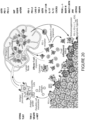
- FIG. 1 A. J. et al. (2001) Nature Immunol. 2(3):203-209 ; Sharpe, A. H. et al. (2002) Nature Rev. Immunol. 2:116-126 ; Collins, M. et al. (2005) Genome Biol. 6:223.1-223.7 ; Korman, A. J. et al. (2007) Adv. Immunol. 90:297-339 ).
- B7 Superfamily Coyle, A. J. et al. (2001) Nature Immunol. 2(3):203-209 ; Sharpe, A. H. et al. (2002) Nature Rev. Immunol. 2:116-126 ; Collins, M. et al. (2005) Genome Biol. 6:223.1-223.7 ; Korman, A. J. et al. (2007) Adv. Immunol. 90:297-339 ).
- B7 Superfamily Several members of the B7 Superfamily are known, including B7.1 (CD80), B7.2 (CD86), the inducible co-stimulator ligand (ICOS-L), the programmed death-1 ligand (PD-L1; B7-H1), the programmed death-2 ligand (PD-L2; B7-DC), B7-H3, B7-H4 and B7-H6 ( Collins, M. et al. (2005) Genome Biol. 6:223.1-223.7 ).
- the Programmed Death 1 (PD-1) protein is an inhibitory member of the extended CD28/CTLA-4 family of T cell regulators ( Okazaki et al. (2002) Curr Opin Immunol 14: 391779-82 ; Bennett et al. (2003) J. Immunol. 170:711-8 ).
- Other members of the CD28 family include CD28, CTLA-4, ICOS and BTLA.
- Two cell surface glycoprotein ligands for PD-1 have been identified, Program Death Ligand 1 (PD-L1) and Program Death Ligand 2 (PD-L2).
- PD-L1 and PD-L2 have been shown to downregulate T cell activation and cytokine secretion upon binding to PD-1 ( Freeman et al.
- PD-L1 (also known as cluster of differentiation 274 (CD274) or B7 homolog 1 (B7-H1)) is a 40 kDa type 1 transmembrane protein. PD-L1 binds to its receptor, PD-1, found on activated T cells, B cells, and myeloid cells, to modulate activation or inhibition. Both PD-L1 and PD-L2 are B7 homologs that bind to PD-1, but do not bind to CD28 or CTLA-4 ( Blank et al. (2005) Cancer Immunol Immunother. 54:307-14 ).
- Binding of PD-L1 with its receptor PD-1 on T cells delivers a signal that inhibits TCR-mcdiatcd activation of IL-2 production and T cell proliferation.
- the mechanism involves inhibition of ZAP70 phosphorylation and its association with CD3 ⁇ ( Sheppard et al. (2004) FEBS Lett. 574:37-41 ).
- PD-1 signaling attenuates PKC- ⁇ activation loop phosphorylation resulting from TCR signaling, necessary for the activation of transcription factors NF- ⁇ B and AP-1, and for production of IL-2.
- PD-L1 also binds to the costimulatory molecule CD80 (B7-1), but not CD86 (B7-2) ( Butte et al. (2008) Mol Immunol. 45:3567-72 ).
- PD-L1 has been shown to be upregulated through IFN-y stimulation.
- PD-L1 expression has been found in many cancers, including human lung, ovarian and colon carcinoma and various myelomas, and is often associated with poor prognosis ( Iwai et al. (2002) PNAS 99:12293-7 ; Ohigashi et al. (2005) Clin Cancer Res 11:2947-53 ; Okazaki et al. (2007) Intern. Immun. 19:813-24 ; Thompson et al. (2006) Cancer Res. 66:3381-5 ).
- PD-L1 has been suggested to play a role in tumor immunity by increasing apoptosis of antigen-specific T-cell clones ( Dong et al.
- Such agents can be used, e.g., for cancer immunotherapy and treatment of other conditions, such as chronic infection.
- antibody molecules e.g., humanized antibody molecules
- the anti-PD-L1 antibody molecules comprise a novel combination of framework regions (e.g., FW1, FW2, FW3 and/or FW4), e.g ., novel combinations of a heavy chain framework regions and/or light chain framework regions.
- Nucleic acid molecules encoding the antibody molecules, expression vectors, host cells and methods for making the antibody molecules are also provided.
- Immunoconjugates, multi- or bispecific antibody molecules and pharmaceutical compositions comprising the antibody molecules are also provided.
- the anti-PD-L1 antibody molecules disclosed herein can be used (alone or in combination with other agents or therapeutic modalities) to treat, prevent and/or diagnose disorders, such as cancerous disorders (e.g., solid and soft-tissue tumors), as well as infectious diseases (e.g., chronic infectious disorders or sepsis).
- disorders such as cancerous disorders (e.g., solid and soft-tissue tumors), as well as infectious diseases (e.g., chronic infectious disorders or sepsis).
- compositions comprising a combination of two, three or more therapeutic agents chosen from one, two, or all of the following categories (i)-(iii): (i) an agent that enhances antigen presentation (e.g., tumor antigen presentation); (ii) an agent that enhances an effector cell response (e.g., B cell and/or T cell activation and/or mobilization); or (iii) an agent that decreases tumor immunosuppression.
- the combination includes an inhibitor of PD-L1 (e.g., an anti-PD-L1 antibody molecule as described herein).
- compositions and methods for detecting PD-L1, as well as methods for treating various disorders including cancer and/or infectious diseases, using the anti-PD-L1 antibody molecules and combinations thereof are disclosed herein.
- the invention features an antibody molecule (e.g., an isolated or recombinant antibody molecule) having one or more of the following properties:
- the antibody molecule binds to PD-L1 with high affinity, e.g ., with a K D that is about the same, or at least about 10%, 20%, 30%, 40%, 50%, 60%, 70%, 80% or 90% higher or lower than the K D of a murine or chimeric anti-PD-L1 antibody molecule, e.g., a murine or chimeric anti-PD-L1 antibody molecule described herein.
- the K D of the murine or chimeric anti-PD-L1 antibody molecule is less than about 0.4, 0.3, 0.2, 0.1, or 0.05 nM, e.g ., measured by a Biacore method.
- the K D of the murine or chimeric anti-PD-L1 antibody molecule is less than about 0.2 nM, e.g ., about 0.171 nM. In other embodiments, the K D of the murine or chimeric anti PD-L1 antibody molecule is less than about 10, 5, 3, 2, or 1 nM, e.g., measured by binding on cells expressing PD-L1 (e.g., 300.19 cells). In some embodiments, the K D of the murine or chimeric anti PD-L1 antibody molecule is less than about 1 nM, e.g ., about 0.285nM.
- the anti-PD-L1 antibody molecule binds to PD-L1 with a K d slower than 1 ⁇ 10 -4 , 5 ⁇ 10 -5 , or 1 ⁇ 10 -5 s -1 , e.g., about 6.33 ⁇ 10 -5 s -1 .
- the the anti-PD-L1 antibody molecule binds to PD-L1 with a K a faster than 1 ⁇ 10 4 , 5 ⁇ 10 4 , 1 ⁇ 10 5 , or 5 ⁇ 10 5 M -1 s -1 , e.g ., about 3.07 ⁇ 10 5 M -1 s -1 .
- the expression level of the antibody molecule is higher, e.g., at least about 0.5, 1, 2, 3, 4, 5, 6, 7, 8, 9 or 10-fold higher, than the expression level of a murine or chimeric antibody molecule, e.g ., a murine or chimeric anti-PD-L1 antibody molecule described herein.
- the antibody molecule is expressed in CHO cells.
- the anti-PD-L1 antibody molecule reduces one or more PD-L1-associated activities with an IC 50 (concentration at 50% inhibition) that is about the same or lower, e.g ., at least about 10%, 20%, 30%, 40%, 50%, 60%, 70%, 80% or 90% lower, than the IC 50 of a murine or chimeric anti-PD-L1 antibody molecule, e.g., a murine or chimeric anti-PD-L1 antibody molecule described herein.
- an IC 50 concentration at 50% inhibition
- the IC 50 of the murine or chimeric anti-PD-L1 antibody molecule is less than about 6, 5, 4, 3, 2, or 1 nM, e.g ., measured by binding on cells expressing PD-L1 ( e.g., 300.19 cells). In some embodiments, the IC 50 of the murine or chimeric anti-PD-L1 antibody molecule is less than about 4 nM, e.g., about 3.40 nM (or about 0.51 ⁇ g/mL). In some embodiments, the PD-L1-associated activity reduced is the binding of PD-L1 and/or PD-L2 to PD-1.
- the anti-PD-L1 antibody molecule binds to peripheral blood mononucleated cells (PBMCs) activated by Staphylococcal enterotoxin B (SEB).
- PBMCs peripheral blood mononucleated cells
- SEB Staphylococcal enterotoxin B
- the anti-PD-L1 antibody molecule increases the expression of IL-2 on whole blood activated by SEB.
- the anti-PD-L1 antibody increases the expression of IL-2 by at least about 2, 3, 4, or 5-fold, compared to the expression of IL-2 when an isotype control (e.g., IgG4) is used.
- the anti-PD-L1 antibody molecule has improved stability, e.g ., at least about 0.5, 1, 2, 3, 4, 5, 6, 7, 8, 9 or 10-fold more stable in vivo or in vitro, than a murine or chimeric anti-PD-L1 antibody molecule, e.g., a murine or chimeric anti-PD-L1 antibody molecule described herein.
- the anti PD-L1 antibody molecule is a humanized antibody molecule and has a risk score based on T cell epitope analysis of 300 to 700, 400 to 650, 450 to 600, or a risk score as described herein.
- the anti-PD-L1 antibody molecule comprises at least one antigen-binding region, e.g., a variable region or an antigen-binding fragment thereof, from an antibody described herein, e.g., an antibody chosen from any of BAP058-hum01, BAP058-hum02, BAP058-hum03, BAP058-hum04, BAP058-hum05, BAP058-hum06, BAP058-hum07, BAP058-hum08, BAP058-hum09, BAP058-hum10, BAP058-hum11, BAP058-hum12, BAP058-hum13, BAP058-hum14, BAP058-hum15, BAP058-hum16, BAP058-hum17, BAP058-Clone-K, BAP058-Clone-L, BAP058-Clone-M, BAP058-Clone-N, or BAP058-Clone-O
- the anti-PD-L1 antibody molecule comprises at least one, two, three or four variable regions from an antibody described herein, e.g., an antibody chosen from any of BAP058-hum01, BAP058-hum02, BAP058-hum03, BAP058-hum04, BAP058-hum05, BAP058-hum06, BAP058-hum07, BAP058-hum08, BAP058-hum09, BAP058-hum10, BAP058-hum11, BAP058-hum12, BAP058-hum13, BAP058-hum14, BAP058-hum15, BAP058-hum16, BAP058-hum17, BAP058-Clone-K, BAP058-Clone-L, BAP058-Clone-M, BAP058-Clone-N, or BAP058-Clone-O; or as described in Table 1, or encoded by the nucleotide sequence
- the anti-PD-L1 antibody molecule comprises at least one or two heavy chain variable regions from an antibody described herein, e.g ., an antibody chosen from any of BAP058-hum01, BAP058-hum02, BAP058-hum03, BAP058-hum04, BAP058-hum05, BAP058-hum06, BAP058-hum07, BAP058-hum08, BAP058-hum09, BAP058-hum10, BAP058-hum11, BAP058-hum12, BAP058-hum13, BAP058-hum14, BAP058-hum15, BAP058-hum16, BAP058-hum17, BAP058-Clone-K, BAP058-Clone-L, BAP058-Clone-M, BAP058-Clone-N, or BAP058-Clone-O; or as described in Table 1, or encoded by the nucleotide sequence in
- the anti-PD-L1 antibody molecule comprises at least one or two light chain variable regions from an antibody described herein, e.g ., an antibody chosen from any of BAP058-hum01, BAP058-hum02, BAP058-hum03, BAP058-hum04, BAP058-hum05, BAP058-hum06, BAP058-hum07, BAP058-hum08, BAP058-hum09, BAP058-hum10, BAP058-hum11, BAP058-hum12, BAP058-hum13, BAP058-hum14, BAP058-hum15, BAP058-hum16, BAP058-hum17, BAP058-Clone-K, BAP058-Clone-L, BAP058-Clone-M, BAP058-Clone-N, or BAP058-Clone-O; or as described in Table 1, or encoded by the nucleotide sequence in
- the anti-PD-L1 antibody molecule includes a heavy chain constant region for an IgG4, e.g., a human IgG4.
- the human IgG4 includes a substitution at position 228 (e.g., a Ser to Pro substitution).
- the anti-PD-L1 antibody molecule includes a heavy chain constant region for an IgG1, e.g., a human IgG1.
- the human IgG1 includes a substitution at position 297 ( e.g., an Asn to Ala substitution).
- the human IgG1 includes a substitution at position 265, a substitution at position 329, or both (e.g., an Asp to Ala substitution at position 265 and/or a Pro to Ala substitution at position 329). In one embodiment, the human IgG1 includes a substitution at position 234, a substitution at position 235, or both (e.g., a Leu to Ala substitution at position 234 and/or a Leu to Ala substitution at position 235). In one embodiment, the heavy chain constant region comprises an amino sequence set forth in Table 3, or a sequence substantially identical ( e.g., at least 80%, 85%, 90%, 92%, 95%, 97%, 98%, 99% or higher identical) thereto.
- the anti-PD-L1 antibody molecule includes a kappa light chain constant region, e.g ., a human kappa light chain constant region.
- the light chain constant region comprises an amino sequence set forth in Table 3, or a sequence substantially identical ( e.g., at least 80%, 85%, 90%, 92%, 95%, 97%, 98%, 99% or higher identical) thereto.
- the anti-PD-L1 antibody molecule includes a heavy chain constant region for an IgG4, e.g., a human IgG4, and a kappa light chain constant region, e.g., a human kappa light chain constant region, e.g., a heavy and light chain constant region comprising an amino sequence set forth in Table 3, or a sequence substantially identical ( e.g., at least 80%, 85%, 90%, 92%, 95%, 97%, 98%, 99% or higher identical) thereto.
- a heavy chain constant region for an IgG4 e.g., a human IgG4
- a kappa light chain constant region e.g., a human kappa light chain constant region
- a heavy and light chain constant region comprising an amino sequence set forth in Table 3, or a sequence substantially identical (e.g., at least 80%, 85%, 90%, 92%, 95%, 97%, 98%, 99% or higher identical) thereto.
- the anti-PD-L1 antibody molecule includes a heavy chain constant region for an IgG1, e.g., a human IgG1, and a kappa light chain constant region, e.g., a human kappa light chain constant region, e.g ., a heavy and light chain constant region comprising an amino sequence set forth in Table 3, or a sequence substantially identical ( e.g., at least 80%, 85%, 90%, 92%, 95%, 97%, 98%, 99% or higher identical) thereto.
- the human IgG1 includes a substitution at position 297 ( e.g., an Asn to Ala substitution).
- the human IgG1 includes a substitution at position 265, a substitution at position 329, or both (e.g., an Asp to Ala substitution at position 265 and/or a Pro to Ala substitution at position 329). In one embodiment, the human IgG1 includes a substitution at position 234, a substitution at position 235, or both ( e.g., a Leu to Ala substitution at position 234 and/or a Leu to Ala substitution at position 235).
- the anti-PD-L1 antibody molecule includes a heavy chain variable domain and a constant region, a light chain variable domain and a constant region, or both, comprising the amino acid sequence of BAP058-Clone-K, BAP058-Clone-L, BAP058-Clone-M, BAP058-Clone-N, or BAP058-Clone-O; or as described in Table 1, or encoded by the nucleotide sequence in Table 1; or a sequence substantially identical ( e.g., at least 80%, 85%, 90%, 92%, 95%, 97%, 98%, 99% or higher identical) to any of the aforesaid sequences.
- the anti-PD-1 antibody molecule optionally, comprises a leader sequence from a heavy chain, a light chain, or both.
- the anti-PD-L1 antibody molecule includes at least one, two, or three complementarity determining regions (CDRs) from a heavy chain variable region of an antibody described herein, e.g., an antibody chosen from any of BAP058-hum01, BAP058-hum02, BAP058-hum03, BAP058-hum04, BAP058-hum05, BAP058-hum06, BAP058-hum07, BAP058-hum08, BAP058-hum09, BAP058-hum10, BAP058-hum11, BAP058-hum12, BAP058-hum13, BAP058-hum14, BAP058-hum15, BAP058-hum16, BAP058-hum17, BAP058-Clone-K, BAP058-Clone-L, BAP058-Clone-M, BAP058-Clone-N, or BAP058-Clone-O; or as
- the anti-PD-L1 antibody molecule includes at least one, two, or three CDRs (or collectively all of the CDRs) from a heavy chain variable region comprising an amino acid sequence shown in Table 1, or encoded by a nucleotide sequence shown in Table 1.
- one or more of the CDRs (or collectively all of the CDRs) have one, two, three, four, five, six or more changes, e.g ., amino acid substitutions or deletions, relative to the amino acid sequence shown in Table 1, or encoded by a nucleotide sequence shown in Table 1.
- the anti-PD-L1 antibody molecule includes at least one, two, or three CDRs from a light chain variable region of an antibody described herein, e.g., an antibody chosen from any of BAP058-hum01, BAP058-hum02, BAP058-hum03, BAP058-hum04, BAP058-hum05, BAP058-hum06, BAP058-hum07, BAP058-hum08, BAP058-hum09, BAP058-hum10, BAP058-hum11, BAP058-hum12, BAP058-hum13, BAP058-hum14, BAP058-hum15, BAP058-hum16, BAP058-hum17, BAP058-Clone-K, BAP058-Clone-L, BAP058-Clone-M, BAP058-Clone-N, or BAP058-Clone-O; or as described in Table 1, or encoded by
- the anti-PD-L1 antibody molecule includes at least one, two, or three CDRs (or collectively all of the CDRs) from a light chain variable region comprising an amino acid sequence shown in Table 1, or encoded by a nucleotide sequence shown in Table 1.
- one or more of the CDRs (or collectively all of the CDRs) have one, two, three, four, five, six or more changes, e.g ., amino acid substitutions or deletions, relative to the amino acid sequence shown in Table 1, or encoded by a nucleotide sequence shown in Table 1.
- the anti-PD-L1 antibody molecule includes a substitution in a light chain CDR, e.g., one or more substitutions in a CDR1, CDR2 and/or CDR3 of the light chain.
- the anti-PD-L1 antibody molecule includes at least one, two, three, four, five or six CDRs (or collectively all of the CDRs) from a heavy and light chain variable region comprising an amino acid sequence shown in Table 1, or encoded by a nucleotide sequence shown in Table 1.
- one or more of the CDRs (or collectively all of the CDRs) have one, two, three, four, five, six or more changes, e.g ., amino acid substitutions or deletions, relative to the amino acid sequence shown in Table 1, or encoded by a nucleotide sequence shown in Table 1.
- the anti-PD-L1 antibody molecule includes all six CDRs from an antibody described herein, e.g., an antibody chosen from any of BAP058-hum01, BAP058-hum02, BAP058-hum03, BAP058-hum04, BAP058-hum05, BAP058-hum06, BAP058-hum07, BAP058-hum08, BAP058-hum09, BAP058-hum10, BAP058-hum11, BAP058-hum12, BAP058-hum13, BAP058-hum14, BAP058-hum15, BAP058-hum16, BAP058-hum17, BAP058-Clone-K, BAP058-Clone-L, BAP058-Clone-M, BAP058-Clone-N, or BAP058-Clone-O; or as described in Table 1, or encoded by the nucleotide sequence in Table 1, or closely related C
- the anti-PD-L1 antibody molecule may include any CDR described herein.
- the anti-PD-L1 antibody molecule includes a substitution in a light chain CDR, e.g., one or more substitutions in a CDR1, CDR2 and/or CDR3 of the light chain.
- the anti-PD-L1 antibody molecule includes at least one, two, or three CDRs according to Kabat et al.
- an antibody chosen from any of BAP058-hum01, BAP058-hum02, BAP058-hum03, BAP058-hum04, BAP058-hum05, BAP058-hum06, BAP058-hum07, BAP058-hum08, BAP058-hum09, BAP058-hum10, BAP058-hum11, BAP058-hum12, BAP058-hum13, BAP058-hum14, BAP058-hum15, BAP058-hum16, BAP058-hum17, BAP058-Clone-K, BAP058-Clone-L, BAP058-Clone-M, BAP058-Clone-N, or BAP058-Clone-O; or as described in Table 1, or
- the anti-PD-L1 antibody molecule includes at least one, two, or three CDRs according to Kabat et al . ( e.g., at least one, two, or three CDRs according to the Kabat definition as set out in Table 1) from a light chain variable region of an antibody described herein, e.g ., an antibody chosen from any of BAP058-hum01, BAP058-hum02, BAP058-hum03, BAP058-hum04, BAP058-hum05, BAP058-hum06, BAP058-hum07, BAP058-hum08, BAP058-hum09, BAP058-hum10, BAP058-hum11, BAP058-hum12, BAP058-hum13, BAP058-hum14, BAP058-hum15, BAP058-hum16, BAP058-hum17, BAP058-Clone-K, BAP058-Clone-L, BAP058
- the anti-PD-L1 antibody molecule includes at least one, two, three, four, five, or six CDRs according to Kabat et al. ( e.g., at least one, two, three, four, five, or six CDRs according to the Kabat definition as set out in Table 1) from the heavy and light chain variable regions of an antibody described herein, e.g., an antibody chosen from any of BAP058-hum01, BAP058-hum02, BAP058-hum03, BAP058-hum04, BAP058-hum05, BAP058-hum06, BAP058-hum07, BAP058-hum08, BAP058-hum09, BAP058-hum10, BAP058-hum11, BAP058-hum12, BAP058-hum13, BAP058-hum14, BAP058-hum15, BAP058-hum16, BAP058-hum17, BAP058-Clone-K, BAP0
- the anti-PD-L1 antibody molecule includes all six CDRs according to Kabat et al. (e.g., all six CDRs according to the Kabat definition as set out in Table 1) from the heavy and light chain variable regions of an antibody described herein, e.g., an antibody chosen from any of BAP058-hum01, BAP058-hum02, BAP058-hum03, BAP058-hum04, BAP058-hum05, BAP058-hum06, BAP058-hum07, BAP058-hum08, BAP058-hum09, BAP058-hum10, BAP058-hum11, BAP058-hum12, BAP058-hum13, BAP058-hum14, BAP058-hum15, BAP058-hum16, BAP058-hum17, BAP058-Clone-K, BAP058-Clone-L, BAP058-Clone-M, BAP058-
- the anti-PD-L1 antibody molecule includes at least one, two, or three Chothia hypervariable loops (e.g., at least one, two, or three hypervariable loops according to the Chothia definition as set out in Table 1) from a heavy chain variable region of an antibody described herein, e.g., an antibody chosen from any of BAP058-hum01, BAP058-hum02, BAP058-hum03, BAP058-hum04, BAP058-hum05, BAP058-hum06, BAP058-hum07, BAP058-hum08, BAP058-hum09, BAP058-hum10, BAP058-hum11, BAP058-hum12, BAP058-hum13, BAP058-hum14, BAP058-hum15, BAP058-hum16, BAP058-hum17, BAP058-Clone-K, BAP058-Clone-L, BAP058-Cl
- the anti-PD-L1 antibody molecule includes at least one, two, or three Chothia hypervariable loops (e.g., at least one, two, or three hypervariable loops according to the Chothia definition as set out in Table 1) of a light chain variable region of an antibody described herein, e.g., an antibody chosen from any of BAP058-hum01, BAP058-hum02, BAP058-hum03, BAP058-hum04, BAP058-hum05, BAP058-hum06, BAP058-hum07, BAP058-hum08, BAP058-hum09, BAP058-hum10, BAP058-hum11, BAP058-hum12, BAP058-hum13, BAP058-hum14, BAP058-hum15, BAP058-hum16, BAP058-hum17, BAP058-Clone-K, BAP058-Clone-L, BAP058-Cl
- the anti-PD-L1 antibody molecule includes at least one, two, three, four, five, or six hypervariable loops (e.g., at least one, two, three, four, five, or six hypervariable loops according to the Chothia definition as set out in Table 1) from the heavy and light chain variable regions of an antibody described herein, e.g., an antibody chosen from any of BAP058-hum01, BAP058-hum02, BAP058-hum03, BAP058-hum04, BAP058-hum05, BAP058-hum06, BAP058-hum07, BAP058-hum08, BAP058-hum09, BAP058-hum10, BAP058-hum11, BAP058-hum12, BAP058-hum13, BAP058-hum14, BAP058-hum15, BAP058-hum16, BAP058-hum17, BAP058-Clone-K, BAP058-Clone-K, B
- the anti-PD-L1 antibody molecule includes all six hypervariable loops (e.g., all six hypervariable loops according to the Chothia definition as set out in Table 1) of an antibody described herein, e.g. , an antibody chosen from any of BAP058-hum01, BAP058-hum02, BAP058-hum03, BAP058-hum04, BAP058-hum05, BAP058-hum06, BAP058-hum07, BAP058-hum08, BAP058-hum09, BAP058-hum10, BAP058-hum11, BAP058-hum12, BAP058-hum13, BAP058-hum14, BAP058-hum15, BAP058-hum16, BAP058-hum17, BAP058-Clone-K, BAP058-Clone-L, BAP058-Clone-M, BAP058-Clone-N, or BAP058-
- the anti-PD-L1 antibody molecule includes at least one, two, or three hypervariable loops that have the same canonical structures as the corresponding hypervariable loop of an antibody described herein, e.g., an antibody chosen from any of BAP058-hum01, BAP058-hum02, BAP058-hum03, BAP058-hum04, BAP058-hum05, BAP058-hum06, BAP058-hum07, BAP058-hum08, BAP058-hum09, BAP058-hum10, BAP058-hum11, BAP058-hum12, BAP058-hum13, BAP058-hum14, BAP058-hum15, BAP058-hum16, BAP058-hum17, BAP058-Clone-K, BAP058-Clone-L, BAP058-Clone-M, BAP058-Clone-N, or BAP058-Clone-O
- the same canonical structures as at least loop 1 and/or loop 2 of the heavy and/or light chain variable domains of an antibody described herein. See, e.g., Chothia et al., (1992) J. Mol. Biol. 227:799-817 ; Tomlinson et al., (1992) J. Mol. Biol. 227:776-798 for descriptions of hypervariable loop canonical structures. These structures can be determined by inspection of the tables described in these references.
- the anti-PD-L1 antibody molecule includes a combination of CDRs or hypervariable loops defined according to the Kabat et al. and Chothia et al.
- the anti-PD-L1 antibody molecule includes at least one, two or three CDRs or hypervariable loops from a heavy chain variable region of an antibody described herein, e.g. , an antibody chosen from any of BAP058-hum01, BAP058-hum02, BAP058-hum03, BAP058-hum04, BAP058-hum05, BAP058-hum06, BAP058-hum07, BAP058-hum08, BAP058-hum09, BAP058-hum10, BAP058-hum11, BAP058-hum12, BAP058-hum13, BAP058-hum14, BAP058-hum15, BAP058-hum16, BAP058-hum17, BAP058-Clone-K, BAP058-Clone-L, BAP058-Clone-M, BAP058-Clone-N, or BAP058-Clone-O, according to the Kabat
- the anti-PD-L1 antibody molecule can include VH CDR1 according to Kabat et al . or VH hypervariable loop 1 according to Chothia et al., or a combination thereof, e.g., as shown in Table 1.
- the combination of Kabat and Chothia CDR of VH CDR1 comprises the amino acid sequence GYTFTSYWMY (SEQ ID NO: 195), or an amino acid sequence substantially identical thereto ( e.g., having at least one amino acid alteration, but not more than two, three or four alterations ( e.g., substitutions, deletions, or insertions, e.g ., conservative substitutions)).
- the anti-PD-L1 antibody molecule can further include, e.g., VH CDRs 2-3 according to Kabat et al. and VL CDRs 1-3 according to Kabat et al., e.g., as shown in Table 1. Accordingly, in some embodiments, framework regions are defined based on a combination of CDRs defined according to Kabat et al . and hypervariable loops defined according to Chothia et al. For example, the anti-PD-L1 antibody molecule can include VH FR1 defined based on VH hypervariable loop 1 according to Chothia et al.
- the anti-PD-L1 antibody molecule can further include, e.g ., VH FRs 3-4 defined based on VH CDRs 2-3 according to Kabat et al. and VL FRs 1-4 defined based on VL CDRs 1-3 according to Kabat et al.
- the anti-PD-L1 antibody molecule can contain any combination of CDRs or hypervariable loops according to the Kabat and Chothia definitions.
- the anti-PD-L1 antibody molecule includes at least one, two or three CDRs from a light chain variable region of an antibody described herein, e.g., an antibody chosen from any of BAP058-hum01, BAP058-hum02, BAP058-hum03, BAP058-hum04, BAP058-hum05, BAP058-hum06, BAP058-hum07, BAP058-hum08, BAP058-hum09, BAP058-hum10, BAP058-hum11, BAP058-hum12, BAP058-hum13, BAP058-hum14, BAP058-hum15, BAP058-hum16, BAP058-hum17, BAP058-Clone-K, BAP058-Clone-L, BAP058-Clone-M
- the antibody molecule is a monospecific antibody molecule, a bispecific antibody molecule, or is an antibody molecule that comprises an antigen binding fragment of an antibody, e.g., a half antibody or antigen binding fragment of a half antibody.
- the antibody molecule is a bispecific antibody molecule having a first binding specificity for PD-L1 and a second binding specificity for TIM-3, LAG-3, CEACAM ( e.g., CEACAM-1 and/or CEACAM-5), PD-1 or PD-L2.
- the second binding specificity for TIM-3, LAG-3 and/or PD-1 includes an amino acid sequence, or is encoded by a nucleotide sequence as described herein ( e.g. , as disclosed in the section entitled “Inhibitors of Immune Checkpoint Molecules” starting on page 218 hereinbelow (including all publications mentioned therein).
- the anti-PD-L1 antibody molecule includes:
- the anti-PD-L1 antibody molecule includes:
- the anti-PD-L1 antibody molecule comprises the VHCDR1 amino acid sequence of SEQ ID NO: 1. In another embodiment, the anti-PD-L1 antibody molecule comprises the VHCDR1 amino acid sequence of SEQ ID NO: 4. In yet another embodiment, the anti-PD-L1 antibody molecule comprises the VHCDR1 amino acid sequence of SEQ ID NO: 195.
- the light or the heavy chain variable framework (e.g., the region encompassing at least FR1, FR2, FR3, and optionally FR4) of the anti-PD-L1 antibody molecule can be chosen from: (a) a light or heavy chain variable framework including at least 80%, 85%, 87% 90%, 92%, 93%, 95%, 97%, 98%, or preferably 100% of the amino acid residues from a human light or heavy chain variable framework, e.g ., a light or heavy chain variable framework residue from a human mature antibody, a human germline sequence, or a human consensus sequence; (b) a light or heavy chain variable framework including from 20% to 80%, 40% to 60%, 60% to 90%, or 70% to 95% of the amino acid residues from a human light or heavy chain variable framework, e.g ., a light or heavy chain variable framework residue from a human mature antibody, a human germline sequence, or a human consensus sequence; (c) a non-human framework (e.g., a
- the light or heavy chain variable framework region (particularly FR1, FR2 and/or FR3) includes a light or heavy chain variable framework sequence at least 70, 75, 80, 85, 87, 88, 90, 92, 94, 95, 96, 97, 98, 99% identical or identical to the frameworks of a VL or VH segment of a human germline gene.
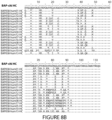
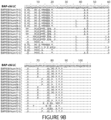
- the anti-PD-L1 antibody molecule comprises a heavy chain variable domain having at least one, two, three, four, five, six, seven, ten, fifteen, twenty or more changes, e.g ., amino acid substitutions or deletions, from an amino acid sequence of BAP058-chi-HC, e.g., the amino acid sequence of the FR region in the entire variable region, e.g., shown in FIGs. 8A-8B , or SEQ ID NO: 16.
- the anti-PD-L1 antibody molecule comprises a heavy chain variable domain having one or more of: Q at position 1, I at position 2, T at position 3, V or K at position 5, P at position 9, T at position 10, V at position 11, K at position 12, T at position 15, E or Q at position 16, T at position 17, L at position 18, R or T at position 19, 1 or V at position 20, T at position 21, T at position 23, G, V, or F at position 24, I at position 37, R at position 38, A or P or S at position 40, T or R at position 41, S at position 42, Q or K at position 43, M or L or V at position 48, R at position 67, F or V or L at position 68, I at position 70, S at position 71, A, K, or R at position 72, D or T or N at position 74, T or K at position 76, N at position 77, Q at position 78, F or V or L at position 79, S or V at position 80, L at position 81, E or K or T at position 82,
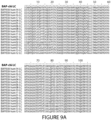
- the anti-PD-L1 antibody molecule comprises a light chain variable domain having at least one, two, three, four, five, six, seven, ten, fifteen, twenty or more amino acid changes, e.g ., amino acid substitutions or deletions, from an amino acid sequence of BAP058-chi-LC, e.g., the amino acid sequence shown in FIGs. 9A-9B , or SEQ ID NO: 17.
- the anti-PD-L1 antibody molecule comprises a heavy chain variable domain having one or more of: E or A at position 1, V at position 2, V or Q at position 3, L at position 4, T at position 7, P at position 8, D or L or S or A at position 9, S or T at position 10, Q or L at position 11, P at position 12, V or L or A at position 13, T at position 14, P or L at position 15, K at position 16, Q or E at position 17, K or P at position 18, A at position 19, T at position 20, L at position 21, S at position 22, L at position 37, A at position 43, R or Q at position 45, I at position 58, A or S or P at position 60, S at position 63, Y at position 67, E at position 70, F at position 73, K at position 74, N at position 76, S or R at position 77, I or L at position 78, E at position 79, P or A at position 80, D at position 81, F or I or V or A at position 83, G at position 84, T or V
- the anti-PD-L1 antibody molecule includes one, two, three, or four heavy chain framework regions (e.g., a VHFW amino acid sequence shown in Table 2, or encoded by the nucleotide sequence shown in Table 2), or a sequence substantially identical thereto.
- heavy chain framework regions e.g., a VHFW amino acid sequence shown in Table 2, or encoded by the nucleotide sequence shown in Table 2
- the anti-PD-L1 antibody molecule includes one, two, three, or four light chain framework regions (e.g., a VLFW amino acid sequence shown in Table 2, or encoded by the nucleotide sequence shown in Table 2), or a sequence substantially identical thereto.
- light chain framework regions e.g., a VLFW amino acid sequence shown in Table 2, or encoded by the nucleotide sequence shown in Table 2
- the anti-PD-L1 antibody molecule includes one, two, three, or four heavy chain framework regions (e.g., a VHFW amino acid sequence shown in Table 2, or encoded by the nucleotide sequence shown in Table 2), or a sequence substantially identical thereto; and one, two, three, or four light chain framework regions (e.g., a VLFW amino acid equence shown in Table 2, or encoded by the nucleotide sequence shown in Table 2), or a sequence substantially identical thereto.
- heavy chain framework regions e.g., a VHFW amino acid sequence shown in Table 2, or encoded by the nucleotide sequence shown in Table 2
- light chain framework regions e.g., a VLFW amino acid equence shown in Table 2, or encoded by the nucleotide sequence shown in Table 2
- the anti-PD-L1 antibody molecule comprises the heavy chain framework region 1 (VHFW1) of BAP058-hum01, BAP058-hum02, BAP058-hum07, BAP058-hum14, or BAP058-hum16 (e.g., SEQ ID NO: 124).
- VHFW1 heavy chain framework region 1
- the antibody molecule comprises the heavy chain framework region 1 (VHFW1) of BAP058-hum04, BAP058-hum06, BAP058-hum08, BAP058-hum09, BAP058-hum12, BAP058-hum15, BAP058-hum17, BAP058-Clone-L, or BAP058-Clone-M (e.g., SEQ ID NO: 126).
- VHFW1 heavy chain framework region 1
- the antibody molecule comprises the heavy chain framework region 1 (VHFW1) of BAP058-hum03, BAP058-hum05, BAP058-hum11, BAP058-hum13, BAP058-Clone-K, BAP058-Clone-N, or BAP058-Clone-O ( e.g., SEQ ID NO: 128).
- the antibody molecule comprises the heavy chain framework region 1 (VHFW1) of BAP058-hum10 (e.g., SEQ ID NO: 130).
- the anti-PD-L1 antibody molecule comprises the heavy chain framework region 2 (VHFW2) of BAP058-hum01, BAP058-hum02, BAP058-hum03, BAP058-hum11, BAP058-hum14, BAP058-Clone-K, or BAP058-Clone-N (e.g., SEQ ID NO: 132).
- the antibody molecule comprises the heavy chain framework region 2 (VHFW2) of BAP058-hum04, BAP058-hum12, or BAP058-Clonc-L (e.g., SEQ ID NO: 134).
- the antibody molecule comprises the heavy chain framework region 2 (VHFW2) of BAP058-hum06, BAP058-hum09, BAP058-hum15, or BAP058-Clone-M ( e.g., SEQ ID NO: 136). In some embodiments, the antibody molecule comprises the heavy chain framework region 2 (VHFW2) of BAP058-hum05, BAP058-hum07, or BAP058-hum16 ( e . g ., SEQ ID NO: 138).
- the antibody molecule comprises the heavy chain framework region 2 (VHFW2) of BAP058-hum08, BAP058-hum13, BAP058-hum17, or BAP058-Clone-O (e.g., SEQ ID NO: 140).
- the antibody molecule comprises the heavy chain framework region 2 of BAP058-hum10 (e.g., SEQ ID NO: 142).
- the anti-PD-L1 antibody molecule comprises the heavy chain framework region 3 (VHFW3) of BAP058-hum01, BAP058-hum02, BAP058-hum07, BAP058-hum14, or BAP058-hum16, ( e.g., SEQ ID NO: 144).
- VHFW3 heavy chain framework region 3
- the antibody molecule comprises the heavy chain framework region 3 (VHFW3) of BAP058-hum03, BAP058-hum06, BAP058-hum09, BAP058-hum10, BAP058-hum11, BAP058-hum15, BAP058-Clone-K, BAP058-Clone-M, or BAP058-Clone-N (e.g., SEQ ID NO: 146).
- the antibody molecule comprises the heavy chain framework region 3 (VHFW3) of BAP058-hum04, BAP058-hum12, or BAP058-Clone-L (e.g., SEQ ID NO: 148).
- the antibody molecule comprises the heavy chain framework region 3 (VHFW3) of BAP058-hum05, BAP058-hum08, or BAP058-hum17 ( e.g., SEQ ID NO: 150). In some embodiments, the antibody molecule comprises the heavy chain framework region 3 (VHFW3) of BAP058-hum13 or BAP058-Clone-O (e.g., SEQ ID NO: 152).
- the anti-PD-L1 antibody molecule comprises the heavy chain framework region 4 (VHFW4) of BAP058-hum01, BAP058-hum02, BAP058-hum03, BAP058-hum04, BAP058-hum05, BAP058-hum06, BAP058-hum07, BAP058-hum08, BAP058-hum09, BAP058-hum10, BAP058-hum11, BAP058-hum12, BAP058-hum13, BAP058-hum14, BAP058-hum15, BAP058-hum16, BAP058-hum17, BAP058-Clone-K, BAP058-Clone-L, BAP058-Clone-M, BAP058-Clone-N, or BAP058-Clone-O ( e.g., SEQ ID NO: 154).
- VHFW4 heavy chain framework region 4
- the anti-PD-L1 antibody molecule comprises the light chain framework region 1 (VLFW1) of BAP058-hum03, BAP058-hum04, BAP058-hum05, BAP058-hum06, BAP058-hum14, BAP058-hum15, BAP058-hum16, BAP058-hum17, BAP058-Clone-K, BAP058-Clone-L, or BAP058-Clone-M (e.g., SEQ ID NO: 156).
- VLFW1 light chain framework region 1
- the antibody molecule comprises the light chain framework region 1 (VLFW1) of BAP058-BAPhum08, BAP058-hum10, BAP058-hum11, or BAP058-Clone-N ( e.g., SEQ ID NO: 158).
- the antibody molecule comprises the light chain framework region 1 (VLFW1) of BAP058-hum01 or BAP058-hum09 ( e.g., SEQ ID NO: 160).
- the antibody molecule comprises the light chain framework region 1 (VLFW 1) of BAP058-hum02 or BAP058-hum12 ( e .g., SEQ ID NO: 162).
- the antibody molecule comprises the light chain framework region 1 (VLFW1) of BAP058-hum07 (e.g., SEQ ID NO: 164). In some embodiments, the antibody molecule comprises the light chain framework region 1 (VLFW1) of BAP058-hum13 or or BAP058-Clone-O ( e.g., SEQ ID NO: 166).
- the anti-PD-L1 antibody molecule comprises the light chain framework region 2 (VLFW2) of BAP058-hum08, BAP058-hum10, BAP058-hum11, BAP058-hum12, BAP058-hum14, BAP058-hum15, BAP058-hum16, BAP058-hum17, or BAP058-Clone-N (e.g., SEQ ID NO: 168).
- VLFW2 light chain framework region 2
- the antibody molecule comprises the light chain framework region 2 (VLFW2) of BAP058-hum01, BAP058-hum02, BAP058-hum03, BAP058-hum04, BAP058-hum05, BAP058-hum06, BAP058-hum07, BAP058-hum09, BAP058-hum13, BAP058-Clone-K, BAP058-Clone-L, BAP058-Clone-M, or BAP058-Clone-O (e.g., SEQ ID NO: 170).
- VLFW2 light chain framework region 2
- the anti-PD-L1 antibody molecule comprises the light chain framework region 3 (VLFW3) of BAP058-hum08, BAP058-hum10, BAP058-hum11, BAP058-hum14, BAP058-hum15, BAP058-hum16, BAP058-hum17, or BAP058-Clone-N (e.g., SEQ ID NO: 172).
- VLFW3 light chain framework region 3 of BAP058-hum08, BAP058-hum10, BAP058-hum11, BAP058-hum14, BAP058-hum15, BAP058-hum16, BAP058-hum17, or BAP058-Clone-N (e.g., SEQ ID NO: 172).
- the antibody molecule comprises the light chain framework region 3 (VLFW3) of BAP058-hum04, BAP058-hum05, BAP058-hum06, BAP058-hum12, BAP058-Clone-L, or BAP058-Clone-M ( e.g., SEQ ID NO: 174).
- the antibody molecule comprises the light chain framework region 3 (VLFW3) of BAP058-hum01 or BAP058-hum09 (e.g., SEQ ID NO: 176).
- the antibody molecule comprises the light chain framework region 3 (VLFW3) of BAP058-hum02 (e.g., SEQ ID NO: 178).
- the antibody molecule comprises the light chain framework region 3 (VLFW3) of BAP058-hum03 or BAP058-Clone-K ( e.g., SEQ ID NO: 180). In some embodiments, the antibody molecule comprises the light chain framework region 3 (VLFW3) of BAP058-hum07 ( e.g., SEQ ID NO: 182). In some embodiments, the antibody molecule comprises the light chain framework region 3 (VLFW3) of BAP058-hum13 or BAP058-Clonc-O (e.g., SEQ ID NO: 184).
- the anti-PD-L1 antibody molecule comprises the light chain framework region 4 (VLFW4) of BAP058-hum01, BAP058-hum02, BAP058-hum03, BAP058-hum04, BAP058-hum05, BAP058-hum06, BAP058-hum07, BAP058-hum08, BAP058-hum09, BAP058-hum10, BAP058-hum11, BAP058-hum12, BAP058-hum13, BAP058-hum14, BAP058-hum15, BAP058-hum16, BAP058-hum17, BAP058-Clone-K, BAP058-Clone-L, BAP058-Clone-M, BAP058-Clone-N, or BAP058-Clone-O ( e.g., SEQ ID NO: 186).
- VLFW4 light chain framework region 4
- the anti-PD-L1 antibody molecule comprises the heavy chain framework regions 1-3 of BAP058-hum01, BAP058-hum02, or BAP058-hum14 (e.g., SEQ ID NO: 124 (VHFW1), SEQ ID NO: 132 (VHFW2), and SEQ ID NO: 144 (VHFW3)).
- the antibody molecule comprises the heavy chain framework regions 1-3 of BAP058-hum07, or BAP058-hum16 (e.g., SEQ ID NO: 124 (VHFW1), SEQ ID NO: 138 (VHFW2), and SEQ ID NO: 144 (VHFW3)).
- the antibody molecule comprises the heavy chain framework regions 1-3 of BAP058-hum04, BAP058-hum12, or BAP058-Clone-L (e.g., SEQ ID NO: 126 (VHFW1), SEQ ID NO: 134 (VHFW2), and SEQ ID NO: 148 (VHFW3)).
- the antibody molecule comprises the heavy chain framework regions 1-3 of BAP058-hum06, BAP058-hum09, BAP058-hum15, or BAP058-Clone-M (e.g., SEQ ID NO: 126 (VHFW1), SEQ ID NO: 136 (VHFW2), and SEQ ID NO: 146 (VHFW3)).
- the antibody molecule comprises the heavy chain framework regions 1-3 of BAP058-hum08 or BAP058-hum17 (e.g., SEQ ID NO: 126 (VHFW1), SEQ ID NO: 140 (VHFW2), and SEQ ID NO: 150 (VHFW3)).
- the antibody molecule comprises the heavy chain framework regions 1-3 of BAP058-hum03, BAP058-hum11, BAP058-Clone-K, or BAP058-Clone-N (e.g., SEQ ID NO: 128 (VHFW1), SEQ ID NO: 132 (VHFW2), and SEQ ID NO: 146 (VHFW3)).
- the antibody molecule comprises the heavy chain framework regions 1-3 of BAP058-hum13 or BAP058-Clone-O (e.g., SEQ ID NO: 128 (VHFW1), SEQ ID NO: 140 (VHFW2), and SEQ ID NO: 152 (VHFW3)).
- the antibody molecule comprises the heavy chain framework regions 1-3 of BAP058-hum05 (e.g., SEQ ID NO: 128 (VHFW1), SEQ ID NO: 138 (VHFW2), and SEQ ID NO: 150 (VHFW3)).
- the antibody molecule comprises the heavy chain framework regions 1-3 of BAP058-huml0 (e.g., SEQ ID NO: 130 (VHFW1), SEQ ID NO: 142 (VHFW2), and SEQ ID NO: 146 (VHFW3)).
- VHFW1 SEQ ID NO: 130
- VHFW2 SEQ ID NO: 142
- VHFW3 SEQ ID NO: 146
- the antibody molecule further comprises the heavy chain framework region 4 (VHFW4) of BAP058-hum01, BAP058-hum02, BAP058-hum03, BAP058-hum04, BAP058-hum05, BAP058-hum06, BAP058-hum07, BAP058-hum08, BAP058-hum09, BAP058-hum10, BAP058-hum11, BAP058-hum12, BAP058-hum13, BAP058-hum14, BAP058-hum15, BAP058-hum16, BAP058-hum17, BAP058-Clone-K, BAP058-Clone-L, BAP058-Clone-M, BAP058-Clone-N, or BAP058-Clone-O (e.g., SEQ ID NO: 154).
- VHFW4 heavy chain framework region 4
- the anti-PD-L1 antibody molecule comprises the light chain framework regions 1-3 of BAP058-hum01 or BAP058-hum09 (e.g., SEQ ID NO: 160 (VLFW1), SEQ ID NO: 170 (VLFW2), and SEQ ID NO: 176 (VLFW3)).
- the antibody molecule comprises the light chain framework regions 1-3 of BAP058-hum14, BAP058-hum15, BAP058-hum16, or BAP058-hum17 (e.g., SEQ ID NO: 156 (VLFW1), SEQ ID NO: 168 (VLFW2), and SEQ ID NO: 172 (VLFW3)).
- the antibody molecule comprises the light chain framework regions 1-3 of BAP058-hum04, BAP058-hum05, BAP058-hum06, BAP058-Clone-L, or BAP058-Clone-M (e.g., SEQ ID NO: 156 (VLFW1), SEQ ID NO: 170 (VLFW2), and SEQ ID NO: 174 (VLFW3)).
- BAP058-hum04 e.g., SEQ ID NO: 156 (VLFW1), SEQ ID NO: 170 (VLFW2), and SEQ ID NO: 174 (VLFW3).
- the antibody molecule comprises the light chain framework regions 1-3 of BAP058-hum08, BAP058-hum10, or BAP058-hum11 (e.g., SEQ ID NO: 158 (VLFW1), SEQ ID NO: 168 (VLFW2), and SEQ ID NO: 172 (VLFW3)).
- the antibody molecule comprises the light chain framework regions 1-3 of BAP058-hum13 or BAP058-Clone-O (e.g., SEQ ID NO: 166 (VLFW1), SEQ ID NO: 170 (VLFW2), and SEQ ID NO: 184 (VLFW3)).
- the antibody molecule comprises the light chain framework regions 1-3 of BAP058-hum02 (e.g., SEQ ID NO: 162 (VLFW1), SEQ ID NO: 170 (VLFW2), and SEQ ID NO: 178 (VLFW3)).
- the antibody molecule comprises the light chain framework regions 1-3 of BAP058-hum03 (e.g., SEQ ID NO: 156 (VLFW1), SEQ ID NO: 170 (VLFW2), and SEQ ID NO: 180 (VLFW3)).
- the antibody molecule comprises the light chain framework regions 1-3 of BAP058-hum07 (e.g., SEQ ID NO: 164 (VLFW1), SEQ ID NO: 170 (VLFW2), and SEQ ID NO: 182 (VLFW3)).
- the antibody molecule comprises the light chain framework regions 1-3 of BAP058-hum12 (e.g., SEQ ID NO: 162 (VLFW1), SEQ ID NO: 168 (VLFW2), and SEQ ID NO: 174 (VLFW3)).
- the antibody molecule comprises the light chain framework regions 1-3 of BAP058-Clonc-K (e.g., SEQ ID NO: 156 (VLFW1), SEQ ID NO: 168 (VLFW2), and SEQ ID NO: 180 (VLFW3)).
- the antibody molecule comprises the light chain framework regions 1-3 of BAP058-Clone-N (e.g., SEQ ID NO: 158 (VLFW1), SEQ ID NO: 170 (VLFW2), and SEQ ID NO: 172 (VLFW3)).
- the antibody molecule further comprises the light chain framework region 4 (VLFW4) of BAP058-hum01, BAP058-hum02, BAP058-hum03, BAP058-hum04, BAP058-hum05, BAP058-hum06, BAP058-hum07, BAP058-hum08, BAP058-hum09, BAP058-hum10, BAP058-hum11, BAP058-hum12, BAP058-hum13, BAP058-hum14, BAP058-hum15, BAP058-hum16, BAP058-hum17, BAP058-Clone-K, BAP058-Clone-L, BAP058-Clone-M, BAP058-Clone-N, or BAP058-Clone-O ( e.g., SEQ ID NO: 186).
- VLFW4 light chain framework region 4
- the anti-PD-L1 antibody molecule comprises the heavy chain framework regions 1-3 of BAP058-hum01 (e.g., SEQ ID NO: 124(VHFW1), SEQ ID NO: 132 (VHFW2), and SEQ ID NO: 144 (VHFW3)) and the light chain framework regions 1-3 of BAP058-hum01 (e.g., SEQ ID NO: 160 (VLFW1), SEQ ID NO: 170 (VLFW2), and SEQ ID NO: 176 (VLFW3)).
- the anti-PD-L1 antibody molecule comprises the heavy chain framework regions 1-3 of BAP058-hum02 (e.g., SEQ ID NO: 124 (VHFW1), SEQ ID NO: 132 (VHFW2), and SEQ ID NO: 144 (VHFW3)) and the light chain framework regions 1-3 of BAP058-hum02 (e.g., SEQ ID NO: 162 (VLFW1), SEQ ID NO: 170 (VLFW2), and SEQ ID NO: 178 (VLFW3)).
- BAP058-hum02 e.g., SEQ ID NO: 124 (VHFW1), SEQ ID NO: 132 (VHFW2), and SEQ ID NO: 144 (VHFW3)
- VHFW3 the heavy chain framework regions 1-3 of BAP058-hum02
- VLFW1 SEQ ID NO: 162
- SEQ ID NO: 170 VLFW2
- SEQ ID NO: 178 VLFW3
- the anti-PD-L1 antibody molecule comprises the heavy chain framework regions 1-3 of BAP058-hum03 (e.g., SEQ ID NO: 128 (VHFW1), SEQ ID NO: 132 (VHFW2), and SEQ ID NO: 146 (VHFW3)) and the light chain framework regions 1-3 of BAP058-hum03 (e.g., SEQ ID NO: 156 (VLFW1), SEQ ID NO: 170 (VLFW2), and SEQ ID NO: 180 (VLFW3)).
- BAP058-hum03 e.g., SEQ ID NO: 128 (VHFW1), SEQ ID NO: 132 (VHFW2), and SEQ ID NO: 146 (VHFW3)
- VHFW3 the heavy chain framework regions 1-3 of BAP058-hum03
- the anti-PD-L1 antibody molecule comprises the heavy chain framework regions 1-3 of BAP058-hum04 or BAP058-Clone-L (e.g., SEQ ID NO: 126 (VHFW1), SEQ ID NO: 134 (VHFW2), and SEQ ID NO: 148(VHFW3)) and the light chain framework regions 1-3 of BAP058-hum04 or BAP058-Clone-L (e.g., SEQ ID NO: 156 (VLFW1), SEQ ID NO: 170 (VLFW2), and SEQ ID NO: 174 (VLFW3)).
- the anti-PD-L1 antibody molecule comprises the heavy chain framework regions 1-3 of BAP058-hum05 (e.g., SEQ ID NO: 128 (VHFW1), SEQ ID NO: 138 (VHFW2), and SEQ ID NO: 150 (VHFW3)) and the light chain framework regions 1-3 of BAP058-hum05 (e.g., SEQ ID NO: 156 (VLFW1), SEQ ID NO: 170 (VLFW2), and SEQ ID NO: 174 (VLFW3)).
- the anti-PD-L1 antibody molecule comprises the heavy chain framework regions 1-3 of BAP058-hum06 or BAP058-Clone-M (e.g., SEQ ID NO: 126 (VHFW1), SEQ ID NO: 136 (VHFW2), and SEQ ID NO: 146 (VHFW3)) and the light chain framework regions 1-3 of BAP058-hum06 or BAP058-Clone-M (e.g., SEQ ID NO: 156 (VLFW1), SEQ ID NO: 170 (VLFW2), and SEQ ID NO: 174 (VLFW3)).
- the anti-PD-L1 antibody molecule comprises the heavy chain framework regions 1-3 of BAP058-hum07 (e.g., SEQ ID NO: 124 (VHFW1), SEQ ID NO: 138 (VHFW2), and SEQ ID NO: 144 (VHFW3)) and the light chain framework regions 1-3 of BAP058-hum07 (e.g., SEQ ID NO: 164 (VLFW1), SEQ ID NO: 170 (VLFW2), and SEQ ID NO: 182 (VLFW3)).
- BAP058-hum07 e.g., SEQ ID NO: 124 (VHFW1), SEQ ID NO: 138 (VHFW2), and SEQ ID NO: 144 (VHFW3)
- VHFW3 the heavy chain framework regions 1-3 of BAP058-hum07
- VLFW1 SEQ ID NO: 164
- SEQ ID NO: 170 VLFW2
- SEQ ID NO: 182 VLFW3
- the anti-PD-L1 antibody molecule comprises the heavy chain framework regions 1-3 of BAP058-hum08 (e.g., SEQ ID NO: 126 (VHFW1), SEQ ID NO: 140 (VHFW2), and SEQ ID NO: 150 (VHFW3)) and the light chain framework regions 1-3 of BAP058-hum08 (e.g., SEQ ID NO: 158 (VLFW1), SEQ ID NO: 168(VLFW2), and SEQ ID NO: 172 (VLFW3)).
- BAP058-hum08 e.g., SEQ ID NO: 126 (VHFW1), SEQ ID NO: 140 (VHFW2), and SEQ ID NO: 150 (VHFW3)
- the anti-PD-L1 antibody molecule comprises the heavy chain framework regions 1-3 of BAP058-hum09 (e.g., SEQ ID NO: 126 (VHFW1), SEQ ID NO: 136 (VHFW2), and SEQ ID NO: 146 (VHFW3)) and the light chain framework regions 1-3 of BAP058-hum09 (e.g., SEQ ID NO: 160 (VLFW1), SEQ ID NO: 170 (VLFW2), and SEQ ID NO: 176 (VLFW3)).
- BAP058-hum09 e.g., SEQ ID NO: 126 (VHFW1), SEQ ID NO: 136 (VHFW2), and SEQ ID NO: 146 (VHFW3)
- the anti-PD-L1 antibody molecule comprises the heavy chain framework regions 1-3 of BAP058-hum10 (e.g., SEQ ID NO: 130 (VHFW1), SEQ ID NO: 142 (VHFW2), and SEQ ID NO: 146 (VHFW3)) and the light chain framework regions 1-3 of BAP058-hum10 (e.g., SEQ ID NO: 158 (VLFW1), SEQ ID NO: 168 (VLFW2), and SEQ ID NO: 172 (VLFW3)).
- BAP058-hum10 e.g., SEQ ID NO: 130 (VHFW1), SEQ ID NO: 142 (VHFW2), and SEQ ID NO: 146 (VHFW3)
- VHFW3 the heavy chain framework regions 1-3 of BAP058-hum10
- the anti-PD-L1 antibody molecule comprises the heavy chain framework regions 1-3 of BAP058-hum11 (e.g., SEQ ID NO: 128 (VHFW1), SEQ ID NO: 132 (VHFW2), and SEQ ID NO: 146 (VHFW3)) and the light chain framework regions 1-3 of BAP058-hum11 (e.g., SEQ ID NO: 158 (VLFW1), SEQ ID NO: 168 (VLFW2), and SEQ ID NO: 172 (VLFW3)).
- BAP058-hum11 e.g., SEQ ID NO: 128 (VHFW1), SEQ ID NO: 132 (VHFW2), and SEQ ID NO: 146 (VHFW3)
- the anti-PD-L1 antibody molecule comprises the heavy chain framework regions 1-3 of BAP058-hum12 (e.g., SEQ ID NO: 126 (VHFW1), SEQ ID NO: 134 (VHFW2), and SEQ ID NO: 148 (VHFW3)) and the light chain framework regions 1-3 of BAP058-hum12 (e.g., SEQ ID NO: 162 (VLFW1), SEQ ID NO: 168 (VLFW2), and SEQ ID NO: 174 (VLFW3)).
- BAP058-hum12 e.g., SEQ ID NO: 126 (VHFW1), SEQ ID NO: 134 (VHFW2), and SEQ ID NO: 148 (VHFW3)
- VHFW3 the heavy chain framework regions 1-3 of BAP058-hum12
- VLFW1 SEQ ID NO: 162
- SEQ ID NO: 168 VLFW2
- VLFW3 SEQ ID NO: 174
- the anti-PD-L1 antibody molecule comprises the heavy chain framework regions 1-3 of BAP058-hum13 or BAP058-Clone-O (e.g., SEQ ID NO: 128 (VHFW1), SEQ ID NO: 140 (VHFW2), and SEQ ID NO: 152 (VHFW3)) and the light chain framework regions 1-3 of BAP058-hum13 or BAP058-Clone-O (e.g., SEQ ID NO: 166 (VLFW1), SEQ ID NO: 170 (VLFW2), and SEQ ID NO: 184 (VLFW3)).
- the anti-PD-L1 antibody molecule comprises the heavy chain framework regions 1-3 of BAP058-hum14 (e.g., SEQ ID NO: 124 (VHFW1), SEQ ID NO: 132 (VHFW2), and SEQ ID NO: 144 (VHFW3)) and the light chain framework regions 1-3 of BAP058-hum14 (e.g., SEQ ID NO: 156 (VLFW1), SEQ ID NO: 168 (VLFW2), and SEQ ID NO: 172 (VLFW3)).
- BAP058-hum14 e.g., SEQ ID NO: 124 (VHFW1), SEQ ID NO: 132 (VHFW2), and SEQ ID NO: 144 (VHFW3)
- the anti-PD-L1 antibody molecule comprises the heavy chain framework regions 1-3 of BAP058-hum15 (e.g., SEQ ID NO: 126 (VHFW1), SEQ ID NO: 136 (VHFW2), and SEQ ID NO: 146 (VHFW3)) and the light chain framework regions 1-3 of BAP058-hum15 (e.g., SEQ ID NO: 156 (VLFW1), SEQ ID NO: 168 (VLFW2), and SEQ ID NO: 172 (VLFW3)).
- BAP058-hum15 e.g., SEQ ID NO: 126 (VHFW1), SEQ ID NO: 136 (VHFW2), and SEQ ID NO: 146 (VHFW3)
- the anti-PD-L1 antibody molecule comprises the heavy chain framework regions 1-3 of BAP058-hum16 (e.g., SEQ ID NO: 124 (VHFW1), SEQ ID NO: 138 (VHFW2), and SEQ ID NO: 144 (VHFW3)) and the light chain framework regions 1-3 of BAP058-hum16 (e.g., SEQ ID NO: 156 (VLFW1), SEQ ID NO: 168 (VLFW2), and SEQ ID NO: 172 (VLFW3)).
- BAP058-hum16 e.g., SEQ ID NO: 124 (VHFW1), SEQ ID NO: 138 (VHFW2), and SEQ ID NO: 144 (VHFW3)
- the anti-PD-L1 antibody molecule comprises the heavy chain framework regions 1-3 of BAP058-huml7 (e.g., SEQ ID NO: 126 (VHFW1), SEQ ID NO: 140 (VHFW2), and SEQ ID NO: 150 (VHFW3)) and the light chain framework regions 1-3 of BAP058-hum17 (e.g., SEQ ID NO: 156 (VLFW1), SEQ ID NO: 168 (VLFW2), and SEQ ID NO: 172 (VLFW3)).
- BAP058-huml7 e.g., SEQ ID NO: 126 (VHFW1), SEQ ID NO: 140 (VHFW2), and SEQ ID NO: 150 (VHFW3)
- VHFW3 the heavy chain framework regions 1-3 of BAP058-hum17
- VLFW1 SEQ ID NO: 156
- SEQ ID NO: 168 VLFW2
- VLFW3 SEQ ID NO: 172
- the anti-PD-L1 antibody molecule comprises the heavy chain framework regions 1-3 of BAP058-Clone-N (e.g., SEQ ID NO: 128 (VHFW1), SEQ ID NO: 132 (VHFW2), and SEQ ID NO: 146 (VHFW3)) and the light chain framework regions 1-3 of BAP058-Clone-N (e.g., SEQ ID NO: 158 (VLFW1), SEQ ID NO: 170 (VLFW2), and SEQ ID NO: 172 (VLFW3)).
- the anti-PD-L1 antibody molecule further comprises the heavy chain framework region 4 (VHFW4) of BAP058-hum01, BAP058-hum02, BAP058-hum03, BAP058-hum04, BAP058-hum05, BAP058-hum06, BAP058-hum07, BAP058-hum08, BAP058-hum09, BAP058-hum10, BAP058-hum11, BAP058-hum12, BAP058-hum13, BAP058-hum14, BAP058-hum15, BAP058-hum16, BAP058-hum17, BAP058-Clone-K, BAP058-Clone-L, BAP058-Clone-M, BAP058-Clone-N, or BAP058-Clone-O ( e.g., SEQ ID NO: 154) and the light chain framework region 4 (VLFW4) of BAP058-hum01,
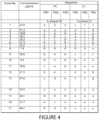
- the anti-PD-L1 antibody molecule comprises a heavy chain framework region having a combination of framework regions FW1, FW2 and FW3 as showin in FIGs. 4 or 6 .
- the antibody molecule comprises a light chain framework region having a combination of framework regions FW1, FW2 and FW3 as showin in FIGs. 4 or 6 .
- the antibody molecule comprises a heavy chain framework region having a combination of framework regions FW1, FW2 and FW3 as showin in FIGs. 4 or 6 , and a light chain framework region having a combination of framework regions FW1, FW2 and FW3 as showin in FIGs. 4 or 6 .
- the heavy or light chain variable domain, or both, of the anti-PD-L1 antibody molecule includes an amino acid sequence, which is substantially identical to an amino acid disclosed herein, e.g., at least 80%, 85%, 90%, 92%, 95%, 97%, 98%, 99% or higher identical to a variable region of an antibody described herein, e.g ., an antibody chosen from any of BAP058-hum01, BAP058-hum02, BAP058-hum03, BAP058-hum04, BAP058-hum05, BAP058-hum06, BAP058-hum07, BAP058-hum08, BAP058-hum09, BAP058-hum10, BAP058-hum11, BAP058-hum12, BAP058-hum13, BAP058-hum14, BAP058-hum15, BAP058-hum16, BAP058-hum17, BAP058-Clone-K, BAP058-C
- the heavy or light chain variable region, or both, of the anti-PD-L1 antibody molecule includes an amino acid sequence encoded by a nucleic acid sequence described herein or a nucleic acid that hybridizes to a nucleic acid sequence described herein (e.g., a nucleic acid sequence as shown in Tables 1 and 2) or its complement, e.g., under low stringency, medium stringency, or high stringency, or other hybridization condition described herein.
- the anti-PD-L1 antibody molecule comprises at least one, two, three, or four antigen-binding regions, e.g. , variable regions, having an amino acid sequence as set forth in Table 1, or a sequence substantially identical thereto ( e.g., a sequence at least about 85%, 90%, 95%, 99% or more identical thereto, or which differs by no more than 1, 2, 5, 10, or 15 amino acid residues from the sequences shown in Table 1.
- the anti-PD-L1 antibody molecule includes a VH and/or VL domain encoded by a nucleic acid having a nucleotide sequence as set forth in Table 1, or a sequence substantially identical thereto ( e.g., a sequence at least about 85%, 90%, 95%, 99% or more identical thereto, or which differs by no more than 3, 6, 15, 30, or 45 nucleotides from the sequences shown in Table 1.
- the anti-PD-L1 antibody molecule comprises at least one, two, or three CDRs from a heavy chain variable region having an amino acid sequence as set forth in Table 1, or a sequence substantially homologous thereto (e.g., a sequence at least about 85%, 90%, 95%, 99% or more identical thereto, and/or having one, two, three or more substitutions, insertions or deletions, e.g. , conserved substitutions).
- the anti-PD-L1 antibody molecule comprises at least one, two, or three CDRs from a light chain variable region having an amino acid sequence as set forth in Table 1, or a sequence substantially homologous thereto (e.g., a sequence at least about 85%, 90%, 95%, 99% or more identical thereto, and/or having one, two, three or more substitutions, insertions or deletions, e.g ., conserved substitutions).
- the anti-PD-L1 antibody molecule comprises at least one, two, three, four, five or six CDRs from heavy and light chain variable regions having an amino acid sequence as set forth in Table 1), or a sequence substantially homologous thereto (e.g., a sequence at least about 85%, 90%, 95%, 99% or more identical thereto, and/or having one, two, three or more substitutions, insertions or deletions, e.g ., conserved substitutions).
- the anti-PD-L1 antibody molecule comprises at least one, two, or three CDRs and/or hypervariable loops from a heavy chain variable region having an amino acid sequence of an antibody described herein, e.g ., an antibody chosen from any of BAP058-hum01, BAP058-hum02, BAP058-hum03, BAP058-hum04, BAP058-hum05, BAP058-hum06, BAP058-hum07, BAP058-hum08, BAP058-hum09, BAP058-hum10, BAP058-hum11, BAP058-hum12, BAP058-hum13, BAP058-hum14, BAP058-hum15, BAP058-hum16, BAP058-hum17, BAP058-Clone-K, BAP058-Clone-L, BAP058-Clone-M, BAP058-Clone-N, or BAP058-Clone
- the anti-PD-L1 antibody molecule comprises at least one, two, or three CDRs and/or hypervariable loops from a light chain variable region having an amino acid sequence of of an antibody described herein, e.g., an antibody chosen from any of BAP058-hum01, BAP058-hum02, BAP058-hum03, BAP058-hum04, BAP058-hum05, BAP058-hum06, BAP058-hum07, BAP058-hum08, BAP058-hum09, BAP058-hum10, BAP058-hum11, BAP058-hum12, BAP058-hum13, BAP058-hum14, BAP058-hum15, BAP058-hum16, BAP058-hum17, BAP058-Clone-K, BAP058-Clone-L, BAP058-Clone-M, BAP058-Clone-N, or BAP058-Clone
- the anti-PD-L1 antibody molecule has a variable region that is identical in sequence, or which differs by 1, 2, 3, or 4 amino acids from a variable region described herein (e.g., an FR region disclosed herein).
- the anti-PD-L1 antibody molecule is a full antibody or fragment thereof (e.g., a Fab, F(ab') 2 , Fv, or a single chain Fv fragment (scFv)).
- the anti-PD-L1 antibody molecule is a monoclonal antibody or an antibody with single specificity.
- the anti-PD-L1 antibody molecule can also be a humanized, chimeric, camelid, shark, or an in vitro -generated antibody molecule.
- the anti-PD-L1 antibody molecule thereof is a humanized antibody molecule.
- the heavy and light chains of the anti-PD-L1 antibody molecule can be full-length (e.g., an antibody can include at least one, and preferably two, complete heavy chains, and at least one, and preferably two, complete light chains) or can include an antigen-binding fragment (e.g., a Fab, F(ab') 2 , Fv, a single chain Fv fragment, a single domain antibody, a diabody (dAb), a bivalent antibody, or bispecific antibody or fragment thereof, a single domain variant thereof, or a camelid antibody).
- an antibody can include at least one, and preferably two, complete heavy chains, and at least one, and preferably two, complete light chains
- an antigen-binding fragment e.g., a Fab, F(ab') 2 , Fv, a single chain Fv fragment, a single domain antibody, a diabody (dAb), a bivalent antibody, or bispecific antibody or fragment thereof, a single domain variant thereof, or a came
- the anti-PD-L1 antibody molecule is in the form of a bispecific or a multispecific antibody molecule.
- the bispecific antibody molecule has a first binding specificity for PD-L1 and a second binding specifity for TIM-3, LAG-3, CEACAM (e.g., CEACAM-1, CEACAM-3 and/or CEACAM-5), PD-1 or PD-L2.
- the bispecific antibody molecule binds to PD-L1 and TIM-3.
- the bispecific antibody molecule binds to PD-L1 and LAG-3.
- the bispecific antibody molecule binds to PD-L1 and CEACAM (e.g., CEACAM-1, CEACAM-3 and/or CEACAM-5). In another embodiment, the bispecific antibody molecule binds to PD-L1 and CEACAM-1. In yet another embodiment, the bispecific antibody molecule binds to PD-L1 and CEACAM-5. In another embodiment, the bispecific antibody molecule binds to PD-L1 and PD-1. In yet another embodiment, the bispecific antibody molecule binds to PD-L1 and PD-L2. Any combination of the aforesaid molecules can be made in a multispecific antibody molecule, e.g.
- a trispecific antibody that includes a first binding specificity to PD-L1, and a second and third binding specificity to one or more of: TIM-3, LAG-3, CEACAM (e.g., CEACAM-1, CEACAM-3 and/or CEACAM-5), PD-1 or PD-L2.
- the second and/or third binding specifity for TIM-3, LAG-3 and/or PD-1 includes an amino acid sequence, or is encoded by a nucleotide sequence as disclosed herein ( e.g ., as disclosed in the section entitled "Inhibitors of Immune Checkpoint Molecules" starting on page 218 herein below (including all publications mentioned therein).
- the anti-PD-L1 antibody molecule is used in combination with a bispecific molecule comprising one or more of: TIM-3, LAG-3, CEACAM (e.g., CEACAM-1, CEACAM-3 and/or CEACAM-5), PD-1 or PD-L2.
- the bispecific antibody molecule used in combination binds to CEACAM (e.g., CEACAM-1, CEACAM-3 and/or CEACAM-5) and LAG-3.
- the bispecific antibody molecule used in combination binds to CEACAM ( e.g., CEACAM-1, CEACAM-3 and/or CEACAM-5) and TIM-3.
- the bispecific antibody molecule used in combination binds to LAG-3 and TIM-3.
- the anti-PD-L1 antibody molecule has a heavy chain constant region (Fc) chosen from, e.g., the heavy chain constant regions of IgG1, IgG2, IgG3, IgG4, IgM, IgA1, IgA2, IgD, and IgE; particularly, chosen from, e.g., the heavy chain constant regions of IgG1, IgG2, IgG3, and IgG4, more particularly, the heavy chain constant region of IgG1 or IgG2 ( e.g., human IgG1, IgG2 or IgG4).
- the heavy chain constant region is human IgG1.
- the anti-PD-L1 antibody molecule has a light chain constant region chosen from, e.g., the light chain constant regions of kappa or lambda, preferably kappa (e.g., human kappa).
- the constant region is altered, e.g., mutated, to modify the properties of the anti-PD-L1 antibody molecule (e.g., to increase or decrease one or more of: Fc receptor binding, antibody glycosylation, the number of cysteine residues, effector cell function, or complement function).
- the constant region is mutated at positions 296 (M to Y), 298 (S to T), 300 (T to E), 477 (H to K) and 478 (N to F) to alter Fc receptor binding (e.g., the mutated positions correspond to positions 132 (M to Y), 134 (S to T), 136 (T to E), 313 (H to K) and 314 (N to F) of SEQ ID NOs: 212 or 214; or positions 135 (M to Y), 137 (S to T), 139 (T to E), 316 (H to K) and 317 (N to F) of SEQ ID NOs: 215, 216, 217 or 218).
- the mutated positions correspond to positions 132 (M to Y), 134 (S to T), 136 (T to E), 313 (H to K) and 314 (N to F) of SEQ ID NOs: 212 or 214; or positions 135 (M to Y), 137 (S to T), 139 (T to
- the heavy chain constant region of an IgG4, e.g., a human IgG4, is mutated at position 228 (e.g., S to P), e.g., as shown in Table 3.
- the anti-PD-L1 antibody molecules comprises a human IgG4 mutated at position 228 (e.g., S to P), e.g., as shown in Table 3; and a kappa light chain constant region, e.g., as shown in Table 3.
- the heavy chain constant region of an IgG1, e.g., a human IgG1 is mutated at one or more of position 297 (e.g., N to A), position 265 (e.g., D to A), position 329 (e.g., P to A), position 234 (e.g., L to A), or position 235 (e.g., L to A), e.g., as shown in Table 3.
- the anti-PD-L1 antibody molecules comprises a human IgG1 mutated at one or more of the aforesaid positions, e.g ., as shown in Table 3; and a kappa light chain constant region, e.g., as shown in Table 3.
- the anti-PD-L1 antibody molecule is isolated or recombinant.
- the anti-PD-L1 antibody molecule is a humanized antibody molecule.
- the invention also features a nucleic acid molecule that comprise one or both nucleotide sequences that encode heavy and light chain variable regions, CDRs, hypervariable loops, framework regions of the anti-PD-L1 antibody molecules, as described herein.
- the nucleotide sequence that encodes the anti-PD-L1 antibody molecule is codon optimized.
- the invention features a first and second nucleic acid encoding heavy and light chain variable regions, respectively, of an anti-PD-L1 antibody molecule chosen from one or more of, e.g., any of BAP058-hum01, BAP058-hum02, BAP058-hum03, BAP058-hum04, BAP058-hum05, BAP058-hum06, BAP058-hum07, BAP058-hum08, BAP058-hum09, BAP058-hum10, BAP058-hum11, BAP058-hum12, BAP058-hum13, BAP058-hum14, BAP058-hum15, BAP058-hum16, BAP058-hum17, BAP058-Clone-K, BAP058-Clone-L, BAP058-Clone-M, BAP058-Clone-N, or BAP058-Clone-O, as summarized in Table 1, or a sequence
- the nucleic acid can comprise a nucleotide sequence as set forth in Tables 1 and 2, or a sequence substantially identical thereto (e.g., a sequence at least about 85%, 90%, 95%, 99% or more identical thereto, or which differs by no more than 3, 6, 15, 30, or 45 nucleotides from the sequences shown in Tables 1 and 2).
- the nucleic acid molecule comprises a nucleotide sequence that encodes a heavy chain variable domain and/or a heavy chain constant region comprising the amino acid sequence of BAP058-Clone-K, BAP058-Clone-L, BAP058-Clone-M, BAP058-Clone-N, or BAP058-Clone-O; or as described in Table 1; or the nucleotide sequence in Table 1; or a sequence substantially identical (e.g., a sequence at least about 85%, 90%, 95%, 99% or more identical) to any of the aforesaid sequences.
- the nucleic acid molecule comprises a nucleotide sequence that encodes a light chain variable domain and/or a light chain constant region comprising the amino acid sequence of BAP058-Clone-K, BAP058-Clone-L, BAP058-Clone-M, BAP058-Clone-N, or BAP058-Clonc-O; or as described in Table 1; or the nucleotide sequence in Table 1; or a sequence substantially identical (e.g., a sequence at least about 85%, 90%, 95%, 99% or more identical) to any of the aforesaid sequences.
- nucleic acid molecules comprise a nucleotide sequence encoding a leader sequence.
- the nucleic acid molecule comprises a nucleotide sequence encoding at least one, two, or three CDRs, or hypervariable loops, from a heavy chain variable region having an amino acid sequence as set forth in Table 1, or a sequence substantially homologous thereto ( e.g., a sequence at least about 85%, 90%, 95%, 99% or more identical thereto, and/or having one, two, three or more substitutions, insertions or deletions, e.g ., conserved substitutions).
- the nucleic acid molecule comprises a nucleotide sequence encoding at least one, two, or three CDRs, or hypervariable loops, from a light chain variable region having an amino acid sequence as set forth in Table 1, or a sequence substantially homologous thereto (e.g., a sequence at least about 85%, 90%, 95%, 99% or more identical thereto, and/or having one, two, three or more substitutions, insertions or deletions, e.g ., conserved substitutions).
- the nucleic acid molecule comprises a nucleotide sequence encoding at least one, two, three, four, five, or six CDRs, or hypervariable loops, from heavy and light chain variable regions having an amino acid sequence as set forth in Table 1, or a sequence substantially homologous thereto (e.g., a sequence at least about 85%, 90%, 95%, 99% or more identical thereto, and/or having one, two, three or more substitutions, insertions or deletions, e.g ., conserved substitutions).
- the nucleic acid molecule includes one or more heavy chain framework region (e.g., any of VHFW1 (type a), VHFW1 (type b), VHFW1 (type c), VHFW1 (type d), VHFW2 (type a), VHFW2 (type a'), VHFW2 (type b), VHFW2 (type c), VHFW2 (type d), VHFW2 (type e),VHFW3 (type a), VHFW3 (type b), VHFW3 (type c), VHFW3 (type d), VHFW3 (type e),or VHFW4, or any combination thereof, e.g., a framework combination as described herein) for any of BAP058-hum01, BAP058-hum02, BAP058-hum03, BAP058-hum04, BAP058-hum05, BAP058-hum06, BAP058-hum07, BAP058-hum08,
- the nucleic acid molecule can comprise a nucleotide sequence as set forth in Tables 1 and 2, or a sequence substantially identical thereto (e.g., a sequence at least about 85%, 90%, 95%, 99% or more identical thereto, or which differs by no more than 3, 6, 15, 30, or 45 nucleotides from the sequences shown in Tables 1 and 2).
- the nucleic acid molecule includes one or more light chain framework region (e.g., any of VLFW1 (type a), VLFW1 (type b), VLFW1 (type c), VLFW1 (type d), VLFW1 (type e), VLFW1 (type f), VLFW2 (type a), VLFW2 (type c), VLFW3 (type a), VLFW3 (type b), VLFW3 (type c), VLFW3 (type d), VLFW3 (type e), VLFW3 (type f), VLFW3 (type g), or VLFW4, or any combination thereof, e.g., a framework combination as described herein) for any of BAP058-hum01, BAP058-hum02, BAP058-hum03, BAP058-hum04, BAP058-hum05, BAP058-hum06, BAP058-hum07, BAP058-hum08,
- the nucleic acid molecule can comprise a nucleotide sequence as set forth in Tables 1 and 2, or a sequence substantially identical thereto (e.g., a sequence at least about 85%, 90%, 95%, 99% or more identical thereto, or which differs by no more than 3, 6, 15, 30, or 45 nucleotides from the sequences shown in Tables 1 and 2).
- the nucleic acid molecule includes one or more heavy chain framework region and one or more light chain framework region as described herein.
- the heavy and light chain framework regions may be present in the same vector or separate vectors.
- the application features host cells and vectors containing the nucleic acids described herein.
- the nucleic acids may be present in a single vector or separate vectors present in the same host cell or separate host cell.
- the host cell can be a eukaryotic cell, e.g., a mammalian cell, an insect cell, a yeast cell, or a prokaryotic cell, e.g., E. coli.
- the mammalian cell can be a cultured cell or a cell line.
- Exemplary mammalian cells include lymphocytic cell lines (e.g., NSO), Chinese hamster ovary cells (CHO), COS cells, oocyte cells, and cells from a transgenic animal, e.g. , mammary epithelial cell.
- the invention features a method of providing an antibody molecule described herein.
- the method includes: providing a PD-L1 antigen (e.g., an antigen comprising at least a portion of a PD-L1 epitope); obtaining an antibody molecule that specifically binds to the PD-L1 polypeptide; and evaluating if the antibody molecule specifically binds to the PD-L1 polypeptide, or evaluating efficacy of the antibody molecule in modulating, e.g. , inhibiting, the activity of the PD-L1 .
- the method can further include administering the antibody molecule to a subject, e.g. , a human or non-human animal.
- the invention provides, compositions, e.g ., pharmaceutical compositions, which include a pharmaceutically acceptable carrier, excipient or stabilizer, and at least one of the anti-PD-L1 antibody molecules described herein.
- the composition e.g ., the pharmaceutical composition, includes a combination of the antibody molecule and one or more agents, e.g., a therapeutic agent or other antibody molecule, as described herein.
- the antibody molecule is conjugated to a label or a therapeutic agent.
- the anti-PD-L1 antibody molecules disclosed herein can inhibit, reduce or neutralize one or more activities of PD-L1, resulting in blockade or reduction of an immune checkpoint.
- the antibody molecule results in one or more of: an increase in tumor infiltrating lymphocytes, an increase in T-cell receptor mediated proliferation, a decrease in immune evasion by cancerous cells, restoration of effector cell function (e.g., one or more of T cell proliferation, IFN-y secretion or cytolytic function), inhibition of regulatory T cell function, or an effect on the activity of multiple cell types, such as regulatory T cell, effector T cells and NK cells).
- effector cell function e.g., one or more of T cell proliferation, IFN-y secretion or cytolytic function
- regulatory T cell function e.g., one or more of regulatory T cell proliferation, IFN-y secretion or cytolytic function
- regulatory T cell function e.g., one or more of regulatory T cell proliferation, IFN-y secretion or cyto
- a method of modulating an immune response in a subject comprises administering to the subject an anti-PD-L1 antibody molecule disclosed herein (e.g., a therapeutically effective amount of an anti-PD-L1 antibody molecule), alone or in combination with one or more agents or procedures, such that the immune response in the subject is modulated.
- the antibody molecule enhances, stimulates or increases the immune response in the subject.
- the subject can be a mammal, e.g ., a primate, preferably a higher primate, e.g., a human ( e.g., a patient having, or at risk of having, a disorder described herein).
- the subject is in need of enhancing an immune response.
- the subject has, or is at risk of, having a disorder described herein, e.g., a cancer or an infectious disorder as described herein.
- the subject is, or is at risk of being, immunocompromised.
- the subject is undergoing or has undergone a chemotherapeutic treatment and/or radiation therapy.
- the subject is, or is at risk of being, immunocompromised as a result of an infection.
- a method of treating e.g., one or more of reducing, inhibiting, or delaying progression
- the method comprises administering to the subject an anti-PD-L1 antibody molecule described herein, e.g., a therapeutically effective amount of an anti-PD-L1 antibody molecule, alone or in combination with one or more agents or procedures.
- the anti-PD-L1 antibody molecule is administered in combination with a modulator of a costimulatory molecule (e.g., an agonist of a costimulatory molecule) or a modulator of an inhibitory molecule (e.g., an inhibitor of an immune checkpoint inhibitor), e.g. , as described herein.
- the cancer treated with the anti-PD-L1 antibody molecule includes but is not limited to, a solid tumor, a hematological cancer (e.g., leukemia, lymphoma, myeloma, e.g. , multiple myeloma), and a metastatic lesion.
- the cancer is a solid tumor.
- solid tumors include malignancies, e.g ., sarcomas and carcinomas, e.g., adenocarcinomas, and carcinomas, of the various organ systems, such as those affecting the lung, breast, ovarian, lymphoid, gastrointestinal ( e.g., colon), anal, genitals and genitourinary tract (e.g., renal, urothelial, bladder cells, prostate), pharynx, CNS ( e.g., brain, neural or glial cells), head and neck, skin ( e.g., melanoma), a nasopharyngeal cancer, e.g., differentiated or undifferentiated metastatic or locally recurrent nasopharyngeal carcinoma), and pancreas, as well as adenocarcinomas which include malignancies such as colon cancers, rectal cancer, renal-cell carcinoma, liver cancer, non-small cell lung cancer, cancer of the small intestine
- the cancer is chosen from a lung cancer (e.g., a non-small cell lung cancer (NSCLC) (e.g., a NSCLC with squamous and/or non-squamous histology, or a NSCLC adenocarcinoma)), a melanoma (e.g., an advanced melanoma), a renal cancer (e.g., a renal cell carcinoma), a liver cancer, a myeloma ( e.g., a multiple myeloma), a prostate cancer, a breast cancer (e.g., a breast cancer that does not express one, two or all of estrogen receptor, progesterone receptor, or Her2/neu, e.g ., a triple negative breast cancer), a colorectal cancer, a pancreatic cancer, a head and neck cancer (e.g.
- NSCLC non-small cell lung cancer
- a melanoma e.g., an advanced mel
- HNSCC head and neck squamous cell carcinoma
- anal cancer gastro-esophageal cancer, thyroid cancer, cervical cancer, a lymphoproliferative disease (e.g., a post-transplant lymphoproliferative disease) or a hematological cancer, T-cell lymphoma, B-cell lymphoma, a non-Hogdkin lymphoma, or a leukemia (e.g., a myeloid leukemia or a lymphoid leukemia).
- a lymphoproliferative disease e.g., a post-transplant lymphoproliferative disease
- a hematological cancer T-cell lymphoma, B-cell lymphoma, a non-Hogdkin lymphoma
- a leukemia e.g., a myeloid leukemia or a lymphoid leukemia.
- the cancer is chosen form a carcinoma (e.g., advanced or metastatic carcinoma), melanoma or a lung carcinoma, e.g ., a non-small cell lung carcinoma.
- the cancer is a lymphoma, e.g ., diffuse large B-cell lymphoma, Hodgkin lymphoma, non-Hodgkin's lymphoma.
- a lymphoma e.g ., diffuse large B-cell lymphoma, Hodgkin lymphoma, non-Hodgkin's lymphoma.
- the cancer is a breast cancer, e.g. , metastic breast cancer.
- the cancer is leukemia, e.g. , chronic myelogenous leukemia.
- the cancer is a head and neck cancer, e.g ., head and neck squamous cell carcinoma (HNSCC).
- HNSCC head and neck squamous cell carcinoma
- the cancer is myelodysplastic syndrome.
- the cancer is a bladder cancer (e.g., transitional cell carcinoma).
- the cancer is a colon cancer.
- the cancer is a lung cancer, e.g ., a non-small cell lung cancer (NSCLC), e.g., stage IV or recurrent NSCLC, a NSCLC adenocarcinoma, or a NSCLC squamous cell carcinoma or small cell lung cancer.
- NSCLC non-small cell lung cancer
- the cancer is skin cancer, e.g., melanoma (e.g., stage III or IV melanoma) or Merkel cell carcinoma.
- the cancer is a melanoma, e.g ., an advanced melanoma.
- the cancer is an advanced or unresectable melanoma that does not respond to other therapies.
- the cancer is a melanoma with a BRAF mutation (e.g., a BRAF V600 mutation).
- the anti-PD-L1 antibody molecule is administered after treatment with an anti-CTLA-4 antibody (e.g., ipilimumab) with or without a BRAF inhibitor (e.g., vemurafenib or dabrafenib).
- an anti-CTLA-4 antibody e.g., ipilimumab
- a BRAF inhibitor e.g., vemurafenib or dabrafenib.
- the cancer is a hepatocarcinoma, e.g. , an advanced hepatocarcinoma, with or without a viral infection, e.g ., a chronic viral hepatitis.
- a hepatocarcinoma e.g. , an advanced hepatocarcinoma
- a viral infection e.g ., a chronic viral hepatitis.
- the cancer is a prostate cancer, e.g ., an advanced prostate cancer.
- the cancer is a myeloma, e.g ., multiple myeloma.
- the cancer is a renal cancer, e.g ., a renal cell carcinoma (RCC) (e.g., a metastatic RCC or clear cell renal cell carcinoma (CCRCC), e.g ., advanced or metastatic clear-cell renal cell carcinoma).
- RCC renal cell carcinoma
- CCRCC clear cell renal cell carcinoma
- the cancer microenvironment has an elevated level of PD-L1 expression.
- the cancer microenvironment can have increased IFNy and/or CD8 expression.
- the subjet has elevated level of Bim expression (e.g., in PD-1 +CD8+ T cells compared to PD-1-CD8+ T cells).
- the subject has, or is identified as having, a tumor that has one or more of high PD-L1 level or expression, or as being Tumor Infiltrating Lymphocyte (TIL)+ ( e.g., as having an increased number of TILs), or both.
- TIL Tumor Infiltrating Lymphocyte
- the subject has, or is identified as having, a tumor that has high PD-L1 level or expression and that is TIL+.
- the methods described herein further include identifying a subject based on having a tumor that has one or more of high PD-L1 level or expression, or as being TIL+, or both.
- the methods described herein further include identifying a subject based on having a tumor that has high PD- L1 level or expression and as being TIL+.
- tumors that are TIL+ are positive for CD8 and IFN ⁇ .
- the subject has, or is identified as having, a high percentage of cells that are positive for one, two or more of PD-L1, CD8, and/or IFNy.
- the subject has or is identified as having a high percentage of cells that are positive for all of PD-L1, CD8, and IFNy.
- the subject can be identified prior to, during, or after receiving a therapy, e.g., an anti-PD-L1 antibody molecule therapy and/or another therapy as described herein.
- the subject is identified prior to receiving a therapy, e.g., a therapy as described herein (e.g., prior to the onset of a therapy or between treatment intervals).
- the methods described herein further include identifying a subject based on having a high percentage of cells that are positive for one, two or more of PD-L1, CD8, and/or IFNy. In certain embodiments, the methods described herein further include identifying a subject based on having a high percentage of cells that are positive for all of PD-L1, CD8, and IFNy.
- the subject has, or is identified as having, one, two or more of PD-L1, CD8, and/or IFNy, and one or more of a lung cancer, e.g ., squamous cell lung cancer or lung adenocarcinoma; a head and neck cancer; a squamous cell cervical cancer; a stomach cancer; an esophageal cancer; a thyroid cancer; a melanoma, and/or a nasopharyngeal cancer (NPC).
- the methods described herein further describe identifying a subject based on having one, two or more of PD-L1, CD8, and/or IFNy, and one or more of a lung cancer, e.g.
- squamous cell lung cancer or lung adenocarcinoma a head and neck cancer; a squamous cell cervical cancer; a stomach cancer; a thyroid cancer; a melanoma, and or a nasopharyngeal cancer.
- the subject can be identified prior to, during, or after receiving a therapy, e.g., an anti-PD-L1 antibody molecule therapy and/or another therapy as described herein.
- the subject is identified prior to receiving a therapy, e.g., a therapy as described herein (e.g., prior to the onset of a therapy or between treatment intervals).
- Methods and compositions disclosed herein are useful for treating metastatic lesions associated with the aforementioned cancers.
- the invention provides a method of treating an infectious disease in a subject, comprising administering to a subject a therapeutically effective amount of an anti-PD-L1 antibody molecule described herein, alone or in combination with one or more agents or procedures.
- the infection disease is chosen from hepatitis (e.g., hepatis C infection), or sepsis.
- the invention provides a method of enhancing an immune response to an antigen in a subject, comprising administering to the subject: (i) the antigen; and (ii) an anti-PD-L1 antibody molecule, such that an immune response to the antigen in the subject is enhanced.
- the antigen can be, for example, a tumor antigen, a viral antigen, a bacterial antigen or an antigen from a pathogen.
- the anti-PD-L1 antibody molecule can be administered to the subject systemically (e.g., orally, parenterally, subcutaneously, intravenously, rectally, intramuscularly, intraperitoneally, intranasally, transdermally, or by inhalation or intracavitary installation), topically, or by application to mucous membranes, such as the nose, throat and bronchial tubes.
- the anti-PD-L1 antibody molecule is administered by injection ( e.g., subcutaneously or intravenously) at a dose of about 1 to 30 mg/kg, e.g. , about 5 to 25 mg/kg, about 10 to 20 mg/kg, about 1 to 5 mg/kg, or about 3 mg/kg.
- the dosing schedule can vary from e.g., once a week to once every 2, 3, or 4 weeks.
- the anti-PD-L1 antibody molecule is administered at a dose from about 10 to 20 mg/kg every other week.
- the anti-PD-L1 antibody molecule is administered, alone or in combination ( e.g., in combination with an anti-LAG-3 antibody molecule), at a dose of less than, or about, 5 mg/kg; less than, or about, 4 mg/kg; less than, or about, 3 mg/kg; less than, or about, 2 mg/kg; less than, or about, 1 mg/kg, every other week.
- the anti-PD-L1 antibody molecule is administered at a dose of 1 to 5 mg/kg every other week; 1 to 4 mg/kg every other week, 1 to 3 mg/kg every other week, or 1 to 2 mg/kg every other week.
- the anti-LAG-3 antibody molecule is administered, alone or in combination (e.g., in combination with an anti-PD-L1 antibody molecule) at a dose of 1 to 5 mg/kg every other week; 1 to 4 mg/kg every other week, 1 to 3 mg/kg every other week, or 1 to 2 mg/kg every other week.
- the antibody molecules described herein can be used in the methods described herein, although other anti-PD-L1 antibodies can be used instead, or in combination with an anti-PD-L1 antibody molecule of the invention.
- the methods described herein can be used in combination with other agents or therapeutic modalities.
- the methods described herein include administering to the subject an anti-PD-L1 antibody molecule as described herein, in combination with an agent or therapeutic procedure or modality, in an amount effective to treat or prevent a disorder.
- the anti-PD-L1 antibody molecule and the agent or therapeutic procedure or modality can be administered simultaneously or sequentially in any order. Any combination and sequence of the anti-PD-L1 antibody molecules and other therapeutic agents, procedures or modalities ( e.g., as described herein) can be used.
- the antibody molecule and/or other therapeutic agents, procedures or modalities can be administered during periods of active disorder, or during a period of remission or less active disease.
- the antibody molecule can be administered before the other treatment, concurrently with the treatment, post-treatment, or during remission of the disorder.
- the methods and compositions described herein are administered in combination with one or more of other antibody molecules, chemotherapy, other anti-cancer therapy (e.g., targeted anti-cancer therapies, gene therapy, viral therapy, RNA therapy bone marrow transplantation, nanotherapy, or oncolytic drugs), cytotoxic agents, immune-based therapies (e.g., cytokines or cell-based immune therapies), surgical procedures (e.g., lumpectomy or mastectomy) or radiation procedures, or a combination of any of the foregoing.
- the additional therapy may be in the form of adjuvant or neoadjuvant therapy.
- the additional therapy is an enzymatic inhibitor (e.g., a small molecule enzymatic inhibitor) or a metastatic inhibitor.
- exemplary cytotoxic agents that can be administered in combination with include antimicrotubule agents, topoisomerase inhibitors, anti-metabolites, mitotic inhibitors, alkylating agents, anthracyclines, vinca alkaloids, intercalating agents, agents capable of interfering with a signal transduction pathway, agents that promote apoptosis, proteosome inhibitors, and radiation ( e.g ., local or whole body irradiation ( e.g., gamma irradiation).
- the additional therapy is surgery or radiation, or a combination thereof.
- the additional therapy is a therapy targeting one or more of PI3K/AKT/mTOR pathway, an HSP90 inhibitor, or a tubulin inhibitor.
- the methods and compositions described herein can be administered in combination with one or more of: an immunomodulator (e.g., an activator of a costimulatory molecule or an inhibitor of an inhibitory molecule, e.g., an immune checkpoint molecule); a vaccine, e.g., a therapeutic cancer vaccine; or other forms of cellular immunotherapy.
- an immunomodulator e.g., an activator of a costimulatory molecule or an inhibitor of an inhibitory molecule, e.g., an immune checkpoint molecule
- a vaccine e.g., a therapeutic cancer vaccine
- Exemplary non-limiting combinations and uses of the anti-PD-L1 antibody molecules include the following.
- the anti-PD-L1 antibody molecule is administered in combination with a modulator of a costimulatory molecule or an inhibitory molecule, e.g., a co-inhibitory ligand or receptor.
- the anti-PD-L1 antibody molecule is administered in combination with a modulator, e.g ., agonist, of a costimulatory molecule.
- a modulator e.g ., agonist
- the agonist of the costimulatory molecule is chosen from an agonist (e.g., an agonistic antibody or antigen-binding fragment thereof, or a soluble fusion) of OX40, CD2, CD27, CDS, ICAM-1, LFA-1 (CD11a/CD18), ICOS (CD278), 4-1BB (CD137), GITR, CD30, CD40, BAFFR, HVEM, CD7, LIGHT, NKG2C, SLAMF7, NKp80, CD160, B7-H3 or CD83 ligand.
- an agonist e.g., an agonistic antibody or antigen-binding fragment thereof, or a soluble fusion
- OX40 CD2, CD27, CDS, ICAM-1, LFA-1 (CD11
- the anti-PD-L1 antibody molecule is administered in combination with an inhibitor of an inhibitory (or immune checkpoint) molecule chosen from PD-1, PD-L2, CTLA-4, TIM-3, LAG-3, CEACAM (e.g., CEACAM-1, CEACAM-3 and/or CEACAM-5), VISTA, BTLA, TIGIT, LAIR1, CD160, 2B4 and/or TGFR beta.
- an inhibitory nucleic acid e.g., a dsRNA, siRNA or shRNA
- the inhibitor of an inhibitory signal is, a polypeptide e.g., a soluble ligand, or an antibody or antigen-binding fragment thereof, that binds to the inhibitory molecule.
- the inhibitor is a soluble ligand (e.g., a CTLA-4-Ig), or an antibody or antibody fragment that binds to PD-1, PD-L2 or CTLA-4.
- the anti-PD-L1 antibody molecule can be administered in combination with an anti-CTLA-4 antibody, e.g., ipilimumab, for example, to treat a cancer (e.g., a cancer chosen from: a melanoma, e.g., a metastatic melanoma; a lung cancer, e.g., a non-small cell lung carcinoma; or a prostate cancer).
- a cancer e.g., a cancer chosen from: a melanoma, e.g., a metastatic melanoma
- a lung cancer e.g., a non-small cell lung carcinoma
- a prostate cancer e.g., a cancer chosen from: a melanoma, e.g., a metastatic melanoma
- a lung cancer e.g., a non-small cell lung carcinoma
- a prostate cancer e.g., a cancer chosen from: a melanom
- the anti-PD-L1 antibody molecule is administered in combination with an anti-LAG-3 antibody or antigen-binding fragment thereof.
- the anti-PD-L1 antibody molecule is administered in combination with an anti-TIM-3 antibody or antigen-binding fragment thereof.
- the anti-PD-L1 antibody molecule is administered in combination with an anti-LAG-3 antibody and an anti-TIM-3 antibody (or antigen-binding fragments thereof).
- the anti-PD-L1 antibody is administered in combination with a CEACAM inhibitor (e.g., CEACAM-1, CEACAM-3 and/or CEACAM-5), e.g., an anti-CEACAM antibody molecule.
- a CEACAM inhibitor e.g., CEACAM-1, CEACAM-3 and/or CEACAM-5
- the anti-PD-L1 antibody molecule is administered in combination with a CEACAM-1 inhibitor, e.g. , an anti-CEACAM-1 antibody molecule.
- the anti-PD-L1 antibody molecule is administered in combination with a CEACAM-5 inhibitor, e.g ., an anti-CEACAM-5 antibody molecule.
- the combination of antibodies recited herein can be administered separately, e.g ., as separate antibodies or antigen-binding fragments thereof, or linked, e.g., as a bispecific or trispecific antibody molecule.
- a bispecific antibody that includes an anti-PD-L1 antibody molecule and an anti-TIM-3, anti-CEACAM (e.g., CEACAM-1, CEACAM-3 and/or CEACAM-5), or anti-LAG-3 antibody, or an antigen-binding fragment thereof, is administered.
- the combination of antibodies recited herein is used to treat a cancer, e.g., a cancer as described herein ( e.g., a solid tumor or a hematologic malignancy).
- the antibody molecule e.g., mono-, bi- or trispecific antibody
- the antibody molecule for TIM-3, LAG-3 and/or PD-1 used in any of the methods and compositions disclosed herein includes an amino acid sequence, or is encoded by a nucleotide sequence as described herein ( e.g., as disclosed in the section entitled "Inhibitors of Immune Checkpoint Molecules" starting on page 218 hereinbelow (including all publications mentioned therein).
- the anti-PD-L1 antibody molecule is administered in combination with a cytokine.
- the cytokine can be administered as a fusion to the anti-PD-L1 antibody molecule, or as separate compositions.
- the anti-PD-L1 antibody is administered in combination with one, two, three or more cytokines, e.g ., as a fusion molecule or as separate compositions.
- the cytokine is an interleukin (IL) chosen from one, two, three or more of IL-1, IL-2, IL-15 or IL-21.
- the combination of anti-PD-L1 antibody molecule and the cytokine described herein is used to treat a cancer, e.g., a cancer as described herein ( e.g., a solid tumor).
- the anti-PD-L1 antibody molecule is administered in combination with an antibody specific against an HLA C, e.g., an antibody specific to Killer-cell Immunoglobulin-like Receptors (also referred to herein as an "anti-KIR antibody").
- an antibody specific against an HLA C e.g., an antibody specific to Killer-cell Immunoglobulin-like Receptors (also referred to herein as an "anti-KIR antibody"
- the combination of anti-PD-L1 antibody molecule and anti-KIR antibody is used to treat a cancer, e.g., a cancer as described herein (e.g., a solid tumor, e.g., an advanced solid tumor).
- the anti-PD-L1 antibody molecule is administered in combination with a cellular immunotherapy (e.g., Provenge ® (e.g., Sipuleucel-T)), and optionally in combination with cyclophosphamide.
- a cellular immunotherapy e.g., Provenge ® (e.g., Sipuleucel-T)
- cyclophosphamide optionally in combination with cyclophosphamide.
- the combination of anti-PD-L1 antibody molecule, Provenge ® and/or cyclophosphamide is used to treat a cancer, e.g., a cancer as described herein ( e.g., a prostate cancer, e.g., an advanced prostate cancer).
- the anti-PD-L1 antibody molecule is administered in combination with a vaccine, e.g., a cancer vaccine, (e.g., a dendritic cell renal carcinoma (DC-RCC) vaccine).
- a vaccine e.g., a cancer vaccine, (e.g., a dendritic cell renal carcinoma (DC-RCC) vaccine).
- the vaccine is peptide-based, DNA-based, RNA-based, or antigen-based, or a combination thereof.
- the vaccine comprises one or more peptides, nucleic acids (e.g., DNA or RNA), antigens, or a combination thereof.
- the combination of anti-PD-L1 antibody molecule and the DC-RCC vaccine is used to treat a cancer, e.g., a cancer as described herein (e.g., a renal carcinoma, e.g., metastatic renal cell carcinoma (RCC) or clear cell renal cell carcinoma (CCRCC)).
- a cancer e.g., a cancer as described herein (e.g., a renal carcinoma, e.g., metastatic renal cell carcinoma (RCC) or clear cell renal cell carcinoma (CCRCC)).
- a cancer as described herein e.g., a renal carcinoma, e.g., metastatic renal cell carcinoma (RCC) or clear cell renal cell carcinoma (CCRCC)
- the anti-PD-1 antibody molecule is administered in combination with an adjuvant.
- the anti-PD-L1 antibody molecule is administered in combination with chemotherapy, and/or immunotherapy.
- the anti-PD-L1 antibody molecule can be used to treat a myeloma, alone or in combination with one or more of: chemotherapy or other anti-cancer agents (e.g., thalidomide analogs, e.g., lenalidomide), an anti-TIM-3 antibody, tumor antigen-pulsed dendritic cells, fusions (e.g., electrofusions) of tumor cells and dendritic cells, or vaccination with immunoglobulin idiotype produced by malignant plasma cells.
- the anti-PD-L1 antibody molecule is used in combination with an anti-TIM-3 antibody to treat a myeloma, e.g ., a multiple myeloma.
- the anti-PD-L1 antibody molecule is used in combination with chemotherapy to treat a lung cancer, e.g ., non-small cell lung cancer.
- a lung cancer e.g ., non-small cell lung cancer.
- the anti-PD-L1 antibody molecule is used with standard lung, e.g., NSCLC, chemotherapy, e.g., platinum doublet therapy, to treat lung cancer.
- the anti-PD-L1 antibody molecule is used in combination with an indoleamine-pyrrole 2,3-dioxygenase (IDO) inhibitor (e.g., (4E)-4-[(3-chloro-4-fluoroanilino)-nitrosomethylidene]-1 ,2,5-oxadiazol-3-amine (also known as INCB24360), indoximod (1-methyl-D-tryptophan), ⁇ -cyclohexyl-5H-Imidazo[5,1-a]isoindole-5-ethanol (also known as NLG919), etc.)) in a subject with advanced or metastatic cancer (e.g., a patient with metastic and recurrent NSCL cancer).
- IDO indoleamine-pyrrole 2,3-dioxygenase
- the anti-PD-L1 antibody molecule is used in combination with one or more of: an immune-based strategy (e.g., interleukin-2 or interferon- ⁇ ), a targeting agent (e.g., a VEGF inhibitor such as a monoclonal antibody to VEGF); a VEGF tyrosine kinase inhibitor such as sunitinib, sorafenib, axitinib and pazopanib; an RNAi inhibitor; or an inhibitor of a downstream mediator of VEGF signaling, e.g. , an inhibitor of the mammalian target of rapamycin (mTOR), e.g. , everolimus and temsirolimus.
- mTOR mammalian target of rapamycin
- Any of such combinations can be used to treat a renal cancer, e.g., renal cell carcinoma (RCC) (e.g., clear cell renal cell carcinoma (CCRCC)) or metastatic RCC.
- the anti-PD-L1 antibody molecule e.g., the anti-PD-L1 antibody molecule described herein, is used in combination with a MEK inhibitor (e.g., a MEK inhibitor as described herein).
- the combination of the anti-PD-L1 antibody and the MEK inhibitor is used to treat a cancer (e.g., a cancer described herein).
- the cancer treated with the combination is chosen from a melanoma, a colorectal cancer, a non-small cell lung cancer, an ovarian cancer, a breast cancer, a prostate cancer, a pancreatic cancer, a hematological malignancy or a renal cell carcinoma.
- the cancer includes a BRAF mutation (e.g., a BRAF V600E mutation), a BRAF wildtype, a KRAS wildtype or an activating KRAS mutation.
- the cancer may be at an early, intermediate or late stage.
- the anti-PD-L1 antibody molecule is used in combination with one, two or all of oxaliplatin, leucovorin or 5-FU (e.g., a FOLFOX co-treatment).
- combination further includes a VEGF inhibitor (e.g., a VEGF inhibitor as disclosed herein).
- the combination of the anti-PD-L1 antibody, the FOLFOX co-treatment, and the VEGF inhibitor is used to treat a cancer (e.g., a cancer described herein).
- the cancer treated with the combination is chosen from a melanoma, a colorectal cancer, a non-small cell lung cancer, an ovarian cancer, a breast cancer, a prostate cancer, a pancreatic cancer, a hematological malignancy or a renal cell carcinoma.
- the cancer may be at an early, intermediate or late stage.
- the anti-PD-L1 antibody molecule is administered with a tyrosine kinase inhibitor (e.g., axitinib) to treat renal cell carcinoma and other solid tumors.
- a tyrosine kinase inhibitor e.g., axitinib
- the anti-PD-L1 antibody molecule is administered with a 4-1BB receptor targeting agent (e.g., an antibody that stimulates signaling through 4-1BB (CD-137), e.g., PF-2566).
- a 4-1BB receptor targeting agent e.g., an antibody that stimulates signaling through 4-1BB (CD-137), e.g., PF-2566.
- the anti-PD-L1 antibody molecule is administered in combination with a tyrosine kinase inhibitor (e.g., axitinib) and a 4-1BB receptor targeting agent.
- the anti-PD-L1 antibody molecule can be bound to a substance, e.g. , a cytotoxic agent or moiety (e.g., a therapeutic drug; a compound emitting radiation; molecules of plant, fungal, or bacterial origin; or a biological protein (e.g., a protein toxin) or particle (e.g., a recombinant viral particle, e.g ., via a viral coat protein).
- the antibody can be coupled to a radioactive isotope such as an ⁇ -, ⁇ -, or ⁇ -emitter, or a ⁇ -and ⁇ -emitter.
- any combination and sequence of the anti-PD-L1 antibody molecules and other therapeutic agents, procedures or modalities can be used.
- the antibody molecule and/or other therapeutic agents, procedures or modalities can be administered during periods of active disorder, or during a period of remission or less active disease.
- the antibody molecule can be administered before the other treatment, concurrently with the treatment, post-treatment, or during remission of the disorder.
- compositions described herein can be used in combination with other agents or therapeutic modalities, e.g ., a second therapeutic agent chosen from one or more of the agents listed in Table 6.
- the methods described herein include administering to the subject an anti-PD-L1 antibody molecule as described herein (optionally in combination with one or more inhibitors of PD-1, LAG-3, TIM-3, CEACAM (e.g., CEACAM-1, CEACAM-3, and/or CEACAM-5), or CTLA-4)), further include administration of a second therapeutic agent chosen from one or more of the agents listed in Table 6, in an amount effective to treat or prevent a disorder, e.g., a disorder as described herein, e.g., a cancer.
- a disorder e.g., a disorder as described herein, e.g., a cancer.
- the anti-PD-L1 antibody molecule, the additional agent (e.g., second or third agent), or all can be administered in an amount or dose that is higher, lower or the same than the amount or dosage of each agent used individually, e.g ., as a monotherapy.
- the administered amount or dosage of the anti-PD-L1 antibody, the additional agent (e.g., second or third agent), or all is lower (e.g., at least 20%, at least 30%, at least 40%, or at least 50%) than the amount or dosage of each agent used individually, e.g ., as a monotherapy.
- the amount or dosage of the anti-PD-L1 antibody, the additional agent (e.g., second or third agent), or all, that results in a desired effect (e.g., treatment of cancer) is lower (e.g., at least 20%, at least 30%, at least 40%, or at least 50% lower).
- the second therapeutic agent is chosen from one or more of the agents listed in Table 6
- the cancer is chosen from a lung cancer (e.g., a non-small cell lung cancer (NSCLC) (e.g., a NSCLC with squamous and/or non-squamous histology, or a NSCLC adenocarcinoma), or disclosed in a publication listed in Table 6.
- NSCLC non-small cell lung cancer
- the second therapeutic agent is chosen from one or more of: 1) a protein kinase C (PKC) inhibitor; 2) a heat shock protein 90 (HSP90) inhibitor; 3) an inhibitor of a phosphoinositide 3-kinase (PI3K) and/or target of rapamycin (mTOR); 4) an inhibitor of cytochrome P450 (e.g., a CYP17 inhibitor or a 17alpha-Hydroxylase/C17-20 Lyase inhibitor); 5) an iron chelating agent; 6) an aromatase inhibitor; 7) an inhibitor of p53, e.g., an inhibitor of a p53/Mdm2 interaction; 8) an apoptosis inducer; 9) an angiogenesis inhibitor; 10) an aldosterone synthase inhibitor; 11) a smoothened (SMO) receptor inhibitor; 12) a prolactin receptor (PRLR) inhibitor; 13) a Wnt signaling inhibitor; 14)
- PIC protein
- an inhibitor of the HDM2-p53 interaction 28) an inhibitor of a tyrosine kinase; 29) an inhibitor of c-MET; 30) an inhibitor of JAK; 31) an inhibitor of DAC; 32) an inhibitor of 11 ⁇ -hydroxylase; 33) an inhibitor of IAP; 34) an inhibitor of PIM kinase; 35) an inhibitor of Porcupine; 36) an inhibitor of BRAF, e.g ., BRAF V600E or wild-type BRAF; 37) an inhibitor of HER3; 38) an inhibitor of MEK; or 39) an inhibitor of a lipid kinase, e.g ., as described herein and in Table 6.
- the second therapeutic agent is chosen from one or more of: Compound A8, Compound A17, Compound A23, Compound A24, Compound A27, Compound A29, Compound A33, and Compound A13.
- the second therapeutic agent is chosen from one or more of: Compound A5, Compound A8, Compound A17, Compound A23, Compound A24, Compound A29, and Compound A40.
- the second therapeutic agent is chosen from one or more of: Compound A9, Compound A16, Compound A17, Compound A21, Compound A22, Compound A25, Compound A28, Compound A48, and Compound 49.
- the second therapeutic agent is administered at a therapeutic or lower-than therapeutic dose.
- the concentration of the second therapeutic agent that is required to achieve inhibition, e.g. , growth inhibition is lower when the second therapeutic agent is administered in combination with the anti-PD-L1 antibody molecule than when the second therapeutic agent is administered individually.
- the concentration of the anti-PD-L1 antibody molecule that is required to achieve inhibition, e.g. , growth inhibition is lower when the anti-PD-L1 antibody molecule is administered in combination with the second therapeutic agent than when the anti-PD-L1 antibody molecule is administered individually.
- the concentration of the second therapeutic agent that is required to achieve inhibition e.g.
- growth inhibition is lower than the therapeutic dose of the second therapeutic agent as a monotherapy, e.g ., 10-20%, 20-30%, 30-40%, 40-50%, 50-60%, 60-70%, 70-80%, or 80-90% lower.
- the concentration of the anti-PD-L1 antibody molecule that is required to achieve inhibition, e.g ., growth inhibition is lower than the therapeutic dose of the anti-PD-L1 antibody molecule as a monotherapy, e.g. , 10-20%, 20-30%, 30-40%, 40-50%, 50-60%, 60-70%, 70-80%, or 80-90% lower.
- the invention features a method of treating (e.g., inhibiting, reducing, ameliorating, or preventing) a disorder, e.g., a hyperproliferative condition or disorder (e.g., a cancer) in a subject.
- a disorder e.g., a hyperproliferative condition or disorder (e.g., a cancer) in a subject.
- the method includes administering to the subject a combination of two, three or more therapeutic agents chosen from one, two or all of the following categories (i)-(iii): (i) an agent that enhances antigen (e.g., tumor antigen) presentation; (ii) an agent that enhances an effector cell response (e.g., B cell and/or T cell activation and/or mobilization); or (iii) an agent that decreases tumor immunosuppression, thereby treating the disorder, e.g., the hyperproliferative condition or disorder (e.g., the cancer).
- the combination includes a PD-L1 inhibitor (e.g., an anti-PD-L1 antibody molecule as described herein).
- the cancer treated can be, e.g., a cancer described herein, such as lung cancer (squamous), lung cancer (adenocarcinoma), head and neck cancer, cervical cancer (squamous), stomach cancer, thyroid cancer, melanoma, nasopharyngeal cancer, or breast cancer.
- a cancer described herein such as lung cancer (squamous), lung cancer (adenocarcinoma), head and neck cancer, cervical cancer (squamous), stomach cancer, thyroid cancer, melanoma, nasopharyngeal cancer, or breast cancer.
- the invention features a method of reducing an activity (e.g., growth, survival, or viability, or all), of a hyperproliferative (e.g ., a cancer) cell.
- the method includes contacting the cell with a combination of two, three or more therapeutic agents chosen from one, two or all of the following categories (i)-(iii): (i) an agent that enhances antigen (e.g., tumor antigen) presentation; (ii) an agent that enhances an effector cell response (e.g., B cell and/or T cell activation and/or mobilization); or (iii) an agent that decreases tumor immunosuppression, thereby reducing an activity in the hyperproliferative cell.
- an agent that enhances antigen e.g., tumor antigen
- an agent that enhances an effector cell response e.g., B cell and/or T cell activation and/or mobilization
- an agent that decreases tumor immunosuppression thereby reducing an activity in the hyperprolifer
- the combination includes a PD- L1 inhibitor (e.g., an anti-PD-L1 antibody molecule as described herein).
- the method can be performed in a subject, e.g., as part of a therapeutic protocol.
- the cancer cell can be, e.g., a cell from a cancer described herein, such as lung cancer (squamous), lung cancer (adenocarcinoma), head and neck cancer, cervical cancer (squamous), stomach cancer, thyroid cancer, melanoma, nasopharyngeal cancer, or breast cancer.
- the method further includes determining the level and/or distribution of an immune cell (e.g., a T cell) infiltrate (e.g., the level and/or distribution of tumor infiltrating lymphocytes (TIL)) in the subject.
- an immune cell e.g., a T cell
- TIL tumor infiltrating lymphocytes
- the level and/or distribution of the immune cell infiltrate is determined in vivo, e.g., non-invasively (e.g., by detecting an antibody to a T cell marker detectably labeled using a suitable imaging technique, e.g ., positron emission tomography (PET) scan).
- PET positron emission tomography
- the level of the immune cell infiltrate is determined in a sample (e.g., a tumor biopsy) acquired from the subject ( e.g., using immunohistochemical techniques).
- a sample e.g., a tumor biopsy
- an elevated level and/or more widespread distribution of the TTL in a cancer, e.g., a tumor, is indicative of a better prognosis for the subject, e.g ., more positive therapeutic outcome.
- a decreased level and/or less widespread distribution of the TIL in a cancer is indicative of a worse prognosis for the subject, e.g ., more negative therapeutic outcome.
- the reference is a subject at a different time interval, e.g ., prior to, or an earlier stage in therapy).
- one or more agents of categories (i) or (ii), or both (i) and (ii) is/are administered.
- one or more agents of category (iii) is/are administered.
- the detection steps can also be used, e.g., to monitor the effectiveness of a therapeutic agent described herein.
- the detection step can be used to monitor the effectiveness of therapeutic agents of categories (i), (ii) and/or (iii).
- the invention features a composition (e.g., one or more compositions or dosage forms), that includes a combination of two, three or more therapeutic agents chosen from one, two or all of the following categories (i)-(iii): (i) an agent that enhances antigen (e.g., tumor antigen) presentation; (ii) an agent that enhances an effector cell response ( e.g., activation and/or mobilization of B cell and/or T cell); or (iii) an agent that decreases tumor immunosuppression.
- the combination includes a PD-L1 inhibitor (e.g., an anti-PD-L1 antibody molecule as described herein).
- the invention features a composition (e.g., one or more compositions or dosage forms as described hereom), for use in treating a disorder, e.g., a cancer.
- the composition for use includes a combination of two, three or more therapeutic agents chosen from one, two or all of the following categories (i)-(iii): (i) an agent that enhances antigen (e.g., tumor antigen) presentation; (ii) an agent that enhances an effector cell response (e.g., activation and/or mobilization of B cell and/or T cell); or (iii) an agent that decreases tumor immunosuppression.
- the combination used includes a PD-L1 inhibitor (e.g., an anti-PD-L1 antibody molecule as described herein).
- the cancer can be, e.g., a cancer described herein, such as lung cancer (squamous), lung cancer (adenocarcinoma), head and neck cancer, cervical cancer (squamous), stomach cancer, thyroid cancer, melanoma, nasopharyngeal cancer, or breast cancer.
- Formulations e.g., dosage formulations, and kits, e.g., therapeutic kits, that include a combination of two, three or more therapeutic agents chosen from one, two or all of the following categories (i)-(iii): (i) an agent that enhances antigen (e.g., tumor antigen) presentation; (ii) an agent that enhances an effector cell response ( e.g., activation and/or mobilization of B cell and/or T cell); or (iii) an agent that decreases tumor immunosuppression, thereby reducing an activity in the cell, and (optionally) instructions for use, are also disclosed.
- the combination includes a PD-L1 inhibitor (e.g., an anti-PD-L1 antibody molecule as described herein).
- the combinations of therapeutic agents disclosed herein include two or more therapeutic agents described herein.
- the therapeutic agents in the combination can belong to the same category, e.g ., two or more therapeutic agents of category (i), or can include at least one agent of two or more categories (e.g., a therapeutic agent of category (i) combined with a therapeutic agent of category (ii)), as described below.
- Certain therapeutic agents can belong to two or more categories of categories (i)-(iii).
- a therapeutic agent e.g., a GITR agonist, an IDO antagonist, a TGF-b inhibitor, among others
- the combination disclosed herein includes one, two, three, four or more therapeutic agents that enhance antigen (e.g., tumor antigen) presentation (referred to herein as an "antigen-presentation combination").
- the antigen presentation combination includes one or more of: an agent that enhances antigen presentation (e.g., a vaccine, e.g., a cell- or antigen-based vaccine); an agent that enhances lysis of tumor cells (e.g., an oncolytic virus); an agent that stimulates (e.g., disinhibits) a phagocyte, e.g., a Type I interferon (IFN) activator (e.g., a TLR agonist, a RIG-I-like receptor agonist (RLRs)), and/or an agent that activates and/or recruits a dendritic cell or a macrophage (e.g., a macrophage I), e.g., a bi- or tri-specific cell engage
- IFN Type I interferon
- the antigen-presentation combination includes one, two, three, four, five or more therapeutic agents chosen from: (i) an agonist of Stimulator of Interferon Genes (a STING agonist), (ii) an agonist of a Toll-like receptor (TLR) (e.g., an agonist of TLR-3, -4, -5, -7, -8, or -9), (iii) a TIM-3 modulator ( e.g., an anti-TIM-3 antibody molecule), (iv) a vascular endothelial growth factor receptor (VEGFR) inhibitor, (v) a c-Met inhibitor, (vi) a TGFb inhibitor (e.g., an anti-TGFb antibody), (vii) an IDO/TDO inhibitor, (viii) an A2AR antagonist, (ix) an oncolytic virus, (x) a vaccine (e.g., a scaffold vaccine), or (xi) a bi- or tri-specific cell engager.
- TLR Toll-like
- the antigen-presentation combination includes a STING agonist.
- the antigen-presentation combination includes a TLR agonist ( e.g ., a TLR7 agonist).
- the antigen-presentation combination includes a STING agonist and a TLR agonist ( e.g., a TLR7 agonist).
- the antigen presentation combination is chosen from a STING agonist, a TLR agonist, an A2AR antagonist, or an oncolytic virus or a combination thereof, and optionally, one or more of (iii)-(vii) or (x)-(xi).
- the antigen presentation combination is chosen from a STING agonist or a TLR agonist, or a combination of both, and optionally, one or more of (iii)-(xi).
- the antigen-presentation combination includes a STING agonist, a TLR agonist (e.g ., a TLR7 agonist) and a TIM-3 modulator ( e.g ., an anti-TIM-3 inhibitor).
- the antigen-presentation combination includes a STING agonist, a TLR agonist (e.g., a TLR7 agonist) and a VEGFR inhibitor.
- the antigen-presentation combination includes a STING agonist, a TLR agonist ( e.g ., a TLR7 agonist) and a c-MET inhibitor.
- the antigen-presenting combination includes an oncolytic virus.
- the antigen-presenting combination includes an oncolytic virus and a cytokine, e.g., an oncolytic virus expressing one or more of GM-CSF, or a CSF ( e.g., CSF1, or CSF2).
- the antigen-presenting combination includes a bi- or tri-specific cell engager, e.g., a bi- or tri-specific antibody molecule to CD47 and CD19, with or without an Fc domain.
- the antigen-presenting combination includes a TGFb inhibitor (e.g., an anti-TGFb antibody).
- the antigen-presenting combination includes an IDO/TDO inhibitor.
- the antigen-presenting combination includes an A2AR antagonist.
- the antigen-presenting combination includes a vaccine (e.g., IL-2 in combination with MUC1, or a dendritic cell based vaccine ( e.g., Provenge ® )).
- the antigen-presenting combination includes a vaccine and a TLR agonist (e.g., a TLR agonist as described herein).
- the antigen-presentation combination includes a vaccine and a STING agonist.
- the antigen-presentation combination includes a vaccine, a STING agonist and a TLR agonist.
- the combination includes one, two, three, four, five or more therapeutic agents that enhance an effector cell response (referred to herein as an "effector cell combination").
- the effector cell combination includes a lymphocyte activator, e.g ., an NK cell activator and/or a T cell activator.
- the effector cell combination activates (e.g., disinhibits) a tumor infiltrating lymphocyte (TIL), e.g., an NK cell or a T cell.
- TIL tumor infiltrating lymphocyte
- the effector cell combination includes an NK cell modulator chosen from a modulator (e.g., an antibody molecule) of an NK receptor (e.g., a modulator of one or more of NKG2A, KIR3DL, NKp46, MICA or CEACAM1); an interleukin or an interleukin variant (e.g ., IL-2, IL-15, IL-21, IL-13R or IL-12 cytokine or variant thereof, or a combination thereof); a bi- or tri-specific cell engager (e.g ., a bispecific antibody molecule of NKG2A and CD138, or a bispecific antibody molecule of CD3 and TCR); an NK cell therapy; or a vaccine that includes NK cells and an antigen/immune stimulant.
- a modulator e.g., an antibody molecule
- an NK receptor e.g., a modulator of one or more of NKG2A, KIR3DL, NKp46, MICA
- the effector cell combination includes an immunomodulator (e.g ., one or more of: an activator of a costimulatory molecule or an inhibitor of an immune checkpoint molecule as described herein).
- the effector cell combination includes a T cell modulator chosen from an inhibitor of a checkpoint inhibitor (e.g ., an inhibitor of one or more of: PD-1, PD-L1, TIM-3, LAG-3, VISTA, DKG- ⁇ , B7-H3, B7-H4, TIGIT, CTLA-4, BTLA, CD160, TIM1, IDO, LAIR1, IL-12, or a combination thereof, e.g., an inhibitor of PD-1 and TIM-3, or an inhibitor of PD-1 and LAG-3).
- the inhibitor of the checkpoint inhibitor is an antibody molecule (e.g., a mono- or bispecific antibody or fragment thereof as described herein).
- the inhibitor of the checkpoint inhibitor is an antibody molecule against PD-1, PD-L1, TIM-3, LAG-3, VISTA, B7-H4, CTLA-4 or TIGIT, or any combination thereof ( e.g. a combination as described herein).
- the effector cell combination includes a T cell modulator chosen from an agonist or an activator of a costimulatory molecule.
- the agonist of the costimulatory molecule is chosen from an agonist (e.g ., an agonistic antibody or antigen-binding fragment thereof, or a soluble fusion) of GITR, OX40, ICOS, SLAM (e.g ., SLAMF7), HVEM, LIGHT, CD2, CD27, CD28, CDS, ICAM-1, LFA-1 (CD11a/CD18), ICOS (CD278), 4-1BB (CD137), CD30, CD40, BAFFR, CD7, NKG2C, NKp80, CD160, B7-H3, or CD83 ligand.
- an agonist e.g ., an agonistic antibody or antigen-binding fragment thereof, or a soluble fusion
- GITR e.g ., OX40, ICOS
- SLAM e.g ., SLAMF7
- HVEM e.g ., SLAMF7
- HVEM HVEM
- the effector cell combination includes a bispecific T cell engager (e.g., a bispecific antibody molecule that binds to CD3 and a tumor antigen (e.g ., EGFR, PSCA, PSMA, EpCAM, HER2 among others).
- a bispecific T cell engager e.g., a bispecific antibody molecule that binds to CD3 and a tumor antigen (e.g ., EGFR, PSCA, PSMA, EpCAM, HER2 among others).
- the effector cell combination includes one, two, three, four, five or more therapeutic agents chosen from: (i) a GITR modulator (e.g ., a GITR agonist), (ii) a PD-L1 inhibitor (e.g ., an anti-PD-L1 antibody molecule as described herein), (iii) a PD-1 inhibitor, (iv) an inhibitor of IAP ( I nhibitor of A poptosis P rotein), (v) an inhibitor of EGFR ( E pidermal G rowth F actor R eceptor), (vi) an inhibitor of target of rapamycin (mTOR), (vii) IL-15 or a variant thereof, (viii) a CTLA-4 inhibitor, (ix) a bispecific T cell engager (e.g ., a bispecific antibody molecule that binds to CD3 and a tumor antigen (e.g ., EGFR, PSCA, PSMA, EpCAM, HER2 among
- the effector cell combination includes a GITR agonist.
- the effector cell combination includes a PD-L1 inhibitor (e.g ., an anti-PD-L1 antibody molecule as described herein).
- the effector cell combination includes a PD-1 inhibitor.
- the effector cell combination includes a GITR agonist and a PD-L1 inhibitor (e.g ., an anti-PD-L1 antibody molecule as described herein).
- the effector cell combination includes a GITR agonist and a PD-1 inhibitor.
- the effector cell combination includes a GITR agonist, a PD-L1 inhibitor (e.g ., an anti-PD-L1 antibody molecule as described herein), and a PD-1 inhibitor.
- the effector cell combination includes a PD-L1 inhibitor (e.g., an anti-PD-L1 antibody molecule as described herein), and a PD-1 inhibitor.
- the effector cell combination includes a GITR agonist and an inhibitor of IAP.
- the effector cell combination includes a GITR agonist and an inhibitor of an EGFR inhibitor.
- the effector cell combination includes a GITR agonist and an inhibitor of an mTOR inhibitor.
- the effector cell combination includes IL-15 or a variant thereof. In one embodiment, the effector cell combination includes a CTLA-4 inhibitor. In one embodiment, the effector cell combination includes a bispecific T cell engager (e.g., a bispecific antibody molecule that binds to CD3 and a tumor antigen ( e.g ., EGFR, PSCA, PSMA, EpCAM, HER2 among others). In one embodiment, the effector cell combination includes a CD40 agonist ( e.g ., an anti-CD40 antibody molecule). In one embodiment, the effector cell combination includes an OX40 agonist ( e.g ., an anti-OX40 antibody molecule). In one embodiment, the effector cell combination includes a CD27 agonist ( e.g., an anti-CD27 antibody molecule).
- a bispecific T cell engager e.g., a bispecific antibody molecule that binds to CD3 and a tumor antigen ( e.g ., EGFR, PSCA, PS
- the combination includes one, two, three, four, five or more therapeutic agents that decrease tumor immunosuppression (referred to herein as an "anti-tumor immunosuppression combination").
- the combination modulates the activity or level of one or more of T reg , macrophage 2 or MDSCs.
- the combination increases one or more of M2 polarization, T reg depletion, or T cell recruitment.
- the anti-tumor immunosuppression combination includes one, two, three, four, five or more therapeutic agents chosen from: (i) an immunomodulator (e.g ., one or more of: an activator of a costimulatory molecule (e.g ., a GITR agonist), or an inhibitor of an immune checkpoint molecule ( e.g ., one or more of PD-L1, PD-1, LAG-3, TIM-3 or CTLA-4), as described herein), (ii) a CSF-1/1R inhibitor (e.g ., an inhibitor of macrophage colony-stimulating factor (M-CSF)), (iii) an IL-17 inhibitor, (iv) an IL-1beta inhibitor, (v) a CXCR2 inhibitor, (vi) an inhibitor of a phosphoinositide 3-kinase (PI3K, e.g ., PI3Kdelta or PI3Kgamma), (vii) a phosphoinositide 3-
- the immunomodulator is an inhibitor of an immune checkpoint molecule (e.g., an inhibitor of PD-L1, PD-1, LAG-3, TIM-3, CEACAM (e.g., CEACAM-1, -3 and/or -5), or CTLA-4, or any combination thereof).
- an immune checkpoint molecule e.g., an inhibitor of PD-L1, PD-1, LAG-3, TIM-3, CEACAM (e.g., CEACAM-1, -3 and/or -5), or CTLA-4, or any combination thereof.
- an immune checkpoint molecule e.g., an inhibitor of PD-L1, PD-1, LAG-3, TIM-3, CEACAM (e.g., CEACAM-1, -3 and/or -5), or CTLA-4, or any combination thereof.
- the anti-tumor immunosuppression combination includes one, two, three, four, five or more therapeutic agents chosen from a PD-L1 inhibitor (e.g ., an anti-PD-L1 antibody molecule as described herein), a PD-1 inhibitor, a LAG-3 inhibitor, a TIM-3 modulator ( e.g ., an anti-TIM-3 inhibitor), a GITR agonist, a CSF-1/1R inhibitor ( e.g ., an M-CSF inhibitor), an IL-17 inhibitor, an IL-1beta inhibitor, or a CXCR2 inhibitor.
- a PD-L1 inhibitor e.g ., an anti-PD-L1 antibody molecule as described herein
- a PD-1 inhibitor e.g ., an anti-PD-L1 antibody molecule as described herein
- a PD-1 inhibitor e.g ., an anti-PD-L1 antibody molecule as described herein
- a PD-1 inhibitor e.g ., an anti
- the anti-tumor immunosuppression combination includes one, two, or all of a CSF-1/1R inhibitor (e.g ., an M-CSF inhibitor), an IL-17 inhibitor, an IL-1beta inhibitor.
- the anti-tumor immunosuppression combination includes an IL-17 inhibitor, a CXCR2 inhibitor, a CRTH2 inhibitor, an A2AR antagonist, or a PFKFB3 inhibitor, or a combination thereof.
- the combination includes one or more therapeutic agents of the antigen-presentation combination. In other embodiments, the combination includes one or more therapeutic agents of the effector cell combination. In yet other embodiments, the combination includes one or more therapeutic agents of the anti-tumor immunosuppression combination. In other embodiments, the combination includes one or more therapeutic agents of the antigen-presentation combination and one or more therapeutic agents of the effector cell combination. In other embodiments, the one or more therapeutic agents of the antigen-presentation combination and one or more therapeutic agents of the anti-tumor immunosuppression combination.
- the combination includes one or more therapeutic agents of the antigen-presentation combination, one or more therapeutic agents of the effector cell combination and one or more therapeutic agents of the anti-tumor immunosuppression combination. In other embodiments, the combination includes one or more therapeutic agents of the antigen-presentation combination, one or more therapeutic agents of the effector cell combination and one or more therapeutic agents of the anti-tumor immunosuppression combination.
- the combination includes:
- the combination can be used to treat a cancer as described herein, such as lung cancer (squamous), lung cancer (adenocarcinoma), head and neck cancer, cervical cancer (squamous), stomach cancer, thyroid cancer, melanoma ( e.g ., advanced melanoma), nasopharyngeal cancer, or breast cancer.
- a cancer as described herein, such as lung cancer (squamous), lung cancer (adenocarcinoma), head and neck cancer, cervical cancer (squamous), stomach cancer, thyroid cancer, melanoma (e.g ., advanced melanoma), nasopharyngeal cancer, or breast cancer.
- the combination includes a therapeutic agent from the antigen-presentation combination (e.g ., one or more of a STING agonist, a TLR agonist, a vaccine or an oncolytic virus) in combination with a therapeutic agent from the effector cell and/or anti-tumor immunosuppression combination (e.g ., an inhibitor of a checkpoint inhibitor, e.g ., an inhibitor of PD-L1, PD-1, LAG-3, TIM-3, CEACAM ( e.g ., CEACAM-1, -3 and/or -5), or CTLA-4, or any combination thereof.
- a therapeutic agent from the antigen-presentation combination e.g ., one or more of a STING agonist, a TLR agonist, a vaccine or an oncolytic virus
- a therapeutic agent from the effector cell and/or anti-tumor immunosuppression combination e.g ., an inhibitor of a checkpoint inhibitor, e.g ., an inhibitor of PD-L
- one or more of a STING agonist, a TLR agonist, a vaccine or an oncolytic virus is administered in combination with an anti-PD-L1 antibody molecule as described herein.
- a STING agonist and/or a vaccine is administered in combination with an anti-PD-L1 antibody molecule as described herein.
- an oncolytic virus is administered in combination with an anti-PD-L1 antibody molecule as described herein.
- the combination can be used to treat a cancer as described herein, such as lung cancer (squamous), lung cancer (adenocarcinoma), head and neck cancer, cervical cancer (squamous), stomach cancer, thyroid cancer, melanoma ( e.g ., advanced melanoma), nasopharyngeal cancer, or breast cancer.
- a cancer as described herein, such as lung cancer (squamous), lung cancer (adenocarcinoma), head and neck cancer, cervical cancer (squamous), stomach cancer, thyroid cancer, melanoma (e.g ., advanced melanoma), nasopharyngeal cancer, or breast cancer.
- the combination includes a combination of therapeutic agents as provided in the section entitled "Exemplary Combinations of Antigen-Presentation Combinations, Effector Cell Combinations and Anti-tumor Immunosuppression Combinations" provided in the Detailed Description.
- the combinations disclosed herein can be administered together in a single composition or administered separately in two or more different compositions, e.g ., compositions or dosage forms as described herein.
- the administration of the therapeutic agents can be in any order.
- the first agent and the additional agents e.g ., second, third agents
- a first therapeutic agent can be administered concurrently with, prior to, or subsequent to, the additional agent.
- a first agent is administered locally, e.g., a therapeutic agent of any of categories (i)-(iii) can be coupled to a tumor targeting agent, e.g., a tumor-targeting antibody (e.g., to form an antibody-drug conjugate), or any other delivery agent (e.g., a formulation such as a targeted formulation) such that administration of the first agent is localized to a desired site, e.g., a tumor site (e.g., a dendritic cell-enriched site).
- a tumor targeting agent e.g., a tumor-targeting antibody (e.g., to form an antibody-drug conjugate)
- any other delivery agent e.g., a formulation such as a targeted formulation
- the therapeutic agent is an antigen (e.g., a vaccine, e.g., an in situ cancer vaccine), which is targeted to the tumor environment, thus resulting in activation of dendritic cells.
- a vaccine e.g., an in situ cancer vaccine
- the therapeutic agent also can be locally administered, e.g., injected, at a tumor site ( e.g., intratumoral or peritumoral administration). Localized delivery or administration of the therapeutic agent can reduce one or more side effects or toxicities that would otherwise be associated with systemic administration of the therapeutic agent.
- a therapeutic agent e.g ., STING or a TLR
- a tumor-binding antibody e.g ., an antibody that binds to HER2
- the invention features methods for detecting the presence of PD-L1 in a sample, e.g., in vitro or in vivo (e.g., a biological sample, e.g., serum, semen or urine, or a tissue biopsy, e.g ., from a hyperproliferative or cancerous lesion).
- a sample e.g., in vitro or in vivo
- the subject method can be used to evaluate (e.g ., monitor treatment or progression of, diagnose and/or stage a disorder described herein, e.g., a hyperproliferative or cancerous disorder, in a subject).
- the method includes: (i) contacting the sample with (and optionally, a reference, e.g., a control sample), or administering to the subject, an antibody molecule as described herein, under conditions that allow interaction to occur, and (ii) detecting formation of a complex between the antibody molecule, and the sample (and optionally, the reference, e.g ., control, sample). Formation of the complex is indicative of the presence of PD-L1, and can indicate the suitability or need for a treatment described herein. In some embodiments, PD-L1 is detected prior to treatment, e.g ., prior to an initial treatment, or prior to a treatment after a treatment interval.
- Detection can involve an immunohistochemistry, immunocytochemistry, FACS, antibody molecule complexed magnetic beads, ELISA assays, PCR-techniques (e.g., RT-PCR), or an in vivo imaging technique.
- the antibody molecule used in the in vivo and in vitro detection methods is directly or indirectly labeled with a detectable substance to facilitate detection of the bound or unbound binding agent.
- Suitable detectable substances include various biologically active enzymes, prosthetic groups, fluorescent materials, luminescent materials, paramagnetic ( e.g ., nuclear magnetic resonance active) materials, and radioactive materials.
- the antibody molecule is detected in vivo, e.g., using an in vivo imaging technique as described herein ( e.g., PET imaging).
- Additional embodiments provide a method of treating a cancer, comprising: identifying in a subject, e.g., a sample (e.g., a subject's sample comprising cancer cells and optionally immune cells such as TILs) the presence of one, two or all of PD-L1, CD8, or IFN- ⁇ , thereby providing a value for one, two or all of PD-L1, CD8, and IFN- ⁇ .
- the method can further include comparing the PD-L1, CD8, and/or IFN- ⁇ values to a reference value, e.g ., a control value.
- the subject is identified prior to treatment, e.g ., prior to an initial treatment, or prior to a treatment after a treatment interval.
- the cancer may be, e.g., a cancer described herein, such as lung cancer (squamous), lung cancer (adenocarcinoma), head and neck cancer, cervical cancer (squamous), stomach cancer, thyroid cancer, melanoma, nasopharyngeal cancer, or breast cancer, e.g., TN breast cancer, e.g., IM-TN breast cancer.
- the cancer is ER+ breast cancer or pancreatic cancer.
- Also provided is a method of treating a cancer comprising: testing a subject, e.g ., a sample (e.g., a subject's sample comprising cancer cells) for the presence of PD-L1, thereby identifying a PD-L1 value, comparing the PD-L1 value to a control value, and if the PD-L1 value is greater than the control value, administering a therapeutically effective amount of an anti-PD-L1 antibody (e.g ., an anti-PD-L1 antibody described herein) to the subject, optionally in combination with one or more other agents, thereby treating the cancer.
- a subject e.g ., a sample (e.g., a subject's sample comprising cancer cells) for the presence of PD-L1, thereby identifying a PD-L1 value, comparing the PD-L1 value to a control value, and if the PD-L1 value is greater than the control value, administering a therapeutically effective amount of an anti
- the cancer may be, e.g., a cancer as described herein, such as cancer is non-small cell lung (NSCLC) adenocarcinoma (ACA), NSCLC squamous cell carcinoma (SCC), or hepatocellular carcinoma (HCC).
- NSCLC non-small cell lung
- ACA adenocarcinoma
- SCC NSCLC squamous cell carcinoma
- HCC hepatocellular carcinoma
- an immune reaction prior to an immunomodulator therapy e.g., a checkpoint molecule inhibitor therapy
- an immunomodulator therapy e.g., a checkpoint molecule inhibitor therapy
- evaluation of a subject's status of immune cell (e.g., T cell) activation prior to an immunomodulator therapy can serve as a means for evaluating and/or monitoring a subject's responsiveness to the immunomodulator therapy.
- such evaluation can be used to identify, select and/or stratify a subject (e.g., a patient or a patient population) as being more or less likely to respond to the immunomodulator therapy.
- a method for evaluating a subject's status of immune cell (e.g., T cell) activation e.g., evaluating a subject's likely responsiveness to an immunomodulator therapy
- the method includes determining the level and/or distribution of T cell activation in the subject.
- the level and/or distribution of T activation includes a measure of the level and/or distribution of one or more of: CD8, PD-L1, or other checkpoint inhibitor (e.g., one or more of PD-1, LAG-3, TIM-3, CEACAM ( e.g ., CEACAM-1, -3 and/or -5), or CTLA-4), or any combination thereof.
- the level and/or distribution of CD8-expressing cells can be evaluated as a marker for activated T cells.
- the level and/or distribution of cells expressing PD-L1, or other checkpoint inhibitor can be evaluated.
- the subject can be evaluated prior to, during, or after, administration of the immunomodulator therapy.
- the subject is evaluated prior to the immunomodulator therapy (e.g ., the checkpoint molecule inhibitor therapy), e.g ., prior to an initial treatment, or prior to a treatment after a treatment interval.
- an elevated level of one or more of CD8, PD-L1, or other checkpoint inhibitor in the subject is indicative of increased responsiveness of the subject to the therapy (also referred to herein as "a positive immune activation status").
- a decreased level of one or more of CD8, PD-L1, or other checkpoint inhibitor in the subject is indicative of decreased responsiveness of the subject to the therapy (also referred to herein as "a negative immune activation status").
- the method can, optionally, include administration of the immunomodulator therapy as described herein (e.g., a checkpoint molecule inhibitor therapy as described herein), if the subject is determined to have a positive immune activation status.
- the immunomodulator therapy includes an activator of a costimulatory molecule, e.g., one or more activators as described herein (e.g., an agonist of a GITR molecule as described herein).
- the immunomodulator therapy includes an inhibitor of an immune checkpoint molecule, e.g ., one or more inhibitors of checkpoint inhibitor as described herein (e.g., an inhibitor of one or more of PD-L1, PD-1, TIM-3, or CTLA-4, as described herein).
- the immunomodulator therapy includes an anti-PD-L1 antibody molecule as described herein.
- the immunomodulator therapy includes a combination of an activator of a costimulatory molecule and an inhibitor of a checkpoint inhibitor.
- the level and/or distribution of the CD8, PD-L1, or other checkpoint inhibitor is determined in vivo, e.g., non-invasively (e .g., by detecting an antibody to a T cell marker detectably labeled using a suitable imaging technique, e.g ., positron emission tomography (PET) scan.
- a suitable imaging technique e.g ., positron emission tomography (PET) scan.
- PET positron emission tomography
- target antibody-PET or immune-PET e.g ., an anti-CD8 PET or an anti- PD-L1 PET
- the level of the CD8, PD-L1, or other checkpoint inhibitor is determined in a sample (e.g., a tumor biopsy) acquired from the subject ( e.g ., using immunohistochemical techniques).
- an increased number of, or a change in location of, CD8-expressing cells from a tumor margin to the interior of the tumor may be indicative of an improved outcome, e.g ., increased responsiveness, of the subject to the immunomodulator therapy.
- the positive immune activation status e.g. , an increase in activated T cells
- the positive immune activation status occurs in response to a previous treatment of the cancer, for example, in response to one or more of radiotherapy, a chemotherapy, an oncolytic virus, a bispecific T cell engager, a biologic or a targeted therapy (e.g., an anti-cancer therapy as described herein).
- a subject that shows a positive immune activation status in response to the previous treatment becomes a better candidate for the immunomodulator therapy.
- the subject that has a B-Raf mutation e.g ., a B-Raf mutation as described herein
- a B-Raf inhibitor e.g. , a B-Raf inhibitor as described herein.
- the subject may have an increase in CD8-expressing T cells after treatment with the B-Raf inhibitor, and thus may become a better candidate for the immunomodulator therapy.
- an expression of PD-L1 or other checkpoint inhibitors can be used to determine or analyze a subject's responsiveness to a cancer therapy.
- a PET imaging agent can show that a subject has pre-existing expression of PD-L1 or other checkpoint molecules. Expression of these molecules on a tumor could help stratify patients for a companion diagnostic purpose. If a subject had no detectable immune response pre-existing to the immunomodulator therapy and no detectable checkpoint molecule expression, such subject is likely to be a poor candidate for the therapy. PET imaging can also show heterogeneity of expression, and show those tumors (positive for PET) that are the actual tumors best/lesions suited for response.
- the invention features diagnostic or therapeutic kits that include the antibody molecules described herein and instructions for use.
- the immune system has the capability of recognizing and eliminating tumor cells; however, tumors can use multiple strategies to evade immunity.
- Blockade of immune checkpoints is one of the approaches to activating or reactivating therapeutic antitumor immunity.
- Programmed Death Ligand 1 (PD-L1) has been described as a ligand for the immunoinhibiotry receptor Programmed Death 1 (PD-1). Binding of PD-L1 to PD-1 leads to the inhibition of T cell receptor-mediated lymphocyte proliferation and cytokine secretion ( Freeman et al. (2000) J Exp Med 192:1027-34 ). Thus, blocking of PD-L1 can lead to enhancement of antitumor immunity.
- PD-L1 is expressed on activated T cells, dendritic cells (DCs), natural killer (NK) cells, macrophages, B cells, monocytes, and vascular endothelium cells.
- DCs dendritic cells
- NK natural killer
- PD-L1 is expressed in many cancers, including human lung, ovarian and colon carcinoma and various myelomas, ( Iwai et al. (2002) PNAS 99:12293-7 ; Ohigashi et al. (2005) Clin Cancer Res 11:2947-53 ; Okazaki et al. (2007) Intern. Immun. 19:813-24 ; Thompson et al. (2006) Cancer Res. 66:3381-5 ).
- PD-L1 expression strongly correlates with unfavorable prognosis in various types of cancer including kidney, ovarian, bladder, breast, gastric and pancreatic cancer.
- T lymphocytes predominantly express PD-1 compared to T lymphocytes in normal tissues and peripheral blood T lymphocytes. This indicates that up-regulation of PD-1 on tumor-reactive T cells can contribute to impaired antitumor immune responses ( Ahmadzadeh et al. (2009) Blood 114:1537-44 ).
- PD-L1 signaling mediated by PD-L1 expressing tumor cells interacting with PD-1 expressing T cells may lead to attenuation of T cell activation and evasion of immune surveillance ( Sharpe et al. (2002) Nat Rev Immunol. 2:116-26 ; Keir et al. (2008) Anna Rev Immunol. 26:677-704 ).
- PD-1 blockade can inhibit hematogenous spread of poorly immunogenic tumor cells by enhanced recruitment of effector T cells ( Iwai et al. (2005) Int. Immunol. 17:133-144 ).
- Anti-PD-L1 can enhance T-cell immunity, e.g ., through blocking both its inhibitory interactions with PD-1 and B7-1. Anti-PD-1 can also allow for immune regulation via PD-L2/PD-1. Both PD-1 and B7-1 are expressed on T cells, B cells, DCs, and macrophages, which provides potential for bidirectional interactions between B7-1 and PD-L1 on these cell types. PD-L1 on non-hematopoietic cells may interact with B7-1 as well as PD-1 on T cells.
- the present invention provides, at least in part, antibody molecules (e.g ., humanized antibody molecules) that bind to Programmed Death Ligand 1 (PD-L1) with high affinity and specificity.
- PD-L1 Programmed Death Ligand 1
- humanized antibodies against PD-L1 are disclosed, which show a surprisingly low immunogenicity.
- humanized anti-PD-L1 antibodies can have a risk score of less than 650, 600, 550, or less than 500, according to a T cell epitope assay.
- selected combination of framework regions e.g ., as shown in FIGs. 5 and 7 , were shown to have distinct production efficiencies and binding properties.
- Additional aspects of the invention include nucleic acid molecules encoding the antibody molecules, expression vectors, host cells and methods for making the antibody molecules. Immunoconjugates, multi- or bispecific molecules and pharmaceutical compositions comprising the antibody molecules are also provided.
- the anti-PD-L1 antibody molecules disclosed herein can be used to treat, prevent and/or diagnose cancerous or malignant disorders (e.g ., solid and soft-tissue tumors; melanoma, e.g ., advanced melanoma; hepatocellular carcinoma; pancreatic cancer; renal cell carcinoma (RCC), e.g ., metastatic RCC or clear cell RCC; gliomas or glioblastomas; multiple myeloma; colorectal cancer; and lung cancer, e.g ., non-small cell carcinoma), as well as infectious diseases (e.g., infectious disorders such as hepatitis, e.g., hepatitis C ( e.g., chronic viral hepatitis); sep
- compositions comprising a combination of two, three or more therapeutic agents chosen from one, two, or all of the following categories (i)-(iii): (i) an agent that enhances antigen presentation (e.g., tumor antigen presentation) ( e.g., by enhancing one or more of dendritic cell activity or maturation, antigen uptake, or antigen processing); (ii) an agent that enhances an effector cell response (e.g., an immune effector cell response, e.g., B cell and/or T cell activation and/or mobilization, e.g., in the lymph node); or (iii) an agent that decreases tumor immunosuppression (e.g ., increasing T cell infiltration and tumor cell killing).
- an agent that enhances antigen presentation e.g., tumor antigen presentation
- an agent that enhances an effector cell response e.g., an immune effector cell response, e.g., B cell and/or T cell activation and/or mobilization, e
- the combination includes a PD-L1 inhibitor (e.g ., an anti-PD-L1 antibody molecule as described herein).
- a PD-L1 inhibitor e.g ., an anti-PD-L1 antibody molecule as described herein.
- Programmed Death Ligand 1 or "PD-L1” include isoforms, mammalian, e.g ., human PD-L1, species homologs of human PD-1, and analogs comprising at least one common epitope with PD-L1.
- the amino acid sequence of PD-L1, e.g ., human PD-1 is known in the art, e.g., Dong et al. (1999) Nat Med. 5(12):1365-9 ; Freeman et al. (2000) J Exp Med. 192(7):1027-34 ).
- the articles “a” and “an” refer to one or to more than one ( e.g., to at least one) of the grammatical object of the article.
- “About” and “approximately” shall generally mean an acceptable degree of error for the quantity measured given the nature or precision of the measurements. Exemplary degrees of error are within 20 percent (%), typically, within 10%, and more typically, within 5% of a given value or range of values.
- a combination or “in combination with,” it is not intended to imply that the therapy or the therapeutic agents must be administered at the same time and/or formulated for delivery together, although these methods of delivery are within the scope described herein.
- the therapeutic agents in the combination can be administered concurrently with, prior to, or subsequent to, one or more other additional therapies or therapeutic agents.
- the therapeutic agents or therapeutic protocol can be administered in any order. In general, each agent will be administered at a dose and/or on a time schedule determined for that agent.
- the additional therapeutic agent utilized in this combination may be administered together in a single composition or administered separately in different compositions. In general, it is expected that additional therapeutic agents utilized in combination be utilized at levels that do not exceed the levels at which they are utilized individually. In some embodiments, the levels utilized in combination will be lower than those utilized individually.
- the additional therapeutic agent is administered at a therapeutic or lower-than therapeutic dose.
- the concentration of the second therapeutic agent that is required to achieve inhibition, e.g ., growth inhibition is lower when the second therapeutic agent is administered in combination with the first therapeutic agent, e.g., the anti-PD-L1 antibody molecule, than when the second therapeutic agent is administered individually.
- the concentration of the first therapeutic agent that is required to achieve inhibition, e.g ., growth inhibition is lower when the first therapeutic agent is administered in combination with the second therapeutic agent than when the first therapeutic agent is administered individually.
- the concentration of the second therapeutic agent that is required to achieve inhibition, e.g ., growth inhibition is lower than the therapeutic dose of the second therapeutic agent as a monotherapy, e.g ., 10-20%, 20-30%, 30-40%, 40-50%, 50-60%, 60-70%, 70-80%, or 80-90% lower.
- the concentration of the first therapeutic agent that is required to achieve inhibition, e.g ., growth inhibition is lower than the therapeutic dose of the first therapeutic agent as a monotherapy, e.g ., 10-20%, 20-30%, 30-40%, 40-50%, 50-60%, 60-70%, 70-80%, or 80-90% lower.
- inhibitor includes a reduction in a certain parameter, e.g., an activity, of a given molecule, e.g., an immune checkpoint inhibitor.
- a certain parameter e.g., an activity, of a given molecule
- an immune checkpoint inhibitor e.g., an enzyme inhibitor, e.g., a protein kinase inhibitor, or a derivative thereof.
- inhibition of an activity e.g ., a PD-1 or PD-L1 activity, of at least 5%, 10%, 20%, 30%, 40% or more is included by this term. Thus, inhibition need not be 100%.
- activation includes an increase in a certain parameter, e.g., an activity, of a given molecule, e.g., a costimulatory molecule.
- a certain parameter e.g., an activity, of a given molecule
- a costimulatory molecule e.g., a costimulatory molecule
- increase of an activity, e.g., a costimulatory activity, of at least 5%, 10%, 25%, 50%, 75% or more is included by this term.
- anti-cancer effect refers to a biological effect which can be manifested by various means, including but not limited to, e.g., a decrease in tumor volume, a decrease in the number of cancer cells, a decrease in the number of metastases, an increase in life expectancy, decrease in cancer cell proliferation, decrease in cancer cell survival, or amelioration of various physiological symptoms associated with the cancerous condition.
- An "anti-cancer effect” can also be manifested by the ability of the peptides, polynucleotides, cells and antibodies in prevention of the occurrence of cancer in the first place.
- anti-tumor effect refers to a biological effect which can be manifested by various means, including but not limited to, e.g., a decrease in tumor volume, a decrease in the number of tumor cells, a decrease in tumor cell proliferation, or a decrease in tumor cell survival.
- cancer refers to a disease characterized by the rapid and uncontrolled growth of aberrant cells. Cancer cells can spread locally or through the bloodstream and lymphatic system to other parts of the body. Examples of various cancers are described herein and include but are not limited to, breast cancer, prostate cancer, ovarian cancer, cervical cancer, skin cancer, pancreatic cancer, colorectal cancer, renal cancer, liver cancer, brain cancer, lymphoma, leukemia, lung cancer and the like.
- tumor and “cancer” are used interchangeably herein, e.g., both terms encompass solid and liquid, e.g., diffuse or circulating, tumors. As used herein, the term “cancer” or “tumor” includes premalignant, as well as malignant cancers and tumors.
- an immune system cell such as an accessory cell (e.g., a B-cell, a dendritic cell, and the like) that displays a foreign antigen complexed with major histocompatibility complexes (MHC's) on its surface.
- MHC's major histocompatibility complexes
- T-cells may recognize these complexes using their T-cell receptors (TCRs).
- APCs process antigens and present them to T-cells.
- costimulatory molecule refers to the cognate binding partner on a T cell that specifically binds with a costimulatory ligand, thereby mediating a costimulatory response by the T cell, such as, but not limited to, proliferation.
- Costimulatory molecules are cell surface molecules other than antigen receptors or their ligands that are required for an efficient immune response.
- Costimulatory molecules include, but are not limited to, an MHC class I molecule, TNF receptor proteins, Immunoglobulin-like proteins, cytokine receptors, integrins, signaling lymphocytic activation molecules (SLAM proteins), activating NK cell receptors, BTLA, a Toll ligand receptor, OX40, CD2, CD7, CD27, CD28, CD30, CD40, CDS, ICAM-1, LFA-1 (CD11a/CD18), 4-1BB (CD137), B7-H3, CDS, ICAM-1, ICOS (CD278), GITR, BAFFR, LIGHT, HVEM (LIGHTR), KIRDS2, SLAMF7, NKp80 (KLRF1), NKp44, NKp30, NKp46, CD19, CD4, CD8alpha, CD8beta, IL2R beta, IL2R gamma, IL7R alpha, ITGA4, VLA1, CD49a, ITGA4, I
- Immuno effector cell refers to a cell that is involved in an immune response, e.g ., in the promotion of an immune effector response.
- immune effector cells include T cells, e.g ., alpha/beta T cells and gamma/delta T cells, B cells, natural killer (NK) cells, natural killer T (NKT) cells, mast cells, and myeloid-derived phagocytes.
- Immuno effector or “effector” “function” or “response,” as that term is used herein, refers to function or response, e.g., of an immune effector cell, that enhances or promotes an immune attack of a target cell.
- an immune effector function or response refers a property of a T or NK cell that promotes killing or the inhibition of growth or proliferation, of a target cell.
- primary stimulation and co-stimulation are examples of immune effector function or response.
- effector function refers to a specialized function of a cell. Effector function of a T cell, for example, may be cytolytic activity or helper activity including the secretion of cytokines.
- immune activation status refers to the likelihood that a subject has for responding to a therapy, e.g., an immunomodulator therapy.
- the immune activation status can be a positive status or a negative status.
- a positive immune activation status means that there is more than a 50% probability (e.g., more than 50%, 60%, 70%, 80%, 90%, or greater probability) that the subject will respond to the therapy, e.g ., the immunomodulator therapy.
- a negative immune activation status means that there is more than a 50% probability (e.g ., more than 50%, 60%, 70%, 80%, 90%, or greater probability) that the subject will not respond to the therapy e.g., the immunomodulator therapy.
- the terms “treat”, “treatment” and “treating” refer to the reduction or amelioration of the progression, severity and/or duration of a disorder, e.g., a proliferative disorder, or the amelioration of one or more symptoms (preferably, one or more discernible symptoms) of the disorder resulting from the administration of one or more therapies.
- the terms “treat,” “treatment” and “treating” refer to the amelioration of at least one measurable physical parameter of a proliferative disorder, such as growth of a tumor, not necessarily discernible by the patient.
- the terms “treat”, “treatment” and “treating” -refer to the inhibition of the progression of a proliferative disorder, either physically by, e.g., stabilization of a discernible symptom, physiologically by, e.g., stabilization of a physical parameter, or both.
- the terms “treat”, “treatment” and “treating” refer to the reduction or stabilization of tumor size or cancerous cell count.
- compositions and methods of the present invention encompass polypeptides and nucleic acids having the sequences specified, or sequences substantially identical or similar thereto, e.g ., sequences at least 85%, 90%, 95% identical or higher to the sequence specified.
- substantially identical is used herein to refer to a first amino acid that contains a sufficient or minimum number of amino acid residues that are i) identical to, or ii) conservative substitutions of aligned amino acid residues in a second amino acid sequence such that the first and second amino acid sequences can have a common structural domain and/or common functional activity.
- amino acid sequences that contain a common structural domain having at least about 85%, 90%. 91%, 92%, 93%, 94%, 95%, 96%, 97%, 98% or 99% identity to a reference sequence, e.g ., a sequence provided herein.
- nucleotide sequence in the context of nucleotide sequence, the term "substantially identical" is used herein to refer to a first nucleic acid sequence that contains a sufficient or minimum number of nucleotides that are identical to aligned nucleotides in a second nucleic acid sequence such that the first and second nucleotide sequences encode a polypeptide having common functional activity, or encode a common structural polypeptide domain or a common functional polypeptide activity.
- the term "functional variant” refers to polypeptides that have a substantially identical amino acid sequence to the naturally-occurring sequence, or are encoded by a substantially identical nucleotide sequence, and are capable of having one or more activities of the naturally-occurring sequence.
- the sequences are aligned for optimal comparison purposes (e.g ., gaps can be introduced in one or both of a first and a second amino acid or nucleic acid sequence for optimal alignment and non-homologous sequences can be disregarded for comparison purposes).
- the length of a reference sequence aligned for comparison purposes is at least 30%, preferably at least 40%, more preferably at least 50%, 60%, and even more preferably at least 70%, 80%, 90%, 100% of the length of the reference sequence.
- the amino acid residues or nucleotides at corresponding amino acid positions or nucleotide positions are then compared.
- amino acid or nucleic acid “identity” is equivalent to amino acid or nucleic acid “homology”
- the percent identity between the two sequences is a function of the number of identical positions shared by the sequences, taking into account the number of gaps, and the length of each gap, which need to be introduced for optimal alignment of the two sequences.
- the comparison of sequences and determination of percent identity between two sequences can be accomplished using a mathematical algorithm.
- the percent identity between two amino acid sequences is determined using the Needleman and Wunsch ((1970) J. Mol. Biol. 48:444-453 ) algorithm which has been incorporated into the GAP program in the GCG software package (available at http://www.gcg.com), using either a Blossum 62 matrix or a PAM250 matrix, and a gap weight of 16, 14, 12, 10, 8, 6, or 4 and a length weight of 1, 2, 3, 4, 5, or 6.
- the percent identity between two nucleotide sequences is determined using the GAP program in the GCG software package (available at http://www.gcg.com), using a NWSgapdna.CMP matrix and a gap weight of 40, 50, 60, 70, or 80 and a length weight of 1, 2, 3, 4, 5, or 6.
- a particularly preferred set of parameters are a Blossum 62 scoring matrix with a gap penalty of 12, a gap extend penalty of 4, and a frameshift gap penalty of 5.
- the percent identity between two amino acid or nucleotide sequences can be determined using the algorithm of E. Meyers and W. Miller ((1989) CABIOS, 4:11-17 ) which has been incorporated into the ALIGN program (version 2.0), using a PAM120 weight residue table, a gap length penalty of 12 and a gap penalty of 4.
- nucleic acid and protein sequences described herein can be used as a "query sequence" to perform a search against public databases to, for example, identify other family members or related sequences.
- Such searches can be performed using the NBLAST and XBLAST programs (version 2.0) of Altschul, et al. (1990) J. Mol. Biol. 215:403-10 .
- Gapped BLAST can be utilized as described in Altschul et al., (1997) Nucleic Acids Res. 25:3389-3402 .
- the default parameters of the respective programs e.g ., XBLAST and NBLAST
- XBLAST and NBLAST See http://www.ncbi.nlm.nih.gov.
- hybridizes under low stringency, medium stringency, high stringency, or very high stringency conditions describes conditions for hybridization and washing.
- Guidance for performing hybridization reactions can be found in Current Protocols in Molecular Biology, John Wiley & Sons, N.Y. (1989), 6.3.1-6.3.6 , which is incorporated by reference. Aqueous and nonaqueous methods are described in that reference and either can be used.
- Specific hybridization conditions referred to herein are as follows: 1) low stringency hybridization conditions in 6X sodium chloride/sodium citrate (SSC) at about 45°C, followed by two washes in 0.2X SSC, 0.1% SDS at least at 50°C (the temperature of the washes can be increased to 55°C for low stringency conditions); 2) medium stringency hybridization conditions in 6X SSC at about 45°C, followed by one or more washes in 0.2X SSC, 0.1% SDS at 60°C; 3) high stringency hybridization conditions in 6X SSC at about 45°C, followed by one or more washes in 0.2X SSC, 0.1% SDS at 65°C; and preferably 4) very high stringency hybridization conditions are 0.5M sodium phosphate, 7% SDS at 65°C, followed by one or more washes at 0.2X SSC, 1% SDS at 65°C. Very high stringency conditions (4) are the preferred conditions and the ones that should be used unless otherwise specified.
- molecules of the present invention may have additional conservative or non-essential amino acid substitutions, which do not have a substantial effect on their functions.
- amino acid is intended to embrace all molecules, whether natural or synthetic, which include both an amino functionality and an acid functionality and capable of being included in a polymer of naturally-occurring amino acids.
- exemplary amino acids include naturally-occurring amino acids; analogs, derivatives and congeners thereof; amino acid analogs having variant side chains; and all stereoisomers of any of any of the foregoing.
- amino acid includes both the D- or L- optical isomers and peptidomimetics.
- a “conservative amino acid substitution” is one in which the amino acid residue is replaced with an amino acid residue having a similar side chain.
- Families of amino acid residues having similar side chains have been defined in the art. These families include amino acids with basic side chains (e.g., lysine, arginine, histidine), acidic side chains ( e.g ., aspartic acid, glutamic acid), uncharged polar side chains ( e.g ., glycine, asparagine, glutamine, serine, threonine, tyrosine, cysteine), nonpolar side chains ( e.g ., alanine, valine, leucine, isoleucine, proline, phenylalanine, methionine, tryptophan), beta-branched side chains ( e.g ., threonine, valine, isoleucine) and aromatic side chains ( e.g ., tyrosine, phenylalanine, try
- polypeptide polypeptide
- peptide protein
- protein protein
- the terms “polypeptide”, “peptide” and “protein” (if single chain) are used interchangeably herein to refer to polymers of amino acids of any length.
- the polymer may be linear or branched, it may comprise modified amino acids, and it may be interrupted by non-amino acids.
- the terms also encompass an amino acid polymer that has been modified; for example, disulfide bond formation, glycosylation, lipidation, acetylation, phosphorylation, or any other manipulation, such as conjugation with a labeling component.
- the polypeptide can be isolated from natural sources, can be a produced by recombinant techniques from a eukaryotic or prokaryotic host, or can be a product of synthetic procedures.
- nucleic acid refers to a polymeric form of nucleotides of any length, either deoxyribonucleotides or ribonucleotides, or analogs thereof.
- the polynucleotide may be either single-stranded or double-stranded, and if single-stranded may be the coding strand or non-coding (antisense) strand.
- a polynucleotide may comprise modified nucleotides, such as methylated nucleotides and nucleotide analogs.
- the sequence of nucleotides may be interrupted by non-nucleotide components.
- a polynucleotide may be further modified after polymerization, such as by conjugation with a labeling component.
- the nucleic acid may be a recombinant polynucleotide, or a polynucleotide of genomic, cDNA, semisynthetic, or synthetic origin which either does not occur in nature or is linked to another polynucleotide in a nonnatural arrangement.
- isolated refers to material that is removed from its original or native environment (e.g ., the natural environment if it is naturally occurring).
- a naturally-occurring polynucleotide or polypeptide present in a living animal is not isolated, but the same polynucleotide or polypeptide, separated by human intervention from some or all of the co-existing materials in the natural system, is isolated.
- Such polynucleotides could be part of a vector and/or such polynucleotides or polypeptides could be part of a composition, and still be isolated in that such vector or composition is not part of the environment in which it is found in nature.
- the antibody molecule binds to a mammalian, e.g ., human, PD-L1.
- the antibody molecule binds specifically to an epitope, e.g ., linear or conformational epitope, ( e.g., an epitope as described herein) on PD-L1.
- antibody molecule refers to a protein, e.g., an immunoglobin chain or fragment thereof, comprising at least one immunoglobulin variable domain sequence.
- antibody molecule includes, for example, a monoclonal antibody (including a full length antibody which has an immunoglobulin Fc region).
- an antibody molecule comprises a full length antibody, or a full length immunoglobin chain.
- an antibody molecule comprises an antigen binding or functional fragment of a full length antibody, or a full length immunoglobin chain.
- an antibody molecule is a monospecific antibody molecule and binds a single epitope.
- a monospecific antibody molecule having a plurality of immunoglobulin variable domain sequences, each of which binds the same epitope.
- an antibody molecule is a multispecific antibody molecule, e.g ., it comprises a plurality of immunoglobulin variable domains sequences, wherein a first immunoglobulin variable domain sequence of the plurality has binding specificity for a first epitope and a second immunoglobulin variable domain sequence of the plurality has binding specificity for a second epitope.
- the first and second epitopes are on the same antigen, e.g ., the same protein (or subunit of a multimeric protein).
- the first and second epitopes overlap.
- the first and second epitopes do not overlap.
- first and second epitopes are on different antigens, e.g ., the different proteins (or different subunits of a multimeric protein).
- a multispecific antibody molecule comprises a third, fourth or fifth immunoglobulin variable domain.
- a multispecific antibody molecule is a bispecific antibody molecule, a trispecific antibody molecule, or tetraspecific antibody molecule,
- a multispecific antibody molecule is a bispecific antibody molecule.
- a bispecific antibody has specificity for no more than two antigens.
- a bispecific antibody molecule is characterized by a first immunoglobulin variable domain sequence which has binding specificity for a first epitope and a second immunoglobulin variable domain sequence that has binding specificity for a second epitope.
- the first and second epitopes are on the same antigen, e.g., the same protein (or subunit of a multimeric protein).
- the first and second epitopes overlap.
- the first and second epitopes do not overlap.
- first and second epitopes are on different antigens, e.g ., the different proteins (or different subunits of a multimeric protein).
- a bispecific antibody molecule comprises a heavy chain variable domain sequence and a light chain variable domain sequence which have binding specificity for a first epitope and a heavy chain variable domain sequence and a light chain variable domain sequence which have binding specificity for a second epitope.
- a bispecific antibody molecule comprises a half antibody having binding specificity for a first epitope and a half antibody having binding specificity for a second epitope.
- a bispecific antibody molecule comprises a half antibody, or fragment thereof, having binding specificity for a first epitope and a half antibody, or fragment thereof, having binding specificity for a second epitope.
- a bispecific antibody molecule comprises a scFv, or fragment thereof, have binding specificity for a first epitope and a scFv, or fragment thereof, have binding specificity for a second epitope.
- the first epitope is located on PD-L1 and the second epitope is located on a TIM-3, LAG-3, CEACAM (e.g., CEACAM-1, CEACAM-3, and/or CEACAM-5), PD-1, or PD-L2.
- an antibody molecule comprises a diabody, and a single-chain molecule, as well as an antigen-binding fragment of an antibody (e.g ., Fab, F(ab') 2 , and Fv).
- an antibody molecule can include a heavy (H) chain variable domain sequence (abbreviated herein as VH), and a light (L) chain variable domain sequence (abbreviated herein as VL).
- VH heavy chain variable domain sequence
- VL light chain variable domain sequence
- an antibody molecule comprises or consists of a heavy chain and a light chain (referred to herein as a half antibody.
- an antibody molecule in another example, includes two heavy (H) chain variable domain sequences and two light (L) chain variable domain sequence, thereby forming two antigen binding sites, such as Fab, Fab', F(ab') 2 , Fc, Fd, Fd', Fv, single chain antibodies (scFv for example), single variable domain antibodies, diabodies (Dab) (bivalent and bispecific), and chimeric ( e.g ., humanized) antibodies, which may be produced by the modification of whole antibodies or those synthesized de novo using recombinant DNA technologies. These functional antibody fragments retain the ability to selectively bind with their respective antigen or receptor.
- Antibodies and antibody fragments can be from any class of antibodies including, but not limited to, IgG, IgA, IgM, IgD, and IgE, and from any subclass ( e.g., IgG1, IgG2, IgG3, and IgG4) of antibodies.
- the preparation of antibody molecules can be monoclonal or polyclonal.
- An antibodymolecule can also be a human, humanized, CDR-grafted, or in vitro generated antibody.
- the antibody can have a heavy chain constant region chosen from, e.g., IgG1, IgG2, IgG3, or IgG4.
- the antibody can also have a light chain chosen from, e.g., kappa or lambda.
- immunoglobulin (Ig) is used interchangeably with the term "antibody” herein.
- antigen-binding fragments of an antibody molecule include: (i) a Fab fragment, a monovalent fragment consisting of the VL, VH, CL and CH1 domains; (ii) a F(ab')2 fragment, a bivalent fragment comprising two Fab fragments linked by a disulfide bridge at the hinge region; (iii) a Fd fragment consisting of the VH and CH1 domains; (iv) a Fv fragment consisting of the VL and VH domains of a single arm of an antibody, (v) a diabody (dAb) fragment, which consists of a VH domain; (vi) a camelid or camelized variable domain; (vii) a single chain Fv (scFv), see e.g., Bird et al.
- a Fab fragment a monovalent fragment consisting of the VL, VH, CL and CH1 domains
- a F(ab')2 fragment a bivalent fragment comprising two Fab fragment
- antibody includes intact molecules as well as functional fragments thereof. Constant regions of the antibodies can be altered, e.g ., mutated, to modify the properties of the antibody (e.g ., to increase or decrease one or more of: Fc receptor binding, antibody glycosylation, the number of cysteine residues, effector cell function, or complement function).
- Antibody molecules can also be single domain antibodies.
- Single domain antibodies can include antibodies whose complementary determining regions are part of a single domain polypeptide. Examples include, but are not limited to, heavy chain antibodies, antibodies naturally devoid of light chains, single domain antibodies derived from conventional 4-chain antibodies, engineered antibodies and single domain scaffolds other than those derived from antibodies.
- Single domain antibodies may be any of the art, or any future single domain antibodies.
- Single domain antibodies may be derived from any species including, but not limited to mouse, human, camel, llama, fish, shark, goat, rabbit, and bovine.
- a single domain antibody is a naturally occurring single domain antibody known as heavy chain antibody devoid of light chains. Such single domain antibodies are disclosed in WO 9404678 , for example.
- variable domain derived from a heavy chain antibody naturally devoid of light chain is known herein as a VHH or nanobody to distinguish it from the conventional VH of four chain immunoglobulins.
- VHH molecule can be derived from antibodies raised in Camelidae species, for example in camel, llama, dromedary, alpaca and guanaco. Other species besides Camelidae may produce heavy chain antibodies naturally devoid of light chain; such VHHs are within the scope of the invention.
- VH and VL regions can be subdivided into regions of hypervariability, termed “complementarity determining regions” (CDR), interspersed with regions that are more conserved, termed “framework regions” (FR or FW).
- CDR complementarity determining regions
- FR framework regions
- CDR complementarity determining region
- HCDR1, HCDR2, HCDR3 three CDRs in each heavy chain variable region
- LCDR1, LCDR2, LCDR3 three CDRs in each light chain variable region
- the CDR amino acid residues in the heavy chain variable domain (VH) are numbered 31-35 (HCDR1), 50-66 (HCDR2), and 99-109 (HCDR3); and the CDR amino acid residues in the light chain variable domain (VL) are numbered 24-34 (LCDR1), 50-56 (LCDR2), and 89-97 (LCDR3).
- the CDR amino acids in the VH are numbered 26-32 (HCDR1), 52-57 (HCDR2), and 99-109 (HCDR3); and the amino acid residues in VL are numbered 26-32 (LCDR1), 50-52 (LCDR2), and 91-96 (LCDR3).
- the CDRs consist of amino acid residues 26-35 (HCDR1), 50-66 (HCDR2), and 99-109 (HCDR3) in human VH and amino acid residues 24-34 (LCDR1), 50-56 (LCDR2), and 89-97 (LCDR3) in human VL.
- the anti-PD-L1 antibody molecules can include any combination of one or more Kabat CDRs and/or Chothia hypervariable loops, e.g., described in Table 1.
- the following definitions are used for the anti-PD-L1 antibody molecules described in Table 1: HCDR1 according to the combined CDR definitions of both Kabat and Chothia, and HCCDRs 2-3 and LCCDRs 1-3 according the CDR definition of Kabat.
- each VH and VL typically includes three CDRs and four FRs, arranged from amino-terminus to carboxy-terminus in the following order: FR1, CDR1, FR2, CDR2, FR3, CDR3, FR4.
- an "immunoglobulin variable domain sequence” refers to an amino acid sequence which can form the structure of an immunoglobulin variable domain.
- the sequence may include all or part of the amino acid sequence of a naturally-occurring variable domain.
- the sequence may or may not include one, two, or more N- or C-terminal amino acids, or may include other alterations that are compatible with formation of the protein structure.
- antigen-binding site refers to the part of an antibody molecule that comprises determinants that form an interface that binds to the PD-L1 polypeptide, or an epitope thereof.
- the antigen-binding site typically includes one or more loops (of at least four amino acids or amino acid mimics) that form an interface that binds to the PD-L1 polypeptide.
- the antigen-binding site of an antibody molecule includes at least one or two CDRs and/or hypervariable loops, or more typically at least three, four, five or six CDRs and/or hypervariable loops.
- monoclonal antibody or “monoclonal antibody composition” as used herein refer to a preparation of antibody molecules of single molecular composition.
- a monoclonal antibody composition displays a single binding specificity and affinity for a particular epitope.
- a monoclonal antibody can be made by hybridoma technology or by methods that do not use hybridoma technology ( e.g ., recombinant methods).
- An "effectively human" protein is a protein that does not evoke a neutralizing antibody response, e.g ., the human anti-murine antibody (HAMA) response.
- HAMA can be problematic in a number of circumstances, e.g., if the antibody molecule is administered repeatedly, e.g., in treatment of a chronic or recurrent disease condition.
- a HAMA response can make repeated antibody administration potentially ineffective because of an increased antibody clearance from the serum ( see, e.g., Saleh et al., Cancer Immunol. Immunother., 32:180-190 (1990 )) and also because of potential allergic reactions ( see, e.g., LoBuglio et al., Hybridoma, 5:5117-5123 (1986 )).
- the antibody molecule can be a polyclonal or a monoclonal antibody.
- the antibody can be recombinantly produced, e.g ., produced by phage display or by combinatorial methods.
- Phage display and combinatorial methods for generating antibodies are known in the art (as described in, e.g., Ladner et al. U.S. Patent No. 5,223,409 ; Kang et al. International Publication No. WO 92/18619 ; Dower et al. International Publication No. WO 91/17271 ; Winter et al. International Publication WO 92/20791 ; Markland et al. International Publication No. WO 92/15679 ; Breitling et al. International Publication WO 93/01288 ; McCafferty et al. International Publication No. WO 92/01047 ; Garrard et al. International Publication No.
- WO 92/09690 Ladner et al. International Publication No. WO 90/02809 ; Fuchs et al. (1991) Bio/Technology 9:1370-1372 ; Hay et al. (1992) Hum Antibod Hybridomas 3:81-85 ; Huse et al. (1989) Science 246:1275-1281 ; Griffths et al. (1993) EMBO J 12:725-734 ; Hawkins et al. (1992) J Mol Biol 226:889-896 ; Clackson et al. (1991) Nature 352:624-628 ; Gram et al.
- the antibody is a fully human antibody (e.g ., an antibody made in a mouse which has been genetically engineered to produce an antibody from a human immunoglobulin sequence), or a non-human antibody, e.g., a rodent (mouse or rat), goat, primate ( e.g ., monkey), camel antibody.
- a rodent mouse or rat
- the non-human antibody is a rodent (mouse or rat antibody).
- Methods of producing rodent antibodies are known in the art.
- Human monoclonal antibodies can be generated using transgenic mice carrying the human immunoglobulin genes rather than the mouse system. Splenocytes from these transgenic mice immunized with the antigen of interest are used to produce hybridomas that secrete human mAbs with specific affinities for epitopes from a human protein (see, e.g., Wood et al. International Application WO 91/00906 , Kucherlapati et al. PCT publication WO 91/10741 ; Lonberg et al. International Application WO 92/03918 ; Kay et al. International Application 92/03917 ; Lonberg, N. et al. 1994 Nature 368:856-859 ; Green, L.L.
- An antibody can be one in which the variable region, or a portion thereof, e.g., the CDRs, are generated in a non-human organism, e.g ., a rat or mouse. Chimeric, CDR-grafted, and humanized antibodies are within the invention. Antibodies generated in a non-human organism, e.g., a rat or mouse, and then modified, e.g., in the variable framework or constant region, to decrease antigenicity in a human are within the invention.
- Chimeric antibodies can be produced by recombinant DNA techniques known in the art (see Robinson et al., International Patent Publication PCT/US86/02269 ; Akira, et al., European Patent Application 184,187 ; Taniguchi, M., European Patent Application 171,496 ; Morrison et al., European Patent Application 173,494 ; Neuberger et al., International Application WO 86/01533 ; Cabilly et al. U.S. Patent No. 4,816,567 ; Cabilly et al., European Patent Application 125,023 ; Better et al. (1988 Science 240:1041-1043 ); Liu et al.
- a humanized or CDR-grafted antibody will have at least one or two but generally all three recipient CDRs (of heavy and or light immuoglobulin chains) replaced with a donor CDR.
- the antibody may be replaced with at least a portion of a non-human CDR or only some of the CDRs may be replaced with non-human CDRs. It is only necessary to replace the number of CDRs required for binding of the humanized antibody to PD-L1.
- the donor will be a rodent antibody, e.g ., a rat or mouse antibody
- the recipient will be a human framework or a human consensus framework.
- the immunoglobulin providing the CDRs is called the "donor” and the immunoglobulin providing the framework is called the “acceptor.”
- the donor immunoglobulin is a non-human (e.g ., rodent).
- the acceptor framework is a naturally-occurring (e.g ., a human) framework or a consensus framework, or a sequence about 85% or higher, preferably 90%, 95%, 99% or higher identical thereto.
- Consensus sequence refers to the sequence formed from the most frequently occurring amino acids (or nucleotides) in a family of related sequences (See e.g., Winnaker, From Genes to Clones (Verlagsgesellschaft, Weinheim, Germany 1987 ). In a family of proteins, each position in the consensus sequence is occupied by the amino acid occurring most frequently at that position in the family. If two amino acids occur equally frequently, either can be included in the consensus sequence.
- a “consensus framework” refers to the framework region in the consensus immunoglobulin sequence.
- An antibody can be humanized by methods known in the art (see e.g., Morrison, S. L., 1985, Science 229:1202-1207 , by Oi et al., 1986, BioTechniques 4:214 , and by Queen et al. US 5,585,089 , US 5,693,761 and US 5,693,762 , the contents of all of which are hereby incorporated by reference).
- Humanized or CDR-grafted antibodies can be produced by CDR-grafting or CDR substitution, wherein one, two, or all CDRs of an immunoglobulin chain can be replaced. See e.g., U.S. Patent 5,225,539 ; Jones et al. 1986 Nature 321:552-525 ; Verhoeyan et al. 1988 Science 239:1534 ; Beidler et al. 1988 J. Immunol. 141:4053-4060 ; Winter US 5,225,539 , the contents of all of which are hereby expressly incorporated by reference.
- humanized antibodies in which specific amino acids have been substituted, deleted or added. Criteria for selecting amino acids from the donor are described in US 5,585,089 , e.g., columns 12-16 of US 5,585,089 , e.g., columns 12-16 of US 5,585,089 , the contents of which arc hereby incorporated by reference. Other techniques for humanizing antibodies are described in Padlan et al. EP 519596 A1, published on December 23, 1992 .
- the antibody molecule can be a single chain antibody.
- a single-chain antibody (scFV) may be engineered (see, for example, Colcher, D. et al. (1999) Ann N Y Acad Sci 880:263-80 ; and Reiter, Y. (1996) Clin Cancer Res 2:245-52 ).
- the single chain antibody can be dimerized or multimerized to generate multivalent antibodies having specificities for different epitopes of the same target protein.
- the antibody molecule has a heavy chain constant region chosen from, e.g., the heavy chain constant regions of IgG1, IgG2, IgG3, IgG4, IgM, IgA1, IgA2, IgD, and IgE; particularly, chosen from, e.g., the ( e.g., human) heavy chain constant regions of IgG1, IgG2, IgG3, and IgG4.
- the antibody molecule has a light chain constant region chosen from, e. g., the ( e.g ., human) light chain constant regions of kappa or lambda.
- the constant region can be altered, e.g ., mutated, to modify the properties of the antibody (e.g ., to increase or decrease one or more of: Fc receptor binding, antibody glycosylation, the number of cysteine residues, effector cell function, and/or complement function).
- the antibody has: effector function; and can fix complement.
- the antibody does not; recruit effector cells; or fix complement.
- the antibody has reduced or no ability to bind an Fc receptor. For example, it is a isotype or subtype, fragment or other mutant, which does not support binding to an Fc receptor, e.g., it has a mutagenized or deleted Fc receptor binding region.
- Antibodies with altered function e.g . altered affinity for an effector ligand, such as FcR on a cell, or the C1 component of complement can be produced by replacing at least one amino acid residue in the constant portion of the antibody with a different residue ( see e.g., EP 388,151 A1 , U.S. Pat. No. 5,624,821 and U.S. Pat. No. 5,648,260 , the contents of all of which are hereby incorporated by reference). Similar type of alterations could be described which if applied to the murine, or other species immunoglobulin would reduce or eliminate these functions.
- an antibody molecule can be derivatized or linked to another functional molecule (e.g ., another peptide or protein).
- a "derivatized" antibody molecule is one that has been modified. Methods of derivatization include but are not limited to the addition of a fluorescent moiety, a radionucleotide, a toxin, an enzyme or an affinity ligand such as biotin. Accordingly, the antibody molecules of the invention are intended to include derivatized and otherwise modified forms of the antibodies described herein, including immunoadhesion molecules.
- an antibody molecule can be functionally linked (by chemical coupling, genetic fusion, noncovalent association or otherwise) to one or more other molecular entities, such as another antibody (e.g ., a bispecific antibody or a diabody), a detectable agent, a cytotoxic agent, a pharmaceutical agent, and/or a protein or peptide that can mediate association of the antibody or antibody portion with another molecule (such as a streptavidin core region or a polyhistidine tag).
- another antibody e.g ., a bispecific antibody or a diabody
- detectable agent e.g., a detectable agent, a cytotoxic agent, a pharmaceutical agent, and/or a protein or peptide that can mediate association of the antibody or antibody portion with another molecule (such as a streptavidin core region or a polyhistidine tag).
- One type of derivatized antibody molecule is produced by crosslinking two or more antibodies (of the same type or of different types, e.g., to create bispecific antibodies).
- Suitable crosslinkers include those that are heterobifunctional, having two distinctly reactive groups separated by an appropriate spacer (e.g ., m-maleimidobenzoyl-N-hydroxysuccinimide ester) or homobifunctional (e.g ., disuccinimidyl suberate).
- Such linkers are available from Pierce Chemical Company, Rockford, Ill.
- Exemplary fluorescent detectable agents include fluorescein, fluorescein isothiocyanate, rhodamine, 5dimethylamine-1-napthalenesulfonyl chloride, phycoerythrin and the like.
- An antibody may also be derivatized with detectable enzymes, such as alkaline phosphatase, horseradish peroxidase, ⁇ -galactosidase, acetylcholinesterase, glucose oxidase and the like.
- detectable enzymes such as alkaline phosphatase, horseradish peroxidase, ⁇ -galactosidase, acetylcholinesterase, glucose oxidase and the like.
- detectable enzymes such as alkaline phosphatase, horseradish peroxidase, ⁇ -galactosidase, acetylcholinesterase, glucose oxidase and the like.
- an antibody is derivatized with a detectable enzyme, it is detected by adding additional reagents that the enzyme uses to produce a detectable reaction product.
- the detectable agent horseradish peroxidase is present, the addition of hydrogen peroxide and diaminobenzidine leads to a
- an antibody may be derivatized with biotin, and detected through indirect measurement of avidin or streptavidin binding.
- suitable fluorescent materials include umbelliferone, fluorescein, fluorescein isothiocyanate, rhodamine, dichlorotriazinylaminc fluorescein, dansyl chloride or phycoerythrin; an example of a luminescent material includes luminol; and examples of bioluminescent materials include luciferase, luciferin, and aequorin.
- Labeled antibody molecule can be used, for example, diagnostically and/or experimentally in a number of contexts, including (i) to isolate a predetermined antigen by standard techniques, such as affinity chromatography or immunoprecipitation; (ii) to detect a predetermined antigen (e.g., in a cellular lysate or cell supernatant) in order to evaluate the abundance and pattern of expression of the protein; (iii) to monitor protein levels in tissue as part of a clinical testing procedure, e.g ., to determine the efficacy of a given treatment regimen.
- standard techniques such as affinity chromatography or immunoprecipitation
- detect a predetermined antigen e.g., in a cellular lysate or cell supernatant
- a predetermined antigen e.g., in a cellular lysate or cell supernatant
- An antibody molecules may be conjugated to another molecular entity, typically a label or a therapeutic (e.g ., a cytotoxic or cytostatic) agent or moiety.
- Radioactive isotopes can be used in diagnostic or therapeutic applications. Radioactive isotopes that can be coupled to the anti-PSMA antibodies include, but are not limited to ⁇ -, ⁇ -, or ⁇ -emitters, or ⁇ -and ⁇ -emitters.
- radioactive isotopes include, but are not limited to iodine ( 131 I or 125 I), yttrium ( 90 Y), lutetium ( 177 Lu), actinium ( 225 Ac), praseodymium, astatine ( 211 At), rhenium ( 186 Re), bismuth ( 212 Bi or 213 Bi), indium ( 111 In), technetium ( 99 mTc), phosphorus ( 32 P), rhodium ( 188 Rh), sulfur ( 35 S) , carbon ( 14 C), tritium ( 3 H), chromium ( 51 Cr), chlorine ( 36 Cl), cobalt ( 57 Co or 58 Co), iron ( 59 Fe), selenium ( 75 Se), or gallium ( 67 Ga).
- Radioisotopes useful as therapeutic agents include yttrium ( 90 Y), lutetium ( 177 Lu), actinium ( 225 Ac), praseodymium, astatine ( 211 At), rhenium ( 186 Re), bismuth ( 212 Bi or 213 Bi), and rhodium ( 188 Rh).
- Radioisotopes useful as labels include iodine ( 131 I or 125 I), indium ( 111 In), technetium ( 99 mTc), phosphorus ( 32 P), carbon ( 14 C), and tritium ( 3 H), or one or more of the therapeutic isotopes listed above.
- the invention provides radiolabeled antibody molecules and methods of labeling the same.
- a method of labeling an antibody molecule is disclosed. The method includes contacting an antibody molecule, with a chelating agent, to thereby produce a conjugated antibody.
- the conjugated antibody is radiolabeled with a radioisotope, e.g ., 111 Indium, 90 Yttrium and 177 Lutetium, to thereby produce a labeled antibody molecule.
- the antibody molecule can be conjugated to a therapeutic agent.
- Therapeutically active radioisotopes have already been mentioned.
- examples of other therapeutic agents include taxol, cytochalasin B, gramicidin D, ethidium bromide, emetine, mitomycin, etoposide, tenoposide, vincristine, vinblastine, colchicine, doxorubicin, daunorubicin, dihydroxy anthracin dione, mitoxantrone, mithramycin, actinomycin D, 1-dehydrotestosterone, glucocorticoids, procaine, tetracaine, lidocaine, propranolol, puromycin, maytansinoids, e.g., maytansinol ( see U.S.
- Therapeutic agents include, but are not limited to, antimetabolites (e.g ., methotrexate, 6-mercaptopurine, 6-thioguanine, cytarabine, 5-fluorouracil decarbazine), alkylating agents (e.g ., mechlorethamine, thioepa chlorambucil, CC-1065, melphalan, carmustine (BSNU) and lomustine (CCNU), cyclothosphamide, busulfan, dibromomannitol, streptozotocin, mitomycin C, and cis-dichlorodiamine platinum (II) (DDP) cisplatin), anthracyclinies (e.g ., daunorubicin (formerly
- the invention features a method of providing a target binding molecule that specifically binds to a PD-L1 receptor.
- the target binding molecule is an antibody molecule.
- the method includes: providing a target protein that comprises at least a portion of non-human protein, the portion being homologous to (at least 70, 75, 80, 85, 87, 90, 92, 94, 95, 96, 97, 98% identical to) a corresponding portion of a human target protein, but differing by at least one amino acid (e.g., at least one, two, three, four, five, six, seven, eight, or nine amino acids); obtaining an antibody molecule that specifically binds to the antigen; and evaluating efficacy of the binding agent in modulating activity of the target protein.
- the method can further include administering the binding agent (e.g., antibody molecule) or a derivative (e.g., a humanized antibody molecule) to a human subject.
- the antibody molecule is a multi-specific (e.g ., a bispecific or a trispecific) antibody molecule.
- Protocols for generating bispecific or heterodimeric antibody molecules are known in the art; including but not limited to, for example, the "knob in a hole" approach described in, e.g., US 5731168 ; the electrostatic steering Fc pairing as described in, e.g., WO 09/089004 , WO 06/106905 and WO 2010/129304 ; Strand Exchange Engineered Domains (SEED) heterodimer formation as described in, e.g., WO 07/110205 ; Fab arm exchange as described in, e.g., WO 08/119353 , WO 2011/131746 , and WO 2013/060867 ; double antibody conjugate, e.g ., by antibody cross-linking to generate a bi-specific structure using a heterobifunctional reagent having an amine-reactive group and a
- the anti-PD-L1 antibody molecule (e.g., a monospecific, bispecific, or multispecific antibody molecule) is covalently linked, e.g., fused, to another partner e.g., a protein e.g., one, two or more cytokines, e.g., as a fusion molecule for example a fusion protein.
- the fusion molecule comprises one or more proteins, e.g., one, two or more cytokines.
- the cytokine is an interleukin (IL) chosen from one, two, three or more of IL-1, IL-2, IL-12, IL-15 or IL-21.
- IL interleukin
- a bispecific antibody molecule has a first binding specificity to a first target (e.g., to PD-L1), a second binding specificity to a second target (e.g ., LAG-3 or TIM-3), and is optionally linked to an interleukin (e.g., IL-12) domain e.g., full length IL-12 or a portion thereof.
- a first target e.g., to PD-L1
- a second binding specificity to a second target e.g ., LAG-3 or TIM-3
- an interleukin e.g., IL-12 domain e.g., full length IL-12 or a portion thereof.
- a “fusion protein” and a “fusion polypeptide” refer to a polypeptide having at least two portions covalently linked together, where each of the portions is a polypeptide having a different property.
- the property may be a biological property, such as activity in vitro or in vivo.
- the property can also be simple chemical or physical property, such as binding to a target molecule, catalysis of a reaction, etc.
- the two portions can be linked directly by a single peptide bond or through a peptide linker, but are in reading frame with each other.
- This invention provides an isolated nucleic acid molecule encoding the above antibody molecule, vectors and host cells thereof.
- the nucleic acid molecule includes but is not limited to RNA, genomic DNA and cDNA.
- the anti-PD-L1 antibody molecule comprises:
- the anti-PD-L1 antibody molecule comprises:
- the VHCDR1 comprises the amino acid sequence of SEQ ID NO: 1. In other embodiments, the VHCDR1 comprises the amino acid sequence of SEQ ID NO: 4. In yet other embodiments, the VHCDR1 amino acid sequence of SEQ ID NO: 195.
- the aforesaid antibody molecules have a heavy chain variable region comprising at least one framework (FW) region comprising the amino acid sequence of any of SEQ ID NOs: 124, 126, 128, 130, 132, 134, 136, 138, 140, 142, 144, 146, 148, 150, 152, or 154, or an amino acid sequence at least 90% identical thereto, or having no more than two amino acid substitutions, insertions or deletions compared to the amino acid sequence of any of SEQ ID NOs: 124, 126, 128, 130, 132, 134, 136, 138, 140, 142, 144, 146, 148, 150, 152, or 154.
- FW framework
- the aforesaid antibody molecules have a heavy chain variable region comprising at least one framework region comprising the amino acid sequence of any of SEQ ID NOs: 124, 126, 128, 130, 132, 134, 136, 138, 140, 142, 144, 146, 148, 150, 152, or 154.
- the aforesaid antibody molecules have a heavy chain variable region comprising at least two, three, or four framework regions comprising the amino acid sequences of any of SEQ ID NOs: 124, 126, 128, 130, 132, 134, 136, 138, 140, 142, 144, 146, 148, 150, 152, or 154.
- the aforesaid antibody molecules comprise a VHFW1 amino acid sequence of SEQ ID NO: 124, 126, 128, or 130, a VHFW2 amino acid sequence of SEQ ID NO: 132, 134, 136, 138, 140, or 142, and a VHFW3 amino acid sequence of SEQ ID NO: 144, 146, 148, 150, or 152, and, optionally, further comprising a VHFW4 amino acid sequence of SEQ ID NO: 154.
- the aforesaid antibody molecules have a light chain variable region comprising at least one framework region comprising the amino acid sequence of any of SEQ ID NOs: 156, 158, 160, 162, 164, 166, 168, 170, 172, 174, 176, 178, 180, 182, 184, or 186, or an amino acid sequence at least 90% identical thereto, or having no more than two amino acid substitutions, insertions or deletions compared to the amino acid sequence of any of 156, 158, 160, 162, 164, 166, 168, 170, 172, 174, 176, 178, 180, 182, 184, or 186.
- the aforesaid antibody molecules have a light chain variable region comprising at least one framework region comprising the amino acid sequence of any of SEQ ID NOs: 156, 158, 160, 162, 164, 166, 168, 170, 172, 174, 176, 178, 180, 182, 184, or 186.
- the aforesaid antibody molecules have a light chain variable region comprising at least two, three, or four framework regions comprising the amino acid sequences of any of SEQ ID NOs: 156, 158, 160, 162, 164, 166, 168, 170, 172, 174, 176, 178, 180, 182, 184, or 186.
- the aforesaid antibody molecules comprise a VLFW1 amino acid sequence of SEQ ID NO: 156, 158, 160, 162, 164, or 166, a VLFW2 amino acid sequence of SEQ ID NO: 168 or 170, and a VLFW3 amino acid sequence of SEQ ID NO: 172, 174, 176, 178, 180, 182, or 184, and, optionally, further comprising a VLFW4 amino acid sequence of SEQ ID NO: 186.
- the aforesaid antibodies comprise a heavy chain variable domain comprising an amino acid sequence at least 85% identical to any of SEQ ID NOs: 18. 30. 38, 46, 50, 54, 62, 70, or 78.
- the aforesaid antibody molecules comprise a heavy chain variable domain comprising the amino acid sequence of SEQ ID NO: 18, 30, 38, 46, 50, 54, 62, 70, or 78.
- the aforesaid antibody molecules comprise a light chain variable domain comprising an amino acid sequence at least 85% identical to any of SEQ ID NOs: 22, 26, 34, 42, 58, 66, 74, 82, or 86.
- the aforesaid antibody molecules comprise a light chain variable domain comprising the amino acid sequence of SEQ ID NO: 22, 26, 34, 42, 58, 66, 74, 82, or 86.
- the aforesaid antibody molecules comprise a heavy chain variable domain comprising the amino acid sequence of SEQ ID NO: 18.
- the aforesaid antibody molecules comprise a heavy chain comprising the amino acid sequence of SEQ ID NO: 20.
- the aforesaid antibody molecules comprise a heavy chain variable domain comprising the amino acid sequence of SEQ ID NO: 30.
- the aforesaid antibody molecules comprise a heavy chain comprising the amino acid sequence of SEQ ID NO: 32.
- the aforesaid antibody molecules comprise a heavy chain comprising the amino acid sequence of SEQ ID NO: 96.
- the aforesaid antibody molecules comprise a heavy chain comprising the amino acid sequence of SEQ ID NO: 197.
- the aforesaid antibody molecules comprise a heavy chain variable domain comprising the amino acid sequence of SEQ ID NO: 38.
- the aforesaid antibody molecules comprise a heavy chain comprising the amino acid sequence of SEQ ID NO: 40.
- the aforesaid antibody molecules comprise a heavy chain comprising the amino acid sequence of SEQ ID NO: 91.
- the aforesaid antibody molecules comprise a heavy chain variable domain comprising the amino acid sequence of SEQ ID NO: 46.
- the aforesaid antibody molecules comprise a heavy chain comprising the amino acid sequence of SEQ ID NO: 48.
- the aforesaid antibody molecules comprise a heavy chain variable domain comprising the amino acid sequence of SEQ ID NO: 50.
- the aforesaid antibody molecules comprise a heavy chain comprising the amino acid sequence of SEQ ID NO: 52.
- the aforesaid antibody molecules comprise a heavy chain variable domain comprising the amino acid sequence of SEQ ID NO: 54.
- the aforesaid antibody molecules comprise a heavy chain comprising the amino acid sequence of SEQ ID NO: 56.
- the aforesaid antibody molecules comprise a heavy chain variable domain comprising the amino acid sequence of SEQ ID NO: 62.
- the aforesaid antibody molecules comprise a heavy chain comprising the amino acid sequence of SEQ ID NO: 64.
- the aforesaid antibody molecules comprise a heavy chain variable domain comprising the amino acid sequence of SEQ ID NO: 70.
- the aforesaid antibody molecules comprise a heavy chain comprising the amino acid sequence of SEQ ID NO: 72.
- the aforesaid antibody molecules comprise a heavy chain variable domain comprising the amino acid sequence of SEQ ID NO: 78.
- the aforesaid antibody molecules comprise a heavy chain comprising the amino acid sequence of SEQ ID NO: 80.
- the aforesaid antibody molecules comprise a heavy chain comprising the amino acid sequence of SEQ ID NO: 247.
- the aforesaid antibody molecules comprise a heavy chain comprising the amino acid sequence of SEQ ID NO: 260.
- the aforesaid antibody molecules comprise a light chain variable domain comprising the amino acid sequence of SEQ ID NO: 22. In other embodiments, the aforesaid antibody molecules comprise a light chain comprising the amino acid sequence of SEQ ID NO: 24.
- the aforesaid antibody molecules comprise a light chain variable domain comprising the amino acid sequence of SEQ ID NO: 26.
- the aforesaid antibody molecules comprise a light chain comprising the amino acid sequence of SEQ ID NO: 28.
- the aforesaid antibody molecules comprise a light chain variable domain comprising the amino acid sequence of SEQ ID NO: 34.
- the aforesaid antibody molecules comprise a light chain comprising the amino acid sequence of SEQ ID NO: 36.
- the aforesaid antibody molecules comprise a light chain variable domain comprising the amino acid sequence of SEQ ID NO: 42.
- the aforesaid antibody molecules comprise a light chain comprising the amino acid sequence of SEQ ID NO: 44.
- the aforesaid antibody molecules comprise a light chain variable domain comprising the amino acid sequence of SEQ ID NO: 58.
- the aforesaid antibodies comprise a light chain comprising the amino acid sequence of SEQ ID NO: 60.
- the aforesaid antibody molecules comprise a light chain variable domain comprising the amino acid sequence of SEQ ID NO: 66.
- the aforesaid antibody molecules comprise a light chain comprising the amino acid sequence of SEQ ID NO: 68.
- the aforesaid antibody molecules comprise a light chain variable domain comprising the amino acid sequence of SEQ ID NO: 74.
- the aforesaid antibody molecules comprise a light chain comprising the amino acid sequence of SEQ ID NO: 76
- the aforesaid antibody molecules comprise a light chain variable domain comprising the amino acid sequence of SEQ ID NO: 82.
- the aforesaid antibody molecules comprise a light chain comprising the amino acid sequence of SEQ ID NO: 84.
- the aforesaid antibody molecules comprise a light chain variable domain comprising the amino acid sequence of SEQ ID NO: 86.
- the aforesaid antibody molecules comprise a light chain comprising the amino acid sequence of SEQ ID NO: 88.
- the aforesaid antibody molecules comprise a heavy chain variable domain comprising the amino acid sequence of SEQ ID NO: 18 and a light chain variable domain comprising the amino acid sequence of SEQ ID NO: 22.
- the aforesaid antibody molecules comprise a heavy chain variable domain comprising the amino acid sequence of SEQ ID NO: 18 and a light chain variable domain comprising the amino acid sequence of SEQ ID NO: 26.
- the aforesaid antibody molecules comprise a heavy chain variable domain comprising the amino acid sequence of SEQ ID NO: 18 and a light chain variable domain comprising the amino acid sequence of SEQ ID NO: 86.
- the aforesaid antibody molecules comprise a heavy chain variable domain comprising the amino acid sequence of SEQ ID NO: 30 and a light chain variable domain comprising the amino acid sequence of SEQ ID NO: 34.
- the aforesaid antibody molecules comprise a heavy chain variable domain comprising the amino acid sequence of SEQ ID NO: 30 and a light chain variable domain comprising the amino acid sequence of SEQ ID NO: 66.
- the aforesaid antibody molecules comprise a heavy chain variable domain comprising the amino acid sequence of SEQ ID NO: 38 and a light chain variable domain comprising the amino acid sequence of SEQ ID NO: 42.
- the aforesaid antibody molecules comprise a heavy chain variable domain comprising the amino acid sequence of SEQ ID NO: 38 and a light chain variable domain comprising the amino acid sequence of SEQ ID NO: 74.
- the aforesaid antibody molecules comprise a heavy chain variable domain comprising the amino acid sequence of SEQ ID NO: 46 and a light chain variable domain comprising the amino acid sequence of SEQ ID NO: 42.
- the aforesaid antibody molecules comprise a heavy chain variable domain comprising the amino acid sequence of SEQ ID NO: 50 and a light chain variable domain comprising the amino acid sequence of SEQ ID NO: 42.
- the aforesaid antibody molecules comprise a heavy chain variable domain comprising the amino acid sequence of SEQ ID NO: 50 and a light chain variable domain comprising the amino acid sequence of SEQ ID NO: 22.
- the aforesaid antibody molecules comprise a heavy chain variable domain comprising the amino acid sequence of SEQ ID NO: 50 and a light chain variable domain comprising the amino acid sequence of SEQ ID NO: 86.
- the aforesaid antibody molecules comprise a heavy chain variable domain comprising the amino acid sequence of SEQ ID NO: 54 and a light chain variable domain comprising the amino acid sequence of SEQ ID NO: 58.
- the aforesaid antibody molecules comprise a heavy chain variable domain comprising the amino acid sequence of SEQ ID NO: 54 and a light chain variable domain comprising the amino acid sequence of SEQ ID NO: 86.
- the aforesaid antibody molecules comprise a heavy chain variable domain comprising the amino acid sequence of SEQ ID NO: 62 and a light chain variable domain comprising the amino acid sequence of SEQ ID NO: 66.
- the aforesaid antibody molecules comprise a heavy chain variable domain comprising the amino acid sequence of SEQ ID NO: 62 and a light chain variable domain comprising the amino acid sequence of SEQ ID NO: 86.
- the aforesaid antibody molecules comprise a heavy chain variable domain comprising the amino acid sequence of SEQ ID NO: 70 and a light chain variable domain comprising the amino acid sequence of SEQ ID NO: 66.
- the aforesaid antibody molecules comprise a heavy chain variable domain comprising the amino acid sequence of SEQ ID NO: 78 and a light chain variable domain comprising the amino acid sequence of SEQ ID NO: 82.
- the aforesaid antibody molecules comprise a heavy chain comprising the amino acid sequence of SEQ ID NO: 20 and a light chain comprising the amino acid sequence of SEQ ID NO: 24.
- the aforesaid antibody molecules comprise a heavy chain comprising the amino acid sequence of SEQ ID NO: 20 and a light chain comprising the amino acid sequence of SEQ ID NO: 28.
- the aforesaid antibody molecules comprise a heavy chain comprising the amino acid sequence of SEQ ID NO: 20 and a light chain comprising the amino acid sequence of SEQ ID NO: 88.
- the aforesaid antibody molecules comprise a heavy chain comprising the amino acid sequence of SEQ ID NO: 32 and a light chain comprising the amino acid sequence of SEQ ID NO: 36.
- the aforesaid antibody molecules comprise a heavy chain comprising the amino acid sequence of SEQ ID NO: 32 and a light chain comprising the amino acid sequence of SEQ ID NO: 68.
- the aforesaid antibody molecules comprise a heavy chain comprising the amino acid sequence of SEQ ID NO: 40 and a light chain comprising the amino acid sequence of SEQ ID NO: 44.
- the aforesaid antibody molecules comprise a heavy chain comprising the amino acid sequence of SEQ ID NO: 40 and a light chain comprising the amino acid sequence of SEQ ID NO: 76.
- the aforesaid antibody molecules comprise a heavy chain comprising the amino acid sequence of SEQ ID NO: 48 and a light chain comprising the amino acid sequence of SEQ ID NO: 44.
- the aforesaid antibody molecules comprise a heavy chain comprising the amino acid sequence of SEQ ID NO: 52 and a light chain comprising the amino acid sequence of SEQ ID NO: 44.
- the aforesaid antibody molecules comprise a heavy chain comprising the amino acid sequence of SEQ ID NO: 52 and a light chain comprising the amino acid sequence of SEQ ID NO: 24.
- the aforesaid antibodies comprise a heavy chain comprising the amino acid sequence of SEQ ID NO: 52 and a light chain comprising the amino acid sequence of SEQ ID NO: 88.
- the aforesaid antibody molecules comprise a heavy chain comprising the amino acid sequence of SEQ ID NO: 260 and a light chain comprising the amino acid sequence of SEQ ID NO: 44.
- the aforesaid antibody molecules comprise a heavy chain comprising the amino acid sequence of SEQ ID NO: 56 and a light chain comprising the amino acid sequence of SEQ ID NO: 60.
- the aforesaid antibody molecules comprise a heavy chain comprising the amino acid sequence of SEQ ID NO: 56 and a light chain comprising the amino acid sequence of SEQ ID NO: 88.
- the aforesaid antibody molecules comprise a heavy chain comprising the amino acid sequence of SEQ ID NO: 64 and a light chain comprising the amino acid sequence of SEQ ID NO: 68.
- the aforesaid antibody molecules comprise a heavy chain comprising the amino acid sequence of SEQ ID NO: 64 and a light chain comprising the amino acid sequence of SEQ ID NO: 88.
- the aforesaid antibody molecules comprise a heavy chain comprising the amino acid sequence of SEQ ID NO: 72 and a light chain comprising the amino acid sequence of SEQ ID NO: 68.
- the aforesaid antibody molecules comprise a heavy chain comprising the amino acid sequence of SEQ ID NO: 80 and a light chain comprising the amino acid sequence of SEQ ID NO: 84.
- the aforesaid antibody molecules comprise a heavy chain comprising the amino acid sequence of SEQ ID NO: 247 and a light chain comprising the amino acid sequence of SEQ ID NO: 84.
- the aforesaid antibody molecules comprise a heavy chain comprising the amino acid sequence of SEQ ID NO: 197 and a light chain comprising the amino acid sequence of SEQ ID NO: 36.
- the aforesaid antibody molecules comprise a heavy chain comprising the amino acid sequence of SEQ ID NO: 91 and a light chain comprising the amino acid sequence of SEQ ID NO: 44.
- the aforesaid antibodies comprise a heavy chain comprising the amino acid sequence of SEQ ID NO: 96 and a light chain comprising the amino acid sequence of SEQ ID NO: 68.
- the aforesaid antibody molecules are chosen from a Fab, F(ab')2, Fv, or a single chain Fv fragment (scFv).
- the aforesaid antibody molecules comprise a heavy chain constant region selected from IgG1, IgG2, IgG3, and IgG4.
- the aforesaid antibody molecules comprise a light chain constant region chosen from the light chain constant regions of kappa or lambda.
- the aforesaid antibody molecules comprise a human IgG4 heavy chain constant region with a mutation at position 228 of SEQ ID NO: 188 or 190 and a kappa light chain constant region.
- the aforesaid antibody molecules comprise a human IgG4 heavy chain constant region with a Serine to Proline mutation at position 228 of SEQ ID NO: 188 or 190 and a kappa light chain constant region.
- the aforesaid antibody molecules comprise a human IgG1 heavy chain constant region with an Asparagine to Alanine mutation at position 297 of SEQ ID NO: 192 and a kappa light chain constant region.
- the aforesaid antibody molecules comprise a human IgG1 heavy chain constant region with an Aspartate to Alanine mutation at position 265, and Proline to Alanine mutation at position 329 of SEQ ID NO: 193 and a kappa light chain constant region.
- the aforesaid antibody molecules comprise a human IgG1 heavy chain constant region with a Leucine to Alanine mutation at position 234 and Leucine to Alanine mutation at position 235 of SEQ ID NO: 194 and a kappa light chain constant region.
- the aforesaid antibody molecules are capable of binding to human PD-L1 with a dissociation constant (K D ) of less than about 0.2 nM.
- the aforesaid antibody molecules bind to human PD-L1 with a K D of less than about 2.5 nM, 2 nM, 1.5 nM, 1 nM, 0.5nM, 0.2 nM, 0.15 nM, 0.1 nM, 0.05 nM, or 0.02 nM, e.g., about 0.2 nM to 0.1 nM, e.g., about 0.166 nM to 0.176 nM, e.g., about 0.171 nM, or e.g., about 0.1 nM to 1.5 nM, e.g., about 0.25 to 0.46 nM, e.g., about 0.137 nM, 0.931 nM, or 2.14 nM, e.g., as measured by a Biacore method.
- the aforesaid antibody molecules bind to cynomolgus PD-L1 with a K D of less than about 1 nM, 0.8 nM, 0.6 nM, 0.4 nM, 0.2 nM, 0.15 nM, 0.1 nM, 0.05 nM, or 0.02 nM, e.g., about 0.1 nM to 1 nM, e.g., about 0.2 nM to 0.8 nM, e.g., about 0.13 nM to 0.11 nM, e.g., about 0.124 nM, 0.369 nM, 0.431 nM, 0.735 nM, e.g., as measured by a Biacore method.
- the aforesaid antibody molecules bind to murine PD-L1 with a K D of less than about 100 nM, 60 nM, 10 nM, 1 nM, 0.5 nM, 0.2 nM, 0.15 nM, 0.1 nM, 0.05 nM, or 0.02 nM, e.g., about 0.13 nM to 0.11 nM, e.g., about 0.124 nM, 0.04nM, 0.075nM, or 77.4nM, e.g., as measured by a Biacore method.
- the aforesaid antibody molecules bind to rat PD-L1 with a K D of less than about 15 nM, 10 nM, 5 nM, 1 nM, 0.5 nM, 0.2 nM, 0.15 nM, 0.1 nM, 0.05 nM, or 0.02 nM, e.g., about 0.1 nM to 3.5 nM, e.g., about 0.13 nM to 0.11 nM, e.g., about 0.124 nM, 0.04nM, 0.075nM, 0.431 nM, 1.36 nM, 6.14 nM, or 77.4nM, e.g ., as measured by a Biacore method.
- the aforesaid antibody molecules bind to both human PD-L1 and cynomolgus PD-L1 with similar K D , e.g., in the nM range, e
- the aforesaid antibody molecules bind to 300.19 cells that express human PD-L1 (e.g ., human PD-L1-transfected 300.19cells) with a K D of less than about 0.5 nM, 0.4 nM, 0.3 nM, 0.2 nM, 0.1 nM, 0.075 nM, 0.05 nM, 0.025 nM, or 0.01 nM, e.g ., about 0.285 nM, e.g., as measured by FACS analysis.
- the aforesaid antibody molecules bind to cells that express cynomolgus PD-L1 (e.g., cells transfected with cynomolgus PD-L1) with a K D of less than about 1nM, 0.75 nM, 0.5 nM, 0.25 nM, or 0.01 nM, e.g., about 0..129 nM, e.g., as measured by FACS analysis.
- the aforesaid antibody molecules are not cross-reactive with mouse or rat PD-L1.
- the aforesaid antibodies are cross-reactive with rhesus PD-L1.
- the cross-reactivity can be measured by a Biacore method or a binding assay using cells that expresses PD-L1 (e.g ., human PD-L1-expressing 300.19 cells).
- the aforesaid antibody molecules bind an extracellular Ig-like domain of PD-L1.
- the aforesaid antibody molecules are capable of reducing binding of PD-1 or B7-1 to PD-L1 or a cell that expresses PD-L1.
- the aforesaid antibody molecules reduce ( e.g., block) PD-L1 binding to a cell that expresses PD-L1 ( e.g., human PD-L1-expressing 300.19 cells) with an IC50 of less than about 1.5 nM, 1 nM, 0.8 nM, 0.6 nM, 0.4 nM, 0.2 nM, or 0.1 nM, e.g., between about 0.2 nM and about 0.1 nM, e.g., about 0.15 nM or less, e.g., about 0.145 nM.
- the aforesaid antibodies reduce (e.g., block) B7-1 binding to a cell that expresses PD-L1 (e.g., human PD-L1-expressing 300.19 cells) with an IC50 of less than about 2 nM, 1.5 nM, 1 nM, 0.5 nM, or 0.2 nM, e.g ., between about 0.5 nM and about 0.01 nM, or about 0.2 nM or less, e.g ., about 0.1 nM.
- PD-L1 e.g., human PD-L1-expressing 300.19 cells
- an IC50 of less than about 2 nM, 1.5 nM, 1 nM, 0.5 nM, or 0.2 nM, e.g ., between about 0.5 nM and about 0.01 nM, or about 0.2 nM or less, e.g ., about 0.1 nM.
- the aforesaid antibody molecules are capable of enhancing an antigen-specific T cell response.
- the aforesaid antibody molecules increase the expression of IL-2 from cells activated by Staphylococcal enterotoxin B (SEB) (e.g., at 25 ⁇ g/mL) by at least about 2, 3, 4, 5, 6, 7, or 8-fold, e.g., about 2 to 3-fold, e.g., about 2 to 2.6-fold, e.g., about 2.39-fold, or e.g., about 2.4 to 6.4-fold, compared to the expression of IL-2 when an isotype control (e.g., IgG4) is used, e.g., as measured in a SEB T cell activation assay, e.g., using peripheral blood mononuclear cells (PMBCs), or a human whole blood ex vivo assay.
- SEB Staphylococcal enterotoxin B
- the aforesaid antibody molecules increase the expression of IFN- ⁇ from T cells activated by SEB (e.g., at 3 pg/mL) by at least about 2, 3, 4, 5, 6, 7, or 8-fold, e.g., about 0.5 to 4.5-fold, e.g., about 2.72-fold, or e.g., about 4 to 7-fold compared to the expression of IFN- ⁇ when an isotype control (e.g., IgG4) is used, e.g., as measured in an IFN- ⁇ activity assay.
- an isotype control e.g., IgG4
- the aforesaid antibody molecules bind to PD-L1 with a Kd slower than 5 ⁇ 10 -4 , 1 ⁇ 10 -4 , 5 ⁇ 10 -5 , or 1 ⁇ 10 -5 s -1 , e.g., about 6.33 ⁇ 10 -5 s -1 , e.g., as measured by a Biacore method.
- the aforesaid antibody molecules bind to PD-L1 with a Ka faster than 1 ⁇ 10 4 , 5 ⁇ 10 4 , 1 ⁇ 10 5 , or 5 ⁇ 10 5 M -1 s -1 , e.g., about 3.07 ⁇ 10 4 M -1 s -1 , e.g., as measured by a Biacore method.
- the anti-PD-L1 antibody molecule is a monospecific antibody molecule or a bispecific antibody molecule.
- the anti-PD-L1 antibody molecule has a first binding specificity for PD-L1 and a second binding specifity for TIM-3, LAG-3, CEACAM ( e.g., CEACAM-1, CEACAM-3, and/or CEACAM-5), PD-1 or PD-L2.
- the antibody molecule comprises an antigen binding fragment of an antibody, e.g ., a half antibody or antigen binding fragment of a half antibody.
- the invention provides an isolated nucleic acid molecule encoding any of the aforesaid antibody molecules, vectors and host cells thereof.
- the isolated nucleic acid encoding heavy chain CDRs 1-3 wherein said nucleic acid comprises a nucleotide sequence of SEQ ID NO: 104-108, 113-117, or 205-208.
- the isolated nucleic acid encoding light chain CDRs 1-3 wherein said nucleic acid comprises a nucleotide sequence of SEQ ID NO: 109-112, 118-123, 209-214, and 245-246.
- the aforesaid nucleic acid further comprises a nucleotide sequence encoding a heavy chain variable domain, wherein said nucleotide sequence is at least 85% identical to any of SEQ ID NO: 19, 31, 39, 47, 51, 55, 63, 71, 79, 90, 95, 100, 196, or 201.
- the aforesaid nucleic acid further comprises a nucleotide sequence encoding a heavy chain variable domain, wherein said nucleotide sequence comprises any of SEQ ID NO: 19, 31, 39, 47, 51, 55, 63, 71, 79, 90, 95, 100, 196, or 201.
- the aforesaid nucleic acid further comprises a nucleotide sequence encoding a heavy chain, wherein said nucleotide sequence is at least 85% identical to any of SEQ ID NO: 21, 33, 41, 49, 53, 57, 65, 73, 81, 92, 97, 101, 198, or 202.
- the aforesaid nucleic acid further comprises a nucleotide sequence encoding a heavy chain, wherein said nucleotide sequence comprises any of SEQ ID NO: 21, 33, 41, 49, 53, 57, 65, 73, 81, 92, 97, 101, 198, or 202.
- the aforesaid nucleic acid further comprises a nucleotide sequence encoding a light chain variable domain, wherein said nucleotide sequence is at least 85% identical to any of SEQ ID NO: 23, 27, 35, 43, 59, 67, 75, 83, 87, 93, 98, 102, 199, or 203.
- the aforesaid nucleic acid further comprises a nucleotide sequence encoding a light chain variable domain, wherein said nucleotide sequence comprises any of SEQ ID NO: 23, 27, 35, 43, 59, 67, 75, 83, 87, 93, 98, 102, 199, or 203.
- the aforesaid nucleic acid further comprises a nucleotide sequence encoding a light chain, wherein said nucleotide sequence is at least 85% identical to any of SEQ ID NO: 25, 29, 37, 45, 61, 69, 77, 85, 89, 94, 99, 103, 200, or 204.
- the aforesaid nucleic acid further comprises a nucleotide sequence encoding a light chain, wherein said nucleotide sequence comprises any of SEQ ID NO: 25, 29, 37, 45, 61, 69, 77, 85, 89, 94, 99, 103, 200, or 204.
- one or more expression vectors and host cells comprising the aforesaid nucleic acids are provided.
- a method of producing an antibody molecule or fragment thereof, comprising culturing the host cell as described herein under conditions suitable for gene expression is also provided.
- compositions e.g., pharmaceutically acceptable compositions, which include an antibody molecule described herein, formulated together with a pharmaceutically acceptable carrier.
- pharmaceutically acceptable carrier includes any and all solvents, dispersion media, isotonic and absorption delaying agents, and the like that are physiologically compatible.
- the carrier can be suitable for intravenous, intramuscular, subcutaneous, parenteral, rectal, spinal or epidermal administration (e.g. by injection or infusion).
- compositions of this invention may be in a variety of forms. These include, for example, liquid, semi-solid and solid dosage forms, such as liquid solutions (e.g ., injectable and infusible solutions), dispersions or suspensions, liposomes and suppositories.
- liquid solutions e.g ., injectable and infusible solutions
- dispersions or suspensions e.g ., dispersions or suspensions
- Typical preferred compositions are in the form of injectable or infusible solutions.
- the preferred mode of administration is parenteral ( e.g ., intravenous, subcutaneous, intraperitoneal, intramuscular).
- the antibody is administered by intravenous infusion or injection.
- the antibody is administered by intramuscular or subcutaneous injection.
- parenteral administration and “administered parenterally” as used herein means modes of administration other than enteral and topical administration, usually by injection, and includes, without limitation, intravenous, intramuscular, intraarterial, intrathecal, intracapsular, intraorbital, intracardiac, intradermal, intraperitoneal, transtracheal, subcutaneous, subcuticular, intraarticular, subcapsular, subarachnoid, intraspinal, epidural and intrastcmal injection and infusion.
- compositions typically should be sterile and stable under the conditions of manufacture and storage.
- the composition can be formulated as a solution, microemulsion, dispersion, liposome, or other ordered structure suitable to high antibody concentration.
- Sterile injectable solutions can be prepared by incorporating the active compound (i.e ., antibody or antibody portion) in the required amount in an appropriate solvent with one or a combination of ingredients enumerated above, as required, followed by filtered sterilization.
- dispersions are prepared by incorporating the active compound into a sterile vehicle that contains a basic dispersion medium and the required other ingredients from those enumerated above.
- the preferred methods of preparation are vacuum drying and freeze-drying that yields a powder of the active ingredient plus any additional desired ingredient from a previously sterile-filtered solution thereof.
- the proper fluidity of a solution can be maintained, for example, by the use of a coating such as lecithin, by the maintenance of the required particle size in the case of dispersion and by the use of surfactants.
- Prolonged absorption of injectable compositions can be brought about by including in the composition an agent that delays absorption, for example, monostearate salts and gelatin.
- the antibody molecules can be administered by a variety of methods known in the art, although for many therapeutic applications, the preferred route/mode of administration is intravenous injection or infusion.
- the antibody molecules can be administered by intravenous infusion at a rate of more than 20 mg/min, e.g., 20-40 mg/min, and typically, greater than or equal to 40 mg/min to reach a dose of about 35 to 440 mg/m 2 , typically, about 70 to 310 mg/m 2 , and more typically, about 110 to 130 mg/m 2 .
- the antibody molecules can be administered by intravenous infusion at a rate of less than 10 mg/min; typically less than or equal to 5 mg/min to reach a dose of about 1 to 100 mg/m 2 , typically about 5 to 50 mg/m 2 , about 7 to 25 mg/m 2 and more typically, about 10 mg/m 2 .
- the route and/or mode of administration will vary depending upon the desired results.
- the active compound may be prepared with a carrier that will protect the compound against rapid release, such as a controlled release formulation, including implants, transdermal patches, and microencapsulated delivery systems.
- Biodegradable, biocompatible polymers can be used, such as ethylene vinyl acetate, polyanhydrides, polyglycolic acid, collagen, polyorthoesters, and polylactic acid. Many methods for the preparation of such formulations are patented or generally known to those skilled in the art. See, e.g., Sustained and Controlled Release Drug Delivery Systems, J. R. Robinson, ed., Marcel Dekker, Inc., New York, 1978 .
- an antibody molecule can be orally administered, for example, with an inert diluent or an assimilable edible carrier.
- the compound (and other ingredients, if desired) may also be enclosed in a hard or soft shell gelatin capsule, compressed into tablets, or incorporated directly into the subject's diet.
- the compounds may be incorporated with excipients and used in the form of ingestible tablets, buccal tablets, troches, capsules, elixirs, suspensions, syrups, wafers, and the like.
- To administer a compound of the invention by other than parenteral administration it may be necessary to coat the compound with, or co-administer the compound with, a material to prevent its inactivation.
- Therapeutic compositions can also be administered with medical devices known in the art.
- Dosage regimens are adjusted to provide the optimum desired response (e.g ., a therapeutic response). For example, a single bolus may be administered, several divided doses may be administered over time or the dose may be proportionally reduced or increased as indicated by the exigencies of the therapeutic situation. It is especially advantageous to formulate parenteral compositions in dosage unit form for ease of administration and uniformity of dosage.
- Dosage unit form as used herein refers to physically discrete units suited as unitary dosages for the subjects to be treated; each unit contains a predetermined quantity of active compound calculated to produce the desired therapeutic effect in association with the required pharmaceutical carrier.
- the specification for the dosage unit forms of the invention are dictated by and directly dependent on (a) the unique characteristics of the active compound and the particular therapeutic effect to be achieved, and (b) the limitations inherent in the art of compounding such an active compound for the treatment of sensitivity in individuals.
- An exemplary, non-limiting range for a therapeutically or prophylactically effective amount of an antibody molecule is 0.1-30 mg/kg, more preferably 1-25 mg/kg. Dosages and therapeutic regimens of the anti-PD-L1 antibody molecule can be determined by a skilled artisan.
- the anti-PD-L1 antibody molecule is administered by injection ( e.g ., subcutaneously or intravenously) at a dose of about 1 to 40 mg/kg, e.g., 1 to 30 mg/kg, e.g., about 5 to 25 mg/kg, about 10 to 20 mg/kg, about 1 to 5 mg/kg, 1 to 10 mg/kg, 5 to 15 mg/kg, 10 to 20 mg/kg, 15 to 25 mg/kg, or about 3 mg/kg.
- the dosing schedule can vary from e.g., once a week to once every 2, 3, or 4 weeks.
- the anti-PD-L1 antibody molecule is administered at a dose from about 10 to 20 mg/kg every other week.
- the antibody molecule can be administered by intravenous infusion at a rate of more than 20 mg/min, e.g., 20-40 mg/min, and typically greater than or equal to 40 mg/min to reach a dose of about 35 to 440 mg/m 2 , typically about 70 to 310 mg/m 2 , and more typically, about 110 to 130 mg/m 2 .
- the infusion rate of about 110 to 130 mg/m 2 achieves a level of about 3 mg/kg.
- the antibody molecule can be administered by intravenous infusion at a rate of less than 10 mg/min, e.g., less than or equal to 5 mg/min to reach a dose of about 1 to 100 mg/m 2 , e.g., about 5 to 50 mg/m 2 , about 7 to 25 mg/m 2 , or, about 10 mg/m 2 .
- the antibody is infused over a period of about 30 min.
- the antibody molecule can be administered by intravenous infusion at a rate of less than 10 mg/min, preferably less than or equal to 5 mg/min to reach a dose of about 1 to 100 mg/m 2 , preferably about 5 to 50 mg/m 2 , about 7 to 25 mg/m 2 , and more preferably, about 10 mg/m 2 .
- dosage values may vary with the type and severity of the condition to be alleviated. It is to be further understood that for any particular subject, specific dosage regimens should be adjusted over time according to the individual need and the professional judgment of the person administering or supervising the administration of the compositions, and that dosage ranges set forth herein are exemplary only and are not intended to limit the scope or practice of the claimed composition.
- compositions of the invention may include a "therapeutically effective amount” or a “prophylactically effective amount” of an antibody or antibody portion of the invention.
- a “therapeutically effective amount” refers to an amount effective, at dosages and for periods of time necessary, to achieve the desired therapeutic result.
- a therapeutically effective amount of the modified antibody or antibody fragment may vary according to factors such as the disease state, age, sex, and weight of the individual, and the ability of the antibody or antibody portion to elicit a desired response in the individual.
- a therapeutically effective amount is also one in which any toxic or detrimental effects of the modified antibody or antibody fragment is outweighed by the therapeutically beneficial effects.
- a "therapeutically effective dosage” preferably inhibits a measurable parameter, e.g., tumor growth rate by at least about 20%, more preferably by at least about 40%, even more preferably by at least about 60%, and still more preferably by at least about 80% relative to untreated subjects.
- a measurable parameter e.g., tumor growth rate
- the ability of a compound to inhibit a measurable parameter, e.g., cancer, can be evaluated in an animal model system predictive of efficacy in human tumors. Alternatively, this property of a composition can be evaluated by examining the ability of the compound to inhibit, such inhibition in vitro by assays known to the skilled practitioner.
- prophylactically effective amount refers to an amount effective, at dosages and for periods of time necessary, to achieve the desired prophylactic result. Typically, since a prophylactic dose is used in subjects prior to or at an earlier stage of disease, the prophylactically effective amount will be less than the therapeutically effective amount.
- kits comprising an antibody molecule described herein.
- the kit can include one or more other elements including: instructions for use; other reagents, e.g., a label, a therapeutic agent, or an agent useful for chelating, or otherwise coupling, an antibody to a label or therapeutic agent, or a radioprotective composition; devices or other materials for preparing the antibody for administration; pharmaceutically acceptable carriers; and devices or other materials for administration to a subject.
- the anti-PD-L1 antibody molecules disclosed herein have in vitro and in vivo diagnostic, as well as therapeutic and prophylactic utilities.
- these molecules can be administered to cells in culture, in vitro or ex vivo, or to a subject, e.g., a human subject, to treat, prevent, and/or diagnose a variety of disorders, such as cancers and infectious disorders.
- the invention provides a method of modifying an immune response in a subject comprising administering to the subject the antibody molecule described herein, such that the immune response in the subject is modified.
- the immune response is enhanced, stimulated or up-regulated.
- the antibody molecules enhance an immune response in a subject by blockade of PD-L1.
- the term "subject" is intended to include human and non-human animals.
- the subject is a human subject, e.g., a human patient having a disorder or condition characterized by abnormal PD-L1 functioning.
- non-human animals includes mammals and non-mammals, such as non-human primates.
- the subject is a human.
- the subject is a human patient in need of enhancement of an immune response.
- the subject is immunocompromised, e.g., the subject is undergoing, or has undergone a chemotherapeutic or radiation therapy. Alternatively, or in combination, the subject is, or is at risk of being, immunocompromised as a result of an infection.
- the methods and compositions described herein are suitable for treating human patients having a disorder that can be treated by augmenting the T-cell mediated immune response.
- the methods and compositions described herein can enhance a number of immune activities.
- the subject has increased number or activity of tumour-infiltrating T lymphocytes (TILs).
- TILs tumour-infiltrating T lymphocytes
- IFN- ⁇ interferon-gamma
- the subject has decreased PD-L1 expression or activity.
- Blockade of PD-L1 by antibodies can enhance the immune response to cancerous cells in the patient.
- PD-L1 is typically not expressed in normal human cells, but is abundant in a variety of human cancers ( Dong et al. (2002) Nat Med 8:787-9 ).
- the interaction between PD-1 and PD-L1 results in a decrease in tumor infiltrating lymphocytes, a decrease in T-cell receptor mediated proliferation, and immune evasion by the cancerous cells ( Dong et al. (2003) J Mol Med 81:281-7 ; Blank et al. (2005) Cancer Immunol Immunother. 54:307-14 ); Konishi et al. (2004) Clin. Cancer Res. 10:5094-100 ).
- Immune suppression can be reversed by inhibiting the local interaction of PD-L1 to PD-1 and the effect is additive when the interaction of PD-L2 to PD-1 is blocked as well ( Iwai et al. (2002) PNAS 99:12293-7 ; Brown et al. (2003) J. Immunol. 170:1257-66 ).
- An anti-PD-L1 antibody may be used alone to inhibit the growth of cancerous tumors.
- an anti-PD-L1 antibody may be used in conjunction with other immunogenic agents, standard cancer treatments, or other antibodies, as described herein.
- inhibition of PD-L1 can augment an immune response.
- the invention relates to treatment of a subject in vivo using an anti-PD-L1 antibody molecule such that growth of cancerous tumors is inhibited or reduced.
- An anti-PD-L1 antibody may be used alone to inhibit the growth of cancerous tumors.
- an anti-PD-L1 antibody may be used in combination with one or more of: a standard of care treatment (e.g., for cancers or infectious disorders), another antibody or antigen-binding fragment thereof, an immunomodulator (e.g ., an activator of a costimulatory molecule or an inhibitor of an inhibitory molecule); a vaccine, e.g., a therapeutic cancer vaccine; or other forms of cellular immunotherapy, as described below.
- a standard of care treatment e.g., for cancers or infectious disorders
- an immunomodulator e.g ., an activator of a costimulatory molecule or an inhibitor of an inhibitory molecule
- a vaccine e.g., a therapeutic cancer vaccine
- the invention provides a method of inhibiting growth of tumor cells in a subject, comprising administering to the subject a therapeutically effective amount of an anti-PD-L1 antibody molecule described herein.
- the methods are suitable for the treatment of cancer in vivo.
- the anti-PD-L1 antibody molecule can be administered together with an antigen of interest.
- the combination can be administered in either order or simultaneously.
- a method of treating a subject e.g., reducing or ameliorating, a hyperproliferative condition or disorder (e.g., a cancer), e.g., solid tumor, a soft tissue tumor, or a metastatic lesion, in a subject is provided.
- the method includes administering to the subject one or more anti-PD-L1 antibody molecules described herein, alone or in combination with other agents or therapeutic modalities.
- cancer is meant to include all types of cancerous growths or oncogenic processes, metastatic tissues or malignantly transformed cells, tissues, or organs, irrespective of histopathologic type or stage of invasiveness.
- cancerous disorders include, but are not limited to, solid tumors, hematological cancers, soft tissue tumors, and metastatic lesions.
- solid tumors include malignancies, e.g., sarcomas, and carcinomas (including adenocarcinomas and squamous cell carcinomas), of the various organ systems, such as those affecting liver, lung, breast, lymphoid, gastrointestinal ( e.g ., colon), genitourinary tract (e.g., renal, urothelial cells), prostate and pharynx.
- Adenocarcinomas include malignancies such as most colon cancers, rectal cancer, renal-cell carcinoma, liver cancer, non-small cell carcinoma of the lung, cancer of the small intestine and cancer of the esophagus.
- Squamous cell carcinomas include malignancies, e.g., in the lung, esophagus, skin, head and neck region, oral cavity, anus, and cervix.
- the cancer is a melanoma, e.g., an advanced stage melanoma. Metastatic lesions of the aforementioned cancers can also be treated or prevented using the methods and compositions of the invention.
- Exemplary cancers whose growth can be inhibited using the antibodies molecules disclosed herein include cancers typically responsive to immunotherapy.
- preferred cancers for treatment include lymphoma (e.g ., diffuse large B-cell lymphoma, Hodgkin lymphoma, non-Hodgkin's lymphoma), breast cancer (e.g ., metastic breast cancer), lung cancer (e.g., non-small cell lung cancer (NSCLC), e.g., stage IV or recurrent non-small cell lung cancer, a NSCLC adenocarcinoma, or a NSCLC squamous cell carcinoma), myeloma ( e.g ., multiple myeloma), leukemia (e.g., chronic myelogenous leukemia), skin cancer (e.g., melanoma (e.g., stage III or IV melanoma) or Merkel cell carcinoma), head and neck cancer (e.g., head and neck squa
- cancers examples include bone cancer, pancreatic cancer, skin cancer, cancer of the head or neck, cutaneous or intraocular malignant melanoma, uterine cancer, ovarian cancer, rectal cancer, anal cancer, gastro-esophageal, stomach cancer, testicular cancer, uterine cancer, carcinoma of the fallopian tubes, carcinoma of the endometrium, carcinoma of the cervix, carcinoma of the vagina, carcinoma of the vulva, Merkel cell cancer, Hodgkin lymphoma, non-Hodgkin lymphoma, cancer of the esophagus, cancer of the small intestine, cancer of the endocrine system, cancer of the thyroid gland, cancer of the parathyroid gland, cancer of the adrenal gland, sarcoma of soft tissue, cancer of the urethra, cancer of the penis, chronic or acute leukemias including acute myeloid leukemia, chronic myeloid leukemia, acute lymphoblastic leukemia, chronic lymphocytic leukemia
- metastatic cancers e.g., metastatic cancers that express PD-L1 ( Iwai et al. (2005) Int. Immunol. 17:133-144 ) can be effected using the antibody molecules described herein.
- the cancer expresses an elevated level of PD-L1, IFN ⁇ and /or CD8.
- PD-L1 signaling can contribute to elevated Bim expression in CD8+ T cells.
- Treatment of cancers, e.g., advanced melanomas, in patients that express high level of Bim e.g., elevated Bim levels in PD-1+CD8+T cells compared to PD-1-CD8+ T cells
- Animal models that can be used to test the efficacy of an anti-PD-L1 antibody in a monotherapy or combination therapy for cancer include, e.g., CT26 colon carcinoma model ( Sakuishi et al. (2010) J Exp Med. 207(10): 2187-2194 ) and 5T33 myeloma model ( Manning et al. (1992) Br J Cancer. 66(6): 1088-1093 ).
- the cancer expresses an elevated level of PD-L1, IFN ⁇ and /or CD8.
- a patient is more likely to respond to treatment with an immunomodulator (optionally in combination with one or more agents as described herein) if the patient has a cancer that highly expresses PD-L1, and/or the cancer is infiltrated by anti-tumor immune cells, e.g., TILs.
- the anti-tumor immunce cells may be positive for CD8, PD-L1, and/or IFN- ⁇ ; thus levels of CD8, PD-L1, and/or IFN- ⁇ can serve as a readout for levels of TILs in the micro environment.
- the cancer microenvironment is referred to as triple-positive for PD-L1/CD8/IFN- ⁇ .
- this application provides methods of determining whether a tumor sample is positive for one or more of PD-L1, CD8, and IFN-y, and if the tumor sample is positive for one or more, e.g., two, or all three, of the markers, then administering to the patient a therapeutically effective amount of an anti-PD-L1 antibody molecule, optionally in combination with one or more other immunnomodulators or anti-cancer agents.
- PD-L1/CD8/IFN- ⁇ Lung cancer (squamous); lung cancer (adenocarcinoma); head and neck cancer; stomach cancer; NSCLC; HNSCC; gastric cancers ( e.g., MSIhi and/or EBV+); CRC ( e.g., MSIhi); nasopharyngeal cancer (NPC); cervical cancer ( e.g., squamous); thyroid cancer e.g., papillary thyroid; melanoma; TN breast cancer; and DLBCL (Diffuse Large B-Cell Lymphoma).
- Lung cancer squamous
- lung cancer adenocarcinoma
- head and neck cancer stomach cancer
- NSCLC HNSCC
- gastric cancers e.g., MSIhi and/or EBV+
- CRC e.g., MSIhi
- NPC nasopharyngeal cancer
- cervical cancer e.g.,
- screening the patients for these markers allows one to identify a fraction of patients that has an especially high likelihood of responding favorably to therapy with a PD-L1 antibody (e.g ., a blocking PD-L1 antibody), optionally in combination with one or more other immunomodulators (e.g ., an anti-TlM-3 antibody molecule, an anti-LAG-3 antibody molecule, or an anti-PD-L1 antibody molecule) and/or anti-cancer agents, e.g., those listed in Table 6 and disclosed in the publications listed in Table 6.
- a PD-L1 antibody e.g a blocking PD-L1 antibody
- one or more other immunomodulators e.g ., an anti-TlM-3 antibody molecule, an anti-LAG-3 antibody molecule, or an anti-PD-L1 antibody molecule
- anti-cancer agents e.g., those listed in Table 6 and disclosed in the publications listed in Table 6.
- the cancer sample is classified as triple-positive for PD-L1/CD8/IFN- ⁇ . This measurement can roughly be broken down into two thresholds: whether an individual cell is classified as positive, and whether the sample as a whole is classified as positive. First, one can measure, within an individual cell, the level of PD-L1, CD8, and/or IFN- ⁇ . In some embodiments, a cell that is positive for one or more of these markers is a cell that has a higher level of the marker compared to a control cell or a reference value. For example, in some embodiments, a high level of PD-L1 in a given cell is a level higher than the level of PD-L1 in a corresponding non-cancerous tissue in the patient.
- a high level of CD8 or IFN- ⁇ in a given cell is a level of that protein typically seen in a TIL.
- a triple positive sample is one that has a high percentage of cells, e.g., higher than a reference value or higher than a control sample, that are positive for these markers.
- a high level of CD8 or IFN- ⁇ in the sample can be the level of that protein typically seen in a tumor infiltrated with TIL.
- a high level of PD-L1 can be the level of that protein typically seen in a tumor sample, e.g., a tumor microenvironment.
- IM-TN breast cancer is described in, e.g., Brian D. Lehmann et al., "Identification of human triple-negative breast cancer subtypes and preclinical models for selection of targeted therapies", J Clin Invest. Jul 1, 2011; 121(7): 2750-2767 .
- Triple-negative breast cancers are those that do not express estrogen receptor (ER), progesterone receptor (PR) and Her2/neu. These cancers are difficult to treat because they are typically not responsive to agents that target ER, PR, and Her2/neu. Triple-negative breast cancers can be further subdivided into different classes, one of which is immunomodulatory. As described in Lehmann et al., IM-TN breast cancer is enriched for factors involved in immune cell processes, for example, one or more of immune cell signaling (e.g ., TH1/TH2 pathway, NK cell pathway, B cell receptor signaling pathway, DC pathway, and T cell receptor signaling), cytokine signaling (e.g.
- immune cell signaling e.g TH1/TH2 pathway, NK cell pathway, B cell receptor signaling pathway, DC pathway, and T cell receptor signaling
- cytokine signaling e.g.
- cytokine pathway IL-12 pathway
- IL-7 pathway IL-7 pathway
- antigen processing and presentation signaling through core immune signal transduction pathways (e.g ., NFKB, TNF, and JAK/STAT signaling), genes involved in T-cell function, immune transcription, interferon (IFN) response and antigen processing.
- IFN interferon
- the cancer treated is a cancer that is, or is determined to be, positive for one or more marker of IM-TN breast cancer, e.g., a factor that promotes one or more of immune cell signaling (e.g ., TH1/TH2 pathway, NK cell pathway, B cell receptor signaling pathway, DC pathway, and T cell receptor signaling), cytokine signaling (e.g ., cytokine pathway, IL-12 pathway, and IL-7 pathway), antigen processing and presentation, signaling through core immune signal transduction pathways (e.g ., NFKB, TNF, and JAK/STAT signaling), genes involved in T-cell function, immune transcription, interferon (IFN) response and antigen processing.
- a factor that promotes one or more of immune cell signaling e.g TH1/TH2 pathway, NK cell pathway, B cell receptor signaling pathway, DC pathway, and T cell receptor signaling
- cytokine signaling e.g cytokine pathway, IL-12 pathway, and IL-7 pathway
- a subset of colon cancer patients having high MSI is also triple-positive for PD-L1/CD8/IFN- ⁇ .
- a PD-L1 antibody e.g., a PD-L1 antibody as described herein, (optionally in combination with one or more immunomodulators such as a LAG-3 antibody, TIM-3 antibody, or PD-1 antibody, and one or more anti-cancer agents, e.g., an anti-cancer agent described in Table 6 or in a publication in Table 6) is administered to a patient who has, or who is identified as having, colon cancer with high MSI, thereby treating the cancer.
- a cell with high MSI is a cell having MSI at a level higher than a reference value or a control cell, e.g., a non-cancerous cell of the same tissue type as the cancer.
- a subset of gastric cancer patients having high MSI, and/or which is EBV+ is also triple-positive for PD-L1/CD8/IFN- ⁇ .
- a PD-L1 antibody e.g., a PD-L1 antibody as described herein, (optionally in combination with one or more immunomodulators such as a LAG-3 antibody, TIM-3 antibody, or PD-1 antibody, and one or more anti-cancer agents, e.g., an anti-cancer agent described in Table 6 or in a publication in Table 6) is administered to a patient who has, or who is identified as having, gastric cancer with high MSI and/or EBV+, thereby treating the cancer.
- a cell with high MSI is a cell having MSI at a level higher than a reference value or a control cell, e.g., a non-cancerous cell of the same tissue type as the cancer.
- a cancer sample can be assayed for PD-L1 protein levels or mRNA levels.
- a sample having levels of PD-L1 (protein or mRNA) higher than a reference value or a control cell (e.g., a non-cancerous cell) can be classified as PD-L1 positive.
- a PD-L1 antibody e.g., a PD-L1 antibody as described herein, (optionally in combination with one or more anti-cancer agents) is administered to a patient who has, or who is identified as having, a cancer that is PD-L1 positive.
- the cancer may be, e.g., non-small cell lung (NSCLC) adenocarcinoma (ACA), NSCLC squamous cell carcinoma (SCC), or hepatocellular carcinoma (HCC).
- NSCLC non-small cell lung
- SCC NSCLC squamous cell carcinoma
- HCC hepatocellular carcinoma
- the methods herein involve using a PD-L1 antibody, e.g., a PD-L1 antibody as described herein, e.g., as a monotherapy, for treating a cancer that is (or is identified as being) positive for PD-L1.
- the cancer is colorectal cancer (e.g., MSI-high), gastric cancer (e.g., MSI-high and/or EBV+), NPC, cervical cancer, breast cancer (e.g., TN breast cancer), and ovarian cancer.
- the cancer is NSCLC, melanoma, or HNSCC.
- the PD-L1 antibody is administered at a dose of e.g., 1, 3, 10, or 20 mg/kg.
- a cancer can be treated with an anti-PD-1 antibody molecule (optionally in combination with one or more immunomodulators, e.g., an anti-LAG-3 antibody molecule, an anti-TIM-3 antibody molecule, or an anti-PD-1 antibody molecule) and an agent that inhibits PIK3CA.
- immunomodulators e.g., an anti-LAG-3 antibody molecule, an anti-TIM-3 antibody molecule, or an anti-PD-1 antibody molecule
- agents in this category are described in Stein RC (September 2001). "Prospects for phosphoinositide 3-kinase inhibition as a cancer treatment”.
- CRC e.g., a patient that has (or is identified as having) MSI-high CRC may be treated with a PD-L1 antibody, optionally in combination with a therapeutic that targets one or more of LAG-3, RNF43, and BRAF.
- these cancers may be treated with a PD-L1 antibody, optionally in combination with one or more therapeutics that target one or more of LAG-3, PD-1, RNF43, and BRAF.
- the one or more therapeutics include an immunomodulators such as an anti-LAG-3 antibody molecule, and an anti-cancer agent described in Table 6 or a publication listed in Table 6.
- LAG-3 inhibitors e.g., antibodies
- RNF43 can be inhibited, e.g., with an antibody, small molecule (e.g ., 2-(2',3-dimethyl-[2,4'-bipyridin]-5-yl)-N-(5-(pyrazin-2-yl)pyridin-2-yl)acetamide (Compound A28)), siRNA, or a Rspo ligand or derivative thereof.
- BRAF inhibitors e.g ., vemurafenib or dabrafenib
- vemurafenib or dabrafenib are described herein.
- a patient that has (or is identified as having) a squamous cell lung cancer may be treated with a PD-L1 antibody molecule in combination with a therapeutic that targets LAG-3, e.g., a LAG-3 antibody molecule, and optionally with one or more anti-cancer agents, e.g., an anti-cancer agent described in Table 6 or in a publication in Table 6.
- a PD-L1 antibody molecule in combination with a therapeutic that targets LAG-3, e.g., a LAG-3 antibody molecule, and optionally with one or more anti-cancer agents, e.g., an anti-cancer agent described in Table 6 or in a publication in Table 6.
- a subject that has (or is identified as having) a squamous cell lung cancer may be treated with a PD-1 antibody, optionally in combination with a therapeutic that targets TIM-3, e.g., a TIM-3 antibody.
- TIM-3 inhibitors e.g., antibodies, are described herein.
- a patient that has (or is identified as having) a thyroid cancer may be treated with a PD-1 antibody molecule, optionally in combination with a therapeutic that targets BRAF, and optionally in combination with one or more immunomodulators, e.g., an anti-LAG-3 antibody molecule, an anti-TIM-3 antibody molecule, and an anti-PD-L1 antibody molecule.
- BRAF inhibitors e.g ., vemurafenib or dabrafenib
- Table 6 e.g., in Table 6 and the publications listed in Table 6.
- the therapies here can be used to treat a patient that has (or is identified as having) a cancer associated with an infection, e.g., a viral or bacterial infection.
- a cancer associated with an infection e.g., a viral or bacterial infection.
- Exemplary cancers include cervical cancer, anal cancer, HPV-associated head and neck squamous cell cancer, HPV-associated esophageal papillomas, HHV6-associated lymphomas, EBV-associated lymphomas (including Burkitt lymphoma), Gastric MALT lymphoma, other infection-associated MALT lymphomas, HCC, Kaposi's sarcoma.
- the cancer is a hematological malignancy or cancer including but is not limited to a leukemia or a lymphoma.
- the anti-PD-L1 antibody molecule can be used to treat cancers and malignancies including, but not limited to, e.g., acute leukemias including but not limited to, e.g., B-cell acute lymphoid leukemia ("BALL"), T-cell acute lymphoid leukemia (“TALL”), acute lymphoid leukemia (ALL); one or more chronic leukemias including but not limited to, e.g., chronic myelogenous leukemia (CML), chronic lymphocytic leukemia (CLL); additional hematologic cancers or hematologic conditions including, but not limited to, e.g., B cell prolymphocytic leukemia, blastic plasmacytoid dendritic cell neoplasm, Burkitt's lymphoma, diffuse large B cell lymphoma,
- BALL B
- the cancer is a breast cancer, e.g., a metastatic breast cancer, e.g., a breast cancer that does not express one, two or all of estrogen receptor, progesterone receptor, or Her2/neu, e.g., a triple negative breast cancer.
- a metastatic breast cancer e.g., a breast cancer that does not express one, two or all of estrogen receptor, progesterone receptor, or Her2/neu, e.g., a triple negative breast cancer.
- the cancer is a lung cancer, e.g., a non-small cell lung cancer (e.g., squamous non-small cell lung cancer), e.g., locally advanced or metastic non-small cell lung cancer, e.g., stage IV or recurrent non-small cell lung cancer.
- a non-small cell lung cancer e.g., squamous non-small cell lung cancer
- locally advanced or metastic non-small cell lung cancer e.g., stage IV or recurrent non-small cell lung cancer.
- the cancer is a skin cancer, e.g., Merkel cell carcinoma (MCC), e.g., metastatic Merkel cell carcinoma.
- MCC Merkel cell carcinoma
- the cancer is chosen from a lung cancer (e.g., a non-small cell lung cancer (NSCLC) (e.g., a NSCLC with squamous and/or non-squamous histology, a NSCLC adenocarcinoma, or a NSCLC squamous cell carcinoma)), a melanoma ( e.g ., an advanced melanoma), a renal cancer (e.g., a renal cell carcinoma, e.g., clear cell renal cell carcinoma), a liver cancer, a myeloma (e.g., a multiple myeloma), a prostate cancer, a breast cancer (e.g., a breast cancer that does not express one, two or all of estrogen receptor, progesterone receptor, or Her2/neu, e.g., a triple negative breast cancer), a colorectal cancer, a pancreatic cancer, a head and neck cancer ( e.g .
- the cancer is chosen form a carcinoma (e.g ., advanced or metastatic carcinoma), melanoma or a lung carcinoma, e.g., a non-small cell lung carcinoma.
- a carcinoma e.g ., advanced or metastatic carcinoma
- melanoma e.g., a non-small cell lung carcinoma.
- the cancer is a lung cancer, e.g., a non-small cell lung cancer.
- the cancer is a hepatocarcinoma, e.g., an advanced hepatocarcinoma, with or without a viral infection, e.g., a chronic viral hepatitis.
- a hepatocarcinoma e.g., an advanced hepatocarcinoma
- a viral infection e.g., a chronic viral hepatitis.
- the cancer is a prostate cancer, e.g., an advanced prostate cancer.
- the cancer is a myeloma, e.g., multiple myeloma.
- the cancer is a renal cancer, e.g., a renal cell carcinoma (RCC) (e.g ., a metastatic RCC or clear cell renal cell carcinoma).
- RCC renal cell carcinoma
- the cancer is a melanoma, e.g., an advanced melanoma. In one embodiment, the cancer is an advanced or unresectable melanoma that does not respond to other therapies. In other embodiments, the cancer is a melanoma with a BRAF mutation (e.g ., a BRAF V600 mutation). In yet other embodiments, the anti-PD-L1 antibody molecule is administered after treatment with an anti-CTLA-4 antibody (e.g ., ipilimumab) with or without a BRAF inhibitor (e.g ., vemurafenib or dabrafenib).
- an anti-CTLA-4 antibody e.g ., ipilimumab
- a BRAF inhibitor e.g ., vemurafenib or dabrafenib.
- Methods and compositions disclosed herein are useful for treating metastatic lesions associated with the aforementioned cancers.
- Antibody molecules to PD-L1 can be combined with an immunogenic agent, such as cancerous cells, purified tumor antigens (including recombinant proteins, peptides, and carbohydrate molecules), cells, and cells transfected with genes encoding immune stimulating cytokines ( He et al. (2004) J. Immunol. 173:4919-28 ).
- tumor vaccines include peptides of melanoma antigens, such as peptides of gp 100, MAGE antigens, Trp-2, MART1 and/or tyrosinase, or tumor cells transfected to express the cytokine GM-CSF.
- the cancer vaccine may be prophylactic or therapeutic.
- PD-L1 blockade can be combined with a vaccination protocol.
- Many experimental strategies for vaccination against tumors have been devised ( see Rosenberg, S., 2000, Development of Cancer Vaccines, ASCO Educational Book Spring: 60-62 ; Logothetis, C., 2000, ASCO Educational Book Spring: 300-302 ; Khayat, D. 2000, ASCO Educational Book Spring: 414-428 ; Foon, K. 2000, ASCO Educational Book Spring: 730-738 ; see also Restifo, N. and Sznol, M., Cancer Vaccines, Ch. 61, pp. 3023-3043 in DeVita, V. et al. (eds.), 1997, Cancer: Principles and Practice of Oncology. Fifth Editi on).
- a vaccine is prepared using autologous or allogeneic tumor cells. These cellular vaccines have been shown to be most effective when the tumor cells are transduced to express GM-CSF. GM-CSF has been shown to be a potent activator of antigen presentation for tumor vaccination ( Dranoff et al. (1993) Proc. Natl. Acad. Sci. U.S.A. 90: 3539-43 ).
- PD-L1 blockade can be used in conjunction with a collection of recombinant proteins and/or peptides expressed in a tumor in order to generate an immune response to these proteins. These proteins are normally viewed by the immune system as self antigens and are therefore tolerant to them.
- the tumor antigen may also include the protein telomerase, which is required for the synthesis of telomeres of chromosomes and which is expressed in more than 85% of human cancers and in only a limited number of somatic tissues ( Kim, N et al. (1994) Science 266: 2011-2013 ). (These somatic tissues may be protected from immune attack by various means).
- Tumor antigen may also be "neo-antigens" expressed in cancer cells because of somatic mutations that alter protein sequence or create fusion proteins between two unrelated sequences (ie. bcr-abl in the Philadelphia chromosome), or idiotype from B cell tumors.
- tumor vaccines may include the proteins from viruses implicated in human cancers such a Human Papilloma Viruses (HPV), Hepatitis Viruses (HBV and HCV), Kaposi's Herpes Sarcoma Virus (KHSV), and Epstein-Barr virus (EBV).
- HPV Human Papilloma Viruses
- HBV and HCV Hepatitis Viruses
- KHSV Kaposi's Herpes Sarcoma Virus
- EBV Epstein-Barr virus
- Another form of tumor specific antigen which may be used in conjunction with PD-1 blockade is purified heat shock proteins (HSP) isolated from the tumor tissue itself. These heat shock proteins contain fragments of proteins from the tumor cells and these HSPs are highly efficient at delivery to antigen presenting cells for cliciting tumor immunity ( Suot, R & Srivastava, P (1995) Science 269:1585-1588 ; Tamura, Y. et al. (1997) Science 278:117-120
- DC Dendritic cells
- DC's can be produced ex vivo and loaded with various protein and peptide antigens as well as tumor cell extracts ( Nestle, F. et al. (1998) Nature Medicine 4: 328-332 ). DCs may also be transduced by genetic means to express these tumor antigens as well. DCs have also been fused directly to tumor cells for the purposes of immunization ( Kugler, A. et al. (2000) Nature Medicine 6:332-336 ). As a method of vaccination, DC immunization may be effectively combined with PD-1 blockade to activate more potent anti-tumor responses.
- the combination further includes an inhibitor or activator of an immune checkpoint modulator (e.g ., a LAG-3 inhibitor (e.g ., an anti-LAG-3 antibody molecule), a PD-1 inhibitor (e.g ., an anti-PD-1 antibody molecule), a TIM-3 modulator (e.g., a TIM-3 activator or inhibitor, e.g., an anti-TIM-3 antibody molecule), or a CTLA-4 inhibitor (e.g., an anti-CTLA-4 antibody), or any combination thereof.
- an immune checkpoint modulator e.g ., a LAG-3 inhibitor (e.g ., an anti-LAG-3 antibody molecule), a PD-1 inhibitor (e.g ., an anti-PD-1 antibody molecule), a TIM-3 modulator (e.g., a TIM-3 activator or inhibitor, e.g., an anti-TIM-3 antibody molecule), or a CTLA-4 inhibitor (e.g., an anti-CTLA-4 antibody), or any combination
- PD-L1 blockade may also be combined with a standard cancer treatment. PD-L1 blockade may be effectively combined with chemotherapeutic regimes. In these instances, it may be possible to reduce the dose of chemotherapeutic reagent administered ( Mokyr, M. et al. (1998) Cancer Research 58: 5301-5304 ). In certain embodiments, the methods and compositions described herein are administered in combination with one or more of other antibody molecules, chemotherapy, other anti-cancer therapy (e.g ., targeted anti-cancer therapies, or oncolytic drugs), cytotoxic agents, immune-based therapies (e.g ., cytokines), surgical and/or radiation procedures.
- anti-cancer therapy e.g ., targeted anti-cancer therapies, or oncolytic drugs
- cytotoxic agents e.g ., immune-based therapies
- Exemplary cytotoxic agents that can be administered in combination with include antimicrotubule agents, topoisomerase inhibitors, anti-metabolites, mitotic inhibitors, alkylating agents, anthracyclines, vinca alkaloids, intercalating agents, agents capable of interfering with a signal transduction pathway, agents that promote apoptosis, proteosome inhibitors, and radiation (e.g ., local or whole body irradiation).
- the methods and compositions described herein can be administered in combination with one or more of: an immunomodulator (e.g ., an activator of a costimulatory molecule or an inhibitor of an inhibitory molecule); a vaccine, e.g., a therapeutic cancer vaccine; or other forms of cellular immunotherapy.
- an immunomodulator e.g ., an activator of a costimulatory molecule or an inhibitor of an inhibitory molecule
- a vaccine e.g., a therapeutic cancer vaccine
- Exemplary non-limiting combinations and uses of the anti-PD-L1 antibody molecules include the following.
- the anti-PD-L1 antibody molecule is administered in combination with a modulator of a costimulatory molecule or an inhibitory molecule, e.g., a co-inhibitory ligand or receptor.
- the anti-PD-L1 antibody molecule is administered in combination with a modulator, e.g., agonist, of a costimulatory molecule.
- a modulator e.g., agonist
- the agonist of the costimulatory molecule is chosen from an agonist (e.g ., an agonistic antibody or antigen-binding fragment thereof, or soluble fusion) of OX40, CD2, CD27, CDS, ICAM-1, LFA-1 (CD11a/CD18), ICOS (CD278), 4-1BB (CD137), GITR, CD30, CD40, BAFFR, HVEM, CD7, LIGHT, NKG2C, SLAMF7, NKp80, CD160, B7-H3 or CD83 ligand.
- an agonist e.g ., an agonistic antibody or antigen-binding fragment thereof, or soluble fusion
- OX40 CD2, CD27, CDS, ICAM-1, LFA-1 (CD11a/CD18
- the anti-PD-L1 antibody molecule is used in combination with a costimulatory molecule, e.g., an agonist associated with a positive signal that includes a costimulatory domain of CD28, CD27, ICOS and GITR.
- a costimulatory molecule e.g., an agonist associated with a positive signal that includes a costimulatory domain of CD28, CD27, ICOS and GITR.
- Exemplary GITR agonists include, e.g., GITR fusion proteins and anti-GITR antibodies (e.g ., bivalent anti-GITR antibodies), such as, a GITR fusion protein described in U.S. Patent No.: 6,111,090 , European Patent No.: 090505B1 , U.S Patent No.: 8,586,023 , PCT Publication Nos.: WO 2010/003118 and 2011/090754 , or an anti-GITR antibody described, e.g., in U.S. Patent No.: 7,025,962 , European Patent No.: 1947183B1 , U.S. Patent No.: 7,812,135 , U.S.
- Patent No.: 8,388,967 U.S. Patent No.: 8,591,886 , European Patent No.: EP 1866339 , PCT Publication No.: WO 2011/028683 , PCT Publication No.:WO 2013/039954 , PCT Publication No.: WO2005/007190 , PCT Publication No.: WO 2007/133822 , PCT Publication No.: WO2005/055808 , PCT Publication No.: WO 99/40196 , PCT Publication No.: WO 2001/03720 , PCT Publication No.: WO99/20758 , PCT Publication No.: WO2006/083289 , PCT Publication No.: WO 2005/115451 , U.S. Patent No.: 7,618,632 , and PCT Publication No.: WO 2011/051726 .
- the anti-PD-L1 antibody molecule is administered in combination with an inhibitor of an inhibitory molecule of an immune checkpoint molecule.
- an inhibitory molecule of an immune checkpoint molecule means a group of molecules on the cell surface of CD4 and CD8 T cells. These molecules can effectively serve as “brakes” to down-modulate or inhibit an anti-tumor immune response.
- Immune checkpoint molecules include, but are not limited to, Programmed Death 1 (PD-1), Cytotoxic T-Lymphocyte Antigen 4 (CTLA-4), B7H1, B7H4, OX-40, CD137, CD40, and LAG-3, which directly inhibit immune cells.
- Immunotherapeutic agents which can act as immune checkpoint inhibitors useful in the methods of the present invention, include, but are not limited to, inhibitors of PD-1, PD-L2, CTLA-4, TIM-3, LAG-3, VISTA, BTLA, TIGIT, LAIR1, CD160, 2B4, CEACAM (e.g ., CEACAM-1, CEACAM-3 and/or CEACAM-5), and/or TGFR beta.
- Inhibition of an inhibitory molecule can be performed by inhibition at the DNA, RNA or protein level.
- an inhibitory nucleic acid e.g ., a dsRNA, siRNA or shRNA
- the inhibitor of an inhibitory signal is, a polypeptide e.g., a soluble ligand, or an antibody or antigen-binding fragment thereof, that binds to the inhibitory molecule.
- the inhibitor is a soluble ligand (e.g ., a CTLA-4-Ig or a TIM-3-Ig), or an antibody or antibody fragment that binds to PD-1, PD-L2 or CTLA-4.
- the anti-PD-L1 antibody molecule can be administered in combination with an anti-CTLA-4 antibody, e.g., ipilimumab, for example, to treat a cancer (e.g., a cancer chosen from: a melanoma, e.g., a metastatic melanoma; a lung cancer, e.g., a non-small cell lung carcinoma; or a prostate cancer).
- a cancer e.g., a cancer chosen from: a melanoma, e.g., a metastatic melanoma; a lung cancer, e.g., a non-small cell lung carcinoma; or a prostate cancer.
- anti-CTLA-4 antibodies include Tremelimumab (IgG2 monoclonal antibody available from Pfizer, formerly known as ticilimumab, CP-675,206); and Ipilimumab (CTLA-4 antibody, also known as MDX-010, CAS No. 477202-00-9 ).
- the anti-PD-L1 antibody molecule is administered after treatment, e.g., after treatment of a melanoma, with an anti-CTLA-4 antibody (e.g ., ipilimumab) with or without a BRAF inhibitor (e.g ., vemurafenib or dabrafenib).
- Exemplary doses that can be use include a dose of anti-PD-L1 antibody molecule of about 1 to 10 mg/kg, e.g., 3 mg/kg, and a dose of an anti-CTLA-4 antibody, e.g., ipilimumab, of about 3 mg/kg.
- Immune inhibitory molecules can regulate, e.g., synergistically regulate, T-cell function to promote tumoral immune escape.
- the anti-PD-L1 antibody molecule is administered in combination with an anti-LAG-3 antibody or an antigen-binding fragment thereof.
- the anti-PD-L1 antibody molecule is administered in combination with an anti-TIM-3 antibody or antigen-binding fragment thereof.
- the anti-PD-L1 antibody molecule is administered in combination with an anti-LAG-3 antibody and an anti-TIM-3 antibody, or antigen-binding fragments thereof.
- the combination of antibodies recited herein can be administered separately, e.g., as separate antibodies, or linked, e.g., as a bispecific or trispecific antibody molecule.
- the antibody molecule (e.g ., mono-, bi- or trispecific antibody) for TIM-3, LAG-3 and/or PD-1 used in any of the methods disclosed herein includes an amino acid sequence, or is encoded by a nucleotide sequence as described herein ( e.g ., as disclosed in the section entitled "Inhibitors of Immune Checkpoint Molecules" starting on page 218 hereinbelow (including all publications mentioned therein).
- the anti-PD-L1 antibody molecule is administered in combination with a CEACAM inhibitor (e.g ., CEACAM-1, CEACAM-3 and/or CEACAM-5 inhibitor), e.g., an anti-CEACAM antibody molecule.
- a CEACAM inhibitor e.g ., CEACAM-1, CEACAM-3 and/or CEACAM-5 inhibitor
- the anti-PD-L1 antibody molecule is administered in combination with a CEACAM-1 inhibitor, e.g., an anti-CEACAM-1 antibody molecule.
- the anti-PD-L1 antibody molecule is administered in combination with a CEACAM-5 inhibitor, e.g., an anti- CEACAM-5 antibody molecule.
- a bispecific antibody that includes an anti-PD-L1 antibody molecule and an anti-TIM-3 or anti-LAG-3 antibody, or antigen-binding fragment thereof, is administered.
- the combination of antibodies recited herein is used to treat a cancer, e.g., a cancer as described herein (e.g., a solid tumor).
- a cancer e.g., a cancer as described herein (e.g., a solid tumor).
- the efficacy of the aforesaid combinations can be tested in animal models known in the art.
- the inhibitor of CEACAM is an anti-CEACAM antibody molecule.
- CEACAM-1 has been described as a ligand and partner of TIM-3 (see e.g., WO 2014/022332 ).
- Synergistic in vivo effect of the combination of anti-TIM-3 and anti-CEACAM-1 antibodies have been detected in xenograft cancer models ( see e.g., WO 2014/022332 ). Tumors are believed to use CEACAM-1 or CEACAM-5 to inhibit the immune system, as described in, e.g., Markel et al. J Immunol.
- CEACAM inhibitors can be used with the other immunomodulators described herein (e.g., anti-PD-1 or anti-TIM-3 inhibitors) to enhance an immune response against a cancer, e.g., melanoma, lung cancer (e.g., NSCLC), bladder, colon or ovarian cancer, or other cancers as described herein.
- a cancer e.g., melanoma
- lung cancer e.g., NSCLC
- bladder e.g., colon or ovarian cancer, or other cancers as described herein.
- the inhibitor of CEACAM is an anti-CEACAM-1 antibody as described in WO 2010/125571 , WO 2013/82366 and WO 2014/022332 , e.g., a monoclonal antibody 34B1, 26H7, and 5F4 or a recombinant form thereof, as described in, e.g., US 2004/0047858 , US 7,132,255 and WO 99/52552 .
- the anti-CEACAM antibody is an anti-CEACAM-1 and/or anti-CEACAM-5 antibody molecule as described in, e.g., WO 2010/125571 , WO 2013/054331 and US 2014/0271618 .
- the PD-L1 and LAG-3 immune inhibitory molecules are administered in combination with each other, e.g., to treat cancer.
- the patient is a patient who progressed (e.g ., experienced tumor growth) during therapy with a PD-1 inhibitor (e.g ., an antibody molecule as described herein) and/or a PD-L1 inhibitor ( e.g ., antibody molecule).
- a PD-1 inhibitor e.g ., an antibody molecule as described herein
- a PD-L1 inhibitor e.g ., antibody molecule
- therapy with the PD-L1 antibody molecule and/or PD-L1 antibody molecule is continued, and a LAG-3 immune inhibitory molecule (e.g ., antibody) is added to the therapy.
- a LAG-3 immune inhibitory molecule e.g ., antibody
- the PD-L1 and TIM-3 immune inhibitory molecules are administered in combination with each other, e.g., to treat cancer.
- the patient is a patient who progressed (e.g ., experienced tumor growth) during therapy with a PD-L1 inhibitor (e.g ., an antibody molecule as described herein) and/or a PD-L1 inhibitor ( e.g ., antibody molecule).
- a PD-L1 inhibitor e.g ., an antibody molecule as described herein
- a PD-L1 inhibitor e.g ., antibody molecule
- therapy with the PD-1 antibody molecule and/or PD-L1 antibody molecule is continued, and a TIM-3 immune inhibitory molecule (e.g ., antibody) is added to the therapy.
- the anti-PD-L1 antibody molecule is administered in combination with a cytokine, e.g., interleukin-2, -15, -12, or -21.
- a cytokine e.g., interleukin-2, -15, -12, or -21.
- the combination of anti-PD-L1 antibody molecule and cytokine described herein is used to treat a cancer, e.g., a cancer as described herein (e.g., a solid tumor or melanoma).
- immunomodulators that can be used in combination with anti-PD-L1 antibody molecules include, but are not limited to, e.g., afutuzumab (available from Roche ® ); pegfilgrastim (Neulasta ® ); lenalidomide (CC-5013, Revlimid ® ); thalidomide (Thalomid ® ), actimid (CC4047); and cytokines, e.g., IL-21 or IRX-2 (mixture of human cytokines including interleukin 1, interleukin 2, and interferon ⁇ , CAS 951209-71-5 , available from IRX Therapeutics).
- the anti-PD-L1 antibody molecule is used in combination with an indolcamine-pyrrole 2,3-dioxygcnasc (IDO) inhibitor (e.g ., INCB24360) in a subject with advanced or metastatic cancer (e.g., a patient with metastic and recurrent NSCL cancer).
- IDO indolcamine-pyrrole 2,3-dioxygcnasc
- the anti-PD-L1 antibody molecules are administered to a subject in conjunction with ( e.g ., before, simultaneously or following) one or more of: bone marrow transplantation, T cell ablative therapy using chemotherapy agents such as, fludarabine, external-beam radiation therapy (XRT), cyclophosphamide, and/or antibodies such as OKT3 or CAMPATH.
- the anti-PD-L1 antibody molecules are administered following B-cell ablative therapy such as agents that react with CD20, e.g., Rituxan.
- subjects may undergo standard treatment with high dose chemotherapy followed by peripheral blood stem cell transplantation.
- subjects receive the anti-PD-L1 antibody molecules.
- the anti-PD-L1 antibody molecules are administered before or following surgery.
- Another example of a combination is an anti-PD-L1 antibody in combination with decarbazine for the treatment of melanoma.
- PD-L1 blockade and chemotherapy are believed to be facilitated by cell death, that is a consequence of the cytotoxic action of most chemotherapeutic compounds, which can result in increased levels of tumor antigen in the antigen presentation pathway.
- Other combination therapies that may result in synergy with PD-L1 blockade through cell death are radiation, surgery, and hormone deprivation. Each of these protocols creates a source of tumor antigen in the host.
- Angiogenesis inhibitors may also be combined with PD-L1 blockade. Inhibition of angiogenesis leads to tumor cell death which may feed tumor antigen into host antigen presentation pathways.
- PD-L1 blocking antibodies can also be used in combination with bispecific antibodies.
- Bispecific antibodies can be used to target two separate antigens.
- anti-Fc receptor/anti tumor antigen e.g ., Her-2/neu
- bispecific antibodies have been used to target macrophages to sites of tumor. This targeting may more effectively activate tumor specific responses.
- the T cell arm of these responses would by augmented by the use of PD-L1 blockade.
- antigen may be delivered directly to DCs by the use of bispecific antibodies which bind to tumor antigen and a dendritic cell specific cell surface marker.
- Tumors evade host immune surveillance by a large variety of mechanisms. Many of these mechanisms may be overcome by the inactivation of proteins which are expressed by the tumors and which are immunosuppressive. These include among others TGF-beta ( Kchrl, J. et al. (1986) J. Exp. Med. 163: 1037-1050 ), IL-10 ( Howard, M. & O'Garra, A. (1992) Immunology Today 13: 198-200 ), and Fas ligand ( Hahne, M. et al. (1996) Science 274: 1363-1365 ). Antibodies or antigen-binding fragments thereof to each of these entities may be used in combination with anti-PD-L1 to counteract the effects of the immunosuppressive agent and favor tumor immune responses by the host.
- Anti-CD40 antibodies are able to substitute effectively for T cell helper activity ( Ridge, J. et al. (1998) Nature 393: 474-478 ) and can be used in conjunction with PD-L1 antibodies ( Ito, N. et al. (2000) Immunobiology 201 (5) 527-40 ).
- Antibodies to T cell costimulatory molecules such as CTLA-4 (e.g., U.S. Pat. No. 5,811,097 ), OX-40 ( Weinberg, A. et al.
- PD-L1 blockade can be combined with other forms of immunotherapy such as cytokine treatment (e.g ., interferons, GM-CSF, G-CSF, IL-2, IL-21), or bispecific antibody therapy, which provides for enhanced presentation of tumor antigens (see e.g., Holliger (1993) Proc. Natl. Acad. Sci. USA 90:6444-6448 ; Poljak (1994) Structure 2:1121-1123 ).
- cytokine treatment e.g ., interferons, GM-CSF, G-CSF, IL-2, IL-21
- bispecific antibody therapy which provides for enhanced presentation of tumor antigens
- the anti-PD-L1 antibody molecule is administered by injection (e.g ., subcutaneously or intravenously) at a dose of about 1 to 30 mg/kg, e.g., about 5 to 25 mg/kg, about 10 to 20 mg/kg, about 1 to 5 mg/kg, or about 3 mg/kg.
- the anti-PD-L1 antibody molecule is administered at a dose of about 1 mg/kg, about 3 mg/kg, or 10 mg/kg, about 20 mg/kg, about 30 mg/kg, or about 40 mg/kg. In some embodiments, the anti-PD-L1 antibody molecule is administered at a dose of about 1-3 mg/kg, or about 3-10 mg/kg. In some embodiments, the anti-PD-L1 antibody molecule is administered at a dose of about 0.5-2, 2-4, 2-5, 5-15, or 5-20 mg/kg. The dosing schedule can vary from e.g., once a week to once every 2, 3, or 4 weeks. In one embodiment, the anti-PD-L1 antibody molecule is administered at a dose from about 10 to 20 mg/kg every other week.
- the antibody molecules can be used unconjugated or conjugated to a second agent, e.g., a cytotoxic drug, radioisotope, or a protein, e.g., a protein toxin or a viral protein.
- a second agent e.g., a cytotoxic drug, radioisotope, or a protein, e.g., a protein toxin or a viral protein.
- This method includes: administering the antibody molecule, alone or conjugated to a cytotoxic drug, to a subject requiring such treatment.
- the antibody molecules can be used to deliver a variety of therapeutic agents, e.g., a cytotoxic moiety, e.g., a therapeutic drug, a radioisotope, molecules of plant, fungal, or bacterial origin, or biological proteins (e.g., protein toxins) or particles (e.g., a recombinant viral particles, e.g.; via a viral coat protein), or mixtures thereof.
- a cytotoxic moiety e.g., a therapeutic drug, a radioisotope
- molecules of plant, fungal, or bacterial origin or biological proteins (e.g., protein toxins) or particles (e.g., a recombinant viral particles, e.g.; via a viral coat protein), or mixtures thereof.
- Immunosuppression involves an act that reduces the activation or efficacy of the immune system. Some portions of the immune system itself have immuno-suppressive effects on other parts of the immune system, and immunosuppression may occur as an adverse reaction to treatment of other conditions.
- Deliberately induced immunosuppression e.g., by an immunosuppressant (e.g., an immunosuppressive drug or an environmental toxin), surgery (splenectomy), plasmapharesis, or radiation
- an immunosuppressant e.g., an immunosuppressive drug or an environmental toxin
- surgery splenectomy
- plasmapharesis or radiation
- Non-deliberate immunosuppression can occur in, e.g., malnutrition, aging, many types of cancer (e.g., leukemia, lymphoma, multiple myeloma), and certain chronic infections e.g., Human Immunodeficiency virus (HIV).
- the unwanted effect in non-deliberate immunosuppression is immunodeficiency that results in increased susceptibility to pathogens e.g., bacteria and virus.
- Immunodeficiency can be a potential adverse effect of certain immunosuppressant drugs.
- the terms “immunosuppressed,” “immunodificient” or “immunocompromised” may be used interchangeably.
- Immunosuppression is one of the leading causes of death in septic patients.
- Neutrophils are classical components of innate immunology, but neutrophils might display antigen presenting function and inhibit lymphocyte proliferation by expressing PD-L1.
- the invention provides a method of inhibiting immunosuppression in a subject, comprising administering to the subject a therapeutically effective amount of an anti-PD-L1 antibody molecule described herein.
- the methods are suitable for the treatment of sepsis.
- a method of treating a subject e.g., reducing or ameliorating, immunosuppression, in a subject.
- the subject is suffering from sepsis or is at risk of developing sepsis.
- the subject has or is at risk of developing chronic infection (e.g ., HIV) or cancer.
- the subject is receiving or has received an anti-cancer therapy, e.g., chemotherapy or radiation therapy.
- the method includes administering to the subject one or more anti-PD-L1 antibody molecules described herein, alone or in combination with other agents or therapeutic modalities.
- the anti-PD-L1 antibody molecule can be used in combination with other therapies.
- the combination therapy can include a composition of the present invention co-formulated with, and/or co-administered with, one or more additional therapeutic agents, e.g., one or more anti-cancer agents, cytotoxic or cytostatic agents, hormone treatment, vaccines, and/or other immunotherapies.
- the antibody molecules are administered in combination with other therapeutic treatment modalities, including surgery, radiation, cryosurgery, and/or thermotherapy.
- Such combination therapies may advantageously utilize lower dosages of the administered therapeutic agents, thus avoiding possible toxicities or complications associated with the various monotherapies.
- the anti-PD-L1 antibody molecules can be administered concurrently with, prior to, or subsequent to, one or more other additional therapies or therapeutic agents.
- the anti-PD-L1 antibody molecule and the other agent or therapeutic protocol can be administered in any order. In general, each agent will be administered at a dose and/or on a time schedule determined for that agent.
- the additional therapeutic agent utilized in this combination may be administered together in a single composition or administered separately in different compositions. In general, it is expected that additional therapeutic agents utilized in combination be utilized at levels that do not exceed the levels at which they are utilized individually. In some embodiments, the levels utilized in combination will be lower than those utilized individually.
- the immunomodulator used in combination with an anti-PD-L1 antibody molecule, or in the combinations disclosed herein (e.g ., in combination with a therapeutic agent chosen from an antigen-presentation combination) is an inhibitor of an immune checkpoint molecule.
- the immunomodulator is an inhibitor of PD-1, PD-L1, PD-L2, CTLA-4, TIM-3, LAG-3, CEACAM ( e.g ., CEACAM-1, -3 and/or -5), VISTA, BTLA, TIGIT, LAIR1, CD160, 2B4 and/or TGFR beta.
- the inhibitor of an immune checkpoint molecule inhibits PD-1, PD-L1, LAG-3, TIM-3, CEACAM (e.g ., CEACAM-1, -3 and/or -5), CTLA-4, or any combination thereof.
- Inhibition of an inhibitory molecule can be performed at the DNA, RNA or protein level.
- an inhibitory nucleic acid e.g ., a dsRNA, siRNA or shRNA
- a dsRNA, siRNA or shRNA can be used to inhibit expression of an inhibitory molecule.
- the inhibitor of an inhibitory signal is, a polypeptide e.g., a soluble ligand (e.g., PD-1-Ig or CTLA-4 Ig), or an antibody or antigen-binding fragment thereof, that binds to the inhibitory molecule; e.g., an antibody or fragment thereof (also referred to herein as "an antibody molecule") that binds to PD-1, PD-L1, PD-L2, CEACAM (e.g ., CEACAM-1, -3 and/or -5), CTLA-4, TIM-3, LAG-3, VISTA, BTLA, TIGIT, LAIR1, CD160, 2B4 and/or TGFR beta, or a combination thereof.
- a polypeptide e.g., a soluble ligand (e.g., PD-1-Ig or CTLA-4 Ig), or an antibody or antigen-binding fragment thereof, that binds to the inhibitory molecule; e.g., an antibody or
- the antibody molecule is in the form of a bispecific or multispecific antibody molecule.
- the bispecific antibody molecule has a first binding specificity to PD-1 or PD-L1 and a second binding specifity, e.g., a second binding specificity to TIM-3, CEACAM ( e.g ., CEACAM-1, -3 and/or -5), LAG-3, or PD-L2.
- the bispecific antibody molecule binds to PD-1 or PD-L1 and TIM-3.
- the bispecific antibody molecule binds to PD-1 or PD-L1 and LAG-3.
- the bispecific antibody molecule binds to PD-1 or PD-L1 and CEACAM (e.g ., CEACAM-1, -3 and/or -5). In another embodiment, the bispecific antibody molecule binds to PD-1 or PD-L1 and CEACAM-1. In still another embodiment, the bispecific antibody molecule binds to PD-1 or PD-L1 and CEACAM-3. In yet another embodiment, the bispecific antibody molecule binds to PD-1 or PD-L1 and CEACAM-5. In another embodiment, the bispecific antibody molecule binds to PD-1 or PD-L1 . In yet another embodiment, the bispecific antibody molecule binds to PD-1 and PD-L2.
- CEACAM-1, -3 and/or -5 e.g ., CEACAM-1, -3 and/or -5. In another embodiment, the bispecific antibody molecule binds to PD-1 or PD-L1 and CEACAM-1. In still another embodiment, the bispecific antibody
- the bispecific antibody molecule binds to TIM-3 and LAG-3. In another embodiment, the bispecific antibody molecule binds to CEACAM ( e.g ., CEACAM-1, -3 and/or -5) and LAG-3. In another embodiment, the bispecific antibody molecule binds to CEACAM ( e.g ., CEACAM-1, -3 and/or -5) and TIM-3.
- any combination of the aforesaid molecules can be made in a multispecific antibody molecule, e.g., a trispecific antibody that includes a first binding specificity to PD-1 or PD-1, and a second and third binding specifities to two or more of: TIM-3, CEACAM (e.g ., CEACAM-1, -3 and/or -5), LAG-3, or PD-L2.
- a multispecific antibody molecule e.g., a trispecific antibody that includes a first binding specificity to PD-1 or PD-1, and a second and third binding specifities to two or more of: TIM-3, CEACAM (e.g ., CEACAM-1, -3 and/or -5), LAG-3, or PD-L2.
- the immunomodulator is an inhibitor of PD-1, e.g., human PD-1 (e.g., an antibody molecule as described herein).
- the immunomodulator is an inhibitor of PD-L1, e.g., human PD-L1.
- the inhibitor of PD-1 or PD-L1 is an antibody molecule to PD-1 or PD-L1.
- the PD-1 or PD-L1 inhibitor can be administered alone, or in combination with other immunomodulators, e.g., in combination with an inhibitor of LAG-3, TIM-3, CEACAM ( e.g. , CEACAM-1, -3 and/or -5) or CTLA-4.
- the inhibitor of PD-1 or PD-L1, e.g., the anti-PD-1 or PD-L1 antibody molecule is administered in combination with a LAG-3 inhibitor, e.g., an anti-LAG-3 antibody molecule.
- the inhibitor of PD-1 or PD-L1, e.g., the anti-PD-1 or PD-L1 antibody molecule is administered in combination with a TIM-3 inhibitor, e.g., an anti-TIM-3 antibody molecule.
- the inhibitor of PD-1 or PD-L1, e.g., the anti-PD-1 or PD-L1 antibody molecule is administered in combination with a CEACAM inhibitor (e.g ., CEACAM-1, -3 and/or -5 inhibitor), e.g., an anti- CEACAM antibody molecule.
- a CEACAM inhibitor e.g ., CEACAM-1, -3 and/or -5 inhibitor
- the inhibitor of PD-1 or PD-L1 antibody molecule is administered in combination with a CEACAM-1 inhibitor, e.g., an anti- CEACAM-1 antibody molecule.
- the inhibitor of PD-1 or PD-L1, e.g., the anti-PD-1 or PD-L1 antibody molecule is administered in combination with a CEACAM-5 inhibitor, e.g., an anti- CEACAM-5 antibody molecule.
- the inhibitor of PD-1 or PD-L1, e.g., the anti-PD-1 antibody molecule is administered in combination with a LAG-3 inhibitor, e.g., an anti-LAG-3 antibody molecule, and a TIM-3 inhibitor, e.g., an anti-TIM-3 antibody molecule.
- PD-1 inhibitor e.g ., one or more of PD-L2, CTLA-4, TIM-3, LAG-3, CEACAM (e.g ., CEACAM-1, -3 and/or -5), VISTA, BTLA, TIGIT, LAIR1, CD 160, 2B4 and/or TGFR
- PD-1 inhibitor e.g ., one or more of PD-L2, CTLA-4, TIM-3, LAG-3, CEACAM (e.g ., CEACAM-1, -3 and/or -5), VISTA, BTLA, TIGIT, LAIR1, CD 160, 2B4 and/or TGFR
- VISTA e.g ., VISTA, BTLA, TIGIT, LAIR1, CD 160, 2B4 and/or TGFR
- the immunomodulator is an inhibitor of CEACAM (e.g ., CEACAM-1, -3 and/or -5), e.g., human CEACAM ( e.g ., CEACAM-1, -3 and/or -5).
- the immunomodulator is an inhibitor of CEACAM-1, e.g., human CEACAM-1.
- the immunomodulator is an inhibitor of CEACAM-3, e.g., human CEACAM-3.
- the immunomodulator is an inhibitor of CEACAM-5, e.g., human CEACAM-5.
- the inhibitor of CEACAM is an antibody molecule to CEACAM (e.g ., CEACAM-1, -3 and/or -5).
- the CEACAM (e.g ., CEACAM-1, -3 and/or -5) inhibitor can be administered alone, or in combination with other immunomodulators, e.g., in combination with an inhibitor of LAG-3, TIM-3, PD-1, PD-L1 or CTLA-4.
- the immunomodulator is an inhibitor of LAG-3, e.g., human LAG-3.
- the inhibitor of LAG-3 is an antibody molecule to LAG-3.
- the LAG-3 inhibitor can be administered alone, or in combination with other immunomodulators, e.g., in combination with an inhibitor of CEACAM (e.g., CEACAM-1, -3 and/or -5), TIM-3, PD-1, PD-L1 or CTLA-4.
- CEACAM e.g., CEACAM-1, -3 and/or -5
- TIM-3 e.g., PD-1, PD-L1 or CTLA-4.
- the immunomodulator is an inhibitor of TIM-3, e.g., human TIM-3.
- the inhibitor of TIM-3 is an antibody molecule to TIM-3.
- the TIM-3 inhibitor can be administered alone, or in combination with other immunomodulators, e.g., in combination with an inhibitor of CEACAM (e.g ., CEACAM-1, -3 and/or -5), LAG-3, PD-1, PD-L1 or CTLA-4.
- CEACAM e.g ., CEACAM-1, -3 and/or -5
- LAG-3 e.g., PD-1, PD-L1 or CTLA-4.
- the immunomodulator used in the combinations disclosed herein is an activator or agonist of a costimulatory molecule.
- the agonist of the costimulatory molecule is chosen from an agonist (e.g ., an agonistic antibody or antigen-binding fragment thereof, or a soluble fusion) of OX40, CD2, CD27, CD28, CDS, ICAM-1, LFA-1 (CD11a/CD18), ICOS (CD278), 4-1BB (CD137), GITR, CD30, CD40, BAFFR, HVEM, CD7, LIGHT, NKG2C, SLAMF7, NKp80, CD160, B7-H3, or CD83 ligand.
- the immunomodulator is a GITR agonist.
- the GITR agonist is an antibody molecule to GITR.
- the GITR agonist can be administered alone, or in combination with other immunomodulators, e.g., in combination with an inhibitor of PD-1, PD-L1, CTLA-4, CEACAM ( e.g. , CEACAM-1, -3 and/or -5), TIM-3 or LAG-3.
- the anti-GITR antibody molecule is a bispecific antibody that binds to GITR and PD-1, PD-L1, CTLA-4, CEACAM ( e.g ., CEACAM-1, -3 and/or -5), TIM-3 or LAG-3.
- the anti-GITR antibody molecule is administered in combination with an anti-PD-1 antibody molecule (e.g ., an anti-PD-1 molecule as described herein).
- an anti-PD-1 antibody molecule e.g ., an anti-PD-1 molecule as described herein.
- the GITR antibody molecule and the anti-PD-1 antibody molecule may be in the form of separate antibody composition, or as a bispecific antibody molecule.
- a GITR agonist can be administered in combination with other costimulatory molecule, e.g., an agonist of OX40, CD2, CD27, CD28, CDS, ICAM-1, LFA-1 (CD11a/CD18), ICOS (CD278), 4-1BB (CD137), CD30, CD40, BAFFR, HVEM, CD7, LIGHT, NKG2C, SLAMF7, NKp80, CD160, B7-H3, or CD83 ligand.
- costimulatory molecule e.g., an agonist of OX40, CD2, CD27, CD28, CDS, ICAM-1, LFA-1 (CD11a/CD18), ICOS (CD278), 4-1BB (CD137), CD30, CD40, BAFFR, HVEM, CD7, LIGHT, NKG2C, SLAMF7, NKp80, CD160, B7-H3, or CD83 ligand.
- the immunomodulator is an activator of a costimulatory molecule (e.g., an OX40 agonist).
- the OX40 agonist is an antibody molecule to OX40.
- the OX40 agonist can be administered alone, or in combination with other immunomodulators, e.g., in combination with an inhibitor of PD-1, PD-L1, CTLA-4, CEACAM (e.g., CEACAM-1, -3 and/or -5), TIM-3 or LAG-3.
- the anti- OX40 antibody molecule is a bispecific antibody that binds to GITR and PD-1, PD-L1, CTLA-4, CEACAM (e.g., CEACAM-1, -3 and/or -5), TIM-3 or LAG-3.
- an OX40 antibody molecule is administered in combination with an anti-PD-1 antibody molecule (e.g., an anti-PD-1 molecule as described herein).
- the OX40 antibody molecule and the anti-PD-1 antibody molecule may be in the form of separate antibody composition, or as a bispecific antibody molecule.
- the OX40 agonist can be administered in combination with other costimulatory molecule, e.g., an agonist of GITR, CD2, CD27, CD28, CDS, ICAM-1, LFA-1 (CD11a/CD18), ICOS (CD278), 4-1BB (CD137), CD30, CD40, BAFFR, HVEM, CD7, LIGHT, NKG2C, SLAMF7, NKp80, CD160, B7-H3, or CD83 ligand.
- costimulatory molecule e.g., an agonist of GITR, CD2, CD27, CD28, CDS, ICAM-1, LFA-1 (CD11a/CD18), ICOS (CD278), 4-1BB (CD137), CD30, CD40, BAFFR, HVEM, CD7, LIGHT, NKG2C, SLAMF7, NKp80, CD160, B7-H3, or CD83 ligand.
- the anti-PD-L1 molecules described herein are administered in combination with one or more other inhibitors of PD-1, PD-L1 and/or PD-L2 known in the art.
- the antagonist may be an antibody, an antigen binding fragment thereof, an immunoadhesin, a fusion protein, or oligopeptide.
- the other anti-PD-1 antibody is chosen from MDX-1106, Merck 3475 or CT-011.
- the PD-1 inhibitor is an immunoadhesin (e.g ., an immunoadhesin comprising an extracellular or PD-1 binding portion of PD-L1 or PD-L2 fused to a constant region (e.g ., an Fc region of an immunoglobulin sequence).
- the PD-1 inhibitor is AMP-224.
- the PD-L1 inhibitor is anti-PD-L1 antibody.
- the anti-PD-L1 binding antagonist is chosen from YW243.55.S70, MPDL3280A, MEDI-4736, MSB-0010718C, or MDX-1105.
- MDX-1105 also known as BMS-936559
- BMS-936559 is an anti-PD-L1 antibody described in WO2007/005874
- Antibody YW243.55.S70 (heavy and light chain variable region sequences shown in SEQ ID Nos. 20 and 21, respectively) is an anti-PD-L1 described in WO 2010/077634 .
- MDX-1106 also known as MDX-1106-04, ONO-4538 or BMS-936558, is an anti-PD-1 antibody described in WO2006/121168 .
- Merck 3745 also known as MK-3475 or SCH-900475, is an anti-PD-1 antibody described in WO2009/114335 .
- Pidilizumab (CT-011; Cure Tech) is a humanized IgGlk monoclonal antibody that binds to PD-1. Pidilizumab and other humanized anti-PD-1 monoclonal antibodies are disclosed in WO2009/101611 . In other embodiments, the anti-PD-1 antibody is pembrolizumab.
- Pembrolizumab (Trade name Keytruda formerly lambrolizumab also known as MK-3475) disclosed, e.g., in Hamid, O. et al. (2013) New England Journal of Medicine 369 (2): 134-44 .
- AMP-224 (B7-DCIg; Amplimmune; e.g., disclosed in WO2010/027827 and WO2011/066342 ), is a PD-L2 Fc fusion soluble receptor that blocks the interaction between PD-1 and B7-H1.
- Other anti-PD-1 antibodies include AMP 514 (Amplimmune), among others, e.g., anti-PD-1 antibodies disclosed in US 8,609,089 , US 2010028330 , and/or US 20120114649 .
- the other anti-PD-1 antibody is MDX-1106.
- MDX- 1106 include MDX-1106-04, ONO-4538, BMS-936558 or Nivolumab.
- the anti-PD- 1 antibody is Nivolumab ( CAS Registry Number: 946414-94-4 ).
- Nivolumab also referred to as BMS-936558 or MDX1106; Bristol-Myers Squibb
- Nivolumab is a fully human IgG4 monoclonal antibody which specifically blocks PD-1.
- Nivolumab (clone 5C4) and other human monoclonal antibodies that specifically bind to PD-1 are disclosed in US 8,008,449 and WO2006/121168 .
- Pembrolizumab or Lambrolizumab (also referred to as MK-3475; Merck) is a humanized IgG4 monoclonal antibody that binds to PD-1. Pembrolizumab and other humanized anti-PD-1 antibodies are disclosed in US 8,354,509 and WO09/114335 .
- MDPL3280A (Genentech / Roche) is a human Fc optimized IgG1 monoclonal antibody that binds to PD-L1. MDPL3280A and other human monoclonal antibodies to PD-L1 are disclosed in U.S. Patent No.: 7,943,743 and U.S Publication No.: 20120039906 .
- anti-PD-L1 binding agents include YW243.55.S70 (heavy and light chain variable regions are shown in SEQ ID NOs 20 and 21 in WO2010/077634 ) and MDX-1105 (also referred to as BMS-936559, and, e.g., anti-PD-L1 binding agents disclosed in WO2007/005874 ).
- the antibody molecule (e.g ., mono-, bi- or trispecific antibody) for TIM-3, LAG-3 and/or PD-1 used in any of the methods and combinations disclosed herein includes an amino acid sequence, or is encoded by a nucleotide sequence as described herein ( e.g., as disclosed in the section entitled "Inhibitors of Immune Checkpoint Molecules" starting on page 218 hereinbelow (including all publications mentioned therein).
- anti-PD-L1 antibody molecules e.g., the anti-PD-L1 antibody molecule described herein
- a standard of cancer care chemotherapeutic agent including, but not limited to, anastrozole (Arimidex ® ), bicalutamide (Casodex ® ), bleomycin sulfate (Blenoxane ® ), busulfan (Myleran ® ), busulfan injection (Busulfex ® ), capecitabine (Xeloda ® ), N4-pentoxycarbonyl-5-deoxy-5-fluorocytidine, carboplatin (Paraplatin ® ), carmustine (BiCNU ® ), chlorambucil (Leukeran ® ), cisplatin (Platin
- alkylating agents include, without limitation, nitrogen mustards, ethylenimine derivatives, alkyl sulfonates, nitrosoureas and triazenes): uracil mustard (Aminouracil Mustard ® , Chlorethaminacil ® , Demethyldopan ® , Desmethyldopan ® , Haemanthamine ® , Nordopan ® , Uracil nitrogen mustard ® , Uracillost ® , Uracilmostaza ® , Uramustin ® , Uramustine ® ), chlormethine (Mustargen ® ), cyclophosphamide (Cytoxan ® , Neosar ® , Clafen ® , Endoxan ® , Procytox ® , Revimmune TM ), ifosfamide (Mitoxana ® ), melphalan (Alkeran ® ), Chloramb
- Additional exemplary alkylating agents include, without limitation, Oxaliplatin (Eloxatin ® ); Temozolomide (Temodar ® and Temodal ® ); Dactinomycin (also known as actinomycin-D, Cosmegen ® ); Melphalan (also known as L-PAM, L-sarcolysin, and phenylalanine mustard, Alkeran ® ); Altretamine (also known as hexamethylmelamine (HMM), Hexalen ® ); Carmustine (BiCNU ® ); Bendamustine (Treanda ® ); Busulfan (Busulfex ® and Myleran ® ); Carboplatin (Paraplatin ® ); Lomustine (also known as CCNU, CeeNU ® ); Cisplatin (also known as CDDP, Platinol ® and Platinol ® -AQ); Chlorambucil (Leukeran ® ); Cyclo
- anthracyclines include, e.g., doxorubicin (Adriamycin ® and Rubex ® ); bleomycin (lenoxane ® ); daunorubicin (dauorubicin hydrochloride, daunomycin, and rubidomycin hydrochloride, Cerubidine ® ); daunorubicin liposomal (daunorubicin citrate liposome, DaunoXome ® ); mitoxantrone (DHAD, Novantrone ® ); epirubicin (Ellence TM ); idarubicin (Idamycin ® , Idamycin PFS ® ); mitomycin C (Mutamycin ® ); geldanamycin; herbimycin; ravidomycin; and desacetylravidomycin.
- doxorubicin Adriamycin ® and Rubex ®
- bleomycin lenoxane ®
- Exemplary vinca alkaloids that can be used in combination with the anti-PD-L1 antibody molecules, alone or in combination with another immunomodulator include, but ate not limited to, vinorelbine tartrate (Navelbine ® ), Vincristine (Oncovin ® ), and Vindesine (Eldisine ® )); vinblastine (also known as vinblastine sulfate, vincaleukoblastine and VLB, Alkaban-AQ ® and Velban ® ); and vinorelbine (Navelbine ® ).
- Exemplary proteosome inhibitors that can be used in combination with the anti-PD-L1 antibody molecules, alone or in combination with another immunomodulator (e.g ., an anti-LAG-3, anti-PD-1 or anti-TIM-3 antibody molecule), include, but ate not limited to, bortezomib (Velcade ® ); carfilzomib (PX-171-007, ( S )-4-Methyl- N -(( S )-1-((( S )-4-methyl-1-(( R )-2-methyloxiran-2-yl)-1-oxopentan-2-yl)amino)-1-oxo-3-phenylpropan-2-yl)-2-(( S )-2-(2-morpholinoacetamido)-4-phenylbutanamido)-pentanamide); marizomib (NPI-0052); ixazomib citrate (MLN-9708); delanzomib (CEP-18
- the anti-PD-L1 antibody molecule e.g., the anti-PD-L1 antibody molecule described herein, is used, alone or in combination with another immunomodulator (e.g., an anti-LAG-3, anti-PD-1 or anti-TIM-3 antibody molecule), in combination with a tyrosine kinase inhibitor (e.g ., a receptor tyrosine kinase (RTK) inhibitor).
- another immunomodulator e.g., an anti-LAG-3, anti-PD-1 or anti-TIM-3 antibody molecule
- a tyrosine kinase inhibitor e.g ., a receptor tyrosine kinase (RTK) inhibitor
- Exemplary tyrosine kinase inhibitor include, but are not limited to, an epidermal growth factor (EGF) pathway inhibitor (e.g ., an epidermal growth factor receptor (EGFR) inhibitor), a vascular endothelial growth factor (VEGF) pathway inhibitor (e.g ., a vascular endothelial growth factor receptor (VEGFR) inhibitor (e.g ., a VEGFR-1 inhibitor, a VEGFR-2 inhibitor, a VEGFR-3 inhibitor)), a platelet derived growth factor (PDGF) pathway inhibitor (e.g ., a platelet derived growth factor receptor (PDGFR) inhibitor (e.g ., a PDGFR- ⁇ inhibitor)), a RAF-1 inhibitor, a KIT inhibitor and a RET inhibitor.
- EGF epidermal growth factor
- VEGF vascular endothelial growth factor
- VEGFR-1 inhibitor e.g a VEGFR-1 inhibitor, a VEGFR-2 inhibitor, a VEGFR
- the anti-cancer agent used in combination with the hedgehog inhibitor is selected from the group consisting of: axitinib (AG013736), bosutinib (SKI-606), cediranib (RECENTIN TM , AZD2171), dasatinib (SPRYCEL ® , BMS-354825), erlotinib (TARCEVA ® ), gefitinib (IRESSA ® ), imatinib (Gleevec ® , CGP57148B, STI-571), lapatinib (TYKERB ® , TYVERB ® ), lestaurtinib (CEP-701), neratinib (HKI-272), nilotinib (TASIGNA ® ), semaxanib (semaxinib, SU5416), sunitinib (SUTENT ® , SU11248), toceranib (PALLADIA ® ),
- the anti-PD-L1 antibody molecule e.g., the anti-PD-L1 antibody molecule described herein, is used, alone or in combination with another immunomodulator (e.g., an anti-LAG-3, anti-PD-1 or anti-TIM-3 antibody molecule), in combination with a Vascular Endothelial Growth Factor (VEGF) receptor inhibitors.
- VEGF Vascular Endothelial Growth Factor
- Exemplary inhibitors of the VEGF/VEGFR are disclosed herein below, e.g., in the section entitled "Exemplary Agents used in the Combinations.”
- the anti-PD-L1 antibody molecule e.g., the anti-PD-L1 antibody molecule described herein, is used, alone or in combination with another immunomodulator (e.g., an anti-LAG-3, anti-PD-1 or anti-TlM-3 antibody molecule), in combination with a PI3K inhibitor.
- the PI3K inhibitor is an inhibitor of delta and gamma isoforms of PI3K. Exemplary PI3K inhibitors that can be used in combination are described herein below, e.g., in the section entitled "Exemplary Agents used in the Combinations.”
- the anti-PD-L1 antibody molecules described herein is used, alone or in combination with another immunomodulator (e.g ., an anti-LAG-3, anti-PD-1 or anti-TIM-3 antibody molecule), in combination with a mTOR inhibitor, e.g., one or more mTOR inhibitors disclosed herein below, e.g., in the section entitled "Exemplary Agents used in the Combinations.”
- another immunomodulator e.g ., an anti-LAG-3, anti-PD-1 or anti-TIM-3 antibody molecule
- a mTOR inhibitor e.g., one or more mTOR inhibitors disclosed herein below, e.g., in the section entitled "Exemplary Agents used in the Combinations.”
- the anti-PD-L1 antibody molecule e.g., the anti-PD-L1 antibody molecule described herein, is used, alone or in combination with another immunomodulator (e.g., an anti-LAG-3, anti-PD-1 or anti-TIM-3 antibody molecule), in combination with a BRAF inhibitor, e.g., GSK2118436, RG7204, PLX4032, GDC-0879, PLX4720, and sorafenib tosylate (Bay 43-9006).
- another immunomodulator e.g., an anti-LAG-3, anti-PD-1 or anti-TIM-3 antibody molecule
- a BRAF inhibitor e.g., GSK2118436, RG7204, PLX4032, GDC-0879, PLX4720, and sorafenib tosylate (Bay 43-9006).
- the combination includes a RAF inhibitor, e.g., debrafinib or N- ⁇ 3-[5-(2-aminopyrimidin-4-yl)-2-tert-butyl-1,3-thiazol-4-yl]-2-fluorophenyl ⁇ -2,6-difluorobenzenesulfonamide.
- a RAF inhibitor e.g., debrafinib or N- ⁇ 3-[5-(2-aminopyrimidin-4-yl)-2-tert-butyl-1,3-thiazol-4-yl]-2-fluorophenyl ⁇ -2,6-difluorobenzenesulfonamide.
- the anti-PD-L1 antibody molecule e.g., the anti-PD-L1 antibody molecule described herein, is used, alone or in combination with another immunomodulator (e.g., an anti-LAG-3, anti-PD-1 or anti-TIM-3 antibody molecule), in combination with a MEK inhibitor.
- another immunomodulator e.g., an anti-LAG-3, anti-PD-1 or anti-TIM-3 antibody molecule
- the combination of the anti-PD-L1 antibody and the MEK inhibitor is used to treat a cancer (e.g., a cancer described herein).
- the cancer treated with the combination is chosen from a melanoma, a colorectal cancer, a non-small cell lung cancer, an ovarian cancer, a breast cancer, a prostate cancer, a pancreatic cancer, a hematological malignancy or a renal cell carcinoma.
- the cancer includes a BRAF mutation (e.g. , a BRAF V600E mutation), a BRAF wildtype, a KRAS wildtype or an activating KRAS mutation.
- the cancer may be at an early, intermediate or late stage.
- MEK inhibitor can be used in combination including, but not limited to, ARRY-142886, G02442104 (also known as GSK1120212), RDEA436, RDEA119/BAY 869766, AS703026, G00039805 (also known as AZD-6244 or selumetinib), BIX 02188, BIX 02189, CI-1040 (PD-184352), PD0325901, PD98059, U0126, GDC-0973 (Methanone, [3,4-difluoro-2-[(2-fluoro-4-iodophenyl)amino]phenyl][3- hydroxy-3-(25)-2-piperidinyl- 1 -azetidinyl]-), G-38963, G02443714 (also known as AS703206), or a pharmaceutically acceptable salt or solvate thereof.
- Additional examples of MEK inhibitors are disclosed in WO 2013/019906 , WO 03/0779
- the MEK inhibitor is trametinib or N-(3- ⁇ 3-Cyclopropyl-5-[(2-fluoro-4-iodophenyl)amino]-6,8-dimethyl-2,4,7-trioxo-3,4,6,7-tetrahydropyrido[4,3-d]pyrimidin-1(2H)-yl ⁇ phenyl)acetamide.
- the anti-PD-L1 antibody molecule e.g., the anti-PD-L1 antibody molecule described herein, is used, alone or in combination with another immunomodulator (e.g., an anti-LAG-3, anti-PD-1 or anti-TIM-3 antibody molecule), in combination with a JAK2 inhibitor, e.g., CEP-701, INCB18424, CP-690550 (tasocitinib).
- another immunomodulator e.g., an anti-LAG-3, anti-PD-1 or anti-TIM-3 antibody molecule
- a JAK2 inhibitor e.g., CEP-701, INCB18424, CP-690550 (tasocitinib).
- the pharmaceutical composition described herein is used, alone or in combination with another immunomodulator (e.g ., an anti-LAG-3, anti-PD-L1 or anti-TIM-3 antibody molecule), in combination with paclitaxel or a paclitaxel agent, e.g., TAXOL ® , protein-bound paclitaxel ( e.g ., ABRAXANE ® ).
- another immunomodulator e.g ., an anti-LAG-3, anti-PD-L1 or anti-TIM-3 antibody molecule
- paclitaxel or a paclitaxel agent e.g., TAXOL ®
- protein-bound paclitaxel e.g ., ABRAXANE ®
- Exemplary paclitaxel agents include, but are not limited to, nanoparticle albumin-bound paclitaxel (ABRAXANE, marketed by Abraxis Bioscience), docosahexaenoic acid bound-paclitaxel (DHA-paclitaxel, Taxoprexin, marketed by Protarga), polyglutamate bound-paclitaxel (PG-paclitaxel, paclitaxel poliglumex, CT-2103, XYOTAX, marketed by Cell Therapeutic), the tumor-activated prodrug (TAP), ANG105 (Angiopep-2 bound to three molecules of paclitaxel, marketed by ImmunoGen), paclitaxel-EC-1 (paclitaxel bound to the erbB2-recognizing peptide EC-1; see Li et al., Biopolymers (2007) 87:225-230 ), and glucose-conjugated paclitaxel (e.g ., 2'-paclitaxel methyl 2-glucopyranos
- Radiation therapy can be administered through one of several methods, or a combination of methods, including without limitation external-beam therapy, internal radiation therapy, implant radiation, stereotactic radiosurgery, systemic radiation therapy, radiotherapy and permanent or temporary interstitial brachytherapy.
- brachytherapy refers to radiation therapy delivered by a spatially confined radioactive material inserted into the body at or near a tumor or other proliferative tissue disease site.
- the term is intended without limitation to include exposure to radioactive isotopes (e.g . At-211, I-131, I-125, Y-90, Re-186, Re-188, Sm-153, Bi-212, P-32, and radioactive isotopes of Lu).
- Suitable radiation sources for use as a cell conditioner of the present invention include both solids and liquids.
- the radiation source can be a radionuclide, such as 1-125, 1-131, Yb-169, lr-192 as a solid source, I-125 as a solid source, or other radionuclides that emit photons, beta particles, gamma radiation, or other therapeutic rays.
- the radioactive material can also be a fluid made from any solution of radionuclide(s), e.g., a solution of 1-125 or I-131, or a radioactive fluid can be produced using a slurry of a suitable fluid containing small particles of solid radionuclides, such as Au-198, Y-90.
- the radionuclide(s) can be embodied in a gel or radioactive micro spheres.
- Anti-PD-L1 antibody molecules alone or in combination with another immunomodulator (e.g., an anti-LAG-3, anti-PD-1 or anti-TIM-3 antibody molecule), can be administered in combination with one or more of the existing modalities for treating cancers, including, but not limited to: surgery; radiation therapy (e.g ., external-beam therapy which involves three dimensional, conformal radiation therapy where the field of radiation is designed, local radiation ( e.g ., radition directed to a preselected target or organ), or focused radiation).
- Focused radiation can be selected from the group consisting of stereotactic radiosurgery, fractionated stereotactic radiosurgery, and intensity-modulated radiation therapy.
- the focused radiation can have a radiation source selected from the group consisting of a particle beam (proton), cobalt-60 (photon), and a linear accelerator (x-ray), e.g., as decribed in WO 2012/177624 .
- the anti-PD-L1 antibody molecule alone or in combination with another immunomodulator (e.g ., an anti-LAG-3, anti-PD-1 or anti-TIM-3 antibody molecule), is administered in combination with an antibody against a Killer-cell Immunoglobulin-like Receptors (also referred to herein as an "anti-KIR antibody”), a pan-KIR antibody, or an anti-NKG2D antibody, and/or an anti-MICA antibody.
- another immunomodulator e.g ., an anti-LAG-3, anti-PD-1 or anti-TIM-3 antibody molecule
- an anti-KIR antibody also referred to herein as an "anti-KIR antibody”
- a pan-KIR antibody a pan-KIR antibody
- an anti-NKG2D antibody an anti-MICA antibody
- the combination of anti-PD-L1 antibody molecule and anti-KIR antibody, pan-KIR antibody, or an anti-NKG2D antibody described herein is used to treat a cancer, e.g., a cancer as described herein (e.g., a solid tumor, e.g., an advanced solid tumor).
- a cancer e.g., a cancer as described herein (e.g., a solid tumor, e.g., an advanced solid tumor).
- the anti-PD-L1 antibody molecule alone or in combination with another immunomodulator (e.g ., an anti-LAG-3, anti-PD-1 or anti-TIM-3 antibody molecule), is administered in combination with a cellular immunotherapy (e.g., Provenge (e.g., Sipuleucel)), and optionally in combination with cyclophosphamide.
- a cellular immunotherapy e.g., Provenge (e.g., Sipuleucel)
- cyclophosphamide e.g., a cellular immunotherapy
- the combination of anti-PD-L1 antibody molecule, Provenge and/or cyclophosphamide is used to treat a cancer, e.g., a cancer as described herein (e.g., a prostate cancer, e.g., an advanced prostate cancer).
- the anti-PD-L1 antibody molecule alone or in combination with another immunomodulator (e.g ., an anti-LAG-3, anti-PD-1 or anti-TIM-3 antibody molecule), is administered in combination with a vaccine, e.g., a dendritic cell renal carcinoma (DC-RCC) vaccine.
- a vaccine e.g., a dendritic cell renal carcinoma (DC-RCC) vaccine.
- the combination of anti-PD-L1 antibody molecule and the DC-RCC vaccine is used to treat a cancer, e.g., a cancer as described herein (e.g., a renal carcinoma, e.g., metastatic renal cell carcinoma (RCC) or clear cell renal cell carcinoma (CCRCC)).
- a cancer e.g., a cancer as described herein (e.g., a renal carcinoma, e.g., metastatic renal cell carcinoma (RCC) or clear cell renal cell carcinoma (CCRCC)).
- the anti-PD-L1 antibody molecule alone or in combination with another immunomodulator (e.g ., an anti-LAG-3, anti-PD-1 or anti-TIM-3 antibody molecule), is administered in combination with chemotherapy, and/or immunotherapy.
- another immunomodulator e.g ., an anti-LAG-3, anti-PD-1 or anti-TIM-3 antibody molecule
- the anti-PD-L1 antibody molecule can be used to treat a myeloma, alone or in combination with one or more of: chemotherapy or other anti-cancer agents (e.g ., thalidomide analogs, e.g., lenalidomide), an anti-TIM-3 antibody, tumor antigen-pulsed dendritic cells, fusions ( e.g ., electrofusions) of tumor cells and dendritic cells, or vaccination with immunoglobulin idiotype produced by malignant plasma cells.
- the anti-PD-L1 antibody molecule is used in combination with an anti-TIM-3 antibody to treat a myeloma, e.g., a multiple myeloma.
- the anti-PD-L1 antibody molecule alone or in combination with another immunomodulator (e.g ., an anti-LAG-3, anti-PD-1 or anti-TIM-3 antibody molecule), is used in combination with chemotherapy to treat a lung cancer, e.g., non-small cell lung cancer.
- another immunomodulator e.g ., an anti-LAG-3, anti-PD-1 or anti-TIM-3 antibody molecule
- the anti-PD-L1 antibody molecule is used with platinum doublet therapy to treat lung cancer.
- the anti-PD-L1 antibody molecule alone or in combination with another immunomodulator (e.g ., an anti-LAG-3, anti-PD-1 or anti-TIM-3 antibody molecule), is used to treat a renal cancer, e.g., renal cell carcinoma (RCC) (e.g., clear cell renal cell carcinoma (CCRCC) or metastatic RCC.
- RCC renal cell carcinoma
- CCRCC clear cell renal cell carcinoma
- metastatic RCC e.g., metastatic RCC.
- the anti-PD-L1 antibody molecule can be administered in combination with one or more of: an immune-based strategy (e.g ., interleukin-2 or interferon- ⁇ ), a targeted agent (e.g ., a VEGF inhibitor such as a monoclonal antibody to VEGF); a VEGF tyrosine kinase inhibitor such as sunitinib, sorafenib, axitinib and pazopanib; an RNAi inhibitor), or an inhibitor of a downstream mediator of VEGF signaling, e.g., an inhibitor of the mammalian target of rapamycin (mTOR), e.g., everolimus and temsirolimus.
- an immune-based strategy e.g ., interleukin-2 or interferon- ⁇
- a targeted agent e.g ., a VEGF inhibitor such as a monoclonal antibody to VEGF
- a chemotherapeutic agent e.g., paclitaxel or a paclitaxel agent
- a paclitaxel formulation such as TAXOL
- an albumin-stabilized nanoparticle paclitaxel formulation e.g., ABRAXANE
- gemcitabine e.g., gemcitabine alone or in combination with AXP107-11
- other chemotherapeutic agents such as oxaliplatin, 5-fluorouracil, capecitabine, rubitecan, epirubicin hydrochloride, NC-6004, cisplatin, docetaxel (e.g .,
- a chemotherapeutic agent e.g., etoposide, carboplatin, cisplatin, oxaliplatin, irinotecan, topotecan, gemcitabine, liposomal SN-38, bendamustine, temozolomide, belotecan, NK012, FR901228, flavopiridol
- tyrosine kinase inhibitor e.g ., EGFR inhibitor ( e.g ., erlotinib, gefitinib, cetuximab, panitumumab); multikinase inhibitor ( e.g ., sorafenib, sunitinib);
- a chemotherapeutic agent e.g., vinorelbine, cisplatin, docetaxel, pemetrexed disodium, etoposide, gemcitabine, carboplatin, liposomal SN-38, TLK286, temozolomide, topotecan, pemetrexed disodium, azacitidine, irinotecan, tegafur-gimeracil-oteracil potassium, sapacitabine); tyrosine kinase inhibitor (e.g ., EGFR inhibitor ( e.g ., erlotinib, gefitinib, cetuximab, panitumumab,
- a chemotherapeutic agent e.g., vinorelbine, cisplatin, docetaxel, pemetrexed disodium, etoposide, gemcitabine, carboplatin, liposomal SN-38, TLK286, temozolomide,
- Suitable therapeutics for use in combination with the anti-PD-L1 antibody molecules, alone or in combination with another immunomodulator (e.g ., an anti-LAG-3, anti-PD-1 or anti-TIM-3 antibody molecule), for treatment of ovarian cancer includes, but is not limited to, a chemotherapeutic agent (e.g ., paclitaxel or a paclitaxel agent; docetaxel; carboplatin; gemcitabine; doxorubicin; topotecan; cisplatin; irinotecan, TLK286, ifosfamide, olaparib, oxaliplatin, melphalan, pemetrexed disodium, SJG-136, cyclophosphamide, etoposide, decitabine); ghrelin antagonist (e.g., AEZS-130), immunotherapy (e.g., APC8024, oregovomab, OPT-821), tyros
- the anti-PD-L1 antibody molecule alone or in combination with another immunomodulator (e.g ., an anti-LAG-3, anti-PD-1 or anti-TIM-3 antibody molecule), is used to treat a myeloma, alone or in combination with one or more of: chemotherapy or other anti-cancer agents (e.g., thalidomide analogs, e.g., lenalidomide), HSCT (Cook, R. (2008) JManag Care Pharm, 14(7 Suppl):19-25), an anti-TIM-3 antibody ( Hallett, WHD et al.
- chemotherapy or other anti-cancer agents e.g., thalidomide analogs, e.g., lenalidomide
- HSCT Cook, R. (2008) JManag Care Pharm, 14(7 Suppl):19-25
- an anti-TIM-3 antibody Hallett, WHD et al.
- the anti-PD-L1 antibody molecule alone or in combination with another immunomodulator (e.g ., an anti-LAG-3, anti-PD-1 or anti-TIM-3 antibody molecule), is used to treat a renal cancer, e.g., renal cell carcinoma (RCC) or metastatic RCC.
- the anti-PD-L1 antibody molecule can be administered in combination with one or more of: an immune-based strategy (e.g., interleukin-2 or interferon- ⁇ ), a targeted agent (e.g., a VEGF inhibitor such as a monoclonal antibody to VEGF, e.g., bevacizumab ( Rini, B.I. et al. (2010) J. Clin. Oncol.
- VEGF tyrosine kinase inhibitor such as sunitinib, sorafenib, axitinib and pazopanib (reviewed in Pal. S.K. et al. (2014) Clin. Advances in Hematology & Oncology 12(2):90-99 )); an RNAi inhibitor), or an inhibitor of a downstream mediator of VEGF signaling, e.g., an inhibitor of the mammalian target of rapamycin (mTOR), e.g., everolimus and temsirolimus ( Hudes, G. et al. (2007) N. Engl. J. Med. 356(22):2271-2281 , Motzer, R.J. et al. (2008) Lancet 372:449-456 ).
- mTOR mammalian target of rapamycin
- An example of suitable therapeutics for use in combination with the anti-PD-L1 antibody molecules described herein, alone or in combination with another immunomodulator (e.g ., an anti-LAG-3, anti-PD-1 or anti-TIM-3 antibody molecule), for treatment of chronic myelogenous leukemia (AML) according to the invention includes, but is not limited to, a chemotherapeutic (e.g ., cytarabine, hydroxyurea, clofarabine, melphalan, thiotepa, fludarabine, busulfan, etoposide, cordyccpin, pentostatin, capccitabinc, azacitidine, cyclophosphamide, cladribinc, topotecan), tyrosine kinase inhibitor (e.g., BCR/ABL inhibitor ( e.g., imatinib, nilotinib), ON 01910.Na, dual inhibitor (e.g.,
- chemotherapeutic agent e.g ., fludarabine, cyclophosphamide, doxorubicin, vincristine, chlorambucil, bendamustine, chlorambucil, busulfan, gemcitabine, melphalan, pentostatin, mitoxantrone, 5-azacytidine, pemetrexed disodium
- tyrosine kinase inhibitor e.g., EGFR inhibitor ( e.g., erlotinib)
- BTK inhibitor e.g ., PCI-32765
- multikinase inhibitor e.g., MGCD265, RGB-2
- chemotherapeutic agent e.g ., prednisolone, dexamethasone, vincristine, asparaginase, daunorubicin, cyclophosphamide, cytarabine, etoposide, thioguanine, mercaptopurine, clofarabine, liposomal annamycin, busulfan, etoposide, capecitabine, decitabine, azacitidine, topotecan, temozolomide), tyrosine kinase inhibitor (e.g ., BCR/ABL inhibitor (e.g., imatinib
- An example of suitable therapeutics for use in combination with the anti-PD-L1 antibody molecules described herein, alone or in combination with another immunomodulator (e.g ., an anti-LAG-3, anti-PD-1 or anti-TIM-3 antibody molecule), for treatment of acute myeloid leukemia (AML) includes, but is not limited to, a chemotherapeutic agent (e.g ., cytarabine, daunorubicin, idarubicin, clofarabine, decitabine, vosaroxin, azacitidine, clofarabine, ribavirin, CPX-351, treosulfan, elacytarabine, azacitidine), tyrosine kinase inhibitor (e.g ., BCR/ABL inhibitor ( e.g., imatinib, nilotinib), ON 01910.Na, multikinase inhibitor (e.g., midostaurin, SU 11), chem
- Suitable therapeutics for use in combination with the anti-PD-L1 antibody molecules described herein, alone or in combination with another immunomodulator (e.g ., an anti-LAG-3, anti-PD-1 or anti-TIM-3 antibody molecule), for treatment of multiple myeloma (MM) includes, but is not limited to, a chemotherapeutic agent (e.g ., melphalan, amifostine, cyclophosphamide, doxorubicin, clofarabine, bendamustine, fludarabine, adriamycin, SyB L-0501), thalidomide, lenalidomide, dexamethasone, prednisone, pomalidomide, proteasome inhibitor ( e.g., bortezomib, carfilzomib, MLN9708), cancer vaccine (e.g., GVAX), CD-40 targeting agent (e.g., SGN-40, CHIR-12.12), per
- chemotherapeutic agent e.g ., docetaxel, carboplatin, fludarabine
- abiraterone hormonal therapy
- hormonal therapy e.g ., flutamide, bicalutamide, nilutamide, cyproterone acetate, ketoconazole, aminoglutethimide, abarelix, degarelix, leuprolide, goserelin, triptorelin, buserelin
- tyrosine kinase inhibitor e.g., dual kinase inhibitor ( e.g., lapatanib), multikinase inhibitor ( e.g., sorafenib, sunitinib)
- a chemotherapeutic agent e.g ., docetaxel, carboplatin, fludarabine
- hormonal therapy e.g ., flutamide, bicalutamide, nilutamide, cyproterone acetate, keto
- an example of suitable therapeutics for use in combination with the anti-PD-L1 antibody molecules, alone or in combination with another immunomodulator (e.g ., an anti-LAG-3, anti-PD-1 or anti-TIM-3 antibody molecule), for treatment of HNSCC includes, but is not limited to, one or both of Compound A8 as described herein (or a compound described in PCT Publication No. WO2010/029082 ) and cetuximab ( e.g ., Erbitux, marketed by BMS).
- the therapeutic e.g., the Compound A8 or compound related to A8
- the therapeutic e.g., cetuximab
- the cancer has, or is identified as having, elevated levels or activity of PI3K or EGFR compared to a control cell or reference value.
- an example of suitable therapeutics for use in combination with the anti-PD-L1 antibody molecules, alone or in combination with another immunomodulator (e.g ., an anti-LAG-3, anti-PD-1 or anti-TIM-3 antibody molecule), for treatment of gastric cancer includes, but is not limited to, Compound A8 as described herein (or a compound described in PCT Publication No. WO2010/029082 ).
- the therapeutic e.g., the Compound A8 or compound related to A8
- the cancer has, or is identified as having, elevated levels or activity of PI3K compared to a control cell or reference value.
- an example of suitable therapeutics for use in combination with the anti-PD-L1 antibody molecules, alone or in combination with another immunomodulator (e.g ., an anti-LAG-3, anti-PD-1 or anti-TIM-3 antibody molecule), for treatment of gastric cancer includes, but is not limited to, Compound A28 as described herein (or a compound described in PCT Publication No. WO2010/101849 ).
- the therapeutic e.g ., the Compound A28 or compound related to A28
- the cancer has, or is identified as having, elevated levels or activity of porcupine compared to a control cell or reference value.
- an example of suitable therapeutics for use in combination with the anti-PD-L1 antibody molecules, alone or in combination with another immunomodulator (e.g ., an anti-LAG-3, anti-PD-1 or anti-TIM-3 antibody molecule), for treatment of GI stromal tumor (GIST), includes, but is not limited to, Compound A16 as described herein (or a compound described in PCT Publication No. WO1999/003854 ).
- the therapeutic e.g ., the Compound A16 or compound related to A16
- the cancer has, or is determined to have, elevated levels or activity of a tyrosine kinase compared to a control cell or reference value.
- An example of suitable therapeutics for use in combination with the anti-PD-L1 antibody molecules, alone or in combination with another immunomodulator (e.g ., an anti-LAG-3, anti-PD-1 or anti-TIM-3 antibody molecule), for treatment of NSCLC, e.g., squamous or adenocarcinoma, includes, but is not limited to, one or both of Compound A17 as described herein (or a compound described in US Patent No. 7,767,675 and 8,420,645 ) and Compound A23 as described herein (or a compound described in PCT Publication No. WO2003/077914 ).
- the compound e.g ., the Compound A17 or compound related to A17 modulates, e.g., inhibits, c-MET. In some embodiments, the compound (e.g., the Compound A23 or compound related to A23) modulates, e.g., inhibits, Alk.
- the cancer has, or is determined to have, elevated levels or activity of one or both of c-MET or Alk compared to a control cell or reference value. In some embodiments, the cancer has, or is identified as having, a mutation in EGFR.
- An example of suitable therapeutics for use in combination with the anti-PD-L1 antibody molecules, alone or in combination with another immunomodulator (e.g ., an anti-LAG-3, anti-PD-1 or anti-TIM-3 antibody molecule), for treatment of melanoma includes, but is not limited to, one or both of Compound A24 as described herein (or a compound described in US Patent Nos. 8,415,355 and 8,685,980 ) and Compound A34 as described herein (or a compound described in PCT Publication No.
- the compound e.g., the Compound A24 or compound related to A24 modulates, e.g., inhibits, one or more of JAK and CDK4/6.
- the compound e.g., the Compound A34 or compound related to A34 modulates, e.g., inhibits, MEK.
- the cancer has, or is identified as having, elevated levels or activity of one or more of JAK, CDK4/6, and MEK compared to a control cell or reference value.
- An example of suitable therapeutics for use in combination with the anti-PD-L1 antibody molecules, alone or in combination with another immunomodulator (e.g ., an anti-LAG-3, anti-PD-1 or anti-TIM-3 antibody molecule), for treatment of melanoma includes, but is not limited to, one or both of Compound A29 as described herein (or a compound described in PCT Publication No. WO2011/025927 ) and Compound A34 as described herein (or a compound described in PCT Publication No. WO2003/077914 ).
- the compound e.g ., the Compound A29 or compound related to A29 modulates, e.g., inhibits, BRAF. In some embodiments, the compound (e.g ., the Compound A34 or compound related to A34) modulates, e.g., inhibits, MEK. In some embodiments, the cancer has, or is identified as having, elevated levels or activity of one or both of BRAF and MEK compared to a control cell or reference value.
- an example of suitable therapeutics for use in combination with the anti-PD-L1 antibody molecules, alone or in combination with another immunomodulator (e.g ., an anti-LAG-3, anti-PD-1 or anti-TIM-3 antibody molecule), for treatment of squamous NSCLC includes, but is not limited to, Compound A5 as described herein (or a compound described in US Patent No. 8,552,002 ).
- the compound e.g ., the Compound A5 or compound related to A5
- the cancer has, or is identified as having, elevated levels or activity of FGFR compared to a control cell or reference value.
- an example of suitable therapeutics for use in combination with the anti-PD-L1 antibody molecules, alone or in combination with another immunomodulator (e.g ., an anti-LAG-3, anti-PD-1 or anti-TIM-3 antibody molecule), for treatment of colorectal cancer includes, but is not limited to, one or both of Compound A29 as described herein (or a compound PCT Publication No. WO2011/025927 ) and cetuximab (e.g ., Erbitux, marketed by BMS).
- the therapeutic e.g., the Compound A29 or compound related to A29
- the therapeutic e.g., cetuximab
- the cancer has, or is identified as having, elevated levels or activity of BRAF or EGFR compared to a control cell or reference value.
- This disclosure also provides a method of treating cancer with Compound A8, cetuximab, and a PD-L1 antibody molecule (optionally in combination with a TIM-3 antibody molecule or LAG-3 antibody molecule).
- the patient is first treated with Compound A8 and cetuximab. This treatment continues for an amount of time, e.g., a predetermined amount of time, e.g., about 1, 2, 4, 6, 8, 10, or 12 months.
- the PD-L1 antibody molecule (optionally in combination with a TIM-3 antibody molecule or LAG-3 antibody molecule) is administered.
- the PD-L1 antibody can optionally be administered in combination with cetuximab.
- the patient is first treated with all three of Compound A8, cetuximab, and a PD-L1 antibody molecule (optionally in combination with a TIM-3 antibody molecule or LAG-3 antibody molecule).
- This treatment continues for an amount of time, e.g., a predetermined amount of time, e.g ., about 6, 8, 10, or 12 months.
- the Compound A8 and/or cetuximab can be tapered off, so that the maintenance phase involves treatment with the PD-L1 antibody molecule (e.g ., as a monotherapy, or in combination with a TIM-3 antibody molecule or LAG-3 antibody molecule) but not Compound A8 or cetuximab.
- the three compounds are given sequentially at the outset of the treatment.
- Compound A8 and cetuximab can be given first, as described above.
- the PD-L1 antibody molecule (optionally in combination with a TIM-3 antibody molecule or LAG-3 antibody molecule) is added to the regimen.
- the Compound A8 and/or cetuximab can be tapered off as described above.
- Exemplary doses for the three (or more) agent regimens are as follows.
- the PD-L1 antibody molecule can be administered, e.g., at a dose of about 1 to 40 mg/kg, e.g., 1 to 30 mg/kg, e.g., about 5 to 25 mg/kg, about 10 to 20 mg/kg, about 1 to 5 mg/kg, or about 3 mg/kg.
- the Compound A8 is administered at a dose of approximately 200-300, 300-400, or 200-400 mg.
- the cetuximab is administered at a 400 mg/m 2 initial dose as a 120-minute intravenous infusion followed by 250 mg/m 2 weekly infused over 60 minutes.
- one or more of the Compound A8, cetuximab, and PD-L1 antibody molecule is administered at a dose that is lower than the dose at which that agent is typically administered as a monotherapy, e.g., about 0-10%, 10-20%, 20-30%, 30-40%, 40-50%, 50-60%, 60-70%, 70-80%, or 80-90% lower than the dose at which that agent is typically administered as a monotherapy.
- the one or more of the Compound A8, cetuximab, and PD-L1 antibody molecule is administered at a dose that is lower than the dose of that agent recited in this paragraph, e.g., about 0-10%, 10-20%, 20-30%, 30-40%, 40-50%, 50-60%, 60-70%, 70-80%, or 80-90% lower than the dose of that agent recited in this paragraph.
- the concentration of the Compound A8 that is required to achieve inhibition, e.g., growth inhibition is lower when the Compound A8 is administered in combination with one or both of the cetuximab and PD-L1 antibody molecule than when the Compound A8 is administered individually.
- the concentration of the cetuximab that is required to achieve inhibition, e.g., growth inhibition, is lower when the cetuximab is administered in combination with one or both of the Compound A8 and PD-L1 antibody molecule than when the cetuximab is administered individually.
- the concentration of the PD-L1 antibody molecule that is required to achieve inhibition, e.g., growth inhibition is lower when the PD-L1 antibody molecule is administered in combination with one or both of the cetuximab and Compound A8 than when the PD-L1 antibody molecule is administered individually.
- the anti-PD-L1 antibody molecules alone or in combination with another immunomodulator (e.g ., an anti-LAG-3, anti-PD-1 or anti-TIM-3 antibody molecule), and a targeted anti-cancer agent, e.g ., an agent that targets one or more proteins.
- another immunomodulator e.g ., an anti-LAG-3, anti-PD-1 or anti-TIM-3 antibody molecule
- a targeted anti-cancer agent e.g ., an agent that targets one or more proteins.
- the anti-PD-L1 antibody molecule (and optionally other immunomodulator(s)) are administered first, and the targeted anti-cancer agent is administered second.
- the length of time between administration of the anti-PD-L1 antibody molecule and the targeted anti-cancer agent can be, e.g., 10, 20, or 30 minutes, 1, 2, 4, 6, or 12 hours, or 1, 2, 3, 4, 5, 6, or 7 days, or any span of time within this range.
- the anti-PD-L1 antibody molecule is administered repeatedly over a period of time (e.g., 1, 2, 3, 4, 5, or 6 days, or 1, 2, 4, 8, 12, 16, or 20 weeks, or any span of time within this range) before the targeted anti-cancer agent is administered.
- the anti-PD-L1 antibody molecule and the targeted anti-cancer agent are administered at substantially the same time.
- Another aspect of the invention provides a method of treating an infectious disease in a subject comprising administering to the subject an anti-PD-L1 antibody molecule, such that the subject is treated for the infectious disease.
- administering can be combined with conventional treatments in addition to or in lieu of stimulating natural host immune defenses to infection.
- Natural host immune defenses to infection include, but are not limited to inflammation, fever, antibody-mediated host defense, T-lymphocyte-mediated host defenses, including lymphokine secretion and cytotoxic T-cells (especially during viral infection), complement mediated lysis and opsonization (facilitated phagocytosis), and phagocytosis.
- the ability of the anti-PD-L1 antibody molecules to reactivate dysfunctional T-cells would be useful to treat chronic infections, in particular those in which cell-mediated immunity is important for complete recovery.
- antibody mediated PD-L1 blockade can be used alone, or as an adjuvant, in combination with vaccines, to stimulate the immune response to pathogens, toxins, and self-antigens.
- pathogens for which this therapeutic approach may be particularly useful include pathogens for which there is currently no effective vaccine, or pathogens for which conventional vaccines are less than completely effective. These include, but are not limited to HIV, Hepatitis (A, B, & C), Influenza, Herpes, Giardia, Malaria, Leishmania, Staphylococcus aureus, Pseudomonas Aeruginosa.
- PD-L1 blockade is particularly useful against established infections by agents such as HIV that present altered antigens over the course of the infections. These novel epitopes are recognized as foreign at the time of anti-human PD-L1 administration, thus provoking a strong T cell response that is not dampened by negative signals through PD-L1.
- the anti-PD-L1 antibody molecules can be combined by application simultaneous with, prior to or subsequent to application of standard therapies for treating viral infections.
- standard therapies vary depending upon type of virus, although in almost all cases, administration of human serum containing antibodies (e.g., IgA, IgG) specific to the virus can be effective.
- pathogenic viruses causing infections treatable by methods include HIV, hepatitis (A, B, or C), herpes virus (e.g., VZV, HSV-1, HAV-6, HSV-II, and CMV, Epstein Barr virus), adenovirus, influenza virus, flaviviruses, echovirus, rhinovirus, coxsackie virus, comovirus, respiratory syncytial virus, mumps virus, rotavirus, measles virus, rubella virus, parvovirus, vaccinia virus, HTLV virus, dengue virus, papillomavirus, molluscum virus, poliovirus, rabies virus, JC virus and arboviral encephalitis virus.
- herpes virus e.g., VZV, HSV-1, HAV-6, HSV-II, and CMV, Epstein Barr virus
- adenovirus e.g., influenza virus, flaviviruses, echovirus, rhinovirus, coxsackie virus,
- the infection is an influenza infection.
- Influenza infection can result in fever, cough, myalgia, headache and malaise, which often occur in seasonal epidemics.
- Influenza is also associated with a number of postinfectious disorders, such as encephalitis, myopericarditis, Goodpasture's syndrome, and Reye's syndrome.
- Influenza infection also suppresses normal pulmonary antibacterial defenses, such that patient's recovering from influenza have an increased risk of developing bacterial pneumonia.
- Influenza viral surface proteins show marked antigenic variation, resulting from mutation and recombination.
- cytolytic T lymphocytes are the host's primary vehicle for the elimination of virus after infection. Influenza is classified into three primary types: A, B and C.
- Influenza A is unique in that it infects both humans and many other animals (e.g., pigs, horses, birds and seals) and is the principal cause of pandemic influenza. Also, when a cell is infected by two different influenza A strains, the segmented RNA genomes of two parental virus types mix during replication to create a hybrid replicant, resulting in new epidemic strains. Influenza B does not replicate in animals and thus has less genetic variation and influenza C has only a single serotype.
- Influenza A may be treated both clinically and prophylactically by the administration of the cyclic amines inhibitors amantadine and rimantadine, which inhibit viral replication.
- the clinical utility of these drugs is limited due to the relatively high incidence of adverse reactions, their narrow anti-viral spectrum (influenza A only), and the propensity of the virus to become resistant.
- the most effective current treatment for influenza is vaccination with the administration of virus inactivated with formalin or ⁇ -propiolactone.
- the infection is a hepatitis infection, e.g., a Hepatitis B or C infection.
- Hepatitis B virus is the most infectious known bloodborne pathogen. It is a major cause of acute and chronic heptatis and hepatic carcinoma, as well as life-long, chronic infection. Following infection, the virus replicates in hepatocytes, which also then shed the surface antigen HBsAg. The detection of excessive levels of HBsAg in serum is used a standard method for diagnosing a hepatitis B infection. An acute infection may resolve or it can develop into a chronic persistent infection. Current treatments for chronic HBV include ⁇ -interferon, which increases the expression of class I human leukocyte antigen (HLA) on the surface of hepatocytes, thereby facilitating their recognition by cytotoxic T lymphocytes.
- HLA human leukocyte antigen
- nucleoside analogs ganciclovir, famciclovir and lamivudine have also shown some efficacy in the treatment of HBV infection in clinical trials. Additional treatments for HBV include pegylated ⁇ -interferon, adenfovir, entecavir and telbivudine. While passive immunity can be conferred through parental administration of anti-HBsAg serum antibodies, vaccination with inactivated or recombinant HBsAg also confers resistance to infection.
- the anti-PD-L1 antibody molecules may be combined with conventional treatments for hepatitis B infections for therapeutic advantage.
- Hepatitis C virus (HC-V) infection may lead to a chronic form of hepatitis, resulting in cirrosis. While symptoms are similar to infections resulting from Hepatitis B, in distinct contrast to HB-V, infected hosts can be asymptomatic for 10-20 years.
- the anti-PD-L1 antibody molecule can be administered as a monotherapy, or combined with the standard of care for hepatitis C infection.
- the anti-PD-L1 antibody molecule can be administered with one or more of Sovaldi (sofosbuvir) Olysio (simeprevir), plus ribavirin or pegylated interferon.
- HC-V infection includes the administration of a combination of ⁇ -interferon and ribavirin.
- a promising potential therapy for HC-V infection is the protease inhibitor telaprevir (VX-960).
- Additional treatments include: anti-PD-1 antibody (MDX-1106, Medarex), bavituximab (an antibody that binds anionic phospholipid phosphatidylserine in a B2-glycoprotein I dependent manner, Peregrine Pharmaceuticals), anti-HPV viral coat protein E2 antibod(y)(ies) (e.g., ATL 6865-Ab68+Ab65, XTL Pharmaceuticals) and Civacir ® (polyclonal anti-HCV human immune globulin).
- anti-PD-1 antibody MDX-1106, Medarex
- bavituximab an antibody that binds anionic phospholipid phosphatidylserine in a B2-glycoprotein I dependent manner
- Peregrine Pharmaceuticals anti-HP
- the anti-PD-L1 antibodies of the invention may be combined with one or more of these treatments for hepatitis C infections for therapeutic advantage.
- Protease, polymerase and NS5A inhibitors which may be used in combination with the anti-PD-L1 antibody molecules to specifically treat Hepatitis C infection include those described in US 2013/0045202 , incorporated herein by reference.
- the infection is a measles virus. After an incubation of 9-11 days, hosts infected with the measles virus develop fever, cough, coryza and conjunctivitis. Within 1-2 days, an erythematous, maculopapular rash develop, which quickly spreads over the entire body. Because infection also suppresses cellular immunity, the host is at greater risk for developing bacterial superinfections, including otitis media, pneumonia and postinfectious encephalomyelitis. Acute infection is associated with significant morbidity and mortality, especially in malnourished adolescents.
- Treatment for measles includes the passive administration of pooled human IgG, which can prevent infection in non-immune subjects, even if given up to one week after exposure.
- prior immunization with live, attenuated virus is the most effective treatment and prevents disease in more than 95% of those immunized.
- a single immunization or infection typically results in protection for life from subsequent infection.
- SSPE is a chronic progressive neurologic disorder resulting from a persistent infection of the central nervous system.
- SSPE is caused by clonal variants of measles virus with defects that interfere with virion assembly and budding.
- reactivation of T-cells with the anti-PD-L1 antibody molecules so as to facilitate viral clearance would be desirable.
- the infection is HIV.
- HIV attacks CD4 + cells, including T-lymphocytes, monocyte-macrophages, follicular dendritic cells and Langerhan's cells, and CD4 + helper/inducer cells are depleted.
- CD4 + helper/inducer cells are depleted.
- the host acquires a severe defect in cell-mediated immunity.
- Infection with HIV results in AIDS in at least 50% of individuals, and is transmitted via sexual contact, administration of infected blood or blood products, artificial insemination with infected semen, exposure to blood-containing needles or syringes and transmission from an infected mother to infant during childbirth.
- a host infected with HIV may be asymptomatic, or may develop an acute illness that resembling mononucleosis - fever, headache, sore throat, malaise and rash. Symptoms can progress to progressive immune dysfunction, including persistent fever, night sweats, weight loss, unexplained diarrhea, eczema, psoriasis, seborrheic dermatitis, herpes zoster, oral candidiasis and oral hairy leukoplakia. Opportunistic infections by a host of parasites are common in patients whose infections develop into AIDS.
- Treatments for HIV include antiviral therapies including nucleoside analogs, zidovudine (AST) either alone or in combination with didanosine or zalcitabine, dideoxyinosine, dideoxycytidine, lamidvudine, stavudine; reverse transcriptive inhibitors such as delavirdine, nevirapine, loviride, and proteinase inhibitors such as saquinavir, ritonavir, indinavir and nelfinavir.
- the anti-PD-L1 antibody molecules may be combined with conventional treatments for HIV infections for therapeutic advantage.
- the infection is a Cytomegalovirus (CMV).
- CMV infection is often associated with persistent, latent and recurrent infection. CMV infects and remains latent in monocytes and granulocyte-monocyte progenitor cells.
- the clinical symptoms of CMV include mononucleosis-like symptoms (i.e., fever, swollen glands, malaise), and a tendancy to develop allergic skin rashes to antibiotics.
- the virus is spread by direct contact. The virus is shed in the urine, saliva, semen and to a lesser extent in other body fluids. Transmission can also occur from an infected mother to her fetus or newborn and by blood transfusion and organ transplants.
- CMV infection results in general impairment of cellular immunity, characterized by impaired blastogenic responses to nonspecific mitogens and specific CMV antigens, diminished cytotoxic ability and elevation of CD8 lymphocyte number of CD4 + lymphocytes.
- Treatments of CMV infection include the anti-virals ganciclovir, foscarnet and cidovir, but these druges are typically only prescribed in immunocompromised patients.
- the anti-PD-L1 antibody molecules may be combined with conventional treatments for cytomegalovirus infections for therapeutic advantage.
- the infection is Epstein-Barr virus (EBV).
- EBV Epstein-Barr virus
- Infection with EBV results in the clinical condition of infectious mononucleosis, which includes fever, sore throat, often with exudate, generalized lymphadenopathy and splenomegaly. Hepatitis is also present, which can develop into jaundice.
- EBV is associated with the development of certain cancers such as Burkitt's lymphoma and nasopharyngeal cancer. Thus, clearance of viral infection before these complications result would be of great benefit.
- the anti-PD-L1 antibody molecules may be combined with conventional treatments for Epstein-Barr virus infections for therapeutic advantage.
- the infection is Herpes simplex virus (HSV).
- HSV Herpes simplex virus
- a direct infection may be asymptomatic, but typically result in blisters containing infectious particles.
- the disease manifests as cycles of active periods of disease, in which lesions appear and disappear as the viral latently infect the nerve ganglion for subsequent outbreaks. Lesions may be on the face, genitals, eyes and/or hands. In some case, an infection can also cause encephalitis.
- Treatments for herpes infections are directed primarily to resolving the symptomatic outbreaks, and include systemic antiviral medicines such as: acyclovir (e.g., Zovirax ® ), valaciclovir, famciclovir, penciclovir, and topical medications such as docosanol (Abreva ® ), tromantadine and zilactin.
- acyclovir e.g., Zovirax ®
- valaciclovir e.g., valaciclovir
- famciclovir famciclovir
- penciclovir e.g., penciclovir
- topical medications such as docosanol (Abreva ® ), tromantadine and zilactin.
- the clearance of latent infections of herpes would be of great clinical benefit.
- the anti-PD-L1 antibody molecules may be combined with conventional treatments for herpes virus infections for therapeutic advantage.
- the infection is Human T-lymphotrophic virus (HTLV-1, HTLV-2).
- HTLV Human T-lymphotrophic virus
- HTLV is transmitted via sexual contact, breast feeding or exposure to contaminated blood.
- the virus activates a subset of T H cells called Th1 cells, resulting in their overproliferation and overproduction of Th1 related cytokines (e.g., IFN- ⁇ and TNF- ⁇ ).
- Th1 related cytokines e.g., IFN- ⁇ and TNF- ⁇ .
- Th2 lymphocytes e.g ., IL-4, IL-5, IL-10 and IL-13
- Th2 cytokine production e.g ., IL-4, IL-5, IL-10 and IL-13
- HTLV infections cause lead to opportunistic infections resulting in bronchiectasis, dermatitis and superinfections with Staphylococcus spp. and Strongyloides spp. resulting in death from polymicrobial sepsis.
- HTLV infection can also lead directly to adult T-cell leukemia/lymphoma and progressive demyelinating upper motor neuron disease known as HAM/TSP.
- the clearance of HTLV latent infections would be of great clinical benefit.
- the anti-PD-L1 antibody molecules may be combined with conventional treatments for HTLV infections for therapeutic advantage.
- the infection is Human papilloma virus (HPV).
- HPV Human papilloma virus
- cutaneous and genital HPV transmission is believed to occur through direct contact and/or sexual activity.
- Both cutaneous and genital HPV infection can result in warts and latent infections and sometimes recurring infections, which are controlled by host immunity which controls the symptoms and blocks the appearance of warts, but leaves the host capable of transmitting the infection to others.
- HPV human epithelial sarcoma
- HPV latent infections There are no known cures for HPV infection, but current treatment is topical application of Imiquimod, which stimulates the immune system to attack the affected area. The clearance of HPV latent infections would be of great clinical benefit.
- the anti-PD-L1 antibodies of the invention may be combined with conventional treatments for HPV infections for therapeutic advantage.
- pathogenic bacteria causing infections treatable by methods of the invention include syphilis, chlamydia, rickettsial bacteria, mycobacteria, staphylococci, streptococci, pneumonococci, meningococci and conococci, klebsiella, proteus, serratia, pseudomonas, legionella, diphtheria, salmonella, bacilli, cholera, tetanus, botulism, anthrax, plague, leptospirosis, and Lymes disease bacteria.
- the anti-PD-L1 antibody molecules can be used in combination with existing treatment modalities for the aforesaid infections.
- Treatments for syphilis include penicillin (e.g., penicillin G.), tetracycline, doxycycline, ceftriaxone and azithromycin.
- Lyme disease caused by Borrelia burgdorferi is transmitted into humans through tick bites.
- the disease manifests initially as a localized rash, followed by flu-like symptoms including malaise, fever, headache, stiff neck and arthralgias. Later manifestations can include migratory and polyarticular arthritis, neurologic and cardiac involvement with cranial nerve palsies and radiculopathy, myocarditis and arrhythmias.
- Some cases of Lyme disease become persistent, resulting in irreversible damage analogous to tertiary syphilis.
- Current therapy for Lyme disease includes primarily the administration of antibiotics.
- Antibiotic-resistant strains may be treated with hydroxychloroquine or methotrexate.
- Antibiotic refractory patients with neuropathic pain can be treated with gabapentin.
- Minocycline may be helpful in late/chronic Lyme disease with neurological or other inflammatory manifestations.
- borreliois such as those resulting from B. recurentis, B. hermsii, B. turicatae, B. parikeri., B. hispanica, B. duttonii and B. persica, as well leptospirosis (E.g., L. interrogans), typically resolve spontaneously unless blood titers reach concentrations to cause intrahepatic obstruction.
- pathogenic fungi causing infections treatable by methods of the invention include Candida (albicans, krusei, glabrata, tropicalis, etc.), Cryptococcus neoformans, Aspergillus ( fumigatus, niger, etc.), Genus Mucorales (mucor, absidia, rhizophus), Sporothrix schenkii, Blastomyces dermatitidis, Paracoccidioides brasiliensis, Coccidioides immitis and Histoplasma capsulatum.
- pathogenic parasites causing infections treatable by methods described herein include Entamoeba histolytica, Balantidium coli, Naegleriafowleri, Acanthamoeba sp., Giardia lambia, Cryptosporidium sp., Pneumocystis carinii, Plasmodium vivax, Babesia microti, Trypanosoma brucei, Trypanosoma cruzi, Leishmania donovani, Toxoplasma gondi, and Nippostrongylus brasiliensis.
- Combinations of anti-PD-L1 antibody molecules with one or more second therapeutics are provided herein. Many of the combinations in this section are useful in treating cancer, but other indications are also described. This section focuses on combinations of anti-PD-L1 antibody molecules, optionally in combination with one or more immunomodulators (e.g., an anti-TIM-3 antibody molecule, an anti-LAG-3 antibody molecule, or an anti-PD-L1 antibody molecule), with one or more of the agents described in Table 6.
- immunomodulators e.g., an anti-TIM-3 antibody molecule, an anti-LAG-3 antibody molecule, or an anti-PD-L1 antibody molecule
- the anti-PD-1 antibody molecule comprises (i) a heavy chain variable region (VH) comprising a VHCDR1 amino acid sequence chosen from SEQ ID NO: 1, SEQ ID NO: 4 or SEQ ID NO: 195; a VHCDR2 amino acid sequence of SEQ ID NO: 2 or SEQ ID NO: 5; and a VHCDR3 amino acid sequence of SEQ ID NO: 3; and (ii) a light chain variable region (VL) comprising a VLCDR1 amino acid sequence of SEQ ID NO: 9 or SEQ ID NO: 12, a VLCDR2 amino acid sequence of SEQ ID NO: 10 or SEQ ID NO: 13, and a VLCDR3 amino acid sequence of SEQ ID NO: 11 or SEQ ID NO: 14.
- VH heavy chain variable region
- VL light chain variable region
- the anti-PD-L1 antibody molecule e.g., an anti-PD-L1 antibody molecule as described herein, alone or in combination with one or more other immunomodulators, is used in combination with a PKC inhibitor, Sotrastaurin (Compound A1), or a compound disclosed in PCT Publication No. WO 2005/039549 , to treat a disorder, e.g., a disorder described herein.
- the PKC inhibitor is Sotrastaurin (Compound A1) or a compound disclosed in PCT Publication No. WO 2005/039549 .
- a PD-L1 antibody molecule is used in combination with Sotrastaurin (Compound A1), or a compound as described in PCT Publication No. WO 2005/039549 , to treat a disorder such as a cancer, a melanoma, a non-Hodgkin lymphoma, an inflammatory bowel disease, transplant rejection, an ophthalmic disorder, or psoriasis.
- a disorder such as a cancer, a melanoma, a non-Hodgkin lymphoma, an inflammatory bowel disease, transplant rejection, an ophthalmic disorder, or psoriasis.
- Sotrastaurin (Compound A1) is administered at a dose of about 20 to 600 mg, e.g., about 200 to about 600 mg, about 50 mg to about 450 mg, about 100 mg to 400 mg, about 150 mg to 350 mg, or about 200 mg to 300 mg, e.g., about 50 mg, 100 mg, 150mg, 200 mg, 300 mg, 400 mg, 500 mg, or 600 mg.
- the dosing schedule can vary from e.g., every other day to daily, twice or three times a day.
- the anti-PD-L1 antibody molecule e.g., an anti-PD-L1 antibody molecule as described herein, alone or in combination with one or more other immunomodulators, is used in combination with a BCR-ABL inhibitor, TASIGNA (Compound A2), or a compound disclosed in PCT Publication No. WO 2004/005281 , to treat a disorder, e.g., a disorder described herein.
- a BCR-ABL inhibitor is TASIGNA, or a compound disclosed in PCT Publication No. WO 2004/005281 .
- a PD-L1 antibody molecule is used in combination with TASIGNA (Compound A2), or a compound as described in PCT Publication No. WO 2004/005281 , to treat a disorder such as a lymphocytic leukemia, Parkinson's Disease, a neurologic cancer, a melanoma, a digestive/gastrointestinal cancer, a colorectal cancer, a myeloid leukemia, chronic myelogenous leukemia (CML), a head and neck cancer, or pulmonary hypertension.
- TASIGNA Compound A2
- a disorder such as a lymphocytic leukemia, Parkinson's Disease, a neurologic cancer, a melanoma, a digestive/gastrointestinal cancer, a colorectal cancer, a myeloid leukemia, chronic myelogenous leukemia (CML), a head and neck cancer, or pulmonary hypertension.
- the BCR-ABL inhibitor or TASIGNA is administered at a dose of about 300 mg (e.g., twice daily, e.g., for newly diagnosed Ph+ CML-CP), or about 400 mg, e.g., twice daily, e.g., for resistant or intolerant Ph+ CML-CP and CML-AP).
- BCR-ABL inhibitor or a Compound A2 is administered at a dose of about 300-400 mg.
- the anti-PD-L1 antibody molecule e.g., an anti-PD-L1 antibody molecule as described herein, alone or in combination with one or more other immunomodulators, is used in combination with an HSP90 inhibitor, such as 5-(2,4-dihydroxy-5-isopropylphenyl)-N-ethyl-4-(4-(morpholinomethyl)phenyl)isoxazole-3-carboxamide (Compound A3), or a compound disclosed in PCT Publication No. WO 2010/060937 or WO 2004/072051 , to treat a disorder, e.g., a disorder described herein.
- an HSP90 inhibitor such as 5-(2,4-dihydroxy-5-isopropylphenyl)-N-ethyl-4-(4-(morpholinomethyl)phenyl)isoxazole-3-carboxamide (Compound A3), or a compound disclosed in PCT Publication No. WO 2010/060937 or WO 2004/0720
- the HSP90 inhibitor is 5-(2,4-dihydroxy-5-isopropylphenyl)-N-ethyl-4-(4-(morpholinomethyl)phenyl)isoxazole-3-carboxamide (Compound A3), or a compound disclosed in PCT Publication No. WO 2010/060937 or WO 2004/072051 .
- a PD-L1 antibody molecule is used in combination with 5-(2,4-dihydroxy-5-isopropylphenyl)-N-ethyl-4-(4-(morpholinomethyl)phenyl)isoxazole-3-carboxamide (Compound A3), or a compound as described in PCT Publication No.
- WO 2010/060937 or WO 2004/072051 to treat a disorder such as a cancer, a multiple myeloma, a non-small cell lung cancer, a lymphoma, a gastric cancer, a breast cancer, a digestive/gastrointestinal cancer, a pancreatic cancer, a colorectal cancer, a solid tumor, or a hematopoiesis disorder.
- a disorder such as a cancer, a multiple myeloma, a non-small cell lung cancer, a lymphoma, a gastric cancer, a breast cancer, a digestive/gastrointestinal cancer, a pancreatic cancer, a colorectal cancer, a solid tumor, or a hematopoiesis disorder.
- the anti-PD-L1 antibody molecule e.g., an anti-PD-L1 antibody molecule as described herein, alone or in combination with one or more other immunomodulators, is used in combination with an inhibitor of PI3K and/or mTOR, Dactolisib (Compound A4) or 8-(6-Methoxy-pyridin-3-yl)-3-methyl-1-(4-piperazin-1-yl-3-trifluoromethylphenyl)-1,3-dihydro-imidazo[4,5-c]quinolin-2-one (Compound A41), or a compound disclosed in PCT Publication No. WO 2006/122806 , to treat a disorder, e.g., a disorder described herein.
- a disorder e.g., a disorder described herein.
- the PI3K and/or mTOR inhibitor is Dactolisib (Compound A4), 8-(6-Methoxy-pyridin-3-yl)-3-methyl-1-(4-piperazin-1-yl-3-trifluoromethyl-phenyl)-1,3-dihydro-imidazo[4,5-c]quinolin-2-one (Compound A41), or a compound disclosed in PCT Publication No. WO 2006/122806 .
- a PD-L1 antibody molecule is used in combination with Dactolisib (Compound A4), 8-(6-Methoxy-pyridin-3-yl)-3-methyl-1-(4-piperazin-1-yl-3-trifluoromethyl-phenyl)-1,3-dihydro-imidazo[4,5-c]quinolin-2-one (Compound A41), or a compound described in PCT Publication No.
- WO 2006/122806 to treat a disorder such as a cancer, a prostate cancer, a leukemia (e.g., lymphocytic leukemia), a breast cancer, a brain cancer, a bladder cancer, a pancreatic cancer, a renal cancer, a solid tumor, a digestive/gastrointestinal cancer, or a liver cancer.
- a leukemia e.g., lymphocytic leukemia
- a breast cancer e.g., a breast cancer
- a brain cancer e.g., a bladder cancer, a pancreatic cancer, a renal cancer, a solid tumor, a digestive/gastrointestinal cancer, or a liver cancer.
- the anti-PD-L1 antibody molecule e.g., an anti-PD-L1 antibody molecule as described herein, alone or in combination with one or more other immunomodulators, is used in combination with an FGFR inhibitor, 3-(2,6-dichloro-3,5-dimethoxyphenyl)-1-(6-((4-(4-ethylpiperazin-1-yl)phenyl)amino)pyrimidin-4-yl)-1-methylurea (Compound A5) or a compound disclosed in US Patent 8,552,002 , to treat a disorder, e.g., a disorder described herein.
- an FGFR inhibitor 3-(2,6-dichloro-3,5-dimethoxyphenyl)-1-(6-((4-(4-ethylpiperazin-1-yl)phenyl)amino)pyrimidin-4-yl)-1-methylurea
- Compound A5 3-(2,6-dichloro-3,5-dime
- the FGFR inhibitor is 3-(2,6-dichloro-3,5-dimethoxyphenyl)-1-(6-((4-(4-ethylpiperazin-1-yl)phenyl)amino)pyrimidin-4-yl)-1-methylurea (Compound A5) or a compound disclosed in US Patent 8,552,002 .
- a PD-L1 antibody molecule is used in combination with Compound A5, or a compound as described in US 8,552,002 , to treat a disorder such as a digestive/gastrointestinal cancer, a hematological cancer, or a solid tumor.
- the FGFR inhibitor or 3-(2,6-dichloro-3,5-dimethoxyphenyl)-1-(6-((4-(4-ethylpiperazin-1-yl)phenyl)amino)pyrimidin-4-yl)-1-methylurea is administered at a dose of about 100-125 mg (e.g., per day), e.g., about 100 mg or about 125 mg.
- the anti-PD-L1 antibody molecule e.g., an anti-PD-L1 antibody molecule as described herein, alone or in combination with one or more other immunomodulators, is used in combination with a PI3K inhibitor, Buparlisib (Compound A6), or a compound disclosed in PCT Publication No. WO 2007/084786 , to treat a disorder, e.g., a disorder described herein.
- the PI3K inhibitor is Buparlisib (Compound A6) or a compound disclosed in PCT Publication No. WO 2007/084786 .
- a PD-L1 antibody molecule is used in combination with Buparlisib (Compound A6), or a compound disclosed in PCT Publication No. WO 2007/084786 , to treat a disorder such as, a prostate cancer, a lung cancer (e.g., a non-small cell lung cancer (NSCLC)), a prostate cancer, a gastric cancer, a pancreatic cancer, an endocrine cancer, a leukemia, an ovarian cancer, a melanoma, a bladder cancer, a breast cancer, a female reproductive system cancer, a digestive/gastrointestinal cancer, a colorectal cancer, a glioblastoma multiforme (GBM), a solid tumor, a leukemia, a non-Hodgkin lymphoma, a hematopoiesis disorder, or a head and neck cancer.
- a lung cancer e.g., a non-small cell lung cancer (NSCLC)
- NSCLC non-small
- the PI3K inhibitor or Buparlisib (Compound A6) is administered at a dose of about 100 mg (e.g., per day).
- the anti-PD-L1 antibody molecule e.g., an anti-PD-L1 antibody molecule as described herein, alone or in combination with one or more other immunomodulators, is used in combination with an FGFR inhibitor, 8-(2,6-difluoro-3,5-dimethoxyphenyl)-N-(4-((dimethylamino)methyl)-1H-imidazol-2-yl)quinoxaline-5-carboxamide (Compound A7) or a compound disclosed in PCT Publication No. WO 2009/141386 to treat a disorder, e.g., a disorder described herein.
- an FGFR inhibitor 8-(2,6-difluoro-3,5-dimethoxyphenyl)-N-(4-((dimethylamino)methyl)-1H-imidazol-2-yl)quinoxaline-5-carboxamide
- Compound A7 8-(2,6-difluoro-3,5-dimethoxypheny
- the FGFR inhibitor is 8-(2,6-difluoro-3,5-dimethoxyphenyl)-N-(4-((dimethylamino)methyl)-1H-imidazol-2-yl)quinoxaline-5-carboxamide(Compound A7) or a compound disclosed in a PCT Publication No. WO 2009/141386 .
- the FGFR inhibitor is 8-(2,6-difluoro-3,5-dimethoxyphenyl)-N-(4-((dimethylamino)methyl)-1H-imidazol-2-yl)quinoxaline-5-carboxamide(Compound A7).
- a PD-L1 antibody molecule is used in combination with 8-(2,6-difluoro-3,5-dimethoxyphenyl)-N-(4-((dimethylamino)methyl)-1H-imidazol-2-yl)quinoxaline-5-carboxamide(Compound A7), or a compound disclosed in PCT Publication No. WO 2009/141386 , to treat a disorder such as a cancer characterized by angiogenesis, a digestive/gastrointestinal cancer; or a hematological cancer.
- the FGFR inhibitor or 8-(2,6-difluoro-3,5-dimethoxyphenyl)-N-(4-((dimethylamino)methyl)-1H-imidazol-2-yl)quinoxaline-5-carboxamide is administered at a dose of e.g., from approximately 3 mg to approximately 5 g, more preferably from approximately 10 mg to approximately 1.5 g per person per day, optionally divided into 1 to 3 single doses which may, for example, be of the same size.
- the anti-PD-L1 antibody molecule e.g., an anti-PD-L1 antibody molecule as described herein, alone or in combination with one or more other immunomodulators, is used in combination with a PI3K inhibitor, (S)-N1-(4-methyl-5-(2-(1,1,1-trifluoro-2-methylpropan-2-yl)pyridin-4-yl)thiazol-2-yl)pyrrolidine-1,2-dicarboxamide (Compound A8) or a compound disclosed PCT Publication No. WO 2010/029082 to treat a disorder, e.g., a disorder described herein.
- a PI3K inhibitor e.g., (S)-N1-(4-methyl-5-(2-(1,1,1-trifluoro-2-methylpropan-2-yl)pyridin-4-yl)thiazol-2-yl)pyrrolidine-1,2-dicarboxamide (Compound A8) or a compound disclosed PCT Publication No. WO 2010/
- the PI3K inhibitor is (S)-N1-(4-methyl-5-(2-(1,1,1-trifluoro-2-methylpropan-2-yl)pyridin-4-yl)thiazol-2-yl)pyrrolidine-1,2-dicarboxamide (Compound A8) or a compound disclosed PCT Publication No. WO 2010/029082 .
- a PD-L1 antibody molecule is used in combination with (S)-N1-(4-methyl-5-(2-(1,1,1-trifluoro-2-methylpropan-2-yl)pyridin-4-yl)thiazol-2-yl)pyrrolidine-1,2-dicarboxamide (Compound A8), or a compound disclosed PCT Publication No.
- a disorder such as a lung cancer (e.g., non-small cell lung cancer (NSCLC)), a prostate cancer, an endocrine cancer, an ovarian cancer, a melanoma, a bladder cancer, a female reproductive system cancer, a colorectal cancer, glioblastoma multiforme (GBM), a gastric cancer, a breast cancer, a pancreatic cancer, a digestive/ gastrointestinal cancer, a solid tumor, leukemia, non-Hodgkin lymphoma; or a hematopoiesis disorder, and a head and neck cancer.
- NSCLC non-small cell lung cancer
- GBM glioblastoma multiforme
- GBM glioblastoma multiforme
- GBM glioblastoma multiforme
- GBM glioblastoma multiforme
- gastric cancer a breast cancer
- pancreatic cancer a digestive/ gastrointestinal cancer
- solid tumor leukemia, non-Hod
- the PI3K inhibitor or (S)-N1-(4-methyl-5-(2-(1,1,1-trifluoro-2-methylpropan-2-yl)pyridin-4-yl)thiazol-2-yl)pyrrolidine-1,2-dicarboxamide is administered at a dose of about 150-300, 200-300, 200-400, or 300-400 mg (e.g., per day), e.g., about 200, 300, or 400 mg.
- the anti-PD-L1 antibody molecule e.g., an anti-PD-L1 antibody molecule as described herein, alone or in combination with one or more other immunomodulators, is used in combination with an inhibitor of cytochrome P450 (e.g., a CYP17 inhibitor) or a compound disclosed in PCT Publication No. WO 2010/149755 , to treat a disorder, e.g., a disorder described herein.
- the cytochrome P450 inhibitor e.g., the CYP17 inhibitor
- a PD-L1 antibody molecule is used in combination with a compound disclosed in PCT Publication No. WO 2010/149755 , to treat prostate cancer.
- the anti-PD-L1 antibody molecule e.g., an anti-PD-L1 antibody molecule as described herein, alone or in combination with one or more other immunomodulators, is used in combination with an HDM2 inhibitor, (S)-1-(4-chlorophenyl)-7-isopropoxy-6-methoxy-2-(4-(methyl(((1r,4S)-4-(4-methyl-3-oxopiperazin-1-yl)cyclohexyl)methyl)amino)phenyl)-1,2-dihydroisoquinolin-3(4H)-one(Compound A10) or a compound disclosed in PCT Publication No.
- the HDM2 inhibitor is (S)-1-(4-chlorophenyl)-7-isopropoxy-6-methoxy-2-(4-(methyl(((1r,4S)-4-(4-methyl-3-oxopiperazin-1-yl)cyclohexyl)methyl)amino)phenyl)-1,2-dihydroisoquinolin-3(4H)-one (Compound A10) or a compound disclosed in PCT Publication No. WO 2011/076786 .
- a PD-L1 antibody molecule is used in combination with (S)-1-(4-chlorophenyl)-7-isopropoxy-6-methoxy-2-(4-(methyl(((1r,4S)-4-(4-methyl-3-oxopiperazin-1-yl)cyclohexyl)methyl)amino)phenyl)-1,2-dihydroisoquinolin-3(4H)-one (Compound A10), or a compound disclosed in PCTPublication No. WO 2011/076786 , to treat a disorder such as a solid tumor.
- the HDM2 inhibitor or (S)-1-(4-chlorophenyl)-7-isopropoxy-6-methoxy-2-(4-(methyl(((1r,4S)-4-(4-methyl-3-oxopiperazin-1-yl)cyclohexyl)methyl)amino)phenyl)-1,2-dihydroisoquinolin-3(4H)-one is administered at a dose of about 400 to 700 mg, e.g., administered three times weekly, 2 weeks on and one week off. In some embodiments, the dose is about 400, 500, 600, or 700 mg; about 400-500, 500-600, or 600-700 mg, e.g., administered three times weekly.
- the anti-PD-L1 antibody molecule e.g., an anti-PD-L1 antibody molecule as described herein, alone or in combination with one or more other immunomodulators, is used in combination with an iron chelating agent, Deferasirox (also known as EXJADE; Compound A11), or a compound disclosed in PCT Publication No. WO 1997/049395 to treat a disorder, e.g., a disorder described herein.
- the iron chelating agent is Deferasirox or a compound disclosed in PCT Publication No. WO 1997/049395 .
- the iron chelating agent is Deferasirox (Compound A11).
- a PD-L1 antibody molecule is used in combination with Deferasirox (Compound A11), or a compound disclosed in PCT Publication No. WO 1997/049395 , to treat iron overload, hemochromatosis, or myelodysplasia.
- the anti-PD-L1 antibody molecule e.g., an anti-PD-L1 antibody molecule as described herein, alone or in combination with one or more other immunomodulators, is used in combination with an aromatase inhibitor, Letrozole (also known as FEMARA; Compound A12), or a compound disclosed in US 4,978,672 to treat a disorder, e.g., a disorder described herein.
- the aromatase inhibitor is Letrozole (Compound A12) or a compound disclosed in US Patent 4,978,672 .
- a PD-L1 antibody molecule is used in combination with Letrozole (Compound A12), or a compound disclosed in US Patent 4,978,672 , to treat a disorder such as a cancer, a leiomyosarcoma, an endometrium cancer, a breast cancer, a female reproductive system cancer, or a hormone deficiency.
- a disorder such as a cancer, a leiomyosarcoma, an endometrium cancer, a breast cancer, a female reproductive system cancer, or a hormone deficiency.
- the anti-PD-L1 antibody molecule e.g., an anti-PD-L1 antibody molecule as described herein, alone or in combination with one or more other immunomodulators, is used in combination with a PI3K inhibitor, e.g., a pan-PI3K inhibitor, (4S,5R)-3-(2'-amino-2-morpholino-4'-(trifluoromethyl)-[4,5'-bipyrimidin]-6-yl)-4-(hydroxymethyl)-5-methyloxazolidin-2-one (Compound A13) or a compound disclosed in PCT Publication No. WO2013/124826 to treat a disorder, e.g., a disorder described herein.
- a PI3K inhibitor e.g., a pan-PI3K inhibitor, (4S,5R)-3-(2'-amino-2-morpholino-4'-(trifluoromethyl)-[4,5'-bipyrimidin]-6-yl)-4-(hydroxymethyl
- the PI3K inhibitor is (4S,5R)-3-(2'-amino-2-morpholino-4'-(trifluoromethyl)-[4,5'-bipyrimidin]-6-yl)-4-(hydroxymethyl)-5-methyloxazolidin-2-one (Compound A13) or a compound disclosed in PCT Publication No. WO2013/124826 .
- a PD-L1 antibody molecule is used in combination with (4S,5R)-3-(2'-amino-2-morpholino-4'-(trifluoromethyl)-[4,5'-bipyrimidin]-6-yl)-4-(hydroxymethyl)-5-methyloxazolidin-2-one (Compound A13), or a compound disclosed in PCT Publication No. WO2013/124826 , to treat a disorder such as a cancer or an advanced solid tumor.
- the anti-PD-L1 antibody molecule e.g., an anti-PD-L1 antibody molecule as described herein, alone or in combination with one or more other immunomodulators, is used in combination with an inhibitor of p53 and/or a p53/Mdm2 interaction, (S)-5-(5-chloro-1-methyl-2-oxo-1,2-dihydropyridin-3-yl)-6-(4-chlorophenyl)-2-(2,4-dimethoxypyrimidin-5-yl)-1-isopropyl-5,6-dihydropyrrolo[3,4-d]imidazol-4(1H)-one (Compound A14), or a compound disclosed in PCT Publication No.
- the p53 and/or a p53/Mdm2 interaction inhibitor is (S)-5-(5-chloro-1-methyl-2-oxo-1,2-dihydropyridin-3-yl)-6-(4-chlorophenyl)-2-(2,4-dimethoxypyrimidin-5-yl)-1-isopropyl-5,6-dihydropyrrolo[3,4-d]imidazol-4(1H)-one (Compound A14) or a compound disclosed in PCT Publication No. WO2013/111105 .
- a PD-L1 antibody molecule is used in combination with (S)-5-(5-chloro-1-methyl-2-oxo-1,2-dihydropyridin-3-yl)-6-(4-chlorophenyl)-2-(2,4-dimethoxypyrimidin-5-yl)-1-isopropyl-5,6-dihydropyrrolo[3,4-d]imidazol-4(1H)-one (Compound A14), or a compound disclosed in PCT Publication No. WO2013/111105 , to treat a disorder such as a cancer or a soft tissue sarcoma.
- the anti-PD-L1 antibody molecule e.g., an anti-PD-L1 antibody molecule as described herein, alone or in combination with one or more other immunomodulators, is used in combination with a CSF-1R tyrosine kinase inhibitor, 4-((2-(((1R,2R)-2-hydroxycyclohexyl)amino)benzo[d]thiazol-6-yl)oxy)-N-methylpicolinamide (Compound A15), or a compound disclosed in PCT Publication No. WO 2005/073224 to treat a disorder, e.g., a disorder described herein.
- a CSF-1R tyrosine kinase inhibitor 4-((2-(((1R,2R)-2-hydroxycyclohexyl)amino)benzo[d]thiazol-6-yl)oxy)-N-methylpicolinamide (Compound A15)
- Compound A15 4-((2-(((1R,2R)-2
- the CSF-1R tyrosine kinase inhibitor is 4-((2-(((1R,2R)-2-hydroxycyclohexyl)amino)benzo[d]thiazol-6-yl)oxy)-N-methylpicolinamide (Compound A15) or a compound disclosed in PCT Publication No. WO 2005/073224 .
- a PD-L1 antibody molecule is used in combination with 4-((2-(((1R,2R)-2-hydroxycyclohexyl)amino)benzo[d]thiazol-6-yl)oxy)-N-methylpicolinamide (Compound A15) or a compound disclosed in PCT Publication No. WO 2005/073224 , to treat a disorder such as cancer.
- the anti-PD-L1 antibody molecule e.g., an anti-PD-L1 antibody molecule as described herein, alone or in combination with one or more other immunomodulators, is used in combination with an apoptosis inducer and/or an angiogenesis inhibitor, such as Imatinib mesylate (also known as GLEEVEC; Compound A16) or a compound disclosed in PCT Publication No. WO1999/003854 to treat a disorder, e.g ., a disorder described.
- the apoptosis inducer and/or an angiogenesis inhibitor is Imatinib mesylate (Compound A16) or a compound disclosed in PCT Publication No.
- a PD-L1 antibody molecule is used in combination with Imatinib mesylate (Compound A16), or a compound disclosed in PCT Publication No. WO1999/003854 , to treat a disorder such as a cancer, a multiple myeloma, a prostate cancer, a non-small cell lung cancer, a lymphoma, a gastric cancer, a melanoma, a breast cancer, a pancreatic cancer, a digestive/gastrointestinal cancer, a colorectal cancer, a glioblastoma multiforme, a liver cancer, a head and neck cancer, asthma, multiple sclerosis, allergy, Alzheimer's dementia, amyotrophic lateral sclerosis, or rheumatoid arthritis.
- a disorder such as a cancer, a multiple myeloma, a prostate cancer, a non-small cell lung cancer, a lymphoma, a gastric cancer, a melanoma, a
- Imatinib mesylate (Compound A16) is administered at a dose of about 100 to 1000 mg, e.g., about 200 mg to 800 mg, about 300 mg to 700 mg, or about 400 mg to 600 mg, e.g., about 200 mg, 300 mg, 400 mg, 500 mg, 600 mg, or 700 mg.
- the dosing schedule can vary from e.g., every other day to daily, twice or three times a day.
- Imatinib mesylate is administered at an oral dose from about 100 mg to 600 mg daily, e.g ., about 100 mg, 200 mg, 260 mg, 300 mg, 400 mg, or 600 mg daily.
- the anti-PD-L1 antibody molecule e.g., an anti-PD-L1 antibody molecule as described herein, alone or in combination with one or more other immunomodulators, is used in combination with a JAK inhibitor, 2-fluoro-N-methyl-4-(7-(quinolin-6-ylmethyl)imidazo[1,2-b][1,2,4]triazin-2-yl)benzamide (Compound A17), or a dihydrochloric salt thereof, or a compound disclosed in PCT Publication No. WO 2007/070514 , to treat a disorder, e.g., a disorder described herein.
- a JAK inhibitor 2-fluoro-N-methyl-4-(7-(quinolin-6-ylmethyl)imidazo[1,2-b][1,2,4]triazin-2-yl)benzamide
- Compound A17 2-fluoro-N-methyl-4-(7-(quinolin-6-ylmethyl)imidazo[1,2-b][1,2,4]tri
- the JAK inhibitor is 2-fluoro-N-methyl-4-(7-(quinolin-6-ylmethyl)imidazo[1,2-b][1,2,4]triazin-2-yl)benzamide (Compound A17), or a dihydrochloric salt thereof, or a compound disclosed in PCT Publication No. WO 2007/070514 .
- a PD-L1 antibody molecule is used in combination with 2-fluoro-N-methyl-4-(7-(quinolin-6-ylmethyl)imidazo[1,2-b][1,2,4]triazin-2-yl)benzamide (Compound A17), or a dihydrochloric salt thereof, or a compound disclosed in PCT Publication No.
- a disorder such as a solid tumor, e.g., a lung cancer (e.g., non-small cell lung cancer (NSCLC)), glioblastoma multiforme (GBM), a renal cancer, a liver cancer, a gastric cancer, colorectal cancer, myeloid leukemia, hematological cancer, autoimmune disease, non-Hodgkin lymphoma, or thrombocythemia.
- the cancer has, or is identified as having, a c-MET mutation (e.g ., a c-MET mutation or a c-MET amplification),
- Compound A17 is administered at an oral dose of about 100 to 1000 mg, e.g ., about 200 mg to 900 mg, about 300 mg to 800 mg, or about 400 mg to 700 mg, e.g., about 400 mg, 500 mg or 600 mg.
- the dosing schedule can vary from e.g., every other day to daily, twice or three times a day.
- Compound A17 is administered at an oral dose from about 400 to 600 mg twice a day.
- the JAK inhibitor or a 2-fluoro-N-methyl-4-(7-(quinolin-6-ylmethyl)imidazo[1,2-b][1,2,4]triazin-2-yl)benzamide (Compound A17), or a dihydrochloric salt thereof is administered at a dose of about 400-600 mg (e.g., per day), e.g., about 400, 500, or 600 mg, or about 400-500 or 500-600 mg.
- the anti-PD-L1 antibody molecule e.g., an anti-PD-L1 antibody molecule as described herein, alone or in combination with one or more other immunomodulators, is used in combination with a JAK inhibitor, Ruxolitinib Phosphate (also known as JAKAFI; Compound A18) or a compound disclosed in PCT Publication No. WO 2007/070514 to treat a disorder, e.g., a disorder described herein.
- the JAK inhibitor is Ruxolitinib Phosphate (Compound A18) or a compound disclosed in PCT Publication No. WO 2007/070514 .
- a PD-L1 antibody molecule is used in combination with Ruxolitinib Phosphate (Compound A18), or a compound disclosed in PCT Publication No. WO 2007/070514 , to treat a disorder such as a prostate cancer, a lymphocytic leukemia, a multiple myeloma, a lymphoma(e.g., non-Hodgkin's lymphoma), a lung cancer, a leukemia (e.g., myeloid leukemia, lymphocytic leukemia), cachexia, a breast cancer, a pancreatic cancer, rheumatoid arthritis, psoriasis, a colorectal cancer, a myeloid leukemia, a hematological cancer, an autoimmune disease, a non-Hodgkin lymphoma, or thrombocythemia.
- the cancer has, or is identified as having, a JAK mutation.
- the JAK inhibitor or Ruxolitinib Phosphate is administered at a dose of about 15-25 mg, e.g., twice daily. In some embodiments, the dose is about 15, 20, or 25 mg, or about 15-20 or 20-25 mg.
- the anti-PD-L1 antibody molecule e.g ., an anti-PD-L1 antibody molecule as described herein, alone or in combination with one or more other immunomodulators, is used in combination with a deacetylase (DAC) inhibitor, Panobinostat (Compound A19), or a compound disclosed in PCT Publication No. WO 2014/072493 to treat a disorder, e.g ., a disorder described herein.
- the DAC inhibitor is Panobinostat (Compound A19) or a compound disclosed in PCT Publication No. WO 2014/072493 .
- a PD-L1 antibody molecule is used in combination with Panobinostat (Compound A19), a compound disclosed in PCT Publication No. WO 2014/072493 , to treat a disorder such as a small cell lung cancer, a respiratory/thoracic cancer, a prostate cancer, a multiple myeloma, myelodysplastic syndrome, a bone cancer, a non-small cell lung cancer, an endocrine cancer, a lymphoma, a neurologic cancer, a leukemia, HIV/AIDS, an immune disorder, transplant rejection, a gastric cancer, a melanoma, a breast cancer, a pancreatic cancer, a colorectal cancer, a renal cancer, a glioblastoma multiforme, a myeloid leukemia, a hematological cancer, a renal cancer, a non-Hodgkin lymphoma, a head and neck cancer, multiple myeloma, myelodysplastic
- the DAC inhibitor or Panobinostat is administered at a dose of about 20 mg (e.g., per day).
- the anti-PD-L1 antibody molecule e.g., an anti-PD-L1 antibody molecule as described herein, alone or in combination with one or more other immunomodulators, is used in combination with an inhibitor of one or more of cytochrome P450 (e.g., 11B2), aldosterone or angiogenesis, Osilodrostat (Compound A20), or a compound disclosed in PCT Publication No. WO2007/024945 to treat a disorder, e.g., a disorder described herein.
- cytochrome P450 e.g., 11B2
- aldosterone or angiogenesis e.g., Osilodrostat (Compound A20)
- Osilodrostat Compound A20
- a compound disclosed in PCT Publication No. WO2007/024945 a compound disclosed in PCT Publication No. WO2007/024945 to treat a disorder, e.g., a disorder described herein.
- the inhibitor of one or more of cytochrome P450 (e.g., 11B2), aldosterone or angiogenesis is Osilodrostat (Compound A20) or a compound disclosed in PCT Publication No. WO2007/024945 .
- a PD-L1 antibody molecule is used in combination with Osilodrostat (Compound A20), or a compound disclosed in PCT Publication No. WO2007/024945 , to treat a disorder such as Cushing's syndrome, hypertension, or heart failure therapy.
- the anti-PD-L1 antibody molecule e.g ., an anti-PD-L1 antibody molecule as described herein, alone or in combination with one or more other immunomodulators, is used in combination with a IAP inhibitor, (S)-N-((S)-1-cyclohexyl-2-((S)-2-(4-(4-fluorobenzoyl)thiazol-2-yl)pyrrolidin-1-yl)-2-oxoethyl)-2-(methylamino)propanamide (Compound A21) or a compound disclosed in US 8,552,003 to treat a disorder, e.g ., a disorder described herein.
- a disorder e.g ., a disorder described herein.
- the IAP inhibitor is (S)-N-((S)-1-cyclohexyl-2-((S)-2-(4-(4-fluorobenzoyl)thiazol-2-yl)pyrrolidin-1-yl)-2-oxoethyl)-2-(methylamino)propanamide (Compound A21) or a compound disclosed in US Patent 8,552,003 .
- a PD-L1 antibody molecule is used in combination with (S)-N-((S)-1-cyclohexyl-2-((S)-2-(4-(4-fluorobenzoyl)thiazol-2-yl)pyrrolidin-1-yl)-2-oxoethyl)-2-(methylamino)propanamide (Compound A21), or a compound disclosed in US Patent 8,552,003 , to treat a disorder such as a multiple myeloma, a breast cancer, an ovarian cancer, a pancreatic cancer, or a hematopoiesis disorder.
- a disorder such as a multiple myeloma, a breast cancer, an ovarian cancer, a pancreatic cancer, or a hematopoiesis disorder.
- the IAP inhibitor or (S)-N-((S)-1-cyclohexyl-2-((S)-2-(4-(4-fluorobenzoyl)thiazol-2-yl)pyrrolidin-1-yl)-2-oxoethyl)-2-(methylamino)propanamide (Compound A21) or a compound disclosed in US 8,552,003 is administered at a dose of approximately 1800 mg, e.g., once weekly.
- Compound A21 is administered at a dose (e.g., oral dose) of about 10-3000 mg, e.g., about 20-2400 mg, about 50-1800 mg, about 100-1500 mg, about 200-1200 mg, about 300-900 mg, e.g., about 600 mg, about 900 mg, about 1200 mg, about 1500 mg, about 1800 mg, about 2100 mg, or about 2400 mg.
- Compound A21 is administered once a week or once every two weeks.
- Compound A21 in a combination therapy, is administered orally.
- the anti-PD-L1 antibody molecule e.g., an anti-PD-L1 antibody molecule as described herein is administered, e.g ., intravenously, at least one, two, three, four, five, six, or seven days, e.g., three days, after Compound A21 is administered, e.g., orally.
- the anti-PD-L1 antibody molecule e.g., an anti-PD-L1 antibody molecule as described herein
- the anti-PD-L1 antibody molecule e.g ., an anti-PD-L1 antibody molecule as described herein, is administered, e.g., intravenously, on the same day, as Compound A21 is administered, e.g ., orally.
- the anti-PD-L1 antibody molecule e.g ., an anti-PD-L1 antibody molecule as described herein, alone or in combination with one or more other immunomodulators, is used in combination a Smoothened (SMO) inhibitor, Sonidegib phosphate (Compound A22), (R)-2-(5-(4-(6-benzyl-4,5-dimethylpyridazin-3-yl)-2-methylpiperazin-1-yl)pyrazin-2-yl)propan-2-ol (Compound A25), or a compound disclosed in PCT Publication No. WO 2007/131201 or WO 2010/007120 to treat a disorder, e.g ., a disorder described herein.
- SMO Smoothened
- Compound A22 Sonidegib phosphate
- R -2-(5-(4-(6-benzyl-4,5-dimethylpyridazin-3-yl)-2-methylpiperazin-1-yl)pyrazin-2-yl
- the SMO inhibitor is Sonidegib phosphate (Compound A22), (R)-2-(5-(4-(6-benzyl-4,5-dimethylpyridazin-3-yl)-2-methylpiperazin-1-yl)pyrazin-2-yl)propan-2-ol (Compound A25), or a compound disclosed in PCT Publication No. WO 2007/131201 or WO 2010/007120 .
- a PD-L1 antibody molecule is used in combination with Sonidegib phosphate (Compound A22), (R)-2-(5-(4-(6-benzyl-4,5-dimethylpyridazin-3-yl)-2-methylpiperazin-1-yl)pyrazin-2-yl)propan-2-ol (Compound A25), or a compound disclosed in PCT Publication No. WO 2007/131201 or WO 2010/007120 to treat a disorder such as a cancer, a medulloblastoma, a small cell lung cancer, a prostate cancer, a basal cell carcinoma, a pancreatic cancer, or an inflammation.
- a disorder such as a cancer, a medulloblastoma, a small cell lung cancer, a prostate cancer, a basal cell carcinoma, a pancreatic cancer, or an inflammation.
- Sonidegib phosphate (Compound A22) is administered at a dose of about 20 to 500 mg, e.g., about 40 mg to 400 mg, about 50 mg to 300 mg, or about 100 mg to 200 mg, e.g., about 50 mg, 100 mg, 150 mg, 200 mg, 250 mg, or 300 mg.
- the dosing schedule can vary from e.g., every other day to daily, twice or three times a day.
- the anti-PD-L1 antibody molecule e.g., an anti-PD-L1 antibody molecule as described herein, alone or in combination with one or more other immunomodulators, is used in combination with an Alk inhibitor, ceritinib (also known as ZYKADIA; Compound A23) or a compound disclosed in PCT Publication No. WO 2007/131201 to treat a disorder, e.g., a disorder described herein.
- the Alk inhibitor is ceritinib (Compound A23) or a compound disclosed in PCT Publication No. WO 2007/131201 .
- a PD-L1 antibody molecule is used in combination with ceritinib (Compound A23), or a compound disclosed in PCT Publication No. WO 2007/131201 , to treat a disorder such as non-small cell lung cancer or solid tumors, e.g., a lung cancer (e.g., non-small cell lung cancer (NSCLC)), a lymphoma (e.g. , an anaplastic large-cell lymphoma or non-Hodgkin lymphoma), an inflammatory myofibroblastic tumor (IMT), or a neuroblastoma.
- a lung cancer e.g., non-small cell lung cancer (NSCLC)
- a lymphoma e.g., an anaplastic large-cell lymphoma or non-Hodgkin lymphoma
- IMT inflammatory myofibroblastic tumor
- the NSCLC is a stage IIIB or IV NSCLC, or a relapsed locally advanced or mctastic NSCLC.
- the cancer e.g., the lung cancer, lymphoma, inflammatory myofibroblastic tumor, or neuroblastoma
- the ALK fusion is an EML4-ALK fusion, e.g ., an EML4-ALK fusion described herein.
- the ALK fusion is an ALK-ROS1 fusion .
- the cancer has progressed on, or is resistant or tolerant to, a ROS1 inhibitor, or an ALK inhibitor, e.g ., an ALK inhibitor other than Compound A23. In some embodiments, the cancer has progressed on, or is resistant or tolerant to, crizotinib.
- the subject is an ALK-na ⁇ ve patient, e.g ., a human patient.
- the subject is a patient, e.g ., a human patient, that has been pretreated with an ALK inhibitor.
- the subject is a patient, e.g., a human patient, that has been pretreated with Compound A23.
- Compound A23 and the anti-PD-L1 antibody molecule are administered to an ALK-na ⁇ ve patient.
- Compound A23 and the anti-PD-L1 antibody molecule e.g., an anti-PD-L1 antibody molecule as described herein, are administered to a patient that has been pretreated with an ALK inhibitor.
- Compound A23 and the anti-PD-L1 antibody molecule e.g ., an anti-PD-L1 antibody molecule as described herein, are administered to a patient that has been pretreated with Compound A23.
- the Alk inhibitor or ceritinib (Compound A23) is administered at a dose of approximately 750 mg, e.g., once daily.
- Compound A23 is administered at an oral dose of about 100 to 1000 mg, e.g., about 150 mg to 900 mg, about 200 mg to 800 mg, about 300 mg to 700 mg, or about 400 mg to 600 mg, e.g., about 150 mg, 300 mg, 450 mg, 600 mg or 750 mg. In certain embodiment, Compound A23 is administered at an oral dose of about 750 mg or lower, e.g., about 600 mg or lower, e.g., about 450 mg or lower. In certain embodiments, Compound A23 is administered with food. In other embodiments, the dose is under fasting condition. The dosing schedule can vary from e.g., every other day to daily, twice or three times a day.
- Compound A23 is administered daily. In one embodiment, Compound A23 is administered at an oral dose from about 150 mg to 750 mg daily, either with food or in a fasting condition. In one embodiment, Compound A23 is administered at an oral dose of about 750 mg daily, in a fasting condition. In one embodiment, Compound A23 is administered at an oral dose of about 750 mg daily, via capsule or tablet. In another embodiment, Compound A23 is administered at an oral dose of about 600 mg daily, via capsule or tablet. In one embodiment, Compound A23 is administered at an oral dose of about 450 mg daily, via capsule or tablet.
- Compound A23 is administered at a dose of about 450 mg and nivolumab is administered at a dose of about 3 mg/kg. In another embodiment, Compound A23 dose is 600 mg and the nivolumab dose is 3 mg/kg. In one embodiment, Compound A23 is administered with a low fat meal.
- the anti-PD-L1 antibody molecule e.g., an anti-PD-L1 antibody molecule as described herein, alone or in combination with one or more other immunomodulators, is used in combination with a JAK and/or CDK4/6 inhibitor, 7-cyclopentyl-N,N-dimethyl-2-((5-(piperazin-1-yl)pyridin-2-yl)amino)-7H-pyrrolo[2,3-d]pyrimidine-6-carboxamide (Compound A24), or a compound disclosed in US Patent 8,415,355 or US Patent 8,685,980 to treat a disorder, e.g., a disorder described herein.
- a JAK and/or CDK4/6 inhibitor 7-cyclopentyl-N,N-dimethyl-2-((5-(piperazin-1-yl)pyridin-2-yl)amino)-7H-pyrrolo[2,3-d]pyrimidine-6-carboxamide (Compound A24), or
- the JAK and/or CDK4/6 inhibitor is 7-cyclopentyl-N,N-dimethyl-2-((5-(piperazin-1-yl)pyridin-2-yl)amino)-7H-pyrrolo[2,3-d]pyrimidine-6-carboxamide (Compound A24) or a compound disclosed in US Patent 8,415,355 or US Patent 8,685,980 .
- a PD-L1 antibody molecule is used in combination with 7-cyclopentyl-N,N-dimethyl-2-((5-(piperazin-1-yl)pyridin-2-yl)amino)-7H-pyrrolo[2,3-d]pyrimidine-6-carboxamide (Compound A24), or a compound disclosed in US 8,415,355 or US 8,685,980 , to treat a disorder such as a lymphoma, a neurologic cancer, a melanoma, a breast cancer, or a solid tumor e.g., a lung cancer (e.g., non-small cell lung cancer (NSCLC)).
- NSCLC non-small cell lung cancer
- the JAK and/or CDK4/6 inhibitor or 7-cyclopentyl-N,N-dimethyl-2-((5-(piperazin-1-yl)pyridin-2-yl)amino)-7H-pyrrolo[2,3-d]pyrimidine-6-carboxamide is administered at a dose of approximately 200-600 mg, e.g., per day. In one embodiment, the compound is administered at a dose of about 200, 300, 400, 500, or 600 mg, or about 200-300, 300-400, 400-500, or 500-600 mg.
- the antibody molecule e.g ., an anti-PD-L1 antibody molecule as described herein, alone or in combination with one or more other immunomodulators, is used in combination a prolactin receptor (PRLR) inhibitor, a human monoclonal antibody molecule (Compound A26) as disclosed in US Patent No. 7,867,493 ), to treat a disorder, e.g ., a disorder described herein.
- PRLR prolactin receptor
- Compound A26 human monoclonal antibody molecule
- the PRLR inhibitor is a human monoclonal antibody (Compound A26) disclosed in US 7,867,493 .
- a PD-L1 antibody molecule is used in combination with human monoclonal antibody molecule (Compound A26) described in US Patent 7,867,493 to treat a disorder such as, a cancer, a prostate cancer, or a breast cancer.
- Compound A26 human monoclonal antibody molecule
- Exemplary PRLR antibodies disclosed in US 7,867,493 include chXHA.06.642, chXHA.06.275, he.06.642-1, he.06.642-2, he.06.275-1, he.06.275-2, he.06.275-3, he.06.275-4, XPA.06.128, XPA.06.129, XPA.06.130, XPA.06.131, XPA.06.141, XPA.06.147, XPA.06.148, XPA.06.158, XPA.06.159, XPA.06.163, XPA.06.167, XPA.06.171, XPA.06.178, XPA.06.181, XPA.06.192, XPA.06.202, XPA.06.203, XPA.06.206, XPA.06.207, XPA.06.210, XPA.06.212, XPA.06.217, XPA.06.219, XPA.06.229, XPA.06.233, XPA
- Compound A26 is an isolated antibody that binds the extracellular domain of PRLR and comprises (a) the Complementarily Determining Regions (CDRs) set forth at positions 24 through 38, positions 54 through 60, and positions 93 through 101 of the amino acid sequence of SEQ ID NO: 88, as disclosed in US 7,867,493 ; and (b) the CDRs set forth at positions 31 through 35, positions 50 through 66, and 99 through 113 of SEQ ID NO: 90, as disclosed in US 7,867,493 .
- CDRs Complementarily Determining Regions
- the anti-PD-L1 antibody molecule e.g., an anti-PD-L1 antibody molecule as described herein, alone or in combination with one or more other immunomodulators, is used in combination with a PIM Kinase inhibitor, N-(4-((1R,3S,5S)-3-amino-5-methylcyclohexyl)pyridin-3-yl)-6-(2,6-difluorophenyl)-5-fluoropicolinamide (Compound A27) or a compound disclosed in PCT Publication No. WO 2010/026124 to treat a disorder, e.g., a disorder described herein.
- a PIM Kinase inhibitor N-(4-((1R,3S,5S)-3-amino-5-methylcyclohexyl)pyridin-3-yl)-6-(2,6-difluorophenyl)-5-fluoropicolinamide (Compound A27) or a compound disclosed in PCT Publication
- the PIM Kinase inhibitor is N-(4-((1R,3S,5S)-3-amino-5-methylcyclohexyl)pyridin-3-yl)-6-(2,6-difluorophenyl)-5-fluoropicolinamide (Compound A27) or a compound disclosed in PCT Publication No. WO 2010/026124 .
- a PD-L1 antibody molecule is used in combination with N-(4-((1R,3S,5S)-3-amino-5-methylcyclohexyl)pyridin-3-yl)-6-(2,6-difluorophenyl)-5-fluoropicolinamide (Compound A27), or a compound disclosed in PCT Publication No. WO 2010/026124 , to treat a disorder such as a multiple myeloma, myelodysplastic syndrome, a myeloid leukemia, or a non-Hodgkin lymphoma.
- a disorder such as a multiple myeloma, myelodysplastic syndrome, a myeloid leukemia, or a non-Hodgkin lymphoma.
- the anti-PD-L1 antibody molecule e.g., an anti-PD-L1 antibody molecule as described herein, alone or in combination with one or more other immunomodulators, is used in combination a Wnt signaling inhibitor, 2-(2',3-dimethyl-[2,4'-bipyridin]-5-yl)-N-(5-(pyrazin-2-yl)pyridin-2-yl)acetamide (Compound A28) or a compound disclosed in PCT publication No. WO 2010/101849 to treat a disorder, e.g ., a disorder described herein.
- a Wnt signaling inhibitor 2-(2',3-dimethyl-[2,4'-bipyridin]-5-yl)-N-(5-(pyrazin-2-yl)pyridin-2-yl)acetamide
- Compound A28 2-(2',3-dimethyl-[2,4'-bipyridin]-5-yl)-N-(5
- the Wnt signaling inhibitor is 2-(2',3-dimethyl-[2,4'-bipyridin]-5-yl)-N-(5-(pyrazin-2-yl)pyridin-2-yl)acetamide (Compound A28) or a compound disclosed in PCT publication No. WO 2010/101849 . In one embodiment, the Wnt signaling inhibitor is 2-(2',3-dimethyl-[2,4'-bipyridin]-5-yl)-N-(5-(pyrazin-2-yl)pyridin-2-yl)acetamide (Compound A28).
- a PD-L1 antibody molecule is used in combination with 2-(2',3-dimethyl-[2,4'-bipyridin]-5-yl)-N-(5-(pyrazin-2-yl)pyridin-2-yl)acetamide (Compound A28), or a compound disclosed in PCT publication No. WO 20101101849 , to treat a disorder such as a solid tumor (e.g ., a head and neck cancer, a squamous cell carcinoma, a breast cancer, a pancreatic cancer, or a colon cancer).
- a solid tumor e.g ., a head and neck cancer, a squamous cell carcinoma, a breast cancer, a pancreatic cancer, or a colon cancer.
- 2-(2',3-dimethyl-[2,4'-bipyridin]-5-yl)-N-(5-(pyrazin-2-yl)pyridin-2-yl)acetamide (Compound A28) is administered at a dose of about 1 to 50 mg, e.g., about 2 mg to 45 mg, about 3 mg to 40 mg, about 5 mg to 35 mg, 5 mg to 10 mg, or about 10 mg to 30 mg, e.g ., about 2 mg, 5 mg, 10 mg, 20 mg, 30 mg, or 40 mg.
- the dosing schedule can vary from e.g., every other day to daily, twice or three times a day.
- the anti-PD-L1 antibody molecule e.g ., an anti-PD-L1 antibody molecule as described herein, alone or in combination with one or more other immunomodulators, is used in combination with a BRAF inhibitor, Encorafenib (Compound A29), or a compound disclosed in PCT Publication No. WO 2011/025927 to treat a disorder, e.g., a disorder described herein.
- the BRAF inhibitor is Encorafenib (Compound A29) or a compound disclosed in PCT Publication No. WO 2011/025927 .
- a PD-L1 antibody molecule is used in combination with Encorafenib (Compound A29), or a compound disclosed in PCT Publication No. WO 2011/025927 , to treat a disorder such as a lung cancer (e.g., non-small cell lung cancer (NSCLC), a melanoma (e.g., advanced melanoma), a thyroid cancer (e.g, papillary thyroid cancer), or a colorectal cancer.
- the cancer has, or is identified as having, a BRAF mutation (e.g., a BRAF V600E mutation), a BRAF wildtype, a KRAS wildtype or an activating KRAS mutation.
- the cancer may be at an early, intermediate or late stage.
- the BRAF inhibitor or Encorafenib (Compound A29) is administered at a dose of about 200-300, 200-400, or 300-400 mg, e.g., per day. In one embodiment, the compound is administered at a dose of about 200, about 300 or about 400 mg.
- the anti-PD-L1 antibody molecule e.g., an anti-PD-L1 antibody molecule as described herein, alone or in combination with one or more other immunomodulators, is used in combination a CDK4/6 inhibitor, 7-cyclopentyl-N,N-dimethyl-2-((5-((1R,6S)-9-methyl-4-oxo-3,9-diazabicyclo[4.2.1]nonan-3-yl)pyridin-2-yl)amino)-7H-pyrrolo[2,3-d]pyrimidine-6-carboxamide (Compound A30), or a compound disclosed in PCT publication No.
- the CDK4/6 inhibitor is 7-cyclopentyl-N,N-dimethyl-2-((5-((1R,6S)-9-methyl-4-oxo-3,9-diazabicyclo[4.2.1]nonan-3-yl)pyridin-2-yl)amino)-7H-pyrrolo[2,3-d]pyrimidine-6-carboxamide (Compound A30) or a compound disclosed in PCT publication No. WO 2011/101409 .
- a PD-L1 antibody molecule is used in combination with 7-cyclopentyl-N,N-dimethyl-2-((5-((1R,6S)-9-methyl-4-oxo-3,9-diazabicyclo[42.1]nonan-3-yl)pyridin-2-yl)amino)-7H-pyrrolo[2,3-d]pyrimidine-6-carboxamide (Compound A30), or a compound disclosed in PCT publication No.
- WO 2011/101409 to treat a disorder such as a cancer, a mantle cell lymphoma, a liposarcoma, a non-small cell lung cancer, a melanoma, a squamous cell esophageal cancer, or a breast cancer.
- the anti-PD-L1 antibody molecule e.g., an anti-PD-L1 antibody molecule as described herein, alone or in combination with one or more other immunomodulators, is used in combination with a HER3 inhibitor, Compound A31, or a compound disclosed in PCT Publication No. WO 2012/022814 , to treat a disorder, e.g., a disorder described herein.
- the HER3 inhibitor is Compound A31 or a compound disclosed in PCT Publication WO 2012/022814 .
- a PD-L1 antibody molecule is used in combination with Compound A31, or a compound disclosed in PCT Publication WO 2012/022814 , to treat a disorder such as a gastric cancer, an esophageal cancer, a head and neck cancer, a squamous cell carcinoma, a stomach cancer, a breast cancer (e.g., metastatic breast cancer), or a digestive/gastrointestinal cancer.
- a disorder such as a gastric cancer, an esophageal cancer, a head and neck cancer, a squamous cell carcinoma, a stomach cancer, a breast cancer (e.g., metastatic breast cancer), or a digestive/gastrointestinal cancer.
- Compound A31 is a human monoclonal antibody molecule.
- Compound A31 is an anti-HER3 monoclonal antibody or antigen binding fragment thereof, that comprises 1, 2, 3, 4, 5, or 6 CDRs according to Kabat or Chothia, a VH and/or VL, of any of the antibodies in Table 1 of U.S. 8,735,551 .
- the anti-HER3 monoclonal antibody or antigen binding fragment thereof comprises the VH of SEQ ID NO: 141 and VL of SEQ ID NO: 140, as described in U.S. 8,735,551 .
- the HER3 inhibitor or Compound A31 is administered at a dose of about 3, 10, 20, or 40 mg/kg, e.g., once weekly (QW). In one embodiment, the compound is administered at a dose of about 3-10, 10-20, or 20-40 mg/kg.
- the anti-PD-L1 antibody molecule e.g., an anti-PD-L1 antibody molecule as described herein, alone or in combination with one or more other immunomodulators, is used in combination an FGFR2 and/or FGFR4 inhibitor, Compound A32, or a compound disclosed in a publication PCT Publication No. WO 2014/160160 (e.g., an antibody molecule drug conjugate against an FGFR2 and/or FGFR4, e.g., mAb 12425), to treat a disorder, e.g., a disorder described herein.
- the FGFR2 and/or FGFR4 inhibitor is Compound A32 or a compound disclosed in a publication PCT Publication No.
- a PD-L1 antibody molecule is used in combination with Compound A32, or a compound as described in Table 6, to treat a disorder such as a cancer, a gastric cancer, a breast cancer, a rhabdomyosarcoma, a liver cancer, an adrenal cancer, a lung cancer, an esophageal cancer, a colon cancer, or an endometrial cancer.
- a disorder such as a cancer, a gastric cancer, a breast cancer, a rhabdomyosarcoma, a liver cancer, an adrenal cancer, a lung cancer, an esophageal cancer, a colon cancer, or an endometrial cancer.
- Compound A32 is an antibody molecule drug conjugate against an FGFR2 and/or FGFR4, e.g., mAb 12425. In some embodiments, Compound A32 is an antibody molecule drug conjugate against an FGFR2 and/or FGFR4 that comprises 1, 2, 3, 4, 5, or 6 CDRs according to Kabat or Chothia, a VH and/or VL, of any of the antibodies in Table 1 of WO 2014/160160 .
- Compound A32 is an antibody molecule drug conjugate against an FGFR2 and/or FGFR4 that comprises a linker of N-succinimidyl-4-(maleimidomethyl)cyclohexanecarboxylate (SMCC) and a payload of N2' -deacetyl-N 2' -(3-mercapto-1-oxopropyl)-maytansine (DM1).
- SMCC N-succinimidyl-4-(maleimidomethyl)cyclohexanecarboxylate
- DM1 N2' -deacetyl-N 2' -(3-mercapto-1-oxopropyl)-maytansine
- Compound A32 is an antibody molecule drug conjugate having the following formula: wherein Ab is an antibody or antigen binding fragment thereof comprising a heavy chain CDR1 of SEQ ID NO: 1, 21, 41, 61, 81, or 101, a heavy chain CDR2 of SEQ ID NO: 2, 22, 42, 62, 82, or 102, a heavy chain CDR3 of SEQ ID NO: 3, 23, 43, 63, 83, or 103 and a light chain CDR1 of SEQ ID NO: 11, 31, 51, 71, 91, or 111 a light chain CDR2 of SEQ ID NO: 12, 32, 52, 72, 92, or 112 a light chain CDR3 of SEQ ID NO: 13, 33, 53, 73, 93, or 113 wherein the CDR is defined in accordance with the Kabat definition; and n is 1 to 10, e.g., as disclosed in claim 29 of WO 2014/160160 .
- the anti-PD-L1 antibody molecule e.g., an anti-PD-L1 antibody molecule as described herein, alone or in combination with one or more other immunomodulators, is used in combination an M-CSF inhibitor, Compound A33, or a compound disclosed in PCT Publication No. WO 2004/045532 (e.g., an antibody molecule or Fab fragment against M-CSF), to treat a disorder, e.g., a disorder described herein.
- the M-CSF inhibitor is Compound A33 or a compound disclosed in PCT Publication No. WO 2004/045532 .
- a PD-L1 antibody molecule is used in combination with Compound A33, or a compound as described in PCT Publication No. WO 2004/045532 , to treat a disorder such as a cancer, a prostate cancer, a breast cancer, or pigmented villonodular synovitis (PVNS).
- a disorder such as a cancer, a prostate cancer, a breast cancer, or pigmented villonodular synovitis (PVNS).
- Compound A33 is a monoclonal antibody molecule against M-CSF or a fragment (e.g., Fab fragment) thereof. In some embodiments, Compound A33 is a monoclonal antibody or Fab fragment that binds to the same epitope as monoclonal antibody 5H4 (ATCC Accession No. HB10027), e.g., as described in WO 2004/045532 . In other embodiments, Compound A33 is a monoclonal antibody or Fab fragment thereof that competes with monoclonal antibody 5H4 (ATCC Accession No. HB10027) for binding to M-CSF, e.g., as described in WO 2004/045532 .
- Compound A33 is a monoclonal antibody or Fab fragment that comprises 1, 2, 3, 4, 5 or 6 CDRs of monoclonal antibody 5H4 (ATCC Accession No. HB10027), e.g., as described in WO 2004/045532 .
- the M-CSF inhibitor or Compound A33 is administered at an average dose of about 10mg/kg.
- the anti-PD-L1 antibody molecule e.g., an anti-PD-L1 antibody molecule as described herein, alone or in combination with one or more other immunomodulators, is used in combination with a MEK inhibitor, Binimetinib (Compound A34), or a compound disclosed in PCT Publication No. WO 2003/077914 to treat a disorder, e.g., a disorder described herein.
- the MEK inhibitor is Binimetinib (Compound A34), or a compound disclosed in PCT Publication No. WO 2003/077914 .
- a PD-L1 antibody molecule is used in combination with Binimetinib (Compound A34), or a compound disclosed in PCT Publication No. WO 2003/077914 , to treat a disorder such as a non-small cell lung cancer, a multisystem genetic disorder, a melanoma, an ovarian cancer, a breast cancer, a prostate cancer, a pancreatic cancer, a hematological malignancy or a renal cell carcinoma, a multisystem genetic disorder, a gastric cancer, a colorectal cancer, a digestive/gastrointestinal cancer, a rheumatoid arthritis, or a colorectal cancer.
- the cancer has, or is identified as having, a KRAS mutation.
- the MEK inhibitor or Binimetinib (Compound A34) is administered at a dose of about 45 mg, e.g., twice daily.
- the anti-PD-L1 antibody molecule e.g., an anti-PD-L1 antibody molecule as described herein, alone or in combination with one or more other immunomodulators, is used in combination an inhibitor of one or more of c-KIT, histamine release, Flt3 (e.g., FLK2/STK1) or PKC, Midostaurin (Compound A35) or a compound disclosed in PCT Publication No. WO 2003/037347 to treat a disorder, e.g., a disorder described herein.
- the inhibitor is Midostaurin (Compound A35) or compound disclosed in PCT Publication No. WO 2003/037347 .
- the inhibitor of one or more of c-KIT, histamine release, Flt3 (e.g., FLK2/STK1) or PKC is Midostaurin.
- a PD-L1 antibody molecule is used in combination with Midostaurin (Compound A35), or compound disclosed in PCT Publication No. WO 2003/037347 , to treat a disorder such as a cancer, a colorectal cancer, a myeloid leukemia, myelodysplastic syndrome, an age-related mascular degeration, a diabetic complication, or a dermatologic disorder.
- the anti-PD-L1 antibody molecule e.g., an anti-PD-L1 antibody molecule as described herein, alone or in combination with one or more other immunomodulators, is used in combination with a TOR inhibitor (e.g., mTOR inhibitor), Everolimus (also known as AFINITOR; Compound A36) or a Compound disclosed in PCT Publication No. WO 2014/085318 to treat a disorder, e.g., a disorder described herein).
- the TOR inhibitor is Everolimus (Compound A36) or a Compound disclosed in PCT Publication No. WO 2014/085318 .
- a PD-L1 antibody molecule is used in combination with Everolimus (Compound A36) to treat a disorder such as an interstitial lung disease, a small cell lung cancer, a respiratory/thoracic cancer, a prostate cancer, a multiple myeloma, a sarcoma, an age-related macular degeneration, a bone cancer, tuberous sclerosis, a lung cancer (e.g., a non-small cell lung cancer (e.g., a NSCLC with squamous and/or non-squamous histology)), a melanoma (e.g., an advanced melanoma), a digestive/gastrointestinal cancer, a gastric cancer, a prostate cancer, a hematological malignancy, e.g., a lymphoma or leukemia, an endocrine cancer, a lymphoma, a neurologic disorders, an astrocytoma, a cervical cancer, a neurologic cancer,
- the TOR inhibitor or Everolimusis administered at a dose of about 2.5-20 mg/day. In one embodiment, the compound is administered at a dose of about 2.5, 5, 10, or 20 mg/day, e.g., about 2.5-5, 5-10, or 10-20 mg/day.
- the anti-PD-L1 antibody molecule e.g., an anti-PD-L1 antibody molecule as described herein, alone or in combination with one or more other immunomodulators, is used in combination an inhibitor of one or more of VEGFR-2, PDGFRbeta, KIT or Raf kinase C, 1-methyl-5-((2-(5-(trifluoromethyl)-1H-imidazol-2-yl)pyridin-4-yl)oxy)-N-(4-(trifluoromethyl)phenyl)-1H-benzo[d]imidazol-2-amine (Compound A37) or a compound disclosed in PCT Publication No.
- the inhibitor of one or more of VEGFR-2, PDGFRbeta, KIT or Raf kinase C is 1-methyl-5-((2-(5-(trifluoromethyl)-1H-imidazol-2-yl)pyridin-4-yl)oxy)-N-(4-(trifluoromethyl)phenyl)-1H-benzo[d]imidazol-2-amine (Compound A37) or a compound disclosed in PCT Publication No. WO 2007/030377 .
- a PD-L1 antibody molecule is used in combination with 1-methyl-5-((2-(5-(trifluoromethyl)-1H-imidazol-2-yl)pyridin-4-yl)oxy)-N-(4-(trifluoromethyl)phenyl)-1H-benzo[d]imidazol-2-amine (Compound A37), or a compound disclosed in PCT Publication No. WO 2007/030377 , to treat a disorder such as a cancer, a melanoma, or a solid tumor.
- the anti-PD-L1 antibody molecule e.g., an anti-PD-L1 antibody molecule as described herein, alone or in combination with one or more other immunomodulators, is used in combination a somatostatin agonist and/or growth hormone release inhibitor, Pasireotide diaspartate (also known as SIGNIFOR; Compound A38) or a compound disclosed in PCT Publication No. WO2002/010192 or US Patent No. 7,473,761 to treat a disorder, e.g., a disorder described herein.
- the somatostatin agonist and/or growth hormone release inhibitor is Pasireotide diaspartate (Compound A38) or a compound disclosed in PCT Publication No.
- a PD-L1 antibody molecule is used in combination with Pasireotide diaspartate (Compound A38), or a compound disclosed in PCT Publication No. WO2002/010192 or US Patent No. 7,473,761 , to treat a disorder such as a prostate cancer, an endocrine cancer, a nurologic cancer, a skin cancer (e.g., a melanoma), a pancreatic cancer, a liver cancer, Cushing's syndrome, a gastrointestinal disorder, acromegaly, a liver and biliary tract disorder, or liver cirrhosis.
- a disorder such as a prostate cancer, an endocrine cancer, a nurologic cancer, a skin cancer (e.g., a melanoma), a pancreatic cancer, a liver cancer, Cushing's syndrome, a gastrointestinal disorder, acromegaly, a liver and biliary tract disorder, or liver cirrhosis.
- the anti-PD-L1 antibody molecule e.g., an anti-PD-L1 antibody molecule as described herein, alone or in combination with one or more other immunomodulators, is used in combination a signal transduction modulator and/or angiogenesis inhibitor, Dovitinib (Compound A39) or a compound disclosed in PCT Publication No. WO 2009/115562 to treat a disorder, e.g., a disorder described herein.
- the signal transduction modulator and/or angiogenesis inhibitor is Dovitinib (Compound A39) or a compound disclosed in PCT Publication No. WO 2009/115562 .
- a PD-L1 antibody molecule is used in combination with Dovitinib (Compound A39), or a compound disclosed in PCT Publication No. WO 2009/115562 , to treat a disorder such as a cancer, a respiratory/thoracic cancer, a multiple myeloma, a prostate cancer, a non-small cell lung cancer, an endocrine cancer, or a neurological genetic disorder.
- a disorder such as a cancer, a respiratory/thoracic cancer, a multiple myeloma, a prostate cancer, a non-small cell lung cancer, an endocrine cancer, or a neurological genetic disorder.
- the anti-PD-L1 antibody molecule e.g., an anti-PD-L1 antibody molecule as described herein, alone or in combination with one or more other immunomodulators, is used in combination with an EGFR inhibitor, (R,E)-N-(7-chloro-1-(1-(4-(dimethylamino)but-2-enoyl)azepan-3-yl)-1H-benzo[d]imidazol-2-yl)-2-methylisonicotinamide (Compound A40) or a compound disclosed in PCT Publication No. WO 2013/184757 to treat a disorder, e.g., a disorder described herein.
- an EGFR inhibitor R,E-N-(7-chloro-1-(1-(4-(dimethylamino)but-2-enoyl)azepan-3-yl)-1H-benzo[d]imidazol-2-yl)-2-methylisonicotinamide (Compound A40) or
- the EGFR inhibitor is (R,E)-N-(7-chloro-1-(1-(4-(dimethylamino)but-2-enoyl)azepan-3-yl)-1H-benzo[d]imidazol-2-yl)-2-methylisonicotinamide (Compound A40) or a compound disclosed in PCT Publication No. WO 2013/184757 .
- a PD-L1 antibody molecule is used in combination with (R,E)-N-(7-chloro-1-(1-(4-(dimethylamino)but-2-enoyl)azepan-3-yl)-1H-benzo[d]imidazol-2-yl)-2-methylisonicotinamide (Compound A40), or a compound disclosed in PCT Publication No. WO 2013/184757 , to treat a disorder such as a cancer, e.g., a solid tumor, e.g., a lung cancer (e.g., non-small cell lung cancer (NSCLC)).
- a cancer e.g., a solid tumor, e.g., a lung cancer (e.g., non-small cell lung cancer (NSCLC)).
- NSCLC non-small cell lung cancer
- the EGFR inhibitor or (R,E)-N-(7-chloro-1-(1-(4-(dimethylamino)but-2-enoyl)azepan-3-yl)-1H-benzo[d]imidazol-2-yl)-2-methylisonicotinamide is administered at a dose of 150-250 mg, e.g., per day. In one embodiment, the compound is administered at a dose of about 150, 200, or 250 mg, or about 150-200 or 200-250 mg.
- Compound A40 is administered at an oral dose of about 50 to 500 mg, e.g., about 100 mg to 400 mg, about 150 mg to 350 mg, or about 200 mg to 300 mg, e.g., about 100 mg, 150 mg or 200 mg.
- the dosing schedule can vary from e.g., every other day to daily, twice or three times a day.
- Compound A40 is administered at an oral dose from about 100 to 200 mg, e.g., about 150 mg, once a day.
- the anti-PD-L1 antibody molecule e.g., an anti-PD-L1 antibody molecule as described herein, alone or in combination with one or more other immunomodulators, is used in combination an ALK inhibitor, N 6 -(2-isopropoxy-5-methyl-4-(1-methylpiperidin-4-yl)phenyl)-N 4 -(2-(isopropylsulfonyl)phenyl)-1H-pyrazolo[3,4-d]pyrimidine-4,6-diamine (Compound A42) or a compound disclosed in PCT Publication No. WO 2008/073687 to treat a disorder, e.g., a disorder described herein.
- a disorder e.g., a disorder described herein.
- the ALK inhibitor is N 6 -(2-isopropoxy-5-methyl-4-(1-methylpiperidin-4-yl)phenyl)-N 4 -(2-(isopropylsulfonyl)phenyl)-1H-pyrazolo[3,4-d]pyrimidine-4,6-diamine (Compound A42) or a compound disclosed in PCT Publication No. WO 2008/073687 .
- a PD-L1 antibody molecule is used in combination with N 6 -(2-isopropoxy-5-methyl-4-(1-methylpiperidin-4-yl)phenyl)-N 4 -(2-(isopropylsulfonyl)phenyl)-1H-pyrazolo[3,4-d]pyrimidine-4,6-diamine (Compound A42), or a compound disclosed in PCT Publication No. WO 2008/073687 , to treat a disorder such as a cancer, an anaplastic large-cell lymphoma (ALCL), a non-small cell lung carcinoma (NSCLC), or a neuroblastoma.
- ACL an anaplastic large-cell lymphoma
- NSCLC non-small cell lung carcinoma
- the anti-PD-L1 antibody molecule e.g., an anti-PD-L1 antibody molecule as described herein, alone or in combination with one or more other immunomodulators, is used in combination an IGF-1R inhibitor, 3-(4-(4-((5-chloro-4-((5-methyl-1H-pyrazol-3-yl)amino)pyrimidin-2-yl)amino)-5-fluoro-2-methylphenyl)piperidin-1-yl)thietane 1,1-dioxide (Compound A43), 5-chloro-N 2 -(2-fluoro-5-methyl-4-(1-(tetrahydro-2H-pyran-4-yl)piperidin-4-yl)phenyl)-N 4 -(5-methyl-1H-pyrazol-3-yl)pyrimidine-2,4-diamine (Compound A44), or 5-chloro-N2-(4-(1-ethylpiperidin-4-
- the IGF-1R inhibitor is 3-(4-(4-((5-chloro-4-((5-methyl-1H-pyrazol-3- yl)amino)pyrimidin-2-yl)amino)-5-fluoro-2-methylphenyl)piperidin-1-yl)thietane 1,1-dioxide (Compound A43), 5-chloro-N 2 -(2-fluoro-5-methyl-4-(1-(tetrahydro-2H-pyran-4-yl)piperidin-4-yl)phenyl)-N 4 -(5-methyl-1H-pyrazol-3-yl)pyrimidine-2,4-diamine (Compound A44), 5-chloro-N2-(4-(1-ethylpiperidin-4-yl)-2-fluoro-5-methylphenyl)-N 4 -(5-methyl-1
- a PD-L1 antibody molecule is used in combination with 3-(4-(4-((5-chloro-4-((5-methyl-1H-pyrazol-3-yl)amino)pyrimidin-2-yl)amino)-5-fluoro-2-methylphenyl)piperidin-1-yl)thietane 1,1-dioxide (Compound A43), 5-chloro-N 2 -(2-fluoro-5-methyl-4-(1-(tetrahydro-2H-pyran-4-yl)piperidin-4-yl)phenyl)-N 4 -(5-methyl-1H-pyrazol-3-yl)pyrimidine-2,4-diamine (Compound A44), 5-chloro-N2-(4-(1-ethylpiperidin-4-yl)-2-fluoro-5-methylphenyl)-N 4 -(5-methyl-1H-pyrazol-3-yl)pyrimidine-2,4-diamine
- the anti-PD-L1 antibody molecule e.g., an anti-PD-L1 antibody molecule as described herein, alone or in combination with one or more other immunomodulators, is used in combination a P-Glycoprotein 1 inhibitor, Valspodar (also known as AMDRAY; Compound A46) or a compound disclosed in EP 296122 to treat a disorder, e.g., a disorder described herein.
- the P-Glycoprotein 1 inhibitor is Valspodar (Compound A46) or a compound disclosed in EP 296122 .
- a PD-L1 antibody molecule is used in combination with Valspodar (Compound A46), or a compound disclosed in EP 296122 , to treat a disorder such as a cancer or a drug-resistant tumor.
- the anti-PD-L1 antibody molecule e.g ., an anti-PD-L1 antibody molecule as described herein, alone or in combination with one or more other immunomodulators, is used in combination one or more of a VEGFR inhibitor, Vatalanib succinate (Compound A47) or a compound disclosed in EP 296122 to treat a disorder, e.g ., a disorder described herein.
- the VEGFR inhibitor is Vatalanib succinate (Compound A47) or a compound disclosed in EP 296122 .
- a PD-L1 antibody molecule is used in combination with Vatalanib succinate (Compound A47), or a compound disclosed in EP 296122 , to treat cancer.
- the anti-PD-L1 antibody molecule e.g ., an anti-PD-L1 antibody molecule as described herein, alone or in combination with one or more other immunomodulators, is used in combination with an IDH inhibitor or a compound disclosed in WO2014/141104 to treat a disorder, e.g., a disorder described herein.
- the IDH inhibitor is Compound A48 or a compound disclosed in PCT Publication No. WO2014/141104 .
- a PD-L1 antibody molecule is used in combination with Compound A48 or a compound disclosed in WO2014/141104 to treat a disorder such as a cancer.
- the anti-PD-L1 antibody molecule e.g ., an anti-PD-L1 antibody molecule as described herein, alone or in combination with one or more other immunomodulators, is used in combination with a BCL-ABL inhibitor, (R)-N-(4- (chlorodifluoromethoxy)phenyl)-6-(3-hydroxypyrrolidin-1-yl)-5-(1 H -pyrazol-5-yl)nicotinamide (Compound A49) or a compound disclosed in PCT Publication No.
- the BCL-ABL inhibitor is Compound A49 or a compound disclosed in PCT Publication No. WO2013/171639 , WO2013/171640 , WO2013/171641 , or WO2013/171642 .
- a PD-L1 antibody molecule is used in combination with ( R )- N -(4-(chlorodifluoromethoxy)phenyl)-6-(3-hydroxypyrrolidin-1-yl)-5-(1 H -pyrazol-5-yl)nicotinamide (Compound A49) or a compound disclosed in PCT Publication No. WO2013/171639 , WO2013/171640 , WO2013/171641 , or WO2013/171642 to treat a disorder such as a cancer.
- the anti-PD-L1 antibody molecule e.g ., an anti-PD-L1 antibody molecule as described herein, alone or in combination with one or more other immunomodulators, is used in combination with a c-RAF inhibitor or a compound disclosed in PCT Publication No. WO2014/151616 to treat a disorder, e.g., a disorder described herein.
- the c-RAF inhibitor is Compound A50 or a compound disclosed in PCT Publication No. WO2014/151616 .
- a PD-L1 antibody molecule is used in combination with Compound A50 or a compound disclosed in PCT Publication No. WO2014/151616 to treat a disorder such as a cancer.
- the anti-PD-L1 antibody molecule e.g ., an anti-PD-L1 antibody molecule as described herein, alone or in combination with one or more other immunomodulators, is used in combination with an ERK1/2 ATP competitive inhibitor or a compound disclosed in International Patent Application No. PCT/US2014/062913 to treat a disorder, e.g., a disorder described herein.
- the ERK1/2 ATP competitive inhibitor is Compound A51 or a compound disclosed in International Patent Application No. PCT/US2014/062913 or PCT Publication No. WO2015/066188 .
- a PD-L1 antibody molecule is used in combination with Compound A51 or a compound disclosed in International Patent Application No. PCT/US2014/062913 or PCT Publication No. WO2015/066188 to treat a disorder such as a cancer.
- the PD-L1 antibody molecule is administerd in combination with one or more agents selected from, Compound A8, Compound A17, Compound A23, Compound A24, Compound A27, Compound A29, and Compound A33.
- a PD-L1 antibody molecule is administered in combination with an anti-cancer agent having a known activity in an immune cell assay, e.g., in one or more of a huMLR assay, a T cell proliferation assay, and a B-cell proliferation assay. Exemplary assays are described below. Based on the assay, an IC50 for can be calculated for each test agent.
- the anti-cancer agent has an IC50 of, e.g., 0-1 ⁇ M, 1-4 ⁇ M, or greater than 4 ⁇ M, e.g., 4-10 ⁇ M or 4-20 ⁇ M.
- the second therapeutic agent is chosen from one or more of: Compound A9, Compound A16, Compound A17, Compound A21, Compound A22, Compound A25, Compound A28, Compound A48, and Compound 49.
Landscapes
- Health & Medical Sciences (AREA)
- Chemical & Material Sciences (AREA)
- Life Sciences & Earth Sciences (AREA)
- Immunology (AREA)
- Organic Chemistry (AREA)
- Medicinal Chemistry (AREA)
- General Health & Medical Sciences (AREA)
- Molecular Biology (AREA)
- Engineering & Computer Science (AREA)
- Biochemistry (AREA)
- Biophysics (AREA)
- Genetics & Genomics (AREA)
- Proteomics, Peptides & Aminoacids (AREA)
- Veterinary Medicine (AREA)
- Public Health (AREA)
- Animal Behavior & Ethology (AREA)
- Cell Biology (AREA)
- Pharmacology & Pharmacy (AREA)
- Biomedical Technology (AREA)
- Nuclear Medicine, Radiotherapy & Molecular Imaging (AREA)
- Epidemiology (AREA)
- Microbiology (AREA)
- Hematology (AREA)
- Chemical Kinetics & Catalysis (AREA)
- General Chemical & Material Sciences (AREA)
- Oncology (AREA)
- Bioinformatics & Cheminformatics (AREA)
- Urology & Nephrology (AREA)
- Mycology (AREA)
- Pathology (AREA)
- Food Science & Technology (AREA)
- Biotechnology (AREA)
- Analytical Chemistry (AREA)
- General Physics & Mathematics (AREA)
- Physics & Mathematics (AREA)
- Radiology & Medical Imaging (AREA)
- Neurology (AREA)
- Reproductive Health (AREA)
- Gynecology & Obstetrics (AREA)
- Pregnancy & Childbirth (AREA)
Applications Claiming Priority (6)
| Application Number | Priority Date | Filing Date | Title |
|---|---|---|---|
| US201462063852P | 2014-10-14 | 2014-10-14 | |
| US201462094847P | 2014-12-19 | 2014-12-19 | |
| US201562198545P | 2015-07-29 | 2015-07-29 | |
| US201562213076P | 2015-09-01 | 2015-09-01 | |
| EP15784907.6A EP3206711B1 (de) | 2014-10-14 | 2015-10-13 | Antikörpermoleküle gegen pd-l1 und verwendungen davon |
| PCT/US2015/055390 WO2016061142A1 (en) | 2014-10-14 | 2015-10-13 | Antibody molecules to pd-l1 and uses thereof |
Related Parent Applications (2)
| Application Number | Title | Priority Date | Filing Date |
|---|---|---|---|
| EP15784907.6A Division EP3206711B1 (de) | 2014-10-14 | 2015-10-13 | Antikörpermoleküle gegen pd-l1 und verwendungen davon |
| EP15784907.6A Division-Into EP3206711B1 (de) | 2014-10-14 | 2015-10-13 | Antikörpermoleküle gegen pd-l1 und verwendungen davon |
Publications (2)
| Publication Number | Publication Date |
|---|---|
| EP4245376A2 true EP4245376A2 (de) | 2023-09-20 |
| EP4245376A3 EP4245376A3 (de) | 2023-12-13 |
Family
ID=54347916
Family Applications (2)
| Application Number | Title | Priority Date | Filing Date |
|---|---|---|---|
| EP23169814.3A Pending EP4245376A3 (de) | 2014-10-14 | 2015-10-13 | Antikörpermoleküle gegen pd-l1 und verwendungen davon |
| EP15784907.6A Active EP3206711B1 (de) | 2014-10-14 | 2015-10-13 | Antikörpermoleküle gegen pd-l1 und verwendungen davon |
Family Applications After (1)
| Application Number | Title | Priority Date | Filing Date |
|---|---|---|---|
| EP15784907.6A Active EP3206711B1 (de) | 2014-10-14 | 2015-10-13 | Antikörpermoleküle gegen pd-l1 und verwendungen davon |
Country Status (25)
| Country | Link |
|---|---|
| US (4) | US9988452B2 (de) |
| EP (2) | EP4245376A3 (de) |
| JP (3) | JP6877339B2 (de) |
| KR (1) | KR102513870B1 (de) |
| CN (2) | CN114920840A (de) |
| AU (1) | AU2015333687B2 (de) |
| CA (1) | CA2964367C (de) |
| CL (1) | CL2017000888A1 (de) |
| CO (1) | CO2017003490A2 (de) |
| CR (1) | CR20170143A (de) |
| CU (1) | CU20170052A7 (de) |
| EA (1) | EA201790834A1 (de) |
| EC (1) | ECSP17029218A (de) |
| ES (1) | ES2952717T3 (de) |
| GT (1) | GT201700081A (de) |
| IL (1) | IL251563B (de) |
| MA (1) | MA40035A (de) |
| MX (1) | MX389663B (de) |
| PE (1) | PE20171067A1 (de) |
| PH (1) | PH12017500692A1 (de) |
| SG (1) | SG11201702401RA (de) |
| TN (1) | TN2017000129A1 (de) |
| TW (1) | TWI716362B (de) |
| UY (1) | UY36351A (de) |
| WO (1) | WO2016061142A1 (de) |
Families Citing this family (420)
| Publication number | Priority date | Publication date | Assignee | Title |
|---|---|---|---|---|
| SI2350075T1 (sl) | 2008-09-22 | 2014-06-30 | Array Biopharma, Inc. | Substituirane imidazo (1,2b)piridazinske spojine kot Trk kinazni inhibitorji |
| CN102264736B (zh) | 2008-10-22 | 2013-08-14 | 阵列生物制药公司 | 作为TRK激酶抑制剂的取代的吡唑并[1,5-a]嘧啶化合物 |
| MX356367B (es) | 2008-12-09 | 2018-05-25 | Genentech Inc | Anticuerpos anti-pd-l1 y su uso para mejorar la funcion de celulas t. |
| AR077468A1 (es) | 2009-07-09 | 2011-08-31 | Array Biopharma Inc | Compuestos de pirazolo (1,5 -a) pirimidina sustituidos como inhibidores de trk- quinasa |
| BR122019024201B1 (pt) | 2010-05-20 | 2021-08-03 | Array Biopharma Inc | Composto macrocíclico como inibidores de trk quinase, seu uso, e composição farmacêutica |
| MX380504B (es) | 2010-06-03 | 2025-03-12 | Pharmacyclics Llc | El uso de inhibidores de la tirosina quinasa de bruton (btk). |
| WO2012048113A2 (en) | 2010-10-07 | 2012-04-12 | The General Hospital Corporation | Biomarkers of cancer |
| WO2012149540A1 (en) | 2011-04-28 | 2012-11-01 | The Broad Institute Inc | Inhibitors of histone deacetylase |
| DK2734205T3 (en) | 2011-07-21 | 2018-06-14 | Tolero Pharmaceuticals Inc | Heterocyclic Protein Kinase Inhibitors |
| US12466897B2 (en) | 2011-10-10 | 2025-11-11 | Xencor, Inc. | Heterodimeric human IgG1 polypeptides with isoelectric point modifications |
| HK1206073A1 (en) | 2012-07-24 | 2015-12-31 | 药品循环有限责任公司 | Mutations associated with resistance to inhibitors of bruton's tyrosine kinase (btk) |
| EP2877444B1 (de) | 2012-07-27 | 2020-09-02 | The Broad Institute, Inc. | Histondeacetylase-hemmer |
| CA2889182A1 (en) * | 2012-10-26 | 2014-05-01 | The University Of Chicago | Synergistic combination of immunologic inhibitors for the treatment of cancer |
| WO2014124280A1 (en) | 2013-02-08 | 2014-08-14 | Institute For Myeloma & Bone Cancer Research | Improved diagnostic, prognostic, and monitoring methods for multiple myeloma, chronic lymphocytic leukemia, and b-cell non-hodgkin lymphoma |
| US10858417B2 (en) | 2013-03-15 | 2020-12-08 | Xencor, Inc. | Heterodimeric proteins |
| EP3049442A4 (de) | 2013-09-26 | 2017-06-28 | Costim Pharmaceuticals Inc. | Verfahren zur behandlung von blutkrebs |
| WO2015126502A2 (en) | 2013-12-03 | 2015-08-27 | Northwestern University | Liposomal particles, methods of making same and uses thereof |
| MX2016007965A (es) * | 2013-12-17 | 2016-10-28 | Genentech Inc | Terapia de combinacion que comprende agonistas de union a ox40 y antagonistas de union al eje pd-1. |
| TWI680138B (zh) | 2014-01-23 | 2019-12-21 | 美商再生元醫藥公司 | 抗pd-l1之人類抗體 |
| TWI681969B (zh) | 2014-01-23 | 2020-01-11 | 美商再生元醫藥公司 | 針對pd-1的人類抗體 |
| WO2015109391A1 (en) | 2014-01-24 | 2015-07-30 | Children's Hospital Of Eastern Ontario Research Institute Inc. | Smc combination therapy for the treatment of cancer |
| UA122479C2 (uk) | 2014-01-24 | 2020-11-25 | Дана-Фарбер Кенсер Інстітьют, Інк. | Виділена молекула антитіла, яка зв’язується з людським білком програмованої смерті-1 (pd-1) |
| PL3099717T3 (pl) | 2014-01-31 | 2019-10-31 | Novartis Ag | Cząsteczki przeciwciała dla TIM-3 i ich zastosowanie |
| US10570202B2 (en) | 2014-02-04 | 2020-02-25 | Pfizer Inc. | Combination of a PD-1 antagonist and a VEGFR inhibitor for treating cancer |
| US11369690B2 (en) * | 2014-03-03 | 2022-06-28 | Academia Sinica & Kaohsiung Medical University | Bi-specific antibodies and uses thereof |
| CN111499753B (zh) * | 2014-03-03 | 2022-10-21 | 高雄医学大学 | 双功能抗体及其用途 |
| GB201403775D0 (en) | 2014-03-04 | 2014-04-16 | Kymab Ltd | Antibodies, uses & methods |
| EA201691765A1 (ru) | 2014-03-14 | 2016-12-30 | Новартис Аг | Молекулы антител против lag-3 и их применения |
| KR20160146747A (ko) | 2014-03-31 | 2016-12-21 | 제넨테크, 인크. | 항혈관신생제 및 ox40 결합 효능제를 포함하는 조합 요법 |
| EP3161159B1 (de) | 2014-06-25 | 2020-08-05 | The General Hospital Corporation | Targeting von humanem satellit ii (hsatii) |
| EP3191098A4 (de) | 2014-09-12 | 2018-04-25 | G1 Therapeutics, Inc. | Kombinationen und dosierschemen zur behandlung von rb-positiven tumoren |
| EP3191126B1 (de) | 2014-09-13 | 2020-05-13 | Novartis AG | Kombinationstherapien aus alk-hemmern |
| SG11201702401RA (en) | 2014-10-14 | 2017-04-27 | Novartis Ag | Antibody molecules to pd-l1 and uses thereof |
| WO2016073760A1 (en) | 2014-11-05 | 2016-05-12 | The Regents Of The University Of California | Methods for stratifying non-responders to therapies that block pd1/pdl1 axis |
| EP3789403A1 (de) * | 2014-11-11 | 2021-03-10 | MedImmune Limited | Therapeutische kombinationen mit anti-cd73-antikörpern und a2a-rezeptorinhibitoren sowie verwendungen davon |
| TWI746426B (zh) | 2014-11-16 | 2021-11-21 | 美商亞雷生物製藥股份有限公司 | (S)-N-(5-((R)-2-(2,5-二氟苯基)-吡咯啶-1-基)-吡唑并[1,5-a]嘧啶-3-基)-3-羥基吡咯啶-1-甲醯胺硫酸氫鹽結晶型 |
| US10259887B2 (en) | 2014-11-26 | 2019-04-16 | Xencor, Inc. | Heterodimeric antibodies that bind CD3 and tumor antigens |
| JP6696982B2 (ja) | 2014-11-26 | 2020-05-20 | ゼンコー・インコーポレイテッドXencor、 Inc. | Cd3および腫瘍抗原に結合するヘテロ二量体抗体 |
| HK1245171A1 (zh) | 2014-11-26 | 2018-08-24 | Xencor, Inc. | 结合cd3和cd38的异二聚体抗体 |
| KR20170132171A (ko) * | 2015-02-26 | 2017-12-01 | 메르크 파텐트 게엠베하 | 암 치료를 위한 pd1 / pdl1 저해제 |
| US9139653B1 (en) | 2015-04-30 | 2015-09-22 | Kymab Limited | Anti-human OX40L antibodies and methods of treatment |
| MA42971A (fr) | 2015-03-13 | 2018-08-15 | Cytomx Therapeutics Inc | Anticorps anti-pdl1, anticorps anti-pld1 activables, et leurs procédés d'utilisation |
| AU2016235434B2 (en) * | 2015-03-20 | 2022-02-03 | Syndax Pharmaceuticals, Inc. | Combination of HDAC inhibitor and anti-PD-1 antibody for treatment of cancer |
| US10478494B2 (en) * | 2015-04-03 | 2019-11-19 | Astex Therapeutics Ltd | FGFR/PD-1 combination therapy for the treatment of cancer |
| EP3280439A1 (de) * | 2015-04-07 | 2018-02-14 | INSERM - Institut National de la Santé et de la Recherche Médicale | Anti-pd-l1-immunotoxin zur verwendung in der therapie |
| HUE045585T2 (hu) | 2015-05-18 | 2020-01-28 | Tolero Pharmaceuticals Inc | Megnövelt biológiai hozzáférhetõséggel rendelkezõ Alvocidib gyógyszer-elõanyagok |
| AU2016271111B2 (en) | 2015-05-29 | 2022-04-28 | Bristol-Myers Squibb Company | Antibodies against OX40 and uses thereof |
| DK3303394T3 (da) | 2015-05-29 | 2020-07-06 | Agenus Inc | Anti-ctla-4-antistoffer og fremgangsmåder til anvendelse deraf |
| RU2766890C2 (ru) | 2015-06-16 | 2022-03-16 | Мерк Патент Гмбх | Комбинированные способы лечения антагонистами pd-l1 |
| CA2991628C (en) | 2015-07-16 | 2020-04-07 | Bioxcel Therapeutics, Inc. | A novel approach for treatment of cancer using immunomodulation |
| US10829735B2 (en) | 2015-07-21 | 2020-11-10 | The Trustees Of The University Of Pennsylvania | Methods for improving the efficacy and expansion of immune cells |
| US20180207273A1 (en) | 2015-07-29 | 2018-07-26 | Novartis Ag | Combination therapies comprising antibody molecules to tim-3 |
| EP3328418A1 (de) | 2015-07-29 | 2018-06-06 | Novartis AG | Kombinationstherapien mit antikörpermolekülen gegen pd-1 |
| US20180340025A1 (en) | 2015-07-29 | 2018-11-29 | Novartis Ag | Combination therapies comprising antibody molecules to lag-3 |
| JP6869987B2 (ja) | 2015-09-01 | 2021-05-12 | アジェナス インコーポレイテッド | 抗pd−1抗体及びその使用方法 |
| WO2017040930A2 (en) | 2015-09-03 | 2017-03-09 | The Trustees Of The University Of Pennsylvania | Biomarkers predictive of cytokine release syndrome |
| MY206406A (en) | 2015-10-02 | 2024-12-16 | Hoffmann La Roche | Bispecific antibodies specific for a costimulatory tnf receptor |
| EP3368039A1 (de) | 2015-10-26 | 2018-09-05 | The Regents of The University of Colorado, A Body Corporate | Punktmutationen bei trk-inhibitor-resistentem krebs und zugehörige verfahren |
| EP3371311B1 (de) | 2015-11-06 | 2021-07-21 | Orionis Biosciences BV | Bifunktionale chimäre proteine und verwendungen davon |
| CN108495651A (zh) | 2015-12-17 | 2018-09-04 | 诺华股份有限公司 | 抗pd-1的抗体分子及其用途 |
| ES2954153T3 (es) | 2015-12-22 | 2023-11-20 | Regeneron Pharma | Combinación de anticuerpos anti-PD-1 y anticuerpos biespecíficos anti-CD20/anti-CD3 para tratar el cáncer |
| DK3402515T3 (da) | 2016-01-12 | 2021-11-15 | Oncotracker Inc | Forbedrede fremgangsmåder til monitorering af et individs immunstatus |
| CN109071632B (zh) | 2016-02-05 | 2022-12-30 | 奥里尼斯生物科学私人有限公司 | 靶向性治疗剂及其用途 |
| CA3014759C (en) * | 2016-02-15 | 2020-09-22 | FKD Therapies Limited | Improved interferon therapy |
| WO2017142871A1 (en) * | 2016-02-15 | 2017-08-24 | Astrazeneca Ab | Methods comprising fixed intermittent dosing of cediranib |
| US11497781B2 (en) * | 2016-03-10 | 2022-11-15 | Cg Oncology, Inc. | Methods of treating bladder cancer by combination therapy comprising the oncolytic adenovirus CG0070 and an immune checkpoint inhibitor |
| UA125026C2 (uk) | 2016-04-04 | 2021-12-29 | Локсо Онколоджі, Інк. | РІДКІ КОМПОЗИЦІЇ (S)-N-(5-((R)-2-(2,5-ДИФТОРФЕНІЛ)ПІРОЛІДИН-1-ІЛ)ПІРАЗОЛО[1,5-a]ПІРИМІДИН-3-ІЛ)-3-ГІДРОКСИПІРОЛІДИН-1-КАРБОКСАМІДУ |
| UA125025C2 (uk) | 2016-04-04 | 2021-12-29 | Локсо Онколоджі, Інк. | Способи лікування дитячих ракових захворювань |
| CA3022377A1 (en) | 2016-04-29 | 2017-11-02 | Board Of Regents, The University Of Texas System | Targeted measure of transcriptional activity related to hormone receptors |
| IL321475A (en) * | 2016-05-06 | 2025-08-01 | Medimmune Llc | Bispecific binding proteins and their uses |
| TWI794171B (zh) | 2016-05-11 | 2023-03-01 | 美商滬亞生物國際有限公司 | Hdac抑制劑與pd-l1抑制劑之組合治療 |
| TWI808055B (zh) | 2016-05-11 | 2023-07-11 | 美商滬亞生物國際有限公司 | Hdac 抑制劑與 pd-1 抑制劑之組合治療 |
| TWI822521B (zh) | 2016-05-13 | 2023-11-11 | 美商再生元醫藥公司 | 藉由投予pd-1抑制劑治療皮膚癌之方法 |
| EP3455245A2 (de) | 2016-05-13 | 2019-03-20 | Orionis Biosciences NV | Therapeutisches targeting von nichtzellulären strukturen |
| WO2017194783A1 (en) | 2016-05-13 | 2017-11-16 | Orionis Biosciences Nv | Targeted mutant interferon-beta and uses thereof |
| WO2017201165A1 (en) | 2016-05-17 | 2017-11-23 | Genecentric Diagnostics, Inc. | Methods for subtyping of lung adenocarcinoma |
| US11041214B2 (en) | 2016-05-17 | 2021-06-22 | Genecentric Therapeutics, Inc. | Methods for subtyping of lung squamous cell carcinoma |
| MX392604B (es) | 2016-05-18 | 2025-03-24 | Array Biopharma Inc | Procesos para la preparacion de (s)-n-(5-((r)-2-(2,5-difluorofenil)pirrolidin-1-il)-pirazolo[1,5-a]pirimidin-3-il)-3-hidroxipirrolidin-1-carboxamida y sales del mismo. |
| EP3848393A1 (de) | 2016-05-18 | 2021-07-14 | Boehringer Ingelheim International GmbH | Antikörpermoleküle zur krebsbehandlung |
| US12202856B2 (en) | 2016-05-19 | 2025-01-21 | The General Hospital Corporation | Tethered interleukin-2 to its receptor IL-2RBETA, a platform to enhance natural killer and regulatory T cell activity |
| CN105968200B (zh) | 2016-05-20 | 2019-03-15 | 瑞阳(苏州)生物科技有限公司 | 抗人pd-l1人源化单克隆抗体及其应用 |
| CN106008714B (zh) | 2016-05-24 | 2019-03-15 | 瑞阳(苏州)生物科技有限公司 | 抗人pd-1人源化单克隆抗体及其应用 |
| US11136405B2 (en) | 2016-06-06 | 2021-10-05 | Board Of Regents, The Unviersity Of Texas System | BAFF-R antibodies and uses thereof |
| US10059769B2 (en) | 2016-06-13 | 2018-08-28 | I-Mab | Anti-PD-L1 antibodies and uses thereof |
| US11369618B2 (en) * | 2016-06-17 | 2022-06-28 | The Trustees Of The University Of Pennsylvania | Compounds, compositions and methods for prevention and/or treatment of cancer |
| WO2018029474A2 (en) | 2016-08-09 | 2018-02-15 | Kymab Limited | Anti-icos antibodies |
| US9567399B1 (en) | 2016-06-20 | 2017-02-14 | Kymab Limited | Antibodies and immunocytokines |
| KR102379464B1 (ko) | 2016-06-20 | 2022-03-29 | 키맵 리미티드 | 항-pd-l1 항체 |
| RU2019102008A (ru) | 2016-06-28 | 2020-07-28 | Ксенкор, Инк. | Гетеродимерные антитела, которые связывают рецептор соматостатина 2-го типа |
| US12653874B2 (en) | 2016-06-30 | 2026-06-16 | Immunitybio, Inc. | Nant cancer vaccine |
| KR20210010678A (ko) | 2016-06-30 | 2021-01-27 | 난트 홀딩스 아이피, 엘엘씨 | 난트 암 백신 |
| EP3507367A4 (de) | 2016-07-05 | 2020-03-25 | Aduro BioTech, Inc. | Cyclisches dinukleotidverbindungen mit eingeschlossenen nukleinsäuren und verwendungen davon |
| BR112019000071A2 (pt) | 2016-07-07 | 2019-07-02 | Bolt Biotherapeutics Inc | conjugados adjuvantes de anticorpo |
| WO2018014260A1 (en) | 2016-07-20 | 2018-01-25 | Nanjing Legend Biotech Co., Ltd. | Multispecific antigen binding proteins and methods of use thereof |
| EP3490676A1 (de) | 2016-07-29 | 2019-06-05 | Eli Lilly and Company | Kombinationstherapie mit merestinib und anti-pd-l1- oder anti-pd-1-inhibitoren zur behandlung von krebs |
| EP3494139B1 (de) | 2016-08-05 | 2022-01-12 | F. Hoffmann-La Roche AG | Multivalente und multiepitopische anitikörper mit agonistischer wirkung und verfahren zur verwendung |
| WO2018026249A1 (ko) * | 2016-08-05 | 2018-02-08 | 주식회사 와이바이오로직스 | 프로그램화된 세포 사멸 단백질 리간드-1 (pd-l1)에 대한 항체 및 이의 용도 |
| RU2721582C1 (ru) * | 2016-08-05 | 2020-05-20 | И-Байолоджикс Инк. | Антитела против лиганда-1 запрограммированной смерти (PD-L1) и их применение |
| RU2764548C2 (ru) | 2016-08-09 | 2022-01-18 | Кимаб Лимитед | Анти-icos антитела |
| CN109689102A (zh) * | 2016-08-12 | 2019-04-26 | 基因泰克公司 | Mek抑制剂,pd-1轴抑制剂,和vegf抑制剂的组合疗法 |
| CA3034266A1 (en) * | 2016-08-19 | 2018-02-22 | Brooklyn Immunotherapeutics Llc | Uses of pd-1/pd-l1 inhibitors and/or ctla-4 inhibitors with a biologic containing multiple cytokine components to treat cancer |
| WO2018039629A2 (en) | 2016-08-25 | 2018-03-01 | Northwestern University | Micellar spherical nucleic acids from thermoresponsive, traceless templates |
| HRP20251424T1 (hr) * | 2016-08-30 | 2025-12-19 | Xencor, Inc. | Bispecifična imunomodulacijska protutijela koja se vežu na kostimulacijske receptore i receptore imunosnih kontrolnih točaka |
| US11726089B2 (en) | 2016-09-06 | 2023-08-15 | Incelldx, Inc. | Methods of assaying neoplastic and neoplasia-related cells and uses thereof |
| US12298309B2 (en) | 2016-09-06 | 2025-05-13 | Incelldx, Inc. | Methods of assaying neoplastic and neoplasia-related cells and uses thereof |
| BR112019004470A2 (pt) * | 2016-09-06 | 2019-09-03 | Incelldx, Inc. | métodos para detectar a expressão de pd-l1 por células e usos do mesmo |
| CA3036564A1 (en) * | 2016-09-23 | 2018-03-29 | Elstar Therapeutics, Inc. | Multispecific antibody molecules comprising lambda and kappa light chains |
| BR112019006504A2 (pt) | 2016-10-06 | 2019-06-25 | Pfizer Inc. | regime de dosagem de avelumabe para o tratamento de câncer |
| TWI764943B (zh) * | 2016-10-10 | 2022-05-21 | 大陸商蘇州盛迪亞生物醫藥有限公司 | 一種抗pd-1抗體和vegfr抑制劑聯合在製備治療癌症的藥物中的用途 |
| WO2018068201A1 (en) * | 2016-10-11 | 2018-04-19 | Nanjing Legend Biotech Co., Ltd. | Single-domain antibodies and variants thereof against ctla-4 |
| CN110114368B (zh) | 2016-10-24 | 2024-08-02 | 奥睿尼斯生物科学私人有限公司 | 靶向突变干扰素-γ及其用途 |
| JOP20190092A1 (ar) | 2016-10-26 | 2019-04-25 | Array Biopharma Inc | عملية لتحضير مركبات بيرازولو[1، 5-a]بيريميدين وأملاح منها |
| EP3534923A4 (de) * | 2016-11-01 | 2020-05-27 | DNAtrix, Inc. | Kombinationstherapie zur behandlung von hirnkarzinomen |
| WO2018083248A1 (en) | 2016-11-03 | 2018-05-11 | Kymab Limited | Antibodies, combinations comprising antibodies, biomarkers, uses & methods |
| WO2018089688A1 (en) | 2016-11-09 | 2018-05-17 | Jinjun Shi | Restoration of tumor suppression using mrna-based delivery system |
| WO2018094275A1 (en) | 2016-11-18 | 2018-05-24 | Tolero Pharmaceuticals, Inc. | Alvocidib prodrugs and their use as protein kinase inhibitors |
| WO2018098352A2 (en) * | 2016-11-22 | 2018-05-31 | Jun Oishi | Targeting kras induced immune checkpoint expression |
| JP2019505516A (ja) * | 2016-11-28 | 2019-02-28 | ノバルティス アーゲー | インターロイキン−17(il−17)アンタゴニストを使用してざ瘡を治療する方法 |
| RS67792B1 (sr) | 2016-12-01 | 2026-03-31 | Regeneron Pharma | Radio-obeležena anti-pd-l1 antitela za imuno-pet snimanje |
| IL307242B1 (en) | 2016-12-07 | 2026-07-01 | Agenus Inc | Anti-CTLA-4 antibodies and methods of using them |
| CN110300599B (zh) | 2016-12-07 | 2024-07-02 | 艾吉纳斯公司 | 抗体和其使用方法 |
| KR20190134591A (ko) * | 2016-12-15 | 2019-12-04 | 프로젠 피지500 시리즈 피티와이 리미티드 | 조성물 및 그의 용도 |
| EP3575319A4 (de) * | 2016-12-30 | 2021-03-10 | Shanghai Sinobio Biotech Co., Ltd. | Bifunktionelles molekül und verwendung davon |
| CN110198738A (zh) * | 2017-01-07 | 2019-09-03 | 默克专利有限公司 | 用于靶向的TGF-β抑制的给药方案和剂型 |
| AR110755A1 (es) | 2017-01-20 | 2019-05-02 | Genzyme Corp | Anticuerpos dirigidos a hueso |
| EP3571227A1 (de) * | 2017-01-20 | 2019-11-27 | Sanofi | Anti-tnf-beta-antikörper und deren verwendungen |
| TW202506185A (zh) | 2017-01-20 | 2025-02-16 | 法商賽諾菲公司 | 抗TGF-β抗體及其用途 |
| EP3570869A1 (de) * | 2017-01-20 | 2019-11-27 | Novartis AG | Kombinationstherapie zur behandlung von krebs |
| KR102642385B1 (ko) | 2017-02-06 | 2024-03-04 | 오리오니스 바이오사이언시스 엔브이 | 표적화된 키메라 단백질 및 이의 용도 |
| EP3576765B1 (de) | 2017-02-06 | 2025-07-16 | Orionis Biosciences, Inc. | Zielgerichtetes manipuliertes interferon und verwendungen davon |
| CA3052911A1 (en) | 2017-02-08 | 2018-08-16 | Novartis Ag | Fgf21 mimetic antibodies and uses thereof |
| CN110290808B (zh) | 2017-02-10 | 2023-07-11 | 诺华股份有限公司 | 1-(4-氨基-5-溴-6-(1h-吡唑-1-基)嘧啶-2-基)-1h-吡唑-4-醇及其在治疗癌症中的用途 |
| CN108456251A (zh) * | 2017-02-21 | 2018-08-28 | 上海君实生物医药科技股份有限公司 | 抗pd-l1抗体及其应用 |
| BR112019017628A2 (pt) | 2017-02-24 | 2020-07-07 | Macrogenics, Inc. | molécula de ligação a cd137 x ta, composições farmacêuticas, uso da molécula de ligação a cd137 x ta, molécula de ligação a cd137, uso da molécula de ligação a cd137, molécula de ligação a her2/neu, uso da molécula de ligação a her2/neu, e uso de uma composição |
| WO2018162944A1 (en) * | 2017-03-04 | 2018-09-13 | Shenzhen Runshin Bioscience | Recombinant antibodies to programmed death 1 (pd-1) and uses therefor |
| WO2018163051A1 (en) | 2017-03-06 | 2018-09-13 | Novartis Ag | Methods of treatment of cancer with reduced ubb expression |
| JOP20190213A1 (ar) | 2017-03-16 | 2019-09-16 | Array Biopharma Inc | مركبات حلقية ضخمة كمثبطات لكيناز ros1 |
| AU2018234821A1 (en) * | 2017-03-17 | 2019-09-26 | Nantomics, Llc | Liquid biopsy for cfRNA |
| WO2018183479A1 (en) * | 2017-03-30 | 2018-10-04 | Dana-Farber Cancer Institute, Inc. | Methods for modulating regulatory t cells and immune responses using cdk4/6 inhibitors |
| US20190048055A1 (en) * | 2017-03-31 | 2019-02-14 | Altor Bioscience Corporation | Alt-803 in combination with anti-cd38 antibody for cancer therapies |
| CN110475567A (zh) | 2017-03-31 | 2019-11-19 | 勃林格殷格翰国际有限公司 | 抗癌组合疗法 |
| MX2019011945A (es) | 2017-04-05 | 2019-11-28 | Boehringer Ingelheim Int | Terapia de combinacion contra cancer. |
| US11603407B2 (en) | 2017-04-06 | 2023-03-14 | Regeneron Pharmaceuticals, Inc. | Stable antibody formulation |
| JOP20190222A1 (ar) * | 2017-04-11 | 2019-09-24 | Zymeworks Inc | الأجسام المضادة ثنائية النوعية المضادة لـ pd-l1 والمضادة لـ tim-3 |
| EP3610026B1 (de) | 2017-04-14 | 2025-05-14 | CG Oncology, Inc. | Cg0070 zur behandlung von bcg resistentem in situ blasencarcinom |
| RU2665790C1 (ru) * | 2017-04-17 | 2018-09-04 | Закрытое Акционерное Общество "Биокад" | Моноклональное антитело к pd-l1 |
| AR111651A1 (es) | 2017-04-28 | 2019-08-07 | Novartis Ag | Conjugados de anticuerpos que comprenden agonistas del receptor de tipo toll y terapias de combinación |
| WO2018201090A1 (en) | 2017-04-28 | 2018-11-01 | Exicure, Inc. | Synthesis of spherical nucleic acids using lipophilic moieties |
| UY37695A (es) | 2017-04-28 | 2018-11-30 | Novartis Ag | Compuesto dinucleótido cíclico bis 2’-5’-rr-(3’f-a)(3’f-a) y usos del mismo |
| LT3618863T (lt) * | 2017-05-01 | 2023-10-10 | Agenus Inc. | Anti-tigit antikūnai ir jų panaudojimo būdai |
| AR111760A1 (es) | 2017-05-19 | 2019-08-14 | Novartis Ag | Compuestos y composiciones para el tratamiento de tumores sólidos mediante administración intratumoral |
| US12168054B2 (en) | 2017-05-19 | 2024-12-17 | Syndax Pharmaceuticals, Inc. | Method of treating cancer using a combination of entinostat and an anti-CSF-1R antibody |
| WO2018215937A1 (en) | 2017-05-24 | 2018-11-29 | Novartis Ag | Interleukin-7 antibody cytokine engrafted proteins and methods of use in the treatment of cancer |
| KR102920712B1 (ko) | 2017-05-24 | 2026-01-30 | 노파르티스 아게 | 항체-사이토카인 생착된 단백질 및 암 치료에 있어서의 사용 방법 |
| US20200362058A1 (en) | 2017-05-24 | 2020-11-19 | Novartis Ag | Antibody-cytokine engrafted proteins and methods of use |
| WO2018222718A1 (en) * | 2017-05-30 | 2018-12-06 | Bristol-Myers Squibb Company | Treatment of lag-3 positive tumors |
| US10933064B2 (en) | 2017-05-31 | 2021-03-02 | Novartis Ag | Crystalline forms of 5-bromo-2,6-di(1H-pyrazol-1-yl)pyrimidin-4-amine and new salts |
| CN110914302A (zh) | 2017-06-01 | 2020-03-24 | 赛托姆克斯治疗学股份有限公司 | 可活化抗pdl1抗体及其使用方法 |
| WO2018223004A1 (en) | 2017-06-01 | 2018-12-06 | Xencor, Inc. | Bispecific antibodies that bind cd20 and cd3 |
| EP3630839A1 (de) | 2017-06-01 | 2020-04-08 | Xencor, Inc. | Cd123 und cd3 bindende bispezifische antikörper |
| WO2018226150A1 (en) * | 2017-06-05 | 2018-12-13 | Medivir Aktiebolag | Pyrazolopyrimidine as malt-1 inhibitors |
| EP3635010A1 (de) * | 2017-06-09 | 2020-04-15 | GlaxoSmithKline Intellectual Property Development Limited | Kombinationstherapie mit icos-agonist und ox40-agonisten zur behandlung von krebs |
| US11635435B2 (en) | 2017-06-13 | 2023-04-25 | Oncotracker, Inc. | Diagnostic, prognostic, and monitoring methods for solid tumor cancers |
| WO2018229715A1 (en) | 2017-06-16 | 2018-12-20 | Novartis Ag | Compositions comprising anti-cd32b antibodies and methods of use thereof |
| GB201709808D0 (en) | 2017-06-20 | 2017-08-02 | Kymab Ltd | Antibodies |
| WO2018234879A1 (en) | 2017-06-22 | 2018-12-27 | Novartis Ag | USE OF IL-1β BINDING ANTIBODIES IN THE TREATMENT OF CANCER |
| US20200172628A1 (en) | 2017-06-22 | 2020-06-04 | Novartis Ag | Antibody molecules to cd73 and uses thereof |
| MX2019015885A (es) | 2017-06-22 | 2020-09-10 | Novartis Ag | Moleculas de anticuerpo que se unen a cd73 y usos de las mismas. |
| CN111050791A (zh) * | 2017-06-27 | 2020-04-21 | 诺华股份有限公司 | 用于抗tim-3抗体的给药方案及其用途 |
| AR112603A1 (es) * | 2017-07-10 | 2019-11-20 | Lilly Co Eli | Anticuerpos biespecíficos inhibidores de punto de control |
| JP2020526558A (ja) | 2017-07-13 | 2020-08-31 | ノースウェスタン ユニバーシティ | オリゴヌクレオチド官能化金属有機構造体ナノ粒子を調製するための一般的かつ直接的な方法 |
| WO2019018730A1 (en) | 2017-07-20 | 2019-01-24 | Novartis Ag | DOSAGE REGIMES FOR ANTI-LAG3 ANTIBODIES AND USES THEREOF |
| KR20250020679A (ko) | 2017-08-04 | 2025-02-11 | 젠맵 에이/에스 | Pd-l1 및 cd137에 결합하는 결합제 및 그의 용도 |
| CA3071599A1 (en) | 2017-08-07 | 2019-02-14 | Amgen Inc. | Treatment of triple negative breast cancer or colorectal cancer with liver metastases with an anti pd-l1 antibody and an oncolytic virus |
| EP3664829A4 (de) * | 2017-08-09 | 2021-05-05 | Orionis Biosciences, Inc. | Pd-1- und pd-l1-bindemittel |
| CA3073953A1 (en) | 2017-08-31 | 2019-03-07 | Io Therapeutics, Inc. | Rar selective agonists in combination with immune modulators for cancer immunotherapy |
| JP7196160B2 (ja) | 2017-09-12 | 2022-12-26 | スミトモ ファーマ オンコロジー, インコーポレイテッド | Mcl-1阻害剤アルボシジブを用いた、bcl-2阻害剤に対して非感受性である癌の治療レジメン |
| EP3681541A4 (de) * | 2017-09-13 | 2021-05-26 | Radimmune Therapeutics, Inc. | Melaninantikörper und verwendungen davon |
| EP3687573A1 (de) | 2017-09-29 | 2020-08-05 | Boehringer Ingelheim International GmbH | Anti-igf-, anti-pd-1-antikrebskombinationstherapie |
| EA039662B1 (ru) * | 2017-10-03 | 2022-02-24 | Закрытое Акционерное Общество "Биокад" | Антитела, специфичные к cd47 и pd-l1 |
| WO2019081983A1 (en) | 2017-10-25 | 2019-05-02 | Novartis Ag | CD32B TARGETING ANTIBODIES AND METHODS OF USE |
| EP3703736A4 (de) * | 2017-11-02 | 2021-11-03 | Systimmune, Inc. | Bispezifische antikörper und verfahren zur herstellung und verwendung davon |
| WO2019090263A1 (en) | 2017-11-06 | 2019-05-09 | Genentech, Inc. | Diagnostic and therapeutic methods for cancer |
| MX2020005651A (es) | 2017-11-30 | 2020-10-28 | Novartis Ag | Receptor de antigeno quimerico dirigido a bcma y usos del mismo. |
| GB201721338D0 (en) | 2017-12-19 | 2018-01-31 | Kymab Ltd | Anti-icos Antibodies |
| WO2019122882A1 (en) | 2017-12-19 | 2019-06-27 | Kymab Limited | Bispecific antibody for icos and pd-l1 |
| WO2019129054A1 (zh) | 2017-12-27 | 2019-07-04 | 信达生物制药(苏州)有限公司 | 三链抗体、其制备方法及其用途 |
| WO2019129136A1 (zh) | 2017-12-27 | 2019-07-04 | 信达生物制药(苏州)有限公司 | 抗pd-l1抗体及其用途 |
| CN109970857B (zh) | 2017-12-27 | 2022-09-30 | 信达生物制药(苏州)有限公司 | 抗pd-l1抗体及其用途 |
| CN109970856B (zh) | 2017-12-27 | 2022-08-23 | 信达生物制药(苏州)有限公司 | 抗lag-3抗体及其用途 |
| SG11202004158QA (en) | 2017-12-28 | 2020-06-29 | Nanjing Legend Biotech Co Ltd | Single-domain antibodies and variants thereof against tigit |
| WO2019136311A2 (en) * | 2018-01-05 | 2019-07-11 | Biograph 55, Inc. | Compositions and methods for cancer immunotherapy |
| WO2019136432A1 (en) | 2018-01-08 | 2019-07-11 | Novartis Ag | Immune-enhancing rnas for combination with chimeric antigen receptor therapy |
| KR20200055116A (ko) * | 2018-01-10 | 2020-05-20 | 보령제약 주식회사 | Pi3 키나아제 억제제 및 면역관문 억제제를 포함하는 암의 예방 또는 치료용 약학적 조성물 |
| CA3125731A1 (en) | 2018-01-12 | 2019-07-18 | KDAc Therapeutics, Inc. | Combination of a selective histone deacetylase 3 (hdac3) inhibitor and an immunotherapy agent for the treatment of cancer |
| CA3084518A1 (en) | 2018-01-15 | 2019-07-18 | Nanjing Legend Biotech Co., Ltd. | Single-domain antibodies and variants thereof against pd-1 |
| EP3740509A4 (de) | 2018-01-17 | 2022-06-22 | Apexigen, Inc. | Anti-pd-l1-antikörper und verfahren zur verwendung |
| WO2019141092A1 (zh) | 2018-01-18 | 2019-07-25 | 四川科伦博泰生物医药股份有限公司 | 抗lag-3抗体及其用途 |
| JP7391877B2 (ja) * | 2018-01-23 | 2023-12-05 | バイオカルティス エン フェー | 癌におけるマイクロサテライト不安定性を検出するためのバイオマーカーパネル及び方法 |
| US12655186B2 (en) | 2018-01-26 | 2026-06-16 | Orionis Biosciences, Inc. | Chimeric protein comprising anti-XCR1 antibody and modified interferon alpha 2 |
| AU2019215031C1 (en) | 2018-01-31 | 2026-02-26 | Novartis Ag | Combination therapy using a chimeric antigen receptor |
| CA3090406A1 (en) | 2018-02-05 | 2019-08-08 | Orionis Biosciences, Inc. | Fibroblast binding agents and use thereof |
| EP4317972A3 (de) | 2018-02-06 | 2024-03-13 | The General Hospital Corporation | Repeat-rna als biomarker der tumorimmunreaktion |
| WO2019160956A1 (en) | 2018-02-13 | 2019-08-22 | Novartis Ag | Chimeric antigen receptor therapy in combination with il-15r and il15 |
| WO2019166650A1 (en) * | 2018-03-02 | 2019-09-06 | Cdr-Life Ag | Trispecific antigen binding proteins |
| WO2019179421A1 (en) * | 2018-03-19 | 2019-09-26 | Wuxi Biologics (Shanghai) Co., Ltd. | Novel bispecific pd-1/ctla-4 antibody molecules |
| EP3768242A4 (de) * | 2018-03-20 | 2021-12-08 | ImmunoVaccine Technologies Inc. | Verfahren und zusammensetzungen zur gezielten abgabe von wirkstoffen und immunmodulatorischen mitteln an lymphknoten |
| CN112424225B (zh) * | 2018-03-29 | 2023-08-11 | 桂林三金药业股份有限公司 | 抗pd-l1抗体及其用途 |
| CN112469477A (zh) | 2018-04-04 | 2021-03-09 | Xencor股份有限公司 | 与成纤维细胞活化蛋白结合的异源二聚体抗体 |
| WO2019195658A1 (en) | 2018-04-05 | 2019-10-10 | Dana-Farber Cancer Institute, Inc. | Sting levels as a biomarker for cancer immunotherapy |
| US20210147547A1 (en) | 2018-04-13 | 2021-05-20 | Novartis Ag | Dosage Regimens For Anti-Pd-L1 Antibodies And Uses Thereof |
| CA3097593A1 (en) | 2018-04-18 | 2019-10-24 | Xencor, Inc. | Pd-1 targeted heterodimeric fusion proteins containing il-15/il-15ra fc-fusion proteins and pd-1 antigen binding domains and uses thereof |
| CA3097625A1 (en) | 2018-04-18 | 2019-10-24 | Xencor, Inc. | Il-15/il-15ra heterodimeric fc fusion proteins and uses thereof |
| CN119823260A (zh) * | 2018-05-18 | 2025-04-15 | 陈扎克伯格生物中心旧金山公司 | 从人中分离过敏原特异性抗体的方法及其用途 |
| UY38247A (es) | 2018-05-30 | 2019-12-31 | Novartis Ag | Anticuerpos frente a entpd2, terapias de combinación y métodos de uso de los anticuerpos y las terapias de combinación |
| WO2019232244A2 (en) | 2018-05-31 | 2019-12-05 | Novartis Ag | Antibody molecules to cd73 and uses thereof |
| CN119490583A (zh) | 2018-05-31 | 2025-02-21 | 诺华股份有限公司 | 乙型肝炎抗体 |
| CN112512578A (zh) * | 2018-06-01 | 2021-03-16 | 诺华股份有限公司 | 结合cd123和cd3的双特异性抗体的给药 |
| PE20210320A1 (es) | 2018-06-01 | 2021-02-16 | Novartis Ag | Moleculas de union contra bcma y usos de las mismas |
| US20210353652A1 (en) * | 2018-06-04 | 2021-11-18 | Trustees Of Tufts College | Tumor microenvironment-activated drug-binder conjugates, and uses related thereto |
| US20220403001A1 (en) | 2018-06-12 | 2022-12-22 | Obsidian Therapeutics, Inc. | Pde5 derived regulatory constructs and methods of use in immunotherapy |
| CN112368298A (zh) * | 2018-06-22 | 2021-02-12 | 凯德药业股份有限公司 | 嵌合跨膜蛋白及其用途 |
| TWI890148B (zh) | 2018-06-23 | 2025-07-11 | 美商建南德克公司 | 以pd-1軸結合拮抗劑、鉑劑及拓撲異構酶ii抑制劑治療肺癌之方法 |
| BR122022012697B1 (pt) | 2018-07-10 | 2023-04-04 | Novartis Ag | Usos de derivados de 3-(5-hidróxi-1-oxoisoindolin-2-il)piperidina-2,6- diona, e kit |
| AR116109A1 (es) | 2018-07-10 | 2021-03-31 | Novartis Ag | Derivados de 3-(5-amino-1-oxoisoindolin-2-il)piperidina-2,6-diona y usos de los mismos |
| JP2021530218A (ja) | 2018-07-11 | 2021-11-11 | ザ ブリガム アンド ウィメンズ ホスピタル インコーポレイテッドThe Brigham and Women’s Hospital, Inc. | 血液脳関門を超える薬剤の送達のための方法および組成物 |
| EP3823611A1 (de) | 2018-07-18 | 2021-05-26 | Genentech, Inc. | Verfahren zur behandlung von lungenkrebs mit einem pd-1-achsen-bindenden antagonisten, einem antimetabolit und einem platinmittel |
| US12168012B2 (en) | 2018-07-25 | 2024-12-17 | Novartis Ag | NLRP3 inflammasome inhibitors |
| CN112041348B (zh) | 2018-07-25 | 2023-09-22 | 天境生物科技(上海)有限公司 | 抗cd73抗pd-l1双特异性抗体 |
| US12173070B2 (en) | 2018-08-21 | 2024-12-24 | Abl Bio Inc. | Anti-PD-L1/anti-LAG3 bispecific antibodies and uses thereof |
| AU2019328632A1 (en) | 2018-08-27 | 2021-03-25 | Pieris Pharmaceuticals Gmbh | Combination therapies comprising CD137/HER2 bispecific agents and PD-1 axis inhibitors and uses thereof |
| EA202190624A1 (ru) * | 2018-08-31 | 2021-06-09 | Нойл-Иммьюн Байотек, Инк. | Car-экспрессирующие т-клетки и car-экспрессирующий вектор |
| TW202024023A (zh) | 2018-09-03 | 2020-07-01 | 瑞士商赫孚孟拉羅股份公司 | 治療性化合物及其使用方法 |
| CN109021107B (zh) * | 2018-09-05 | 2020-08-28 | 江苏诺迈博生物医药科技有限公司 | 一种特异性结合人pd-l1的单克隆抗体及包含其的药物和试剂盒 |
| WO2020053742A2 (en) | 2018-09-10 | 2020-03-19 | Novartis Ag | Anti-hla-hbv peptide antibodies |
| CN110590955B (zh) * | 2018-09-17 | 2021-05-18 | 北京盛诺基医药科技股份有限公司 | 一种双特异性抗体 |
| CN110960679A (zh) * | 2018-09-28 | 2020-04-07 | 江苏康缘药业股份有限公司 | 一种抗肿瘤的药物组合物及其应用 |
| KR102884523B1 (ko) | 2018-10-03 | 2025-11-10 | 젠코어 인코포레이티드 | IL-12 이종이량체 Fc-융합 단백질 |
| US12331320B2 (en) | 2018-10-10 | 2025-06-17 | The Research Foundation For The State University Of New York | Genome edited cancer cell vaccines |
| CA3116188A1 (en) | 2018-10-12 | 2020-04-16 | Xencor, Inc. | Pd-1 targeted il-15/il-15ralpha fc fusion proteins and uses in combination therapies thereof |
| EP3873532A1 (de) | 2018-10-31 | 2021-09-08 | Novartis AG | Dc-sign-antikörper-arzneimittelkonjugate |
| WO2020092792A2 (en) * | 2018-10-31 | 2020-05-07 | Oncotracker, Inc. | Method of enhancing immune-based therapy |
| KR20210087949A (ko) * | 2018-11-01 | 2021-07-13 | 알파 타우 메디컬 리미티드 | 종양내 알파-방출체 방사선 및 세포내 병원체에 대한 세포질 센서의 활성화 |
| AU2019372436A1 (en) * | 2018-11-01 | 2021-05-20 | Merck Patent Gmbh | Methods of administering anti-TIM-3 antibodies |
| EP3890773A4 (de) | 2018-11-08 | 2022-11-09 | Orionis Biosciences, Inc. | Modulation von dendritischen zelllinien |
| JP7497351B2 (ja) * | 2018-11-13 | 2024-06-10 | コンパス セラピューティクス リミテッド ライアビリティ カンパニー | チェックポイント分子に対する多重特異性結合性構築物およびその使用 |
| WO2020102226A1 (en) * | 2018-11-13 | 2020-05-22 | Nantcell, Inc | Combination therapies for multiple myeloma |
| SG11202105152YA (en) * | 2018-11-30 | 2021-06-29 | Abl Bio Inc | Anti-pd-l1/anti-4-1bb bispecific antibodies and uses thereof |
| US11034710B2 (en) | 2018-12-04 | 2021-06-15 | Sumitomo Dainippon Pharma Oncology, Inc. | CDK9 inhibitors and polymorphs thereof for use as agents for treatment of cancer |
| US11618776B2 (en) | 2018-12-20 | 2023-04-04 | Xencor, Inc. | Targeted heterodimeric Fc fusion proteins containing IL-15/IL-15RA and NKG2D antigen binding domains |
| AU2019402189B2 (en) | 2018-12-20 | 2023-04-13 | Novartis Ag | Dosing regimen and pharmaceutical combination comprising 3-(1-oxoisoindolin-2-yl)piperidine-2,6-dione derivatives |
| US20220056123A1 (en) | 2018-12-21 | 2022-02-24 | Novartis Ag | Use of il-1beta binding antibodies |
| WO2020128637A1 (en) | 2018-12-21 | 2020-06-25 | Novartis Ag | Use of il-1 binding antibodies in the treatment of a msi-h cancer |
| US20220025036A1 (en) | 2018-12-21 | 2022-01-27 | Novartis Ag | Use of il-1beta binding antibodies |
| JP2022516850A (ja) | 2018-12-21 | 2022-03-03 | ノバルティス アーゲー | 骨髄異形成症候群の治療又は予防におけるIL-1β抗体の使用 |
| US11447551B2 (en) * | 2018-12-28 | 2022-09-20 | Sparx Bioscience Limited | Binding molecules specific for claudin 18.2, compositions and methods thereof, for the treatment of cancer and other diseases |
| CN115120716A (zh) | 2019-01-14 | 2022-09-30 | 健泰科生物技术公司 | 用pd-1轴结合拮抗剂和rna疫苗治疗癌症的方法 |
| CN118267468A (zh) * | 2019-01-25 | 2024-07-02 | 正大天晴药业集团股份有限公司 | 治疗肿瘤的联用药物组合物 |
| HUE072069T2 (hu) | 2019-02-12 | 2025-10-28 | Sumitomo Pharma America Inc | 2-((1R,4R)-4-((3-(3-(trifluormetil)fenil)imidazo[1,2- b]piridazin-6-il)amino)ciklohexil)propán-2-ol sósavas sójának kristályos formája |
| EP3924054B1 (de) | 2019-02-15 | 2025-04-02 | Novartis AG | 3-(1-oxo-5- (piperidin-4-yl)isoindolin-2-yl)piperidin-2,6-dionderivate und ihre verwendungen |
| CA3123519A1 (en) | 2019-02-15 | 2020-08-20 | Novartis Ag | Substituted 3-(1-oxoisoindolin-2-yl)piperidine-2,6-dione derivatives and uses thereof |
| US12702719B2 (en) | 2019-03-06 | 2026-08-11 | Northwestern University | Hairpin-like oligonucleotide-conjugated spherical nucleic acid |
| EP3937984A1 (de) | 2019-03-15 | 2022-01-19 | Bolt Biotherapeutics, Inc. | Gegen her2 gerichtete immunkonjugate |
| JP2022525149A (ja) | 2019-03-20 | 2022-05-11 | スミトモ ダイニッポン ファーマ オンコロジー, インコーポレイテッド | ベネトクラクスが失敗した急性骨髄性白血病(aml)の処置 |
| AU2020245437A1 (en) | 2019-03-22 | 2021-09-30 | Sumitomo Pharma Oncology, Inc. | Compositions comprising PKM2 modulators and methods of treatment using the same |
| WO2020198665A1 (en) | 2019-03-28 | 2020-10-01 | Orionis Biosciences, Inc. | Fibroblast activation protein binding agents and use thereof |
| US20200318200A1 (en) | 2019-04-02 | 2020-10-08 | The Brigham And Women's Hospital, Inc. | Methods for Identifying Progression of a Primary Melanoma |
| JP7302010B2 (ja) * | 2019-04-11 | 2023-07-03 | スクリップス コリア アンチボディ インスティチュート | プログラム細胞死タンパク質リガンド-1(pd-l1)に対する抗体及びその用途 |
| US11732041B2 (en) * | 2019-04-19 | 2023-08-22 | Allogene Therapeutics, Inc. | Antibodies against 4G7-derived chimeric antigen receptors |
| KR20220002967A (ko) | 2019-04-19 | 2022-01-07 | 제넨테크, 인크. | 항 mertk 항체 및 이의 사용 방법 |
| MX2021013222A (es) | 2019-05-03 | 2022-01-06 | Genentech Inc | Metodos para tratar el cancer con un anticuerpo anti-pd-l1. |
| CN113891747A (zh) * | 2019-05-15 | 2022-01-04 | 郑州威瑞生物技术有限公司 | 诱导免疫细胞活性的组合物及使用该组合物治疗疾病的方法 |
| AR119731A1 (es) | 2019-05-17 | 2022-01-05 | Novartis Ag | Inhibidores del inflamasoma nlrp3 |
| EP3972982A1 (de) | 2019-05-20 | 2022-03-30 | Massachusetts Institute of Technology | Boronester-prodrugs und verwendungen davon |
| US20220241412A1 (en) | 2019-05-24 | 2022-08-04 | Pfizer Inc. | Combination therapies using cdk inhibitors |
| PE20240329A1 (es) | 2019-06-05 | 2024-02-27 | Regeneron Pharma | Dispositivos y metodos para administracion de dosis de precision |
| KR102815892B1 (ko) * | 2019-06-10 | 2025-06-04 | 샨동 보안 바이오테크놀로지 컴퍼니, 리미티드 | PDL1 및 TGFβ에 대한 2기능성 융합 단백질 및 이의 용도 |
| CN112168961A (zh) * | 2019-07-03 | 2021-01-05 | 正大天晴药业集团南京顺欣制药有限公司 | 治疗结直肠癌的联用药物组合物 |
| AU2020300619A1 (en) | 2019-07-03 | 2022-01-27 | Sumitomo Pharma Oncology, Inc. | Tyrosine kinase non-receptor 1 (TNK1) inhibitors and uses thereof |
| JP2022540652A (ja) * | 2019-07-12 | 2022-09-16 | オレゴン ヘルス アンド サイエンス ユニバーシティ | 分裂期キナーゼ阻害剤と免疫チェックポイント阻害剤との同時送達のための治療用構築物 |
| WO2021024020A1 (en) | 2019-08-06 | 2021-02-11 | Astellas Pharma Inc. | Combination therapy involving antibodies against claudin 18.2 and immune checkpoint inhibitors for treatment of cancer |
| CN114341180B (zh) * | 2019-08-23 | 2023-09-22 | 上海药明生物技术有限公司 | 抗pd-l1的人源化抗体 |
| WO2021041532A1 (en) | 2019-08-26 | 2021-03-04 | Dana-Farber Cancer Institute, Inc. | Use of heparin to promote type 1 interferon signaling |
| US20210061913A1 (en) * | 2019-08-30 | 2021-03-04 | University Of Florida Research Foundation, Incorporated | Pdl-1 inhibitors in treatment of pulmonary vascular diseases |
| AU2020348365A1 (en) * | 2019-09-18 | 2022-04-07 | Biomarker Strategies, Llc. | Methods to improve patient response to immune checkpoint inhibitors and functional tests to predict response |
| JP2022548881A (ja) | 2019-09-18 | 2022-11-22 | ノバルティス アーゲー | Entpd2抗体、組合せ療法並びに抗体及び組合せ療法を使用する方法 |
| TW202124446A (zh) | 2019-09-18 | 2021-07-01 | 瑞士商諾華公司 | 與entpd2抗體之組合療法 |
| US12319711B2 (en) | 2019-09-20 | 2025-06-03 | Northwestern University | Spherical nucleic acids with tailored and active protein coronae |
| EP4037700A2 (de) | 2019-10-03 | 2022-08-10 | Xencor, Inc. | Zielgerichtete il-12-heterodimere fc-fusionsproteine |
| TW202128757A (zh) | 2019-10-11 | 2021-08-01 | 美商建南德克公司 | 具有改善之特性的 PD-1 標靶 IL-15/IL-15Rα FC 融合蛋白 |
| CN114786679A (zh) | 2019-10-21 | 2022-07-22 | 诺华股份有限公司 | 具有维奈托克和tim-3抑制剂的组合疗法 |
| WO2021079195A1 (en) | 2019-10-21 | 2021-04-29 | Novartis Ag | Tim-3 inhibitors and uses thereof |
| US12378560B2 (en) | 2019-10-29 | 2025-08-05 | Northwestern University | Sequence multiplicity within spherical nucleic acids |
| US12514927B2 (en) | 2019-10-30 | 2026-01-06 | Duke University | Immunotherapy with combination therapy comprising an immunotoxin |
| WO2021088846A1 (en) * | 2019-11-04 | 2021-05-14 | Cstone Pharmaceuticals (Suzhou) Co., Ltd. | Fgfr4/pd-1 combination treatments |
| EP4058435A1 (de) | 2019-11-13 | 2022-09-21 | Genentech, Inc. | Therapeutische verbindungen und verfahren zur verwendung |
| WO2021102343A1 (en) | 2019-11-22 | 2021-05-27 | Sumitomo Dainippon Pharma Oncology, Inc. | Solid dose pharmaceutical composition |
| CA3159308A1 (en) * | 2019-12-02 | 2021-06-10 | Wayne A. Marasco | Antibodies against pd-l1 and methods of use thereof |
| CN116003601B (zh) * | 2019-12-05 | 2026-05-01 | 启愈生物技术(上海)有限公司 | 一种抗pd-l1纳米抗体及其用途 |
| JP7369297B2 (ja) | 2019-12-17 | 2023-10-25 | ファイザー・インク | Cd47、pd-l1に特異的な抗体、およびその使用 |
| US20230057071A1 (en) | 2019-12-20 | 2023-02-23 | Novartis Ag | Combination of anti tim-3 antibody mbg453 and anti tgf-beta antibody nis793, with or without decitabine or the anti pd-1 antibody spartalizumab, for treating myelofibrosis and myelodysplastic syndrome |
| CA3167290A1 (en) | 2020-01-10 | 2021-07-15 | The Brigham And Women's Hospital, Inc. | Methods and compositions for delivery of immunotherapy agents across the blood-brain barrier to treat brain cancer |
| EP4090335A1 (de) | 2020-01-17 | 2022-11-23 | Novartis AG | Kombination aus einem tim-3-inhibitor und einem hypomethylierungsmittel zur verwendung bei der behandlung von myelodysplastischem syndrom oder chronischer myelomonozytischer leukämie |
| BR112022015077A2 (pt) | 2020-01-31 | 2022-10-04 | Genentech Inc | Métodos para induzir células t cd8+ específicas de neoepítopos em um indivíduo com um tumor e para induzir o tráfico de células t cd8+, vacinas de rna, vacina de rna para uso e antagonistas de ligação |
| WO2021171264A1 (en) | 2020-02-28 | 2021-09-02 | Novartis Ag | Dosing of a bispecific antibody that binds cd123 and cd3 |
| IL328607A (en) * | 2020-05-12 | 2026-07-01 | Astrazeneca Ab | Methods and combinations for treating cancer using immune checkpoint inhibitor antibodies |
| EP4149632A1 (de) | 2020-05-14 | 2023-03-22 | Xencor, Inc. | Msln und cd3 bindende heterodimere antikörper |
| WO2021231976A1 (en) | 2020-05-14 | 2021-11-18 | Xencor, Inc. | Heterodimeric antibodies that bind prostate specific membrane antigen (psma) and cd3 |
| EP4149483A4 (de) * | 2020-05-15 | 2024-09-11 | Fred Hutchinson Cancer Center | Zusammensetzungen und verfahren zur verbesserung der krebsimmuntherapie |
| CN111537726A (zh) * | 2020-05-29 | 2020-08-14 | 武汉大学 | 高效定量检测细胞外囊泡中pd-l1水平的方法、elisa试剂盒及使用方法 |
| WO2021244551A1 (zh) * | 2020-06-02 | 2021-12-09 | 正大天晴药业集团股份有限公司 | c-Met激酶抑制剂和抗PD-L1抗体的联用药物组合物 |
| EP4168451A2 (de) | 2020-06-22 | 2023-04-26 | NGM Biopharmaceuticals, Inc. | Lair-1-bindemittel und verfahren zur verwendung davon |
| EP4168007A1 (de) | 2020-06-23 | 2023-04-26 | Novartis AG | Dosierschema mit 3-(1-oxoisoindolin-2-yl)piperidin-2,6-dion-derivaten |
| CN116234568A (zh) | 2020-07-07 | 2023-06-06 | 生物技术公司 | 用于hpv阳性癌症的治疗性rna |
| US11787775B2 (en) | 2020-07-24 | 2023-10-17 | Genentech, Inc. | Therapeutic compounds and methods of use |
| EP4188549A1 (de) | 2020-08-03 | 2023-06-07 | Novartis AG | Heteroarylsubstituierte 3-(1-oxoisoindolin-2-yl)piperidin-2,6-dionderivate und verwendungen davon |
| CN111909272B (zh) * | 2020-08-12 | 2022-09-23 | 华东理工大学 | 抗pd-l1纳米抗体及其应用 |
| CN111920948B (zh) * | 2020-09-25 | 2021-02-02 | 安可瑞(山西)生物细胞有限公司 | 包含免疫细胞的药物组合物用于治疗癌症 |
| WO2022086957A1 (en) | 2020-10-20 | 2022-04-28 | Genentech, Inc. | Peg-conjugated anti-mertk antibodies and methods of use |
| WO2022093981A1 (en) | 2020-10-28 | 2022-05-05 | Genentech, Inc. | Combination therapy comprising ptpn22 inhibitors and pd-l1 binding antagonists |
| EP4240493A2 (de) | 2020-11-04 | 2023-09-13 | Genentech, Inc. | Dosierung zur behandlung mit bispezifischen anti-cd20/anti-cd3-antikörpern und anti-cd79b-antikörper-wirkstoffkonjugaten |
| JP7716473B2 (ja) | 2020-11-04 | 2025-07-31 | ジェネンテック, インコーポレイテッド | 抗cd20/抗cd3二重特異性抗体の皮下投薬 |
| WO2022098638A2 (en) | 2020-11-04 | 2022-05-12 | Genentech, Inc. | Dosing for treatment with anti-cd20/anti-cd3 bispecific antibodies |
| AU2021373366A1 (en) | 2020-11-06 | 2023-06-01 | Novartis Ag | Cd19 binding molecules and uses thereof |
| EP4243827A1 (de) | 2020-11-13 | 2023-09-20 | Genentech, Inc. | Verfahren und zusammensetzungen mit einem krasg12c-hemmer und einem pd-l1-bindenden antagonisten zur behandlung von lungenkrebs |
| AU2021392630A1 (en) | 2020-12-02 | 2023-06-22 | Genentech, Inc. | Methods and compositions for neoadjuvant and adjuvant urothelial carcinoma therapy |
| TW202237119A (zh) | 2020-12-10 | 2022-10-01 | 美商住友製藥腫瘤公司 | Alk﹘5抑制劑和彼之用途 |
| TW202241935A (zh) | 2020-12-18 | 2022-11-01 | 美商世紀治療股份有限公司 | 具有可調適受體專一性之嵌合抗原受體系統 |
| CU20200103A7 (es) * | 2020-12-18 | 2022-07-08 | Ct Ingenieria Genetica Biotecnologia | Péptido sintético para la inducción de inmunidad antitumoral y antiviral |
| TW202245808A (zh) | 2020-12-21 | 2022-12-01 | 德商拜恩迪克公司 | 用於治療癌症之治療性rna |
| WO2022135667A1 (en) | 2020-12-21 | 2022-06-30 | BioNTech SE | Therapeutic rna for treating cancer |
| WO2022135666A1 (en) | 2020-12-21 | 2022-06-30 | BioNTech SE | Treatment schedule for cytokine proteins |
| EP4284510A1 (de) | 2021-01-29 | 2023-12-06 | Novartis AG | Dosierungsschemata für anti-cd73- und anti-enpd2-antikörper und verwendungen davon |
| US12245355B2 (en) | 2021-02-19 | 2025-03-04 | Mevion Medical Systems, Inc. | Gantry for a particle therapy system |
| EP4305067A1 (de) | 2021-03-09 | 2024-01-17 | Xencor, Inc. | Cd3 und cldn6 bindende heterodimere antikörper |
| US11859012B2 (en) | 2021-03-10 | 2024-01-02 | Xencor, Inc. | Heterodimeric antibodies that bind CD3 and GPC3 |
| EP4304640A1 (de) | 2021-03-12 | 2024-01-17 | Northwestern University | Antivirale impfstoffe mit kugelförmigen nukleinsäuren |
| EP4308935A1 (de) | 2021-03-18 | 2024-01-24 | Novartis AG | Biomarker für krebs und verfahren zur verwendung davon |
| TW202304506A (zh) | 2021-03-25 | 2023-02-01 | 日商安斯泰來製藥公司 | 涉及抗claudin 18.2抗體的組合治療以治療癌症 |
| TW202304979A (zh) | 2021-04-07 | 2023-02-01 | 瑞士商諾華公司 | 抗TGFβ抗體及其他治療劑用於治療增殖性疾病之用途 |
| TW202309022A (zh) | 2021-04-13 | 2023-03-01 | 美商努法倫特公司 | 用於治療具egfr突變之癌症之胺基取代雜環 |
| CA3213632A1 (en) | 2021-04-30 | 2022-11-03 | F. Hoffmann-La Roche Ag | Dosing for combination treatment with anti-cd20/anti-cd3 bispecific antibody and anti-cd79b antibody drug conjugate |
| JP2024516230A (ja) | 2021-04-30 | 2024-04-12 | ジェネンテック, インコーポレイテッド | がんのための治療及び診断方法並びに組成物 |
| AR125753A1 (es) | 2021-05-04 | 2023-08-09 | Agenus Inc | Anticuerpos anti-tigit, anticuerpos anti-cd96 y métodos de uso de estos |
| CA3217279A1 (en) | 2021-05-04 | 2022-11-10 | Olga Ignatovich | Anti-tigit antibodies and methods of use thereof |
| CA3219336A1 (en) | 2021-05-18 | 2022-11-24 | Kymab Limited | Uses of anti-icos antibodies |
| AR125874A1 (es) | 2021-05-18 | 2023-08-23 | Novartis Ag | Terapias de combinación |
| CN113304281B (zh) * | 2021-05-28 | 2024-07-09 | 新乡医学院 | PD-1siRNA联合氯喹在制备治疗直肠癌药物中的应用 |
| CN113336850B (zh) * | 2021-06-02 | 2023-06-23 | 河南中医药大学 | 一种抗人pd-l1单克隆抗体及其应用 |
| GB202107994D0 (en) | 2021-06-04 | 2021-07-21 | Kymab Ltd | Treatment of cancer |
| KR20240028452A (ko) | 2021-07-02 | 2024-03-05 | 제넨테크, 인크. | 암을 치료하기 위한 방법 및 조성물 |
| CN113425742A (zh) * | 2021-07-08 | 2021-09-24 | 苏州珈安华钰生物科技有限公司 | 过表达CTLA-4Ig/PD-L1的宫内膜干细胞在制备治疗肺纤维化的药物中的应用 |
| CN115607678A (zh) * | 2021-07-13 | 2023-01-17 | 杭州阿诺生物医药科技有限公司 | 用于治疗癌症的组合疗法 |
| WO2023285552A1 (en) | 2021-07-13 | 2023-01-19 | BioNTech SE | Multispecific binding agents against cd40 and cd137 in combination therapy for cancer |
| IL309120A (en) | 2021-07-28 | 2024-02-01 | Hoffmann La Roche | Methods and compositions for the treatment of cancer |
| CN118871463A (zh) | 2021-07-28 | 2024-10-29 | 基因泰克公司 | 用于治疗癌症的方法和组合物 |
| WO2023015162A1 (en) | 2021-08-02 | 2023-02-09 | The Regents Of The University Of California | Methods to enhance efficacy of combined targeting of immune checkpoint and mapk pathways |
| MX2024001877A (es) | 2021-08-10 | 2024-02-28 | Kymab Ltd | Tratamiento de dermatitis atopica. |
| US12649031B2 (en) | 2021-09-08 | 2026-06-09 | Regeneron Pharmaceuticals, Inc. | Methods for delivering agents with pre-filled syringes to minimize intraocular inflammation |
| WO2023051926A1 (en) | 2021-09-30 | 2023-04-06 | BioNTech SE | Treatment involving non-immunogenic rna for antigen vaccination and pd-1 axis binding antagonists |
| WO2023056403A1 (en) | 2021-09-30 | 2023-04-06 | Genentech, Inc. | Methods for treatment of hematologic cancers using anti-tigit antibodies, anti-cd38 antibodies, and pd-1 axis binding antagonists |
| TW202327595A (zh) | 2021-10-05 | 2023-07-16 | 美商輝瑞大藥廠 | 用於治療癌症之氮雜內醯胺化合物的組合 |
| TW202333802A (zh) | 2021-10-11 | 2023-09-01 | 德商拜恩迪克公司 | 用於肺癌之治療性rna(二) |
| WO2023079428A1 (en) | 2021-11-03 | 2023-05-11 | Pfizer Inc. | Combination therapies using tlr7/8 agonist |
| WO2023080900A1 (en) | 2021-11-05 | 2023-05-11 | Genentech, Inc. | Methods and compositions for classifying and treating kidney cancer |
| WO2023083439A1 (en) | 2021-11-09 | 2023-05-19 | BioNTech SE | Tlr7 agonist and combinations for cancer treatment |
| US12275745B2 (en) | 2021-11-24 | 2025-04-15 | Genentech, Inc. | Therapeutic compounds and methods of use |
| US12110276B2 (en) | 2021-11-24 | 2024-10-08 | Genentech, Inc. | Pyrazolo compounds and methods of use thereof |
| WO2023137161A1 (en) | 2022-01-14 | 2023-07-20 | Amgen Inc. | Triple blockade of tigit, cd112r, and pd-l1 |
| US20250177352A1 (en) | 2022-03-14 | 2025-06-05 | Laekna Limited | Combination treatment for cancer |
| WO2023191816A1 (en) | 2022-04-01 | 2023-10-05 | Genentech, Inc. | Dosing for treatment with anti-fcrh5/anti-cd3 bispecific antibodies |
| WO2023194656A1 (en) * | 2022-04-08 | 2023-10-12 | Tilt Biotherapeutics Oy | Monoclonal pd-l1 antibodies |
| WO2023214325A1 (en) | 2022-05-05 | 2023-11-09 | Novartis Ag | Pyrazolopyrimidine derivatives and uses thereof as tet2 inhibitors |
| JP2025517650A (ja) | 2022-05-11 | 2025-06-10 | ジェネンテック, インコーポレイテッド | 抗FcRH5/抗CD3二重特異性抗体による処置のための投与 |
| AU2023269154B2 (en) | 2022-05-12 | 2026-05-14 | Genentech, Inc. | Methods and compositions comprising a shp2 inhibitor and a pd-l1 binding antagonist |
| EP4525991A1 (de) | 2022-05-18 | 2025-03-26 | Kymab Limited | Verwendungen von anti-icos-antikörpern |
| CN114966572B (zh) * | 2022-05-30 | 2024-07-30 | 西安电子科技大学 | 基于脉内分段lfm波形的间歇采样转发干扰对抗方法 |
| JP2025523387A (ja) | 2022-06-07 | 2025-07-23 | ジェネンテック, インコーポレイテッド | 抗pd-l1アンタゴニストおよび抗tigitアンタゴニスト抗体を含む、肺がん治療の有効性を判定するための方法 |
| CN114736880B (zh) * | 2022-06-09 | 2022-09-27 | 中国农业科学院北京畜牧兽医研究所 | 酸稳定性提高葡萄糖氧化酶GoxM10的突变体D497N及其衍生突变体和应用 |
| JP2025524620A (ja) | 2022-07-11 | 2025-07-30 | オートノマス セラピューティクス,インコーポレイティド | 暗号化rna及びその使用方法 |
| CN119585308A (zh) | 2022-07-13 | 2025-03-07 | 基因泰克公司 | 针对用抗fcrh5/抗cd3双特异性抗体进行的治疗的给药 |
| KR20250040020A (ko) | 2022-07-19 | 2025-03-21 | 제넨테크, 인크. | 항-fcrh5/항-cd3 이중특이성 항체로 치료하기 위한 투약법 |
| UY40374A (es) | 2022-08-03 | 2024-02-15 | Novartis Ag | Inhibidores de inflamasoma nlrp3 |
| US20260049144A1 (en) * | 2022-08-12 | 2026-02-19 | The Johns Hopkins University | Anti-pd-l1 multiparatopic antibody constructs and uses thereof |
| EP4581366A1 (de) | 2022-09-01 | 2025-07-09 | Genentech, Inc. | Therapeutische und diagnostische verfahren für blasenkrebs |
| EP4599089A1 (de) | 2022-10-05 | 2025-08-13 | Genentech, Inc. | Verfahren und zusammensetzungen zur klassifizierung und behandlung von blasenkrebs |
| WO2024077166A1 (en) | 2022-10-05 | 2024-04-11 | Genentech, Inc. | Methods and compositions for classifying and treating lung cancer |
| JP2026500084A (ja) | 2022-10-25 | 2026-01-06 | ジェネンテック, インコーポレイテッド | 多発性骨髄腫の治療方法および診断方法 |
| USD1120314S1 (en) | 2022-11-30 | 2026-03-24 | Regeneron Pharmaceuticals, Inc. | Dose delivery device |
| CN120302979A (zh) | 2022-12-01 | 2025-07-11 | 生物技术公司 | 针对CD40和CD137的多特异性抗体与抗PD1 Ab和化学治疗的组合治疗 |
| JP2026501506A (ja) | 2022-12-14 | 2026-01-16 | アステラス・ファーマ・ヨーロッパ・ベスローデン・フェンノートシャップ | Cldn18.2及びcd3に結合する二重特異性結合剤並びに免疫チェックポイント阻害剤を含む併用療法 |
| JP2026501282A (ja) | 2022-12-20 | 2026-01-14 | ジェネンテック, インコーポレイテッド | Pd-1軸結合アンタゴニストおよびrnaワクチンを用いて膵臓がんを処置する方法 |
| US20240294651A1 (en) | 2023-01-30 | 2024-09-05 | Kymab Limited | Antibodies |
| US20260217828A1 (en) | 2023-01-31 | 2026-07-30 | University Of Rochester | Immune checkpoint blockade therapy for treating staphylococcus aureus infections |
| TW202440636A (zh) | 2023-03-21 | 2024-10-16 | 美商傳記55有限公司 | Cd19/cd38多特異性抗體 |
| WO2024233341A1 (en) | 2023-05-05 | 2024-11-14 | Genentech, Inc. | Dosing for treatment with anti-fcrh5/anti-cd3 bispecific antibodies |
| AU2024268933A1 (en) | 2023-05-10 | 2025-11-20 | Chugai Seiyaku Kabushiki Kaisha | Methods and compositions for treating cancer |
| CN121399157A (zh) | 2023-06-12 | 2026-01-23 | 美国安进公司 | 淋巴毒素β受体激动剂结合蛋白 |
| WO2024263195A1 (en) | 2023-06-23 | 2024-12-26 | Genentech, Inc. | Methods for treatment of liver cancer |
| WO2024263904A1 (en) | 2023-06-23 | 2024-12-26 | Genentech, Inc. | Methods for treatment of liver cancer |
| WO2025024257A1 (en) | 2023-07-21 | 2025-01-30 | Genentech, Inc. | Diagnostic and therapeutic methods for cancer |
| TW202515614A (zh) | 2023-08-25 | 2025-04-16 | 美商建南德克公司 | 治療非小細胞肺癌之方法及組成物 |
| WO2025056180A1 (en) | 2023-09-15 | 2025-03-20 | BioNTech SE | Methods of treatment using agents binding to epcam and cd137 in combination with pd-1 axis binding antagonists |
| WO2025085404A1 (en) | 2023-10-16 | 2025-04-24 | Genentech, Inc. | Diagnostic and therapeutic methods for treating lung cancer |
| AR134560A1 (es) | 2023-12-08 | 2026-01-28 | Astellas Pharma Inc | Terapia de combinación que implica agentes de unión biespecíficos que se unen a cldn18.2 y cd3 y agentes que estabilizan o aumentan la expresión de cldn18.2 |
| WO2026033885A1 (en) | 2024-08-08 | 2026-02-12 | Astellas Pharma Inc. | Combination therapy involving bispecific binding agents binding to cldn18.2 and cd3 and agents stabilizing or increasing expression of cldn18.2 |
| WO2025120867A1 (en) | 2023-12-08 | 2025-06-12 | Astellas Pharma Inc. | Combination therapy involving bispecific binding agents binding to cldn18.2 and cd3 and anti-vegfr2 antibodies |
| WO2025120866A1 (en) | 2023-12-08 | 2025-06-12 | Astellas Pharma Inc. | Combination therapy involving bispecific binding agents binding to cldn18.2 and cd3 and agents stabilizing or increasing expression of cldn18.2 |
| WO2025151800A1 (en) | 2024-01-10 | 2025-07-17 | Autonomous Therapeutics, Inc. | Programmable, rna editor-controlled nucleic acid dose amplifiers and their methods of use |
| WO2025151803A1 (en) | 2024-01-10 | 2025-07-17 | Autonomous Therapeutics, Inc. | Alphaviral encrypted rnas and their methods of use |
| TW202539700A (zh) | 2024-01-16 | 2025-10-16 | 美商建南德克公司 | 用pd-1軸結合拮抗劑及rna疫苗治療泌尿上皮癌之方法 |
| WO2025174933A1 (en) | 2024-02-14 | 2025-08-21 | Genentech, Inc. | Methods for treatment of pancreatic cancer with anti-pd-l1 ab, anti-tigit ab, gemcitabine and nab-placlitaxel |
| WO2025257781A1 (en) * | 2024-06-14 | 2025-12-18 | Novartis Ag | Treatment of systemic sclerosis using anti-baff-r antibodies |
| WO2026019990A1 (en) | 2024-07-18 | 2026-01-22 | Genentech, Inc. | Methods of treating cancer with anti-ccr8/anti-cd3 bispecific antibodies |
| WO2026074471A1 (en) | 2024-10-02 | 2026-04-09 | Janssen Pharmaceutica Nv | Combination therapies with hafnium oxide nanoparticles and pd-l1 antibodies for use in the treatment of non small cell lung cancer |
| WO2026133192A1 (en) | 2024-12-20 | 2026-06-25 | Pfizer Inc. | Combination therapies using cdk4 inhibitors with pd-1 axis binding antagonists |
| WO2026133229A1 (en) | 2024-12-20 | 2026-06-25 | Novartis Ag | Nlrp3 inflammasome inhibitors |
| WO2026136792A1 (en) | 2024-12-20 | 2026-06-25 | Nuvalent, Inc. | Heteroaryl compounds as modulators of akt activity |
| CN120305419B (zh) * | 2025-06-17 | 2025-11-21 | 中国医学科学院医药生物技术研究所 | 一种pd-l1靶向性仿生外泌体和包含其的药物组合物及应用 |
| CN121856550B (zh) * | 2026-03-12 | 2026-06-23 | 四川大学华西医院 | 检测ila浓度的试剂在制备预测食管鳞状细胞癌免疫治疗疗效的产品中的应用、预测方法及设备 |
Citations (329)
| Publication number | Priority date | Publication date | Assignee | Title |
|---|---|---|---|---|
| US4433059A (en) | 1981-09-08 | 1984-02-21 | Ortho Diagnostic Systems Inc. | Double antibody conjugate |
| US4444878A (en) | 1981-12-21 | 1984-04-24 | Boston Biomedical Research Institute, Inc. | Bispecific antibody determinants |
| EP0125023A1 (de) | 1983-04-08 | 1984-11-14 | Genentech, Inc. | Rekombinante Immunoglobulin-Präparate, Verfahren zu ihrer Herstellung, DNA-Sequenzen, Expressionsvektoren und rekombinante Wirkzellen hierfür |
| EP0171496A2 (de) | 1984-08-15 | 1986-02-19 | Research Development Corporation of Japan | Verfahren zur Herstellung von chimärischen monoklonalen Antikörpern |
| EP0173494A2 (de) | 1984-08-27 | 1986-03-05 | The Board Of Trustees Of The Leland Stanford Junior University | Chimäre Rezeptoren durch Verbindung und Expression von DNS |
| WO1986001533A1 (en) | 1984-09-03 | 1986-03-13 | Celltech Limited | Production of chimeric antibodies |
| EP0184187A2 (de) | 1984-12-04 | 1986-06-11 | Teijin Limited | Chimärische Maus-Mensch-Immunoglobulin-Schwerkette und dieselbe kodierende chimärische DNS |
| GB2188638A (en) | 1986-03-27 | 1987-10-07 | Gregory Paul Winter | Chimeric antibodies |
| EP0296122A2 (de) | 1987-06-17 | 1988-12-21 | Sandoz Ag | Cyclosporine und deren Benutzung als Arzneimittel |
| EP0346087A2 (de) | 1988-06-09 | 1989-12-13 | Snow Brand Milk Products Co., Ltd. | Hybride Antikörper und Verfahren zu ihrer Herstellung |
| WO1990002809A1 (en) | 1988-09-02 | 1990-03-22 | Protein Engineering Corporation | Generation and selection of recombinant varied binding proteins |
| EP0090505B1 (de) | 1982-03-03 | 1990-08-08 | Genentech, Inc. | Menschliches Antithrombin III, DNS Sequenzen dafür, Expressions- und Klonierungsvektoren die solche Sequenzen enthalten und damit transformierte Zellkulturen, Verfahren zur Expression von Menschlichem Antithrombin III und diese enthaltende pharmazeutische Zusammensetzungen |
| EP0388151A1 (de) | 1989-03-13 | 1990-09-19 | Celltech Limited | Modifizierte Antikörper |
| US4978672A (en) | 1986-03-07 | 1990-12-18 | Ciba-Geigy Corporation | Alpha-heterocyclc substituted tolunitriles |
| WO1991000906A1 (en) | 1989-07-12 | 1991-01-24 | Genetics Institute, Inc. | Chimeric and transgenic animals capable of producing human antibodies |
| WO1991003493A1 (en) | 1989-08-29 | 1991-03-21 | The University Of Southampton | Bi-or trispecific (fab)3 or (fab)4 conjugates |
| WO1991010741A1 (en) | 1990-01-12 | 1991-07-25 | Cell Genesys, Inc. | Generation of xenogeneic antibodies |
| WO1991017271A1 (en) | 1990-05-01 | 1991-11-14 | Affymax Technologies N.V. | Recombinant library screening methods |
| WO1992001047A1 (en) | 1990-07-10 | 1992-01-23 | Cambridge Antibody Technology Limited | Methods for producing members of specific binding pairs |
| WO1992003917A1 (en) | 1990-08-29 | 1992-03-19 | Genpharm International | Homologous recombination in mammalian cells |
| WO1992003918A1 (en) | 1990-08-29 | 1992-03-19 | Genpharm International, Inc. | Transgenic non-human animals capable of producing heterologous antibodies |
| WO1992006068A1 (en) | 1990-10-01 | 1992-04-16 | Board Of Regents, The University Of Texas System | High affinity tamoxifen derivatives and uses thereof |
| WO1992009690A2 (en) | 1990-12-03 | 1992-06-11 | Genentech, Inc. | Enrichment method for variant proteins with altered binding properties |
| WO1992015679A1 (en) | 1991-03-01 | 1992-09-17 | Protein Engineering Corporation | Improved epitode displaying phage |
| WO1992018619A1 (en) | 1991-04-10 | 1992-10-29 | The Scripps Research Institute | Heterodimeric receptor libraries using phagemids |
| WO1992019213A2 (en) | 1991-05-01 | 1992-11-12 | University Of New Mexico | Enhancement of abnormal tissue uptake of antibodies, tumor-specific agents or conjugates thereof for diagnostic imaging or therapy |
| WO1992020791A1 (en) | 1990-07-10 | 1992-11-26 | Cambridge Antibody Technology Limited | Methods for producing members of specific binding pairs |
| EP0519596A1 (de) | 1991-05-17 | 1992-12-23 | Merck & Co. Inc. | Verfahren zur Verringerung der Immunogenität der variabelen Teile von Antikörpern |
| WO1993001288A1 (de) | 1991-07-08 | 1993-01-21 | Deutsches Krebsforschungszentrum Stiftung des öffentlichen Rechts | Phagemid zum screenen von antikörpern |
| US5192525A (en) | 1990-10-01 | 1993-03-09 | Board Of Regents, The University Of Texas System | High affinity tamoxifen derivatives and uses thereof |
| US5208020A (en) | 1989-10-25 | 1993-05-04 | Immunogen Inc. | Cytotoxic agents comprising maytansinoids and their therapeutic use |
| US5223409A (en) | 1988-09-02 | 1993-06-29 | Protein Engineering Corp. | Directed evolution of novel binding proteins |
| US5225539A (en) | 1986-03-27 | 1993-07-06 | Medical Research Council | Recombinant altered antibodies and methods of making altered antibodies |
| WO1993023537A1 (en) | 1992-05-08 | 1993-11-25 | Creative Biomolecules | Chimeric multivalent protein analogues and methods of use thereof |
| US5273743A (en) | 1990-03-09 | 1993-12-28 | Hybritech Incorporated | Trifunctional antibody-like compounds as a combined diagnostic and therapeutic agent |
| WO1994004678A1 (en) | 1992-08-21 | 1994-03-03 | Casterman Cecile | Immunoglobulins devoid of light chains |
| WO1994009131A1 (en) | 1992-10-15 | 1994-04-28 | Scotgen Limited | Recombinant specific binding protein |
| WO1994010202A1 (en) | 1992-10-28 | 1994-05-11 | Genentech, Inc. | Vascular endothelial cell growth factor antagonists |
| WO1994012625A2 (en) | 1992-11-23 | 1994-06-09 | Zeneca Limited | LIGAND BINDING VARIABLE DOMAIN (V-MIN) COMPRISING A FRAMEWORK REGION WITH A CYCLICALLY PERMUTED CENTRAL β-BARREL |
| WO1995009917A1 (en) | 1993-10-07 | 1995-04-13 | The Regents Of The University Of California | Genetically engineered bispecific tetravalent antibodies |
| US5475092A (en) | 1992-03-25 | 1995-12-12 | Immunogen Inc. | Cell binding agent conjugates of analogues and derivatives of CC-1065 |
| US5534254A (en) | 1992-02-06 | 1996-07-09 | Chiron Corporation | Biosynthetic binding proteins for immuno-targeting |
| WO1996030046A1 (en) | 1995-03-30 | 1996-10-03 | Genentech, Inc. | Vascular endothelial cell growth factor antagonists |
| WO1996037621A2 (en) | 1995-05-23 | 1996-11-28 | Morphosys Gesellschaft Für Proteinoptimierung Mbh | Multimeric proteins |
| US5582996A (en) | 1990-12-04 | 1996-12-10 | The Wistar Institute Of Anatomy & Biology | Bifunctional antibodies and method of preparing same |
| US5585089A (en) | 1988-12-28 | 1996-12-17 | Protein Design Labs, Inc. | Humanized immunoglobulins |
| WO1996040616A1 (en) | 1995-06-07 | 1996-12-19 | Board Of Regents, The University Of Texas System | High affinity tamoxifen derivatives and uses thereof |
| US5591828A (en) | 1989-06-22 | 1997-01-07 | Behringwerke Aktiengesellschaft | Bispecific and oligospecific mono-and oligovalent receptors, the preparation and use thereof |
| US5624821A (en) | 1987-03-18 | 1997-04-29 | Scotgen Biopharmaceuticals Incorporated | Antibodies with altered effector functions |
| US5635602A (en) | 1993-08-13 | 1997-06-03 | The Regents Of The University Of California | Design and synthesis of bispecific DNA-antibody conjugates |
| US5637481A (en) | 1993-02-01 | 1997-06-10 | Bristol-Myers Squibb Company | Expression vectors encoding bispecific fusion proteins and methods of producing biologically active bispecific fusion proteins in a mammalian cell |
| WO1997049395A1 (en) | 1996-06-25 | 1997-12-31 | Novartis-Erfindungen Verwaltungsgesellschaft M.B.H. | Substituted 3,5-diphenyl-1,2,4-triazoles and their use as pharmaceutical metal chelators |
| US5731168A (en) | 1995-03-01 | 1998-03-24 | Genentech, Inc. | Method for making heteromultimeric polypeptides |
| US5811097A (en) | 1995-07-25 | 1998-09-22 | The Regents Of The University Of California | Blockade of T lymphocyte down-regulation associated with CTLA-4 signaling |
| WO1998045332A2 (en) | 1997-04-07 | 1998-10-15 | Genentech, Inc. | Humanized antibodies and methods for forming humanized antibodies |
| US5837242A (en) | 1992-12-04 | 1998-11-17 | Medical Research Council | Multivalent and multispecific binding proteins, their manufacture and use |
| US5837821A (en) | 1992-11-04 | 1998-11-17 | City Of Hope | Antibody construct |
| US5844094A (en) | 1992-09-25 | 1998-12-01 | Commonwealth Scientific And Industrial Research Organization | Target binding polypeptide |
| US5864019A (en) | 1990-06-11 | 1999-01-26 | Celltech Limited | Multivalent antigen-binding proteins |
| WO1999003854A1 (en) | 1997-07-18 | 1999-01-28 | Novartis Ag | Crystal modification of a n-phenyl-2-pyrimidineamine derivative, processes for its manufacture and its use |
| US5869620A (en) | 1986-09-02 | 1999-02-09 | Enzon, Inc. | Multivalent antigen-binding proteins |
| WO1999020758A1 (en) | 1997-10-21 | 1999-04-29 | Human Genome Sciences, Inc. | Human tumor necrosis factor receptor-like proteins tr11, tr11sv1, and tr11sv2 |
| US5910573A (en) | 1992-01-23 | 1999-06-08 | Merck Patent Gesellschaft Mit Beschrankter Haftung | Monomeric and dimeric antibody-fragment fusion proteins |
| US5932448A (en) | 1991-11-29 | 1999-08-03 | Protein Design Labs., Inc. | Bispecific antibody heterodimers |
| WO1999040196A1 (en) | 1998-02-09 | 1999-08-12 | Genentech, Inc. | Novel tumor necrosis factor receptor homolog and nucleic acids encoding the same |
| US5959083A (en) | 1991-06-03 | 1999-09-28 | Behringwerke Aktiengellschaft | Tetravalent bispecific receptors, the preparation and use thereof |
| WO1999052552A1 (en) | 1998-04-15 | 1999-10-21 | Brigham & Women's Hospital, Inc. | T cell inhibitory receptor compositions and uses thereof |
| US5989830A (en) | 1995-10-16 | 1999-11-23 | Unilever Patent Holdings Bv | Bifunctional or bivalent antibody fragment analogue |
| WO1999064460A1 (en) | 1998-06-10 | 1999-12-16 | Celltech Therapeutics Limited | Divalent antibody fragments |
| US6005079A (en) | 1992-08-21 | 1999-12-21 | Vrije Universiteit Brussels | Immunoglobulins devoid of light chains |
| WO2000006605A2 (en) | 1998-07-28 | 2000-02-10 | Micromet Ag | Heterominibodies |
| US6054297A (en) | 1991-06-14 | 2000-04-25 | Genentech, Inc. | Humanized antibodies and methods for making them |
| US6111090A (en) | 1996-08-16 | 2000-08-29 | Schering Corporation | Mammalian cell surface antigens; related reagents |
| WO2001003720A2 (en) | 1999-07-12 | 2001-01-18 | Genentech, Inc. | Promotion or inhibition of angiogenesis and cardiovascularization by tumor necrosis factor ligand/receptor homologs |
| US6239259B1 (en) | 1996-04-04 | 2001-05-29 | Unilever Patent Holdings B.V. | Multivalent and multispecific antigen-binding protein |
| US6294353B1 (en) | 1994-10-20 | 2001-09-25 | Morphosys Ag | Targeted hetero-association of recombinant proteins to multi-functional complexes |
| US6333396B1 (en) | 1998-10-20 | 2001-12-25 | Enzon, Inc. | Method for targeted delivery of nucleic acids |
| US20020004587A1 (en) | 2000-04-11 | 2002-01-10 | Genentech, Inc. | Multivalent antibodies and uses therefor |
| WO2002010192A2 (en) | 2000-08-01 | 2002-02-07 | Novartis Ag | Somatostatin analogues |
| WO2002016436A2 (en) | 2000-08-22 | 2002-02-28 | Novartis Ag | ANTIBODIES TO HUMAN IL-1$g(b) |
| WO2002035232A2 (en) | 2000-10-27 | 2002-05-02 | Mount Sinai Hospital | Method for detecting ovarian cancer based on human kallikrein 6 (hk6) |
| WO2002047537A2 (en) | 2000-12-11 | 2002-06-20 | Regents Of The University Of Michigan | Compositions and methods for in situ and in vivo imaging of cells and tissues |
| US20020076406A1 (en) | 2000-07-25 | 2002-06-20 | Leung Shui-On | Multivalent target binding protein |
| US20020103345A1 (en) | 2000-05-24 | 2002-08-01 | Zhenping Zhu | Bispecific immunoglobulin-like antigen binding proteins and method of production |
| WO2002066470A1 (en) | 2001-01-12 | 2002-08-29 | Amgen Inc. | Substituted alkylamine derivatives and methods of use |
| US20020122806A1 (en) | 2001-03-05 | 2002-09-05 | Chinnaiyan Arul M. | Compositions and methods for in situ and in vivo imaging of cells and tissues |
| WO2002072635A2 (en) | 2001-03-13 | 2002-09-19 | University College London | Specific binding members |
| US6476198B1 (en) | 1993-07-13 | 2002-11-05 | The Scripps Research Institute | Multispecific and multivalent antigen-binding polypeptide molecules |
| US6511663B1 (en) | 1991-06-11 | 2003-01-28 | Celltech R&D Limited | Tri- and tetra-valent monospecific antigen-binding proteins |
| WO2003020701A2 (en) | 2001-09-04 | 2003-03-13 | Texas Tech University | Multi-use multimodal imaging chelates |
| WO2003034068A1 (en) | 2001-10-16 | 2003-04-24 | Mount Sinai Hospital | Localization of disorders associated with kallikreins |
| WO2003037347A1 (en) | 2001-10-30 | 2003-05-08 | Novartis Ag | Staurosporine derivatives as inhibitors of flt3 receptor tyrosine kinase activity |
| US6582959B2 (en) | 1991-03-29 | 2003-06-24 | Genentech, Inc. | Antibodies to vascular endothelial cell growth factor |
| WO2003064383A2 (en) | 2002-02-01 | 2003-08-07 | Ariad Gene Therapeutics, Inc. | Phosphorus-containing compounds & uses thereof |
| WO2003077914A1 (en) | 2002-03-13 | 2003-09-25 | Array Biopharma, Inc | N3 alkylated benzimidazole derivatives as mek inhibitors |
| US20030190317A1 (en) | 1997-04-07 | 2003-10-09 | Genentech, Inc. | Anti-VEGF antibodies |
| US20030206899A1 (en) | 1991-03-29 | 2003-11-06 | Genentech, Inc. | Vascular endothelial cell growth factor antagonists |
| US20030207346A1 (en) | 1997-05-02 | 2003-11-06 | William R. Arathoon | Method for making multispecific antibodies having heteromultimeric and common components |
| US20030211078A1 (en) | 2001-12-07 | 2003-11-13 | Heavner George A. | Pseudo-antibody constructs |
| WO2003099340A1 (en) | 2002-05-23 | 2003-12-04 | The Regents Of The University Of California | Novel chimeric cd154 |
| US6670453B2 (en) | 1997-10-27 | 2003-12-30 | Unilever Patent Holdings B.V. | Multivalent antigen-binding proteins |
| WO2004005281A1 (en) | 2002-07-05 | 2004-01-15 | Novartis Ag | Inhibitors of tyrosine kinases |
| US6689607B2 (en) | 1997-10-21 | 2004-02-10 | Human Genome Sciences, Inc. | Human tumor, necrosis factor receptor-like proteins TR11, TR11SV1 and TR11SV2 |
| US6703020B1 (en) | 1999-04-28 | 2004-03-09 | Board Of Regents, The University Of Texas System | Antibody conjugate methods for selectively inhibiting VEGF |
| US20040047858A1 (en) | 2002-09-11 | 2004-03-11 | Blumberg Richard S. | Therapeutic anti-BGP(C-CAM1) antibodies and uses thereof |
| US6743896B2 (en) | 1997-04-30 | 2004-06-01 | Enzon, Inc. | Single-chain antigen-binding proteins capable of glycosylation, production and uses thereof |
| WO2004045532A2 (en) | 2002-11-15 | 2004-06-03 | Chiron Corporation | Methods for preventing and treating cancer metastasis and bone loss associated with cancer metastasis |
| WO2004060319A2 (en) | 2002-12-30 | 2004-07-22 | 3M Innovative Properties Company | Immunostimulatory combinations |
| WO2004072051A1 (en) | 2003-02-11 | 2004-08-26 | Vernalis (Cambridge) Limited | Isoxazole compounds as inhibitors of heat shock proteins |
| WO2004081051A1 (en) | 2003-03-12 | 2004-09-23 | The University Of Birmingham | Bispecific antibodies |
| US6809185B1 (en) | 1998-01-23 | 2004-10-26 | Vlaams Interuniversitair Instituut Voor Biotechnologie | Multipurpose antibody derivatives |
| US20040220388A1 (en) | 2000-06-30 | 2004-11-04 | Nico Mertens | Novel heterodimeric fusion proteins |
| US20040219643A1 (en) | 2001-06-28 | 2004-11-04 | Greg Winter | Dual-specific ligand |
| US20040242847A1 (en) | 2000-10-20 | 2004-12-02 | Naoshi Fukushima | Degraded agonist antibody |
| US6833441B2 (en) | 2001-08-01 | 2004-12-21 | Abmaxis, Inc. | Compositions and methods for generating chimeric heteromultimers |
| US20050004352A1 (en) | 1998-04-09 | 2005-01-06 | Roland Kontermann | Single-chain multiple antigen-binding molecule, its preparation and use |
| US20050003403A1 (en) | 2003-04-22 | 2005-01-06 | Rossi Edmund A. | Polyvalent protein complex |
| WO2005007190A1 (en) | 2003-07-11 | 2005-01-27 | Schering Corporation | Agonists or antagonists of the clucocorticoid-induced tumour necrosis factor receptor (gitr) or its ligand for the treatment of immune disorders, infections and cancer |
| WO2005012359A2 (en) | 2003-08-01 | 2005-02-10 | Genentech, Inc. | Anti-vegf antibodies |
| WO2005012335A1 (en) | 2003-07-30 | 2005-02-10 | Amersham Health As | Imaging agents |
| US20050069552A1 (en) | 2003-07-28 | 2005-03-31 | Bleck Gregory T. | Fusion antibodies |
| US20050079170A1 (en) | 2001-09-14 | 2005-04-14 | Fabrice Le Gall | Dimeric and multimeric antigen binding structure |
| US6884879B1 (en) | 1997-04-07 | 2005-04-26 | Genentech, Inc. | Anti-VEGF antibodies |
| WO2005039549A1 (en) | 2003-10-27 | 2005-05-06 | Novartis Ag | Indolyl-pyrroledione derivatives for the treatment of neurological and vascular disorders related to beta-amyloid generation and/or aggregation |
| US20050100543A1 (en) | 2003-07-01 | 2005-05-12 | Immunomedics, Inc. | Multivalent carriers of bi-specific antibodies |
| WO2005044853A2 (en) | 2003-11-01 | 2005-05-19 | Genentech, Inc. | Anti-vegf antibodies |
| US20050112126A1 (en) | 1997-04-07 | 2005-05-26 | Genentech, Inc. | Anti-VEGF antibodies |
| WO2005046733A1 (en) | 2003-11-17 | 2005-05-26 | Philips Intellectual Property & Standards Gmbh | Contrast agent for medical imaging techniques and usage thereof |
| US20050136051A1 (en) | 2003-12-22 | 2005-06-23 | Bernard Scallon | Methods for generating multimeric molecules |
| WO2005055808A2 (en) | 2003-12-02 | 2005-06-23 | Genzyme Corporation | Compositions and methods to diagnose and treat lung cancer |
| US20050136049A1 (en) | 2001-01-17 | 2005-06-23 | Ledbetter Jeffrey A. | Binding constructs and methods for use thereof |
| US20050163782A1 (en) | 2003-06-27 | 2005-07-28 | Biogen Idec Ma Inc. | Modified binding molecules comprising connecting peptides |
| WO2005068503A2 (en) | 2004-01-07 | 2005-07-28 | Chiron Corporation | M-csf-specific monoclonal antibody and uses thereof |
| WO2005073224A2 (en) | 2004-01-23 | 2005-08-11 | Amgen Inc | Quinoline quinazoline pyridine and pyrimidine counds and their use in the treatment of inflammation angiogenesis and cancer |
| WO2005077263A2 (en) | 2004-02-06 | 2005-08-25 | Wake Forest University Health Services | Non-invasive imaging for determining global tissue characteristics |
| US20050186208A1 (en) | 2003-05-30 | 2005-08-25 | Genentech, Inc. | Treatment with anti-VEGF antibodies |
| US20050266425A1 (en) | 2003-12-31 | 2005-12-01 | Vaccinex, Inc. | Methods for producing and identifying multispecific antibodies |
| WO2005113556A1 (en) | 2004-05-13 | 2005-12-01 | Icos Corporation | Quinazolinones as inhibitors of human phosphatidylinositol 3-kinase delta |
| WO2005115451A2 (en) | 2004-04-30 | 2005-12-08 | Isis Innovation Limited | Methods for generating improved immune response |
| WO2005121142A1 (en) | 2004-06-11 | 2005-12-22 | Japan Tobacco Inc. | 5-amino-2,4,7-trioxo-3,4,7,8-tetrahydro-2h-pyrido’2,3-d! pyrimidine derivatives and related compounds for the treatment of cancer |
| US20060009360A1 (en) | 2004-06-25 | 2006-01-12 | Robert Pifer | New adjuvant composition |
| WO2006013107A1 (en) | 2004-08-05 | 2006-02-09 | Novartis Ag | Il-17 antagonistic antibodies |
| WO2006020258A2 (en) | 2004-07-17 | 2006-02-23 | Imclone Systems Incorporated | Novel tetravalent bispecific antibody |
| US20060083747A1 (en) | 2002-12-27 | 2006-04-20 | Domantis Limited | Fc fusion |
| US20060120960A1 (en) | 2004-01-30 | 2006-06-08 | Sergey Deyev | Multivalent complexes, their production and method of use |
| WO2006074129A2 (en) | 2005-01-03 | 2006-07-13 | Vanderbilt University | Agents for therapy efficacy monitoring and deep tissue imaging |
| WO2006083289A2 (en) | 2004-06-04 | 2006-08-10 | Duke University | Methods and compositions for enhancement of immunity by in vivo depletion of immunosuppressive cell activity |
| WO2006086469A2 (en) | 2005-02-08 | 2006-08-17 | Genzyme Corporation | Antibodies to tgfbeta |
| US20060204493A1 (en) | 2004-09-02 | 2006-09-14 | Genentech, Inc. | Heteromultimeric molecules |
| WO2006100562A2 (en) | 2005-03-21 | 2006-09-28 | Ge Healthcare Limited | Method of screening pet tracers for early cancer thereapy monitoring |
| WO2006106905A1 (ja) | 2005-03-31 | 2006-10-12 | Chugai Seiyaku Kabushiki Kaisha | 会合制御によるポリペプチド製造方法 |
| US7129330B1 (en) | 1998-05-05 | 2006-10-31 | Deutsches Krebsforschungszentrum Stiftung Des Offentlichen Rechts | Multivalent antibody constructs |
| WO2006121810A2 (en) | 2005-05-06 | 2006-11-16 | Providence Health System | Trimeric ox40-immunoglobulin fusion protein and methods of use |
| WO2006121168A1 (en) | 2005-05-09 | 2006-11-16 | Ono Pharmaceutical Co., Ltd. | Human monoclonal antibodies to programmed death 1(pd-1) and methods for treating cancer using anti-pd-1 antibodies alone or in combination with other immunotherapeutics |
| WO2006122806A2 (en) | 2005-05-20 | 2006-11-23 | Novartis Ag | 1,3-dihydro-imidazo [4,5-c] quinolin-2-ones as lipid kinase inhibitors |
| US20060263367A1 (en) | 2005-05-23 | 2006-11-23 | Fey Georg H | Bispecific antibody devoid of Fc region and method of treatment using same |
| US20070004909A1 (en) | 2005-04-15 | 2007-01-04 | Macrogenics, Inc. | Covalent diabodies and uses thereof |
| WO2007004415A1 (ja) | 2005-07-01 | 2007-01-11 | Murata Manufacturing Co., Ltd. | 多層セラミック基板およびその製造方法ならびに多層セラミック基板作製用複合グリーンシート |
| WO2007005874A2 (en) | 2005-07-01 | 2007-01-11 | Medarex, Inc. | Human monoclonal antibodies to programmed death ligand 1 (pd-l1) |
| US7183076B2 (en) | 1997-05-02 | 2007-02-27 | Genentech, Inc. | Method for making multispecific antibodies having heteromultimeric and common components |
| WO2007024945A1 (en) | 2005-08-25 | 2007-03-01 | Novartis Ag | Condensed imidazolo derivatives for the inhibition of aldosterone synthase and aromatase |
| WO2007030377A1 (en) | 2005-08-30 | 2007-03-15 | Novartis Ag | Substituted benzimidazoles as kinase inhibitors |
| WO2007044887A2 (en) | 2005-10-11 | 2007-04-19 | Transtarget, Inc. | Method for producing a population of homogenous tetravalent bispecific antibodies |
| US20070087381A1 (en) | 2002-04-15 | 2007-04-19 | Tetsuo Kojima | Methods for constructing scdb libraries |
| WO2007046006A2 (en) | 2005-10-20 | 2007-04-26 | Institut National De La Sante Et De La Recherche Medicale (Inserm) | Il-15ralpha sushi domain as a selective and potent enhancer of il-15 action through il-15rbeta/gamma, and hyperagonist (ilralpha sushi-il 15) fusion proteins |
| US20070128150A1 (en) | 2003-12-23 | 2007-06-07 | Norman Timothy J | Branched molecular scaffolds for linking polymer residues to biologically active moieties |
| WO2007070750A1 (en) | 2005-12-13 | 2007-06-21 | Eli Lilly And Company | Anti-il-17 antibodies |
| WO2007070514A1 (en) | 2005-12-13 | 2007-06-21 | Incyte Corporation | Heteroaryl substituted pyrrolo[2,3-b]pyridines and pyrrolo[2,3-b]pyrimidines as janus kinase inhibitors |
| US20070141049A1 (en) | 2005-08-26 | 2007-06-21 | Reinhard Bredehorst | Bivalent IgY antibody constructs for diagnostic and therapeutic applications |
| WO2007070660A2 (en) | 2005-12-13 | 2007-06-21 | President And Fellows Of Harvard College | Scaffolds for cell transplantation |
| US20070154901A1 (en) | 1997-06-11 | 2007-07-05 | Protein Engineering Technology Aps | Trimerising module |
| WO2007084786A1 (en) | 2006-01-20 | 2007-07-26 | Novartis Ag | Pyrimidine derivatives used as pi-3 kinase inhibitors |
| WO2007092115A2 (en) | 2006-02-02 | 2007-08-16 | Wake Forest University Health Sciences | Systems and methods for the determination of cardiac injury using a characterizing portion of a voxel histogram |
| WO2007095338A2 (en) | 2006-02-15 | 2007-08-23 | Imclone Systems Incorporated | Functional antibodies |
| WO2007110205A2 (en) | 2006-03-24 | 2007-10-04 | Merck Patent Gmbh | Engineered heterodimeric protein domains |
| WO2007121484A2 (en) | 2006-04-19 | 2007-10-25 | Novartis Ag | 6-o-substituted benzoxazole and benzothiazole compounds and methods of inhibiting csf-1r signaling |
| WO2007131201A2 (en) | 2006-05-05 | 2007-11-15 | Irm Llc | Compounds and compositions as hedgehog pathway modulators |
| WO2007133822A1 (en) | 2006-01-19 | 2007-11-22 | Genzyme Corporation | Gitr antibodies for the treatment of cancer |
| US20070274985A1 (en) | 2006-05-26 | 2007-11-29 | Stefan Dubel | Antibody |
| WO2007137760A2 (en) | 2006-05-25 | 2007-12-06 | Bayer Schering Pharma Aktiengesellschaft | Dimeric molecular complexes |
| EP1866339A2 (de) | 2005-03-25 | 2007-12-19 | TolerRx, Inc | Gitr-bindende moleküle und ihre verwendung |
| US20080031823A1 (en) | 2002-09-04 | 2008-02-07 | Bornhop Darryl J | Agents for therapy efficacy monitoring and deep tissue imaging |
| US20080050370A1 (en) | 2006-03-17 | 2008-02-28 | Scott Glaser | Stabilized polypeptide compositions |
| WO2008024725A1 (en) | 2006-08-21 | 2008-02-28 | Genentech, Inc. | Aza-benzofuranyl compounds and methods of use |
| WO2008023251A2 (en) | 2006-08-22 | 2008-02-28 | Ge Healthcare Limited | Radiolabeled 1-acetate pet imaging for radiotherapy in head and neck cancer |
| US20080069820A1 (en) | 2006-08-30 | 2008-03-20 | Genentech, Inc. | Multispecific antibodies |
| WO2008051424A2 (en) | 2006-10-20 | 2008-05-02 | University Of Southampton | Human immune therapies using a cd27 agonist alone or in combination with other immune modulators |
| WO2008054603A2 (en) | 2006-10-02 | 2008-05-08 | Amgen Inc. | Il-17 receptor a antigen binding proteins |
| WO2008057166A2 (en) | 2006-11-02 | 2008-05-15 | Accuray Incorporated | Target tracking using direct target registration |
| EP0920505B1 (de) | 1996-08-16 | 2008-06-04 | Schering Corporation | Zelloberflächen-antigen aus säugetieren und verwandte reagenzien |
| WO2008070743A2 (en) | 2006-12-05 | 2008-06-12 | Memgen Llc | Methods of increasing cancer sensitivity to chemotherapeutic agents using chimeric isf35 |
| WO2008073687A2 (en) | 2006-12-08 | 2008-06-19 | Irm Llc | Compounds and compositions as protein kinase inhibitors |
| US20080146914A1 (en) | 2006-12-19 | 2008-06-19 | General Electric Company | System, method and apparatus for cancer imaging |
| US20080152645A1 (en) | 2006-08-18 | 2008-06-26 | Armagen Technologies, Inc. | Genetically Encoded Multifunctional Compositions Bidrectionally Transported Between Peripheral Blood and the CNS |
| US20080200806A1 (en) | 2007-02-20 | 2008-08-21 | National Health Research Institutes | Medical Treatment Using An Ultrasound Phased Array |
| US20080230703A1 (en) | 2007-03-23 | 2008-09-25 | Kadrmas Dan J | Rapid multi-tracer pet imaging systems and methods |
| WO2008115854A2 (en) | 2007-03-19 | 2008-09-25 | Government Of The United States Of America, Represented By The Secretary, Department Of Health And Human Services | Multifunctional nanoparticles and compositions and methods of use thereof |
| US20080241884A1 (en) | 2003-10-08 | 2008-10-02 | Kenya Shitara | Fused Protein Composition |
| WO2008119353A1 (en) | 2007-03-29 | 2008-10-09 | Genmab A/S | Bispecific antibodies and methods for production thereof |
| US20080254512A1 (en) | 2006-11-02 | 2008-10-16 | Capon Daniel J | Hybrid immunoglobulins with moving parts |
| US20080260738A1 (en) | 2007-04-18 | 2008-10-23 | Moore Margaret D | Single chain fc, methods of making and methods of treatment |
| WO2008143706A2 (en) | 2006-12-05 | 2008-11-27 | Vanderbilt University | Daa peripheral benzodiazepine receptor ligand for cancer imaging and treatment |
| WO2009002562A2 (en) | 2007-06-27 | 2008-12-31 | Marine Polymer Technologies, Inc. | Complexes of il-15 and il-15ralpha and uses thereof |
| WO2009021754A2 (en) | 2007-08-15 | 2009-02-19 | Bayer Schering Pharma Aktiengesellschaft | Monospecific and multispecific antibodies and method of use |
| US7521056B2 (en) | 2005-04-06 | 2009-04-21 | Ibc Pharmaceuticals, Inc. | Stably tethered structures of defined compositions with multiple functions or binding specificities |
| US7527787B2 (en) | 2005-10-19 | 2009-05-05 | Ibc Pharmaceuticals, Inc. | Multivalent immunoglobulin-based bioactive assemblies |
| US7534866B2 (en) | 2005-10-19 | 2009-05-19 | Ibc Pharmaceuticals, Inc. | Methods and compositions for generating bioactive assemblies of increased complexity and uses |
| US20090130106A1 (en) | 2005-11-29 | 2009-05-21 | The University Of Sydney | Demibodies: dimerization-activated therapeutic agents |
| WO2009068630A1 (en) | 2007-11-27 | 2009-06-04 | Ablynx N.V. | Immunoglobulin constructs |
| US20090148905A1 (en) | 2007-11-30 | 2009-06-11 | Claire Ashman | Antigen-binding constructs |
| US20090155275A1 (en) | 2007-07-31 | 2009-06-18 | Medimmune, Llc | Multispecific epitope binding proteins and uses thereof |
| US20090162359A1 (en) | 2007-12-21 | 2009-06-25 | Christian Klein | Bivalent, bispecific antibodies |
| US20090162360A1 (en) | 2007-12-21 | 2009-06-25 | Christian Klein | Bivalent, bispecific antibodies |
| US20090175867A1 (en) | 2006-06-12 | 2009-07-09 | Trubion Pharmaceuticals, Inc. | Single-Chain Multivalent Binding Proteins with Effector Function |
| WO2009085983A1 (en) | 2007-12-19 | 2009-07-09 | Genentech, Inc. | 5-anilinoimidazopyridines and methods of use |
| US20090175851A1 (en) | 2007-12-21 | 2009-07-09 | Christian Klein | Bivalent, bispecific antibodies |
| WO2009089004A1 (en) | 2008-01-07 | 2009-07-16 | Amgen Inc. | Method for making antibody fc-heterodimeric molecules using electrostatic steering effects |
| WO2009101611A1 (en) | 2008-02-11 | 2009-08-20 | Curetech Ltd. | Monoclonal antibodies for tumor treatment |
| WO2009102465A2 (en) | 2008-02-13 | 2009-08-20 | President And Fellows Of Harvard College | Continuous cell programming devices |
| US20090234105A1 (en) | 2006-03-24 | 2009-09-17 | The Regents Of The University Of California | Construction of a Multivalent SCFV Through Alkyne-Azide 1,3-Dipolar Cycloaddition |
| US20090232811A1 (en) | 2007-12-21 | 2009-09-17 | Christian Klein | Bivalent, bispecific antibodies |
| WO2009114335A2 (en) | 2008-03-12 | 2009-09-17 | Merck & Co., Inc. | Pd-1 binding proteins |
| WO2009114870A2 (en) | 2008-03-14 | 2009-09-17 | Intellikine, Inc. | Kinase inhibitors and methods of use |
| WO2009115562A2 (en) | 2008-03-19 | 2009-09-24 | Novartis Ag | Crystalline forms and two solvated forms of 4-amino-5-fluoro-3-[5-(4-methylpiperazin-1-yl)-1h-benzimidazol-2-yl]quinolin-2(1h)-one lactic acid salts |
| WO2009121631A2 (en) | 2008-03-31 | 2009-10-08 | Fraunhofer-Gesellschaft zur Förderung der angewandten Forschung e.V. | Nanoparticles for targeted delivery of active agents to the lung |
| US20090263392A1 (en) | 2006-03-31 | 2009-10-22 | Chugai Seiyaku Kabushiki Kaisha | Methods of modifying antibodies for purification of bispecific antibodies |
| US7612181B2 (en) | 2005-08-19 | 2009-11-03 | Abbott Laboratories | Dual variable domain immunoglobulin and uses thereof |
| US20090274649A1 (en) | 2002-03-01 | 2009-11-05 | Immunomedics, Inc. | Bispecific Antibody Point Mutations for Enhancing Rate of Clearance |
| US7618632B2 (en) | 2003-05-23 | 2009-11-17 | Wyeth | Method of treating or ameliorating an immune cell associated pathology using GITR ligand antibodies |
| WO2009141386A1 (en) | 2008-05-23 | 2009-11-26 | Novartis Ag | Derivatives of quinolines and quinoxalines as protein tyrosine kinase inhibitors |
| WO2010003118A1 (en) | 2008-07-02 | 2010-01-07 | Trubion Pharmaceuticals, Inc. | Tgf-b antagonist multi-target binding proteins |
| WO2010002655A2 (en) | 2008-06-25 | 2010-01-07 | Irm Llc | Compounds and compositions as kinase inhibitors |
| WO2010006086A2 (en) | 2008-07-08 | 2010-01-14 | Intellikine, Inc. | Kinase inhibitors and methods of use |
| WO2010007120A1 (en) | 2008-07-18 | 2010-01-21 | Novartis Ag | Pyridazine derivatives as smo inhibitors |
| US20100028330A1 (en) | 2002-12-23 | 2010-02-04 | Medimmune Limited | Methods of upmodulating adaptive immune response using anti-pd1 antibodies |
| US20100034735A1 (en) | 2008-08-06 | 2010-02-11 | Jie Chen | Targeted nanoparticles for cancer diagnosis and treatment |
| WO2010019570A2 (en) | 2008-08-11 | 2010-02-18 | Medarex, Inc. | Human antibodies that bind lymphocyte activation gene-3 (lag-3), and uses thereof |
| WO2010027827A2 (en) | 2008-08-25 | 2010-03-11 | Amplimmune, Inc. | Targeted costimulatory polypeptides and methods of use to treat cancer |
| WO2010026124A1 (en) | 2008-09-02 | 2010-03-11 | Novartis Ag | Picolinamide derivatives as kinase inhibitors |
| WO2010029082A1 (en) | 2008-09-10 | 2010-03-18 | Novartis Ag | Organic compounds |
| WO2010036380A1 (en) | 2008-09-26 | 2010-04-01 | Intellikine, Inc. | Heterocyclic kinase inhibitors |
| WO2010060937A2 (en) | 2008-11-28 | 2010-06-03 | Novartis Ag | Hsp90 inhibitor combinations |
| WO2010077634A1 (en) | 2008-12-09 | 2010-07-08 | Genentech, Inc. | Anti-pd-l1 antibodies and their use to enhance t-cell function |
| US20100178684A1 (en) | 2006-12-21 | 2010-07-15 | Woo Savio L C | Transgenic oncolytic viruses and uses thereof |
| US7767675B2 (en) | 2006-11-22 | 2010-08-03 | Incyte Corporation | Imidazotriazines and imidazopyrimidines as kinase inhibitors |
| WO2010101849A1 (en) | 2009-03-02 | 2010-09-10 | Irm Llc | N- (hetero)aryl, 2- (hetero)aryl-substituted acetamides for use as wnt signaling modulators |
| WO2010127054A2 (en) | 2009-04-30 | 2010-11-04 | Ge Healthcare Limited | Imaging tumor perfusion, oxidative metabolism using dynamic ace pet in patients with head and neck cancer during radiotherapy |
| WO2010125571A1 (en) | 2009-04-30 | 2010-11-04 | Tel Hashomer Medical Research Infrastructure And Services Ltd. | Anti ceacam1 antibodies and methods of using same |
| WO2010129304A2 (en) | 2009-04-27 | 2010-11-11 | Oncomed Pharmaceuticals, Inc. | Method for making heteromultimeric molecules |
| WO2010149755A1 (en) | 2009-06-26 | 2010-12-29 | Novartis Ag | 1, 3-disubstituted imidazolidin-2-one derivatives as inhibitors of cyp 17 |
| US7867493B2 (en) | 2006-08-18 | 2011-01-11 | Novartis Ag | PRLR-specific antibody and uses thereof |
| US20110014120A1 (en) | 2007-07-17 | 2011-01-20 | Brechbiel Martin W | Trifunctional imaging agent for monoclonal antibody tumor-targeted imaging |
| US20110020216A1 (en) | 2007-06-21 | 2011-01-27 | David James Mooney | Scaffolds for cell collection or elimination |
| WO2011025927A1 (en) | 2009-08-28 | 2011-03-03 | Irm Llc | Compounds and compositions as protein kinase inhibitors |
| WO2011028683A1 (en) | 2009-09-03 | 2011-03-10 | Schering Corporation | Anti-gitr antibodies |
| WO2011051726A2 (en) | 2009-10-30 | 2011-05-05 | Isis Innovation Ltd | Treatment of obesity |
| WO2011066342A2 (en) | 2009-11-24 | 2011-06-03 | Amplimmune, Inc. | Simultaneous inhibition of pd-l1/pd-l2 |
| WO2011076786A1 (en) | 2009-12-22 | 2011-06-30 | Novartis Ag | Substituted isoquinolinones and quinazolinones |
| WO2011090754A1 (en) | 2009-12-29 | 2011-07-28 | Emergent Product Development Seattle, Llc | Polypeptide heterodimers and uses thereof |
| WO2011101409A1 (en) | 2010-02-19 | 2011-08-25 | Novartis Ag | Pyrrolopyrimidine compounds as inhibitors of cdk4/6 |
| WO2011131746A2 (en) | 2010-04-20 | 2011-10-27 | Genmab A/S | Heterodimeric antibody fc-containing proteins and methods for production thereof |
| WO2011153346A1 (en) | 2010-06-03 | 2011-12-08 | Genentech, Inc. | Immuno-pet imaging of antibodies and immunoconjugates and uses therefor |
| WO2011155607A1 (ja) | 2010-06-11 | 2011-12-15 | 協和発酵キリン株式会社 | 抗tim-3抗体 |
| WO2012004367A1 (en) | 2010-07-09 | 2012-01-12 | N.V. Organon | Agonistic antibody to cd27 |
| US8106163B2 (en) | 2008-07-17 | 2012-01-31 | Novartis Ag | Compositions and methods of use for therapeutic antibodies |
| US20120039906A1 (en) | 2009-02-09 | 2012-02-16 | INSER (Institut National de la Recherche Medicale) | PD-1 Antibodies and PD-L1 Antibodies and Uses Thereof |
| WO2012022814A1 (en) | 2010-08-20 | 2012-02-23 | Novartis Ag | Antibodies for epidermal growth factor receptor 3 (her3) |
| WO2012027328A2 (en) | 2010-08-23 | 2012-03-01 | Board Of Regents, The University Of Texas System | Anti-ox40 antibodies and methods of using the same |
| WO2012040323A2 (en) | 2010-09-21 | 2012-03-29 | Altor Bioscien Corporation | Multimeric il-15 soluble fusion molecules and methods of making and using same |
| WO2012048165A2 (en) | 2010-10-06 | 2012-04-12 | President And Fellows Of Harvard College | Injectable, pore-forming hydrogels for materials-based cell therapies |
| US20120114649A1 (en) | 2008-08-25 | 2012-05-10 | Amplimmune, Inc. Delaware | Compositions of pd-1 antagonists and methods of use |
| US20120122185A1 (en) | 2005-12-02 | 2012-05-17 | Peter Palese | Chimeric viruses presenting non-native surface proteins and uses thereof |
| WO2012149358A1 (en) | 2011-04-28 | 2012-11-01 | President And Fellows Of Harvard College | Injectable preformed macroscopic 3-dimensional scaffolds for minimally invasive administration |
| WO2012167230A1 (en) | 2011-06-03 | 2012-12-06 | President And Fellows Of Harvard College | In situ antigen-generating cancer vaccine |
| WO2012167143A1 (en) | 2011-06-03 | 2012-12-06 | Xoma Technology Ltd. | Antibodies specific for tgf-beta |
| WO2012177624A2 (en) | 2011-06-21 | 2012-12-27 | The Johns Hopkins University | Focused radiation for augmenting immune-based therapies against neoplasms |
| US8354509B2 (en) | 2007-06-18 | 2013-01-15 | Msd Oss B.V. | Antibodies to human programmed death receptor PD-1 |
| WO2013019906A1 (en) | 2011-08-01 | 2013-02-07 | Genentech, Inc. | Methods of treating cancer using pd-1 axis binding antagonists and mek inhibitors |
| WO2013039954A1 (en) | 2011-09-14 | 2013-03-21 | Sanofi | Anti-gitr antibodies |
| US8415355B2 (en) | 2008-08-22 | 2013-04-09 | Novartis Ag | Pyrrolopyrimidine compounds and their uses |
| US8420645B2 (en) | 2008-05-21 | 2013-04-16 | Incyte Corporation | Salts of 2-fluoro-N-methyl-4-[7-(quinolin-6-yl-methyl)-imidazo[1,2-b][1,2,4]triazin-2-yl]benzamide and processes related to preparing the same |
| WO2013054331A1 (en) | 2011-10-11 | 2013-04-18 | Tel Hashomer Medical Research Infrastructure And Services Ltd. | Antibodies to carcinoembryonic antigen-related cell adhesion molecule (ceacam) |
| WO2013060867A2 (en) | 2011-10-27 | 2013-05-02 | Genmab A/S | Production of heterodimeric proteins |
| WO2013082366A1 (en) | 2011-12-01 | 2013-06-06 | The Brigham And Women's Hospital, Inc. | Anti-ceacam1 recombinant antibodies for cancer therapy |
| WO2013079174A1 (en) | 2011-11-28 | 2013-06-06 | Merck Patent Gmbh | Anti-pd-l1 antibodies and uses thereof |
| WO2013106852A1 (en) | 2012-01-13 | 2013-07-18 | President And Fellows Of Harvard College | Controlled delivery of tlr agonists in structural polymeric devices |
| WO2013111105A1 (en) | 2012-01-26 | 2013-08-01 | Novartis Ag | Imidazopyrrolidinone compounds |
| WO2013124826A1 (en) | 2012-02-24 | 2013-08-29 | Novartis Ag | Oxazolidin- 2 -one compounds and uses thereof as pi3ks inhibitors |
| WO2013148228A1 (en) | 2012-03-29 | 2013-10-03 | Advanced Cancer Therapeutics, Llc | Pfkfb3 inhibitor and methods of use as an anti-cancer therapeutic |
| US8552002B2 (en) | 2004-06-24 | 2013-10-08 | Novartis Ag | Compounds and compositions as protein kinase inhibitors |
| US8552003B2 (en) | 2006-08-02 | 2013-10-08 | Novartis Ag | (S)-N-((S)-1-cyclohexyl-2-{(S)-2-[4-4-(4-fluorobenzoyl)-thiazol-2-yl]pyrrolidin-1-yl}-2-oxoethyl)-2-methylamino-propionamide, or pharmaceutically acceptable salts thereof and their uses |
| WO2013158673A1 (en) | 2012-04-16 | 2013-10-24 | President And Fellows Of Harvard College | Mesoporous silica compositions for modulating immune responses |
| US8586023B2 (en) | 2008-09-12 | 2013-11-19 | Mie University | Cell capable of expressing exogenous GITR ligand |
| WO2013171641A1 (en) | 2012-05-15 | 2013-11-21 | Novartis Ag | Compounds and compositions for inhibiting the activity of abl1, abl2 and bcr-abl1 |
| WO2013171642A1 (en) | 2012-05-15 | 2013-11-21 | Novartis Ag | Benzamide derivatives for inhibiting the activity of abl1, abl2 and bcr-abl1 |
| WO2013171639A1 (en) | 2012-05-15 | 2013-11-21 | Novartis Ag | Benzamide derivatives for inhibiting the activity of abl1, abl2 and bcr-abl1 |
| WO2013171640A1 (en) | 2012-05-15 | 2013-11-21 | Novartis Ag | Benzamide derivatives for inhibiting the activity of abl1, abl2 and bcr-abl1 |
| US8591886B2 (en) | 2007-07-12 | 2013-11-26 | Gitr, Inc. | Combination therapies employing GITR binding molecules |
| US8591881B2 (en) | 2009-02-05 | 2013-11-26 | Mount Sinai School Of Medicine | Chimeric Newcastle disease viruses and uses thereof |
| US8602269B2 (en) | 2009-09-14 | 2013-12-10 | Guala Dispensing S.P.A. | Trigger sprayer |
| WO2013184757A1 (en) | 2012-06-06 | 2013-12-12 | Irm Llc | Compounds and compositions for modulating egfr activity |
| WO2014008218A1 (en) | 2012-07-02 | 2014-01-09 | Bristol-Myers Squibb Company | Optimization of antibodies that bind lymphocyte activation gene-3 (lag-3), and uses thereof |
| WO2014012479A1 (en) | 2012-07-18 | 2014-01-23 | Shanghai Birdie Biotech, Inc. | Compounds for targeted immunotherapy |
| WO2014022332A1 (en) | 2012-07-31 | 2014-02-06 | The Brigham And Women's Hospital, Inc. | Modulation of the immune response |
| US20140072566A1 (en) | 2012-06-08 | 2014-03-13 | National Cancer Center | Novel epitope for switching to th2 cell and use thereof |
| US8679483B2 (en) | 2003-09-16 | 2014-03-25 | Neovacs | High-yield method for the production of human antibodies blocking the biological activity of a human cytokine |
| WO2014066527A2 (en) | 2012-10-24 | 2014-05-01 | Admune Therapeutics Llc | Il-15r alpha forms, cells expressing il-15r alpha forms, and therapeutic uses of il-15r alpha and il-15/il-15r alpha complexes |
| WO2014072493A1 (en) | 2012-11-08 | 2014-05-15 | Novartis Ag | Pharmaceutical combination comprising a b-raf inhibitor and a histone deacetylase inhibitor and their use in the treatment of proliferative diseases |
| WO2014085318A1 (en) | 2012-11-28 | 2014-06-05 | Novartis Ag | Combination therapy |
| WO2014122613A1 (en) | 2013-02-08 | 2014-08-14 | Novartis Ag | Anti-il-17a antibodies and their use in treating autoimmune and inflammatory disorders |
| WO2014141104A1 (en) | 2013-03-14 | 2014-09-18 | Novartis Ag | 3-pyrimidin-4-yl-oxazolidin-2-ones as inhibitors of mutant idh |
| US20140271677A1 (en) | 2013-03-14 | 2014-09-18 | Memorial Sloan Kettering Cancer Center | Newcastle Disease Viruses and Uses Thereof |
| WO2014151616A1 (en) | 2013-03-14 | 2014-09-25 | Novartis Ag | Biaryl amide compounds as kinase inhibitors |
| WO2014160160A2 (en) | 2013-03-13 | 2014-10-02 | Novartis Ag | Antibody drug conjugates |
| WO2014189805A1 (en) | 2013-05-18 | 2014-11-27 | Auro Biotech, Inc. | Compositions and methods for activating "stimulator of interferon gene"-dependent signalling |
| WO2014189806A1 (en) | 2013-05-18 | 2014-11-27 | Aduro Biotech, Inc. | Compositions and methods for inhibiting "stimulator of interferon gene" dependent signalling |
| WO2015026684A1 (en) | 2013-08-20 | 2015-02-26 | Merck Sharp & Dohme Corp. | Modulation of tumor immunity |
| US20150056225A1 (en) | 2012-04-17 | 2015-02-26 | University Of Washington Through Its Center For Commercialization | HLA Class II Deficient Cells, HLA Class I Deficient Cells Capable of Expressing HLA Class II Proteins, and Uses Thereof |
| WO2015066188A1 (en) | 2013-11-01 | 2015-05-07 | Novartis Ag | Aminoheteroaryl benzamides as kinase inhibitors |
| WO2015079417A1 (en) | 2013-11-29 | 2015-06-04 | Novartis Ag | Novel amino pyrimidine derivatives |
| WO2015085179A1 (en) | 2013-12-06 | 2015-06-11 | The Regents Of The University Of California | Alpha-v beta-6 integrin-binding antibody fragments |
| WO2015091853A2 (en) | 2013-12-19 | 2015-06-25 | Alligator Bioscience Ab | Antibodies |
| US20150185204A1 (en) | 2013-12-30 | 2015-07-02 | The Scripps Research Institute | Circulating tumor cell diagnostics for lung cancer |
| WO2015100498A1 (en) | 2014-01-03 | 2015-07-09 | British Columbia Cancer Agency Branch | Compositions and methods for imaging cancer |
| US20150190534A1 (en) | 2014-01-09 | 2015-07-09 | University Of Bern | Compounds for use as positron emission imaging agents |
| US20150210769A1 (en) | 2014-01-24 | 2015-07-30 | Novartis Ag | Antibody molecules to pd-1 and uses thereof |
| US20150217006A1 (en) | 2014-02-06 | 2015-08-06 | Immunomedics, Inc. | Al-f-18-labeled, al-f-19-labeled and ga-68-labeled gastrin-releasing peptide receptor (grpr)-antagonists for imaging of prostate cancer |
| US20150218274A1 (en) | 2014-01-31 | 2015-08-06 | Novartis Ag | Antibody molecules to tim-3 and uses thereof |
| US20150259420A1 (en) | 2014-03-14 | 2015-09-17 | Novartis Ag | Antibody molecules to lag-3 and uses thereof |
Family Cites Families (83)
| Publication number | Priority date | Publication date | Assignee | Title |
|---|---|---|---|---|
| US5968511A (en) | 1996-03-27 | 1999-10-19 | Genentech, Inc. | ErbB3 antibodies |
| MXPA02001878A (es) | 1999-08-23 | 2003-08-20 | Dana Farber Cancer Inst Inc | Moleculas b7-4 novedosas y usos de las mismas. |
| CA3016482A1 (en) | 1999-11-30 | 2001-06-07 | Mayo Foundation For Medical Education And Research | B7-h1, a novel immunoregulatory molecule |
| US7030219B2 (en) | 2000-04-28 | 2006-04-18 | Johns Hopkins University | B7-DC, Dendritic cell co-stimulatory molecules |
| US6965018B2 (en) | 2000-06-06 | 2005-11-15 | Bristol-Myers Squibb Company | Antibodies directed to B7-related polypeptide, BSL-2 |
| WO2002000692A2 (en) | 2000-06-28 | 2002-01-03 | Genetics Institute, Llc. | Pd-l2 molecules: pd-1 ligands and uses therefor |
| CA2422215A1 (en) | 2000-09-20 | 2002-03-28 | Amgen Inc. | B7-like molecules and uses thereof |
| AR036993A1 (es) | 2001-04-02 | 2004-10-20 | Wyeth Corp | Uso de agentes que modulan la interaccion entre pd-1 y sus ligandos en la submodulacion de respuestas inmunologicas |
| US7794710B2 (en) | 2001-04-20 | 2010-09-14 | Mayo Foundation For Medical Education And Research | Methods of enhancing T cell responsiveness |
| EP1456652A4 (de) | 2001-11-13 | 2005-11-02 | Dana Farber Cancer Inst Inc | Immunzellenaktivierung modulierende substanzen und verwendungsverfahren dafür |
| JP4694128B2 (ja) | 2002-01-30 | 2011-06-08 | ザ ブライハム アンド ウイメンズ ホスピタル, インコーポレイテッド | TIM−3、Th1特異的細胞表面分子に関連した組成物および方法 |
| DE60334303D1 (de) | 2002-07-03 | 2010-11-04 | Tasuku Honjo | Immunpotenzierende zusammensetzungen |
| US7052694B2 (en) | 2002-07-16 | 2006-05-30 | Mayo Foundation For Medical Education And Research | Dendritic cell potentiation |
| US7449300B2 (en) | 2002-11-21 | 2008-11-11 | Mayo Foundation For Medical Education And Research | Detection of antibodies specific for B7-H1 in subjects with diseases or pathological conditions mediated by activated T cells |
| US20060240024A1 (en) | 2003-02-28 | 2006-10-26 | The Johns Hopkins University | T cell regulation |
| ES2427147T3 (es) | 2004-06-30 | 2013-10-29 | Mayo Foundation For Medical Education And Research | Anticuerpo sHlgM12 útil para tratar esclerosis múltiple |
| PL1810026T3 (pl) | 2004-10-06 | 2018-08-31 | Mayo Foundation For Medical Education And Research | B7-H1 i PD-1 w leczeniu raka nerkowokomórkowego |
| DK1907000T4 (da) * | 2005-06-08 | 2020-03-30 | The President And Fellows Of Harvard College | Fremgangsmåder og sammensætninger til behandling af persisterende HIV-infektioner ved hæmning af reaktionsvejen for programmeret celledød 1 (PD-1). |
| WO2007113648A2 (en) | 2006-04-05 | 2007-10-11 | Pfizer Products Inc. | Ctla4 antibody combination therapy |
| US9382327B2 (en) * | 2006-10-10 | 2016-07-05 | Vaccinex, Inc. | Anti-CD20 antibodies and methods of use |
| US8907065B2 (en) | 2006-12-15 | 2014-12-09 | Ablynx N.V. | Polypeptides that modulate the interaction between cells of the immune system |
| CA2673870A1 (en) | 2006-12-27 | 2008-07-10 | Emory University | Compositions and methods for the treatment of infections and tumors |
| US20110182847A1 (en) * | 2007-06-15 | 2011-07-28 | Randolph Noelle | Use of tlr agonists and/or type 1 interferons to alleviate toxicity of tnf-r agonist therapeutic regimens |
| CN101784564B (zh) | 2007-07-13 | 2014-07-02 | 约翰霍普金斯大学 | B7-dc变体 |
| WO2010036959A2 (en) | 2008-09-26 | 2010-04-01 | Dana-Farber Cancer Institute | Human anti-pd-1, pd-l1, and pd-l2 antibodies and uses therefor |
| KR101050829B1 (ko) | 2008-10-02 | 2011-07-20 | 서울대학교산학협력단 | 항 pd-1 항체 또는 항 pd-l1 항체를 포함하는 항암제 |
| JP2012507299A (ja) | 2008-10-31 | 2012-03-29 | バイオジェン・アイデック・エムエイ・インコーポレイテッド | Light標的分子およびその使用 |
| WO2010056735A1 (en) | 2008-11-11 | 2010-05-20 | The Trustees Of The University Of Pennsylvania | Compositions and methods for inhibiting an oncogenic protein to enhance immunogenicity |
| WO2010102278A1 (en) | 2009-03-06 | 2010-09-10 | President And Fellows Of Harvard College | Methods and compositions for the generation and maintenance of regulatory t cells |
| US8647623B2 (en) | 2009-04-10 | 2014-02-11 | Kyowa Hakko Kirin Co., Ltd | Method for treatment of blood tumor using anti-TIM-3 antibody |
| PT2769737T (pt) | 2009-07-20 | 2017-06-29 | Bristol Myers Squibb Co | Combinação de um anticorpo anti-ctla4 com etopósido para o tratamento sinérgico de doenças proliferativas |
| EP3279215B1 (de) | 2009-11-24 | 2020-02-12 | MedImmune Limited | Gezielte bindemittel gegen b7-h1 |
| JP6002659B2 (ja) * | 2010-04-13 | 2016-10-05 | セルデックス・セラピューティクス・インコーポレイテッド | ヒトcd27に結合する抗体およびその使用 |
| US20110280877A1 (en) | 2010-05-11 | 2011-11-17 | Koji Tamada | Inhibition of B7-H1/CD80 interaction and uses thereof |
| US9163087B2 (en) | 2010-06-18 | 2015-10-20 | The Brigham And Women's Hospital, Inc. | Bi-specific antibodies against TIM-3 and PD-1 for immunotherapy in chronic immune conditions |
| CA2833636A1 (en) | 2011-04-20 | 2012-10-26 | Amplimmune, Inc. | Antibodies and other molecules that bind b7-h1 and pd-1 |
| WO2013006490A2 (en) | 2011-07-01 | 2013-01-10 | Cellerant Therapeutics, Inc. | Antibodies that specifically bind to tim3 |
| WO2013043647A1 (en) | 2011-09-19 | 2013-03-28 | The Johns Hopkins University | Cancer immunotherapy |
| GB201120527D0 (en) | 2011-11-29 | 2012-01-11 | Ucl Business Plc | Method |
| US9856320B2 (en) | 2012-05-15 | 2018-01-02 | Bristol-Myers Squibb Company | Cancer immunotherapy by disrupting PD-1/PD-L1 signaling |
| US9175082B2 (en) | 2012-05-31 | 2015-11-03 | Sorrento Therapeutics, Inc. | Antigen binding proteins that bind PD-L1 |
| ES2742379T3 (es) | 2012-05-31 | 2020-02-14 | Hoffmann La Roche | Procedimientos de tratamiento del cáncer usando antagonistas de unión al eje de PD-1 y antagonistas de VEGF |
| AU2013296919A1 (en) | 2012-07-30 | 2015-01-22 | Alex Wah Hin Yeung | Cancer vaccine comprises tumor cells, an oncolytic virus vector and/or an immune checkpoint modulator |
| CN111499755A (zh) | 2012-08-03 | 2020-08-07 | 丹娜法伯癌症研究院 | 抗-pd-l1和pd-l2双结合抗体单一试剂及其使用方法 |
| TWI472974B (zh) | 2012-09-06 | 2015-02-11 | Au Optronics Corp | 多類物體觸控點偵測方法 |
| US20150250837A1 (en) | 2012-09-20 | 2015-09-10 | Morningside Technology Ventures Ltd. | Oncolytic virus encoding pd-1 binding agents and uses of the same |
| BR112015007672A2 (pt) * | 2012-10-04 | 2017-08-08 | Dana Farber Cancer Inst Inc | anticorpos anti-pd-l1 monoclonais humanos e métodos de uso |
| AR093984A1 (es) | 2012-12-21 | 2015-07-01 | Merck Sharp & Dohme | Anticuerpos que se unen a ligando 1 de muerte programada (pd-l1) humano |
| WO2014165082A2 (en) | 2013-03-13 | 2014-10-09 | Medimmune, Llc | Antibodies and methods of detection |
| WO2014165422A1 (en) | 2013-04-02 | 2014-10-09 | Merck Sharp & Dohme Corp. | Immunohistochemical assay for detecting expression of programmed death ligand 1 (pd-l1) in tumor tissue |
| AU2014276440A1 (en) | 2013-06-03 | 2015-11-05 | Novartis Ag | Combinations of an anti-PD-L1 antibody and a MEK inhibitor and/or a BRaf inhibitor |
| AU2014309199B2 (en) | 2013-08-20 | 2018-04-19 | Merck Sharp & Dohme Llc | Treating cancer with a combination of a PD-1 antagonist and dinaciclib |
| IL321966A (en) | 2013-09-11 | 2025-09-01 | Medimmune Ltd | Anti-B7-H1 antibodies for tumor treatment |
| AR097584A1 (es) | 2013-09-12 | 2016-03-23 | Hoffmann La Roche | Terapia de combinación de anticuerpos contra el csf-1r humano y anticuerpos contra el pd-l1 humano |
| EP3049442A4 (de) | 2013-09-26 | 2017-06-28 | Costim Pharmaceuticals Inc. | Verfahren zur behandlung von blutkrebs |
| DK3049441T3 (da) | 2013-09-27 | 2020-02-03 | Hoffmann La Roche | Anti-PDL1-antistofformuleringer |
| US10202454B2 (en) | 2013-10-25 | 2019-02-12 | Dana-Farber Cancer Institute, Inc. | Anti-PD-L1 monoclonal antibodies and fragments thereof |
| WO2015081158A1 (en) | 2013-11-26 | 2015-06-04 | Bristol-Myers Squibb Company | Method of treating hiv by disrupting pd-1/pd-l1 signaling |
| MX2016007965A (es) | 2013-12-17 | 2016-10-28 | Genentech Inc | Terapia de combinacion que comprende agonistas de union a ox40 y antagonistas de union al eje pd-1. |
| US9045545B1 (en) | 2014-07-15 | 2015-06-02 | Kymab Limited | Precision medicine by targeting PD-L1 variants for treatment of cancer |
| JP7060324B2 (ja) | 2013-12-20 | 2022-04-26 | ザ・ブロード・インスティテュート・インコーポレイテッド | ネオ抗原ワクチンによる併用療法 |
| WO2015103602A1 (en) | 2014-01-06 | 2015-07-09 | The Trustees Of The University Of Pennsylvania | Pd1 and pdl1 antibodies and vaccine combinations and use of same for immunotherapy |
| LT3094351T (lt) | 2014-01-15 | 2022-04-11 | Kadmon Corporation, Llc | Imunitetą moduliuojantys agentai |
| TWI680138B (zh) | 2014-01-23 | 2019-12-21 | 美商再生元醫藥公司 | 抗pd-l1之人類抗體 |
| PH12020550847A1 (en) | 2014-02-04 | 2022-05-11 | Incyte Corp | Combination of a pd-1 antagonist and an ido1 inhibitor for treating cancer |
| US11213583B2 (en) | 2014-02-05 | 2022-01-04 | Cedars-Sinai Medical Center | Methods and compositions for treating cancer and infectious diseases |
| HRP20210977T1 (hr) | 2014-02-10 | 2021-09-17 | Merck Patent Gmbh | Ciljano inhibiranje tgf beta |
| US9885721B2 (en) | 2014-05-29 | 2018-02-06 | Spring Bioscience Corporation | PD-L1 antibodies and uses thereof |
| WO2015195163A1 (en) | 2014-06-20 | 2015-12-23 | R-Pharm Overseas, Inc. | Pd-l1 antagonist fully human antibody |
| TWI726608B (zh) | 2014-07-03 | 2021-05-01 | 英屬開曼群島商百濟神州有限公司 | 抗pd-l1抗體及其作為治療及診斷之用途 |
| JO3663B1 (ar) | 2014-08-19 | 2020-08-27 | Merck Sharp & Dohme | الأجسام المضادة لمضاد lag3 وأجزاء ربط الأنتيجين |
| EP3191126B1 (de) | 2014-09-13 | 2020-05-13 | Novartis AG | Kombinationstherapien aus alk-hemmern |
| KR20170066546A (ko) | 2014-10-03 | 2017-06-14 | 노파르티스 아게 | 조합 요법 |
| SG11201702401RA (en) | 2014-10-14 | 2017-04-27 | Novartis Ag | Antibody molecules to pd-l1 and uses thereof |
| EP3233918A1 (de) | 2014-12-19 | 2017-10-25 | Novartis AG | Kombinationstherapien |
| US10478494B2 (en) | 2015-04-03 | 2019-11-19 | Astex Therapeutics Ltd | FGFR/PD-1 combination therapy for the treatment of cancer |
| EP3328418A1 (de) | 2015-07-29 | 2018-06-06 | Novartis AG | Kombinationstherapien mit antikörpermolekülen gegen pd-1 |
| US20180340025A1 (en) | 2015-07-29 | 2018-11-29 | Novartis Ag | Combination therapies comprising antibody molecules to lag-3 |
| US20180207273A1 (en) | 2015-07-29 | 2018-07-26 | Novartis Ag | Combination therapies comprising antibody molecules to tim-3 |
| AR105654A1 (es) | 2015-08-24 | 2017-10-25 | Lilly Co Eli | Anticuerpos pd-l1 (ligando 1 de muerte celular programada) |
| DK3386541T3 (da) | 2015-12-07 | 2020-09-28 | Merck Patent Gmbh | Vandig farmaceutisk formulering omfattende anti-pd-1-antistof avelumab |
| CN108495651A (zh) | 2015-12-17 | 2018-09-04 | 诺华股份有限公司 | 抗pd-1的抗体分子及其用途 |
| JP2019514889A (ja) | 2016-04-25 | 2019-06-06 | メディミューン,エルエルシー | 抗pd−l1および抗ctla−4抗体の共製剤を含む組成物 |
-
2015
- 2015-10-13 SG SG11201702401RA patent/SG11201702401RA/en unknown
- 2015-10-13 WO PCT/US2015/055390 patent/WO2016061142A1/en not_active Ceased
- 2015-10-13 AU AU2015333687A patent/AU2015333687B2/en active Active
- 2015-10-13 EP EP23169814.3A patent/EP4245376A3/de active Pending
- 2015-10-13 MX MX2017004810A patent/MX389663B/es unknown
- 2015-10-13 EA EA201790834A patent/EA201790834A1/ru unknown
- 2015-10-13 EP EP15784907.6A patent/EP3206711B1/de active Active
- 2015-10-13 CA CA2964367A patent/CA2964367C/en active Active
- 2015-10-13 UY UY0001036351A patent/UY36351A/es not_active Application Discontinuation
- 2015-10-13 US US14/881,888 patent/US9988452B2/en active Active
- 2015-10-13 TW TW104133578A patent/TWI716362B/zh active
- 2015-10-13 CR CR20170143A patent/CR20170143A/es unknown
- 2015-10-13 PE PE2017000603A patent/PE20171067A1/es unknown
- 2015-10-13 ES ES15784907T patent/ES2952717T3/es active Active
- 2015-10-13 CN CN202210015917.3A patent/CN114920840A/zh active Pending
- 2015-10-13 TN TN2017000129A patent/TN2017000129A1/en unknown
- 2015-10-13 MA MA040035A patent/MA40035A/fr unknown
- 2015-10-13 CU CUP2017000052A patent/CU20170052A7/es unknown
- 2015-10-13 JP JP2017519875A patent/JP6877339B2/ja active Active
- 2015-10-13 KR KR1020177012615A patent/KR102513870B1/ko active Active
- 2015-10-13 CN CN201580067903.4A patent/CN107001478B/zh active Active
-
2017
- 2017-04-04 IL IL251563A patent/IL251563B/en active IP Right Grant
- 2017-04-11 CL CL2017000888A patent/CL2017000888A1/es unknown
- 2017-04-11 GT GT201700081A patent/GT201700081A/es unknown
- 2017-04-11 PH PH12017500692A patent/PH12017500692A1/en unknown
- 2017-04-11 CO CONC2017/0003490A patent/CO2017003490A2/es unknown
- 2017-05-11 EC ECIEPI201729218A patent/ECSP17029218A/es unknown
-
2018
- 2018-02-20 US US15/900,153 patent/US10851165B2/en active Active
-
2020
- 2020-10-23 US US17/078,929 patent/US20210284737A1/en not_active Abandoned
-
2021
- 2021-04-27 JP JP2021074865A patent/JP7695819B2/ja active Active
-
2023
- 2023-06-06 JP JP2023093453A patent/JP2023126761A/ja active Pending
- 2023-12-21 US US18/392,954 patent/US20240343808A1/en active Pending
Patent Citations (424)
| Publication number | Priority date | Publication date | Assignee | Title |
|---|---|---|---|---|
| US4433059A (en) | 1981-09-08 | 1984-02-21 | Ortho Diagnostic Systems Inc. | Double antibody conjugate |
| US4444878A (en) | 1981-12-21 | 1984-04-24 | Boston Biomedical Research Institute, Inc. | Bispecific antibody determinants |
| EP0090505B1 (de) | 1982-03-03 | 1990-08-08 | Genentech, Inc. | Menschliches Antithrombin III, DNS Sequenzen dafür, Expressions- und Klonierungsvektoren die solche Sequenzen enthalten und damit transformierte Zellkulturen, Verfahren zur Expression von Menschlichem Antithrombin III und diese enthaltende pharmazeutische Zusammensetzungen |
| EP0125023A1 (de) | 1983-04-08 | 1984-11-14 | Genentech, Inc. | Rekombinante Immunoglobulin-Präparate, Verfahren zu ihrer Herstellung, DNA-Sequenzen, Expressionsvektoren und rekombinante Wirkzellen hierfür |
| US4816567A (en) | 1983-04-08 | 1989-03-28 | Genentech, Inc. | Recombinant immunoglobin preparations |
| EP0171496A2 (de) | 1984-08-15 | 1986-02-19 | Research Development Corporation of Japan | Verfahren zur Herstellung von chimärischen monoklonalen Antikörpern |
| EP0173494A2 (de) | 1984-08-27 | 1986-03-05 | The Board Of Trustees Of The Leland Stanford Junior University | Chimäre Rezeptoren durch Verbindung und Expression von DNS |
| WO1986001533A1 (en) | 1984-09-03 | 1986-03-13 | Celltech Limited | Production of chimeric antibodies |
| EP0184187A2 (de) | 1984-12-04 | 1986-06-11 | Teijin Limited | Chimärische Maus-Mensch-Immunoglobulin-Schwerkette und dieselbe kodierende chimärische DNS |
| US4978672A (en) | 1986-03-07 | 1990-12-18 | Ciba-Geigy Corporation | Alpha-heterocyclc substituted tolunitriles |
| GB2188638A (en) | 1986-03-27 | 1987-10-07 | Gregory Paul Winter | Chimeric antibodies |
| US5225539A (en) | 1986-03-27 | 1993-07-06 | Medical Research Council | Recombinant altered antibodies and methods of making altered antibodies |
| US5869620A (en) | 1986-09-02 | 1999-02-09 | Enzon, Inc. | Multivalent antigen-binding proteins |
| US5624821A (en) | 1987-03-18 | 1997-04-29 | Scotgen Biopharmaceuticals Incorporated | Antibodies with altered effector functions |
| US5648260A (en) | 1987-03-18 | 1997-07-15 | Scotgen Biopharmaceuticals Incorporated | DNA encoding antibodies with altered effector functions |
| EP0296122A2 (de) | 1987-06-17 | 1988-12-21 | Sandoz Ag | Cyclosporine und deren Benutzung als Arzneimittel |
| EP0346087A2 (de) | 1988-06-09 | 1989-12-13 | Snow Brand Milk Products Co., Ltd. | Hybride Antikörper und Verfahren zu ihrer Herstellung |
| WO1990002809A1 (en) | 1988-09-02 | 1990-03-22 | Protein Engineering Corporation | Generation and selection of recombinant varied binding proteins |
| US5223409A (en) | 1988-09-02 | 1993-06-29 | Protein Engineering Corp. | Directed evolution of novel binding proteins |
| US5585089A (en) | 1988-12-28 | 1996-12-17 | Protein Design Labs, Inc. | Humanized immunoglobulins |
| US5693762A (en) | 1988-12-28 | 1997-12-02 | Protein Design Labs, Inc. | Humanized immunoglobulins |
| US5693761A (en) | 1988-12-28 | 1997-12-02 | Protein Design Labs, Inc. | Polynucleotides encoding improved humanized immunoglobulins |
| EP0388151A1 (de) | 1989-03-13 | 1990-09-19 | Celltech Limited | Modifizierte Antikörper |
| US5591828A (en) | 1989-06-22 | 1997-01-07 | Behringwerke Aktiengesellschaft | Bispecific and oligospecific mono-and oligovalent receptors, the preparation and use thereof |
| WO1991000906A1 (en) | 1989-07-12 | 1991-01-24 | Genetics Institute, Inc. | Chimeric and transgenic animals capable of producing human antibodies |
| WO1991003493A1 (en) | 1989-08-29 | 1991-03-21 | The University Of Southampton | Bi-or trispecific (fab)3 or (fab)4 conjugates |
| US5208020A (en) | 1989-10-25 | 1993-05-04 | Immunogen Inc. | Cytotoxic agents comprising maytansinoids and their therapeutic use |
| WO1991010741A1 (en) | 1990-01-12 | 1991-07-25 | Cell Genesys, Inc. | Generation of xenogeneic antibodies |
| US5273743A (en) | 1990-03-09 | 1993-12-28 | Hybritech Incorporated | Trifunctional antibody-like compounds as a combined diagnostic and therapeutic agent |
| WO1991017271A1 (en) | 1990-05-01 | 1991-11-14 | Affymax Technologies N.V. | Recombinant library screening methods |
| US5864019A (en) | 1990-06-11 | 1999-01-26 | Celltech Limited | Multivalent antigen-binding proteins |
| WO1992001047A1 (en) | 1990-07-10 | 1992-01-23 | Cambridge Antibody Technology Limited | Methods for producing members of specific binding pairs |
| WO1992020791A1 (en) | 1990-07-10 | 1992-11-26 | Cambridge Antibody Technology Limited | Methods for producing members of specific binding pairs |
| WO1992003917A1 (en) | 1990-08-29 | 1992-03-19 | Genpharm International | Homologous recombination in mammalian cells |
| WO1992003918A1 (en) | 1990-08-29 | 1992-03-19 | Genpharm International, Inc. | Transgenic non-human animals capable of producing heterologous antibodies |
| EP0551434B1 (de) | 1990-10-01 | 1995-11-15 | The Board Of Regents, The University Of Texas System | Tamoxifenderivate mit hoher affinität und ihre verwendung |
| US5219548A (en) | 1990-10-01 | 1993-06-15 | Board Of Regents, The University Of Texas System | High affinity halogenated-tamoxifen derivatives and uses thereof |
| US5192525A (en) | 1990-10-01 | 1993-03-09 | Board Of Regents, The University Of Texas System | High affinity tamoxifen derivatives and uses thereof |
| US6096874A (en) | 1990-10-01 | 2000-08-01 | Board Of Regents, The University Of Texas System | High affinity tamoxifen derivatives |
| WO1992006068A1 (en) | 1990-10-01 | 1992-04-16 | Board Of Regents, The University Of Texas System | High affinity tamoxifen derivatives and uses thereof |
| WO1992009690A2 (en) | 1990-12-03 | 1992-06-11 | Genentech, Inc. | Enrichment method for variant proteins with altered binding properties |
| US5582996A (en) | 1990-12-04 | 1996-12-10 | The Wistar Institute Of Anatomy & Biology | Bifunctional antibodies and method of preparing same |
| WO1992015679A1 (en) | 1991-03-01 | 1992-09-17 | Protein Engineering Corporation | Improved epitode displaying phage |
| US20030206899A1 (en) | 1991-03-29 | 2003-11-06 | Genentech, Inc. | Vascular endothelial cell growth factor antagonists |
| US20030203409A1 (en) | 1991-03-29 | 2003-10-30 | Genentech, Inc. | Antibodies to vascular endothelial cell growth factor |
| US6582959B2 (en) | 1991-03-29 | 2003-06-24 | Genentech, Inc. | Antibodies to vascular endothelial cell growth factor |
| WO1992018619A1 (en) | 1991-04-10 | 1992-10-29 | The Scripps Research Institute | Heterodimeric receptor libraries using phagemids |
| WO1992019213A2 (en) | 1991-05-01 | 1992-11-12 | University Of New Mexico | Enhancement of abnormal tissue uptake of antibodies, tumor-specific agents or conjugates thereof for diagnostic imaging or therapy |
| US5399338A (en) | 1991-05-01 | 1995-03-21 | University Of New Mexico | Enhancement of abnormal tissue uptake of antibodies, tumor-specific agents or conjugates thereof for diagnostic imaging or therapy |
| EP0519596A1 (de) | 1991-05-17 | 1992-12-23 | Merck & Co. Inc. | Verfahren zur Verringerung der Immunogenität der variabelen Teile von Antikörpern |
| US5959083A (en) | 1991-06-03 | 1999-09-28 | Behringwerke Aktiengellschaft | Tetravalent bispecific receptors, the preparation and use thereof |
| US6511663B1 (en) | 1991-06-11 | 2003-01-28 | Celltech R&D Limited | Tri- and tetra-valent monospecific antigen-binding proteins |
| US6054297A (en) | 1991-06-14 | 2000-04-25 | Genentech, Inc. | Humanized antibodies and methods for making them |
| WO1993001288A1 (de) | 1991-07-08 | 1993-01-21 | Deutsches Krebsforschungszentrum Stiftung des öffentlichen Rechts | Phagemid zum screenen von antikörpern |
| US5932448A (en) | 1991-11-29 | 1999-08-03 | Protein Design Labs., Inc. | Bispecific antibody heterodimers |
| US5910573A (en) | 1992-01-23 | 1999-06-08 | Merck Patent Gesellschaft Mit Beschrankter Haftung | Monomeric and dimeric antibody-fragment fusion proteins |
| US5534254A (en) | 1992-02-06 | 1996-07-09 | Chiron Corporation | Biosynthetic binding proteins for immuno-targeting |
| US5475092A (en) | 1992-03-25 | 1995-12-12 | Immunogen Inc. | Cell binding agent conjugates of analogues and derivatives of CC-1065 |
| US5585499A (en) | 1992-03-25 | 1996-12-17 | Immunogen Inc. | Cyclopropylbenzindole-containing cytotoxic drugs |
| US5846545A (en) | 1992-03-25 | 1998-12-08 | Immunogen, Inc. | Targeted delivery of cyclopropylbenzindole-containing cytotoxic drugs |
| WO1993023537A1 (en) | 1992-05-08 | 1993-11-25 | Creative Biomolecules | Chimeric multivalent protein analogues and methods of use thereof |
| US6005079A (en) | 1992-08-21 | 1999-12-21 | Vrije Universiteit Brussels | Immunoglobulins devoid of light chains |
| WO1994004678A1 (en) | 1992-08-21 | 1994-03-03 | Casterman Cecile | Immunoglobulins devoid of light chains |
| US5844094A (en) | 1992-09-25 | 1998-12-01 | Commonwealth Scientific And Industrial Research Organization | Target binding polypeptide |
| WO1994009131A1 (en) | 1992-10-15 | 1994-04-28 | Scotgen Limited | Recombinant specific binding protein |
| WO1994010202A1 (en) | 1992-10-28 | 1994-05-11 | Genentech, Inc. | Vascular endothelial cell growth factor antagonists |
| EP0666868B1 (de) | 1992-10-28 | 2002-04-03 | Genentech, Inc. | Verwendung von anti-VEGF Antikörpern zur Behandlung von Krebs |
| US5837821A (en) | 1992-11-04 | 1998-11-17 | City Of Hope | Antibody construct |
| WO1994012625A2 (en) | 1992-11-23 | 1994-06-09 | Zeneca Limited | LIGAND BINDING VARIABLE DOMAIN (V-MIN) COMPRISING A FRAMEWORK REGION WITH A CYCLICALLY PERMUTED CENTRAL β-BARREL |
| US5837242A (en) | 1992-12-04 | 1998-11-17 | Medical Research Council | Multivalent and multispecific binding proteins, their manufacture and use |
| US5637481A (en) | 1993-02-01 | 1997-06-10 | Bristol-Myers Squibb Company | Expression vectors encoding bispecific fusion proteins and methods of producing biologically active bispecific fusion proteins in a mammalian cell |
| US6476198B1 (en) | 1993-07-13 | 2002-11-05 | The Scripps Research Institute | Multispecific and multivalent antigen-binding polypeptide molecules |
| US5635602A (en) | 1993-08-13 | 1997-06-03 | The Regents Of The University Of California | Design and synthesis of bispecific DNA-antibody conjugates |
| WO1995009917A1 (en) | 1993-10-07 | 1995-04-13 | The Regents Of The University Of California | Genetically engineered bispecific tetravalent antibodies |
| US6294353B1 (en) | 1994-10-20 | 2001-09-25 | Morphosys Ag | Targeted hetero-association of recombinant proteins to multi-functional complexes |
| US5731168A (en) | 1995-03-01 | 1998-03-24 | Genentech, Inc. | Method for making heteromultimeric polypeptides |
| WO1996030046A1 (en) | 1995-03-30 | 1996-10-03 | Genentech, Inc. | Vascular endothelial cell growth factor antagonists |
| WO1996037621A2 (en) | 1995-05-23 | 1996-11-28 | Morphosys Gesellschaft Für Proteinoptimierung Mbh | Multimeric proteins |
| WO1996040616A1 (en) | 1995-06-07 | 1996-12-19 | Board Of Regents, The University Of Texas System | High affinity tamoxifen derivatives and uses thereof |
| US5811097A (en) | 1995-07-25 | 1998-09-22 | The Regents Of The University Of California | Blockade of T lymphocyte down-regulation associated with CTLA-4 signaling |
| US5989830A (en) | 1995-10-16 | 1999-11-23 | Unilever Patent Holdings Bv | Bifunctional or bivalent antibody fragment analogue |
| US6239259B1 (en) | 1996-04-04 | 2001-05-29 | Unilever Patent Holdings B.V. | Multivalent and multispecific antigen-binding protein |
| WO1997049395A1 (en) | 1996-06-25 | 1997-12-31 | Novartis-Erfindungen Verwaltungsgesellschaft M.B.H. | Substituted 3,5-diphenyl-1,2,4-triazoles and their use as pharmaceutical metal chelators |
| US6111090A (en) | 1996-08-16 | 2000-08-29 | Schering Corporation | Mammalian cell surface antigens; related reagents |
| US7025962B1 (en) | 1996-08-16 | 2006-04-11 | Schering Corporation | Mammalian cell surface antigens; related reagents |
| EP1947183B1 (de) | 1996-08-16 | 2013-07-17 | Merck Sharp & Dohme Corp. | Säugerzelloberflächenantigene und damit zusammenhängende Reagenzien |
| EP0920505B1 (de) | 1996-08-16 | 2008-06-04 | Schering Corporation | Zelloberflächen-antigen aus säugetieren und verwandte reagenzien |
| US20050112126A1 (en) | 1997-04-07 | 2005-05-26 | Genentech, Inc. | Anti-VEGF antibodies |
| US20030190317A1 (en) | 1997-04-07 | 2003-10-09 | Genentech, Inc. | Anti-VEGF antibodies |
| US6884879B1 (en) | 1997-04-07 | 2005-04-26 | Genentech, Inc. | Anti-VEGF antibodies |
| US7060269B1 (en) | 1997-04-07 | 2006-06-13 | Genentech, Inc. | Anti-VEGF antibodies |
| WO1998045332A2 (en) | 1997-04-07 | 1998-10-15 | Genentech, Inc. | Humanized antibodies and methods for forming humanized antibodies |
| US6743896B2 (en) | 1997-04-30 | 2004-06-01 | Enzon, Inc. | Single-chain antigen-binding proteins capable of glycosylation, production and uses thereof |
| US7183076B2 (en) | 1997-05-02 | 2007-02-27 | Genentech, Inc. | Method for making multispecific antibodies having heteromultimeric and common components |
| US20030207346A1 (en) | 1997-05-02 | 2003-11-06 | William R. Arathoon | Method for making multispecific antibodies having heteromultimeric and common components |
| US20070154901A1 (en) | 1997-06-11 | 2007-07-05 | Protein Engineering Technology Aps | Trimerising module |
| WO1999003854A1 (en) | 1997-07-18 | 1999-01-28 | Novartis Ag | Crystal modification of a n-phenyl-2-pyrimidineamine derivative, processes for its manufacture and its use |
| WO1999020758A1 (en) | 1997-10-21 | 1999-04-29 | Human Genome Sciences, Inc. | Human tumor necrosis factor receptor-like proteins tr11, tr11sv1, and tr11sv2 |
| US6689607B2 (en) | 1997-10-21 | 2004-02-10 | Human Genome Sciences, Inc. | Human tumor, necrosis factor receptor-like proteins TR11, TR11SV1 and TR11SV2 |
| US6670453B2 (en) | 1997-10-27 | 2003-12-30 | Unilever Patent Holdings B.V. | Multivalent antigen-binding proteins |
| US6809185B1 (en) | 1998-01-23 | 2004-10-26 | Vlaams Interuniversitair Instituut Voor Biotechnologie | Multipurpose antibody derivatives |
| WO1999040196A1 (en) | 1998-02-09 | 1999-08-12 | Genentech, Inc. | Novel tumor necrosis factor receptor homolog and nucleic acids encoding the same |
| US20050004352A1 (en) | 1998-04-09 | 2005-01-06 | Roland Kontermann | Single-chain multiple antigen-binding molecule, its preparation and use |
| WO1999052552A1 (en) | 1998-04-15 | 1999-10-21 | Brigham & Women's Hospital, Inc. | T cell inhibitory receptor compositions and uses thereof |
| US7132255B2 (en) | 1998-04-15 | 2006-11-07 | The Brigham And Women's Hospital, Inc. | Identification of compounds that bind biliary glycoprotein and affect cytotoxic T lymphocyte activity |
| US7129330B1 (en) | 1998-05-05 | 2006-10-31 | Deutsches Krebsforschungszentrum Stiftung Des Offentlichen Rechts | Multivalent antibody constructs |
| WO1999064460A1 (en) | 1998-06-10 | 1999-12-16 | Celltech Therapeutics Limited | Divalent antibody fragments |
| WO2000006605A2 (en) | 1998-07-28 | 2000-02-10 | Micromet Ag | Heterominibodies |
| US6333396B1 (en) | 1998-10-20 | 2001-12-25 | Enzon, Inc. | Method for targeted delivery of nucleic acids |
| US6703020B1 (en) | 1999-04-28 | 2004-03-09 | Board Of Regents, The University Of Texas System | Antibody conjugate methods for selectively inhibiting VEGF |
| WO2001003720A2 (en) | 1999-07-12 | 2001-01-18 | Genentech, Inc. | Promotion or inhibition of angiogenesis and cardiovascularization by tumor necrosis factor ligand/receptor homologs |
| US20020004587A1 (en) | 2000-04-11 | 2002-01-10 | Genentech, Inc. | Multivalent antibodies and uses therefor |
| US20020103345A1 (en) | 2000-05-24 | 2002-08-01 | Zhenping Zhu | Bispecific immunoglobulin-like antigen binding proteins and method of production |
| US20040220388A1 (en) | 2000-06-30 | 2004-11-04 | Nico Mertens | Novel heterodimeric fusion proteins |
| US20020076406A1 (en) | 2000-07-25 | 2002-06-20 | Leung Shui-On | Multivalent target binding protein |
| WO2002010192A2 (en) | 2000-08-01 | 2002-02-07 | Novartis Ag | Somatostatin analogues |
| US7473761B2 (en) | 2000-08-01 | 2009-01-06 | Novartis Ag | Somatostatin analogues |
| US7446175B2 (en) | 2000-08-22 | 2008-11-04 | Novartis Ag | Antibodies to human IL-1β |
| WO2002016436A2 (en) | 2000-08-22 | 2002-02-28 | Novartis Ag | ANTIBODIES TO HUMAN IL-1$g(b) |
| EP1313769A2 (de) | 2000-08-22 | 2003-05-28 | Novartis AG | Antikörper gegen il-1 beta |
| US20040242847A1 (en) | 2000-10-20 | 2004-12-02 | Naoshi Fukushima | Degraded agonist antibody |
| US20040096915A1 (en) | 2000-10-27 | 2004-05-20 | Diamandis Eleftherios P. | Methods for detecting ovarian cancer |
| EP1330652B1 (de) | 2000-10-27 | 2007-06-27 | Mount Sinai Hospital | Verfahren zur erkennung von eierstockkrebs mittels menschlichem kallikrein (hk6) |
| WO2002035232A2 (en) | 2000-10-27 | 2002-05-02 | Mount Sinai Hospital | Method for detecting ovarian cancer based on human kallikrein 6 (hk6) |
| WO2002047537A2 (en) | 2000-12-11 | 2002-06-20 | Regents Of The University Of Michigan | Compositions and methods for in situ and in vivo imaging of cells and tissues |
| WO2002066470A1 (en) | 2001-01-12 | 2002-08-29 | Amgen Inc. | Substituted alkylamine derivatives and methods of use |
| US20050136049A1 (en) | 2001-01-17 | 2005-06-23 | Ledbetter Jeffrey A. | Binding constructs and methods for use thereof |
| US20020122806A1 (en) | 2001-03-05 | 2002-09-05 | Chinnaiyan Arul M. | Compositions and methods for in situ and in vivo imaging of cells and tissues |
| WO2002072635A2 (en) | 2001-03-13 | 2002-09-19 | University College London | Specific binding members |
| US20040219643A1 (en) | 2001-06-28 | 2004-11-04 | Greg Winter | Dual-specific ligand |
| US6833441B2 (en) | 2001-08-01 | 2004-12-21 | Abmaxis, Inc. | Compositions and methods for generating chimeric heteromultimers |
| US20080241074A1 (en) | 2001-09-04 | 2008-10-02 | Bornhop Darryl J | Multi-use multimodal imaging chelates |
| US8323621B2 (en) | 2001-09-04 | 2012-12-04 | Vanderbilt University | Multi-use multimodal imaging chelates |
| US20030129579A1 (en) | 2001-09-04 | 2003-07-10 | Bornhop Darryl J. | Multi-use multimodal imaging chelates |
| WO2003020701A2 (en) | 2001-09-04 | 2003-03-13 | Texas Tech University | Multi-use multimodal imaging chelates |
| US20080241873A1 (en) | 2001-09-04 | 2008-10-02 | Bornhop Darryl J | Multi-use multimodal imaging chelates |
| US7338651B2 (en) | 2001-09-04 | 2008-03-04 | Texas Tech University System | Multi-use multimodal imaging chelates |
| US20050079170A1 (en) | 2001-09-14 | 2005-04-14 | Fabrice Le Gall | Dimeric and multimeric antigen binding structure |
| WO2003034068A1 (en) | 2001-10-16 | 2003-04-24 | Mount Sinai Hospital | Localization of disorders associated with kallikreins |
| WO2003037347A1 (en) | 2001-10-30 | 2003-05-08 | Novartis Ag | Staurosporine derivatives as inhibitors of flt3 receptor tyrosine kinase activity |
| US20030211078A1 (en) | 2001-12-07 | 2003-11-13 | Heavner George A. | Pseudo-antibody constructs |
| WO2003064383A2 (en) | 2002-02-01 | 2003-08-07 | Ariad Gene Therapeutics, Inc. | Phosphorus-containing compounds & uses thereof |
| US20090274649A1 (en) | 2002-03-01 | 2009-11-05 | Immunomedics, Inc. | Bispecific Antibody Point Mutations for Enhancing Rate of Clearance |
| WO2003077914A1 (en) | 2002-03-13 | 2003-09-25 | Array Biopharma, Inc | N3 alkylated benzimidazole derivatives as mek inhibitors |
| US20070087381A1 (en) | 2002-04-15 | 2007-04-19 | Tetsuo Kojima | Methods for constructing scdb libraries |
| WO2003099340A1 (en) | 2002-05-23 | 2003-12-04 | The Regents Of The University Of California | Novel chimeric cd154 |
| WO2004005281A1 (en) | 2002-07-05 | 2004-01-15 | Novartis Ag | Inhibitors of tyrosine kinases |
| US20080031823A1 (en) | 2002-09-04 | 2008-02-07 | Bornhop Darryl J | Agents for therapy efficacy monitoring and deep tissue imaging |
| US8188116B2 (en) | 2002-09-04 | 2012-05-29 | Vanderbilt University | Agents for therapy efficacy monitoring and deep tissue imaging |
| US20040047858A1 (en) | 2002-09-11 | 2004-03-11 | Blumberg Richard S. | Therapeutic anti-BGP(C-CAM1) antibodies and uses thereof |
| WO2004045532A2 (en) | 2002-11-15 | 2004-06-03 | Chiron Corporation | Methods for preventing and treating cancer metastasis and bone loss associated with cancer metastasis |
| US20100028330A1 (en) | 2002-12-23 | 2010-02-04 | Medimmune Limited | Methods of upmodulating adaptive immune response using anti-pd1 antibodies |
| US20060083747A1 (en) | 2002-12-27 | 2006-04-20 | Domantis Limited | Fc fusion |
| WO2004060319A2 (en) | 2002-12-30 | 2004-07-22 | 3M Innovative Properties Company | Immunostimulatory combinations |
| WO2004072051A1 (en) | 2003-02-11 | 2004-08-26 | Vernalis (Cambridge) Limited | Isoxazole compounds as inhibitors of heat shock proteins |
| WO2004081051A1 (en) | 2003-03-12 | 2004-09-23 | The University Of Birmingham | Bispecific antibodies |
| US20050003403A1 (en) | 2003-04-22 | 2005-01-06 | Rossi Edmund A. | Polyvalent protein complex |
| US20080171855A1 (en) | 2003-04-22 | 2008-07-17 | Ibc Pharmaceuticals, Inc. | Polyvalent protein complex |
| US7618632B2 (en) | 2003-05-23 | 2009-11-17 | Wyeth | Method of treating or ameliorating an immune cell associated pathology using GITR ligand antibodies |
| US20050186208A1 (en) | 2003-05-30 | 2005-08-25 | Genentech, Inc. | Treatment with anti-VEGF antibodies |
| US20050163782A1 (en) | 2003-06-27 | 2005-07-28 | Biogen Idec Ma Inc. | Modified binding molecules comprising connecting peptides |
| US20050100543A1 (en) | 2003-07-01 | 2005-05-12 | Immunomedics, Inc. | Multivalent carriers of bi-specific antibodies |
| WO2005007190A1 (en) | 2003-07-11 | 2005-01-27 | Schering Corporation | Agonists or antagonists of the clucocorticoid-induced tumour necrosis factor receptor (gitr) or its ligand for the treatment of immune disorders, infections and cancer |
| US20050069552A1 (en) | 2003-07-28 | 2005-03-31 | Bleck Gregory T. | Fusion antibodies |
| US7410943B2 (en) | 2003-07-30 | 2008-08-12 | Ge Healthcare As | Imaging agents |
| US20060193773A1 (en) | 2003-07-30 | 2006-08-31 | Alan Cuthbertson | Imaging agents |
| WO2005012335A1 (en) | 2003-07-30 | 2005-02-10 | Amersham Health As | Imaging agents |
| WO2005012359A2 (en) | 2003-08-01 | 2005-02-10 | Genentech, Inc. | Anti-vegf antibodies |
| US8679483B2 (en) | 2003-09-16 | 2014-03-25 | Neovacs | High-yield method for the production of human antibodies blocking the biological activity of a human cytokine |
| US20080241884A1 (en) | 2003-10-08 | 2008-10-02 | Kenya Shitara | Fused Protein Composition |
| WO2005039549A1 (en) | 2003-10-27 | 2005-05-06 | Novartis Ag | Indolyl-pyrroledione derivatives for the treatment of neurological and vascular disorders related to beta-amyloid generation and/or aggregation |
| WO2005044853A2 (en) | 2003-11-01 | 2005-05-19 | Genentech, Inc. | Anti-vegf antibodies |
| US20070258888A1 (en) | 2003-11-17 | 2007-11-08 | Claus Feldmann | Contrast Agent for Medical Imaging Techniques and Usage Thereof |
| WO2005046733A1 (en) | 2003-11-17 | 2005-05-26 | Philips Intellectual Property & Standards Gmbh | Contrast agent for medical imaging techniques and usage thereof |
| WO2005055808A2 (en) | 2003-12-02 | 2005-06-23 | Genzyme Corporation | Compositions and methods to diagnose and treat lung cancer |
| US20050136051A1 (en) | 2003-12-22 | 2005-06-23 | Bernard Scallon | Methods for generating multimeric molecules |
| US20070128150A1 (en) | 2003-12-23 | 2007-06-07 | Norman Timothy J | Branched molecular scaffolds for linking polymer residues to biologically active moieties |
| US20050266425A1 (en) | 2003-12-31 | 2005-12-01 | Vaccinex, Inc. | Methods for producing and identifying multispecific antibodies |
| WO2005068503A2 (en) | 2004-01-07 | 2005-07-28 | Chiron Corporation | M-csf-specific monoclonal antibody and uses thereof |
| WO2005073224A2 (en) | 2004-01-23 | 2005-08-11 | Amgen Inc | Quinoline quinazoline pyridine and pyrimidine counds and their use in the treatment of inflammation angiogenesis and cancer |
| US20060120960A1 (en) | 2004-01-30 | 2006-06-08 | Sergey Deyev | Multivalent complexes, their production and method of use |
| US20080004521A1 (en) | 2004-02-06 | 2008-01-03 | Wake Forest University Health Sciences | Non-invasive systems and methods for the determination of cardiac injury using a characterizing portion of a voxel histogram |
| US20080119718A1 (en) | 2004-02-06 | 2008-05-22 | Wake Forest University Health Sciences | Non-invasive imaging for determination of global tissue characteristics |
| US8532739B2 (en) | 2004-02-06 | 2013-09-10 | Wake Forest University Health Sciences | Non-invasive imaging for determination of global tissue characteristics |
| US20050215883A1 (en) | 2004-02-06 | 2005-09-29 | Hundley William G | Non-invasive imaging for determination of global tissue characteristics |
| WO2005077263A2 (en) | 2004-02-06 | 2005-08-25 | Wake Forest University Health Services | Non-invasive imaging for determining global tissue characteristics |
| US7747308B2 (en) | 2004-02-06 | 2010-06-29 | Wake Forest University Health Sciences | Non-invasive systems and methods for the determination of cardiac injury using a characterizing portion of a voxel histogram |
| WO2005115451A2 (en) | 2004-04-30 | 2005-12-08 | Isis Innovation Limited | Methods for generating improved immune response |
| WO2005113556A1 (en) | 2004-05-13 | 2005-12-01 | Icos Corporation | Quinazolinones as inhibitors of human phosphatidylinositol 3-kinase delta |
| WO2006083289A2 (en) | 2004-06-04 | 2006-08-10 | Duke University | Methods and compositions for enhancement of immunity by in vivo depletion of immunosuppressive cell activity |
| WO2005121142A1 (en) | 2004-06-11 | 2005-12-22 | Japan Tobacco Inc. | 5-amino-2,4,7-trioxo-3,4,7,8-tetrahydro-2h-pyrido’2,3-d! pyrimidine derivatives and related compounds for the treatment of cancer |
| US8552002B2 (en) | 2004-06-24 | 2013-10-08 | Novartis Ag | Compounds and compositions as protein kinase inhibitors |
| US20060009360A1 (en) | 2004-06-25 | 2006-01-12 | Robert Pifer | New adjuvant composition |
| WO2006020258A2 (en) | 2004-07-17 | 2006-02-23 | Imclone Systems Incorporated | Novel tetravalent bispecific antibody |
| US8617552B2 (en) | 2004-08-05 | 2013-12-31 | Novarts Ag | IL-17 antibodies |
| US7807155B2 (en) | 2004-08-05 | 2010-10-05 | Novartis Ag | IL-17 antagonistic antibodies |
| EP1776142A1 (de) | 2004-08-05 | 2007-04-25 | Novartis AG | Antagonistische antikörper gegen il-17 |
| US8119131B2 (en) | 2004-08-05 | 2012-02-21 | Novartis Ag | IL-17 antagonistic antibodies |
| WO2006013107A1 (en) | 2004-08-05 | 2006-02-09 | Novartis Ag | Il-17 antagonistic antibodies |
| US20060204493A1 (en) | 2004-09-02 | 2006-09-14 | Genentech, Inc. | Heteromultimeric molecules |
| US7754884B2 (en) | 2005-01-03 | 2010-07-13 | Vanderbilt University | Targeted, NIR imaging agents for therapy efficacy monitoring, deep tissue disease demarcation and deep tissue imaging |
| WO2006074129A2 (en) | 2005-01-03 | 2006-07-13 | Vanderbilt University | Agents for therapy efficacy monitoring and deep tissue imaging |
| US20130177502A1 (en) | 2005-01-03 | 2013-07-11 | Vanderbilt University | Targeted, NIR Imaging Agents for Therapy Efficacy Monitoring, Deep Tissue Disease Demarcation and Deep Tissue Imaging |
| US8841320B2 (en) | 2005-01-03 | 2014-09-23 | Vanderbilt University | Targeted, NIR imaging agents for therapy efficacy monitoring, deep tissue disease demarcation and deep tissue imaging |
| US8372868B2 (en) | 2005-01-03 | 2013-02-12 | Vanderbilt University | Targeted, NIR imaging agents for therapy efficacy monitoring, deep tissue disease demarcation and deep tissue imaging |
| US20100278739A1 (en) | 2005-01-03 | 2010-11-04 | Vanderbilt University | Targeted, nir imaging agents for therapy efficacy monitoring, deep tissue disease demarcation and deep tissue imaging |
| US8591901B2 (en) | 2005-02-08 | 2013-11-26 | Genzyme Corporation | Antibodies to TGF-β |
| US8383780B2 (en) | 2005-02-08 | 2013-02-26 | Genzyme Corporation | Antibodies to TGFβ |
| WO2006086469A2 (en) | 2005-02-08 | 2006-08-17 | Genzyme Corporation | Antibodies to tgfbeta |
| WO2006100562A2 (en) | 2005-03-21 | 2006-09-28 | Ge Healthcare Limited | Method of screening pet tracers for early cancer thereapy monitoring |
| EP1861713B1 (de) | 2005-03-21 | 2009-09-23 | GE Healthcare Limited | Screening verfahren von pet tracers zur fruheren krebs therapeutischen uberwachung |
| US8388967B2 (en) | 2005-03-25 | 2013-03-05 | Gitr, Inc. | Methods for inducing or enhancing an immune response by administering agonistic GITR-binding antibodies |
| EP1866339A2 (de) | 2005-03-25 | 2007-12-19 | TolerRx, Inc | Gitr-bindende moleküle und ihre verwendung |
| US7812135B2 (en) | 2005-03-25 | 2010-10-12 | Tolerrx, Inc. | GITR-binding antibodies |
| WO2006106905A1 (ja) | 2005-03-31 | 2006-10-12 | Chugai Seiyaku Kabushiki Kaisha | 会合制御によるポリペプチド製造方法 |
| US7521056B2 (en) | 2005-04-06 | 2009-04-21 | Ibc Pharmaceuticals, Inc. | Stably tethered structures of defined compositions with multiple functions or binding specificities |
| US20070004909A1 (en) | 2005-04-15 | 2007-01-04 | Macrogenics, Inc. | Covalent diabodies and uses thereof |
| WO2006121810A2 (en) | 2005-05-06 | 2006-11-16 | Providence Health System | Trimeric ox40-immunoglobulin fusion protein and methods of use |
| US7959925B2 (en) | 2005-05-06 | 2011-06-14 | Providence Health System | Trimeric OX40-immunoglobulin fusion protein and methods of use |
| WO2006121168A1 (en) | 2005-05-09 | 2006-11-16 | Ono Pharmaceutical Co., Ltd. | Human monoclonal antibodies to programmed death 1(pd-1) and methods for treating cancer using anti-pd-1 antibodies alone or in combination with other immunotherapeutics |
| US8008449B2 (en) | 2005-05-09 | 2011-08-30 | Medarex, Inc. | Human monoclonal antibodies to programmed death 1 (PD-1) and methods for treating cancer using anti-PD-1 antibodies alone or in combination with other immunotherapeutics |
| WO2006122806A2 (en) | 2005-05-20 | 2006-11-23 | Novartis Ag | 1,3-dihydro-imidazo [4,5-c] quinolin-2-ones as lipid kinase inhibitors |
| US20060263367A1 (en) | 2005-05-23 | 2006-11-23 | Fey Georg H | Bispecific antibody devoid of Fc region and method of treatment using same |
| WO2007004415A1 (ja) | 2005-07-01 | 2007-01-11 | Murata Manufacturing Co., Ltd. | 多層セラミック基板およびその製造方法ならびに多層セラミック基板作製用複合グリーンシート |
| US7943743B2 (en) | 2005-07-01 | 2011-05-17 | Medarex, Inc. | Human monoclonal antibodies to programmed death ligand 1 (PD-L1) |
| WO2007005874A2 (en) | 2005-07-01 | 2007-01-11 | Medarex, Inc. | Human monoclonal antibodies to programmed death ligand 1 (pd-l1) |
| US7612181B2 (en) | 2005-08-19 | 2009-11-03 | Abbott Laboratories | Dual variable domain immunoglobulin and uses thereof |
| WO2007024945A1 (en) | 2005-08-25 | 2007-03-01 | Novartis Ag | Condensed imidazolo derivatives for the inhibition of aldosterone synthase and aromatase |
| US20070141049A1 (en) | 2005-08-26 | 2007-06-21 | Reinhard Bredehorst | Bivalent IgY antibody constructs for diagnostic and therapeutic applications |
| WO2007030377A1 (en) | 2005-08-30 | 2007-03-15 | Novartis Ag | Substituted benzimidazoles as kinase inhibitors |
| WO2007044887A2 (en) | 2005-10-11 | 2007-04-19 | Transtarget, Inc. | Method for producing a population of homogenous tetravalent bispecific antibodies |
| US7534866B2 (en) | 2005-10-19 | 2009-05-19 | Ibc Pharmaceuticals, Inc. | Methods and compositions for generating bioactive assemblies of increased complexity and uses |
| US7527787B2 (en) | 2005-10-19 | 2009-05-05 | Ibc Pharmaceuticals, Inc. | Multivalent immunoglobulin-based bioactive assemblies |
| WO2007046006A2 (en) | 2005-10-20 | 2007-04-26 | Institut National De La Sante Et De La Recherche Medicale (Inserm) | Il-15ralpha sushi domain as a selective and potent enhancer of il-15 action through il-15rbeta/gamma, and hyperagonist (ilralpha sushi-il 15) fusion proteins |
| US20090130106A1 (en) | 2005-11-29 | 2009-05-21 | The University Of Sydney | Demibodies: dimerization-activated therapeutic agents |
| US20120122185A1 (en) | 2005-12-02 | 2012-05-17 | Peter Palese | Chimeric viruses presenting non-native surface proteins and uses thereof |
| WO2007070660A2 (en) | 2005-12-13 | 2007-06-21 | President And Fellows Of Harvard College | Scaffolds for cell transplantation |
| US7838638B2 (en) | 2005-12-13 | 2010-11-23 | Eli Lilly And Company | Anti-IL-17 antibodies |
| WO2007070514A1 (en) | 2005-12-13 | 2007-06-21 | Incyte Corporation | Heteroaryl substituted pyrrolo[2,3-b]pyridines and pyrrolo[2,3-b]pyrimidines as janus kinase inhibitors |
| WO2007070750A1 (en) | 2005-12-13 | 2007-06-21 | Eli Lilly And Company | Anti-il-17 antibodies |
| US8932583B2 (en) | 2005-12-13 | 2015-01-13 | President And Fellows Of Harvard College | Scaffolds for cell transplantation |
| EP1960009B1 (de) | 2005-12-13 | 2011-11-23 | The President and Fellows of Harvard College | Gerüste zur zelltransplantation |
| US8067237B2 (en) | 2005-12-13 | 2011-11-29 | President And Fellows Of Harvard College | Scaffolds for cell transplantation |
| US8110191B2 (en) | 2005-12-13 | 2012-02-07 | Eli Lilly And Company | Anti-IL-17 antibodies |
| WO2007133822A1 (en) | 2006-01-19 | 2007-11-22 | Genzyme Corporation | Gitr antibodies for the treatment of cancer |
| WO2007084786A1 (en) | 2006-01-20 | 2007-07-26 | Novartis Ag | Pyrimidine derivatives used as pi-3 kinase inhibitors |
| WO2007092115A2 (en) | 2006-02-02 | 2007-08-16 | Wake Forest University Health Sciences | Systems and methods for the determination of cardiac injury using a characterizing portion of a voxel histogram |
| WO2007095338A2 (en) | 2006-02-15 | 2007-08-23 | Imclone Systems Incorporated | Functional antibodies |
| US20080050370A1 (en) | 2006-03-17 | 2008-02-28 | Scott Glaser | Stabilized polypeptide compositions |
| WO2007110205A2 (en) | 2006-03-24 | 2007-10-04 | Merck Patent Gmbh | Engineered heterodimeric protein domains |
| US20090234105A1 (en) | 2006-03-24 | 2009-09-17 | The Regents Of The University Of California | Construction of a Multivalent SCFV Through Alkyne-Azide 1,3-Dipolar Cycloaddition |
| US20090263392A1 (en) | 2006-03-31 | 2009-10-22 | Chugai Seiyaku Kabushiki Kaisha | Methods of modifying antibodies for purification of bispecific antibodies |
| WO2007121484A2 (en) | 2006-04-19 | 2007-10-25 | Novartis Ag | 6-o-substituted benzoxazole and benzothiazole compounds and methods of inhibiting csf-1r signaling |
| WO2007131201A2 (en) | 2006-05-05 | 2007-11-15 | Irm Llc | Compounds and compositions as hedgehog pathway modulators |
| WO2007137760A2 (en) | 2006-05-25 | 2007-12-06 | Bayer Schering Pharma Aktiengesellschaft | Dimeric molecular complexes |
| US20070274985A1 (en) | 2006-05-26 | 2007-11-29 | Stefan Dubel | Antibody |
| US20090175867A1 (en) | 2006-06-12 | 2009-07-09 | Trubion Pharmaceuticals, Inc. | Single-Chain Multivalent Binding Proteins with Effector Function |
| US8552003B2 (en) | 2006-08-02 | 2013-10-08 | Novartis Ag | (S)-N-((S)-1-cyclohexyl-2-{(S)-2-[4-4-(4-fluorobenzoyl)-thiazol-2-yl]pyrrolidin-1-yl}-2-oxoethyl)-2-methylamino-propionamide, or pharmaceutically acceptable salts thereof and their uses |
| US7867493B2 (en) | 2006-08-18 | 2011-01-11 | Novartis Ag | PRLR-specific antibody and uses thereof |
| US20080152645A1 (en) | 2006-08-18 | 2008-06-26 | Armagen Technologies, Inc. | Genetically Encoded Multifunctional Compositions Bidrectionally Transported Between Peripheral Blood and the CNS |
| WO2008024725A1 (en) | 2006-08-21 | 2008-02-28 | Genentech, Inc. | Aza-benzofuranyl compounds and methods of use |
| US20100258138A1 (en) | 2006-08-22 | 2010-10-14 | Jens Sorensen | Radiolabeled 1-acetate pet imaging for radiotherapy in head and neck cancer |
| WO2008023251A2 (en) | 2006-08-22 | 2008-02-28 | Ge Healthcare Limited | Radiolabeled 1-acetate pet imaging for radiotherapy in head and neck cancer |
| US20080069820A1 (en) | 2006-08-30 | 2008-03-20 | Genentech, Inc. | Multispecific antibodies |
| US7833527B2 (en) | 2006-10-02 | 2010-11-16 | Amgen Inc. | Methods of treating psoriasis using IL-17 Receptor A antibodies |
| US8435518B2 (en) | 2006-10-02 | 2013-05-07 | Kirin-Amgen, Inc. | Methods of using IL-17 receptor a antibodies |
| US8545842B2 (en) | 2006-10-02 | 2013-10-01 | Kirin-Amgen, Inc. | Polynucleotides encoding IL-17 receptor A antigen binding proteins |
| WO2008054603A2 (en) | 2006-10-02 | 2008-05-08 | Amgen Inc. | Il-17 receptor a antigen binding proteins |
| US9073999B2 (en) | 2006-10-02 | 2015-07-07 | Kirin-Amgen, Inc. | Anti-IL-17 receptor A neutralizing antibodies |
| US7939070B2 (en) | 2006-10-02 | 2011-05-10 | Amgen Inc. | IL-17 receptor A antigen binding proteins |
| US7786284B2 (en) | 2006-10-02 | 2010-08-31 | Amgen Inc. | Polynucleotides encoding IL-17 receptor A antigen binding proteins |
| US7767206B2 (en) | 2006-10-02 | 2010-08-03 | Amgen Inc. | Neutralizing determinants of IL-17 Receptor A and antibodies that bind thereto |
| US8790648B2 (en) | 2006-10-02 | 2014-07-29 | Amgen Inc. | Methods of treating psoriasis using IL-17 receptor A antibodies |
| WO2008051424A2 (en) | 2006-10-20 | 2008-05-02 | University Of Southampton | Human immune therapies using a cd27 agonist alone or in combination with other immune modulators |
| US8481029B2 (en) | 2006-10-20 | 2013-07-09 | University Of Southampton | Human immune therapies using a CD27 agonist alone or in combination with other immune modulators |
| US7894649B2 (en) | 2006-11-02 | 2011-02-22 | Accuray Incorporated | Target tracking using direct target registration |
| US20110116703A1 (en) | 2006-11-02 | 2011-05-19 | Accuray Incorporated | Target tracking using direct target registration |
| US20080254512A1 (en) | 2006-11-02 | 2008-10-16 | Capon Daniel J | Hybrid immunoglobulins with moving parts |
| WO2008057166A2 (en) | 2006-11-02 | 2008-05-15 | Accuray Incorporated | Target tracking using direct target registration |
| US20080130825A1 (en) | 2006-11-02 | 2008-06-05 | Accuray Incorporated | Target tracking using direct target registration |
| US8090175B2 (en) | 2006-11-02 | 2012-01-03 | Accuray Incorporated | Target tracking using direct target registration |
| US7767675B2 (en) | 2006-11-22 | 2010-08-03 | Incyte Corporation | Imidazotriazines and imidazopyrimidines as kinase inhibitors |
| WO2008070743A2 (en) | 2006-12-05 | 2008-06-12 | Memgen Llc | Methods of increasing cancer sensitivity to chemotherapeutic agents using chimeric isf35 |
| WO2008143706A2 (en) | 2006-12-05 | 2008-11-27 | Vanderbilt University | Daa peripheral benzodiazepine receptor ligand for cancer imaging and treatment |
| US20100324130A1 (en) | 2006-12-05 | 2010-12-23 | Bornhop Darryl J | Daa peripheral benzodiazepine receptor ligand for cancer imaging and treatment |
| WO2008073687A2 (en) | 2006-12-08 | 2008-06-19 | Irm Llc | Compounds and compositions as protein kinase inhibitors |
| US20080146914A1 (en) | 2006-12-19 | 2008-06-19 | General Electric Company | System, method and apparatus for cancer imaging |
| US20100178684A1 (en) | 2006-12-21 | 2010-07-15 | Woo Savio L C | Transgenic oncolytic viruses and uses thereof |
| US20080200806A1 (en) | 2007-02-20 | 2008-08-21 | National Health Research Institutes | Medical Treatment Using An Ultrasound Phased Array |
| US8287471B2 (en) | 2007-02-20 | 2012-10-16 | National Health Research Institutes | Medical treatment using an ultrasound phased array |
| WO2008115854A2 (en) | 2007-03-19 | 2008-09-25 | Government Of The United States Of America, Represented By The Secretary, Department Of Health And Human Services | Multifunctional nanoparticles and compositions and methods of use thereof |
| US20100092384A1 (en) | 2007-03-19 | 2010-04-15 | The Junited States Of America As Represented By Secretary, Dept. Of Health And Human Service | Multifunctional nanoparticles and compositions and methods of use thereof |
| US7848557B2 (en) | 2007-03-23 | 2010-12-07 | University Of Utah Research Foundation | Rapid multi-tracer PET imaging systems and methods |
| US20080230703A1 (en) | 2007-03-23 | 2008-09-25 | Kadrmas Dan J | Rapid multi-tracer pet imaging systems and methods |
| WO2008119353A1 (en) | 2007-03-29 | 2008-10-09 | Genmab A/S | Bispecific antibodies and methods for production thereof |
| US20080260738A1 (en) | 2007-04-18 | 2008-10-23 | Moore Margaret D | Single chain fc, methods of making and methods of treatment |
| US8354509B2 (en) | 2007-06-18 | 2013-01-15 | Msd Oss B.V. | Antibodies to human programmed death receptor PD-1 |
| US20110020216A1 (en) | 2007-06-21 | 2011-01-27 | David James Mooney | Scaffolds for cell collection or elimination |
| WO2009002562A2 (en) | 2007-06-27 | 2008-12-31 | Marine Polymer Technologies, Inc. | Complexes of il-15 and il-15ralpha and uses thereof |
| US8591886B2 (en) | 2007-07-12 | 2013-11-26 | Gitr, Inc. | Combination therapies employing GITR binding molecules |
| US20110014120A1 (en) | 2007-07-17 | 2011-01-20 | Brechbiel Martin W | Trifunctional imaging agent for monoclonal antibody tumor-targeted imaging |
| US20090155275A1 (en) | 2007-07-31 | 2009-06-18 | Medimmune, Llc | Multispecific epitope binding proteins and uses thereof |
| WO2009021754A2 (en) | 2007-08-15 | 2009-02-19 | Bayer Schering Pharma Aktiengesellschaft | Monospecific and multispecific antibodies and method of use |
| WO2009068630A1 (en) | 2007-11-27 | 2009-06-04 | Ablynx N.V. | Immunoglobulin constructs |
| US20090148905A1 (en) | 2007-11-30 | 2009-06-11 | Claire Ashman | Antigen-binding constructs |
| WO2009085983A1 (en) | 2007-12-19 | 2009-07-09 | Genentech, Inc. | 5-anilinoimidazopyridines and methods of use |
| US20090232811A1 (en) | 2007-12-21 | 2009-09-17 | Christian Klein | Bivalent, bispecific antibodies |
| US20090162360A1 (en) | 2007-12-21 | 2009-06-25 | Christian Klein | Bivalent, bispecific antibodies |
| US20090162359A1 (en) | 2007-12-21 | 2009-06-25 | Christian Klein | Bivalent, bispecific antibodies |
| US20090175851A1 (en) | 2007-12-21 | 2009-07-09 | Christian Klein | Bivalent, bispecific antibodies |
| WO2009089004A1 (en) | 2008-01-07 | 2009-07-16 | Amgen Inc. | Method for making antibody fc-heterodimeric molecules using electrostatic steering effects |
| WO2009101611A1 (en) | 2008-02-11 | 2009-08-20 | Curetech Ltd. | Monoclonal antibodies for tumor treatment |
| WO2009102465A2 (en) | 2008-02-13 | 2009-08-20 | President And Fellows Of Harvard College | Continuous cell programming devices |
| WO2009114335A2 (en) | 2008-03-12 | 2009-09-17 | Merck & Co., Inc. | Pd-1 binding proteins |
| WO2009114870A2 (en) | 2008-03-14 | 2009-09-17 | Intellikine, Inc. | Kinase inhibitors and methods of use |
| WO2009115562A2 (en) | 2008-03-19 | 2009-09-24 | Novartis Ag | Crystalline forms and two solvated forms of 4-amino-5-fluoro-3-[5-(4-methylpiperazin-1-yl)-1h-benzimidazol-2-yl]quinolin-2(1h)-one lactic acid salts |
| US20110064652A1 (en) | 2008-03-31 | 2011-03-17 | Borlak Juergen | Nanoparticles for targeted delivery of active agents to the lung |
| WO2009121631A2 (en) | 2008-03-31 | 2009-10-08 | Fraunhofer-Gesellschaft zur Förderung der angewandten Forschung e.V. | Nanoparticles for targeted delivery of active agents to the lung |
| US20130136688A1 (en) | 2008-03-31 | 2013-05-30 | Jürgen Borlak | Nanoparticles for Targeted Delivery of Active Agents to the Lung |
| US8420645B2 (en) | 2008-05-21 | 2013-04-16 | Incyte Corporation | Salts of 2-fluoro-N-methyl-4-[7-(quinolin-6-yl-methyl)-imidazo[1,2-b][1,2,4]triazin-2-yl]benzamide and processes related to preparing the same |
| WO2009141386A1 (en) | 2008-05-23 | 2009-11-26 | Novartis Ag | Derivatives of quinolines and quinoxalines as protein tyrosine kinase inhibitors |
| WO2010002655A2 (en) | 2008-06-25 | 2010-01-07 | Irm Llc | Compounds and compositions as kinase inhibitors |
| WO2010003118A1 (en) | 2008-07-02 | 2010-01-07 | Trubion Pharmaceuticals, Inc. | Tgf-b antagonist multi-target binding proteins |
| WO2010006086A2 (en) | 2008-07-08 | 2010-01-14 | Intellikine, Inc. | Kinase inhibitors and methods of use |
| US8106163B2 (en) | 2008-07-17 | 2012-01-31 | Novartis Ag | Compositions and methods of use for therapeutic antibodies |
| WO2010007120A1 (en) | 2008-07-18 | 2010-01-21 | Novartis Ag | Pyridazine derivatives as smo inhibitors |
| US20100034735A1 (en) | 2008-08-06 | 2010-02-11 | Jie Chen | Targeted nanoparticles for cancer diagnosis and treatment |
| WO2010019570A2 (en) | 2008-08-11 | 2010-02-18 | Medarex, Inc. | Human antibodies that bind lymphocyte activation gene-3 (lag-3), and uses thereof |
| US20110150892A1 (en) | 2008-08-11 | 2011-06-23 | Medarex, Inc. | Human antibodies that bind lymphocyte activation gene-3 (lag-3) and uses thereof |
| US8415355B2 (en) | 2008-08-22 | 2013-04-09 | Novartis Ag | Pyrrolopyrimidine compounds and their uses |
| US8685980B2 (en) | 2008-08-22 | 2014-04-01 | Novartis Ag | Pyrrolopyrimidine compounds and their uses |
| WO2010027827A2 (en) | 2008-08-25 | 2010-03-11 | Amplimmune, Inc. | Targeted costimulatory polypeptides and methods of use to treat cancer |
| US8609089B2 (en) | 2008-08-25 | 2013-12-17 | Amplimmune, Inc. | Compositions of PD-1 antagonists and methods of use |
| US20120114649A1 (en) | 2008-08-25 | 2012-05-10 | Amplimmune, Inc. Delaware | Compositions of pd-1 antagonists and methods of use |
| WO2010026124A1 (en) | 2008-09-02 | 2010-03-11 | Novartis Ag | Picolinamide derivatives as kinase inhibitors |
| WO2010029082A1 (en) | 2008-09-10 | 2010-03-18 | Novartis Ag | Organic compounds |
| US8586023B2 (en) | 2008-09-12 | 2013-11-19 | Mie University | Cell capable of expressing exogenous GITR ligand |
| WO2010036380A1 (en) | 2008-09-26 | 2010-04-01 | Intellikine, Inc. | Heterocyclic kinase inhibitors |
| WO2010060937A2 (en) | 2008-11-28 | 2010-06-03 | Novartis Ag | Hsp90 inhibitor combinations |
| WO2010077634A1 (en) | 2008-12-09 | 2010-07-08 | Genentech, Inc. | Anti-pd-l1 antibodies and their use to enhance t-cell function |
| US20130045202A1 (en) | 2008-12-09 | 2013-02-21 | Genentech, Inc. | Anti-pd-l1 antibodies and articles of manufacture |
| US8591881B2 (en) | 2009-02-05 | 2013-11-26 | Mount Sinai School Of Medicine | Chimeric Newcastle disease viruses and uses thereof |
| US20120039906A1 (en) | 2009-02-09 | 2012-02-16 | INSER (Institut National de la Recherche Medicale) | PD-1 Antibodies and PD-L1 Antibodies and Uses Thereof |
| WO2010101849A1 (en) | 2009-03-02 | 2010-09-10 | Irm Llc | N- (hetero)aryl, 2- (hetero)aryl-substituted acetamides for use as wnt signaling modulators |
| WO2010129304A2 (en) | 2009-04-27 | 2010-11-11 | Oncomed Pharmaceuticals, Inc. | Method for making heteromultimeric molecules |
| US20120052010A1 (en) | 2009-04-30 | 2012-03-01 | Ge Healthcare Limited | Imaging tumor perfusion, oxidative metabolism using dynamic ace pet in patients with head and neck cancer during radiotherapy |
| WO2010125571A1 (en) | 2009-04-30 | 2010-11-04 | Tel Hashomer Medical Research Infrastructure And Services Ltd. | Anti ceacam1 antibodies and methods of using same |
| WO2010127054A2 (en) | 2009-04-30 | 2010-11-04 | Ge Healthcare Limited | Imaging tumor perfusion, oxidative metabolism using dynamic ace pet in patients with head and neck cancer during radiotherapy |
| WO2010149755A1 (en) | 2009-06-26 | 2010-12-29 | Novartis Ag | 1, 3-disubstituted imidazolidin-2-one derivatives as inhibitors of cyp 17 |
| WO2011025927A1 (en) | 2009-08-28 | 2011-03-03 | Irm Llc | Compounds and compositions as protein kinase inhibitors |
| US8709424B2 (en) | 2009-09-03 | 2014-04-29 | Merck Sharp & Dohme Corp. | Anti-GITR antibodies |
| WO2011028683A1 (en) | 2009-09-03 | 2011-03-10 | Schering Corporation | Anti-gitr antibodies |
| US8602269B2 (en) | 2009-09-14 | 2013-12-10 | Guala Dispensing S.P.A. | Trigger sprayer |
| WO2011051726A2 (en) | 2009-10-30 | 2011-05-05 | Isis Innovation Ltd | Treatment of obesity |
| WO2011066342A2 (en) | 2009-11-24 | 2011-06-03 | Amplimmune, Inc. | Simultaneous inhibition of pd-l1/pd-l2 |
| WO2011076786A1 (en) | 2009-12-22 | 2011-06-30 | Novartis Ag | Substituted isoquinolinones and quinazolinones |
| WO2011090754A1 (en) | 2009-12-29 | 2011-07-28 | Emergent Product Development Seattle, Llc | Polypeptide heterodimers and uses thereof |
| WO2011101409A1 (en) | 2010-02-19 | 2011-08-25 | Novartis Ag | Pyrrolopyrimidine compounds as inhibitors of cdk4/6 |
| WO2011131746A2 (en) | 2010-04-20 | 2011-10-27 | Genmab A/S | Heterodimeric antibody fc-containing proteins and methods for production thereof |
| US20130157289A1 (en) | 2010-06-03 | 2013-06-20 | Genentech, Inc. | Immuno-pet imaging of antibodies and immunoconjugates and uses therefor |
| US8771966B2 (en) | 2010-06-03 | 2014-07-08 | Genentech, Inc. | Immuno-PET imaging of antibodies and immunoconjugates and uses therefor |
| WO2011153346A1 (en) | 2010-06-03 | 2011-12-08 | Genentech, Inc. | Immuno-pet imaging of antibodies and immunoconjugates and uses therefor |
| WO2011155607A1 (ja) | 2010-06-11 | 2011-12-15 | 協和発酵キリン株式会社 | 抗tim-3抗体 |
| EP2581113A1 (de) | 2010-06-11 | 2013-04-17 | Kyowa Hakko Kirin Co., Ltd. | Anti-tim-3-antikörper |
| US8552156B2 (en) | 2010-06-11 | 2013-10-08 | Kyowa Hakko Kirin Co., Ltd | Anti-TIM-3 antibody |
| US20140044728A1 (en) | 2010-06-11 | 2014-02-13 | Kyushu University, National University Corporation | Anti-tim-3 antibody |
| WO2012004367A1 (en) | 2010-07-09 | 2012-01-12 | N.V. Organon | Agonistic antibody to cd27 |
| WO2012022814A1 (en) | 2010-08-20 | 2012-02-23 | Novartis Ag | Antibodies for epidermal growth factor receptor 3 (her3) |
| US8735551B2 (en) | 2010-08-20 | 2014-05-27 | Novartis Ag | Antibodies for epidermal growth factor receptor 3 (HER3) |
| US9006399B2 (en) | 2010-08-23 | 2015-04-14 | Board Of Regents, The University Of Texas System | Anti-OX40 antibodies and methods of using the same |
| WO2012027328A2 (en) | 2010-08-23 | 2012-03-01 | Board Of Regents, The University Of Texas System | Anti-ox40 antibodies and methods of using the same |
| WO2012040323A2 (en) | 2010-09-21 | 2012-03-29 | Altor Bioscien Corporation | Multimeric il-15 soluble fusion molecules and methods of making and using same |
| US8507222B2 (en) | 2010-09-21 | 2013-08-13 | Altor Bioscience Corporation | Multimeric IL-15 soluble fusion molecules and methods of making and using same |
| WO2012048165A2 (en) | 2010-10-06 | 2012-04-12 | President And Fellows Of Harvard College | Injectable, pore-forming hydrogels for materials-based cell therapies |
| WO2012149358A1 (en) | 2011-04-28 | 2012-11-01 | President And Fellows Of Harvard College | Injectable preformed macroscopic 3-dimensional scaffolds for minimally invasive administration |
| WO2012167143A1 (en) | 2011-06-03 | 2012-12-06 | Xoma Technology Ltd. | Antibodies specific for tgf-beta |
| WO2012167230A1 (en) | 2011-06-03 | 2012-12-06 | President And Fellows Of Harvard College | In situ antigen-generating cancer vaccine |
| WO2012177624A2 (en) | 2011-06-21 | 2012-12-27 | The Johns Hopkins University | Focused radiation for augmenting immune-based therapies against neoplasms |
| WO2013019906A1 (en) | 2011-08-01 | 2013-02-07 | Genentech, Inc. | Methods of treating cancer using pd-1 axis binding antagonists and mek inhibitors |
| WO2013039954A1 (en) | 2011-09-14 | 2013-03-21 | Sanofi | Anti-gitr antibodies |
| WO2013054331A1 (en) | 2011-10-11 | 2013-04-18 | Tel Hashomer Medical Research Infrastructure And Services Ltd. | Antibodies to carcinoembryonic antigen-related cell adhesion molecule (ceacam) |
| US20140271618A1 (en) | 2011-10-11 | 2014-09-18 | Ramot At Tel-Aviv University Ltd. | Antibodies to carcinoembryonic antigen-related cell adhesion molecule (ceacam) |
| WO2013060867A2 (en) | 2011-10-27 | 2013-05-02 | Genmab A/S | Production of heterodimeric proteins |
| WO2013079174A1 (en) | 2011-11-28 | 2013-06-06 | Merck Patent Gmbh | Anti-pd-l1 antibodies and uses thereof |
| WO2013082366A1 (en) | 2011-12-01 | 2013-06-06 | The Brigham And Women's Hospital, Inc. | Anti-ceacam1 recombinant antibodies for cancer therapy |
| WO2013106852A1 (en) | 2012-01-13 | 2013-07-18 | President And Fellows Of Harvard College | Controlled delivery of tlr agonists in structural polymeric devices |
| WO2013111105A1 (en) | 2012-01-26 | 2013-08-01 | Novartis Ag | Imidazopyrrolidinone compounds |
| WO2013124826A1 (en) | 2012-02-24 | 2013-08-29 | Novartis Ag | Oxazolidin- 2 -one compounds and uses thereof as pi3ks inhibitors |
| WO2013148228A1 (en) | 2012-03-29 | 2013-10-03 | Advanced Cancer Therapeutics, Llc | Pfkfb3 inhibitor and methods of use as an anti-cancer therapeutic |
| WO2013158673A1 (en) | 2012-04-16 | 2013-10-24 | President And Fellows Of Harvard College | Mesoporous silica compositions for modulating immune responses |
| US20150056225A1 (en) | 2012-04-17 | 2015-02-26 | University Of Washington Through Its Center For Commercialization | HLA Class II Deficient Cells, HLA Class I Deficient Cells Capable of Expressing HLA Class II Proteins, and Uses Thereof |
| WO2013171641A1 (en) | 2012-05-15 | 2013-11-21 | Novartis Ag | Compounds and compositions for inhibiting the activity of abl1, abl2 and bcr-abl1 |
| WO2013171642A1 (en) | 2012-05-15 | 2013-11-21 | Novartis Ag | Benzamide derivatives for inhibiting the activity of abl1, abl2 and bcr-abl1 |
| WO2013171639A1 (en) | 2012-05-15 | 2013-11-21 | Novartis Ag | Benzamide derivatives for inhibiting the activity of abl1, abl2 and bcr-abl1 |
| WO2013171640A1 (en) | 2012-05-15 | 2013-11-21 | Novartis Ag | Benzamide derivatives for inhibiting the activity of abl1, abl2 and bcr-abl1 |
| WO2013184757A1 (en) | 2012-06-06 | 2013-12-12 | Irm Llc | Compounds and compositions for modulating egfr activity |
| US20140072566A1 (en) | 2012-06-08 | 2014-03-13 | National Cancer Center | Novel epitope for switching to th2 cell and use thereof |
| WO2014008218A1 (en) | 2012-07-02 | 2014-01-09 | Bristol-Myers Squibb Company | Optimization of antibodies that bind lymphocyte activation gene-3 (lag-3), and uses thereof |
| WO2014012479A1 (en) | 2012-07-18 | 2014-01-23 | Shanghai Birdie Biotech, Inc. | Compounds for targeted immunotherapy |
| WO2014022332A1 (en) | 2012-07-31 | 2014-02-06 | The Brigham And Women's Hospital, Inc. | Modulation of the immune response |
| WO2014066527A2 (en) | 2012-10-24 | 2014-05-01 | Admune Therapeutics Llc | Il-15r alpha forms, cells expressing il-15r alpha forms, and therapeutic uses of il-15r alpha and il-15/il-15r alpha complexes |
| WO2014072493A1 (en) | 2012-11-08 | 2014-05-15 | Novartis Ag | Pharmaceutical combination comprising a b-raf inhibitor and a histone deacetylase inhibitor and their use in the treatment of proliferative diseases |
| WO2014085318A1 (en) | 2012-11-28 | 2014-06-05 | Novartis Ag | Combination therapy |
| WO2014122613A1 (en) | 2013-02-08 | 2014-08-14 | Novartis Ag | Anti-il-17a antibodies and their use in treating autoimmune and inflammatory disorders |
| WO2014160160A2 (en) | 2013-03-13 | 2014-10-02 | Novartis Ag | Antibody drug conjugates |
| WO2014151616A1 (en) | 2013-03-14 | 2014-09-25 | Novartis Ag | Biaryl amide compounds as kinase inhibitors |
| US20140271677A1 (en) | 2013-03-14 | 2014-09-18 | Memorial Sloan Kettering Cancer Center | Newcastle Disease Viruses and Uses Thereof |
| WO2014141104A1 (en) | 2013-03-14 | 2014-09-18 | Novartis Ag | 3-pyrimidin-4-yl-oxazolidin-2-ones as inhibitors of mutant idh |
| WO2014189806A1 (en) | 2013-05-18 | 2014-11-27 | Aduro Biotech, Inc. | Compositions and methods for inhibiting "stimulator of interferon gene" dependent signalling |
| WO2014189805A1 (en) | 2013-05-18 | 2014-11-27 | Auro Biotech, Inc. | Compositions and methods for activating "stimulator of interferon gene"-dependent signalling |
| US20150056224A1 (en) | 2013-05-18 | 2015-02-26 | Aduro Biotech, Inc. | Compositions and methods for activating stimulator of interferon gene-dependent signalling |
| WO2015026684A1 (en) | 2013-08-20 | 2015-02-26 | Merck Sharp & Dohme Corp. | Modulation of tumor immunity |
| WO2015066188A1 (en) | 2013-11-01 | 2015-05-07 | Novartis Ag | Aminoheteroaryl benzamides as kinase inhibitors |
| WO2015079417A1 (en) | 2013-11-29 | 2015-06-04 | Novartis Ag | Novel amino pyrimidine derivatives |
| WO2015085179A1 (en) | 2013-12-06 | 2015-06-11 | The Regents Of The University Of California | Alpha-v beta-6 integrin-binding antibody fragments |
| WO2015091853A2 (en) | 2013-12-19 | 2015-06-25 | Alligator Bioscience Ab | Antibodies |
| US20150185204A1 (en) | 2013-12-30 | 2015-07-02 | The Scripps Research Institute | Circulating tumor cell diagnostics for lung cancer |
| WO2015103039A1 (en) | 2013-12-30 | 2015-07-09 | The Scripps Research Institute | Circulating tumor cell diagnostics for lung cancer |
| WO2015100498A1 (en) | 2014-01-03 | 2015-07-09 | British Columbia Cancer Agency Branch | Compositions and methods for imaging cancer |
| US20150190534A1 (en) | 2014-01-09 | 2015-07-09 | University Of Bern | Compounds for use as positron emission imaging agents |
| US20150210769A1 (en) | 2014-01-24 | 2015-07-30 | Novartis Ag | Antibody molecules to pd-1 and uses thereof |
| US20150218274A1 (en) | 2014-01-31 | 2015-08-06 | Novartis Ag | Antibody molecules to tim-3 and uses thereof |
| US20150217006A1 (en) | 2014-02-06 | 2015-08-06 | Immunomedics, Inc. | Al-f-18-labeled, al-f-19-labeled and ga-68-labeled gastrin-releasing peptide receptor (grpr)-antagonists for imaging of prostate cancer |
| US20150259420A1 (en) | 2014-03-14 | 2015-09-17 | Novartis Ag | Antibody molecules to lag-3 and uses thereof |
Non-Patent Citations (150)
| Title |
|---|
| "Antibody Engineering Lab Manual", SPRINGER-VERLAG, article "Protein Sequence and Structure Analysis of Antibody Variable Domains" |
| "Sustained and Controlled Release Drug Delivery Systems", 1978, MARCEL DEKKER, INC. |
| ADVANI ET AL., J CLIN ONCOL., vol. 27, no. 26, 2009, pages 4371 - 7 |
| AHMADZADEH ET AL., BLOOD, vol. 114, 2009, pages 1537 - 44 |
| ALEMANY ET AL., NATURE BIOTECHNOL., vol. 18, 2000, pages 723 - 27 |
| AL-LAZIKANI ET AL., JLVFB, vol. 273, 1997, pages 927 - 948 |
| ALTSCHUL ET AL., J. MOL. BIOL., vol. 215, 1990, pages 403 - 10 |
| ALTSCHUL ET AL., NUCLEIC ACIDS RES, vol. 25, 1997, pages 3389 - 3402 |
| AMANN ET AL., J IMMUNOTHER, vol. 32, no. 5, 2009, pages 452 - 64 |
| BARBAS ET AL., PNAS, vol. 88, 1991, pages 7978 - 7982 |
| BEIDLER ET AL., J. IMMUNOL., vol. 141, 1988, pages 4053 - 4060 |
| BENNETT ET AL., J. IMMUNOL., vol. 170, 2003, pages 711 - 8 |
| BLANK ET AL., CANCER IMMUNOL IMMUNOTHER, vol. 54, 2005, pages 307 - 14 |
| BOERMANOYEN, THE JOURNAL OF NUCLEAR MEDICINE, vol. 52, no. 8, 2011, pages 1 171 - 72 |
| BRIAN D. LEHMANN ET AL.: "Identification of human triple-negative breast cancer subtypes and preclinical models for selection of targeted therapies", J CLIN INVEST, vol. 121, no. 7, 1 July 2011 (2011-07-01), pages 2750 - 2767, XP002690196, DOI: 10.1172/JCI45014 |
| BROWN ET AL., J. IMMUNOL, vol. 170, 2003, pages 1257 - 66 |
| BRUGGEMAN ET AL., EURJ IMMUNOL, vol. 21, 1991, pages 1323 - 1326 |
| BRUGGEMAN ET AL., YEAR IMMUNOL, vol. 7, 1993, pages 33 - 40 |
| BUTTE ET AL., MOL IMMUNOL., vol. 45, 2008, pages 3567 - 72 |
| CANCER. PRINCIPLES AND PRACTICE OF ONCOLOGY, 1997 |
| CARTER ET AL., EUR J IMMUNOL, vol. 32, 2002, pages 634 - 43 |
| CAS , no. 288383-20-1 |
| CAS , no. 345627-80-7 |
| CAS, no. 1174395-19-7 |
| CHOTHIA, C. ET AL., J. MOL. BIOL., vol. 196, 1987, pages 901 - 917 |
| CLACKSON ET AL., NATURE, vol. 352, 1991, pages 624 - 628 |
| COLCHER, D. ET AL., ANN N Y ACAD SCI, vol. 880, 1999, pages 263 - 80 |
| COLLINS, M. ET AL., GENOME BIOL., vol. 6, 2005, pages 1 - 7 |
| COOK, R., JMANAG CARE PHARM, vol. 14, 2008, pages 19 - 25 |
| COYLE, A. J. ET AL., NATURE IMMUNOL., vol. 2, no. 3, 2001, pages 203 - 209 |
| DONG ET AL., J MOLMED, vol. 81, 2003, pages 281 - 7 |
| DONG ET AL., NAT MED, vol. 5, no. 12, 1999, pages 1365 - 9 |
| DONG ET AL., NAT MED, vol. 8, 2002, pages 787 - 800 |
| DRANOFF ET AL., PROC. NATL. ACAD. SCI. U.S.A., vol. 90, 1993, pages 3539 - 43 |
| E. MEYERSW. MILLER, CABIOS, vol. 4, 1989, pages 11 - 17 |
| FREEMAN ET AL., J EXP MED, vol. 192, no. 7, 2000, pages 1027 - 34 |
| FUCHS ET AL., BIOLTECHNOLOGY, vol. 9, 1991, pages 1370 - 1372 |
| GARRAD ET AL., BIO/TECHNOLOGY, vol. 9, 1991, pages 1373 - 1377 |
| GRAM ET AL., PNAS, vol. 89, 1992, pages 3576 - 3580 |
| GREEN, L.L. ET AL., NATURE GENET., vol. 7, 1994, pages 13 - 21 |
| GREENWALD, R. J. ET AL., ANN. REV. IMMUNOL., vol. 23, 2005, pages 515 - 548 |
| GRIFFTHS ET AL., EMBO J, vol. 12, 1993, pages 725 - 734 |
| GROSS, J. ET AL., J. IMMUNOL., vol. 149, 1992, pages 380 - 388 |
| HAHNE, M. ET AL., SCIENCE, vol. 274, 1996, pages 1363 - 1365 |
| HALLETT, WHD ET AL., J OF AMERICAN SOCIETY FOR BLOOD AND MARROW TRANSPLANTATION, vol. 17, no. 8, 2011, pages 1133 - 145 |
| HAMID, O. ET AL., NEW ENGLAND JOURNAL OF MEDICINE, vol. 369, no. 2, 2013, pages 134 - 44 |
| HAWKINS, J MOL BIOL, vol. 226, 1992, pages 889 - 896 |
| HAY ET AL., HUM ANTIBOD HYBRIDOMAS, vol. 3, 1992, pages 81 - 85 |
| HE ET AL., J. IMMUNOL, vol. 173, 2004, pages 4919 - 28 |
| HOLLIGER, PROC. NATL. ACAD. SCI. USA, vol. 90, 1993, pages 6444 - 6448 |
| HOOGENBOOM, NUC ACID RES, vol. 19, 1991, pages 4133 - 4137 |
| HOWARD, M.O'GARRA, A., IMMUNOLOGY TODAY, vol. 13, 1992, pages 198 - 200 |
| HUDES, G. ET AL., N. ENGL. J. MED., vol. 356, no. 22, 2007, pages 2271 - 2281 |
| HUSE, SCIENCE, vol. 246, 1989, pages 1275 - 1281 |
| HUSTON ET AL., PROC. NATL. ACAD. SCI. USA, vol. 85, 1988, pages 5879 - 5883 |
| HUTLOFF, A. ET AL., NATURE, vol. 397, 1999, pages 262 - 266 |
| IMMUNOLOG. RES., vol. 28, no. 1, 2003, pages 39 - 48 |
| INGLEFIELD ET AL., J INTERFERON CYTOKINE RES, vol. 28, no. 4, 2008, pages 253 - 63 |
| ITO, N. ET AL., IMMUNOBIOLOGY, vol. 201, no. 5, 2000, pages 527 - 40 |
| IWAI ET AL., INT. IMMUNOL, vol. 17, 2005, pages 133 - 144 |
| IWAI ET AL., PNAS, vol. 99, 2002, pages 12293 - 7 |
| JONES ET AL., NATURE, vol. 321, 1986, pages 552 - 525 |
| KABAT, E. A. ET AL.: "Department of Health and Human Services", 1991, NATIONAL INSTITUTES OF HEALTH, article "Sequences of Proteins of Immunological Interest", pages: 91 - 3242 |
| KANAI ET AL., J IMMUNOL, vol. 171, 2003, pages 4156 - 63 |
| KCHRL, J. ET AL., J. EXP. MED, vol. 163, 1986, pages 1037 - 1050 |
| KEIR ET AL., ANNA REV IMMUNOL, vol. 26, 2008, pages 677 - 704 |
| KHUBCHANDANI ET AL., CURR OPIN INVESTIG DRUGS, vol. 10, no. 6, 2009, pages 579 - 87 |
| KIM, N ET AL., SCIENCE, vol. 266, 1994, pages 2011 - 2013 |
| KONISHI ET AL., CLIN. CANCER RES, vol. 10, 2004, pages 5094 - 100 |
| KORMAN, A. J. ET AL., ADV. IMMUNOL., vol. 90, 2007, pages 297 - 339 |
| KUGLER, A. ET AL., NATURE MEDICINE, vol. 6, 2000, pages 332 - 336 |
| LAMBERTS, L. E. ET AL., J. CLIN. ONCOL, vol. 33, 2015 |
| LAMBERTS, L. E. ET AL., J. CLIN. ONCOL., vol. 33, 2015 |
| LATCHMAN ET AL., NAT IMMUNOL, vol. 2, 2001, pages 261 - 8 |
| LCWITT ET AL., ANNALS OF NEUROLOGY, vol. 63, no. 3, 2008, pages 295 - 302 |
| LEPENIES, B. ET AL., ENDOCRINE, METABOLIC & IMMUNE DISORDERS-DRUG TARGETS, vol. 8, 2008, pages 279 - 288 |
| LI ET AL., BIOPOLYMERS, vol. 87, 2007, pages 225 - 230 |
| LINDLEY, P. S. ET AL., IMMUNOL. REV., vol. 229, 2009, pages 307 - 321 |
| LINSLEY, P. ET AL., IMMUNITY, vol. 4, 1996, pages 535 - 543 |
| LIU ET AL., BIOORGANIC & MEDICINAL CHEMISTRY LETTERS, vol. 17, 2007, pages 617 - 620 |
| LIU ET AL., J. IMMUNOL, vol. 139, 1987, pages 3521 - 3526 |
| LOBUGLIO ET AL., HYBRIDOMA, vol. 5, 1986, pages 5117 - 5123 |
| LOGOTHETIS, C., ASCO EDUCATIONAL BOOK SPRING, 2000, pages 300 - 302 |
| LOGOTHETIS, C.: "ASCO Educational Book Spring", 2000, article "Development of Cancer Vaccines", pages: 730 - 738 |
| LOIARRO, M. ET AL.: "Targeting TLR/IL-1R Signalling In Human Diseases", MEDIATORS INFLAMM, 8 April 2010 (2010-04-08), pages 674363 |
| LONBERG, N. ET AL., NATURE, vol. 368, 1994, pages 856 - 859 |
| MANNING ET AL., BR J CANCER, vol. 66, no. 6, 1992, pages 1088 - 1093 |
| MARKEL ET AL., CANCER IMMUNOL IMMUNOTHER, vol. 59, no. 2, February 2010 (2010-02-01), pages 215 - 30 |
| MARKEL ET AL., IMMUNOLOGY, vol. 126, no. 2, February 2009 (2009-02-01), pages 186 - 200 |
| MARKEL ET AL., J IMMUNOL, vol. 168, no. 6, 15 March 2002 (2002-03-15), pages 2803 - 10 |
| MARKEL ET AL., J IMMUNOL, vol. 177, no. 9, 1 November 2006 (2006-11-01), pages 6062 - 71 |
| MARONC RCMILJANOVIC VGIESE BWYMANN MP: "Targeting phosphoinositide 3-kinase: moving towards therapy", BIOCHIMICA ET BIOPHYSICA ACTA, vol. 1784, no. 1, January 2008 (2008-01-01), pages 159 - 85 |
| MELERO, I. ET AL., NATURE MEDICINE, vol. 3, 1997, pages 682 - 685 |
| MILLER ET AL., BMC PHARMACOLOGY AND TOXICOLOGY, vol. 16, 2015, pages 18 |
| MILLER ET AL., EUR J DRUG METAB PHARMACOKINET, vol. 39, 2014, pages 173 - 181 |
| MOKYR, M., CANCER RESEARCH, vol. 58, 1998, pages 5301 - 5304 |
| MORRISON, S. L., SCIENCE, vol. 229, 1985, pages 1202 - 1207 |
| MORRISON, S.L. ET AL., PROC. NATL. ACAD. SCI. USA, vol. 81, 1994, pages 6851 - 6855 |
| MOTZER, R.J., LANCET, vol. 372, 2008, pages 449 - 456 |
| NARDI, M. ET AL.: "Antiidiotype Antibody Against Platelet Anti-Gpiiia Contributes To The Regulation Of Thrombocytopenia In HIV-1-ITP Patients", J. EXP. MED., vol. 191, no. 12, 2000, pages 2093 - 2100 |
| NEEDLEMANWUNSCH, J. MOL. BIOL, vol. 48, 1970, pages 444 - 453 |
| NESTLE, F. ET AL., NATURE MEDICINE, vol. 4, 1998, pages 328 - 332 |
| NING ET AL., MOL CANCER THER, vol. 11, no. 6, 2012, pages 1353 - 64 |
| NISHIMURA ET AL., CANC. RES., vol. 47, 1987, pages 999 - 1005 |
| OHIGASHI ET AL., CLIN CANCER RES, vol. 11, 2005, pages 2947 - 53 |
| OI ET AL., BIOTECHNIQUES, vol. 4, 1986, pages 214 |
| OKAZAKI ET AL., CURR OPIN IMMUNOL, vol. 14, 2002, pages 391779 - 82 |
| OKAZAKI ET AL., INTERN. IMMUN., vol. 19, 2007, pages 813 - 24 |
| ORTENBERG ET AL., MOL CANCER THER, vol. 11, no. 6, June 2012 (2012-06-01), pages 1300 - 10 |
| PAL. S.K. ET AL., CLIN. ADVANCES IN HEMATOLOGY & ONCOLOG, vol. 12, no. 2, 2014, pages 90 - 99 |
| PAMPALONI ET AL., J CLIN ONCOL, vol. 32, 2014, pages 5s |
| POLJAK, STRUCTURE, vol. 2, 1994, pages 1121 - 1123 |
| POPKOV ET AL., JOURNAL OF IMMUNOLOGICAL METHODS, vol. 288, 2004, pages 149 - 164 |
| PRESTA ET AL., CANCER RES., vol. 57, 1997, pages 4593 - 4599 |
| REITER, Y., CLIN CANCER RES, vol. 2, 1996, pages 245 - 52 |
| RESTIFO, N.SZNOL, M., CANCER VACCINES, vol. 61, pages 3023 - 3043 |
| RIDGE, J. ET AL., NATURE, vol. 393, 1998, pages 474 - 478 |
| RINI, B.I. ET AL., J. CLIN. ONCOL., vol. 28, no. 13, 2010, pages 2137 - 2143 |
| SAKUISHI ET AL., J EXP MED., vol. 207, no. 10, 2010, pages 2187 - 2194 |
| SALEH ET AL., CANCER IMMUNOL. IMMUNOTHER., vol. 32, 1990, pages 180 - 190 |
| SANDHAM ET AL., BIOORG MED CHEM, vol. 21, no. 21, 2013, pages 6582 - 91 |
| SHARPE ET AL., NAT REV IMMUNOL, vol. 2, 2002, pages 116 - 26 |
| SHARPE, A. H. ET AL., NATURE REV. IMMUNOL., vol. 2, 2002, pages 116 - 126 |
| SHAW ET AL., J. NATL CANCER INST., vol. 80, 1988, pages 1553 - 1559 |
| SHEPPARD ET AL., FEBS LETT., vol. 574, 2004, pages 37 - 41 |
| STEIN RC: "Prospects for phosphoinositide 3-kinase inhibition as a cancer treatment", ENDOCRINE-RELATED CANCER, vol. 8, no. 3, September 2001 (2001-09-01), pages 237 - 48, XP002964533, DOI: 10.1677/erc.0.0080237 |
| STEM ET AL., J IMMUNOL., vol. 174, no. 11, 1 June 2005 (2005-06-01), pages 6692 - 701 |
| SUN ET AL., PNAS, vol. 84, 1987, pages 3439 - 3443 |
| SUOT, RSRIVASTAVA, P, SCIENCE, vol. 269, 1995, pages 1585 - 1588 |
| SYKES ET AL., EUROPEAN RESPIRATORY JOURNAL, vol. 44, 1 September 2014 (2014-09-01), pages 4074 |
| TAI ET AL., CANCER RES, vol. 65, no. 13, 2005, pages 5898 - 906 |
| TAMURA, Y. ET AL., SCIENCE, vol. 278, 1997, pages 117 - 120 |
| TAVARE, R. ET AL., PNAS, vol. 111, no. 3, 2014, pages 1108 - 1113 |
| THOMPSON ET AL., CANCER RES., vol. 66, 2006, pages 3381 - 5 |
| TOMLINSON ET AL., J. MOL. BIOL., vol. 227, 1992, pages 776 - 798 |
| TUAILLON ET AL., PNAS, vol. 90, 1993, pages 3720 - 3724 |
| VERHOEYAN ET AL., SCIENCE, vol. 239, 1988, pages 1534 - 1043 |
| VIGLIETTA, V. ET AL., NEUROTHERAPEUTICS, vol. 4, 2007, pages 666 - 675 |
| VITALE ET AL., CLIN CANCER RES, vol. 18, no. 14, 2012, pages 3812 - 21 |
| WALLMANN, J. ET AL.: "Anti-Ids in Allergy: Timeliness of a Classic Concept", WORLD ALLERGY ORGANIZ. J., vol. 3, no. 6, 2010, pages 195 - 201, XP021143371, DOI: 10.1097/WOX.0b013e3181e61ebf |
| WANG, L. ET AL., J. EXP. MED., vol. 208, no. 3, 7 March 2011 (2011-03-07), pages 577 - 92 |
| WEINBERG, A. ET AL., IMMUNOL, vol. 164, 2000, pages 2160 - 2169 |
| WOOD ET AL., NATURE, vol. 314, 1985, pages 446 - 449 |
| WU ET AL., JOURNAL OF HEMATOLOGY & ONCOLOG, vol. 6, 2013, pages 36 |
| YI, Q., CANCER J., vol. 15, no. 6, 2009, pages 502 - 10 |
| ZAMARIN ET AL., FUTURE MICROBIOL, vol. 7, no. 3, 2012, pages 347 - 67 |
| ZANG, Y. C. ET AL.: "Human Anti-Idiotypic T Cells Induced By TCR Peptides Corresponding To A Common CDR3Sequence Motif In Myelin Basic Protein-Reactive T Cells", INT. IMMUNOL, vol. 15, no. 9, 2003, pages 1073 - 1080 |
| ZARBOCK ET AL., BRITISH JOURNAL OF PHARMACOLOGY, 2008, pages 1 - 8 |
| ZHENG ET AL., PLOS ONE, vol. 5, no. 9, 2 September 2010 (2010-09-02), pages e12529 |
| ZHU ET AL., J IMMUNOL, vol. 183, 2009, pages 3598 |
Also Published As
Similar Documents
| Publication | Publication Date | Title |
|---|---|---|
| US20240343808A1 (en) | Antibody molecules to pg-l1 and methods of treating cancer and infectious diseases | |
| US12600777B2 (en) | Combination therapies comprising antibody molecules to LAG-3 | |
| US20250213684A1 (en) | Combination therapies comprising antibody molecules to tim-3 | |
| JP6518370B2 (ja) | Pd−1に対する抗体分子およびその使用 | |
| EP4378957A2 (de) | Kombinationstherapien mit antikörpermolekülen gegen pd-1 | |
| HK1225747A1 (en) | Antibody molecules to pd-1 and uses thereof | |
| HK40102321A (en) | Antibody molecules to pd-l1 and uses thereof | |
| HK40007040A (en) | Antibody molecules to pd-1 and uses thereof | |
| HK1234676A1 (en) | Antibody molecules to pd-l1 and uses thereof | |
| HK1234676B (en) | Antibody molecules to pd-l1 and uses thereof | |
| BR112017007379B1 (pt) | Molécula de anticorpo isolada capaz de se ligar ao 1 (pd-l1), e composição farmacêutica | |
| EA040861B1 (ru) | Молекулы антител к pd-l1 и их применение |
Legal Events
| Date | Code | Title | Description |
|---|---|---|---|
| PUAI | Public reference made under article 153(3) epc to a published international application that has entered the european phase |
Free format text: ORIGINAL CODE: 0009012 |
|
| STAA | Information on the status of an ep patent application or granted ep patent |
Free format text: STATUS: THE APPLICATION HAS BEEN PUBLISHED |
|
| AC | Divisional application: reference to earlier application |
Ref document number: 3206711 Country of ref document: EP Kind code of ref document: P |
|
| AK | Designated contracting states |
Kind code of ref document: A2 Designated state(s): AL AT BE BG CH CY CZ DE DK EE ES FI FR GB GR HR HU IE IS IT LI LT LU LV MC MK MT NL NO PL PT RO RS SE SI SK SM TR |
|
| REG | Reference to a national code |
Ref country code: DE Ref legal event code: R079 Free format text: PREVIOUS MAIN CLASS: A61P0037020000 Ipc: A61K0039395000 |
|
| PUAL | Search report despatched |
Free format text: ORIGINAL CODE: 0009013 |
|
| AK | Designated contracting states |
Kind code of ref document: A3 Designated state(s): AL AT BE BG CH CY CZ DE DK EE ES FI FR GB GR HR HU IE IS IT LI LT LU LV MC MK MT NL NO PL PT RO RS SE SI SK SM TR |
|
| RIC1 | Information provided on ipc code assigned before grant |
Ipc: C07K 16/30 20060101ALI20231106BHEP Ipc: A61P 35/02 20060101ALI20231106BHEP Ipc: A61P 37/02 20060101ALI20231106BHEP Ipc: A61P 35/00 20060101ALI20231106BHEP Ipc: A61P 31/00 20060101ALI20231106BHEP Ipc: C07K 16/46 20060101ALI20231106BHEP Ipc: C07K 16/28 20060101ALI20231106BHEP Ipc: A61K 39/395 20060101AFI20231106BHEP |
|
| REG | Reference to a national code |
Ref country code: HK Ref legal event code: DE Ref document number: 40102321 Country of ref document: HK |
|
| STAA | Information on the status of an ep patent application or granted ep patent |
Free format text: STATUS: REQUEST FOR EXAMINATION WAS MADE |
|
| 17P | Request for examination filed |
Effective date: 20240613 |
|
| RAV | Requested validation state of the european patent: fee paid |
Extension state: MA Effective date: 20240613 |
|
| RAX | Requested extension states of the european patent have changed |
Extension state: ME Payment date: 20240613 Extension state: BA Payment date: 20240613 |
|
| RBV | Designated contracting states (corrected) |
Designated state(s): AL AT BE BG CH CY CZ DE DK EE ES FI FR GB GR HR HU IE IS IT LI LT LU LV MC MK MT NL NO PL PT RO RS SE SI SK SM TR |