EP0247091B1 - Modulare einheit von antikörpergenen, daraus hergestellte antikörper und verwendung - Google Patents
Modulare einheit von antikörpergenen, daraus hergestellte antikörper und verwendung Download PDFInfo
- Publication number
- EP0247091B1 EP0247091B1 EP86906676A EP86906676A EP0247091B1 EP 0247091 B1 EP0247091 B1 EP 0247091B1 EP 86906676 A EP86906676 A EP 86906676A EP 86906676 A EP86906676 A EP 86906676A EP 0247091 B1 EP0247091 B1 EP 0247091B1
- Authority
- EP
- European Patent Office
- Prior art keywords
- region
- sequence
- human
- heavy chain
- mouse
- Prior art date
- Legal status (The legal status is an assumption and is not a legal conclusion. Google has not performed a legal analysis and makes no representation as to the accuracy of the status listed.)
- Revoked
Links
Images







Classifications
-
- C—CHEMISTRY; METALLURGY
- C07—ORGANIC CHEMISTRY
- C07K—PEPTIDES
- C07K16/00—Immunoglobulins [IG], e.g. monoclonal or polyclonal antibodies
- C07K16/18—Immunoglobulins [IG], e.g. monoclonal or polyclonal antibodies against material from animals or humans
- C07K16/28—Immunoglobulins [IG], e.g. monoclonal or polyclonal antibodies against material from animals or humans against receptors, cell surface antigens or cell surface determinants
- C07K16/30—Immunoglobulins [IG], e.g. monoclonal or polyclonal antibodies against material from animals or humans against receptors, cell surface antigens or cell surface determinants from tumour cells
- C07K16/3046—Stomach, Intestines
-
- C—CHEMISTRY; METALLURGY
- C07—ORGANIC CHEMISTRY
- C07K—PEPTIDES
- C07K16/00—Immunoglobulins [IG], e.g. monoclonal or polyclonal antibodies
- C07K16/46—Hybrid immunoglobulins
- C07K16/461—Igs containing Ig-regions, -domains or -residues form different species
- C07K16/462—Igs containing a variable region (Fv) from one specie and a constant region (Fc) from another
-
- C—CHEMISTRY; METALLURGY
- C12—BIOCHEMISTRY; BEER; SPIRITS; WINE; VINEGAR; MICROBIOLOGY; ENZYMOLOGY; MUTATION OR GENETIC ENGINEERING
- C12N—MICROORGANISMS OR ENZYMES; COMPOSITIONS THEREOF; PROPAGATING, PRESERVING, OR MAINTAINING MICROORGANISMS; MUTATION OR GENETIC ENGINEERING; CULTURE MEDIA
- C12N15/00—Mutation or genetic engineering; DNA or RNA concerning genetic engineering, vectors, e.g. plasmids, or their isolation, preparation or purification; Use of hosts therefor
- C12N15/09—Recombinant DNA-technology
- C12N15/63—Introduction of foreign genetic material using vectors; Vectors; Use of hosts therefor; Regulation of expression
- C12N15/70—Vectors or expression systems specially adapted for E. coli
-
- C—CHEMISTRY; METALLURGY
- C12—BIOCHEMISTRY; BEER; SPIRITS; WINE; VINEGAR; MICROBIOLOGY; ENZYMOLOGY; MUTATION OR GENETIC ENGINEERING
- C12N—MICROORGANISMS OR ENZYMES; COMPOSITIONS THEREOF; PROPAGATING, PRESERVING, OR MAINTAINING MICROORGANISMS; MUTATION OR GENETIC ENGINEERING; CULTURE MEDIA
- C12N15/00—Mutation or genetic engineering; DNA or RNA concerning genetic engineering, vectors, e.g. plasmids, or their isolation, preparation or purification; Use of hosts therefor
- C12N15/09—Recombinant DNA-technology
- C12N15/63—Introduction of foreign genetic material using vectors; Vectors; Use of hosts therefor; Regulation of expression
- C12N15/79—Vectors or expression systems specially adapted for eukaryotic hosts
- C12N15/80—Vectors or expression systems specially adapted for eukaryotic hosts for fungi
- C12N15/81—Vectors or expression systems specially adapted for eukaryotic hosts for fungi for yeasts
-
- C—CHEMISTRY; METALLURGY
- C12—BIOCHEMISTRY; BEER; SPIRITS; WINE; VINEGAR; MICROBIOLOGY; ENZYMOLOGY; MUTATION OR GENETIC ENGINEERING
- C12N—MICROORGANISMS OR ENZYMES; COMPOSITIONS THEREOF; PROPAGATING, PRESERVING, OR MAINTAINING MICROORGANISMS; MUTATION OR GENETIC ENGINEERING; CULTURE MEDIA
- C12N9/00—Enzymes; Proenzymes; Compositions thereof; Processes for preparing, activating, inhibiting, separating or purifying enzymes
- C12N9/88—Lyases (4.)
-
- A—HUMAN NECESSITIES
- A61—MEDICAL OR VETERINARY SCIENCE; HYGIENE
- A61K—PREPARATIONS FOR MEDICAL, DENTAL OR TOILETRY PURPOSES
- A61K38/00—Medicinal preparations containing peptides
-
- C—CHEMISTRY; METALLURGY
- C07—ORGANIC CHEMISTRY
- C07K—PEPTIDES
- C07K2317/00—Immunoglobulins specific features
- C07K2317/20—Immunoglobulins specific features characterized by taxonomic origin
- C07K2317/24—Immunoglobulins specific features characterized by taxonomic origin containing regions, domains or residues from different species, e.g. chimeric, humanized or veneered
-
- C—CHEMISTRY; METALLURGY
- C07—ORGANIC CHEMISTRY
- C07K—PEPTIDES
- C07K2317/00—Immunoglobulins specific features
- C07K2317/70—Immunoglobulins specific features characterized by effect upon binding to a cell or to an antigen
- C07K2317/73—Inducing cell death, e.g. apoptosis, necrosis or inhibition of cell proliferation
- C07K2317/732—Antibody-dependent cellular cytotoxicity [ADCC]
-
- C—CHEMISTRY; METALLURGY
- C07—ORGANIC CHEMISTRY
- C07K—PEPTIDES
- C07K2317/00—Immunoglobulins specific features
- C07K2317/70—Immunoglobulins specific features characterized by effect upon binding to a cell or to an antigen
- C07K2317/73—Inducing cell death, e.g. apoptosis, necrosis or inhibition of cell proliferation
- C07K2317/734—Complement-dependent cytotoxicity [CDC]
-
- C—CHEMISTRY; METALLURGY
- C07—ORGANIC CHEMISTRY
- C07K—PEPTIDES
- C07K2319/00—Fusion polypeptide
-
- C—CHEMISTRY; METALLURGY
- C07—ORGANIC CHEMISTRY
- C07K—PEPTIDES
- C07K2319/00—Fusion polypeptide
- C07K2319/01—Fusion polypeptide containing a localisation/targetting motif
- C07K2319/02—Fusion polypeptide containing a localisation/targetting motif containing a signal sequence
Definitions
- This invention relates to recombinant DNA methods of preparing immunoglobulins, genetic sequences coding therefor, as well as methods of obtaining such sequences.
- the present invention bridges both the hybridoma and monoclonal antibody technologies and provides a quick and efficient method, as well as products derived therefrom, for the improved production of chimeric human/non-human antibodies, or of "class switched" antibodies.
- Cabilly et al. disclose in EP-A-125023, the construction of an expression vector for a chimeric immunoglobulin chain which comprises repeated steps of digestion with restriction endonuclease, purification of fragments or filling-in with Klenow-polymerase and dNTP's and ligation.
- the resulting plasmid carries a human/mouse hybrid gene, comprising a mouse variable region and a human constant region.
- GB-A-2137631 discloses cDNA clones encoding immunoglobulin lambda light chains and immunoglobulin j1. heavy chains.
- EP-A-184187 (prior art under Article 54 (3) EPC) the construction of mouse- human chimeric immunoglobulin heavy chain DNA, which DNA is isolated from genomic DNAs of mouse and human, respectively.
- Boulianne G. L. et al., Nature, 312: 643 (December 13, 1984), also produced antibodies consisting of mouse variable regions joined to human constant regions. They constructed immunoglobulin genes in which the DNA segments encoding mouse variable regions specific for the hapten trinitrophenyl (TNP) were joined to genomic DNA segments encoding human mu and kappa constant regions. These chimeric genes were expressed as functional TNP binding chimeric IgM.
- TNP hapten trinitrophenyl
- NP 4-hydroxy-3-nitrophenacetyl
- Taniguchi M., in European Patent Publication No. 171 496 (published February 19, 1985) discloses the production of chimeric antibodies having variable regions with tumor specificity derived from experimental animals, and constant regions derived from human.
- the corresponding heavy and light chain genes are produced in the genomic form, and expressed in mammalian cells.
- Boss, M. A., European Patent Application 120694 shows expression in E. coli of non-chimeric immunoglobulin chains with 4-nitrophenyl specificity. There is a broad description of chimeric antibodies but no details (see p. 9).
- Seno M. et al., Nucleic Acids Research, 11: 719-726 (1983), describe the preparation of a cDNA sequence and recombinant plasmids containing the same coding for part of the variable region and all of the constant region of the human IgE heavy chain (epsilon chain).
- the invention provides a novel approach for producing genetically engineered antibodies of desired variable region specificity and constant region properties through gene cloning and expression of light and heavy chains.
- the cloned immunoglobulin gene products can be produced by expression in genetically engineered organisms.
- the application of chemical gene synthesis, recombinant DNA cloning, and production of specific immunoglobulin chains in various organisms provides an effective solution for the efficient large scale production of human monoclonal antibodies with the antigen specificities of either human or non-human, especially rodent, monoclonal antibodies.
- the invention also provides a solution to the problem of class switching antibody molecules, so as to readily prepare immunoglobulins of a certain binding specificity of any given class.
- the invention provides vectors comprising cDNA sequences coding for immunoglobulin chains comprising a constant human region and a variable, either human or non-human, region.
- the immunoglobulin chains can either be heavy or light.
- the invention also provides gene sequences coding for immunoglobulin chains comprising a cDNA variable region of non-human origin and a genomic constant region of human origin.
- the invention also provides sequences as above, present in recombinant DNA molecules, especially in vehicles such as plasmid vectors, capable of expression in desired prokaryotic or eukaryotic hosts.
- the invention also provides consensus sequences and specific oligonucleotide sequences useful as probes for hybridization and priming cDNA synthesis of any hybridoma mRNA coding for variable regions of any desired specificity.
- the invention provides hosts capable of producing, by culture, chimeric antibodies and methods of using these hosts.
- the invention also provides chimeric immunoglobulin individual chains and whole assembled molecules having human constant regions and non-human variable regions, wherein both variable regions have the same binding specificity.
- immunoglobulin chains and/or molecules provided by the invention are:
- the resulting antibody molecule binds to two different antigens.
- the invention also provides for a genetic sequence, especially a cDNA sequence, coding for the variable region of an antibody molecule heavy and/or light chain, operably linked to a sequence coding for a polypeptide different than an immunoglobulin chain (e.g., an enzyme).
- a genetic sequence especially a cDNA sequence, coding for the variable region of an antibody molecule heavy and/or light chain, operably linked to a sequence coding for a polypeptide different than an immunoglobulin chain (e.g., an enzyme).
- cDNA sequences are particularly advantageous over genomic sequences (which contain introns), in that cDNA sequences can be expressed in bacteria or other hosts which lack RNA splicing systems.
- preferred specific antibodies are those having specificities to cancer-related antigens.
- antibodies are composed of two light and two heavy chain molecules.
- Light and heavy chains are divided into domains of structural and functional homology.
- the variable regions of both light (V L ) and heavy (V H ) chains determine recognition and specificity.
- the constant region domains of light (C L ) and heavy (C H ) chains confer important biological properties such as antibody chain association, secretion, transplacental mobility, complement binding, and the like.
- V H , D and J H ; or V L and J L germ line gene segments
- V H , D and J H ; or V L and J L germ line gene segments
- V L -J L and V H -D-J H V segments are joined by DNA rearrangements to form the complete V regions expressed in heavy and light chains respectively.
- the rearranged, joined (V L -J L and V H -D-J H ) V segments then encode the complete variable regions or antigen binding domains of light and heavy chains, respectively.
- the invention provides a novel approach for the cloning and production of human antibodies with desired specificity. Generally, the method combines five elements:
- the invention employs cloned hybridoma B cell lines producing monoclonal antibodies of defined specificity for the isolation of mRNA for cDNA cloning. Because many lymphoid cell lines contain highly active nucleases which degrade mRNA during isolation, the invention uses mRNA preparation methods specifically developed for the isolation of intact mRNA from cells and tissues containing active nucleases. One such method yields total RNA preparations by cell or tissue disruption in an ethanol-perchlorate dry ice mixture which reduces nuclease action (Lizardi, P. M. et al., Anal. Biochem., 98: 116 (1979)). This method gives intact translatable mRNA.
- RNA extraction methods include extraction of cells with lithium chloride plus urea (Auffray, C., and Rougeon, F., Eur. J. Biochem., 107: 303 (1980)) or guanidine thiocyanate (Chirgwin, J. M. et al., Biochemistry, 18: 5294 (1979)) to prepare total RNA.
- J region i.e. joining region, see Figure 1.
- Heavy and light chain J regions have different sequences, but a high degree of sequence homology exists (greater than 80%) within the heavy J H regions or the kappa light chain J regions.
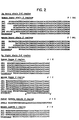
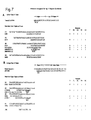
- the invention provides consensus sequences of light and heavy chain J regions useful in the design of oligonucleotides (designated herein as UlGs) for use as primers or probes for cloning immunoglobulin light or heavy chain mRNAs or genes ( Figures 2 or 7).
- UIG may be capable of hybridizing to all immunoglobulin mRNAs or genes containing a single specific J sequence, such as UIG-MJH3 which detects only mouse J H 3 sequences ( Figure 7).
- UIG design can also include a sequence to introduce a restriction enzyme site into the cDNA copy of an immunoglobulin gene (see Figure 7).
- the invention may, for example, utilize chemical gene synthesis to generate the UIG probes for the cloning of V regions in immunoglobulin mRNA from hybridoma cells making monoclonal antibodies of desired antigen specificities.
- a multi-stage procedure is utilized for generating complete V + C region cDNA clones from hybridoma cell light and heavy chain mRNAs.
- the invention utilizes UIG probes as "primers" for reverse transcriptase copying of the complete V region and leader coding sequences of heavy and light chain mRNAs ( Figure 3).
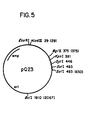
- the complementary strand of the primer extended cDNA is then synthesized, and this double-stranded cDNA is cloned in appropriate cDNA cloning vectors such as pBR322 (Gubler and Hoffman, Gene, 25: 263 (1983)) or pQ23 ( Figure 5; Maniatis, T.
- Clones are screened for specific hybridization with UIG oligonucleotide probes. Positive heavy and light chain clones identified by this screening procedure are mapped and sequenced to select those containing V region and leader coding sequences.
- An alternative method is to make cDNA clones using oligo-dT as a primer, followed by selection of light and heavy chain clones by standard hybridization methods.
- a second stage utilizes cloning of C region gene segments to form heavy and light chain module vectors.
- cDNA clones of human heavy and light chain immunoglobulin mRNA are prepared. These cDNA clones are then converted into C region module vectors by site-directed mutagenesis to place a restriction site at a desired location near a boundary of the constant region.
- An alternative method utilizes genomic C region clones as the source for C region module vectors.
- a third stage of cDNA cloning involves the generation of complete light and heavy chain coding sequences with linked V and C regions.
- the cloned V region segments generated as above are excised and ligated to light or heavy chain C region module vectors.
- Operationally linked means in-frame joining of coding sequences to derive a continuously translatable gene sequence without alterations or interruptions of the triplet reading frame.
- cDNA genetic sequences in the present invention are the fact that they code continuously for immunoglobulin chains, either heavy or light.
- continuous is meant that the sequences do not contain introns (i.e. are not genomic sequences, but rather, since derived from mRNA by reverse transcription, are sequences of contiguous exons).
- This characteristic of the cDNA sequences provided by the invention allows them to be expressible in prokaryotic hosts, such as bacteria, or in lower eukaryotic hosts, such as yeast.
- Another advantage of cDNA cloning methods is the ease and simplicity of obtaining V region gene modules.
- non-human as used in the invention is meant to include any animal other than a human, wherein an immune response can be generated which then leads to usable B cells resulting in corresponding hybridomas or B cell clones obtained by viral transformation and the like.
- Such animals commonly include rodents such as the mouse or the rat. Because of ease of preparation and great availability, the mouse is at present the preferred, non-human animal.
- Mouse-mouse hybridomas are thus utilized as the preferred sources for heavy and light chain variable regions.
- the invention provides entire V and/or C region cDNA sequences. This means that the sequences code for substantially operable V and/or C regions, without lacking any major structural portions thereof.
- variable and constant are used functionally to denote those regions of the immunoglobulin chain, either heavy or light chain, which code for properties and features possessed by the variable and constant regions in natural non-chimeric antibodies. As noted, it is not necessary for the complete coding region for variable or constant regions to be present, as long as a functionally operating region is present and available.
- hybridomas secreting antibodies which are reactive with viral antigens, including Dengue complex specific (ATCC HB 114), Dengue type 1 virus (ATCC HB 47), Dengue type 2 virus (ATCC HB 46), Dengue type 3 virus (ATCC HB 49), Dengue type 4 virus (ATCC HB 48), Epstein-Barr receptor (ATCC HB 135), Flavivirus group (ATCC HB 112), hepatitis B surface antigen (ATCC CRL 8017 and 8018), herpes simplex type I (ATCC HB 8068), herpes simplex type II (ATCC HB 8067), influenza virus (ATCC CL 189), influenza A virus, matrix protein (ATCC HB 64), influenza A virus, nucleoprotein (ATCC HB 65), influenza A Bangkok/1/79HA (ATCC HB 66), influenza AWSN NP (ATCC HB 67), SV40 large T antigen (ATCC TIB 115), SV40 large T antigen, C-terminal end (ATCC HB 114
- hybridomas examples include those secreting antibodies to tumor associated antigens or to human lymphocyte antigens, such as those reactive to human tumor-associated CEA, high mw (ATCC CRL 8019); human tumor-associated alpha-fetoprotein, IgG 1 K - (ATCC HB 134); human B lymphocyte HLA-DR, monomorphic, IgG 2b (ATCC HB 104); human T lymphocyte T cell precursors, IgG 1 (ATCC CRL 8022); human T lymphocyte T cell subset, helper, IgG 2b (ATCC CRL 8002); T subset, suppressor/cytotoxic, human, IgG 1 (ATCC CRL 8013); T cell subset, suppressor/cytotoxic, human, IgG 2a (ATCC CRL 8014); T cells, peripheral, human, IgG 1 (ATCC CRL 8000); T cells, peripheral, human, IgG 2a (ATCC CRL 8001); thymocytes, "common,” human, IgG 1
- Expression vehicles include plasmids or other vectors. Preferred among these are vehicles carrying a functionally complete human constant heavy or light chain sequence having appropriate restriction sites engineered so that any variable heavy or light chain sequence with the appropriate cohesive ends can be easily inserted thereinto. Human constant heavy or light chain sequence-containing vehicles are thus an important embodiment of the invention. These vehicles can be used as intermediates for the expression of any desired complete heavy or light chain in any appropriate host.
- yeast provides substantial advantages for the production of immunoglobulin light and heavy chains. Yeasts carry out post-translational peptide modifications including glycosylation. A number of recombinant DNA strategies now exist which utilize strong promoter sequences and high copy number plasmids which can be used for overt production of the desired proteins in yeast. Yeast recognizes leader sequences on cloned mammalian gene products and secretes peptides bearing leader sequences (i.e. prepeptides) (Hitzman, et al., 11th International Conference on Yeast, Genetics and Molecular Biology, Montpelier, France, September 13-17, 1982).
- Yeast gene expression systems can be routinely evaluated for the level of heavy and light chain production, protein stability, and secretion. Any of a series of yeast gene expression systems incorporating promoter and termination elements from the actively expressed genes coding for glycolytic enzymes produced in large quantities when yeasts are grown in mediums rich in glucose can be utilized. Known glycolytic genes can also provide very efficient transcription control signals. For example, the promoter and terminator signals of the iso-1-cytochrome C (CYC-1) gene can be utilized.
- CYC-1-cytochrome C CYC-1-cytochrome C
- E. coli K12 strain 294 (ATCC 31446) is particularly useful.
- Other microbial strains which may be used include E. coli X1776 (ATCC 31537).
- the aforementioned strains, as well as E. coli W3110 (ATCC 27325) and other enterobacteria such as Salmonella typhimurium or Serratia marcescens, and various Pseudomonas species may be used.
- plasmid vectors containing replicon and control sequences which are derived from species compatible with a host cell are used in connection with these hosts.
- the vector ordinarily carries a replication site, as well as specific genes which are capable of providing phenotypic selection in transformed cells.
- E. coli is readily transformed using pBR322, a plasmid derived from an E. coli species (Bolivar, et al., Gene, 2: 95 (1977)).
- pBR322 contains genes for ampicillin and tetracycline resistance, and thus provides easy means for identifying transformed cells.
- the pBR322 plasmid or other microbial plasmids must also contain, or be modified to contain, promoters which can be used by the microbial organism for expression of its own proteins.
- promoters most commonly used in recombinant DNA construction include the beta-lactamase (penicillinase) and lactose (beta-galactosidase) promoter systems (Chang et al., Nature, 275: 615 (1978); Itakura et al., Science, 198:1056 (1977)); and tryptophan promoter systems (Goeddel et al., Nucleic Acids Research, 8: 4057 (1980); EPO Publication No. 0036776). While these are the most commonly used, other microbial promoters have been discovered and utilized.
- a genetic construct for any heavy or light chimeric immunoglobulin chain can be placed under the control of the leftward promoter of bacteriophage lambda (P L ).
- This promoter is one of the strongest known promoters which can be controlled. Control is exerted by the lambda repressor, and adjacent restriction sites are known.
- lactose dependent E. coli chromosomal DNA comprises a lactose or lac operon which mediates lactose digestion by elaborating the enzyme beta-galactosidase.
- the lac control elements may be obtained from bacteriophage lambda pLAC5, which is infective for E. coli.
- the lac promoter-operator system can be induced by IPTG.
- promoter/operator system or portions thereof can be employed as well.
- arabinose, colicine E1, galactose, alkaline phosphatase, tryptophan, xylose, tac, and the like can be used.
- Mammalian cells are mammalian cells, grown in vitro in tissue culture, or in vivo in animals. Mammalian cells provide post-translational modifications to immunoglobulin protein molecules including leader peptide removal, correct folding and assembly of heavy and light chains, glycosylation at correct sites, and secretion of functional antibody protein from the cell as H 2 L 2 molecules.
- Mammalian cells which may be useful as hosts for the production of antibody proteins include cells of fibroblast origin, such as Vero (ATCC CRL 81) or CHO-K1 (ATCC CRL 61), or cells of lymphoid origin, such as the hybridoma Sp2/0-Ag14 (ATCC CRL 1581) or the myeloma P3X63Ag8 (ATCC TIB 9), and its derivatives.
- fibroblast origin such as Vero (ATCC CRL 81) or CHO-K1 (ATCC CRL 61)
- cells of lymphoid origin such as the hybridoma Sp2/0-Ag14 (ATCC CRL 1581) or the myeloma P3X63Ag8 (ATCC TIB 9), and its derivatives.
- vectors utilize DNA elements which provide an autonomously replicating extrachromosomal plasmid, derived from animal viruses, such as bovine papillomavirus (Sarver, N. et al., Proc. Natl. Acad. Sci., USA, 79: 7147 (1982)), polyoma virus (Deans, R. J. et al., Proc. Natl. Acad. Sci., USA, 81: 1292 (1984)), or SV40 virus (Lusky, M. and Botchan, M., Nature, 293: 79 (1981)).
- bovine papillomavirus Sesarver, N. et al., Proc. Natl. Acad. Sci., USA, 79: 7147 (1982)
- polyoma virus Deans, R. J. et al., Proc. Natl. Acad. Sci., USA, 81: 1292 (1984)
- SV40 virus Lusky, M. and Botchan
- a second class of vectors relies upon the integration of the desired gene sequences into the host cell chromosome.
- Cells which have stably integrated the introduced DNA into their chromosomes can be selected by also introducing drug resistance genes such as E. coli gpt (Mulligan, R. C. and Berg, P., Proc. Natl. Acad. Sci., USA, 78: 2072 (1981)) or Tn5 neo (Southern, P. J. and Berg, P., J. Mol. Appl. Genet., 1: 327 (1982)).
- the selectable marker gene can be either directly linked to the DNA gene sequences to be expressed, or introduced into the same cell by co-transfection (Wigler, M. et al., Cell, 16: 77 (1979)).
- an immunoglobulin cDNA is comprised only of sequences representing the mature mRNA encoding an antibody protein or its precursor, additional gene expression elements regulating transcription of the gene and processing of the RNA are required for optimal synthesis of immunoglobulin mRNA.
- These elements may include splice signals, as well as transcription promoters including inducible promoters, enhancers, and termination signals.
- cDNA expression vectors incorporating such elements include those described by Okayama, H. and Berg, P., Mol. Cell Biol., 3: 280 (1983); Cepko, C. L. et al., Cell, 37: 1053 (1984); and Kaufman, R. J., Proc. Natl. Acad. Sci., U g A - ,-82. - 689 (1985).
- An approach to evaluate optimal vectors for the expression of immunoglobulin cDNA in mammalian cells involves first placing the immunoglobulin DNA sequences into vectors capable of stably integrating into the cell genome, or replicating autonomously as an extrachromosomal plasmid.
- the vectors can be used to evaluate different gene expression elements for optimal immunoglobulin synthesis.
- mammalian cells may express chimeric immunoglobulin genes which are comprised of a variable region cDNA module plus a constant region which is composed in whole or in part of genomic sequences.
- a variable region cDNA module plus a constant region which is composed in whole or in part of genomic sequences.
- human constant region genomic clones have been described (Ellison, J. W. et al., Nucl. Acids Res., 10: 4071 (1982), or Max, E. et al., Cell, 29: 691 (1982)).
- the use of such genomic sequences may be convenient for the simultaneous introduction of immunoglobulin enhancers, splice signals, and transcription termination signals along with the constant region gene segment.
- human IgM antibodies can be transmuted to human IgG antibodies by preparing constructs containing human constant IgG cDNA or genomic sequences, linked to variable human cDNA sequences obtained from a cell producing the original IgM antibody. These constructs are then introduced into appropriate hosts and expressed.
- the invention provides "chimeric" immunoglobulin chains, either heavy or light.
- a chimeric chain contains a constant region substantially similar to that present in the heavy chain of a natural human immunoglobulin, and a variable region having any desired antigenic specificity.
- the variable region is either from human or non-human origin.
- the invention also provides immunoglobulin molecules having heavy and light chains associated so that the overall molecule exhibits desired binding and recognition properties.
- immunoglobulin molecules having heavy and light chains associated so that the overall molecule exhibits desired binding and recognition properties.
- Various types of immunoglobulin molecules are provided: monovalent, divalent, dispecific (i.e., with different variable regions), molecules with chimeric heavy chains and non-chimeric light chains, or molecules with variable binding domains attached to peptide moieties carrying desired functions.
- Antibodies having chimeric heavy chains of the same or different variable region binding specificity and non-chimeric (i.e., all human or all non-human) light chains can be prepared by appropriate association of the needed polypeptide chains. These chains are individually prepared by the modular assembly methods of the invention.
- the antibodies of the invention having human constant region can be utilized for passive immunization, especially in humans, without negative immune reactions such as serum sickness or anaphylactic shock.
- the antibodies can, of course, also be utilized in prior art immunodiagnostic assays and kits, in labelled form for in vivo imaging, wherein the label can be a radioactive emitter, or an NMR contrasting agent such as a carbon-13 nucleus, or an X-ray contrasting agent, such as a heavy metal nucleus.
- the antibodies can also be used for in vitro localization of antigens by appropriate labelling.
- the antibodies can be used for therapeutic purposes by themselves in complement mediated lysis or can be coupled to toxins or toher therapeutic moieties.
- Class switching of antibodies is useful when it is desired to change the association, aggregation or other properties of antibodies obtained from cell fusion or hybridoma technology.
- most human- human monoclonals are of the IgM class, which are known for their ease of reduction and aggregation. Changing such antibodies to other antibody types, such as IgG, IgA or IgE, is thus of great benefit.
- Mixed antibody-enzyme molecules can be used for immunodiagnostic methods, such as ELISA.
- Mixed antibody-peptide effector conjugates can be used for targeted delivery of the effector moiety with a high degree of efficacy and specificity.
- the human cell lines GM2146 and GM1500 were obtained from the Human Mutant Cell Repository (Camden, New Jersey) and cultured in RPM11640 plus 10% fetal bovine serum (M. A. Bioproducts).
- the cell lines Sp2/0 and CRL 8017 were obtained from the American Type Culture Collection and grown in Dulbecco's Modified Eagle Medium (DMEM) plus 4.5 g/I glucose (M. A. Bioproducts) plus 10% fetal bovine serum (Hyclone, Sterile Systems, Logan, Utah). Media were supplemented with penicillin/streptomycin (Irvine Scientific, Irvine, California).
- the plasmids pBR322, pL1 and pUC12 were purchased from Pharmacia P-L Biochemicals (Milwaukee, Wisconsin).
- the plasmids pSV2-neo and pSV2-gpt were obtained from BRL (Gaithersburg, Maryland), and are available from the American Type Culture Collection (Rockville, Maryland).
- pHu-gamma-I is a subclone of the 8.3 Kb Hindlll to BamHl fragment of the human IgGI chromosomal gene. A separate isolation of the human IgGI chromosomal gene is described by Ellison, J. W. et al., Nucl. Acids Res., 10: 4071 (1982).
- M8alphaRX12 contains the 0.7 Kb Xbal to EcoRl fragment containing the mouse heavy chain enhancer from the J-C intron region of the M603 chromosomal gene (Davis, M. et al., Nature, 283: 733) inserted into M13mp10.
- G-tailed pUC9 was purchased from Pharmacia P-L.
- DNA manipulations involving purification of plasmid DNA by buoyant density centrifugation, restriction endonuclease digestion, purification of DNA fragments by agarose gel electrophoresis, ligation and transformation of E. coli were as described by Maniatis, T. et al., Molecular Cloning: A Laboratory Manual, (1982). Restriction endonucleases and other DNA/RNA modifying enzymes were purchased from Boehringer-Mannheim (Indianapolis, Indiana), BRL, New England Biolabs (Beverly, Massachusetts) and Pharmacia P-L.
- Oligonucleotides were either synthesized by the triester method of Ito et al. (Nucl. Acids Res., 10: 1755 (1982)), or were purchased from ELESEN, Los Angeles, California. Tritylated, deblocked oligonucleotides were purified on Sephadex-G50, followed by reverse-phase HPLC with a 0-25% gradient of acetonitrile in 10mM triethylamine-acetic acid, pH 7.2, on a C18 uBondapak column (Waters Associates). Detritylation was in 80% acetic acid for 30 min., followed by evaporation thrice. Oligonucleotides were labeled with [gamma- 32 P]ATP plus T4 polynucleotide kinase.
- Total cellular RNA was prepared from tissue culture cells by the method of Auffray, C. and Rougeon, F. (Eur. J. Biochem., 107: 303 (1980)) or Chirgwin, J. M. et al. (Biochemistry, 18: 5294 (1979)). Preparation of poly(A) + RNA, methyl-mercury agarose gel electrophoresis, and "Northern" transfer to nitrocellulose were as described by Maniatis, T. et al., supra. Total cellular RNA or poly(A) + RNA was directly bound to nitrocellulose by first treating the RNA with formaldehyde (White, B. A. and Bancroft, F. C., J. Biol.
- Hybridization to filterbound RNA was with nick-translated DNA fragments using conditions described by Margulies, D. H. et al. (Nature, 295: 168 (1982)) or with 32 P-labelled oligonucleotide using 4xSSC, 10X Denhardt's, 100 ug/ml salmon sperm DNA at 37 °C overnight, followed by washing in 4xSSC at 37 ° C.
- Oligo-dT primed cDNA libraries were prepared from poly(A) + RNA from GM1500 and GM2146 cells by the methods of Land, H. et al. (Nucl. Acids Res., 9: 2251 (1981)) and Gubler, V. and Hoffman, B. J., Gene, 25: 263 (1983), respectively.
- the cDNA libraries were screened by in situ hybridization (Maniatis, T., supra) with 32 P-labelled oligonucleotides using the conditions shown above, or with nick-translated DNA fragments using the conditions of de Lange et al. (Cell, 34: 891 (1983)).
- Poly(A) + RNA (20 ug) was mixed with 1.2 ug primer in 40 ul of 64mM KCI. After denaturation at 90°C for 5 min. and then chilling in ice, 3 units Human Placental Ribonuclease Inhibitor (BRL) was added in 3 ul of 1 M Tris-HCI, pH 8.3. The oligonucleotide was annealed to the RNA at 42°C for 15 minutes, then 12 ul of .05M DTT, .05M MgC1 2 , and 1 mM each of dATP, dTTP, dCTP, and dGTP was added. 2 ul of alpha- 32 p-dATp (400 Ci/mmol, New England Nuclear) was added, followed by 3 ul of AMV reverse transcriptase (19 units/ul, Life Sciences).
- BRL Human Placental Ribonuclease Inhibitor
- RNA-DNA hybrid was extracted with phenol, then with chloroform, and precipitated with ethanol.
- Second strand synthesis, homopolymer tailing with dGTP or dCTP, and insertion into homopolymer tailed vectors was as described by Gubler and Hoffman, supra.
- Single stranded M13 subclone DNA (1 ug) was combined with 20 ng oligonucleotide primer in 12.5 ul of Hin buffer (7 mM Tris-HCI, pH 7.6, 7 mM MgCI 2 , 50 mM NaCI). After heating to 95 ° C in a sealed tube, the primer was annealed to the template by slowly cooling from 70° C to 37° C for 90 minutes. 2 ul dNTPs (1 mM each), 1 ul 32 P-dATP (10 uCi), 1 ul DTT (0.1 M) and 0.4 ul Klenow DNA Poll (2u, Boehringer Mannheim) were added and chains extended at 37° C for 30 minutes.
- Bacterial protoplasts (10 ml) were mixed with 10x10 6 Sp2/0 cells and pelleted by centrifugation at 4,000 x g at 22° C for 20 min. After pipetting off the supernatant, the pellet was suspended in the remaining drop of medium by flicking the tube. 2ml of 10% DMSO, 37% (w/v) PEG6000 (Kodak) in DMEM was added dropwise with mixing over 45 sec. After 15 sec., 2 ml of 42% PEG6000 in DMEM was added over 45 sec. Complete DMEM (45 ml) was slowly added with mixing. Cells were pelleted at 2500 x g, then washed and pelleted thrice.
- Cytoplasmic protein extract was prepared by vortexing 1x10 6 cells in 160 ul of 1% NP40@, 0.15 M NaCI, 10 mM Tris, 1 mM EDTA, pH 7.6 at 0 ° C, 15 minutes, followed by centrifugation at 10,000 x g to remove insoluble debris.
- Double antibody sandwich ELISA (Voller, A. et al., in Manual of Clinical Immunology, 2nd Ed., Eds. Rose, N. and Friedman, H., pp. 359-371, 1980) using affinity purified antisera was used to detect specific immunoglobulins.
- the plate-bound antiserum is goat anti-human IgG (KPL, Gaithersburg, Maryland) at 1/1000 dilution, while the peroxidase-bound antiserum is goat anti-human IgG (KPL or Tago, Burlingame) at 1/4000 dilution.
- the plate-bound antiserum is goat anti-human kappa (Tago) at 1/500 dilution, while the peroxidase-bound antiserum is goat anti-human kappa (Cappel) at 1/1000 dilution.
- Antibodies binding hepatitis B surface antigen were detected using a commercial (Abbott, AUSAB) assay.
- the following examples show the preparation of chimeric antibodies each having a human constant region and a non-human variable region. These examples outline the step-by-step process of preparing the chimeric antibodies.
- the cell line GM2146 was used as the source in mRNA preparation and cDNA cloning. This cell line secretes IgGI (Simmons, J. G. et al., Scand. J. Immunol., 14: 1-13, 1981). Tests of this cell line indicated that it secretes IgA as well as IgG.
- the cell line was cloned, and results indicated that five of six subclones secreted IgG only, while one of six subclones secreted IgA only.
- Poly(A) + RNA was prepared from the cell line and a cDNA library was prepared from the poly(A) + RNA by the method of Gubler, U. and Hoffman, B. J., Gene, 25: 263-269 (1983).
- An initial plating of the cDNA transformed into E. coli strains HB101 and RR1 yielded a total of 1500 colonies, which were screened by hybridization to a Hindlll to BamHl fragment of a genomic clone of human IgGI (pHu-gamma-1 Four positive clones were found.
- Clone pGMH-6 provided the IgGI constant region module in the construction of cloning vectors for heavy chain variable region cloning.
- a human cell line (GM1500) producing IgG 2 K was selected for the initial cloning phase.
- Poly(A) + RNA prepared from GM1500 is active in in vitro translation using rabbit reticulocyte extracts.
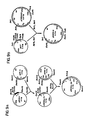
- a cDNA library was prepared from this RNA by the method of Land et al., Nucl. Acids Res., 9: 2251-2266 (1981), utilizing Kpnl digested and dG-tailed pQ23 as the cloning vector ( Figure 5). This vector contains Bglll, Kpnl and Sstl sites inserted between the BamHl and Sall sites of pBR322.
- UIG-HuK a DNA probe, UIG-HuK, was synthesized and purified.
- the UIG-HuK oligonucleotide has the sequence 5'-AGCCACAGTTCGTTT-3', and is designed to hybridize to all functional human kappa mRNA species at the J-C junction. This probe was used to prime cDNA synthesis on GM1500 RNA in the presence of dideoxynucleotides and reverse transcriptase.
- cDNA clones positive for hybridization to the light chain probe were selected. Since the probe hybridizes to the J-C junction, the most important point was to determine if the clones had complete constant region sequence in addition to the J region.
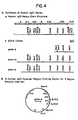
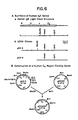
- Insert sizes for the two largest kappa cDNA clones were 0.6 and 0.9 kb; restriction enzyme mapping indicated that the entire constant region coding sequence was present in both clones ( Figure 6).
- the human kappa cDNA clone pK2-3 was used to make the light chain constant region vector plNG2001 by inserting the Sau3A fragment comprising the human kappa constant and J regions into the Bcll site of pBR325 ( Figure 6B).
- a variant of the human kappa cDNA clone was made by placing a Hindlll site in the J region. This was carried out by in vitro mutagenesis using a J K HINDIII oligonucleotide primer ( Figure 7c). The resultant plasmid is pGML60.
- This vector was constructed from pUC12 and two plasmids containing SV40 sequences.
- pL1 provides an SV40 early region promoter and an SV40 late region splice sequence.
- pSV2-neo sequences provide a selectable marker for mammalian cell transformation and SV40 polyadenylation signal sequences.
- pUC12 provides a multiple cloning site for cDNA insertion.
- the plNG2003 vector has several useful restriction sites for modifications. These include a Hindlll site useful for the insertion of enhancer sequences, and a Hindlll to Xhol fragment useful for the insertion of alternate promoter sequences. This vector is useful in the expression of cDNA genes in mammalian cells.
- Immunoglobulin enhancer elements have been shown to enhance transcription of genes in their vicinity in stably transformed mouse myeloma cells by several hundred fold (Gillies, S. D. et al., Cell, 33: 717, 1983; and Banerji, J. et al. Cell, 33: 729, 1983).
- the mouse immunoglobulin heavy chain enhancer element was added to the cDNA expression vector plNG2003 ( Figure 10).
- the mouse heavy chain enhancer region DNA was isolated from an M13 subclone of mouse heavy chain genomic DNA (M8-alpha-RX12, Deans, R. J., unpublished).
- DNA isolated from a Sall plus EcoRl digestion of this subclone was modified with Hindlll linkers and inserted into the Hindlll site of pING2003, resulting in the new cDNA expression vector plNG2003E.
- This vector is useful in the efficient expression of cDNA genes in mammalian cells, particularly mouse myeloma or hybridoma cell lines.
- the cell line CRL8017 was obtained from the ATCC and subcloned. Subclones were grown and tested for mouse IgG anti-hepatitis B binding activity using a commercially available anti-HBsAg detection kit. Three positive subclones were found. Poly(A) + RNA was prepared from one of these subclones, and was fractionated on a methylmercury agarose gel. The RNA contained intact light chain and heavy chain mRNA's as inferred from specific hybridization to kappa UIG-MJK primer, and to the mouse heavy chain UIG-MJH3 probe (see Figure 7). In addition, the UIG-MJK primer was used for specific priming of anti-HBsAg poly(A) + RNA in a dideoxy sequencing reaction. Sufficient sequence was read to show that a major kappa RNA of the anti-HBsAg cell line contains the J K 2 sequence.
- variable region cDNA synthesis were optimized by using heavy and light chain UIG primers on anti-HBsAg poly(A) + RNA.
- Dideoxy chain extension experiments demonstrated that the mouse UIG-MJK primer and UIG-JH3 primer correctly primed kappa and heavy chain RNAs.
- the reverse transcription was carried out in the absence of dideoxynucleotides, the main product using the kappa UIG-MJK primer was a 410 ⁇ 20 nucleotide fragment, while the main product using the heavy chain UIG-JH3 primer was a 430 ⁇ 30 nucleotide fragment. These correspond to the expected lengths of the variable and 5' untranslated regions of kappa and heavy chain immunoglobulin mRNAs.
- the conditions for the optimal priming of poly(A) + RNA from CRL8017 cells should work well for poly(A) + RNA isolated from any cell line producing a monoclonal antibody.
- oligonucleotides were designed and used for heavy chain V region cDNA synthesis. These two oligonucleotides are UIG-MJHBSTEII(13) and UIG-MJH3 ( Figures 7 and 8).
- the primer sequence was designed to introduce a BstEll recognition site (GGTGACC) in the clone so that it could be joined at this site to the human IgGI constant module at the analogous position at the latter's J region. In this case, the primer had a single G to U mismatch with the mouse mRNA sequence that uses the J H 3 coding sequence.
- the UIG-MJHBSTEII(13) primer was 13 bases long and the mismatched residue was flanked by 7 matches 5' and 5 matches 3' of it. This was the 13-mer BstEll primer.
- a 21-mer primer specific for mouse J H 3 (UIG-MJH3) was used. This primer had a perfect match for the 17 nucleotides on its 3' end.
- the first strand cDNA products made via the 13-mer BstEll and the 21-mer J H 3 primers included bands of approximately 430 nucleotides, which represented the entire V H region. Under the standard priming conditions used, the priming efficiency of the 13-mer BstEll was much less than that of the 21-mer J H 3. Accordingly, a cDNA library was generated from the first strand synthesis from each of these primers, using the method of Gubler and Hoffman, supra.
- the 21-mer J H 3 library was screened with the 21-mer J H 3 oligonucleotide. Filter hybridization was done at 300, overnight, according to de Lange, T. et al., Cell, 34: 891-900 (1983). The filters were then washed at 51 ° in 6 x SSC, 0.1% SDS. Five colonies were selected. The largest had an insert of approximately 460 bp. More significantly, it contained three restriction sites predicted from the known J H 3 sequence, which are present upstream of the primer sequence. This clone, pJ3-11, was sequenced using the J H 3 primer by the chain-termination method (Wallace, R. B. et al., Gene, 16: 21-26 (1981)).
- the sequence obtained has the remaining J H 3 coding segment.
- a 13-nucleotide segment matched to a published D segment sequence (Dsp 2.2) (Kurosawa, Y. et al., J. Exp. Med., 155: 201 (1982), and Tonegawa, S., Nature, 302: 575 (1983)).
- Dsp 2.2 published D segment sequence
- a nonapeptide predicted from this area showed characteristic homology to the published mouse heavy chain V subgroups at amino acid residues 86 to 94, comprising the FR3 of heavy chain molecules.
- Plasmid pJ3-11 represented a rearranged VDJ sequence, and apparently contained the anti-hepatitis V H sequence produced by the cell line.
- V H cDNA clones were isolated from a cDNA library generated from the 21-mer oligonucleotide UIG-MJH3BSTEII primer containing a BstEll site. These clones may provide alternate V H cDNA sequences to join to human C H sequences.
- the oligonucleotide UIG-JK2BGLII ( Figure 7B), was designed to introduce a Bglll site into the J K 2 region. Digestion with Bglll would then allow direct insertion of a V K cDNA coding region into the Bcll site of the previously noted human C K vector, p1NG2001. This insertion would result in the precise joining of a mouse variable region segment (including the J region) to a human kappa constant region segment, each in the proper coding frame and with no alteration in amino acid sequence for either mouse variable or human constant region.
- the JK2BGLII oligonucleotide was used to prime anti-HBsAg mRNA to form a cDNA library as for heavy chain, supra, in pUC9.
- the cDNA was size-selected by polyacrylamide gel electrophoresis prior to cloning, and 80% of the cDNA clones were shown to have insert sizes between 300 and 750 nucleotides in length.
- Replica filters of this library were screened with two oligonucleotides, the original primer and a second probe complementary to J K 2 sequence 5' to the original primer.
- the anti-hepatitis B monoclonal cell line CRL 8017 secretes immunoglobulins with at least two different light chains.
- One of them is derived from the myeloma NS-1, which was used as a fusion partner in generating the anti-hepatitis B cell line.
- NS-1 is derived from the myeloma MOPC21
- MOPC21 V K mRNA may be present in the V K cDNA library from the antihepatitis monoclonal cell line.
- one cDNA clone (p6D4B) analyzed has an identical restriction enzyme map to that of MOPC21 V K cDNA, except for the inserted Bglll site.
- the first is that it is possible to effectively use an oligonucleotide to introduce a restriction enzyme site while cloning a V K region from a hybridoma cell line.
- the second is that one must carefully monitor hybridoma cell lines for the presence of multiple V region sequences, only one of which is the desired sequence.
- poly(A) + RNA was bound to nitrocellulose by the formaldehyde "Dot blot" procedure of White and Bancroft, J. Biol. Chem., 257: 8569 (1982).
- the RNA was hybridized to 32 P-labeled oligonucleotide probes specific for each functional kappa J region. These probes are shown in Figure 7B as the UIG probes 5JK1, MJK, 5JK4, and 5JK5.
- the results showed that the mRNA hybridized strongly to both MJK and 5JK4 oligonucleotide probes, indicating that both J K 2 and J K 4 sequences were present. Since J K 2 mRNA had been previously identified as the one derived from the parental hybridoma partner NS-1, it was concluded that the J K 4 mRNA encoded the anti-hepatitis binding specificity of the CRL 8017 cells.
- JK4BGLII thee oligonucleotide primer
- JK4BGLII thee oligonucleotide primer
- the JK4BGLII primer was used to prime first strand cDNA synthesis to construct a cDNA library by the same method used to construct a JK2BGLII primed cDNA library, except that cDNA was not size selected prior to cloning.
- Figure 7B tabulates the mismatches that each primer has with other functional mouse kappa J region sequences. Note that J K 4 has five mismatches in 21 nucleotides when compared with the JK2BGLII primer, and 3 in 23 with the JK4BGLII primer.
- a new cDNA library was constructed by first priming with an oligonucleotide (5'-ATATTTGCT-GATGCT CT-3') complementary to pV17 sequences 155 bases from the 5' end. From this library, clones hybridizing to a pV17 DNA fragment probe were selected, and some of these new cDNA clones have the initiator ATG plus about 20 nucleotides of 5' untranslated region. One of these clones, p2-12, supplies a 5' untranslated region of 23 nucleotides and a complete ATG initiator codon. When p2-12 was combined with pV17 derived sequences, a variable region with a complete 5' end was formed (pING2013E).
- an oligonucleotide 5'-ATATTTGCT-GATGCT CT-3'
- V17-IVM site-directed mutagenesis on the existing light chain clone was used to simultaneously remove the poly-G tract and place a ribosome recognition sequence adjacent to the initiator ATG.
- the Pstl fragment from pV17 was subcloned into M13mp18.
- the resultant plasmid pV17-IVM provided an alternate mouse variable region for joining to human constant region modules.
- the complete nucleotide sequence of the variable region from pV17 was then determined.
- the sequence shows that pV17 contains a V K -J K junction region, containing several conserved amino acids, and the hybrid J K 2/J K 4 region formed by priming the J K 4 RNA with the UIG-JK2BGLII oligonucleotide.
- the V K region in pV17 is non-functional, because the V K and J K regions are not in the same coding frame. Translation of the pV17 V region would thus result in an abnormal immunoglobulin light chain where the J region is translated in an incorrect frame.
- This defect may be caused by aberrant V-J joining, resulting in a non-functional kappa mRNA, as has been observed by Kelley, D.E. et al., Mol. Cell. Biol., 5:1660-1675 (1985).
- V K cDNA clones which are not from either of the two V K cDNA classes found so far (MOPC21-p6D4B, pV17).
- a cDNA clone (p1E9L-81 ) that contains the kappa constant region, but has a different V K region than that of MOPC21 or pV17 was discovered.
- This method of screening oligo-dT primed cDNA libraries is a useful alternative to oligonucleotide screening of cDNA libraries, because nick-translated probes of high specific activity are used. Also, this method allows the simultaneous isolation of several classes of V region clones, such as all V K clones, by appropriate probe choice.
- the UIG-JK2BGLII-primed cDNA library made from CRL 8017 RNA was screened with the UIG-5JK2 oligonucleotide probe (see Figure 7). A new class of V K cDNA clones was found whose members are homologous to p1 E9L-81 and hybridize to the UIG-5JK2 probe, but not to a MOPC21 V K probe.
- restriction endonuclease site maps and nucleotide sequences of these clones also differ from MOPC21-homologous V K cDNA clones from CRL8017 cells. These clones, however, have an aberrant V-J joint which results in a nonfunctional mRNA, and appear to be identical to one described by Cabilly and Riggs (Gene, 40:157 (1985)).
- the anti-hepatitis B cell line CRL8017 has at least three classes of V K mRNA corresponding to the above described cDNA clones p6D4B (MOPC21), p1E9L, and pV17.
- the plE9L and pV17 clones are derived from mRNA from aberrantly rearranged Kappa genes, while the p6D4B clone is derived from the parent hybridoma fusion partner NS-1. None of these clones appear to encode the desired anti-hepatitis light chain.
- V region sequences in pMVHCa-13 were joined to the human IgGI constant (C) region clone pGMH-6. Due to the presence of a second BstEll site within the IgGI CH1 region of pGMH-6, a multi-step ligation was required. First, the 220 nucleotide BstEll fragment from the J-CH1 region of pGMH-6 was ligated to the 1100 nucleotide IgG region BstEll to BamHl fragment of pGMH-6.
- V region of the hybrid heavy chain gene in pMVHCc-24 was further analyzed by partial sequence analysis. This analysis showed that the cloned V region contained a D sequence which matches a known D sequence, DSP2.2 (Kurosawa and Tonegawa, supra). The sequence also predicted a 19 amino acid leader peptide similar to known mouse V heavy chain leader peptide sequences, and a 5' untranslated region of at least 3 nucleotides.
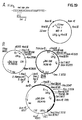
- the BamHl fragment containing the mouse-human hybrid heavy chain gene of pMVHCc-24 was cloned into BamHl digested plNG2003E vector, resulting in the expression plasmid plNG2006E ( Figure 11).
- the plNG2006E plasmid should have an increased probability of efficient expression of the mouse-human chimeric immunoglobulin gene in B lymphoid cells because of the presence of the mouse heavy chain enhancer region.
- a modification of the chimeric heavy chain gene present in pMVHCc-24 was done to provide an alternate heavy chain gene which lacks the oligo-dC region preceding the initiator ATG.
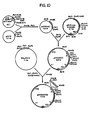
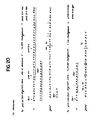
- the plNG2012E and plNG2006E vectors are identical except for the nucleotides immediately preceding the ATG, as shown in Figure 12.
- Bacteria harboring the plNG2006E and pSV2-neo plasmids were converted into protoplasts by the method of Sandri-Goldin, R. M. et al., Mol. Cell. Biol., 1: 743 (1981).
- the protoplasts were then separately fused to SP2/0-Ag14 hybridoma cells (ATCC CRL 1581) by treatment with polyethyleneglycol (Ochi, A. et al., Nature, 302: 340, 1983).
- the fused cells were allowed to recover for 72 hours in complete medium before plating at 10,000 or 50,000 cells per well in a 96-well tissue culture plate.
- the cells were selected with G418 at 0.8 mg/ml for two weeks, when growth in some wells was clearly evident.
- RNA and protein level were tested for immunoglobulin gene expression at the RNA and protein level.
- Total cell RNA was prepared from transfected cells, bound to nitrocellulose and hybridized to nick-translated probes specific for the mouse-human hybrid heavy chain gene. Two clones were found which have a strong signal, representing expression of the gene at the RNA level. The amount of total cellular RNA hybridizing to the mouse-human probe appeared to be approximately 1/10 the level of heavy chain RNA in the original hybridoma cells. This probably represented about 1 % of the total mRNA of the transfected cell.
- the transfected mouse cells were also tested for production of cytoplasmic human heavy chain protein by an ELISA assay. It was found that 3 out of 7 plNG2006E transfected cell lines produced detectable levels of human heavy chain protein.
- the mouse cell transformant producing the most mouse-human heavy chain protein gave a signal in the ELISA assay comparable to that of a 1/100 dilution of a human B cell line producing intact human immunoglobulin IgGI. This modest level of detected mouse-human heavy chain protein may be due to several factors, including instability of heavy chains in the absence of light chains in hybridoma cells, or incorrect processing of the chimeric gene transcript.
- EXAMPLE III A Human-Mouse Chimeric Antibody with Cancer Antigen Specificity
- L6 monoclonal antibody was obtained from a mouse which had been immunized with cells from a human lung carcinoma, after which spleen cells were hybridized with NS-1 mouse myeloma cells.
- the antibody binds to a previously not identified carbohydrate antigen which is expressed in large amounts at the surface of cells from most human carcinomas, including lung carcinomas (adeno, squamous), breast carcinomas, colon carcinomas and ovarian carcinomas, while the antigen is only present at trace levels in normal cells from the adult host.
- MAb L6 is an IgG2a and can mediate antibody dependent cellular cytotoxicity, ADCC, in the presence of human peripheral blood leukocytes as a source of effector cells, so as to lyse L6 positive tumor cells, and it can lyse L6 positive tumor cells in the presence of human serum as a source of complement; the lysis is detected as the release of 51Cr from labelled cells over a 4 hour incubation period.
- MAb L6 can localize to L6 positive tumors xenotransplanted onto nude mice, and it can inhibit the outgrowth of such tumors.
- MAb L6 is described in Cancer Res. 46:3917-3923, 1986 (on MAb specificity) and in Proc. Natl. Acad. Sci. 83:7059-7063, 1986 (on MAb function)
- Frozen cells were thawed on ice for 10 minutes and then at room temperature. The suspension was diluted with 15 ml PBS and the cells were centrifuged down. They were resuspended, after washes in PBS, in 16 ml 3M LiCI, 6M urea and disrupted in a polytron shear. The preparation of mRNA and the selection of the poly(A+) fraction were carried out according to Auffray, C. and Rougeon, F., Eur. J. Biochem. 107:303, 1980.
- the poly (A+) RNA from L6 was hybridized individually with labeled J H 1 ⁇ J H 2, J H 3 and J H 4 oligonucleotides under conditions described by Nobrega et al. Anal. Biochem 131:141, 1983). The products were then subjected to electrophoresis in a 1.7% agarose-TBE gel. The gel was fixed in 10% TCA, blotted dry and exposed for autoradiography. The result showed that the L6 v H contains J H 2 sequences.
- V K mRNA For the analysis of the V K mRNA, the dot-blot method of White and Bancroft J. Biol. Chem. 257:8569, (1982) was used. Poly (A+) RNA was immobilized on nitrocellulose filters and was hybridized to labeled probe-oligonucleotides at 40 ° in 4xSSC. These experiments show that L6 contains J K 5 sequences. A faint hybridization to J K 2 was observed.
- a library primed by oligo (dT) on L6 poly (A+) RNA was screened for kappa clones with a mouse C K region probe. From the L6 library, several clones were isolated. A second screen with a 5' J K 5 specific probe identified the L6 (J K 5) light-chain clones. Heavy chain clones of L6 were isolated by screening with the J H 2 oligonucleotide.
- the heavy and light chain genes or gene fragments from the cDNA clones, pH3-6a and pL3-12a were inserted into M13 bacteriophage vectors for nucleotide sequence analysis.
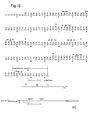
- the complete nucleotide sequences of the variable region of these clones were determined (FIGURES 15 and 16) by the dideoxy chain termination method. These sequences predict V region amino acid compositions that agree well with the observed compositions, and predict peptide sequences which have been verified by direct amino acid sequencing of portions of the V regions.
- the nucleotide sequences of the cDNA clones show that they are immunoglobulin V region clones as they contain amino acid residues diagnostic of V domains (Kabat et al., Sequences of Proteins of Immunological Interest; U.S. Dept of HHS, 1983).
- the L6 V H belongs to subgroup II.
- the cDNA predicts an N-terminal sequence of 24 amino acid residues identical to that of a known V H (45-165 CRI; Margolies et al. Mol. Immunol. 18:1065, 1981).
- the L6 V H has the J H 2 sequence.
- the L6 V L is from the V K -Kpnl family (Nishi et al. Proc. Nat. Acd. Sci. USA 82:6399, 1985), and uses J K 5.
- the cloned L6 V L predicts an amino acid sequence which was confirmed by amino acid sequencing of peptides from the L6 light chain corresponding to residues 18-40 and 80-96.
- the J-region mutagenesis primer J K Hindlll as shown in FIGURE 17B, was utilized.
- oligo (dC) sequence upstream of the ATG codon in a V H chimericgene interferes with proper splicing in one particular gene construct. It was estimated that perhaps as much as 70% of the RNA transcripts had undergone the mis-splicing, wherein a cryptic 3' splice acceptor in the leader sequence was used. Therefore the oligo (dC) sequence upstream of the initiator ATG was removed in all of the clones.
- an oligonucleotide was used which contains a Sall restriction site to mutagenize the L6 V K clone.
- the primer used for this oligonucleotide-directed mutagenesis is a 22-mer which introduces a Sall site between the oligo (dC) and the initiator met codon (FIGURE 19).
- nuclease BAL-31 was used to chew away the oligo (dC) in the L6 V H clone pH3-6a.
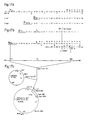
- the size of the deletion in two of the mutants obtained was determined by nucleotide sequencing and is shown in FIGURE 17. In both of these mutuants (delta 4 and delta 21), all of the oligo (dC) 5' to the coding region were deleted.
- the human C gamma 1 gene module is a cDNA derived from GM2146 cells (Human Genetic Mutant Cell Repository, Newark, New Jersey). This C gamma 1 gene module was previously combined with a mouse V H gene module to form the chimeric expression plasmid p1NG2012E.
- L6 chimeric heavy chain expression plasmids were derived from the replacement of the V H module pING2012E with the V H modules of mutants delta 21 and delta 4 to give the expression plasmids pING2111 and plNG2112 (FIGURE 17). These plasmids direct the synthesis of chimeric L6 heavy chain when transfected into mammalian cells.
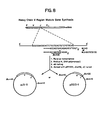
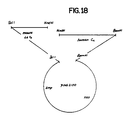
- the Sall to Hindlll fragment of the mouse V K module was joined to the human C K module by the procedure outlined in FIGURE 18, forming p1NG2119.
- Replacement of the neo sequence with the E. coli gpt gene derived from pSV2-gpt resulted in pING2120, which expressed L6 chimeric light chain and confers mycophenolic acid resistance when transfected into mammalian cells.
- both heavy and light chain chimeric genes in the same plasmid allows for the introduction into transfected cells of a 1:1 gene ratio of heavy and light chain genes leading to a balanced gene dosage. This may improve expression and decrease manipulations of transfected cells for optimal chimeric antibody expression.
- the DNA fragments derived from the chimeric heavy and light chain genes of plNG2111 and plNG2119 were combined into the expression plasmid plNG2114 (FIGURE 19).
- This expression plasmid contains a selectable neo R marker and separate transcription units for each chimeric gene, each including a mouse heavy chain enhancer.
- Electroporation was used (Potter et al. supra; Toneguzzo et al. Mol. Cell Biol. 6:703 1986) for the introduction of L6 chimeric expression plasmid DNA into mouse Sp2/0 cells.
- the electroporation technique gave a transfection frequency of 1-10 x 10- 5 for the Sp2/0 cells.
- the two gene expression plasmid plNG2114 was linearized by digestion with Aatll restriction endonuclease and transfected into Sp2/0 cells, giving approximately fifty G418 resistant clones which were screened for human heavy and light chain synthesis.
- the levels of chimeric antibody chain synthesis from the two producers, D7 and 3E3, are shown in Table 3.
- Chimeric L6 antibody was prepared by culturing the D7 transfectant cells for 24 hours at 2x10 6 cells/ml in 5 1 DMEM supplemented with HEPES buffer and penicillin and streptomycin. The supernatant was concentrated over an Amicon YM30@ membrane in 10mM sodium phosphate buffer, pH8.0.
- the preparation was loaded over a DEAE-Cellulose column, which separated the immunoglobulin into unbound and bound fractions.
- Samples from the DEAE-unbound, DEAE- bound and the pre-DEAE preparations (from 1.6 ul of medium) was separately purified by affinity chromatography on a Protein-A Sepharose@ column, eluting with 0.1 M sodium citrate,
- the antibody can be further concentrated by steps j. and k. of the previous procedure.
- the samples were tested with a binding assay, in which cells of both an L6 antigen-positive and an L6 antigen-negative cell line were incubated with standard mouse monoclonal antibody L6, chimeric L6 antibody derived from the cell culture supernatants, and chimeric L6 antibody derived from ascites (as previously described) followed by a second reagent, fluorescein-isothiocyanate (FITC)-conjugated goat antibodies to human (or mouse, for the standard) immunoglobulin.
- FITC fluorescein-isothiocyanate
- the binding assay showed strong reactivity of the chimeric L6 on the L6 antigen positive cell line and total lack of reactivity on the negative cell line
- the next step was to test for the ability of the chimeric L6 to inhibit the binding of mouse L6 to antigen positive cells; such inhibition assays are used routinely to establish the identity of two antibodies' recognition of antigen. These data are discussed below ("Inhibition of binding"). As part of these studies, a rough estimate of antibody avidity was made.
- Binding Assays Cells from a human colon carcinoma line, 3347, which had been previously shown to express approximately 5 x 10 5 molecules of the L6 antigen at the cell surface, were used as targets. Cells from the T cell line HSB2 was used as a negative control, since they, according to previous testing, do not express detectable amounts of the L6 antigen. The target cells were first incubated for 30 min at 4 ° C with either the chimeric L6 or with mouse L6 standard, which had been purified from mouse ascites.
- both the chimeric and the mouse standard L6 bound significantly, and to approximately the same extent, to the L6 positive 3347 line. They did not bind above background to the L6 negative HSB2 line.
- Both the chimeric and mouse standard L6 inhibited the binding of the directly labelled L6 antibody, with the binding curves being parallel.
- the chimeric antibody was slightly less effective than the standard, as indicated by the results which showed that 3.4 ug/ml of the pooled chimeric L6 MAb, as compared to 2.0 ug/ml of the standard mouse L6 MAb was needed for 50% inhibition of the binding, and that 5.5 ug/ml of the chimeric L6 (derived from ascites) as compared to 2.7 ug/ml of the standard mouse L6 MAb was needed for 50% inhibition of binding.
- the chimeric L6 was superior to the simultaneously tested sample of mouse L6 in causing ADCC, as measured by a 4 hr 51 Cr release test.
- Tables 6 and 6A-6B present the data from studies on complement-mediated target cell lysis. In this case, a high cytolytic activity was observed with both the mouse and the chimeric L6 antibodies.
- the chimeric L6 antibody binds to L6 antigen positive tumor cells to approximately the same extent as the mouse L6 standard and with approximately the same avidity. This is significant for the following reasons: the L6 antibody defines (a) a surface carbohydrate antigen, and (b) a protein antigen of about 20,000 daltons, each of which is characteristic of non-small cell lung carcinoma (NSCLC) and certain other human carcinomas. Significantly, the L6 antibody does not bind detectably to normal cells such as fibroblasts, endothelial cells, or epithelial cells in the major organs. Thus the chimeric L6 monoclonal antibody defines an antigen that is specific for carcinoma cells and not normal cells.
- NSCLC non-small cell lung carcinoma
- the chimeric L6 exerts profound biological effects upon binding to its target, which make the chimeric antibody a prime candidate for tumor immunotherapy.
- the results presented herein demonstrate that chimeric L6 is capable of binding to tumor cells and upon binding kills the tumor cells, either by ADCC or CDC. Such tumor killing activity was demonstrated using concentrations of chimeric L6 antibody as low as 0.01 ug/ml (10ng/ml).
- the chimeric L6 monoclonal antibodies will be advantageously used not only for therapy with unmodified chimeric antibodies, but also for development of various immunoconjugates with drugs, toxins, immunomodulators, isotopes, etc., as well as for diagnostic purposes such as in vivo imaging of tumors using appropriately labelled chimeric L6 antibodies.
- immunoconjugation techniques are known to those skilled in the art and can be used to modify the chimeric L6 antibody molecules of the present invention.
- transfected hybridoma C255 (corresponds to 3E3 cells, supra), ATCC HB 9240 and transfected hybridoma C256 (C7 cells, supra), ATCC HB 9241.
- EXAMPLE IV A Human-Mouse Chimeric Antibody with Specificity for Human B-Cell Antigen
- the 2H7 mouse monoclonal antibody (gamma 2b K ) recognizes a human B-cell surface antigen, Bp35 (Clark, E A. et al., Proc. Nat. Acad. Sci. USA, 82:1766 (1985)).
- Bp35 a human B-cell surface antigen
- the Bp35 molecule plays a role in B-cell activation.
- mRNA was prepared from the 2H7 cell line. Two cDNA libraries were generated - one using the heavy chain UIG-H primer and the other, oligo(dT). One V H clone, pH2-11, was isolated upon screening with the same UIG-H oligonucleotide.
- a mouse kappa-specific DNA fragment was used to screen the oligo(dT) library.
- Candidate clones were further screened with a mouse J K 5 sequences.
- the light chain UIG-K was then used to engineer a restriction enzyme site in the J region.
- the two cDNA clones were also modified at the 5' end to remove the artificial oligo d[C] sequence.
- pH2-11 this was carried out by using the restriction enzyme Ncol which cuts one nucleotide residue 5' of the ATG initiator codon.
- pL2-12 this was achieved by an oligonucleotide in vitro mutagenesis using a 22-mer containing a Sall site.
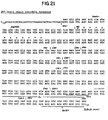
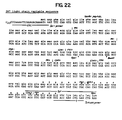
- the DNA sequences of these two clones are shown in Figures 21, 22.
- the V H module was joined to the human C gamma 1 module (pGMH6) at the J H BstEll site, and to construct the chimeric light chain the V K module was joined to the human C K module (pGML60) at the J K Hindlll site.
- the expression vector sequences were derived from pING2012-neo as well as pING2016-gpt.
- the constructed plasmids are plNG2101 (V H C gamma 1-neo).
- plNG2106 V K C K -neo
- plNG2107 V K C K -gpt).
- plNG2101 and plNG2106 were also used to generate plasmids containing both genes. They are pHL2-11 and pHL2-26.
- pING2106 and pING2014 were combined to a two light-chain plasmid, pLL2-25, to compensate for the poorer (compared to heavy chain) steady-state accumulation of light chain protein in transfected cells.
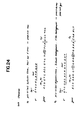
- Fig. 24 shows the changes made to the variable region sequences during the construction.
- the plasmid, pHL2-11, was linearized by Aatll; and the DNA was used to transfect Sp2/0 cells by electroporation. Transformants were selected in G418-DMEM.
- One transformant, 1 C9 produces 9.3 ng/ml chimeric kappa and 33-72 ng/ml chimeric gamma 1 protein as assayed by ELISA. Southern analysis of 1 C9 DNA showed that there is one copy of the plasmid integrated in Sp2/0 genome.
Landscapes
- Health & Medical Sciences (AREA)
- Life Sciences & Earth Sciences (AREA)
- Chemical & Material Sciences (AREA)
- Genetics & Genomics (AREA)
- Organic Chemistry (AREA)
- Engineering & Computer Science (AREA)
- Wood Science & Technology (AREA)
- Bioinformatics & Cheminformatics (AREA)
- Zoology (AREA)
- General Health & Medical Sciences (AREA)
- Molecular Biology (AREA)
- Biotechnology (AREA)
- General Engineering & Computer Science (AREA)
- Biochemistry (AREA)
- Biomedical Technology (AREA)
- Immunology (AREA)
- Biophysics (AREA)
- Microbiology (AREA)
- Medicinal Chemistry (AREA)
- Physics & Mathematics (AREA)
- Plant Pathology (AREA)
- Mycology (AREA)
- Proteomics, Peptides & Aminoacids (AREA)
- Cell Biology (AREA)
- Preparation Of Compounds By Using Micro-Organisms (AREA)
- Peptides Or Proteins (AREA)
- Micro-Organisms Or Cultivation Processes Thereof (AREA)
- Medicines Containing Antibodies Or Antigens For Use As Internal Diagnostic Agents (AREA)
Claims (38)


Priority Applications (1)
| Application Number | Priority Date | Filing Date | Title |
|---|---|---|---|
| AT86906676T ATE95235T1 (de) | 1985-11-01 | 1986-10-27 | Modulare einheit von antikoerpergenen, daraus hergestellte antikoerper und verwendung. |
Applications Claiming Priority (2)
| Application Number | Priority Date | Filing Date | Title |
|---|---|---|---|
| US79398085A | 1985-11-01 | 1985-11-01 | |
| US793980 | 1985-11-01 |
Related Child Applications (1)
| Application Number | Title | Priority Date | Filing Date |
|---|---|---|---|
| EP92115754.1 Division-Into | 1992-09-15 |
Publications (3)
| Publication Number | Publication Date |
|---|---|
| EP0247091A4 EP0247091A4 (de) | 1987-10-27 |
| EP0247091A1 EP0247091A1 (de) | 1987-12-02 |
| EP0247091B1 true EP0247091B1 (de) | 1993-09-29 |
Family
ID=25161322
Family Applications (1)
| Application Number | Title | Priority Date | Filing Date |
|---|---|---|---|
| EP86906676A Revoked EP0247091B1 (de) | 1985-11-01 | 1986-10-27 | Modulare einheit von antikörpergenen, daraus hergestellte antikörper und verwendung |
Country Status (6)
| Country | Link |
|---|---|
| EP (1) | EP0247091B1 (de) |
| JP (1) | JPS63501765A (de) |
| AU (1) | AU606320B2 (de) |
| DE (1) | DE3689123T2 (de) |
| DK (1) | DK175680B1 (de) |
| WO (1) | WO1987002671A1 (de) |
Families Citing this family (543)
| Publication number | Priority date | Publication date | Assignee | Title |
|---|---|---|---|---|
| US4816567A (en) | 1983-04-08 | 1989-03-28 | Genentech, Inc. | Recombinant immunoglobin preparations |
| US5576195A (en) * | 1985-11-01 | 1996-11-19 | Xoma Corporation | Vectors with pectate lyase signal sequence |
| US5618920A (en) | 1985-11-01 | 1997-04-08 | Xoma Corporation | Modular assembly of antibody genes, antibodies prepared thereby and use |
| CA1340456C (en) * | 1986-07-07 | 1999-03-23 | Hubert J.P. Schoemaker | Chimeric rodent/human immunoglobulins specific for tumor-associated antigens |
| US6893625B1 (en) | 1986-10-27 | 2005-05-17 | Royalty Pharma Finance Trust | Chimeric antibody with specificity to human B cell surface antigen |
| IL84285A (en) * | 1986-10-27 | 1993-03-15 | Int Genetic Engineering | Chimeric antibody with specificity to human tumor antigen |
| IL85035A0 (en) * | 1987-01-08 | 1988-06-30 | Int Genetic Eng | Polynucleotide molecule,a chimeric antibody with specificity for human b cell surface antigen,a process for the preparation and methods utilizing the same |
| US5258498A (en) * | 1987-05-21 | 1993-11-02 | Creative Biomolecules, Inc. | Polypeptide linkers for production of biosynthetic proteins |
| US5091513A (en) * | 1987-05-21 | 1992-02-25 | Creative Biomolecules, Inc. | Biosynthetic antibody binding sites |
| US5132405A (en) * | 1987-05-21 | 1992-07-21 | Creative Biomolecules, Inc. | Biosynthetic antibody binding sites |
| ATE243754T1 (de) * | 1987-05-21 | 2003-07-15 | Micromet Ag | Multifunktionelle proteine mit vorbestimmter zielsetzung |
| US5834599A (en) * | 1987-05-29 | 1998-11-10 | Tanox Biosystems, Inc. | Immunoconjugates which neutralize HIV-1 infection |
| US6657050B1 (en) | 1987-05-29 | 2003-12-02 | Tanox, Inc. | Chimeric viral-neutralizing immunoglobulins |
| US5981278A (en) * | 1987-05-29 | 1999-11-09 | Tanox, Inc. | Chimeric monoclonal antibodies which neutralize HIV-1 infection and their applications in therapy and prevention for AIDS |
| CA1341235C (en) * | 1987-07-24 | 2001-05-22 | Randy R. Robinson | Modular assembly of antibody genes, antibodies prepared thereby and use |
| GB8720833D0 (en) * | 1987-09-04 | 1987-10-14 | Celltech Ltd | Recombinant dna product |
| FI884924L (fi) * | 1987-10-28 | 1989-04-29 | Oncogen | Humanimmuglobulin som producerats med hybrid-dna-teknik. |
| US4978745A (en) * | 1987-11-23 | 1990-12-18 | Centocor, Inc. | Immunoreactive heterochain antibodies |
| GB8800077D0 (en) * | 1988-01-05 | 1988-02-10 | Ciba Geigy Ag | Novel chimeric antibodies |
| US5843708A (en) * | 1988-01-05 | 1998-12-01 | Ciba-Geigy Corporation | Chimeric antibodies |
| WO1989007142A1 (en) * | 1988-02-05 | 1989-08-10 | Morrison Sherie L | Domain-modified constant region antibodies |
| WO1989011533A1 (en) * | 1988-05-23 | 1989-11-30 | The United States Of America, As Represented By Th | Cloned gene for expression of antibodies reacting with human ovarian cancer |
| US5576184A (en) * | 1988-09-06 | 1996-11-19 | Xoma Corporation | Production of chimeric mouse-human antibodies with specificity to human tumor antigens |
| DE68929167T2 (de) * | 1988-09-06 | 2000-11-16 | Xoma Corp., Berkeley | Genexpressions-Elemente und Herstellung von chimären Maus-Mensch-Antikörpern |
| EP0368684B2 (de) | 1988-11-11 | 2004-09-29 | Medical Research Council | Klonierung von Immunglobulin sequenzen aus den variabelen Domänen. |
| US5530101A (en) | 1988-12-28 | 1996-06-25 | Protein Design Labs, Inc. | Humanized immunoglobulins |
| AU632843B2 (en) * | 1989-08-10 | 1993-01-14 | Juridical Foundation The Chemo-Sero-Therapeutic Research Institute | Cat-mouse heterohybridoma and gene fragment coding for constant region of feline immunoglobulin |
| US6893845B1 (en) | 1990-09-28 | 2005-05-17 | Applied Molecular Evolution, Inc. | Surface expression libraries of heteromeric receptors |
| US5871974A (en) * | 1990-09-28 | 1999-02-16 | Ixsys Inc. | Surface expression libraries of heteromeric receptors |
| US5698426A (en) * | 1990-09-28 | 1997-12-16 | Ixsys, Incorporated | Surface expression libraries of heteromeric receptors |
| ES2236682T5 (es) | 1991-01-21 | 2011-03-31 | Elan Pharmaceuticals, Inc. | Ensayo y modelo para la enfermedad de alzheimer. |
| US6797492B2 (en) | 1991-05-17 | 2004-09-28 | Merck & Co., Inc. | Method for reducing the immunogenicity of antibody variable domains |
| WO1994004679A1 (en) * | 1991-06-14 | 1994-03-03 | Genentech, Inc. | Method for making humanized antibodies |
| US6800738B1 (en) | 1991-06-14 | 2004-10-05 | Genentech, Inc. | Method for making humanized antibodies |
| EP1400536A1 (de) | 1991-06-14 | 2004-03-24 | Genentech Inc. | Verfahren zur Herstellung humanisierter Antikörper |
| US6129914A (en) | 1992-03-27 | 2000-10-10 | Protein Design Labs, Inc. | Bispecific antibody effective to treat B-cell lymphoma and cell line |
| US7754211B2 (en) | 1992-04-10 | 2010-07-13 | Research Development Foundation | Immunotoxins directed against c-erbB-2(HER-2/neu) related surface antigens |
| US5604102A (en) * | 1992-04-15 | 1997-02-18 | Athena Neurosciences, Inc. | Methods of screening for β-amyloid peptide production inhibitors |
| US5441870A (en) * | 1992-04-15 | 1995-08-15 | Athena Neurosciences, Inc. | Methods for monitoring cellular processing of β-amyloid precursor protein |
| US5851787A (en) * | 1992-04-20 | 1998-12-22 | The General Hospital Corporation | Nucleic acid encoding amyloid precursor-like protein and uses thereof |
| US6610493B1 (en) | 1993-06-17 | 2003-08-26 | Brigham And Women's Hospital | Screening compounds for the ability to alter the production of amyloid-β peptide |
| US6270766B1 (en) | 1992-10-08 | 2001-08-07 | The Kennedy Institute Of Rheumatology | Anti-TNF antibodies and methotrexate in the treatment of arthritis and crohn's disease |
| US5605811A (en) * | 1992-10-26 | 1997-02-25 | Athena Neurosciences, Inc. | Methods and compositions for monitoring cellular processing of beta-amyloid precursor protein |
| US7744877B2 (en) | 1992-11-13 | 2010-06-29 | Biogen Idec Inc. | Expression and use of anti-CD20 Antibodies |
| DK0752248T3 (da) | 1992-11-13 | 2000-11-13 | Idec Pharma Corp | Terapeutisk anvendelse af kimæriske og radioaktivt mærkede antistoffer mod humant B-lymfocytbegrænset differentieringsantig |
| AU702293B2 (en) * | 1993-10-27 | 1999-02-18 | Athena Neurosciences, Inc. | Transgenic animals harboring APP allele having Swedish mutation |
| CU22615A1 (es) | 1994-06-30 | 2000-02-10 | Centro Inmunologia Molecular | Procedimiento de obtención de anticuerpos monoclonales murinos menos inmunogénicos. anticuerpos monoclonales obtenidos |
| US6576236B1 (en) | 1994-07-01 | 2003-06-10 | Dana Farber Cancer Institute | Methods for stimulating T cell responses by manipulating a common cytokine receptor γ chain |
| CA2204355C (en) | 1994-11-02 | 2001-01-16 | Gail Mandel | Peripheral nervous system specific sodium channels, dna encoding therefor, crystallization, x-ray diffraction, computer molecular modeling, rational drug design, drug screening, and methods of making and using thereof |
| US7597886B2 (en) | 1994-11-07 | 2009-10-06 | Human Genome Sciences, Inc. | Tumor necrosis factor-gamma |
| IL114615A0 (en) | 1995-07-16 | 1995-11-27 | Yeda Res & Dev | Modulators of the function of fas receptors and other proteins |
| US6717031B2 (en) | 1995-06-07 | 2004-04-06 | Kate Dora Games | Method for selecting a transgenic mouse model of alzheimer's disease |
| US6248555B1 (en) | 1995-08-31 | 2001-06-19 | The General Hospital Corporation | Genetic alterations related to familial alzheimer's disease |
| US7888466B2 (en) | 1996-01-11 | 2011-02-15 | Human Genome Sciences, Inc. | Human G-protein chemokine receptor HSATU68 |
| ATE412740T1 (de) | 1996-08-16 | 2008-11-15 | Human Genome Sciences Inc | Menschliches alpha-endokin |
| US6653104B2 (en) | 1996-10-17 | 2003-11-25 | Immunomedics, Inc. | Immunotoxins, comprising an internalizing antibody, directed against malignant and normal cells |
| PT939804E (pt) | 1996-10-25 | 2005-11-30 | Human Genome Sciences Inc | Neutroquina alfa |
| DE69840669D1 (de) | 1997-04-10 | 2009-04-30 | Stichting Katholieke Univ | Pca3, pca3-gene und verfahren zu ihrer verwendung |
| CA2258277C (en) | 1997-04-25 | 2013-08-13 | Antigenics Llc | Characterization of granulocytic ehrlichia and methods of use |
| JP3835827B2 (ja) | 1997-05-02 | 2006-10-18 | ザ ガバメント オブ ザ ユナイテッド ステイツ オブ アメリカ,アズ リプレゼンティッド バイ ザ セクレタリーオブ ザ デパートメント オブ ヘルス アンド ヒューマン サービシーズ | 悪性細胞に対する、oncタンパク質を含む、免疫毒素 |
| ATE487737T1 (de) | 1997-05-30 | 2010-11-15 | Human Genome Sciences Inc | 32 humane sekretierte proteine |
| CA2206774A1 (en) | 1997-06-16 | 1998-12-16 | Rick E. Preddie | "prionins", highly specific markers for noninvasive presymptomatic defection of tse diseases, and targets for therapeutic reagents to prevent and control tse diseases in animals and humans |
| ES2333385T3 (es) | 1997-09-17 | 2010-02-19 | Human Genome Sciences, Inc. | Proteina del tipo de interleuquina-17. |
| CA2309541C (en) | 1997-11-03 | 2011-01-11 | Human Genome Sciences, Inc. | Vegi, an inhibitor of angiogenesis and tumor growth |
| ATE472599T1 (de) | 1997-11-21 | 2010-07-15 | Human Genome Sciences Inc | Chemokin alpha-5 |
| TWI239847B (en) | 1997-12-02 | 2005-09-21 | Elan Pharm Inc | N-terminal fragment of Abeta peptide and an adjuvant for preventing and treating amyloidogenic disease |
| US7179892B2 (en) | 2000-12-06 | 2007-02-20 | Neuralab Limited | Humanized antibodies that recognize beta amyloid peptide |
| AU3072799A (en) | 1998-03-19 | 1999-10-11 | Human Genome Sciences, Inc. | Cytokine receptor common gamma chain like |
| PT1974747E (pt) | 1998-08-11 | 2012-09-05 | Biogen Idec Inc | Terapias de combinação para linfomas de células b compreendendo a administração de anticorpo anti-cd20 |
| GB9822763D0 (en) * | 1998-10-20 | 1998-12-16 | Univ Sheffield | Immunoglobin variant |
| ES2543819T3 (es) | 1998-11-09 | 2015-08-24 | Biogen Inc. | Tratamiento de neoplasias hematológicas asociadas con células tumorales circulantes utilizando anticuerpo quimérico dirigido contra CD20 |
| HK1044159A1 (zh) | 1998-12-01 | 2002-10-11 | 蛋白质设计实验室股份有限公司 | 抗γ-干扰素的人化抗体 |
| EP2301947A3 (de) | 1999-02-26 | 2011-11-23 | Millennium Pharmaceuticals, Inc. | Sekretierte Proteine und Verwendungen dafür |
| AU3501700A (en) | 1999-02-26 | 2000-09-14 | Human Genome Sciences, Inc. | Human endokine alpha and methods of use |
| DE19915057A1 (de) | 1999-04-01 | 2000-10-19 | Forschungszentrum Borstel | Monoklonale Antikörper gegen das humane Mcm3 Protein, Verfahren zu ihrer Herstellung und ihre Verwendung |
| IL130225A0 (en) | 1999-05-31 | 2000-06-01 | Yissum Res Dev Co | Novel uses of antibodies against ache and peptides thereof |
| US7291714B1 (en) | 1999-06-30 | 2007-11-06 | Millennium Pharmaceuticals, Inc. | Glycoprotein VI and uses thereof |
| US20040001826A1 (en) | 1999-06-30 | 2004-01-01 | Millennium Pharmaceuticals, Inc. | Glycoprotein VI and uses thereof |
| US8557244B1 (en) | 1999-08-11 | 2013-10-15 | Biogen Idec Inc. | Treatment of aggressive non-Hodgkins lymphoma with anti-CD20 antibody |
| EP1222266B1 (de) | 1999-09-29 | 2006-03-29 | Diagnocure Inc. | Pca3 mrna in gutartigen und bösartigen prostatageweben |
| US7892541B1 (en) | 1999-09-30 | 2011-02-22 | Tumor Biology Investment Group, Inc. | Soluble epidermal growth factor receptor isoforms |
| EP1230271A1 (de) | 1999-11-05 | 2002-08-14 | Biogen, Inc. | Hedgehog fusionsproteine und deren verwendung |
| US20040002068A1 (en) | 2000-03-01 | 2004-01-01 | Corixa Corporation | Compositions and methods for the detection, diagnosis and therapy of hematological malignancies |
| EP2213743A1 (de) | 2000-04-12 | 2010-08-04 | Human Genome Sciences, Inc. | Albuminfusionsproteine |
| EP1714661A3 (de) | 2000-05-19 | 2012-03-14 | The Center for Blood Research, INC. | Verfahren zur Diagnose und Behandlung von hämostatischen Störungen durch Modulation der P-Selectin Aktivität |
| EP2431054A3 (de) | 2000-06-15 | 2013-03-06 | Human Genome Sciences, Inc. | Menschlicher Tumornekrosefaktor Delta und Ypsilon |
| PT2281843T (pt) | 2000-06-16 | 2017-01-02 | Human Genome Sciences Inc | Anticorpos que se ligam imunoespecificamente a blys |
| US6803211B2 (en) | 2000-08-25 | 2004-10-12 | Pfizer Inc. | Methods and compositions for diagnosing and treating disorders involving angiogenesis |
| DE60143959D1 (de) | 2000-08-25 | 2011-03-10 | Basf Plant Science Gmbh | En kodieren |
| US7405276B2 (en) | 2000-11-01 | 2008-07-29 | Elusys Therapeutics, Inc. | Method of producing bispecific molecules by protein trans-splicing |
| AU2001297872B2 (en) | 2000-11-17 | 2006-11-09 | University Of Rochester | In vitro methods of producing and identifying immunoglobulin molecules in eukaryotic cells |
| US6989247B2 (en) | 2000-11-28 | 2006-01-24 | Celltech R & D, Inc. | Compositions and methods for diagnosing or treating psoriasis |
| PE20020574A1 (es) | 2000-12-06 | 2002-07-02 | Wyeth Corp | Anticuerpos humanizados que reconocen el peptido amiloideo beta |
| US7445802B2 (en) | 2000-12-26 | 2008-11-04 | Yeda Research And Development Co. Ltd | Site-specific in situ generation of allicin using a targeted alliinase delivery system for the treatment of cancers, tumors, infectious diseases and other allicin-sensitive diseases |
| US7256257B2 (en) | 2001-04-30 | 2007-08-14 | Seattle Genetics, Inc. | Pentapeptide compounds and uses related thereto |
| US6972324B2 (en) | 2001-05-18 | 2005-12-06 | Boehringer Ingelheim Pharmaceuticals, Inc. | Antibodies specific for CD44v6 |
| US7745398B2 (en) | 2001-05-31 | 2010-06-29 | Tumor Biology Investment Group, Inc. | Soluble ErbB3 and treatment of cancer |
| US7744882B2 (en) | 2001-05-31 | 2010-06-29 | Tumor Biology Investment Group, Inc. | Soluble ErbB3 methods of detection and antibodies |
| US6861056B2 (en) | 2001-06-05 | 2005-03-01 | Advanced Biotherapy, Inc. | Compositions and methods for treating hyperimmune response in the eye |
| US6534059B2 (en) | 2001-06-05 | 2003-03-18 | Advanced Biotherapy, Inc. | Compositions and methods for treating hyperimmune response in the eye |
| CA2450793A1 (en) | 2001-06-20 | 2002-12-27 | Prochon Biotech Ltd. | Antibodies that block receptor protein tyrosine kinase activation, methods of screening for and uses thereof |
| US7321026B2 (en) | 2001-06-27 | 2008-01-22 | Skytech Technology Limited | Framework-patched immunoglobulins |
| US6884619B2 (en) | 2001-07-17 | 2005-04-26 | Yale University | Inhibition of BEHAB cleavage and primary central nervous system (CNS) tumors |
| MX339524B (es) | 2001-10-11 | 2016-05-30 | Wyeth Corp | Composiciones inmunogenicas novedosas para la prevencion y tratamiento de enfermedad meningococica. |
| DE10151511A1 (de) | 2001-10-18 | 2003-05-08 | Basf Lynx Bioscience Ag | ee3-Proteinfamilie und zugrundeliegende DNA-Sequenzen |
| CN1630514A (zh) | 2001-12-05 | 2005-06-22 | 贝勒医学院 | 通过调节交感神经紧张性控制骨形成的方法和组合物 |
| US7858297B2 (en) | 2001-12-18 | 2010-12-28 | Centre National De La Recherche Scientifique Cnrs | Chemokine-binding protein and methods of use |
| CA2471777A1 (en) | 2001-12-18 | 2003-06-26 | Endocube Sas | Novel death associated proteins of the thap family and related par4 pathways involved in apoptosis control |
| EP1463807A4 (de) | 2001-12-19 | 2006-04-12 | Bristol Myers Squibb Co | Formiatdehydrogenase aus pichia pastoris und verwendungen dafür |
| GB0207533D0 (en) | 2002-04-02 | 2002-05-08 | Oxford Glycosciences Uk Ltd | Protein |
| WO2003086458A1 (en) | 2002-04-12 | 2003-10-23 | Medimmune, Inc. | Recombinant anti-interleukin-9 antibodies |
| ES2276895T3 (es) | 2002-05-07 | 2007-07-01 | Institut Pasteur | Cribado de peptidos qque inhiben la union de pp1c a las proteinas bcl-2, bcl-xi y bcl-w. |
| AU2003274463B2 (en) | 2002-06-10 | 2009-10-29 | University Of Rochester | Gene differentially expressed in breast and bladder cancer and encoded polypeptides |
| US7250551B2 (en) | 2002-07-24 | 2007-07-31 | President And Fellows Of Harvard College | Transgenic mice expressing inducible human p25 |
| DK1545613T3 (da) | 2002-07-31 | 2011-11-14 | Seattle Genetics Inc | Auristatinkonjugater og deres anvendelse til behandling af cancer, en autoimmun sygdom eller en infektiøs sygdom |
| EP2305836A1 (de) | 2002-08-20 | 2011-04-06 | Millennium Pharmaceuticals, Inc. | Zusammensetzungen, Kits und Verfahren zur Identifizierung, Beurteilung, Vorbeugung und Therapie von Gebärmutterhalskrebs |
| US7785608B2 (en) | 2002-08-30 | 2010-08-31 | Wyeth Holdings Corporation | Immunogenic compositions for the prevention and treatment of meningococcal disease |
| ES2542328T3 (es) | 2002-12-06 | 2015-08-04 | Millennium Pharmaceuticals, Inc. | Métodos para la identificación, evaluación y tratamiento de pacientes con terapia de inhibición del proteasoma |
| DK2311848T3 (da) | 2002-12-23 | 2013-10-14 | Vical Inc | Kodon-optimerede polynukleotidbaserede vacciner mod human cytomegalovirus-infektion |
| US8557957B2 (en) | 2003-01-03 | 2013-10-15 | Elizabeth Kornecki | Methods of treating disorders by administration of F11 receptor antagonists |
| US20050265992A1 (en) | 2003-01-03 | 2005-12-01 | The Research Foundation Of State University Of New York | F11 receptor (F11R) antagonists as therapeutic agents |
| JP2006518997A (ja) | 2003-01-21 | 2006-08-24 | ブリストル−マイヤーズ スクイブ カンパニー | 新規アシルコエンザイムa:モノアシルグリセロールアシルトランスフェラーゼ−3(mgat3)をコードするポリヌクレオチドおよびその用途 |
| CA2514117A1 (en) | 2003-01-24 | 2004-08-12 | Elan Pharmaceuticals, Inc. | Composition for and treatment of demyelinating diseases and paralysis by administration of remyelinating agents |
| EP1592809B1 (de) | 2003-02-07 | 2013-04-10 | Diagnocure Inc. | Verfahren zum nachweis von prostatakrebs in einer probe |
| US20040180387A1 (en) | 2003-03-13 | 2004-09-16 | Fujirebio Diagnostics, Inc. | Detection of urinary mesothelin-/megakaryocyte potentiating factor-related peptides for assessment of ovarian cancer |
| US8080642B2 (en) | 2003-05-16 | 2011-12-20 | Vical Incorporated | Severe acute respiratory syndrome DNA compositions and methods of use |
| MXPA06003402A (es) | 2003-10-07 | 2006-06-27 | Millennium Pharm Inc | Moleculas de acidos nucleicos y proteinas para la identificacion, evaluacion, prevencion y tratamiento de cancer de ovario. |
| IL158287A0 (en) | 2003-10-07 | 2004-05-12 | Yeda Res & Dev | Antibodies to nik, their preparation and use |
| CA2541651C (en) * | 2003-10-22 | 2011-05-24 | Keck Graduate Institute | Methods of synthesizing heteromultimeric polypeptides in yeast using a haploid mating strategy |
| EP2478912B1 (de) | 2003-11-06 | 2016-08-31 | Seattle Genetics, Inc. | Konjugate von Auristatin mit gegen HER2- oder CD22-gerichtete Antikörper und deren therapeutische Verwendung |
| US7982011B2 (en) | 2003-11-25 | 2011-07-19 | The United States Of America As Represented By The Secretary Of The Department Of Health And Human Services | Mutated anti-cd22 antibodies and immunoconjugates |
| EP1710310A4 (de) | 2003-12-30 | 2007-02-21 | Suntory Ltd | Neuartiger streptococcus mutans im serum und dessen nutzung |
| EP2444805A3 (de) | 2004-01-21 | 2012-06-20 | Fujirebio America, Inc. | Erkennung von Mesothelin-/Megakaryozyten zur Potenzierung von faktorbezogenen Peptiden in peritonealer Flüssigkeit zur Bewertung des Peritoneum und Peritonealhöhle |
| AU2005229015C1 (en) | 2004-04-02 | 2013-01-17 | The Regents Of The University Of California | Methods and compositions for treating and preventing disease associated with alphaVbeta5 integrin |
| JP5331340B2 (ja) | 2004-05-18 | 2013-10-30 | バイカル インコーポレイテッド | インフルエンザウィルスワクチン組成物、及びその使用方法 |
| EP1598428A1 (de) | 2004-05-18 | 2005-11-23 | Georg Dewald | Verfahren und Kits zum Nachweis von erblichen angioedema typ III |
| GB0414054D0 (en) | 2004-06-23 | 2004-07-28 | Owen Mumford Ltd | Improvements relating to automatic injection devices |
| EP2479277B1 (de) | 2004-07-22 | 2015-09-02 | Five Prime Therapeutics, Inc. | Verwendung von MGD-CDF zur Behandlung der Alzheimer's Krankheit |
| AU2005294131A1 (en) | 2004-10-05 | 2006-04-20 | Wyeth | Methods and compositions for improving recombinant protein production |
| US7462454B2 (en) | 2004-10-12 | 2008-12-09 | Advanced Biotherapy, Inc. | Treatment of herpes |
| US8288352B2 (en) | 2004-11-12 | 2012-10-16 | Seattle Genetics, Inc. | Auristatins having an aminobenzoic acid unit at the N terminus |
| EP1838348B1 (de) | 2004-12-15 | 2013-06-26 | Janssen Alzheimer Immunotherapy | Humanisierte amyloid-beta-antikörper zur verbesserung der kognition |
| CA2491067A1 (en) | 2004-12-24 | 2006-06-24 | Stichting Katholieke Universiteit | Mrna rations in urinary sediments and/or urine as a prognostic marker for prostate cancer |
| CN101160528A (zh) | 2005-02-14 | 2008-04-09 | 惠氏公司 | Il17-f在诊断和治疗气道炎症中的用途 |
| JP5225069B2 (ja) | 2005-03-23 | 2013-07-03 | ゲンマブ エー/エス | 多発性骨髄腫の治療のためのcd38に対する抗体 |
| PT2343320T (pt) | 2005-03-25 | 2018-01-23 | Gitr Inc | Anticorpos anti-gitr e as suas utilizações |
| JP5122441B2 (ja) | 2005-04-19 | 2013-01-16 | シアトル ジェネティックス, インコーポレイテッド | ヒト化抗cd70結合剤およびその使用 |
| EP1907001B1 (de) | 2005-06-17 | 2015-07-15 | Merck Sharp & Dohme Corp. | Ilt3-bindungsmoleküle und ihre verwendungen |
| ZA200710330B (en) | 2005-06-17 | 2009-12-30 | Wyeth Corp | Methods of purifying FC region containing proteins |
| ES2708763T3 (es) | 2005-07-07 | 2019-04-11 | Seattle Genetics Inc | Compuestos de monometilvalina que tienen modificaciones de la cadena lateral de fenilalanina en el extremo C |
| DK3248613T3 (da) | 2005-07-18 | 2022-03-14 | Seagen Inc | Beta-glucuronid-lægemiddel-linkerkonjugater |
| WO2007009469A2 (en) | 2005-07-21 | 2007-01-25 | Genmab A/S | Potency assays for antibody drug substance binding to an fc receptor |
| WO2007024940A2 (en) | 2005-08-22 | 2007-03-01 | Dana-Farber Cancer Institute, Inc. | Mitochondrial localization of muc1 |
| WO2007059166A2 (en) | 2005-11-14 | 2007-05-24 | Weber Georg F | Peptide sequence that promotes tumor invasion |
| US10183986B2 (en) | 2005-12-15 | 2019-01-22 | Industrial Technology Research Institute | Trimeric collagen scaffold antibodies |
| EP1806365A1 (de) | 2006-01-05 | 2007-07-11 | Boehringer Ingelheim International GmbH | Antikörper spezifisch für Fibroblasten-Aktivierungsprotein und Immunokonjugaten, die diese Antikörper enthalten |
| RU2429014C2 (ru) | 2006-03-31 | 2011-09-20 | Массачусетс Инститьют Оф Текнолоджи | Лечение опухолей, экспрессирующих мутантные рецепторы egf |
| US8293245B2 (en) | 2006-04-20 | 2012-10-23 | The Henry M. Jackson Foundation For The Advancement Of Military Medicine, Inc. | Methods and compositions based on Shiga toxin type 1 protein |
| GB0611116D0 (en) | 2006-06-06 | 2006-07-19 | Oxford Genome Sciences Uk Ltd | Proteins |
| CA2655903A1 (en) | 2006-06-19 | 2008-08-07 | Tolerx, Inc. | Ilt3 binding molecules and uses therefor |
| WO2008001370A2 (en) | 2006-06-28 | 2008-01-03 | Yeda Research And Development Co. Ltd | Caspase-8 and inflammation, infection and wound healing |
| MX2008016335A (es) | 2006-06-30 | 2009-01-21 | Abbott Biotech Ltd | Dispositivo automatico de inyeccion. |
| US7572618B2 (en) | 2006-06-30 | 2009-08-11 | Bristol-Myers Squibb Company | Polynucleotides encoding novel PCSK9 variants |
| CA2656620C (en) | 2006-07-04 | 2018-03-13 | Genmab A/S | Cd20 binding molecules for the treatment of copd |
| US20090203602A1 (en) | 2006-09-01 | 2009-08-13 | Cohava Gelber | Compositions and methods for diagnosis and treatment of type 2 diabetes |
| US7951776B2 (en) | 2006-09-01 | 2011-05-31 | American Type Culture Collection | Methods for treatment of type 1 diabetes |
| WO2008037257A2 (en) | 2006-09-26 | 2008-04-03 | Genmab A/S | Anti-cd38 plus corticosteroids plus a non-corticosteroid chemotherapeutic for treating tumors |
| EP1916259A1 (de) | 2006-10-26 | 2008-04-30 | Institut National De La Sante Et De La Recherche Medicale (Inserm) | Anti-Glycoprotein VI SCFV Fragment zur Thrombosebehandlung |
| CA2669095A1 (en) | 2006-11-15 | 2008-05-29 | Functional Genetics, Inc. | Anti-tsg101 antibodies and their uses for treatment of viral infections |
| HUE041957T2 (hu) | 2006-12-01 | 2019-06-28 | Novartis Ag | Anti-P-szelektin antitestek és eljárások azok alkalmazására gyulladásos betegségek kezelésére |
| PT2099823E (pt) | 2006-12-01 | 2014-12-22 | Seattle Genetics Inc | Agentes de ligação ao alvo variantes e suas utilizações |
| AR064642A1 (es) | 2006-12-22 | 2009-04-15 | Wyeth Corp | Polinucleotido vector que lo comprende celula recombinante que comprende el vector polipeptido , anticuerpo , composicion que comprende el polinucleotido , vector , celula recombinante polipeptido o anticuerpo , uso de la composicion y metodo para preparar la composicion misma y preparar una composi |
| US10094836B2 (en) | 2007-01-08 | 2018-10-09 | The United States Of America, As Represented By The Secretary, Department Of Health & Human Services | SLCO1B3 genotype |
| RU2474585C2 (ru) | 2007-01-22 | 2013-02-10 | Дженентек, Инк. | Осаждение и очистка белков полиэлектролитами |
| WO2008101121A2 (en) | 2007-02-14 | 2008-08-21 | Dana-Farber Cancer Institute, Inc. | Methods and compositions relating to promoter regulation by muc1 and klf proteins |
| WO2008104803A2 (en) | 2007-02-26 | 2008-09-04 | Oxford Genome Sciences (Uk) Limited | Proteins |
| EP3118221B1 (de) | 2007-02-26 | 2019-08-21 | Oxford BioTherapeutics Ltd | Proteine |
| EP2243834A1 (de) | 2007-03-05 | 2010-10-27 | Cancer Care Ontario | Abschätzung des Kolorektalkarzinomrisikos |
| WO2008147526A1 (en) | 2007-05-23 | 2008-12-04 | The Trustees Of The University Of Pennsylvania | Targeted carriers for intracellular drug delivery |
| JP6071165B2 (ja) | 2007-05-31 | 2017-02-01 | ゲンマブ エー/エス | 安定なIgG4抗体 |
| US8591886B2 (en) | 2007-07-12 | 2013-11-26 | Gitr, Inc. | Combination therapies employing GITR binding molecules |
| CA2695505A1 (en) | 2007-08-06 | 2009-02-12 | Burnham Institute For Medical Research | Znf206: a novel regulator of embryonic stem cell self-renewal and pluripotency |
| PE20140196A1 (es) | 2007-08-09 | 2014-03-19 | Boehringer Ingelheim Int | Anticuerpos anti-cd37 |
| EP2567969A1 (de) | 2007-09-24 | 2013-03-13 | Cornell University | Immunogene Proteine aus der genombasierten äußeren Membran von Leptospira sowie darauf basierende Zusammensetzungen und Verfahren |
| CN101809153B (zh) | 2007-09-27 | 2014-01-01 | 日本烟草产业株式会社 | 参与疱疹病毒的潜伏感染的因子及其利用 |
| GB0719231D0 (en) | 2007-10-03 | 2007-11-14 | Oxford Genome Sciences Uk Ltd | Protein |
| JO3076B1 (ar) | 2007-10-17 | 2017-03-15 | Janssen Alzheimer Immunotherap | نظم العلاج المناعي المعتمد على حالة apoe |
| EP2238170B1 (de) | 2008-01-31 | 2016-11-23 | INSERM - Institut National de la Santé et de la Recherche Médicale | Antikörper gegen humanes cd39 und ihre verwendung zur hemmung der regulatorischen t-zell-aktivität |
| DK2265283T3 (da) | 2008-03-18 | 2014-10-20 | Seattle Genetics Inc | Auristatin-lægemiddel-linker-konjugater |
| WO2009135181A2 (en) | 2008-05-02 | 2009-11-05 | Seattle Genetics, Inc. | Methods and compositions for making antibodies and antibody derivatives with reduced core fucosylation |
| CA2729961C (en) | 2008-07-09 | 2018-05-01 | Biogen Idec Ma Inc. | Li113, li62 variant co2, anti-lingo antibodies |
| US8552154B2 (en) | 2008-09-26 | 2013-10-08 | Emory University | Anti-PD-L1 antibodies and uses therefor |
| WO2010040766A1 (en) | 2008-10-07 | 2010-04-15 | INSERM (Institut National de la Santé et de la Recherche Médicale) | Neutralizing antibodies and fragments thereof directed against platelet factor-4 variant 1 (pf4v1) |
| US9067981B1 (en) | 2008-10-30 | 2015-06-30 | Janssen Sciences Ireland Uc | Hybrid amyloid-beta antibodies |
| AU2009319772A1 (en) | 2008-11-26 | 2010-06-03 | Centocor Research & Development, Inc. | Compositions and methods for regulating collagen and smooth muscle actin expression by SERPINE2 |
| AU2009323996A1 (en) | 2008-12-03 | 2011-07-07 | Institut Pasteur | Use of phenol-soluble modulins for vaccine development |
| AU2010207552A1 (en) | 2009-01-21 | 2011-09-01 | Oxford Biotherapeutics Ltd. | PTA089 protein |
| US8530629B2 (en) | 2009-01-30 | 2013-09-10 | Ab Biosciences, Inc. | Lowered affinity antibodies and uses therefor |
| EP3002296B1 (de) | 2009-03-17 | 2020-04-29 | Université d'Aix-Marseille | Btla-antikörper und ihre verwendung |
| EP2427497B1 (de) | 2009-05-07 | 2016-12-07 | Stallergenes | Verwendung von igg1-immunoglobulinen und/oder liganden des cd32-rezeptors zur behandlung entzündlicher krankheiten und ereignisse über die schleimhaut |
| EP2272979A1 (de) | 2009-06-30 | 2011-01-12 | Centre National de la Recherche Scientifique (CNRS) | Verfahren zum Testen einer Person, die eine Prädisposition für Krebs aufzuweisen scheint |
| EP2456460A4 (de) | 2009-07-24 | 2013-02-20 | Univ California | Verfahren und zusammensetzungen zur behandlung und prävention von mit avb5-integrin assoziierten krankheiten |
| ES2544805T3 (es) | 2009-09-11 | 2015-09-04 | The Government Of The United States Of America As Represented By The Secretary Of The Department Of Health And Human Services | Exotoxina A de Pseudomonas mejorada con inmunogenicidad reducida |
| WO2011038004A1 (en) | 2009-09-22 | 2011-03-31 | The Trustees Of The University Of Pennsylvania | Methods and compositions for in-vivo enzyme capture |
| US20120263719A1 (en) | 2009-10-22 | 2012-10-18 | Yeda Research And Development Co., Ltd. | Compositions and methods for treating aspergillosis |
| WO2011054007A1 (en) | 2009-11-02 | 2011-05-05 | Oxford Biotherapeutics Ltd. | Ror1 as therapeutic and diagnostic target |
| WO2011080322A1 (en) | 2009-12-30 | 2011-07-07 | Institut National De La Sante Et De La Recherche Medicale (Inserm) | Method of prognosing the outcome of acquired hemophilia and of treatment of hemophilia |
| EP2529033B1 (de) | 2010-01-26 | 2017-05-24 | National Jewish Health | Verfahren zur risikovorhersage, diagnose, prognose von lungenerkrankungen |
| CN102971342B (zh) | 2010-01-28 | 2016-08-03 | Ab生物科学公司 | 亲和力降低的新抗体和制备所述抗体的方法 |
| TWI518325B (zh) | 2010-02-04 | 2016-01-21 | 自治醫科大學 | 對alk抑制劑具有先抗性或後抗性癌症的識別、判斷和治療 |
| GB201003701D0 (en) * | 2010-03-05 | 2010-04-21 | Cilian Ag | System for the expression of a protein |
| US10745467B2 (en) | 2010-03-26 | 2020-08-18 | The Trustees Of Dartmouth College | VISTA-Ig for treatment of autoimmune, allergic and inflammatory disorders |
| US20150231215A1 (en) | 2012-06-22 | 2015-08-20 | Randolph J. Noelle | VISTA Antagonist and Methods of Use |
| MX374075B (es) | 2010-03-26 | 2025-03-05 | Dartmouth College | Proteina mediadora de celula t regulatoria vista, agentes de enlace de vista y uso de los mismos. |
| WO2012009705A1 (en) | 2010-07-15 | 2012-01-19 | Zyngenia, Inc. | Ang-2 binding complexes and uses thereof |
| US9040671B2 (en) | 2010-07-23 | 2015-05-26 | Institut National De La Sante Et De La Recherche Medicale (Inserm) | Methods for cancer management targeting Co-029 |
| EP2412724A1 (de) | 2010-07-29 | 2012-02-01 | Centre National de la Recherche Scientifique (C.N.R.S) | Regulierung der Glypican-4-Aktivität zur Modulierung des Schicksals von Stammzellen und Verwendungen davon |
| CN107913396B (zh) | 2010-08-23 | 2022-03-08 | 惠氏有限责任公司 | 脑膜炎萘瑟氏菌rLP2086抗原的稳定制剂 |
| AU2011300409B2 (en) | 2010-09-10 | 2015-03-26 | Wyeth Llc | Non-lipidated variants of Neisseria meningitidis ORF2086 antigens |
| UA112062C2 (uk) | 2010-10-04 | 2016-07-25 | Бьорінгер Інгельхайм Інтернаціональ Гмбх | Cd33-зв'язувальний агент |
| US9539427B2 (en) | 2010-11-08 | 2017-01-10 | The Johns Hopkins University | Methods for improving heart function |
| WO2012071513A2 (en) | 2010-11-24 | 2012-05-31 | Hong Gao | Expanding hematopoietic stem cells |
| US8435993B2 (en) | 2010-12-07 | 2013-05-07 | Philadelphia Health And Education Corporation | Methods of inhibiting metastasis from cancer |
| WO2012080769A1 (en) | 2010-12-15 | 2012-06-21 | INSERM (Institut National de la Santé et de la Recherche Médicale) | Anti-cd277 antibodies and uses thereof |
| EP2654789B1 (de) | 2010-12-22 | 2018-05-30 | Orega Biotech | Antikörper gegen humanes cd39 und ihre verwendung |
| US20150018408A1 (en) | 2013-07-10 | 2015-01-15 | The Regents Of The University Of Michigan | Therapeutic antibodies and uses thereof |
| AU2012205718B2 (en) | 2011-01-10 | 2017-07-06 | The Regents Of The University Of Michigan | Stem cell factor inhibitor |
| RU2727040C2 (ru) | 2011-01-24 | 2020-07-17 | Эббви Байотекнолоджи Лтд. | Автоматические инъекционные устройства, имеющие наформованные поверхности захвата |
| WO2012101125A1 (en) | 2011-01-24 | 2012-08-02 | INSERM (Institut National de la Santé et de la Recherche Médicale) | Specific antibodies against human cxcl4 and uses thereof |
| AU2012223136B2 (en) | 2011-03-02 | 2017-05-25 | Berg Llc | Interrogatory cell-based assays and uses thereof |
| EP3147297B1 (de) | 2011-03-31 | 2018-12-12 | INSERM (Institut National de la Santé et de la Recherche Médicale) | Gegen icos gerichtete antikörper und verwendungen davon |
| WO2012139058A1 (en) | 2011-04-08 | 2012-10-11 | Biogen Idec Ma Inc. | BIOMARKERS PREDICTIVE OF THERAPEUTIC RESPONSIVENESS TO IFNβ AND USES THEREOF |
| ES2605817T3 (es) | 2011-04-21 | 2017-03-16 | Abbvie Inc. | Dispositivo de inyección automático portátil |
| JP6152090B2 (ja) | 2011-04-21 | 2017-06-21 | ザ リージェンツ オブ ザ ユニバーシティ オブ コロラド,ア ボディー コーポレイトTHE REGENTS OF THE UNIVERSITY OF COLORADO,a body corporate | 視神経脊髄炎を処置するための組成物および方法 |
| SG194787A1 (en) | 2011-05-06 | 2013-12-30 | Us Gov Health & Human Serv | Recombinant immunotoxin targeting mesothelin |
| JP2014516960A (ja) | 2011-05-19 | 2014-07-17 | インサーム(インスティテュ ナシオナル ドゥ ラ サンテ エ ドゥ ラ ルシェルシェ メディカル) | 抗ヒトher3抗体及びその使用 |
| EP2714738B1 (de) | 2011-05-24 | 2018-10-10 | Zyngenia, Inc. | Multivalente und monovalente multispezifische komplexe und ihre verwendungen |
| KR20140033391A (ko) | 2011-06-09 | 2014-03-18 | 더 유나이티드 스테이츠 오브 어메리카, 애즈 리프리젠티드 바이 더 세크러테리, 디파트먼트 오브 헬쓰 앤드 휴먼 서비씨즈 | 면역원성이 보다 낮은 t 세포 및/또는 b 세포 에피토프를 갖는 슈도모나스 외독소 a |
| CA2839508A1 (en) | 2011-06-22 | 2012-12-27 | Inserm (Institut National De La Sante Et De La Recherche Medicale) | Anti-axl antibodies and uses thereof |
| ES2677367T3 (es) | 2011-06-22 | 2018-08-01 | INSERM (Institut National de la Santé et de la Recherche Médicale) | Anticuerpos anti-Axl y usos de los mismos |
| PL2726094T3 (pl) | 2011-06-28 | 2017-06-30 | Oxford Biotherapeutics Ltd | Cel terapeutyczny i diagnostyczny |
| EP2543678A1 (de) | 2011-07-08 | 2013-01-09 | INSERM (Institut National de la Santé et de la Recherche Médicale) | Antikörper zur Behandlung und Vorbeugung von Thrombose |
| EP2543679A1 (de) | 2011-07-08 | 2013-01-09 | INSERM (Institut National de la Santé et de la Recherche Médicale) | Antikörper zur Behandlung und Vorbeugung von Thrombose |
| EP2543677A1 (de) | 2011-07-08 | 2013-01-09 | INSERM (Institut National de la Santé et de la Recherche Médicale) | Antikörper zur Behandlung und Vorbeugung von Thrombose |
| DE202011103324U1 (de) | 2011-07-12 | 2012-01-02 | Nekonal S.A.R.L. | Therapeutische anti-TIRC7 Antikörper für die Verwendung in Immun und anderen Krankheiten |
| US20150125533A1 (en) | 2011-07-25 | 2015-05-07 | American University In Cairo | Single-domain antibodies and graphene coated magnetic metal nanoparticles conjugate and methods for using the same |
| SG11201400916XA (en) | 2011-08-22 | 2014-06-27 | Cangene Corp | Clostridium difficile antibodies |
| BR112014004213A2 (pt) | 2011-08-23 | 2017-06-20 | Found Medicine Inc | novas moléculas de fusão kif5b-ret e usos das mesmas |
| AU2012304635B2 (en) | 2011-09-06 | 2017-08-31 | Translational Sciences Inc. | SerpinF2-binding molecules and methods of use |
| AU2012308591B2 (en) | 2011-09-16 | 2017-02-23 | The United States Of America, As Represented By The Secretary, Department Of Health And Human Services | Pseudomonas exotoxin a with less immunogenic B cell epitopes |
| WO2013056178A2 (en) | 2011-10-14 | 2013-04-18 | Foundation Medicine, Inc. | Novel estrogen receptor mutations and uses thereof |
| WO2013059740A1 (en) | 2011-10-21 | 2013-04-25 | Foundation Medicine, Inc. | Novel alk and ntrk1 fusion molecules and uses thereof |
| CN104185477B (zh) | 2011-11-17 | 2017-05-24 | 辉瑞公司 | 细胞毒性肽及其抗体‑药物缀合物 |
| SA115360586B1 (ar) | 2012-03-09 | 2017-04-12 | فايزر انك | تركيبات لعلاج الالتهاب السحائي البكتيري وطرق لتحضيرها |
| MY198910A (en) | 2012-03-09 | 2023-10-02 | Pfizer | Neisseria meningitidis compositions and methods thereof |
| BR112014023176B1 (pt) | 2012-03-27 | 2021-09-28 | Genentech, Inc. | Métodos de produção de uma proteína recombinante |
| WO2013152011A1 (en) | 2012-04-02 | 2013-10-10 | Ab Biosciences, Inc. | Novel human control antibodies and uses therefor |
| MX357392B (es) | 2012-04-02 | 2018-07-06 | Berg Llc | Ensayos basados en interrogatorios celulares y uso de los mismos. |
| KR102142161B1 (ko) | 2012-05-14 | 2020-08-06 | 바이오젠 엠에이 인코포레이티드 | 운동 뉴런 관련 병태 치료용 lingo-2 길항제 |
| WO2013173337A2 (en) | 2012-05-15 | 2013-11-21 | Seattle Genetics, Inc. | Self-stabilizing linker conjugates |
| JP6285923B2 (ja) | 2012-06-22 | 2018-02-28 | トラスティーズ・オブ・ダートマス・カレッジ | 新規VISTA−Igコンストラクト及び自己免疫、アレルギー性及び炎症性障害の処置のためのVISTA−Igの使用 |
| US9890215B2 (en) | 2012-06-22 | 2018-02-13 | King's College London | Vista modulators for diagnosis and treatment of cancer |
| WO2014001368A1 (en) | 2012-06-25 | 2014-01-03 | Orega Biotech | Il-17 antagonist antibodies |
| ES2817897T3 (es) | 2012-07-23 | 2021-04-08 | La Jolla Inst Allergy & Immunology | PTPRS y proteoglicanos en enfermedad autoinmune |
| GB201213652D0 (en) | 2012-08-01 | 2012-09-12 | Oxford Biotherapeutics Ltd | Therapeutic and diagnostic target |
| US9695247B2 (en) | 2012-09-03 | 2017-07-04 | Inserm (Institut National De La Sante Et De La Recherche Medicale) | Antibodies directed against ICOS for treating graft-versus-host disease |
| US9381244B2 (en) | 2012-09-07 | 2016-07-05 | King's College London | VISTA modulators for diagnosis and treatment of cancer |
| EP2914621B1 (de) | 2012-11-05 | 2023-06-07 | Foundation Medicine, Inc. | Neuartige ntrk1-fusionsmoleküle und verwendungen davon |
| US11230589B2 (en) | 2012-11-05 | 2022-01-25 | Foundation Medicine, Inc. | Fusion molecules and uses thereof |
| CN105121421B (zh) | 2012-11-05 | 2020-10-02 | 辉瑞公司 | 司普力西欧他汀类似物 |
| CA2890571A1 (en) | 2012-11-07 | 2014-05-15 | Kenneth G. Geles | Anti-notch3 antibodies and antibody-drug conjugates |
| DK3199552T3 (da) | 2012-11-20 | 2020-03-30 | Sanofi Sa | Anti-ceacam5-antistoffer og anvendelser heraf |
| WO2014089177A2 (en) | 2012-12-04 | 2014-06-12 | Massachusetts Institute Of Technology | Compounds, conjugates and compositions of epipolythiodiketopiperazines and polythiodiketopiperazines |
| HK1210713A1 (en) | 2012-12-27 | 2016-05-06 | Sanofi | Anti-lamp1 antibodies and antibody drug conjugates, and uses thereof |
| CA3150658A1 (en) | 2013-01-18 | 2014-07-24 | Foundation Medicine, Inc. | Methods of treating cholangiocarcinoma |
| GB201302447D0 (en) | 2013-02-12 | 2013-03-27 | Oxford Biotherapeutics Ltd | Therapeutic and diagnostic target |
| WO2014130922A1 (en) | 2013-02-25 | 2014-08-28 | Trustees Of Boston University | Compositions and methods for treating fungal infections |
| WO2014136064A2 (en) | 2013-03-08 | 2014-09-12 | Pfizer Inc. | Immunogenic fusion polypeptides |
| HK1220626A1 (zh) | 2013-03-15 | 2017-05-12 | The Centre For Drug Research And Development | 具细胞毒性和抗有丝分裂的化合物以及其使用方法 |
| US10150800B2 (en) | 2013-03-15 | 2018-12-11 | Zyngenia, Inc. | EGFR-binding modular recognition domains |
| US20160051693A1 (en) | 2013-03-21 | 2016-02-25 | Genisphere, Llc | Cellular Delivery of DNA Intercalating Agents |
| ES2823648T3 (es) | 2013-04-01 | 2021-05-07 | Univ California | Métodos y composiciones para tratar y prevenir enfermedades asociadas con la integrina AVB8 |
| WO2014183885A1 (en) | 2013-05-17 | 2014-11-20 | INSERM (Institut National de la Santé et de la Recherche Médicale) | Antagonist of the btla/hvem interaction for use in therapy |
| US9428748B2 (en) | 2013-06-17 | 2016-08-30 | Hong Gao | Method of expanding hematopoietic stem cells |
| US9890369B2 (en) | 2013-06-20 | 2018-02-13 | The United States Of America, As Represented By The Secretary, Department Of Health And Human Services | Cytolethal distending toxin subunit B conjugated or fused to Bacillus anthracis toxin lethal factor |
| WO2015003114A1 (en) | 2013-07-05 | 2015-01-08 | University Of Washington Through Its Center For Commercialization | Soluble mic neutralizing monoclonal antibody for treating cancer |
| CN105658230B (zh) | 2013-08-29 | 2020-04-21 | 希望之城 | 细胞穿透缀合物及其使用方法 |
| RU2662968C2 (ru) | 2013-09-08 | 2018-07-31 | Пфайзер Инк. | Иммуногенная композиция против neisseria meningitidis (варианты) |
| WO2015051199A2 (en) | 2013-10-06 | 2015-04-09 | The United States Of America, As Represented By The Secretary, Department Of Health And Human Services | Modified pseudomonas exotoxin a |
| NZ758049A (en) | 2013-10-15 | 2024-03-22 | Seagen Inc | Pegylated drug-linkers for improved ligand-drug conjugate pharmacokinetics |
| CN105849125B (zh) | 2013-11-07 | 2020-05-15 | 国家医疗保健研究所 | 神经调节蛋白变构抗her3抗体 |
| WO2015071759A1 (en) | 2013-11-15 | 2015-05-21 | Institut Pasteur | A molecular marker of plasmodium falciparum artemisinin resistance |
| EP3083670A2 (de) | 2013-12-17 | 2016-10-26 | Westfälische Wilhelms-Universität Münster | Vorrichtung und verfahren zur behandlung einer pruritusartigen hauterkrankung |
| SI3082878T1 (sl) | 2013-12-19 | 2023-01-31 | Seagen Inc. | Metilen-karbamatni linkerji za uporabo s tarčnimi konjugati zdravila |
| WO2015095868A1 (en) | 2013-12-20 | 2015-06-25 | Wake Forest University Health Sciences | Methods and compositions for increasing protective antibody levels induced by pneumococcal polysaccharide vaccines |
| EP2960252A1 (de) | 2014-06-26 | 2015-12-30 | Institut Pasteur | Phospholipase zur Behandlung von Immunosuppression |
| WO2015097536A2 (en) | 2013-12-24 | 2015-07-02 | Janssen Pharmaceutical Nv | Anti-vista antibodies and fragments |
| US11014987B2 (en) | 2013-12-24 | 2021-05-25 | Janssen Pharmaceutics Nv | Anti-vista antibodies and fragments, uses thereof, and methods of identifying same |
| WO2015095953A1 (en) | 2013-12-27 | 2015-07-02 | The Centre For Drug Research And Development | Sulfonamide-containing linkage systems for drug conjugates |
| WO2015103026A2 (en) | 2014-01-03 | 2015-07-09 | The Regents Of The University Of Michigan | Treatment of neurological disorders |
| SG11201605437YA (en) | 2014-01-27 | 2016-08-30 | Pfizer | Bifunctional cytotoxic agents |
| CA2937753A1 (en) | 2014-02-17 | 2015-08-20 | Seattle Genetics, Inc. | Hydrophilic antibody-drug conjugates |
| AU2015218909A1 (en) | 2014-02-19 | 2016-08-04 | Emergent Biosolutions Canada Inc. | Marburg monoclonal antibodies |
| CA2941029C (en) | 2014-04-10 | 2021-02-16 | Obi Pharma Inc. | Antibodies, pharmaceutical compositions and uses thereof |
| US10544231B2 (en) | 2014-04-16 | 2020-01-28 | INSERM (Institut National de la Santé et de la Recherche Médicale) | Antibodies for the prevention or the treatment of bleeding episodes |
| ES2851451T3 (es) | 2014-05-13 | 2021-09-07 | Bavarian Nordic As | Terapia de combinación para tratar cáncer con un poxvirus que expresa un antígeno de tumor y un anticuerpo monoclonal contra TIM-3 |
| US11123426B2 (en) | 2014-06-11 | 2021-09-21 | The Trustees Of Dartmouth College | Use of vista agonists and antagonists to suppress or enhance humoral immunity |
| WO2016004055A1 (en) | 2014-07-03 | 2016-01-07 | Yale University | Dickkopf2 (Dkk2) Inhibition Suppresses Tumor Formation |
| WO2016004383A1 (en) | 2014-07-03 | 2016-01-07 | City Of Hope | Tumor-selective ctla-4 antagonists |
| CN113846062B (zh) | 2014-07-25 | 2025-02-21 | 赛拉福柯蒂斯公司 | 用于嵌合抗原受体分子的调控表达的慢病毒载体 |
| US10392444B2 (en) | 2014-08-08 | 2019-08-27 | Oncoquest, Inc. | Tumor antigen specific antibodies and TLR3 stimulation to enhance the performance of checkpoint interference therapy of cancer |
| US10278986B2 (en) | 2014-08-14 | 2019-05-07 | The Regents Of The University Of Colorado, A Body Corporate | Antibody-siRNA conjugates and uses therefor |
| JP6214790B2 (ja) | 2014-09-16 | 2017-10-18 | イース チャーム リミテッド | 抗egfr抗体および同抗体の使用法 |
| ES2905569T3 (es) | 2014-09-17 | 2022-04-11 | Zymeworks Inc | Compuestos citotóxicos y antimitóticos y métodos para utilizarlos |
| JP2017531642A (ja) | 2014-10-03 | 2017-10-26 | マサチューセッツ インスティテュート オブ テクノロジー | エボラ糖タンパク質に結合する抗体およびその使用 |
| CA2969730A1 (en) | 2014-12-05 | 2016-06-09 | Immunext, Inc. | Identification of vsig8 as the putative vista receptor and its use thereof to produce vista/vsig8 modulators |
| JP2018504400A (ja) | 2015-01-08 | 2018-02-15 | バイオジェン・エムエイ・インコーポレイテッドBiogen MA Inc. | Lingo‐1拮抗薬及び脱髄障害の治療のための使用 |
| ES2789351T3 (es) | 2015-01-13 | 2020-10-26 | Hope City | Máscaras de enlace peptídico de proteínas de unión a CTLA4 |
| CN107405410B (zh) | 2015-01-15 | 2021-08-10 | OncoQuest制药有限公司 | 增加抗癌剂向靶递送的方法 |
| UY36519A (es) | 2015-01-16 | 2016-08-31 | Hope City | Anticuerpos de penetración celular |
| CN120988137A (zh) | 2015-01-23 | 2025-11-21 | 赛诺菲 | 抗cd3抗体、抗cd123抗体和与cd3和/或cd123特异性结合的双特异性抗体 |
| US10266584B2 (en) | 2015-02-09 | 2019-04-23 | Inserm (Institut National De La Sante Et De La Recherche Medicale) | Antibodies specific to glycoprotein (GP) of Ebolavirus and uses for the treatment and diagnosis of ebola virus infection |
| WO2016132294A1 (en) | 2015-02-19 | 2016-08-25 | Pfizer Inc. | Neisseria meningitidis compositions and methods thereof |
| US10870706B2 (en) | 2015-03-20 | 2020-12-22 | Pfizer Inc. | Bifunctional cytotoxic agents containing the CTI pharmacophore |
| JP6976854B2 (ja) | 2015-03-30 | 2021-12-08 | シティ・オブ・ホープCity of Hope | 機械的にかみ合った複合体 |
| US20180071413A1 (en) | 2015-04-07 | 2018-03-15 | Inserm (Institut National De La Sante Et De La Recherche Medicale) | Non-invasive imaging of tumor pd-l1 expression |
| EP3285811A1 (de) | 2015-04-21 | 2018-02-28 | Institut Gustave Roussy | Therapeutische verfahren, produkte und zusammensetzungen zur hemmung von znf555 |
| EP3842448A1 (de) | 2015-05-15 | 2021-06-30 | City of Hope | Chimäre antigenrezeptorzusammensetzungen |
| CA2990360C (en) | 2015-06-24 | 2024-02-13 | Janssen Pharmaceutica Nv | Anti-vista antibodies and fragments |
| UY36751A (es) | 2015-06-26 | 2017-01-31 | Novartis Ag | Anticuerpos de factor xi y métodos de uso |
| JP2018525029A (ja) | 2015-07-07 | 2018-09-06 | インセルム(インスティチュート ナショナル デ ラ サンテ エ デ ラ リシェルシェ メディカル) | ミオシン18aに対する特異性を有する抗体およびその使用 |
| EP3331543A4 (de) | 2015-08-06 | 2019-03-20 | City of Hope | Zellpenetrierende proteinantikörperkonjugate und verfahren zur verwendung |
| JP2018528191A (ja) | 2015-08-19 | 2018-09-27 | ラトガーズ, ザ ステイト ユニバーシティ オブ ニュー ジャージー | 抗体を生成する新規な方法 |
| US10407484B2 (en) | 2015-09-02 | 2019-09-10 | The Regents Of The University Of Colorado, A Body Corporate | Compositions and methods for modulating T-cell mediated immune response |
| BR112018004296B1 (pt) | 2015-09-04 | 2020-05-05 | Primatope Therapeutics Inc | anticorpos anti-cd40 humanizados e usos dos mesmos |
| CA3000531A1 (en) | 2015-10-07 | 2017-04-13 | Obi Pharma, Inc. | Novel carbohydrate antibodies, pharmaceutical compositions and uses thereof |
| WO2017060397A1 (en) | 2015-10-09 | 2017-04-13 | INSERM (Institut National de la Santé et de la Recherche Médicale) | Methods for predicting the survival time of subjects suffering from melanoma metastases |
| EP3368567B1 (de) | 2015-10-28 | 2025-10-01 | Yale University | Humanisierter anti-dkk2-antikörper und verwendungen davon |
| CN107029242A (zh) | 2015-11-03 | 2017-08-11 | 财团法人工业技术研究院 | 抗体药物复合物及其制造方法 |
| FI3380522T3 (fi) | 2015-11-25 | 2024-01-16 | Visterra Inc | Vasta-ainemolekyylejä april-proteiinille ja niiden käyttöjä |
| KR20180090290A (ko) | 2015-12-04 | 2018-08-10 | 시애틀 지네틱스, 인크. | 사차화 튜불리신 화합물들의 컨쥬게이트들 |
| US11793880B2 (en) | 2015-12-04 | 2023-10-24 | Seagen Inc. | Conjugates of quaternized tubulysin compounds |
| CN108603037B (zh) | 2015-12-10 | 2020-11-17 | 希望之城 | 细胞穿透花青偶联抗体 |
| US20200261573A1 (en) | 2015-12-17 | 2020-08-20 | Novartis Ag | Combination of c-met inhibitor with antibody molecule to pd-1 and uses thereof |
| EP3389693A4 (de) | 2015-12-18 | 2019-08-21 | Agilvax, Inc. | Zusammensetzungen und verfahren im zusammenhang mit xct-peptiden |
| EP3393475B1 (de) | 2015-12-24 | 2025-02-05 | Corvus Pharmaceuticals, Inc. | Ciforadent alleine oder in kobmination with atezolizumab zur verwendung bei der behandlung von krebs |
| EP3411371A1 (de) | 2016-02-01 | 2018-12-12 | Pfizer Inc | Tubulysinanaloga und verfahren zu deren herstellung |
| US11780934B2 (en) | 2016-02-05 | 2023-10-10 | Institut Pasteur | Use of inhibitors of ADAM12 as adjuvants in tumor therapies |
| WO2017137830A1 (en) | 2016-02-12 | 2017-08-17 | Janssen Pharmaceutica Nv | Anti-vista (b7h5) antibodies |
| EP3416671A4 (de) | 2016-02-19 | 2019-10-30 | Genisphere, LLC | Nukleinsäureträger und therapeutische verfahren zur verwendung |
| MX2018010295A (es) | 2016-02-26 | 2019-06-06 | Inst Nat Sante Rech Med | Anticuerpos que tienen especificidad para atenuador de linfocitos b y t (btla) y usos de los mismos. |
| JP6821693B2 (ja) | 2016-02-29 | 2021-01-27 | ジェネンテック, インコーポレイテッド | がんのための治療方法及び診断方法 |
| CA3015913A1 (en) | 2016-02-29 | 2017-09-08 | Foundation Medicine, Inc. | Methods of treating cancer |
| WO2017156461A2 (en) | 2016-03-10 | 2017-09-14 | Aperisys, Inc. | Antigen-binding fusion proteins with modified hsp70 domains |
| CN109843919A (zh) | 2016-03-25 | 2019-06-04 | 西雅图基因公司 | 用于制备聚乙二醇化的药物-接头及其中间体的方法 |
| KR20230119259A (ko) | 2016-04-15 | 2023-08-16 | 이뮤넥스트, 인크. | 항-인간 vista 항체 및 이의 용도 |
| WO2017197045A1 (en) | 2016-05-11 | 2017-11-16 | Movassaghi Mohammad | Convergent and enantioselective total synthesis of communesin analogs |
| TW201802121A (zh) | 2016-05-25 | 2018-01-16 | 諾華公司 | 抗因子XI/XIa抗體之逆轉結合劑及其用途 |
| US11780924B2 (en) | 2016-06-21 | 2023-10-10 | University Of Oslo | HLA binding vaccine moieties and uses thereof |
| ES3041722T3 (en) | 2016-07-29 | 2025-11-14 | Inst Nat Sante Rech Med | Antibodies targeting tumor associated macrophages and uses thereof |
| WO2018025168A1 (en) | 2016-08-03 | 2018-02-08 | Pfizer Inc. | Heteroaryl sulfone-based conjugation handles, methods for their preparation, and their use in synthesizing antibody drug conjugates |
| TWI851531B (zh) | 2016-08-09 | 2024-08-11 | 美商思進公司 | 具有改善之生理化學性質之具自我穩定連接子之藥物結合物 |
| EP3497237B1 (de) | 2016-08-10 | 2022-05-04 | Institut Pasteur | Verfahren und reagenzien zum nachweis von piperaquinresistenter plasmodium-falciparum-malaria |
| LT3733712T (lt) | 2016-08-15 | 2023-09-11 | Novartis Ag | Išsėtinės sklerozės gydymo schemos ir būdai, panaudojant ofatumumabą |
| JP7274413B2 (ja) | 2016-09-23 | 2023-05-16 | マレンゴ・セラピューティクス,インコーポレーテッド | ラムダ及びカッパ軽鎖を含む多重特異性抗体分子 |
| MX2019004371A (es) | 2016-10-13 | 2019-11-18 | Massachusetts Inst Technology | Anticuerpos que se unen a la proteina de envoltura del virus zika y usos de los mismos. |
| CA3039589A1 (en) | 2016-10-18 | 2018-04-26 | Seattle Genetics, Inc. | Targeted delivery of nicotinamide adenine dinucleotide salvage pathway inhibitors |
| TW202300515A (zh) | 2016-10-20 | 2023-01-01 | 法商賽諾菲公司 | 抗chikv抗體及其用途 |
| EP3538101B1 (de) | 2016-11-14 | 2024-06-19 | Virginia Commonwealth University | Inhibitoren von krebs und/oder metastasis |
| JP7244987B2 (ja) | 2016-12-14 | 2023-03-23 | シージェン インコーポレイテッド | 多剤抗体薬物コンジュゲート |
| JP7062669B2 (ja) | 2016-12-23 | 2022-05-06 | ブリストル-マイヤーズ スクイブ カンパニー | 改善されたバイオアナリシス特性およびバイオプロセシング特性のための、治療用免疫グロブリンg4の設計 |
| AU2017383232B2 (en) | 2016-12-23 | 2024-09-12 | Novartis Ag | Factor XI antibodies and methods of use |
| WO2018138591A1 (en) | 2017-01-24 | 2018-08-02 | Pfizer Inc. | Calicheamicin derivatives and antibody drug conjugates thereof |
| AU2018215585B2 (en) | 2017-01-31 | 2022-03-17 | Pfizer Inc. | Neisseria meningitidis compositions and methods thereof |
| US20180221476A1 (en) | 2017-02-06 | 2018-08-09 | Oncoquest Nc. | Treatment of cancer with therapeutic monoclonal antibody specific for a tumor associated antigen and an immune adjuvant |
| CN110382529B (zh) | 2017-03-02 | 2024-03-08 | 诺华股份有限公司 | 工程化的异源二聚体蛋白质 |
| CN110392697A (zh) | 2017-03-02 | 2019-10-29 | 国家医疗保健研究所 | 对nectin-4具有特异性的抗体及其用途 |
| IL269150B2 (en) | 2017-03-16 | 2025-04-01 | Innate Pharma | Cancer treatment preparations and methods |
| US20200132673A1 (en) | 2017-03-24 | 2020-04-30 | The Regents Of The University Of California | Proteoglycan irregularities in abnormal fibroblasts and therapies based therefrom |
| KR102648564B1 (ko) | 2017-03-24 | 2024-03-19 | 씨젠 인크. | 글루쿠로니드 약물-링커의 제조 공정 및 그 중간물 |
| US11571459B2 (en) | 2017-04-03 | 2023-02-07 | Oncxerna Therapeutics, Inc. | Methods for treating cancer using PS-targeting antibodies with immuno-oncology agents |
| CN110709422B (zh) | 2017-04-19 | 2023-12-26 | 马伦戈治疗公司 | 多特异性分子及其用途 |
| IL270024B2 (en) | 2017-04-22 | 2025-04-01 | Immunomic Therapeutics Inc | LAMP structures and their use in vaccination |
| CA3060206A1 (en) | 2017-04-27 | 2018-11-01 | Seattle Genetics, Inc. | Quaternized nicotinamide adenine dinucleotide salvage pathway inhibitor conjugates |
| KR20200016224A (ko) | 2017-05-02 | 2020-02-14 | 이뮤노믹 쎄라퓨틱스, 인크. | 암 항원을 포함하는 lamp (리소솜 연관 막 단백질) 구축물 |
| EP3630046B1 (de) | 2017-05-30 | 2024-12-25 | The Board of Regents of the University of Oklahoma | Anti-doublecortin-like-kinase-1-antikörper und anwendungsverfahren |
| EP3431496A1 (de) | 2017-07-19 | 2019-01-23 | Fraunhofer-Gesellschaft zur Förderung der angewandten Forschung e.V. | Anti-isoasp7-amyloid-beta-antikörper und verwendungen davon |
| US11174322B2 (en) | 2017-07-24 | 2021-11-16 | INSERM (Institut National de la Santé et de la Recherche Médicale) | Antibodies and peptides to treat HCMV related diseases |
| KR102764182B1 (ko) | 2017-09-21 | 2025-02-07 | 임체크 테라퓨틱스 | Btn2에 대해 특이성을 갖는 항체 및 이의 용도 |
| WO2019067015A1 (en) | 2017-09-29 | 2019-04-04 | City Of Hope | RECEPTORS OF CHIMERIC ANTIGENS AND BISPECIFIC ANTIBODIES FOR THE TREATMENT OF COAT CELL LYMPHOMA |
| KR20200058540A (ko) | 2017-10-02 | 2020-05-27 | 비스테라, 인크. | Cd138에 대한 항체 분자 및 이의 용도 |
| US10640508B2 (en) | 2017-10-13 | 2020-05-05 | Massachusetts Institute Of Technology | Diazene directed modular synthesis of compounds with quaternary carbon centers |
| US20200331975A1 (en) | 2017-10-20 | 2020-10-22 | Institut Curie | Dap10/12 based cars adapted for rush |
| EP3697811A1 (de) | 2017-10-20 | 2020-08-26 | Institut Curie | Hakenfusionsprotein zur regulierung der zellulären transportsteuerung eines zielproteins |
| US12247060B2 (en) | 2018-01-09 | 2025-03-11 | Marengo Therapeutics, Inc. | Calreticulin binding constructs and engineered T cells for the treatment of diseases |
| SG11202007540SA (en) | 2018-02-20 | 2020-09-29 | Seattle Genetics Inc | Hydrophobic auristatin f compounds and conjugates thereof |
| EP3530282A1 (de) | 2018-02-27 | 2019-08-28 | Diaccurate | Therapeutische verfahren |
| EP3765517A1 (de) | 2018-03-14 | 2021-01-20 | Elstar Therapeutics, Inc. | An calreticulin bindende multifunktionsmoleküle und ihre verwendungen |
| JP7429192B2 (ja) | 2018-04-06 | 2024-02-07 | デイナ ファーバー キャンサー インスティチュート,インコーポレイテッド | Hhla2受容体としてのkir3dl3、抗hhla2抗体、およびその使用 |
| EP3793595A1 (de) | 2018-05-15 | 2021-03-24 | Immunomic Therapeutics, Inc. | Verbesserte lamp-konstrukte mit allergenen |
| TWI851577B (zh) | 2018-06-07 | 2024-08-11 | 美商思進公司 | 喜樹鹼結合物 |
| WO2019241122A1 (en) | 2018-06-13 | 2019-12-19 | The Children's Medical Center Corporation | Methods and compositions relating to high-throughput models for antibody discovery and/or optimization |
| DK3807316T3 (da) | 2018-06-18 | 2024-07-29 | Innate Pharma | Sammensætninger og fremgangsmåder til behandling af cancer |
| CN112654394B (zh) | 2018-06-19 | 2025-07-11 | 阿塔盖有限责任公司 | 针对补体成分5的抗体分子和其用途 |
| US12281151B2 (en) | 2018-06-29 | 2025-04-22 | City Of Hope | CD6 targeted chimeric antigen receptors for treatment of certain autoimmune disorders |
| CA3105448A1 (en) | 2018-07-03 | 2020-01-09 | Elstar Therapeutics, Inc. | Anti-tcr antibody molecules and uses thereof |
| US20210221864A1 (en) | 2018-08-24 | 2021-07-22 | City Of Hope | Masked cytokine conjugates |
| WO2020053122A1 (en) | 2018-09-10 | 2020-03-19 | INSERM (Institut National de la Santé et de la Recherche Médicale) | Combination of her2/neu antibody with heme for treating cancer |
| WO2020053808A1 (en) | 2018-09-12 | 2020-03-19 | Georg Dewald | Method of diagnosing vasoregulatory disorders |
| WO2020061381A1 (en) | 2018-09-19 | 2020-03-26 | La Jolla Institute For Immunology | Ptprs and proteoglycans in rheumatoid arthritis |
| JP7555334B2 (ja) | 2018-10-05 | 2024-09-24 | バヴァリアン・ノルディック・アクティーゼルスカブ | 組み換えmva、及び免疫チェックポイントアンタゴニストまたは免疫チェックポイントアゴニストの静脈内投与によって、がんを治療する併用療法 |
| CA3119503A1 (en) | 2018-11-20 | 2020-05-28 | Bavarian Nordic A/S | Therapy for treating cancer with an intratumoral and/or intravenous administration of a recombinant mva encoding 4-1bbl (cd137l) and/or cd40l |
| EP3693063A1 (de) | 2019-02-06 | 2020-08-12 | Diaccurate | Verfahren und zusammensetzungen zur behandlung von krebs |
| MA54955A (fr) | 2019-02-15 | 2021-12-22 | Integral Molecular Inc | Anticorps anti-claudine 6 et leurs utilisations |
| US12109273B2 (en) | 2019-02-15 | 2024-10-08 | Wuxi Xdc Singapore Private Limited | Process for preparing antibody-drug conjugates with improved homogeneity |
| JP2022520632A (ja) | 2019-02-15 | 2022-03-31 | インテグラル・モレキュラー・インコーポレイテッド | 共通軽鎖を含む抗体及びその使用 |
| US11478553B2 (en) | 2019-02-15 | 2022-10-25 | Wuxi Biologies Ireland Limited | Process for preparing antibody-drug conjugates with improved homogeneity |
| GB2599228B (en) | 2019-02-21 | 2024-02-07 | Marengo Therapeutics Inc | Multifunctional molecules that bind to T cell related cancer cells and uses thereof |
| CN119039441A (zh) | 2019-02-21 | 2024-11-29 | 马伦戈治疗公司 | 与nkp30结合的抗体分子及其用途 |
| JP7652705B2 (ja) | 2019-03-20 | 2025-03-27 | イムチェック セラピューティクス エスエーエス | Btn2に対する特異性を有する抗体及びその使用 |
| JP2022526334A (ja) | 2019-03-25 | 2022-05-24 | アンスティチュ ナショナル ドゥ ラ サンテ エ ドゥ ラ ルシェルシュ メディカル | 新たなタウ種を標的化することによるタウオパチー障害の処置の方法 |
| BR112021019337A2 (pt) | 2019-03-29 | 2021-12-07 | Atarga Llc | Anticorpo anti-fgf23 |
| IL287938B2 (en) | 2019-05-10 | 2025-07-01 | Takeda Pharmaceuticals Co | Antibody-drug conjugates |
| MY210065A (en) | 2019-06-17 | 2025-08-25 | Visterra Inc | Humanized antibody molecules to cd138 and uses thereof |
| WO2021023624A1 (en) | 2019-08-02 | 2021-02-11 | Orega Biotech | Novel il-17b antibodies |
| WO2021042066A1 (en) | 2019-08-30 | 2021-03-04 | Foundation Medicine, Inc. | Kmt2a-maml2 fusion molecules and uses thereof |
| CN114728073B (zh) | 2019-09-19 | 2024-12-27 | 思进股份有限公司 | 药物从生物活性化合物的内化缀合物的选择性释放 |
| WO2021058729A1 (en) | 2019-09-27 | 2021-04-01 | INSERM (Institut National de la Santé et de la Recherche Médicale) | Anti-müllerian inhibiting substance type i receptor antibodies and uses thereof |
| EP4034560A1 (de) | 2019-09-27 | 2022-08-03 | INSERM (Institut National de la Santé et de la Recherche Médicale) | Anti-müller-hemmungssubstanz-antikörper und verwendungen davon |
| WO2021059181A1 (en) | 2019-09-27 | 2021-04-01 | Pfizer Inc. | Neisseria meningitidis compositions and methods thereof |
| CN114929284A (zh) | 2019-10-04 | 2022-08-19 | 西根公司 | 喜树碱肽缀合物 |
| WO2021067820A1 (en) | 2019-10-04 | 2021-04-08 | Seagen Inc. | Formulation of antibody-drug conjugate |
| JP2022551732A (ja) | 2019-10-18 | 2022-12-13 | イミュノミック セラピューティックス, インコーポレイテッド | がん抗原を含む改良lamp構築物 |
| US20230190922A1 (en) | 2019-11-20 | 2023-06-22 | Bavarian Nordic A/S | Recombinant MVA Viruses for Intratumoral and/or Intravenous Administration for Treating Cancer |
| EP4072682A1 (de) | 2019-12-09 | 2022-10-19 | Institut National de la Santé et de la Recherche Médicale (INSERM) | Antikörper mit spezifität gegen her4 und verwendungen davon |
| TWI877278B (zh) | 2019-12-30 | 2025-03-21 | 美商思進公司 | 以非海藻糖苷化抗-cd70抗體治療癌症之方法 |
| WO2021138454A1 (en) | 2019-12-30 | 2021-07-08 | City Of Hope | Methods of making and using regulatory t cells and effector t cells having chimeric antigen receptors targeted to cd6, cd19, and/or an il-13r for treatment of autoimmune disorders and cancers |
| AU2020416273A1 (en) | 2020-01-03 | 2022-07-28 | Marengo Therapeutics, Inc. | Anti-TCR antibody molecules and uses thereof |
| TWI869528B (zh) | 2020-01-13 | 2025-01-11 | 美商威特拉公司 | C5ar1抗體分子及其用途 |
| WO2021173773A1 (en) | 2020-02-25 | 2021-09-02 | Mediboston, Inc. | Camptothecin derivatives and conjugates thereof |
| WO2021175954A1 (en) | 2020-03-04 | 2021-09-10 | Imcheck Therapeutics Sas | Antibodies having specificity for btnl8 and uses thereof |
| US12326451B2 (en) | 2020-04-01 | 2025-06-10 | Institut Pasteur | Severe acute respiratory syndrome (SARS)—associated coronavirus diagnostics |
| US11815513B2 (en) | 2020-04-01 | 2023-11-14 | Institut Pasteur | Severe acute respiratory syndrome (SARS)-associated coronavirus diagnostics |
| AU2021251875A1 (en) | 2020-04-10 | 2022-11-03 | Seagen Inc. | Charge variant linkers |
| WO2021209824A1 (en) | 2020-04-17 | 2021-10-21 | Institut Pasteur | Methods and products for serological analysis of sars-cov-2 infection |
| MX2022013406A (es) | 2020-04-24 | 2022-11-14 | Sanofi Sa | Combinaciones antitumorales que contienen productos conjugados de anticuerpos anti-ceacam5 y cetuximab. |
| EP4138924A1 (de) | 2020-04-24 | 2023-03-01 | Sanofi | Antitumor-kombinationen mit anti-ceacam5-antikörperkonjugaten und folfiri |
| CA3181005A1 (en) | 2020-04-24 | 2021-10-28 | Sanofi | Antitumor combinations containing anti-ceacam5 antibody conjugates and folfox |
| AU2021258464A1 (en) | 2020-04-24 | 2023-01-05 | Sanofi | Antitumor combinations containing anti-CEACAM5 antibody conjugates, trifluridine and tipiracil |
| CN116096758A (zh) | 2020-05-01 | 2023-05-09 | 诺华股份有限公司 | 工程化免疫球蛋白 |
| CN115461363A (zh) | 2020-05-01 | 2022-12-09 | 诺华股份有限公司 | 免疫球蛋白变体 |
| CA3180683A1 (en) | 2020-05-12 | 2021-11-18 | Inserm (Institut National De La Sante Et De La Recherche Medicale) | New method to treat cutaneous t-cell lymphomas and tfh derived lymphomas |
| WO2021239666A1 (en) | 2020-05-26 | 2021-12-02 | Diaccurate | Therapeutic methods |
| CA3187823A1 (en) | 2020-06-24 | 2021-12-30 | Visterra, Inc. | Antibody molecules to april and uses thereof |
| KR20230152783A (ko) | 2020-07-07 | 2023-11-03 | 칸큐어 엘엘씨 | Mic 항체 및 결합제 및 이의 사용 방법 |
| CA3184852A1 (en) | 2020-07-10 | 2022-01-13 | Lida Katsimpardi | Use of gdf11 to diagnose and treat anxiety and depression |
| WO2022026592A2 (en) | 2020-07-28 | 2022-02-03 | Celltas Bio, Inc. | Antibody molecules to coronavirus and uses thereof |
| US12247978B2 (en) | 2020-08-05 | 2025-03-11 | Arizona Board Of Regents On Behalf Of Northern Arizona University | Compositions and methods for detection and treatment of coronavirus infection |
| US20230303654A1 (en) | 2020-08-11 | 2023-09-28 | City Of Hope | Compositions and uses of sars-cov-2 targeted chimeric antigen receptor modified nk cells |
| CA3192526A1 (en) | 2020-09-04 | 2022-03-10 | Rutgers, The State University Of New Jersey | Sars-cov-2 vaccines and antibodies |
| AU2021335257A1 (en) | 2020-09-04 | 2023-03-09 | Merck Patent Gmbh | Anti-CEACAM5 antibodies and conjugates and uses thereof |
| WO2022058621A1 (en) | 2020-09-21 | 2022-03-24 | Theravectys | High throughput methods and products for sars-cov-2 sero-neutralization assay |
| US20230382978A1 (en) | 2020-10-15 | 2023-11-30 | The United States Of America, As Represented By The Secretary, Department Of Health & Human Services | Antibody specific for sars-cov-2 receptor binding domain and therapeutic methods |
| WO2022087274A1 (en) | 2020-10-21 | 2022-04-28 | The United States Of America, As Represented By The Secretary, Department Of Health And Human Services | Antibodies that neutralize type-i interferon (ifn) activity |
| US20230391863A1 (en) | 2020-10-23 | 2023-12-07 | Hq Han | Bifunctional antagonists of activin and tumor necrosis factor alpha and uses thereof |
| IL302390A (en) | 2020-11-09 | 2023-06-01 | Takeda Pharmaceuticals Co | Drug antibody conjugates |
| AU2021379882A1 (en) | 2020-11-10 | 2023-06-29 | Sanofi | Ceacam5 antibody-drug conjugate formulation |
| US20240317871A1 (en) | 2020-12-30 | 2024-09-26 | Immunomic Therapeutics, Inc. | Anti-HVEM Antibodies |
| JP2024503508A (ja) | 2021-01-15 | 2024-01-25 | シージェン インコーポレイテッド | 免疫調節性抗体-薬物コンジュゲート |
| US20250282870A1 (en) | 2021-01-20 | 2025-09-11 | Bioentre Llc | Ctla4-binding proteins and methods of treating cancer |
| BR112023015561A2 (pt) | 2021-02-03 | 2023-11-14 | Univ Minnesota | Compostos imunoestimuiladores e conjugados |
| EP4288455A1 (de) | 2021-02-03 | 2023-12-13 | Mozart Therapeutics, Inc. | Bindemittel und verfahren zur verwendung davon |
| US12521444B2 (en) | 2021-02-25 | 2026-01-13 | Fortvita Biologics Limited | Anti-HER2 antibody-drug conjugates and uses thereof |
| BR112023018676A2 (pt) | 2021-03-18 | 2023-10-10 | Seagen Inc | Conjugado anticorpo-fármaco, composição farmacêutica, métodos de tratamento de uma doença ou condição e de um câncer, e, composição de conjugado ligante-fármaco |
| CA3213625A1 (en) | 2021-03-18 | 2022-09-22 | Seagen Inc. | Selective drug release from internalized conjugates of biologically active compounds |
| US20240209080A1 (en) | 2021-04-10 | 2024-06-27 | Profoundbio Us Co. | Folr1 binding agents, conjugates thereof and methods of using the same |
| CA3216459A1 (en) | 2021-04-23 | 2022-10-27 | Profoundbio Us Co. | Anti-cd70 antibodies, conjugates thereof and methods of using the same |
| AU2022283467A1 (en) | 2021-05-28 | 2023-12-07 | Seagen Inc. | Anthracycline antibody conjugates |
| TW202317190A (zh) | 2021-06-29 | 2023-05-01 | 美商思進公司 | 以非岩藻糖基化抗cd70抗體及cd47拮抗劑之組合治療癌症之方法 |
| TW202320857A (zh) | 2021-07-06 | 2023-06-01 | 美商普方生物製藥美國公司 | 連接子、藥物連接子及其結合物及其使用方法 |
| WO2023006919A1 (en) | 2021-07-29 | 2023-02-02 | Institut National De La Sante Et De La Recherche Medicale (Inserm) | HUMANIZED ANTI-HUMAN βIG-H3 PROTEIN AND USES THEREOF |
| WO2023076876A1 (en) | 2021-10-26 | 2023-05-04 | Mozart Therapeutics, Inc. | Modulation of immune responses to viral vectors |
| AU2022382383A1 (en) | 2021-11-05 | 2024-06-20 | Eli Lilly And Company | Antitumor combinations containing anti-ceacam5 antibody-drug conjugates and anti-vegfr-2 antibodies |
| WO2023092099A1 (en) | 2021-11-19 | 2023-05-25 | Ardeagen Corporation | Gpc3 binding agents, conjugates thereof and methods of using the same |
| WO2023097254A1 (en) | 2021-11-24 | 2023-06-01 | Visterra, Inc. | Engineered antibody molecules to cd138 and uses thereof |
| WO2023118508A1 (en) | 2021-12-23 | 2023-06-29 | Bavarian Nordic A/S | Recombinant mva viruses for intraperitoneal administration for treating cancer |
| US20250230412A1 (en) | 2022-02-01 | 2025-07-17 | President And Fellows Of Harvard College | Methods and compositions for treating cancer |
| TW202342548A (zh) | 2022-02-07 | 2023-11-01 | 美商威特拉公司 | 抗獨特型(anti-idiotype)抗體分子及其用途 |
| WO2023172968A1 (en) | 2022-03-09 | 2023-09-14 | Merck Patent Gmbh | Anti-gd2 antibodies, immunoconjugates and therapeutic uses thereof |
| US20250179210A1 (en) | 2022-03-09 | 2025-06-05 | Merck Patent Gmbh | Anti-ceacam5 antibodies and conjugates and uses thereof |
| WO2023178289A2 (en) | 2022-03-17 | 2023-09-21 | Seagen Inc. | Camptothecin conjugates |
| EP4508071A1 (de) | 2022-04-10 | 2025-02-19 | Immunomic Therapeutics, Inc. | Bicistronische lampenkonstrukte mit immunreaktionserhöhenden genen und verfahren zur verwendung davon |
| US20240092921A1 (en) | 2022-04-25 | 2024-03-21 | Visterra, Inc. | Antibody molecules to april and uses thereof |
| EP4518905A1 (de) | 2022-05-06 | 2025-03-12 | Seagen Inc. | Immunmodulatorische antikörper-wirkstoff-konjugate |
| WO2023223092A1 (en) | 2022-05-18 | 2023-11-23 | Institut Pasteur | Identification of a human circovirus |
| WO2023240287A1 (en) | 2022-06-10 | 2023-12-14 | Bioentre Llc | Combinations of ctla4 binding proteins and methods of treating cancer |
| TW202412762A (zh) | 2022-07-27 | 2024-04-01 | 香港商祐方有限公司 | 奧瑞他汀衍生物及其結合物 |
| JP2025525904A (ja) | 2022-08-03 | 2025-08-07 | シージェン インコーポレイテッド | 免疫刺激性抗pd-l1-薬物コンジュゲート |
| WO2024030956A2 (en) | 2022-08-03 | 2024-02-08 | Mozart Therapeutics, Inc. | Cd39-specific binding agents and methods of using the same |
| EP4321522A1 (de) | 2022-08-12 | 2024-02-14 | Seagen Inc. | Zytotoxische verbindungen und konjugate davon |
| WO2024052503A1 (en) | 2022-09-08 | 2024-03-14 | Institut National de la Santé et de la Recherche Médicale | Antibodies having specificity to ltbp2 and uses thereof |
| EP4587473A1 (de) | 2022-09-12 | 2025-07-23 | Institut National de la Santé et de la Recherche Médicale | Neue anti-itgb8-antikörper und ihre verwendungen |
| WO2024091437A1 (en) | 2022-10-25 | 2024-05-02 | Merck Sharp & Dohme Llc | Exatecan-derived adc linker-payloads, pharmaceutical compositions, and uses thereof |
| TW202430574A (zh) | 2022-11-30 | 2024-08-01 | 美商積分分子股份有限公司 | 針對密連蛋白6之抗體,包括其雙特異性格式 |
| WO2024129756A1 (en) | 2022-12-13 | 2024-06-20 | Seagen Inc. | Site-specific engineered cysteine antibody drug conjugates |
| GEAP202516798A (en) | 2022-12-14 | 2025-10-27 | Merck Sharp & Dohme Llc | Auristatin linker-payloads, pharmaceutical compositions, and uses thereof |
| WO2024168061A2 (en) | 2023-02-07 | 2024-08-15 | Ayan Therapeutics Inc. | Antibody molecules binding to sars-cov-2 |
| JP2026508856A (ja) | 2023-03-01 | 2026-03-13 | サノフイ | Ceacam5を発現する神経内分泌がんを処置するための抗ceacam5免疫複合体の使用 |
| EP4427763A1 (de) | 2023-03-06 | 2024-09-11 | Sanofi | Antitumorkombinationen mit anti-ceacam5-antikörper-wirkstoff-konjugaten, anti-vegfr-2-antikörpern und anti-pd1/pd-l1-antikörpern |
| KR20250169564A (ko) | 2023-03-23 | 2025-12-03 | 사노피 | 암 치료법에서 환자 선택을 위한 CEACAM5 mRNA 검정 |
| EP4713371A1 (de) | 2023-05-17 | 2026-03-25 | Institut National de la Santé et de la Recherche Médicale | Anti-cathepsin-d-antikörper |
| WO2024243423A1 (en) | 2023-05-24 | 2024-11-28 | Mozart Therapeutics, Inc. | Cd8-specific binding proteins and methods of using the same |
| WO2024243217A1 (en) | 2023-05-25 | 2024-11-28 | BioLegend, Inc. | Ceacam6 binding antibodies and antigen-binding fragments thereof |
| EP4719483A1 (de) | 2023-06-05 | 2026-04-08 | Sanofi | Antitumorkombinationen mit anti-ceacam5-antikörper-wirkstoff-konjugaten, anti-pd1/pd-l1-antikörpern und anti-ctla4-antikörpern |
| EP4731681A1 (de) | 2023-06-23 | 2026-04-29 | Imcheck Therapeutics | Bispezifische antikörper gegen btn3a und die pd-1/pd-l1-hemmende achse |
| WO2025012417A1 (en) | 2023-07-13 | 2025-01-16 | Institut National de la Santé et de la Recherche Médicale | Anti-neurotensin long fragment and anti-neuromedin n long fragment antibodies and uses thereof |
| WO2025032158A1 (en) | 2023-08-08 | 2025-02-13 | Institut National de la Santé et de la Recherche Médicale | Method to treat tauopathies |
| WO2025054181A1 (en) | 2023-09-05 | 2025-03-13 | Seagen Inc. | Targeted degrader molecules and ligand drug conjugates thereof |
| AR133955A1 (es) | 2023-09-26 | 2025-11-19 | Profoundbio Us Co | Agentes de unión a ptk7, conjugados de éstos y métodos de uso de los mismos |
| CN121816366A (zh) | 2023-09-27 | 2026-04-07 | 百进公司 | 抗gpc4抗体 |
| WO2025073890A1 (en) | 2023-10-06 | 2025-04-10 | Institut National de la Santé et de la Recherche Médicale | Method to capture circulating tumor extracellular vesicles |
| AR134171A1 (es) | 2023-10-24 | 2025-12-10 | Seagen Inc | Compuestos quimioterapéuticos y métodos de uso |
| TW202535955A (zh) | 2023-11-27 | 2025-09-16 | 丹麥商珍美寶股份有限公司 | 用於ptk7檢測之抗體及方法 |
| WO2025114411A1 (en) | 2023-11-29 | 2025-06-05 | Institut National de la Santé et de la Recherche Médicale | New method to treat brain or neurologic disorders |
| WO2025149661A1 (en) | 2024-01-10 | 2025-07-17 | Genmab A/S | Slitrk6 binding agents, conjugates thereof and methods of using the same |
| WO2025149947A1 (en) | 2024-01-12 | 2025-07-17 | Seagen Inc. | Antibody-drug conjugates |
| WO2025155971A1 (en) | 2024-01-19 | 2025-07-24 | Immunomic Therapeutics, Inc | Anti-activin receptor 1c (alk-7) receptor antibodies |
| TW202600175A (zh) | 2024-02-15 | 2026-01-01 | 德商馬克專利公司 | 用於治療gd2陽性癌症之抗gd2抗體及免疫結合物 |
| US20250381289A1 (en) | 2024-02-29 | 2025-12-18 | Genmab A/S | Egfr and c-met bispecific binding agents, conjugates thereof and methods of using the same |
| US20250276074A1 (en) | 2024-03-01 | 2025-09-04 | Prelude Therapeutics Incorporated | Brm and brg1 targeting antibody-drug conjugates and methods of use thereof |
| WO2025210195A1 (en) | 2024-04-03 | 2025-10-09 | Institut Pasteur | Apsab combines a nuclease/helicase protein and an argonaute-like protein to cleave dna |
| WO2025210264A1 (en) | 2024-04-04 | 2025-10-09 | Merck Patent Gmbh | Antibody-drug-conjugates binding napi2b |
| WO2025222129A2 (en) | 2024-04-19 | 2025-10-23 | Mozart Therapeutics, Inc. | Engineered cytokines and targeted cytokine delivery |
| WO2025224297A1 (en) | 2024-04-26 | 2025-10-30 | Institut National de la Santé et de la Recherche Médicale | Antibodies having specificity to tgfbi and uses thereof |
| WO2025233675A1 (en) | 2024-05-10 | 2025-11-13 | Institut Pasteur | Use of talosaminidase to regulate populations of archaeal methanogens in industrial, agricultural and medical settings |
| WO2025242732A1 (en) | 2024-05-21 | 2025-11-27 | Institut National de la Santé et de la Recherche Médicale | Pan antibodies against sars-cov-2 spike protein and uses thereof for therapeutical purposes |
| WO2025242845A1 (en) | 2024-05-22 | 2025-11-27 | Merck Patent Gmbh | Colorectal cancer treatment |
| WO2025253171A1 (en) | 2024-06-04 | 2025-12-11 | Institut Pasteur | Characterization of viruses associated with the zoonotic fish-borne oncogenic liver flukes and applications thereof |
| WO2025257181A1 (en) | 2024-06-11 | 2025-12-18 | Institut National de la Santé et de la Recherche Médicale | Antibodies targeting trans-active response dna-binding protein-43 (tdp-43) |
| EP4667490A1 (de) | 2024-06-20 | 2025-12-24 | Université de Lorraine | Anti-prokollagen-antikörper und verwendungen davon |
| WO2026033259A1 (en) | 2024-08-05 | 2026-02-12 | Lys Therapeutics | Antibodies for treating neurological and neurovascular disorders |
| WO2026036047A1 (en) | 2024-08-08 | 2026-02-12 | Altus Enterprises, Inc. | Antibody molecules to fixa and fx and uses thereof |
| US20260048137A1 (en) | 2024-08-16 | 2026-02-19 | Ardeagen Corporation | Anti-mesothelin antibody conjugates and methods of use thereof |
Family Cites Families (7)
| Publication number | Priority date | Publication date | Assignee | Title |
|---|---|---|---|---|
| GB8308235D0 (en) * | 1983-03-25 | 1983-05-05 | Celltech Ltd | Polypeptides |
| US4816567A (en) * | 1983-04-08 | 1989-03-28 | Genentech, Inc. | Recombinant immunoglobin preparations |
| JPS6147500A (ja) * | 1984-08-15 | 1986-03-07 | Res Dev Corp Of Japan | キメラモノクロ−ナル抗体及びその製造法 |
| EP0173494A3 (de) * | 1984-08-27 | 1987-11-25 | The Board Of Trustees Of The Leland Stanford Junior University | Chimäre Rezeptoren durch Verbindung und Expression von DNS |
| GB8422238D0 (en) * | 1984-09-03 | 1984-10-10 | Neuberger M S | Chimeric proteins |
| JPS61134325A (ja) * | 1984-12-04 | 1986-06-21 | Teijin Ltd | ハイブリツド抗体遺伝子の発現方法 |
| JPS62502586A (ja) * | 1985-03-18 | 1987-10-08 | ジ−ン ラブズ,インコ−ポレイテツド | ハイブリツド遺伝子カセツトベクタ− |
-
1986
- 1986-10-27 DE DE86906676T patent/DE3689123T2/de not_active Revoked
- 1986-10-27 WO PCT/US1986/002269 patent/WO1987002671A1/en not_active Ceased
- 1986-10-27 AU AU65981/86A patent/AU606320B2/en not_active Expired
- 1986-10-27 EP EP86906676A patent/EP0247091B1/de not_active Revoked
- 1986-10-27 JP JP61505887A patent/JPS63501765A/ja active Pending
-
1987
- 1987-07-01 DK DK198703385A patent/DK175680B1/da not_active IP Right Cessation
Non-Patent Citations (2)
| Title |
|---|
| NATURE (London) Vol. 314 Issued 21 March 1985 (NEUBERGER ET AL) "A Hapten-Specific Chimaeric IgE Antibody with Human Physiological Effector Function" s. pp. 268-270. * |
| NATURE (London) Vol. 314 Issued 4 April 1985 (TAKEDA ET AL) "Construction of Chimaeric Processed Immunoglobulin Genes Containing Mouse Variable and Human Constant Region Sequences", s. pp. 452-454 * |
Also Published As
| Publication number | Publication date |
|---|---|
| WO1987002671A1 (en) | 1987-05-07 |
| AU6598186A (en) | 1987-05-19 |
| DK175680B1 (da) | 2005-01-17 |
| AU606320B2 (en) | 1991-02-07 |
| DE3689123D1 (de) | 1993-11-04 |
| EP0247091A4 (de) | 1987-10-27 |
| DK338587A (da) | 1987-07-01 |
| JPS63501765A (ja) | 1988-07-21 |
| EP0247091A1 (de) | 1987-12-02 |
| DE3689123T2 (de) | 1994-03-03 |
| DK338587D0 (da) | 1987-07-01 |
Similar Documents
| Publication | Publication Date | Title |
|---|---|---|
| EP0247091B1 (de) | Modulare einheit von antikörpergenen, daraus hergestellte antikörper und verwendung | |
| EP0371998B1 (de) | Modulärer zusammenbau von antikörpergenen, dadurch hergestellte antikörper und deren anwendung | |
| US5500362A (en) | Chimeric antibody with specificity to human B cell surface antigen | |
| EP0266663B1 (de) | Chimärer Antikörper mit Spezifität für menschliches Tumor-Antigen | |
| US5595898A (en) | Modular assembly of antibody genes, antibodies prepared thereby and use | |
| US5846818A (en) | Pectate lyase signal sequence | |
| US6893625B1 (en) | Chimeric antibody with specificity to human B cell surface antigen | |
| EP0536566A1 (de) | Modulare Einheit von Antikörpergenen, daraus hergestellte Antikörper und Verwendung | |
| DK175581B1 (da) | Modulær samling af antistofgener | |
| AU606653C (en) | Chimeric antibody with specificity to human B cell surface antigen |
Legal Events
| Date | Code | Title | Description |
|---|---|---|---|
| PUAI | Public reference made under article 153(3) epc to a published international application that has entered the european phase |
Free format text: ORIGINAL CODE: 0009012 |
|
| AK | Designated contracting states |
Kind code of ref document: A1 Designated state(s): AT BE CH DE FR GB IT LI LU NL SE |
|
| A4 | Supplementary search report drawn up and despatched |
Effective date: 19871027 |
|
| 17P | Request for examination filed |
Effective date: 19871106 |
|
| 17Q | First examination report despatched |
Effective date: 19881027 |
|
| RAP1 | Party data changed (applicant data changed or rights of an application transferred) |
Owner name: XOMA CORPORATION |
|
| GRAA | (expected) grant |
Free format text: ORIGINAL CODE: 0009210 |
|
| AK | Designated contracting states |
Kind code of ref document: B1 Designated state(s): AT BE CH DE FR GB IT LI LU NL SE |
|
| REF | Corresponds to: |
Ref document number: 95235 Country of ref document: AT Date of ref document: 19931015 Kind code of ref document: T |
|
| XX | Miscellaneous (additional remarks) |
Free format text: TEILANMELDUNG 92115754.1 EINGEREICHT AM 27/10/86. |
|
| ET | Fr: translation filed | ||
| REF | Corresponds to: |
Ref document number: 3689123 Country of ref document: DE Date of ref document: 19931104 |
|
| ITF | It: translation for a ep patent filed | ||
| EPTA | Lu: last paid annual fee | ||
| PLBI | Opposition filed |
Free format text: ORIGINAL CODE: 0009260 |
|
| 26 | Opposition filed |
Opponent name: GENENTECH, INC. Effective date: 19940627 Opponent name: CELLTECH LIMITED Effective date: 19940623 |
|
| NLR1 | Nl: opposition has been filed with the epo |
Opponent name: GENETECH, INC. Opponent name: CELLTECH LIMITED. |
|
| PGFP | Annual fee paid to national office [announced via postgrant information from national office to epo] |
Ref country code: DE Payment date: 19941130 Year of fee payment: 9 |
|
| EAL | Se: european patent in force in sweden |
Ref document number: 86906676.1 |
|
| PGFP | Annual fee paid to national office [announced via postgrant information from national office to epo] |
Ref country code: LU Payment date: 19951001 Year of fee payment: 10 |
|
| PGFP | Annual fee paid to national office [announced via postgrant information from national office to epo] |
Ref country code: CH Payment date: 19951006 Year of fee payment: 10 |
|
| PGFP | Annual fee paid to national office [announced via postgrant information from national office to epo] |
Ref country code: BE Payment date: 19951010 Year of fee payment: 10 |
|
| PGFP | Annual fee paid to national office [announced via postgrant information from national office to epo] |
Ref country code: GB Payment date: 19951013 Year of fee payment: 10 |
|
| PGFP | Annual fee paid to national office [announced via postgrant information from national office to epo] |
Ref country code: SE Payment date: 19951017 Year of fee payment: 10 |
|
| PGFP | Annual fee paid to national office [announced via postgrant information from national office to epo] |
Ref country code: FR Payment date: 19951026 Year of fee payment: 10 |
|
| PGFP | Annual fee paid to national office [announced via postgrant information from national office to epo] |
Ref country code: AT Payment date: 19951027 Year of fee payment: 10 |
|
| PGFP | Annual fee paid to national office [announced via postgrant information from national office to epo] |
Ref country code: NL Payment date: 19951031 Year of fee payment: 10 |
|
| RDAG | Patent revoked |
Free format text: ORIGINAL CODE: 0009271 |
|
| STAA | Information on the status of an ep patent application or granted ep patent |
Free format text: STATUS: PATENT REVOKED |
|
| 27W | Patent revoked |
Effective date: 19951121 |
|
| GBPR | Gb: patent revoked under art. 102 of the ep convention designating the uk as contracting state |
Free format text: 951121 |
|
| REG | Reference to a national code |
Ref country code: CH Ref legal event code: PL |
|
| NLR2 | Nl: decision of opposition | ||
| PGFP | Annual fee paid to national office [announced via postgrant information from national office to epo] |
Ref country code: IT Payment date: 20051116 Year of fee payment: 20 |