EP0767215A1 - Resine polymere de type polycarbonate aromatique/styrene - Google Patents
Resine polymere de type polycarbonate aromatique/styrene Download PDFInfo
- Publication number
- EP0767215A1 EP0767215A1 EP95922727A EP95922727A EP0767215A1 EP 0767215 A1 EP0767215 A1 EP 0767215A1 EP 95922727 A EP95922727 A EP 95922727A EP 95922727 A EP95922727 A EP 95922727A EP 0767215 A1 EP0767215 A1 EP 0767215A1
- Authority
- EP
- European Patent Office
- Prior art keywords
- copolymer
- weight
- value
- monomer
- aromatic
- Prior art date
- Legal status (The legal status is an assumption and is not a legal conclusion. Google has not performed a legal analysis and makes no representation as to the accuracy of the status listed.)
- Withdrawn
Links
- 0 CC(C)(c1ccc(*)cc1)c1c(cccc2)c2c(C)cc1 Chemical compound CC(C)(c1ccc(*)cc1)c1c(cccc2)c2c(C)cc1 0.000 description 2
- XIAHSJTUQAWUAW-UHFFFAOYSA-N CC(C)(c1ccc(C)cc1)c1ccc(C)cc1 Chemical compound CC(C)(c1ccc(C)cc1)c1ccc(C)cc1 XIAHSJTUQAWUAW-UHFFFAOYSA-N 0.000 description 1
Images



Classifications
-
- C—CHEMISTRY; METALLURGY
- C08—ORGANIC MACROMOLECULAR COMPOUNDS; THEIR PREPARATION OR CHEMICAL WORKING-UP; COMPOSITIONS BASED THEREON
- C08L—COMPOSITIONS OF MACROMOLECULAR COMPOUNDS
- C08L51/00—Compositions of graft polymers in which the grafted component is obtained by reactions only involving carbon-to-carbon unsaturated bonds; Compositions of derivatives of such polymers
- C08L51/04—Compositions of graft polymers in which the grafted component is obtained by reactions only involving carbon-to-carbon unsaturated bonds; Compositions of derivatives of such polymers grafted on to rubbers
-
- C—CHEMISTRY; METALLURGY
- C08—ORGANIC MACROMOLECULAR COMPOUNDS; THEIR PREPARATION OR CHEMICAL WORKING-UP; COMPOSITIONS BASED THEREON
- C08L—COMPOSITIONS OF MACROMOLECULAR COMPOUNDS
- C08L25/00—Compositions of, homopolymers or copolymers of compounds having one or more unsaturated aliphatic radicals, each having only one carbon-to-carbon double bond, and at least one being terminated by an aromatic carbocyclic ring; Compositions of derivatives of such polymers
- C08L25/02—Homopolymers or copolymers of hydrocarbons
- C08L25/04—Homopolymers or copolymers of styrene
-
- C—CHEMISTRY; METALLURGY
- C08—ORGANIC MACROMOLECULAR COMPOUNDS; THEIR PREPARATION OR CHEMICAL WORKING-UP; COMPOSITIONS BASED THEREON
- C08L—COMPOSITIONS OF MACROMOLECULAR COMPOUNDS
- C08L25/00—Compositions of, homopolymers or copolymers of compounds having one or more unsaturated aliphatic radicals, each having only one carbon-to-carbon double bond, and at least one being terminated by an aromatic carbocyclic ring; Compositions of derivatives of such polymers
- C08L25/02—Homopolymers or copolymers of hydrocarbons
- C08L25/04—Homopolymers or copolymers of styrene
- C08L25/06—Polystyrene
-
- C—CHEMISTRY; METALLURGY
- C08—ORGANIC MACROMOLECULAR COMPOUNDS; THEIR PREPARATION OR CHEMICAL WORKING-UP; COMPOSITIONS BASED THEREON
- C08L—COMPOSITIONS OF MACROMOLECULAR COMPOUNDS
- C08L69/00—Compositions of polycarbonates; Compositions of derivatives of polycarbonates
-
- C—CHEMISTRY; METALLURGY
- C08—ORGANIC MACROMOLECULAR COMPOUNDS; THEIR PREPARATION OR CHEMICAL WORKING-UP; COMPOSITIONS BASED THEREON
- C08L—COMPOSITIONS OF MACROMOLECULAR COMPOUNDS
- C08L25/00—Compositions of, homopolymers or copolymers of compounds having one or more unsaturated aliphatic radicals, each having only one carbon-to-carbon double bond, and at least one being terminated by an aromatic carbocyclic ring; Compositions of derivatives of such polymers
- C08L25/02—Homopolymers or copolymers of hydrocarbons
- C08L25/04—Homopolymers or copolymers of styrene
- C08L25/08—Copolymers of styrene
- C08L25/12—Copolymers of styrene with unsaturated nitriles
-
- C—CHEMISTRY; METALLURGY
- C08—ORGANIC MACROMOLECULAR COMPOUNDS; THEIR PREPARATION OR CHEMICAL WORKING-UP; COMPOSITIONS BASED THEREON
- C08L—COMPOSITIONS OF MACROMOLECULAR COMPOUNDS
- C08L71/00—Compositions of polyethers obtained by reactions forming an ether link in the main chain; Compositions of derivatives of such polymers
- C08L71/08—Polyethers derived from hydroxy compounds or from their metallic derivatives
- C08L71/10—Polyethers derived from hydroxy compounds or from their metallic derivatives from phenols
- C08L71/12—Polyphenylene oxides
Definitions
- the present invention relates to an aromatic polycarbonate-styrene polymer resin composition. More particularly, the present invention is concerned with an aromatic polycarbonate-styrene polymer resin composition comprising an aromatic polycarbonate; a specific rubber-modified styrene polymer; and a compatibility agent which is a specific copolymer containing an aromatic vinyl monomer and which has a non-uniform distribution with respect to the proportions of component monomers constituting the copolymer, so that the copolymer comprises copolymer molecules having different solubility parameter (SP) values, wherein the difference in SP value between the copolymer molecule having a maximum SP value and the copolymer molecule having a minimum SP value is within a specific range, and wherein the copolymer has an average SP value within a specific range.
- SP solubility parameter
- composition according to the present invention may further comprise a flame retardant, especially a phosphate, thereby providing a flame retardant resin composition which has an excellent flame retardancy as well as the above-mentioned excellent properties.
- a flame retardant especially a phosphate
- polycarbonate resin compositions obtained by incorporating a rubber-modified styrene polymer into a polycarbonate are widely used in various fields, such as the fields of parts for automobiles, household electrical appliances and office automation machines.
- polycarbonate resin compositions having excellent impact resistance have a defect of being poor in melt flowability, and there have conventionally been problems in that it has not been possible to achieve both high impact resistance and high melt flowability at the same time.
- WO Publication No. 80/00027 discloses a resin composition comprising a polycarbonate, a polystyrene and an MBS resin (methyl methacrylate/butadiene/styrene copolymer resin).
- MBS resin methyl methacrylate/butadiene/styrene copolymer resin
- Unexamined Japanese Patent Application Laid-Open Specification No. 2-228353 discloses a resin composition comprising an impact resistant styrene copolymer comprised of an ethylenically unsaturated nitrile, an olefinic elastomer and styrene, an aromatic polycarbonate and a compatibility agent comprised of a core-shell type elastomer, the compatibility agent being intended to improve the compatibility between the impact resistant styrene copolymer and the aromatic polycarbonate.
- the resin composition of the above-mentioned Laid-Open Specification has a low melt flowability and a low impact strength and, therefore, poses many practical problems.
- Another object of the present invention is to provide, in a preferred aspect of the present invention, the above-mentioned aromatic polycarbonate-styrene polymer resin composition which further comprises at least one functional component selected from a polyphenylene ether (which has the effect of improving heat resistance and flame retardancy), a flame retardant, and the like.
- an aromatic polycarbonate-styrene polymer resin composition comprising:
- the amount of component (A) is preferably 30 to 70 parts by weight, the amount of component (B) is preferably 10 to 60 parts by weight, and the amount of component (C) is preferably 1 to 30 parts by weight.
- the aromatic polycarbonate-styrene polymer resin composition according to the present invention comprises an aromatic polycarbonate (A), a rubber-modified styrene polymer resin (B), a compatibility agent (C), and, if desired, optional components selected from polyphenylene ether (D), flame retardant (E), and the like.
- component (A) and component (B) are the main components of the resin composition according to the present invention, and they are the components playing the role of maintaining the strength of the molded products produced from the composition.
- Component (B) is a component improving the impact strength and melt flowability of component (A).
- Component (C) is a component to render components (A) and (B) compatible with each other.
- Component (D) is a component to provide a heat resistance, and to provide a flame retardancy by forming a thin carbonized film on the surface of a molded product upon being burnt.
- Component (E) is a component to impart flame retardancy properties to components (A) and (B).
- copolymers useful as the above-mentioned compatibility agent (C) is an acrylonitrile-styrene copolymer (AS copolymer) having a specific non-uniformity in distribution with respect to proportions of component monomers constituting the copolymer (hereinafter, this distribution is frequently referred to simply as "copolymerization distribution").
- AS copolymer acrylonitrile-styrene copolymer
- the conventional AS copolymers do not have a specific non-uniformity but a uniformity in copolymerization distribution.
- component (C) used in the present invention, e.g., an AS copolymer having a specific composition and a specific copolymerization distribution, is incorporated into such a combination of resins, the impact strength cannot be improved.
- component (C), used in the present invention e.g., an AS copolymer having a specific composition and a specific copolymerization distribution is incorporated therein.
- the compatibility agent (C), used in the present invention is effective only in a composition system comprising component (A) (an aromatic polycarbonate), used in the present invention, and component (B) (a rubber-modified styrene polymer comprising a styrene polymer matrix and rubber particles dispersed therein, the styrene polymer not containing an unsaturated nitrile monomer), used in the present invention. Indeed, the above fact cannot be expected from conventional knowledge.
- the aromatic polycarbonate-styrene polymer resin composition use is made of at least one compatibility agent (C) selected from the group consisting of (a) a copolymer comprising an aromatic vinyl monomer and a comonomer copolymerizable with the aromatic vinyl monomer; and (b) a graft copolymer comprising a rubbery polymer having a glass transition temperature (Tg) of -30 °C or lower and, grafted thereon, an aromatic vinyl monomer (1) and a monomer (2) copolymerizable with the aromatic vinyl monomer (1).
- Tg glass transition temperature
- Each of the monomers (1) and (2) is individually in the form of a homopolymer thereof, and/or the monomers (1) and (2) are copolymerized with each other.
- the copolymer comprises copolymer molecules having different solubility parameter (SP) values, wherein the difference in SP value ( ⁇ SP value) between the copolymer molecule having a maximum SP value and the copolymer molecule having a minimum SP value is from 0.3 to 1.0 [(cal/cm 3 ) 1 ⁇ 2 ], and wherein the copolymer has an average SP value of from 10.6 to 11.0 [(cal/cm 3 ) 1 ⁇ 2 ].
- the average SP value is preferably 10.6 to 10.9 [(cal/cm 3 ) 1 ⁇ 2 ], more preferably 10.7 to 10.8 [(cal/cm 3 ) 1 ⁇ 2 ].
- the ⁇ SP value is preferably from 0.3 to 0.8 [(cal/cm 3 ) 1 ⁇ 2 ], more preferably from 0.4 to 0.6 [(cal/cm 3 ) 1 ⁇ 2 ].
- the SP value of component (A) is higher than the SP value of component (B).
- the SP value of the compatibility agent (C) has a non-uniformity in the copolymerization distribution, so that the copolymer molecule (of the compatibility agent) having a maximum SP value is compatible with component (A), and the copolymer molecule having a minimum SP value is compatible with component (B), thereby enabling the compatibility of component (A) with component (B) to be enhanced.
- the aromatic polycarbonate used as component (A) in the present invention can be selected from aromatic homopolycarbonates and aromatic copolycarbonates.
- methods for producing an aromatic polycarbonate include a phosgene method in which phosgene is blown into a bifunctional phenolic compound in the presence of caustic alkali and a solvent, and a transesterification method in which, for example, a bifunctional phenolic compound and diethyl carbonate are subjected to transesterification in the presence of a catalyst.
- a preferred range of the viscosity average molecular weight of the aromatic polycarbonate is from 10,000 to 100,000.
- bifunctional phenolic compounds examples include 2,2'-bis(4-hydroxyphenyl)propane, 2,2'-bis(4-hydroxy-3,5-dimethylphenyl)propane, bis(4-hydroxyphenyl)methane, 1,1'-bis(4-hydroxyphenyl)ethane, 2,2'-bis(4-hydroxyphenyl)butane, 2,2'-bis(4-hydroxy-3,5-diphenyl)butane, 2,2'-bis(4-hydroxy-3,5-dipropylphenyl)propane, 1,1'-bis(4-hydroxyphenyl)cyclohexane, and 1-phenyl-1,1'-bis(4-hydroxyphenyl)ethane.
- 2,2'-bis(4-hydroxyphenyl)propane i.e., bisphenol A
- bifunctional phenolic compounds can be used individually or in combination.
- the rubber-modified styrene polymer used as component (B) in the present invention can have a rubber-nonmodified styrene polymer incorporated therein.
- a rubber-nonmodified styrene polymer incorporated therein.
- the amount of the rubber in a rubber-modified styrene polymer is large, the impact strength is high, but the rigidity tends to be low.
- adding a non-rubber-modified styrene polymer to the rubber-modified styrene polymer is recommended.
- the rubber-modified styrene polymer (B) comprises a styrene polymer matrix and rubber particles dispersed therein, the styrene polymer not containing an unsaturated nitrile monomer.
- the rubber-modified styrene polymer (B) can be obtained by graft-polymerizing an aromatic vinyl monomer (styrene monomer), and optionally a vinyl monomer copolymerizable with the styrene monomer, on a rubbery polymer, using a customary method, such as a bulk polymerization method, a bulk suspension polymerization method, a solution polymerization method or an emulsion polymerization method.
- unsaturated nitrile monomers cannot be used as the optional vinyl monomer copolymerizable with the styrene monomer.
- the so-called high impact polystyrene (hereinafter, frequently referred to as "HIPS”) is particularly preferable.
- the rubbery polymer to be used in the production of a rubber-modified styrene polymer, it is preferable that the rubbery polymer have a glass transition temperature (Tg) of -30 °C or lower. If the rubbery polymer has a glass transition temperature higher than -30 °C, the improvement in the impact resistance may be unsatisfactory in some cases.
- Tg glass transition temperature
- suitable rubbery polymers include diene rubbers, e.g. polybutadiene, poly(styrene-butadiene) and poly(acrylonitrile-butadiene); saturated rubbers obtained by hydrogenating the diene rubbers mentioned above; isoprene rubber; chloroprene rubber; acrylic rubbers, e.g. polybutyl acrylate; and ethylene/propylene/diene terpolymer (EPDM). Diene rubbers are particularly preferable.
- diene rubbers e.g. polybutadiene, poly(styrene-butadiene) and poly(acrylonitrile-butadiene); saturated rubbers obtained by hydrogenating the diene rubbers mentioned above; isoprene rubber; chloroprene rubber; acrylic rubbers, e.g. polybutyl acrylate; and ethylene/propylene/diene terpolymer (EPDM). Diene rubbers are particularly preferable.
- aromatic vinyl monomers which are graft-polymerizable with the rubbery polymer
- aromatic vinyl monomers styrene monomers
- styrene monomers which are graft-polymerizable with the rubbery polymer
- styrene styrene monomers
- ⁇ -methylstyrene p-methylstyrene
- p-chlorostyrene p-bromostyrene
- 2,4,5-tribromostyrene 2,4,5-tribromostyrene.
- Styrene is most preferable, but styrene can be used in combination with other aromatic vinyl monomers mentioned above.
- the content of the rubbery polymer (rubber particles) in the rubber-modified styrene polymer (B) is preferably from 5 to 80 % by weight, more preferably from 10 to 50 % by weight. When the content of the rubber particles is within the above-mentioned range, a good balance of the impact resistance and the rigidity can be achieved with respect to the resin composition of the present invention.
- the diameter of the rubber particles in the rubber-modified styrene polymer is preferably from 0.1 to 5.0 ⁇ m, more preferably from 1.0 to 2.0 ⁇ m. When the rubber particle diameter is within the above-mentioned range, the impact strength is particularly enhanced.
- the reduced viscosity ⁇ sp/c (as measured in a 0.5 g/dl toluene solution at 30 °C) of the toluene soluble matters, which is a yardstick of the molecular weight, is preferably in the range of from 0.30 to 1.00 dl/g, more preferably in the range of from 0.50 to 0.80 dl/g.
- the rubber-modified styrene polymer (B) particularly preferred is a bulk polymerization method, in which a uniform polymerization feedstock solution, comprised of a rubbery polymer, a monomer (or a monomer mixture) and a polymerization solvent, is supplied to a continuous multistage type bulk polymerization apparatus equipped with an agitator, and polymerization and devolatilization are continuously conducted.
- the reduced viscosity ⁇ sp/c can be controlled by selecting the polymerization temperature, the type and amount of initiator, the solvent, and the amount of the chain transfer agent.
- the copolymerization composition can be controlled by selecting the composition of the starting monomer mixture.
- the rubber particle diameter can be controlled by selecting the agitation rate. Specifically, a smaller particle diameter can be obtained by using a higher agitation rate, and a larger particle diameter can be obtained by a lower agitation rate.
- the compatibility agent (C) is at least one copolymer containing an aromatic vinyl monomer and is selected from the group consisting of (a) a copolymer comprising an aromatic vinyl monomer and a comonomer copolymerizable with the aromatic vinyl monomer, and (b) a graft copolymer comprising a rubbery polymer having a glass transition temperature (Tg) of -30 °C or lower and, grafted thereon, an aromatic vinyl monomer (1) and a monomer (2) copolymerizable with the aromatic vinyl monomer (1).
- Tg glass transition temperature
- the monomer copolymerizable with the aromatic vinyl monomer is, for example, at least one member selected from the group consisting of an unsaturated nitrile monomer, an acrylic ester monomer, a methacrylic ester monomer, an acrylic acid monomer, a methacrylic acid monomer, an ⁇ , ⁇ -unsaturated carboxylic acid anhydride monomer and a maleimide monomer.
- the copolymer (a) of the compatibility agent (C) mentioned above is preferably a copolymer comprised of from 98 to 50 % by weight, more preferably from 97 to 75 % by weight, most preferably from 97 to 88 % by weight of an aromatic vinyl monomer and from 2 to 50 % by weight, more preferably from 3 to 25 % by weight, most preferably from 3 to 12 % by weight of a comonomer copolymerizable with the aromatic vinyl monomer.
- aromatic vinyl monomer the same aromatic vinyl monomers as described in connection with component (B) can be used.
- unsaturated nitrile monomers as a monomer copolymerizable with the aromatic vinyl monomer include acrylonitrile, methacrylonitrile, and the like.
- acrylic ester monomers include those which have an alkyl group having 1 - 8 carbon atoms, e.g. methyl acrylate, butyl acrylate, and the like.
- methacrylic ester monomers include those having an alkyl group having 1 - 8 carbon atoms, e.g. methyl methacrylate, and the like.
- ⁇ , ⁇ -unsaturated carboxylic acid anhydride monomers include maleic anhydride, itaconic anhydride, and the like.
- Specific examples of maleimide monomers include maleimide, N-methyl maleimide, N-phenyl maleimide, and the like. Among these monomers copolymerizable with the aromatic vinyl monomer, acrylonitrile is preferred.
- the solution viscosity (as measured in a 10 % by weight solution of the copolymer in methyl ethyl ketone at 25 °C), which is a yardstick of the molecular weight, be in the range from 2 to 10 cP (centipoises). If the solution viscosity is less than 2 cP, the impact strength of the resin composition is low. On the other hand if the solution viscosity is larger than 10 cP, the melt flowability of the resin composition is decreased.
- the copolymer (a) to be used as the compatibility agent (C) in the present invention can be produced by customary methods, such as solution polymerization, bulk polymerization, suspension polymerization, emulsion polymerization, and the like.
- the solution viscosity of the copolymer can be controlled by selecting the polymerization temperature, the type and amount of the initiator and the amount of the chain transfer agent.
- the composition of the copolymer can be controlled by selecting the composition of the starting monomer mixture.
- the copolymerization distribution can be controlled by selecting a reaction apparatus. Specifically, a narrower distribution can be achieved by using a complete mixing type reactor, and a broader distribution can be achieved by using a plug flow type reactor. It is also possible to control the copolymerization distribution by using a plurality of copolymers having different narrow copolymerization distributions.
- the graft copolymer (b) to be used as the compatibility agent (C) in the present invention is preferably a graft copolymer comprised of 5-80 % by weight of a rubbery polymer having a glass transition temperature (Tg) of -30 °C or lower and 95-20 % by weight of the monomer described in connection with the above-mentioned copolymer (a).
- This graft copolymer comprises a resin matrix and a rubbery polymer dispersed therein as rubber particles.
- the diameter of the rubber particles is preferably in the range of from 0.5 to 4.0 ⁇ m, more preferably in the range of from 0.8 to 1.5 ⁇ m.
- the same rubbery polymer as described in connection with component (B) can be used. however, it is requisite that the rubbery polymer in component (C) have a glass transition temperature (Tg) of -30 °C or lower. When Tg is higher than -30 °C, the impact resistance of the resin composition is lowered.
- the graft copolymer (b), used as the compatibility agent (C) in the present invention can be produced by customary methods, such as solution polymerization, bulk polymerization, suspension polymerization, emulsion polymerization, and the like.
- a bulk polymerization method which is particularly preferred, comprises supplying a uniform polymerization feedstock comprised of a rubbery polymer, a monomer mixture and a polymerization solvent into a continuous multistage type bulk polymerization apparatus equipped with an agitator, and continuously conducting a polymerization reaction while effecting a devolatilization.
- the solution viscosity of the graft copolymer (b) can be controlled by appropriately selecting the polymerization temperature, the type and amount of the initiator, and the amount of the chain transfer agent.
- the copolymerization composition can be controlled by appropriately selecting the composition of the starting monomer mixture.
- the copolymerization distribution can be controlled in the same manner as described in connection with the production of the copolymer (a).
- the rubber particle diameter can be controlled by appropriately selecting the agitation rate. Illustratively stated, a smaller particle diameter can be achieved by using a higher agitation rate, and a larger particle diameter can be achieved by using a lower agitation rate.
- the aromatic vinyl monomer and the monomer copolymerizable with the aromatic vinyl monomer may form any configuration of copolymer, e.g. a random copolymer, a block copolymer or a graft copolymer.
- Polyphenylene ether which can be optionally used as component (D) in the present invention, is a homopolymer and/or a copolymer comprising recurring units represented by the following the formula: wherein each of R 1 , R 2 , R 3 , R 4 independently represents a hydrogen atom or an unsubstituted or substituted hydrocarbon group having 1 to 10 carbon atoms.
- the amount of component (D) is preferably from 1 to 30 parts by weight, more preferably from 2 to 10 parts by weight, most preferably from 3 to 7 parts by weight.
- polyphenylene ethers include poly(2,6-dimethyl-1,4-phenylene ether), a copolymer of 2,6-dimethyl phenol and 2,3,6-trimethyl phenol, and the like. Of them, poly(2,6-dimethyl-1,4-phenylene ether) is most preferable.
- the method for producing such a PPE is not particularly limited.
- a PPE can be readily produced by the method described in U.S. patent No. 3,306,874, in which, for example, 2,6-xylenol is subjected to oxidative polymerization, using as a catalyst a complex of copper (I) salt and an amine.
- a PPE can also be readily produced by other methods described, for example, in U.S. Patent No. 3,306,875, U.S. Patent No. 3,257,357, U.S. Patent No. 3,257,358, Examined Japanese Patent Application Publication No. 52-17880, Unexamined Japanese Patent Laid-Open Specification No. 50-51197.
- the reduced viscosity (as measured in a 0.5 g/dl chloroform solution at 30 °C) of the PPE to be used in the present invention is preferably in the range of from 0.20 to 0.70 dl/g, more preferably in the range of from 0.30 to 0.60 dl/g.
- a method for achieving the above-mentioned range of reduced viscosity of the polyphenylene ether a method in which the amount of catalyst used in the production of the polyphenylene ether is appropriately selected can be mentioned.
- the flame retardant as component (E), which can be optionally used in the present invention, can be a halogen-containing flame retardant, a phosphorus flame retardant or an inorganic flame retardant. These flame retardants can be used individually or in combination.
- the amount of component (E) to be used is preferably 1 to 30 parts by weight, more preferably 5 to 20 parts by weight, still more preferably 8 to 15 parts by weight.
- halogen-containing flame retardants include a halogenated bisphenol, a halogenated aromatic compound, a halogenated polycarbonate, a halogenated aromatic vinyl polymer, a halogenated cyanurate resin, a halogenated polyphenylene ether and the like.
- decabromodiphenyl oxide tetrabromobisphenol A, tetrabromobisphenol A epoxyoligomer, a phenoxy resin containing brominated bisphenol A, a polycarbonate containing brominated bisphenol A, brominated polystyrene, brominated crosslinked polystyrene, brominated polyphenylene oxide, polydibromophenylene oxide, decabromodiphenyl oxide bisphenol condensate, a halogen-containing phosphate and the like.
- phosphorus flame retardant to be used as component (E) in the present invention, an organic phosphorus compound, red phosphorus, an inorganic phosphate and the like can be mentioned.
- organic phosphorus compounds include a phosphine, a phosphine oxide, a biphosphine, a phosphonium salt, a phosphinate, a phosphate, a phosphite and the like.
- triphenyl phosphate methylneopentyl phosphite, pentaerythritol diethyldiphosphite, methylneopentyl phosphonate, phenylneopentyl phosphate, pentaerythritol diphenyldiphosphate, dicyclopentyl hypodiphosphate, dineopentyl hypophosphite, phenylpyrocatechol phosphite, ethylpyrocatechol phosphate, dipyrocatechol hypodiphosphate and the like.
- phosphates are preferred.
- the aromatic phosphate (in a mixture form) represented by formula (I) above is selected from the group consisting of an aromatic phosphate monomer and an aromatic phosphate condensate.
- the aromatic phosphate (in a mixture form) represented by formula (I) consists of an aromatic phosphate monomer which is substituted with an alkyl group having a specific length of molecular chain, that is, when the average value of N of formula (I) is 0, and the total number of carbon atoms of all substituent groups substituted at the aromatic rings in R 1 , R 2 and R 4 is preferably 10 to 20, more preferably 12 to 18, a resin composition having an excellent balance between flame retardancy and resistance to volatilization can be obtained.
- alkyl-substituted aromatic phosphate monomers include bisnonylphenyl phenyl phosphate (in which the total number of carbon atoms of all substituent groups is 18).
- the total number of carbon atoms of all substituent groups substituted at the aromatic rings in R 1 , R 2 and R 4 is expressed in terms of a number average value, wherein the number average value is defined as a sum of the products of the respective total numbers of carbon atoms of all substituent groups of the different types of aromatic phosphate monomers, individually multiplied by the respective weight ratios of the different types of aromatic phosphate monomers.
- phosphates which are preferred from the viewpoint of achieving a good balance between melt flowability and heat resistance of the resin compositions containing such phosphates
- aromatic phosphates containing a hydroxyl group can be mentioned.
- phosphates which are obtained by introducing one or more phenolic hydroxyl groups to tricresyl phosphate, triphenyl phosphate and the like can be preferably used.
- resorcinyl diphenyl phosphate, bisphenol A diphenyl phosphate and the like can be preferably used.
- the red phosphorus to be used as the phosphorus flame retardant in the present invention may be an ordinary red phosphorus which has not been subjected to any treatment.
- the red phosphorus may be one which has been coated with a film of a metal hydroxide selected from the group consisting of aluminum hydroxide, magnesium hydroxide, zinc hydroxide and titanium hydroxide.
- the red phosphorus may be one which has been coated with a film composed of a mixture of a metal hydroxide (selected from the group consisting of aluminum hydroxide, magnesium hydroxide, zinc hydroxide and titanium hydroxide) and a thermosetting resin.
- the red phosphorus may be one which has been coated with a double coat constituted by an inner film composed of a metal hydroxide (selected from the group consisting of aluminum hydroxide, magnesium hydroxide, zinc hydroxide and titanium hydroxide) and an outer film composed of a thermosetting resin.
- a metal hydroxide selected from the group consisting of aluminum hydroxide, magnesium hydroxide, zinc hydroxide and titanium hydroxide
- an outer film composed of a thermosetting resin selected from the group consisting of aluminum hydroxide, magnesium hydroxide, zinc hydroxide and titanium hydroxide
- a representative example of the above-mentioned inorganic phosphate to be used as the phosphorus flame retardant is a polyammonium phosphate.
- inorganic flame retardant to be used as the flame retardant (E) in the present invention
- inorganic flame retardants can be used individually or in combination.
- at least one member selected from the group consisting of magnesium hydroxide, aluminum hydroxide, basic magnesium carbonate and hydrotalcite is especially preferred because each not only exhibits excellent flame retardancy but also is economically advantageous.
- component (F) there can optionally be used as component (F) at least one flame retardant auxiliary which is selected from the group consisting of a triazine skeleton-containing compound, a novolak resin, a metallic substance, a silicone resin, a silicone oil, silica, an aramid fiber, a fluororesin and a polyacrylonitrile fiber.
- the amount of component (F) to be used in the present invention is preferably 30 parts by weight or less, more preferably 0.001 to 30 parts by weight, still more preferably 0.01 to 10 parts by weight.
- triazine skeleton-containing compound as component (F) acts as a flame retardant auxiliary for enhancing the flame retarding effects of a phosphorus flame retardant.
- triazine skeleton-containing compounds include melamine, melam represented by formula (III), melem represented by formula (IV), mellon (a product obtained by deammonium reaction of three molecules of melem at 600 °C or higher, generating three molecules of ammonia), melamine cyanurate represented by formula (V), melamine phosphate represented by formula (VI), succinoguanamine represented by formula (VII), adipoguanamine, methylglutaroguanamine, a melamine resin having a structure represented by formula (VIII), a BT resin having the structure represented by formula (IX) and the like.
- melamine cyanurate is preferred from the viewpoint of resistance to volatilization.
- novolak resin as component (F) acts to prevent the dripping of flaming particles from a molded product upon being burnt (hereinafter, frequently referred to as "preventive properties for the dripping of flaming particles"). Further, when the novolak resin is used in combination with an aromatic phosphate containing a hydroxyl group, the melt flowability and heat resistance of the resin compositions can be improved.
- Novolak resin is a thermoplastic resin which can be obtained by subjecting a phenol and an aldehyde to a condensation reaction in the presence of an acid catalyst, such as sulfuric acid or hydrochloric acid.
- phenols to be used for the production of novolak resins include phenol, o-cresol, m-cresol, p-cresol, 2,5-dimethyl-, 3,5-dimethyl-, 2,3,5-trimethyl-, 3,4,5-trimethyl-, p-t-butyl-, p-n-octyl-, p-stearyl-, p-phenyl-, p-(2-phenylethyl)-, o-isopropyl-, p-isopropyl-, m-isopropyl-, p-methoxy- and p-phenoxy-phenols, pyrocatechol, resorcinol, hydroquinone, salicylaldehyde, salicylic acid, p-hydroxybenzoic acid, methyl p-hydroxybenzoate, p-cyano- and o-cyano-phenols, p-hydroxybenzenesulfonic acid, p-hydroxybenzen
- aldehydes to be used for the production of novolak resins include formaldehyde, acetaldehyde, n-propanal, n-butanal, isopropanal, isobutyl aldehyde, 3-methyl-n-butanal, benzaldehyde, p-tolylaldehyde, 2-phenylacetoaldehyde and the like.
- a metal oxide and/or a metal powder can be used as the above-mentioned metallic substance as component (F).
- metal oxides include aluminum oxide, iron oxide, titanium oxide, manganese oxide, magnesium oxide, zirconium oxide, zinc oxide, molybdenum oxide, cobalt oxide, bismuth oxide, chromium oxide, tin oxide, antimony oxide, nickel oxide, copper oxide, tungsten oxide and the like, and complexes (alloys) thereof.
- metals of the metal powders include aluminum, iron, titanium, manganese, zinc, molybdenum, cobalt, bismuth, chromium, nickel, copper, tungsten, tin, antimony and the like, and complexes (alloys) thereof.
- the above-mentioned silicone resin as component (F) is one which has a three-dimensional network structure which is obtained by combining the structural units SiO 2 , RSiO 3/2 , RSiO and RSiO 1/2 .
- each R independently represents an alkyl group having 1 to 10 carbon atoms (e.g., a methyl group, an ethyl group, a propyl group or the like), an aromatic group having 6 to 20 carbon atoms (e.g., a phenyl group, a benzyl group or the like), or a vinyl group-containing substituent group obtained by introducing a vinyl group to the above-mentioned alkyl group or the above-mentioned aromatic group.
- a silicone resin, in which R is the above-mentioned vinyl group-containing substituent group, obtained by introducing a vinyl group to the above-mentioned alkyl group or the above-mentioned aromatic group is preferred.
- the above-mentioned silicone resin can be obtained by hydrolyzing organohalosilanes corresponding to the above-mentioned structural units and subsequently polymerizing the hydrolyzed products.
- a silicone oil as component (F) is a polydiorganosiloxane comprising a structural unit represented by the following formula (XI):
- each R independently represents an alkyl group having 1 to 8 carbon atoms, an aryl group having 6 to 13 carbon atoms, a vinyl group-containing group obtained by introducing a vinyl group to the above-mentioned alkyl group or the above-mentioned aryl group, a vinyl group-containing group represented by formula (XII) or a vinyl group represented by formula (XIII).
- CH 2 CH ⁇ (XIII)
- the viscosity of the silicone oil is preferably 600 to 1,000,000 centipoises (as measured at 25 °C), more preferably 90,000 to 150,000 centipoises (as measured at 25 °C).
- the above-mentioned silica as component (F) is amorphous silicon dioxide.
- a silica coated with a hydrocarbon compound (which is obtained by treating the surface of silica with a silane type coupling agent composed of a silane and a hydrocarbon compound linked thereto) is preferred.
- Silica coated with a vinyl group-containing hydrocarbon compound is more preferred.
- silane type coupling agents include vinyl group-containing silanes, such as p-styryltrimethoxysilane, vinyltrichlorosilane, vinyltris( ⁇ -methoxyethoxy)silane, vinyltriethoxysilane, vinyltrimethoxysilane and ⁇ -methacryloxypropyltrimethoxysilane; epoxysilanes, such as ⁇ -(3,4-epoxycyclohexyl)ethyltrimethoxysilane, ⁇ -glycidoxypropyltrimethoxysilane and ⁇ -glycidoxypropyltriethoxysilane; and aminosilanes, such as N- ⁇ -(aminoethyl)- ⁇ -aminopropyltrimethoxysilane, N- ⁇ -(aminoethyl)- ⁇ -aminopropylmethyldimethoxysilane, ⁇ -aminopropyltriethoxysilane
- silane type coupling agents having a structural unit which is similar to that of a thermoplastic resin employed.
- a thermoplastic resin p-styryltrimethoxysilane is suitable.
- the methods for treating silica with a silane type coupling agent can be roughly classified into a wet method and a dry method.
- silica is immersed in a solution of a silane type coupling agent in a hydrocarbon solvent, followed by drying.
- silica is charged in an apparatus capable of agitating at a high speed (e.g., Henschel mixer), and a solution of a silane type coupling agent in a hydrocarbon solvent is gradually dropped in the charged silica under agitation, followed by a heat-treatment.
- the fiber have an average diameter of from 1 to 500 ⁇ m and an average fiber length of from 0.1 to 10 mm.
- the aramid fiber can be produced by a method in which isophthalamide or polyparaphenylene terephthalamide is dissolved in a polar solvent containing an amide, or sulfuric acid, and the resultant solution is subjected to dry spinning or wet spinning.
- the above-mentioned fluororesin as component (F) acts to improve the preventive properties for the dripping of flaming particles, and is composed of a homopolymer or copolymer of a fluorine-containing monomer.
- fluororesins include polymonofluoroethylene, polydifluoroethylene, polytrifluoroethylene, polytetrafluoroethylene, a tetrafluoroethylene/hexafluoropropylene copolymer and the like.
- the above-mentioned fluorine-containing monomer may be polymerized or copolymerized with a monomer which contains no fluorine and is copolymerizable with the fluorine-containing monomer.
- a powdery polytetrafluoroethylene can be obtained by a method in which tetrafluoroethylene is polymerized in an aqueous medium at a temperature of 0 to 200 °C under a pressure of 7 to 70 kg/cm 2 using a radical initiator (such as ammonium persulfate or potassium persulfate) and optionally an emulsifier, and then the resultant reaction mixture (in the form of a suspension, dispersion or emulsion) is treated with an inorganic salt (e.g., aluminum sulfate) or the like to thereby allow the reaction mixture to coagulate or precipitate.
- a radical initiator such as ammonium persulfate or potassium persulfate
- an emulsifier optionally an emulsifier
- the fluororesin be melt-kneaded together with a thermoplastic resin (the type and function of which are described below) at a temperature which is not less than the melting temperature of the fluororesin.
- a thermoplastic resin the type and function of which are described below
- a polytetrafluoroethylene is preferably melt-kneaded together with such a thermoplastic resin at a temperature of 300 to 350 °C.
- the obtained fluororesin is in a branched fibril form, wherein the branched fibril comprises an oriented trunk fiber and branch fibers branched from the trunk fiber.
- a fluororesin in a branched fibril form is three-dimensionally entangled with the thermoplastic resin, so that melt dripping of a molded product can be prevented.
- thermoplastic resin to be melt-kneaded together with the fluororesin a rigid resin having a high melt viscosity (e.g., polyphenylene ether) is more preferred than a rubber-modified resin (e.g., a rubber-modified polystyrene) from the viewpoint of ease in applying a high shearing force to the fluororesin.
- a rigid resin having a high melt viscosity e.g., polyphenylene ether
- rubber-modified resin e.g., a rubber-modified polystyrene
- a fluororesin, a thermoplastic resin (e.g., polyphenylene ether), and optionally a dispersant, and the like are melt-kneaded together at a temperature which is not less than the melting temperature of the fluororesin, thereby obtaining a masterbatch.
- a desired amount of the melt-kneaded product is taken out of the masterbatch and further melt-kneaded together with the components of the resin composition of the present invention to be produced.
- an extruder which has a first extrusion zone and a second extrusion zone having a side feed opening.
- a fluororesin, a thermoplastic resin (e.g., polyphenylene ether) and optionally some of the components of the resin composition of the present invention are melt-kneaded together at a temperature which is not less than the melting temperature of the fluororesin in the first extrusion zone and then, further melt-kneaded in the second extrusion zone at a temperature which is lower than the temperature in the first extrusion zone, while feeding the remaining or all components of the resin composition of the present invention to be produced through the side feed opening.
- the resin composition of the present invention contain (F) 0.001 to 30 parts by weight of a flame retardant auxiliary comprising a fluororesin in a branched fibril form. It is most preferred that 0.01 to 1.0 parts by weight of such a flame retardant be contained in the resin composition of the present invention.
- the branched fibril comprises an oriented trunk fiber having a diameter of 0.1 ⁇ m or more and at least one branch fiber branched from the trunk fiber per 1 ⁇ m of the length thereof in the direction of orientation, wherein the branch fiber also has a diameter of 0.1 ⁇ m or more.
- the average diameter be 1 to 500 ⁇ m and the average fiber length be 0.1 to 10 mm.
- a dry spinning method in which an acrylonitrile polymer is dissolved in a solvent (such as dimethylformamide), and the resultant solution is subjected to a spinning under the flow of air at 400 °C
- a wet spinning method in which an acrylonitrile polymer is dissolved in a solvent (such as nitric acid), and the resultant solution is subjected to spinning in water.
- the aromatic polycarbonate-styrene polymer resin composition according to the present invention can contain, as component (G), at least one flowability improver selected from the group consisting of a copolymer of an aromatic vinyl monomer unit and an acrylic ester monomer unit, an aliphatic hydrocarbon, a higher fatty acid, a higher fatty acid ester, a higher fatty acid amide, a higher fatty alcohol and metallic soap.
- the amount of component (G) is preferably 30 parts by weight or less, more preferably from 0.5 to 30 parts by weight, most preferably from 1.0 to 10 parts by weight.
- aromatic vinyl monomer unit of the copolymer mentioned above as component (G) the same aromatic vinyl monomer unit as described in connection with component (B) can be used.
- acrylic ester monomer unit of the copolymer mentioned above as component (G) those which have an alkyl group having 1 to 8 carbon atoms, e.g. methyl acrylate, butyl acrylate and the like can be mentioned.
- the acrylic ester unit content of the above-mentioned copolymer as component (G) is preferably from 3 to 40 % by weight, more preferably from 5 to 20 % by weight.
- the above-mentioned copolymer preferably has a solution viscosity (as measured in a 10 % by weight solution in methyl ethyl ketone at 25 °C), which is a yardstick of the molecular weight, of from 2 to 10 cP (centipoises). If the solution viscosity is less than 2 cP, the impact strength of the resin composition is lowered. On the other hand, when the solution viscosity is larger than 10 cP, the improving effect on the melt flowability is reduced.
- the aliphatic hydrocarbon mentioned above as component (G) is a processing aid, and can be selected from liquid paraffin, natural paraffin, microwax, polyolefin wax, synthetic paraffin and the partial oxidation products thereof, fluorides thereof, chlorides thereof, and the like.
- the higher fatty acid mentioned above as component (G) can be selected from saturated fatty acids, e.g. caproic acid, hexadecanoic acid, palmitic acid, stearic acid, phenyl stearate, ferronic acid; and unsaturated fatty acids, e.g. ricinoleic acid, lysine elaidic acid, 9-oxy-12-octadecenoic acid; and the like.
- saturated fatty acids e.g. caproic acid, hexadecanoic acid, palmitic acid, stearic acid, phenyl stearate, ferronic acid
- unsaturated fatty acids e.g. ricinoleic acid, lysine elaidic acid, 9-oxy-12-octadecenoic acid
- the higher fatty acid ester mentioned above as component (G) can be selected from monohydric alcohol esters of fatty acids, e.g. methyl phenylstearate, butyl phenylstearate; monohydric alcohol esters of polybasic acids, e.g. diphenylstearyl phthalate; sorbitan esters, e.g.
- polyglycerin stearic acid ester polyglycerin oleic acid ester, polyglycerin lauric acid ester
- fatty acid esters having a polyalkylene ether unit e.g. polyoxyethylene monolaurate, polyoxyethylene monostearate, polyoxyethylene monooleate
- neopentyl polyol esters of fatty acids e.g. neopentyl polyol distearate; and the like.
- the higher fatty acid amide mentioned above as component (G) can be selected from monoamides of saturated fatty acids, e.g. phenylstearamide, methylol stearamide, methylol behenylamide; N,N'-disubstituted monoamides, e.g. coconut oil fatty acid diethanolamide, lauric acid diethanolamide, oleic acid diethanolamide; saturated fatty acid bis-amides, e.g. methylene bis-(12-hydroxyphenyl)stearamide, ethylene bis stearamide, ethylene bis(12-hydroxyphenyl) stearamide, hexamethylene bis(12-hydroxyphenyl) stearamide; aromatic bis-amides, e.g. m-xylene bis (12-hydroxyphenyl) stearamide; and the like.
- monoamides of saturated fatty acids e.g. phenylstearamide, methylol stearamide, methylol behenyl
- the higher fatty alcohol mentioned-above as component (G) can be selected from monohydric alcohols, e.g. stearyl alcohol, cetyl alcohol; polyhydric alcohols, e.g. sorbitol, mannitol; polyoxyethylene dodecylamine; polyoxyethylene octadecylamine; allyl ethers having polyalkylene ether units, e.g. polyoxyethylene allyl ether; polyoxyethylene alkyl ethers, e.g.
- polyoxyethylene lauryl ether polyoxyethylene dodecyl ether, polyoxyethylene cetyl ether, polyoxyethylene stearyl ether, polyoxyethylene oleyl ether; polyoxyethylene alkylphenyl ethers, e.g. polyoxyethylene octylphenyl ether, polyoxyethylene nonylphenyl ether; dihydric alcohols having polyalkylene ether units, e.g. polyepichlorohydrin ether, polyoxyethylene bisphenol A ether, polyoxyethylene ethylene glycol, polyoxypropylene bisphenol A ether, polyoxyethylene polyoxypropylene glycol ether; and the like.
- the metallic soap mentioned above as component (G) can be selected from salts of the above-mentioned higher fatty acids (e.g. stearic acid) with barium, calcium, zinc, aluminum, magnesium and the like.
- higher fatty acids e.g. stearic acid
- the aromatic polycarbonate-styrene polymer resin composition according to the present invention can further comprise a thermoplastic elastomer [component (H)].
- component (H) there can be mentioned thermoplastic elastomers, such as a polystyrene elastomer, a polyolefin elastomer, a polyester elastomer, a polyurethane elastomer, a 1,2-polybutadiene elastomer, a poly(vinyl chloride) elastomer.
- the thermoplastic polystyrene elastomers are particularly preferable.
- the amount of component (H) is preferably 30 parts by weight or less, more preferably from 1 to 30 parts by weight, most preferably from 2 to 10 parts by weight.
- thermoplastic polystyrene elastomer is selected from a block copolymer comprised of an aromatic vinyl monomer and a conjugated diene monomer and a hydrogenated block copolymer obtained by partially hydrogenating the conjugated diene moiety of the above block copolymer.
- aromatic vinyl monomer in the block copolymer as component (H) the same aromatic vinyl monomer as described in connection with component (B) can be used.
- Styrene is most preferable, but styrene can be copolymerized with other aromatic vinyl monomers mentioned above.
- conjugated diene monomer in the block copolymer as component (H) 1,3-butadiene, isoprene, and the like can be mentioned.
- the block copolymer is preferably a linear block copolymer having a configuration of, for example, SB, S(BS) n or S(BSB) m , or a star shaped block copolymer having a conjugated diene at the linkage center and having a configuration of (SB) p X, wherein S represents a polymer block comprised of aromatic vinyl monomers, B represents a polymer block comprised of conjugated diene monomers and/or a partially hydrogenated product thereof, X represents a coupling agent residue (e.g.
- n represents an integer of from 1 to 3
- m represents an integer of 1 or 2
- p represents an integer of from 3 to 6.
- linear block copolymers respectively having a 2-block configuration "SB", a 3-block configuration "SBS”, and a 4-block configuration "SBSB” are preferable.
- the aromatic polycarbonate-styrene polymer resin composition according to the present invention can further comprise at least one light resistance improver [component (J)] selected from the group consisting of an ultraviolet light absorber, a hindered amine light stabilizer, an antioxidant, a halogen capturing agent, a sunproofing agent, a metal inactivating agent, and a light quenching agent.
- component (J) selected from the group consisting of an ultraviolet light absorber, a hindered amine light stabilizer, an antioxidant, a halogen capturing agent, a sunproofing agent, a metal inactivating agent, and a light quenching agent.
- the amount of component (J) is preferably 10 parts by weight or less, more preferably from 0.05 to 10 parts by weight, most preferably from 0.1 to 5 parts by weight.
- the ultraviolet light absorber as component (J) is a component which absorbs light energy and releases the absorbed light energy harmlessly as heat energy due to the transformation thereof into a keto form through intramolecular proton transfer (in the case of benzophenones and benzotriazoles) or due to the experience of cis-trans isomerization (in the case of cyanoacrylates).
- Specific examples of UV light absorbers include 2-hydroxybenzophenones, e.g. 2,4-dihydroxybenzophenone, 2-hydroxy-4-methoxybenzophenone, 2-hydroxy-4-octoxybenzophenone, and 5,5'-methylene bis(2-hydroxy-4-methoxybenzophenone); 2-(2'-hydroxyphenyl)benzotriazoles, e.g.
- phenylsalicylate resorcinol monobenzoate, 2,4-di-t-butylphenyl-3',5'-di-t-butyl-4'-hydroxybenzoate, and hexadecyl-3,5-di-t-butyl-4-hydroxybenzoate; substituted oxanilides, e.g. 2-ethyl-2'-ethoxyoxanilide and 2-ethoxy-4'-dodecyloxanilide; cyanoacrylates, e.g. ethyl- ⁇ -cyano- ⁇ , ⁇ -diphenylacrylate and methyl-2-cyano-3-methyl-3-(p-methoxyphenyl)acrylate.
- substituted oxanilides e.g. 2-ethyl-2'-ethoxyoxanilide and 2-ethoxy-4'-dodecyloxanilide
- cyanoacrylates e.g. ethyl-
- the hindered amine light stabilizer as component (J) is a component which decomposes hydroperoxides produced by light energy into stable N-O ⁇ radicals, N-OR or N-OH, thereby providing light stability.
- Specific examples of hindered amine light stabilizers include 2,2,6,6-tetramethyl-4-piperidylstearate, 1,2,2,6,6-pentamethyl-4-piperidylstearate, 2,2,6,6-tetramethyl-4-piperidylbenzoate, bis(2,2,6,6-tetramethyl-4-piperidylsebacate, bis(1,2,2,6,6-pentamethyl-4-piperidyl)sebacate, tetrakis(2,2,6,6-tetramethyl-4-piperidyl)-1,2,3, 4-butane tetracarboxylate, tetrakis(1,2,2,6,6-pentamethyl-4-piperidyl)-1,2,3,4-butane tetracarbox
- the antioxidant as component (J) is a component for stabilizing peroxide radicals, such as a hydroperoxide radical, which is generated at the time of heat molding or at the time of light exposure, and for decomposing a generated peroxide, such as a hydroperoxide.
- peroxide radicals such as a hydroperoxide radical
- examples of antioxidants include hindered phenol type antioxidants and peroxide decomposers. In preventing autoxidation, the hindered phenol type antioxidant acts as a radical chain inhibitor, and the peroxide decomposer decomposes a generated peroxide into a stable alcohol.
- hindered phenol type antioxidants as the above-mentioned antioxidant include 2,6-di-t-butyl-4-methylphenol, styrenated phenol, n-octadecyl-3-(3,5-di-t-butyl-4-hydroxylphenyl)propionate, 2,2'-methylene bis(4-methyl-6-t-butylphenol), 2-t-butyl-6-(3-t-butyl-2-hydroxy-5-methylbenzyl)-4-methylphenylacrylate, 2-[1-(2-hydroxy-3,5-di-t-pentylphenyl)ethyl]-4,6-di-t-pentylphenylacrylate, 4,4'-butylidene bis(3-methyl-6-t-butylphenol), 4,4'-thio-bis(3-methyl-6-t-butylphenol), alkylated bisphenol, tetrakis[methylene-3-(3,5-di-di
- peroxide decomposers as the above-mentioned antioxidant include organic phosphorus type peroxide decomposers, such as trisnonylphenylphosphite, triphenylphosphite and tris(2,4-di-t-butylphenyl)phosphite; and organic thio type peroxide decomposers, such as dilauryl-3,3'-thiodipropionate, dimyristyl-3,3'-thiodipropionate, distearyl-3,3'-thiodipropionate, pentaerythrityltetrakis(3-laurylthiopropionate), ditridecyl-3,3'-thiodipropionate and 2-mercaptobenzimidazole.
- organic phosphorus type peroxide decomposers such as trisnonylphenylphosphite, triphenylphosphite and tris(2,4-di
- the halogen capturing agent as component (J) is a component to capture halogen free radicals produced during heat molding or light exposure.
- halogen capturing agents include basic metal salts, such as calcium stearate and zinc stearate; hydrotalcite; zeolite; magnesium oxide; organic tin compounds; and organic epoxy compounds.
- the hydrotalcite as the above-mentioned halogen capturing agent can be selected from the basic carboxylates of metals, such as magnesium, calcium, zinc, aluminum and bismuth, and these basic carboxylates may or may not contain water. Either natural or synthetic products can be used. As a natural hydrotalcite, one having the structure of the formula: Mg 6 Al 2 (OH) 16 CO 3 ⁇ 4H 2 O can be mentioned.
- Examples of synthetic hydrotalcites include: Mg 0.7 Al 0.3 (OH) 2 (CO 3 ) 0.15 ⁇ 0.54H 2 O, Mg 4.5 Al 2 (OH) 13 CO 3 ⁇ 3.5H 2 O, Mg 4.2 Al 2 (OH) 12.4 CO 3 , Zn 6 Al 2 (OH) 16 CO 3 ⁇ 4H 2 O, Ca 6 Al 2 (OH) 16 CO 3 ⁇ 4H 2 O, and Mg 14 Bi 2 (OH) 29.6 ⁇ 4.2H 2 O.
- zeolite As the above-mentioned zeolite, a type A zeolite represented by the formula: Na 2 O ⁇ Al 2 O 3 ⁇ 2SiO 2 ⁇ XH 2 O, and a zeolite, which is substituted with at least one metal selected from the group of metals belonging to Groups II and IV of the Periodic Table, can be mentioned.
- substituent metals include Mg, Ca, Zn, Sr, Ba, Zr, and Sn. Of these, Ca, Zn and Ba are especially preferable.
- the organic epoxy compound as the above-mentioned halogen capturing agent can be selected from epoxidized soy bean oil, tris(epoxypropyl) isocyanurate, hydroquinonediglycidyl ether, diglycidyl terephthalate, 4,4'-sulfobisphenol ⁇ polyglycidyl ether, and N-glycidylphthalimide; and alicyclic epoxy compounds, such as hydrogenated bisphenol A glycidyl ether, 3,4-epoxycyclohexyl-methyl-3,4-epoxycyclohexane carboxylate, 2-(3,4-epoxycyclohexylspiro[5,5]-3,4-epoxy)-cyclohexane-m-dioxane, bis(3,4-epoxycyclohexylmethyl) adipate, vinylcyclohexenedioxide, 4-vinylepoxycyclohexane, bis(3,4-
- the sunproofing agent as component (J) is a component to prevent light from penetrating into the interior of a polymer.
- Specific examples of sunproofing agents include titanium oxide having a rutile structure (TiO 2 ), zinc oxide (ZnO), chromium oxide (Cr 2 O 3 ) and cerium oxide (CeO 2 ).
- the metal inactivating agent as component (J) is a component to inactivate heavy metal ions in the resin by forming a chelate compound.
- metal inactivating agents include an acid amine derivative, and benzotriazole and derivatives thereof.
- the light quenching agent as component (J) is a component to inactivate functional groups, such as hyperoxides and carbonyl groups, formed in the polymer by photoexcitation. The inactivation occurs due to the energy transfer from the functional groups.
- functional groups such as hyperoxides and carbonyl groups
- Organic nickel and the like are known as light quenching agents.
- the following formulation can be mentioned.
- the resin composition of the present invention has the above formulation, the resin composition has an excellent balance of flame retardancy, melt flowability, impact strength and heat resistance.
- Production of the aromatic polycarbonate-styrene polymer resin composition of the present invention can be effected by melt extrusion.
- a method for melt extrusion all of the components can be simultaneously subjected to melt extrusion.
- components other than the resin components are additionally employed, there can be mentioned an extrusion method in which the resin components [i.e. components (A) to (C) and optionally component (D)] are subjected to melt extrusion to obtain a molten mixture, and the components other than the resin components are added to the molten mixture, the resultant mixture being then subjected to melt extrusion.
- an extrusion method can be employed in which an extruder has multiple zones; the resin components are fed to a first zone of the extruder and the components other than the resin components are fed to a second zone of the extruder.
- the aromatic polycarbonate-styrene polymer resin composition according to the present invention can be obtained by melt-kneading the components in a manner as mentioned above.
- additives can be added.
- additives include tin thermal stabilizers; lubricants, such as stearic acid and zinc stearate; fillers; reinforcement agents such as glass fibers; and colorants, such as dyes and pigments.
- Other types of antioxidants than mentioned above and other types of ultraviolet light absorbers than mentioned above can also be used.
- These additives can be used in amounts which are ordinarily used in conventional aromatic polycarbonate resin compositions.
- a compatibility agent comprising at least one member selected from the copolymer (a) and the graft copolymer (b) of component (C).
- the compatibility agent of the present invention is especially extremely useful to improve the compatibility between an aromatic polycarbonate and a rubber-modified styrene polymer.
- the compatibility agent is, for example, an acrylonitrile-styrene copolymer
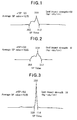
- the distribution of the proportions of component monomers of the compatibility agent was analyzed by liquid chromatography, in which a nitrile group in the compatibility agent was developed using a packing material having a nitrile bond.
- a sample copolymer was dissolved in tetrahydrofuran and developed at 45 °C using a liquid chromatograph, model LC-6A (manufactured and sold by Shimadzu Corporation, Japan), ZorbaxCN (manufactured and sold by DuPont, U.S.A.) as a column, and a mixed solvent of tetrahyrofuran and n-heptane as a mobile phase.
- the distribution of a nitrile group was determined by measuring absorption at a wavelength of 254 nm by means of a UV detector.
- the SP value corresponding to the right end of the base line of the peak was defined as "the maximum SP value”
- the SP value corresponding to the left end of the base line of the peak was defined as "the minimum SP value”.
- the maximum SP value is 11.0
- the minimum SP value is 10.5.
- the content and distribution of the nitrile group in the sample were individually determined, based on the calibration curve which had been prepared with respect to an AS resin (i.e., an acrylonitrile-styrene copolymer) having a known nitrile content.
- a compatibility agent is dissolved in methyl ethyl ketone (MEK) to obtain a 10 wt% resin solution.
- MEK methyl ethyl ketone
- the compatibility agent was a graft copolymer
- the resin component of the graft copolymer was extracted from the rubber component of the graft copolymer using MEK, and then a 10 wt% resin solution was prepared in substantially the same manner as mentioned above.
- 10 ml of the prepared resin solution was put in a viscometer, and the falling time t 1 (sec) of the resin solution was measured in a thermostatic chamber at 25 °C.
- the falling time t 0 (sec) of the standard solution was also measured in substantially the same manner as mentioned above, and the viscometer coefficient (K) was calculated according to the following formula.
- the solution viscosity of the compatibility agent was obtained as the product of the falling time t 1 (sec) of the resin solution, multiplied by the viscometer coefficient (K).
- the unit of the solution viscosity is centipoises (cP).
- Viscometer coefficient K ( ⁇ 0 d)/(t 0 d 0 ) ⁇ 0 : viscosity (cP) of the standard solution at 25 °C
- the supernatant was analyzed by GPC (gel permeation chromatography) (HLC-8020 manufactured and sold by Tosoh Corp., Japan; mobile phase: tetrahydrofuran), and the composition of the phosphate mixture contained in the supernatant was determined from the proportions of the respective areas (which were determined from the chromatogram) for the components of the supernatant.
- GPC gel permeation chromatography
- the proportion of the integrated values of aromatic protons or aliphatic protons was determined using a Fourier transform nuclear magnetic resonance apparatus (proton-FT-NMR), and the contents of an aromatic polycarbonate, a polyphenylene ether, a compatibility agent, and a rubber-modified styrene polymer in the resin component were determined.
- the resin component was dissolved in chloroform, and ethylbenzene was added to the resultant solution in an amount twice that of the solution to crystallize a resin component.
- the resultant solution containing the resin component was ultracentrifuged to separate the resin component from the supernatant.
- the supernatant was dissolved in tetrahydrofuran, and the resultant solution was subjected to filtration to obtain a filtrate.
- the distribution of the proportions of component monomers of the compatibility agent was determined in accordance with the method described in item (2) above entitled "Distribution of the proportions of component monomers of a compatibility agent".
- a mixed solvent comprising 18 ml of methyl ethyl ketone and 2 ml of methanol was added to 1 g of a rubber-modified styrene polymer.
- the obtained solution was shaken at 25 °C for 2 hours and centrifuged at 5 °C, 18,000 rpm for 30 minutes to obtain a supernatant.
- the obtained supernatant was taken out, and the resin component was deposited from the supernatant with methanol, followed by drying.
- the Izod impact strength of a 1/8 inch-thick, V-notched specimen was measured at 23 °C in accordance with ASTM-D256.
- the Vicat softening temperature was measured in accordance with ASTM-D1525, and used as a criterion of heat resistance.
- the melt flow rate was measured in accordance with ASTM-D1238, and used as a criterion of melt flowability. That is, the melt flow rate was determined from the extrusion rate (g/10 min) of a resin composition measured at a melting temperature of 220 °C for 10 minutes under a load of 10 kg.
- the volatility was evaluated using a thermogravimetric analyzer DT-40 (manufactured and sold by Shimadzu Corporation, Japan) by elevating heating temperature at a rate of 10 °C/min under flow of nitrogen. The temperature at which 1 % weight loss occurred was used as a criterion of volatility.
- the light resistance was evaluated using ATLAS CI35W Weatherometer (manufactured and sold by ATLAS Electric Devices Co., U.S.A.) as a light-resistance test device, in accordance with JIS K7102. Exposure conditions were as follows: a temperature of 55 °C, a humidity of 55 %, no rain, and exposure to a xenon light (wavelength: 340 nm, energy: 0.30 W/m 2 ) for 300 hours.
- the color difference ⁇ E between a pre-exposed molded product and a post-exposed molded product was measured, using an SM color computer model SM-3 (manufactured and sold by Suga Test Instruments Co., Ltd, Japan) in accordance with the L.a.b. method, to evaluate the color tone difference. The smaller the color tone difference, the higher the light resistance.
- a 0.1 mm square or smaller ultrathin section was cut-out from a fluororesin sheet.
- the surface of the specimen was cut with a diamond knife to obtain a specimen.
- the obtained specimen was exposed to vapor of an aqueous 1 % ruthenic acid solution in a sealed container for several hours under light shielding conditions, followed by staining with a dye.
- the morphology of the fluororesin was observed using a transmission electron microscope.
- PC Aromatic polycarbonate
- PC bisphenol A type polycarbonate
- HIPS Rubber-modified styrene polymer
- HIPS rubber-modified styrene polymer
- Polybutadiene 11.0 % by weight Styrene 73.7 % by weight
- Ethylbenzene 15.0 % by weight ⁇ -methylstyrene dimer 0.27 % by weight 1,1-bis(t-butylperoxy) -3,3,5-trimethylcyclohexane 0.03 % by weight
- the thus obtained solution was continuously fed to a series four-stage reactor having an agitator. Polymerization was conducted at 126 °C, 190 rpm in the first stage; at 133 °C, 50 rpm in the second stage; at 140 °C, 20 rpm in the third stage; and at 155 °C, 20 rpm in the fourth stage, to obtain a polymerization reaction mixture. Subsequently, the obtained polymerization reaction mixture (the solid content of which was 73 %) was transferred to a devolatilizing apparatus to remove unreacted monomers and the solvent. Thus, a rubber-modified styrene polymer (hereinafter referred to as "HIPS”) was obtained.
- HIPS rubber-modified styrene polymer
- the obtained rubber-modified styrene polymer was analyzed. As a result, it was found that the rubber content was 12.8 % by weight, the average particle diameter of the rubber particle was 1.6 ⁇ m, and the reduced viscosity ⁇ sp/c was 0.60 dl/g.
- the SP value of HIPS was 10.3.
- GPPS polystyrene
- a mixture of 3.4 parts by weight of acrylonitrile, 81.6 parts by weight of styrene, 15 parts by weight of ethylbenzene and, as a polymerization initiator, 0.03 parts by weight of 1,1-bis(t-butylperoxy)-3,3,5-trimethylcyclohexane was continuously fed to a series three-stage plug flow type reactor having an agitator at a rate of 0.7 liter/hr.
- a polymerization was conducted at 126 °C, 100 rpm in the first stage; at 135 °C, 20 rpm in the second stage; and at 147 °C, 10 rpm in the third stage, to thereby obtain a polymerization reaction mixture.
- the obtained polymerization reaction mixture was transferred to a devolatilizing apparatus, the temperature of which was kept at 230 °C, to remove unreacted monomers and the solvent.
- AS-1 a random copolymer
- the obtained copolymer was analyzed. As a result, it was found that the copolymer contained 6 % by weight of the acrylonitrile monomer unit and 94 % by weight of the styrene monomer unit, and had an average SP value of 10.75 (as measured by infrared absorption spectrum). Further, the distribution of the proportions of the component monomers of the copolymer was measured by liquid chromatography.
- the proportion of the acrylonitrile monomer units was distributed in the range of from 0 to 12 % by weight in the copolymer, and the copolymer had a maximum SP value of 11.0, a minimum SP value of 10.5, and a ⁇ SP value of 0.5.
- Copolymers AS-2 and AS-4 to AS-10 were produced in substantially the same manner as mentioned above, except that the weight ratio of the acrylonitrile monomer to the styrene monomer was changed as shown in Tables 1 and 3, so that the above three types of copolymers have different proportions of component monomers and different distributions with respect to proportions of the component monomers.
- the proportion of the acrylonitrile monomer units was distributed in the range of from 7 to 12 % by weight in the copolymer, and the copolymer had a maximum SP value of 11.0, a minimum SP value of 10.8, and a ⁇ SP value of 0.2.
- Copolymers MS-1, MS-2, MSB and SMA were produced in substantially the same manner as in the production of copolymer AS-1, except that each of methyl methacrylate monomer, butyl acrylate monomer and maleic anhydride monomer was individually used instead of the acrylonitrile monomer, and that the weight ratio of each of the above-mentioned monomers to styrene was individually changed as shown in Table 2.
- a stainless steel reactor was provided, which had an inlet for feeding oxygen at a bottom portion thereof and had therein a cooling coil and agitating blades.
- the reactor was purged with nitrogen gas, and was charged with 54.8 g of cupric bromide, 1,110 g of di-n-butylamine, and a solution which had been obtained by dissolving 8.75 kg of 2,6-xylenol in a mixed solvent composed of 20 liters of toluene, 16 liters of n-butanol and 4 liters of methanol.
- a polymerization reaction was conducted for 180 minutes with agitation, while continuously feeding oxygen into the reactor having in an internal temperature controlled to 30 °C. After completion of the reaction, crystallized polymer was collected by filtration.
- PPE powdery polyphenylene ether
- TPP Triphenyl phosphate
- TPP aromatic phosphate monomer
- FR-1 aromatic phosphate condensate
- the SP value is 10.95. (n ⁇ 1)
- a commercially available aromatic phosphate condensate produced from bisphenol A (trade name: CR 741, manufactured and sold by Daihachi Chemical Industry Co., Ltd., Japan) (hereinafter frequently referred to as "FR-2") was used.
- FR-2 is composed of TPP-A-dimer, TPP-A-oligomers and TPP in a weight ratio of 84.7/13.0/2.3, which TPP-A-dimer and TPP-A-oligomer are represented by formula (XV).
- the SP value is 10.80. (n ⁇ 1)
- FR-3 aromatic phosphate condensate produced from bisphenol A (trade name: CR 741C, manufactured and sold by Daihachi Chemical Industry Co., Ltd., Japan) (hereinafter frequently referred to as "FR-3") was used.
- FR-3 is composed of TCP-A-dimer, TCP-A-trimer and tricresyl phosphate (TCP) in a weight ratio of 80.4/14.1/5.5, which TCP-A-dimer and TCP-A-trimer are represented by formula (XVI).
- TCP tricresyl phosphate
- the obtained mixture was analyzed by GPC (gel permeation chromatography) (HLC-8020, manufactured and sold by Tosoh Corporation, Japan; mobile phase: tetrahydrofuran).
- GPC gel permeation chromatography
- TNPP trisnonylphenyl phosphate
- NDP nonylphenyl diphenyl phosphate
- nonyl phenol in a weight ratio of 77.8/11.3/8.4/2.5.
- reaction product consisted of trisnonylphenyl phosphate (hereinafter frequently referred to as "TNPP").
- the average value of total number of carbon atoms of substituent groups was 27.0.
- FR-5 was composed of nonyl diphenyl phosphate (hereinafter frequently referred to as "NDP"), DNP, TPP and nonyl phenol in a weight ratio of 77.8/11.3/8.4/2.5.
- NDP nonyl diphenyl phosphate
- MC610 A commercially available melamine cyanurate (trade name: MC610, manufactured and sold by Nissan Chemical Industries, Ltd., Japan) (hereinafter frequently referred to as "MC") was used.
- PTFE polytetrafluoroethylene
- EBS Kao Wax EB FF, manufactured and sold by Kao Corporation, Japan
- TPE Styrene-butadiene block copolymer
- TPE styrene-butadiene block copolymer
- UVA Ultraviolet light absorber
- UVA Benzotriazole-containing ultraviolet light absorber
- An antioxidant (trade name: Irganox 1076, manufactured and sold by CIBA-GEIGY, Switzerland) (hereinafter frequently referred to as "AO") was used.
- Titanium oxide TiO 2
- TiO 2 A commercially available powdery titanium oxide (0.2 ⁇ , manufactured and sold by Ishihara Sangyo Kaisha, Ltd., Japan) (hereinafter frequently referred to as "TiO 2 ”) was used.
- Resin compositions were prepared according to formulations indicated in Tables 1 to 4 by melt extrusion, using a twin-screw extruder having a side feed opening (ZSK-40 mm ⁇ , manufactured and sold by Werner Pfleiderer GmbH, Germany). Illustratively stated, resin components were melted at 260 °C in a first stage of the extruder. Then, into a second stage of the extruder, TPP was added to the melted resin components through the side feed opening and the resultant mixture was melt-kneaded (under conditions such that the number of screw revolutions was 295 rpm, the extrusion rate was 80 kg/h and the temperature was 240 °C) to thereby obtain pellets. (With respect to PPE, since the melting temperature of PPE is high, master pellets of PPE which had been prepared by melt-extruding GPPS/PPE at 300 °C, were used.)
- the obtained pellets of the individual resin compositions were individually subjected to injection molding at a cylinder temperature of 220 °C and at a mold temperature of 60 °C to obtain specimens, using an injection molding machine (Model IS80A, manufactured and sold by Toshiba Machine Co., Ltd., Japan). The molded specimens were tested to evaluate properties. Results are shown in Tables 1 to 4 and Figs. 1 to 4.
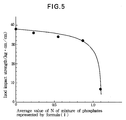
- Example 10 Substantially the same procedure as in Example 10 [in which components (A) to (E) are used] was repeated, except that 10 parts by weight of each of various mixtures of TPP and FR-3 as individually indicated in Table 5 were used instead of 10 parts by weight of TPP. Results are shown in Table 5 and Fig. 5.
- Example 10 Substantially the same procedure as in Example 10 [in which components (A) to (E) are used] was repeated, except that 10 parts by weight of one or two aromatic phosphate monomers indicated in Table 6 were used instead of 10 parts by weight of TPP. Results are shown in Table 6 and Fig. 6.
- a molded product (specimen) was produced in substantially the same manner as in Example 10 [in which components (A) to (E) are used], except that a light resistance improver shown in Table 8 was added to the resin composition. The specimen was tested to evaluate light resistance. The specimen obtained in Example 10 was also tested to evaluate light resistance. Results are shown in Table 8.
- the electron photomicrographs of the PTFE master batches prepared in Examples 38 and 40 are, respectively, shown in Figs. 8 and 9. From Figs. 8 and 9, it is apparent that the PTFE in the master batch prepared in Example 38 (which was prepared by melt-kneading the PTFE with PPE having a high viscosity at 330 °C under a high shearing force exerted due to the presence of the PPE) had a branched fibril form, in which the branched fibril comprises an oriented trunk fiber and a great number of branch fibers branched from the trunk fiber. Due to that structure, the flame retardancy of the resin composition obtained in Example 38 is superior to that of the resin composition obtained in Example 40.
- Example 18 Example 19 Resin composition (A) PC (parts by weight) 60 50 (B) HIPS (parts by weight) 26 26 27 GPPS (parts by weight) 0 1.2 2.4 (C) AS-1 (parts by weight) 3 5 5 (D) PPE (parts by weight) 0 2.8 5.6 (E) TPP (parts by weight) 5 5 10 FR-2 (parts by weight) 6 6 0 (F) MC (parts by weight) 0 4 0 PTFE (parts by weight) 0.3 0 0 (H) TPE (parts by weight) 0 0 5
- an aromatic polycarbonate and a rubber-modified styrene polymer which are poor in compatibility, are effectively rendered compatible with each other by the use of a specific compatibility agent, so that a high impact strength, a high melt flowability (a criterion for molding processability) and a high heat resistance of the resin composition can be achieved.
- the resin composition of the present invention is useful in various fields, especially suitable for producing parts for household electrical appliances, office automation machines, and the like.
Landscapes
- Chemical & Material Sciences (AREA)
- Health & Medical Sciences (AREA)
- Chemical Kinetics & Catalysis (AREA)
- Medicinal Chemistry (AREA)
- Polymers & Plastics (AREA)
- Organic Chemistry (AREA)
- Compositions Of Macromolecular Compounds (AREA)
- Addition Polymer Or Copolymer, Post-Treatments, Or Chemical Modifications (AREA)
Priority Applications (1)
| Application Number | Priority Date | Filing Date | Title |
|---|---|---|---|
| EP01201230A EP1125984A1 (fr) | 1994-06-21 | 1995-06-21 | Résine polymère de type polycarbonate aromatique/styrène |
Applications Claiming Priority (3)
| Application Number | Priority Date | Filing Date | Title |
|---|---|---|---|
| JP13896294 | 1994-06-21 | ||
| JP138962/94 | 1994-06-21 | ||
| PCT/JP1995/001235 WO1995035346A1 (fr) | 1994-06-21 | 1995-06-21 | Resine polymere de type polycarbonate aromatique/styrene |
Publications (2)
| Publication Number | Publication Date |
|---|---|
| EP0767215A1 true EP0767215A1 (fr) | 1997-04-09 |
| EP0767215A4 EP0767215A4 (fr) | 1998-04-08 |
Family
ID=15234252
Family Applications (2)
| Application Number | Title | Priority Date | Filing Date |
|---|---|---|---|
| EP01201230A Withdrawn EP1125984A1 (fr) | 1994-06-21 | 1995-06-21 | Résine polymère de type polycarbonate aromatique/styrène |
| EP95922727A Withdrawn EP0767215A4 (fr) | 1994-06-21 | 1995-06-21 | Resine polymere de type polycarbonate aromatique/styrene |
Family Applications Before (1)
| Application Number | Title | Priority Date | Filing Date |
|---|---|---|---|
| EP01201230A Withdrawn EP1125984A1 (fr) | 1994-06-21 | 1995-06-21 | Résine polymère de type polycarbonate aromatique/styrène |
Country Status (8)
| Country | Link |
|---|---|
| US (2) | US5900446A (fr) |
| EP (2) | EP1125984A1 (fr) |
| JP (1) | JP3362048B2 (fr) |
| KR (1) | KR100224044B1 (fr) |
| CN (1) | CN1144531A (fr) |
| MY (1) | MY114179A (fr) |
| TW (1) | TW377367B (fr) |
| WO (1) | WO1995035346A1 (fr) |
Cited By (10)
| Publication number | Priority date | Publication date | Assignee | Title |
|---|---|---|---|---|
| EP0878506A3 (fr) * | 1997-05-14 | 1999-10-13 | Daicel Chemical Industries, Ltd. | Composition à base de polycarbonate |
| EP0933396A3 (fr) * | 1998-01-28 | 1999-12-15 | General Electric Company | Compositions ignifugées de polycarbonate/copolymère greffé ABS |
| EP0970997A3 (fr) * | 1998-07-10 | 2000-10-18 | Cheil Industries Inc. | Composition ignifugée à base de polycarbonate/abs |
| EP0990679A3 (fr) * | 1998-09-29 | 2000-12-27 | Idemitsu Petrochemical Co., Ltd. | Compositions de résine thermoplastique et ses pièces moulées par injection |
| WO2001062851A1 (fr) * | 2000-02-24 | 2001-08-30 | Dow Global Technologies Inc. | Melanges polymeres de carbonate a ecoulement ameliore |
| DE19806573C5 (de) * | 1997-02-17 | 2004-07-01 | Asahi Kasei Kabushiki Kaisha | Verfahren zur Herstellung einer flammhemmenden Harzzusammensetzung |
| WO2004076546A1 (fr) * | 2003-02-24 | 2004-09-10 | Dow Global Technologies Inc. | Compositions polymeres resistant a l'ignition |
| EP1270665A4 (fr) * | 2000-11-02 | 2004-11-03 | Daicel Chem | Composition de resine styrenique |
| DE19953297B4 (de) * | 1998-11-12 | 2012-12-06 | Idemitsu Kosan Co., Ltd. | Flammenhemmende Zusammensetzung aus Polycarbonatharz und deren Verwendung |
| EP3222653A1 (fr) * | 2016-03-22 | 2017-09-27 | Fuji Xerox Co., Ltd. | Composition de résine, article moulé en résine et procédé de préparation d'une composition de résine |
Families Citing this family (54)
| Publication number | Priority date | Publication date | Assignee | Title |
|---|---|---|---|---|
| US6066686A (en) * | 1996-07-05 | 2000-05-23 | Daicel Chemical Industries, Ltd. | Polycarbonate compositions |
| JP3454515B2 (ja) * | 1996-04-08 | 2003-10-06 | 鐘淵化学工業株式会社 | 難燃性熱可塑性樹脂組成物 |
| TW455603B (en) * | 1996-12-23 | 2001-09-21 | Ciba Sc Holding Ag | Light-stabilised flameproof styrene homopolymers and copolymers |
| JPH1135816A (ja) * | 1997-07-23 | 1999-02-09 | Techno Polymer Kk | 難燃性熱可塑性樹脂組成物 |
| DE19734659A1 (de) * | 1997-08-11 | 1999-02-18 | Bayer Ag | Flammwidrige Polycarbonat-ABS-Formmassen |
| DE19734661A1 (de) * | 1997-08-11 | 1999-02-18 | Bayer Ag | Flammwidrige, spannungsrißbeständige Polycarbonat ABS-Formmassen |
| US6486241B2 (en) | 1997-08-29 | 2002-11-26 | General Electric Company | Polycarbonate resin composition |
| US6613820B2 (en) * | 1997-08-29 | 2003-09-02 | General Electric Company | Polycarbonate resin composition |
| EP1086985B1 (fr) * | 1997-09-02 | 2003-10-15 | Ajinomoto Co., Inc. | Composée résineux thermoplastique, agent pour améliorer le vieillisement thermique d'une résine thermoplastique, et article résineux obtenu par le mouler |
| JP3432426B2 (ja) * | 1998-08-13 | 2003-08-04 | 出光石油化学株式会社 | 難燃性ポリカーボネート樹脂組成物および射出成形品 |
| TW483921B (en) * | 1998-10-16 | 2002-04-21 | Idemitsu Petrochemical Co | Flame-retardant thermoplastic resin composition |
| JP3926938B2 (ja) * | 1998-12-03 | 2007-06-06 | 三菱エンジニアリングプラスチックス株式会社 | 難燃性ポリカーボネート樹脂組成物 |
| EP1024167B1 (fr) * | 1999-01-30 | 2005-12-21 | Clariant GmbH | Combinaison d'ignifuges pour polymères thermoplastiques |
| DE19903709A1 (de) * | 1999-01-30 | 2000-08-10 | Clariant Gmbh | Flammschutzmittel-Kombination für thermoplastische Polymere II |
| DE19941821A1 (de) * | 1999-09-02 | 2001-03-08 | Bayer Ag | Flammwidrige Polycarbonat-ABS-Blends |
| DE10027333A1 (de) | 2000-06-02 | 2001-12-06 | Bayer Ag | Flammwidrige und anti-elektrostatische Polycarbonat-Formmassen |
| US6576800B2 (en) * | 2000-07-17 | 2003-06-10 | National Institute Of Advanced Industrial Science And Technology | Oxidation polymer of a substituted phenol |
| ES2305133T3 (es) * | 2000-12-04 | 2008-11-01 | Sabic Innovative Plastics Ip B.V. | Composicion de resina ignifuga y sus productos moldeados. |
| DE10130832A1 (de) * | 2001-06-27 | 2003-01-16 | Bayer Ag | Flammwidrige Polyesterformmassen mit Polyolefinadditiven |
| CN1266206C (zh) * | 2001-09-27 | 2006-07-26 | Lg化学株式会社 | 苯乙烯热塑树脂组合物 |
| JP2003155416A (ja) * | 2001-11-22 | 2003-05-30 | Teijin Chem Ltd | 難燃性熱可塑性樹脂組成物およびその射出成形品 |
| US7323528B2 (en) * | 2002-07-19 | 2008-01-29 | Cid Centro De Investigacion Y Desarrollo Tecnologico, S.A. De C.V. | Block copolymers containing functional groups |
| US7557154B2 (en) * | 2004-12-23 | 2009-07-07 | Sabic Innovative Plastics Ip B.V. | Polymer compositions, method of manufacture, and articles formed therefrom |
| US8067493B2 (en) * | 2003-12-30 | 2011-11-29 | Sabic Innovative Plastics Ip B.V. | Polymer compositions, method of manufacture, and articles formed therefrom |
| US8034866B2 (en) * | 2003-12-30 | 2011-10-11 | Sabic Innovative Plastics Ip B.V. | Polymer compositions, method of manufacture, and articles formed therefrom |
| US7807745B2 (en) * | 2006-01-27 | 2010-10-05 | Sabic Innovative Plastics Ip B.V. | Molding compositions containing polycarbonate and modified polybutylene terephthalate (PBT) random copolymers derived from polyethylene terephthalate (PET) |
| US20050285086A1 (en) * | 2004-06-29 | 2005-12-29 | Kazunari Kosaka | Flame retardant composition |
| US7417083B2 (en) * | 2004-04-01 | 2008-08-26 | Sabic Innovative Plastics Ip B.V. | Flame retardant composition |
| US7582692B2 (en) * | 2004-04-01 | 2009-09-01 | Sabic Innovative Plastics Ip B.V. | Flame retardant thermoplastic composition and articles comprising the same |
| US7799854B2 (en) * | 2004-04-01 | 2010-09-21 | Sabic Innovative Plastics Ip B.V. | Flame retardant thermoplastic composition and articles comprising the same |
| DE102005018472A1 (de) * | 2005-04-21 | 2006-10-26 | Bayer Materialscience Ag | Polycarbonat-Formmassen |
| US20070123655A1 (en) * | 2005-11-30 | 2007-05-31 | Gaggar Satish K | Weatherable, high modulus polymer compositions and method |
| US8058330B2 (en) * | 2005-12-27 | 2011-11-15 | Dow Corning Toray Company, Ltd. | Thremoplastic resin composition and product therefrom |
| DE602007004072D1 (de) * | 2006-01-27 | 2010-02-11 | Gen Electric | Artikel aus zusammensetzungen mit modifizierten polybutylen-terephthalat-statistik-copolymeren aus polyethylen-terephthalat |
| US8513677B2 (en) * | 2006-03-16 | 2013-08-20 | Samsung Display Co., Ltd. | Display device having an aluminum complex oxide on metal layer for improving corrosion resistance |
| DE502007002461D1 (de) * | 2006-06-09 | 2010-02-11 | Romira Gmbh | Brom- und chlorfreie Polycarbonat- Formmassen |
| KR100848539B1 (ko) | 2007-07-06 | 2008-07-25 | 제일모직주식회사 | 웰드 충격 강도가 우수한 폴리카보네이트계 열가소성 수지조성물 |
| KR101134018B1 (ko) | 2008-12-24 | 2012-04-05 | 제일모직주식회사 | 상용성이 향상된 난연 내스크래치 열가소성 수지 조성물 및이를 이용한 성형품 |
| US20100168317A1 (en) * | 2008-12-30 | 2010-07-01 | Cahoon-Brister Kristen | Poly(butylene terephthalate) compositions, methods of manufacture, and articles thereof |
| JP2010222462A (ja) * | 2009-03-23 | 2010-10-07 | Ps Japan Corp | 耐薬品性に優れるスチレン系樹脂組成物及びこれを用いて形成された成形体 |
| CA2714732A1 (fr) * | 2009-09-08 | 2011-03-08 | Polymer Products Company, Inc. | Compositions ignifuges exempte d'halogenes |
| US20110159293A1 (en) * | 2009-12-31 | 2011-06-30 | Cheil Industries Inc. | Polycarbonate Resin Composition and Molded Product Using the Same |
| JP2013010877A (ja) * | 2011-06-29 | 2013-01-17 | Techno Polymer Co Ltd | 熱可塑性樹脂組成物及び成形品 |
| JP5784407B2 (ja) * | 2011-08-03 | 2015-09-24 | テクノポリマー株式会社 | 熱可塑性樹脂組成物及び成形品 |
| JP5828711B2 (ja) * | 2011-08-11 | 2015-12-09 | テクノポリマー株式会社 | 熱可塑性樹脂組成物及び成形品 |
| JP5784409B2 (ja) * | 2011-08-11 | 2015-09-24 | テクノポリマー株式会社 | 熱可塑性樹脂組成物及び成形品 |
| JP6052968B2 (ja) * | 2012-09-05 | 2016-12-27 | テクノポリマー株式会社 | 熱可塑性樹脂組成物及び成形品 |
| JP6262506B2 (ja) * | 2013-11-29 | 2018-01-17 | テクノポリマー株式会社 | 熱可塑性樹脂組成物及び成形品 |
| JP6489944B2 (ja) * | 2015-06-04 | 2019-03-27 | キヤノン株式会社 | 樹脂組成物及びその製造方法 |
| US20170240742A1 (en) * | 2016-02-18 | 2017-08-24 | Asahi Kasei Chemicals Corporation | Polyphenylene ether resin composition |
| EP3211050A1 (fr) | 2016-02-26 | 2017-08-30 | Trinseo Europe GmbH | Structures moulées de substrats à base de polycarbonate surmoulées avec des caoutchoucs de silicone |
| KR102299824B1 (ko) * | 2017-08-21 | 2021-09-08 | 현대모비스 주식회사 | 열안정성 및 복굴절 특성이 우수한 열가소성 수지 조성물 및 이에 의해 형성된 성형품 |
| DE102018215651A1 (de) * | 2018-09-14 | 2020-03-19 | Tesa Se | Elastischer flammgeschützter Polyurethanschaum, Klebeband mit einem Träger daraus sowie Herstellungsverfahren dafür |
| CN112745652A (zh) * | 2020-12-29 | 2021-05-04 | 上海品诚控股集团有限公司 | 一种透明低烟长效阻燃聚碳酸酯复合材料 |
Family Cites Families (15)
| Publication number | Priority date | Publication date | Assignee | Title |
|---|---|---|---|---|
| JPS5433260B2 (fr) * | 1972-06-15 | 1979-10-19 | ||
| GB1524433A (en) * | 1975-03-26 | 1978-09-13 | Bayer Ag | Continuous bulk polymerisation process |
| FR2346375A1 (fr) * | 1976-03-29 | 1977-10-28 | Union Carbide Corp | Matiere polymere transparente contenant du polystyrene et un copolymere de styrene et de l'acrylonitrile |
| US4742115A (en) * | 1983-07-01 | 1988-05-03 | Japan Synthetic Rubber Co., Ltd. | Heat resistant, thermoplastic resin composition |
| US4578423A (en) * | 1983-12-12 | 1986-03-25 | Monsanto Company | Polyblends of polyphenylene oxide and styrene-acrylonitrile polymers having broad acrylonitrile compositional distribution |
| EP0174493B1 (fr) * | 1984-08-17 | 1988-05-25 | Bayer Ag | Masses à mouler résistant à la flamme |
| NL8600671A (nl) * | 1986-03-17 | 1987-10-16 | Gen Electric | Polymeermengsel met pc en hips. |
| US5204394A (en) * | 1988-09-22 | 1993-04-20 | General Electric Company | Polymer mixture having aromatic polycarbonate, styrene I containing copolymer and/or graft polymer and a flame-retardant, articles formed therefrom |
| DE3841530A1 (de) * | 1988-12-09 | 1990-06-13 | Bayer Ag | Hochschlagzaehe polycarbonat-formmassen |
| JP2907849B2 (ja) * | 1989-01-30 | 1999-06-21 | 帝人化成株式会社 | 難燃性樹脂組成物 |
| JPH0570660A (ja) * | 1991-09-11 | 1993-03-23 | Mitsubishi Kasei Polytec Co | 耐衝撃性熱可塑性樹脂組成物 |
| DE4200247A1 (de) * | 1992-01-08 | 1993-07-15 | Basf Ag | Thermoplastische polycarbonatformmassen |
| JPH0625524A (ja) * | 1992-07-09 | 1994-02-01 | Asahi Chem Ind Co Ltd | 耐衝撃性の優れた良流動耐熱性樹脂組成物 |
| DE4241555A1 (de) * | 1992-12-10 | 1994-06-16 | Basf Ag | Thermoplastische Formmassen auf der Basis von Polycarbonaten, Pfropfpolymerisaten und Styrol/Acrylnitril-Copolymerisaten |
| JPH06345955A (ja) * | 1993-06-03 | 1994-12-20 | Asahi Chem Ind Co Ltd | 樹脂組成物 |
-
1995
- 1995-06-20 TW TW084106321A patent/TW377367B/zh active
- 1995-06-21 EP EP01201230A patent/EP1125984A1/fr not_active Withdrawn
- 1995-06-21 EP EP95922727A patent/EP0767215A4/fr not_active Withdrawn
- 1995-06-21 US US08/700,368 patent/US5900446A/en not_active Expired - Fee Related
- 1995-06-21 CN CN95192162A patent/CN1144531A/zh active Pending
- 1995-06-21 JP JP50195396A patent/JP3362048B2/ja not_active Expired - Fee Related
- 1995-06-21 MY MYPI95001678A patent/MY114179A/en unknown
- 1995-06-21 WO PCT/JP1995/001235 patent/WO1995035346A1/fr not_active Ceased
- 1995-06-21 KR KR1019960705192A patent/KR100224044B1/ko not_active Expired - Fee Related
-
1997
- 1997-12-30 US US09/000,819 patent/US6069206A/en not_active Expired - Fee Related
Cited By (13)
| Publication number | Priority date | Publication date | Assignee | Title |
|---|---|---|---|---|
| DE19861311B4 (de) * | 1997-02-17 | 2012-01-12 | Asahi Kasei Chemicals Corp. | Flammhemmende Harzzusammensetzung |
| DE19806573C5 (de) * | 1997-02-17 | 2004-07-01 | Asahi Kasei Kabushiki Kaisha | Verfahren zur Herstellung einer flammhemmenden Harzzusammensetzung |
| EP0878506A3 (fr) * | 1997-05-14 | 1999-10-13 | Daicel Chemical Industries, Ltd. | Composition à base de polycarbonate |
| CN1097074C (zh) * | 1997-05-14 | 2002-12-25 | 大赛璐化学工业株式会社 | 热塑性树脂组合物 |
| EP0933396A3 (fr) * | 1998-01-28 | 1999-12-15 | General Electric Company | Compositions ignifugées de polycarbonate/copolymère greffé ABS |
| EP0970997A3 (fr) * | 1998-07-10 | 2000-10-18 | Cheil Industries Inc. | Composition ignifugée à base de polycarbonate/abs |
| EP1340794A3 (fr) * | 1998-09-29 | 2003-10-08 | Idemitsu Petrochemical Co., Ltd. | Compositions de résine thermoplastique et ses pièces moulées par injection |
| EP0990679A3 (fr) * | 1998-09-29 | 2000-12-27 | Idemitsu Petrochemical Co., Ltd. | Compositions de résine thermoplastique et ses pièces moulées par injection |
| DE19953297B4 (de) * | 1998-11-12 | 2012-12-06 | Idemitsu Kosan Co., Ltd. | Flammenhemmende Zusammensetzung aus Polycarbonatharz und deren Verwendung |
| WO2001062851A1 (fr) * | 2000-02-24 | 2001-08-30 | Dow Global Technologies Inc. | Melanges polymeres de carbonate a ecoulement ameliore |
| EP1270665A4 (fr) * | 2000-11-02 | 2004-11-03 | Daicel Chem | Composition de resine styrenique |
| WO2004076546A1 (fr) * | 2003-02-24 | 2004-09-10 | Dow Global Technologies Inc. | Compositions polymeres resistant a l'ignition |
| EP3222653A1 (fr) * | 2016-03-22 | 2017-09-27 | Fuji Xerox Co., Ltd. | Composition de résine, article moulé en résine et procédé de préparation d'une composition de résine |
Also Published As
| Publication number | Publication date |
|---|---|
| EP1125984A1 (fr) | 2001-08-22 |
| CN1144531A (zh) | 1997-03-05 |
| TW377367B (en) | 1999-12-21 |
| US5900446A (en) | 1999-05-04 |
| KR100224044B1 (ko) | 1999-10-15 |
| US6069206A (en) | 2000-05-30 |
| JP3362048B2 (ja) | 2003-01-07 |
| WO1995035346A1 (fr) | 1995-12-28 |
| KR970701763A (ko) | 1997-04-12 |
| MY114179A (en) | 2002-08-30 |
| EP0767215A4 (fr) | 1998-04-08 |
Similar Documents
| Publication | Publication Date | Title |
|---|---|---|
| US5900446A (en) | Aromatic polycarbonate-styrene polymer resin composition | |
| US6093760A (en) | Flame retardant for styrene resin and resin composition comprising the same | |
| JPWO1995035346A1 (ja) | 芳香族ポリカーボネート−スチレン重合体系樹脂組成物 | |
| JPH09183886A (ja) | 流動性と衝撃強度の優れた滴下型難燃スチレン系樹脂組成物 | |
| JP3724861B2 (ja) | ポリフェニレンエーテルを含有する難燃性樹脂組成物の製造方法 | |
| JP2000086844A (ja) | 耐油性に優れた難燃樹脂組成物 | |
| KR100307994B1 (ko) | 열가소성수지조성물 | |
| JPH10298373A (ja) | 高衝撃性ポリカーボネート系樹脂組成物 | |
| JPH07133397A (ja) | ハロゲン化エポキシ系難燃剤を含有する耐光性スチレン系樹脂組成物 | |
| JPH1121458A (ja) | 熱安定性の優れたリン系難燃樹脂組成物 | |
| JPH1112417A (ja) | 難燃性耐熱性スチレン系樹脂組成物 | |
| JPH08134342A (ja) | リン系難燃剤を用いたポリカーボネート含有樹脂組成物 | |
| JPWO1998010020A1 (ja) | 熱可塑性樹脂組成物 | |
| JPH10298417A (ja) | 難燃性ポリカーボネート系樹脂組成物 | |
| JP3771948B2 (ja) | 滴下自消性スチレン系難燃性樹脂組成物 | |
| JPH115908A (ja) | 液状添加剤含有成形材料 | |
| JP3315292B2 (ja) | 難燃剤の濃度分布を有する難燃性樹脂組成物成形体 | |
| JPH0859977A (ja) | 難燃性ポリカ−ボネ−ト含有スチレン系樹脂組成物 | |
| JPH11263858A (ja) | 熱可塑性樹脂の加工方法 | |
| JPH0834915A (ja) | ポリカーボネート含有スチレン系樹脂組成物 | |
| JPH09137055A (ja) | 難燃性ポリフェニレンエーテル系樹脂組成物の製造方法 | |
| JPH09263675A (ja) | 耐光性スチレン系難燃樹脂組成物 | |
| JPH07286097A (ja) | 流動性の優れた難燃性ポリカーボネート系樹脂組成物 | |
| JPH11140255A (ja) | 安定性スチレン系難燃樹脂組成物 | |
| JPH11302386A (ja) | 樹脂の加工方法 |
Legal Events
| Date | Code | Title | Description |
|---|---|---|---|
| PUAI | Public reference made under article 153(3) epc to a published international application that has entered the european phase |
Free format text: ORIGINAL CODE: 0009012 |
|
| 17P | Request for examination filed |
Effective date: 19960916 |
|
| AK | Designated contracting states |
Kind code of ref document: A1 Designated state(s): DE GB NL |
|
| A4 | Supplementary search report drawn up and despatched |
Effective date: 19980219 |
|
| AK | Designated contracting states |
Kind code of ref document: A4 Designated state(s): DE GB NL |
|
| 17Q | First examination report despatched |
Effective date: 19981204 |
|
| RAP1 | Party data changed (applicant data changed or rights of an application transferred) |
Owner name: ASAHI KASEI KABUSHIKI KAISHA |
|
| GRAP | Despatch of communication of intention to grant a patent |
Free format text: ORIGINAL CODE: EPIDOSNIGR1 |
|
| STAA | Information on the status of an ep patent application or granted ep patent |
Free format text: STATUS: THE APPLICATION IS DEEMED TO BE WITHDRAWN |
|
| 18D | Application deemed to be withdrawn |
Effective date: 20040217 |