EP0861806B1 - Fächer- oder scheiben-förmige Titanoxydteilchen, Verfahren zu ihrer Herstellung und ihre Verwendungen - Google Patents
Fächer- oder scheiben-förmige Titanoxydteilchen, Verfahren zu ihrer Herstellung und ihre Verwendungen Download PDFInfo
- Publication number
- EP0861806B1 EP0861806B1 EP98301461A EP98301461A EP0861806B1 EP 0861806 B1 EP0861806 B1 EP 0861806B1 EP 98301461 A EP98301461 A EP 98301461A EP 98301461 A EP98301461 A EP 98301461A EP 0861806 B1 EP0861806 B1 EP 0861806B1
- Authority
- EP
- European Patent Office
- Prior art keywords
- titanium oxide
- oxide particles
- fan
- shaped titanium
- disk
- Prior art date
- Legal status (The legal status is an assumption and is not a legal conclusion. Google has not performed a legal analysis and makes no representation as to the accuracy of the status listed.)
- Expired - Lifetime
Links
- GWEVSGVZZGPLCZ-UHFFFAOYSA-N Titan oxide Chemical compound O=[Ti]=O GWEVSGVZZGPLCZ-UHFFFAOYSA-N 0.000 title claims description 113
- 239000002245 particle Substances 0.000 title claims description 68
- OGIDPMRJRNCKJF-UHFFFAOYSA-N titanium oxide Inorganic materials [Ti]=O OGIDPMRJRNCKJF-UHFFFAOYSA-N 0.000 title claims description 63
- 238000000034 method Methods 0.000 title claims description 15
- 238000004519 manufacturing process Methods 0.000 title description 3
- VEXZGXHMUGYJMC-UHFFFAOYSA-N Hydrochloric acid Chemical compound Cl VEXZGXHMUGYJMC-UHFFFAOYSA-N 0.000 claims description 21
- 230000002401 inhibitory effect Effects 0.000 claims description 14
- LLZRNZOLAXHGLL-UHFFFAOYSA-J titanic acid Chemical compound O[Ti](O)(O)O LLZRNZOLAXHGLL-UHFFFAOYSA-J 0.000 claims description 12
- 239000000203 mixture Substances 0.000 claims description 11
- 239000002537 cosmetic Substances 0.000 claims description 10
- 239000003973 paint Substances 0.000 claims description 10
- 239000004033 plastic Substances 0.000 claims description 8
- 229920003023 plastic Polymers 0.000 claims description 8
- 229910000349 titanium oxysulfate Inorganic materials 0.000 claims description 7
- 239000003513 alkali Substances 0.000 claims description 6
- XJDNKRIXUMDJCW-UHFFFAOYSA-J titanium tetrachloride Chemical compound Cl[Ti](Cl)(Cl)Cl XJDNKRIXUMDJCW-UHFFFAOYSA-J 0.000 claims description 6
- XUIMIQQOPSSXEZ-UHFFFAOYSA-N Silicon Chemical compound [Si] XUIMIQQOPSSXEZ-UHFFFAOYSA-N 0.000 claims description 5
- ATJFFYVFTNAWJD-UHFFFAOYSA-N Tin Chemical compound [Sn] ATJFFYVFTNAWJD-UHFFFAOYSA-N 0.000 claims description 5
- RTAQQCXQSZGOHL-UHFFFAOYSA-N Titanium Chemical compound [Ti] RTAQQCXQSZGOHL-UHFFFAOYSA-N 0.000 claims description 5
- QCWXUUIWCKQGHC-UHFFFAOYSA-N Zirconium Chemical compound [Zr] QCWXUUIWCKQGHC-UHFFFAOYSA-N 0.000 claims description 5
- 229910052782 aluminium Inorganic materials 0.000 claims description 5
- XAGFODPZIPBFFR-UHFFFAOYSA-N aluminium Chemical compound [Al] XAGFODPZIPBFFR-UHFFFAOYSA-N 0.000 claims description 5
- 230000003472 neutralizing effect Effects 0.000 claims description 5
- 229910052710 silicon Inorganic materials 0.000 claims description 5
- 239000010703 silicon Substances 0.000 claims description 5
- 229910052718 tin Inorganic materials 0.000 claims description 5
- 239000010936 titanium Substances 0.000 claims description 5
- 229910052719 titanium Inorganic materials 0.000 claims description 5
- 239000004408 titanium dioxide Substances 0.000 claims description 5
- 229910052726 zirconium Inorganic materials 0.000 claims description 5
- 238000010304 firing Methods 0.000 claims description 3
- 150000003839 salts Chemical class 0.000 claims description 3
- 238000003786 synthesis reaction Methods 0.000 claims description 3
- 230000004931 aggregating effect Effects 0.000 claims description 2
- 239000002002 slurry Substances 0.000 claims description 2
- 230000000903 blocking effect Effects 0.000 description 9
- XEEYBQQBJWHFJM-UHFFFAOYSA-N Iron Chemical compound [Fe] XEEYBQQBJWHFJM-UHFFFAOYSA-N 0.000 description 8
- HEMHJVSKTPXQMS-UHFFFAOYSA-M Sodium hydroxide Chemical compound [OH-].[Na+] HEMHJVSKTPXQMS-UHFFFAOYSA-M 0.000 description 6
- 230000032683 aging Effects 0.000 description 6
- 238000000576 coating method Methods 0.000 description 6
- 230000000052 comparative effect Effects 0.000 description 6
- 238000006243 chemical reaction Methods 0.000 description 5
- CDBYLPFSWZWCQE-UHFFFAOYSA-L Sodium Carbonate Chemical compound [Na+].[Na+].[O-]C([O-])=O CDBYLPFSWZWCQE-UHFFFAOYSA-L 0.000 description 4
- PNEYBMLMFCGWSK-UHFFFAOYSA-N aluminium oxide Inorganic materials [O-2].[O-2].[O-2].[Al+3].[Al+3] PNEYBMLMFCGWSK-UHFFFAOYSA-N 0.000 description 4
- 229910052593 corundum Inorganic materials 0.000 description 4
- 229910052742 iron Inorganic materials 0.000 description 4
- 239000011164 primary particle Substances 0.000 description 4
- 238000003756 stirring Methods 0.000 description 4
- 229910001845 yogo sapphire Inorganic materials 0.000 description 4
- YXFVVABEGXRONW-UHFFFAOYSA-N Toluene Chemical compound CC1=CC=CC=C1 YXFVVABEGXRONW-UHFFFAOYSA-N 0.000 description 3
- 239000002253 acid Substances 0.000 description 3
- 239000003112 inhibitor Substances 0.000 description 3
- 229910052751 metal Inorganic materials 0.000 description 3
- 239000002184 metal Substances 0.000 description 3
- 239000004925 Acrylic resin Substances 0.000 description 2
- 229920000178 Acrylic resin Polymers 0.000 description 2
- UQSXHKLRYXJYBZ-UHFFFAOYSA-N Iron oxide Chemical compound [Fe]=O UQSXHKLRYXJYBZ-UHFFFAOYSA-N 0.000 description 2
- 239000004640 Melamine resin Substances 0.000 description 2
- 229920000877 Melamine resin Polymers 0.000 description 2
- QAOWNCQODCNURD-UHFFFAOYSA-N Sulfuric acid Chemical compound OS(O)(=O)=O QAOWNCQODCNURD-UHFFFAOYSA-N 0.000 description 2
- ANBBXQWFNXMHLD-UHFFFAOYSA-N aluminum;sodium;oxygen(2-) Chemical compound [O-2].[O-2].[Na+].[Al+3] ANBBXQWFNXMHLD-UHFFFAOYSA-N 0.000 description 2
- 239000007900 aqueous suspension Substances 0.000 description 2
- 239000002585 base Substances 0.000 description 2
- 239000011248 coating agent Substances 0.000 description 2
- 239000002612 dispersion medium Substances 0.000 description 2
- 150000002739 metals Chemical class 0.000 description 2
- 239000011859 microparticle Substances 0.000 description 2
- 238000006386 neutralization reaction Methods 0.000 description 2
- 239000002244 precipitate Substances 0.000 description 2
- 230000002829 reductive effect Effects 0.000 description 2
- 229910001388 sodium aluminate Inorganic materials 0.000 description 2
- 229910000029 sodium carbonate Inorganic materials 0.000 description 2
- 239000000126 substance Substances 0.000 description 2
- 238000002834 transmittance Methods 0.000 description 2
- KPZGRMZPZLOPBS-UHFFFAOYSA-N 1,3-dichloro-2,2-bis(chloromethyl)propane Chemical compound ClCC(CCl)(CCl)CCl KPZGRMZPZLOPBS-UHFFFAOYSA-N 0.000 description 1
- DKPFZGUDAPQIHT-UHFFFAOYSA-N Butyl acetate Natural products CCCCOC(C)=O DKPFZGUDAPQIHT-UHFFFAOYSA-N 0.000 description 1
- VYPSYNLAJGMNEJ-UHFFFAOYSA-N Silicium dioxide Chemical compound O=[Si]=O VYPSYNLAJGMNEJ-UHFFFAOYSA-N 0.000 description 1
- 241000519995 Stachys sylvatica Species 0.000 description 1
- QAOWNCQODCNURD-UHFFFAOYSA-L Sulfate Chemical compound [O-]S([O-])(=O)=O QAOWNCQODCNURD-UHFFFAOYSA-L 0.000 description 1
- 238000005054 agglomeration Methods 0.000 description 1
- 230000002776 aggregation Effects 0.000 description 1
- 125000001931 aliphatic group Chemical group 0.000 description 1
- 239000011324 bead Substances 0.000 description 1
- 238000009835 boiling Methods 0.000 description 1
- 239000007795 chemical reaction product Substances 0.000 description 1
- 238000004040 coloring Methods 0.000 description 1
- 150000001875 compounds Chemical class 0.000 description 1
- 230000001010 compromised effect Effects 0.000 description 1
- 239000007822 coupling agent Substances 0.000 description 1
- 239000013078 crystal Substances 0.000 description 1
- 239000006185 dispersion Substances 0.000 description 1
- 239000010419 fine particle Substances 0.000 description 1
- 239000011521 glass Substances 0.000 description 1
- FUZZWVXGSFPDMH-UHFFFAOYSA-N hexanoic acid Chemical compound CCCCCC(O)=O FUZZWVXGSFPDMH-UHFFFAOYSA-N 0.000 description 1
- 230000007062 hydrolysis Effects 0.000 description 1
- 238000006460 hydrolysis reaction Methods 0.000 description 1
- 230000000670 limiting effect Effects 0.000 description 1
- 239000000463 material Substances 0.000 description 1
- 238000002156 mixing Methods 0.000 description 1
- SOQBVABWOPYFQZ-UHFFFAOYSA-N oxygen(2-);titanium(4+) Chemical class [O-2].[O-2].[Ti+4] SOQBVABWOPYFQZ-UHFFFAOYSA-N 0.000 description 1
- 239000000843 powder Substances 0.000 description 1
- 239000000047 product Substances 0.000 description 1
- 230000002035 prolonged effect Effects 0.000 description 1
- 230000005855 radiation Effects 0.000 description 1
- 238000005204 segregation Methods 0.000 description 1
- 229920002545 silicone oil Polymers 0.000 description 1
- 238000005245 sintering Methods 0.000 description 1
- 230000008719 thickening Effects 0.000 description 1
- 229910052845 zircon Inorganic materials 0.000 description 1
- GFQYVLUOOAAOGM-UHFFFAOYSA-N zirconium(iv) silicate Chemical compound [Zr+4].[O-][Si]([O-])([O-])[O-] GFQYVLUOOAAOGM-UHFFFAOYSA-N 0.000 description 1
Images

Classifications
-
- A—HUMAN NECESSITIES
- A61—MEDICAL OR VETERINARY SCIENCE; HYGIENE
- A61K—PREPARATIONS FOR MEDICAL, DENTAL OR TOILETRY PURPOSES
- A61K8/00—Cosmetics or similar toiletry preparations
- A61K8/02—Cosmetics or similar toiletry preparations characterised by special physical form
-
- A—HUMAN NECESSITIES
- A61—MEDICAL OR VETERINARY SCIENCE; HYGIENE
- A61K—PREPARATIONS FOR MEDICAL, DENTAL OR TOILETRY PURPOSES
- A61K8/00—Cosmetics or similar toiletry preparations
- A61K8/02—Cosmetics or similar toiletry preparations characterised by special physical form
- A61K8/11—Encapsulated compositions
-
- A—HUMAN NECESSITIES
- A61—MEDICAL OR VETERINARY SCIENCE; HYGIENE
- A61K—PREPARATIONS FOR MEDICAL, DENTAL OR TOILETRY PURPOSES
- A61K8/00—Cosmetics or similar toiletry preparations
- A61K8/18—Cosmetics or similar toiletry preparations characterised by the composition
- A61K8/19—Cosmetics or similar toiletry preparations characterised by the composition containing inorganic ingredients
-
- A—HUMAN NECESSITIES
- A61—MEDICAL OR VETERINARY SCIENCE; HYGIENE
- A61K—PREPARATIONS FOR MEDICAL, DENTAL OR TOILETRY PURPOSES
- A61K8/00—Cosmetics or similar toiletry preparations
- A61K8/18—Cosmetics or similar toiletry preparations characterised by the composition
- A61K8/19—Cosmetics or similar toiletry preparations characterised by the composition containing inorganic ingredients
- A61K8/25—Silicon; Compounds thereof
-
- A—HUMAN NECESSITIES
- A61—MEDICAL OR VETERINARY SCIENCE; HYGIENE
- A61K—PREPARATIONS FOR MEDICAL, DENTAL OR TOILETRY PURPOSES
- A61K8/00—Cosmetics or similar toiletry preparations
- A61K8/18—Cosmetics or similar toiletry preparations characterised by the composition
- A61K8/19—Cosmetics or similar toiletry preparations characterised by the composition containing inorganic ingredients
- A61K8/26—Aluminium; Compounds thereof
-
- A—HUMAN NECESSITIES
- A61—MEDICAL OR VETERINARY SCIENCE; HYGIENE
- A61K—PREPARATIONS FOR MEDICAL, DENTAL OR TOILETRY PURPOSES
- A61K8/00—Cosmetics or similar toiletry preparations
- A61K8/18—Cosmetics or similar toiletry preparations characterised by the composition
- A61K8/19—Cosmetics or similar toiletry preparations characterised by the composition containing inorganic ingredients
- A61K8/28—Zirconium; Compounds thereof
-
- A—HUMAN NECESSITIES
- A61—MEDICAL OR VETERINARY SCIENCE; HYGIENE
- A61K—PREPARATIONS FOR MEDICAL, DENTAL OR TOILETRY PURPOSES
- A61K8/00—Cosmetics or similar toiletry preparations
- A61K8/18—Cosmetics or similar toiletry preparations characterised by the composition
- A61K8/19—Cosmetics or similar toiletry preparations characterised by the composition containing inorganic ingredients
- A61K8/29—Titanium; Compounds thereof
-
- A—HUMAN NECESSITIES
- A61—MEDICAL OR VETERINARY SCIENCE; HYGIENE
- A61Q—SPECIFIC USE OF COSMETICS OR SIMILAR TOILETRY PREPARATIONS
- A61Q17/00—Barrier preparations; Preparations brought into direct contact with the skin for affording protection against external influences, e.g. sunlight, X-rays or other harmful rays, corrosive materials, bacteria or insect stings
- A61Q17/04—Topical preparations for affording protection against sunlight or other radiation; Topical sun tanning preparations
-
- B—PERFORMING OPERATIONS; TRANSPORTING
- B82—NANOTECHNOLOGY
- B82Y—SPECIFIC USES OR APPLICATIONS OF NANOSTRUCTURES; MEASUREMENT OR ANALYSIS OF NANOSTRUCTURES; MANUFACTURE OR TREATMENT OF NANOSTRUCTURES
- B82Y30/00—Nanotechnology for materials or surface science, e.g. nanocomposites
-
- C—CHEMISTRY; METALLURGY
- C01—INORGANIC CHEMISTRY
- C01G—COMPOUNDS CONTAINING METALS NOT COVERED BY SUBCLASSES C01D OR C01F
- C01G23/00—Compounds of titanium
- C01G23/04—Oxides; Hydroxides
- C01G23/047—Titanium dioxide
- C01G23/053—Producing by wet processes, e.g. hydrolysing titanium salts
-
- C—CHEMISTRY; METALLURGY
- C01—INORGANIC CHEMISTRY
- C01G—COMPOUNDS CONTAINING METALS NOT COVERED BY SUBCLASSES C01D OR C01F
- C01G23/00—Compounds of titanium
- C01G23/04—Oxides; Hydroxides
- C01G23/047—Titanium dioxide
- C01G23/053—Producing by wet processes, e.g. hydrolysing titanium salts
- C01G23/0532—Producing by wet processes, e.g. hydrolysing titanium salts by hydrolysing sulfate-containing salts
-
- C—CHEMISTRY; METALLURGY
- C09—DYES; PAINTS; POLISHES; NATURAL RESINS; ADHESIVES; COMPOSITIONS NOT OTHERWISE PROVIDED FOR; APPLICATIONS OF MATERIALS NOT OTHERWISE PROVIDED FOR
- C09C—TREATMENT OF INORGANIC MATERIALS, OTHER THAN FIBROUS FILLERS, TO ENHANCE THEIR PIGMENTING OR FILLING PROPERTIES ; PREPARATION OF CARBON BLACK ; PREPARATION OF INORGANIC MATERIALS WHICH ARE NO SINGLE CHEMICAL COMPOUNDS AND WHICH ARE MAINLY USED AS PIGMENTS OR FILLERS
- C09C1/00—Treatment of specific inorganic materials other than fibrous fillers; Preparation of carbon black
- C09C1/36—Compounds of titanium
- C09C1/3607—Titanium dioxide
-
- C—CHEMISTRY; METALLURGY
- C09—DYES; PAINTS; POLISHES; NATURAL RESINS; ADHESIVES; COMPOSITIONS NOT OTHERWISE PROVIDED FOR; APPLICATIONS OF MATERIALS NOT OTHERWISE PROVIDED FOR
- C09C—TREATMENT OF INORGANIC MATERIALS, OTHER THAN FIBROUS FILLERS, TO ENHANCE THEIR PIGMENTING OR FILLING PROPERTIES ; PREPARATION OF CARBON BLACK ; PREPARATION OF INORGANIC MATERIALS WHICH ARE NO SINGLE CHEMICAL COMPOUNDS AND WHICH ARE MAINLY USED AS PIGMENTS OR FILLERS
- C09C1/00—Treatment of specific inorganic materials other than fibrous fillers; Preparation of carbon black
- C09C1/36—Compounds of titanium
- C09C1/3607—Titanium dioxide
- C09C1/3653—Treatment with inorganic compounds
- C09C1/3661—Coating
-
- A—HUMAN NECESSITIES
- A61—MEDICAL OR VETERINARY SCIENCE; HYGIENE
- A61K—PREPARATIONS FOR MEDICAL, DENTAL OR TOILETRY PURPOSES
- A61K2800/00—Properties of cosmetic compositions or active ingredients thereof or formulation aids used therein and process related aspects
- A61K2800/40—Chemical, physico-chemical or functional or structural properties of particular ingredients
- A61K2800/41—Particular ingredients further characterized by their size
- A61K2800/413—Nanosized, i.e. having sizes below 100 nm
-
- C—CHEMISTRY; METALLURGY
- C01—INORGANIC CHEMISTRY
- C01P—INDEXING SCHEME RELATING TO STRUCTURAL AND PHYSICAL ASPECTS OF SOLID INORGANIC COMPOUNDS
- C01P2002/00—Crystal-structural characteristics
- C01P2002/80—Crystal-structural characteristics defined by measured data other than those specified in group C01P2002/70
- C01P2002/84—Crystal-structural characteristics defined by measured data other than those specified in group C01P2002/70 by UV- or VIS- data
-
- C—CHEMISTRY; METALLURGY
- C01—INORGANIC CHEMISTRY
- C01P—INDEXING SCHEME RELATING TO STRUCTURAL AND PHYSICAL ASPECTS OF SOLID INORGANIC COMPOUNDS
- C01P2004/00—Particle morphology
- C01P2004/01—Particle morphology depicted by an image
- C01P2004/03—Particle morphology depicted by an image obtained by SEM
-
- C—CHEMISTRY; METALLURGY
- C01—INORGANIC CHEMISTRY
- C01P—INDEXING SCHEME RELATING TO STRUCTURAL AND PHYSICAL ASPECTS OF SOLID INORGANIC COMPOUNDS
- C01P2004/00—Particle morphology
- C01P2004/10—Particle morphology extending in one dimension, e.g. needle-like
-
- C—CHEMISTRY; METALLURGY
- C01—INORGANIC CHEMISTRY
- C01P—INDEXING SCHEME RELATING TO STRUCTURAL AND PHYSICAL ASPECTS OF SOLID INORGANIC COMPOUNDS
- C01P2004/00—Particle morphology
- C01P2004/20—Particle morphology extending in two dimensions, e.g. plate-like
-
- C—CHEMISTRY; METALLURGY
- C01—INORGANIC CHEMISTRY
- C01P—INDEXING SCHEME RELATING TO STRUCTURAL AND PHYSICAL ASPECTS OF SOLID INORGANIC COMPOUNDS
- C01P2004/00—Particle morphology
- C01P2004/30—Particle morphology extending in three dimensions
-
- C—CHEMISTRY; METALLURGY
- C01—INORGANIC CHEMISTRY
- C01P—INDEXING SCHEME RELATING TO STRUCTURAL AND PHYSICAL ASPECTS OF SOLID INORGANIC COMPOUNDS
- C01P2004/00—Particle morphology
- C01P2004/50—Agglomerated particles
-
- C—CHEMISTRY; METALLURGY
- C01—INORGANIC CHEMISTRY
- C01P—INDEXING SCHEME RELATING TO STRUCTURAL AND PHYSICAL ASPECTS OF SOLID INORGANIC COMPOUNDS
- C01P2004/00—Particle morphology
- C01P2004/60—Particles characterised by their size
- C01P2004/61—Micrometer sized, i.e. from 1-100 micrometer
-
- C—CHEMISTRY; METALLURGY
- C01—INORGANIC CHEMISTRY
- C01P—INDEXING SCHEME RELATING TO STRUCTURAL AND PHYSICAL ASPECTS OF SOLID INORGANIC COMPOUNDS
- C01P2004/00—Particle morphology
- C01P2004/60—Particles characterised by their size
- C01P2004/62—Submicrometer sized, i.e. from 0.1-1 micrometer
-
- C—CHEMISTRY; METALLURGY
- C01—INORGANIC CHEMISTRY
- C01P—INDEXING SCHEME RELATING TO STRUCTURAL AND PHYSICAL ASPECTS OF SOLID INORGANIC COMPOUNDS
- C01P2004/00—Particle morphology
- C01P2004/60—Particles characterised by their size
- C01P2004/64—Nanometer sized, i.e. from 1-100 nanometer
-
- C—CHEMISTRY; METALLURGY
- C01—INORGANIC CHEMISTRY
- C01P—INDEXING SCHEME RELATING TO STRUCTURAL AND PHYSICAL ASPECTS OF SOLID INORGANIC COMPOUNDS
- C01P2004/00—Particle morphology
- C01P2004/80—Particles consisting of a mixture of two or more inorganic phases
- C01P2004/82—Particles consisting of a mixture of two or more inorganic phases two phases having the same anion, e.g. both oxidic phases
- C01P2004/84—Particles consisting of a mixture of two or more inorganic phases two phases having the same anion, e.g. both oxidic phases one phase coated with the other
-
- C—CHEMISTRY; METALLURGY
- C01—INORGANIC CHEMISTRY
- C01P—INDEXING SCHEME RELATING TO STRUCTURAL AND PHYSICAL ASPECTS OF SOLID INORGANIC COMPOUNDS
- C01P2006/00—Physical properties of inorganic compounds
- C01P2006/12—Surface area
-
- C—CHEMISTRY; METALLURGY
- C01—INORGANIC CHEMISTRY
- C01P—INDEXING SCHEME RELATING TO STRUCTURAL AND PHYSICAL ASPECTS OF SOLID INORGANIC COMPOUNDS
- C01P2006/00—Physical properties of inorganic compounds
- C01P2006/60—Optical properties, e.g. expressed in CIELAB-values
Definitions
- This invention relates to titanium oxide particles of specified shapes and processes for production thereof. More particularly, the invention relates to titanium oxide particles that are fan- or disk-shaped and which have a sufficiently high ultraviolet blocking effect (in particular, uv-A blocking effect) and high enough dispersibility and transparency to be useful as uv inhibitors in sunblock cosmetics, uv inhibiting paints, plastics and so forth. The invention also relates to processes for producing such titanium oxide particles.
- ultrafine titanium oxide powders having a primary particle size of no more than 0.1 ⁇ m are commonly used in sunblock cosmetics, uv inhibiting paints, plastics and so forth with a view to providing an enhanced uv inhibiting effect.
- ultrafine titanium oxide particles not larger than 0.1 ⁇ m are prone to agglomeration and producing a uniform dispersion of primary particles requires considerable effort and is sometimes impossible to accomplish.
- Cosmetics incorporating ultrafine titanium oxide particles are effective in inhibiting uv-B (280 - 320 nm) but little effective in inhibiting uv-A (320 - 380 nm). If an increased amount of such titanium oxide particles is incorporated with a view to inhibiting uv-A, ease in use is inevitably compromised as exemplified by graininess and poor spreadability.
- An object, therefore, of the present invention is to provide titanium oxides that have a sufficiently high ultraviolet blocking effect (in particular, uv-A blocking effect) and high dispersibility and transparency to be useful as uv inhibitors in sunblock cosmetics, uv inhibiting paints, plastics and so forth.
- EP-A-0.649.816 describes titanium dioxide microparticles that are dendritic or asteroidal in shape and comprise radially-combined bundles of acicular and rod-type particles. These microparticles are obtained by a process which involves treating hydrated titanium oxide particles with alkali, mixing the resulting reaction product with hydrochloric acid and thereafter ageing at a temperature of at least 85°C.
- the present inventors conducted intensive studies in order to solve the aforementioned problems of the prior art and found that when orthotitanic acid resulting from alkali neutralization of a titanyl sulfate solution or a titanium tetrachloride solution was treated with hydrochloric acid under specified conditions, there was produced a rutile form of titanium oxide particles which were quite dissimilar in shape from the conventional titanium oxide particles. It was also found that the produced particles could easily be reduced to primary particles when dispersed in cosmetics, paints, plastics and so forth. The cosmetics, paints, plastics and the like which contained those particles turned out to be highly transparent and yet very effective in inhibiting ultraviolet rays, particularly, uv-A.
- the present invention relates basically to fan-shaped titanium oxide particles which are needles aggregating and/or binding together and which have an edge length of 0.05 - 0.2 ⁇ m, a thickness of 0.02 - 0.1 ⁇ m and a specific surface area of 90 - 180 m 2 /g.
- the fan-shaped titanium oxide particles having these characters are produced by a process comprising the steps of neutralizing a titanyl sulfate solution or a titanium tetrachloride solution with an alkali to form orthotitanic acid, adding hydrochloric acid to the orthotitanic acid such as to adjust the TiO 2 concentration to 80 - 140 g/L and the HCl concentration to 90 - 150 g/L, and performing a synthesis reaction at a temperature of 25 - 60°C.
- the titanium oxide of the invention has transparency, is more effective in protecting from uv-A than the conventional types and can be easily reduced to primary particles in a dispersion medium; hence, it is useful as a uv inhibitor to be incorporated in sunblock cosmetics, uv inhibiting paints, plastics and so forth in order to achieve protection from uv radiations.
- the fan-shaped titanium oxide particles of the invention may be fired at a temperature not higher than 900°C to produce disk-shaped titanium oxide particles having an edge length of 0.05 - 0.2 ⁇ m, a thickness of 0.01 - 0.1 ⁇ m and a specific surface area of 20 - 150 m 2 /g.
- the surfaces of the fan- or disk-shaped titanium oxide particles may be coated with a layer containing at least one element selected from among aluminum, silicon, titanium, zirconium and tin.
- the fan- or disk-shaped titanium oxide particles of a coated type can be produced by a process comprising the steps of slurrying the titanium oxide particles produced by the aforementioned process and adding at least one water-soluble salt of aluminum, silicon, titanium, zirconium or tin to the slurry to neutralize same so that the surfaces of the titanium oxide particles are coated with a hydrous or non-hydrous oxide of said element.
- the aforementioned fan-shaped or disk-shaped titanium oxide particle, with or without the top coating, may be incorporated in sunblock cosmetics, uv inhibiting paints or uv inhibiting plastic compositions.
- the fan-shaped titanium oxide particles of the invention have an edge length of 0.05 - 0.2 ⁇ m, a thickness of 0.02 - 0.1 ⁇ m and a specific surface area of 90 - 180 m 2 /g. Desirably, they have an edge length of 0.08 - 0.15 ⁇ m, a thickness of 0.03 - 0.06 ⁇ m and a specific surface area of 95 - 130 m 2 /g. If the edge length is smaller than 0.05 ⁇ m and the thickness is smaller than 0.02 ⁇ m and if the specific surface area is greater than 180 m 2 /g, the fan-shaped titanium oxide particles are less effective in blocking uv light in the longer wavelength range. If the edge length and the thickness are greater than 0.2 ⁇ m and 0.1 ⁇ m, respectively, and if the specific surface area is smaller than 90 m 2 /g, the fan-shaped titanium oxide particles are less transparent.
- the fan-shaped titanium oxide particles of the invention are produced by a process comprising the steps of neutralizing a titanyl sulfate solution or a titanyl tetrachloride solution with an alkali to prepare orthotitanic acid, adding hydrochloric acid to the orthotitanic acid such as to adjust the TiO 2 concentration to 80 - 140 g/L, preferably 90 - 110 g/L, and the HCl concentration to 90 - 150 g/L, preferably 105 - 135 g/L, and performing a synthesis reaction at a temperature of 25 - 60°C, preferably 30 - 55°C.
- the titanyl sulfate or titanium tetrachloride solution is preferably free from the iron content and this is in order to prevent the coloring of the finally obtained titanium oxide.
- Their neutralization with an alkali may be performed at room temperature. If the TiO 2 concentration during aging is lower than 80 g/L, the growth of particles is insufficient and only needles or rods will form that are conventionally used as uv inhibiting particles.
- the TiO 2 concentration during aging is preferably on the higher side; however, in view of the use of the fine particles of orthotitanic acid, thickening the aging mixture to a TiO 2 concentration in excess of 140 g/L requires a special apparatus and adds to the operating cost.
- HCl concentration is lower than 90 g/L, only needles or rods will form. If the HCl concentration exceeds 150 g/L, an anatase, rather than rutile, form of titanium oxide will occur. If the aging temperature is lower than 25°C, the reaction for the generation of rutile will not progress efficiently and an unduly prolonged time is necessary to bring the reaction to completeness. If the aging temperature exceeds 60°C, the desired titanium oxide particles cannot be produced.
- the disk-shaped titanium oxide particles of the invention have an edge length of 0.05 - 0.2 ⁇ m, a thickness of 0.02 - 0.1 ⁇ m and a specific surface area of 20 - 150 m 2 /g. Desirably, they have an edge length of 0.08 - 0.15 ⁇ m, a thickness of 0.03 - 0.06 ⁇ m and a specific surface area of 30 - 80 m 2 /g. If the edge length is smaller than 0.05 ⁇ m, and the thickness is smaller than 0.02 ⁇ m and if the specific surface area is greater than 150 m 2 /g, the disk-shaped titanium oxide particles are less effective in blocking uv light in the longer wavelength range. If the edge length and the thickness are greater than 0.2 ⁇ m and 0.1 ⁇ m, respectively, and if the specific surface area is smaller than 20 m 2 /g, the disk-shaped titanium oxide particles are less transparent.
- the fan-shaped titanium oxide particles produced under the conditions set forth above may be fired at temperatures not higher than 900°C. Beyond 900°C, sintering occurs between particles to impair the dispersibility and transparency of the finally obtained particles.
- the fan- or disk-shaped titanium oxide particles produced by the methods described above may have their surfaces coated with hydrous or non-hydrous oxides of metals such as aluminum, silicon, titanium, zirconium and tin in order to provide better stability in dispersion media and higher durability.
- metals such as aluminum, silicon, titanium, zirconium and tin
- the metal salts already mentioned above for use in preparing the coatings of said hydrous or non-hydrous oxides are not limited in any particular way. Even better dispersibility can be provided by treating the coatings of said hydrous or non-hydrous oxides of metals with silicone oil, various coupling agents or aliphatic acid compounds.
- skin-colored sunblock cosmetics conventionally use iron-containing titanium oxide which is produced by first coating the surfaces of TiO 2 particles with hydrous iron oxide and firing the particles to have iron dissolved in the crystals of titanium dioxide.
- the fan- or disk-shaped titanium oxide particles of the invention are suitable as basis material for the manufacture of said iron-containing titanium oxide.
- a titanium tetrachloride solution was slowly dripped to 160 g/L of a sodium carbonate solution with care being taken to prevent the temperature of the mixture from exceeding 25°C and the addition of the titanium tetrachloride was stopped when a pH of 10 was reached.
- This neutralizing step produced a white precipitate of orthotitanic acid, which was filtered and thoroughly washed.
- the mixture was heated to 30°C under stirring and left for 24 h at that temperature to synthesize a rutile form of titanium oxide.
- sodium aluminate was slowly added as 6% of Al 2 O 3 under stirring which was continued for an additional hour to perform the Al 2 O 3 treatment. Thereafter 400 g/L of sodium hydroxide was added to adjust the pH to 6.5 and the mixture was filtered, washed and dried to yield a rutile form of titanium oxide.
- the rutile was composed of fan-shaped particles having an edge length of 0.09 - 0.15 ⁇ m, a thickness of 0.02 - 0.05 ⁇ m and a specific surface area of 166 m 2 /g.
- Metatitanic acid prepared by hydrolysis in the sulfate process was digested with hot conc. sulfuric acid to produce a titanyl sulfate solution, which was slowly added to 160 g/L of a sodium carbonate solution with care being taken to prevent the temperature of the solution from exceeding 25°C and the addition of the titanyl sulfate was stopped when a pH of 10 was reached.
- This neutralizing step produced a white precipitate of orthotitanic acid, which was filtered and thoroughly washed.
- the mixture was heated at 50°C under stirring and left for 12 h at that temperature to synthesize a rutile form of titanium oxide.
- sodium aluminate was slowly added as 6% of Al 2 O 3 under stirring, which was continued for an additional hour to perform the Al 2 O 3 treatment. Thereafter, 400 g/L of sodium hydroxide was added to adjust the pH to 6.5 and the mixture was filtered, washed and dried to yield a rutile form of titanium oxide.
- the rutile was composed of fan-shaped particles having an edge length of 0.1 - 0.2 ⁇ m, a thickness of 0.02 - 0.1 ⁇ m and a specific surface area of 127 m 2 /g.
- An electron photomicrograph of the TiO 2 particles is shown in Fig. 1.
- Example 2 A reaction was performed as in Example 1 to synthesize a rutile form of titanium dioxide, except that the HCl concentration was adjusted to 160 g/L and the temperature of the mixture to 40°C.
- the actual product contained a minor amount of anatase.
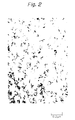
- a reaction was performed as in Example 2 to a synthesize a rutile form of titanium oxide, except that the reaction temperature was the boiling point of the mixture.
- the rutile was composed of rod-shaped particles having a major axis of 0.03 - 0.12 ⁇ m, a minor axis of 0.01 - 0.02 ⁇ m and a specific surface area of 134 m 2 /g.
- An electron photomicrograph of the TiO 2 particles is shown in Fig. 2.
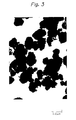
- the fan-shaped titanium oxide particles produced in Example 2 were fired at 700°C for 30 min in a muffle furnace.
- the thus produced rutile was composed of disk-shaped particles having a diameter of 0.1 - 0.2 ⁇ m, a thickness of 0.02 - 0.1 ⁇ m and a specific surface area of 28 m 2 /g.
- An electron photomicrograph of the TiO 2 particles is shown in Fig. 3.
Landscapes
- Life Sciences & Earth Sciences (AREA)
- Health & Medical Sciences (AREA)
- Chemical & Material Sciences (AREA)
- Animal Behavior & Ethology (AREA)
- General Health & Medical Sciences (AREA)
- Public Health (AREA)
- Veterinary Medicine (AREA)
- Epidemiology (AREA)
- Inorganic Chemistry (AREA)
- Birds (AREA)
- Organic Chemistry (AREA)
- Engineering & Computer Science (AREA)
- Environmental & Geological Engineering (AREA)
- General Life Sciences & Earth Sciences (AREA)
- Geology (AREA)
- Nanotechnology (AREA)
- Dermatology (AREA)
- Composite Materials (AREA)
- Condensed Matter Physics & Semiconductors (AREA)
- General Physics & Mathematics (AREA)
- Materials Engineering (AREA)
- Crystallography & Structural Chemistry (AREA)
- Physics & Mathematics (AREA)
- Cosmetics (AREA)
- Inorganic Compounds Of Heavy Metals (AREA)
- Pigments, Carbon Blacks, Or Wood Stains (AREA)
- Paints Or Removers (AREA)
- Compositions Of Macromolecular Compounds (AREA)
Claims (9)
- Fächerförmige Titanoxidteilchen, die Nadeln sind, die aggregieren und/oder aneinanderbinden und die eine Kantenlänge von 0,05 bis 0,2 µm, eine Dicke von 0,02 bis 0,1 µm und eine spezifische Oberfläche von 90 bis 180 m2/g aufweisen.
- Scheibenförmige Titanoxidteilchen, hergestellt durch Brennen der fächerförmigen Titanoxidteilchen gemäss Anspruch 1 bei einer Temperatur von nicht höher als 900°C, die eine Kantenlänge von 0,05 bis 0,2 µm, eine Dicke von 0,02 bis 0,1 µm und eine spezifische Oberfläche von 20 bis 150 m2/g aufweisen.
- Fächerförmige Titanoxidteilchen nach Anspruch 1 oder scheibenförmige Titanoxidteilchen nach Anspruch 2, deren Oberfläche mit einer Schicht beschichtet ist, die mindestens ein Element aus der Gruppe bestehend aus Aluminium, Silicium, Titan, Zirkonium und Zinn enthält.
- Verfahren zur Herstellung der fächerförmigen Titanoxidteilchen, umfassend die Schritte: Neutralisieren einer Titansulfatlösung oder einer Titantetrachloridlösung mit einer Base, wodurch Orthotitansäure gebildet wird, Zugabe von Salzsäure zu der Orthotitansäure zur Einstellung der TiO2-Konzentration auf 80 bis 140 g/ℓ und der HCl-Konzentration auf 90 bis 150 g/ℓ, und Durchführen einer Synthesereaktion bei einer Temperatur von 25 bis 60°C.
- Verfahren zur Herstellung scheibenförmiger Titanoxidteilchen durch Brennen fächerförmiger Titanoxidteilchen bei einer Temperatur von nicht höher als 900°C, wobei die fächerförmigen Titanoxidteilchen nach dem Verfahren gemäss Anspruch 4 hergestellt werden.
- Verfahren zur Herstellung fächer- oder scheibenförmiger Titanoxidteilchen, umfassend die Schritte: Aufschlämmung von Titanoxidteilchen, hergestellt durch eines der Verfahren nach Anspruch 4 oder 5, und Zugabe von mindestens einem wasserlöslichen Salz von Aluminium, Silicium, Titan, Zirkonium oder Zinn zu dieser Aufschlämmung, wodurch diese neutralisiert wird, so dass die Oberflächen der Titanoxidteilchen mit einem hydratisierten Oxid dieses Elements beschichtet werden.
- Sonnenschutzkosmetik, die die fächer- oder scheibenförmigen Titanoxidteilchen nach einem der Ansprüche 1 bis 3 enthält.
- Ultraviolett-hemmender Anstrich, der die fächer- oder scheibenförmigen Titanoxidteilchen nach einem der Ansprüche 1 bis 3 enthält.
- Ultraviolett-hemmende Kunststoffzusammensetzung, die die fächer- oder scheibenförmigen Titanoxidteilchen nach einem der Ansprüche 1 bis 3 enthält.
Applications Claiming Priority (3)
| Application Number | Priority Date | Filing Date | Title |
|---|---|---|---|
| JP61840/97 | 1997-02-28 | ||
| JP06184097A JP4018770B2 (ja) | 1997-02-28 | 1997-02-28 | 扇状酸化チタン、及び扇状又は盤状酸化チタンの製造方法、並びにその用途 |
| JP6184097 | 1997-02-28 |
Publications (2)
| Publication Number | Publication Date |
|---|---|
| EP0861806A1 EP0861806A1 (de) | 1998-09-02 |
| EP0861806B1 true EP0861806B1 (de) | 2000-09-20 |
Family
ID=13182699
Family Applications (1)
| Application Number | Title | Priority Date | Filing Date |
|---|---|---|---|
| EP98301461A Expired - Lifetime EP0861806B1 (de) | 1997-02-28 | 1998-02-27 | Fächer- oder scheiben-förmige Titanoxydteilchen, Verfahren zu ihrer Herstellung und ihre Verwendungen |
Country Status (4)
| Country | Link |
|---|---|
| US (1) | US6099634A (de) |
| EP (1) | EP0861806B1 (de) |
| JP (1) | JP4018770B2 (de) |
| DE (1) | DE69800307T2 (de) |
Families Citing this family (32)
| Publication number | Priority date | Publication date | Assignee | Title |
|---|---|---|---|---|
| US6036763A (en) * | 1998-10-16 | 2000-03-14 | Engelhard Corporation | KOH neutralized metatitanic acid mixture and complex inorganic pigments containing the same |
| US6548039B1 (en) * | 1999-06-24 | 2003-04-15 | Altair Nanomaterials Inc. | Processing aqueous titanium solutions to titanium dioxide pigment |
| US6440383B1 (en) * | 1999-06-24 | 2002-08-27 | Altair Nanomaterials Inc. | Processing aqueous titanium chloride solutions to ultrafine titanium dioxide |
| KR100350226B1 (ko) * | 2000-02-29 | 2002-08-27 | 나노케미칼 주식회사 | 저온균일침전법으로 큰 비표면적을 갖도록 제조된 광촉매용 이산화티탄 분말 및 그 제조방법 |
| GB0015381D0 (en) * | 2000-06-26 | 2000-08-16 | Acma Ltd | Particulate metal oxide |
| WO2002032574A2 (en) | 2000-10-17 | 2002-04-25 | Altair Nanomaterials Inc. | Method for producing catalyst structures |
| CA2454324C (en) * | 2001-07-20 | 2012-01-03 | Altair Nanomaterials Inc. | Process for making lithium titanate |
| EP1282180A1 (de) * | 2001-07-31 | 2003-02-05 | Xoliox SA | Verfahren zur Herstellung von Li4Ti5O12 und Elektrodenmaterial |
| US6982073B2 (en) | 2001-11-02 | 2006-01-03 | Altair Nanomaterials Inc. | Process for making nano-sized stabilized zirconia |
| GB0130658D0 (en) * | 2001-12-21 | 2002-02-06 | Acma | Particulate metal oxide |
| WO2003076338A1 (en) * | 2002-03-08 | 2003-09-18 | Altair Nanomaterials Inc. | Process for making nono-sized and sub-micron-sized lithium-transition metal oxides |
| CN100387526C (zh) * | 2002-10-15 | 2008-05-14 | 北京化工大学 | 一种纳米二氧化钛的制备方法 |
| JP4105971B2 (ja) | 2003-03-27 | 2008-06-25 | 株式会社資生堂 | 多孔質酸化チタン粉体及びその製造方法 |
| US7482304B2 (en) * | 2003-12-10 | 2009-01-27 | Altair Nanomaterials Inc. | Method for producing structures |
| US20050147641A1 (en) * | 2004-01-02 | 2005-07-07 | Qi Yu | Plastic water and beverage bottle and manufacturing process thereof |
| KR20080063511A (ko) * | 2005-10-21 | 2008-07-04 | 알타이어나노 인코포레이티드 | 리튬 이온 배터리들 |
| US8119108B2 (en) * | 2005-12-14 | 2012-02-21 | Shiseido Co., Ltd. | Dispersion of microparticulate titanium oxide and cosmetics containing the same |
| JP4684970B2 (ja) * | 2006-08-31 | 2011-05-18 | チタン工業株式会社 | ルチル型酸化チタン凝集粒子およびそれを配合した化粧料 |
| KR20090129500A (ko) * | 2007-03-30 | 2009-12-16 | 알타이어나노 인코포레이티드 | 리튬 이온 전지의 제조방법 |
| JP5096383B2 (ja) * | 2009-01-27 | 2012-12-12 | チタン工業株式会社 | 藁束状ルチル型酸化チタン、それを使用した化粧料及びトナー用外添剤 |
| JP5360982B2 (ja) * | 2009-08-21 | 2013-12-04 | 独立行政法人産業技術総合研究所 | 二酸化チタン系デバイス、多針体二酸化チタン粒子の製造方法、および多針体二酸化チタン粒子コーティングの製造方法 |
| CN101928484B (zh) * | 2010-07-14 | 2012-02-29 | 河北大学 | 一种用硫酸氧钛制备硫酸盐/二氧化钛复合粉体的方法 |
| CA2816795A1 (en) * | 2010-11-21 | 2012-05-24 | Joma International As | Method for producing small size titanium oxide particles |
| JP5851102B2 (ja) * | 2011-03-02 | 2016-02-03 | 石原産業株式会社 | ルチル型酸化チタンナノ粒子及びその製造方法 |
| JP2015160759A (ja) | 2014-02-26 | 2015-09-07 | チタン工業株式会社 | 透明導電性複合酸化物微粉末及びその製造方法並びに透明導電性膜 |
| CN104059390B (zh) * | 2014-05-27 | 2015-07-01 | 池州凯尔特纳米科技有限公司 | 一种具有高比表面积的改性碳酸钙及其制备方法 |
| US10703913B2 (en) * | 2015-12-25 | 2020-07-07 | Shiseido Company, Ltd. | Titanium dioxide powder and cosmetic formulated therewith |
| JP7084112B2 (ja) * | 2017-06-26 | 2022-06-14 | 株式会社 資生堂 | 二酸化チタン粉体およびそれを配合した粉末化粧料 |
| JP7017326B2 (ja) * | 2017-06-26 | 2022-02-08 | 株式会社 資生堂 | 二酸化チタン粉体を配合した化粧料 |
| JP7017325B2 (ja) * | 2017-06-26 | 2022-02-08 | 株式会社 資生堂 | 二酸化チタン粉体を配合した乳化化粧料 |
| JP7010607B2 (ja) * | 2017-06-26 | 2022-01-26 | 株式会社 資生堂 | 固形粉末化粧料 |
| WO2020175003A1 (ja) * | 2019-02-28 | 2020-09-03 | 株式会社 資生堂 | 低粘度分散媒用高隠蔽性白色顔料及びその製造方法 |
Family Cites Families (7)
| Publication number | Priority date | Publication date | Assignee | Title |
|---|---|---|---|---|
| JPS55154317A (en) * | 1979-05-18 | 1980-12-01 | Ishihara Sangyo Kaisha Ltd | Manufacture of fine titanium dioxide composition powder |
| JPS623003A (ja) * | 1985-06-28 | 1987-01-09 | Catalysts & Chem Ind Co Ltd | 鱗片状の無機酸化物およびその製造方法 |
| FR2677012B1 (fr) * | 1991-05-31 | 1993-09-03 | Rhone Poulenc Chimie | Dioxyde de titane sous forme de plaquettes et son procede de preparation. |
| EP0721484B1 (de) * | 1993-10-01 | 1998-06-17 | Kao Corporation | Gegen ultraviolettstrahlung schützende feine kompositteilchen, verfahren zur herstellung derselben und kosmetika |
| AU675000B2 (en) * | 1993-10-22 | 1997-01-16 | Ishihara Sangyo Kaisha Ltd. | Dendrite or asteroidal titanium dioxide micro-particles and process for producing the same |
| ES2224104T3 (es) * | 1993-12-13 | 2005-03-01 | Ishihara Sangyo Kaisha, Ltd. | Particulas ultrafinas de dioxido de titanio tipo rutilo que contiene hierro y procedimiento para su preparacion. |
| JPH07330338A (ja) * | 1994-06-06 | 1995-12-19 | Ishihara Sangyo Kaisha Ltd | 樹枝状又はヒトデ状鉄含有微粒子ルチル型二酸化チタン及びその製造方法 |
-
1997
- 1997-02-28 JP JP06184097A patent/JP4018770B2/ja not_active Expired - Lifetime
-
1998
- 1998-02-27 EP EP98301461A patent/EP0861806B1/de not_active Expired - Lifetime
- 1998-02-27 DE DE69800307T patent/DE69800307T2/de not_active Expired - Fee Related
- 1998-02-27 US US09/031,723 patent/US6099634A/en not_active Expired - Fee Related
Also Published As
| Publication number | Publication date |
|---|---|
| JPH10245228A (ja) | 1998-09-14 |
| EP0861806A1 (de) | 1998-09-02 |
| DE69800307D1 (de) | 2000-10-26 |
| US6099634A (en) | 2000-08-08 |
| JP4018770B2 (ja) | 2007-12-05 |
| DE69800307T2 (de) | 2001-01-25 |
Similar Documents
| Publication | Publication Date | Title |
|---|---|---|
| EP0861806B1 (de) | Fächer- oder scheiben-förmige Titanoxydteilchen, Verfahren zu ihrer Herstellung und ihre Verwendungen | |
| US5215580A (en) | Process for the production of a fine particle titanium dioxide | |
| US5714260A (en) | Ultrafine iron-containing rutile titanium oxide and process for producing the same | |
| EP2138462B1 (de) | Sol von oberflächenbehandeltem titanoxid, herstellungsverfahren dafür und beschichtungszusammensetzung damit | |
| AU2013312028B2 (en) | Infrared-reflecting pigment based on titanium dioxide, and method for producing it | |
| EP0779243B1 (de) | Rutil-Titandioxid | |
| DE3941543A1 (de) | Dispersionen | |
| US5451252A (en) | Subpigmentary titanium dioxide with improved photostability | |
| US5248556A (en) | Systhetic whitener pigment | |
| US4405376A (en) | Titanium dioxide pigment and process for producing same | |
| US5837050A (en) | Ultrafine iron-containing rutile titanium oxide and process for producing the same | |
| JP4153066B2 (ja) | 強凝集性酸化チタンの製造方法 | |
| JP2717904B2 (ja) | 鉄含有超微粒子ルチル型二酸化チタン及びその製造方法 | |
| JPS6345123A (ja) | 微粉末二酸化チタン組成物 | |
| JP4195254B2 (ja) | ルチル型二酸化チタン微粒子およびその製造方法 | |
| JPS6149250B2 (de) | ||
| JPH11322337A (ja) | バタフライ状ルチル型酸化チタン及びその製造方法、並びにその用途 | |
| JPH07751B2 (ja) | 微粒子二酸化チタン粉末 | |
| JP4256133B2 (ja) | 針状二酸化チタン微粒子の製造方法 | |
| JP3877235B2 (ja) | ルチル型二酸化チタン粒子およびその製造法 | |
| JPH0769636A (ja) | 鉄含有二酸化チタン及びその製造方法 | |
| JP4256134B2 (ja) | 鉄含有針状二酸化チタン微粒子の製造方法 | |
| JPH04170323A (ja) | 超微粒子黄色系顔料及びその製造方法 | |
| JPH0753216A (ja) | 二酸化チタン微粉末およびその製造方法 | |
| JP3548199B2 (ja) | 二酸化チタン微粉末およびその製造方法 |
Legal Events
| Date | Code | Title | Description |
|---|---|---|---|
| PUAI | Public reference made under article 153(3) epc to a published international application that has entered the european phase |
Free format text: ORIGINAL CODE: 0009012 |
|
| AK | Designated contracting states |
Kind code of ref document: A1 Designated state(s): BE DE FR GB IT |
|
| AX | Request for extension of the european patent |
Free format text: AL;LT;LV;MK;RO;SI |
|
| 17P | Request for examination filed |
Effective date: 19980803 |
|
| 17Q | First examination report despatched |
Effective date: 19981208 |
|
| AKX | Designation fees paid |
Free format text: BE DE FR GB IT |
|
| RBV | Designated contracting states (corrected) |
Designated state(s): BE DE FR GB IT |
|
| GRAG | Despatch of communication of intention to grant |
Free format text: ORIGINAL CODE: EPIDOS AGRA |
|
| GRAG | Despatch of communication of intention to grant |
Free format text: ORIGINAL CODE: EPIDOS AGRA |
|
| GRAG | Despatch of communication of intention to grant |
Free format text: ORIGINAL CODE: EPIDOS AGRA |
|
| GRAH | Despatch of communication of intention to grant a patent |
Free format text: ORIGINAL CODE: EPIDOS IGRA |
|
| ITF | It: translation for a ep patent filed | ||
| GRAH | Despatch of communication of intention to grant a patent |
Free format text: ORIGINAL CODE: EPIDOS IGRA |
|
| GRAA | (expected) grant |
Free format text: ORIGINAL CODE: 0009210 |
|
| AK | Designated contracting states |
Kind code of ref document: B1 Designated state(s): BE DE FR GB IT |
|
| ET | Fr: translation filed | ||
| REF | Corresponds to: |
Ref document number: 69800307 Country of ref document: DE Date of ref document: 20001026 |
|
| PLBE | No opposition filed within time limit |
Free format text: ORIGINAL CODE: 0009261 |
|
| STAA | Information on the status of an ep patent application or granted ep patent |
Free format text: STATUS: NO OPPOSITION FILED WITHIN TIME LIMIT |
|
| 26N | No opposition filed | ||
| REG | Reference to a national code |
Ref country code: GB Ref legal event code: IF02 |
|
| PGFP | Annual fee paid to national office [announced via postgrant information from national office to epo] |
Ref country code: DE Payment date: 20090225 Year of fee payment: 12 |
|
| PGFP | Annual fee paid to national office [announced via postgrant information from national office to epo] |
Ref country code: GB Payment date: 20090126 Year of fee payment: 12 |
|
| PGFP | Annual fee paid to national office [announced via postgrant information from national office to epo] |
Ref country code: BE Payment date: 20090119 Year of fee payment: 12 |
|
| PGFP | Annual fee paid to national office [announced via postgrant information from national office to epo] |
Ref country code: IT Payment date: 20090223 Year of fee payment: 12 |
|
| PGFP | Annual fee paid to national office [announced via postgrant information from national office to epo] |
Ref country code: FR Payment date: 20081230 Year of fee payment: 12 |
|
| BERE | Be: lapsed |
Owner name: *TITAN KOGYO K.K. Effective date: 20100228 |
|
| GBPC | Gb: european patent ceased through non-payment of renewal fee |
Effective date: 20100227 |
|
| REG | Reference to a national code |
Ref country code: FR Ref legal event code: ST Effective date: 20101029 |
|
| PG25 | Lapsed in a contracting state [announced via postgrant information from national office to epo] |
Ref country code: FR Free format text: LAPSE BECAUSE OF NON-PAYMENT OF DUE FEES Effective date: 20100301 |
|
| PG25 | Lapsed in a contracting state [announced via postgrant information from national office to epo] |
Ref country code: DE Free format text: LAPSE BECAUSE OF NON-PAYMENT OF DUE FEES Effective date: 20100901 Ref country code: BE Free format text: LAPSE BECAUSE OF NON-PAYMENT OF DUE FEES Effective date: 20100228 |
|
| PG25 | Lapsed in a contracting state [announced via postgrant information from national office to epo] |
Ref country code: GB Free format text: LAPSE BECAUSE OF NON-PAYMENT OF DUE FEES Effective date: 20100227 Ref country code: IT Free format text: LAPSE BECAUSE OF NON-PAYMENT OF DUE FEES Effective date: 20100227 |