EP0971946B1 - Selection de proteines a l'aide de fusions arn-proteine - Google Patents
Selection de proteines a l'aide de fusions arn-proteine Download PDFInfo
- Publication number
- EP0971946B1 EP0971946B1 EP98904574A EP98904574A EP0971946B1 EP 0971946 B1 EP0971946 B1 EP 0971946B1 EP 98904574 A EP98904574 A EP 98904574A EP 98904574 A EP98904574 A EP 98904574A EP 0971946 B1 EP0971946 B1 EP 0971946B1
- Authority
- EP
- European Patent Office
- Prior art keywords
- protein
- rna
- fusion
- candidate
- dna
- Prior art date
- Legal status (The legal status is an assumption and is not a legal conclusion. Google has not performed a legal analysis and makes no representation as to the accuracy of the status listed.)
- Expired - Lifetime
Links
Images






Classifications
-
- C—CHEMISTRY; METALLURGY
- C12—BIOCHEMISTRY; BEER; SPIRITS; WINE; VINEGAR; MICROBIOLOGY; ENZYMOLOGY; MUTATION OR GENETIC ENGINEERING
- C12N—MICROORGANISMS OR ENZYMES; COMPOSITIONS THEREOF; PROPAGATING, PRESERVING, OR MAINTAINING MICROORGANISMS; MUTATION OR GENETIC ENGINEERING; CULTURE MEDIA
- C12N15/00—Mutation or genetic engineering; DNA or RNA concerning genetic engineering, vectors, e.g. plasmids, or their isolation, preparation or purification; Use of hosts therefor
- C12N15/09—Recombinant DNA-technology
- C12N15/10—Processes for the isolation, preparation or purification of DNA or RNA
- C12N15/1034—Isolating an individual clone by screening libraries
- C12N15/1062—Isolating an individual clone by screening libraries mRNA-Display, e.g. polypeptide and encoding template are connected covalently
-
- C—CHEMISTRY; METALLURGY
- C07—ORGANIC CHEMISTRY
- C07K—PEPTIDES
- C07K14/00—Peptides having more than 20 amino acids; Gastrins; Somatostatins; Melanotropins; Derivatives thereof
- C07K14/82—Translation products from oncogenes
-
- C—CHEMISTRY; METALLURGY
- C07—ORGANIC CHEMISTRY
- C07K—PEPTIDES
- C07K5/00—Peptides containing up to four amino acids in a fully defined sequence; Derivatives thereof
- C07K5/04—Peptides containing up to four amino acids in a fully defined sequence; Derivatives thereof containing only normal peptide links
-
- C—CHEMISTRY; METALLURGY
- C12—BIOCHEMISTRY; BEER; SPIRITS; WINE; VINEGAR; MICROBIOLOGY; ENZYMOLOGY; MUTATION OR GENETIC ENGINEERING
- C12N—MICROORGANISMS OR ENZYMES; COMPOSITIONS THEREOF; PROPAGATING, PRESERVING, OR MAINTAINING MICROORGANISMS; MUTATION OR GENETIC ENGINEERING; CULTURE MEDIA
- C12N15/00—Mutation or genetic engineering; DNA or RNA concerning genetic engineering, vectors, e.g. plasmids, or their isolation, preparation or purification; Use of hosts therefor
- C12N15/09—Recombinant DNA-technology
- C12N15/10—Processes for the isolation, preparation or purification of DNA or RNA
- C12N15/1034—Isolating an individual clone by screening libraries
- C12N15/1048—SELEX
-
- C—CHEMISTRY; METALLURGY
- C40—COMBINATORIAL TECHNOLOGY
- C40B—COMBINATORIAL CHEMISTRY; LIBRARIES, e.g. CHEMICAL LIBRARIES
- C40B30/00—Methods of screening libraries
- C40B30/04—Methods of screening libraries by measuring the ability to specifically bind a target molecule, e.g. antibody-antigen binding, receptor-ligand binding
-
- G—PHYSICS
- G01—MEASURING; TESTING
- G01N—INVESTIGATING OR ANALYSING MATERIALS BY DETERMINING THEIR CHEMICAL OR PHYSICAL PROPERTIES
- G01N33/00—Investigating or analysing materials by specific methods not covered by groups G01N1/00 - G01N31/00
- G01N33/48—Biological material, e.g. blood, urine; Haemocytometers
- G01N33/50—Chemical analysis of biological material, e.g. blood, urine; Testing involving biospecific ligand binding methods; Immunological testing
- G01N33/68—Chemical analysis of biological material, e.g. blood, urine; Testing involving biospecific ligand binding methods; Immunological testing involving proteins, peptides or amino acids
- G01N33/6803—General methods of protein analysis not limited to specific proteins or families of proteins
- G01N33/6845—Methods of identifying protein-protein interactions in protein mixtures
-
- C—CHEMISTRY; METALLURGY
- C07—ORGANIC CHEMISTRY
- C07B—GENERAL METHODS OF ORGANIC CHEMISTRY; APPARATUS THEREFOR
- C07B2200/00—Indexing scheme relating to specific properties of organic compounds
- C07B2200/11—Compounds covalently bound to a solid support
-
- C—CHEMISTRY; METALLURGY
- C07—ORGANIC CHEMISTRY
- C07K—PEPTIDES
- C07K2319/00—Fusion polypeptide
Definitions
- This invention relates to protein selection methods.
- the invention was made with government support under grant F32 GM17776-01 and F32 GM17776-02. The government has certain rights in the invention.
- EP0962527A describes a molecule that homologizes genotype and phenotype and utilizations thereof. The power of in vitro selection has been demonstrated in defining novel RNA and DNA sequences with very specific protein binding functions (see, for example, Tuerk and Gold, Science 249 :505 (1990); Irvine et al., J. Mol. Biol 222 :739 (1991); Oliphant et al., Mol. Cell Biol.
- the purpose of the present invention is to allow the principles of in vitro selection and in vitro evolution to be applied to proteins.
- the invention facilitates the isolation of proteins with desired properties from large pools of partially or completely random amino acid sequences.
- the invention solves the problem of recovering and amplifying the protein sequence information by covalently attaching the mRNA coding sequence to the protein molecule.
- the inventive method consists of an in vitro or in situ transcription/ translation protocol that generates protein covalently linked to the 3' end of its own mRNA, i.e., an RNA-protein fusion. This is accomplished by synthesis and in vitro or in situ translation of an mRNA molecule with a peptide acceptor attached to its 3' end.
- a peptide acceptor is puromycin, a nucleoside analog that adds to the C-terminus of a growing peptide chain and terminates translation.
- a DNA sequence is included between the end of the message and the peptide acceptor which is designed to cause the ribosome to pause at the end of the open reading frame, providing additional time for the peptide acceptor (for example, puromycin) to accept the nascent peptide chain before hydrolysis of the peptidyl-tRNA linkage.
- the peptide acceptor for example, puromycin
- the resulting RNA-protein fusion allows repeated rounds of selection and amplification because the protein sequence information may be recovered by reverse transcription and amplification (for example, by PCR amplification as well as any other amplification technique, including RNA-based amplification techniques such as 3SR or TSA).
- the amplified nucleic acid may then be transcribed, modified, and in vitro or in situ translated to generate mRNA-protein fusions for the next round of selection.
- the ability to carry out multiple rounds of selection and amplification enables the enrichment and isolation of very rare molecules, e.g., one desired molecule out of a pool of 10 15 members. This in turn allows the isolation of new or improved proteins which specifically recognize virtually any target or which catalyze desired chemical reactions.
- the invention features a method for selection of a desired protein, involving the steps of: (a) providing a population of candidate RNA molecules, each of which includes a translation initiation sequence and a start codon operably linked to a candidate protein coding sequence and each of which is covalently bonded a peptide acceptor at the 3' end of the candidate protein coding sequence; (b) in vitro or in situ translating the candidate protein coding sequences to produce a population of candidate RNA-protein fusions; and (c) selecting a desired RNA-protein fusion, thereby selecting the desired protein.
- the invention features a method for selection of a DNA molecule which encodes a desired protein, involving the steps of: (a) providing a population of candidate RNA molecules, each of which includes a translation initiation sequence and a start codon operably linked to a candidate protein coding sequence and each of which is covalently bonded to a peptide acceptor at the 3' end of the candidate protein coding sequence; (b) in vitro or in situ translating the candidate protein coding sequences to produce a population of candidate RNA-protein fusions; (c) selecting a desired RNA-protein fusion; and (d) generating from the RNA portion of the fusion a DNA molecule which encodes the desired protein.
- the invention features a method for selection of a protein having an altered function relative to a reference protein, involving the steps of: (a) producing a population of candidate RNA molecules from a population of DNA templates, the candidate DNA templates each having a candidate protein coding sequence which differs from the reference protein coding sequence, the RNA molecules each comprising a translation initiation sequence and a start codon operably linked to the candidate protein coding sequence and each being covalently bonded to a peptide acceptor at the 3' end; (b) in vitro or in situ translating the candidate protein coding sequences to produce a population of candidate RNA-protein fusions; and (c) selecting an RNA-protein fusion having an altered function, thereby selecting the protein having the altered function.
- the invention features a method for selection of a DNA molecule which encodes a protein having an altered function relative to a reference protein, involving the steps of: (a) producing a population of candidate RNA molecules from a population of candidate DNA templates, the candidate DNA templates each having a candidate protein coding sequence which differs from the reference protein coding sequence, the RNA molecules each comprising a translation initiation sequence and a start codon operably linked to the candidate protein coding sequence and each being covalently bonded to a peptide acceptor at the 3' end; (b) in vitro or in situ translating the candidate protein coding sequences to produce a population of RNA-protein fusions; (c) selecting an RNA-protein fusion having an altered function; and (d) generating from the RNA portion of the fusion a DNA molecule which encodes the protein having the altered function.
- the invention features a method for selection of a desired RNA, involving the steps of: (a) providing a population of candidate RNA molecules, each of which includes a translation initiation sequence and a start codon operably linked to a candidate protein coding sequence and each of which is covalently bonded to a peptide acceptor at the 3' end of the candidate protein coding sequence; (b) in vitro or in situ translating the candidate protein coding sequences to produce a population of candidate RNA-protein fusions; and (c) selecting a desired RNA-protein fusion, thereby selecting the desired RNA.
- the peptide acceptor is puromycin; each of the candidate RNA molecules further includes a pause sequence or further includes a DNA or DNA analog sequence covalently bonded to the 3' end of the RNA; the population of candidate RNA molecules includes at least 10 9 , preferably, at least 10 10 , more preferably, at least 10 11 , 10 12 , or 10 13 , and, most preferably, at least 10 14 different RNA molecules; the in vitro translation reaction is carried out in a lysate prepared from a eukaryotic cell or portion thereof (and is, for example, carried out in a reticulocyte lysate or wheat germ lysate); the in vitro translation reaction is carried out in an extract prepared from a prokaryotic cell (for example, E.
- a prokaryotic cell for example, E.
- the selection step involves binding of the desired protein to an immobilized binding partner; the selection step involves assaying for a functional activity of the desired protein; the DNA molecule is amplified; the method further involves repeating the steps of the above selection methods; the method further involves transcribing an RNA molecule from the DNA molecule and repeating steps (a) through (d); following the in vitro translating step, the method further involves an incubation step carried out in the presence of 50-100 mM Mg 2+ ; and the RNA-protein fusion further includes a nucleic acid or nucleic acid analog sequence positioned proximal to the peptide acceptor which increases flexibility.
- the invention features an RNA-protein fusion selected by any of the methods of the invention; a ribonucleic acid covalently bonded though an amide bond to an amino acid sequence, the amino acid sequence being encoded by the ribonucleic acid; and a ribonucleic acid which includes a translation initiation sequence and a start codon operably linked to a candidate protein coding sequence, the ribonucleic acid being covalently bonded to a peptide acceptor (for example, puromycin) at the 3' end of the candidate protein coding sequence.
- a peptide acceptor for example, puromycin
- the invention features a method for selection of a desired protein or desired RNA through enrichment of a sequence pool.
- This method involves the steps of: (a) providing a population of candidate RNA molecules, each of which includes a translation initiation sequence and a start codon operably linked to a candidate protein coding sequence and each of which is covalently bonded to a peptide acceptor at the 3' end of the candidate protein coding sequence; (b) in vitro or in situ translating the candidate protein coding sequences to produce a population of candidate RNA-protein fusions; (c) contacting the population of RNA-protein fusions with a binding partner specific for either the RNA portion or the protein portion of the RNA-protein fusion under conditions which substantially separate the binding partner-RNA-protein fusion complexes from unbound members of the population; (d) releasing the bound RNA-protein fusions from the complexes; and (e) contacting the population of RNA-protein fusions from step (d) with a binding partner specific for the
- the method further involves repeating steps (a) through (e).
- the same or different binding partners may be used, in any order, for selective enrichment of the desired RNA-protein fusion.
- step (d) involves the use of a binding partner (for example, a monoclonal antibody) specific for the protein portion of the desired fusion.
- This step is preferably carried out following reverse transcription of the RNA portion of the fusion to generate a DNA which encodes the desired protein. If desired, this DNA may be isolated and/or PCR amplified.
- This enrichment technique may be used to select a desired protein or may be used to select a protein having an altered function relative to a reference protein.
- the peptide acceptor is puromycin; each of the candidate RNA molecules further includes a pause sequence or further includes a DNA or DNA analog sequence covalently bonded to the 3' end of the RNA; the population of candidate RNA molecules includes at least 10 9 , preferably, at least 10 10 , more preferably, at least 10 11 , 10 12 , or 10 13 , and, most preferably, at least 10 14 different RNA molecules; the in vitro translation reaction is carried out in a lysate prepared from a eukaryotic cell or portion thereof (and is, for example, carried out in a reticulocyte lysate or wheat germ lysate); the in vitro translation reaction is carried out in an extract prepared from a prokaryotic cell or portion thereof (for example, E.
- the DNA molecule is amplified; at least one of the binding partners is immobilized on a solid support; following the in vitro translating step, the method further involves an incubation step carried out in the presence of 50-100 mM Mg 2+ ; and the RNA-protein fusion further includes a nucleic acid or nucleic acid analog sequence positioned proximal to the peptide acceptor which increases flexibility.
- the invention features a microchip that includes an array of immobilized single-stranded nucleic acids, the nucleic acids being hybridized to RNA-protein fusions.
- the protein component of the RNA-protein fusion is encoded by the RNA.
- a "population” is meant more than one molecule (for example, more than one RNA, DNA, or RNA-protein fusion molecule). Because the methods of the invention facilitate selections which begin, if desired, with large numbers of candidate molecules, a "population" according to the invention preferably means more than 10 9 molecules, more preferably, more than 10 11 , 10 12 , or 10 13 molecules, and, most preferably, more than 10 13 molecules.
- a “selecting” step provides at least a 2-fold, preferably, a 30-fold, more preferably, a 100-fold, and, most preferably, a 1000-fold enrichment of a desired molecule relative to undesired molecules in a population following the selection step.
- a selection step may be repeated any number of times, and different types of selection steps may be combined in a given approach.
- protein any two or more naturally occurring or modified amino acids joined by one or more peptide bonds.
- Protein and “peptide” are used interchangeably herein.
- RNA is meant a sequence of two or more covalently bonded, naturally occurring or modified ribonucleotides.
- a modified RNA included within this term is phosphorothioate RNA.
- translation initiation sequence any sequence which is capable of providing a functional ribosome entry site. In bacterial systems, this region is sometimes referred to as a Shine-Dalgarno sequence.
- start codon three bases which signal the beginning of a protein coding sequence. Generally, these bases are AUG (or ATG); however, any other base triplet capable of being utilized in this manner may be substituted.
- covalently bonded to a peptide acceptor is meant that the peptide acceptor is joined to a "protein coding sequence" either directly through a covalent bond or indirectly through another covalently bonded sequence (for example, DNA corresponding to a pause site).
- a "peptide acceptor” is meant any molecule capable of being added to the C-terminus of a growing protein chain by the catalytic activity of the ribosomal peptidyl transferase function.
- such molecules contain (i) a nucleotide or nucleotide-like moiety (for example, adenosine or an adenosine analog (dimethylation at the N-6 amino position is acceptable)), (ii) an amino acid or amino acid-like moiety (for example, any of the 20 D- or L-amino acids or any amino acid analog thereof (for example, O-methyl tyrosine or any of the analogs described by Ellman et al., Meth. Enzymol.
- Peptide acceptors may also possess a nucleophile, which may be, without limitation, an amino group, a hydroxyl group, or a sulfhydryl group.
- peptide acceptors may be composed of nucleotide mimetics, amino acid mimetics, or mimetics of the combined nucleotide-amino acid structure.
- a peptide acceptor being positioned "at the 3' end" of a protein coding sequence is meant that the peptide acceptor molecule is positioned after the final codon of that protein coding sequence.
- This term includes, without limitation, a peptide acceptor molecule that is positioned precisely at the 3' end of the protein coding sequence as well as one which is separated from the final codon by intervening coding or non-coding sequence (for example, a sequence corresponding to a pause site).
- This term also includes constructs in which coding or non-coding sequences follow (that is, are 3' to) the peptide acceptor molecule.
- this term encompasses, without limitation, a peptide acceptor molecule that is covalently bonded (either directly or indirectly through intervening nucleic acid sequence) to the protein coding sequence, as well as one that is joined to the protein coding sequence by some non-covalent means, for example, through hybridization using a second nucleic acid sequence that binds at or near the 3' end of the protein coding sequence and that itself is bound to a peptide acceptor molecule.
- altered function is meant any qualitative or quantitative change in the function of a molecule.
- pause sequence is meant a nucleic acid sequence which causes a ribosome to slow or stop its rate of translation.
- binding partner any molecule which has a specific, covalent or non-covalent affinity for a portion of a desired RNA-protein fusion.
- binding partners include, without limitation, members of antigen/antibody pairs, protein/inhibitor pairs, receptor/ligand pairs (for example cell surface receptor/ligand pairs, such as hormone receptor/peptide hormone pairs), enzyme/substrate pairs (for example, kinase/substrate pairs), Iectin/carbohydrate pairs, oligomeric or heterooligomeric protein aggregates, DNA binding protein/DNA binding site pairs, RNA/protein pairs, and nucleic acid duplexes, heteroduplexes, or ligated strands, as well as any molecule which is capable of forming one or more covalent or non-covalent bonds (for example, disulfide bonds) with any portion of an RNA-protein fusion.
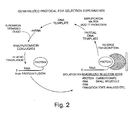
- Binding partners include, without limitation, any of the "selection motifs" presented in Figure 2.
- solid support is meant, without limitation, any column (or column material), bead, test tube, microtiter dish, solid particle (for example, agarose or sepharose), microchip (for example, silicon, silicon-glass, or gold chip), or membrane (for example, the membrane of a liposome or vesicle) to which an affinity complex may be bound, either directly or indirectly (for example, through other binding partner intermediates such as other antibodies or Protein A), or in which an affinity complex may be embedded (for example, through a receptor or channel).
- solid particle for example, agarose or sepharose
- microchip for example, silicon, silicon-glass, or gold chip
- membrane for example, the membrane of a liposome or vesicle
- the presently claimed invention provides a number of significant advantages. To begin with, it is the first example of this type of scheme for the selection and amplification of proteins. This technique overcomes the impasse created by the need to recover nucleotide sequences corresponding to desired, isolated proteins (since only nucleic acids can be replicated). In particular, many prior methods that allowed the isolation of proteins from partially or fully randomized pools did so through an in vivo step. Methods of this sort include monoclonal antibody technology (Milstein, Sci. Amer. 243 :66 (1980); and Schultz et al., J. Chem. Engng.
- the present invention provides advantages over the stalled translation method (Tuerk and Gold, Science 249 :505 (1990); Irvine et al., J. Mol. Biol 222 :739 (1991); Korman et al., Proc. Natl. Acad. Sci. USA 79 :1844-1848 (1982); Mattheakis et al., Proc. Natl. Acad. Sci. USA 91 :9022-9026 (1994); Mattheakis et al., Meth. Enzymol. 267 :195 (1996); and Hanes and Pluckthun, Proc. Natl. Acad. Sci.
- the present method also provides advantages over the branched synthesis approach proposed by Brenner and Lerner (Proc. Natl. Acad. Sci. USA 89 :5381-5383 (1992)), in which DNA-peptide fusions are generated, and genetic information is theoretically recovered following one round of selection. Unlike the branched synthesis approach, the present method does not require the regeneration of a peptide from the DNA portion of a fusion (which, in the branched synthesis approach, is generally accomplished by individual rounds of chemical synthesis). Accordingly, the present method allows for repeated rounds of selection using populations of candidate molecules. In addition, unlike the branched synthesis technique, which is generally limited to the selection of fairly short sequences, the present method is applicable to the selection of protein molecules of considerable length.
- the present selection and directed evolution technique can make use of very large and complex libraries of candidate sequences.
- existing protein selection methods which rely on an in vivo step are typically limited to relatively small libraries of somewhat limited complexity. This advantage is particularly important when selecting functional protein sequences considering, for example, that 10 13 possible sequences exist for a peptide of only 10 amino acids in length.
- maximum complexities generally fall orders of magnitude below 10 13 members.
- Large library size also provides an advantage for directed evolution applications, in that sequence space can be explored to a greater depth around any given starting sequence.
- the present technique also differs from prior approaches in that the selection step is context-independent.
- the context in which, for example, an expressed protein is present can profoundly influence the nature of the library generated.
- an expressed protein may not be properly expressed in a particular system or may not be properly displayed (for example, on the surface of a phage particle).
- the expression of a protein may actually interfere with one or more critical steps in a selection cycle, e.g., phage viability or infectivity, or lac repressor binding.
- the present method is advantageous because it provides control over the repertoire of proteins that may be tested.
- certain techniques for example, antibody selection
- the candidate pool must be expressed in the context of a fusion protein.
- RNA-protein fusion constructs provide control over the nature of the candidate pools available for screening.
- the candidate pool size has the potential to be as high as RNA or DNA pools ( ⁇ 10 15 members), limited only by the size of the in vitro translation reaction performed.
- the makeup of the candidate pool depends completely on experimental design; random regions may be screened in isolation or within the context of a desired fusion protein, and most if not all possible sequences may be expressed in candidate pools of RNA-protein fusions.
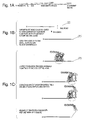
- RNA-protein fusions are synthesized by in vitro or in situ translation of mRNA pools containing a peptide acceptor attached to their 3' ends ( Figure 1B).
- Figure 1B a peptide acceptor attached to their 3' ends
- the acceptor moiety occupies the ribosomal A site and accepts the nascent peptide chain from the peptidyl-tRNA in the P site to generate the RNA-protein fusion
- the covalent link between the protein and the RNA allows the genetic information in the protein to be recovered and amplified (e.g., by PCR) following selection by reverse transcription of the RNA.
- selection or enrichment is carried out based on the properties of the mRNA-protein fusion, or, alternatively, reverse transcription may be carried out using the mRNA template while it is attached to the protein to avoid any effect of the single-stranded RNA on the selection.
- selected fusions may be tested to determine which moiety (the protein, the RNA, or both) provides the desired function.
- puromycin (which resembles tyrosyl adenosine) acts as the acceptor to attach the growing peptide to its mRNA.
- Puromycin is an antibiotic that acts by terminating peptide elongation.
- As a mimetic of aminoacyl-tRNA, it acts as a universal inhibitor of protein synthesis by binding the A site, accepting the growing peptide chain, and falling off the ribosome (at a Kd 10 -4 M) (Traut and Monro, J. Mol. Biol. 10 :63 (1964); Smith et al., J. Mol. Biol. 13 :617 (1965)).
- puromycin forms a stable amide bond to the growing peptide chain, thus allowing for more stable fusions than potential acceptors that form unstable ester linkages.
- the peptidyl-puromycin molecule contains a stable amide linkage between the peptide and the O-methyl tyrosine portion of the puromycin.
- the O-methyl tyrosine is in turn linked by a stable amide bond to the 3'-amino group of the modified adenosine portion of puromycin.
- acceptors include tRNA-like structures at the 3' end of the mRNA, as well as other compounds that act in a manner similar to puromycin.
- Such compounds include, without limitation, any compound which possesses an amino acid linked to an adenine or an adenine-like compound, such as the amino acid nucleotides, phenylalanyl-adenosine (A-Phe), tyrosyl adenosine (A-Tyr), and alanyl adenosine (A-Ala), as well as amide-linked structures, such as phenylalanyl 3' deoxy 3' amino adenosine, alanyl 3' deoxy 3' amino adenosine, and tyrosyl 3' deoxy 3' amino adenosine; in any of these compounds, any of the naturally-occurring L-amino acids or their analogs may be utilized.
- FIG. 2 Shown in Figure 2 is a preferred selection scheme according to the invention. The steps involved in this selection are generally carried out as follows.
- Step 1 Preparation of the DNA template.
- the RNA portion of the fusion is synthesized. This may be accomplished by direct chemical RNA synthesis or, more commonly, is accomplished by transcribing an appropriate double-stranded DNA template.
- Such DNA templates may be created by any standard technique (including any technique of recombinant DNA technology, chemical synthesis, or both). In principle, any method that allows production of one or more templates containing a known, random, randomized, or mutagenized sequence may be used for this purpose.
- an oligonucleotide for example, containing random bases
- Chemical synthesis may also be used to produce a random cassette which is then inserted into the middle of a known protein coding sequence (see, for example, chapter 8.2, Ausubel et al., Current Protocols in Molecular Biology, John Wiley & Sons and Greene Publishing Company, 1994). This latter approach produces a high density of mutations around a specific site of interest in the protein.
- RNA sequence An alternative to total randomization of a DNA template sequence is partial randomization, and a pool synthesized in this way is generally referred to as a "doped" pool.
- Partial randomization may be performed chemically by biasing the synthesis reactions such that each base addition reaction mixture contains an excess of one base and small amounts of each of the others; by careful control of the base concentrations, a desired mutation frequency may be achieved by this approach.
- Partially randomized pools may also be generated using error prone PCR techniques, for example, as described in Beaudry and Joyce (Science 257 :635 (1992)) and Bartel and Szostak (Science 261 :1411 (1993)).
- sequences and structures at the 5' and 3' ends of a template may also be altered. Preferably, this is carried out in two separate selections, each involving the insertion of random domains into the template proximal to the appropriate end, followed by selection. These selections may serve (i) to maximize the amount of fusion made (and thus to maximize the complexity of a library) or (ii) to provide optimized translation sequences. Further, the method may be generally applicable, combined with mutagenic PCR, to the optimization of translation templates both in the coding and non-coding regions.
- RNA portion of an RNA-protein fusion may be chemically synthesized using standard techniques of oligonucleotide synthesis. Alternatively, and particularly if longer RNA sequences are utilized, the RNA portion is generated by in vitro transcription of a DNA template. In one preferred approach, T7 polymerase is used to enzymatically generate the RNA strand. Other appropriate RNA polymerases for this use include, without limitation, the SP6, T3 and E. coli RNA polymerases (described, for example, in Ausubel et al. ( supra , chapter 3).
- the synthesized RNA may be, in whole or in part, modified RNA. In one particular example, phosphorothioate RNA may be produced (for example, by T7 transcription) using modified ribonucleotides and standard techniques. Such modified RNA provides the advantage of being nuclease stable.
- Step 3 Ligation of Puromycin to the Template.
- puromycin (or any other appropriate peptide acceptor) is covalently bonded to the template sequence.
- This step may be accomplished using T4 RNA ligase to attach the puromycin directly to the RNA sequence, or preferably the puromycin may be attached by way of a DNA "splint" using T4 DNA ligase or any other enzyme which is capable of joining together two nucleotide sequences (see Figure 1B) (see also, for example, Ausubel et al., supra, chapter 3, sections 14 and 15).
- tRNA synthetases may also be used to attach puromycin-like compounds to RNA.
- phenylalanyl tRNA synthetase links phenylalanine to phenylalanyl-tRNA molecules containing a 3' amino group, generating RNA molecules with puromycin-like 3' ends (Fraser and Rich, Proc. Natl. Acad. Sci. USA 70:2671 (1973)).
- peptide acceptors which may be used include, without limitation, any compound which possesses an amino acid linked to an adenine or an adenine-like compound, such as the amino acid nucleotides, phenylalanyl-adenosine (A-Phe), tyrosyl adenosine (A-Tyr), and alanyl adenosine (A-Ala), as well as amide-linked structures, such as phenylalanyl 3' deoxy 3' amino adenosine, alanyl 3' deoxy 3' amino adenosine, and tyrosyl 3' deoxy 3' amino adenosine; in any of these compounds, any of the naturally-occurring L-amino acids or their analogs may be utilized.
- a number of peptide acceptors are described, for example, in Krayevsky and Kukhanova, Progress in Nucleic Acids Research and Molecular Biology 23 :1 (1979).
- Step 4 Generation and Recovery of RNA-Protein Fusions.
- any in vitro or in situ translation system may be utilized. As shown below, eukaryotic systems are preferred, and two particularly preferred systems include the wheat germ and reticulocyte lysate systems. In principle, however, any translation system which allows formation of an RNA-protein fusion and which does not significantly degrade the RNA portion of the fusion is useful in the invention.
- degradation-blocking antisense oligonucleotides may be included in the translation reaction mixture; such oligonucleotides specifically hybridize to and cover sequences within the RNA portion of the molecule that trigger degradation (see, for example, Hanes and Pluckthun, Proc. Natl. Acad. Sci USA 94 :4937 (1997)).
- any number of eukaryotic translation systems are available for use in the invention. These include, without limitation, lysates from yeast, ascites, tumor cells (Leibowitz et al., Meth. Enzymol. 194 :536 (1991)), and xenopus oocyte eggs.
- Useful in vitro translation systems from bacterial systems include, without limitation, those described in Zubay (Ann. Rev. Genet. 7 :267 (1973)); Chen and Zubay (Meth. Enzymol. 101 :44 (1983)); and Ellman (Meth. Enzymol. 202 :301 (1991)).
- translation reactions may be carried out in situ .
- translation may be carried out by injecting mRNA into Xenopus eggs using standard techniques.
- RNA-protein fusions may be recovered from the translation reaction mixture by any standard technique of protein or RNA purification.
- protein purification techniques are utilized. As shown below, for example, purification of a fusion may be facilitated by the use of suitable chromatographic reagents such as dT 25 agarose or thiopropyl sepharose. Purification, however, may also or alternatively involve purification based upon the RNA portion of the fusion; techniques for such purification are described, for example in Ausubel et al. ( supra , chapter 4).
- Step 5 Selection of the Desired RNA-Protein Fusion.
- Selection of a desired RNA-protein fusion may be accomplished by any means available to selectively partition or isolate a desired fusion from a population of candidate fusions.
- isolation techniques include, without limitation, selective binding, for example, to a binding partner which is directly or indirectly immobilized on a column, bead, membrane, or other solid support, and immunoprecipitation using an antibody specific for the protein moiety of the fusion.
- the first of these techniques makes use of an immobilized selection motif which can consist of any type of molecule to which binding is possible, A list of possible selection motif molecules is presented in Figure 2.
- Selection may also be based upon the use of substrate molecules attached to an affinity label (for example, substrate-biotin) which react with a candidate molecule, or upon any other type of interaction with a fusion molecule.
- proteins may be selected based upon their catalytic activity in a manner analogous to that described by Bartel and Szostak for the isolation of RNA enzymes ( supra ); according to that particular technique, desired molecules are selected based upon their ability to link a target molecule to themselves, and the functional molecules are then isolated based upon the presence of that target. Selection schemes for isolating novel or improved catalytic proteins using this same approach or any other functional selection are enabled by the present invention.
- RNA-protein fusion selection of a desired RNA-protein fusion (or its DNA copy) may be facilitated by enrichment for that fusion in a pool of candidate molecules.
- a population of candidate RNA-protein fusions is contacted with a binding partner (for example, one of the binding partners described above) which is specific for either the RNA portion or the protein portion of the fusion, under conditions which substantially separate the binding partner-fusion complex from unbound members in the sample.
- a binding partner for example, one of the binding partners described above
- This step may be repeated, and the technique preferably includes at least two sequential enrichment steps, one in which the fusions are selected using a binding partner specific for the RNA portion and another in which the fusions are selected using a binding partner specific for the protein portion.
- a population of molecules is enriched for desired fusions by first using a binding partner specific for the RNA portion of the fusion and then, in two sequential steps, using two different binding partners, both of which are specific for the protein portion of the fusion.
- these complexes may be separated from sample components by any standard separation technique including, without limitation, column affinity chromatography, centrifugation, or immunoprecipitation.
- elution of an RNA-protein fusion from an enrichment (or selection) complex may be accomplished by a number of approaches.
- a denaturing or non-specific chemical elution step to isolate a desired RNA-protein fusion.
- Such a step facilitates the release of complex components from each other or from an associated solid support in a relatively non-specific manner by breaking non-covalent bonds between the components and/or between the components and the solid support.
- one exemplary denaturing or non-specific chemical elution reagent is 4% HOAc/H 2 O.
- exemplary denaturing or non-specific chemical elution reagents include guanidine, urea, high salt, detergent, or any other means by which non-covalent adducts may generally be removed.
- guanidine urea
- high salt detergent
- detergent any other means by which non-covalent adducts may generally be removed.
- one may utilize a specific chemical elution approach, in which a chemical is exploited that causes the specific release of a fusion molecule.
- bound fusion aptamers may be eluted by the addition, for example, of DTT, resulting in the reduction of the disulfide bond and release of the bound target.
- elution may be accomplished by specifically disrupting affinity complexes; such techniques selectively release complex components by the addition of an excess of one member of the complex.
- affinity complexes For example, in an ATP-binding selection, elution is performed by the addition of excess ATP to the incubation mixture.
- a step of enzymatic elution By this approach, a bound molecule itself or an exogenously added protease (or other appropriate hydrolytic enzyme) cleaves and releases either the target or the enzyme.
- a protease target site may be included in either of the complex components, and the bound molecules eluted by addition of the protease.
- elution may be used as a selection step for isolating molecules capable of releasing (for example, cleaving) themselves from a solid support.
- Step 6 Generation of a DNA Copy of the RNA Sequence using Reverse Transcriptase.
- a DNA copy of a selected RNA fusion sequence is readily available by reverse transcribing that RNA sequence using any standard technique (for example, using Superscript reverse transcriptase). This step may be carried out prior to the selection or enrichment step (for example, as described in Figure 16), or following that step. Alternatively, the reverse transcription process may be carried out prior to the isolation of the fusion from the in vitro or in situ translation mixture.
- the DNA template is amplified, either as a partial or full-length double-stranded sequence.
- full-length DNA templates are generated, using appropriate oligonucleotides and PCR amplification.
- the selection scheme of the present invention preferably makes use of double-stranded DNA templates which include a number of design elements.
- the first of these elements is a promoter to be used in conjunction with a desired RNA polymerase for mRNA synthesis.
- the T7 promoter is preferred, although any promoter capable of directing synthesis from a linear double-stranded DNA may be used.
- the second element of the template shown in Figure 1A is termed the 5' untranslated region (or 5'UTR) and corresponds to the RNA upstream of the translation start site.
- Shown in Figure 1A is a preferred 5'UTR (termed "TE") which is a deletion mutant of the Tobacco Mosaic Virus 5' untranslated region and, in particular, corresponds to the bases directly 5' of the TMV translation start; the sequence of this UTR is as follows: rGrGrG rArCrA rArUrU rArCrU rArUrU rUrArC rArArU rUrArC rArArU rUrArC rArArU rUrArC rArArU rUrArC rA (with the first 3 G nucleotides being inserted to augment transcription) (SEQ ID NO: 5). Any other appropriate 5' UTR may be utilized
- the third element shown in Figure 1A is the translation start site. In general, this is an AUG codon. However, there are examples where codons other than AUG are utilized in naturally-occurring coding sequences, and these codons may also be used in the selection scheme of the invention.
- the fourth element in Figure 1A is the open reading frame of the protein (termed ORF), which encodes the protein sequence.
- This open reading frame may encode any naturally-occurring, random, randomized, mutagenized, or totally synthetic protein sequence.
- the fifth element shown in Figure 1A is the 3' constant region.
- This sequence facilitates PCR amplification of the pool sequences and ligation of the puromycin-containing oligonucleotide to the mRNA.
- this region may also include a pause site, a sequence which causes the ribosome to pause and thereby allows additional time for an acceptor moiety (for example, puromycin) to accept a nascent peptide chain from the peptidyl-tRNA; this pause site is discussed in more detail below.
- RNA-protein fusions were initially generated using highly simplified mRNA templates containing 1-2 codons. This approach was taken for two reasons. First, templates of this size could readily be made by chemical synthesis. And, second, a small open reading frame allowed critical features of the reaction, including efficiency of linkage, end heterogeneity, template dependence, and accuracy of translation, to be readily assayed.
- RNA-protein fusions A basic construct was used for generating test RNA-protein fusions.
- the molecule consisted of a mRNA containing a Shine-Dalgarno (SD) sequence for translation initiation which contained a 3 base deletion of the SD sequence from ribosomal protein L1 and which was complementary to 5 bases of 16S rRNA (i.e., rGrGrA rGrGrA rCrGrA rA) (SEQ ID NO: 6) (Stormo et al., Nucleic Acids Research 10 :2971-2996 (1982); Shine and Dalgarno, Proc. Natl. Acad. Sci.
- SD Shine-Dalgarno
- the length of the oligo dA linker was chosen to span the ⁇ 60-70 ⁇ distance between the decoding site and the peptidyl transfer center of the ribosome.
- the dCdCP mimicked the CCA end of a tRNA and was designed to facilitate binding of the puromycin to the A site of the ribosome.
- the synthesis of the oligo proceeded in the 3' -> 5' direction in the order: (i) 3' puromycin, (ii) pdCpdC, (iii) ⁇ 27 units of dA as a linker, (iv) AUG, and (v) the Shine-Dalgarno sequence.
- the sequence of the 43-P construct is shown below.
- TFAA was then added to the turbid solution in 20 ⁇ l aliquots until none of the starting material remained, as assayed by thin layer chromatography (tlc) (93:7, Chloroform/MeOH) (a total of 280 ⁇ l).
- tlc thin layer chromatography
- the reaction was allowed to proceed for one hour. At this point, two bands were revealed by thin layer chromatography, both of higher mobility than the starting material. Workup of the reaction with NH 4 OH and water reduced the product to a single band.
- Silica chromatography (93:7 Chloroform/MeOH) yielded 293 mg (0.515 mmol) of the product, N-TFA-Pur.
- the product of this reaction is shown schematically in Figure 4.
- N-Trifluoroacetyl 5'-DMT Puromycin The product from the above reaction was aliquoted and coevaporated 2X with dry pyridine to remove water. Multiple tubes were prepared to test multiple reaction conditions. In a small scale reaction, 27.4 mg (48.2 ⁇ moles) N-TFA-Pur were dissolved in 480 ⁇ l of pyridine containing 0.05 eq of DMAP and 1.4 eq TEA. To this mixture, 20.6 mg of trityl chloride (60 ⁇ mol) was added, and the reaction was allowed to proceed to completion with stirring. The reaction was stopped by addition of an equal volume of water (approximately 500 ⁇ l) to the solution.
- the reaction was purified by 95:5 Chloroform/MeOH on a 100 ml silica (dry) 2 mm diameter column. Due to incomplete purification, a second identical column was run with 97.5:2.5 Chloroform/MeOH. The total yield was 325 mg or 0.373 mmol (or a yield of 72%).
- the product of this reaction is shown schematically in Figure 4.
- the product was then vortexed and centrifuged at 600 rpm for 10 minutes in the clinical centrifuge. The majority of the eluent was drawn off, and the rest of the product was dried, first at low vacuum, then at high vacuum in a dessicator. The yield of this reaction was approximately 260 ⁇ mol for a stepwise yield of ⁇ 70%.
- the resin was then washed with DMF, methanol, and ether, and dried.
- the resulting resin was assayed as containing 22.6 ⁇ mol of trityl per g, well within the acceptable range for this type of support.
- the support was then capped by incubation with 15 ml of pyridine, 1 ml of acetic anhydride, and 60 mg of DMAP for 30 minutes.
- the resulting column material produced a negative (no color) ninhydrin test, in contrast to the results obtained before blocking in which the material produced a dark blue color reaction.
- the product of this reaction is shown schematically in Figure 4.
- RNA-Puromycin Conjugate Synthesis of mRNA-Puromycin Conjugate .
- a puromycin tethered oligo may be used in either of two ways to generate a mRNA-puromycin conjugate which acts as a translation template.
- the puromycin oligo is typically extended chemically with RNA or DNA monomers to create a totally synthetic template.
- the RNA or DNA oligo is generally ligated to the 3' end of an mRNA using a DNA splint and T4 DNA ligase as described by Moore and Sharp (Science 256:992 (1992)).
- the templates generated above were translated in vitro using both bacterial and eukaryotic in vitro translation systems as follows.
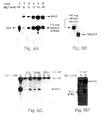
- Figure 6D demonstrates that changing a single base in the template from A to C abolished incorporation of 35 S methionine at 9 mM Mg 2+ , and greatly decreased it at 18 mM (consistent with the fact that high levels of Mg 2+ allow misreading of the message).
- Linker Length Also tested was the dependence of the reaction on the length of the linker (Figure 6E).
- the original template was designed so that the linker spanned the distance from the decoding site (occupied by the AUG of the template) to the acceptor site (occupied by the puromycin moiety), a distance which was approximately the same length as the distance between the anticodon loop and the acceptor stem in a tRNA, or about 60-70 ⁇ .
- Reticulocyte Lysate Figure 6H demonstrates that 35 S-methionine may be incorporated in the 43-P template using a rabbit reticulocyte lysate (see below) for in vitro translation, in addition to the E. coli lysates used above. This reaction occurred primarily in an intramolecular mechanism, as desired.
- Exemplary fusions were also generated which contained, within the protein portion, the epitope tag for the c-myc monoclonal antibody 9E10 (Evan et al., Mol. Cell Biol. 5 :3610 (1985)).
- Three initial epitope tag templates i.e., LP77, LP154, and Pool #1
- the first two templates contained the c-myc epitope tag sequence EQKLISEEDL (SEQ ID NO: 2), and the third template was the design used in the synthesis of a random selection pool.
- LP77 encoded a 12 amino acid sequence, with the codons optimized for bacterial translation.
- LP154 and its derivatives contained a 33 amino acid mRNA sequence in which the codons were optimized for eukaryotic translation.
- the encoded amino acid sequence of MAEEQKLISEEDLLRKRREQKLKHKLEQLRNSCA corresponded to the original peptide used to isolate the 9E10 antibody.
- Pool#1 contained 27 codons of NNG/C (to generate random peptides) followed by a sequence corresponding to the last seven amino acids of the myc peptide (which were not part of the myc epitope sequence). These sequences are shown below.
- Figure 8 shows that 35 S methionine was incorporated into all three templates, in both the wheat germ and reticulocyte systems. Less degradation of the template was observed in the fusion reactions from the reticulocyte system and, accordingly, this system is preferred for the generation of RNA-protein fusions.
- eukaryotic systems are preferred over bacterial systems. Because eukaryotic cells tend to contain lower levels of nucleases, mRNA lifetimes are generally 10-100 times longer in these cells than in bacterial cells. In experiments using one particular E. coli translation system, generation of fusions was not observed using a template encoding the c-myc epitope; labeling the template in various places demonstrated that this was likely due to degradation of both the RNA and DNA portions of the template.
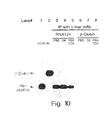
- Lanes 3-5 show that the peptide derived from RNA124 was effectively immunoprecipitated, with the best case being lane 4 where ⁇ 83% of the total TCA precipitable counts were isolated. Lanes 6-8 show little of the ⁇ -globin protein, indicating a purification of >100 fold. These results indicated that the peptide coded for by RNA124 (and by LP154) can be quantitatively isolated by this immunoprecipitation protocol.
- Figure 11 demonstrates that a product with a mobility similar to that seen for the fusion of the c-myc epitope with 30-P generated by RNase treatment of the LP154 fusion (see above) was isolated, but no corresponding product was made when only the RNA portion of the template (RNA124) was translated.
- Figure 12 the quantity of fusion protein isolated was determined and was plotted against the amount of unmodified 30-P (not shown in this figure). Quantitation of the ratio of unmodified linker to linker-myc peptide fusion shows that 0.2 - 0.7% of the input message was converted to fusion product.
- a higher fraction of the input RNA was converted to fusion product in the presence of a higher ribosome/template ratio; over the range of input mRNA concentrations that were tested, approximately 0.8 - 1.0 x 10 12 fusion molecules were made per ml of translation extract.
- C-Myc Epitope Recovery Selection To select additional c-myc epitopes, a large library of translation templates (for example, 10 15 members) is generated containing a randomized region (see Figure 7C and below). This library is used to generate ⁇ 10 12 - 10 13 fusions (as described herein) which are treated with the anti-c-myc antibody (for example, by immunoprecipitation or using an antibody immobilized on a column or other solid support) to enrich for c-myc-encoding templates in repeated rounds of in vitro selection.
- a large library of translation templates for example, 10 15 members
- This library is used to generate ⁇ 10 12 - 10 13 fusions (as described herein) which are treated with the anti-c-myc antibody (for example, by immunoprecipitation or using an antibody immobilized on a column or other solid support) to enrich for c-myc-encoding templates in repeated rounds of in vitro selection.
- the mRNA is threaded through a channel that extends on either side of the decoding site, in which case unthreading of the linker from the channel would be required to allow the puromycin to reach the peptidyl transferase center through the A site.
- the slow rate of unthreading of the mRNA may explain the slow rate of fusion formation relative to the rate of translocation.
- Preliminary results suggest that the amount of fusion product formed increases markedly following extended post-translation incubation at low temperature, perhaps because of the increased time available for transfer of the nascent peptide to the puromycin.
- RNA-protein fusions including fusions having a myc epitope tag.
- oligonucleotides were used above for the generation of RNA-protein fusions. These oligonucleotides have the following sequences. All oligonucleotides are listed in the 5' to 3' direction. Ribonucleotide bases are indicated by lower case "r" prior to the nucleotide designation; P is puromycin; rN indicates equal amounts of rA, rG, rC, and rU; rS indicates equal amounts of rG and rC; and all other base designations indicate DNA oligonucleotides.
- Puromycin HCl, long chain alkylamine controlled pore glass, gougerotin, chloramphenicol, virginiamycin, DMAP, dimethyltrityl chloride, and acetic anhydride were obtained from Sigma Chemical (St. Louis, MO). Pyridine, dimethylformamide, toluene, succinic anhydride, and para-nitrophenol were obtained from Fluka Chemical (Ronkonkoma, NY). Beta-globin mRNA was obtained from Novagen (Madison, WI). TMV RNA was obtained from Boehringer Mannheim (Indianapolis, IN).
- Proteinase K was obtained from Promega (Madison, WI). DNase-free RNAase was either produced by the protocol of Sambrook et al. ( supra ) or purchased from Boehringer Mannheim. T7 polymerase was made by the published protocol of Grodberg and Dunn (J. Bacteriol. 170 :1245 (1988)) with the modifications of Zawadzki and Gross (Nucl. Acids Res. 19 :1948 (1991)). T4 DNA ligase was obtained from New England Biolabs (Beverly, MA).
- Radiolabel Incorporation For radioactive gels bands, the amount of radiolabel ( 35 S or 32 P) present in each band was determined by quantitation either on a Betagen 603 blot analyzer (Betagen, Waltham, MA) or using phosphorimager plates (Molecular Dynamics, Sunnyvale, CA). For liquid and solid samples, the amount of radiolabel ( 35 S or 32 P) present was determined by scintillation counting (Beckman, Columbia, MD).
- Oligonucleotides All synthetic DNA and RNA was synthesized on a Millipore Expedite synthesizer using standard chemistry for each as supplied from the manufacturer (Milligen, Bedford, MA). Oligonucleotides containing 3' puromycin were synthesized using CPG puromycin columns packed with 30-50 mg of solid support ( ⁇ 20 ⁇ mole puromycin/gram). Oligonucleotides containing a 3' biotin were synthesized using 1 ⁇ mole bioteg CPG columns from Glen Research (Sterling, VA). Oligonucleotides containing a 5' biotin were synthesized by addition of bioteg phosphoramidite (Glen Research) as the 5' base.
- Oligonucleotides to be ligated to the 3' ends of RNA molecules were either chemically phosphorylated at the 5' end (using chemical phosphorylation reagent from Glen Research) prior to deprotection or enzymatically phosphorylated using ATP and T4 polynucleotide kinase (New England Biolabs) after deprotection. Samples containing only DNA (and 3' puromycin or 3' biotin) were deprotected by addition of 25% NH 4 OH followed by incubation for 12 hours at 55°C.
- RNA monomers e.g., 43-P
- RNA monomers e.g., 43-P
- ethanol 25% (v/v)
- the 2'OH was deprotected using 1M TBAF in THF (Sigma) for 48 hours at room temperature.
- TBAF was removed using a NAP-25 Sephadex column (Pharmacia, Piscataway, NJ).
- DNA and RNA samples were then purified using denaturing PAGE, followed by either soaking or electro-eluting from the gel using an Elutrap (Schleicher and Schuell, Keene, NH) and desalting using either a NAP-25 Sephadex column or ethanol precipitation as described above.
- RNA 47.1 which coded for the peptide MEQKLISEEDLN (SEQ ID NO: 20). Ligation of RNA 47.1 to 30-P yielded LP77 shown in Figure 7A.
- the second template was made first as a single oligonucleotide 99 bases in length, having the designation RWR 99.6 and the sequence 5'AGC GCA AGA GTT ACG CAG CTG TTC CAG TTT GTG TTT CAG CTG TTC ACG ACG TTT ACG CAG CAG GTC TTC TTC AGA GAT CAG TTT CTG TTC TTC AGC CAT-3' (SEQ ID NO: 21).
- Double stranded transcription templates containing this sequence were constructed by PCR with the oligos RWR 21.103 (5'-AGC GCA AGA GTT ACG CAG CTG-3') (SEQ ID NO: 22) and RWR 63.26 (5'TAA TAC GAC TCA CTA TAG GGA CAA TTA CTA TTT ACA ATT ACA ATG GCT GAA GAA CAG AAA CTG-3') (SEQ ID NO: 23) according to published protocols (Ausubel et al., supra , chapter 15). Transcription using this template produced an RNA referred to as RNA124 which coded for the peptide MAEEQKLISEEDLLRKRREQLKHKLEQLRNSCA (SEQ ID NO: 24).
- RNA124 was 124 nucleotides in length, and ligation of RNA124 to 30-P produced LP154 shown in Figure 7B.
- RNA 124 is as follows (SEQ ID NO: 32): 5'-rGrGrG rArCrA rArUrU rArCrU rArUrU rUrArC rArArU rUrArC rArArUrG rGrCrU rGrArA rGrArA rCrArG rArArA rCrUrG rArUrC rUrU rGrArArA rGrArArArA rGrArCrCrUrG rCrUrG rCrGrUrG rArArA rArA rGrArCrCrUrG rCrUrG rCrGrUrG rArArArArCrGrUrG rCrGrUrG
- the randomized pool was constructed as a single oligonucleotide 130 bases in length denoted RWR130.1. Beginning at the 3' end, the sequence was 3' CCCTGTTAATGATAAATGTTAATGTTAC (NNS) 27 GTC GAC GCA TTG AGA TAC CGA-5' (SEQ ID NO: 25). N denotes a random position, and this sequence was generated according to the standard synthesizer protocol. S denotes an equal mix of dG and dC bases.
- PCR was performed with the oligonucleotides 42.108 (5'-TAA TAC GAC TCA CTA TAG GGA CAA TTA CTA TTT ACA ATT ACA) (SEQ ID NO: 26) and 21.103 (5'-AGC GCA AGA GTT ACG CAG CTG) (SEQ ID NO: 27). Transcription off this template produced an RNA denoted pool 130.1. Ligation of pool 130.1 to 30-P yielded Pool #1 (also referred to as LP 160) shown in Figure 7C.
- Pool #1 also referred to as LP 160
- RNA-Puromycin Conjugates Enzymatic Synthesis of RNA-Puromycin Conjugates. Ligation of the myc and pool messenger RNA sequences to the puromycin containing oligonucleotide was performed using a DNA splint, termed 19.35 (5'-TTT TTT TTT TAG CGC AAG A) (SEQ ID NO: 28) using a procedure analogous to that described by Moore and Sharp (Science 250:992 (1992)). The reaction consisted of mRNA, splint, and puromycin oligonucleotide (30-P, dA27dCdCP) in a mole ratio of 0.8 : 0.9 : 1.0 and 1-2.5 units of DNA ligase per picomole of pool mRNA.
- RNA-puromycin conjugate was prepared as described above for enzymatic reactions. The precipitate was resuspended, and full length fusions were purified on denaturing PAGE and isolated by electroelution as described above. The pool RNA concentration was estimated using an extinction coefficient of 1650 O.D./ ⁇ mole and the myc template 1600 O.D./ ⁇ mole. In this way, 2.5 nanomoles of conjugate were generated.
- dT 25 Streptavidin Agarose.
- dT 25 containing a 3' biotin was incubated at 1-10 ⁇ M with a slurry of streptavidin agarose (50% agarose by volume, Pierce, Rockford, IL) for 1 hour at room temperature in TE (10 mM Tris Chloride pH 8.2, 1 mM EDTA) and washed.
- the binding capacity of the agarose was then estimated optically by the disappearance of biotin-dT 25 from solution and/or by titration of the resin with known amounts of complementary oligonucleotide.
- E. coli Derived Extracts and Ribosomes were performed with purchased kits (for example, E. coli S30 Extract for Linear Templates, Promega, Madison, WI).
- E. coli MRE600 obtained from the ATCC, Rockville, MD was also used to generate S30 extracts prepared according to published protocols (for example, Ellman et al., Meth. Enzymol. 202 :301 (1991)), as well as a ribosomal fraction prepared as described by Kudlicki et al. (Anal. Biochem. 206 :389 (1992)).
- the standard reaction was performed in a 50 ⁇ l volume with 20-40 ⁇ Ci of 35 S methionine as a marker.
- the reaction mixture consisted of 30% extract v/v, 9-18 mM MgCl 2 , 40% premix minus methionine (Promega) v/v, and 5 ⁇ M of template (e.g., 43-P).
- the oligos 13-P and 25-P were added at a concentration of 5 ⁇ M.
- 3 ⁇ l of ribosome solution was added per reaction in place of the lysate. All reactions were incubated at 37°C for 30 minutes. Templates were purified as described above under enzymatic reactions.
- Reticulocyte Translation Reactions were performed either with purchased kits (Novagen, Madison, WI) or using extract prepared according to published protocols (Jackson and Hunt, Meth. Enzymol. 96:50 (1983)). Reticulocyte-rich blood was obtained from Pel-Freez Biologicals (Rogers, AK). In both cases, the reaction conditions were those recommended for use with Red Nova Lysate (Novagen).
- Reactions consisted of 100 mM KCl, 0.5 mM MgOAc, 2 mM DTT, 20 mM HEPES pH 7.6, 8 mM creatine phosphate, 25 ⁇ M in each amino acid (with the exception of methionine if 35 S Met was used), and 40% v/v of lysate. Incubation was at 30°C for 1 hour. Template concentrations depended on the experiment but generally ranged from 50 nM to 1 ⁇ M with the exception of 43-P ( Figure 6H) which was 4 ⁇ M.
- isolation buffer 1.0 M NaCl, 0.1 M Tris chloride pH 8.2, 10 mM EDTA, 1 mM DTT
- dT 25 -biotin-streptavidin agarose whose dT 25 concentration was ⁇ 10 ⁇ M (volume of slurry equal or greater than the volume of lysate) and incubated with agitation at 4°C for one hour.
- the agarose was then removed from the mixture either by filtration (Millipore ultrafree MC filters) or centrifugation and washed with cold isolation buffer 2-4 times.
- the template was then liberated from the dT 25 streptavidin agarose by repeated washing with 50-100 ⁇ l aliquots of 15 mM NaOH, 1 mM EDTA. The eluent was immediately neutralized in 3M NaOAc pH 5.2, 10 mM spermidine, and was ethanol precipitated. For the pool reaction, the total radioactivity recovered indicated approximately 50-70% of the input template was recovered.
- dT 25 was added to this eluate and rotated for 1 hour at 4°C.
- the agarose was rinsed three times with cold isolation buffer, isolated via filtration, and the bound material eluted as above.
- Carrier tRNA was added, and the fusion product was ethanol precipitated.
- the sample was resuspended in TE pH 8.2 containing DNase free RNase A to remove the RNA portion of the template.
- Immunoprecipitation Reactions were performed by mixing 4 ⁇ l of reticulocyte translation reaction, 2 ⁇ l normal mouse sera, and 20 ⁇ l Protein G + A agarose (Calbiochem, La Jolla, CA) with 200 ⁇ l of either PBS (58 mM Na 2 HPO 4 , 17 mM NaH 2 PO 4 , 68 mM NaCl), dilution buffer (10 mM Tris chloride pH 8.2, 140 mM NaCl, 1% v/v Triton X-100), or PBSTDS (PBS + 1% Triton X-100, 0.5% deoxycholate 0.1% SDS).
- PBS 58 mM Na 2 HPO 4 , 17 mM NaH 2 PO 4 , 68 mM NaCl
- dilution buffer 10 mM Tris chloride pH 8.2, 140 mM NaCl, 1% v/v Triton X-100
- PBSTDS PBS + 1% Triton
- Immunoprecipitations of fusions were performed by mixing 8 ⁇ l ofreticulocyte translation reaction with 300 ⁇ l of dilution buffer (10 mM Tris chloride pH 8.2, 140 mM NaCl, 1% v/v Triton X-100), 15 ⁇ l protein G sepharose (Sigma), and 10 ⁇ l (1 ⁇ g) c-myc antibody 9E10 (Calbiochem), followed by rotation for several hours at 4°C. After isolation, samples were washed, treated with DNase free RNase A, labeled with polynucleotide kinase and 32 P gamma ATP, and separated by denaturing urea PAGE ( Figure 11).
- Reverse Transcription of Fusion Pool Reverse transcription reactions were performed according to the manufacturers recommendation for Superscript II, except that the template, water, and primer were incubated at 70°C for only two minutes (Gibco BRL, Grand Island, NY). To monitor extension, 50 ⁇ Ci alpha 32 P dCTP was included in some reactions; in other reactions, reverse transcription was monitored using 5' 32 P-labeled primers which were prepared using 32 P ⁇ ATP (New England Nuclear, Boston, MA) and T4 polynucleotide kinase (New England Biolabs, Beverly, MA).
- Protein G and Antibody Sepharose Two aliquots of 50 ⁇ l Protein G sepharose slurry (50 % solid by volume) (Sigma) were washed with dilution buffer (10 mM Tris chloride pH 8.2, 140 mM NaCl, 0.025% NaN 3 , 1% v/v Triton X-100) and isolated by centrifugation. The first aliquot was reserved for use as a precolumn prior to the selection matrix. After resuspension of the second aliquot in dilution buffer, 40 ⁇ g of c-myc AB-1 monoclonal antibody (Oncogene Science) was added, and the reaction incubated overnight at 4°C with rotation. The antibody sepharose was then purified by centrifugation for 15 minutes at 1500-2500 rpm in a microcentrifuge and washed 1-2 times with dilution buffer.
- dilution buffer 10 mM Tris chloride pH 8.2, 140 mM NaCl, 0.
- reverse transcriptase reaction was used directly in the selection process. Two protocols are outlined here. For round one, the reverse transcriptase reaction was added directly to the antibody sepharose prepared as described above and incubated 2 hours. For subsequent rounds, the reaction is incubated ⁇ 2 hours with washed protein G sepharose prior to the antibody column to decrease the number of binders that interact with protein G rather than the immobilized antibody.
- the first is washing the selection matrix with 4% acetic acid. This procedure liberates the peptide from the matrix.
- a more stringent washing e.g., using urea or another denaturant may be used instead or in addition to the acetic acid approach.
- Selected molecules are amplified by PCR using standard protocols as described above for construction of the pool.
- ⁇ -globin cDNA was generated from 2.5 ⁇ g globin mRNA by reverse transcription with 200 pmoles of primer 18.155 (5' GTG GTA TTT GTG AGC CAG) (SEQ ID NO: 29) and Superscript reverse transcriptase (Gibco BRL) according to the manufacturer's protocol.
- the primer sequence was complementary to the 18 nucleotides of ⁇ -globin 5' of the stop codon.
- LP- ⁇ -globin was then generated from the syn- ⁇ -globin construct by ligation of that construct to 30-P according to the method of Moore and Sharp (Science 256 :992 (1992)) using primer 20.262 (5' TTT TTT TTT T GTG GTA TTT G) (SEQ ID NO: 31) as the splint.
- the product of the ligation reaction was then gel purified, electroeluted, and desalted as above. The concentration of the final product was determined by absorbance at 260 nm.
- ⁇ -globin templates were then translated in vitro as described in Table 1 in a total volume of 25 ⁇ l each.
- Mg 2+ was added from a 25 mM stock solution. All reactions were incubated at 30°C for one hour and placed at -20°C overnight. dT 25 precipitable CPM's were then determined twice using 6 ⁇ l of lysate and averaged minus background.
- each translation reaction was mixed with 1000 ⁇ l of Isolation Buffer (1 M NaCl, 100 mM Tris ⁇ Cl pH 8.2, 10 mM EDTA, 0.1 mM DTT), 1 ⁇ l RNase A (DNase Free, Boehringer Mannheim), and 20 ⁇ l of 20 ⁇ M dT 25 streptavidin agarose. Samples were incubated at 4°C for one hour with rotation. Excess Isolation Buffer was removed, and the samples were added to a Millipore MC filter to remove any remaining Isolation Buffer.
- Isolation Buffer 1 M NaCl, 100 mM Tris ⁇ Cl pH 8.2, 10 mM EDTA, 0.1 mM DTT
- RNase A DNase Free, Boehringer Mannheim
- Samples were then washed four times with 50 ⁇ l of H 2 O, and twice with 50 ⁇ l of 15 mM NaOH, 1 mM EDTA.
- the sample (300 ⁇ l) was neutralized with 100 ⁇ l TE pH 6.8 (10 mM Tris ⁇ Cl, 1 mM EDTA), 1 ⁇ l of 1 mg/ml RNase A (as above) was added, and the samples were incubated at 37°C.
- Fusion formation i.e., the transfer of the nascent peptide chain from its tRNA to the puromycin moiety at the 3' end of the mRNA, is a slow reaction that follows the initial, relatively rapid translation of the open reading frame to generate the nascent peptide.
- the extent of fusion formation may be substantially enhanced by a post-translational incubation in elevated Mg 2+ conditions (preferably, in a range of 50-100 mM) and/or by the use of a more flexible linker between the mRNA and the puromycin moiety.
- N+1 products a mixture of the standard DNA splint with a new DNA splint containing an additional random base at the ligation junction was used.
- the ligation efficiency increased to more than 70% for an exemplary myc RNA template (that is, RNA124) in the presence of such a mixed DNA splint.
- mRNAs were preferably designed or utilized which lacked 3'-termini having any significant, stable secondary structure that would interfere with annealing to a splint oligonucleotide.
- thorough desalting of the oligonucleotides using NAP-25 columns was preferably included as a step in the procedure.
- the ligation reaction was relatively rapid and was generally complete within 40 minutes at room temperature, significantly longer incubation periods were not generally utilized and often resulted in unnecessary degradation of the RNA.
- RNA-puromycin conjugates were synthesized as follows. Ligation of the myc RNA sequence (RNA124) to the puromycin-containing oligonucleotide was performed using either a standard DNA splint (e.g., 5'-TTTTTTTTTTAGCGCAAGA) or a splint containing a random base (N) at the ligation junction (e.g., 5'-TTTTTTTTTTNAGCGCAAGA). The reactions consisted of mRNA, the DNA splint, and the puromycin oligonucleotide in a molar ratio of 1.0 : 1.5-2.0 : 1.0.
- a standard DNA splint e.g., 5'-TTTTTTTTTTTTAGCGCAAGA
- N random base
- translation reactions were also further optimized as follows. Reactions were performed in rabbit reticulocyte lysates from different commercial sources (Novagen, Madison, WI; Amersham, Arlington Heights, IL; Boehringer Mannheim, Indianapolis, IN; Ambion, Austin, TX; and Promega, Madison, WI).
- a typical reaction mixture (25 ⁇ l final volume) consisted of 20 mM HEPES pH 7.6, 2 mM DTT, 8 mM creatine phosphate, 100 mM KCl, 0.75 mM Mg(OAc) 2 , 1 mM ATP, 0.2 mM GTP, 25 ⁇ M of each amino acid (0.7 ⁇ M methionine if 35 S-Met was used), RNasin at 1 U/ ⁇ l, and 60% (v/v) lysate.
- the final concentration of template was in the range of 50 nM to 800 nM. For each incubation, all components except lysate were mixed carefully on ice, and the frozen lysate was thawed immediately before use.
- the optimal concentrations of Mg 2+ and K + varied within the ranges of 0.25 mM - 2 mM and 75 mM - 200 mM, respectively, for different mRNAs and was preferably determined in preliminary experiments. Particularly for poorly translated mRNAs, the concentrations of hemin, creatine phosphate, tRNA, and amino acids were also sometimes optimized. Potassium chloride was generally preferred over potassium acetate for fusion reactions, but a mixture of KCl and KOAc sometimes produced better results.
- the reaction was cooled on ice for 40 minutes, and Mg 2+ was added.
- the final concentration of Mg 2+ added at this step was also optimized for different mRNA templates, but was generally in the range of 50 mM to 100 mM (with 50 mM being preferably used for pools of mixed templates).
- the resulting mixture was incubated at -20°C for 16 to 48 hours.
- 2 ⁇ l of the reaction mixture was mixed with 4 ⁇ l loading buffer, and the mixture was heated at 75°C for 3 minutes.
- the fusion products may also be isolated using dT 25 streptavidin agarose or thiopropyl sepharose (or both), generally as described herein.
- RNA-linker-puromycin-peptide conjugate was added after post-translational incubation, and the reaction mixture was desalted using a microcon-10 (or microcon-30) column. 2 ⁇ l of the resulting mixture (approximately 25 ⁇ l total) was mixed with 18 ⁇ l of RNase H buffer (30 mM Tris-HCl, pH 7.8, 30 mM (NH 4 ) 2 SO 4 , 8 mM MgCl 2 , 1.5 mM ⁇ -mercaptoethanol, and an appropriate amount of complementary DNA splint), and the mixture was incubated at 4°C for 45 minutes. RNase H was then added, and digestion was performed at 37°C for 20 minutes.
- RNase H buffer (30 mM Tris-HCl, pH 7.8, 30 mM (NH 4 ) 2 SO 4 , 8 mM MgCl 2 , 1.5 mM ⁇ -mercaptoethanol, and an appropriate amount of complementary DNA splint
- the synthesized puromycin oligo was preferably tested before large scale use to ensure the presence of puromycin at the 3' end. In our experiments, no fusion was detected if puromycin was substituted with a deoxyadenosine containing a primary amino group at the 3' end.
- the puromycin oligo may first be radiolabeled (e.g., by 5'-phosphorylation) and then used as a primer for extension with terminal deoxynucleotidyl transferase. In the presence of a 3'-terminal puromycin moiety, no extension product should be observed.
- Mg 2+ Concentration A high concentration of Mg 2+ in the post-translational incubation greatly stimulated fusion formation.
- a 3-4 fold stimulation of fusion formation was observed using a standard linker (dA 27 dCdCP) in the presence of 50 mM Mg 2+ during the 16 hour incubation at -20°C ( Figure 17, compare lanes 3 and 4).
- efficient fusion formation was also observed using a post-translational incubation in the presence of a 50-100 mM Mg 2+ concentration when the reactions were carried out at room temperature for 30-45 minutes.
- Linker Flexibility The dependence of the fusion reaction on the flexibility of the linker was also tested. In these experiments, it was determined that the fusion efficiency was low if the rigidity of the linker was increased by annealing with a complementary oligonucleotide near the 3' end. Similarly, when a more flexible linker (for example, dA 21 C 9 C 9 C 9 dAdCdCP, where C 9 represents HO(CH 2 CH 2 O) 3 PO 2 ) was used, the fusion efficiency was significantly improved.
- Fusion efficiency may be expressed as either the fraction of translated peptide converted to fusion product, or the fraction of input template converted to fusion product.
- 35 S-Met labeling of the translated peptide was utilized.
- a dA 27 dCdCP or dA 27 rCrCP linker was used, about 3.5% of the translated peptide was fused to its mRNA after a 1 hour translation incubation at 30°C. This value increased to 12% after overnight incubation at -20°C.
- the post-translational incubation was carried out in the presence of a high concentration of Mg 2+ , more than 50% of the translated peptide was fused to the template.
- the translations were performed using 32 P-labeled mRNA-linker template.
- the flexible linker was used and post-translational incubation was performed at -20°C without addition of Mg 2+ , about 20%, 40%, 40%, 35%, and 20% of the input template was converted to mRNA-peptide fusion when the concentration of the input RNA template was 800, 400, 200, 100, and 50 nM, respectively ( Figure 18).
- Similar results were obtained when the post-translational incubation was performed in the presence of 50 mM Mg 2+ . The best results were achieved using lysates obtained from Novagen, Amersham, or Ambion (Figure 19).
- the mobility differences between mRNAs and mRNA-peptide fusions as measured by SDS-PAGE may be very small if the mRNA template is long.
- the template may be labeled at the 5' end of the linker with 32 P.
- the long RNA portion may then be digested with RNase H in the presence of a complementary DNA splint after translation/incubation, and the fusion efficiency determined by quantitation of the ratio of unmodified linker to linker-peptide fusion.
- RNase H which produces 3'-P and 5'-OH
- RNA-peptide fusions were produced by enriching a particular RNA-peptide fusion from a complex pool of random sequence fusions on the basis of the encoded peptide.
- a small quantity of known sequence in this case, the long myc template, LP154
- some amount of random sequence pool that is, LP 160.
- Translation Reactions were performed generally as described above. Specifically, reactions were performed at 30°C for one hour according to the manufacturer's specifications (Novagen) and frozen overnight at -20°C. Two versions of six samples were made, one containing 35 S methionine and one containing cold methionine added to a final concentration of 52 ⁇ M. Reactions 1-6 contained the amounts of templates described in Table 2. All numbers in Table 2 represent picomoles of template per 25 ⁇ l reaction mixture. TABLE 2 Template Ratios Used in Doped Selection Reaction LP154 LP160 1 --- --- 2 5 --- 3 1 20 4 0.1 20 5 0.01 20 6 --- 20
- 50 ⁇ l of this sample was ethanol precipitated by adding 6 ⁇ l 3 M NaOAc pH 5.2, 10 mM spermine, 1 ⁇ l glycogen (10 mg/ml, Boehringer Mannheim), and 170 ⁇ l 100% EtOH, incubating for 30 minutes at -70°C, and centrifuging for 30 minutes at 13,000 rpm in a microcentrifuge.
- Reverse Transcriptase Reactions Reverse transcription reactions were performed on both the ethanol precipitated and the thiopyridone eluent samples as follows. For the ethanol precipitated samples, 30 ⁇ l of resuspended template, H 2 O to 48 ⁇ l, and 200 picomoles of primer 21.103 (SEQ ID NO: 22) were annealed at 70°C for 5 minutes and cooled on ice.
- first strand buffer 250 mM Tris ⁇ Cl pH 8.3, 375 mM KCl, and 15 mM MgCl 2 ; available from Gibco BRL, Grand Island, NY
- 8 ⁇ l 100 mM DTT, and 4 ⁇ l 10 mM NTP were added and equilibrated at 42°C
- 4 ⁇ l Superscript II reverse transcriptase (Gibco BRL, Grand Island, NY) was added.
- H 2 O 13 ⁇ l was added to the TP sepharose eluent (35 ⁇ l), and reactions were performed as above. After incubation for one hour, like numbered samples were combined (total volume 160 ⁇ l). 10 ⁇ l of sample was reserved for the PCR of each unselected sample, and 150 ⁇ l of sample was reserved for immunoprecipitation.
- Immunoprecipitation To carry out immunoprecipitations, 170 ⁇ l of reverse transcription reaction was added to 1 ml of Dilution Buffer (10 mM Tris ⁇ Cl, pH 8.2, 140 mM NaCl, 1% v/v Triton X-100) and 20 ⁇ l of Protein G/A conjugate (Calbiochem, La Jolla, CA), and precleared by incubation at 4°C with rotation for 1 hour. The eluent was removed, and 20 ⁇ l G/A conjugate and 20 ⁇ l of monoclonal antibody (2 ⁇ g, 12 picomoles) were added, and the sample incubated with rotation for two hours at 4°C.
- Dilution Buffer 10 mM Tris ⁇ Cl, pH 8.2, 140 mM NaCl, 1% v/v Triton X-100
- 20 ⁇ l of Protein G/A conjugate (Calbiochem, La Jolla, CA)
- the conjugate was precipitated by microcentrifugation at 2500 rpm for 5 minutes, the eluent removed, and the conjugate washed three times with 1 ml aliquots of ice cold Dilution Buffer. The sample was then washed with 1 ml ice cold 10 mM Tris ⁇ Cl, pH 8.2, 100 mM NaCl. The bound fragments were removed using 3 volumes of frozen 4% HOAc, and the samples were lyophilized to dryness.
- PCR reactions were carried out by adding 20 ⁇ l of concentrated NH 4 OH to 10 ⁇ l of the unselected material and the entirety of the selected material and incubating for 5 minutes each at 55°C, 70°C, and 90°C to destroy any RNA present in the sample. The samples were then evaporated to dryness using a speedvac. 200 ⁇ l of PCR mixture (1 ⁇ M primers 21.103 and 42.108, 200 ⁇ M dNTP in PCR buffer plus Mg 2+ (Boehringer Mannheim), and 2 ⁇ l of Taq polymerase (Boehringer Mannheim)) were added to each sample. 16 cycles of PCR were performed on unselected sample number 2, and 19 cycles were performed on all other samples.
- the samples were then mixed with 10 ⁇ l denaturing loading buffer (1 ml ultrapure formamide (USB), 20 ⁇ l 0.5 M EDTA, and 20 ⁇ l 1 M NaOH), heated to 90°C for 1 minute, cooled, and loaded onto a 12% denaturing polyacrylamide gel containing 8M urea. Following electrophoresis, the gel was fixed with 10% (v/v) HOAc, 10% (v/v) MeOH, H 2 O.
- 10 ⁇ l denaturing loading buffer (1 ml ultrapure formamide (USB), 20 ⁇ l 0.5 M EDTA, and 20 ⁇ l 1 M NaOH
- the selection systems of the present invention have commercial applications in any area where protein technology is used to solve therapeutic, diagnostic, or industrial problems.
- This selection technology is useful for improving or altering existing proteins as well as for isolating new proteins with desired functions.
- These proteins may be naturally-occurring sequences, may be altered forms of naturally-occurring sequences, or may be partly or fully synthetic sequences.
- RNA-protein fusion technology described herein is useful for the isolation of proteins with specific binding (for example, ligand binding) properties. Proteins exhibiting highly specific binding interactions may be used as non-antibody recognition reagents, allowing RNA-protein fusion technology to circumvent traditional monoclonal antibody technology. Antibody-type reagents isolated by this method may be used in any area where traditional antibodies are utilized, including diagnostic and therapeutic applications.
- the present invention may also be used to improve human or humanized antibodies for the treatment of any of a number of diseases.
- antibody libraries are developed and are screened in vitro, eliminating the need for techniques such as cell-fusion or phage display.
- the invention is useful for improving single chain antibody libraries (Ward et al., Nature 341 :544 (1989); and Goulot et al., J. Mol. Biol. 213 :617 (1990)).
- the variable region may be constructed either from a human source (to minimize possible adverse immune reactions of the recipient) or may contain a totally randomized cassette (to maximize the complexity of the library).
- a pool of candidate molecules are tested for binding to a target molecule (for example, an antigen immobilized as shown in Figure 2).
- a target molecule for example, an antigen immobilized as shown in Figure 2.
- Higher levels of stringency are then applied to the binding step as the selection progresses from one round to the next.
- conditions such as number of wash steps, concentration of excess competitor, buffer conditions, length of binding reaction time, and choice of immobilization matrix are altered.
- Single chain antibodies may be used either directly for therapy or indirectly for the design of standard antibodies.
- Such antibodies have a number of potential applications, including the isolation of anti-autoimmune antibodies, immune suppression, and in the development of vaccines for viral diseases such as AIDS.
- the present invention may also be used to select new catalytic proteins.
- In vitro selection and evolution has been used previously for the isolation of novel catalytic RNAs and DNAs, and, in the present invention, is used for the isolation of novel protein enzymes.
- a catalyst may be isolated indirectly by selecting for binding to a chemical analog of the catalyst's transition state.
- direct isolation may be carried out by selecting for covalent bond formation with a substrate (for example, using a substrate linked to an affinity tag) or by cleavage (for example, by selecting for the ability to break a specific bond and thereby liberate catalytic members of a library from a solid support).
- RNA-protein fusions may be either completely random or may consist, without limitation, of variants of known enzymatic structures or protein scaffolds.
- the isolation of catalytic antibodies generally relies on an initial selection for binding to transition state reaction analogs followed by laborious screening for active antibodies; again, in contrast, direct selection for catalysis is possible using an RNA-protein fusion library approach, as previously demonstrated using RNA libraries.
- the transition-state-analog and direct selection approaches may be combined.
- Enzymes obtained by this method are highly valuable. For example, there currently exists a pressing need for novel and effective industrial catalysts that allow improved chemical processes to be developed.
- a major advantage of the invention is that selections may be carried out in arbitrary conditions and are not limited, for example, to in vivo conditions.
- the invention therefore facilitates the isolation of novel enzymes or improved variants of existing enzymes that can carry out highly specific transformations (and thereby minimize the formation of undesired byproducts) while functioning in predetermined environments, for example, environments of elevated temperature, pressure, or solvent concentration.
- RNA-protein fusion technology is also useful for screening cDNA libraries and cloning new genes on the basis of protein-protein interactions.
- a cDNA library is generated from a desired source (for example, by the method of Ausubel et al., supra, chapter 5).
- a peptide acceptor for example, as a puromycin tail
- RNA-protein fusions are then generated as described herein, and the ability of these fusions (or improved versions of the fusions) to interact with particular molecules is then tested as described above.
- stop codons and 3' UTR regions may be avoided in this process by either (i) adding suppressor tRNA to allow readthrough of the stop regions, (ii) removing the release factor from the translation reaction by immunoprecipitation, (iii) a combination of (i) and (ii), or (iv) removal of the stop codons and 3' UTR from the DNA sequences.
- DNA chips consist of spatially defined arrays of immobilized oligonucleotides or cloned fragments of cDNA or genomic DNA, and have applications such as rapid sequencing and transcript profiling.
- a mixture of RNA-protein fusions for example, generated from a cellular DNA or RNA pool
- a protein display chip in which each spot corresponding to one immobilized sequence is capable of annealing to its corresponding RNA sequence in the pool of RNA-protein fusions.
- the corresponding protein is immobilized in a spatially defined manner because of its linkage to its own mRNA, and chips containing sets of DNA sequences display the corresponding set of proteins.
- peptide fragments of these proteins may be displayed if the fusion library is generated from smaller fragments of cDNAs or genomic DNAs.
- Such ordered displays of proteins and peptides have many uses. For example, they represent powerful tools for the identification of previously unknown protein-protein interactions.
- a probe protein is detectably labeled (for example, with a fluorescent dye), and the labeled protein is incubated with a protein display chip.
- the identity of proteins that are able to bind the probe protein are determined from the location of the spots on the chip that become labeled due to binding of the probe.
- Another application is the rapid determination of proteins that are chemically modified through the action of modifying enzymes (for example, protein kinases, acyl transferases, and methyl transferases).
- Protein display technology may be carried out using arrays of nucleic acids (including RNA, but preferably DNA) immobilized on any appropriate solid support.
- Exemplary solid supports may be made of materials such as glass (e.g., glass plates), silicon or silicon-glass (e.g., microchips), or gold (e.g., gold plates).
- Methods for attaching nucleic acids to precise regions on such solid surfaces e.g., photolithographic methods, are well known in the art, and may be used to generate solid supports (such as DNA chips) for use in the invention.
- Exemplary methods for this purpose include, without limitation, Schena et al., Science 270 :467-470 (1995); Kozal et al., Nature Medicine 2:753-759 (1996); Cheng et al., Nucleic Acids Research 24 :380-385 (1996); Lipshutz et al., BioTechniques 19 :442-447 (1995); Pease et al., Proc. Natl. Acad. Sci. USA 91 :5022-5026 (1994); Fodor et al., Nature 364 :555-556 (1993); Pirrung et al., U.S. Patent No. 5,143,854; and Fodor et al., WO 92/10092.
Landscapes
- Life Sciences & Earth Sciences (AREA)
- Health & Medical Sciences (AREA)
- Chemical & Material Sciences (AREA)
- Engineering & Computer Science (AREA)
- Molecular Biology (AREA)
- Organic Chemistry (AREA)
- Genetics & Genomics (AREA)
- Biomedical Technology (AREA)
- General Health & Medical Sciences (AREA)
- Biochemistry (AREA)
- Biotechnology (AREA)
- Bioinformatics & Cheminformatics (AREA)
- Physics & Mathematics (AREA)
- Biophysics (AREA)
- Zoology (AREA)
- General Engineering & Computer Science (AREA)
- Wood Science & Technology (AREA)
- Medicinal Chemistry (AREA)
- Immunology (AREA)
- Bioinformatics & Computational Biology (AREA)
- Microbiology (AREA)
- Urology & Nephrology (AREA)
- Hematology (AREA)
- Proteomics, Peptides & Aminoacids (AREA)
- Crystallography & Structural Chemistry (AREA)
- Plant Pathology (AREA)
- Analytical Chemistry (AREA)
- Food Science & Technology (AREA)
- General Physics & Mathematics (AREA)
- Pathology (AREA)
- Cell Biology (AREA)
- Chemical Kinetics & Catalysis (AREA)
- General Chemical & Material Sciences (AREA)
- Gastroenterology & Hepatology (AREA)
- Oncology (AREA)
- Peptides Or Proteins (AREA)
- Preparation Of Compounds By Using Micro-Organisms (AREA)
- Measuring Or Testing Involving Enzymes Or Micro-Organisms (AREA)
Claims (28)
- Procédé pour la sélection d'une protéine, d'une molécule d'ADN ou d'ARN désirée, comprenant les étapes consistant à :a) fournir une population de molécules d'ARN candidates, chacune d'entre elles comprenant une séquence d'initiation de la traduction et un codon de début liés de façon opérationnelle à une séquence codant une protéine candidate et chacune d'entre elles étant liée par covalence à un accepteur peptidique à l'extrémité 3' de ladite séquence codant une protéine candidate ;b) traduire in vitro ou in situ lesdites séquences codant une protéine candidate pour produire une population de fusions ARN-protéine candidates ;c) sélectionner une fusion ARN-protéine désirée, en sélectionnant ainsi ladite protéine désirée ou ledit ARN désiré ;ou générer à partir de ladite molécule d'ARN de ladite fusion une molécule d'ADN qui code ladite protéine désirée, en sélectionnant ainsi ladite molécule d'ADN désirée.
- Procédé pour la sélection d'une protéine ayant une fonction altérée ou d'une molécule d'ADN qui code une protéine ayant une fonction altérée, par rapport à une protéine de référence, comprenant les étapes consistant à :a) produire une population de molécules d'ARN candidates à partir d'une population de matrices d'ADN candidates, lesdites matrices d'ADN candidates ayant chacune une séquence codant une protéine candidate qui diffère de ladite séquence codant une protéine de référence, lesdites molécules d'ARN comprenant chacune une séquence d'initiation de la traduction et un codon de début liés de façon opérationnelle à ladite séquence codant une protéine candidate et chacune étant liées par covalence à un accepteur peptidique à l'extrémité 3' ;b) traduire in vitro ou in situ ladite séquence codant une protéine candidate pour produire une population de fusions ARN-protéine candidates ; etc) sélectionner une fusion ARN-protéine ayant une fonction altérée, en sélectionnant ainsi ladite protéine ayant une fonction altérée ;ou générer à partir de ladite molécule d'ARN de ladite fusion une molécule d'ADN qui code ladite protéine désirée, en sélectionnant ainsi ladite molécule d'ADN désirée.
- Procédé de la revendication 1, dans lequel ladite protéine désirée ou ledit ARN désiré dans l'étape (c) est sélectionné
en mettant en contact ladite population de fusions ARN-protéine avec un partenaire de liaison spécifique de la partie ARN ou de la partie protéine de ladite fusion ARN-protéine dans des conditions qui séparent substantiellement ledit complexe partenaire de liaison-fusion ARN-protéine des membres non liés de ladite population ;
en libérant lesdites fusions ARN-protéine liées dudit complexe ; et
en mettant en contact ladite population de fusions ARN-protéine de l'étape (c) avec un partenaire de liaison spécifique de la partie protéine de ladite fusion ARN-protéine désirée dans des conditions qui séparent substantiellement ledit complexe partenaire de liaison-fusion ARN-protéine des membres non liés de ladite population, en sélectionnant ainsi la protéine désirée ou l'ARN désiré. - Procédé de la revendication 3, ledit procédé comprenant en outre la répétition des étapes (a) à (c) de la revendication 1.
- Procédé de l'une quelconque des revendications 1-4, dans lequel ledit accepteur peptidique est la puromycine.
- Procédé de l'une quelconque des revendications 1-4, dans lequel chacune desdites molécules d'ARN candidates comprend en outre une séquence de pause ou comprend en outre une séquence d'ADN ou analogue d'ADN liée par covalence à l'extrémité 3' de ladite molécule d'ARN.
- Procédé de l'une quelconque des revendications 1-4, dans lequel ladite population de molécules d'ARN candidates comprend au moins 1013 molécules d'ARN différentes.
- Procédé de l'une quelconque des revendications 1-4, dans lequel ladite réaction de traduction in vitro est effectuée dans un lysat préparé à partir d'une cellule eucaryotique ou d'une de ses parties.
- Procédé de la revendication 8, dans lequel ladite réaction de traduction in vitro est effectuée dans un lysat de réticulocyte ou un lysat de germe de blé.
- Procédé de l'une quelconque des revendications 1-4, dans lequel ladite réaction de traduction in vitro est effectuée dans un lysat préparé à partir d'une cellule bactérienne ou d'une de ses parties.
- Procédé de l'une quelconque des revendications 1-4, dans lequel ladite étape de sélection comprend la liaison de ladite protéine désirée à un partenaire de liaison immobilisé.
- Procédé de l'une quelconque des revendications 1-4, dans lequel ladite étape de sélection comprend le test d'une activité fonctionnelle de ladite protéine désirée.
- Procédé de la revendication 1 ou 2, dans lequel ladite molécule d'ADN est amplifiée.
- Procédé de la revendication 1 ou 2, ledit procédé comprenant en outre la répétition des étapes (a) à (c).
- Procédé de la revendication 1 ou 2, ledit procédé comprenant en outre la transcription d'une molécule d'ARN à partir de ladite molécule d'ADN et la répétition des étapes (a) à (c).
- Procédé de l'une quelconque des revendications 1-4, dans lequel ledit ARN est lié par covalence par une liaison amide à ladite fusion ARN-protéine.
- Procédé de l'une quelconque des revendications 1-4, dans lequel ledit ARN est lié par covalence à ladite fusion ARN-protéine, ladite liaison covalente étant résistante au clivage par un ribosome.
- Procédé de l'une quelconque des revendications 1-4, dans lequel, après l'étape de traduction in vitro, une incubation est effectuée en présence de 50-100 mM de Mg2+.
- Procédé de l'une quelconque des revendications 1-4, dans lequel ladite fusion ARN-protéine comprend en outre une séquence d'acide nucléique ou analogue d'acide nucléique placée en position proximale par rapport audit accepteur peptidique qui augmente la flexibilité.
- Fusion ARN-protéine sélectionnée par l'un quelconque des procédés des revendications 1-4.
- Molécule comprenant un acide ribonucléique lié par covalence par une liaison amide à une protéine.
- Molécule de la revendication 21, dans laquelle ladite protéine est codée par ledit acide ribonucléique.
- Molécule de la revendication 21, dans laquelle ledit acide ribonucléique est un ARN messager.
- Molécule comprenant un acide ribonucléique lié par covalence à une protéine, ladite protéine étant entièrement codée par ledit acide ribonucléique.
- Molécule de la revendication 24, dans laquelle ledit acide ribonucléique est un ARN messager.
- Molécule comprenant un acide ribonucléique lié par covalence à une protéine, ladite liaison covalente étant résistante au clivage par un ribosome.
- Molécule de la revendication 26, dans laquelle ledit acide ribonucléique est un ARN messager.
- Acide ribonucléique comprenant une séquence d'initiation de la traduction et un codon de début liés de façon opérationnelle à une séquence codant une protéine candidate, ledit acide ribonucléique étant lié par covalence à un accepteur peptidique à l'extrémité 3' de ladite séquence codant une protéine candidate.
Priority Applications (2)
| Application Number | Priority Date | Filing Date | Title |
|---|---|---|---|
| EP06013825A EP1712623B1 (fr) | 1997-01-21 | 1998-01-14 | Sélection de protéines par fusions de proteénes et d'ARN |
| DK06013825.2T DK1712623T3 (da) | 1997-01-21 | 1998-01-14 | Udvælgelse af proteiner ved anvendelse af RNA-proteinfusioner |
Applications Claiming Priority (5)
| Application Number | Priority Date | Filing Date | Title |
|---|---|---|---|
| US3596397P | 1997-01-21 | 1997-01-21 | |
| US35963P | 1997-01-21 | ||
| US6449197P | 1997-11-06 | 1997-11-06 | |
| US64491P | 1997-11-06 | ||
| PCT/US1998/000807 WO1998031700A1 (fr) | 1997-01-21 | 1998-01-14 | Selection de proteines a l'aide de fusions arn-proteine |
Related Child Applications (1)
| Application Number | Title | Priority Date | Filing Date |
|---|---|---|---|
| EP06013825A Division EP1712623B1 (fr) | 1997-01-21 | 1998-01-14 | Sélection de protéines par fusions de proteénes et d'ARN |
Publications (3)
| Publication Number | Publication Date |
|---|---|
| EP0971946A1 EP0971946A1 (fr) | 2000-01-19 |
| EP0971946A4 EP0971946A4 (fr) | 2002-12-04 |
| EP0971946B1 true EP0971946B1 (fr) | 2006-07-05 |
Family
ID=26712662
Family Applications (2)
| Application Number | Title | Priority Date | Filing Date |
|---|---|---|---|
| EP06013825A Expired - Lifetime EP1712623B1 (fr) | 1997-01-21 | 1998-01-14 | Sélection de protéines par fusions de proteénes et d'ARN |
| EP98904574A Expired - Lifetime EP0971946B1 (fr) | 1997-01-21 | 1998-01-14 | Selection de proteines a l'aide de fusions arn-proteine |
Family Applications Before (1)
| Application Number | Title | Priority Date | Filing Date |
|---|---|---|---|
| EP06013825A Expired - Lifetime EP1712623B1 (fr) | 1997-01-21 | 1998-01-14 | Sélection de protéines par fusions de proteénes et d'ARN |
Country Status (16)
| Country | Link |
|---|---|
| US (5) | US6258558B1 (fr) |
| EP (2) | EP1712623B1 (fr) |
| JP (1) | JP3692542B2 (fr) |
| KR (1) | KR100566859B1 (fr) |
| CN (1) | CN1238366C (fr) |
| AT (2) | ATE529509T1 (fr) |
| AU (1) | AU738328B2 (fr) |
| CA (1) | CA2278786C (fr) |
| DE (1) | DE69835143T2 (fr) |
| DK (2) | DK0971946T3 (fr) |
| ES (2) | ES2268763T3 (fr) |
| IL (1) | IL131016A (fr) |
| PT (2) | PT1712623E (fr) |
| RU (1) | RU2233878C2 (fr) |
| TW (1) | TW589323B (fr) |
| WO (1) | WO1998031700A1 (fr) |
Families Citing this family (453)
| Publication number | Priority date | Publication date | Assignee | Title |
|---|---|---|---|---|
| ES2052027T5 (es) * | 1988-11-11 | 2005-04-16 | Medical Research Council | Clonacion de secuencias de dominio variable de inmunoglobulina. |
| EP0962527B1 (fr) * | 1996-10-17 | 2004-08-04 | Mitsubishi Chemical Corporation | Molecule permettant d'homologuer un genotype et un phenotype, et utilisation de celle-ci |
| US8207093B2 (en) | 1997-01-21 | 2012-06-26 | The General Hospital Corporation | Selection of proteins using RNA-protein fusions |
| US6261804B1 (en) * | 1997-01-21 | 2001-07-17 | The General Hospital Corporation | Selection of proteins using RNA-protein fusions |
| ES2283936T3 (es) | 1997-07-07 | 2007-11-01 | Medical Research Council | Procedimiento de clasificacion in vitro. |
| US20070166741A1 (en) | 1998-12-14 | 2007-07-19 | Somalogic, Incorporated | Multiplexed analyses of test samples |
| US20060057573A1 (en) * | 2002-02-15 | 2006-03-16 | Somalogic, Inc | Methods and reagents for detecting target binding by nucleic acid ligands |
| US6242246B1 (en) * | 1997-12-15 | 2001-06-05 | Somalogic, Inc. | Nucleic acid ligand diagnostic Biochip |
| EP1068356B8 (fr) | 1998-04-03 | 2007-01-03 | Adnexus Therapeutics, Inc. | Systemes de proteines adressables |
| US6440695B1 (en) * | 1998-04-17 | 2002-08-27 | Whitehead Institute For Biomedical Research | Method for producing diverse libraries of encoded polypeptides |
| US20030170820A1 (en) * | 1998-05-08 | 2003-09-11 | Gregory Coia | Continuous in- vitro evolution |
| JP4240574B2 (ja) * | 1998-05-15 | 2009-03-18 | 三菱化学株式会社 | タンパク質のラベル化組成物およびタンパク質のラベル化方法 |
| US6287765B1 (en) * | 1998-05-20 | 2001-09-11 | Molecular Machines, Inc. | Methods for detecting and identifying single molecules |
| ES2329205T3 (es) * | 1998-08-17 | 2009-11-23 | Bristol-Myers Squibb Company | Identificacion de interacciones de compuestos-proteinas usando bibliotecas de moleculas de fusion de proteinas-acidos nucleicos. |
| AU2004200998B2 (en) * | 1998-08-17 | 2007-01-11 | Compound Therapeutics, Inc. | Methods for producing nucleic acids lacking 3'-untranslated regions and optimizing cellular RNA-protein fusion formation |
| JP2002522091A (ja) * | 1998-08-17 | 2002-07-23 | フィロス インク. | 3’非翻訳領域を欠損する核酸を生成して細胞rna蛋白質融合体形成を最適化する方法 |
| PT1137812E (pt) * | 1998-12-02 | 2007-05-31 | Adnexus Therapeutics Inc | Fusões adn-proteína e suas utilizações |
| US6818418B1 (en) * | 1998-12-10 | 2004-11-16 | Compound Therapeutics, Inc. | Protein scaffolds for antibody mimics and other binding proteins |
| EP1137941B2 (fr) | 1998-12-10 | 2013-09-11 | Bristol-Myers Squibb Company | Echafaudages de proteines pour des mimes d'anticorps et autres proteines de liaison |
| US7115396B2 (en) * | 1998-12-10 | 2006-10-03 | Compound Therapeutics, Inc. | Protein scaffolds for antibody mimics and other binding proteins |
| GB9900298D0 (en) * | 1999-01-07 | 1999-02-24 | Medical Res Council | Optical sorting method |
| AU2004242526B2 (en) * | 1999-01-07 | 2007-08-30 | United Kingdom Research And Innovation | Optical Sorting Method |
| WO2000061815A1 (fr) | 1999-04-12 | 2000-10-19 | The Johns Hopkins University School Of Medicine | Evolution de ribosome in vitro |
| DE19923966C2 (de) * | 1999-05-25 | 2003-04-24 | Phylos Inc | Erkennungssystem zur Auftrennung von Probenbestandteilen, seine Herstellung und Verwendung |
| JP2003500081A (ja) | 1999-06-01 | 2003-01-07 | フィロス インク. | 5’核酸−タンパク質結合体の生成法 |
| EP1194594A4 (fr) | 1999-07-12 | 2005-06-01 | Compound Therapeutics Inc | Marquage de proteines c-terminales |
| IL147037A0 (en) * | 1999-07-27 | 2002-08-14 | Phylos Inc | Peptide acceptor ligation methods |
| AU2008200974B2 (en) * | 1999-07-27 | 2012-05-03 | Bristol-Myers Squibb Company | Peptide acceptor ligation methods |
| JP4803933B2 (ja) * | 1999-08-27 | 2011-10-26 | ブリストル−マイヤーズ スクウィブ カンパニー | インビトロ翻訳タンパク質の符号化方法および選別方法 |
| AU7721100A (en) * | 1999-10-01 | 2001-05-10 | Zhongping Yu | Compositions and methods for identifying polypeptides and nucleic acid molecules |
| DE19959857C1 (de) * | 1999-12-10 | 2001-06-28 | Aventis Res & Tech Gmbh & Co | Testsystem zum Nachweis von Analyten sowie ein Verfahren zur Herstellung und Verwendung |
| US20010039014A1 (en) * | 2000-01-11 | 2001-11-08 | Maxygen, Inc. | Integrated systems and methods for diversity generation and screening |
| AU783689B2 (en) * | 2000-01-24 | 2005-11-24 | Adnexus Therapeutics, Inc. | Sensitive, multiplexed diagnostic assays for protein analysis |
| US7022479B2 (en) * | 2000-01-24 | 2006-04-04 | Compound Therapeutics, Inc. | Sensitive, multiplexed diagnostic assays for protein analysis |
| US20010024789A1 (en) * | 2000-02-24 | 2001-09-27 | Markus Kurz | Methods for generating catalytic proteins |
| US6489106B1 (en) * | 2000-03-10 | 2002-12-03 | Nec Research Institute, Inc. | Control of the expression of anchored genes using micron scale heaters |
| US8288322B2 (en) | 2000-04-17 | 2012-10-16 | Dyax Corp. | Methods of constructing libraries comprising displayed and/or expressed members of a diverse family of peptides, polypeptides or proteins and the novel libraries |
| AU2001261233A1 (en) * | 2000-05-05 | 2001-11-12 | Selegen | Identification of polypeptides and nucleic acid molecules using linkage between dna and polypeptide |
| CA2409305C (fr) * | 2000-05-19 | 2011-01-11 | Richard B. Williams | Evolution in vitro d'acides nucleiques et de polypeptides codes |
| US7410761B2 (en) | 2000-05-19 | 2008-08-12 | Proteonova, Inc. | System for rapid identification and selection of nucleic acids and polypeptides, and method thereof |
| US20040229271A1 (en) | 2000-05-19 | 2004-11-18 | Williams Richard B. | Compositions and methods for the identification and selection of nucleic acids and polypeptides |
| US6962781B1 (en) | 2000-05-19 | 2005-11-08 | Proteonova, Inc. | In vitro evolution of nucleic acids and encoded polypeptide |
| MXPA02012867A (es) | 2000-06-29 | 2003-09-05 | Abbott Lab | Anticuerpos de especificidad doble y metodos para la elaboracion y el uso de los mismos. |
| DE10033194C2 (de) * | 2000-07-07 | 2002-07-18 | Aventis Res & Tech Gmbh & Co | Biosonden und deren Verwendung |
| US7674752B2 (en) * | 2000-08-15 | 2010-03-09 | Discema Limited | Functional protein arrays |
| DE10041238A1 (de) * | 2000-08-22 | 2002-03-07 | Aventis Res & Tech Gmbh & Co | Verfahren zur Identifizierung spezifisch spaltbarer peptide und Verwendung solcher Peptidsequenzen |
| CA2420325A1 (fr) | 2000-08-25 | 2002-02-28 | Basf Plant Science Gmbh | Polynucleotides vegetaux codant de nouvelles proteases prenyle |
| EP2141243A3 (fr) | 2000-10-16 | 2010-01-27 | Brystol-Myers Squibb Company | Supports de protéine pour mimer des anticorps et d'autres protéines de liaison |
| US6841359B2 (en) | 2000-10-31 | 2005-01-11 | The General Hospital Corporation | Streptavidin-binding peptides and uses thereof |
| WO2002061129A2 (fr) * | 2000-11-15 | 2002-08-08 | Minerva Biotechnologies Corporation | Identifieurs d'oligonucleotides |
| JP3750020B2 (ja) * | 2000-12-07 | 2006-03-01 | 学校法人慶應義塾 | C末端修飾タンパク質およびその製造方法、ならびに、c末端修飾タンパク質の製造に用いる修飾剤および翻訳テンプレート、ならびに、c末端修飾タンパク質を用いたタンパク質相互作用の検出方法 |
| JP4963142B2 (ja) | 2000-12-14 | 2012-06-27 | 学校法人慶應義塾 | 遺伝子型と表現型の対応付け分子とその構成要素、および対応付け分子の製造方法と利用方法 |
| CA2435394C (fr) * | 2001-01-22 | 2018-01-09 | Sangamo Biosciences, Inc. | Proteines de liaison en doigt de gant modifiees |
| ATE538380T1 (de) | 2001-01-23 | 2012-01-15 | Harvard College | Nukleinsäure-programmierbare protein-arrays |
| US7070928B2 (en) * | 2001-03-19 | 2006-07-04 | President And Fellows Of Harvard College | Evolving new molecular function |
| US20040253578A1 (en) * | 2001-04-02 | 2004-12-16 | Roberts Radclyffe L. | Dynamic action reference tools |
| WO2002083785A1 (fr) * | 2001-04-10 | 2002-10-24 | Interlock Industries, Inc. | Colle a base d'eau |
| JP2008099700A (ja) * | 2001-05-11 | 2008-05-01 | National Institute Of Advanced Industrial & Technology | 任意のポリペプチドをコードするDNAの転写産物と翻訳産物との安定的な複合体を形成させる方法、該方法に用いる核酸構築物、該方法により形成される複合体、並びに該方法を利用した機能性タンパク質および該タンパク質をコードするmRNAまたはDNAのスクリーニング |
| US20060234231A1 (en) * | 2001-06-20 | 2006-10-19 | Nuevolution A/S | Microarrays displaying encoded molecules |
| EP1401850A1 (fr) | 2001-06-20 | 2004-03-31 | Nuevolution A/S | Derives nucleosidiques pour elaboration de bibliotheque combinatoire |
| CN1539014A (zh) * | 2001-06-20 | 2004-10-20 | ŦΤ¬ɭ��˾ | 模控分子和使用这种分子的方法 |
| US9777312B2 (en) | 2001-06-30 | 2017-10-03 | Enzo Life Sciences, Inc. | Dual polarity analysis of nucleic acids |
| US20040161741A1 (en) * | 2001-06-30 | 2004-08-19 | Elazar Rabani | Novel compositions and processes for analyte detection, quantification and amplification |
| US20030143612A1 (en) * | 2001-07-18 | 2003-07-31 | Pointilliste, Inc. | Collections of binding proteins and tags and uses thereof for nested sorting and high throughput screening |
| WO2003012146A1 (fr) * | 2001-07-31 | 2003-02-13 | Phylos, Inc. | Assemblage modulaire de multimeres de fusion acides nucleiques-proteines |
| US7172905B2 (en) | 2001-08-07 | 2007-02-06 | The University Of Chicago | Polypeptide immobilization |
| DE10147074A1 (de) * | 2001-09-25 | 2003-05-08 | Beru Ag | Verfahren zum Betreiben einer aus mehreren Heizelementen bestehenden mehrstufigen elektrischen Heizung |
| GB0127564D0 (en) | 2001-11-16 | 2002-01-09 | Medical Res Council | Emulsion compositions |
| US20030185870A1 (en) | 2001-11-20 | 2003-10-02 | Grinstaff Mark W. | Interfacial biomaterials |
| US7125669B2 (en) | 2001-11-27 | 2006-10-24 | Compound Therapeutics, Inc. | Solid-phase immobilization of proteins and peptides |
| US7262054B2 (en) * | 2002-01-22 | 2007-08-28 | Sangamo Biosciences, Inc. | Zinc finger proteins for DNA binding and gene regulation in plants |
| DE20200926U1 (de) * | 2002-01-23 | 2002-04-18 | Hegenscheidt-MFD GmbH & Co. KG, 41812 Erkelenz | Festwalzgerät einer Festwalzmaschine für Kurbelwellen |
| JP2003299489A (ja) * | 2002-02-08 | 2003-10-21 | Mitsubishi Chemicals Corp | 核酸構築物 |
| DE60324778D1 (de) | 2002-03-15 | 2009-01-02 | Nuevolution As | Eine verbesserte methode zur synthese von matritzenabhängigen molekülen |
| NO20021298L (no) * | 2002-03-15 | 2003-09-16 | Bjoern H Lindqvist | Metoder for peptid og protein påvisning i nukleinsyre chip- arrays |
| US10731151B2 (en) | 2002-03-15 | 2020-08-04 | Nuevolution A/S | Method for synthesising templated molecules |
| AU2003218630A1 (en) * | 2002-03-15 | 2003-09-29 | Nuevolution A/S | A building block capable of functional entity transfer to nucleophil |
| US20050247001A1 (en) * | 2002-03-15 | 2005-11-10 | Nuevolution A/S | Building block forming a c-c or a c-hetero atom bond uponreaction |
| US20050221318A1 (en) * | 2002-03-15 | 2005-10-06 | Gouliaev Alex H | Building block forming a c-c bond upon reaction |
| AU2003225085A1 (en) * | 2002-04-19 | 2003-11-03 | California Institute Of Technology | Unnatural amino acid containing display libraries |
| US20030198973A1 (en) * | 2002-04-23 | 2003-10-23 | The Molecular Sciences Institute, Inc. | Chimeric fusion molecule for analyte detection and quantitation |
| US20060073481A1 (en) * | 2002-04-23 | 2006-04-06 | The Molecular Sciences Institute | Formation and use of site specific nucleic acid coupled binding polypeptides |
| US20030198967A1 (en) * | 2002-04-23 | 2003-10-23 | Matson Robert S. | Multi-functional microarrays and methods |
| EP1520040A2 (fr) * | 2002-06-20 | 2005-04-06 | Nuevolution A/S | Microreseaux presentant des molecules codees |
| US9321832B2 (en) | 2002-06-28 | 2016-04-26 | Domantis Limited | Ligand |
| AU2003247907A1 (en) * | 2002-07-05 | 2004-01-23 | University Of Chicago | Characterization of biochips containing self-assembled monolayers with maldi-tof-ms |
| EP2314629B2 (fr) | 2002-07-18 | 2022-11-16 | Merus N.V. | Production recombinante de mélanges d'anticorps |
| USRE47770E1 (en) | 2002-07-18 | 2019-12-17 | Merus N.V. | Recombinant production of mixtures of antibodies |
| WO2004013070A2 (fr) | 2002-08-01 | 2004-02-12 | Nuevolution A/S | Synthese en plusieurs etapes de molecules synthetisees |
| WO2004016767A2 (fr) * | 2002-08-19 | 2004-02-26 | The President And Fellows Of Harvard College | Developpement d'une nouvelle fonction moleculaire |
| US20040043384A1 (en) * | 2002-08-28 | 2004-03-04 | Oleinikov Andrew V. | In vitro protein translation microarray device |
| US7361635B2 (en) * | 2002-08-29 | 2008-04-22 | Sangamo Biosciences, Inc. | Simultaneous modulation of multiple genes |
| AU2003286553A1 (en) * | 2002-10-18 | 2004-05-04 | Promega Corporation | Methods for separating molecules |
| DK3299463T3 (da) | 2002-10-30 | 2020-12-07 | Nuevolution As | Enzymatisk kodning |
| AU2011226815B2 (en) * | 2002-10-30 | 2014-09-25 | Nuevolution A/S | Enzymatic encoding |
| ATE450609T1 (de) | 2002-12-19 | 2009-12-15 | Nuevolution As | Durch quasizufallsstrukturen und funktionen geführte synthesemethode |
| US7083948B1 (en) * | 2002-12-24 | 2006-08-01 | Immunex Corporation | Polypeptide purification reagents and methods for their use |
| CA2513889A1 (fr) | 2003-01-29 | 2004-08-19 | 454 Corporation | Sequencage a double extremite |
| DE10303974A1 (de) | 2003-01-31 | 2004-08-05 | Abbott Gmbh & Co. Kg | Amyloid-β(1-42)-Oligomere, Verfahren zu deren Herstellung und deren Verwendung |
| KR100858081B1 (ko) * | 2003-02-14 | 2008-09-10 | 삼성전자주식회사 | 유전정보 코딩장치 및 방법 |
| EP1597394A2 (fr) * | 2003-02-21 | 2005-11-23 | Nuevolution A/S | Procede permettant d'obtenir des informations structurelles sur une molecule codee |
| US20070026397A1 (en) * | 2003-02-21 | 2007-02-01 | Nuevolution A/S | Method for producing second-generation library |
| US7915201B2 (en) | 2003-03-20 | 2011-03-29 | Nuevolution A/S | Ligational encoding of small molecules |
| US8017323B2 (en) * | 2003-03-26 | 2011-09-13 | President And Fellows Of Harvard College | Free reactant use in nucleic acid-templated synthesis |
| WO2004087730A2 (fr) * | 2003-03-27 | 2004-10-14 | The Johns Hopkins University | Methode de production de diverses banques de polymeres codes |
| GB0307403D0 (en) | 2003-03-31 | 2003-05-07 | Medical Res Council | Selection by compartmentalised screening |
| US20060078893A1 (en) | 2004-10-12 | 2006-04-13 | Medical Research Council | Compartmentalised combinatorial chemistry by microfluidic control |
| GB0307428D0 (en) | 2003-03-31 | 2003-05-07 | Medical Res Council | Compartmentalised combinatorial chemistry |
| US20050079546A1 (en) * | 2003-05-01 | 2005-04-14 | Dasa Lipovsek | Serum albumin scaffold-based proteins and uses thereof |
| WO2004106375A1 (fr) | 2003-05-30 | 2004-12-09 | Merus Biopharmaceuticals B.V. I.O. | Banque de fab pour la preparation de fab anti-vegf et antirabique |
| US20100069614A1 (en) | 2008-06-27 | 2010-03-18 | Merus B.V. | Antibody producing non-human mammals |
| WO2004110964A2 (fr) * | 2003-06-16 | 2004-12-23 | Nuevolution A/S | Molecules codees par traduction genetique (emt) |
| CA2531105C (fr) | 2003-07-05 | 2015-03-17 | The Johns Hopkins University | Procede et compositions de detection et d'enumeration de variations genetiques |
| US20050048617A1 (en) | 2003-08-18 | 2005-03-03 | Medimmune, Inc. | Humanization of antibodies |
| WO2005026387A1 (fr) | 2003-09-18 | 2005-03-24 | Nuevolution A/S | Procede permettant d'obtenir des informations structurelles concernant une molecule codee et procede permettant de selectionner des composes |
| US20080220049A1 (en) * | 2003-12-05 | 2008-09-11 | Adnexus, A Bristol-Myers Squibb R&D Company | Compositions and methods for intraocular delivery of fibronectin scaffold domain proteins |
| WO2005056764A2 (fr) * | 2003-12-05 | 2005-06-23 | Compound Therapeutics, Inc. | Inhibiteurs des recepteurs du facteur de croissance endothelial vasculaire de type 2 |
| AU2005205412B2 (en) | 2004-01-20 | 2011-08-11 | Merus N.V. | Mixtures of binding proteins |
| EP1723255B1 (fr) * | 2004-02-17 | 2010-12-29 | Nuevolution A/S | Methode d'elimination visant a un enrichissement par hybridation de mesappariements |
| WO2005090566A2 (fr) | 2004-03-22 | 2005-09-29 | Nuevolution A/S | Codage par ligature utilisant des oligonucléotides à motifs structuraux |
| US20050221339A1 (en) | 2004-03-31 | 2005-10-06 | Medical Research Council Harvard University | Compartmentalised screening by microfluidic control |
| US20060008844A1 (en) | 2004-06-17 | 2006-01-12 | Avidia Research Institute | c-Met kinase binding proteins |
| AU2005271688B2 (en) * | 2004-08-03 | 2011-10-06 | Becton, Dickinson And Company | Use of magnetic material to direct isolation of compounds and fractionation of multipart samples |
| US7968287B2 (en) | 2004-10-08 | 2011-06-28 | Medical Research Council Harvard University | In vitro evolution in microfluidic systems |
| ATE464381T1 (de) * | 2004-12-23 | 2010-04-15 | Ge Healthcare Bio Sciences | Rna-amplifikation auf ligationsbasis |
| EP2261257B1 (fr) * | 2005-01-12 | 2018-07-11 | Proteonova, Inc. | Procédé de fabrication d'agents thérapeutiques ciblés |
| US10206998B2 (en) | 2005-01-12 | 2019-02-19 | Proteonova, Inc. | Modular targeted therapeutic agents and methods of making same |
| EP1869192B1 (fr) | 2005-03-18 | 2016-01-20 | MedImmune, LLC | Rearrangement de l'infrastructure d'anticorps |
| WO2007011722A2 (fr) | 2005-07-15 | 2007-01-25 | President And Fellows Of Harvard College | Systeme de decouverte de reaction |
| US7612181B2 (en) | 2005-08-19 | 2009-11-03 | Abbott Laboratories | Dual variable domain immunoglobulin and uses thereof |
| EP2500353A3 (fr) | 2005-08-19 | 2012-10-10 | Abbott Laboratories | Immunoglobuline à double domaine variable et ses utilisations |
| JP5364870B2 (ja) | 2005-08-19 | 2013-12-11 | アッヴィ・インコーポレイテッド | 二重可変ドメイン免疫グロブリン及びその使用 |
| CN101277974A (zh) | 2005-09-30 | 2008-10-01 | 阿伯特有限及两合公司 | 排斥性引导分子(rgm)蛋白质家族的蛋白质的结合结构域及其功能性片段和它们的用途 |
| EP1785434A1 (fr) | 2005-11-11 | 2007-05-16 | Ludwig-Maximilians-Universität München | Ciblage et suivi d'antigènes dans des cellules vivantes |
| AU2006315438A1 (en) | 2005-11-11 | 2007-05-24 | Vertex Pharmaceuticals Incorporated | Hepatitis C virus variants |
| US7705138B2 (en) | 2005-11-11 | 2010-04-27 | Vertex Pharmaceuticals Incorporated | Hepatitis C virus variants |
| EP1951890A4 (fr) | 2005-11-16 | 2009-06-24 | Ambrx Inc | Procedes et compositions comprenant des acides amines non naturels |
| BRPI0619249A2 (pt) | 2005-11-30 | 2011-09-20 | Abbott Lab | anticorpos anti-globulÈmeros-aß, frações que se ligam a antìgeno destes, hibridomas correspondentes, ácidos nucléicos, vetores, células hospedeiras, métodos de produzir os ditos anticorpos, composições compreendendo os ditos anticorpos, usos dos ditos anticorpos e métodos de usar os ditos anticorpos |
| PT1976877E (pt) | 2005-11-30 | 2014-04-29 | Abbvie Inc | Anticorpos monoclonais contra proteína beta-amilóide e suas utilizações |
| LT2336315T (lt) | 2005-12-01 | 2017-11-10 | Nuevolution A/S | Fermentiniai kodavimo būdai, skirti efektyviai didelių bibliotekų sintezei |
| US20080305559A1 (en) * | 2005-12-15 | 2008-12-11 | Gualberto Gonzalez-Sapienza | Non-Competitive Immunoassays to Detect Small Molecules |
| EP2363205A3 (fr) | 2006-01-11 | 2014-06-04 | Raindance Technologies, Inc. | Dispositifs Microfluidiques Et Leurs Procédés D'utilisation Dans La Formation Et Le Contrôle De Nanoréacteurs |
| EP2613147B1 (fr) * | 2006-01-17 | 2015-03-11 | Somalogic, Inc. | Analyses multiplexées d'échantillons d'essai |
| CN103232540A (zh) | 2006-02-01 | 2013-08-07 | 赛法隆澳大利亚控股有限公司 | 结构域抗体构建体 |
| WO2007092777A2 (fr) * | 2006-02-02 | 2007-08-16 | Wyeth | Clonage, caracterisation et application du tnfrsf19 dans le cadre de troubles neurologiques |
| US7749957B2 (en) | 2006-04-06 | 2010-07-06 | E.I. Du Pont De Nemours And Company | Clay-binding peptides and methods of use |
| US9562837B2 (en) | 2006-05-11 | 2017-02-07 | Raindance Technologies, Inc. | Systems for handling microfludic droplets |
| EP2530168B1 (fr) | 2006-05-11 | 2015-09-16 | Raindance Technologies, Inc. | Dispositifs microfluidiques |
| US8178316B2 (en) | 2006-06-29 | 2012-05-15 | President And Fellows Of Harvard College | Evaluating proteins |
| EP2044219B1 (fr) * | 2006-06-30 | 2013-05-22 | DiscoveRx Corporation | Étiquette d'acide nucléique détectable |
| US7572618B2 (en) | 2006-06-30 | 2009-08-11 | Bristol-Myers Squibb Company | Polynucleotides encoding novel PCSK9 variants |
| US20090017455A1 (en) * | 2006-08-02 | 2009-01-15 | Kwong Gabriel A | Methods and systems for detecting and/or sorting targets |
| EP2077912B1 (fr) | 2006-08-07 | 2019-03-27 | The President and Fellows of Harvard College | Tensioactifs fluorocarbonés stabilisateurs d'émulsions |
| PL3339445T3 (pl) | 2006-09-08 | 2020-12-14 | Abbvie Bahamas Ltd. | Białka wiążące interleukinę 13 |
| US20090252745A1 (en) * | 2006-09-15 | 2009-10-08 | Duke University | Amino acids in the HCV core polypeptide domain 3 and correlation with steatosis |
| JP5537946B2 (ja) | 2006-11-22 | 2014-07-02 | ブリストル−マイヤーズ スクイブ カンパニー | Igf−irを含むチロシンキナーゼ受容体に対する改変タンパク質に基づく標的治療薬 |
| US8455626B2 (en) | 2006-11-30 | 2013-06-04 | Abbott Laboratories | Aβ conformer selective anti-aβ globulomer monoclonal antibodies |
| EP2114443A4 (fr) | 2006-12-29 | 2011-08-10 | Abbott Lab | Anticorps il-1a/il-1b a double specificite |
| US20110136099A1 (en) | 2007-01-16 | 2011-06-09 | Somalogic, Inc. | Multiplexed Analyses of Test Samples |
| US7855054B2 (en) * | 2007-01-16 | 2010-12-21 | Somalogic, Inc. | Multiplexed analyses of test samples |
| US20100144599A1 (en) | 2007-02-02 | 2010-06-10 | Bristol-Myers Squibb Company | Vegf pathway blockade |
| US8772046B2 (en) | 2007-02-06 | 2014-07-08 | Brandeis University | Manipulation of fluids and reactions in microfluidic systems |
| EP2118344B1 (fr) | 2007-02-12 | 2014-07-23 | Proteonova, Inc. | Generation d'une bibliotheque de polypeptides aleatoires solubles lies a l'arnm |
| EP2124952A2 (fr) | 2007-02-27 | 2009-12-02 | Abbott GmbH & Co. KG | Méthode de traitement d'amyloïdoses |
| WO2008130623A1 (fr) | 2007-04-19 | 2008-10-30 | Brandeis University | Manipulation de fluides, composants fluidiques et réactions dans des systèmes microfluidiques |
| US7951559B2 (en) * | 2007-07-25 | 2011-05-31 | E.I. Du Pont De Nemours And Company | Recombinant peptide production using a cross-linkable solubility tag |
| US7678883B2 (en) * | 2007-07-25 | 2010-03-16 | E.I. Du Pont De Nemours And Company | Solubility tags for the expression and purification of bioactive peptides |
| US7829311B2 (en) | 2007-07-25 | 2010-11-09 | E.I. Du Pont De Nemours And Company | Ketosteroid isomerase inclusion body tag engineered to be acid-resistant by replacing aspartates with glutamate |
| US8680019B2 (en) * | 2007-08-10 | 2014-03-25 | Protelica, Inc. | Universal fibronectin Type III binding-domain libraries |
| AU2008287426B2 (en) * | 2007-08-10 | 2014-06-26 | Protelica, Inc. | Universal fibronectin type III binding-domain libraries |
| US8470966B2 (en) | 2007-08-10 | 2013-06-25 | Protelica, Inc. | Universal fibronectin type III binding-domain libraries |
| EP3124497B1 (fr) | 2007-09-14 | 2020-04-15 | Adimab, LLC | Bibliothèques d'anticorps synthétiques conçus de façon rationnelle et leurs utilisations |
| US8877688B2 (en) | 2007-09-14 | 2014-11-04 | Adimab, Llc | Rationally designed, synthetic antibody libraries and uses therefor |
| US7794963B2 (en) | 2007-11-02 | 2010-09-14 | E.I. Du Pont De Nemours And Company | Use of tetracysteine tags in fluorescence-activated cell sorting analysis of prokaryotic cells producing peptides or proteins |
| CN101951954A (zh) | 2007-11-02 | 2011-01-19 | 诺瓦提斯公司 | 调节低密度脂蛋白受体相关蛋白6(lrp6)的分子和方法 |
| US8906700B2 (en) | 2007-11-06 | 2014-12-09 | Ambergen, Inc. | Methods and compositions for phototransfer |
| KR20210049186A (ko) | 2007-11-30 | 2021-05-04 | 애브비 바이오테크놀로지 리미티드 | 단백질 제형 및 이의 제조방법 |
| US8883146B2 (en) | 2007-11-30 | 2014-11-11 | Abbvie Inc. | Protein formulations and methods of making same |
| EP2229473A4 (fr) * | 2007-12-07 | 2011-02-02 | Steven A Goldstein | Identification de ligands de toxine |
| JP2011517314A (ja) | 2008-02-14 | 2011-06-02 | ブリストル−マイヤーズ スクイブ カンパニー | Egfrに結合する操作されたタンパク質に基づく標的化された治療薬 |
| US8962803B2 (en) | 2008-02-29 | 2015-02-24 | AbbVie Deutschland GmbH & Co. KG | Antibodies against the RGM A protein and uses thereof |
| WO2009114815A1 (fr) | 2008-03-13 | 2009-09-17 | Dyax Corp | Bibliothèques de boîtiers génétiques comprenant de nouvelles conceptions de hc cdr3 |
| WO2009142678A1 (fr) | 2008-03-27 | 2009-11-26 | Promega Corporatin | Marquage de protéines avec des conjugués de cyanobenzothiazole |
| WO2009132287A2 (fr) | 2008-04-24 | 2009-10-29 | Dyax Corp. | Bibliothèques de matériels génétiques comprenant de nouvelles conceptions cdr1, cdr2 et cdr3 hc et de nouvelles conceptions cdr1, cdr2 et cdr3 lc |
| TWI593423B (zh) | 2008-04-25 | 2017-08-01 | 戴埃克斯有限公司 | Fc受體結合蛋白 |
| JP5646457B2 (ja) | 2008-04-29 | 2014-12-24 | アッヴィ・インコーポレイテッド | 二重可変ドメイン免疫グロブリン及びその使用 |
| US9017970B2 (en) | 2008-05-02 | 2015-04-28 | Cellscript, Llc | RNA polyphosphatase compositions, kits, and uses thereof |
| RU2518351C2 (ru) | 2008-05-09 | 2014-06-10 | Эббви Дойчланд Гмбх Унд Ко.Кг, | Антитела к рецептору конечных продуктов глубокого гликирования (rage) и их применения |
| PE20091931A1 (es) | 2008-05-22 | 2009-12-31 | Bristol Myers Squibb Co | Proteinas de dominio de armazon basadas en fibronectina multivalentes |
| PE20100054A1 (es) | 2008-06-03 | 2010-03-03 | Abbott Lab | Inmunoglobulina con dominio variable dual |
| EP3002299A1 (fr) | 2008-06-03 | 2016-04-06 | AbbVie Inc. | Immunoglobulines à deux domaines variables et leurs utilisations |
| CA2729185A1 (fr) | 2008-06-30 | 2010-01-21 | Esbatech, An Alcon Biomedical Research Unit Llc | Methodes et compositions servant a modifier les immunoliants |
| MX2010014574A (es) | 2008-07-08 | 2011-04-27 | Abbott Lab | Inmunoglobulinas de dominio variable dual para prostaglandina e2 y usos de las mismas. |
| RU2559525C2 (ru) | 2008-07-08 | 2015-08-10 | Эббви Инк | Белки, связывающие простагландин е2, и их применение |
| US12038438B2 (en) | 2008-07-18 | 2024-07-16 | Bio-Rad Laboratories, Inc. | Enzyme quantification |
| WO2010009365A1 (fr) | 2008-07-18 | 2010-01-21 | Raindance Technologies, Inc. | Bibliothèque de gouttelettes |
| WO2010011944A2 (fr) | 2008-07-25 | 2010-01-28 | Wagner Richard W | Procédés de criblage de protéines |
| AU2009298501A1 (en) * | 2008-09-30 | 2010-04-08 | Abbvie Inc. | Improved antibody libraries |
| WO2010045315A1 (fr) | 2008-10-14 | 2010-04-22 | Dyax Corp. | Utilisation de la liaison à l’igf-ii/igf-iie pour le traitement et la prévention de la fibrose pulmonaire associée à la sclérodermie généralisée |
| TWI496582B (zh) | 2008-11-24 | 2015-08-21 | 必治妥美雅史谷比公司 | 雙重專一性之egfr/igfir結合分子 |
| US8697654B2 (en) | 2008-12-18 | 2014-04-15 | E I Du Pont De Nemours And Company | Peptide linkers for effective multivalent peptide binding |
| US8287845B2 (en) * | 2008-12-18 | 2012-10-16 | E I Du Pont De Nemours And Company | Hair-binding peptides |
| US20100158846A1 (en) * | 2008-12-18 | 2010-06-24 | E. I. Du Pont De Nemours And Company | Hair-binding peptides |
| US20100158822A1 (en) * | 2008-12-18 | 2010-06-24 | E .I. Du Pont De Nemours And Company | Peptides that bind to silica-coated particles |
| US20100158837A1 (en) | 2008-12-18 | 2010-06-24 | E. I. Du Pont De Nemours And Company | Iron oxide-binding peptides |
| CN101768213B (zh) | 2008-12-30 | 2012-05-30 | 中国科学院遗传与发育生物学研究所 | 一种与植物分蘖数目相关的蛋白及其编码基因与应用 |
| KR102231531B1 (ko) | 2009-02-13 | 2021-03-23 | 엑스-켐, 인크. | Dna―코딩된 라이브러리의 생성 및 스크리닝 방법 |
| CN101817879A (zh) | 2009-02-26 | 2010-09-01 | 中国科学院遗传与发育生物学研究所 | 金属硫蛋白及其编码基因与应用 |
| TW201613969A (en) | 2009-03-05 | 2016-04-16 | Abbvie Inc | IL-17 binding proteins |
| US8528589B2 (en) | 2009-03-23 | 2013-09-10 | Raindance Technologies, Inc. | Manipulation of microfluidic droplets |
| BRPI1014677A2 (pt) * | 2009-03-30 | 2016-04-12 | Du Pont | sistemas baseados em peptídeos para distribuição de agentes cosméticos |
| US8481678B2 (en) | 2009-03-30 | 2013-07-09 | E I Du Pont De Nemours And Company | Peptide-based tooth whitening reagents |
| US8067201B2 (en) | 2009-04-17 | 2011-11-29 | Bristol-Myers Squibb Company | Methods for protein refolding |
| US8741559B2 (en) | 2009-04-24 | 2014-06-03 | Discoverx Corporation | Cellular assay employing detectable protein |
| WO2010127186A1 (fr) | 2009-04-30 | 2010-11-04 | Prognosys Biosciences, Inc. | Produits de construction d'acide nucléique et leurs procédés d'utilisation |
| US8623358B2 (en) | 2009-08-29 | 2014-01-07 | Abbvie Inc. | Therapeutic DLL4 binding proteins |
| AR078254A1 (es) | 2009-09-01 | 2011-10-26 | Abbott Lab | Inmunoglobulinas con dominio variable dual y usos de las mismas |
| JP2013504602A (ja) | 2009-09-14 | 2013-02-07 | ダイアックス コーポレーション | 新しく設計したhccdr3を含む遺伝子パッケージライブラリー |
| US9284548B2 (en) | 2009-10-05 | 2016-03-15 | Tripep Ab | High affinity adaptor molecules for redirecting antibody specifity |
| US10520500B2 (en) | 2009-10-09 | 2019-12-31 | Abdeslam El Harrak | Labelled silica-based nanomaterial with enhanced properties and uses thereof |
| MX2012004415A (es) | 2009-10-15 | 2012-05-08 | Abbott Lab | Inmunoglobulinas de dominio variable doble y usos de las mismas. |
| EP2492344B1 (fr) | 2009-10-22 | 2016-04-06 | PeptiDream Inc. | Procédé d'affichage rapide dans le cadre de la synthèse translationnelle de peptides |
| UY32979A (es) | 2009-10-28 | 2011-02-28 | Abbott Lab | Inmunoglobulinas con dominio variable dual y usos de las mismas |
| ES2860453T3 (es) | 2009-10-30 | 2021-10-05 | Novartis Ag | Bibliotecas universales del dominio de unión del lado inferior de la fibronectina de tipo III |
| WO2011053707A1 (fr) | 2009-10-31 | 2011-05-05 | Abbott Laboratories | Anticorps pour récepteur pour produits terminaux de glycation avancée (rage) et utilisations de ceux-ci |
| US20120282276A1 (en) | 2009-11-05 | 2012-11-08 | The Regents Of The University Of Michigan | Biomarkers predictive of progression of fibrosis |
| US9244063B2 (en) | 2009-11-11 | 2016-01-26 | Gentian As | Immunoassay for assessing related analytes of different origin |
| JP2013512672A (ja) | 2009-12-02 | 2013-04-18 | アムジエン・インコーポレーテツド | ヒトFGFR1c、ヒトβ−クロト−、ならびにヒトFGFR1cおよびヒトβ−クロト−の両方に結合する結合タンパク質 |
| AU2010328226A1 (en) * | 2009-12-07 | 2012-06-28 | Prognosys Biosciences, Inc. | Peptide display arrays |
| KR20120118002A (ko) | 2009-12-08 | 2012-10-25 | 애보트 게엠베하 운트 콤파니 카게 | 망막 신경 섬유 층 변성의 치료에 사용하기 위한 rgm a 단백질에 대한 모노클로날 항체 |
| EP2517025B1 (fr) | 2009-12-23 | 2019-11-27 | Bio-Rad Laboratories, Inc. | Procédés pour réduire l'échange de molécules entre des gouttelettes |
| ES2688093T3 (es) | 2010-01-06 | 2018-10-30 | Dyax Corp. | Proteínas de unión a calicreína plasmática |
| AU2011214465A1 (en) | 2010-02-10 | 2012-08-30 | Novartis Ag | Methods and compounds for muscle growth |
| US10351905B2 (en) | 2010-02-12 | 2019-07-16 | Bio-Rad Laboratories, Inc. | Digital analyte analysis |
| JP5934657B2 (ja) | 2010-02-12 | 2016-06-15 | レインダンス テクノロジーズ, インコーポレイテッド | デジタル検体分析 |
| US9366632B2 (en) | 2010-02-12 | 2016-06-14 | Raindance Technologies, Inc. | Digital analyte analysis |
| US9399797B2 (en) | 2010-02-12 | 2016-07-26 | Raindance Technologies, Inc. | Digital analyte analysis |
| KR20130010461A (ko) | 2010-02-18 | 2013-01-28 | 브리스톨-마이어스 스큅 컴퍼니 | Il―23에 결합하는 피브로넥틴 기반 스캐폴드 도메인 단백질 |
| EP2542582A4 (fr) | 2010-03-02 | 2013-12-04 | Abbvie Inc | Protéines thérapeutiques de liaison à dll4 |
| US10787701B2 (en) | 2010-04-05 | 2020-09-29 | Prognosys Biosciences, Inc. | Spatially encoded biological assays |
| AU2011237729B2 (en) | 2010-04-05 | 2014-04-03 | Prognosys Biosciences, Inc. | Spatially encoded biological assays |
| US20190300945A1 (en) | 2010-04-05 | 2019-10-03 | Prognosys Biosciences, Inc. | Spatially Encoded Biological Assays |
| ES2689875T3 (es) | 2010-04-13 | 2018-11-16 | Bristol-Myers Squibb Company | Proteínas con un dominio de armazón a base de fibronectina que se unen a PCSK9 |
| EP2558494B1 (fr) | 2010-04-15 | 2018-05-23 | AbbVie Inc. | Protéines de liaison à la bêta amyloïde |
| CA2832672A1 (fr) | 2010-04-16 | 2011-10-20 | Nuevolution A/S | Complexes bifonctionnels et procedes de fabrication et d'utilisation de tels complexes |
| TW201138808A (en) | 2010-05-03 | 2011-11-16 | Bristol Myers Squibb Co | Serum albumin binding molecules |
| AU2011252883B2 (en) | 2010-05-14 | 2015-09-10 | Abbvie Inc. | IL-1 binding proteins |
| US9562089B2 (en) | 2010-05-26 | 2017-02-07 | Bristol-Myers Squibb Company | Fibronectin based scaffold proteins having improved stability |
| WO2012006500A2 (fr) | 2010-07-08 | 2012-01-12 | Abbott Laboratories | Anticorps monoclonaux contre la protéine de capside du virus de l'hépatite c |
| UY33492A (es) | 2010-07-09 | 2012-01-31 | Abbott Lab | Inmunoglobulinas con dominio variable dual y usos de las mismas |
| KR102024922B1 (ko) | 2010-07-16 | 2019-09-25 | 아디맵 엘엘씨 | 항체 라이브러리 |
| MX345300B (es) | 2010-07-30 | 2017-01-24 | Novartis Ag * | Moléculas andamio de fibronectina y bibliotecas de las mismas. |
| US8735546B2 (en) | 2010-08-03 | 2014-05-27 | Abbvie Inc. | Dual variable domain immunoglobulins and uses thereof |
| CA2807552A1 (fr) | 2010-08-06 | 2012-02-09 | Moderna Therapeutics, Inc. | Acides nucleiques modifies et leurs procedes d'utilisation |
| CN105348387B (zh) | 2010-08-14 | 2020-08-25 | Abbvie 公司 | β淀粉样蛋白结合蛋白 |
| WO2012024650A2 (fr) | 2010-08-19 | 2012-02-23 | Abbott Laboratories | Anticorps anti-ngf et leur utilisation |
| PH12013500337A1 (en) | 2010-08-26 | 2017-08-23 | Abbvie Inc | Dual variable domain immunoglobulins and uses thereof |
| WO2012045012A2 (fr) | 2010-09-30 | 2012-04-05 | Raindance Technologies, Inc. | Dosages sandwich dans des gouttelettes |
| ES3005233T3 (en) | 2010-10-01 | 2025-03-14 | Modernatx Inc | Modified nucleosides, nucleotides, and nucleic acids, and uses thereof |
| WO2012052391A1 (fr) | 2010-10-19 | 2012-04-26 | Glaxo Group Limited | Polypeptide ayant l'activité catalytique de jmjd3 |
| US20120207771A1 (en) | 2010-11-05 | 2012-08-16 | Morphotek Inc. | Folate receptor alpha as a diagnostic and prognostic marker for folate receptor alpha-expressing cancers |
| EP2647720B1 (fr) * | 2010-12-03 | 2019-06-19 | The University of Tokyo | Procédé de production d'une banque de peptides, banque de peptides et procédé de criblage |
| CN103328648B (zh) | 2010-12-03 | 2015-11-25 | 国立大学法人东京大学 | 具有稳定的二级结构的肽和肽库以及它们的制造方法 |
| WO2012121775A2 (fr) | 2010-12-21 | 2012-09-13 | Abbott Laboratories | Immunoglobulines à double domaine variable et leurs utilisations |
| TW201307388A (zh) | 2010-12-21 | 2013-02-16 | Abbott Lab | Il-1結合蛋白 |
| WO2012088006A1 (fr) | 2010-12-22 | 2012-06-28 | Bristol-Myers Squibb Company | Protéines à domaine échafaudage à base de fibronectine qui se lient à l'il-23 |
| DE102010056289A1 (de) | 2010-12-24 | 2012-06-28 | Geneart Ag | Verfahren zur Herstellung von Leseraster-korrekten Fragment-Bibliotheken |
| EP3859011A1 (fr) | 2011-02-11 | 2021-08-04 | Bio-Rad Laboratories, Inc. | Procédés permettant de former des gouttelettes mélangées |
| EP2675819B1 (fr) | 2011-02-18 | 2020-04-08 | Bio-Rad Laboratories, Inc. | Compositions et méthodes de marquage moléculaire |
| WO2012125652A2 (fr) | 2011-03-14 | 2012-09-20 | University Of Southern California | Anticorps et anticorps mimétique utilisés pour repérer et éliminer des protéines endogènes |
| US9880160B2 (en) | 2011-03-15 | 2018-01-30 | X-Body, Inc. | Antibody screening methods |
| JP2014511687A (ja) | 2011-03-31 | 2014-05-19 | モデルナ セラピューティクス インコーポレイテッド | 工学操作された核酸の送達および製剤 |
| EP2694709B1 (fr) | 2011-04-08 | 2016-09-14 | Prognosys Biosciences, Inc. | Constructions peptidiques et systèmes d'essai |
| ES2608835T3 (es) | 2011-04-13 | 2017-04-17 | Bristol-Myers Squibb Company | Proteínas de fusión Fc que comprenden nuevos enlazadores o disposiciones |
| GB201106254D0 (en) | 2011-04-13 | 2011-05-25 | Frisen Jonas | Method and product |
| CA2833917C (fr) | 2011-04-28 | 2020-04-28 | The Board Of Trustees Of The Leland Stanford Junior University | Identification des polynucleotides associes a un echantillon. |
| US9347058B2 (en) | 2011-05-17 | 2016-05-24 | Bristol-Myers Squibb Company | Methods for the selection of binding proteins |
| US20140187488A1 (en) | 2011-05-17 | 2014-07-03 | Bristol-Myers Squibb Company | Methods for maintaining pegylation of polypeptides |
| PH12013502378A1 (en) | 2011-06-02 | 2014-01-06 | Dyax Corp | Fc RECEPTOR BINDING PROTEINS |
| US8841071B2 (en) | 2011-06-02 | 2014-09-23 | Raindance Technologies, Inc. | Sample multiplexing |
| KR20140049993A (ko) | 2011-06-02 | 2014-04-28 | 메사추세츠 인스티튜트 오브 테크놀로지 | 메타핵 줄기 세포의 dsRNA/DNA 하이브리드 게놈 복제 중간체 |
| DE202012013668U1 (de) | 2011-06-02 | 2019-04-18 | Raindance Technologies, Inc. | Enzymquantifizierung |
| RU2640025C2 (ru) | 2011-07-13 | 2017-12-25 | Эббви Инк. | Способы и композиции для лечения астмы с использованием антител против il-13 |
| US8658430B2 (en) | 2011-07-20 | 2014-02-25 | Raindance Technologies, Inc. | Manipulating droplet size |
| US9422550B2 (en) | 2011-08-01 | 2016-08-23 | The General Hospital Corporation | Protein and peptide libraries |
| ES2675111T3 (es) | 2011-09-07 | 2018-07-06 | X-Chem, Inc. | Métodos para etiquetar bibliotecas con codificación de ADN |
| US9464124B2 (en) | 2011-09-12 | 2016-10-11 | Moderna Therapeutics, Inc. | Engineered nucleic acids and methods of use thereof |
| EP2763701B1 (fr) | 2011-10-03 | 2018-12-19 | Moderna Therapeutics, Inc. | Nucléosides, nucléotides et acides nucléiques modifiés, et leurs utilisations |
| EP2771360A1 (fr) | 2011-10-24 | 2014-09-03 | AbbVie Inc. | Agents de liaison immunologique dirigés contre la sclérostine |
| AR088512A1 (es) | 2011-10-24 | 2014-06-18 | Abbvie Inc | Anticuerpos dirigidos contra el tnf |
| JP2015504038A (ja) | 2011-10-31 | 2015-02-05 | ブリストル−マイヤーズ スクイブ カンパニーBristol−Myers Squibb Company | 低減した免疫原性を有するフィブロネクチン結合ドメイン |
| WO2013085972A1 (fr) | 2011-12-05 | 2013-06-13 | X-Body, Inc. | Polypeptides de liaison bêta du récepteur du pdgf |
| CN104144947B (zh) | 2011-12-14 | 2017-10-27 | 艾伯维德国有限责任两合公司 | 用于诊断和治疗铁相关病症的组合物和方法 |
| EP2791175A2 (fr) | 2011-12-14 | 2014-10-22 | Abbvie Deutschland GmbH & Co. KG | Composition et méthode pour le diagnostic et le traitement de troubles liés au fer |
| JP2015501844A (ja) | 2011-12-16 | 2015-01-19 | モデルナ セラピューティクス インコーポレイテッドModerna Therapeutics,Inc. | 修飾ヌクレオシド、ヌクレオチドおよび核酸組成物 |
| TWI640541B (zh) * | 2011-12-28 | 2018-11-11 | 中外製藥股份有限公司 | Peptide compound having an annular portion and pharmaceutical composition thereof |
| US9120870B2 (en) | 2011-12-30 | 2015-09-01 | Abbvie Inc. | Dual specific binding proteins directed against IL-13 and IL-17 |
| EP3369746A1 (fr) | 2012-01-27 | 2018-09-05 | AbbVie Deutschland GmbH & Co KG | Composition et procédé pour le diagnostic et le traitement de maladies associées à la dégénérescence des neurites |
| GB2500243A (en) * | 2012-03-15 | 2013-09-18 | Isogenica Ltd | Identifying members of immobilised peptide libraries comprising protein-DNA complexes |
| US9572897B2 (en) | 2012-04-02 | 2017-02-21 | Modernatx, Inc. | Modified polynucleotides for the production of cytoplasmic and cytoskeletal proteins |
| WO2013151663A1 (fr) | 2012-04-02 | 2013-10-10 | modeRNA Therapeutics | Polynucléotides modifiés pour la production de protéines membranaires |
| US9254311B2 (en) | 2012-04-02 | 2016-02-09 | Moderna Therapeutics, Inc. | Modified polynucleotides for the production of proteins |
| US9283287B2 (en) | 2012-04-02 | 2016-03-15 | Moderna Therapeutics, Inc. | Modified polynucleotides for the production of nuclear proteins |
| DK2838918T3 (da) | 2012-04-20 | 2019-08-12 | Merus Nv | Fremgangsmåder og midler til fremstilling af heterodimere ig-lignende molekyler |
| EP2850095B1 (fr) | 2012-05-17 | 2019-10-09 | RA Pharmaceuticals, Inc. | Inhibiteurs peptidiques et peptidomimétiques |
| JP6629069B2 (ja) | 2012-06-06 | 2020-01-15 | ゾエティス・エルエルシー | イヌ化抗ngf抗体およびその方法 |
| TW201402608A (zh) | 2012-07-12 | 2014-01-16 | Abbvie Inc | Il-1結合蛋白質 |
| CN104685115A (zh) | 2012-07-13 | 2015-06-03 | X-化学有限公司 | 具有聚合酶不可读的编码性寡核苷酸连接的dna编码文库 |
| HUE043482T2 (hu) | 2012-09-13 | 2019-08-28 | Bristol Myers Squibb Co | Miosztatint megkötõ fibronektin alapú váz domén proteinek |
| US9593365B2 (en) | 2012-10-17 | 2017-03-14 | Spatial Transcriptions Ab | Methods and product for optimising localised or spatial detection of gene expression in a tissue sample |
| AU2013337775B2 (en) | 2012-11-01 | 2017-03-30 | Abbvie Inc. | Anti-VEGF/DLL4 dual variable domain immunoglobulins and uses thereof |
| ES2921623T3 (es) | 2012-11-26 | 2022-08-30 | Modernatx Inc | ARN modificado terminalmente |
| WO2014100542A1 (fr) | 2012-12-21 | 2014-06-26 | Abbvie, Inc. | Humanisation d'anticorps à haut rendement |
| JPWO2014119600A1 (ja) | 2013-01-30 | 2017-01-26 | ペプチドリーム株式会社 | FlexibleDisplay法 |
| WO2014120891A2 (fr) | 2013-02-01 | 2014-08-07 | Bristol-Myers Squibb Company | Protéines d'échafaudage à base de fibronectine |
| EP2953968B1 (fr) | 2013-02-06 | 2018-07-25 | Bristol-Myers Squibb Company | Les proteines de domaine de type iii de fibronectine avec meilleure solubilite |
| ES2751735T3 (es) | 2013-02-12 | 2020-04-01 | Bristol Myers Squibb Co | Métodos de replegado de proteínas a elevado pH |
| HK1218576A1 (zh) | 2013-02-28 | 2017-02-24 | Caprion Proteomics Inc. | 结核病生物标志物及其用途 |
| EP2968587A2 (fr) | 2013-03-13 | 2016-01-20 | Bristol-Myers Squibb Company | Domaines d'échafaudage à base de fibronectine liés à une sérum albumine ou fragment se liant à celle-ci |
| EP2970947A4 (fr) | 2013-03-14 | 2016-10-12 | Abbott Lab | Antigènes recombinants ns3 de vhc et leurs mutants pour la détection d'anticorps améliorée |
| JP6505076B2 (ja) | 2013-03-14 | 2019-04-24 | アボット・ラボラトリーズAbbott Laboratories | Hcv抗原−抗体組み合わせアッセイおよびこれに使用するための方法および組成物 |
| WO2014159961A1 (fr) | 2013-03-14 | 2014-10-02 | Beth Israel Deaconess Medical Center, Inc. | Mesure du fgf21 en tant que biomarqueur du métabolisme du fructose et maladie métabolique |
| CN105378099B (zh) | 2013-03-14 | 2021-05-11 | 雅培制药有限公司 | Hcv核心脂质结合结构域单克隆抗体 |
| EP2972366B1 (fr) | 2013-03-15 | 2020-06-17 | Prognosys Biosciences, Inc. | Procédés de détection de liaison peptide/mhc/tcr |
| US9469686B2 (en) | 2013-03-15 | 2016-10-18 | Abbott Laboratories | Anti-GP73 monoclonal antibodies and methods of obtaining the same |
| EP2970459A2 (fr) | 2013-03-15 | 2016-01-20 | AbbVie Inc. | Protéines de liaison spécifiques à domaines variables doubles dirigées contre il -1beta et il -17 |
| US8980864B2 (en) | 2013-03-15 | 2015-03-17 | Moderna Therapeutics, Inc. | Compositions and methods of altering cholesterol levels |
| CA2912312C (fr) | 2013-05-20 | 2023-01-24 | Board Of Trustees Of The University Of Arkansas | Modele gep5 pour myelome multiple |
| WO2014197885A2 (fr) | 2013-06-07 | 2014-12-11 | Duke University | Inhibiteurs du facteur h du complément |
| DK3013983T3 (da) | 2013-06-25 | 2023-03-06 | Prognosys Biosciences Inc | Spatialt kodede biologiske assays ved brug af en mikrofluidisk anordning |
| MY191368A (en) | 2013-06-28 | 2022-06-20 | X Body Inc | Target antigen discovery, phenotypic screens and use thereof for identification of target cell specific target epitopes |
| US20160194625A1 (en) | 2013-09-03 | 2016-07-07 | Moderna Therapeutics, Inc. | Chimeric polynucleotides |
| US10519436B2 (en) | 2013-09-23 | 2019-12-31 | X-Body, Inc. | Methods and compositions for generation of binding agents against cell surface antigens |
| WO2015048744A2 (fr) | 2013-09-30 | 2015-04-02 | Moderna Therapeutics, Inc. | Polynucléotides codant des polypeptides de modulation immunitaire |
| KR20160067219A (ko) | 2013-10-03 | 2016-06-13 | 모더나 세라퓨틱스, 인코포레이티드 | 저밀도 지단백질 수용체를 암호화하는 폴리뉴클레오타이드 |
| US11901041B2 (en) | 2013-10-04 | 2024-02-13 | Bio-Rad Laboratories, Inc. | Digital analysis of nucleic acid modification |
| US10288608B2 (en) | 2013-11-08 | 2019-05-14 | Prognosys Biosciences, Inc. | Polynucleotide conjugates and methods for analyte detection |
| US10684289B2 (en) | 2013-12-09 | 2020-06-16 | Adimab, Llc | Polyclonal mixtures of antibodies, and methods of making and using them |
| US9944977B2 (en) | 2013-12-12 | 2018-04-17 | Raindance Technologies, Inc. | Distinguishing rare variations in a nucleic acid sequence from a sample |
| CA2931684C (fr) | 2013-12-19 | 2024-02-20 | Novartis Ag | Recepteurs antigeniques chimeriques de la mesotheline humaine et leurs utilisations |
| GB201322692D0 (en) | 2013-12-20 | 2014-02-05 | Philochem Ag | Production of encoded chemical libraries |
| US11193176B2 (en) | 2013-12-31 | 2021-12-07 | Bio-Rad Laboratories, Inc. | Method for detecting and quantifying latent retroviral RNA species |
| EP3102245B1 (fr) | 2014-02-05 | 2021-09-08 | Molecular Templates, Inc. | Procédés de criblage, de sélection et d'identification de polypeptides de recombinaison cytotoxiques fondés sur une diminution provisoire de la ribotoxicité |
| EP3129401B1 (fr) | 2014-03-20 | 2019-06-12 | Bristol-Myers Squibb Company | Domaines de fibronectine de type iii se liant à l'albumine sérique |
| SG11201607818WA (en) | 2014-03-20 | 2016-10-28 | Bristol Myers Squibb Co | Stabilized fibronectin based scaffold molecules |
| HUE045646T2 (hu) | 2014-06-12 | 2020-01-28 | Ra Pharmaceuticals Inc | Komplement aktivitás modulálása |
| JP6655074B2 (ja) | 2014-06-20 | 2020-02-26 | ジェネンテック, インコーポレイテッド | シャガシンに基づく足場組成物、方法及び使用 |
| EP3169693B1 (fr) | 2014-07-16 | 2022-03-09 | ModernaTX, Inc. | Polynucléotides chimériques |
| US9777061B2 (en) | 2014-07-21 | 2017-10-03 | Novartis Ag | Treatment of cancer using a CD33 chimeric antigen receptor |
| WO2016025880A1 (fr) | 2014-08-14 | 2016-02-18 | Novartis Ag | Traitement du cancer à l'aide du récepteur d'antigène chimérique gfr alpha-4 |
| SG11201700770PA (en) | 2014-08-19 | 2017-03-30 | Novartis Ag | Anti-cd123 chimeric antigen receptor (car) for use in cancer treatment |
| MA40773A (fr) | 2014-10-02 | 2017-08-08 | Vertex Pharma | Variants du virus influenza a |
| MA40772A (fr) | 2014-10-02 | 2017-08-08 | Vertex Pharma | Variants du virus de la grippe a |
| WO2016086021A1 (fr) | 2014-11-25 | 2016-06-02 | Bristol-Myers Squibb Company | Nouveaux polypeptides fixant pd-l1 pour l'imagerie |
| US11229713B2 (en) | 2014-11-25 | 2022-01-25 | Bristol-Myers Squibb Company | Methods and compositions for 18F-radiolabeling of biologics |
| US10093733B2 (en) | 2014-12-11 | 2018-10-09 | Abbvie Inc. | LRP-8 binding dual variable domain immunoglobulin proteins |
| WO2016123371A1 (fr) | 2015-01-28 | 2016-08-04 | Ra Pharmaceuticals, Inc. | Modulateurs d'activité du complément |
| EP3061826A1 (fr) | 2015-02-27 | 2016-08-31 | Novartis AG | Réplicons du flavivirus |
| US10815489B2 (en) | 2015-03-13 | 2020-10-27 | Chugai Seiyaku Kabushiki Kaisha | Modified aminoacyl-tRNA synthetase and use thereof |
| CN108472360B (zh) | 2015-04-10 | 2023-01-17 | 阿迪马布有限责任公司 | 从亲代同源二聚抗体种类中纯化异源二聚多特异性抗体的方法 |
| CN120425026A (zh) | 2015-04-10 | 2025-08-05 | 十程基因技术瑞典公司 | 生物样本的空间区别、多重核酸分析 |
| CN104774801A (zh) * | 2015-04-14 | 2015-07-15 | 云南农业大学 | 一种核酸核糖体结合体系构建方法及应用 |
| CR20170482A (es) | 2015-04-24 | 2018-03-07 | Viiv Healthcare Uk No 5 Ltd | Polipéptidos dirigidos a la fusión de vih |
| EP3286227A2 (fr) | 2015-04-24 | 2018-02-28 | F. Hoffmann-La Roche AG | Protéines multispécifiques de liaison à l'antigène |
| RU2715597C2 (ru) | 2015-05-29 | 2020-03-02 | Эббви Инк. | Антитела к cd40 и способы их применения |
| TW201710286A (zh) | 2015-06-15 | 2017-03-16 | 艾伯維有限公司 | 抗vegf、pdgf及/或其受體之結合蛋白 |
| WO2017019935A1 (fr) * | 2015-07-30 | 2017-02-02 | Modernatx, Inc. | Arnm multimérique |
| US10647981B1 (en) | 2015-09-08 | 2020-05-12 | Bio-Rad Laboratories, Inc. | Nucleic acid library generation methods and compositions |
| ES2781207T3 (es) | 2015-09-23 | 2020-08-31 | Bristol Myers Squibb Co | Dominios de fibronectina de tipo iii de unión a seroalbúmina con velocidad de disociación rápida |
| EP3353198B1 (fr) | 2015-09-23 | 2020-06-17 | Bristol-Myers Squibb Company | Molécules à échafaudage à base de fibronectine se liant à la glypicane-3 |
| EP4218790B1 (fr) | 2015-12-16 | 2026-02-18 | UCB Holdings, Inc. | Modulateurs de l'activité du complément |
| EP3433275A1 (fr) | 2016-03-24 | 2019-01-30 | Millennium Pharmaceuticals, Inc. | Procédés pour traiter des événements indésirables gastro-intestinaux d'origine immunitaire dans des traitements oncologiques immunitaires |
| WO2017165742A1 (fr) | 2016-03-24 | 2017-09-28 | Millennium Pharmaceuticals, Inc. | Procédés de traitement d'événements indésirables liés à l'immunité gastro-intestinale dans des polythérapies anti-ctla4 et anti-pd-1 |
| EP4299803A3 (fr) | 2016-05-02 | 2024-03-27 | Encodia, Inc. | Analyse de macromolécules au moyen du codage par acides nucléiques |
| EP3463486A1 (fr) | 2016-06-01 | 2019-04-10 | Bristol-Myers Squibb Company | Imagerie pet avec des polypeptides de liaison pd-l1 |
| US10994033B2 (en) | 2016-06-01 | 2021-05-04 | Bristol-Myers Squibb Company | Imaging methods using 18F-radiolabeled biologics |
| US20200182884A1 (en) | 2016-06-27 | 2020-06-11 | Juno Therapeutics, Inc. | Method of identifying peptide epitopes, molecules that bind such epitopes and related uses |
| EP3475706B1 (fr) | 2016-06-27 | 2021-08-11 | Juno Therapeutics, Inc. | Épitopes restreints au cmh-e, molécules de liaison, et procédés et utilisations associés |
| SG11201900344YA (en) | 2016-07-15 | 2019-02-27 | Novartis Ag | Treatment and prevention of cytokine release syndrome using a chimeric antigen receptor in combination with a kinase inhibitor |
| EP4521116A3 (fr) | 2016-10-03 | 2025-05-28 | Abbott Laboratories | Procédés améliorés d'évaluation de l'état uch-l1 dans des échantillons de patient |
| WO2018067992A1 (fr) | 2016-10-07 | 2018-04-12 | Novartis Ag | Récepteurs antigéniques chimériques pour le traitement du cancer |
| CA3045114A1 (fr) | 2016-12-07 | 2018-06-14 | Ra Pharmaceuticals, Inc. | Modulateurs de l'activite du complement |
| WO2018130661A1 (fr) | 2017-01-13 | 2018-07-19 | Academia Sinica | Système d'hydrogel rechargeable pour le traitement de pathologies cérébrales |
| US11135164B2 (en) | 2017-01-13 | 2021-10-05 | Academia Sinica | Reloadable hydrogel system comprising an anti-PEG antibody for treating myocardial infarction |
| US12391971B2 (en) | 2017-01-31 | 2025-08-19 | Chugai Seiyaku Kabushiki Kaisha | Method for synthesizing peptides in cell-free translation system |
| JP6852917B2 (ja) * | 2017-03-17 | 2021-03-31 | 株式会社CUBICStars | RNA分子とペプチドとの複合体の製造方法、mRNAディスプレイ法、及びDNAライブラリー |
| CA3261113A1 (en) | 2017-03-23 | 2025-10-27 | Abbott Laboratories | Methods for aiding in the diagnosis and determination of the extent of traumatic brain injury in a human subject using the early biomarker ubiquitin carboxy-terminal hydrolase l1 |
| CN110546513A (zh) | 2017-04-15 | 2019-12-06 | 雅培实验室 | 使用早期生物标记物帮助超急性诊断和确定人类受试者中的创伤性脑损伤的方法 |
| ES3053676T3 (en) | 2017-04-28 | 2026-01-23 | Abbott Lab | Methods for aiding in the hyperacute diagnosis and determination of traumatic brain injury using early biomarkers on at least two samples from the same human subject |
| US10865238B1 (en) | 2017-05-05 | 2020-12-15 | Duke University | Complement factor H antibodies |
| AU2018272054B2 (en) | 2017-05-25 | 2024-10-31 | Abbott Laboratories | Methods for aiding in the determination of whether to perform imaging on a human subject who has sustained or may have sustained an injury to the head using early biomarkers |
| JP7269182B2 (ja) | 2017-05-30 | 2023-05-08 | アボット・ラボラトリーズ | 心臓トロポニンi及び早期バイオマーカーを使用する、ヒト対象における軽度外傷性脳損傷を診断及び査定する一助となるための方法 |
| EP3631471A4 (fr) | 2017-05-30 | 2021-06-30 | Nant Holdings IP, LLC | Enrichissement de cellules tumorales circulantes à l'aide de néo-épitopes |
| KR20250007021A (ko) | 2017-06-09 | 2025-01-13 | 추가이 세이야쿠 가부시키가이샤 | N-치환 아미노산을 포함하는 펩타이드의 합성 방법 |
| CA3068041C (fr) | 2017-07-03 | 2024-06-25 | Abbott Laboratories | Procedes ameliores de mesure de niveaux d'hydrolase a terminaison carboxy d'ubiquitine l1 dans le sang |
| US12474340B2 (en) | 2017-09-25 | 2025-11-18 | Nant Holdings Ip, Llc | Validation of neoepitope presentation |
| EP3692370A2 (fr) | 2017-10-04 | 2020-08-12 | OPKO Pharmaceuticals, LLC | Articles et procédés destinés à la thérapie personnalisée du cancer |
| SG11202003652QA (en) | 2017-10-27 | 2020-05-28 | Univ New York | Anti-galectin-9 antibodies and uses thereof |
| AU2018358057B2 (en) | 2017-10-31 | 2023-03-02 | Encodia, Inc. | Kits for analysis using nucleic acid encoding and/or label |
| EP3721234A1 (fr) | 2017-12-09 | 2020-10-14 | Abbott Laboratories | Procédés d'aide au diagnostic et à l'évaluation d'un lésion cérébrale traumatique chez un sujet humain au moyen d'une combinaison de gfap et d'uch-l1 |
| US11022617B2 (en) | 2017-12-09 | 2021-06-01 | Abbott Laboratories | Methods for aiding in the diagnosis and evaluation of a subject who has sustained an orthopedic injury and that has or may have sustained an injury to the head, such as mild traumatic brain injury (TBI), using glial fibrillary acidic protein (GFAP) and/or ubiquitin carboxy-terminal hydrolase L1 (UCH-L1) |
| CN111479819B (zh) | 2017-12-15 | 2024-06-14 | 中外制药株式会社 | 制备肽的方法和处理碱的方法 |
| WO2019123262A1 (fr) | 2017-12-18 | 2019-06-27 | VIIV Healthcare UK (No.5) Limited | Polypeptides de liaison à un antigène |
| MX2020009526A (es) | 2018-03-12 | 2020-10-28 | Zoetis Services Llc | Anticuerpos anti-ngf y metodos de estos. |
| WO2019190954A1 (fr) | 2018-03-26 | 2019-10-03 | Rootpath Genomics, Inc. | Compositions de fraction de liaison cible et procédés d'utilisation |
| EP3878836B1 (fr) | 2018-11-07 | 2025-07-23 | Chugai Seiyaku Kabushiki Kaisha | Procédé de production d'un dérivé de sérine o-substitué |
| WO2020111238A1 (fr) | 2018-11-30 | 2020-06-04 | 中外製薬株式会社 | Procédé de déprotection et procédé d'élimination de résine dans une réaction en phase solide d'un composé peptidique ou d'un composé amide, et procédé de production d'un composé peptidique |
| CN114144190B (zh) | 2019-01-23 | 2025-08-08 | 纽约大学 | 对T细胞受体的δ1链具有特异性的抗体 |
| PT3806895T (pt) * | 2019-02-15 | 2023-07-27 | Atreca Inc | Anticorpos que se ligam a tecido tumoral para diagnóstico e terapia |
| CN113692401A (zh) | 2019-03-15 | 2021-11-23 | 中外制药株式会社 | 芳香族氨基酸衍生物的制备方法 |
| US20220169706A1 (en) | 2019-03-28 | 2022-06-02 | Danisco Us Inc | Engineered antibodies |
| KR20220005568A (ko) | 2019-05-09 | 2022-01-13 | 제넨테크, 인크. | 항체의 제조 방법 |
| US12558398B2 (en) | 2019-06-04 | 2026-02-24 | Ucb Holdings, Inc. | Inflammatory disease treatment with complement inhibitors |
| CA3147677A1 (fr) | 2019-08-13 | 2021-02-18 | Elpis Biopharmaceuticals | Agonistes beta du recepteur de l'interleukine-2 modifies |
| JP6880352B1 (ja) | 2019-11-07 | 2021-06-02 | 中外製薬株式会社 | Kras阻害作用を有する環状ペプチド化合物 |
| EP4055185A1 (fr) | 2019-11-08 | 2022-09-14 | 10X Genomics, Inc. | Agents de capture d'analytes marqués spatialement pour le multiplexage d'analytes |
| EP4100435A1 (fr) | 2020-02-05 | 2022-12-14 | Larimar Therapeutics, Inc. | Protéines de liaison au peptide tat et leurs utilisations |
| EP4110407A1 (fr) | 2020-02-28 | 2023-01-04 | Bristol-Myers Squibb Company | Échafaudages et anticorps à base de fibronectine radiomarqués et leurs utilisations théranostiques |
| WO2021211331A1 (fr) | 2020-04-13 | 2021-10-21 | Abbott Point Of Care Inc. | Procédés, complexes et kits pour détecter ou déterminer une quantité d'un anticorps anti-ss-coronavirus dans un échantillon |
| KR20230012539A (ko) | 2020-05-13 | 2023-01-26 | 디스크 메디슨, 인크. | 골수섬유증을 치료하기 위한 항-헤모주벨린 (hjv) 항체 |
| EP4188949A1 (fr) | 2020-07-31 | 2023-06-07 | NantBio, Inc. | Récepteurs de lymphocytes t chimériques, acides nucléiques et procédés de production et d'utilisation associés |
| EP4193149A1 (fr) | 2020-08-04 | 2023-06-14 | Abbott Laboratories | Méthodes et kits améliorés pour détecter une protéine sars-cov-2 dans un échantillon |
| US12553898B1 (en) | 2020-08-10 | 2026-02-17 | 10X Genomics, Inc. | Fluorescent hybridization of antibody-oligonucleotide for multiplexing and signal amplification |
| WO2022104001A1 (fr) | 2020-11-13 | 2022-05-19 | Bristol-Myers Squibb Company | Banques de protéines étendues et leurs utilisations |
| WO2023102384A1 (fr) | 2021-11-30 | 2023-06-08 | Abbott Laboratories | Utilisation d'un ou de plusieurs biomarqueurs pour déterminer un traumatisme crânien (tbi) chez un sujet ayant été soumis à un balayage de tomodensitométrie assistée par ordinateur de la tête ne démontrant par de tbi |
| CA3198161A1 (fr) | 2020-12-01 | 2022-06-09 | Beth MCQUISTON | Utilisation d'un ou plusieurs biomarqueurs pour determiner un traumatisme cranien (tbi) chez un sujet soumis a un balayage de tomodensitometrie assistee par ordinateur de la tete a tbi negati |
| EP4121555B1 (fr) | 2020-12-21 | 2026-02-25 | 10X Genomics, Inc. | Procédés pour capturer des sondes et/ou des codes à barres |
| EP4271998A1 (fr) | 2020-12-30 | 2023-11-08 | Abbott Laboratories | Procédés pour déterminer un antigène sras-cov-2 et anticorps anti-sras-cov-2 dans un échantillon |
| KR20230148169A (ko) | 2021-01-22 | 2023-10-24 | 엘피스 바이오파마슈티컬즈 | 항-pd-l1 모노클로날 항체 및 인터루킨-15 (il-15), 인터루킨-15 수용체 15 알파 또는 인터루킨-2와의 융합 단백질 |
| US12265882B2 (en) | 2021-03-12 | 2025-04-01 | Eagle Technology, Llc | Systems and methods for quantum computing based subset summing |
| US11792839B2 (en) | 2021-03-12 | 2023-10-17 | Eagle Technology, Llc | Systems and methods for controlling communications based on machine learned information |
| US12561946B2 (en) | 2021-03-12 | 2026-02-24 | Eagle Technology, Llc | Object detection device incorporating quantum computing and game theoretic optimization and related methods |
| AU2022238446A1 (en) | 2021-03-18 | 2023-09-07 | 10X Genomics, Inc. | Multiplex capture of gene and protein expression from a biological sample |
| WO2022231930A1 (fr) | 2021-04-26 | 2022-11-03 | Celanese Eva Performance Polymers Llc | Dispositif implantable pour la libération prolongée d'un composé médicamenteux macromoléculaire |
| US20220381796A1 (en) | 2021-05-18 | 2022-12-01 | Abbott Laboratories | Methods of evaluating brain injury in a pediatric subject |
| WO2022256503A1 (fr) | 2021-06-03 | 2022-12-08 | 10X Genomics, Inc. | Procédés, compositions, kits et systèmes pour améliorer la capture d'analytes pour une analyse spatiale |
| EP4356129A1 (fr) | 2021-06-14 | 2024-04-24 | Abbott Laboratories | Procédés de diagnostic ou d'aide au diagnostic d'une lésion cérébrale provoquée par de l'énergie acoustique, de l'énergie électromagnétique, une onde de surpression et/ou le souffle d'une explosion |
| EP4396587A1 (fr) | 2021-08-31 | 2024-07-10 | Abbott Laboratories | Méthodes et systèmes de diagnostic de lésion cérébrale |
| CN118715440A (zh) | 2021-08-31 | 2024-09-27 | 雅培实验室 | 诊断脑损伤的方法和系统 |
| EP4409294A1 (fr) | 2021-09-30 | 2024-08-07 | Abbott Laboratories | Méthodes et systèmes de diagnostic de lésion cérébrale |
| WO2023102118A2 (fr) | 2021-12-01 | 2023-06-08 | 10X Genomics, Inc. | Procédés, compositions et systèmes pour la détection améliorée d'analytes in situ et analyse spatiale |
| WO2023114978A1 (fr) | 2021-12-17 | 2023-06-22 | Abbott Laboratories | Systèmes et procédés de détermination d'uch-l1, de gfap et d'autres biomarqueurs dans des échantillons de sang |
| EP4473311A1 (fr) | 2022-02-04 | 2024-12-11 | Abbott Laboratories | Procédés d'écoulement latéral, dosages et dispositifs de détection de la présence ou de mesure de la quantité d'ubiquitine carboxy-terminal hydrolase l1 et/ou d'une protéine gliofibrillaire acide dans un échantillon |
| WO2023220597A1 (fr) | 2022-05-10 | 2023-11-16 | Elpis Biopharmaceuticals | Agoniste de liaison réduite du récepteur bêta de l'interleukine-2 modifié |
| CA3257731A1 (fr) | 2022-06-29 | 2024-01-04 | Abbott Laboratories | Systèmes et analyses magnétiques hors laboratoire pour déterminer une protéine acide gliofibrillaire dans des échantillons biologiques |
| JP2025532597A (ja) | 2022-09-15 | 2025-10-01 | アボット・ラボラトリーズ | 軽度及び超軽度の外傷性脳損傷を区別するためのバイオマーカー及び方法 |
| EP4640846A1 (fr) | 2022-12-23 | 2025-10-29 | Peptidream Inc | Procédé d'amplification d'adn à l'aide d'une pcr |
| WO2024211475A1 (fr) | 2023-04-04 | 2024-10-10 | Abbott Laboratories | Utilisation de biomarqueurs pour détermination ou suspicion d'une lésion cérébrale acquise subaiguë chez un sujet |
| EP4713682A1 (fr) | 2023-04-28 | 2026-03-25 | Abbott Point of Care Inc. | Dosages, cartouches et kits améliorés pour la détection de biomarqueurs, y compris des biomarqueurs de lésion cérébrale |
| AU2024264019A1 (en) | 2023-04-28 | 2025-12-11 | Peptidream Inc. | Linker |
| CN121079327A (zh) | 2023-05-12 | 2025-12-05 | 基因泰克公司 | 用于降低抗体粘度的方法和组合物 |
| WO2026060324A1 (fr) | 2024-09-13 | 2026-03-19 | Ormoni Biosciences, Inc. | Bibliothèques de peptides ayant des paramètres pharmacocinétiques fonctionnels améliorés et leurs procédés de synthèse et d'utilisation |
| WO2026097015A1 (fr) | 2024-11-01 | 2026-05-07 | Eindura Therapeutics, Inc. | Thérapeutique ciblée faisant appel à un groupe électrophile pour fixation covalente et méthodes d'utilisation et de fabrication associés |
Family Cites Families (35)
| Publication number | Priority date | Publication date | Assignee | Title |
|---|---|---|---|---|
| US4587044A (en) | 1983-09-01 | 1986-05-06 | The Johns Hopkins University | Linkage of proteins to nucleic acids |
| DE3546807C2 (fr) | 1985-03-30 | 1991-03-28 | Marc Genf/Geneve Ch Ballivet | |
| US5273882A (en) * | 1985-06-13 | 1993-12-28 | Amgen | Method and kit for performing nucleic acid hybridization assays |
| US5223409A (en) | 1988-09-02 | 1993-06-29 | Protein Engineering Corp. | Directed evolution of novel binding proteins |
| US5391723A (en) * | 1989-05-31 | 1995-02-21 | Neorx Corporation | Oligonucleotide conjugates |
| US5800992A (en) * | 1989-06-07 | 1998-09-01 | Fodor; Stephen P.A. | Method of detecting nucleic acids |
| US5143854A (en) | 1989-06-07 | 1992-09-01 | Affymax Technologies N.V. | Large scale photolithographic solid phase synthesis of polypeptides and receptor binding screening thereof |
| ES2118066T3 (es) | 1989-10-05 | 1998-09-16 | Optein Inc | Sintesis y aislamiento, exentos de celulas, de nuevos genes y polipeptidos. |
| US5270163A (en) | 1990-06-11 | 1993-12-14 | University Research Corporation | Methods for identifying nucleic acid ligands |
| US5723286A (en) | 1990-06-20 | 1998-03-03 | Affymax Technologies N.V. | Peptide library and screening systems |
| WO1992002536A1 (fr) | 1990-08-02 | 1992-02-20 | The Regents Of The University Of Colorado | Evolution polypeptidique systematique par traduction inverse |
| US5843701A (en) * | 1990-08-02 | 1998-12-01 | Nexstar Pharmaceticals, Inc. | Systematic polypeptide evolution by reverse translation |
| US5264563A (en) | 1990-08-24 | 1993-11-23 | Ixsys Inc. | Process for synthesizing oligonucleotides with random codons |
| ES2155822T3 (es) | 1990-12-06 | 2001-06-01 | Affymetrix Inc | Compuestos y su utilizacion en una estrategia de sintesis binaria. |
| WO1992013276A1 (fr) * | 1991-01-22 | 1992-08-06 | Akzo N.V. | Procede pour la detection d'anticorps anti-arn |
| DE4112440C1 (fr) | 1991-04-16 | 1992-10-22 | Diagen Institut Fuer Molekularbiologische Diagnostik Gmbh, 4000 Duesseldorf, De | |
| US5795747A (en) | 1991-04-16 | 1998-08-18 | Evotec Biosystems Gmbh | Process for manufacturing new biopolymers |
| AU2313392A (en) | 1991-08-01 | 1993-03-02 | University Research Corporation | Systematic polypeptide evolution by reverse translation |
| US5639603A (en) | 1991-09-18 | 1997-06-17 | Affymax Technologies N.V. | Synthesizing and screening molecular diversity |
| US5733731A (en) | 1991-10-16 | 1998-03-31 | Affymax Technologies N.V. | Peptide library and screening method |
| US5270170A (en) | 1991-10-16 | 1993-12-14 | Affymax Technologies N.V. | Peptide library and screening method |
| US5652094A (en) * | 1992-01-31 | 1997-07-29 | University Of Montreal | Nucleozymes |
| US5541061A (en) | 1992-04-29 | 1996-07-30 | Affymax Technologies N.V. | Methods for screening factorial chemical libraries |
| US5635602A (en) | 1993-08-13 | 1997-06-03 | The Regents Of The University Of California | Design and synthesis of bispecific DNA-antibody conjugates |
| WO1995011922A1 (fr) | 1993-10-29 | 1995-05-04 | Affymax Technologies N.V. | Banques de presentation de peptides et d'anticorps in vitro |
| US5561043A (en) | 1994-01-31 | 1996-10-01 | Trustees Of Boston University | Self-assembling multimeric nucleic acid constructs |
| PT744958E (pt) | 1994-01-31 | 2003-11-28 | Univ Boston | Bancos de anticorpos policlonais |
| US5605793A (en) | 1994-02-17 | 1997-02-25 | Affymax Technologies N.V. | Methods for in vitro recombination |
| US5627024A (en) | 1994-08-05 | 1997-05-06 | The Scripps Research Institute | Lambdoid bacteriophage vectors for expression and display of foreign proteins |
| US5559000A (en) | 1995-01-18 | 1996-09-24 | The Scripps Research Institute | Encoded reaction cassette |
| DE19646372C1 (de) * | 1995-11-11 | 1997-06-19 | Evotec Biosystems Gmbh | Genotyp und Phänotyp koppelnde Verbindung |
| EP0962527B1 (fr) | 1996-10-17 | 2004-08-04 | Mitsubishi Chemical Corporation | Molecule permettant d'homologuer un genotype et un phenotype, et utilisation de celle-ci |
| GB9703369D0 (en) | 1997-02-18 | 1997-04-09 | Lindqvist Bjorn H | Process |
| GB9712512D0 (en) | 1997-06-16 | 1997-08-20 | Bioinvent Int Ab | A method for in vitro molecular evolution of protein function |
| US5985575A (en) | 1998-05-20 | 1999-11-16 | Wisconsin Alumni Research Foundation | Tethered function assay for protein function |
-
1998
- 1998-01-14 DK DK98904574T patent/DK0971946T3/da active
- 1998-01-14 AU AU62419/98A patent/AU738328B2/en not_active Expired
- 1998-01-14 CN CNB988035111A patent/CN1238366C/zh not_active Expired - Lifetime
- 1998-01-14 CA CA2278786A patent/CA2278786C/fr not_active Expired - Lifetime
- 1998-01-14 ES ES98904574T patent/ES2268763T3/es not_active Expired - Lifetime
- 1998-01-14 IL IL13101698A patent/IL131016A/en not_active IP Right Cessation
- 1998-01-14 US US09/007,005 patent/US6258558B1/en not_active Expired - Lifetime
- 1998-01-14 PT PT06013825T patent/PT1712623E/pt unknown
- 1998-01-14 AT AT06013825T patent/ATE529509T1/de active
- 1998-01-14 DE DE69835143T patent/DE69835143T2/de not_active Expired - Lifetime
- 1998-01-14 DK DK06013825.2T patent/DK1712623T3/da active
- 1998-01-14 EP EP06013825A patent/EP1712623B1/fr not_active Expired - Lifetime
- 1998-01-14 JP JP53453498A patent/JP3692542B2/ja not_active Expired - Lifetime
- 1998-01-14 WO PCT/US1998/000807 patent/WO1998031700A1/fr not_active Ceased
- 1998-01-14 AT AT98904574T patent/ATE332368T1/de active
- 1998-01-14 EP EP98904574A patent/EP0971946B1/fr not_active Expired - Lifetime
- 1998-01-14 RU RU99118585/13A patent/RU2233878C2/ru active
- 1998-01-14 KR KR1019997006594A patent/KR100566859B1/ko not_active Expired - Lifetime
- 1998-01-14 ES ES06013825T patent/ES2373110T3/es not_active Expired - Lifetime
- 1998-01-14 PT PT98904574T patent/PT971946E/pt unknown
- 1998-01-15 TW TW087100513A patent/TW589323B/zh not_active IP Right Cessation
-
1999
- 1999-01-28 US US09/238,710 patent/US6518018B1/en not_active Expired - Lifetime
- 1999-02-05 US US09/244,794 patent/US6214553B1/en not_active Expired - Lifetime
- 1999-02-05 US US09/244,796 patent/US6281344B1/en not_active Expired - Lifetime
- 1999-10-29 US US09/430,049 patent/US6207446B1/en not_active Expired - Lifetime
Also Published As
Similar Documents
| Publication | Publication Date | Title |
|---|---|---|
| EP1712623B1 (fr) | Sélection de protéines par fusions de proteénes et d'ARN | |
| EP1151143B1 (fr) | Selection de proteines par fusions de proteines et d'arn | |
| US8207093B2 (en) | Selection of proteins using RNA-protein fusions | |
| AU776478B2 (en) | Selection of proteins using RNA-protein fusions |
Legal Events
| Date | Code | Title | Description |
|---|---|---|---|
| PUAI | Public reference made under article 153(3) epc to a published international application that has entered the european phase |
Free format text: ORIGINAL CODE: 0009012 |
|
| 17P | Request for examination filed |
Effective date: 19990820 |
|
| AK | Designated contracting states |
Kind code of ref document: A1 Designated state(s): AT BE CH DE DK ES FI FR GB GR IE IT LI LU MC NL PT SE |
|
| AX | Request for extension of the european patent |
Free format text: AL PAYMENT 19990820;LT PAYMENT 19990820;LV PAYMENT 19990820;MK PAYMENT 19990820;RO PAYMENT 19990820;SI PAYMENT 19990820 |
|
| RIN1 | Information on inventor provided before grant (corrected) |
Inventor name: LIU, RIHE Inventor name: ROBERTS, RICHARD, W. Inventor name: SZOSTAK, JACK, W. |
|
| A4 | Supplementary search report drawn up and despatched |
Effective date: 20021021 |
|
| AK | Designated contracting states |
Kind code of ref document: A4 Designated state(s): AT BE CH DE DK ES FI FR GB GR IE IT LI LU MC NL PT SE |
|
| RIC1 | Information provided on ipc code assigned before grant |
Free format text: 7C 12N 15/10 A, 7C 12Q 1/68 B |
|
| 17Q | First examination report despatched |
Effective date: 20030211 |
|
| TPAC | Observations filed by third parties |
Free format text: ORIGINAL CODE: EPIDOSNTIPA |
|
| GRAP | Despatch of communication of intention to grant a patent |
Free format text: ORIGINAL CODE: EPIDOSNIGR1 |
|
| GRAS | Grant fee paid |
Free format text: ORIGINAL CODE: EPIDOSNIGR3 |
|
| GRAA | (expected) grant |
Free format text: ORIGINAL CODE: 0009210 |
|
| AK | Designated contracting states |
Kind code of ref document: B1 Designated state(s): AT BE CH DE DK ES FI FR GB GR IE IT LI LU MC NL PT SE |
|
| AX | Request for extension of the european patent |
Extension state: AL LT LV MK RO SI |
|
| PG25 | Lapsed in a contracting state [announced via postgrant information from national office to epo] |
Ref country code: IT Free format text: LAPSE BECAUSE OF FAILURE TO SUBMIT A TRANSLATION OF THE DESCRIPTION OR TO PAY THE FEE WITHIN THE PRESCRIBED TIME-LIMIT;WARNING: LAPSES OF ITALIAN PATENTS WITH EFFECTIVE DATE BEFORE 2007 MAY HAVE OCCURRED AT ANY TIME BEFORE 2007. THE CORRECT EFFECTIVE DATE MAY BE DIFFERENT FROM THE ONE RECORDED. Effective date: 20060705 |
|
| REG | Reference to a national code |
Ref country code: GB Ref legal event code: FG4D |
|
| REG | Reference to a national code |
Ref country code: CH Ref legal event code: EP |
|
| REG | Reference to a national code |
Ref country code: IE Ref legal event code: FG4D |
|
| REF | Corresponds to: |
Ref document number: 69835143 Country of ref document: DE Date of ref document: 20060817 Kind code of ref document: P |
|
| REG | Reference to a national code |
Ref country code: CH Ref legal event code: NV Representative=s name: SERVOPATENT GMBH |
|
| REG | Reference to a national code |
Ref country code: SE Ref legal event code: TRGR |
|
| REG | Reference to a national code |
Ref country code: DK Ref legal event code: T3 |
|
| REG | Reference to a national code |
Ref country code: PT Ref legal event code: SC4A Free format text: AVAILABILITY OF NATIONAL TRANSLATION Effective date: 20060926 |
|
| LTIE | Lt: invalidation of european patent or patent extension |
Effective date: 20060705 |
|
| ET | Fr: translation filed | ||
| REG | Reference to a national code |
Ref country code: ES Ref legal event code: FG2A Ref document number: 2268763 Country of ref document: ES Kind code of ref document: T3 |
|
| PLBI | Opposition filed |
Free format text: ORIGINAL CODE: 0009260 |
|
| PLAX | Notice of opposition and request to file observation + time limit sent |
Free format text: ORIGINAL CODE: EPIDOSNOBS2 |
|
| 26 | Opposition filed |
Opponent name: MERCK PATENT GMBH Effective date: 20070405 |
|
| NLR1 | Nl: opposition has been filed with the epo |
Opponent name: MERCK PATENT GMBH |
|
| PLBB | Reply of patent proprietor to notice(s) of opposition received |
Free format text: ORIGINAL CODE: EPIDOSNOBS3 |
|
| REG | Reference to a national code |
Ref country code: CH Ref legal event code: PFA Owner name: THE GENERAL HOSPITAL CORPORATION Free format text: THE GENERAL HOSPITAL CORPORATION#55 FRUIT STREET#BOSTON, MA 02114 (US) -TRANSFER TO- THE GENERAL HOSPITAL CORPORATION#55 FRUIT STREET#BOSTON, MA 02114 (US) |
|
| PG25 | Lapsed in a contracting state [announced via postgrant information from national office to epo] |
Ref country code: GR Free format text: LAPSE BECAUSE OF FAILURE TO SUBMIT A TRANSLATION OF THE DESCRIPTION OR TO PAY THE FEE WITHIN THE PRESCRIBED TIME-LIMIT Effective date: 20061006 |
|
| PLCK | Communication despatched that opposition was rejected |
Free format text: ORIGINAL CODE: EPIDOSNREJ1 |
|
| PLBN | Opposition rejected |
Free format text: ORIGINAL CODE: 0009273 |
|
| STAA | Information on the status of an ep patent application or granted ep patent |
Free format text: STATUS: OPPOSITION REJECTED |
|
| 27O | Opposition rejected |
Effective date: 20080624 |
|
| REG | Reference to a national code |
Ref country code: FR Ref legal event code: PLFP Year of fee payment: 19 |
|
| REG | Reference to a national code |
Ref country code: FR Ref legal event code: PLFP Year of fee payment: 20 |
|
| PGFP | Annual fee paid to national office [announced via postgrant information from national office to epo] |
Ref country code: MC Payment date: 20161212 Year of fee payment: 20 |
|
| PGFP | Annual fee paid to national office [announced via postgrant information from national office to epo] |
Ref country code: ES Payment date: 20161214 Year of fee payment: 20 Ref country code: FR Payment date: 20161215 Year of fee payment: 20 Ref country code: BE Payment date: 20161213 Year of fee payment: 20 |
|
| PGFP | Annual fee paid to national office [announced via postgrant information from national office to epo] |
Ref country code: NL Payment date: 20170110 Year of fee payment: 20 |
|
| PGFP | Annual fee paid to national office [announced via postgrant information from national office to epo] |
Ref country code: DE Payment date: 20170110 Year of fee payment: 20 Ref country code: FI Payment date: 20170109 Year of fee payment: 20 Ref country code: CH Payment date: 20170112 Year of fee payment: 20 Ref country code: SE Payment date: 20170111 Year of fee payment: 20 |
|
| PGFP | Annual fee paid to national office [announced via postgrant information from national office to epo] |
Ref country code: PT Payment date: 20170110 Year of fee payment: 20 Ref country code: IE Payment date: 20170109 Year of fee payment: 20 Ref country code: LU Payment date: 20161224 Year of fee payment: 20 Ref country code: AT Payment date: 20161223 Year of fee payment: 20 Ref country code: GB Payment date: 20170111 Year of fee payment: 20 Ref country code: DK Payment date: 20170110 Year of fee payment: 20 |
|
| PGFP | Annual fee paid to national office [announced via postgrant information from national office to epo] |
Ref country code: IT Payment date: 20170123 Year of fee payment: 20 |
|
| REG | Reference to a national code |
Ref country code: DE Ref legal event code: R071 Ref document number: 69835143 Country of ref document: DE |
|
| REG | Reference to a national code |
Ref country code: CH Ref legal event code: PL Ref country code: DK Ref legal event code: EUP Effective date: 20180114 |
|
| REG | Reference to a national code |
Ref country code: NL Ref legal event code: MK Effective date: 20180113 |
|
| REG | Reference to a national code |
Ref country code: GB Ref legal event code: PE20 Expiry date: 20180113 |
|
| REG | Reference to a national code |
Ref country code: IE Ref legal event code: MK9A |
|
| REG | Reference to a national code |
Ref country code: BE Ref legal event code: MK Effective date: 20180114 |
|
| REG | Reference to a national code |
Ref country code: SE Ref legal event code: EUG |
|
| REG | Reference to a national code |
Ref country code: AT Ref legal event code: MK07 Ref document number: 332368 Country of ref document: AT Kind code of ref document: T Effective date: 20180114 |
|
| PG25 | Lapsed in a contracting state [announced via postgrant information from national office to epo] |
Ref country code: IE Free format text: LAPSE BECAUSE OF EXPIRATION OF PROTECTION Effective date: 20180114 Ref country code: GB Free format text: LAPSE BECAUSE OF EXPIRATION OF PROTECTION Effective date: 20180113 |
|
| REG | Reference to a national code |
Ref country code: ES Ref legal event code: FD2A Effective date: 20180507 |
|
| PG25 | Lapsed in a contracting state [announced via postgrant information from national office to epo] |
Ref country code: PT Free format text: LAPSE BECAUSE OF EXPIRATION OF PROTECTION Effective date: 20180123 |
|
| PG25 | Lapsed in a contracting state [announced via postgrant information from national office to epo] |
Ref country code: ES Free format text: LAPSE BECAUSE OF EXPIRATION OF PROTECTION Effective date: 20180115 |