EP1096392A2 - Système de recherche et d'affichage - Google Patents
Système de recherche et d'affichage Download PDFInfo
- Publication number
- EP1096392A2 EP1096392A2 EP00123071A EP00123071A EP1096392A2 EP 1096392 A2 EP1096392 A2 EP 1096392A2 EP 00123071 A EP00123071 A EP 00123071A EP 00123071 A EP00123071 A EP 00123071A EP 1096392 A2 EP1096392 A2 EP 1096392A2
- Authority
- EP
- European Patent Office
- Prior art keywords
- unit
- information representing
- contents
- time
- searching
- Prior art date
- Legal status (The legal status is an assumption and is not a legal conclusion. Google has not performed a legal analysis and makes no representation as to the accuracy of the status listed.)
- Withdrawn
Links
Images







Classifications
-
- G—PHYSICS
- G06—COMPUTING OR CALCULATING; COUNTING
- G06F—ELECTRIC DIGITAL DATA PROCESSING
- G06F16/00—Information retrieval; Database structures therefor; File system structures therefor
- G06F16/20—Information retrieval; Database structures therefor; File system structures therefor of structured data, e.g. relational data
- G06F16/24—Querying
- G06F16/248—Presentation of query results
-
- G—PHYSICS
- G06—COMPUTING OR CALCULATING; COUNTING
- G06F—ELECTRIC DIGITAL DATA PROCESSING
- G06F3/00—Input arrangements for transferring data to be processed into a form capable of being handled by the computer; Output arrangements for transferring data from processing unit to output unit, e.g. interface arrangements
-
- H—ELECTRICITY
- H04—ELECTRIC COMMUNICATION TECHNIQUE
- H04H—BROADCAST COMMUNICATION
- H04H60/00—Arrangements for broadcast applications with a direct linking to broadcast information or broadcast space-time; Broadcast-related systems
- H04H60/35—Arrangements for identifying or recognising characteristics with a direct linkage to broadcast information or to broadcast space-time, e.g. for identifying broadcast stations or for identifying users
- H04H60/38—Arrangements for identifying or recognising characteristics with a direct linkage to broadcast information or to broadcast space-time, e.g. for identifying broadcast stations or for identifying users for identifying broadcast time or space
- H04H60/40—Arrangements for identifying or recognising characteristics with a direct linkage to broadcast information or to broadcast space-time, e.g. for identifying broadcast stations or for identifying users for identifying broadcast time or space for identifying broadcast time
-
- G—PHYSICS
- G01—MEASURING; TESTING
- G01D—MEASURING NOT SPECIALLY ADAPTED FOR A SPECIFIC VARIABLE; ARRANGEMENTS FOR MEASURING TWO OR MORE VARIABLES NOT COVERED IN A SINGLE OTHER SUBCLASS; TARIFF METERING APPARATUS; MEASURING OR TESTING NOT OTHERWISE PROVIDED FOR
- G01D9/00—Recording measured values
- G01D9/005—Solid-state data loggers
-
- G—PHYSICS
- G06—COMPUTING OR CALCULATING; COUNTING
- G06F—ELECTRIC DIGITAL DATA PROCESSING
- G06F16/00—Information retrieval; Database structures therefor; File system structures therefor
- G06F16/20—Information retrieval; Database structures therefor; File system structures therefor of structured data, e.g. relational data
- G06F16/24—Querying
- G06F16/245—Query processing
- G06F16/2457—Query processing with adaptation to user needs
- G06F16/24575—Query processing with adaptation to user needs using context
-
- G—PHYSICS
- G06—COMPUTING OR CALCULATING; COUNTING
- G06F—ELECTRIC DIGITAL DATA PROCESSING
- G06F16/00—Information retrieval; Database structures therefor; File system structures therefor
- G06F16/60—Information retrieval; Database structures therefor; File system structures therefor of audio data
- G06F16/64—Browsing; Visualisation therefor
-
- G—PHYSICS
- G06—COMPUTING OR CALCULATING; COUNTING
- G06F—ELECTRIC DIGITAL DATA PROCESSING
- G06F16/00—Information retrieval; Database structures therefor; File system structures therefor
- G06F16/60—Information retrieval; Database structures therefor; File system structures therefor of audio data
- G06F16/68—Retrieval characterised by using metadata, e.g. metadata not derived from the content or metadata generated manually
-
- G—PHYSICS
- G06—COMPUTING OR CALCULATING; COUNTING
- G06F—ELECTRIC DIGITAL DATA PROCESSING
- G06F16/00—Information retrieval; Database structures therefor; File system structures therefor
- G06F16/60—Information retrieval; Database structures therefor; File system structures therefor of audio data
- G06F16/68—Retrieval characterised by using metadata, e.g. metadata not derived from the content or metadata generated manually
- G06F16/687—Retrieval characterised by using metadata, e.g. metadata not derived from the content or metadata generated manually using geographical or spatial information, e.g. location
-
- G—PHYSICS
- G06—COMPUTING OR CALCULATING; COUNTING
- G06F—ELECTRIC DIGITAL DATA PROCESSING
- G06F16/00—Information retrieval; Database structures therefor; File system structures therefor
- G06F16/90—Details of database functions independent of the retrieved data types
- G06F16/95—Retrieval from the web
- G06F16/951—Indexing; Web crawling techniques
-
- G—PHYSICS
- G06—COMPUTING OR CALCULATING; COUNTING
- G06F—ELECTRIC DIGITAL DATA PROCESSING
- G06F16/00—Information retrieval; Database structures therefor; File system structures therefor
- G06F16/90—Details of database functions independent of the retrieved data types
- G06F16/95—Retrieval from the web
- G06F16/953—Querying, e.g. by the use of web search engines
- G06F16/9535—Search customisation based on user profiles and personalisation
-
- G—PHYSICS
- G06—COMPUTING OR CALCULATING; COUNTING
- G06F—ELECTRIC DIGITAL DATA PROCESSING
- G06F16/00—Information retrieval; Database structures therefor; File system structures therefor
- G06F16/90—Details of database functions independent of the retrieved data types
- G06F16/95—Retrieval from the web
- G06F16/953—Querying, e.g. by the use of web search engines
- G06F16/9538—Presentation of query results
-
- G—PHYSICS
- G06—COMPUTING OR CALCULATING; COUNTING
- G06F—ELECTRIC DIGITAL DATA PROCESSING
- G06F16/00—Information retrieval; Database structures therefor; File system structures therefor
- G06F16/90—Details of database functions independent of the retrieved data types
- G06F16/95—Retrieval from the web
- G06F16/955—Retrieval from the web using information identifiers, e.g. uniform resource locators [URL]
- G06F16/9562—Bookmark management
-
- H—ELECTRICITY
- H04—ELECTRIC COMMUNICATION TECHNIQUE
- H04H—BROADCAST COMMUNICATION
- H04H60/00—Arrangements for broadcast applications with a direct linking to broadcast information or broadcast space-time; Broadcast-related systems
- H04H60/35—Arrangements for identifying or recognising characteristics with a direct linkage to broadcast information or to broadcast space-time, e.g. for identifying broadcast stations or for identifying users
- H04H60/38—Arrangements for identifying or recognising characteristics with a direct linkage to broadcast information or to broadcast space-time, e.g. for identifying broadcast stations or for identifying users for identifying broadcast time or space
- H04H60/41—Arrangements for identifying or recognising characteristics with a direct linkage to broadcast information or to broadcast space-time, e.g. for identifying broadcast stations or for identifying users for identifying broadcast time or space for identifying broadcast space, i.e. broadcast channels, broadcast stations or broadcast areas
- H04H60/44—Arrangements for identifying or recognising characteristics with a direct linkage to broadcast information or to broadcast space-time, e.g. for identifying broadcast stations or for identifying users for identifying broadcast time or space for identifying broadcast space, i.e. broadcast channels, broadcast stations or broadcast areas for identifying broadcast stations
-
- H—ELECTRICITY
- H04—ELECTRIC COMMUNICATION TECHNIQUE
- H04H—BROADCAST COMMUNICATION
- H04H60/00—Arrangements for broadcast applications with a direct linking to broadcast information or broadcast space-time; Broadcast-related systems
- H04H60/61—Arrangements for services using the result of monitoring, identification or recognition covered by groups H04H60/29-H04H60/54
- H04H60/64—Arrangements for services using the result of monitoring, identification or recognition covered by groups H04H60/29-H04H60/54 for providing detail information
-
- Y—GENERAL TAGGING OF NEW TECHNOLOGICAL DEVELOPMENTS; GENERAL TAGGING OF CROSS-SECTIONAL TECHNOLOGIES SPANNING OVER SEVERAL SECTIONS OF THE IPC; TECHNICAL SUBJECTS COVERED BY FORMER USPC CROSS-REFERENCE ART COLLECTIONS [XRACs] AND DIGESTS
- Y10—TECHNICAL SUBJECTS COVERED BY FORMER USPC
- Y10S—TECHNICAL SUBJECTS COVERED BY FORMER USPC CROSS-REFERENCE ART COLLECTIONS [XRACs] AND DIGESTS
- Y10S707/00—Data processing: database and file management or data structures
- Y10S707/99931—Database or file accessing
- Y10S707/99933—Query processing, i.e. searching
Definitions
- the present invention relates to a searching system, a searching unit, a searching method, a displaying method for search results, a terminal unit, an inputting unit, and a record medium that allow information that was broadcast to be searched and properly obtained.
- a database system that allows data to be searched from a database stored in a computer system is known.
- the user obtains desired information directly from the database system or using a terminal unit connected thereto through a network.
- the user inputs a keyword that he thinks it is proper from the terminal unit.
- the database system searches the database corresponding to the input keyword and provides the user with the search results through the terminal unit.
- the user can filter the information using another keyword.
- the music data is information about a musical piece as a unit of music.
- the music data is composed of for example a musical piece name, a performer name, an album name (namely, a music CD title), a released date, and a seller.
- the music data may contain audio data of a musical piece.
- additional information that is for example a performer name, a title, an album name, and so forth is assigned as keywords of music data to each musical piece.
- the user when the user likes a musical piece that was broadcast from a radio broadcasting station, he or she searches the musical piece from such a music database. In this case, the user searches his or her favorite musical piece using keywords corresponding to additional information that was announced along with the musical piece.
- additional information may be superimposed to music data that is broadcast.
- the user can obtain additional information about a musical piece from digital data.
- the broadcasting station should create additional data for each musical piece to be broadcast and superimpose the additional data to the musical piece.
- the cost on the broadcasting station side increases.
- the user side should prepare a receiving unit that can extract additional information from digital data.
- an object of the present invention is to provide a searching system, a searching unit, a searching method, a displaying method for search results, a terminal unit, an inputting unit, and a record medium that allow the user to search contents that were broadcast without need to know an accurate keyword.
- a first aspect of the present invention is a searching system for searching contents that were broadcast, the searching system having an inputting unit, a searching unit, and a terminal unit, wherein the inputting unit comprises a first storing means for storing information representing at least time at which contents were broadcast corresponding to a predetermined operation, and a first communicating means for transmitting the information representing time stored in the storing means to an external unit, wherein the searching unit comprises a second storing means for correlatively storing information representing contents and broadcast time thereof, and a searching means for searching information representing the contents stored in the second storing means corresponding to the information representing time, and wherein the terminal unit comprises a second communicating means for receiving the information representing time transmitted from the inputting unit through the first communicating means, a third communicating means for transmitting the information representing time received by the second communicating means and receiving search results transmitted from the searching unit, and a first displaying means for displaying the information representing time received by the second communicating means and the search results by the searching unit.
- the inputting unit comprises a first storing means for
- a second aspect of the present invention is a terminal unit for causing contents that were broadcast to be searched, comprising a first communicating means for receiving time information representing predetermined time from an inputting unit and transmitting the information representing the predetermined time to an external unit, a second communicating means for transmitting the information representing the predetermined time received from the first communicating means to a searching unit and receiving search results from the searching unit, the searching unit searching information representing contents from a storing means corresponding to the information representing the predetermined time, the storing means correlatively storing the information representing the contents and broadcast time thereof, and a displaying means for displaying the information representing the predetermined time received by the first communicating means and the search results of the searching unit.
- a third aspect of the present invention is a terminal unit for causing contents that were broadcast to be searched, comprising a first storing means for storing time information representing predetermined time corresponding to a predetermined operation, a communicating means for transmitting the information representing the predetermined time to a searching unit and receiving search results from the searching unit, the searching unit searching information representing contents from a second storing means corresponding to the information representing the predetermined time, the second storing means correlatively storing the information representing the contents and broadcast time thereof, and a displaying means for displaying the information representing the predetermined time stored in the first storing means and the search results of the searching unit.
- a fourth aspect of the present invention is a searching unit for searching contents that were broadcast, comprising a database for correlatively storing information representing contents and broadcast time thereof, and a communication interface for receiving time information representing predetermined time and identification information of contents from an external unit, wherein the information representing the contents is searched corresponding to the received time information representing the predetermined time and the received identification information of the contents.
- a fifth aspect of the present invention is a searching method for searching contents that were broadcast, comprising the steps of (a) storing information representing at least time at which contents were broadcast corresponding to a predetermined operation of an inputting unit to a first storing means, (b) transmitting the information representing time stored in the first storing means to an external unit, (c) causing a searching unit to search information representing contents stored in a second storing means corresponding to the information representing time, (d) receiving the information representing time transmitted from the inputting unit at the first communicating step (b), (e) transmitting the information representing time received at the second communicating step (d) and receiving search results transmitted from the searching unit, (f) displaying the information representing time received at the second communicating step (d), and (g) displaying the search results of the searching unit.
- a sixth aspect of the present invention is a searching method for searching contents that were broadcast, comprising the steps of (a) receiving timing information representing predetermined time and identification information of contents from an external unit, (b) searching the information representing the contents from a database corresponding to the received time information representing time and the received identification information of the contents, the database correlatively storing the information representing the contents and broadcast time thereof, and (c) transmitting search results searched at the searching step (b) to the external unit.
- a seventh aspect of the present invention is a displaying method for causing a terminal unit to display search results of contents that were broadcast, comprising the steps of (a) receiving time information representing predetermined time from an inputting unit, (b) transmitting the information representing the predetermined time to an external unit, (c) transmitting the information representing the predetermined time received at the first communicating step (a) to a searching unit, the searching unit searching information representing contents from a database corresponding to the information representing the predetermined time, the database correlatively storing the information representing the contents and broadcast time thereof, (d) receiving search results from the searching unit, and (e) displaying the information representing the predetermined time received at the first communicating step (a) and the search results received at the fourth communicating step (d).
- An eighth aspect of the present invention is a displaying method for causing a terminal unit to display search results of contents that were broadcast, comprising the steps of (a) storing time information representing predetermined time corresponding to a predetermined operation, (b) transmitting the information representing the predetermined time stored at the storing step (a) to a searching unit, the searching unit searching information representing contents from a database corresponding to the information representing the predetermined time, the database correlatively storing the information representing the contents and broadcast time thereof, (c) receiving search results from the searching unit, and (d) displaying the information representing the predetermined time stored at the storing step (a) and the search results of the contents received at the second communication step (c).
- a ninth aspect of the present invention is a record medium for recording a control program that causes search results of contents to be displayed on a terminal unit, the control program causing the terminal unit to perform the steps of (a) receiving time information representing predetermined time from an inputting unit, (b) transmitting the information representing the predetermined time to an external unit, (c) transmitting the information representing the predetermined time to a searching unit, the searching unit searching information representing contents from a database corresponding to the information representing the predetermined time, the database correlatively storing the information representing the contents and broadcast time thereof, (d) receiving search results from the searching unit, and (e) displaying at least the received search results.
- a tenth aspect of the present invention is a record medium for recording a control program that causes search results of contents to be displayed on a terminal unit, the control program causing the terminal unit to perform the steps of (a) storing time information representing predetermined time corresponding to a predetermined operation, (b) transmitting the information representing the predetermined time stored at the storing step (a) to a searching unit, the searching unit searching information representing contents from a database corresponding to the information representing the predetermined time, the database correlatively storing the information representing the contents and broadcast time thereof, (c) receiving search results from the searching unit, and (d) displaying at least the search results on the terminal unit.
- An eleventh aspect of the present invention is a record medium for recording a control program that causes an inputting unit to input information representing time to a researching unit, the control program causing the inputting unit to perform the steps of (a) storing time information representing predetermined time corresponding to user's operation, (b) transmitting the time information representing the predetermined time stored at the storing step (a) to an external unit, and (c) inputting the time information representing the predetermined time to a searching unit, the searching unit searching information representing contents from a database corresponding to the time information representing the predetermined time at which contents were broadcast, the database correlatively storing the information representing the contents and broadcast time thereof.
- a twelfth aspect of the present invention is a record medium for recording a control program that causes an inputting unit having a counter that operates with a predetermined clock signal and that inputs information representing time to a searching unit, the control program causing the inputting unit to perform the steps of (a) storing a count value of the counter at predetermined time corresponding to user's operation, (b) transmitting the count value stored at the storing step (a) to an external unit, and (c) inputting the information representing time to the searching unit, the searching unit searching information representing contents from a database corresponding to the information representing time at which contents were broadcast, the database correlatively storing the information representing the contents and broadcast time thereof.
- a thirteenth aspect of the present invention is an inputting unit for inputting information representing time, comprising a counter that operates with a predetermined clock signal, a storing means for storing a count value of the counter at predetermined time corresponding to user's operation, a connecting portion for directly connecting the count value stored in the storing means to an external unit, and a communicating means for transmitting the count value stored in the storing means to the external unit through the connecting portion, wherein the information representing time is input to a searching unit through the external unit, the searching unit searching information representing contents from a database corresponding to the information representing time at which contents were broadcast, the database correlatively storing the information representing the contents and broadcast time thereof.
- a fourteenth aspect of the present invention is an inputting unit for inputting information representing time, comprising a counter that operates with a predetermined clock signal, a storing means for storing a count value of the counter at predetermined time corresponding to user's operation, a displaying means for displaying the count value stored in the storing means, and a communicating means for transmitting the count value stored in the storing means to an external unit, wherein information representing time is input to a searching unit, the searching unit searching information representing contents from a database corresponding to the information representing time at which the contents were broadcast, the database correlatively storing the information representing the contents and broadcast time thereof.
- a fifteenth aspect of the present invention is an inputting unit for inputting information representing time, comprising a counter that operates with a predetermined clock signal, a storing means for storing a count value of the counter at predetermined time corresponding to user's operation, a communicating means for transmitting the count value stored in the storing means to an external unit, and a sound generating means for generating a sound corresponding to the count value stored in the storing means, wherein information representing time is input to a searching unit, the searching unit searching information representing contents from a database corresponding to the information representing time at which the contents were broadcast, the database correlatively storing the information representing the contents and broadcast time thereof.
- a sixteenth aspect of the present invention is an inputting unit for inputting information representing time, comprising a counter that operates with a predetermined clock signal, a first storing means for storing a count value of the counter at predetermined time corresponding to user's operation, an identification information generating means for generating predetermined identification information corresponding to the user's operation, a second storing means for storing the identification information generated by the identification information generating means, and a communicating means for transmitting the count value and the identification information stored in the first storing means and the second storing means to an external unit, wherein information representing time and identification information identifying contents are input to a searching unit, the searching unit searching information representing contents from a database corresponding to the information representing time at which the contents were broadcast, the database correlatively storing the information representing the contents and broadcast time thereof.
- a seventeenth aspect of the present invention is an inputting unit for inputting information representing time, comprising a counter that operates with a predetermined clock signal, a first storing means for storing a count value of the counter at predetermined time corresponding to user's operation, a communicating means for communicating with an external unit and transmitting the count value stored in the first storing means to an external unit, and a second storing means for storing data transmitted from an external unit through the communicating means, wherein information representing time is input to a searching unit, the searching unit searching information representing contents from a database corresponding to the information representing time at which the contents were broadcast, the database correlatively storing the information representing the contents and broadcast time thereof.
- An eighteenth aspect of the present invention is an inputting unit for inputting information representing time, comprising a storing means for storing time information representing predetermined time corresponding to user's operation, a displaying means for displaying the number of entries of the time information stored in the storing means, and a communicating means for transmitting the time information stored in the storing means to an external unit, wherein information representing time is input to a searching unit, the searching unit searching information representing contents from a database corresponding to the time information representing time at which the contents were broadcast, the database correlatively storing the information representing the contents and broadcast time thereof.
- a nineteenth aspect of the present invention is an inputting unit for inputting information representing time, comprising a first storing means for storing time information representing predetermined time corresponding to user's operation, a communicating means for communicating with an external unit and transmitting the time information stored in the first storing means to the external unit, and a second storing means for storing data transmitted from the external unit through the communicating means, wherein information representing time is input to a searching unit, the searching unit searching information representing contents from a database corresponding to the time information representing time at which the contents were broadcast, the database correlatively storing the information representing the contents and broadcast time thereof.
- a twentieth aspect of the present invention is an inputting unit for inputting information representing time, comprising a counter that operates with a predetermined clock signal, a storing means for storing a count value of the counter at predetermined time corresponding to user's operation, a sound generating means for generating a predetermined sound when the count value is stored to the storing means corresponding to the user's operation, and a communicating means for transmitting the count value stored in the storing means to an external unit, wherein information representing time is input to a searching unit, the searching unit searching information representing contents from a database corresponding to the information representing time at which the contents were broadcast, the database correlatively storing the information representing the contents and broadcast time thereof.
- a twenty-first aspect of the present invention is an inputting method for an inputting unit having a counter that operates with a predetermined clock signal, the method comprising the steps of (a) storing a count value of the counter at predetermined time corresponding to user's operation, (b) directly connecting the count value stored at the storing step (a) to an external unit, and (c) transmitting the count value stored at the storing step (a) to the external unit connected at the connecting step (b), wherein information representing time is input to a searching unit through the external unit, the searching unit searching information representing contents from a database corresponding to time information representing time at which the contents were broadcast, the database correlatively storing the information representing the contents and broadcast time thereof.
- a twenty-second aspect of the present invention is an inputting method for an inputting unit having a counter that operates with a predetermined clock signal, the method comprising the steps of (a) storing a count value of the counter at predetermined time corresponding to user's operation, (b) displaying the count value stored at the storing step (a), and (c) communicating the count value stored at the storing step (a) to an external unit, wherein information representing time is input to a searching unit, the searching unit searching information representing contents from a database corresponding to time information representing time at which the contents were broadcast, the database correlatively storing the information representing the contents and broadcast time thereof.
- a twenty-third aspect of the present invention is an inputting method for an inputting unit having a counter that operates with a predetermined clock signal, the method comprising the steps of (a) storing a count value of the counter at predetermined time corresponding to user's operation, (b) transmitting the count value stored at the storing step (a) to an external unit, and (c) generating a sound corresponding to the count value stored at the storing step (a), wherein information representing time is input to a searching unit, the searching unit searching information representing contents from a database corresponding to time information representing time at which the contents were broadcast, the database correlatively storing the information representing the contents and broadcast time thereof.
- a twenty-fourth aspect of the present invention is an inputting method for an inputting unit having a counter that operates with a predetermined clock signal, the method comprising the steps of (a) storing a count value of the counter at predetermined time corresponding to user's operation, (b) generating predetermined identification information corresponding to the user's operation, (c) storing the identification information generated at the identification information generating step (b), (d) transmitting the count value and the identification information stored at the first storing step (a) and the second storing step (c) to an external unit, wherein information representing time is input to a searching unit, the searching unit searching information representing contents from a database corresponding to time information representing time at which the contents were broadcast, the database correlatively storing the information representing the contents and broadcast time thereof.
- a twenty-fifth aspect of the present invention is an inputting method for an inputting unit having a counter that operates with a predetermined clock signal, the method comprising the steps of (a) storing a count value of the counter at predetermined time corresponding to user's operation, (b) communicating with an external unit and transmitting the count value stored at the first storing step (a) to the external unit, and (c) storing the data transmitted from the external unit at the communicating step (b), wherein information representing time is input to a searching unit, the searching unit searching information representing contents from a database corresponding to time information representing time at which the contents were broadcast, the database correlatively storing the information representing the contents and broadcast time thereof.
- searching system and searching method of the present invention in an inputting unit, information representing at least time at which contents were broadcast is stored in a storing means by a predetermined operation. The information is transmitted to the outside.
- a searching unit searches information representing contents from the storing means corresponding to information representing time.
- the storing means correlatively stores information representing contents and broadcast time thereof.
- a terminal unit receives information representing time from the inputting unit and transmits the information to the searching unit. Search results are supplied from the searching unit to the terminal unit.
- the terminal unit displays the information representing time received from the inputting unit and the search results received from the searching unit.
- the information representing time is transmitted to the searching unit.
- the searching unit searches information representing the contents corresponding to the information representing time.
- the terminal unit displays the information representing the contents.
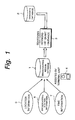
- Fig. 1 shows an outlined structure of an information searching system according to the present invention.
- the information searching system comprises two databases 1 and 2, a search engine 3, and an auxiliary terminal unit 4.
- the search engine 3 searches the databases 1 and 2.
- the auxiliary terminal unit 4 assists the user for search conditions.
- the database 1 stores information about contents that were broadcast from broadcasting mediums such as radio broadcasting stations.
- the database 1 correlatively stores musical piece names that were broadcast from radio broadcasting stations, time information representing time at which these musical pieces were broadcast, and broadcasting station information representing the broadcasting stations that broadcast these musical pieces.
- the database 1 may store information about contents of other broadcasting mediums.
- the contents may be commodity information as well as musical pieces.
- the database 1 correlatively stores musical piece names and additional information thereabout.
- the additional information about each musical piece is composed of for example a music CD number, CD title information, information of a performer and a composer, the words, a guidance, and so forth.
- the additional information of each musical piece may be stored to another database that can be searched from the search engine 3.
- the broadcasting medium is a radio broadcasting station and that contents provided by the broadcasting medium are musical pieces.
- the database 2 stores information about contents stored in the database 1. When contents are musical pieces that were broadcast from a broadcasting medium, information about contents (for example, an album (CD) name, performer information, a seller, and a released date) is correlated with musical piece names and stored.
- contents for example, an album (CD) name, performer information, a seller, and a released date
- the database 2 can also store customer information of the system.
- the database 2 stores customer ID information unique to each auxiliary terminal unit 4 (that will be described later) and other information about each customer.
- the search engine 3 searches information from the database 1 corresponding to a search condition designated by the user.
- the engine represents a structure of a block that provides the user with a particular function.
- the search engine 3 provides the user with a particular searching function.
- the search engine 3 searches the database 1 corresponding to the designated search conditions and outputs for example a musical piece name as the search results.
- the search engine 3 searches the database 2 using the musical piece name as a search condition and outputs an album name, a seller name, , performer name information, and so forth of the musical piece.
- the search results of the database 2 are supplied to the user.
- the user when the user wants to search a desired musical piece that was broadcast from a radio broadcasting station, he or she may not know the information 5, 6, and 7 or ambiguously knows them.
- the user has the auxiliary terminal unit 4 that can obtain time information 7.
- the location information 5 and the broadcasting station information 6 of the user are pre-stored as customer information to the database 2.
- the search engine 3 searches a musical piece corresponding to the time information 7'.
- the search engine 3 searches the database 1 corresponding to the time information 7', the location information 5, and the broadcasting station information 6 (the information 5 and 6 have been stored in the database 2).
- the search engine 3 searches the database 2 corresponding to a musical piece name obtained as the search results.
- the search results are supplied as alternatives of user's desired information to the user.
- the auxiliary terminal unit 4 when the user likes a musical piece that was broadcast, he or she can obtain desired information by causing the auxiliary terminal unit 4 to store the time information 7'.
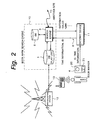
- Fig. 2 shows an example of the structure of a musical piece data searching system.
- the database 1, the database 2, and the search engine 3 compose a book mark search engine 10.
- the book mark search engine 10 is connected to another web site (not shown) through a communication line such as Internet.
- a web site is a place from which information is published to the network.
- the book mark search engine 10 is one web site.
- the book mark search engine 10 is connected to a database (not shown) as another web site.
- the location of a web site is represented with address information referred to as URL (Uniform Resource Locator).
- a broadcasting station 12 is for example a radio broadcasting station.
- the broadcasting station 12 broadcasts for example musical pieces as contents corresponding to a pre-created play list.
- the play list may be created after the contents were broadcast.
- Information such as commodity information other than musical pieces may be broadcast as contents.
- the broadcasting station 12 may be a television broadcasting station that wirelessly or non-wirelessly broadcasts TV program, a CATV (Cable Television), or a non-wireless broadcasting station that mainly broadcasts musical pieces.
- the book mark search engine 10 and the broadcasting station 12 are connected through a communication line such as Internet.
- the above-described play list is transmitted from the broadcasting station 12 to the book mark search engine 10.
- the book mark search engine 10 stores the received play list to the database 1.
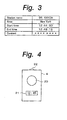
- Fig. 3 shows an example of a play list.
- one musical piece as contents that was broadcast is correlated with the name of the broadcasting station 12 that broadcast the contents (Station Name), the broadcasting area of the broadcasting station 12 (Area), the broadcast start time of the contents (musical pieces) (Start Time), the broadcast end time of the contents (End Time), and the contents name (Content).
- a play list stored in the database 1 is not always transmitted from the broadcasting station 12.
- a play list may be manually created using information of broadcast programs.
- the created play list may be stored to the database 1 through a predetermined storage medium.
- a play list may be created by another system other than a broadcasting station and transmitted to the book mark search engine 10.
- the database 1 can store a plurality of play lists of different broadcasting stations in such a manner that they are identified.
- the book mark search engine 10 and a gateway device 11 are bidirectionally connected through a communication line 8 such as Internet.
- the gateway device 11 is for example a personal computer.
- the gateway device 11 can bidirectionally communicate with the book mark search engine 10.
- the gateway device 11 can communicate with the auxiliary terminal unit 4 that the user has.
- the gateway device 11 is not limited to a personal computer.
- the gateway device 11 may be a set top box used to connect a television receiver and a digital network.
- the gateway device 11 may be an IRD (Integrated Receiver Decoder) that is a digital broadcasting receiver.
- the gateway device 11 is not limited to a device that can be used by individuals.
- an information terminal unit that is installed as a public terminal unit in a retail store may be used as the gateway device 11.
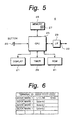
- Fig. 4 shows an example of the appearance of the auxiliary terminal unit 4 according to the first embodiment of the present invention.
- the auxiliary terminal unit 4 is referred to as book marker 4.
- the book marker 4 has an inputting portion 20 and a displaying portion 21.
- the inputting portion 20 is composed of for example buttons.
- the displaying portion 21 displays the current time.
- the book marker 4 has a connector 22 that is an electric connecting point used to communicate with the gateway device 11.
- the book marker 4 is simply structured as will be described later.
- the book marker 4 may be contained in a small case that can be used as a key holder.
- the book marker 4 may be built in various types of electronic devices.
- the book marker 4 may be built in a radio receiver.
- the book marker 4 may be built in a car stereo system of an automobile.
- the book marker 4 may be built in other than electronic devices.
- the book marker 4 may be preferably built in a portable device or a device that can be portably used.
- Fig. 5 shows an example of the structure of the book marker 4 according to the first embodiment of the present invention.
- a CPU Central Processing Unit
- a button 20, a displaying portion 21, a memory 26, a timer 28, an interface 29, and a ROM (Read Only Memory) 91 are connected to the CPU 25.
- the timer 28 outputs the current time. Under the control of the CPU 25, the current time can be adjusted.
- the displaying portion 21 is composed of for example an LCD (Liquid Crystal Display).
- the displaying portion 21 is controlled by the CPU 25. Time information is supplied from the timer 28 to the displaying portion 21 under the control of the CPU 25.
- the displaying portion 21 may be omitted.
- the ROM 91 pre-stores a program that causes the book marker 4 to be controlled.
- the CPU 25 controls the operation of the book marker 4 corresponding to the program stored in the ROM 91.
- the CPU 25 controls the operations of the displaying portion 21, the button 20, the communication through the interface 29, the access control of the memory 26, and so forth.
- the CPU 25 detects the operation of the button 20 performed by the user.
- Time information at which the button 20 is operated is stored to the memory 26 corresponding to the output of the timer 28.
- a plurality of entries of time information can be stored to the memory 26. Each entry of time information is assigned to a unique sequence number.
- a terminal ID 27 is stored at a particular area of the memory 26.
- the terminal ID 27 is a unique ID that identifies the book marker 4.
- information stored in the memory 26 corresponding to the operation of the button 20 is time information and identification information that identifies each entry of the time information.
- time information and category information thereof can be stored to the memory 26.
- the CPU 25 determines whether the user momentarily presses the button 20 once, presses the button 20 twice in a predetermined time period, or continuously presses the button 20 for a predetermined time period or longer.
- the CPU 25 generates category information and stores the category information, the identification information, and the time information to the memory 26.
- the CPU 25 determines that he or she has operated the book marker 4 for a radio broadcast.
- the CPU 25 determines that he or she has operated the book marker 4 for a television broadcast.
- the CPU 25 determines that he or she has operated the book marker 4 for an out-of-area.
- the CPU 25 generates a flag corresponding to the category information.
- the flag, the time information, and the identification information are correlatively stored in the memory 26.
- the interface 29 controls a communication with the outside of the connector 22 (namely, with the gateway device 11).
- the interface standard of the interface 29 that communicates with the gateway device 11 is not limited.
- USB Universal Serial Bus
- an interface standard defined as IEEE-1394 may be used.
- RS-232C may be used as an interface standard for a communication between the book marker 4 and the gateway device 11.
- the communication interface is not limited to a non-wireless interface.
- IrdA Infrared Data Association
- a communication can be made between the book marker 4 and the gateway device 11.
- each of the connector 22 and the interface 29 should have transmitting/receiving functions for an infrared ray signal.
- the book marker 4 may be structured as an IC card having an IC (Integrated Circuit) and a communicating means or a PC card corresponding to PCMCIA (Personal Computer Memory Card International Association) standard or JEIDA (Japan Electronic Industry Development Association) standard.
- IC Integrated Circuit
- PCMCIA Personal Computer Memory Card International Association
- JEIDA Joint Electronic Industry Development Association
- an interface standard corresponding to the IC card is used as the interface 29.
- a connector corresponding to the PC card is used for the gateway device 11.
- the book marker 4 as a PC card is directly attached to the connector corresponding to the PC card, a communication can be made between the book marker 4 and the gateway device 11.
- the terminal ID 27 stored in the memory 26 and the time information can be read from the memory 26 and output to the outside through the interface 29 under the control of the CPU 25.
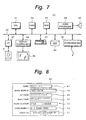
- Fig. 7 shows an example of the structure of the gateway device 11.
- the gateway device 11 may be a conventional personal computer.
- a conventional personal computer is used as the gateway device 11.
- a CPU 31 a ROM (Read Only Memory) 32, a RAM (Random Access Memory) 33, a display controlling circuit 34, and a storage medium (for example, a hard disk 36) are connected to a bus 30.
- an inputting means 91 that outputs a control signal corresponding to user's operation is connected to the bus 30.
- the inputting means 91 is composed of for example a keyboard and a predetermined pointing device (such as a mouse).
- the CPU 31 operates corresponding to a program stored in the ROM 32 and the hard disk 36.
- the CPU 31 performs a predetermined operation.
- the RAM 33 is used as a work memory of for example the CPU 31.
- a display control signal that is output from the CPU 31 is supplied to the display controlling circuit 34.
- the display controlling circuit 34 causes a display 35 to display data corresponding to a display control signal.
- an interface 37 that communicates with the book marker 4 is connected to the bus 30.
- the interface 37 complies with an interface standard corresponding to the interface 29 of the book marker 4 (for example, USB, IEEE-1394, RS-232C, IrDA, or the like).
- a communicating means 38 is connected to the bus 30.
- the communicating means 38 communicates with the book mark search engine 10 through the communication line 8.
- the communicating means 38 is for example a modem.
- the communicating means 38 is connected to a public telephone line as the communication line 8.
- the gateway device 11 is connected to Internet with for example a modem through the public telephone network. In addition, the gateway device 11 can bidirectionally communicate with the book mark search engine 10 through Internet.
- An audio processing means 39 is connected to the bus 30.
- the audio processing means 39 converts digital audio data supplied through the bus 30 into an analog audio signal.
- the analog audio signal that is output from the audio processing means 39 is reproduced by for example a speaker 90.
- the user should pre-register his or her information to the database 2 of the book mark search engine 10.
- the user information can be registered using the gateway device 11.
- the user connects the book marker 4 to the gateway device 11 through a predetermined interface.
- the user operates the gateway device 11 so as to register himself or herself and the book marker 4 to the customer database 2.
- Fig. 8 shows an example of fields on a registration screen 40 of the display 35 in the case that the user registers himself or herself and his/her book marker 4 to the customer database 2.
- a "name” field 41 is used to input the name of the user.
- a "book mark ID” field 42 is used to input the terminal ID 27 of the user's book marker 4.
- the above-described terminal ID 27 is input by a communication between the gateway device 11 and the book marker 4.
- a request for the terminal ID 27 is transmitted from the gateway device 11 to the book marker 4.
- the book marker 4 reads the terminal ID 27 from the memory 26 under the control of the CPU 25 corresponding to the request.
- the terminal ID 27 is transmitted to the gateway device 11.
- the gateway device 11 causes the display 35 to display the received terminal ID 27 at the "book mark ID" field 42.
- the gateway device 11 causes the RAM 33 to store the received terminal ID 27.
- a "zip code” field 43 and a "area code” field 44 are used to input the zip code and the area code of the public telephone line of the user. Corresponding to the contents that was input to the fields 43 and 44, the user's area is represented. With respect to the user's area, information that represents a geographical area can be input instead of the zip code and the area cede. Alternatively, an area name that was designated may be input.
- a "radio station” field 45 is used to input information that identifies user's favorite radio station. In this example, although a broadcasting station name was input, a frequency band of a radio broadcasting station may be input.
- a "card number” field 46 is used to input user's credit card number, user's bank card number, or the like.
- An “address” field 47 is used to accurately input the user's address. These fields are used when a service using the book marker 4 requires a charging process.
- Each piece of information that is input to the fields 41 to 47 is stored to the RAM 33.
- the information is read from the RAM 33 corresponding to a predetermined operation.
- the information that is read from the RAM 33 is transmitted to the book mark search engine 10 by the communicating means 38.
- each information to be transmitted is preferably encrypted corresponding to a predetermined encrypting method.
- the timer 28 is adjusted by the book marker 4.
- the book marker 4 and the gateway device 11 are connected.
- the book marker 4 and the gateway device 11 are bidirectionally communicated.
- the timer 28 of the book marker 4 can be adjusted.
- Such a process can be performed by a unidirectional communication from the book marker 4 to the gateway device 11.
- the book marker 4 and the gateway device 11 are connected.
- the terminal ID 27 is transmitted from the book marker 4 to the gateway device 11.
- time information of the timer 28 is transmitted from the book marker 4 to the gateway device 11.
- the gateway device 11 compares the transmitted time information with time information represented by the timer (not shown) of the gateway device 11. Corresponding to the difference, the correct time may be calculated.
- the time information of the timer (not shown) of the gateway device 11 should be adjusted to correct time by a proper manner.
- the book marker 4 has a timer.
- a counter that operates with a clock signal having a predetermined period may be disposed in the book marker 4.
- time information that represents the time at which the button 20 was pressed can be obtained.
- the count value at which the user pressed the button 20 is stored to the memory 26.
- the gateway device 11 adjusts the timer (not shown) in a predetermined manner and obtains a master clock.
- the communicating means 38 communicates with the book mark search engine 10 through the communication line 8, obtains time information, and adjusts the timer of the gateway device 11 corresponding to the time information.
- a predetermined receiving means may be disposed in the gateway device 11. The receiving means may receive time information contained in a television broadcast or a radio broadcast. Corresponding to the received time information, the timer of the gateway device 11 may be adjusted.
- the gateway device 11 obtains the difference between the count value at which the user pressed the button 20 and the count value at which time information was transmitted from the book marker 4.
- the count up period of the counter of the book marker 4 is known, the time is traced back from the time at which time information was transmitted from the book marker 4 by the count value of the difference corresponding to the timer of the gateway device 11.
- the time at which the user pressed the button 20 of the book marker 4 and the count value was stored to the memory 26 can be accurately obtained.
- the count value of the counter corresponds to time information.
- the gateway device 11 when the gateway device 11 measures the count value of the counter of the book marker 4 at an interval of a predetermined time period, the period of the counter of the book marker 4 can be obtained.
- the counter counts with a clock signal having a predetermined period.
- the counter can be operated with a clock signal that is generated at any timing.
- the counter may be operated with an M sequence clock signal generated by a shift register and an exclusive-OR circuit.
- the gateway device 11 should know the type of the counter used in the book marker 4. When such a clock signal is used for the counter, the book marker 4 can be prevented from illegally being fabricated or used.
- the gateway device 11 obtains first time information that represents the time at which the button 20 was pressed on the book marker 4 and second time information that represents the time at which the first time information was transmitted from the book marker 4 to the gateway device 11, transmits the first time information and the second time information to the book mark search engine 10, and obtains the accurate time at which the button 20 was pressed corresponding to the master clock of the book mark search engine 10.
- the timer 28 of the book marker 4 or the above-described counter may operate as a stop watch.
- the button 20 when the button 20 is operated, the timer 28 or the counter starts counting.
- time information or count value
- the timer 28 or the counter is reset and stopped.
- the button 20 is operated next time, the timer 28 or the counter starts operating. In such a manner, the power consumption of the book marker 4 can be reduced.
- step S10 the contents searching process of the system shown in Fig. 2 will be described.
- step S10 the terminal ID 27 of user's book marker 4 is registered to the book mark search engine 10.
- the user can store time information to the book marker 4 with the terminal ID 27 at any place (for example, on the street or in the car).
- the user likes a musical piece that he or she is listening on the radio, he or she presses the button 20 of the book marker 4.
- Time information at which the button 20 was pressed is stored to the memory 26 of the book marker 4 (at step S11).
- a plurality of entries of time information can be stored to the memory 26 of the book marker 4 as long as it has a free space (at step S12).
- the book marker 4 and the gateway device 11 (abbreviated as G . D in Fig. 9) are connected.
- time information stored to the memory 26 of the book marker 4 is read along with the terminal ID 27.
- the time information is transmitted to the gateway device 11 through a predetermined interface.
- the transmitting process is automatically performed after the book marker 4 and the gateway device 11 are connected.
- the time information and the terminal ID 27 that were transmitted from the book marker 4 to the gateway device 11 are transmitted to the book mark search engine 10 through the communication line 8.
- the book mark search engine 10 searches information corresponding to the time information and the terminal ID 27 transmitted from the gateway device 11.
- time information is used.
- the user wants to know musical piece information, it is searched from the database 1 corresponding to the time information.
- musical piece names of musical pieces that were broadcasted from the radio broadcasting stations at the time represented by the time information are output.
- the search condition is narrowed corresponding to the user's information registered at step S10.
- the database 2 is searched.
- the user's registration information as the terminal ID 27 is output.
- the registration information is used as another search condition.
- the search results are supplied to the user.
- the search results of the book mark search engine 10 are transmitted to the gateway device 11.
- the gateway device 11 displays the transmitted search results on a display screen (that will be described later).
- the user can know whether or not user's desired information was obtained (at step S18).
- a relevant message is transmitted from the gateway device 11 to the book mark search engine 10.
- the database 1 is searched. For example, as a search condition, broadcasting stations are searched corresponding to information that was input in the "zip code" field 43 and the "area code” field 44. Alternatively, broadcasting stations may be searched corresponding to adjacent areas of the area represented by the fields 43 and 44.
- a search condition may be automatically designated by the book mark search engine 10.
- the bookmark search engine 10 may designate information registered by the user as a search condition one after the other.
- the user may designate a search condition.
- the user inputs a new search condition to the gateway device 11.
- the input search condition is transmitted from the gateway device 11 to the book mark search engine 10.
- step S20 the searched information is transmitted from the book mark search engine 10 to the gateway device 11.
- audio data of the searched musical piece is transmitted from the book mark search engine 10 to the gateway device 11.
- Audio data of musical pieces can be stored to the database 2.
- the user can request another web site connected to for example Internet to transmit audio data of a musical piece.
- the user can cause the hard disk 36 of the gateway device 11 to store received audio data and the audio processing means 39 and the speaker 90 to reproduce the audio data.
- the gateway device 11 can communicate with the book mark search engine 10 and request to purchase an album (CD) that contains the musical piece.
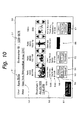
- Fig. 10 shows an example of a screen of the gateway device 11 (this screen is displayed at and after step S18).
- a user name 51, a terminal ID 27, and an area 52 appear as user's registered information.
- the area 52 is omitted as an input field on the registration screen shown in Fig. 8.
- three radio broadcasting stations "AAAA”, "BBBB”, and "CCCC” and one CATV (Cable Television) broadcasting station "DDD" have been registered.
- Search results of four broadcasting stations by the book mark search engine 10 corresponding to one entry of time information 53 registered to the book marker 4 appear as search results 54, 55, 56, and 57.
- musical pieces were broadcast from the broadcasting stations "AAAA”, “BBBB”, and "DDD" at the time represented by the time information 53.
- an advertisement was broadcast from the broadcasting station "CCCC” at the time represented by the time information 53.
- the search result 54 for the broadcasting station "AAAA” contains a CD jacket image 54A, a program name - singer name 54B, and a CD sales price 54C.
- the CD jacket image 54A appears below a broadcasting station name and broadcasting frequency band information.
- the CD jacket image 54A shows a jacket image of a CD that contains a musical piece that was broadcast at the time represented by the time information 53 from the broadcasting station "AAAA".
- buttons 58, 59, and 60 appear as virtual operation buttons operated with a user interface of the gateway device 11.
- the buttons 58, 59, and 60 are in common with each broadcasting station that broadcast musical pieces.
- audio data of the musical piece is transmitted from the book mark search engine 10 to the gateway device 11.
- the audio data is processed by the audio processing means 39 and then reproduced from the speaker 90.
- the transmitted audio data is not stored to a predetermined storing device (for example, the hard disk 36).
- the user can select a desired musical piece from those that were broadcast from the registered broadcasting stations.
- the button 59 is used when the user wants to purchase a CD that contains a desired musical piece.
- the button 60 is used to download and store audio data of a desired musical piece to for example the hard disk 36.
- the fee of the CD or audio data is charged to the credit card or bank card corresponding to the information that was input to the "card number" field 46 shown in Fig. 8.
- buttons 58, 59, and 60 do not appear for the advertisement that was broadcast from the broadcasting station "CCCC".
- a button that allows the user to purchase a commodity item of the advertisement may be additionally placed.
- search results may not appear at a time.
- a button 61 When there are many registered broadcasting stations, search results may not appear at a time. In this case, by operating a button 61, information of other registered broadcasting stations appears.
- the book marker 4 was described as a dedicated device that stores time information.
- a portable communication device such as a portable telephone unit or a PHS (Personal Handy Phone System) unit may be provided with the function of the book marker 4.
- the button 20 can be disposed on the device along with dial keys and so forth.
- the telephone number of the device can be used as the terminal ID 27.
- the function of the button 20 can be accomplished.
- a GPS Global Positioning System
- a device such as a PHS unit or a GPS unit that has a function for detecting the position thereof is provided with the function of the book marker 4, since the position of the user can be located, broadcasting stations and so forth can be more narrowly searched.
- a small portable information device referred to as PDA (Personal Digital Assistant) can be used as the book marker 4.
- PDA Personal Digital Assistant
- the PDA is provided with the function of the book marker 4 as software.
- the PDA virtually operates as the book marker 4.
- the book marker 4 may be structured as a strap for holding a portable telephone unit.
- one end of the strap is structured as the connector 22.
- the other end is connected to the portable telephone unit.
- a portable telephone unit that can subscribe to an Internet connection service is provided with a connector that allows data to be transmitted to Internet.
- the connector 22 disposed at an end of the strap is connected to a lower connector of the portable telephone unit.
- the button 20 can be accomplished with software on the gateway device 11.
- the function of the button 20 for storing time information is assigned to a predetermined key of the gateway device 11 or a predetermined position of the display screen thereof.
- the function of the button 20 may be assigned to a predetermined icon on the display screen of the gateway device 11.
- time information can be stored.
- the terminal ID 27 is stored to a predetermined area of the ROM 32, the RAM 33, or the hard disk 36 of the gateway device 11.
- time information that represents the time at which the icon was operated is stored to a predetermined area of the RAM 33 or the hard disk 36.
- the time information is read from the RAM 33 or the hard disk 36 and transmitted along with the terminal ID 27 to the book mark search engine 10 through the communication line 8.
- the book mark search engine 10 searches the database corresponding to the transmitted information and transmits search results from the book mark search engine 10 to the gateway device 11 through the communication line 8.
- a unique terminal ID 27 is supplied to each book marker 4.
- the terminal ID 27 and time information since the user name and the musical piece name that he or she downloaded are obtained and used for market research.
- Figs. 11A and 11B show an example of the book marker 4.
- cut portions 101 and 102 are formed at both ends of the book marker 4.
- the displaying portion 21 is disposed at an almost center position of the book marker 4.
- the button 20 is disposed below the displaying portion 21.
- the cut portion 101 composes a cap 103.
- the connector 22 that is connected to the gateway device 11 is housed in the cap 103.
- the cap 103 is pulled upward, as shown in Fig. 11B, the cap 103 is separated from the main body of the book marker 4.
- the connector 22 is exposed.
- the connector 22 directly protrudes from the main body of the book marker 4.
- the interface 29 of the book marker 4 is an interface corresponding to USB.
- the connector 22 is a male USB connector.
- the connector 22 directly protrudes from the main body of the book marker 4, when the connector 22 of the main body of the book marker 4 is inserted into a female connector of the interface 37 of the gateway device 11, the book marker 4 can be connected to the gateway device 11. If an A type USB connector is used, the compatibility between the book marker 4 and the gateway device 11 as a personal computer can be preferably maintained.
- the main body of the book marker 4 may not be physically connected to the gateway device 11.
- a connecting device that has a female USB connector and a connecting line for the gateway device 11 is used.
- the connecting device is referred to as cradle.
- Fig. 12 shows an example of the appearance of the cradle 110 to which the book marker 4 has been connected.
- the cradle 110 is formed in a semi-sphere shape. At the vertex portion of the cradle 110, a female connector 111 corresponding to the connector 22 (male connector) of the book marker 4 is disposed. It should be noted that the shape of the cradle 110 is not limited to such a semi-sphere. In other words, according to the preset invention, the shape of the cradle 110 may be rectangular parallelopiped, quadrangular pyramid, or any complicated shape.
- a connecting line 112 extends from the female connector 111. The connecting line 112 is used to connect the cradle 110 to the gateway device 11.
- Entries of time information stored in the book marker 4 appear as ball shaped members 100, 100, 100, ... and 100' under the control of the CPU 25.
- the book marker 4 generates category information corresponding to time information that depends on the operating method of the button 20.
- the time information and the category information can be stored in the memory 26.
- the category information can be affected to the time information that appears on the displaying portion 21.
- black ball shaped members 100 and white ball shaped members 100' represent category information.
- a black ball shaped member 100 represents an operation of the button 20 corresponding to a radio broadcast.
- a white ball shaped member 100' represents an operation of the button 20 corresponding to a television broadcast.
- Another member (not shown) represents an operation of the button 20 corresponding to out-of-area.
- entries of time information may appear as other members, not black and white ball shaped members.
- entries of time information may appears as a number.
- the number of entries of time information that can be stored to the book marker 4 may appear.
- Members that appears on the displaying portion 21 may vary when entries of time information stored in the memory 26 of the book marker 4 are transmitted to the gateway device 11.
- Figs. 13A, 13B, and 13C show an example of members that appear on the displaying portion 21 in the case that entries of time information are being transmitted to the gateway device 11.
- Figs. 13A, 13B, and 13C show the case that the cap 103 shown in Figs. 11A and 11B faces downward.
- Figs. 13A, 13B, and 13C show states that time passes.
- seven ball shaped members 100 and 100' successively disappear as they are sucked toward the connector 22 as time passes.
- a situation of which data stored in the memory 26 is transmitted to the gateway device 11 through the connector 22 appears as a virtual image.
- Such an virtual image may appear on the gateway device 11.
- an audio reproducing portion is disposed in the gateway device 11
- a sound can be output as members vary and time passes.
- time information is transmitted in much shorter time than members that disappears on the displaying portion 21. In other words, it is not necessary to synchronize the real data transmission speed with the speed of members that disappear on the displaying portion 21.
- entries of time information stored in the memory 26 are transmitted, as time passes, members decrease and/or a sound takes place. Thus, the user can visually know that entries of time information are being transmitted to the gateway device 11.
- entries of time information are being transmitted, they can be represented in various manners. For example, a predetermined character image may appear on the gateway device 11.
- members that appears on the displaying portion 21 of the book marker 4 can be synchronized with members that appear on the gateway device 11 so that the user can see a sequence of entries of time information transmitted from the book marker 4 to the gateway device 11.
- Figs. 14A and 14B show a modification of the book marker 4.
- the book marker 4 shown in Figs. 14A and 14B is different from the book marker 4 shown in Figs. 11A and 11B in that the lower cut portion 102 is not formed.
- Fig. 14A shows the state that the cap 103 has been mounted.
- Fig. 14B shows the state that the cap 103 has been dismounted and the connector 22 has been exposed.
- the button 20 can be pressed from the bottom.
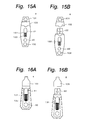
- Figs. 15A and 15B show another modification of the book marker 4.
- the book marker 4 shown in Figs. 15A and 15B is different from the book marker 4 shown in Figs. 11A and 11B in that members that represent entries of time information of the displaying portion 21 are formed as bars 120.
- Fig. 15A shows the state that the cap 103 has been mounted.
- Fig. 15B shows the state that the cap 103 has been removed and the connector 22 has been exposed.
- Figs. 16A and 16B show another modification of the book marker 4.
- the book marker 4 shown in Figs. 16A and 16B is different from the book marker 4 shown in Figs. 11A and 11B in that the cut portions 101 and 102 are omitted and a slide-proof portion 130 is disposed.
- the slide-proof portion 130 is formed on the side of the main body of the book marker 4 and composed of for example rubber.
- an area 131 of the displaying portion 21 represents entries of time information.
- Fig. 16A shows the state that the cap 103 has been mounted.
- Fig. 16B shows the state that the cap 103 has been dismounted and the connector 22 has been exposed.
- Fig. 17 shows another modification of the book marker 4.
- a ring 150 is disposed to the cap 103 of the book marker 4.
- the cap 103 has been mounted to the book marker 4, it can be used as for example a key holder.
- the book marker 4 as each of the modifications shown in Figs. 14A, 14B, 15A, 15B, 16A, 16B, and 17 may be mounted to the cradle 110.
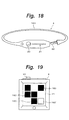
- Fig. 18 shows another modification of the book marker 4.
- the book marker 4 is formed in a wrist band shape.
- the displaying portion 21 is composed of a plurality of lighting portions for example LEDs (Light Emitting Diodes) that light corresponding to entries of time information that are stored. All lighting portions may be initially lit. As the number of entries of time information that are stored increases, the number of the lighting portions that light may decrease.
- a connecting line 140 protrudes from one end of the main body of the book marker 4.
- the connector 22 is disposed at a tail of the connecting line 140.
- a structure that allows the connector 22 to be connected and disconnected is disposed at a head of the main body of the book marker 4. When the connector 22 is connected to the head of the book marker 4, it is formed in a ring shape.
- Fig. 19 shows another modification of the book marker 4.
- the book marker 4 shown in Fig. 19 is used as a desk top device such as a table clock.
- the button 20 is disposed at an upper position of the book marker 4.
- the displaying portion 21 is disposed on the front surface of the book marker 4.
- entries of time information that were stored appear as square members 160 and 160'.
- a black square member 160 represents an entry of time information corresponding to a radio broadcast.
- a white square member 160' represents an entry of time information corresponding to a television broadcast.
- the square members 160 and 160' appear at random positions.
- the connector 22 connected to the gateway device 11 is disposed on a rear surface (not shown) of the book marker 4.
- a female USB connector may be disposed on the book marker 4. With a connecting line having two male connectors, the book marker 4 may be connected to the gateway device 11.
- the maximum number of entries of time information that are stored to the book marker 4 may be limited.
- the number of entries of time information that can be stored to the book marker 4 may be designated to several entries to ten and several entries as an upper limit.
- a proper means for informing the user that the number of entries of time information becomes or approaches the upper limit is preferably disposed.
- a sound generating means that generates a beep sound may be disposed to the book marker 4. With such a sound generating means, when the number of entries of time information that can be stored to the book marker 4 becomes one, an alarm sound may be generated. When the number of entries of time information that can be stored to the book marker 4 is zero, an alarm sound is generated when the button 20 is pressed.
- a sound generated by the sound generating means is not limited to such an alarm sound.
- a predetermined sound may be generated.
- the user can know whether or not the operation of the button 20 was acknowledged without need to see the displaying portion 21 of the book marker 4.
- a sound that varies corresponding to the operating method of the button 20 may be generated.
- a cancel button may be disposed to the book marker 4. With the cancel button, entries of time information that were stored can be erased in the order of the oldest entry or the latest entry. Alternatively, the user can designate an entry to be deleted from those of time information that were stored.
- the book marker 4 can be built in various electronic devices.
- the book marker 4 can be built in a radio receiver.
- the book marker 4 can be built in a car stereo system.
- devices in which the book marker 4 is built are not limited to electronic devices.
- the book marker 4 is preferably built in a device that can be used as a mobile unit.
- the button 20 is disposed as one operating portion for causing time information to be stored to the book marker 4.
- a plurality of category flags are generated.
- a plurality of buttons may be disposed to the book marker 4. Different flags may be assigned to these buttons.
- a button 20 for a radio broadcast and a button 20' for a television broadcast may be disposed.
- much more category flags can be generated.
- the operating portion for storing time information of the book marker 4 is not limited to a push button.
- a rotating switch that rotatably selects one of contacts may be disposed to the book marker 4. With the rotating switch, time information may be stored.
- a touch sensor that defects a touching of the user may be used as the operating portion.
- the book marker 4 and the gateway device 11 are connected through an interface such as USB that allows data to be transmitted to a computer system.
- an interface such as USB that allows data to be transmitted to a computer system.
- the present invention is not limited to such an example.
- an interface having the lowest data transmission rate can be used.
- data can be transmitted using a conventional shield cable that is used for a head set.
- the book marker 4 can be accomplished as software of a personal computer.
- a personal computer as the book marker 4 may be additionally used.
- the gateway device 11 when the gateway device 11 is a personal computer, the gateway device 11 can be used as the book marker 4.
- Software that accomplishes the book marker 4 on the personal computer can be downloaded from a communication network such as Internet.
- a communication network such as Internet.
- such software can be distributed or sold using a record medium such as a CD-ROM.
- Such software may be obtained from another web site through the book mark search engine 10 connected to the gateway device 11.
- such software may be stored in the book mark search engine 10.
- the software may be directly downloaded from the gateway device 11.
- the program that causes the book marker 4 to operate may be downloaded.
- the ROM 91 is composed of an EEROM (Electrically Erasable Programmable ROM) that allows stored contents to be electrically rewritten.
- the program that is supplied from the gateway device 11 or the like through the interface 29 is stored to the ROM 91.
- the program is not stored to the ROM 91.
- the program is written to the ROM 91 corresponding to a predetermined procedure.
- the book marker 4 can be used.
- the book marker 4 When the user of the book marker 4 is registered, the book marker 4 is connected to the gateway device 11.
- the terminal ID 27 is transmitted from the book marker 4 to the book mark search engine 10 through the gateway device 11.
- a program for controlling the operation of the book marker 4 is transmitted from the book mark search engine 10 to the gateway device 11.
- This program is transmitted from the gateway device 11 to the book marker 4 through the interface 29.
- the transmitted program is written to the ROM 91. As a result, the book marker 4 can be used.
- a startup program for the CPU 25 and a communication control program for the interface 29 can be pre-stored to the ROM 91.
- the version of the operation control program of the book marker 4 can be updated. For example, a program is downloaded from the network connected to the gateway device 11. The downloaded program is transmitted to the book marker 4. As a result, the contents stored in the ROM 91 are rewritten.
- members that appear on the displaying portion 21 can be preferably selected by the user.
- the operation control program for the book marker 4 can be transmitted from another site that can be connected to the gateway device 11 as well as the book mark search engine 10.
- the control program for the book marker 4 can be distributed using a record medium such as a CD-ROM or a floppy disc, instead of downloading from the network.
- the program recorded in such a record medium is read by the gateway device 11.
- the program is transmitted to the book marker 4.
- the contents stored in the ROM 91 are rewritten.
- an information terminal unit that is installed at a retail store is used as the gateway device 11.
- Such information terminal units are installed at relatively large CD stores and so-called convenience stores.
- the information terminal unite are connected to a predetermined network.
- the user operates such an information terminal unit corresponding to a menu displayed on the screen thereof, he or she can obtain desired information.
- the user can see the obtained information and obtain it with a record medium such as a floppy disk or a CD-ROM.
- the information terminal unit is provided with a predetermined interface.
- the obtained information can be directly transferred to user's information device through a relevant interface.
- such an information terminal unit is referred to as "kiosk terminal unit".
- the kiosk terminal unit has a bus to which a CPU and a memory are connected. In addition, a displaying device and an input interface that accomplish GUI (Graphical User Interface) are connected to the bus.
- the kiosk terminal unit also has a large storage medium such as a HDD, a data outputting means, a network connecting means, and so forth.
- the kiosk terminal unit is connected to the above-described book mark search engine 10 (the connection is not shown).
- the kiosk terminal unit is provided with an interface corresponding to the connector 22 of the book marker 4 so that data can be transmitted between the book marker 4 and the kiosk terminal unit.
- the user can use the searching service using the book marker 4 regardless of whether he or she has the gateway device 11.
- the kiosk terminal unit can be always connected to a high speed communication line that has a higher transmission rate than a conventional home-use network.
- the kiosk terminal unit can have larger storage mediums (that are a memory and a HDD) than user' personal computer.
- storage mediums that are a memory and a HDD
- the book marker 4 is provided with a memory having a relatively large storage capacity.
- the book marker 4 is connected to a kiosk terminal unit.
- music data is searched with the kiosk terminal unit.
- the kiosk terminal unit displays a screen as shown in Fig. 10.
- the kiosk terminal unit has an audio reproducing means, by operating the button 58, the user can listen to music data as search results.
- the user can download music data as search results to the book marker 4 through the connector 22.
- the music data is charged, when the user pays a designated fee through a money slot, the music data as the search results is downloaded to the book marker 4.
- the user transfers the downloaded music data from the book marker 4 to a personal computer or a dedicated music data reproducing apparatus.
- music data that is downloaded is compression-encoded corresponding to a predetermined compression encoding method, the memory storage space and download time can be preferably reduced.
- MP3 Motion Picture Experts Group 1 Audio Layer 3
- ATRAC Adaptive Transform Acoustic Coding
- ATRAC2 that are modifications thereof
- PASC Precision Adaptive Sub-band Coding
- Twin VQ trademark
- Real Audio trademark
- Liquid Audio trademark
- the book marker 4 When the book marker 4 is provided with a decoder and a audio reproducing means corresponding to a predetermined music data compression encoding method, music data that has been downloaded and stored to the memory can be decoded and reproduced. Thus, the user can enjoy listening to downloaded music data.
- An example of the audio reproducing means is an audio reproducing system using a head set and so forth.
- the kiosk terminal unit may issue an order sheet as a search result corresponding to time information stored in the book marker 4. The user can hand the order sheet to a clerk of the store and buy a mucic CD corresponding to the search result.
- the kiosk terminal unit is provided with a cart system that conveys music CDs, the kiosk terminal unit can directly vend a music CD corresponding to a search result.
- Figs. 20 and 21 are a first part and a second part of a flow chart showing a process performed after the user is registered to the book marker 4 until a music CD is purchased.
- Figs. 22 to 27 show examples of display screens displayed on the gateway device 11 corresponding to the flow chart shown in Figs. 20 and 21. "A” and “B” shown in Fig. 20 are connected to "A” and “B” shown in Fig. 21, respectively.
- step S30 it is determined whether or not the user has been registered.
- the flow advances to step S33.
- the determined result at step S30 is Yes (namely, the user has been registered)
- the flow advances to step S33.
- the determined result at step S30 is No (namely, the user's book marker 4 has not been registered)
- the flow advances to step S31.
- the book marker 4 is connected to the gateway device 11.
- the user is registered to the book marker 4 by a predetermined operation of the gateway device 11.
- the gateway device 11 may be user's personal computer or an above-described kiosk terminal unit.
- step S33 the book marker 4 is operated by the user. In other words, when the user is listening to his or her favorite musical piece, he or she presses the button 20. As a result, time information at which the user pressed the button 20 is stored to the book marker 4. As was described above, depending on in what manner the button 20 was pressed, time information that is stored in the book marker 4 is categorized (at step S34). When time information is stored out of the registered area, the user continuously presses the button 20 for a predetermined time period or longer (at step S35).
- step S36 To store time information corresponding to a radio broadcast to the book marker 4, the user momentarily presses the button 20 once (at step S36). To store time information corresponding to a television broadcast to the book marker 4, the user presses the button 20 twice in a predetermined time period (at step S37). Thereafter, the flow advances to step S38. At step S38, the time information at which the button 20 was pressed, identification information, and the category flag that represents the operating manner of the button 20 are stored to the memory 26 of the book marker 4.
- the entry of the time information can be extracted from the memory 26 and a musical piece can be searched by the bookmark search engine 10 corresponding to the entry of the time information (at step S39).
- the determined result at step S39 is Yes (namely, a musical piece is searched corresponding to time information)
- the flow advances to step S40.
- the determined result at step S39 is No (namely, time information is further stored to the book marker 4)
- the flow returns to step S33.
- the searching operation using time information stored in the book marker 4 is performed when the book marker 4 is connected to user's personal computer (PC) or a kiosk terminal unit as the gateway device 11.
- PC personal computer
- the gateway device 11 When the user performs the searching operation using his or her personal computer as the gateway device 11, the flow advances to step S41.
- the book marker 4 is connected to the personal computer.
- the personal computer is connected to for example Internet.
- the book marker 4 is connected to an available web site at which the bookmark search engine 10 can be used.
- Time information stored in the memory 26 of the book marker 4 is transmitted to the personal computer.
- Fig. 22 shows an example of a time information selection screen 200 that is displayed on the personal computer when time information has been transmitted thereto.
- entries (1) to (9) of time information stored in the book marker 4 are transmitted to the personal computer.
- the stored date and time of each of the entries (1) to (9) of the time information appear as members 201 to 209.
- the user selects desired information from the members 201 to 209. For example, the user selects one of the members 201 to 209 using a pointing device such as a mouse and a cursor that moves on the screen corresponding to the movement of the mouse. By clicking a mouse button, the user confirms the selected information.
- the selected information is transmitted from the personal computer to the book mark search engine 10.
- the transmission data is composed of the terminal ID 27 as a header and a pair of an entry of time information and a category flag thereof.
- the book mark search engine 10 searches title information of musical piece that were broadcast from registered broadcasting stations corresponding to the time information and the terminal ID 27 that were transmitted. At this point, corresponding to the category flag transmitted along with the time information, title information is searched from radio stations or television stations. When title information is searched from television stations, musical pieces of music program, musical pieces of commercials, theme songs of dramas and musical pieces in dramas may be searched.
- title information is searched from musical pieces that were broadcast from broadcasting stations out of the registered area represented by user's zip code corresponding to the terminal ID 27.
- Search results obtained by the book mark search engine 10 are transmitted to the personal computer.
- Fig. 23 shows an example of a search result display screen 210 displayed on the personal computer corresponding to transmitted search results.
- the user selects the entry (2) of time information that appears as the member 202.
- the book mark search engine 10 searches musical piece information corresponding to the selected entry (2) of time information.
- musical piece information 211, 212, and 213 appear on the search result display screen 210.
- the search results show that musical pieces represented by the musical piece information 211, 212, and 213 were broadcast from broadcasting stations "AAAA”, “ABCD”, and "BBBB” at 12:00 am on October 18, 1999 as the entry (2) of time information, respectively.
- the user listened to one of these musical pieces and operated the button 20 of the book marker 4 at the time represented by the entry (2) of the time information.
- the user determines whether there is a musical piece he or she listened at the time represented by the entry (2) of the time information stored in the book marker 4 (at step S43).
- the user wants to listen to a demonstration of the selected musical piece, he or she operates a LISTEN button 214 that appears at each of the musical piece information 212, 213, and 214 (at step S45).
- a demonstration listening screen 220 that allows the use to listen to a demonstration of the selected musical piece appears.
- Fig. 24 shows an example of the demonstration listening screen 220.
- the personal computer transmits information that represents what button 215 was pressed to the book mark search engine 10.
- the book mark search engine 10 searches information of a music CD that contains a musical piece corresponding to the transmitted information from the database 1.
- the searched information is transmitted to the personal computer. For example, additional information of the music CD such as musical piece names thereof appears as a list in a CD information display portion 221 on the demonstration listening screen 220.
- an operating portion for controlling a reproducing operation of a musical piece appears on the right of the CD information display portion 221.
- a PLAY button 222 When the user operates a PLAY button 222, he or she can listen to a demonstration of a musical piece corresponding to the LISTEN button 214.
- the PLAY button 222 information that represents that the user pressed the PLAY button 222 is transmitted to the book mark search engine 10.
- Music data is pre-stored in the database 1.
- Music data corresponding to the selected musical piece information is transmitted from the book mark search engine 10 to the personal computer.
- Music data may be transmitted from another web site connected to the book mark search engine 10 through a network.
- an operating portion 223 is a volume slider with which the audio volume of the reproduced sound can be adjusted.
- the reproduction length of the play time is limited. For example, only 15 seconds from the beginning or a principal portion of a musical piece are preferably reproduced.
- step S43 it is determined whether or not a desired musical piece has been searched at step S43. Thereafter, the musical piece is demonstrated at step S45. Alternatively, after a musical piece is demonstrated, it may be determined whether or not a desired musical piece has been obtained.
- a search condition may be manually designated at step S44. Thus, desired musical piece information can be obtained.
- the user wants to purchase a desired musical piece from the musical piece information 211, 212, and 213 as the search results (at step S47). This operation is performed as a result of the demonstration at step S46 or directly from the musical piece information 211, 212, and 213 that appear.
- the user purchases a musical piece with a music CD that contains the musical piece (as will be described later). Alternatively, the user may purchase a single musical piece rather than a music CD that contains it.
- the search results can be stored in the web site of the book mark search engine 10 (at step S49).
- the user operates a SAVE button 215 of each of the musical piece information 211, 212, and 213 on the demonstration listening screen 220 or a SAVE button 224 on the demonstration listening screen 220, musical piece information as search results is stored along with user information such as terminal ID 27 to the database 2 of the book mark search engine 10.
- the save screen 230 contains a list of information 231 of musical pieces that were saved.
- the save screen 230 contains a list of information 231 of musical pieces that were saved.
- a Listen button 233 he or she can listen to a demonstration of the selected musical piece.
- the user operates a Buy button 232 he or she can order the selected musical piece.
- a Delete button 234 he or she can delete the information of the selected musical piece on the save screen 230.
- a BUY button 216 on the search result display screen 210 When the user operates a BUY button 216 on the search result display screen 210, a BUY button 225 on the demonstration listening screen 220, or the Buy button 232 on the save screen 230, he or she can order the selected musical piece.
- the information of the ordered musical piece is correlated with the user information such as the terminal ID 27.
- the resultant information is temporarily stored to a predetermined memory area of the book mark search engine 10 (at step S50). This memory area is referred to as shopping cart.
- Fig. 26 shows an example of a shopping cart screen 240 on which the contents of a shopping cart appear.
- a list 241 of information of musical pieces contained in the shopping cart and music CDs that contain the musical pieces appears.
- the user can select a vender from which he or she will purchase the selected mucic CD (at step S51).
- a plurality of vendors appear.
- the personal computer is connected to a web site of the selected vendor at which he or she can purchase the selected music CD.
- an edit screen (not shown) appears.
- the user can add or delete a vender of music CDs.
- Fig. 27 shows a purchase screen 250 in the case that the personal computer is connected to the "CD SHOP C" web site.
- the upper area is a screen 251 on which the web site of the book mark search engine 10 appears .
- the lower area is a screen 252 on which the "CD SHOP C" web site appears.
- Data stored in the shopping cart of the book mark search engine 10 is directly transmitted as a purchase item list 253 to the "CD SHOP C" web site.
- the user decides whether or not the prices of the music CDs are proper corresponding to price information of the music CDs on the list 253 (at step S53). When the prices are proper, the user orders the music CDs in the purchase item list 253.
- the user operates the BUY buttons 254A, 254B, 254C, and 254D, he or she can order and purchase the respective music CDs from the "CD SHOP C".
- the fees of the music CDs can be charged to the credit card that is pre-registered to the "CD SHOP C".
- step S51 on the shopping cart screen 240, the user can select another vendor.
- a kiosk terminal unit When the user selected a kiosk terminal unit at step S40, he or she connects the book marker 4 to a predetermined connection terminal of the kiosk terminal unit through the connector 22 (at step S55).
- the time information, the identification information, the category flag, and the terminal ID 27 are transmitted from the book marker 4 to the kiosk terminal unit.
- the kiosk terminal unit searches musical piece information corresponding to the transmitted information, displays search results to the user through a predetermined GUI (Graphical User Interface), and asks whether the user wants to listen to a demonstration of the selected music CD or purchase it.
- GUI Graphic User Interface
- step S56 When the desired musical piece and musical piece information have been found (at step S56), the flow advances to step S53.
- the user decides whether or not the fee of the music CD that contains the desired musical piece is proper. When the fee is proper, the user purchases the music CD.
- the kiosk terminal unit is installed in a CD store, the user can purchase the desired music CD corresponding to the search result in the CD store.
- the book mark search engine 10 searches only musical pieces that were broadcast from radio broadcasting stations and television broadcasting stations.
- commodity items in commercials that were broadcast from television broadcasting stations are also searched.
- Fig. 28 shows an example of the structure of a searching system according to the second embodiment of the present invention.
- the advertizer 500 may request for example an advertizing agent 502 to produce a commercial to be broadcast.
- the advertizing agent 502 may supply the created commercial to a broadcasting station 12.
- the advertizer 500 has a web site 501 on Internet. At the web site 501, the advertizer 500 guides commodity items advertized in the commercial. In addition, the user can purchase the advertized commodity items from the web site 501.
- the web site 501 can be accessed from the gateway device 11.
- the database 1 shown in Fig. 2 corresponds to a broadcast contents database 1'.
- the database 2 corresponds to a customer database 2'.
- the broadcast contents database 1' stores a play list that contains broadcast time of programs that are broadcast from the broadcasting station 12.
- the play list may contain information about only commercials that are broadcast from the broadcasting station 12.
- the broadcast contents database 1' also stores the URL of the web site 501 of the advertizer 500 and the name of the advertizer 500 in correlation with the play list.
- the broadcast contents database 1' stores the names of the advertized commodity items in correlation with the broadcast time. In other words, when the broadcast contents database 1' is searched with a key of a broadcast time, the name of the advertizer 500, the URL of the web site 501 of the advertizer 500, and the name of the commodity item advertized in the commercial that was broadcast at the broadcast time can be obtained as search results.
- the customer database 2' stores the terminal ID 27 and the user data of each book marker 4.
- the customer database 2' can store information about user's favorites such as user's favorite radio stations and television stations registered corresponding to the terminal ID 27.
- an interface 503 is disposed in the book mark search engine 10.
- the interface 503 allows predetermined information stored in the broadcast contents database 1' to be easily updated from the outside.
- the advertizer 500 can update information about commercials in the play list stored in the broadcast contents database 1' through the interface 503. Such information can be updated through the advertizing agent 502 on behalf of the advertizer 500.
- the play list that represents contents that are broadcast by the broadcasting station 12 can be updated through the interface 503 by the broadcasting station 12.
- the interface 503 can be structured with a database management system having a predetermined filter that prohibits the broadcast contents database 1' from being accessed from an authorized person.
- the interface 503 is preferably provided with a GUI that allows an external authorized client to easily update the contents of the broadcast contents database 1'.
- the book mark search engine 10 identifies the user using the transmitted terminal ID 27 and searches the broadcast contents database 1' corresponding to the time information.
- the name of the advertizer 500, the URL of the web site 501 of the advertizer 500, the name of the commodity item of the commercial that was broadcast, and so forth are transmitted to the gateway device 11.
- the user can obtain necessary information about the commercial that was broadcast at the time represented by the time information stored in the book marker 4 corresponding to the name of the advertizer 500, the URL of the web site 501 of the advertizer 500, and information such as the name of the commodity item that was broadcast in the commercial.
- the user since the user can know the URL of the web site 501 of the advertizer 500, he or she can access the web site 501 using the gateway device 11.
- the user can obtain detailed information about the commodity item and information of other commodity items with which the advertizer 500 deal.
- the web site 501 When the web site 501 allows the user to purchase commodity items, he or she can order a desired commodity item to the advertizer 500 using the gateway device 11.
- the advertizer 500 can know favorites of the user who accessed the web site 501 by searching the customer database 2'. Thus, the advertizer 500 can provide the user with relevant information.
- the category flag represents a television broadcast.
- the book mark search engine 10 can determine that time information stored is for a television broadcast.
- the searching system according to the second embodiment and the musical piece data searching system can be accomplished at a time.
- the book mark search engine 10 can determine whether the user wants to know information of a musical piece in a commercial or information of a commodity item advertized in a commercial corresponding to stored time information.
- Fig. 29 shows money flows that may take place according to the second embodiment.
- an advertisement broadcasting fee M1 takes place between the broadcasting station 12 and the advertizer 500.
- the advertisement broadcasting fee M1 moves from the advertizer 500 to the broadcasting station 12.
- a service fee M2 of the book mark search engine 10 takes place.
- the service fee M2 moves from the advertizer 500 to the book mark search engine 10.
- the service fee M2 may take place.
- the user pays a fee M3 for the commodity item to the advertizer 500.
- the present invention when a button disposed on a book marker is pressed, information representing time at which the button was pressed is stored to the book marker.
- information representing time is transmitted to a book mark search engine, information of contents that were being broadcast at the time of which the button was pressed is obtained from the book mark search engine.
- the book mark search engine has a first database that stores play lists that correlatively contain contents of broadcasting stations and broadcast time thereof and a second database that correlatively stores the contents and additional information thereof.
- the transmission of the information is graphically displayed using a GUI.
- the user can visually know that information stored in the book mark is being transmitted to the gateway device.
- the user can visually enjoy the transmission state of the information.
- the user can listen to a demonstration of a musical piece that he or she selected from search results searched by the book mark search engine representing time stored in the book marker using the gateway device.
- the user can directly know contents that were being broadcast when he or she stored information to the book marker.
- the gateway device when the user performs a predetermined operation for the gateway device corresponding to search results that the book mark search engine searched using information representing time stored in the book marker, the user can access a site at which he or she can purchase the contents.
- the user can purchase his or her favorite commodity item even if he or she knows only fragmental information thereof.
- the book mark search engine is provided with an interface that allows information stored in a database to be changed from the outside, the contents of the database can be easily changed by an advertizer, an advertizing agent, and a broadcasting station. Thus, the contents can be flexibly changed.
- the main body of the book marker is provided with a dedicated connector that allows data to be exchanged with the outside, information stored in the book marker can be transmitted without need to use an extra cable.
- a gateway device installed in a retail store or a public facility it is not necessary for the user to carry a connection cable.
- the book marker can categorically store information representing time at which a musical piece was being broadcast from a radio broadcasting station, information representing time at which a musical piece was being broadcast from a television broadcasting station, and information representing time at which commodity information was being broadcast from a television broadcasting station.
- the book marker is formed in a pendant shape, a wrist band shape, a key holder shape, or the like, the user can easily carry it.
- the book marker has an appearance suitable for a portable device.
Landscapes
- Engineering & Computer Science (AREA)
- Theoretical Computer Science (AREA)
- Databases & Information Systems (AREA)
- General Physics & Mathematics (AREA)
- Physics & Mathematics (AREA)
- General Engineering & Computer Science (AREA)
- Data Mining & Analysis (AREA)
- Multimedia (AREA)
- Signal Processing (AREA)
- Computational Linguistics (AREA)
- Library & Information Science (AREA)
- Human Computer Interaction (AREA)
- Information Retrieval, Db Structures And Fs Structures Therefor (AREA)
- Two-Way Televisions, Distribution Of Moving Picture Or The Like (AREA)
- Information Transfer Between Computers (AREA)
- Computer And Data Communications (AREA)
- Circuits Of Receivers In General (AREA)
- User Interface Of Digital Computer (AREA)
- Electric Clocks (AREA)
Applications Claiming Priority (4)
| Application Number | Priority Date | Filing Date | Title |
|---|---|---|---|
| JP30438999 | 1999-10-26 | ||
| JP30438999A JP2001125908A (ja) | 1999-10-26 | 1999-10-26 | 入力装置および方法 |
| JP30681799A JP2001125914A (ja) | 1999-10-26 | 1999-10-28 | 検索システム、検索装置、検索方法および検索結果の表示方法、端末装置、ならびに、記録媒体 |
| JP30681799 | 1999-10-28 |
Publications (1)
| Publication Number | Publication Date |
|---|---|
| EP1096392A2 true EP1096392A2 (fr) | 2001-05-02 |
Family
ID=26563889
Family Applications (1)
| Application Number | Title | Priority Date | Filing Date |
|---|---|---|---|
| EP00123071A Withdrawn EP1096392A2 (fr) | 1999-10-26 | 2000-10-24 | Système de recherche et d'affichage |
Country Status (5)
| Country | Link |
|---|---|
| US (8) | US7200586B1 (fr) |
| EP (1) | EP1096392A2 (fr) |
| JP (2) | JP2001125908A (fr) |
| KR (6) | KR20010082535A (fr) |
| CN (3) | CN101055758B (fr) |
Cited By (3)
| Publication number | Priority date | Publication date | Assignee | Title |
|---|---|---|---|---|
| US7418410B2 (en) | 2005-01-07 | 2008-08-26 | Nicholas Caiafa | Methods and apparatus for anonymously requesting bids from a customer specified quantity of local vendors with automatic geographic expansion |
| WO2012057724A1 (fr) * | 2010-10-26 | 2012-05-03 | Thomson Licensing | Systèmes d'identification d'informations audio dans un flux de données de télévision et procédés associés |
| CN105871700A (zh) * | 2016-05-31 | 2016-08-17 | 腾讯科技(深圳)有限公司 | 一种消息传播方法及服务器 |
Families Citing this family (65)
| Publication number | Priority date | Publication date | Assignee | Title |
|---|---|---|---|---|
| JPH1155201A (ja) * | 1997-07-29 | 1999-02-26 | Sony Corp | 情報処理装置および方法、情報処理システム、並びに伝送媒体 |
| JP2001125908A (ja) * | 1999-10-26 | 2001-05-11 | Sony Corp | 入力装置および方法 |
| US7444353B1 (en) | 2000-01-31 | 2008-10-28 | Chen Alexander C | Apparatus for delivering music and information |
| US7076255B2 (en) * | 2000-04-05 | 2006-07-11 | Microsoft Corporation | Context-aware and location-aware cellular phones and methods |
| US7213048B1 (en) * | 2000-04-05 | 2007-05-01 | Microsoft Corporation | Context aware computing devices and methods |
| JP4649760B2 (ja) * | 2000-05-31 | 2011-03-16 | ソニー株式会社 | コンテンツ・コピー管理システム及び方法、情報処理装置及び方法、並びに、記憶媒体 |
| US6944679B2 (en) * | 2000-12-22 | 2005-09-13 | Microsoft Corp. | Context-aware systems and methods, location-aware systems and methods, context-aware vehicles and methods of operating the same, and location-aware vehicles and methods of operating the same |
| JP2002244970A (ja) * | 2001-02-21 | 2002-08-30 | Mitsubishi Electric Corp | 通信ネットワークシステム |
| US7072908B2 (en) * | 2001-03-26 | 2006-07-04 | Microsoft Corporation | Methods and systems for synchronizing visualizations with audio streams |
| JP4507462B2 (ja) * | 2001-06-07 | 2010-07-21 | ソニー株式会社 | 情報配信システム、移動情報機器、情報配信装置、配信要求方法および情報配信方法 |
| JP2002372977A (ja) * | 2001-06-14 | 2002-12-26 | Sharp Corp | 情報配信装置、情報配信システムおよび情報配信方法 |
| JP4168606B2 (ja) * | 2001-06-28 | 2008-10-22 | ソニー株式会社 | 情報処理装置および方法、記録媒体、並びにプログラム |
| JPWO2003005262A1 (ja) * | 2001-07-02 | 2004-10-28 | 株式会社電通 | 広告配信システム及び広告配信方法 |
| JP4171962B2 (ja) * | 2001-09-17 | 2008-10-29 | ソニー株式会社 | コンテンツ詳細情報提供システム、詳細情報提供装置、携帯通信端末、詳細情報提供装置の詳細情報提供方法及び携帯通信端末の詳細情報取得方法 |
| US7610358B2 (en) * | 2001-11-26 | 2009-10-27 | Time Warner Cable | System and method for effectively presenting multimedia information materials |
| JP4029605B2 (ja) | 2001-11-29 | 2008-01-09 | ソニー株式会社 | 情報提供方法及び情報提供システム |
| US8799975B2 (en) | 2001-12-06 | 2014-08-05 | Sony Corporation | System and method for providing content associated with a television broadcast |
| US6915176B2 (en) | 2002-01-31 | 2005-07-05 | Sony Corporation | Music marking system |
| JP3947026B2 (ja) * | 2002-03-29 | 2007-07-18 | オムロン株式会社 | 情報処理装置および方法、並びに記録媒体 |
| US20070086724A1 (en) * | 2002-07-17 | 2007-04-19 | Jeff Grady | Interface systems for portable digital media storage and playback devices |
| JPWO2005006609A1 (ja) | 2003-07-14 | 2006-08-24 | ソニー株式会社 | 情報処理装置及び情報処理方法並びに情報処理プログラム |
| JPWO2005006615A1 (ja) * | 2003-07-14 | 2006-08-31 | ソニー株式会社 | 再生装置、再生方法およびプログラム |
| US7430410B2 (en) | 2003-07-14 | 2008-09-30 | Sony Corporation | Communication method |
| KR101067691B1 (ko) * | 2003-07-14 | 2011-09-27 | 소니 주식회사 | 통신장치 및 통신장치의 통신방법 |
| KR20060055514A (ko) * | 2003-07-14 | 2006-05-23 | 소니 가부시끼 가이샤 | 정보처리장치, 정보처리방법 및 정보처리 프로그램 |
| CN1816988B (zh) * | 2003-07-14 | 2012-02-01 | 索尼株式会社 | 通信方法、通信设备和程序 |
| US8073314B2 (en) | 2004-02-10 | 2011-12-06 | Sony Corporation | Recording device for recording broadcasted information |
| JP2005286855A (ja) * | 2004-03-30 | 2005-10-13 | Hitachi Ltd | 携帯型情報端末装置 |
| JP4479366B2 (ja) | 2004-06-14 | 2010-06-09 | ソニー株式会社 | 番組情報処理システム,番組情報管理サーバ,番組情報利用端末およびコンピュータプログラム。 |
| US20060083153A1 (en) * | 2004-10-20 | 2006-04-20 | Jacques Pitoux | Method of producing a product comprising a carrier for audio and/or video digital data, of the audio video compact disc type, and obtained compact disc |
| WO2006049424A1 (fr) * | 2004-11-02 | 2006-05-11 | Yong-Seok Jeong | Procede et appareil permettant de demander un service au moyen d'un code d'acces |
| KR101087102B1 (ko) * | 2005-02-01 | 2011-11-25 | 엘지전자 주식회사 | 디지털 방송 수신기의 프로그램 알림 방법 |
| US7707146B2 (en) * | 2005-08-03 | 2010-04-27 | Novell, Inc. | System and method of searching for providing clue-based context searching |
| US7487146B2 (en) * | 2005-08-03 | 2009-02-03 | Novell, Inc. | System and method of searching for providing dynamic search results with temporary visual display |
| US8527874B2 (en) * | 2005-08-03 | 2013-09-03 | Apple Inc. | System and method of grouping search results using information representations |
| US7440948B2 (en) * | 2005-09-20 | 2008-10-21 | Novell, Inc. | System and method of associating objects in search results |
| US7526478B2 (en) | 2005-08-03 | 2009-04-28 | Novell, Inc. | System and method of searching for organizing and displaying search results |
| US7502798B2 (en) * | 2005-08-03 | 2009-03-10 | Novell, Inc. | System and method of searching for information based on prior user actions |
| US7539673B2 (en) * | 2005-08-03 | 2009-05-26 | Novell, Inc. | System and method of re-ordering search results based on prior user actions |
| US7707284B2 (en) | 2005-08-03 | 2010-04-27 | Novell, Inc. | System and method of searching for classifying user activity performed on a computer system |
| US20070078800A1 (en) * | 2005-10-03 | 2007-04-05 | Robert Love | System and method of building an atomic view of a filesystem that lacks support for atomic operations |
| JP4432877B2 (ja) | 2005-11-08 | 2010-03-17 | ソニー株式会社 | 情報処理システム、および、情報処理方法、情報処理装置、プログラム、並びに、記録媒体 |
| JP2007265341A (ja) | 2006-03-30 | 2007-10-11 | Sony Corp | コンテンツ利用方法、コンテンツ利用装置、コンテンツ記録方法、コンテンツ記録装置、コンテンツ提供システム、コンテンツ受信方法、コンテンツ受信装置およびコンテンツデータフォーマット |
| JP2007304933A (ja) * | 2006-05-12 | 2007-11-22 | Sony Corp | 情報処理システム、端末装置、情報処理方法、プログラム |
| JP4187011B2 (ja) * | 2006-06-01 | 2008-11-26 | ソニー株式会社 | 情報処理システム、情報処理装置および方法、並びにプログラム |
| JP4561775B2 (ja) * | 2007-05-28 | 2010-10-13 | ソニー株式会社 | 動画像コンテンツ蓄積装置と情報機器からなるシステム、ならびに、放送受信機と動画像コンテンツ蓄積装置と情報機器からなるシステム |
| US8594558B2 (en) * | 2007-06-07 | 2013-11-26 | Qualcomm Incorporated | Methods and apparatuses of providing multimedia content to a mobile device |
| US8891938B2 (en) * | 2007-09-06 | 2014-11-18 | Kt Corporation | Methods of playing/recording moving picture using caption search and image processing apparatuses employing the method |
| US8005721B2 (en) * | 2007-09-06 | 2011-08-23 | Dell Products L.P. | Systems and methods for multi-provider content-on-demand retrieval |
| US8145727B2 (en) * | 2007-10-10 | 2012-03-27 | Yahoo! Inc. | Network accessible media object index |
| US8959085B2 (en) * | 2007-10-10 | 2015-02-17 | Yahoo! Inc. | Playlist resolver |
| US8290929B2 (en) * | 2007-10-26 | 2012-10-16 | Yahoo! Inc. | Media enhancement mechanism using embed code |
| JP4934105B2 (ja) | 2008-06-09 | 2012-05-16 | ソニー株式会社 | 信号処理装置、マーク付与方法、プログラム |
| JP4788739B2 (ja) | 2008-06-09 | 2011-10-05 | ソニー株式会社 | 端末装置、情報送信方法 |
| JP4806444B2 (ja) * | 2008-12-24 | 2011-11-02 | 日本放送協会 | デジタル放送受信装置 |
| WO2012094352A1 (fr) | 2011-01-04 | 2012-07-12 | Thomson Licensing | Communication de données d'utilisation de contenu multimédia qui indique un créateur de contenu correspondant |
| KR101419764B1 (ko) * | 2013-06-07 | 2014-07-17 | 정영민 | 휴대단말기의 음성 이모티콘 제어방법 |
| CN103413565A (zh) * | 2013-07-31 | 2013-11-27 | 成都万顺达模具零件有限公司 | 一种防滑u盘 |
| CN104424286A (zh) * | 2013-08-30 | 2015-03-18 | 北京四维图新科技股份有限公司 | 一种搜索信息的方法和系统 |
| KR102201616B1 (ko) * | 2014-02-23 | 2021-01-12 | 삼성전자주식회사 | 전자 장치 간의 장치 검색 방법 |
| CN105512159A (zh) * | 2014-12-22 | 2016-04-20 | 哈尔滨安天科技股份有限公司 | 定制搜索关注事件的方法及装置 |
| JP6248985B2 (ja) * | 2015-06-11 | 2017-12-20 | 横河電機株式会社 | 情報検索システム及び情報検索方法 |
| US10380070B2 (en) * | 2015-11-12 | 2019-08-13 | International Business Machines Corporation | Reading and writing a header and record on tape |
| US11710037B2 (en) * | 2019-01-28 | 2023-07-25 | Walmart Apollo, Llc | Systems and methods for altering user interfaces using predicted user activity |
| CN113742378B (zh) * | 2021-01-15 | 2025-08-19 | 北京沃东天骏信息技术有限公司 | 数据查询及存储方法、相关设备及存储介质 |
Family Cites Families (144)
| Publication number | Priority date | Publication date | Assignee | Title |
|---|---|---|---|---|
| JPS5844597A (ja) | 1981-09-10 | 1983-03-15 | 三菱電機株式会社 | 移動体発生事象デ−タ収集装置 |
| USRE32451E (en) * | 1983-05-23 | 1987-07-07 | Murray Corporation | Weight-monitored air-conditioner charging station |
| US4907188A (en) * | 1985-09-12 | 1990-03-06 | Kabushiki Kaisha Toshiba | Image information search network system |
| JPS6442207A (en) * | 1987-08-07 | 1989-02-14 | Satoshi Kamiguchi | Centrifugal process of resin concrete pipe |
| US4815777A (en) | 1987-08-10 | 1989-03-28 | Campbell Kenneth J | Selectively movable protective molding and methods of constructing and utilizing same |
| JP2844195B2 (ja) | 1987-10-29 | 1999-01-06 | セイコーエプソン株式会社 | 超電導材料及びこれを用いた電子デバイス |
| JP2537379B2 (ja) | 1987-12-11 | 1996-09-25 | 清水建設株式会社 | 石綿封込液の浸透深さ測定方法及び測定装置 |
| JPH01236826A (ja) | 1988-03-17 | 1989-09-21 | Toyo Commun Equip Co Ltd | テレビ受信機等の自動選局装置 |
| JP2650409B2 (ja) * | 1989-04-04 | 1997-09-03 | 松下電器産業株式会社 | データ入力装置 |
| US5194978A (en) * | 1989-07-11 | 1993-03-16 | Tandy Corporation | Timer system for learning and replaying of infrared signals |
| JP2938104B2 (ja) * | 1989-11-08 | 1999-08-23 | 株式会社日立製作所 | 共有資源管理法方および情報処理システム |
| JPH0413184A (ja) | 1990-05-02 | 1992-01-17 | Kunishige Ootsu | 曲名調査装置 |
| KR930000447B1 (ko) * | 1990-05-31 | 1993-01-21 | 주식회사 금성사 | Vcr 및 음향기기에서의 자동 예약 재생방법 |
| US5031161A (en) * | 1991-02-15 | 1991-07-09 | David Kendrick | Life expectancy timepiece |
| US5408686A (en) | 1991-02-19 | 1995-04-18 | Mankovitz; Roy J. | Apparatus and methods for music and lyrics broadcasting |
| US5134719A (en) | 1991-02-19 | 1992-07-28 | Mankovitz Roy J | Apparatus and methods for identifying broadcast audio program selections in an FM stereo broadcast system |
| US5119507A (en) | 1991-02-19 | 1992-06-02 | Mankovitz Roy J | Receiver apparatus and methods for identifying broadcast audio program selections in a radio broadcast system |
| US5161251A (en) | 1991-02-19 | 1992-11-03 | Mankovitz Roy J | Apparatus and methods for providing text information identifying audio program selections |
| US5119503A (en) | 1991-02-19 | 1992-06-02 | Mankovitz Roy J | Apparatus and methods for broadcasting auxiliary data in an FM stereo broadcast system |
| USRE37131E1 (en) | 1991-02-19 | 2001-04-10 | Roy J. Mankovitz | Apparatus and methods for music and lyrics broadcasting |
| JPH0529088A (ja) * | 1991-07-22 | 1993-02-05 | Matsushita Electric Ind Co Ltd | 放電灯点灯装置 |
| JPH0537986A (ja) * | 1991-08-02 | 1993-02-12 | Fujitsu Ltd | 監視情報の時刻通知方式 |
| US5226425A (en) * | 1991-09-10 | 1993-07-13 | Ralin, Inc. | Portable ECG monitor/recorder |
| JPH07109434B2 (ja) * | 1991-11-19 | 1995-11-22 | 株式会社精工舎 | 時 計 |
| US5212729A (en) * | 1992-01-22 | 1993-05-18 | Schafer Randy J | Computer data security device and method |
| JPH05290088A (ja) | 1992-02-25 | 1993-11-05 | Hitachi Ltd | 情報サービスシステム、原稿取扱装置及び原稿問合せ装置 |
| US5818800A (en) * | 1992-04-06 | 1998-10-06 | Barker; Bruce J. | Voice recording device having portable and local modes of operation |
| AU4279893A (en) * | 1992-04-10 | 1993-11-18 | Avid Technology, Inc. | A method and apparatus for representing and editing multimedia compositions |
| USRE38600E1 (en) | 1992-06-22 | 2004-09-28 | Mankovitz Roy J | Apparatus and methods for accessing information relating to radio television programs |
| US6253069B1 (en) | 1992-06-22 | 2001-06-26 | Roy J. Mankovitz | Methods and apparatus for providing information in response to telephonic requests |
| US5703795A (en) | 1992-06-22 | 1997-12-30 | Mankovitz; Roy J. | Apparatus and methods for accessing information relating to radio and television programs |
| EP0604639B1 (fr) * | 1992-06-22 | 1998-08-26 | MANKOVITZ, Roy J. | Appareil et procede permettant d'identifier des emissions radiodiffusees et d'acceder a des informations les concernant |
| US5949492A (en) * | 1995-11-22 | 1999-09-07 | Mankovitz; Roy J. | Apparatus and methods for accessing information relating to radio television programs |
| JPH06187525A (ja) * | 1992-06-23 | 1994-07-08 | Video Res:Kk | カウント調査用携帯型ターミナル |
| JPH0644752A (ja) | 1992-07-22 | 1994-02-18 | Ui Kiyan:Kk | 曲名の選出方法および曲名の選出装置 |
| JP3083652B2 (ja) | 1992-08-20 | 2000-09-04 | シャープ株式会社 | 文字放送送信及び受信装置 |
| US5604744A (en) | 1992-10-05 | 1997-02-18 | Telefonaktiebolaget Lm Ericsson | Digital control channels having logical channels for multiple access radiocommunication |
| JPH06191183A (ja) | 1992-12-24 | 1994-07-12 | Shibaura Eng Works Co Ltd | メモリカード |
| US5491838A (en) | 1993-04-08 | 1996-02-13 | Digital D.J. Inc. | Broadcast system with associated data capabilities |
| US5579537A (en) | 1993-04-08 | 1996-11-26 | Digital D.J. Inc. | Broadcast system with associated data capabilities |
| JPH06350504A (ja) | 1993-06-04 | 1994-12-22 | Toshiba Corp | 移動局監視システム |
| JP3191494B2 (ja) * | 1993-06-18 | 2001-07-23 | 松下電器産業株式会社 | 自動100位判別回路 |
| JP2541460B2 (ja) * | 1993-07-30 | 1996-10-09 | 日本電気株式会社 | 送信制限付きユ―ザ状態ブロ―ドキャスト方式 |
| US6005581A (en) * | 1994-01-18 | 1999-12-21 | Honeywell, Inc. | Terrain elevation path manager |
| US5479514A (en) * | 1994-02-23 | 1995-12-26 | International Business Machines Corporation | Method and apparatus for encrypted communication in data networks |
| US6142368A (en) * | 1994-03-03 | 2000-11-07 | Busch Entertainment Corporation | Prepayment wristband and computer debit system |
| JPH07254029A (ja) * | 1994-03-15 | 1995-10-03 | Toshiba Corp | 自動取引処理装置 |
| JPH07254209A (ja) | 1994-03-16 | 1995-10-03 | Nippon Columbia Co Ltd | オートチェンジャ |
| US5553281A (en) * | 1994-03-21 | 1996-09-03 | Visual F/X, Inc. | Method for computer-assisted media processing |
| JPH07319688A (ja) * | 1994-05-23 | 1995-12-08 | Toshiba Corp | ソフトウェア起動管理装置およびソフトウェア起動管理システム |
| JPH07321679A (ja) * | 1994-05-24 | 1995-12-08 | Pioneer Electron Corp | 多重放送選局方法及び当該方法を用いた受信機 |
| US5477508A (en) * | 1994-05-31 | 1995-12-19 | Will; Craig A. | Control of digital watch using menu and thumbwheel |
| JPH0832538A (ja) | 1994-07-21 | 1996-02-02 | Sony Corp | データ提供システム |
| JPH0897784A (ja) | 1994-09-21 | 1996-04-12 | Nippon Telegr & Teleph Corp <Ntt> | 情報検索システム |
| JP3644455B2 (ja) * | 1994-09-29 | 2005-04-27 | ソニー株式会社 | 番組情報放送方式、番組情報表示方法および受信装置 |
| US5661787A (en) * | 1994-10-27 | 1997-08-26 | Pocock; Michael H. | System for on-demand remote access to a self-generating audio recording, storage, indexing and transaction system |
| JPH08127187A (ja) | 1994-11-01 | 1996-05-21 | Ekushingu:Kk | カラオケ曲の早見本 |
| US5758257A (en) | 1994-11-29 | 1998-05-26 | Herz; Frederick | System and method for scheduling broadcast of and access to video programs and other data using customer profiles |
| US6005561A (en) | 1994-12-14 | 1999-12-21 | The 3Do Company | Interactive information delivery system |
| CA2166434A1 (fr) * | 1995-01-04 | 1996-07-05 | Fujio Noguchi | Methode et appareil d'information sur les programmes |
| US5596373A (en) * | 1995-01-04 | 1997-01-21 | Sony Corporation | Method and apparatus for providing program oriented information in a multiple station broadcast system |
| US6052145A (en) | 1995-01-05 | 2000-04-18 | Gemstar Development Corporation | System and method for controlling the broadcast and recording of television programs and for distributing information to be displayed on a television screen |
| JPH08265841A (ja) | 1995-03-28 | 1996-10-11 | Nippon Denki Ido Tsushin Kk | 無線通信システム |
| US6246767B1 (en) | 1995-04-03 | 2001-06-12 | Scientific-Atlanta, Inc. | Source authentication of download information in a conditional access system |
| US5585838A (en) * | 1995-05-05 | 1996-12-17 | Microsoft Corporation | Program time guide |
| EP0742670B1 (fr) | 1995-05-08 | 2002-04-03 | The Box Worldwide, Inc. | Système vidéo interactif |
| KR19990028636A (ko) * | 1995-07-05 | 1999-04-15 | 모토로라, 인크 | 컨포멀 전원 장치 |
| US5658170A (en) * | 1995-09-26 | 1997-08-19 | Hon Hai Precision Ind. Co., Ltd. | Cable connector assembly |
| EP0766480A3 (fr) * | 1995-09-28 | 2000-03-01 | Kabushiki Kaisha Toshiba | Appareil de prise de vues en couleur à l'état solide |
| US6732369B1 (en) * | 1995-10-02 | 2004-05-04 | Starsight Telecast, Inc. | Systems and methods for contextually linking television program information |
| JPH09102827A (ja) | 1995-10-05 | 1997-04-15 | Sony Corp | 遠隔制御装置および通信装置 |
| US5778367A (en) * | 1995-12-14 | 1998-07-07 | Network Engineering Software, Inc. | Automated on-line information service and directory, particularly for the world wide web |
| JP3757452B2 (ja) * | 1996-01-25 | 2006-03-22 | ソニー株式会社 | 情報処理装置および情報処理方法、並びに放送装置および放送方法 |
| US5774664A (en) | 1996-03-08 | 1998-06-30 | Actv, Inc. | Enhanced video programming system and method for incorporating and displaying retrieved integrated internet information segments |
| US5991737A (en) | 1996-03-11 | 1999-11-23 | Connexus Corporation | Automated consumer response to publicly broadcast information |
| CN1310616C (zh) * | 1996-04-08 | 2007-04-18 | 精工爱普生株式会社 | 锻炼测验用辅助装置 |
| DE19614255C1 (de) * | 1996-04-11 | 1997-09-18 | Falk Von Dr Med Zitzewitz | Gerät zur Registrierung von Befindlichkeitswerten |
| JP3875310B2 (ja) * | 1996-05-27 | 2007-01-31 | 富士通株式会社 | 放送番組情報送信装置 |
| DK0932398T3 (da) | 1996-06-28 | 2006-09-25 | Ortho Mcneil Pharm Inc | Anvendelse af topiramat eller derivater deraf til fremstilling af et lægemiddel til behandling af maniodepressive bipolære forstyrrelser |
| KR0136285Y1 (ko) * | 1996-07-05 | 1999-03-30 | 김광호 | 신호펄스간의 시간측정기능을 갖는 카운터 제어장치 |
| JPH1042207A (ja) | 1996-07-24 | 1998-02-13 | Hitachi Ltd | テレビジョン番組案内選択装置 |
| CA2183280C (fr) * | 1996-08-14 | 2009-04-14 | Rob Menard | Systeme centralise d'exploration en temps reel de canaux de diffusion |
| US5890152A (en) * | 1996-09-09 | 1999-03-30 | Seymour Alvin Rapaport | Personal feedback browser for obtaining media files |
| US6199076B1 (en) | 1996-10-02 | 2001-03-06 | James Logan | Audio program player including a dynamic program selection controller |
| US5907322A (en) | 1996-10-16 | 1999-05-25 | Catch Tv Acquisition Corp. | Television event marking system |
| US5812049A (en) * | 1996-10-25 | 1998-09-22 | Micro Utility Ltd. | System and method for monitoring a competitive activity |
| JP3384940B2 (ja) * | 1996-11-01 | 2003-03-10 | 株式会社日立製作所 | 情報提供コンピュータおよび情報提供システム |
| US5850179A (en) * | 1996-11-15 | 1998-12-15 | Telefonaktiebolaget Lm Ericsson | Latency counter for scanning timers |
| JP4381486B2 (ja) * | 1996-11-28 | 2009-12-09 | ソニー株式会社 | 送受信装置および送受信方法、受信装置および受信方法、並びに送信装置および送信方法 |
| US5896256A (en) * | 1997-01-06 | 1999-04-20 | Sony Corporation | Visual capacity indicator for data recording systems |
| US6182122B1 (en) * | 1997-03-26 | 2001-01-30 | International Business Machines Corporation | Precaching data at an intermediate server based on historical data requests by users of the intermediate server |
| FR2762391B1 (fr) | 1997-04-21 | 1999-05-28 | Soc D Transports Petroliers Pa | Systeme et procede pour detecter des fissures dans des canalisations |
| FI111801B (fi) * | 1997-05-21 | 2003-09-30 | Polar Electro Oy | Harjoittelussa käyttäjän mukana kulkeva hänen kehostaan ainakin yhden signaalin non-invasiivisesti mittaava mittalaite ja menetelmä sen ohjaamiseksi |
| JP4073522B2 (ja) * | 1997-05-30 | 2008-04-09 | シャープ株式会社 | 情報処理装置、情報処理プログラムを記録したコンピュータ読み取り可能な記録媒体およびコンピュータが情報を表示する方法 |
| JP3104646B2 (ja) * | 1997-06-04 | 2000-10-30 | ソニー株式会社 | 外部記憶装置 |
| US6108706A (en) * | 1997-06-09 | 2000-08-22 | Microsoft Corporation | Transmission announcement system and method for announcing upcoming data transmissions over a broadcast network |
| JPH1115887A (ja) * | 1997-06-23 | 1999-01-22 | Fuji Xerox Co Ltd | 電子商品取引システム |
| US6012103A (en) * | 1997-07-02 | 2000-01-04 | Cypress Semiconductor Corp. | Bus interface system and method |
| JP3413065B2 (ja) * | 1997-07-03 | 2003-06-03 | 松下電器産業株式会社 | 番組情報処理装置 |
| JPH1155201A (ja) * | 1997-07-29 | 1999-02-26 | Sony Corp | 情報処理装置および方法、情報処理システム、並びに伝送媒体 |
| JP2001513587A (ja) | 1997-07-31 | 2001-09-04 | サイエンティフィック−アトランタ・インコーポレーテッド | 条件付きアクセスシステムにおける情報のプログラムのソースの検証 |
| JP3045985B2 (ja) | 1997-08-07 | 2000-05-29 | インターナショナル・ビジネス・マシーンズ・コーポレイション | 接続確立方法、通信方法、状態変化伝達方法、状態変化実行方法、無線装置、無線デバイス、及びコンピュータ |
| JP3932464B2 (ja) | 1997-08-21 | 2007-06-20 | ソニー株式会社 | 情報処理装置および方法、並びに記録媒体 |
| JPH1185785A (ja) * | 1997-09-05 | 1999-03-30 | Sony Corp | 情報処理方法、情報処理装置、及び情報配信システム |
| JP4057681B2 (ja) * | 1997-09-10 | 2008-03-05 | 富士通株式会社 | 文書情報格納装置及び文書情報格納方法並びに文書情報検索装置及び文書情報検索方法並びに文書情報格納プログラムを記録した記録媒体及び文書情報検索プログラムを記録した記録媒体 |
| JP3342650B2 (ja) * | 1997-09-19 | 2002-11-11 | インターナショナル・ビジネス・マシーンズ・コーポレーション | 外付け・内蔵兼用のコンピュータ用周辺装置 |
| US6298482B1 (en) | 1997-11-12 | 2001-10-02 | International Business Machines Corporation | System for two-way digital multimedia broadcast and interactive services |
| US6085205A (en) * | 1997-11-12 | 2000-07-04 | Ricoh Company Limited | Calendar incorporating document retrieval interface |
| JPH11220672A (ja) | 1997-11-28 | 1999-08-10 | Sanyo Electric Co Ltd | デジタルテレビ放送受信機およびデジタルテレビ放送受信機における番組検索方法 |
| JPH11187324A (ja) * | 1997-12-19 | 1999-07-09 | Matsushita Electric Ind Co Ltd | 番組情報作成装置および方法と受信装置 |
| CA2318914A1 (fr) * | 1998-01-22 | 1999-07-29 | Safi Qureshey | Radio intelligente |
| JP3887933B2 (ja) | 1998-02-27 | 2007-02-28 | ソニー株式会社 | データ伝送方法およびデータ伝送装置 |
| FR2775809B1 (fr) * | 1998-03-09 | 2002-06-14 | Finaluxe | Bracelet comportant des moyens pour son identification |
| JP4081175B2 (ja) * | 1998-03-19 | 2008-04-23 | 富士通株式会社 | 検索処理装置および記憶媒体 |
| JPH11288350A (ja) * | 1998-04-02 | 1999-10-19 | Casio Comput Co Ltd | 電子機器のキー入力装置 |
| US6189008B1 (en) * | 1998-04-03 | 2001-02-13 | Intertainer, Inc. | Dynamic digital asset management |
| US20020028665A1 (en) | 1998-04-24 | 2002-03-07 | Mankovitz Roy J. | Methods and apparatus for providing information in response to telephonic requests |
| US6286063B1 (en) * | 1998-06-08 | 2001-09-04 | Sonigistix Corporation | Microprocessor-controlled broadcast receiver embedded in an external peripheral with digital communications interface for bi-directional communication with a computer remotely located |
| JP3838035B2 (ja) * | 1998-06-17 | 2006-10-25 | 株式会社日立製作所 | 放送方法及び放送受信装置 |
| US6268849B1 (en) | 1998-06-30 | 2001-07-31 | United Video Properties, Inc. | Internet television program guide system with embedded real-time data |
| US6633934B1 (en) * | 1998-07-08 | 2003-10-14 | Clearcube Technology, Inc. | Computer system having reduced cabling requirements |
| US6104295A (en) * | 1998-07-20 | 2000-08-15 | Versus Technology, Inc. | Electronic band tag and method of storing ID information therein |
| US6396518B1 (en) * | 1998-08-07 | 2002-05-28 | Hewlett-Packard Company | Appliance and method of using same having a send capability for stored data |
| TW385923U (en) * | 1998-08-31 | 2000-03-21 | Northstar Systems Corp | Improved structure for USB electric connector |
| US6042550A (en) * | 1998-09-09 | 2000-03-28 | Ntc Technology, Inc. | Methods of non-invasively estimating intrapulmonary shunt fraction and measuring cardiac output |
| US6370518B1 (en) * | 1998-10-05 | 2002-04-09 | Openwave Systems Inc. | Method and apparatus for displaying a record from a structured database with minimum keystrokes |
| US5995007A (en) * | 1998-11-25 | 1999-11-30 | Borja; Noel J. | Proximity monitoring system |
| KR100363706B1 (ko) | 1998-12-29 | 2002-12-05 | 이두열 | 카세트 테입형 오디오 데이터 또는 신호 기록 및 재생장치 |
| US6671808B1 (en) * | 1999-01-15 | 2003-12-30 | Rainbow Technologies, Inc. | USB-compliant personal key |
| US6453339B1 (en) | 1999-01-20 | 2002-09-17 | Computer Associates Think, Inc. | System and method of presenting channelized data |
| JP2000339345A (ja) * | 1999-03-25 | 2000-12-08 | Sony Corp | 検索システム、検索装置および方法、ならびに、入力装置および方法 |
| US6148354A (en) * | 1999-04-05 | 2000-11-14 | M-Systems Flash Disk Pioneers Ltd. | Architecture for a universal serial bus-based PC flash disk |
| US6457134B1 (en) * | 1999-04-21 | 2002-09-24 | Palm, Inc. | Portable computer with differentiated time-out feature |
| US6349410B1 (en) * | 1999-08-04 | 2002-02-19 | Intel Corporation | Integrating broadcast television pause and web browsing |
| WO2001016781A1 (fr) * | 1999-08-30 | 2001-03-08 | Kerbango, Inc. | Moteur de recherche pour surveiller et verifier des sources de donnees audio en continu |
| US7120509B1 (en) * | 1999-09-17 | 2006-10-10 | Hasbro, Inc. | Sound and image producing system |
| US6697944B1 (en) * | 1999-10-01 | 2004-02-24 | Microsoft Corporation | Digital content distribution, transmission and protection system and method, and portable device for use therewith |
| JP2001125908A (ja) | 1999-10-26 | 2001-05-11 | Sony Corp | 入力装置および方法 |
| GB0025173D0 (en) * | 2000-10-13 | 2000-11-29 | Merck Sharp & Dohme | Therapeutic agents |
| US7512158B2 (en) * | 2001-03-21 | 2009-03-31 | Thomson Licensing | Jitter prevention in a digital communication network |
| US8677419B2 (en) * | 2004-07-05 | 2014-03-18 | Panasonic Corporation | Program search device |
| GB0904113D0 (en) * | 2009-03-10 | 2009-04-22 | Intrasonics Ltd | Video and audio bookmarking |
| CA2929927C (fr) * | 2009-04-26 | 2018-09-11 | Nike Innovate C.V. | Caracteristiques et fonctionnalite gps dans un systeme de montre d'athletisme |
| US20140336797A1 (en) * | 2013-05-12 | 2014-11-13 | Harry E. Emerson, III | Audio content monitoring and identification of broadcast radio stations |
-
1999
- 1999-10-26 JP JP30438999A patent/JP2001125908A/ja active Pending
- 1999-10-28 JP JP30681799A patent/JP2001125914A/ja active Pending
-
2000
- 2000-10-24 KR KR1020000062460A patent/KR20010082535A/ko not_active Ceased
- 2000-10-24 EP EP00123071A patent/EP1096392A2/fr not_active Withdrawn
- 2000-10-24 US US09/695,636 patent/US7200586B1/en not_active Expired - Fee Related
- 2000-10-26 CN CN2007101042270A patent/CN101055758B/zh not_active Expired - Fee Related
- 2000-10-26 CN CNB001373013A patent/CN100426283C/zh not_active Expired - Fee Related
- 2000-10-26 CN CNA2007101042266A patent/CN101055590A/zh active Pending
-
2003
- 2003-07-24 US US10/625,666 patent/US7197495B2/en not_active Expired - Fee Related
-
2006
- 2006-06-28 US US11/475,985 patent/US8086589B2/en not_active Expired - Fee Related
- 2006-12-13 US US11/610,276 patent/US8041864B2/en not_active Expired - Fee Related
-
2007
- 2007-01-05 US US11/620,380 patent/US20070110401A1/en not_active Abandoned
- 2007-02-15 KR KR1020070015998A patent/KR100810084B1/ko not_active Expired - Fee Related
- 2007-02-15 KR KR1020070015985A patent/KR100810082B1/ko not_active Expired - Fee Related
- 2007-10-16 KR KR1020070104221A patent/KR100898136B1/ko not_active Expired - Fee Related
- 2007-10-16 KR KR1020070104233A patent/KR20070108113A/ko not_active Ceased
- 2007-10-16 KR KR1020070104228A patent/KR100898137B1/ko not_active Expired - Fee Related
-
2015
- 2015-02-20 US US14/627,965 patent/US9482561B2/en not_active Expired - Fee Related
-
2016
- 2016-08-02 US US15/226,655 patent/US20160342664A1/en not_active Abandoned
-
2017
- 2017-08-03 US US15/668,483 patent/US10133794B2/en not_active Expired - Fee Related
Cited By (3)
| Publication number | Priority date | Publication date | Assignee | Title |
|---|---|---|---|---|
| US7418410B2 (en) | 2005-01-07 | 2008-08-26 | Nicholas Caiafa | Methods and apparatus for anonymously requesting bids from a customer specified quantity of local vendors with automatic geographic expansion |
| WO2012057724A1 (fr) * | 2010-10-26 | 2012-05-03 | Thomson Licensing | Systèmes d'identification d'informations audio dans un flux de données de télévision et procédés associés |
| CN105871700A (zh) * | 2016-05-31 | 2016-08-17 | 腾讯科技(深圳)有限公司 | 一种消息传播方法及服务器 |
Also Published As
| Publication number | Publication date |
|---|---|
| JP2001125914A (ja) | 2001-05-11 |
| US8086589B2 (en) | 2011-12-27 |
| CN100426283C (zh) | 2008-10-15 |
| CN1304108A (zh) | 2001-07-18 |
| KR20070108113A (ko) | 2007-11-08 |
| KR20070110224A (ko) | 2007-11-16 |
| KR100898137B1 (ko) | 2009-05-19 |
| US20160342664A1 (en) | 2016-11-24 |
| KR20070110225A (ko) | 2007-11-16 |
| US7200586B1 (en) | 2007-04-03 |
| KR20070038993A (ko) | 2007-04-11 |
| US8041864B2 (en) | 2011-10-18 |
| US20070086748A1 (en) | 2007-04-19 |
| US10133794B2 (en) | 2018-11-20 |
| KR20010082535A (ko) | 2001-08-30 |
| CN101055758B (zh) | 2010-11-17 |
| CN101055590A (zh) | 2007-10-17 |
| KR100810084B1 (ko) | 2008-03-07 |
| JP2001125908A (ja) | 2001-05-11 |
| CN101055758A (zh) | 2007-10-17 |
| US9482561B2 (en) | 2016-11-01 |
| US20150168182A1 (en) | 2015-06-18 |
| KR100898136B1 (ko) | 2009-05-19 |
| KR100810082B1 (ko) | 2008-03-07 |
| US20170344616A1 (en) | 2017-11-30 |
| US20060242134A1 (en) | 2006-10-26 |
| KR20070039511A (ko) | 2007-04-12 |
| US20070110401A1 (en) | 2007-05-17 |
| US20060010120A1 (en) | 2006-01-12 |
| US7197495B2 (en) | 2007-03-27 |
Similar Documents
| Publication | Publication Date | Title |
|---|---|---|
| US10133794B2 (en) | Searching system, searching unit, searching method, displaying method for search results, terminal unit, inputting unit, and record medium | |
| EP1768036B1 (fr) | Recherche d'une base de données | |
| JP4419912B2 (ja) | 検索システム、検索装置、検索方法および検索プログラム、ならびに、通信装置、通信方法および通信プログラム | |
| JP4158784B2 (ja) | 検索システム、検索装置、検索方法および検索プログラム、ならびに、通信装置、通信方法および通信プログラム | |
| JP2008252921A (ja) | 検索システム、通信方法、検索装置、検索方法および記憶媒体 |
Legal Events
| Date | Code | Title | Description |
|---|---|---|---|
| PUAI | Public reference made under article 153(3) epc to a published international application that has entered the european phase |
Free format text: ORIGINAL CODE: 0009012 |
|
| AK | Designated contracting states |
Kind code of ref document: A2 Designated state(s): AT BE CH CY DE DK ES FI FR GB GR IE IT LI LU MC NL PT SE |
|
| AX | Request for extension of the european patent |
Free format text: AL;LT;LV;MK;RO;SI |
|
| STAA | Information on the status of an ep patent application or granted ep patent |
Free format text: STATUS: THE APPLICATION HAS BEEN WITHDRAWN |
|
| 18W | Application withdrawn |
Withdrawal date: 20020927 |