EP1496060B1 - Analogues antitumoraux de ET-743 - Google Patents
Analogues antitumoraux de ET-743 Download PDFInfo
- Publication number
- EP1496060B1 EP1496060B1 EP04010399A EP04010399A EP1496060B1 EP 1496060 B1 EP1496060 B1 EP 1496060B1 EP 04010399 A EP04010399 A EP 04010399A EP 04010399 A EP04010399 A EP 04010399A EP 1496060 B1 EP1496060 B1 EP 1496060B1
- Authority
- EP
- European Patent Office
- Prior art keywords
- group
- compound
- formula
- coch
- solution
- Prior art date
- Legal status (The legal status is an assumption and is not a legal conclusion. Google has not performed a legal analysis and makes no representation as to the accuracy of the status listed.)
- Expired - Lifetime
Links
- 0 Cc1c(*)c(*)c(C(C2Cc(c(*)c3C)c4c5c3OCO5)N(*)C(C3)CN2*4I)c3c1 Chemical compound Cc1c(*)c(*)c(C(C2Cc(c(*)c3C)c4c5c3OCO5)N(*)C(C3)CN2*4I)c3c1 0.000 description 57
- WJXQFVMTIGJBFX-UHFFFAOYSA-N COc(ccc(CCN)c1)c1O Chemical compound COc(ccc(CCN)c1)c1O WJXQFVMTIGJBFX-UHFFFAOYSA-N 0.000 description 1
Classifications
-
- C—CHEMISTRY; METALLURGY
- C07—ORGANIC CHEMISTRY
- C07D—HETEROCYCLIC COMPOUNDS
- C07D487/00—Heterocyclic compounds containing nitrogen atoms as the only ring hetero atoms in the condensed system, not provided for by groups C07D451/00 - C07D477/00
- C07D487/02—Heterocyclic compounds containing nitrogen atoms as the only ring hetero atoms in the condensed system, not provided for by groups C07D451/00 - C07D477/00 in which the condensed system contains two hetero rings
- C07D487/08—Bridged systems
-
- C—CHEMISTRY; METALLURGY
- C07—ORGANIC CHEMISTRY
- C07D—HETEROCYCLIC COMPOUNDS
- C07D471/00—Heterocyclic compounds containing nitrogen atoms as the only ring hetero atoms in the condensed system, at least one ring being a six-membered ring with one nitrogen atom, not provided for by groups C07D451/00 - C07D463/00
- C07D471/12—Heterocyclic compounds containing nitrogen atoms as the only ring hetero atoms in the condensed system, at least one ring being a six-membered ring with one nitrogen atom, not provided for by groups C07D451/00 - C07D463/00 in which the condensed system contains three hetero rings
- C07D471/18—Bridged systems
-
- A—HUMAN NECESSITIES
- A61—MEDICAL OR VETERINARY SCIENCE; HYGIENE
- A61P—SPECIFIC THERAPEUTIC ACTIVITY OF CHEMICAL COMPOUNDS OR MEDICINAL PREPARATIONS
- A61P31/00—Antiinfectives, i.e. antibiotics, antiseptics, chemotherapeutics
- A61P31/04—Antibacterial agents
-
- A—HUMAN NECESSITIES
- A61—MEDICAL OR VETERINARY SCIENCE; HYGIENE
- A61P—SPECIFIC THERAPEUTIC ACTIVITY OF CHEMICAL COMPOUNDS OR MEDICINAL PREPARATIONS
- A61P35/00—Antineoplastic agents
-
- C—CHEMISTRY; METALLURGY
- C07—ORGANIC CHEMISTRY
- C07D—HETEROCYCLIC COMPOUNDS
- C07D471/00—Heterocyclic compounds containing nitrogen atoms as the only ring hetero atoms in the condensed system, at least one ring being a six-membered ring with one nitrogen atom, not provided for by groups C07D451/00 - C07D463/00
- C07D471/22—Heterocyclic compounds containing nitrogen atoms as the only ring hetero atoms in the condensed system, at least one ring being a six-membered ring with one nitrogen atom, not provided for by groups C07D451/00 - C07D463/00 in which the condensed systems contains four or more hetero rings
-
- C—CHEMISTRY; METALLURGY
- C07—ORGANIC CHEMISTRY
- C07D—HETEROCYCLIC COMPOUNDS
- C07D491/00—Heterocyclic compounds containing in the condensed ring system both one or more rings having oxygen atoms as the only ring hetero atoms and one or more rings having nitrogen atoms as the only ring hetero atoms, not provided for by groups C07D451/00 - C07D459/00, C07D463/00, C07D477/00 or C07D489/00
- C07D491/22—Heterocyclic compounds containing in the condensed ring system both one or more rings having oxygen atoms as the only ring hetero atoms and one or more rings having nitrogen atoms as the only ring hetero atoms, not provided for by groups C07D451/00 - C07D459/00, C07D463/00, C07D477/00 or C07D489/00 in which the condensed system contains four or more hetero rings
-
- C—CHEMISTRY; METALLURGY
- C07—ORGANIC CHEMISTRY
- C07D—HETEROCYCLIC COMPOUNDS
- C07D497/00—Heterocyclic compounds containing in the condensed system at least one hetero ring having oxygen and sulfur atoms as the only ring hetero atoms
- C07D497/22—Heterocyclic compounds containing in the condensed system at least one hetero ring having oxygen and sulfur atoms as the only ring hetero atoms in which the condensed system contains four or more hetero rings
-
- C—CHEMISTRY; METALLURGY
- C07—ORGANIC CHEMISTRY
- C07D—HETEROCYCLIC COMPOUNDS
- C07D515/00—Heterocyclic compounds containing in the condensed system at least one hetero ring having nitrogen, oxygen, and sulfur atoms as the only ring hetero atoms, not provided for in groups C07D463/00, C07D477/00 or C07D499/00 - C07D507/00
- C07D515/22—Heterocyclic compounds containing in the condensed system at least one hetero ring having nitrogen, oxygen, and sulfur atoms as the only ring hetero atoms, not provided for in groups C07D463/00, C07D477/00 or C07D499/00 - C07D507/00 in which the condensed system contains four or more hetero rings
-
- Y—GENERAL TAGGING OF NEW TECHNOLOGICAL DEVELOPMENTS; GENERAL TAGGING OF CROSS-SECTIONAL TECHNOLOGIES SPANNING OVER SEVERAL SECTIONS OF THE IPC; TECHNICAL SUBJECTS COVERED BY FORMER USPC CROSS-REFERENCE ART COLLECTIONS [XRACs] AND DIGESTS
- Y02—TECHNOLOGIES OR APPLICATIONS FOR MITIGATION OR ADAPTATION AGAINST CLIMATE CHANGE
- Y02P—CLIMATE CHANGE MITIGATION TECHNOLOGIES IN THE PRODUCTION OR PROCESSING OF GOODS
- Y02P20/00—Technologies relating to chemical industry
- Y02P20/50—Improvements relating to the production of bulk chemicals
- Y02P20/55—Design of synthesis routes, e.g. reducing the use of auxiliary or protecting groups
Definitions
- the present invention relates to antitumoral compounds, and in particular to antitumoral analogs of ecteinascidin 743, ET-743.
- European Patent 309,477 relates to ecteinascidins 729, 743, 745, 759A, 759B and 770.
- the ecteinascidin compounds are disclosed to have antibacterial and other useful properties.
- Ecteinascidin 743 is now undergoing clinical trials as an antitumour agent.
- Ecteinascidin 743 has a complex tris(tetrahydroisoquinolinephenol) structure of the following formula (I):
- the 1,4 bridge has the structure of formula (IV):
- ecteinascidins include compounds with a different bridged cyclic ring system, such as occurs in ecteinascidin 722 and 736, where the bridge has the structure of formula (V): ecteinascidins 583 and 597, where the bridge has the structure of formula (VI): and ecteinascidin 594 and 596, where the bridge has the structure of formula (VII):
- the ecteinascidins are currently prepared by isolation from extracts of the marine tunicate Ecteinascidin turbinata. The yield is low, and alternative preparative processes have been sought.
- Claim 25 of US 5,721,362 is directed at an intermediate phenol compound of a given formula (11), which we refer to also as Intermediate 11 or Int-11. It has the following bis(tetrahydroisoquinolinephenol) structure (II): where MOM is a methoxymethyl substituent and TBDPS is a tert-butyldiphenylsilyl substituent.
- Phthalascidin is a bis(tetrahydroisoquinolinephenol) derivative of formula (III):
- Type I dimeric isoquinolinequinones
- Table I Structure of Type I Saframycin Antibiotics. Substituents Compound R 14a R 14b R 21 R 25a R 25b R 25c saframycin A H H CN O O CH 3 saframycin B H H H O O CH 3 saframycin C H OCH 3 H O O CH 3 saframycin G H OH CN O O CH 3 saframycin H H H CN OH CH 2 COCH 3 CH 3 saframycin S H H OH O O CH 3 saframycin Y 3 H H CN NH 2 H CH 3 saframycin Yd 1 H H CN NH 2 H C 2 H 5 saframycin Ad 1 H H H CN O O C 2 H 5 saframycin Yd 2 H H H H H H H H NH 2 H C 2 H 5 saframycin Ad 1 H
- Type I aromatic rings are seen in saframycins A, B and C; G and H; and S isolated from Streptomyces lavendulae as minor components.
- a cyano derivative of saframycin A, called cyanoquinonamine, is known from Japanese Kokai JP-A2 59/225189 and 60/084288 .
- Saframycins Y 3 , Yd 1 , Ad 1 , and Yd 2 were produced by S. lavendulae by directed biosynthesis, with appropriate supplementation of the culture medium.
- Saframycins Y 2b and Y 2b-d dimers formed by linking the nitrogen on the C-25 of one unit to the C-14 of the other have also been produced in supplemented culture media of S. lavendulae.
- Another type of microbial conversion of saframycin A using a Nocardia species produced saframycin B and further reduction by a Mycobacterium species produced saframycin AH 1 Ac.
- the 25- O -acetates of saframycin AH 2 and AH 1 have also been prepared chemically for biological studies.
- Renieramycins A-D were isolated from the antimicrobial extract of a sponge, a Reniera species collected in Mexico, along with the biogenetically related monomeric isoquinolines renierone and related compounds.
- the structure of renieramycin A was initially assigned with inverted stereochemistry at C-3, C-11, and C-13.
- careful examination of the 1 H NMR data for new, related compounds renieramycins E and F, isolated from the same sponge collected in Palau revealed that the ring junction of renieramycins was identical to that of saframycins. This result led to the conclusion that the formerly assigned stereochemistry of renieramycins A to D must be the same as that of saframycins.
- Type II compounds of formula (XI) with a reduced hydroquinone ring include saframycins D and F, isolated from S. lavendulae, and saframycins Mx-1 and Mx-2, isolated from Myxococcus xanthus. See table III.
- the type III skeleton is found in the antibiotics safracins A and B, isolated from cultured Pseudomonas fluorescens.
- These antibiotics of formula (XII) consist of a tetrahydroisoquinoline-quinone subunit and a tetrahydroisoquninolinephenol subunit.
- R 21 is -H in safracin A and is -OH in safracin B.
- Saframycin R the only compound classified as the Type IV skeleton, was also isolated from S. lavendulae.
- the rings A and E are phenolic in the ecteinascidins and some other compounds, while in other compounds, notably the saframycins, the rings A and E are quinolic.
- the rings B and D are tetrahydro, while ring C is perhydro.
- the present invention provides new compounds with the fused system of five rings (A) to (E).
- it provides new compounds which can be made from intermediates described in WO 9812198 or by a new process which is part of this invention.
- the present application claims priority from that PCT filing, and we incorporate that text by reference to the extent that there is disclosure therein which is not in the present specification.
- WO 0069862 various routes are described for the preparation of ecteinascidin compounds, including ecteinascidin 743, as well as ecteinascidin analogs including phthaliscidin.
- the present invention is founded partly on the use of intermediates of WO 0069862 to prepare further analogs of the ecteinasacidins.
- the present invention provides compounds for use in a method of treating any mammal, notably a human, affected by cancer which comprises administering to the affected individual a therapeutically effective amount of a compound of the invention, or a pharmaceutical composition thereof.
- the present invention also relates to pharmaceutical preparations, which contain as active ingredient a compound or compounds of the invention, as well as the processes for their preparation.
- compositions include any solid (tablets, pills, capsules, granules, etc.) or liquid (solutions, suspensions or emulsions) with suitable composition or oral, topical or parenteral administration, and they may contain the pure compound or in combination with any carrier or other pharmacologically active compounds. These compositions may need to be sterile when administered parenterally.
- Administration of the compounds or compositions of the present invention may be by any suitable method, such as intravenous infusion, oral preparations, intraperitoneal and intravenous administration.
- infusion times of up to 24 hours are used, more preferably 2-12 hours, with 2-6 hours most preferred. Short infusion times which allow treatment to be carried out without an overnight stay in hospital are especially desirable. However, infusion may be 12 to 24 hours or even longer if required. Infusion may be carried out at suitable intervals of say 2 to 4 weeks.
- Pharmaceutical compositions containing compounds of the invention may be delivered by liposome or nanosphere encapsulation, in sustained release formulations or by other standard delivery means.
- the correct dosage of the compounds will vary according to the particular formulation, the mode of application, and the particular situs, host and tumour being treated. Other factors like age, body weight, sex, diet, time of administration, rate of excretion, condition of the host, drug combinations, reaction sensitivities and severity of the disease shall be taken into account. Administration can be carried out continuously or periodically within the maximum tolerated dose.
- the compounds and compositions of this invention may be used with other drugs to provide a combination therapy.
- the other drugs may form part of the same composition, or be provided as a separate composition for administration at the same time or a different time.
- the identity of the other drug is not particularly limited, and suitable candidates include:
- the present invention also extends to the compounds of the invention for use in a method of treatment, and to the use of the compounds in the preparation of a composition for treatment of cancer.
- the compounds of this invention include compounds which do not have a hydroxy group at the C-18 position. Furthermore, the compounds of this invention include compounds which do not have a dicarboximidomethyl substituent, such as phthalimidomethyl, at the C-1 position. In particular, we provide active compounds where the subsituent X 1 is not as shown in the penultimate line at page 19 of WO0018233 .
- the analogs of this invention are typically of the formula (XVIIb): where R 1 is an optionally protected or derivatised aminomethylene group, an optionally protected or derivatised hydroxymethylene group; R 4 is -H; R 5 is or -OH ; R 7 and R 8 together form a group -O-CH 3 -O-; R 14a and R 14b are both -H ; and R 15 is -H; R 21 is -CN; and derivatives including acyl derivatives thereof especially where R 5 is acetyloxy or other acyloxy group of up to 4 carbon atoms.
- a key class of products has the general formula (XX): where R 1 is an amidomethylene group; R 5 is a small oxy-sidechain; and R 21 is a cyano group. R 5 an acetoxy group; and R 21 is a cyano group.
- R 1 includes mono- and di-N-substituted amidomethylenes as well as other cyclic amidomethylenes, and other groups for R 5 include further C 1 -C 4 acyl groups, as well as C 1 -C 4 alkyl groups.
- a key class of intermediates and analogs includes Intermediate 11 and has the general formula (XXI): where Prot 1 and Prot 2 are hydroxy protecting groups, preferably different.
- the group Prot 1 is a methoxymethyl group
- Prot 2 is a t-butyldiphenylsilyl group.
- the present invention provides novel analogs and novel intermediate compounds.
- the compounds include those of formula (XXIIb): where: R 1 is a protected or derivatised version of -CH 2 NH 2 or -CH 2 OH and R 4 is-H; R 5 is -OH or a protected or derivatised version of such a group; R 14a and R 14b are both -H R 12 is -CH 3 -; R 15 is -H, R 18 is -OH or a protected or derivatised version of such a group; and R 21 is -CN.
- each derivatised version of the groups is as defined.
- R 1 , R 5 or R 18 is a protected or derivatised group.
- the group R 1 is not a tert-butyldiphenylsilyl substituent and/or the group R 18 is not a methoxymethyloxy group.
- One preferred class of intermediates includes the compound which we identify as compound 25, of formula:
- the preferred class is thus of the general formula where the group MOM is replaced by any other protecting group, and/or the allyl is replaced by any other protecting group.
- N-acyl derivatives may readily be made from compound 45 and are an important part of this invention. Suitable acyl groups include those previously mentioned. The corresponding 21-hydroxy compounds are also useful and are among the active compounds which we have found.
- the active compounds of this invention include a preferred class of compounds of the general formula (XXIII): where R 1 is as previously defined and is preferably a derivatised aminomethylene group of moderate bulk; R 5 is as previously defined and is preferably a derivatised hydroxy group of low bulk; R 12 is -CH 3 - ; and R 21 is cyano group.
- R 1 is suitably a hydrophobic group and which thus lacks free amino, hydroxy or other hydrophilic function.
- R 1 is a group -CH 2 -NH 2 -CO-R a , where R a is as defined but preferably has a linear chain length of less than 20 atoms, more preferably less than 15 or 10 atoms, where a 1,4-phenyl is counted as a chain length of four atoms and similar considerations apply to other cyclic groups (for example, 1,2-cyclohexyl is chain length of two), and the linear chain of less than 10, 15 or 20 atoms can itself be substituted.
- the data suggests there is a balance to be achieved between having no such group R a -CO- and having a large, bulky group.
- R 1 is free from cyclic groups, especially aromatic groups.
- the present invention does not prepare the compounds which are described in the article Proc. Natl. Acad. Sci. USA, 96, 3496-3501, 1999 , incorporated by reference.
- Our preferred groups for R 1 exclude the corresponding substituents CH 2 R 2 shown in Table 1 of that article, specifically the groups A, B, C and D for R 2 .
- R 5 is preferably an acetyl group.
- the group R 1 is acylated on an -NH 2 group, and for example N-acyl derivatives can be formed from groups -CH 2 NH 2 and -CH 2 -NH-aa.
- the acyl derivatives can be N-acyl or N-thioacyl derivatives thereof.
- the acyl groups can be of formula -CO-R a , where R a is as defined and is chosen to meet the indicated criteria.
- Suitable acyl groups include alanyl, arginyl, aspartyl, asparagyl, cystyl, glutamyl, glutaminyl, glycyl, histidyl, hydroxyprolyl., isoleucyl, leucyl, lysyl, methionyl, phenylalanyl, prolyl, seryl, threonyl, thyronyl, tryptophyl, tyrosyl, valyl, as well as other amino acid acyl groups, which may be L- or D-. Such amino acid acyl groups are preferred derivatised on the amino group to give hydrophobicity.
- the group R 1 is a derivatised hydroxymethylene group. Similar considerations apply as with the derivatised aminomethylene group.
- Suitable halogen substituents in the compounds of the present invention include F, Cl, Br and I.
- Alkyl groups preferably have from 1 to about 12 carbon atoms, more preferably 1 to about 8 carbon atoms, still more preferably 1 to about 6 carbon atoms, and most prefereably 1, 2, 3 or 4 carbon atoms.
- Methyl, ethyl and propyl including isopropyl are particularly preferred alkyl groups in the compounds of the present invention.
- the term alkyl unless otherwise modified, refers to both cyclic and noncyclic groups, although cyclic groups will comprise at least three carbon ring members.
- alkenyl and alkynyl groups in the compounds of the present invention have one or more unsaturated linkages and from 2 to about 12 carbon atoms, more preferably 2 to about 8 carbon atoms, still more prefereably 2 to about 6 carbon atoms, even more preferably 2, 3 or 4 carbon atoms.
- alkenyl and alkynyl as used herein refere to both cyclic and moncyclic groups, although-straight or branched noncyclic groups are generally more preferred.
- Preferred alkoxy groups in the compounds of the present invention include groups having one or more oxygem linkages and from 1 to about 12 carbon atoms, more preferably from 1 to about 8 carbon atoms, and still more preferably 1 to about 6 carbon atoms, and most preferably 1, 2, 3 or 4 carbon atoms.
- Preferred alkylthio groups in the compounds of the present invention have one or more thioether linkages and from 1 to about 12 carbon atoms, more prefereably from 1 to about 8 carbon atoms, and still more preferably 1 to about 6 carbon atoms. Alkylthio groups having 1, 2, 3 or 4 carbon atoms are particularly preferred.
- Preferred alkylsulfinyl groups in the compounds of the present invention include those groups having one or more sulfoxide (SO) groups and from 1 to about 12 carbon atoms, more preferably from 1 to about 8 carbon atoms, and still more preferably 1 to about 6 carbon atoms.
- Alkylsulfinyl groups having 1, 2, 3 or 4 carbon atoms are particularly preferred.
- Preferred alkylsulfonyl groups in the compounds of the present invention include those groups having one or more sulfonyl (SO 2 ) groups and from 1 to about 12 carbon atoms, more preferably from 1 to about 8 carbon atoms, and still more preferably 1 to about 6 carbon atoms. Alkylsulfonyl groups having 1,2,3 or 4 carbon atoms are particularly preferred.
- Preferred aminoalkyl groups include those groups having one or more primary, secondary and/or tertiary amine groups, and from 1 to about 12 carbon atoms, more preferably 1 to about 8 carbon atoms, still more preferably 1 to about 6 carbon atoms, even more preferably 1, 2, 3 or 4 carbon atoms.
- Secondary and tertiary amine groups are generally more preferred than primary amine moieties.
- Suitable heteroaromatic groups in the compounds of the present invention contain one, two or three heteroatoms selected from N, O or S atoms and include, e.g., coumarinyl including 8-coumarinyl, quinolinyl including 8-quinolinyl, pyridyl, pyrazinyl, pyrimidyl, furyl, pyrrolyl, thienyl, thiazolyl, oxazolyl, imidazolyl, indolyl, benzofuranyl and benzothiazol.
- Suitable heteroalicyclic groups in the compounds of the present invention contain one, two or three heteroatoms selected from N, O or S atoms and include, e.g., tetrahydrofuranyl, tetrahydropyranyl, piperidinyl, morpholino and pyrrolindinyl groups.
- Suitable carbocyclic aryl groups in the compounds of the present invention include single and multiple ring compounds, including multiple ring compounds that contain separate and/or fused aryl groups.
- Typical carbocyclic aryl groups contain 1 to 3 separate or fused rings and from 6 to about 18 carbon ring atoms.
- carbocyclic arykl groups include phenyl including substituted phenyl, such as 2-substituted phenyl, 3-substituted phenyl, 2,3-substituted phenyl, 2,5-substituted phenyl, 2.3.5-substituted and 2,4,5-substituted phenyl, including where one or more of the phenyl substituents is an electron-withdrawing group such as halogen, cyano, nitro, alkanoyl, sulfinyl, sulfonyl and the like; naphthyl including 1-naphthyl and 2-naphthyl; biphenyl; phenanthryl: and anthracyl.
- substituted phenyl such as 2-substituted phenyl, 3-substituted phenyl, 2,3-substituted phenyl, 2,5-substituted phenyl,
- substituted groups in the compounds of the present invention refer to the specified moiety that may be substituted at one or more available positions by one or more suitable groups, e.g., halogen such as fluoro, chloro, bromo and iodide; cyano; hydroxyl; nitro; azido; alkanoyl such as a C1-6 alkanoyl group such as acyl and the like; carboxamido; alkyl groups including those groups having 1 to about °2 carbon atoms or from 1 to about 6 carbon atoms and more preferably 1-3 carbon atoms; alkenyl and alkynyl groups including groups having one or more unsaturated linkages and from 2 to about 12 carbon or from 2 to about 6 carbon atoms; alkoxy groups having those having one or more oxygen linkages and from 1 to about 12 carbon atoms or 1 to about 6 carbon atoms; aryloxy such as phenoxy; alkylthio groups including those moieties having one or more thioether
- R 1 is -OR, where R is H, alkyl-CO- especially acetyl (alkyl being up to about 20 carbon atoms, more preferably from 1 to about 12 carbon atoms, and especially an odd number of carbon atoms such as 3, 5, 7 and 9), cycloalkyl-alkyl-CO- and especially alkyl groupings with a terminal cyclohexyl group and up to six additional carbon atoms in the sidechain, or a protecting group, especially methoxymethyl, and R 1 is more especially OH.
- R 2 is methoxy.
- R 3 is methyl.
- R 4 is hydrogen.
- R 5 is methyl.
- R 6 is -CN.
- X 1 is -NHR', -NH-aa-R' or -OR' where aa is an optionally protected amino acid acyl group, especially alanine, phenylalanine, cysteine, proline, valine, arginine, tryptophan or other amino acid.
- Other possibilities for X 1 include -N(R') 2 , -N(R')-aa-R', and -N-(aa-R') 2 .
- the R' is usually on the amino group of the amino acid, and there may be two such substituents.
- R' is preferably H; alkyl-CO- (alkyl being up to 25 carbon atoms, such as up to 17, 19 or 21 carbon atoms and preferably an odd number of carbon atoms corresponding to a fatty acid carboxylic acid of even number of carbon atoms or else a low number of carbon atoms such as 1 to 6), especially CH 3 -(CH 2 )n-CO- where n is for example 1, 2, 4, 12 or 16; alkenyl, especially allyl; haloalkyl-CO-, especially CF 3 -CO-; cycloalkyl-alkyl-CO-, preferably alkyl groupings with a terminal cyclohexyl group and up to six additional carbon atoms in the sidechain, especially cyclohexyl-(CH 2 ) n -CO- where n is for example 1 or 2; haloalkyl-O-CO-, especially trichloroethoxycarbonyl; arylalkyl-CO-
- R 7 and R 8 are -O-CH 2 -O-.
- R 9 is methyl.
- X 2 is -OR", where R" is preferably H; alkyl-CO-, especially acetyl; alkenyl especially allyl; alkenyl-O-CO-, especially allyl-O-CO-; haloalkyl-CO-, especially trifluoromethylcarbonyl or chloromethylcarbonyl or 2-chloroethylcarbonyl or perfluoropropylcarbonyl.
- R 1 is -OR, where R is H or acetyl, alkyl-CO-, especially n-propyl-CO-, and R 1 is more especially OH.
- R 2 is methoxy.
- R 3 is methyl.
- R 4 is hydrogen.
- R 5 is methyl.
- R 6 is -CN.
- R 7 and R 8 are -O-CH 2 -O-.
- R 9 is methyl.
- X 2 is -OR", where R" is H; acetyl, allyloxycarbonyl, chloromethylcarbonyl or perfluoropropylcarbonyl; and R" is more especially H; acetyl or allyloxycarbonyl.
- Especially preferred embodiments of the present invention are the novel ecteinascidin-like compounds with the following general structures I, II, III, IV and V that have been prepared from compounds 17, 25, 43 and 45 derived from cyanosafracin B.
- Compound 25 corresponds to the synthetic intermediate 3 described in US patent No 6,124,292 .
- R 1 is typically aminomethylene, amidomethylene or R 1 with R 4 forms a group (IV) or (V).
- Suitable amidomethylene groups include those of formula -CH 2 -NH-CO-CHCH 3 -NH 2 derived from alanine, and similar groups derived from other amino acids, notably, both D and L, glycine, valine, leucine, isoleucine, phenylalanine, tyrosine, tryptophan, methionine, cysteine, aspartate, asparagine, glutamatic acid, glutamine, lysine, arginine, proline, serine, threonine, histidine and hydroxyproline.
- a general formula for the group R 1 is then -CH 2 -NH -aa, where aa indicates an acyl amino acid group.
- the group R 1 can be acylated on an -NH 2 group, and for example N-acyl derivatives can be formed from groups -CH 2 NH 2 and -CH 2 NH-aa.
- the acyl derivatives can be N-acyl or N-thioacyl derivatives thereof, as well as cyclic amides.
- the acyl groups can illustratively be alkanoyl, haloalkanoyl, arylalkanoyl, alkenoyl, heterocyclylacyl, aroyl, arylaroyl, haloaroyl, nitroaroyl, or other acyl groups.
- the acyl groups can be of formula - CO-R a , where R a can be various groups such as alkyl, alkoxy, alkylene, arylalkyl, arylalkylene, amino acid acyl, or heterocyclyl, each optionally substituted with halo, cyano, nitro, carboxyalkyl, alkoxy, aryl, aryloxy, heterocyclyl, heterocyclyloxy, alkyl, amino or substituted amino.
- Other acylating agents include isothiocyanates, such as aryl isothiocyanates, notably phenyl isocyanate.
- the alkyl, alkoxy or alkylene groups of R a suitably have 1 to 6 or 12 carbon atoms, and can be linear, branched or cyclic.
- Aryl groups are typically phenyl, biphenyl or naphthyl.
- Heterocyclyl groups can be aromatic or partially or completely unsaturated and suitably have 4 to 8 ring atoms, more preferably 5 or 6 ring atoms, with one or more heteroatoms selected from nitrogen, sulphur and oxygen.
- R a groups include alkyl, haloalkyl, alkoxyalkyl, haloalkoxyalkyl, arylalkylene, haloalkylarylakylene, acyl, haloacyl, arlyalkyl, alkenyl and amino acid.
- R a -CO- can be acetyl, trifluoroacetyl, 2,2,2-trichloroethoxycarbonyl, isovalerylcarbonyl, trans-3-(trifluoromethyl)cinnamoylcarbonyl, heptafluorobutyrylcarbonyl, decanoylcarbonyl, trans-cinnamoylcarbonyl, butyrylcarbonyl, 3-chloropropyonylcarbonyl, cinnamoylcarbonyl, 4-methylcinnamoylcarbonyl, hydrocinnamoylcarbonyl, or trans-hexenoylcarbonyl, or alanyl, arginyl, aspartyl, asparagyl, cystyl, glutamyl, glutaminyl, glycyl, histidyl, hydroxyprolyl., isoleucyl, leucyl, lysyl, methionyl,
- Such a compound of this invention is of the formula: wherein R 1 , R 5 , R 18 , and R 21 are as defined.
- R 1 can be -CH 2 -NHR a .
- R a can be -aa-R b where aa is amino acid acyl and R b is as defined for R a .
- the amino acid acyl is optionally further substituted with one or more R a groups.
- R 1 is -CH 2 -NH-aa-R b where aa is an amino acid and R b is hydrogen; protecting group; arylalkenyl-CO-; haloalkyl-CO-; alkyl-CO-; arylalkyl-CO-; or amino acid acyl
- Such compounds include those wherein R 1 is -CH 2 -NH-aa-R b where aa is alanine and R 6 is hydrogen, Boc, PhNHCS-, CF 3 CO-, PhNAcCS-, trifluorocinnamoyl, cinnamoyl, C 3 F 7 CO-, butyryl, 3-chloroproprionoyl, hydrocinnamoyl, hexanoyl, phenylacetyl.
- R 1 can be -CH 2 -NR a -aa-R b where aa is an amino acid, R a is alkyl-CO- and R b is haloalkyl-CO-, Such compounds include those wherein R 1 is -CH 2 -NR a -aa-R b where aa is acetylalanine, R a is acetyl or butyryl, and R b is CF 3 -CO-.
- R 1 can be -CH 2 -NHR a where R a is hydrogen, protecting group, alkyl-CO-; alkenyl-CO-; arylalkenyl-CO-; arylalkyl-CO-; heteroaryl-CO-; cycloalkylalkyl-CO-; or alkenyl.
- R a is hydrogen, protecting group, alkyl-CO-; alkenyl-CO-; arylalkenyl-CO-; arylalkyl-CO-; heteroaryl-CO-; cycloalkylalkyl-CO-; or alkenyl.
- R 1 is -CH 2 -NHR a where R a is hydrogen.
- Troc acetyl; isovaleroyl, decanoyl, cinnamoyl, hydrocinnamoyl, phenylacetyl, propionyl, myristoyl, stearoyl, hexanoyl, crotonyl, chloronicotinoyl cyclohexylacetyl, cyclohexylpropionyl or allyl.
- R 5 is suitably -OR", where R" is H; alkyl-CO where the alkyl has an odd number of carbon atoms, ⁇ -cyclohexylalkyl-CO-; or a protecting group.
- R 18 is suitably -OR, where R is H, alkyl-CO-; or a protecting group;
- the ring A is modified to incorporate the substructure shown as formula (XX) or (XXI), discussed later.
- the group R 1 can be -CH 2 O-CO-CFu-CH 2 -S-Prot 3 , derived from a compound of formula (XIX), where Prot 3 and Fu have the indicated meanings.
- R 7 and R 8 from the oxymethyleneoxy group.
- the group R 18 is usually protected.
- R 21 is cyano.
- R 15 is hydrogen.
- the O-acyl derivatives are suitably aliphatic O-acyl derivatives, especially acyl derivatives of 1 to 4 carbon atoms, and typically an O-acetyl group, notably at the 5-position.
- Suitable protecting groups for phenols and hydroxy groups include ethers and esters, such as alkyl, alkoxyalkyl, aryloxyalkyl, alkoxyalkoxyalkyl, alkylsilylalkoxyalkyl, alkylthioalkyl, arylthioalkyl, azidoalkyl, cyanoalkyl, chloroalkyl, heterocyclic, arylacyl, haloarylacyl, cycloalkylalkyl, alkenyl, cycloalkyl, alyklarylalkyl, alkoxyarylalkyl, nitroarylalkyl, haloarylalkyl, alkylaminocarbonylarylalkyl, alkylsulfinylarylalky, alkylsilyl and other ethers, and arylacyl, aryl alkyl carbonate, aliphatic carbonate, alkylsulfinylarlyalkyl carbonate
- Suitable protecting groups for amines include carbamates, amides, and other protecting groups, such as alkyl, arylalkyl, sulpho- or halo- arylalkyl, haloalkyl, alkylsilylalkyl, arylalkyl, cycloalkylalkyl, alkylarylalkyl, heterocyclylalkyl, nitroarylalkyl, acylaminoalkyl, nitroaryldithioarylalkyl, dicycloalkylcarboxamidoalkyl, cycloalkyl, alkenyl, arylalkenyl, nitroarylalkenyl, heterocyclylalkenyl, heterocyclyl, hydroxyheterocyclyl, alkyldithio, alkoxy- or halo- or alkylsulphinyl arylalkyl, hetercyclylacyl, and other carbamates, and alkanoyl
- protecting groups are given in the following tables.
- protection for -OH group ethers abbreviation methyl methoxymethyl MOM benzyloxymethyl BOM methoxyethoxymethyl MEM 2-(trimethylsilyl)ethoxymethyl SEM methylthiomethyl MTM phenylthiomethyl PTM azidomethyl cyanomethyl 2,2-dichloro-1,1-difluoroethyl 2-chloroethyl 2-bromoethyl tetrahydropyranyl THP 1-ethoxyethyl EE phenacyl 4-bromophenacyl cyclopropylmethyl allyl propargyl isopropyl cyclohexyl t -butyl benzyl 2,6-dimethylbenzyl 4-methoxybenzyl MPM or PMB o -nitrobenzyl 2,6-dichlorobenzyl 3,4-dichlorobenzyl 4-(dimethylamino)carbonylbenzy
- the second step is the transformation of the CN group into an OH group by reaction with silver nitrate in AcCN/H 2 O.
- reaction schemes described herein may be modified and/or combined in various ways, and the compounds generated therefore are to be considered as being part of this invention.
- the starting material and/or reagents and reactions can be varied to suit other combinations of the substituent groups in the formulae I, II and III.
- safracin B also referred to as quinonamine
- such hemisynthetic process permits the formation of intermediates, derivatives and related structures of ecteinascidin or other tetrahydroisoquinolinephenol compounds starting from natural bis(tetrahydroisoquinoline) alkaloids.
- Suitable starting materials for the hemi-synthetic process include the classes of saframycin and safracin antibiotics available from different culture broths, and also the classes of reineramicin and xestomycin compounds available from marine sponges.
- hemisynthetic routes for the production of intermediates including Intermediate 11 and thus for the production of the ecteinascidin compounds as well as phthalascidin and additional compounds.
- the hemisynthetic routes each comprise a number of transformation steps to arrive at the desired product.
- the invention is not limited to the compounds made by the routes that are exemplified, and alternative routes may be provided by, for example, changing the order of the transformation steps, as appropriate.
- this hemisynthesis involves the provision of a 21-cyano starting material of general formula (XVI): where R 1 , R 5 , R 8 , R 14a R 14b , R 15 and R 18 are as defined.
- Other compounds of formula (XVI) with different substituents at the 21-position may also represent possible starting materials.
- the hemisynthesis relates to processes where the first step is to form a 21 derivative using a nucleophilic reagent.
- the first step is to form a 21 derivative using a nucleophilic reagent.
- a nucleophilic reagent we refer to such compounds as 21-Nuc compounds.
- the presence of the 21-cyano group is required for some of the end-products, notably ecteinascidin 770 and phthalascidin, while for other end-products it acts as a protecting group which can readily be converted to another substituent, such as the 21-bydroxy group of octeinascidin 743 or of 21-hydroxyphthalascidin.
- the adoption of the 21-cyano compound as the starting material effectively stabilises the molecule during the ensuing synthetic steps, until it is optionally removed.
- Other 21-Nuc compounds can offer this and other advantages.
- the present invention consists in the use of a 21-cyano compound of the general formula (XVI) in the preparation of a bis- or tris-(tetrahydroisoquinolinephenol) compounds.
- Products which may be prepared include intermediates such as Intermediate 11, and the ecteinascidins and phthalascidin, as well as new and known compounds of related structure.
- Preferred starting materials include those compounds of formula (XV) or (XVI) where R 14a and R 14b are both hydrogen. Preferred starting materials also include compounds of formula (XV) or (XVI) where R 15 is hydrogen. Furthermore, the preferred starting materials include compounds of formula (XV) or (XVI) where ring E is a phenolic ring. Preferred starting materials further include compounds of formula (XV) or (XVI) where at least one, better at least two or three of R 5 , R 8 , R 15 and R 18 is not hydrogen.
- Suitable starting materials for this invention include saframycin A, saframycin B, saframycin C, saframycin G, saframycin H, saframycin S, saframycin Y 3 , saframycin Yd 1 , saframycin Ad 1 , saframycin Yd 2 , saframycin AH 2 , saframycin AH 2 Ac, saframycin AH 1 , saframycin AH 1 Ac, saframycin AR 3 , renieramycin A, renieramycin B, renieramycin C, renieramycin D.
- Preferred starting materials have a cyano group in position 21, for the group R 21 .
- Safracin B presents a ring system closely related to the ecteinascidins. This compound has the same pentacycle structure and the same substitution pattern in the righthand aromatic ring, ring E . Also, safracin B presents very close similarities to some of the synthetic intermediates in the total synthesis of ET-743, particularly to the intermediate 11. Such intermediate can be transformed into Et-743 using a well established method. Synthetic conversion of safracin B into intermediate 11 will therefore provide an hemisynthetic method to obtain ET-743.
- Intermediate 11 can be made from this compound safracin B, and compounds derived from Intermediate 11, particularly ecteinascidin compounds.
- the invention also relates to use of safracin B in the production of Intermediate 11, phthalascidin, ecteinascidin compounds and the other intermediates of the invention.
- the invention also relates to compounds described herein derived from the other suggested starting materials, and use of those compounds in the production of such compounds.
- the more preferred starting materials of this invention have a 21-cyano group.
- the currently most preferred compound of the present invention is the compound of Formula 2 . This compound is obtained directly from safracin B and is considered a key intermediate in the hemisynthetic process.
- cyanosafracin B by fermentation of a safracin B-producing strain of Pseudomonas fluorescens, and working up the cultured broth using cyanide ion.
- the preferred strain of Pseudomonas fluorescens is strain A2-2, FERM BP-14, which is employed in the procedure of EP 055,299 .
- a suitable source of cyanide ion is potassium cyanide.
- the broth is filtered and excess cyanide ion is added. After an appropriate interval of agitation, such as 1 hour, the pH is rendered alkaline, say pH 9.5, and an organic extraction gives a crude extract which can be further purified to give the cyanosafracin B.
- Safracin B includes an alanyl sidechain.
- protection of the free amino group with a Boc group can give strong advantages.
- Step (a) conversion if necessary of a quinone system for the ring E into the phenol system, can be effected by conventional reduction procedures.
- a suitable reagent system is hydrogen with a palladium-carbon catalyst, though other reducing systems can be employed.
- Step (b) conversion if necessary of a quinone system for the ring A into the phenol system is analogous to step (a), and more detail is not needed.
- Step (c) conversion of the phenol system for the ring A into the methylenedioxyphenol ring, can be effected in several ways, possibly along with step (b).
- a quinone ring A can be demethylated in the methoxy substituent at the 7-position and reduced to a dihydroquinone and trapped with a suitable electrophilic reagent such as CH 2 Br 2 , BrCH 2 Cl, or a similar divalent reagent directly yielding the methylenedioxy ring system, or with a divalent reagent such as thiocarbonyldiimidazol which yields a substituted methylenedioxy ring system which can be converted to the desired ring.
- a suitable electrophilic reagent such as CH 2 Br 2 , BrCH 2 Cl, or a similar divalent reagent directly yielding the methylenedioxy ring system
- a divalent reagent such as thiocarbonyldiimidazol which yields a substituted methylenedi
- Derivatisation in step (d) can include acylation, for instance with a group R a -CO- as well as conversion of the 12-NCH 3 group to 12-NH or 12-NCH 2 CH 3 . Such conversion can be effected before or after the other steps, using available methods.
- One method transforms cyanosafracin B into intermediate 25 through a sequence of reactions that involves essentially (1) removal of methoxy group placed in ring A, (2) reduction of ring A and formation of methylene-dioxy group in one pot, (3) hydrolysis of amide function placed over carbon 1, (4) transformation of the resulting amine group into hydroxyl group.
- the conversion of the 2 -cyano compound into Intermediate 25 usually involves the following steps (see scheme II): formation of the protected compound of Formula 14 by reacting 2 with tert -butoxycarbonyl anhydride; converting of 14 into the di-protected compound of Formula 15 by reacting with bromomethylmethyl ether and diisopropylethylamine in acetonitrile; selectively elimination of the methoxy group of the quinone system in 15 to obtain the compound of Formula 16 by reacting with a methanolic solution of sodium hydroxide; transforming of 16 into the methylene-dioxy compound of Formula 18 by employing the next preferred sequence: (1) quinone group of compound 16 is reduced with 10% Pd/C under hydrogen atmosphere; (2) the hydroquinone intermediate is converted into the methylenedioxy compound of Formula 17 by reacting with bromochloromethane and caesium carbonate under hydrogen atmosphere; (3) 17 is transformed into the compound of Formula 18 by protecting the free hydroxyl group as a OCH 2 R group.
- this reaction is achieved by mixing 18 with a solution of trifluoroacetic acid in dichloromethane; formation of the thiourea compound of Formula 20 by reacting 19 with phenylisothiocyanate; converting compound of Formula 20 into the amine compound of Formula 21 by reacting with a solution of hydrogen chloride in dioxane; transforming compound of Formula 21 into the N -Troc derivative 22 by reacting with trichloroethyl chloroformate and pyridine; formation of the protected hydroxy compound of Formula 23 by reacting 22 with bromomethylmethyl ether and diisopropylethylamine; transforming compound of Formula 23 into the N -H derivative 24 by reacting with acetic acid and zinc; conversion of compound of Formula 24 into the hydroxy compound of Formula 25 by reaction with sodium nitrite in acetic acid.
- it can be used nitrogen tetroxide in a mixture of acetic acid and acetonitrile followed by treatment with sodium hydroxide.
- it can be used sodium nitrite in a mixture of acetic anhydride-acetic acid, followed by treatment with sodium hydroxide.
- Step (c) typically involves forming a group -CH 2 NH 2 at the 1-position and acylating it.
- Phthlascidin can be made using Intermediates described in the conversion of cyanosafracin B into Intermediate 25 .
- Intermediates 21 and 17 are suitable starting materials to make Phthlascidin and other analogs of this invention.
- Step (b) formation of the -OProt 1 group at the 18-position in ring E , is a typical protection reaction for a phenol group, and no special comments need to be made. Appropriate conditions are chosen depending on the nature of the protecting group. The other steps are similar to the other reactions.
- Step (b) formation of the -CH 2 -OProt 2 group at the 1-position in ring B , is normally carried out by forming a group -CH 2 NH 2 at the 1-position and then converting the amine function to a hydroxy function and protecting.
- the starting material has a group R 1 which is -CH 2 NH-CO-CR 25a R 25b R 25c then it is matter of removing the N-acyl group.
- the starting material has a group R 1 which is -CH 2 -O-CO-R then no change may be needed for an ecteinascidin product where the substituent R 1 is the same. For other products, it is matter of removing the O-acyl group.
- Various procedures are available for such de-acylations. In one variation, the deacylation and conversion to a hydroxy function are performed in one step. Thereafter, the hydroxy group can be acylated or otherwise converted to give the appropriate R 1 group.
- Cyanosafracin B can be converted into Intermediate 25 by the methods described above. From Intermediate 25 is possible to reach Intermediate 11 using the following steps, see scheme VII. Formation of the protected hydroxy compound of Formula 26 by reacting 25 with tert- butyldiphenylsilyl chloride in the presence of a base; final cleavage of the allyl group with tributyltin hydride and dichloropalladium-bis (triphenylphosphine) in 26 that leads to the formation of the intermediate 11.
- One embodiment of the synthetic process of the present invention to transform safracin B into intermediate 11 is a modification and extension of Scheme VIII and comprises the sequential steps of:
- the cyano compound of Formula 2 can be transformed into Intermediate 11 using an extension of the scheme II, involving the further steps of. formation of the protected hydroxy compound of Formula 26 by reacting 25 with tert- butyldiphenylsilyl chloride in the presence of a base; final cleavage of the allyl group with tributyltin hydride and dichloropalladium-bis (triphenylphosphine) in 26 that leads to the formation of the intermediate 11 .
- R 5 for the end product is as defined for the compound (XXII) and may be different in the starting material and converted thereto as part of the process
- R 18 is a hydroxy group in the end product but may be a protected hydroxy group in the starting material and converted thereto as part of the process
- R 12 for the end product may be the same as in the starting material or may be converted thereto as part of the process
- R 21 for the end product is as defined and if a hydroxy group may be formed from a cyano group as part of the process
- R a is as defined, and may be further acylated as part of the process to give an end product with an acylated R a group as discussed.
- R 5 is preferably oxyacetyl or other small oxyacyl group in the starting material and is not changed in the reaction.
- R 18 is preferably a hydroxy group in the starting material and is not changed in the reaction.
- R 12 is preferably -NCH 3 - in the starting material and is not changed in the reaction.
- R 21 the end product is as defined and if a hydroxy group may be formed from a cyano group as part of the process.
- R a is in the final product is preferably as defined in relation to the compound of formula (XXIII).
- Another important method of this invention includes the reaction:
- Another important method of this invention includes the reaction:
- Another important method of this invention includes the reaction includes the reaction where a group R 1 is aminomethylene is converted to a hydroxymethylene group.
- Another important method of this invention includes the reaction for preparing a 21-cyano compound of formula (XVI) which comprises reacting a compound of formula (XV): where R 1, R 5 , R 8 , R 14a , R 14b , R 15 and R 18 are as defined and R 21 is a hydroxy group, with a source of cyanide ion, to give the desired 21-cyano compound.
- a 21-Nuc group with an alkylamino substituent at the 21-position can be produced by reacting the compound of formula (XV) wherein R 21 is a hydroxy group with a suitable alkylamine.
- a 21-Nuc compound of formula (XVI) with an alkylthio substituent at the 21-position can also be produced by reacting the compound of formula (XV) wherein R 21 is a hydroxy group with a suitable alkanethiol.
- a 21-Nuc compound of formula (XVI) with an ⁇ -carbonylalkyl substituent at the 21-position can be produced by reacting the compound of formula (XV) wherein R 21 is a hydroxy group with a suitable carbonyl compound, typically in the presence of a base.
- a suitable carbonyl compound typically in the presence of a base.
- Other synthetic routes are available for other 21-Nuc compounds.
- Another important reaction of this invention involves treatment of a 21-cyano product of this invention to form a 21-hydroxy compound.
- Such compounds have interesting in vivo properties.
- the starting material (2.0 g, 5.90 ml) was added to a suspension of sodium hydride (354 mg, 8.86 ml) in THF (40 ml) at 23 °C, following the suspension was treated with allyl chloroformate (1.135 ml, 8.25 ml) at 23 °C and then refluxed for 3 hours. The suspension was cooled, filtered off, the solid washed with ethyl acetate (100 ml), and the filtrate was concentrated. The oil crude was ground with hexane (100 ml) and kept at 4°C overnight.
- the reaction flask was flamed twice, purged vacuum/Argon several times and kept under Argon atmosphere for the reaction.
- DMSO 39.1 ml, 0.55 ml, 5 equivalents.
- triflic anhydride 37.3 ml, 0.22 ml, 2 equivalents.
- the reaction mixture was stirred at -78 °C for 20 minutes, then a solution of 32 (110 mg, 0.11 ml, HPLC: 91.3%) in anhydrous CH 2 Cl 2 (1 ml, for the main addition and 0.5 ml for wash) at -78 °C was added, via cannula.
- trimetylchlorosilane ( 6.5 mL, 50.9 mmol) was added at 0 °C.
- the reaction mixture was stirred for 4 h at 23°C and then, the solvent was eliminated under reduced pressure.
- the residue was diluted with EtOAc (70 mL) and washed with a saturated aqueous solution of NaHCO 2 (2 x 45 mL).
- the organic layer was dried over Na 2 SO 4 , filtered, and the solvent was eliminated in vacuo to give 118 (2.77 g, 86 %) which was used in following steps with no further purification.
- trimetylchlorosilane (2.3 mL, 22 mmol) was added at 0 °C.
- the reaction mixture was stirred for 1.5 h at 23°C and then, the solvent was eliminated under reduced pressure.
- the residue was diluted with EtOAc (100 mL) and washed with 0.1 N HCl (2 x 75 mL).
- the aqueous phase was basified with a saturated aqueous solution of NaHCO 2 and extracted with CH 2 Cl 2 (2 x 100 mL).
- Seed medium YMP3 containing 1% glucose; 0.25% beef extract; 0.5% bacto-peptone; 0.25% NaCl; 0.8% CaCO 3 was inoculated with 0.1% of a frozen vegetative stock of the microorganism, strain A2-2 of Pseudomonas fluorescens, and incubated on a rotary shaker (250 rpm) at 27°C.
- the seed culture was added to a agitated-vessel fermentor with a production medium composed of 2% dextrose; 4% mannitol, 2% dried brewer's yeast (Vitalevor® Biolux, Belgium); 1% (NH 4 ) 2 SO 4 : 0.04% K 2 HPO 4 ; 0.8 KCI; 0.001% FeCl 3 ; 0.1% L-Tyr; 0.8% CO 3 Ca; 0.05% PPG-2000; 0.2% antifoam silicone (ASSAF-100, RHODIA UK).
- the sterilisation was carried out at 122°C 30 minutes.
- the volume inoculated was a 2% (v/v).
- the temperature was 27°C (0 to 16h) and 24°C from 16h to final process (41 hours).
- the dissolve oxygen-pressure was upper to 25%.
- the pH was controlled at 6.0 with diluted sulphuric acid since 28 hours till final process.
- the overpressure was 0.5 bar.
- a 1% mannitol or sorbitol was added from 16 h to final process (for two days running) and 2% for three days fermentation-process.
- the fermentation broth After 41 or 64 hours, the fermentation broth must be extracted for recovery safracin B or KCN treatment in the clarified broth for recovery safracin B - cyano.
- a clarification or filtration from the fermentation broth at pH 6 removes the solids.
- the clarified broth was adjusted a pH 9.5 with diluted sodium hydroxide and extracted twice with 2:1 (v/v) ethyl acetate, methylene chloride or butyl acetate.
- the extraction was carried out into an agitated-vessel during 20', the temperature of the mixture was maintained at 8 to 10°C.
- the two phases were separated by a liquid-liquid centrifuge.
- the organic phase was dried with sodium sulphate anhydrous or frozen and then filtered for removing ice. This organic phase (ethyl acetate layer) was evaporated until obtention of an oil-crude extract.
- a clarification or filtration from the fermentation broth at pH 6 removes the solids.
- the clarified broth was adjusted at pH 3.9 with concentrated acetic acid. 0.5 grams per litre of KCN are added to the clarified broth an incubated at 20°C during 1 hour with agitation. Then, the temperature was decreased at 15°C and the pH was adjusted at 9.5 with diluted sodium hydroxide and extracted with 2:1.5 (v/v) ethyl acetate. The extraction was carried out into an agitated-vessel during 20 minutes, the temperature of the mixture was maintained at 8 to 10°C. The two phases were separated by a liquid-liquid centrifuge. The organic phase was dried with sodium sulphate anhydrous.
- a medium (501) composed of dextrose (2%), mannitol (4%), dry brewer's yeast (2%), ammonium sulphate (1%), potassium secondary phosphate (0.04%), potassium chloride (0.8%), iron (III) chloride 6-hydrate (0.001%), L-tyrosine (0.1%), calcium carbonate (0.8%), poly- (propylene glycol) 2000 (0.05%) and antifoam ASSAF 1000 (0.2%) was poured into a jar-fermentor with 751 total capacity and, after sterilisation, inoculated with seed culture (2%) of A2-2 strain (FERM BP-14) and aerated cultivation under agitation was carried out at 27°C to 24°C for 64 hours (aeration of 75 l per minute and agitation from 350 to 500 rpm).
- the pH was controlled by automatic feeding of diluted sulphuric acid from 27 hours to final process. A 2% mannitol was added from 16 hours to final process.
- the cultured medium (45 l) thus obtained was, after removal of cells by centrifugation, adjusted to pH 9.5 with diluted sodium hydroxide, extracted with 25 litres of ethyl acetate twice. The mixture was carried out into an agitated-vessel at 8°C for 20 minutes. The two phases were separated by a liquid-liquid centrifuge. The organic phases were frozen at -20°C and filtered for removing ice and evaporated ice and evaporated until obtention of a 40 g oil-dark-crude extract. After introduction of the cyanide group and purification, 3.0 grams of safracin B cyano were obtained.
Landscapes
- Organic Chemistry (AREA)
- Chemical & Material Sciences (AREA)
- Health & Medical Sciences (AREA)
- Veterinary Medicine (AREA)
- Medicinal Chemistry (AREA)
- Nuclear Medicine, Radiotherapy & Molecular Imaging (AREA)
- General Chemical & Material Sciences (AREA)
- Pharmacology & Pharmacy (AREA)
- Life Sciences & Earth Sciences (AREA)
- Animal Behavior & Ethology (AREA)
- General Health & Medical Sciences (AREA)
- Public Health (AREA)
- Chemical Kinetics & Catalysis (AREA)
- Oncology (AREA)
- Communicable Diseases (AREA)
- Pharmaceuticals Containing Other Organic And Inorganic Compounds (AREA)
- Nitrogen Condensed Heterocyclic Rings (AREA)
- Plural Heterocyclic Compounds (AREA)
- Medicines Containing Material From Animals Or Micro-Organisms (AREA)
- Nitrogen And Oxygen Or Sulfur-Condensed Heterocyclic Ring Systems (AREA)
- Compounds Of Unknown Constitution (AREA)
- Pyrane Compounds (AREA)
- Organic Low-Molecular-Weight Compounds And Preparation Thereof (AREA)
- Saccharide Compounds (AREA)
- Heterocyclic Carbon Compounds Containing A Hetero Ring Having Oxygen Or Sulfur (AREA)
- Discharging, Photosensitive Material Shape In Electrophotography (AREA)
- Instruments For Viewing The Inside Of Hollow Bodies (AREA)
Claims (39)
- Composé de la formule:
 R1 est choisi dans le groupe constitué de -CH2-NHRa et -CH2-ORa, où Ra est choisi dans le groupe constitué de groupes alkyle-CO-; haloalkyle-CO-; haloalkyle-O-CO-; arylalcényle-CO-, où le groupe aryle est choisi parmi des groupes phényle, biphényle et naphtyle; hétéroaryle-CO-, où le groupe hétéroaryle contient un, deux ou trois hétéroatomes choisis parmi l'azote, le soufre et l'oxygène; alcényle-CO-; et acyle d'acide aminé;R5 est OH, un groupe acétyloxy ou un autre groupe acyloxy jusqu'à 4 atomes de carbone;R18 est -OH; etR21 est -CN.
 - Composé suivant la revendication 1, qui est de la formule:

- Composé suivant la revendication 1, qui est de la formule:

- Composé suivant l'une quelconque des revendications précédentes, dans lequel R1 est -CH2-NHRa.
- Composé suivant l'une quelconque des revendications précédentes, dans lequel Ra est -aa-Rb, où aa est un groupe acyle d'acide aminé et Rb est choisi dans le groupe constitué de H; de groupes alkyle-CO-; haloalkyle-CO-; haloalkyle-O-CO-; arylalkyle-CO-; où le groupe aryle est choisi parmi des groupes phényle, biphényle et naphtyle; arylalcényle-CO-, où le groupe aryle est choisi parmi des groupes phényle, biphényle et naphtyle; hétéroaryle-CO-, où le groupe hétéroaryle contient un, deux ou trois hétéroatomes choisis parmi l'azote, le soufre et l'oxygène; alcényle-CO-; acyle d'acide aminé; et d'un groupe protecteur.
- Composé suivant la revendication 5, dans lequel ledit groupe acyle d'acide aminé est en outre substitué avec au moins un groupe Ra,
- Composé suivant l'une quelconque des revendications précédentes, dans lequel R1 est -CH2-NH-aa-Rb, où aa est un groupe acide aminé et Rb est choisi dans le groupe constitué d'hydrogène; d'un groupe protecteur; de groupes arylalcényle-CO-, où le groupe aryle est choisi parmi des groupes phényle, biphényle et naphtyle; haloalkyle-CO-; alkyle-CO-; arylalkyle-CO-; où le groupe aryle est choisi parmi des groupes phényle, biphényle et naphtyle; et acyle d'acide aminé.
- Composé suivant la revendication 7, dans lequel R1 est -CH2-NH-aa-Rb, où aa est un groupe alanine et Rb est choisi dans le groupe constitué d'hydrogène, de groupes Boc, PhNHCS-, CF3CO-, trans(trifluorométhyl)cinnamoyle, cinnamoyle, C3F7CO-, butyryle, 3-chloropropionoyle, hydrocynnamoyle, phénylacétyle et acétyle; aa est un groupe valine et Rb est choisi dans le groupe constitué de Cbz et Boc; aa est un groupe phénylalanine et Rb est un groupe Boc; aa est un groupe proline et Rb est un groupe Boc; aa est un groupe arginine et Rb est un groupe Boc; ou aa est un groupe tryptophane et Rb est un groupe Boc.
- Composé suivant l'une quelconque des revendications 1 à 6, dans lequel R1 est - CH2-NHRa, où Ra est choisi dans le groupe constitué de groupes alkyle-CO-; alcényle-CO-; arylalcényle-CO-, où le groupe aryle est choisi parmi des groupes phényle, biphényle et naphtyle; et hétéroaryle-CO-, où le groupe hétéroaryle contient un, deux ou trois hétéroatomes choisis parmi l'azote, le soufre et l'oxygène.
- Composé suivant la revendication 9, dans lequel R1 est -CH2-NHRa, où Ra est choisi dans le groupe constitué de groupes acétyle, isovaléryle, décanoyle et cinnamoyle,
- Composé suivant la revendication 9, dans lequel R1 est -CH2-NHRa, où Ra est choisi dans le groupe constitué de groupes propionyle, myristoyle, stéaroyle, hexanoyle, crotonyle et chloronicotinoyle.
- Composé suivant la revendication 1, 2 ou 3, dans lequel R1 est -CH2-ORa, où Ra est choisi dans le groupe constitué d'un groupe cystéine protégé; de groupes alkyle-CO- et arylalcényle-CO-, où le groupe aryle est choisi parmi des groupes phényle, biphényle et naphtyle.
- Composé suivant la revendication 12, dans lequel R1 est -CH2-ORa, où Ra est choisi dans le groupe constitué de groupes butyryle, trans(trifluorométhyl)cinnamoyle et cinnamoyle,
- Composé suivant l'une quelconque des revendications précédentes, dans lequel R5 est -OCOCH3.
- Composé d'une formule choisie parmi la structure générale (I) suivante:

Ra R5 R18 R1 R23 OH OH CH2NHRa CN OAc CH2ORa COCH2CH2CH3 COCH=CHPh 
COCH(CH3)NHCOCH2CH2Ph CO-(S)-CH(CH3)NHCOCF3 CO-(R)CH(CH3)NHCOCF3 CO-(S)-CH(NHCbz)CH(CH3)2 CSNHPh 


- Composé d'une formule choisie parmi la structure générale (II) suivante:

Ra R5 R18 R1 R21 COCH2CH2CH3 OH OH CH2NHRa CN OAc CH2ORa COCM=CHPh 
COCH(CH3)NHCOCH2CH2Ph COCH(CH3)NHCOCH2CH2Ph CO(S)-CH(CH3)NHCOCF3 CO-(R)-CH(CH3)NHCOCF3 CO-(S)-CH(NHCbz)CH(CH3)2 CSNHPh 


- Composé d'une formule de la structure générale (I) suivante:

R1 est -CH2-NH-CO-CHCH3-NHRbRb R5 R18 R21 H OH OH CN OAc COCH2CH2CH3 COCH2Ph COCH2CH2Ph COCH=CHPh 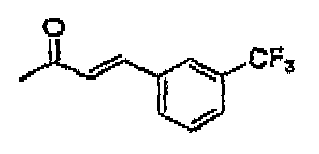
Boc CSNHPh - Composé d'une formule de la structure générale (II) suivante:

R1 est -CH2-NH-CO-CHCH3-NHRbRb R5 R18 R21 H OH OH CN COCH2CH2CH3 OAc COCH2Ph COCH2CH2Ph COCH=CHPh 
Boc CSNHPh - Composé d'une formule choisie parmi les structures générales (III) et (IV) suivantes:

R' X2 R1 R6 CH2CH=CH2 OH OH CN COCH2CH3 OAc OAc CO(CH2)4CH3 OCOOCH2CH=CH2 OCOCH2C6H11 CO(CH2)12CH3 OCOCF3 OCOCH2CH2C6H11 CO(CH2)16CH3 OCOCH2Cl OCOCH2CH2CH3 COCH2C6H11 OCOCH2CH2Cl OCO(CH2)4CH3 COCH2CH2C6H11 OCOCF2CF2CF3 OCO(CH2)8CH3 OCO(CH2)16CH3 COCH=CHCH3 COCH(CH3)NHCOCH2CH2Ph CO-(S)-CH(NHCbz)CH(CH3)2 


- Composé d'une formule de la structure générale (V) suivante ;

R' X2 R1 R6 OH OH CN CH2CH=CH2 OAc OAc COCH2CH3 OCOOCH2CH=CH2 OCOCH2C6H11 CO(CH2)4CH3 OCOCF3 OCOCH2CH2C6H11 CO(CH2)12CH3 OCOCH2Cl OCOCH2CH2CH3 CO(CH2)16CH3 OCOCH2CH2Cl OCO(CH2)4CH3 COCH2C6H11 OCOCF2CF2CF3 OCO(CH2)8CH3 COCH2CH2C6H11 OCO(CH2)16CH3 COCH2Ph COCH2CH2Ph COCH=CHCH3 COCH(CH3)NHCOCH2CH2Ph CO-(S)-CH(CH3)NHCOCF3 CO-(R)-CH(CH3)NHCOCF3 CO-(S)-CH(NHCb2)CH(CH3)2 Boc 


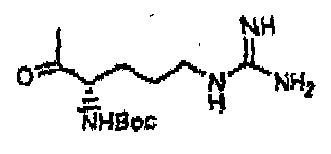

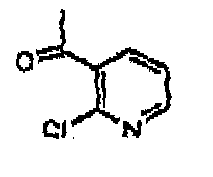
- Composé qui est choisi parmi les formules suivantes:


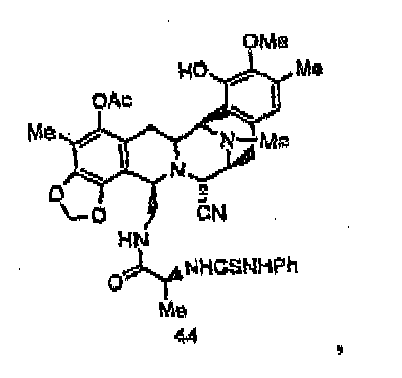


- Composé qui est choisi parmi les formules suivantes:


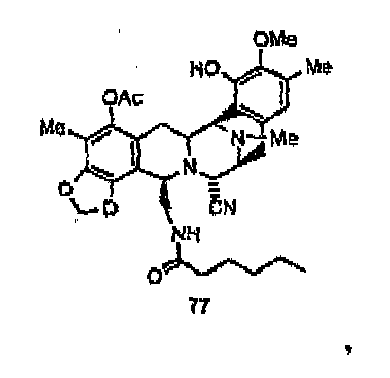

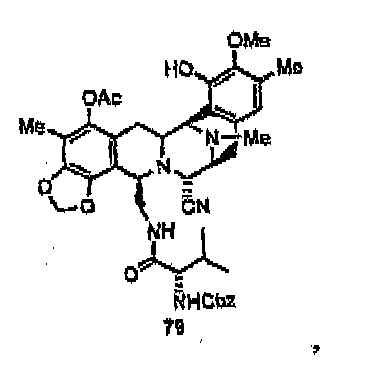


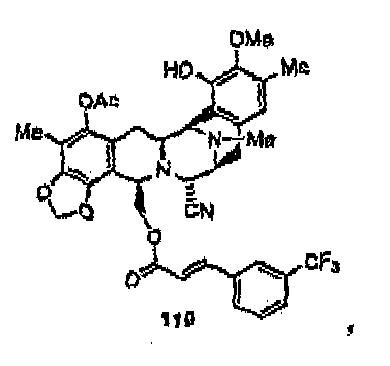
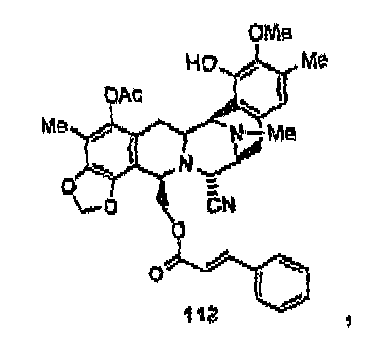


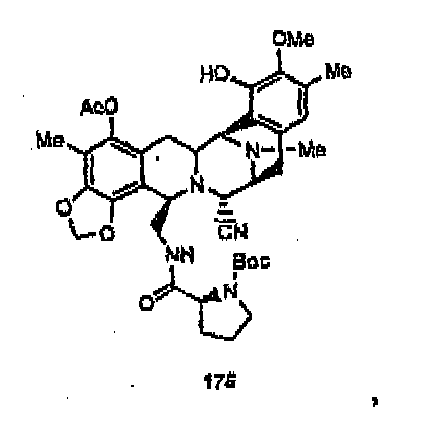


- Composé de la formule:

- Composé de la formule:
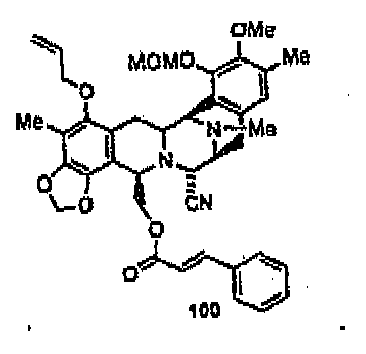
- Composé de la formule:

- Composé de la formule:

- Composé de la formule:

- Composé de la formule:

- Composé de la formule;

- Composé de la formule:
 R1 est -CH2ORa, où Ra est choisi dans le groupe constitué de groupes alkyle-CO-; haloalkyle-CO-; cycloalkylalkyle-CO-; haloalkyle-O-CO-; arylalcényle-CO-, où le groupe aryle est choisi parmi des groupes phényle, biphényle et naphtyle; hétéroaryle-CO-, où le groupe hétéroaryle contient un, deux ou trois hétéroatomes choisis parmi l'azote, le soufre et l'oxygène; alcényle-CO-; alcényle; et acyle d'acide aminé;R5 est -OR", où R" est choisi dans le groupe constitué de H; de groupes alkyle-CO-; cycloalkyle-CO-; et haloalkyle-CO-;R18 est -OR, où R est choisi dans le groupe constitué de H; de groupes alkyle-CO-; cycloalkylalkyle-CO-; etR21 est -CN.
 - Composé suivant la revendication 30, qui est de la formule:

- Composé suivant la revendication 30, qui est de la formule;

- Composé suivant la revendication 30, 31 ou 32, dans lequel R' est -CH2-ORa, où Ra est choisi dans le groupe constitué d'un groupe cystéine protégé; de groupes alkyle-CO-; arylalcényle-CO-, où le groupe aryle est choisi parmi des groupes phényle, biphényle et naphtyle; un dérivé de cystéine de la formule ProtSH-S-CH2-C(=NOProtOH)-CO-, où ProtSH est un groupe protecteur pour un groupe thiol et ProtOH est un groupe protecteur pour un groupe hydroxyle; et un dérivé de cystéine de la formule ProtSH-S-CH=C(-OProtOH)-CO-, où ProtSH est un groupe protecteur pour un groupe thiol et ProtOH est un groupe protecteur pour un groupe hydroxyle,
- Composé suivant la revendication 33, dans lequel R1 est -CH2-ORa, où Ra est choisi dans le groupe constitué de groupes S-Fm-O.-TBDMS-cystéine; butyryle; (trifluorométhyl)cinnamoyle; cinnamoyle; un dérivé de cystéine de la formule ProtSH-S-CH2-C(=NOProtOH)-CO-, où ProtSH est Fm et ProtOH est un groupe méthoxy; et un dérivé de cystéine de la formule ProtSH-S-CH=C(-OProtOH)-CO-, où ProtSH est Fm et ProtOH est MOM.
- Composition pharmaceutique comprenant un composé suivant l'une quelconque des revendications précédentes.
- Utilisation d'un composé tel que défini dans l'une quelconque des revendications 1 à 34 dans la préparation d'une composition pharmaceutique pour une méthode de traitement d'un mammifère affecté par un cancer qui comprend l'administration au mammifère affecté d'une quantité thérapeutiquement efficace du composé.
- Utilisation suivant la revendication 36, dans laquelle ledit mammifère est un humain.
- Utilisation suivant la revendication 37, dans laquelle ledit composé est administré par une perfusion intraveineuse.
- Utilisation suivant l'une quelconque des revendications 36 à 38, dans laquelle ledit composé est administré sous forme d'une partie d'une thérapie de combinaison.
Priority Applications (1)
| Application Number | Priority Date | Filing Date | Title |
|---|---|---|---|
| CY20071101392T CY1108095T1 (el) | 1999-05-14 | 2007-10-29 | Αντικαρκινικα αναλογα της ετ-743 |
Applications Claiming Priority (3)
| Application Number | Priority Date | Filing Date | Title |
|---|---|---|---|
| PCT/GB2000/001852 WO2000069862A2 (fr) | 1999-05-14 | 2000-05-15 | Procede hemisynthetique et nouveaux composes |
| WOPCT/GB00/01852 | 2000-05-15 | ||
| EP01929813A EP1289999B1 (fr) | 2000-05-15 | 2001-05-15 | Analogues antitumoraux de et-743 |
Related Parent Applications (1)
| Application Number | Title | Priority Date | Filing Date |
|---|---|---|---|
| EP01929813A Division EP1289999B1 (fr) | 2000-05-15 | 2001-05-15 | Analogues antitumoraux de et-743 |
Publications (2)
| Publication Number | Publication Date |
|---|---|
| EP1496060A1 EP1496060A1 (fr) | 2005-01-12 |
| EP1496060B1 true EP1496060B1 (fr) | 2007-08-01 |
Family
ID=34855248
Family Applications (3)
| Application Number | Title | Priority Date | Filing Date |
|---|---|---|---|
| EP01929813A Expired - Lifetime EP1289999B1 (fr) | 2000-05-15 | 2001-05-15 | Analogues antitumoraux de et-743 |
| EP04010399A Expired - Lifetime EP1496060B1 (fr) | 1999-05-14 | 2001-05-15 | Analogues antitumoraux de ET-743 |
| EP01929816A Expired - Lifetime EP1287004B1 (fr) | 2000-05-15 | 2001-05-15 | Procede de synthese destine a la fabrication d'un compose d'ecteinascidine |
Family Applications Before (1)
| Application Number | Title | Priority Date | Filing Date |
|---|---|---|---|
| EP01929813A Expired - Lifetime EP1289999B1 (fr) | 2000-05-15 | 2001-05-15 | Analogues antitumoraux de et-743 |
Family Applications After (1)
| Application Number | Title | Priority Date | Filing Date |
|---|---|---|---|
| EP01929816A Expired - Lifetime EP1287004B1 (fr) | 2000-05-15 | 2001-05-15 | Procede de synthese destine a la fabrication d'un compose d'ecteinascidine |
Country Status (16)
| Country | Link |
|---|---|
| EP (3) | EP1289999B1 (fr) |
| KR (2) | KR100830717B1 (fr) |
| AT (2) | ATE300547T1 (fr) |
| AU (2) | AU2001256496C1 (fr) |
| DE (3) | DE60129753T2 (fr) |
| DK (3) | DK1289999T3 (fr) |
| EA (2) | EA006369B1 (fr) |
| ES (2) | ES2290583T3 (fr) |
| GB (1) | GB9918178D0 (fr) |
| HU (1) | HU228789B1 (fr) |
| MX (1) | MXPA02010701A (fr) |
| NZ (2) | NZ532793A (fr) |
| PL (1) | PL203745B1 (fr) |
| PT (3) | PT1289999E (fr) |
| SI (2) | SI1496060T1 (fr) |
| UA (1) | UA75597C2 (fr) |
Families Citing this family (7)
| Publication number | Priority date | Publication date | Assignee | Title |
|---|---|---|---|---|
| ATE368461T1 (de) | 2004-10-29 | 2007-08-15 | Pharma Mar Sa | Zusammensetzungen enthaltend ecteinascidin und einen disaccharide |
| KR100676324B1 (ko) * | 2005-03-15 | 2007-01-30 | 삼성전자주식회사 | 디스플레이장치 |
| KR100676325B1 (ko) * | 2005-03-15 | 2007-01-30 | 삼성전자주식회사 | 디스플레이장치 |
| KR100712667B1 (ko) * | 2006-04-11 | 2007-05-02 | 재단법인서울대학교산학협력재단 | 신규한 디아자 헤테로고리 유도체 및 그의 고체상 제조방법 |
| CN103038240A (zh) * | 2010-05-25 | 2013-04-10 | 法马马有限公司 | 制备海鞘素化合物的合成方法 |
| KR102491180B1 (ko) | 2017-04-27 | 2023-01-20 | 파르마 마르 에스.에이. | 항종양 화합물 |
| WO2020105068A1 (fr) * | 2018-11-24 | 2020-05-28 | Natco Pharma Limited | Procédé de préparation d'un dérivé d'ectéinascidine et de son intermédiaire |
Family Cites Families (4)
| Publication number | Priority date | Publication date | Assignee | Title |
|---|---|---|---|---|
| JPS59225189A (ja) | 1983-06-03 | 1984-12-18 | Shionogi & Co Ltd | キノナミン誘導体およびその製造法 |
| EP0309477B1 (fr) * | 1986-06-09 | 1991-11-06 | The Board Of Trustees Of The University Of Illinois | Ecteinascidines 729, 743, 745, 759a, 759b et 770 |
| US5721362A (en) * | 1996-09-18 | 1998-02-24 | President And Fellows Of Harvard College | Process for producing ecteinascidin compounds |
| US6124292A (en) * | 1998-09-30 | 2000-09-26 | President And Fellows Of Harvard College | Synthetic analogs of ecteinascidin-743 |
-
1999
- 1999-08-02 GB GBGB9918178.6A patent/GB9918178D0/en not_active Ceased
-
2001
- 2001-05-15 EP EP01929813A patent/EP1289999B1/fr not_active Expired - Lifetime
- 2001-05-15 PT PT01929813T patent/PT1289999E/pt unknown
- 2001-05-15 NZ NZ532793A patent/NZ532793A/en not_active IP Right Cessation
- 2001-05-15 SI SI200130777T patent/SI1496060T1/sl unknown
- 2001-05-15 NZ NZ521807A patent/NZ521807A/en not_active IP Right Cessation
- 2001-05-15 PT PT04010399T patent/PT1496060E/pt unknown
- 2001-05-15 KR KR1020027015168A patent/KR100830717B1/ko not_active Expired - Fee Related
- 2001-05-15 ES ES04010399T patent/ES2290583T3/es not_active Expired - Lifetime
- 2001-05-15 DE DE60129753T patent/DE60129753T2/de not_active Expired - Lifetime
- 2001-05-15 DE DE60112286T patent/DE60112286T2/de not_active Expired - Lifetime
- 2001-05-15 PT PT01929816T patent/PT1287004E/pt unknown
- 2001-05-15 MX MXPA02010701A patent/MXPA02010701A/es active IP Right Grant
- 2001-05-15 PL PL358143A patent/PL203745B1/pl unknown
- 2001-05-15 EA EA200201210A patent/EA006369B1/ru not_active IP Right Cessation
- 2001-05-15 EP EP04010399A patent/EP1496060B1/fr not_active Expired - Lifetime
- 2001-05-15 DK DK01929813T patent/DK1289999T3/da active
- 2001-05-15 EP EP01929816A patent/EP1287004B1/fr not_active Expired - Lifetime
- 2001-05-15 HU HU0300648A patent/HU228789B1/hu unknown
- 2001-05-15 UA UA20021210093A patent/UA75597C2/uk unknown
- 2001-05-15 AU AU2001256496A patent/AU2001256496C1/en not_active Expired
- 2001-05-15 AT AT01929816T patent/ATE300547T1/de active
- 2001-05-15 KR KR1020027014555A patent/KR100777464B1/ko not_active Expired - Lifetime
- 2001-05-15 SI SI200130244T patent/SI1289999T1/xx unknown
- 2001-05-15 DK DK04010399T patent/DK1496060T3/da active
- 2001-05-15 EA EA200201209A patent/EA006070B1/ru not_active IP Right Cessation
- 2001-05-15 AU AU56493/01A patent/AU783563B2/en not_active Expired
- 2001-05-15 DK DK01929816T patent/DK1287004T3/da active
- 2001-05-15 ES ES01929816T patent/ES2248319T3/es not_active Expired - Lifetime
- 2001-05-15 AT AT04010399T patent/ATE368671T1/de active
- 2001-05-15 DE DE60107241T patent/DE60107241T2/de not_active Expired - Lifetime
Also Published As
Similar Documents
| Publication | Publication Date | Title |
|---|---|---|
| EP1185536B1 (fr) | Methode de hemisynthetique et des intermediaires de cette methode | |
| US7410969B2 (en) | Antitumoral analogs of ET-743 | |
| SK288017B6 (sk) | Ecteinascidin having a fused five ring system with a 1,4 bridge, pharmaceutical composition containing it and use thereof | |
| EP1496060B1 (fr) | Analogues antitumoraux de ET-743 | |
| HK1053653B (en) | Antitumoral analogs of et-743 | |
| HK1050193B (en) | Synthetic process for the manufacture of an ecteinascidin compound | |
| BG65893B1 (bg) | Полусинтетичен метод и нови съединения |
Legal Events
| Date | Code | Title | Description |
|---|---|---|---|
| PUAI | Public reference made under article 153(3) epc to a published international application that has entered the european phase |
Free format text: ORIGINAL CODE: 0009012 |
|
| 17P | Request for examination filed |
Effective date: 20040503 |
|
| AC | Divisional application: reference to earlier application |
Ref document number: 1289999 Country of ref document: EP Kind code of ref document: P |
|
| AK | Designated contracting states |
Kind code of ref document: A1 Designated state(s): AT BE CH CY DE DK ES FI FR GB GR IE IT LI LU MC NL PT SE TR |
|
| AX | Request for extension of the european patent |
Extension state: AL LT LV MK RO SI |
|
| AKX | Designation fees paid |
Designated state(s): AT BE CH CY DE DK ES FI FR GB GR IE IT LI LU MC NL PT SE TR |
|
| AXX | Extension fees paid |
Extension state: SI Payment date: 20040429 Extension state: MK Payment date: 20040429 Extension state: LT Payment date: 20040429 Extension state: LV Payment date: 20040429 Extension state: RO Payment date: 20040429 Extension state: AL Payment date: 20040429 |
|
| 17Q | First examination report despatched |
Effective date: 20051223 |
|
| GRAP | Despatch of communication of intention to grant a patent |
Free format text: ORIGINAL CODE: EPIDOSNIGR1 |
|
| RIC1 | Information provided on ipc code assigned before grant |
Ipc: C07D 471/18 20060101ALI20070117BHEP Ipc: C07D 317/00 20060101ALN20070117BHEP Ipc: C07D 291/00 20060101ALN20070117BHEP Ipc: A61K 35/00 20060101ALI20070117BHEP Ipc: C07D 515/22 20060101AFI20070117BHEP Ipc: C07D 221/00 20060101ALN20070117BHEP Ipc: C07D 491/22 20060101ALI20070117BHEP Ipc: C07D 241/00 20060101ALN20070117BHEP |
|
| GRAS | Grant fee paid |
Free format text: ORIGINAL CODE: EPIDOSNIGR3 |
|
| GRAA | (expected) grant |
Free format text: ORIGINAL CODE: 0009210 |
|
| AC | Divisional application: reference to earlier application |
Ref document number: 1289999 Country of ref document: EP Kind code of ref document: P |
|
| AK | Designated contracting states |
Kind code of ref document: B1 Designated state(s): AT BE CH CY DE DK ES FI FR GB GR IE IT LI LU MC NL PT SE TR |
|
| AX | Request for extension of the european patent |
Extension state: AL LT LV MK RO SI |
|
| REG | Reference to a national code |
Ref country code: GB Ref legal event code: FG4D |
|
| RIN1 | Information on inventor provided before grant (corrected) |
Inventor name: PEREZ, MARTA,PHARMA MAR, S.A.U. Inventor name: RODRIGUES, ALBERTO,PHARMA MAR, S.A.U. Inventor name: MARTIN, MARIA JESUS, PHARMA MAR, S.A.U. Inventor name: MANZANARES, IGNACIO Inventor name: MUNT, SIMON,PHARMA MAR, S.A.U. Inventor name: CUEVAS, CARMEN,PHARMA MAR, S.A.U. |
|
| REG | Reference to a national code |
Ref country code: CH Ref legal event code: EP |
|
| REG | Reference to a national code |
Ref country code: IE Ref legal event code: FG4D |
|
| REF | Corresponds to: |
Ref document number: 60129753 Country of ref document: DE Date of ref document: 20070913 Kind code of ref document: P |
|
| REG | Reference to a national code |
Ref country code: SE Ref legal event code: TRGR Ref country code: PT Ref legal event code: SC4A Free format text: AVAILABILITY OF NATIONAL TRANSLATION Effective date: 20071018 |
|
| REG | Reference to a national code |
Ref country code: GR Ref legal event code: EP Ref document number: 20070403134 Country of ref document: GR |
|
| REG | Reference to a national code |
Ref country code: CH Ref legal event code: NV Representative=s name: RITSCHER & PARTNER AG |
|
| REG | Reference to a national code |
Ref country code: DK Ref legal event code: T3 |
|
| ET | Fr: translation filed | ||
| REG | Reference to a national code |
Ref country code: ES Ref legal event code: FG2A Ref document number: 2290583 Country of ref document: ES Kind code of ref document: T3 |
|
| REG | Reference to a national code |
Ref country code: CH Ref legal event code: PCAR Free format text: RITSCHER & PARTNER AG;RESIRAIN 1;8125 ZOLLIKERBERG (CH) |
|
| PLBE | No opposition filed within time limit |
Free format text: ORIGINAL CODE: 0009261 |
|
| STAA | Information on the status of an ep patent application or granted ep patent |
Free format text: STATUS: NO OPPOSITION FILED WITHIN TIME LIMIT |
|
| 26N | No opposition filed |
Effective date: 20080506 |
|
| REG | Reference to a national code |
Ref country code: CH Ref legal event code: PFA Owner name: PHARMA MAR, S.A., ES Free format text: FORMER OWNER: PHARMA MAR, S.A., ES |
|
| REG | Reference to a national code |
Ref country code: FR Ref legal event code: PLFP Year of fee payment: 16 |
|
| REG | Reference to a national code |
Ref country code: FR Ref legal event code: PLFP Year of fee payment: 17 |
|
| REG | Reference to a national code |
Ref country code: FR Ref legal event code: PLFP Year of fee payment: 18 |
|
| PGFP | Annual fee paid to national office [announced via postgrant information from national office to epo] |
Ref country code: TR Payment date: 20200424 Year of fee payment: 20 Ref country code: DK Payment date: 20200528 Year of fee payment: 20 Ref country code: LU Payment date: 20200527 Year of fee payment: 20 Ref country code: PT Payment date: 20200428 Year of fee payment: 20 Ref country code: GR Payment date: 20200528 Year of fee payment: 20 Ref country code: CY Payment date: 20200430 Year of fee payment: 20 Ref country code: NL Payment date: 20200526 Year of fee payment: 20 Ref country code: FR Payment date: 20200525 Year of fee payment: 20 Ref country code: MC Payment date: 20200423 Year of fee payment: 20 Ref country code: ES Payment date: 20200601 Year of fee payment: 20 Ref country code: FI Payment date: 20200528 Year of fee payment: 20 Ref country code: IE Payment date: 20200527 Year of fee payment: 20 Ref country code: CH Payment date: 20200603 Year of fee payment: 20 Ref country code: DE Payment date: 20200528 Year of fee payment: 20 |
|
| PGFP | Annual fee paid to national office [announced via postgrant information from national office to epo] |
Ref country code: SE Payment date: 20200601 Year of fee payment: 20 Ref country code: BE Payment date: 20200527 Year of fee payment: 20 Ref country code: GB Payment date: 20200527 Year of fee payment: 20 Ref country code: IT Payment date: 20200522 Year of fee payment: 20 |
|
| PGFP | Annual fee paid to national office [announced via postgrant information from national office to epo] |
Ref country code: AT Payment date: 20200421 Year of fee payment: 20 |
|
| REG | Reference to a national code |
Ref country code: DE Ref legal event code: R071 Ref document number: 60129753 Country of ref document: DE |
|
| REG | Reference to a national code |
Ref country code: DK Ref legal event code: EUP Expiry date: 20210515 |
|
| REG | Reference to a national code |
Ref country code: NL Ref legal event code: MK Effective date: 20210514 |
|
| REG | Reference to a national code |
Ref country code: CH Ref legal event code: PL |
|
| REG | Reference to a national code |
Ref country code: GB Ref legal event code: PE20 Expiry date: 20210514 |
|
| REG | Reference to a national code |
Ref country code: LT Ref legal event code: MM9A Effective date: 20210515 |
|
| REG | Reference to a national code |
Ref country code: FI Ref legal event code: MAE |
|
| REG | Reference to a national code |
Ref country code: IE Ref legal event code: MK9A |
|
| REG | Reference to a national code |
Ref country code: BE Ref legal event code: MK Effective date: 20210515 |
|
| REG | Reference to a national code |
Ref country code: SE Ref legal event code: EUG |
|
| REG | Reference to a national code |
Ref country code: AT Ref legal event code: MK07 Ref document number: 368671 Country of ref document: AT Kind code of ref document: T Effective date: 20210515 |
|
| PG25 | Lapsed in a contracting state [announced via postgrant information from national office to epo] |
Ref country code: PT Free format text: LAPSE BECAUSE OF EXPIRATION OF PROTECTION Effective date: 20210526 |
|
| PG25 | Lapsed in a contracting state [announced via postgrant information from national office to epo] |
Ref country code: GB Free format text: LAPSE BECAUSE OF EXPIRATION OF PROTECTION Effective date: 20210514 Ref country code: IE Free format text: LAPSE BECAUSE OF EXPIRATION OF PROTECTION Effective date: 20210515 |
|
| REG | Reference to a national code |
Ref country code: ES Ref legal event code: FD2A Effective date: 20220103 |
|
| PG25 | Lapsed in a contracting state [announced via postgrant information from national office to epo] |
Ref country code: ES Free format text: LAPSE BECAUSE OF EXPIRATION OF PROTECTION Effective date: 20210516 |