EP1586294B2 - Siliziumdioxid-Nanoteilchen in Form eines trockenen Pulvers - Google Patents
Siliziumdioxid-Nanoteilchen in Form eines trockenen Pulvers Download PDFInfo
- Publication number
- EP1586294B2 EP1586294B2 EP05014234.8A EP05014234A EP1586294B2 EP 1586294 B2 EP1586294 B2 EP 1586294B2 EP 05014234 A EP05014234 A EP 05014234A EP 1586294 B2 EP1586294 B2 EP 1586294B2
- Authority
- EP
- European Patent Office
- Prior art keywords
- silica particles
- dental
- oxide
- resin
- particles
- Prior art date
- Legal status (The legal status is an assumption and is not a legal conclusion. Google has not performed a legal analysis and makes no representation as to the accuracy of the status listed.)
- Expired - Lifetime
Links
- VYPSYNLAJGMNEJ-UHFFFAOYSA-N Silicium dioxide Chemical compound O=[Si]=O VYPSYNLAJGMNEJ-UHFFFAOYSA-N 0.000 title claims description 131
- 239000000843 powder Substances 0.000 title claims description 13
- 239000002105 nanoparticle Substances 0.000 title description 15
- 239000000463 material Substances 0.000 claims description 131
- 239000005548 dental material Substances 0.000 claims description 88
- 239000000203 mixture Substances 0.000 claims description 88
- 229920005989 resin Polymers 0.000 claims description 81
- 239000011347 resin Substances 0.000 claims description 81
- 238000000034 method Methods 0.000 claims description 74
- XLYOFNOQVPJJNP-UHFFFAOYSA-N water Substances O XLYOFNOQVPJJNP-UHFFFAOYSA-N 0.000 claims description 32
- BLRPTPMANUNPDV-UHFFFAOYSA-N Silane Chemical compound [SiH4] BLRPTPMANUNPDV-UHFFFAOYSA-N 0.000 claims description 29
- 229910000077 silane Inorganic materials 0.000 claims description 29
- 229910003439 heavy metal oxide Inorganic materials 0.000 claims description 26
- 239000004593 Epoxy Substances 0.000 claims description 24
- 229920000647 polyepoxide Polymers 0.000 claims description 20
- 239000012756 surface treatment agent Substances 0.000 claims description 20
- RKTYLMNFRDHKIL-UHFFFAOYSA-N copper;5,10,15,20-tetraphenylporphyrin-22,24-diide Chemical compound [Cu+2].C1=CC(C(=C2C=CC([N-]2)=C(C=2C=CC=CC=2)C=2C=CC(N=2)=C(C=2C=CC=CC=2)C2=CC=C3[N-]2)C=2C=CC=CC=2)=NC1=C3C1=CC=CC=C1 RKTYLMNFRDHKIL-UHFFFAOYSA-N 0.000 claims description 18
- 239000003999 initiator Substances 0.000 claims description 16
- 230000000007 visual effect Effects 0.000 claims description 15
- 238000001035 drying Methods 0.000 claims description 11
- 229910021485 fumed silica Inorganic materials 0.000 claims description 11
- 125000003700 epoxy group Chemical group 0.000 claims description 9
- 230000000379 polymerizing effect Effects 0.000 claims description 9
- 238000002156 mixing Methods 0.000 claims description 8
- LHENQXAPVKABON-UHFFFAOYSA-N 1-methoxypropan-1-ol Chemical group CCC(O)OC LHENQXAPVKABON-UHFFFAOYSA-N 0.000 claims description 7
- XDLMVUHYZWKMMD-UHFFFAOYSA-N 3-trimethoxysilylpropyl 2-methylprop-2-enoate Chemical group CO[Si](OC)(OC)CCCOC(=O)C(C)=C XDLMVUHYZWKMMD-UHFFFAOYSA-N 0.000 claims description 6
- 238000012876 topography Methods 0.000 claims description 6
- 239000006184 cosolvent Substances 0.000 claims description 5
- RVTZCBVAJQQJTK-UHFFFAOYSA-N oxygen(2-);zirconium(4+) Chemical compound [O-2].[O-2].[Zr+4] RVTZCBVAJQQJTK-UHFFFAOYSA-N 0.000 claims description 5
- BPSIOYPQMFLKFR-UHFFFAOYSA-N trimethoxy-[3-(oxiran-2-ylmethoxy)propyl]silane Chemical compound CO[Si](OC)(OC)CCCOCC1CO1 BPSIOYPQMFLKFR-UHFFFAOYSA-N 0.000 claims description 5
- 229910001928 zirconium oxide Inorganic materials 0.000 claims description 5
- XLOMVQKBTHCTTD-UHFFFAOYSA-N Zinc monoxide Chemical compound [Zn]=O XLOMVQKBTHCTTD-UHFFFAOYSA-N 0.000 claims description 4
- QVQLCTNNEUAWMS-UHFFFAOYSA-N barium oxide Chemical compound [Ba]=O QVQLCTNNEUAWMS-UHFFFAOYSA-N 0.000 claims description 4
- 239000003479 dental cement Substances 0.000 claims description 4
- MRELNEQAGSRDBK-UHFFFAOYSA-N lanthanum(3+);oxygen(2-) Chemical compound [O-2].[O-2].[O-2].[La+3].[La+3] MRELNEQAGSRDBK-UHFFFAOYSA-N 0.000 claims description 4
- 238000001694 spray drying Methods 0.000 claims description 4
- IATRAKWUXMZMIY-UHFFFAOYSA-N strontium oxide Chemical compound [O-2].[Sr+2] IATRAKWUXMZMIY-UHFFFAOYSA-N 0.000 claims description 4
- 238000005266 casting Methods 0.000 claims description 3
- 238000000576 coating method Methods 0.000 claims description 3
- 238000004519 manufacturing process Methods 0.000 claims description 3
- 229910000420 cerium oxide Inorganic materials 0.000 claims description 2
- 150000002734 metacrylic acid derivatives Chemical class 0.000 claims description 2
- BMMGVYCKOGBVEV-UHFFFAOYSA-N oxo(oxoceriooxy)cerium Chemical compound [Ce]=O.O=[Ce]=O BMMGVYCKOGBVEV-UHFFFAOYSA-N 0.000 claims description 2
- SIWVEOZUMHYXCS-UHFFFAOYSA-N oxo(oxoyttriooxy)yttrium Chemical compound O=[Y]O[Y]=O SIWVEOZUMHYXCS-UHFFFAOYSA-N 0.000 claims description 2
- UZLYXNNZYFBAQO-UHFFFAOYSA-N oxygen(2-);ytterbium(3+) Chemical compound [O-2].[O-2].[O-2].[Yb+3].[Yb+3] UZLYXNNZYFBAQO-UHFFFAOYSA-N 0.000 claims description 2
- XOLBLPGZBRYERU-UHFFFAOYSA-N tin dioxide Chemical compound O=[Sn]=O XOLBLPGZBRYERU-UHFFFAOYSA-N 0.000 claims description 2
- 229910001887 tin oxide Inorganic materials 0.000 claims description 2
- 229910003454 ytterbium oxide Inorganic materials 0.000 claims description 2
- 229940075624 ytterbium oxide Drugs 0.000 claims description 2
- 239000011787 zinc oxide Substances 0.000 claims description 2
- 150000001252 acrylic acid derivatives Chemical class 0.000 claims 1
- 229910000416 bismuth oxide Inorganic materials 0.000 claims 1
- TYIXMATWDRGMPF-UHFFFAOYSA-N dibismuth;oxygen(2-) Chemical compound [O-2].[O-2].[O-2].[Bi+3].[Bi+3] TYIXMATWDRGMPF-UHFFFAOYSA-N 0.000 claims 1
- MCMNRKCIXSYSNV-UHFFFAOYSA-N Zirconium dioxide Chemical compound O=[Zr]=O MCMNRKCIXSYSNV-UHFFFAOYSA-N 0.000 description 166
- 239000002245 particle Substances 0.000 description 105
- -1 for example Substances 0.000 description 78
- 239000002253 acid Substances 0.000 description 75
- 229920000570 polyether Polymers 0.000 description 48
- 239000004721 Polyphenylene oxide Substances 0.000 description 47
- 239000000523 sample Substances 0.000 description 44
- 150000003754 zirconium Chemical class 0.000 description 35
- 125000000217 alkyl group Chemical group 0.000 description 30
- 238000006243 chemical reaction Methods 0.000 description 25
- 125000002887 hydroxy group Chemical group [H]O* 0.000 description 25
- 150000007513 acids Chemical class 0.000 description 24
- 239000012071 phase Substances 0.000 description 23
- 125000003118 aryl group Chemical group 0.000 description 22
- 239000000377 silicon dioxide Substances 0.000 description 22
- 150000003839 salts Chemical class 0.000 description 20
- 150000001732 carboxylic acid derivatives Chemical group 0.000 description 19
- 239000013078 crystal Substances 0.000 description 18
- 239000000126 substance Substances 0.000 description 18
- LFQSCWFLJHTTHZ-UHFFFAOYSA-N Ethanol Chemical compound CCO LFQSCWFLJHTTHZ-UHFFFAOYSA-N 0.000 description 17
- XEEYBQQBJWHFJM-UHFFFAOYSA-N Iron Chemical compound [Fe] XEEYBQQBJWHFJM-UHFFFAOYSA-N 0.000 description 17
- 238000006460 hydrolysis reaction Methods 0.000 description 17
- 150000001875 compounds Chemical class 0.000 description 15
- 239000003822 epoxy resin Substances 0.000 description 15
- 239000000975 dye Substances 0.000 description 14
- 239000003607 modifier Substances 0.000 description 14
- QTBSBXVTEAMEQO-UHFFFAOYSA-N Acetic acid Chemical compound CC(O)=O QTBSBXVTEAMEQO-UHFFFAOYSA-N 0.000 description 13
- 125000002091 cationic group Chemical group 0.000 description 13
- 125000000524 functional group Chemical group 0.000 description 13
- 239000000243 solution Substances 0.000 description 13
- 239000003795 chemical substances by application Substances 0.000 description 12
- 239000002131 composite material Substances 0.000 description 12
- 238000006116 polymerization reaction Methods 0.000 description 12
- 239000011164 primary particle Substances 0.000 description 12
- 229910052726 zirconium Inorganic materials 0.000 description 12
- GYZLOYUZLJXAJU-UHFFFAOYSA-N diglycidyl ether Chemical compound C1OC1COCC1CO1 GYZLOYUZLJXAJU-UHFFFAOYSA-N 0.000 description 11
- 239000000945 filler Substances 0.000 description 11
- 230000007062 hydrolysis Effects 0.000 description 11
- 229920000642 polymer Polymers 0.000 description 11
- QCWXUUIWCKQGHC-UHFFFAOYSA-N Zirconium Chemical compound [Zr] QCWXUUIWCKQGHC-UHFFFAOYSA-N 0.000 description 10
- 239000000853 adhesive Substances 0.000 description 10
- 230000001070 adhesive effect Effects 0.000 description 10
- LNEPOXFFQSENCJ-UHFFFAOYSA-N haloperidol Chemical compound C1CC(O)(C=2C=CC(Cl)=CC=2)CCN1CCCC(=O)C1=CC=C(F)C=C1 LNEPOXFFQSENCJ-UHFFFAOYSA-N 0.000 description 10
- 238000012360 testing method Methods 0.000 description 10
- IJGRMHOSHXDMSA-UHFFFAOYSA-N Atomic nitrogen Chemical compound N#N IJGRMHOSHXDMSA-UHFFFAOYSA-N 0.000 description 9
- AMFGWXWBFGVCKG-UHFFFAOYSA-N Panavia opaque Chemical compound C1=CC(OCC(O)COC(=O)C(=C)C)=CC=C1C(C)(C)C1=CC=C(OCC(O)COC(=O)C(C)=C)C=C1 AMFGWXWBFGVCKG-UHFFFAOYSA-N 0.000 description 9
- 230000015572 biosynthetic process Effects 0.000 description 9
- 150000001735 carboxylic acids Chemical class 0.000 description 9
- 238000001723 curing Methods 0.000 description 9
- 239000006185 dispersion Substances 0.000 description 9
- XMBWDFGMSWQBCA-UHFFFAOYSA-N hydrogen iodide Chemical group I XMBWDFGMSWQBCA-UHFFFAOYSA-N 0.000 description 9
- 230000000977 initiatory effect Effects 0.000 description 9
- 238000005259 measurement Methods 0.000 description 9
- 239000000178 monomer Substances 0.000 description 9
- 230000008569 process Effects 0.000 description 9
- 238000010998 test method Methods 0.000 description 9
- 229910052721 tungsten Inorganic materials 0.000 description 9
- OKTJSMMVPCPJKN-UHFFFAOYSA-N Carbon Chemical compound [C] OKTJSMMVPCPJKN-UHFFFAOYSA-N 0.000 description 8
- 239000010431 corundum Substances 0.000 description 8
- 229910052593 corundum Inorganic materials 0.000 description 8
- 150000002118 epoxides Chemical class 0.000 description 8
- 238000012986 modification Methods 0.000 description 8
- 230000005855 radiation Effects 0.000 description 8
- 239000002904 solvent Substances 0.000 description 8
- 239000003381 stabilizer Substances 0.000 description 8
- 238000004381 surface treatment Methods 0.000 description 8
- DUFCMRCMPHIFTR-UHFFFAOYSA-N 5-(dimethylsulfamoyl)-2-methylfuran-3-carboxylic acid Chemical compound CN(C)S(=O)(=O)C1=CC(C(O)=O)=C(C)O1 DUFCMRCMPHIFTR-UHFFFAOYSA-N 0.000 description 7
- XBDQKXXYIPTUBI-UHFFFAOYSA-N Propionic acid Chemical class CCC(O)=O XBDQKXXYIPTUBI-UHFFFAOYSA-N 0.000 description 7
- 239000007864 aqueous solution Substances 0.000 description 7
- 229910052799 carbon Inorganic materials 0.000 description 7
- 238000002296 dynamic light scattering Methods 0.000 description 7
- 239000011521 glass Substances 0.000 description 7
- 230000004048 modification Effects 0.000 description 7
- 239000007858 starting material Substances 0.000 description 7
- WFKWXMTUELFFGS-UHFFFAOYSA-N tungsten Chemical compound [W] WFKWXMTUELFFGS-UHFFFAOYSA-N 0.000 description 7
- 239000010937 tungsten Substances 0.000 description 7
- 125000003545 alkoxy group Chemical group 0.000 description 6
- 125000004432 carbon atom Chemical group C* 0.000 description 6
- 125000003178 carboxy group Chemical group [H]OC(*)=O 0.000 description 6
- 150000002576 ketones Chemical class 0.000 description 6
- 239000003446 ligand Substances 0.000 description 6
- KUBDPQJOLOUJRM-UHFFFAOYSA-N 2-(chloromethyl)oxirane;4-[2-(4-hydroxyphenyl)propan-2-yl]phenol Chemical compound ClCC1CO1.C=1C=C(O)C=CC=1C(C)(C)C1=CC=C(O)C=C1 KUBDPQJOLOUJRM-UHFFFAOYSA-N 0.000 description 5
- NIXOWILDQLNWCW-UHFFFAOYSA-N 2-Propenoic acid Natural products OC(=O)C=C NIXOWILDQLNWCW-UHFFFAOYSA-N 0.000 description 5
- HWSSEYVMGDIFMH-UHFFFAOYSA-N 2-[2-[2-(2-methylprop-2-enoyloxy)ethoxy]ethoxy]ethyl 2-methylprop-2-enoate Chemical compound CC(=C)C(=O)OCCOCCOCCOC(=O)C(C)=C HWSSEYVMGDIFMH-UHFFFAOYSA-N 0.000 description 5
- CWYNVVGOOAEACU-UHFFFAOYSA-N Fe2+ Chemical compound [Fe+2] CWYNVVGOOAEACU-UHFFFAOYSA-N 0.000 description 5
- 238000003917 TEM image Methods 0.000 description 5
- 238000002441 X-ray diffraction Methods 0.000 description 5
- 125000001931 aliphatic group Chemical group 0.000 description 5
- 150000001412 amines Chemical class 0.000 description 5
- 125000003710 aryl alkyl group Chemical group 0.000 description 5
- 125000002843 carboxylic acid group Chemical group 0.000 description 5
- 229920001577 copolymer Polymers 0.000 description 5
- 125000000753 cycloalkyl group Chemical group 0.000 description 5
- 238000000502 dialysis Methods 0.000 description 5
- 125000006575 electron-withdrawing group Chemical group 0.000 description 5
- 238000010438 heat treatment Methods 0.000 description 5
- 230000001965 increasing effect Effects 0.000 description 5
- 229910052742 iron Inorganic materials 0.000 description 5
- 210000000214 mouth Anatomy 0.000 description 5
- 229910052760 oxygen Inorganic materials 0.000 description 5
- 239000001301 oxygen Substances 0.000 description 5
- 125000001997 phenyl group Chemical group [H]C1=C([H])C([H])=C(*)C([H])=C1[H] 0.000 description 5
- 239000000047 product Substances 0.000 description 5
- 239000012266 salt solution Substances 0.000 description 5
- RMAQACBXLXPBSY-UHFFFAOYSA-N silicic acid Chemical compound O[Si](O)(O)O RMAQACBXLXPBSY-UHFFFAOYSA-N 0.000 description 5
- YZGQDNOIGFBYKF-UHFFFAOYSA-N Ethoxyacetic acid Chemical compound CCOCC(O)=O YZGQDNOIGFBYKF-UHFFFAOYSA-N 0.000 description 4
- CERQOIWHTDAKMF-UHFFFAOYSA-M Methacrylate Chemical compound CC(=C)C([O-])=O CERQOIWHTDAKMF-UHFFFAOYSA-M 0.000 description 4
- JUJWROOIHBZHMG-UHFFFAOYSA-N Pyridine Chemical compound C1=CC=NC=C1 JUJWROOIHBZHMG-UHFFFAOYSA-N 0.000 description 4
- 238000000333 X-ray scattering Methods 0.000 description 4
- 229960000583 acetic acid Drugs 0.000 description 4
- 125000003342 alkenyl group Chemical group 0.000 description 4
- 239000008346 aqueous phase Substances 0.000 description 4
- 230000006399 behavior Effects 0.000 description 4
- IISBACLAFKSPIT-UHFFFAOYSA-N bisphenol A Chemical compound C=1C=C(O)C=CC=1C(C)(C)C1=CC=C(O)C=C1 IISBACLAFKSPIT-UHFFFAOYSA-N 0.000 description 4
- 229930006711 bornane-2,3-dione Natural products 0.000 description 4
- 150000001768 cations Chemical class 0.000 description 4
- 239000003086 colorant Substances 0.000 description 4
- 210000004268 dentin Anatomy 0.000 description 4
- 210000004513 dentition Anatomy 0.000 description 4
- 239000012153 distilled water Substances 0.000 description 4
- 238000001704 evaporation Methods 0.000 description 4
- 125000000350 glycoloyl group Chemical group O=C([*])C([H])([H])O[H] 0.000 description 4
- 238000000227 grinding Methods 0.000 description 4
- 229910052736 halogen Inorganic materials 0.000 description 4
- 150000002367 halogens Chemical class 0.000 description 4
- 239000002932 luster Substances 0.000 description 4
- 239000011159 matrix material Substances 0.000 description 4
- 229910052751 metal Inorganic materials 0.000 description 4
- 239000002184 metal Substances 0.000 description 4
- 239000004570 mortar (masonry) Substances 0.000 description 4
- 229910052757 nitrogen Inorganic materials 0.000 description 4
- 238000005498 polishing Methods 0.000 description 4
- 125000001424 substituent group Chemical group 0.000 description 4
- 230000036346 tooth eruption Effects 0.000 description 4
- 238000011179 visual inspection Methods 0.000 description 4
- VNQXSTWCDUXYEZ-UHFFFAOYSA-N 1,7,7-trimethylbicyclo[2.2.1]heptane-2,3-dione Chemical compound C1CC2(C)C(=O)C(=O)C1C2(C)C VNQXSTWCDUXYEZ-UHFFFAOYSA-N 0.000 description 3
- UEKHZPDUBLCUHN-UHFFFAOYSA-N 2-[[3,5,5-trimethyl-6-[2-(2-methylprop-2-enoyloxy)ethoxycarbonylamino]hexyl]carbamoyloxy]ethyl 2-methylprop-2-enoate Chemical compound CC(=C)C(=O)OCCOC(=O)NCCC(C)CC(C)(C)CNC(=O)OCCOC(=O)C(C)=C UEKHZPDUBLCUHN-UHFFFAOYSA-N 0.000 description 3
- CSCPPACGZOOCGX-UHFFFAOYSA-N Acetone Chemical compound CC(C)=O CSCPPACGZOOCGX-UHFFFAOYSA-N 0.000 description 3
- WEVYAHXRMPXWCK-UHFFFAOYSA-N Acetonitrile Chemical compound CC#N WEVYAHXRMPXWCK-UHFFFAOYSA-N 0.000 description 3
- NIXOWILDQLNWCW-UHFFFAOYSA-M Acrylate Chemical compound [O-]C(=O)C=C NIXOWILDQLNWCW-UHFFFAOYSA-M 0.000 description 3
- NLZUEZXRPGMBCV-UHFFFAOYSA-N Butylhydroxytoluene Chemical compound CC1=CC(C(C)(C)C)=C(O)C(C(C)(C)C)=C1 NLZUEZXRPGMBCV-UHFFFAOYSA-N 0.000 description 3
- RYGMFSIKBFXOCR-UHFFFAOYSA-N Copper Chemical compound [Cu] RYGMFSIKBFXOCR-UHFFFAOYSA-N 0.000 description 3
- QSJXEFYPDANLFS-UHFFFAOYSA-N Diacetyl Chemical compound CC(=O)C(C)=O QSJXEFYPDANLFS-UHFFFAOYSA-N 0.000 description 3
- YMWUJEATGCHHMB-UHFFFAOYSA-N Dichloromethane Chemical compound ClCCl YMWUJEATGCHHMB-UHFFFAOYSA-N 0.000 description 3
- KRHYYFGTRYWZRS-UHFFFAOYSA-M Fluoride anion Chemical compound [F-] KRHYYFGTRYWZRS-UHFFFAOYSA-M 0.000 description 3
- HEMHJVSKTPXQMS-UHFFFAOYSA-M Sodium hydroxide Chemical compound [OH-].[Na+] HEMHJVSKTPXQMS-UHFFFAOYSA-M 0.000 description 3
- 230000002378 acidificating effect Effects 0.000 description 3
- 125000002877 alkyl aryl group Chemical group 0.000 description 3
- 125000004414 alkyl thio group Chemical group 0.000 description 3
- 238000004458 analytical method Methods 0.000 description 3
- QVGXLLKOCUKJST-UHFFFAOYSA-N atomic oxygen Chemical compound [O] QVGXLLKOCUKJST-UHFFFAOYSA-N 0.000 description 3
- 230000005540 biological transmission Effects 0.000 description 3
- 238000009835 boiling Methods 0.000 description 3
- 235000010354 butylated hydroxytoluene Nutrition 0.000 description 3
- 238000010538 cationic polymerization reaction Methods 0.000 description 3
- 239000004568 cement Substances 0.000 description 3
- 229910052802 copper Inorganic materials 0.000 description 3
- 239000010949 copper Substances 0.000 description 3
- 210000003298 dental enamel Anatomy 0.000 description 3
- 238000011026 diafiltration Methods 0.000 description 3
- 125000005520 diaryliodonium group Chemical group 0.000 description 3
- 238000006073 displacement reaction Methods 0.000 description 3
- 238000004821 distillation Methods 0.000 description 3
- 238000005516 engineering process Methods 0.000 description 3
- 150000002170 ethers Chemical class 0.000 description 3
- 230000008020 evaporation Effects 0.000 description 3
- VOZRXNHHFUQHIL-UHFFFAOYSA-N glycidyl methacrylate Chemical compound CC(=C)C(=O)OCC1CO1 VOZRXNHHFUQHIL-UHFFFAOYSA-N 0.000 description 3
- 230000005484 gravity Effects 0.000 description 3
- 229910001385 heavy metal Inorganic materials 0.000 description 3
- 125000001183 hydrocarbyl group Chemical group 0.000 description 3
- MGFYSGNNHQQTJW-UHFFFAOYSA-N iodonium Chemical compound [IH2+] MGFYSGNNHQQTJW-UHFFFAOYSA-N 0.000 description 3
- 238000011068 loading method Methods 0.000 description 3
- 229910052748 manganese Inorganic materials 0.000 description 3
- 229910044991 metal oxide Inorganic materials 0.000 description 3
- 150000004706 metal oxides Chemical class 0.000 description 3
- 229910052750 molybdenum Inorganic materials 0.000 description 3
- 239000011368 organic material Substances 0.000 description 3
- 238000000643 oven drying Methods 0.000 description 3
- FZUGPQWGEGAKET-UHFFFAOYSA-N parbenate Chemical compound CCOC(=O)C1=CC=C(N(C)C)C=C1 FZUGPQWGEGAKET-UHFFFAOYSA-N 0.000 description 3
- 229920001223 polyethylene glycol Polymers 0.000 description 3
- 235000019260 propionic acid Nutrition 0.000 description 3
- IUVKMZGDUIUOCP-BTNSXGMBSA-N quinbolone Chemical compound O([C@H]1CC[C@H]2[C@H]3[C@@H]([C@]4(C=CC(=O)C=C4CC3)C)CC[C@@]21C)C1=CCCC1 IUVKMZGDUIUOCP-BTNSXGMBSA-N 0.000 description 3
- 150000003254 radicals Chemical class 0.000 description 3
- 229910052707 ruthenium Inorganic materials 0.000 description 3
- 239000007787 solid Substances 0.000 description 3
- 239000007921 spray Substances 0.000 description 3
- 229910052717 sulfur Inorganic materials 0.000 description 3
- 150000003512 tertiary amines Chemical class 0.000 description 3
- 125000000391 vinyl group Chemical group [H]C([*])=C([H])[H] 0.000 description 3
- AGIQIOSHSMJYJP-UHFFFAOYSA-N 1,2,4-Trimethoxybenzene Chemical compound COC1=CC=C(OC)C(OC)=C1 AGIQIOSHSMJYJP-UHFFFAOYSA-N 0.000 description 2
- OZAIFHULBGXAKX-UHFFFAOYSA-N 2,2'-azo-bis-isobutyronitrile Substances N#CC(C)(C)N=NC(C)(C)C#N OZAIFHULBGXAKX-UHFFFAOYSA-N 0.000 description 2
- FJPGAMCQJNLTJC-UHFFFAOYSA-N 2,3-Heptanedione Chemical compound CCCCC(=O)C(C)=O FJPGAMCQJNLTJC-UHFFFAOYSA-N 0.000 description 2
- XCBBNTFYSLADTO-UHFFFAOYSA-N 2,3-Octanedione Chemical compound CCCCCC(=O)C(C)=O XCBBNTFYSLADTO-UHFFFAOYSA-N 0.000 description 2
- SMZOUWXMTYCWNB-UHFFFAOYSA-N 2-(2-methoxy-5-methylphenyl)ethanamine Chemical compound COC1=CC=C(C)C=C1CCN SMZOUWXMTYCWNB-UHFFFAOYSA-N 0.000 description 2
- LEJBBGNFPAFPKQ-UHFFFAOYSA-N 2-(2-prop-2-enoyloxyethoxy)ethyl prop-2-enoate Chemical compound C=CC(=O)OCCOCCOC(=O)C=C LEJBBGNFPAFPKQ-UHFFFAOYSA-N 0.000 description 2
- HIXDQWDOVZUNNA-UHFFFAOYSA-N 2-(3,4-dimethoxyphenyl)-5-hydroxy-7-methoxychromen-4-one Chemical compound C=1C(OC)=CC(O)=C(C(C=2)=O)C=1OC=2C1=CC=C(OC)C(OC)=C1 HIXDQWDOVZUNNA-UHFFFAOYSA-N 0.000 description 2
- XMLYCEVDHLAQEL-UHFFFAOYSA-N 2-hydroxy-2-methyl-1-phenylpropan-1-one Chemical compound CC(C)(O)C(=O)C1=CC=CC=C1 XMLYCEVDHLAQEL-UHFFFAOYSA-N 0.000 description 2
- KUDUQBURMYMBIJ-UHFFFAOYSA-N 2-prop-2-enoyloxyethyl prop-2-enoate Chemical compound C=CC(=O)OCCOC(=O)C=C KUDUQBURMYMBIJ-UHFFFAOYSA-N 0.000 description 2
- AHLWZBVXSWOPPL-RGYGYFBISA-N 20-deoxy-20-oxophorbol 12-myristate 13-acetate Chemical compound C([C@]1(O)C(=O)C(C)=C[C@H]1[C@@]1(O)[C@H](C)[C@H]2OC(=O)CCCCCCCCCCCCC)C(C=O)=C[C@H]1[C@H]1[C@]2(OC(C)=O)C1(C)C AHLWZBVXSWOPPL-RGYGYFBISA-N 0.000 description 2
- BCHZICNRHXRCHY-UHFFFAOYSA-N 2h-oxazine Chemical compound N1OC=CC=C1 BCHZICNRHXRCHY-UHFFFAOYSA-N 0.000 description 2
- YCENSLDYFDZUMO-UHFFFAOYSA-N 3,4,5-triethoxybenzoic acid Chemical compound CCOC1=CC(C(O)=O)=CC(OCC)=C1OCC YCENSLDYFDZUMO-UHFFFAOYSA-N 0.000 description 2
- LBCCPKFTHIBIKU-UHFFFAOYSA-N 3,4-Heptanedione Chemical compound CCCC(=O)C(=O)CC LBCCPKFTHIBIKU-UHFFFAOYSA-N 0.000 description 2
- KVFQMAZOBTXCAZ-UHFFFAOYSA-N 3,4-Hexanedione Chemical compound CCC(=O)C(=O)CC KVFQMAZOBTXCAZ-UHFFFAOYSA-N 0.000 description 2
- VVBLNCFGVYUYGU-UHFFFAOYSA-N 4,4'-Bis(dimethylamino)benzophenone Chemical compound C1=CC(N(C)C)=CC=C1C(=O)C1=CC=C(N(C)C)C=C1 VVBLNCFGVYUYGU-UHFFFAOYSA-N 0.000 description 2
- NPFYZDNDJHZQKY-UHFFFAOYSA-N 4-Hydroxybenzophenone Chemical compound C1=CC(O)=CC=C1C(=O)C1=CC=CC=C1 NPFYZDNDJHZQKY-UHFFFAOYSA-N 0.000 description 2
- OECTYKWYRCHAKR-UHFFFAOYSA-N 4-vinylcyclohexene dioxide Chemical compound C1OC1C1CC2OC2CC1 OECTYKWYRCHAKR-UHFFFAOYSA-N 0.000 description 2
- CDSULTPOCMWJCM-UHFFFAOYSA-N 4h-chromene-2,3-dione Chemical class C1=CC=C2OC(=O)C(=O)CC2=C1 CDSULTPOCMWJCM-UHFFFAOYSA-N 0.000 description 2
- KWOLFJPFCHCOCG-UHFFFAOYSA-N Acetophenone Chemical compound CC(=O)C1=CC=CC=C1 KWOLFJPFCHCOCG-UHFFFAOYSA-N 0.000 description 2
- VHUUQVKOLVNVRT-UHFFFAOYSA-N Ammonium hydroxide Chemical compound [NH4+].[OH-] VHUUQVKOLVNVRT-UHFFFAOYSA-N 0.000 description 2
- CIWBSHSKHKDKBQ-JLAZNSOCSA-N Ascorbic acid Chemical compound OC[C@H](O)[C@H]1OC(=O)C(O)=C1O CIWBSHSKHKDKBQ-JLAZNSOCSA-N 0.000 description 2
- OYPRJOBELJOOCE-UHFFFAOYSA-N Calcium Chemical compound [Ca] OYPRJOBELJOOCE-UHFFFAOYSA-N 0.000 description 2
- BRLQWZUYTZBJKN-UHFFFAOYSA-N Epichlorohydrin Chemical compound ClCC1CO1 BRLQWZUYTZBJKN-UHFFFAOYSA-N 0.000 description 2
- LYCAIKOWRPUZTN-UHFFFAOYSA-N Ethylene glycol Chemical compound OCCO LYCAIKOWRPUZTN-UHFFFAOYSA-N 0.000 description 2
- CTKINSOISVBQLD-UHFFFAOYSA-N Glycidol Chemical compound OCC1CO1 CTKINSOISVBQLD-UHFFFAOYSA-N 0.000 description 2
- CERQOIWHTDAKMF-UHFFFAOYSA-N Methacrylic acid Chemical compound CC(=C)C(O)=O CERQOIWHTDAKMF-UHFFFAOYSA-N 0.000 description 2
- BAPJBEWLBFYGME-UHFFFAOYSA-N Methyl acrylate Chemical compound COC(=O)C=C BAPJBEWLBFYGME-UHFFFAOYSA-N 0.000 description 2
- CTQNGGLPUBDAKN-UHFFFAOYSA-N O-Xylene Chemical class CC1=CC=CC=C1C CTQNGGLPUBDAKN-UHFFFAOYSA-N 0.000 description 2
- 241001602688 Pama Species 0.000 description 2
- ISWSIDIOOBJBQZ-UHFFFAOYSA-N Phenol Chemical compound OC1=CC=CC=C1 ISWSIDIOOBJBQZ-UHFFFAOYSA-N 0.000 description 2
- OAICVXFJPJFONN-UHFFFAOYSA-N Phosphorus Chemical compound [P] OAICVXFJPJFONN-UHFFFAOYSA-N 0.000 description 2
- 239000005062 Polybutadiene Substances 0.000 description 2
- 239000002202 Polyethylene glycol Substances 0.000 description 2
- PPBRXRYQALVLMV-UHFFFAOYSA-N Styrene Chemical compound C=CC1=CC=CC=C1 PPBRXRYQALVLMV-UHFFFAOYSA-N 0.000 description 2
- AWMVMTVKBNGEAK-UHFFFAOYSA-N Styrene oxide Chemical compound C1OC1C1=CC=CC=C1 AWMVMTVKBNGEAK-UHFFFAOYSA-N 0.000 description 2
- NINIDFKCEFEMDL-UHFFFAOYSA-N Sulfur Chemical compound [S] NINIDFKCEFEMDL-UHFFFAOYSA-N 0.000 description 2
- DTQVDTLACAAQTR-UHFFFAOYSA-N Trifluoroacetic acid Chemical compound OC(=O)C(F)(F)F DTQVDTLACAAQTR-UHFFFAOYSA-N 0.000 description 2
- HCHKCACWOHOZIP-UHFFFAOYSA-N Zinc Chemical compound [Zn] HCHKCACWOHOZIP-UHFFFAOYSA-N 0.000 description 2
- GUCYFKSBFREPBC-UHFFFAOYSA-N [phenyl-(2,4,6-trimethylbenzoyl)phosphoryl]-(2,4,6-trimethylphenyl)methanone Chemical group CC1=CC(C)=CC(C)=C1C(=O)P(=O)(C=1C=CC=CC=1)C(=O)C1=C(C)C=C(C)C=C1C GUCYFKSBFREPBC-UHFFFAOYSA-N 0.000 description 2
- 239000000999 acridine dye Substances 0.000 description 2
- 238000012644 addition polymerization Methods 0.000 description 2
- 239000002671 adjuvant Substances 0.000 description 2
- 230000002776 aggregation Effects 0.000 description 2
- 125000002947 alkylene group Chemical group 0.000 description 2
- QGZKDVFQNNGYKY-UHFFFAOYSA-N ammonia Natural products N QGZKDVFQNNGYKY-UHFFFAOYSA-N 0.000 description 2
- 150000008064 anhydrides Chemical class 0.000 description 2
- 125000004429 atom Chemical group 0.000 description 2
- ISAOCJYIOMOJEB-UHFFFAOYSA-N benzoin Chemical compound C=1C=CC=CC=1C(O)C(=O)C1=CC=CC=C1 ISAOCJYIOMOJEB-UHFFFAOYSA-N 0.000 description 2
- LMMDJMWIHPEQSJ-UHFFFAOYSA-N bis[(3-methyl-7-oxabicyclo[4.1.0]heptan-4-yl)methyl] hexanedioate Chemical compound C1C2OC2CC(C)C1COC(=O)CCCCC(=O)OCC1CC2OC2CC1C LMMDJMWIHPEQSJ-UHFFFAOYSA-N 0.000 description 2
- WERYXYBDKMZEQL-UHFFFAOYSA-N butane-1,4-diol Chemical compound OCCCCO WERYXYBDKMZEQL-UHFFFAOYSA-N 0.000 description 2
- 239000006227 byproduct Substances 0.000 description 2
- 229910052791 calcium Inorganic materials 0.000 description 2
- 239000011575 calcium Substances 0.000 description 2
- 125000002837 carbocyclic group Chemical group 0.000 description 2
- 230000015556 catabolic process Effects 0.000 description 2
- 239000003054 catalyst Substances 0.000 description 2
- 230000008859 change Effects 0.000 description 2
- 229910052804 chromium Inorganic materials 0.000 description 2
- 239000011248 coating agent Substances 0.000 description 2
- 239000008199 coating composition Substances 0.000 description 2
- 229910017052 cobalt Inorganic materials 0.000 description 2
- 239000010941 cobalt Substances 0.000 description 2
- GUTLYIVDDKVIGB-UHFFFAOYSA-N cobalt atom Chemical compound [Co] GUTLYIVDDKVIGB-UHFFFAOYSA-N 0.000 description 2
- 229910052681 coesite Inorganic materials 0.000 description 2
- 239000008119 colloidal silica Substances 0.000 description 2
- 239000000470 constituent Substances 0.000 description 2
- ZYGHJZDHTFUPRJ-UHFFFAOYSA-N coumarin Chemical compound C1=CC=C2OC(=O)C=CC2=C1 ZYGHJZDHTFUPRJ-UHFFFAOYSA-N 0.000 description 2
- 229910052906 cristobalite Inorganic materials 0.000 description 2
- 125000004122 cyclic group Chemical group 0.000 description 2
- 238000013480 data collection Methods 0.000 description 2
- 239000012955 diaryliodonium Substances 0.000 description 2
- OZLBDYMWFAHSOQ-UHFFFAOYSA-N diphenyliodanium Chemical class C=1C=CC=CC=1[I+]C1=CC=CC=C1 OZLBDYMWFAHSOQ-UHFFFAOYSA-N 0.000 description 2
- 238000009826 distribution Methods 0.000 description 2
- ZSWFCLXCOIISFI-UHFFFAOYSA-N endo-cyclopentadiene Natural products C1C=CC=C1 ZSWFCLXCOIISFI-UHFFFAOYSA-N 0.000 description 2
- RTZKZFJDLAIYFH-UHFFFAOYSA-N ether Substances CCOCC RTZKZFJDLAIYFH-UHFFFAOYSA-N 0.000 description 2
- 125000001301 ethoxy group Chemical group [H]C([H])([H])C([H])([H])O* 0.000 description 2
- 239000010408 film Substances 0.000 description 2
- 125000005842 heteroatom Chemical group 0.000 description 2
- 125000000623 heterocyclic group Chemical group 0.000 description 2
- MWVFCEVNXHTDNF-UHFFFAOYSA-N hexane-2,3-dione Chemical compound CCCC(=O)C(C)=O MWVFCEVNXHTDNF-UHFFFAOYSA-N 0.000 description 2
- 125000004435 hydrogen atom Chemical class [H]* 0.000 description 2
- XLYOFNOQVPJJNP-UHFFFAOYSA-M hydroxide Chemical compound [OH-] XLYOFNOQVPJJNP-UHFFFAOYSA-M 0.000 description 2
- 238000010348 incorporation Methods 0.000 description 2
- 230000002452 interceptive effect Effects 0.000 description 2
- 238000005342 ion exchange Methods 0.000 description 2
- 150000002500 ions Chemical class 0.000 description 2
- 229910052741 iridium Inorganic materials 0.000 description 2
- 239000010977 jade Substances 0.000 description 2
- 229910052747 lanthanoid Inorganic materials 0.000 description 2
- 150000002602 lanthanoids Chemical class 0.000 description 2
- 230000031700 light absorption Effects 0.000 description 2
- 239000007788 liquid Substances 0.000 description 2
- 239000011344 liquid material Substances 0.000 description 2
- VZCYOOQTPOCHFL-UPHRSURJSA-N maleic acid Chemical compound OC(=O)\C=C/C(O)=O VZCYOOQTPOCHFL-UPHRSURJSA-N 0.000 description 2
- 230000018984 mastication Effects 0.000 description 2
- 238000010077 mastication Methods 0.000 description 2
- AUHZEENZYGFFBQ-UHFFFAOYSA-N mesitylene Substances CC1=CC(C)=CC(C)=C1 AUHZEENZYGFFBQ-UHFFFAOYSA-N 0.000 description 2
- 229910052759 nickel Inorganic materials 0.000 description 2
- XYZAPOXYXNIBEU-UHFFFAOYSA-N octane-4,5-dione Chemical compound CCCC(=O)C(=O)CCC XYZAPOXYXNIBEU-UHFFFAOYSA-N 0.000 description 2
- WWZKQHOCKIZLMA-UHFFFAOYSA-N octanoic acid Chemical compound CCCCCCCC(O)=O WWZKQHOCKIZLMA-UHFFFAOYSA-N 0.000 description 2
- 125000002524 organometallic group Chemical group 0.000 description 2
- 229910052762 osmium Inorganic materials 0.000 description 2
- 125000000466 oxiranyl group Chemical group 0.000 description 2
- 229910052763 palladium Inorganic materials 0.000 description 2
- TZMFJUDUGYTVRY-UHFFFAOYSA-N pentane-2,3-dione Chemical compound CCC(=O)C(C)=O TZMFJUDUGYTVRY-UHFFFAOYSA-N 0.000 description 2
- 150000002978 peroxides Chemical class 0.000 description 2
- 229910052698 phosphorus Inorganic materials 0.000 description 2
- 239000011574 phosphorus Substances 0.000 description 2
- 229920002857 polybutadiene Polymers 0.000 description 2
- 238000002360 preparation method Methods 0.000 description 2
- JUJWROOIHBZHMG-UHFFFAOYSA-O pyridinium Chemical compound C1=CC=[NH+]C=C1 JUJWROOIHBZHMG-UHFFFAOYSA-O 0.000 description 2
- 125000001453 quaternary ammonium group Chemical group 0.000 description 2
- 238000010526 radical polymerization reaction Methods 0.000 description 2
- 230000009257 reactivity Effects 0.000 description 2
- 230000008439 repair process Effects 0.000 description 2
- 238000000518 rheometry Methods 0.000 description 2
- 238000007790 scraping Methods 0.000 description 2
- 239000000565 sealant Substances 0.000 description 2
- HBMJWWWQQXIZIP-UHFFFAOYSA-N silicon carbide Chemical compound [Si+]#[C-] HBMJWWWQQXIZIP-UHFFFAOYSA-N 0.000 description 2
- 229910010271 silicon carbide Inorganic materials 0.000 description 2
- 238000001179 sorption measurement Methods 0.000 description 2
- 230000006641 stabilisation Effects 0.000 description 2
- 238000011105 stabilization Methods 0.000 description 2
- 229910052682 stishovite Inorganic materials 0.000 description 2
- 125000003107 substituted aryl group Chemical group 0.000 description 2
- KDYFGRWQOYBRFD-UHFFFAOYSA-L succinate(2-) Chemical compound [O-]C(=O)CCC([O-])=O KDYFGRWQOYBRFD-UHFFFAOYSA-L 0.000 description 2
- 239000011593 sulfur Substances 0.000 description 2
- VZCYOOQTPOCHFL-UHFFFAOYSA-N trans-butenedioic acid Natural products OC(=O)C=CC(O)=O VZCYOOQTPOCHFL-UHFFFAOYSA-N 0.000 description 2
- 230000009466 transformation Effects 0.000 description 2
- 229910052723 transition metal Inorganic materials 0.000 description 2
- 150000003624 transition metals Chemical class 0.000 description 2
- 229910052905 tridymite Inorganic materials 0.000 description 2
- QAEDZJGFFMLHHQ-UHFFFAOYSA-N trifluoroacetic anhydride Chemical compound FC(F)(F)C(=O)OC(=O)C(F)(F)F QAEDZJGFFMLHHQ-UHFFFAOYSA-N 0.000 description 2
- 229910052725 zinc Inorganic materials 0.000 description 2
- 239000011701 zinc Substances 0.000 description 2
- VNQXSTWCDUXYEZ-LDWIPMOCSA-N (+/-)-Camphorquinone Chemical compound C1C[C@@]2(C)C(=O)C(=O)[C@@H]1C2(C)C VNQXSTWCDUXYEZ-LDWIPMOCSA-N 0.000 description 1
- ZWAJLVLEBYIOTI-OLQVQODUSA-N (1s,6r)-7-oxabicyclo[4.1.0]heptane Chemical group C1CCC[C@@H]2O[C@@H]21 ZWAJLVLEBYIOTI-OLQVQODUSA-N 0.000 description 1
- HJIAMFHSAAEUKR-UHFFFAOYSA-N (2-hydroxyphenyl)-phenylmethanone Chemical compound OC1=CC=CC=C1C(=O)C1=CC=CC=C1 HJIAMFHSAAEUKR-UHFFFAOYSA-N 0.000 description 1
- LGPAKRMZNPYPMG-UHFFFAOYSA-N (3-hydroxy-2-prop-2-enoyloxypropyl) prop-2-enoate Chemical compound C=CC(=O)OC(CO)COC(=O)C=C LGPAKRMZNPYPMG-UHFFFAOYSA-N 0.000 description 1
- VQVGJEIVVJBMCV-UHFFFAOYSA-N (4-octoxyphenyl)-phenyliodanium Chemical compound C1=CC(OCCCCCCCC)=CC=C1[I+]C1=CC=CC=C1 VQVGJEIVVJBMCV-UHFFFAOYSA-N 0.000 description 1
- OAKFFVBGTSPYEG-UHFFFAOYSA-N (4-prop-2-enoyloxycyclohexyl) prop-2-enoate Chemical compound C=CC(=O)OC1CCC(OC(=O)C=C)CC1 OAKFFVBGTSPYEG-UHFFFAOYSA-N 0.000 description 1
- QGKMIGUHVLGJBR-UHFFFAOYSA-M (4z)-1-(3-methylbutyl)-4-[[1-(3-methylbutyl)quinolin-1-ium-4-yl]methylidene]quinoline;iodide Chemical compound [I-].C12=CC=CC=C2N(CCC(C)C)C=CC1=CC1=CC=[N+](CCC(C)C)C2=CC=CC=C12 QGKMIGUHVLGJBR-UHFFFAOYSA-M 0.000 description 1
- WRIDQFICGBMAFQ-UHFFFAOYSA-N (E)-8-Octadecenoic acid Natural products CCCCCCCCCC=CCCCCCCC(O)=O WRIDQFICGBMAFQ-UHFFFAOYSA-N 0.000 description 1
- HSFXEOPJXMFQHG-ARJAWSKDSA-N (z)-4-[2-(2-methylprop-2-enoyloxy)ethoxy]-4-oxobut-2-enoic acid Chemical compound CC(=C)C(=O)OCCOC(=O)\C=C/C(O)=O HSFXEOPJXMFQHG-ARJAWSKDSA-N 0.000 description 1
- MYWOJODOMFBVCB-UHFFFAOYSA-N 1,2,6-trimethylphenanthrene Chemical compound CC1=CC=C2C3=CC(C)=CC=C3C=CC2=C1C MYWOJODOMFBVCB-UHFFFAOYSA-N 0.000 description 1
- DSZTYVZOIUIIGA-UHFFFAOYSA-N 1,2-Epoxyhexadecane Chemical compound CCCCCCCCCCCCCCC1CO1 DSZTYVZOIUIIGA-UHFFFAOYSA-N 0.000 description 1
- FMYXOBBPXQZKKY-UHFFFAOYSA-N 1,2-bis(4-hydroxyphenyl)ethane-1,2-dione Chemical compound C1=CC(O)=CC=C1C(=O)C(=O)C1=CC=C(O)C=C1 FMYXOBBPXQZKKY-UHFFFAOYSA-N 0.000 description 1
- IDZFFYHOAKUWGY-UHFFFAOYSA-N 1,2-didodecyl-3-iodobenzene Chemical compound CCCCCCCCCCCCC1=CC=CC(I)=C1CCCCCCCCCCCC IDZFFYHOAKUWGY-UHFFFAOYSA-N 0.000 description 1
- KETQAJRQOHHATG-UHFFFAOYSA-N 1,2-naphthoquinone Chemical compound C1=CC=C2C(=O)C(=O)C=CC2=C1 KETQAJRQOHHATG-UHFFFAOYSA-N 0.000 description 1
- JBCVRTMLHPWTJI-UHFFFAOYSA-N 1-(10-acetylanthracen-9-yl)ethanone Chemical compound C1=CC=C2C(C(=O)C)=C(C=CC=C3)C3=C(C(C)=O)C2=C1 JBCVRTMLHPWTJI-UHFFFAOYSA-N 0.000 description 1
- LVQFKRXRTXCQCZ-UHFFFAOYSA-N 1-(2-acetylphenyl)ethanone Chemical compound CC(=O)C1=CC=CC=C1C(C)=O LVQFKRXRTXCQCZ-UHFFFAOYSA-N 0.000 description 1
- CWILMKDSVMROHT-UHFFFAOYSA-N 1-(2-phenanthrenyl)ethanone Chemical compound C1=CC=C2C3=CC=C(C(=O)C)C=C3C=CC2=C1 CWILMKDSVMROHT-UHFFFAOYSA-N 0.000 description 1
- VCHOFVSNWYPAEF-UHFFFAOYSA-N 1-(3-acetylphenyl)ethanone Chemical compound CC(=O)C1=CC=CC(C(C)=O)=C1 VCHOFVSNWYPAEF-UHFFFAOYSA-N 0.000 description 1
- SKBBQSLSGRSQAJ-UHFFFAOYSA-N 1-(4-acetylphenyl)ethanone Chemical compound CC(=O)C1=CC=C(C(C)=O)C=C1 SKBBQSLSGRSQAJ-UHFFFAOYSA-N 0.000 description 1
- QCZZSANNLWPGEA-UHFFFAOYSA-N 1-(4-phenylphenyl)ethanone Chemical group C1=CC(C(=O)C)=CC=C1C1=CC=CC=C1 QCZZSANNLWPGEA-UHFFFAOYSA-N 0.000 description 1
- ILBBNQMSDGAAPF-UHFFFAOYSA-N 1-(6-hydroxy-6-methylcyclohexa-2,4-dien-1-yl)propan-1-one Chemical compound CCC(=O)C1C=CC=CC1(C)O ILBBNQMSDGAAPF-UHFFFAOYSA-N 0.000 description 1
- FQORHEMAUBKTGC-UHFFFAOYSA-N 1-(8-acetylnaphthalen-1-yl)ethanone Chemical compound C1=CC(C(C)=O)=C2C(C(=O)C)=CC=CC2=C1 FQORHEMAUBKTGC-UHFFFAOYSA-N 0.000 description 1
- SOLBSNQBVLAREX-UHFFFAOYSA-N 1-[4-(dimethylamino)phenyl]-2-hydroxy-2-phenylethanone Chemical compound C1=CC(N(C)C)=CC=C1C(=O)C(O)C1=CC=CC=C1 SOLBSNQBVLAREX-UHFFFAOYSA-N 0.000 description 1
- NXXNVJDXUHMAHU-UHFFFAOYSA-N 1-anthracen-9-ylethanone Chemical compound C1=CC=C2C(C(=O)C)=C(C=CC=C3)C3=CC2=C1 NXXNVJDXUHMAHU-UHFFFAOYSA-N 0.000 description 1
- LGJCFVYMIJLQJO-UHFFFAOYSA-N 1-dodecylperoxydodecane Chemical compound CCCCCCCCCCCCOOCCCCCCCCCCCC LGJCFVYMIJLQJO-UHFFFAOYSA-N 0.000 description 1
- GCAKPNCDZPLYBW-UHFFFAOYSA-N 1-methoxypropan-1-ol;1-methoxypropan-2-ol Chemical compound CCC(O)OC.COCC(C)O GCAKPNCDZPLYBW-UHFFFAOYSA-N 0.000 description 1
- QQLIGMASAVJVON-UHFFFAOYSA-N 1-naphthalen-1-ylethanone Chemical compound C1=CC=C2C(C(=O)C)=CC=CC2=C1 QQLIGMASAVJVON-UHFFFAOYSA-N 0.000 description 1
- JKVNPRNAHRHQDD-UHFFFAOYSA-N 1-phenanthren-3-ylethanone Chemical compound C1=CC=C2C3=CC(C(=O)C)=CC=C3C=CC2=C1 JKVNPRNAHRHQDD-UHFFFAOYSA-N 0.000 description 1
- UIFAWZBYTTXSOG-UHFFFAOYSA-N 1-phenanthren-9-ylethanone Chemical compound C1=CC=C2C(C(=O)C)=CC3=CC=CC=C3C2=C1 UIFAWZBYTTXSOG-UHFFFAOYSA-N 0.000 description 1
- WMQUKDQWMMOHSA-UHFFFAOYSA-N 1-pyridin-4-ylethanone Chemical compound CC(=O)C1=CC=NC=C1 WMQUKDQWMMOHSA-UHFFFAOYSA-N 0.000 description 1
- RNFJDJUURJAICM-UHFFFAOYSA-N 2,2,4,4,6,6-hexaphenoxy-1,3,5-triaza-2$l^{5},4$l^{5},6$l^{5}-triphosphacyclohexa-1,3,5-triene Chemical compound N=1P(OC=2C=CC=CC=2)(OC=2C=CC=CC=2)=NP(OC=2C=CC=CC=2)(OC=2C=CC=CC=2)=NP=1(OC=1C=CC=CC=1)OC1=CC=CC=C1 RNFJDJUURJAICM-UHFFFAOYSA-N 0.000 description 1
- PUGOMSLRUSTQGV-UHFFFAOYSA-N 2,3-di(prop-2-enoyloxy)propyl prop-2-enoate Chemical compound C=CC(=O)OCC(OC(=O)C=C)COC(=O)C=C PUGOMSLRUSTQGV-UHFFFAOYSA-N 0.000 description 1
- ZXDDPOHVAMWLBH-UHFFFAOYSA-N 2,4-Dihydroxybenzophenone Chemical compound OC1=CC(O)=CC=C1C(=O)C1=CC=CC=C1 ZXDDPOHVAMWLBH-UHFFFAOYSA-N 0.000 description 1
- CLLLODNOQBVIMS-UHFFFAOYSA-N 2-(2-methoxyethoxy)acetic acid Chemical compound COCCOCC(O)=O CLLLODNOQBVIMS-UHFFFAOYSA-N 0.000 description 1
- JAHNSTQSQJOJLO-UHFFFAOYSA-N 2-(3-fluorophenyl)-1h-imidazole Chemical compound FC1=CC=CC(C=2NC=CN=2)=C1 JAHNSTQSQJOJLO-UHFFFAOYSA-N 0.000 description 1
- YSUQLAYJZDEMOT-UHFFFAOYSA-N 2-(butoxymethyl)oxirane Chemical compound CCCCOCC1CO1 YSUQLAYJZDEMOT-UHFFFAOYSA-N 0.000 description 1
- JKNCOURZONDCGV-UHFFFAOYSA-N 2-(dimethylamino)ethyl 2-methylprop-2-enoate Chemical compound CN(C)CCOC(=O)C(C)=C JKNCOURZONDCGV-UHFFFAOYSA-N 0.000 description 1
- AJKVQEKCUACUMD-UHFFFAOYSA-N 2-Acetylpyridine Chemical compound CC(=O)C1=CC=CC=N1 AJKVQEKCUACUMD-UHFFFAOYSA-N 0.000 description 1
- LBLYYCQCTBFVLH-UHFFFAOYSA-N 2-Methylbenzenesulfonic acid Chemical compound CC1=CC=CC=C1S(O)(=O)=O LBLYYCQCTBFVLH-UHFFFAOYSA-N 0.000 description 1
- HJEORQYOUWYAMR-UHFFFAOYSA-N 2-[(2-butylphenoxy)methyl]oxirane Chemical compound CCCCC1=CC=CC=C1OCC1OC1 HJEORQYOUWYAMR-UHFFFAOYSA-N 0.000 description 1
- CUFXMPWHOWYNSO-UHFFFAOYSA-N 2-[(4-methylphenoxy)methyl]oxirane Chemical compound C1=CC(C)=CC=C1OCC1OC1 CUFXMPWHOWYNSO-UHFFFAOYSA-N 0.000 description 1
- YHBWXWLDOKIVCJ-UHFFFAOYSA-N 2-[2-(2-methoxyethoxy)ethoxy]acetic acid Chemical compound COCCOCCOCC(O)=O YHBWXWLDOKIVCJ-UHFFFAOYSA-N 0.000 description 1
- VCYCUECVHJJFIQ-UHFFFAOYSA-N 2-[3-(benzotriazol-2-yl)-4-hydroxyphenyl]ethyl 2-methylprop-2-enoate Chemical compound CC(=C)C(=O)OCCC1=CC=C(O)C(N2N=C3C=CC=CC3=N2)=C1 VCYCUECVHJJFIQ-UHFFFAOYSA-N 0.000 description 1
- SHKUUQIDMUMQQK-UHFFFAOYSA-N 2-[4-(oxiran-2-ylmethoxy)butoxymethyl]oxirane Chemical compound C1OC1COCCCCOCC1CO1 SHKUUQIDMUMQQK-UHFFFAOYSA-N 0.000 description 1
- XSAYZAUNJMRRIR-UHFFFAOYSA-N 2-acetylnaphthalene Chemical compound C1=CC=CC2=CC(C(=O)C)=CC=C21 XSAYZAUNJMRRIR-UHFFFAOYSA-N 0.000 description 1
- UHFFVFAKEGKNAQ-UHFFFAOYSA-N 2-benzyl-2-(dimethylamino)-1-(4-morpholin-4-ylphenyl)butan-1-one Chemical compound C=1C=C(N2CCOCC2)C=CC=1C(=O)C(CC)(N(C)C)CC1=CC=CC=C1 UHFFVFAKEGKNAQ-UHFFFAOYSA-N 0.000 description 1
- ZCDADJXRUCOCJE-UHFFFAOYSA-N 2-chlorothioxanthen-9-one Chemical compound C1=CC=C2C(=O)C3=CC(Cl)=CC=C3SC2=C1 ZCDADJXRUCOCJE-UHFFFAOYSA-N 0.000 description 1
- UUODQIKUTGWMPT-UHFFFAOYSA-N 2-fluoro-5-(trifluoromethyl)pyridine Chemical compound FC1=CC=C(C(F)(F)F)C=N1 UUODQIKUTGWMPT-UHFFFAOYSA-N 0.000 description 1
- CNCFLCLXJBPMIR-UHFFFAOYSA-N 2-fluorofluoren-9-one Chemical compound C1=CC=C2C(=O)C3=CC(F)=CC=C3C2=C1 CNCFLCLXJBPMIR-UHFFFAOYSA-N 0.000 description 1
- QBJWYMFTMJFGOL-UHFFFAOYSA-N 2-hexadecyloxirane Chemical compound CCCCCCCCCCCCCCCCC1CO1 QBJWYMFTMJFGOL-UHFFFAOYSA-N 0.000 description 1
- JQPFYXFVUKHERX-UHFFFAOYSA-N 2-hydroxy-2-cyclohexen-1-one Natural products OC1=CCCCC1=O JQPFYXFVUKHERX-UHFFFAOYSA-N 0.000 description 1
- LETDRANQSOEVCX-UHFFFAOYSA-N 2-methyl-4,6-bis(trichloromethyl)-1,3,5-triazine Chemical compound CC1=NC(C(Cl)(Cl)Cl)=NC(C(Cl)(Cl)Cl)=N1 LETDRANQSOEVCX-UHFFFAOYSA-N 0.000 description 1
- SEILKFZTLVMHRR-UHFFFAOYSA-N 2-phosphonooxyethyl 2-methylprop-2-enoate Chemical compound CC(=C)C(=O)OCCOP(O)(O)=O SEILKFZTLVMHRR-UHFFFAOYSA-N 0.000 description 1
- 125000003903 2-propenyl group Chemical group [H]C([*])([H])C([H])=C([H])[H] 0.000 description 1
- WNZRBSNILRLBCE-UHFFFAOYSA-N 2-pyridin-2-yl-1,3,5-triazine Chemical compound N1=CC=CC=C1C1=NC=NC=N1 WNZRBSNILRLBCE-UHFFFAOYSA-N 0.000 description 1
- LQJBNNIYVWPHFW-UHFFFAOYSA-N 20:1omega9c fatty acid Natural products CCCCCCCCCCC=CCCCCCCCC(O)=O LQJBNNIYVWPHFW-UHFFFAOYSA-N 0.000 description 1
- AGIJRRREJXSQJR-UHFFFAOYSA-N 2h-thiazine Chemical compound N1SC=CC=C1 AGIJRRREJXSQJR-UHFFFAOYSA-N 0.000 description 1
- NPAXPTHCUCUHPT-UHFFFAOYSA-N 3,4,7,8-tetramethyl-1,10-phenanthroline Chemical compound CC1=CN=C2C3=NC=C(C)C(C)=C3C=CC2=C1C NPAXPTHCUCUHPT-UHFFFAOYSA-N 0.000 description 1
- GGRBZHPJKWFAFZ-UHFFFAOYSA-N 3,4-bis(2-methylprop-2-enoyloxy)butyl 2-methylprop-2-enoate Chemical compound CC(=C)C(=O)OCCC(OC(=O)C(C)=C)COC(=O)C(C)=C GGRBZHPJKWFAFZ-UHFFFAOYSA-N 0.000 description 1
- HTWRFCRQSLVESJ-UHFFFAOYSA-N 3-(2-methylprop-2-enoyloxy)propyl 2-methylprop-2-enoate Chemical compound CC(=C)C(=O)OCCCOC(=O)C(C)=C HTWRFCRQSLVESJ-UHFFFAOYSA-N 0.000 description 1
- NEGFNJRAUMCZMY-UHFFFAOYSA-N 3-(dimethylamino)benzoic acid Chemical compound CN(C)C1=CC=CC(C(O)=O)=C1 NEGFNJRAUMCZMY-UHFFFAOYSA-N 0.000 description 1
- WEGYGNROSJDEIW-UHFFFAOYSA-N 3-Acetylpyridine Chemical compound CC(=O)C1=CC=CN=C1 WEGYGNROSJDEIW-UHFFFAOYSA-N 0.000 description 1
- CSPIFKKOBWYOEX-UHFFFAOYSA-N 3-acetylcoumarin Chemical compound C1=CC=C2OC(=O)C(C(=O)C)=CC2=C1 CSPIFKKOBWYOEX-UHFFFAOYSA-N 0.000 description 1
- MECNWXGGNCJFQJ-UHFFFAOYSA-N 3-piperidin-1-ylpropane-1,2-diol Chemical compound OCC(O)CN1CCCCC1 MECNWXGGNCJFQJ-UHFFFAOYSA-N 0.000 description 1
- CYUZOYPRAQASLN-UHFFFAOYSA-N 3-prop-2-enoyloxypropanoic acid Chemical compound OC(=O)CCOC(=O)C=C CYUZOYPRAQASLN-UHFFFAOYSA-N 0.000 description 1
- GFLJTEHFZZNCTR-UHFFFAOYSA-N 3-prop-2-enoyloxypropyl prop-2-enoate Chemical compound C=CC(=O)OCCCOC(=O)C=C GFLJTEHFZZNCTR-UHFFFAOYSA-N 0.000 description 1
- BGNGWHSBYQYVRX-UHFFFAOYSA-N 4-(dimethylamino)benzaldehyde Chemical compound CN(C)C1=CC=C(C=O)C=C1 BGNGWHSBYQYVRX-UHFFFAOYSA-N 0.000 description 1
- YDIYEOMDOWUDTJ-UHFFFAOYSA-N 4-(dimethylamino)benzoic acid Chemical compound CN(C)C1=CC=C(C(O)=O)C=C1 YDIYEOMDOWUDTJ-UHFFFAOYSA-N 0.000 description 1
- JYMNQRQQBJIMCV-UHFFFAOYSA-N 4-(dimethylamino)benzonitrile Chemical compound CN(C)C1=CC=C(C#N)C=C1 JYMNQRQQBJIMCV-UHFFFAOYSA-N 0.000 description 1
- ZEWLHMQYEZXSBH-UHFFFAOYSA-N 4-[2-(2-methylprop-2-enoyloxy)ethoxy]-4-oxobutanoic acid Chemical compound CC(=C)C(=O)OCCOC(=O)CCC(O)=O ZEWLHMQYEZXSBH-UHFFFAOYSA-N 0.000 description 1
- NBPGPQJFYXNFKN-UHFFFAOYSA-N 4-methyl-2-(4-methylpyridin-2-yl)pyridine Chemical compound CC1=CC=NC(C=2N=CC=C(C)C=2)=C1 NBPGPQJFYXNFKN-UHFFFAOYSA-N 0.000 description 1
- UTHHKUBZIBBOIT-UHFFFAOYSA-N 4-methyl-2-[(4-methyl-7-oxabicyclo[4.1.0]heptan-3-yl)methyl]-7-oxabicyclo[4.1.0]hept-2-ene-3-carboxylic acid Chemical compound CC1CC2OC2C(CC2CC3OC3CC2C)=C1C(O)=O UTHHKUBZIBBOIT-UHFFFAOYSA-N 0.000 description 1
- OCKGFTQIICXDQW-ZEQRLZLVSA-N 5-[(1r)-1-hydroxy-2-[4-[(2r)-2-hydroxy-2-(4-methyl-1-oxo-3h-2-benzofuran-5-yl)ethyl]piperazin-1-yl]ethyl]-4-methyl-3h-2-benzofuran-1-one Chemical compound C1=C2C(=O)OCC2=C(C)C([C@@H](O)CN2CCN(CC2)C[C@H](O)C2=CC=C3C(=O)OCC3=C2C)=C1 OCKGFTQIICXDQW-ZEQRLZLVSA-N 0.000 description 1
- UXQFGCIAJSWBTO-UHFFFAOYSA-N 5-methyl-4-[(5-methyl-7-oxabicyclo[4.1.0]heptan-4-yl)methyl]-7-oxabicyclo[4.1.0]heptane-4-carboxylic acid Chemical compound C1CC2OC2C(C)C1(C(O)=O)CC1CCC2OC2C1C UXQFGCIAJSWBTO-UHFFFAOYSA-N 0.000 description 1
- 125000004070 6 membered heterocyclic group Chemical group 0.000 description 1
- XAYDWGMOPRHLEP-UHFFFAOYSA-N 6-ethenyl-7-oxabicyclo[4.1.0]heptane Chemical compound C1CCCC2OC21C=C XAYDWGMOPRHLEP-UHFFFAOYSA-N 0.000 description 1
- PTEZHEBXZIBKNA-UHFFFAOYSA-N 6-ethenyl-7-oxabicyclo[4.1.0]heptane;2-tetradecyloxirane Chemical compound C1CCCC2OC21C=C.CCCCCCCCCCCCCCC1CO1 PTEZHEBXZIBKNA-UHFFFAOYSA-N 0.000 description 1
- JTHZUSWLNCPZLX-UHFFFAOYSA-N 6-fluoro-3-methyl-2h-indazole Chemical compound FC1=CC=C2C(C)=NNC2=C1 JTHZUSWLNCPZLX-UHFFFAOYSA-N 0.000 description 1
- RBHIUNHSNSQJNG-UHFFFAOYSA-N 6-methyl-3-(2-methyloxiran-2-yl)-7-oxabicyclo[4.1.0]heptane Chemical compound C1CC2(C)OC2CC1C1(C)CO1 RBHIUNHSNSQJNG-UHFFFAOYSA-N 0.000 description 1
- LBJBPGRQRGLKPL-UHFFFAOYSA-N 7-(4-chlorophenyl)-5-naphthalen-2-yl-6-sulfanylidene-2,3-dihydro-1h-pyrrolo[3,4-e][1,4]diazepin-8-one Chemical compound C1=CC(Cl)=CC=C1N1C(=S)C(C(=NCCN2)C=3C=C4C=CC=CC4=CC=3)=C2C1=O LBJBPGRQRGLKPL-UHFFFAOYSA-N 0.000 description 1
- NHJIDZUQMHKGRE-UHFFFAOYSA-N 7-oxabicyclo[4.1.0]heptan-4-yl 2-(7-oxabicyclo[4.1.0]heptan-4-yl)acetate Chemical compound C1CC2OC2CC1OC(=O)CC1CC2OC2CC1 NHJIDZUQMHKGRE-UHFFFAOYSA-N 0.000 description 1
- AOYQDLJWKKUFEG-UHFFFAOYSA-N 7-oxabicyclo[4.1.0]heptan-4-ylmethyl 7-oxabicyclo[4.1.0]hept-4-ene-4-carboxylate Chemical compound C=1C2OC2CCC=1C(=O)OCC1CC2OC2CC1 AOYQDLJWKKUFEG-UHFFFAOYSA-N 0.000 description 1
- YXALYBMHAYZKAP-UHFFFAOYSA-N 7-oxabicyclo[4.1.0]heptan-4-ylmethyl 7-oxabicyclo[4.1.0]heptane-4-carboxylate Chemical compound C1CC2OC2CC1C(=O)OCC1CC2OC2CC1 YXALYBMHAYZKAP-UHFFFAOYSA-N 0.000 description 1
- YYVYAPXYZVYDHN-UHFFFAOYSA-N 9,10-phenanthroquinone Chemical compound C1=CC=C2C(=O)C(=O)C3=CC=CC=C3C2=C1 YYVYAPXYZVYDHN-UHFFFAOYSA-N 0.000 description 1
- OHNVYUFGHVIYEF-UHFFFAOYSA-N 9,9-bis[4-(oxiran-2-ylmethoxy)phenyl]-2h-fluoren-1-one Chemical compound O=C1CC=CC(C2=CC=CC=C22)=C1C2(C=1C=CC(OCC2OC2)=CC=1)C(C=C1)=CC=C1OCC1CO1 OHNVYUFGHVIYEF-UHFFFAOYSA-N 0.000 description 1
- QSBYPNXLFMSGKH-UHFFFAOYSA-N 9-Heptadecensaeure Natural products CCCCCCCC=CCCCCCCCC(O)=O QSBYPNXLFMSGKH-UHFFFAOYSA-N 0.000 description 1
- GJCOSYZMQJWQCA-UHFFFAOYSA-N 9H-xanthene Chemical compound C1=CC=C2CC3=CC=CC=C3OC2=C1 GJCOSYZMQJWQCA-UHFFFAOYSA-N 0.000 description 1
- OZAIFHULBGXAKX-VAWYXSNFSA-N AIBN Substances N#CC(C)(C)\N=N\C(C)(C)C#N OZAIFHULBGXAKX-VAWYXSNFSA-N 0.000 description 1
- QTBSBXVTEAMEQO-UHFFFAOYSA-M Acetate Chemical compound CC([O-])=O QTBSBXVTEAMEQO-UHFFFAOYSA-M 0.000 description 1
- QGZKDVFQNNGYKY-UHFFFAOYSA-O Ammonium Chemical compound [NH4+] QGZKDVFQNNGYKY-UHFFFAOYSA-O 0.000 description 1
- 229910021630 Antimony pentafluoride Inorganic materials 0.000 description 1
- 229910017048 AsF6 Inorganic materials 0.000 description 1
- 229910052580 B4C Inorganic materials 0.000 description 1
- 239000004342 Benzoyl peroxide Substances 0.000 description 1
- OMPJBNCRMGITSC-UHFFFAOYSA-N Benzoylperoxide Chemical compound C=1C=CC=CC=1C(=O)OOC(=O)C1=CC=CC=C1 OMPJBNCRMGITSC-UHFFFAOYSA-N 0.000 description 1
- ROFVEXUMMXZLPA-UHFFFAOYSA-N Bipyridyl Chemical compound N1=CC=CC=C1C1=CC=CC=N1 ROFVEXUMMXZLPA-UHFFFAOYSA-N 0.000 description 1
- ADAHGVUHKDNLEB-UHFFFAOYSA-N Bis(2,3-epoxycyclopentyl)ether Chemical compound C1CC2OC2C1OC1CCC2OC21 ADAHGVUHKDNLEB-UHFFFAOYSA-N 0.000 description 1
- PXKLMJQFEQBVLD-UHFFFAOYSA-N Bisphenol F Natural products C1=CC(O)=CC=C1CC1=CC=C(O)C=C1 PXKLMJQFEQBVLD-UHFFFAOYSA-N 0.000 description 1
- LSNNMFCWUKXFEE-UHFFFAOYSA-M Bisulfite Chemical compound OS([O-])=O LSNNMFCWUKXFEE-UHFFFAOYSA-M 0.000 description 1
- ZOXJGFHDIHLPTG-UHFFFAOYSA-N Boron Chemical compound [B] ZOXJGFHDIHLPTG-UHFFFAOYSA-N 0.000 description 1
- 241000283690 Bos taurus Species 0.000 description 1
- JVPVCVQQBRNBKB-UHFFFAOYSA-N CCC1=CC=CC(O[PH2]=O)=C1CC1=C(C)C=C(C)C=C1C Chemical compound CCC1=CC=CC(O[PH2]=O)=C1CC1=C(C)C=C(C)C=C1C JVPVCVQQBRNBKB-UHFFFAOYSA-N 0.000 description 1
- UUEYEUDSRFNIQJ-UHFFFAOYSA-N CCOC(N)=O.CCOC(N)=O.CC(=C)C(O)=O.CC(=C)C(O)=O Chemical compound CCOC(N)=O.CCOC(N)=O.CC(=C)C(O)=O.CC(=C)C(O)=O UUEYEUDSRFNIQJ-UHFFFAOYSA-N 0.000 description 1
- UGFAIRIUMAVXCW-UHFFFAOYSA-N Carbon monoxide Chemical compound [O+]#[C-] UGFAIRIUMAVXCW-UHFFFAOYSA-N 0.000 description 1
- BVKZGUZCCUSVTD-UHFFFAOYSA-L Carbonate Chemical compound [O-]C([O-])=O BVKZGUZCCUSVTD-UHFFFAOYSA-L 0.000 description 1
- 229910052684 Cerium Inorganic materials 0.000 description 1
- 239000004970 Chain extender Substances 0.000 description 1
- DQFBYFPFKXHELB-UHFFFAOYSA-N Chalcone Natural products C=1C=CC=CC=1C(=O)C=CC1=CC=CC=C1 DQFBYFPFKXHELB-UHFFFAOYSA-N 0.000 description 1
- VEXZGXHMUGYJMC-UHFFFAOYSA-M Chloride anion Chemical compound [Cl-] VEXZGXHMUGYJMC-UHFFFAOYSA-M 0.000 description 1
- FBPFZTCFMRRESA-FSIIMWSLSA-N D-Glucitol Natural products OC[C@H](O)[C@H](O)[C@@H](O)[C@H](O)CO FBPFZTCFMRRESA-FSIIMWSLSA-N 0.000 description 1
- FBPFZTCFMRRESA-JGWLITMVSA-N D-glucitol Chemical compound OC[C@H](O)[C@@H](O)[C@H](O)[C@H](O)CO FBPFZTCFMRRESA-JGWLITMVSA-N 0.000 description 1
- DIWVBIXQCNRCFE-UHFFFAOYSA-N DL-alpha-Methoxyphenylacetic acid Chemical compound COC(C(O)=O)C1=CC=CC=C1 DIWVBIXQCNRCFE-UHFFFAOYSA-N 0.000 description 1
- 239000004641 Diallyl-phthalate Substances 0.000 description 1
- MYMOFIZGZYHOMD-UHFFFAOYSA-N Dioxygen Chemical compound O=O MYMOFIZGZYHOMD-UHFFFAOYSA-N 0.000 description 1
- KCXVZYZYPLLWCC-UHFFFAOYSA-N EDTA Chemical class OC(=O)CN(CC(O)=O)CCN(CC(O)=O)CC(O)=O KCXVZYZYPLLWCC-UHFFFAOYSA-N 0.000 description 1
- GXBYFVGCMPJVJX-UHFFFAOYSA-N Epoxybutene Chemical compound C=CC1CO1 GXBYFVGCMPJVJX-UHFFFAOYSA-N 0.000 description 1
- JIGUQPWFLRLWPJ-UHFFFAOYSA-N Ethyl acrylate Chemical compound CCOC(=O)C=C JIGUQPWFLRLWPJ-UHFFFAOYSA-N 0.000 description 1
- JOYRKODLDBILNP-UHFFFAOYSA-N Ethyl urethane Chemical compound CCOC(N)=O JOYRKODLDBILNP-UHFFFAOYSA-N 0.000 description 1
- IAYPIBMASNFSPL-UHFFFAOYSA-N Ethylene oxide Chemical compound C1CO1 IAYPIBMASNFSPL-UHFFFAOYSA-N 0.000 description 1
- VEXZGXHMUGYJMC-UHFFFAOYSA-N Hydrochloric acid Chemical compound Cl VEXZGXHMUGYJMC-UHFFFAOYSA-N 0.000 description 1
- 238000004566 IR spectroscopy Methods 0.000 description 1
- SIKJAQJRHWYJAI-UHFFFAOYSA-N Indole Chemical compound C1=CC=C2NC=CC2=C1 SIKJAQJRHWYJAI-UHFFFAOYSA-N 0.000 description 1
- OWYWGLHRNBIFJP-UHFFFAOYSA-N Ipazine Chemical compound CCN(CC)C1=NC(Cl)=NC(NC(C)C)=N1 OWYWGLHRNBIFJP-UHFFFAOYSA-N 0.000 description 1
- VVQNEPGJFQJSBK-UHFFFAOYSA-N Methyl methacrylate Chemical compound COC(=O)C(C)=C VVQNEPGJFQJSBK-UHFFFAOYSA-N 0.000 description 1
- ZOKXTWBITQBERF-UHFFFAOYSA-N Molybdenum Chemical compound [Mo] ZOKXTWBITQBERF-UHFFFAOYSA-N 0.000 description 1
- 229910002651 NO3 Inorganic materials 0.000 description 1
- NHNBFGGVMKEFGY-UHFFFAOYSA-N Nitrate Chemical compound [O-][N+]([O-])=O NHNBFGGVMKEFGY-UHFFFAOYSA-N 0.000 description 1
- GRYLNZFGIOXLOG-UHFFFAOYSA-N Nitric acid Chemical compound O[N+]([O-])=O GRYLNZFGIOXLOG-UHFFFAOYSA-N 0.000 description 1
- KEJOCWOXCDWNID-UHFFFAOYSA-N Nitrilooxonium Chemical compound [O+]#N KEJOCWOXCDWNID-UHFFFAOYSA-N 0.000 description 1
- 239000004677 Nylon Substances 0.000 description 1
- 239000005642 Oleic acid Substances 0.000 description 1
- ZQPPMHVWECSIRJ-UHFFFAOYSA-N Oleic acid Natural products CCCCCCCCC=CCCCCCCCC(O)=O ZQPPMHVWECSIRJ-UHFFFAOYSA-N 0.000 description 1
- 239000004793 Polystyrene Substances 0.000 description 1
- GOOHAUXETOMSMM-UHFFFAOYSA-N Propylene oxide Chemical compound CC1CO1 GOOHAUXETOMSMM-UHFFFAOYSA-N 0.000 description 1
- KJTLSVCANCCWHF-UHFFFAOYSA-N Ruthenium Chemical compound [Ru] KJTLSVCANCCWHF-UHFFFAOYSA-N 0.000 description 1
- XUIMIQQOPSSXEZ-UHFFFAOYSA-N Silicon Chemical group [Si] XUIMIQQOPSSXEZ-UHFFFAOYSA-N 0.000 description 1
- 235000021355 Stearic acid Nutrition 0.000 description 1
- 235000000126 Styrax benzoin Nutrition 0.000 description 1
- 244000028419 Styrax benzoin Species 0.000 description 1
- 235000008411 Sumatra benzointree Nutrition 0.000 description 1
- 239000004809 Teflon Substances 0.000 description 1
- 229920006362 Teflon® Polymers 0.000 description 1
- ATJFFYVFTNAWJD-UHFFFAOYSA-N Tin Chemical compound [Sn] ATJFFYVFTNAWJD-UHFFFAOYSA-N 0.000 description 1
- RTAQQCXQSZGOHL-UHFFFAOYSA-N Titanium Chemical compound [Ti] RTAQQCXQSZGOHL-UHFFFAOYSA-N 0.000 description 1
- DAKWPKUUDNSNPN-UHFFFAOYSA-N Trimethylolpropane triacrylate Chemical compound C=CC(=O)OCC(CC)(COC(=O)C=C)COC(=O)C=C DAKWPKUUDNSNPN-UHFFFAOYSA-N 0.000 description 1
- XSQUKJJJFZCRTK-UHFFFAOYSA-N Urea Chemical compound NC(N)=O XSQUKJJJFZCRTK-UHFFFAOYSA-N 0.000 description 1
- QYKIQEUNHZKYBP-UHFFFAOYSA-N Vinyl ether Chemical class C=COC=C QYKIQEUNHZKYBP-UHFFFAOYSA-N 0.000 description 1
- FYYIUODUDSPAJQ-XVBQNVSMSA-N [(1S,6R)-7-oxabicyclo[4.1.0]heptan-3-yl]methyl 2-methylprop-2-enoate Chemical compound CC(=C)C(=O)OCC1CC[C@H]2O[C@H]2C1 FYYIUODUDSPAJQ-XVBQNVSMSA-N 0.000 description 1
- LFOXEOLGJPJZAA-UHFFFAOYSA-N [(2,6-dimethoxybenzoyl)-(2,4,4-trimethylpentyl)phosphoryl]-(2,6-dimethoxyphenyl)methanone Chemical compound COC1=CC=CC(OC)=C1C(=O)P(=O)(CC(C)CC(C)(C)C)C(=O)C1=C(OC)C=CC=C1OC LFOXEOLGJPJZAA-UHFFFAOYSA-N 0.000 description 1
- DGEZNRSVGBDHLK-UHFFFAOYSA-N [1,10]phenanthroline Chemical compound C1=CN=C2C3=NC=CC=C3C=CC2=C1 DGEZNRSVGBDHLK-UHFFFAOYSA-N 0.000 description 1
- ORLQHILJRHBSAY-UHFFFAOYSA-N [1-(hydroxymethyl)cyclohexyl]methanol Chemical compound OCC1(CO)CCCCC1 ORLQHILJRHBSAY-UHFFFAOYSA-N 0.000 description 1
- HVVWZTWDBSEWIH-UHFFFAOYSA-N [2-(hydroxymethyl)-3-prop-2-enoyloxy-2-(prop-2-enoyloxymethyl)propyl] prop-2-enoate Chemical compound C=CC(=O)OCC(CO)(COC(=O)C=C)COC(=O)C=C HVVWZTWDBSEWIH-UHFFFAOYSA-N 0.000 description 1
- AMNPXXIGUOKIPP-UHFFFAOYSA-N [4-(carbamothioylamino)phenyl]thiourea Chemical compound NC(=S)NC1=CC=C(NC(N)=S)C=C1 AMNPXXIGUOKIPP-UHFFFAOYSA-N 0.000 description 1
- XQAXGZLFSSPBMK-UHFFFAOYSA-M [7-(dimethylamino)phenothiazin-3-ylidene]-dimethylazanium;chloride;trihydrate Chemical compound O.O.O.[Cl-].C1=CC(=[N+](C)C)C=C2SC3=CC(N(C)C)=CC=C3N=C21 XQAXGZLFSSPBMK-UHFFFAOYSA-M 0.000 description 1
- AFPRJLBZLPBTPZ-UHFFFAOYSA-N acenaphthoquinone Chemical compound C1=CC(C(C2=O)=O)=C3C2=CC=CC3=C1 AFPRJLBZLPBTPZ-UHFFFAOYSA-N 0.000 description 1
- 159000000021 acetate salts Chemical class 0.000 description 1
- 150000001242 acetic acid derivatives Chemical class 0.000 description 1
- 125000005396 acrylic acid ester group Chemical group 0.000 description 1
- 239000000654 additive Substances 0.000 description 1
- WNLRTRBMVRJNCN-UHFFFAOYSA-L adipate(2-) Chemical compound [O-]C(=O)CCCCC([O-])=O WNLRTRBMVRJNCN-UHFFFAOYSA-L 0.000 description 1
- 238000005054 agglomeration Methods 0.000 description 1
- 238000004220 aggregation Methods 0.000 description 1
- 150000001299 aldehydes Chemical class 0.000 description 1
- 125000002723 alicyclic group Chemical group 0.000 description 1
- 150000007933 aliphatic carboxylic acids Chemical class 0.000 description 1
- 229910000287 alkaline earth metal oxide Inorganic materials 0.000 description 1
- 150000001336 alkenes Chemical class 0.000 description 1
- 150000001345 alkine derivatives Chemical class 0.000 description 1
- 125000000304 alkynyl group Chemical group 0.000 description 1
- IYABWNGZIDDRAK-UHFFFAOYSA-N allene Chemical group C=C=C IYABWNGZIDDRAK-UHFFFAOYSA-N 0.000 description 1
- OBETXYAYXDNJHR-UHFFFAOYSA-N alpha-ethylcaproic acid Natural products CCCCC(CC)C(O)=O OBETXYAYXDNJHR-UHFFFAOYSA-N 0.000 description 1
- 230000004075 alteration Effects 0.000 description 1
- PNEYBMLMFCGWSK-UHFFFAOYSA-N aluminium oxide Inorganic materials [O-2].[O-2].[O-2].[Al+3].[Al+3] PNEYBMLMFCGWSK-UHFFFAOYSA-N 0.000 description 1
- 150000001408 amides Chemical class 0.000 description 1
- 229910021486 amorphous silicon dioxide Inorganic materials 0.000 description 1
- 238000004164 analytical calibration Methods 0.000 description 1
- 210000003484 anatomy Anatomy 0.000 description 1
- 150000001450 anions Chemical class 0.000 description 1
- PYKYMHQGRFAEBM-UHFFFAOYSA-N anthraquinone Natural products CCC(=O)c1c(O)c2C(=O)C3C(C=CC=C3O)C(=O)c2cc1CC(=O)OC PYKYMHQGRFAEBM-UHFFFAOYSA-N 0.000 description 1
- 150000004056 anthraquinones Chemical class 0.000 description 1
- 230000000845 anti-microbial effect Effects 0.000 description 1
- 239000004599 antimicrobial Substances 0.000 description 1
- 229910052787 antimony Inorganic materials 0.000 description 1
- WATWJIUSRGPENY-UHFFFAOYSA-N antimony atom Chemical compound [Sb] WATWJIUSRGPENY-UHFFFAOYSA-N 0.000 description 1
- VBVBHWZYQGJZLR-UHFFFAOYSA-I antimony pentafluoride Chemical compound F[Sb](F)(F)(F)F VBVBHWZYQGJZLR-UHFFFAOYSA-I 0.000 description 1
- 238000013459 approach Methods 0.000 description 1
- 239000012736 aqueous medium Substances 0.000 description 1
- 238000000149 argon plasma sintering Methods 0.000 description 1
- 150000001491 aromatic compounds Chemical class 0.000 description 1
- RQNWIZPPADIBDY-UHFFFAOYSA-N arsenic atom Chemical class [As] RQNWIZPPADIBDY-UHFFFAOYSA-N 0.000 description 1
- 235000010323 ascorbic acid Nutrition 0.000 description 1
- 229960005070 ascorbic acid Drugs 0.000 description 1
- 239000011668 ascorbic acid Substances 0.000 description 1
- 125000000751 azo group Chemical group [*]N=N[*] 0.000 description 1
- 238000000498 ball milling Methods 0.000 description 1
- 229910052788 barium Inorganic materials 0.000 description 1
- DSAJWYNOEDNPEQ-UHFFFAOYSA-N barium atom Chemical compound [Ba] DSAJWYNOEDNPEQ-UHFFFAOYSA-N 0.000 description 1
- 230000008901 benefit Effects 0.000 description 1
- WURBFLDFSFBTLW-UHFFFAOYSA-N benzil Chemical compound C=1C=CC=CC=1C(=O)C(=O)C1=CC=CC=C1 WURBFLDFSFBTLW-UHFFFAOYSA-N 0.000 description 1
- 229960002130 benzoin Drugs 0.000 description 1
- RWCCWEUUXYIKHB-UHFFFAOYSA-N benzophenone Chemical compound C=1C=CC=CC=1C(=O)C1=CC=CC=C1 RWCCWEUUXYIKHB-UHFFFAOYSA-N 0.000 description 1
- 239000012965 benzophenone Substances 0.000 description 1
- 239000012964 benzotriazole Substances 0.000 description 1
- 235000019400 benzoyl peroxide Nutrition 0.000 description 1
- 230000008033 biological extinction Effects 0.000 description 1
- NFXKZPIOXSZHQT-UHFFFAOYSA-N bis(2-methoxyphenyl)iodanium Chemical compound COC1=CC=CC=C1[I+]C1=CC=CC=C1OC NFXKZPIOXSZHQT-UHFFFAOYSA-N 0.000 description 1
- IDSLNGDJQFVDPQ-UHFFFAOYSA-N bis(7-oxabicyclo[4.1.0]heptan-4-yl) hexanedioate Chemical compound C1CC2OC2CC1OC(=O)CCCCC(=O)OC1CC2OC2CC1 IDSLNGDJQFVDPQ-UHFFFAOYSA-N 0.000 description 1
- PIPBVABVQJZSAB-UHFFFAOYSA-N bis(ethenyl) benzene-1,2-dicarboxylate Chemical compound C=COC(=O)C1=CC=CC=C1C(=O)OC=C PIPBVABVQJZSAB-UHFFFAOYSA-N 0.000 description 1
- AJCHRUXIDGEWDK-UHFFFAOYSA-N bis(ethenyl) butanedioate Chemical compound C=COC(=O)CCC(=O)OC=C AJCHRUXIDGEWDK-UHFFFAOYSA-N 0.000 description 1
- JZQAAQZDDMEFGZ-UHFFFAOYSA-N bis(ethenyl) hexanedioate Chemical compound C=COC(=O)CCCCC(=O)OC=C JZQAAQZDDMEFGZ-UHFFFAOYSA-N 0.000 description 1
- HMKCSFHWMJHMTG-UHFFFAOYSA-N bis(furan-2-yl)methanone Chemical compound C=1C=COC=1C(=O)C1=CC=CO1 HMKCSFHWMJHMTG-UHFFFAOYSA-N 0.000 description 1
- QUDWYFHPNIMBFC-UHFFFAOYSA-N bis(prop-2-enyl) benzene-1,2-dicarboxylate Chemical compound C=CCOC(=O)C1=CC=CC=C1C(=O)OCC=C QUDWYFHPNIMBFC-UHFFFAOYSA-N 0.000 description 1
- 229910052797 bismuth Inorganic materials 0.000 description 1
- JCXGWMGPZLAOME-UHFFFAOYSA-N bismuth atom Chemical compound [Bi] JCXGWMGPZLAOME-UHFFFAOYSA-N 0.000 description 1
- QUZSUMLPWDHKCJ-UHFFFAOYSA-N bisphenol A dimethacrylate Chemical compound C1=CC(OC(=O)C(=C)C)=CC=C1C(C)(C)C1=CC=C(OC(=O)C(C)=C)C=C1 QUZSUMLPWDHKCJ-UHFFFAOYSA-N 0.000 description 1
- 229910052796 boron Inorganic materials 0.000 description 1
- INAHAJYZKVIDIZ-UHFFFAOYSA-N boron carbide Chemical compound B12B3B4C32B41 INAHAJYZKVIDIZ-UHFFFAOYSA-N 0.000 description 1
- 150000001642 boronic acid derivatives Chemical class 0.000 description 1
- FFSAXUULYPJSKH-UHFFFAOYSA-N butyrophenone Chemical compound CCCC(=O)C1=CC=CC=C1 FFSAXUULYPJSKH-UHFFFAOYSA-N 0.000 description 1
- 235000013877 carbamide Nutrition 0.000 description 1
- DKVNPHBNOWQYFE-UHFFFAOYSA-N carbamodithioic acid Chemical compound NC(S)=S DKVNPHBNOWQYFE-UHFFFAOYSA-N 0.000 description 1
- 239000000298 carbocyanine Substances 0.000 description 1
- 229910002091 carbon monoxide Inorganic materials 0.000 description 1
- 150000007942 carboxylates Chemical class 0.000 description 1
- 150000001733 carboxylic acid esters Chemical class 0.000 description 1
- CETPSERCERDGAM-UHFFFAOYSA-N ceric oxide Chemical compound O=[Ce]=O CETPSERCERDGAM-UHFFFAOYSA-N 0.000 description 1
- ZMIGMASIKSOYAM-UHFFFAOYSA-N cerium Chemical compound [Ce][Ce][Ce][Ce][Ce][Ce][Ce][Ce][Ce][Ce][Ce][Ce][Ce][Ce][Ce][Ce][Ce][Ce][Ce][Ce][Ce][Ce][Ce][Ce][Ce][Ce][Ce][Ce][Ce][Ce][Ce][Ce][Ce][Ce][Ce][Ce][Ce][Ce] ZMIGMASIKSOYAM-UHFFFAOYSA-N 0.000 description 1
- 229910000422 cerium(IV) oxide Inorganic materials 0.000 description 1
- NEUSVAOJNUQRTM-UHFFFAOYSA-N cetylpyridinium Chemical compound CCCCCCCCCCCCCCCC[N+]1=CC=CC=C1 NEUSVAOJNUQRTM-UHFFFAOYSA-N 0.000 description 1
- 229960004830 cetylpyridinium Drugs 0.000 description 1
- RLGQACBPNDBWTB-UHFFFAOYSA-N cetyltrimethylammonium ion Chemical compound CCCCCCCCCCCCCCCC[N+](C)(C)C RLGQACBPNDBWTB-UHFFFAOYSA-N 0.000 description 1
- 235000005513 chalcones Nutrition 0.000 description 1
- 238000010382 chemical cross-linking Methods 0.000 description 1
- 239000007795 chemical reaction product Substances 0.000 description 1
- 239000003638 chemical reducing agent Substances 0.000 description 1
- XENVCRGQTABGKY-ZHACJKMWSA-N chlorohydrin Chemical compound CC#CC#CC#CC#C\C=C\C(Cl)CO XENVCRGQTABGKY-ZHACJKMWSA-N 0.000 description 1
- KSDIHKMNSYWRFB-UHFFFAOYSA-N chrysen-2-amine Chemical compound C1=CC=CC2=CC=C3C4=CC=C(N)C=C4C=CC3=C21 KSDIHKMNSYWRFB-UHFFFAOYSA-N 0.000 description 1
- 230000000052 comparative effect Effects 0.000 description 1
- 230000000295 complement effect Effects 0.000 description 1
- 230000006835 compression Effects 0.000 description 1
- 238000007906 compression Methods 0.000 description 1
- 238000010924 continuous production Methods 0.000 description 1
- 238000007796 conventional method Methods 0.000 description 1
- 238000007334 copolymerization reaction Methods 0.000 description 1
- 238000012937 correction Methods 0.000 description 1
- 229960000956 coumarin Drugs 0.000 description 1
- 235000001671 coumarin Nutrition 0.000 description 1
- 238000004132 cross linking Methods 0.000 description 1
- 238000002447 crystallographic data Methods 0.000 description 1
- 125000006165 cyclic alkyl group Chemical group 0.000 description 1
- CHVJITGCYZJHLR-UHFFFAOYSA-N cyclohepta-1,3,5-triene Chemical compound C1C=CC=CC=C1 CHVJITGCYZJHLR-UHFFFAOYSA-N 0.000 description 1
- 125000002188 cycloheptatrienyl group Chemical group C1(=CC=CC=CC1)* 0.000 description 1
- 125000003678 cyclohexadienyl group Chemical group C1(=CC=CCC1)* 0.000 description 1
- OILAIQUEIWYQPH-UHFFFAOYSA-N cyclohexane-1,2-dione Chemical compound O=C1CCCCC1=O OILAIQUEIWYQPH-UHFFFAOYSA-N 0.000 description 1
- DNWBGZGLCKETOT-UHFFFAOYSA-N cyclohexane;1,3-dioxane Chemical compound C1CCCCC1.C1COCOC1 DNWBGZGLCKETOT-UHFFFAOYSA-N 0.000 description 1
- KDUIUFJBNGTBMD-VXMYFEMYSA-N cyclooctatetraene Chemical compound C1=C\C=C/C=C\C=C1 KDUIUFJBNGTBMD-VXMYFEMYSA-N 0.000 description 1
- 125000000058 cyclopentadienyl group Chemical group C1(=CC=CC1)* 0.000 description 1
- 238000000354 decomposition reaction Methods 0.000 description 1
- 230000007423 decrease Effects 0.000 description 1
- 238000006731 degradation reaction Methods 0.000 description 1
- 208000002925 dental caries Diseases 0.000 description 1
- 239000011350 dental composite resin Substances 0.000 description 1
- 239000004851 dental resin Substances 0.000 description 1
- 238000001514 detection method Methods 0.000 description 1
- 239000010432 diamond Substances 0.000 description 1
- 229910003460 diamond Inorganic materials 0.000 description 1
- URSLCTBXQMKCFE-UHFFFAOYSA-N dihydrogenborate Chemical compound OB(O)[O-] URSLCTBXQMKCFE-UHFFFAOYSA-N 0.000 description 1
- 125000005594 diketone group Chemical group 0.000 description 1
- 229910001873 dinitrogen Inorganic materials 0.000 description 1
- OWZDULOODZHVCQ-UHFFFAOYSA-N diphenyl-(4-phenylsulfanylphenyl)sulfanium Chemical compound C=1C=C([S+](C=2C=CC=CC=2)C=2C=CC=CC=2)C=CC=1SC1=CC=CC=C1 OWZDULOODZHVCQ-UHFFFAOYSA-N 0.000 description 1
- RSJLWBUYLGJOBD-UHFFFAOYSA-M diphenyliodanium;chloride Chemical compound [Cl-].C=1C=CC=CC=1[I+]C1=CC=CC=C1 RSJLWBUYLGJOBD-UHFFFAOYSA-M 0.000 description 1
- QPOWUYJWCJRLEE-UHFFFAOYSA-N dipyridin-2-ylmethanone Chemical compound C=1C=CC=NC=1C(=O)C1=CC=CC=N1 QPOWUYJWCJRLEE-UHFFFAOYSA-N 0.000 description 1
- 238000004090 dissolution Methods 0.000 description 1
- GUTQMBQKTSGBPQ-UHFFFAOYSA-N dithiophen-2-ylmethanone Chemical compound C=1C=CSC=1C(=O)C1=CC=CS1 GUTQMBQKTSGBPQ-UHFFFAOYSA-N 0.000 description 1
- KWKXNDCHNDYVRT-UHFFFAOYSA-N dodecylbenzene Chemical compound CCCCCCCCCCCCC1=CC=CC=C1 KWKXNDCHNDYVRT-UHFFFAOYSA-N 0.000 description 1
- 239000011363 dried mixture Substances 0.000 description 1
- MCPKSFINULVDNX-UHFFFAOYSA-N drometrizole Chemical compound CC1=CC=C(O)C(N2N=C3C=CC=CC3=N2)=C1 MCPKSFINULVDNX-UHFFFAOYSA-N 0.000 description 1
- 239000000428 dust Substances 0.000 description 1
- 229960001484 edetic acid Drugs 0.000 description 1
- 230000000694 effects Effects 0.000 description 1
- 125000004185 ester group Chemical group 0.000 description 1
- LSGWSXRILNPXKJ-UHFFFAOYSA-N ethyl oxirane-2-carboxylate Chemical compound CCOC(=O)C1CO1 LSGWSXRILNPXKJ-UHFFFAOYSA-N 0.000 description 1
- ZTFPVUVWTIJYHK-UHFFFAOYSA-N ethyl prop-2-enoate;methyl 2-methylprop-2-enoate;oxiran-2-ylmethyl 2-methylprop-2-enoate Chemical compound CCOC(=O)C=C.COC(=O)C(C)=C.CC(=C)C(=O)OCC1CO1 ZTFPVUVWTIJYHK-UHFFFAOYSA-N 0.000 description 1
- 238000011156 evaluation Methods 0.000 description 1
- 230000005284 excitation Effects 0.000 description 1
- 210000003746 feather Anatomy 0.000 description 1
- KTWOOEGAPBSYNW-UHFFFAOYSA-N ferrocene Chemical compound [Fe+2].C=1C=C[CH-]C=1.C=1C=C[CH-]C=1 KTWOOEGAPBSYNW-UHFFFAOYSA-N 0.000 description 1
- 238000011049 filling Methods 0.000 description 1
- 239000003063 flame retardant Substances 0.000 description 1
- 239000000796 flavoring agent Substances 0.000 description 1
- 235000019634 flavors Nutrition 0.000 description 1
- YLQWCDOCJODRMT-UHFFFAOYSA-N fluoren-9-one Chemical compound C1=CC=C2C(=O)C3=CC=CC=C3C2=C1 YLQWCDOCJODRMT-UHFFFAOYSA-N 0.000 description 1
- SLGWESQGEUXWJQ-UHFFFAOYSA-N formaldehyde;phenol Chemical compound O=C.OC1=CC=CC=C1 SLGWESQGEUXWJQ-UHFFFAOYSA-N 0.000 description 1
- 150000004675 formic acid derivatives Chemical class 0.000 description 1
- 239000003205 fragrance Substances 0.000 description 1
- 125000003055 glycidyl group Chemical group C(C1CO1)* 0.000 description 1
- 229910002804 graphite Inorganic materials 0.000 description 1
- 239000010439 graphite Substances 0.000 description 1
- 235000019382 gum benzoic Nutrition 0.000 description 1
- 229910052735 hafnium Inorganic materials 0.000 description 1
- VBJZVLUMGGDVMO-UHFFFAOYSA-N hafnium atom Chemical compound [Hf] VBJZVLUMGGDVMO-UHFFFAOYSA-N 0.000 description 1
- 125000005843 halogen group Chemical group 0.000 description 1
- 230000036541 health Effects 0.000 description 1
- 125000001072 heteroaryl group Chemical group 0.000 description 1
- 150000002391 heterocyclic compounds Chemical class 0.000 description 1
- LNMQRPPRQDGUDR-UHFFFAOYSA-N hexyl prop-2-enoate Chemical compound CCCCCCOC(=O)C=C LNMQRPPRQDGUDR-UHFFFAOYSA-N 0.000 description 1
- 229920006158 high molecular weight polymer Polymers 0.000 description 1
- 238000004128 high performance liquid chromatography Methods 0.000 description 1
- 239000008240 homogeneous mixture Substances 0.000 description 1
- 229930195733 hydrocarbon Natural products 0.000 description 1
- 239000001257 hydrogen Substances 0.000 description 1
- 229910052739 hydrogen Inorganic materials 0.000 description 1
- 230000003301 hydrolyzing effect Effects 0.000 description 1
- 230000002209 hydrophobic effect Effects 0.000 description 1
- 238000010335 hydrothermal treatment Methods 0.000 description 1
- WGCNASOHLSPBMP-UHFFFAOYSA-N hydroxyacetaldehyde Natural products OCC=O WGCNASOHLSPBMP-UHFFFAOYSA-N 0.000 description 1
- 238000005286 illumination Methods 0.000 description 1
- 230000001976 improved effect Effects 0.000 description 1
- 238000011065 in-situ storage Methods 0.000 description 1
- 230000001939 inductive effect Effects 0.000 description 1
- 239000011261 inert gas Substances 0.000 description 1
- 239000012442 inert solvent Substances 0.000 description 1
- GKOZUEZYRPOHIO-UHFFFAOYSA-N iridium atom Chemical compound [Ir] GKOZUEZYRPOHIO-UHFFFAOYSA-N 0.000 description 1
- 150000002527 isonitriles Chemical class 0.000 description 1
- QXJSBBXBKPUZAA-UHFFFAOYSA-N isooleic acid Natural products CCCCCCCC=CCCCCCCCCC(O)=O QXJSBBXBKPUZAA-UHFFFAOYSA-N 0.000 description 1
- QDLAGTHXVHQKRE-UHFFFAOYSA-N lichenxanthone Natural products COC1=CC(O)=C2C(=O)C3=C(C)C=C(OC)C=C3OC2=C1 QDLAGTHXVHQKRE-UHFFFAOYSA-N 0.000 description 1
- CDOSHBSSFJOMGT-UHFFFAOYSA-N linalool Chemical compound CC(C)=CCCC(C)(O)C=C CDOSHBSSFJOMGT-UHFFFAOYSA-N 0.000 description 1
- 125000005647 linker group Chemical group 0.000 description 1
- 239000007791 liquid phase Substances 0.000 description 1
- 230000007774 longterm Effects 0.000 description 1
- FDZZZRQASAIRJF-UHFFFAOYSA-M malachite green Chemical compound [Cl-].C1=CC(N(C)C)=CC=C1C(C=1C=CC=CC=1)=C1C=CC(=[N+](C)C)C=C1 FDZZZRQASAIRJF-UHFFFAOYSA-M 0.000 description 1
- 229940107698 malachite green Drugs 0.000 description 1
- 238000011326 mechanical measurement Methods 0.000 description 1
- 229910052987 metal hydride Inorganic materials 0.000 description 1
- 150000004681 metal hydrides Chemical class 0.000 description 1
- 229910021645 metal ion Inorganic materials 0.000 description 1
- 150000002739 metals Chemical class 0.000 description 1
- VNWKTOKETHGBQD-UHFFFAOYSA-N methane Chemical class C VNWKTOKETHGBQD-UHFFFAOYSA-N 0.000 description 1
- KOARAHKGQSHYGJ-UHFFFAOYSA-N methyl 2-methylprop-2-enoate;oxiran-2-ylmethyl prop-2-enoate Chemical compound COC(=O)C(C)=C.C=CC(=O)OCC1CO1 KOARAHKGQSHYGJ-UHFFFAOYSA-N 0.000 description 1
- LVHBHZANLOWSRM-UHFFFAOYSA-N methylenebutanedioic acid Natural products OC(=O)CC(=C)C(O)=O LVHBHZANLOWSRM-UHFFFAOYSA-N 0.000 description 1
- GRVDJDISBSALJP-UHFFFAOYSA-N methyloxidanyl Chemical compound [O]C GRVDJDISBSALJP-UHFFFAOYSA-N 0.000 description 1
- 229960000907 methylthioninium chloride Drugs 0.000 description 1
- 238000003801 milling Methods 0.000 description 1
- 239000011733 molybdenum Substances 0.000 description 1
- 125000000896 monocarboxylic acid group Chemical group 0.000 description 1
- 150000002763 monocarboxylic acids Chemical class 0.000 description 1
- SLCVBVWXLSEKPL-UHFFFAOYSA-N neopentyl glycol Chemical compound OCC(C)(C)CO SLCVBVWXLSEKPL-UHFFFAOYSA-N 0.000 description 1
- 230000007935 neutral effect Effects 0.000 description 1
- 229910052758 niobium Inorganic materials 0.000 description 1
- 239000010955 niobium Substances 0.000 description 1
- GUCVJGMIXFAOAE-UHFFFAOYSA-N niobium atom Chemical compound [Nb] GUCVJGMIXFAOAE-UHFFFAOYSA-N 0.000 description 1
- 229910017604 nitric acid Inorganic materials 0.000 description 1
- UJVRJBAUJYZFIX-UHFFFAOYSA-N nitric acid;oxozirconium Chemical compound [Zr]=O.O[N+]([O-])=O.O[N+]([O-])=O UJVRJBAUJYZFIX-UHFFFAOYSA-N 0.000 description 1
- 125000002560 nitrile group Chemical group 0.000 description 1
- 125000000449 nitro group Chemical group [O-][N+](*)=O 0.000 description 1
- 231100000956 nontoxicity Toxicity 0.000 description 1
- 229920003986 novolac Polymers 0.000 description 1
- 229920001778 nylon Polymers 0.000 description 1
- QIQXTHQIDYTFRH-UHFFFAOYSA-N octadecanoic acid Chemical compound CCCCCCCCCCCCCCCCCC(O)=O QIQXTHQIDYTFRH-UHFFFAOYSA-N 0.000 description 1
- OQCDKBAXFALNLD-UHFFFAOYSA-N octadecanoic acid Natural products CCCCCCCC(C)CCCCCCCCC(O)=O OQCDKBAXFALNLD-UHFFFAOYSA-N 0.000 description 1
- ZQPPMHVWECSIRJ-KTKRTIGZSA-N oleic acid Chemical compound CCCCCCCC\C=C/CCCCCCCC(O)=O ZQPPMHVWECSIRJ-KTKRTIGZSA-N 0.000 description 1
- 230000010494 opalescence Effects 0.000 description 1
- 150000002894 organic compounds Chemical class 0.000 description 1
- 239000003960 organic solvent Substances 0.000 description 1
- SYQBFIAQOQZEGI-UHFFFAOYSA-N osmium atom Chemical compound [Os] SYQBFIAQOQZEGI-UHFFFAOYSA-N 0.000 description 1
- 150000002921 oxetanes Chemical class 0.000 description 1
- YPNZYYWORCABPU-UHFFFAOYSA-N oxiran-2-ylmethyl 2-methylprop-2-enoate;styrene Chemical compound C=CC1=CC=CC=C1.CC(=C)C(=O)OCC1CO1 YPNZYYWORCABPU-UHFFFAOYSA-N 0.000 description 1
- RPQRDASANLAFCM-UHFFFAOYSA-N oxiran-2-ylmethyl prop-2-enoate Chemical compound C=CC(=O)OCC1CO1 RPQRDASANLAFCM-UHFFFAOYSA-N 0.000 description 1
- AUONHKJOIZSQGR-UHFFFAOYSA-N oxophosphane Chemical compound P=O AUONHKJOIZSQGR-UHFFFAOYSA-N 0.000 description 1
- CMOAHYOGLLEOGO-UHFFFAOYSA-N oxozirconium;dihydrochloride Chemical compound Cl.Cl.[Zr]=O CMOAHYOGLLEOGO-UHFFFAOYSA-N 0.000 description 1
- 150000002926 oxygen Chemical class 0.000 description 1
- PNJWIWWMYCMZRO-UHFFFAOYSA-N pent‐4‐en‐2‐one Natural products CC(=O)CC=C PNJWIWWMYCMZRO-UHFFFAOYSA-N 0.000 description 1
- 229920001568 phenolic resin Polymers 0.000 description 1
- 150000002989 phenols Chemical class 0.000 description 1
- 125000000843 phenylene group Chemical group C1(=C(C=CC=C1)*)* 0.000 description 1
- 125000002467 phosphate group Chemical group [H]OP(=O)(O[H])O[*] 0.000 description 1
- 150000003003 phosphines Chemical class 0.000 description 1
- AQSJGOWTSHOLKH-UHFFFAOYSA-N phosphite(3-) Chemical class [O-]P([O-])[O-] AQSJGOWTSHOLKH-UHFFFAOYSA-N 0.000 description 1
- 150000003009 phosphonic acids Chemical class 0.000 description 1
- XYFCBTPGUUZFHI-UHFFFAOYSA-O phosphonium Chemical compound [PH4+] XYFCBTPGUUZFHI-UHFFFAOYSA-O 0.000 description 1
- 150000008039 phosphoramides Chemical class 0.000 description 1
- 125000004437 phosphorous atom Chemical group 0.000 description 1
- 239000003504 photosensitizing agent Substances 0.000 description 1
- 230000000704 physical effect Effects 0.000 description 1
- QWYZFXLSWMXLDM-UHFFFAOYSA-M pinacyanol iodide Chemical compound [I-].C1=CC2=CC=CC=C2N(CC)C1=CC=CC1=CC=C(C=CC=C2)C2=[N+]1CC QWYZFXLSWMXLDM-UHFFFAOYSA-M 0.000 description 1
- 230000007406 plaque accumulation Effects 0.000 description 1
- 229910052697 platinum Inorganic materials 0.000 description 1
- 229920002939 poly(N,N-dimethylacrylamides) Polymers 0.000 description 1
- 229920000058 polyacrylate Polymers 0.000 description 1
- 229920000151 polyglycol Polymers 0.000 description 1
- 239000010695 polyglycol Substances 0.000 description 1
- 229920005862 polyol Polymers 0.000 description 1
- 229920005903 polyol mixture Polymers 0.000 description 1
- 229920001451 polypropylene glycol Polymers 0.000 description 1
- 229920002223 polystyrene Polymers 0.000 description 1
- 150000004032 porphyrins Chemical class 0.000 description 1
- 238000001556 precipitation Methods 0.000 description 1
- QTECDUFMBMSHKR-UHFFFAOYSA-N prop-2-enyl prop-2-enoate Chemical compound C=CCOC(=O)C=C QTECDUFMBMSHKR-UHFFFAOYSA-N 0.000 description 1
- BOQSSGDQNWEFSX-UHFFFAOYSA-N propan-2-yl 2-methylprop-2-enoate Chemical compound CC(C)OC(=O)C(C)=C BOQSSGDQNWEFSX-UHFFFAOYSA-N 0.000 description 1
- 239000001294 propane Substances 0.000 description 1
- KRIOVPPHQSLHCZ-UHFFFAOYSA-N propiophenone Chemical compound CCC(=O)C1=CC=CC=C1 KRIOVPPHQSLHCZ-UHFFFAOYSA-N 0.000 description 1
- QQONPFPTGQHPMA-UHFFFAOYSA-N propylene Natural products CC=C QQONPFPTGQHPMA-UHFFFAOYSA-N 0.000 description 1
- 125000004805 propylene group Chemical group [H]C([H])([H])C([H])([*:1])C([H])([H])[*:2] 0.000 description 1
- UMJSCPRVCHMLSP-UHFFFAOYSA-N pyridine Natural products COC1=CC=CN=C1 UMJSCPRVCHMLSP-UHFFFAOYSA-N 0.000 description 1
- 229910001404 rare earth metal oxide Inorganic materials 0.000 description 1
- 239000000376 reactant Substances 0.000 description 1
- 239000012966 redox initiator Substances 0.000 description 1
- 238000006479 redox reaction Methods 0.000 description 1
- 230000009467 reduction Effects 0.000 description 1
- 238000010992 reflux Methods 0.000 description 1
- 239000011369 resultant mixture Substances 0.000 description 1
- 229910052702 rhenium Inorganic materials 0.000 description 1
- PYWVYCXTNDRMGF-UHFFFAOYSA-N rhodamine B Chemical compound [Cl-].C=12C=CC(=[N+](CC)CC)C=C2OC2=CC(N(CC)CC)=CC=C2C=1C1=CC=CC=C1C(O)=O PYWVYCXTNDRMGF-UHFFFAOYSA-N 0.000 description 1
- 229910052703 rhodium Inorganic materials 0.000 description 1
- 238000007142 ring opening reaction Methods 0.000 description 1
- 238000002390 rotary evaporation Methods 0.000 description 1
- 238000010079 rubber tapping Methods 0.000 description 1
- OARRHUQTFTUEOS-UHFFFAOYSA-N safranin Chemical compound [Cl-].C=12C=C(N)C(C)=CC2=NC2=CC(C)=C(N)C=C2[N+]=1C1=CC=CC=C1 OARRHUQTFTUEOS-UHFFFAOYSA-N 0.000 description 1
- 229920006395 saturated elastomer Polymers 0.000 description 1
- 230000035945 sensitivity Effects 0.000 description 1
- 230000001235 sensitizing effect Effects 0.000 description 1
- 238000007493 shaping process Methods 0.000 description 1
- FZHAPNGMFPVSLP-UHFFFAOYSA-N silanamine Chemical class [SiH3]N FZHAPNGMFPVSLP-UHFFFAOYSA-N 0.000 description 1
- 150000004756 silanes Chemical class 0.000 description 1
- SCPYDCQAZCOKTP-UHFFFAOYSA-N silanol Chemical compound [SiH3]O SCPYDCQAZCOKTP-UHFFFAOYSA-N 0.000 description 1
- 229910052710 silicon Chemical group 0.000 description 1
- 229920002050 silicone resin Polymers 0.000 description 1
- 229920002379 silicone rubber Polymers 0.000 description 1
- 239000004945 silicone rubber Substances 0.000 description 1
- 125000005373 siloxane group Chemical group [SiH2](O*)* 0.000 description 1
- 239000002002 slurry Substances 0.000 description 1
- 239000011343 solid material Substances 0.000 description 1
- 239000000600 sorbitol Substances 0.000 description 1
- 230000000087 stabilizing effect Effects 0.000 description 1
- 239000010421 standard material Substances 0.000 description 1
- 239000008117 stearic acid Substances 0.000 description 1
- 238000003756 stirring Methods 0.000 description 1
- 229910052712 strontium Inorganic materials 0.000 description 1
- CIOAGBVUUVVLOB-UHFFFAOYSA-N strontium atom Chemical compound [Sr] CIOAGBVUUVVLOB-UHFFFAOYSA-N 0.000 description 1
- 229920003048 styrene butadiene rubber Polymers 0.000 description 1
- 238000006467 substitution reaction Methods 0.000 description 1
- 239000000758 substrate Substances 0.000 description 1
- 150000003455 sulfinic acids Chemical class 0.000 description 1
- BDHFUVZGWQCTTF-UHFFFAOYSA-M sulfonate Chemical compound [O-]S(=O)=O BDHFUVZGWQCTTF-UHFFFAOYSA-M 0.000 description 1
- 125000001273 sulfonato group Chemical group [O-]S(*)(=O)=O 0.000 description 1
- 150000003460 sulfonic acids Chemical class 0.000 description 1
- RWSOTUBLDIXVET-UHFFFAOYSA-O sulfonium Chemical compound [SH3+] RWSOTUBLDIXVET-UHFFFAOYSA-O 0.000 description 1
- 125000004434 sulfur atom Chemical group 0.000 description 1
- 229910052715 tantalum Inorganic materials 0.000 description 1
- GUVRBAGPIYLISA-UHFFFAOYSA-N tantalum atom Chemical compound [Ta] GUVRBAGPIYLISA-UHFFFAOYSA-N 0.000 description 1
- BFKJFAAPBSQJPD-UHFFFAOYSA-N tetrafluoroethene Chemical compound FC(F)=C(F)F BFKJFAAPBSQJPD-UHFFFAOYSA-N 0.000 description 1
- QEMXHQIAXOOASZ-UHFFFAOYSA-N tetramethylammonium Chemical compound C[N+](C)(C)C QEMXHQIAXOOASZ-UHFFFAOYSA-N 0.000 description 1
- 238000001029 thermal curing Methods 0.000 description 1
- 229920001187 thermosetting polymer Polymers 0.000 description 1
- 239000001016 thiazine dye Substances 0.000 description 1
- 239000001017 thiazole dye Substances 0.000 description 1
- 239000010409 thin film Substances 0.000 description 1
- 150000003568 thioethers Chemical class 0.000 description 1
- 150000003585 thioureas Chemical class 0.000 description 1
- 229910052718 tin Inorganic materials 0.000 description 1
- 239000011135 tin Substances 0.000 description 1
- 239000010936 titanium Substances 0.000 description 1
- 229910052719 titanium Inorganic materials 0.000 description 1
- YXFVVABEGXRONW-UHFFFAOYSA-N toluene Substances CC1=CC=CC=C1 YXFVVABEGXRONW-UHFFFAOYSA-N 0.000 description 1
- DQFBYFPFKXHELB-VAWYXSNFSA-N trans-chalcone Chemical compound C=1C=CC=CC=1C(=O)\C=C\C1=CC=CC=C1 DQFBYFPFKXHELB-VAWYXSNFSA-N 0.000 description 1
- 238000004627 transmission electron microscopy Methods 0.000 description 1
- ZNOCGWVLWPVKAO-UHFFFAOYSA-N trimethoxy(phenyl)silane Chemical compound CO[Si](OC)(OC)C1=CC=CC=C1 ZNOCGWVLWPVKAO-UHFFFAOYSA-N 0.000 description 1
- QXJQHYBHAIHNGG-UHFFFAOYSA-N trimethylolethane Chemical compound OCC(C)(CO)CO QXJQHYBHAIHNGG-UHFFFAOYSA-N 0.000 description 1
- WLOQLWBIJZDHET-UHFFFAOYSA-N triphenylsulfonium Chemical compound C1=CC=CC=C1[S+](C=1C=CC=CC=1)C1=CC=CC=C1 WLOQLWBIJZDHET-UHFFFAOYSA-N 0.000 description 1
- 239000012953 triphenylsulfonium Substances 0.000 description 1
- 238000000108 ultra-filtration Methods 0.000 description 1
- 150000003672 ureas Chemical class 0.000 description 1
- XKGLSKVNOSHTAD-UHFFFAOYSA-N valerophenone Chemical compound CCCCC(=O)C1=CC=CC=C1 XKGLSKVNOSHTAD-UHFFFAOYSA-N 0.000 description 1
- 229920002554 vinyl polymer Polymers 0.000 description 1
- 239000004034 viscosity adjusting agent Substances 0.000 description 1
- 239000012991 xanthate Substances 0.000 description 1
- 239000001018 xanthene dye Substances 0.000 description 1
- 229910052727 yttrium Inorganic materials 0.000 description 1
- VWQVUPCCIRVNHF-UHFFFAOYSA-N yttrium atom Chemical compound [Y] VWQVUPCCIRVNHF-UHFFFAOYSA-N 0.000 description 1
- 150000003755 zirconium compounds Chemical class 0.000 description 1
- XJUNLJFOHNHSAR-UHFFFAOYSA-J zirconium(4+);dicarbonate Chemical class [Zr+4].[O-]C([O-])=O.[O-]C([O-])=O XJUNLJFOHNHSAR-UHFFFAOYSA-J 0.000 description 1
- SXPUVBFQXJHYNS-UHFFFAOYSA-N α-furil Chemical compound C=1C=COC=1C(=O)C(=O)C1=CC=CO1 SXPUVBFQXJHYNS-UHFFFAOYSA-N 0.000 description 1
Images
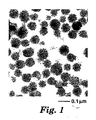
Classifications
-
- B—PERFORMING OPERATIONS; TRANSPORTING
- B82—NANOTECHNOLOGY
- B82Y—SPECIFIC USES OR APPLICATIONS OF NANOSTRUCTURES; MEASUREMENT OR ANALYSIS OF NANOSTRUCTURES; MANUFACTURE OR TREATMENT OF NANOSTRUCTURES
- B82Y30/00—Nanotechnology for materials or surface science, e.g. nanocomposites
-
- A—HUMAN NECESSITIES
- A61—MEDICAL OR VETERINARY SCIENCE; HYGIENE
- A61K—PREPARATIONS FOR MEDICAL, DENTAL OR TOILETRY PURPOSES
- A61K6/00—Preparations for dentistry
- A61K6/20—Protective coatings for natural or artificial teeth, e.g. sealings, dye coatings or varnish
-
- A—HUMAN NECESSITIES
- A61—MEDICAL OR VETERINARY SCIENCE; HYGIENE
- A61K—PREPARATIONS FOR MEDICAL, DENTAL OR TOILETRY PURPOSES
- A61K6/00—Preparations for dentistry
- A61K6/30—Compositions for temporarily or permanently fixing teeth or palates, e.g. primers for dental adhesives
-
- A—HUMAN NECESSITIES
- A61—MEDICAL OR VETERINARY SCIENCE; HYGIENE
- A61K—PREPARATIONS FOR MEDICAL, DENTAL OR TOILETRY PURPOSES
- A61K6/00—Preparations for dentistry
- A61K6/70—Preparations for dentistry comprising inorganic additives
- A61K6/71—Fillers
- A61K6/76—Fillers comprising silicon-containing compounds
-
- A—HUMAN NECESSITIES
- A61—MEDICAL OR VETERINARY SCIENCE; HYGIENE
- A61K—PREPARATIONS FOR MEDICAL, DENTAL OR TOILETRY PURPOSES
- A61K6/00—Preparations for dentistry
- A61K6/80—Preparations for artificial teeth, for filling teeth or for capping teeth
- A61K6/884—Preparations for artificial teeth, for filling teeth or for capping teeth comprising natural or synthetic resins
- A61K6/887—Compounds obtained by reactions only involving carbon-to-carbon unsaturated bonds
-
- A—HUMAN NECESSITIES
- A61—MEDICAL OR VETERINARY SCIENCE; HYGIENE
- A61K—PREPARATIONS FOR MEDICAL, DENTAL OR TOILETRY PURPOSES
- A61K6/00—Preparations for dentistry
- A61K6/80—Preparations for artificial teeth, for filling teeth or for capping teeth
- A61K6/884—Preparations for artificial teeth, for filling teeth or for capping teeth comprising natural or synthetic resins
- A61K6/891—Compounds obtained otherwise than by reactions only involving carbon-to-carbon unsaturated bonds
-
- C—CHEMISTRY; METALLURGY
- C01—INORGANIC CHEMISTRY
- C01P—INDEXING SCHEME RELATING TO STRUCTURAL AND PHYSICAL ASPECTS OF SOLID INORGANIC COMPOUNDS
- C01P2004/00—Particle morphology
- C01P2004/60—Particles characterised by their size
- C01P2004/62—Submicrometer sized, i.e. from 0.1-1 micrometer
-
- C—CHEMISTRY; METALLURGY
- C01—INORGANIC CHEMISTRY
- C01P—INDEXING SCHEME RELATING TO STRUCTURAL AND PHYSICAL ASPECTS OF SOLID INORGANIC COMPOUNDS
- C01P2004/00—Particle morphology
- C01P2004/60—Particles characterised by their size
- C01P2004/64—Nanometer sized, i.e. from 1-100 nanometer
-
- Y—GENERAL TAGGING OF NEW TECHNOLOGICAL DEVELOPMENTS; GENERAL TAGGING OF CROSS-SECTIONAL TECHNOLOGIES SPANNING OVER SEVERAL SECTIONS OF THE IPC; TECHNICAL SUBJECTS COVERED BY FORMER USPC CROSS-REFERENCE ART COLLECTIONS [XRACs] AND DIGESTS
- Y10—TECHNICAL SUBJECTS COVERED BY FORMER USPC
- Y10T—TECHNICAL SUBJECTS COVERED BY FORMER US CLASSIFICATION
- Y10T428/00—Stock material or miscellaneous articles
- Y10T428/25—Web or sheet containing structurally defined element or component and including a second component containing structurally defined particles
- Y10T428/259—Silicic material
-
- Y—GENERAL TAGGING OF NEW TECHNOLOGICAL DEVELOPMENTS; GENERAL TAGGING OF CROSS-SECTIONAL TECHNOLOGIES SPANNING OVER SEVERAL SECTIONS OF THE IPC; TECHNICAL SUBJECTS COVERED BY FORMER USPC CROSS-REFERENCE ART COLLECTIONS [XRACs] AND DIGESTS
- Y10—TECHNICAL SUBJECTS COVERED BY FORMER USPC
- Y10T—TECHNICAL SUBJECTS COVERED BY FORMER US CLASSIFICATION
- Y10T428/00—Stock material or miscellaneous articles
- Y10T428/29—Coated or structually defined flake, particle, cell, strand, strand portion, rod, filament, macroscopic fiber or mass thereof
- Y10T428/2982—Particulate matter [e.g., sphere, flake, etc.]
- Y10T428/2991—Coated
- Y10T428/2993—Silicic or refractory material containing [e.g., tungsten oxide, glass, cement, etc.]
- Y10T428/2995—Silane, siloxane or silicone coating
-
- Y—GENERAL TAGGING OF NEW TECHNOLOGICAL DEVELOPMENTS; GENERAL TAGGING OF CROSS-SECTIONAL TECHNOLOGIES SPANNING OVER SEVERAL SECTIONS OF THE IPC; TECHNICAL SUBJECTS COVERED BY FORMER USPC CROSS-REFERENCE ART COLLECTIONS [XRACs] AND DIGESTS
- Y10—TECHNICAL SUBJECTS COVERED BY FORMER USPC
- Y10T—TECHNICAL SUBJECTS COVERED BY FORMER US CLASSIFICATION
- Y10T428/00—Stock material or miscellaneous articles
- Y10T428/29—Coated or structually defined flake, particle, cell, strand, strand portion, rod, filament, macroscopic fiber or mass thereof
- Y10T428/2982—Particulate matter [e.g., sphere, flake, etc.]
- Y10T428/2991—Coated
- Y10T428/2998—Coated including synthetic resin or polymer
Definitions
- the invention relates broadly to silica particles in a dry powder form which are suitable for dental materials containing nano-sized particles dispersed in a hardenable resin. These materials can be used as restoratives, adhesives, cements, orthodontic devices, mill blanks and prostheses. More specifically, the discrete, nano-sized silica particles impart high strength and high translucency to the dental materials.
- Dental materials generally have unique requirements as compared to the broad spectrum of composite materials. For health reasons, dental materials should be suitable for use in the oral environment. In certain instances, strength and durability of a dental material is important to ensure satisfactory performance. For example, in dental work that is performed at dentition locations where mastication forces are generally great, high strength and durability is desirable. In other instances, aesthetic character or quality (e.g., luster and translucency) is highly desired. This is often the case where dental work is performed at locations where a tooth repair or restoration can be seen from a relatively short distance.
- Strength in a dental material is typically achieved by adding fillers.
- a dental material possessing greater mechanical strength characteristics is filled or loaded with larger sized particles; i.e.particles having a diameter greater than about 0.4 micrometers.
- These materials are often referred to as hybrid composites.
- a disadvantage to these composites is their tendency to lack luster and aesthetic character.
- Another disadvantage of composites with large-sized particles is that with repeated toothbrushing (a requirement for oral hygiene), the hardened resin can wear away, exposing the large filler particles and leave a dull, unaesthetic surface. This can subsequently lead to plaque accumulation.
- Increasing filler levels can also increase the strength of a dental material. However, this can lead to increased visual opacity, thereby reducing translucency and aesthetic quality.
- Canadian Patent Application 2,202,732 teaches polymerizable dental materials comprising a sol of surface modified silica particles in a liquid, organic dispersion agent.
- the silica particles comprise about 35wt% of the dental material.
- Nanometer sized silica particles most often in the form of fumed silica, have been dispersed in polymerizable dental resins.
- the dental material blends well with the surrounding dentition and looks life-like.
- Aesthetic quality in dental materials is typically achieved by creating material that has tooth-like colors/shades.
- "Microfills” a certain class of dental materials, tend to have good luster to better replicate tooth appearance.
- SILUX PLUS 3M Co., St. Paul, MN.
- Microfills however, generally have less mechanical strength than hybrid composites or "macrofills”.
- US-A-5,936,006 discloses a filled and polymerizable dental material which is characterized in that it contains a sol of amorphous SiO 2 particles in a liquid, organic dispersion agent, the SiO 2 particles being organically surface modified, having an average size of 10 to 100 nm and being non-agglomerated.
- the invention provides silica particles in a dry powder form wherein said silica particles have been treated with a silane surface treatment agent capable of polymerizing with a resin wherein the silane surface treatment agent is ⁇ -methacryloxypropyltrimethoxysilane or ⁇ -glycidoxypropyltrimethoxysilane and wherein the silica particles, are capable of being in a non-aggregated and non-agglomerated condition once they have been dispersed in a hardenable resin and have an average diameter of less than 200nm, wherein the silica particles are not fumed silica and wherein the silica particles are obtainable by a method comprising the steps of:
- the silica particles can be used to provide a dental material which comprises a hardenable resin and the nano-sized silica particles dispersed within the resin.
- the dental material is strong and translucent.
- the silica particles are present in an amount that is greater than 40 wt% of the total weight of the dental material.
- the present invention further provides a method of preparing the silica particles of claim 1 or 2 comprising the steps of:
- a method of preparing a composition comprising incorporating the silica particles according to the invention into a hardenable resin is also disclosed.
- Another aspect of the invention refers to the use of the composition obtainable by the method of the invention for the manufacture of a dental material as well as the composition obtainable by the method of the invention for use as a dental material.
- Yet another aspect of the invention relates to a method of preparing a mill blank comprising:
- Harder is descriptive of a material that can be cured or solidified e.g., by heating to remove solvent, heating to cause polymerization, chemical crosslinking, radiation-induced polymerization or crosslinking, or the like.
- Dispersed within the resin means that silica particles are present in the resin as discrete, unassociated (i.e. non-agglomerated and non-aggregated) particles.
- the dental material can be used as dental adhesives, artificial crowns, anterior or posterior fillings, casting materials, cavity liners, cements, coating compositions, mill blanks, orthodontic devices, restoratives, prostheses, and sealants.
- the hardenable resin can be an acrylate, methacrylate, or epoxy or combinations thereof.
- a heavy metal can be included in the dental material to impart radiopacity.
- Methods of using the dental material comprising the steps of placing the dental material near or on a tooth surface, changing the topography of the material and hardening the material.
- FIG. 1 is a digital image of a TEM (transmission electron micrograph) of a preferred embodiment of a dental material taken at 300,000 x magnification.
- the present invention provides silica particles in a dry powder form wherein said silica particles have been treated with a silane surface treatment agent capable of polymerizing with a resin wherein the silane surface treatment agent is ⁇ -methacryloxypropyltrimethoxysilane or ⁇ -glycidoxypropyltrimethoxysilane and wherein the silica particles, are capable of being in a non-aggregated and non-agglomerated condition once they have been dispersed in a hardenable resin and have an average diameter of less than 200nm, wherein the silica particles are not fumed silica and wherein the silica particles are obtainable by a method comprising the steps of:
- the silica particles can be used to provide a dental material which comprises a hardenable resin and the nano-sized (i.e. less than 200 nm average diameter) silica filler dispersed within the resin.
- the silica filler is present in an amount that yields both high strength and high translucency.
- a heavy metal oxide can be included in the material to provide radiopacity to the material.
- the dental materials can be used for example, as dental adhesives, artificial crowns, anterior or posterior fillings, casting materials, cavity liners, cements, coating compositions, mill blanks, orthodontic devices, restoratives, prostheses, and sealants.
- the dental material is a dental restorative.
- the restoratives can be placed directly in the mouth and cured (hardened) in situ, or alternatively, may be fabricated into a prosthesis outside the mouth and subsequently adhered in place inside the mouth.
- the dental materials can be chemically curable, heat curable or light curable compositions. Light curable materials should have an appropriate initiator system. Chemically- curable materials can be auto-cured (e.g., via redox initiators). Alternatively, the dental materials can be hardened by a combination of auto- and light-cure.
- Strength can be characterized by mechanical measurements such as compressive strength and diametral tensile strength. High compressive strength in a dental material is advantageous due to the forces exerted by mastication on dental repairs, replacements and restorations. Diametral tensile strength (DTS) indicates the dental material's ability to withstand compression forces that introduce a tensile stress in the material. Tests for each strength measurement are set out below in the Examples.
- the dental materials when hardened, preferably have a compressive strength of at least about 35MPa; more preferably, the materials have a compressive strength of at least about 200 MPa; most preferably, the materials have a compressive strength of at least about 350MPa.
- Hardened dental materials preferably have a diametral tensile strength of at least about 15MPa; more preferably at least about 40MPa; most preferably at least about 60 MPa.
- Aesthetic quality of a dental material although a somewhat subjective characteristic (yet well-understood in the dental industry), can be preferably quantified in one aspect, by a visual opacity measurement.
- Visual opacity is indicative of dental material's level of translucency -- low visual opacity is desired so that the hardened dental material will have a life-like luster.
- the dental materials preferably have a visual opacity of 0.05 to 0.4; more preferably 0.05 to 0.35; most preferably 0.05 to 0.25.
- Constant refers to the process of shaping a material (using dental instruments) so that it resembles the natural dental anatomy.
- materials should have a sufficiently high viscosity that they maintain their shape after manipulation with a dental instrument, and yet the viscosity should not be so high that it is difficult to shape the material.
- Forcehering refers to the process of reducing the dental material to a thin film in order to blend the material into the natural dentition. This is done with a dental instrument at the margin of the manipulated material and the natural dentition. It is also desirable that the dental material not stick to placement instruments, to minimize further alteration of the shape or surface topography.
- the dental material preferably has little to no slump, yet easily adapts to, for example, a cavity preparation, and is easily contoured and feathered.
- the dental materials do not stick to placement instruments, and are advantageously, overall, fast and easy to use in dental procedures such as, for example, restoring tooth structure.
- the dental materials can possess improved and desirable shear thinning behavior. That is, they can have a low viscosity when subjected to high stress, and high viscosity when subjected to low stress.
- the low viscosity under high stress allows a practitioner to feather the material over a tooth surface and carve the dental material.
- the high viscosity under low stress allows the material to maintain its shape (i.e. no slumping) after a practitioner manipulates the material to match the contour of the tooth.
- the silica is dispersed within the hardenable resin matrix.
- the silica particles used in the dental materials have an average diameter of less than 200 nm; more preferably, the particles are less than 100 nm in average diameter. These measurements are preferably based on a TEM (transmission electron microscopy) method, whereby a population of particles such as what is shown in FIG. 1 , is analyzed to obtain an average particle diameter. A preferred method for measuring the particle diameter is set out below, in the Test Methods section. In FIG. 1 , preferred silica particles dispersed in a hardenable resin are shown.
- the average surface area of the silica particles is preferably greater than 15 m 2 /g; more preferably greater than 30 m 2 /g.
- the silica particles are in a discrete (individual) and unassociated (i.e. non-agglomerated, non-aggregated) condition.
- Agglomerated as used herein, is descriptive of a weak association of particles usually held together by charge or polarity. The agglomerated particles can be broken down into smaller entities.
- Aggregated as used herein, is descriptive of a strong association of particles often bound together by, for example, residual chemicals treatment; further breakdown of the aggregates into smaller entities is very difficult to achieve.
- the silica particles used in the dental materials are preferably substantially spherical and substantially non-porous. Although the silica is preferably essentially pure, it may contain small amounts of stabilizing ion such as ammonium and alkaline metal ions.
- Preferred nano-sized silicas are commercially available from Nalco Chemical Co. (Naperville, IL) under the product designation NALCO COLLOIDAL SILICAS.
- preferred silica particles can be obtained from using NALCO products 1040, 1042, 1050, 1060, 2327 and 2329.
- the starting silica is preferably acidic (such as Nalco 1042).
- fumed silica can be included in the materials of the invention in addition to the nano-sized silica particles described above.
- Suitable fumed silicas include for example, products sold under the tradename AEROSIL series OX-50, -130, -150, and -200 available from Degussa AG, (Hanau, Germany), and CAB-O-SIL M5 available from Cabot Corp (Tuscola, IL).
- Surface-treating the nano-sized silica particles before loading into the dental material can provide a stable dispersion in the resin.
- “Stable”, as used herein, means a dental material in which the particles do not agglomerate after standing for a period of time, such as about 24 hours, under standard ambient conditions -- e.g. room temperature (about 20-22°C), atmospheric pressure, and no extreme electro-magnetic forces.
- the surface treatment stabilizes the nano-sized particles so that the particles will be well dispersed in the hardenable resin and results in a substantially homogeneous composition.
- the silica be modified over at least a portion of its surface with a surface treatment agent so that the stabilized particle can copolymerize or otherwise react with the hardenable resin during curing.
- the silica particles of the present invention are treated with a resin-compatibilizing surface treatment agent which is a silane surface treatment agent capable of polymerizing with a resin.
- the silane treatment agent is ⁇ -methacryloxylpropyltrimethoxysilane, available commercially under the trade designation A-174, available commercially from Witco OSi Specialties (Danbury, CT) or ⁇ -glycidoxypropyltrimethoxy silane, a product available under the trade designation G6720, available from United Chemical Technologies (Bristol, PA).
- the silica particles Upon surface treating the silica particles, they can then be combined with an appropriate hardenable resin to form a dental material.
- the silica particles are preferably present in amounts greater than 40 weight percent (wt. %) of the total weight of the dental material. More preferably, the silica particles are present in an amount of 40 wt% to 90 wt%; most preferably, the silica particles are present in an amount of 50 wt% to 75 wt%.
- a heavy metal oxide can be included in the dental materials to provide a radiopaque dental material. It is preferred that the heavy metal oxide be present in an amount effective to impart radiopacity.
- radiopacity describes the ability of a hardened dental material to be distinguished from tooth structure using standard dental X-ray equipment in the conventional manner. Radiopacity in a dental material is advantageous in certain instances where X-rays are used to diagnose a dental condition. For example, a radiopaque material would allow the detection of secondary caries that may have formed in the tooth tissue surrounding a filling. The desired degree of radiopacity can be varied, depending upon the particular application and the expectations of the practitioner evaluating the X-ray film.
- Oxides of heavy metals having an atomic number greater than 28 are preferred.
- the heavy metal oxide should be chosen such that undesirable colors or shading are not imparted to the hardened resin in which it is dispersed. For example, iron and cobalt would not be favored, as they impart dark and contrasting colors to the neutral tooth color of the dental material.
- the heavy metal oxide is an oxide of metals having an atomic number greater than 30. Suitable metal oxides are the oxides of yttrium, strontium, barium, zirconium, hafnium, niobium, tantalum, tungsten, bismuth, molybdenum, tin, zinc, lanthanide elements (i.e.
- radiopacifying metal oxides include lanthanum oxide, zinc oxide, tin oxide, zirconium oxide, yttrium oxide, ytterbium oxide, barium oxide, strontium oxide, cerium oxide, and combinations thereof.
- the heavy metal oxide components may be included in the dental materials in various forms, including for example, particles on the silica surface or amongst the silica particles, or a coating on at least a portion of the surface of a silica particle.
- the heavy metal oxide component is provided as a sol or individual particles.
- the heavy metal oxide particles preferably have an average diameter of less than 100mm. More preferably, the particles are less than 70nm, more preferably less than 60 nm in average diameter.
- the heavy metal oxide particles may be aggregated. If so, it is preferred that the aggregated particles are less than 200 nm, arid more preferably are less than 90 nm in average diameter.
- Preferred sources of unassociated heavy metal oxide particles are sols having particles dispersed in a solution.
- a zirconia sol as disclosed in U.S. Patent No. 5,037,579 (Matchett ), is a suitable and preferable heavy metal oxide for use with the dental materials.
- Zirconia sols of Application No. 55200USA5A comprise a plurality of single crystal zirconia particles having an average primary particle size of 20 nm or less, more preferably, having an average primary particle size ranging from 7-20 nm.
- primary particle size refers to the size of a non-associated single crystal zirconia particle. Primary particle size is determined by the test method entitled, Crystallite Particle Size and Crystal Form Content, a procedure which resides in the Test Methods section below.
- the zirconia sols comprise zirconia particles which are highly crystalline in nature. This is important in that crystalline zirconia has a higher refractive index and higher X-ray scattering capability than amorphous zirconia. Crystallinity of zirconia particles may be quantified, for example, using a crystallinity index. Crystallinity index is calculated by dividing the X-ray scattering intensity of the sample material by the X-ray scattering intensity of a known crystalline standard material, for example, calcium stabilized zirconium oxide.
- the zirconia particles have a crystallinity index of 0.65 or greater. More preferably, the zirconia particles having a crystallinity index of 0.75 or greater, most preferably 0.85 or greater.
- the predominate crystal lattice forms are cubic and tetragonal with a minor amount of monoclinic phase also being present. Due to the difficulty in separately quantifying cubic and tetragonal crystal lattice structures using X-ray diffraction, the two have been combined and are reported herein as combined cubic and tetragonal.
- the zirconia particles comprise 70% or greater combined cubic and tetragonal crystal lattice structure. More preferably, the zirconia particles comprise 75% or greater combined cubic and tetragonal crystal lattice structure, and most preferably comprise 85% or greater combined cubic and tetragonal crystal lattice structure. In each instance, the balance of the crystalline phase is in the monoclinic crystal lattice structure.
- crystal phase stabilizer refers to a material which may be added to stabilize zirconia in the cubic and/or tetragonal crystal lattice structure. Specifically, crystal phase stabilizers function to suppress transformation from the cubic and/or tetragonal phase to the monoclinic phase. Crystal phase stabilizers include, for example, alkaline-earth oxides such as MgO and CaO, rare earth oxides (i.e., lanthanides) and Y 2 O 3 .
- an effective amount refers to the amount of crystal phase stabilizer necessary to suppress transformation of zirconia from the cubic and/or tetragonal phase to the monoclinic phase.
- the zirconia particles comprise less than 1 wt.% of a crystal phase stabilizer, more preferably less than 0.1 wt.% of a crystal phase stabilizer.
- the primary particles of zirconia exist in a substantially non-associated (i.e., non-aggregated and non-agglomerated) form.
- a quantitative measure of the degree of association between the primary particles in the sol is the dispersion index.
- the "dispersion index” is defined as the hydrodynamic particle size divided by the primary particle size. The primary particle size is determined using X-ray diffraction techniques as described in the test procedure "Cystallite Particle Size and Crystal Form Content" set out below.
- Hydrodynamic particle size refers to the weight average particle size of the zirconia particles in the aqueous phase as measured by Photon Correlation Spectroscopy (PCS), a description of which resides in the Test Mehtods section below. If the primary particles are associated, PCS provides a measure of the size of the aggregates and/or agglomerates of primary particles in the zirconia sol. If the particles are non-associated, PCS provides a measure of the size of the primary particles. Accordingly, as the association between primary particles in the sol decreases the dispersion index approaches a value of 1.
- the primary zirconia particles exist in a substantially non-associated form resulting in a zirconia sol having a dispersion index ranging from 1-3, more preferably ranging from 1-2.5, and most preferably ranging from 1-2.
- suitable starting materials for preparing polyether acid zirconium salts include basic zirconium salts such as zirconium carboxylates and basic zirconium salts having counterions that may be displaced with carboxylic acids.
- basic zirconium salts having counterions that may be displaced with carboxylic acids include zirconium oxynitrate, zirconium oxychloride and zirconium carbonates.
- Basic zirconium salts are salts of zirconium wherein at least a portion of the cationic charge on the zirconium is compensated by hydroxide or an O 2- anion.
- carboxylic acid displaceable counterions include carboxylates such as acetates, formates and propionates and other counterions such as nitrate, chloride, carbonate or a combination thereof.
- Zirconium alkoxides although not formally zirconium salts, may be used as starting materials in the formation of the polyether acid zirconium after initial reaction with a suitable acid to form a basic zirconium salt.
- a preferred starting material is an aqueous solution or sol of basic zirconium acetate having the general formula ZrO (4-n/2) (CH 3 COO) n , where n ranges from about 1-2.
- zirconium acetate probably exists as complex polynuclear zirconium cation. Processes for making zirconium acetate are well known in the art (see, for example, W.B. Blumenthal, "The Chemical Behavior of Zirconium", D. Van Nostrand Company, Princeton, NJ, pp. 311-338 ).
- Suitable zirconium acetate solutions comprise from 5-40 wt.% as ZrO 2 and range from 5-40 wt.% acetate.
- a preferred zirconium acetate sol starting material comprises ZrO 1.25 (C 2 H 3 O 2 ) 1.5 at 20 wt.% ZrO 2 and is commercially available under the trade designation "Nyacol ZrO 2 (Ac)" from Nyacol Products Corp., Ashland, MA.
- a polyether acid zirconium salt is prepared by reacting, in an aqueous solution, a zirconium salt with a polyether carboxylic acid.
- the polyether carboxylic acid is believed to function to prevent association (i.e., agglomeration and/or aggregation) of the zirconia particles as they are formed during the hydrolysis reaction. In this way, the zirconia particles produced according to the process are substantially non-associated.
- Polyether carboxylic acids suitable for use as modifiers in Application No: 55200USA5A are water soluble monocarboxylic acids (i.e., containing one carboxylic acid group per molecule) having a polyether tail.
- the polyether tail comprises repeating difunctional alkoxy radicals having the general formula -O-R-.
- Preferred R groups have the general formula -C n H 2n - and include, for example, methylene, ethylene and propylene (including n-propylene and i-propylene) or a combination thereof. Combinations of R groups may be provided, for example, as random, or block type copolymers.
- a preferred class of monovalent polyether radicals may be represented generally by formula (3): CH 3 -[O-(CH 2 ) y ] x -X-OOH (3) where:
- polyether carboxylic acids examples include 2-[2-(2-methoxyethoxy)ethoxy] acetic acid having the chemical structure CH 3 O(CH 2 CH 2 O) 2 CH 2 COOH (hereafter MEEAA) and 2-(2-methoxyethoxy) acetic acid having the chemical structure CH 3 OCH 2 CH 2 OCH 2 COOH (hereafter MEAA).
- MEEAA 2-[2-(2-methoxyethoxy)ethoxy] acetic acid having the chemical structure CH 3 O(CH 2 CH 2 O) 2 CH 2 COOH
- MEAA 2-(2-methoxyethoxy) acetic acid having the chemical structure CH 3 OCH 2 CH 2 OCH 2 COOH
- MEAA and MEEAA are commercially from Aldrich Chemical Co., Milwaukee, WI as catalog numbers 40,701-1 and 40,700-3, respectively. It is also within the scope of this invention to utilize a mixture of more than one polyether carboxylic acid.
- Reaction of the polyether carboxylic acid with a zirconium salt following reaction sequence (1): ZrO (4-n/2) (X) n + a R 2 -COOH ⁇ ZrO (4-n/2) (X) n-a (R 2 COO) a + a HX (1) results in the formation of a polyether acid zirconium salt having the general formula ZrO( 4-n/2 )(X) n-a (R 2 COO) a and liberates (i.e., releases) approximately a stochiometric amount of an acid having the general formula HX.
- the zirconium salt comprises zirconium acetate (ZrO (4-n/2 )(C 2 H 3 O 2 ) n ) a near stochiometric amount of acetic acid (C 2 H 3 O 2 H) is released as a result of the formation of the polyether acid zirconium salt (see, reaction sequence 1a).
- ZrO (4-n/2) (C 2 H 3 O 2 ) n + a R 2 -COOH ⁇
- ZrO (4-n/2) C 2 H 3 O 2 ) n-a (R 2 COO) a + a C 2 H 3 O 2 H (1a)
- Salts of zirconium with carboxylic acids are not dissociated in the aqueous phase as the acid is bound to the zirconium atom.
- the carboxylic acid effects the water solubility of the salt.
- Attachment of hydrophobic acids (e.g., alkyl acids) to the zirconium causes the salts to be insoluble in water.
- small acids such as propionic acid and acrylic acid cause the salt to be insoluble in water.
- the polyether acids used in Application No. 55200USA5A published as US 2002/004544 allow higher molecular weight acids to be used while maintaining the water solubility of the polyether acid zirconium salt. This in turn allows hydrothermal treatment of the dissolved polyether acid zirconium salt in the aqueous phase.
- the polyether carboxylic acid is added in an amount ranging from 2.5-5.0 millimoles per gram equivalent of ZrO 2 in the zirconium salt.
- this range results in the displacement of 20-50% of the acetate groups.
- the amount of polyether carboxylic acid added should be limited to the minimum amount necessary to prevent association of the resulting zirconia particles. In this way, the amount of acid released during formation of the polyether acid zirconium salt is kept to a minimum.
- the amount of polyether carboxylic acid added may depend upon such factors as, for example, the molecular weight of the polyether carboxylic acid, the concentration, time and temperature during the hydrolysis reaction.
- the polyether carboxylic acid is added to an aqueous solution of the zirconium salt and the resulting solution is stirred at room temperature for 30-60 minutes.
- the polyether carboxylic acid molecules react with the zirconium salt displacing and substituting for at least a portion of the acid groups bound to the zirconium salt.
- the displaced acid groups are released into the solution as free acid. It will ordinarily be preferred to remove at least a portion of the acid, more preferably substantially all of the acid released during the formation of the polyether acid zirconium salt. It should be noted that removal of the acid may function to shift the reaction equilibrium towards formation of the polyether acid zirconium salt.
- Suitable techniques for removing the excess acid include, for example, drying or distillation.
- the liberated acid has a low boiling point (e.g., ⁇ 175°C)
- it may be removed by heating the solution until the aqueous phase evaporates leaving a residue of the polyether acid zirconium salt.
- the polyether acid zirconium salt must then be dissolved in water prior to hydrolysis.
- the next step is to hydrolyze an aqueous solution of the polyether acid zirconium salt under conditions sufficient to convert the polyether acid zirconium salt into crystalline zirconia particles.
- the hydrolysis step follows general reaction sequence (2a): ZrO (4-n/2) (C 2 H 3 O 2 ) n-a (R 2 COO) a ⁇ acid modified ZrO 2 + (n-a) C 2 H 3 O 2 H + a R 2 COOH (2a)
- the hydrolysis reaction forms acid modified zirconia particles and also produces free carboxylic acids (i.e., C 2 H 3 O 2 H and R 2 COOH) as a by-product. Therefore, the resultant zirconia sol comprises the acid modified zirconia particles and a mixture of two carboxylic acids in water.
- acid modified zirconia particles it is meant that at least a fraction of the acids are adsorbed to the surface of the zirconia particles.
- the hydrolysis reaction of the polyether acid zirconium salt solution may take place in any suitable reaction vessel. Since the reaction is typically performed under high temperatures and pressures, an autoclave will generally be the preferred type of reaction vessel.
- An autoclave will generally be the preferred type of reaction vessel.
- One example of a preferred reaction vessel is commercially available as Pressure Reactor Series #4520" from Parr Instruments Co., Moline, IL.
- an aqueous solution of the polyether acid zirconium salt is first charged into a reaction vessel.
- the concentration of the polyether acid zirconium salt solution is typically in the range of 0.5-3 wt.% ZrO 2 , preferably in the range of 1-2 wt.% ZrO 2 . However, the concentration may be varied through a wider range depending upon the other reaction conditions.
- the polyether acid zirconium salt solution is then heated to a temperature sufficient to convert it into zirconia particles. Preferred hydrolysis temperatures range from 140-250°C, more preferably ranging from 150-200°C.
- the reaction vessel is heated to the desired hydrolysis temperature over a period of several hours.
- a suitable hydrolysis temperature or temperature range may be selected in order to minimize degradation and/or decomposition of the polyether carboxylic acid.
- the pressure maintained in the reaction vessel may be the autogenous pressure (i.e., the vapor pressure of water at the temperature of the reaction) or, preferably, the reaction vessel may be pressured, for example, with an inert gas such as nitrogen. Preferred pressures range from 1-30 bars (100-3000 kPa). Pressurization of the reaction vessel is believed to reduce or eliminate refluxing of the polyether acid zirconium salt solution within the reaction vessel which may deleteriously affect the properties of the resulting zirconia sol.
- the time of hydrolysis is typically a function of the hydrolysis temperature and the concentration of the salt solution. Heat is typically applied until the hydrolysis reaction is substantially complete. Generally, the time involved is in the range of 16-24 hours at a temperature of about 175°C, however, longer or shorter times may also be suitable.
- the reaction may be monitored by examining the resulting zirconia particles using X-ray diffraction or by examining the amount of free acid in the water phase using IR spectroscopy or HPLC.
- the pressure vessel is allowed to cool and the resulting zirconia sol is removed from the reaction vessel.
- Zirconia sols of Application No. 55200USA5A may be concentrated by removing at least a portion of the liquid phase using techniques well known in the art, for example, evaporation or ultrafiltration.
- the zirconia sols are concentrated to 0-40 wt.% ZrO 2 using a rotary evaporator.
- Zirconia sols prepared in accordance with the method of Application No. 55200USA5A typically contain an excess of acid over that normally desired (see, reaction sequence 2a).
- an organic matrix material for example, an organic monomer
- the acid may be removed by such conventional methods as drying, dialysis, precipitation, ion exchange, distillation or diafiltration.
- the pH of the prepared zirconia sols typically ranges from 1.8-2.2. Dialysis may be used to increase the pH of the sols. Dialyzed sols typically have a pH ranging 1-4.5, or greater, depending upon the extent of the dialysis. The pH of the sols may also be adjusted by the addition of acids (e.g., concentrated HCl and glacial acetic) and/or base (e.g., aqueous ammonia). Addition of aqueous ammonia has resulted in clear sol to at least pH 6-7.
- acids e.g., concentrated HCl and glacial acetic
- base e.g., aqueous ammonia
- Dialysis, ion exchange and diafiltration methods may be used to remove the free acid without substantially changing the ratio of the acids adsorbed to the surface of the zirconia particles.
- removal of excess acid and concentration of the sol may be achieved by first evaporating the water and free acid from the sol to obtain a dry powder. The dry powder may then be redispersed in a desired amount of water to obtain a concentrated sol substantially free of excess acid. It should be noted, however, that this technique may change the ratio of the acids adsorbed to the surface of the zirconia particles in such a way that the ratio of the higher boiling acid to the lower boiling acid is increased.
- the polyether carboxylic acid groups may be removed or displaced from the zirconia particles of the sol. Removal of the polyether carboxylic acid groups may be advantageous, for example, when the polyether groups would be incompatible with an organic matrix material to which it is desired to add the zirconium sol. Displacement of the polyether carboxylic acid groups may be accomplished, for example, by displacing the polyether acid from the zirconia particles with a carboxylic acid, for example, acetic acid. The carboxylic acid displaces and substitutes for the polyether carboxylic acid groups on the zirconia particles. After displacement, the free polyether carboxylic acid may be removed from the sol using techniques known in the art, for example, dialysis or diafiltration.
- a surface treatment agent is preferably chosen to contain functional groups that provide dispersibility and/or reactivity of the surface modified heavy metal oxide particle with(in) the desired hardenable resin.
- the metal oxide particles are treated with an acidic compound. Suitable surface-treatment acids include for example, carboxylic acids, phosphonic acids, and sulfonic acids. More preferably, the surface stabilization is performed with a mixture of acidic compounds.
- a mixture of acidic compounds where one or more has a polymerizable functionality can preferably be used.
- the acidic function is derived from oxyacids of boron, carbon, phosphorus, and sulfur.
- carboxylic acids adsorb particularly well to the surface of zirconia and ceria particles.
- a mixture of acids is preferably used to surface treat (modify) the heavy metal oxide particles.
- the acids include the structure R-COOH, where R is an organic radical containing ethylenic unsaturation.
- R may be branched or straight chained and may be substituted (e.g., by a heteroatom).
- R typically contains from 1 to 50 carbon atoms, preferably 2 to 20 carbon atoms.
- a particularly preferred group of such acids includes R groups with terminal ethylenic unsaturation.
- Adsorption of a combination of acids to the particle surface provides a desirable surface modification to impart strength, dispersibility and stability.
- zirconia particles are dispersed in water with acetic acid adsorbed to the surface.
- the surface modification involves replacement of adsorbed acetic acid with a combination of acids chosen to provide good dispersion and high strength to the final material.
- Hydrophilic, non-reactive acids suitable for the surface treatment (modification) include 2-[2-(2-methoxy)ethoxy]ethoxy acetic acid (MEEAA), mono(polyethyleneglycol)succinate, mono(polyethyleneglycol)maleate. These acids provide good dispersion of the particles in the hardenable dental materials of the invention.
- Strength is greatly enhanced via copolymerization of surface modifying groups with the hardenable resin.
- this is accomplished by using a reactive surface modifier.
- hydrophilic and reactive acids suitable for the surface treament include 2-hydroxymethyl-2-[(N-methacryloxyethyl) carbamoylmethyl] propionic acid (PAMA), mono(acryloxypolyethyleneglycol)succinate, and mono(acryloxypolyethyleneglycol)maleate.
- Suitable reactive acids include 2,2-bis[(N-methacryloxyethyl) carbamoylmethyl] propionic Acid (PDMA), acrylic acid, methacrylic acid, beta carboxyethylacrylate, mono-2-(methacryloxy)ethyl succinate, and mono-2-(methacryloxy)ethyl maleate.
- PDMA 2,2-bis[(N-methacryloxyethyl) carbamoylmethyl] propionic Acid
- suitable acid mixtures useful for surface treatment of the heavy metal oxide can include aliphatic carboxylic acids such as, for example, oleic acid, stearic acid, and octanoic acid, aromatic nonreactive acids such as methoxy phenyl acetic acid and 3,4,5-triethoxy benzoic acid, as well as itaconic acid, toluene sulfonic acid, ethylene glycol methacrylate phosphate, the salts of the acids just stated, and blends thereof.
- aliphatic carboxylic acids such as, for example, oleic acid, stearic acid, and octanoic acid
- aromatic nonreactive acids such as methoxy phenyl acetic acid and 3,4,5-triethoxy benzoic acid
- itaconic acid toluene sulfonic acid
- ethylene glycol methacrylate phosphate the salts of the acids just stated, and blends thereof.
- the dental materials include a hardenable resin.
- These resins preferably are generally thermosetting resins capable of being hardened to form a polymer network such as, for example, acrylate resins, methacrylate resins, epoxy resins, vinyl resins or mixtures thereof.
- the hardenable resin is made from one or more matrix-forming oligomer, monomer, or polymer, or blend thereof.
- polymerizable resins suitable for use include hardenable organic resins having sufficient strength, hydrolytic stability, and non-toxicity to render them suitable for use in the oral environment.
- examples of such resins include acrylate, methacrylate, urethane, carbamoylisocyanurate and epoxy resins, e.g., those shown in U.S. Pat. Nos.
- One class of preferred hardenable resins are materials having free radically active functional groups and include monomers, oligomers, and polymers having one or more ethylenically unsaturated groups.
- the hardenable resin can be a material from the class of resins that include cationically active functional groups.
- a mixture of hardenable resins that include both cationically curable and free radically curable resins may be used for the dental materials.
- suitable materials for use in the invention contain at least one ethylenically unsaturated bond, and are capable of undergoing addition polymerization.
- suitable materials for use in the invention include mono-, di- or polyacrylates and methacrylates such as methyl acrylate, methyl methacrylate, ethyl acrylate, isopropyl methacrylate, n-hexyl acrylate, stearyl acrylate, allyl acrylate, glycerol diacrylate, glycerol triacrylate, ethyleneglycol diacrylate, diethyleneglycol diacrylate, triethyleneglycol dimethacrylate, 1,3-propanediol diacrylate, 1,3-propanediol dimethacrylate, trimethylolpropane triacrylate, 1,2,4-butanetriol trimethacrylate, 1,4-cyclohexanediol diacrylate, pen
- an initiation system can be selected from systems which initiate polymerization via radiation, heat, or redox/auto-cure chemical reaction.
- a class of initiators capable of initiating polymerization of free radically active functional groups includes free radical-generating photoinitiators, optionally combined with a photosensitizer or accelerator. Such initiators typically an be capable of generating free radicals for addition polymerization upon exposure to light energy having a wavelength between 200 and 800 nm.
- a variety of visible or near-IR photoinitiator systems may be used for photopolymerization of free-radically polymerizable materials useful in the invention.
- a photoinitiation system can be selected from systems which initiate polymerization via a two component system of an amine and an ⁇ -diketone as described in U.S. Patent No. 4,071,424 .
- the resin can be combined with a three component or ternary photoinitiator system such as described in U.S. Patent No. 5,545,676 .
- the first component is an iodonium salt, i.e ., a diaryliodonium salt.
- the iodonium salt is preferably soluble in the monomer and shelf-stable (i.e ., does not spontaneously promote polymerization) when dissolved therein in the presence of the sensitizer and donor. Accordingly, selection of a particular iodonium salt may depend to some extent upon the particular monomer, polymer or oligomer, sensitizer and donor chosen. Suitable iodonium salts are described in U.S. Pat. Nos. 3,729,313 , 3,741,769 , 3,808,006 , 4,250,053 and 4,394,403 .
- the iodonium salt can be a simple salt (e.g. , containing an anion such as Cl - , Br - , I - or C 4 H 5 SO 3 - ) or a metal complex salt (e.g., containing SbF 5 OH - or AsF 6 - ). Mixtures of iodonium salts can be used if desired.
- Preferred iodonium salts include diphenyliodonium salts such as diphenyliodonium chloride, diphenyliodonium hexafluorophosphate and diphenyliodonium tetrafluoroborate.
- the second component in a ternary photoinitiator system is a sensitizer.
- the sensitizer desirably is soluble in the monomer, and is capable of light absorption somewhere within the range of wavelengths of greater than 400 to 1200 nanometers, more preferably greater than 400 to 700 nanometers and most preferably greater than 400 to 600 nanometers.
- the sensitizer may also be capable of sensitizing 2-methyl-4,6-bis(trichloromethyl)-s-triazine, using the test procedure described in U.S. Patent No. 3,729,313 .
- a sensitizer is also selected based in part upon shelf stability considerations. Accordingly, selection of a particular sensitizer may depend to some extent upon the particular monomer, oligomer or polymer, iodonium salt and donor chosen.
- Suitable sensitizers can include compounds in the following categories: ketones, coumarin dyes (e.g. , ketocoumarins), xanthene dyes, acridine dyes, thiazole dyes, thiazine dyes, oxazine dyes, azine dyes, aminoketone dyes, porphyrins, aromatic polycyclic hydrocarbons, p-substituted aminostyryl ketone compounds, aminotriaryl methanes, merocyanines, squarylium dyes and pyridinium dyes.
- Ketones e.g.
- sensitizers monoketones or alpha-diketones
- ketocoumarins aminoarylketones
- p-substituted aminostyryl ketone compounds are preferred sensitizers.
- a sensitizer containing a julolidinyl moiety For applications requiring deep cure (e.g. , cure of highly-filled composites), it is preferred to employ sensitizers having an extinction coeffcient below about 1000, more preferably below about 100, at the desired wavelength of irradiation for photopolymerization.
- dyes that exhibit reduction in light absorption at the excitation wavelength upon irradiation can be used.
- a preferred class of ketone sensitizers has the formula: ACO(X) b B where X is CO or CR 5 R 6 , where R 5 and R 6 can be the same or different, and can be hydrogen, alkyl, alkaryl or aralkyl, b is zero or one, and A and B can be the same or different and can be substituted (having one or more non-interfering substituents) or unsubstituted aryl, alkyl, alkaryl, or aralkyl groups, or together A and B can form a cyclic structure which can be a substituted or unsubstituted cycloaliphatic, aromatic, heteroaromatic or fused aromatic ring.
- Suitable diketones include aralkyldiketones such as anthraquinone, phenanthrenequinone, o-, m- and p-diacetylbenzene, 1,3-, 1,4-, 1,5-, 1,6-, 1,7- and 1,8-diacetylnaphthalene, 1,5-, 1,8-and 9,10-diacetylanthracene, and the like.
- Suitable alpha-diketones include 2,3-butanedione, 2,3-pentanedione, 2,3-hexanedione, 3,4-hexanedione, 2,3-heptanedione, 3,4-heptanedione, 2,3-octanedione, 4,5-octanedione, benzil, 2,2'- 3 3'- and 4,4'-dihydroxylbenzil, furil, di-3,3'-indolylethanedione, 2,3-bornanedione (camphorquinone), biacetyl, 1,2-cyclohexanedione, 1,2-naphthaquinone, acenaphthaquinone, and the like.
- the third component of a ternary initiator system is a donor.
- Preferred donors include, for example, amines (including aminoaldehydes and aminosilanes), amides (including phosphoramides), ethers (including thioethers), ureas (including thioureas), ferrocene, sulfinic acids and their salts, salts of ferrocyanide, ascorbic acid and its salts, dithiocarbamic acid and its salts, salts of xanthates, salts of ethylene diamine tetraacetic acid and salts of tetraphenylboronic acid.
- the donor can be unsubstituted or substituted with one or more non-interfering substituents.
- Particularly preferred donors contain an electron donor atom such as a nitrogen, oxygen, phosphorus, or sulfur atom, and an abstractable hydrogen atom bonded to a carbon or silicon atom alpha to the electron donor atom.
- an electron donor atom such as a nitrogen, oxygen, phosphorus, or sulfur atom
- an abstractable hydrogen atom bonded to a carbon or silicon atom alpha to the electron donor atom.
- free-radical initiators useful in the invention include the class of acylphosphine oxides, as described in European Patent Application No. 173567 , U.S. Patent No. 4,737,593 and United Kingdom Pat No. GB 2,310,855 .
- acylphosphine oxides useful in the invention are those in which the R 9 and R 10 groups are phenyl or lower alkyl- or lower alkoxy-substituted phenyl.
- R 9 and R 10 groups are phenyl or lower alkyl- or lower alkoxy-substituted phenyl.
- lower alkyl and lower alkoxy is meant such groups having from 1 to 4 carbon atoms.
- the acylphosphine oxide is bis(2,4,6-trimethylbenzoyl)phenyl phosphine oxide (IRGACURE TM 819, Ciba Specialty Chemicals, Tarrytown, NY).
- Tertiary amine reducing agents may be used in combination with an acylphosphine oxide.
- Illustrative tertiary amines useful in the invention include ethyl 4-(N,N-dimethylamino)benzoate and N,N-dimethylaminoethyl methacrylate.
- the initiator can be employed in catalytically-effective amounts, such as from about 0.1 to about 5 weight percent, based on the weight of ethylenically-unsaturated compound present, of the acylphosphine oxide plus from 0.1 to 5 weight percent, based on the weight of ethylenically-unsaturated compound present, of the tertiary amine.
- phosphine oxide photoinitiators capable of free-radical initiation when irradiated at wavelengths of greater than 400 nm to 1200 nm include a 25:75 mixture, by weight, of bis(2,6-dimethoxybenzoyl)-2,4,4-trimethylpentyl phosphine oxide and 2-hydroxy-2-methyl-1-phenylpropan-1-one (IRGACURE TM 1700, Ciba Specialty Chemicals), 2-benzyl-2-(N,N-dimethylamino)-1-(4-morpholinophenyl)-1-butanone (IRGACURE TM 369, Ciba Specialty Chemicals), bis( ⁇ 5 -2,4-cyclopentadien-1-yl)-bis(2,6-difluoro-3-(1H-pyrrol-1-yl)phenyl) titanium (IRGACURE TM 784 DC, Ciba Specialty Chemicals), a 1:1 mixture, by weight, of bis(2,
- Another free-radical initiator system that can alternatively be used in the dental materials includes the class of ionic dye - counterion complex initiators comprising a borate anion and a complementary cationic dye.
- Borate salt photoinitiators are described, for example, in U. S. Patent Nos. 4,772,530 , 4,954,414 , 4,874,450 , 5,055,372 , and 5,057,393 .
- Borate anions useful in these photointiators generally can be of the formula R 1 R 2 R 3 R 4 B - wherein R 1 , R 2 , R 3 , and R 4 independently can be alkyl, aryl, alkaryl, allyl, aralkyl, alkenyl, alkynyl, alicyclic and saturated or unsaturated heterocyclic groups.
- R 2 , R 3 , and R 4 are aryl groups and more preferably phenyl groups
- R 1 is an alkyl group and more preferably a secondary alkyl group.
- Cationic counterions can be cationic dyes, quaternary ammonium groups, transition metal coordination complexes, and the like.
- Cationic dyes useful as counterions can be cationic methine, polymethine, triarylmethine, indoline, thiazine, xanthene, oxazine or acridine dyes. More specifically, the dyes may be cationic cyanine, carbocyanine, hemicyanine, rhodamine, and azomethine dyes.
- Specific examples of useful cationic dyes include Methylene Blue, Safranine O, and Malachite Green.
- Quaternary ammonium groups useful as counterions can be trimethylcetylammonium, cetylpyridinium, and tetramethylammonium.
- Other organophilic cations can include pyridinium, phosphonium, arid sulfonium.
- Photosensitive transition metal coordination complexes that may be used include complexes of cobalt, ruthenium, osmium, zinc, iron, and iridium with ligands such as pyridine, 2,2'-bipyridine, 4,4'-dimethyl-2,2'-bipyridine, 1,10-phenanthroline, 3,4,7,8-tetramethylphenanthroline, 2,4,6-tri(2-pyridyl-s-triazine) and related ligands.
- ligands such as pyridine, 2,2'-bipyridine, 4,4'-dimethyl-2,2'-bipyridine, 1,10-phenanthroline, 3,4,7,8-tetramethylphenanthroline, 2,4,6-tri(2-pyridyl-s-triazine) and related ligands.
- initiators capable of initiating polymerization of free radically active functional groups includes conventional chemical initiator systems such as a combination of a peroxide and an amine. These initiators, which rely upon a thermal redox reaction, are often referred to as "auto-cure catalysts". They are typically supplied as two-part systems in which the reactants are stored apart from each other and then combined immediately prior to use.
- heat may be used to initiate the hardening, or polymerization, of free radically active groups.
- heat sources suitable for the dental materials include inductive, convective, and radiant Thermal sources should be capable of generating temperatures of at least 40°C to 15°C under normal conditions or at elevated pressure. This procedure is preferred for initiating polymerization of materials occurring outside of the oral environment.
- initiators capable of initiating polymerization of free radically active functional groups that are useful for the dental materials are those that include free radical-generating thermal initiators.
- free radical-generating thermal initiators examples include peroxides such as, for example, benzoyl peroxide and lauryl peroxide, and azo compounds such as, for example, 2,2-azobis-isobutyronitrile (AIBN).
- peroxides such as, for example, benzoyl peroxide and lauryl peroxide
- azo compounds such as, for example, 2,2-azobis-isobutyronitrile (AIBN).
- An alternative class of hardenable resins useful in the dental materials may include cationically active functional groups.
- Materials having cationically active functional groups cationically polymerizable epoxy resins; vinyl ethers, oxetanes, spiro-orthocarbonates, spiro-orthoesters, and the like.
- Preferred materials having cationically active functional groups are epoxy resins.
- Such materials are organic compounds having an oxirane ring, i.e., a group of the formula which is polymerizable by ring opening.
- These materials include monomeric epoxy compounds and epoxides of the polymeric type and can be aliphatic, cycloaliphatic, aromatic or heterocyclic. These materials generally have, on the average, at least 1 polymerizable epoxy group per molecule, preferably at least about 1.5 and more preferably at least about 2 polymerizable epoxy groups per molecule.
- the polymeric epoxides include linear polymers having terminal epoxy groups (e.g., a diglycidyl ether of a polyoxyalkylene glycol), polymers having skeletal oxirane units (e.g., polybutadiene polyepoxide), and polymers having pendent epoxy groups (e.g., a glycidyl methacrylate polymer or copolymer).
- the epoxides may be pure compounds or may be mixtures of compounds containing one, two, or more epoxy groups per molecule. The "average" number of epoxy ⁇ groups per molecule is determined by dividing the total number of epoxy groups in the epoxy-containing material by the total number of epoxy-containing molecules present.
- epoxy-containing materials may vary from low molecular weight monomeric materials to high molecular weight polymers and may vary greatly in the nature of their backbone and substituent groups.
- Illustrative of permissible substituent groups include halogens, ester groups, ethers, sulfonate groups, siloxane groups, nitro groups, phosphate groups, and the like.
- the molecular weight of the epoxy-containing materials may vary from about 58 to about 100,000 or more.
- Useful epoxy-containing materials include those which contain cyclohexane oxide groups such as epoxycyclohexanecarboxylates, typified by 3,4-epoxycyclohexylmethyl-3,4-epoxycyclohexanecarboxylate, 3,4-epoxy-2-methylcyclohexylmethyl-3,4-epoxy-2-methylcyclohexane carboxylate, and bis(3,4-epoxy-6-methylcyclohexylmethyl) adipate.
- epoxycyclohexanecarboxylates typified by 3,4-epoxycyclohexylmethyl-3,4-epoxycyclohexanecarboxylate, 3,4-epoxy-2-methylcyclohexylmethyl-3,4-epoxy-2-methylcyclohexane carboxylate, and bis(3,4-epoxy-6-methylcyclohexylmethyl) adipate.
- epoxy-containing materials which are useful in the compositions include glycidyl ether monomers of the formula where R' is alkyl or aryl and n is an integer of 1 to 6.
- examples are glycidyl ethers of polyhydric phenols obtained by reacting a polyhydric phenol with an excess of chlorohydrin such as epichlorohydrin (e.g., the diglycidyl ether of 2,2-bis-(2,3-epoxypropoxyphenol)-propane).
- chlorohydrin such as epichlorohydrin
- epoxides of this type are described in U.S. Patent No. 3,018,262 , which is incorporated herein by reference, and in " Handbook of Epoxy Resins" by Lee and Neville, McGraw-Hill Book Co., New York (1967 ).
- Still other epoxy resins contain copolymers of acrylic acid esters or glycidol such as glycidylacrylate and glycidylmethacrylate with one or more copolymerizable vinyl compounds.
- copolymers are 1:1 styrene-glycidylmethacrylate, 1:1 methylmethacrylate-glycidylacrylate and a 62.5:24:13.5 methylmethacrylate-ethyl acrylate-glycidylmethacrylate.
- epoxy resins are well known and contain such epoxides as epichlorohydrins, alkylene oxides, e.g., propylene oxide, styrene oxide; alkenyl oxides, e.g., butadiene oxide; glycidyl esters, e.g., ethyl glycidate.
- alkylene oxides e.g., propylene oxide, styrene oxide
- alkenyl oxides e.g., butadiene oxide
- glycidyl esters e.g., ethyl glycidate.
- Blends of various epoxy-containing materials are also contemplated.
- examples of such blends include two or more weight average molecular weight distributions of epoxy-containing compounds, such as low molecular weight (below 200), intermediate molecular weight (200 to 10,000) and higher molecular weight (above 10,000).
- the epoxy resin may contain a blend of epoxy-containing materials having different chemical natures, such as aliphatic and aromatic, or functionalities, such as polar and non-polar.
- epoxy resins which can be used.
- epoxides which are readily available include octadecylene oxide, epichlorohydrin, styrene oxide, vinylcyclohexene oxide, glycidol, glycidyl methacrylate, diglycidyl ether of Bisphenol A (e.g., those available under the trade designations "Epon 828”, “Epon 825”, “Epon 1004" and “Epon 1010” from Shell Chemical Co., "DER-331", “DER-332", and “DER-334", from Dow Chemical Co.), vinylcyclohexene dioxide (e.g., "ERL-4206” from Union Carbide Corp.), 3,4-epoxycyclohexylmethyl-3,4-epoxycyclohexene carboxylate (e.g., "ERL-4221” or “CYRACURE UVR 6110" or "UVR 6105" from Union Carbide Corp.),
- hydroxyl-containing material used in the present invention can be any organic material having hydroxyl functionality of at least 1, and preferably at least 2.
- the hydroxyl-containing material contains two or more primary or secondary aliphatic hydroxyl groups (i . e ., the hydroxyl group is bonded directly to a non-aromatic carbon atom).
- the hydroxyl groups can be terminally situated, or they can be pendent from a polymer or copolymer.
- the molecular weight of the hydroxyl-containing organic material can vary from very low (e.g., 32) to very high ( e . g ., one million or more).
- Suitable hydroxyl-containing materials can have low molecular weights, i . e ., from 32 to 200, intermediate molecular weight, i . e ., from 200 to 10,000, or high molecular weight, i . e ., above 10,000.
- all molecular weights are weight average molecular weights.
- the hydroxyl-containing material can optionally contain other functionalities that do not substantially interfere with cationic cure at room temperature.
- the hydroxyl-containing materials can be nonaromatic in nature or can contain aromatic functionality.
- the hydroxyl-containing material can optionally contain heteroatoms in the backbone of the molecule, such as nitrogen, oxygen, sulfur, and the like, provided that the ultimate hydroxyl-containing material does not substantially interfere with cationic cure at room temperature.
- the hydroxyl-containing material can, for example, be selected from naturally occurring or synthetically prepared cellulosic materials.
- the hydroxyl-containing material is also substantially free of groups which may be thermally or photolytically unstable; that is, the material will not decompose or liberate volatile components at temperatures below about 100°C or in the presence of actinic light which may be encountered during the desired curing conditions for the photocopolymerizable composition.
- Useful hydroxyl-containing materials are described, for example, in U. S. Patent No. 5,856,373 .
- the amount of hydroxyl-containing organic material used in the compositions may vary over broad ranges, depending upon factors such as the compatibility of the hydroxyl-containing material with the epoxide, the equivalent weight and functionality of the hydroxyl-containing material, the physical properties desired in the final cured composition, the desired speed of photocure, and the like.
- Blends of various hydroxyl-containing materials may be useful in the dental materials.
- examples of such blends include two or more molecular weight distributions of hydroxyl-containing compounds, such as low molecular weight (below 200), intermediate molecular weight (200 to 10,000) and higher molecular weight (above 10,000).
- the hydroxyl-containing material can contain a blend of hydroxyl-containing materials having different chemical natures, such as aliphatic and aromatic, or functionalities, such as polar and non-polar.
- an initiation system can be selected from systems which initiate polymerization via radiation, heat, or redox/auto-cure chemical reaction.
- epoxy polymerization may be accomplished by the use of thermal curing agents, such as anhydrides or amines.
- thermal curing agents such as anhydrides or amines.
- an anhydride curing agent would be cis-1,2-cyclohexanedicarboxylic anhydride.
- initiation systems for resins comprising cationically active functional groups are those that are photoactivated.
- the broad class of cationic photoactive groups recognized in the catalyst and photoinitiator industries may be used in the practice of the present invention.
- Photoactive cationic nuclei, photoactive cationic moieties, and photoactive cationic organic compounds are art recognized classes of materials as exemplified by U.S. Pat. Nos. 4,250,311 ; 3,708,296 ; 4,069,055 ; 4,216,288 ; 5,084,586 ; 5,124,417 ; 4,985,340 , 5,089,536 , and 5,856,373 .
- the cationically-curable materials can be combined with a three component or ternary photoinitiator system, as described above.
- Three component initiator systems are also described in U.S. Patent Application No. 08/838,835 ( US. Patent No. 6,025,406 ) and U.S. Patent No. 5,998,495 .
- examples of useful aromatic iodonium complex salts include: diphenyliodonium tetrafluoroborate; di(4-methylphenyl)iodonium tetrafluoroborate; phenyl-4-methylphenyliodonium tetrafluoroborate; di(4-heptylphenyl)iodonium tetrafluoroborate; di(3-nitrophenyl)iodonium hexafluorophosphate; di(4-chlorophenyl)iodonium hexafluorophosphate; di(naphthyl)iodonium tetrafluoroborate; di(4-trifluoromethylphenyl)iodonium tetrafluoroborate; diphenyliodonium hexafluorophosphate; di(4-methylphen
- diaryliodonium hexafluorophosphate and diaryliodonium hexafluoroantimonate are among the preferred salts. These salts are preferred because, in general, they promote faster reaction, and are more soluble in inert organic solvents than are other aromatic iodonium salts of complex ions.
- the second and third components of the ternary photoinitiator system are a sensitizer and an electron donor, respectively.
- the sensitizers useful in cationic polymerization of the dental materials are those that are described above for the free-radically cured materials.
- the electron donors useful for cationic polymerization of the materials include those that are described above for the free-radically cured materials.
- the electron donor preferably meets the requirements set forth in U.S. Application No. 08/838,835 ( U.S. Patent No. 6,025,406 ) and U.S. Patent No. 5,998,495 and are soluble in the polymerizable composition.
- the donor can also be selected in consideration of other factors, such as shelf stability and the nature of the polymerizable materials, iodonium salt and sensitizer chosen.
- a class of donor compounds that may be useful in the systems may be selected from some of the donors described in U.S. Patent No. 5,545,676 .
- the donor is typically an alkyl aromatic polyether or an N-alkyl arylamino compound wherein the aryl group is substituted by one or more electron withdrawing groups.
- suitable electron withdrawing groups include carboxylic acid, carboxylic acid ester, ketone, aldehyde, sulfonic acid, sulfonate and nitrile groups.
- N-alkyl arylamino donor compounds is described by the following structural formula: wherein each R 1 is independently H, C 1-18 alkyl that is optionally substituted by one or more halogen, -CN, -OH, -SH, C 1-18 alkoxy, C 1-18 alkylthio, C 3-18 cycloalkyl, aryl, COOH, COOC 1-18 alkyl, (C 1-18 alkyl) 0-1 -CO-C 1-18 alkyl, SO 3 R 2 , CN or an aryl group that is optionally substituted by one or more electron withdrawing groups, or the R 1 groups may be joined to form a ring; and Ar is aryl that is substituted by one or more electron withdrawing groups.
- Suitable electron withdrawing groups include -COOH, -COOR 2 , -SO 3 R 2 , -CN, -CO-C 1-18 alkyl and -C(O)H groups, wherein R 2 can be a C 1-18 straight-chain, branched, or cyclic alkyl group.
- the alkyl groups can be straight-chain or branched, and the cycloalkyl group preferably has 3 to 6 ring carbon atoms but may have additional alkyl substitution up to the specified number of carbon atoms.
- the aryl groups may be carbocyclic or heterocyclic aryl, but are preferably carbocyclic and more preferably phenyl rings.
- Preferred donor compounds include 4-dimethylaminobenzoic acid, ethyl 4-dimethylaminobenzoate, 3-dimethylaminobenzoic acid, 4-dimethylaminobenzoin, 4-dimethylaminobenzaldehyde, 4-dimethylaminobenzonitrile and 1,2,4-trimethoxybenzene.
- An alternative photoinitiator system for cationic polymerizations includes the use of organometallic complex cations essentially free of metal hydride or metal alkyl functionality selected from those described in U.S. Pat. No. 4,985,340 , and such description is incorporated herein by reference and has the formula: [(L 1 )(L 2 )M] +q wherein
- Organometallic salts are known in the art and can be prepared as described in, for example, EPO No. 094,914 and U.S. Pat. Nos. 5,089,536 , 4,868,288 , and 5,073,476 .
- hardenable resins useful for the invention may have both cationically active and free radically active functional groups contained in a single molecule.
- Such molecules may be obtained, for example, by reacting a di- or polyepoxide with one or more equivalents of an ethylenically unsaturated carboxylic acid.
- An example of such a material is the reaction product of UVR-6105 (available from Union Carbide) with one equivalent of methacrylic acid.
- Commercially available materials having epoxy and free-radically active functionalities include the "Cyclomer” series, such as Cyclomer M-100, M-101, or A-200 available from Daicel Chemical, Japan, and Ebecryl-3605 available from Radcure Specialties.
- the photoinitiator compounds are preferably provided in the dental materials in an amount effective to initiate or enhance the rate of cure or hardening of the resin system.
- Photopolymerizable compositions useful in the invention are prepared by simply admixing, under "safe light” conditions, the components as described above. Suitable inert solvents may be employed if desired when effecting this mixture. Any solvent may be used which does not react appreciably with the components of the compositions. Examples of suitable solvents include acetone, dichloromethane, and acetonitrile. A liquid material to be polymerized may be used as a solvent for another liquid or solid material to be polymerized. Solventless compositions can be prepared by simply dissolving an aromatic iodonium complex salt and sensitizer in an epoxy resin or epoxy resin-polyol mixture with or without the use of mild heating to facilitate dissolution.
- the objectives in the preparation are to facilitate the surface modification of the particles and to remove the water, excess solvent and/or salt by-products.
- the process of making the dental materials involves surface modification of the particles followed by incorporation of the particles into the hardenable resin.
- the surface modification process involves the mixture of an inorganic sol with surface modifying agents.
- a co-solvent can be added at this point, such as for example, methoxy propanol.
- the co-solvent can enhance the solubility of the surface modifying agents as well as the surface modified particles.
- the mixture comprising the inorganic sol and surface modifying agents is subsequently reacted at room or an elevated temperature, with or without mixing.
- the mixture can be reacted at about 85°C for about 24 hours, resulting in the surface modified sol.
- the surface treatment of the optional heavy metal oxide can preferably involve the adsorption of acidic molecules to the particle surface.
- the surface modification of the heavy metal oxide preferably takes place at room temperature.
- the surface modified particles of silica alone or in combination with the heavy metal oxide can then be incorporated into the hardenable resin in various methods.
- a solvent exchange procedure is utilized whereby the hardenable resin is added to the surface modified sol, followed by removal of the water and co-solvent (if used) via evaporation, thus leaving the particles dispersed in the hardenable resin.
- the evaporation step can be accomplished for example, via distillation, rotary evaporation or oven drying.
- the surface modified particles can be extracted into a water immiscible solvent followed by solvent exchange, if so desired.
- one method for incorporating the silica and the hardenable resin involves the drying of the modified particles into a powder, followed by the addition of the resin material into which the particles are dispersed.
- the drying step in this method can be accomplished by conventional means suitable for the system, such as, for example, oven drying or spray drying. Where a spray drying technique is utilized, the inlet temperature is preferably at about 200°C and the outlet temperature is preferably between 85°C to 100°C. In another aspect, conventional oven drying can be performed at between 70°C to 90°C for 2 to 4 hours.
- the surface modified particles can be filtered to obtain solids which can be dried into a powder.
- This method is preferred when the particles of the surface modified aqueous sol have agglomerated due to the incompatibility of the surface treatment with the aqueous medium.
- the hardenable resin is then added to the dry, filtered particles to obtain the dental materials.
- the dental materials may optionally comprise additional adjuvants suitable for use in the oral environment, including colorants, flavorants, anti-microbials, fragrance, stabilizers, viscosity modifiers and fluoride releasing materials.
- additional adjuvants suitable for use in the oral environment including colorants, flavorants, anti-microbials, fragrance, stabilizers, viscosity modifiers and fluoride releasing materials.
- a fluoride releasing glass may be added to the materials of the invention to provide the benefit of long-term release of fluoride in use, for example in the oral cavity.
- Fluoroaluminosilicate glasses are particularly preferred. Particularly preferred are silanol treated fluoroaluminosilicate glass fillers, as described in U.S. Patent Number 5,332,429 .
- Other suitable adjuvants include agents that impart fluorescence and/or opalescence.
- the material is placed near or on a tooth surface, followed by a manipulation by the practitioner or laboratory to change the topography of the material, then hardening the resin.
- the hardening step is generally completed prior to changing the topography of the material.
- Changing the topography of the material can be accomplished in various ways, such as carving or manual manipulation using hand held instruments, or by machine or computer aided apparatus, such as a CAD/CAM milling machine in the case of prostheses and mill blanks.
- a finishing step can be performed to polish, finish, or apply a coating on the dental material.
- Samples approximately 80nm thick are placed on 200 mesh copper grids with carbon stabilized form var substrates (SPI Supplies- a division of Structure Probe, Inc., West Chester, PA).
- a transmission electron micrograph (TEM) is taken, using JEOL 200CX (JEOL , Ltd. of Akishima, Japan and sold by JEOL USA , Inc .) at 200kV.
- a population size of about 50-100 particles can be measured and an average diameter is determined.
- DTS Diametral Tensile Strength
- CS Compressive Strength
- ADA American Dental Association
- ADA specification No. 9 and ADA specification No. 27 respectively of ISO-test procedure 4049 (1988) were followed for all DTS and CS testing.
- CS compressive strength
- DTS diametral tensile strength
- the composition was packed into a 4 mm inside diameter glass tube, capped with silicone rubber plugs and axially compressed at about 0.28 MPa for 15 minutes, then light cured for 80 seconds by exposure to two oppositely-disposed Visilux 2 TM (3M Co , St. Paul, MN) units. Each sample was then irradiated for 90 seconds using a Dentacolor XS unit (Kulzer, Inc., Germany).
- CS compressive strength
- DTS Diametral Tensile Strength
- Disc-shaped 1 mm thick by 20 mm diameter samples of the composite were cured by exposing them to illumination from an Visilux 2 TM (3M Co , St. Paul, MN) curing light for 60 seconds on each side of the disk at a distance of 6 mm.
- the cured composite samples were then evaluated for visual opacity and radiopacity as follows.
- Cured composite samples were measured for direct light transmission by measuring transmission of light through the thickness of the disk using a MacBeth transmission densitometer Model TD-903 equipped with a visible light filter, available from MacBeth (MacBeth, Newburgh, NY).
- Particle size of dried zirconia sample from U.S. Application No. 55200USA5A was reduced by hand grinding using an agate mortar and pestle.
- a liberal amount of the sample was applied by spatula to a glass microscope slide on which a section of double coated tape had been adhered and pressed into the adhesive on the tape by forcing the sample against the tape with the spatula blade.
- Excess sample was removed by scraping the sample area with the edge of the spatula blade, leaving a thin layer of particles adhered to the adhesive. Loosely adhered materials remaining after the scraping were remove by forcefully tapping the microscope slide against a hard surface.
- corundum (Linde 1.0 ⁇ m alumina polishing powder, Lot Number C062, Union Carbide, Indianapolis, IN) was prepared and used to calibrate diffractometer for instrumental broadening.
- X-ray diffraction scans were obtained from by use of a diffractometer employing copper K ⁇ radiation and Inel CPS120 (Inel Inc, Stratham, NH) position sensitive detector registry of the scattered radiation.
- the detector has a nominal angular resolution of 0.03 degrees (2 ⁇ ) and received scattering data from 0 to 115 degree (2 ⁇ ).
- the X-ray generator was operated at a setting of 40 kV and 10 mA and fixed incident beam slits were used. Data was collected for 60 minutes at a fixed take-off (incident) angle of 6 degrees. Data collections for the corundum standard were conducted on three separate areas of several individual corundum mounts. Data was collected on three separate areas of the thin layer sample mount.
- Observed diffraction peaks were identified by comparison to the reference diffraction patterns contained within the ICDD powder diffraction database (sets 1-47, International Center for Diffraction Data, Newton Square, PA) and attributed to either cubic/tetragonal (C/T) or monoclinic (M) forms of zirconia.
- the amounts of each zirconia form were evaluated on a relative basis and the form of zirconia having the most intense diffraction peak was assigned the relative intensity value of 100.
- the strongest line of each of the remaining crystalline zirconia forms were scaled relative to the most intense line and given a value between 1 and 100.
- Peak widths for the observed diffraction maxima due to corundum were measured by profile fitting. The relationship between mean corundum peak widths and corundum peak position (2 ⁇ ) was determined by fitting a polynomial to these data to produce a continuous function used to evaluate the instrumental breadth at any peak position within the corundum testing range. Peak widths for the observed diffraction maxima due to zirconia were measured by profile fitting observed diffraction peaks. The following peak widths were evaluated depending on the zirconia phase found to be present:
- Peak widths were found as the peak full width at half maximum (FWHM) having units of degrees using a Pearson VII peak shape model, with K ⁇ 1 and K ⁇ 2 wavelength components accounted for, and linear background model.
- the profile fitting was accomplished by use of the capabilities of the JADE (version 3.1, Materials Data Inc., Livermore, CA) diffraction software suite. Sample peak widths were evaluated for the three separate data collections obtained for the same thin layer sample mount.
- phase standard zirconium oxide, calcium stabilized Z-1083 Lot Number 173077-A-1, CERAC Inc, Milwaukee, WI.
- phase standard zirconium oxide, calcium stabilized Z-1083 Lot Number 173077-A-1, CERAC Inc, Milwaukee, WI.
- Individual mixtures were prepared consisting of 0.400 grams of sample and 0.100 grams of mass standard, a material incorporated into samples being evaluated for crystallinity index to normalize X-ray intensity values based on amount of material present in a sample.
- Tungsten metal powder ( ⁇ 3 ⁇ m) was the mass standard used. Mixtures of the samples were blended under ethanol using an agate mortar and pestle and allowed to dry under flowing nitrogen.
- phase standard A similar mixture composed of the phase standard was also prepared to serve as the crystallinity index reference.
- the dried mixtures were removed from the mortar and pestle by spatula and fine brush and subsequently transferred to individual sample containers. Portions of each sample were prepared as ethanol slurries on sample holders containing flush mounted glass inserts.
- Multiple X-ray diffraction scans (a minimum or 10 scans for both sample and standard) were obtained from each sample and phase standard mixture by use of a vertical Bragg-Bretano diffractometer (constructed by Philips Electronic Instruments, Mahwah, NJ) employing copper K ⁇ radiation, variable incident slit, fixed exit slit, graphite diffracted beam monochromator, and proportional counter registry of the scattered radiation.
- Scans were conducted from 25-55 degree (2 ⁇ ) employing a 0.04 degree step size.
- a 8 second dwell time was used for standard mixture while a 20 second dwell time was employed for sample mixtures to improve counting statistics.
- the X-ray generator (Spellman High Voltage Electronics Corporation, Hauppage, NY) was operated at a setting of 40 kV and 20 mA. Peak areas for the observed diffraction maxima due to zirconia and tungsten phases were measured by profile fitting observed diffraction peaks within the 25-55 degree (2 ⁇ ) scattering angle range.
- the X-ray scattering of internal mass standard was evaluated by measurement of cubic tungsten (1 1 0) peak area.
- a Pearson VII peak shape model and linear background model were employed in all cases.
- the profile fitting was accomplished by use of the capabilities of the JADE (version 3.1, Materials Data Inc. Livermore, CA) diffraction software suite.
- the peak areas ofzirconia peaks outlined above were summed to produce a total zirconia scattered intensity value [(Zirconia Area) sample ] for each sample as well as standard [(Zirconia Area) standard ].
- These total zirconia scattered intensity values were divided by respective cubic tungsten (1 1 0) peak areas to produce the ratio [R sample ] for each sample as well as the phase standard [R standard ].
- R sample i Total Zirconia Area sample / Tungsten Area sample
- R standard i Total Zirconia Area standard / Tungsten Area standard
- X c R sample mean / R standard mean
- the weight average mean particle diameter of the zirconia particles was determined by Photon Correlation Spectroscopy using a Coulter N4 Submicron Particle Sizer (available from Coulter Corporation, Miami FL). Dilute zirconia sol samples were filtered through a 0.45 ⁇ m filter using syringe-applied pressure into a glass cuvette. The remaining volume of the cuvette was filled with water, covered, and repeatedly inverted to remove air bubbles. The cuvette was wiped down to remove fingerprints and dust prior to taking any measurements. Light scattering intensity was measured to ensure that an appropriate concentration of sol was sampled.
- PCS number is the mean diameter based on weight analysis that results from this procedure.
- ABBREVIATIONS /DEFINITIONS Abbreviations as used in Examples Description and/or Trade Name Supplier BISEMA6 ethoxylated (6 mole ethylene oxide) bisphenol A dimethacrylate Sartomer CD541, Sartomer (Exton, PA) UDMA Diurethane dimethacrylate, CAS No. 41137-60-4 commercially available as Rohamere 6661-0 Rohm Tech, Inc.
- Filler A Fumed Silica (reference filler)
- Treated fumed silica OX-50 (Degussa, Hanau, Germany) was made as follows: a solution of 3312 g MeOH and 720 g deionized water was premixed for 1 minute. Glacial acetic acid, 1024 g, was slowly added to the water followed by 4968 g A174 silane. The above solution was mixed for 1 hour. At the end of the hydrolysis step, the solution was clear. The solution was used within 30 minutes after hydrolysis. The above solution and 20700 g OX-50 powder were blended for approximately 40 minutes and the treated filler was immediately discharged into drying trays, and was dried at 67°C for 3.75 hours and then another 1.25 hours at 100°C. The dried filler was screened through a 74 ⁇ m nylon screen in a vibratory screener (Vortisiv V/S 10010, Salem, OH).
- Filler B Nano-sized zirconia (reference filler)
- Filler B was prepared by mixing together a 14.95 g MEEAA to 210 g of zirconia sol of U.S. Patent No. 5,037,579 . Average particle diameter of the zirconia was determined using Photon Correlation Spectroscopy (PCS) described above and was found to be about 60nm. Thorough mixing for two minutes yielded a homogenous mixture. A solution of 24.36g of PAMA in 25g of ethanol was then added to the beaker. The contents were mixed thoroughly using a magnetic stir bar for 60 minutes followed by spray-drying using a Buchi spray drier (BuchiBrinkmann Mini Spray Dryer Model 190, Brinkmann Instruments, Inc. Westbury, New York) at 200°C inlet temperature and 85 - 100°C outlet temperature.
- PCS Photon Correlation Spectroscopy
- Filler C was prepared by thoroughly mixing 250g Nalco 2329, 281.0 g methoxy-2-propanol and 3.72g of A174.
- the Nalco 2329 was weighed into a 2L beaker.
- the alcohol and silane were weighed into a 1L beaker and mixed together.
- the alcohol solution was added to the silica sol slowly with swirling (1-2 min).
- the resultant mixture was reacted at 80 °C for 16 hr to produce a modified silica sol.
- a 1 kg portion of water was added to the modified silica sol. This mixture was spray-dried using a Buchi spray drier at 200°C inlet temperature and 85 - 100°C outlet temperature
- Two dental materials 1A and 1B, were made with 67% Filler A or Filler C mixed thoroughly into 33% Resin A respectively.
- the viscosity of the materials was measured using a controlled strain rheometer (model ARES, Rheometric Scientific, NJ). Material samples were placed in between two parallel plates (25mm diameter) at a gap of 1 mm. Viscosity measurements were performed at shear rates starting from 0.0125 s -1 to 0.0937s -1 in eight logarithmically-spaced shear rate steps.
- Example 1A (Filler A) units: Poise
- Example 1B (Filler C) units: Poise 0.0125 42220.5 2404200 0.0166 56835 2239950 0.0222 79790.5 1805350 0.0296 118215 1393450 0.0395 110630 1047085 0.0527 90015 768925 0.0702 72276.5 562270 0.0937 57961 404945
- Example 1A is a reference example.
- Scotchbond TM adhesive (3M Co., St. Paul, MN) was combined and thoroughly mixed with Filler C to make Example 4A. The same adhesive was combined and thoroughly mixed with Filler B and C to make Example 4B. Table 4 provides the concentrations of the components for each material.
- Adhesive strength to dentin and enamel of the two adhesives was evaluated by the following procedure. Five bovine teeth per adhesive composition of similar age and appearance were partially embedded in circular acrylic discs. The exposed portion of each tooth was ground flat and parallel to the acrylic disc using Grade 120 silicon carbide paper-backed abrasive mounted on a lapidary wheel, in order to expose the dentin or enamel. During this and subsequent grinding and polishing steps, the teeth were continuously rinsed with water. Further grinding and polishing of the teeth was carried out by mounting Grade 600 silicon carbide paper-backed abrasive on the lapidary wheel.
- the polished teeth were stored in distilled water, and used for testing within 2 hours after polishing. The polished teeth were removed from the water and blotted dry. Using a Scotchbond TM kit 7540S (3M Co., St. Paul, MN), Scotchbond TM etchant was painted onto each of the polished tooth surfaces with a brush, allowed to stand for 15 seconds, rinsed with distilled water and then blotted dry. A single drop of Scotchbond TM primer was painted onto each of the polished tooth surfaces with a brush and immediately blown dry with compressed air for 5 sec.
- Scotchbond TM kit 7540S 3M Co., St. Paul, MN
- Adhesives 4A thru 4B were painted onto each of the tooth surfaces, and hardened using a 10-second irradiation with a Visilux 2 TM dental curing light.
- Previously prepared molds made from a 2-mm thick TEFLON (E.I. DuPont Nemours, Wilmington, DE) sheet with a 4 mm diameter hole through the sheet were clamped to each prepared tooth so that the central axis of the hole in the mold was normal to the tooth surface.
- the hole in each mold was filled Z100 and hardened with a Visilux 2 TM dental curing light using a 40-second irradiation.
- the teeth and molds were stored in distilled water at 37°C for approximately X 24 hours. The molds were then carefully removed from the teeth, leaving a molded button of restorative attached to each tooth.
- Adhesive strength was evaluated by mounting the acrylic disk in a holder clamped in the jaws of an Instron apparatus with the polished tooth surface oriented parallel to the direction of pull. A loop of orthodontic wire (0.44 mm diameter) was placed around the restorative button adjacent to the polished tooth surface. The ends of the orthodontic wire were clamped in the pulling jaw of the Instron apparatus, thereby placing the bond in shear stress. The bond was stressed until it (or the dentin or button) failed, using a crosshead speed of 2 mm/min. Good adhesion was observed.
- the sols, methoxypropanol and silanes, as listed in Table 5 for 5A - 5D were added to a round-bottom flask and put on a rotary evaporator.
- the mixtures were mixed at 45°C for approximately 2 hours.
- the mixtures were mixed at 90 °C for approximately I hour.
- the mixture was stirred at 45°C for approximately 1 hour.
- a vacuum (approximately 400 mm Hg) was pulled on the sample to remove most of the water until there was approximately 120 g of mixture remaining.
- the vacuum was again applied at a temperature of 55°C. Vacuum was pulled for approximately 1 hour, at which point the temperature was increased to 90 °C for 5 minutes. No residual condensate was observed on the collecting coils of the rotary evaporator at this point.
- This material contained approximately 40.0 % silica by weight and was transparent upon visual inspection.
- an initiator component of 2 wt % CD1012; 0.1 wt % EDMAB; and 0.6 wt % camphorquinone by weight of the epoxy resin component was thoroughly mixed into the material.
- Materials 5A-5D were exposed to a 3M Visilux 2 TM Dental Curing Light for 10-20 seconds.
- Material 5E was exposed to a 3M Visilux 2 TM Dental Curing Light for 20 seconds.
- the visual appearance and determination of whether hardening of each of the materials took place after exposure to a 3M Visilux 2 TM are presented in Table 6.
Landscapes
- Health & Medical Sciences (AREA)
- Oral & Maxillofacial Surgery (AREA)
- Epidemiology (AREA)
- Life Sciences & Earth Sciences (AREA)
- Animal Behavior & Ethology (AREA)
- General Health & Medical Sciences (AREA)
- Public Health (AREA)
- Veterinary Medicine (AREA)
- Chemical & Material Sciences (AREA)
- Engineering & Computer Science (AREA)
- Plastic & Reconstructive Surgery (AREA)
- Nanotechnology (AREA)
- Physics & Mathematics (AREA)
- Inorganic Chemistry (AREA)
- Composite Materials (AREA)
- Condensed Matter Physics & Semiconductors (AREA)
- General Physics & Mathematics (AREA)
- Materials Engineering (AREA)
- Crystallography & Structural Chemistry (AREA)
- Dental Preparations (AREA)
Claims (25)
- Siliciumdioxidteilchen in Form eines trockenen Pulvers, wobei die Siliciumdioxidteilchen mit einem Silan-Oberflächenbehandlungsmittel, das zur Polymerisation mit einem Harz befähigt ist, behandelt worden sind, wobei es sich bei dem Silan-Oberflächenbehandlungsmittel um γ-Methacryloxypropyltrimethoxysilan oder γ-Glycidoxypropyltrimethoxysilan handelt und wobei die Siliciumdioxidteilchen in nichtaggregiertem und nichtagglomeriertem Zustand vorliegen können, nachdem sie in einem härtbaren Harz dispergiert worden sind, und einen mittleren Durchmesser von weniger als 200 nm aufweisen, wobei es sich bei den Siliciumdioxidteilchen nicht um pyrogenes Siliciumdioxid handelt und wobei die Siliciumdioxidteilchen nach einem Verfahren erhältlich sind, das die folgenden Schritte umfaßt:(i) Bereitstellen von oberflächenmodifizierten Siliciumdioxidteilchen durch Mischen eines anorganischen Sols mit dem Silan-Oberflächenbehandlungsmittel, das zur Polymerisation mit einem Harz befähigt ist; und(ii) Trocknen der Mischung des anorganischen Sols und des Silan-Oberflächenbehandlungsmittels.
- Siliciumdioxidteilchen nach Anspruch 1, wobei die Siliciumdioxidteilchen einen mittleren Durchmesser von weniger als 100 nm aufweisen.
- Verfahren zur Herstellung der Siliciumdioxidteilchen nach Anspruch 1 oder 2, umfassend die folgenden Schritte:(i) Bereitstellen von oberflächenmodifizierten Siliciumdioxidteilchen durch Mischen eines anorganischen Sols mit einem Silan-Oberflächenbehandlungsmittel gemäß Anspruch 1, das zur Polymerisation mit einem Harz befähigt ist; und(ii) Trocknen der Mischung des anorganischen Sols und des Silan-Oberflächenbehandlungsmittels.
- Verfahren nach Anspruch 3, wobei das Trocknen durch Sprühtrocknen durchgeführt wird.
- Verfahren nach Anspruch 3 oder 4, wobei die Mischung Wasser umfaßt.
- Verfahren nach einem der Ansprüche 3 bis 5, wobei die Mischung ferner ein Cosolvens umfaßt.
- Verfahren nach Anspruch 6, wobei das Cosolvens Methoxypropanol ist.
- Verfahren zur Herstellung einer Zusammensetzung, umfassend die Einarbeitung der Siliciumdioxidteilchen nach Anspruch 1 oder 2 in ein härtbares Harz.
- Verfahren nach Anspruch 8, wobei die Siliciumdioxidteilchen in nichtaggregiertem und nichtagglomeriertem Zustand vorliegen, nachdem sie in dem härtbaren Harz dispergiert worden sind.
- Verfahren nach Anspruch 8 oder 9, wobei ferner pyrogenes Siliciumdioxid in das härtbare Harz eingearbeitet wird.
- Verfahren nach einem der Ansprüche 8 bis 10, wobei die Siliciumdioxidteilchen in einer Menge von mehr als 40 Gew.-%, bezogen auf das Gewicht der Zusammensetzung, vorliegen.
- Verfahren nach Anspruch 11, wobei die Siliciumdioxidteilchen in einer Menge von mehr als 50 Gew.-% und weniger als 75 Gew.-%, bezogen auf das Gewicht der Zusammensetzung, vorliegen.
- Verfahren nach einem der Ansprüche 8 bis 12, wobei die Zusammensetzung nach dem Härten einen Wert der visuellen Opazität von weniger als 0,4 aufweist.
- Verfahren nach einem Anspruch 13, wobei die Zusammensetzung nach dem Härten einen Wert der visuellen Opazität von weniger als 0,35 aufweist.
- Verfahren nach Anspruch 14, wobei die Zusammensetzung nach dem Härten einen Wert der visuellen Opazität von weniger als 0,25 aufweist.
- Verfahren nach einem der Ansprüche 8 bis 15, wobei das härtbare Harz aus der Gruppe bestehend aus Acrylaten, Methacrylaten, Epoxiden und Mischungen davon ausgewählt wird.
- Verfahren nach einem der Ansprüche 8 bis 16, wobei ferner ein Initiator zur Härtung des härtbaren Harzes in das härtbare Harz eingearbeitet wird.
- Verfahren nach einem der Ansprüche 8 bis 17, wobei ferner Schwermetalloxid in das härtbare Harz eingearbeitet wird.
- Verfahren nach Anspruch 18, bei dem das Schwermetalloxid aus der Gruppe bestehend aus Zirconiumoxid, Ceroxid, Zinnoxid, Yttriumoxid, Strontiumoxid, Bariumoxid, Lanthanoxid, Zinkoxid, Ytterbiumoxid, Bismutoxid und Mischungen davon ausgewählt wird.
- Verfahren nach Anspruch 19, bei dem das Schwermetalloxid kubisches oder tetragonales Zirconiumoxid ist.
- Verwendung der gemäß dem Verfahren nach einem der Ansprüche 8 bis 20 erhältlichen Zusammensetzung zur Herstellung eines Dentalmaterials.
- Gemäß dem Verfahren nach einem der Ansprüche 8 bis 20 erhältliche Zusammensetzung zur Verwendung als Dentalmaterial.
- Verwendung nach Anspruch 21 oder Zusammensetzung nach Anspruch 22, wobei das Dentalmaterial aus der Gruppe bestehend aus Dentalrestaurationsmitteln, Dentalklebstoffen, Dentalfräsrohlingen, Dentalprothesen, kieferorthopädischen Vorrichtungen, Dentalgußmaterialien und Dentalbeschichtungen ausgewählt ist.
- Verfahren zur Herstellung eines Fräsrohlings, umfassend:(i) Mischen der Siliciumdioxidteilchen nach Anspruch 1 oder 2 mit einem härtbaren Harz und(ii) Härten des Harzes;wobei die Siliciumdioxidteilchen in einer Menge von mehr als 40 Gew.-%, bezogen auf das Gesamtgewicht des Fräsrohlings, vorliegen.
- Verfahren nach Anspruch 24, ferner mit dem Schritt des Änderns der Topographie vor dem Härten des Harzes.
Applications Claiming Priority (3)
| Application Number | Priority Date | Filing Date | Title |
|---|---|---|---|
| US42893799A | 1999-10-28 | 1999-10-28 | |
| US428937 | 1999-10-28 | ||
| EP00913648A EP1227781B9 (de) | 1999-10-28 | 2000-02-25 | Dentalmaterialien mit siliciumdioxid-nanoteilchen |
Related Parent Applications (1)
| Application Number | Title | Priority Date | Filing Date |
|---|---|---|---|
| EP00913648A Division EP1227781B9 (de) | 1999-10-28 | 2000-02-25 | Dentalmaterialien mit siliciumdioxid-nanoteilchen |
Publications (3)
| Publication Number | Publication Date |
|---|---|
| EP1586294A1 EP1586294A1 (de) | 2005-10-19 |
| EP1586294B1 EP1586294B1 (de) | 2009-04-15 |
| EP1586294B2 true EP1586294B2 (de) | 2016-02-17 |
Family
ID=23701047
Family Applications (2)
| Application Number | Title | Priority Date | Filing Date |
|---|---|---|---|
| EP00913648A Expired - Lifetime EP1227781B9 (de) | 1999-10-28 | 2000-02-25 | Dentalmaterialien mit siliciumdioxid-nanoteilchen |
| EP05014234.8A Expired - Lifetime EP1586294B2 (de) | 1999-10-28 | 2000-02-25 | Siliziumdioxid-Nanoteilchen in Form eines trockenen Pulvers |
Family Applications Before (1)
| Application Number | Title | Priority Date | Filing Date |
|---|---|---|---|
| EP00913648A Expired - Lifetime EP1227781B9 (de) | 1999-10-28 | 2000-02-25 | Dentalmaterialien mit siliciumdioxid-nanoteilchen |
Country Status (7)
| Country | Link |
|---|---|
| US (1) | US6899948B2 (de) |
| EP (2) | EP1227781B9 (de) |
| JP (2) | JP4800535B2 (de) |
| AU (1) | AU3505400A (de) |
| CA (1) | CA2387215C (de) |
| DE (2) | DE60042038D1 (de) |
| WO (1) | WO2001030307A1 (de) |
Families Citing this family (240)
| Publication number | Priority date | Publication date | Assignee | Title |
|---|---|---|---|---|
| US20030134035A1 (en) * | 1997-03-20 | 2003-07-17 | Unisearch Limited, A.C.N. 000 263 025 | Hydrophobic films |
| JP4800535B2 (ja) | 1999-10-28 | 2011-10-26 | スリーエム イノベイティブ プロパティズ カンパニー | ナノサイズシリカ粒子を含有する歯科材料 |
| US6730156B1 (en) * | 1999-10-28 | 2004-05-04 | 3M Innovative Properties Company | Clustered particle dental fillers |
| US6537563B2 (en) * | 2000-05-11 | 2003-03-25 | Jeneric/Pentron, Inc. | Dental acid etchant composition and method of use |
| US7709029B2 (en) * | 2001-01-24 | 2010-05-04 | Ada Foundation | Calcium-containing restoration materials |
| US6593395B2 (en) | 2001-05-16 | 2003-07-15 | Kerr Corporation | Dental composition containing discrete nanoparticles |
| US6890968B2 (en) | 2001-05-16 | 2005-05-10 | Kerr Corporation | Prepolymerized filler in dental restorative composite |
| WO2003015720A1 (en) | 2001-08-15 | 2003-02-27 | 3M Innovative Properties Company | Hardenable self-supporting structures and methods |
| EP1425352B1 (de) | 2001-09-11 | 2005-01-12 | 3M Innovative Properties Company | Schmierbeständiger, aus nanoverbundmaterial bestehender hartüberzug und methode zu seiner herstellung |
| FR2833484B1 (fr) * | 2001-12-18 | 2004-12-10 | Rhodia Chimie Sa | Composition dentaire a base de solution de silice colloidale en phase continue silicone |
| JP4748938B2 (ja) * | 2002-01-31 | 2011-08-17 | スリーエム イノベイティブ プロパティズ カンパニー | 歯科ペースト、歯科物品、および方法 |
| US7008229B2 (en) | 2002-04-12 | 2006-03-07 | 3M Innovative Properties Company | Stainless steel dental crowns with a polyester/epoxy coating |
| US7134875B2 (en) | 2002-06-28 | 2006-11-14 | 3M Innovative Properties Company | Processes for forming dental materials and device |
| US6773261B2 (en) | 2002-06-28 | 2004-08-10 | 3M Innovative Properties Company | Processes for forming dental materials |
| US7091259B2 (en) | 2002-07-03 | 2006-08-15 | 3M Innovative Properties Company | Dental fillers, pastes, and compositions prepared therefrom |
| US20040206932A1 (en) | 2002-12-30 | 2004-10-21 | Abuelyaman Ahmed S. | Compositions including polymerizable bisphosphonic acids and methods |
| US7396862B2 (en) * | 2003-02-06 | 2008-07-08 | Weimer Alan W | Dental composite filler particles |
| TWI236374B (en) * | 2003-02-13 | 2005-07-21 | Univ Nat Taiwan | Light curable epoxy nano composite for dental restorative material |
| US7084182B2 (en) * | 2003-03-13 | 2006-08-01 | Tokuyama Corporation | Photopolymerization initiator |
| US7282195B2 (en) * | 2003-04-10 | 2007-10-16 | Macdougald Ian T | Flavored sealants |
| KR100708882B1 (ko) | 2003-04-15 | 2007-04-17 | (주) 보람케메탈 | 흄드 실리카를 이용한 나노 실리카 결정 분말의 제조방법 |
| US7235118B2 (en) * | 2003-04-16 | 2007-06-26 | National Research Council Of Canada | Process for agglomeration and densification of nanometer sized particles |
| US20040241609A1 (en) * | 2003-05-08 | 2004-12-02 | Weitao Jia | Method of manufacturing high strength dental restorations |
| US7998375B2 (en) * | 2003-05-08 | 2011-08-16 | Pentron Clinical Technologies, Llc | Method of manufacturing high strength dental restorations |
| US20040229973A1 (en) * | 2003-05-13 | 2004-11-18 | Junjie Sang | Dental adhesive compositions and methods |
| EP1498098B1 (de) | 2003-07-14 | 2006-05-03 | 3M Espe Ag | Klebstoffzusammensetzung mit verringerter Polarität nach der Polymerisation |
| EP1502570A1 (de) * | 2003-08-01 | 2005-02-02 | Nanosolutions GmbH | Röntgenopakes Dentalmaterial mit oberflächenmodifizierten Nanopartikeln |
| US7449499B2 (en) | 2003-08-12 | 2008-11-11 | 3M Innovative Properties Company | Self-etching dental compositions and methods |
| US7064152B2 (en) | 2003-09-26 | 2006-06-20 | 3M Innovative Properties Company | Arylsulfinate salts in photoinitiator systems for polymerization reactions |
| US7250452B2 (en) | 2003-09-26 | 2007-07-31 | 3M Innovative Properties Company | Dental compositions and methods with arylsulfinate salts |
| US7030169B2 (en) | 2003-09-26 | 2006-04-18 | 3M Innovative Properties Company | Arylsulfinate salts in initiator systems for polymeric reactions |
| US7026367B2 (en) | 2003-09-26 | 2006-04-11 | 3M Innovative Properties Company | Photoiniators having triarylsulfonium and arylsulfinate ions |
| US7189768B2 (en) * | 2003-11-25 | 2007-03-13 | 3M Innovative Properties Company | Solution containing surface-modified nanoparticles |
| US20050132928A1 (en) * | 2003-12-22 | 2005-06-23 | Culp Terry L. | Dental composites placement techniques for direct restorations |
| DE102005002845A1 (de) * | 2004-02-18 | 2005-09-15 | Heraeus Kulzer Gmbh | Dispersionen nanoskaliger, nicht-agglomerierter Teilchen zum Einsatz in Dentalmaterialien |
| US20060004121A1 (en) * | 2004-03-10 | 2006-01-05 | Xingzhe Ding | Polymer-brush modified fillers for composites |
| KR100858373B1 (ko) * | 2004-04-15 | 2008-09-17 | 덴토피트 에이/에스 | 치과용 충전재의 초음파 경화방법 |
| AU2005232365B2 (en) * | 2004-04-15 | 2008-10-09 | Aproxi Aps | Ultrasonic curing of dental filling materials |
| EA011375B1 (ru) * | 2004-04-15 | 2009-02-27 | Дентофит А/С | Композитный материал, в частности стоматологический пломбировочный материал, ультразвуковое отверждение стоматологических пломбировочных материалов и популяция частиц диоксида циркония |
| US7156911B2 (en) * | 2004-05-17 | 2007-01-02 | 3M Innovative Properties Company | Dental compositions containing nanofillers and related methods |
| US7649029B2 (en) * | 2004-05-17 | 2010-01-19 | 3M Innovative Properties Company | Dental compositions containing nanozirconia fillers |
| US7090721B2 (en) * | 2004-05-17 | 2006-08-15 | 3M Innovative Properties Company | Use of nanoparticles to adjust refractive index of dental compositions |
| US7090722B2 (en) | 2004-05-17 | 2006-08-15 | 3M Innovative Properties Company | Acid-reactive dental fillers, compositions, and methods |
| DE102004025030A1 (de) * | 2004-05-18 | 2005-12-15 | S&C Polymer Silicon- und Composite-Spezialitäten GmbH | Nano-Apatit-Füllstoffe enthaltende härtbare Restaurationsmaterialien |
| US8465284B2 (en) | 2004-07-08 | 2013-06-18 | 3M Innovative Properties Company | Dental methods, compositions, and kits including acid-sensitive dyes |
| EP1765265B1 (de) | 2004-07-14 | 2010-10-06 | 3M Espe Ag | Dentalzusammensetzung mit einer epoxy-funktionalen carbosilan-verbindung |
| ATE424179T1 (de) | 2004-07-14 | 2009-03-15 | 3M Espe Ag | Dentalzusammensetzung mit ungesättigten halogenierten arylalkylether-bestandteilen |
| ATE435883T1 (de) | 2004-07-14 | 2009-07-15 | 3M Innovative Properties Co | Dentalzusammensetzungen mit carbosilanpolymere |
| ATE483444T1 (de) * | 2004-07-14 | 2010-10-15 | 3M Espe Ag | Dentalzusammensetzung mit epoxy-funktionalen polymerisierbaren verbindungen |
| CA2573716A1 (en) | 2004-07-14 | 2006-02-23 | 3M Innovative Properties Company | Dental compositions containing carbosilane monomers |
| US20060035997A1 (en) * | 2004-08-10 | 2006-02-16 | Orlowski Jan A | Curable acrylate polymer compositions featuring improved flexural characteristics |
| US8722760B2 (en) | 2004-08-11 | 2014-05-13 | 3M Innovative Properties Company | Self-adhesive compositions including a plurality of acidic compounds |
| FR2874498B1 (fr) * | 2004-08-31 | 2006-11-24 | Coste Bruno Clunet | Element d'obturation et d'ancrage dentaire prefabrique en materiau composite radio opaque et translucide |
| EP1799180B8 (de) * | 2004-10-14 | 2010-01-06 | Dentsply International, Inc. | Aus nur einer komponente bestehendes selbstätzendes haftmittel |
| DE602005023509D1 (de) | 2004-11-16 | 2010-10-21 | 3M Innovative Properties Co | Dentalfüllstoffe, verfahren, zusammensetzungen mit einem caseinat |
| EP1811942B1 (de) | 2004-11-16 | 2011-10-05 | 3M Innovative Properties Company | Dentale zusammensetzungen mit calziumphosphor-freisetzendem glas |
| KR101366911B1 (ko) | 2004-11-16 | 2014-02-24 | 쓰리엠 이노베이티브 프로퍼티즈 컴파니 | 인-함유 표면 처리제를 포함하는 치과용 충전제, 및 그의조성물 및 방법 |
| DE602005025682D1 (de) | 2004-11-16 | 2011-02-10 | 3M Innovative Properties Co | Dentalfüllstoffe und zusammensetzungen mit phosphatsalzen |
| EP1879543B1 (de) | 2005-05-09 | 2012-11-21 | 3M Innovative Properties Company | Zahnzusammensetzungen mit hybridmonomeren |
| US20070123604A1 (en) * | 2005-05-26 | 2007-05-31 | Ada Foundation | Dental releasing materials |
| US20060270752A1 (en) * | 2005-05-26 | 2006-11-30 | Ada Foundation | Dental releasing materials |
| ATE473723T1 (de) | 2005-08-05 | 2010-07-15 | 3M Espe Ag | Dentalzusammensetzungen mit einem oberflächenmodifizierten füllstoff |
| DE102005041014A1 (de) * | 2005-08-29 | 2007-03-01 | Heraeus Kulzer Gmbh | Lichthärtendes, selbstätzendes Nanopartikel enthaltendes Einkomponenten-Dentaladhäsiv |
| US7855242B2 (en) * | 2005-09-01 | 2010-12-21 | Pentron Clinical Technologies Llc | Dental resin composition, method of manufacture, and method of use thereof |
| WO2007028159A2 (en) * | 2005-09-02 | 2007-03-08 | Dentsply International Inc. | Dental sealant compositions containing nanometer- sized silica |
| US7495054B2 (en) | 2005-09-19 | 2009-02-24 | 3M Innovative Properties Company | Curable compositions containing dithiane monomers |
| US20090298966A1 (en) * | 2005-09-22 | 2009-12-03 | Gdf Gesellschaft Fur Dentale Forschung Und Innovationen Gmbh | Dental material |
| EP1787627A1 (de) | 2005-11-17 | 2007-05-23 | 3M Innovative Properties Company | Antimikrobielles Zahnabdruckmaterial |
| US7658870B2 (en) * | 2005-12-20 | 2010-02-09 | University Of Hawaii | Polymer matrix composites with nano-scale reinforcements |
| US7896650B2 (en) | 2005-12-20 | 2011-03-01 | 3M Innovative Properties Company | Dental compositions including radiation-to-heat converters, and the use thereof |
| US8026296B2 (en) | 2005-12-20 | 2011-09-27 | 3M Innovative Properties Company | Dental compositions including a thermally labile component, and the use thereof |
| US7776940B2 (en) | 2005-12-20 | 2010-08-17 | 3M Innovative Properties Company | Methods for reducing bond strengths, dental compositions, and the use thereof |
| DE102005061965A1 (de) * | 2005-12-23 | 2007-07-05 | Fraunhofer-Gesellschaft zur Förderung der angewandten Forschung e.V. | Oxidische Agglomeratpartikel, Verfahren zur Herstellung von Nanokompositen sowie deren Verwendung |
| US9993393B2 (en) | 2005-12-29 | 2018-06-12 | 3M Innovative Properties Company | Dental compositions and initiator systems with polycyclic aromatic component |
| CN101351183A (zh) * | 2005-12-29 | 2009-01-21 | 3M创新有限公司 | 包含水清除剂的牙科用组合物 |
| EP1968528B1 (de) * | 2005-12-29 | 2016-02-17 | 3M Innovative Properties Company | Dentalzusammensetzungen mit oberflächenbehandeltem füllstoff für lagerstabilität |
| US7556743B2 (en) * | 2006-03-06 | 2009-07-07 | Southwest Research Institute | Nanocomposites and methods for synthesis and use thereof |
| EP1849449A1 (de) * | 2006-04-26 | 2007-10-31 | 3M Innovative Properties Company | Füllstoff enthaltende Zusammensetzung, Verfahren zu seiner Herstellung und seine Verwendung |
| JP2007314773A (ja) * | 2006-04-28 | 2007-12-06 | Mitsubishi Chemicals Corp | 高屈折率粒子含有樹脂組成物 |
| ATE532797T1 (de) | 2006-05-31 | 2011-11-15 | 3M Innovative Properties Co | Polymerisierbare zusammensetzungen enthaltend salze aus barbitursäure-derivaten |
| US7498197B2 (en) * | 2006-09-13 | 2009-03-03 | Delphi Technologies, Inc. | Silica nanoparticles thermoset resin compositions |
| WO2008033911A2 (en) | 2006-09-13 | 2008-03-20 | 3M Innovative Properties Company | Dental compositions including organogelators, products, and methods |
| US8455165B2 (en) * | 2006-09-15 | 2013-06-04 | Cabot Corporation | Cyclic-treated metal oxide |
| US8202502B2 (en) * | 2006-09-15 | 2012-06-19 | Cabot Corporation | Method of preparing hydrophobic silica |
| US20080070146A1 (en) * | 2006-09-15 | 2008-03-20 | Cabot Corporation | Hydrophobic-treated metal oxide |
| US8435474B2 (en) * | 2006-09-15 | 2013-05-07 | Cabot Corporation | Surface-treated metal oxide particles |
| US9539065B2 (en) | 2006-10-23 | 2017-01-10 | 3M Innovative Properties Company | Assemblies, methods, and kits including a compressible material |
| US20080096150A1 (en) | 2006-10-23 | 2008-04-24 | 3M Innovative Properties Company | Dental articles, methods, and kits including a compressible material |
| DE102006054879B4 (de) * | 2006-11-20 | 2008-09-11 | Heraeus Kulzer Gmbh | Polymerisierbares Dentalmaterial auf der Basis von Methylmethacrylaten, geeignet zur Herstellung von Prothesenkunststoff |
| CN101557791B (zh) | 2006-12-13 | 2013-05-22 | 3M创新有限公司 | 使用具有酸性组分和可光漂白染料的牙科用组合物的方法 |
| CN101610749B (zh) * | 2006-12-28 | 2013-01-02 | 3M创新有限公司 | 牙科填料及方法 |
| US8076389B2 (en) | 2006-12-28 | 2011-12-13 | 3M Innovative Properties Company | Adhesive composition for hard tissue |
| EP2114351B1 (de) * | 2006-12-28 | 2016-07-13 | 3M Innovative Properties Company | Dentalzusammensetzungen mit natürlicher zahnfluoreszenz |
| FR2911494B1 (fr) * | 2007-01-19 | 2009-04-10 | Rech S Tech Dentaires R T D Sa | Element prothetique dentaire radio-opaque |
| WO2008096753A1 (ja) * | 2007-02-08 | 2008-08-14 | Kuraray Medical Inc. | 歯科用組成物 |
| US20080214689A1 (en) * | 2007-03-02 | 2008-09-04 | Cheng-Chien Yang | Manufacturing method and foaming manufacturing method of polymethyl methacrylate/silica composite material |
| CA2687201C (en) | 2007-05-11 | 2016-11-08 | Dentsply International Inc. | Dental compositions for coating restorations and tooth surfaces |
| US20080286724A1 (en) * | 2007-05-18 | 2008-11-20 | Ormco Corporation | Orthodontic adhesives |
| US8735463B2 (en) | 2007-05-31 | 2014-05-27 | Creighton University | Self-healing dental composites and related methods |
| EP2008636A1 (de) * | 2007-06-29 | 2008-12-31 | 3M Innovative Properties Company | Dentale Zusammensetzung mit polyfunktionalem (Meth)Acrylat mit Urethan-, Harnstoff- oder Amidgruppen, Verfahren zu deren Herstellung und Verwendung |
| EP2025381A1 (de) * | 2007-07-30 | 2009-02-18 | Nanoresins AG | Verfahren zum Entfernen basischer oder saurer Verbindungen aus einer lösungsmittelhaltigen Metalloxiddispersion insbesondere Kieselsäure |
| EP2042486A1 (de) * | 2007-09-26 | 2009-04-01 | 3M Innovative Properties Company | Auf Methacrylat basierende Monomere mit einer Urethanbindung, Herstellungsverfahren und Verwendung |
| JP2011509921A (ja) | 2007-10-01 | 2011-03-31 | スリーエム イノベイティブ プロパティズ カンパニー | ポリマー性充填剤を有する歯科矯正用組成物 |
| JP5461415B2 (ja) * | 2007-11-01 | 2014-04-02 | スリーエム イノベイティブ プロパティズ カンパニー | 歯科用組成物及び色安定アミン電子供与体を有する開始剤系 |
| ATE546107T1 (de) | 2007-12-13 | 2012-03-15 | 3M Innovative Properties Co | Kieferorthopädische artikel mit einer teilweise gehärteten zusammensetzung und anwendungs- und herstellungsverfahren |
| EP2072028A1 (de) * | 2007-12-21 | 2009-06-24 | Ernst Mühlbauer GmbH & Co.KG | Stumpfaufbaumaterial |
| EP2133063A1 (de) | 2008-06-10 | 2009-12-16 | 3M Innovative Properties Company | Initiatorsystem mit Biphenylen-Derivaten, Herstellungsverfahren und Verwendung dafür |
| EP2133064A1 (de) | 2008-06-10 | 2009-12-16 | 3M Innovative Properties Company | Initiatorsystem mit einem Diarylalkylamin-Derivat, härtbare Zusammensetzung und deren Verwendung |
| PT2291414E (pt) * | 2008-06-12 | 2015-10-29 | 3M Innovative Properties Co | Métodos de formação de nanopartículas com uma resina |
| EP2153812B1 (de) * | 2008-08-13 | 2014-11-26 | Mühlbauer Technology GmbH | Röntgenopaker Infiltrant |
| BRPI0913521A2 (pt) * | 2008-09-04 | 2015-10-13 | 3M Innovative Properties Co | composição dental endurecível e artigo dental |
| US20100068523A1 (en) * | 2008-09-16 | 2010-03-18 | Aveka, Incorporated | Surface modification of and dispersion of particles |
| EP2370362B1 (de) * | 2008-10-15 | 2013-11-27 | 3M Innovative Properties Company | Füllstoffe und verbundwerkstoffe mit zirconiumoxid- und siliciumoxid-nanopartikeln |
| EP2344107B1 (de) * | 2008-10-15 | 2017-02-08 | 3M Innovative Properties Company | Dentale zusammensetzungen mit fluoreszierendem pigment |
| WO2010048067A2 (en) * | 2008-10-22 | 2010-04-29 | 3M Innovative Properties Company | Dental composition comprising biphenyl di(meth)acrylate monomer comprising urethane moieties |
| PL2349489T3 (pl) * | 2008-11-25 | 2016-05-31 | Procter & Gamble | Kompozycja do pielęgnacji jamy ustnej o niskim współczynniku ph z topioną krzemionką i źródłem fluoru |
| US8551457B2 (en) | 2008-11-25 | 2013-10-08 | The Procter & Gamble Company | Oral care compositions comprising spherical fused silica |
| BRPI0922480A2 (pt) | 2008-12-19 | 2018-06-05 | 3M Innovative Properties Co | compósitos de nanocalcita |
| US20100189663A1 (en) * | 2009-01-24 | 2010-07-29 | Gallis Karl W | Mouth rinse compositions including chemically modified silica or silicate materials for sustained delivery to tooth surfaces |
| DE102009006173A1 (de) * | 2009-01-26 | 2010-07-29 | Ernst Mühlbauer Gmbh & Co. Kg | Dentalmaterial |
| KR20180001595A (ko) | 2009-07-30 | 2018-01-04 | 쓰리엠 이노베이티브 프로퍼티즈 컴파니 | 노즐 및 그 제조 방법 |
| EP2470509A2 (de) | 2009-08-28 | 2012-07-04 | 3M Innovative Properties Company | Zusammensetzungen und artikel mit einer polymeriszierbaren ionischen flüssigkeitsmischung und härtungsverfahren |
| WO2011031442A2 (en) | 2009-08-28 | 2011-03-17 | 3M Innovative Properties Company | Polymerizable ionic liquid comprising multifunctional cation and antistatic coatings |
| CN102574678B (zh) | 2009-10-21 | 2014-09-10 | 3M创新有限公司 | 使用活性稀释剂的无溶剂官能化、研磨、和配混方法 |
| JP5823979B2 (ja) | 2009-12-17 | 2015-11-25 | スリーエム イノベイティブ プロパティズ カンパニー | ナノカルサイト及びビニルエステル複合材料 |
| JP5681205B2 (ja) | 2009-12-17 | 2015-03-04 | スリーエム イノベイティブ プロパティズ カンパニー | 高いマグネシウム表面濃度のナノカルサイト複合材料 |
| WO2011087621A2 (en) | 2009-12-22 | 2011-07-21 | 3M Innovative Properties Company | Curable dental compositions and articles comprising polymerizable ionic liquids |
| WO2011087832A1 (en) | 2009-12-22 | 2011-07-21 | 3M Innovative Properties Company | Dental compositions, mill blocks, and methods |
| US20110206749A1 (en) * | 2010-02-19 | 2011-08-25 | J.M. Huber Corporation | Silica materials for reducing oral malador |
| US20110236444A1 (en) * | 2010-03-25 | 2011-09-29 | Darsillo Michael S | Antimicrobial Silica Composites |
| WO2011126647A2 (en) | 2010-03-31 | 2011-10-13 | 3M Innovative Properties Company | Polymerizable isocyanurate monomers and dental compositions |
| KR20130058003A (ko) | 2010-04-20 | 2013-06-03 | 쓰리엠 이노베이티브 프로퍼티즈 컴파니 | 반응성 표면-개질된 나노입자를 함유하는 감압 접착제 |
| CN105931696B (zh) | 2010-04-23 | 2017-07-07 | 皮瑟莱根特科技有限责任公司 | 纳米晶体的合成、盖帽和分散 |
| RU2565414C2 (ru) | 2010-05-25 | 2015-10-20 | 3М Инновейтив Пропертиз Компани | Метод обработки поверхности частиц неорганического оксида, твердеющие стоматологические композиты, частицы с обработанной поверхностью и соединения для обработки поверхности |
| EP2401998A1 (de) | 2010-07-02 | 2012-01-04 | 3M Innovative Properties Company | Dentale Zusammensetzung, Satz aus Teilen und Verwendung davon |
| EP2412361A1 (de) | 2010-07-29 | 2012-02-01 | 3M Innovative Properties Company | Kits aus Teilen, Herstellungsverfahren und Verwendung davon |
| EP2603162B1 (de) | 2010-08-11 | 2018-05-02 | 3M Innovative Properties Company | Zahnärztliche artikel mit einer keramik- und mikropartikelbeschichtungen sowie herstellungsverfahren dafür |
| EP2603161A1 (de) | 2010-08-11 | 2013-06-19 | 3M Innovative Properties Company | Beschichtete zahnkronen und verfahren zu ihrer herstellung |
| WO2012021438A1 (en) | 2010-08-11 | 2012-02-16 | 3M Innovative Properties Company | Aesthetic and abrasion resistant coated dental articles and methods of making the same |
| WO2012021434A2 (en) | 2010-08-11 | 2012-02-16 | 3M Innovative Properties Company | Polymer coated dental articles and method of making the same |
| BR112013005887B1 (pt) | 2010-09-15 | 2018-05-22 | 3M Innovative Properties Company. | Compostos de sacarídeo substituído e composições dentais |
| EP2436366B1 (de) | 2010-09-30 | 2015-07-29 | VOCO GmbH | Kompositmaterial umfassend ein Monomer mit einem polyalicyclischen Strukturelement als Versiegelungsmaterial |
| EP2436364B1 (de) | 2010-09-30 | 2017-05-31 | VOCO GmbH | Lackzusammensetzung umfassend ein Monomer mit einem polyalicyclischen Strukturelement |
| EP2632413B1 (de) * | 2010-10-27 | 2017-05-17 | 3M Innovative Properties Company | Dentalzusammensetzungen mit semikristallinem harz und nanocluster-füllstoff |
| JP2014503446A (ja) | 2010-10-27 | 2014-02-13 | ピクセリジェント・テクノロジーズ,エルエルシー | ナノ結晶の合成、キャップ形成および分散 |
| US9480540B2 (en) | 2010-12-30 | 2016-11-01 | 3M Innovative Properties Company | Bondable dental assemblies and methods including a compressible material |
| EP2481390A1 (de) | 2011-01-31 | 2012-08-01 | 3M Innovative Properties Company | Dentale Zusammensetzung, Satz aus Teilen und Verwendung davon |
| EP3467300A1 (de) | 2011-02-02 | 2019-04-10 | 3M Innovative Properties Co. | Düse |
| US9012531B2 (en) | 2011-02-15 | 2015-04-21 | 3M Innovative Properties Company | Dental compositions comprising mixture of isocyanurate monomer and tricyclodecane monomer |
| BR112013019702B1 (pt) | 2011-02-15 | 2018-05-22 | 3M Innovatative Properties Company | Composições dentais compreendendo agente de adição-fragmentação etilenicamente insaturado. |
| JP2014509907A (ja) | 2011-03-24 | 2014-04-24 | スリーエム イノベイティブ プロパティズ カンパニー | コーティングされたポリマー成分を含む歯科用接着材 |
| US8431626B2 (en) | 2011-05-18 | 2013-04-30 | 3M Innovative Properties Company | Disulfide monomers comprising ethylenically unsaturated norbornyl groups suitable for dental compositions |
| US8455565B2 (en) | 2011-05-18 | 2013-06-04 | 3M Innovative Properties Company | Disulfide monomers comprising ethylenically unsaturated groups suitable for dental compositions |
| US9433563B2 (en) | 2011-06-29 | 2016-09-06 | Bradley D. Craig | Dental compositions comprising a fatty mono(meth)acrylate |
| US9173820B2 (en) | 2011-08-11 | 2015-11-03 | 3M Innovative Properties Company | Dental composition, method of producing and use thereof |
| RU2586743C2 (ru) | 2011-08-23 | 2016-06-10 | Зм Инновейтив Пропертиз Компани | Стоматологические композиции, содержащие агенты присоединения-фрагментации |
| EP2578200B1 (de) | 2011-10-04 | 2018-03-28 | VOCO GmbH | Zusammensetzungen zum Infiltrieren und/oder Versiegeln von Zahnhartsubstanz und entsprechende Verfahren |
| US9359689B2 (en) | 2011-10-26 | 2016-06-07 | Pixelligent Technologies, Llc | Synthesis, capping and dispersion of nanocrystals |
| US10406537B2 (en) | 2011-11-02 | 2019-09-10 | 3M Innovative Properties Company | Method of making a nozzle |
| EP2785307B1 (de) | 2011-12-01 | 2019-06-26 | 3M Innovative Properties Company | Selbsthaftende dentale einkomponentenzusammensetzung, herstellungsverfahren und verwendung dafür |
| EP2604247A1 (de) * | 2011-12-15 | 2013-06-19 | Dentsply DeTrey GmbH | Verbundstofffüllpartikel und Verfahren zur Herstellung davon |
| US8999371B2 (en) | 2012-03-19 | 2015-04-07 | Arges Imaging, Inc. | Contrast pattern application for three-dimensional imaging |
| DE112013002309B4 (de) | 2012-08-31 | 2024-05-08 | Kettenbach Gmbh & Co. Kg | Radikalisch polymerisierbares Dentalmaterial, gehärtetes Produkt und Verwendung |
| US8986003B2 (en) | 2012-09-13 | 2015-03-24 | Orthoaccel Technologies, Inc. | Pearlescent white aligners |
| EP2914236B1 (de) | 2012-11-05 | 2017-03-29 | The Procter & Gamble Company | Wärmebehandlungsverfahren für fällungsieselsäure |
| US9414996B2 (en) | 2012-11-12 | 2016-08-16 | 3M Innovative Properties Company | Dental compositions comprising addition-fragmentation agents |
| EP2931756B1 (de) | 2012-12-17 | 2018-08-08 | 3M Innovative Properties Company | Oligomere mit additionsfragmentierung |
| CN105051007B (zh) | 2013-03-20 | 2020-03-13 | 3M创新有限公司 | 高折射率加成-断裂剂 |
| EP2986269A1 (de) | 2013-04-15 | 2016-02-24 | 3M Innovative Properties Company | Dentalzusammensetzung mit monomeren mit hohem brechungsindex |
| DE102013007894A1 (de) * | 2013-05-08 | 2014-11-13 | Heraeus Kulzer Gmbh | Langlebiges Dentalmaterial mit verbesserten transparenten Eigenschaften |
| CN105358119A (zh) | 2013-07-08 | 2016-02-24 | 3M创新有限公司 | 包含凝聚和聚集的纳米粒子的混合物的可硬化牙科组合物、组件套盒及其用途 |
| WO2015041863A1 (en) | 2013-09-20 | 2015-03-26 | 3M Innovative Properties Company | Trithiocarbonate-containing addition-fragmentation agents |
| WO2015051095A1 (en) | 2013-10-04 | 2015-04-09 | 3M Innovative Properties Company | Dental mill blank |
| US9758478B2 (en) | 2013-10-16 | 2017-09-12 | 3M Innovative Properties Company | Allyl disulfide-containing addition-fragmentation oligomers |
| JP6599346B2 (ja) | 2014-02-18 | 2019-10-30 | スリーエム イノベイティブ プロパティズ カンパニー | 歯科用組成物及びその使用 |
| CN106029802B (zh) | 2014-02-18 | 2020-08-18 | 3M创新有限公司 | 具有高折射率基团的加成-断裂低聚物 |
| DE102014107518A1 (de) * | 2014-05-28 | 2015-12-03 | Heraeus Kulzer Gmbh | Reaktiver Mikro-Applikator mit Metall enthaltenden Additiven zur Verwendung mit dental Adhäsiven |
| US9334419B2 (en) | 2014-06-27 | 2016-05-10 | Corning Incorporated | UV-curable coatings |
| EP3166570B1 (de) | 2014-07-10 | 2022-04-20 | 3M Innovative Properties Company | Selbsthaftende dentale zweikomponentenzusammensetzung, herstellungsverfahren und verwendung dafür |
| EP3174516B1 (de) * | 2014-07-31 | 2021-02-24 | 3M Innovative Properties Company | Kit von teilen mit dentalem fräsrohling und färbelösung |
| DE102014013807A1 (de) * | 2014-09-23 | 2016-03-24 | Dph Dental Partner Holding Gmbh | Verfahren zur Präparation von dentalen Werkstücken mit reflektierenden Oberflächen |
| US10653501B2 (en) | 2014-10-14 | 2020-05-19 | 3M Innovative Properties Company | Dental articles and methods of using same |
| WO2016069290A1 (en) | 2014-10-31 | 2016-05-06 | 3M Innovative Properties Company | Dental materials and methods |
| US10350297B2 (en) | 2014-10-31 | 2019-07-16 | 3M Innovative Properties Company | Dental materials and methods |
| JP6644079B2 (ja) | 2015-02-20 | 2020-02-12 | スリーエム イノベイティブ プロパティズ カンパニー | 付加−開裂オリゴマー |
| WO2016140950A1 (en) | 2015-03-05 | 2016-09-09 | 3M Innovative Properties Company | Composite material having ceramic fibers |
| KR101746793B1 (ko) | 2015-07-22 | 2017-06-14 | 주식회사 쿠보텍 | 금속 산화물을 함유하는 치과용 시멘트 |
| DE102015012793A1 (de) * | 2015-10-05 | 2017-04-06 | Birgit Stührenberg Dentale Kompetenz GmbH & Co. KG | Verblendelement zur Abdeckung einer Zahnoberfläche, Verfahren zur Herstellung des Verblendelements und Schichtaufbau mit dem Verblendelement |
| WO2017079189A1 (en) | 2015-11-06 | 2017-05-11 | 3M Innovative Properties Company | Redox polymerizable dental composition with photolabile transition metal complexes |
| WO2017078883A1 (en) | 2015-11-06 | 2017-05-11 | 3M Innovative Properties Company | Redox polymerizable composition with photolabile transition metal complexes |
| CN108368202B (zh) | 2015-12-03 | 2020-10-16 | 3M创新有限公司 | 具有光不稳定还原剂的氧化还原可聚合组合物 |
| CN118717533A (zh) | 2015-12-08 | 2024-10-01 | 舒万诺知识产权公司 | 两组分自粘合牙科用组合物,储存稳定的引发剂体系以及它们的用途 |
| US11246808B2 (en) | 2016-02-05 | 2022-02-15 | 3M Innovative Properties Company | Dental compositions comprising nanoparticles providing a refractive index differential between polymerizable resin and filler |
| CN108778229A (zh) | 2016-03-07 | 2018-11-09 | 3M创新有限公司 | 预成形复合牙冠、其生产方法和用途 |
| US11208562B2 (en) | 2016-03-25 | 2021-12-28 | Nippon Shokubai Co., Ltd. | Zirconium oxide nanoparticles |
| JP7153570B2 (ja) | 2016-06-30 | 2022-10-14 | スリーエム イノベイティブ プロパティズ カンパニー | 高粘度成分を含むプリント可能な組成物及びそれから3d物品を生成する方法 |
| CN122035878A (zh) * | 2016-09-02 | 2026-05-15 | 3M创新有限公司 | 成型凝胶制品和由其制备的烧结制品 |
| WO2018048777A1 (en) | 2016-09-06 | 2018-03-15 | 3M Innovative Properties Company | Methods of improving dental restoration margins and articles |
| EP3529239B1 (de) | 2016-10-20 | 2023-02-15 | 3M Innovative Properties Company | Fotoinitiatoren mit geschützer carbonylgruppe |
| US20190388355A1 (en) | 2016-12-01 | 2019-12-26 | 3M Innovative Properties Company | Basic core material encapsulated in an inorganic shell suitable for use in biological carrier materials |
| JP6793241B2 (ja) * | 2017-02-27 | 2020-12-02 | 株式会社ジーシー | 歯科用硬化性組成物 |
| EP3624753B1 (de) | 2017-05-15 | 2022-03-30 | 3M Innovative Properties Company | Dentalhaftstoffzusammensetzung, herstellung und verwendung davon |
| US11304880B2 (en) | 2017-05-18 | 2022-04-19 | 3M Innovative Properties Company | Glass ionomer compositions and methods including water-miscible, silane-treated, nano-sized silica particles |
| KR102606720B1 (ko) | 2017-06-14 | 2023-11-24 | 쓰리엠 이노베이티브 프로퍼티즈 컴파니 | 치과용 복합재 크라운을 제조하기 위한 경화성 조성물 및 제조 방법 |
| JP7398364B2 (ja) | 2017-09-11 | 2023-12-14 | スリーエム イノベイティブ プロパティズ カンパニー | 放射線硬化性組成物及び積層造形プロセスを使用して作製された複合材物品 |
| WO2019065777A1 (ja) * | 2017-09-26 | 2019-04-04 | クラレノリタケデンタル株式会社 | 歯科用ミルブランクおよびその製造方法 |
| US11612548B2 (en) | 2017-11-08 | 2023-03-28 | 3M Innovative Properties Company | Radiopaque dental composition |
| EP3706709B1 (de) | 2017-11-08 | 2022-04-06 | 3M Innovative Properties Company | Dentale zusammensetzung mit hohem e-modul |
| US11674030B2 (en) | 2017-11-29 | 2023-06-13 | Corning Incorporated | Highly loaded inorganic filled aqueous resin systems |
| WO2019123260A2 (en) | 2017-12-19 | 2019-06-27 | 3M Innovative Properties Company | Multi-part composition having staged viscosity prior to hardening |
| JP6865898B2 (ja) | 2017-12-21 | 2021-04-28 | スリーエム イノベイティブ プロパティズ カンパニー | シラン処理された表面を有する歯科用無機充填剤 |
| US11912860B2 (en) | 2018-03-29 | 2024-02-27 | Corning Incorporated | Highly loaded inorganic filled organic resin systems |
| US12070514B2 (en) | 2018-05-02 | 2024-08-27 | Solventum Intellectual Properties Company | One-part dental adhesive composition for fixing dental composite materials |
| EP3801360A1 (de) | 2018-06-06 | 2021-04-14 | 3M Innovative Properties Company | Härtbare dentalmassen mit in einer anorganischen hülle eingekapseltem basischem kernmaterial und abgabevorrichtungen damit |
| WO2019234633A1 (en) | 2018-06-06 | 2019-12-12 | 3M Innovative Properties Company | Two-part dental sealant, method of applying with a syringe device, and kit |
| US11446214B2 (en) | 2018-08-08 | 2022-09-20 | Gc Corporation | Curable dental composite |
| EP3850022B1 (de) | 2018-09-14 | 2026-05-13 | Solventum Intellectual Properties Company | Kompositmaterialien mit keramischen fasern und nanoclustern, zahnmedizinische produkte, kits und verfahren zur herstellung und verwendung davon |
| US11642199B2 (en) | 2018-09-24 | 2023-05-09 | 3M Innovative Properties Company | Dental appliance with cosmetic therapeutic aqueous solution |
| US20220033345A1 (en) | 2018-10-09 | 2022-02-03 | 3M Innovative Properties Company | Addition-fragmentation agent with pendent amine groups |
| US12577340B2 (en) | 2018-11-14 | 2026-03-17 | Solventum Intellectual Properties Company | Storage stable two-component dual cure dental composition |
| KR102198371B1 (ko) * | 2019-10-18 | 2021-01-05 | 연세대학교 산학협력단 | 치과용 조성물 및 이를 포함하는 치과 교정술 장치 제조 방법 |
| US12590211B2 (en) | 2019-11-27 | 2026-03-31 | Corning Incorporated | Compositions and methods of making a green body or a printed article using the same |
| CN115380053A (zh) | 2020-04-08 | 2022-11-22 | 3M创新有限公司 | 可固化组合物以及使用可固化组合物的方法 |
| EP4132452B1 (de) | 2020-04-08 | 2024-05-29 | 3M Innovative Properties Company | Härtbare zusammensetzungen und verfahren zur verwendung davon |
| US11404289B2 (en) * | 2020-08-31 | 2022-08-02 | Micron Technology, Inc. | Semiconductor device assembly with graded modulus underfill and associated methods and systems |
| EP4237159B1 (de) | 2020-10-28 | 2024-07-10 | Solventum Intellectual Properties Company | Verfahren und systeme zur verarbeitung von photopolymerisierbaren zusammensetzungen |
| US12404419B2 (en) | 2020-11-05 | 2025-09-02 | 3M Innovative Properties Company | Imide addition-fragmentation agents |
| US11992539B2 (en) | 2020-11-25 | 2024-05-28 | Solventum Intellectual Properties Company | Curable dental compositions and uses thereof |
| US20240065809A1 (en) | 2020-12-30 | 2024-02-29 | 3M Innovative Properties Company | Bondable orthodontic assemblies and methods for bonding |
| WO2022195364A1 (en) | 2021-03-17 | 2022-09-22 | 3M Innovative Properties Company | Polymerizable 4,4'-spirobi[chromane]-2,2'-diones and curable compositions including the same |
| CN117157370B (zh) | 2021-04-19 | 2025-03-18 | 3M创新有限公司 | 用于柔性版印刷板安装带的粘合剂层 |
| WO2023105315A1 (en) | 2021-12-06 | 2023-06-15 | 3M Innovative Properties Company | Dental compositions |
| US12398301B2 (en) | 2021-12-06 | 2025-08-26 | 3M Innovative Properties Company | Adhesives comprising cyclic imide addition-fragmentation and adhesion agents |
| JP2023151496A (ja) | 2022-03-31 | 2023-10-16 | 株式会社ジーシー | 処理シリカ分散単量体組成物の製造方法 |
| JP2025513276A (ja) | 2022-04-26 | 2025-04-24 | ソルベンタム インテレクチュアル プロパティズ カンパニー | レゾルシノール又はカテコール部分含有成分を含有する歯科用組成物及びその使用 |
| DE102022116932A1 (de) * | 2022-07-07 | 2024-01-18 | Voco Gmbh | Herstellung von dentalen Fräsrohlingen |
| US20260028440A1 (en) | 2022-07-21 | 2026-01-29 | Solventum Intellectual Properties Company | Curable Composition for Producing Transparent Orthodontic Attachments |
| CN120187382A (zh) | 2022-11-25 | 2025-06-20 | 舒万诺知识产权公司 | 在处理患者口腔中的牙齿状况的方法中使用的可固化组合物 |
| EP4629958A1 (de) | 2022-12-06 | 2025-10-15 | Solventum Intellectual Properties Company | Oberflächenbehandelter füllstoff, dentalzusammensetzung mit solch einem füllstoff, verfahren zur herstellung und verwendung davon |
| WO2026078464A1 (en) | 2024-10-08 | 2026-04-16 | Solventum Intellectual Properties Company | Multi-part medical composition and use thereof |
Citations (6)
| Publication number | Priority date | Publication date | Assignee | Title |
|---|---|---|---|---|
| US2801185A (en) † | 1952-05-16 | 1957-07-30 | Du Pont | Silica hydrosol powder |
| US4348462A (en) † | 1980-07-11 | 1982-09-07 | General Electric Company | Abrasion resistant ultraviolet light curable hard coating compositions |
| EP0530926A1 (de) † | 1991-09-06 | 1993-03-10 | Kanebo Ltd. | Zahnfüllungsmasse |
| DE69314374T2 (de) † | 1992-04-08 | 1998-03-05 | Hoechst France | Kieselsäure/Acrylesterdispersionen, Verfahren zu deren Herstellung, ihre Verwendung in Stereophotolithographie und Herstellungsverfahren von Gegenständen aus Harz |
| US5936006A (en) † | 1996-04-26 | 1999-08-10 | Ivoclar Ag | Filled and polymerizable dental material |
| EP0982268A1 (de) † | 1998-08-24 | 2000-03-01 | Dow Corning Corporation | Verfahren zur Herstellung von hydrophober nicht aggregierter kolloidaler Kieselsäure |
Family Cites Families (178)
| Publication number | Priority date | Publication date | Assignee | Title |
|---|---|---|---|---|
| US2948628A (en) * | 1955-08-02 | 1960-08-09 | Horizons Inc | Method of making ceramic dielectric |
| US2984628A (en) | 1956-11-29 | 1961-05-16 | Du Pont | Concentrated zirconia and hafnia aquasols and their preparation |
| US3018262A (en) | 1957-05-01 | 1962-01-23 | Shell Oil Co | Curing polyepoxides with certain metal salts of inorganic acids |
| US3066112A (en) | 1959-01-30 | 1962-11-27 | Rafael L Bowen | Dental filling material comprising vinyl silane treated fused silica and a binder consisting of the reaction product of bis phenol and glycidyl acrylate |
| US3179623A (en) | 1959-01-30 | 1965-04-20 | Rafael L Bowen | Method of preparing a monomer having phenoxy and methacrylate groups linked by hydroxy glyceryl groups |
| NL128404C (de) | 1959-12-24 | |||
| US3442817A (en) | 1966-04-15 | 1969-05-06 | Du Pont | Preparation of zirconia and hafnia sols |
| US3514252A (en) | 1967-07-07 | 1970-05-26 | Grace W R & Co | Process for the preparation of stabilized zirconia powders |
| US3860556A (en) | 1968-03-15 | 1975-01-14 | Minnesota Mining & Mfg | Low water absorption dental restorative |
| CA878004A (en) | 1968-06-14 | 1971-08-10 | Johnson And Johnson | Dental filling package |
| US3539533A (en) | 1968-06-14 | 1970-11-10 | Johnson & Johnson | Dental filling material |
| US3708296A (en) | 1968-08-20 | 1973-01-02 | American Can Co | Photopolymerization of epoxy monomers |
| US3709706A (en) | 1969-05-16 | 1973-01-09 | Minnesota Mining & Mfg | Refractory fibers and other articles of zirconia and silica mixtures |
| US3629187A (en) | 1969-06-25 | 1971-12-21 | Dentsply Int Inc | Dental compositions containing adduct of 2 2' - propane bis 3-(4-phenoxy)-1 2-hydroxy propane - 1 - methacrylate and isocyanate |
| US3709866A (en) | 1970-06-01 | 1973-01-09 | Dentsply Int Inc | Photopolymerizable dental products |
| US3766132A (en) | 1971-02-12 | 1973-10-16 | Lee Pharmaceuticals | Diacrylate esters of low viscosity and the use thereof as binders in dental restorative compositions |
| US3751399A (en) | 1971-05-24 | 1973-08-07 | Lee Pharmaceuticals | Polyacrylate resin compositions |
| GB1408265A (en) | 1971-10-18 | 1975-10-01 | Ici Ltd | Photopolymerisable composition |
| US3729313A (en) | 1971-12-06 | 1973-04-24 | Minnesota Mining & Mfg | Novel photosensitive systems comprising diaryliodonium compounds and their use |
| US3808006A (en) | 1971-12-06 | 1974-04-30 | Minnesota Mining & Mfg | Photosensitive material containing a diaryliodium compound, a sensitizer and a color former |
| US3741769A (en) | 1972-10-24 | 1973-06-26 | Minnesota Mining & Mfg | Novel photosensitive polymerizable systems and their use |
| DE2406557C3 (de) | 1974-02-12 | 1981-02-19 | Kulzer & Co Gmbh, 6380 Bad Homburg | Hydroxyl-Gruppen enthaltende Diester von Acrylsäuren und diese enthaltendes Zahnfüllungsmaterial |
| US4115346A (en) | 1974-02-12 | 1978-09-19 | Kulzer & Co. Gmbh | Hydroxy group containing diesters of acrylic acids and their use in dental material |
| AU497960B2 (en) | 1974-04-11 | 1979-01-25 | Minnesota Mining And Manufacturing Company | Photopolymerizable compositions |
| GB1512982A (en) | 1974-05-02 | 1978-06-01 | Gen Electric | Salts |
| US4250311A (en) | 1974-05-02 | 1981-02-10 | General Electric Company | P, As, and Sb hexafluoride onium salts as photoinitiators |
| US4027073A (en) * | 1974-06-25 | 1977-05-31 | Dow Corning Corporation | Pigment-free coating compositions |
| GB1569021A (en) | 1976-03-17 | 1980-06-11 | Kuraray Co | Adhesive cementing agents containing partial phosphonic orphosphonic acid esters |
| US4150012A (en) | 1977-01-21 | 1979-04-17 | Minnesota Mining And Manufacturing Company | Discernible dental sealant |
| JPS587561B2 (ja) | 1977-06-17 | 1983-02-10 | 株式会社神戸製鋼所 | 塵芥等の管路輸送システムにおける輸送管路への塵芥等の供給方法 |
| US4292029A (en) | 1978-05-15 | 1981-09-29 | University Of Michigan | Hydrophobic composite restorative materials and their use in tooth treatment |
| US4387240A (en) | 1978-06-02 | 1983-06-07 | Minnesota Mining And Manufacturing Company | Oligomeric methacryl substituted alkylsiloxanes |
| US4216288A (en) | 1978-09-08 | 1980-08-05 | General Electric Company | Heat curable cationically polymerizable compositions and method of curing same with onium salts and reducing agents |
| DE2850917A1 (de) | 1978-11-24 | 1980-06-04 | Bayer Ag | Dentalwerkstoffe auf basis von organischen kunststoffen in pastoeser form |
| EP0013491B1 (de) | 1979-01-05 | 1982-10-20 | Imperial Chemical Industries Plc | Dispersionen kieselartiger fester Körper in flüssigen organischen Medien |
| US4327014A (en) | 1979-04-11 | 1982-04-27 | Kanebo Ltd. | Resin-forming material, implant material and compositions for restorative material suitable for medical or dental use |
| US4250053A (en) | 1979-05-21 | 1981-02-10 | Minnesota Mining And Manufacturing Company | Sensitized aromatic iodonium or aromatic sulfonium salt photoinitiator systems |
| WO1981001366A1 (fr) * | 1979-11-22 | 1981-05-28 | Espe Pharm Praep | Utilisation de granules d'acide silicique comme excipients pour masses dentaires |
| US4379695A (en) | 1980-06-02 | 1983-04-12 | Scientific Pharmaceuticals, Inc. | Dental material comprising dimethyacrylate adducts of glycidyl methacrylate with diesters of bis(hydroxymethyl) tricyclo[5.2.1.02,6 ]decane and dicarboxylic acids |
| JPS5828878B2 (ja) | 1980-08-20 | 1983-06-18 | 三金工業株式会社 | 環状ピロ燐酸エステル誘導体 |
| JPS5774369A (en) | 1980-10-28 | 1982-05-10 | Mitsui Petrochem Ind Ltd | Coating composition |
| ATE13808T1 (de) | 1981-03-24 | 1985-07-15 | Blendax Werke Schneider Co | Dentales fuellungsmaterial. |
| US4491508A (en) | 1981-06-01 | 1985-01-01 | General Electric Company | Method of preparing curable coating composition from alcohol, colloidal silica, silylacrylate and multiacrylate monomer |
| JPS5879818A (ja) | 1981-11-05 | 1983-05-13 | Etsuro Kato | 結晶質ジルコニアのコロイドゾル及びその製造方法 |
| JPS58135131A (ja) | 1982-02-02 | 1983-08-11 | Etsuro Kato | ジルコニア系微粉末の製造方法 |
| US4512743A (en) | 1982-02-05 | 1985-04-23 | Johnson & Johnson Dental Products Company | Method for masking discoloration on teeth |
| DE3369398D1 (en) | 1982-05-19 | 1987-02-26 | Ciba Geigy Ag | Curable compositions containing metallocen complexes, activated primers obtained therefrom and their use |
| DE3366408D1 (en) | 1982-05-19 | 1986-10-30 | Ciba Geigy Ag | Photopolymerisation with organometal salts |
| US5089536A (en) | 1982-11-22 | 1992-02-18 | Minnesota Mining And Manufacturing Company | Energy polmerizable compositions containing organometallic initiators |
| JPS59107969A (ja) | 1982-12-08 | 1984-06-22 | 加藤 悦朗 | ジルコニア系固溶体単結晶超微粒子の分散したゾルおよび製造方法 |
| DE3316851A1 (de) | 1983-05-07 | 1984-11-08 | Bayer Ag, 5090 Leverkusen | Polymerisierbare dentalmassen und hieraus hergestellte dentalformkoerper |
| US5073476A (en) | 1983-05-18 | 1991-12-17 | Ciba-Geigy Corporation | Curable composition and the use thereof |
| US4545924A (en) | 1983-06-13 | 1985-10-08 | Owens-Corning Fiberglas Corporation | Production of a magnesium chloride gel system useful in ceramics and fiber production |
| US4442240A (en) | 1983-07-14 | 1984-04-10 | Bisco, Inc. | Dental filling materials |
| US4612138A (en) | 1983-08-04 | 1986-09-16 | Nalco Chemical Company | Stable acidic and alkaline metal oxide sols |
| JPS60103033A (ja) | 1983-11-01 | 1985-06-07 | Chichibu Cement Co Ltd | ジルコニア系超微粉末の製造方法 |
| DE3341888A1 (de) | 1983-11-19 | 1985-05-30 | Bayer Ag, 5090 Leverkusen | Anorganisch-organische fuellstoffe, verfahren zu deren herstellung sowie deren verwendung in polymerisierbaren massen |
| DE3342601C1 (de) | 1983-11-25 | 1985-03-14 | Blendax-Werke R. Schneider Gmbh & Co, 6500 Mainz | Verwendung von bromierten aromatischen Diacrylsaeure- bzw. Dimethacrylsaeureestern in dentalen Fuellungsmaterialien |
| JPS60137827A (ja) | 1983-12-23 | 1985-07-22 | Shin Etsu Chem Co Ltd | ジルコニア微粉末の製造方法 |
| US4544359A (en) | 1984-01-13 | 1985-10-01 | Pentron Corporation | Dental restorative material |
| DE3403040A1 (de) | 1984-01-30 | 1985-08-08 | Blendax-Werke R. Schneider Gmbh & Co, 6500 Mainz | Dentales fuellungsmaterial |
| JPS60176920A (ja) | 1984-02-21 | 1985-09-11 | Etsuro Kato | ジルコニア系単結晶超微粒子の分散したゾルおよび製造方法 |
| US4503169A (en) | 1984-04-19 | 1985-03-05 | Minnesota Mining And Manufacturing Company | Radiopaque, low visual opacity dental composites containing non-vitreous microparticles |
| JPS60255622A (ja) | 1984-05-30 | 1985-12-17 | Toyo Soda Mfg Co Ltd | 焼結性に優れたジルコニア系微粉末の製造方法 |
| US5177120A (en) | 1984-07-31 | 1993-01-05 | Dentsply Research & Development Corp. | Chain extended urethane diacrylate and dental impression formation |
| US5137448A (en) | 1984-07-31 | 1992-08-11 | Dentsply Research & Development Corp. | Dental impression method with photocuring of impression material in light transmissive tray |
| US4547531A (en) | 1984-08-02 | 1985-10-15 | Pentron Corporation | Two component (paste-paste) self-curing dental restorative material |
| GR852068B (de) | 1984-08-30 | 1985-12-24 | Johnson & Johnson Dental Prod | |
| US4746685A (en) | 1984-08-31 | 1988-05-24 | Nippon Oil And Fats Co., Ltd. | Light curable dental composition |
| DE3443221A1 (de) | 1984-11-27 | 1986-06-05 | ESPE Fabrik pharmazeutischer Präparate GmbH, 8031 Seefeld | Bisacylphosphinoxide, ihre herstellung und verwendung |
| EP0184467A3 (de) | 1984-12-06 | 1988-06-08 | Berger, Jenson and Nicholson Limited | Wasserverdünnbare Beschichtungszusammensetzungen |
| US4661540A (en) | 1984-12-06 | 1987-04-28 | Berger, Jenson & Nicholson Limited | Water reducible coating compositions |
| DE3502594A1 (de) | 1985-01-26 | 1986-07-31 | Etablissement Dentaire Ivoclar, Schaan | Roentgenopaker dentalwerkstoff |
| US4642126A (en) | 1985-02-11 | 1987-02-10 | Norton Company | Coated abrasives with rapidly curable adhesives and controllable curvature |
| US4619817A (en) | 1985-03-27 | 1986-10-28 | Battelle Memorial Institute | Hydrothermal method for producing stabilized zirconia |
| US5276068A (en) | 1985-03-29 | 1994-01-04 | Jeneric/Pentron, Inc. | Dental resin materials |
| JPS61227917A (ja) | 1985-04-03 | 1986-10-11 | Nippon Shokubai Kagaku Kogyo Co Ltd | ジルコニア系球形微粒子粉末の製造方法 |
| JPS61270217A (ja) | 1985-05-23 | 1986-11-29 | Denki Kagaku Kogyo Kk | 結晶質酸化ジルコニウム微粉末の製法 |
| US4652274A (en) | 1985-08-07 | 1987-03-24 | Minnesota Mining And Manufacturing Company | Coated abrasive product having radiation curable binder |
| JPS6265932A (ja) | 1985-09-13 | 1987-03-25 | Nippon Mining Co Ltd | 高強度ジルコニア微粉末の製造方法 |
| JPS6291421A (ja) | 1985-10-18 | 1987-04-25 | Tokyo Inst Of Technol | 酸化ジルコニウム微粒子の製造方法 |
| US4772530A (en) | 1986-05-06 | 1988-09-20 | The Mead Corporation | Photosensitive materials containing ionic dye compounds as initiators |
| US4772511A (en) | 1985-11-22 | 1988-09-20 | Minnesota Mining And Manufacturing Company | Transparent non-vitreous zirconia microspheres |
| JPH0764563B2 (ja) | 1985-11-27 | 1995-07-12 | 悦朗 加藤 | 結晶質ジルコニアの微粉末及びその製造方法 |
| JPH0651568B2 (ja) | 1985-11-29 | 1994-07-06 | 電気化学工業株式会社 | 酸化ジルコニウム系微粉末の製法 |
| JPH0729771B2 (ja) | 1986-01-14 | 1995-04-05 | 悦朗 加藤 | 単斜ジルコニア超微結晶の高分散ゾルまたはゲルおよび製造方法 |
| JPS62212224A (ja) | 1986-03-14 | 1987-09-18 | Taiyo Yuden Co Ltd | ジルコニア系固溶体結晶質微粉末の製造方法 |
| JPS62226815A (ja) | 1986-03-27 | 1987-10-05 | Nippon Shokubai Kagaku Kogyo Co Ltd | ジルコニア系コロイドゾルの製造方法 |
| JPS62260718A (ja) | 1986-05-06 | 1987-11-13 | Shigeyuki Somiya | 水熱法による高純度ジルコニア−アルミナ系超微粉末の製造方法 |
| JPS632809A (ja) | 1986-06-19 | 1988-01-07 | Nippon Shokubai Kagaku Kogyo Co Ltd | 高純度ジルコニアゾルの製造方法 |
| US4719091A (en) | 1986-07-01 | 1988-01-12 | Corning Glass Works | Preparation of mono-sized zirconia powders by forced hydrolysis |
| US4778671A (en) | 1986-07-14 | 1988-10-18 | Corning Glass Works | Preparation of unagglomerated metal oxide particles with uniform particle size |
| AU601491B2 (en) | 1986-09-27 | 1990-09-13 | Nissan Chemical Industries Ltd. | Process for manufacturing fine zirconium oxide powder |
| DE3642290C1 (de) | 1986-12-11 | 1987-07-02 | Dentaire Ivoclar Ets | Verfahren zur Verbesserung der Haftung von Kunststoffen auf Metallen |
| US4874450A (en) | 1987-01-29 | 1989-10-17 | The Mead Corporation | Laminating transparent or translucent materials using ionic dye-counter ion complexes |
| US4927560A (en) | 1987-02-25 | 1990-05-22 | Nippon Shokubai Kagaku Kogyo Co., Ltd. | Method for production of inorganic minute globular particles |
| CA1323949C (en) | 1987-04-02 | 1993-11-02 | Michael C. Palazzotto | Ternary photoinitiator system for addition polymerization |
| US4781940A (en) * | 1987-06-26 | 1988-11-01 | Johnson & Johnson Consumer Products, Inc. | Method for producing filler for microfilled dental composite material |
| US4792577A (en) | 1987-07-16 | 1988-12-20 | Johnson & Johnson Consumer Products, Inc. | Stain-resistant no-mix orthodontic adhesive |
| US4886624A (en) | 1987-08-19 | 1989-12-12 | Rhone-Poulenc, Inc. | Colloidal alcohol-dispersible association complexes of ceric dioxide and a hydroxyphenyl carboxylic acid |
| US4859716A (en) | 1987-11-06 | 1989-08-22 | Den-Mat Corporation | Microfilled dental composite and method for making it |
| JPH0346407Y2 (de) | 1988-02-08 | 1991-10-01 | ||
| FR2629071B1 (fr) | 1988-03-22 | 1991-03-15 | Produits Refractaires | Oxyde de zirconium reactif et sa preparation |
| US4885332A (en) | 1988-04-11 | 1989-12-05 | Minnesota Mining And Manufacturing Company | Photocurable abrasion resistant coatings comprising silicon dioxide dispersions |
| US4985340A (en) | 1988-06-01 | 1991-01-15 | Minnesota Mining And Manufacturing Company | Energy curable compositions: two component curing agents |
| US5234870A (en) | 1988-07-21 | 1993-08-10 | Nippon Shokubai Kagaku Kogyo Co., Ltd. | Zirconia sol and method for production thereof |
| US4954414A (en) | 1988-11-08 | 1990-09-04 | The Mead Corporation | Photosensitive composition containing a transition metal coordination complex cation and a borate anion and photosensitive materials employing the same |
| JPH0667816B2 (ja) | 1988-11-11 | 1994-08-31 | 株式会社クラレ | 歯科用修復材 |
| US5275759A (en) | 1989-02-10 | 1994-01-04 | Nippon Shokubai Kagaku Kogyo Co., Ltd. | Zirconia sol, method for production thereof, porous ceramic-producing slurry, and porous ceramic product obtained by use thereof |
| US5219899A (en) | 1989-04-22 | 1993-06-15 | Degussa Aktiengesellschaft | Pasty dental material which is an organopolysilane filler combined with a polymerizable bonding agent |
| US5248706A (en) | 1989-04-22 | 1993-09-28 | Degussa Aktiengesellschaft | Process for preparing a pasty dental material which is an organopolysiloxane filler combined with a polymerizable bonding agent |
| DE3913250A1 (de) | 1989-04-22 | 1990-10-25 | Degussa | Dentalmaterial (ii) |
| US5013585A (en) * | 1989-06-13 | 1991-05-07 | Shin-Etsu Chemical Co., Ltd. | Method for the preparation of surface-modified silica particles |
| US5057393A (en) | 1989-07-10 | 1991-10-15 | The Mead Corporation | Dye branched-alkyl borate photoinitiators |
| JPH0717820Y2 (ja) | 1989-08-18 | 1995-04-26 | 国産電機株式会社 | 内燃機関安全装置 |
| US5126394A (en) | 1989-10-18 | 1992-06-30 | Dow Corning Corporation | Radiation curable abrasion resistant coatings from colloidal silica and acrylate monomer |
| US5190583A (en) | 1989-12-04 | 1993-03-02 | Transfer-Electric Gesellschaft Fur | Aqueous coating composition and the use thereof for coating to be protected from light, especially ultraviolet radiation |
| DE69006472T2 (de) * | 1989-12-21 | 1994-09-01 | Minnesota Mining & Mfg | Zahnärztliche Zusammensetzungen, Verfahren zur Herstellung von geformten, zahnärztlichen Artikeln via "photoiniferte Polymerisation" von zahnärztlichen Zusammensetzungen und dadurch erzeugte geformte, zahnärztliche Artikel. |
| US5037579A (en) | 1990-02-12 | 1991-08-06 | Nalco Chemical Company | Hydrothermal process for producing zirconia sol |
| US5124417A (en) | 1990-02-12 | 1992-06-23 | Minnesota Mining And Manufacturing Company | Initiators for cationic polymerization |
| US5084586A (en) | 1990-02-12 | 1992-01-28 | Minnesota Mining And Manufacturing Company | Novel initiators for cationic polymerization |
| US5055372A (en) | 1990-04-23 | 1991-10-08 | The Mead Corporation | Photohardenable composition containing borate salts and ketone initiators |
| US5332779A (en) | 1990-06-04 | 1994-07-26 | Kawasaki Steel Corporation | Polymerizable silica sol, adamantane derivative for use in the sol and cured resin prepared using the same |
| DE9103321U1 (de) | 1991-03-19 | 1992-08-27 | Thera Patent GmbH & Co KG Gesellschaft für industrielle Schutzrechte, 8031 Seefeld | Transparentversiegelter Dentalkunststoffkörper |
| US5332429A (en) | 1991-05-31 | 1994-07-26 | Minnesota Mining And Manufacturing Company | Method for treating fluoroaluminosilicate glass |
| DE4123946A1 (de) | 1991-07-19 | 1993-01-28 | Degussa | Dentalmaterial mit alumoorganopolysiloxan-fuellstoff |
| FR2681534B1 (fr) | 1991-09-20 | 1995-01-27 | Rhone Poulenc Chimie | Solutions collouidales concentrees de particules monocristallines non agregees d'oxydes de metaux, leur procede de preparation et leur application a l'obtention de films. |
| DE4133621A1 (de) | 1991-10-10 | 1993-04-22 | Inst Neue Mat Gemein Gmbh | Nanoskalige teilchen enthaltende kompositmaterialien, verfahren zu deren herstellung und deren verwendung fuer optische elemente |
| DE4212633A1 (de) | 1992-04-15 | 1993-10-21 | Inst Neue Mat Gemein Gmbh | Verfahren zur Herstellung oberflächenmodifizierter nanoskaliger keramischer Pulver |
| WO1993023333A1 (en) | 1992-05-20 | 1993-11-25 | E.I. Du Pont De Nemours And Company | Process for making inorganic gels |
| JPH06191827A (ja) | 1992-09-04 | 1994-07-12 | Ohara Inc | シリカ球状単分散粒子の製造方法 |
| US5502087A (en) | 1993-06-23 | 1996-03-26 | Dentsply Research & Development Corp. | Dental composition, prosthesis, and method for making dental prosthesis |
| US5460701A (en) | 1993-07-27 | 1995-10-24 | Nanophase Technologies Corporation | Method of making nanostructured materials |
| CN1082934C (zh) * | 1994-04-11 | 2002-04-17 | 宇部日东化成株式会社 | 交联树脂包覆二氧化硅微粒及其制造方法 |
| JP3859737B2 (ja) | 1994-04-25 | 2006-12-20 | 三菱レイヨン株式会社 | 歯科用複合材料 |
| JP3437881B2 (ja) | 1994-05-12 | 2003-08-18 | 三菱レイヨン株式会社 | 硬化性組成物、複合充填材、及び歯科用修復材料 |
| TW343961B (en) | 1994-06-17 | 1998-11-01 | Nissan Chemical Ind Ltd | Aqueous zirconia sol and method of preparing same |
| DE4422118A1 (de) | 1994-06-24 | 1996-01-04 | Merck Patent Gmbh | Präparationen von monodispersen kugelförmigen Oxidpartikeln |
| JP3214982B2 (ja) * | 1994-07-04 | 2001-10-02 | 株式会社トクヤマ | 無機組成物 |
| US5856373A (en) | 1994-10-31 | 1999-01-05 | Minnesota Mining And Manufacturing Company | Dental visible light curable epoxy system with enhanced depth of cure |
| JP3542425B2 (ja) | 1994-11-17 | 2004-07-14 | キヤノン株式会社 | インクジェット記録用水系分散インク、これを用いるインクジェット記録方法、インクカートリッジ、記録ユニットおよび記録装置 |
| DE19508586C2 (de) | 1995-03-13 | 1997-07-10 | Degussa | Polymerisierbarer Dentalwerkstoff |
| KR100413850B1 (ko) | 1995-03-15 | 2004-05-27 | 호야 가부시키가이샤 | 금속산화물석출물의제조방법 |
| US5698483A (en) | 1995-03-17 | 1997-12-16 | Institute Of Gas Technology | Process for preparing nanosized powder |
| DE19515820A1 (de) | 1995-04-29 | 1996-10-31 | Inst Neue Mat Gemein Gmbh | Verfahren zur Herstellung schwach agglomerierter nanoskaliger Teilchen |
| US5648407A (en) | 1995-05-16 | 1997-07-15 | Minnesota Mining And Manufacturing Company | Curable resin sols and fiber-reinforced composites derived therefrom |
| WO1997015526A1 (en) | 1995-10-27 | 1997-05-01 | E.I. Du Pont De Nemours And Company | Hydrothermal process for making ultrafine metal oxide powders |
| DE19540623A1 (de) | 1995-10-31 | 1997-05-07 | Inst Neue Mat Gemein Gmbh | Verfahren zur Herstellung von Kompositmaterialien mit hohem Grenzflächenanteil und dadurch erhältliche Kompositmaterialien |
| US5820978A (en) * | 1995-11-09 | 1998-10-13 | Minnesota Mining And Manufacturing Company | Durability improved colloidal silica coating |
| US5886069A (en) | 1995-11-13 | 1999-03-23 | E. I. Du Pont De Nemours And Company | Titanium dioxide particles having substantially discrete inorganic particles dispersed on their surfaces |
| JP3495171B2 (ja) * | 1996-01-25 | 2004-02-09 | サンメディカル株式会社 | 歯科用充填組成物 |
| SE520727C2 (sv) | 1996-03-04 | 2003-08-19 | Ciba Sc Holding Ag | Alkylfenylbisacylfosfinoxid och fotoinitiatorblandningar |
| ES2202511T3 (es) * | 1996-04-22 | 2004-04-01 | Merck Patent Gmbh | Particulas de sio2 recubiertas. |
| US5942559A (en) * | 1996-08-26 | 1999-08-24 | Ivoclar Ag | Dental light-curing opaquer |
| EP0836845B1 (de) * | 1996-08-26 | 2004-05-26 | Ivoclar Vivadent AG | Dentaler lichthärtender Opaker |
| WO1998013008A1 (en) | 1996-09-27 | 1998-04-02 | Southwest Research Institute | Metal oxide compositions and methods |
| US6030914A (en) | 1996-11-12 | 2000-02-29 | Tosoh Corporation | Zirconia fine powder and method for its production |
| JP4086338B2 (ja) | 1996-12-06 | 2008-05-14 | 株式会社松風 | 歯科用弾性修復材料並びにそれを用いた歯科補綴材料の作製方法 |
| US5760126A (en) | 1996-12-20 | 1998-06-02 | Minnesota Mining And Manufacturing Company | Aqueous fluorochemical compositions and abrasion-resistant coatings therefrom |
| US6025406A (en) | 1997-04-11 | 2000-02-15 | 3M Innovative Properties Company | Ternary photoinitiator system for curing of epoxy resins |
| PT981570E (pt) * | 1997-05-23 | 2003-01-31 | Bayer Ag | Oligomeros de organossilanos |
| US5879715A (en) | 1997-09-02 | 1999-03-09 | Ceramem Corporation | Process and system for production of inorganic nanoparticles |
| US5985168A (en) | 1997-09-29 | 1999-11-16 | University Of Pittsburgh Of The Commonwealth System Of Higher Education | Magnetorheological fluid |
| US6693143B2 (en) * | 1997-10-03 | 2004-02-17 | Dentsply Detrey Gmbh | Dental materials having a nanoscale filler |
| JP4451501B2 (ja) | 1997-10-03 | 2010-04-14 | デンツプライ インターナショナル インコーポレーテッド | ナノスケールの充填剤を含む歯科材料 |
| DE19806572B4 (de) | 1998-02-17 | 2007-01-25 | 3M Espe Ag | Adhäsive Befestigung von dentalen Füllungsmaterialien |
| US6121344A (en) | 1998-06-19 | 2000-09-19 | Kerr Corporation | Optimum particle sized hybrid composite |
| US6030606A (en) | 1998-06-22 | 2000-02-29 | 3M Innovative Properties Company | Dental restoratives comprising Bis-EMA6 |
| US6210790B1 (en) * | 1998-07-15 | 2001-04-03 | Rensselaer Polytechnic Institute | Glass-like composites comprising a surface-modified colloidal silica and method of making thereof |
| DE69926048T2 (de) | 1998-07-20 | 2006-05-18 | Dentsply International Inc. | Transluzentes verschleißfestes Zahnschmelzmaterial und Verfahren |
| US6306926B1 (en) * | 1998-10-07 | 2001-10-23 | 3M Innovative Properties Company | Radiopaque cationically polymerizable compositions comprising a radiopacifying filler, and method for polymerizing same |
| US6098906A (en) * | 1998-12-04 | 2000-08-08 | Kerr Corporation | Vibratory mill and method of use for low contamination grinding |
| US6417246B1 (en) | 1999-09-21 | 2002-07-09 | Jenerica/Pentron Incorporated | Dental composite materials |
| US6387981B1 (en) | 1999-10-28 | 2002-05-14 | 3M Innovative Properties Company | Radiopaque dental materials with nano-sized particles |
| US6572693B1 (en) * | 1999-10-28 | 2003-06-03 | 3M Innovative Properties Company | Aesthetic dental materials |
| US6376590B2 (en) | 1999-10-28 | 2002-04-23 | 3M Innovative Properties Company | Zirconia sol, process of making and composite material |
| JP4800535B2 (ja) | 1999-10-28 | 2011-10-26 | スリーエム イノベイティブ プロパティズ カンパニー | ナノサイズシリカ粒子を含有する歯科材料 |
| US6586483B2 (en) * | 2001-01-08 | 2003-07-01 | 3M Innovative Properties Company | Foam including surface-modified nanoparticles |
-
2000
- 2000-02-25 JP JP2001532727A patent/JP4800535B2/ja not_active Expired - Lifetime
- 2000-02-25 DE DE60042038T patent/DE60042038D1/de not_active Expired - Lifetime
- 2000-02-25 DE DE60022667T patent/DE60022667T2/de not_active Expired - Lifetime
- 2000-02-25 AU AU35054/00A patent/AU3505400A/en not_active Abandoned
- 2000-02-25 EP EP00913648A patent/EP1227781B9/de not_active Expired - Lifetime
- 2000-02-25 CA CA2387215A patent/CA2387215C/en not_active Expired - Lifetime
- 2000-02-25 WO PCT/US2000/005089 patent/WO2001030307A1/en not_active Ceased
- 2000-02-25 EP EP05014234.8A patent/EP1586294B2/de not_active Expired - Lifetime
-
2002
- 2002-04-15 US US10/122,767 patent/US6899948B2/en not_active Expired - Lifetime
-
2011
- 2011-05-12 JP JP2011107644A patent/JP5255092B2/ja not_active Expired - Lifetime
Patent Citations (6)
| Publication number | Priority date | Publication date | Assignee | Title |
|---|---|---|---|---|
| US2801185A (en) † | 1952-05-16 | 1957-07-30 | Du Pont | Silica hydrosol powder |
| US4348462A (en) † | 1980-07-11 | 1982-09-07 | General Electric Company | Abrasion resistant ultraviolet light curable hard coating compositions |
| EP0530926A1 (de) † | 1991-09-06 | 1993-03-10 | Kanebo Ltd. | Zahnfüllungsmasse |
| DE69314374T2 (de) † | 1992-04-08 | 1998-03-05 | Hoechst France | Kieselsäure/Acrylesterdispersionen, Verfahren zu deren Herstellung, ihre Verwendung in Stereophotolithographie und Herstellungsverfahren von Gegenständen aus Harz |
| US5936006A (en) † | 1996-04-26 | 1999-08-10 | Ivoclar Ag | Filled and polymerizable dental material |
| EP0982268A1 (de) † | 1998-08-24 | 2000-03-01 | Dow Corning Corporation | Verfahren zur Herstellung von hydrophober nicht aggregierter kolloidaler Kieselsäure |
Non-Patent Citations (3)
| Title |
|---|
| B. ELVERS ET AL.: "Ullmann's Encyclopedia of Industrial Chemistry", vol. A23, 1993, VCH, WEINHEIM, pages: 639 - 640 † |
| B. ELVERS ET AL.: "Ullmann's Encyclopedia of Industrial Chemistry", vol. A24, 1993, VHC, WEINHEIM, pages: 49 - 50 † |
| R. K. ILER: "The Chemistry of Silica", May 1979, JOHN WILEY & SONS, NEW YORK, pages: 412 - 415 † |
Also Published As
| Publication number | Publication date |
|---|---|
| US20020156152A1 (en) | 2002-10-24 |
| DE60022667T2 (de) | 2006-06-14 |
| EP1586294B1 (de) | 2009-04-15 |
| EP1586294A1 (de) | 2005-10-19 |
| US6899948B2 (en) | 2005-05-31 |
| EP1227781B9 (de) | 2006-03-08 |
| DE60022667D1 (de) | 2005-10-20 |
| EP1227781B1 (de) | 2005-09-14 |
| WO2001030307A1 (en) | 2001-05-03 |
| DE60042038D1 (de) | 2009-05-28 |
| CA2387215C (en) | 2010-02-09 |
| JP2003512407A (ja) | 2003-04-02 |
| JP4800535B2 (ja) | 2011-10-26 |
| AU3505400A (en) | 2001-05-08 |
| JP2011178807A (ja) | 2011-09-15 |
| JP5255092B2 (ja) | 2013-08-07 |
| EP1227781A1 (de) | 2002-08-07 |
| CA2387215A1 (en) | 2001-05-03 |
Similar Documents
| Publication | Publication Date | Title |
|---|---|---|
| EP1586294B1 (de) | Siliziumdioxid-Nanoteilchen in Form eines trockenen Pulvers | |
| EP1225867B1 (de) | Röntgenundurchlässige dentalmaterialien mit nano-teilchen | |
| EP1229886B1 (de) | Dentale füllmaterialien aus aggregierten teilchen | |
| EP2114349B1 (de) | Dentalfüllstoff und verfahren | |
| US6572693B1 (en) | Aesthetic dental materials | |
| EP1119588B1 (de) | Röntgenopake kationisch polymerisierbare zusammensetzungen enthaltend einen röntgenopaken füllstoff sowie verfahren zu deren polymerisierung | |
| EP3043766B1 (de) | Dentale zusammensetzung mit polyoxometallaten, verfahren zur herstellung und verwendung davon | |
| EP4629958A1 (de) | Oberflächenbehandelter füllstoff, dentalzusammensetzung mit solch einem füllstoff, verfahren zur herstellung und verwendung davon | |
| EP3706709B1 (de) | Dentale zusammensetzung mit hohem e-modul |
Legal Events
| Date | Code | Title | Description |
|---|---|---|---|
| PUAI | Public reference made under article 153(3) epc to a published international application that has entered the european phase |
Free format text: ORIGINAL CODE: 0009012 |
|
| 17P | Request for examination filed |
Effective date: 20050726 |
|
| AC | Divisional application: reference to earlier application |
Ref document number: 1227781 Country of ref document: EP Kind code of ref document: P |
|
| AK | Designated contracting states |
Kind code of ref document: A1 Designated state(s): DE FR GB IT |
|
| RIN1 | Information on inventor provided before grant (corrected) |
Inventor name: KOLB, BRANT, U. Inventor name: CRAIG, BRADLEY, D. Inventor name: ZHANG, XIAODONG Inventor name: HANGGI, DOUGLAS, A. |
|
| AKX | Designation fees paid |
Designated state(s): DE FR GB IT |
|
| 17Q | First examination report despatched |
Effective date: 20060712 |
|
| GRAP | Despatch of communication of intention to grant a patent |
Free format text: ORIGINAL CODE: EPIDOSNIGR1 |
|
| RTI1 | Title (correction) |
Free format text: NANO-SIZED SILICA PARTICLES IN A DRY POWDER FORM |
|
| GRAS | Grant fee paid |
Free format text: ORIGINAL CODE: EPIDOSNIGR3 |
|
| GRAA | (expected) grant |
Free format text: ORIGINAL CODE: 0009210 |
|
| AC | Divisional application: reference to earlier application |
Ref document number: 1227781 Country of ref document: EP Kind code of ref document: P |
|
| AK | Designated contracting states |
Kind code of ref document: B1 Designated state(s): DE FR GB IT |
|
| REG | Reference to a national code |
Ref country code: GB Ref legal event code: FG4D |
|
| REF | Corresponds to: |
Ref document number: 60042038 Country of ref document: DE Date of ref document: 20090528 Kind code of ref document: P |
|
| PLBI | Opposition filed |
Free format text: ORIGINAL CODE: 0009260 |
|
| 26 | Opposition filed |
Opponent name: NANORESINS AG Effective date: 20100119 |
|
| PLAX | Notice of opposition and request to file observation + time limit sent |
Free format text: ORIGINAL CODE: EPIDOSNOBS2 |
|
| PLAF | Information modified related to communication of a notice of opposition and request to file observations + time limit |
Free format text: ORIGINAL CODE: EPIDOSCOBS2 |
|
| PLAF | Information modified related to communication of a notice of opposition and request to file observations + time limit |
Free format text: ORIGINAL CODE: EPIDOSCOBS2 |
|
| PLAF | Information modified related to communication of a notice of opposition and request to file observations + time limit |
Free format text: ORIGINAL CODE: EPIDOSCOBS2 |
|
| PLBB | Reply of patent proprietor to notice(s) of opposition received |
Free format text: ORIGINAL CODE: EPIDOSNOBS3 |
|
| APBM | Appeal reference recorded |
Free format text: ORIGINAL CODE: EPIDOSNREFNO |
|
| APBP | Date of receipt of notice of appeal recorded |
Free format text: ORIGINAL CODE: EPIDOSNNOA2O |
|
| APAH | Appeal reference modified |
Free format text: ORIGINAL CODE: EPIDOSCREFNO |
|
| APBM | Appeal reference recorded |
Free format text: ORIGINAL CODE: EPIDOSNREFNO |
|
| APBP | Date of receipt of notice of appeal recorded |
Free format text: ORIGINAL CODE: EPIDOSNNOA2O |
|
| APAW | Appeal reference deleted |
Free format text: ORIGINAL CODE: EPIDOSDREFNO |
|
| APBQ | Date of receipt of statement of grounds of appeal recorded |
Free format text: ORIGINAL CODE: EPIDOSNNOA3O |
|
| PLAB | Opposition data, opponent's data or that of the opponent's representative modified |
Free format text: ORIGINAL CODE: 0009299OPPO |
|
| R26 | Opposition filed (corrected) |
Opponent name: EVONIK NANORESINS GMBH Effective date: 20100115 |
|
| APAH | Appeal reference modified |
Free format text: ORIGINAL CODE: EPIDOSCREFNO |
|
| APBU | Appeal procedure closed |
Free format text: ORIGINAL CODE: EPIDOSNNOA9O |
|
| REG | Reference to a national code |
Ref country code: FR Ref legal event code: PLFP Year of fee payment: 17 |
|
| PUAH | Patent maintained in amended form |
Free format text: ORIGINAL CODE: 0009272 |
|
| STAA | Information on the status of an ep patent application or granted ep patent |
Free format text: STATUS: PATENT MAINTAINED AS AMENDED |
|
| 27A | Patent maintained in amended form |
Effective date: 20160217 |
|
| AK | Designated contracting states |
Kind code of ref document: B2 Designated state(s): DE FR GB IT |
|
| REG | Reference to a national code |
Ref country code: DE Ref legal event code: R102 Ref document number: 60042038 Country of ref document: DE |
|
| REG | Reference to a national code |
Ref country code: FR Ref legal event code: PLFP Year of fee payment: 18 |
|
| REG | Reference to a national code |
Ref country code: FR Ref legal event code: PLFP Year of fee payment: 19 |
|
| PGFP | Annual fee paid to national office [announced via postgrant information from national office to epo] |
Ref country code: IT Payment date: 20190221 Year of fee payment: 20 Ref country code: FR Payment date: 20190111 Year of fee payment: 20 Ref country code: GB Payment date: 20190220 Year of fee payment: 20 Ref country code: DE Payment date: 20190212 Year of fee payment: 20 |
|
| REG | Reference to a national code |
Ref country code: DE Ref legal event code: R079 Ref document number: 60042038 Country of ref document: DE Free format text: PREVIOUS MAIN CLASS: A61K0006083000 Ipc: A61K0006887000 |
|
| REG | Reference to a national code |
Ref country code: DE Ref legal event code: R071 Ref document number: 60042038 Country of ref document: DE |
|
| REG | Reference to a national code |
Ref country code: GB Ref legal event code: PE20 Expiry date: 20200224 |
|
| PG25 | Lapsed in a contracting state [announced via postgrant information from national office to epo] |
Ref country code: GB Free format text: LAPSE BECAUSE OF EXPIRATION OF PROTECTION Effective date: 20200224 |