EP1998329A2 - Optisches Informationsaufzeichnungsmedium und Informationsaufzeichnungsverfahren - Google Patents
Optisches Informationsaufzeichnungsmedium und Informationsaufzeichnungsverfahren Download PDFInfo
- Publication number
- EP1998329A2 EP1998329A2 EP08009976A EP08009976A EP1998329A2 EP 1998329 A2 EP1998329 A2 EP 1998329A2 EP 08009976 A EP08009976 A EP 08009976A EP 08009976 A EP08009976 A EP 08009976A EP 1998329 A2 EP1998329 A2 EP 1998329A2
- Authority
- EP
- European Patent Office
- Prior art keywords
- groups
- layer
- compound
- azo
- recording
- Prior art date
- Legal status (The legal status is an assumption and is not a legal conclusion. Google has not performed a legal analysis and makes no representation as to the accuracy of the status listed.)
- Withdrawn
Links
- 230000003287 optical effect Effects 0.000 title claims abstract description 100
- 238000000034 method Methods 0.000 title claims description 46
- -1 azo compound Chemical class 0.000 claims abstract description 206
- 150000001875 compounds Chemical class 0.000 claims abstract description 186
- 239000000203 mixture Substances 0.000 claims abstract description 68
- 239000000987 azo dye Substances 0.000 claims abstract description 62
- 230000009477 glass transition Effects 0.000 claims abstract description 33
- 229910021645 metal ion Inorganic materials 0.000 claims abstract description 32
- 230000004888 barrier function Effects 0.000 claims abstract description 29
- 229910044991 metal oxide Inorganic materials 0.000 claims abstract description 24
- 150000004706 metal oxides Chemical class 0.000 claims abstract description 21
- NIXOWILDQLNWCW-UHFFFAOYSA-M Acrylate Chemical compound [O-]C(=O)C=C NIXOWILDQLNWCW-UHFFFAOYSA-M 0.000 claims description 37
- 230000009467 reduction Effects 0.000 claims description 37
- 238000011946 reduction process Methods 0.000 claims description 34
- 238000005979 thermal decomposition reaction Methods 0.000 claims description 34
- JPVYNHNXODAKFH-UHFFFAOYSA-N Cu2+ Chemical compound [Cu+2] JPVYNHNXODAKFH-UHFFFAOYSA-N 0.000 claims description 11
- 229910001431 copper ion Inorganic materials 0.000 claims description 7
- 238000004949 mass spectrometry Methods 0.000 claims description 5
- 239000010410 layer Substances 0.000 description 243
- 125000004432 carbon atom Chemical group C* 0.000 description 136
- 239000000975 dye Substances 0.000 description 55
- 238000005259 measurement Methods 0.000 description 45
- 125000000751 azo group Chemical group [*]N=N[*] 0.000 description 39
- OKKJLVBELUTLKV-UHFFFAOYSA-N Methanol Chemical compound OC OKKJLVBELUTLKV-UHFFFAOYSA-N 0.000 description 36
- 230000015572 biosynthetic process Effects 0.000 description 36
- 238000000576 coating method Methods 0.000 description 36
- 125000001424 substituent group Chemical group 0.000 description 32
- 239000011248 coating agent Substances 0.000 description 31
- 125000000623 heterocyclic group Chemical group 0.000 description 30
- 239000010949 copper Substances 0.000 description 29
- XLYOFNOQVPJJNP-UHFFFAOYSA-N water Substances O XLYOFNOQVPJJNP-UHFFFAOYSA-N 0.000 description 28
- 125000000217 alkyl group Chemical group 0.000 description 26
- 238000000113 differential scanning calorimetry Methods 0.000 description 24
- ZMANZCXQSJIPKH-UHFFFAOYSA-N Triethylamine Chemical compound CCN(CC)CC ZMANZCXQSJIPKH-UHFFFAOYSA-N 0.000 description 23
- 239000000126 substance Substances 0.000 description 22
- 238000001723 curing Methods 0.000 description 21
- 238000003786 synthesis reaction Methods 0.000 description 21
- 230000000052 comparative effect Effects 0.000 description 20
- 125000004429 atom Chemical group 0.000 description 19
- 229910001868 water Inorganic materials 0.000 description 19
- 125000004435 hydrogen atom Chemical group [H]* 0.000 description 17
- 239000007788 liquid Substances 0.000 description 17
- 229910052751 metal Inorganic materials 0.000 description 17
- 239000002184 metal Substances 0.000 description 17
- 238000003860 storage Methods 0.000 description 17
- IAYPIBMASNFSPL-UHFFFAOYSA-N Ethylene oxide Chemical compound C1CO1 IAYPIBMASNFSPL-UHFFFAOYSA-N 0.000 description 16
- 239000007789 gas Substances 0.000 description 16
- GOOHAUXETOMSMM-UHFFFAOYSA-N Propylene oxide Chemical compound CC1CO1 GOOHAUXETOMSMM-UHFFFAOYSA-N 0.000 description 15
- 239000000434 metal complex dye Substances 0.000 description 15
- 230000005855 radiation Effects 0.000 description 14
- 125000003277 amino group Chemical group 0.000 description 13
- 239000000499 gel Substances 0.000 description 13
- 238000001906 matrix-assisted laser desorption--ionisation mass spectrometry Methods 0.000 description 13
- 125000003118 aryl group Chemical group 0.000 description 12
- 229910052802 copper Inorganic materials 0.000 description 12
- 239000000463 material Substances 0.000 description 12
- JUJWROOIHBZHMG-UHFFFAOYSA-N Pyridine Chemical group C1=CC=NC=C1 JUJWROOIHBZHMG-UHFFFAOYSA-N 0.000 description 11
- 125000004453 alkoxycarbonyl group Chemical group 0.000 description 11
- 230000035945 sensitivity Effects 0.000 description 11
- 239000000243 solution Substances 0.000 description 10
- ZWEHNKRNPOVVGH-UHFFFAOYSA-N 2-Butanone Chemical compound CCC(C)=O ZWEHNKRNPOVVGH-UHFFFAOYSA-N 0.000 description 9
- 125000004466 alkoxycarbonylamino group Chemical group 0.000 description 9
- 239000007767 bonding agent Substances 0.000 description 9
- 230000008859 change Effects 0.000 description 9
- 238000006243 chemical reaction Methods 0.000 description 9
- 239000003999 initiator Substances 0.000 description 9
- 125000004433 nitrogen atom Chemical group N* 0.000 description 9
- QJGQUHMNIGDVPM-UHFFFAOYSA-N nitrogen group Chemical group [N] QJGQUHMNIGDVPM-UHFFFAOYSA-N 0.000 description 9
- 239000011347 resin Substances 0.000 description 9
- 229920005989 resin Polymers 0.000 description 9
- 238000004528 spin coating Methods 0.000 description 9
- OKTJSMMVPCPJKN-UHFFFAOYSA-N Carbon Chemical group [C] OKTJSMMVPCPJKN-UHFFFAOYSA-N 0.000 description 8
- LFQSCWFLJHTTHZ-UHFFFAOYSA-N Ethanol Chemical compound CCO LFQSCWFLJHTTHZ-UHFFFAOYSA-N 0.000 description 8
- FZWLAAWBMGSTSO-UHFFFAOYSA-N Thiazole Chemical group C1=CSC=N1 FZWLAAWBMGSTSO-UHFFFAOYSA-N 0.000 description 8
- 125000004391 aryl sulfonyl group Chemical group 0.000 description 8
- IISBACLAFKSPIT-UHFFFAOYSA-N bisphenol A Chemical compound C=1C=C(O)C=CC=1C(C)(C)C1=CC=C(O)C=C1 IISBACLAFKSPIT-UHFFFAOYSA-N 0.000 description 8
- 125000004093 cyano group Chemical group *C#N 0.000 description 8
- 238000002330 electrospray ionisation mass spectrometry Methods 0.000 description 8
- 238000010438 heat treatment Methods 0.000 description 8
- XEEYBQQBJWHFJM-UHFFFAOYSA-N iron Substances [Fe] XEEYBQQBJWHFJM-UHFFFAOYSA-N 0.000 description 8
- 239000011572 manganese Substances 0.000 description 8
- 239000000178 monomer Substances 0.000 description 8
- 239000002904 solvent Substances 0.000 description 8
- 125000004390 alkyl sulfonyl group Chemical group 0.000 description 7
- 125000004414 alkyl thio group Chemical group 0.000 description 7
- 125000006598 aminocarbonylamino group Chemical group 0.000 description 7
- 125000002490 anilino group Chemical group [H]N(*)C1=C([H])C([H])=C([H])C([H])=C1[H] 0.000 description 7
- 125000005161 aryl oxy carbonyl group Chemical group 0.000 description 7
- 239000003795 chemical substances by application Substances 0.000 description 7
- 125000002887 hydroxy group Chemical group [H]O* 0.000 description 7
- 229910052742 iron Inorganic materials 0.000 description 7
- 239000002244 precipitate Substances 0.000 description 7
- 239000004065 semiconductor Substances 0.000 description 7
- 238000005160 1H NMR spectroscopy Methods 0.000 description 6
- QTBSBXVTEAMEQO-UHFFFAOYSA-N Acetic acid Chemical compound CC(O)=O QTBSBXVTEAMEQO-UHFFFAOYSA-N 0.000 description 6
- IAZDPXIOMUYVGZ-WFGJKAKNSA-N Dimethyl sulfoxide Chemical compound [2H]C([2H])([2H])S(=O)C([2H])([2H])[2H] IAZDPXIOMUYVGZ-WFGJKAKNSA-N 0.000 description 6
- 125000002252 acyl group Chemical group 0.000 description 6
- 125000004442 acylamino group Chemical group 0.000 description 6
- 125000003342 alkenyl group Chemical group 0.000 description 6
- 125000003545 alkoxy group Chemical group 0.000 description 6
- 125000005162 aryl oxy carbonyl amino group Chemical group 0.000 description 6
- 125000004657 aryl sulfonyl amino group Chemical group 0.000 description 6
- 150000002009 diols Chemical class 0.000 description 6
- 238000011156 evaluation Methods 0.000 description 6
- 239000003446 ligand Substances 0.000 description 6
- 229910052748 manganese Inorganic materials 0.000 description 6
- 229910052759 nickel Inorganic materials 0.000 description 6
- ZKATWMILCYLAPD-UHFFFAOYSA-N niobium pentoxide Chemical compound O=[Nb](=O)O[Nb](=O)=O ZKATWMILCYLAPD-UHFFFAOYSA-N 0.000 description 6
- 125000002971 oxazolyl group Chemical group 0.000 description 6
- 238000002360 preparation method Methods 0.000 description 6
- 125000003373 pyrazinyl group Chemical group 0.000 description 6
- 150000003839 salts Chemical class 0.000 description 6
- 238000004544 sputter deposition Methods 0.000 description 6
- 239000010414 supernatant solution Substances 0.000 description 6
- TXBCBTDQIULDIA-UHFFFAOYSA-N 2-[[3-hydroxy-2,2-bis(hydroxymethyl)propoxy]methyl]-2-(hydroxymethyl)propane-1,3-diol Chemical compound OCC(CO)(CO)COCC(CO)(CO)CO TXBCBTDQIULDIA-UHFFFAOYSA-N 0.000 description 5
- 241001124569 Lycaenidae Species 0.000 description 5
- WAEMQWOKJMHJLA-UHFFFAOYSA-N Manganese(2+) Chemical compound [Mn+2] WAEMQWOKJMHJLA-UHFFFAOYSA-N 0.000 description 5
- 125000004656 alkyl sulfonylamino group Chemical group 0.000 description 5
- 238000004458 analytical method Methods 0.000 description 5
- 235000014987 copper Nutrition 0.000 description 5
- 230000001186 cumulative effect Effects 0.000 description 5
- 238000000354 decomposition reaction Methods 0.000 description 5
- 239000012153 distilled water Substances 0.000 description 5
- 230000000694 effects Effects 0.000 description 5
- 229910052737 gold Inorganic materials 0.000 description 5
- 230000001678 irradiating effect Effects 0.000 description 5
- 238000004519 manufacturing process Methods 0.000 description 5
- 230000010355 oscillation Effects 0.000 description 5
- 230000036961 partial effect Effects 0.000 description 5
- 239000004417 polycarbonate Substances 0.000 description 5
- 229920000515 polycarbonate Polymers 0.000 description 5
- 229920000193 polymethacrylate Polymers 0.000 description 5
- 125000003226 pyrazolyl group Chemical group 0.000 description 5
- PBMFSQRYOILNGV-UHFFFAOYSA-N pyridazine Chemical group C1=CC=NN=C1 PBMFSQRYOILNGV-UHFFFAOYSA-N 0.000 description 5
- 125000000714 pyrimidinyl group Chemical group 0.000 description 5
- 229910052709 silver Inorganic materials 0.000 description 5
- 238000003756 stirring Methods 0.000 description 5
- 150000003512 tertiary amines Chemical class 0.000 description 5
- 238000009281 ultraviolet germicidal irradiation Methods 0.000 description 5
- 229910052725 zinc Inorganic materials 0.000 description 5
- BPXVHIRIPLPOPT-UHFFFAOYSA-N 1,3,5-tris(2-hydroxyethyl)-1,3,5-triazinane-2,4,6-trione Chemical compound OCCN1C(=O)N(CCO)C(=O)N(CCO)C1=O BPXVHIRIPLPOPT-UHFFFAOYSA-N 0.000 description 4
- WPWHSFAFEBZWBB-UHFFFAOYSA-N 1-butyl radical Chemical compound [CH2]CCC WPWHSFAFEBZWBB-UHFFFAOYSA-N 0.000 description 4
- 239000012956 1-hydroxycyclohexylphenyl-ketone Substances 0.000 description 4
- MYMOFIZGZYHOMD-UHFFFAOYSA-N Dioxygen Chemical compound O=O MYMOFIZGZYHOMD-UHFFFAOYSA-N 0.000 description 4
- 238000004435 EPR spectroscopy Methods 0.000 description 4
- CWYNVVGOOAEACU-UHFFFAOYSA-N Fe2+ Chemical compound [Fe+2] CWYNVVGOOAEACU-UHFFFAOYSA-N 0.000 description 4
- CERQOIWHTDAKMF-UHFFFAOYSA-N Methacrylic acid Chemical compound CC(=C)C(O)=O CERQOIWHTDAKMF-UHFFFAOYSA-N 0.000 description 4
- VYPSYNLAJGMNEJ-UHFFFAOYSA-N Silicium dioxide Chemical compound O=[Si]=O VYPSYNLAJGMNEJ-UHFFFAOYSA-N 0.000 description 4
- ZJCCRDAZUWHFQH-UHFFFAOYSA-N Trimethylolpropane Chemical compound CCC(CO)(CO)CO ZJCCRDAZUWHFQH-UHFFFAOYSA-N 0.000 description 4
- 238000010521 absorption reaction Methods 0.000 description 4
- 150000001252 acrylic acid derivatives Chemical class 0.000 description 4
- 239000000654 additive Substances 0.000 description 4
- 125000004658 aryl carbonyl amino group Chemical group 0.000 description 4
- 125000005110 aryl thio group Chemical group 0.000 description 4
- 125000004104 aryloxy group Chemical group 0.000 description 4
- MQDJYUACMFCOFT-UHFFFAOYSA-N bis[2-(1-hydroxycyclohexyl)phenyl]methanone Chemical compound C=1C=CC=C(C(=O)C=2C(=CC=CC=2)C2(O)CCCCC2)C=1C1(O)CCCCC1 MQDJYUACMFCOFT-UHFFFAOYSA-N 0.000 description 4
- 125000003917 carbamoyl group Chemical group [H]N([H])C(*)=O 0.000 description 4
- 239000007810 chemical reaction solvent Substances 0.000 description 4
- 229910052804 chromium Inorganic materials 0.000 description 4
- 150000001879 copper Chemical class 0.000 description 4
- 238000001035 drying Methods 0.000 description 4
- LYCAIKOWRPUZTN-UHFFFAOYSA-N ethylene glycol Natural products OCCO LYCAIKOWRPUZTN-UHFFFAOYSA-N 0.000 description 4
- 239000011521 glass Substances 0.000 description 4
- 125000005843 halogen group Chemical group 0.000 description 4
- 150000002739 metals Chemical class 0.000 description 4
- 125000002496 methyl group Chemical group [H]C([H])([H])* 0.000 description 4
- WXZMFSXDPGVJKK-UHFFFAOYSA-N pentaerythritol Chemical compound OCC(CO)(CO)CO WXZMFSXDPGVJKK-UHFFFAOYSA-N 0.000 description 4
- 125000001997 phenyl group Chemical group [H]C1=C([H])C([H])=C(*)C([H])=C1[H] 0.000 description 4
- 125000005328 phosphinyl group Chemical group [PH2](=O)* 0.000 description 4
- 229920006289 polycarbonate film Polymers 0.000 description 4
- 229920000642 polymer Polymers 0.000 description 4
- 230000008569 process Effects 0.000 description 4
- 239000007787 solid Substances 0.000 description 4
- 125000003396 thiol group Chemical group [H]S* 0.000 description 4
- XOLBLPGZBRYERU-UHFFFAOYSA-N tin dioxide Chemical compound O=[Sn]=O XOLBLPGZBRYERU-UHFFFAOYSA-N 0.000 description 4
- 239000011800 void material Substances 0.000 description 4
- JYEUMXHLPRZUAT-UHFFFAOYSA-N 1,2,3-triazine Chemical group C1=CN=NN=C1 JYEUMXHLPRZUAT-UHFFFAOYSA-N 0.000 description 3
- YGTAZGSLCXNBQL-UHFFFAOYSA-N 1,2,4-thiadiazole Chemical group C=1N=CSN=1 YGTAZGSLCXNBQL-UHFFFAOYSA-N 0.000 description 3
- LWRBVKNFOYUCNP-UHFFFAOYSA-N 2-methyl-1-(4-methylsulfanylphenyl)-2-morpholin-4-ylpropan-1-one Chemical compound C1=CC(SC)=CC=C1C(=O)C(C)(C)N1CCOCC1 LWRBVKNFOYUCNP-UHFFFAOYSA-N 0.000 description 3
- KTALPKYXQZGAEG-UHFFFAOYSA-N 2-propan-2-ylthioxanthen-9-one Chemical compound C1=CC=C2C(=O)C3=CC(C(C)C)=CC=C3SC2=C1 KTALPKYXQZGAEG-UHFFFAOYSA-N 0.000 description 3
- YMWUJEATGCHHMB-UHFFFAOYSA-N Dichloromethane Chemical compound ClCCl YMWUJEATGCHHMB-UHFFFAOYSA-N 0.000 description 3
- XEKOWRVHYACXOJ-UHFFFAOYSA-N Ethyl acetate Chemical compound CCOC(C)=O XEKOWRVHYACXOJ-UHFFFAOYSA-N 0.000 description 3
- ZMXDDKWLCZADIW-UHFFFAOYSA-N N,N-Dimethylformamide Chemical compound CN(C)C=O ZMXDDKWLCZADIW-UHFFFAOYSA-N 0.000 description 3
- DNIAPMSPPWPWGF-UHFFFAOYSA-N Propylene glycol Chemical compound CC(O)CO DNIAPMSPPWPWGF-UHFFFAOYSA-N 0.000 description 3
- RWRDLPDLKQPQOW-UHFFFAOYSA-N Pyrrolidine Chemical compound C1CCNC1 RWRDLPDLKQPQOW-UHFFFAOYSA-N 0.000 description 3
- HEMHJVSKTPXQMS-UHFFFAOYSA-M Sodium hydroxide Chemical compound [OH-].[Na+] HEMHJVSKTPXQMS-UHFFFAOYSA-M 0.000 description 3
- 235000005811 Viola adunca Nutrition 0.000 description 3
- 240000009038 Viola odorata Species 0.000 description 3
- 235000013487 Viola odorata Nutrition 0.000 description 3
- 235000002254 Viola papilionacea Nutrition 0.000 description 3
- 125000004423 acyloxy group Chemical group 0.000 description 3
- 125000005194 alkoxycarbonyloxy group Chemical group 0.000 description 3
- 125000003282 alkyl amino group Chemical group 0.000 description 3
- 125000000304 alkynyl group Chemical group 0.000 description 3
- 229910045601 alloy Inorganic materials 0.000 description 3
- 239000000956 alloy Substances 0.000 description 3
- 229910052782 aluminium Inorganic materials 0.000 description 3
- 125000004397 aminosulfonyl group Chemical group NS(=O)(=O)* 0.000 description 3
- 150000001450 anions Chemical class 0.000 description 3
- 125000005135 aryl sulfinyl group Chemical group 0.000 description 3
- 125000005200 aryloxy carbonyloxy group Chemical group 0.000 description 3
- 150000001602 bicycloalkyls Chemical group 0.000 description 3
- 125000003178 carboxy group Chemical group [H]OC(*)=O 0.000 description 3
- 238000001816 cooling Methods 0.000 description 3
- 125000000392 cycloalkenyl group Chemical group 0.000 description 3
- 125000000753 cycloalkyl group Chemical group 0.000 description 3
- 125000000113 cyclohexyl group Chemical group [H]C1([H])C([H])([H])C([H])([H])C([H])(*)C([H])([H])C1([H])[H] 0.000 description 3
- UAOMVDZJSHZZME-UHFFFAOYSA-N diisopropylamine Chemical compound CC(C)NC(C)C UAOMVDZJSHZZME-UHFFFAOYSA-N 0.000 description 3
- VFHVQBAGLAREND-UHFFFAOYSA-N diphenylphosphoryl-(2,4,6-trimethylphenyl)methanone Chemical compound CC1=CC(C)=CC(C)=C1C(=O)P(=O)(C=1C=CC=CC=1)C1=CC=CC=C1 VFHVQBAGLAREND-UHFFFAOYSA-N 0.000 description 3
- 125000001495 ethyl group Chemical group [H]C([H])([H])C([H])([H])* 0.000 description 3
- 230000001747 exhibiting effect Effects 0.000 description 3
- 230000020169 heat generation Effects 0.000 description 3
- 238000005286 illumination Methods 0.000 description 3
- RAXXELZNTBOGNW-UHFFFAOYSA-N imidazole Natural products C1=CNC=N1 RAXXELZNTBOGNW-UHFFFAOYSA-N 0.000 description 3
- 125000002883 imidazolyl group Chemical group 0.000 description 3
- 238000011835 investigation Methods 0.000 description 3
- 150000002500 ions Chemical class 0.000 description 3
- 238000000465 moulding Methods 0.000 description 3
- 125000001624 naphthyl group Chemical group 0.000 description 3
- 229910052758 niobium Inorganic materials 0.000 description 3
- 125000000449 nitro group Chemical group [O-][N+](*)=O 0.000 description 3
- 229910052757 nitrogen Inorganic materials 0.000 description 3
- 239000012299 nitrogen atmosphere Substances 0.000 description 3
- 239000003960 organic solvent Substances 0.000 description 3
- 125000001820 oxy group Chemical group [*:1]O[*:2] 0.000 description 3
- LYXOWKPVTCPORE-UHFFFAOYSA-N phenyl-(4-phenylphenyl)methanone Chemical compound C=1C=C(C=2C=CC=CC=2)C=CC=1C(=O)C1=CC=CC=C1 LYXOWKPVTCPORE-UHFFFAOYSA-N 0.000 description 3
- 230000000704 physical effect Effects 0.000 description 3
- 229910052697 platinum Inorganic materials 0.000 description 3
- 229920000728 polyester Polymers 0.000 description 3
- 229920000098 polyolefin Polymers 0.000 description 3
- 239000000843 powder Substances 0.000 description 3
- 239000000047 product Substances 0.000 description 3
- 238000009877 rendering Methods 0.000 description 3
- 238000011160 research Methods 0.000 description 3
- 229910052710 silicon Inorganic materials 0.000 description 3
- 125000004469 siloxy group Chemical group [SiH3]O* 0.000 description 3
- 125000003808 silyl group Chemical group [H][Si]([H])([H])[*] 0.000 description 3
- 230000003595 spectral effect Effects 0.000 description 3
- 238000001308 synthesis method Methods 0.000 description 3
- 230000002194 synthesizing effect Effects 0.000 description 3
- 229910052715 tantalum Inorganic materials 0.000 description 3
- 125000000999 tert-butyl group Chemical group [H]C([H])([H])C(*)(C([H])([H])[H])C([H])([H])[H] 0.000 description 3
- 239000002562 thickening agent Substances 0.000 description 3
- 125000004149 thio group Chemical group *S* 0.000 description 3
- 229910052719 titanium Inorganic materials 0.000 description 3
- PUPZLCDOIYMWBV-UHFFFAOYSA-N (+/-)-1,3-Butanediol Chemical compound CC(O)CCO PUPZLCDOIYMWBV-UHFFFAOYSA-N 0.000 description 2
- PRBBFHSSJFGXJS-UHFFFAOYSA-N (2,2-dimethyl-3-prop-2-enoyloxypropyl) prop-2-enoate;3-hydroxy-2,2-dimethylpropanoic acid Chemical compound OCC(C)(C)C(O)=O.C=CC(=O)OCC(C)(C)COC(=O)C=C PRBBFHSSJFGXJS-UHFFFAOYSA-N 0.000 description 2
- QIVUCLWGARAQIO-OLIXTKCUSA-N (3s)-n-[(3s,5s,6r)-6-methyl-2-oxo-1-(2,2,2-trifluoroethyl)-5-(2,3,6-trifluorophenyl)piperidin-3-yl]-2-oxospiro[1h-pyrrolo[2,3-b]pyridine-3,6'-5,7-dihydrocyclopenta[b]pyridine]-3'-carboxamide Chemical compound C1([C@H]2[C@H](N(C(=O)[C@@H](NC(=O)C=3C=C4C[C@]5(CC4=NC=3)C3=CC=CN=C3NC5=O)C2)CC(F)(F)F)C)=C(F)C=CC(F)=C1F QIVUCLWGARAQIO-OLIXTKCUSA-N 0.000 description 2
- 125000001376 1,2,4-triazolyl group Chemical group N1N=C(N=C1)* 0.000 description 2
- MBIZXFATKUQOOA-UHFFFAOYSA-N 1,3,4-thiadiazole Chemical group C1=NN=CS1 MBIZXFATKUQOOA-UHFFFAOYSA-N 0.000 description 2
- SGUVLZREKBPKCE-UHFFFAOYSA-N 1,5-diazabicyclo[4.3.0]-non-5-ene Chemical compound C1CCN=C2CCCN21 SGUVLZREKBPKCE-UHFFFAOYSA-N 0.000 description 2
- NBUKAOOFKZFCGD-UHFFFAOYSA-N 2,2,3,3-tetrafluoropropan-1-ol Chemical compound OCC(F)(F)C(F)F NBUKAOOFKZFCGD-UHFFFAOYSA-N 0.000 description 2
- KWVGIHKZDCUPEU-UHFFFAOYSA-N 2,2-dimethoxy-2-phenylacetophenone Chemical compound C=1C=CC=CC=1C(OC)(OC)C(=O)C1=CC=CC=C1 KWVGIHKZDCUPEU-UHFFFAOYSA-N 0.000 description 2
- GQHTUMJGOHRCHB-UHFFFAOYSA-N 2,3,4,6,7,8,9,10-octahydropyrimido[1,2-a]azepine Chemical compound C1CCCCN2CCCN=C21 GQHTUMJGOHRCHB-UHFFFAOYSA-N 0.000 description 2
- BTJPUDCSZVCXFQ-UHFFFAOYSA-N 2,4-diethylthioxanthen-9-one Chemical compound C1=CC=C2C(=O)C3=CC(CC)=CC(CC)=C3SC2=C1 BTJPUDCSZVCXFQ-UHFFFAOYSA-N 0.000 description 2
- ZCDADJXRUCOCJE-UHFFFAOYSA-N 2-chlorothioxanthen-9-one Chemical compound C1=CC=C2C(=O)C3=CC(Cl)=CC=C3SC2=C1 ZCDADJXRUCOCJE-UHFFFAOYSA-N 0.000 description 2
- 239000004925 Acrylic resin Substances 0.000 description 2
- 229920000178 Acrylic resin Polymers 0.000 description 2
- USFZMSVCRYTOJT-UHFFFAOYSA-N Ammonium acetate Chemical compound N.CC(O)=O USFZMSVCRYTOJT-UHFFFAOYSA-N 0.000 description 2
- 239000005695 Ammonium acetate Substances 0.000 description 2
- 229920002284 Cellulose triacetate Polymers 0.000 description 2
- HEDRZPFGACZZDS-UHFFFAOYSA-N Chloroform Chemical compound ClC(Cl)Cl HEDRZPFGACZZDS-UHFFFAOYSA-N 0.000 description 2
- RTZKZFJDLAIYFH-UHFFFAOYSA-N Diethyl ether Chemical compound CCOCC RTZKZFJDLAIYFH-UHFFFAOYSA-N 0.000 description 2
- 239000004593 Epoxy Substances 0.000 description 2
- 239000005977 Ethylene Substances 0.000 description 2
- YLQBMQCUIZJEEH-UHFFFAOYSA-N Furan Chemical group C=1C=COC=1 YLQBMQCUIZJEEH-UHFFFAOYSA-N 0.000 description 2
- PEDCQBHIVMGVHV-UHFFFAOYSA-N Glycerine Chemical compound OCC(O)CO PEDCQBHIVMGVHV-UHFFFAOYSA-N 0.000 description 2
- VEXZGXHMUGYJMC-UHFFFAOYSA-N Hydrochloric acid Chemical compound Cl VEXZGXHMUGYJMC-UHFFFAOYSA-N 0.000 description 2
- KFZMGEQAYNKOFK-UHFFFAOYSA-N Isopropanol Chemical compound CC(C)O KFZMGEQAYNKOFK-UHFFFAOYSA-N 0.000 description 2
- LRHPLDYGYMQRHN-UHFFFAOYSA-N N-Butanol Chemical compound CCCCO LRHPLDYGYMQRHN-UHFFFAOYSA-N 0.000 description 2
- QAOWNCQODCNURD-UHFFFAOYSA-N Sulfuric acid Chemical compound OS(O)(=O)=O QAOWNCQODCNURD-UHFFFAOYSA-N 0.000 description 2
- WYURNTSHIVDZCO-UHFFFAOYSA-N Tetrahydrofuran Chemical compound C1CCOC1 WYURNTSHIVDZCO-UHFFFAOYSA-N 0.000 description 2
- GWEVSGVZZGPLCZ-UHFFFAOYSA-N Titan oxide Chemical compound O=[Ti]=O GWEVSGVZZGPLCZ-UHFFFAOYSA-N 0.000 description 2
- 238000003848 UV Light-Curing Methods 0.000 description 2
- BZHJMEDXRYGGRV-UHFFFAOYSA-N Vinyl chloride Chemical compound ClC=C BZHJMEDXRYGGRV-UHFFFAOYSA-N 0.000 description 2
- 229910007674 ZnO—Ga2O3 Inorganic materials 0.000 description 2
- NNLVGZFZQQXQNW-ADJNRHBOSA-N [(2r,3r,4s,5r,6s)-4,5-diacetyloxy-3-[(2s,3r,4s,5r,6r)-3,4,5-triacetyloxy-6-(acetyloxymethyl)oxan-2-yl]oxy-6-[(2r,3r,4s,5r,6s)-4,5,6-triacetyloxy-2-(acetyloxymethyl)oxan-3-yl]oxyoxan-2-yl]methyl acetate Chemical compound O([C@@H]1O[C@@H]([C@H]([C@H](OC(C)=O)[C@H]1OC(C)=O)O[C@H]1[C@@H]([C@@H](OC(C)=O)[C@H](OC(C)=O)[C@@H](COC(C)=O)O1)OC(C)=O)COC(=O)C)[C@@H]1[C@@H](COC(C)=O)O[C@@H](OC(C)=O)[C@H](OC(C)=O)[C@H]1OC(C)=O NNLVGZFZQQXQNW-ADJNRHBOSA-N 0.000 description 2
- 239000006096 absorbing agent Substances 0.000 description 2
- 125000000738 acetamido group Chemical group [H]C([H])([H])C(=O)N([H])[*] 0.000 description 2
- 125000002777 acetyl group Chemical group [H]C([H])([H])C(*)=O 0.000 description 2
- 125000003668 acetyloxy group Chemical group [H]C([H])([H])C(=O)O[*] 0.000 description 2
- 239000003929 acidic solution Substances 0.000 description 2
- 125000002015 acyclic group Chemical group 0.000 description 2
- 125000003806 alkyl carbonyl amino group Chemical group 0.000 description 2
- 230000004075 alteration Effects 0.000 description 2
- 150000001412 amines Chemical class 0.000 description 2
- 229940043376 ammonium acetate Drugs 0.000 description 2
- 235000019257 ammonium acetate Nutrition 0.000 description 2
- 238000000137 annealing Methods 0.000 description 2
- 239000012300 argon atmosphere Substances 0.000 description 2
- 230000008901 benefit Effects 0.000 description 2
- 125000000043 benzamido group Chemical group [H]N([*])C(=O)C1=C([H])C([H])=C([H])C([H])=C1[H] 0.000 description 2
- 125000001797 benzyl group Chemical group [H]C1=C([H])C([H])=C(C([H])=C1[H])C([H])([H])* 0.000 description 2
- 239000011230 binding agent Substances 0.000 description 2
- 230000005540 biological transmission Effects 0.000 description 2
- 229910052797 bismuth Inorganic materials 0.000 description 2
- WERYXYBDKMZEQL-UHFFFAOYSA-N butane-1,4-diol Chemical compound OCCCCO WERYXYBDKMZEQL-UHFFFAOYSA-N 0.000 description 2
- 125000000484 butyl group Chemical group [H]C([*])([H])C([H])([H])C([H])([H])C([H])([H])[H] 0.000 description 2
- 229910052793 cadmium Inorganic materials 0.000 description 2
- 125000001951 carbamoylamino group Chemical group C(N)(=O)N* 0.000 description 2
- 125000002915 carbonyl group Chemical group [*:2]C([*:1])=O 0.000 description 2
- 229910052681 coesite Inorganic materials 0.000 description 2
- 229920001577 copolymer Polymers 0.000 description 2
- 150000004699 copper complex Chemical class 0.000 description 2
- 229910052906 cristobalite Inorganic materials 0.000 description 2
- 125000004122 cyclic group Chemical group 0.000 description 2
- JHIVVAPYMSGYDF-UHFFFAOYSA-N cyclohexanone Chemical compound O=C1CCCCC1 JHIVVAPYMSGYDF-UHFFFAOYSA-N 0.000 description 2
- 125000001511 cyclopentyl group Chemical group [H]C1([H])C([H])([H])C([H])([H])C([H])(*)C1([H])[H] 0.000 description 2
- 230000007547 defect Effects 0.000 description 2
- SWXVUIWOUIDPGS-UHFFFAOYSA-N diacetone alcohol Chemical compound CC(=O)CC(C)(C)O SWXVUIWOUIDPGS-UHFFFAOYSA-N 0.000 description 2
- 125000002147 dimethylamino group Chemical group [H]C([H])([H])N(*)C([H])([H])[H] 0.000 description 2
- XBDQKXXYIPTUBI-UHFFFAOYSA-N dimethylselenoniopropionate Natural products CCC(O)=O XBDQKXXYIPTUBI-UHFFFAOYSA-N 0.000 description 2
- QXYJCZRRLLQGCR-UHFFFAOYSA-N dioxomolybdenum Chemical compound O=[Mo]=O QXYJCZRRLLQGCR-UHFFFAOYSA-N 0.000 description 2
- 125000003438 dodecyl group Chemical group [H]C([H])([H])C([H])([H])C([H])([H])C([H])([H])C([H])([H])C([H])([H])C([H])([H])C([H])([H])C([H])([H])C([H])([H])C([H])([H])C([H])([H])* 0.000 description 2
- 239000003480 eluent Substances 0.000 description 2
- 239000003822 epoxy resin Substances 0.000 description 2
- 125000001301 ethoxy group Chemical group [H]C([H])([H])C([H])([H])O* 0.000 description 2
- 125000003754 ethoxycarbonyl group Chemical group C(=O)(OCC)* 0.000 description 2
- 125000006627 ethoxycarbonylamino group Chemical group 0.000 description 2
- LZCLXQDLBQLTDK-UHFFFAOYSA-N ethyl 2-hydroxypropanoate Chemical compound CCOC(=O)C(C)O LZCLXQDLBQLTDK-UHFFFAOYSA-N 0.000 description 2
- 125000004705 ethylthio group Chemical group C(C)S* 0.000 description 2
- 229910052731 fluorine Inorganic materials 0.000 description 2
- 238000009472 formulation Methods 0.000 description 2
- 125000000524 functional group Chemical group 0.000 description 2
- 229910052733 gallium Inorganic materials 0.000 description 2
- 229910052732 germanium Inorganic materials 0.000 description 2
- YBMRDBCBODYGJE-UHFFFAOYSA-N germanium dioxide Chemical compound O=[Ge]=O YBMRDBCBODYGJE-UHFFFAOYSA-N 0.000 description 2
- 229910052735 hafnium Inorganic materials 0.000 description 2
- 125000003187 heptyl group Chemical group [H]C([*])([H])C([H])([H])C([H])([H])C([H])([H])C([H])([H])C([H])([H])C([H])([H])[H] 0.000 description 2
- 125000004051 hexyl group Chemical group [H]C([H])([H])C([H])([H])C([H])([H])C([H])([H])C([H])([H])C([H])([H])* 0.000 description 2
- 229910052738 indium Inorganic materials 0.000 description 2
- 239000003112 inhibitor Substances 0.000 description 2
- 238000001746 injection moulding Methods 0.000 description 2
- 238000007733 ion plating Methods 0.000 description 2
- 229910052741 iridium Inorganic materials 0.000 description 2
- 125000001449 isopropyl group Chemical group [H]C([H])([H])C([H])(*)C([H])([H])[H] 0.000 description 2
- ZLTPDFXIESTBQG-UHFFFAOYSA-N isothiazole Chemical group C=1C=NSC=1 ZLTPDFXIESTBQG-UHFFFAOYSA-N 0.000 description 2
- CTAPFRYPJLPFDF-UHFFFAOYSA-N isoxazole Chemical group C=1C=NOC=1 CTAPFRYPJLPFDF-UHFFFAOYSA-N 0.000 description 2
- 230000000670 limiting effect Effects 0.000 description 2
- 125000005647 linker group Chemical group 0.000 description 2
- 125000000956 methoxy group Chemical group [H]C([H])([H])O* 0.000 description 2
- 125000001160 methoxycarbonyl group Chemical group [H]C([H])([H])OC(*)=O 0.000 description 2
- 125000006626 methoxycarbonylamino group Chemical group 0.000 description 2
- 125000000250 methylamino group Chemical group [H]N(*)C([H])([H])[H] 0.000 description 2
- UAEPNZWRGJTJPN-UHFFFAOYSA-N methylcyclohexane Chemical compound CC1CCCCC1 UAEPNZWRGJTJPN-UHFFFAOYSA-N 0.000 description 2
- 125000002816 methylsulfanyl group Chemical group [H]C([H])([H])S[*] 0.000 description 2
- 239000011259 mixed solution Substances 0.000 description 2
- 229910052750 molybdenum Inorganic materials 0.000 description 2
- SLCVBVWXLSEKPL-UHFFFAOYSA-N neopentyl glycol Chemical compound OCC(C)(C)CO SLCVBVWXLSEKPL-UHFFFAOYSA-N 0.000 description 2
- 125000001400 nonyl group Chemical group [H]C([*])([H])C([H])([H])C([H])([H])C([H])([H])C([H])([H])C([H])([H])C([H])([H])C([H])([H])C([H])([H])[H] 0.000 description 2
- 125000002347 octyl group Chemical group [H]C([*])([H])C([H])([H])C([H])([H])C([H])([H])C([H])([H])C([H])([H])C([H])([H])C([H])([H])[H] 0.000 description 2
- 230000003647 oxidation Effects 0.000 description 2
- 238000007254 oxidation reaction Methods 0.000 description 2
- 125000004430 oxygen atom Chemical group O* 0.000 description 2
- 229910052763 palladium Inorganic materials 0.000 description 2
- 125000001147 pentyl group Chemical group C(CCCC)* 0.000 description 2
- 239000004014 plasticizer Substances 0.000 description 2
- 229920003229 poly(methyl methacrylate) Polymers 0.000 description 2
- 229920000647 polyepoxide Polymers 0.000 description 2
- 239000004926 polymethyl methacrylate Substances 0.000 description 2
- 229920000915 polyvinyl chloride Polymers 0.000 description 2
- 239000004800 polyvinyl chloride Substances 0.000 description 2
- BDERNNFJNOPAEC-UHFFFAOYSA-N propan-1-ol Chemical compound CCCO BDERNNFJNOPAEC-UHFFFAOYSA-N 0.000 description 2
- UMJSCPRVCHMLSP-UHFFFAOYSA-N pyridine Natural products COC1=CC=CN=C1 UMJSCPRVCHMLSP-UHFFFAOYSA-N 0.000 description 2
- 125000000168 pyrrolyl group Chemical group 0.000 description 2
- 229910052702 rhenium Inorganic materials 0.000 description 2
- 229910052703 rhodium Inorganic materials 0.000 description 2
- 229910052707 ruthenium Inorganic materials 0.000 description 2
- 230000001235 sensitizing effect Effects 0.000 description 2
- 239000000377 silicon dioxide Substances 0.000 description 2
- 239000002356 single layer Substances 0.000 description 2
- LPXPTNMVRIOKMN-UHFFFAOYSA-M sodium nitrite Chemical compound [Na+].[O-]N=O LPXPTNMVRIOKMN-UHFFFAOYSA-M 0.000 description 2
- 229910001220 stainless steel Inorganic materials 0.000 description 2
- 239000010935 stainless steel Substances 0.000 description 2
- 239000007858 starting material Substances 0.000 description 2
- 229910052682 stishovite Inorganic materials 0.000 description 2
- 125000000547 substituted alkyl group Chemical group 0.000 description 2
- 125000000020 sulfo group Chemical group O=S(=O)([*])O[H] 0.000 description 2
- 229910052717 sulfur Inorganic materials 0.000 description 2
- 125000004434 sulfur atom Chemical group 0.000 description 2
- PBCFLUZVCVVTBY-UHFFFAOYSA-N tantalum pentoxide Inorganic materials O=[Ta](=O)O[Ta](=O)=O PBCFLUZVCVVTBY-UHFFFAOYSA-N 0.000 description 2
- VDZOOKBUILJEDG-UHFFFAOYSA-M tetrabutylammonium hydroxide Chemical compound [OH-].CCCC[N+](CCCC)(CCCC)CCCC VDZOOKBUILJEDG-UHFFFAOYSA-M 0.000 description 2
- 238000012546 transfer Methods 0.000 description 2
- 238000002834 transmittance Methods 0.000 description 2
- 229910052905 tridymite Inorganic materials 0.000 description 2
- 229910052721 tungsten Inorganic materials 0.000 description 2
- 229910052720 vanadium Inorganic materials 0.000 description 2
- 125000000391 vinyl group Chemical group [H]C([*])=C([H])[H] 0.000 description 2
- 229910052724 xenon Inorganic materials 0.000 description 2
- FHNFHKCVQCLJFQ-UHFFFAOYSA-N xenon atom Chemical compound [Xe] FHNFHKCVQCLJFQ-UHFFFAOYSA-N 0.000 description 2
- 229910052727 yttrium Inorganic materials 0.000 description 2
- 229910052726 zirconium Inorganic materials 0.000 description 2
- MJQHDSIEDGPFAM-UHFFFAOYSA-N (3-benzoylphenyl)-phenylmethanone Chemical compound C=1C=CC(C(=O)C=2C=CC=CC=2)=CC=1C(=O)C1=CC=CC=C1 MJQHDSIEDGPFAM-UHFFFAOYSA-N 0.000 description 1
- QGKMIGUHVLGJBR-UHFFFAOYSA-M (4z)-1-(3-methylbutyl)-4-[[1-(3-methylbutyl)quinolin-1-ium-4-yl]methylidene]quinoline;iodide Chemical compound [I-].C12=CC=CC=C2N(CCC(C)C)C=CC1=CC1=CC=[N+](CCC(C)C)C2=CC=CC=C12 QGKMIGUHVLGJBR-UHFFFAOYSA-M 0.000 description 1
- KYVBNYUBXIEUFW-UHFFFAOYSA-N 1,1,3,3-tetramethylguanidine Chemical compound CN(C)C(=N)N(C)C KYVBNYUBXIEUFW-UHFFFAOYSA-N 0.000 description 1
- WSLDOOZREJYCGB-UHFFFAOYSA-N 1,2-Dichloroethane Chemical compound ClCCCl WSLDOOZREJYCGB-UHFFFAOYSA-N 0.000 description 1
- TXOZSRCVHASUCW-UHFFFAOYSA-N 1,3,3,3-tetrafluoropropan-1-ol Chemical compound OC(F)CC(F)(F)F TXOZSRCVHASUCW-UHFFFAOYSA-N 0.000 description 1
- 125000003363 1,3,5-triazinyl group Chemical group N1=C(N=CN=C1)* 0.000 description 1
- 229940058015 1,3-butylene glycol Drugs 0.000 description 1
- RYHBNJHYFVUHQT-UHFFFAOYSA-N 1,4-Dioxane Chemical compound C1COCCO1 RYHBNJHYFVUHQT-UHFFFAOYSA-N 0.000 description 1
- DKEGCUDAFWNSSO-UHFFFAOYSA-N 1,8-dibromooctane Chemical compound BrCCCCCCCCBr DKEGCUDAFWNSSO-UHFFFAOYSA-N 0.000 description 1
- ALVZNPYWJMLXKV-UHFFFAOYSA-N 1,9-Nonanediol Chemical compound OCCCCCCCCCO ALVZNPYWJMLXKV-UHFFFAOYSA-N 0.000 description 1
- HMIBQFXWSUBFTG-UHFFFAOYSA-N 1-[4-(diethylamino)phenyl]ethanone Chemical compound CCN(CC)C1=CC=C(C(C)=O)C=C1 HMIBQFXWSUBFTG-UHFFFAOYSA-N 0.000 description 1
- HUDYANRNMZDQGA-UHFFFAOYSA-N 1-[4-(dimethylamino)phenyl]ethanone Chemical compound CN(C)C1=CC=C(C(C)=O)C=C1 HUDYANRNMZDQGA-UHFFFAOYSA-N 0.000 description 1
- JWYVGKFDLWWQJX-UHFFFAOYSA-N 1-ethenylazepan-2-one Chemical compound C=CN1CCCCCC1=O JWYVGKFDLWWQJX-UHFFFAOYSA-N 0.000 description 1
- OSSNTDFYBPYIEC-UHFFFAOYSA-N 1-ethenylimidazole Chemical compound C=CN1C=CN=C1 OSSNTDFYBPYIEC-UHFFFAOYSA-N 0.000 description 1
- ARXJGSRGQADJSQ-UHFFFAOYSA-N 1-methoxypropan-2-ol Chemical compound COCC(C)O ARXJGSRGQADJSQ-UHFFFAOYSA-N 0.000 description 1
- AVFZOVWCLRSYKC-UHFFFAOYSA-N 1-methylpyrrolidine Chemical compound CN1CCCC1 AVFZOVWCLRSYKC-UHFFFAOYSA-N 0.000 description 1
- XLPJNCYCZORXHG-UHFFFAOYSA-N 1-morpholin-4-ylprop-2-en-1-one Chemical compound C=CC(=O)N1CCOCC1 XLPJNCYCZORXHG-UHFFFAOYSA-N 0.000 description 1
- MEKOFIRRDATTAG-UHFFFAOYSA-N 2,2,5,8-tetramethyl-3,4-dihydrochromen-6-ol Chemical compound C1CC(C)(C)OC2=C1C(C)=C(O)C=C2C MEKOFIRRDATTAG-UHFFFAOYSA-N 0.000 description 1
- YQTCQNIPQMJNTI-UHFFFAOYSA-N 2,2-dimethylpropan-1-one Chemical group CC(C)(C)[C]=O YQTCQNIPQMJNTI-UHFFFAOYSA-N 0.000 description 1
- SMZOUWXMTYCWNB-UHFFFAOYSA-N 2-(2-methoxy-5-methylphenyl)ethanamine Chemical compound COC1=CC=C(C)C=C1CCN SMZOUWXMTYCWNB-UHFFFAOYSA-N 0.000 description 1
- GOXQRTZXKQZDDN-UHFFFAOYSA-N 2-Ethylhexyl acrylate Chemical compound CCCCC(CC)COC(=O)C=C GOXQRTZXKQZDDN-UHFFFAOYSA-N 0.000 description 1
- XNWFRZJHXBZDAG-UHFFFAOYSA-N 2-METHOXYETHANOL Chemical compound COCCO XNWFRZJHXBZDAG-UHFFFAOYSA-N 0.000 description 1
- IMSODMZESSGVBE-UHFFFAOYSA-N 2-Oxazoline Chemical group C1CN=CO1 IMSODMZESSGVBE-UHFFFAOYSA-N 0.000 description 1
- NIXOWILDQLNWCW-UHFFFAOYSA-N 2-Propenoic acid Natural products OC(=O)C=C NIXOWILDQLNWCW-UHFFFAOYSA-N 0.000 description 1
- LCZVSXRMYJUNFX-UHFFFAOYSA-N 2-[2-(2-hydroxypropoxy)propoxy]propan-1-ol Chemical compound CC(O)COC(C)COC(C)CO LCZVSXRMYJUNFX-UHFFFAOYSA-N 0.000 description 1
- CCJAYIGMMRQRAO-UHFFFAOYSA-N 2-[4-[(2-hydroxyphenyl)methylideneamino]butyliminomethyl]phenol Chemical compound OC1=CC=CC=C1C=NCCCCN=CC1=CC=CC=C1O CCJAYIGMMRQRAO-UHFFFAOYSA-N 0.000 description 1
- UHFFVFAKEGKNAQ-UHFFFAOYSA-N 2-benzyl-2-(dimethylamino)-1-(4-morpholin-4-ylphenyl)butan-1-one Chemical compound C=1C=C(N2CCOCC2)C=CC=1C(=O)C(CC)(N(C)C)CC1=CC=CC=C1 UHFFVFAKEGKNAQ-UHFFFAOYSA-N 0.000 description 1
- 125000001340 2-chloroethyl group Chemical group [H]C([H])(Cl)C([H])([H])* 0.000 description 1
- 125000001731 2-cyanoethyl group Chemical group [H]C([H])(*)C([H])([H])C#N 0.000 description 1
- ZNQVEEAIQZEUHB-UHFFFAOYSA-N 2-ethoxyethanol Chemical compound CCOCCO ZNQVEEAIQZEUHB-UHFFFAOYSA-N 0.000 description 1
- SVONRAPFKPVNKG-UHFFFAOYSA-N 2-ethoxyethyl acetate Chemical compound CCOCCOC(C)=O SVONRAPFKPVNKG-UHFFFAOYSA-N 0.000 description 1
- 125000002941 2-furyl group Chemical group O1C([*])=C([H])C([H])=C1[H] 0.000 description 1
- QPXVRLXJHPTCPW-UHFFFAOYSA-N 2-hydroxy-2-methyl-1-(4-propan-2-ylphenyl)propan-1-one Chemical compound CC(C)C1=CC=C(C(=O)C(C)(C)O)C=C1 QPXVRLXJHPTCPW-UHFFFAOYSA-N 0.000 description 1
- XMLYCEVDHLAQEL-UHFFFAOYSA-N 2-hydroxy-2-methyl-1-phenylpropan-1-one Chemical compound CC(C)(O)C(=O)C1=CC=CC=C1 XMLYCEVDHLAQEL-UHFFFAOYSA-N 0.000 description 1
- 125000000954 2-hydroxyethyl group Chemical group [H]C([*])([H])C([H])([H])O[H] 0.000 description 1
- 125000003903 2-propenyl group Chemical group [H]C([*])([H])C([H])=C([H])[H] 0.000 description 1
- 125000001494 2-propynyl group Chemical group [H]C#CC([H])([H])* 0.000 description 1
- 125000000175 2-thienyl group Chemical group S1C([*])=C([H])C([H])=C1[H] 0.000 description 1
- 125000004179 3-chlorophenyl group Chemical group [H]C1=C([H])C(*)=C([H])C(Cl)=C1[H] 0.000 description 1
- SXFJDZNJHVPHPH-UHFFFAOYSA-N 3-methylpentane-1,5-diol Chemical compound OCCC(C)CCO SXFJDZNJHVPHPH-UHFFFAOYSA-N 0.000 description 1
- 125000000590 4-methylphenyl group Chemical group [H]C1=C([H])C(=C([H])C([H])=C1*)C([H])([H])[H] 0.000 description 1
- HRPVXLWXLXDGHG-UHFFFAOYSA-N Acrylamide Chemical compound NC(=O)C=C HRPVXLWXLXDGHG-UHFFFAOYSA-N 0.000 description 1
- 229910001316 Ag alloy Inorganic materials 0.000 description 1
- QGZKDVFQNNGYKY-UHFFFAOYSA-N Ammonia Chemical compound N QGZKDVFQNNGYKY-UHFFFAOYSA-N 0.000 description 1
- 229910017048 AsF6 Inorganic materials 0.000 description 1
- 238000012935 Averaging Methods 0.000 description 1
- DKPFZGUDAPQIHT-UHFFFAOYSA-N Butyl acetate Natural products CCCCOC(C)=O DKPFZGUDAPQIHT-UHFFFAOYSA-N 0.000 description 1
- VGGSQFUCUMXWEO-UHFFFAOYSA-N Ethene Chemical compound C=C VGGSQFUCUMXWEO-UHFFFAOYSA-N 0.000 description 1
- JOYRKODLDBILNP-UHFFFAOYSA-N Ethyl urethane Chemical compound CCOC(N)=O JOYRKODLDBILNP-UHFFFAOYSA-N 0.000 description 1
- 229910052693 Europium Inorganic materials 0.000 description 1
- YCKRFDGAMUMZLT-UHFFFAOYSA-N Fluorine atom Chemical compound [F] YCKRFDGAMUMZLT-UHFFFAOYSA-N 0.000 description 1
- 229910021577 Iron(II) chloride Inorganic materials 0.000 description 1
- 241001435619 Lile Species 0.000 description 1
- CERQOIWHTDAKMF-UHFFFAOYSA-M Methacrylate Chemical compound CC(=C)C([O-])=O CERQOIWHTDAKMF-UHFFFAOYSA-M 0.000 description 1
- NTIZESTWPVYFNL-UHFFFAOYSA-N Methyl isobutyl ketone Chemical compound CC(C)CC(C)=O NTIZESTWPVYFNL-UHFFFAOYSA-N 0.000 description 1
- UIHCLUNTQKBZGK-UHFFFAOYSA-N Methyl isobutyl ketone Natural products CCC(C)C(C)=O UIHCLUNTQKBZGK-UHFFFAOYSA-N 0.000 description 1
- WHNWPMSKXPGLAX-UHFFFAOYSA-N N-Vinyl-2-pyrrolidone Chemical compound C=CN1CCCC1=O WHNWPMSKXPGLAX-UHFFFAOYSA-N 0.000 description 1
- AHVYPIQETPWLSZ-UHFFFAOYSA-N N-methyl-pyrrolidine Natural products CN1CC=CC1 AHVYPIQETPWLSZ-UHFFFAOYSA-N 0.000 description 1
- 229910052779 Neodymium Inorganic materials 0.000 description 1
- ALQSHHUCVQOPAS-UHFFFAOYSA-N Pentane-1,5-diol Chemical compound OCCCCCO ALQSHHUCVQOPAS-UHFFFAOYSA-N 0.000 description 1
- 239000002202 Polyethylene glycol Substances 0.000 description 1
- 239000004721 Polyphenylene oxide Substances 0.000 description 1
- 239000006087 Silane Coupling Agent Substances 0.000 description 1
- VMHLLURERBWHNL-UHFFFAOYSA-M Sodium acetate Chemical compound [Na+].CC([O-])=O VMHLLURERBWHNL-UHFFFAOYSA-M 0.000 description 1
- YTPLMLYBLZKORZ-UHFFFAOYSA-N Thiophene Chemical group C=1C=CSC=1 YTPLMLYBLZKORZ-UHFFFAOYSA-N 0.000 description 1
- 229910052776 Thorium Inorganic materials 0.000 description 1
- GSEJCLTVZPLZKY-UHFFFAOYSA-N Triethanolamine Chemical compound OCCN(CCO)CCO GSEJCLTVZPLZKY-UHFFFAOYSA-N 0.000 description 1
- 239000007983 Tris buffer Substances 0.000 description 1
- XTXRWKRVRITETP-UHFFFAOYSA-N Vinyl acetate Chemical compound CC(=O)OC=C XTXRWKRVRITETP-UHFFFAOYSA-N 0.000 description 1
- 229910052769 Ytterbium Inorganic materials 0.000 description 1
- LFOXEOLGJPJZAA-UHFFFAOYSA-N [(2,6-dimethoxybenzoyl)-(2,4,4-trimethylpentyl)phosphoryl]-(2,6-dimethoxyphenyl)methanone Chemical compound COC1=CC=CC(OC)=C1C(=O)P(=O)(CC(C)CC(C)(C)C)C(=O)C1=C(OC)C=CC=C1OC LFOXEOLGJPJZAA-UHFFFAOYSA-N 0.000 description 1
- DBHQYYNDKZDVTN-UHFFFAOYSA-N [4-(4-methylphenyl)sulfanylphenyl]-phenylmethanone Chemical compound C1=CC(C)=CC=C1SC1=CC=C(C(=O)C=2C=CC=CC=2)C=C1 DBHQYYNDKZDVTN-UHFFFAOYSA-N 0.000 description 1
- OCBFFGCSTGGPSQ-UHFFFAOYSA-N [CH2]CC Chemical compound [CH2]CC OCBFFGCSTGGPSQ-UHFFFAOYSA-N 0.000 description 1
- 238000002835 absorbance Methods 0.000 description 1
- 239000002253 acid Substances 0.000 description 1
- 150000007513 acids Chemical class 0.000 description 1
- 238000012644 addition polymerization Methods 0.000 description 1
- 239000000853 adhesive Substances 0.000 description 1
- 230000001070 adhesive effect Effects 0.000 description 1
- 239000012790 adhesive layer Substances 0.000 description 1
- 150000001298 alcohols Chemical class 0.000 description 1
- 125000005138 alkoxysulfonyl group Chemical group 0.000 description 1
- 125000004457 alkyl amino carbonyl group Chemical group 0.000 description 1
- 125000004448 alkyl carbonyl group Chemical group 0.000 description 1
- 125000005196 alkyl carbonyloxy group Chemical group 0.000 description 1
- 125000004644 alkyl sulfinyl group Chemical group 0.000 description 1
- XAGFODPZIPBFFR-UHFFFAOYSA-N aluminium Chemical compound [Al] XAGFODPZIPBFFR-UHFFFAOYSA-N 0.000 description 1
- 150000001408 amides Chemical class 0.000 description 1
- 150000001409 amidines Chemical class 0.000 description 1
- 125000003705 anilinocarbonyl group Chemical group O=C([*])N([H])C1=C([H])C([H])=C([H])C([H])=C1[H] 0.000 description 1
- 125000000129 anionic group Chemical group 0.000 description 1
- 125000005427 anthranyl group Chemical group 0.000 description 1
- 230000003466 anti-cipated effect Effects 0.000 description 1
- 229910052787 antimony Inorganic materials 0.000 description 1
- 239000007864 aqueous solution Substances 0.000 description 1
- 125000001204 arachidyl group Chemical group [H]C([*])([H])C([H])([H])C([H])([H])C([H])([H])C([H])([H])C([H])([H])C([H])([H])C([H])([H])C([H])([H])C([H])([H])C([H])([H])C([H])([H])C([H])([H])C([H])([H])C([H])([H])C([H])([H])C([H])([H])C([H])([H])C([H])([H])C([H])([H])[H] 0.000 description 1
- 125000006615 aromatic heterocyclic group Chemical group 0.000 description 1
- 229910052785 arsenic Inorganic materials 0.000 description 1
- 125000005129 aryl carbonyl group Chemical group 0.000 description 1
- 125000005199 aryl carbonyloxy group Chemical group 0.000 description 1
- 239000012298 atmosphere Substances 0.000 description 1
- 238000001636 atomic emission spectroscopy Methods 0.000 description 1
- WPYMKLBDIGXBTP-UHFFFAOYSA-N benzoic acid Chemical compound OC(=O)C1=CC=CC=C1 WPYMKLBDIGXBTP-UHFFFAOYSA-N 0.000 description 1
- RWCCWEUUXYIKHB-UHFFFAOYSA-N benzophenone Chemical compound C=1C=CC=CC=1C(=O)C1=CC=CC=C1 RWCCWEUUXYIKHB-UHFFFAOYSA-N 0.000 description 1
- 239000012965 benzophenone Substances 0.000 description 1
- 125000003236 benzoyl group Chemical group [H]C1=C([H])C([H])=C(C([H])=C1[H])C(*)=O 0.000 description 1
- 125000001231 benzoyloxy group Chemical group C(C1=CC=CC=C1)(=O)O* 0.000 description 1
- VYHBFRJRBHMIQZ-UHFFFAOYSA-N bis[4-(diethylamino)phenyl]methanone Chemical compound C1=CC(N(CC)CC)=CC=C1C(=O)C1=CC=C(N(CC)CC)C=C1 VYHBFRJRBHMIQZ-UHFFFAOYSA-N 0.000 description 1
- 230000000903 blocking effect Effects 0.000 description 1
- 125000001246 bromo group Chemical group Br* 0.000 description 1
- HQABUPZFAYXKJW-UHFFFAOYSA-N butan-1-amine Chemical compound CCCCN HQABUPZFAYXKJW-UHFFFAOYSA-N 0.000 description 1
- 235000019437 butane-1,3-diol Nutrition 0.000 description 1
- 125000006226 butoxyethyl group Chemical group 0.000 description 1
- CQEYYJKEWSMYFG-UHFFFAOYSA-N butyl acrylate Chemical compound CCCCOC(=O)C=C CQEYYJKEWSMYFG-UHFFFAOYSA-N 0.000 description 1
- 229910052791 calcium Inorganic materials 0.000 description 1
- 229910052799 carbon Inorganic materials 0.000 description 1
- 238000005341 cation exchange Methods 0.000 description 1
- 150000001768 cations Chemical class 0.000 description 1
- 239000013522 chelant Substances 0.000 description 1
- 150000008280 chlorinated hydrocarbons Chemical class 0.000 description 1
- 239000000460 chlorine Substances 0.000 description 1
- 229910052801 chlorine Inorganic materials 0.000 description 1
- 229910001914 chlorine tetroxide Inorganic materials 0.000 description 1
- 125000001309 chloro group Chemical group Cl* 0.000 description 1
- 239000011651 chromium Substances 0.000 description 1
- 239000011247 coating layer Substances 0.000 description 1
- 230000001010 compromised effect Effects 0.000 description 1
- 150000004696 coordination complex Chemical class 0.000 description 1
- ORTQZVOHEJQUHG-UHFFFAOYSA-L copper(II) chloride Chemical compound Cl[Cu]Cl ORTQZVOHEJQUHG-UHFFFAOYSA-L 0.000 description 1
- JZCCFEFSEZPSOG-UHFFFAOYSA-L copper(II) sulfate pentahydrate Chemical compound O.O.O.O.O.[Cu+2].[O-]S([O-])(=O)=O JZCCFEFSEZPSOG-UHFFFAOYSA-L 0.000 description 1
- OPQARKPSCNTWTJ-UHFFFAOYSA-L copper(ii) acetate Chemical group [Cu+2].CC([O-])=O.CC([O-])=O OPQARKPSCNTWTJ-UHFFFAOYSA-L 0.000 description 1
- NWFNSTOSIVLCJA-UHFFFAOYSA-L copper;diacetate;hydrate Chemical compound O.[Cu+2].CC([O-])=O.CC([O-])=O NWFNSTOSIVLCJA-UHFFFAOYSA-L 0.000 description 1
- 238000005859 coupling reaction Methods 0.000 description 1
- 239000003431 cross linking reagent Substances 0.000 description 1
- 239000013078 crystal Substances 0.000 description 1
- 150000001925 cycloalkenes Chemical class 0.000 description 1
- 125000001559 cyclopropyl group Chemical group [H]C1([H])C([H])([H])C1([H])* 0.000 description 1
- 238000000151 deposition Methods 0.000 description 1
- 238000011161 development Methods 0.000 description 1
- 125000004386 diacrylate group Chemical group 0.000 description 1
- SYZWSSNHPZXGML-UHFFFAOYSA-N dichloromethane;oxolane Chemical compound ClCCl.C1CCOC1 SYZWSSNHPZXGML-UHFFFAOYSA-N 0.000 description 1
- 229940043279 diisopropylamine Drugs 0.000 description 1
- XXBDWLFCJWSEKW-UHFFFAOYSA-N dimethylbenzylamine Chemical compound CN(C)CC1=CC=CC=C1 XXBDWLFCJWSEKW-UHFFFAOYSA-N 0.000 description 1
- 238000007598 dipping method Methods 0.000 description 1
- SZXQTJUDPRGNJN-UHFFFAOYSA-N dipropylene glycol Chemical compound OCCCOCCCO SZXQTJUDPRGNJN-UHFFFAOYSA-N 0.000 description 1
- 238000006073 displacement reaction Methods 0.000 description 1
- 238000010494 dissociation reaction Methods 0.000 description 1
- 230000005593 dissociations Effects 0.000 description 1
- 238000004090 dissolution Methods 0.000 description 1
- GMSCBRSQMRDRCD-UHFFFAOYSA-N dodecyl 2-methylprop-2-enoate Chemical compound CCCCCCCCCCCCOC(=O)C(C)=C GMSCBRSQMRDRCD-UHFFFAOYSA-N 0.000 description 1
- 238000000921 elemental analysis Methods 0.000 description 1
- 150000002148 esters Chemical class 0.000 description 1
- 150000002170 ethers Chemical class 0.000 description 1
- MTZQAGJQAFMTAQ-UHFFFAOYSA-N ethyl benzoate Chemical compound CCOC(=O)C1=CC=CC=C1 MTZQAGJQAFMTAQ-UHFFFAOYSA-N 0.000 description 1
- 229940116333 ethyl lactate Drugs 0.000 description 1
- 125000006125 ethylsulfonyl group Chemical group 0.000 description 1
- 125000002534 ethynyl group Chemical group [H]C#C* 0.000 description 1
- 238000001704 evaporation Methods 0.000 description 1
- 230000008020 evaporation Effects 0.000 description 1
- 238000004992 fast atom bombardment mass spectroscopy Methods 0.000 description 1
- 239000000706 filtrate Substances 0.000 description 1
- 239000011737 fluorine Substances 0.000 description 1
- 125000002485 formyl group Chemical group [H]C(*)=O 0.000 description 1
- 239000012634 fragment Substances 0.000 description 1
- 230000006870 function Effects 0.000 description 1
- 125000002350 geranyl group Chemical group [H]C([*])([H])/C([H])=C(C([H])([H])[H])/C([H])([H])C([H])([H])C([H])=C(C([H])([H])[H])C([H])([H])[H] 0.000 description 1
- 235000011187 glycerol Nutrition 0.000 description 1
- 125000003055 glycidyl group Chemical group C(C1CO1)* 0.000 description 1
- 150000002357 guanidines Chemical class 0.000 description 1
- 229910052736 halogen Inorganic materials 0.000 description 1
- 150000002367 halogens Chemical group 0.000 description 1
- LNEPOXFFQSENCJ-UHFFFAOYSA-N haloperidol Chemical compound C1CC(O)(C=2C=CC(Cl)=CC=2)CCN1CCCC(=O)C1=CC=C(F)C=C1 LNEPOXFFQSENCJ-UHFFFAOYSA-N 0.000 description 1
- 125000005842 heteroatom Chemical group 0.000 description 1
- 150000002391 heterocyclic compounds Chemical class 0.000 description 1
- XXMIOPMDWAUFGU-UHFFFAOYSA-N hexane-1,6-diol Chemical compound OCCCCCCO XXMIOPMDWAUFGU-UHFFFAOYSA-N 0.000 description 1
- FUZZWVXGSFPDMH-UHFFFAOYSA-N hexanoic acid Chemical compound CCCCCC(O)=O FUZZWVXGSFPDMH-UHFFFAOYSA-N 0.000 description 1
- LNMQRPPRQDGUDR-UHFFFAOYSA-N hexyl prop-2-enoate Chemical compound CCCCCCOC(=O)C=C LNMQRPPRQDGUDR-UHFFFAOYSA-N 0.000 description 1
- 238000004128 high performance liquid chromatography Methods 0.000 description 1
- 125000005597 hydrazone group Chemical group 0.000 description 1
- 229930195733 hydrocarbon Natural products 0.000 description 1
- 150000002430 hydrocarbons Chemical class 0.000 description 1
- WGCNASOHLSPBMP-UHFFFAOYSA-N hydroxyacetaldehyde Natural products OCC=O WGCNASOHLSPBMP-UHFFFAOYSA-N 0.000 description 1
- MTNDZQHUAFNZQY-UHFFFAOYSA-N imidazoline Chemical group C1CN=CN1 MTNDZQHUAFNZQY-UHFFFAOYSA-N 0.000 description 1
- 230000006872 improvement Effects 0.000 description 1
- 238000007373 indentation Methods 0.000 description 1
- 229910052740 iodine Chemical group 0.000 description 1
- 239000011630 iodine Chemical group 0.000 description 1
- NMCUIPGRVMDVDB-UHFFFAOYSA-L iron dichloride Chemical group Cl[Fe]Cl NMCUIPGRVMDVDB-UHFFFAOYSA-L 0.000 description 1
- ZFSLODLOARCGLH-UHFFFAOYSA-N isocyanuric acid Chemical compound OC1=NC(O)=NC(O)=N1 ZFSLODLOARCGLH-UHFFFAOYSA-N 0.000 description 1
- 125000003253 isopropoxy group Chemical group [H]C([H])([H])C([H])(O*)C([H])([H])[H] 0.000 description 1
- 150000002576 ketones Chemical class 0.000 description 1
- 238000003698 laser cutting Methods 0.000 description 1
- 229910052745 lead Inorganic materials 0.000 description 1
- 239000000314 lubricant Substances 0.000 description 1
- 229910052749 magnesium Inorganic materials 0.000 description 1
- 229910001437 manganese ion Chemical class 0.000 description 1
- 238000000691 measurement method Methods 0.000 description 1
- 229910052753 mercury Inorganic materials 0.000 description 1
- 150000001247 metal acetylides Chemical class 0.000 description 1
- 229910001507 metal halide Inorganic materials 0.000 description 1
- 150000005309 metal halides Chemical class 0.000 description 1
- CRVGTESFCCXCTH-UHFFFAOYSA-N methyl diethanolamine Chemical compound OCCN(C)CCO CRVGTESFCCXCTH-UHFFFAOYSA-N 0.000 description 1
- GYNNXHKOJHMOHS-UHFFFAOYSA-N methyl-cycloheptane Natural products CC1CCCCCC1 GYNNXHKOJHMOHS-UHFFFAOYSA-N 0.000 description 1
- 125000006216 methylsulfinyl group Chemical group [H]C([H])([H])S(*)=O 0.000 description 1
- 125000004170 methylsulfonyl group Chemical group [H]C([H])([H])S(*)(=O)=O 0.000 description 1
- VIJMMQUAJQEELS-UHFFFAOYSA-N n,n-bis(ethenyl)ethenamine Chemical compound C=CN(C=C)C=C VIJMMQUAJQEELS-UHFFFAOYSA-N 0.000 description 1
- UUORTJUPDJJXST-UHFFFAOYSA-N n-(2-hydroxyethyl)prop-2-enamide Chemical compound OCCNC(=O)C=C UUORTJUPDJJXST-UHFFFAOYSA-N 0.000 description 1
- AYOOGWWGECJQPI-NSHDSACASA-N n-[(1s)-1-(5-fluoropyrimidin-2-yl)ethyl]-3-(3-propan-2-yloxy-1h-pyrazol-5-yl)imidazo[4,5-b]pyridin-5-amine Chemical compound N1C(OC(C)C)=CC(N2C3=NC(N[C@@H](C)C=4N=CC(F)=CN=4)=CC=C3N=C2)=N1 AYOOGWWGECJQPI-NSHDSACASA-N 0.000 description 1
- ZQXSMRAEXCEDJD-UHFFFAOYSA-N n-ethenylformamide Chemical compound C=CNC=O ZQXSMRAEXCEDJD-UHFFFAOYSA-N 0.000 description 1
- 125000006608 n-octyloxy group Chemical group 0.000 description 1
- 125000000740 n-pentyl group Chemical group [H]C([H])([H])C([H])([H])C([H])([H])C([H])([H])C([H])([H])* 0.000 description 1
- 125000004123 n-propyl group Chemical group [H]C([H])([H])C([H])([H])C([H])([H])* 0.000 description 1
- 150000004767 nitrides Chemical class 0.000 description 1
- VQTGUFBGYOIUFS-UHFFFAOYSA-N nitrosylsulfuric acid Chemical compound OS(=O)(=O)ON=O VQTGUFBGYOIUFS-UHFFFAOYSA-N 0.000 description 1
- MDYPDLBFDATSCF-UHFFFAOYSA-N nonyl prop-2-enoate Chemical compound CCCCCCCCCOC(=O)C=C MDYPDLBFDATSCF-UHFFFAOYSA-N 0.000 description 1
- NOPZJEGEHWRZSE-UHFFFAOYSA-N octadecyl formate Chemical group CCCCCCCCCCCCCCCCCCOC=O NOPZJEGEHWRZSE-UHFFFAOYSA-N 0.000 description 1
- OTLDLKLSNZMTTA-UHFFFAOYSA-N octahydro-1h-4,7-methanoindene-1,5-diyldimethanol Chemical compound C1C2C3C(CO)CCC3C1C(CO)C2 OTLDLKLSNZMTTA-UHFFFAOYSA-N 0.000 description 1
- OEIJHBUUFURJLI-UHFFFAOYSA-N octane-1,8-diol Chemical compound OCCCCCCCCO OEIJHBUUFURJLI-UHFFFAOYSA-N 0.000 description 1
- 229940065472 octyl acrylate Drugs 0.000 description 1
- ANISOHQJBAQUQP-UHFFFAOYSA-N octyl prop-2-enoate Chemical compound CCCCCCCCOC(=O)C=C ANISOHQJBAQUQP-UHFFFAOYSA-N 0.000 description 1
- 125000001117 oleyl group Chemical group [H]C([*])([H])C([H])([H])C([H])([H])C([H])([H])C([H])([H])C([H])([H])C([H])([H])C([H])([H])/C([H])=C([H])\C([H])([H])C([H])([H])C([H])([H])C([H])([H])C([H])([H])C([H])([H])C([H])([H])C([H])([H])[H] 0.000 description 1
- 238000005457 optimization Methods 0.000 description 1
- 150000007530 organic bases Chemical class 0.000 description 1
- 229910052762 osmium Inorganic materials 0.000 description 1
- 125000001037 p-tolyl group Chemical group [H]C1=C([H])C(=C([H])C([H])=C1*)C([H])([H])[H] 0.000 description 1
- 125000000913 palmityl group Chemical group [H]C([*])([H])C([H])([H])C([H])([H])C([H])([H])C([H])([H])C([H])([H])C([H])([H])C([H])([H])C([H])([H])C([H])([H])C([H])([H])C([H])([H])C([H])([H])C([H])([H])C([H])([H])C([H])([H])[H] 0.000 description 1
- VLTRZXGMWDSKGL-UHFFFAOYSA-M perchlorate Chemical compound [O-]Cl(=O)(=O)=O VLTRZXGMWDSKGL-UHFFFAOYSA-M 0.000 description 1
- 230000000737 periodic effect Effects 0.000 description 1
- 230000035699 permeability Effects 0.000 description 1
- 150000002989 phenols Chemical class 0.000 description 1
- 125000000951 phenoxy group Chemical group [H]C1=C([H])C([H])=C(O*)C([H])=C1[H] 0.000 description 1
- 125000006678 phenoxycarbonyl group Chemical group 0.000 description 1
- 125000003356 phenylsulfanyl group Chemical group [*]SC1=C([H])C([H])=C([H])C([H])=C1[H] 0.000 description 1
- 125000003170 phenylsulfonyl group Chemical group C1(=CC=CC=C1)S(=O)(=O)* 0.000 description 1
- 150000003016 phosphoric acids Chemical class 0.000 description 1
- 239000001007 phthalocyanine dye Substances 0.000 description 1
- 229920001485 poly(butyl acrylate) polymer Polymers 0.000 description 1
- 229920005668 polycarbonate resin Polymers 0.000 description 1
- 239000004431 polycarbonate resin Substances 0.000 description 1
- 229920000570 polyether Polymers 0.000 description 1
- 229920001223 polyethylene glycol Polymers 0.000 description 1
- 239000003505 polymerization initiator Substances 0.000 description 1
- 229920001451 polypropylene glycol Polymers 0.000 description 1
- 125000001844 prenyl group Chemical group [H]C([*])([H])C([H])=C(C([H])([H])[H])C([H])([H])[H] 0.000 description 1
- 230000002250 progressing effect Effects 0.000 description 1
- NPSSWQJHYLDCNV-UHFFFAOYSA-N prop-2-enoic acid;hydrochloride Chemical compound Cl.OC(=O)C=C NPSSWQJHYLDCNV-UHFFFAOYSA-N 0.000 description 1
- 235000019260 propionic acid Nutrition 0.000 description 1
- 125000001501 propionyl group Chemical group O=C([*])C([H])([H])C([H])([H])[H] 0.000 description 1
- 125000001436 propyl group Chemical group [H]C([*])([H])C([H])([H])C([H])([H])[H] 0.000 description 1
- 239000011241 protective layer Substances 0.000 description 1
- 125000004076 pyridyl group Chemical group 0.000 description 1
- 125000000246 pyrimidin-2-yl group Chemical group [H]C1=NC(*)=NC([H])=C1[H] 0.000 description 1
- IUVKMZGDUIUOCP-BTNSXGMBSA-N quinbolone Chemical compound O([C@H]1CC[C@H]2[C@H]3[C@@H]([C@]4(C=CC(=O)C=C4CC3)C)CC[C@@]21C)C1=CCCC1 IUVKMZGDUIUOCP-BTNSXGMBSA-N 0.000 description 1
- 238000001552 radio frequency sputter deposition Methods 0.000 description 1
- 238000010992 reflux Methods 0.000 description 1
- 238000001226 reprecipitation Methods 0.000 description 1
- 230000002441 reversible effect Effects 0.000 description 1
- 238000005096 rolling process Methods 0.000 description 1
- 238000007665 sagging Methods 0.000 description 1
- 229910052706 scandium Inorganic materials 0.000 description 1
- 238000006748 scratching Methods 0.000 description 1
- 230000002393 scratching effect Effects 0.000 description 1
- 238000007650 screen-printing Methods 0.000 description 1
- 125000002914 sec-butyl group Chemical group [H]C([H])([H])C([H])([H])C([H])(*)C([H])([H])[H] 0.000 description 1
- 150000003335 secondary amines Chemical class 0.000 description 1
- 150000004756 silanes Chemical class 0.000 description 1
- 238000010898 silica gel chromatography Methods 0.000 description 1
- 239000001632 sodium acetate Substances 0.000 description 1
- 235000017281 sodium acetate Nutrition 0.000 description 1
- 125000006850 spacer group Chemical group 0.000 description 1
- 238000001228 spectrum Methods 0.000 description 1
- 238000005507 spraying Methods 0.000 description 1
- 125000003696 stearoyl group Chemical group O=C([*])C([H])([H])C([H])([H])C([H])([H])C([H])([H])C([H])([H])C([H])([H])C([H])([H])C([H])([H])C([H])([H])C([H])([H])C([H])([H])C([H])([H])C([H])([H])C([H])([H])C([H])([H])C([H])([H])C([H])([H])[H] 0.000 description 1
- 125000004079 stearyl group Chemical group [H]C([*])([H])C([H])([H])C([H])([H])C([H])([H])C([H])([H])C([H])([H])C([H])([H])C([H])([H])C([H])([H])C([H])([H])C([H])([H])C([H])([H])C([H])([H])C([H])([H])C([H])([H])C([H])([H])C([H])([H])C([H])([H])[H] 0.000 description 1
- 229910052712 strontium Inorganic materials 0.000 description 1
- 238000012916 structural analysis Methods 0.000 description 1
- TXDNPSYEJHXKMK-UHFFFAOYSA-N sulfanylsilane Chemical class S[SiH3] TXDNPSYEJHXKMK-UHFFFAOYSA-N 0.000 description 1
- 125000000542 sulfonic acid group Chemical group 0.000 description 1
- 229910052713 technetium Inorganic materials 0.000 description 1
- 238000012360 testing method Methods 0.000 description 1
- 229910052716 thallium Inorganic materials 0.000 description 1
- 238000012719 thermal polymerization Methods 0.000 description 1
- 229920005992 thermoplastic resin Polymers 0.000 description 1
- 229920001187 thermosetting polymer Polymers 0.000 description 1
- CBDKQYKMCICBOF-UHFFFAOYSA-N thiazoline Chemical group C1CN=CS1 CBDKQYKMCICBOF-UHFFFAOYSA-N 0.000 description 1
- 150000003568 thioethers Chemical class 0.000 description 1
- 229910052718 tin Inorganic materials 0.000 description 1
- 230000007704 transition Effects 0.000 description 1
- 229910001428 transition metal ion Inorganic materials 0.000 description 1
- 150000003624 transition metals Chemical group 0.000 description 1
- 239000012780 transparent material Substances 0.000 description 1
- 150000003852 triazoles Chemical group 0.000 description 1
- ZMANZCXQSJIPKH-UHFFFAOYSA-O triethylammonium ion Chemical compound CC[NH+](CC)CC ZMANZCXQSJIPKH-UHFFFAOYSA-O 0.000 description 1
- 125000000026 trimethylsilyl group Chemical group [H]C([H])([H])[Si]([*])(C([H])([H])[H])C([H])([H])[H] 0.000 description 1
- 150000004072 triols Chemical class 0.000 description 1
- 238000007740 vapor deposition Methods 0.000 description 1
- 238000005303 weighing Methods 0.000 description 1
- 239000013585 weight reducing agent Substances 0.000 description 1
Images






Classifications
-
- G—PHYSICS
- G11—INFORMATION STORAGE
- G11B—INFORMATION STORAGE BASED ON RELATIVE MOVEMENT BETWEEN RECORD CARRIER AND TRANSDUCER
- G11B7/00—Recording or reproducing by optical means, e.g. recording using a thermal beam of optical radiation by modifying optical properties or the physical structure, reproducing using an optical beam at lower power by sensing optical properties; Record carriers therefor
- G11B7/24—Record carriers characterised by shape, structure or physical properties, or by the selection of the material
- G11B7/2407—Tracks or pits; Shape, structure or physical properties thereof
- G11B7/24073—Tracks
- G11B7/24079—Width or depth
-
- G—PHYSICS
- G11—INFORMATION STORAGE
- G11B—INFORMATION STORAGE BASED ON RELATIVE MOVEMENT BETWEEN RECORD CARRIER AND TRANSDUCER
- G11B7/00—Recording or reproducing by optical means, e.g. recording using a thermal beam of optical radiation by modifying optical properties or the physical structure, reproducing using an optical beam at lower power by sensing optical properties; Record carriers therefor
- G11B7/24—Record carriers characterised by shape, structure or physical properties, or by the selection of the material
- G11B7/241—Record carriers characterised by shape, structure or physical properties, or by the selection of the material characterised by the selection of the material
- G11B7/252—Record carriers characterised by shape, structure or physical properties, or by the selection of the material characterised by the selection of the material of layers other than recording layers
- G11B7/256—Record carriers characterised by shape, structure or physical properties, or by the selection of the material characterised by the selection of the material of layers other than recording layers of layers improving adhesion between layers
-
- G—PHYSICS
- G11—INFORMATION STORAGE
- G11B—INFORMATION STORAGE BASED ON RELATIVE MOVEMENT BETWEEN RECORD CARRIER AND TRANSDUCER
- G11B7/00—Recording or reproducing by optical means, e.g. recording using a thermal beam of optical radiation by modifying optical properties or the physical structure, reproducing using an optical beam at lower power by sensing optical properties; Record carriers therefor
- G11B7/007—Arrangement of the information on the record carrier, e.g. form of tracks, actual track shape, e.g. wobbled, or cross-section, e.g. v-shaped; Sequential information structures, e.g. sectoring or header formats within a track
-
- G—PHYSICS
- G11—INFORMATION STORAGE
- G11B—INFORMATION STORAGE BASED ON RELATIVE MOVEMENT BETWEEN RECORD CARRIER AND TRANSDUCER
- G11B7/00—Recording or reproducing by optical means, e.g. recording using a thermal beam of optical radiation by modifying optical properties or the physical structure, reproducing using an optical beam at lower power by sensing optical properties; Record carriers therefor
- G11B7/24—Record carriers characterised by shape, structure or physical properties, or by the selection of the material
- G11B7/241—Record carriers characterised by shape, structure or physical properties, or by the selection of the material characterised by the selection of the material
- G11B7/242—Record carriers characterised by shape, structure or physical properties, or by the selection of the material characterised by the selection of the material of recording layers
-
- G—PHYSICS
- G11—INFORMATION STORAGE
- G11B—INFORMATION STORAGE BASED ON RELATIVE MOVEMENT BETWEEN RECORD CARRIER AND TRANSDUCER
- G11B7/00—Recording or reproducing by optical means, e.g. recording using a thermal beam of optical radiation by modifying optical properties or the physical structure, reproducing using an optical beam at lower power by sensing optical properties; Record carriers therefor
- G11B7/24—Record carriers characterised by shape, structure or physical properties, or by the selection of the material
- G11B7/241—Record carriers characterised by shape, structure or physical properties, or by the selection of the material characterised by the selection of the material
- G11B7/242—Record carriers characterised by shape, structure or physical properties, or by the selection of the material characterised by the selection of the material of recording layers
- G11B7/244—Record carriers characterised by shape, structure or physical properties, or by the selection of the material characterised by the selection of the material of recording layers comprising organic materials only
- G11B7/246—Record carriers characterised by shape, structure or physical properties, or by the selection of the material characterised by the selection of the material of recording layers comprising organic materials only containing dyes
- G11B7/2467—Record carriers characterised by shape, structure or physical properties, or by the selection of the material characterised by the selection of the material of recording layers comprising organic materials only containing dyes azo-dyes
-
- G—PHYSICS
- G11—INFORMATION STORAGE
- G11B—INFORMATION STORAGE BASED ON RELATIVE MOVEMENT BETWEEN RECORD CARRIER AND TRANSDUCER
- G11B7/00—Recording or reproducing by optical means, e.g. recording using a thermal beam of optical radiation by modifying optical properties or the physical structure, reproducing using an optical beam at lower power by sensing optical properties; Record carriers therefor
- G11B7/24—Record carriers characterised by shape, structure or physical properties, or by the selection of the material
- G11B7/241—Record carriers characterised by shape, structure or physical properties, or by the selection of the material characterised by the selection of the material
- G11B7/252—Record carriers characterised by shape, structure or physical properties, or by the selection of the material characterised by the selection of the material of layers other than recording layers
Definitions
- the present invention relates to an optical information recording medium, more particularly, a Blu-ray type optical information recording medium, permitting the recording and reproducing of information with a short-wavelength laser beam.
- the present invention further relates to a method of recording information on the optical information recording medium.
- the recordable CD (CD-R) and recordable DVD (DVD-R) have been known as optical information recording media permitting the "write-once" recording of information with a laser beam.
- the recording of information on a CD-R which is conducted with a laser beam in the infrared range (normally, at a wavelength of about 780 nm)
- the recording of information on a DVD-R is conducted with a visible light laser beam (with a wavelength of about 630 to 680 nm). Since a recording laser beam of shorter wavelength is employed for a DVD-R than for a CD-R, the DVD-R has an advantage of being able to record at higher density than on a CD-R.
- the status of the DVD-R as a high-capacity recording medium has to some degree been ensured in recent years.
- Japanese Unexamined Patent Publication (KOKAI) Heisei Nos. 11-310728 and No. 11-130970 propose the use of azo metal complex dyes as dye compounds incorporated in the recording layer in DVD-R optical disks.
- these azo metal complex dyes have absorption waveforms corresponding to red lasers, and do not afford adequate recording characteristics in recording with short wavelength laser beams (of, for example, 405 nm).
- the track pitch in the above-mentioned Blu-ray disk is generally narrower than that in conventional recordable optical disks.
- the Blu-ray disk has a layer structure differing from that of conventional recordable optical disks, in the form of a reflective layer and a recording layer sequentially present on a support, with a relatively thin layer having light-passing properties (generally referred to as a "cover layer”) being adhered by means of an adhesive layer over the recording layer.
- the Blu-ray disk employs a structure differing from that of conventional recordable optical disks and employs a recording laser beam of shortened wavelength, as set forth above, there is a problem in that adequate recording and reproduction characteristics cannot be achieved with the recording dyes employed in conventional recordable optical information recording media such as CD-Rs and DVD-Rs.
- Above-described Japanese Unexamined Patent Publication (KOKAI) Nos. 2001-158862 , 2006-142789 , 2006-306070 , 2005-297406 and 2005-297407 propose the use of azo metal complexes as recording layer dyes in information recording by irradiation of short-wavelength laser beams.
- Japanese Unexamined Patent Publication (KOKAI) No. 2007-26541 proposes the improvement of recording characteristics by changing the shape of the recording layer by focusing on irradiating the laser beam onto a Blu-ray medium from a different direction from that employed in conventional recordable optical disks. Specifically, Japanese Unexamined Patent Publication (KOKAI) No.
- 2007-26541 describes achieving good recording characteristics and reproduction durability by specifying the values of the physical properties of the dye in a metal-containing azo dye employed as recording layer dye in an optical recording medium having a recording layer of special morphology achieved by rendering the recording layer thinner than the groove depth (a dye layer is contained in groove indentation portions) and rendering the dye film thickness of groove protrusion portions nearly 0 by adjusting the dye coating concentration and dye solution coating condition.
- the method for forming a special recording layer described in Japanese Unexamined Patent Publication (KOKAI) No. 2007-26541 differs from the method for forming recording layers in conventional CD-Rs and DVD-Rs, and manufacturing is difficult.
- An aspect of the present invention provides for an optical information recording medium of Blu-ray disk structure that can exhibits good recording characteristics during recording by irradiation of a short-wavelength laser beam and is easy to manufacture.
- a recording layer capable of recording information by irradiation of a laser beam is present in the optical information recording medium.
- the phrase, "capable of recording information by irradiation of a laser beam” means that the optical characteristics of portions of the recording layer that are irradiated with a laser beam change. The change in optical characteristics are thought to be imparted as portions of the recording layer that are irradiated with a laser beam absorb the beam, undergoing a localized rise in temperature that produces a physical or chemical change (for example, forms pits). Pits may be generated, for example, by forming voids in the recording layer through the decomposition of dyes.
- Information recorded in the recording layer can be read (reproduced), for example, by irradiating a laser beam of the same wavelength as the laser beam used in recording and detecting the difference in optical characteristics such as reflectance between portions (recorded portions) of the recording layer in which the optical characteristics have changed and portions (unrecorded portions) in which they have not.
- Japanese Unexamined Patent Publication (KOKAI) No. 2007-26541 proposes specifying the values of the physical properties (refractive index, absorption coefficient, weight reduction starting temperature, and the like) of a metal-containing azo dye to achieve good recording performance in a recording layer of special morphology.
- the above-stated optical information recording medium was obtained by employing a recording layer dye that had an attenuation coefficient falling within a range of 0.15 to 0.3 at a wavelength of 405 nm in the form of an azo compound that did not form a complex with metal ions or metal oxide ions and/or an azo metal complex compound, and using a soft layer comprised of ultraviolet-curing resin as the bonding layer that bonded the barrier layer to the cover layer; the present invention was devised on that basis.
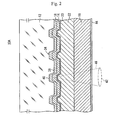
- An aspect of the present invention relates to an optical information recording medium comprising a recording layer on a surface of a support, wherein the surface of the support has pregrooves comprised of plural grooves and lands positioned between adjacent grooves, the pregrooves have a track pitch ranging from 50 to 500 nm, a reflective layer, the recording layer, a barrier layer, and a cover layer are positioned in this order on the surface of the support, and a layer formed by curing an ultraviolet radiation-curable composition is positioned between the barrier layer and the cover layer, the layer having a glass transition temperature of equal to or lower than 25°C, the recording layer ranges in thickness from 1 to 100 nm on the lands and from 5 to 150 nm on the grooves, the recording layer comprises at least one azo dye compound selected from the group consisting of an azo compound and an azo metal complex compound comprising an azo compound and a metal ion or metal oxide ion, and the azo dye compound has an attenuation coefficient ranging from 0.15
- the azo dye compound may have a refractive index ranging from 1.45 to 1.75 at a wavelength of 405 nm.
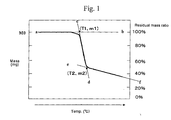
- the azo dye compound may have a thermal decomposition property such that a mass reduction rate is equal to or greater than 10 percent in a main reduction process in thermal mass spectrometry.
- the azo dye compound may exhibit a total quantity of heat generated in the main reduction process ranging from -200 to 500 J/g.
- the azo dye compound may have a thermal decomposition temperature ranging from 250 to 350°C.
- the metal ion comprised in the azo metal complex compound may be a copper ion.
- a ratio of the thickness on the lands and the thickness on the grooves, the thickness on the lands/the thickness on the grooves, of the recording layer may range from 0.1 to 1.
- the ultraviolet radiation-curable composition may comprise 20 to 99 weight parts of monofunctional (meth)acrylate and 1 to 80 weight parts of polyfunctional (meth)acrylate per 100 weight parts of the ultraviolet radiation-curable composition.
- information may be recorded by irradiation of a laser beam having a wavelength ranging from 390 to 440 nm.
- a further aspect of the present invention relates to a method of recording information onto the recording layer comprised in the above optical information recording medium by irradiation of a laser beam having a wavelength ranging from 390 to 440 nm onto the optical information recording medium.
- the present invention permits economical production of an optical information recording medium affording excellent recording characteristics in high-density recording by irradiation of a short-wavelength laser beam.
- the optical information recording medium of the present invention comprises a recording layer on a surface of a support.
- the surface of the support has pregrooves comprised of plural grooves and lands positioned between adjacent grooves, the pregrooves have a track pitch ranging from 50 to 500 nm.
- the optical information recording medium of the present invention comprises a reflective layer, the recording layer, a barrier layer, and a cover layer in this order on the surface.
- the recording layer ranges in thickness from 1 to 100 nm on the lands and from 5 to 150 nm on the grooves.
- the present invention can yield good recording characteristics in optical information recording media of the above Blu-ray disk structure:
- the azo dye compound When a recording layer comprising the above azo dye compound is irradiated with a laser beam, the azo dye compound can absorb the laser beam to generate heat. This heat is thought to thermally decompose the dye skeleton or its substituent, thereby generating gas which then forms voids within pits.
- the refractive index of portions that have not been irradiated with a laser beam is generally about 1.3 to 1.9, while the refractive index of portions in which voids have been formed by irradiation with a laser beam is about 1.0, greatly differing from that of portions that have not been irradiated. This is thought to make it possible to achieve a large refractive index difference and enhance recording characteristics.
- an azo dye compound with an attenuation coefficient ranging from 0.15 to 0.3 at a wavelength of 405 nm is thought to improve the formation of voids.
- the formation of voids is normally accompanied by deformation of the recording layer.
- the voids do not form properly and it becomes difficult to achieve adequate recording characteristics.
- the support and the reflective layer generally have greater rigidity than the bonding layer and the barrier layer.
- the recording layer pushes upward on the barrier layer; when the bonding layer positioned between the barrier layer and the cover layer has suitable flexibility, the concave deformation is generated in the bonding layer.
- the bonding layer positioned between the barrier layer and the cover layer deforms readily in this manner, the formation of voids in the recording layer is not impeded, and pits can be properly formed.
- the bonding layer which has a glass transition temperature of equal to or lower than 25°C and is thus flexible, can readily deform during void formation, permitting good void formation and the achievement of excellent recording characteristics. Furthermore, the optical information recording medium of the present invention can afford good reproduction durability.
- the recording layer of the optical information recording medium of the present invention can be formed by the same method as the method used to form the recording layer in conventional CD-Rs, DVD-Rs, and the like. Further, forming the bonding layer from an ultraviolet radiation-curable composition can simplify the device that is required to bond with the cover layer and shorten the bonding time, permitting inexpensive manufacturing. Further, by employing the azo dye compound with an attenuation coefficient ranging from 0.15 to 0.3 in the recording layer, the optical information recording medium having both excellent recording characteristics and reproduction durability can be obtained. According to the present invention as set forth above, the optical information recording medium affording good recording characteristics, reproduction durability and excellent productivity can be obtained.
- Fig. 2 shows an example of the optical information recording medium of the present invention.
- the first optical information recording medium 10A shown in Fig. 2 is comprised of first light reflective layer 18, first recordable layer 14, barrier layer 20, bonding layer 22, and cover layer 16, in that order on first support 12.
- the materials constituting the support and the other layers employed in the present invention will be sequentially described below.
- any of the various materials conventionally employed as support materials for optical information recording media may be selected for use as the support employed in the present invention.
- a transparent disk-shaped support is preferably employed as the support.
- Specific examples are glass, acrylic resins such as polycarbonate and polymethyl methacrylate, vinyl chloride resins such as polyvinyl chloride and vinyl chloride copolymers, epoxy resins, amorphous polyolefins, polyesters, and metals such as aluminum. They may be employed in combination as desired.
- thermoplastic resins such as amorphous polyolefins and polycarbonates are preferable, and polycarbonates are particularly preferable, from the perspectives of resistance to humidity, dimensional stability, low cost, and the like.
- the support can be manufactured by injection molding.
- the thickness of the support generally falls within a range of 0.7 to 2 mm, preferably a range of 0.9 to 1.6 mm, and more preferably, within a range of 1.0 to 1.3 mm.
- an undercoating layer can be formed on the surface of the support on the side on which the light reflective layer, described further below, is positioned.
- pregrooves comprised of plural grooves and lands positioned between adjacent grooves are formed on the surface of the support on which the recording layer is formed. These pregrooves are provided to achieve a higher recording density than in CD-Rs and DVD-Rs.
- the optical information recording medium of the present invention is suited to use as a medium for a blue laser.
- the track pitch of the pregrooves ranges from 50 to 500 nm.
- the upper limit is preferably equal to or lower than 420 nm, more preferably equal to or lower than 370 nm, and further preferably, equal to or lower than 330 nm.
- the lower limit is preferably equal to or higher than 100 nm, more preferably equal to or higher than 200 nm, and further preferably, equal to or higher than 260 nm.
- the track pitch of the pregrooves is preferably equal to or higher than 100 nm and equal to or lower than 420 nm, more preferably equal to or higher than 200 nm and equal to or lower than 370 nm, and further preferably, equal to or higher than 260 nm and equal to or lower than 330 nm.
- the groove width (viz., a width at the half of a depth) of the pregrooves preferably ranges from 25 to 250 nm.
- the upper limit is preferably equal to or lower than 240 nm, more preferably equal to or lower than 230 nm, and further preferably, equal to or lower than 220 nm.
- the lower limit is preferably equal to or higher than 50 nm, more preferably equal to or higher than 80 nm, and further preferably, equal to or higher than 100 nm.
- the groove width of the pregrooves is preferably equal to or higher than 50 nm and equal to or lower than 240 nm, more preferably equal to or higher than 80 nm and equal to or lower than 230 nm, and further preferably, equal to or higher than 100 nm and equal to or lower than 220 nm.
- the groove depth of the pregrooves preferably ranges from 5 to 150 nm.
- the upper limit is preferably equal to or lower than 85 nm, more preferably equal to or lower than 80 nm, and further preferably, equal to or lower than 75 nm.
- the lower limit is preferably equal to or higher than 10 nm, more preferably equal to or higher than 20 nm, and still more preferably, equal to or higher than 28 nm.
- the groove depth of the pregrooves is preferably equal to or higher than 10 nm and equal to or lower than 85 nm, more preferably equal to or higher than 20 nm and equal to or lower than 80 nm, and further preferably, equal to or higher than 28 nm and equal to or lower than 75 nm.
- the upper limit of the groove tilt angle at the half of a depth of the pregrooves is preferably equal to or less than 80°, more preferably equal to or less than 75°, further preferably equal to or less than 70°, and still more preferably, equal to or less than 65°.
- the lower limit is preferably equal to or more than 20°, more preferably equal to or more than 30°, and still more preferably, equal to or more than 40°.
- the reflective layer can be formed, for example, by vacuum vapor depositing, by sputtering, or by ion plating a light reflective substance with high reflectance for the laser beam on the support.
- the thickness of the light reflective layer normally ranges from 10 to 300 nm, and preferably ranges from 20 to 200 nm.
- the reflectance is preferably equal to or greater than 70 percent.
- Examples of light reflective substances of high reflectance are: metals and semimetals such as Mg, Se, Y, Ti, Zr, Hf, V, Nb, Ta, Cr, Mo, W, Mn, Re, Fe, Co, Ni, Ru, Rh, Pd, Ir, Pt, Cu, Ag, Au, Zn, Cd, Al, Ga, In, Si, Ge, Te, Pb, Po, Sn, Bi, and stainless steel.
- metals and semimetals such as Mg, Se, Y, Ti, Zr, Hf, V, Nb, Ta, Cr, Mo, W, Mn, Re, Fe, Co, Ni, Ru, Rh, Pd, Ir, Pt, Cu, Ag, Au, Zn, Cd, Al, Ga, In, Si, Ge, Te, Pb, Po, Sn, Bi, and stainless steel.
- These reflective substances may be employed singly, in combinations of two or more, or as alloys.
- Cr, Ni, Pt, Cu, Ag, Au, A1 and stainless steel
- the optical information recording medium of the present invention comprises at least one azo dye compound having an attenuation coefficient ranging from 0.15 to 0.30 at a wavelength of 405 nm.
- the above azo dye compound makes it possible to achieve a large refractive index difference in the short wavelength region. Through combination with the bonding layer, described further below, excellent recording characteristics by irradiation of a short-wavelength laser beam in particular can be achieved.
- the term "azo dye compounds” includes (i) azo compounds and (ii) azo metal complex compounds comprising an azo compound and a metal ion or metal oxide ion.
- the attenuation coefficient of the azo dye compound at a wavelength of 405 nm ranges from 0.15 to 0.3.
- the attenuation coefficient at a wavelength of 405 nm will be referred to as attenuation coefficient k.
- the optical information recording medium of the present invention sequentially comprises a support, having a surface in which are formed pregrooves comprised of plural grooves and lands positioned between adjacent grooves; a reflective layer formed on this surface; a recording layer; a barrier layer; and a cover layer.
- the track pitch of the pregrooves ranges from 50 to 500 nm.
- the recording layer ranges in thickness from 1 to 100 nm on the lands and ranges from 5 to 150 nm on the grooves.
- Attenuation coefficient k is preferably 0.17 ⁇ k ⁇ 0.3, more preferably 0.18 ⁇ k ⁇ 0.29, and further preferably, 0.19 ⁇ k ⁇ 0.28.
- the azo dye compound preferably has a refractive index ranging from 1.45 to 1.75 at a wavelength of 405 nm.
- refractive index n the refractive index for light with a wavelength of 405 nm.
- refractive index n of the azo dye compound is preferably 1.45 ⁇ n ⁇ 1.70, more preferably 1.46 ⁇ n ⁇ 1.67, and further preferably, 1.47 ⁇ n ⁇ 1.65.
- Refractive index n and attenuation coefficient k are values that can be determined by measurement analysis with a spectral ellipsometer (Model M-2000, made by J. A. Woollam Japan Corp.), for example, of a dye film formed with a coating liquid prepared by dissolving the azo dye compound in a suitable solvent.
- a spectral ellipsometer Model M-2000, made by J. A. Woollam Japan Corp.
- 2 g of the azo dye compound can be dissolved in 100 mL of 2,2,2,3-tetrafluoropropanol to obtain a dye-containing coating liquid.
- the coating liquid can then be coated on a glass sheet 1.1 mm in thickness by spin coating at 23°C and 50 percent RH while varying the rotational speed from 500 to 1,000 rpm to form a dye film,
- the above measuring device can then be used to measure the values of refractive index n and attenuation coefficient k.
- the thermal decomposition temperature of the azo dye compound preferably ranges from 250 to 350°C, more preferably ranges from 250 to 340°C, further preferably ranges from 255 to 330°C, and still more preferably, ranges from 260 to 320°C.
- the thermal decomposition temperature is a value obtained by TG/DTA measurement.
- the temperature can be raised by 10°C/min over a range of 30 to 550°C under an N 2 gas flow (flow rate 200 mL/min) with an EXSTAR 6000 made by Seiko Instruments, Inc. and the temperature at the point where the mass reduction rate reaches 10 percent adopted as the thermal decomposition temperature.
- the refractive index, attenuation coefficient, and thermal decomposition temperature of the azo dye compound at 405 nm are preferably such that: 1.45 ⁇ n ⁇ 1.70, 0.17 ⁇ k ⁇ 0.3, with the thermal decomposition temperature being equal to or higher than 250°C and equal to or lower than 340°C; more preferably 1.46 ⁇ n ⁇ 1.67, 0.18 ⁇ k ⁇ 0.29, with the thermal decomposition temperature being equal to or higher than 255°C and equal to or lower than 330°C; and further preferably, 1.47 ⁇ n ⁇ 1.65, 0.19 ⁇ k ⁇ 0.28, with the thermal decomposition temperature being equal to or higher than 260°C and equal to or lower than 320°C.
- an azo dye compound having a thermal decomposition property such that the mass reduction rate is equal to or greater than 10 percent in the main reduction process in thermal mass spectrometry is preferably employed.
- the mass reduction results from thermal decomposition when the temperature of the compound is raised over a certain temperature range. Although this also depends on the type of compound, normally there will be a number of temperature ranges (mass reduction processes) exhibiting a large reduction in mass. In the present invention, the mass reduction process (reduction process) exhibiting the greatest amount of mass reduction is called the main reduction process.
- the mass reduction rate can be determined by the following method.
- the temperature of a compound of mass M0 is raised 10°C/minute in a nitrogen atmosphere.
- the mass diminishes by minute increments along a nearly straight line a-b.
- a sudden reduction in mass occurs along a nearly straight line c-d.
- the sharp mass reduction ends and a mass reduction occurs along a nearly straight line e-f.
- T1 (°C) the temperature is denoted by T1 (°C) and the residual mass ratio relative to initial mass M0 is denoted by m1(%).
- T2 °C
- m2 the residual mass ratio relative to initial mass M0
- azo dye compounds having a thermal decomposition property in the form of a mass reduction rate of equal to or greater than 20 percent during thermal decomposition at 150 to 400°C are preferred, and those having a thermal decomposition property in the form of a mass reduction rate of equal to or greater than 25 percent during thermal decomposition at 200 to 400°C are of even greater preference.
- the thermal decomposition property of the dye can be controlled by the types of substituents and the like incorporated onto the dye skeleton.
- the mass reduction rate can be determined by raising the temperature by 10°C/minute over a range of 30 to 550°C under a N 2 gas flow (gas flow 200 mL/min) with an EXSTAR 6000 made by Seiko Instruments, Inc..
- the portion of the recording layer irradiated by the laser beam undergoes a local rise in temperature, and the recording dye in that portion is thought to undergo thermal decomposition.
- organic substances either absorb or generate heat as their state changes prior to reaching the thermal decomposition temperature.
- a large amount of heat is generated prior to reaching the thermal decomposition temperature, a large amount of energy is imparted to the gas that is generated during thermal decomposition.
- heat generated during the formation of a recording pit will affect earlier recording pits, deforming them.
- the above-described main reduction process occurs in a temperature range immediately preceding the gas decomposition temperature.
- the total quantity of heat generated in the main reduction process that is, the total amount of heat generated over the temperature range (T1 to T2 in Fig. 1 ) between the temperature at which reduction begins (T1 in Fig. 1 ) and the temperature at which reduction ends (T2 in Fig.
- total heat generation Q (also referred to as "total heat generation Q", hereinafter) in the main reduction process of the azo dye compound preferablly falls within a range of -200 to 500 J/g. When total heat generation Q falls within this range, pits of desired shape can be properly formed, thereby yielding good recording and reproduction characteristics.
- the preferred range for Q is -200 to 450 J/g, with a range of -160 to 350 J/g being preferred.
- Total heat generation Q can be determined by measuring the quantity of heat generated in the temperature range between the reduction starting temperature (T1 in Fig. 1 ) and the reduction ending temperature (T2 in Fig. 1 ) in the main reduction process by differential scanning calorimetry (DSC) with a DSC6200R made by Seiko Instruments, Inc., in thermal mass spectrometry.
- DSC differential scanning calorimetry
- gas corresponding to the reduction in mass will vaporize during the thermal decomposition of an organic substance. Since the energy imparted to this gas is also included in Q, DSC measurement is conducted in a closed atmosphere. Specifically, DSC measurement can be conducted with the sample sealed in an SUS sealed container or the like.
- the azo dye compound comprised in the recording layer will be described in greater detail below.
- Q 11 denotes an atom group forming a nitrogen-containing heterocyclic ring
- Q 12 denotes an atom group forming a heterocyclic ring or a carbon ring
- Y 11 denotes a group capable of coordinating with a metal ion or metal oxide ion.
- Q 21 and Q 22 each independently denote an atom group forming a heterocyclic ring or a carbon ring
- Y 21 and Y 22 each independently denote a group capable of coordinating with a metal ion or metal oxide ion.
- Q 31 denotes an atom group forming a heterocyclic ring or carbon ring
- Q 32 denotes an atom group forming a nitrogen-containing heterocyclic ring
- Y 31 denotes a group capable of coordinating with a metal ion or metal oxide ion
- R 31 denotes a hydrogen atom or a substituent.
- Q 11 denotes an atom group forming a nitrogen-containing heterocyclic ring.
- the nitrogen-containing heterocyclic ring formed by Q 11 is not specifically limited; examples are: pyrazole rings, pyrrole rings, imidazole rings, thiazole rings, isothiazole rings, oxazole rings, isooxazole rings, 1,2,4-thiadiazole rings, 1,3,4-thiadiazole rings, pyridine rings, pyrazine rings, pyrimidine rings, and pyridazine rings.
- Q 12 denotes an atom group forming a heterocyclic ring or a carbon ring.
- the ring formed by Q 12 it suffices for the ring formed by Q 12 to be a heterocyclic ring formed of one or more carbon atoms and hetero atoms (such as an oxygen atom, sulfur atom, and nitrogen atom); there is no specific limitation. Examples are: pyrazole rings, pyrrole rings, furan rings, thiophene rings, imidazole rings, thiazole rings, isothiazole rings, oxazole rings, isooxazole rings, pyridine rings, pyrazine rings, pyrimidine rings, and pyridazine rings. These rings may be substituted, and may be condensed.
- (A) is a hydroxyl group.
- R 3 denotes a hydrogen atom or substituent; the plural R 3 s may be identical or different from each other. R 3 s may be joined together through a linking group.
- R 3 preferably denotes a substituent.
- the substituent is not specifically limited; examples are: alkyl groups (preferably having 1 to 30 carbon atoms, more preferably having 1 to 20 carbon atoms, further preferably having 1 to 10 carbon atoms, such as methyl groups, ethyl groups, isopropyl groups, tert-butyl groups, n-octyl groups, n-decyl groups, n-hexadecyl groups, cyclopropyl groups, cyclopentyl groups, and cyclohexyl groups), and aryl groups (preferably having 6 to 30 carbon atoms, more preferably having 6 to 20 carbon atoms, further preferably having 6 to 12 carbon atoms, such as phenyl groups, p-methylphenyl groups, naph
- the atom groups denoted by Q 11 and Q 12 may have substituents. From the perspective of solubility in the coating solvent, the presence of substituents is preferable.
- the substituents are not specifically limited; examples are: halogen atoms, alkyl groups (including cycloalkyl groups and bicycloalkyl groups), alkenyl groups (including cycloalkenyl groups and bicycloalkenyl groups), alkynyl groups, aryl groups, heterocyclic groups, cyano groups, hydroxyl groups, nitro groups, carboxyl groups, alkoxy groups, aryloxy groups, silyloxy groups, heterocyclic oxy groups, acyloxy groups, carbamoyloxy groups, alkoxycarbonyloxy groups, aryloxycarbonyloxy, amino groups (including anilino groups), acylamino groups, aminocarbonylamino groups, alkoxycarbonylamino groups, aryloxycarbonylamino groups, sulfamoy
- alkyl groups [linear, branched, or cyclic substituted or unsubstituted alkyl groups including alkyl groups (preferably alkyl groups having 1 to 30 carbon atoms such as methyl groups, ethyl groups, n-propyl groups, isopropyl groups, t-butyl groups, n-octyl groups, eicosyl groups, 2-chloroethyl groups, 2-cyanoethyl groups, and 2-ethylhexyl groups), cycloalkyl groups (preferably substituted or unsubstituted cycloalkyl groups having 3 to 30 carbon atoms such as cyclohexyl groups, cyclopentyl groups, and 4-n-dodecylcyclohexyl groups), bicycloalkyl groups (preferably substituted or unsubstituted
- the hydrogen atom may be replaced with a substituent in the form of one of the above groups.
- Examples of such functional groups are alkylcarbonylaminosulfonyl groups, arylcarbonylaminosulfonyl groups, alkylsulfonylaminocarbonyl groups, and arylsulfonylaminocarbonyl groups. Examples are methylsulfonylaminocarbonyl groups, p-methylphenylsulfonylaminocarbonyl groups, acetylaminosulfonyl groups, and benzoylaminosulfonyl groups.
- the substituent is not preferably included in any one from among hydroxyl groups, alkyloxy groups, aryloxy groups, thiol groups, alkylthio groups, arylthio groups, amino groups, alkylamino groups, and anilino groups.
- the substituent is preferably a halogen, nitro group, cyano group, substituted or unsubstituted alkyl group having 1 to 10 carbon atoms, substituted or unsubstituted aryl group having 6 to 20 carbon atoms, substituted or unsubstituted acyl group having 2 to 10 carbon atoms, substituted or unsubstituted alkoxycarbonyl group having 2 to 10 carbon atoms, substituted or unsubstituted aryloxycarbonyl group having 7 to 10 carbon atoms, substituted or unsubstituted alkylsulfonyl group having 1 to 10 carbon atoms, substituted or unsubstituted arylsulfonyl group having 6 to 10 carbon atoms, or substituted or unsubstituted alkoxysulfonyl group having 1 to 10 carbon atoms; preferably a cyano group, substituted or unsubstituted alkyl group having 1 to 10 carbon atoms,
- Y 11 denotes a group capable of coordinating with a metal ion or metal oxide ion.
- the group that is capable of coordinating with a metal ion or metal oxide ion is not specifically limited; examples are hydroxyl groups, thiol groups, amino groups, carboxyl groups, and sulfonic acid groups.
- Y 11 preferably denotes a hydroxyl group, amino group (preferably an amino group, substituted or unsubstituted alkylamino group having 1 to 30 carbon atoms or a substituted or unsubstituted anilino group having 6 to 30 carbon atoms, such as an amino group, methylamino group, dimethylamino group, anilino group, N-methylanilino group, or diphenylamino group); acylamino group (preferably, a formylamino group, substituted or unsubstituted alkylcarbonylamino group having 1 to 30 carbon atoms, or substituted or unsubstituted arylcarbonylamino group having 6 to 30 carbon atoms, such as a formylamino group, acetylamino group, pivaloylamino group, lauroylamino group, benzoylamino group, or 3,4,5-tri-n-octyloxyphenylcarbonyla
- Y 11 is an amino group having a substituent, it is preferably a substituted or unsubstituted anilino group having 6 to 30 carbon atoms, substituted or unsubstituted acylamino group having 2 to 30 carbon atoms, substituted or unsubstituted arylcarbonylamino group having 6 to 30 carbon atoms, substituted or unsubstituted aminocarbonylamino group having 1 to 30 carbon atoms, substituted or unsubstituted alkoxycarbonylamino group having 2 to 30 carbon atoms, substituted or unsubstituted aryloxycarbonylamino group having 7 to 30 carbon atoms, substituted or unsubstituted sulfamoylamino group having 0 to 30 carbon atoms, substituted or unsubstituted alkylsulfonylamino group having 1 to 30 carbon atoms, or substituted or unsubstituted arylsulfonylamino
- Y 11 denotes an amino group having a substituent
- the substituent may bond with the atom group denoted by Q 12 to form a ring; such cases are also desirable.
- the ring thus formed are five-membered rings comprising 1 to 3 nitrogen atoms and six-membered rings comprising 1 to 4 nitrogen atoms. Five-membered rings having two or three nitrogen atoms are desirable and five-membered rings having three nitrogen atoms are preferred. Specific desirable examples when a five-membered ring comprising three nitrogen atoms is formed are the condensed structures comprised in Example compounds (AZO-1) and (AZO-2) below.
- Q 21 and Q 22 each independently denote an atom group forming a heterocyclic ring or a carbon ring.
- the details of Q 21 and Q 22 are as set forth above for Q 12 in general formula (A).
- Y 21 and Y 22 each independently denote a group capable of coordinating with a metal ion or metal oxide ion. The details are identical to those set forth above for Y 11 in general formula (A).
- Q 31 denotes an atom group forming a heterocyclic ring or carbon ring. The details are as set forth above for Q 12 in general formula (A).
- Q 32 denotes an atom group forming a nitrogen-containing heterocyclic ring.
- the nitrogen-containing heterocyclic group formed by Q 32 is preferably a ring denoted by one of partial structure formulas (q-1) to (q-4), more preferably the ring denoted by (q-1) or (q-2), and further preferably, the ring denoted by (q-1).
- R 31 corresponds to R 31 in general formula (C), and R 41 to R 46 each independently denote a substituent.
- R 31 in general formula (C) denotes a hydrogen atom or a substituent.
- the substituent denoted by R 31 is not specifically limited; preferable examples are substituents having a group that is capable of coordinating with a metal ion or metal oxide ion, with groups forming a nitrogen-containing heterocyclic ring being preferred.
- the nitrogen-containing heterocyclic ring is not specifically limited; examples are rings that form pyrazole rings, imidazole rings, thiazole rings, oxazole rings, 4,5-dihydroimidazole rings, 4,5-dihydrooxazole rings, 4,5-dihydrothiazole rings, 1,2,4-thiadiazole rings, 1,3,4-tiadiazole rings, 1,2,4-triazole rings, pyridine rings, pyrazine rings, pyrimidine rings, pyridazine rings, or 1,3,5-triazine rings. These rings may be further substituted and may be condensed.
- the nitrogen-containing heterocyclic group is preferably a thiazole ring, oxazole ring, 1,2,4-thiadiazole ring, 1,3,4-thiadiazole ring, 1,2,4-triazole ring, pyridine ring, pyrazine ring, pyrimidine ring, pyridazine ring, or triazine ring; more preferably a thiazole ring, oxazole ring, pyridine ring, pyrazine ring, pyrimidine ring, pyridazine ring, or triazine ring; further preferably a thiazole ring, pyridine ring, pyrazine ring, or triazine ring; and still more preferably, a thiazole ring or pyridine ring.
- R 31 denotes a hydrogen atom
- the hydrogen atom is preferably dissociated, with the nitrogen atom formerly bound to the hydrogen atom covalently bonding to a metal ion to form an azo metal complex.
- R 41 to R 46 in partial structure formulas (q-1) to (q-4) above each independently denote a hydrogen atom or a substituent.
- R 41 to R 46 preferably denote substituents from the perspective of enhancement of solubility. These substituents are not specifically limited; examples are the substituents further substituting the atom groups denoted by Q 11 and Q 12 above.
- R 41 , R 43 , and R 44 preferably denote groups selected from among substituted and unsubstituted carbon ring groups having 6 to 20 carbon atoms, substituted and unsubstituted heterocyclic groups having 6 to 20 carbon atoms, substituted and unsubstituted alkyloxycarbonyl groups having 2 to 10 carbon atoms, substituted and unsubstituted aryloxycarbonyl groups having 7 to 10 carbon atoms, substituted and unsubstituted alkylaminocarbonyl groups having 2 to 10 carbon atoms, substituted and unsubstituted anilinocarbonyl groups having 7 to 10 carbon atoms, substituted and unsubstituted alkylsulfonyl groups having 1 to 10 carbon atoms, substituted and unsubstituted arylsulfonyl groups having 6 to 10 carbon atoms, and cyano groups; more preferably denote groups selected from among substituted and unsubstituted alkyloxycarbony
- R 42 , R 45 , and R 46 preferably denote hydrogen atoms, substituted or unsubstituted alkyl groups having 1 to 10 carbon atoms, or substituted or unsubstituted aryl groups having 6 to 10 carbon atoms. From the perspective of solubility, they more preferably denote substituted or unsubstituted alkyl groups having 1 to 10 carbon atoms or substituted or unsubstituted aryl groups having 6 to 10 carbon atoms.
- the alkyl groups are preferably branched alkyl groups having 3 to 6 carbon atoms, more preferably tertiary alkyl groups having 4 to 6 carbon atoms.
- Y 31 in general formula (C) denotes a group capable of coordinating with a metal ion or a metal oxide ion. The details are identical to those set forth for Y 11 in general formula (A) above.
- the azo compound described above is contained in the recording layer as a recording dye in a state in which a complex is not formed with a metal ion or metal oxide ion. Not containing a metal ion or metal oxide ion is desirable from the perspective of the effect on the environment and the human body. From the perspective of the stability and light resistance of the dye film, an azo compound denoted by general formula (C) is desirable as the above azo compound.
- the above azo metal complex compound comprises an azo compound and a metal ion or metal oxide ion.
- the azo metal complex compound is a dye that is produced by reacting an azo compound and a metal ion or a metal oxide ion to form a coordinate bond between the azo compound and the metal ion.
- an azo metal complex dye containing the azo dye denoted by general formula (A), (B), or (C) above and a metal ion or a metal oxide ion is particularly suited to use as the azo metal complex dye.
- Y 11 , Y 12 , and Y 13 each comprise a hydrogen atom, and they preferably become an anionic group through the dissociation of a hydrogen atom during the formation of the azo metal complex dye.
- metal ion examples include metal ions of Mg, Al, Si, Ca, Sc, Ti, V, Cr, Mn, Fe, Co, Ni, Cu, Zn, Ga, Ge, As, Sr, Y, Zr, Nb, Mo, Tc, Ru, Rh, Pd, Ag, Cd, In, Sn, Sb, Ba, Pr, Eu, Yb, Hf, Ta, W, Re, Os, Ir, Pt, Au, Hg, Tl, Pb, Bi, and Th.
- the ions of transition metal atoms are desirable.
- metal oxide ions are oxide ions of these metals.
- the transition metal ions include the elements of groups IIIa to VIII and Ib of the Periodic Table of the Elements. They are elements having an incomplete d electron shell.
- the transition electron atoms are not specifically limited; Mn, Fe, Co, Ni, Cu, Zn, and Cr are preferable; Mn, Fe, Co, Ni, Cu, and Zn are more preferable; Mn, Fe, Co, Ni, and Cu are further preferable; and from the perspective of recording and reproduction characteristics, Mn, Fe, and Cu are of still greater preference.
- Divalent and trivalent metal atoms are preferable and divalent metal atoms are more preferable as the metal ions.
- Examples of divalent and trivalent metals are: Mn 2+ , Fe 2+ , Fe 3+ , Co 2+ , Co 3+ , Ni 2+ , Ni 3+ , Cu 2+ , Zn 2+ , Cr 3+ , Ru 2+ , Rh 3+ , Pd 2+ , Ir 3+ , and Pt 2+ ; Mn 2+ , Fe 2+ , Fe 3+ , Co 2+ , Co 3+ , Ni 2+ , Ni 3+ , Cu 2+ , and Zn 2+ are preferable; Mn 2+ , Fe 2+ , Co 2+ , Co 3+ , Ni 2+ , Ni 3+ , Cu 2+ are more preferable; and Mn 2+ , Fe 2+ , and Cu 2+ are further preferable.
- the azo metal complex compound prefferably contains a central metal ion in the form of a copper ion, iron ion, or manganese ion, with a copper ion being preferred.
- An example of a common method of reacting an azo compound with a metal ion (or metal oxide ion) to obtain a metal azo chelate dye is the method of stirring the azo compound and metal salt (including metal complex and metal oxide salt) in an organic solvent, in water, or in a mixed solution thereof, in the presence of a base. Neither the type of metal salt, type of base, type of organic solvent or mixture thereof, nor the reaction temperature is limited.
- An example of a method of synthesizing an azo metal complex dye suitable for use in the present invention is given below.
- an azo metal complex dye comprised of the above azo compound and metal ion (or metal oxide ion) is given below.
- Methanol is described as the reaction solvent below, but the reaction solvent is not limited to methanol.
- the reaction solvent is preferably an alcohol capable of dissolving the metal ion.
- Triethylamine is described as the base below, but the base is not limited to triethylamine.
- the dotted line linking M to the nitrogen atom denotes a coordination bond, but the compound would be the same even if the coordination bond were not present and there were no bond.
- the various azo metal complex dyes comprised of various azo compounds and metal ions (or metal oxide ions) that are suitable for use in the present invention can all be synthesized by the similar method.
- Z denotes an oxygen atom, sulfur atom, or bivalent linking group denoted by NR 36 ;
- R 36 denotes a hydrogen atom or substituent;
- q denotes 1 or 2;
- n1 denotes an integer ranging from 1 to 3; and
- n3 denotes the same number as q.
- the triethylammonium cation of the azo metal complex dye obtained by the above synthesis method can be subjected to a cation exchange reaction in solvent.
- the azo dye is reacted with a Co salt, Ni salt, Mn salt, Fe salt, or the like to obtain the above azo metal complex dye.
- polynuclear copper azo complex comprising multiple copper ions within a molecule can be synthesized.
- examples of the polynuclear copper azo complex are pentanuclear copper complex formed by five coppers and four azo compounds and dinuclear copper complex formed by two coppers and two azo compounds. Which complex is formed depends on the azo compound that will become a ligand, a base employed and the like.
- the main peak or fragment can be confirmed by various mass spectrometers such as MALDI-MS, ESI-MS, and FAB-MS.
- mass spectrometers such as MALDI-MS, ESI-MS, and FAB-MS.
- a peak of a compound in which two coppers bind to two azo ligands from which a proton has been dissociated a peak of a compound in which three coppers bind to two azo ligands from which a proton has been dissociated, a peak of a compound in which four coppers bind to two azo ligands from which a proton has been dissociated, and the like may be observed.
- a complex comprising a base can be obtained.
- the structure of the above polynuclear copper azo complex can be analyzed by various analysis method (such as X-ray structural analysis, ICP-OES (ICP optical emission spectrometry), elemental analysis, ESR (electron spin resonance) and the like.
- analysis method such as X-ray structural analysis, ICP-OES (ICP optical emission spectrometry), elemental analysis, ESR (electron spin resonance) and the like.
- An azo metal complex can be synthesized by a similar method for general formula (C'), as well.
- Y 31 denotes an -OH group
- the reaction can be conducted under conditions where a base is not present, but it is preferable that the reaction is conducted under conditions where a base is present.
- the base is preferably an organic base, examples of which are: primary to tertiary amines having 1 to 30 carbon atoms (such as triethylamine, diisopropylamine, pyrrolidine, N-methylpyrrolidine, and n-butylamine); amidines (such as DBU (1,8-diazabicyclo[5.4.0]-7-undecene) and DBN (1,5-diazabicyclo[4.3.0]-5-nonene); guanidines (such as tetramethylguanidine); nitrogen-containing heterocycles (such as pyridine and imidazole); and tetrabutylammoniumhydroxide.
- primary to tertiary amines having 1 to 30 carbon atoms such as triethylamine, diisopropylamine, pyrrolidine, N-methylpyrrolidine, and n-butylamine
- amidines such as DBU (1,8-diazabicyclo[5.4.0]
- the organic solvent is preferably a primary to tertiary amine having 1 to 30 carbon atoms, more preferably a primary to tertiary amine having 1 to 20 carbon atoms, further preferably a primary to tertiary amine having 1 to 10 carbon atoms, and still more preferably, a secondary or tertiary amine having 1 to 10 carbon atoms.
- azo metal complex dyes suitable for use as recording dyes in the optical information recording medium of the present invention are given below. However, the present invention is not limited thereto.
- polynuclear copper azo complex comprising multiple copper ions within a molecule that can be synthesized by reacting the compound denoted by general formula (C) in which Q 32 forms a pyrazole ring with a copper salt are described below, of which coordination structure may vary depending on types of the starting material azo dye compound and the base. Since it is difficult to determine all coordination structures of the azo complex, the starting materials such as a ligand, copper salt, base and the like are shown below. However, the fact that the azo complex is polynuclear complex can be confirmed by various analysis method described above.
- One or a combination of two or more of the above azo dye compounds may be employed as the recording layer dye in the recording layer.
- Dyes other than the above-described azo dye compound may be employed in combination. Desirable examples of such dyes that may be employed in combination are those exhibiting absorbance in the short wavelength range of equal to or shorter than 440 nm. Such dyes are not specifically limited; examples are azo dyes, azo metal complex dyes, phthalocyanine dyes, oxonol dyes, and cyanine dyes.
- the quantity of the recording layer dye employed ranges, by way of example, from 1 to 100 weight percent, preferably from 50 to 100 weight percent, and more preferably, from 75 to 100 weight percent, of the total weight of the recording layer.
- the ratio of the above azo dye compound to the total quantity of dye is preferably equal to or greater than 1 weight percent, more preferably 10 to 100 weight percent, and further preferably, 50 to 100 weight percent.
- the recording layer can be formed by dissolving the dye, with or without a binder or the like, in a suitable solvent to prepare a coating liquid, after which the coating liquid is then applied on a reflective layer, described further below, to form a coating, and the coating is dried.
- the recordable recording layer may be a monolayer or multilayered.
- a recording layer of multilayered structure can be formed by repeating the process of coating the coating liquid multiple times.
- the concentration of the dye in the coating liquid generally ranges from 0.01 to 15 weight percent, preferably ranges from 0.1 to 10 weight percent, more preferably ranges from 0.5 to 5 weight percent, and still more preferably, ranges from 0.5 to 3 weight percent.
- Examples of the solvent employed in the preparation of the coating liquid are: esters such as butyl acetate, ethyl lactate, and cellosolve acetate; ketones such as methyl ethyl ketone, cyclohexanone, and methyl isobutyl ketone; chlorinated hydrocarbons such as dichloromethane, 1,2-dichloroethane, and chloroform; amides such as dimethylformamide; hydrocarbons such as methyl cyclohexane; ethers such as tetrahydrofuran, ethyl ether, and dioxane; alcohols such as ethanol, n-propanol, isopropanol, n-butanol, and diacetone alcohol; fluorine-based solvents such as 2,2,3,3-tetrafluoro-1-propanol; and glycol ethers such as ethylene glycol monomethyl ether, ethylene glycol monoethyl ether, and prop
- solvents can be used singly or in combinations of two or more based on the solubility of the dye employed.
- Various additives such as binders, oxidation inhibitors, UV-absorbing agents, plasticizers, and lubricants can be added to the coating liquid as needed.
- the temperature of the coating liquid prefrably ranges from 23 to 50°C, more preferably from 24 to 40°C, and further preferably, from 23 to 38°C.
- the thickness of the recordable recording layer ranges from 1 to 100 nm on lands and from 5 to 150 nm on grooves.
- the thickness on lands (protruding portions of the above-described support) is preferably equal to or less than 70 nm, more preferably equal to or less than 50 nm, and further preferably, equal to or less than 30 nm.
- the lower limit is preferably equal to or greater than 5 nm, more preferably equal to or greater than 10 nm.
- the thickness of the recordable recording layer on grooves is preferably equal to or less than 100 nm, more preferably equal to or less than 50 nm.
- the lower limit is preferably equal to or greater than 10 nm, more preferably equal to or greater than 20 nm.
- the ratio of the thickness of the recordable recording layer on lands to the thickness of the recordable recording layer on grooves ((thickness of recording layer on lands)/(thickness of recording layer on grooves)) is preferably equal to or greater than 0.1, more preferably equal to or greater than 0.13, further preferably equal to or greater than 0.15, and still more preferably, equal to - or greater than 0.17.
- the upper limit is preferably equal to or less than 1, more preferably equal to or less than 0.9, further preferably equal to or less than 0.85, and still more preferably, equal to or less than 0.8.
- antifading agents may be incorporated into the recording layer to enhance the resistance to light of the recording layer.
- antifading agents are organic oxides and singlet oxygen quenchers.
- the compounds described in Japanese Unexamined Patent Publication (KOKAI) Heisei No. 10-151861 are desirable organic oxides for use as antifading agents.
- Singlet oxygen quenchers that are described in known publications such as patent specifications may be employed. Specific examples are described in Japanese Unexamined Patent Publication (KOKAI) Showa Nos.
- R 21 denotes an optionally substituted alkyl group and Q - denotes an anion.
- R 21 preferably denotes an optionally substituted alkyl group having 1 to 8 carbon atoms, more preferably an unsubstituted alkyl group having 1 to 6 carbon atoms.
- substituents on the alkyl group are: halogen atoms (such as F and Cl), alkoxy groups (such as methoxy groups and ethoxy groups), alkylthio groups (such as methylthio groups and ethylthio groups), acyl groups (such as acetyl groups and propionyl groups), acyloxy groups (such as acetoxy groups and propionyloxy groups), hydroxy groups, alkoxycarbonyl groups (such as methoxycarbonyl groups and ethoxycarbonyl groups), alkenyl groups (such as vinyl groups), and aryl groups (such as phenyl groups and naphthyl groups).
- halogen atoms alkoxy groups, alkylthio groups, and alkoxycarbonyl groups are preferable.
- anion denoted by Q - are: ClO 4 - , AsF 6 - , BF 4 - , and SbF 6 - .
- the quantity of the above-described antifading agent such as a singlet oxygen quencher, normally falls within a range of 0.1 to 50 weight percent, preferably a range of 0.5 to 45 weight percent, more preferably a range of 3 to 40 weight percent, and further preferably, a range of 5 to 25 weight percent of the quantity of dye.
- a layer (bonding layer) formed by curing an ultraviolet-curable composition is present between the barrier layer and cover layer.
- the glass transition temperature of the bonding layer is equal to or lower than 25°C.
- the glass transition temperature of the bonding layer is higher than 25°C, deformation of the bondihng layer accompanying the formation of voids in the recording layer does not readily take place, making it difficult to achieve adequate recording characteristics.
- the glass transition temperature of the bonding layer employed in the present invention preferably falls within a range of 25 to -100°C, more preferably 0 to -100°C, and still more preferably, -10 to -100°C.
- the glass transition temperature (Tg) in the present invention denotes the maximum value of the tangent of loss angle (tan ⁇ ) calculated based on dynamic viscoelastic behavior measured in tension mode or shear mode at a frequency of 1 Hz by a dynamic viscoelasticity measuring apparatus (such as a DVA-200 made by IT Instrument Control Co., Ltd.).
- the glass transition temperature obtained by differential scanning calorimetry (also referred to as the "glass transition temperature (DSC)" hereinafter) is also known.
- the glass transition temperature of the bonding layer employed in the present invention is preferably equal to or lower than 10°C, more preferably from -15 to -125°C, and further preferably, from -35 to -125°C as a glass transition temperature (DSC).
- the glass transition temperature of the bonding layer can be controlled through the formulation of the ultraviolet radiation-curable composition employed to form the bonding layer, and the type, curing conditions, and the like of the ultraviolet radiation-curable compound contained in this composition.
- the storage modulus of elasticity can be used as an index of the hardness of the bonding layer in the same manner as the glass transition temperature.
- the storage modulus of elasticity E' of the bonding layer in tension mode at 30°C is preferably equal to or lower than 30 MPa, more preferably equal to or lower than 15 MPa, and further preferably, equal to or lower than 10 MPa.
- the storage modulus of elasticity of the bonding layer is preferably equal to or higher than 0.001 MPa. That is, the storage modulus of elasticity of the bonding layer preferably falls within a range of 30 to 0.001 MPa, more preferably 15 to 0.010 MPa, and further preferably, 10 to 0.015 MPa.
- the storage modulus of elasticity G' of the bonding layer in shear mode at 30°C is preferably equal to or lower than 10 MPa, more preferably equal to or lower than 5 MPa, and still more preferably, equal to or lower than 3.3 MPa. From the perspective of storage properties, the storage modulus of elasticity of the bonding layer is preferably equal to or higher than 0.00033 MPa. That is, the storage modulus of elasticity of the bonding layer preferably falls within a range of 10 to 0.00033 MPa, more preferably 5 to 0.0033 MPa, and further preferably, 3.3 to 0.005 MPa.
- the storage modulus of elasticity in the same manner as the glass transition temperature, can be obtained from dynamic viscoelastic behavior measured at a frequency of 1 Hz with a dynamic viscoelasticity measuring apparatus (such as a DVA-200 made by IT Instrument Control Co., Ltd.).
- the tangent of loss angle (tan ⁇ ) obtained based on dynamic viscoelastic behavior when measured in tension mode or shear mode at 30°C preferably falls within a range of 2.0 to 0.001, more preferably a range of 1.5 to 0.002, and further preferably, a range of 1.0 to 0.003.
- the ultraviolet radiation-curable composition employed to form the recording layer is a coating liquid comprising an ultraviolet radiation-curable compound and various optional components, described further below.
- Polymerizable monomer components such as monofunctional (meth)acrylates and polyfunctional (meth)acrylates can be employed as the ultraviolet radiation-curable component. These may be employed singly or in combinations of two or more. Further, the acrylate of general formula (A) below and the methacrylate of general formula (B) below are referred to as (meth)acrylate; similarly, an acrylic acid and methacrylic acid are referred to as (meth)acrylic acid in the present invention.
- R 1 denotes a subustituent
- Examples of polymerizable monomers suitable for use in the present invention are given below.
- Examples of monofunctional (meth)acrylates are (meth)acrylates of general formulas (A) and (B) where substituent R 1 denotes a substituent such as a methyl group, ethyl group, propyl group, butyl group, sec-butyl group, tert-butyl group, pentyl group, hexyl group, heptyl group, 2-ethylhexyl group, octyl group, nonyl group, dodecyl group, hexadecyl group, octadecyl group, cyclohexyl group, benzyl group, methoxyethyl group, butoxyethyl group, phenoxyethyl group, nonylphenoxyethyl group, tetrahydrofurfuryl group, glycidyl group, 2-hydroxyethyl group,
- substituent R 1 denotes a butyl group, pentyl group, hexyl group, heptyl group, 2-ethylhexyl group, octyl group, nonyl group, or dodecyl group, more preferably a monomer in the form of butyl acrylate, hexyl acrylate, 2-ethylhexyl acrylate, octyl acrylate, nonyl acrylate, or dodecyl methacrylate.
- polyfunctional (meth)acrylate examples include 1,3-butylene glycol, 1,4-butanediol, 1,5-pentanediol, 3-methyl-1,5-pentanediol, 1,6-hexanediol, neopentyl glycol, 1,8-octanediol, 1,9-nonanediol, tricyclodecanedimethanol, ethylene glycol, polyethylene glycol, propylene glycol, dipropylene glycol, tripropylene glycol, polypropylene glycol, and other diacrylates; di(meth)acrylate of tris(2-hydroxyethyl)isocyanurate; di(meth)acrylate of diol obtained by adding 4 or more moles of ethylene oxide or propylene oxide to 1 mole of neopentyl glycol; di(meth)acrylate of diol obtained by adding 2 moles of ethylene oxide or propylene oxide to 1 mole
- N-vinyl-2-pyrrolidone acryloyl morpholine, vinyl imidazole, N-vinylcaprolactam, N-vinylformamide, vinyl acetate, (meth)acrylic acid, (meth)acrylamide, N-hydroxymethylacrylamide, and N-hydroxyethylacrylamide, and their alkylether compounds can also be employed.
- Polymerizable oligomers can also be employed as the ultraviolet radiation-curable compound.
- examples of polymerizable oligomers are polyester (meth)acrylate, polyether (meth)acrylate, epoxy (meth)acrylate, and urethane (meth)acrylate.
- a bonding layer with a glass transition temperature of equal to or lower than 25°C 20 to 99 weight parts of monofunctional (meth)acrylate and 1 to 80 weight parts of polyfunctional (meth)acrylate, preferably 30 to 99 weight parts of monofunctional (meth)acrylate and 1 to 70 weight parts of polyfunctional (meth)acrylate, and more preferably, 40 to 99 weight parts of monofunctional (meth)acrylate and 1 to 60 weight parts of polyfunctional (meth)acrylate, can be employed per 100 weight parts of ultraviolet radiation-curable composition. Still more preferably, trifunctional or higher (meth)acrylate constitutes less than 5 weight parts of the above-described polyfunctional (meth)acrylate.
- photopolymerization initiators can be added to the ultraviolet radiation-curable composition.
- Any photopolymerization initiator may be employed that is capable of curing the ultraviolet radiation-curable compound, such as polymerizable monomers and/or polymerizable oligomers employed; there is no specific limitation.
- a molecule-cleaving or hydrogen-removing photopolymerization initiator is suitably employed in the present invention.
- photopolymerization initiators examples include: benzoinisobutylether, 2,4-diethylthioxanthone, 2-isopropylthioxanthone, 2-chlorothioxanthone, benzyl, 2,2-dimethoxy-2-phenylacetophenone, 2,4,6-trimethylbenzoyldiphenylphosphinoxide, 2-benzyl-2-dimethylamino-1-(4-morpholinophenyl)butane-1-one, and bis(2,6-dimethoxybenzoyl)-2,4,4-trimethylpentylphosphine oxide.
- the following may be additionally employed in combination as molecule-cleaving photopolymerization initiators: 1-hydroxycyclohexylphenylketone, benzoyl ethyl ether, benzyl dimethyl ketal, 2-hydroxy-2-methyl-1-phenylpropane-1-one, 1-(4-isopropylphenyl)-2-hydroxy-2-methylpropane-1-one, and 2-methyl-4'-(methylthio)-2-morpholinopropiophenone.
- the following may be additionally employed in combination as hydrogen-removing polymerization initiators: benzophenone, 4-phenylbenzophenone, isophthalophenone, and 4-benzoyl-4'-methyldiphenylsulfide.
- Preferable examples are 2,4-diethylthioxanthone, 2-isopropylthioxanthone, 2-chlorothioxanthone, 2,2-dimethoxy-2-phenylacetophenone, 2,4,6-trimethylbenzoyldiphenylphosphinoxide, 1-hydroxycyclohexylphenylketone, 2-methyl-4'-(methylthio)-2-morpholinopropiophenone, and 4-phenylbenzophenone.
- Preferred examples are 2-isopropylthioxanthone, 2,4,6-trimethylbenzoyldiphenylphosphinoxide, 1-hydroxycyclohexylphenylketone, 2-methyl-4'-(methylthio)-2-morpholinopropiophenone, and 4-phenylbenzophenone.
- a sensitizing agent in the form of an amine that does not cause an addition polymerization reaction to occur with the above-described polymerizable components may be employed in combination with the above-described photopolymerization initiator; examples are: triethylamine, methyldiethanolamine, triethanolamine, p-diethylaminoacetophenone, p-dimethylaminoacetophenone, p-dimethylaminoethyl benzoate, p-dimethylaminoisoamyl benzoate, N,N-dimethylbenzylamine, and 4,4'-bis(diethylamino)benzophenone.
- the above photopolymerization initiator and sensitizing agent are both desirably selected to have good solubility in the curing components and to not block the transmission of ultraviolet radiation.
- An ultraviolet radiation-curable composition that is liquid at from ordinary temperature to 40°C is preferably employed. It is preferable not to employ a solvent; when one is employed, the quantity should be kept to a bare minimum.
- the composition When coating the composition by a spin coating, it is preferably prepared to a viscosity of 20 to 1,000 mPa ⁇ s, more preferably prepared to 30 to 700 mPa ⁇ s, and further preferably prepared to 40 to 500 mPa ⁇ s.
- a polymer with a weight average molecular weight of equal to or greater than 10,000 can be employed as a thickening agent to adjust the viscosity.
- a small quantity of a polymer of relatively high molecular weight that is, a polymer having a weight average molecular weight of equal to or greater than 100,000, preferably a polymer having a weight average molecular weight of equal to or greater than 1 million, is desirably employed to achieved the desired viscosity.
- additives in the form of thermal polymerization inhibitors can be blended into the ultraviolet radiation-curable composition to enhance various characteristics.
- oxidation-preventing agents such as hindered phenols, hindered amines, and phosphides
- plasticizers such as plasticizers
- silane coupling agents such as epoxy silanes, mercaptosilanes, and (meth)acrylic silanes; and the like
- additives are desirably selected for use based on good solubility in the curable components and not .blocking the transmission of ultraviolet radiation.
- Commercially available product can be employed as the above ultraviolet radiation-curable compound. SD-661 made by Dainippon Ink and Chemicals, Inc. is a specific example.
- the details of the ultraviolet radiation-curable composition employed to form the bonding layer are as set forth above.
- the method of forming the bonding layer is not specifically limited. However, it is desirable to coat a prescribed quantity of ultraviolet radiation-curable composition on the surface (bonding surface) of the barrier layer, position a cover layer thereover, uniformly spread the bonding agent between the bonding surface and the cover layer by spin coating, and irradiate the bonding agent from the cover layer side with ultraviolet radiation to cure it.
- the level of irradiation preferably exceeds 200 mJ/cm 2 , more preferably ranging from 200 to 2,000 mJ/cm 2 .
- a 4.2-inch spiral lamp made by Xenon Corporation may be employed as the UV lamp in curing. It is desirable to suitably set the distance between the surface of the lamp and the surface of the sample during irradiation with ultraviolet radiation.
- the support is desirably held by the outer circumference portion or inner circumference portion of the medium, lifted, and moved.
- the medium When the medium is supported and lifted by a method such as suction, the medium may be deformed or bubbles may be entrained in the bonding layer due to the ultraviolet radiation-curable composition being uncured, becoming a source of defects and film thickness fluctuation in the bonding layer.
- the support member When the support is supported by the outer circumference and moved, the support member is desirably regularly cleaned.
- the spot at which the medium is supported may be selected from among one or more portion on the inner circumference portion, outer circumference portion, and middle circumference portion of the support (medium).
- a plate-shaped support member may be used to provide uniform support over the entire surface. When supporting multiple spots, the support height can be varied at each spot.
- the unsupported outer circumference portion of the medium may sag under its own weight, and when cured in that shape, warping of the medium may be present following curing.
- the outer circumference portion can also be supported to prevent sagging, thereby preventing warping following curing, and the height of the various support members can be adjusted, which can be anticipated to have the effect of adjusting the cured shape of the medium.
- Curing with ultraviolet radiation is preferably conducted so that the gel ratio of the cured coating is equal to or higher than 90 percent, more preferably equal to or higher than 92 percent, further preferably equal to or higher than 95 percent, and still more preferably, 100 percent.
- the gel ratio is an index of the degree of curing; the greater the number, the further curing has advanced. At equal to or higher than 90 percent, curing can be determined to have advanced adequately.
- the gel ratio can be determined by the following method. A test piece is cut from a coating that has been subjected to curing for use as a sample in measuring the gel ratio.
- the weight of the sample (denoted as "W1" hereinafter) is determined, the sample is immersed in a methyl ethyl ketone solution weighing 100 times the weight of W1, and the mixture is heated for 8 hours in a heating furnace at 80°C to dissolve out the uncured portion. Following heating, the supernatant solution is removed within 10 minutes, naturally dried for 48 hours or more in a 25°C, 50 percent RH environment, and dried with heating for 3 hours at 100°C in a heating furnace to obtain a sample from which the uncured portion has been dissolved out. The weight (denoted as "W2" hereinafter) following dissolution of the uncured portion is then measured.
- the supernatant solution can be removed by aspiration with a pipet while the solution is standing calmly. About 80 to 90 percent of the supernatant solution is removed, and the remainder is naturally dried and heat dried to induce evaporation.
- the thickness of the bonding layer preferably falls within a range of 0.1 to 100 micrometers, more preferably a range of 0.5 to 50 micrometers, and further preferably, a range of 1 to 30 micrometers.
- Barrier layer preferably falls within a range of 0.1 to 100 micrometers, more preferably a range of 0.5 to 50 micrometers, and further preferably, a range of 1 to 30 micrometers.
- the barrier layer can be provided to enhance the storage properties of the recording layer, enhance adhesion between the recording layer and cover layer, adjust the reflectance, adjust thermal conductivity, and the like.
- the material employed in the barrier layer is a material that passes the beam employed in recording and reproducing; it is not specifically limited beyond being able to perform this function. For example, it is generally desirable to employ a material with low permeability to gas and moisture, a material that does not corrode upon contact with a reflective layer material such as an Ag alloy; and a material that does not corrode in a hot, humid environment. A material that is also a dielectric is preferred.
- materials in the form of nitrides, oxides, carbides, and sulfides of Zn, Si, Ti, Te, Sn, Mo, Ge, Nb, Ta and the like are preferable.
- MoO 2 , GeO 2 , TeO, SiO 2 , TiO 2 , ZuO, SnO 2 , ZnO-Ga 2 O 3 , Nb 2 O 5 , and Ta 2 O 5 are preferable and SnO 2 , ZnO-Ga 2 O 3 , SiO 2 , Nb 2 O 5 , and Ta 2 O 5 are more preferable.
- the barrier layer can be formed by vacuum film-forming methods such as vacuum vapor deposition, DC sputtering, RF sputtering, and ion plating. Of these, sputtering is preferred.
- the thickness of the barrier layer preferably falls within a range of 1 to 200 nm, more preferably within a range of 2 to 100 nm, and further preferably, within a range of 3 to 50 nm.
- the cover layer is adhered through the bonding agent onto a barrier layer.
- the cover layer is not specifically limited, other than that it be a film of transparent material.
- An acrylic resin such as a polycarbonate or polymethyl methacrylate; a vinyl chloride resin such as polyvinyl chloride or a vinyl chloride copolymer; an epoxy resin; amorphous polyolefin; polyester; or cellulose triacetate is preferably employed. Of these, the use of polycarbonate or cellulose triacetate is more preferable.
- transparent means having a transmittance of equal to or greater than 80 percent for the beam used in recording and reproducing.
- the ultraviolet radiation-curable composition coated on the barrier layer is desirably cured by irradiation of ultraviolet radiation through the cover layer.
- the cover layer it is desirable for the cover layer to pass ultraviolet radiation.
- the cover layer preferably has a transmittance of equal to or greater than 80 percent for the ultraviolet radiation that is irradiated for curing the ultraviolet radiation-curable composition.
- the cover layer may further contain various additives so long as they do not compromise the effect of the present invention.
- UV-absorbing agents may be incorporated to cut light with the wavelength of equal to or shorter than 400 nm and/or dyes may be incorporated to cut light with the wavelength of equal to or longer than 500 nm.
- both the two-dimensional roughness parameter and three-dimensional roughness parameter are preferably equal to or less than 5 nm. From the perspective of the degree of convergence of the beam employed in recording and reproducing, the birefringence of the cover layer is preferably equal to or lower 10 nm.
- the thickness of the cover layer can be suitably determined based on the NA or wavelength of the laser beam irradiated in recording and reproducing, the wavelength of the ultraviolet radiation that is irradiated for curing the ultraviolet radiation-curable composition, and the like. In the present invention, the thickness preferably falls within a range of 0.01 to 0.5 mm, more preferably a range of 0.05 to 0.12 mm.
- the total thickness of the cover layer and the bonding layer is preferably 0.09 to 0.11 mm, more preferably 0.095 to 0.105 mm.
- a protective layer (hard coating layer 44 in the embodiment shown in Fig. 2 described further below) may be provided on the incident light surface of the cover layer during manufacturing of the optical information recording medium to prevent scratching of the incident light surface.
- the cover layer may be formed by spin coating UV-curing resin.
- the optical information recording medium of the present invention may optionally comprise other layers in addition to the above-described essential layers so long as the effect of the present invention is not compromised.
- optional layers are a label layer having a desired image that is formed on the back of the support (the reverse unformed side from the side on which the recordable recording layer is formed) and a boundary layer positioned between the reflective layer and the recording layer.
- the label layer may be formed from UV-curing resin, thermosetting resin, or heat-drying resin.
- Each of the above-described essential layers and optional layers may have a single-layer or multilayer structure.
- Information can be recorded onto the recording layer by irradiating the optical information recording medium of the present information with a laser beam.
- the recording of information on the optical information recording medium is conducted by changing the optical characteristics of portions of the recording layer that have been irradiated by laser beam. This changing of optical characteristics is thought to be accomplished by absorption of the beam by portions of the recording layer that are irradiated with a laser beam, causing a localized rise in temperature that produces physical or chemical changes (such as forming pits).
- the reading (reproduction) of information that has been recorded on the recording layer can be achieved, for example, by irradiating a laser beam of the same wavelength as the laser beam employed in recording and detecting the difference in optical characteristics, such as reflectance, between portions in which the optical characteristics of the recording layer have been changed (recorded portions) and those in which they have not (unrecorded portions).
- the recording of information is desirably conducted by irradiating a laser beam to thermally decompose the above-described azo dye compound, thereby causing the gas that is generated to form voids in pits.
- the above-described azo dye compound heats up as it absorbs the laser beam, and the heat thus generated decomposes substituents in the azo dye compound or the dye skeleton thereof, generating gas.
- This then can form voids in the recording layer, generating a large difference in refractive index between portions in which voids have been formed by laser beam irradiation and portions that have not been irradiated by laser beam, which is thought to enhance recording characteristics.
- the wavelength of the laser beam is preferably 390 to 440 nm.
- the present invention further relates to a method of recording information onto the recording layer comprised in the optical information recording medium of the present invention by irradiation of a laser beam having a wavelength ranging from 390 to 400 nm onto the optical information recording medium.
- the recording beam is a laser beam with a wavelength of 390 to 440 nm.
- a semiconductor laser beam having an oscillation wavelength falling within a range of equal to or shorter than 440 nm is suitable for use as a recording beam.
- a blue-violet semiconductor laser beam having an oscillation wavelength falling within a range of 390 to 440 nm (preferably 390 to 415 nm) and a blue-violet SHG laser beam having a core oscillation wavelength of 425 nm obtained by halving the wavelength of an infrared semiconductor laser beam having a core oscillation wavelength of 850 nm with an optical waveguide device are examples of preferable light sources.
- a blue-violet semiconductor laser beam having an oscillation wavelength of 390 to 415 nm is preferably employed from the perspective of recording density.
- the information that is thus recorded can be reproduced by directing the semiconductor laser beam from the cover layer side while rotating the optical information recording medium at the same constant linear speed as in the recording, and detecting the reflected beam.
- information can be recorded on the optical information recording medium shown in Fig. 2 in the following manner.
- recording laser beam 46 such as a semiconductor laser beam is irradiated from the cover layer 16 side through first object lens 42 (for example, having an aperture number NA of 0.85).
- recordable recording layer 14 can absorb laser beam 46, locally raising the temperature and producing physical and chemical changes (for example, by generating pits). These are then thought to change the optical characteristics, recording information.
- Other details of the method of recording information of the present invention are as set forth above for the optical information recording medium of the present invention.
- Example compound (C-1) was synthesized by the similar method as used to synthesize above-described example compound (AZO-4). Various azo dyes can be synthesized by the same method.
- azo dye denoted by example compound (AZO-14) Details of synthesis of the azo dye denoted by example compound (AZO-14) will be described below. However, the present invention is not limited to the following method.
- Compound (M-39) was identified by ESI-MS and MALDI-MS.
- the ESI-MS measurement was conducted by HPLC (TSK GEL ODS-80 Ts 2.0 x 150 mm, eluent: mixed solution of methanol containing 10 mM ammonium acetate/water).
- Differences of the numeric values between the ESI-MS results and the MALDI-MS results were attributed to differences in the intensity of the isotope peaks detected during ionization or differences in the solution (principally, the presence or absence of ammonium acetate) during measurement.
- Various cation-containing azo metal complex dyes can be synthesized by the above-described method.
- the compounds can be identified by MALDI-MS, ESI-MS, and ESR.
- Dye coating liquids of the example compounds shown in Table 3 were prepared by the same methods as the recording layer coating liquid, described further below.
- the dye-containing coating liquids that were obtained were coated by spin coating to a glass sheet 1.1 mm in thickness under conditions of 23°G and 50 percent RH while varying the rotational speed from 500 to 1,000 rpm.
- the refractive index n and attenuation coefficient k at 405 nm of the dye films were measured and analyzed with a spectral ellipsometer (Model M-2000, made by J. A. Woollam Japan Corp.)
- the example compounds shown in Table 3 were subjected to TG/DTA measurement.
- the measurement was conducted by raising the temperature by 10°C/minute over a range of from 30 to 550°C under an N 2 gas flow (flow rate 200 mL/min) with an EXSTAR 6000 made by Seiko Instruments, Inc., and reading the temperature at the point where the mass reduction rate reached 10 percent.
- Figs. 3 to 6 show the results of TG/TDA measurement of example compounds (M-9), (M-39), (M-50), and (C-1) obtained in 2. above.
- the mass reduction rates in the main reduction process can be obtained from each of the Figures. From Fig. 3 showing the TG/TDA measurement result of example compound (M-9), it is revealed that the thermal decomposition temperature of example compound (M-9) is 321 °C and the mass reduction rate in the main reduction process is 29 percent. From Fig. 4 showing the TG/TDA measurement result of example compound (M-39), it is revealed that the thermal decomposition temperature of example compound (M-39) is 275 °C and the mass reduction rate in the main reduction process is 21 percent.
- Example compounds (M-9), (M-39), (M-50), and (C-1) were sealed in closed cells made of SUS.
- a DSC device (DSC 6200R made by Seiko Instruments, Inc.) was employed to raise the temperature 10°C/minute over a range from 30 to 550°C, and the amount of heat generated in the main reduction process as calculated by TG/TDA above was determined.
- Figs. 7 to 10 give the DSC measurement results. From Fig. 7 showing the DSC measurement result of example compound (M-9), it is revealed that the amount of heat generated in the main reduction process of example compound (M-9) is 303 J/g. From Fig.
- the ultraviolet radiation-curable composition employed as bonding agent to form the bonding layer can be prepared by adding polyfunctional monomer and a thickening agent to monofunctional monomer, then adding a photopolymerization initiator, and rendering the mixture uniform by stirring in a dark location.
- the method of preparing will be described below for the example of ultraviolet radiation-curable composition F.
- Ultraviolet radiation-curable compositions A to E can also be similarly prepared.
- An injection-molded support 1.1 mm in thickness, 120 mm in outer diameter, 15 mm in inner diameter, comprised of polycarbonate resin, and having spiral pregrooves (track pitch: 320 nm; groove width (groove (concave portion) width): 190 nm; groove depth: 47 nm; groove tilt angle: 65°; wobble amplitude: 20 nm) was prepared.
- the stamper employed in injection molding was mastered by laser cutting (351 nm).
- An ANC light reflective layer (Ag: 98.1 at%, Nd: 0.7 at%, Cu: 0.9 at%) was formed as a vacuum-formed film layer 60 nm in thickness by DC sputtering in an argon atmosphere using a Cube manufactured by Unaxis Corp. on the support. The thickness of the light reflective layer was adjusted by means of the sputtering time.
- example compound (M-39) was added to and dissolved in 100 mL of 2,2,3,3-tetrafluoropropanol to prepare a dye-containing coating liquid.
- the dye-containing coating liquid that had been prepared was coated on the light reflective layer under conditions of 23°C and 50 percent RH while varying the rotational speed from 500 to 2,200 rpm by spin coating to form a recordable recording layer.
- the recordable recording layer was 40 nm in thickness on grooves and 15 nm in thickness on lands.
- annealing was conducted in a clean oven.
- the support was supported while creating a gap with spacers in the vertical stack pole and maintained for 1 hour at 80°C.
- a barrier layer 10 nm in thickness comprised of Nb 2 O 5 was formed by DC sputtering in an argon atmosphere with a Cube made by Unaxis Corp. on the recordable recording layer.
- the medium on which the barrier layer had been formed was placed on a spin coating device and ultraviolet radiation-curable composition F was coated in the form of a ring in the vicinity of 30 mm of the inner circumference.
- a polycarbonate film Teijin Pureace, 90 micrometers in thickness
- the assembly was rotated at a rotational speed of 2,000 to 8,000 rpm. In this manner, centrifugal force was used to extend the bonding agent out to the outer circumference, yielding a bonding agent layer of uniform thickness.
- the sample was transferred to a UV irradiation table and irradiated with UV radiation to cure the UV bonding agent.
- the UV lamp employed for curing was a 4.2-inch SPIRAL LAMP made by Xenon Corporation; a flashing light, providing 0.5 s of illumination with each flash, was illuminated multiple times to cure the bonding agent.
- the distance between the lamp surface and sample surface was about 35 mm.
- the ultraviolet radiation exposure level was 2,000 mJ/cm 2 .
- the thickness of the bonding layer formed was 10 micrometers.
- the optical information recording medium of Example 1 was prepared in this manner.
- optical information recording media were prepared by the same method as in Example 1.
- the ultraviolet radiation exposure level used to cure the bonding layer was measured as follows. Measurement was conducted with an exposure illumination intensity measuring device in the form of a Model EC-100FL made by Ushio Inc. set to cumulative light level measurement mode. A polycarbonate film (Teijin Pureace, thickness: 90 micrometers) was placed on the light-receiving element of the measuring device, which was placed on a UV radiation illumination element. Light flashing for an exposure period of 0.5 s each flash was irradiated 3, 6, and 10 times and the cumulative light level was measured each time. Plotting of the relation between the exposure time and the cumulative light level revealed a good linear relation between exposure time and cumulative light level.
- the slope of an approximate straight line passing through the origin was adopted as the exposure level per unit time, and the product of the exposure level per unit time and the exposure period was adopted as the exposure level.
- the results are given in Table 4.
- the light-receiving element of the measuring device had a radius of 40 mm.
- the values given in Table 4 were obtained using measurement results for a radius of 40 mm as representative values, and there was a possibility of variation in the in-plane intensity due to the lamp. Since this measuring device measured relative values, the measured values were obtained without unit.
- the numeric values given in Table 4 have been converted to energy and expressed in units of mJ/cm 2 . This is because the cumulative light level when irradiated for 3 s without positioning a polycarbonate film approximately matched the manufacturer's data (measured as energy in units of mJ/cm 2 ).
- the gel ratio of the bonding layer following curing was measured by the following method for the optical information recording media of Examples 2 to 6 and Comparative Examples 1 and 2. Cuts were made with a knife in the outer circumference rim portion on the film side of the polycarbonate films of the various media prepared to partially separate the film locally, and from there, the entire film was peeled off the support. There were some portions in which the reflective layer came off on the film side, but in most cases, the reflective layer separated at the boundary with the bonding agent. The support with reflective layer and film with bonding layer were thus separated. The bonding layer on the film was scraped off with a metal spatula to obtain a cured bonding layer sample.
- the weight W2 after dissolving out the uncured portion was measured. While stationary, the supernatant solution was removed with a pipet or the like by aspiration. 80 to 90 percent of the supernatant solution was removed, and the remainder was vaporized by natural drying and heat drying. Some of the dissolved out portion remained, but priority was given to not removing undissolved portions that had precipitated, and care was exercised not to aspirate the precipitate.
- an M02-L31 metal halide lamp made by Eyegraphics Co., Ltd., with cold mirror, lamp output 120 W/cm
- the cured coatings obtained were cut to measure 2 cm vertically and 0.5 cm horizontally and the dynamic viscoelastic behavior was measured at a frequency of 1 Hz with a dynamic viscoelasticity measuring device: DVA-200 (made by IT Instrument Control Co., Ltd.) (rate of temperature increase: 5°C/min).
- the measurement mode was set to tension mode or shear mode (see Table 5).
- the storage modulus of elasticity at 30°C was obtained in the same manner. The measurement results are given in Table 5.
- the glass transition temperature (DSC) of cured coatings obtained in the same manner as in (2) was measured by SC/DSC.
- the measurement results are given in Table 5.
- the measurement method will be described below.
- DSC device Using a DSC 6200R made by Seiko Instruments, Inc., the samples were sealed in closed cells made of SUS, the temperature was raised 10°C/minute over a range of -100 to 100°C, and a first glass transition temperature was determined. The temperature was then dropped 50°C/minute from 100 to -100°C, the temperature was raised 10°C/minute over the range -100 to 100°C, and a second glass transition temperature was determined. This point was referred to as the glass transition temperature (DSC).
- Table 5 shows the thickness of the cured coatings of samples 2 to 6 and comparative samples 1 and 2. However, since neither the glass transition temperature nor the storage modulus of elasticity is affected by coating thickness, the results shown in Table 5 can be deemed to be evaluation results for the corresponding Examples and Comparative Examples.
- a 0.16 micrometer signal (2T) was recorded on and reproduced from the prepared optical information recording media at a clock frequency of 66 MHz and a linear speed of 4.92 m/s with an apparatus for evaluating recorded and reproduced information (DDU1000 made by Pulstech Corp.) equipped with a 403 nm laser and an NA 0.85 pickup, and the output was measured with a spectral analyzer (FSP-3 made by Rohde-Schwarz). Peak output observed in the vicinity of 16 MHz following recording was adopted as the carrier output, and the output at the same frequency before recording was adopted as the noise output. The output following recording minus the output prior to recording was taken as the C/N value. Recording was conducted on grooves.
- the recording powers at which the C/N value reached 25 dB were shown in Table 6.
- a recording power of equal to or lower than 4 mW at which the C/N value reached 25 dB was considered to be a good recording sensitivity.
- Fig. 11 shows the relation between the 2T recording C/N ratio and the recording power for Example 4 in which ultraviolet radiation-curable composition D was employed, Example 5 in which ultraviolet radiation-curable composition E was employed, and Comparative Example 1 in which SD-640 made by Dainippon Ink and Chemicals, Inc. was employed.
- Example Compound (M-9), (M-50), or (C-1) was employed instead of Example Compound (M-39)
- optical information recording media were prepared by the same method as Examples 1 to 6, Comparative Examples 1 and 2.
- the optical information recording media obtained were evaluated in the same manner as set forth above, confirming that media employing ultraviolet radiation-curable compositions A-F, SD-640 and SD-661 made by Dainippon Ink and Chemicals, Inc. were employed exhibited good recording sensitivity. Evaluation of 2.9 T signal waveform
- a roughly 0.16 micrometer signal (9 T signal) was recorded on and reproduced from the optical information recording media of Examples 3 to 5 and Comparative Example 1 at a linear speed of 4.92 m/s and clock frequency of 66 MHz with a recording and reproduction evaluating device (made by Pulstec Industrial Co., Ltd.: DDU 1000) comprising a 403 nm laser and NA 0.85 pick-ups, and the output was measured with a spectrum analyzer (Rohde - Schwarz, Model FSP-3). Recording was conducted over grooves. In this process, measurements were made while increasing the peak power level used in recording from 2.0 mW to 10.0 mW in increments of 0.5 mW.
- the recording power at which the waveform most closely approximated a rectangular waveform was selected as the optimal recording power.
- the fact that the 9 T signal waveform approached a rectangular waveform was extremely important in reducing recorded signal reading errors.
- a roughly 0.72 micrometer signal (9 T signal) was recorded and reproduced and the output waveform was measured at the above-described optimal recording power with a model DL7440 oscilloscope made by Yokogawa Electric Corporation.
- the waveform employed was an average waveform obtained by picking up and averaging 200 waveforms.
- Fig. 12 is a descriptive drawing of 9 T signal waveforms. In Fig. 12 , Figs. P and R show images of poor 9 T waveforms, and Fig. Q shows the image of a good 9 T waveform.
- the horizontal axis denotes times and the vertical axis denotes reflected signal voltage.
- the waveforms obtained were roughly divided into groups schematically, yielding the waveforms of Figs. P and Q in Fig. 12 .
- Figs. P and Q can be obtained in the process of increasing the recording power, there is a point at which, it is possible to achieve a waveform close to that of Fig. Q between the respective recording powers.
- Figs. 13 to 16 show 9 T signal waveforms that were obtained.
- Fig. 16 in the optical information recording medium of Comparative Example 1, which had a bonding layer with a glass transition temperature exceeding 25°C, almost no amplitude appeared in the front half of the recorded portion (region of short time/ns).
- optical information recording media of Examples 3 to 5 which had bonding layers with glass transition temperatures of equal to or lower than 25°C, as shown in Figs. 13 to 15 .
- Example Compound (M-39) was replaced with Example Compounds (M-1), (M-6), (M-8), (M-10), (M-26), (M-40), (M-41), (M-42), (M-43), (M-44) and (M-50). These optical information recording media were also confirmed to exhibit good recording sensitivity and good 9 T signal waveforms. Further, 9 T recording was conducted on optical information recording media in which Example Compounds (M-1), (M-6), (M-8), (M-10), (M-44) and (M-50) were employed, the media were reproduced 200 thousands times with a reproduction beam having power of 0.6 mW, and the reproduced signal waveforms were observed. Almost no change was observed in the 9 T signal waveform after reproduction of 200 thousands times and good reproduction durability was confirmed.
- Comparative compound (A) compound described in Japanese Unexamined Patent Publication (KOKAI) Nos. 2005-297406 and 2005-297407
- Comparative compound (B) compound described in Japanese Unexamined Patent Publication (KOKAI) No. 2006-306070
- the optical information recording medium of the present invention is suitable for use as a Blu-ray optical information recording medium for recording information with the irradiation of a short-wavelength laser beam.
- a reference to a compound or component includes the compound or component by itself, as well as in combination with other compounds or components, such as mixtures of compounds.
Landscapes
- Optical Record Carriers And Manufacture Thereof (AREA)
- Thermal Transfer Or Thermal Recording In General (AREA)
Applications Claiming Priority (1)
| Application Number | Priority Date | Filing Date | Title |
|---|---|---|---|
| JP2007147344 | 2007-06-01 |
Publications (2)
| Publication Number | Publication Date |
|---|---|
| EP1998329A2 true EP1998329A2 (de) | 2008-12-03 |
| EP1998329A3 EP1998329A3 (de) | 2010-07-21 |
Family
ID=39680925
Family Applications (1)
| Application Number | Title | Priority Date | Filing Date |
|---|---|---|---|
| EP08009976A Withdrawn EP1998329A3 (de) | 2007-06-01 | 2008-05-30 | Optisches Informationsaufzeichnungsmedium und Informationsaufzeichnungsverfahren |
Country Status (6)
| Country | Link |
|---|---|
| US (1) | US20080310293A1 (de) |
| EP (1) | EP1998329A3 (de) |
| JP (1) | JP2009009684A (de) |
| KR (1) | KR20080106128A (de) |
| CN (1) | CN101315789A (de) |
| TW (1) | TW200905678A (de) |
Cited By (1)
| Publication number | Priority date | Publication date | Assignee | Title |
|---|---|---|---|---|
| CN103620413A (zh) * | 2011-03-21 | 2014-03-05 | Ima生物科技公司 | 对样品中的靶分子进行检测和定量的方法 |
Families Citing this family (5)
| Publication number | Priority date | Publication date | Assignee | Title |
|---|---|---|---|---|
| JP5314982B2 (ja) * | 2008-09-25 | 2013-10-16 | 富士フイルム株式会社 | アゾ金属錯体色素の製造方法 |
| JP2010077246A (ja) * | 2008-09-25 | 2010-04-08 | Fujifilm Corp | アゾ金属錯体色素の製造方法 |
| JP5089667B2 (ja) | 2009-10-01 | 2012-12-05 | リンテック株式会社 | 光情報記録媒体用粘着シート、光情報記録媒体ならびに光情報記録媒体再生方法および装置 |
| US11275308B2 (en) * | 2016-03-04 | 2022-03-15 | Nanotronix Inc. | Photoexcitation method |
| WO2024117657A1 (ko) * | 2022-11-28 | 2024-06-06 | 주식회사 엘지화학 | 포토폴리머 필름, 포토폴리머 필름 형성용 조성물, 홀로그램 기록 매체 및 광학 소자 |
Citations (34)
| Publication number | Priority date | Publication date | Assignee | Title |
|---|---|---|---|---|
| DE350399C (de) | 1919-09-19 | 1922-03-20 | Qu Bernd Ziemert | Projektionsschirm |
| JPS58175693A (ja) | 1982-04-08 | 1983-10-14 | Ricoh Co Ltd | 高密度光情報記録媒体 |
| JPS5981194A (ja) | 1982-11-01 | 1984-05-10 | Tdk Corp | 光記録媒体 |
| JPS6018387A (ja) | 1983-07-11 | 1985-01-30 | Tdk Corp | 光記録媒体 |
| JPS6019586A (ja) | 1983-07-13 | 1985-01-31 | Tdk Corp | 光記録媒体 |
| JPS6019587A (ja) | 1983-07-13 | 1985-01-31 | Tdk Corp | 光記録媒体 |
| JPS6035054A (ja) | 1983-08-05 | 1985-02-22 | Tdk Corp | 光記録媒体 |
| JPS6036191A (ja) | 1983-08-09 | 1985-02-25 | Tdk Corp | 光記録媒体 |
| JPS6036190A (ja) | 1983-08-09 | 1985-02-25 | Tdk Corp | 光記録媒体 |
| JPS6044390A (ja) | 1983-08-23 | 1985-03-09 | Tdk Corp | 光記録媒体 |
| JPS6044554A (ja) | 1983-08-20 | 1985-03-09 | Tdk Corp | 光記録媒体 |
| JPS6044555A (ja) | 1983-08-20 | 1985-03-09 | Tdk Corp | 光記録媒体 |
| JPS6044389A (ja) | 1983-08-23 | 1985-03-09 | Tdk Corp | 光記録媒体 |
| JPS6047069A (ja) | 1983-08-24 | 1985-03-14 | Tdk Corp | 光記録媒体 |
| JPS6054892A (ja) | 1983-09-05 | 1985-03-29 | Tdk Corp | 光記録媒体 |
| JPS6136362A (ja) | 1984-07-14 | 1986-02-21 | サンド アクチエンゲゼルシヤフト | 陰イオン型モノアゾ化合物 |
| JPS63209995A (ja) | 1987-02-27 | 1988-08-31 | Fuji Photo Film Co Ltd | 光学的情報記録媒体 |
| JPH0138680B2 (de) | 1982-09-27 | 1989-08-15 | Tdk Electronics Co Ltd | |
| JPH0425492A (ja) | 1990-05-21 | 1992-01-29 | Tdk Corp | 光記録媒体 |
| JPH0626028B2 (ja) | 1984-02-06 | 1994-04-06 | 株式会社リコー | 光情報記録媒体 |
| JPH10151861A (ja) | 1996-07-18 | 1998-06-09 | Fuji Photo Film Co Ltd | 情報記録媒体 |
| JPH11130970A (ja) | 1997-10-31 | 1999-05-18 | Mitsubishi Chemical Corp | 含金属アゾ化合物および該化合物を使用した光学記録媒体 |
| JPH11310728A (ja) | 1998-04-28 | 1999-11-09 | Mitsubishi Chemical Corp | アゾ金属キレート色素及びこの色素を使用した光学記録媒体 |
| JP2000168237A (ja) | 1998-12-07 | 2000-06-20 | Tdk Corp | 光記録媒体 |
| JP2001158862A (ja) | 1999-12-02 | 2001-06-12 | Mitsubishi Chemicals Corp | 金属キレート色素および光学記録媒体 |
| JP2002274040A (ja) | 2001-03-21 | 2002-09-25 | Ricoh Co Ltd | 光記録媒体 |
| US20050227178A1 (en) | 2004-04-13 | 2005-10-13 | Kabushiki Kaisha Toshiba | Recording material for medium |
| US20050226135A1 (en) | 2004-04-13 | 2005-10-13 | Kabushiki Kaisha Toshiba | Write-once information recording medium |
| JP2006057076A (ja) | 2004-07-20 | 2006-03-02 | Fuji Photo Film Co Ltd | インク組成物及びインクジェット記録方法 |
| JP2006142789A (ja) | 2004-10-20 | 2006-06-08 | Konica Minolta Photo Imaging Inc | 光情報記録媒体及び情報記録方法 |
| US20060204706A1 (en) | 2004-07-16 | 2006-09-14 | Mitsubishi Kagaku Media Co., Ltd. | Optical recording medium and optical recording method of the same |
| JP2006306070A (ja) | 2005-03-29 | 2006-11-09 | Mitsubishi Kagaku Media Co Ltd | 光学記録媒体、金属錯体化合物及び有機色素化合物 |
| JP2007026541A (ja) | 2004-07-16 | 2007-02-01 | Mitsubishi Kagaku Media Co Ltd | 光記録媒体及び光記録媒体の光記録方法 |
| EP1864822A1 (de) | 2005-03-29 | 2007-12-12 | Mitsubishi Kagaku Media Corporation, Ltd. | Optisches aufzeichnungsmedium, metallkomplexverbindung und organische farbstoffverbindung |
Family Cites Families (13)
| Publication number | Priority date | Publication date | Assignee | Title |
|---|---|---|---|---|
| US5633106A (en) * | 1994-04-08 | 1997-05-27 | Mitsui Toatsu Chemicals, Inc. | Optical recording media and a method of recording and reproducing information |
| US6214519B1 (en) * | 1995-08-22 | 2001-04-10 | Mitsubishi Chemical Corporation | Optical recording medium |
| JP2002254819A (ja) * | 2001-03-06 | 2002-09-11 | Ricoh Co Ltd | 光情報記録媒体及びその製造方法 |
| TWI227478B (en) * | 2001-04-26 | 2005-02-01 | Fuji Photo Film Co Ltd | Optical information recording medium |
| DE60207487T2 (de) * | 2001-06-04 | 2006-08-10 | FUJI PHOTO FILM CO., LTD., Minamiashigara | Optisches Aufzeichungsmedium |
| US6887917B2 (en) * | 2002-12-30 | 2005-05-03 | 3M Innovative Properties Company | Curable pressure sensitive adhesive compositions |
| JP2006256294A (ja) * | 2004-11-19 | 2006-09-28 | Ricoh Co Ltd | 光記録媒体 |
| JP4529163B2 (ja) * | 2005-05-20 | 2010-08-25 | 直人 福島 | システムの最適制御方法 |
| CN101310336B (zh) * | 2006-01-13 | 2010-10-13 | 三菱化学媒体股份有限公司 | 光记录介质 |
| JP5139708B2 (ja) * | 2006-09-28 | 2013-02-06 | 富士フイルム株式会社 | 光情報記録媒体及びアゾ金属錯体色素 |
| US20080081286A1 (en) * | 2006-09-28 | 2008-04-03 | Fujifilm Corporation | Optical information recording medium and azo-metal complex dye |
| JP5139989B2 (ja) * | 2006-09-28 | 2013-02-06 | 富士フイルム株式会社 | 光情報記録媒体及びアゾ金属錯体色素 |
| US8092890B2 (en) * | 2007-04-13 | 2012-01-10 | Fujifilm Corporation | Optical information recording medium, method of recording information, and azo metal complex dye |
-
2008
- 2008-05-21 JP JP2008132609A patent/JP2009009684A/ja active Pending
- 2008-05-30 KR KR1020080051196A patent/KR20080106128A/ko not_active Withdrawn
- 2008-05-30 EP EP08009976A patent/EP1998329A3/de not_active Withdrawn
- 2008-05-30 TW TW097120288A patent/TW200905678A/zh unknown
- 2008-05-30 US US12/130,196 patent/US20080310293A1/en not_active Abandoned
- 2008-06-02 CN CNA2008101095821A patent/CN101315789A/zh active Pending
Patent Citations (36)
| Publication number | Priority date | Publication date | Assignee | Title |
|---|---|---|---|---|
| DE350399C (de) | 1919-09-19 | 1922-03-20 | Qu Bernd Ziemert | Projektionsschirm |
| JPS58175693A (ja) | 1982-04-08 | 1983-10-14 | Ricoh Co Ltd | 高密度光情報記録媒体 |
| JPH0138680B2 (de) | 1982-09-27 | 1989-08-15 | Tdk Electronics Co Ltd | |
| JPS5981194A (ja) | 1982-11-01 | 1984-05-10 | Tdk Corp | 光記録媒体 |
| JPS6018387A (ja) | 1983-07-11 | 1985-01-30 | Tdk Corp | 光記録媒体 |
| JPS6019586A (ja) | 1983-07-13 | 1985-01-31 | Tdk Corp | 光記録媒体 |
| JPS6019587A (ja) | 1983-07-13 | 1985-01-31 | Tdk Corp | 光記録媒体 |
| JPS6035054A (ja) | 1983-08-05 | 1985-02-22 | Tdk Corp | 光記録媒体 |
| JPS6036190A (ja) | 1983-08-09 | 1985-02-25 | Tdk Corp | 光記録媒体 |
| JPS6036191A (ja) | 1983-08-09 | 1985-02-25 | Tdk Corp | 光記録媒体 |
| JPS6044554A (ja) | 1983-08-20 | 1985-03-09 | Tdk Corp | 光記録媒体 |
| JPS6044555A (ja) | 1983-08-20 | 1985-03-09 | Tdk Corp | 光記録媒体 |
| JPS6044390A (ja) | 1983-08-23 | 1985-03-09 | Tdk Corp | 光記録媒体 |
| JPS6044389A (ja) | 1983-08-23 | 1985-03-09 | Tdk Corp | 光記録媒体 |
| JPS6047069A (ja) | 1983-08-24 | 1985-03-14 | Tdk Corp | 光記録媒体 |
| JPS6054892A (ja) | 1983-09-05 | 1985-03-29 | Tdk Corp | 光記録媒体 |
| JPH0626028B2 (ja) | 1984-02-06 | 1994-04-06 | 株式会社リコー | 光情報記録媒体 |
| JPS6136362A (ja) | 1984-07-14 | 1986-02-21 | サンド アクチエンゲゼルシヤフト | 陰イオン型モノアゾ化合物 |
| JPS63209995A (ja) | 1987-02-27 | 1988-08-31 | Fuji Photo Film Co Ltd | 光学的情報記録媒体 |
| JPH0425492A (ja) | 1990-05-21 | 1992-01-29 | Tdk Corp | 光記録媒体 |
| JPH10151861A (ja) | 1996-07-18 | 1998-06-09 | Fuji Photo Film Co Ltd | 情報記録媒体 |
| JPH11130970A (ja) | 1997-10-31 | 1999-05-18 | Mitsubishi Chemical Corp | 含金属アゾ化合物および該化合物を使用した光学記録媒体 |
| JPH11310728A (ja) | 1998-04-28 | 1999-11-09 | Mitsubishi Chemical Corp | アゾ金属キレート色素及びこの色素を使用した光学記録媒体 |
| JP2000168237A (ja) | 1998-12-07 | 2000-06-20 | Tdk Corp | 光記録媒体 |
| JP2001158862A (ja) | 1999-12-02 | 2001-06-12 | Mitsubishi Chemicals Corp | 金属キレート色素および光学記録媒体 |
| JP2002274040A (ja) | 2001-03-21 | 2002-09-25 | Ricoh Co Ltd | 光記録媒体 |
| JP2005297407A (ja) | 2004-04-13 | 2005-10-27 | Toshiba Corp | 追記型情報記録媒体 |
| US20050226135A1 (en) | 2004-04-13 | 2005-10-13 | Kabushiki Kaisha Toshiba | Write-once information recording medium |
| US20050227178A1 (en) | 2004-04-13 | 2005-10-13 | Kabushiki Kaisha Toshiba | Recording material for medium |
| JP2005297406A (ja) | 2004-04-13 | 2005-10-27 | Toshiba Corp | 媒体用記録材料 |
| US20060204706A1 (en) | 2004-07-16 | 2006-09-14 | Mitsubishi Kagaku Media Co., Ltd. | Optical recording medium and optical recording method of the same |
| JP2007026541A (ja) | 2004-07-16 | 2007-02-01 | Mitsubishi Kagaku Media Co Ltd | 光記録媒体及び光記録媒体の光記録方法 |
| JP2006057076A (ja) | 2004-07-20 | 2006-03-02 | Fuji Photo Film Co Ltd | インク組成物及びインクジェット記録方法 |
| JP2006142789A (ja) | 2004-10-20 | 2006-06-08 | Konica Minolta Photo Imaging Inc | 光情報記録媒体及び情報記録方法 |
| JP2006306070A (ja) | 2005-03-29 | 2006-11-09 | Mitsubishi Kagaku Media Co Ltd | 光学記録媒体、金属錯体化合物及び有機色素化合物 |
| EP1864822A1 (de) | 2005-03-29 | 2007-12-12 | Mitsubishi Kagaku Media Corporation, Ltd. | Optisches aufzeichnungsmedium, metallkomplexverbindung und organische farbstoffverbindung |
Non-Patent Citations (1)
| Title |
|---|
| JOURNAL OF THE JAPANESE CHEMICAL SOCIETY, October 1992 (1992-10-01), pages 1141 |
Cited By (2)
| Publication number | Priority date | Publication date | Assignee | Title |
|---|---|---|---|---|
| CN103620413A (zh) * | 2011-03-21 | 2014-03-05 | Ima生物科技公司 | 对样品中的靶分子进行检测和定量的方法 |
| CN107179349A (zh) * | 2011-03-21 | 2017-09-19 | Ima生物科技公司 | 对样品中的靶分子进行检测和定量的方法 |
Also Published As
| Publication number | Publication date |
|---|---|
| CN101315789A (zh) | 2008-12-03 |
| JP2009009684A (ja) | 2009-01-15 |
| EP1998329A3 (de) | 2010-07-21 |
| KR20080106128A (ko) | 2008-12-04 |
| US20080310293A1 (en) | 2008-12-18 |
| TW200905678A (en) | 2009-02-01 |
Similar Documents
| Publication | Publication Date | Title |
|---|---|---|
| EP1906401B1 (de) | Aufzeichnungsmedium für optische Daten und Azometallkomplex-Färbemittel | |
| US20100002569A1 (en) | Optical information recording medium, method of recording and reproducing information, and azo metal complex dye | |
| US20080310293A1 (en) | Optical information recording medium and method of recording information | |
| EP2347910A1 (de) | Optisches informationsaufzeichnungsmedium, informationsaufzeichnungsverfahren und fotosensibilisator | |
| US20080081286A1 (en) | Optical information recording medium and azo-metal complex dye | |
| US8092890B2 (en) | Optical information recording medium, method of recording information, and azo metal complex dye | |
| EP1498888B1 (de) | Träger für optische Datenaufzeichnung | |
| US20100074082A1 (en) | Optical information recording medium and azo metal complex dye | |
| US20080199808A1 (en) | Optical information recording medium and method of recording information | |
| JP4276877B2 (ja) | 光情報記録媒体および色素 | |
| US20080199809A1 (en) | Optical information recording medium and method of recording information | |
| JP5133105B2 (ja) | 光情報記録媒体、情報記録方法、および、アゾ金属錯体色素 | |
| US20090290469A1 (en) | Optical information recording medium, method of recording information, azo metal complex dye, and azo metal complex salt dye | |
| JP5121537B2 (ja) | 光情報記録媒体および情報記録方法 | |
| KR20070093321A (ko) | 신규 옥소놀 색소 화합물 및 광정보기록매체 | |
| EP2351650B1 (de) | Optisches informationsaufzeichnungsmedium, verfahren zur informationsaufzeichnung und azo-metall-komplex-färbemittel | |
| JP2010033667A (ja) | 光情報記録媒体およびその製造方法、ならびに情報記録方法 | |
| JP2004291244A (ja) | 光情報記録媒体および新規化合物 | |
| JP2009241307A (ja) | 光情報記録媒体および情報記録方法 | |
| JP2010023384A (ja) | 光情報記録媒体、情報記録方法、および、アゾ金属錯体色素 | |
| JP2009255563A (ja) | 光情報記録媒体、情報記録方法および新規アゾ色素 | |
| JP2009099178A (ja) | 光情報記録媒体およびその製造方法 | |
| JP2008221841A (ja) | 光情報記録媒体、情報記録方法および化合物の使用方法 | |
| US20080199807A1 (en) | Optical information recording medium, method of recording information and method of using compound | |
| JP2008300001A (ja) | 光情報記録媒体および情報記録方法 |
Legal Events
| Date | Code | Title | Description |
|---|---|---|---|
| PUAI | Public reference made under article 153(3) epc to a published international application that has entered the european phase |
Free format text: ORIGINAL CODE: 0009012 |
|
| AK | Designated contracting states |
Kind code of ref document: A2 Designated state(s): AT BE BG CH CY CZ DE DK EE ES FI FR GB GR HR HU IE IS IT LI LT LU LV MC MT NL NO PL PT RO SE SI SK TR |
|
| AX | Request for extension of the european patent |
Extension state: AL BA MK RS |
|
| PUAL | Search report despatched |
Free format text: ORIGINAL CODE: 0009013 |
|
| AK | Designated contracting states |
Kind code of ref document: A3 Designated state(s): AT BE BG CH CY CZ DE DK EE ES FI FR GB GR HR HU IE IS IT LI LT LU LV MC MT NL NO PL PT RO SE SI SK TR |
|
| AX | Request for extension of the european patent |
Extension state: AL BA MK RS |
|
| AKY | No designation fees paid | ||
| STAA | Information on the status of an ep patent application or granted ep patent |
Free format text: STATUS: THE APPLICATION IS DEEMED TO BE WITHDRAWN |
|
| 18D | Application deemed to be withdrawn |
Effective date: 20101201 |
|
| REG | Reference to a national code |
Ref country code: DE Ref legal event code: R108 Effective date: 20110510 |