EP2387600B1 - Organische schwarzpigmente und ihre herstellung - Google Patents
Organische schwarzpigmente und ihre herstellung Download PDFInfo
- Publication number
- EP2387600B1 EP2387600B1 EP20090799114 EP09799114A EP2387600B1 EP 2387600 B1 EP2387600 B1 EP 2387600B1 EP 20090799114 EP20090799114 EP 20090799114 EP 09799114 A EP09799114 A EP 09799114A EP 2387600 B1 EP2387600 B1 EP 2387600B1
- Authority
- EP
- European Patent Office
- Prior art keywords
- formula
- lines
- alkyl
- molar ratio
- ray powder
- Prior art date
- Legal status (The legal status is an assumption and is not a legal conclusion. Google has not performed a legal analysis and makes no representation as to the accuracy of the status listed.)
- Active
Links
- 0 *c1c(C(C(N2*)=O)=O)c2c(*)c(*)c1* Chemical compound *c1c(C(C(N2*)=O)=O)c2c(*)c(*)c1* 0.000 description 11
- MCLKERLHVBEZIW-UHFFFAOYSA-N OC(Cc1cc(O)c(CC(O)=O)cc1O)=O Chemical compound OC(Cc1cc(O)c(CC(O)=O)cc1O)=O MCLKERLHVBEZIW-UHFFFAOYSA-N 0.000 description 10
- JXDYKVIHCLTXOP-UHFFFAOYSA-N O=C(c(cccc1)c1N1)C1=O Chemical compound O=C(c(cccc1)c1N1)C1=O JXDYKVIHCLTXOP-UHFFFAOYSA-N 0.000 description 5
- XHDJYQWGFIBCEP-UHFFFAOYSA-N O=C(c(cc(cc1)Cl)c1N1)C1=O Chemical compound O=C(c(cc(cc1)Cl)c1N1)C1=O XHDJYQWGFIBCEP-UHFFFAOYSA-N 0.000 description 4
- DMHGXMPXHPOXBF-UHFFFAOYSA-N COc(cc1)cc(C2=O)c1NC2=O Chemical compound COc(cc1)cc(C2=O)c1NC2=O DMHGXMPXHPOXBF-UHFFFAOYSA-N 0.000 description 3
- UNMYHYODJHKLOC-UHFFFAOYSA-N [O-][N+](c(cc1)cc(C2=O)c1NC2=O)=O Chemical compound [O-][N+](c(cc1)cc(C2=O)c1NC2=O)=O UNMYHYODJHKLOC-UHFFFAOYSA-N 0.000 description 3
- IEXXGYBJEPOBOM-UHFFFAOYSA-N C[I](C)/[O]=C(\c(cccc1)c1N1)/C1=O Chemical compound C[I](C)/[O]=C(\c(cccc1)c1N1)/C1=O IEXXGYBJEPOBOM-UHFFFAOYSA-N 0.000 description 1
- VAJCSPZKMVQIAP-UHFFFAOYSA-N Cc(cc1)cc(C2=O)c1NC2=O Chemical compound Cc(cc1)cc(C2=O)c1NC2=O VAJCSPZKMVQIAP-UHFFFAOYSA-N 0.000 description 1
- MBVCESWADCIXJN-UHFFFAOYSA-N O=C(c(cc(cc1)Br)c1N1)C1=O Chemical compound O=C(c(cc(cc1)Br)c1N1)C1=O MBVCESWADCIXJN-UHFFFAOYSA-N 0.000 description 1
- AYGGQJHJRFZDFH-UHFFFAOYSA-N O=C(c1cc(Cl)cc(Cl)c1N1)C1=O Chemical compound O=C(c1cc(Cl)cc(Cl)c1N1)C1=O AYGGQJHJRFZDFH-UHFFFAOYSA-N 0.000 description 1
- HLUQZFDZYYLLOD-UHFFFAOYSA-N O=C1OC=C2C=CC=C[C]2N1 Chemical compound O=C1OC=C2C=CC=C[C]2N1 HLUQZFDZYYLLOD-UHFFFAOYSA-N 0.000 description 1
- VVEKNGUISSMLNA-UHFFFAOYSA-N OC(Cc(cc(c(CC(OI)=O)c1)O)c1O)=O Chemical compound OC(Cc(cc(c(CC(OI)=O)c1)O)c1O)=O VVEKNGUISSMLNA-UHFFFAOYSA-N 0.000 description 1
- SNPPWTIGLNZFRF-UHFFFAOYSA-N OC(c(cc1)cc(C2=O)c1NC2=O)=O Chemical compound OC(c(cc1)cc(C2=O)c1NC2=O)=O SNPPWTIGLNZFRF-UHFFFAOYSA-N 0.000 description 1
Images





Classifications
-
- C—CHEMISTRY; METALLURGY
- C09—DYES; PAINTS; POLISHES; NATURAL RESINS; ADHESIVES; COMPOSITIONS NOT OTHERWISE PROVIDED FOR; APPLICATIONS OF MATERIALS NOT OTHERWISE PROVIDED FOR
- C09B—ORGANIC DYES OR CLOSELY-RELATED COMPOUNDS FOR PRODUCING DYES, e.g. PIGMENTS; MORDANTS; LAKES
- C09B57/00—Other synthetic dyes of known constitution
-
- A—HUMAN NECESSITIES
- A01—AGRICULTURE; FORESTRY; ANIMAL HUSBANDRY; HUNTING; TRAPPING; FISHING
- A01N—PRESERVATION OF BODIES OF HUMANS OR ANIMALS OR PLANTS OR PARTS THEREOF; BIOCIDES, e.g. AS DISINFECTANTS, AS PESTICIDES OR AS HERBICIDES; PEST REPELLANTS OR ATTRACTANTS; PLANT GROWTH REGULATORS
- A01N43/00—Biocides, pest repellants or attractants, or plant growth regulators containing heterocyclic compounds
- A01N43/72—Biocides, pest repellants or attractants, or plant growth regulators containing heterocyclic compounds having rings with nitrogen atoms and oxygen or sulfur atoms as ring hetero atoms
- A01N43/74—Biocides, pest repellants or attractants, or plant growth regulators containing heterocyclic compounds having rings with nitrogen atoms and oxygen or sulfur atoms as ring hetero atoms five-membered rings with one nitrogen atom and either one oxygen atom or one sulfur atom in positions 1,3
- A01N43/78—1,3-Thiazoles; Hydrogenated 1,3-thiazoles
-
- C—CHEMISTRY; METALLURGY
- C07—ORGANIC CHEMISTRY
- C07D—HETEROCYCLIC COMPOUNDS
- C07D405/00—Heterocyclic compounds containing both one or more hetero rings having oxygen atoms as the only ring hetero atoms, and one or more rings having nitrogen as the only ring hetero atom
- C07D405/02—Heterocyclic compounds containing both one or more hetero rings having oxygen atoms as the only ring hetero atoms, and one or more rings having nitrogen as the only ring hetero atom containing two hetero rings
- C07D405/04—Heterocyclic compounds containing both one or more hetero rings having oxygen atoms as the only ring hetero atoms, and one or more rings having nitrogen as the only ring hetero atom containing two hetero rings directly linked by a ring-member-to-ring-member bond
-
- C—CHEMISTRY; METALLURGY
- C07—ORGANIC CHEMISTRY
- C07D—HETEROCYCLIC COMPOUNDS
- C07D493/00—Heterocyclic compounds containing oxygen atoms as the only ring hetero atoms in the condensed system
- C07D493/02—Heterocyclic compounds containing oxygen atoms as the only ring hetero atoms in the condensed system in which the condensed system contains two hetero rings
- C07D493/04—Ortho-condensed systems
-
- C—CHEMISTRY; METALLURGY
- C08—ORGANIC MACROMOLECULAR COMPOUNDS; THEIR PREPARATION OR CHEMICAL WORKING-UP; COMPOSITIONS BASED THEREON
- C08K—Use of inorganic or non-macromolecular organic substances as compounding ingredients
- C08K5/00—Use of organic ingredients
-
- C—CHEMISTRY; METALLURGY
- C08—ORGANIC MACROMOLECULAR COMPOUNDS; THEIR PREPARATION OR CHEMICAL WORKING-UP; COMPOSITIONS BASED THEREON
- C08K—Use of inorganic or non-macromolecular organic substances as compounding ingredients
- C08K5/00—Use of organic ingredients
- C08K5/16—Nitrogen-containing compounds
- C08K5/34—Heterocyclic compounds having nitrogen in the ring
- C08K5/3412—Heterocyclic compounds having nitrogen in the ring having one nitrogen atom in the ring
- C08K5/3415—Five-membered rings
- C08K5/3417—Five-membered rings condensed with carbocyclic rings
-
- C—CHEMISTRY; METALLURGY
- C09—DYES; PAINTS; POLISHES; NATURAL RESINS; ADHESIVES; COMPOSITIONS NOT OTHERWISE PROVIDED FOR; APPLICATIONS OF MATERIALS NOT OTHERWISE PROVIDED FOR
- C09B—ORGANIC DYES OR CLOSELY-RELATED COMPOUNDS FOR PRODUCING DYES, e.g. PIGMENTS; MORDANTS; LAKES
- C09B67/00—Influencing the physical, e.g. the dyeing or printing properties of dyestuffs without chemical reactions, e.g. by treating with solvents grinding or grinding assistants, coating of pigments or dyes; Process features in the making of dyestuff preparations; Dyestuff preparations of a special physical nature, e.g. tablets, films
- C09B67/0033—Blends of pigments; Mixtured crystals; Solid solutions
- C09B67/0034—Mixtures of two or more pigments or dyes of the same type
-
- C—CHEMISTRY; METALLURGY
- C08—ORGANIC MACROMOLECULAR COMPOUNDS; THEIR PREPARATION OR CHEMICAL WORKING-UP; COMPOSITIONS BASED THEREON
- C08K—Use of inorganic or non-macromolecular organic substances as compounding ingredients
- C08K5/00—Use of organic ingredients
- C08K5/0008—Organic ingredients according to more than one of the "one dot" groups of C08K5/01 - C08K5/59
- C08K5/0041—Optical brightening agents, organic pigments
-
- Y—GENERAL TAGGING OF NEW TECHNOLOGICAL DEVELOPMENTS; GENERAL TAGGING OF CROSS-SECTIONAL TECHNOLOGIES SPANNING OVER SEVERAL SECTIONS OF THE IPC; TECHNICAL SUBJECTS COVERED BY FORMER USPC CROSS-REFERENCE ART COLLECTIONS [XRACs] AND DIGESTS
- Y10—TECHNICAL SUBJECTS COVERED BY FORMER USPC
- Y10T—TECHNICAL SUBJECTS COVERED BY FORMER US CLASSIFICATION
- Y10T428/00—Stock material or miscellaneous articles
- Y10T428/29—Coated or structually defined flake, particle, cell, strand, strand portion, rod, filament, macroscopic fiber or mass thereof
- Y10T428/2982—Particulate matter [e.g., sphere, flake, etc.]
-
- Y—GENERAL TAGGING OF NEW TECHNOLOGICAL DEVELOPMENTS; GENERAL TAGGING OF CROSS-SECTIONAL TECHNOLOGIES SPANNING OVER SEVERAL SECTIONS OF THE IPC; TECHNICAL SUBJECTS COVERED BY FORMER USPC CROSS-REFERENCE ART COLLECTIONS [XRACs] AND DIGESTS
- Y10—TECHNICAL SUBJECTS COVERED BY FORMER USPC
- Y10T—TECHNICAL SUBJECTS COVERED BY FORMER US CLASSIFICATION
- Y10T442/00—Fabric [woven, knitted, or nonwoven textile or cloth, etc.]
- Y10T442/30—Woven fabric [i.e., woven strand or strip material]
Definitions
- Carbon black is cheap and has excellent applications properties, such as light stability and weather stability, high colour strength, blackness, and neutral grey hues in a mixture with white pigments such as titanium dioxide (C. I. Pigment White 6), but also has serious disadvantages, such as problems with dispersibility of very fine particles, excessive electrical conductivity, and high absorption of near-infrared radiation (NIR) from the solar spectrum, which may lead to severe heating and possibly even to the destruction of the pigmented substrate or to the failure of the pigmented article.
- NIR near-infrared radiation
- MMO mixed metal oxides
- organic black pigments such as C. I. Pigment Black 32, for example.
- Disadvantages shared by all known organic black pigments are the fact that they are unsatisfactorily pitch-black (inadequate jetness) and that their hues in a mixture with white pigments are not a neutral grey but instead, depending on pigment, have a relatively strong tinge of colour, being tinged green, red, violet or brown, for example.
- WO 00/24736 discloses the compound of the formula which is obtained by condensing the bisbenzofuranone of the formula with isatin in acetic acid of unknown strength in the form of a violet powder (Example 12b).
- US 2003 / 0 083 407 complains that the yield is suspect.
- the violet powder is in a highly aggregated form, whose dispersibility in plastics, for example, is entirely unsatisfactory.
- WO 01 /32 577 discloses glass-like materials, including (Example 41) a glass plate which is coated with tetraethoxysilane, aqueous nitric acid and the colorant of the formula and which after heating to 200°C has an absorption maximum at 760-765 nm.
- WO 2009/010521 is a patent application governed by Art. 54(3) EPC and Rule 64.3 PCT.
- the invention accordingly provides a process for preparing a black colorant, preferably a black pigment, characterized in that the process is a single-stage process, wherein a compound of the formula is reacted with a compound of the formula in a molar ratio of 1 : 2 in the presence of a catalyst which in water at 25°C has a pka ⁇ 4.5, where
- Colorants considered black are those which in the masstone in dispersion in a transparent, substantially colourless substrate (for example, polyester/cellulose acetobutyrate varnish, PVC film or polyester plaque) have a colour saturation C* ⁇ 5 at full opacity (CIE 1976 L*C*h colour space).
- a transparent, substantially colourless substrate for example, polyester/cellulose acetobutyrate varnish, PVC film or polyester plaque
- CIE 1976 L*C*h colour space full opacity
- the opacity ( ⁇ 1% transmittance) that is satisfactory for colorimetry can be achieved readily, in accordance with customary test methods, with a colorant concentration of around 2 g/m 2 ; otherwise, the concentration of colorant in the substrate should be increased.
- reaction proceeds in a completely satisfactory manner, possibly even in spite of steric hindrance by substituents R 3 such as chlorine or methyl, for example.
- substituents R 3 such as chlorine or methyl, for example.
- the colorants in which R 3 is H are particularly preferred on account of their even blacker shade, lower migration and better light stability, also in combination with all further preferences for R 4 , R 5 , R 6 and R 7 .
- R 1 and R 2 are preferably hydrogen or unsubstituted or substituted C 1 -C 8 alkyl or C 5 -C 8 cycloalkyl, more particularly hydrogen, unsubstituted C 1 -C 8 alkyl or C 5 -C 8 cycloalkyl, more preferably hydrogen, C 1 -C 4 alkyl or cyclohexyl, especially hydrogen, methyl, ethyl and isobutyl.
- R 3 , R 5 and R 7 are H and R 4 and R 6 independently of one another are H, F, Br, Cl, COOH, COOR 8 , CONH 2 , CONHR 8 , CONR 8 R 8 , CN, COR 8 , SO 3 H, SO 2 Cl, SO 2 NH 2 , SO 2 NHR 8 , SO 2 NR 8 R 8 , SO 2 R 8 , NO 2 , R 8 , OR 8 or NHCOR 8 , or R 5 and R 6 together form a 1,4-butadienylene radical.
- this preferred substitution pattern also applies for one or more of the further compounds of the formula (ii), more preferably for all further compounds of the formula (ii).
- the catalyst in water at 25°C advantageously has a pka ⁇ 4.5, preferably a pka ⁇ 2.0.
- the amount of catalyst is not essential per se; for example, 5 ⁇ 10 -3 to 5 mol of catalyst, preferably from 0.1 to 1 mol of catalyst, per mole of compound of the formula (i), is rational. It should be noted here that, depending on catalyst and reaction medium (and/or solvent), it may be costly and inconvenient to remove the catalyst quantitatively from the desired black colorant by usual washing methods.
- a small residual amount of catalyst of 1 ppb to 5% by weight catalyst, for example, preferably of 1 ppm to 0.5% by weight catalyst, based on the product as a whole, is usually acceptable in practice, however, since it is favourable to the properties of the colorants, or at least not detrimental.
- the colorant can be subjected to the conventional procedures of repeated slurrying with water and customary solvents, filtration and washing until the catalyst is removed entirely or until the residual amount of catalyst is no longer detectable ( ⁇ 1 ppb).
- the reaction takes place usually, approximately, at a pressure of 2 ⁇ 10 2 to 2 ⁇ 10 6 Pa and at a temperature of 20 to 250°C, preferably at a temperature of 50 to 220°C.
- the reaction is generally at an end, in a discontinuous apparatus, after 1 ⁇ 2 to 100 hours.
- the reaction time may be substantially shorter, as in the case, for example, of passage through a reaction zone, at a temperature of up to 300°C, of a reactor or microreactor.
- reaction medium it is possible to use any compositions or substances that are inert with respect to the reactants, the reaction product and the catalyst and which are acidic or neutral and are liquid at the reaction temperature.
- Anhydrous reaction media are advantageous, as are also mixtures thereof with up to 50% by weight of water, based on the amount of anhydrous reaction medium. Preference is given to anhydrous reaction media which are hygroscopic or form azeotropes with water, optionally in mixtures with one another and/or in a mixture with water.
- Suitable inert reaction media are, for example, alcohols, ethers, acids, esters, amides, nitriles, optionally unsaturated or halogenated hydrocarbons, nitro, thio or corresponding polyfunctional compounds, such as methanol, ethanol, 2,2,2-trifluoroethanol, n-propanol, 2,2,3,3-tetrafluoro-1-propanol, isopropanol, n-butanol, sec-butanol, tert-butanol, isobutanol, sec-amyl alcohol, tert-amyl alcohol, 2-methoxyethanol, 1-methoxypropan-2-ol, ethylene glycol, propylene glycol, butylene glycol, 1,5-pentanediol, hexylene glycol, thiodiglycol, low molecular weight polyethylene glycols or polypropylene glycols, preferably with a molecular weight of 100 to 800 (di
- Preferred reaction media are aqueous acetic acid, glacial acetic acid, toluene, xylene, chlorobenzene, dichlorobenzene, nitrobenzene, and saturated or aromatic hydrocarbons which boil at 150 to 300°C, and also polyphosphoric acid.
- Water can optionally be removed from the reaction mixture, preferably azeotropically. Surprisingly, however, it has proved to be the case that the reaction proceeds entirely satisfactorily even without removal of water from the reaction medium.
- agents which react with water such as carboxylic anhydrides or carbonyl chlorides, on the other hand, is generally undesirable, since these agents disrupt the course of the reaction and lead to the formation of unwanted by-products.
- An exception to this is polyphosphoric acid, since its reaction with water is sufficiently slow.
- any substances which lead to the formation of unwanted by-products with isatin are avoided as well.
- the black pigments of the invention are generally isolated in a manner conventional in the art, by filtration and washing of the filter residue, followed by drying at -30°C to 200°C, optionally under reduced pressure.
- Black colorants of the invention which are soluble in the reaction medium are advantageously converted beforehand into insoluble salts or transferred to a liquid, neutral or acidic medium with low or no solvency.
- the black colorants obtainable in accordance with the invention are characterized by their empirical formula, conforming to C 10 H 2 O 2 plus two times the empirical formula of the compound of the formula (ii). In the infrared, moreover, they exhibit carbonyl vibrations, generally from 2 to 4, often overlapping vibrations at approximately between 1610 cm -1 and 1780 cm -1 .
- the empirical formula may be derived from the exact mass of the molecular ion in the mass spectrum (e.g. LDI-MS) and / or from the elemental analysis.
- the black colorants obtainable in accordance with the invention are of the formula or tautomers thereof, it being possible for each of the two exocyclic double bonds, independently of one another, to have the E or Z isomerism (the former is more sterically favourable).
- the black colorants obtainable in accordance with the invention are preferably composed of non-aggregated pigment particles, characterized by an average particle size L of 10 nm to 10 ⁇ m, with preferably 60%-100% by weight, more preferably 80%--100% by weight, of the particles having a particle size of L ⁇ 1 ⁇ 2L.
- the particle size is the diameter of the equivalent sphere ("Equivalent Settling Rate Diameter" x w ).
- the particle sizes are to be averaged according to the weight of the particles of each size fraction.
- pigment particles having an average particle size L of ⁇ 10 nm to - 200 nm are preferred.
- Semi-opacity for the mass colouring of thermoplastics, for example, is obtained preferably with pigment particles having an average particle size L of ⁇ 201 nm to ⁇ 400 nm.
- Opaque pigmentations are obtained, independently of the application, preferably with pigment particles having an average particle size L of ⁇ 401 nm to ⁇ 999 nm.
- particular suitability is possessed by pigment particles having an average particle size L of ⁇ 1 ⁇ m to ⁇ 10 ⁇ m.
- an aspect ratio ⁇ 5 results in surprising optical and thermal effects, such as a high NIR reflectivity.
- the aspect ratio is the ratio of the particle length (greatest dimension) to the particle height (smallest dimension).
- the aspect ratio can be determined in accordance with methods that are known per se to the skilled person - for example, in the manner disclosed in PCT/EP 2008/067011 .
- Alkyl, alkenyl or alkynyl may be straight-chain or branched.
- Alkenyl is a mono- or polyunsaturated alkyl, it being possible for two or more double bonds to be optionally isolated or conjugated.
- Alkynyl is alkyl or alkenyl with one or more instances of double unsaturation, it being possible for the triple bonds to be optionally in isolation or to be conjugated with one another or with double bonds.
- Cycloalkyl or cycloalkenyl is monocyclic or polycyclic alkyl or alkenyl, respectively.
- C 1 -C 24 Alkyl may therefore be, for example, methyl, ethyl, n-propyl, isopropyl, n-butyl, sec-butyl, isobutyl, tert-butyl, 2-methylbutyl, 2,2-dimethylpropyl, n-pentyl, 2-pentyl, 3-pentyl, n-hexyl, heptyl, n-octyl, 1,1,3,3-tetramethylbutyl, 2-ethylhexyl, nonyl, decyl, undecyl, dodecyl, tridecyl, tetradecyl, pentadecyl, hexadecyl, heptadecyl, octadecyl, nonadecyl, eicosyl, heneicosyl, docosyl or tetracosyl.
- Cycloalkyl may therefore be, for example, cyclopropyl, cyclopropylmethyl, cyclobutyl, cyclopentyl, cyclohexyl, cyclohexylmethyl, trimethylcyclohexyl, thujyl, norbornyl, bornyl, norcaryl, caryl, menthyl, norpinyl, pinyl, 1-adamantyl, 2-adamantyl, 5 ⁇ -gonyl or 5 ⁇ -pregnyl.
- C 2 -C 24 Alkenyl is, for example, vinyl, allyl, 2-propen-2-yl, 2-buten-1-yl, 3-buten-1-yl, 1,3-butadien-2-yl, 2-penten-1-yl, 3-penten-2-yl, 2-methyl-1-buten-3-yl, 2-methyl-3-buten-2-yl, 3-methyl-2-buten-1-yl, 1,4-pentadien-3-yl, or any isomer of hexenyl, octenyl, nonenyl, decenyl, dodecenyl, tetradecenyl, hexadecenyl, octadecenyl, eicosenyl, heneicosenyl, docosenyl, tetracosenyl, hexadienyl, octadienyl, nonadienyl, decadienyl,
- Cycloalkenyl is, for example, 2-cyclobuten-1-yl, 2-cyclopenten-1-yl, 2-cyclohexen-1-yl, 3-cyclohexen-1-yl, 2,4-cyclohexadien-1-yl, 1- p -menthen-8-yl, 4(10)-thujen-10-yl, 2-norbornen-1-yl, 2,5-norbornadien-1-yl, 7,7-dimethyl-2,4-norcaradien-3-yl or camphenyl.
- C 2 -C 24 Alkynyl is, for example, 1-propyn-3-yl, 1-butyn-4-yl, 1-pentyn-5-yl, 2-methyl-3 butyn-2-yl, 1,4-pentadiyn-3-yl, 1,3-pentadiyn-5-yl, 1-hexyn-6-yl, cis-3-methyl-2 penten-4-yn-1-yl, trans-3-methyl-2-penten-4-yn-1-yl, 1,3-hexadiyn-5-yl, 1-octyn-8-yl, 1-nonyn-9-yl, 1-decyn-10-yl or 1-tetracosyn-24-yl.
- C 7 -C 24 Aralkyl is, for example, benzyl, 2-benzyl-2-propyl, ⁇ -phenylethyl, 9-fluorenyl, ⁇ , ⁇ -dimethylbenzyl, ⁇ -phenylbutyl, ⁇ -phenyloctyl, ⁇ -phenyldodecyl or 3-methyl-5-(1',1',3',3'-tetramethylbutyl)benzyl.
- C 7 -C 24 Aralkyl may also be, for example, 2,4,6-tri-tert-butylbenzyl or 1-(3,5-dibenzylphenyl)-3-methyl-2-propyl. If C 7 -C 24 aralkyl is substituted, then not only the alkyl moiety but also the aryl moiety of the aralkyl group may be substituted, the latter alternative being preferred.
- C 6 -C 24 Aryl is, for example, phenyl, naphthyl, biphenylyl, 2-fluorenyl, phenanthryl, anthracenyl or terphenylyl.
- Halogen is chlorine, bromine, fluorine or iodine, preferably fluorine on alkyl and fluorine or chlorine on aryl.
- C 1 -C 12 Heteroaryl is an unsaturated or aromatic radical having 4n+2 conjugated ⁇ electrons, examples being 2-thienyl, 2-furyl, 1-pyrazolyl, 2-pyridyl, 2-thiazolyl, 2-oxazolyl, 2-imidazolyl, isothiazolyl, triazinyl, triazolyl, tetrazolyl or any other ring system which is composed of thiophene, furan, pyridine, thiazole, oxazole, imidazole, isothiazole, thiadiazole, triazole, pyridine and benzene rings and which is unsubstituted or substituted by 1 to 6 ethyl, methyl, ethylene and/or methylene groups.
- C 2 -C 12 Heterocycloalkyl is an unsaturated or partially unsaturated ring system radical, for example an epoxidyl, oxetanyl, aziridinyl; pyrrolidyl, piperidyl, piperazinyl, imidazolinyl, pyrazolidinyl, pyrazolinyl, morpholinyl, quinuclidinyl; or another C 4 -C 12 heteroaryl which is singly or multiply hydrogenated.
- ring system radical for example an epoxidyl, oxetanyl, aziridinyl; pyrrolidyl, piperidyl, piperazinyl, imidazolinyl, pyrazolidinyl, pyrazolinyl, morpholinyl, quinuclidinyl; or another C 4 -C 12 heteroaryl which is singly or multiply hydrogenated.
- 5- to 12-membered rings examples include cyclopentyl, cyclohexyl, cycloheptyl or cyclooctyl, preferably cyclopentyl and more particularly cyclohexyl.
- alkyl interrupted and / or substituted one or more times by F and/or oxo can be, for example, CF 3 , COCH 3 , COCF 3 , (CF 2 ) 5 CH 3 , CH 2 OCH 3 , CH 2 CH 2 OH, CH 2 CH 2 OCOCH 3 , CH 2 COCH 2 OH or CH 2 (CH 2 OCH 2 ) 10 CH 3 .
- the number of possible substituents is of course limited by the number of H atoms which can be substituted, and in groups which are interrupted more times the interrupting O atoms are advantageously separated from one another by at least 2 C atoms.
- the alkyl moiety is optionally substituted by oxo and thioxo.
- the particle size is advantageously determined using a well-dispersed pigment suspension and a Joyce-Löbl disc centrifuge, the particles being assigned on the basis of weight, for example, to fractions each with a span of 20 nm.
- the particle size in this context is considered to be the diameter of the equivalent sphere ("Equivalent Settling Rate Diameter" x w ).
- the particle sizes are to be averaged in accordance with the weight of the particles of each size fraction.
- many parameters can affect the results, and so, given an inappropriate experimental procedure, it would even be possible to obtain incorrect results.
- the methodology described below, however, has proved to be particularly advantageous and of good reproducibility.
- 2 g of pigment are incorporated, in a standard 200 ml glass vessel with screw lid, into 48 g of alkyd varnish, consisting of 34.272 g of Alkydal ⁇ F310 (Bayer AG, D-Leverkusen, 60% by weight in SolventnaphtolTM), 10.848 g of xylene, 1.152 g of n-butanol, 1.152 g of 1-methoxy-2-propanol and 0.576 g of a solution of 1 part by weight of low molecular weight methylpolysiloxane with a high fraction of volatile siloxanes (Baysilone ® paint additive MA, Borchers GmbH, D-40764 Langenfeld) in 99 parts by weight of xylene.
- the dispersing and deagglomerating time in this case is typically from 1 to 6 hours, preferably from 2 to 4 hours, more particularly 3 hours.
- any unnecessary lengthening of the dispersing and deagglomerating time is to be avoided.
- the temperature is kept advantageously in the range from about 20 to 50°C.
- 1 g of the resultant alkyd varnish dispersion is then introduced into 19 g of a liquid mixture which is composed of 323 mg of nitrocellulose containing 20% by weight plasticizer (low-viscosity printing-ink grade, degree of substitution ⁇ 2.0, ⁇ 11.1% N, 30% by weight in acetone produces, according to ISO 14446, a Höppler viscosity of 400 mPa ⁇ s; for example, NC AH 27 chips containing 20% by weight acetyl tributyl citrate, Hagedorn NC GmbH / Osnabrück DE), 133 mg of ethylcellulose (low-viscosity grade, 5% in toluene/ethanol 4:1 produces a viscosity of 3-5.5 mPa ⁇ s in the Ubbelohde viscosimeter; for example ETHOCEL ® Std.
- plasticizer low-viscosity printing-ink grade, degree of substitution ⁇ 2.0, ⁇ 11.1% N, 30% by weight in acetone produces, according
- 0.5 ml of the resulting suspension is injected in the usual way into a Joyce-Löbl disc centrifuge having a cavity of 10 ⁇ 1 cm in diameter and 6 ⁇ 1 mm in thickness, at 10 000 revolutions per minute, the cavity being largely filled with a liquid (spin fluid) consisting of 1.17% by weight of nitrocellulose (as above), 0.48% by weight of ethylcellulose (as above), 42.41% by weight of ethyl acetate, 8.06% by weight of 1-acetoxy-2-ethoxyethane, 16.73% by weight of toluene and 31.15% by weight of perchloroethylene (viscosity ⁇ 1.7 cP / specific weight ⁇ 1.08 g/cm 3 ).
- spin fluid consisting of 1.17% by weight of nitrocellulose (as above), 0.48% by weight of ethylcellulose (as above), 42.41% by weight of ethyl acetate, 8.06% by weight of 1-ace
- the particles are quantitized with the disc in a virtually peripheral position.
- the particle size can also be determined by laser scattering. This technique is well known per se, and precision instruments are available, for example, from Malvern Instruments Ltd (Malvern, Worcestershire / UK). In general the solid is suspended at about 1% in water together with one drop of a soluble copolymer (for example Luviskol ® W73 / BASF / polyvinylpyrrolidone/vinyl acetate) and dispersed in an ultrasound bath at room temperature for about 5-10 minutes prior to measurement.
- a soluble copolymer for example Luviskol ® W73 / BASF / polyvinylpyrrolidone/vinyl acetate
- the process of the invention provides the desired black colorants in a very good yield.
- a very particular advantage of the process of the invention is that, through the choice of the reaction medium, it is extremely easy to influence the crystal polymorph and crystallinity. This opens up a direct route to new crystal polymorphs. The latter differ slightly in dispersibility and fastnesses, and sometimes also in their jet-black shade.
- the process of the invention leads, surprisingly, to a smaller amount of relatively soluble by-products than the process of WO 00/24736 that starts from the bisbenzofuranone of the formula As a result, the migration and bleeding, and the yellowing tendency as well, are improved.
- wet grinding or salt kneading Both techniques are known per se, for example from WO 01/04 215 (the amorphization, however, is optional for the pigments of the invention) or WO 02/68 541 (in which case the power density may also amount, for example, to 3.0 kJ ⁇ s -1 or more per litre of grinding space).
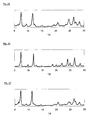
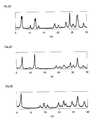
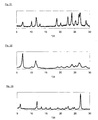
- the reported absolute values of the gloss numbers obtainable by means of customary, routine measurements, may carry an inaccuracy of up to around ⁇ 0.2 °2 ⁇ , depending on sample preparation and on measuring conditions, and the scale of the spectra, relative to the absolute values, may not only be slightly shifted but also be narrowed or stretched in its extent.
- the line width reflects the crystallite size and the degree of crystallinity.
- a suitable instrument is, for example, a Siemens D500/501 diffractometer. It is advantageous to produce a tablet in customary manner, as disclosed for example in U. S. Geological Survey Open-File Report 01-041 / A Laboratory Manual for X-Ray Powder Diffraction / Randomly Oriented Powder Mounts For X-Ray Powder Diffraction (http://pubs.usgs.gov/of/2001/of01-041/htmldocs/methods/romount.htm).
- crystal polymorphs are present preferably in substantially single-phase form.
- other crystal polymorphs are present in an amount of less than 20% by weight, preferably less than 10% by weight, based on the total amount of all crystal polymorphs.
- the relative amounts of different crystal polymorphs in a sample can be estimated from the areas of the most intense different lines, following subtraction of the baseline first.
- the X-ray powder diagram can be compared with X-ray powder diagrams of physical mixtures of known composition.
- an aqueous reaction medium for example a reaction medium containing from 5% to 50% by weight of water, based on the amount of water-free reaction medium
- the crystal polymorphs obtained are generally different from those obtained when an anhydrous reaction medium is used, such as toluene or glacial acetic acid.
- the crystal polymorphs obtainable in the presence of water are notable, especially in polyolefins, for good light fastness, better dispersibility and outstandingly jet-black shades in the masstone, and also useful, somewhat greenish grey shades when reduced with titanium oxide. Moreover, they can, with particular advantage, be converted into even more stable crystal polymorphs by means of recrystallization from polar solvents.
- the crystal polymorphs that are obtainable in anhydrous reaction media are notable in particular for higher light fastness in varnishes (particularly in polyester/cellulose acetobutyrate varnishes). When reduced with titanium oxide, they typically produce outstandingly neutral grey shades.
- solid solutions and mixed crystals by reacting a compound of the formula preferably of the formula with two or more compounds of the formula in an overall molar ratio (i): (iv) of 1 : 2, in the presence of an acidic catalyst which in water at 25°C has a pK ⁇ 4.5.
- an acidic catalyst which in water at 25°C has a pK ⁇ 4.5.
- either polyphase or single-phase pigments may be obtained, the latter being preferred.
- Suitability for forming solid solutions and mixed crystals is possessed only by isatin and certain substituted isatins of the formula and, in addition, a defined amount of the main component must be maintained.
- the invention therefore also provides a process for preparing a black colorant, characterized in that the process is a single-stage process, wherein a compound of the formula is reacted with 2 to 5 compounds of the formula in which
- R 10 is H, CH 3 , OCH 3 , F, Cl, Br, NO 2 or SO 3 H, R 11 is H or SO 3 H, and R 12 is H, CH 3 or Cl.
- R 10 is H, CH 3 or Cl
- R 11 is H
- R 12 is H, CH 3 or Cl.
- the compounds (i) and (iv) for reaction may all be included in the initial charge or may be added simultaneously or in any order Where not all of the compounds (iv) are included in the initial charge, it is generally favourable to maintain the final ratio indicated above for the compounds of the formula (iv) throughout the reaction.
- the reaction may begin with a mixture of two compounds of the formula (iv) in a weight ratio of 50 : 50, to produce a particular crystal polymorph, and may then be continued with a weight ratio of 80 : 20, in which case the crystal polymorph no longer undergoes any change.
- crystal polymorphs are formed which differ significantly from the crystal phases of the products that are formed when only a single one of the same compounds of the formula (iv) is reacted.
- new, more stable crystal polymorphs are formed, preferably single-phase crystal polymorphs or single-phase mixed crystals, whose crystal lattice is able to serve as a host for guest molecules which are possibly stoichiometrically superfluous in the ideal single-phase crystal lattice.
- the compound of the formula and as a secondary component of the formula (iv), a compound of the formula are preferably reacted with the compound of the formula (i), where
- the mixed crystals and solid solutions of the invention are notable especially for high dispersibility, high colour strength, advantageous black shades and high fastnesses (in particular, better weather fastness). They are particularly advantageous in paint applications (especially in polyester/cellulose acetobutyrate varnishes).
- the preparation of true mixed crystals and solid solutions is not desired (for reasons of cost, for example), then it is also possible to increase the amount of main component of the formula (iv).
- the secondary components of the formula (iv) at a concentration, for example, of 0.1% to 15% by weight, preferably of 0.5% to 12% by weight, based on the total amount of all compounds of the formula (iv), may advantageously inhibit crystal growth or bring about the target crystal polymorph.
- the invention therefore also provides a process for preparing a black colorant, characterized in that the process is a single-stage process, wherein a compound of the formula is reacted with 2 to 5 compounds of the formula in an overall molar ratio (i): (ii) of 1 : 2 in the presence of a catalyst which in water at 25°C has a pka ⁇ 4.5, the amount of one of the compounds of the formula (ii) being from 85% to 99.9% by weight, based on the total amount of all compounds of the formula (ii), and the compounds of the formula being added simultaneously or in any order before or during the reaction.
- the invention moreover, also provides a black colorant composition
- a black colorant composition comprising the reaction products of a compound of the formula with a compound of the formula and 1 to 4 further compounds of the formula in an overall molar ratio (i): (ii) of 1 : 2 in the presence of a catalyst which in water at 25°C has a pka ⁇ 4.5, the amount of the compound of the formula (iia) being from 85% to 99.9% by weight, based on the total amount of the compounds of the formulae (iia) and (iib), and R 3 , R 4 , R 5 , R 6 and R 7 in the formulae (iia) and (iib) having, independently of one another, the same definition as in formula (ii) above; with the proviso that the compounds of the formula (iia) and all other compounds of the formula (iib) are different.
- the compound of the formula (iia) is preferably unsubstituted isatin or 5-methylisatin, more preferably unsubstituted isatin.
- one of the radicals R 3 , R 4 , R 5 , R 6 or R 7 , preferably R 4 is C 1 -C 16 alkyl, C 1 -C 16 alkoxy, C 3 -C 16 cycloalkyl, C 3 -C 16 cycloalkoxy, C 2 -C 16 alkenyl or C 2 -C 16 alkenoxy, more preferably C 3 -C 12 alkyl, C 5 -C 6 cycloalkyl, C 3 -C 12 alkoxy or C 5 -C 6 cycloalkoxy, very preferably C 4 -C 8 alkyl or C 4 -C 8 alkoxy, more particularly n-butyl, isobutyl, tert-butyl, 3-pentyl, n-hexyl, cyclohexyl, 2-ethylhexyl, n-octyl, lauryl or my
- the pigments of the invention are notable especially for high colour strength, advantageous jet-black shades and high fastnesses. They are advantageous in particular in paint applications and in the mass colouring of plastics.
- Suitable bases include alkali metal and alkaline earth metal hydroxides, oxides or amides, aluminium oxide, ammonia, primary, secondary, tertiary or quaternary amines. Preference is given to alkaline earth metal hydroxides and quaternary amines.
- Primary, secondary, tertiary or quaternary amines are preferably substituted on the N by C 1 -C 30 alkyl, C 2 -C 30 alkenyl, C 2 -C 30 alkynyl, C 7 -C 30 aralkyl or C 6 -C 30 aryl, it being possible for these hydrocarbon substituents to be linear or branched, uninterrupted or interrupted one or more times by carbonyl, -O-, -S- and / or and/or unsubstituted or substituted one or more times by halogen, hydroxyl, amino, carboxyl or sulpho.
- the colorants which have undergone further chemical modification likewise have pitch-black shades and are of interest more particularly for applications in which a relatively low surface polarity is required.
- the colorants obtainable in accordance with the invention in combination with basic additives, such as hindered amines (HALS) and /or UV absorbers of benzotriazole or triazine type, lead to jet-black paints and plastics in which the weather stability of the matrix material is increased in comparison with known black pigments such as carbon black.
- basic additives such as hindered amines (HALS) and /or UV absorbers of benzotriazole or triazine type
- the invention accordingly also provides for the use of a colorant of the invention for coloring a high molecular weight material in the mass, and also a mass-coloured, high molecular weight material containing from 0.01% to 70% by weight, preferably from 0.05% to 30% by weight, of a colorant of the invention, and from 0.0 1 % to 20% by weight, preferably from 0.1 % to 10% by weight, more preferably from 0.2% to 5%, of a basic light stabilizer or of a mixture of basic light stabilizers, based in each case on the total coloured, high molecular weight material.
- Advantageous light stabilizers are those which lead to an increase in light stability by at least 50% at a concentration of 1.0% by weight, based on the total coloured, high molecular weight material. This means that the time until, in an accelerated light stability test, there is a significant change in surface structure or in mechanical properties, in the presence of 1% of light stabilizer, is at least 150% of the time which results in the same change to the surface structure or mechanical properties in the absence of the light stabilizer.
- Basic light stabilizers preferably have a pK a or pK BH + of ⁇ 8.
- the pK a or pK BH + of a light stabilizer can be measured in water or an aqueous, neutral solvent, or, if desired, can also be calculated by commonplace methods.
- Particularly preferred light stabilizers are those comprising the following substructures:
- Sterically hindered amines are, for example, bis(2,2,6,6-tetramethylpiperid-4-yl) sebacate, bis(2,2,6,6-tetramethylpiperid-4-yl) succinate, bis(1,2,2,6,6-pentamethylpiperid-4-yl) sebacate, bis(1-octyloxy-2,2,6,6-tetramethylpiperid-4-yl) sebacate, n-butyl-3,5-di-tert-butyl-4-hydroxybenzylmalonic acid bis(1,2,2,6,6-pentamethylpiperidyl) ester, condensation product of 1-hydroxyethyl-2,2,6,6-tetramethyl-4-hydroxypiperidine and succinic acid, linear or cyclic condensation products of N,N'-bis(2,2,6,6-tetramethyl-4-piperidyl)hexamethylenediamine and 4-tert-octylamino-2,6-dichloro-1,3,5-s
- 2-(2-Hydroxyphenyl)-1,3,5-triazines are, for example, 2,4,6-tris(2-hydroxy-4-octyloxyphenyl)-1,3,5-triazine, 2-(2-hydroxy-4-octyloxyphenyl)-4,6-bis(2,4-dimethylphenyl)-1,3,5-triazine, 2-(2,4-dihydroxyphenyl)-4,6-bis(2,4-dimethylphenyl)-1,3,5-triazine, 2,4-bis(2-hydroxy-4-propyloxyphenyl)-6-(2,4-dimethylphenyl)-1,3,5-triazine, 2-(2-hydroxy-4-octyloxyphenyl)-4,6-bis(4-methylphenyl)-1,3,5-triazine, 2-(2-hydroxy-4-dodecyloxyphenyl)-4,6-bis(2,4-dimethylphenyl),3,5-tria
- 2-(2'-Hydroxyphenyl)benzotriazoles are, for example, 2-(2'-hydroxy-5'-methylphenyl)benzotriazole, 2-(3',5'-di-tert-butyl-2'-hydroxyphenyl)benzotriazole, 2-(5'-tert-butyl-2'-hydroxyphenyl)-benzotriazole, 2-(2'-hydroxy-5'-(1,1,3,3-tetramethylbutyl)phenyl)benzotriazole, 2-(3',5'-di-tert-butyl-2'-hydroxyphenyl)-5-chlorobenzotriazole, 2-(3'-tert-butyl-2'-hydroxy-5'-methylphenyl)-5-chlorobenzotriazole, 2-(3'-sec-butyl-5'-tert-butyl-2'-hydroxyphenyl)benzotriazole, 2-(2'-hydroxy-4'-octoxyphenyl)
- the black colorants of the invention can be used for colouring paints, printing inks and plastics in the mass.
- the invention accordingly also provides for the use of colorants of the invention and colorants prepared in accordance with the invention for colouring paints, printing inks and plastics in the mass, and also to a mass-coloured, high molecular weight material containing from 0.01% to 70% by weight, based on the total coloured, high molecular weight material, of a colorant of the invention or prepared in accordance with the invention.
- the high molecular weight organic material to be coloured in accordance with the invention may be of natural or synthetic origin, and typically has a molecular weight in the range from 10 3 to 10 8 g/mol.
- Such materials may be, for example, natural resins or drying oils, rubber or casein, or modified natural substances, such as chlorinated rubber, oil-modified alkyd resins, viscose, cellulose ethers or esters, such as cellulose acetate, cellulose propionate, cellulose acetobutyrate or nitrocellulose, but more particularly all-synthetic organic polymers (both thermosets and thermoplastics), as are obtained by chain-growth addition polymerization, step-growth addition polymerization or condensation polymerization, for example polycarbonate, polyesters such as polyethylene terephthalate or polybutylene terephthalate, polyolefins such as polyethylene (HDPE, HDPE-HMW, HDPE-UHMW, LDPE, LLDPE, VLDPE, ULDPE), polyprop
- condensation products of formaldehyde with phenols known as phenolic resins
- condensation products of formaldehyde with urea, thiourea and melamine known as amino resins
- polyesters used as film-forming resins including both saturated resins, such as alkyd resins, and unsaturated resins, such as maleate resins, and also of the linear polyesters and polyamides or silicones.
- the high molecular weight organic material may be a binder for paints or printing inks, such as linseed oil varnish, nitrocellulose, alkyd resins, melamine resins, ureaformaldehyde resins, acrylic resins or other curable or polymerizable precursors.
- a binder for paints or printing inks such as linseed oil varnish, nitrocellulose, alkyd resins, melamine resins, ureaformaldehyde resins, acrylic resins or other curable or polymerizable precursors.
- the abovementioned high molecular weight compounds may be present individually or in mixtures, as plastic masses, solutions or melts, which if desired may be spun into fibres.
- the form in question may be either a ready-to-use composition or an article formed from it, or else a masterbatch, in the form of pellets, for example.
- customary adjuvants which may be present in the uncoloured organic material, or may be added during incorporation.
- Such adjuvants are stabilizers, such as antioxidants, UV stabilizers or light stabilizers, surfactants, wetting agents, plasticizers or texture improvers. If texture improvers are required, they are, optionally, added preferably to the colorants of the invention during their actual synthesis, or during aftertreatment.
- texture improvers are fatty acids having at least 12 carbon atoms, such as stearic acid or behenic acid in particular, stearamide, or behenamide, salts of stearic or behenic acid such as magnesium, zinc or aluminium stearate or behenate, or else quaternary ammonium compounds such as, in particular, tri(C 1 -C 4 )alkylbenzylammonium salts such as trimethyl-, triethyl-, tri-n-propyl-, triisopropyl-, tri-n-butyl-, tri-sec-butyl- or tri-tert-butylbenzylammonium salts, or else plasticizers such as epoxidized soybean oil, waxes such as polyethylene wax, resin acids, such as abietic acid, rosin soap, hydrogenated or dimerized rosin, (C 12 -C 18 ) paraffindisulphonic acid, alkylphenols or alcohols such as stearyl
- Preferred texture improvers are laurylamine or stearylamine, aliphatic 1,2-diols, stearic acid or its amides, salts or esters, epoxidized soybean oil, waxes or resin acids.
- Such adjuvants may be added, for example, advantageously in amounts of 0.05% to 25% by weight, preferably of 0.5% to 15% by weight, based on the composition of the invention, before, during or after its preparation.
- the high molecular weight organic substances are pigmented with the colorants of the invention, for example, by mixing such a colorant, optionally in the form of a masterbatch, into these substrates, using roll mills, mixing apparatus or milling apparatus. Thereafter the coloured material is generally brought into the desired ultimate form by means of techniques which are known per se, such as calendering, compression moulding, extrusion, coating, spraying, casting, printing or injection moulding. In order to produce mouldings that are not rigid, or to reduce their brittleness, it is often desirable to incorporate plasticizers into the high molecular weight compounds prior to their shaping. Examples of useful plasticizers include esters of phosphoric acid, phthalic acid or sebacic acid.
- the plasticizers can be incorporated into the polymers before or after the colorant has been incorporated.
- a further possibility, in order to obtain different hues, is to admix the high molecular weight organic materials not only with the colorant compositions but also with fillers, reinforcing materials (organic or inorganic fibres, for example), and/or other colouring components such as white, chromatic or black pigments, and also effect pigments, in the quantity desired in each case.
- the admixing of the colorant may also be carried out immediately prior to the actual processing step, by continuously metering, for example, a powderous colorant of the invention and a pelletized, high molecular weight organic material, and also, optionally, adjuvants such as additives, for example, simultaneously and directly to the feed zone of an extruder, with incorporation taking place shortly prior to processing.
- adjuvants such as additives, for example, simultaneously and directly to the feed zone of an extruder, with incorporation taking place shortly prior to processing.
- the high molecular weight organic materials and the colorants of the invention optionally together with adjuvants such as stabilizers, dispersants, gloss enhancers, fillers, other pigments, siccatives or plasticizers, are finely dispersed or dissolved, in general, in an organic and/or aqueous solvent or solvent mixture.
- adjuvants such as stabilizers, dispersants, gloss enhancers, fillers, other pigments, siccatives or plasticizers.
- Paints are applied, for example, by dipping, knife coating, film application, brushing or spraying, to give - after drying and curing, advantageously thermally or by irradiation-coatings of the invention.
- Further methods of application that lead to coatings are powder coating or roll-coating (coil coating) techniques, which in all their details are known per se to a person skilled in the art.
- the high molecular weight material to be coloured is a paint
- it may be a customary paint, or else a speciality paint, such as an automotive finish, for example.
- the paint may be part of a multi-coat paint system. Effect finishes are possible through addition of metal flakes, optionally coated micas and/or interference pigments.
- the advantages of the colorants of the invention are particularly striking in paint applications, and include, for example, increased colour strength in tandem with higher opacity and only a low level of heating in the sun.
- the paint of the invention is provided additionally with a clear varnish in customary thickness as protection, this varnish comprising, for example, one or more UV absorbers or effect pigments.
- this varnish comprising, for example, one or more UV absorbers or effect pigments.
- the substrate is preferably a primer-coated substrate.
- the articles coloured in accordance with the invention have outstanding jet-black shades with good fastnesses that are largely inert towards near-infrared radiation.
- the black colorants of the invention in powder coatings or coil coatings, lead to outstanding results, particularly in comparison with carbon black (C.I. Pigment Black 7).
- carbon black C.I. Pigment Black 7
- the black colorants of the invention in powder coatings or coil coatings, lead to outstanding results, particularly in comparison with carbon black (C.I. Pigment Black 7).
- carbon black C.I. Pigment Black 7
- the jet-black shade, adhesion, through-curing and gloss, and also a particularly smooth and regular surface are advantageous.
- a further embodiment, of particular interest, of the black colorants of the invention is their use in mulch films, instrument panels or woven fabrics, especially those for installation in vehicles, for garden furniture, such as benches, chairs, recliners and tables, or in materials and elements for the construction industry, such as roofing elements or facade elements, window and doors.
- Mulch films are especially subject to sun exposure and have a tendency towards premature decomposition, losing their function and tarnishing the landscape with scraps that flutter around. If, on the other hand, the amount of light stabilizers is increased, then the desired complete biodegradation of the mulch films at the end of the vegetation cycle is slowed down, and the pollution of the soil is increased.
- Mulch films of the invention also have less of a preventive effect on the growth of the crop plants in the early growth phase as compared with mulch films pigmented conventionally (with carbon black, for example). Automotive, garden and construction articles are likewise strongly exposed to the sun, and, depending on their colouring, become excessively hot, and deform or break down prematurely. These problems are largely avoided by the colorants and compositions of the invention.
- Example 1 A mixture of 2.3 g of 2,5-dihydroxybenzene-1,4-diacetic acid (Aldrich), 3.0 g of isatin (98%, Aldrich) and 0.7 g of p-toluenesulphonic acid monohydrate (Fluka purum) in 75 ml of toluene is heated to 110°C. It is stirred for 7 hours with elimination of water, and stirred for a further 14 hours. The mixture is cooled and the black suspension is filtered. The residue is washed with 100 ml of methanol and dried at 60°C / 10 4 Pa.
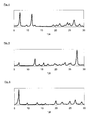
- the X-ray powder diagram has lines at 7.8 s, 10.2w, 12.6s, 18.6w, 21.8w, 22.4w, 24.4m, 25.0w, 26.7m, 27.2 m and 28.8 w °2 ⁇ (cf. Figure 1 ).
- Example 2 2.3 g of 2,5-dihydroxybenzene-1,4-diacetic acid (Aldrich), 3.0 g of isatin (98%, Aldrich) and 1.9 g of p-toluenesulphonic acid hydrate (Fluka purum) are stirred in a mixture of 57 ml of concentrated acetic acid and 10 ml of water, and the resulting mixture is heated to reflux temperature and stirred at this temperature for 20 hours.
- Example 3 6 g of the compound prepared in Example 2 are heated to 130°C in 60 ml of dimethyl sulphoxide and stirred at this temperature for 18 hours.
- the reaction mixture is stirred further, without heating, until the temperature has dropped to 100°C, at which point it is filtered and the residue is washed first with 10 ml of dimethyl sulphoxide and then with 150 ml of water.
- the product is dried for 24 hours at 40°C / 10 4 Pa.
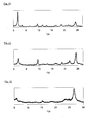
- the X-ray powder diagram of the black powder (4 g) has lines at 7.3 s , 10.9 w, 12.7 w, 14.6 w, 24.5 w, 26.4 m and 28.7 w °2 ⁇ (cf. Figure 3 ).
- Example 4 A kneading apparatus with a capacity of 0.5 litre is charged with 33 g of product from Example 1, 196 g of sodium chloride and 77 g of N-methylpyrrolidone and the rotary speed is set at 65 rpm. The walls of the apparatus are thermostated at 80°C. After 6 hours, 150 ml of water are added. The mixture obtained is poured into a porcelain suction filter, and the solid material on the filter is washed further with water until the wash water is salt-free. The product is dried for 12 hours at 80°C / 10 4 Pa and passed through a sieve with a mesh size of 0.4 mm.
- the X-ray powder diagram has lines at 7.8 s , 10.2 w, 12.6 s , 18.6 w, 21.8 w, 22.4 w, 24.4 m , 25.0 w , 26.7 m , 27.2 m and 28.8 w °2 ⁇ (cf. Figure 1 ).
- Example 5 A kneading apparatus with a capacity of 0.5 litre is charged with 30 g of product from Example 1, 180 g of sodium chloride and 85 g of N-methylpyrrolidone and the rotary speed is set at 65 rpm. The walls of the apparatus are thermostated at 20°C. After 41 ⁇ 2 hours, 150 ml of water are added.
- Example 6 A kneading apparatus with a capacity of 0.5 litre is charged with 35 g of product from Example 41, 210 g of sodium chloride and 105 g of dimethyl sulphoxide and the rotary speed is set at 65 rpm. The walls of the apparatus are thermostated at 45°C. After 6 hours, 150 ml of water are added.
- Example 7 A procedure similar to that of Example 1 is followed, but with isatin replaced by an equimolar amount of 5-methylisatin (Aldrich 97%).
- Example 8 A mixture of 5.65 g of 2,5-dihydroxybenzene-1,4-diacetic acid (Aldrich), 9.9 g of 5-nitroisatin (97%, Aldrich) and 1.8 g of p-toluenesulphonic acid (Fluka purum) in 175 ml of acetic acid is heated to 110°C and stirred for 20 hours more. The mixture is cooled and the black suspension is filtered.
- Example 9 A procedure similar to that of Example 2 is followed, but with isatin replaced by 3.9 g of 5-nitroisatin (97%, Aldrich).
- Example 10 A procedure similar to that of Example 8 is followed, but with 5-nitroisatin replaced by an equimolar amount of 5-methoxyisatin (Aldrich 98%).
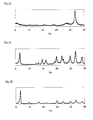
- the X-ray powder diagram has lines at 7.0 s, 10.1 m , 11.8 s, 20.5 m, 21.8 m, 24.2 m, 26.3 s and 27.9 m °2 ⁇ ( Figure 7 ).
- Example 11 A procedure similar to that of Example 2 is followed, but with isatin replaced by 3.6 g of 5-methoxyisatin.
- the X-ray powder diffractogram of the black powder (3.6 g) has main lines at 6.2s, 7.0 s , 10.1 m, 11.8 m , 20.5 w, 21.8w, 26.3w, 26.9 m and 27.8 w °2 ⁇ (cf. Figure 8 ).
- Example 12 A procedure similar to that of Example 1 is followed, but with isatin replaced by an equimolar amount of 5-chloroisatin (97%, Aldrich), and 2,5-dihydroxybenzene-1,4-diacetic acid replaced by an equimolar amount of its diisobutyl ester.
- the X-ray powder diagram has lines at 7.1 m, 11.7 s, 19.2w, 20.5 w, 22.6 m, 24.3 m , 25.6 w , 26.7 m , 27.1 m and 29.0 w °2 ⁇ ( Figure 9 ).
- the diisobutyl ester instead of the diisobutyl ester, as an alternative, it is also possible to use the diisopropyl ester.
- Example 13 A procedure similar to that of Example 2 is followed, but with isatin replaced by 3.7 g of 5-chloroisatin. This gives 4.2 g of a black powder whose X-ray powder diagram has lines at4.7s, 6.6w, 9.3w, 12.5w, 14.5w, 16.0w, 19.7w, 21.8w, 24.6w and 27.4w °2 ⁇ .
- a further crystal polymorph is present, characterized by an 4.7 s, 9.3 w , 14.5w, 16.0w, 19.7 w and 24.6 w °2 ⁇ (cf. Figure 10 ).
- Example 14 A procedure similar to that of Example 1 is followed, but with isatin replaced by an equimolar amount of 5-chloroisatin (Aldrich 97%).
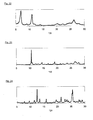
- the X-ray powder diagram has lines at 4.8 m , 12.6 m, 21.8 w, 24.9 m and 27.4 s °2 ⁇ (cf. Figure 11 ).
- Example 15 A procedure similar to that of Example 1 is followed, but with isatin replaced by an equimolar amount of 5,7-dichloroisatin (Aldrich 97%).
- the X-ray powder diagram has lines at 5.9 w, 15.2 w, 23.9 w, 25.1 m and 26.8 s °2 ⁇ (cf. Figure 12 ).
- Example 16 A procedure similar to that of Example 2 is followed, but with isatin replaced by 4.4 g of 5,7-dichloroisatin.
- the X-ray powder diffractogram of the black powder (3.6 g) has lines at 23.9 w and 26.9 s °2 ⁇ (cf. Figure 13 ).
- Example 17 A procedure similar to that of Example 1 is followed, but with isatin replaced by an equimolar amount of 5-fluoroisatin (Aldrich 97%).
- the X-ray powder diagram has lines at 6.7 s , 14.8 m , 16.1 m, 19.9 m , 21.8 m, 22.3 m , 24.8 m , 26.8 s and 29.1 m °28 (cf. Figure 14 ).
- Example 18 A procedure similar to that of Example 2 is followed, but with isatin replaced by 3.4 g of 5-fluoroisatin (97%, Aldrich).
- the X-ray powder diffractogram of the black powder (3.2 g) has lines at 6.7s, 9.7w, 13.3w, 14.9w, 16.3w, 20.0 w, 22.3 w, 25.0 w, 26.9 w and 29.2 w °2 ⁇ (cf.
- Example 19 A procedure similar to that of Example 1 is followed, but replacing isatin by an equimolar amount of 5-bromoisatin (90%, Aldrich) and toluene by chlorobenzene.
- the X-ray powder diagram has lines at 10.0 w, 11.6 m, 19.3 m , 20.6 w, 22.1 s, 23.3 w, 24.3 m, 25.4 m , 26.0 w, 26.8 w, 26.9 s, 28.8 w and 31.3 w °2 ⁇ (cf. Figure 16 ).
- Example 20 A procedure similar to that of Example 1 is followed, but replacing isatin by an equimolar amount of 5-chloro-7-methylisatin (97%, Aldrich).
- the X-ray powder diagram has lines at 6.0 m, 7.0 m, 9.2 w, 11.1 s, 19.7 w, 20.6 m, 22.4 w, 25.0 m, 26.5 s and28.3w °2 ⁇ (cf. Figure 17 ).
- Example 21 A procedure similar to that of Example 19 is followed, but replacing isatin by an equimolar amount of 1-phenylisatin (97%, Aldrich).
- the X-ray powder diagram has lines at 6.7s, 9.6w, 10.7w, 14.4w, 15.2w, 19.9w, 21.6w and 25.3w °2 ⁇ (cf. Figure 18 ).
- Example 22 A procedure similar to that of Example 19 is followed, but replacing isatin by an equimolar amount of 1-methylisatin (97%, Aldrich).
- the X-ray powder diagram has lines at 8.5 s, 10.7w, 12.6w, 13.2 w, 21.0 w, 21.9 w, 22.7 w, 24.5 w, 26.9 w and 28.6w °2 ⁇ (cf. Figure 19 ).
- Example 23 A procedure similar to that of Example 1 is followed, but with isatin replaced by an equimolar amount of 5,7-dimethylisatin (97%, Aldrich).
- the X-ray powder diagram has lines at 6.4 s, 11.1 m, 11.8 m, 26.4 m and 26.9 m °2 ⁇ (cf. Figure 20 ; at 6.9 and 26.2-27.0°2 ⁇ , the lines are poorly resolved).
- Example 24 The product obtained from Example 23 is recrystallized from glacial acetic acid at 110°C for 16 hours.
- the X-ray powder diagram has lines at 6.9 s , 9.2 w , 11.1 s , 14.2 w , 20.3 w , 22.4 w and 26.3 m °2 ⁇ (cf. Figure 21 ).
- Example 25 A procedure similar to that of Example 2 is followed, but with isatin replaced by 3.6 g of 5,7-dimethylisatin (97%, Aldrich).
- the X-ray powder diffractogram of the black powder (3.9 g) has lines at 6.9 s, 11.0 s , 20.3 w and 26.3 m °2 ⁇ (cf. Figure 22 ). This product also appears to contain a trace of the polymorph obtained from Example 24.
- Example 26 A procedure similar to that of Example 1 is followed, but with isatin replaced by 4.0 g of 2,1-naphthisatin (prepared according to CH 93487 [1920]) and with toluene replaced by the same amount of aqueous acetic acid (60-90% by weight).
- the mass spectrum (MALDI) of the black powder (4.4 g) has a molecular peak at m/z 548.1.
- Example 27 A procedure similar to that of Example 1 is followed, but replacing isatin by an equimolar amount of 2,3-dioxoindoline-7-carboxylic acid (97%, Aldrich).
- Example 28 A procedure similar to that of Example 1 is followed, but with isatin replaced by an equimolar amount of isatin-5-sulphonic acid sodium salt (98%, Aldrich) and toluene replaced by aqueous acetic acid (80% by weight).
- the X-ray powder diagram of the black product has lines at 7.9w, 9.7w, 11.5w, 12.6s, 13.5w, 15.9w, 19.6 w, 21.4 m, 22.8 w, 23.5 w, 24.0 w, 25.4 m, 25.6 s , 27.9 w, 28.3 w, 29.1 w and 30.7 w °2 ⁇ (cf. Figure 24 ).
- Example 29 A mixture of 9.2 g of 2,5-dihydroxybenzene-1,4-diacetic acid (Aldrich), 6.0 g of isatin (98%, Aldrich), 7.3 g of 5,7-dimethylisatin (98%, Aldrich) and 2.8 g of p-toluenesulphonic acid monohydrate (Fluka purum) in 160 ml of chlorobenzene is stirred at 23°C and then heated to 130°C and stirred for 7 hours with elimination of water, and then for 14 hours more. The mixture is cooled and the black suspension is filtered. The residue is washed with 200 ml of methanol and 200 ml of water and dried at 60°C / 10 4 Pa.
- Example 30 A mixture of 2.3 g of 2,5-dihydroxybenzene-1,4-diacetic acid (Aldrich), 1.5 g of isatin (98%, Aldrich), 1.7 g of 5-methylisatin (98%, Aldrich), 0.7 g of p-toluenesulphonic acid monohydrate (Fluka purum) and 40 ml of chlorobenzene is stirred at 23°C, heated to 130°C, then stirred at 110°C for 16 hours and worked up as in Example 29.
- Aldrich 2,5-dihydroxybenzene-1,4-diacetic acid
- isatin 98%, Aldrich
- 5-methylisatin 98%, Aldrich
- p-toluenesulphonic acid monohydrate Fluka purum
- the X-ray powder diagram has lines at 7.4 s, 10.0 w, 11.9 s, 18.8 w, 20.1 w, 22.1 w, 24.1 m, 25.0 w, 26.6 m and 28.6 w °2 ⁇ (cf. Figure 26 ) and corresponds essentially to that of the pure compound from Example 7 (cf. Figure 4 ).
- Example 31 A kneading apparatus having a capacity of 0.5 litre is charged with 15 g of product from Example 1, 15 g of product from Example 7, 198 g of sodium chloride and 77 g of N-methylpyrrolidone and the rotary speed is set at 65 rpm. The walls of the apparatus are thermostated at 20°C.
- the X-ray powder diagram has lines at 7.4 s , 10.0 w , 11.9 s, 18.8 w , 20.1 w, 22.1 w, 24.1 m, 25.0 w , 26.6 m and 28.6 w °2 ⁇ (virtually identical to Figure 26 ).
- Example 32 A procedure similar to that of Example 30 is followed, but using a mixture of 2.0 g of the product from Example 12b of WO 00 / 24 736 , 1.6 g of 5-methylisatin (98%, Aldrich), 1.8 g of 5,7-dimethylisatin (96%, Aldrich), 0.5 g of p-toluenesulphonic acid monohydrate (Fluka purum) and 40 ml of toluene.
- the X-ray powder diagram has lines at 7.2 s, 9.3 w , 11.3 s, 19.4 w, 20.6 w, 24.5 w, 26.4 m, 26.9 w and 28.3 w °2 ⁇ (cf. Figure 27 ).
- Example 33 A procedure similar to that of Example 30 is followed, but using a mixture of 2.3 g of 2,5-dihydroxybenzene-1,4-diacetic acid (Aldrich), 1.5 g of isatin (98%, Aldrich), 1.9 g of 5-chloroisatin (97%, Aldrich), 0.7 g of p-toluenesulphonic acid monohydrate (Fluka purum) and 40 ml of toluene.
- Aldrich 2,5-dihydroxybenzene-1,4-diacetic acid
- isatin 98%, Aldrich
- 5-chloroisatin 97%, Aldrich
- p-toluenesulphonic acid monohydrate Fluka purum
- Example 34 A procedure similar to that of Example 32 is followed, but using a mixture of 1.6 g of 5-methylisatin (98%, Aldrich), 1.9 g of 5-chloroisatin (97%, Aldrich), p-toluenesulphonic acid and toluene.
- Example 35 A procedure similar to that of Example 30 is followed, but using a mixture of 1.5 g of isatin (98%, Aldrich), 1.7 g of 5 fluoroisatin (97%, Aldrich), p-toluenesulphonic acid and chlorobenzene.
- Example 36 A procedure similar to that of Example 30 is followed, but using a mixture of 1.5 g of isatin (98%, Aldrich), 2.5 g of 5-bromoisatin (90%, Aldrich), p-toluenesulphonic acid and chlorobenzene.
- Example 37 A procedure similar to that of Example 30 is followed, but using a mixture of 1.5 g of isatin (98%, Aldrich), 1.8 g of 5-methoxyisatin (98%, Aldrich), p-toluenesulphonic acid and chlorobenzene.
- Example 38 A procedure similar to that of Example 32 is followed, but using a mixture of 2 g of 5-nitroisatin (97%, Aldrich), 1.8 g of 5-chloroisatin (97%, Aldrich), p-toluenesulphonic acid and toluene.
- Example 39 A procedure similar to that of Example 32 is followed, but using a mixture of 1.1 g of 5,7-dichloroisatin (97%, Aldrich), 0.9 g of 5-chloroisatin (97%, Aldrich), p-toluenesulphonic acid and toluene.
- Example 40 A procedure similar to that of Example 38 is followed, but using a mixture of 1.8 g of 5-methoxyisatin (98%, Aldrich), 0.9 g of 5-chloroisatin (97%, Aldrich), p-toluenesulphonic acid and toluene.
- Example 41 The procedure of Example 1 is repeated but replacing the compound of the formula by an equimolar amount of the compound of the formula (prepared according to J. Org. Chem. 32, 3155-3159 [1967 ]). In a good yield, the same product as in Example 1 is obtained.
- Example 42 The procedure of Example 1 is repeated but replacing the compound of the formula by an equimolar amount of the compound of the formula (prepared according to J. Org.
- Example 43 5.0 g of the product from Example 1 are introduced in portions over the course of 5 minutes at 23°C into 30 ml of chlorosulphonic acid. The reaction solution is stirred for 3 hours and then stirred over the course of 30 minutes into 500 ml of ice-water. The suspension is filtered and the residue is washed with 100 ml of ice-water. 6 hours of drying at 30°C / 10 4 Pa gives 3.2 g of a black powder. According to methods of mass spectroscopy, the product is composed primarily of the dichlorosulphonyl-substituted compound of Example 1.
- Example 44 5.0 g of the product from Example 1 are stirred into 30 ml of 25% oleum. The reaction solution is cooled from 30°C to 20°C, stirred at 23°C for 4 hours, introduced into 500 ml of ice-water and stirred again for an hour. 25 g of tributylamine (large excess) are added over the course of 5 minutes. The suspension is stirred for 30 minutes and filtered and the residue is washed with 50 ml of water and suspended again in 100 ml of water.
- a further 5 g of tributylamine are added to the suspension, and then the product is extracted with twice 150 ml of methylene chloride.
- the two organic phases are combined and stirred into 1200 ml of hexane; the product is precipitated in the form of fine crystals.
- the suspension is stirred for 30 minutes more and filtered through a glass fibre filter. Since the product tends to run apart on the filter, it is advantageous to dissolve it in 100 ml of methylene chloride and isolate it by stripping off the solvent on a rotary evaporator at only a slightly elevated temperature ( ⁇ 40°C). After 24 hours of drying at 30°C/10 4 Pa, 2.1 g of black solid are obtained.
- Example 45 A procedure similar to that of Example 44 is followed, but replacing tributylamine by the same amount of trioctylmethylammonium bromide. This gives 1.6 g of black product which corresponds approximately to the doubly neutralized sulpho salt.
- Example 46 A procedure similar to that of Example 44 is followed, but replacing tributylamine by the same amount of octadecyltrimethylammonium bromide. This gives 8.3 g of black product which corresponds approximately to the singly neutralized sulpho salt.
- Example 47 A procedure similar to that of Example 44 is followed, but replacing tributylamine by the same amount of tetraethylammonium bromide. This gives 1.2 g of black product.
- Example 48 A procedure similar to that of Example 1 is followed, but replacing toluene by ethyl acetate. The principal product is the same as in Example 1, but the reaction takes place much more slowly than in toluene, and the product contains a trace of the product from Example 2.
- An oxo-biodegradable mulch film is produced by mixing Dowlex ® NG 5056-G LLDPE (melt index 1.1 g / 10 min; 190°C / 2.16 kg; contains 0.10% by weight tris(2,4-di-t-butylphenyl) phosphite and 0.032% by weight octadecyl 3-(3,5-di-tert-butyl-4-hydroxyphenyl)propionate) in a turbo mixer (Labo 10, Caccia ® ) with the following additives, and then processing the mixture to pellets at not more than 200°C (O.M.C.
- Example 49 50 51 Additives Film 1 Film 2 Film 3 Time to beginning of decomposition [h] 686 606 368 Biooxidatively degradable ⁇ ⁇ ⁇
- the mulch films of the invention (Examples 49 and 50) have a greatly improved light stability as compared with a conventional mulch film pigmented with carbon black (C.I. Pigment Black 7) (Comparative Example 51).
- Example 52 and Comparative Examples 53-54 By means of two-stage dispersion (first 20 minutes with the Dispermat ® , then 4 hours with 70 parts by weight of glass beads in a Skandex ® ), base formulations are prepared with the following components (all amounts are in parts by weight):
- Example 52 53 54 Base formulation (millbase) 71.43 75.00 71.43 Dynapol ® LH 530 (60%) 9.28 6.91 9.28 Shamrock ® S 381-N1 0.50 0.50 0.50 Cymel ® 303 (99%) 8.57 5.59 8.57 Dynapol ® Catalyst 1203 (50%) 1.14 0.74 1.14 Byk ® Catalyst 450 0.20 0.20 0.20 Solvesso ® 150 6.45 10.81 6.45 Tinuvin ® 123 (100%, 1% on binder solids) 0.37 0.24 0.37 Total 100.00 100.00 100.00 100.00 Pigment concentration 5.0% 30.0% 5.0% Binder concentration 41.8% 54.0% 41.8% Colour black white black
Landscapes
- Chemical & Material Sciences (AREA)
- Organic Chemistry (AREA)
- Chemical Kinetics & Catalysis (AREA)
- Health & Medical Sciences (AREA)
- Life Sciences & Earth Sciences (AREA)
- Medicinal Chemistry (AREA)
- Polymers & Plastics (AREA)
- Engineering & Computer Science (AREA)
- Zoology (AREA)
- Plant Pathology (AREA)
- Agronomy & Crop Science (AREA)
- Dentistry (AREA)
- General Health & Medical Sciences (AREA)
- Wood Science & Technology (AREA)
- Pest Control & Pesticides (AREA)
- Environmental Sciences (AREA)
- Paints Or Removers (AREA)
- Heterocyclic Carbon Compounds Containing A Hetero Ring Having Oxygen Or Sulfur (AREA)
- Organic Low-Molecular-Weight Compounds And Preparation Thereof (AREA)
- Nitrogen Condensed Heterocyclic Rings (AREA)
- Pigments, Carbon Blacks, Or Wood Stains (AREA)
- Compositions Of Macromolecular Compounds (AREA)
Claims (18)
- Verfahren zur Herstellung eines schwarzen Farbmittels, bevorzugt eines schwarzen Pigments, dadurch gekennzeichnet, dass das Verfahren ein einstufiges Verfahren ist, wobei eine Verbindung der Formel
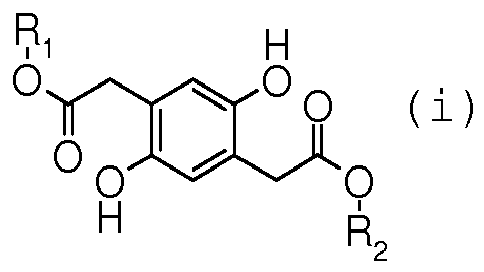

R3 für H, F, Cl, R8 oder OR8, bevorzugt für H oder F steht;
R4, R5 und R6 unabhängig voneinander für H, F, Br, Cl, COOH, COOR8, CONH2, CONHR8, CONR8R8, CN, COR8, SO3H, SO2Cl, SO2NH2, SO2NHR8, SO2NR8R8, SO2R8, NO2, R8, OR8, SR8, NR8R8, NHCOR8 oder
oder R3 und R4, R4 und R5 oder R5 und R6 bilden zu zweit zusammen einen je unsubstituierten oder einfach oder mehrfach mit F, OR8, NO2, Oxo, Thioxo oder SO3H substituierten C1-C6Alkylendioxy-, C3-C6Alkylen-, C3-C6Alkenylen-, oder 1,4-Butadienylen-Rest;
R7 für H, für je unsubstituiertes oder einfach oder mehrfach mit F, Oxo oder Thioxo substituiertes, ununterbrochenes oder einfach oder mehrfach durch 0, S oder NR8 unterbrochenes C1-C24Alkyl, C3-C24Cycloalkyl, C2-C24Alkenyl, C3-C24Cycloalkenyl, C2-C24Alkinyl oder C2-C12Heterocycloalkyl; oder für je unsubstituiertes oder einfach oder mehrfach mit Oxo, Thioxo, F, Br, Cl, COOH, COOR8, CONH2, CONHR8, CONR8R8, CN, COR8, SO3H, SO2Cl, SO2NH2, SO2NHR8, SO2NR8R8, SO2R8, NO2, R8, OR8, SR8, NR8R8, NHCOR8 oder
jedes R8, unabhängig von allen anderen R8, für je unsubstituiertes oder einfach oder mehrfach mit F, Oxo, Thioxo, OR9, SR9 oder NR9R9 substituiertes C1-C24Alkyl, C3-C24Cycloalkyl, C2-C24Alkenyl, C3-C24Cycloalkenyl, C2-C24Alkinyl oder C2-C12Heterocycloalkyl; oder für je unsubstituiertes oder einfach oder mehrfach mit Oxo, F, Br, Cl, COOH, CONH2, CONHR9, CONR9R9, SO3H, SO2Cl, SO2NH2, SO2NHR9, SO2NR9R9, CN, NO2, OR9, SR9, NR9R9, NHCOR9 oder
oder zwei vicinale R8 bilden zusammen -O--CO--O-, -0--CS--0-, -CO--N--CO-, -N--CO--N-, -N=S=N-, -N--C=C-, -O--C=C-, -S--C=C-, -O--C=N-, -S--C=N-, -N--N=N-, -N=C--C=C-, -C=N--C=C-, -N=C--C=N-, -C=N--N=C- oder -C=N--C=N- oder -C=C--C=C-, worin jedes --C= und --N-unabhängig von allen anderen --C= und --N-- mit H oder R9 substituiert ist;
oder zwei geminale oder vicinale R8 bilden zusammen einen je unsubstituierten oder einfach oder mehrfach mit F, Oxo oder Thioxo substituierten C3-C8Alkylen- oder C3-C8Alkenylen-Rest, worin 0, 1 oder 2 nicht vicinale Methylenglieder durch 0, S oder NR9 ersetzt sein können; und
jedes R9, unabhängig von allen anderen R9, für je unsubstituiertes oder einfach oder mehrfach mit Oxo, Thioxo, F und / oder O-C1-C8Alkyl substituiertes C1-C8Alkyl, C3-C6Cycloalkyl oder Benzyl; oder für je unsubstituiertes oder einfach oder mehrfach mit F, Br, Cl, CO-C1-C8Alkyl, COOH, CONH2, CONHC1-C8Alkyl, CON(C1-C8Alkyl)2, SO3H, SO2Cl, SO2NH2, SO2NHC1-C8Alkyl, SO2N(C1-C8Alkyl)2, CN, NO2, C1-C8Alkyl, OC1-C8Alkyl, SC1-C8Alkyl oder N(C1-C8Alkyl)2 substituiertes Phenyl oder C1-C5Heteroaryl steht;
oder zwei vicinale R9 bilden zusammen -O--CO--O-, -O--CS--O-, -CO--N--CO-, -N--CO--N-, -N=S=N-, -N--C=C-, -O--C=C-, -S--C=C-, -O--C=N-, -S--C=N-, -N--N=N-, -N=C--C=C-, -C=N--C=C-, -N=C--C=N-, -C=N--N=C- oder -C=N--C=N- oder -C=C--C=C-, worin jedes --C= und --N-unabhängig von allen anderen --C= und --N-- mit H, F, Oxo, Thioxo, C1-C8Alkyl oder OC1-C8Alkyl substituiert ist;
oder zwei geminale oder vicinale R9 bilden zusammen einen je unsubstituierten oder einfach oder mehrfach mit Oxo oder Thioxo substituierten C3-C8Alkylen- oder C3-C8Alkenylen-Rest, worin 0, 1 oder 2 nicht vicinale Methylenglieder durch 0, S oder N(C1-C8Alkyl) ersetzt sein können. - Verfahren gemäß Anspruch 1, worin R3, R5 und R7 gleich H und R4 und R6 unabhängig voneinander H, F, Br, Cl, COOH, COOR8, CONH2, CONHR8, CONR8R8, CN, COR8, SO3H, SO2Cl, SO2NH2, SO2NHR8, SO2NR8R8, SO2R8, NO2, R8, OR8 oder NHCOR8 sind, oder R5 und R6 bilden zusammen einen 1,4-Butadienylen-Rest.
- Verfahren zur Herstellung eines schwarzen Farbmittels, dadurch gekennzeichnet, dass das Verfahren ein einstufiges Verfahren ist, wobei eine Verbindung der Formel

 R1 und R2 unabhängig voneinander für H, oder für je unsubstituiertes oder mit Halogen oder C1-C8Alkoxy substituiertes C1-C24Alkyl, C3-C24-Cycloalkyl, C2-C24Alkenyl, C3-C24Cycloalkenyl oder C2-C24Alkinyl; für unsubstituiertes oder einfach oder mehrfach mit Halogen, Nitro, Cyano, C1-C8Alkyl und / oder C1-C8Alkoxy substituiertes C7-C24Aralkyl; oder für unsubstituiertes oder einfach oder mehrfach mit Halogen, Nitro, Cyano, C1-C8Alkyl und / oder C1-C8Alkoxy substituiertes C6-C24Aryl,R10 für H, CH3, C2H5, OCH3, OC2H5, F, Cl, Br, NO2, CN, COOH oder SO3H,R11 für H, NO2, CN, COOH oder SO3H, undR12 für H, CH3, C2H5, OCH3, OC2H5, F, oder Cl stehen,im molaren Gesamtverhältnis (i) (iv) von 1 : 2 in Gegenwart eines Katalysators, welcher in Wasser bei 25°C einen pKa-Wert ≤4,5 aufweist, umgesetzt wird, wobei die Menge einer der Verbindungen der Formel (iv) von 50 bis 80 Gew.% beträgt, bezogen auf die Gesamtmenge aller Verbindungen der Formel (iv).
 - Verfahren gemäß Anspruch 3, worin R10 für H, CH3, OCH3, F, Cl, Br, NO2 oder SO3H, R11 für H oder SO3H, und R12 für H, CH3 oder Cl stehen.
- Verfahren gemäß Anspruch 3 oder 4, worin als Hauptkomponente der Formel (iv) die Verbindung der Formel


R13 für H, CH3, OCH3, F, Cl, Br, NO2 oder SO3H,
R14 für H oder SO3H, und R15 für H, Cl oder CH3 stehen. - Verfahren zur Herstellung eines schwarzen Farbmittels, dadurch gekennzeichnet, dass das Verfahren ein einstufiges Verfahren ist, wobei eine Verbindung der Formel


- Verfahren gemäß Anspruch 1, 2 oder 6, worin eine Verbindung der Formel (ii) aus der Gruppe bestehend aus Verbindungen mit folgenden Substitutionsmustern ausgewählt ist:• R3 = R4 = R5 = R6 = R7 = H;• R3 = R5 = R6 = R7 = H, R4 = NO2;• R3 = R5 = R6 = R7 = H, R4 = OCH3;• R3 = R5 = R6 = R7 = H, R4 = Cl;• R3 = R5 = R6 = R7 = H, R4 = F;• R3 = R5 = R6 = R7 = H, R4 = Br;• R3 = R5 = R6 = R7 = H, R4 = SO3H;• R3 = R5 = R6 = R7 = H, R4 = COOH;• R3 = R5 = R6 = R7 = H, R4 = N(CH3)2;• R3 = R5 = R6 = R7 = H, R4 = NHCOC1-C18Alkyl, insbesondere NHCOC1-C12Alkyl;• R3 = R5 = R6 = R7 = H, R4 = C1-C20Alkyl, insbesondere Ci-Ci4Alkyl;• R3 = R5 = R6 = R7 = H, R4 = C2-C20Alkoxy, insbesondere C2-Cl4Alkoxy;• R3 = R5 = R7 = H, R4 = R6 = CH3;• R3 = R5 = R7 = H, R4 = R6 = Cl;• R3 = R5 = R7 = H, R4 = Cl, R6 = CH3;• R3 = R4 = R5 = R6 = H, R7 = CH3;• R3 = R4 = R5 = R6 = H, R7 = C6H5; und• R3 = R4 = R7 = H, R5 und R6 zusammen = 1,4-Butadienylen.
- Verfahren gemäß Anspruch 1, 2, 3, 4, 5, 6 oder 7, worin die Umsetzung mit 5 · 10-3 bis 5 Mol Katalysator, bezogen auf 1 Mol Verbindung der Formel (i), bei einem Druck von 2 · 102 bis 2 · 106 Pa, einer Temperatur von 20 bis 250°C und einer Reaktionszeit von ½ bis 100 Stunden stattfindet.
- Verfahren gemäß Anspruch 1, 2, 3, 4, 5, 6, 7 oder 8, worin das schwarze Farbmittel aus nicht aggregierten Pigmentpartikeln, gekennzeichnet durch eine mittlere Teilchengröße L von 10nm bis 10µm, wobei bevorzugt 60-100 Gew.%, besonders bevorzugt 80-100 Gew.% der Teilchen eine Teilchengröße von L±½L aufweisen, besteht.
- Gemäß Anspruch 1, 2, 7, 8 oder 9 erhältliches schwarzes Farbmittel, ausgewählt aus der Gruppe bestehen aus:• dem durch saure Katalyse aus

 • dem durch saure Katalyse aus
 • dem durch saure Katalyse aus
 • dem durch saure Katalyse aus
 • dem durch saure Katalyse aus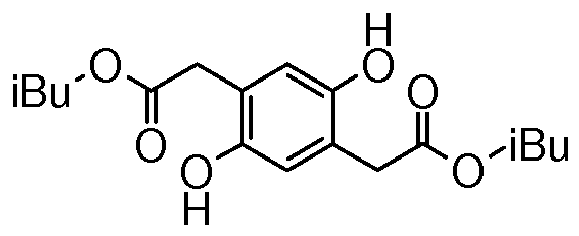
 • dem durch saure Katalyse aus
 • dem durch saure Katalyse aus
 • dem durch saure Katalyse aus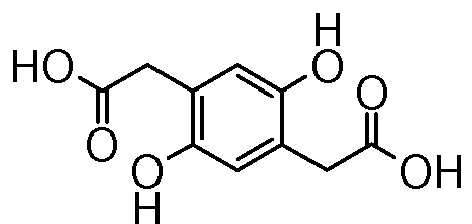
 • dem durch saure Katalyse aus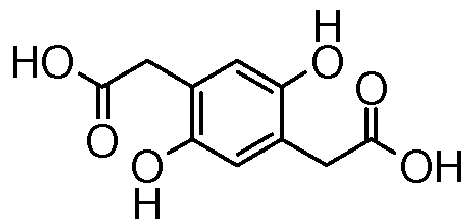
 • dem durch saure Katalyse aus
 • dem durch saure Katalyse aus
 • dem durch saure Katalyse aus
 • dem durch saure Katalyse aus
 • dem durch saure Katalyse aus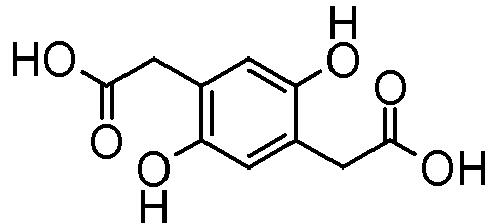

- Gemäß Anspruch 3, 4, 5, 8 oder 9 erhältliches schwarzes Farbmittel, ausgewählt aus der Gruppe bestehend aus:• dem durch saure Katalyse aus
 • dem durch saure Katalyse aus
 • dem durch saure Katalyse aus
 • dem durch saure Katalyse aus
 • dem durch saure Katalyse aus
 • dem durch saure Katalyse aus
 • dem durch saure Katalyse aus
 • dem durch saure Katalyse aus
 • dem durch saure Katalyse aus
 • dem durch saure Katalyse aus
 • dem durch saure Katalyse aus
- Schwarze Farbmittelzusammensetzung, enthaltend die Umsetzungsprodukte einer Verbindung der Formel


- Verwendung eines gemäß Anspruch 1, 2, 3, 4, 5, 6, 7, 8 oder 9 erhältlichen schwarzen Farbmittels, eines schwarzen Farbmittels gemäß Anspruch 10 oder 11, oder einer schwarzen Farbmittelzusammensetzung gemäß Anspruch 12 zur Einfärbung von Lacken, Drucktinten und Kunststoffen in der Masse.
- Verwendung eines schwarzen Farbmittels gemäß Anspruch 13, worin andere Kristallpolymorphe in einer Menge von weniger als 20 Gew.%, bevorzugt weniger als 10 Gew.% enthalten sind, bezogen auf die Gesamtmenge aller Kristallpolymorphe des Farbmittels.
- In der Masse gefärbtes hochmolekulares Material enthaltend von 0,01 bis 70 Gew.%, bezogen auf das gesamte gefärbte hochmolekulare Material, eines gemäß Anspruch 1, 2, 3, 4, 5, 6, 7, 8 oder 9 erhältlichen schwarzen Farbmittels, eines schwarzen Farbmittels gemäß Anspruch 10, 11 oder 13, oder einer schwarzen Farbmittelzusammensetzung gemäß Anspruch 12.
- In der Masse gefärbtes hochmolekulares Material enthaltend von 0,01 bis 70 Gew.%, bevorzugt von 0,05 bis 30 Gew.% eines gemäß Anspruch 1, 2, 3, 4, 5, 6, 7, 8 oder 9 erhältlichen schwarzen Farbmittels, eines schwarzen Farbmittels gemäß Anspruch 10 oder 11, oder einer schwarzen Farbmittelzusammensetzung gemäß Anspruch 12, und von 0,01 bis 20 Gew.%, bevorzugt von 0,1 bis 10 Gew.%, besonders bevorzugt von 0,2 bis 5 Gew.%, eines basischen Lichtschutzmittels oder eines Gemisches von basischen Lichtschutzmitteln, jeweils bezogen auf das gesamte gefärbte hochmolekulare Material.
- Mulchfolie, Instrumentenbrett, Gewebe, Gartenmöbel oder Element für die Bauindustrie enthaltend in der Masse gefärbtes hochmolekulares Material gemäß Anspruch 15 oder 16, bevorzugt bestehend aus in der Masse gefärbtem hochmolekularem Material gemäß Anspruch 15 oder 16 und gegebenenfalls Füllmitteln und/oder Verstärkungsmaterialien.
- Verfahren zur Herstellung eines Farbmittels, worin ein gemäß Anspruch 1, 2, 3, 4, 5, 6, 7, 8 oder 9 erhältliches schwarzes Farbmittel, ein schwarzes Farbmittel gemäß Anspruch 10 oder 11, oder eine schwarze Farbmittelzusammensetzung gemäß Anspruch 12 sulfoniert, chlorsulfoniert, an Carboxy- oder SulfoGruppen neutralisiert, oder an SO2Cl-Gruppen amidiert wird.
Priority Applications (1)
| Application Number | Priority Date | Filing Date | Title |
|---|---|---|---|
| EP20090799114 EP2387600B1 (de) | 2009-01-19 | 2009-12-28 | Organische schwarzpigmente und ihre herstellung |
Applications Claiming Priority (3)
| Application Number | Priority Date | Filing Date | Title |
|---|---|---|---|
| EP09150817 | 2009-01-19 | ||
| PCT/EP2009/067953 WO2010081625A2 (en) | 2009-01-19 | 2009-12-28 | Organic black pigments and their preparation |
| EP20090799114 EP2387600B1 (de) | 2009-01-19 | 2009-12-28 | Organische schwarzpigmente und ihre herstellung |
Publications (2)
| Publication Number | Publication Date |
|---|---|
| EP2387600A2 EP2387600A2 (de) | 2011-11-23 |
| EP2387600B1 true EP2387600B1 (de) | 2014-04-02 |
Family
ID=40902194
Family Applications (1)
| Application Number | Title | Priority Date | Filing Date |
|---|---|---|---|
| EP20090799114 Active EP2387600B1 (de) | 2009-01-19 | 2009-12-28 | Organische schwarzpigmente und ihre herstellung |
Country Status (7)
| Country | Link |
|---|---|
| US (1) | US8691002B2 (de) |
| EP (1) | EP2387600B1 (de) |
| JP (1) | JP5675647B2 (de) |
| KR (1) | KR101773621B1 (de) |
| CN (1) | CN102292397B (de) |
| ES (1) | ES2463674T3 (de) |
| WO (1) | WO2010081625A2 (de) |
Families Citing this family (17)
| Publication number | Priority date | Publication date | Assignee | Title |
|---|---|---|---|---|
| KR101704076B1 (ko) | 2009-01-19 | 2017-02-07 | 바스프 에스이 | 흑색 안료 분산물 |
| US9346963B2 (en) | 2010-12-30 | 2016-05-24 | Basf Se | Surface-modified pigment preparations |
| JP6170673B2 (ja) | 2012-12-27 | 2017-07-26 | 富士フイルム株式会社 | カラーフィルタ用組成物、赤外線透過フィルタ及びその製造方法、並びに赤外線センサー |
| WO2014208348A1 (ja) * | 2013-06-24 | 2014-12-31 | 東レ株式会社 | タッチパネル用黒色樹脂組成物 |
| US10048528B2 (en) | 2014-11-19 | 2018-08-14 | Samsung Sdi Co., Ltd. | Liquid crystal display |
| KR102014107B1 (ko) | 2015-05-01 | 2019-08-26 | 후지필름 가부시키가이샤 | 막, 막의 제조 방법, 고체 촬상 소자 및 적외선 센서 |
| JP6721670B2 (ja) | 2016-03-14 | 2020-07-15 | 富士フイルム株式会社 | 組成物、膜、硬化膜、光学センサおよび膜の製造方法 |
| CN105949442A (zh) * | 2016-03-31 | 2016-09-21 | 合肥工业大学 | 基于(2-氧吲哚-3-亚基)苯并二呋喃-二酮和连噻吩的共轭聚合物的新型聚合方法 |
| KR101876198B1 (ko) | 2016-11-28 | 2018-07-10 | 씨큐브 주식회사 | 천연 숯을 이용한 흑색계의 진주 광택 안료의 제조 방법 |
| WO2019054281A1 (ja) | 2017-09-15 | 2019-03-21 | 富士フイルム株式会社 | 組成物、膜、積層体、赤外線透過フィルタ、固体撮像素子および赤外線センサ |
| WO2020049930A1 (ja) | 2018-09-07 | 2020-03-12 | 富士フイルム株式会社 | 車両用ヘッドライトユニット、ヘッドライト用の遮光膜、ヘッドライト用の遮光膜の製造方法 |
| WO2020059509A1 (ja) | 2018-09-20 | 2020-03-26 | 富士フイルム株式会社 | 硬化性組成物、硬化膜、赤外線透過フィルタ、積層体、固体撮像素子、センサ、及び、パターン形成方法 |
| EP4024097B1 (de) | 2019-08-29 | 2024-05-22 | FUJIFILM Corporation | Zusammensetzung, film, nahinfrarottrennfilter, musterbildungsverfahren, laminat, festkörperabbildungselement, infrarotsensor, bildanzeigevorrichtung, kameramodul und verbindung |
| JPWO2022131191A1 (de) | 2020-12-16 | 2022-06-23 | ||
| JP7741819B2 (ja) | 2020-12-17 | 2025-09-18 | 富士フイルム株式会社 | 組成物、膜、光学フィルタ、固体撮像素子、画像表示装置および赤外線センサ |
| WO2022210175A1 (ja) | 2021-03-29 | 2022-10-06 | 富士フイルム株式会社 | 黒色感光性組成物、黒色感光性組成物の製造方法、硬化膜、カラーフィルタ、遮光膜、光学素子、固体撮像素子、ヘッドライトユニット |
| WO2023234095A1 (ja) | 2022-06-01 | 2023-12-07 | 富士フイルム株式会社 | 光検出素子、イメージセンサおよび光検出素子の製造方法 |
Family Cites Families (264)
| Publication number | Priority date | Publication date | Assignee | Title |
|---|---|---|---|---|
| CH93487A (de) | 1920-12-11 | 1922-03-01 | Staudinger Hermann Dr Prof | Verfahren zur Herstellung einer heterocyclischen Verbindung der Naphtalinreihe. |
| US3118887A (en) | 1961-03-06 | 1964-01-21 | American Cyanamid Co | O-hydroxy substituted tris aryl-s-triazines |
| US3113942A (en) | 1961-07-13 | 1963-12-10 | Monsanto Res Corp | Mono-alkyl ethers of tris (2-hydroxyphenyl) triazines |
| US3113940A (en) | 1961-07-13 | 1963-12-10 | Monsanto Res Corp | Aromatic partial ethers of tris (2-hydroxyphenyl) triazine |
| US3113941A (en) | 1961-07-13 | 1963-12-10 | Monsanto Res Corp | Esters of hydroxyaryltriazines |
| NL130888C (de) | 1961-12-21 | |||
| CH480090A (de) | 1962-10-30 | 1969-10-31 | Ciba Geigy | Verwendung von neuen Hydroxyphenyl-1,3,5-triazinen als Ultraviolettschutzmittel ausserhalb der Textilindustrie |
| BE639329A (de) | 1962-10-30 | |||
| CH480091A (de) | 1962-10-30 | 1969-10-31 | Ciba Geigy | Verwendung von neuen Hydroxyphenyl-1,3,5-triazinen als Ultraviolettschutzmittel ausserhalb der Textilindustrie |
| CH484695A (de) | 1962-10-30 | 1970-01-31 | Ciba Geigy | Verwendung von neuen Hydroxyphenyl-1,3,5-triazinen als Ultraviolettschutzmittel ausserhalb der Textilindustrie |
| NL130993C (de) | 1963-02-07 | |||
| CH448083A (de) | 1963-05-04 | 1967-12-15 | Ciba Geigy | Verwendung von neuen Hydroxyaryl-pyrimidinen bei Verfahren zum Schützen von nicht-textilen organischen Materialien |
| CH469053A (de) | 1963-07-26 | 1969-02-28 | Ciba Geigy | Verwendung von neuen Hydroxyphenyl-1,3,5-triazinen als Schutzmittel gegen Ultraviolettstrahlung für nichttextile organische Materialien |
| CH485484A (de) | 1964-12-04 | 1970-02-15 | Ciba Geigy | Verwendung von neuen Hydroxyphenyl-1,3,5-triazinen als Schutzmittel gegen Ultraviollettstrahlung für organische Materialien ausserhalb der Textilindustrie |
| CH478589A (de) | 1965-09-24 | 1969-09-30 | Ciba Geigy | Verwendung von Aryl-1,3,5-triazinen als Stabilisierungsmittel gegen Ultraviolettstrahlung und Hitzeeinwirkung ausserhalb der Textilindustrie |
| US3535318A (en) | 1967-03-13 | 1970-10-20 | American Cyanamid Co | Mono - aromatic - pentaalkyl ethers of hexamethylolmelamine crease-proofing agents |
| US3496134A (en) | 1967-06-20 | 1970-02-17 | American Cyanamid Co | Stabilization of rigid poly(vinylchloride) plastics with bis-amides and ultraviolet absorbers |
| US3641213A (en) | 1969-02-27 | 1972-02-08 | American Cyanamid Co | Synergistic uv absorber combination for polypropylene-polyvinylpyridine blend |
| CH533853A (de) | 1970-03-23 | 1973-02-15 | Ciba Geigy Ag | Verwendung von 2'-Hydroxyphenyl-1,3,5-triazinen als Stabilisierungsmittel gegen Ultraviolettstrahlung in photographischem Material |
| CH557693A (de) | 1971-06-23 | 1975-01-15 | Ciba Geigy Ag | Verfahren zum schuetzen von organischen materialien gegen ultraviolettstrahlung. |
| JPS5038133B2 (de) | 1971-09-17 | 1975-12-08 | ||
| FR2363133A1 (fr) | 1977-05-10 | 1978-03-24 | Agfa Gevaert | Colorants chromogenes dont la molecule comprend une fraction absorbant les rayons ultraviolets |
| US4186108A (en) | 1978-02-08 | 1980-01-29 | Minnesota Mining And Manufacturing Company | Liquid compositions containing triarylsulfonium complex salts and oxyethylene material |
| EP0165608B1 (de) | 1984-06-22 | 1991-01-02 | Ilford Ag | Hydroxyphenyltriazine, Verfahren zu ihrer Herstellung und ihre Verwendung als UV-Absorber |
| AU573053B2 (en) | 1984-12-07 | 1988-05-26 | Commonwealth Scientific And Industrial Research Organisation | Sulfonated triazine as photostabilisers on fibres and leather |
| US4619956A (en) | 1985-05-03 | 1986-10-28 | American Cyanamid Co. | Stabilization of high solids coatings with synergistic combinations |
| US4831068A (en) | 1987-02-27 | 1989-05-16 | Ciba-Geigy Corporation | Process for improving the photochemical stability of dyeings on polyester fibre materials |
| ES2032594T3 (es) | 1987-02-27 | 1993-02-16 | Ciba-Geigy Ag | Procedimiento para mejorar la estabilidad fotoquimica de los colorantes sobre materiales de fibra de poliester. (reserva del art. 167.2 cpe). |
| US4950304A (en) | 1987-10-02 | 1990-08-21 | Ciba-Geigy Corporation | Process for quenching or suppressing the fluorescence of substrates treated with fluorescent whitening agents |
| JPH0718585B2 (ja) | 1987-11-19 | 1995-03-06 | 松下電器産業株式会社 | 空気調和機の遠隔操作装置 |
| US4826978A (en) | 1987-12-29 | 1989-05-02 | Milliken Research Corporation | Reactive, non-yellowing triazine compounds useful as UV screening agents for polymers |
| EP0345212A1 (de) | 1988-05-04 | 1989-12-06 | Ciba-Geigy Ag | Verfahren zur Verhinderung der Vergilbung von mit Fleckenschutzmitteln ausgerüsteten Polyamidfasermaterialien |
| DE3815622A1 (de) | 1988-05-07 | 1989-11-16 | Merck Patent Gmbh | Fotoinitiator-dispersionen |
| EP0357545A3 (de) | 1988-07-21 | 1990-03-21 | Ciba-Geigy Ag | Kationische Verbindungen, deren Herstellung und deren Anwendung zur fotochemischen Stabilisierung basisch anfärbbarer Polyamid-, Polyacrylnitril-und Polyesterfasermaterialien |
| ATE133164T1 (de) | 1989-04-21 | 1996-02-15 | Ciba Geigy Ag | Verfahren zur herstellung von 2-(2',4'- dihydroxyphenyl)-4,6-diaryl-s-triazinen |
| EP0425429B1 (de) | 1989-08-25 | 1995-02-22 | Ciba-Geigy Ag | Lichtstabilisierte Tinten |
| US5231135A (en) | 1989-09-05 | 1993-07-27 | Milliken Research Corporation | Lightfast colored polymeric coatings and process for making same |
| ES2100878T3 (es) | 1989-12-05 | 1997-07-01 | Ciba Geigy Ag | Material organico estabilizado. |
| DE59009628D1 (de) | 1989-12-21 | 1995-10-12 | Ciba Geigy Ag | Verfahren zum Einbau von O-Hydroxyphenyl-S-triazinen in organische Polymere. |
| US5721298A (en) | 1989-12-26 | 1998-02-24 | Cytec Technology Corp. | Stabilization of high solids coatings with liquid compositions of triazine UV absorbers |
| EP0441746B1 (de) | 1990-02-06 | 1995-06-21 | Ciba-Geigy Ag | Lichtstabilisierte Bindemittel für Lacke |
| DE59106390D1 (de) | 1990-02-16 | 1995-10-12 | Ciba Geigy Ag | Gegen Schädigung durch Licht, Wärme und Sauerstoff stabilisierte Ueberzugsmittel. |
| ES2098242T3 (es) | 1990-02-28 | 1997-05-01 | Cytec Tech Corp | Estabilizacion de recubrimientos de elevado contenido de solidos con composiciones liquidas de absorbentes de uv de triazina. |
| ES2081458T3 (es) | 1990-03-30 | 1996-03-16 | Ciba Geigy Ag | Composicion de pintura. |
| EP0453405B1 (de) | 1990-04-20 | 2000-07-12 | Ciba SC Holding AG | Verbindungen aus o-Hydroxyphenyl-1,3,5-triazinen und sterisch gehinderten Aminen |
| EP0458741B1 (de) | 1990-05-10 | 1996-01-24 | Ciba-Geigy Ag | Strahlenhärtbare lichtstabilisierte Zusammensetzungen |
| DE59108599D1 (de) | 1990-05-31 | 1997-04-17 | Ciba Geigy | Stabilisierung von Färbungen auf Polyamidfasern |
| ATE130882T1 (de) | 1990-07-12 | 1995-12-15 | Ciba Geigy Ag | Verfahren zur photochemischen und thermischen stabilisierung von polyamid-fasermaterialien. |
| ATE124481T1 (de) | 1990-07-23 | 1995-07-15 | Ciba Geigy Ag | Wässrige dispersion schwerlöslicher uv-absorber. |
| ES2099721T3 (es) | 1990-10-29 | 1997-06-01 | Cytec Tech Corp | Composiciones sinergicas absorbentes de radiacion ultravioleta que contienen hidroxi aril triazinas y tetraalquil piperidinas. |
| EP0497734B1 (de) | 1991-01-31 | 2000-05-10 | Ciba SC Holding AG | Verfahren zur Herstellung von 2-(2',4'-Dihydroxyphenyl)-4,6-diaryl-s-triazinen |
| KR100187320B1 (ko) | 1991-02-21 | 1999-04-01 | 월터 클리웨인 | 광, 산소 및 열에 대해 안정화된 도료 |
| TW222292B (de) | 1991-02-21 | 1994-04-11 | Ciba Geigy Ag | |
| ES2083136T3 (es) | 1991-03-05 | 1996-04-01 | Ciba Geigy Ag | 2-(2-hidroxifenil)-4,6-diaril-1,3,5-triazinas sililadas. |
| EP0506615B1 (de) | 1991-03-27 | 1995-02-22 | Ciba-Geigy Ag | Stabilisierte Methylmethacrylat-Polymere |
| DE59203628D1 (de) | 1991-05-02 | 1995-10-19 | Ciba Geigy Ag | Verfahren zur Verbesserung der Lichtechtheit von Leder. |
| EP0530135A1 (de) | 1991-06-03 | 1993-03-03 | Ciba-Geigy Ag | UV-Absorber enthaltendes photographisches Material |
| EP0520938B1 (de) | 1991-06-03 | 1997-09-24 | Ciba SC Holding AG | UV-Absorber enthaltendes photographisches Material |
| DK0523006T3 (da) | 1991-07-12 | 1995-12-27 | Ciba Geigy Ag | Fremgangsmåde til trykning og fotokemisk stabilisering af polyesterfibermaterialer |
| EP0526399B1 (de) | 1991-07-29 | 1995-09-27 | Ciba SC Holding AG | Lichtstabilisierte Copolymer-Zusammensetzungen als Bindemittel für Lacke |
| DE59208885D1 (de) | 1991-09-05 | 1997-10-16 | Ciba Geigy Ag | UV-Absorber enthaltendes photographisches Material |
| EP0546993A1 (de) | 1991-12-09 | 1993-06-16 | Ciba-Geigy Ag | Wasserlöschliche Triazinderivate zur photochemischen und thermischen Stabilisierung von Polyamidfasermaterialien |
| EP0555180A1 (de) | 1992-02-04 | 1993-08-11 | Ciba-Geigy Ag | Verfahren zur Herstellung von 2-Hydroxy-4,6-diaryl-1,3,5-triazinen |
| EP0556156B1 (de) | 1992-02-13 | 1996-09-25 | Ciba-Geigy Ag | Verfahren zur Herstellung von 2-Hydroxy-4,6-diaryl-1,3,5-triazin |
| US5298030A (en) | 1992-02-21 | 1994-03-29 | Ciba-Geigy Corporation | Process for the photochemical and thermal stabilization of undyed and dyed or printed polyester fiber materials |
| TW252111B (de) | 1992-07-02 | 1995-07-21 | Ciba Geigy | |
| SE500609C2 (sv) | 1992-07-09 | 1994-07-25 | Asea Brown Boveri | Lindningskopplare |
| DE59306916D1 (de) | 1992-08-18 | 1997-08-21 | Ciba Geigy Ag | Verfahren zur photochemischen und thermischen Stabilisierung von ungefärbten und gefärbten Polyesterfasermaterialien |
| TW288032B (de) | 1992-09-07 | 1996-10-11 | Ciba Geigy Ag | |
| GB9322826D0 (en) * | 1992-11-25 | 1993-12-22 | Zeneca Ltd | Compound |
| US5489503A (en) | 1992-12-03 | 1996-02-06 | Ciba-Geigy Corp. | UV absorbers |
| DE59310205D1 (de) | 1992-12-17 | 2001-10-11 | Ciba Sc Holding Ag | Kationische Verbindungen, deren Herstellung und deren Anwendung zur fotochemischen Stabilisierung basisch anfärbbarer Polyamidfasermaterialien |
| US5621052A (en) | 1992-12-29 | 1997-04-15 | Cytec Technology Corp. | Aminoplast-anchored ultraviolet light stabilizers |
| EP0618205A1 (de) | 1993-04-02 | 1994-10-05 | Ciba-Geigy Ag | Wasserlösliche Triazinderivate zur photochemischen und thermischen Stabilisierung von Polyamidfasermaterialien |
| EP0621266A1 (de) | 1993-04-22 | 1994-10-26 | Ciba-Geigy Ag | Sterisch gehinderte Phenole und ihre Verwendung zur Stabilisierung von Polyamid-Fasermaterialen |
| US6706215B1 (en) | 1993-05-17 | 2004-03-16 | Ciba Specialty Chemicals Corporation | Coating compositions stabilized against damage by light, heat and oxygen |
| GB2278115B (en) | 1993-05-17 | 1997-08-06 | Ciba Geigy Ag | 2-(2-Hydroxyphenyl)-1,3-pyrimidine derivatives and their use as stabilizers for coating compositions |
| JPH07134360A (ja) | 1993-09-14 | 1995-05-23 | Konica Corp | ハロゲン化銀写真感光材料及び画像形成方法 |
| CH686305A5 (de) | 1993-09-28 | 1996-02-29 | Ciba Geigy Ag | Verfahren zur Herstellung von 1,3,5-Triazinen. |
| DE59409434D1 (de) | 1993-10-15 | 2000-08-17 | Ciba Sc Holding Ag | Verfahren zur Herstellung von Hydroxyphenyl-1,3,5-Triazinen |
| TW254936B (de) | 1993-10-22 | 1995-08-21 | Ciba Geigy | |
| JP3111302B2 (ja) | 1993-11-22 | 2000-11-20 | 富士写真フイルム株式会社 | ハロゲン化銀カラー写真感光材料 |
| DE59409837D1 (de) | 1993-11-23 | 2001-09-27 | Ciba Sc Holding Ag | o-Hydroxyphenyl-s-triazine enthaltende stabilisierte Polymere |
| GB9326358D0 (en) | 1993-12-23 | 1994-02-23 | Ciba Geigy Ag | Compositions for the treatment of textiles |
| EP0665294B1 (de) | 1994-01-19 | 1999-05-19 | Ciba SC Holding AG | Stabilisieren von Leder gegen thermische und photochemische Zersetzung |
| GB9403451D0 (en) | 1994-02-23 | 1994-04-13 | Ciba Geigy Ag | Sunscreen compositions |
| DE59509569D1 (de) | 1994-04-26 | 2001-10-11 | Ciba Sc Holding Ag | Kationische oder basische Aminobenzthiazol-Farbstoffe |
| GB9409466D0 (en) | 1994-05-12 | 1994-06-29 | Ciba Geigy Ag | Textile treatment |
| DE69533417T2 (de) | 1994-05-12 | 2005-08-18 | Ciba Specialty Chemicals Holding Inc. | Textilbehandlungen |
| GB2290745A (en) | 1994-07-01 | 1996-01-10 | Ciba Geigy Ag | Coextruded stabilised laminated thermolastics |
| US5741905A (en) | 1994-07-23 | 1998-04-21 | Ciba Specialty Chemicals Corporation | Triazine ultraviolet absorbers useful for improving the sun protection factor of textiles |
| GB2291658B (en) | 1994-07-23 | 1998-08-12 | Ciba Geigy Ag | Aqueous textile treatment compositions containing an ultra-violet absorbing agent |
| US5556973A (en) | 1994-07-27 | 1996-09-17 | Ciba-Geigy Corporation | Red-shifted tris-aryl-s-triazines and compositions stabilized therewith |
| DE59508806D1 (de) | 1994-09-14 | 2000-11-30 | Ciba Sc Holding Ag | UV-Absorber, ihre Herstellung und Verwendung |
| ES2128024T3 (es) | 1994-09-30 | 1999-05-01 | Ciba Geigy Ag | Estabilizacion de fibra pigmentada con una mezcla sinergistica de amina impedida y absorbedor de uv. |
| EP0706083A1 (de) | 1994-10-04 | 1996-04-10 | Ciba-Geigy Ag | Fotografisches Aufzeichnungsmaterial enthaltend einen UV-Absorber |
| US5672704A (en) | 1994-10-04 | 1997-09-30 | Ciba-Geigy Corporation | 2-Hydroxyphenyl-s-Triazines substituted with ethylenically unsaturated moieties |
| AU703967B2 (en) | 1994-10-10 | 1999-04-01 | Ciba Specialty Chemicals Holding Inc. | Bisresorcinyltriazines |
| EP0711804A3 (de) | 1994-11-14 | 1999-09-22 | Ciba SC Holding AG | Kryptolichtschutzmittel |
| DE4442167A1 (de) | 1994-11-26 | 1996-05-30 | Basf Ag | Witterungsstabile Polyoxymethylenformmassen |
| JPH08151480A (ja) | 1994-11-29 | 1996-06-11 | Asahi Denka Kogyo Kk | 耐候性の改善された有機材料組成物 |
| JP3548645B2 (ja) | 1994-12-09 | 2004-07-28 | 三善加工株式会社 | 植物の栽培方法 |
| DE4444258A1 (de) | 1994-12-13 | 1995-11-23 | Agfa Gevaert Ag | Fotografisches Aufzeichnungsmaterial |
| JP3404160B2 (ja) | 1995-01-06 | 2003-05-06 | 旭電化工業株式会社 | メタクリル系ラッカー組成物 |
| DE19500441A1 (de) | 1995-01-10 | 1996-07-11 | Agfa Gevaert Ag | Fotografisches Aufzeichnungsmaterial |
| JPH08193180A (ja) | 1995-01-18 | 1996-07-30 | Asahi Denka Kogyo Kk | エマルジョン型塗料用組成物 |
| TW308601B (de) | 1995-01-18 | 1997-06-21 | Ciba Sc Holding Ag | |
| WO1996028431A1 (en) | 1995-03-15 | 1996-09-19 | Ciba Specialty Chemicals Holding Inc. | Biphenyl-substituted triazines as light stabilizer |
| ES2156992T3 (es) | 1995-03-17 | 2001-08-01 | Ciba Sc Holding Ag | Absorbedores de uv liposomogenicos. |
| JP3435251B2 (ja) | 1995-03-28 | 2003-08-11 | 旭電化工業株式会社 | 感熱記録材料 |
| CA2218285A1 (en) | 1995-04-19 | 1996-10-24 | Shell Internationale Research Maatschappij B.V. | Polyketone polymer composition |
| ES2205008T3 (es) | 1995-05-18 | 2004-05-01 | Ciba Specialty Chemicals Holding Inc. | O-hidroxifenil-s-triazinas como estabilizadores de uv. |
| US5681871A (en) | 1995-05-24 | 1997-10-28 | Johnson & Johnson Vision Products, Inc. | Method for preparing ultraviolet radiation absorbing contact lenses |
| TW325490B (en) | 1995-06-23 | 1998-01-21 | Ciba Sc Holding Ag | Polysiloxane light stabilizers |
| JP3736814B2 (ja) | 1995-07-05 | 2006-01-18 | 旭電化工業株式会社 | トリアジン系化合物およびそれからなる紫外線吸収剤 |
| JPH0922099A (ja) | 1995-07-06 | 1997-01-21 | Fuji Photo Film Co Ltd | ハロゲン化銀カラー写真感光材料 |
| GB9515048D0 (en) | 1995-07-22 | 1995-09-20 | Ciba Geigy Ag | Sunscreen compositions |
| WO1997003642A1 (en) | 1995-07-22 | 1997-02-06 | Ciba Specialty Chemicals Holding Inc. | Sunscreen compositions |
| JP3844307B2 (ja) | 1995-08-11 | 2006-11-08 | 株式会社Adeka | 2−(2’,4’−ジヒドロキシフェニル)−4,6−ジアリール−s−トリアジン誘導体の製造方法 |
| JPH0952916A (ja) | 1995-08-11 | 1997-02-25 | Asahi Denka Kogyo Kk | 紫外線吸収性組成物 |
| US5585422A (en) | 1995-09-20 | 1996-12-17 | Ciba-Geigy Corporation | Hybrid s-triazine light stabilizers substituted by benzotriazole or benzophenone moieties and compositions stabilized therewith |
| DE19536376A1 (de) | 1995-09-29 | 1996-05-15 | Agfa Gevaert Ag | Fotografisches Material |
| DE19538950A1 (de) | 1995-10-19 | 1997-04-24 | Agfa Gevaert Ag | Farbfotografisches Silberhalogenidmaterial |
| JP3904262B2 (ja) | 1995-11-06 | 2007-04-11 | 旭化成ケミカルズ株式会社 | 積層体 |
| DE19541941A1 (de) | 1995-11-10 | 1997-05-15 | Agfa Gevaert Ag | Farbfotografisches Silberhalogenidmaterial |
| DE19543730A1 (de) | 1995-11-23 | 1997-05-28 | Ciba Geigy Ag | Bis-Resorcinyl-Triazine |
| US5726310A (en) | 1995-12-14 | 1998-03-10 | Ciba Specialty Chemicals Corporation | Process for the preparation of 2-(2,4-dihydroxylphenyl)-4,6-bis(2,4-dimehylphenyl)-s-triazine |
| JPH09176476A (ja) | 1995-12-25 | 1997-07-08 | Mitsubishi Gas Chem Co Inc | 耐紫外線性ポリカーボネート樹脂組成物 |
| JP3705554B2 (ja) | 1996-01-19 | 2005-10-12 | 旭化成ケミカルズ株式会社 | ポリアセタール樹脂組成物 |
| GB9602046D0 (en) * | 1996-02-01 | 1996-04-03 | Zeneca Ltd | Process |
| JP3881396B2 (ja) | 1996-02-21 | 2007-02-14 | 関西ペイント株式会社 | クリヤー塗料およびその塗装法 |
| EP0795640B1 (de) | 1996-03-13 | 2008-06-18 | Huntsman Advanced Materials (Switzerland) GmbH | Stabilisatorkombination |
| CH692739A5 (de) | 1996-03-26 | 2002-10-15 | Ciba Sc Holding Ag | Polymerzusammensetzungen enthaltend 2-Hydroxyphenyl-1,3,5-triazine als UV-Absorber sowie neue 2-Hydroxyphenyl-1,3,5-triazine |
| GB9606970D0 (en) | 1996-04-02 | 1996-06-05 | Ciba Geigy Ag | Compounds |
| US5770115A (en) | 1996-04-19 | 1998-06-23 | Ppg Industries, Inc. | Photochromic naphthopyran compositions of improved fatigue resistance |
| DE19619946A1 (de) | 1996-05-17 | 1997-11-20 | Agfa Gevaert Ag | Farbfotografisches Silberhalogenidmaterial |
| JPH101599A (ja) | 1996-06-19 | 1998-01-06 | Mitsubishi Chem Corp | ポリブチレンテレフタレート |
| US5962683A (en) | 1996-06-28 | 1999-10-05 | Ciba Specialty Chemicals Corp. | Oxazoline compounds as stabilizers |
| JP3727113B2 (ja) | 1996-07-31 | 2005-12-14 | 旭化成ケミカルズ株式会社 | ポリカーボネート積層シート |
| JPH1017556A (ja) | 1996-07-03 | 1998-01-20 | Asahi Denka Kogyo Kk | トリアジン系化合物、それからなる紫外線吸収剤およびそれを含む組成物 |
| JP3932144B2 (ja) | 1996-07-05 | 2007-06-20 | 株式会社Adeka | トリアジン系化合物、それからなる紫外線吸収剤及びそれを含む高分子材料組成物 |
| EP1266889A3 (de) | 1996-07-18 | 2003-12-03 | Ciba SC Holding AG | Polyoxyalkylen substituierte und verbrückte Triazin- und Benzotriazol-derivate |
| JPH1044357A (ja) | 1996-08-02 | 1998-02-17 | Asahi Chem Ind Co Ltd | 撥水性積層シート |
| JPH1044358A (ja) | 1996-08-02 | 1998-02-17 | Asahi Chem Ind Co Ltd | 表面硬化積層シート |
| JPH1060212A (ja) | 1996-08-15 | 1998-03-03 | Asahi Chem Ind Co Ltd | 光安定化された帯電防止性アクリル系樹脂組成物 |
| US5990188A (en) | 1996-08-15 | 1999-11-23 | General Electric Company | Radiation curable coatings with improved weatherability |
| GB9617185D0 (en) | 1996-08-15 | 1996-09-25 | Ici Plc | Polymeric film |
| US6004678A (en) | 1996-08-16 | 1999-12-21 | General Electric Company | Low plate out polycarbonate compositions |
| NZ328557A (en) | 1996-08-23 | 1998-11-25 | Ciba Geigy Ag | Hair cosmetic compositions comprising benzotriazole and triazine derivatives for protecting hair from uv radiation |
| US5726309A (en) | 1996-08-27 | 1998-03-10 | Ciba Specialty Chemicals Corporation | Tris-aryls-triazines substituted with biphenylyl groups |
| US5998116A (en) | 1996-09-13 | 1999-12-07 | Ciba Specialty Chemicals Corporation | Color-photographic recording material |
| DE19739781A1 (de) | 1996-09-13 | 1998-03-19 | Ciba Geigy Ag | Hydroxyphenyltriazine |
| BE1012529A3 (fr) | 1996-09-13 | 2000-12-05 | Ciba Sc Holding Ag | Melange de triaryltriazines et son utilisation pour la stabilisation de materiaux organiques. |
| JPH10110140A (ja) | 1996-10-07 | 1998-04-28 | Sekisui Chem Co Ltd | 粘着テープの製造方法 |
| DE69724992T2 (de) | 1996-11-20 | 2004-07-22 | Ciba Speciality Chemicals Holding Inc. | Symmetrische triazin-derivate |
| GB2319523B (en) | 1996-11-20 | 2000-11-08 | Ciba Sc Holding Ag | Hydroxyphenyltriazines |
| CN1233264A (zh) | 1996-12-18 | 1999-10-27 | 巴斯福公司 | 耐久性增强剂、其制备方法和包含该耐久性增强剂的涂料组合物 |
| US5872165A (en) | 1996-12-18 | 1999-02-16 | Basf Corporation | Coating composition and method for reducing ultraviolet light degradation |
| DE19701719A1 (de) | 1997-01-20 | 1998-07-23 | Agfa Gevaert Ag | Farbfotografisches Aufzeichnungsmaterial mit Silberhalogenidemulsionsschichten und diesen zugeordneten Farbkupplern, das in mindestens eine seiner farbkupplerhaltigen Schichten Zusätze zur Verbesserung der Farbbildstabilität enthält |
| DE19701718A1 (de) | 1997-01-20 | 1998-07-23 | Agfa Gevaert Ag | Farbfotografisches Aufzeichnungsmaterial mit Silberhalogenidemulsionsschichten und diesen zugeordneten Farbkupplern, das in mindestens einer seiner farbkupplerhaltigen Schichten Zusätze zur Verbesserung der Farbbildstabilität enthält |
| JPH10204284A (ja) | 1997-01-21 | 1998-08-04 | Kyodo Yakuhin Kk | 安定化されたポリウレタン組成物 |
| EP0864687A3 (de) | 1997-03-11 | 1999-11-24 | Ciba SC Holding AG | Verfahren zur Verbesserung der photochemischen Stabilität von Färbungen und Drucken auf Polyesterfasern |
| DE69718764D1 (de) | 1997-04-07 | 2003-03-06 | Agfa Gevaert Nv | Polyalkylennaphthalatfilm enthaltend einen speziellen UV-Absorber |
| CN1234052A (zh) * | 1997-04-17 | 1999-11-03 | 西巴特殊化学品控股有限公司 | 给体取代的氧靛蓝衍生物和其作为着色剂的用途 |
| EP0878469B1 (de) | 1997-05-16 | 2004-10-27 | Ciba SC Holding AG | Resorcinyl-Triazine |
| DE19723582A1 (de) | 1997-06-05 | 1998-12-10 | Agfa Gevaert Ag | Fotografisches Aufzeichnungsmaterial mit einem transparenten Schichtträger |
| DE19723504C1 (de) | 1997-06-05 | 1998-10-15 | Basf Coatings Ag | Beschichtungsmittel, Verfahren zu seiner Herstellung und seine Verwendung als Decklack oder Klarlack, insbesondere zur Beschichtung von Kunststoffen |
| US5840788A (en) | 1997-06-20 | 1998-11-24 | Acushnet Company | Ultraviolet light resistant urethane top coat for golf balls |
| EP1005325B1 (de) | 1997-08-20 | 2004-11-03 | Ciba SC Holding AG | Kosmetische verwendung von bis-resorcinol-triazinderivaten |
| US5907026A (en) | 1997-08-27 | 1999-05-25 | General Electric Company | Polycarbonate compositions comprising polyester resins and ultraviolet light absorbers |
| JP4070157B2 (ja) | 1997-08-29 | 2008-04-02 | 株式会社Adeka | トリアジン系化合物および紫外線吸収剤 |
| JP4070156B2 (ja) | 1997-08-29 | 2008-04-02 | 株式会社Adeka | トリアジン系化合物及び紫外線吸収剤 |
| US5869554A (en) | 1997-09-02 | 1999-02-09 | General Electric Company | Polycarbonate compositions comprising hindered amine light stabilizers and ultraviolet light absorbers |
| JP4014184B2 (ja) | 1997-10-13 | 2007-11-28 | 株式会社Adeka | 高分子材料組成物 |
| US6117997A (en) | 1997-11-19 | 2000-09-12 | Ciba Specialty Chemicals Corporation | Hydroxyphenyltriazines |
| ZA9810604B (en) | 1997-11-21 | 1999-05-25 | Cytec Tech Corp | Novel trisaryl-1,3,5-triazine ultraviolet light absorbers |
| ZA9810605B (en) | 1997-11-21 | 1999-05-25 | Cytec Techonoly Corp | Trisaryl-1,3,5-triazine ultraviolet light absorbers |
| JPH11160840A (ja) | 1997-11-27 | 1999-06-18 | Konica Corp | 紫外線吸収機能を有する写真用カプラー及び該写真用カプラーを用いたハロゲン化銀写真感光材料 |
| JPH11174638A (ja) | 1997-12-08 | 1999-07-02 | Konica Corp | ハロゲン化銀カラー写真感光材料 |
| EP0937716B1 (de) | 1998-02-20 | 2003-04-09 | Ciba SC Holding AG | Verfahren zur Herstellung von Phenyldichloro-1,3,5-triazinverbindungen |
| DE69941073D1 (de) | 1998-03-02 | 2009-08-20 | Ciba Holding Inc | Verfahren zur Herstellung von 2,4-Diaryl-6-o-hydroxyphenyl-1,3,5-triazin Derivaten in Anwesenheit eines Protonensäure-Katalysators |
| WO1999052909A2 (en) * | 1998-04-08 | 1999-10-21 | Ciba Specialty Chemical Holding Inc. | Dibenzonaphthyrones and their use for colouring/pigmenting high-molecular-weight organic material |
| SG75939A1 (en) | 1998-04-09 | 2000-10-24 | Ciba Sc Holding Ag | Diresorcinyl-alkoxy-and-aryloxy-s-triazines |
| ES2178429T3 (es) | 1998-04-27 | 2002-12-16 | Ciba Sc Holding Ag | Procedimiento para la preparacion de revestimientos protectores de uv mediante deposicion de plasma mejorada. |
| US6051164A (en) | 1998-04-30 | 2000-04-18 | Cytec Technology Corp. | Methods and compositions for protecting polymers from UV light |
| JP2000026435A (ja) | 1998-05-07 | 2000-01-25 | Ciba Specialty Chem Holding Inc | トリスレゾリシニルトリアジン |
| EP0964096A2 (de) | 1998-06-11 | 1999-12-15 | Ciba SC Holding AG | Verfahren zur Verbesserung der photochemischen und thermischen Stabilität von Färbungen und Drucken auf Polyesterfasermaterialien |
| EP1089987A1 (de) | 1998-06-22 | 2001-04-11 | Cytec Technology Corp. | Benzozyklisch-substitutierte triazine und pyrimidine als uv-licht-absorber |
| IL140448A0 (en) | 1998-06-22 | 2002-02-10 | Cytec Tech Corp | Non-yellowing para-tertiary alkyl phenyl substituted triazine and pyrimididne ultraviolet light absorbers |
| ZA9810599B (en) | 1998-06-22 | 1999-07-30 | Cytec Tech Corp | Triazine UV absorber comprising amino resins. |
| BR9911448A (pt) | 1998-06-22 | 2001-03-20 | Ciba Sc Holding Ag | Absorventes de luz ultravioleta de trisaril-1,3,5-triazinas substituìdas por fenol impedido |
| EP1089985B1 (de) | 1998-06-22 | 2005-09-21 | Cytec Technology Corp. | Rotverschobene trisaryl-1,3,5-triazine als uv- licht-absorber |
| JP2002518489A (ja) | 1998-06-22 | 2002-06-25 | チバ スペシャルティ ケミカルズ ホールディング インコーポレーテッド | ポリ(トリスアリール−1,3,5−トリアジン=カルバマート)紫外光吸収剤 |
| JP3640806B2 (ja) | 1998-07-31 | 2005-04-20 | 大塚化学ホールディングス株式会社 | 転写箔 |
| WO2000014076A1 (en) | 1998-09-04 | 2000-03-16 | Ciba Specialty Chemicals Holding Inc. | Process for making 2,4-dihydroxyphenyl and 2-hydroxy-4-alkoxyphenyl substituted triazine compounds |
| EP1109793A1 (de) | 1998-09-04 | 2001-06-27 | Ciba SC Holding AG | Vefahren zur herstellung von 2-hydroxy-4-alkoxyphenyl oder 2,4-dihydroxyphenyl substituierte 1,3,5-triazin uv-absorber |
| CN1184211C (zh) | 1998-09-04 | 2005-01-12 | Cytec技术有限公司 | 制备2-(2,4-二羟苯基)或2-(2,4-二烷氧基苯基)-4,6-双芳基-1,3,5-三嗪的方法 |
| AU5700699A (en) | 1998-09-04 | 2000-03-27 | Cytec Technology Corp. | Process for making 2-(2-hydroxy-4-alkoxyphenyl)-4,6-bisaryl-1,3,5-triazines |
| DE19846971A1 (de) | 1998-10-12 | 2000-04-20 | Basf Coatings Ag | Beschichtungsmittel, Verfahren zu seiner Herstellung und seine Verwendung als Decklack oder Klarlack, insbesondere zur Beschichtung von Kunststoffen |
| WO2000024736A1 (de) * | 1998-10-22 | 2000-05-04 | Ciba Specialty Chemicals Holding Inc. | Oxobenzofuranyliden-dihydroindolone |
| JP2000136270A (ja) | 1998-10-30 | 2000-05-16 | Dainippon Ink & Chem Inc | 樹脂組成物およびその成形体 |
| ATE472992T1 (de) | 1998-11-02 | 2010-07-15 | Basf Se | Stabilisierung von körperpflegemittel und haushaltsmitteln |
| BR9914978A (pt) | 1998-11-02 | 2001-08-14 | Ciba Sc Holding Ag | Estabilização de produtos de cuidados do corpo e domésticos |
| TWI259182B (en) | 1998-11-17 | 2006-08-01 | Cytec Tech Corp | Process for preparing triazines using a combination of Lewis acids with reaction promoters |
| JP2000154322A (ja) | 1998-11-19 | 2000-06-06 | Grand Polymer:Kk | 難燃性熱可塑性樹脂組成物 |
| GB2344596A (en) | 1998-12-09 | 2000-06-14 | Du Pont | Flame retarded and UV light stabilised polyester film |
| EP1144496B1 (de) | 1998-12-23 | 2004-03-17 | Ciba SC Holding AG | Polymerstabilisatoren mit einem niedrigpolydispersat |
| JP4135041B2 (ja) | 1998-12-25 | 2008-08-20 | Dic株式会社 | 樹脂組成物およびその成形体 |
| US6392041B1 (en) | 1999-02-25 | 2002-05-21 | Ciba Specialty Chemicals Corporation | Hydroxy-substituted N-alkoxy hindered amines and compositions stabilized therewith |
| JP4259697B2 (ja) | 1999-03-02 | 2009-04-30 | 株式会社Adeka | ポリカーボネート樹脂成形物 |
| ATE252574T1 (de) * | 1999-03-10 | 2003-11-15 | Ciba Sc Holding Ag | Benzofuran-2-ones als färbemittel für organische materialien |
| US6500887B1 (en) | 1999-04-12 | 2002-12-31 | Asahi Denka Kogyo K.K. | Polymeric material composition |
| US6191199B1 (en) | 1999-05-03 | 2001-02-20 | Ciba Speciatly Chemicals Corporation | Stabilized adhesive compositions containing highly soluble, high extinction photostable hydroxyphenyl-s-triazine UV absorbers and laminated articles derived therefrom |
| MX231178B (es) | 1999-06-18 | 2005-10-10 | Ciba Sc Holding Ag | Mezclas de micropigmentos. |
| MXPA01013296A (es) | 1999-07-09 | 2003-10-15 | Ciba Sc Holding Ag | Pigmentos que tienen mejores propiedades coloristicas y procesos para su preparacion. |
| EP1068866A3 (de) | 1999-07-12 | 2004-03-17 | Ciba SC Holding AG | Verwendung von Mischungen aus Mikropigmenten zur Bräunungsverhinderung und Aufhellung der Haut und Haare |
| JP3968197B2 (ja) | 1999-09-22 | 2007-08-29 | 富士フイルム株式会社 | 画像保存性の改良されたカラー写真感光材料及び写真用塗布組成物 |
| DE60009561T2 (de) * | 1999-11-03 | 2004-08-19 | Ciba Specialty Chemicals Holding Inc. | Pigmentiertes glasartiges material dessen vorläufer damit beschichtete glaskörper und verfahren zu dessen herstellung |
| EP1104781B1 (de) | 1999-12-01 | 2006-06-07 | Chi Mei Optoelectronics Corporation | UV absorbierender Film und Verwendung als Schutzfolie |
| WO2001047900A1 (en) | 1999-12-23 | 2001-07-05 | Ciba Specialty Chemicals Holding Inc. | Stabilizer mixture |
| CA2396221C (en) | 2000-02-01 | 2010-03-23 | Ciba Specialty Chemicals Holding Inc. | Method of content protection with durable uv absorbers |
| JP2003524019A (ja) | 2000-02-22 | 2003-08-12 | チバ スペシャルティ ケミカルズ ホールディング インコーポレーテッド | オリゴマー性紫外線吸収剤を有するromp |
| CN100429259C (zh) | 2000-02-22 | 2008-10-29 | 西巴特殊化学品控股有限公司 | 用于聚烯烃的稳定剂混合物 |
| DE10009286A1 (de) | 2000-02-28 | 2001-08-30 | Mitsubishi Polyester Film Gmbh | Weisse, biaxial orientierte, schwer entflammbare und UV-stabilisierte Polyesterfolie mit Cycloolefincopolymer, Verfahren zu ihrer Herstellung und ihre Verwendung |
| DE10009246A1 (de) | 2000-02-28 | 2001-08-30 | Mitsubishi Polyester Film Gmbh | Weiße, biaxial orientierte und UV-stabilisierte Polyesterfolie mit Cycloolefinocopolymer (COC), Verfahren zu ihrer Herstellung und ihre Verwendung |
| JP3617802B2 (ja) | 2000-03-30 | 2005-02-09 | 富士写真フイルム株式会社 | 光情報記録媒体及び情報記録方法 |
| GB2361005B (en) | 2000-04-04 | 2002-08-14 | Ciba Sc Holding Ag | Synergistic mixtures of uv-absorbers in polyolefins |
| ATE307165T1 (de) | 2000-04-13 | 2005-11-15 | 3M Innovative Properties Co | Lichtstabile gegenstände |
| US6297300B1 (en) | 2000-05-19 | 2001-10-02 | The Dow Chemical Company | Carbonate polymer compositions comprising low volatile UV absorbers |
| WO2001090244A1 (en) | 2000-05-19 | 2001-11-29 | Dow Global Technologies Inc. | Carbonate polymer compositions comprising low volatile uv absorbing compounds |
| US6828364B2 (en) | 2000-07-14 | 2004-12-07 | Ciba Specialty Chemicals Corporation | Stabilizer mixtures |
| CO5231248A1 (es) | 2000-07-26 | 2002-12-27 | Ciba Sc Holding Ag | Articulos transparentes de polimero de baja consistencia |
| JP4488604B2 (ja) | 2000-07-26 | 2010-06-23 | 株式会社Adeka | 難燃性合成樹脂組成物 |
| WO2002028854A1 (en) | 2000-10-03 | 2002-04-11 | Ciba Specialty Chemicals Holding Inc. | Heteroaryl substituted hydroxyphenyltriazine uv-absorbers |
| US6867250B1 (en) | 2000-10-30 | 2005-03-15 | Cytec Technology Corp. | Non-yellowing ortho-dialkyl aryl substituted triazine ultraviolet light absorbers |
| JP3590345B2 (ja) | 2000-11-27 | 2004-11-17 | 三井化学株式会社 | 光記録媒体 |
| DE10101222A1 (de) | 2001-01-12 | 2002-07-25 | Agfa Gevaert Ag | Farbfotografisches Silberhalogenidmaterial |
| JP4526196B2 (ja) | 2001-02-02 | 2010-08-18 | 大塚化学株式会社 | 紫外線吸収性共重合体、耐候性樹脂組成物及び記録材料 |
| ATE356175T1 (de) | 2001-02-08 | 2007-03-15 | Ciba Sc Holding Ag | Konditionierung von organischen pigmenten |
| US6562083B2 (en) | 2001-04-02 | 2003-05-13 | Ciba Specialty Chemicals Corporation | Candle wax stabilized with s-triazines/hals |
| JP4146105B2 (ja) | 2001-05-30 | 2008-09-03 | 富士フイルム株式会社 | 紫外線吸収剤及びその製造方法、紫外線吸収剤を含有する組成物、ならびに画像形成方法 |
| US6632944B2 (en) | 2001-06-22 | 2003-10-14 | Cytec Technology Corp. | Process for isolation of monophenolic-bisaryl triazines |
| TWI316513B (en) | 2001-07-02 | 2009-11-01 | Ciba Sc Holding Ag | Highly compatible hydroxyphenyltriazine uv-absorbers |
| DE60232452D1 (de) | 2001-08-15 | 2009-07-09 | Ciba Holding Inc | Flammwidrige zusammensetzungen |
| US6566425B1 (en) * | 2001-09-18 | 2003-05-20 | Milliken & Company | Polymeric articles comprising novel bismethine benzodifuranone derivative colorants |
| US6800757B2 (en) | 2001-09-27 | 2004-10-05 | Cytec Technology Corp. | Red-shifted triazine ultravioletlight absorbers |
| EP1463774B1 (de) | 2001-10-18 | 2013-07-31 | Basf Se | Naphthyltriazine als stabilisatoren für organisches material |
| EP1308308A3 (de) | 2001-10-31 | 2005-08-17 | EASTMAN KODAK COMPANY (a New Jersey corporation) | Tintenstrahlaufzeichnungselement und Druckverfahren |
| EP1308311A3 (de) | 2001-10-31 | 2005-08-17 | Eastman Kodak Company | Tintenstrahlaufzeichnungselement und Druckverfahren |
| US6855269B2 (en) | 2001-11-09 | 2005-02-15 | Cytec Technology Corp. | Phenyl ether-substituted hydroxyphenyl triazine ultraviolet light absorbers |
| AU2002348236A1 (en) | 2001-12-27 | 2003-07-24 | Cytec Technology Corp. | Uv stabilized thermoplastic olefins |
| KR20040096558A (ko) | 2002-02-19 | 2004-11-16 | 시바 스폐셜티 케미칼스 홀딩 인코포레이티드 | 자외선 방사선 효과로 부터 내용물을 보호하기 위한히드록시페닐벤조트리아졸 자외선 흡수제를 포함하는 용기또는 필름 |
| US6855666B2 (en) | 2002-03-18 | 2005-02-15 | Eastman Kodak Company | Transferable UV protective image overcoat |
| WO2004000921A1 (en) | 2002-06-19 | 2003-12-31 | Ciba Specialty Chemicals Holding Inc. | Stabilized polyamide compositions |
| EP1308084A1 (de) | 2002-10-02 | 2003-05-07 | Ciba SC Holding AG | Synergistisch wirksame UV-Absorbercombination |
| EP1892262A1 (de) | 2003-05-26 | 2008-02-27 | Ciba Specialty Chemicals Holding Inc. | Hochkompatibler und nichtmigratorischer UV-Absorber aus Polymer |
| WO2006082145A1 (en) | 2005-02-02 | 2006-08-10 | Ciba Specialty Chemicals Holding Inc. | Long wavelength shifted benzotriazole uv-absorbers and their use |
| WO2006131469A1 (en) | 2005-06-10 | 2006-12-14 | Ciba Specialty Chemicals Holding Inc. | Tris(hydroxyphenyl) triazines |
| WO2006131466A1 (en) | 2005-06-10 | 2006-12-14 | Ciba Specialty Chemicals Holding Inc. | Hydroxyphenyltriazines with an aromatic carbocyclic fused ring system |
| JP5506662B2 (ja) | 2007-04-25 | 2014-05-28 | ビーエーエスエフ ソシエタス・ヨーロピア | 木材用着色クリアコーティング |
| JP5587188B2 (ja) * | 2007-07-19 | 2014-09-10 | ビーエーエスエフ ソシエタス・ヨーロピア | ビス−オキソジヒドロインドリレン−ベンゾジフラノンを含むnir不活性基体 |
| CN101952379B (zh) | 2008-02-22 | 2014-02-26 | 巴斯夫欧洲公司 | 氟流平剂 |
| CN102027077B (zh) | 2008-05-15 | 2013-10-16 | 巴斯夫欧洲公司 | 用于溶剂型涂料的无硅消泡剂 |
| KR101704076B1 (ko) * | 2009-01-19 | 2017-02-07 | 바스프 에스이 | 흑색 안료 분산물 |
-
2009
- 2009-12-28 KR KR1020117019406A patent/KR101773621B1/ko active Active
- 2009-12-28 CN CN200980154692.2A patent/CN102292397B/zh active Active
- 2009-12-28 WO PCT/EP2009/067953 patent/WO2010081625A2/en not_active Ceased
- 2009-12-28 ES ES09799114T patent/ES2463674T3/es active Active
- 2009-12-28 US US13/144,940 patent/US8691002B2/en active Active
- 2009-12-28 EP EP20090799114 patent/EP2387600B1/de active Active
- 2009-12-28 JP JP2011545661A patent/JP5675647B2/ja active Active
Also Published As
| Publication number | Publication date |
|---|---|
| US8691002B2 (en) | 2014-04-08 |
| ES2463674T3 (es) | 2014-05-28 |
| JP2012515234A (ja) | 2012-07-05 |
| CN102292397A (zh) | 2011-12-21 |
| WO2010081625A3 (en) | 2010-11-04 |
| EP2387600A2 (de) | 2011-11-23 |
| KR101773621B1 (ko) | 2017-08-31 |
| WO2010081625A2 (en) | 2010-07-22 |
| KR20110108401A (ko) | 2011-10-05 |
| JP5675647B2 (ja) | 2015-02-25 |
| CN102292397B (zh) | 2014-12-10 |
| US20110294385A1 (en) | 2011-12-01 |
Similar Documents
| Publication | Publication Date | Title |
|---|---|---|
| US8691002B2 (en) | Organic black pigments and their preparation | |
| EP1716208B2 (de) | Schwarze perylenpigmente | |
| EP1664204B1 (de) | Ir-reflektierende pigmentzusammensetzungen | |
| US20240026171A1 (en) | Near-Infrared (NIR) transparent neutral black perylene solid solutions | |
| KR100435007B1 (ko) | 1,4-디케토피롤로피롤및퀴나크리돈의3성분고용체 | |
| DE60009561T2 (de) | Pigmentiertes glasartiges material dessen vorläufer damit beschichtete glaskörper und verfahren zu dessen herstellung | |
| CN1080291C (zh) | 1,4-二酮吡咯并吡咯的混晶和固溶体的制备方法 | |
| US20240034885A1 (en) | Near-infrared (nir) transparent neutral black solid solution pigment | |
| EP0690059A1 (de) | Zwei neue Kristallmodifikationen eines Diketopyrrolopyrrolpigments | |
| EP2443201B1 (de) | Oberflächenmodifizierte pigmentzusammensetzungen | |
| KR100393360B1 (ko) | 신규청색디케토피롤로피롤안료 | |
| KR100503583B1 (ko) | 디케토피롤로피롤안료의신규결정변태 | |
| EP1355991B1 (de) | Deckendes 2,9-dichlorchinacridonpigment | |
| EP3197955B1 (de) | Stabilisierung von c.i. pigmentgelb 139 | |
| EP3521378B1 (de) | Pyrimidochinazolinpigment, verfahren zur herstellung des pyrimidochinazolinpigments und pigmentfärbemittel | |
| EP3197954B1 (de) | Pigmentzusammensetzung | |
| EP0656404A2 (de) | Zubereitungen auf Basis von 2,9-Dichlorochinacridonpigmenten |
Legal Events
| Date | Code | Title | Description |
|---|---|---|---|
| PUAI | Public reference made under article 153(3) epc to a published international application that has entered the european phase |
Free format text: ORIGINAL CODE: 0009012 |
|
| 17P | Request for examination filed |
Effective date: 20110819 |
|
| AK | Designated contracting states |
Kind code of ref document: A2 Designated state(s): AT BE BG CH CY CZ DE DK EE ES FI FR GB GR HR HU IE IS IT LI LT LU LV MC MK MT NL NO PL PT RO SE SI SK SM TR |
|
| DAX | Request for extension of the european patent (deleted) | ||
| 17Q | First examination report despatched |
Effective date: 20130409 |
|
| GRAP | Despatch of communication of intention to grant a patent |
Free format text: ORIGINAL CODE: EPIDOSNIGR1 |
|
| INTG | Intention to grant announced |
Effective date: 20131108 |
|
| GRAS | Grant fee paid |
Free format text: ORIGINAL CODE: EPIDOSNIGR3 |
|
| GRAA | (expected) grant |
Free format text: ORIGINAL CODE: 0009210 |
|
| AK | Designated contracting states |
Kind code of ref document: B1 Designated state(s): AT BE BG CH CY CZ DE DK EE ES FI FR GB GR HR HU IE IS IT LI LT LU LV MC MK MT NL NO PL PT RO SE SI SK SM TR |
|
| REG | Reference to a national code |
Ref country code: GB Ref legal event code: FG4D |
|
| REG | Reference to a national code |
Ref country code: AT Ref legal event code: REF Ref document number: 660124 Country of ref document: AT Kind code of ref document: T Effective date: 20140415 Ref country code: CH Ref legal event code: EP |
|
| REG | Reference to a national code |
Ref country code: IE Ref legal event code: FG4D |
|
| REG | Reference to a national code |
Ref country code: DE Ref legal event code: R096 Ref document number: 602009023007 Country of ref document: DE Effective date: 20140515 |
|
| REG | Reference to a national code |
Ref country code: ES Ref legal event code: FG2A Ref document number: 2463674 Country of ref document: ES Kind code of ref document: T3 Effective date: 20140528 |
|
| REG | Reference to a national code |
Ref country code: NL Ref legal event code: T3 |
|
| REG | Reference to a national code |
Ref country code: LT Ref legal event code: MG4D |
|
| PG25 | Lapsed in a contracting state [announced via postgrant information from national office to epo] |
Ref country code: BG Free format text: LAPSE BECAUSE OF FAILURE TO SUBMIT A TRANSLATION OF THE DESCRIPTION OR TO PAY THE FEE WITHIN THE PRESCRIBED TIME-LIMIT Effective date: 20140702 Ref country code: CZ Free format text: LAPSE BECAUSE OF FAILURE TO SUBMIT A TRANSLATION OF THE DESCRIPTION OR TO PAY THE FEE WITHIN THE PRESCRIBED TIME-LIMIT Effective date: 20140402 Ref country code: LT Free format text: LAPSE BECAUSE OF FAILURE TO SUBMIT A TRANSLATION OF THE DESCRIPTION OR TO PAY THE FEE WITHIN THE PRESCRIBED TIME-LIMIT Effective date: 20140402 Ref country code: NO Free format text: LAPSE BECAUSE OF FAILURE TO SUBMIT A TRANSLATION OF THE DESCRIPTION OR TO PAY THE FEE WITHIN THE PRESCRIBED TIME-LIMIT Effective date: 20140702 Ref country code: FI Free format text: LAPSE BECAUSE OF FAILURE TO SUBMIT A TRANSLATION OF THE DESCRIPTION OR TO PAY THE FEE WITHIN THE PRESCRIBED TIME-LIMIT Effective date: 20140402 Ref country code: GR Free format text: LAPSE BECAUSE OF FAILURE TO SUBMIT A TRANSLATION OF THE DESCRIPTION OR TO PAY THE FEE WITHIN THE PRESCRIBED TIME-LIMIT Effective date: 20140703 Ref country code: IS Free format text: LAPSE BECAUSE OF FAILURE TO SUBMIT A TRANSLATION OF THE DESCRIPTION OR TO PAY THE FEE WITHIN THE PRESCRIBED TIME-LIMIT Effective date: 20140802 Ref country code: CY Free format text: LAPSE BECAUSE OF FAILURE TO SUBMIT A TRANSLATION OF THE DESCRIPTION OR TO PAY THE FEE WITHIN THE PRESCRIBED TIME-LIMIT Effective date: 20140402 |
|
| PG25 | Lapsed in a contracting state [announced via postgrant information from national office to epo] |
Ref country code: LV Free format text: LAPSE BECAUSE OF FAILURE TO SUBMIT A TRANSLATION OF THE DESCRIPTION OR TO PAY THE FEE WITHIN THE PRESCRIBED TIME-LIMIT Effective date: 20140402 Ref country code: PL Free format text: LAPSE BECAUSE OF FAILURE TO SUBMIT A TRANSLATION OF THE DESCRIPTION OR TO PAY THE FEE WITHIN THE PRESCRIBED TIME-LIMIT Effective date: 20140402 Ref country code: SE Free format text: LAPSE BECAUSE OF FAILURE TO SUBMIT A TRANSLATION OF THE DESCRIPTION OR TO PAY THE FEE WITHIN THE PRESCRIBED TIME-LIMIT Effective date: 20140402 Ref country code: HR Free format text: LAPSE BECAUSE OF FAILURE TO SUBMIT A TRANSLATION OF THE DESCRIPTION OR TO PAY THE FEE WITHIN THE PRESCRIBED TIME-LIMIT Effective date: 20140402 |
|
| PG25 | Lapsed in a contracting state [announced via postgrant information from national office to epo] |
Ref country code: PT Free format text: LAPSE BECAUSE OF FAILURE TO SUBMIT A TRANSLATION OF THE DESCRIPTION OR TO PAY THE FEE WITHIN THE PRESCRIBED TIME-LIMIT Effective date: 20140804 |
|
| REG | Reference to a national code |
Ref country code: DE Ref legal event code: R097 Ref document number: 602009023007 Country of ref document: DE |
|
| PG25 | Lapsed in a contracting state [announced via postgrant information from national office to epo] |
Ref country code: RO Free format text: LAPSE BECAUSE OF FAILURE TO SUBMIT A TRANSLATION OF THE DESCRIPTION OR TO PAY THE FEE WITHIN THE PRESCRIBED TIME-LIMIT Effective date: 20140402 Ref country code: SK Free format text: LAPSE BECAUSE OF FAILURE TO SUBMIT A TRANSLATION OF THE DESCRIPTION OR TO PAY THE FEE WITHIN THE PRESCRIBED TIME-LIMIT Effective date: 20140402 Ref country code: EE Free format text: LAPSE BECAUSE OF FAILURE TO SUBMIT A TRANSLATION OF THE DESCRIPTION OR TO PAY THE FEE WITHIN THE PRESCRIBED TIME-LIMIT Effective date: 20140402 Ref country code: DK Free format text: LAPSE BECAUSE OF FAILURE TO SUBMIT A TRANSLATION OF THE DESCRIPTION OR TO PAY THE FEE WITHIN THE PRESCRIBED TIME-LIMIT Effective date: 20140402 |
|
| PLBE | No opposition filed within time limit |
Free format text: ORIGINAL CODE: 0009261 |
|
| STAA | Information on the status of an ep patent application or granted ep patent |
Free format text: STATUS: NO OPPOSITION FILED WITHIN TIME LIMIT |
|
| 26N | No opposition filed |
Effective date: 20150106 |
|
| REG | Reference to a national code |
Ref country code: DE Ref legal event code: R097 Ref document number: 602009023007 Country of ref document: DE Effective date: 20150106 |
|
| PG25 | Lapsed in a contracting state [announced via postgrant information from national office to epo] |
Ref country code: LU Free format text: LAPSE BECAUSE OF FAILURE TO SUBMIT A TRANSLATION OF THE DESCRIPTION OR TO PAY THE FEE WITHIN THE PRESCRIBED TIME-LIMIT Effective date: 20141228 Ref country code: SI Free format text: LAPSE BECAUSE OF FAILURE TO SUBMIT A TRANSLATION OF THE DESCRIPTION OR TO PAY THE FEE WITHIN THE PRESCRIBED TIME-LIMIT Effective date: 20140402 |
|
| REG | Reference to a national code |
Ref country code: IE Ref legal event code: MM4A |
|
| PG25 | Lapsed in a contracting state [announced via postgrant information from national office to epo] |
Ref country code: IE Free format text: LAPSE BECAUSE OF NON-PAYMENT OF DUE FEES Effective date: 20141228 |
|
| REG | Reference to a national code |
Ref country code: FR Ref legal event code: PLFP Year of fee payment: 7 |
|
| PG25 | Lapsed in a contracting state [announced via postgrant information from national office to epo] |
Ref country code: SM Free format text: LAPSE BECAUSE OF FAILURE TO SUBMIT A TRANSLATION OF THE DESCRIPTION OR TO PAY THE FEE WITHIN THE PRESCRIBED TIME-LIMIT Effective date: 20140402 |
|
| PG25 | Lapsed in a contracting state [announced via postgrant information from national office to epo] |
Ref country code: MC Free format text: LAPSE BECAUSE OF FAILURE TO SUBMIT A TRANSLATION OF THE DESCRIPTION OR TO PAY THE FEE WITHIN THE PRESCRIBED TIME-LIMIT Effective date: 20140402 |
|
| PG25 | Lapsed in a contracting state [announced via postgrant information from national office to epo] |
Ref country code: HU Free format text: LAPSE BECAUSE OF FAILURE TO SUBMIT A TRANSLATION OF THE DESCRIPTION OR TO PAY THE FEE WITHIN THE PRESCRIBED TIME-LIMIT; INVALID AB INITIO Effective date: 20091228 Ref country code: TR Free format text: LAPSE BECAUSE OF FAILURE TO SUBMIT A TRANSLATION OF THE DESCRIPTION OR TO PAY THE FEE WITHIN THE PRESCRIBED TIME-LIMIT Effective date: 20140402 Ref country code: MT Free format text: LAPSE BECAUSE OF FAILURE TO SUBMIT A TRANSLATION OF THE DESCRIPTION OR TO PAY THE FEE WITHIN THE PRESCRIBED TIME-LIMIT Effective date: 20140402 |
|
| REG | Reference to a national code |
Ref country code: FR Ref legal event code: PLFP Year of fee payment: 8 |
|
| REG | Reference to a national code |
Ref country code: FR Ref legal event code: PLFP Year of fee payment: 9 |
|
| PGFP | Annual fee paid to national office [announced via postgrant information from national office to epo] |
Ref country code: FR Payment date: 20171229 Year of fee payment: 9 Ref country code: NL Payment date: 20171221 Year of fee payment: 9 |
|
| PGFP | Annual fee paid to national office [announced via postgrant information from national office to epo] |
Ref country code: GB Payment date: 20171228 Year of fee payment: 9 Ref country code: CH Payment date: 20171221 Year of fee payment: 9 Ref country code: AT Payment date: 20171228 Year of fee payment: 9 Ref country code: BE Payment date: 20171221 Year of fee payment: 9 |
|
| PGFP | Annual fee paid to national office [announced via postgrant information from national office to epo] |
Ref country code: IT Payment date: 20171220 Year of fee payment: 9 |
|
| PG25 | Lapsed in a contracting state [announced via postgrant information from national office to epo] |
Ref country code: MK Free format text: LAPSE BECAUSE OF FAILURE TO SUBMIT A TRANSLATION OF THE DESCRIPTION OR TO PAY THE FEE WITHIN THE PRESCRIBED TIME-LIMIT Effective date: 20140402 |
|
| REG | Reference to a national code |
Ref country code: CH Ref legal event code: PL |
|
| REG | Reference to a national code |
Ref country code: NL Ref legal event code: MM Effective date: 20190101 |
|
| REG | Reference to a national code |
Ref country code: AT Ref legal event code: MM01 Ref document number: 660124 Country of ref document: AT Kind code of ref document: T Effective date: 20181228 |
|
| GBPC | Gb: european patent ceased through non-payment of renewal fee |
Effective date: 20181228 |
|
| PG25 | Lapsed in a contracting state [announced via postgrant information from national office to epo] |
Ref country code: NL Free format text: LAPSE BECAUSE OF NON-PAYMENT OF DUE FEES Effective date: 20190101 |
|
| REG | Reference to a national code |
Ref country code: BE Ref legal event code: MM Effective date: 20181231 |
|
| PG25 | Lapsed in a contracting state [announced via postgrant information from national office to epo] |
Ref country code: FR Free format text: LAPSE BECAUSE OF NON-PAYMENT OF DUE FEES Effective date: 20181231 Ref country code: IT Free format text: LAPSE BECAUSE OF NON-PAYMENT OF DUE FEES Effective date: 20181228 |
|
| PG25 | Lapsed in a contracting state [announced via postgrant information from national office to epo] |
Ref country code: BE Free format text: LAPSE BECAUSE OF NON-PAYMENT OF DUE FEES Effective date: 20181231 |
|
| PG25 | Lapsed in a contracting state [announced via postgrant information from national office to epo] |
Ref country code: CH Free format text: LAPSE BECAUSE OF NON-PAYMENT OF DUE FEES Effective date: 20181231 Ref country code: LI Free format text: LAPSE BECAUSE OF NON-PAYMENT OF DUE FEES Effective date: 20181231 Ref country code: AT Free format text: LAPSE BECAUSE OF NON-PAYMENT OF DUE FEES Effective date: 20181228 Ref country code: GB Free format text: LAPSE BECAUSE OF NON-PAYMENT OF DUE FEES Effective date: 20181228 |
|
| REG | Reference to a national code |
Ref country code: DE Ref legal event code: R081 Ref document number: 602009023007 Country of ref document: DE Owner name: SUN CHEMICAL B.V., NL Free format text: FORMER OWNER: BASF SE, 67063 LUDWIGSHAFEN, DE |
|
| P01 | Opt-out of the competence of the unified patent court (upc) registered |
Effective date: 20230518 |
|
| PGFP | Annual fee paid to national office [announced via postgrant information from national office to epo] |
Ref country code: DE Payment date: 20251126 Year of fee payment: 17 |
|
| PGFP | Annual fee paid to national office [announced via postgrant information from national office to epo] |
Ref country code: ES Payment date: 20260102 Year of fee payment: 17 |