EP2672832B1 - Zuckerextrakte - Google Patents
Zuckerextrakte Download PDFInfo
- Publication number
- EP2672832B1 EP2672832B1 EP12744261.4A EP12744261A EP2672832B1 EP 2672832 B1 EP2672832 B1 EP 2672832B1 EP 12744261 A EP12744261 A EP 12744261A EP 2672832 B1 EP2672832 B1 EP 2672832B1
- Authority
- EP
- European Patent Office
- Prior art keywords
- extract
- molasses
- acid
- polyphenols
- hydrophobic
- Prior art date
- Legal status (The legal status is an assumption and is not a legal conclusion. Google has not performed a legal analysis and makes no representation as to the accuracy of the status listed.)
- Active
Links
Images




Classifications
-
- A—HUMAN NECESSITIES
- A61—MEDICAL OR VETERINARY SCIENCE; HYGIENE
- A61K—PREPARATIONS FOR MEDICAL, DENTAL OR TOILETRY PURPOSES
- A61K36/00—Medicinal preparations of undetermined constitution containing material from algae, lichens, fungi or plants, or derivatives thereof, e.g. traditional herbal medicines
- A61K36/18—Magnoliophyta (angiosperms)
- A61K36/88—Liliopsida (monocotyledons)
- A61K36/899—Poaceae or Gramineae (Grass family), e.g. bamboo, corn or sugar cane
-
- A—HUMAN NECESSITIES
- A23—FOODS OR FOODSTUFFS; TREATMENT THEREOF, NOT COVERED BY OTHER CLASSES
- A23K—FODDER
- A23K10/00—Animal feeding-stuffs
- A23K10/30—Animal feeding-stuffs from material of plant origin, e.g. roots, seeds or hay; from material of fungal origin, e.g. mushrooms
- A23K10/33—Animal feeding-stuffs from material of plant origin, e.g. roots, seeds or hay; from material of fungal origin, e.g. mushrooms from molasses
-
- A—HUMAN NECESSITIES
- A23—FOODS OR FOODSTUFFS; TREATMENT THEREOF, NOT COVERED BY OTHER CLASSES
- A23K—FODDER
- A23K20/00—Accessory food factors for animal feeding-stuffs
- A23K20/10—Organic substances
- A23K20/111—Aromatic compounds
-
- A—HUMAN NECESSITIES
- A23—FOODS OR FOODSTUFFS; TREATMENT THEREOF, NOT COVERED BY OTHER CLASSES
- A23K—FODDER
- A23K50/00—Feeding-stuffs specially adapted for particular animals
- A23K50/20—Feeding-stuffs specially adapted for particular animals for horses
-
- A—HUMAN NECESSITIES
- A23—FOODS OR FOODSTUFFS; TREATMENT THEREOF, NOT COVERED BY OTHER CLASSES
- A23K—FODDER
- A23K50/00—Feeding-stuffs specially adapted for particular animals
- A23K50/40—Feeding-stuffs specially adapted for particular animals for carnivorous animals, e.g. cats or dogs
-
- A—HUMAN NECESSITIES
- A23—FOODS OR FOODSTUFFS; TREATMENT THEREOF, NOT COVERED BY OTHER CLASSES
- A23L—FOODS, FOODSTUFFS OR NON-ALCOHOLIC BEVERAGES, NOT OTHERWISE PROVIDED FOR; PREPARATION OR TREATMENT THEREOF
- A23L2/00—Non-alcoholic beverages; Dry compositions or concentrates therefor; Preparation or treatment thereof
- A23L2/52—Adding ingredients
- A23L2/60—Sweeteners
-
- A—HUMAN NECESSITIES
- A23—FOODS OR FOODSTUFFS; TREATMENT THEREOF, NOT COVERED BY OTHER CLASSES
- A23L—FOODS, FOODSTUFFS OR NON-ALCOHOLIC BEVERAGES, NOT OTHERWISE PROVIDED FOR; PREPARATION OR TREATMENT THEREOF
- A23L33/00—Modifying nutritive qualities of foods; Dietetic products; Preparation or treatment thereof
- A23L33/10—Modifying nutritive qualities of foods; Dietetic products; Preparation or treatment thereof using additives
- A23L33/105—Plant extracts, their artificial duplicates or their derivatives
-
- A—HUMAN NECESSITIES
- A23—FOODS OR FOODSTUFFS; TREATMENT THEREOF, NOT COVERED BY OTHER CLASSES
- A23L—FOODS, FOODSTUFFS OR NON-ALCOHOLIC BEVERAGES, NOT OTHERWISE PROVIDED FOR; PREPARATION OR TREATMENT THEREOF
- A23L33/00—Modifying nutritive qualities of foods; Dietetic products; Preparation or treatment thereof
- A23L33/30—Dietetic or nutritional methods, e.g. for losing weight
-
- A—HUMAN NECESSITIES
- A61—MEDICAL OR VETERINARY SCIENCE; HYGIENE
- A61K—PREPARATIONS FOR MEDICAL, DENTAL OR TOILETRY PURPOSES
- A61K31/00—Medicinal preparations containing organic active ingredients
- A61K31/185—Acids; Anhydrides, halides or salts thereof, e.g. sulfur acids, imidic, hydrazonic or hydroximic acids
- A61K31/19—Carboxylic acids, e.g. valproic acid
- A61K31/192—Carboxylic acids, e.g. valproic acid having aromatic groups, e.g. sulindac, 2-aryl-propionic acids, ethacrynic acid
-
- A—HUMAN NECESSITIES
- A61—MEDICAL OR VETERINARY SCIENCE; HYGIENE
- A61K—PREPARATIONS FOR MEDICAL, DENTAL OR TOILETRY PURPOSES
- A61K31/00—Medicinal preparations containing organic active ingredients
- A61K31/33—Heterocyclic compounds
- A61K31/335—Heterocyclic compounds having oxygen as the only ring hetero atom, e.g. fungichromin
- A61K31/35—Heterocyclic compounds having oxygen as the only ring hetero atom, e.g. fungichromin having six-membered rings with one oxygen as the only ring hetero atom
- A61K31/352—Heterocyclic compounds having oxygen as the only ring hetero atom, e.g. fungichromin having six-membered rings with one oxygen as the only ring hetero atom condensed with carbocyclic rings, e.g. methantheline
-
- A—HUMAN NECESSITIES
- A61—MEDICAL OR VETERINARY SCIENCE; HYGIENE
- A61K—PREPARATIONS FOR MEDICAL, DENTAL OR TOILETRY PURPOSES
- A61K31/00—Medicinal preparations containing organic active ingredients
- A61K31/70—Carbohydrates; Sugars; Derivatives thereof
- A61K31/7042—Compounds having saccharide radicals and heterocyclic rings
- A61K31/7048—Compounds having saccharide radicals and heterocyclic rings having oxygen as a ring hetero atom, e.g. leucoglucosan, hesperidin, erythromycin, nystatin, digitoxin or digoxin
-
- A—HUMAN NECESSITIES
- A61—MEDICAL OR VETERINARY SCIENCE; HYGIENE
- A61P—SPECIFIC THERAPEUTIC ACTIVITY OF CHEMICAL COMPOUNDS OR MEDICINAL PREPARATIONS
- A61P3/00—Drugs for disorders of the metabolism
- A61P3/04—Anorexiants; Antiobesity agents
-
- C—CHEMISTRY; METALLURGY
- C13—SUGAR INDUSTRY
- C13K—SACCHARIDES OBTAINED FROM NATURAL SOURCES OR BY HYDROLYSIS OF NATURALLY OCCURRING DISACCHARIDES, OLIGOSACCHARIDES OR POLYSACCHARIDES
- C13K13/00—Sugars not otherwise provided for in this class
- C13K13/007—Separation of sugars provided for in subclass C13K
-
- A—HUMAN NECESSITIES
- A23—FOODS OR FOODSTUFFS; TREATMENT THEREOF, NOT COVERED BY OTHER CLASSES
- A23V—INDEXING SCHEME RELATING TO FOODS, FOODSTUFFS OR NON-ALCOHOLIC BEVERAGES AND LACTIC OR PROPIONIC ACID BACTERIA USED IN FOODSTUFFS OR FOOD PREPARATION
- A23V2002/00—Food compositions, function of food ingredients or processes for food or foodstuffs
-
- Y—GENERAL TAGGING OF NEW TECHNOLOGICAL DEVELOPMENTS; GENERAL TAGGING OF CROSS-SECTIONAL TECHNOLOGIES SPANNING OVER SEVERAL SECTIONS OF THE IPC; TECHNICAL SUBJECTS COVERED BY FORMER USPC CROSS-REFERENCE ART COLLECTIONS [XRACs] AND DIGESTS
- Y02—TECHNOLOGIES OR APPLICATIONS FOR MITIGATION OR ADAPTATION AGAINST CLIMATE CHANGE
- Y02P—CLIMATE CHANGE MITIGATION TECHNOLOGIES IN THE PRODUCTION OR PROCESSING OF GOODS
- Y02P60/00—Technologies relating to agriculture, livestock or agroalimentary industries
- Y02P60/80—Food processing, e.g. use of renewable energies or variable speed drives in handling, conveying or stacking
- Y02P60/87—Re-use of by-products of food processing for fodder production
Definitions
- the invention relates to extracts produced from sugar cane and sugar beet waste processing stream products having desirable properties and health benefits. More particularly the invention relates to hydrophobic extracts obtained from molasses, methods of producing the extracts, uses of the extracts, and products containing the extracts.
- Sugar is a common carbohydrate sourced from sugar cane and sugar beet used in food because of its sweet taste.
- Ordinary table sugar (sucrose) is a disaccharide made up of one molecule of glucose bound by a ⁇ -1,2-glycoside to one molecule of fructose. Table sugar is 99.5% sucrose, the most biologically abundant disaccharide. Saccharides are simple carbohydrates classified as monosaccharides, oligosaccharides or polysaccharides depending upon their structure. Sucrose is sourced from both sugarcane and beets.
- sugar cane After being mechanically harvested, sugar cane is transported to a mill and crushed between serrated rollers. The crushed sugar cane is then pressed to extract the raw sugar juice, while the bagasse (leftover fibrous material) is used for fuel. The raw juice is then heated to its boiling point to extract any impurities and lime and bleaching agents are added and mill mud is removed. The raw juice is further heated under vacuum to produce bulk sugar crystals and a thick syrup known as molasses. The two are separated by a centrifuge and the molasses waste stream is collected for use as a low-grade animal feedstock. The bulk sugar crystals are further refined to increase their purity.
- the bulk sugar crystals from the above process are further refined to produce the many commercially available sugar products.
- the bulk sugar crystals are mixed with a hot concentrated syrup to soften the outer coating on the crystals.
- the crystals are recovered by centrifuge and then dissolved in hot water. This sugar liquor is then further purified by carbonation or phosfloatation, filtration, decolourisation and then seeded with fine sugar crystals. Once the crystals have grown to the requisite size, the crystals are separated from the syrup by centrifuge, dried, graded and then packaged. There may be several repetitions of recovering sugar crystals from the sugar liquor.
- the dark sugar syrup which is left after all of the sugar crystals have been recovered is also called molasses.
- sugar beets Approximately 70% of the world's sugar comes from sugar cane and about 30% comes from sugar beets. Similar processes are used to manufacture sugar products from sugar beets. However, it is a single step rather than two step process.
- the processing starts by slicing the beets into thin strips/chips/cossettes. This process increases the surface area of the beet to make it easier to extract the sugar.
- the extraction takes place in a diffuser where the beet is kept in contact with hot water and the resultant sugar solution is referred to as the juice.
- the exhausted beet slices from the diffuser are then pressed to squeeze as much juice as possible out of them.
- the pressed beet by now a pulp, is sent to drying plant where it is turned into pellets which form an important constituent of some animal feeds.
- the juice is then cleaned up before it can be used for sugar production and the non-sugar chemicals are removed in a process called carbonation (milk of lime (calcium hydroxide) and carbon dioxide gas).
- Polyphenols are a class of phytochemicals found in a variety of sources including wine, grapes, cocoa and sugar cane and sugar beet. Natural polyphenols can range from simple molecules such as phenolic acids to large highly polymerized compounds such as tannins. Polyphenols (or phenolics) all have a common basic chemical component, that is, a phenolic ring structure. There are at least 8000 identified polyphenols in a number of subcategories, such as anthocyanins and catechins. Polyphenols can exist in their free form, or as polyphenol glycosides.
- Conjugated forms of polyphenols are the most common, where various sugar molecules, organic acids and lipids (fats) are linked with the phenolic ring structure. Despite having a common phenolic ring structure, differences in the conjugated chemical structure, size and other substituents account for different chemical classifications and significantly, variation in the modes of action and health properties of the various compounds.
- Phenolic acids are simple molecules such as caffeic acid, vanillin, and coumaric acid. Phenolic acids form a diverse group that includes the widely distributed hydroxybenzoic and hydroxycinnamic acids (despite the latter two only having one phenolic ring). Hydroxycinnamic acid compounds (p-coumaric, caffeic acid, ferulic acid) occur most frequently as simple esters with hydroxy carboxylic acids or glucose, while the hydroxybenzoic acid compounds (p-hydroxybenzoic, gallic acid, ellagic acid) are present mainly in the form of glucosides. Coffee is particularly rich in bound phenolic acids, such as caffeic acid, ferulic acid, and p-coumaric acid.
- WO 2009/043100 A1 discloses a process for manufacturing sugar products having desired levels of particular phytochemicals.
- the process includes the steps of : preparing a primary sugar product; analysing the primary sugar product for its phytochemical profile using one or more particular analytical methods; comparing the profile; and treating the primary sugar product, if necessary, to achieve a final sugar product with desired levels of specific phytochemicals.
- WO 2006/128259 A1 discloses a method for altering the distribution of body mass by decreasing the overall percentage fat and/or increasing the proportion of lean mass to fat mass.
- the method comprises administering one or more compounds having the ability to alter body mass composition and/or ACE inhibiting activity, or a physiologically acceptable derivative or prodrug thereof, to a subject.
- WO 2005/117608 A1 discloses extracts from sugar cane or sugar beet waste products which have Glycemic Index lowering properties. Their use as sweeteners and in foods containing sugar is also disclosed.
- the invention relates to hydrophobic extracts obtained from molasses, methods of producing the extracts, uses of the extracts, and products containing the extracts.
- a molasses extract with a high relative abundance of hydrophobic compounds including polyphenols Ie a molasses extract enriched with hydrophobic compounds including polyphenols compared to molasses itself. More particularly, there is provided a molasses extract with a high relative abundance of hydrophobic compounds including polyphenols wherein the extract comprises
- the hydrophobic polyphenols are present in an amount of at least 18000mg CE/100g of extract, more preferably at least 21000 CE/100g extract, and the extract comprises a combination of all of apigenin, catechin, catechin gallate, epicatechin, kaempherol, luteolin, quercetin, tricin, myricetin, diosmetin, diosmin, tricin-7-O-neohesperidoside, orientin, vitexin, luteolin-8-C-(rhamnosylglucoside), schaftoside, isoschaftoside, rutin, caffeic acid, chlorogenic acid, p-coumaric acid, ferulic acid, gallic acid, syringic acid, and vanillic acid.
- Extracts of the invention can be produced by contacting molasses with a hydrophobic polymeric adsorbent to bind compounds including polyphenols in the molasses.
- a method for producing a molasses extract with a high relative abundance of hydrophobic compounds including polyphenols comprising the steps of:
- a method for producing a molasses extract of the invention with a high relative abundance of hydrophobic compounds including polyphenols comprising the steps of:
- the extract has a high relative abundance of hydrophobic compounds including polyphenols compared to the sample of molasses used as the starting material.
- the extracts of the invention can be formulated in to a therapeutic composition for use in a number of therapeutic methods.
- a method for decreasing body fat and/or minimising fat accumulation in an animal by administering a composition including a molasses extract having a relatively high abundance of hydrophobic compounds including polyphenols in an amount effective to decrease total body fat and/or minimise fat accumulation of the animal.
- a method of reducing energy absorption and/or altering fat metabolism by administering a composition including a molasses extract having a relatively high abundance of hydrophobic compounds including polyphenols in an amount effective to reduce energy absorption and/or alter fat metabolism.
- compositions including a molasses extract having a relatively high abundance of hydrophobic compounds including polyphenols in an amount effective are also contemplated.
- a method of improving postprandial satiety in an individual by administering a composition including a molasses extract having a relatively high abundance of hydrophobic compounds including polyphenols in an amount effective to decrease a desire to have further food.
- the individual may be administered the extract of the invention as part of a satiety inducing food.
- molasses extract having a relatively high abundance of hydrophobic compounds including polyphenols in the preparation of medicament for decreasing body fat, minimising fat accumulation, reducing energy absorption and/or altering fat metabolism, improving and elevating energy levels in an animal, and improving postprandial satiety.
- the invention also provides a composition for decreasing body fat, minimising fat accumulation, reducing energy absorption and/or altering fat metabolism, improving and elevating energy levels in an animal, and improving postprandial satiety, the composition comprising as an active ingredient a molasses extract having a relatively high abundance of hydrophobic compounds including polyphenols.
- Another aspect of the present invention includes food products comprising an extract according to the invention alone as the active ingredient or in combination with other active ingredients.
- a satiety inducing food including a molasses extract having a relatively high abundance of hydrophobic compounds including polyphenols.
- a pet food including a molasses extract having a relatively high abundance of hydrophobic compounds including polyphenols, wherein the pet food is preferably for companion animals including cats, dogs and horses.
- the molasses extract of the invention is preferably produced by the methods of the invention.
- Polyphenols are a class of phytochemicals found in a variety of sources including wine, grapes, cocoa, tea and sugar cane or sugar beet.
- hydrophobic molecules including particular hydrophobic polyphenols and their glycosides, as well as phenolic acids, derived from sugar cane or beet waste stream products such as molasses, have specific health benefits.
- molasses extract with a high relative abundance of hydrophobic compounds including polyphenols.
- hydrophobic compounds it is intended to refer to compounds with sufficient hydrophobicity to bind to a hydrophobic polymeric adsorbant. Such compounds will have varying degrees of water solubility, and as would be appreciated and understood by those skilled in the art, sufficient hydrophobicity would equate to a compound that binds to a hydrophobic adsorbent and must be eluted off. Ie the compound would not be removed by washing the adsorbent.
- high relative abundance of hydrophobic compounds including polyphenols it is meant that the level of hydrophobic compounds including polyphenols is enhanced or enriched, such that the molasses extract of the invention has a higher relative abundance of hydrophobic compounds, and in particular polyphenols, compared to molasses prior to processing of the molasses over a polymeric adsorbant.
- Polyphenols is intended to encompass free forms of polyphenols, polyphenol glycosides, and phenolic acids as referred to in more detail throughout the specification.
- the relative abundance of hydrophobic polyphenols is increased by at least 5 fold, preferably by at least 7 fold, and most preferably by at least 10 fold.
- molasses prior to being processed over a polymeric adsorbant has approximately polyphenols in an amount of 1800-2100mg CE/100g of molasses.
- the extract of the invention therefore has hydrophobic polyphenols in an amount of at least 9000mg CE/100g, more preferably at least 18000mg CE/100g, and most preferably at least 21000mg CE/100g.
- CE or "catechin equivalent” is a measure of total polyphenolic content, expressed as mg catechin equivalents/g crude material.
- molasses refers to the dark syrup which is left behind after the bulk sugar crystals are collected in the sugar cane mill, the black syrup remaining after the sugar cane syrup has been centrifuged for the last time in the refinery or beet molasses.
- the molasses used is from the sugar cane mill.
- a therapeutic composition including a molasses extract with a high relative abundance of hydrophobic compounds including polyphenols and a pharmaceutically acceptable carrier, excipient or diluent.
- composition is a broad term which includes enteral and parenteral pharmaceutical preparations, nutraceuticals, supplements, functional foods and herbal preparations, some of which are described in more detail below.
- suitable formulations include tablets, powders, chewable tablets, capsules, oral suspensions, suspensions, emulsions or fluids, children's formulations, enteral feeds, nutraceuticals, suppositories, nasal sprays, drinks and food products.
- the carrier may contain any suitable excipients such as starch or polymeric binders, sweeteners, colouring agents, emulsifiers and coatings.
- the carrier is a food product or food ingredient such as sugar.
- the therapeutic composition may be in any form appropriate for administration to the subject.
- the therapeutic composition may be administered topically, orally or by any other route of administration.
- compositions and methods of the present invention have applications in human medicine, the cosmetic and aesthetic industries, veterinary medicine as well as in general, domestic and wild animal husbandry.
- animal as used herein therefore refers to any animal.
- the animal is a mammal and more preferably a human.
- An "animal” also includes livestock species such as cattle, horses, sheep, pigs, goats, donkeys and poultry birds such as chickens, ducks, turkeys and geese or domestic animals such as cats and dogs.
- livestock species such as cattle, horses, sheep, pigs, goats, donkeys and poultry birds such as chickens, ducks, turkeys and geese or domestic animals such as cats and dogs.
- An animal, regardless of whether a human or non-human animal may also be referred to as an individual, subject, patient, host or recipient.
- a method for producing a molasses extract with a high relative abundance of hydrophobic compounds including polyphenols comprising the steps of:
- the hydrophobic polyphenols within the extract are at least 5 to 10 fold higher than the molasses prior to processing over a polymeric adsorbent, and are present in amounts of at least 9000mg CE/100g, more preferably at least 18000mg CE/100g, and most preferably at least 21000mg CE/100g of molasses extract.
- the hydrophobic polymeric adsorbent is a polystyrene, non-ionic, hydrophobic, cross-linked polymer, containing both a continuous polymer phase and continuous pore phase, and can be used in batch or column form. This enables isolation of compounds of sufficient hydrophobicity to bind to the hydrophobic adsorbent, including polyphenols from the molasses. Preferably, large scale methods utilise column (ie fixed bed) modes.
- a useful polymeric adsorbent for use in the invention is AmberliteTM XAD16NTM. It is preferred that the polymeric adsorbent be food grade, particularly food grade for human use.
- a useful food grade polymeric adsorbent is AmberliteTM FPX66TM.
- Molasses from sugar cane or sugar beet is mixed with an aqueous solution, preferably water, to form a diluted molasses solution.
- aqueous solution preferably water
- the molasses is a 10 to 40% w/v solution, and more preferably approx. a 20% w/v solution.
- Sediment and undissolved matter can optionally be removed from the diluted molasses solution, either by centrifugation, or more preferably, by filtration through an appropriate sized filter.
- 0.1 ⁇ M stainless steel filters are one such option although the skilled person will be aware of other suitable filters in the art.
- the diluted molasses is then contacted with the polymeric adsorbent under conditions sufficient to enable binding of the hydrophobic compounds to the adsorbent.
- the molasses sample is loaded on to the column at a flow rate of 2 to 6 L/min, preferably 4Lmin. It is also possible to define an extraction process by virtue of the length of time the sample is left in contact with the adsorbent.
- the diluted molasses is left in contact with the polymeric adsorbant for a period of 30-120 minutes, and preferably at least about 60 minutes, at ambient temperature.
- the molasses can optionally be cycled across the resin in the column at least once more, preferably twice, for a total of 3 cycles.
- the retentate is then eluted, preferably with an alcohol, to produce the molasses extract of the invention having a high relative abundance of hydrophobic compounds including polyphenols.
- an aqueous solution such as water
- the retentate is then eluted, preferably with an alcohol, to produce the molasses extract of the invention having a high relative abundance of hydrophobic compounds including polyphenols.
- 30 to 80% v/v ethanol is one suitable alcohol for use in eluting the retentate, passed over the column at a flow rate of 2 to 6L/min, preferably 4L/min.
- the elution step can also be defined by virtue of time.
- the ethanol can be mixed with the adsorbent for a period of 2-15 minutes to ensure as much desorption of the hydrophobic compounds off the adsorbent as possible.
- 30 to 70% ethanol is used, preferably 40% ethanol.
- the extract obtained from the elution step can be concentrated by flash evaporation. It will be within the scope of the skilled person in the art to determine suitable conditions for evaporation. Suitable exemplary conditions for evaporation include:
- This method produces a concentrated extract suitable for freeze drying.
- this method of producing an extract does not subject the molasses to any pre-treatment steps to remove other substances prior to exposing the molasses to the polymeric adsorbent.
- Prior art methods subject polyphenol containing substances to other purification and filtration steps to remove the higher molecular weight compounds and polyphenols, which impart undesirable colour and taste to the substance.
- the method of the invention does not include any steps for the specific purpose of removing these polyphenols or other components, and the extract of the invention generated by hydrophobic polymeric adsorption of molasses retains a number of these polyphenols.
- a method for producing a molasses extract with a high relative abundance of hydrophobic compounds including polyphenols at levels 5 to 10 fold higher than molasses wherein the molasses is not subject to any pre-treatment steps prior to contacting the molasses with the hydrophobic polymeric adsorbent that would remove high molecular weight compounds including high molecular weight polyphenols (other than in sediment or undissolved matter mentioned above).
- the molasses, or the diluted molasses used in the method of the invention to produce a molasses extract with a high relative abundance of hydrophobic compounds is untreated molasses, which has not been treated to remove high molecular weight compounds.
- an extract from molasses with a high relative abundance of hydrophobic compounds including polyphenols when produced by a method of the invention is also provided.
- the hydrophobic compounds may be removed from molasses using a selective absorption process, whereby hydrophobic compounds, including polyphenols, are extracted using suitable solvents.
- suitable solvents include but are not limited to ethanol, methanol, acetone and ethyl acetate, or mixtures thereof, and dilutions thereof such as 50/50 ethanol/water.
- the solvent containing the polyphenols may then be subjected to additional purification steps to remove any solid matter, prior to vacuum evaporation to produce the extract.
- the molasses extract of the invention contains hydrophobic polyphenols in an amount of at least 9000mg CE/100g, more preferably at least 18000mg CE/100g, and most preferably at least 21000mg CE/100g.
- CE or “catechin equivalent” is a measure of total polyphenolic content, expressed as mg catechin equivalents/g crude material.
- the polyphenols in the molasses extract of the invention can be polyphenols in free form or as a glycoside or can be a phenolic acid.
- the molasses extract may include one or more of the following polyphenols, polyphenol glycosides and phenolic acids:
- a molasses extract having a relatively high abundance of hydrophobic compounds including polyphenols, wherein the polyphenols are present in a mixture of:
- the free form polyphenols are at least catechin, epicatechin, and quercetin
- the polyphenol glycoside is diosmin
- the phenolic acids are at least caffeic acid, chlorogenic acid, p-coumaric acid, ferulic acid, and syringic acid.
- catechin is present in the amount of 150 to 200 mg/kg
- epicatechin is present in the amount of 150 to 220 mg/kg
- quercetin is present in the amount of 80 to 150mg/kg
- diosmin is present in the amount of 410 to 425mg/kg
- caffeic acid is present in the amount of 100 to 320 mg/kg
- chlorogenic acid is present in the amount of 100 to 400mg/kg
- p-coumaric acid is present in the amount of 1100 to 1300mg/kg
- ferulic acid is present in the amount of 700 to 760mg/kg
- syringic acid is present in the amount of 400 to 500mg/kg.
- Polyphenol glycosides may be O linked or C linked glycosides.
- O-glycosides such as diosmin, tricin, and rutin are hydrolysable, and are broken down either by bacterial enzymes in the intestine, or human enzymes in the intestinal cell wall to unconjugated polyphenol aglycones which are very easily absorbed.
- the aglycones can be conjugated with glucuronic acid, such that very little unconjugated polyphenol is actually absorbed.
- C-glycosides however, including those that lose the O-glycoside moiety to expose the C-glycoside part of the molecule, have a C-C bond that is not hydrolysable by enzymes or acids. C-glycosides therefore remain intact, and without being bound to any theory, can behave as substrates for the glucose transporters in the intestine and kidney, thereby blocking glucose transport. Orientin, vitexin, luteolin-8-C-(rhamnosylglucoside), schaftoside and isoschaftoside are all C-glycosides.
- the molasses extract is enriched for C-glycosides, including but not limited to orientin, vitexin, luteolin-8-C-(rhamnosylglucoside), schaftoside and isoschaftoside.
- the molasses extract of the invention preferably contains the following trace elements, shown as element (mg) per weight of extract.
- Table 1 Trace Element Concentration range Preferred concentration Calcium 8000-9000 mg/kg 8800 mg/kg Iron 800-1000 mg/kg 860 mg/kg Magnesium 1500-2500 mg/kg 2000 mg/kg Manganese 50-100 mg/kg 65 mg/kg Potassium 100-250 mg/kg 190 mg/kg Sodium 10-50mg/100 30mg/100g
- the molasses extract of the invention also preferably contains no or minimal monosaccharide and disaccharide sugars.
- minimal sugars it is meant that the total of fructose, glucose, sucrose, maltose, lactose and maltotriose is less than 2g per 100g of extract, and preferably less than 1g per 100g of extract as per the following: Table 2: Sugars Concentration Fructose ⁇ 0.2 g/100g Glucose ⁇ 0.2 g/100g Sucrose 0.3 g/100g Maltose ⁇ 0.2 g/100g Lactose ⁇ 0.2 g/100g Maltotriose ⁇ 0.2 g/100g Total Sugars ⁇ 1g/100g
- the molasses extract of the invention contains no detectable fat, or fatty acids present in an amount above 0.1g/100g of extract.
- the extract is also low in moisture. By “low in moisture” it is meant that there is less than 10g of moisture per 100g extract, or less than 10%, and preferably less than 6g/100g extract, or less than 6%.
- the molasses extract of the invention may also contain ash, in an amount of 1 to 5g of ash per 100g of extract, preferably 2.5g to 3.5g of ash per 100g of extract.
- the protein content was estimated to be 5 to 20g/100g of extract, preferably 10 to 15g/100g of extract and most preferably 12 to 13g/100g of extract.
- other N-containing compounds present in the extract may be alkaloids.
- Carbohydrates other than monosaccharides and sucrose are present in an amount of approximately 25 to 50g/100g of the extract, preferably 30 to 40g/100g.
- the extract of the invention therefore preferably comprises about 25 to 50g/100g of extract, preferably about 30 to 40g/100g, of which more than 90% is polymers of glucose residues (not free glucose).
- the invention provides a molasses extract with a high relative abundance of hydrophobic compounds including polyphenols wherein the extract comprises
- the hydrophobic polyphenols are present in an amount of at least 18000mg CE/100g, or at least 21000mg CE/100g.
- the trace elements that are present are present in the amounts of 8000-9000 mg calcium/kg of extract, 800-1000 mg of iron/kg of extract, 1500-2500 mg of magnesium/kg of extract, 50-100 mg of potassium/kg of extract, 100-250 mg of potassium/kg extract and 10-50mg sodium/100g of extract.
- the protein and N-containing compounds are present in an amount of 1 to 15g of protein and N-containing compounds/100g of extract.
- the carbohydrate component of each of the embodiments described above is 25g to 50g/100g of extract, preferably 30 to 40g/100g, and of that, more than 90% is polymeric glucose residues.
- the molasses extract of the invention with a high relative abundance of hydrophobic compounds including polyphenols has a high Oxygen Radical Absorbance Capacity (ORAC) value.
- the ORAC value was calculated by the method described in Cao G, Alessio H, Cutler R (1993). "Oxygen-radical absorbance capacity assay for antioxidants". Free Radic Biol Med 14 (3): 303-11 .
- Raw bran is reported to be one of the best antioxidant food products with an ORAC value of 312400 ⁇ mol TE/100g.
- the molasses extract of the invention, having a total ORAC value in the range of 350000 to 385000 ⁇ mol TE/100g, is at least 20% higher.
- the inventors have found that administration of the extract of the invention can achieve important physiological effects and important health outcomes for the individual to which the extract is administered.
- the extracts as described herein may be used in a therapeutic capacity in order to treat and/or prevent a number of conditions.
- molasses filtration extract administered to an animal was able to alter the distribution of body mass by increasing the proportion of lean mass to fat mass when compared to the consumption of the same food without the addition of these compounds.
- body mass altering compounds include polyphenols and milk bioactives ( WO2006/128259 ).
- the molasses extract of the invention having a relatively high abundance of hydrophobic compounds including polyphenols can reduce overall body fat and/or minimise fat accumulation by increasing energy excretion and/or by influencing mechanisms involved in fat and sugar oxidation and insulin sensitivity.
- a method for decreasing body fat and/or minimise fat accumulation in an animal by administering a composition including a molasses extract having a relatively high abundance of hydrophobic compounds including polyphenols and a pharmaceutically acceptable carrier, excipient or diluent in an amount effective to decrease total body fat and/or minimise fat accumulation of the animal.
- decreasing body fat it is meant that the animal has a decrease in their amount of body fat.
- minimising fat accumulation it is meant that the animal does not increase its amount of body fat.
- an amount effective is used herein to refer to an amount which is sufficient to achieve the desired outcome.
- an amount effective to decrease body fat minimise fat accumulation or an amount effective to reduce energy absorption.
- An example of an effective amount for animals is 1 to 5% of the diet, preferably 2 to 4% of the diet. Assuming that a human normally consumes 1000g of food per day and the normal consumption of polyphenols is 1 g/day, the effective amount is likely to be in the range from 10 to 50 g/day, more preferably 20 to 40 g/day.
- the composition including the molasses extract having a relatively high abundance of hydrophobic compounds including polyphenols reduces energy absorption and/or alters fat metabolism. It may also influence energy expenditure. Energy expenditure is mainly a sum of internal heat produced and external work. In this context it is energy expenditure as a result of internal heat production. The internal heat produced is, in turn, mainly a sum of basal metabolic rate (BMR) and the thermic effect of food.
- BMR basal metabolic rate
- the composition including the molasses extract having a relatively high abundance of hydrophobic compounds including polyphenols may increase the metabolism of the individual receiving the extract of the invention ie increase energy expenditure.
- a method of reducing energy absorption and/or altering fat metabolism by administering a composition including a molasses extract having a relatively high abundance of hydrophobic compounds including polyphenols and a pharmaceutically acceptable carrier, excipient or diluent in an amount effective to reduce energy absorption and/or alter fat metabolism.
- a method of altering fat metabolism by administering a composition including a molasses extract having a relatively high abundance of hydrophobic compounds including polyphenols and a pharmaceutically acceptable carrier, excipient or diluent in an amount effective to alter fat metabolism.
- a method of increasing basal metabolic energy expenditure in a mammal preferably a human, by administering a composition including a molasses extract having a relatively high abundance of hydrophobic compounds including polyphenols and a pharmaceutically acceptable carrier, excipient or diluent in an amount effective to increase basal metabolic rate, thereby increasing basal metabolic energy expenditure.
- the extract represents up to 1%, 2%, 3% and 4% of the diet.
- compositions containing extracts of the invention are also envisaged to be able to improve fatigue and energy levels in healthy adults.
- a method of alleviating or reducing the severity of fatigue by administering a composition including a molasses extract having a relatively high abundance of hydrophobic compounds including polyphenols and a pharmaceutically acceptable carrier, excipient or diluent in an amount effective to reduce energy absorption.
- administration of a composition including an extract of the invention can improve and elevate energy levels in an animal to which the composition is administered in an effective amount.
- the extract represents at least up to 1%, 2%, 3% and 4% of the diet.
- the individual may be administered the extract of the invention as part of a satiety inducing food.
- adipokine gut hormone
- adiponectin a protein hormone that modulates a number of metabolic processes, including glucose regulation and fatty acid catabolism.
- glucose regulation a number of metabolic processes, including glucose regulation and fatty acid catabolism.
- adiponectin a protein hormone that modulates a number of metabolic processes, including glucose regulation and fatty acid catabolism.
- a method of upregulating expression of adiponectin by administering a composition including a molasses extract having a relatively high abundance of hydrophobic compounds including polyphenols and a pharmaceutically acceptable carrier, excipient or diluent in an amount effective to upregulate expression of adiponectin.
- PPAR alpha and uncoupling protein 2 UCP2
- PPAR-alpha is a regulator of lipid metabolism in the liver. Activation of PPAR-alpha promotes uptake, utilization, and catabolism of fatty acids by upregulation of genes involved in fatty acid transport and peroxisomal and mitochondrial fatty acid ⁇ -oxidation.
- UCP2 is thought to have a role in fatty acid oxidation and energy expenditure through thermogenesis.
- a method of upregulating expression of PPAR-alpha and/or UCP2 by administering a composition including a molasses extract having a relatively high abundance of hydrophobic compounds including polyphenols and a pharmaceutically acceptable carrier, excipient or diluent in an amount effective to upregulate expression of PPAR-alpha and/or UCP2.
- upregulating expression it is meant increased levels of transcription of the gene, and optionally increased levels of expression of the protein product.
- a method of decreasing body fat and/or minimise fat accumulation in an animal by administering a composition including a molasses extract having a relatively high abundance of hydrophobic compounds including polyphenols and a pharmaceutically acceptable carrier, excipient or diluent in an amount effective to upregulate expression of one or more of adiponectin, PPAR-alpha and UCP2.
- a method of improving postprandial satiety in an individual by administering a composition including a molasses extract having a relatively high abundance of hydrophobic compounds including polyphenols and a pharmaceutically acceptable carrier, excipient or diluent in an amount effective to upregulate expression of one or more of adiponectin, PPAR-alpha and UCP2.
- compositions of the invention may also be used in methods for:
- molasses extract having a relatively high abundance of hydrophobic compounds including polyphenols in the preparation of medicament for decreasing body fat, minimising fat accumulation reducing energy absorption and/or altering fat metabolism, increasing energy expenditure, improving and elevating energy levels in an animal, decreasing the absorption of carbohydrates and/or increasing the excretion of carbohydrates and improving postprandial satiety.
- an effective amount of a molasses extract having a relatively high abundance of hydrophobic compounds including polyphenols for decreasing body fat, minimising fat accumulation, reducing energy absorption and/or altering fat metabolism, improving and elevating energy levels in an animal, decreasing the absorption of carbohydrates and/or increasing the excretion of carbohydrates and improving postprandial satiety.
- the invention also provides a composition for decreasing body fat, minimising fat accumulation, reducing energy absorption and/or altering fat metabolism, improving and elevating energy levels in an animal, decreasing the absorption of carbohydrates and/or increasing the excretion of carbohydrates and improving postprandial satiety, the composition comprising as an active ingredient a molasses extract having a relatively high abundance of hydrophobic compounds including polyphenols.
- the molasses extract of the invention having a relatively high abundance of hydrophobic compounds including polyphenols may also be administered to an animal as an ingredient in a food or beverage.
- the extracts are preferably produced by the method of the invention.
- compositions of the invention may also be incorporated into foods, including pet foods.
- the extracts of the present invention may be incorporated into food products and beverages.
- the extracts may be impregnated, mixed, emulsified, sprayed or coated onto carriers such as cellulose, methylcellulose, dextrose, cyclodextrose, cyclodextrin, maltitol, fibre and fibre containing bioactives to improve delivery. Delivery may also be enhanced with a range of surfactants, lipids, complexes, solvents and co-solvent pharmaceutical delivery systems known in the pharmaceutical art to improve bioavailability, absorption and efficacy.
- the term "food” or “food product” includes any edible product for human or non-human consumption, such as but not limited to confectioneries, supplements, snacks (sweet and savoury), cocoa-containing foods, flavours, beverages, dietary supplements and formulations including supplements used in animal health and nutrition. Additional ingredients desired in the resulting food product may be added at any point in the process.
- the extracts are in the form of syrups that can be used as substitutes for regular glucose and high fructose corn syrups from wheat, corn, agave, stevia etc., as a lower Glycemic Index (GI) option.
- GI Glycemic Index
- the extracts of the present invention may be incorporated into foods, beverages and nutraceuticals, including, without limitation, the following:
- food grade ingredients such as soluble fiber (e.g. oligofructosaccharide), insoluble fiber (e.g. sugar cane fiber, oat bran), flour, starch, modified starch, gelatine, or other food, pharmaceutical or cosmetic ingredients impregnated with or containing the extract according to the invention, can produce a unique food ingredient with enhanced levels of hydrophobic compounds including polyphenols.
- soluble fiber e.g. oligofructosaccharide
- insoluble fiber e.g. sugar cane fiber, oat bran
- flour e.g. starch, modified starch, gelatine, or other food, pharmaceutical or cosmetic ingredients impregnated with or containing the extract according to the invention
- the present invention includes food products comprising an extract according to the invention alone as the active ingredient or in combination with other active ingredients.
- a breakfast beverage including a molasses extract having a relatively high abundance of hydrophobic compounds including polyphenols.
- a carbonated or low carbonated beverage including a molasses extract having a relatively high abundance of hydrophobic compounds including polyphenols.
- Carbonated and low carbonated beverages are also known in the art as soft drinks.
- a satiety inducing food including a molasses extract having a relatively high abundance of hydrophobic compounds including polyphenols.
- a pet food including a molasses extract having a relatively high abundance of hydrophobic compounds including polyphenols, wherein the pet food is preferably for companion animals including cats, dogs and horses.
- the molasses extract of the invention having a relatively high abundance of hydrophobic compounds including polyphenols may be added other substances or ingredients to reduce the GI of that substance.
- reduce the GI it is meant that the GI of the substance to which the extract is added is lowered compared to the naturally occurring GI of the substance. It does not have to make the substance itself low GI (ie GI ⁇ 55), although it may in fact do so depending on the substance.
- the molasses extract having a relatively high abundance of hydrophobic compounds including polyphenols may be used to reduce the GI of mono- and disaccharides.
- Monosaccharides are the most basic units of biologically important carbohydrates. They are the simplest form of sugar and are usually colorless, water-soluble, crystalline solids. Examples of monosaccharides include glucose (dextrose), fructose (levulose), galactose, xylose, ribose, mannose, rhamnose and xylopyranose.
- glucose (dextrose) was described above as being a suitable carrier for the extract for use in foods.
- impregnating, mixing, emulsifying, spraying or coating the molasses extract having a relatively high abundance of hydrophobic compounds including polyphenols on to glucose can reduce the natural GI of glucose.
- food prepared using glucose with a reduced GI also has a reduced GI.
- a monosaccharide having a GI that is reduced from its naturally occurring GI comprising a molasses extract having a relatively high abundance of hydrophobic compounds including polyphenols added to the monosaccharide.
- a monosaccharide having a GI that is reduced from its naturally occurring GI consisting essentially of a molasses extract having a relatively high abundance of hydrophobic compounds including polyphenols added to the monosaccharide.
- consisting essentially of' it is meant that there is only the extract and the monosaccharide. The presence of any other ingredients would only be in trace amounts, and would not be present in sufficient amounts to have any effect on, or to counteract the GI lowering characteristics of the molasses extract on the monosaccharide.
- a method for reducing the GI of a monosaccharide comprising the addition of a molasses extract having a relatively high abundance of hydrophobic compounds including polyphenols to the monosaccharide.
- the monosaccharide is glucose.
- the molasses extract can be impregnated, mixed, emulsified, sprayed or coated on to the monosaccharide.
- a method of reducing the GI of a food by replacing a monosaccharide present in or used in the food with a monosaccharide to which a molasses extract having a relatively high abundance of hydrophobic compounds including polyphenols has been added, and wherein the monosaccharide to which the extract is added has a reduced GI compared to the monosaccharide being replaced.
- Disaccharides are formed when two monosaccharides undergo a condensation reaction. Like monosaccharides, disaccharides also dissolve in water, taste sweet and are called sugars. Table 1 provides list of disaccharides, including their monomeric components. There is therefore provided a disaccharide having a GI that is reduced from its naturally occurring GI, comprising a molasses extract having a relatively high abundance of hydrophobic compounds including polyphenols added to the disaccharide.
- a disaccharide having a GI that is reduced from its naturally occurring GI consisting essentially of a molasses extract having a relatively high abundance of hydrophobic compounds including polyphenols added to the monosaccharide.
- a method for reducing the GI of a disaccharide comprising the addition of a molasses extract having a relatively high abundance of hydrophobic compounds including polyphenols to the disaccharide.
- the disaccharide is sucrose.
- the molasses extract may be impregnated, mixed, emulsified, sprayed or coated on to the disaccharide.
- a method of reducing the GI of a food by replacing a disaccharide present in or used in the food with a disaccharide to which a molasses extract having a relatively high abundance of hydrophobic compounds including polyphenols has been added, and wherein the disaccharide to which the extract is added has a reduced GI compared to the disaccharide being replaced.
- the disaccharide is sucrose.
- Table 4 Disaccharide Units Bond Sucrose One glucose monomer and one fructose monomer ⁇ (1 ⁇ 2) ⁇ Lactulose One galactose monomer and one fructose monomer ⁇ (1 ⁇ 4) Lactose One galactose monomer and one glucose monomer ⁇ (1 ⁇ 4) Maltose two glucose monomers ⁇ (1 ⁇ 4) Trehalose two glucose monomers ⁇ (1 ⁇ 1) ⁇ Cellobiose two glucose monomers ⁇ (1 ⁇ 4) Kojibiose two glucose monomers ⁇ (1 ⁇ 2) Nigerose two glucose monomers ⁇ (1 ⁇ 3) Isomaltose two glucose monomers ⁇ (1 ⁇ 6) ⁇ , ⁇ -Trehalose two glucose monomers ⁇ (1 ⁇ 1) ⁇ ⁇ , ⁇ -Trehalose two glucose monomers ⁇ (1 ⁇ 1) ⁇ So horose two glucose monomers ⁇ (1 ⁇ 2) Laminaribiose two glucose monomers ⁇ (1 ⁇ 3) Gentiobiose two glucose monomers ⁇ (1 ⁇ 6) Turanose
- the molasses extracts of the invention can be used as substitutes for regular glucose and high fructose corn syrups from wheat, corn, agave, stevia etc., as a lower Glycemic Index (GI) option.
- GI Glycemic Index
- the molasses extracts having a relatively high abundance of hydrophobic compounds including polyphenols can be used to reduce the GI of such sweeteners.
- Corn syrup also known as glucose syrup
- HFCS high fructose corn syrup
- HFCS high fructose corn syrup
- HFCS is sweeter and more soluble than corn syrup, and in the United States in particular, is a cheaper alternative to sucrose. Accordingly, HFCS has replaced sucrose in the food industry, and is commonly used in many processed foods and beverages.
- a corn syrup particularly high fructose corn syrup (HFCS) having a GI that is reduced from its naturally occurring GI, consisting of a molasses extract having a relatively high abundance of hydrophobic compounds including polyphenols added to the HFCS, together with a method for reducing the GI of HFCS, comprising the addition of a molasses extract having a relatively high abundance of hydrophobic compounds including polyphenols to HFCS.
- the molasses extract is impregnated, mixed, emulsified, sprayed or coated on to the HFCS.
- a method of reducing the GI of a food by replacing HFCS used in the food with HFCS to which a molasses extract having a relatively high abundance of hydrophobic compounds including polyphenols has been added, and wherein the HFCS to which the extract is added has a reduced GI compared to the HFCS being replaced.
- the total phenolics were measured in an extract derived from method A and compared to method B.
- the amount of polyphenols in the molasses extract were determined as described in Kim, Dae-Ok, et al (2003) Antioxidant capacity of phenolic phytochemicals from various cultivars of plums. Food Chemistry, 81, 321-26 .
- Method A batch 185.4 mg CE/g (18540mg CE/100g)
- Method B was found to have 5% more phenolic content, indicating an advantage to filtering the extract, and eluting it with 40% ethanol.
- the lower concentration ethanol solution is also advantageous from a cost and safety perspective.
- HPLC Analysis An Agilent 1100 HPLC with Diode Array Detector was used for all analyses.
- the HPLC Column used was a Phenomenex Luna 5u C18(2) 100angstrom 250x4.6mm, with Widepore C18 4x2.0mm guard cartridge. All solvents were of HPLC grade, and doubly distilled water was used.
- Solvent A 2% acetonitrile / 0.1% formic acid
- Solvent B 90% acetonitrile / 0.1% formic acid.
- the levels of a number of the polyphenols was determined in aqueous acidic and basic fractions of the molasses extract following ethyl acetate extraction. Ethyl acetate extraction was carried out on both acidified and basified aqueous solutions of the samples to ensure that as many compounds as possible would be extracted from the samples. An aliquot of each sample ( ⁇ 200mg) was dissolved in water (10mL) that had been acidified (pH 1.6) or basified (pH 9.6). Methyl-4-formyl benzoate (7.4 ⁇ g) was added to each solution as an internal standard (ISTD).
- ISD internal standard
- Trace elements were determined by inductively coupled plasma-mass spectrometry (ICP-MS) and inductively coupled atomic emission spectrometry (ICP-OES). 10g of molasses extract was used for the analysis. The sample was homogenised and a sub-sample (0.2-0.5g) digested with re-distilled nitric acid on a DigiPrep block for one hour until vigorous reaction was complete. Samples were then transferred to a Milestone microwave to be further digested. After making up to appropriate volume with Milli-Q (high purity) water, the digest was analysed for trace elements using ICP-MS and / or ICP-OES. The results were as follows: Table 7: Trace Elements Concentration Calcium 8800 mg/kg Iron 860 mg/kg Magnesium 2000 mg/kg Manganese 65 mg/kg Potassium 190 mg/kg Sodium 30mg/100g
- molasses extract About 15 grams was used for the analysis. The sample was homogenised and a sub sample was accurately weighed. Sugars were extracted with 25mL water at 60°C for 30 minutes. The extract was clarified with 25 ml acetonitrile and filtered through a 0.45um filter into a 2mL vial, suitable for HPLC. For the determination of common sugars, the filtered solution was analysed by HPLC using amino column with an acetonitrile/water mobile phase containing salt and refractive index detection. Quantitation was made against a standard solution containing known amounts of fructose, glucose, sucrose, maltose and lactose.
- the filtered solution was analysed by HPLC using carbohydrate ES column with an acetonitrile/water mobile phase and evaporative light scattering detector (ELSD). Quantitation was made against a standard solution containing known amounts of fructose, glucose, sucrose, maltose and lactose. Result calculation was performed by the HPLC software and a report generated.
- the molasses extract contained the following sugars as summarized in the table below.
- the total nitrogen was determined by the Kjeldahl method, as would be known to the person skilled in the art, and the protein amount estimated from that by multiplying the total nitrogen by a factor (6.25).
- the molasses extract was homogenised and a sub sample (approx. 2g) was accurately weighed into a Kjeldahl digestion tube.
- a digestion aid of potassium sulphate and a catalyst, copper sulphate was added to the sample, followed by 20mL of concentrated sulphuric acid.
- the tube was slowly heated to 400°C and the temperature maintained until the mixture in the tube was clear.
- the clear solution was digested for 1 hour and the tube allowed to cool.
- the protein content of the molasses extract was calculated to be 12.6g/100g.
- molasses extract was run on an SDS-PAGE gel for visualization and mass spectrometric analysis after in-gel trypsin digestion. 20mg of molasses extract was dissolved in 1mL of 1xXT Sample Buffer. The sample was centrifuged at 16,000xg for 5 minutes to pellet any particulates.
- the samples were reduced with 30mM dithiothreitol, and alkylated with 55mM iodoacetamide.
- the gel bands were dehydrated, and then overlaid with a 1:20 ratio of trypsin to protein, and covered in 100mM ammonium bicarbonate to increase the sample pH to between 7-8. The bands were then allowed to digest overnight.
- Peptides were extracted using 50% acetonitrile / 5% formic acid. After, extraction the liquid containing peptides was dried, resuspended in 0.1% formic acid, and desalted using a ZipTip procedure. De salted samples were again dried and resuspended in 0.1% formic acid for mass spectrometric analysis.
- Tandem mass spectra were obtained and some peptide sequences were deduced by manual inspection. These peptide sequences were unique and not found in any known genomic databases. In the absence of the sugarcane genome sequence it was not possible to confirm whether these peptide sequences are from sugarcane.
- glycosyl composition of the extract was analysed.
- Glycosyl composition analysis was performed by combined gas chromatography/mass spectrometry (GC/MS) of the per-O-trimethylsilyl (TMS) derivatives of the monosaccharide methyl glycosides produced from a sample of the molasses extract by acidic methanolysis.
- GC/MS gas chromatography/mass spectrometry
- the carbohydrate content of the molasses extract is predominantly composed of glucose residues with a small amount of other monosaccharides also detected.
- molasses extract was homogenised for moisture determination by either using sand and vacuum drying (Sand method) or no sand and conventional drying (no sand method).
- Sand method A moisture dish with sand, lid and glass rod was oven-dried at 102°C and cooled before all dried components were weighed together to the nearest 0.1mg. 2 to 5g of sample was weighed, to nearest 0.1mg, into the moisture dish. Water was added to the dish to aid mixing of the sample and sand. The moisture dish was placed on a steam bath until visible dryness of the sand/sample mix was achieved. The dish and components were placed in a vacuum oven and dried under vacuum (approx. 5kpa) at between 70 and 100°C depending on the sugar content of the sample. Drying time was a minimum of 4 hours depending on the sample matrix. After the required initial drying period the moisture dish and components were removed, cooled, re-weighed and returned for a further 1 hour drying. The weighing and drying process was repeated until constant weight is obtained.
- No sand method A moisture dish and lid was placed in the oven at 102°C dried and cooled. The dried components were weighed together to the nearest 0.1mg. A portion of sample (2 to 5g) was weighed, to nearest 0.1mg, into the dish. The sample in the dish was then placed in a conventional oven at 102°C for a minimum of 4 hours depending on the sample matrix. The dish and lid were then removed, cooled, re-weighed and returned for a further 1 hour drying. The weighing and drying process was repeated until a constant weight was obtained.
- Ash content was determined by weighing 10g of sample into a prepared weighed dish, beaker or crucible. The sample was dispersed on bottom of container, and excess moisture removed in a water bath. The container was then transferred to a muffle furnace and slowly heated to 525°C ⁇ 25°C until all organic matter was destroyed. Dissolving salts in water enhanced destruction of occluded carbon particles. The remaining ash product was weighed and was found to be present as 3.1g per 100g of extract.
- Fat content was determined by the Mojonnier extraction method ( Mills BL et al (1983) J Assoc Off Anal Chem 66(4):1048-50 )). About 10g of molasses extract was homogenised and a sub sample (approx. 2g) was accurately weighed into a beaker. 10mL of approx. 10% hydrochloric acid was added and the mixture was heated at 80°C until hydrolysis was complete (approx. 0.5 hours). The mixture was cooled and transferred quantitatively to a Mojonnier tube.
- fatty acid composition was also investigated, based on 10g of molasses extract.
- the sample was homogenised and a sub sample taken (about 1g). Fat was extracted from the sample using either Chloroform/Methanol or Petroleum ether/iso-propyl alcohol. The extract was evaporated under nitrogen. A minimum extracted mass of 0.2g fat was required.
- the extracted fat was esterified using a methanolic sodium methoxide solution and treatment with sulphuric acid in methanol. The solution was neutralised and re-extracted using n-hexane. The hexane layer was removed, dried using anhydrous sodium sulphate and made to volume, with hexane.
- the relative proportion of each fatty acid methyl ester in the prepared sample was determined using gas chromatography with flame ionisation detection. Identification of the individual fatty acids was made by retention time against a standard of known fatty acid methyl esters including both cis and trans isomers. The amount of Conjugated Linoleic Acid (CLA) can be also determined from the FAME's chromatogram. Instrument software was used to provide the calculation of proportional methyl ester concentrations.
- CLA Conjugated Linoleic Acid
- the ORAC value, indicative of the amount of antioxidant scavenging activity of the molasses extract of the invention was calculated by the method described in Cao G, Alessio H, Cutler R (1993). "Oxygen-radical absorbance capacity assay for antioxidants". Free Radic Biol Med 14 (3): 303-11 .
- the ORAC Vitamin E equivalents of the extract were calculated to be 383070 ⁇ mol TE/100g.
- an extract of the invention (prepared by Method A referred to above in Example 1) was mixed into a high-fat, high-carbohydrate rodent diet to determine if their intake assists in preventing the development of obesity, and that the extract does so by increasing energy excretion and/or by influencing mechanisms involved in fat and sugar oxidation and insulin sensitivity.
- the results described below were also confirmed in a cat model (data not shown), which showed both decreased body fat and minimisation of fat accumulation.
- mice 45 C57Bl/6J male mice were maintained on a high fat-high carbohydrate diet containing 2% or 4% of an extract of the invention or a control additive. The animals were fed the diets for 12 weeks from six weeks of age. During this 12 week period, the mice were monitored daily, their food and water intake and body weight were measured three times per week, and faeces were collected to determine energy content.
- mice were assessed in the LabMaster System. Prior to commencement of calorimetry measurement, the LabMaster system was calibrated with standard gases, drinkers and food containers were filled and bedding was placed into the cages. Mice were placed into the LabMaster cages individually and allowed to acclimate for 24 hours. Following this, the system recorded data for the animal for a further 24 hours before the mouse was returned to its home cage.
- Faeces samples were collected from each of the mice, and were placed, in individual foil containers in an oven at 83°C for 48 hours. Following this, each sample was ground into a powder using a homogeniser and was pressed into a pellet ( ⁇ 0.6g) using a pellet press (Model 2811, Parr Instruments, Moline IL). The pellet was placed into a crucible atop a support stand, and a 10cm length of fuse wire was fastened between the two electrodes. The sample was then arranged inside a bomb (Model 1108 oxygen bomb, Parr Instruments, Moline IL), with 1ml of water, which was flushed of atmospheric nitrogen and refilled with oxygen.
- a bomb Model 1108 oxygen bomb, Parr Instruments, Moline IL
- the calorimeter Prior to commencement of the bombing procedure, the calorimeter was calibrated using a benzoic acid standard in order to verify the chemistry of the combustion method and the precision of the energy amendments involved in the analysis of the results.
- the calorimeter (Model 1261 Parr Instruments, Moline, IL) was filled with two litres of deionised water, and the bomb was gently lowered inside, ensuring that prior to submersion the ignition wires were inserted into the two terminal sockets on the bomb head. The oxygen was then combusted, and the pellet was ignited by the passage of current through the fuse wire. The temperature measurement took place directly in the bomb and caloric value was calculated from the heat released during the combustion process. This energy value of the faeces was calculated in MJ/kg.
- Faecal lipid content was determined by mixing 100 mg of ground faeces with 4 ml of chloroform/methanol (2:1) and incubating at 60°C for 30 minutes. The samples were passed through a Whatman No.1 filter (Sigma-Aldrich Pty. Ltd., Castle Hill, NSW, Australia) into pre-weighed weighing boats and placed under a fume hood to allow solvent evaporation. After the weight stabilised, the difference in weight between empty weighing boats and weighing boats containing the dried material was the faecal lipid amount, which was expressed as a percentage of the weight of the starting faecal sample.
- Carbon (C) and Nitrogen (N) analysis was carried out from dried homogenised faeces powder.
- the faecal C and N contents were analysed using the vario EL III CHNOS elemental analyser (Elementar Analysensysteme GmbH, Donau No, Germany).
- Approximately 20 mg homogenized samples were packed in tin foil and weighed. The samples were combusted and CO 2 was retarded in an adsorption trap. N 2 was then measured directly in the thermal conductivity detector. After the N-measurement, the CO 2 was thermally desorbed and measured.
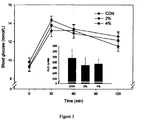
- mice were fasted overnight (with ad lib water). The mouse was placed into a restraint tube, and a basal fasting blood glucose level was obtained by removing the tip of the tail with a razor blade (approx.1 mm) and withdrawing ⁇ 5 ⁇ l of whole blood into a heparin-containing microcuvette (Hemocue, Medipac Scientific NSW). This was then inserted into the glucose monitor (Hemocue 201+, Medipac Scientific, NSW) and the fasting glucose concentration was recorded.
- a heparin-containing microcuvette Hemocue, Medipac Scientific NSW
- mice were injected intraperitoneally with glucose solution (1g/kg body weight) using a 0.5 ml diabetic syringe. Animals were then returned to the home cage and additional blood samples were obtained from the same tail cut at 30, 60 and 120 minutes post glucose loading.
- mice Following 12 weeks on the experimental diets, in vivo body composition of the mice was assessed using Dual energy x-ray absorptiometry (DEXA) (Norland pDEXA Sabre, Norland Medical Systems, White Plains, NY).
- DEXA Dual energy x-ray absorptiometry
- mice Prior to scanning, the DEXA machine was calibrated using quality assurance and quality control standards of known mass supplied by the manufacturer.
- the mice were anaesthetised by means of an injection into the intraperitoneal cavity (ketamine 61mg/kg and xylazine 9mg/kg.), and were placed in the prone position on the DEXA scanning platform, with the tail secured by tape.
- the animals were scanned and results were obtained for fat and fat-free mass, as well as bone mineral content and density. Once scanning was complete, the animals were killed by terminal bleeding (via cardiac puncture) whilst still anaesthetised.
- the concentration of leptin and adiponectin present in the mice plasma was quantified by Enzyme-linked immunosorbent assay (ELISA) (LINCO, Missouri USA).
- ELISA Enzyme-linked immunosorbent assay
- the ELISA microtiter plate wells came with antibodies bound to the surface, and the antigen-containing sample was added to this. The plate was then washed to remove the unbound proteins.
- the antigen-specific antibodies were added, followed by a substrate designed to create an oxidative reaction with the enzyme labelled antibody and generate a colour formation proportionate to the amount of antigen present in the sample. Stop solution was then added to acidify the sample and cease the reaction.
- the enzyme activity was analysed in a spectrophotometer. The degree of absorbency detected by the spectrophotometer is directly proportionate to the amount of antigen present, the concentration was then elucidated from a reference curve produced within the same assay from reference standards of known concentration.
- MRI magnetic resonance imaging
- MRI magnetic resonance imaging
- RT-PCR amplification was performed using 1 ⁇ l of cDNA diluted at 1:10 using gene specific primer sets (GeneWorks Pty Ltd, SA, Australia).
- the oligonucleotide sequences of the forward (sense) and reverse (antisense) primers used for amplification were as in Table 1.
- Each primer set was used at a concentration of 3.75 ⁇ M in a final volume of 25 ⁇ L using the Brilliant® II SYBR® Green QRT-PCR Master Mix Kit, 1-Step (Agilent Technologies, Inc., CA, USA).
- Real-time PCR was performed using the MX3000P qPCR machine (Agilent Technologies, Inc., CA, USA) where target expression was normalised to the amount of endogenous control (beta actin) relative to CON value, given by ⁇ CT method.
- a two-way analysis of variance (ANOVA), with repeated measures on one factor, (Statistica V7, Statsoft USA) was used to analyse body weight and food and water consumption between each group. All other data were analysed using one-way ANOVA. Sigmaplot (9.0, California, USA) was utilised to calculate the area under the curve of the glucose tolerance test. This was conducted using the trapezoidal rule and was followed by a one-way ANOVA to assess group differences. Post-hoc Fisher PLSD tests were conducted where appropriate. All results are presented as mean ⁇ SEM. A p- value of less than 0.05 was considered significant.
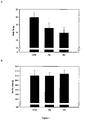
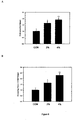
- Faecal energy excretion Excreted energy was assessed in the faecal output of the mice after 8 weeks on the experimental diets. The total energy output was greater in 4% extract treated mice compared to control ( Figure 5A ). Digestibility of the energy within the diets was reduced in both groups receiving extracts of the invention ( Figure 5B ). Increased faecal energy excretion supports the hypothesis that that reduced energy absorption is the mechanism responsible for reduced weight gain in the animals consuming extracts of the invention.
- Faecal Lipid, Carbon (C) and Nitrogen (N) content The cause for the increase in faecal energy mentioned above was examined. There was no significant difference in the faecal lipid contents between the experimental groups and the control group ( Figure 5C ).
- One-way ANOVA analyses revealed that the faecal C content, indicative of carbohydrate level, in both PME treatment groups was higher relative to the control group ( Figure 5D ).
- the faecal N content, indicative of protein content, was lower in mice whose diet was supplemented with 4% PME when compared to that of the control ( Figure 5E ).
- the C/N ratio was significantly different between the control mice and those whose diet was supplemented with 4% PME ( Figure 5F ).
- Adipokines The ELISA assay of plasma leptin identified significantly lower leptin levels in mice in the 4% group relative to the control group ( Figure 6 ).
- Leptin is a 16kDa protein hormone that plays a key role in regulating energy intake and energy expenditure, including appetite and metabolism. Leptin acts on receptors in the hypothalamus of the brain where it inhibits appetite by counteracting the effects of feeding stimulants such as neuropeptide Y and anandamide, as well as promoting the synthesis of ⁇ -MSH, an appetite suppressant. The absence of leptin (or its receptor) is thought to lead to uncontrolled food intake. The fact that mice in the 4% group having decreased body fat also had lower levels of leptin substantiates the data relating to decreased body fat accumulation.
- Gene expression - adipose tissue Gene expression was analysed in the adipose tissue of animals from the experimental groups. Administration of both 2% and 4% of the extract of the invention resulted in increased expression of adiponectin (released primarily by small adipocytes, involved in glucose regulation and fatty acid catabolism) and peroxisome proliferator-activated receptor (PPAR) gamma (involved in fatty acid storage and glucose metabolism) genes relative to control animals ( Figure 7A and B ). There were no differences in uncoupling protein 2 (UCP2) (involved in energy expenditure) ( Figure 7C ).
- UCP2 uncoupling protein 2
- fatty acid synthase (FAS) expression involved in the synthesis of fatty acids ( Figure 7D ).
- Increases in gene expression of adiponectin, PPAR-gamma and FAS are consistent with a reduction in body adiposity, possibly due to reduced energy absorption.
- Increased expression of PPAR-gamma and FAS is consistent with improved insulin sensitivity.
- Liver mRNA expression Gene expression was also analysed in the liver. Administration of both 2% and 4% of the extract of the invention treatment resulted in increased expression of PPAR alpha relative to control animals ( Figure 8A ) and UCP2 ( Figure 8B ).
Landscapes
- Life Sciences & Earth Sciences (AREA)
- Health & Medical Sciences (AREA)
- Chemical & Material Sciences (AREA)
- Polymers & Plastics (AREA)
- Engineering & Computer Science (AREA)
- Food Science & Technology (AREA)
- Pharmacology & Pharmacy (AREA)
- Veterinary Medicine (AREA)
- Public Health (AREA)
- General Health & Medical Sciences (AREA)
- Animal Behavior & Ethology (AREA)
- Medicinal Chemistry (AREA)
- Zoology (AREA)
- Animal Husbandry (AREA)
- Epidemiology (AREA)
- Mycology (AREA)
- Botany (AREA)
- Natural Medicines & Medicinal Plants (AREA)
- Nutrition Science (AREA)
- Molecular Biology (AREA)
- Birds (AREA)
- Biotechnology (AREA)
- Organic Chemistry (AREA)
- Physiology (AREA)
- Biochemistry (AREA)
- Medical Informatics (AREA)
- Microbiology (AREA)
- Alternative & Traditional Medicine (AREA)
- Chemical Kinetics & Catalysis (AREA)
- General Chemical & Material Sciences (AREA)
- Nuclear Medicine, Radiotherapy & Molecular Imaging (AREA)
- Obesity (AREA)
- Hematology (AREA)
- Diabetes (AREA)
- Child & Adolescent Psychology (AREA)
- Bioinformatics & Cheminformatics (AREA)
- Coloring Foods And Improving Nutritive Qualities (AREA)
- Pharmaceuticals Containing Other Organic And Inorganic Compounds (AREA)
- Inorganic Chemistry (AREA)
- Medicines Containing Plant Substances (AREA)
Claims (15)
- Melasse-Extrakt mit einem hohen relativen Überschuss an hydrophoben Verbindungen, einschließlich von Polyphenolen, wobei der Extrakt Folgendes umfasst:• zumindest 9000 mg Catechin-Äquivalent/100 g hydrophobe Polyphenole in einem Gemisch aus Polyphenolen in freier Form, ausgewählt aus Apigenin, Catechin, Catechingallat, Epicatechin, Kaempherol, Luteolin, Quercetin, Tricin, Myricetin und Diosmetin; Polyphenolglykosiden, ausgewählt aus Diosmin, Tricin-7-O-neohesperidosid, Orientin, Vitexin, Luteolin-8-C-(rhamnosylglucosid), Schaftosid, Isoschaftosid und Rutin; und Phenolsäuren, ausgewählt aus Kaffeesäure, Chlorogensäure, p-Cumarsäure, Ferulasäure, Gallussäure, Syringasäure und Vanillinsäure;• Spurenelemente, ausgewählt aus einem oder mehreren aus Calcium, Eisen, Magnesium, Mangan, Kalium und Natrium;• Protein und andere stickstoffhaltige Verbindungen; und• Kohlenhydrate, die keine Monosaccharide und Saccharose sind,wobei der Extrakt weniger als 2 g Monosaccharide und Saccharose pro 100 g Extrakt enthält.
- Melasse-Extrakt nach Anspruch 1, wobei der Extrakt weniger als 1 g Monosaccharide und Disaccharide pro 100 g Extrakt aufweist.
- Melasse-Extrakt nach Anspruch 1 oder Anspruch 2, wobei
der Extrakt zumindest 18.000 mg Catechin-Äquivalent/100 g hydrophobe Polyphenole umfasst; oder
der Extrakt zumindest 21.000 mg Catechin-Äquivalent/100 g hydrophobe Polyphenole umfasst. - Melasse-Extrakt nach einem der vorangegangenen Ansprüche, wobei der Extrakt ein Gemisch aus zumindest Catechin, Epicatechin, Quercetin, Diosmin, Kaffeesäure, Chlorogensäure, p-Cumarsäure, Ferulasäure und Syringasäure umfasst.
- Melasse-Extrakt nach Anspruch 4, worin Catechin in einer Menge von 150 bis 200 mg/kg vorliegt, Epicatechin in einer Menge von 150 bis 220 mg/kg vorliegt, Quercetin in einer Menge von 80 bis 150 mg/kg vorliegt, Diosmin in einer Menge von 410 bis 425 mg/kg vorliegt, Kaffeesäure in einer Menge von 100 bis 320 mg/kg vorliegt, Chlorogensäure in einer Menge von 100 bis 400 mg/kg vorliegt, p-Cumarsäure in einer Menge von 1100 bis 1300 mg/kg vorliegt, Ferulasäure in einer Menge von 700 bis 760 mg/kg vorliegt und Syringasäure in einer Menge von 400 bis 500 mg/kg vorliegt.
- Melasse-Extrakt nach einem der vorangegangenen Ansprüche, worin die Spurenelemente in einer Menge von 8000-9000 mg Calcium/kg Extrakt, 800-1000 mg Eisen/kg Extrakt, 1500-2500 mg Magnesium/kg Extrakt, 50-100 mg Mangan/kg Extrakt, 100-250 mg Kalium/kg Extrakt und 10-50 mg Natrium/100 g Extrakt vorliegen.
- Melasse-Extrakt nach einem der vorangegangenen Ansprüche, worin Protein und andere stickstoffhaltige Verbindungen in einer Menge von 1 bis 15 g Protein und anderer stickstoffhaltiger Verbindungen/100 g Extrakt vorliegen.
- Melasse-Extrakt nach einem der vorangegangenen Ansprüche, worin Kohlenhydrate, die keine Monosaccharide und Saccharose sind, in einer Menge von etwa 30 bis 40 g/100 g Extrakt vorliegt und zumindest 90 % der Kohlenhydrate polymere Glucosereste sind.
- Verfahren zur Herstellung eines Melasse-Extrakts nach einem der vorangegangenen Ansprüche, das die folgenden Schritte umfasst:a. das Verdünnen der Melasse, um eine wässrige Lösung mit einer Konzentration von 10 bis 40 % (Gew./Vol.) zu bilden;b. das Filtrieren der in Schritt (a) gebildeten Melasse durch ein 0,1-µm-Filter;c. das In-Kontakt-Bringen der verdünnten Melasse aus Schritt (b) mit einem hydrophoben polymeren Adsorptionsmittel unter Bedingungen, die ausreichen, um eine Bindung von hydrophoben Verbindungen an das Adsorptionsmittel und das Durchströmen aller anderen Verbindungen in der verdünnten Melasse zu ermöglichen;d. das Herausziehen des hydrophoben polymeren Adsorptionsmittels; unde. das Eluieren der an das hydrophobe polymere Adsorptionsmittel gebundenen Verbindungen, um den Extrakt zu erzeugen,wobei die hydrophoben Verbindungen mit 30%igem bis 70%igem Ethanol eluiert werden.
- Verfahren nach Anspruch 9, wobei die hydrophoben Verbindungen mit 70%igem Ethanol eluiert werden.
- Wirksame Menge eines Melasse-Extrakts nach einem der Ansprüche 1 bis 8 zur Verwendung in einem Verfahren zur therapeutischen Behandlung des menschlichen oder eines Tierkörpers.
- Wirksame Menge eines Melasse-Extrakts nach einem der Ansprüche 1 bis 8 zur Verwendung in einem Verfahren zur therapeutischen Behandlung des menschlichen oder eines Tierkörpers durch Verringern des Körperfetts und/oder Minimieren der Fetteinlagerung in einem Tier.
- Wirksame Menge eines Melasse-Extrakts nach einem der Ansprüche 1 bis 8 zur Verwendung in einem Verfahren zur therapeutischen Behandlung des menschlichen oder eines Tierkörpers durch Reduzieren der Energieaufnahme und/oder Verändern des Fettstoffwechsels.
- Wirksame Menge eines Melasse-Extrakts nach einem der Ansprüche 1 bis 8 zur Verwendung in einem Verfahren zur therapeutischen Behandlung des menschlichen oder eines Tierkörpers durch Verbessern des postprandialen Sättigungsgefühls in einem Individuum.
- Verwendung eines Melasse-Extrakts nach einem der Ansprüche 1 bis 8 als Wirkstoff in einem Nahrungsmittel oder Getränk; wobei gegebenenfalls
das Nahrungsmittel ein ein Sättigungsgefühl erzeugendes Nahrungsmittel ist; oder
der Melasse-Extrakt den glykämischen Index des Nahrungsmittels oder Getränks, dem der Extrakt zugesetzt wurde, verringert.
Applications Claiming Priority (3)
| Application Number | Priority Date | Filing Date | Title |
|---|---|---|---|
| AU2011900400A AU2011900400A0 (en) | 2011-02-08 | Sugar extracts | |
| AU2011902446A AU2011902446A0 (en) | 2011-06-21 | Sugar extracts | |
| PCT/AU2012/000115 WO2012106761A1 (en) | 2011-02-08 | 2012-02-08 | Sugar extracts |
Publications (3)
| Publication Number | Publication Date |
|---|---|
| EP2672832A1 EP2672832A1 (de) | 2013-12-18 |
| EP2672832A4 EP2672832A4 (de) | 2014-11-26 |
| EP2672832B1 true EP2672832B1 (de) | 2020-03-25 |
Family
ID=46638067
Family Applications (1)
| Application Number | Title | Priority Date | Filing Date |
|---|---|---|---|
| EP12744261.4A Active EP2672832B1 (de) | 2011-02-08 | 2012-02-08 | Zuckerextrakte |
Country Status (6)
| Country | Link |
|---|---|
| US (3) | US9572852B2 (de) |
| EP (1) | EP2672832B1 (de) |
| CN (1) | CN103561585B (de) |
| AU (1) | AU2012214104C1 (de) |
| CA (1) | CA2860448C (de) |
| WO (1) | WO2012106761A1 (de) |
Families Citing this family (27)
| Publication number | Priority date | Publication date | Assignee | Title |
|---|---|---|---|---|
| EP2672832B1 (de) | 2011-02-08 | 2020-03-25 | The Product Makers (Australia) Pty Ltd | Zuckerextrakte |
| US20150201660A1 (en) | 2012-08-28 | 2015-07-23 | The Product Makers (Austrilia) Pty Ltd | Extraction Method |
| WO2015021512A1 (en) * | 2013-08-16 | 2015-02-19 | Horizon Science Pty Ltd | Sugar cane derived extracts and methods of treatment |
| ITMI20141843A1 (it) * | 2014-10-27 | 2016-04-27 | Giovannini Luca | Associazioni sinergiche stimolanti l¿espressione di sirtuina 1 |
| KR20160050826A (ko) * | 2014-10-31 | 2016-05-11 | 씨제이제일제당 (주) | 항산화제를 포함하는 추출액 유화유, 이를 함유하는 식용유 및 이들의 제조 방법 |
| KR101691084B1 (ko) * | 2016-04-18 | 2016-12-29 | 씨제이제일제당(주) | 항산화제를 포함하는 추출액 유화유, 이를 함유하는 식용유 및 이들의 제조 방법 |
| AU2017301111B2 (en) | 2016-07-27 | 2021-04-01 | Manildra Stock Feeds (Manufacturing) Pty Ltd | Process for sugar production |
| JP2019523006A (ja) * | 2016-07-27 | 2019-08-22 | ニュートリション サイエンス デザイン ピーティーイー. エルティーディー | 糖組成物 |
| CN106539088B (zh) * | 2016-10-31 | 2021-01-01 | 华南理工大学 | 一种具有降糖功能的功能性蔗糖的制备方法 |
| WO2019028506A1 (en) | 2017-08-09 | 2019-02-14 | The Product Makers (Australia) Pty Ltd | USE OF SUGAR CANE EXTRACTS CONTAINING POLYPHENOLS TO PREVENT, IMPROVE OR TREAT SKIN DISEASE |
| CN111093394A (zh) * | 2017-08-31 | 2020-05-01 | 产品制造商(澳大利亚)有限公司 | 改善消费品的味道 |
| BR112020015400A2 (pt) * | 2018-01-31 | 2020-12-08 | Nutrition Science Design Pte. Ltd. | Composição de açúcar amorfo |
| SG10201803202WA (en) * | 2018-04-17 | 2019-11-28 | Nutrition Science Design Pte Ltd | Sweetener composition |
| JP7138470B2 (ja) * | 2018-04-27 | 2022-09-16 | 三井製糖株式会社 | 抗認知症剤及び短期記憶障害改善/抑制剤 |
| AU2019264860B2 (en) * | 2018-05-11 | 2022-12-08 | Poly Gain Pte Ltd | Sugar cane extracts for use in animal feeds |
| US12102709B2 (en) | 2018-05-30 | 2024-10-01 | Mitsui Sugar Co., Ltd. | Anti-obesity agent, anti-dementia agent, deodorant, anti-aging agent, anti-glycation agent, anti-type I allergy agent, hypotensive agent, flavor improving agent, muscle enhancing agent, and bone metabolism improving agent |
| CN120789183A (zh) * | 2018-05-30 | 2025-10-17 | Dm三井制糖株式会社 | 肥胖抑制剂、抗痴呆症剂、除臭剂、抗老化剂、抗糖化剂、抗i型变态反应剂、抗高血压剂、风味改善剂、肌肉增强剂和骨代谢改善剂 |
| JP7356250B2 (ja) * | 2019-04-01 | 2023-10-04 | Dm三井製糖株式会社 | 筋肉増強剤 |
| JP7356253B2 (ja) * | 2019-04-09 | 2023-10-04 | Dm三井製糖株式会社 | 骨代謝改善剤 |
| AU2019277620B2 (en) | 2018-05-30 | 2025-01-30 | Mitsui Dm Sugar Co.,Ltd. | Anti-obesity agent, anti-dementia agent, deodorant, anti-aging agent, anti-glycation agent, anti-type i allergy agent, hypotensive agent, flavor improving agent, muscle enhancing agent, and bone metabolism improving agent |
| CN109156793A (zh) * | 2018-08-14 | 2019-01-08 | 华南理工大学 | 一种风味修饰剂及其制备方法 |
| CN111847959A (zh) * | 2020-07-24 | 2020-10-30 | 安徽海螺新材料科技有限公司 | 一种水泥助磨剂用糖蜜前处理的方法 |
| AU2021384768B2 (en) * | 2020-11-23 | 2024-08-15 | Poly Gain Pte Ltd | Use of sugar cane extracts in the treatment or prevention of microbial infections and dysbiosis |
| US20240373878A1 (en) * | 2021-06-30 | 2024-11-14 | Nutrition Science Design Pte. Ltd | Methods of feeding polyphenols to animals |
| EP4140316A1 (de) * | 2021-08-23 | 2023-03-01 | Mark Edward Fenzl | Standardisierter honig |
| JP2023072208A (ja) * | 2021-11-12 | 2023-05-24 | 大東製糖株式会社 | サトウキビ搾汁液非ショ糖画分のエタノール不溶性画分及び水溶性画分と、これらの製造方法、血糖値上昇抑制剤および血糖値上昇阻害活性を有する食品又は飲料 |
| WO2025144770A1 (en) | 2023-12-29 | 2025-07-03 | Complete Solution For Poultry (Csp), Inc. | High purity betaine products, polyphenol products, and methods of making the same |
Family Cites Families (194)
| Publication number | Priority date | Publication date | Assignee | Title |
|---|---|---|---|---|
| US1730473A (en) | 1925-12-22 | 1929-10-08 | California Packing Corp | Process of recovering sucrose from cane molasses |
| US2000202A (en) | 1932-07-20 | 1935-05-07 | Vasques Eugenio Antonio | Process for the recovery of sugar and salts from sugar cane molasses |
| US2170713A (en) | 1936-11-12 | 1939-08-22 | Fattinger Hans | Stock food and method of producing the same |
| US2342162A (en) | 1940-05-13 | 1944-02-22 | Musher Sidney | Extraction of food and similar antioxygens from cane and beet molasses |
| US3174877A (en) | 1963-05-16 | 1965-03-23 | Sun Oil Co | Decolorizing sugar by extracting coloring matter therefrom with a methanol solution of a hydrocarbon |
| US3325308A (en) | 1963-06-19 | 1967-06-13 | Donald F Othmer | Process for the refining of sugar with two or more solvents |
| US3619293A (en) | 1970-02-18 | 1971-11-09 | Nippon Shiryo Kogyo Kk | Granular sucrose products and process for producing same |
| DE2362211C3 (de) | 1973-12-14 | 1978-05-11 | Sueddeutsche Zucker Ag, 6800 Mannheim | Verfahren zur Aufarbeitung von Melassen |
| CH622004A5 (de) | 1975-04-10 | 1981-03-13 | Pfeifer & Langen | |
| US4101338A (en) | 1975-06-02 | 1978-07-18 | Sucrest Corporation | Process for recovering useful products from carbohydrate-containing materials |
| JPS5359044A (en) | 1976-11-06 | 1978-05-27 | Sumitomo Cement Co | Process for refining dilute solution of waste molasses |
| US4102646A (en) | 1977-04-06 | 1978-07-25 | Sleeter Ronald T | Quantitative analysis of carbohydrates by infrared spectroscopy |
| US4116712A (en) | 1977-09-06 | 1978-09-26 | Othmer Donald F | Solvent refining of sugar |
| US4359430A (en) | 1980-02-29 | 1982-11-16 | Suomen Sokeri Osakeyhtio | Betaine recovery process |
| US4333770A (en) | 1980-09-08 | 1982-06-08 | Uop Inc. | Extraction of sucrose from molasses |
| FR2490676B1 (fr) | 1980-09-19 | 1985-07-19 | Rhone Poulenc Spec Chim | Procede d'epuration des jus de canne a sucre |
| JPS58116650A (ja) | 1981-12-28 | 1983-07-11 | Erika Kk | サトウキビを原料とする強壮食品の製造法 |
| JPS58144382A (ja) | 1982-02-19 | 1983-08-27 | Agency Of Ind Science & Technol | トコフエロ−ル及びトコトリエノ−ルの分離方法 |
| JPS58144382U (ja) | 1982-03-24 | 1983-09-29 | 山田 弘夫 | 工事中表示看板用照明器 |
| JPS5920223A (ja) | 1982-07-24 | 1984-02-01 | Osaka Chem Lab | 肥満防止剤 |
| US4404037A (en) | 1982-08-12 | 1983-09-13 | Uop Inc. | Sucrose extraction from aqueous solutions featuring simulated moving bed |
| US4523999A (en) | 1983-12-16 | 1985-06-18 | Ajinomoto Co., Inc. | Ultrafiltration method |
| JPS6062798A (ja) | 1984-07-30 | 1985-04-10 | Matsushita Electric Ind Co Ltd | スピ−カ |
| JPS6169727A (ja) | 1984-09-14 | 1986-04-10 | Osaka Chem Lab | 蔗糖等糖類吸収抑制剤及び蔗糖糖類吸収抑制剤を含む食品 |
| JPS6183130A (ja) | 1984-10-01 | 1986-04-26 | Hiroshi Hikino | 多糖類,その単離法および用途 |
| JPS6169727U (de) | 1984-10-12 | 1986-05-13 | ||
| JPS61139400A (ja) | 1984-12-11 | 1986-06-26 | 第一製糖株式会社 | 糖蜜の精製方法 |
| JPS61265068A (ja) | 1985-05-20 | 1986-11-22 | Osaka Chem Lab | 抗肥満食品 |
| JPS61268200A (ja) | 1985-05-24 | 1986-11-27 | オルガノ株式会社 | 非糖分と糖分の分離方法 |
| JPS62126951A (ja) | 1985-11-28 | 1987-06-09 | Nippon Beet Sugar Mfg Co Ltd | ビフイズス菌増殖糖質源を含有する甘味料の製造方法 |
| JP2516006B2 (ja) | 1987-02-20 | 1996-07-10 | オリエンタル酵母工業株式会社 | 廃糖蜜の脱色方法 |
| JP2672138B2 (ja) | 1987-08-21 | 1997-11-05 | フレクショネイテッド ケイン テクノロジー リミテッド | サトウキビ柔組織細胞壁を含有する低コレステロール食物 |
| JPH0767398B2 (ja) | 1988-01-22 | 1995-07-26 | 三菱化成エンジニアリング株式会社 | 甜菜糖液を処理する方法 |
| JPH0633396B2 (ja) | 1988-04-23 | 1994-05-02 | 第一製糖株式会社 | 甘蔗脂質成分の抽出法 |
| FI86416C (fi) | 1988-06-09 | 1992-08-25 | Suomen Sokeri Oy | Foerfarande foer tillvaratagande av betain ur melass. |
| JPH0220300A (ja) | 1988-07-06 | 1990-01-23 | Sanehisa Nakamura | 甘蔗最終糖蜜からの蔗糖の回収方法 |
| GB8907313D0 (en) | 1989-03-31 | 1989-05-17 | British Sugar Plc | Sweetener composition |
| JP2816725B2 (ja) | 1989-10-31 | 1998-10-27 | 万田発酵株式会社 | 糖類吸収抑制剤 |
| EP0481603A1 (de) | 1990-10-15 | 1992-04-22 | The Dow Chemical Company | Trennung von organischen schwachen Säuren von Flüssigkeitsmischungen |
| US5096594A (en) | 1990-12-20 | 1992-03-17 | Israel Rabinowitz | Chromatographic method of purifying cyclitols |
| JPH04320691A (ja) | 1991-04-22 | 1992-11-11 | Sumitomo Chem Co Ltd | 発酵有機酸の精製方法 |
| US5382294A (en) | 1991-08-26 | 1995-01-17 | Rimedio; Nicholas T. | Chromatographic separation of organic non-sugars, colloidal matterials and inorganic-organic complexes from juices, liquors, syrups and/or molasses |
| JPH074277B2 (ja) | 1991-09-10 | 1995-01-25 | 北海道糖業株式会社 | 甘味料の製造方法 |
| CU22229A1 (es) | 1992-09-29 | 1996-01-31 | Dalmer Lab Sa | Policosanol, una mezcla de alcoholes alifaticos primarios superiores para hipergregabilidad plaquetaria, los accidentes isquemicos, trombosis e incluso efectividad contra ulceras gastricas quimicamente inducidas y su proceso de obtencion de la caña de azucar. el tratamiento de complicaciones ateroscleroticas tales como la |
| JP3581157B2 (ja) | 1992-08-19 | 2004-10-27 | 株式会社ミツカングループ本社 | 低耐糖能者用食品 |
| DE4231149C1 (de) | 1992-09-17 | 1993-12-16 | Amino Gmbh | Verfahren zur Weiterverarbeitung von technischen Restabläufen der melasseverarbeitenden Industrie |
| WO1994012057A1 (fr) | 1992-11-25 | 1994-06-09 | Fujisawa Pharmaceutical Co., Ltd. | Edulcorant de regime |
| FI96225C (fi) | 1993-01-26 | 1996-05-27 | Cultor Oy | Menetelmä melassin fraktioimiseksi |
| US5443650B2 (en) | 1993-06-11 | 2000-05-30 | Univ Louisiana State | Process for softening a sugar-containing aqueous solution such as sugar juice or molasses |
| US5556546A (en) | 1993-12-27 | 1996-09-17 | Mitsubishi Kasei Engineering Company | Method of separation into three components using a simulated moving bed |
| US5454875A (en) | 1994-07-01 | 1995-10-03 | Board Of Supervisors Of Louisiana State University And Agricultural And Mechanical College | Softening and purification of molasses or syrup |
| JPH0840912A (ja) | 1994-08-03 | 1996-02-13 | Res Inst For Prod Dev | 糖吸収抑制剤 |
| RU2048847C1 (ru) | 1994-08-18 | 1995-11-27 | Татьяна Евгеньевна Митченко | Ионообменный способ комплексной переработки мелассы |
| US5795398A (en) | 1994-09-30 | 1998-08-18 | Cultor Ltd. | Fractionation method of sucrose-containing solutions |
| US5482631A (en) | 1994-10-06 | 1996-01-09 | Board Of Supervisors Of Louisiana State University And Agricultural And Mechanical College | Separation of inositols from sugars and sugar alcohols |
| US5578336A (en) | 1995-06-07 | 1996-11-26 | Monte; Woodrow C. | Confection carrier for vitamins, enzymes, phytochemicals and ailmentary vegetable compositions and method of making |
| JPH0925290A (ja) | 1995-07-13 | 1997-01-28 | Tokiwa Kanpo Seiyaku:Kk | テンサイに含まれる新規化合物、医薬組成物および機能性食品 |
| US6261565B1 (en) | 1996-03-13 | 2001-07-17 | Archer Daniels Midland Company | Method of preparing and using isoflavones |
| US6297273B1 (en) * | 1996-04-02 | 2001-10-02 | Mars, Inc. | Use of cocoa solids having high cocoa polyphenol content in tabletting compositions and capsule filling compositions |
| PL329325A1 (en) * | 1996-04-02 | 1999-03-29 | Mars Inc | Cocoa extract compounds, method of obtaining them and their application |
| US5955269A (en) | 1996-06-20 | 1999-09-21 | Rutgers, The State University Of New Jersey | Methods of screening foods for nutraceuticals |
| DK0912614T3 (da) | 1996-06-24 | 2002-09-09 | Nestle Sa | På pectin baseret geleringsmiddel |
| IL119924A0 (en) | 1996-12-27 | 1997-03-18 | Tate & Lyle Plc | A process for treating a sucrose syrup |
| RU2114177C1 (ru) | 1997-06-02 | 1998-06-27 | Товарищество с ограниченной ответственностью Центр содействия развитию новых технологий "Кантэк" | Способ производства сахарного сиропа из сахаросодержащего сырья |
| AUPO821397A0 (en) | 1997-07-24 | 1997-08-14 | Commonwealth Scientific And Industrial Research Organisation | Process for the purification of nutrients from food process streams |
| JP3383193B2 (ja) | 1997-08-29 | 2003-03-04 | 日本甜菜製糖株式会社 | 液体甘味料及びその製造方法 |
| AUPP115597A0 (en) | 1997-12-23 | 1998-01-29 | Bureau Of Sugar Experiment Stations | On-line measuring system and method |
| JP3539470B2 (ja) | 1997-12-25 | 2004-07-07 | オルガノ株式会社 | ベタインの回収方法 |
| JPH11318405A (ja) | 1998-05-08 | 1999-11-24 | Asama Kasei Kk | 食品用保存剤および食品の保存方法 |
| JP2000032954A (ja) | 1998-07-17 | 2000-02-02 | Gosho:Kk | アントシアニン系赤米抽出液・粉末とその製造法 |
| MY134878A (en) | 1998-09-24 | 2007-12-31 | Palm Oil Res And Dev Board | Treatment of liquors derived from oil-bearing fruit. |
| WO2000021546A1 (en) | 1998-10-09 | 2000-04-20 | Mitsui Sugar Co., Ltd | Preventives/remedies for infection, anti-endotoxin agents, vaccine adjuvants and growth promoters |
| IL127371A (en) | 1998-12-02 | 2004-08-31 | Adumin Chemicals Ltd | Method for selectively obtaining antioxidant rich extracts from citrus fruits |
| JP4484267B2 (ja) * | 1999-04-12 | 2010-06-16 | 三井製糖株式会社 | ガン免疫賦活剤およびアレルギー免疫抑制剤 |
| US6723369B2 (en) | 1999-05-27 | 2004-04-20 | James M. Burgess | Carbonated beverage for strengthening acid resistancy of teeth |
| ES2275463T3 (es) | 1999-08-16 | 2007-06-16 | Dsm Ip Assets B.V. | Proceso para la produccion de galato de epigalocatequina. |
| US6406547B1 (en) | 2000-07-18 | 2002-06-18 | Tate & Lyle Industries, Limited | Sugar beet membrane filtration process |
| US6174378B1 (en) | 1999-08-19 | 2001-01-16 | Tate Life Industries, Limited | Process for production of extra low color cane sugar |
| FR2797688B1 (fr) | 1999-08-19 | 2001-11-02 | Marc Dubernet | Procede et dispositif d'analyse qualitative objective des mouts de raisins et/ou des vins par spectrometrie infrarouge large bande |
| US6406548B1 (en) | 2000-07-18 | 2002-06-18 | Tate & Lyle Industries, Limited | Sugar cane membrane filtration process |
| FI113453B (fi) | 1999-09-17 | 2004-04-30 | Sohkar Oy | Kasvimateriaalin kromatografinen fraktiointi |
| JP3455481B2 (ja) | 1999-10-15 | 2003-10-14 | ラシェル製薬株式会社 | 黒砂糖エキスを配合してなる栄養補助食品 |
| JP4678904B2 (ja) | 1999-11-02 | 2011-04-27 | アサヒビール株式会社 | ホップより得られる体重増加抑制物質 |
| AU1290201A (en) | 1999-11-17 | 2001-05-30 | Tate And Lyle Industries, Limited | Process for purification of low grade sugar syrups using nanofiltration |
| JP4358957B2 (ja) | 2000-01-21 | 2009-11-04 | 三井製糖株式会社 | フリーラジカル又は活性酸素を消去もしくは低減する剤 |
| EP1262543B1 (de) | 2000-03-10 | 2012-10-24 | Kabushiki Kaisha Yakult Honsha | Inhibitoren von alpha-amylase aktivität |
| US6774111B1 (en) | 2000-03-14 | 2004-08-10 | Abbott Laboratories | Carbohydrate system and a method for providing nutrition to a diabetic |
| KR100350576B1 (ko) | 2000-04-14 | 2002-08-30 | 박 군 | 의료용 가온 장치 및 가온 제어방법 |
| JP4737796B2 (ja) | 2000-04-21 | 2011-08-03 | 三井製糖株式会社 | 肝機能増強剤 |
| US6485574B1 (en) | 2000-06-23 | 2002-11-26 | Chung-Chi Chou | Process for pretreating colored aqueous sugar solutions to produce a low colored crystallized sugar |
| JP2002020306A (ja) | 2000-07-03 | 2002-01-23 | Chisso Corp | ラジカル消去物質およびそれを用いたラジカル消去剤 |
| EP1312374B1 (de) | 2000-08-01 | 2008-09-10 | Oryza Oil & Fat Chemical Co., Ltd | Nachtkerzensamenextrakte als inhibitoren der zuckerabsorption und deren herstellungsprozess |
| ATE320248T1 (de) | 2000-08-17 | 2006-04-15 | Sabinsa Corp | Zusammensetzung enthaltend hydroxyzitronensäure und garcinol zur gewichtsreduzierung |
| AUPQ987400A0 (en) | 2000-09-04 | 2000-09-28 | Food Ingredients Technologies Intangibles (Bermuda) Limited | Process for selectively extracting bioactive components |
| FI20002150L (fi) | 2000-09-29 | 2002-03-30 | Finnfeeds Finland Oy | Menetelmä tuotteiden talteenottamiseksi prosessiliuoksista |
| FI20002149A7 (fi) | 2000-09-29 | 2002-03-30 | Xyrofin Oy | Sakkaridien puhdistaminen kromatografisella erotuksella |
| JP3793779B2 (ja) | 2000-11-27 | 2006-07-05 | 沖縄県 | サトウキビポリフェノール含有物の製造方法 |
| KR100863447B1 (ko) | 2000-12-28 | 2008-10-16 | 다니스코 스위트너스 오와이 | 분리방법 |
| US20030031772A1 (en) | 2001-03-28 | 2003-02-13 | Zehner Lee R. | Mixtures of fructose and lactose as a low-calorie bulk sweetener with reduced glyemic index |
| US20020187219A1 (en) | 2001-03-29 | 2002-12-12 | The Procter & Gamble Co. | Low glycemic response compositions |
| US7022368B2 (en) | 2001-06-26 | 2006-04-04 | Ocean Spray Cranberries, Inc. | Process for producing sugars and acids-rich juice and phytochemical-rich juice |
| ATE541569T1 (de) | 2001-07-24 | 2012-02-15 | Cargill Inc | Verfahren zur isolation von phenolischen verbindungen |
| JP2003116486A (ja) | 2001-08-09 | 2003-04-22 | Meiji Milk Prod Co Ltd | 食後の血糖上昇抑制作用を有する食品組成物 |
| JP5002097B2 (ja) | 2001-08-28 | 2012-08-15 | 独立行政法人農業・食品産業技術総合研究機構 | コクシジウムによって引き起こされるヒトまたは動物の病気に対する予防治療剤及びコクシジウムの軽感染に対するヒトまたは動物の免疫のためのアジュバント剤 |
| US6869625B2 (en) | 2001-10-09 | 2005-03-22 | Council Of Scientific And Industrial Research | Method of treating diabetes using plant argyrolobium roseum extract, and a process for the isolation of extract from the said plant |
| JP4199448B2 (ja) | 2001-10-30 | 2008-12-17 | 琉球セメント株式会社 | サトウキビポリフェノール含有物を有効成分とする医薬剤並びにその用途 |
| US6706305B2 (en) | 2001-10-31 | 2004-03-16 | Conagra Foods Inc. | Low glycemic index bread |
| US6899892B2 (en) | 2001-12-19 | 2005-05-31 | Regents Of The University Of Minnesota | Methods to reduce body fat |
| US20030165574A1 (en) | 2002-03-01 | 2003-09-04 | Ward Loren Spencer | Compositions and methods for treatment of body weight conditions |
| GB0205184D0 (en) | 2002-03-06 | 2002-04-17 | Molecularnature Ltd | Process for scavenging phytochemicals |
| GB0205182D0 (en) | 2002-03-06 | 2002-04-17 | Molecularnature Ltd | Process for extracting polar phytochemicals |
| GB0205186D0 (en) | 2002-03-06 | 2002-04-17 | Molecularnature Ltd | Method for monitoring the quality of a herbal medicine |
| GB0205185D0 (en) | 2002-03-06 | 2002-04-17 | Molecularnature Ltd | Process for extracting non-polar phytochemicals |
| JP2005519940A (ja) | 2002-03-12 | 2005-07-07 | カウンシル オブ サイエンティフィク アンド インダストリアル リサーチ | クミンとその抽出物及び画分の生物学的利用能/生物学的有効性促進活性 |
| US7524526B2 (en) | 2002-04-10 | 2009-04-28 | Archer-Daniels-Midland Company | Process for producing high purity isoflavones |
| US20030198694A1 (en) | 2002-04-22 | 2003-10-23 | Chou Chung Chi | Preparation antioxidants enriched functional food products from sugar cane and beet |
| CN101837003B (zh) | 2002-04-30 | 2013-09-04 | 尤尼根公司 | 作为治疗剂的包含无取代b环类黄酮和黄烷混合物的组合物 |
| US7074440B2 (en) | 2002-05-01 | 2006-07-11 | Rulin Xiu | Compositions and methods for body weight loss |
| US6890571B2 (en) | 2002-05-14 | 2005-05-10 | National Starch And Chemical Investment Holding Corporation | Slowly digestible starch product |
| US6929817B2 (en) | 2002-05-14 | 2005-08-16 | National Starch & Chemical Investment Holding Corporation | Slowly digestible starch product |
| KR100594353B1 (ko) | 2002-05-28 | 2006-07-03 | 주식회사 엠디바이오알파 | 신규한 인삼잎 및 줄기 다당체, 그 제조방법 및 그를활성성분으로 함유하는 항암제 및 항암보조제 조성물 |
| FI20021251A0 (fi) | 2002-06-26 | 2002-06-26 | Finnfeeds Finland Oy | Menetelmä betaiinin talteenottamiseksi |
| JP3644938B2 (ja) | 2002-08-01 | 2005-05-11 | 株式会社東洋新薬 | 健康食品 |
| AU2002950627A0 (en) | 2002-08-07 | 2002-09-12 | Queen Bioactives Pty Ltd | Method of lowering glycemic index of foods |
| US8129350B2 (en) | 2002-08-07 | 2012-03-06 | Queen Bioactives Pty Ltd | Method of lowering Glycaemic Index of foods |
| JP2004075612A (ja) | 2002-08-19 | 2004-03-11 | National Agriculture & Bio-Oriented Research Organization | 免疫機能増強剤 |
| US20040131749A1 (en) | 2002-08-29 | 2004-07-08 | Archer-Daniels-Midland Company | Phytochemicals from edible bean process streams |
| US20040052915A1 (en) | 2002-09-13 | 2004-03-18 | Carlson Ting L. | Use of low glycemic index sweeteners in food and beverage compositions |
| CN1262201C (zh) | 2002-09-25 | 2006-07-05 | 周重吉 | 由甘蔗及甜菜制备强化抗氧化基之机能性食品之方法 |
| JP4517197B2 (ja) | 2002-11-06 | 2010-08-04 | ノルディック シュガー オイ. | 食用の風味改良剤、その製造方法及び使用方法 |
| US20040097429A1 (en) | 2002-11-18 | 2004-05-20 | Nieuwenhuizen Arie Gijsbert | Method for the reduction of the mammalian appetite |
| EP1447014A1 (de) | 2003-02-14 | 2004-08-18 | Wacker-Chemie GmbH | Methode zum Senken des glykämischen Index von Nahrungsmitteln |
| EP1447013A1 (de) | 2003-02-14 | 2004-08-18 | Wacker-Chemie GmbH | Methode zum Senken des glykämischen Index von Nahrungsmitteln |
| JP2004331512A (ja) | 2003-04-30 | 2004-11-25 | Rasheru Seiyaku Kk | 化粧料組成物 |
| DE602004022806D1 (de) | 2003-06-04 | 2009-10-08 | Nestec Sa | Getränk zur gewichtskontrolle |
| AU2003903058A0 (en) | 2003-06-18 | 2003-07-03 | Phytopharm Australia Ltd | A process and apparatus for the modification of plant extracts |
| GB0316550D0 (en) | 2003-07-15 | 2003-08-20 | Forum Bioscience Holdings Ltd | Sucrose substitute |
| BR0303976A (pt) | 2003-10-09 | 2005-06-21 | Chung Chi Chou | Preparados alimentìcios funcionais enriquecidos com antioxidantes a partir da cana-de-açúcar e beterraba |
| EP1672988A4 (de) * | 2003-10-17 | 2008-02-20 | Diet Formulations Ltd | Zusatz für die gewichtsreduktion |
| GB2408262B (en) | 2003-11-24 | 2007-09-12 | British Sugar Plc | A method of preparation of L-arabinose |
| WO2005074962A1 (ja) | 2004-02-10 | 2005-08-18 | Asahi Breweries, Ltd. | 筋張力増強剤 |
| JP4903436B2 (ja) | 2004-02-17 | 2012-03-28 | サントリーホールディングス株式会社 | 高分子ポリフェノール画分を含有するリパーゼ活性阻害剤、茶エキス、およびその製造方法 |
| WO2005084457A1 (en) | 2004-03-04 | 2005-09-15 | Goekhan Cem | Artificial fruit |
| JPWO2005089784A1 (ja) | 2004-03-19 | 2008-01-31 | 株式会社東洋新薬 | 口腔用組成物 |
| WO2005089066A2 (en) | 2004-03-23 | 2005-09-29 | Rimonest Ltd. | Pharmaceutical compositions, methods of formulation thereof and methods of use thereof |
| JP4182524B2 (ja) | 2004-03-26 | 2008-11-19 | 北海道糖業株式会社 | ビート含蜜糖の製造方法 |
| US20050214419A1 (en) | 2004-03-29 | 2005-09-29 | Aberle Rick A | Method and apparatus for providing instantaneous, real-time data for extrusion process control |
| WO2005105852A1 (ja) | 2004-04-30 | 2005-11-10 | Fuji-Sangyo Co., Ltd. | 新規アラビノガラクタン及び抗糖尿病作用物質並びにその使用方法 |
| JP2005343843A (ja) | 2004-06-04 | 2005-12-15 | Osaka Yakuhin Kenkyusho:Kk | 黒砂糖エキス及びダイズエキスを含有する化粧料組成物 |
| AU2005249147B2 (en) | 2004-06-04 | 2011-03-24 | Poly Gain Pte Ltd | Natural sweetener |
| JP2006028020A (ja) | 2004-07-12 | 2006-02-02 | Osaka Yakuhin Kenkyusho:Kk | コラーゲンと黒砂糖エキスとを含有する化粧料組成物 |
| WO2006014028A1 (ja) | 2004-08-06 | 2006-02-09 | Mochida Pharmaceutical Co., Ltd. | サツマイモ茎葉抽出物およびその用途 |
| US20090047368A1 (en) | 2004-11-04 | 2009-02-19 | University Of Tsukuba | Polymeric polyphenol extracted from fermented tea, therapeutic agent for mitochondrial disease, preventive/therapeutic agent for diabetes mellitus, and food or beverage |
| JP3671190B1 (ja) | 2004-11-09 | 2005-07-13 | 松浦薬業株式会社 | 蓮植物体から得られた抽出物、該抽出物の製造方法及び肥満防止剤 |
| WO2006052007A1 (ja) | 2004-11-11 | 2006-05-18 | Takeda Pharmaceutical Company Limited | 血糖調節剤 |
| CN1685929A (zh) | 2005-05-08 | 2005-10-26 | 颜怀玮 | 正常能量代谢复合必需维生素微量元素及营养型白糖产品和制造方法 |
| US7943190B2 (en) | 2005-05-13 | 2011-05-17 | Her Majesty the Queen in Right in Canada as Represented by the Minister of Agriculture and Agri-Food Canada | Extraction of phytochemicals |
| JP5340520B2 (ja) | 2005-05-20 | 2013-11-13 | ポッカサッポロフード&ビバレッジ株式会社 | 体重増加抑制剤 |
| BRPI0613305B1 (pt) | 2005-06-03 | 2020-09-29 | The Product Makers (Australia) Pty Ltd | Método não terapeutico para alterar a distribuição da massa do corpo de um indivíduo |
| US20080187612A1 (en) | 2005-06-03 | 2008-08-07 | David Kannar | Delivery Systems |
| JP2007043940A (ja) | 2005-08-09 | 2007-02-22 | Hokkaido Univ | イノシトール回収方法 |
| JP5563181B2 (ja) | 2005-09-01 | 2014-07-30 | ポッカサッポロフード&ビバレッジ株式会社 | インスリン抵抗性改善剤及び血糖値低下剤 |
| WO2007041817A1 (en) | 2005-10-07 | 2007-04-19 | Dulcini S/A | Tood composition, use of an effective amount of sugar and biopolymer, and product |
| US8864995B2 (en) | 2006-01-10 | 2014-10-21 | Dupont Nutrition Biosciences Aps | Method for separating betaine |
| WO2007094827A2 (en) | 2006-02-10 | 2007-08-23 | Mannatech, Inc. | All natural multivitamin and multimineral dietary supplement formulations for enhanced absorption and biological utilization |
| JP2008044872A (ja) | 2006-08-11 | 2008-02-28 | Nippon Supplement Kk | イソラリシレシノールを含有する健康食品、血中コレステロール降下剤および体脂肪低下剤 |
| CN104323268A (zh) | 2006-09-19 | 2015-02-04 | 视界科技有限公司 | 从甘蔗中获得的提取物及其生产方法 |
| AU2011204847B2 (en) | 2006-09-19 | 2013-12-19 | Poly Gain Pte Ltd | Extracts derived from sugar cane and a process for their manufacture |
| JP2008222656A (ja) | 2007-03-14 | 2008-09-25 | Orient Herb Kk | 肥満改善および予防用組成物ならびに健康食品 |
| GB0719545D0 (en) | 2007-10-08 | 2007-11-14 | Barry Callebaut Ag | Novel use of cocoa extract |
| GB0719542D0 (en) | 2007-10-08 | 2007-11-14 | Barry Callebaut Ag | Use of cocoa extract |
| JP2010526043A (ja) | 2007-05-04 | 2010-07-29 | ニュートラスーティック イーティ ビジネス コンサルティング | 脂肪分解活性を有する化合物、その取得方法および利用方法 |
| JPWO2008143182A1 (ja) | 2007-05-17 | 2010-08-05 | 株式会社カネカ | 甘草ポリフェノールを含有する組成物 |
| ES2311401B1 (es) | 2007-05-22 | 2009-12-22 | Ges-Biolives, S.L. | Procedimiento para la obtencion de extractos con alto contenido en hidroxitirosol a partir de productos derivados de la oliva. |
| EP2022344A1 (de) * | 2007-08-02 | 2009-02-11 | Nestec S.A. | Reduktion von Ermüdung infolge von Training |
| US20100285186A1 (en) | 2007-10-04 | 2010-11-11 | Horizon Science Pty Ltd | Process for the Manufacture of Sugar and Other Food Products |
| CN101888889A (zh) | 2007-10-10 | 2010-11-17 | 朗氏科技有限公司 | 生物活性化合物的再生方法 |
| WO2009049428A1 (en) | 2007-10-16 | 2009-04-23 | The University Of British Columbia | Alpha-amylase inhibitors: the montbretins and uses thereof |
| KR100954217B1 (ko) | 2007-12-14 | 2010-04-21 | (주)세전 | 유기산을 이용한 l-아라비노스 함유 추출액의 제조 방법 |
| FR2929852B1 (fr) | 2008-04-09 | 2010-08-13 | Alvend | Procede de preparation d'extrait vegetal riche en polyphenols, extrait obtenu a partir du procede, compositions renfermant ledit extrait et installation pour la mise en oeuvre du procede |
| JP5417431B2 (ja) | 2008-05-08 | 2014-02-12 | インダス バイオテック プライベート リミティド | ガラクトマンナンを含む組成物及びそのプロセス |
| US8288364B2 (en) | 2008-05-09 | 2012-10-16 | Indus Biotech Private Limited | Botanically derived composition and a process thereof |
| JP2009298769A (ja) | 2008-05-14 | 2009-12-24 | Asahi Breweries Ltd | 脂肪蓄積抑制用組成物 |
| CN101317850B (zh) | 2008-05-20 | 2012-07-04 | 淮北中润生物能源技术开发有限公司 | 蔗糖吸收抑制剂 |
| KR100894911B1 (ko) | 2008-09-12 | 2009-04-30 | (주)세전 | Sbp 추출물을 함유하는 당 함유 식품 조성물 |
| EP2347660A4 (de) * | 2008-10-03 | 2014-06-11 | Sigma Alimentos Sa De Cv | Zusammensetzung für die förderung der kontrolle des gesamt- und ldl-cholesterins und/oder der gewichtsabnahme und/oder der thermogenese |
| WO2010053949A1 (en) | 2008-11-04 | 2010-05-14 | Metaproteomics, Llc | Phytochemical compositions and methods for activating amp-kinase |
| US20100196549A1 (en) | 2009-02-03 | 2010-08-05 | Tropicana Products, Inc. | Microencapsulated citrus phytochemicals and application to sports drinks |
| FI20095144A0 (fi) | 2009-02-17 | 2009-02-17 | Danisco Sugar Oy | Elintarvikevalmiste |
| FR2942224B1 (fr) | 2009-02-18 | 2012-11-30 | Centre De Cooperation Internationale En Rech Agronomique Pour Le Developpement Cirad | Procede d'extraction de composes phenoliques a partir d'eau de vegetation de l'olive et preparation d'extrait titre en polyphenols d'olive et de raisin |
| CA2758745A1 (en) | 2009-04-17 | 2010-10-21 | Dionne Nadine Payn | Compounds affecting glycemic index |
| EP2672832B1 (de) | 2011-02-08 | 2020-03-25 | The Product Makers (Australia) Pty Ltd | Zuckerextrakte |
| US20150201660A1 (en) | 2012-08-28 | 2015-07-23 | The Product Makers (Austrilia) Pty Ltd | Extraction Method |
| WO2015021512A1 (en) | 2013-08-16 | 2015-02-19 | Horizon Science Pty Ltd | Sugar cane derived extracts and methods of treatment |
-
2012
- 2012-02-08 EP EP12744261.4A patent/EP2672832B1/de active Active
- 2012-02-08 CN CN201280007988.3A patent/CN103561585B/zh active Active
- 2012-02-08 AU AU2012214104A patent/AU2012214104C1/en active Active
- 2012-02-08 WO PCT/AU2012/000115 patent/WO2012106761A1/en not_active Ceased
- 2012-02-08 US US13/984,328 patent/US9572852B2/en active Active
- 2012-02-08 CA CA2860448A patent/CA2860448C/en active Active
-
2016
- 2016-12-15 US US15/380,388 patent/US9717771B2/en active Active
-
2017
- 2017-06-16 US US15/625,427 patent/US10226502B2/en active Active
Non-Patent Citations (1)
| Title |
|---|
| None * |
Also Published As
| Publication number | Publication date |
|---|---|
| US9572852B2 (en) | 2017-02-21 |
| CA2860448A1 (en) | 2012-08-16 |
| AU2012214104A1 (en) | 2013-09-19 |
| US20170281706A1 (en) | 2017-10-05 |
| CN103561585B (zh) | 2016-05-25 |
| CN103561585A (zh) | 2014-02-05 |
| US10226502B2 (en) | 2019-03-12 |
| CA2860448C (en) | 2019-09-10 |
| EP2672832A1 (de) | 2013-12-18 |
| EP2672832A4 (de) | 2014-11-26 |
| US9717771B2 (en) | 2017-08-01 |
| WO2012106761A1 (en) | 2012-08-16 |
| US20140357583A1 (en) | 2014-12-04 |
| AU2012214104B2 (en) | 2016-03-31 |
| AU2012214104C1 (en) | 2017-08-03 |
| US20170182112A1 (en) | 2017-06-29 |
Similar Documents
| Publication | Publication Date | Title |
|---|---|---|
| US10226502B2 (en) | Sugar extract | |
| EP3569298B1 (de) | Extrakt aus zuckerrohr | |
| JP6785509B2 (ja) | ロイコノストック メセンテロイデスが産生する菌体外多糖を有効成分として含む代謝異常の予防または治療用組成物 | |
| KR19980702533A (ko) | 프로시아니딘을 유효성분으로 하는 항비만제 | |
| EP2754444B1 (de) | Zusammensetzung zur verbesserung von in-vivo-stoffwechselparametern | |
| KR20150145262A (ko) | 에너지 소비의 촉진 및/또는 에너지 소비 기능 저하의 치료 및/또는 예방제, 또는 방법 | |
| US20160193275A1 (en) | Sugar Cane Derived Extracts and Methods of Treatment | |
| JP2023157951A (ja) | 肝臓機能改善用組成物 | |
| WO2016152293A1 (ja) | 癌細胞のglut1の発現抑制用組成物および発現抑制方法 | |
| WO2005110400A1 (ja) | リパーゼ阻害剤、コレステロールエステラーゼ阻害剤、中性脂肪吸収抑制剤、コレステロール吸収抑制剤及びコレステロールエステル吸収抑制剤 | |
| HK1192698A (en) | Sugar extracts | |
| HK1192698B (en) | Sugar extracts | |
| KR101527890B1 (ko) | 디하이드로진저론을 함유하는 혈당 강하용 조성물 | |
| JP5917499B2 (ja) | パナキサジオール含有組成物 | |
| Kataoka et al. | Melinjo (Gnetum gnemon) extract intake during lactation stimulates hepatic AMP-activated protein kinase in offspring of excessive fructose-fed pregnant rats | |
| JP7156639B2 (ja) | レスベラトロール誘導体の新規用途 | |
| JP7289997B2 (ja) | Glp-1分泌制御剤のスクリーニング方法、glp-1分泌制御剤、糖尿病、肥満、食後高血糖、神経変性疾患、低血糖、脂肪過多、若しくは膵島細胞症の予防又は改善用組成物、gpr84発現細胞におけるglp-1分泌の促進方法、glp-1分泌促進用組成物の製造方法、gpr84アゴニストの、疾患の治療薬を製造するための使用、glp-1分泌促進剤、経口摂取用組成物 | |
| JP5787340B2 (ja) | 破骨細胞分化抑制組成物 | |
| TWI786105B (zh) | 生體內酚化合物減低劑 | |
| KR102349724B1 (ko) | Kahweol을 포함하는 항비만 조성물 | |
| KR20250076353A (ko) | 글루콘산 아연염 및 사이클로-히스프로를 유효성분으로 포함하는 비만 및 당뇨병의 예방, 개선 또는 치료용 조성물 | |
| WO2024058255A1 (ja) | サイトカイン産生調節剤 |
Legal Events
| Date | Code | Title | Description |
|---|---|---|---|
| PUAI | Public reference made under article 153(3) epc to a published international application that has entered the european phase |
Free format text: ORIGINAL CODE: 0009012 |
|
| 17P | Request for examination filed |
Effective date: 20130906 |
|
| AK | Designated contracting states |
Kind code of ref document: A1 Designated state(s): AL AT BE BG CH CY CZ DE DK EE ES FI FR GB GR HR HU IE IS IT LI LT LU LV MC MK MT NL NO PL PT RO RS SE SI SK SM TR |
|
| DAX | Request for extension of the european patent (deleted) | ||
| A4 | Supplementary search report drawn up and despatched |
Effective date: 20141028 |
|
| RIC1 | Information provided on ipc code assigned before grant |
Ipc: C13K 13/00 20060101ALI20141022BHEP Ipc: A23K 1/16 20060101ALI20141022BHEP Ipc: A23K 1/02 20060101AFI20141022BHEP Ipc: A23L 1/30 20060101ALI20141022BHEP Ipc: A23K 1/18 20060101ALI20141022BHEP Ipc: A61P 3/04 20060101ALI20141022BHEP Ipc: A23L 1/307 20060101ALI20141022BHEP Ipc: A23L 1/29 20060101ALI20141022BHEP |
|
| 19U | Interruption of proceedings before grant |
Effective date: 20150806 |
|
| 19W | Proceedings resumed before grant after interruption of proceedings |
Effective date: 20160502 |
|
| RAP1 | Party data changed (applicant data changed or rights of an application transferred) |
Owner name: THE PRODUCT MAKERS (AUSTRALIA) PTY LTD |
|
| STAA | Information on the status of an ep patent application or granted ep patent |
Free format text: STATUS: EXAMINATION IS IN PROGRESS |
|
| 17Q | First examination report despatched |
Effective date: 20171026 |
|
| REG | Reference to a national code |
Ref country code: DE Ref legal event code: R079 Ref document number: 602012068729 Country of ref document: DE Free format text: PREVIOUS MAIN CLASS: A23K0001020000 Ipc: A23L0033105000 |
|
| RIC1 | Information provided on ipc code assigned before grant |
Ipc: A23K 10/33 20160101ALI20190718BHEP Ipc: A23L 33/105 20160101AFI20190718BHEP Ipc: A23K 20/111 20160101ALI20190718BHEP Ipc: A23L 33/10 20160101ALI20190718BHEP |
|
| GRAP | Despatch of communication of intention to grant a patent |
Free format text: ORIGINAL CODE: EPIDOSNIGR1 |
|
| STAA | Information on the status of an ep patent application or granted ep patent |
Free format text: STATUS: GRANT OF PATENT IS INTENDED |
|
| INTG | Intention to grant announced |
Effective date: 20190926 |
|
| GRAJ | Information related to disapproval of communication of intention to grant by the applicant or resumption of examination proceedings by the epo deleted |
Free format text: ORIGINAL CODE: EPIDOSDIGR1 |
|
| STAA | Information on the status of an ep patent application or granted ep patent |
Free format text: STATUS: EXAMINATION IS IN PROGRESS |
|
| GRAR | Information related to intention to grant a patent recorded |
Free format text: ORIGINAL CODE: EPIDOSNIGR71 |
|
| GRAS | Grant fee paid |
Free format text: ORIGINAL CODE: EPIDOSNIGR3 |
|
| STAA | Information on the status of an ep patent application or granted ep patent |
Free format text: STATUS: GRANT OF PATENT IS INTENDED |
|
| GRAA | (expected) grant |
Free format text: ORIGINAL CODE: 0009210 |
|
| STAA | Information on the status of an ep patent application or granted ep patent |
Free format text: STATUS: THE PATENT HAS BEEN GRANTED |
|
| INTC | Intention to grant announced (deleted) | ||
| INTG | Intention to grant announced |
Effective date: 20200206 |
|
| AK | Designated contracting states |
Kind code of ref document: B1 Designated state(s): AL AT BE BG CH CY CZ DE DK EE ES FI FR GB GR HR HU IE IS IT LI LT LU LV MC MK MT NL NO PL PT RO RS SE SI SK SM TR |
|
| REG | Reference to a national code |
Ref country code: GB Ref legal event code: FG4D |
|
| REG | Reference to a national code |
Ref country code: AT Ref legal event code: REF Ref document number: 1247495 Country of ref document: AT Kind code of ref document: T Effective date: 20200415 Ref country code: IE Ref legal event code: FG4D |
|
| REG | Reference to a national code |
Ref country code: DE Ref legal event code: R096 Ref document number: 602012068729 Country of ref document: DE |
|
| PG25 | Lapsed in a contracting state [announced via postgrant information from national office to epo] |
Ref country code: RS Free format text: LAPSE BECAUSE OF FAILURE TO SUBMIT A TRANSLATION OF THE DESCRIPTION OR TO PAY THE FEE WITHIN THE PRESCRIBED TIME-LIMIT Effective date: 20200325 Ref country code: FI Free format text: LAPSE BECAUSE OF FAILURE TO SUBMIT A TRANSLATION OF THE DESCRIPTION OR TO PAY THE FEE WITHIN THE PRESCRIBED TIME-LIMIT Effective date: 20200325 Ref country code: NO Free format text: LAPSE BECAUSE OF FAILURE TO SUBMIT A TRANSLATION OF THE DESCRIPTION OR TO PAY THE FEE WITHIN THE PRESCRIBED TIME-LIMIT Effective date: 20200625 |
|
| PG25 | Lapsed in a contracting state [announced via postgrant information from national office to epo] |
Ref country code: GR Free format text: LAPSE BECAUSE OF FAILURE TO SUBMIT A TRANSLATION OF THE DESCRIPTION OR TO PAY THE FEE WITHIN THE PRESCRIBED TIME-LIMIT Effective date: 20200626 Ref country code: BG Free format text: LAPSE BECAUSE OF FAILURE TO SUBMIT A TRANSLATION OF THE DESCRIPTION OR TO PAY THE FEE WITHIN THE PRESCRIBED TIME-LIMIT Effective date: 20200625 Ref country code: HR Free format text: LAPSE BECAUSE OF FAILURE TO SUBMIT A TRANSLATION OF THE DESCRIPTION OR TO PAY THE FEE WITHIN THE PRESCRIBED TIME-LIMIT Effective date: 20200325 Ref country code: SE Free format text: LAPSE BECAUSE OF FAILURE TO SUBMIT A TRANSLATION OF THE DESCRIPTION OR TO PAY THE FEE WITHIN THE PRESCRIBED TIME-LIMIT Effective date: 20200325 Ref country code: LV Free format text: LAPSE BECAUSE OF FAILURE TO SUBMIT A TRANSLATION OF THE DESCRIPTION OR TO PAY THE FEE WITHIN THE PRESCRIBED TIME-LIMIT Effective date: 20200325 |
|
| REG | Reference to a national code |
Ref country code: NL Ref legal event code: MP Effective date: 20200325 |
|
| REG | Reference to a national code |
Ref country code: LT Ref legal event code: MG4D |
|
| PG25 | Lapsed in a contracting state [announced via postgrant information from national office to epo] |
Ref country code: NL Free format text: LAPSE BECAUSE OF FAILURE TO SUBMIT A TRANSLATION OF THE DESCRIPTION OR TO PAY THE FEE WITHIN THE PRESCRIBED TIME-LIMIT Effective date: 20200325 |
|
| PG25 | Lapsed in a contracting state [announced via postgrant information from national office to epo] |
Ref country code: SK Free format text: LAPSE BECAUSE OF FAILURE TO SUBMIT A TRANSLATION OF THE DESCRIPTION OR TO PAY THE FEE WITHIN THE PRESCRIBED TIME-LIMIT Effective date: 20200325 Ref country code: IS Free format text: LAPSE BECAUSE OF FAILURE TO SUBMIT A TRANSLATION OF THE DESCRIPTION OR TO PAY THE FEE WITHIN THE PRESCRIBED TIME-LIMIT Effective date: 20200725 Ref country code: PT Free format text: LAPSE BECAUSE OF FAILURE TO SUBMIT A TRANSLATION OF THE DESCRIPTION OR TO PAY THE FEE WITHIN THE PRESCRIBED TIME-LIMIT Effective date: 20200818 Ref country code: RO Free format text: LAPSE BECAUSE OF FAILURE TO SUBMIT A TRANSLATION OF THE DESCRIPTION OR TO PAY THE FEE WITHIN THE PRESCRIBED TIME-LIMIT Effective date: 20200325 Ref country code: EE Free format text: LAPSE BECAUSE OF FAILURE TO SUBMIT A TRANSLATION OF THE DESCRIPTION OR TO PAY THE FEE WITHIN THE PRESCRIBED TIME-LIMIT Effective date: 20200325 Ref country code: CZ Free format text: LAPSE BECAUSE OF FAILURE TO SUBMIT A TRANSLATION OF THE DESCRIPTION OR TO PAY THE FEE WITHIN THE PRESCRIBED TIME-LIMIT Effective date: 20200325 Ref country code: LT Free format text: LAPSE BECAUSE OF FAILURE TO SUBMIT A TRANSLATION OF THE DESCRIPTION OR TO PAY THE FEE WITHIN THE PRESCRIBED TIME-LIMIT Effective date: 20200325 Ref country code: SM Free format text: LAPSE BECAUSE OF FAILURE TO SUBMIT A TRANSLATION OF THE DESCRIPTION OR TO PAY THE FEE WITHIN THE PRESCRIBED TIME-LIMIT Effective date: 20200325 |
|
| REG | Reference to a national code |
Ref country code: AT Ref legal event code: MK05 Ref document number: 1247495 Country of ref document: AT Kind code of ref document: T Effective date: 20200325 |
|
| REG | Reference to a national code |
Ref country code: DE Ref legal event code: R097 Ref document number: 602012068729 Country of ref document: DE |
|
| PG25 | Lapsed in a contracting state [announced via postgrant information from national office to epo] |
Ref country code: DK Free format text: LAPSE BECAUSE OF FAILURE TO SUBMIT A TRANSLATION OF THE DESCRIPTION OR TO PAY THE FEE WITHIN THE PRESCRIBED TIME-LIMIT Effective date: 20200325 Ref country code: AT Free format text: LAPSE BECAUSE OF FAILURE TO SUBMIT A TRANSLATION OF THE DESCRIPTION OR TO PAY THE FEE WITHIN THE PRESCRIBED TIME-LIMIT Effective date: 20200325 Ref country code: ES Free format text: LAPSE BECAUSE OF FAILURE TO SUBMIT A TRANSLATION OF THE DESCRIPTION OR TO PAY THE FEE WITHIN THE PRESCRIBED TIME-LIMIT Effective date: 20200325 |
|
| PLBE | No opposition filed within time limit |
Free format text: ORIGINAL CODE: 0009261 |
|
| STAA | Information on the status of an ep patent application or granted ep patent |
Free format text: STATUS: NO OPPOSITION FILED WITHIN TIME LIMIT |
|
| PG25 | Lapsed in a contracting state [announced via postgrant information from national office to epo] |
Ref country code: PL Free format text: LAPSE BECAUSE OF FAILURE TO SUBMIT A TRANSLATION OF THE DESCRIPTION OR TO PAY THE FEE WITHIN THE PRESCRIBED TIME-LIMIT Effective date: 20200325 |
|
| 26N | No opposition filed |
Effective date: 20210112 |
|
| PG25 | Lapsed in a contracting state [announced via postgrant information from national office to epo] |
Ref country code: SI Free format text: LAPSE BECAUSE OF FAILURE TO SUBMIT A TRANSLATION OF THE DESCRIPTION OR TO PAY THE FEE WITHIN THE PRESCRIBED TIME-LIMIT Effective date: 20200325 |
|
| PG25 | Lapsed in a contracting state [announced via postgrant information from national office to epo] |
Ref country code: MC Free format text: LAPSE BECAUSE OF FAILURE TO SUBMIT A TRANSLATION OF THE DESCRIPTION OR TO PAY THE FEE WITHIN THE PRESCRIBED TIME-LIMIT Effective date: 20200325 |
|
| REG | Reference to a national code |
Ref country code: BE Ref legal event code: MM Effective date: 20210228 |
|
| PG25 | Lapsed in a contracting state [announced via postgrant information from national office to epo] |
Ref country code: LU Free format text: LAPSE BECAUSE OF NON-PAYMENT OF DUE FEES Effective date: 20210208 |
|
| PG25 | Lapsed in a contracting state [announced via postgrant information from national office to epo] |
Ref country code: IE Free format text: LAPSE BECAUSE OF NON-PAYMENT OF DUE FEES Effective date: 20210208 |
|
| PG25 | Lapsed in a contracting state [announced via postgrant information from national office to epo] |
Ref country code: BE Free format text: LAPSE BECAUSE OF NON-PAYMENT OF DUE FEES Effective date: 20210228 |
|
| PG25 | Lapsed in a contracting state [announced via postgrant information from national office to epo] |
Ref country code: IT Free format text: LAPSE BECAUSE OF NON-PAYMENT OF DUE FEES Effective date: 20210208 |
|
| REG | Reference to a national code |
Ref country code: DE Ref legal event code: R081 Ref document number: 602012068729 Country of ref document: DE Owner name: POLY GAIN PTE LTD, SINGAPORE, SG Free format text: FORMER OWNER: THE PRODUCT MAKERS (AUSTRALIA) PTY LTD, TURRAMURRA, NSW, AU Ref country code: DE Ref legal event code: R082 Ref document number: 602012068729 Country of ref document: DE Representative=s name: MEWBURN ELLIS LLP, DE |
|
| PG25 | Lapsed in a contracting state [announced via postgrant information from national office to epo] |
Ref country code: HU Free format text: LAPSE BECAUSE OF FAILURE TO SUBMIT A TRANSLATION OF THE DESCRIPTION OR TO PAY THE FEE WITHIN THE PRESCRIBED TIME-LIMIT; INVALID AB INITIO Effective date: 20120208 Ref country code: CY Free format text: LAPSE BECAUSE OF FAILURE TO SUBMIT A TRANSLATION OF THE DESCRIPTION OR TO PAY THE FEE WITHIN THE PRESCRIBED TIME-LIMIT Effective date: 20200325 |
|
| REG | Reference to a national code |
Ref country code: GB Ref legal event code: 732E Free format text: REGISTERED BETWEEN 20230525 AND 20230601 |
|
| P01 | Opt-out of the competence of the unified patent court (upc) registered |
Effective date: 20230606 |
|
| PG25 | Lapsed in a contracting state [announced via postgrant information from national office to epo] |
Ref country code: MK Free format text: LAPSE BECAUSE OF FAILURE TO SUBMIT A TRANSLATION OF THE DESCRIPTION OR TO PAY THE FEE WITHIN THE PRESCRIBED TIME-LIMIT Effective date: 20200325 |
|
| PG25 | Lapsed in a contracting state [announced via postgrant information from national office to epo] |
Ref country code: MT Free format text: LAPSE BECAUSE OF FAILURE TO SUBMIT A TRANSLATION OF THE DESCRIPTION OR TO PAY THE FEE WITHIN THE PRESCRIBED TIME-LIMIT Effective date: 20200325 |
|
| PGFP | Annual fee paid to national office [announced via postgrant information from national office to epo] |
Ref country code: CH Payment date: 20250301 Year of fee payment: 14 |
|
| PG25 | Lapsed in a contracting state [announced via postgrant information from national office to epo] |
Ref country code: TR Free format text: LAPSE BECAUSE OF FAILURE TO SUBMIT A TRANSLATION OF THE DESCRIPTION OR TO PAY THE FEE WITHIN THE PRESCRIBED TIME-LIMIT Effective date: 20200325 |
|
| REG | Reference to a national code |
Ref country code: CH Ref legal event code: U11 Free format text: ST27 STATUS EVENT CODE: U-0-0-U10-U11 (AS PROVIDED BY THE NATIONAL OFFICE) Effective date: 20260317 |
|
| PGFP | Annual fee paid to national office [announced via postgrant information from national office to epo] |
Ref country code: GB Payment date: 20260303 Year of fee payment: 15 |
|
| PGFP | Annual fee paid to national office [announced via postgrant information from national office to epo] |
Ref country code: DE Payment date: 20260305 Year of fee payment: 15 |
|
| PGFP | Annual fee paid to national office [announced via postgrant information from national office to epo] |
Ref country code: FR Payment date: 20260224 Year of fee payment: 15 |