EP4467565A2 - Anti-tnf-alpha-antikörperformulierungen - Google Patents
Anti-tnf-alpha-antikörperformulierungen Download PDFInfo
- Publication number
- EP4467565A2 EP4467565A2 EP24193070.0A EP24193070A EP4467565A2 EP 4467565 A2 EP4467565 A2 EP 4467565A2 EP 24193070 A EP24193070 A EP 24193070A EP 4467565 A2 EP4467565 A2 EP 4467565A2
- Authority
- EP
- European Patent Office
- Prior art keywords
- concentration
- adalimumab
- stable aqueous
- formulation includes
- calcium chloride
- Prior art date
- Legal status (The legal status is an assumption and is not a legal conclusion. Google has not performed a legal analysis and makes no representation as to the accuracy of the status listed.)
- Pending
Links
Images
































Classifications
-
- C—CHEMISTRY; METALLURGY
- C07—ORGANIC CHEMISTRY
- C07K—PEPTIDES
- C07K16/00—Immunoglobulins [IG], e.g. monoclonal or polyclonal antibodies
- C07K16/18—Immunoglobulins [IG], e.g. monoclonal or polyclonal antibodies against material from animals or humans
- C07K16/24—Immunoglobulins [IG], e.g. monoclonal or polyclonal antibodies against material from animals or humans against cytokines, lymphokines or interferons
- C07K16/241—Tumor Necrosis Factors
-
- A—HUMAN NECESSITIES
- A61—MEDICAL OR VETERINARY SCIENCE; HYGIENE
- A61K—PREPARATIONS FOR MEDICAL, DENTAL OR TOILETRY PURPOSES
- A61K39/00—Medicinal preparations containing antigens or antibodies
- A61K39/395—Antibodies; Immunoglobulins; Immune serum, e.g. antilymphocytic serum
- A61K39/39591—Stabilisation, fragmentation
-
- A—HUMAN NECESSITIES
- A61—MEDICAL OR VETERINARY SCIENCE; HYGIENE
- A61K—PREPARATIONS FOR MEDICAL, DENTAL OR TOILETRY PURPOSES
- A61K47/00—Medicinal preparations characterised by the non-active ingredients used, e.g. carriers or inert additives; Targeting or modifying agents chemically bound to the active ingredient
- A61K47/06—Organic compounds, e.g. natural or synthetic hydrocarbons, polyolefins, mineral oil, petrolatum or ozokerite
- A61K47/08—Organic compounds, e.g. natural or synthetic hydrocarbons, polyolefins, mineral oil, petrolatum or ozokerite containing oxygen, e.g. ethers, acetals, ketones, quinones, aldehydes, peroxides
- A61K47/10—Alcohols; Phenols; Salts thereof, e.g. glycerol; Polyethylene glycols [PEG]; Poloxamers; PEG/POE alkyl ethers
-
- A—HUMAN NECESSITIES
- A61—MEDICAL OR VETERINARY SCIENCE; HYGIENE
- A61K—PREPARATIONS FOR MEDICAL, DENTAL OR TOILETRY PURPOSES
- A61K47/00—Medicinal preparations characterised by the non-active ingredients used, e.g. carriers or inert additives; Targeting or modifying agents chemically bound to the active ingredient
- A61K47/06—Organic compounds, e.g. natural or synthetic hydrocarbons, polyolefins, mineral oil, petrolatum or ozokerite
- A61K47/16—Organic compounds, e.g. natural or synthetic hydrocarbons, polyolefins, mineral oil, petrolatum or ozokerite containing nitrogen, e.g. nitro-, nitroso-, azo-compounds, nitriles, cyanates
- A61K47/18—Amines; Amides; Ureas; Quaternary ammonium compounds; Amino acids; Oligopeptides having up to five amino acids
- A61K47/183—Amino acids, e.g. glycine, EDTA or aspartame
-
- A—HUMAN NECESSITIES
- A61—MEDICAL OR VETERINARY SCIENCE; HYGIENE
- A61K—PREPARATIONS FOR MEDICAL, DENTAL OR TOILETRY PURPOSES
- A61K9/00—Medicinal preparations characterised by special physical form
- A61K9/0012—Galenical forms characterised by the site of application
- A61K9/0019—Injectable compositions; Intramuscular, intravenous, arterial, subcutaneous administration; Compositions to be administered through the skin in an invasive manner
-
- A—HUMAN NECESSITIES
- A61—MEDICAL OR VETERINARY SCIENCE; HYGIENE
- A61K—PREPARATIONS FOR MEDICAL, DENTAL OR TOILETRY PURPOSES
- A61K9/00—Medicinal preparations characterised by special physical form
- A61K9/08—Solutions
Definitions
- sequence listing is provided as a file entitled A-2102-WO-PCT_SeqListing_122017.txt, created December 19, 2017, which is 8kb in size.
- the information in the electronic format of the sequence listing is incorporated herein by reference in its entirety.
- TNF ⁇ tumor necrosis factor alpha
- psoriatic arthritis ankylosing spondylitis, axial spondyloarthritis, juvenile idiopathic arthritis, enthesitis related arthritis, osteoarthritis, peripheral spondyloarthritis, acute disc prolapse, inflammatory bowel disease, Crohn's disease, ulcerative colitis, intestinal Behcet's disease, chronic pouchitis, small bowel lesions, Hermansky-Pudlak syndrome, psoriasis, psoriasis vulgaris, psoriasis arthropica, plaque psoriasis, hidradenitis suppurativa, interstitial cystitis, sleep apnea, sarcoidosis, retinal vascular disorders, uveitis, choroidal neovascularization, Pyoderma Gang
- the present disclosure is directed to stable aqueous adalimumab formulations, to methods of making stable aqueous adalimumab formulations, to use of a formulation as disclosed herein, and to methods of treating a disease comprising administering to a patient a formulation as disclosed herein.
- the disclosure includes a stable aqueous formulation comprising about 180 mg/mL adalimumab, about 20 mM glutamate, and about 160 mM monoethanolamine (MEA), wherein the formulation has a pH of about 5.2, and demonstrates less than about a 2.1-fold increase in acidic species as measured by cation-exchange high-performance liquid chromatography (CEX-HPLC) after storage for 28 days at 40°C.
- a stable aqueous formulation comprising about 180 mg/mL adalimumab, about 20 mM glutamate, and about 160 mM monoethanolamine (MEA), wherein the formulation has a pH of about 5.2, and demonstrates less than about a 2.1-fold increase in acidic species as measured by cation-exchange high-performance liquid chromatography (CEX-HPLC) after storage for 28 days at 40°C.
- CEX-HPLC cation-exchange high-performance liquid chromatography
- the disclosure provides a stable adalimumab formulation as described in the Tables provided herein.
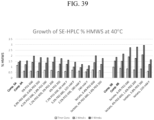
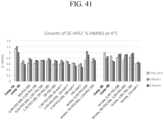
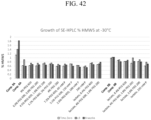
- the stable adalimumab formulation provided herein demonstrates one or more of the following parameters: (i) less than about a 2.1-fold increase in acidic species, as measured by cation-exchange high-performance liquid chromatography (CEX-HPLC) after storage for 28 days at 40°C; (ii) less than about a 5-fold increase in high molecular weight species (HMWS) species, as measured by size-exclusion chromatography (SE-HPLC) after storage for 28 days at 40°C; and/or (iii) less than about 500 nephelometric turbidity units (NTUs) after stirring at room temperature for 5 days.
- CEX-HPLC cation-exchange high-performance liquid chromatography
- SE-HPLC size-exclusion chromatography
- the present disclosure provides stable aqueous adalimumab formulations and related methods of making stable aqueous adalimumab formulations. Also provided are lyophilized forms of the aqueous adalimumab formulations disclosed herein.
- the present disclosure also provides related uses of the formulations disclosed herein and related methods of administering these formulations to treat diseases such as arthritis, rheumatoid arthritis, psoriatic arthritis, ankylosing spondylitis, axial spondyloarthritis, juvenile idiopathic arthritis, enthesitis related arthritis, osteoarthritis, peripheral spondyloarthritis, acute disc prolapse, inflammatory bowel disease, Crohn's disease, ulcerative colitis, intestinal Behcet's disease, chronic pouchitis, small bowel lesions, Hermansky-Pudlak syndrome, psoriasis, psoriasis vulgaris, psoriasis arthropica, plaque psoriasis, hidradenitis suppurativa, interstitial cystitis, sleep apnea, sarcoidosis, retinal vascular disorders, uveitis, choroidal neovascularization, Pyoderma Gang
- the stable aqueous adalimumab formulations include adalimumab and one or more excipients selected such that the formulation demonstrates characteristics suitable for use as a pharmaceutical composition.
- a formulation suitable for use as a pharmaceutical composition generally exhibits a low amount of high molecular weight species (HMWS), such as aggregates and dimers, and/or also exhibits a low degree of oxidation over time.
- HMWS high molecular weight species
- a suitable adalimumab formulation may exhibit minimal oxidation of residues TRP 53, MET 34, MET 256, and MET 432.
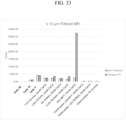
- a suitable formulation may also exhibit a minimal amount of sub-visible particles (e.g., particles having a diameter of ⁇ 10 ⁇ m or ⁇ 25 ⁇ m) and/or non-spherical particles (e.g., particles having an aspect ratio of _ ⁇ 5 ⁇ m). High amounts of HMWS, oxidation, and/or particles may impact the shelf-life, safety and/or potency of a formulation. Stable aqueous adalimumab formulations are described in the embodiments set forth below.
- the stable aqueous adalimumab formulations include adalimumab, calcium chloride, and optionally one or more (typically one, two, or three) additional excipients as described herein.
- the stable aqueous adalimumab formulations include adalimumab, a buffer, and optionally one or more (typically one, two, or three) additional excipients as described herein.
- Suitable buffers include glutamate/glutamic acid buffers ("glutamate buffer”), adipate/adipic acid buffers (“adipate buffer”), glucuronate/glucuronic acid buffers (“glucuronate buffer”), acetate/acetic acid buffers (“acetate buffer”), benzoate/benzoic acid buffers (“benzoate buffer”), glycolate/glycolic acid buffers (“glycolate buffer”), lactate/lactic acid buffers (“lactate buffer”), and histidine buffers.
- glutamate buffer glutamate/glutamic acid buffers
- adipate buffer adipate buffer
- glucuronate/glucuronic acid buffers glucuronate buffer
- acetate/acetic acid buffers acetate buffer
- the stable aqueous adalimumab formulations include adalimumab and do not include a buffer.
- these adalimumab formulations additionally include one or more (typically one, two, or three) excipients as described herein.
- the stable aqueous adalimumab formulation includes adalimumab, a buffer (e.g., lactate buffer), calcium chloride, and optionally one or more (typically one, two, or three) additional excipients as described herein.
- a buffer e.g., lactate buffer
- calcium chloride e.g., calcium chloride
- additional excipients typically one, two, or three
- a stable formulation demonstrates stability sufficient to permit administration to a patient.
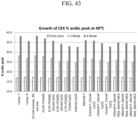
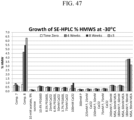
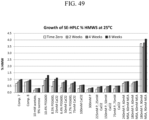
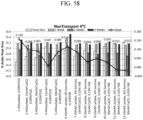
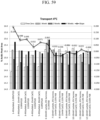
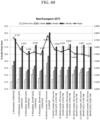
- a stable formulation may demonstrate long-term stability, such as stability upon storage for 6 months or 1 year. Stability of a formulation may, for example, be assessed by growth of acidic species over time, growth of high molecular weight species over time, or increase in opalescence over time.
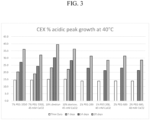
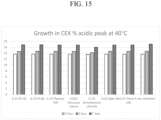
- a stable formulation may demonstrate less than about a 4-fold increase (e.g., less than about a 3.5-fold increase, less than about a 3-fold increase, less than about a 2.5-fold increase, less than about a 2.4-fold increase, less than about a 2.3-fold increase, less than about a 2.25-fold increase, less than about a 2.2-fold increase, less than about a 2. 15-fold increase, less than about a 2. 1-fold increase, less than about a 2.05-fold increase, or less than about a 2-fold increase) in acidic species as measured by CEX-HPLC after storage for 28 days at 40°C.
- 4-fold increase e.g., less than about a 3.5-fold increase, less than about a 3-fold increase, less than about a 2.5-fold increase, less than about a 2.4-fold increase, less than about a 2.3-fold increase, less than about a 2.25-fold increase, less than about a 2.2-fold increase, less than about a 2. 15-fold increase,
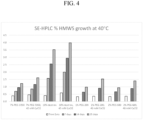
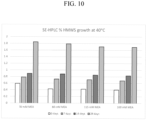
- a stable formulation may demonstrate less than about a 5-fold increase (e.g., less than about a 4.5-fold increase, less than about a 4-fold increase, less than about a 3.9-fold increase, less than about a 3.8-fold increase, less than about a 3.7-fold increase, less than about a 3.6-fold increase, less than about a 3.5-fold increase, less than about a 3.4-fold increase, less than about a 3.3-fold increase, less than about a 3.2-fold increase, less than about a 3.
- a 5-fold increase e.g., less than about a 4.5-fold increase, less than about a 4-fold increase, less than about a 3.9-fold increase, less than about a 3.8-fold increase, less than about a 3.7-fold increase, less than about a 3.6-fold increase, less than about a 3.5-fold increase, less than about a 3.4-fold increase, less than about a 3.3-fold increase, less than about a 3.2-fold increase
- a stable formulation may demonstrate less than about 500 nephelometric turbidity units (NTUs) (e.g., less than about 400 NTUs, less than about 350 NTUs, less than about 300 NTUs, less than about 250 NTUs, less than about 200 NTUs, less than about 150 NTUs, less than about 140 NTUs, less than about 130 NTUs, less than about 125 NTUs, less than about 120 NTUs, less than about 115 NTUs, less than about 110 NTUs, less than about 100 NTUs, less than about 90 NTUs, less than about 80 NTUs, or less than about 70 NTUs) after stirring at room temperature for 5 days.
- NTUs nephelometric turbidity units
- an "aqueous" formulation contains water.
- Aqueous formulations can be in a liquid state or a frozen state, and preferably are liquid formulations.
- an "excipient” is a component of a formulation other than water and the active agent (e.g., adalimumab or biosimilar thereof) added to the formulation.
- excipients include buffers; stabilizers such as amino acids and amino acid derivatives, polyethylene glycols and polyethylene glycol derivatives, polyols, acids, amines, polysaccharides or polysaccharide derivatives, salts, and surfactants; and pH-adjusting agents.
- a "biosimilar,” particularly an adalimumab biosimilar is a biological product that is highly similar to HUMIRA (also known as adalimumab or D2E7) notwithstanding minor differences in clinically inactive components; and there are no clinically meaningful differences between the biological product and HUMIRA in terms of safety, purity, and potency of the product.
- HUMIRA also known as adalimumab or D2E7
- the term "about,” when used to modify a particular value or range, generally means within 20 percent, e.g., within 10 percent, 5 percent, 4 percent, 3 percent, 2 percent, or 1 percent of the stated value or range.
- Adalimumab is a fully human monoclonal antibody of the immunoglobulin G1 (IgG1) subclass expressed in the Chinese hamster ovary (CHO) cell line and consists of 2 heavy chains (HC), and 2 light chains (LC) of the kappa subclass.
- Adalimumab contains 32 total cysteine residues involved in both intrachain and interchain disulfide bonds.
- Each HC contains 451 amino acids with 4 intrachain disulfides.
- Each LC contains 214 amino acids with 2 intrachain disulfides.
- Each HC contains an N-linked glycan at the consensus glycosylation site on Asn301.
- the amino acid sequences of the adalimumab variable LC and variable HC are set out at SEQ ID NO: 1 and 2, respectively and the full length LC and HC are set out as SEQ ID NO: 3 and 4; respectively.
- the adalimumab LC CDRs are set out as SEQ ID NO: 5 (LC CDR1), SEQ ID NO: 6 (LC CDR2) and SEQ ID NO: 7 (LC CDR3).
- Adalimumab HC CDRs are set out as SEQ ID NO: 8 (HC CDR1), SEQ ID No: 9 (HC CDR2), and SEQ ID NO: 10 (HC CDR3).
- Adalimumab has been described and claimed in U.S. Pat. No. 6,090,382 , the disclosure of which is hereby incorporated by reference in its entirety.
- the term "adalimumab” includes biosimilars of adalimumab.
- the stable aqueous adalimumab formulation includes adalimumab at a concentration of about 40 to about 200 mg/mL, such as about 90 to about 120 mg/mL, about 80 to about 120 mg/mL, about 90 to about 110 mg/mL, about 160 to about 190 mg/mL, about 40 to about 60 mg/mL, about 50 mg/mL, about 100 mg/mL, or about 170 mg/mL, calcium chloride at a concentration of about 1 to about 150 mM, such as about 5 to about 50 mM, about 5 to about 30 mM, about 10 to about 30 mM, about 12.5 to about 17.5 mM about 20 to about 40 mM, about 30 to about 50 mM, about 40 to about 80 mM, about 50 to about 100 mM, about 10 mM, about 15 mM, about 20 mM, about 25 mM, or about 30 mM, and one or more excipients as discussed below.
- the presence of calcium chloride in the formulations advantageously and unexpectedly provides improved stability over time as compared to other salts, particularly with respect to levels of acidic species at 40°C as detected by cation-exchange high-performance liquid chromatography (CEX-HPLC).
- CEX-HPLC cation-exchange high-performance liquid chromatography
- the presence of calcium chloride at low concentrations advantageously lowers the rate of growth of acidic species without significantly increasing the growth of high molecular weight species (HMWS) at 40°C as detected by size-exclusion high-performance liquid chromatography (SE-HPLC).
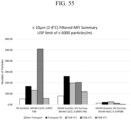
- the presence of calcium chloride at low concentrations advantageously minimizes formation of sub-visible and/or non-spherical particles in a formulation, as detected by micro-flow imaging ("MFI") even if the formulation has been subjected to transport conditions.
- MFI micro-flow imaging
- Suitable excipients for combination with the calcium chloride-containing adalimumab formulations include certain buffers, and certain stabilizers such as certain amino acids and amino acid derivatives, certain polyethylene glycols and polyethylene glycol derivatives, certain polyols, certain acids, certain amines, certain polysaccharides or polysaccharide derivatives, and certain surfactants.
- Suitable buffers include glutamate (e.g., at a concentration of about 5 mM to about 50 mM, about 10 mM to about 25 mM, about 15 mM to about 20 mM, about 10 mM, about 15 mM, about 20 mM, and/or about 25 mM), adipate (e.g., at a concentration of about 5 mM to about 50 mM, about 10 mM to about 25 mM, about 15 mM to about 20 mM, about 10 mM, about 15 mM, about 20 mM, and/or about 25 mM), glucuronate (e.g., at a concentration of about 5 mM to about 50 mM, about 10 mM to about 30 mM, about 10 mM, about 15 mM, about 20 mM, and/or about 25 mM), acetic acid and/or acetate (e.g., at a concentration of about 0.1 mM
- suitable amino acids and amino acid derivatives include proline (e.g., at a concentration of about 0.1 to about 450 mM, about 50 to about 320 mM, and/or about 50 to about 300 mM), N-acetyl arginine (e.g., at a concentration of about 0.1 to about 450 mM or about 90 to about 150 mM), citruline (e.g., at a concentration of about 0.1 to about 450 mM or about 100 to about 150 mM), sarcosine (e.g., at a concentration of about 0.1 to about 450 mM or about 100 to about 150 mM), N-acetyl proline (e.g., at a concentration of about 0.1 to about 450 mM or about 100 to about 150 mM), N-acetyl ornithine (e.g., at a concentration of about 0.1 to about 450 mM or about 100 to about 150 mM), ornithine
- polyethylene glycols and polyethylene glycol derivatives examples include PEG 15 hydroxystearate (e.g., at a concentration of about 0.1% (w/v) to about 20% (w/v) or about 3% (w/v) to about 6% (w/v)), PEG 3350 (e.g., at a concentration of about 0.1% (w/v) to about 30% (w/v) or about 1% (w/v) to about 7% (w/v)), PEG 200 (e.g., at a concentration of about 0.1% (w/v) to about 10% (w/v) or about 0.6% (w/v) to about 4.8% (w/v)), PEG 600 (e.g., at a concentration of about 0.1% (w/v) to about 30% (w/v) or about 1.2% (w/v) to about 14.5% (w/v)), and PEG 400 (e.g., at a concentration of about 0.1% (w/v) to about 20% (w/v) or about 0.3% (w/
- suitable polyols include inositol (e.g., at a concentration of about 0.1 to about 450 mM or about 150 to about 210 mM), glycerol (also referred to as glycerin) (e.g., at a concentration of about 0.1% (w/v) to about 15% (w/v) or about 0.5% (w/v) to about 1% (w/v)), sucrose (e.g., at a concentration of about 0.1% (w/v) to about 15% (w/v), about 4% (w/v) to about 10% (w/v), about 6% (w/v) to about 8.5% (w/v), about 6.2% (w/v) to about 7.3% (w/v), about 4% (w/v) to about 9% (w/v), about 6.5% (w/v), about 6.8% (w/v), about 6.9% (w/v), about 7.4% (w/v), or about 9% (w/v)), and sorbitol (e.
- suitable acids include glycolic acid (e.g., at a concentration of about 0.1 to about 300 mM or about 50 to about 70 mM), pyrollidone carboxylic acid (PCA) (e.g., at a concentration of about 0.1% (w/v) to about 15% (w/v) or about 0.05% (w/v) to about 2% (w/v)), medronic acid (e.g., at a concentration of about 0.1 to about 450 mM or about 100 to about 150 mM), benzene sulfonic acid (e.g., at a concentration of about 0.1 to about 300 mM or about 60 to about 90 mM), and methane sulfonic acid (MSA) (e.g., at a concentration of about 0.1 to about 150 mM, about 0.1 to about 50 mM, and/or about 10 to about 30 mM).
- glycolic acid e.g., at a concentration of about 0.1 to about 300 mM or
- Suitable amines include monoethanolamine hydrochloride (MEA-HCl) (e.g., at a concentration of about 0.1 to about 150 mM or about 0.1 to about 40 mM), monoethanolamine (MEA) (e.g., at a concentration of about 0.1 to about 300 mM, about 0.1 to about 50 mM, and/or about 30 to about 160 mM), and triethanolamine (TEA) (e.g., at a concentration of about 0.1 to about 170 mM or about 30 to about 150 mM).
- MEA-HCl monoethanolamine hydrochloride
- MEA monoethanolamine
- TEA triethanolamine
- Suitable polysaccharides or polysaccharide derivatives include hyaluronic acid (e.g., at a concentration of about 0.05% (w/v) to about 2.5% (w/v) or about 0.1% (w/v) to about 0.05% (w/v)), sodium carboxymethylcellulose (NaCMC) (e.g., at a concentration of about 0.1% (w/v) to about 15% (w/v) or about 0.1% (w/v) to about 2% (w/v)), and dextran (e.g., at a concentration of about 0.1% (w/v) to about 15% (w/v) or about 8% (w/v) to about 12% (w/v)).
- hyaluronic acid e.g., at a concentration of about 0.05% (w/v) to about 2.5% (w/v) or about 0.1% (w/v) to about 0.05% (w/v)
- NaCMC sodium carboxymethylcellulose
- dextran e.
- Suitable surfactants include Pluronic F68 (e.g., at a concentration of about 0.001% (w/v) to about 10% (w/v), about 0.005% (w/v) to about 1% (w/v), about 0.05% (w/v) to about 0.4% (w/v), about 0.05% (w/v) to about 0.1% (w/v), about 0.01% (w/v) to about 0.2% (w/v), about 0.03% (w/v) to about 0.06% (w/v), about 0.01% (w/v), about 0.05% (w/v), about 0.06% (w/v), and/or about 0.1% (w/v)), Polysorbate 80 (e.g., at a concentration of about 0.001% (w/v) to about 2% (w/v), about 0.005% (w/v) to about 0.1% (w/v), about 0.03% (w/v) to about 0.1% (w/v), about 0.04% (w/v) to about 0.1% (w/
- excipients examples include imidazole (e.g., at a concentration of about 0.1% (w/v) to about 15% (w/v) or about 0.5% (w/v) to about 2% (w/v)), taurine (e.g., at a concentration of about 0.1 to about 450 mM or about 100 to about 150 mM), betaine (e.g., at a concentration of about 0.1 to about 450 mM or about 100 to about 150 mM), gelatin (e.g., at a concentration of about 0.1% (w/v) to about 15% (w/v) or about 0.5% (w/v) to about 2% (w/v)), niacinamide (e.g., at a concentration of about 0.1 to about 450 mM or about 100 to about 120 mM), polyvinylpyrrolidone (PVP), for example, 10K PVP, (e.g., at a concentration of about 0.001% (w/v) to about 10% (
- the calcium chloride-containing stable aqueous adalimumab formulation has a pH of about 4.8 to about 5.7, for example, about 4.9 to about 5.6, about 5.0 to about 5.5, about 5.1 to about 5.4, about 5.1 to about 5.3, about 5.1 to about 5.2, about 5.2 to about 5.3, and/or about 5.2.
- the pH of the stable aqueous adalimumab formulation is adjusted using a strong acid and/or a strong base including, but not limited to, hydrochloric acid, sodium hydroxide, calcium hydroxide, MSA, and/or MEA.
- Suitable excipients for combination with the calcium chloride-containing adalimumab formulations also include, but are not limited to, glutamate at a concentration of about 5 mM to about 50 mM (e.g., about 10 mM to about 25 mM, about 15 mM to about 20 mM, about 10 mM, about 15 mM, about 20 mM, and/or about 25 mM), adipate at a concentration of about 5 mM to about 50 mM (e.g., about 10 mM to about 25 mM, about 15 mM to about 20 mM, about 10 mM, about 15 mM, about 20 mM, and/or about 25 mM), glucuronate at a concentration of about 5 mM to about 50 mM (e.g., about 10 mM to about 30 mM, about 10 mM, about 15 mM, about 20 mM, and/or about 25 mM),
- the calcium chloride-containing stable aqueous adalimumab formulation has a pH of about 4.8 to about 5.7, for example, about 4.9 to about 5.6, about 5.0 to about 5.5, about 5.1 to about 5.4, about 5.1 to about 5.3, about 5.1 to about 5.2, about 5.2 to about 5.3, and/or about 5.2.
- the pH of the stable aqueous adalimumab formulation is adjusted using a strong acid and/or a strong base including, but not limited to, hydrochloric acid, sodium hydroxide, calcium hydroxide, MSA, and/or MEA.
- the stable aqueous adalimumab formulation includes adalimumab at a concentration of about 90 to about 120 mg/mL, glutamate at a concentration of about 10 mM to about 25 mM, PEG 3350 at a concentration of about 5% (w/v) to about 10% (w/v), calcium chloride at a concentration of about 30 to about 60 mM, and has a pH of about 5.0 to about 5.5.
- the stable aqueous adalimumab formulation includes adalimumab at a concentration of about 90 to about 140 mg/mL, glutamate at a concentration of about 10 mM to about 25 mM, dextran at a concentration of about 5% (w/v) to about 15% (w/v), calcium chloride at a concentration of about 30 to about 60 mM, and has a pH of about 5.0 to about 5.5.
- the stable aqueous adalimumab formulation includes adalimumab at a concentration of about 90 to about 120 mg/mL, glutamate at a concentration of about 10 mM to about 25 mM, PEG 200 at a concentration of about 0.5% (w/v) to about 2% (w/v), calcium chloride at a concentration of about 30 to about 60 mM, and has a pH of about 5.0 to about 5.5.
- the stable aqueous adalimumab formulation includes adalimumab at a concentration of about 90 to about 120 mg/mL, glutamate at a concentration of about 10 mM to about 25 mM, PEG 600 at a concentration of about 1.5% (w/v) to about 4% (w/v), calcium chloride at a concentration of about 30 to about 60 mM, and has a pH of about 5.0 to about 5.5.
- the stable aqueous adalimumab formulation includes adalimumab at a concentration of about 170 to about 190 mg/mL, glutamate at a concentration of about 10 mM to about 25 mM, calcium chloride at a concentration of about 50 mM to about 100 mM, proline at a concentration of about 50 mM to about 150 mM, and has a pH of about 5.0 to about 5.5.
- the stable aqueous adalimumab formulation includes adalimumab at a concentration of about 90 to about 120 mg/mL, glutamate at a concentration of about 10 mM to about 25 mM, ethanol at a concentration of about 0.3% (w/v) to about 0.8% (w/v), calcium chloride at a concentration of about 30 mM to about 60 mM, and has a pH of about 5.0 to about 5.5.
- the stable aqueous adalimumab formulation includes adalimumab at a concentration of about 90 to about 120 mg/mL, glutamate at a concentration of about 10 mM to about 25 mM, ethanol at a concentration of about 0.3% (w/v) to about 0.8% (w/v), PEG 3350 at a concentration of about 0.7% (w/v) to about 1.5% (w/v), calcium chloride at a concentration of about 30 mM to about 60 mM, and has a pH of about 5.0 to about 5.5.
- the stable aqueous adalimumab formulation includes adalimumab at a concentration of about 90 to about 120 mg/mL, glutamate at a concentration of about 10 mM to about 25 mM, TEA at a concentration of about 100 mM to about 200 mM, calcium chloride at a concentration of about 30 mM to about 60 mM, and has a pH of about 5.0 to about 5.5.
- the stable aqueous adalimumab formulation includes adalimumab at a concentration of about 90 to about 120 mg/mL, glutamate at a concentration of about 10 mM to about 25 mM, TEA at a concentration of about 20 mM to about 40 mM, calcium chloride at a concentration of about 60 mM to about 90 mM, and has a pH of about 5.0 to about 5.5.
- the stable aqueous adalimumab formulation includes adalimumab at a concentration of about 90 to about 120 mg/mL, glutamate at a concentration of about 10 mM to about 25 mM, alanine at a concentration of about 80 mM to about 120 mM, calcium chloride at a concentration of about 30 mM to about 60 mM, and has a pH of about 5.0 to about 5.5.
- the stable aqueous adalimumab formulation includes adalimumab at a concentration of about 90 to about 120 mg/mL, glutamate at a concentration of about 10 mM to about 25 mM, asparagine at a concentration of about 80 mM to about 120 mM, calcium chloride at a concentration of about 30 mM to about 60 mM, and has a pH of about 5.0 to about 5.5.
- the stable aqueous adalimumab formulation includes adalimumab at a concentration of about 90 to about 120 mg/mL, glutamate at a concentration of about 10 mM to about 25 mM, isoleucine at a concentration of about 80 mM to about 120 mM, calcium chloride at a concentration of about 30 mM to about 60 mM, and has a pH of about 5.0 to about 5.5.
- the stable aqueous adalimumab formulation includes adalimumab at a concentration of about 90 to about 120 mg/mL, glutamate at a concentration of about 10 mM to about 25 mM, serine at a concentration of about 80 mM to about 120 mM, calcium chloride at a concentration of about 30 mM to about 60 mM, and has a pH of about 5.0 to about 5.5.
- the stable aqueous adalimumab formulation includes adalimumab at a concentration of about 90 to about 120 mg/mL, glutamate at a concentration of about 10 mM to about 25 mM, aspartic acid at a concentration of about 10 mM to about 30 mM, proline at a concentration of about 60 mM to about 100 mM, calcium chloride at a concentration of about 30 mM to about 60 mM, and has a pH of about 5.0 to about 5.5.
- the stable aqueous adalimumab formulation includes adalimumab at a concentration of about 90 to about 120 mg/mL, glutamate at a concentration of about 10 mM to about 25 mM, creatine at a concentration of about 15 mM to about 35 mM, proline at a concentration of about 60 mM to about 90 mM, calcium chloride at a concentration of about 30 mM to about 60 mM, and has a pH of about 5.0 to about 5.5.
- the stable aqueous adalimumab formulation includes adalimumab at a concentration of about 90 to about 120 mg/mL, glutamate at a concentration of about 10 mM to about 25 mM, glutamine at a concentration of about 40 mM to about 60 mM, proline at a concentration of about 40 mM to about 60 mM, calcium chloride at a concentration of about 30 mM to about 60 mM, and has a pH of about 5.0 to about 5.5.
- the stable aqueous adalimumab formulation includes adalimumab at a concentration of about 90 to about 120 mg/mL, glutamate at a concentration of about 10 mM to about 25 mM, leucine at a concentration of about 40 mM to about 60 mM, proline at a concentration of about 40 mM to about 60 mM, calcium chloride at a concentration of about 30 mM to about 60 mM, and has a pH of about 5.0 to about 5.5.
- the stable aqueous adalimumab formulation includes adalimumab at a concentration of about 90 to about 120 mg/mL, glutamate at a concentration of about 10 mM to about 25 mM, phenylalanine at a concentration of about 40 mM to about 60 mM, proline at a concentration of about 40 mM to about 60 mM, calcium chloride at a concentration of about 30 mM to about 60 mM, and has a pH of about 5.0 to about 5.5.
- the stable aqueous adalimumab formulation includes adalimumab at a concentration of about 80 to about 120 mg/mL, glutamate at a concentration of about 10 mM to about 25 mM, tryptophan at a concentration of about 10 mM to about 40 mM, proline at a concentration of about 60 mM to about 90 mM, calcium chloride at a concentration of about 30 mM to about 60 mM, and has a pH of about 5.0 to about 5.5.
- the stable aqueous adalimumab formulation includes adalimumab at a concentration of about 90 to about 120 mg/mL, glutamate at a concentration of about 10 mM to about 25 mM, calcium chloride at a concentration of about 30 to about 60 mM, and optionally Pluronic F68 at a concentration of about 0.05% (w/v) to about 0.4% (w/v) or Polysorbate 80 at a concentration of about 0.005% (w/v) to about 0.1% (w/v), and has a pH of about 5.0 to about 5.5.
- the stable aqueous adalimumab formulation includes adalimumab at a concentration of about 90 to about 120 mg/mL, glutamate at a concentration of about 10 mM to about 25 mM, calcium chloride at a concentration of about 30 to about 60 mM, proline at a concentration of about 80 to about 120 mM, and optionally Pluronic F68 at a concentration of about 0.05% (w/v) to about 0.4% (w/v) or Polysorbate 80 at a concentration of about 0.005% (w/v) to about 0.1% (w/v), and has a pH of about 5.0 to about 5.5.
- the stable aqueous adalimumab formulation includes adalimumab at a concentration of about 90 to about 120 mg/mL, glutamate at a concentration of about 10 mM to about 25 mM, PEG 15 hydroxystearate at a concentration of about 3% (w/v) to about 8% (w/v), calcium chloride at a concentration of about 30 to about 60 mM, and optionally Pluronic F68 at a concentration of about 0.05% (w/v) to about 0.4% (w/v) or Polysorbate 80 at a concentration of about 0.005% (w/v) to about 0.1% (w/v), and has a pH of about 5.0 to about 5.5.
- the stable aqueous adalimumab formulation includes adalimumab at a concentration of about 90 to about 120 mg/mL, glutamate at a concentration of about 10 mM to about 25 mM, PEG 15 hydroxystearate at a concentration of about 3% (w/v) to about 8% (w/v), calcium chloride at a concentration of about 30 to about 60 mM, proline at a concentration of about 80 to about 120 mM, and optionally Pluronic F68 at a concentration of about 0.05% (w/v) to about 0.4% (w/v) or Polysorbate 80 at a concentration of about 0.005% (w/v) to about 0.1% (w/v), and has a pH of about 5.0 to about 5.5.
- the stable aqueous adalimumab formulation includes adalimumab at a concentration of about 90 to about 120 mg/mL, glutamate at a concentration of about 10 mM to about 25 mM, imidazole at a concentration of about 0.7% (w/v) to about 1.5% (w/v), calcium chloride at a concentration of about 30 to about 60 mM, and optionally Pluronic F68 at a concentration of about 0.05% (w/v) to about 0.4% (w/v) or Polysorbate 80 at a concentration of about 0.005% (w/v) to about 0.1% (w/v), and has a pH of about 5.0 to about 5.5.
- the stable aqueous adalimumab formulation includes adalimumab at a concentration of about 90 to about 120 mg/mL, glutamate at a concentration of about 10 mM to about 25 mM, N-acetyl arginine at a concentration of about 100 to about 150 mM, calcium chloride at a concentration of about 30 to about 60 mM, and optionally Pluronic F68 at a concentration of about 0.05% (w/v) to about 0.4% (w/v) or Polysorbate 80 at a concentration of about 0.005% (w/v) to about 0.1% (w/v), and has a pH of about 5.0 to about 5.5.
- the stable aqueous adalimumab formulation includes adalimumab at a concentration of about 90 to about 120 mg/mL, glutamate at a concentration of about 10 mM to about 25 mM, inositol at a concentration of about 200 to about 300 mM, calcium chloride at a concentration of about 30 to about 60 mM, and optionally Pluronic F68 at a concentration of about 0.05% (w/v) to about 0.4% (w/v) or Polysorbate 80 at a concentration of about 0.005% (w/v) to about 0.1% (w/v), and has a pH of about 5.0 to about 5.5.
- the stable aqueous adalimumab formulation includes adalimumab at a concentration of about 90 to about 120 mg/mL, glutamate at a concentration of about 10 mM to about 25 mM, PEG 3350 at a concentration of about 0.7% (w/v) to about 1.5% (w/v), calcium chloride at a concentration of about 30 to about 60 mM, and optionally Pluronic F68 at a concentration of about 0.05% (w/v) to about 0.4% (w/v) or Polysorbate 80 at a concentration of about 0.005% (w/v) to about 0.1% (w/v), and has a pH of about 5.0 to about 5.5.
- the stable aqueous adalimumab formulation includes adalimumab at a concentration of about 90 to about 120 mg/mL, glutamate at a concentration of about 10 mM to about 25 mM, taurine at a concentration of about 100 to about 150 mM, calcium chloride at a concentration of about 30 to about 60 mM, and optionally Pluronic F68 at a concentration of about 0.05% (w/v) to about 0.4% (w/v) or Polysorbate 80 at a concentration of about 0.005% (w/v) to about 0.1% (w/v), and has a pH of about 5.0 to about 5.5.
- the stable aqueous adalimumab formulation includes adalimumab at a concentration of about 90 to about 120 mg/mL, glutamate at a concentration of about 10 mM to about 25 mM, citruline at a concentration of about 100 to about 150 mM, calcium chloride at a concentration of about 30 to about 60 mM, and optionally Pluronic F68 at a concentration of about 0.05% (w/v) to about 0.4% (w/v) or Polysorbate 80 at a concentration of about 0.005% (w/v) to about 0.1% (w/v), and has a pH of about 5.0 to about 5.5.
- the stable aqueous adalimumab formulation includes adalimumab at a concentration of about 90 to about 120 mg/mL, glutamate at a concentration of about 10 mM to about 25 mM, betaine at a concentration of about 100 to about 150 mM, calcium chloride at a concentration of about 30 to about 60 mM, and optionally Pluronic F68 at a concentration of about 0.05% (w/v) to about 0.4% (w/v) or Polysorbate 80 at a concentration of about 0.005% (w/v) to about 0.1% (w/v), and has a pH of about 5.0 to about 5.5.
- the stable aqueous adalimumab formulation includes adalimumab at a concentration of about 90 to about 120 mg/mL, glutamate at a concentration of about 10 mM to about 25 mM, sarcosine at a concentration of about 100 to about 150 mM, calcium chloride at a concentration of about 30 to about 60 mM, and optionally Pluronic F68 at a concentration of about 0.05% (w/v) to about 0.4% (w/v) or Polysorbate 80 at a concentration of about 0.005% (w/v) to about 0.1% (w/v), and has a pH of about 5.0 to about 5.5.
- the stable aqueous adalimumab formulation includes adalimumab at a concentration of about 90 to about 120 mg/mL, glutamate at a concentration of about 10 mM to about 25 mM, glycolic acid at a concentration of about 40 to about 80 mM, calcium chloride at a concentration of about 60 to about 90 mM, and optionally Pluronic F68 at a concentration of about 0.05% (w/v) to about 0.4% (w/v) or Polysorbate 80 at a concentration of about 0.005% (w/v) to about 0.1% (w/v), and has a pH of about 5.0 to about 5.5.
- the stable aqueous adalimumab formulation includes adalimumab at a concentration of about 90 to about 120 mg/mL, glutamate at a concentration of about 10 mM to about 25 mM, PCA at a concentration of about 0.7% (w/v) to about 1.5% (w/v), calcium chloride at a concentration of about 60 to about 90 mM, and optionally Pluronic F68 at a concentration of about 0.05% (w/v) to about 0.4% (w/v) or Polysorbate 80 at a concentration of about 0.005% (w/v) to about 0.1% (w/v), and has a pH of about 5.0 to about 5.5.
- the stable aqueous adalimumab formulation includes adalimumab at a concentration of about 90 to about 120 mg/mL, glutamate at a concentration of about 10 mM to about 25 mM, gelatin at a concentration of about 0.7% (w/v) to about 1.5% (w/v), calcium chloride at a concentration of about 60 to about 90 mM, and optionally Pluronic F68 at a concentration of about 0.05% (w/v) to about 0.4% (w/v) or Polysorbate 80 at a concentration of about 0.005% (w/v) to about 0.1% (w/v), and has a pH of about 5.0 to about 5.5.
- the stable aqueous adalimumab formulation includes adalimumab at a concentration of about 90 to about 120 mg/mL, glutamate at a concentration of about 10 mM to about 25 mM, hyaluronic acid at a concentration of about 0.1% (w/v) to about 0.5% (w/v), calcium chloride at a concentration of about 60 to about 90 mM, and optionally Pluronic F68 at a concentration of about 0.05% (w/v) to about 0.4% (w/v) or Polysorbate 80 at a concentration of about 0.005% (w/v) to about 0.1% (w/v), and has a pH of about 5.0 to about 5.5.
- the stable aqueous adalimumab formulation includes adalimumab at a concentration of about 90 to about 120 mg/mL, glutamate at a concentration of about 10 mM to about 25 mM, N-acetyl proline at a concentration of about 100 to about 150 mM, calcium chloride at a concentration of about 30 to about 60 mM, and optionally Pluronic F68 at a concentration of about 0.05% (w/v) to about 0.4% (w/v) or Polysorbate 80 at a concentration of about 0.005% (w/v) to about 0.1% (w/v), and has a pH of about 5.0 to about 5.5.
- the stable aqueous adalimumab formulation includes adalimumab at a concentration of about 90 to about 120 mg/mL, glutamate at a concentration of about 10 mM to about 25 mM, N-acetyl ornithine at a concentration of about 100 to about 150 mM, calcium chloride at a concentration of about 30 to about 60 mM, and optionally Pluronic F68 at a concentration of about 0.05% (w/v) to about 0.4% (w/v) or Polysorbate 80 at a concentration of about 0.005% (w/v) to about 0.1% (w/v), and has a pH of about 5.0 to about 5.5.
- the stable aqueous adalimumab formulation includes adalimumab at a concentration of about 90 to about 120 mg/mL, glutamate at a concentration of about 10 mM to about 25 mM, ornithine at a concentration of about 100 to about 150 mM, calcium chloride at a concentration of about 30 to about 60 mM, and optionally Pluronic F68 at a concentration of about 0.05% (w/v) to about 0.4% (w/v) or Polysorbate 80 at a concentration of about 0.005% (w/v) to about 0.1% (w/v), and has a pH of about 5.0 to about 5.5.
- the stable aqueous adalimumab formulation includes adalimumab at a concentration of about 90 to about 120 mg/mL, glutamate at a concentration of about 10 mM to about 25 mM, beta-alanine at a concentration of about 100 to about 150 mM, calcium chloride at a concentration of about 30 to about 60 mM, and optionally Pluronic F68 at a concentration of about 0.05% (w/v) to about 0.4% (w/v) or Polysorbate 80 at a concentration of about 0.005% (w/v) to about 0.1% (w/v), and has a pH of about 5.0 to about 5.5.
- the stable aqueous adalimumab formulation includes adalimumab at a concentration of about 90 to about 120 mg/mL, glutamate at a concentration of about 10 mM to about 25 mM, niacinamide at a concentration of about 100 to about 150 mM, calcium chloride at a concentration of about 30 to about 60 mM, and optionally Pluronic F68 at a concentration of about 0.05% (w/v) to about 0.4% (w/v) or Polysorbate 80 at a concentration of about 0.005% (w/v) to about 0.1% (w/v), and has a pH of about 5.0 to about 5.5.
- the stable aqueous adalimumab formulation includes adalimumab at a concentration of about 90 to about 120 mg/mL, glutamate at a concentration of about 10 mM to about 25 mM, medronic acid at a concentration of about 100 to about 150 mM, calcium chloride at a concentration of about 30 to about 60 mM, and optionally Pluronic F68 at a concentration of about 0.05% (w/v) to about 0.4% (w/v) or Polysorbate 80 at a concentration of about 0.005% (w/v) to about 0.1% (w/v), and has a pH of about 5.0 to about 5.5.
- the stable aqueous adalimumab formulation includes adalimumab at a concentration of about 90 to about 120 mg/mL, glutamate at a concentration of about 10 mM to about 25 mM, PEG 200 at a concentration of about 0.7% (w/v) to about 1.5% (w/v), calcium chloride at a concentration of about 30 to about 60 mM, and optionally Pluronic F68 at a concentration of about 0.05% (w/v) to about 0.4% (w/v) or Polysorbate 80 at a concentration of about 0.005% (w/v) to about 0.1% (w/v), and has a pH of about 5.0 to about 5.5.
- the stable aqueous adalimumab formulation includes adalimumab at a concentration of about 90 to about 120 mg/mL, glutamate at a concentration of about 10 mM to about 25 mM, PEG 600 at a concentration of about 1.5% (w/v) to about 4% (w/v), and calcium chloride at a concentration of about 30 to about 60 mM, and has a pH of about 5.0 to about 5.5.
- the stable aqueous adalimumab formulation includes adalimumab at a concentration of about 90 to about 120 mg/mL, glutamate at a concentration of about 10 mM to about 25 mM, niacinamide at a concentration of about 80 to about 120 mM, calcium chloride at a concentration of about 60 to about 100 mM, and optionally Pluronic F68 at a concentration of about 0.05% (w/v) to about 0.4% (w/v) or Polysorbate 80 at a concentration of about 0.005% (w/v) to about 0.1% (w/v), and has a pH of about 5.0 to about 5.5.
- the stable aqueous adalimumab formulation includes adalimumab at a concentration of about 90 to about 120 mg/mL, glutamate at a concentration of about 10 mM to about 25 mM, benzene sulfonic acid at a concentration of about 60 to about 90 mM, calcium chloride at a concentration of about 25 to about 75 mM, and optionally Pluronic F68 at a concentration of about 0.05% (w/v) to about 0.4% (w/v) or Polysorbate 80 at a concentration of about 0.005% (w/v) to about 0.1% (w/v), and has a pH of about 5.0 to about 5.5.
- the stable aqueous adalimumab formulation includes adalimumab at a concentration of about 170 to about 190 mg/mL, glutamate at a concentration of about 10 mM to about 25 mM, PEG 400 at a concentration of about 0.25% (w/v) to about 0.75% (w/v), calcium chloride at a concentration of about 40 to about 80 mM, glycerin at a concentration of about 0.5% (w/v) to about 1% (w/v), and optionally Pluronic F68 at a concentration of about 0.05% (w/v) to about 0.4% (w/v) or Polysorbate 80 at a concentration of about 0.005% (w/v) to about 0.1% (w/v), and has a pH of about 5.0 to about 5.5.
- the stable aqueous adalimumab formulation includes adalimumab at a concentration of about 170 to about 190 mg/mL, adipate at a concentration of about 10 mM to about 25 mM, N-acetyl arginine at a concentration of about 100 to about 150 mM, calcium chloride at a concentration of about 30 to about 50 mM, and MSA at a concentration of about 10 to about 30 mM, and has a pH of about 5.0 to about 5.5.
- the stable aqueous adalimumab formulation includes adalimumab at a concentration of about 170 to about 190 mg/mL, adipate at a concentration of about 10 mM to about 25 mM, calcium chloride at a concentration of about 60 to about 90 mM, PEG 400 at a concentration of about 0.1% (w/v) to about 0.5% (w/v), and 10K PVP at a concentration of about 0.5% (w/v) to about 2% (w/v), and has a pH of about 5.0 to about 5.5.
- the stable aqueous adalimumab formulation includes adalimumab at a concentration of about 170 to about 190 mg/mL, adipate at a concentration of about 10 mM to about 25 mM, PEG 400 at a concentration of about 0.5% (w/v) to about 2% (w/v), and calcium chloride at a concentration of about 30 to about 50 mM, and has a pH of about 5.0 to about 5.5.
- the stable aqueous adalimumab formulation includes adalimumab at a concentration of about 170 to about 190 mg/mL, adipate at a concentration of about 10 mM to about 25 mM, PEG 3350 at a concentration of about 0.5% (w/v) to about 2% (w/v), and calcium chloride at a concentration of about 60 to about 90 mM, and has a pH of about 5.0 to about 5.5.
- the stable aqueous adalimumab formulation includes adalimumab at a concentration of about 170 to about 190 mg/mL, adipate at a concentration of about 10 mM to about 25 mM, PEG 3350 at a concentration of about 0.5% (w/v) to about 2% (w/v), PEG 400 at a concentration of about 1% (w/v) to about 3% (w/v), and calcium chloride at a concentration of about 10 to about 30 mM, and has a pH of about 5.0 to about 5.5.
- the stable aqueous adalimumab formulation includes adalimumab at a concentration of about 170 to about 190 mg/mL, adipate at a concentration of about 10 mM to about 25 mM, PEG 3350 at a concentration of about 0.5% (w/v) to about 2% (w/v), PEG 400 at a concentration of about 0.5% (w/v) to about 2% (w/v), and calcium chloride at a concentration of about 30 to about 50 mM, and has a pH of about 5.0 to about 5.5.
- the stable aqueous adalimumab formulation includes adalimumab at a concentration of about 120 to about 160 mg/mL, acetate at a concentration of about 15 mM to about 25 mM, calcium chloride at a concentration of about 30 to about 60 mM, arginine-HCl at a concentration of about 80 to about 120 mM, and Polysorbate 20 at a concentration of about 0.05% (w/v) to about 0.5% (w/v), and has a pH of about 5.1 to 5.3.
- the stable aqueous adalimumab formulation includes adalimumab at a concentration of about 120 to about 160 mg/mL, acetate at a concentration of about 15 mM to about 25 mM, calcium chloride at a concentration of about 30 to about 60 mM, arginine-HCl at a concentration of about 80 to about 120 mM, and Polysorbate 80 at a concentration of about 0.05% (w/v) to about 0.5% (w/v), and has a pH of about 5.1 to 5.3.
- the stable aqueous adalimumab formulation includes adalimumab at a concentration of about 120 to about 160 mg/mL, acetate at a concentration of about 15 mM to about 25 mM, calcium chloride at a concentration of about 30 to about 60 mM, arginine-HCl at a concentration of about 80 to about 120 mM, and Pluronic F68 at a concentration of about 0.05% (w/v) to about 0.5% (w/v), and has a pH of about 5.1 to 5.3.
- the stable aqueous adalimumab formulation includes adalimumab at a concentration of about 120 to about 160 mg/mL, acetate at a concentration of about 15 mM to about 25 mM, calcium chloride at a concentration of about 30 to about 60 mM, arginine-HCl at a concentration of about 80 to about 120 mM, and Docusate sodium at a concentration of about 0.005% (w/v) to about 0.05% (w/v), and has a pH of about 5.1 to 5.3.
- the stable aqueous adalimumab formulation includes adalimumab at a concentration of about 120 to about 160 mg/mL, acetate at a concentration of about 15 mM to about 25 mM, calcium chloride at a concentration of about 30 to about 60 mM, arginine-HCl at a concentration of about 80 to about 120 mM, and benzalkonium chloride at a concentration of about 0.05% (w/v) to about 0.5% (w/v), and has a pH of about 5.1 to 5.3.
- the stable aqueous adalimumab formulation includes adalimumab at a concentration of about 120 to about 160 mg/mL, acetate at a concentration of about 15 mM to about 25 mM, calcium chloride at a concentration of about 30 to about 60 mM, arginine-HCl at a concentration of about 80 to about 120 mM, and Span 40 at a concentration of about 0.05% (w/v) to about 0.5% (w/v), and has a pH of about 5.1 to 5.3.
- the stable aqueous adalimumab formulation includes adalimumab at a concentration of about 120 to about 160 mg/mL, acetate at a concentration of about 15 mM to about 25 mM, calcium chloride at a concentration of about 30 to about 60 mM, arginine-HCl at a concentration of about 80 to about 120 mM, and Triton X-100 at a concentration of about 0.05% (w/v) to about 0.5% (w/v), and has a pH of about 5.1 to 5.3.
- the stable aqueous adalimumab formulation includes adalimumab at a concentration of about 120 to about 160 mg/mL, acetate at a concentration of about 15 mM to about 25 mM, calcium chloride at a concentration of about 30 to about 60 mM, and arginine-HCl at a concentration of about 80 to about 120 mM, and has a pH of about 5.1 to 5.3.
- the stable aqueous adalimumab formulation includes adalimumab at a concentration of about 120 to about 160 mg/mL, acetate at a concentration of about 15 mM to about 25 mM, calcium chloride at a concentration of about 30 to about 60 mM, arginine-HCl at a concentration of about 80 to about 120 mM, and Polysorbate 80 at a concentration of about 0.0025% (w/v) to about 0.025% (w/v), and has a pH of about 5.1 to 5.3.
- the stable aqueous adalimumab formulation includes adalimumab at a concentration of about 120 to about 160 mg/mL, acetate at a concentration of about 15 mM to about 25 mM, calcium chloride at a concentration of about 30 to about 60 mM, arginine-HCl at a concentration of about 80 to about 120 mM, and Polysorbate 80 at a concentration of about 0.005% (w/v) to about 0.05% (w/v), and has a pH of about 5.1 to 5.3.
- the stable aqueous adalimumab formulation includes adalimumab at a concentration of about 120 to about 160 mg/mL, acetate at a concentration of about 15 mM to about 25 mM, calcium chloride at a concentration of about 30 to about 60 mM, arginine-HCl at a concentration of about 80 to about 120 mM, and Polysorbate 80 at a concentration of about 0.025% (w/v) to about 0.25% (w/v), and has a pH of about 5.1 to 5.3.
- the stable aqueous adalimumab formulation includes adalimumab at a concentration of about 120 to about 160 mg/mL, acetate at a concentration of about 15 mM to about 25 mM, calcium chloride at a concentration of about 30 to about 60 mM, arginine-HCl at a concentration of about 80 to about 120 mM, and Polysorbate 20 at a concentration of about 0.0025% (w/v) to about 0.025% (w/v), and has a pH of about 5.1 to 5.3.
- the stable aqueous adalimumab formulation includes adalimumab at a concentration of about 120 to about 160 mg/mL, acetate at a concentration of about 15 mM to about 25 mM, calcium chloride at a concentration of about 30 to about 60 mM, arginine-HCl at a concentration of about 80 to about 120 mM, and Polysorbate 20 at a concentration of about 0.005% (w/v) to about 0.05% (w/v), and has a pH of about 5.1 to 5.3.
- the stable aqueous adalimumab formulation includes adalimumab at a concentration of about 120 to about 160 mg/mL, acetate at a concentration of about 15 mM to about 25 mM, calcium chloride at a concentration of about 30 to about 60 mM, arginine-HCl at a concentration of about 80 to about 120 mM, and Polysorbate 20 at a concentration of about 0.025% (w/v) to about 0.25% (w/v), and has a pH of about 5.1 to 5.3.
- the stable aqueous adalimumab formulation includes adalimumab at a concentration of about 120 to about 160 mg/mL, acetate at a concentration of about 15 mM to about 25 mM, calcium chloride at a concentration of about 30 to about 60 mM, arginine-HCl at a concentration of about 80 to about 120 mM, and Triton X-100 at a concentration of about 0.0025% (w/v) to about 0.025% (w/v), and has a pH of about 5.1 to 5.3.
- the stable aqueous adalimumab formulation includes adalimumab at a concentration of about 120 to about 160 mg/mL, acetate at a concentration of about 15 mM to about 25 mM, calcium chloride at a concentration of about 30 to about 60 mM, arginine-HCl at a concentration of about 80 to about 120 mM, and Triton X-100 at a concentration of about 0.005% (w/v) to about 0.05% (w/v), and has a pH of about 5.1 to 5.3.
- the stable aqueous adalimumab formulation includes adalimumab at a concentration of about 120 to about 160 mg/mL, acetate at a concentration of about 15 mM to about 25 mM, calcium chloride at a concentration of about 30 to about 60 mM, arginine-HCl at a concentration of about 80 to about 120 mM, and Triton X-100 at a concentration of about 0.025% (w/v) to about 0.25% (w/v), and has a pH of about 5.1 to 5.3.
- the stable aqueous adalimumab formulation includes adalimumab at a concentration of about 120 to about 160 mg/mL, acetate at a concentration of about 15 mM to about 25 mM, calcium chloride at a concentration of about 30 to about 60 mM, arginine-HCl at a concentration of about 80 to about 120 mM, and Pluronic F68 at a concentration of about 0.025% (w/v) to about 0.25% (w/v), and has a pH of about 5.1 to 5.3.
- the stable aqueous adalimumab formulation includes adalimumab at a concentration of about 120 to about 160 mg/mL, acetate at a concentration of about 15 mM to about 25 mM, calcium chloride at a concentration of about 30 to about 60 mM, arginine-HCl at a concentration of about 80 to about 120 mM, and Pluronic F68 at a concentration of about 0.05% (w/v) to about 0.5% (w/v), and has a pH of about 5.1 to 5.3.
- the stable aqueous adalimumab formulation includes adalimumab at a concentration of about 120 to about 160 mg/mL, acetate at a concentration of about 15 mM to about 25 mM, calcium chloride at a concentration of about 30 to about 60 mM, arginine-HCl at a concentration of about 80 to about 120 mM, and Pluronic F68 at a concentration of about 0.2% (w/v) to about 0.6% (w/v), and has a pH of about 5.1 to 5.3.
- the stable aqueous adalimumab formulation includes adalimumab at a concentration of about 40 to about 50 mg/mL, acetate at a concentration of about 5 mM to about 15 mM, sucrose at a concentration of about 6.5% (w/v) to about 7.1% (w/v), calcium chloride at a concentration of about 15 to about 35 mM, and Pluronic F68 at a concentration of about 0.05% (w/v) to about 0.5% (w/v), and has a pH of about 5.1 to 5.3.
- the stable aqueous adalimumab formulation includes adalimumab at a concentration of about 40 to about 50 mg/mL, acetate at a concentration of about 5 mM to about 15 mM, sucrose at a concentration of about 6.0% (w/v) to about 6.5% (w/v), calcium chloride at a concentration of about 15 to about 35 mM, and Pluronic F68 at a concentration of about 0.05% (w/v) to about 0.5% (w/v), and has a pH of about 5.1 to 5.3.
- the stable aqueous adalimumab formulation includes adalimumab at a concentration of about 40 to about 50 mg/mL, acetate at a concentration of about 5 mM to about 15 mM, sucrose at a concentration of about 6.7% (w/v) to about 7.3% (w/v), calcium chloride at a concentration of about 5 to about 15 mM, guanidine hydrochloride (GnHCl) at a concentration of about 10 to about 30 mM, and Pluronic F68 at a concentration of about 0.05% (w/v) to about 0.5% (w/v), and has a pH of about 5.1 to 5.3.
- adalimumab at a concentration of about 40 to about 50 mg/mL
- acetate at a concentration of about 5 mM to about 15 mM
- sucrose at a concentration of about 6.7% (w/v) to about 7.3% (w/v)
- calcium chloride at a concentration of about 5 to
- the stable aqueous adalimumab formulation includes adalimumab at a concentration of about 90 to about 120 mg/mL, acetate at a concentration of about 5 mM to about 15 mM, sucrose at a concentration of about 6.4% (w/v) to about 7.2% (w/v), calcium chloride at a concentration of about 15 to about 35 mM, and Pluronic F68 at a concentration of about 0.05% (w/v) to about 0.5% (w/v), and has a pH of about 5.1 to 5.3.
- the pH of the formulation is adjusted within this range with HCl, NaOH, and/or Ca(OH) 2 .
- the stable aqueous adalimumab formulation includes adalimumab at a concentration of about 90 to about 120 mg/mL, acetate at a concentration of about 5 mM to about 15 mM, proline at a concentration of about 190 to about 250 mM, calcium chloride at a concentration of about 15 to about 35 mM, and Pluronic F68 at a concentration of about 0.05% (w/v) to about 0.5% (w/v), and has a pH of about 5.1 to 5.3.
- the pH of the formulation is adjusted within this range with HCl, NaOH, and/or Ca(OH) 2 .
- the stable aqueous adalimumab formulation includes adalimumab at a concentration of about 90 to about 120 mg/mL, acetate at a concentration of about 5 mM to about 15 mM, sucrose at a concentration of about 6.4% (w/v) to about 7.2% (w/v), calcium chloride at a concentration of about 15 to about 35 mM, and Polysorbate 80 at a concentration of about 0.05% (w/v) to about 0.5% (w/v), and has a pH of about 5.1 to 5.3.
- the pH of the formulation is adjusted within this range with HCl, NaOH, and/or Ca(OH) 2 .
- the stable aqueous adalimumab formulation includes adalimumab at a concentration of about 90 to about 110 mg/mL, acetate at a concentration of about 5 mM to about 15 mM, sucrose at a concentration of about 6.6% (w/v) to about 7% (w/v), calcium chloride at a concentration of about 20 to about 30 mM, and Polysorbate 80 at a concentration of about 0.05% (w/v) to about 0.2% (w/v), and has a pH of about 5.1 to 5.3.
- the pH of the formulation is adjusted within this range with HCl, NaOH, and/or Ca(OH) 2 .
- the stable aqueous adalimumab formulation includes adalimumab at a concentration of about 90 to about 120 mg/mL, acetate at a concentration of about 5 mM to about 15 mM, proline at a concentration of about 190 to about 250 mM, calcium chloride at a concentration of about 15 to about 35 mM, and Polysorbate 80 at a concentration of about 0.05% (w/v) to about 0.5% (w/v), and has a pH of about 5.1 to 5.3.
- the pH of the formulation is adjusted within this range with HCl, NaOH, and/or Ca(OH) 2 .
- the stable aqueous adalimumab formulation includes adalimumab at a concentration of about 90 to about 120 mg/mL, acetate at a concentration of about 5 mM to about 15 mM, sucrose at a concentration of about 6.4% (w/v) to about 7.2% (w/v), calcium chloride at a concentration of about 15 to about 35 mM, and Polysorbate 80 at a concentration of about 0.01% (w/v) to about 0.1% (w/v), and has a pH of about 5.1 to 5.3.
- the pH of the formulation is adjusted within this range with HCl, NaOH, and/or Ca(OH) 2 .
- the stable aqueous adalimumab formulation includes adalimumab at a concentration of about 90 to about 120 mg/mL, acetate at a concentration of about 5 mM to about 15 mM, proline at a concentration of about 190 to about 250 mM, calcium chloride at a concentration of about 15 to about 35 mM, and Polysorbate 80 at a concentration of about 0.01% (w/v) to about 0.1% (w/v), and has a pH of about 5.1 to 5.3.
- the pH of the formulation is adjusted within this range with HCl, NaOH, and/or Ca(OH) 2 .
- the stable aqueous adalimumab formulation includes adalimumab at a concentration of about 90 to about 120 mg/mL, lactate at a concentration of about 5 mM to about 15 mM, proline at a concentration of about 190 to about 240 mM, calcium chloride at a concentration of about 15 to about 35 mM, and Pluronic F68 at a concentration of about 0.05% (w/v) to about 0.5% (w/v), and has a pH of about 5.1 to 5.3.
- the pH of the formulation is adjusted within this range with MSA and/or MEA.
- the stable aqueous adalimumab formulation includes adalimumab at a concentration of about 160 to about 190 mg/mL, lactate at a concentration of about 5 mM to about 15 mM, proline at a concentration of about 200 to about 250 mM, calcium chloride at a concentration of about 10 to about 30 mM, and Pluronic F68 at a concentration of about 0.05% (w/v) to about 0.5% (w/v), and has a pH of about 5.1 to 5.3.
- the pH of the formulation is adjusted within this range with MSA and/or MEA.
- the stable aqueous adalimumab formulation includes adalimumab at a concentration of about 160 to about 190 mg/mL, lactate at a concentration of about 5 mM to about 15 mM, PEG 600 at a concentration of about 11% (w/v) to about 15% (w/v), calcium chloride at a concentration of about 20 to about 40 mM, and Pluronic F68 at a concentration of about 0.05% (w/v) to about 0.5% (w/v), and has a pH of about 5.1 to 5.3.
- the pH of the formulation is adjusted within this range with MSA and/or MEA.
- the stable aqueous adalimumab formulation includes adalimumab at a concentration of about 160 to about 190 mg/mL, lactate at a concentration of about 5 mM to about 15 mM, PEG 600 at a concentration of about 11% (w/v) to about 15% (w/v), calcium chloride at a concentration of about 10 to about 30 mM, and Pluronic F68 at a concentration of about 0.05% (w/v) to about 0.5% (w/v), and has a pH of about 5.1 to 5.3.
- the pH of the formulation is adjusted within this range with MSA and/or MEA.
- the stable aqueous adalimumab formulation includes adalimumab at a concentration of about 160 to about 190 mg/mL, lactate at a concentration of about 5 mM to about 15 mM, PEG 600 at a concentration of about 8% (w/v) to about 9% (w/v), calcium chloride at a concentration of about 10 to about 30 mM, and Pluronic F68 at a concentration of about 0.05% (w/v) to about 0.5% (w/v), and has a pH of about 5.1 to 5.3.
- the pH of the formulation is adjusted within this range with MSA and/or MEA.
- the stable aqueous adalimumab formulation includes adalimumab at a concentration of about 160 to about 190 mg/mL, lactate at a concentration of about 5 mM to about 15 mM, PEG 600 at a concentration of about 3% (w/v) to about 5% (w/v), PEG 200 at a concentration of about 1.2% (w/v) to about 2% (w/v), calcium chloride at a concentration of about 10 to about 30 mM, and Pluronic F68 at a concentration of about 0.05% (w/v) to about 0.5% (w/v), and has a pH of about 5.1 to 5.3.
- the pH of the formulation is adjusted within this range with MSA and/or MEA.
- the stable aqueous adalimumab formulation includes adalimumab at a concentration of about 160 to about 190 mg/mL, lactate at a concentration of about 5 mM to about 15 mM, PEG 200 at a concentration of about 3.5% (w/v) to about 4.2% (w/v), calcium chloride at a concentration of about 10 to about 30 mM, and Pluronic F68 at a concentration of about 0.05% (w/v) to about 0.5% (w/v), and has a pH of about 5.1 to 5.3.
- the pH of the formulation is adjusted within this range with MSA and/or MEA.
- the stable aqueous adalimumab formulation includes adalimumab at a concentration of about 160 to about 190 mg/mL, lactate at a concentration of about 5 mM to about 15 mM, PEG 600 at a concentration of about 5% (w/v) to about 5.7% (w/v), calcium chloride at a concentration of about 10 to about 30 mM, proline at a concentration of about 90 to about 130 mM, and Pluronic F68 at a concentration of about 0.05% (w/v) to about 0.5% (w/v), and has a pH of about 5.1 to 5.3.
- the pH of the formulation is adjusted within this range with MSA and/or MEA.
- the stable aqueous adalimumab formulation includes adalimumab at a concentration of about 160 to about 190 mg/mL, lactate at a concentration of about 5 mM to about 15 mM, calcium chloride at a concentration of about 10 to about 30 mM, proline at a concentration of about 190 to about 250 mM, and Pluronic F68 at a concentration of about 0.05% (w/v) to about 0.5% (w/v), and has a pH of about 5.1 to 5.3.
- the pH of the formulation is adjusted within this range with MSA and/or MEA.
- the stable aqueous adalimumab formulation includes adalimumab at a concentration of about 90 to about 120 mg/mL, lactate at a concentration of about 5 mM to about 15 mM, calcium chloride at a concentration of about 15 to about 35 mM, proline at a concentration of about 190 to about 250 mM, and Pluronic F68 at a concentration of about 0.05% (w/v) to about 0.5% (w/v), and has a pH of about 5.1 to 5.3.
- the pH of the formulation is adjusted within this range with HCl, NaOH, and/or Ca(OH) 2 .
- the stable aqueous adalimumab formulation includes adalimumab at a concentration of about 90 to about 120 mg/mL, histidine at a concentration of about 5 mM to about 15 mM, proline at a concentration of about 270 to about 370 mM, and calcium chloride at a concentration of about 10 to about 30 mM, and has a pH of about 6.7 to 6.9.
- the pH of the formulation is adjusted within this range with MEA and/or MSA.
- the stable aqueous adalimumab formulation includes adalimumab at a concentration of about 90 to about 120 mg/mL, PEG 600 at a concentration of about 8% (w/v) to about 10% (w/v), calcium chloride at a concentration of about 10 to about 30 mM, and Pluronic F68 at a concentration of about 0.05% (w/v) to about 0.5% (w/v), and has a pH of about 5.1 to 5.3.
- the pH of the formulation is adjusted within this range with MEA and/or MSA.
- the stable aqueous adalimumab formulation includes adalimumab at a concentration of about 90 to about 120 mg/mL, PEG 600 at a concentration of about 6.5% (w/v) to about 7.3% (w/v), PEG 200 at a concentration of about 0.3% (w/v) to about 1% (w/v), calcium chloride at a concentration of about 10 to about 30 mM, and Pluronic F68 at a concentration of about 0.05% (w/v) to about 0.5% (w/v), and has a pH of about 5.1 to 5.3.
- the pH of the formulation is adjusted within this range with MEA and/or MSA.
- the stable aqueous adalimumab formulation includes adalimumab at a concentration of about 90 to about 120 mg/mL, PEG 600 at a concentration of about 4% (w/v) to about 5% (w/v), PEG 200 at a concentration of about 1.5% (w/v) to about 2.1% (w/v), calcium chloride at a concentration of about 10 to about 30 mM, and Pluronic F68 at a concentration of about 0.05% (w/v) to about 0.5% (w/v), and has a pH of about 5.1 to 5.3.
- the pH of the formulation is adjusted within this range with MEA and/or MSA.
- the stable aqueous adalimumab formulation includes adalimumab at a concentration of about 90 to about 120 mg/mL, PEG 600 at a concentration of about 0.9% (w/v) to about 1.5% (w/v), PEG 200 at a concentration of about 2.5% (w/v) to about 3.5% (w/v), calcium chloride at a concentration of about 10 to about 30 mM, and Pluronic F68 at a concentration of about 0.05% (w/v) to about 0.5% (w/v), and has a pH of about 5.1 to 5.3.
- the pH of the formulation is adjusted within this range with MEA and/or MSA.
- the stable aqueous adalimumab formulation includes adalimumab at a concentration of about 90 to about 120 mg/mL, PEG 200 at a concentration of about 3% (w/v) to about 5% (w/v), calcium chloride at a concentration of about 10 to about 30 mM, and Pluronic F68 at a concentration of about 0.05% (w/v) to about 0.5% (w/v), and has a pH of about 5.1 to 5.3.
- the pH of the formulation is adjusted within this range with MEA and/or MSA.
- the stable aqueous adalimumab formulation includes adalimumab at a concentration of about 90 to about 120 mg/mL, PEG 600 at a concentration of about 6.9% (w/v) to about 7.7% (w/v), proline at a concentration of about 40 to about 80 mM, calcium chloride at a concentration of about 10 to about 30 mM, and Pluronic F68 at a concentration of about 0.05% (w/v) to about 0.5% (w/v), and has a pH of about 5.1 to 5.3.
- the pH of the formulation is adjusted within this range with MEA and/or MSA.
- the stable aqueous adalimumab formulation includes adalimumab at a concentration of about 90 to about 120 mg/mL, PEG 600 at a concentration of about 5% (w/v) to about 6% (w/v), proline at a concentration of about 90 to about 150 mM, calcium chloride at a concentration of about 10 to about 30 mM, and Pluronic F68 at a concentration of about 0.05% (w/v) to about 0.5% (w/v), and has a pH of about 5.1 to 5.3.
- the pH of the formulation is adjusted within this range with MEA and/or MSA.
- the stable aqueous adalimumab formulation includes adalimumab at a concentration of about 90 to about 120 mg/mL, PEG 600 at a concentration of about 2% (w/v) to about 3% (w/v), proline at a concentration of about 150 to about 210 mM, calcium chloride at a concentration of about 10 to about 30 mM, and Pluronic F68 at a concentration of about 0.05% (w/v) to about 0.5% (w/v), and has a pH of about 5.1 to 5.3.
- the pH of the formulation is adjusted within this range with MEA and/or MSA.
- the stable aqueous adalimumab formulation includes adalimumab at a concentration of about 90 to about 120 mg/mL, proline at a concentration of about 200 to about 300 mM, calcium chloride at a concentration of about 10 to about 30 mM, and Pluronic F68 at a concentration of about 0.05% (w/v) to about 0.5% (w/v), and has a pH of about 5.1 to 5.3.
- the pH of the formulation is adjusted within this range with MEA and/or MSA.
- the stable aqueous adalimumab formulation includes adalimumab at a concentration of about 90 to about 120 mg/mL, sorbitol at a concentration of about 3% (w/v) to about 5% (w/v), calcium chloride at a concentration of about 15 to about 35 mM, and Pluronic F68 at a concentration of about 0.05% (w/v) to about 0.5% (w/v), and has a pH of about 5.1 to 5.3.
- the pH of the formulation is adjusted within this range with HCl and/or NaOH.
- the stable aqueous adalimumab formulation includes adalimumab at a concentration of about 90 to about 120 mg/mL, sucrose at a concentration of about 5% (w/v) to about 8% (w/v), calcium chloride at a concentration of about 15 to about 35 mM, and Pluronic F68 at a concentration of about 0.05% (w/v) to about 0.5% (w/v), and has a pH of about 5.1 to 5.3.
- the pH of the formulation is adjusted within this range with MEA and/or MSA.
- the stable aqueous adalimumab formulation includes adalimumab at a concentration of about 90 to about 120 mg/mL, proline at a concentration of about 200 to about 250 mM, calcium chloride at a concentration of about 15 to about 35 mM, and Pluronic F68 at a concentration of about 0.05% (w/v) to about 0.5% (w/v), and has a pH of about 5.1 to 5.3.
- the pH of the formulation is adjusted within this range with MEA and/or MSA.
- the stable aqueous adalimumab formulation includes adalimumab at a concentration of about 90 to about 120 mg/mL, PEG 600 at a concentration of about 11% (w/v) to about 15% (w/v), calcium chloride at a concentration of about 20 to about 40 mM, and Pluronic F68 at a concentration of about 0.05% (w/v) to about 0.5% (w/v), and has a pH of about 5.1 to 5.3.
- the pH of the formulation is adjusted within this range with MEA and/or MSA.
- the stable aqueous adalimumab formulation includes adalimumab at a concentration of about 160 to about 190 mg/mL, sucrose at a concentration of about 5% (w/v) to about 8% (w/v), calcium chloride at a concentration of about 15 to about 35 mM, and Pluronic F68 at a concentration of about 0.05% (w/v) to about 0.5% (w/v), and has a pH of about 5.1 to 5.3.
- the pH of the formulation is adjusted within this range with MEA and/or MSA.
- the stable aqueous adalimumab formulation includes adalimumab at a concentration of about 90 to about 120 mg/mL, sucrose at a concentration of about 6.9% (w/v) to about 7.7% (w/v), calcium chloride at a concentration of about 10 to about 30 mM, and Pluronic F68 at a concentration of about 0.05% (w/v) to about 0.5% (w/v), and has a pH of about 5.1 to 5.3.
- the pH of the formulation is adjusted within this range with MEA and/or MSA.
- the stable aqueous adalimumab formulation includes adalimumab at a concentration of about 90 to about 120 mg/mL, PEG 200 at a concentration of about 4.5% (w/v) to about 5.1% (w/v), calcium chloride at a concentration of about 10 to about 30 mM, and Pluronic F68 at a concentration of about 0.05% (w/v) to about 0.5% (w/v), and has a pH of about 5.1 to 5.3.
- the pH of the formulation is adjusted within this range with MEA and/or MSA.
- the stable aqueous adalimumab formulation includes adalimumab at a concentration of about 90 to about 120 mg/mL, sorbitol at a concentration of about 3% (w/v) to about 5% (w/v), calcium chloride at a concentration of about 15 to about 35 mM, and Pluronic F68 at a concentration of about 0.05% (w/v) to about 0.5% (w/v), and has a pH of about 5.1 to 5.3.
- the pH of the formulation is adjusted within this range with HCl.
- the stable aqueous adalimumab formulation includes adalimumab at a concentration of about 90 to about 120 mg/mL, PEG 600 at a concentration of about 13% (w/v) to about 16% (w/v), calcium chloride at a concentration of about 10 to about 30 mM, and Pluronic F68 at a concentration of about 0.05% (w/v) to about 0.5% (w/v), and has a pH of about 5.1 to 5.3.
- the pH of the formulation is adjusted within this range with MEA and/or MSA.
- the stable aqueous adalimumab formulation includes adalimumab at a concentration of about 90 to about 120 mg/mL, PEG 600 at a concentration of about 3% (w/v) to about 3.6% (w/v), calcium chloride at a concentration of about 10 to about 30 mM, proline at a concentration of about 150 to about 210 mM, and Pluronic F68 at a concentration of about 0.05% (w/v) to about 0.5% (w/v), and has a pH of about 5.1 to 5.3.
- the pH of the formulation is adjusted within this range with MEA and/or MSA.
- the stable aqueous adalimumab formulation includes adalimumab at a concentration of about 40 to about 60 mg/mL, PEG 600 at a concentration of about 8% (w/v) to about 9% (w/v), and calcium chloride at a concentration of about 15 to about 35 mM, and has a pH of about 5.1 to 5.3.
- the pH of the formulation is adjusted within this range with MEA and/or MSA.
- the stable aqueous adalimumab formulation includes adalimumab at a concentration of about 40 to about 60 mg/mL, PEG 600 at a concentration of about 6% (w/v) to about 7% (w/v), and calcium chloride at a concentration of about 40 to about 60 mM, and has a pH of about 5.1 to 5.3.
- the pH of the formulation is adjusted within this range with MEA and/or MSA.
- the stable aqueous adalimumab formulation includes adalimumab at a concentration of about 40 to about 60 mg/mL, PEG 600 at a concentration of about 3.4% (w/v) to about 4% (w/v), and calcium chloride at a concentration of about 65 to about 85 mM, and has a pH of about 5.1 to 5.3.
- the pH of the formulation is adjusted within this range with MEA and/or MSA.
- the stable aqueous adalimumab formulation includes adalimumab at a concentration of about 40 to about 60 mg/mL and calcium chloride at a concentration of about 80 to about 120 mM, and has a pH of about 5.1 to 5.3.
- the pH of the formulation is adjusted within this range with MEA and/or MSA.
- the stable aqueous adalimumab formulation includes adalimumab at a concentration of about 40 to about 60 mg/mL, proline at a concentration of about 200 to about 250 mM, and calcium chloride at a concentration of about 15 to about 35 mM, and has a pH of about 5.1 to 5.3.
- the pH of the formulation is adjusted within this range with MEA and/or MSA.
- the stable aqueous adalimumab formulation includes adalimumab at a concentration of about 40 to about 60 mg/mL, proline at a concentration of about 120 to about 180 mM, and calcium chloride at a concentration of about 40 to about 60 mM, and has a pH of about 5.1 to 5.3.
- the pH of the formulation is adjusted within this range with MEA and/or MSA.
- the stable aqueous adalimumab formulation includes adalimumab at a concentration of about 40 to about 60 mg/mL, proline at a concentration of about 60 to about 90 mM, and calcium chloride at a concentration of about 65 to about 85 mM, and has a pH of about 5.1 to 5.3.
- the pH of the formulation is adjusted within this range with MEA and/or MSA.
- a lyophilized form of any one of the foregoing calcium chloride-containing adalimumab formulations is provided.
- the stable aqueous adalimumab formulation includes adalimumab at a concentration of about 40 mg/ml to about 200 mg/ml, or about 160 mg/ml to about 190 mg/mL, or about 80 mg/ml to about 120 mg/ml, or about 90 mg/ml to about 110 mg/ml, or about 95 mg/ml to about 105 mg/ml, or about 40 mg/ml, or about 45 mg/ml, or about 50 mg/ml, or about 55 mg/ml, or about 60 mg/ml, or about 65 mg/ml, or about 70 mg/ml, or about 75 mg/ml, or about 80 mg/ml, or about 85 mg/ml, or about 90 mg/ml, or about 95 mg/ml, or about 100 mg/ml, or about 105 mg/ml, or about 110 mg/ml, or about 115 mg/ml, or about 120 mg/ml, or about 125 mg/ml
- the stable aqueous adalimumab formulation includes adalimumab at a concentration or about 40 mg/ml to 200 mg/ml, lactate buffer at a concentration of about 5 mM to about 15 mM, sucrose at a concentration of about 4% (w/v) to about 10% (w/v), calcium chloride at a concentration of about 5 to about 30 mM, and Pluronic F68 at a concentration of about 0.03% (w/v) to about 0.1% (w/v), and has a pH of about 3.5 to 8.
- the stable aqueous adalimumab formulation includes adalimumab at a concentration or about 40 mg/ml to 200 mg/ml, lactate buffer at a concentration of about 1 mM to about 15 mM, sucrose at a concentration of about 4% (w/v) to about 10% (w/v), calcium chloride at a concentration of about 10 to about 20 mM, and Pluronic F68 at a concentration of about 0.03% (w/v) to about 0.1% (w/v), and has a pH of about 3.5 to 8.
- the stable aqueous adalimumab formulation includes adalimumab at a concentration of about 80 mg/ml to about 120 mg/mL, lactate buffer at a concentration of about 7 mM to about 12 mM, sucrose at a concentration of about 4% (w/v) to about 10% (w/v), calcium chloride at a concentration of about 12.5 to about 17.5 mM, and Pluronic F68 at a concentration of about 0.03% (w/v) to about 0.07% (w/v), and a pH of about 4 to about 7.
- the stable aqueous adalimumab formulation includes adalimumab at a concentration of about 90 mg/ml to about 110 mg/mL, lactate buffer at a concentration of about 9 mM to about 11 mM, sucrose at a concentration of about 6% (w/v) to about 8.5% (w/v), calcium chloride at a concentration of about 14 to about 16 mM, and Pluronic F68 at a concentration of about 0.03% (w/v) to about 0.07% (w/v), and a pH of about 5.0 to about 5.5.
- the stable aqueous adalimumab formulation includes adalimumab at a concentration of about 100 mg/mL, lactate buffer at a concentration of about 10 mM, sucrose at a concentration of about 7.4% (w/v), calcium chloride at a concentration of about 15 mM, and Pluronic F68 at a concentration of about 0.06% (w/v), and a pH of about 5.2.
- the stable aqueous adalimumab formulation is one of the lactate buffer formulations described in Tables G, H, I, 1, 11, 12, 13, 15, 16 or 17 provided herein.
- the stable aqueous adalimumab formulations described above which include lactate buffer, calcium chloride, and Pluronic F68, are in lyophilized form.
- the stable aqueous adalimumab formulations described above, which include lactate, calcium chloride, and Pluronic F68 are not in lyophilized form (e.g., are hydrated).
- the pH of the stable aqueous adalimumab formulations described above can be adjusted using HCl/Ca(OH) 2 .
- the pH of the stable aqueous adalimumab formulations described above, which include lactate buffer, calcium chloride, and Pluronic F68 is not adjusted using a pH adjusting agent.
- the stable aqueous adalimumab formulations described above which include lactate buffer, calcium chloride, and Pluronic F68, exhibit a conductivity of less than about 4 mS/cm, or less than about 3.5 mS/cm, or less than about 3 mS/cm, or less than about 2.5 mS/cm, or less than about 2 mS/cm, or less than about 1.5 mS/cm, or less than about 1 mS/cm, or less than about 0.5 mS/cm, or about 0.5 mS/cm to about 3.5 mS/cm at ambient room temperature.
- the stable aqueous adalimumab formulations described above which include lactate buffer, calcium chloride, and Pluronic F68, exhibit an osmolality of 270-330 mOsM, or about 300 mOsM.
- Aqueous adalimumab formulations having the specific combination of about 5 to about 30 mM (e.g., 12.5 mM to about 17.5 mM, or about 15 mM) calcium chloride, about 5 mM to about 15 mM (e.g., about 7 mM to about 12 mM, or about 9 mM to about 11 mM, or about 10 mM) lactate buffer, and Pluronic F68 surfactant (e.g., about 0.03% (w/v) to about 0.1% (w/v); about 0.03% (w/v) or about 0.06% (w/v)), advantageously exhibit a lowered growth rate of acidic species, as detected by CEX-HPLC), a lowered growth rate of HMWS, as detected by SE-HPLC, and a minimal amount of sub-visible and/or non-spherical particles, as detected by MFI. See, e.g., Examples 15-17 below.
- the stable aqueous adalimumab formulation includes adalimumab at a concentration of about 40 to about 200 mg/mL, such as about 90 to about 120 mg/mL, about 160 to about 190 mg/mL, about 40 to about 60 mg/mL, about 50 mg/mL, about 100 mg/mL, or about 170 mg/mL, glutamate at a concentration of about 5 mM to about 50 mM (e.g., about 5 mM to about 30 mM, about 10 mM to about 25 mM, about 15 mM to about 20 mM, about 10 mM, about 15 mM, about 20 mM, and/or about 25 mM), and one or more excipients.
- adalimumab at a concentration of about 40 to about 200 mg/mL such as about 90 to about 120 mg/mL, about 160 to about 190 mg/mL, about 40 to about 60 mg/mL, about 50 mg/m
- Suitable excipients include certain stabilizers such as certain amino acids and amino acid derivatives, certain polyethylene glycols and polyethylene glycol derivatives, certain polyols, certain acids, certain amines, certain polysaccharides or polysaccharide derivatives, certain salts, and certain surfactants.
- suitable amino acids and amino acid derivatives include proline (e.g., at a concentration of about 0.1 to about 450 mM or about 50 to about 300 mM), arginine (e.g., at a concentration of about 0.1 to about 450 mM or about 60 to about 90 mM), N-acetyl arginine (e.g., at a concentration of about 0.1 to about 450 mM or about 90 to about 150 mM), citruline (e.g., at a concentration of about 0.1 to about 450 mM or about 100 to about 150 mM), sarcosine (e.g., at a concentration of about 0.1 to about 450 mM or about 100 to about 150 mM), N-acetyl proline (e.g., at a concentration of about 0.1 to about 450 mM or about 100 to about 150 mM), N-acetyl ornithine (e.g., at a concentration of about 0.1 to
- polyethylene glycols and polyethylene glycol derivatives examples include PEG 15 hydroxystearate (e.g., at a concentration of about 0.1% (w/v) to about 20% (w/v) or about 2.5% (w/v) to about 5% (w/v)), PEG 3350 (e.g., at a concentration of about 0.1% (w/v) to about 30% (w/v), about 0.5% (w/v) to about 2% (w/v), about 1% (w/v) to about 7% (w/v), about 5% (w/v) to about 10% (w/v), and/or about 6% (w/v) to about 8% (w/v)), PEG 600 (e.g., at a concentration of about 0.1% (w/v) to about 30% (w/v), about 1% (w/v) to about 4% (w/v), and/or about 1% (w/v) to about 2% (w/v)), PEG 400 (e.g., at a concentration of about 0.
- Suitable polyols include glycerol (also referred to as glycerin) (e.g., at a concentration of about 0.1% (w/v) to about 15% (w/v), about 0.7% (w/v) to about 2.5% (w/v), and/or about 0.5% (w/v) to about 4% (w/v)), inositol (e.g., at a concentration of about 0.1 to about 450 mM or about 180 to about 250 mM), sucrose (e.g., at a concentration of about 0.1% (w/v) to about 15% (w/v), about 4% (w/v) to about 10% (w/v), about 4% (w/v) to about 9% (w/v), about 6.5% (w/v), about 6.8% (w/v), about 6.9% (w/v), or about 9% (w/v)), and sorbitol (e.g., at a concentration of about 0.1% (w/v) to about 10% (w/v
- suitable acids include glycolic acid (e.g., at a concentration of about 0.1 to about 300 mM or about 50 to about 70 mM), PCA (e.g., at a concentration of about 0.1% (w/v) to about 15% (w/v) or about 0.05% (w/v) to about 2% (w/v)), medronic acid (e.g., at a concentration of about 0.1 to about 450 mM or about 100 to about 150 mM), methane sulfonic acid (MSA) (e.g., at a concentration of about 0.1 to about 150 mM, about 0.1 to about 50 mM, and/or about 20 to about 125 mM), benzene sulfonic acid (e.g., at a concentration of about 0.1 to about 300 mM or about 75 to about 150 mM), and adipic acid (e.g., at a concentration of about 0.1 to about 300 mM or about 120 to about 180 mM).
- Suitable amines include triethanolamine (TEA) (e.g., at a concentration of about 0.1 to about 170 mM or about 30 to about 150 mM), monoethanolamine hydrochloride (MEA-HCl) (e.g., at a concentration of about 0.1 to about 150 mM or about 0.1 to about 40 mM), monoethanolamide (MEA) (e.g., at a concentration of about 0.1 to about 300 mM, about 0.1 to about 50 mM, about 0.1 to about 170 mM, and/or about 30 to about 160 mM).
- TAA triethanolamine
- MEA-HCl monoethanolamine hydrochloride
- MEA monoethanolamide
- MEA monoethanolamide
- polysaccharides or polysaccharide derivatives examples include dextran (e.g., at a concentration of about 0.1% (w/v) to about 15% (w/v) or about 2% (w/v) to about 10% (w/v)) and hyaluronic acid (e.g., at a concentration of about 0.05% (w/v) to about 2.5% (w/v) or about 0.1% (w/v) to about 0.05% (w/v)).
- Suitable salts include calcium chloride (e.g., at a concentration of about 1 to about 150 mM, about 5 to about 50 mM, about 10 to about 30 mM, about 20 to about 40 mM, about 30 to about 50 mM, about 40 to about 80 mM, about 50 to about 100 mM, or about 25 mM), sodium borate (e.g., at a concentration of about 0.1 to about 150 mM or about 60 to about 90 mM), sodium bicarbonate (e.g., at a concentration of about 0.1 to about 150 mM or about 60 to about 90 mM), sodium sulfate (e.g., at a concentration of about 0.1 to about 150 mM or about 60 to about 90 mM), calcium sulfate (e.g., at a concentration of about 0.1 to about 150 mM or about 10 to about 30 mM), ammonium sulfate (e.g., at a concentration of about 0.1 to about 150
- Suitable surfactants include benzalkonium chloride (e.g., at a concentration of about 0.001% (w/v) to about 1% (w/v) or about 0.005% (w/v) to about 0.05% (w/v)), guanidine HCl (e.g., at a concentration of about 0.001% (w/v) to about 1% (w/v) or about 0.005% (w/v) to about 0.05% (w/v)), lecithin (e.g., at a concentration of about 0.001% (w/v) to about 1% (w/v) or about 0.005% (w/v) to about 0.05% (w/v)), oleic acid (e.g., at a concentration of about 0.001% (w/v) to about 1% (w/v) or about 0.005% (w/v) to about 0.05% (w/v)), Pluronic F68 (e.g., at a concentration of about 0.001% (w/v)
- excipients examples include imidazole (e.g., at a concentration of about 0.1% (w/v) to about 15% (w/v) or about 1% (w/v) to about 2% (w/v)), taurine (e.g., at a concentration of about 0.1 to about 450 mM or about 100 to about 150 mM), betaine (e.g., at a concentration of about 0.1 to about 450 mM or about 100 to about 150 mM), gelatin (e.g., at a concentration of about 0.1% (w/v) to about 15% (w/v) or about 0.5% (w/v) to about 2% (w/v)), niacinamide (e.g., at a concentration of about 0.1 to about 450 mM, about 100 to about 270 mM, and/or about 100 to about 150 mM), and ethanol (e.g., at a concentration of about 0.05% (w/v) to about 2.5% (w/v)
- the glutamate-containing stable aqueous adalimumab formulation has a pH of about 4.8 to about 5.7, for example, about 4.9 to about 5.6, about 5.0 to about 5.5, about 5.1 to about 5.4, about 5.1 to about 5.3, about 5.1 to about 5.2, about 5.2 to about 5.3, and/or about 5.2.
- the pH of the stable aqueous adalimumab formulation is adjusted using a strong acid and/or a strong base including, but not limited to, hydrochloric acid, sodium hydroxide, calcium hydroxide, MSA, and/or MEA.
- the stable aqueous adalimumab formulation includes adalimumab at a concentration of about 40 to about 200 mg/mL, such as about 90 to about 120 mg/mL, about 160 to about 190 mg/mL, about 40 to about 60 mg/mL, about 50 mg/mL, about 100 mg/mL, or about 170 mg/mL, glutamate at a concentration of about 5 mM to about 50 mM (e.g., about 5 mM to about 30 mM, about 10 mM to about 25 mM, about 15 mM to about 20 mM, about 10 mM, about 15 mM, about 20 mM, and/or about 25 mM), and one or more excipients selected from the group consisting of PEG 3350 at a concentration of about 0.1% (w/v) to about 30% (w/v) (e.g., about 0.5% (w/v) to about 2% (w/v), about 1% (w/v)
- the glutamate-containing stable aqueous adalimumab formulation has a pH of about 4.8 to about 5.7, for example, about 4.9 to about 5.6, about 5.0 to about 5.5, about 5.1 to about 5.4, about 5.1 to about 5.3, about 5.1 to about 5.2, about 5.2 to about 5.3, and/or about 5.2.
- the pH of the stable aqueous adalimumab formulation is adjusted using a strong acid and/or a strong base including, but not limited to, hydrochloric acid, sodium hydroxide, calcium hydroxide, MSA, and/or MEA.
- the stable aqueous adalimumab formulation includes adalimumab at a concentration of about 90 to about 120 mg/mL, glutamate at a concentration of about 10 mM to about 25 mM, proline at a concentration of about 250 mM to about 350 mM, and has a pH of about 5.0 to about 5.5.
- the pH of the stable aqueous adalimumab formulation is adjusted within this range with MEA or sodium hydroxide.
- the stable aqueous adalimumab formulation includes adalimumab at a concentration of about 90 to about 120 mg/mL, glutamate at a concentration of about 10 mM to about 25 mM, PEG 3350 at a concentration of about 5% (w/v) to about 10% (w/v), and has a pH of about 5.0 to about 5.5.
- the stable aqueous adalimumab formulation includes adalimumab at a concentration of about 90 to about 120 mg/mL, glutamate at a concentration of about 10 mM to about 25 mM, PEG 3350 at a concentration of about 5% (w/v) to about 10% (w/v), calcium chloride at a concentration of about 30 to about 60 mM, and has a pH of about 5.0 to about 5.5.
- the stable aqueous adalimumab formulation includes adalimumab at a concentration of about 90 to about 140 mg/mL, glutamate at a concentration of about 10 mM to about 25 mM, dextran at a concentration of about 5% (w/v) to about 15% (w/v), and has a pH of about 5.0 to about 5.5.
- the stable aqueous adalimumab formulation includes adalimumab at a concentration of about 90 to about 140 mg/mL, glutamate at a concentration of about 10 mM to about 25 mM, dextran at a concentration of about 5% (w/v) to about 15% (w/v), calcium chloride at a concentration of about 30 to about 60 mM, and has a pH of about 5.0 to about 5.5.
- the stable aqueous adalimumab formulation includes adalimumab at a concentration of about 90 to about 120 mg/mL, glutamate at a concentration of about 10 mM to about 25 mM, PEG 200 at a concentration of about 0.5% (w/v) to about 2% (w/v), and has a pH of about 5.0 to about 5.5.
- the stable aqueous adalimumab formulation includes adalimumab at a concentration of about 90 to about 120 mg/mL, glutamate at a concentration of about 10 mM to about 25 mM, PEG 200 at a concentration of about 0.5% (w/v) to about 2% (w/v), calcium chloride at a concentration of about 30 to about 60 mM, and has a pH of about 5.0 to about 5.5.
- the stable aqueous adalimumab formulation includes adalimumab at a concentration of about 90 to about 120 mg/mL, glutamate at a concentration of about 10 mM to about 25 mM, PEG 600 at a concentration of about 1.5% (w/v) to about 4% (w/v), and has a pH of about 5.0 to about 5.5.
- the stable aqueous adalimumab formulation includes adalimumab at a concentration of about 90 to about 120 mg/mL, glutamate at a concentration of about 10 mM to about 25 mM, PEG 600 at a concentration of about 1.5% (w/v) to about 4% (w/v), calcium chloride at a concentration of about 30 to about 60 mM, and has a pH of about 5.0 to about 5.5.
- the stable aqueous adalimumab formulation includes adalimumab at a concentration of about 90 to about 140 mg/mL, glutamate at a concentration of about 10 mM to about 25 mM, proline at a concentration of about 200 to about 300 mM, and has a pH of about 5.0 to about 5.5.
- the stable aqueous adalimumab formulation includes adalimumab at a concentration of about 90 to about 120 mg/mL, glutamate at a concentration of about 10 mM to about 25 mM, PEG 3350 at a concentration of about 0.5% (w/v) to about 2% (w/v), and has a pH of about 5.0 to about 5.5.
- the stable aqueous adalimumab formulation includes adalimumab at a concentration of about 90 to about 120 mg/mL, glutamate at a concentration of about 10 mM to about 25 mM, MSA at a concentration of about 50 mM to about 150 mM, TEA at a concentration of about 25 mM to about 75 mM, and has a pH of about 5.0 to about 5.5.
- the stable aqueous adalimumab formulation includes adalimumab at a concentration of about 170 to about 190 mg/mL, glutamate at a concentration of about 10 mM to about 25 mM, sodium borate at a concentration of about 50 mM to about 100 mM, proline at a concentration of about 50 mM to about 150 mM, and has a pH of about 5.0 to about 5.5.
- the stable aqueous adalimumab formulation includes adalimumab at a concentration of about 170 to about 190 mg/mL, glutamate at a concentration of about 10 mM to about 25 mM, sodium bicarbonate at a concentration of about 50 mM to about 100 mM, proline at a concentration of about 50 mM to about 150 mM, and has a pH of about 5.0 to about 5.5.
- the stable aqueous adalimumab formulation includes adalimumab at a concentration of about 170 to about 190 mg/mL, glutamate at a concentration of about 10 mM to about 25 mM, sodium sulfate at a concentration of about 50 mM to about 100 mM, proline at a concentration of about 50 mM to about 150 mM, and has a pH of about 5.0 to about 5.5.
- the stable aqueous adalimumab formulation includes adalimumab at a concentration of about 170 to about 190 mg/mL, glutamate at a concentration of about 10 mM to about 25 mM, calcium sulfate at a concentration of about 10 mM to about 30 mM, proline at a concentration of about 50 mM to about 150 mM, and has a pH of about 5.0 to about 5.5.
- the stable aqueous adalimumab formulation includes adalimumab at a concentration of about 170 to about 190 mg/mL, glutamate at a concentration of about 10 mM to about 25 mM, ammonium sulfate at a concentration of about 50 mM to about 100 mM, proline at a concentration of about 50 mM to about 150 mM, and has a pH of about 5.0 to about 5.5.
- the stable aqueous adalimumab formulation includes adalimumab at a concentration of about 170 to about 190 mg/mL, glutamate at a concentration of about 10 mM to about 25 mM, calcium chloride at a concentration of about 50 mM to about 100 mM, proline at a concentration of about 50 mM to about 150 mM, and has a pH of about 5.0 to about 5.5.
- the stable aqueous adalimumab formulation includes adalimumab at a concentration of about 170 to about 190 mg/mL, glutamate at a concentration of about 10 mM to about 25 mM, sodium chloride at a concentration of about 50 mM to about 100 mM, proline at a concentration of about 50 mM to about 150 mM, and has a pH of about 5.0 to about 5.5.
- the stable aqueous adalimumab formulation includes adalimumab at a concentration of about 170 to about 200 mg/mL, glutamate at a concentration of about 10 mM to about 25 mM, magnesium chloride at a concentration of about 50 mM to about 100 mM, proline at a concentration of about 50 mM to about 150 mM, and has a pH of about 5.0 to about 5.5.
- the stable aqueous adalimumab formulation includes adalimumab at a concentration of about 170 to about 190 mg/mL, glutamate at a concentration of about 10 mM to about 25 mM, MEA at a concentration of about 20 mM to about 50 mM, and has a pH of about 5.0 to about 5.5.
- the stable aqueous adalimumab formulation includes adalimumab at a concentration of about 170 to about 190 mg/mL, glutamate at a concentration of about 10 mM to about 25 mM, MEA at a concentration of about 70 mM to about 90 mM, and has a pH of about 5.0 to about 5.5.
- the stable aqueous adalimumab formulation includes adalimumab at a concentration of about 170 to about 190 mg/mL, glutamate at a concentration of about 10 mM to about 25 mM, MEA at a concentration of about 100 mM to about 130 mM, and has a pH of about 5.0 to about 5.5.
- the stable aqueous adalimumab formulation includes adalimumab at a concentration of about 90 to about 120 mg/mL, glutamate at a concentration of about 10 mM to about 25 mM, ethanol at a concentration of about 1% (w/v) to about 2% (w/v), and has a pH of about 5.0 to about 5.5.
- the stable aqueous adalimumab formulation includes adalimumab at a concentration of about 90 to about 120 mg/mL, glutamate at a concentration of about 10 mM to about 25 mM, ethanol at a concentration of about 0.3% (w/v) to about 0.8% (w/v), calcium chloride at a concentration of about 30 mM to about 60 mM, and has a pH of about 5.0 to about 5.5.
- the stable aqueous adalimumab formulation includes adalimumab at a concentration of about 90 to about 120 mg/mL, glutamate at a concentration of about 10 mM to about 25 mM, ethanol at a concentration of about 0.3% (w/v) to about 0.8% (w/v), PEG 3350 at a concentration of about 0.7% (w/v) to about 1.5% (w/v), calcium chloride at a concentration of about 30 mM to about 60 mM, and has a pH of about 5.0 to about 5.5.
- the stable aqueous adalimumab formulation includes adalimumab at a concentration of about 90 to about 120 mg/mL, glutamate at a concentration of about 10 mM to about 25 mM, TEA at a concentration of about 100 mM to about 200 mM, calcium chloride at a concentration of about 30 mM to about 60 mM, and has a pH of about 5.0 to about 5.5.
- the stable aqueous adalimumab formulation includes adalimumab at a concentration of about 90 to about 120 mg/mL, glutamate at a concentration of about 10 mM to about 25 mM, TEA at a concentration of about 20 mM to about 40 mM, calcium chloride at a concentration of about 60 mM to about 90 mM, and has a pH of about 5.0 to about 5.5.
- the stable aqueous adalimumab formulation includes adalimumab at a concentration of about 90 to about 120 mg/mL, glutamate at a concentration of about 10 mM to about 25 mM, ethanol at a concentration of about 0.3% (w/v) to about 0.8% (w/v), and has a pH of about 5.0 to about 5.5.
- the stable aqueous adalimumab formulation includes adalimumab at a concentration of about 90 to about 120 mg/mL, glutamate at a concentration of about 10 mM to about 25 mM, ethanol at a concentration of about 0.3% (w/v) to about 0.8% (w/v), PEG 200 at a concentration of about 1.5% (w/v) to about 4% (w/v), and has a pH of about 5.0 to about 5.5.
- the stable aqueous adalimumab formulation includes adalimumab at a concentration of about 90 to about 120 mg/mL, glutamate at a concentration of about 10 mM to about 25 mM, ethanol at a concentration of about 0.1% (w/v) to about 0.4% (w/v), PEG 200 at a concentration of about 1.5% (w/v) to about 4% (w/v), and has a pH of about 5.0 to about 5.5.
- the stable aqueous adalimumab formulation includes adalimumab at a concentration of about 90 to about 120 mg/mL, glutamate at a concentration of about 10 mM to about 25 mM, ethanol at a concentration of about 0.3% (w/v) to about 0.8% (w/v), MSA at a concentration of about 80 mM to about 120 mM, and has a pH of about 5.0 to about 5.5.
- the stable aqueous adalimumab formulation includes adalimumab at a concentration of about 90 to about 120 mg/mL, glutamate at a concentration of about 10 mM to about 25 mM, ethanol at a concentration of about 0.3% (w/v) to about 0.8% (w/v), 10K PVP at a concentration of about 0.3% (w/v) to about 0.8% (w/v), MSA at a concentration of about 80 mM to about 120 mM, and has a pH of about 5.0 to about 5.5.
- the stable aqueous adalimumab formulation includes adalimumab at a concentration of about 90 to about 120 mg/mL, glutamate at a concentration of about 10 mM to about 25 mM, ethanol at a concentration of about 0.3% (w/v) to about 0.8% (w/v), MEA at a concentration of about 80 mM to about 120 mM, and has a pH of about 5.0 to about 5.5.
- the stable aqueous adalimumab formulation includes adalimumab at a concentration of about 90 to about 120 mg/mL, glutamate at a concentration of about 10 mM to about 25 mM, alanine at a concentration of about 80 mM to about 120 mM, calcium chloride at a concentration of about 30 mM to about 60 mM, and has a pH of about 5.0 to about 5.5.
- the stable aqueous adalimumab formulation includes adalimumab at a concentration of about 90 to about 120 mg/mL, glutamate at a concentration of about 10 mM to about 25 mM, asparagine at a concentration of about 80 mM to about 120 mM, calcium chloride at a concentration of about 30 mM to about 60 mM, and has a pH of about 5.0 to about 5.5.
- the stable aqueous adalimumab formulation includes adalimumab at a concentration of about 90 to about 120 mg/mL, glutamate at a concentration of about 10 mM to about 25 mM, isoleucine at a concentration of about 80 mM to about 120 mM, calcium chloride at a concentration of about 30 mM to about 60 mM, and has a pH of about 5.0 to about 5.5.
- the stable aqueous adalimumab formulation includes adalimumab at a concentration of about 90 to about 120 mg/mL, glutamate at a concentration of about 10 mM to about 25 mM, serine at a concentration of about 80 mM to about 120 mM, calcium chloride at a concentration of about 30 mM to about 60 mM, and has a pH of about 5.0 to about 5.5.
- the stable aqueous adalimumab formulation includes adalimumab at a concentration of about 90 to about 120 mg/mL, glutamate at a concentration of about 10 mM to about 25 mM, aspartic acid at a concentration of about 10 mM to about 30 mM, proline at a concentration of about 60 mM to about 100 mM, calcium chloride at a concentration of about 30 mM to about 60 mM, and has a pH of about 5.0 to about 5.5.
- the stable aqueous adalimumab formulation includes adalimumab at a concentration of about 90 to about 120 mg/mL, glutamate at a concentration of about 10 mM to about 25 mM, creatine at a concentration of about 15 mM to about 35 mM, proline at a concentration of about 60 mM to about 90 mM, calcium chloride at a concentration of about 30 mM to about 60 mM, and has a pH of about 5.0 to about 5.5.
- the stable aqueous adalimumab formulation includes adalimumab at a concentration of about 90 to about 120 mg/mL, glutamate at a concentration of about 10 mM to about 25 mM, glutamine at a concentration of about 40 mM to about 60 mM, proline at a concentration of about 40 mM to about 60 mM, calcium chloride at a concentration of about 30 mM to about 60 mM, and has a pH of about 5.0 to about 5.5.
- the stable aqueous adalimumab formulation includes adalimumab at a concentration of about 90 to about 120 mg/mL, glutamate at a concentration of about 10 mM to about 25 mM, leucine at a concentration of about 40 mM to about 60 mM, proline at a concentration of about 40 mM to about 60 mM, calcium chloride at a concentration of about 30 mM to about 60 mM, and has a pH of about 5.0 to about 5.5.
- the stable aqueous adalimumab formulation includes adalimumab at a concentration of about 90 to about 120 mg/mL, glutamate at a concentration of about 10 mM to about 25 mM, phenylalanine at a concentration of about 40 mM to about 60 mM, proline at a concentration of about 40 mM to about 60 mM, calcium chloride at a concentration of about 30 mM to about 60 mM, and has a pH of about 5.0 to about 5.5.
- the stable aqueous adalimumab formulation includes adalimumab at a concentration of about 80 to about 120 mg/mL, glutamate at a concentration of about 10 mM to about 25 mM, tryptophan at a concentration of about 10 mM to about 40 mM, proline at a concentration of about 60 mM to about 90 mM, calcium chloride at a concentration of about 30 mM to about 60 mM, and has a pH of about 5.0 to about 5.5.
- the stable aqueous adalimumab formulation includes adalimumab at a concentration of about 80 to about 120 mg/mL, glutamate at a concentration of about 10 mM to about 25 mM, benzalkonium chloride at a concentration of about 0.005% (w/v) to about 0.05% (w/v), proline at a concentration of about 250 mM to about 350 mM, and has a pH of about 5.0 to about 5.5.
- the stable aqueous adalimumab formulation includes adalimumab at a concentration of about 80 to about 120 mg/mL, glutamate at a concentration of about 10 mM to about 25 mM, guanidine HCl at a concentration of about 0.005% (w/v) to about 0.05% (w/v), proline at a concentration of about 250 mM to about 350 mM, and has a pH of about 5.0 to about 5.5.
- the stable aqueous adalimumab formulation includes adalimumab at a concentration of about 80 to about 120 mg/mL, glutamate at a concentration of about 10 mM to about 25 mM, lecithin at a concentration of about 0.005% (w/v) to about 0.05% (w/v), proline at a concentration of about 250 mM to about 350 mM, and has a pH of about 5.0 to about 5.5.
- the stable aqueous adalimumab formulation includes adalimumab at a concentration of about 80 to about 120 mg/mL, glutamate at a concentration of about 10 mM to about 25 mM, oleic acid at a concentration of about 0.005% (w/v) to about 0.05% (w/v), proline at a concentration of about 250 mM to about 350 mM, and has a pH of about 5.0 to about 5.5.
- the stable aqueous adalimumab formulation includes adalimumab at a concentration of about 80 to about 120 mg/mL, glutamate at a concentration of about 10 mM to about 25 mM, Polysorbate 80 at a concentration of about 0.005% (w/v) to about 0.05% (w/v), proline at a concentration of about 250 mM to about 350 mM, and has a pH of about 5.0 to about 5.5.
- the stable aqueous adalimumab formulation includes adalimumab at a concentration of about 80 to about 120 mg/mL, glutamate at a concentration of about 10 mM to about 25 mM, polyvinyl alcohol 205K at a concentration of about 0.05% (w/v) to about 0.5% (w/v), proline at a concentration of about 250 mM to about 350 mM, and has a pH of about 5.0 to about 5.5.
- the stable aqueous adalimumab formulation includes adalimumab at a concentration of about 80 to about 120 mg/mL, glutamate at a concentration of about 10 mM to about 25 mM, polyvinyl alcohol 31K at a concentration of about 0.05% (w/v) to about 0.5% (w/v), proline at a concentration of about 250 mM to about 350 mM, and has a pH of about 5.0 to about 5.5.
- the stable aqueous adalimumab formulation includes adalimumab at a concentration of about 80 to about 120 mg/mL, glutamate at a concentration of about 10 mM to about 25 mM, PVP at a concentration of about 0.005% (w/v) to about 0.05% (w/v), proline at a concentration of about 250 mM to about 350 mM, and has a pH of about 5.0 to about 5.5.
- the stable aqueous adalimumab formulation includes adalimumab at a concentration of about 80 to about 120 mg/mL, glutamate at a concentration of about 10 mM to about 25 mM, protamine sulfate at a concentration of about 0.005% (w/v) to about 0.05% (w/v), proline at a concentration of about 250 mM to about 350 mM, and has a pH of about 5.0 to about 5.5.
- the stable aqueous adalimumab formulation includes adalimumab at a concentration of about 90 to about 120 mg/mL, glutamate at a concentration of about 10 mM to about 25 mM, PEG 400 at a concentration of about 5% (w/v) to about 12% (w/v), glycerol at a concentration of about 0.7% (w/v) to about 1.5% (w/v), and optionally Pluronic F68 at a concentration of about 0.05% (w/v) to about 0.4% (w/v) or Polysorbate 80 at a concentration of about 0.005% (w/v) to about 0.1% (w/v), and has a pH of about 5.0 to about 5.5.
- the stable aqueous adalimumab formulation includes adalimumab at a concentration of about 90 to about 120 mg/mL, glutamate at a concentration of about 10 mM to about 25 mM, PEG 400 at a concentration of about 2% (w/v) to about 6% (w/v), glycerol at a concentration of about 0.7% (w/v) to about 1.5% (w/v), and optionally Pluronic F68 at a concentration of about 0.05% (w/v) to about 0.4% (w/v) or Polysorbate 80 at a concentration of about 0.005% (w/v) to about 0.1% (w/v), and has a pH of about 5.0 to about 5.5.
- the stable aqueous adalimumab formulation includes adalimumab at a concentration of about 90 to about 120 mg/mL, glutamate at a concentration of about 10 mM to about 25 mM, PEG 400 at a concentration of about 0.5% (w/v) to about 2% (w/v), glycerol at a concentration of about 1.5% (w/v) to about 4% (w/v), and optionally Pluronic F68 at a concentration of about 0.05% (w/v) to about 0.4% (w/v) or Polysorbate 80 at a concentration of about 0.005% (w/v) to about 0.1% (w/v), and has a pH of about 5.0 to about 5.5.
- the stable aqueous adalimumab formulation includes adalimumab at a concentration of about 90 to about 120 mg/mL, glutamate at a concentration of about 10 mM to about 25 mM, PEG 400 at a concentration of about 8% (w/v) to about 12% (w/v), and optionally Pluronic F68 at a concentration of about 0.05% (w/v) to about 0.4% (w/v) or Polysorbate 80 at a concentration of about 0.005% (w/v) to about 0.1% (w/v), and has a pH of about 5.0 to about 5.5.
- the stable aqueous adalimumab formulation includes adalimumab at a concentration of about 90 to about 120 mg/mL, glutamate at a concentration of about 10 mM to about 25 mM, PVP at a concentration of about 0.7% (w/v) to about 1.5% (w/v), and optionally Pluronic F68 at a concentration of about 0.05% (w/v) to about 0.4% (w/v) or Polysorbate 80 at a concentration of about 0.005% (w/v) to about 0.1% (w/v), and has a pH of about 5.0 to about 5.5.
- the stable aqueous adalimumab formulation includes adalimumab at a concentration of about 90 to about 120 mg/mL, glutamate at a concentration of about 10 mM to about 25 mM, calcium chloride at a concentration of about 30 to about 60 mM, and optionally Pluronic F68 at a concentration of about 0.05% (w/v) to about 0.4% (w/v) or Polysorbate 80 at a concentration of about 0.005% (w/v) to about 0.1% (w/v), and has a pH of about 5.0 to about 5.5.
- the stable aqueous adalimumab formulation includes adalimumab at a concentration of about 90 to about 120 mg/mL, glutamate at a concentration of about 10 mM to about 25 mM, calcium chloride at a concentration of about 30 to about 60 mM, proline at a concentration of about 80 to about 120 mM, and optionally Pluronic F68 at a concentration of about 0.05% (w/v) to about 0.4% (w/v) or Polysorbate 80 at a concentration of about 0.005% (w/v) to about 0.1% (w/v), and has a pH of about 5.0 to about 5.5.
- the stable aqueous adalimumab formulation includes adalimumab at a concentration of about 90 to about 120 mg/mL, glutamate at a concentration of about 10 mM to about 25 mM, PEG 15 hydroxystearate at a concentration of about 1.5% (w/v) to about 4% (w/v), and optionally Pluronic F68 at a concentration of about 0.05% (w/v) to about 0.4% (w/v) or Polysorbate 80 at a concentration of about 0.005% (w/v) to about 0.1% (w/v), and has a pH of about 5.0 to about 5.5.
- the stable aqueous adalimumab formulation includes adalimumab at a concentration of about 90 to about 120 mg/mL, glutamate at a concentration of about 10 mM to about 25 mM, PEG 15 hydroxystearate at a concentration of about 1.5% (w/v) to about 4% (w/v), arginine at a concentration of about 60 to about 90 mM, and optionally Pluronic F68 at a concentration of about 0.05% (w/v) to about 0.4% (w/v) or Polysorbate 80 at a concentration of about 0.005% (w/v) to about 0.1% (w/v), and has a pH of about 5.0 to about 5.5.
- the stable aqueous adalimumab formulation includes adalimumab at a concentration of about 90 to about 120 mg/mL, glutamate at a concentration of about 10 mM to about 25 mM, PEG 15 hydroxystearate at a concentration of about 3% (w/v) to about 8% (w/v), calcium chloride at a concentration of about 30 to about 60 mM, and optionally Pluronic F68 at a concentration of about 0.05% (w/v) to about 0.4% (w/v) or Polysorbate 80 at a concentration of about 0.005% (w/v) to about 0.1% (w/v), and has a pH of about 5.0 to about 5.5.
- the stable aqueous adalimumab formulation includes adalimumab at a concentration of about 90 to about 120 mg/mL, glutamate at a concentration of about 10 mM to about 25 mM, PEG 15 hydroxystearate at a concentration of about 3% (w/v) to about 8% (w/v), calcium chloride at a concentration of about 30 to about 60 mM, proline at a concentration of about 80 to about 120 mM, and optionally Pluronic F68 at a concentration of about 0.05% (w/v) to about 0.4% (w/v) or Polysorbate 80 at a concentration of about 0.005% (w/v) to about 0.1% (w/v), and has a pH of about 5.0 to about 5.5.
- the stable aqueous adalimumab formulation includes adalimumab at a concentration of about 90 to about 120 mg/mL, glutamate at a concentration of about 10 mM to about 25 mM, dextran at a concentration of about 1.5% (w/v) to about 4% (w/v), and optionally Pluronic F68 at a concentration of about 0.05% (w/v) to about 0.4% (w/v) or Polysorbate 80 at a concentration of about 0.005% (w/v) to about 0.1% (w/v), and has a pH of about 5.0 to about 5.5.
- the stable aqueous adalimumab formulation includes adalimumab at a concentration of about 90 to about 120 mg/mL, glutamate at a concentration of about 10 mM to about 25 mM, imidazole at a concentration of about 1.5% (w/v) to about 4% (w/v), and optionally Pluronic F68 at a concentration of about 0.05% (w/v) to about 0.4% (w/v) or Polysorbate 80 at a concentration of about 0.005% (w/v) to about 0.1% (w/v), and has a pH of about 5.0 to about 5.5.
- the stable aqueous adalimumab formulation includes adalimumab at a concentration of about 90 to about 120 mg/mL, glutamate at a concentration of about 10 mM to about 25 mM, imidazole at a concentration of about 0.7% (w/v) to about 1.5% (w/v), calcium chloride at a concentration of about 30 to about 60 mM, and optionally Pluronic F68 at a concentration of about 0.05% (w/v) to about 0.4% (w/v) or Polysorbate 80 at a concentration of about 0.005% (w/v) to about 0.1% (w/v), and has a pH of about 5.0 to about 5.5.
- the stable aqueous adalimumab formulation includes adalimumab at a concentration of about 90 to about 120 mg/mL, glutamate at a concentration of about 10 mM to about 25 mM, N-acetyl arginine at a concentration of about 100 to about 150 mM, and optionally Pluronic F68 at a concentration of about 0.05% (w/v) to about 0.4% (w/v) or Polysorbate 80 at a concentration of about 0.005% (w/v) to about 0.1% (w/v), and has a pH of about 5.0 to about 5.5.
- the stable aqueous adalimumab formulation includes adalimumab at a concentration of about 90 to about 120 mg/mL, glutamate at a concentration of about 10 mM to about 25 mM, N-acetyl arginine at a concentration of about 100 to about 150 mM, calcium chloride at a concentration of about 30 to about 60 mM, and optionally Pluronic F68 at a concentration of about 0.05% (w/v) to about 0.4% (w/v) or Polysorbate 80 at a concentration of about 0.005% (w/v) to about 0.1% (w/v), and has a pH of about 5.0 to about 5.5.
- the stable aqueous adalimumab formulation includes adalimumab at a concentration of about 90 to about 120 mg/mL, glutamate at a concentration of about 10 mM to about 25 mM, inositol at a concentration of about 200 to about 300 mM, and optionally Pluronic F68 at a concentration of about 0.05% (w/v) to about 0.4% (w/v) or Polysorbate 80 at a concentration of about 0.005% (w/v) to about 0.1% (w/v), and has a pH of about 5.0 to about 5.5.
- the stable aqueous adalimumab formulation includes adalimumab at a concentration of about 90 to about 120 mg/mL, glutamate at a concentration of about 10 mM to about 25 mM, inositol at a concentration of about 200 to about 300 mM, calcium chloride at a concentration of about 30 to about 60 mM, and optionally Pluronic F68 at a concentration of about 0.05% (w/v) to about 0.4% (w/v) or Polysorbate 80 at a concentration of about 0.005% (w/v) to about 0.1% (w/v), and has a pH of about 5.0 to about 5.5.
- the stable aqueous adalimumab formulation includes adalimumab at a concentration of about 90 to about 120 mg/mL, glutamate at a concentration of about 10 mM to about 25 mM, PEG 3350 at a concentration of about 0.7% (w/v) to about 1.5% (w/v), calcium chloride at a concentration of about 30 to about 60 mM, and optionally Pluronic F68 at a concentration of about 0.05% (w/v) to about 0.4% (w/v) or Polysorbate 80 at a concentration of about 0.005% (w/v) to about 0.1% (w/v), and has a pH of about 5.0 to about 5.5.
- the stable aqueous adalimumab formulation includes adalimumab at a concentration of about 90 to about 120 mg/mL, glutamate at a concentration of about 10 mM to about 25 mM, taurine at a concentration of about 100 to about 150 mM, calcium chloride at a concentration of about 30 to about 60 mM, and optionally Pluronic F68 at a concentration of about 0.05% (w/v) to about 0.4% (w/v) or Polysorbate 80 at a concentration of about 0.005% (w/v) to about 0.1% (w/v), and has a pH of about 5.0 to about 5.5.
- the stable aqueous adalimumab formulation includes adalimumab at a concentration of about 90 to about 120 mg/mL, glutamate at a concentration of about 10 mM to about 25 mM, citruline at a concentration of about 100 to about 150 mM, calcium chloride at a concentration of about 30 to about 60 mM, and optionally Pluronic F68 at a concentration of about 0.05% (w/v) to about 0.4% (w/v) or Polysorbate 80 at a concentration of about 0.005% (w/v) to about 0.1% (w/v), and has a pH of about 5.0 to about 5.5.
- the stable aqueous adalimumab formulation includes adalimumab at a concentration of about 90 to about 120 mg/mL, glutamate at a concentration of about 10 mM to about 25 mM, betaine at a concentration of about 100 to about 150 mM, calcium chloride at a concentration of about 30 to about 60 mM, and optionally Pluronic F68 at a concentration of about 0.05% (w/v) to about 0.4% (w/v) or Polysorbate 80 at a concentration of about 0.005% (w/v) to about 0.1% (w/v), and has a pH of about 5.0 to about 5.5.
- the stable aqueous adalimumab formulation includes adalimumab at a concentration of about 90 to about 120 mg/mL, glutamate at a concentration of about 10 mM to about 25 mM, sarcosine at a concentration of about 100 to about 150 mM, calcium chloride at a concentration of about 30 to about 60 mM, and optionally Pluronic F68 at a concentration of about 0.05% (w/v) to about 0.4% (w/v) or Polysorbate 80 at a concentration of about 0.005% (w/v) to about 0.1% (w/v), and has a pH of about 5.0 to about 5.5.
- the stable aqueous adalimumab formulation includes adalimumab at a concentration of about 90 to about 120 mg/mL, glutamate at a concentration of about 10 mM to about 25 mM, PEG 400 at a concentration of about 1% (w/v) to about 1.5% (w/v), glycolic acid at a concentration of about 40 to about 80 mM, and optionally Pluronic F68 at a concentration of about 0.05% (w/v) to about 0.4% (w/v) or Polysorbate 80 at a concentration of about 0.005% (w/v) to about 0.1% (w/v), and has a pH of about 5.0 to about 5.5.
- the stable aqueous adalimumab formulation includes adalimumab at a concentration of about 90 to about 120 mg/mL, glutamate at a concentration of about 10 mM to about 25 mM, glycolic acid at a concentration of about 40 to about 80 mM, calcium chloride at a concentration of about 60 to about 90 mM, and optionally Pluronic F68 at a concentration of about 0.05% (w/v) to about 0.4% (w/v) or Polysorbate 80 at a concentration of about 0.005% (w/v) to about 0.1% (w/v), and has a pH of about 5.0 to about 5.5.
- the stable aqueous adalimumab formulation includes adalimumab at a concentration of about 90 to about 120 mg/mL, glutamate at a concentration of about 10 mM to about 25 mM, PCA at a concentration of about 0.7% (w/v) to about 1.5% (w/v), and optionally Pluronic F68 at a concentration of about 0.05% (w/v) to about 0.4% (w/v) or Polysorbate 80 at a concentration of about 0.005% (w/v) to about 0.1% (w/v), and has a pH of about 5.0 to about 5.5.
- the stable aqueous adalimumab formulation includes adalimumab at a concentration of about 90 to about 120 mg/mL, glutamate at a concentration of about 10 mM to about 25 mM, PCA at a concentration of about 0.7% (w/v) to about 1.5% (w/v), calcium chloride at a concentration of about 60 to about 90 mM, and optionally Pluronic F68 at a concentration of about 0.05% (w/v) to about 0.4% (w/v) or Polysorbate 80 at a concentration of about 0.005% (w/v) to about 0.1% (w/v), and has a pH of about 5.0 to about 5.5.
- the stable aqueous adalimumab formulation includes adalimumab at a concentration of about 90 to about 120 mg/mL, glutamate at a concentration of about 10 mM to about 25 mM, gelatin at a concentration of about 0.7% (w/v) to about 1.5% (w/v), calcium chloride at a concentration of about 60 to about 90 mM, and optionally Pluronic F68 at a concentration of about 0.05% (w/v) to about 0.4% (w/v) or Polysorbate 80 at a concentration of about 0.005% (w/v) to about 0.1% (w/v), and has a pH of about 5.0 to about 5.5.
- the stable aqueous adalimumab formulation includes adalimumab at a concentration of about 90 to about 120 mg/mL, glutamate at a concentration of about 10 mM to about 25 mM, hyaluronic acid at a concentration of about 0.1% (w/v) to about 0.5% (w/v), and optionally Pluronic F68 at a concentration of about 0.05% (w/v) to about 0.4% (w/v) or Polysorbate 80 at a concentration of about 0.005% (w/v) to about 0.1% (w/v), and has a pH of about 5.0 to about 5.5.
- the stable aqueous adalimumab formulation includes adalimumab at a concentration of about 90 to about 120 mg/mL, glutamate at a concentration of about 10 mM to about 25 mM, hyaluronic acid at a concentration of about 0.1% (w/v) to about 0.5% (w/v), calcium chloride at a concentration of about 60 to about 90 mM, and optionally Pluronic F68 at a concentration of about 0.05% (w/v) to about 0.4% (w/v) or Polysorbate 80 at a concentration of about 0.005% (w/v) to about 0.1% (w/v), and has a pH of about 5.0 to about 5.5.
- the stable aqueous adalimumab formulation includes adalimumab at a concentration of about 90 to about 120 mg/mL, glutamate at a concentration of about 10 mM to about 25 mM, N-acetyl proline at a concentration of about 100 to about 150 mM, calcium chloride at a concentration of about 30 to about 60 mM, and optionally Pluronic F68 at a concentration of about 0.05% (w/v) to about 0.4% (w/v) or Polysorbate 80 at a concentration of about 0.005% (w/v) to about 0.1% (w/v), and has a pH of about 5.0 to about 5.5.
- the stable aqueous adalimumab formulation includes adalimumab at a concentration of about 90 to about 120 mg/mL, glutamate at a concentration of about 10 mM to about 25 mM, N-acetyl ornithine at a concentration of about 100 to about 150 mM, calcium chloride at a concentration of about 30 to about 60 mM, and optionally Pluronic F68 at a concentration of about 0.05% (w/v) to about 0.4% (w/v) or Polysorbate 80 at a concentration of about 0.005% (w/v) to about 0.1% (w/v), and has a pH of about 5.0 to about 5.5.
- the stable aqueous adalimumab formulation includes adalimumab at a concentration of about 90 to about 120 mg/mL, glutamate at a concentration of about 10 mM to about 25 mM, ornithine at a concentration of about 100 to about 150 mM, calcium chloride at a concentration of about 30 to about 60 mM, and optionally Pluronic F68 at a concentration of about 0.05% (w/v) to about 0.4% (w/v) or Polysorbate 80 at a concentration of about 0.005% (w/v) to about 0.1% (w/v), and has a pH of about 5.0 to about 5.5.
- the stable aqueous adalimumab formulation includes adalimumab at a concentration of about 90 to about 120 mg/mL, glutamate at a concentration of about 10 mM to about 25 mM, beta-alanine at a concentration of about 100 to about 150 mM, calcium chloride at a concentration of about 30 to about 60 mM, and optionally Pluronic F68 at a concentration of about 0.05% (w/v) to about 0.4% (w/v) or Polysorbate 80 at a concentration of about 0.005% (w/v) to about 0.1% (w/v), and has a pH of about 5.0 to about 5.5.
- the stable aqueous adalimumab formulation includes adalimumab at a concentration of about 90 to about 120 mg/mL, glutamate at a concentration of about 10 mM to about 25 mM, niacinamide at a concentration of about 100 to about 150 mM, calcium chloride at a concentration of about 30 to about 60 mM, and optionally Pluronic F68 at a concentration of about 0.05% (w/v) to about 0.4% (w/v) or Polysorbate 80 at a concentration of about 0.005% (w/v) to about 0.1% (w/v), and has a pH of about 5.0 to about 5.5.
- the stable aqueous adalimumab formulation includes adalimumab at a concentration of about 90 to about 120 mg/mL, glutamate at a concentration of about 10 mM to about 25 mM, medronic acid at a concentration of about 100 to about 150 mM, calcium chloride at a concentration of about 30 to about 60 mM, and optionally Pluronic F68 at a concentration of about 0.05% (w/v) to about 0.4% (w/v) or Polysorbate 80 at a concentration of about 0.005% (w/v) to about 0.1% (w/v), and has a pH of about 5.0 to about 5.5.
- the stable aqueous adalimumab formulation includes adalimumab at a concentration of about 90 to about 120 mg/mL, glutamate at a concentration of about 10 mM to about 25 mM, PEG 200 at a concentration of about 0.7% (w/v) to about 1.5% (w/v), and optionally Pluronic F68 at a concentration of about 0.05% (w/v) to about 0.4% (w/v) or Polysorbate 80 at a concentration of about 0.005% (w/v) to about 0.1% (w/v), and has a pH of about 5.0 to about 5.5.
- the stable aqueous adalimumab formulation includes adalimumab at a concentration of about 90 to about 120 mg/mL, glutamate at a concentration of about 10 mM to about 25 mM, PEG 200 at a concentration of about 0.7% (w/v) to about 1.5% (w/v), calcium chloride at a concentration of about 30 to about 60 mM, and optionally Pluronic F68 at a concentration of about 0.05% (w/v) to about 0.4% (w/v) or Polysorbate 80 at a concentration of about 0.005% (w/v) to about 0.1% (w/v), and has a pH of about 5.0 to about 5.5.
- the stable aqueous adalimumab formulation includes adalimumab at a concentration of about 90 to about 120 mg/mL, glutamate at a concentration of about 10 mM to about 25 mM, PEG 600 at a concentration of about 1.5% (w/v) to about 4% (w/v), and optionally Pluronic F68 at a concentration of about 0.05% (w/v) to about 0.4% (w/v) or Polysorbate 80 at a concentration of about 0.005% (w/v) to about 0.1% (w/v), and has a pH of about 5.0 to about 5.5.
- the stable aqueous adalimumab formulation includes adalimumab at a concentration of about 90 to about 120 mg/mL, glutamate at a concentration of about 10 mM to about 25 mM, PEG 600 at a concentration of about 1.5% (w/v) to about 4% (w/v), and calcium chloride at a concentration of about 30 to about 60 mM, and has a pH of about 5.0 to about 5.5.
- the stable aqueous adalimumab formulation includes adalimumab at a concentration of about 90 to about 120 mg/mL, glutamate at a concentration of about 10 mM to about 25 mM, MSA at a concentration of about 80 to about 120 mM, TEA at a concentration of about 30 to about 70 mM, and optionally Pluronic F68 at a concentration of about 0.05% (w/v) to about 0.4% (w/v) or Polysorbate 80 at a concentration of about 0.005% (w/v) to about 0.1% (w/v), and has a pH of about 5.0 to about 5.5.
- the stable aqueous adalimumab formulation includes adalimumab at a concentration of about 90 to about 120 mg/mL, glutamate at a concentration of about 10 mM to about 25 mM, MSA at a concentration of about 110 to about 140 mM, and optionally Pluronic F68 at a concentration of about 0.05% (w/v) to about 0.4% (w/v) or Polysorbate 80 at a concentration of about 0.005% (w/v) to about 0.1% (w/v), and has a pH of about 5.0 to about 5.5.
- the stable aqueous adalimumab formulation includes adalimumab at a concentration of about 90 to about 120 mg/mL, glutamate at a concentration of about 10 mM to about 25 mM, niacinamide at a concentration of about 250 to about 300 mM, and optionally Pluronic F68 at a concentration of about 0.05% (w/v) to about 0.4% (w/v) or Polysorbate 80 at a concentration of about 0.005% (w/v) to about 0.1% (w/v), and has a pH of about 5.0 to about 5.5.
- the stable aqueous adalimumab formulation includes adalimumab at a concentration of about 90 to about 120 mg/mL, glutamate at a concentration of about 10 mM to about 25 mM, niacinamide at a concentration of about 80 to about 120 mM, and optionally Pluronic F68 at a concentration of about 0.05% (w/v) to about 0.4% (w/v) or Polysorbate 80 at a concentration of about 0.005% (w/v) to about 0.1% (w/v), and has a pH of about 5.0 to about 5.5.
- the stable aqueous adalimumab formulation includes adalimumab at a concentration of about 90 to about 120 mg/mL, glutamate at a concentration of about 10 mM to about 25 mM, niacinamide at a concentration of about 80 to about 120 mM, calcium chloride at a concentration of about 60 to about 100 mM, and optionally Pluronic F68 at a concentration of about 0.05% (w/v) to about 0.4% (w/v) or Polysorbate 80 at a concentration of about 0.005% (w/v) to about 0.1% (w/v), and has a pH of about 5.0 to about 5.5.
- the stable aqueous adalimumab formulation includes adalimumab at a concentration of about 90 to about 120 mg/mL, glutamate at a concentration of about 10 mM to about 25 mM, niacinamide at a concentration of about 80 to about 120 mM, MSA at a concentration of about 60 to about 100 mM, and optionally Pluronic F68 at a concentration of about 0.05% (w/v) to about 0.4% (w/v) or Polysorbate 80 at a concentration of about 0.005% (w/v) to about 0.1% (w/v), and has a pH of about 5.0 to about 5.5.
- the stable aqueous adalimumab formulation includes adalimumab at a concentration of about 90 to about 120 mg/mL, glutamate at a concentration of about 10 mM to about 25 mM, niacinamide at a concentration of about 80 to about 120 mM, PEG 200 at a concentration of about 0.7% (w/v) to about 1.5% (w/v), and optionally Pluronic F68 at a concentration of about 0.05% (w/v) to about 0.4% (w/v) or Polysorbate 80 at a concentration of about 0.005% (w/v) to about 0.1% (w/v), and has a pH of about 5.0 to about 5.5.
- the stable aqueous adalimumab formulation includes adalimumab at a concentration of about 90 to about 120 mg/mL, glutamate at a concentration of about 10 mM to about 25 mM, ethanol at a concentration of about 0.25% (w/v) to about 0.75% (w/v), and optionally Pluronic F68 at a concentration of about 0.05% (w/v) to about 0.4% (w/v) or Polysorbate 80 at a concentration of about 0.005% (w/v) to about 0.1% (w/v), and has a pH of about 5.0 to about 5.5.
- the stable aqueous adalimumab formulation includes adalimumab at a concentration of about 90 to about 120 mg/mL, glutamate at a concentration of about 10 mM to about 25 mM, ethanol at a concentration of about 0.25% (w/v) to about 0.75% (w/v), PEG 200 at a concentration of about 1.5% (w/v) to about 4% (w/v), and optionally Pluronic F68 at a concentration of about 0.05% (w/v) to about 0.4% (w/v) or Polysorbate 80 at a concentration of about 0.005% (w/v) to about 0.1% (w/v), and has a pH of about 5.0 to about 5.5.
- the stable aqueous adalimumab formulation includes adalimumab at a concentration of about 90 to about 120 mg/mL, glutamate at a concentration of about 10 mM to about 25 mM, ethanol at a concentration of about 0.1% (w/v) to about 0.4% (w/v), PEG 200 at a concentration of about 1.5% (w/v) to about 4% (w/v), and optionally Pluronic F68 at a concentration of about 0.05% (w/v) to about 0.4% (w/v) or Polysorbate 80 at a concentration of about 0.005% (w/v) to about 0.1% (w/v), and has a pH of about 5.0 to about 5.5.
- the stable aqueous adalimumab formulation includes adalimumab at a concentration of about 90 to about 120 mg/mL, glutamate at a concentration of about 10 mM to about 25 mM, ethanol at a concentration of about 0.1% (w/v) to about 0.4% (w/v), PEG 200 at a concentration of about 1.5% (w/v) to about 4% (w/v), MSA at a concentration of about 80 to about 120 mM, and optionally Pluronic F68 at a concentration of about 0.05% (w/v) to about 0.4% (w/v) or Polysorbate 80 at a concentration of about 0.005% (w/v) to about 0.1% (w/v), and has a pH of about 5.0 to about 5.5.
- the stable aqueous adalimumab formulation includes adalimumab at a concentration of about 90 to about 120 mg/mL, glutamate at a concentration of about 10 mM to about 25 mM, ethanol at a concentration of about 0.25% (w/v) to about 0.75% (w/v), MSA at a concentration of about 80 to about 120 mM, 10K PVP at a concentration of about 0.25% (w/v) to about 0.75% (w/v), and optionally Pluronic F68 at a concentration of about 0.05% (w/v) to about 0.4% (w/v) or Polysorbate 80 at a concentration of about 0.005% (w/v) to about 0.1% (w/v), and has a pH of about 5.0 to about 5.5.
- the stable aqueous adalimumab formulation includes adalimumab at a concentration of about 90 to about 120 mg/mL, glutamate at a concentration of about 10 mM to about 25 mM, ethanol at a concentration of about 0.25% (w/v) to about 0.75% (w/v), MEA at a concentration of about 80 to about 120 mM, and optionally Pluronic F68 at a concentration of about 0.05% (w/v) to about 0.4% (w/v) or Polysorbate 80 at a concentration of about 0.005% (w/v) to about 0.1% (w/v), and has a pH of about 5.0 to about 5.5.
- the stable aqueous adalimumab formulation includes adalimumab at a concentration of about 90 to about 120 mg/mL, glutamate at a concentration of about 10 mM to about 25 mM, benzene sulfonic acid at a concentration of about 100 to about 200 mM, and optionally Pluronic F68 at a concentration of about 0.05% (w/v) to about 0.4% (w/v) or Polysorbate 80 at a concentration of about 0.005% (w/v) to about 0.1% (w/v), and has a pH of about 5.0 to about 5.5.
- the pH of the formulation is adjusted within this range with sodium hydroxide or calcium hydroxide.
- the stable aqueous adalimumab formulation includes adalimumab at a concentration of about 90 to about 120 mg/mL, glutamate at a concentration of about 10 mM to about 25 mM, benzene sulfonic acid at a concentration of about 60 to about 90 mM, and optionally Pluronic F68 at a concentration of about 0.05% (w/v) to about 0.4% (w/v) or Polysorbate 80 at a concentration of about 0.005% (w/v) to about 0.1% (w/v), and has a pH of about 5.0 to about 5.5.
- the stable aqueous adalimumab formulation includes adalimumab at a concentration of about 90 to about 120 mg/mL, glutamate at a concentration of about 10 mM to about 25 mM, benzene sulfonic acid at a concentration of about 60 to about 90 mM, calcium chloride at a concentration of about 25 to about 75 mM, and optionally Pluronic F68 at a concentration of about 0.05% (w/v) to about 0.4% (w/v) or Polysorbate 80 at a concentration of about 0.005% (w/v) to about 0.1% (w/v), and has a pH of about 5.0 to about 5.5.
- the stable aqueous adalimumab formulation includes adalimumab at a concentration of about 90 to about 120 mg/mL, glutamate at a concentration of about 10 mM to about 25 mM, benzene sulfonic acid at a concentration of about 60 to about 90 mM, MEA at a concentration of about 60 to about 90 mM, and optionally Pluronic F68 at a concentration of about 0.05% (w/v) to about 0.4% (w/v) or Polysorbate 80 at a concentration of about 0.005% (w/v) to about 0.1% (w/v), and has a pH of about 5.0 to about 5.5.
- the stable aqueous adalimumab formulation includes adalimumab at a concentration of about 90 to about 120 mg/mL, glutamate at a concentration of about 10 mM to about 25 mM, adipic acid at a concentration of about 100 to about 200 mM, and optionally Pluronic F68 at a concentration of about 0.05% (w/v) to about 0.4% (w/v) or Polysorbate 80 at a concentration of about 0.005% (w/v) to about 0.1% (w/v), and has a pH of about 5.0 to about 5.5.
- the stable aqueous adalimumab formulation includes adalimumab at a concentration of about 170 to about 190 mg/mL, glutamate at a concentration of about 10 mM to about 25 mM, PEG 400 at a concentration of about 0.25% (w/v) to about 0.75% (w/v), calcium chloride at a concentration of about 40 to about 80 mM, glycerin at a concentration of about 0.5% (w/v) to about 1% (w/v), and optionally Pluronic F68 at a concentration of about 0.05% (w/v) to about 0.4% (w/v) or Polysorbate 80 at a concentration of about 0.005% (w/v) to about 0.1% (w/v), and has a pH of about 5.0 to about 5.5.
- aqueous adalimumab formulations are provided in Table A.
- Each formulation in Table A may optionally include Pluronic F68 at a concentration of about 0.001% (w/v) to about 10% (w/v) (e.g., about 0.005% (w/v) to about 1% (w/v), about 0.05% (w/v) to about 0.4% (w/v), about 0.05% (w/v) to about 0.1% (w/v), about 0.01% (w/v), about 0.05% (w/v), and/or about 0.1% (w/v)), Polysorbate 20 at a concentration of about 0.001% (w/v) to about 2% (w/v) (e.g., about 0.005% (w/v) to about 0.1% (w/v)), or Polysorbate 80 at a concentration of about 0.001% (w/v) to about 2% (w/v) (e.g., about 0.005% (w/v) to about 0.1% (w/v), about
- Each formulation in Table A has a pH of about 5.0 to about 5.5, e.g., about 5.1 to about 5.3 and/or about 5.2.
- the pH of each formulation in Table A is adjusted using a strong acid and/or strong base including, but not limited to, hydrochloric acid, sodium hydroxide, calcium hydroxide, MSA, and/or MEA.
- a strong acid and/or strong base including, but not limited to, hydrochloric acid, sodium hydroxide, calcium hydroxide, MSA, and/or MEA.
- Buffer Excipient(s) 1 100 mg/mL 15 mM glutamate 8% PEG 400 1% glycerol 100 mg/mL 15 mM glutamate 4% PEG 200 1% glycerol 100 mg/mL 15 mM glutamate 1% PEG 400 2.5% glycerol 100 mg/mL 15 mM glutamate 10% PEG 400 100 mg/mL 15 mM glutamate 1% PVP 110 mg/mL 20 mM glutamate 45 mM CaCl 2 110 mg/mL 20 mM glutamate 45 mM CaCl 2 100 mM proline 110 mg/mL 20 mM glutamate 2.5% PEG 15 hydroxystearate 110 mg/mL 20 mM glutamate 2.5% PEG 15 hydroxystearate 75 mM arginine 110 mg/mL 20 mM glutamate 5% PEG 15 hydroxystearate 45 mM CaCl 2 110 mg/mL 20 mM glutamate
- a lyophilized form of any one of the foregoing glutamate-containing adalimumab formulations is provided.
- the stable aqueous adalimumab formulation includes adalimumab at a concentration of about 40 to about 200 mg/mL, such as about 170 to about 190 mg/mL, about 90 to about 120 mg/mL, about 160 to about 190 mg/mL, about 40 to about 60 mg/mL, about 50 mg/mL, about 100 mg/mL, or about 170 mg/mL, adipate at a concentration of about 5 mM to about 50 mM (e.g., about 10 mM to about 25 mM, about 15 mM to about 20 mM, about 10 mM, about 15 mM, about 20 mM, and/or about 25 mM), and one or more excipients.
- adalimumab at a concentration of about 40 to about 200 mg/mL, such as about 170 to about 190 mg/mL, about 90 to about 120 mg/mL, about 160 to about 190 mg/mL, about
- Suitable excipients include certain stabilizers such as certain amino acids and amino acid derivatives, certain polyethylene glycols and polyethylene glycol derivatives, certain polyols, certain acids, certain amines, certain salts, and certain surfactants.
- suitable amino acids and amino acid derivatives include proline (e.g., at a concentration of about 0.1 to about 450 mM or about 50 to about 300 mM) and N-acetyl arginine (e.g., at a concentration of about 0.1 to about 450 mM or about 100 to about 150 mM).
- polyethylene glycols and polyethylene glycol derivatives examples include PEG 400 (e.g., at a concentration of about 0.1% (w/v) to about 20% (w/v) or about 0.3% (w/v) to about 1.5% (w/v)) and PEG 3350 (e.g., at a concentration of about 0.1% (w/v) to about 30% (w/v) or about 0.5% (w/v) to about 2% (w/v)).
- PEG 400 e.g., at a concentration of about 0.1% (w/v) to about 20% (w/v) or about 0.3% (w/v) to about 1.5% (w/v)
- PEG 3350 e.g., at a concentration of about 0.1% (w/v) to about 30% (w/v) or about 0.5% (w/v) to about 2% (w/v)
- suitable polyols include glycerol (e.g., at a concentration of about 0.1% (w/v) to about 15% (w/v) or about 1% (w/v) to about 2% (w/v)), sucrose (e.g., at a concentration of about 0.1% (w/v) to about 15% (w/v), about 4% (w/v) to about 10% (w/v), about 4% (w/v) to about 9% (w/v), about 6.5% (w/v), about 6.8% (w/v), about 6.9% (w/v), or about 9% (w/v)), and sorbitol (e.g., at a concentration of about 0.1% (w/v) to about 10% (w/v), about 3% (w/v) to about 5% (w/v), and/or about 4% (w/v)).
- sucrose e.g., at a concentration of about 0.1% (w/v) to about 15% (w/v)
- sucrose e.g
- suitable acids include MSA (e.g., at a concentration of about 0.1 to about 150 mM, about 0.1 to about 50 mM, and/or about 10 to about 40 mM).
- suitable amines include monoethanolamine hydrochloride (MEA-HCl) (e.g., at a concentration of about 0.1 to about 150 mM, about 0.1 to about 40 mM, or about 50 to about 100 mM) and methanolamine (MEA) (e.g., at a concentration of about 0.1 to about 150 mM, about 0.1 to about 50 mM, or about 50 to about 100 mM).
- MEA-HCl monoethanolamine hydrochloride
- MEA methanolamine
- suitable salts include calcium chloride (e.g., at a concentration of about 1 to about 150 mM, about 20 to about 75 mM, about 5 to about 50 mM, about 10 to about 30 mM, about 20 to about 40 mM, about 30 to about 50 mM, about 40 to about 80 mM, about 50 to about 100 mM, or about 25 mM) and sodium chloride (e.g., at a concentration of about 10 to about 100 mM, about 60 to about 90 mM, about 15 to about 50 mM, and/or about 35 mM).
- calcium chloride e.g., at a concentration of about 1 to about 150 mM, about 20 to about 75 mM, about 5 to about 50 mM, about 10 to about 30 mM, about 20 to about 40 mM, about 30 to about 50 mM, about 40 to about 80 mM, about 50 to about 100 mM, or about 25 mM
- sodium chloride e.g., at
- Pluronic F68 e.g., at a concentration of about 0.001% (w/v) to about 10% (w/v), about 0.005% (w/v) to about 1% (w/v), about 0.05% (w/v) to about 0.4% (w/v), about 0.05% (w/v) to about 0.1% (w/v), about 0.01% (w/v), about 0.05% (w/v), and/or about 0.1% (w/v)
- Polysorbate 20 e.g., at a concentration of about 0.001% (w/v) to about 2% (w/v) or about 0.005% (w/v) to about 0.1% (w/v)
- Polysorbate 80 e.g., at a concentration of about 0.001% (w/v) to about 2% (w/v), about 0.005% (w/v) to about 0.1% (w/v), about 0.005% (w/v) to about 0.05% (w/v), about 0.03% (w/v
- excipients examples include imidazole (e.g., at a concentration of about 0.1% (w/v) to about 15% (w/v) or about 1% (w/v) to about 1.5% (w/v)) and PVP, for example, 10K PVP, (e.g., at a concentration of about 0.1% (w/v) to about 10% (w/v) or about 0.5% (w/v) to about 2% (w/v)).
- imidazole e.g., at a concentration of about 0.1% (w/v) to about 15% (w/v) or about 1% (w/v) to about 1.5% (w/v)
- PVP for example, 10K PVP, (e.g., at a concentration of about 0.1% (w/v) to about 10% (w/v) or about 0.5% (w/v) to about 2% (w/v)).
- the adipate-containing stable aqueous adalimumab formulation has a pH of about 4.8 to about 5.7, for example, about 4.9 to about 5.6, about 5.0 to about 5.5, about 5.1 to about 5.4, about 5.1 to about 5.3, about 5.1 to about 5.2, about 5.2 to about 5.3, and/or about 5.2.
- the pH of the stable aqueous adalimumab formulation is adjusted using a strong acid and/or a strong base including, but not limited to, hydrochloric acid, sodium hydroxide, calcium hydroxide, MSA, and/or MEA.
- the stable aqueous adalimumab formulation includes adalimumab at a concentration of about 40 to about 200 mg/mL, such as about 170 to about 190 mg/mL, about 90 to about 120 mg/mL, about 160 to about 190 mg/mL, about 40 to about 60 mg/mL, about 50 mg/mL, about 100 mg/mL, or about 170 mg/mL, adipate at a concentration of about 5 mM to about 50 mM (e.g., about 10 mM to about 25 mM, about 15 mM to about 20 mM, about 10 mM, about 15 mM, about 20 mM, and/or about 25 mM), and one or more excipients selected from the group consisting of N-acetyl arginine at a concentration of about 0.1 to about 450 mM (e.g., about 100 to about 150 mM), PEG 400 at a concentration of about 0.1% (
- the adipate-containing stable aqueous adalimumab formulation has a pH of about 4.8 to about 5.7, for example, about 4.9 to about 5.6, about 5.0 to about 5.5, about 5.1 to about 5.4, about 5.1 to about 5.3, about 5.1 to about 5.2, about 5.2 to about 5.3, and/or about 5.2.
- the pH of the stable aqueous adalimumab formulation is adjusted using a strong acid and/or a strong base including, but not limited to, hydrochloric acid, sodium hydroxide, calcium hydroxide, MSA, and/or MEA.
- the stable aqueous adalimumab formulation includes adalimumab at a concentration of about 170 to about 190 mg/mL, adipate at a concentration of about 10 mM to about 25 mM, N-acetyl arginine at a concentration of about 100 to about 150 mM, PEG 400 at a concentration of about 0.5% (w/v) to about 1% (w/v), and MSA at a concentration of about 10 to about 30 mM, and has a pH of about 5.0 to about 5.5.
- the stable aqueous adalimumab formulation includes adalimumab at a concentration of about 170 to about 190 mg/mL, adipate at a concentration of about 10 mM to about 25 mM, N-acetyl arginine at a concentration of about 100 to about 150 mM, calcium chloride at a concentration of about 30 to about 50 mM, and MSA at a concentration of about 10 to about 30 mM, and has a pH of about 5.0 to about 5.5.
- the stable aqueous adalimumab formulation includes adalimumab at a concentration of about 170 to about 190 mg/mL, adipate at a concentration of about 10 mM to about 25 mM, N-acetyl arginine at a concentration of about 100 to about 150 mM, MEA-HCl at a concentration of about 30 to about 70 mM, and MSA at a concentration of about 5 to about 15 mM, and has a pH of about 5.0 to about 5.5.
- the stable aqueous adalimumab formulation includes adalimumab at a concentration of about 170 to about 190 mg/mL, adipate at a concentration of about 10 mM to about 25 mM, glycerol at a concentration of about 1% (w/v) to about 2% (w/v), and MSA at a concentration of about 30 to about 50 mM, and has a pH of about 5.0 to about 5.5.
- the stable aqueous adalimumab formulation includes adalimumab at a concentration of about 170 to about 190 mg/mL, adipate at a concentration of about 10 mM to about 25 mM, PEG 400 at a concentration of about 0.5% (w/v) to about 2% (w/v), and MSA at a concentration of about 30 to about 50 mM, and has a pH of about 5.0 to about 5.5.
- the stable aqueous adalimumab formulation includes adalimumab at a concentration of about 170 to about 190 mg/mL, adipate at a concentration of about 10 mM to about 25 mM, and imidazole at a concentration of about 1% (w/v) to about 1.5% (w/v), and has a pH of about 5.0 to about 5.5.
- the stable aqueous adalimumab formulation includes adalimumab at a concentration of about 170 to about 190 mg/mL, adipate at a concentration of about 10 mM to about 25 mM, calcium chloride at a concentration of about 60 to about 90 mM, PEG 400 at a concentration of about 0.1% (w/v) to about 0.5% (w/v), and 10K PVP at a concentration of about 0.5% (w/v) to about 2% (w/v), and has a pH of about 5.0 to about 5.5.
- the stable aqueous adalimumab formulation includes adalimumab at a concentration of about 170 to about 190 mg/mL, adipate at a concentration of about 10 mM to about 25 mM, MEA-HCl at a concentration of about 80 to about 120 mM, PEG 400 at a concentration of about 0.1% (w/v) to about 0.5% (w/v), and 10K PVP at a concentration of about 0.5% (w/v) to about 2% (w/v), and has a pH of about 5.0 to about 5.5.
- the stable aqueous adalimumab formulation includes adalimumab at a concentration of about 170 to about 190 mg/mL, adipate at a concentration of about 10 mM to about 25 mM, PEG 400 at a concentration of about 0.5% (w/v) to about 2% (w/v), and calcium chloride at a concentration of about 30 to about 50 mM, and has a pH of about 5.0 to about 5.5.
- the stable aqueous adalimumab formulation includes adalimumab at a concentration of about 170 to about 190 mg/mL, adipate at a concentration of about 10 mM to about 25 mM, PEG 3350 at a concentration of about 0.5% (w/v) to about 2% (w/v), and calcium chloride at a concentration of about 60 to about 90 mM, and has a pH of about 5.0 to about 5.5.
- the stable aqueous adalimumab formulation includes adalimumab at a concentration of about 170 to about 190 mg/mL, adipate at a concentration of about 10 mM to about 25 mM, PEG 3350 at a concentration of about 0.5% (w/v) to about 2% (w/v), PEG 400 at a concentration of about 1% (w/v) to about 3% (w/v), and calcium chloride at a concentration of about 10 to about 30 mM, and has a pH of about 5.0 to about 5.5.
- the stable aqueous adalimumab formulation includes adalimumab at a concentration of about 170 to about 190 mg/mL, adipate at a concentration of about 10 mM to about 25 mM, PEG 3350 at a concentration of about 0.5% (w/v) to about 2% (w/v), PEG 400 at a concentration of about 0.5% (w/v) to about 2% (w/v), and calcium chloride at a concentration of about 30 to about 50 mM, and has a pH of about 5.0 to about 5.5.
- aqueous adalimumab formulations are provided in Table B.
- Each formulation in Table B may optionally include Pluronic F68 at a concentration of about 0.001% (w/v) to about 10% (w/v) (e.g., about 0.005% (w/v) to about 1% (w/v), about 0.05% (w/v) to about 0.4% (w/v), about 0.05% (w/v) to about 0.1% (w/v), about 0.01% (w/v), about 0.05% (w/v), and/or about 0.1% (w/v)), Polysorbate 20 at a concentration of about 0.001% (w/v) to about 2% (w/v) (e.g., about 0.005% (w/v) to about 0.1% (w/v)), or Polysorbate 80 at a concentration of about 0.001% (w/v) to about 2% (w/v) (e.g., about 0.005% (w/v) to about 0.1% (w/v), about
- Each formulation in Table B has a pH of about 5.0 to about 5.5, e.g., about 5.1 to about 5.3 and/or about 5.2.
- the pH of each formulation in Table B is adjusted using a strong acid and/or strong base including, but not limited to, hydrochloric acid, sodium hydroxide, calcium hydroxide, MSA, and/or MEA.
- a strong acid and/or strong base including, but not limited to, hydrochloric acid, sodium hydroxide, calcium hydroxide, MSA, and/or MEA.
- Table B Protein conc.
- a lyophilized form of any one of the foregoing adipate-containing adalimumab formulations is provided.
- the stable aqueous adalimumab formulation includes adalimumab at a concentration of about 40 to about 200 mg/mL, such as about 170 to about 190 mg/mL, about 90 to about 120 mg/mL, about 160 to about 190 mg/mL, about 40 to about 60 mg/mL, about 50 mg/mL, about 100 mg/mL, or about 170 mg/mL, glucuronate at a concentration of about 5 mM to about 50 mM (e.g., about 10 mM to about 30 mM, about 10 mM, about 15 mM, about 20 mM, and/or about 25 mM), and one or more excipients.
- adalimumab at a concentration of about 40 to about 200 mg/mL, such as about 170 to about 190 mg/mL, about 90 to about 120 mg/mL, about 160 to about 190 mg/mL, about 40 to about 60 mg/mL, about 50
- Suitable excipients include certain stabilizers such as certain amino acids and amino acid derivatives, certain polyols, certain acids, certain amines, certain salts, and certain surfactants.
- suitable amino acids and amino acid derivatives include proline (e.g., at a concentration of about 0.1 to about 450 mM, about 250 to about 350 mM, or about 50 to about 300 mM).
- suitable polyols include sucrose (e.g., at a concentration of about 0.1% (w/v) to about 15% (w/v), about 4% (w/v) to about 10% (w/v), about 4% (w/v) to about 9% (w/v), about 6.5% (w/v), about 6.8% (w/v), about 6.9% (w/v), or about 9% (w/v)) and sorbitol (e.g., at a concentration of about 0.1% (w/v) to about 10% (w/v), about 3% (w/v) to about 5% (w/v), and/or about 4% (w/v)).
- sucrose e.g., at a concentration of about 0.1% (w/v) to about 15% (w/v), about 4% (w/v) to about 10% (w/v), about 4% (w/v) to about 9% (w/v), about 6.5% (w/v), or about 9% (w/v)
- sorbitol e
- suitable acids include methane sulfonic acid (MSA) (e.g., at a concentration of about 0.1 to about 150 mM or about 0.1 to about 50 mM).
- suitable amines include monoethanolamide hydrochloride (MEA-HCl) (e.g., at a concentration of about 0.1 to about 150 mM or about 0.1 to about 40 mM) and monoethanolamide (MEA) (e.g., at a concentration of about 0.1 to about 300 mM or about 0.1 to about 50 mM).
- suitable salts include sodium chloride (e.g., at a concentration of about 10 to about 100 mM, about 60 to about 90 mM, about 15 to about 50 mM, and/or about 35 mM) and calcium chloride (e.g., at a concentration of about 1 to about 150 mM, about 5 to about 50 mM, about 10 to about 30 mM, about 20 to about 40 mM, about 30 to about 50 mM, about 40 to about 80 mM, about 50 to about 100 mM, or about 25 mM).
- sodium chloride e.g., at a concentration of about 10 to about 100 mM, about 60 to about 90 mM, about 15 to about 50 mM, and/or about 35 mM
- calcium chloride e.g., at a concentration of about 1 to about 150 mM, about 5 to about 50 mM, about 10 to about 30 mM, about 20 to about 40 mM, about 30 to about 50 mM, about 40 to
- Suitable surfactants include Pluronic F68 (e.g., at a concentration of about 0.001% (w/v) to about 10% (w/v), about 0.005% (w/v) to about 1% (w/v), about 0.05% (w/v) to about 0.4% (w/v), about 0.05% (w/v) to about 0.1% (w/v), about 0.01% (w/v), about 0.05% (w/v), and/or about 0.1% (w/v)), Polysorbate 20 (e.g., at a concentration of about 0.001% (w/v) to about 2% (w/v) or about 0.005% (w/v) to about 0.1% (w/v)), and Polysorbate 80 (e.g., at a concentration of about 0.001% (w/v) to about 2% (w/v), about 0.005% (w/v) to about 0.1% (w/v), about 0.005% (w/v) to about 0.05% (w/v), about 0.03% (w/
- the glucuronate-containing stable aqueous adalimumab formulation has a pH of about 4.8 to about 5.7, for example, about 4.9 to about 5.6, about 5.0 to about 5.5, about 5.1 to about 5.4, about 5.1 to about 5.3, about 5.1 to about 5.2, about 5.2 to about 5.3, and/or about 5.2.
- the pH of the stable aqueous adalimumab formulation is adjusted using a strong acid and/or a strong base including, but not limited to, hydrochloric acid, sodium hydroxide, calcium hydroxide, MSA, and/or MEA.
- the stable aqueous adalimumab formulation includes adalimumab at a concentration of about 40 to about 200 mg/mL, such as about 170 to about 190 mg/mL, about 90 to about 120 mg/mL, about 160 to about 190 mg/mL, about 40 to about 60 mg/mL, about 50 mg/mL, about 100 mg/mL, or about 170 mg/mL, glucuronate at a concentration of about 5 mM to about 50 mM (e.g., about 10 mM to about 30 mM, about 10 mM, about 15 mM, about 20 mM, and/or about 25 mM), and one or more excipients selected from the group consisting of proline at a concentration of about 0.1 to about 450 mM (e.g., about 250 to about 350 mM or about 50 to about 300 mM), sodium chloride at a concentration of about 10 to about 100 mM (e.g.,
- the glucuronate-containing stable aqueous adalimumab formulation has a pH of about 4.8 to about 5.7, for example, about 4.9 to about 5.6, about 5.0 to about 5.5, about 5.1 to about 5.4, about 5.1 to about 5.3, about 5.1 to about 5.2, about 5.2 to about 5.3, and/or about 5.2.
- the pH of the stable aqueous adalimumab formulation is adjusted using a strong acid and/or a strong base including, but not limited to, hydrochloric acid, sodium hydroxide, calcium hydroxide, MSA, and/or MEA.
- the stable aqueous adalimumab formulation includes adalimumab at a concentration of about 90 to about 120 mg/mL, glucuronate at a concentration of about 10 mM to about 30 mM, and proline at a concentration of about 250 to about 350 mM, and has a pH of about 5.0 to about 5.5.
- aqueous adalimumab formulations are provided in Table C.
- Each formulation in Table C may optionally include Pluronic F68 at a concentration of about 0.001% (w/v) to about 10% (w/v) (e.g., about 0.005% (w/v) to about 1% (w/v), about 0.05% (w/v) to about 0.4% (w/v), about 0.05% (w/v) to about 0.1% (w/v), about 0.01% (w/v), about 0.05% (w/v), and/or about 0.1% (w/v)), Polysorbate 20 at a concentration of about 0.001% (w/v) to about 2% (w/v) (e.g., about 0.005% (w/v) to about 0.1% (w/v)), or Polysorbate 80 at a concentration of about 0.001% (w/v) to about 2% (w/v) (e.g., about 0.005% (w/v) to about 0.1% (w/v), about
- Each formulation in Table C has a pH of about 5.0 to about 5.5, e.g., about 5.1 to about 5.3 and/or about 5.2.
- the pH of each formulation in Table C is adjusted using a strong acid and/or strong base including, but not limited to, hydrochloric acid, sodium hydroxide, calcium hydroxide, MSA, and/or MEA.
- Table C Protein conc. Buffer Excipient(s) 105 mg/mL 20 mM MEA glucuronate 300 mM proline 105 mg/mL 20 mM Na glucuronate 300 mM proline
- a lyophilized form of any one of the foregoing glucuronate-containing adalimumab formulations is provided.
- the stable aqueous adalimumab formulation includes adalimumab at a concentration of about 40 to about 200 mg/mL, such as about 90 to about 120 mg/mL, about 90 to about 110 mg/mL, about 100 to about 110 mg/mL, about 120 to about 160 mg/mL, about 130 to about 150 mg/mL, about 160 to about 190 mg/mL, about 160 to about 180 mg/mL, about 170 to about 180 mg/mL, about 40 to about 60 mg/mL, about 40 to about 50 mg/mL, about 50 mg/mL, about 100 mg/mL, or about 170 mg/mL, acetic acid and/or acetate at a concentration of about 0.1 mM to about 300 mM (e.g., about 2 mM to about 30 mM, about 5 mM to about 50 mM, about 5 mM to about 15 mM, about 10 mM to about 20 mM, about 10 m
- Suitable excipients include certain stabilizers such as certain amino acids and amino acid derivatives, certain polyols, certain acids, certain amines, certain salts, certain polysaccharides or polysaccharide derivatives, and certain surfactants.
- suitable amino acids and amino acid derivatives include arginine-HCl (e.g., at a concentration of about 0.1 to about 450 mM, about 20 to about 200 mM, about 50 to about 150 mM, about 80 to about 120 mM, and/or about 100 mM) and proline (e.g., at a concentration of about 0.1 to about 450 mM, about 20 to about 400 mM, about 50 to about 350 mM, about 50 to about 300 mM, about 80 to about 300 mM, about 100 to about 250 mM, about 150 to about 230 mM, about 100 to about 140 mM, about 130 to about 170 mM, about 160 to about 200 mM, about 190 to about 230 m
- suitable polyols include sucrose (e.g., at a concentration of about 0.1% (w/v) to about 15% (w/v) about 4% (w/v) to about 12% (w/v), about 4% (w/v) to about 10% (w/v), about 4% (w/v) to about 9% (w/v), about 5% (w/v) to about 10% (w/v), about 6% (w/v) to about 8% (w/v), about 8% (w/v) to about 10% (w/v), about 8.5% (w/v) to about 9.5% (w/v), about 9% (w/v), about 5.8% (w/v) to about 6.6% (w/v), about 6% (w/v) to about 6.4% (w/v), about 6.2% (w/v), about 6.1% (w/v) to about 6.9% (w/v), about 6.3% (w/v) to about 6.7% (w/v), about 6.5% (w/v), about 6.4% (w/v) to about
- suitable acids include MSA (e.g., at a concentration of about 0.1 to about 150 mM, about 0.1 to about 50 mM, about 10 to about 50 mM, about 20 to about 40 mM, about 30 mM, about 30 to about 50 mM, about 40 to about 60 mM, about 50 to about 70 mM, about 60 to about 80 mM, about 70 to about 90 mM, and/or about 80 to about 100 mM).
- MSA e.g., at a concentration of about 0.1 to about 150 mM, about 0.1 to about 50 mM, about 10 to about 50 mM, about 20 to about 40 mM, about 30 mM, about 30 to about 50 mM, about 40 to about 60 mM, about 50 to about 70 mM, about 60 to about 80 mM, about 70 to about 90 mM, and/or about 80 to about 100 mM.
- Suitable amines include MEA-HCl (e.g., at a concentration of about 0.1 to about 150 mM, about 0.1 to about 40 mM, about 10 to about 50 mM, about 20 to about 40 mM, about 30 mM, about 30 to about 50 mM, about 40 to about 60 mM, about 50 to about 70 mM, about 60 to about 80 mM, about 70 to about 90 mM, and/or about 80 to about 100 mM) and MEA (e.g., at a concentration of about 0.1 to about 300 mM, about 0.1 to about 50 mM, about 10 to about 50 mM, about 20 to about 40 mM, about 30 mM, about 30 to about 50 mM, about 40 to about 60 mM, about 50 to about 70 mM, about 60 to about 80 mM, about 70 to about 90 mM, and/or about 80 to about 100 mM).
- MEA-HCl e.g., at a
- suitable salts include calcium chloride (e.g., at a concentration of about 1 to about 150 mM, about 5 to about 50 mM, about 5 to about 15 mM, about 10 to about 40 mM, about 10 to about 30 mM, about 15 to about 35 mM, about 20 to about 30 mM, about 20 to about 40 mM, about 30 to about 50 mM, about 40 to about 50 mM, about 40 to about 60 mM, about 40 to about 80 mM, about 50 to about 100 mM, about 10 mM, about 25 mM, and/or about 45 mM) and sodium chloride (e.g., at a concentration of about 10 to about 100 mM, about 60 to about 90 mM, about 15 to about 50 mM, and/or about 35 mM).
- calcium chloride e.g., at a concentration of about 1 to about 150 mM, about 5 to about 50 mM, about 5 to about 15 mM, about 10 to about
- suitable polysaccharides or polysaccharide derivatives include sodium carboxymethylcellulose (NaCMC) (e.g., at a concentration of about 0.1% (w/v) to about 15% (w/v), about 0.1% (w/v) to about 5% (w/v), about 0.1% (w/v) to about 2% (w/v), about 0.1% (w/v) to about 1% (w/v), and/or about 0.1% (w/v) to about 0.5% (w/v)).
- NaCMC sodium carboxymethylcellulose
- guanidine hydrochloride (e.g., at a concentration of about 0.1 to about 150 mM, 5 to about 50 mM, about 10 to about 40 mM, about 15 to about 30 mM, and/or 20 mM), Pluronic F68 (e.g., at a concentration of about 0.001% (w/v) to about 10% (w/v), about 0.005% (w/v) to about 1% (w/v), about 0.01% (w/v) to about 0.1% (w/v), about 0.01% (w/v) to about 1% (w/v), about 0.05% (w/v) to about 0.1% (w/v), about 0.05% (w/v) to about 0.1% (w/v), about 0.05% (w/v) to about 0.4% (w/v), about 0.05% (w/v) to about 0.5% (w/v), about 0.1% (w/v) to about 2% (w/v), about 0.2% (w/v), about 0.2% (w/v
- the acetate-containing stable aqueous adalimumab formulation has a pH of about 4.8 to about 5.7, for example, about 4.9 to about 5.6, about 5.0 to about 5.5, about 5.1 to about 5.4, about 5.1 to about 5.3, about 5.1 to about 5.2, about 5.2 to about 5.3, and/or about 5.2.
- the pH of the stable aqueous adalimumab formulation is adjusted using a strong acid and/or a strong base including, but not limited to, hydrochloric acid, sodium hydroxide, calcium hydroxide, MSA, and/or MEA.
- the stable aqueous adalimumab formulation includes adalimumab at a concentration of about 40 to about 200 mg/mL, such as about 90 to about 120 mg/mL, about 90 to about 110 mg/mL, about 100 to about 110 mg/mL, about 120 to about 160 mg/mL, about 130 to about 150 mg/mL, about 160 to about 190 mg/mL, about 160 to about 180 mg/mL, about 170 to about 180 mg/mL, about 40 to about 60 mg/mL, about 40 to about 50 mg/mL, about 50 mg/mL, about 100 mg/mL, or about 170 mg/mL, acetic acid and/or acetate at a concentration of about 0.1 mM to about 300 mM (e.g., about 2 mM to about 30 mM, about 5 mM to about 50 mM, about 5 mM to about 15 mM, about 10 mM to about 20 mM, about 10 m
- the acetate-containing stable aqueous adalimumab formulation has a pH of about 4.8 to about 5.7, for example, about 4.9 to about 5.6, about 5.0 to about 5.5, about 5.1 to about 5.4, about 5.1 to about 5.3, about 5.1 to about 5.2, about 5.2 to about 5.3, and/or about 5.2.
- the pH of the stable aqueous adalimumab formulation is adjusted using a strong acid and/or a strong base including, but not limited to, hydrochloric acid, sodium hydroxide, calcium hydroxide, MSA, and/or MEA.
- the stable aqueous adalimumab formulation includes adalimumab at a concentration of about 120 to about 160 mg/mL, acetate at a concentration of about 15 mM to about 25 mM, calcium chloride at a concentration of about 30 to about 60 mM, arginine-HCl at a concentration of about 80 to about 120 mM, and Polysorbate 20 at a concentration of about 0.05% (w/v) to about 0.5% (w/v), and has a pH of about 5.1 to 5.3.
- the stable aqueous adalimumab formulation includes adalimumab at a concentration of about 120 to about 160 mg/mL, acetate at a concentration of about 15 mM to about 25 mM, calcium chloride at a concentration of about 30 to about 60 mM, arginine-HCl at a concentration of about 80 to about 120 mM, and Polysorbate 80 at a concentration of about 0.05% (w/v) to about 0.5% (w/v), and has a pH of about 5.1 to 5.3.
- the stable aqueous adalimumab formulation includes adalimumab at a concentration of about 120 to about 160 mg/mL, acetate at a concentration of about 15 mM to about 25 mM, calcium chloride at a concentration of about 30 to about 60 mM, arginine-HCl at a concentration of about 80 to about 120 mM, and Pluronic F68 at a concentration of about 0.05% (w/v) to about 0.5% (w/v), and has a pH of about 5.1 to 5.3.
- the stable aqueous adalimumab formulation includes adalimumab at a concentration of about 120 to about 160 mg/mL, acetate at a concentration of about 15 mM to about 25 mM, calcium chloride at a concentration of about 30 to about 60 mM, arginine-HCl at a concentration of about 80 to about 120 mM, and Docusate sodium at a concentration of about 0.005% (w/v) to about 0.05% (w/v), and has a pH of about 5.1 to 5.3.
- the stable aqueous adalimumab formulation includes adalimumab at a concentration of about 120 to about 160 mg/mL, acetate at a concentration of about 15 mM to about 25 mM, calcium chloride at a concentration of about 30 to about 60 mM, arginine-HCl at a concentration of about 80 to about 120 mM, and benzalkonium chloride at a concentration of about 0.05% (w/v) to about 0.5% (w/v), and has a pH of about 5.1 to 5.3.
- the stable aqueous adalimumab formulation includes adalimumab at a concentration of about 120 to about 160 mg/mL, acetate at a concentration of about 15 mM to about 25 mM, calcium chloride at a concentration of about 30 to about 60 mM, arginine-HCl at a concentration of about 80 to about 120 mM, and Span 40 at a concentration of about 0.05% (w/v) to about 0.5% (w/v), and has a pH of about 5.1 to 5.3.
- the stable aqueous adalimumab formulation includes adalimumab at a concentration of about 120 to about 160 mg/mL, acetate at a concentration of about 15 mM to about 25 mM, calcium chloride at a concentration of about 30 to about 60 mM, arginine-HCl at a concentration of about 80 to about 120 mM, and Triton X-100 at a concentration of about 0.05% (w/v) to about 0.5% (w/v), and has a pH of about 5.1 to 5.3.
- the stable aqueous adalimumab formulation includes adalimumab at a concentration of about 120 to about 160 mg/mL, acetate at a concentration of about 15 mM to about 25 mM, calcium chloride at a concentration of about 30 to about 60 mM, and arginine-HCl at a concentration of about 80 to about 120 mM, and has a pH of about 5.1 to 5.3.
- the stable aqueous adalimumab formulation includes adalimumab at a concentration of about 120 to about 160 mg/mL, acetate at a concentration of about 15 mM to about 25 mM, calcium chloride at a concentration of about 30 to about 60 mM, arginine-HCl at a concentration of about 80 to about 120 mM, and Polysorbate 80 at a concentration of about 0.0025% (w/v) to about 0.025% (w/v), and has a pH of about 5.1 to 5.3.
- the stable aqueous adalimumab formulation includes adalimumab at a concentration of about 120 to about 160 mg/mL, acetate at a concentration of about 15 mM to about 25 mM, calcium chloride at a concentration of about 30 to about 60 mM, arginine-HCl at a concentration of about 80 to about 120 mM, and Polysorbate 80 at a concentration of about 0.005% (w/v) to about 0.05% (w/v), and has a pH of about 5.1 to 5.3.
- the stable aqueous adalimumab formulation includes adalimumab at a concentration of about 120 to about 160 mg/mL, acetate at a concentration of about 15 mM to about 25 mM, calcium chloride at a concentration of about 30 to about 60 mM, arginine-HCl at a concentration of about 80 to about 120 mM, and Polysorbate 80 at a concentration of about 0.025% (w/v) to about 0.25% (w/v), and has a pH of about 5.1 to 5.3.
- the stable aqueous adalimumab formulation includes adalimumab at a concentration of about 120 to about 160 mg/mL, acetate at a concentration of about 15 mM to about 25 mM, calcium chloride at a concentration of about 30 to about 60 mM, arginine-HCl at a concentration of about 80 to about 120 mM, and Polysorbate 20 at a concentration of about 0.0025% (w/v) to about 0.025% (w/v), and has a pH of about 5.1 to 5.3.
- the stable aqueous adalimumab formulation includes adalimumab at a concentration of about 120 to about 160 mg/mL, acetate at a concentration of about 15 mM to about 25 mM, calcium chloride at a concentration of about 30 to about 60 mM, arginine-HCl at a concentration of about 80 to about 120 mM, and Polysorbate 20 at a concentration of about 0.005% (w/v) to about 0.05% (w/v), and has a pH of about 5.1 to 5.3.
- the stable aqueous adalimumab formulation includes adalimumab at a concentration of about 120 to about 160 mg/mL, acetate at a concentration of about 15 mM to about 25 mM, calcium chloride at a concentration of about 30 to about 60 mM, arginine-HCl at a concentration of about 80 to about 120 mM, and Polysorbate 20 at a concentration of about 0.025% (w/v) to about 0.25% (w/v), and has a pH of about 5.1 to 5.3.
- the stable aqueous adalimumab formulation includes adalimumab at a concentration of about 120 to about 160 mg/mL, acetate at a concentration of about 15 mM to about 25 mM, calcium chloride at a concentration of about 30 to about 60 mM, arginine-HCl at a concentration of about 80 to about 120 mM, and Triton X-100 at a concentration of about 0.0025% (w/v) to about 0.025% (w/v), and has a pH of about 5.1 to 5.3.
- the stable aqueous adalimumab formulation includes adalimumab at a concentration of about 120 to about 160 mg/mL, acetate at a concentration of about 15 mM to about 25 mM, calcium chloride at a concentration of about 30 to about 60 mM, arginine-HCl at a concentration of about 80 to about 120 mM, and Triton X-100 at a concentration of about 0.005% (w/v) to about 0.05% (w/v), and has a pH of about 5.1 to 5.3.
- the stable aqueous adalimumab formulation includes adalimumab at a concentration of about 120 to about 160 mg/mL, acetate at a concentration of about 15 mM to about 25 mM, calcium chloride at a concentration of about 30 to about 60 mM, arginine-HCl at a concentration of about 80 to about 120 mM, and Triton X-100 at a concentration of about 0.025% (w/v) to about 0.25% (w/v), and has a pH of about 5.1 to 5.3.
- the stable aqueous adalimumab formulation includes adalimumab at a concentration of about 120 to about 160 mg/mL, acetate at a concentration of about 15 mM to about 25 mM, calcium chloride at a concentration of about 30 to about 60 mM, arginine-HCl at a concentration of about 80 to about 120 mM, and Pluronic F68 at a concentration of about 0.025% (w/v) to about 0.25% (w/v), and has a pH of about 5.1 to 5.3.
- the stable aqueous adalimumab formulation includes adalimumab at a concentration of about 120 to about 160 mg/mL, acetate at a concentration of about 15 mM to about 25 mM, calcium chloride at a concentration of about 30 to about 60 mM, arginine-HCl at a concentration of about 80 to about 120 mM, and Pluronic F68 at a concentration of about 0.05% (w/v) to about 0.5% (w/v), and has a pH of about 5.1 to 5.3.
- the stable aqueous adalimumab formulation includes adalimumab at a concentration of about 120 to about 160 mg/mL, acetate at a concentration of about 15 mM to about 25 mM, calcium chloride at a concentration of about 30 to about 60 mM, arginine-HCl at a concentration of about 80 to about 120 mM, and Pluronic F68 at a concentration of about 0.2% (w/v) to about 0.6% (w/v), and has a pH of about 5.1 to 5.3.
- the stable aqueous adalimumab formulation includes adalimumab at a concentration of about 150 to about 180 mg/mL, acetate at a concentration of about 5 mM to about 10 mM, sucrose at a concentration of about 7% (w/v) to about 10% (w/v), and Polysorbate 80 at a concentration of about 0.05% (w/v) to about 0.2% (w/v), and has a pH of about 5.1 to 5.3.
- the pH of the formulation is adjusted within this range with MSA and/or MEA.
- the stable aqueous adalimumab formulation includes adalimumab at a concentration of about 40 to about 50 mg/mL, acetate at a concentration of about 5 mM to about 15 mM, sucrose at a concentration of about 6.5% (w/v) to about 7.1% (w/v), calcium chloride at a concentration of about 15 to about 35 mM, and Pluronic F68 at a concentration of about 0.05% (w/v) to about 0.5% (w/v), and has a pH of about 5.1 to 5.3.
- the stable aqueous adalimumab formulation includes adalimumab at a concentration of about 40 to about 50 mg/mL, acetate at a concentration of about 5 mM to about 15 mM, sucrose at a concentration of about 6.0% (w/v) to about 6.5% (w/v), calcium chloride at a concentration of about 15 to about 35 mM, and Pluronic F68 at a concentration of about 0.05% (w/v) to about 0.5% (w/v), and has a pH of about 5.1 to 5.3.
- the stable aqueous adalimumab formulation includes adalimumab at a concentration of about 40 to about 50 mg/mL, acetate at a concentration of about 5 mM to about 15 mM, sucrose at a concentration of about 6.6% (w/v) to about 7.2% (w/v), MEA-HCl at a concentration of about 20 to about 40 mM, and Pluronic F68 at a concentration of about 0.05% (w/v) to about 0.5% (w/v), and has a pH of about 5.1 to 5.3.
- the stable aqueous adalimumab formulation includes adalimumab at a concentration of about 40 to about 50 mg/mL, acetate at a concentration of about 5 mM to about 15 mM, sucrose at a concentration of about 6.7% (w/v) to about 7.3% (w/v), calcium chloride at a concentration of about 5 to about 15 mM, guanidine hydrochloride (GnHCl) at a concentration of about 10 to about 30 mM, and Pluronic F68 at a concentration of about 0.05% (w/v) to about 0.5% (w/v), and has a pH of about 5.1 to 5.3.
- adalimumab at a concentration of about 40 to about 50 mg/mL
- acetate at a concentration of about 5 mM to about 15 mM
- sucrose at a concentration of about 6.7% (w/v) to about 7.3% (w/v)
- calcium chloride at a concentration of about 5 to
- the stable aqueous adalimumab formulation includes adalimumab at a concentration of about 40 to about 50 mg/mL, acetate at a concentration of about 5 mM to about 15 mM, sucrose at a concentration of about 6.7% (w/v) to about 7.3% (w/v), calcium chloride at a concentration of about 5 to about 15 mM, NaCMC at a concentration of about 0.2% (w/v) to about 1% (w/v), and Pluronic F68 at a concentration of about 0.05% (w/v) to about 0.5% (w/v), and has a pH of about 5.1 to 5.3.
- the stable aqueous adalimumab formulation includes adalimumab at a concentration of about 40 to about 60 mg/mL, acetate at a concentration of about 5 mM to about 15 mM, and sucrose at a concentration of about 8% (w/v) to about 10% (w/v), and has a pH of about 5.1 to 5.3.
- the pH of the formulation is adjusted within this range with HCl and/or NaOH.
- the stable aqueous adalimumab formulation includes adalimumab at a concentration of about 40 to about 60 mg/mL, acetate at a concentration of about 5 mM to about 15 mM, sucrose at a concentration of about 8% (w/v) to about 10% (w/v), and Polysorbate 80 at a concentration of about 0.05% (w/v) to about 0.5% (w/v), and has a pH of about 5.1 to 5.3.
- the pH of the formulation is adjusted within this range with HCl, NaOH, Ca(OH) 2 , MEA, and/or MSA.
- the stable aqueous adalimumab formulation includes adalimumab at a concentration of about 40 to about 60 mg/mL, acetate at a concentration of about 5 mM to about 15 mM, sucrose at a concentration of about 8.5% (w/v) to about 9.5% (w/v), and Polysorbate 80 at a concentration of about 0.05% (w/v) to about 0.2% (w/v), and has a pH of about 5.1 to 5.3.
- the pH of the formulation is adjusted within this range with HCl, NaOH, Ca(OH) 2 , MEA, and/or MSA.
- the stable aqueous adalimumab formulation includes adalimumab at a concentration of about 90 to about 120 mg/mL, acetate at a concentration of about 5 mM to about 15 mM, sucrose at a concentration of about 8% (w/v) to about 10% (w/v), and Pluronic F68 at a concentration of about 0.05% (w/v) to about 0.5% (w/v), and has a pH of about 5.1 to 5.3.
- the pH of the formulation is adjusted within this range with HCl, NaOH, Ca(OH) 2 , MEA, and/or MSA.
- the stable aqueous adalimumab formulation includes adalimumab at a concentration of about 90 to about 110 mg/mL, acetate at a concentration of about 5 mM to about 15 mM, sucrose at a concentration of about 8.5% (w/v) to about 9.5% (w/v), and Pluronic F68 at a concentration of about 0.05% (w/v) to about 0.2% (w/v), and has a pH of about 5.1 to 5.3.
- the pH of the formulation is adjusted within this range with HCl, NaOH, Ca(OH) 2 , MEA, and/or MSA.
- the stable aqueous adalimumab formulation includes adalimumab at a concentration of about 90 to about 120 mg/mL, acetate at a concentration of about 5 mM to about 15 mM, sucrose at a concentration of about 6.4% (w/v) to about 7.2% (w/v), calcium chloride at a concentration of about 15 to about 35 mM, and Pluronic F68 at a concentration of about 0.05% (w/v) to about 0.5% (w/v), and has a pH of about 5.1 to 5.3.
- the pH of the formulation is adjusted within this range with HCl, NaOH, Ca(OH) 2 , MEA, and/or MSA.
- the stable aqueous adalimumab formulation includes adalimumab at a concentration of about 90 to about 120 mg/mL, acetate at a concentration of about 5 mM to about 15 mM, proline at a concentration of about 190 to about 250 mM, calcium chloride at a concentration of about 15 to about 35 mM, and Pluronic F68 at a concentration of about 0.05% (w/v) to about 0.5% (w/v), and has a pH of about 5.1 to 5.3.
- the pH of the formulation is adjusted within this range with HCl, NaOH, Ca(OH) 2 , MEA, and/or MSA.
- the stable aqueous adalimumab formulation includes adalimumab at a concentration of about 90 to about 120 mg/mL, acetate at a concentration of about 5 mM to about 15 mM, sucrose at a concentration of about 6.5% (w/v) to about 7.3% (w/v), MEA-HCl at a concentration of about 20 to about 40 mM, and Pluronic F68 at a concentration of about 0.05% (w/v) to about 0.5% (w/v), and has a pH of about 5.1 to 5.3.
- the pH of the formulation is adjusted within this range with HCl, NaOH, Ca(OH) 2 , MEA, and/or MSA.
- the stable aqueous adalimumab formulation includes adalimumab at a concentration of about 90 to about 120 mg/mL, acetate at a concentration of about 5 mM to about 15 mM, sucrose at a concentration of about 6.9% (w/v) to about 7.7% (w/v), MSA at a concentration of about 20 to about 40 mM, and Pluronic F68 at a concentration of about 0.05% (w/v) to about 0.5% (w/v), and has a pH of about 5.1 to 5.3.
- the pH of the formulation is adjusted within this range with NaOH, Ca(OH) 2 , or MEA.
- the stable aqueous adalimumab formulation includes adalimumab at a concentration of about 90 to about 120 mg/mL, acetate at a concentration of about 5 mM to about 15 mM, sucrose at a concentration of about 6.5% (w/v) to about 7.3% (w/v), sodium chloride at a concentration of about 20 to about 45 mM, and Pluronic F68 at a concentration of about 0.05% (w/v) to about 0.5% (w/v), and has a pH of about 5.1 to 5.3.
- the pH of the formulation is adjusted within this range with HCl, NaOH, Ca(OH) 2 , MEA, and/or MSA.
- the stable aqueous adalimumab formulation includes adalimumab at a concentration of about 90 to about 120 mg/mL, acetate at a concentration of about 5 mM to about 15 mM, sucrose at a concentration of about 8% (w/v) to about 10% (w/v), and Pluronic F68 at a concentration of about 0.01% (w/v) to about 0.1% (w/v), and has a pH of about 5.1 to 5.3.
- the pH of the formulation is adjusted within this range with HCl, NaOH, Ca(OH) 2 , MEA, and/or MSA.
- the stable aqueous adalimumab formulation includes adalimumab at a concentration of about 90 to about 110 mg/mL, acetate at a concentration of about 5 mM to about 15 mM, sucrose at a concentration of about 8.5% (w/v) to about 9.5% (w/v), and Pluronic F68 at a concentration of about 0.03% (w/v) to about 0.1% (w/v), and has a pH of about 5.1 to 5.3.
- the pH of the formulation is adjusted within this range with HCl, NaOH, Ca(OH) 2 , MEA, and/or MSA.
- the stable aqueous adalimumab formulation includes adalimumab at a concentration of about 90 to about 120 mg/mL, acetate at a concentration of about 5 mM to about 15 mM, sucrose at a concentration of about 6.4% (w/v) to about 7.2% (w/v), calcium chloride at a concentration of about 15 to about 35 mM, and Pluronic F68 at a concentration of about 0.01% (w/v) to about 0.1% (w/v), and has a pH of about 5.1 to 5.3.
- the pH of the formulation is adjusted within this range with HCl, NaOH, Ca(OH) 2 , MEA, and/or MSA.
- the stable aqueous adalimumab formulation includes adalimumab at a concentration of about 90 to about 120 mg/mL, acetate at a concentration of about 5 mM to about 15 mM, proline at a concentration of about 190 to about 250 mM, calcium chloride at a concentration of about 15 to about 35 mM, and Pluronic F68 at a concentration of about 0.01% (w/v) to about 0.1% (w/v), and has a pH of about 5.1 to 5.3.
- the pH of the formulation is adjusted within this range with HCl, NaOH, Ca(OH) 2 , MEA, and/or MSA.
- the stable aqueous adalimumab formulation includes adalimumab at a concentration of about 90 to about 120 mg/mL, acetate at a concentration of about 5 mM to about 15 mM, sucrose at a concentration of about 6.5% (w/v) to about 7.3% (w/v), MEA-HCl at a concentration of about 20 to about 40 mM, and Pluronic F68 at a concentration of about 0.01% (w/v) to about 0.1% (w/v), and has a pH of about 5.1 to 5.3.
- the pH of the formulation is adjusted within this range with HCl, NaOH, Ca(OH) 2 , MEA, and/or MSA.
- the stable aqueous adalimumab formulation includes adalimumab at a concentration of about 90 to about 120 mg/mL, acetate at a concentration of about 5 mM to about 15 mM, sucrose at a concentration of about 6.9% (w/v) to about 7.7% (w/v), MSA at a concentration of about 20 to about 40 mM, and Pluronic F68 at a concentration of about 0.01% (w/v) to about 0.1% (w/v), and has a pH of about 5.1 to 5.3.
- the pH of the formulation is adjusted within this range with NaOH, Ca(OH) 2 , or MEA.
- the stable aqueous adalimumab formulation includes adalimumab at a concentration of about 90 to about 120 mg/mL, acetate at a concentration of about 5 mM to about 15 mM, sucrose at a concentration of about 6.5% (w/v) to about 7.3% (w/v), sodium chloride at a concentration of about 20 to about 45 mM, and Pluronic F68 at a concentration of about 0.01% (w/v) to about 0.1% (w/v), and has a pH of about 5.1 to 5.3.
- the pH of the formulation is adjusted within this range with HCl, NaOH, Ca(OH) 2 , MEA, and/or MSA.
- the stable aqueous adalimumab formulation includes adalimumab at a concentration of about 90 to about 120 mg/mL, acetate at a concentration of about 5 mM to about 15 mM, sucrose at a concentration of about 8% (w/v) to about 10% (w/v), and Polysorbate 80 at a concentration of about 0.05% (w/v) to about 0.5% (w/v), and has a pH of about 5.1 to 5.3.
- the pH of the formulation is adjusted within this range with HCl, NaOH, Ca(OH) 2 , MEA, and/or MSA.
- the stable aqueous adalimumab formulation includes adalimumab at a concentration of about 90 to about 120 mg/mL, acetate at a concentration of about 5 mM to about 15 mM, sucrose at a concentration of about 6.4% (w/v) to about 7.2% (w/v), calcium chloride at a concentration of about 15 to about 35 mM, and Polysorbate 80 at a concentration of about 0.05% (w/v) to about 0.5% (w/v), and has a pH of about 5.1 to 5.3.
- the pH of the formulation is adjusted within this range with HCl, NaOH, Ca(OH) 2 , MEA, and/or MSA.
- the stable aqueous adalimumab formulation includes adalimumab at a concentration of about 90 to about 120 mg/mL, acetate at a concentration of about 5 mM to about 15 mM, proline at a concentration of about 190 to about 250 mM, calcium chloride at a concentration of about 15 to about 35 mM, and Polysorbate 80 at a concentration of about 0.05% (w/v) to about 0.5% (w/v), and has a pH of about 5.1 to 5.3.
- the pH of the formulation is adjusted within this range with HCl, NaOH, Ca(OH) 2 , MEA, and/or MSA.
- the stable aqueous adalimumab formulation includes adalimumab at a concentration of about 90 to about 120 mg/mL, acetate at a concentration of about 5 mM to about 15 mM, sucrose at a concentration of about 6.5% (w/v) to about 7.3% (w/v), MEA-HCl at a concentration of about 20 to about 40 mM, and Polysorbate 80 at a concentration of about 0.05% (w/v) to about 0.5% (w/v), and has a pH of about 5.1 to 5.3.
- the pH of the formulation is adjusted within this range with HCl, NaOH, Ca(OH) 2 , MEA, and/or MSA.
- the stable aqueous adalimumab formulation includes adalimumab at a concentration of about 90 to about 120 mg/mL, acetate at a concentration of about 5 mM to about 15 mM, sucrose at a concentration of about 6.9% (w/v) to about 7.7% (w/v), MSA at a concentration of about 20 to about 40 mM, and Polysorbate 80 at a concentration of about 0.05% (w/v) to about 0.5% (w/v), and has a pH of about 5.1 to 5.3.
- the pH of the formulation is adjusted within this range with NaOH, Ca(OH) 2 , or MEA.
- the stable aqueous adalimumab formulation includes adalimumab at a concentration of about 90 to about 120 mg/mL, acetate at a concentration of about 5 mM to about 15 mM, sucrose at a concentration of about 6.5% (w/v) to about 7.3% (w/v), sodium chloride at a concentration of about 20 to about 45 mM, and Polysorbate 80 at a concentration of about 0.05% (w/v) to about 0.5% (w/v), and has a pH of about 5.1 to 5.3.
- the pH of the formulation is adjusted within this range with HCl, NaOH, Ca(OH) 2 , MEA, and/or MSA.
- the stable aqueous adalimumab formulation includes adalimumab at a concentration of about 90 to about 120 mg/mL, acetate at a concentration of about 5 mM to about 15 mM, sucrose at a concentration of about 8% (w/v) to about 10% (w/v), and Polysorbate 80 at a concentration of about 0.01% (w/v) to about 0.1% (w/v), and has a pH of about 5.1 to 5.3.
- the pH of the formulation is adjusted within this range with HCl, NaOH, Ca(OH) 2 , MEA, and/or MSA.
- the stable aqueous adalimumab formulation includes adalimumab at a concentration of about 90 to about 110 mg/mL, acetate at a concentration of about 5 mM to about 15 mM, sucrose at a concentration of about 8.5% (w/v) to about 9.5% (w/v), and Polysorbate 80 at a concentration of about 0.03% (w/v) to about 0.1% (w/v), and has a pH of about 5.1 to 5.3.
- the pH of the formulation is adjusted within this range with HCl, NaOH, Ca(OH) 2 , MEA, and/or MSA.
- the stable aqueous adalimumab formulation includes adalimumab at a concentration of about 90 to about 120 mg/mL, acetate at a concentration of about 5 mM to about 15 mM, sucrose at a concentration of about 6.4% (w/v) to about 7.2% (w/v), calcium chloride at a concentration of about 15 to about 35 mM, and Polysorbate 80 at a concentration of about 0.01% (w/v) to about 0.1% (w/v), and has a pH of about 5.1 to 5.3.
- the pH of the formulation is adjusted within this range with HCl, NaOH, Ca(OH) 2 , MEA, and/or MSA.
- the stable aqueous adalimumab formulation includes adalimumab at a concentration of about 90 to about 110 mg/mL, acetate at a concentration of about 5 mM to about 15 mM, sucrose at a concentration of about 6.6% (w/v) to about 7 % (w/v), calcium chloride at a concentration of about 20 to about 30 mM, and Polysorbate 80 at a concentration of about 0.03% (w/v) to about 0.1% (w/v), and has a pH of about 5.1 to 5.3.
- the pH of the formulation is adjusted within this range with HCl, NaOH, Ca(OH) 2 , MEA, and/or MSA.
- the stable aqueous adalimumab formulation includes adalimumab at a concentration of about 90 to about 120 mg/mL, acetate at a concentration of about 5 mM to about 15 mM, proline at a concentration of about 190 to about 250 mM, calcium chloride at a concentration of about 15 to about 35 mM, and Polysorbate 80 at a concentration of about 0.01% (w/v) to about 0.1% (w/v), and has a pH of about 5.1 to 5.3.
- the pH of the formulation is adjusted within this range with HCl, NaOH, Ca(OH) 2 , MEA, and/or MSA.
- the stable aqueous adalimumab formulation includes adalimumab at a concentration of about 90 to about 120 mg/mL, acetate at a concentration of about 5 mM to about 15 mM, sucrose at a concentration of about 6.5% (w/v) to about 7.3% (w/v), MEA-HCl at a concentration of about 20 to about 40 mM, and Polysorbate 80 at a concentration of about 0.01% (w/v) to about 0.1% (w/v), and has a pH of about 5.1 to 5.3.
- the pH of the formulation is adjusted within this range with HCl, NaOH, Ca(OH) 2 , MEA, and/or MSA.
- the stable aqueous adalimumab formulation includes adalimumab at a concentration of about 90 to about 120 mg/mL, acetate at a concentration of about 5 mM to about 15 mM, sucrose at a concentration of about 6.9% (w/v) to about 7.7% (w/v), MSA at a concentration of about 20 to about 40 mM, and Polysorbate 80 at a concentration of about 0.01% (w/v) to about 0.1% (w/v), and has a pH of about 5.1 to 5.3.
- the pH of the formulation is adjusted within this range with NaOH, Ca(OH) 2 , or MEA.
- the stable aqueous adalimumab formulation includes adalimumab at a concentration of about 90 to about 120 mg/mL, acetate at a concentration of about 5 mM to about 15 mM, sucrose at a concentration of about 6.5% (w/v) to about 7.3% (w/v), sodium chloride at a concentration of about 20 to about 45 mM, and Polysorbate 80 at a concentration of about 0.01% (w/v) to about 0.1% (w/v), and has a pH of about 5.1 to 5.3.
- the pH of the formulation is adjusted within this range with HCl, NaOH, Ca(OH) 2 , MEA, and/or MSA.
- the stable aqueous adalimumab formulation includes adalimumab at a concentration of about 90 to about 110 mg/mL, acetate at a concentration of about 5 mM to about 15 mM, sucrose at a concentration of about 6.7% (w/v) to about 7.1% (w/v), sodium chloride at a concentration of about 25 to about 40 mM, and Polysorbate 80 at a concentration of about 0.03% (w/v) to about 0.1% (w/v), and has a pH of about 5.1 to 5.3.
- the pH of the formulation is adjusted within this range with HCl, NaOH, Ca(OH) 2 , MEA, and/or MSA.
- the stable aqueous adalimumab formulation includes adalimumab at a concentration of about 90 to about 120 mg/mL, acetate at a concentration of about 5 mM to about 15 mM, sucrose at a concentration of about 8% (w/v) to about 10% (w/v), and Polysorbate 20 at a concentration of about 0.05% (w/v) to about 0.5% (w/v), and has a pH of about 5.1 to 5.3.
- the pH of the formulation is adjusted within this range with HCl, NaOH, Ca(OH) 2 , MEA, and/or MSA.
- the stable aqueous adalimumab formulation includes adalimumab at a concentration of about 90 to about 120 mg/mL, acetate at a concentration of about 5 mM to about 15 mM, sucrose at a concentration of about 6.4% (w/v) to about 7.2% (w/v), calcium chloride at a concentration of about 15 to about 35 mM, and Polysorbate 20 at a concentration of about 0.05% (w/v) to about 0.5% (w/v), and has a pH of about 5.1 to 5.3.
- the pH of the formulation is adjusted within this range with HCl, NaOH, Ca(OH) 2 , MEA, and/or MSA.
- the stable aqueous adalimumab formulation includes adalimumab at a concentration of about 90 to about 120 mg/mL, acetate at a concentration of about 5 mM to about 15 mM, proline at a concentration of about 190 to about 250 mM, calcium chloride at a concentration of about 15 to about 35 mM, and Polysorbate 20 at a concentration of about 0.05% (w/v) to about 0.5% (w/v), and has a pH of about 5.1 to 5.3.
- the pH of the formulation is adjusted within this range with HCl, NaOH, Ca(OH) 2 , MEA, and/or MSA.
- the stable aqueous adalimumab formulation includes adalimumab at a concentration of about 90 to about 120 mg/mL, acetate at a concentration of about 5 mM to about 15 mM, sucrose at a concentration of about 6.5% (w/v) to about 7.3% (w/v), MEA-HCl at a concentration of about 20 to about 40 mM, and Polysorbate 20 at a concentration of about 0.05% (w/v) to about 0.5% (w/v), and has a pH of about 5.1 to 5.3.
- the pH of the formulation is adjusted within this range with HCl, NaOH, Ca(OH) 2 , MEA, and/or MSA.
- the stable aqueous adalimumab formulation includes adalimumab at a concentration of about 90 to about 120 mg/mL, acetate at a concentration of about 5 mM to about 15 mM, sucrose at a concentration of about 6.9% (w/v) to about 7.7% (w/v), MSA at a concentration of about 20 to about 40 mM, and Polysorbate 20 at a concentration of about 0.05% (w/v) to about 0.5% (w/v), and has a pH of about 5.1 to 5.3.
- the pH of the formulation is adjusted within this range with NaOH, Ca(OH) 2 , or MEA.
- the stable aqueous adalimumab formulation includes adalimumab at a concentration of about 90 to about 120 mg/mL, acetate at a concentration of about 5 mM to about 15 mM, sucrose at a concentration of about 6.5% (w/v) to about 7.3% (w/v), sodium chloride at a concentration of about 20 to about 45 mM, and Polysorbate 20 at a concentration of about 0.05% (w/v) to about 0.5% (w/v), and has a pH of about 5.1 to 5.3.
- the pH of the formulation is adjusted within this range with HCl, NaOH, Ca(OH) 2 , MEA, and/or MSA.
- the stable aqueous adalimumab formulation includes adalimumab at a concentration of about 90 to about 120 mg/mL, acetate at a concentration of about 5 mM to about 15 mM, sucrose at a concentration of about 8% (w/v) to about 10% (w/v), and Polysorbate 20 at a concentration of about 0.01% (w/v) to about 0.1% (w/v), and has a pH of about 5.1 to 5.3.
- the pH of the formulation is adjusted within this range with HCl, NaOH, Ca(OH) 2 , MEA, and/or MSA.
- the stable aqueous adalimumab formulation includes adalimumab at a concentration of about 90 to about 120 mg/mL, acetate at a concentration of about 5 mM to about 15 mM, sucrose at a concentration of about 6.4% (w/v) to about 7.2% (w/v), calcium chloride at a concentration of about 15 to about 35 mM, and Polysorbate 20 at a concentration of about 0.01% (w/v) to about 0.1% (w/v), and has a pH of about 5.1 to 5.3.
- the pH of the formulation is adjusted within this range with HCl, NaOH, Ca(OH) 2 , MEA, and/or MSA.
- the stable aqueous adalimumab formulation includes adalimumab at a concentration of about 90 to about 120 mg/mL, acetate at a concentration of about 5 mM to about 15 mM, proline at a concentration of about 190 to about 250 mM, calcium chloride at a concentration of about 15 to about 35 mM, and Polysorbate 20 at a concentration of about 0.01% (w/v) to about 0.1% (w/v), and has a pH of about 5.1 to 5.3.
- the pH of the formulation is adjusted within this range with HCl, NaOH, Ca(OH) 2 , MEA, and/or MSA.
- the stable aqueous adalimumab formulation includes adalimumab at a concentration of about 90 to about 120 mg/mL, acetate at a concentration of about 5 mM to about 15 mM, sucrose at a concentration of about 6.5% (w/v) to about 7.3% (w/v), MEA-HCl at a concentration of about 20 to about 40 mM, and Polysorbate 20 at a concentration of about 0.01% (w/v) to about 0.1% (w/v), and has a pH of about 5.1 to 5.3.
- the pH of the formulation is adjusted within this range with HCl, NaOH, Ca(OH) 2 , MEA, and/or MSA.
- the stable aqueous adalimumab formulation includes adalimumab at a concentration of about 90 to about 120 mg/mL, acetate at a concentration of about 5 mM to about 15 mM, sucrose at a concentration of about 6.9% (w/v) to about 7.7% (w/v), MSA at a concentration of about 20 to about 40 mM, and Polysorbate 20 at a concentration of about 0.01% (w/v) to about 0.1% (w/v), and has a pH of about 5.1 to 5.3.
- the pH of the formulation is adjusted within this range with NaOH, Ca(OH) 2 , or MEA.
- the stable aqueous adalimumab formulation includes adalimumab at a concentration of about 90 to about 120 mg/mL, acetate at a concentration of about 5 mM to about 15 mM, sucrose at a concentration of about 6.5% (w/v) to about 7.3% (w/v), sodium chloride at a concentration of about 20 to about 45 mM, and Polysorbate 20 at a concentration of about 0.01% (w/v) to about 0.1% (w/v), and has a pH of about 5.1 to 5.3.
- the pH of the formulation is adjusted within this range with HCl, NaOH, Ca(OH) 2 , MEA, and/or MSA.
- aqueous adalimumab formulations are provided in Table D.
- Each formulation in Table D may optionally include Pluronic F68 at a concentration of about 0.001% (w/v) to about 10% (w/v) (e.g., about 0.005% (w/v) to about 1% (w/v), about 0.01% (w/v) to about 0.1% (w/v), about 0.01% (w/v) to about 1% (w/v), about 0.05% (w/v) to about 0.1% (w/v), about 0.05% (w/v) to about 0.4% (w/v), about 0.05% (w/v) to about 0.5% (w/v), about 0.1% (w/v) to about 2% (w/v), about 0.2% (w/v) to about 1% (w/v), about 0.01% (w/v), about 0.05% (w/v), about 0.1% (w/v), and/or about 0.4% (w/v)), Polysorbate 20 at a concentration of about
- Each formulation in Table D has a pH of about 5.0 to about 5.5, e.g., about 5.1 to about 5.3 and/or about 5.2.
- the pH of each formulation in Table D is adjusted using a strong acid and/or strong base including, but not limited to, hydrochloric acid, sodium hydroxide, calcium hydroxide, MSA, and/or MEA.
- a strong acid and/or strong base including, but not limited to, hydrochloric acid, sodium hydroxide, calcium hydroxide, MSA, and/or MEA.
- Table D Protein conc.
- Exemplary aqueous adalimumab formulations are provided in Table E.
- Each formulation in Table E has a pH of about 5.0 to about 5.5, e.g., about 5.1 to about 5.3 and/or about 5.2.
- the pH of each formulation in Table E is adjusted using a strong acid and/or strong base including, but not limited to, hydrochloric acid, sodium hydroxide, calcium hydroxide, MSA, and/or MEA.
- Table E Protein conc.
- aqueous adalimumab formulations are provided in Table F.
- Table F Protein conc.
- Buffer Excipient(s) pH Adjusting Agent Surfactant pH 50 mg/mL 10 mM sodium acetate 6.8% (w/v) sucrose HCl/NaOH, HCl/Ca(OH) 2 , HCl/MEA, MSA/Ca(OH) 2 , or MSA/MEA 0.1% (w/v) 5.2 25 mM CaCl 2
- Exemplary aqueous adalimumab formulations are also provided in Tables 8, 9, 12, 14 and 15.
- the stable aqueous adalimumab formulation is one of the acetate formulations described in Tables D, E, F, 8, 9, 12, 14 or 15 provided herein.
- a lyophilized form of any one of the foregoing acetate-containing adalimumab formulations is provided.
- the stable aqueous adalimumab formulation includes adalimumab at a concentration of about 40 to about 200 mg/mL, such as about 90 to about 120 mg/mL, about 170 to about 190, about 160 to about 190 mg/mL, about 60 to about 90 mg/mL, about 40 to about 60 mg/mL, about 50 mg/mL, about 100 mg/mL, or about 170 mg/mL, benzoate at a concentration of about 5 mM to about 50 mM (e.g., about 10 mM to about 30 mM, about 10 mM, about 15 mM, about 20 mM, and/or about 25 mM), and one or more excipients.
- adalimumab at a concentration of about 40 to about 200 mg/mL, such as about 90 to about 120 mg/mL, about 170 to about 190, about 160 to about 190 mg/mL, about 60 to about 90 mg/mL, about 40
- Suitable excipients include certain stabilizers such as certain amino acids and amino acid derivatives, certain polyols, certain acids, certain amines, certain salts, and certain surfactants.
- suitable amino acids and amino acid derivatives include proline (e.g., at a concentration of about 0.1 to about 450 mM, about 50 to about 300 mM, or about 250 mM to about 350 mM).
- suitable polyols include sucrose (e.g., at a concentration of about 0.1% (w/v) to about 15% (w/v), about 4% (w/v) to about 10% (w/v), about 4% (w/v) to about 9% (w/v), about 6.5% (w/v), about 6.8% (w/v), about 6.9% (w/v), about 9% (w/v)) and sorbitol (e.g., at a concentration of about 0.1% (w/v) to about 10% (w/v), about 3% (w/v) to about 5% (w/v), and/or about 4% (w/v)).
- sucrose e.g., at a concentration of about 0.1% (w/v) to about 15% (w/v), about 4% (w/v) to about 10% (w/v), about 4% (w/v) to about 9% (w/v), about 6.5% (w/v), about 9% (w/v)
- sorbitol e.g
- suitable acids include methane sulfonic acid (MSA) (e.g., at a concentration of about 0.1 to about 150 mM or about 0.1 to about 50 mM).
- suitable amines include MEA-HCl (e.g., at a concentration of about 0.1 to about 150 mM or about 0.1 to about 40 mM) and MEA (e.g., at a concentration of about 0.1 to about 300 mM or about 0.1 to about 50 mM).
- suitable salts include sodium chloride (e.g., at a concentration of about 10 to about 100 mM, about 60 to about 90 mM, about 15 to about 50 mM, and/or about 35 mM) and calcium chloride (e.g., at a concentration of about 1 to about 150 mM, about 5 to about 50 mM, about 10 to about 30 mM, about 20 to about 40 mM, about 30 to about 50 mM, about 40 to about 80 mM, about 50 to about 100 mM, or about 25 mM).
- sodium chloride e.g., at a concentration of about 10 to about 100 mM, about 60 to about 90 mM, about 15 to about 50 mM, and/or about 35 mM
- calcium chloride e.g., at a concentration of about 1 to about 150 mM, about 5 to about 50 mM, about 10 to about 30 mM, about 20 to about 40 mM, about 30 to about 50 mM, about 40 to
- Suitable surfactants include Pluronic F68 (e.g., at a concentration of about 0.001% (w/v) to about 10% (w/v), about 0.005% (w/v) to about 1% (w/v), about 0.05% (w/v) to about 0.4% (w/v), about 0.05% (w/v) to about 0.1% (w/v), about 0.01% (w/v), about 0.05% (w/v), and/or about 0.1% (w/v)), Polysorbate 20 (e.g., at a concentration of about 0.001% (w/v) to about 2% (w/v) or about 0.005% (w/v) to about 0.1% (w/v)), and Polysorbate 80 (e.g., at a concentration of about 0.001% (w/v) to about 2% (w/v), about 0.005% (w/v) to about 0.1% (w/v), about 0.005% (w/v) to about 0.05% (w/v), about 0.03% (w/
- the benzoate-containing stable aqueous adalimumab formulation has a pH of about 4.8 to about 5.7, for example, about 4.9 to about 5.6, about 5.0 to about 5.5, about 5.1 to about 5.4, about 5.1 to about 5.3, about 5.1 to about 5.2, about 5.2 to about 5.3, and/or about 5.2.
- the pH of the stable aqueous adalimumab formulation is adjusted using a strong acid and/or a strong base including, but not limited to, hydrochloric acid, sodium hydroxide, calcium hydroxide, MSA, and/or MEA.
- the stable aqueous adalimumab formulation includes adalimumab at a concentration of about 40 to about 200 mg/mL, such as about 90 to about 120 mg/mL, about 170 to about 190, about 160 to about 190 mg/mL, about 60 to about 90 mg/mL, about 40 to about 60 mg/mL, about 50 mg/mL, about 100 mg/mL, or about 170 mg/mL, benzoate at a concentration of about 5 mM to about 50 mM (e.g., about 10 mM to about 30 mM, about 10 mM, about 15 mM, about 20 mM, and/or about 25 mM), and one or more excipients selected from the group consisting of proline at a concentration of about 0.1 to about 450 mM (e.g., about 50 to about 300 mM or about 250 mM to about 350 mM), sodium chloride at a concentration of about 10 to about 100 m
- the benzoate-containing stable aqueous adalimumab formulation has a pH of about 4.8 to about 5.7, for example, about 4.9 to about 5.6, about 5.0 to about 5.5, about 5.1 to about 5.4, about 5.1 to about 5.3, about 5.1 to about 5.2, about 5.2 to about 5.3, and/or about 5.2.
- the pH of the stable aqueous adalimumab formulation is adjusted using a strong acid and/or a strong base including, but not limited to, hydrochloric acid, sodium hydroxide, calcium hydroxide, MSA, and/or MEA.
- the stable aqueous adalimumab formulation includes adalimumab at a concentration of about 60 to about 90 mg/mL, benzoate at a concentration of about 10 mM to about 30 mM, and proline at a concentration of about 250 to about 350 mM, and has a pH of about 5.1 to 5.3.
- the pH of the formulation is adjusted within this range with MEA.
- the stable aqueous adalimumab formulation includes adalimumab at a concentration of about 90 to about 120 mg/mL, benzoate at a concentration of about 10 mM to about 30 mM, and proline at a concentration of about 250 to about 350 mM, and has a pH of about 5.1 to 5.3.
- the pH of the formulation is adjusted within this range with NaOH.
- a lyophilized form of any one of the foregoing benzoate-containing adalimumab formulations is provided.
- the stable aqueous adalimumab formulation includes adalimumab at a concentration of about 40 to about 200 mg/mL, such as about 90 to about 120 mg/mL, about 170 to about 190, about 160 to about 190 mg/mL, about 60 to about 90 mg/mL, about 40 to about 60 mg/mL, about 50 mg/mL, about 100 mg/mL, or about 170 mg/mL, glycolate at a concentration of about 5 mM to about 50 mM (e.g., about 10 mM to about 30 mM, about 10 mM, about 15 mM, about 20 mM, and/or about 25 mM), and one or more excipients.
- adalimumab at a concentration of about 40 to about 200 mg/mL, such as about 90 to about 120 mg/mL, about 170 to about 190, about 160 to about 190 mg/mL, about 60 to about 90 mg/mL, about 40 to
- Suitable excipients include certain stabilizers such as certain amino acids and amino acid derivatives, certain polyols, certain acids, certain amines, certain salts, and certain surfactants.
- suitable amino acids and amino acid derivatives include proline (e.g., at a concentration of about 0.1 to about 450 mM, about 250 mM to about 350 mM, or about 50 to about 300 mM).
- suitable polyols include sucrose (e.g., at a concentration of about 0.1% (w/v) to about 15% (w/v), about 4% (w/v) to about 10% (w/v), about 4% (w/v) to about 9% (w/v), about 6.5% (w/v), about 6.8% (w/v), about 6.9% (w/v), about 9% (w/v)) and sorbitol (e.g., at a concentration of about 0.1% (w/v) to about 10% (w/v), about 3% (w/v) to about 5% (w/v), and/or about 4% (w/v)).
- sucrose e.g., at a concentration of about 0.1% (w/v) to about 15% (w/v), about 4% (w/v) to about 10% (w/v), about 4% (w/v) to about 9% (w/v), about 6.5% (w/v), about 9% (w/v)
- sorbitol e.g
- suitable acids include methane sulfonic acid (MSA) (e.g., at a concentration of about 0.1 to about 150 mM or about 0.1 to about 50 mM).
- suitable amines include MEA-HCl (e.g., at a concentration of about 0.1 to about 150 mM or about 0.1 to about 40 mM) and MEA (e.g., at a concentration of about 0.1 to about 300 mM or about 0.1 to about 50 mM).
- suitable salts include sodium chloride (e.g., at a concentration of about 10 to about 100 mM, about 60 to about 90 mM, about 15 to about 50 mM, and/or about 35 mM) and calcium chloride (e.g., at a concentration of about 1 to about 150 mM, about 5 to about 50 mM, about 10 to about 30 mM, about 20 to about 40 mM, about 30 to about 50 mM, about 40 to about 80 mM, about 50 to about 100 mM, or about 25 mM).
- sodium chloride e.g., at a concentration of about 10 to about 100 mM, about 60 to about 90 mM, about 15 to about 50 mM, and/or about 35 mM
- calcium chloride e.g., at a concentration of about 1 to about 150 mM, about 5 to about 50 mM, about 10 to about 30 mM, about 20 to about 40 mM, about 30 to about 50 mM, about 40 to
- Suitable surfactants include Pluronic F68 (e.g., at a concentration of about 0.001% (w/v) to about 10% (w/v), about 0.005% (w/v) to about 1% (w/v), about 0.05% (w/v) to about 0.4% (w/v), about 0.05% (w/v) to about 0.1% (w/v), about 0.01% (w/v), about 0.05% (w/v), and/or about 0.1% (w/v)), Polysorbate 20 (e.g., at a concentration of about 0.001% (w/v) to about 2% (w/v) or about 0.005% (w/v) to about 0.1% (w/v)), and Polysorbate 80 (e.g., at a concentration of about 0.001% (w/v) to about 2% (w/v), about 0.005% (w/v) to about 0.1% (w/v), about 0.005% (w/v) to about 0.05% (w/v), about 0.03% (w/
- the glycolate-containing stable aqueous adalimumab formulation has a pH of about 4.8 to about 5.7, for example, about 4.9 to about 5.6, about 5.0 to about 5.5, about 5.1 to about 5.4, about 5.1 to about 5.3, about 5.1 to about 5.2, about 5.2 to about 5.3, and/or about 5.2.
- the pH of the stable aqueous adalimumab formulation is adjusted using a strong acid and/or a strong base including, but not limited to, hydrochloric acid, sodium hydroxide, calcium hydroxide, MSA, and/or MEA.
- the stable aqueous adalimumab formulation includes adalimumab at a concentration of about 40 to about 200 mg/mL, such as about 90 to about 120 mg/mL, about 170 to about 190, about 160 to about 190 mg/mL, about 60 to about 90 mg/mL, about 40 to about 60 mg/mL, about 50 mg/mL, about 100 mg/mL, or about 170 mg/mL, glycolate at a concentration of about 5 mM to about 50 mM (e.g., about 10 mM to about 30 mM, about 10 mM, about 15 mM, about 20 mM, and/or about 25 mM), and one or more excipients selected from the group consisting of proline at a concentration of about 0.1 to about 450 mM (e.g., about 250 mM to about 350 mM or about 50 to about 300 mM), sodium chloride at a concentration of about 10 to about 100 mM
- the glycolate-containing stable aqueous adalimumab formulation has a pH of about 4.8 to about 5.7, for example, about 4.9 to about 5.6, about 5.0 to about 5.5, about 5.1 to about 5.4, about 5.1 to about 5.3, about 5.1 to about 5.2, about 5.2 to about 5.3, and/or about 5.2.
- the pH of the stable aqueous adalimumab formulation is adjusted using a strong acid and/or a strong base including, but not limited to, hydrochloric acid, sodium hydroxide, calcium hydroxide, MSA, and/or MEA.
- the stable aqueous adalimumab formulation includes adalimumab at a concentration of about 90 to about 120 mg/mL, glycolate at a concentration of about 10 mM to about 30 mM, and proline at a concentration of about 250 to about 350 mM, and has a pH of about 5.1 to 5.3.
- the pH of the formulation is adjusted within this range with MEA or NaOH.
- a lyophilized form of any one of the foregoing glycolate-containing adalimumab formulations is provided.
- the stable aqueous adalimumab formulation includes adalimumab at a concentration of about 40 to about 200 mg/mL, such as about 90 to about 120 mg/mL, about 160 to 190 mg/mL, about 40 to about 60 mg/mL, about 50 mg/mL, about 100 mg/mL, or about 170 mg/mL, lactic acid and/or lactate at a concentration of about 0.1 mM to about 300 mM (e.g., about 2 mM to about 30 mM, about 10 mM to about 30 mM, about 5 mM to about 15 mM, about 10 mM, about 15 mM, about 20 mM, and/or about 25 mM), and one or more excipients.
- adalimumab at a concentration of about 40 to about 200 mg/mL, such as about 90 to about 120 mg/mL, about 160 to 190 mg/mL, about 40 to about 60 mg/mL,
- Suitable excipients include certain stabilizers such as certain amino acids and amino acid derivatives, certain polyethylene glycols and polyethylene glycol derivatives, certain salts, certain polyols, certain acids, certain amines, and certain surfactants.
- suitable amino acids include proline (e.g., at a concentration of about 0.1 to about 450 mM, about 50 to about 300 mM, about 110 to about 300 mM, about 250 to about 350 mM, about 190 to about 250 mM, and/or about 220 mM).
- suitable polyethylene glycols include PEG 600 (e.g., at a concentration of about 0.1% (w/v) to about 30% (w/v) or about 4% (w/v) to about 13% (w/v)), PEG 400 (e.g., at a concentration of about 0.1% (w/v) to about 20% (w/v) or about 0.5% (w/v) to about 2% (w/v)), and PEG 200 (e.g., at a concentration of about 0.1% (w/v) to about 10% (w/v) or about 1.6% (w/v) to about 3.8% (w/v)).
- PEG 600 e.g., at a concentration of about 0.1% (w/v) to about 30% (w/v) or about 4% (w/v) to about 13% (w/v)
- PEG 400 e.g., at a concentration of about 0.1% (w/v) to about 20% (w/v) or about 0.5% (w/v) to about 2% (w/v
- suitable salts include calcium chloride (e.g., at a concentration of about 1 to about 150 mM, about 5 to about 50 mM, about 10 to about 30 mM, about 20 to about 30 mM, about 20 to about 40 mM, about 30 to about 50 mM, about 40 to about 80 mM, about 50 to about 100 mM, or about 25 mM) and sodium chloride (e.g., at a concentration of about 10 to about 100 mM, about 60 to about 90 mM, about 15 to about 50 mM, or about 35 mM).
- calcium chloride e.g., at a concentration of about 1 to about 150 mM, about 5 to about 50 mM, about 10 to about 30 mM, about 20 to about 30 mM, about 20 to about 40 mM, about 30 to about 50 mM, about 40 to about 80 mM, about 50 to about 100 mM, or about 25 mM
- sodium chloride e.g., at a
- suitable polyols include sucrose (e.g., at a concentration of about 0.1% (w/v) to about 15% (w/v), about 4% (w/v) to about 10% (w/v), about 4% (w/v) to about 9% (w/v), about 6.5% (w/v), about 6.8% (w/v), about 6.9% (w/v), about 9% (w/v)) and sorbitol (e.g., at a concentration of about 0.1% (w/v) to about 10% (w/v), about 3% (w/v) to about 5% (w/v), and/or about 4% (w/v)).
- sucrose e.g., at a concentration of about 0.1% (w/v) to about 15% (w/v), about 4% (w/v) to about 10% (w/v), about 4% (w/v) to about 9% (w/v), about 6.5% (w/v), about 9% (w/v)
- sorbitol e.g
- suitable acids include methane sulfonic acid (MSA) (e.g., at a concentration of about 0.1 to about 150 mM or about 0.1 to about 50 mM).
- suitable amines include monoethanolamide hydrochloride (MEA-HCl) (e.g., at a concentration of about 0.1 to about 150 mM or about 0.1 to about 40 mM) and monoethanolamide (MEA) (e.g., at a concentration of about 0.1 to about 300 mM or about 0.1 to about 50 mM).
- Suitable surfactants include Pluronic F68 (e.g., at a concentration of about 0.001% (w/v) to about 10% (w/v), about 0.005% (w/v) to about 1% (w/v), about 0.05% (w/v) to about 0.5% (w/v), about 0.05% (w/v) to about 0.4% (w/v), about 0.05% (w/v) to about 0.1% (w/v), about 0.01% (w/v), about 0.05% (w/v), and/or about 0.1% (w/v)), Polysorbate 20 (e.g., at a concentration of about 0.001% (w/v) to about 2% (w/v) or about 0.005% (w/v) to about 0.1% (w/v)), and Polysorbate 80 (e.g., at a concentration of about 0.001% (w/v) to about 2% (w/v), about 0.005% (w/v) to about 0.1% (w/v), about 0.005% (w/v
- the lactate-containing stable aqueous adalimumab formulation has a pH of about 4.8 to about 5.7, for example, about 4.9 to about 5.6, about 5.0 to about 5.5, about 5.1 to about 5.4, about 5.1 to about 5.3, about 5.1 to about 5.2, about 5.2 to about 5.3, and/or about 5.2.
- the pH of the stable aqueous adalimumab formulation is adjusted using a strong acid and/or a strong base including, but not limited to, hydrochloric acid, sodium hydroxide, calcium hydroxide, MSA, and/or MEA.
- the stable aqueous adalimumab formulation includes adalimumab at a concentration of about 40 to about 200 mg/mL, such as about 90 to about 120 mg/mL, about 160 to 190 mg/mL, or about 40 to about 60 mg/mL, about 50 mg/mL, about 100 mg/mL, or about 170 mg/mL, lactic acid and/or lactate at a concentration of about 0.1 mM to about 300 mM (e.g., about 2 mM to about 30 mM, about 10 mM to about 30 mM, about 5 mM to about 15 mM, about 10 mM, about 15 mM, about 20 mM, and/or about 25 mM), and one or more excipients selected from the group consisting of proline at a concentration of about 0.1 to about 450 mM (e.g., about 50 to about 300 mM, about 110 to about 300 mM, about 250 to about 350 to about 0.1
- the lactate-containing stable aqueous adalimumab formulation has a pH of about 4.8 to about 5.7, for example, about 4.9 to about 5.6, about 5.0 to about 5.5, about 5.1 to about 5.4, about 5.1 to about 5.3, about 5.1 to about 5.2, about 5.2 to about 5.3, and/or about 5.2.
- the pH of the stable aqueous adalimumab formulation is adjusted using a strong acid and/or a strong base including, but not limited to, hydrochloric acid, sodium hydroxide, calcium hydroxide, MSA, and/or MEA.
- the stable aqueous adalimumab formulation includes adalimumab at a concentration of about 90 to about 120 mg/mL, lactate at a concentration of about 10 mM to about 30 mM, and proline at a concentration of about 250 to about 350 mM, and has a pH of about 5.1 to 5.3.
- the pH of the formulation is adjusted within this range with MEA or NaOH.
- the stable aqueous adalimumab formulation includes adalimumab at a concentration of about 90 to about 120 mg/mL, lactate at a concentration of about 5 mM to about 15 mM, PEG 600 at a concentration of about 8% (w/v) to about 9% (w/v), and Pluronic F68 at a concentration of about 0.05% (w/v) to about 0.5% (w/v), and has a pH of about 5.1 to 5.3.
- the stable aqueous adalimumab formulation includes adalimumab at a concentration of about 90 to about 120 mg/mL, lactate at a concentration of about 5 mM to about 15 mM, PEG 600 at a concentration of about 3% (w/v) to about 5% (w/v), PEG 200 at a concentration of about 1.2% (w/v) to about 2% (w/v), and Pluronic F68 at a concentration of about 0.05% (w/v) to about 0.5% (w/v), and has a pH of about 5.1 to 5.3.
- the stable aqueous adalimumab formulation includes adalimumab at a concentration of about 160 to about 190 mg/mL, lactate at a concentration of about 5 mM to about 15 mM, PEG 600 at a concentration of about 8% (w/v) to about 9% (w/v), and Pluronic F68 at a concentration of about 0.05% (w/v) to about 0.5% (w/v), and has a pH of about 5.1 to 5.3.
- the stable aqueous adalimumab formulation includes adalimumab at a concentration of about 160 to about 190 mg/mL, lactate at a concentration of about 5 mM to about 15 mM, PEG 600 at a concentration of about 3% (w/v) to about 5% (w/v), PEG 200 at a concentration of about 1.2% (w/v) to about 2% (w/v), and Pluronic F68 at a concentration of about 0.05% (w/v) to about 0.5% (w/v), and has a pH of about 5.1 to 5.3.
- the stable aqueous adalimumab formulation includes adalimumab at a concentration of about 160 to about 190 mg/mL, lactate at a concentration of about 5 mM to about 15 mM, PEG 200 at a concentration of about 3.5% (w/v) to about 4.2% (w/v), and Pluronic F68 at a concentration of about 0.05% (w/v) to about 0.5% (w/v), and has a pH of about 5.1 to 5.3.
- the stable aqueous adalimumab formulation includes adalimumab at a concentration of about 160 to about 190 mg/mL, lactate at a concentration of about 5 mM to about 15 mM, proline at a concentration of about 190 to about 250 mM, and Pluronic F68 at a concentration of about 0.05% (w/v) to about 0.5% (w/v), and has a pH of about 5.1 to 5.3.
- the stable aqueous adalimumab formulation includes adalimumab at a concentration of about 90 to about 120 mg/mL, lactate at a concentration of about 5 mM to about 15 mM, proline at a concentration of about 190 to about 240 mM, calcium chloride at a concentration of about 15 to about 35 mM, and Pluronic F68 at a concentration of about 0.05% (w/v) to about 0.5% (w/v), and has a pH of about 5.1 to 5.3.
- the pH of the formulation is adjusted within this range with MSA and/or MEA.
- the stable aqueous adalimumab formulation includes adalimumab at a concentration of about 160 to about 190 mg/mL, lactate at a concentration of about 5 mM to about 15 mM, proline at a concentration of about 200 to about 250 mM, calcium chloride at a concentration of about 10 to about 30 mM, and Pluronic F68 at a concentration of about 0.05% (w/v) to about 0.5% (w/v), and has a pH of about 5.1 to 5.3.
- the pH of the formulation is adjusted within this range with MSA and/or MEA.
- the stable aqueous adalimumab formulation includes adalimumab at a concentration of about 160 to about 190 mg/mL, lactate at a concentration of about 5 mM to about 15 mM, PEG 600 at a concentration of about 11% (w/v) to about 15% (w/v), calcium chloride at a concentration of about 20 to about 40 mM, and Pluronic F68 at a concentration of about 0.05% (w/v) to about 0.5% (w/v), and has a pH of about 5.1 to 5.3.
- the pH of the formulation is adjusted within this range with MSA and/or MEA.
- the stable aqueous adalimumab formulation includes adalimumab at a concentration of about 160 to about 190 mg/mL, lactate at a concentration of about 5 mM to about 15 mM, PEG 600 at a concentration of about 11% (w/v) to about 15% (w/v), calcium chloride at a concentration of about 10 to about 30 mM, and Pluronic F68 at a concentration of about 0.05% (w/v) to about 0.5% (w/v), and has a pH of about 5.1 to 5.3.
- the pH of the formulation is adjusted within this range with MSA and/or MEA.
- the stable aqueous adalimumab formulation includes adalimumab at a concentration of about 160 to about 190 mg/mL, lactate at a concentration of about 5 mM to about 15 mM, PEG 600 at a concentration of about 8% (w/v) to about 9% (w/v), calcium chloride at a concentration of about 10 to about 30 mM, and Pluronic F68 at a concentration of about 0.05% (w/v) to about 0.5% (w/v), and has a pH of about 5.1 to 5.3.
- the pH of the formulation is adjusted within this range with MSA and/or MEA.
- the stable aqueous adalimumab formulation includes adalimumab at a concentration of about 160 to about 190 mg/mL, lactate at a concentration of about 5 mM to about 15 mM, PEG 600 at a concentration of about 3% (w/v) to about 5% (w/v), PEG 200 at a concentration of about 1.2% (w/v) to about 2% (w/v), calcium chloride at a concentration of about 10 to about 30 mM, and Pluronic F68 at a concentration of about 0.05% (w/v) to about 0.5% (w/v), and has a pH of about 5.1 to 5.3.
- the pH of the formulation is adjusted within this range with MSA and/or MEA.
- the stable aqueous adalimumab formulation includes adalimumab at a concentration of about 160 to about 190 mg/mL, lactate at a concentration of about 5 mM to about 15 mM, PEG 200 at a concentration of about 3.5% (w/v) to about 4.2% (w/v), calcium chloride at a concentration of about 10 to about 30 mM, and Pluronic F68 at a concentration of about 0.05% (w/v) to about 0.5% (w/v), and has a pH of about 5.1 to 5.3.
- the pH of the formulation is adjusted within this range with MSA and/or MEA.
- the stable aqueous adalimumab formulation includes adalimumab at a concentration of about 160 to about 190 mg/mL, lactate at a concentration of about 5 mM to about 15 mM, PEG 600 at a concentration of about 5% (w/v) to about 5.7% (w/v), calcium chloride at a concentration of about 10 to about 30 mM, proline at a concentration of about 90 to about 130 mM, and Pluronic F68 at a concentration of about 0.05% (w/v) to about 0.5% (w/v), and has a pH of about 5.1 to 5.3.
- the pH of the formulation is adjusted within this range with MSA and/or MEA.
- the stable aqueous adalimumab formulation includes adalimumab at a concentration of about 160 to about 190 mg/mL, lactate at a concentration of about 5 mM to about 15 mM, calcium chloride at a concentration of about 10 to about 30 mM, proline at a concentration of about 190 to about 250 mM, and Pluronic F68 at a concentration of about 0.05% (w/v) to about 0.5% (w/v), and has a pH of about 5.1 to 5.3.
- the pH of the formulation is adjusted within this range with MSA and/or MEA.
- the stable aqueous adalimumab formulation includes adalimumab at a concentration of about 90 to about 120 mg/mL, lactate at a concentration of about 5 mM to about 15 mM, calcium chloride at a concentration of about 15 to about 35 mM, proline at a concentration of about 190 to about 250 mM, and Pluronic F68 at a concentration of about 0.05% (w/v) to about 0.5% (w/v), and has a pH of about 5.1 to 5.3.
- the pH of the formulation is adjusted within this range with HCl, NaOH, Ca(OH) 2 , MEA, and/or MSA.
- the stable aqueous adalimumab formulation includes adalimumab at a concentration of about 90 to about 120 mg/mL, lactate at a concentration of about 5 mM to about 15 mM, calcium chloride at a concentration of about 15 to about 35 mM, proline at a concentration of about 190 to about 250 mM, and Pluronic F68 at a concentration of about 0.01% (w/v) to about 0.1% (w/v), and has a pH of about 5.1 to 5.3.
- the pH of the formulation is adjusted within this range with HCl, NaOH, Ca(OH) 2 , MEA, and/or MSA.
- the stable aqueous adalimumab formulation includes adalimumab at a concentration of about 90 to about 120 mg/mL, lactate at a concentration of about 5 mM to about 15 mM, sucrose at a concentration of about 8% (w/v) to about 10% (w/v), and Pluronic F68 at a concentration of about 0.05% (w/v) to about 0.5% (w/v), and has a pH of about 5.1 to 5.3.
- the pH of the formulation is adjusted within this range with HCl, NaOH, Ca(OH) 2 , MEA, and/or MSA.
- the stable aqueous adalimumab formulation includes adalimumab at a concentration of about 90 to about 120 mg/mL, lactate at a concentration of about 5 mM to about 15 mM, sucrose at a concentration of about 8% (w/v) to about 10% (w/v), and Pluronic F68 at a concentration of about 0.01% (w/v) to about 0.1% (w/v), and has a pH of about 5.1 to 5.3.
- the pH of the formulation is adjusted within this range with HCl, NaOH, Ca(OH) 2 , MEA, and/or MSA.
- the stable aqueous adalimumab formulation includes adalimumab at a concentration of about 90 to about 110 mg/mL, lactate at a concentration of about 5 mM to about 15 mM, sucrose at a concentration of about 8.5% (w/v) to about 9.5% (w/v), and Pluronic F68 at a concentration of about 0.03% (w/v) to about 0.1% (w/v), and has a pH of about 5.1 to 5.3.
- the pH of the formulation is adjusted within this range with HCl, NaOH, Ca(OH) 2 , MEA, and/or MSA.
- the stable aqueous adalimumab formulation includes adalimumab at a concentration of about 90 to about 120 mg/mL, lactate at a concentration of about 5 mM to about 15 mM, sucrose at a concentration of about 8% (w/v) to about 10% (w/v), calcium chloride at a concentration of about 15 mM to about 35 mM, and Pluronic F68 at a concentration of about 0.005% (w/v) to about 0.05% (w/v), and has a pH of about 5.1 to 5.3.
- the pH of the formulation is adjusted within this range with HCl, NaOH, Ca(OH) 2 , MEA, and/or MSA.
- the stable aqueous adalimumab formulation includes adalimumab at a concentration of about 90 to about 120 mg/mL, lactate at a concentration of about 5 mM to about 15 mM, sucrose at a concentration of about 8% (w/v) to about 10% (w/v), calcium chloride at a concentration of about 15 mM to about 35 mM, and Pluronic F68 at a concentration of about 0.01% (w/v) to about 0.1% (w/v), and has a pH of about 5.1 to 5.3.
- the pH of the formulation is adjusted within this range with HCl, NaOH, Ca(OH) 2 , MEA, and/or MSA.
- the stable aqueous adalimumab formulation includes adalimumab at a concentration of about 90 to about 120 mg/mL, lactate at a concentration of about 5 mM to about 15 mM, calcium chloride at a concentration of about 15 to about 35 mM, proline at a concentration of about 190 to about 250 mM, and Polysorbate 80 at a concentration of about 0.05% (w/v) to about 0.5% (w/v), and has a pH of about 5.1 to 5.3.
- the pH of the formulation is adjusted within this range with HCl, NaOH, Ca(OH) 2 , MEA, and/or MSA.
- the stable aqueous adalimumab formulation includes adalimumab at a concentration of about 90 to about 120 mg/mL, lactate at a concentration of about 5 mM to about 15 mM, calcium chloride at a concentration of about 15 to about 35 mM, proline at a concentration of about 190 to about 250 mM, and Polysorbate 80 at a concentration of about 0.01% (w/v) to about 0.1% (w/v), and has a pH of about 5.1 to 5.3.
- the pH of the formulation is adjusted within this range with HCl, NaOH, Ca(OH) 2 , MEA, and/or MSA.
- the stable aqueous adalimumab formulation includes adalimumab at a concentration of about 90 to about 120 mg/mL, lactate at a concentration of about 5 mM to about 15 mM, sucrose at a concentration of about 8% (w/v) to about 10% (w/v), and Polysorbate 80 at a concentration of about 0.05% (w/v) to about 0.5% (w/v), and has a pH of about 5.1 to 5.3.
- the pH of the formulation is adjusted within this range with HCl, NaOH, Ca(OH) 2 , MEA, and/or MSA.
- the stable aqueous adalimumab formulation includes adalimumab at a concentration of about 90 to about 120 mg/mL, lactate at a concentration of about 5 mM to about 15 mM, sucrose at a concentration of about 8% (w/v) to about 10% (w/v), and Polysorbate 80 at a concentration of about 0.01% (w/v) to about 0.1% (w/v), and has a pH of about 5.1 to 5.3.
- the pH of the formulation is adjusted within this range with HCl, NaOH, Ca(OH) 2 , MEA, and/or MSA.
- the stable aqueous adalimumab formulation includes adalimumab at a concentration of about 90 to about 120 mg/mL, lactate at a concentration of about 5 mM to about 15 mM, calcium chloride at a concentration of about 15 to about 35 mM, proline at a concentration of about 190 to about 250 mM, and Polysorbate 20 at a concentration of about 0.05% (w/v) to about 0.5% (w/v), and has a pH of about 5.1 to 5.3.
- the pH of the formulation is adjusted within this range with HCl, NaOH, Ca(OH) 2 , MEA, and/or MSA.
- the stable aqueous adalimumab formulation includes adalimumab at a concentration of about 90 to about 120 mg/mL, lactate at a concentration of about 5 mM to about 15 mM, calcium chloride at a concentration of about 15 to about 35 mM, proline at a concentration of about 190 to about 250 mM, and Polysorbate 20 at a concentration of about 0.01% (w/v) to about 0.1% (w/v), and has a pH of about 5.1 to 5.3.
- the pH of the formulation is adjusted within this range with HCl, NaOH, Ca(OH) 2 , MEA, and/or MSA.
- the stable aqueous adalimumab formulation includes adalimumab at a concentration of about 90 to about 120 mg/mL, lactate at a concentration of about 5 mM to about 15 mM, sucrose at a concentration of about 8% (w/v) to about 10% (w/v), and Polysorbate 20 at a concentration of about 0.05% (w/v) to about 0.5% (w/v), and has a pH of about 5.1 to 5.3.
- the pH of the formulation is adjusted within this range with HCl, NaOH, Ca(OH) 2 , MEA, and/or MSA.
- the stable aqueous adalimumab formulation includes adalimumab at a concentration of about 90 to about 120 mg/mL, lactate at a concentration of about 5 mM to about 15 mM, sucrose at a concentration of about 8% (w/v) to about 10% (w/v), and Polysorbate 20 at a concentration of about 0.01% (w/v) to about 0.1% (w/v), and has a pH of about 5.1 to 5.3.
- the pH of the formulation is adjusted within this range with HCl, NaOH, Ca(OH) 2 , MEA, and/or MSA.
- the stable aqueous adalimumab formulation includes adalimumab at a concentration of about 40 mg/ml to about 200 mg/ml, or about 160 mg/ml to about 190 mg/mL, or about 80 mg/ml to about 120 mg/ml, or about 90 mg/ml to about 110 mg/ml, or about 95 mg/ml to about 105 mg/ml, or about 40 mg/ml, or about 45 mg/ml, or about 50 mg/ml, or about 55 mg/ml, or about 60 mg/ml, or about 65 mg/ml, or about 70 mg/ml, or about 75 mg/ml, or about 80 mg/ml, or about 85 mg/ml, or about 90 mg/ml, or about 95 mg/ml, or about 100 mg/ml, or about 105 mg/ml, or about 110 mg/ml, or about 115 mg/ml, or about 120 mg/ml, or about 125 mg/ml
- the stable aqueous adalimumab formulation includes adalimumab at a concentration or about 40 mg/ml to 200 mg/ml, lactate buffer at a concentration of about 5 mM to about 15 mM, sucrose at a concentration of about 4% (w/v) to about 10% (w/v), calcium chloride at a concentration of about 5 to about 30 mM, and Pluronic F68 at a concentration of about 0.03% (w/v) to about 0.1% (w/v), and has a pH of about 3.5 to 8.
- the stable aqueous adalimumab formulation includes adalimumab at a concentration or about 40 mg/ml to 200 mg/ml, lactate buffer at a concentration of about 1 mM to about 15 mM, sucrose at a concentration of about 4% (w/v) to about 10% (w/v), calcium chloride at a concentration of about 10 to about 20 mM, and Pluronic F68 at a concentration of about 0.03% (w/v) to about 0.1% (w/v), and has a pH of about 3.5 to 8.
- the stable aqueous adalimumab formulation includes adalimumab at a concentration of about 80 mg/ml to about 120 mg/mL, lactate buffer at a concentration of about 7 mM to about 12 mM, sucrose at a concentration of about 4% (w/v) to about 10% (w/v), calcium chloride at a concentration of about 12.5 to about 17.5 mM, and Pluronic F68 at a concentration of about 0.03% (w/v) to about 0.07% (w/v), and a pH of about 4 to about 7.
- the stable aqueous adalimumab formulation includes adalimumab at a concentration of about 90 mg/ml to about 110 mg/mL, lactate buffer at a concentration of about 9 mM to about 11 mM, sucrose at a concentration of about 6% (w/v) to about 8.5% (w/v), calcium chloride at a concentration of about 14 to about 16 mM, and Pluronic F68 at a concentration of about 0.03% (w/v) to about 0.07% (w/v), and a pH of about 5.0 to about 5.5.
- the stable aqueous adalimumab formulation includes adalimumab at a concentration of about 100 mg/mL, lactate buffer at a concentration of about 10 mM, sucrose at a concentration of about 7.4% (w/v), calcium chloride at a concentration of about 15 mM, and Pluronic F68 at a concentration of about 0.06% (w/v), and a pH of about 5.2.
- aqueous adalimumab formulations are provided in Table G.
- Each formulation in Table G may optionally include Pluronic F68 at a concentration of about 0.001% (w/v) to about 10% (w/v) (e.g., about 0.005% (w/v) to about 1% (w/v), about 0.01% (w/v) to about 0.1% (w/v), about 0.01% (w/v) to about 1% (w/v), about 0.05% (w/v) to about 0.1% (w/v), about 0.05% (w/v) to about 0.4% (w/v), about 0.01% (w/v), about 0.05% (w/v) to about 0.5% (w/v), about 0.1% (w/v) to about 2% (w/v), about 0.2% (w/v) to about 1% (w/v), about 0.05% (w/v), about 0.1% (w/v), and/or about 0.4% (w/v)), Polysorbate 20 at a concentration of about
- Each formulation in Table G has a pH of about 5.0 to about 5.5, e.g., about 5.1 to about 5.3 and/or about 5.2.
- the pH of each formulation in Table G is adjusted using a strong acid and/or strong base including, but not limited to, hydrochloric acid, sodium hydroxide, calcium hydroxide, MSA, and/or MEA.
- Table G Protein conc. Buffer Excipient(s) 100 mg/mL 10 mM lactate 220 mM proline 25 mM CaCl 2 100 mg/mL 10 mM lactate 9 % (w/v) sucrose 100 mg/mL 10 mM lactate 9 % (w/v) sucrose 25 mM CaCl 2
- Exemplary aqueous adalimumab formulations are provided in Table H.
- Each formulation in Table H has a pH of about 5.0 to about 5.5, e.g., about 5.1 to about 5.3 and/or about 5.2.
- the pH of each formulation in Table H is adjusted using a strong acid and/or strong base including, but not limited to, hydrochloric acid, sodium hydroxide, calcium hydroxide, MSA, and/or MEA.
- Table H Protein conc.
- Buffer Excipient(s) Surfactant 100 mg/mL 10 mM lactate 220 mM proline 0.1% (w/v) Pluronic F68 25 mM CaCl 2 100 mg/mL 10 mM lactate 9 % (w/v) sucrose 0.1% (w/v) Pluronic F68 100 mg/mL 10 mM lactate 9 % (w/v) sucrose 0.1% (w/v) Pluronic F68 25 mM CaCl 2 100 mg/mL 10 mM lactate 220 mM proline 0.05% (w/v) Pluronic F68 25 mM CaCl 2 100 mg/mL 10 mM lactate 9 % (w/v) sucrose 0.05% (w/v) Pluronic F68 100 mg/mL 10 mM lactate 9 % (w/v) sucrose 0.05% (w/v) Pluronic F68 100 mg/mL 10 mM lactate 9 % (w/v) sucrose 0.05%
- aqueous adalimumab formulations are provided in Table I.
- Table I Protein conc.
- Buffer Excipient(s) pH Adjusting Agent Surfactant pH 100 mg/mL 10 mM lactate 220 mM proline HCl/NaOH, HCl/Ca(OH) 2 , HCl/MEA, MSA/Ca(OH) 2 , or MSA/MEA 0.1% (w/v) 5.2 25 mM CaCl 2
- Pluronic F68 100 mg/mL 10 mM lactate 9 % (w/v) sucrose HCl/NaOH, HCl/Ca(OH) 2 , HCl/MEA, MSA/Ca(OH) 2 , or MSA/MEA 0.1% (w/v) 5.2
- Pluronic F68 100 mg/mL 10 mM lactate 9 % (w/v) sucrose HCl/NaOH, HCl/Ca(OH) 2 ,
- Exemplary aqueous adalimumab lactate formulations are also provided in Tables 1, 11, 12, 13, 15, 16 and 17.
- the stable aqueous adalimumab formulation is one of the lactate buffer formulations described in Tables G, H, I, 1, 11, 12, 13, 15, 16 or 17 provided herein.
- a lyophilized form of any one of the foregoing lactate-containing adalimumab formulations is provided.
- the stable aqueous adalimumab formulation includes adalimumab at a concentration of about 40 to about 200 mg/mL, such as about 90 to about 120 mg/mL, about 160 to 190 mg/mL, about 40 to about 60 mg/mL, about 50 mg/mL, about 100 mg/mL, or about 170 mg/mL, histidine at a concentration of about 5 mM to about 50 mM (e.g., about 5 mM to about 15 mM, about 10 mM, about 15 mM, about 20 mM, and/or about 25 mM), and one or more excipients.
- adalimumab at a concentration of about 40 to about 200 mg/mL, such as about 90 to about 120 mg/mL, about 160 to 190 mg/mL, about 40 to about 60 mg/mL, about 50 mg/mL, about 100 mg/mL, or about 170 mg/mL, histidine at a concentration
- Suitable excipients include certain stabilizers such as certain amino acids and amino acid derivatives, certain salts, certain polyols, certain acids, certain amines, and certain surfactants.
- suitable amino acids and amino acid derivatives include proline (e.g., at a concentration of about 0.1 to about 450 mM, about 50 to about 300 mM, or about 270 to about 370 mM).
- suitable salts include calcium chloride (e.g., at a concentration of about 1 to about 150 mM, about 5 to about 50 mM, about 10 to about 30 mM, about 20 to about 40 mM, about 30 to about 50 mM, about 40 to about 80 mM, about 50 to about 100 mM, or about 25 mM) and sodium chloride (e.g., at a concentration of about 10 to about 100 mM, about 60 to about 90 mM, about 15 to about 50 mM, and/or about 35 mM).
- suitable polyols include sucrose (e.g., at a concentration of about 0.1% (w/v) to about 15% (w/v), about 4% (w/v) to about 10% (w/v), about 4% (w/v) to about 9% (w/v), about 6.5% (w/v), about 6.8% (w/v), about 6.9% (w/v), about 9% (w/v)) and sorbitol (e.g., at a concentration of about 0.1% (w/v) to about 10% (w/v), about 3% (w/v) to about 5% (w/v), and/or about 4% (w/v)).
- sucrose e.g., at a concentration of about 0.1% (w/v) to about 15% (w/v), about 4% (w/v) to about 10% (w/v), about 4% (w/v) to about 9% (w/v), about 6.5% (w/v), about 9% (w/v)
- sorbitol e.g
- suitable acids include methane sulfonic acid (MSA) (e.g., at a concentration of about 0.1 to about 150 mM or about 0.1 to about 50 mM).
- suitable amines include MEA-HCl (e.g., at a concentration of about 0.1 to about 150 mM or about 0.1 to about 40 mM) and MEA (e.g., at a concentration of about 0.1 to about 300 mM or about 0.1 to about 50 mM).
- Suitable surfactants include Pluronic F68 (e.g., at a concentration of about 0.001% (w/v) to about 10% (w/v), about 0.005% (w/v) to about 1% (w/v), about 0.05% (w/v) to about 0.4% (w/v), about 0.05% (w/v) to about 0.1% (w/v), about 0.01% (w/v), about 0.05% (w/v), and/or about 0.1% (w/v)), Polysorbate 20 (e.g., at a concentration of about 0.001% (w/v) to about 2% (w/v) or about 0.005% (w/v) to about 0.1% (w/v)), and Polysorbate 80 (e.g., at a concentration of about 0.001% (w/v) to about 2% (w/v), about 0.005% (w/v) to about 0.1% (w/v), about 0.005% (w/v) to about 0.05% (w/v), about 0.03% (w/
- the histidine-containing stable aqueous adalimumab formulation has a pH of about 4.8 to about 5.7, for example, about 4.9 to about 5.6, about 5.0 to about 5.5, about 5.1 to about 5.4, about 5.1 to about 5.3, about 5.1 to about 5.2, about 5.2 to about 5.3, about 6.4 to about 7.2, about 6.5 to about 7.1, about 6.6 to about 7.0, about 6.7 to about 6.9, about 6.7 to about 6.8, about 6.8 to about 6.9, about 5.2, and/or about 6.8.
- a pH of about 4.8 to about 5.7 for example, about 4.9 to about 5.6, about 5.0 to about 5.5, about 5.1 to about 5.4, about 5.1 to about 5.3, about 5.1 to about 5.2, about 5.2 to about 5.3, about 6.4 to about 7.2, about 6.5 to about 7.1, about 6.6 to about 7.0, about 6.7 to about 6.9, about 6.7 to about 6.8, about 6.8 to about 6.9, about
- the pH of the stable aqueous adalimumab formulation is adjusted using a strong acid and/or a strong base including, but not limited to, hydrochloric acid, sodium hydroxide, calcium hydroxide, MSA, and/or MEA.
- a strong acid and/or a strong base including, but not limited to, hydrochloric acid, sodium hydroxide, calcium hydroxide, MSA, and/or MEA.
- the stable aqueous adalimumab formulation includes adalimumab at a concentration of about 40 to about 200 mg/mL, such as about 90 to about 120 mg/mL, about 160 to 190 mg/mL, about 40 to about 60 mg/mL, about 50 mg/mL, about 100 mg/mL, or about 170 mg/mL, histidine at a concentration of about 5 mM to about 50 mM (e.g., about 5 mM to about 15 mM, about 10 mM, about 15 mM, about 20 mM, and/or about 25 mM), and one or more excipients selected from the group consisting of proline at a concentration of about 0.1 to about 450 mM (e.g., about 50 to about 300 mM or about 270 to about 370 mM), calcium chloride at a concentration of about 1 to about 150 mM (e.g., about 5 to about 50 mM, about 10 to about
- the histidine-containing stable aqueous adalimumab formulation has a pH of about 4.8 to about 5.7, for example, about 4.9 to about 5.6, about 5.0 to about 5.5, about 5.1 to about 5.4, about 5.1 to about 5.3, about 5.1 to about 5.2, about 5.2 to about 5.3, about 6.4 to about 7.2, about 6.5 to about 7.1, about 6.6 to about 7.0, about 6.7 to about 6.9, about 6.7 to about 6.8, about 6.8 to about 6.9, about 5.2, and/or about 6.8.
- a pH of about 4.8 to about 5.7 for example, about 4.9 to about 5.6, about 5.0 to about 5.5, about 5.1 to about 5.4, about 5.1 to about 5.3, about 5.1 to about 5.2, about 5.2 to about 5.3, about 6.4 to about 7.2, about 6.5 to about 7.1, about 6.6 to about 7.0, about 6.7 to about 6.9, about 6.7 to about 6.8, about 6.8 to about 6.9, about
- the pH of the stable aqueous adalimumab formulation is adjusted using a strong acid and/or a strong base including, but not limited to, hydrochloric acid, sodium hydroxide, calcium hydroxide, MSA, and/or MEA.
- a strong acid and/or a strong base including, but not limited to, hydrochloric acid, sodium hydroxide, calcium hydroxide, MSA, and/or MEA.
- the stable aqueous adalimumab formulation includes adalimumab at a concentration of about 90 to about 120 mg/mL, histidine at a concentration of about 5 mM to about 15 mM, proline at a concentration of about 270 to about 370 mM, and calcium chloride at a concentration of about 10 to about 30 mM, and has a pH of about 6.7 to 6.9.
- the pH of the formulation is adjusted within this range with MEA and/or MSA.
- aqueous adalimumab formulations are provided in Table J.
- Table J Protein conc.
- Buffer Excipient(s) pH Adjusting Agent pH 100 mg/mL 10 mM histidine 320 mM proline HCl/NaOH, HCl/Ca(OH) 2 , HCl/MEA, MSA/Ca(OH) 2 , or MSA/MEA 5.2 20 mM CaCl 2
- a lyophilized form of any one of the foregoing histidine-containing adalimumab formulations is provided.
- the stable aqueous adalimumab formulation includes adalimumab at a concentration of about 40 to about 200 mg/mL, such as about 90 to about 120 mg/mL, about 160 to 190 mg/mL, about 40 to about 60 mg/mL, about 50 mg/mL, about 100 mg/mL, or about 170 mg/mL, and one or more excipients.
- Suitable excipients include certain stabilizers such as certain amino acids and amino acid derivatives, certain polyethylene glycols and polyethylene glycol derivatives, certain salts, certain polyols, certain acids, certain amines, and certain surfactants.
- suitable amino acids and amino acid derivatives include proline (e.g., at a concentration of about 0.1 to about 450 mM, about 50 to about 300 mM, or about 60 to about 300 mM).
- suitable polyethylene glycols and polyethylene glycol derivatives include PEG 600 (e.g., at a concentration of about 0.1% (w/v) to about 30% (w/v) or about 1.2% (w/v) to about 14.5% (w/v)) and PEG 200 (e.g., at a concentration of about 0.1% (w/v) to about 10% (w/v) or about 0.6% (w/v) to about 4.8% (w/v)).
- suitable salts include calcium chloride (e.g., at a concentration of about 1 to about 150 mM, about 5 to about 50 mM, about 10 to about 30 mM, about 20 to about 40 mM, about 30 to about 50 mM, about 40 to about 80 mM, about 20 to about 100 mM, about 50 to about 100 mM, or about 25 mM) and sodium chloride (e.g., at a concentration of about 10 to about 100 mM, about 60 to about 90 mM, about 15 to about 50 mM, and/or about 35 mM).
- calcium chloride e.g., at a concentration of about 1 to about 150 mM, about 5 to about 50 mM, about 10 to about 30 mM, about 20 to about 40 mM, about 30 to about 50 mM, about 40 to about 80 mM, about 20 to about 100 mM, about 50 to about 100 mM, or about 25 mM
- sodium chloride e.g., at
- suitable polyols include sorbitol (e.g., at a concentration of about 0.1% (w/v) to about 10% (w/v), about 3% (w/v) to about 5% (w/v), and/or about 4% (w/v)) and sucrose (e.g., at a concentration of about 0.1% (w/v) to about 15% (w/v), about 4% (w/v) to about 10% (w/v), about 4% (w/v) to about 9% (w/v), about 6.5% (w/v) to about 7.3% (w/v), about 6.5% (w/v), about 6.8% (w/v), about 6.9% (w/v), about 9% (w/v)).
- sucrose e.g., at a concentration of about 0.1% (w/v) to about 15% (w/v), about 4% (w/v) to about 10% (w/v), about 4% (w/v) to about 9% (w/v), about 6.5% (w/v) to about
- suitable acids include MSA (e.g., at a concentration of about 0.1 to about 150 mM, about 0.1 to about 50 mM, or about 20 to about 90 mM).
- suitable amines include MEA-HCl (e.g., at a concentration of about 0.1 to about 150 mM, about 0.1 to about 40 mM, or about 60 to about 90 mM) and MEA (e.g., at a concentration of about 0.1 to about 300 mM, about 0.1 to about 50 mM, or about 60 to about 90 mM).
- Suitable surfactants include Pluronic F68 (e.g., at a concentration of about 0.001% (w/v) to about 10% (w/v), about 0.005% (w/v) to about 1% (w/v), about 0.05% (w/v) to about 0.5% (w/v), about 0.05% (w/v) to about 0.4% (w/v), about 0.05% (w/v) to about 0.1% (w/v), about 0.01% (w/v), about 0.05% (w/v), and/or about 0.1% (w/v)), Polysorbate 20 (e.g., at a concentration of about 0.001% (w/v) to about 2% (w/v) or about 0.005% (w/v) to about 0.1% (w/v)), and Polysorbate 80 (e.g., at a concentration of about 0.001% (w/v) to about 2% (w/v), about 0.005% (w/v) to about 0.1% (w/v), about 0.005% (w/v
- the stable aqueous adalimumab formulation without buffer has a pH of about 4.8 to about 5.7, for example, about 4.9 to about 5.6, about 5.0 to about 5.5, about 5.1 to about 5.4, about 5.1 to about 5.3, about 5.1 to about 5.2, about 5.2 to about 5.3, and/or about 5.2.
- the pH of the stable aqueous adalimumab formulation is adjusted using a strong acid and/or a strong base including, but not limited to, hydrochloric acid, sodium hydroxide, calcium hydroxide, MSA, and/or MEA.
- the stable aqueous adalimumab formulation includes adalimumab at a concentration of about 40 to about 200 mg/mL, such as about 90 to about 120 mg/mL, about 160 to 190 mg/mL, about 40 to about 60 mg/mL, about 50 mg/mL, about 100 mg/mL, or about 170 mg/mL, and one or more excipients selected from the group consisting of proline at a concentration of about 0.1 to about 450 mM (e.g., about 50 to about 300 mM or about 60 to about 300 mM), PEG 600 at a concentration of about 0.1% (w/v) to about 30% (w/v) (e.g., about 1.2% (w/v) to about 14.5% (w/v)), PEG 200 at a concentration of about 0.1% (w/v) to about 10% (w/v) (e.g., about 0.6% (w/v) to about 4.8% (w/v)), calcium chloride at a concentration of
- the stable aqueous adalimumab formulation without buffer has a pH of about 4.8 to about 5.7, for example, about 4.9 to about 5.6, about 5.0 to about 5.5, about 5.1 to about 5.4, about 5.1 to about 5.3, about 5.1 to about 5.2, about 5.2 to about 5.3, and/or about 5.2.
- the pH of the stable aqueous adalimumab formulation is adjusted using a strong acid and/or a strong base including, but not limited to, hydrochloric acid, sodium hydroxide, calcium hydroxide, MSA, and/or MEA.
- the stable aqueous adalimumab formulation includes adalimumab at a concentration of about 90 to about 120 mg/mL, MSA at a concentration of about 10 to about 30 mM, and proline at a concentration of about 250 to about 350 mM, and has a pH of about 5.1 to 5.3.
- the pH of the formulation is adjusted within this range with MEA or NaOH.
- the stable aqueous adalimumab formulation includes adalimumab at a concentration of about 90 to about 120 mg/mL, PEG 600 at a concentration of about 8% (w/v) to about 10% (w/v), calcium chloride at a concentration of about 10 to about 30 mM, and Pluronic F68 at a concentration of about 0.05% (w/v) to about 0.5% (w/v), and has a pH of about 5.1 to 5.3.
- the pH of the formulation is adjusted within this range with MEA and/or MSA.
- the stable aqueous adalimumab formulation includes adalimumab at a concentration of about 90 to about 120 mg/mL, PEG 600 at a concentration of about 6.5% (w/v) to about 7.3% (w/v), PEG 200 at a concentration of about 0.3% (w/v) to about 1% (w/v), calcium chloride at a concentration of about 10 to about 30 mM, and Pluronic F68 at a concentration of about 0.05% (w/v) to about 0.5% (w/v), and has a pH of about 5.1 to 5.3.
- the pH of the formulation is adjusted within this range with MEA and/or MSA.
- the stable aqueous adalimumab formulation includes adalimumab at a concentration of about 90 to about 120 mg/mL, PEG 600 at a concentration of about 4% (w/v) to about 5% (w/v), PEG 200 at a concentration of about 1.5% (w/v) to about 2.1% (w/v), calcium chloride at a concentration of about 10 to about 30 mM, and Pluronic F68 at a concentration of about 0.05% (w/v) to about 0.5% (w/v), and has a pH of about 5.1 to 5.3.
- the pH of the formulation is adjusted within this range with MEA and/or MSA.
- the stable aqueous adalimumab formulation includes adalimumab at a concentration of about 90 to about 120 mg/mL, PEG 600 at a concentration of about 0.9% (w/v) to about 1.5% (w/v), PEG 200 at a concentration of about 2.5% (w/v) to about 3.5% (w/v), calcium chloride at a concentration of about 10 to about 30 mM, and Pluronic F68 at a concentration of about 0.05% (w/v) to about 0.5% (w/v), and has a pH of about 5.1 to 5.3.
- the pH of the formulation is adjusted within this range with MEA and/or MSA.
- the stable aqueous adalimumab formulation includes adalimumab at a concentration of about 90 to about 120 mg/mL, PEG 200 at a concentration of about 3% (w/v) to about 5% (w/v), calcium chloride at a concentration of about 10 to about 30 mM, and Pluronic F68 at a concentration of about 0.05% (w/v) to about 0.5% (w/v), and has a pH of about 5.1 to 5.3.
- the pH of the formulation is adjusted within this range with MEA and/or MSA.
- the stable aqueous adalimumab formulation includes adalimumab at a concentration of about 90 to about 120 mg/mL, PEG 600 at a concentration of about 6.9% (w/v) to about 7.7% (w/v), proline at a concentration of about 40 to about 80 mM, calcium chloride at a concentration of about 10 to about 30 mM, and Pluronic F68 at a concentration of about 0.05% (w/v) to about 0.5% (w/v), and has a pH of about 5.1 to 5.3.
- the pH of the formulation is adjusted within this range with MEA and/or MSA.
- the stable aqueous adalimumab formulation includes adalimumab at a concentration of about 90 to about 120 mg/mL, PEG 600 at a concentration of about 5% (w/v) to about 6% (w/v), proline at a concentration of about 90 to about 150 mM, calcium chloride at a concentration of about 10 to about 30 mM, and Pluronic F68 at a concentration of about 0.05% (w/v) to about 0.5% (w/v), and has a pH of about 5.1 to 5.3.
- the pH of the formulation is adjusted within this range with MEA and/or MSA.
- the stable aqueous adalimumab formulation includes adalimumab at a concentration of about 90 to about 120 mg/mL, PEG 600 at a concentration of about 2% (w/v) to about 3% (w/v), proline at a concentration of about 150 to about 210 mM, calcium chloride at a concentration of about 10 to about 30 mM, and Pluronic F68 at a concentration of about 0.05% (w/v) to about 0.5% (w/v), and has a pH of about 5.1 to 5.3.
- the pH of the formulation is adjusted within this range with MEA and/or MSA.
- the stable aqueous adalimumab formulation includes adalimumab at a concentration of about 90 to about 120 mg/mL, proline at a concentration of about 200 to about 300 mM, calcium chloride at a concentration of about 10 to about 30 mM, and Pluronic F68 at a concentration of about 0.05% (w/v) to about 0.5% (w/v), and has a pH of about 5.1 to 5.3.
- the pH of the formulation is adjusted within this range with MEA and/or MSA.
- the stable aqueous adalimumab formulation includes adalimumab at a concentration of about 90 to about 120 mg/mL, sorbitol at a concentration of about 3% (w/v) to about 5% (w/v), calcium chloride at a concentration of about 15 to about 35 mM, and Pluronic F68 at a concentration of about 0.05% (w/v) to about 0.5% (w/v), and has a pH of about 5.1 to 5.3.
- the pH of the formulation is adjusted within this range with HCl, NaOH, CaCl 2 , MEA, and/or MSA.
- the stable aqueous adalimumab formulation includes adalimumab at a concentration of about 90 to about 110 mg/mL, sorbitol at a concentration of about 3.5% (w/v) to about 4.5% (w/v), calcium chloride at a concentration of about 20 to about 30 mM, and Pluronic F68 at a concentration of about 0.05% (w/v) to about 0.2% (w/v), and has a pH of about 5.1 to 5.3.
- the pH of the formulation is adjusted within this range with HCl, NaOH, CaCl 2 , MEA, and/or MSA.
- the stable aqueous adalimumab formulation includes adalimumab at a concentration of about 90 to about 120 mg/mL, sorbitol at a concentration of about 3% (w/v) to about 5% (w/v), calcium chloride at a concentration of about 15 to about 35 mM, and Pluronic F68 at a concentration of about 0.01% (w/v) to about 0.1% (w/v), and has a pH of about 5.1 to 5.3.
- the pH of the formulation is adjusted within this range with HCl, NaOH, CaCl 2 , MEA, and/or MSA.
- the stable aqueous adalimumab formulation includes adalimumab at a concentration of about 90 to about 110 mg/mL, sorbitol at a concentration of about 3.5% (w/v) to about 4.5% (w/v), calcium chloride at a concentration of about 20 to about 30 mM, and Pluronic F68 at a concentration of about 0.03% (w/v) to about 0.1% (w/v), and has a pH of about 5.1 to 5.3.
- the pH of the formulation is adjusted within this range with HCl, NaOH, CaCl 2 , MEA, and/or MSA.
- the stable aqueous adalimumab formulation includes adalimumab at a concentration of about 90 to about 120 mg/mL, sorbitol at a concentration of about 3% (w/v) to about 5% (w/v), calcium chloride at a concentration of about 15 to about 35 mM, and Polysorbate 80 at a concentration of about 0.05% (w/v) to about 0.5% (w/v), and has a pH of about 5.1 to 5.3.
- the pH of the formulation is adjusted within this range with HCl, NaOH, CaCl 2 , MEA, and/or MSA.
- the stable aqueous adalimumab formulation includes adalimumab at a concentration of about 90 to about 120 mg/mL, sorbitol at a concentration of about 3% (w/v) to about 5% (w/v), calcium chloride at a concentration of about 15 to about 35 mM, and Polysorbate 80 at a concentration of about 0.01% (w/v) to about 0.1% (w/v), and has a pH of about 5.1 to 5.3.
- the pH of the formulation is adjusted within this range with HCl, NaOH, CaCl 2 , MEA, and/or MSA.
- the stable aqueous adalimumab formulation includes adalimumab at a concentration of about 90 to about 120 mg/mL, sorbitol at a concentration of about 3% (w/v) to about 5% (w/v), calcium chloride at a concentration of about 15 to about 35 mM, and Polysorbate 20 at a concentration of about 0.05% (w/v) to about 0.5% (w/v), and has a pH of about 5.1 to 5.3.
- the pH of the formulation is adjusted within this range with HCl, NaOH, CaCl 2 , MEA, and/or MSA.
- the stable aqueous adalimumab formulation includes adalimumab at a concentration of about 90 to about 120 mg/mL, sorbitol at a concentration of about 3% (w/v) to about 5% (w/v), calcium chloride at a concentration of about 15 to about 35 mM, and Polysorbate 20 at a concentration of about 0.01% (w/v) to about 0.1% (w/v), and has a pH of about 5.1 to 5.3.
- the pH of the formulation is adjusted within this range with HCl, NaOH, CaCl 2 , MEA, and/or MSA.
- the stable aqueous adalimumab formulation includes adalimumab at a concentration of about 90 to about 120 mg/mL, sucrose at a concentration of about 5% (w/v) to about 8% (w/v), calcium chloride at a concentration of about 15 to about 35 mM, and Pluronic F68 at a concentration of about 0.05% (w/v) to about 0.5% (w/v), and has a pH of about 5.1 to 5.3.
- the pH of the formulation is adjusted within this range with MEA and/or MSA.
- the stable aqueous adalimumab formulation includes adalimumab at a concentration of about 90 to about 120 mg/mL, sucrose at a concentration of about 6.1% (w/v) to about 6.9% (w/v), calcium chloride at a concentration of about 15 to about 35 mM, and Pluronic F68 at a concentration of about 0.05% (w/v) to about 0.5% (w/v), and has a pH of about 5.1 to 5.3.
- the pH of the formulation is adjusted within this range with HCl, NaOH, CaCl 2 , MEA, and/or MSA.
- the stable aqueous adalimumab formulation includes adalimumab at a concentration of about 90 to about 110 mg/mL, sucrose at a concentration of about 6.3% (w/v) to about 6.7% (w/v), calcium chloride at a concentration of about 20 to about 30 mM, and Pluronic F68 at a concentration of about 0.05% (w/v) to about 0.2% (w/v), and has a pH of about 5.1 to 5.3.
- the pH of the formulation is adjusted within this range with HCl, NaOH, CaCl 2 , MEA, and/or MSA.
- the stable aqueous adalimumab formulation includes adalimumab at a concentration of about 90 to about 120 mg/mL, sucrose at a concentration of about 6.1% (w/v) to about 6.9% (w/v), calcium chloride at a concentration of about 15 to about 35 mM, and Pluronic F68 at a concentration of about 0.01% (w/v) to about 0.1% (w/v), and has a pH of about 5.1 to 5.3.
- the pH of the formulation is adjusted within this range with HCl, NaOH, CaCl 2 , MEA, and/or MSA.
- the stable aqueous adalimumab formulation includes adalimumab at a concentration of about 90 to about 110 mg/mL, sucrose at a concentration of about 6.3% (w/v) to about 6.7% (w/v), calcium chloride at a concentration of about 20 to about 30 mM, and Pluronic F68 at a concentration of about 0.03% (w/v) to about 0.1% (w/v), and has a pH of about 5.1 to 5.3.
- the pH of the formulation is adjusted within this range with HCl, NaOH, CaCl 2 , MEA, and/or MSA.
- the stable aqueous adalimumab formulation includes adalimumab at a concentration of about 90 to about 120 mg/mL, sucrose at a concentration of about 6.1% (w/v) to about 6.9% (w/v), calcium chloride at a concentration of about 15 to about 35 mM, and Polysorbate 80 at a concentration of about 0.05% (w/v) to about 0.5% (w/v), and has a pH of about 5.1 to 5.3.
- the pH of the formulation is adjusted within this range with HCl, NaOH, CaCl 2 , MEA, and/or MSA.
- the stable aqueous adalimumab formulation includes adalimumab at a concentration of about 90 to about 120 mg/mL, sucrose at a concentration of about 6.1% (w/v) to about 6.9% (w/v), calcium chloride at a concentration of about 15 to about 35 mM, and Polysorbate 80 at a concentration of about 0.01% (w/v) to about 0.1% (w/v), and has a pH of about 5.1 to 5.3.
- the pH of the formulation is adjusted within this range with HCl, NaOH, CaCl 2 , MEA, and/or MSA.
- the stable aqueous adalimumab formulation includes adalimumab at a concentration of about 90 to about 120 mg/mL, sucrose at a concentration of about 6.1% (w/v) to about 6.9% (w/v), calcium chloride at a concentration of about 15 to about 35 mM, and Polysorbate 20 at a concentration of about 0.05% (w/v) to about 0.5% (w/v), and has a pH of about 5.1 to 5.3.
- the pH of the formulation is adjusted within this range with HCl, NaOH, CaCl 2 , MEA, and/or MSA.
- the stable aqueous adalimumab formulation includes adalimumab at a concentration of about 90 to about 120 mg/mL, sucrose at a concentration of about 6.1% (w/v) to about 6.9% (w/v), calcium chloride at a concentration of about 15 to about 35 mM, and Polysorbate 20 at a concentration of about 0.01% (w/v) to about 0.1% (w/v), and has a pH of about 5.1 to 5.3.
- the pH of the formulation is adjusted within this range with HCl, NaOH, CaCl 2 , MEA, and/or MSA.
- the stable aqueous adalimumab formulation includes adalimumab at a concentration of about 90 to about 120 mg/mL, proline at a concentration of about 200 to about 250 mM, calcium chloride at a concentration of about 15 to about 35 mM, and Pluronic F68 at a concentration of about 0.05% (w/v) to about 0.5% (w/v), and has a pH of about 5.1 to 5.3.
- the pH of the formulation is adjusted within this range with MEA and/or MSA.
- the stable aqueous adalimumab formulation includes adalimumab at a concentration of about 90 to about 120 mg/mL, PEG 600 at a concentration of about 11% (w/v) to about 15% (w/v), calcium chloride at a concentration of about 20 to about 40 mM, and Pluronic F68 at a concentration of about 0.05% (w/v) to about 0.5% (w/v), and has a pH of about 5.1 to 5.3.
- the pH of the formulation is adjusted within this range with MEA and/or MSA.
- the stable aqueous adalimumab formulation includes adalimumab at a concentration of about 160 to about 190 mg/mL, sucrose at a concentration of about 5% (w/v) to about 8% (w/v), calcium chloride at a concentration of about 15 to about 35 mM, and Pluronic F68 at a concentration of about 0.05% (w/v) to about 0.5% (w/v), and has a pH of about 5.1 to 5.3.
- the pH of the formulation is adjusted within this range with MEA and/or MSA.
- the stable aqueous adalimumab formulation includes adalimumab at a concentration of about 90 to about 120 mg/mL, sucrose at a concentration of about 6.9% (w/v) to about 7.7% (w/v), calcium chloride at a concentration of about 10 to about 30 mM, and Pluronic F68 at a concentration of about 0.05% (w/v) to about 0.5% (w/v), and has a pH of about 5.1 to 5.3.
- the pH of the formulation is adjusted within this range with MEA and/or MSA.
- the stable aqueous adalimumab formulation includes adalimumab at a concentration of about 90 to about 120 mg/mL, PEG 200 at a concentration of about 4.5% (w/v) to about 5.1% (w/v), calcium chloride at a concentration of about 10 to about 30 mM, and Pluronic F68 at a concentration of about 0.05% (w/v) to about 0.5% (w/v), and has a pH of about 5.1 to 5.3.
- the pH of the formulation is adjusted within this range with MEA and/or MSA.
- the stable aqueous adalimumab formulation includes adalimumab at a concentration of about 90 to about 120 mg/mL, sorbitol at a concentration of about 3% (w/v) to about 5% (w/v), calcium chloride at a concentration of about 15 to about 35 mM, and Pluronic F68 at a concentration of about 0.05% (w/v) to about 0.5% (w/v), and has a pH of about 5.1 to 5.3.
- the pH of the formulation is adjusted within this range with HCl.
- the stable aqueous adalimumab formulation includes adalimumab at a concentration of about 90 to about 120 mg/mL, PEG 600 at a concentration of about 13% (w/v) to about 16% (w/v), calcium chloride at a concentration of about 10 to about 30 mM, and Pluronic F68 at a concentration of about 0.05% (w/v) to about 0.5% (w/v), and has a pH of about 5.1 to 5.3.
- the pH of the formulation is adjusted within this range with MEA and/or MSA.
- the stable aqueous adalimumab formulation includes adalimumab at a concentration of about 90 to about 120 mg/mL, PEG 600 at a concentration of about 3% (w/v) to about 3.6% (w/v), calcium chloride at a concentration of about 10 to about 30 mM, proline at a concentration of about 150 to about 210 mM, and Pluronic F68 at a concentration of about 0.05% (w/v) to about 0.5% (w/v), and has a pH of about 5.1 to 5.3.
- the pH of the formulation is adjusted within this range with MEA and/or MSA.
- the stable aqueous adalimumab formulation includes adalimumab at a concentration of about 40 to about 60 mg/mL and PEG 600 at a concentration of about 10% (w/v) to about 11% (w/v), and has a pH of about 5.1 to 5.3.
- the pH of the formulation is adjusted within this range with MEA and/or MSA.
- the stable aqueous adalimumab formulation includes adalimumab at a concentration of about 40 to about 60 mg/mL, PEG 600 at a concentration of about 8% (w/v) to about 9% (w/v), and calcium chloride at a concentration of about 15 to about 35 mM, and has a pH of about 5.1 to 5.3.
- the pH of the formulation is adjusted within this range with MEA and/or MSA.
- the stable aqueous adalimumab formulation includes adalimumab at a concentration of about 40 to about 60 mg/mL, PEG 600 at a concentration of about 6% (w/v) to about 7% (w/v), and calcium chloride at a concentration of about 40 to about 60 mM, and has a pH of about 5.1 to 5.3.
- the pH of the formulation is adjusted within this range with MEA and/or MSA.
- the stable aqueous adalimumab formulation includes adalimumab at a concentration of about 40 to about 60 mg/mL, PEG 600 at a concentration of about 3.4% (w/v) to about 4% (w/v), and calcium chloride at a concentration of about 65 to about 85 mM, and has a pH of about 5.1 to 5.3.
- the pH of the formulation is adjusted within this range with MEA and/or MSA.
- the stable aqueous adalimumab formulation includes adalimumab at a concentration of about 40 to about 60 mg/mL and calcium chloride at a concentration of about 80 to about 120 mM, and has a pH of about 5.1 to 5.3.
- the pH of the formulation is adjusted within this range with MEA and/or MSA.
- the stable aqueous adalimumab formulation includes adalimumab at a concentration of about 40 to about 60 mg/mL and proline at a concentration of about 250 to about 350 mM, and has a pH of about 5.1 to 5.3.
- the pH of the formulation is adjusted within this range with MEA and/or MSA.
- the stable aqueous adalimumab formulation includes adalimumab at a concentration of about 40 to about 60 mg/mL, proline at a concentration of about 200 to about 250 mM, and calcium chloride at a concentration of about 15 to about 35 mM, and has a pH of about 5.1 to 5.3.
- the pH of the formulation is adjusted within this range with MEA and/or MSA.
- the stable aqueous adalimumab formulation includes adalimumab at a concentration of about 40 to about 60 mg/mL, proline at a concentration of about 120 to about 180 mM, and calcium chloride at a concentration of about 40 to about 60 mM, and has a pH of about 5.1 to 5.3.
- the pH of the formulation is adjusted within this range with MEA and/or MSA.
- the stable aqueous adalimumab formulation includes adalimumab at a concentration of about 40 to about 60 mg/mL, proline at a concentration of about 60 to about 90 mM, and calcium chloride at a concentration of about 65 to about 85 mM, and has a pH of about 5.1 to 5.3.
- the pH of the formulation is adjusted within this range with MEA and/or MSA.
- the stable aqueous adalimumab formulation includes adalimumab at a concentration of about 40 to about 60 mg/mL, proline at a concentration of about 200 to about 300 mM, MEA at a concentration of about 40 to about 80 mM, and MSA at a concentration of about 40 to about 80 mM, and has a pH of about 5.1 to 5.3.
- the pH of the formulation is adjusted within this range with MEA and/or MSA.
- the stable aqueous adalimumab formulation includes adalimumab at a concentration of about 40 to about 60 mg/mL, proline at a concentration of about 150 to about 210 mM, MEA at a concentration of about 40 to about 80 mM, and MSA at a concentration of about 40 to about 80 mM, and has a pH of about 5.1 to 5.3.
- the pH of the formulation is adjusted within this range with MEA and/or MSA.
- the stable aqueous adalimumab formulation includes adalimumab at a concentration of about 40 to about 60 mg/mL, proline at a concentration of about 90 to about 150 mM, MEA at a concentration of about 70 to about 110 mM, and MSA at a concentration of about 70 to about 110 mM, and has a pH of about 5.1 to 5.3.
- the pH of the formulation is adjusted within this range with MEA and/or MSA.
- aqueous adalimumab formulations are provided in Table J.
- Each formulation in Table J may optionally include Pluronic F68 at a concentration of about 0.001% (w/v) to about 10% (w/v) (e.g., about 0.005% (w/v) to about 1% (w/v), about 0.01% (w/v) to about 0.1% (w/v), about 0.01% (w/v) to about 1% (w/v), about 0.05% (w/v) to about 0.1% (w/v), about 0.05% (w/v) to about 0.4% (w/v), about 0.01% (w/v), about 0.05% (w/v) to about 0.5% (w/v), about 0.1% (w/v) to about 2% (w/v), about 0.2% (w/v) to about 1% (w/v), about 0.05% (w/v), about 0.1% (w/v), and/or about 0.4% (w/v)), Polysorbate 20 at a concentration of about
- Each formulation in Table J has a pH of about 5.0 to about 5.5, e.g., about 5.1 to about 5.3 and/or about 5.2.
- the pH of each formulation in Table J is adjusted using a strong acid and/or strong base including, but not limited to, hydrochloric acid, sodium hydroxide, calcium hydroxide, MSA, and/or MEA.
- Table J Protein conc. Excipient(s) 100 mg/mL 4% (w/v) sorbitol 25 mM CaCl 2 100 mg/mL 6.5% (w/v) sucrose 25 mM CaCl 2
- Exemplary aqueous adalimumab formulations are provided in Table K.
- Each formulation in Table K has a pH of about 5.0 to about 5.5, e.g., about 5.1 to about 5.3 and/or about 5.2.
- the pH of each formulation in Table K is adjusted using a strong acid and/or strong base including, but not limited to, hydrochloric acid, sodium hydroxide, calcium hydroxide, MSA, and/or MEA.
- Table K Protein conc.
- Exemplary aqueous adalimumab formulations are provided in Table L. Table L Protein conc. Excipient(s) pH Adjusting Agent Surfactant pH 100 mg/mL 4% (w/v) sorbitol HCl/NaOH, HCl/Ca(OH) 2 , HCl/MEA, MSA/Ca(OH) 2 , or MSA/MEA 0.1% (w/v) Pluronic F68 5.2 25 mM CaCl 2 100 mg/mL 6.5% (w/v) sucrose HCl/NaOH, HCl/Ca(OH) 2 , HCl/MEA, MSA/Ca(OH) 2 , or MSA/MEA 0.1% (w/v) Pluronic F68 5.2 25 mM CaCl 2 100 mg/mL 4% (w/v) sorbitol HCl/NaOH, HCl/Ca(OH) 2 , HCl/MEA, MSA/Ca
- a lyophilized form of any one of the foregoing adalimumab formulations without buffer is provided.
- the invention provides for methods of treating a patient suffering from a TNF- ⁇ associated disease or disorder comprising administering to the patient any of the stable aqueous adalimumab formulations of the invention (or lyophilized formulations thereof once reconstituted, e.g., with sterile water for injection).
- TNF- ⁇ diseases and disorders include, but are not limited to, inflammatory diseases and disorders, intestinal diseases and disorders, autoimmune diseases and disorders, eye diseases and disorders, pulmonary diseases and disorders, and infectious diseases and disorders.
- patient includes humans and non-human animal subjects.
- compositions comprising any of the stable aqueous or lyophilized adalimumab formulations of the invention for the treatment of a TNF- ⁇ associated disease or disorder, such as inflammatory diseases and disorders, intestinal diseases and disorders, autoimmune diseases and disorders, eye diseases and disorders, pulmonary diseases and disorders, and infectious diseases and disorders.
- a TNF- ⁇ associated disease or disorder such as inflammatory diseases and disorders, intestinal diseases and disorders, autoimmune diseases and disorders, eye diseases and disorders, pulmonary diseases and disorders, and infectious diseases and disorders.
- the invention further provides for use of the stable aqueous or lyophilized adalimumab formulations of the invention for the preparation of a medicament for the treatment of TNF- ⁇ associated diseases or disorders, such as inflammatory diseases and disorders, intestinal diseases and disorders, autoimmune diseases and disorders, eye diseases and disorders, pulmonary diseases and disorders, and infectious diseases and disorders.
- TNF- ⁇ associated diseases or disorders such as inflammatory diseases and disorders, intestinal diseases and disorders, autoimmune diseases and disorders, eye diseases and disorders, pulmonary diseases and disorders, and infectious diseases and disorders.
- Inflammatory diseases and disorders include, but are not limited to, arthritis, adult and juvenile rheumatoid arthritis, juvenile idiopathic arthritis, polyarticular juvenile idiopathic arthritis, psoriatic arthritis, osteoarthritis including erosive osteoarthritis and hund osteoarthritis, plaque psoriasis, general pustular psoriasis, nail and scalp psoriasis, hidradenitis suppurativa, ankylosing spondylitis, interstitial cystitis, spondyloarthritis including peripheral spondyloarthritis and axial spondyloarthritis, spondylarthropathy, pulmonary inflammation disorder, allergy, uveitis, chronic pulmonary inflammation disease, vascular inflammation, enthesitis related arthritis, enthesopathy, coronary atherosclerosis, inflammatory bone disorders, bone resorption disease, hepatitis including alcoholic hepatitis, chronic pouchit
- Intestinal diseases and disorders include, but are not limited to, chronic pouchitis, inflammatory bowel disease, adult and pediatric Crohn's disease, ulcerative colitis, small bowel lesions, anal squamous intraepithelial lesions, anal fissures, and intestinal Behcet's disease.
- Autoimmune diseases and disorders include, but are not limited to, adult and juvenile rheumatoid arthritis, juvenile idiopathic arthritis, psoriasis, plaque psoriasis, general pustular psoriasis, nail and scalp psoriasis, psoriasis vulgaris, psoriasis arthropica, psoriatic arthritis, pyoderma gangrenosum, gouty arthritis, allergy, multiple sclerosis, autoimmune diabetes, autoimmune uveitis, nephrotic syndrome, diabetic ulcers, and graft vs. host disease
- Eye diseases and disorders include, but are not limited to, uveitis, anterior uveitis, intermediate uveitis and posterior uveitis, refractory diabetic retinopathy, choroid diseases, choroidal neovascularization, macular degeneration including age-related macular degeneration, albinism, Behcet's syndrome, Hermanski-Pudluk syndrome, panuveitis, pars planitis, retinal degeneration, uveal diseases, retinal vascular disorders, and schleritis.
- Infectious diseases and disorders include, but are not limited to, malaria, acquired immune deficiency (AIDS), cytomegalovirus infection and influenza.
- AIDS acquired immune deficiency
- influenza cytomegalovirus infection
- Pulmonary disease and disorders include, but are not limited to, adult respiratory distress syndrome, asthma, refractory asthma, pulmonary inflammation disorder, shock lung, chronic pulmonary inflammatory disease, pulmonary sarcoidosis, pulmonary fibrosis and silicosis.
- TNF- ⁇ associated diseases and disorders include, but are not limited to, mucopolysaccharidosis including mucopolysaccharidosis type I, mucopolysaccharidosis type II, mucopolysaccharidosis type IV, cancers, cachexia, ischemia of the heart, coagulation disturbances, acute disc prolapse, sleep apnea, anaplastic thyroid cancer and focal segmental glomeruloschelorisis.
- Stable aqueous adalimumab formulations of the invention may be administered subcutaneously, intravenously, parenterally, intradermally, intramuscularly, and/or intraperitoneally using standard techniques.
- the stable aqueous adalimumab formulations of the invention may be prepared to be subcutaneously administered using a prefilled syringe.
- any of the formulations of the invention may be administered once every week or 6 to 8 days or 7 to 10 days, or every other week or every two weeks or 12 to 16 days or 7 to 14 days or 13 to 15 days, or every three weeks or 19 to 23 days, or every month or 26 to 30 days or 29 to 31 days, or every five weeks or 33 to 34 days, or every six weeks or 40 to 44 days, or every seven weeks or 47 to 51 days, or every two months or 54 to 58 days subcutaneously, intravenously, parenterally, intradermally, intramuscularly, and/or intraperitoneally at a therapeutically effective dosage and in the formulations described herein for an indefinite period of time for the treatment of the diseases and conditions described above.
- Administration and dosage regimens of stable aqueous adalimumab formulations of the invention can be adjusted to provide an effective amount for an optimum therapeutic response.
- a single bolus can be administered, two or more divided doses can be administered over time or the dose can be proportionally reduced or increased as indicated by the exigencies of the therapeutic situation.
- a unit dose can be administered over two consecutive days every two weeks.
- Unit dosing refers to a physically discrete amount of adalimumab or a biosimilar thereof suited as unitary dosages for the patients to be treated; each unit contains a predetermined quantity of active biopharmaceutical calculated to produce a desired therapeutic effect.
- the dosing regimen of stable aqueous adalimumab formulations of the invention may comprise administering a dose given on Day one, followed by the administration of the same dose every other week.
- a dose of 40 mg adalimumab or biosimilar thereof is administered every other week in patients suffering from rheumatoid arthritis, psoriatic arthritis or ankylosing spondylitis.
- a dose of 10 mg adalimumab or biosimilar thereof is administered every other week, for example.
- a dose of 20 mg adalimumab or biosimilar thereof is administered every other week, for example.
- a dose of 40 mg adalimumab or biosimilar thereof is administered every other week, for example.
- This dosing regimen may also include administering methotrexate (MTX), other non-biologic DMARDS, glucocorticoid, nonsteroidal anti-inflammatory drugs (NSAIDS) and/or analgesics throughout the administration or for a portion of the time of administration of any of the stable aqueous adalimumab formulations of the invention.
- MTX methotrexate
- NSAIDS nonsteroidal anti-inflammatory drugs
- analgesics throughout the administration or for a portion of the time of administration of any of the stable aqueous adalimumab formulations of the invention.
- the dosing regimen of stable aqueous adalimumab formulations of the invention may (or lyophilized formulations thereof once reconstituted, e.g., with sterile water for injection) comprise administering an initial dose given on day one or split over two consecutive days, followed by the administration of the same or a reduced dose two weeks later (Day 15), e.g. the initial dose reduced by half.
- the dosing regimen may further comprise administration of the same or further reduced dose two weeks later (Day 29); e.g. a dose that is a fourth of the initial dose which will be continued as a maintenance dose every two weeks.
- an initial dose of 160 mg adalimumab or biosimilar thereof is administered on Day 1
- a second dose of 80 mg adalimumab or biosimilar thereof is administered two weeks later (Day 15)
- an initial dose of 80 mg adalimumab or biosimilar thereof is administered on Day 1
- a second dose of 40 mg adalimumab or biosimilar thereof is administered two weeks later (Day 15)
- a maintenance dose of 20 mg adalimumab or biosimilar thereof administered two weeks later is continued every other week, for example.
- an initial dose of 160 mg adalimumab or biosimilar thereof is administered on Day 1
- a second dose of 80 mg adalimumab or biosimilar thereof is administered two weeks later (Day 15)
- a maintenance dose of 40 mg adalimumab or biosimilar thereof administered two weeks later (Day 29) is continued every other week, for example.
- This dosing regimen may also include administering aminosalicylates and/or corticosteroids, azathioprine, 6-mercaptopurine (6-MP) or MTX throughout the administration or for a portion of the time of administration of any of the stable aqueous adalimumab formulations of the invention.
- the dosing regimen of stable aqueous adalimumab formulations of the invention may comprise administering an initial dose given on Day one or split over two consecutive days, followed by the administration of the same or a reduced dose two weeks later (Day 15), e.g. an initial dose reduced by half.
- the dosing regimen may further comprise administration of the same or further reduced dose two weeks later (Day 29), e.g. a dose that is a fourth of the initial dose.
- an initial dose of 160 mg adalimumab or biosimilar thereof is administered on Day 1
- a second dose of 80 mg adalimumab or biosimilar thereof is administered two weeks later (Day 15)
- a third dose of 40 mg adalimumab or biosimilar thereof is administered on Day 29 followed by administration of 40 mg adalimumab or biosimilar thereof every week.
- This dosing regimen may be administered to patients suffering from hidradenitis suppurativa.
- the dosing regimen of stable aqueous adalimumab formulations of the invention may comprise administering an initial dose given on Day one or split over two consecutive days, followed by the administration of the same or a reduced dose one week after the initial dose e.g. an initial dose reduced by half and continued administration every other week.
- This dosing regimen may be administered to patients suffering from plaque psoriasis or uveitis.
- the invention provides for a method of preparing a stable aqueous adalimumab formulations of the invention, comprising combining an aqueous solution comprising one or more excipients and an therapeutically effective amount of adalimumab using techniques standard in the art.
- the invention further provides for a method of preparing the stable lyophilized adalimumab formulations of the invention, comprising lyophilizing an aqueous adalimumab formulation comprising one or more excipients and a therapeutically effective amount of adalimumab using techniques standard in the art.
- CEX-HPLC Cation-exchange high-performance liquid chromatography
- SE-HPLC size-exclusion high-performance liquid chromatography
- CEX-HPLC examines changes in charge, mainly due to deamidation, which is measured as pre-peak or acidic growth
- SE-HPLC is used to resolve and measure soluble aggregation, also known as high molecular weight species (HMWS), which is determined as a growth in pre-peak area.
- HMWS high molecular weight species
- changes in degradation should be greater than the intermediate precision of the assays: the standard deviation is +/- 0.16 for the CEX-HPLC method and +/- 0.032 for the SE-HPLC method.
- CEX-HPLC was performed using, a Pro Pac WCX-10 analytical column, 4.0 mm X 250 mm (Dionex, 054993) for the charge separation of protein in a gradient mobile phase.
- Mobile Phase A was 20 mM sodium phosphate, pH 6.8 and Mobile Phase B was 20 mM sodium phosphate, 0.5 M NaCl, pH 6.8.
- Samples were injected onto the column at a 50 ⁇ g mass load and detected at a wavelength of 230 nm.
- SE-HPLC was performed using an Agilent 1200 system.
- a UV detector with a wavelength of 220 nm was used to detect samples injected at a mass load of 35 ⁇ g.
- the mobile phase which allows for separation on the column was 100 mM sodium phosphate, 250 mM sodium
- Opalescence measurement was also used to assess stability. Opalescence examines physical instability of a formulation due to the presence of aggregates. Opalescence was measured in a 2100 AN Turbidimeter, using 13 cm x 100 mm glass tubes and a 13 mm sample tube adapter. Samples of at least 2.5 mL were used for each measurement. A standard curve was generated using Stablcal ® turbidity standard (Hach Company) prepared to expected turbidimetry readings of 3, 6, 18 and 30 nephelometric turbidity units (NTUs) by diluting a stock standard in water.
- Stablcal ® turbidity standard Hach Company
- NTUs nephelometric turbidity units
- the formulation was sterile-filtered a second time prior to filling into syringes followed by stoppering.
- the formulations were pressure-filtered through a 0.2 ⁇ m PVDF filter, then hand-filled into syringes or vials.
- the hand-filled syringes were stoppered using an ASPU (autoclavable stopper placement unit) system.
- ASPU autoclavable stopper placement unit
- the filled and stoppered syringes were placed in a laminar air flow hood at room temperature for 3 days to mimic room temperature and light exposure stresses expected during manufacturing. Temperature was recorded using a TempTale ® temperature monitor, and UV and visible light levels were recorded using a photometer. A portion of the filled syringes were subjected to simulated air and ground transportation stresses.
- Air and ground simulated transport stress studies were carried out. for a total duration of 91.5 hours, with air transportation vibration of 48 hours and truck transportation vibration for 43.5 hours. Samples were also subjected to the International Safe Transit Association (ISTA 3A) drop test sequence six times which included drops 1 thru 9 prior to the 91.5 hour air and ground vibrational simulation and drops 10 thru 17 after the air and ground vibrational transport simulation. The syringes were stored for 2 weeks at 40°C. Stability was assessed by SE-HPLC, CEX-HPLC, and micro-flow imaging (MFI). MFI measures the presence of sub-visible particles by passing a sample through a visual flow cell, counting particles as they pass through the cell, and categorizing into different bins based on size.
- MFI micro-flow imaging
- An aspect ratio is applied to resolve silicone oil, if present, from proteinaceous particles.
- MFI Micro-Flow Imaging
- the size range of particles measured was from 1 to 70 ⁇ m.
- the sample volume measured was 1 mL, with pre filled syringes pooled into a clean glass vial to allow for adequate volume of at least 1 mL for measurement. Between each measurement, the system was flushed and a baseline established before proceeding. For each sample measurement, a digital camera is used to magnify, record the size, shape and morphology of visible particles.
- Conductivity is the ability of an aqueous solution to conduct an electric current between two electrodes. Because a current flows via ion transport, the more ions in a particular solution, the higher the conductivity.
- Conductivity of the formulations described herein was assessed on a Model CDM83, Thermo Orion 4 or Model S230 Seven Compact, Mettler Toledo instrument, using a conductivity cell. At minimum of at least 20 mL sample (Thermo Orion) or 3 mL sample (Mettler Toledo) was used for each measurement. The cell was rinsed with water and dried between sample measurements. Conductivity measurements were performed at ambient room temperature, and is reported using the standard SI unit of siemens per meter (S/m).
- Osmolality is the concentration of a solution in terms of amount of solute quantity of solvent.
- serum has an osmolality ranging from about 270-300 mOsM.
- Osmolality of the formulations described herein can be determined using, for example, Freezing Point Depression Osmometry.
- Adalimumab biosimilar was prepared in a target formulation buffer by centrifuge concentration using a 30kD MW cutoff filter tube. 2 mL of adalimumab biosimilar was diluted with the target formulation buffer to a volume of 15 mL, followed by a centrifuge concentration step to a final volume of around 2 mL before repeating the dilution and centrifuge concentration step three times. Around 3 mL were collected after the last centrifuge concentration step, which was diluted with the desired formulation buffer to 100 mg/mL, sterile filtered and aliquoted into 5cc glass vials. Following the filling step, samples were placed at 40°C and examined for stability at approximately 1 week, 2 weeks and 4 weeks.
- the formulation buffers used for the centrifuge concentration step contained various buffers, with the pH of the buffer adjusted to 5.2 ⁇ 0.1 using either NaOH or monoethanolamine (MEA). Each buffer contained isotonic proline as an additional excipient. Formulations without buffer were prepared by adjusting the pH of methane sulfonic acid (MSA) to pH 5.2 ⁇ 0.1 with MEA or NaOH. The composition of the formulation buffer, and the pH and antibody (Ab) concentration of the formulations are provided in Table 1. Table 1 Ref. Buffer Excipient pH adjusting agent pH Ab conc.
- the % acidic peak was measured by CEX-HPLC after 0, 6, 13, and 28 days at 40°C.
- the formulations containing lactate or glycolate buffers demonstrated less acidic peak growth over time compared to the formulations containing benzoate or glutamate buffers.
- the formulations without buffer, but including MSA demonstrated stability comparable to the buffered formulations and improved compared to the benzoate and glutamate-buffered formulations at the 28 day time point.
- HMWS high molecular weight species
- Adalimumab biosimilar solution at a concentration of 220 mg/mL (“UF DF stock”) was prepared by ultrafiltration/diafiltration (UF DF) into a buffer of 20 mM glutamate, pH 5.1 using a Cogent ⁇ Scale tangential flow filtration (TFF) system with a delta pressure set to about 23 psi.
- THF Cogent ⁇ Scale tangential flow filtration
- a Millipore Pellicon 3 Ultracell 30 kD 0.11m 2 cassette was used as the exchange filter. The resulting material was then further concentrated to 220 mg/mL to obtain the UF DF stock.
- Stock 2X excipient solutions were prepared, and were then diluted into UF DF stock adalimumab biosimilar solution. Upon final dilution and mixing in of the 2X excipients, the adalimumab biosimilar concentration was adjusted to about 100 mg/mL. If needed, the pH was adjusted to 5.2 ⁇ 0.2 using NaOH or HCl. The composition of the formulation buffer, and the pH and antibody concentration of the formulations are provided in Table 2. Following sterile filtration, aliquots were filled into 5cc glass vials and stored at -30°C, 4°C, and 40°C. Table 2 Ref. Buffer Excipient(s) pH Ab conc.
- the % acidic peak was measured by CEX-HPLC after 0, 7, 14, and 28 days at 40°C.
- the formulations containing calcium chloride and one of PEG 200, PEG 600, PEG 3350, or dextran demonstrated less acidic peak growth over time compared to otherwise similar formulations without calcium chloride.
- the formulations containing PEG 200 or PEG 600 demonstrated less acidic peak growth over time compared to the formulations containing PEG 3350 or dextran.
- HMWS Stability also was assessed by measuring HMWS by SE-HPLC after 0, 7, 14, and 28 days at 40°C. As shown in FIG. 4 , the formulations containing PEG 200, PEG 600, or PEG 3350 (alone or in combination with calcium chloride) demonstrated less HMWS growth over time compared to the formulations containing dextran.
- HMWS Stability was also assessed by measuring HMWS by SE-HPLC after 0 days, after 3 F/T cycles, after 35 days at -30°C, and after 56 days at -30°C.
- the formulations containing PEG 600 and a formulation with MSA and triethanolamine (TEA) demonstrated a small decrease in HMWS growth upon F/T stress and storage at -30°C compared to the formulations containing PEG 200.
- the UF DF stock adalimumab biosimilar solution described in Example 2 was diluted to 170 mg/mL with 20 mM glutamate, pH 5.2 buffer and various salts were added directly by weight until dissolved at a final concentration of 75 mM.
- a stock concentrated solution of proline in the 20 mM glutamate, pH 5.2 buffer was also added to achieve a final concentration of 100 mM.
- the pH was adjusted if needed with either HCl or NaOH to 5.2 ⁇ 0.4.
- the composition of the formulation buffer, and the pH and antibody concentration of the formulations are provided in Table 4.
- the % acidic peak was measured by CEX-HPLC after 0, 7, 14, and 28 days at 40°C.
- the formulations containing calcium chloride or magnesium chloride demonstrated less acidic peak growth over time compared to the formulations containing sodium borate, sodium bicarbonate, sodium sulfate, calcium sulfate, ammonium sulfate, or sodium chloride.
- HMWS Stability also was assessed by measuring HMWS by SE-HPLC after 0, 7, 14, and 28 days at 40°C. As shown in FIG. 8 , the formulations containing calcium sulfate, ammonium sulfate, calcium chloride, sodium chloride, or magnesium chloride demonstrated less HMWS growth over time compared to the formulations containing sodium borate, sodium bicarbonate, or sodium sulfate.
- the UF DF stock adalimumab biosimilar solution described in Example 2 was diluted with 20 mM glutamate buffer, pH 5.0 and 2M MEA in volumes needed to generate the final MEA concentrations shown in Table 5.
- the pH was adjusted if needed with either HCl or NaOH to 5.2.
- the composition of the formulation buffer, and the pH and antibody concentration of the formulations are provided in Table 5. Following sterile filtration, aliquots were filled into 5cc glass vials and stored at 4°C or 40°C. Table 5 Ref. Buffer Excipient(s) pH Ab conc.
- the % acidic peak was measured by CEX-HPLC after 0, 7, 14, and 28 days at 40°C.
- the formulations containing higher concentrations of MEA e.g., 160 mM MEA
- demonstrated less acidic peak growth over time compared to the formulations containing lower concentrations of MEA e.g., 30 mM MEA.
- the ratio of % acidic peak after 28 days to the % acidic peak at 0 days was 2.23 for formulation 5A, 2.17 for formulation 5B, 2.11 for formulation 5C, and 2.09 for formulation 5D.
- HMWS Stability also was assessed by measuring HMWS by SE-HPLC after 0, 7, 14, and 28 days at 40°C. As shown in FIG. 10 , the formulations containing higher concentrations of MEA (e.g., 160 mM MEA) demonstrated slightly less HMWS growth over time compared to the formulations containing lower concentrations of MEA (e.g., 30 mM MEA).
- higher concentrations of MEA e.g. 160 mM MEA
- the UF DF stock adalimumab biosimilar solution described in Example 2 was diluted to around 105 mg/mL once excipients were added.
- 2X stock excipient solutions in 20 mM glutamate buffer, pH 5.2 were added to a final protein concentration of around 105 mg/mL.
- the pH was adjusted to 5.2 ⁇ 0.1 with HCl or NaOH if needed.
- the final formulations were sterile filtered and placed into 5 cc glass vials for subsequent tests.
- the composition of the formulation buffer, and the pH and antibody concentration of the formulations are provided in Table 6. Table 6 Ref. Buffer Excipient(s) pH Ab conc.
- the % acidic peak was measured by CEX-HPLC after 0, 7, 14, and 28 days at 40°C.
- the formulations containing ethanol with calcium chloride, ethanol with calcium chloride and PEG 3350, TEA with calcium chloride, and ethanol with MEA demonstrated less than 30% of acidic peak after 4 weeks at 40°C.
- the formulations containing 1.4% ethanol with no additional excipients demonstrated stability comparable to the formulations containing 0.5% ethanol with no additional excipients at the 4 week time point.
- HMWS Stability also was assessed by measuring HMWS by SE-HPLC after 0, 7, 14, and 28 days at 40°C. As shown in FIG. 12 , the formulation containing 1.4% ethanol with no additional excipients demonstrated less than 1% of HMWS after 4 weeks at 40°C. The formulations containing 0.5% ethanol, ethanol in combination with calcium chloride, ethanol in combination with calcium chloride and PEG 3350, ethanol in combination with PEG 200, and ethanol in combination with MEA demonstrated less than 1.5% of HMWS at the 4 week time point.
- Adalimumab biosimilar was prepared in a buffer containing 15 mM glutamate, pH 5.2 using a Cogent ⁇ Scale TFF system with a 30kD Millipore cassette and a pressure difference of about 23 psi.
- the protein was concentrated to 114 mg/mL, and the resulting material in 15 mM glutamic acid, pH 5.2 buffer was then concentrated by centrifugation concentration to 186 mg/mL.
- 2X stock excipient solutions in 15 mM glutamate buffer, pH 5.2 were added to the starting material, resulting in a final protein concentration of around 90-100 mg/mL.
- the pH was adjusted to 5.2 with HCl or NaOH if needed.
- the final formulations were sterile filtered and placed into 5 cc glass vials for subsequent tests.
- the composition of the formulation buffer, and the pH and antibody concentration of the formulations are provided in Table 7.
- the % acidic peak was measured by CEX-HPLC after 0 and 7 days at 40°C.
- the formulations containing alanine, serine, proline in combination with glutamine, or proline in combination with creatine, for example demonstrated 18-19% of acidic peak after 7 days incubation at 40°C, in comparison to the formulation containing proline in combination with phenylalanine, which demonstrated almost 20% of acidic peak after 7 days.
- HMWS Stability also was assessed by measuring HMWS by SE-HPLC after 0 and 7 days at 40°C.
- the formulations containing alanine, asparagine, isoleucine, serine, proline in combination with aspartic acid, proline in combination with creatine, proline in combination with glutamine, and proline in combination with tryptophan demonstrated about 0.5% or less of HMWS after 7 days at 40°C.
- Adalimumab biosimilar was prepared using a Cogent ⁇ Scale TFF system with a 30kD Millipore cassette and a pressure difference of about 23 psi in a buffer containing 20 mM acetate, 45 mM calcium chloride, and 100 mM arginine, with a final pH of 5.2.
- the resulting protein was concentrated to greater than 143 mg/mL.
- the material was then used for the addition of stock surfactant solutions to the final concentrations of surfactant and protein listed in Table 8.
- Final pH adjustment to 5.2 was accomplished with NaOH or HCl. For accelerated stability tests, aliquots were filled into 5 cc glass vials and examined for stability at 40°C.
- the % acidic peak was measured by CEX-HPLC after 0, 3, and 7 days at 40°C.
- the formulations containing nonionic, anionic, or cationic surfactants demonstrated similar amounts of acidic peak after 7 days at 40°C, in comparison to a formulation without surfactant.
- HMWS Stability also was assessed by measuring HMWS by SE-HPLC after 0, 3, 7, and 14 days at 40°C. As shown in FIG. 16 , the formulations containing nonionic, anionic, or cationic surfactants demonstrated similar amounts of HMWS after 14 days at 40°C, in comparison to a formulation without surfactant.
- Stability was further assessed after subjecting the formulations to shaking stress.
- the % acidic peak was measured by CEX-HPLC after continuous shaking at room temperature for 0 and 158 hours.
- the formulations containing surfactants demonstrated around 0.3% or less of acidic peak after continuous shaking at room temperature for 158 hours, in comparison to a formulation without surfactant.
- HMWS were measured by SE-HPLC after continuous shaking at room temperature for 0 and 158 hours.
- the formulation containing benzalkonium chloride demonstrated about twice the percentage of HMWS, in comparison to the formulations containing other surfactants and a formulation without surfactant.
- Adalimumab biosimilar in a buffer consisting of 20 mM acetate, with 45 mM calcium chloride and 100 mM arginine, with a final pH set at 5.2 was used to assess stability upon stirring stress.
- the final formulation pH was adjusted to 5.2 using NaOH or HCl.
- Surfactants were chosen and selected at low, medium and high levels to assess stirring stability with adalimumab biosimilar at a final concentration of approximately 140 mg/mL.
- Stock surfactant solutions were made and diluted with the starting material to achieve the final surfactant concentrations as shown in Table 9. For each formulation condition, 30 mL were prepared, transferred to 50 cc containers and stirred continuously for 5 days at room temperature. Table 9 Ref.
- % acidic peak was measured by CEX-HPLC after stirring at room temperature for 0, 1, 2, and 5 days. The results are shown in FIG. 19 . With the exception of the 0.005% Polysorbate 80 formulation (9A), which had a slightly higher level of % acidic peak, there was no meaningful difference due to the level of surfactant in the range tested on stability as measured by CEX-HPLC.
- Stability additionally was assessed by measuring opalescence after stirring at room temperature for 0, 1, 2, and 5 days.
- the formulations containing low levels of Polysorbate 20 or Polysorbate 80 demonstrated the highest opalescence of the formulations tested after stirring at room temperature for 5 days.
- the formulations containing Pluronic F68 demonstrated the lowest opalescence of the formulations tested after stirring at room temperature for 5 days.
- Adalimumab biosimilar was prepared in a buffer containing 15 mM glutamate, 300 mM proline, pH 5.2 using the Cogent ⁇ Scale TFF system described in Example 2. Surfactant stock solutions were then added to obtain a final protein concentration close to 110 mg/mL. The pH was adjusted to 5.2 using NaOH or HCl if needed. Aliquots were then filled into 5cc glass vials for evaluation of stability at accelerated temperature. The composition of the formulation buffer, and the pH and antibody concentration of the formulations are provided in Table 10. Table 10 Ref. Buffer Surfactant Excipient(s) pH Ab conc.
- % acidic peak was measured by CEX-HPLC after 0, 7, 14, and 28 days at 40°C. The results are shown in FIG. 22 . The amount of acidic peak formed after storage at 40°C for 28 days was found to be similar. Meaningful differences were not observed.
- Adalimumab biosimilar frozen in a buffer with 20 mM glutamic acid, pH 5.2 was thawed and subjected to dialysis using dialysis tubing into one of the following buffers: 20 mM calcium chloride; 10 mM lactate; 4.2% mannitol; and 14.4 mM sodium phosphate with 7.7 mM citrate, 105 mM sodium chloride and 1.2% mannitol. Stock excipient solutions were then added to achieve the final concentrations as shown in Table 11. If needed, the pH was adjusted to 5.2 ⁇ 0.1 with MEA or MSA. Comparative formulations were also prepared and adjusted to pH 5.2 ⁇ 0.1 with NaOH or HCl as needed.
- the % acidic peak was measured by CEX-HPLC after 0, 2, and 4 weeks at 40°C and at 25°C. The results are shown in FIG. 24 and FIG. 25 . At 25°C, meaningful differences were not observed. After storage at 40°C, the formulations labeled 2A and 2B appeared to have higher growth of the % acidic peak, however the other formulations tested did not show apparent differences that could be considered meaningful.
- Stability also was assessed by measuring HMWS by SE-HPLC after 0, 2, and 4 weeks at 40°C and at 25°C. The results are shown in FIG. 26 and FIG. 27 .
- the formulation buffered with lactate and containing proline had superior stability, both at 25°C and at 40°C.
- stability was worse than the other formulations at 170 mg/mL.
- Formulations at approximately 100 mg/mL also showed a preference for proline in that the amount of HMWS was reduced as the proline concentration increased, a trend which was most apparent at 40°C and to a lesser extent at 25°C.
- HMWS Stability was assessed after freeze/thaw cycling as described in Example 3.
- the percentage of HMWS was measured by SE-HPLC after 0 days and after 3 F/T cycles. The results are shown in FIG. 28 .
- the comp 1A and comp 2A formulations appeared to have the largest increase in HMWS compared to the other formulations examined.
- the formulation with PEG 600 and PEG 200 (11M) appeared to have the largest increase in HMWS.
- Adalimumab biosimilar starting material was prepared using a Cogent ⁇ Scale TFF with a 30kD Millipore cassette and a pressure difference of about 23 psi in the following buffers: 4.2% mannitol; 14.4 mM sodium phosphate with 7.7 mM citrate, 105 mM sodium chloride and 1.2% mannitol; 7.3% sucrose with 20 mM calcium chloride; 20 mM calcium chloride; 4% sorbitol with 25 mM calcium chloride; 320 mM proline with 20 mM calcium chloride; 10 mM lactate with 225 mM proline and 20 mM calcium chloride; 10 mM lactate with 20 mM calcium chloride; 10 mM acetate with 9% sucrose.
- the % acidic peak was measured by CEX-HPLC after 0 days, after transport, and after storing the transported sample at 40°C for 2 weeks. The results are shown in FIG. 29 . After 2 weeks at 40°C, the lowest amount of % acidic peak was found in the formulation buffered with lactate and containing calcium chloride (12F). Otherwise, formulations buffered with histidine, containing PEG 600 at a high concentration or the formulation buffered with sodium phosphate were less stable (12E, 12D, Comp 4). The antibody concentration of each formulation, i.e. whether at 50, 100 or 170 mg/mL did not appear to influence the amount of % acidic peak.
- HMWS The lowest amount of HMWS was measured for the acetate formulation with sucrose (12H), followed by the lactate buffered formulation with proline (12F) and finally the formulation with the high amount of PEG 600 (12G). In formulations at 100 mg/mL, the lowest HMWS was found in the self-buffering formulation with sorbitol and calcium chloride (12C). The addition of PEG 200 resulted in more HMWS at 100 mg/mL (12B).
- Adalimumab biosimilar starting material at 200 mg/mL was diluted to 180 mg/mL and then subjected to dialysis using 3kD cutoff dialysis tubing in the following buffers: 20 mM calcium chloride, pH adjusted with MSA or MEA; 14.4 mM sodium phosphate with 7.7 mM citrate, 105 mM sodium chloride and 1.2% mannitol, pH adjusted with HCl or NaOH to a final pH of 4.8; 10 mM lactate with 20 mM calcium chloride, pH adjusted with MSA or MEA; and 4.2% mannitol, pH adjusted with MSA or MEA.
- the % acidic peak was measured by CEX-HPLC after 0, 2, and 4 weeks at 40°C and at 25°C. The results are shown in FIG. 37 and FIG. 38 . At 25°C, after 4 weeks, the lowest % acidic peak was found in the formulation containing proline and calcium chloride (13I) and the formulation with PEG 200 and PEG 600 and calcium chloride (13D). Lower growth was also observed in formulations with a mixture of PEG 600, proline and calcium chloride (13H) and in the formulation buffered with sodium phosphate (Comp 6A).
- the proline formulations had the lowest amount of HMWS at both 100 mg/mL and 170 mg/mL (13I, 130).
- stability was assessed by measuring HMWS by SE-HPLC after 0, 4, and 8 weeks. The results are shown in FIG. 41 . Minimal growth of HMWS is observed at 4°C in most formulations. At time zero, the lowest HMWS in the 100 mg/mL formulation is found in the proline formulation with calcium chloride (13I). Likewise, at 170 mg/mL, HMWS is minimized in the lactate buffer formulation with proline at time zero (130). Finally, stability was assessed by measuring HMWS by SE-HPLC after 0 weeks, after 3 F/T cycles, and after 8 weeks at -30°C.
- Adalimumab biosimilar starting material at 50 mg/mL was prepared using 3.5 kD cutoff dialysis tubing in the following buffers: 5 mM MEA with 5 mM MSA, pH adjusted using MSA or MEA to a final pH of 4.8; 14.4 mM sodium phosphate with 7.7 mM citrate, 105 mM sodium chloride and 1.2% mannitol, pH adjusted with HCl or NaOH to a final pH of 4.8; 4.2% mannitol, pH adjusted with HCl or NaOH to a final pH of 4.8; 10 mM acetate with 9% sucrose, pH adjusted with HCl or NaOH to a final pH of 4.8.
- % acidic peak was measured by CEX-HPLC after 0, 2, and 4 weeks at 40°C and after 0, 2, 4, and 8 weeks at 25°C. The results are shown in FIG. 43 and FIG. 44 .
- lower amounts of HMWS were measured in the formulation with proline and high MEA and MSA (14M) and in the formulations with the higher concentrations of calcium chloride (14E, 14F and 14J).
- the level of HMWS increased as the concentration of PEG 600 increased after 8 weeks at 25°C. Similar trends were observed at 40°C that had been apparent at 25°C.
- HMWS Increasing levels of calcium chloride were beneficial in minimizing the formation of HMWS.
- PEG 600 was not preferred for stability at 40°C.
- Low HMWS was observed in the formulation containing proline and high MEA and MSA after 4 weeks at 40°C.
- Stability was assessed by measuring acidic peak by CEX-HPLC after 0, 4 and 8 weeks at 4°C. The results are shown in FIG. 45 . Minor differences were measured in the % acidic peak at time zero and after storage for 8 weeks at 4°C. These differences were not considered meaningful. Stability was assessed by measuring acidic peak by CEX-HPLC after 0 days, after 3 F/T cycles, and after 4 weeks at - 30°C. The results are shown in FIG. 46 . Consistent with the results obtained at 4°C, differences between formulations were minor and apparent growth of the % acidic peak was not observed after multiple freeze thaws and 8 weeks storage at -30°C.
- Stability also was assessed by measuring HMWS by SE-HPLC after 0 days and after 3 F/T cycles. The results are shown in FIG. 47 .
- multiple freezing and thawing did not result in growth of HMWS, with the exception of formulation Comp 8.
- formulations Comp. 8, self-buffered, and 14M, containing high amounts of MEA and MSA were assessed by measuring HMWS by SE-HPLC after 0 and 2 weeks at 40°C and at 25°C. The results are shown in FIG. 48 and FIG. 49 .
- HMWS growth appeared to be higher in formulations containing PEG 600 or higher amounts of calcium chloride and in the formulation buffered with sodium phosphate (Comp 7, 14B, 14C, 14D, 14E, 14F). Overall, the highest amount of HMWS at >3% was measured in the formulation with higher MEA and MSA (14M). Low amounts of HMWS were observed in the formulation buffered with acetate and the proline formulation (14A, 14G). Similar trends were observed at 25°C as were found at 40°C. Low HMWS were apparent in formulations 14A and 14G, with PEG 600 not preferred for stability, along with high levels of MEA and MSA.
- the % acidic peak was measured by CEX-HPLC at 0 days, 1 week, 2 weeks, 1 month, and 2 months, at 2-8°C, and at 0 days, 1 week, 2 weeks, 1 month, and 2 months at 25°C.
- the results are shown in FIG. 51 (2-8°C) and FIG. 52 (25°C). All three formulation (formulations 15A-C) exhibited similar stability with respect to acidic species at 2-8°C. At 25°C, formulation 15C (acetate buffer with sodium chloride) had the highest amount of % acidic peak.
- HMWS Stability also was assessed by measuring HMWS by SE-HPLC after 0 days, 1 week, 2 weeks, 1 month, and 2 months at 2-8°C, and after 0 days, 1 week, 2 weeks, 1 month, and 2 months at 25°C.
- the results are shown in FIGs. 53 (2-8°C) and 54 (25°C).
- the highest HMWS was measured in the self-buffered formulation, followed by the acetate buffer formulation with sodium chloride and the lactate buffer formulation with calcium chloride, respectively. This trend was maintained at 4°C over time, with the lactate buffer formulation having the least amount of HMWS.
- the lactate buffer formulation exhibited the least growth of HMWS.
- the rate of degradation also slowed down compared to the earlier time points at 25°C. This trend was observed for all formulations at 25°C.
- the rate of growth of HMWS were similar for each formulation, with a minor increase observed in all formulations after time zero and up to two weeks, followed by a leveling off of the rate after the two week time point.
- the lactate buffer formulation also had the lowest amount of HMWS at time zero.
- Stability also was assessed by measuring the count of 5 ⁇ M, 10 ⁇ M, and 25 ⁇ M sub-visible particles by MFI in non-transported and transported samples at 2-8°C for 1, 2, and 4 weeks.
- the particles exhibited an equivalent circular diameter of at least 5.000 and an aspect ratio of less than 0.700.
- the results are shown in FIGs. 55-57 . All formulations at ⁇ 25 ⁇ M had low particle counts.
- the acetate formulation (formulation 15B) showed the lowest amount of sub-visible particles.
- each formulation showed an increase in particles post-transport, followed by a trend of lower particle counts at the 1 week, 2 week and 4 week time points.
- the % acidic peak was measured by CEX-HPLC in non-transported samples and transported samples at 0, 1, and 2 weeks at 4°C, 25°C, and 40°C. The results are shown in FIGs. 58-63 . No meaningful differences in the % acidic peak were exhibited at time 0 for all twelve formulations. The lack of meaningful differences between formulations was also apparent after 1 month at 4°C for both transport stressed and non-transport stressed conditions. At 25°C, and 40°C, as a general trend, formulations without calcium chloride (16A and 16F) had the highest amount of % acidic peak after 1 month. In addition, differences between transported stressed and non-transported stressed formulations were not apparent at 25°C.
- the non-transported formulations that were self-buffered and containing calcium chloride (16B - 16E) had lower rates of growth of % acidic peak compared to the identical formulations that were transport stressed. Otherwise, the presence of calcium chloride appears to reduce the formation of the acidic peak at both 25°C and at 40°C.
- Formulations having 15 mM of calcium chloride (formulations 16G-16I) exhibited better stability than formulations having 0 mM or 30 mM of calcium chloride. This trend was more apparent in the self-buffered formulations (16A - 16E) in which 15 mM calcium chloride was superior for stability at 25°C compared to self-buffered formulations with 30 mM calcium chloride. Overall, formulations having the combination of lactate buffer and calcium chloride exhibited surprisingly superior stability at 25°C.
- Stability also was assessed by measuring the count of 5 ⁇ M, 10 ⁇ M, and 25 ⁇ M sub-visible particles by MFI in non-transported and transported samples at 4°C, 25°C, or 40°C for 1, 2, and 4 weeks.
- the particles exhibited an equivalent circular diameter of at least 5.000 and an aspect ratio of less than 0.700.
- the results are shown in FIGs. 70-72 .
- the lactate buffered formulation with 0.25% Pluronic F68 had the highest number of particles following transport and at later time points.
- the absence of calcium chloride resulted likewise in a high 5 ⁇ M particle count initially and over time.
- the % acidic peak was measured by CEX-HPLC after 0 days, after transport, and after 1 week, 2 weeks and 4 weeks at 4°C, 25°C and 40°C. The results are shown in FIGs. 73-78 .
- the % acidic peak was similar either with or without transport stress, with only minor variability observed.
- the rate of growth was similar in all formulations, with the level of calcium chloride in the range evaluated in this study having minor to no impact, tested in both transport stressed and non-transport stressed samples.
- a smaller amount of % acidic peak was observed as the level of calcium chloride increased after 1 month's storage. This trend was observed for both the transport and non-transport stressed formulations. Otherwise, transport stress did not appear to result in higher rates of degradation.
- HMWS Stability also was assessed by measuring HMWS by SE-HPLC after 0 days, after transport, and after storing the non-transported and transported samples at 4°C, 25°C, or 40°C for 1, 2, and 4 weeks. The results are shown in FIGs. 79-84 . At time zero, a very minor increase in HMWS was observed as the calcium chloride level increased. This is most likely not meaningful, considering assay variability. Formulations that were transport stressed did not appear to have higher HMWS than non-transport stressed formulations. After one month at 25°C and at 40°C, it is difficult to detect a correlation in formulations with a higher amount of HMWS and increasing amounts of calcium chloride. These results suggest that levels of calcium chloride in the range tested do not adversely affect stability with respect to the formation of HMWS.
Landscapes
- Health & Medical Sciences (AREA)
- Chemical & Material Sciences (AREA)
- Life Sciences & Earth Sciences (AREA)
- Medicinal Chemistry (AREA)
- General Health & Medical Sciences (AREA)
- Veterinary Medicine (AREA)
- Pharmacology & Pharmacy (AREA)
- Epidemiology (AREA)
- Animal Behavior & Ethology (AREA)
- Public Health (AREA)
- Engineering & Computer Science (AREA)
- General Chemical & Material Sciences (AREA)
- Chemical Kinetics & Catalysis (AREA)
- Proteomics, Peptides & Aminoacids (AREA)
- Organic Chemistry (AREA)
- Oil, Petroleum & Natural Gas (AREA)
- Immunology (AREA)
- Biophysics (AREA)
- Biochemistry (AREA)
- Genetics & Genomics (AREA)
- Molecular Biology (AREA)
- Microbiology (AREA)
- Mycology (AREA)
- Bioinformatics & Cheminformatics (AREA)
- Dermatology (AREA)
- Medicinal Preparation (AREA)
- Pharmaceuticals Containing Other Organic And Inorganic Compounds (AREA)
- Medicines Containing Antibodies Or Antigens For Use As Internal Diagnostic Agents (AREA)
Applications Claiming Priority (4)
| Application Number | Priority Date | Filing Date | Title |
|---|---|---|---|
| US201662437640P | 2016-12-21 | 2016-12-21 | |
| EP17832444.8A EP3558363A1 (de) | 2016-12-21 | 2017-12-20 | Anti-tnf-alpha-antikörperformulierungen |
| PCT/US2017/067723 WO2018119142A1 (en) | 2016-12-21 | 2017-12-20 | Anti-tnf alpha antibody formulations |
| EP20211821.2A EP3824906A1 (de) | 2016-12-21 | 2017-12-20 | Anti-tnf alpha antikörperformulierungen |
Related Parent Applications (2)
| Application Number | Title | Priority Date | Filing Date |
|---|---|---|---|
| EP20211821.2A Division EP3824906A1 (de) | 2016-12-21 | 2017-12-20 | Anti-tnf alpha antikörperformulierungen |
| EP17832444.8A Division EP3558363A1 (de) | 2016-12-21 | 2017-12-20 | Anti-tnf-alpha-antikörperformulierungen |
Publications (2)
| Publication Number | Publication Date |
|---|---|
| EP4467565A2 true EP4467565A2 (de) | 2024-11-27 |
| EP4467565A3 EP4467565A3 (de) | 2025-03-12 |
Family
ID=61006357
Family Applications (3)
| Application Number | Title | Priority Date | Filing Date |
|---|---|---|---|
| EP17832444.8A Withdrawn EP3558363A1 (de) | 2016-12-21 | 2017-12-20 | Anti-tnf-alpha-antikörperformulierungen |
| EP20211821.2A Withdrawn EP3824906A1 (de) | 2016-12-21 | 2017-12-20 | Anti-tnf alpha antikörperformulierungen |
| EP24193070.0A Pending EP4467565A3 (de) | 2016-12-21 | 2017-12-20 | Anti-tnf-alpha-antikörperformulierungen |
Family Applications Before (2)
| Application Number | Title | Priority Date | Filing Date |
|---|---|---|---|
| EP17832444.8A Withdrawn EP3558363A1 (de) | 2016-12-21 | 2017-12-20 | Anti-tnf-alpha-antikörperformulierungen |
| EP20211821.2A Withdrawn EP3824906A1 (de) | 2016-12-21 | 2017-12-20 | Anti-tnf alpha antikörperformulierungen |
Country Status (4)
| Country | Link |
|---|---|
| US (3) | US20200087390A1 (de) |
| EP (3) | EP3558363A1 (de) |
| MA (1) | MA47106A (de) |
| WO (1) | WO2018119142A1 (de) |
Families Citing this family (4)
| Publication number | Priority date | Publication date | Assignee | Title |
|---|---|---|---|---|
| WO2018119142A1 (en) | 2016-12-21 | 2018-06-28 | Amgen Inc. | Anti-tnf alpha antibody formulations |
| BR112021021099A2 (pt) * | 2019-04-23 | 2021-12-14 | Sanofi Sa | Formulações de anticorpos estáveis, de baixa viscosidade, e usos das mesmas |
| US11655302B2 (en) | 2019-06-10 | 2023-05-23 | Sanofi | Anti-CD38 antibodies and formulations |
| US20240343795A1 (en) * | 2021-08-12 | 2024-10-17 | Amgen Inc. | Antibody formulations |
Citations (1)
| Publication number | Priority date | Publication date | Assignee | Title |
|---|---|---|---|---|
| US6090382A (en) | 1996-02-09 | 2000-07-18 | Basf Aktiengesellschaft | Human antibodies that bind human TNFα |
Family Cites Families (668)
| Publication number | Priority date | Publication date | Assignee | Title |
|---|---|---|---|---|
| US5945098A (en) | 1990-02-01 | 1999-08-31 | Baxter International Inc. | Stable intravenously-administrable immune globulin preparation |
| US5919452A (en) | 1991-03-18 | 1999-07-06 | New York University | Methods of treating TNFα-mediated disease using chimeric anti-TNF antibodies |
| US6277969B1 (en) | 1991-03-18 | 2001-08-21 | New York University | Anti-TNF antibodies and peptides of human tumor necrosis factor |
| US5656272A (en) | 1991-03-18 | 1997-08-12 | New York University Medical Center | Methods of treating TNF-α-mediated Crohn's disease using chimeric anti-TNF antibodies |
| US6284471B1 (en) | 1991-03-18 | 2001-09-04 | New York University Medical Center | Anti-TNFa antibodies and assays employing anti-TNFa antibodies |
| US5698195A (en) | 1991-03-18 | 1997-12-16 | New York University Medical Center | Methods of treating rheumatoid arthritis using chimeric anti-TNF antibodies |
| US7192584B2 (en) | 1991-03-18 | 2007-03-20 | Centocor, Inc. | Methods of treating psoriasis with anti-TNF antibodies |
| US6270766B1 (en) | 1992-10-08 | 2001-08-07 | The Kennedy Institute Of Rheumatology | Anti-TNF antibodies and methotrexate in the treatment of arthritis and crohn's disease |
| ES2188657T3 (es) | 1994-04-22 | 2003-07-01 | Yamanouchi Pharma Co Ltd | Sistema para la liberacion especifica en el colon de un farmaco. |
| MX336813B (es) | 1996-02-09 | 2016-02-02 | Abbvie Biotechnology Ltd | Anticuerpos humanos que ligan el tnfa humano. |
| GB9610992D0 (en) | 1996-05-24 | 1996-07-31 | Glaxo Group Ltd | Concentrated antibody preparation |
| JP2000516594A (ja) | 1996-07-26 | 2000-12-12 | スミスクライン・ビーチャム・コーポレイション | 免疫細胞介在全身性疾患の改良された治療法 |
| US6171586B1 (en) | 1997-06-13 | 2001-01-09 | Genentech, Inc. | Antibody formulation |
| PT917879E (pt) | 1997-11-22 | 2002-12-31 | Roche Diagnostics Gmbh | Processo melhorado para estabilizacao de proteinas |
| US6919372B1 (en) | 1997-12-26 | 2005-07-19 | Yamanouchi Pharmaceutical Co., Ltd. | Sustained release pharmaceutical compositions |
| DE19814084B4 (de) | 1998-03-30 | 2005-12-22 | Lts Lohmann Therapie-Systeme Ag | D2-Agonist enthaltendes transdermales therapeutisches System zur Behandlung des Parkinson-Syndroms und Verfahren zu seiner Herstellung |
| DK2270044T3 (en) | 1998-06-09 | 2015-01-26 | Csl Behring Ag | Liquid immunoglobulin G (IgG) product |
| GB9812545D0 (en) | 1998-06-10 | 1998-08-05 | Celltech Therapeutics Ltd | Biological products |
| EP1098885B9 (de) | 1998-07-23 | 2005-05-18 | Fujisawa Pharmaceutical Co., Ltd. | Imidazolverbindungen und ihre verwendung als adenosindeaminase-inhibitoren |
| GB9824632D0 (en) | 1998-11-10 | 1999-01-06 | Celltech Therapeutics Ltd | Biological compounds |
| DK1142905T3 (da) | 1999-01-13 | 2006-09-18 | Astellas Pharma Inc | Hidtil ukendt depsipeptidforbindelse |
| HUP0200575A3 (en) | 1999-03-25 | 2004-11-29 | Abbott Gmbh & Co Kg | Human antibodies that bind human il-12 and methods for producing |
| WO2007019398A1 (en) | 2005-08-03 | 2007-02-15 | Advanced Cell Technology, Inc. | Improved methods of reprogramming animal somatic cells |
| US6716613B1 (en) | 1999-11-11 | 2004-04-06 | Yamanouchi Pharmaceutical Co., Ltd. | Metalloprotease having aggrecanase activity |
| WO2001046392A2 (en) | 1999-12-22 | 2001-06-28 | Oxford Glycosciences (Uk) Ltd. | Homologues of human heparanase and splice variants thereof |
| NZ520967A (en) | 2000-02-25 | 2004-04-30 | Oxford Glycosciences Uk Ltd | Use of breast cancer associated membrane proteins (BCMP) for treatment, prophylaxis and diagnosis of breast cancer |
| DE60130910T2 (de) | 2000-04-17 | 2008-07-10 | Ucb Pharma, S.A. | Enamin-derivate als zell-adhäsionsmoleküle |
| JP2001322933A (ja) | 2000-05-15 | 2001-11-20 | Ucb Sa | Cd40シグナル遮断剤 |
| GB0013810D0 (en) | 2000-06-06 | 2000-07-26 | Celltech Chiroscience Ltd | Biological products |
| UA81743C2 (uk) | 2000-08-07 | 2008-02-11 | Центокор, Инк. | МОНОКЛОНАЛЬНЕ АНТИТІЛО ЛЮДИНИ, ЩО СПЕЦИФІЧНО ЗВ'ЯЗУЄТЬСЯ З ФАКТОРОМ НЕКРОЗУ ПУХЛИН АЛЬФА (ФНПα), ФАРМАЦЕВТИЧНА КОМПОЗИЦІЯ, ЩО ЙОГО МІСТИТЬ, ТА СПОСІБ ЛІКУВАННЯ РЕВМАТОЇДНОГО АРТРИТУ |
| US6902734B2 (en) | 2000-08-07 | 2005-06-07 | Centocor, Inc. | Anti-IL-12 antibodies and compositions thereof |
| ATE368735T1 (de) | 2000-12-18 | 2007-08-15 | Astellas Pharma Inc | Neue aggrecanase |
| WO2002053544A1 (en) | 2000-12-29 | 2002-07-11 | Darwin Discovery Ltd. | Pharmaceutical uses and synthesis of nicotinanilide-n-oxides |
| CA2817619A1 (en) | 2001-06-08 | 2002-12-08 | Abbott Laboratories (Bermuda) Ltd. | Methods of administering anti-tnf.alpha. antibodies |
| GB0114644D0 (en) | 2001-06-15 | 2001-08-08 | Oxford Glycosciences Uk Ltd | Protein |
| DE60230266D1 (de) | 2001-06-15 | 2009-01-22 | Astellas Pharma Inc | Phenylpyridincarbonyl piperazinderivate |
| EP2295081B1 (de) | 2001-06-26 | 2018-10-31 | Amgen Inc. | Antikörper gegen OPGL |
| WO2003009740A2 (en) | 2001-07-24 | 2003-02-06 | Biogen Idec Ma Inc. | Methods for treating or preventing sclerotic disorders using cd2-binding agents |
| TWI334439B (en) | 2001-08-01 | 2010-12-11 | Centocor Inc | Anti-tnf antibodies, compositions, methods and uses |
| MXPA04001725A (es) | 2001-08-24 | 2005-04-11 | Advanced Cell Tech Inc | ANáLISIS DE SELECCION PARA IDENTIFICAR AGENTES INDUCTORES DE DIFERENCIACION Y PRODUCCION DE CELULAS DIFERENCIADAS PARA TERAPIA CELULAR. |
| US7241873B2 (en) | 2001-09-25 | 2007-07-10 | Juridical Foundation The Chemo-Sero-Therapeutic Research Institute | Recombinant anti-osteopontin antibody and use thereof |
| IL161677A0 (en) | 2001-11-08 | 2004-09-27 | Protein Design Labs | Stable liquid pharmaceutical formulation of igg antibodies |
| ES2394018T3 (es) | 2001-11-27 | 2013-01-15 | Ucb Pharma S.A. | Procedimientos para el diagnóstico y el tratamiento de cánceres derivados de células epiteliales |
| US7261892B2 (en) | 2001-11-27 | 2007-08-28 | Celltech R&D Limited | Methods for diagnosis and treatment of epithelial-derived cancers |
| GB0129105D0 (en) | 2001-12-05 | 2002-01-23 | Celltech R&D Ltd | Expression control using variable intergenic sequences |
| GB0207533D0 (en) | 2002-04-02 | 2002-05-08 | Oxford Glycosciences Uk Ltd | Protein |
| GB0208089D0 (en) | 2002-04-09 | 2002-05-22 | Oxford Glycosciences Uk Ltd | Protein |
| US7638630B2 (en) | 2002-04-30 | 2009-12-29 | Ucb Pharma S.A. | 2,6-quinolinyl and 2,6-naphthyl derivatives, processes for preparing them and their uses as VLA-4 inhibitors |
| WO2003099226A2 (en) | 2002-05-28 | 2003-12-04 | Celltech R & D Limited | Antibody peg positional isomers, compositions comprising same, and use thereof |
| CA2480619A1 (en) | 2002-06-06 | 2003-12-18 | Masakatsu Kawakami | Novel oxidase |
| GB0214268D0 (en) | 2002-06-20 | 2002-07-31 | Celltech R&D Ltd | Chemical compounds |
| EP1521581B1 (de) | 2002-07-02 | 2008-02-20 | UCB Farchim S.A. | Diarylmethylpiperazines als prophylaktische oder therapeutische mittel gegen virale myocarditis |
| WO2004009776A2 (en) | 2002-07-19 | 2004-01-29 | Abbott Biotechnology Ltd. | TREATMENT OF TNFα RELATED DISORDERS |
| GB0218800D0 (en) | 2002-08-13 | 2002-09-18 | Celltech R&D Ltd | Chemical compounds |
| US20040033228A1 (en) | 2002-08-16 | 2004-02-19 | Hans-Juergen Krause | Formulation of human antibodies for treating TNF-alpha associated disorders |
| GB0222743D0 (en) | 2002-10-01 | 2002-11-06 | Celltech R&D Ltd | Chemical compounds |
| MY150740A (en) | 2002-10-24 | 2014-02-28 | Abbvie Biotechnology Ltd | Low dose methods for treating disorders in which tnf? activity is detrimental |
| EP1572976B1 (de) | 2002-11-21 | 2010-09-15 | Celltech R & D, Inc. | Modulieren von immunantworten |
| US9498530B2 (en) | 2002-12-24 | 2016-11-22 | Rinat Neuroscience Corp. | Methods for treating osteoarthritis pain by administering a nerve growth factor antagonist and compositions containing the same |
| DK1581535T5 (da) | 2003-01-09 | 2009-12-21 | Astellas Pharma Inc | Pyrrolopyridazinderivater |
| ES2625429T3 (es) | 2003-01-23 | 2017-07-19 | Esperion Therapeutics Inc. | Compuestos de hidroxilo y composiciones para el control del colesterol y utilizaciones correspondientes |
| EP1594423B1 (de) | 2003-02-14 | 2009-01-07 | DePuy Spine, Inc. | In-situ hergestellte intervertebrale fusionsvorrichtung |
| EP1595952A4 (de) | 2003-02-19 | 2008-05-21 | Astellas Pharma Inc | Verfahren zur abschätzung der antitumorwirkung des histondeacetylase-inhibitors |
| US6805686B1 (en) | 2003-05-06 | 2004-10-19 | Abbott Laboratories | Autoinjector with extendable needle protector shroud |
| EP1481683A1 (de) | 2003-05-30 | 2004-12-01 | Yamanouchi Pharmaceutical Co. Ltd. | P-Selectin Zeilgerichtetenligand und dessen Zusammenstezung |
| GB0312481D0 (en) | 2003-05-30 | 2003-07-09 | Celltech R&D Ltd | Antibodies |
| CA2528602A1 (en) | 2003-06-20 | 2004-12-29 | Celltech R & D Limited | Thienopyridone derivatives as kinase inhibitors |
| CA2528603A1 (en) | 2003-06-20 | 2004-12-29 | Celltech R & D Limited | Thienopyridone derivatives as kinase inhibitors |
| ES2551439T5 (es) | 2003-07-01 | 2018-11-08 | Ucb Biopharma Sprl | Fragmentos Fab de anticuerpos modificados |
| EP1640010A1 (de) | 2003-07-01 | 2006-03-29 | Astellas Pharma Inc. | Mittel zur einleitung einer zunahme der knochenmasse |
| AR045563A1 (es) | 2003-09-10 | 2005-11-02 | Warner Lambert Co | Anticuerpos dirigidos a m-csf |
| JP2007509123A (ja) | 2003-10-24 | 2007-04-12 | セルテック アール アンド ディ リミテッド | キナーゼ阻害剤としてのチエノ−ピリジノン誘導体 |
| GB0325836D0 (en) | 2003-11-05 | 2003-12-10 | Celltech R&D Ltd | Biological products |
| PT1685849E (pt) | 2003-11-20 | 2012-02-15 | Astellas Pharma Inc | Inibidores de pde4 para o tratamento da cistite intersticial |
| HUE026260T2 (en) | 2003-11-21 | 2016-06-28 | Ucb Biopharma Sprl | A method for treating multiple sclerosis by inhibiting IL-17 activity |
| MX370489B (es) | 2004-01-09 | 2019-12-16 | Pfizer | Anticuerpos contra madcam. |
| JP2007104901A (ja) | 2004-01-16 | 2007-04-26 | Astellas Pharma Inc | 関節リウマチ治療薬のスクリーニング法 |
| JP2007104902A (ja) | 2004-01-16 | 2007-04-26 | Astellas Pharma Inc | 関節リウマチ治療薬のスクリーニング法 |
| US20190282622A1 (en) | 2004-01-23 | 2019-09-19 | Astellas Institute For Regenerative Medicine | Modalities for the treatment of degenerative diseases of the retina |
| US7670624B2 (en) | 2004-01-29 | 2010-03-02 | Astella Pharma Inc. | Gastrointestinal-specific multiple drug release system |
| TW201705980A (zh) | 2004-04-09 | 2017-02-16 | 艾伯維生物技術有限責任公司 | 用於治療TNFα相關失調症之多重可變劑量療法 |
| US20070265289A1 (en) | 2004-04-15 | 2007-11-15 | Yoshinori Okamoto | 2-Aminopyrimidine Derivative |
| GB0411186D0 (en) | 2004-05-19 | 2004-06-23 | Celltech R&D Ltd | Biological products |
| GB0412181D0 (en) | 2004-06-01 | 2004-06-30 | Celltech R&D Ltd | Biological products |
| JP2007277093A (ja) | 2004-06-21 | 2007-10-25 | Astellas Pharma Inc | 三環系化合物 |
| JP2007269629A (ja) | 2004-06-21 | 2007-10-18 | Astellas Pharma Inc | キナゾリン誘導体 |
| GB0414054D0 (en) | 2004-06-23 | 2004-07-28 | Owen Mumford Ltd | Improvements relating to automatic injection devices |
| DE602005011286D1 (en) | 2004-07-05 | 2009-01-08 | Astellas Pharma Inc | Pyrazolopyridinderivate |
| WO2006004191A1 (en) | 2004-07-05 | 2006-01-12 | Astellas Pharma Inc. | Pyrrolopyridazine derivatives which inhibit pde iv and tnf alfa |
| WO2006038734A1 (en) | 2004-10-08 | 2006-04-13 | Astellas Pharma Inc. | Pyridazinone derivatives cytokines inhibitors |
| US7893315B2 (en) | 2004-11-04 | 2011-02-22 | Advanced Cell Technology, Inc. | Derivation of embryonic stem cells and embryo-derived cells |
| GB0425569D0 (en) | 2004-11-19 | 2004-12-22 | Celltech R&D Ltd | Biological products |
| GB0425972D0 (en) | 2004-11-25 | 2004-12-29 | Celltech R&D Ltd | Biological products |
| MY157915A (en) | 2004-12-21 | 2016-08-15 | Centocor Inc | Anti-il-12 antibodies, epitopes, compositions, methods and uses. |
| JP2008529968A (ja) | 2005-02-08 | 2008-08-07 | 国立循環器病センター総長 | インスリン様成長因子−1(igf−1)を使用する慢性重症心不全を処置するための新規方法 |
| WO2006088088A1 (ja) | 2005-02-16 | 2006-08-24 | Astellas Pharma Inc. | Rock阻害剤を含有する疼痛治療剤 |
| GB0506912D0 (en) | 2005-04-05 | 2005-05-11 | Celltech R&D Ltd | Biological products |
| NZ595225A (en) | 2005-05-16 | 2013-05-31 | Abbott Biotech Ltd | Use of tnf inhibitor for treatment of erosive polyarthritis |
| EA013080B1 (ru) | 2005-06-09 | 2010-02-26 | Юсб Фарма С.А. | 2,6-хинолинильные производные, способы их получения и их применение |
| BRPI0611901A2 (pt) | 2005-06-14 | 2012-08-28 | Amgen, Inc | composição, liofilizado, kit, e, processo para preparar uma composição |
| SI2452694T1 (sl) | 2005-06-30 | 2019-05-31 | Janssen Biotech, Inc. | Protitelesa proti-IL-23, sestavki in postopki uporabe |
| GB0513852D0 (en) | 2005-07-06 | 2005-08-10 | Celltech R&D Ltd | Biological products |
| GB0514779D0 (en) | 2005-07-19 | 2005-08-24 | Celltech R&D Ltd | Biological products |
| EP2124062A1 (de) | 2005-08-12 | 2009-11-25 | Astellas Pharma Inc. | Verfahren zur Identifizierung des Zielproteins eines Wirkstoffs und Verfahren zum Screening eines therapeutischen Wirkstoffs gegen Diabetes mittels des Zielproteins |
| EP1754476A1 (de) | 2005-08-18 | 2007-02-21 | Schwarz Pharma Ag | Lacosamid (SPM 927) zur Behandlung von Myalgien, z.B. Fibromyalgie |
| WO2007026950A1 (en) | 2005-09-01 | 2007-03-08 | Astellas Pharma Inc. | Pyridazinone derivatives used for the treatment of pain |
| ES2382879T3 (es) | 2005-09-14 | 2012-06-14 | Ucb Pharma, S.A. | Conjugado de anticuerpo - polímero de peine. |
| GB0520169D0 (en) | 2005-10-04 | 2005-11-09 | Celltech R&D Ltd | Biological products |
| CN103336129A (zh) | 2005-11-01 | 2013-10-02 | 阿布维生物技术有限公司 | 使用生物标志物诊断强直性脊柱炎的方法和组合物 |
| EP1790664A1 (de) | 2005-11-24 | 2007-05-30 | Ganymed Pharmaceuticals AG | Monoklonale Antikörper gegen Claudin-18 zur Behandlung von Krebs |
| GB0523954D0 (en) | 2005-11-24 | 2006-01-04 | Ucb Celltech | Bioassays |
| WO2007060411A1 (en) | 2005-11-24 | 2007-05-31 | Ucb Pharma S.A. | Anti-tnf alpha antibodies which selectively inhibit tnf alpha signalling through the p55r |
| SI1960430T1 (sl) | 2005-12-09 | 2015-01-30 | Ucb Pharma, S.A. | Molekule protiteles s specifiäśnostjo za äśloveĺ ki il-6 |
| CN102887955A (zh) | 2006-04-05 | 2013-01-23 | 艾博特生物技术有限公司 | 抗体纯化 |
| US9605064B2 (en) | 2006-04-10 | 2017-03-28 | Abbvie Biotechnology Ltd | Methods and compositions for treatment of skin disorders |
| US9399061B2 (en) | 2006-04-10 | 2016-07-26 | Abbvie Biotechnology Ltd | Methods for determining efficacy of TNF-α inhibitors for treatment of rheumatoid arthritis |
| WO2008063213A2 (en) | 2006-04-10 | 2008-05-29 | Abbott Biotechnology Ltd. | Uses and compositions for treatment of psoriatic arthritis |
| WO2007120626A2 (en) | 2006-04-10 | 2007-10-25 | Abbott Biotechnology Ltd. | Uses and compositions for treatment of ankylosing spondylitis |
| CN106434527A (zh) | 2006-04-14 | 2017-02-22 | 安斯泰来再生医药协会 | 血管瘤集落形成细胞 |
| US8808707B1 (en) | 2006-05-08 | 2014-08-19 | Wyeth Llc | Pneumococcal dosing regimen |
| CA2653661A1 (en) | 2006-05-31 | 2007-12-06 | Astellas Pharma Inc. | Humanized anti-human osteopontin antibody |
| US20100021451A1 (en) | 2006-06-08 | 2010-01-28 | Wong Robert L | Uses and compositions for treatment of ankylosing spondylitis |
| JP2009539792A (ja) | 2006-06-08 | 2009-11-19 | シュヴァルツ・ファーマ・アーゲー | 疼痛の医学的状態のための治療組合せ |
| TWI392670B (zh) | 2006-06-22 | 2013-04-11 | Ucb Pharma Gmbh | 經取代的2-胺基萘滿之於製造用於預防、減緩及/或治療各種類型疼痛之藥物上的用途 |
| GB0612928D0 (en) | 2006-06-29 | 2006-08-09 | Ucb Sa | Biological products |
| MX2008016335A (es) | 2006-06-30 | 2009-01-21 | Abbott Biotech Ltd | Dispositivo automatico de inyeccion. |
| GB0613209D0 (en) | 2006-07-03 | 2006-08-09 | Ucb Sa | Methods |
| AU2007279092B2 (en) | 2006-07-24 | 2012-12-13 | Ucb Pharma S.A. | Substituted aniline derivatives |
| GB0614780D0 (en) | 2006-07-25 | 2006-09-06 | Ucb Sa | Biological products |
| SG174013A1 (en) | 2006-07-27 | 2011-09-29 | Wyeth Corp | High-cell density fed-batch fermentation process for producing recombinant protein |
| JPWO2008026781A1 (ja) | 2006-08-31 | 2010-01-21 | 直人 奥 | 逆標的化脂質小胞体 |
| US20100035863A1 (en) | 2006-09-12 | 2010-02-11 | Ucb Pharma, S.A. | 2 Amino-Pyrimidine Derivatives As H4 Receptor Antagonists, Processes For Preparing Them And Their Use In Pharmaceutical Compositions |
| US8911964B2 (en) | 2006-09-13 | 2014-12-16 | Abbvie Inc. | Fed-batch method of making human anti-TNF-alpha antibody |
| AU2007294731B2 (en) | 2006-09-13 | 2014-04-17 | Abbvie Inc. | Cell culture improvements |
| PT2078080E (pt) | 2006-09-27 | 2015-09-18 | Coley Pharm Gmbh | Análogos dos oligonucleotídeos cpg que contêm análogos t hidrofóbicos com atividade imunoestimulante potenciada |
| GB0619291D0 (en) | 2006-09-29 | 2006-11-08 | Ucb Sa | Altered antibodies |
| US10068220B2 (en) | 2006-10-11 | 2018-09-04 | Visa International Service Association | Systems and methods for brokered authentication express seller links |
| GB0620729D0 (en) | 2006-10-18 | 2006-11-29 | Ucb Sa | Biological products |
| ES2442258T3 (es) | 2006-10-27 | 2014-02-10 | Abbvie Biotechnology Ltd | Anticuerpos cristalinos anti-hTNF alfa |
| WO2008064830A1 (en) | 2006-11-27 | 2008-06-05 | Ucb Pharma, S.A. | Bicyclic and heterobicyclic derivatives, processes for preparing them and their pharmaceutical uses |
| WO2008064823A1 (en) | 2006-11-27 | 2008-06-05 | Ucb Pharma, S.A. | Bicyclic and heterobicyclic derivatives, processes for preparing them and their uses |
| WO2008064829A2 (en) | 2006-11-30 | 2008-06-05 | Ucb Pharma, S.A. | Novel aminothienopyridinone derivatives processes for preparing them and pharmaceutical compositions thereof |
| WO2008074445A1 (en) | 2006-12-18 | 2008-06-26 | Ucb Pharma, S.A. | Novel tricyclic and heterotricyclic derivatives, processes for preparing them, pharmaceutical compositions thereof |
| MX2009007139A (es) | 2006-12-28 | 2009-10-08 | Centocor Ortho Biotech Inc | Metodos y vectores para generar inmunoglobulinas no sialiladas. |
| WO2008092084A2 (en) | 2007-01-26 | 2008-07-31 | Centocor, Inc. | Injectable non-aqueous suspension with high concentration of therapeutic agent |
| US8796021B2 (en) | 2007-02-23 | 2014-08-05 | Advanced Cell Technology, Inc. | Blastomere culture to produce mammalian embryonic stem cells |
| US8147833B2 (en) | 2007-02-23 | 2012-04-03 | Neotope Biosciences Limited | Prevention and treatment of synucleinopathic and amyloidogenic disease |
| ME00832B (me) | 2007-03-22 | 2012-03-20 | Ucb Biopharma Sprl | Vezivni proteini uključujući antitjela, derivate antitjela i fragmente antitjela, koji specifično vezuju cd154 i njihova upotreba |
| NZ580378A (en) | 2007-03-30 | 2012-11-30 | Abbott Lab | Recombinant expression vector elements (reves) for enhancing expression of recombinant proteins in host cells |
| WO2008122378A1 (en) | 2007-04-04 | 2008-10-16 | Ucb Pharma, S.A. | Novel pyridine derivatives, processes for preparing them, pharmaceutical compositions thereof |
| WO2008125210A1 (en) | 2007-04-12 | 2008-10-23 | Ucb Pharma, S.A. | Quinoline and naphthalene derivatives, processes for their preparation and their use in treatment of inflammatory diseases |
| WO2008125215A1 (en) | 2007-04-12 | 2008-10-23 | Ucb Pharma, S.A. | Bicyclic and heterobicyclic derivatives, processes for preparing them and their uses |
| TW200904421A (en) | 2007-05-03 | 2009-02-01 | Astellas Pharma Inc | New compounds |
| WO2008138591A2 (en) | 2007-05-14 | 2008-11-20 | Ucb Pharma, S.A. | Bicyclic and heterobicyclic derivatives,processes for preparing them and their uses |
| WO2008138592A1 (en) | 2007-05-14 | 2008-11-20 | Ucb Pharma, S.A. | Bicyclic and heterobicyclic derivatives, processes for preparing them and their uses |
| WO2008138615A1 (en) | 2007-05-16 | 2008-11-20 | Ucb Pharma, S.A. | Bicyclic and heterobicyclic derivatives, processes for preparing them and their uses |
| EP1997832A1 (de) | 2007-05-29 | 2008-12-03 | Ganymed Pharmaceuticals AG | Monoklonale Antikörper gegen Claudin-18 zur Behandlung von Krebs |
| WO2008150491A2 (en) | 2007-05-31 | 2008-12-11 | Abbott Laboratories | BIOMARKERS PREDICTIVE OF THE RESPONSIVENESS TO TNFα INHIBITORS IN AUTOIMMUNE DISORDERS |
| US20100179137A1 (en) | 2007-06-07 | 2010-07-15 | Takashi Kamikubo | Pyridone compound |
| US20100303813A1 (en) | 2007-06-08 | 2010-12-02 | Biogen Idec Ma Inc. | Biomarkers for predicting anti-tnf responsiveness or non-responsiveness |
| WO2008154543A2 (en) | 2007-06-11 | 2008-12-18 | Abbott Biotechnology Ltd. | Methods for treating juvenile idiopathic arthritis |
| WO2009020654A1 (en) | 2007-08-08 | 2009-02-12 | Abbott Laboratories | Compositions and methods for crystallizing antibodies |
| US8969024B2 (en) | 2007-08-28 | 2015-03-03 | Abbvie Biotechnology Ltd | Compositions and methods comprising binding proteins for adalimumab |
| EP2535349A1 (de) | 2007-09-26 | 2012-12-19 | UCB Pharma S.A. | Antikörperfusionen mit Doppelspezifität |
| US20100298289A1 (en) | 2007-10-09 | 2010-11-25 | Ucb Pharma, S.A. | Heterobicyclic compounds as histamine h4-receptor antagonists |
| DK2209888T3 (da) | 2007-10-12 | 2020-01-20 | Astellas Inst For Regenerative Medicine | Forbedrede fremgangsmåder til fremstilling af rpe-celler og sammensætninger af rpe-celler |
| US7947495B2 (en) | 2007-11-01 | 2011-05-24 | Abbott Biotherapeutics Corp. | Immunoglobulin display vectors |
| EP2612867A1 (de) | 2007-11-01 | 2013-07-10 | Perseid Therapeutics LLC | Immunsuppressive Polypeptide und Nucleinsäuren |
| US8883146B2 (en) | 2007-11-30 | 2014-11-11 | Abbvie Inc. | Protein formulations and methods of making same |
| US8420081B2 (en) | 2007-11-30 | 2013-04-16 | Abbvie, Inc. | Antibody formulations and methods of making same |
| PT2594590E (pt) | 2007-12-14 | 2015-01-14 | Bristol Myers Squibb Co | Moléculas de ligação ao recetor humano ox40 |
| TWI478937B (zh) | 2008-01-15 | 2015-04-01 | Abbvie Inc | 改良之哺乳動物表現載體及其用途 |
| EA018462B1 (ru) | 2008-01-25 | 2013-08-30 | ХАЙ ПОЙНТ ФАРМАСЬЮТИКАЛЗ, ЭлЭлСи | ТРИЦИКЛИЧЕСКИЕ СОЕДИНЕНИЯ КАК МОДУЛЯТОРЫ СИНТЕЗА TNF-α И КАК ИНГИБИТОРЫ PDE4 |
| GB0807413D0 (en) | 2008-04-23 | 2008-05-28 | Ucb Pharma Sa | Biological products |
| CA3186451A1 (en) | 2008-05-06 | 2009-11-12 | Astellas Institute For Regenerative Medicine | Hemangio colony forming cells and non-engrafting hemangio cells |
| US20110086424A1 (en) | 2008-05-06 | 2011-04-14 | Advanced Cell Technology, Inc. | Methods for producing enucleated erythroid cells derived from pluripotent stem cells |
| EP2565191B1 (de) | 2008-05-14 | 2014-10-08 | Astellas Pharma Inc. | 4-(Indol-7-ylcarbonylaminomethyl)cyclohexancarbonsäure-Derivate als EP4-Rezeptor Antagonisten verwendbar für die Behandlung von chronischem Nierenversagen oder diabetischer Nephropathie |
| BRPI0909866B1 (pt) | 2008-06-11 | 2021-08-24 | Fresenius Medical Care Deutschland Gmbh | Método de produção de um meio condicionado de células progenitoras de fígado, meio condicionado e composição farmacêutica |
| MX2010014231A (es) | 2008-06-17 | 2011-03-21 | Astellas Pharma Inc | Compuestos de piridona. |
| ES2569907T3 (es) | 2008-06-27 | 2016-05-13 | Zoetis Services Llc | Composiciones adyuvantes novedosas |
| SMT201900652T1 (it) | 2008-07-18 | 2020-01-14 | Ucb Biopharma Sprl | Sistemi per somministrare medicinale per pazienti con artrite reumatoide |
| EP2166021A1 (de) | 2008-09-16 | 2010-03-24 | Ganymed Pharmaceuticals AG | Monoklonale Antikörper zur Krebsbehandlung |
| CA2737241C (en) | 2008-09-26 | 2017-08-29 | Ucb Pharma S.A. | Multivalent antibody fusion proteins |
| NZ592095A (en) | 2008-10-20 | 2013-01-25 | Abbott Lab | Isolation and purification of il-12 and tnf-alpha antibodies using protein a affinity chromatography |
| BRPI0920572A8 (pt) | 2008-10-20 | 2015-10-27 | Abbott Lab | Inativação viral durante a purificação dos anticorpos |
| CN104357381A (zh) | 2008-10-31 | 2015-02-18 | 辛西斯有限责任公司 | 用于活化干细胞的方法和装置 |
| EP2358360B1 (de) | 2008-11-18 | 2016-09-14 | UCB Biopharma SPRL | Formulierungen enthaltend ein 2-oxo-1-pyrrolidin-derivat mit verlängerter freisetzung |
| EP2327299B8 (de) | 2008-12-16 | 2012-06-27 | Astellas Pharma Inc. | Nagetiermodell für chronische muskelschmerzen |
| NZ594315A (en) | 2009-02-17 | 2013-05-31 | Ucb Pharma Sa | Antibody molecules having specificity for human ox40 |
| GB0904214D0 (en) | 2009-03-11 | 2009-04-22 | Ucb Pharma Sa | Biological products |
| EP2414386B1 (de) | 2009-04-03 | 2016-01-27 | Merial Limited | Vogelimpfstoffe mit newcastle-krankheit-vektor |
| PE20120835A1 (es) | 2009-04-16 | 2012-07-23 | Abbvie Biotherapeutics Inc | Anticuerpos anti-tnf-alfa y sus usos |
| WO2010127146A1 (en) | 2009-04-29 | 2010-11-04 | Abbott Biotechnology Ltd | Automatic injection device |
| JP2012197228A (ja) | 2009-07-27 | 2012-10-18 | Kyoto Univ | 肝炎の治療剤もしくは予防剤 |
| WO2011030107A1 (en) | 2009-09-10 | 2011-03-17 | Ucb Pharma S.A. | Multivalent antibodies |
| US20110070227A1 (en) | 2009-09-18 | 2011-03-24 | Anna-Marie Novotney-Barry | Treatment of Autoimmune and Inflammatory Diseases |
| WO2011036455A1 (en) | 2009-09-24 | 2011-03-31 | Ucb Pharma S.A. | Bacterial strain for recombinant protein expression, having protease deficient degp retaining chaperone activity, and knocked out tsp and ptr genes |
| US9109216B2 (en) | 2009-09-24 | 2015-08-18 | Ucb Pharma, S.A. | Bacterial host strain |
| GB201005063D0 (en) | 2010-03-25 | 2010-05-12 | Ucb Pharma Sa | Biological products |
| JP2012254939A (ja) | 2009-10-07 | 2012-12-27 | Astellas Pharma Inc | オキサゾール化合物 |
| GB0920127D0 (en) | 2009-11-17 | 2009-12-30 | Ucb Pharma Sa | Antibodies |
| IL281453B (en) | 2009-11-17 | 2022-07-01 | Astellas Inst For Regenerative Medicine | Methods for preparing human rpe cells and pharmaceutical preparations of human rpe cells |
| GB0920324D0 (en) | 2009-11-19 | 2010-01-06 | Ucb Pharma Sa | Antibodies |
| US9096879B2 (en) | 2009-11-24 | 2015-08-04 | Biogen Ma Inc. | Method of supplementing culture media to prevent undesirable amino acid substitutions |
| EP2510949A4 (de) | 2009-12-11 | 2013-11-13 | Astellas Pharma Inc | Therapeutikum für fibromyalgie |
| RU2582401C2 (ru) | 2009-12-15 | 2016-04-27 | Эббви Байотекнолоджи Лтд | Усовершенствованная пусковая кнопка для автоматического инъекционного устройства |
| ES2674275T3 (es) | 2009-12-17 | 2018-06-28 | Centrexion Therapeutics Corporation | Antagonistas del receptor CCR2 y usos de los mismos |
| LT3257504T (lt) | 2009-12-22 | 2024-08-26 | UCB Biopharma SRL | Polivinilpirolidonas, skirtas nekristalinės formos kietos rotigotino dispersijos stabilizavimui |
| RU2581020C2 (ru) | 2009-12-22 | 2016-04-10 | Селлдекс Терапьютикс, Инк. | Композиции вакцин |
| GB201000467D0 (en) | 2010-01-12 | 2010-02-24 | Ucb Pharma Sa | Antibodies |
| GB201000590D0 (en) | 2010-01-14 | 2010-03-03 | Ucb Pharma Sa | Bacterial host strain |
| GB201000587D0 (en) | 2010-01-14 | 2010-03-03 | Ucb Pharma Sa | Bacterial hoist strain |
| GB201000588D0 (en) | 2010-01-14 | 2010-03-03 | Ucb Pharma Sa | Bacterial host strain |
| GB201000591D0 (en) | 2010-01-14 | 2010-03-03 | Ucb Pharma Sa | Bacterial hoist strain |
| GB201001791D0 (en) | 2010-02-03 | 2010-03-24 | Ucb Pharma Sa | Process for obtaining antibodies |
| EP2545078A1 (de) | 2010-03-11 | 2013-01-16 | UCB Pharma, S.A. | Pd-1-antikörper |
| TW201134488A (en) | 2010-03-11 | 2011-10-16 | Ucb Pharma Sa | PD-1 antibodies |
| EP2371864A1 (de) | 2010-03-23 | 2011-10-05 | Ganymed Pharmaceuticals AG | Monoklonale Antikörper zur Krebsbehandlung |
| GB201005064D0 (en) | 2010-03-25 | 2010-05-12 | Ucb Pharma Sa | Biological products |
| ES2717883T3 (es) | 2010-03-25 | 2019-06-26 | Ucb Biopharma Sprl | Moléculas de DVD-LG estabilizadas con disulfuro |
| HUE049849T2 (hu) | 2010-03-31 | 2020-10-28 | Boehringer Ingelheim Int | Anti-CD40 antitestek |
| KR20130010123A (ko) | 2010-04-07 | 2013-01-25 | 아비에 인코포레이티드 | TNF-α 결합 단백질 |
| WO2011129382A1 (en) | 2010-04-16 | 2011-10-20 | Abbott Japan Co. Ltd. | Methods and reagents for diagnosing rheumatoid arthritis |
| JP5809242B2 (ja) | 2010-04-21 | 2015-11-10 | アッヴィ バイオテクノロジー リミテッド | 治療薬の制御送達のための装着型自動注入装置 |
| HRP20190047T1 (hr) | 2010-05-04 | 2019-02-22 | Five Prime Therapeutics, Inc. | Protutijela koja se vežu na csf1r |
| WO2011146394A1 (en) | 2010-05-17 | 2011-11-24 | Millipore Corporation | Stimulus responsive polymers for the purification of biomolecules |
| EP2575878B1 (de) | 2010-05-28 | 2018-06-13 | Zoetis Belgium S.A. | Impstoffe mit cholesterin und cpg als einzige adjuvans-träger moleküle |
| EP2575884B1 (de) | 2010-06-03 | 2018-07-18 | AbbVie Biotechnology Ltd | Anwendungen und zusammensetzungen zur behandlung von acne inversa |
| WO2011158044A2 (en) | 2010-06-17 | 2011-12-22 | Respivert Limited | Respiratory formulations and compounds for use therein |
| EP2582391B1 (de) | 2010-06-18 | 2018-10-03 | XBiotech, Inc | Arthritis-behandlung |
| WO2012012803A2 (en) | 2010-07-23 | 2012-01-26 | Advanced Cell Technology, Inc. | Methods for detection of rare subpopulations of cells and highly purified compositions of cells |
| GB201012599D0 (en) | 2010-07-27 | 2010-09-08 | Ucb Pharma Sa | Process for purifying proteins |
| GB201012603D0 (en) | 2010-07-27 | 2010-09-08 | Ucb Pharma Sa | Protein purification |
| GB201012784D0 (en) | 2010-07-29 | 2010-09-15 | Ucb Pharma Sa | Method |
| GB201014033D0 (en) | 2010-08-20 | 2010-10-06 | Ucb Pharma Sa | Biological products |
| AU2011300409B2 (en) | 2010-09-10 | 2015-03-26 | Wyeth Llc | Non-lipidated variants of Neisseria meningitidis ORF2086 antigens |
| JP2013249256A (ja) | 2010-09-15 | 2013-12-12 | Astellas Pharma Inc | 脂肪性肝疾患治療薬 |
| UA112062C2 (uk) | 2010-10-04 | 2016-07-25 | Бьорінгер Інгельхайм Інтернаціональ Гмбх | Cd33-зв'язувальний агент |
| KR101920250B1 (ko) | 2010-10-13 | 2018-11-20 | 얀센 바이오테크 인코포레이티드 | 인간 온코스타틴 m 항체 및 이용 방법 |
| MX2019000046A (es) | 2010-11-04 | 2023-10-05 | Boehringer Ingelheim Int | Anticuerpos anti-il-23. |
| US8821865B2 (en) | 2010-11-11 | 2014-09-02 | Abbvie Biotechnology Ltd. | High concentration anti-TNFα antibody liquid formulations |
| MX2013005974A (es) | 2010-12-02 | 2013-07-29 | Ucb Pharma Gmbh | Formulacion de lacosamida de administracion una vez al dia. |
| AR084210A1 (es) | 2010-12-08 | 2013-05-02 | Abbott Lab | PROTEINAS DE UNION AL TNF-a |
| US10208349B2 (en) | 2011-01-07 | 2019-02-19 | Ucb Biopharma Sprl | Lipocalin 2 as a biomarker for IL-17 inhibitor therapy efficacy |
| ME02734B (de) | 2011-01-14 | 2017-10-20 | Ucb Biopharma Sprl | Antikörpermodule zur bindung an il-17a und il-17f |
| RU2727040C2 (ru) | 2011-01-24 | 2020-07-17 | Эббви Байотекнолоджи Лтд. | Автоматические инъекционные устройства, имеющие наформованные поверхности захвата |
| EP2686671A4 (de) | 2011-03-12 | 2015-06-24 | Momenta Pharmaceuticals Inc | N-acetylhexosamin-haltige n-glykane in glycoproteinprodukten |
| TW201249867A (en) | 2011-04-01 | 2012-12-16 | Astellas Pharma Inc | Novel anti-human il-23 receptor antibody |
| US9062106B2 (en) | 2011-04-27 | 2015-06-23 | Abbvie Inc. | Methods for controlling the galactosylation profile of recombinantly-expressed proteins |
| CA2837582C (en) | 2011-05-27 | 2021-03-02 | Merial Limited | Genetic vaccines against hendra virus and nipah virus |
| EP2714162B1 (de) | 2011-05-27 | 2020-01-01 | Boehringer Ingelheim International GmbH | Inhalator und kapsel für einen inhalator |
| WO2012164390A2 (en) | 2011-06-02 | 2012-12-06 | Ucb Pharma S.A. | Auto-injector |
| UY34105A (es) | 2011-06-03 | 2012-07-31 | Lg Life Sciences Ltd | Formulación líquida estable de etanercept |
| CN103717729B (zh) | 2011-07-08 | 2017-11-21 | 动量制药公司 | 细胞培养方法 |
| CN103827134A (zh) | 2011-07-20 | 2014-05-28 | 泽普泰恩股份有限公司 | 多肽分离方法 |
| MX350096B (es) | 2011-08-12 | 2017-08-25 | Merial Inc | Preservación asistida con vacío de productos biológicos, en particular de vacunas. |
| US9802954B2 (en) | 2011-08-24 | 2017-10-31 | Boehringer Ingelheim International Gmbh | Piperidino-dihydrothienopyrimidine sulfoxides and their use for treating COPD and asthma |
| RS58146B1 (sr) | 2011-09-08 | 2019-02-28 | Univ New York | Onkolitički herpes simpleks virus i njegova terapeutska upotreba |
| CN104080498B (zh) | 2011-09-22 | 2016-08-24 | 艾伯维公司 | 自动注射装置 |
| CN108404127B (zh) | 2011-09-23 | 2025-12-12 | 埃克斯生物科技公司 | 恶病质治疗 |
| EP2578582A1 (de) | 2011-10-03 | 2013-04-10 | Respivert Limited | 1-Pyrazolyl-3-(4-((2-anilinopyrimidin-4-yl)oxy)napththalen-1-yl) Harnstoffe als p38 MAP Kinasehemmer |
| KR101995274B1 (ko) | 2011-10-03 | 2019-07-02 | 레스피버트 리미티드 | P38 map 키나제 저해제인 1-피라졸릴-3-(4-((2-아닐리노피리미딘-4-일)옥시)나프탈렌-1-일) 우레아 |
| US10485869B2 (en) | 2011-10-18 | 2019-11-26 | Coherus Biosciences, Inc. | Etanercept formulations stabilized with meglumine |
| BR112014009146A8 (pt) | 2011-10-18 | 2017-06-20 | Coherus Biosciences Inc | formulações de etanercepte estabilizadas com aminoácidos |
| PE20141545A1 (es) | 2011-10-24 | 2014-11-26 | Abbvie Inc | Inmunoenlazadores dirigidos contra el tnf |
| EP2773439A4 (de) | 2011-10-31 | 2015-07-01 | Merck Sharp & Dohme | Chromatographie-verfahren zur auflösung heterogener antikörperaggregate |
| UA112203C2 (uk) | 2011-11-11 | 2016-08-10 | Юсб Фарма С.А. | Злитий білок біоспецифічного антитіла, який зв'язується з ox40 людини та сироватковим альбуміном людини |
| WO2013068571A1 (en) | 2011-11-11 | 2013-05-16 | Ucb Pharma S.A. | Albumin binding antibodies and binding fragments thereof |
| IL287381B2 (en) | 2011-11-14 | 2024-04-01 | Astellas Inst For Regenerative Medicine | Pharmaceutical preparations of human rpe cells and uses thereof |
| SI2785359T1 (sl) | 2011-11-30 | 2018-11-30 | Astellas Institute For Regenerative Medicine | Mezenhimske stromalne celice in uporabe povezane z njimi |
| US8961956B2 (en) | 2011-11-30 | 2015-02-24 | Ocata Therapeutics, Inc. | Mesenchymal stromal cells and uses related thereto |
| DE102011087676A1 (de) | 2011-12-02 | 2013-06-06 | Continental Automotive Gmbh | Verfahren und Vorrichtung zur Überprüfung einer Lautsprecheranordnung |
| US20130158077A1 (en) | 2011-12-19 | 2013-06-20 | Ares Trading S.A. | Pharmaceutical compositions |
| GB201203051D0 (en) | 2012-02-22 | 2012-04-04 | Ucb Pharma Sa | Biological products |
| GB201203071D0 (en) | 2012-02-22 | 2012-04-04 | Ucb Pharma Sa | Biological products |
| WO2013129454A1 (ja) | 2012-02-28 | 2013-09-06 | アステラス製薬株式会社 | 新規抗ヒトil-23受容体抗体 |
| AU2013204609B2 (en) | 2012-03-02 | 2015-10-01 | Abbvie Inc. | Automatic injection training device |
| JP2015509526A (ja) | 2012-03-07 | 2015-03-30 | カディラ ヘルスケア リミティド | 医薬製剤 |
| SA115360586B1 (ar) | 2012-03-09 | 2017-04-12 | فايزر انك | تركيبات لعلاج الالتهاب السحائي البكتيري وطرق لتحضيرها |
| NZ629697A (en) | 2012-03-15 | 2017-01-27 | Janssen Biotech Inc | Human anti-cd27 antibodies, methods and uses |
| MY169061A (en) | 2012-03-22 | 2019-02-12 | Merial Inc | Modified marek's disease virus, and vaccines made therefrom |
| WO2013158273A1 (en) | 2012-04-20 | 2013-10-24 | Abbvie Inc. | Methods to modulate c-terminal lysine variant distribution |
| US9067990B2 (en) | 2013-03-14 | 2015-06-30 | Abbvie, Inc. | Protein purification using displacement chromatography |
| WO2013158279A1 (en) | 2012-04-20 | 2013-10-24 | Abbvie Inc. | Protein purification methods to reduce acidic species |
| AU2013255103B2 (en) | 2012-05-02 | 2016-09-29 | Syntara Limited | Substituted 3-haloallylamine inhibitors of SSAO and uses thereof |
| RU2737765C2 (ru) | 2012-05-04 | 2020-12-02 | Пфайзер Инк. | Простатоассоциированные антигены и иммунотерапевтические схемы на основе вакцин |
| GB201208370D0 (en) | 2012-05-14 | 2012-06-27 | Ucb Pharma Sa | Antibodies |
| GB201208367D0 (en) | 2012-05-14 | 2012-06-27 | Ucb Pharma Sa | Biological product |
| WO2013174403A1 (en) | 2012-05-23 | 2013-11-28 | Ganymed Pharmaceuticals Ag | Combination therapy involving antibodies against claudin 18.2 for treatment of cancer |
| WO2013176754A1 (en) | 2012-05-24 | 2013-11-28 | Abbvie Inc. | Novel purification of antibodies using hydrophobic interaction chromatography |
| BR112014030940B1 (pt) | 2012-06-11 | 2022-09-06 | UCB Biopharma SRL | Benzimidazóis que modulam tnf-alfa e composição farmacêutica compreendendo os mesmos |
| WO2013186230A1 (en) | 2012-06-12 | 2013-12-19 | Boehringer Ingelheim International Gmbh | Pharmaceutical formulation for a therapeutic antibody |
| EA201590061A1 (ru) | 2012-06-21 | 2015-05-29 | Юсб Фарма С.А. | Фармацевтическая композиция |
| GB201212513D0 (en) | 2012-07-13 | 2012-08-29 | Ucb Pharma Sa | Therapeutic agents |
| CN104619709B (zh) | 2012-07-13 | 2016-11-09 | Ucb生物制药私人有限公司 | 作为tnf活性调节剂的咪唑并吡啶衍生物 |
| JP2015180606A (ja) | 2012-08-01 | 2015-10-15 | アステラス製薬株式会社 | 抗癌剤の併用による癌治療方法 |
| WO2014020171A1 (en) | 2012-08-03 | 2014-02-06 | Boehringer Ingelheim International Gmbh | Buffer capacity of antibodies |
| SG11201500499TA (en) | 2012-08-10 | 2015-03-30 | Boehringer Ingelheim Int | Heteroaromatic compounds as bruton's tyrosine kinase (btk) inhibitors |
| US9512214B2 (en) | 2012-09-02 | 2016-12-06 | Abbvie, Inc. | Methods to control protein heterogeneity |
| HK1211981A1 (en) | 2012-09-02 | 2016-06-03 | Abbvie Inc. | Methods to control protein heterogeneity |
| PE20150964A1 (es) | 2012-09-07 | 2015-07-25 | Coherus Biosciences Inc | Formulaciones acuosas estables de adalimumab |
| SI2895188T1 (en) | 2012-09-11 | 2018-05-31 | Coherus Biosciences, Inc. | CORRECTED QUALITY ETHANERCEPT WITH HIGH QUALITY AND EXCELLENT EXPERIENCE |
| KR20150056788A (ko) | 2012-09-19 | 2015-05-27 | 애브비 바이오테라퓨틱스 인크. | 면역원성이 감소된 항체의 동정 방법 |
| BR122016023101B1 (pt) | 2012-10-21 | 2022-03-22 | Pfizer Inc | Polipeptídeo, composição imunogênica que o compreende, bem como célula recombinante derivada de clostridium difficile |
| KR101668574B1 (ko) | 2012-11-02 | 2016-10-24 | 화이자 인코포레이티드 | 브루톤 티로신 키나제 억제제 |
| RS55593B1 (sr) | 2012-11-13 | 2017-06-30 | Array Biopharma Inc | Jedinjenja biciklične uree, tiouree, guanidina i cijanoguanidina korisna za lečenje bola |
| WO2014075697A1 (en) | 2012-11-13 | 2014-05-22 | Biontech Ag | Agents for treatment of claudin expressing cancer diseases |
| US9844594B2 (en) | 2012-12-18 | 2017-12-19 | Merck Sharp & Dohme Corp. | Liquid formulations for an anti-TNF α antibody |
| US9926341B2 (en) | 2012-12-20 | 2018-03-27 | Merck Patent Gmbh | Copolymers for protein precipitation |
| JP6502262B2 (ja) | 2012-12-20 | 2019-04-17 | ファイザー・インク | 糖複合化方法 |
| CA2896053A1 (en) | 2012-12-21 | 2014-06-26 | Ocata Therapeutics, Inc. | Methods for production of platelets from pluripotent stem cells and compositions thereof |
| GB201223276D0 (en) | 2012-12-21 | 2013-02-06 | Ucb Pharma Sa | Antibodies and methods of producing same |
| UA111305C2 (uk) | 2012-12-21 | 2016-04-11 | Пфайзер Інк. | Конденсовані лактами арилу та гетероарилу |
| EP2938323A2 (de) | 2012-12-28 | 2015-11-04 | Abbott Cardiovascular Systems, Inc. | Therapeutische zusammensetzungen mit antikörpern |
| EP2752426A1 (de) | 2013-01-03 | 2014-07-09 | Covagen AG | Humane Serumalbumin bindende Verbindungen und Fusionsproteine daraus |
| GB201300683D0 (en) | 2013-01-15 | 2013-02-27 | Apitope Int Nv | Peptide |
| JP2016093104A (ja) | 2013-02-19 | 2016-05-26 | 国立大学法人京都大学 | 抗ヒトCD3ε抗体又はそのフラグメント、及びそれを有効成分とする免疫抑制剤 |
| US10493104B2 (en) | 2013-02-20 | 2019-12-03 | Samsung Life Public Welfare Foundation | Composition for treating inflammatory brain diseases which includes stem cell as active ingredient |
| WO2014127785A1 (en) | 2013-02-20 | 2014-08-28 | Ganymed Pharmaceuticals Ag | Combination therapy involving antibodies against claudin 18.2 for treatment of cancer |
| HK1207960A1 (en) | 2013-03-12 | 2016-02-19 | Abbvie Inc. | Human antibodies that bind human tnf-alpha and methods of preparing the same |
| US9499614B2 (en) | 2013-03-14 | 2016-11-22 | Abbvie Inc. | Methods for modulating protein glycosylation profiles of recombinant protein therapeutics using monosaccharides and oligosaccharides |
| WO2014159579A1 (en) | 2013-03-14 | 2014-10-02 | Abbvie Inc. | MUTATED ANTI-TNFα ANTIBODIES AND METHODS OF THEIR USE |
| ES2845473T3 (es) | 2013-03-14 | 2021-07-26 | Boehringer Ingelheim Int | (Bencil-ciano-metil)-amidas sustituidas de ácido 2-aza-biciclo[2.2.1]heptano-3-carboxílico inhibidores de la catepsina- C |
| US9017687B1 (en) | 2013-10-18 | 2015-04-28 | Abbvie, Inc. | Low acidic species compositions and methods for producing and using the same using displacement chromatography |
| US9217168B2 (en) | 2013-03-14 | 2015-12-22 | Momenta Pharmaceuticals, Inc. | Methods of cell culture |
| MX366910B (es) | 2013-03-15 | 2019-07-30 | Janssen Biotech Inc | Metodos de fabricacion para controlar el contenido de lisina c-terminal, galactosa y acido sialico en proteinas recombinantes. |
| JP6592426B2 (ja) | 2013-03-15 | 2019-10-16 | バイオジェン・エムエイ・インコーポレイテッドBiogen MA Inc. | 無塩条件下で疎水性相互作用クロマトグラフィーを使用するタンパク質精製 |
| EP4292600A3 (de) | 2013-03-15 | 2024-04-10 | Astellas Institute for Regenerative Medicine | Photorezeptoren und photorezeptorvorläufer aus pluripotenten stammzellen |
| WO2014146672A1 (en) | 2013-03-18 | 2014-09-25 | Ganymed Pharmaceuticals Ag | Therapy involving antibodies against claudin 18.2 for treatment of cancer |
| SG10201708048XA (en) | 2013-03-18 | 2017-10-30 | Biocerox Prod Bv | Humanized anti-cd134 (ox40) antibodies and uses thereof |
| JP2016000003A (ja) | 2013-04-19 | 2016-01-07 | アステラス製薬株式会社 | 新規抗ヒトtweak抗体 |
| JP6616284B2 (ja) | 2013-04-23 | 2019-12-04 | ザ ユニバーシティ コート オブ ザ ユニバーシティ オブ アバディーン | 特異的結合分子の人工ライブラリー |
| WO2014175287A1 (ja) | 2013-04-26 | 2014-10-30 | 国立大学法人 京都大学 | 脳動脈瘤の形成および/または増大の抑制若しくは縮小用医薬組成物 |
| WO2014182658A1 (en) | 2013-05-06 | 2014-11-13 | Abbvie Inc. | Compositions for cell culture and methods of using the same |
| EP2803668A1 (de) | 2013-05-17 | 2014-11-19 | Boehringer Ingelheim International Gmbh | Neuartige (Cyano-dimethyl-methyl)-isoxazole und -[1,3,4]-thiadiazole |
| JP2016519152A (ja) | 2013-05-22 | 2016-06-30 | ユーシービー バイオファルマ エスピーアールエル | 治療用タンパク質を含む粒子を製造する方法 |
| WO2014193821A1 (en) | 2013-05-28 | 2014-12-04 | Momenta Pharmaceuticals, Inc. | Pharmaceutical compositions comprising pyrophosphate |
| TWI596107B (zh) | 2013-06-25 | 2017-08-21 | 卡地拉保健有限公司 | 單株抗體之新穎純化方法 |
| US20160215319A1 (en) | 2013-07-06 | 2016-07-28 | Cadila Helthcare Limited | Improved process for production of monoclonal antibodies |
| SG11201600067YA (en) | 2013-07-23 | 2016-02-26 | Biocon Ltd | Methods for controlling fucosylation levels in proteins |
| CN105745081B (zh) | 2013-07-28 | 2019-10-25 | 惠普工业印刷有限公司 | 介质支承装置 |
| CA2919790C (en) | 2013-08-02 | 2018-06-19 | Pfizer Inc. | Anti-cxcr4 antibodies and antibody-drug conjugates |
| CA2919783C (en) | 2013-08-02 | 2018-02-06 | Pfizer Inc. | Heterobicycloaryl rorc2 inhibitors and methods of use thereof |
| GB201313888D0 (en) | 2013-08-02 | 2013-09-18 | Consort Medical Plc | Assembly for an autoinjector device |
| UA119328C2 (uk) | 2013-08-09 | 2019-06-10 | Астеллас Фарма Інк. | Антитіло до тslp-рецептора людини |
| US20160237399A1 (en) | 2015-02-18 | 2016-08-18 | Biogen Ma Inc. | Control of Protein Glycosylation by Culture Medium Supplementation and Cell Culture Process Parameters |
| PL3036320T5 (pl) | 2013-08-19 | 2024-06-10 | Biogen Ma Inc. | Kontrola glikozylacji białka poprzez parametry procesu suplementacji pożywki hodowlanej i hodowli komórkowej |
| US10076749B2 (en) | 2013-08-23 | 2018-09-18 | Boehringer Ingelheim Rcv Gmbh & Co Kg | Microparticles for cell disruption and/or biomolecule recovery |
| GB201315487D0 (en) | 2013-08-30 | 2013-10-16 | Ucb Pharma Sa | Antibodies |
| US20160192626A1 (en) | 2013-09-18 | 2016-07-07 | Kyoto University | Method For Creating Endometriotic Cells And Endometriosis Model Animal |
| HUE057005T2 (hu) | 2013-09-25 | 2022-04-28 | Bioverativ Therapeutics Inc | Oszlopon történõ vírusinaktiváló eljárások |
| EP3057616B1 (de) | 2013-10-16 | 2020-03-11 | Outlook Therapeutics, Inc. | Pufferformulierungen für verstärkte antikörperstabilität |
| US8946395B1 (en) | 2013-10-18 | 2015-02-03 | Abbvie Inc. | Purification of proteins using hydrophobic interaction chromatography |
| US9085618B2 (en) | 2013-10-18 | 2015-07-21 | Abbvie, Inc. | Low acidic species compositions and methods for producing and using the same |
| US9181337B2 (en) | 2013-10-18 | 2015-11-10 | Abbvie, Inc. | Modulated lysine variant species compositions and methods for producing and using the same |
| GB201320066D0 (en) | 2013-11-13 | 2013-12-25 | Ucb Pharma Sa | Biological products |
| US9683998B2 (en) | 2013-11-13 | 2017-06-20 | Pfizer Inc. | Tumor necrosis factor-like ligand 1A specific antibodies and compositions and uses thereof |
| US20150139988A1 (en) | 2013-11-15 | 2015-05-21 | Abbvie, Inc. | Glycoengineered binding protein compositions |
| GB201321738D0 (en) | 2013-12-09 | 2014-01-22 | Ucb Pharma Sa | Therapeutic Agents |
| GB201321748D0 (en) | 2013-12-09 | 2014-01-22 | Ucb Pharma Sa | Therapeutic agents |
| GB201321749D0 (en) | 2013-12-09 | 2014-01-22 | Ucb Pharma Sa | Therapeutic agents |
| GB201321745D0 (en) | 2013-12-09 | 2014-01-22 | Ucb Pharma Sa | Therapeutic agents |
| GB201321743D0 (en) | 2013-12-09 | 2014-01-22 | Ucb Pharma Sa | Therapeutic agents |
| GB201321731D0 (en) | 2013-12-09 | 2014-01-22 | Ucb Pharma Sa | Therapeutic agents |
| ES2750236T3 (es) | 2013-12-09 | 2020-03-25 | UCB Biopharma SRL | Derivados heteroaromáticos bicíclicos condensados como moduladores de la actividad del TNF |
| GB201321740D0 (en) | 2013-12-09 | 2014-01-22 | Ucb Pharma Sa | Therapeutic agents |
| GB201321736D0 (en) | 2013-12-09 | 2014-01-22 | Ucb Pharma Sa | Therapeutic agents |
| GB201321744D0 (en) | 2013-12-09 | 2014-01-22 | Ucb Pharma Sa | Therapeutic agents |
| GB201321732D0 (en) | 2013-12-09 | 2014-01-22 | Ucb Pharma Sa | Therapeutic agents |
| GB201321737D0 (en) | 2013-12-09 | 2014-01-22 | Ucb Pharma Sa | Therapeutic Agents |
| GB201321728D0 (en) | 2013-12-09 | 2014-01-22 | Ucb Pharma Sa | Therapeutic agents |
| GB201321746D0 (en) | 2013-12-09 | 2014-01-22 | Ucb Pharma Sa | Therapeutic agents |
| GB201321733D0 (en) | 2013-12-09 | 2014-01-22 | Ucb Pharma Sa | Therapeutic agents |
| BR112016012243A2 (pt) | 2013-12-09 | 2017-08-08 | Ucb Biopharma Sprl | Derivados de imidazopiridina como moduladores de atividade de tnf |
| GB201321739D0 (en) | 2013-12-09 | 2014-01-22 | Ucb Pharma Sa | Therapeutic agents |
| GB201321742D0 (en) | 2013-12-09 | 2014-01-22 | Ucb Pharma Sa | Therapeutic agents |
| GB201321729D0 (en) | 2013-12-09 | 2014-01-22 | Ucb Pharma Sa | Therapeutic agents |
| GB201321741D0 (en) | 2013-12-09 | 2014-01-22 | Ucb Pharma Sa | Therapeutic agents |
| GB201321730D0 (en) | 2013-12-09 | 2014-01-22 | Ucb Pharma Sa | Therapeutic agents |
| GB201321734D0 (en) | 2013-12-09 | 2014-01-22 | Ucb Pharma Sa | Therapeutic Agents |
| GB201321735D0 (en) | 2013-12-09 | 2014-01-22 | Ucb Pharma Sa | Therapeutic Agents |
| CN104707146B (zh) * | 2013-12-16 | 2019-04-16 | 浙江海正药业股份有限公司 | 一种含有阿达木单抗的药物组合物 |
| WO2015097536A2 (en) | 2013-12-24 | 2015-07-02 | Janssen Pharmaceutical Nv | Anti-vista antibodies and fragments |
| CN109535254B (zh) | 2013-12-24 | 2022-06-24 | 安斯泰来制药株式会社 | 抗人bdca-2抗体、其生产方法、多核苷酸、表达载体、宿主细胞及医药组合物 |
| EP3088517B1 (de) | 2013-12-26 | 2023-11-01 | Mitsubishi Tanabe Pharma Corporation | Menschliche anti-il-33 neutralisierende monoklonale antikörper |
| PL3096786T3 (pl) | 2014-01-21 | 2021-11-08 | Pfizer Inc. | Polisacharydy otoczkowe streptococcus pneumoniae i ich koniugaty |
| EP3099351B1 (de) | 2014-01-27 | 2019-11-06 | UCB Biopharma SPRL | Automatischer injektor |
| AP2016009347A0 (en) | 2014-01-29 | 2016-07-31 | Neuropore Therapies Inc | Heteroarly amides as inhibitors of protein aggregation |
| EA033604B1 (ru) | 2014-01-31 | 2019-11-08 | Boehringer Ingelheim Int | Молекула анти-baff антитела, фармацевтическая композиция, содержащая эту молекулу, способы ее применения и кодирующий ее изолированный полинуклеотид |
| WO2015120056A1 (en) | 2014-02-04 | 2015-08-13 | Biogen Ma Inc. | Use of cation-exchange chromatography in the flow-through mode to enrich post-translational modifications |
| PT3357919T (pt) | 2014-02-14 | 2020-02-20 | Respivert Ltd | Compostos heterocíclicos aromáticos como compostos antiinflamatórios |
| USRE47493E1 (en) | 2014-02-20 | 2019-07-09 | Boehringer Ingelheim International Gmbh | Substituted bicyclic dihydropyrimidinones and their use as inhibitors of neutrophil elastase activity |
| RU2016134913A (ru) | 2014-02-28 | 2018-03-30 | Астеллас Фарма Инк. | Новое биспецифическое антитело, связывающееся с tlr2 человека и tlr4 человека |
| US9135573B1 (en) | 2014-03-17 | 2015-09-15 | Linkedin Corporation | Estimating reputation scores in reputation systems |
| CA2942546C (en) | 2014-03-17 | 2022-11-22 | Mitsubishi Tanabe Pharma Corporation | Antibody-fynomer conjugates |
| AU2015233654B2 (en) | 2014-03-19 | 2018-12-06 | Boehringer Ingelheim International Gmbh | Heteroaryl Syk inhibitors |
| TW201623277A (zh) | 2014-03-26 | 2016-07-01 | 安斯泰來製藥股份有限公司 | 醯胺化合物 |
| WO2015151115A1 (en) | 2014-04-02 | 2015-10-08 | Intas Pharmaceuticals Limited | Liquid pharmaceutical composition of adalimumab |
| DK3126330T3 (en) | 2014-04-04 | 2019-04-23 | Pfizer | BICYCLE-FUSED HETEROARYL OR ARYL COMPOUNDS AND USE THEREOF AS IRAC4 INHIBITORS |
| CN106456813B (zh) | 2014-04-15 | 2020-06-30 | 勃林格殷格翰国际公司 | 在制造生物制品期间连续灭活病毒的方法、装置和系统 |
| AU2015248807B2 (en) | 2014-04-17 | 2021-07-22 | Boehringer Ingelheim Rcv Gmbh & Co Kg | Recombinant host cell for expressing proteins of interest |
| KR102092225B1 (ko) | 2014-04-30 | 2020-03-23 | 주식회사 엘지화학 | 고효율 분비능을 가지는 단백질 분비 인자 및 이를 포함하는 발현 벡터 |
| ES2936810T3 (es) | 2014-05-16 | 2023-03-22 | Pfizer | Anticuerpos biespecíficos con interfaces CH1-CL de ingeniería |
| EP2946767B1 (de) | 2014-05-23 | 2016-10-05 | Ares Trading S.A. | Flüssige pharmazeutische Zusammensetzung |
| PT2946765T (pt) | 2014-05-23 | 2016-11-10 | Ares Trading Sa | Composição farmacêutica líquida |
| ES2572919T3 (es) | 2014-05-23 | 2016-06-03 | Ares Trading S.A. | Composición farmacéutica líquida |
| GB201409558D0 (en) | 2014-05-29 | 2014-07-16 | Ucb Biopharma Sprl | Method |
| ES2864079T3 (es) | 2014-05-30 | 2021-10-13 | Pfizer | Derivados de carbonitrilo como moduladores selectivos del receptor de andrógenos |
| KR20170018810A (ko) | 2014-06-10 | 2017-02-20 | 메이지 세이카 파루마 가부시키가이샤 | 안정한 아달리무맙 수성 제제 |
| TN2016000529A1 (en) | 2014-06-17 | 2018-04-04 | Pfizer | Substituted dihydroisoquinolinone compounds |
| TWI713453B (zh) | 2014-06-23 | 2020-12-21 | 美商健生生物科技公司 | 干擾素α及ω抗體拮抗劑 |
| GB201412658D0 (en) | 2014-07-16 | 2014-08-27 | Ucb Biopharma Sprl | Molecules |
| GB201412659D0 (en) | 2014-07-16 | 2014-08-27 | Ucb Biopharma Sprl | Molecules |
| EP3708679A1 (de) | 2014-07-24 | 2020-09-16 | Boehringer Ingelheim International GmbH | In der behandlung von il-23a-assoziierten erkrankungen nützlicher biomarker |
| MD20170011A2 (ro) | 2014-08-06 | 2017-08-31 | Pfizer Inc. | Compuşi imidazopiridazinici |
| IL250404B (en) | 2014-08-06 | 2022-07-01 | Astellas Pharma Inc | Novel anti-human igbeta antibody |
| AR101479A1 (es) | 2014-08-11 | 2016-12-21 | Boehringer Ingelheim Int | Derivados de 6-alquinil-piridina |
| NO2721710T3 (de) | 2014-08-21 | 2018-03-31 | ||
| CA2960096A1 (en) | 2014-09-03 | 2016-03-10 | Bavarian Nordic A/S | Methods and compositions for enhancing immune responses |
| US10435464B1 (en) | 2014-09-05 | 2019-10-08 | Coherus Biosciences, Inc. | Methods for making recombinant proteins |
| EP3189135B1 (de) | 2014-09-05 | 2021-06-02 | Astellas Institute for Regenerative Medicine | Retinale ganglienzellen und vorläufer dafür |
| EP3511331A1 (de) | 2014-09-12 | 2019-07-17 | Boehringer Ingelheim International GmbH | Spirocyclische inhibitoren von cathepsin c |
| EP3194972B1 (de) | 2014-09-17 | 2021-04-14 | Merck Patent GmbH | Verfahren zur behandlung von knochenmetastasen, arzneimittel dafür und verfahren zur vorhersage der klinischen resultate bei der behandlung von metastasen |
| WO2016046150A1 (en) | 2014-09-25 | 2016-03-31 | Boehringer Ingelheim Vetmedica Gmbh | Combination treatment of sglt2 inhibitors and dopamine agonists for preventing metabolic disorders in equine animals |
| MA40759A (fr) | 2014-09-26 | 2017-08-01 | Pfizer | Modulateurs de rorc2 de type pyrrolopyridine substitué par un méthyle et trifluorométhyle et leurs procédés d'utilisation |
| PE20170693A1 (es) | 2014-10-03 | 2017-06-13 | Ucb Biopharma Sprl | Derivados de imidazol pentaciclicos fusionados |
| HUP1400510A1 (hu) * | 2014-10-28 | 2016-05-30 | Richter Gedeon Nyrt | Gyógyászati TNFalfa ellenes antitest készítmény |
| KR102265924B1 (ko) | 2014-10-31 | 2021-06-15 | 삼성바이오에피스 주식회사 | Pdk 불활성화에 의한 폴리펩타이드의 생산 |
| CN107073022B (zh) | 2014-10-31 | 2020-12-29 | 弗雷森纽斯医疗护理德国有限责任公司 | 包含甜菊苷的药物组合物 |
| BR112017009595A2 (pt) | 2014-11-14 | 2017-12-19 | Boehringer Ingelheim Int | morfolina e 1,4-oxazepano amidas como agonistas do subtipo de receptor de somatostatina 4 (sstr4) |
| WO2016089126A1 (ko) | 2014-12-03 | 2016-06-09 | 사회복지법인 삼성생명공익재단 | 뉴로필린 1(Neuropilin 1)에 대한 항체 및 이의 용도 |
| KR20160068558A (ko) | 2014-12-05 | 2016-06-15 | 삼성바이오에피스 주식회사 | 마우스 cmv 프로모터를 포함하는 융합 폴리뉴클레오타이드 및 이를 이용한 목적 폴리펩타이드의 생산 방법 |
| CA2970577A1 (en) | 2014-12-22 | 2016-06-30 | Ares Trading S.A. | Liquid pharmaceutical composition |
| CN107108691B (zh) | 2014-12-22 | 2021-06-29 | Ucb生物制药私人有限公司 | 蛋白质制造方法 |
| EP3237432B1 (de) | 2014-12-22 | 2023-09-06 | UCB Biopharma SRL | Proteinherstellung und reinigung |
| EP3237000A1 (de) * | 2014-12-23 | 2017-11-01 | Pfizer Inc | Stabile wässrige antikörperformulierung für anti-tnf-alpha-antikörper |
| WO2016118707A1 (en) | 2015-01-21 | 2016-07-28 | Oncobiologics, Inc. | Modulation of charge variants in a monoclonal antibody composition |
| US20180016333A1 (en) * | 2015-01-28 | 2018-01-18 | Mabxience, S.A. | Pharmaceutical formulations for anti-tnf-alpha antibodies |
| GB201501613D0 (en) | 2015-01-30 | 2015-03-18 | Ucb Biopharma Sprl | Treatment of autoimmune disorders with CD154 antibodies |
| WO2016120849A1 (en) | 2015-01-30 | 2016-08-04 | Pfizer Inc. | Methoxy-substituted pyrrolopyridine modulators of rorc2 and methods of use thereof |
| US10385036B2 (en) | 2015-01-30 | 2019-08-20 | Pfizer Inc. | Sulfonamide-substituted indole modulators of RORC2 and methods of use thereof |
| EP3053572A1 (de) | 2015-02-06 | 2016-08-10 | Ares Trading S.A. | Flüssige pharmazeutische Zusammensetzung |
| SG11201706505PA (en) * | 2015-02-13 | 2017-09-28 | Sanofi Sa | Stable liquid formulation for monoclonal antibodies |
| EP3268042B1 (de) | 2015-03-13 | 2024-11-27 | Samsung Bioepis Co., Ltd. | Anti-tnf-alpha-polypeptid-zusammensetzung und verwendung davon |
| JP6744324B2 (ja) | 2015-04-01 | 2020-08-19 | ベーリンガー インゲルハイム インターナショナル ゲゼルシャフト ミット ベシュレンクテル ハフツング | 細胞培養培地 |
| WO2016162819A1 (en) * | 2015-04-07 | 2016-10-13 | Lupin Limited | Stable aqueous pharmaceutical composition of anti-tnf alpha antibody |
| EP3078675A1 (de) | 2015-04-10 | 2016-10-12 | Ares Trading S.A. | Induktionsdosierschema zur behandlung von krankheiten die von tnf alpha verursacht sind |
| US10294304B2 (en) | 2015-04-13 | 2019-05-21 | Pfizer Inc. | Chimeric antigen receptors targeting B-cell maturation antigen |
| KR20170135972A (ko) | 2015-04-14 | 2017-12-08 | 베링거 인겔하임 인터내셔날 게엠베하 | 질환을 치료하는 방법 |
| WO2016165765A1 (en) | 2015-04-15 | 2016-10-20 | Ganymed Pharmaceuticals Ag | Methods and compositions for prediction of therapeutic efficacy of cancer treatments and cancer prognosis |
| EP3081227A1 (de) | 2015-04-15 | 2016-10-19 | Institut National De La Recherche Agronomique | Tslp oder il-25 produzierende lactococcus lactis und deren verwendung als probiotika und therapeutika |
| GB201506786D0 (en) | 2015-04-21 | 2015-06-03 | Ucb Biopharma Sprl | Therapeutic use |
| JP6680297B2 (ja) | 2015-04-28 | 2020-04-15 | アステラス製薬株式会社 | 経口投与用医薬組成物 |
| US10287346B2 (en) | 2015-04-28 | 2019-05-14 | Mitsubishi Tanabe Pharma Corporation | RGMa binding protein and use thereof |
| TW201702271A (zh) | 2015-04-30 | 2017-01-16 | 哈佛大學校長及研究員協會 | 治療代謝病症之抗-ap2抗體及抗原結合劑 |
| MY182282A (en) | 2015-05-04 | 2021-01-18 | Pfizer | Group b streptococcus polysaccharide-protein conjugates, methods for producing conjugates, immunogenic compositions comprising conjugates, and uses thereof |
| JP6851322B2 (ja) | 2015-05-27 | 2021-03-31 | ユーシービー バイオファルマ エスアールエル | 神経疾患を治療する方法 |
| EP3303561A2 (de) | 2015-05-29 | 2018-04-11 | Biogen MA Inc. | Zellkulturverfahren und systeme |
| US10308615B2 (en) | 2015-05-29 | 2019-06-04 | Pfizer Inc. | Heterocyclic compounds as inhibitors of Vanin-1 enzyme |
| GB201509885D0 (en) | 2015-06-08 | 2015-07-22 | Ucb Biopharma Sprl | Therapeutic agents |
| GB201509888D0 (en) | 2015-06-08 | 2015-07-22 | Ucb Biopharma Sprl | Therapeutic agents |
| GB201509893D0 (en) | 2015-06-08 | 2015-07-22 | Ucb Biopharma Sprl | Therapeutic agents |
| CN107787322B (zh) | 2015-06-17 | 2023-07-07 | 辉瑞大药厂 | 三环化合物以及它们作为磷酸二酯酶抑制剂的用途 |
| GB201510758D0 (en) | 2015-06-18 | 2015-08-05 | Ucb Biopharma Sprl | Novel TNFa structure for use in therapy |
| AR105025A1 (es) | 2015-06-19 | 2017-08-30 | Astellas Pharma Inc | Compuesto de imidazodiazepina |
| US20170044265A1 (en) | 2015-06-24 | 2017-02-16 | Janssen Biotech, Inc. | Immune Modulation and Treatment of Solid Tumors with Antibodies that Specifically Bind CD38 |
| EA034885B1 (ru) | 2015-07-03 | 2020-04-02 | Астеллас Фарма Юэроп Лтд. | Новая схема лечения тиакумициновым соединением |
| US10344081B2 (en) | 2015-07-06 | 2019-07-09 | Ucb Biopharma Sprl | Tau-binding antibodies |
| WO2017005734A1 (en) | 2015-07-06 | 2017-01-12 | Ucb Biopharma Sprl | Tau-binding antibodies |
| KR102225282B1 (ko) | 2015-07-21 | 2021-03-10 | 화이자 인코포레이티드 | 접합된 캡슐형 사카라이드 항원을 포함하는 면역원성 조성물, 그를 포함하는 키트 및 그의 용도 |
| WO2017015433A2 (en) | 2015-07-23 | 2017-01-26 | Boehringer Ingelheim International Gmbh | Compound targeting il-23a and b-cell activating factor (baff) and uses thereof |
| EP3333165B1 (de) | 2015-08-04 | 2019-09-18 | Astellas Pharma Inc. | Piperazinderivat |
| CN108697641A (zh) | 2015-08-18 | 2018-10-23 | 安斯泰来再生医药协会 | 临床制剂 |
| HUE053705T2 (hu) | 2015-08-27 | 2021-07-28 | Pfizer | Biciklusos kondenzált heteroaril- vagy aril- vegyületek IRAK4 modulátorokként |
| CN107922501A (zh) | 2015-09-01 | 2018-04-17 | 勃林格殷格翰国际有限公司 | 抗cd40抗体用于治疗狼疮性肾炎的用途 |
| HUE065661T2 (hu) | 2015-09-29 | 2024-06-28 | Boehringer Ingelheim Animal Health Usa Inc | Kutya parvovírus (CPV) vírusszerû részecske (VLP) vakcinák és alkalmazásuk |
| BR112018006251A2 (pt) | 2015-09-30 | 2018-10-16 | Janssen Biotech Inc | anticorpos antagonistas que se ligam especificamente a cd40 humano e métodos de uso |
| DK3359688T3 (da) | 2015-10-05 | 2021-08-23 | Biogen Ma Inc | Molekylære signaturer til anvendelse til diagnose og analyse af respons på behandling af autoimmune sygdomme |
| KR101949451B1 (ko) | 2015-10-13 | 2019-05-10 | 주식회사 이노파마스크린 | 염증성 장 질환 및 아토피 피부염 치료용 조성물 |
| US10208024B2 (en) | 2015-10-23 | 2019-02-19 | Array Biopharma Inc. | 2-aryl- and 2-heteroaryl-substituted 2-pyridazin-3(2H)-one compounds as inhibitors of FGFR tyrosine kinases |
| CN116059350A (zh) | 2015-10-27 | 2023-05-05 | Ucb生物制药有限责任公司 | 使用抗-il-17a/f抗体的治疗方法 |
| EA201891084A1 (ru) | 2015-11-02 | 2019-10-31 | Антитела к il1rap, биспецифические антигенсвязывающие молекулы, которые связываются с il1rap и cd3, и их применение | |
| EP3371150B1 (de) | 2015-11-03 | 2021-08-18 | UCB Biopharma SRL | Verfahren zur herstellung von brivaracetam |
| DK3380119T3 (da) | 2015-11-23 | 2021-11-15 | Boehringer Ingelheim Animal Health Usa Inc | Fmdv- og e2-fusionsproteiner og anvendelser deraf |
| TWI812873B (zh) | 2015-11-30 | 2023-08-21 | 美商輝瑞股份有限公司 | 用於部位專一性接合之抗體和抗體片段 |
| GB201521389D0 (en) | 2015-12-03 | 2016-01-20 | Ucb Biopharma Sprl | Method |
| GB201521391D0 (en) | 2015-12-03 | 2016-01-20 | Ucb Biopharma Sprl | Antibodies |
| GB201521382D0 (en) | 2015-12-03 | 2016-01-20 | Ucb Biopharma Sprl | Antibodies |
| GB201521383D0 (en) | 2015-12-03 | 2016-01-20 | Ucb Biopharma Sprl And Ucb Celltech | Method |
| GB201521393D0 (en) | 2015-12-03 | 2016-01-20 | Ucb Biopharma Sprl | Antibodies |
| LT3390390T (lt) | 2015-12-16 | 2021-11-25 | Boehringer Ingelheim International Gmbh | Bipirazolilo dariniai, tinkami naudoti autoimuninių ligų gydymui |
| GB201522391D0 (en) | 2015-12-18 | 2016-02-03 | Ucb Biopharma Sprl | Antibody molecules |
| SG10202012778YA (en) | 2015-12-18 | 2021-01-28 | Astellas Pharma Inc | Pharmaceutical composition comprising anti-human tslp receptor antibody |
| US10570118B2 (en) | 2016-01-13 | 2020-02-25 | Boehringer Ingelheim International Gmbh | Isoquinolones as BTK inhibitors |
| MX2018008771A (es) | 2016-01-19 | 2018-11-09 | Janssen Pharmaceutica Nv | Formulaciones/composiciones que comprenden un inhibidor de btk. |
| MX2018008797A (es) | 2016-01-19 | 2018-11-29 | Pfizer | Vacunas contra el cancer. |
| US20190290650A1 (en) | 2016-01-19 | 2019-09-26 | Janssen Pharmaceutic Nv | Formulations/compositions comprising a btk inhibitor |
| CN109219618B (zh) | 2016-01-21 | 2022-08-09 | 辉瑞大药厂 | 针对表皮生长因子受体变体iii和cd3的单特异性和双特异性抗体及其用途 |
| TWI755547B (zh) | 2016-01-21 | 2022-02-21 | 美商輝瑞股份有限公司 | 靶向表皮生長因子受體變異體iii之嵌合型抗原受體 |
| MA46681A (fr) | 2016-01-28 | 2019-09-11 | Janssen Biotech Inc | Anticorps bispécifiques anti-tnf-alpha/il-17a antibodies et anticorps anti-tnf-alpha et leurs procédés d'utilisation |
| TWI760322B (zh) | 2016-01-29 | 2022-04-11 | 美商百靈佳殷格翰動物保健美國有限公司 | 重組腺病毒載體裝載之fmdv疫苗及其用途 |
| US10465003B2 (en) | 2016-02-05 | 2019-11-05 | Janssen Biotech, Inc. | Anti-TNF antibodies, compositions, methods and use for the treatment or prevention of type 1 diabetes |
| EP3413915A1 (de) | 2016-02-08 | 2018-12-19 | Synaffix B.V. | Antikörperkonjugate mit verbessertem therapeutischem index zur abzielung auf her2-tumoren und verfahren zur verbesserung des therapeutischen index von antikörperkonjugaten |
| DE102016001407A1 (de) | 2016-02-09 | 2017-08-24 | Fresenius Medical Care Deutschland Gmbh | Blutbehandlung mit Inaktivierung von freien Nukleinsäuren |
| GB201602938D0 (en) | 2016-02-19 | 2016-04-06 | Ucb Biopharma Sprl | Protein purification |
| CN113332292A (zh) | 2016-02-23 | 2021-09-03 | 辉瑞公司 | 6,7-二氢-5H-吡唑并[5,1-b][1,3]噁嗪-2-甲酰胺化合物 |
| GB201603104D0 (en) | 2016-02-23 | 2016-04-06 | Ucb Biopharma Sprl | Therapeutic agents |
| CN109071546B (zh) | 2016-02-24 | 2021-03-02 | 辉瑞大药厂 | 作为jak抑制剂的吡唑并[1,5-a]吡嗪-4-基衍生物 |
| US10611800B2 (en) | 2016-03-11 | 2020-04-07 | Pfizer Inc. | Human cytomegalovirus gB polypeptide |
| CN109311965B (zh) | 2016-03-11 | 2023-07-18 | 勃林格殷格翰国际公司 | 在制造蛋白质期间连续灭活病毒的方法 |
| US10519479B1 (en) | 2016-03-15 | 2019-12-31 | Ares Trading S.A. | Methods for modifying glycosylation using manganese |
| EP3431079B1 (de) | 2016-03-15 | 2023-06-07 | Astellas Pharma Inc. | Tablette |
| US10526631B1 (en) | 2016-03-15 | 2020-01-07 | Ares Trading S.A. | Method of reducing serine for asparagine misincorporation |
| KR102023058B1 (ko) | 2016-03-25 | 2019-09-19 | 사회복지법인 삼성생명공익재단 | 이중 이온 pH-민감성 공중합체를 이용한 허혈성 뇌질환 치료용 약물 전달체 |
| CA3018155A1 (en) | 2016-03-29 | 2017-10-05 | Astellas Pharma Inc. | Combination therapy for the treatment of acute myeloid leukemia |
| MX2018011435A (es) | 2016-04-01 | 2019-01-10 | Ucb Biopharma Sprl | Metodo para purificacion de proteinas. |
| EP3436460B1 (de) | 2016-04-01 | 2021-08-18 | UCB Biopharma SRL | Kondensierte pentacyclische imidazol-derivate als modulatoren der tnf-aktivität |
| JP6968092B2 (ja) | 2016-04-01 | 2021-11-17 | ユーシービー バイオファルマ エスアールエル | Tnf活性のモジュレーターとしての縮合五環式イミダゾール誘導体 |
| EA201892144A1 (ru) | 2016-04-01 | 2019-04-30 | Юсб Байофарма Спрл | Конденсированные гексациклические производные имидазола в качестве модуляторов активности tnf |
| JP6968091B2 (ja) | 2016-04-01 | 2021-11-17 | ユーシービー バイオファルマ エスアールエル | Tnf活性のモジュレーターとしての縮合五環式イミダゾール誘導体 |
| EP3441065B1 (de) | 2016-04-06 | 2024-10-09 | Astellas Pharma Inc. | Schnell eluierendes dreidimensionales formteil, filament für ein schnell eluierendes dreidimensionales formteil und material für ein schnell eluierendes dreidimensionales formteil |
| EP3439690A2 (de) | 2016-04-07 | 2019-02-13 | Merial, Inc. | Herzwurmimpfstoff, verfahren und verwendungen davon |
| CN108884050B (zh) | 2016-04-13 | 2022-07-05 | Ucb生物制药私人有限公司 | 四氢异喹啉衍生物 |
| JP7250520B2 (ja) | 2016-04-13 | 2023-04-03 | ヤンセン ファーマシューティカルズ,インコーポレーテッド | 組換えアルテリウイルスレプリコン系およびその使用 |
| WO2017178586A1 (en) | 2016-04-15 | 2017-10-19 | Cellectis | A method of engineering prodrug-specific hypersensitive t-cells for immunotherapy by gene expression |
| KR20230119259A (ko) | 2016-04-15 | 2023-08-16 | 이뮤넥스트, 인크. | 항-인간 vista 항체 및 이의 용도 |
| MX2018013038A (es) | 2016-04-27 | 2019-03-28 | Pfizer | Anticuerpos anti-il-33, composiciones, metodos y usos de los mismos. |
| KR20170122650A (ko) | 2016-04-27 | 2017-11-06 | 사회복지법인 삼성생명공익재단 | 미숙아 뇌실내 출혈 치료를 위한 고효능 줄기세포 선별법 |
| CA3022494A1 (en) | 2016-05-01 | 2017-11-09 | Ucb Biopharma Sprl | Affinity engineered serum protein carrier binding domain |
| EP3455363B1 (de) | 2016-05-10 | 2021-12-08 | Ares Trading S.A. | Verfahren zur modulierung von proteingalactosylierungsprofilen von rekombinanten proteinen mittels peracetylgalaktose |
| GB201608323D0 (en) | 2016-05-12 | 2016-06-29 | Ucb Biopharma Sprl | Pharmaceutical compositions |
| GB201608797D0 (en) | 2016-05-19 | 2016-07-06 | Ucb Biopharma Sprl | Therapeutic use |
| US20190336552A1 (en) | 2016-05-30 | 2019-11-07 | Astellas Pharma Inc. | Genetically engineered vaccinia viruses |
| TW201808987A (zh) | 2016-06-08 | 2018-03-16 | 健生生物科技公司 | Gm-csf變體及使用方法 |
| GB201610044D0 (en) | 2016-06-08 | 2016-07-20 | Ucb Biopharma Sprl | Antibodies |
| GB201610198D0 (en) | 2016-06-10 | 2016-07-27 | Ucb Biopharma Sprl | Anti-ige antibodies |
| WO2018011681A1 (en) | 2016-07-14 | 2018-01-18 | Pfizer Inc. | Novel pyrimidine carboxamides as inhibitors of vanin-1 enzyme |
| EP3484507A1 (de) | 2016-07-15 | 2019-05-22 | Janssen Vaccines & Prevention B.V. | Verfahren und zusammensetzungen zur induzierung von schützender immunität gegen eine marburg-virus-infektion |
| WO2018016458A1 (ja) | 2016-07-19 | 2018-01-25 | アステラス製薬株式会社 | ピペラジン誘導体 |
| WO2018022851A1 (en) | 2016-07-28 | 2018-02-01 | Mitobridge, Inc. | Methods of treating acute kidney injury |
| US20190270778A1 (en) | 2016-07-29 | 2019-09-05 | Pfizer Inc. | Cyclic Peptides As C5a Receptor Antagonists |
| JPWO2018030459A1 (ja) | 2016-08-10 | 2019-06-13 | アステラス製薬株式会社 | 膵がんでのcldn18−arhgap6融合遺伝子又はcldn18−arhgap26融合遺伝子の検出 |
| WO2018033482A1 (en) | 2016-08-17 | 2018-02-22 | Boehringer Ingelheim International Gmbh | Process for the preparation of highly concentrated liquid formulations containing biomolecules |
| US20190292265A1 (en) | 2016-08-19 | 2019-09-26 | Janssen Biotech, Inc. | Methods of Treating Crohn's Disease with an Anti-NKG2D Antibody |
| CA3034402A1 (en) | 2016-09-12 | 2018-03-15 | Ares Trading S.A. | Methods for modulating production profiles of recombinant proteins |
| AU2017327539B2 (en) | 2016-09-15 | 2020-12-24 | Boehringer Ingelheim International Gmbh | Heteroaryl carboxamide compounds as inhibitors of RIPK2 |
| KR102546471B1 (ko) | 2016-09-27 | 2023-06-21 | 프레제니우스 카비 도이치란트 게엠베하 | 액상의 약학 조성물 |
| GB201616563D0 (en) | 2016-09-29 | 2016-11-16 | Ucb Biopharma Sprl | Therapeutic agents |
| US10537590B2 (en) | 2016-09-30 | 2020-01-21 | Boehringer Ingelheim International Gmbh | Cyclic dinucleotide compounds |
| ES3007557T3 (en) | 2016-10-17 | 2025-03-20 | Pfizer | Anti-edb antibodies and antibody-drug conjugates |
| KR101971322B1 (ko) | 2016-10-17 | 2019-04-23 | 사회복지법인 삼성생명공익재단 | Socs의 발현 또는 활성 억제를 이용한 고효능 줄기세포 선별방법 |
| KR101971323B1 (ko) | 2016-10-17 | 2019-04-23 | 사회복지법인 삼성생명공익재단 | 면역질환 치료를 위한 고효능 줄기세포 선별방법 |
| GB201617924D0 (en) | 2016-10-24 | 2016-12-07 | Ucb Biopharma Sprl | Proteins and users |
| WO2018079570A1 (ja) | 2016-10-26 | 2018-05-03 | アステラス製薬株式会社 | 安定な医薬組成物 |
| KR101837449B1 (ko) | 2016-10-28 | 2018-03-12 | 삼성전자주식회사 | 마이크로 니들 패치, 마이크로 니들을 제조하는 방법 및 장치 |
| KR20190078572A (ko) | 2016-10-31 | 2019-07-04 | 프레제니우스 카비 도이치란트 게엠베하 | 액상의 약학 조성물 |
| EA201991096A1 (ru) | 2016-10-31 | 2019-09-30 | Вектура Лимитед | Ингалируемая порошковая композиция, содержащая анти-il-13-антитело |
| TWI780082B (zh) | 2016-11-18 | 2022-10-11 | 日商安斯泰來製藥股份有限公司 | 新穎抗人類MUC1抗體Fab片段 |
| US10949973B2 (en) | 2016-11-23 | 2021-03-16 | Wake Forest University Health Sciences | Medical image analysis using mechanical deformation information |
| GB201620948D0 (en) | 2016-12-09 | 2017-01-25 | Ucb Biopharma Sprl | Therapeutic agents |
| RU2754058C2 (ru) | 2016-12-13 | 2021-08-26 | Астеллас Фарма Инк. | Антитело к cd73 человека |
| GB201621728D0 (en) | 2016-12-20 | 2017-02-01 | Ucb Biopharma Sprl | Methods |
| WO2018119142A1 (en) | 2016-12-21 | 2018-06-28 | Amgen Inc. | Anti-tnf alpha antibody formulations |
| TWI754702B (zh) | 2016-12-28 | 2022-02-11 | 德商Ucb製藥有限公司 | (氮雜)吲哚-和苯並呋喃-3-磺醯胺類 |
| BR112019014833A2 (pt) | 2017-01-20 | 2020-04-14 | Pfizer | composições imunogênicas para uso em vacinas pneumococais |
| WO2018138591A1 (en) | 2017-01-24 | 2018-08-02 | Pfizer Inc. | Calicheamicin derivatives and antibody drug conjugates thereof |
| SI3575284T1 (sl) | 2017-01-24 | 2021-11-30 | Astellas Pharma Inc. | Spojina fenildifluorometil substituiranega prolinamida |
| EA201991755A1 (ru) | 2017-01-26 | 2020-01-22 | Юсб Байофарма Спрл | Бициклические бисгетероарильные производные в качестве модуляторов агрегации белков |
| CN110198938B (zh) | 2017-01-26 | 2023-03-14 | Ucb生物制药私人有限公司 | 作为蛋白质聚集调节剂的双-杂芳基衍生物 |
| WO2018140121A1 (en) | 2017-01-30 | 2018-08-02 | Janssen Biotech, Inc. | Anti-tnf antibodies, compositions, and methods for the treatment of active psoriatic arthritis |
| JOP20190186A1 (ar) | 2017-02-02 | 2019-08-01 | Astellas Pharma Inc | مركب كينازولين |
| MX2019009377A (es) | 2017-02-07 | 2019-12-11 | Janssen Biotech Inc | Anticuerpos anti-tnf, composiciones y metodos para el tratamiento de la espondilitis anquilosante activa. |
| EP3582813A4 (de) | 2017-02-16 | 2020-12-30 | XBiotech, Inc | Behandlung von hidradenitis suppurativa |
| JP7467119B2 (ja) | 2017-02-17 | 2024-04-15 | ロンザ リミテッド | 発現困難タンパク質のための多部位ssi細胞 |
| EP4417262A3 (de) | 2017-03-01 | 2024-11-27 | Janssen Sciences Ireland Unlimited Company | Kombinationstherapie |
| EP3372242A1 (de) | 2017-03-06 | 2018-09-12 | Ares Trading S.A. | Flüssige pharmazeutische zusammensetzung |
| EP3372241A1 (de) | 2017-03-06 | 2018-09-12 | Ares Trading S.A. | Flüssige pharmazeutische zusammensetzung |
| WO2018163030A1 (en) | 2017-03-10 | 2018-09-13 | Pfizer Inc. | Cyclic substituted imidazo[4,5-c]quinoline derivatives |
| WO2018167176A1 (en) | 2017-03-15 | 2018-09-20 | Ucb Biopharma Sprl | Fused pentacyclic imidazole derivatives as modulators of tnf activity |
| JP6901292B2 (ja) | 2017-03-15 | 2021-07-14 | 株式会社Adeka | 水溶性組成物、その硬化物の製造方法、およびその硬化物、並びにアシルホスフィン酸塩 |
| JP2020514370A (ja) | 2017-03-17 | 2020-05-21 | キュアバック アーゲー | 組合せ抗癌療法のためのrnaワクチン及び免疫チェックポイント阻害剤 |
| JOP20190218A1 (ar) | 2017-03-22 | 2019-09-22 | Boehringer Ingelheim Int | مركبات ثنائية النيوكليوتيدات حلقية معدلة |
| WO2018178250A1 (en) | 2017-03-31 | 2018-10-04 | Boehringer Ingelheim International Gmbh | Anticancer combination therapy |
| CA3058980A1 (en) | 2017-04-25 | 2018-11-01 | Ucb Biopharma Sprl | Fused pentacyclic imidazole derivatives as modulators of tnf activity |
| WO2018200788A1 (en) | 2017-04-26 | 2018-11-01 | Beryllium, Llc | Oligonucleotide binding agents |
| KR20200014379A (ko) | 2017-06-05 | 2020-02-10 | 얀센 바이오테크 인코포레이티드 | 비대칭 ch2-ch3 영역 돌연변이를 갖는 조작된 다중특이성 항체 및 다른 다량체 단백질 |
| AU2018285131B2 (en) | 2017-06-12 | 2021-11-11 | Boehringer Ingelheim International Gmbh | Heteroaromatic compounds as Vanin inhibitors |
| GB201709456D0 (en) | 2017-06-14 | 2017-07-26 | Ucb Biopharma Sprl | Therapeutic agents |
| EP3652211A1 (de) | 2017-07-14 | 2020-05-20 | Pfizer Inc. | Antikörper gegen madcam |
| WO2019018647A1 (en) | 2017-07-20 | 2019-01-24 | Pfizer Inc. | ANTI-GD3 ANTIBODIES AND CONJUGATES ANTIBODY-MEDICATION |
| CA3068779A1 (en) | 2017-08-11 | 2019-02-14 | Boehringer Ingelheim International Gmbh | Integration sites in cho cells |
| WO2019035649A1 (ko) | 2017-08-14 | 2019-02-21 | 주식회사 레고켐 바이오사이언스 | EGFRvIII에 대한 항체를 포함하는 항체 약물 접합체 |
| WO2019034973A1 (en) | 2017-08-14 | 2019-02-21 | Pfizer Inc. | PYRAZOLO [1,5-A] PYRAZIN-4-YL AND RELATED DERIVATIVES |
| WO2019038338A1 (en) | 2017-08-23 | 2019-02-28 | Sandoz Ag | PROTEIN EXPRESSION SYSTEM WITH MULTIPLE GENIC COPIES |
| JP7250766B2 (ja) | 2017-08-25 | 2023-04-03 | ヤンセン バイオテツク,インコーポレーテツド | FCγRII結合フィブロネクチンIII型ドメイン、それらのコンジュゲート、及びそれらを含む多重特異性分子 |
| JP2020531557A (ja) | 2017-08-30 | 2020-11-05 | アレス トレーディング ソシエテ アノニム | タンパク質の精製方法 |
| IL272864B2 (en) | 2017-08-31 | 2024-03-01 | Mitsubishi Tanabe Pharma Corp | Il-33 antagonist-containing therapeutic agent for endometriosis |
| CA3074865A1 (en) | 2017-09-14 | 2019-03-21 | Icagen, Inc. | Methods of detection using x-ray fluorescence |
| KR102188572B1 (ko) | 2017-09-25 | 2020-12-09 | 사회복지법인 삼성생명공익재단 | 뇌척수액을 포함하는 줄기세포 투여 제형 및 그의 제조방법 |
| TW201922780A (zh) | 2017-09-25 | 2019-06-16 | 美商健生生物科技公司 | 以抗il12/il23抗體治療狼瘡之安全且有效之方法 |
| CN111201243B (zh) | 2017-09-29 | 2023-08-11 | 财团法人牧岩生命科学研究所 | 对bcma具有高亲和力的抗bcma抗体和包含其的用于治疗癌症的药物组合物 |
| US11364303B2 (en) | 2017-09-29 | 2022-06-21 | Pfizer Inc. | Cysteine engineered antibody drug conjugates |
| US20190153096A1 (en) | 2017-10-02 | 2019-05-23 | Covagen Ag | Cd3/cd33 bispecific binding molecules |
| US20190100587A1 (en) | 2017-10-02 | 2019-04-04 | Covagen Ag | IgG1 Fc MUTANTS WITH ABLATED EFFECTOR FUNCTIONS |
| WO2019073069A1 (en) | 2017-10-13 | 2019-04-18 | Boehringer Ingelheim International Gmbh | HUMAN ANTIBODIES AGAINST THOMSEN-NEW ANTIGEN (TN) |
| CA3078806A1 (en) | 2017-10-13 | 2019-04-18 | Merck Patent Gmbh | Combination of a parp inhibitor and a pd-1 axis binding antagonist |
| US20200332251A1 (en) | 2017-10-13 | 2020-10-22 | Boehringer Ingelheim International Gmbh | Perfusion medium |
| EP3697816A1 (de) | 2017-10-19 | 2020-08-26 | Debiopharm International S.A. | Kombinationsprodukt zur behandlung von krebs |
| MX2020004381A (es) | 2017-10-27 | 2020-08-20 | Pfizer | Anticuerpos y conjugados de anticuerpo-farmaco especificos para cd123 y usos de los mismos. |
| JP2021502349A (ja) | 2017-11-06 | 2021-01-28 | ヤンセン バイオテツク,インコーポレーテツド | 抗il23特異的抗体で乾癬性関節炎を治療する安全かつ有効な方法 |
| WO2019099970A1 (en) | 2017-11-20 | 2019-05-23 | Janssen Pharmaceuticals Inc. | Method of providing safe administration of adenoviral vectors encoding a zika virus antigen |
| GB201719447D0 (en) | 2017-11-23 | 2018-01-10 | Ucb Biopharma Sprl | Pharmaceutical composition |
| KR20190064293A (ko) | 2017-11-30 | 2019-06-10 | (주)메디노 | 미숙아 뇌실내 출혈 치료를 위한 고효능 줄기세포 선별법 |
| CN111615520A (zh) | 2017-12-01 | 2020-09-01 | 辉瑞大药厂 | 抗cxcr5抗体及其组合物和用途 |
| GB201720970D0 (en) | 2017-12-15 | 2018-01-31 | Ucb Biopharma Sprl | Antibodies |
| GB201720975D0 (en) | 2017-12-15 | 2018-01-31 | Ucb Biopharma Sprl | Anti-alpha synuclein antibodies |
| TW201938165A (zh) | 2017-12-18 | 2019-10-01 | 美商輝瑞股份有限公司 | 治療癌症的方法及組合療法 |
| EA202091516A1 (ru) | 2017-12-19 | 2020-11-03 | Янссен Сайенсиз Айрлэнд Анлимитед Компани | Способы и композиции для индукции иммунного ответа против вируса гепатита b (hbv) |
| KR20200100745A (ko) | 2017-12-19 | 2020-08-26 | 얀센 사이언시즈 아일랜드 언리미티드 컴퍼니 | B형 간염 바이러스(hbv)에 대한 면역 반응 유도를 위한 방법 및 조성물 |
| AU2018392658B2 (en) | 2017-12-20 | 2024-07-25 | Ares Trading S.A. | Methods for modulating protein mannosylation profiles using maduramycin, narasin, or salinomycin |
| US20210002371A1 (en) | 2017-12-21 | 2021-01-07 | Brian A. Sherer | Combination of an anti-pd-l1 antibody and ido1 inhibitor for the treatment of cancer |
| US11472794B2 (en) | 2018-01-15 | 2022-10-18 | UCB Biopharma SRL | Fused imidazole derivatives as IL-17 modulators |
| CA3087481A1 (en) | 2018-01-15 | 2019-07-18 | Pfizer Inc. | Methods of administering chimeric antigen receptor immunotherapy in combination with 4-1bb agonist |
| CN112020518A (zh) | 2018-02-01 | 2020-12-01 | 辉瑞公司 | 靶向cd70的嵌合抗原受体 |
| PE20210708A1 (es) | 2018-02-01 | 2021-04-16 | Pfizer | Anticuerpos especificos para cd70 y sus usos |
| TW202430218A (zh) | 2018-02-27 | 2024-08-01 | 美商輝瑞大藥廠 | 抗體純化 |
| AU2019228381B2 (en) | 2018-02-28 | 2021-12-16 | Pfizer Inc. | IL-15 variants and uses thereof |
| CN111819192A (zh) | 2018-03-02 | 2020-10-23 | 艾洛基治疗公司 | 可诱导的嵌合细胞激素受体 |
| MX2020009265A (es) | 2018-03-05 | 2020-10-01 | Janssen Biotech Inc | Metodos para tratar la enfermedad de crohn con un anticuerpo especifico anti-il23. |
| IL277095B2 (en) | 2018-03-07 | 2025-10-01 | Pfizer | Preparations containing anti-PD-1 antibody |
| JP2021517577A (ja) | 2018-03-14 | 2021-07-26 | ベーリンガー インゲルハイム インターナショナル ゲゼルシャフト ミット ベシュレンクテル ハフツング | 炎症性腸疾患の処置のための抗il−36r抗体の使用 |
| BR112020016738A2 (pt) | 2018-03-14 | 2020-12-15 | Boehringer Ingelheim International Gmbh | Uso de anticorpos anti-il-36r para o tratamento de psoríase pustular generalizada |
| WO2019185477A1 (en) | 2018-03-27 | 2019-10-03 | Boehringer Ingelheim International Gmbh | Cyclic dinucleotide compounds containing 2-aza-hypoxanthine or 6h-pytazolo[1,5-d][1,2,4]triazin-7-one as sting agonists |
| JP2021519279A (ja) | 2018-03-27 | 2021-08-10 | ベーリンガー インゲルハイム インターナショナル ゲゼルシャフト ミット ベシュレンクテル ハフツング | 修飾環式ジヌクレオチド化合物 |
| EP3781941B1 (de) | 2018-04-20 | 2026-01-14 | Janssen Biotech, Inc. | Qualifizierungsprozess für chromatographiesäule in einem verfahren zur herstellung von anti-tnf antikörper gemischen |
| WO2019212253A1 (ko) | 2018-05-02 | 2019-11-07 | 사회복지법인 삼성생명공익재단 | C-met에 특이적으로 결합하는 항체 및 그의 용도 |
| KR20210006412A (ko) | 2018-05-08 | 2021-01-18 | 얀센 사이언시즈 아일랜드 언리미티드 컴퍼니 | 디히드로피리미딘 유도체 및 hbv 감염 또는 hbv-유도성 질환의 치료에 있어서의 이의 용도 |
| US20190345245A1 (en) | 2018-05-11 | 2019-11-14 | Janssen Biotech, Inc. | Methods of Treating Crohn's Disease with Anti-IL23 Specific Antibody |
| UA130542C2 (uk) | 2018-05-16 | 2026-03-18 | Янссен Байотек, Інк. | Антитіло до cd38 та терапевтичний засіб, який перенаправляє т-клітини, для лікування множинної мієломи у суб'єкта |
| EP3793521A4 (de) | 2018-05-18 | 2022-02-23 | Janssen Biotech, Inc. | Sichere und wirksame methode zur behandlung von lupus mit anti-il12/il23-antikörper |
| EP3569618A1 (de) | 2018-05-19 | 2019-11-20 | Boehringer Ingelheim International GmbH | Antagonisierender cd73-antikörper |
| MX2020012607A (es) | 2018-05-23 | 2021-01-29 | Pfizer | Anticuerpos especificos para gucy2c y sus usos. |
| KR102602329B1 (ko) | 2018-05-23 | 2023-11-16 | 화이자 인코포레이티드 | Cd3에 특이적인 항체 및 이의 용도 |
| JOP20190116A1 (ar) | 2018-05-24 | 2019-11-24 | Janssen Biotech Inc | الأجسام المضادة لتكتل التمايز 33 (cd33)، والأجسام المضادة ثنائية النوعية لتكتل التمايز 33 (cd33)/تكتل التمايز 3 (cd3) واستخداماتها |
| PE20211916A1 (es) | 2018-05-24 | 2021-09-28 | Janssen Biotech Inc | Agentes aglutinantes del psma y usos de estos |
| CA3101271A1 (en) | 2018-05-24 | 2019-11-28 | Janssen Biotech, Inc. | Anti-cd3 antibodies and uses thereof |
| AU2019274782A1 (en) | 2018-05-24 | 2020-12-03 | Ares Trading S.A. | Method for controlling the afucosylation level of a glycoprotein composition |
| WO2019231243A1 (ko) | 2018-05-29 | 2019-12-05 | 사회복지법인 삼성생명공익재단 | Ox40l을 발현하는 배양보조세포 및 이를 이용한 자연살해세포 배양 방법 |
| US20190365743A1 (en) | 2018-05-30 | 2019-12-05 | Hedgepath Pharmaceuticals, Inc. | Hedgehog pathway inhibition for treatment of high-risk basal cell carcinoma or high-risk basal cell carcinoma nevus syndrome |
| WO2019235839A1 (ko) | 2018-06-05 | 2019-12-12 | 사회복지법인 삼성생명공익재단 | 그레이브스 안병증 표현형 동물 모델, 그의 제조방법 및 그레이브스 안병증 치료물질 스크리닝 방법 |
| CA3045370A1 (en) | 2018-06-08 | 2019-12-08 | Pfizer Inc. | Methods of treating metabolic disease |
| TWI848953B (zh) | 2018-06-09 | 2024-07-21 | 德商百靈佳殷格翰國際股份有限公司 | 針對癌症治療之多特異性結合蛋白 |
| CN113166972A (zh) | 2018-06-11 | 2021-07-23 | 耶鲁大学 | 新型免疫检查点抑制剂 |
| GB201809700D0 (en) | 2018-06-13 | 2018-08-01 | Singapore Health Serv Pte Ltd | IL-11 antibodies |
| GB201809699D0 (en) | 2018-06-13 | 2018-08-01 | Singapore Health Serv Pte Ltd | IL-11 antibodies |
| EP3810609B1 (de) | 2018-06-18 | 2024-06-12 | Janssen Pharmaceutica NV | Pyrazol derivate als malt1 hemmer |
| AU2019289222B2 (en) | 2018-06-18 | 2023-07-13 | Janssen Pharmaceutica Nv | Pyrazole derivatives as MALT1 inhibitors |
| CN112513017A (zh) | 2018-06-26 | 2021-03-16 | 爱尔兰詹森科学公司 | 二氢嘧啶衍生物及其在治疗hbv感染或hbv诱发疾病中的用途 |
| JP7645076B2 (ja) | 2018-06-27 | 2025-03-13 | ベーリンガー インゲルハイム エルツェーファウ ゲゼルシャフト ミット ベシュレンクテル ハフツング ウント コンパニー コマンディトゲゼルシャフト | 転写因子の使用によってタンパク質発現を増加させるための手段及び方法 |
| WO2020006347A1 (en) | 2018-06-29 | 2020-01-02 | Boehringer Ingelheim International Gmbh | Anti-cd40 antibodies for use in treating autoimmune disease |
| US20200025776A1 (en) | 2018-07-18 | 2020-01-23 | Janssen Biotech, Inc. | Sustained Response Predictors After Treatment With Anti-IL23 Specific Antibody |
| US11053235B2 (en) | 2018-08-09 | 2021-07-06 | Janssen Sciences Ireland Unlimited Company | Substituted 1,4-dihydropyrimidines for the treatment of HBV infection or HBV-induced diseases |
| CN112912395B (zh) | 2018-08-20 | 2024-08-23 | 辉瑞公司 | 抗gdf15抗体、组合物和使用方法 |
| US20200061015A1 (en) | 2018-08-23 | 2020-02-27 | Janssen Biotech, Inc. | Lipase Degradation Resistant Surfactants for Use in Large Molecule Therapeutic Formulations |
| US11260119B2 (en) | 2018-08-24 | 2022-03-01 | Pfizer Inc. | Escherichia coli compositions and methods thereof |
| AU2019326933B2 (en) | 2018-08-28 | 2024-12-05 | Boehringer Ingelheim International Gmbh | Heteroaromatic compounds as Vanin inhibitors |
| EP3848388B1 (de) | 2018-09-05 | 2025-08-20 | LG Chem, Ltd. | Fusionspolypeptid mit einer polypeptidregion, die o-glycosyliert werden kann |
| JP7654539B2 (ja) | 2018-09-07 | 2025-04-01 | ファイザー・インク | 抗αvβ8抗体、組成物及びその使用 |
-
2017
- 2017-12-20 WO PCT/US2017/067723 patent/WO2018119142A1/en not_active Ceased
- 2017-12-20 MA MA047106A patent/MA47106A/fr unknown
- 2017-12-20 EP EP17832444.8A patent/EP3558363A1/de not_active Withdrawn
- 2017-12-20 US US16/471,492 patent/US20200087390A1/en not_active Abandoned
- 2017-12-20 EP EP20211821.2A patent/EP3824906A1/de not_active Withdrawn
- 2017-12-20 EP EP24193070.0A patent/EP4467565A3/de active Pending
-
2022
- 2022-08-19 US US17/820,958 patent/US12247071B2/en active Active
-
2025
- 2025-01-14 US US19/019,768 patent/US20250171527A1/en active Pending
Patent Citations (1)
| Publication number | Priority date | Publication date | Assignee | Title |
|---|---|---|---|---|
| US6090382A (en) | 1996-02-09 | 2000-07-18 | Basf Aktiengesellschaft | Human antibodies that bind human TNFα |
Non-Patent Citations (1)
| Title |
|---|
| VELAYUDHAN ET AL., BIODRUGS, vol. 30, 2016, pages 339 - 351 |
Also Published As
| Publication number | Publication date |
|---|---|
| US20230151086A1 (en) | 2023-05-18 |
| WO2018119142A1 (en) | 2018-06-28 |
| US20250171527A1 (en) | 2025-05-29 |
| EP3824906A1 (de) | 2021-05-26 |
| EP4467565A3 (de) | 2025-03-12 |
| US20200087390A1 (en) | 2020-03-19 |
| EP3558363A1 (de) | 2019-10-30 |
| MA47106A (fr) | 2019-10-30 |
| US12247071B2 (en) | 2025-03-11 |
Similar Documents
| Publication | Publication Date | Title |
|---|---|---|
| US12247071B2 (en) | Anti-TNF alpha antibody formulations | |
| JP7542589B2 (ja) | 高濃度のタンパク質ベース治療薬を含有する医薬組成物における安定化化合物としてのアミノ酸の使用 | |
| AU2013255413C1 (en) | Pharmaceutical formulations of TNF-alpha antibodies | |
| JP7402195B2 (ja) | 医薬製剤及びその製造方法 | |
| EP3867271A1 (de) | Formulierungen von anti-rsv-antikörpern und verfahren zu deren verwendung | |
| EP3236990B1 (de) | Flüssige pharmazeutische zusammensetzung | |
| AU2023298155A1 (en) | Anti-pd-1 antibody formulations | |
| CN121513192A (zh) | 抗体制剂 | |
| HK40005823B (en) | Pharmaceutical formulations and methods of making the same |
Legal Events
| Date | Code | Title | Description |
|---|---|---|---|
| PUAI | Public reference made under article 153(3) epc to a published international application that has entered the european phase |
Free format text: ORIGINAL CODE: 0009012 |
|
| STAA | Information on the status of an ep patent application or granted ep patent |
Free format text: STATUS: THE APPLICATION HAS BEEN PUBLISHED |
|
| AC | Divisional application: reference to earlier application |
Ref document number: 3558363 Country of ref document: EP Kind code of ref document: P Ref document number: 3824906 Country of ref document: EP Kind code of ref document: P |
|
| AK | Designated contracting states |
Kind code of ref document: A2 Designated state(s): AL AT BE BG CH CY CZ DE DK EE ES FI FR GB GR HR HU IE IS IT LI LT LU LV MC MK MT NL NO PL PT RO RS SE SI SK SM TR |
|
| REG | Reference to a national code |
Ref country code: DE Ref legal event code: R079 Free format text: PREVIOUS MAIN CLASS: C07K0016240000 Ipc: A61K0039395000 |
|
| PUAL | Search report despatched |
Free format text: ORIGINAL CODE: 0009013 |
|
| AK | Designated contracting states |
Kind code of ref document: A3 Designated state(s): AL AT BE BG CH CY CZ DE DK EE ES FI FR GB GR HR HU IE IS IT LI LT LU LV MC MK MT NL NO PL PT RO RS SE SI SK SM TR |
|
| RIC1 | Information provided on ipc code assigned before grant |
Ipc: C07K 16/24 20060101ALI20250205BHEP Ipc: A61K 9/08 20060101ALI20250205BHEP Ipc: A61K 9/00 20060101ALI20250205BHEP Ipc: A61K 39/395 20060101AFI20250205BHEP |
|
| STAA | Information on the status of an ep patent application or granted ep patent |
Free format text: STATUS: REQUEST FOR EXAMINATION WAS MADE |
|
| 17P | Request for examination filed |
Effective date: 20250905 |